
INSPIRED by the success of its 4X4OTY-winning Ranger Raptor, Ford Australia has unveiled its Raptor-lite FX4 MAX.
Building on the limited-run FX4 revealed earlier this year, Ford has channelled the Raptor to create a bush-ready 4×4 with off-road-tuned suspension, rock-ready tyres and the imposing presence of its full-sized big brother.
The factory offering will not be available with Ford’s proven 3.2-litre engine. Instead it will be powered exclusively by the 157kW/500Nm Bi-Turbo engine, which runs through a 10-speed automatic transmission.
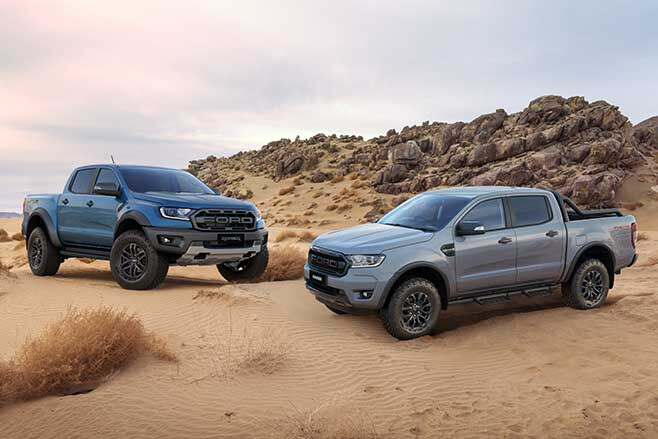
Key to the FX4 MAX is its bespoke suspension set-up, tested comprehensively on Australian soil. Ford Australia says the individual suspension components have been “meticulously matched for a unique combination of off-road capability and strong carrying capacity”.
To this end, new 2.0-inch monotube Fox shock absorbers are utilised front and rear, with the rear aided by a remote reservoir to ease the impact of off-road bumps. A coiled front end is mated to leaf springs at the rear, with Ford aiming to balance off-roading with towing capabilities. Other suspension componentry includes new lock-stop profile steering knuckles, new front jounce bumpers and a 29mm front stabiliser bar.
“Our goal with the suspension was to extend Ranger’s off-road capabilities, and we started with the basics: suspension travel, vehicle track and shock damping capability,” said Tony Tsiandikos, Ford Chassis Engineering Manager. “The changes mean greater control of the vehicle in more aggressive terrain.”
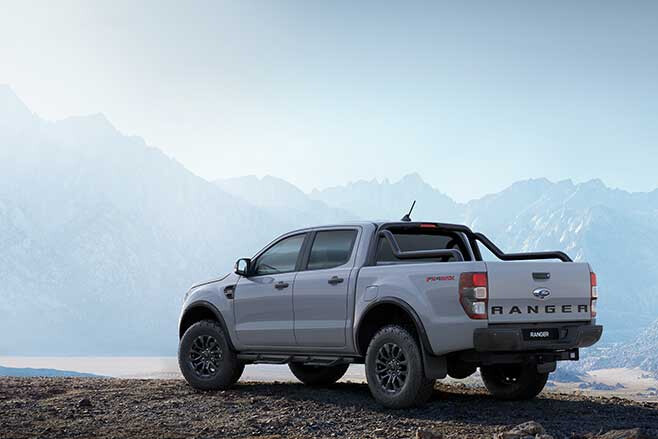
265/70R17 Goodrich All-Terrain K02 tyres, the same set found beneath the Ranger Raptor, are wrapped around 17 x 8.0-inch alloy wheels, giving the vehicle a +42mm offset and 26mm wider track. And combined with a 20mm suspension lift, improves the FX4 MAX’s off-road and towing capabilities.
This set-up enables a payload of 981kg and maintains the Ranger’s 3500kg towing capacity. The FX4 MAX also boasts improved off-road credentials when compared to its XLT stablemate: approach angle of 31 degrees (XLT: 29); departure angle of 23 degrees (XLT: 21); 256mm of ground clearance (XLT: 237mm).
Mimicking the Raptor, the FX4 MAX features that distinct FORD lettering across the front mesh grille. Its widened stance, emphasised by bold, grey wheel-lip mouldings, matches other exterior components including the skid plate, exterior mirror caps, door handles, rear tray surrounds and alloy wheels – all coated in that bold, grey colour.
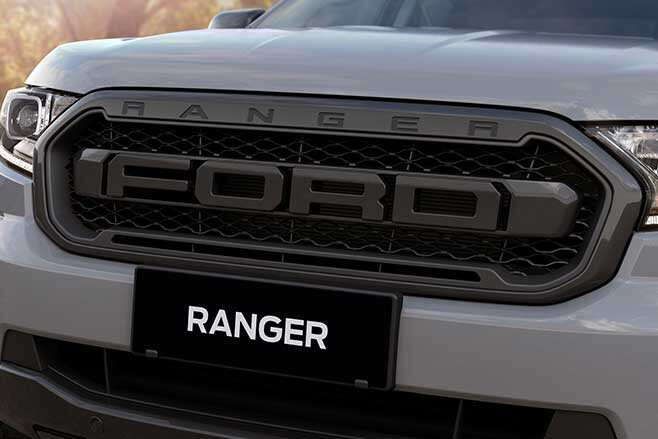
“The Ranger FX4 MAX channels the Ranger Raptor with its unique look and stance, while bringing customers both work and play capability with its locally engineered suspension, chassis tuning and unique FOX Shocks,” said Andrew Birkic, President and CEO, Ford Australia and New Zealand.
“A factory-finished Ranger, FX4 MAX builds on the previous FX4 to deliver even greater off-road capability, yet adds its own distinctive style and genuine mechanical upgrades for a truly one-of-a-kind Ranger.”
The Ranger FX4 MAX will be available in Australia later this year, with an exact date yet to be revealed.
PRICE
Ford Ranger FX4 MAX: $65,940
WHILE 4X4 Australia’s HQ in Melbourne might still be locked down, it hasn’t stopped us from compiling 130 pages of off-road goodness for our latest magazine.
In this issue we head west to check out a 1984 U1700 Unimog utilised for serious recovery work by the crew at Westcoast 4X4 Creations & Recovery. The ex-military rig has saved many stricken fourbies from becoming roadside attractions on the west coast of Australia.
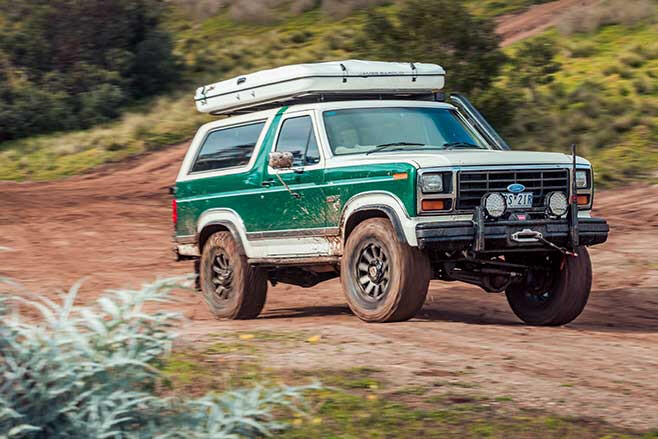
With the 2021 Bronco stealing headlines around the world, we thought we’d take a look at a local custom beauty – a 1983 Bronco XLT – picked up in surprisingly good nick and with low mileage by its current owner. This tidy example runs a rebuilt 351 Cleveland V8.
We also take a deep dive of the 2021 Isuzu D-MAX. The Japanese vehicle has undergone considerable changes for its third generation, and we go beneath the skin to dissect every aspect of the build and see if it can compete with the Toyota Hilux and Ford Ranger.
In addition, we saddle two utes – the RAM 1500 and Chevy Silverado 1500 – for a ‘big’ side-by-side comparison; we list the bush pubs for a four-wheeling adventure; and we talk to the experts about off-road tyres and why they’re essential.
WHAT ELSE IS THERE?
– Following bushranger trails in NSW. – Products new to market. – New 4×4 gear tested. – Musso and LC79 in the shed.
The October 2020 issue of 4X4 Australia is OUT NOW!
THE 2021 Isuzu D-MAX has met ANCAP’s stringent new criteria for 2020, with the Japanese dual-cab awarded a five-star safety rating.
Praised by ANCAP as re-establishing “the safety benchmark for the competitive ute segment,” the all-new D-MAX was comprehensively reworked for the model’s third generation with a suite of improved safety features.
Key to that was the implementation of Isuzu’s Intelligent Driver Assistance System (IDAS) across the D-MAX range, comprising of radar sensors and a camera system to measure distance, size, velocity and depth of the vehicle, as well as nearby obstacles.
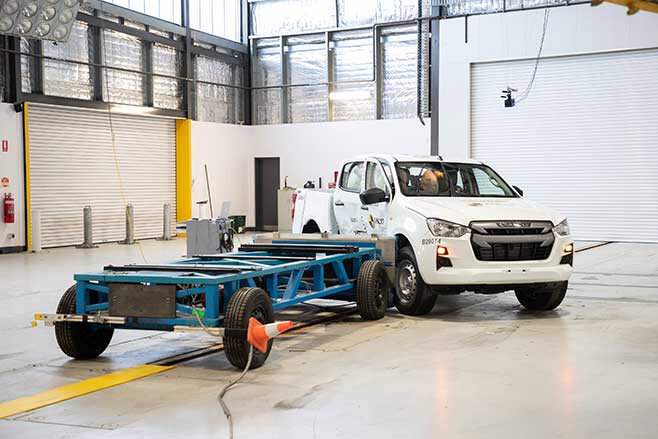
Included in the IDAS system’s suite of safety features are Autonomous Emergency Braking (AEB) with Turn Assist, Forward Collision Warning (FCW), Adaptive Cruise Control (ACC), Traffic Sign Recognition (TSR), Blind Spot Monitoring (BSM), Rear Cross Traffic Alert (RCTA), Lane Keep Assist (LKA), Lane Departure Warning (LDW) and Emergency Lane Keeping (ELK).
Also aiding the D-MAX in its pursuit of a five-star ANCAP score is the addition of a centre airbag across the entire range (there are now eight airbags in total), positioned within the inner-side of the driver’s seat – designed to protect front occupants from colliding with each other during side impact.
The 2021 D-MAX’s body and chassis has also been strengthened courtesy of ultra-high and high tensile steel, while large deformation zones surround the cabin.
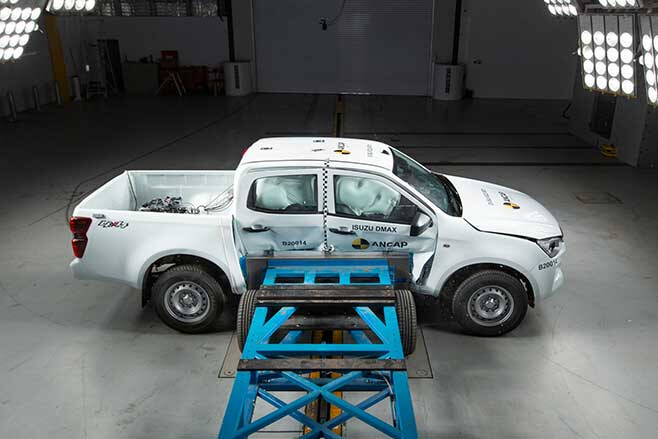
“The D-MAX rating has been highly anticipated by fleet and private buyers, and re-establishes the safety benchmark for the competitive ute segment where the introduction of safety features has tended to lag that of passenger cars and SUVs,” said ANCAP Director of Communications and Advocacy, Rhianne Robson.
“All 20 variants in the D-MAX range – single cab, space cab, crew cab, and cab chassis – provide the same high level safety features, technologies and performance as standard.”
“It is reassuring to see manufacturers take responsibility and prioritise safety to provide their customers with the safest vehicles they can,” Robson said.
GENERAL Motors’ reborn Hummer brand will unveil its new EV truck in October, but this teaser video shows an interesting feature we’ve not seen on a production car before.
The Hummer’s four-wheel steering system and EV drivetrain allows ‘Crab Mode’ steering for getting out of tight situations. We’ve seen purpose-built rock crawlers employ four-wheel steer systems the same way, and plenty of old Morris Minis that crab down the road, but this is the first time we’ve seen it in a production truck.
GM has pulled the Hummer brand out of mothballs to apply it to a range of GMC trucks that will be full electric vehicles, to give the automaker a player in the booming EV Truck market where the likes of Tesla, Rivian and others are all about to jump in.
GM also just signed a deal to develop and build Nikola’s Badger EV truck, in which it becomes an 11-per-cent owner of Nikola. The Badger isn’t expected to be in production until 2022.
The GMC Hummer EV will officially be unveiled on October 20 (US time) and will be available via the GMC website there.
There have been stories of the GMC truck brand coming to Australia as part of the GM Special Vehicles deal, but nothing is confirmed on that or if the Hummer EV would be part of any such deal.
THE undisputed leader in vehicle-mounted winches, Warn has just released its HUB receiver that provides wireless Bluetooth control of your winch via an app on your smartphone.
The HUB receiver simply plugs in to the controller port on the winch and, after pairing, allows you to power the winch in and out from your phone.
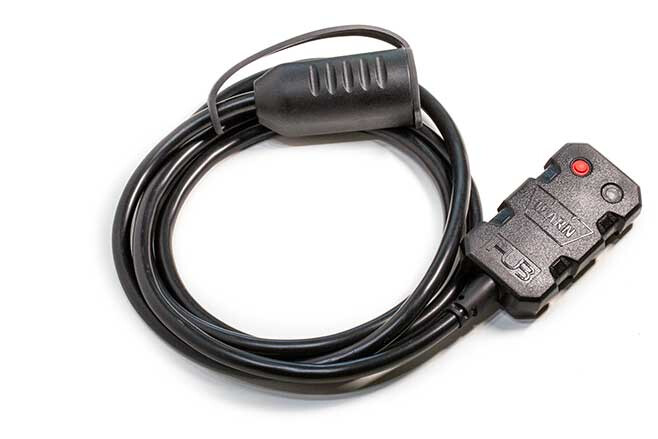
The app also displays the battery voltage of your vehicle’s electrical system, so you can see if you’re draining the power.
The Hub receiver works with nearly all Warn winches (with the exception of the Zeon Platinum), and there’s a version that will work with other winch brands to take advantage of this new technology.
It will be available in Australia via the regular Warn Winch distributors.
Website: www.warn.com
NOT SURE what an OBD reader does, or is?
An OBD reader is an On-Board Diagnostics (OBD) unit that you can plug into the OBD port on any modern vehicle and it will detect any faults, show what fault or code is occurring, and in the better units allow you to erase those codes and faults.
OBD readers come in all shapes and sizes and cover all price ranges from 20 bucks to a few thousand dollars, the latter you’ll find in good, well-equipped service outlets. I’d stay away from the cheap units you’ll find on eBay or the like and go for something that is a bit more effective, reliable and that can, at the very least, erase unwanted codes.
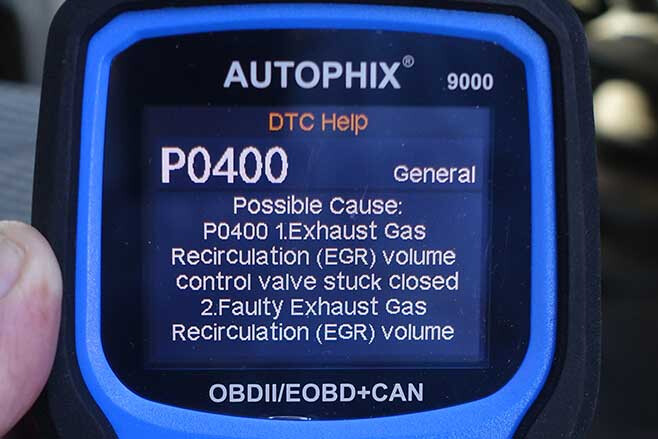
While there are dozens of different code readers and scanners on the market, you need to ensure they are compatible with your vehicle. The Autophix range reviewed here will work with most modern vehicles, but, for example, may not work on Patrols earlier than 2007 and LandCruisers earlier than 2008. It pays to check!
When it comes to the vehicles I own my 2001 Patrol only features an OBD-I port, so luckily the ol’ girl has limited electronics. Our 2005 RAM 2500 in the USA has an OBD-II port, so I have a pretty fancy scanner for it. It’s an expensive unit that not only reads engine fault codes but can also change the boost on the turbo and other performance-enhancing criteria.
On my 2015 79 Series Cruiser, I ended up fitting a fairly expensive ScanGaugeII. This code reader is designed to be connected to the system all the time and, while it can read a host of functions, its main role is to read engine fault codes whenever they develop. However it’s frustrating, as when it throws up a code you have to find what that particular code means and, as there are thousands of codes a vehicle can exhibit, you have to carry a book, a comprehensive list, or have access to the web so you can Google the offending code.
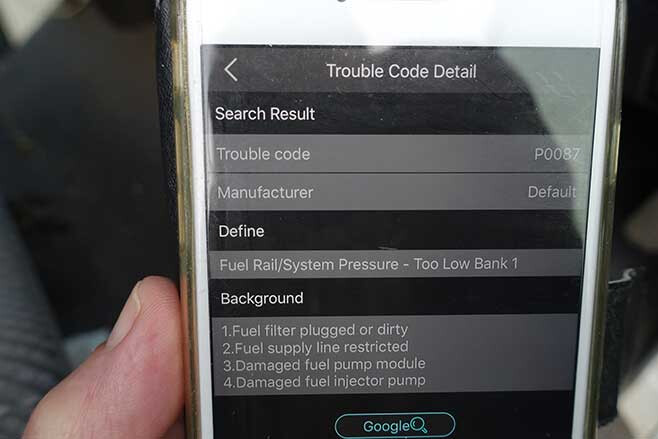
Luckily there is a better alternative, and I’ve been playing around with three different models in the Autophix range of code readers (there’s something like 10 units available in Australia) to see what rocks my boat the most.
The Autophix 3210 is the cheapest and possibly the best model as far as the normal four-wheel driver is concerned, and it communicates with your smartphone once you’ve downloaded the free app.
This unit can stay connected all the time if you like, and it provides a host of info on its ‘dashboard’ screen, which can be customised and have up to eight engine functions monitored. These include Engine Coolant Temperature (ECT), Exhaust Gas Temperature (EGT), engine revs, engine load, air flow, battery voltage and a heap more.
When it comes to reading codes it has a couple of additional advantages over many other units. Apart from being significantly cheaper than a ScanGaugeII, when it comes to reading engine fault codes it not only throws up the detected code but also gives you an idea of what that five-figure code means. Then it gives you the possible causes that could generate such a code, which is a fabulous help in fault-finding and remedying the problem, helping you get back on the road easier and sooner.
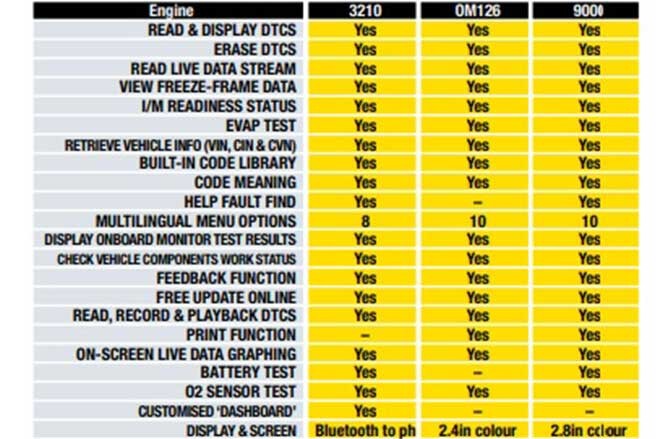
It should be noted that all the Autophix units allow you to erase any fault codes generated. In many or most cases that fixes any issues, as vehicles do throw spurious codes at times and these are not an indication of a real fault. But, if the code is regenerated immediately, or soon after you have erased it, it means you have a deeper problem and you need to start looking for the possible causes.
I also tried out the OM126 and the Autophix 9000, both of which are full-mode and updateable scanners meant for fault finding and are not designed to be connected all the time while driving.
I wasn’t so enamoured by the 126 and, while it gave a description of what the fault code meant, it didn’t give a list of possible causes. The 9000 on the other hand did so and is more of a professional unit, while also featuring a bigger colour screen and a battery test function. So, while it’s a bit more expensive, I’d go for that one in lieu of the 126. Still, it’s bloody hard to go past the 3210! It is just so versatile and all you need is a smartphone to pair with it.
For the price of a tank of fuel you can get an Autophix OBD scanner that can save you a lot of heartache and can even save you a service fee or a recovery. You’d be crazy not to have one!
ESSENTIAL INFO
AVAILABLE FROM: www.autophixaustralia.com.au RRP: $130 (3210 Bluetooth); $150 (OM126); $250 (9000) WE SAY: Everyone with a modern 4WD needs one of these.
FROM the very first time man stepped out of a cave and used a club to knock a dinosaur on the head, we’ve been using tools to make life easier for ourselves.
From the early days of horses tilling fields saving the backbreaking labour of hand digging, to the mighty 40 Series LandCruisers helping tame the Snowy Mountains and giving the old horses a rest, mechanical advantage has been one of the biggest things at mankind’s disposal, helping us get our work done faster so we can spend more time doing, well, anything but working.
The behemoth of a 4×4 you’re running your eyes over right now is an extension of that idea. A bigger hammer, for a bigger nail, so the owner can live a bigger life.
More 4×4 gear guides
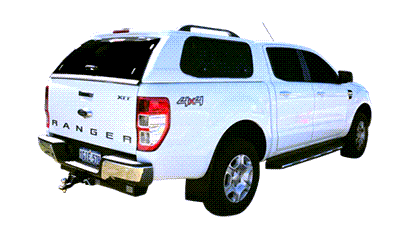
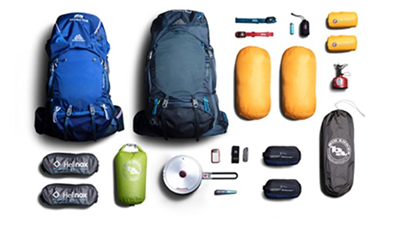
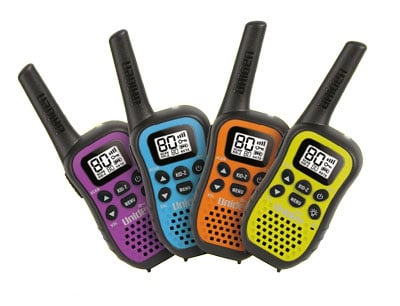
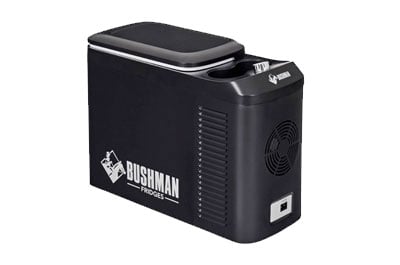
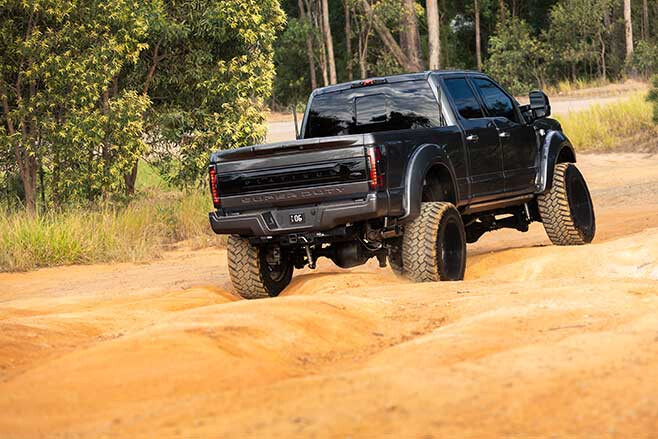
The idea is pretty simple. With a caravan behind him and some of the most stunning but challenging sand islands in front, Sean knew if he wanted to spend more time kicking back at camp and less time struggling through soft inland tracks, he’d need one hell of a rig to get the job done. Actually, a hell of a rig might be an understatement.
Standing nearly three metres tall, weighing more than three tonnes and a wheelbase that’d damn near fit a Jeep Wrangler between it, this 2018 Ford F250 served as the perfect platform to haul whatever Sean wanted to haul, wherever he wanted to haul it.
POWER STROKE ENGINE
THE powerhouse making the whole show move is none other than Ford’s renowned 6.7L Power Stroke engine. A 440kg compacted graphite-iron blocked V8 turbo-diesel code-named ‘Scorpion’ that punches out 335kW at just 2800rpm, and an awe-inspiring 1268Nm barely off idle at 1600rpm – for comparison, the ‘class-leading’ Amarok makes 580Nm.
It’s backed up by the similarly over-sized 6R140 transmission banging out six speeds as well as a dedicated tow/haul mode for when there’s work to be done.
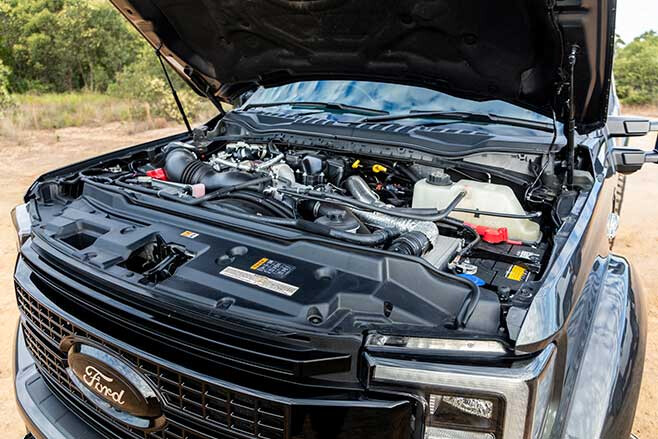
Like most things American it’s not hard to wind the wick up to ridiculous, and Sean has done just that. The plug-in diesel tuner from EZ Lynk gives Sean five stages of tune he can dial in, cranking the big V8 all the way up to near on 500kW at the crank which works out to north of 1700Nm of torque keeping things powering forward.
Of course, with that much power sending its way downline through the driveshafts and a few tonnes of resistance on the back, the F250 is going to need some seriously stout axles to hold the show together.
Up front is 140kg of Dana 60 live axle, with a stout 9¾ ring gear and 35-spline axles the size of your wrist, it’s more than up to the task. Utilising uni-joints rather than the more typical CV joint found in Cruisers and Patrols helps add to the rugged but strong design ethos.
The whole affair in stock form is held in place by huge radius arms, although Sean’s binned them in favour of a monster lift from BDS Suspension. The design of a radius arm with one pivot point at the frame and solid mounting at the axle means, as you dial in a lift, the caster can vary, severely affecting your steering.
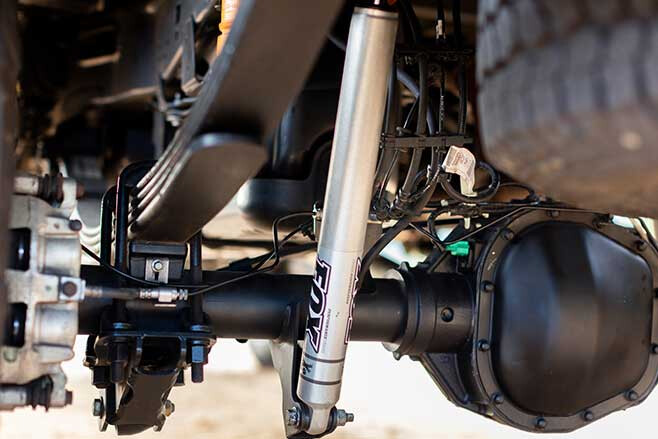
The BDS Suspension kit replaces the radius arms with a 4-link arrangement similar to what you’d find in the rear of a Cruiser or Patrol, which not only serves as a significant strength upgrade but allows the steering to feel stock even with the huge eight-inch ride-height adjustment. A forged drop pitman arm and Panhard drop bracket help keep things aligned.
Moving to the rear and the F250 is driven by an even bigger rear axle again, this time an in-house-built axle from Ford’s Sterling plant punching in at a huge 10.5 inches in the ring gear. Like the front, it’s got an eight-inch lift, this time with a set of GlideRide leaf springs rated to take the load of the heavier F350 truck. Both front and rear axles are kept under control by Fox 2.0 IFP shocks on each corner.
The whole affair not only gives the lifted F250 a serious attitude, but it also allows front and rear live axles to articulate their way through terrain most IFS utes would come undone in.
WHEEL SPIN
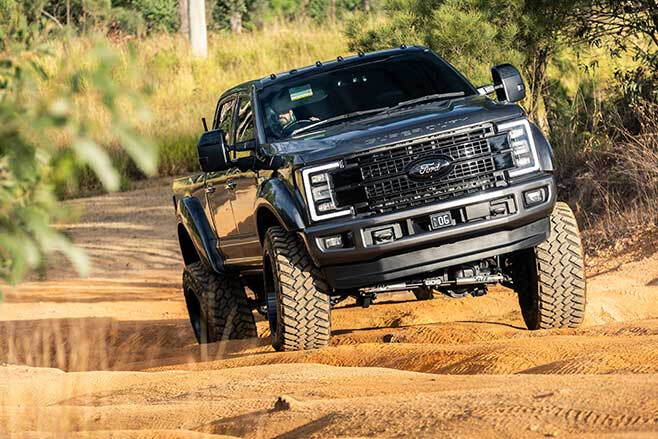
AS the F250 is registered for commercial use, Sean has a little more leeway with his allowable modifications, and he’s made the most of it when it comes to the selected wheel and tyre package. While most 4WDers squabble between 16- and 17-inch wheels, Sean has stepped straight up to 24-inch alloy wheels on each corner, more specifically, contrast-cut 544BMs from USA-based Tis Wheels.
There’s still more than enough tyre thanks to a wall of rubber with 40-inch Nitto Trail Grapplers stuffing the arches. With a tread width of 15.5 inches they not only dwarf a regular mud tyre, they’ve also got the same tyre sidewall as a typical 33-inch tyre on a 17-inch rim.
As the F250’s purpose is to haul toys to campsites, it’s also received a decent electrical fitout as well. Hiding in every nook and cranny of the big Ford is an Enerdrive dual-battery system running their 125amp/h lithium battery pack. Sean tells us it’s more than enough to keep the tray-mounted ARB Elements fridge running for four days, although the beers inside never last that long.
There’s also a 1500W Enerdrive inverter thrown into the mix ensuring the campsite to end all campsites never goes without. Finally, twin UHFs allow communication between all the rigs in the convoy (including his partner’s live-axled Ranger), as well as monitoring channel 40 to keep an ear on the truckers nearby.
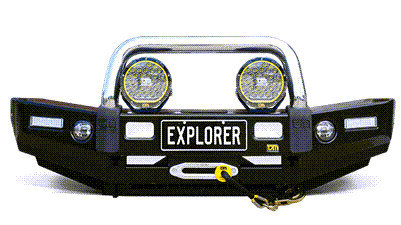
OG, as it’s known, might not be to everyone’s taste, but it doesn’t need to be. It’s big, bad, powerful, capable and pulls like a freight train on or off the road. It might not have a winch, but when he’s skull dragging a Unimog through Fraser Island’s Ngkala Rocks and putting 1700Nm to the ground, it flat out doesn’t need one.
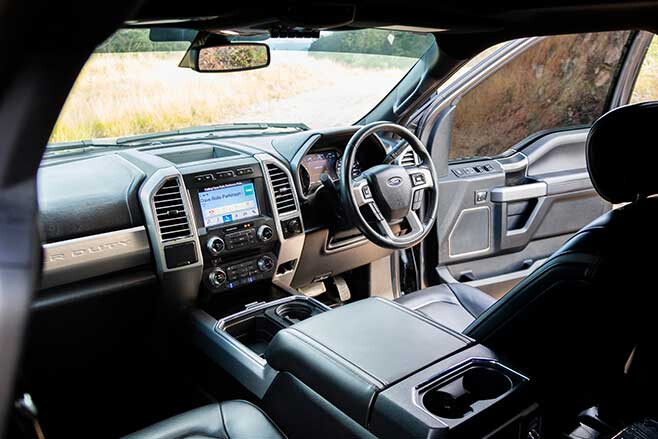
SCORPION DESIGN
ABOUT 60 years ago Ford was screaming about its fancy new ‘cross-flow’ engine. Y’see, any internal combustion engine is basically a glorified air-pump. Air gets sucked in, does what it does, and gets pushed out again.
Originally ‘reverse-flow’ designs saw the air sucked in on one side, mixed with fuel and ignited in the combustion chamber, before doing a 180-degree spin and heading back out the same side it came in. Ford’s cross-flow engine made things work far smoother with the air coming in one side, and heading out the other. Why is this all important? Well, there’s a reason the 6.7-litre Power Stroke is called Scorpion.
A V8 typically cross-flows air from the top in the V, through the heads, then out the exhaust ports. The Scorpion engine reverses that flow, the air sucked in from where the exhaust would normally be, through the head, then up and out through the V and into a centrally mounted turbo between both heads, giving the engine it’s characteristic Scorpion look.
4X4 Australia's project builds
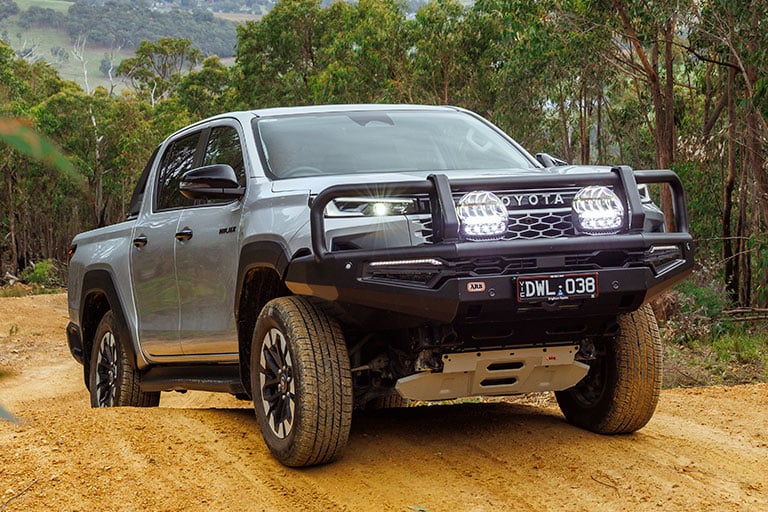
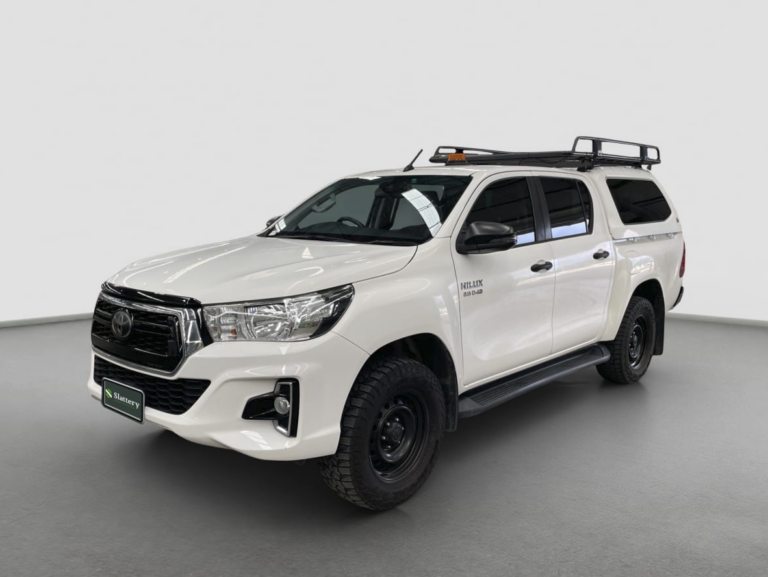
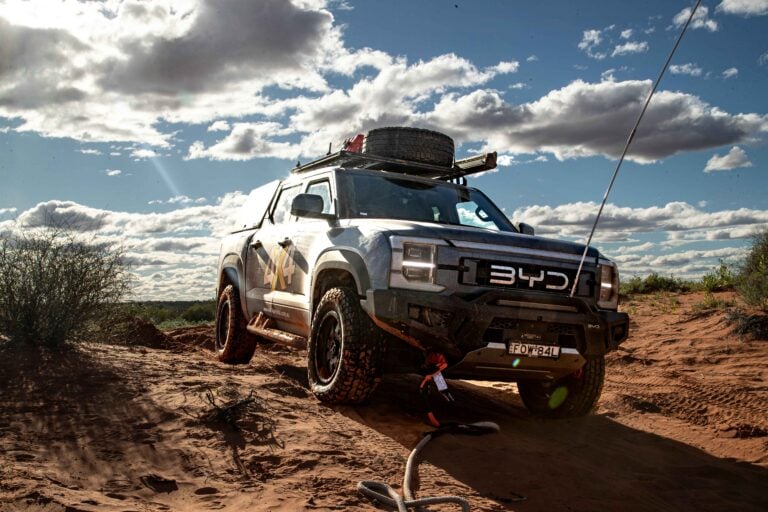
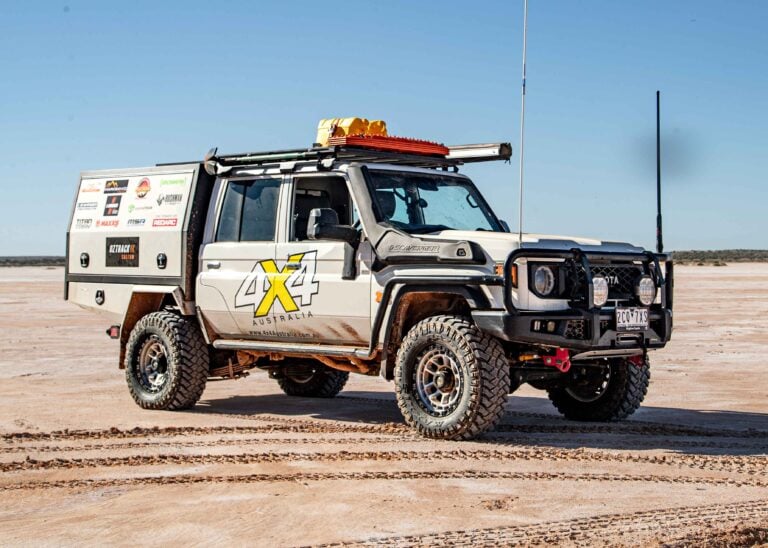
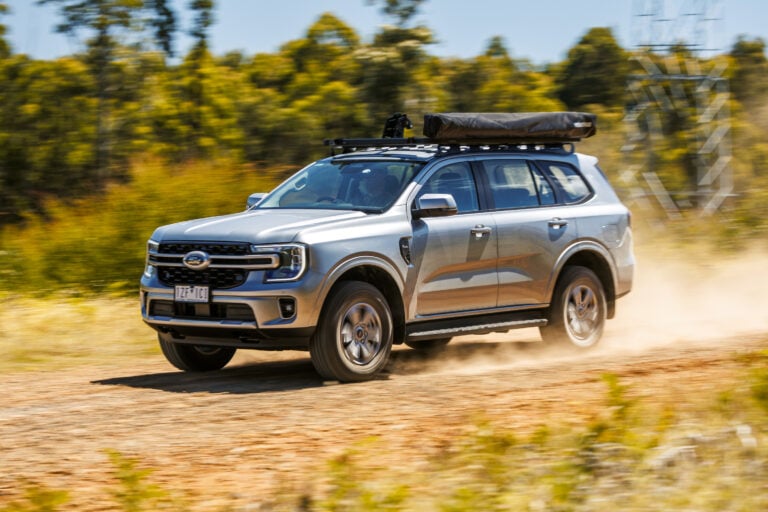
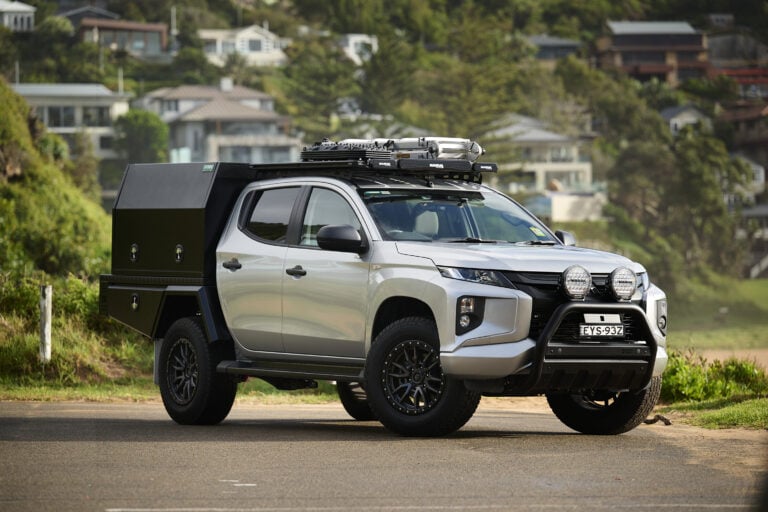
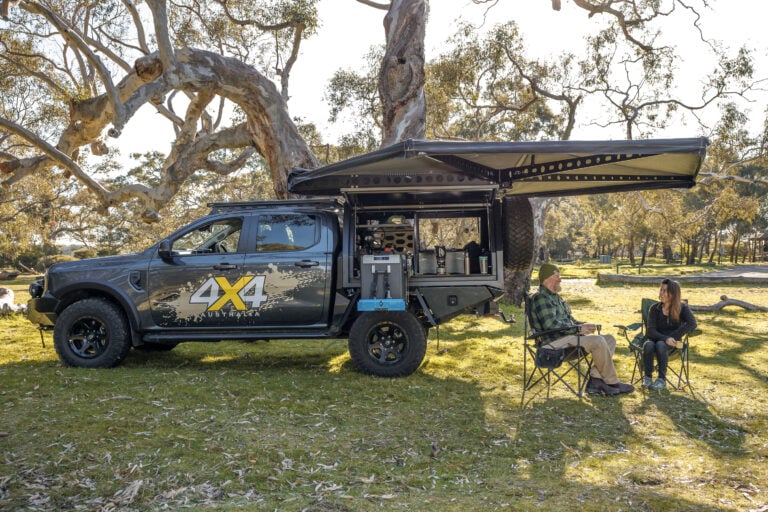
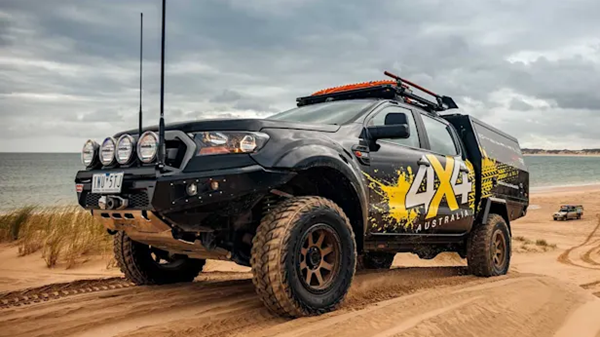
THE first accessories of any new 4×4 build are a set of off-road capable tyres and wheels, and along with the Ironman 4×4 suspension our KMC wheels were some of the earliest pieces fitted to the Ranger.
Yes, we had to wait for the suspension to be installed before we could fit the bigger tyres, but our rims were chosen long before.
Looking at trends in both 4x4s and street cars and seeing what was popular at the SEMA Show, we had noticed a growth in popularity of gold and bronze wheels on off-road builds, and it was something we liked. When we found out our Ranger was black, the die was cast to the classic black and gold theme. Those JPS race cars of yesteryear left a lasting image.
But what wheels to run?
Again looking at what was popular in the off-road scene, both here and in the USA, the brand KMC came up time and time again as they are used by some of the biggest names in off-road racing. KMC has an extensive range of wheel styles in many sizes, colours and finishes, including gold − we were getting closer to a choice.
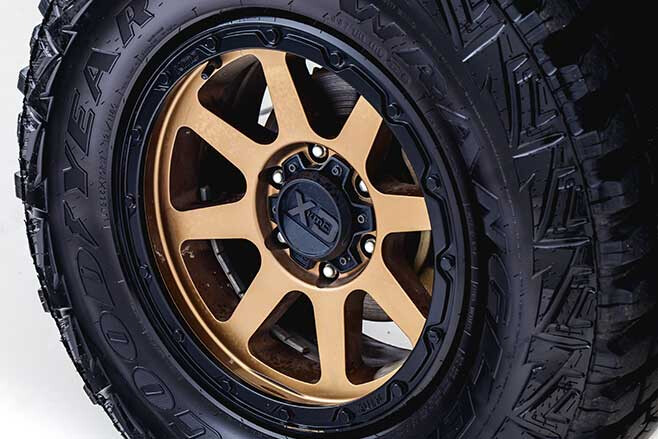
KMC Wheels are sold in Australia through WheelPros, so we scoured the range online and selected a few we liked, workshopped the choices around the office, and eventually settled on a set of 17 x 8-inch KMC XD Series Addict 2 wheels in bronze. The Addict 2 is available in a few colours and as a true beadlock or with the beadlock look as we’ve chosen for the Ranger.
From the time we bolted them on the ute, the choice of bronze polarised opinion, but everybody loves the style of the KMC Wheels. They really set off the look of the Ranger, back when it was a plain-looking ute right up to the fully-equipped tourer it is now. We couldn’t have been happier, and now, after 18,000km on the Addict 2s, they still look the goods. Being easy to keep clean is an added bonus.
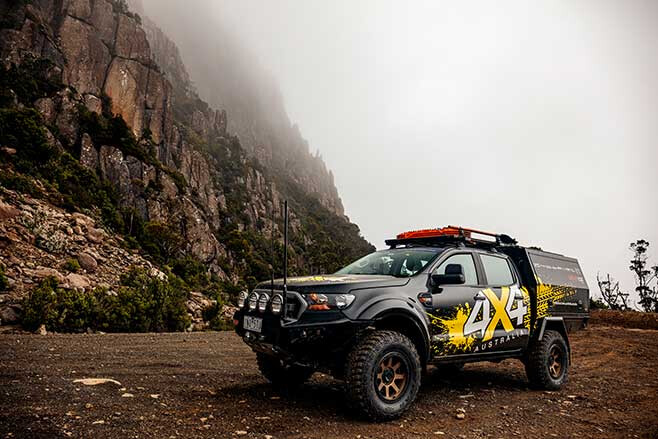
In 2019 the wheels were shod in Maxxis RAZR mud terrains and on these they travelled through Central Australia, the Simpson Desert, Victorian High Country, Coffs Coast and the Flinders Rangers.
For 2020 we fitted the Goodyear MT/R tyre and managed to squeeze in a Tasmanian adventure before lockdowns set in. Everywhere the wheels have taken us they’ve always scored comments by onlookers.
Some of those rocky tracks in the Flinders were pretty hard on wheels and tyres, and the tough KMCs don’t show any signs of damage or abuse.
ESSENTIAL INFO
AVAILABLE FROM: wheelprosaustralia.com.au RRP: $335 each WE SAY: Great-looking and well-made wheels.
As 13 vehicles rolled to the beginning of Climies Track on an icy cold summer’s day in Tasmania, adrenalin was high yet scepticism lingered.
Were we really expected to overcome a highly technically 20km track with a convoy of D-MAXs and MU-Xs, three of which were unmodified and wearing 18-inch wheels? “Hell, why not? Let’s give it a crack,” seemed to be the overwhelming consensus from the group, despite relentless rainfall smattering the area for the past few days.
Said group had gathered two days previously for another Isuzu I-Venture trip, an endeavour by Isuzu UTE Australia (IUA) to take its loyal customers – in their own vehicles – on guided 4×4 trips to iconic destinations around the country.
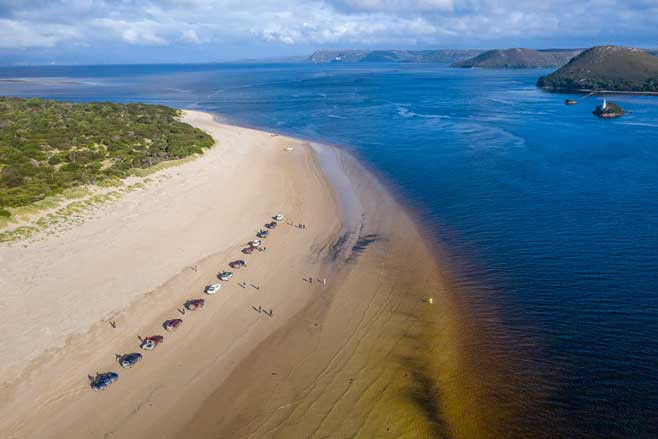
It’s a plight that has been part of the IUA mantra since March 2015, when the first I-Venture trip traversed the sandy beaches of Moreton Island in Queensland. Five years later and the program has now had close to 3500 customers roll through more than 160 events, leaving them with enhanced driver knowledge and new like-minded friends.
The latest contingency of eager participants, hailing from all over Australia, gathered in Devonport for an introductory briefing led by 4×4 trainer, David Wilson, an eccentric tour guide with a wealth of driver-training experience.
With the mandatory dos and do-nots out of the way, tyres hit the tarmac heading west for a blast into the Highlands in search of the famous Tasmanian trout at a family-owned-and-run farm located in the Upper Natone Fly Fishing Park. Here, the crew sampled freshly smoked trout, tried their luck by dangling a lure – not great odds for Mr Trout, it must be said – and took a hatchery tour of the facility.
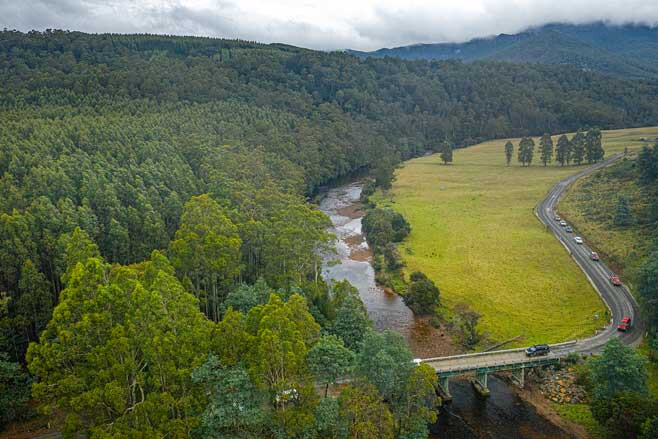
With bellies full, the convoy crept their 4x4s deep into the Leven Canyon Regional Reserve, where pressures were lowered for some mild escarpments and off-camber tracks. The destination was the Leven Canyon Lookout Track, where the group stretched their legs on a brisk 20-minute return walk which leads to a 275m-high viewing platform overlooking the spectacular reserve and the river far below.
Cradle Mountain
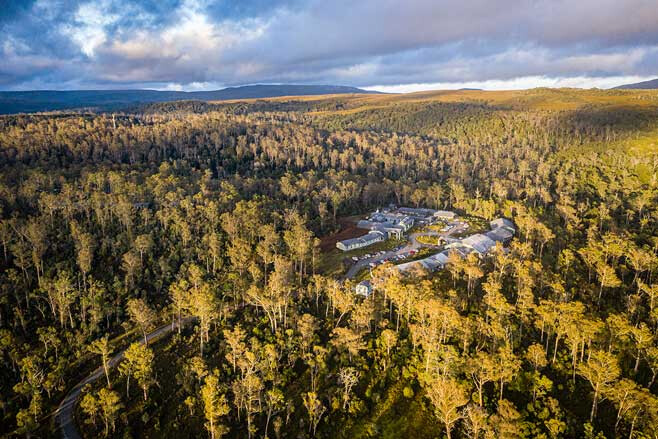
The next leg of the trip required a 75km jaunt over bitumen and dirt to the Central Highlands, home to one of Tasmania’s most iconic landmarks rising 1545m above sea level: Cradle Mountain. Lying within the Tasmanian Wilderness World Heritage Area, tourists flock from the world over to witness Cradle Mountain’s overwhelming beauty and to walk the many trails scattered within its boundaries. It was here, beside an open fire at the Cradle Mountain Hotel, that the rugged-up crew ended the first day with a sundowner or two.
With beanies clad the following morning, it was an early start to catch the tour bus to Dove Lake – an essential attraction when touring this part of Tasmania. The almost sub-zero temperatures didn’t stop the tourists who had swarmed to the region to try their luck at one of the many walking tracks, the most famous of which is the 65km, six-day Overland Track hike … but maybe another time for us, as this group was itching for some 4×4 action.
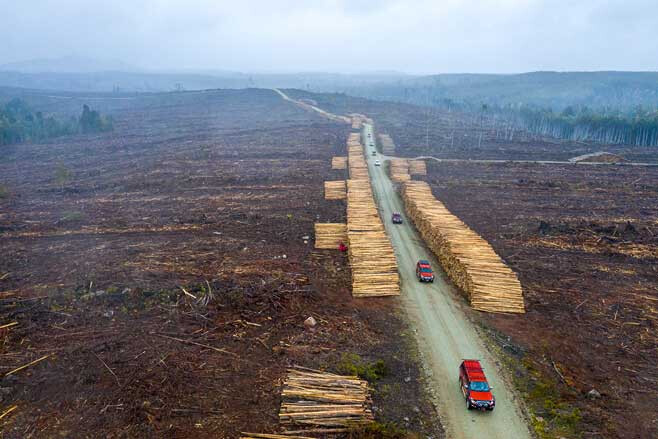
As the mercury rose, beanies were traded for hats, and the team motored toward the West Coast in search of some of Tassie’s iconic sand dunes. With tyre pressures lowered, the convoy spent the afternoon carving tracks in the Henty Sand Dunes, getting stuck in said dunes, getting out of said dunes, and then trying slightly easier dunes – perhaps the first warning sign that the looming Climies Track was going to be a long, tough slog.
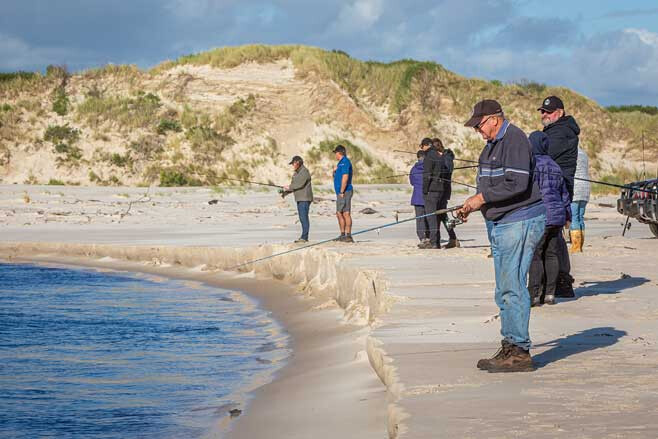
A run along Ocean Beach led to a perfect little spot at the mouth of the Henty River, where rods and reels were once again unpacked – better odds for Mr Trout this time. An exhausted group pulled the handbrake for Day Two in the small coastal town of Strahan, with Climies Track lingering on everyone’s mind.
Excitement was palpable the following morning, and the drizzle that was settling on the D-MAX and MU-X vehicles in the carpark raised both adrenalin and concern in equal measure. We fuelled up for what would be a long day on the tracks and then ventured to the marker that signifies the beginning of the bucket-list Climies Track.
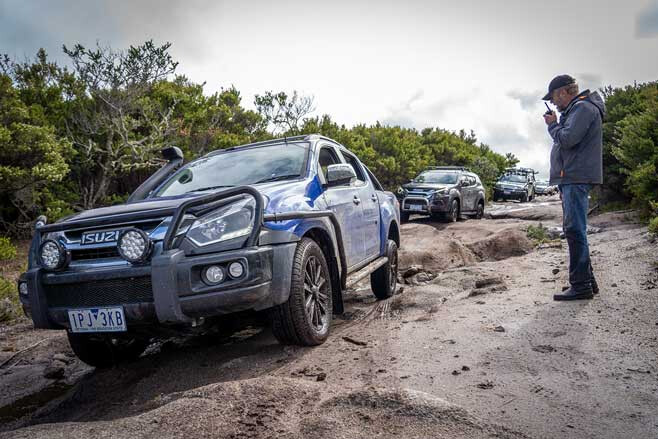
Climies is a notoriously unforgiving ocean-side track, overlooking the freezing waters returning from Antarctica. It was once used as a route between two shack towns at Granville Harbour and Trial Harbour, but years of neglect have resulted in a track with deep gullies, enormous boulders, steep descents and brutally hard challenges. It’s a track that technically minded 4x4ers would savour, purely for the centimetre-perfect wheel placement required on many sections.
Still, why not? Let’s give it a crack. It wasn’t until we crawled to a stop at the first impassable obstacle – a considerable water trap, with a chicken route that was just a slush of knee-deep mud – that I remembered the previous weekend was a long one due to a public holiday. Just another hurdle … a pretty steep one. That a quartet of lifted Patrols and Cruisers decked to the nines in aftermarket gear – which we let through to ‘test the waters’ – bogged in the water crossing right in front of us was perhaps the first warning sign that we may have bitten off more than we could chew.
Chicken Route
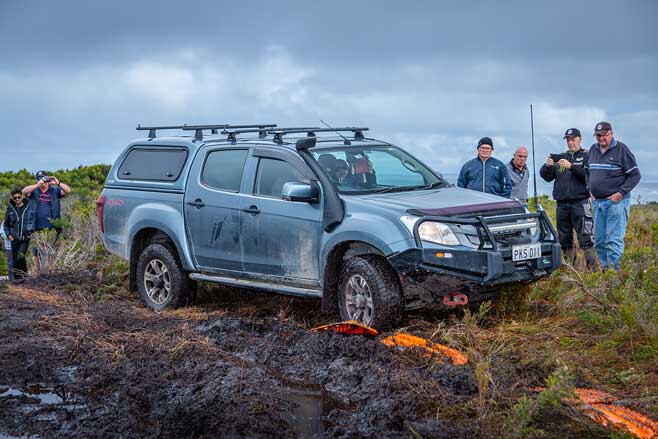
Experience dictated we attempt the mud-slathered chicken route rather than the water crossing, but first David and co laid-out a makeshift track of MaxTrax in the mud. Precise wheel control was required to get the convoy through, but an hour or so later and the last D-MAX cleared the obstacle to the jubilation of all, none more so than our mud-covered tour leader.
That jubilation was only fleeting, with the previously encountered quartet of far-more-prepared vehicles once again stuck just a few hundred metres farther up the track – and this time they were in a fair bit of strife. It was here, glancing at the 18-inch wheels of the MU-X we were piloting, that Dave decided it was time to throw in the towel.
Despite travelling less than 3km in half a day, the technical experience learned by attempting Climies Track will prove invaluable to those in attendance, and it’s an adventure few there will forget and perhaps ever again experience to that degree of difficulty. One member of the touring party, Paul Gollagher (see New Record below) explained to 4X4 Australia how he loved Climies Track, but he was disappointed they couldn’t go farther.
“It was a massive undertaking to even attempt the track with mostly stock vehicles, all with variable driver ability,” Gollagher said. “I don’t believe the size of the convoy would have made any difference after seeing pictures of the fully kitted Patrols struggling, I really believe there was no choice (to turn back). Although having said that, it sure would have been fun to give it a go.”
Pride was parked as we backtracked and made our way to the beginning of Climies, ending another I-Venture adventure – definitely the most daring and challenging IUA trip to date.
And those lifted Patrols and LandCruisers that were winching relentlessly when we last left them? They finished the 20km journey, but not before the sun set, apparently clearing the last section close to 10pm that night.
Why I-Venture?
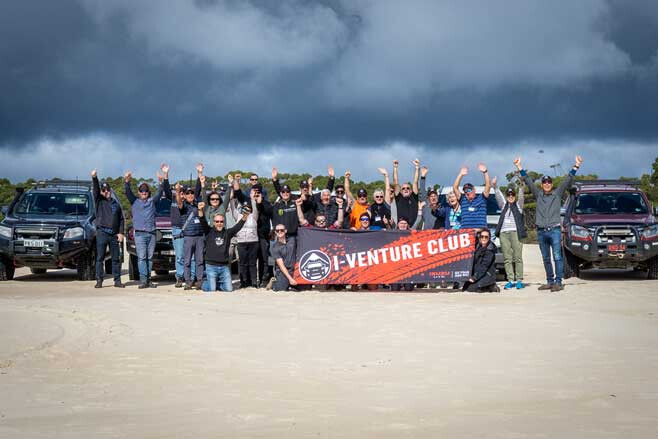
Isuzu UTE Australia runs both single-day events ($300 per car, per couple) and multi-day packages (from $1950 per car, per couple). The cost for the single-day events include permits, ferry transfers, breakfast, lunch and driver training. For the multi-day events, costs are inclusive of accommodation, permits, ferry transfers, breakfast, lunch and dinner, and driver training. One of the great benefits of the program is that all the annoying paperwork and research is done for you!
“Since its introduction, the club has developed into an experience that not only enables our customers to learn vital off-road skills and techniques, but one that allows them to build the confidence to use the vehicles for what they were built to do – opening their minds to the limitless opportunities this lifestyle can offer them,” said David Wilson, lead I-Venture Club trainer.
When is the next I-Venture?
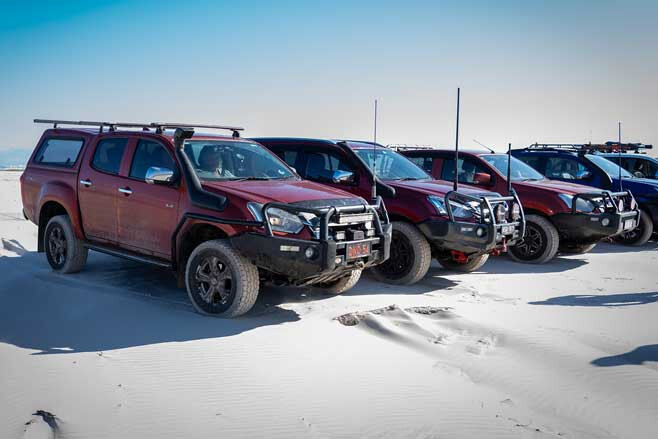
The IUA team is currently planning single-day events at Stockton Beach, NSW, and Eagleview in South Australia, both new locations for I-Venture. They are also in the midst of planning towing-focused events in both Sydney and Melbourne, following the success of a single-day towing event held at Mt Cotton in Queensland, in 2019. It’s a smart move considering close to 50 per cent of Isuzu owners buy their vehicles with the intent to tow with it, according to IUA. Perhaps we’ll even see some next-gen D-MAXs at the next event…
New I-Venture Record
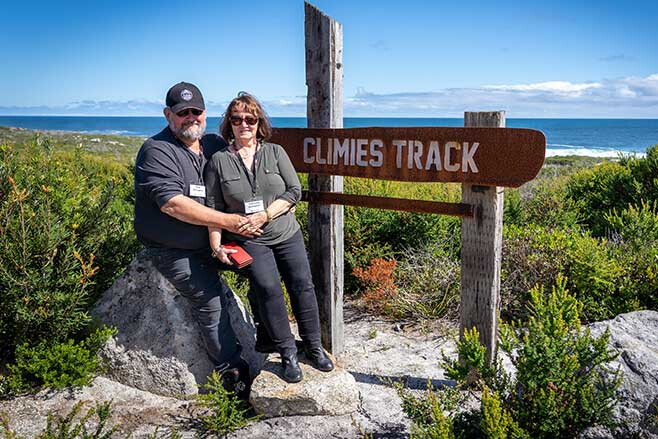
Paul and Kathleen Gollagher set a new IUA record on the recent Apple Isle adventure, notching up their ninth I-Venture trip in their reliable 2015 D-MAX, now with 175,000km on the odo since it was purchased new. The couple from Queensland have now travelled to six of seven states in Australia – they’re waiting for an NT trip – as part of the I-Venture club, beginning with a single-day course on Moreton Island.
“There are many reasons we keep backing up,” Paul told 4X4 Australia. “First and foremost are the people behind I-Venture experience. All our dealings with any of the I-Venture crew has been fantastic. Every one of them have been an absolute pleasure to deal with. The level of training and experience provided by Dave Wilson has given us the confidence to get in to and out of most situations.
“Also it’s enjoyable travelling and experiencing some of the finest destinations in Australia with a group of like-minded individuals. We have kept in touch with many other participants from these trips and continue to do trips together.”
Paul and Kathleen were complete novices when they first got the keys to their D-MAX, but thanks to the I-Venture experiences, they now feel comfortable that the skills they’ve learned, in combination with their capable vehicle, will get them home in one piece.
“We have truly enjoyed and taken away so much knowledge and skills from this program, and we believe everyone who owns a 4WD could benefit from these events,” Paul said.
AS Victoria continues in lockdown, any plans to get out for adventures this year have gone out the window. Yes, the 4X4 Australia office is in Melbourne and we are now very restricted in what we can do.
Usually at this time of year we’d be out travelling in the Red Centre, exploring the deserts or hitting the snowy tracks in the alps. In August last year, we escaped the winter for a trip to The Territory, including Kakadu and Nitmiluk National Parks. Still, a quick getaway I would recommend to anyone if you are able to travel, but there will be no such adventures for us in 2020.
You might have noticed fewer pages in the magazine and not so many travel features of late due to these events. Just dreaming of travel had us conjuring thoughts of our favourite desert trips and we’ve compiled a handful of them for you to consider this month.
We’re lucky enough to have been able to continue producing the magazine at a restricted level during these tough times, and I feel for the many who might have lost their jobs or their businesses to the pandemic. For them, not being able to travel would come from a more serious situation than just being told you’re not allowed to.
We’re lucky to have a dedicated team of writers and photographers who have offered to continue supplying their services during the tough times and keep supplying material to us. We truly appreciate it.
Also a special big thank you to the team at the Melbourne 4×4 Training & Proving Ground who have continued to allow us access to their property so we can test and photograph cars in an isolated and COVID-safe facility close to Melbourne. Without this help we wouldn’t be able to continue to do what we’re doing.
The 4×4 Proving Ground is not a public 4×4 park, so you can’t just go in there and drive your 4×4. It is used by manufacturers and training providers, and if you are ever thinking of some professional 4×4 driver training you should look them up on the web.
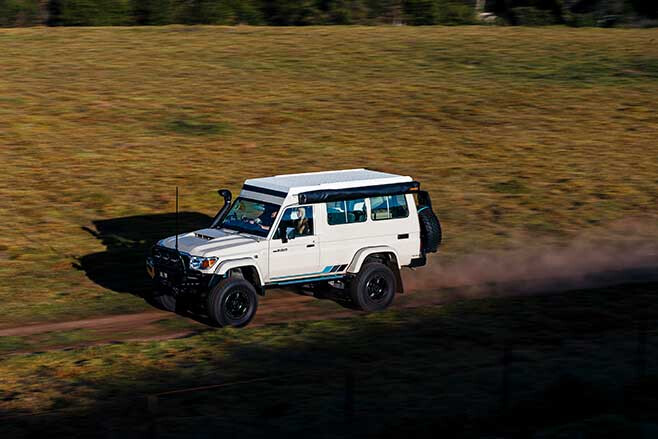
We shot September’s cover car at the facility, and Scott’s Troop Carrier is the best of its breed. Truly an amazing vehicle and it will be interesting to see how it progresses as he continues to equip it for when he, like us, is allowed to get out and about.