2025 4×4 Ute of the Year
A stacked field hit this year’s 4X4 Ute of the Year test, with everything from value picks to heavy-duty touring rigs lining up. Here’s every contender that made the cut for 2025.:

The current-gen Tacoma, unveiled in 2023, provides a higher-spec alternative to the newly restyled HiLux. The mid-size pickup is built on Toyota’s TNGA-F ladder-frame platform, with powertrain options including a 2.4-litre turbo-four with an eight-speed automatic or six-speed manual. The petrol version produces 207kW and 430Nm, while the hybrid i-FORCE MAX delivers 243kW and 630Nm, offering exceptional low-end torque.
Compared to the HiLux, the Tacoma offers more cabin space, higher-spec off-road trims, and greater torque and towing capacity, while remaining smaller and more manoeuvrable than the full-size Tundra. The Tundra provides higher payload and towing figures but is bulkier and less practical on tight trails or for daily driving.
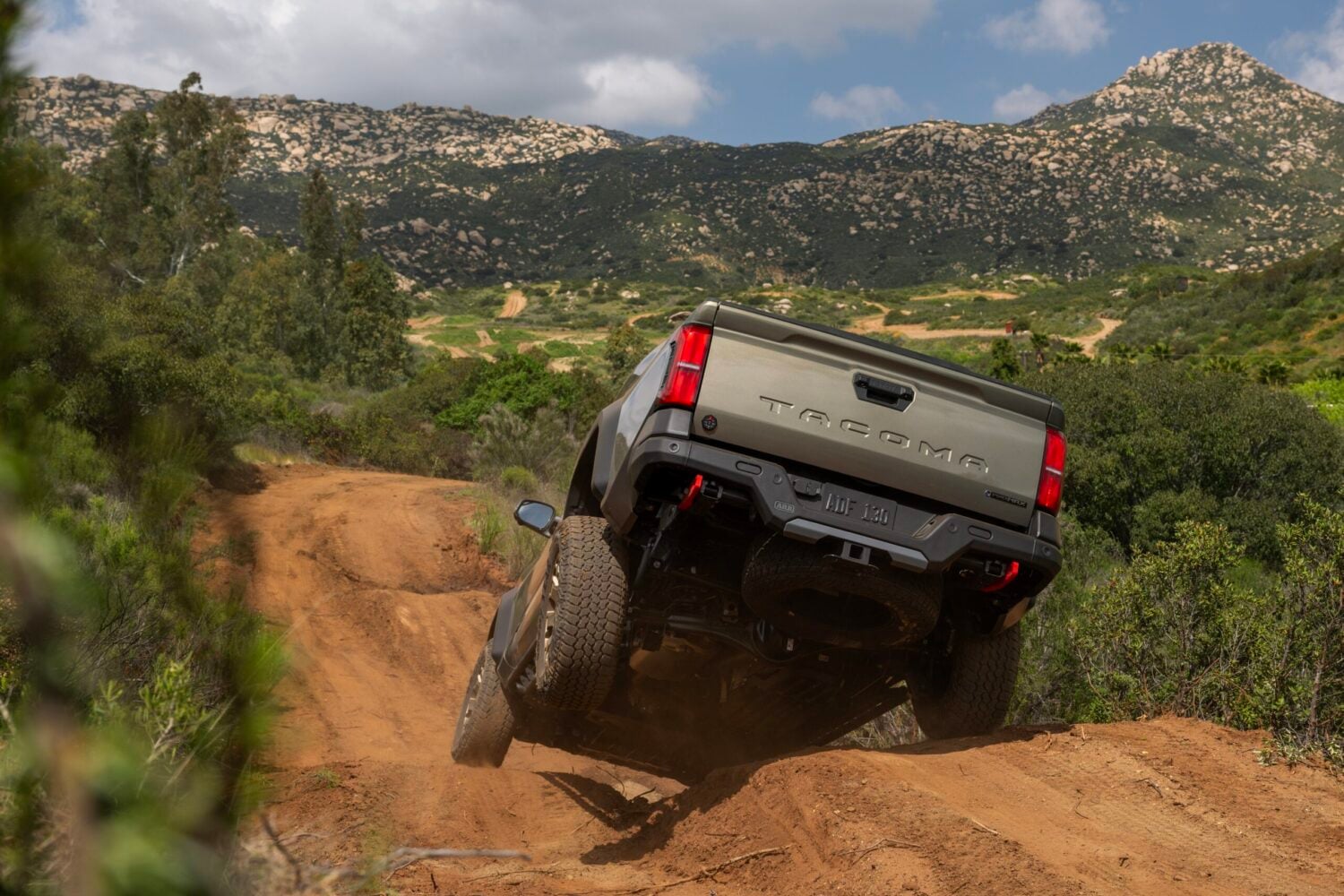
Off-road-focused trims like the TRD Off-Road and TRD Pro include coil-spring rear suspension for improved ride and articulation, electronic rear lockers, multi-terrain drive modes and Crawl Control. Ground clearance reaches 292mm, while approach and departure angles, skid plates and payload are optimised for serious trail use. Bed and cab options provide practical flexibility for overlanding or custom builds.
The Tacoma is officially sold only in the USA, Canada and Mexico. A potential Australian launch would give local 4×4 enthusiasts a mid-size truck with real torque and off-road chops that sits above the HiLux.
Order books are now open, with B5 pricing starting at $74,990 for the Standard model and $79,990 for the Leopard trim. The B8 begins at $91,000 for the seven-seat (7S) version and $97,990 for the six-seat (6S) model.
“At DENZA, we’re excited to offer Australian customers a gateway to automotive luxury at price points which are unrivalled in the segment,” said Mark Harland, DENZA COO.
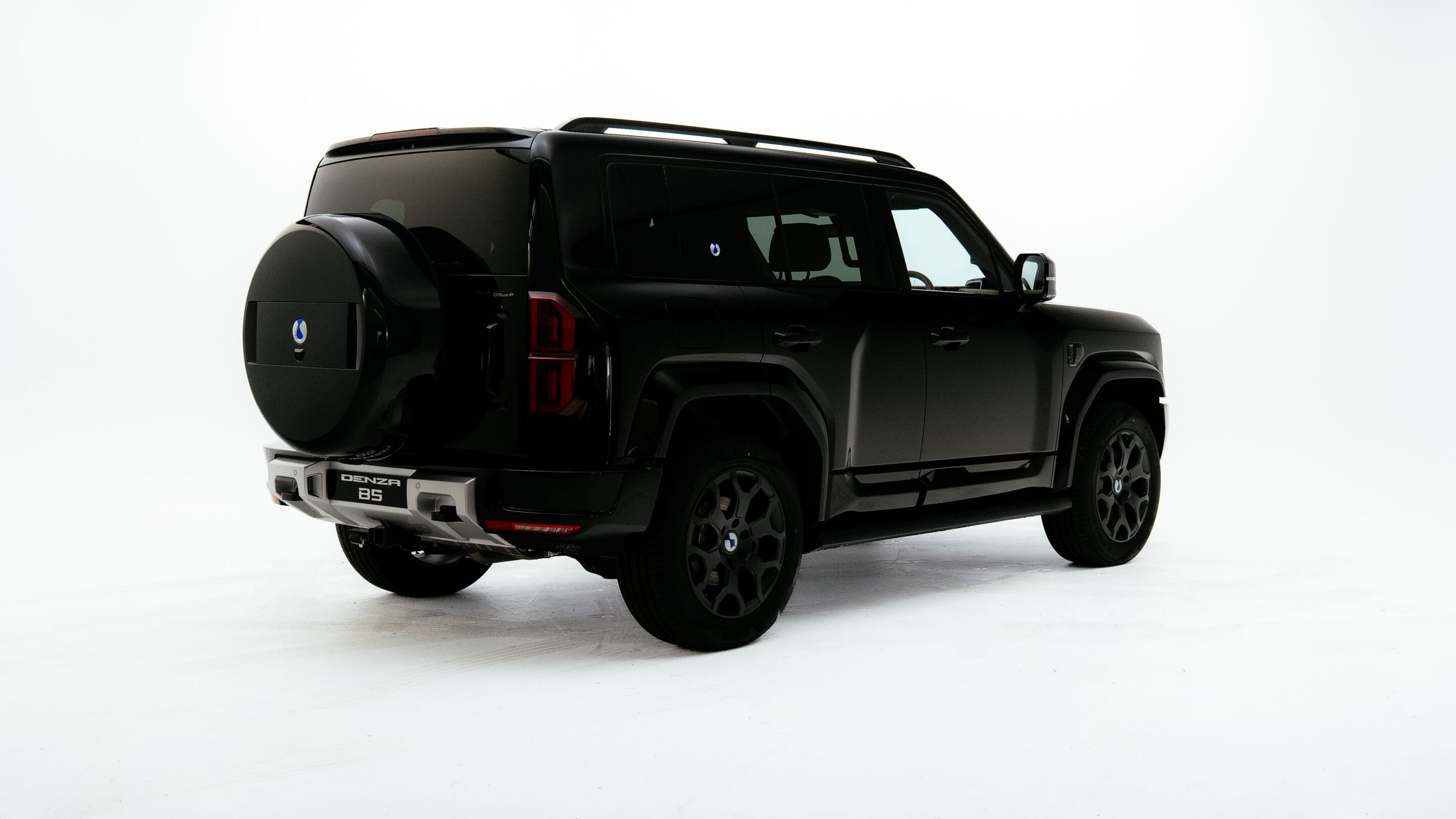
The B5 comes in two trims – Standard and Leopard – and both deliver 425kW and 760Nm through a dual-motor 4WD setup. The 31.8kWh battery provides up to 90km of electric-only driving (WLTP) and supports 100kW DC fast charging. The B5 Leopard adds off-road features including hydraulic adaptive suspension, front and rear electric diff locks, and a 3000kg towing capacity. Inside, it seats five and includes a 15.6‑inch rotating touchscreen, 12.3‑inch digital driver display, Nappa leather trim, 11 airbags, a 360‑degree camera, and 1064 litres of boot space.
At the top of the range, the B8 is available in six- and seven-seat layouts. It produces 450kW and 760Nm and uses the same 31.8 kWh battery, with DC fast charging up to 120kW. Fuel capacity is listed at 91L, and off-road hardware includes hydraulic suspension, electric diff locks (front and rear on the six-seat version), and a 3500kg towing rating.
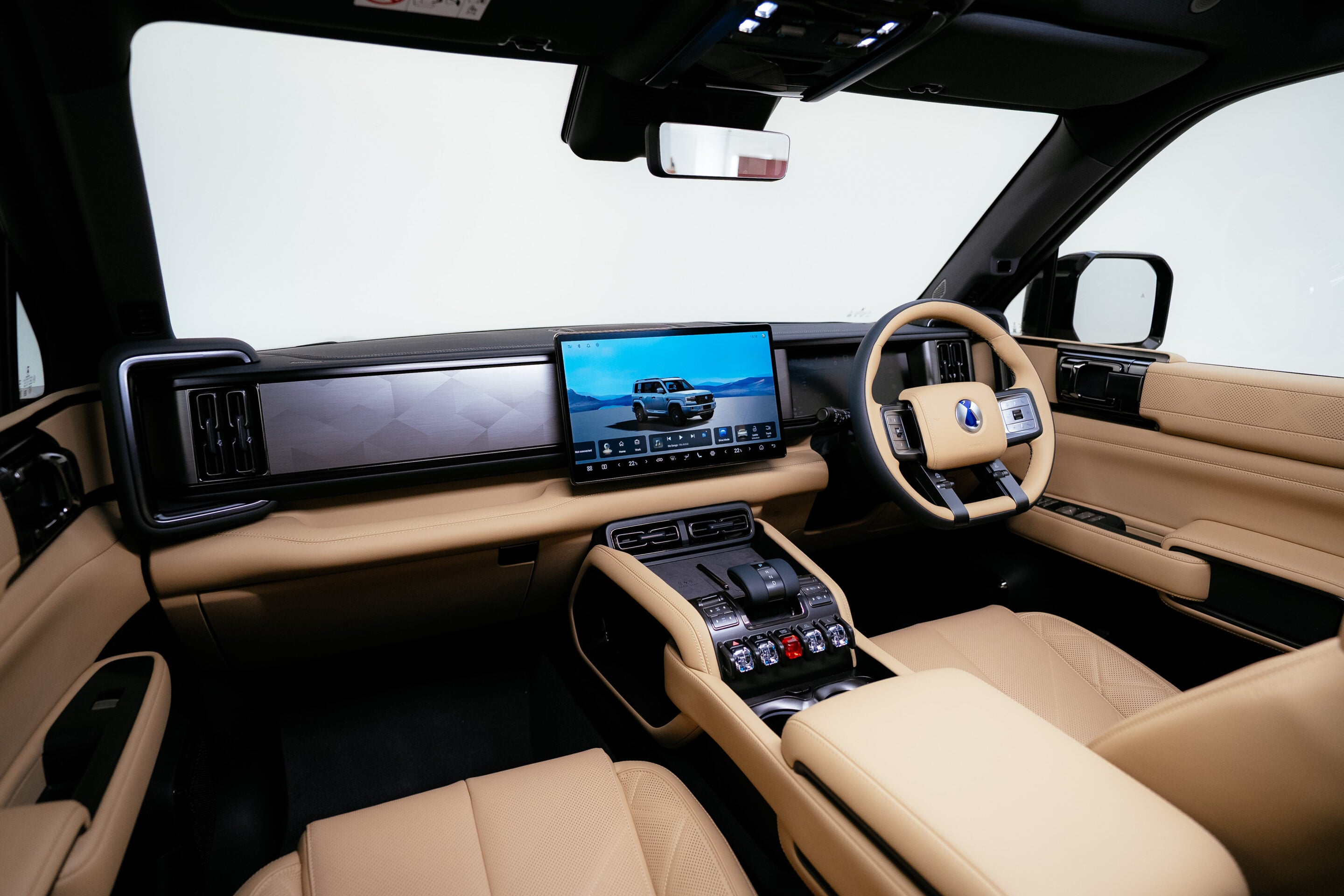
Inside, the B8 features heated, ventilated and massaging seats; individual captain’s chairs in the six-seat variant; premium leather trim; a cooler/hotbox; 15.6‑inch rotating touchscreen; 12.3‑inch driver display; and an 18‑speaker audio system. Safety equipment includes 14 airbags and a 360‑degree camera.
“What really excites us is getting to share DENZA’s technology with Aussie customers. You can use these vehicles almost exclusively as EVs around town, while being able to hit the road for almost 1000 km in a single drive thanks to this Super Hybrid technology,” added Harland.
The 2026 HiLux line-up includes single, extra and double-cab bodies; 4×2 or 4×4 drivelines; manual or automatic transmissions; and WorkMate, SR, SR5, Rogue and Rugged X grades.
All 2026 HiLux models, from the base WorkMate to the Rugged X, are powered by the 1GR 2.8-litre diesel engine, backed by either a 6-speed automatic or 6-speed manual depending on the grade. The engine produces a claimed 150kW and 420Nm with the manual gearbox, or a claimed 500Nm when paired with the automatic.
Huge kudos to Toyota Australia for continuing to offer the choice of a manual gearbox in the HiLux, while many competitors in the midsize 4×4 ute segment now offer only automatics.
Some double-cab automatic grades from SR and above also get Toyota’s 48-volt V-Active system, which uses an 8.5kW/65Nm electric motor-generator, a lithium-ion battery and a DC/DC converter to smooth the stop-start function, provide a small boost to acceleration, and deliver a claimed improvement in fuel economy. It’s a tried-and-true powertrain that has served Toyota well across many of its 4×4 models up to now, and the brand hasn’t seen any reason to change it.
Aside from the obvious changes to the front and rear styling of the new HiLux, all variants now get LED headlights, a 12.3-inch multimedia screen, and a new 7-inch instrument screen for WorkMate and SR models, while SR5 and above get a 12.3-inch cluster. There’s an all-new dash, seats and interior trims, plus improved safety kit including autonomous emergency braking with pre-collision safety system, active cruise control, rear cross-traffic alert, lane departure alert and lane trace assist, road sign assist and blind spot monitor. Some of these ADAS systems are now possible on HiLux due to the integration of an electric power steering system across all models in lieu of the previous mechanical setup.
On models with MTS drive modes, the steering feel can be switched between Normal and Sport, with Sport mode giving the driver improved feedback.

WorkMate and SR HiLux grades ride on 17-inch steel wheels, but by the time you step up to SR5 you get 18-inch alloys, the bigger instrument screen and more features including Multi Terrain System and drive modes, plus the availability of the Premium Interior Package, which adds leather seat trims and a JBL premium sound system with nine speakers.
SR5 and above HiLuxes also get revised suspension calibration to improve ride quality, particularly when driving without a load on board. Despite the softer-riding suspensions, the SR5 and above models have a higher GVM rating than the lower grades, with the WorkMate double-cab pickup 4×4 at 3065kg; SR double-cab chassis 4×4 manual and SR5 double-cab pickup 4×4 manual at 3080kg; SR double-cab 4×4 auto and SR5 with Premium Interior double-cab 4×4 manual at 3090kg; and SR5/Rogue double-cab 4×4 coming in at 3120kg. All 4×4 models have a 3500kg towing rating.
The renewed Rugged X HiLux is billed as the most off-road-friendly model in the line-up, but its extra kit is more about improved clearance and body protection than any increase in tractive ability. This comes courtesy of a hoopless steel front bumper with LED light bar, under-front bash plate, and front and rear rated recovery points. At the back there’s a Rugged X–specific sports bar, a bed liner in the tray and ‘TOYOTA’ lettering across the tailgate.
While the off-road hardware remains the same – with dual range, part-time transfer case, rear differential lock (model dependent) and sharp-acting electronic traction control – Toyota has made a small improvement to its performance by keeping the ETC active on the front wheels when the RDL is engaged. The front ETC is only active at speeds up to 6km/h, but in previous generations of HiLux it was totally disengaged when the RDL was locked, leaving the front wheels as free spinners when they broke traction. There is also a new actuator for the ETC to help it perform more smoothly.
If there is one thing that’s disappointing in the 2026 HiLux’s drivetrain, it’s the carry-over of the part-time transfer case in lieu of one that offers the option of full-time or On-Demand all-wheel drive for use on sealed roads. The benefits of having such a system in a ute are felt whenever I am driving one thus equipped, and the HiLux is lagging behind the competition in this regard.
Toyota calls this the ‘Most Australian HiLux ever’, with the design of the front and rear of the vehicle and the interior all done in-house at Toyota Motor Corporation Australia’s (TMCA) Melbourne facility. That said, the utes coming to Australia are still manufactured in Thailand.
The front end features new slimline LED headlights, and the painted grille follows a popular trend on new cars. The front bumper has a muscular design claimed to mimic the pose of a sumo wrestler.
At the back, the cargo tub is all new, with new taillights, liftgate, sports bars and a step to make accessing the load easier. The tub with external tiedown hooks is no longer available, but there are four internal tie-downs. Some higher-spec models get a power outlet and light in the tub, while the Rogue tub is also lined with marine carpet under its powered roller shutter.
| 2026 Toyota HiLux SR5 specs | |
|---|---|
| Engine | Inline 4-cylinder turbo-diesel |
| Capacity | 2755cc |
| Max Power | 150kW@3000-3400rpm |
| Max Torque | 500Nm@1600-2800rpm |
| Transmission | 6-speed automatic |
| 4×4 System | Part-time dual-range 4×4 |
| Construction | 4-door ute and tub on ladder chassis |
| Front Suspension | Independent double wishbone with coils |
| Rear Suspension | Live axle on leaf springs |
| Tyres | 265/60R18 on alloy wheels |
| Kerb Weight | 2215kg |
| GVM | 3090kg |
| Payload | 900kg |
| Towing Capacity | 3500kg |
| GCM | 6300kg |
| Seating Capacity | 5 |
| Fuel Tank Capacity | 80L |
| ADR Fuel Consumption | 8.0L/100km |
| Departure Angle | 26 |
| Approach Angle | 29 |
| Ground Clearance | 224mm |
Toyota is predicting that the HiLux BEV will achieve an NEDC range of approximately 315km for the SR5-spec double-cab ute, while the 59.2kWh lithium-ion battery can be fast charged using a 150kW DC charger from 10-80 per cent in approximately 30 minutes depending on ambient conditions, or charged on AC power from 10-100 per cent in about six and a half hours.
The HiLux BEV will be available as a double-cab ute or cab-chassis in SR and SR5 grades, but no pricing has been announced yet.
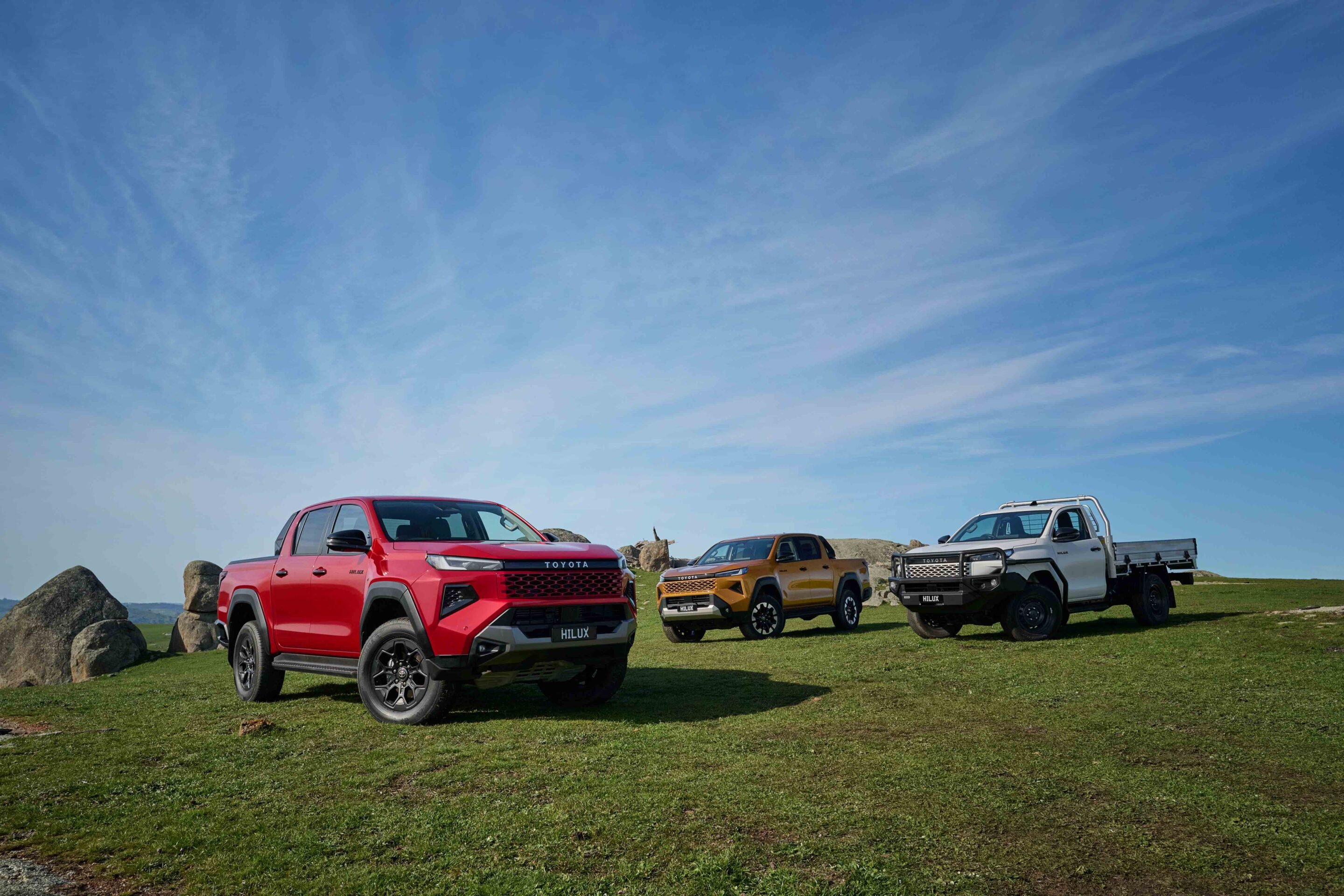
The BEV uses a traditional HiLux ladder chassis with the battery pack nestled between the rails and protected by an underside plate. The dual motors each power the front and rear axles, delivering 205Nm of torque through the front wheels and 268Nm to the rear via a full-time electronically controlled all-wheel drive system. This is paired with a five-mode Multi-Terrain System that offers settings for Rock, Sand, Mud, Dirt and Moguls.
It is claimed that this system will allow the HiLux BEV to maintain the same off-road capability as a diesel-powered HiLux, with a 700mm wading depth, 29-degree approach and 25-degree departure angles, and 218mm ground clearance. Toyota says the HiLux BEV will have a payload of approximately 715kg and a braked towing capacity of 2000kg.
The HiLux BEV won’t be for everyone, with TMCA saying it has been designed for industries like mining and farming that would appreciate its unique characteristics. TMCA says it has had a HiLux BEV testing with BHP for more than a year, with impressive results.
No pricing has yet been given for the HiLux BEV, nor have we driven one. It will become available in the first half of 2026. TMCA has also said that it is working on a hydrogen-fuelled HiLux set for a 2028 launch. This will be an FCEV, with the hydrogen fuel cell powering the electric motor or motors.
| 2026 Toyota HiLux 4×4 pricing | |
|---|---|
| WorkMate single cab-chassis AT | $45,990 |
| WorkMate double cab-chassis AT | $52,490 |
| WorkMate double cab pick-up AT | $53,990 |
| SR extra cab-chassis AT | $54,990 |
| SR double cab-chassis MT | $54,990 |
| SR double cab-chassis 48V AT | $57,990 |
| SR double cab pick-up 48V AT | $59,490 |
| SR5 double cab pick-up MT* | $63,990 |
| SR5 double cab-chassis 48V AT* | $64,490 |
| SR5 double cab pick-up 48V AT* | $65,990 |
| Rogue double cab pick-up 48V AT | $71,990 |
| Rugged X double cab pick-up 48V AT | $71,990 |
Options: Premium paint: $675 *Premium Interior pack: $2500
It’s the latest addition to the brand’s growing hybrid 4×4 line-up, and one that keeps the Tank 300’s core mechanical hardware intact. Previewed at GWM Tech Day in September, the Hi4-T version adopts the hybrid system already used in the Tank 500 and Cannon Alpha.
It pairs a 2.0-litre turbo-petrol engine with a nine-speed hybrid auto (9HAT), designed to bolster low-end torque and improve on-road efficiency. Importantly for off-roaders, the Tank 300 Hi4-T retains its traditional mechanical 4WD system, low-range transfer case and locking differentials.

The Hi4-T matches the regular model’s 3000kg braked towing capacity and adds Vehicle-to-Load (V2L) capability – handy for running gear at camp or powering tools in remote spots or at the jobsite.
As with GWM’s other hybrid models, the Hi4-T can run in EV, hybrid or petrol modes, shifting between them based on terrain and load. The setup is aimed at cutting fuel use around town while offering smoother torque control on sand, mud and technical climbs. GWM also notes that the Cannon Alpha Hi4-T remains the only PHEV to conquer Beer O’Clock Hill – a point clearly aimed at buyers wary of the off-road potential of hybrid vehicles.
A new speculative design from digital renderer, Kelsonik – a creator known for realistic vehicle concepts – reimagines the Tasman into a wagon-style SUV that could sit in the same space as a Ford Everest if it ever moved from concept to reality.
The SUV concept keeps the Tasman’s broad-shouldered stance but trades the tray for a long, enclosed body. Up front, Kia’s signature tiger-nose grille remains, paired with sharp, angular headlights that give the SUV a purposeful, confident look. Sculpted flanks and a strong bonnet add to the tough, off-road-ready impression without overcomplicating the design.
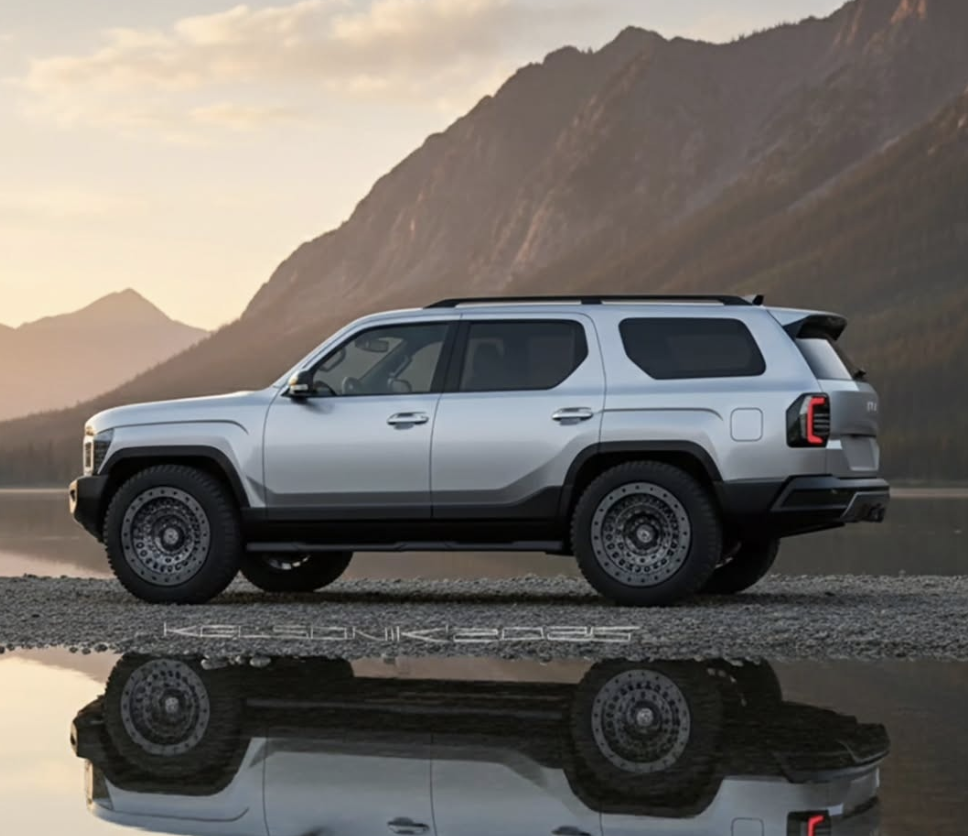
From the side, the stretched roofline and large rear doors suggest a practical interior for passengers or gear. Subtle lower-body cladding and roof rails reinforce a sense of versatility, giving the vehicle an adventure-ready vibe without drifting into flashy, overdone styling.
At the rear, the concept imagines a clean tailgate with a full-width LED light bar and squared-off proportions. The design feels functional and deliberate – ready to carry camping gear, recovery equipment, or a weekend’s worth of luggage – while maintaining a tidy, modern appearance.
Though entirely speculative, the render shows how the Tasman could evolve into a more versatile, SUV-style vehicle. With its sturdy frame and rugged styling cues, it could theoretically appeal to 4×4 enthusiasts looking for a practical, adventure-ready wagon – one that blends utility with off-road presence.
Source: https://www.instagram.com/kelsonik/?hl=en
It looks like business as usual heading into the end of 2025, with the two popular utes again topping the sales charts – and that trend is set to continue into the new year, with the new HiLux coming on line and Ford introducing fresh Ranger variants.
Mr Hanley was pointing to a slowing in ute sales driven by the re-emergence of midsize all-wheel-drive SUVs such as the RAV4. This category now sits second behind 4×4 utes in overall sales and, for most private buyers, they make far more sense than a ute.
The cabins of midsize utes are a major compromise, particularly in the back seat, where most lack the space needed to carry adults – or adult-sized kids – in comfort over long distances. Yes, some of the newer utes are arriving with larger cabins and sliding rear seats to improve comfort, but they will never match the space or seat-back angle of an equivalent-sized 4×4 wagon.
While the internal size creates compromises, so do the external dimensions. These utes are big and getting bigger, and using one as your daily family runabout and shopping hauler can be a real pain. It’s fine if you rarely visit a shopping-centre carpark, but it quickly becomes an annoyance – and a risk of damage – if you do it regularly.
The long wheelbase of double-cab 4×4 utes also compromises their off-road ability, with low ground clearance and a poor ramp-over angle, while their IFS front ends typically lack wheel travel and traction.
While ute tubs are large enough to carry plenty of gear, they’re not secure unless you fit a canopy or roller shutter, and the GVM of most utes limits how much you can actually carry without resorting to further modifications.
I’ve always compared double-cab 4×4 utes to the venerable Swiss Army knife: they offer plenty of functions and gadgets, but none of them work as well as a single tool designed specifically for the job. The 12 utes in our Ute Of The Year test presented us with a sea of compromises.
Ford has the right idea in creating derivatives of the Ranger ute that are better suited to specific tasks. The Ranger Raptor sacrifices load capacity to deliver a superior ride and far better off-road performance, while the new Ranger Super Duty trades ride quality for unrivalled GVM and towing capacity. The Ranger SD and Raptor each have a more focused design and engineering brief, resulting in vehicles that do a far better job of their intended roles.
The Haigs are old-school bush people, but they understand the need many of us have to get away from the crowd now and then. So they’ve set aside part of the vast property where visitors can get a real taste of what the outback is all about – space to camp pretty much wherever you want, with no signs telling you what you can’t do.
The thing with Alroy is that you can stay as long as you like. For some travellers, Alroy is the destination; for others, it’s an overnight stop – or anything in between.
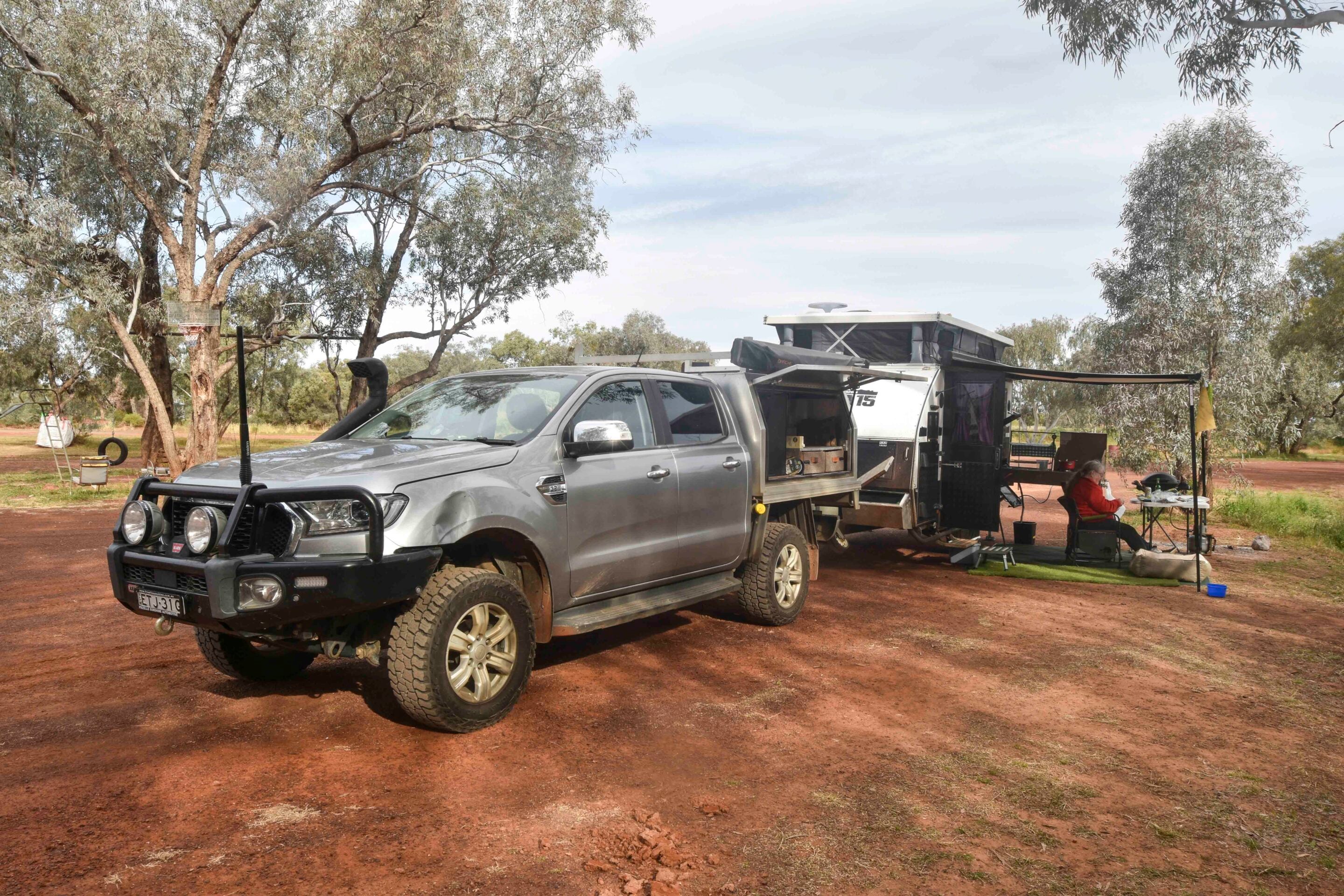
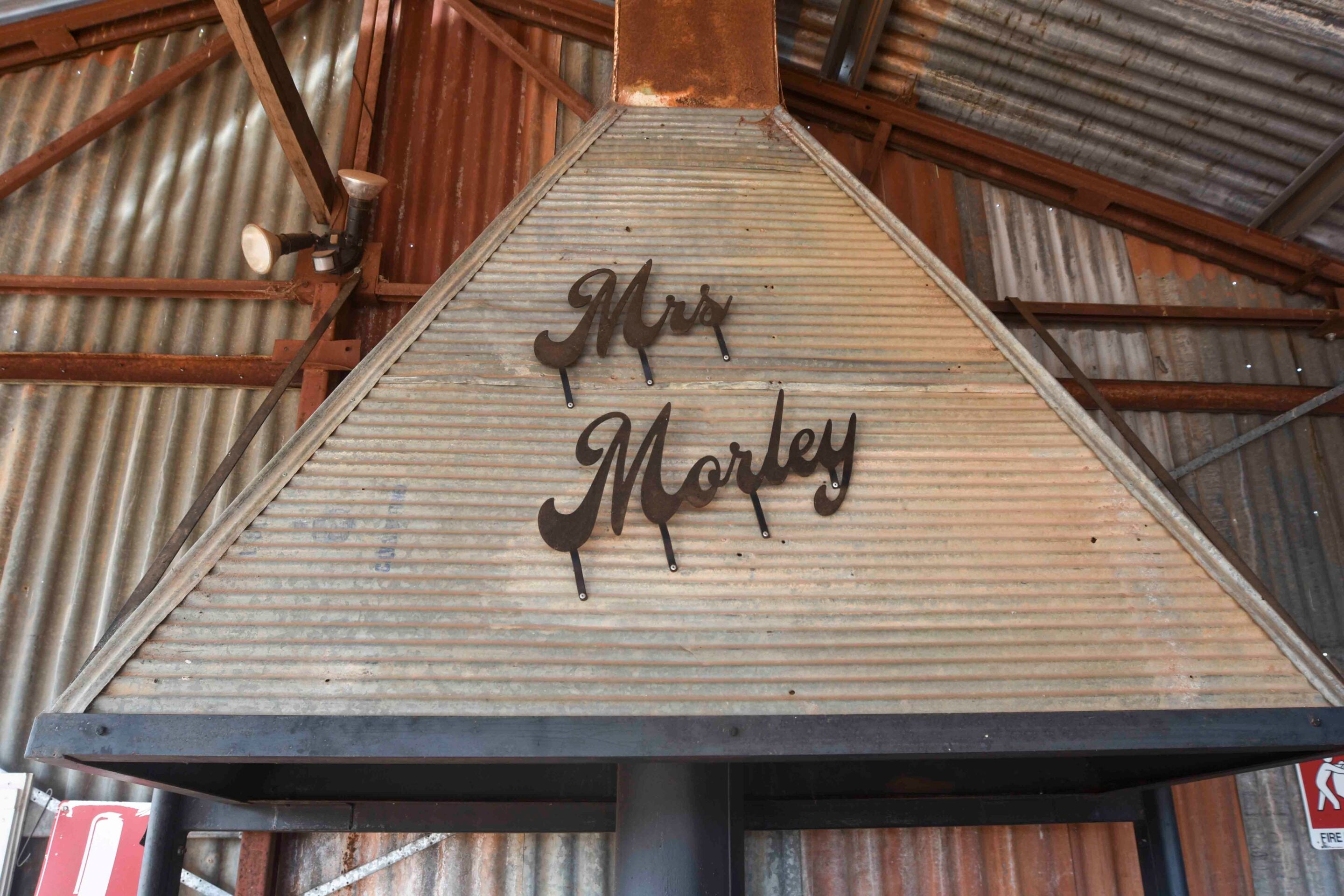
The Haigs have struck the right balance, providing good, clean amenities while maintaining the ethos of bush camping. You can have a hot shower and visit a clean dunny without any qualms about hygiene. There’s also a well-set-up camp kitchen with the most impressive fuel stove I’ve seen in a long while. And for groups, catering can be arranged – think camp-oven dinners cooked over open fires beside the kitchen.
Every afternoon, either Mac or Mary will come by with a trailer full of *gidgee for your campfire. There used to be a few fireplaces here, but they were swept away in the floods that tore through between January and March earlier this year. But like most bush folk, Mac and Mary just got on with it, almost as if nothing had happened. Visiting places like this isn’t just good for the memories of your trip – it also helps the locals recover from those floods, one of the worst natural disasters to hit the Queensland outback in recent years.
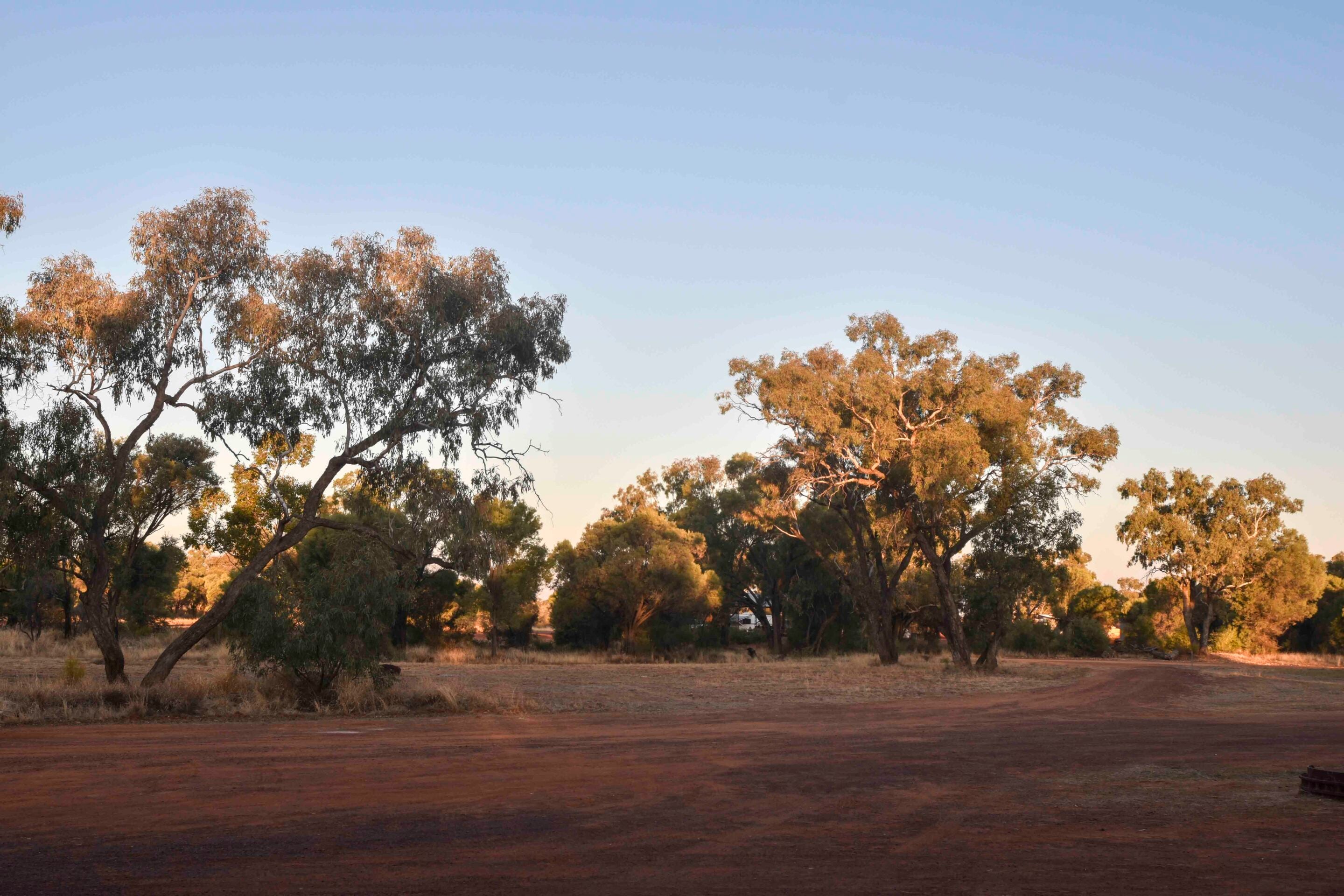
Scattered here and there are reminders of Alroy’s past – an old traction engine and other odds and ends that hint at a time when life was a lot tougher. In contrast, a couple of open-air tubs let you soak in warm artesian water beneath an endless sky. I didn’t try it myself, but I can imagine sinking into that tub at night, a star-filled outback sky overhead – pretty special.
This is red-soil country at its best. Not everyone wants to test their skills on a long outback journey, but at Alroy you can experience that mix of adventure with just the right amount of safety thrown in – not to mention a hot shower at the end of the day.
The Yowah opal field isn’t far from Alroy’s front gate, and you can spend as long as you like “noodling” the mullock heaps for any chips of opal the miners might’ve missed. Then there’s the Eulo Queen Hotel just down the road – well, about 60km, but that’s not far in these parts. An historic outback pub if ever there was one, the Eulo Queen has a colourful past and a warm, easy-going welcome.
Also at Eulo is the Date Farm. Like the town itself, it sits on the Paroo River and offers a surprising range of products – including date wine. If bush pubs are your thing, another short drive (about 97km one way) will get you to the Toompine Pub – another true outback establishment where the beer’s cold and the food’s simple but tasty. It’s under new management, and Mac Haig reckons it’s well worth the drive.
You can’t help becoming a birdwatcher here – the birdlife is everywhere. I didn’t have a bird book, but a fellow traveller wandered by the camp, binoculars in hand, and seemed to know every species. Yowah Creek flows right through the campground, and there’s a fair chance of pulling a yabbie or two if you remembered to pack a trap. We missed out this time, but it was fun having a go. There’s no shortage of walking options either, and if fishing’s your thing, you might even hook a yellowbelly.
On Alroy itself, if you ask Mac, he’ll provide a mud map of the station so you can do some exploring not too far from camp. And if shearing or other station work is underway, you’re welcome to have a look and broaden your understanding of life in the bush.
Gidgee, pronounced “Gijee”, is an outback hardwood that’s broken plenty of stout hearts and good axes. But it makes brilliant firewood – it burns hot, and you don’t need much to get a good blaze going.
Alroy is a working sheep and cattle station and can be a pretty busy place at times. You can call ahead on 0427 992 889 or email [email protected] – a good idea if you’re travelling in a large group or would like catering arranged. The Haigs have handled groups of up to 120 people, so they’ll be up to the challenge.
Fuel is available at Eulo, but it’s an automated service – you’ll need to use your credit or debit card with no attendant present. You can stock up on basic supplies at Cunnamulla, 126km to the east. Apart from any catering you’ve organised, once you’re on Alroy you’ll need to be fully self-sufficient.
Mobile phone reception – at least for Telstra – is generally good on Alroy. The station uses UHF channel 10 for management purposes; you can monitor this channel, but if you’re travelling in a group, use another for your own comms.
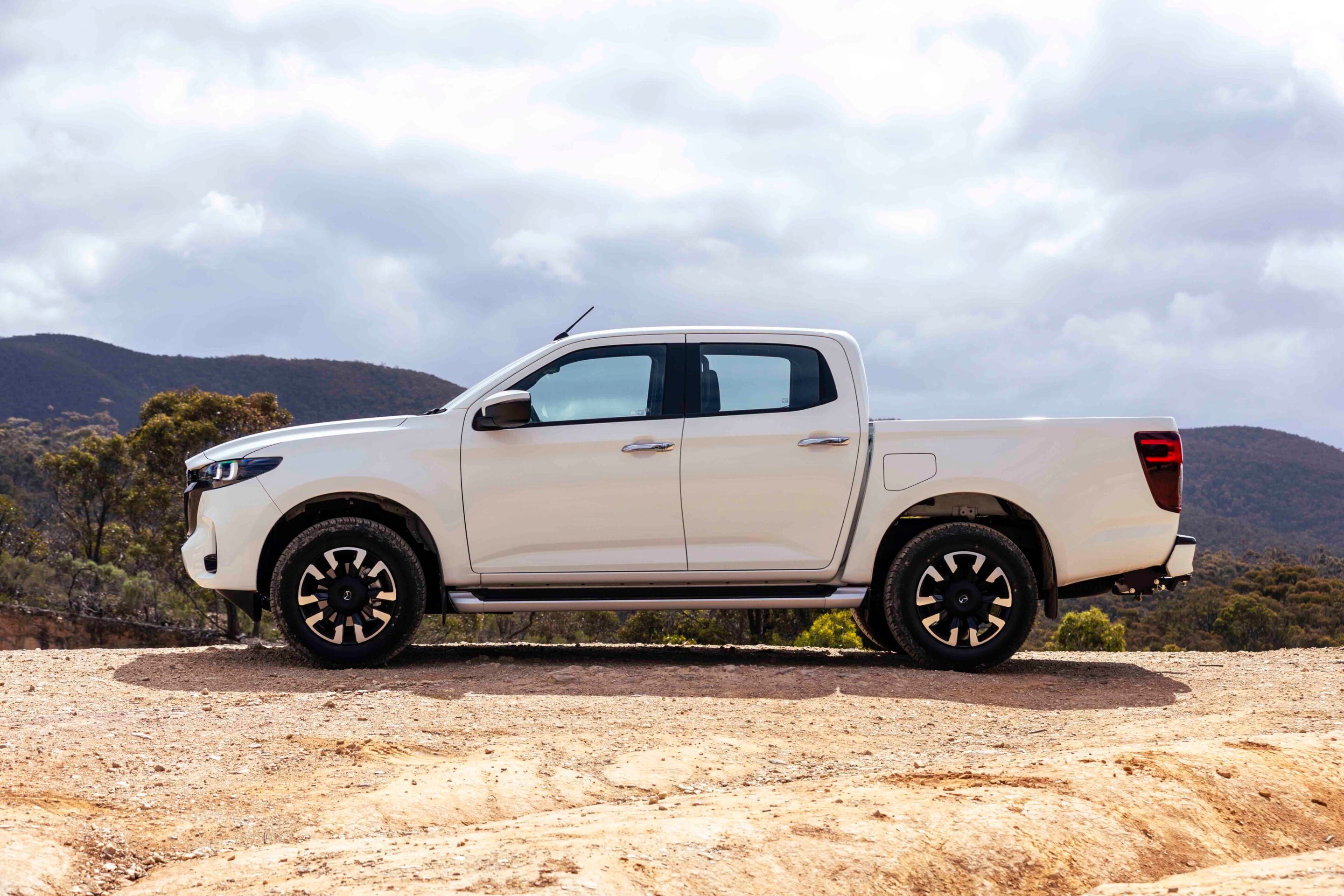
The two share the same 3.0‑litre diesel engine, driveline, chassis and systems, but the Mazda brings different exterior and interior styling, plus a slightly sportier suspension tune. If you’re going to partner with another manufacturer to add a ute to your showroom, teaming up with Isuzu is hardly a bad choice.
By choosing the GT – the second-highest model in the BT‑50 range – you get Isuzu’s proven mechanics with Mazda’s more refined interior and exterior touches. It even carries over the Rough Terrain button for off-road use, along with the six-speed automatic transmission and familiar chassis setup.
On-road, the BT‑50 GT feels composed and stable, with suspension tuning that keeps the cab planted over bumps and undulations. It responds confidently to steering inputs, giving a connected feel without being harsh or overly stiff. Acceleration is steady and predictable, and the six-speed automatic shifts smoothly under most conditions, making it easy to drive on highways or winding roads alike.
Off-road, the BT‑50 inherits the rugged D-MAX architecture, including the Rough Terrain button and part-time 4×4 system. The slightly stiffer rear springs provide added support when loaded, helping maintain control on rougher tracks or when carrying gear in the tub. While it’s not as soft and compliant as some competitors, the BT‑50 feels balanced and capable, offering predictable handling and confidence in a variety of terrain.
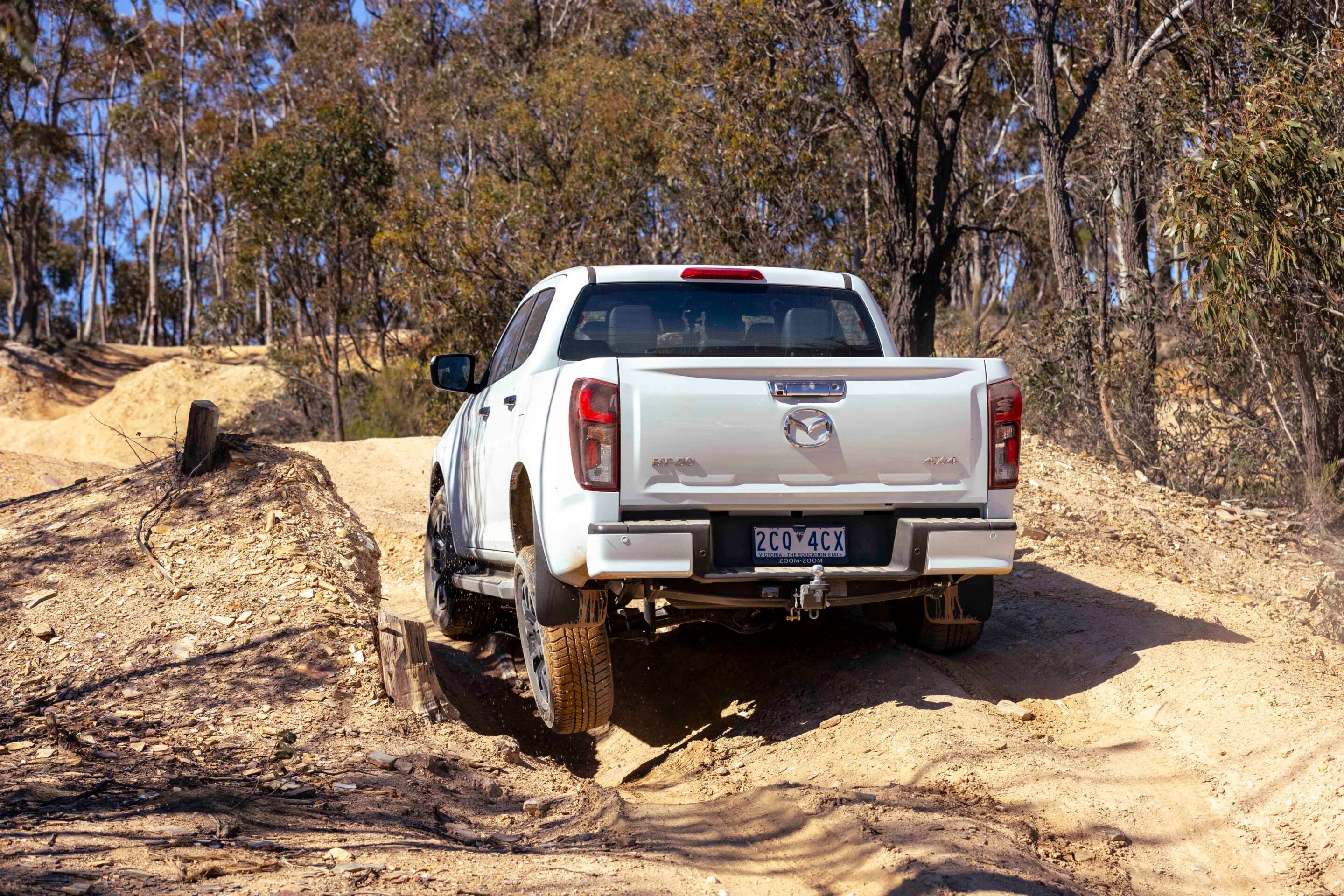
“I made sure to tow with the GT back-to-back with the D-MAX X-Terrain, because although they share their chassis, gearbox and engine, the GT runs stiffer, more load-oriented rear springs.
“The GT has a payload of up to 998kg, bettering the X-Terrain by about 70kg, but I’ll be honest – I think you need to use some of that capability and run some weight in the tub of the GT, as it felt a lot stiffer and less settled than the Isuzu. If you’re expecting to run a few hundred kilos of canopy and gear, the GT might be the one to go for; just keep an eye on your GVM (3100kg) and GCM (6000kg).”
| Mazda BT-50 GT specs | |
|---|---|
| Price | $62,660 + ORC |
| Engine | I4 turbo-diesel |
| Capacity | 2999cc |
| Max Power | 140kW |
| Max Torque | 450Nm |
| Transmission | 6-speed automatic |
| 4×4 System | Part-time, dual range 4×4 |
| Construction | 4-door ute on ladder chassis |
| Front Suspension | IFS with upper and lower arms and coil springs |
| Rear Suspension | Live axle on leaf springs |
| Tyres | 265/60R18 |
| Kerb Weight | 2102kg |
| GVM | 3100kg |
| GCM | 6000kg |
| Towing Capacity | 3500kg |
| Payload | 998kg |
| Seating Capacity | 5 |
| Fuel Tank Capacity | 76L |
| ADR Fuel Consumption | 7.1L/100km |
| Approach Angle | 30.4 |
| Rampover Angle | 23.8 |
| Departure Angle | 17.9 |
| Wading Depth | 800mm |
| Ground Clearance | 240mm |
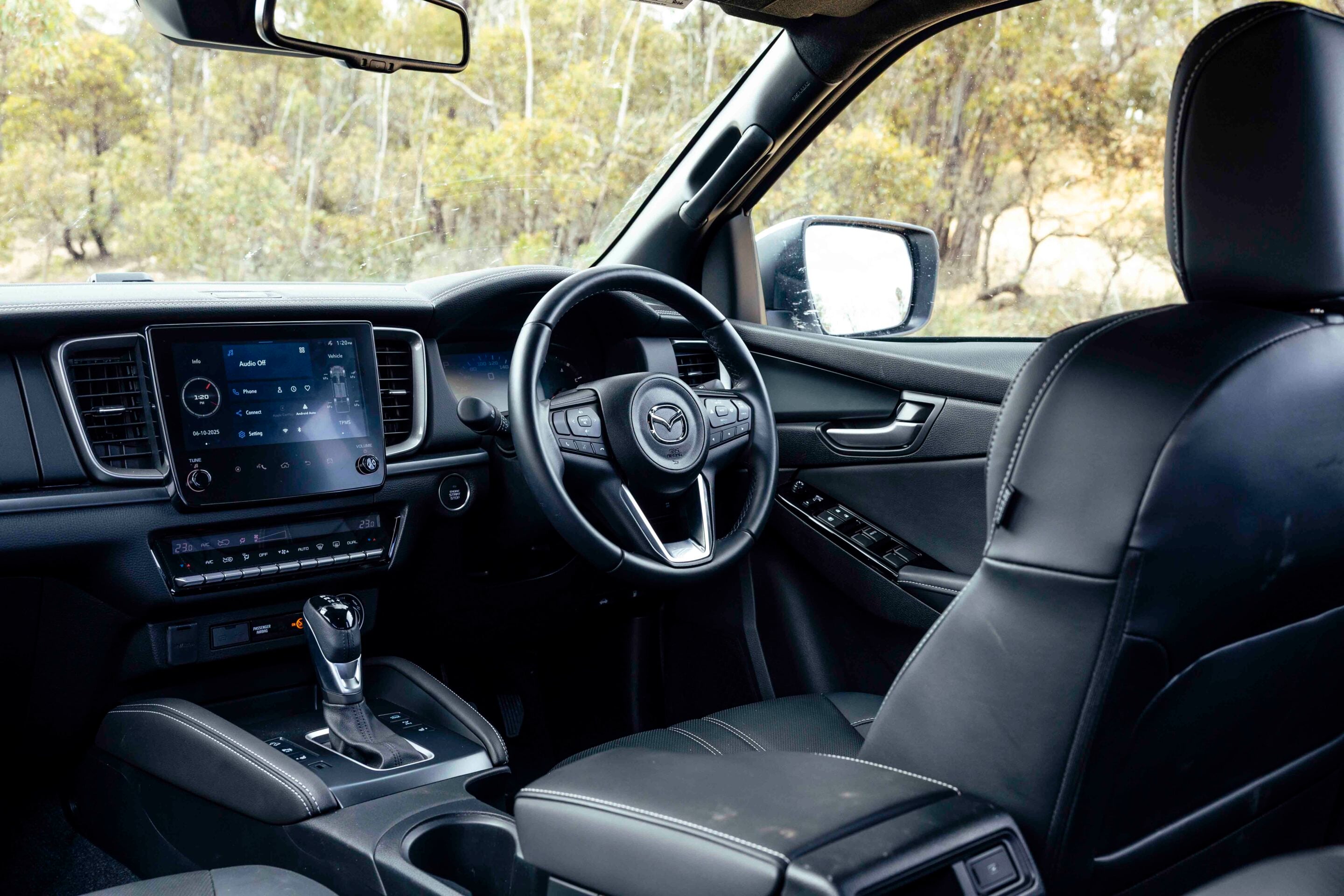
Front occupants enjoy supportive seats with leather-look trim, adjustable lumbar support, and heated functions, while the rear bench is spacious enough for adults on shorter trips, though best suited for lighter loads on long journeys.
The dashboard layout is clean and intuitive, featuring a touchscreen infotainment system with Apple CarPlay and Android Auto, plus physical controls for climate and media that remain easy to operate on the move. Storage is plentiful, with deep door bins, a centre console, and under-seat compartments for tools or touring gear.
Practicality extends to the cargo area, where the GT can carry up to 998 kg payload, aided by slightly stiffer rear springs that keep the tub stable under load. Overall, the BT‑50 strikes a balance between refinement and usability, giving drivers a cabin that’s comfortable for long drives without compromising the rugged functionality needed for work or bush touring.
The BT‑50 GT is a capable and practical ute, but it falls short compared with the newer, more refined competitors in this year’s test. Its strengths in styling and payload can’t fully offset a few limitations in overall performance and comfort. Key reasons include:
| How it scored | |
|---|---|
| Value for money | 6/10 |
| Breaking new ground | 5/10 |
| Built tough | 6/10 |
| Doing the job | 7/10 |
| Bushability | 7/10 |
| TOTAL | 31/50 |
A stacked field hit this year’s 4X4 Ute of the Year test, with everything from value picks to heavy-duty touring rigs lining up. Here’s every contender that made the cut for 2025.:
It entered aggressively with sharp drive-away pricing, a high level of specification, and the claim of being the first 4×4 PHEV ute on sale in Australia. The tactics worked, with strong sales putting the Shark among the best-selling utes in its class and boosting the BYD brand toward its top-five target.
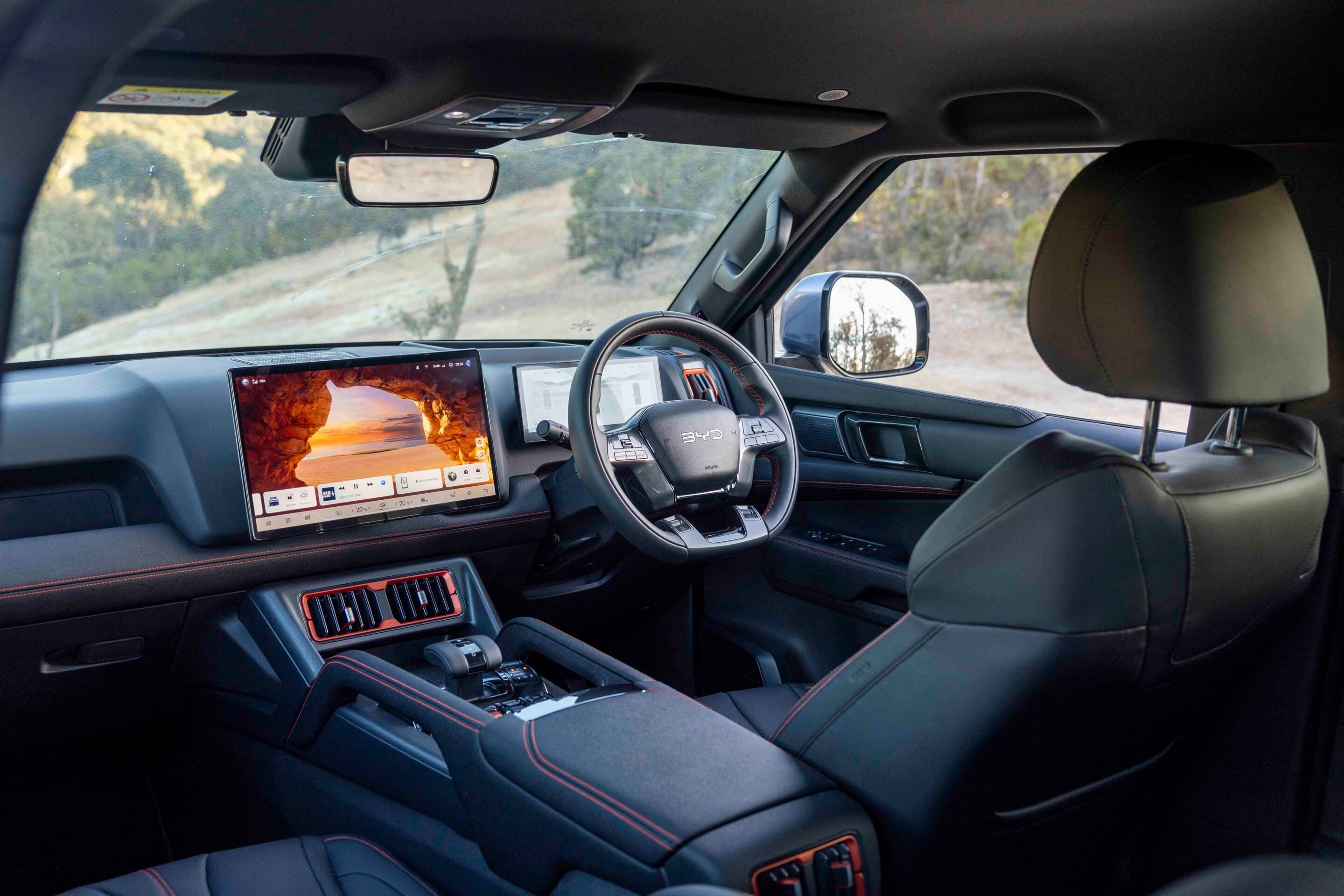
The Shark is a large midsize ute with a spacious, well-appointed cabin in the single grade currently offered. Its interior sets a high benchmark for other utes to follow, with generous space, a clean design, and features that will impress buyers on a test drive – especially when paired with its competitive price.
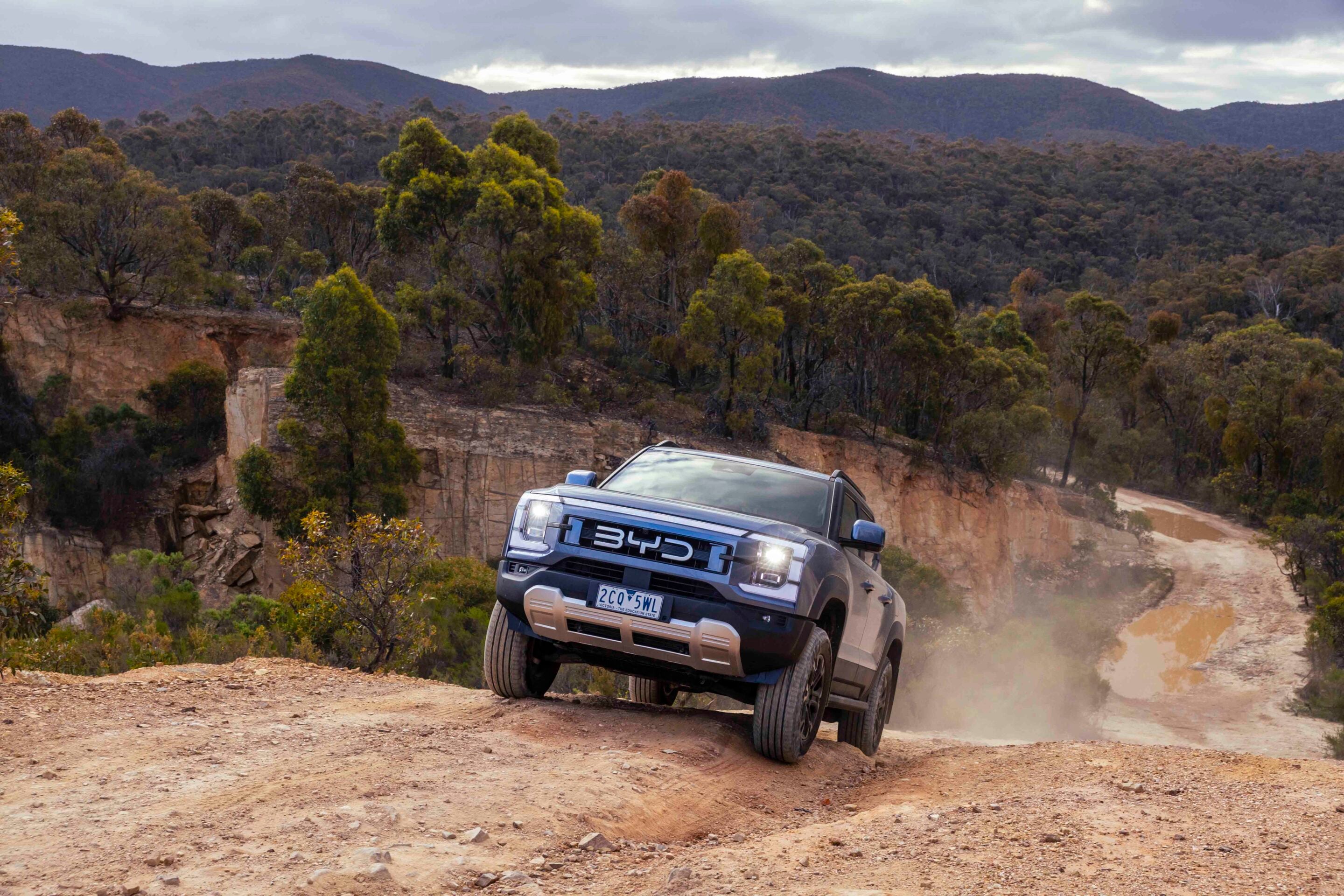
Up front sits a 135kW/260Nm turbocharged 1.5-litre four-cylinder petrol engine paired with a 130kW/330Nm electric motor. The rear axle is powered by a 150kW/340Nm electric motor, completely isolated from the front. Combined, this gives the Shark 321kW and 650Nm, but the way that output reaches the wheels limits its effectiveness off-road.
Unlike conventional dual-range 4×4 systems, the Shark’s rear electric motor only engages when the throttle is floored or when wheel slip triggers all-wheel-drive intervention. That delay, combined with fully independent suspension using very short control arms, limits wheel travel and causes the wheels to lift easily over rough terrain. Terrain modes improve responsiveness slightly, but fundamental mechanical and drivetrain design limitations hold it back.
While the Shark delivers quick, comfortable, and gadget-packed driving around town, it falls short in typical 4×4 situations. On gravel, loose surfaces, and moderate trails, the isolated rear motor and short-travel suspension make the Shark feel unsettled. It is competent for light dirt roads but lacks the confidence, traction, and mechanical robustness required for serious off-road work.
“It is nice to see a Tow Mode in the Shark, but if the battery is running at less than 50 per cent, the petrol engine will rev so hard that will drive you nuts on a long haul,” he said.
“Once charged beyond 50 per cent it will settle down unless you are pushing it, and with 2000kg you are almost at its tow-limit of 2500kg, which for me rules it out of contention instantly. The Shark doesn’t have the payload or tow capacity to compete as a viable towing ute.”
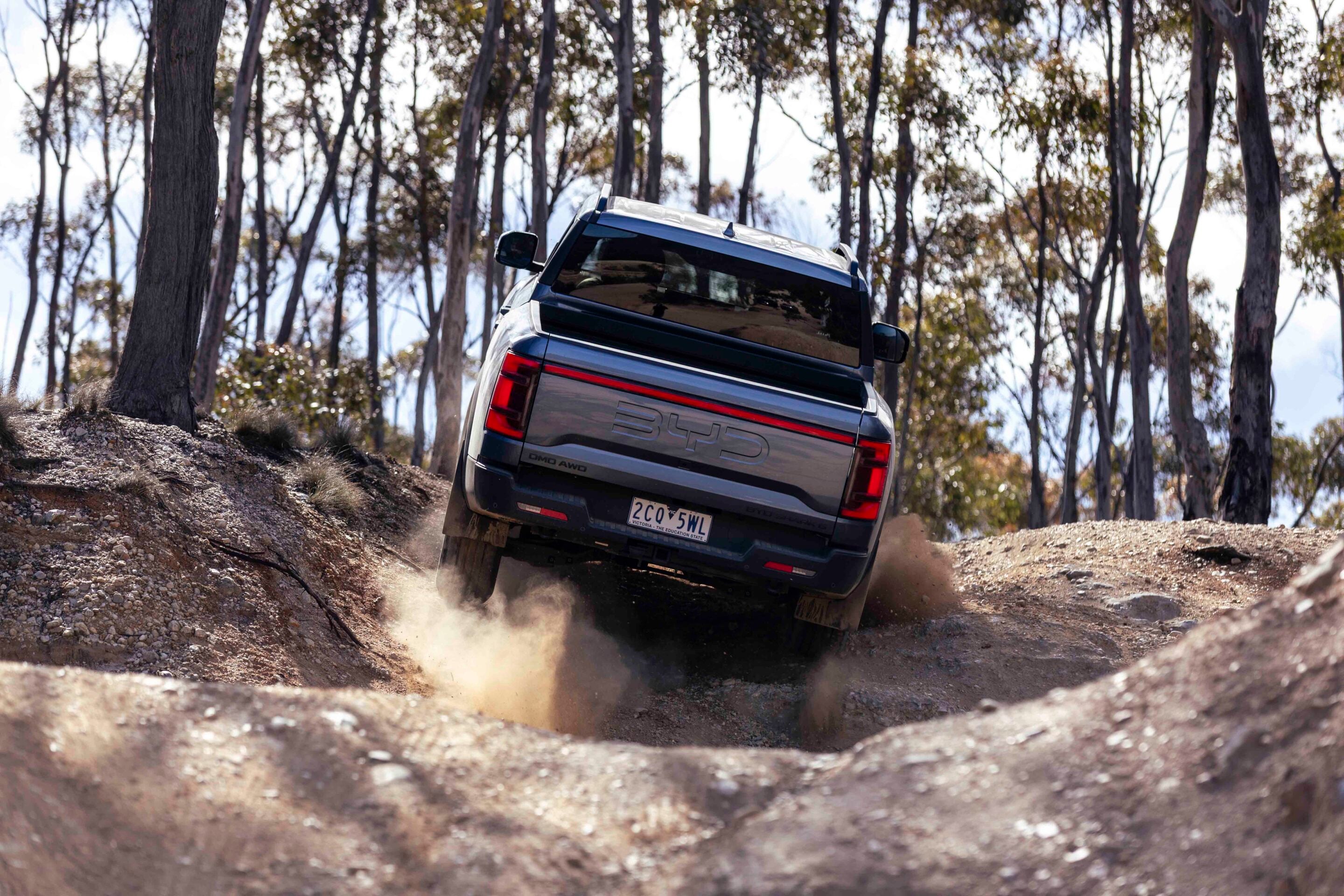
| BYD Shark 6 specs | |
|---|---|
| Price | $57,000 + ORC |
| Engine | PHEV; turbocharged petrol engine with dual electric motors |
| Capacity | 1497cc |
| Max Power | (ICE) 135kW / (EV) 130kW front, 150kW rear |
| Max Torque | (ICE) 260Nm / (EV) 310Nm front, 340Nm rear |
| 4×4 System | Individual electric drive front and rear (no mechanical linkage) |
| Construction | 4-door ute on ladder chassis |
| Front Suspension | Double wishbone independent with coils |
| Rear Suspension | Double wishbone independent with coils |
| Tyres | 265/65R18 |
| Kerb Weight | 2710kg |
| GVM | 3500kg |
| GCM | 5750kg |
| Towing Capacity | 2500kg |
| Payload | 790kg |
| Seating Capacity | 5 |
| Fuel Tank Capacity | 60L |
| ADR Fuel Consumption | 2.0L/100km |
| Approach Angle | 31 |
| Rampover Angle | 17 |
| Departure Angle | 19.3 |
| Wading Depth | 700mm |
| Ground Clearance | 230mm |
The cabin layout is clean and modern, anchored by BYD’s signature rotating 12.8-inch touchscreen, which can switch between landscape and portrait modes. It houses most vehicle controls – climate, drive modes, camera systems and EV settings – giving the interior a sleek, minimalist feel.
The digital instrument cluster is crisp and easy to read, while the steering wheel and switchgear feel more passenger-car than commercial ute. Seat comfort is excellent up front, with electrically adjustable, heated and ventilated front seats, a rarity at this price point. Rear passengers also score generous legroom thanks to the Shark’s longer wheelbase, and the bench has a more relaxed backrest angle than many traditional dual-cabs.
Cabin storage is plentiful, with a deep centre bin, large door pockets, twin wireless charging pads and several USB-A/USB-C outlets spread throughout. Fit and finish is strong too, with soft-touch trims, ambient lighting and a level of refinement that pushes the benchmark for the segment.
Practicality in the tub is slightly compromised by the hybrid layout, but the Shark still offers decent space for weekend gear.
The BYD Shark is a bold, innovative entry and shows what PHEV technology can do in a midsize ute – especially around town or for light duties. It wins on tech, interior space, and driveability for urban users, but it falls short on the traditional 4×4 criteria due to:
| How it scored | |
|---|---|
| Value for money | 7/10 |
| Breaking new ground | 8/10 |
| Built tough | 5/10 |
| Doing the job | 5/10 |
| Bushability | 4/10 |
| TOTAL | 29/50 |
A stacked field hit this year’s 4X4 Ute of the Year test, with everything from value picks to heavy-duty touring rigs lining up. Here’s every contender that made the cut for 2025.:
The top-of-the-range X-Terrain model is loaded with features and trim, and while the lane departure system still manages to annoy even after being revised, under the skin the D‑MAX is a solid, working-class ute. Its durability and straightforward engineering make it a favourite among those who need a dependable towing and touring companion.
Beyond its reliability, the D‑MAX benefits from a tried-and-tested 4JJ 3.0-litre turbo-diesel, robust chassis, and simple, capable suspension setup that make it predictable and confident both on the road and off. For buyers who prioritise ease of maintenance and proven capability over flash styling or cutting-edge tech, the D‑MAX remains a compelling choice.
The cab remains composed even when cruising at speed or overtaking, and while acceleration isn’t blistering, the 3.0‑litre turbo-diesel delivers steady, usable power across a broad torque band. Its Aisin six-speed automatic provides smooth, reliable shifts in all conditions, and the chassis maintains a planted, confidence-inspiring feel whether the ute is empty or carrying a full load. For longer highway runs or mixed touring days, the D‑MAX rewards you with a stable, fatigue-free driving experience.
Off the bitumen, the D‑MAX is competent and dependable rather than flashy. The Rough Terrain button sharpens the electronic traction control for low-range 4×4 use, helping when tackling uneven tracks, soft soil, or rocky sections. Its leaf-sprung rear suspension is forgiving over bumps and undulations, offering a comfortable ride for passengers while maintaining control when carrying a load.
While it doesn’t match the ultra-composed handling of newer rivals, the D‑MAX remains predictable, capable and confidence-inspiring on moderate trails. Its simple, robust engineering means it can be relied upon.
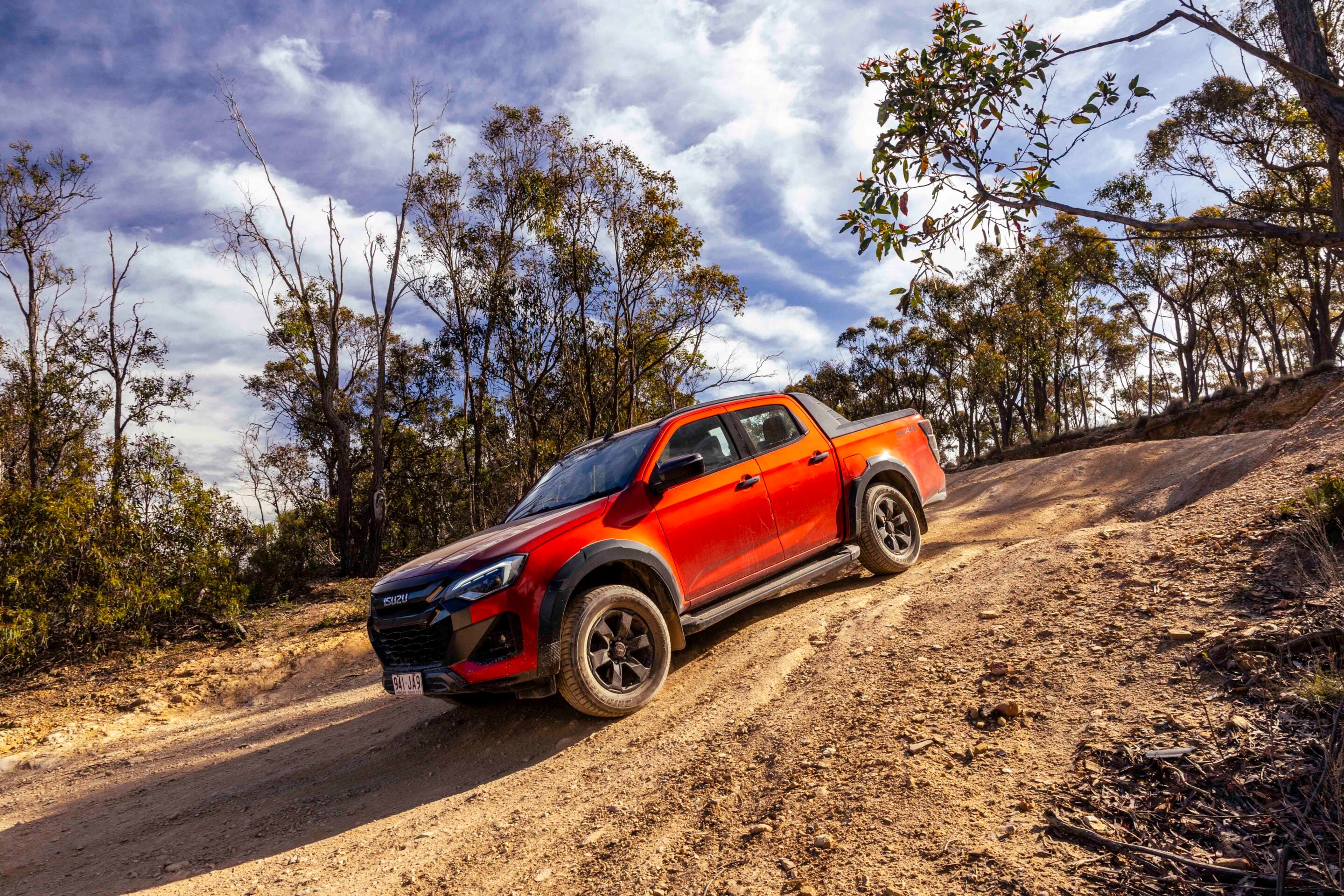
“The D-MAX has been a favourite of mine for towing for years, and although well beaten by the Ranger V6, it remains a worthy contender and runner-up as best tow ute,” said towing judge, Tim van Duyl.
“The 4JJ engine has what you want for towing – low-down torque – and it’s efficient, with my testing showing around 13L/100km over our loop. The gearbox is an Aisin six-speed that, again, is simple and reliable. The X-Terrain uses the softer of the leaf-pack options in the D-MAX, and it rides well with a load on the tow ball,” added Tim.
The D‑MAX benefits from a well-proportioned kerb weight and durable chassis, making it capable of hauling trailers near its 3500 kg tow limit while maintaining composure. The softer rear leaf springs are appreciated for both towing and off-road comfort, though the D‑MAX is less composed than newer rivals such as the Ranger, Triton, or Navara when pushed hard.
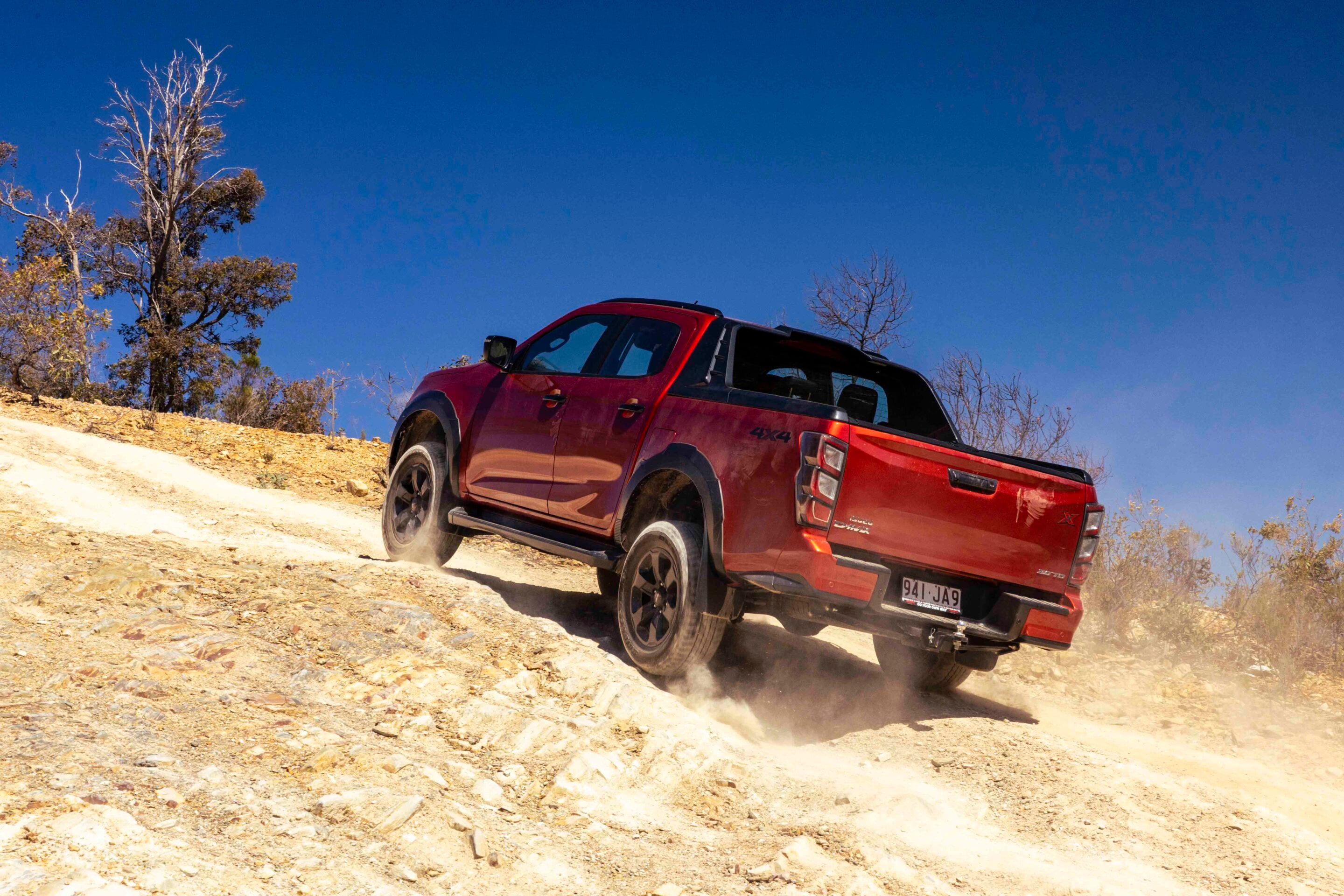
| Isuzu D-MAX X-Terrain specs | |
|---|---|
| Price | $73,000 + ORC |
| Engine | I4 diesel |
| Capacity | 2999cc |
| Max Power | 140kW @ 3600rpm |
| Max Torque | 450Nm from 1600 to 2000rpm |
| Transmission | 6-speed automatic |
| 4×4 System | Part-time, dual range 4×4 |
| Construction | 4-door ute on ladder chassis |
| Front Suspension | IFS with upper and lower arms and coil springs |
| Rear Suspension | Live axle on leaf springs |
| Tyres | 265/50R20 |
| Kerb Weight | 2170kg |
| GVM | 3100kg |
| GCM | 6000kg |
| Towing Capacity | 3500kg |
| Payload | 930kg |
| Seating Capacity | 5 |
| Fuel Tank Capacity | 80L |
| ADR Fuel Consumption | 8.3L/100km |
| Approach Angle | 29.2 |
| Rampover Angle | 23.1 |
| Departure Angle | 26.4 |
| Wading Depth | 800mm |
| Ground Clearance | 235mm |
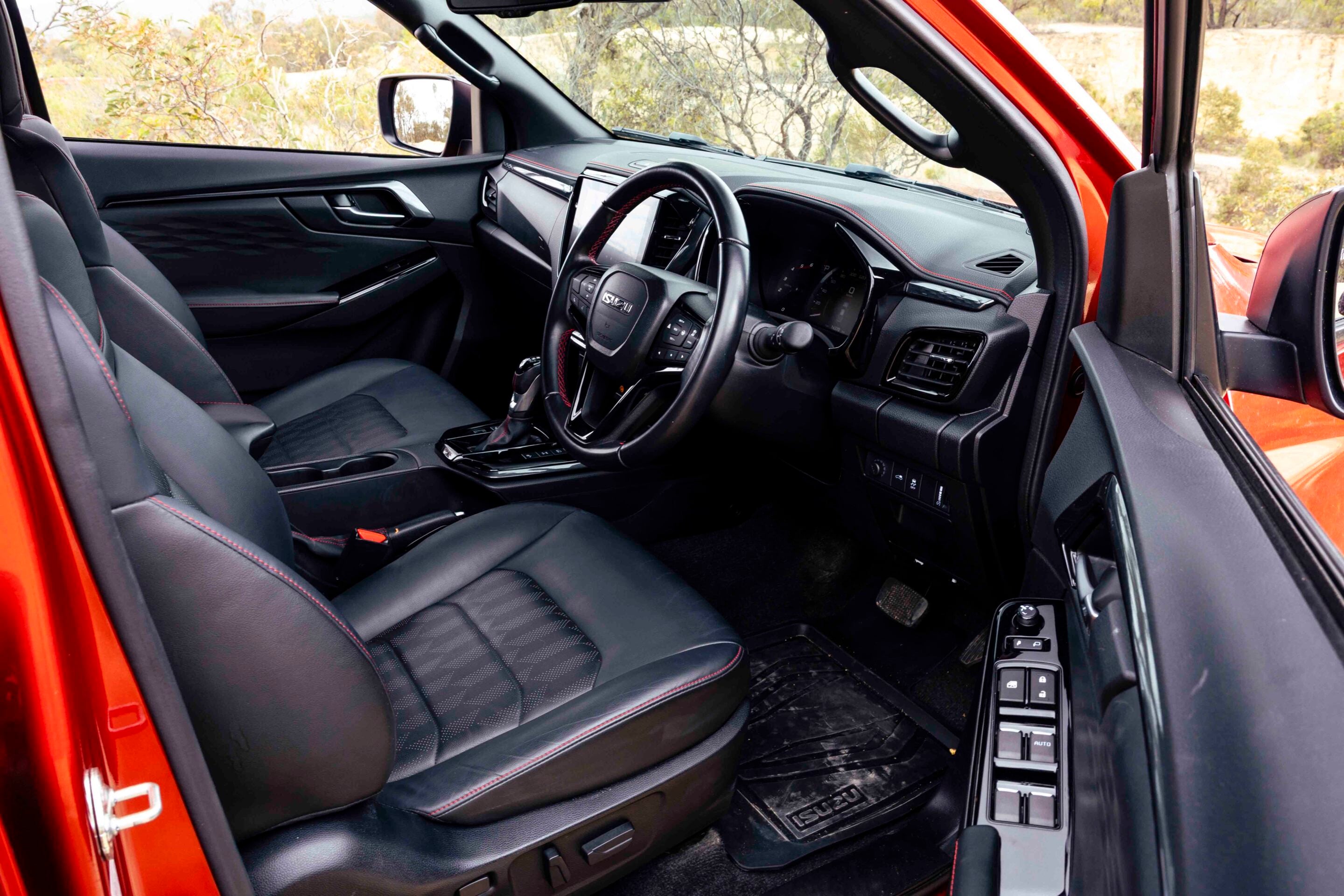
The 2024 updates brought a fresher look to the front cabin and improved safety features, including eight airbags, AEB with Turn Assist, Forward Collision Warning, Adaptive Cruise Control, Lane Departure systems, Blind Spot Monitoring, and Rear Cross Traffic alerts.
Inside, the X-Terrain is well-equipped and practical, with leather-accented trim, intuitive controls, and a layout designed for both work and touring. While it’s not as modern or luxurious as some rivals, the interior remains functional, comfortable, and user-friendly, with all essential 4×4 and towing controls within easy reach.
| How it scored | |
|---|---|
| Value for money | 6/10 |
| Breaking new ground | 5/10 |
| Built tough | 6/10 |
| Doing the job | 7/10 |
| Bushability | 7/10 |
| TOTAL | 31/50 |
A stacked field hit this year’s 4X4 Ute of the Year test, with everything from value picks to heavy-duty touring rigs lining up. Here’s every contender that made the cut for 2025.: