4x4 Ute of the Year
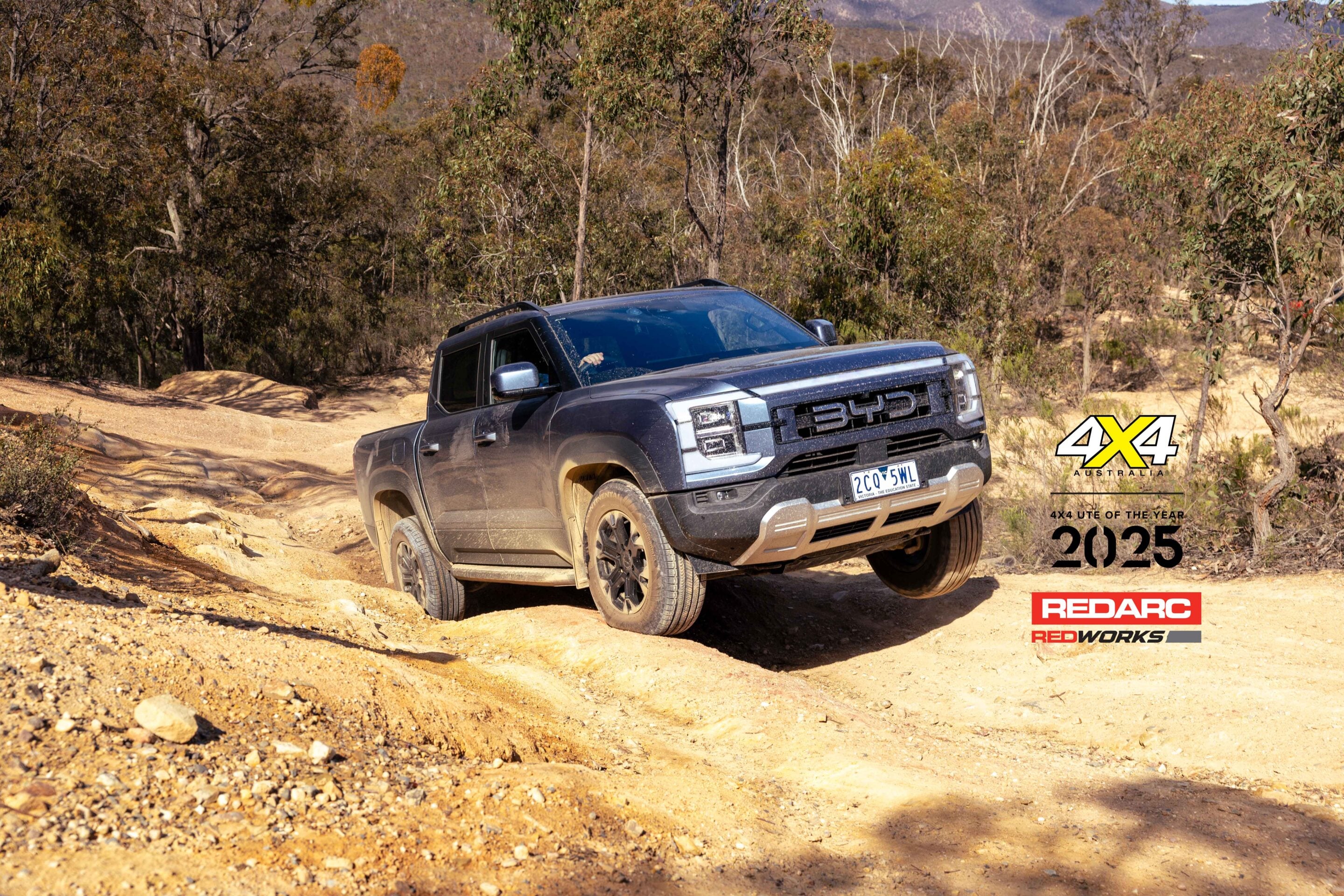
Gallery 1
The BYD Shark bit into the Australian ute market like its namesake tears into a school of baitfish.
It entered aggressively with sharp drive-away pricing, a high level of specification, and the claim of being the first 4×4 PHEV ute on sale in Australia. The tactics worked, with strong sales putting the Shark among the best-selling utes in its class and boosting the BYD brand toward its top-five target.
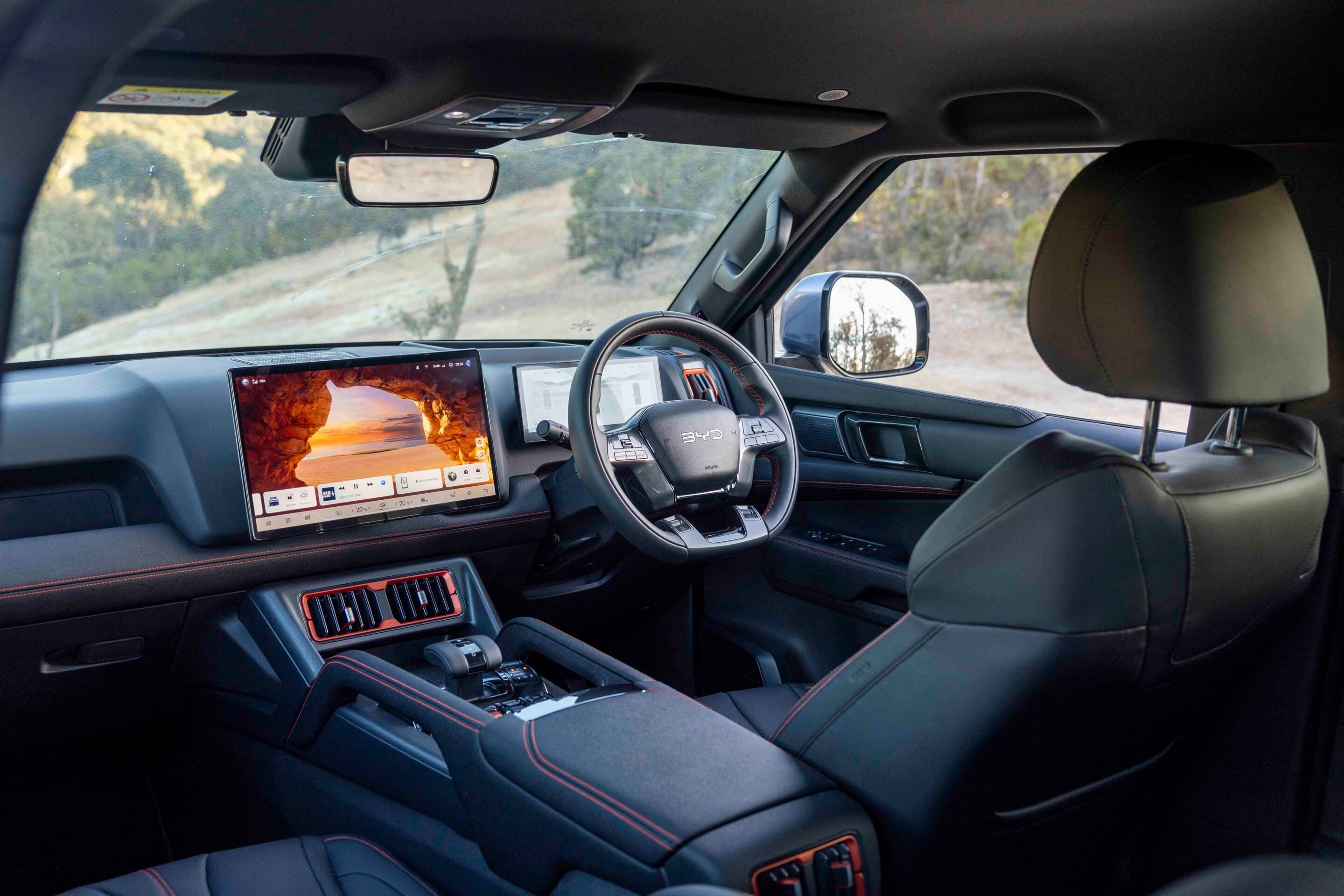
The Shark is a large midsize ute with a spacious, well-appointed cabin in the single grade currently offered. Its interior sets a high benchmark for other utes to follow, with generous space, a clean design, and features that will impress buyers on a test drive – especially when paired with its competitive price.
JUMP AHEAD
Key highlights
For buyers focused on lifestyle and tech, the Shark offers a well-equipped, spacious, and quiet cabin, rapid electric acceleration, and plug-in hybrid efficiency. But for 4×4 enthusiasts, towing or heavy-duty off-road work, it’s a compromise.
- First PHEV 4×4 ute on the Australian market
- Spacious, well-appointed cabin with modern design
- 321kW combined output and 650Nm torque
- Plug-in hybrid efficiency and urban agility
- Terrain modes and electric AWD intervention
How it drives: On- and off-road
The Shark is driven by a pair of electric motors – one on each axle – plus a petrol engine that primarily charges the batteries powering the motors.
Up front sits a 135kW/260Nm turbocharged 1.5-litre four-cylinder petrol engine paired with a 130kW/330Nm electric motor. The rear axle is powered by a 150kW/340Nm electric motor, completely isolated from the front. Combined, this gives the Shark 321kW and 650Nm, but the way that output reaches the wheels limits its effectiveness off-road.
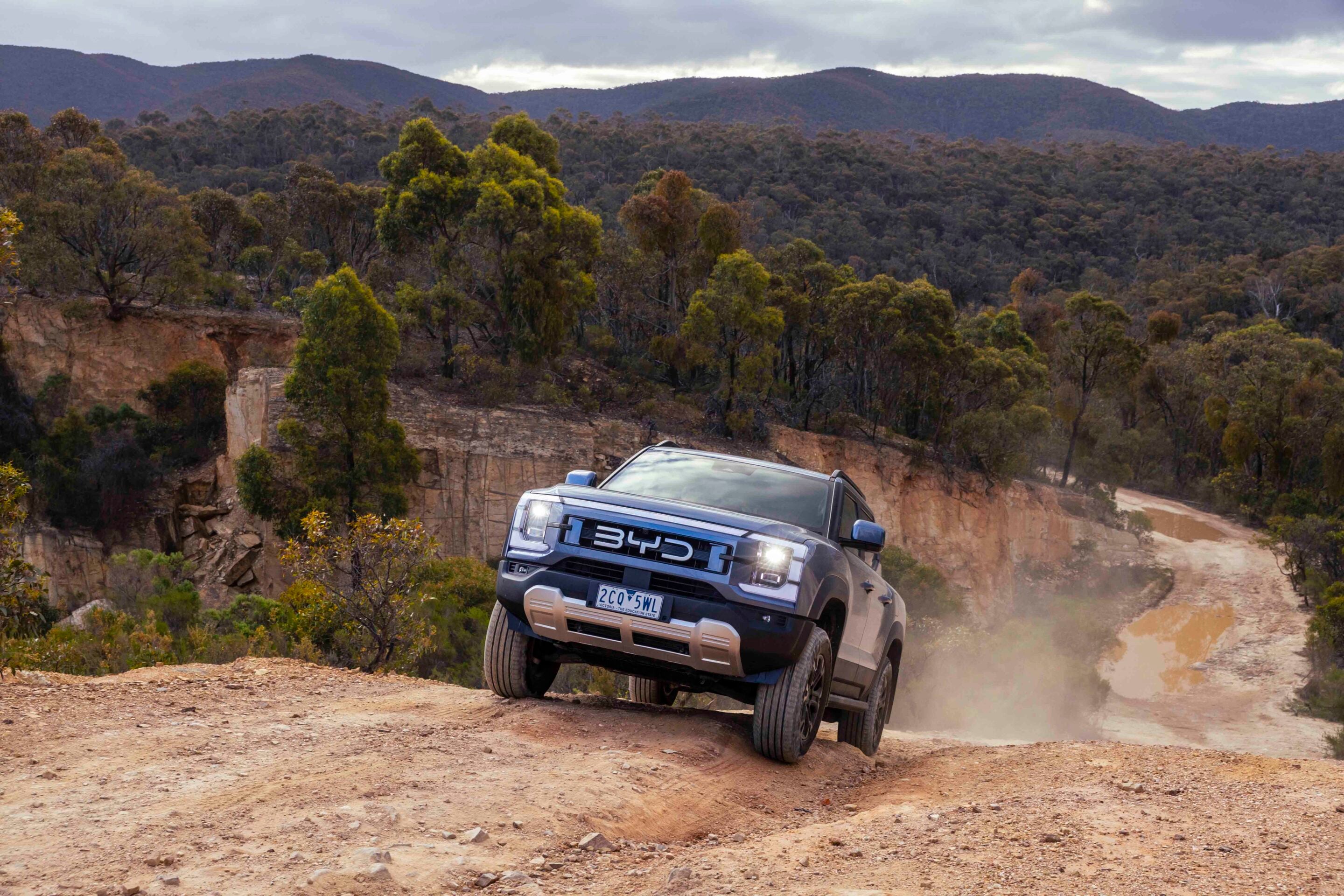
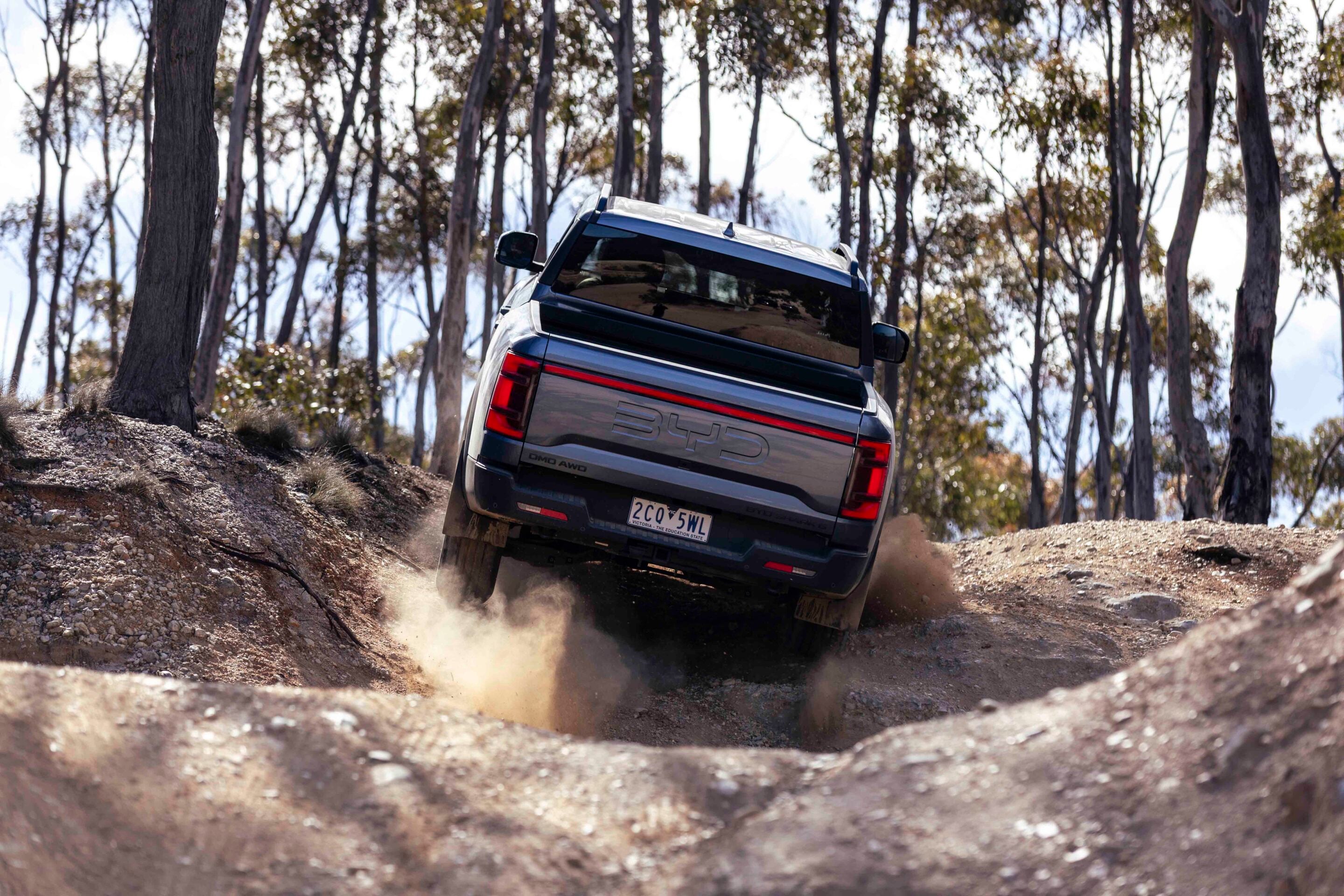
Unlike conventional dual-range 4×4 systems, the Shark’s rear electric motor only engages when the throttle is floored or when wheel slip triggers all-wheel-drive intervention. That delay, combined with fully independent suspension using very short control arms, limits wheel travel and causes the wheels to lift easily over rough terrain. Terrain modes improve responsiveness slightly, but fundamental mechanical and drivetrain design limitations hold it back.
While the Shark delivers quick, comfortable, and gadget-packed driving around town, it falls short in typical 4×4 situations. On gravel, loose surfaces, and moderate trails, the isolated rear motor and short-travel suspension make the Shark feel unsettled. It is competent for light dirt roads but lacks the confidence, traction, and mechanical robustness required for serious off-road work.
8
Towing performance
The limitations of the setup were also noted by towing judge, Tim van Duyl when he hitched the Offline camper behind the Shark.
“It is nice to see a Tow Mode in the Shark, but if the battery is running at less than 50 per cent, the petrol engine will rev so hard that will drive you nuts on a long haul,” he said.
“Once charged beyond 50 per cent it will settle down unless you are pushing it, and with 2000kg you are almost at its tow-limit of 2500kg, which for me rules it out of contention instantly. The Shark doesn’t have the payload or tow capacity to compete as a viable towing ute.”
1
| BYD Shark 6 specs | |
|---|---|
| Price | $57,000 + ORC |
| Engine | PHEV; turbocharged petrol engine with dual electric motors |
| Capacity | 1497cc |
| Max Power | (ICE) 135kW / (EV) 130kW front, 150kW rear |
| Max Torque | (ICE) 260Nm / (EV) 310Nm front, 340Nm rear |
| 4×4 System | Individual electric drive front and rear (no mechanical linkage) |
| Construction | 4-door ute on ladder chassis |
| Front Suspension | Double wishbone independent with coils |
| Rear Suspension | Double wishbone independent with coils |
| Tyres | 265/65R18 |
| Kerb Weight | 2710kg |
| GVM | 3500kg |
| GCM | 5750kg |
| Towing Capacity | 2500kg |
| Payload | 790kg |
| Seating Capacity | 5 |
| Fuel Tank Capacity | 60L |
| ADR Fuel Consumption | 2.0L/100km |
| Approach Angle | 31 |
| Rampover Angle | 17 |
| Departure Angle | 19.3 |
| Wading Depth | 700mm |
| Ground Clearance | 230mm |
Interior comfort and practicality
Inside, the Shark impresses with space, tech and presentation.
The cabin layout is clean and modern, anchored by BYD’s signature rotating 12.8-inch touchscreen, which can switch between landscape and portrait modes. It houses most vehicle controls – climate, drive modes, camera systems and EV settings – giving the interior a sleek, minimalist feel.
The digital instrument cluster is crisp and easy to read, while the steering wheel and switchgear feel more passenger-car than commercial ute. Seat comfort is excellent up front, with electrically adjustable, heated and ventilated front seats, a rarity at this price point. Rear passengers also score generous legroom thanks to the Shark’s longer wheelbase, and the bench has a more relaxed backrest angle than many traditional dual-cabs.
Cabin storage is plentiful, with a deep centre bin, large door pockets, twin wireless charging pads and several USB-A/USB-C outlets spread throughout. Fit and finish is strong too, with soft-touch trims, ambient lighting and a level of refinement that pushes the benchmark for the segment.
Practicality in the tub is slightly compromised by the hybrid layout, but the Shark still offers decent space for weekend gear.
1
Why it didn’t win
The BYD Shark is a bold, innovative entry and shows what PHEV technology can do in a midsize ute – especially around town or for light duties. It wins on tech, interior space, and driveability for urban users, but it falls short on the traditional 4×4 criteria due to:
- A slow-reacting, part-time AWD system with no mechanical link between axles
- Limited wheel travel from its short-arm independent suspension
- Modest payload capacity compared with traditional dual-cab rivals
- Lower towing limits and less stability under load
- Heavy reliance on battery charge for consistent performance
Pros
- Big, modern cabin packed with tech
- Smooth, punchy performance around town
- Sharp pricing
Cons
- Slow-reacting AWD system
- Limited payload and lower tow capacity than rivals
- Lacks wheel travel on rough terrain
| How it scored | |
|---|---|
| Value for money | 7/10 |
| Breaking new ground | 8/10 |
| Built tough | 5/10 |
| Doing the job | 5/10 |
| Bushability | 4/10 |
| TOTAL | 29/50 |
2025 4×4 Ute of the Year
A stacked field hit this year’s 4X4 Ute of the Year test, with everything from value picks to heavy-duty touring rigs lining up. Here’s every contender that made the cut for 2025.:
Follow 4X4 Australia on Google
Get more 4x4 news, reviews and gear stories from 4X4 Australia in your Google feeds.

We recommend
-
 4x4 Ute of the Year
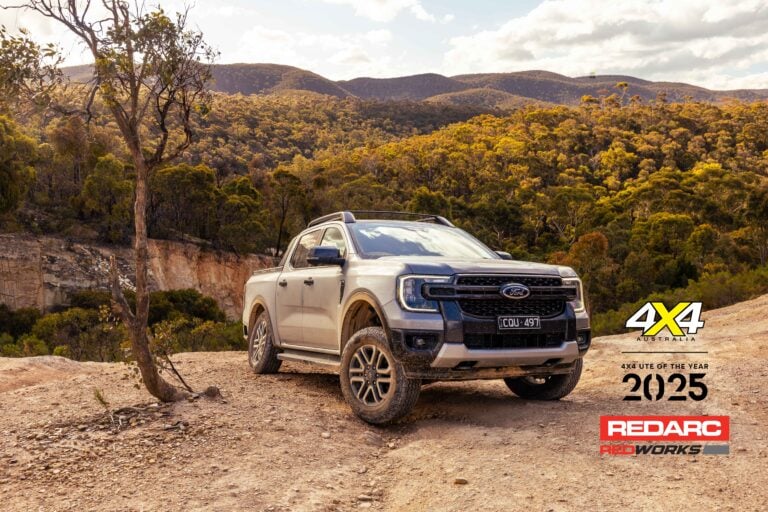
Ford Ranger V6 Sport wins 2025 4x4 Ute of the Year title
The Ranger Sport V6 takes top honours in our 2025 Ute of the Year test
-
 4x4 Ute of the Year
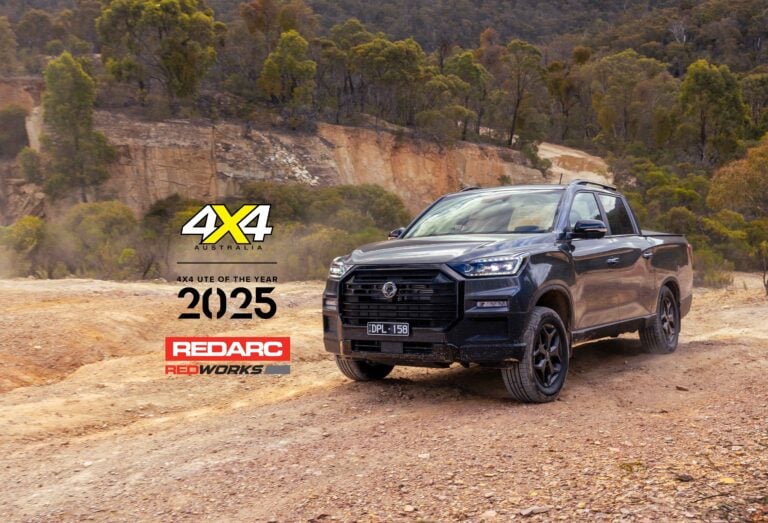
KGM Musso Ultimate: 2025’s Best 4x4 Ute Under $60K
You don’t need big money to get a well-equipped, comfy, hard-working 4x4 ute
-
 4x4 Ute of the Year
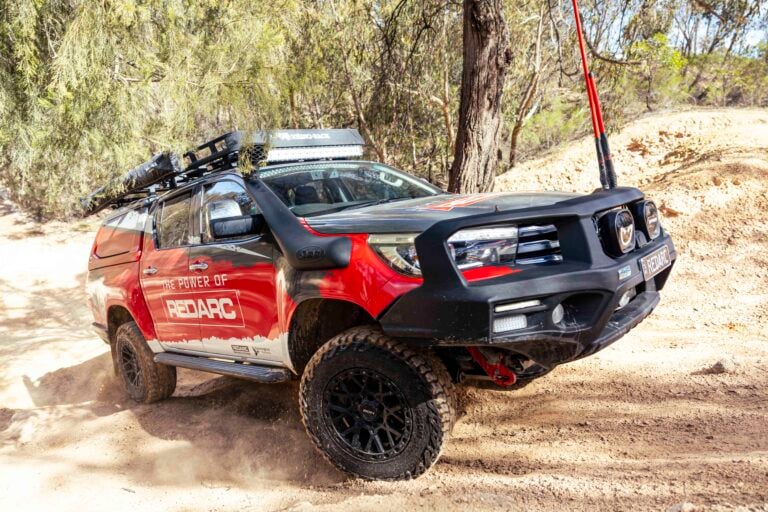
REDARC powers our 2025 4x4 Ute of the Year with new REDWorks platform
REDARC brings its Aussie-made REDWorks power panels to 4x4 Ute of the Year