
The Ineos Grenadier is a most welcome addition to the 4×4 vehicle ranks as it is a rugged, go-anywhere off-road-capable wagon in a market that is otherwise all going softer.
It’s been a long time coming after delays caused by global issues and product supply limitations, but Australian customers are finally taking delivery of their cars and we got to drive a few of them at the local launch.
A quick refresh for anyone to whom the Ineos name is not known; the Grenadier came about after British businessman, Jim Ratcliffe, was turned down by Land Rover when he approached the Green Oval squad with hopes of buying the rights to – and continuing to build – the classic Land Rover Defender after Land Rover said it was being axed.
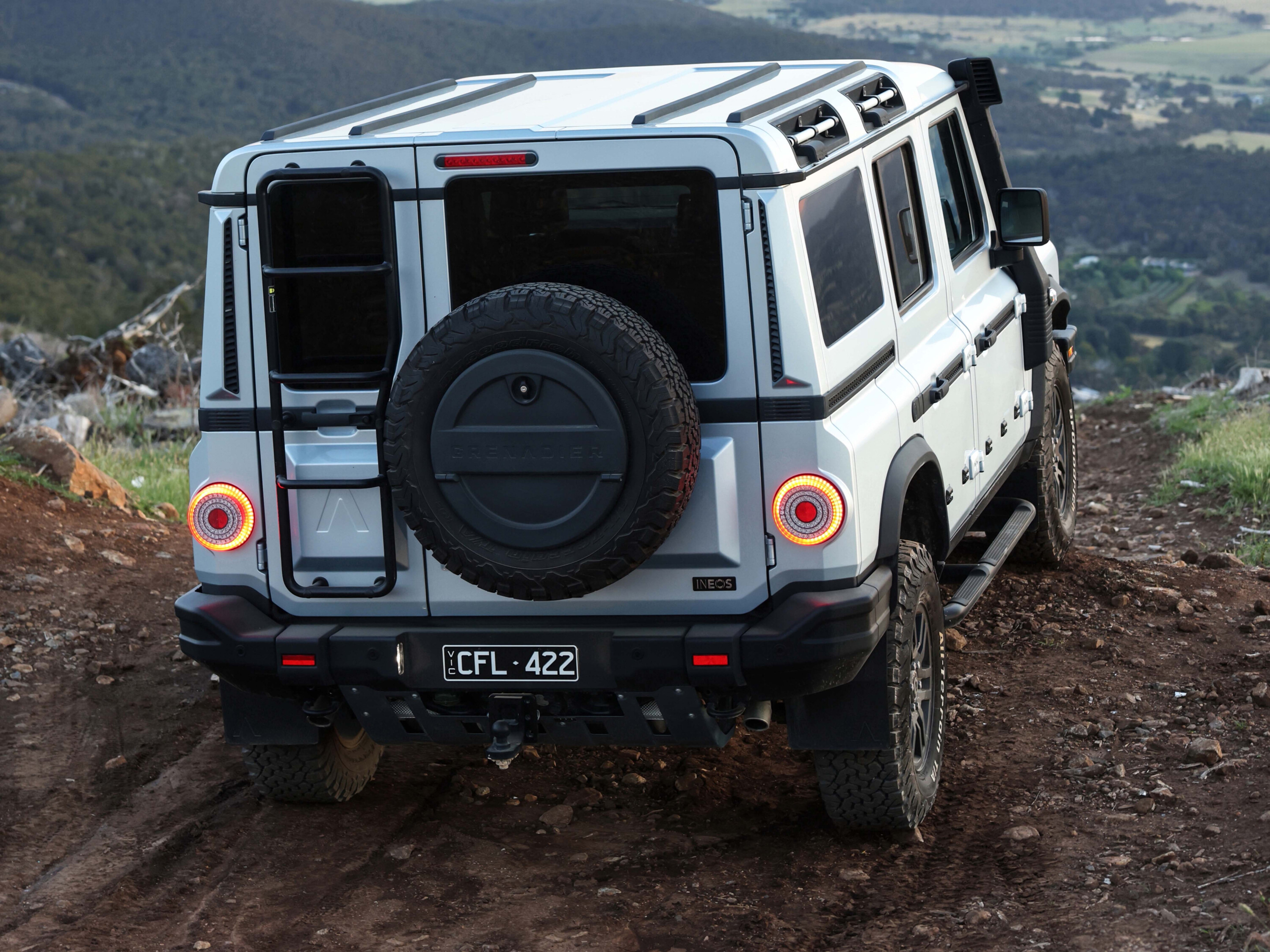
Ratcliffe responded by going out and devising his own version of the iconic off-roader and creating a brand to build and sell it – as you do.
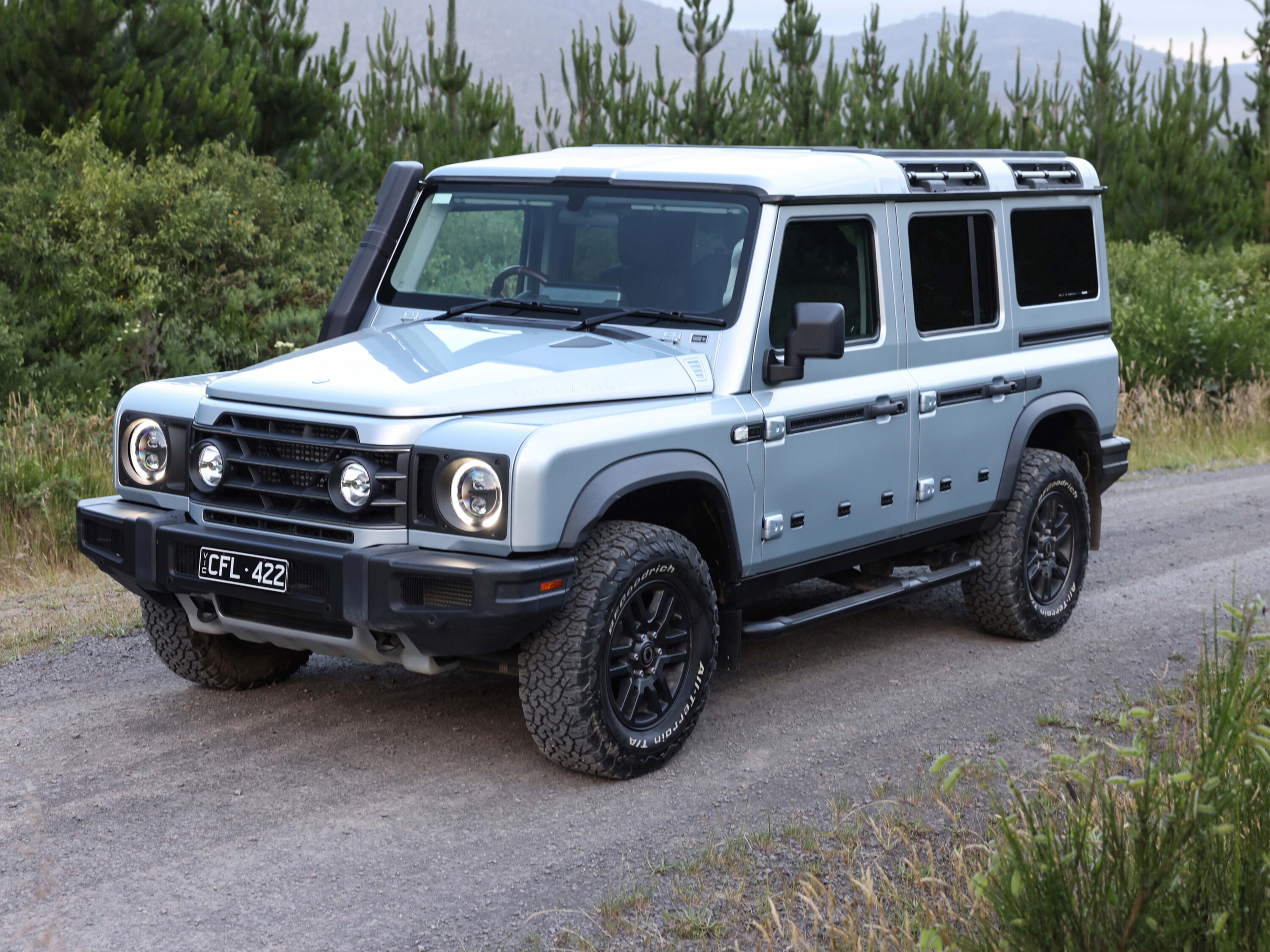
The result is a boxy body that looks as much Mercedes Benz G-Wagen as it does Defender, riding on a ladder-frame chassis with live axles suspended on coil springs, and powered by a choice of petrol- or diesel-fuelled engines courtesy of BMW.
Like the G-Wagen, Defender and LandCruiser 76 Series, the Grenadier is a vehicle made to go anywhere and be used by private owners, fleets and NGOs.
The Grenadier has arrived in Australia in three specification levels with a huge range of options that would allow you to tailor it to the levels of features or abilities you need from it.
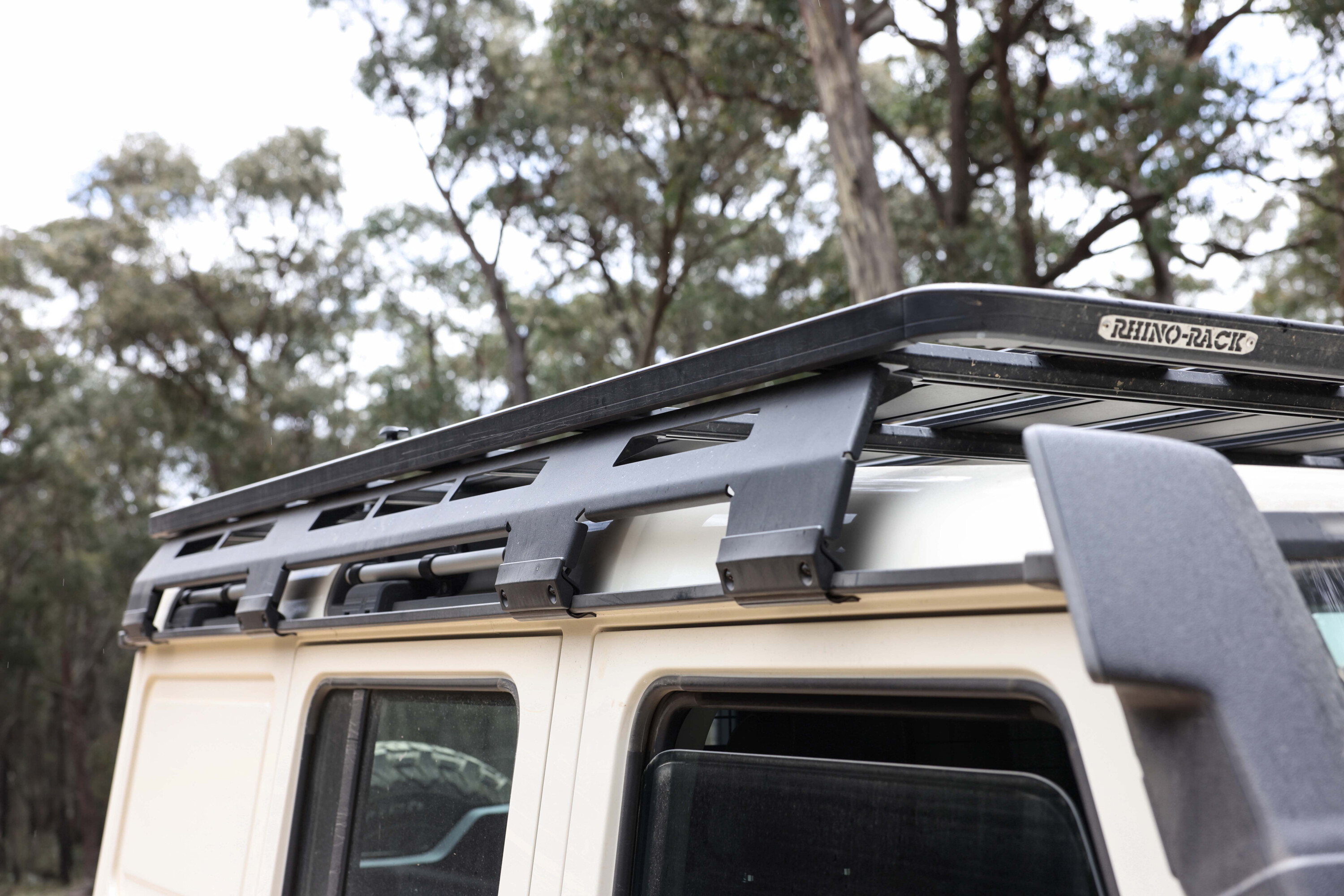
All specs are available with the choice of petrol or diesel engines, while the automatic transmission and full-time, dual range 4×4 is the only drivetrain offered. Petrol and diesel versions are the same price.
The base Grenadier starts at $109,000 for the utility wagon and $110,000 for the station wagon. The utility wagon has just two front seats while the station wagon adds a three-position second row seat. For anyone wanting the ultimate touring Grenadier and who doesn’t need a second row seat, the utility wagon not only gives you more cargo space but adds around 25kg to your payload.
Both the Trialmaster and Fieldmaster editions start at $122,0000 and 123,000 respectively, for the utility and station wagons.
The prices go up from there, with even basic white paint costing $994 and more for metallic colours or contrasting roof and chassis colours.
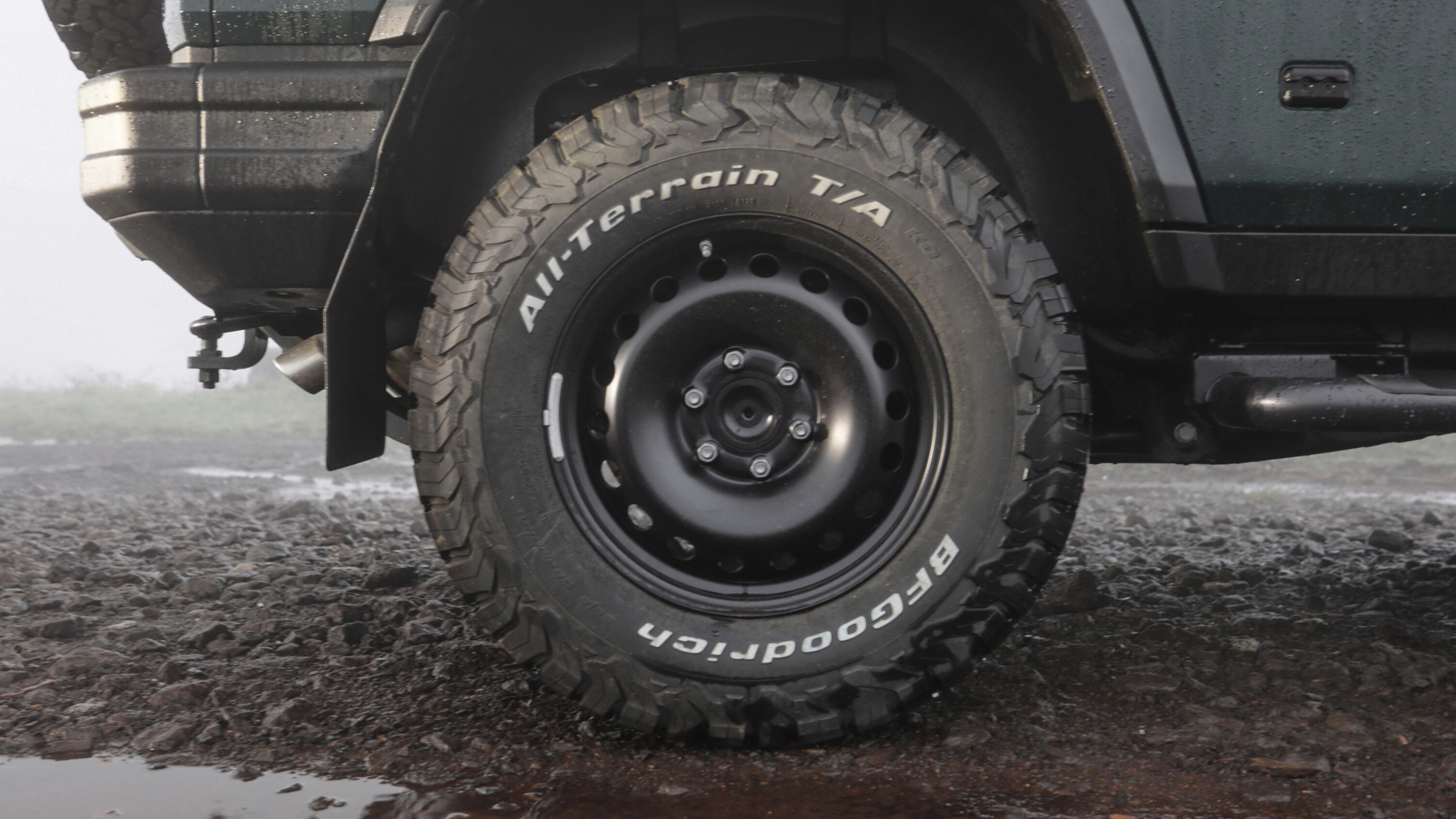
The Trialmaster is tailored more toward the adventurous drivers, and as such it includes the Rough and Smooth option packs which gets you front and rear, electrically locking differentials, BFGoodrich KO2 All Terrain tyres, front parking sensors, heated door mirrors and windscreen, side puddle lamps, a lockable centre console, auxiliary charging points, rear access ladder, and an alarm system.
The Fieldmaster misses out on the lockers and all-terrain tyres but gets leather trim, safari roof, premium sound system and other features as standard. As mentioned you can option any and/or all of these features to any model to create your own specification.
JUMP AHEAD
Powertrains
Both of the BMW-sourced engines are inline sixes of 3.0-litre capacity. The B57 diesel uses sequential turbocharging to generate its 183kW and 550Nm, while the B58 petrol engine uses a single twin-scroll turbocharger to generate its 210kW and 450Nm.
Driving the two engines back-to-back shows just how narrow the gap has become between modern petrol- and diesel-fuelled engines. The diesels are quieter than ever, and from within the cabin can be hard to distinguish from petrol, while the modern turbocharged petrol engines deliver diesel-like levels of grunty torque.
While neither engine makes the bulky Grenadier feel particularly fast, the factory claims that it will run the zero to 100km/h dash in 8.8 seconds for the petrol engine and 9.8 seconds with the diesel. They are swift without being quick, as you would need in such a 4×4 vehicle.
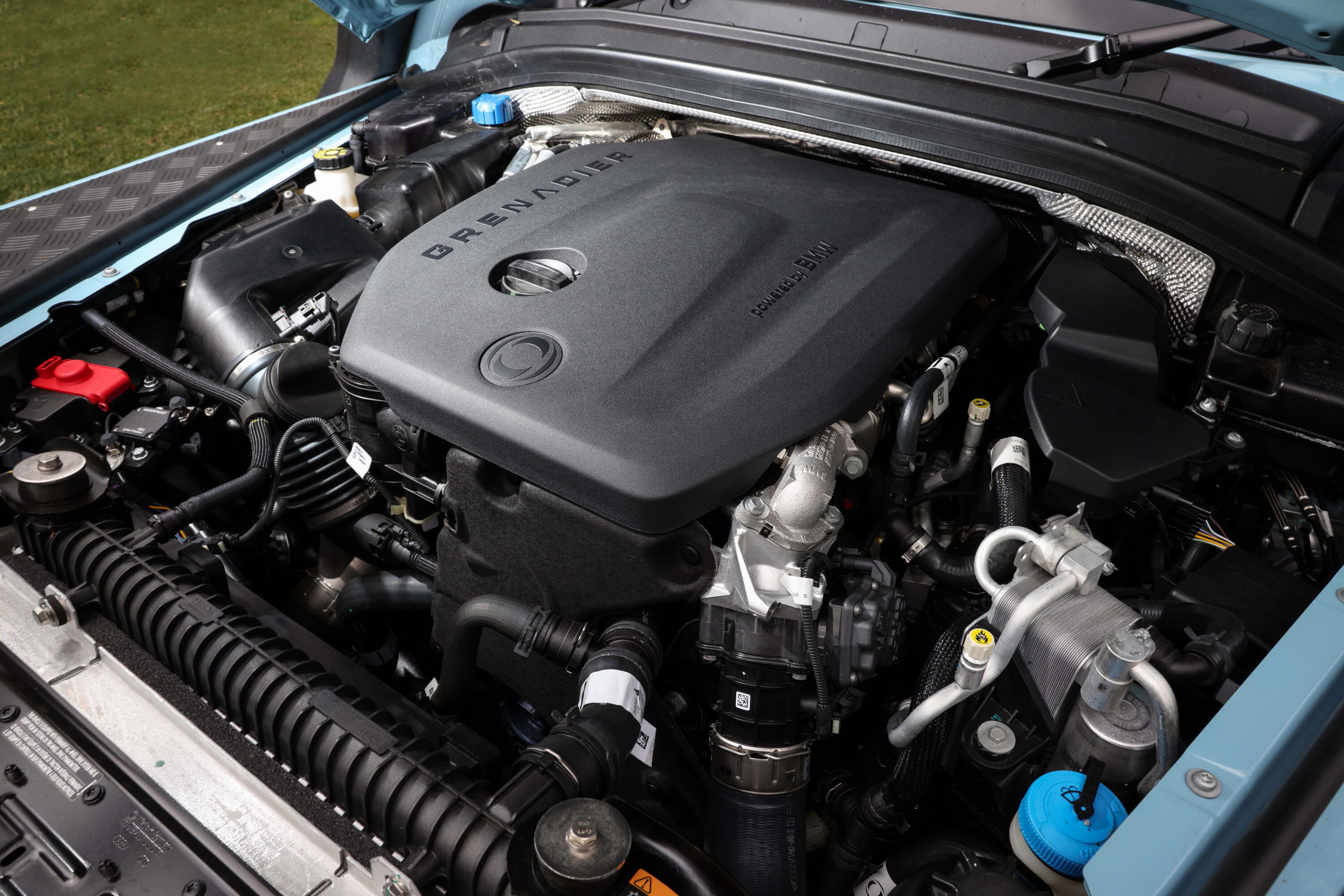
Fuel consumption is quoted as being 12.6L/100km for the petrol and 10.5L/100km for the diesel, while the vehicles are already set to Euro6 emissions regulations which are yet to be the standard in Australia.
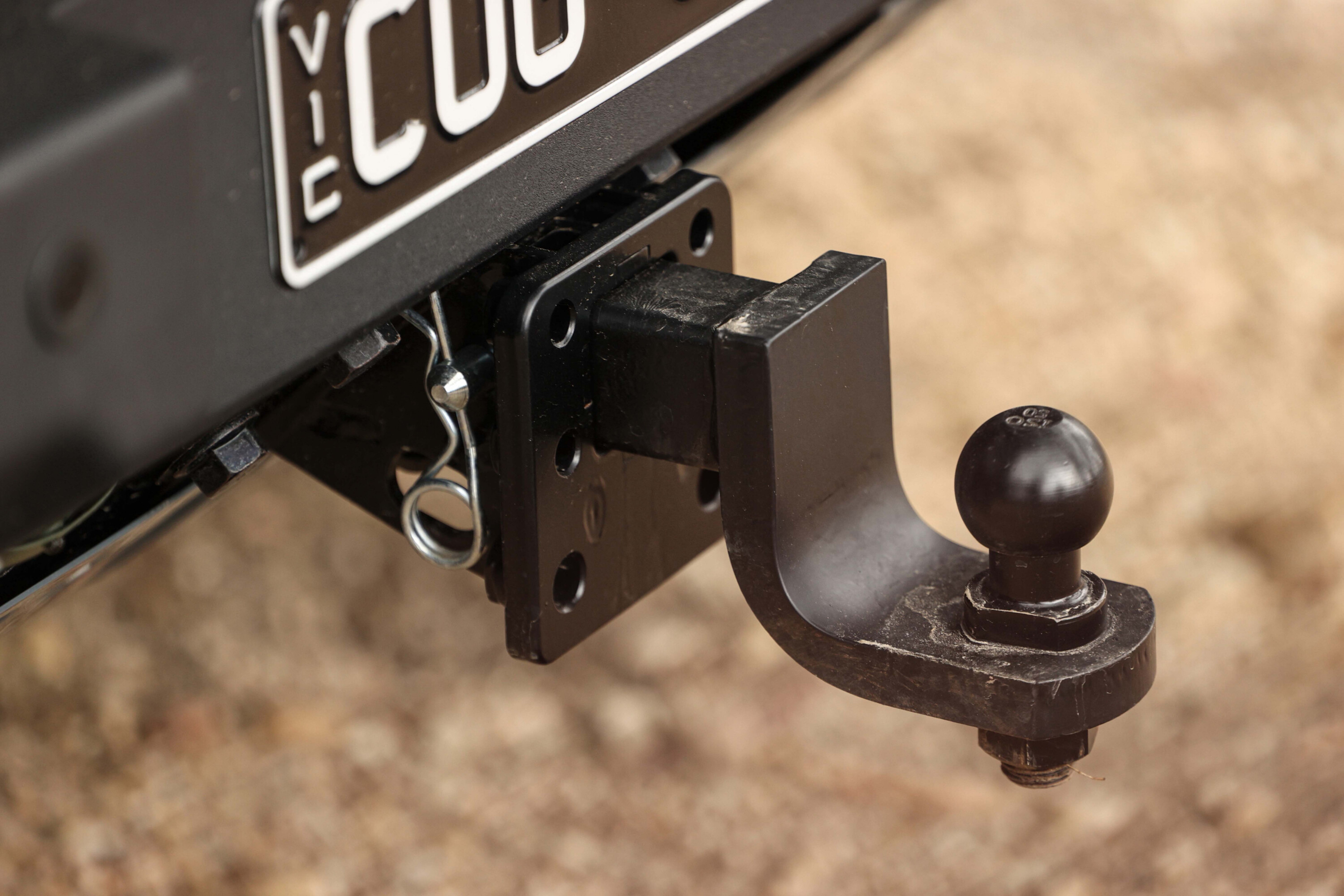
EU6 does mean that the diesel engine runs with Adblue and this comes from a 17-litre tank. The main fuel tank holds 90 litres of fuel.
The ZF eight-speed automatic gives nothing to complain about, doing what it should when left in auto and allowing manual selection once the shifter is tipped to the side. The shifter itself, which we recall hating when it was in older BMWs and Range Rovers, seems to have been sorted out and is now easy to use.
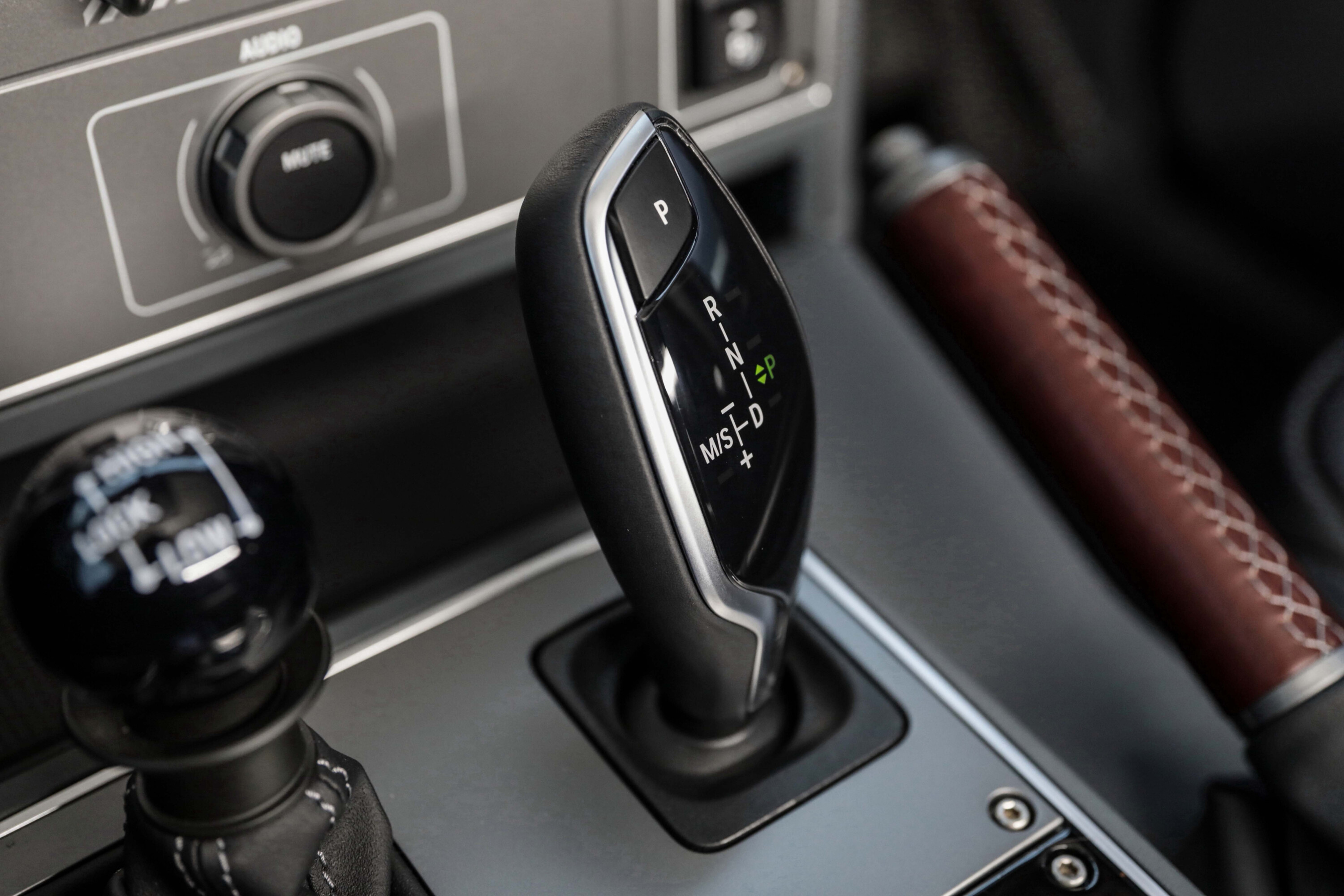
The transfer case has a nice, tactile, precise lever to activate low range and the centre diff lock, so there’s no waiting for electric motors to do the job for flashing dash lights or other frustrations. Pure usability!
The transfer case offers both high and low range with the centre diff unlocked in a very Land Rover-like way. This is handy when you are using low range for reversing your trailer. Of course, you can lock the centre diff in both ratios as well.
The Grenadier’s hydraulically assisted power steering can have an odd feeling at times. It’s slow to return to centre and can load up on tight turns, but it’s something that I’m sure you would get used to with regular use. The power steering pump is not driven directly off the engine but from an electric motor.
Safety
While much of Ineos’s efforts went in to the capability and durability of the Grenadier, it didn’t forget about safety systems.
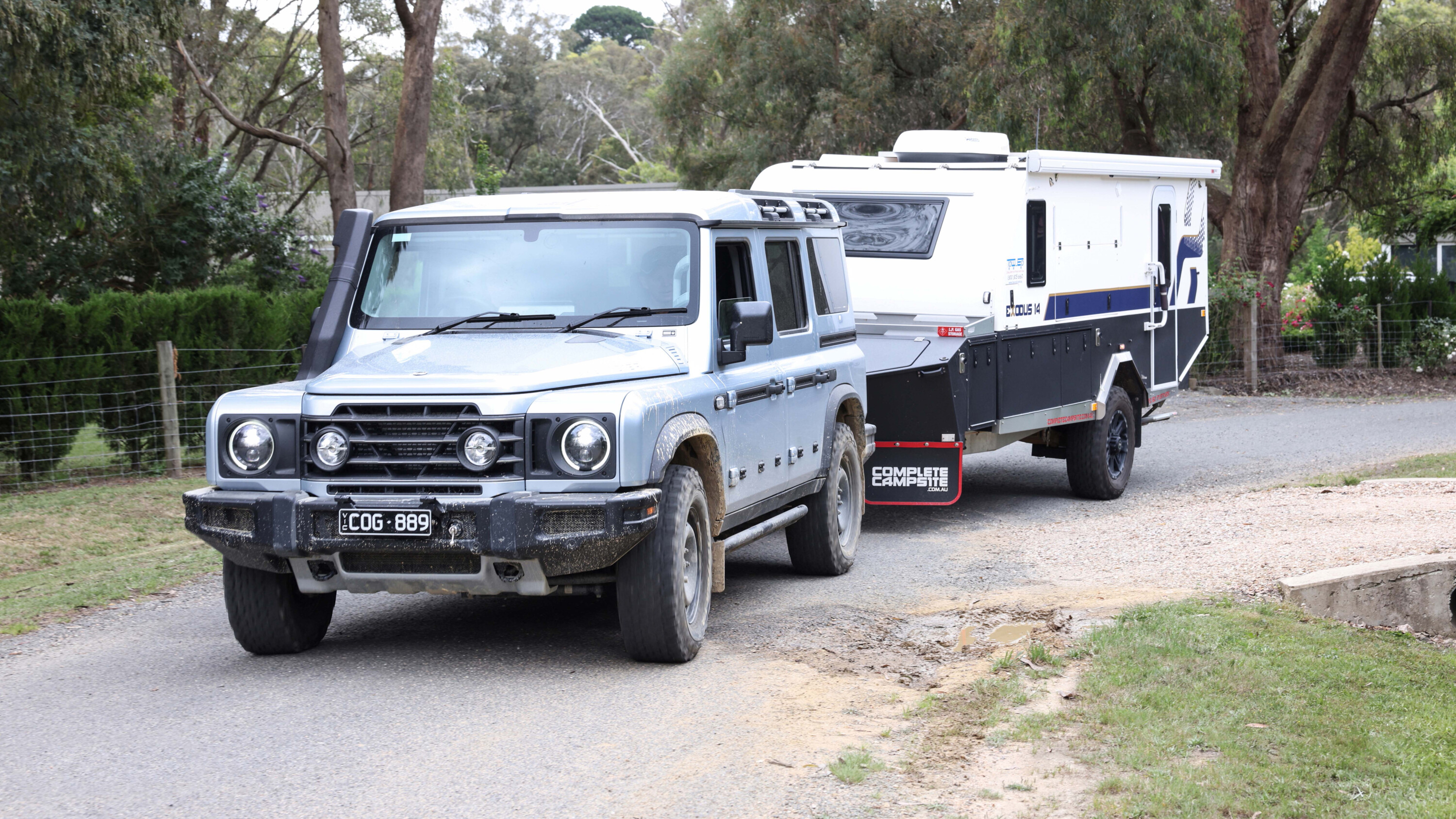
While not equipped to the level of modern SUVs or passenger cars, the Grenadier does come with ABS, ETC, ESP, front, side and curtain airbags, lane departure warning, AEB, TPMS, and trailer stability control. The Grenadier has not been tested by ANCAP.
An Ineos spokesperson did suggest that the Grenadier could be getting more safety tech with 2024 update later in the year.
Equipment
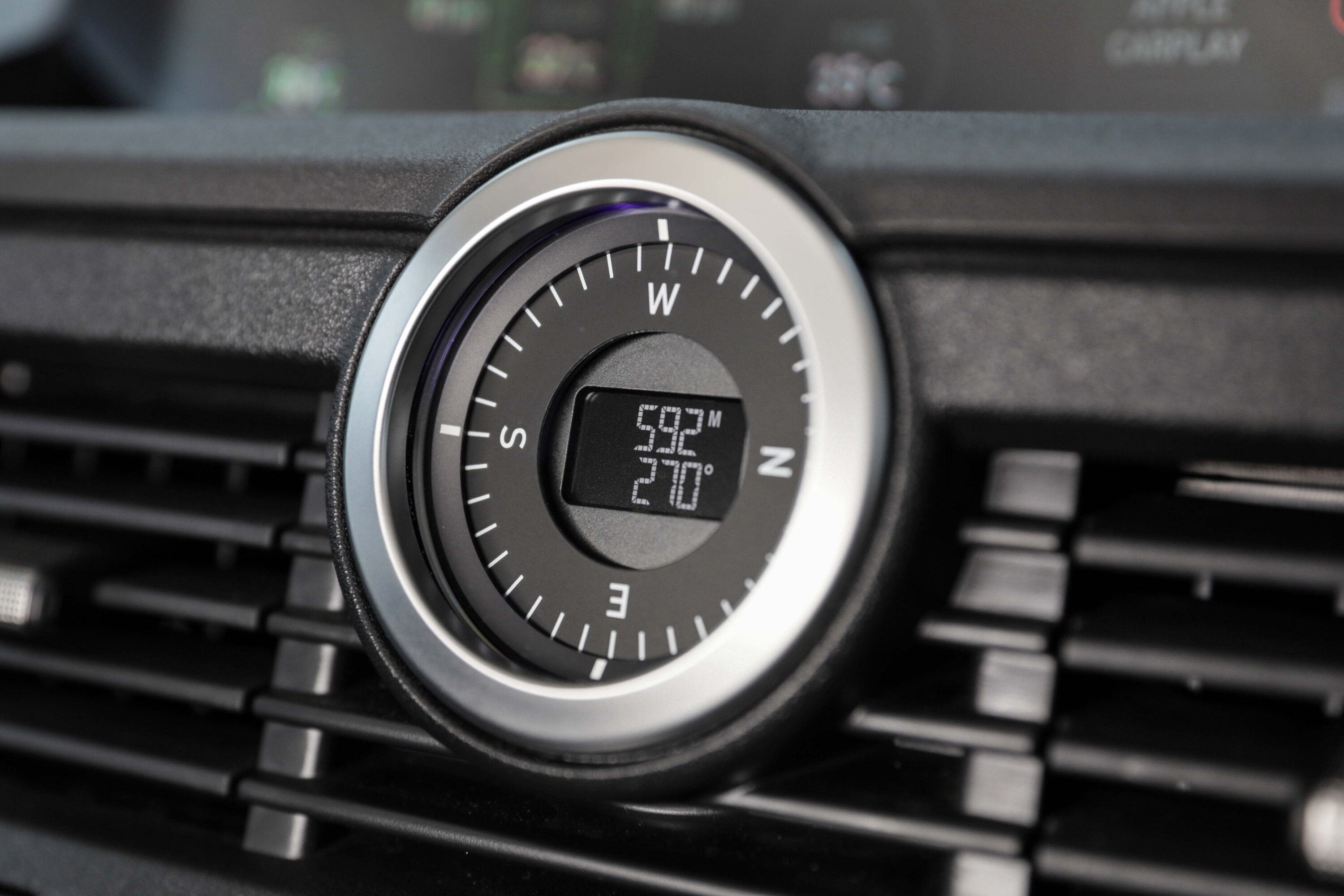
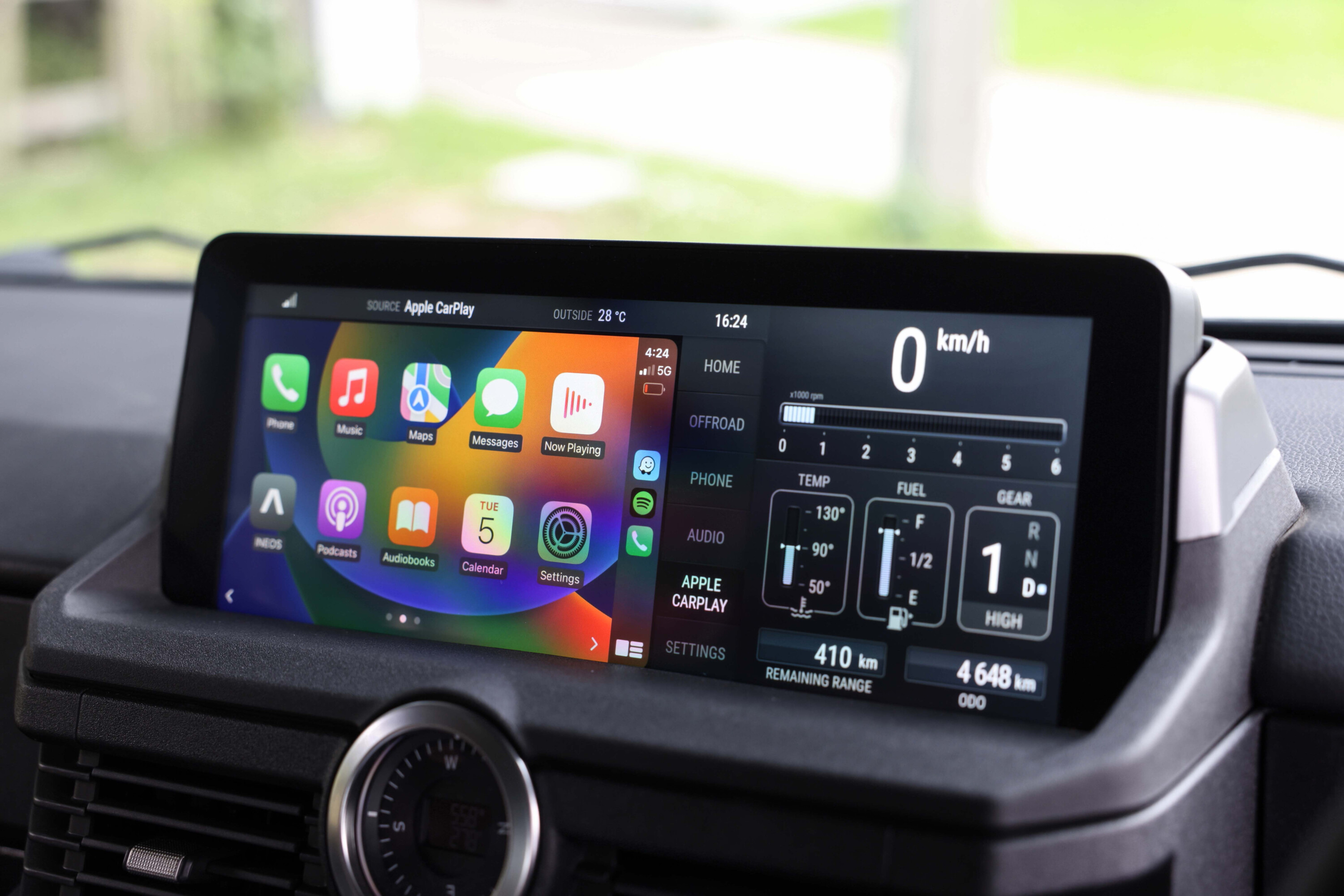
Likewise, the level of equipment and connectivity may not be game-changing, but the car is equipped with most things you need including power window, climate control air-conditioning, an audio system with wireless Apple CarPlay and Android Auto.
However, there’s no in-built mapping navigation, so it does rely on a phone connection for that. Alternatively the Pathfinder app allows you to upload custom GPX mapping files for more remote tracks.
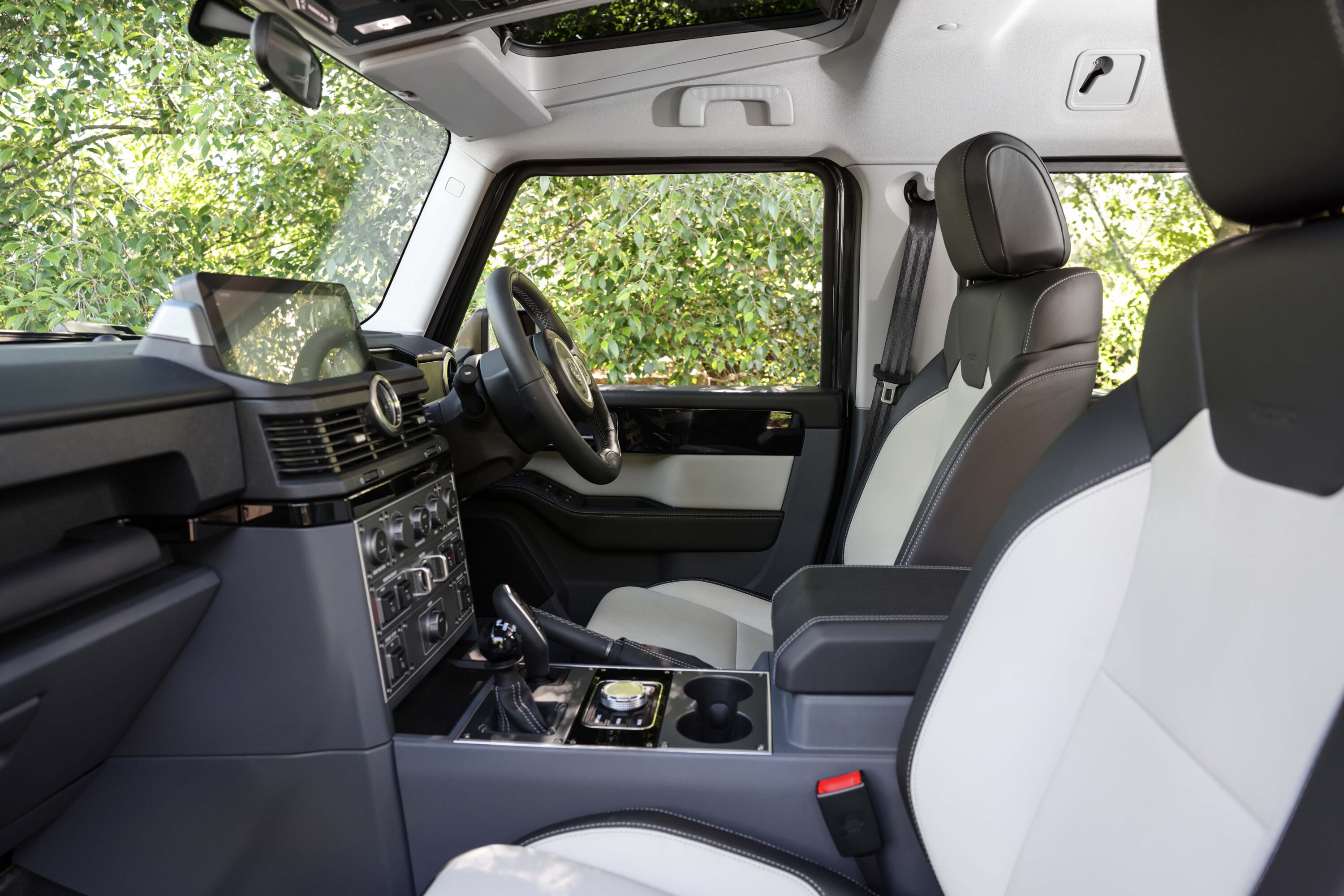
The Grenadier is not a large wagon like a Y62 Patrol or LC200 but more comparable to the LC80 or GQ Patrol in size. It might look like a classic Defender, but the Grenadier’s cabin is much more accommodating in both the front and back seats. The driver’s seat space is a bit narrow and your legs door rest against the door and console, and the left bootrest is way back from the bulkhead and requires a bit of getting used to.
Thankfully there’s plenty of adjustment in the seat, although it’s manual adjustment only, and the steering column is adjustable for both height and reach.
The rear seat offers plenty of leg and head room for adults, but three across the back would be tight squeeze.
Another oddity that takes some getting used to is the location of the speedometer which is in the screen at the top of the centre stack and not directly ahead of the steering wheel. The smaller screen there is reserved only for warning lights such as when you have 4×4 or the locking diffs engaged.
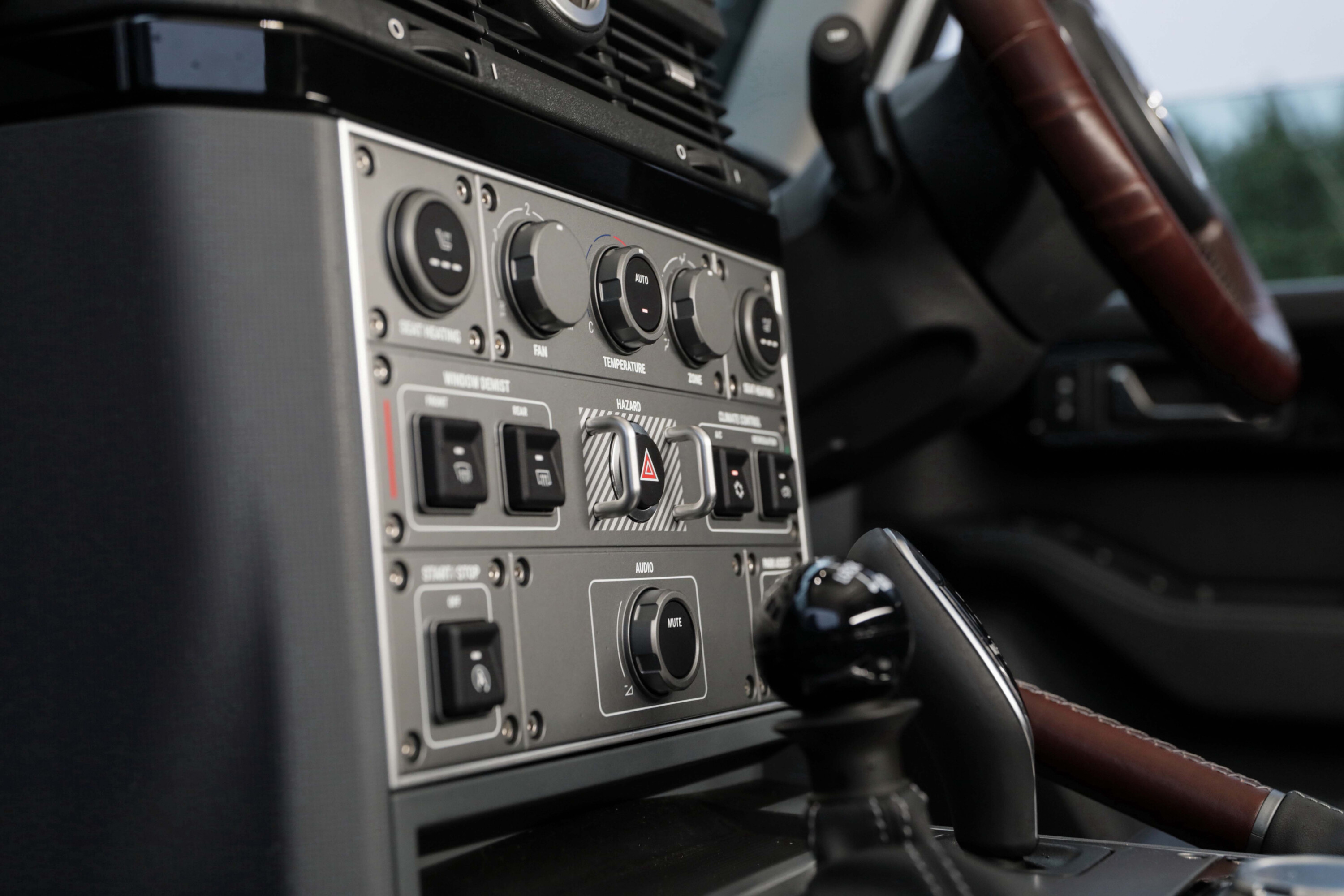
While we’re all for keeping the controls away from touchscreens and sticking to switches and dials, the plethora of both in the Grenadier’s centre stack also takes some time to get accustomed, certainly longer than the one day we had driving it.
There are more switches above you in the overhead console, but they are mainly for lesser-used off-road functions like off-road modes, lockers and auxiliary switches.
The omission of power adjustment on the seats is part of Ineos’s philosophy of keeping electricals to a minimum and only including the essentials, so power seats miss out in this rig. Many of the electrical systems including the second battery option when fitted are up high under the back seat out of the way of dust and water should you go where you probably shouldn’t have.
Off-road
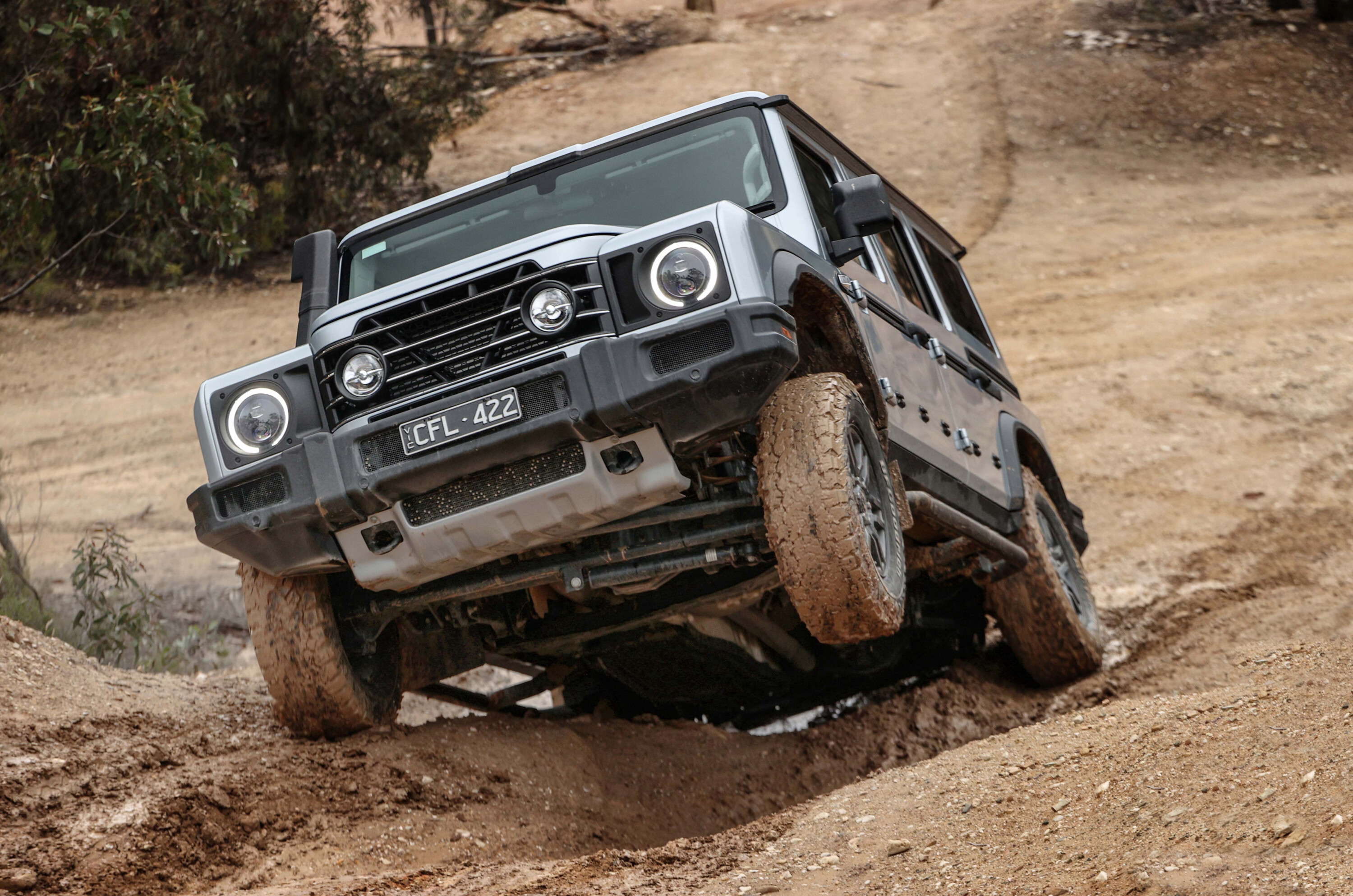
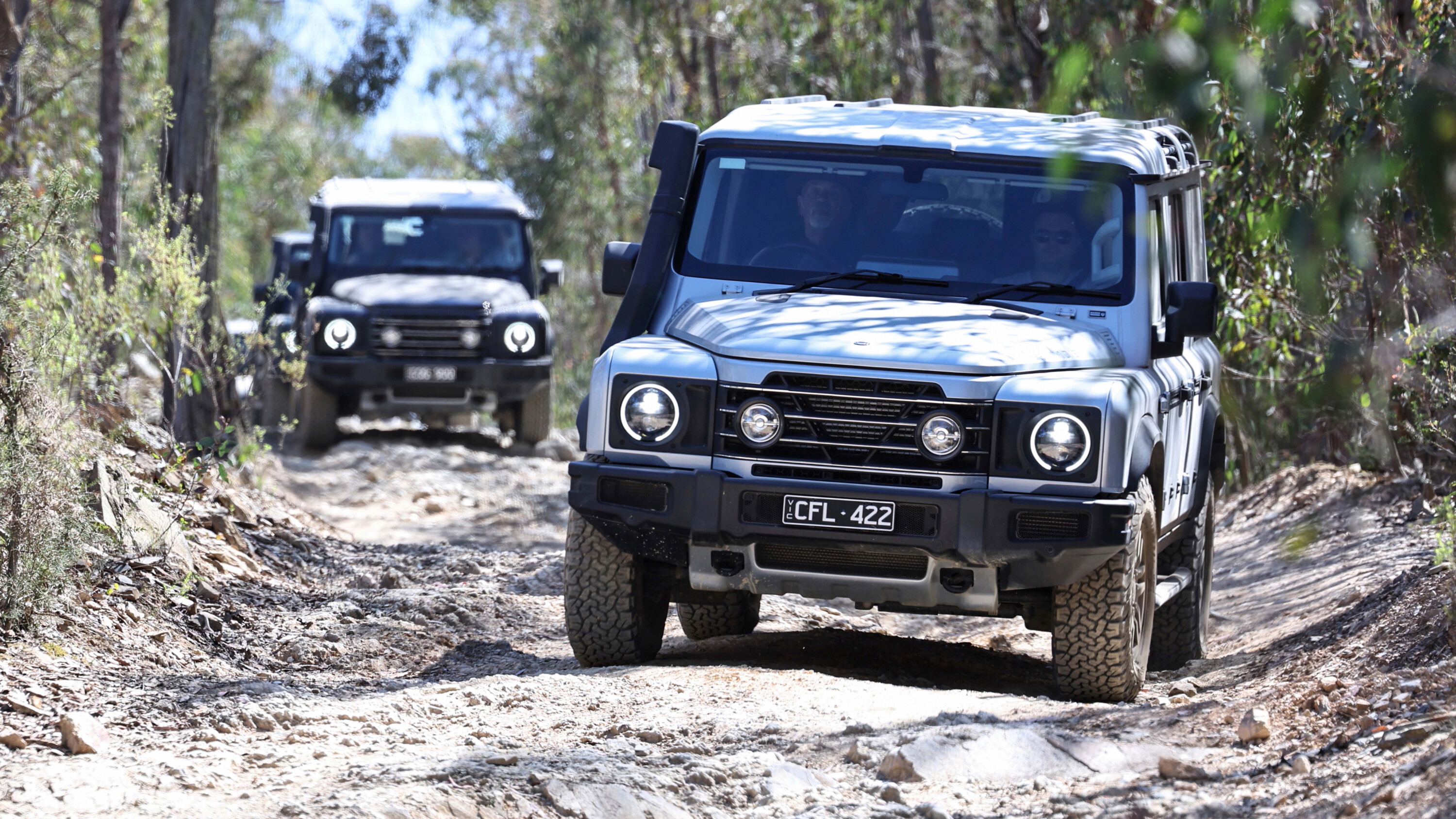
With plenty of ground clearance and wheel travel at the axles, the folks from Ineos had no qualms sending us down a steep and rutted gully as part of the launch drive.
You can feel the axle working beautifully under the vehicle as they flex their way over the uneven ground, keeping the all-terrain tyres on the ground where they can get the best grip.
Likewise when climbing back out ,we let the electronic traction control do the work and didn’t employ the locking diffs to get through the rough stuff. The Grenadier makes easy work of such tracks and it was obvious there’s more in reserve for trickier terrain.
On the B-roads and highway heading back to town the Grenadier was firm and stable, never unsettled on rough roads and quickly reached the speed limit once we hit the highway.
The steering does require plenty of turns once you reach suburban streets, but again it’s something you get used to. It is a small price to pay for a vehicle with such a broad range of abilities.
Verdict
While it was the demise of the classic Land Rover Defender that brought about the Grenadier, the new Defender is an obvious competitor to this new player in terms of size, price and abilities.
But the new Defender relies on tech and adjustable suspension to broaden its abilities where the Grenadier keeps to more traditional methods. That puts it in the realms of LandCruiser and Patrol, more specifically the LC76. The LandCruiser 70 is more basic again, leaving the Grenadier to fill the middle ground, which is a space it slots into very neatly.
The arrival of the double cab pick-up Quartermaster mid-way through 2024 will only add further options to Ineos ownership. Same design, same powertrains and specification in a rugged ute.
| Ineos Grenadier Station wagon | Diesel | Petrol |
|---|---|---|
| Engine | Bi turbo I6 diesel | Turbo I6 petrol |
| Capactiy | 2993cc | 2998cc |
| Max power | 183kW@3250-4200rpm | 210kW@4750rpm |
| Max torque | 550NM@1250-3000rpm | 450Nm@1500-4000rpm |
| Transmission | 8 speed automatic | 8 speed automatic |
| 4×4 system | Full-time/dual range | Full-time/dual range |
| Construction | 5-door wagon body on ladder chassis | 5-door wagon body on ladder chassis |
| Front suspension | 5-link live axle on coil springs | 5-link live axle on coil springs |
| Rear suspension | 5-link live axle on coil springs | 5-link live axle on coil springs |
| Tyres | (Opt) 265/70-17 AT | (Opt) 255/70-18 AT |
| Weight | 2718kg | 2,643kg |
| GVM | 3550kg | 3550kg |
| GCM | 7000kg | 7000kg |
| Towing capacity | 3500kg | 3500kg |
| Payload | 833kg | 907kg |
| Seats | 5 | 5 |
| Fuel tank | 90L | 90L |
| ADR fuel consumption | 10.5LL/100km | 12.6L/100km |
| On-test fuel consumption | N/a | N/a |
| Approach angle | 36.2u00b0 | 36.2u00b0 |
| Ramp over angle | 28.2u00b0 | 28.2u00b0 |
| Departure angle | 36.1u00b0 | 36.1u00b0 |
| Ground clearance | 264mm | 264mm |
| Wading depth | 800mm | 800mm |
It’s been the topic of so much negative chatter ever since Toyota announced that it would be fitting a four-cylinder engine in its legendary 70 Series range of LandCruisers, but now that the covers are off and we’ve driven the facelifted LC70, we have to say that any negativity was unwarranted.
Yep, the four-cylinder engine and six-speed automatic transmission 70s do everything that the V8 models do… and they do most things better!
For those who still want a V8 engine and manual gearbox, Toyota still offers that combination across the range, but the order books for them remain closed while they company tries to fulfil a 12-month backlog of V8 70 orders. In the meantime, Toyota will happily sell you a four-cylinder model and, reading between the lines, the days of the V8 are numbered.
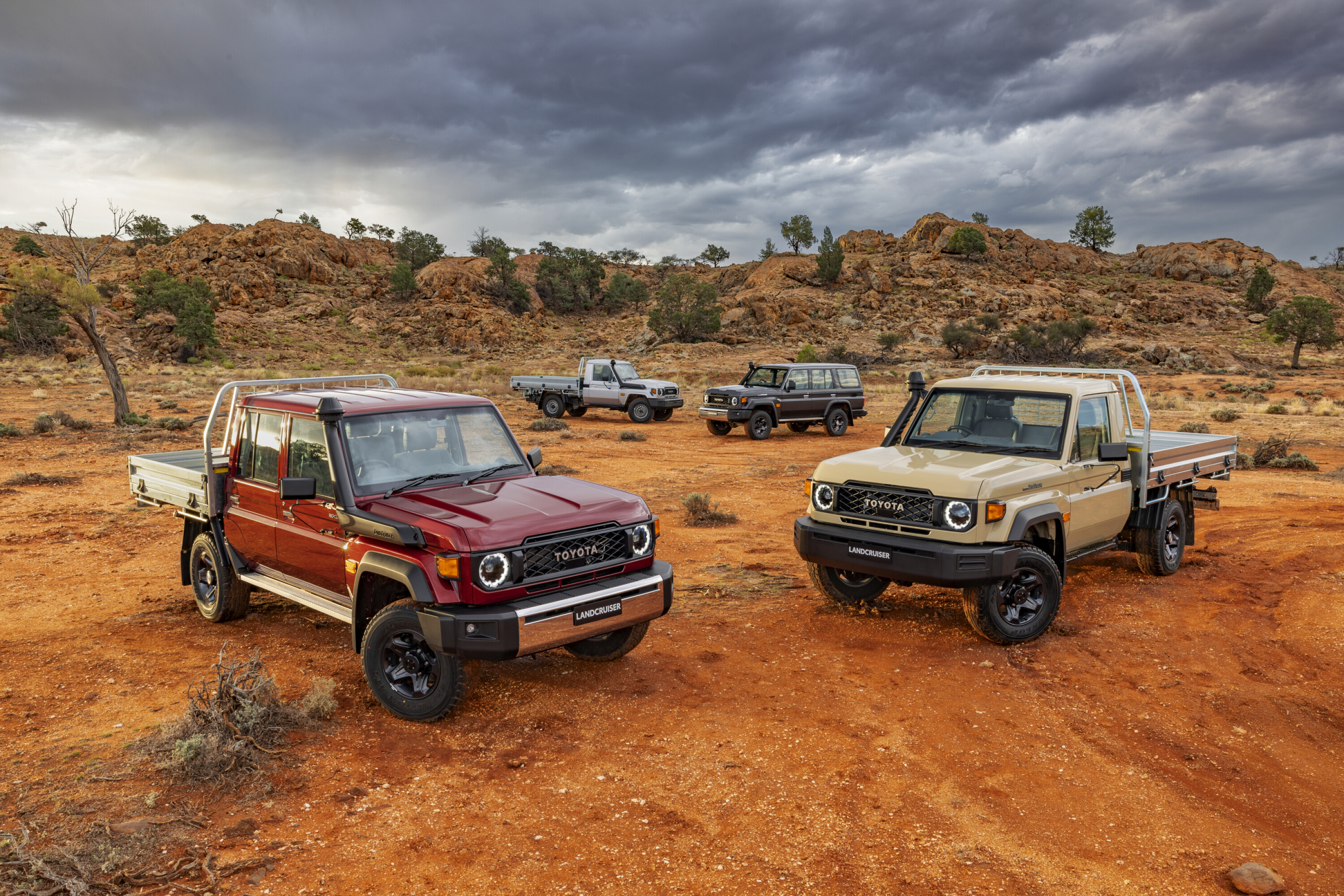
Let’s start with the range on offer. As it encroaches on four decades of production, the LandCruiser 70 will remain available in four body styles; LC78 TroopCarrier, LC76 four-door wagon and LC79 single and double cab tray backs.
All models are being offered with the choice of V8 and I4 engine options, except for the base LC76 Workmate which will be four-clinder/auto only. That is the cheapest vehicle in the range of workhorses and starts it at $75,600, while the LC79 double-cab GXL V8 tops the line-up at $87,600. The V8/manual combination attracts a $4100 premium over the I4/auto. Optional extras include front and rear differential locks for $1500, and premium paint costs $675.
| Model | 1GD 2.8-litre auto | 1VD 4.5-litre man |
|---|---|---|
| 76 Series WorkMate Wagon | $75,600 | u00a0 |
| 76 Series GXL Wagon | $79,800 | $83,900 |
| 78 Series Troop Carrier WorkMate | $79,200 | $83,300 |
| 78 Series Troop Carrier GXL | $82,500 | $86,600 |
| 79 Series Single Cab Chassis WorkMate | $76,800 | $80,900 |
| 79 Series Single Cab Chassis GX* | $78,800 | $82,900 |
| 79 Series Single Cab Chassis GXL | $80,900 | $85,000 |
| 79 Series Double Cab Chassis WorkMate* | $79,300 | $83,400 |
| 79 Series Double Cab Chassis GXL | $83,500 | $87,600 |
JUMP AHEAD
- What powertrains are available
- Drive impressions
- Off the road
- What’s in the box?
- What’s new?
- Who’s going to buy it?
- VERDICT
- Specs
What powertrains are available?
The big news is the inclusion of the 1GD 2.8-litre four-cylinder engine across the model range.
This is the same engine that is found in the HiLux, Prado and Fortuner, and it makes the same 150kW and 500Nm as it does in those models. Yes, that is more torque than the 1VD 4.5L V8 makes in standard trim (151kW/430NM) and no, the LandCruiser doesn’t get the 165kw/550Nm variant that you find in the Hilux GR Sport, nor the 48-volt assisted version that will appear in those other models later in 2024.
With its wide usage across the Toyota business the 1GD is a well proven and generally reliable workhorse. Sure, it’s had its DPF issues in the past which are unrelated to the engine itself, and Toyota assures us that those problems are behind it now.
Toyota is quoting a combined-cycle fuel-consumption figure of 9.6L/100km from the 1GD 70s, compared to 10.7L/100km for the 1VD engine, and while we are yet to do our own fuel usage testing on these vehicles, we’re sure thee numbers will be nowhere near the claimed ones in real-world driving scenarios.
The Aisin six-speed auto matches beautifully with the torquey 1GD engine and is the key to making this combination the easiest to drive in the LC70 range. The gear shifter is well positioned in the new console and has a separate gate for fore and aft manual gear selection.
Meanwhile, the 1VD-FTE engine, five-speed manual combination remains unchanged. It’s gruff and grunty and gets on with the job, in all conditions. It’s characterised by its lazy nature that seems to never raise a sweat when climbing mountains or hauling loads, all performed with that sweet V8 diesel engine grumble. And there are plenty of options available to tune more performance out of the V8, and make it sound even better!
Because of the nature of the V8 engine, you can almost drive the manual like an automatic; it will happily lope along in any gear, especially when off road in low range. The only complaint with this ’box is that it could do with a sixth ratio, which would make it better suited to highway touring by dropping the revs.
As it stands, the I4/auto revs around 600rpm slower than the 1VD/manual at 100km/h in top gear, making it a more pleasant drive and more economical on the highway.
Drive impressions
Not only is it better on the open road, but the I4/auto combo is easier and more pleasant to drive around town, when towing and even off road. Other than the soundtrack, it does everything better than the V8.
The four-cylinder engine feels lively compared to the V8. It’s more willing to get up and go, while the V8 likes to lope along and take its time to build speed when you put your foot down. The auto transmission not only has an extra ratio that benefits acceleration, but the final drive is a lower at 4.3:1 compared to the V8 model’s 3.09:1.

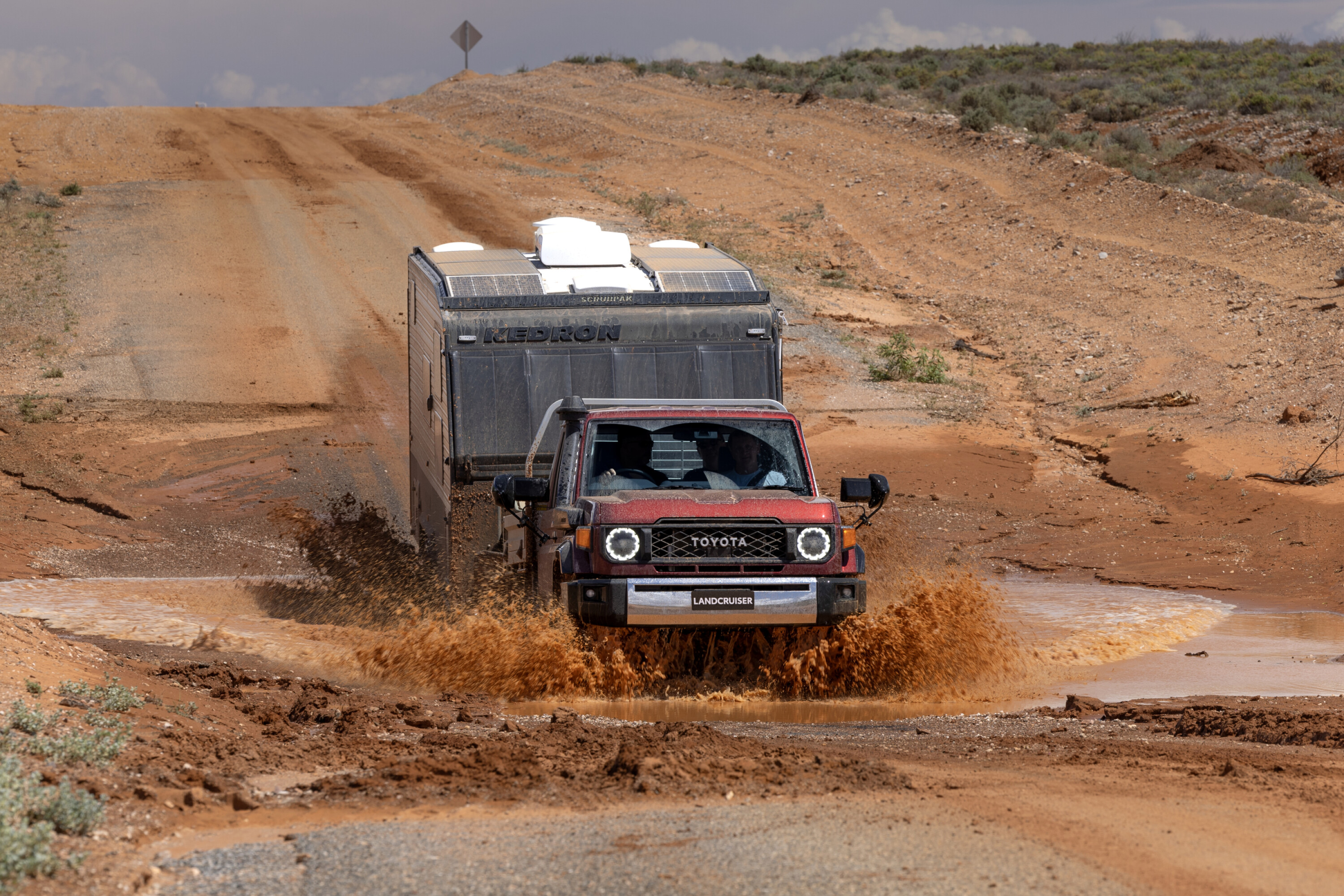
Nowhere is this performance difference more evident than when towing with the two powertrains. Toyota had a pair of LC79s available to tow a Kedron off-road caravan it claimed tipped the scales at 3100kg. The drive loop included gravel and some sealed roads, and the four-cylinder/auto was far more spritely in its pick up when towing the van, while manually shifting the auto was easy when it came time to brush off speed for descents or when approaching washouts.
By comparison the V8 picked up speed more lazily when rowing through the gears but it cruised just as nicely once up to speed. But it was significantly slower than the four-cylinder vehicle when accelerating out of washouts – we first tried third gear but acceleration was lacking compared to the four-cylinder vehicle, and while using second gear created more noise from the engine, there was very little if any improvement in performance.
For many years we’ve heard buyers asking for an auto transmission for towing with a 70 Series and we have seen aftermarket auto conversions costing north of $20,000. Toyota has answered this call with the six-speed automatic transmission and potential buyers needn’t been concerned about the performance of the four-cylinder engine.
Off the road
The off-road section of the launch covered a technical rock course, deep moguls and general bush tracks, and the four-cylinder 70s made light work of these obstacles, as did the V8s, but crossing all terrains was easier in the four-pot.
The throttle application is much smoother and less jerky than that in the V8, even if they both do the same job better than almost any other production 4×4 vehicle. A steep off-road rock loop that defied belief for a heavy production vehicle was experienced alongside a Toyota test driver and it truly impressed. It was done in a LC76, and he left the lockers disengaged, letting the ETC do all the work, and it barely slipped a tyre.
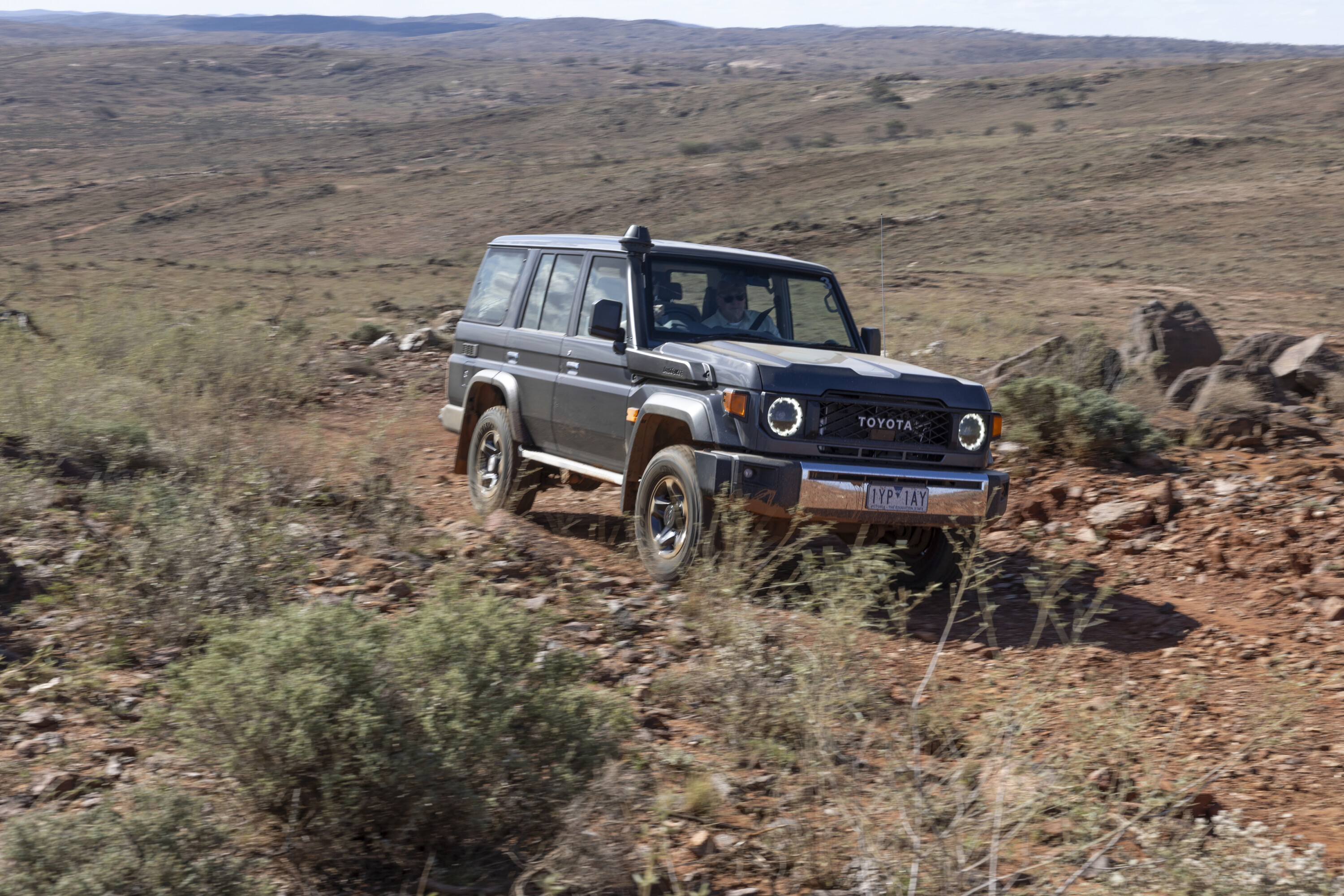
The four-cylinder Cruisers also get Downhill Assist Control (DAC) and the test driver showed how easily this system controls wheel speed and slip on the steep rock face. Unfortunately the DAC in the 70s only has a single speed setting, unlike the adjustable systems in other off-road vehicles. While DAC is not available in the V8, low-range first gear is all that’s needed thanks to decent reduction and impressive engine braking.
Both powertrains now have a hill-start assist feature that holds the brake for a few seconds when you let it off on steep hills. It’s really only a benefit in the manual and even there, it was never really a problem without it.
The LandCruiser’s coil front and leaf rear suspension is relatively stiff by modern standards in line with the vehicle’s working-truck design. It still articulates well over uneven terrain, and the ETC does excellent work. The Kedron van used on the towing loop was said to be putting around 290kg on the tow ball and again, the suspension was unfussed by this extra weight on the back of both the I4 and V8 Cruisers.
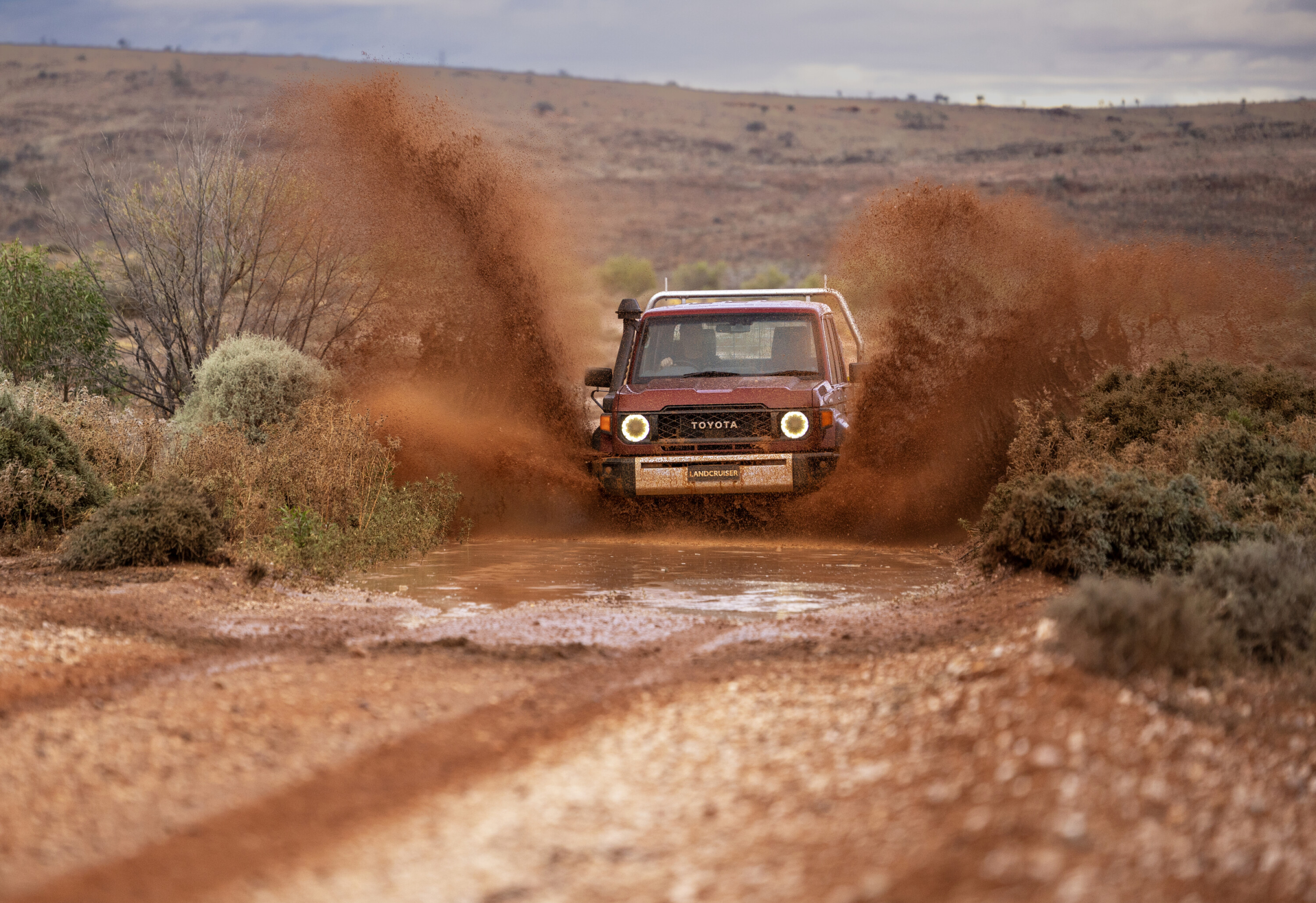
On open gravel roads the Cruiser treats ruts with disdain and soaks up bumps with no regard. The 70 Series is one of those vehicles that really starts to make sense once you get it out of town and off the blacktop, where it feels more at ease and able to take on the conditions better than most other vehicles.
That upright 40-year old cabin offers plenty of headroom and great vision from its glasshouse, but on the highway it generates a hurricane of wind noise around the A- pillars that plays in concert with sucking sounds from the standard air intake snorkel.
What’s in the box?
In a world of new vehicles that are being overloaded with features and technology the LandCruiser 70 stays true to its working-truck heritage and offers the bare minimum.
The Workmate models have wind-up windows and vinyl-covered floors. Stepping up to the GXL gets you carpets and power windows, but you lose the handy little quarter vent windows that feature on the base models. Air conditioning is standard and the HVAC controls look to be carried over from the original 1984 models – whether they were kept for functionality or nostalgia, it’s nice to see them still there.
What’s new?
Aside from the 1GD/auto powertrain and new tech under the skin, the only other changes to the LC70 are cosmetic.
Toyota has doubled-down on the retro look with the revised front-end reverting back to round headlamps, albeit with LED DRLs, a taller bonnet over a revised grille and lower venting that replicates the earliest 70s. There’s even an upper vent atop the grille that is very 40 Series like. The taller bonnet conceals large vents to feed the top-mounted engine intercooler on the V8 models while on the I4 engine, the air-to air intercooler used on Hilux and Prado has been replaced with a water to air cooler/heater for improved cold-start emissions.
Inside there is a new gauge binnacle that also has a retro 40 Series vibe about it, but includes a 4.2-inch information display which has a digital speedometer, a new 6.7-inch infotainment screen with wired Apple Carplay and Android Auto, and a new steering wheel with more control buttons than before. Air conditioning and cruise control are standard while front and rear differential locks come standard on GXL models, but are optional on lower grades.

Safety-wise, Toyota’s Safety Sense system includes pre-collision with day and night pedestrian and daytime cyclist detection, lane departure alert with steering assist that only works on the brakes and not directly on the Cruiser’s hydraulic power steering, speed-sign recognition, auto high-beam, ABS, electronic stability and traction control, driver and front passenger airbags but none for back seat passengers, downhill assist control on auto models only, and only the four-cylinder auto wagon gets a reversing camera.
The LandCruiser 70 Series remains a very agricultural vehicle and its 40-year old architecture means that integrating the latest safety systems is a huge challenge for the engineers, hence the lack of the latest safety kit you can find on newer vehicles.
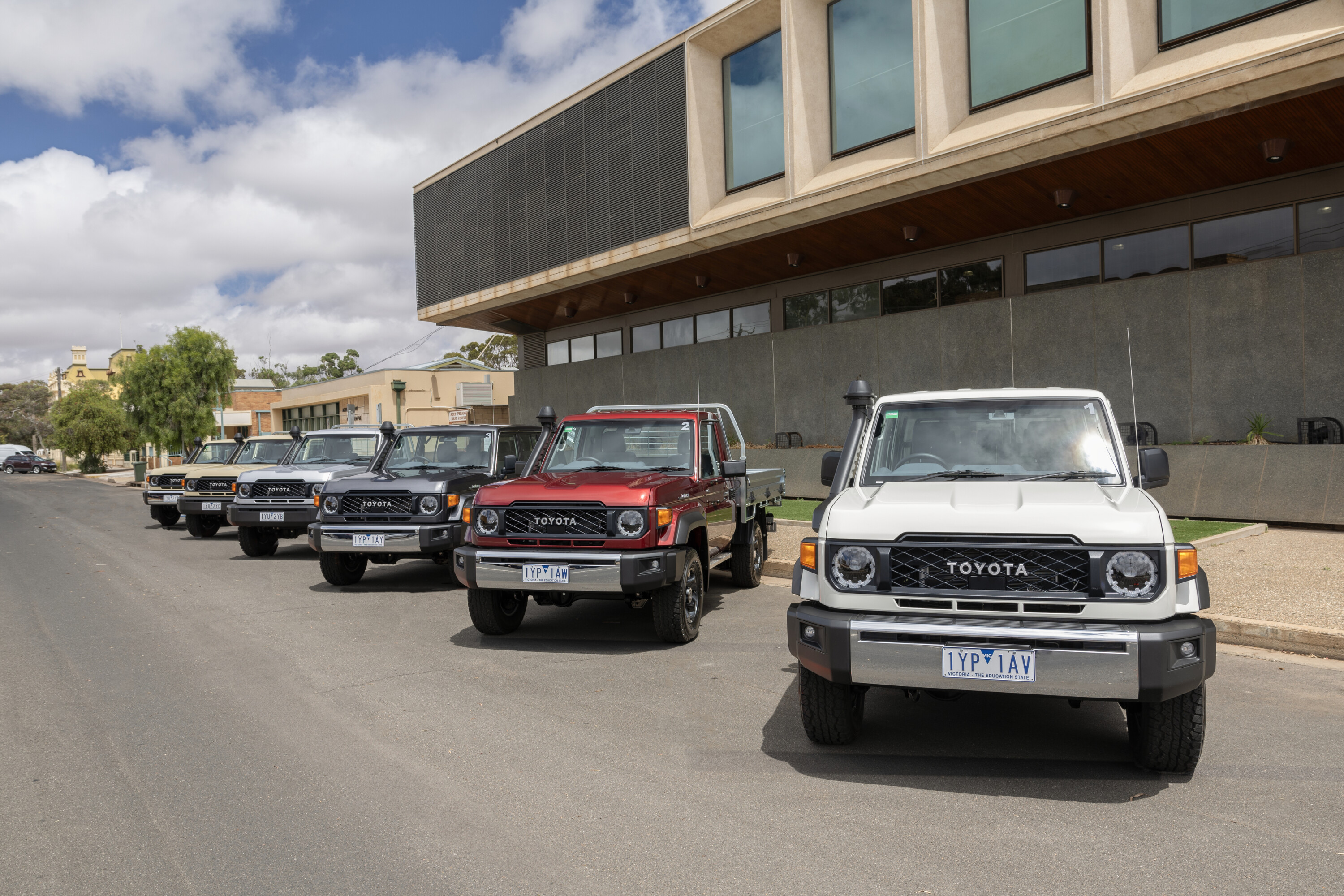
One thing that hasn’t changed on the new Cruisers is the disparity between front and rear wheel tracks. Ever since Toyota fitted the V8 engine to the 70 Series and had to widen the front-end, the front wheel track has been 95mm wider than the rear. This is seen by many to be a problem, as the rear tyres are not following in the tracks of the front tyres over soft and rutted terrain, causing stability problems. Some LC70 owners spend thousands of dollars on a new rear axle housing to rectify this.
Theoretically, with the inline four-cylinder engine in the front of the LC70, the wider axle is not actually needed and Toyota could refit the earlier model unit from the HDJ 70s. But the company doesn’t see the wheel-track disparity as a problem and has not sought to change it.
When asked about it, a Toyota Australia spokesperson said that widening the rear axle to match the front would not be an easy job as it would require body modifications to fit it under the 76 Wagon and 78 TroopCarrier.
Who’s going to buy it?
The 70 Series LandCruiser has always been the vehicle of choice for adventurous overlanders, off-road tourers, NGOs, fleets where off-road use is required, and anyone looking for a tough and dependable vehicle that can take them wherever they want to explore.
Enthusiasts love the customisation possibilities of the 70 platform for fitting bigger off-road tyres, better suspension, a custom touring canopy or fitting out a TroopCarrier as a home-on-the-road. The 70 is one of the most modified and customised 4x4s on the market, and with this update that will remain the case.

The inclusion of an automatic transmission will entice those who want to tow but convincing them that the four-cylinder engine is up to the job might be a hard task, while the auto will also appeal to fleet owners who need all-road ability but can’t trust their employees with a manual gearbox. The four-cylinder option also opens up the 70 to buyers not allowed to own or drive a V8-powered vehicle.
The four-cylinder will be a hard-sell to enthusiasts who don’t trust the smaller-capacity engine in a large heavy-duty 4×4, and they will continue to queue up to order a V8 model… if and when they eventually can. Any uncertainty as to the future of the V8 engine option will only promote the desire for that driveline further, and there’s no doubt they will remain in demand.
Verdict
The four-cylinder automatic LandCruiser does everything the V8 manual does, only better.
While many won’t believe that, or will refuse to believe it, our couple of days driving the various 70 Series models and drivetrains back-to-back certainly revealed it to be true.
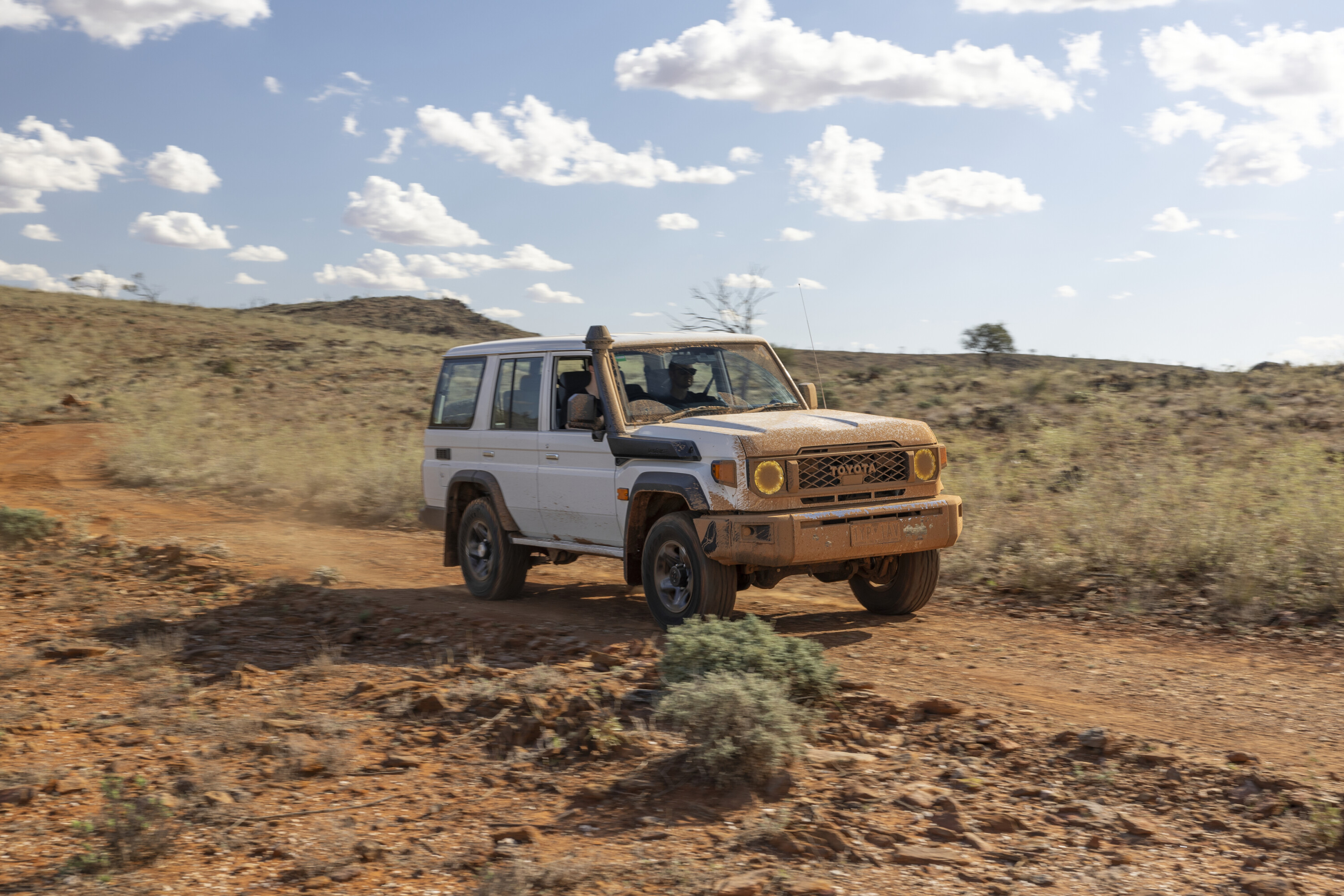
Not only does the automatic transmission make the 70 easier to drive, but the 1GD engine is more enthusiastic than the V8, and with less weight over the front-end it feels a touch more nimble in the handling department. Plus that lighter weight also adds around 55kg to the vehicle’s payload capacity.
The four-cylinder engine also goes some way to future proofing the 70 Series against Euro 6 and higher emission regulations that the V8 won’t be able to meet, and anything that keeps this legendary 4×4 on the tracks is a good thing in our book.
Specs
| 2024 LandCruiser 79 GXL double-cab | ||
|---|---|---|
| Price | $83,500 | $87,600 |
| Engine | I4 turbo-diesel | V8 turbo-diesel |
| Capacity | 2755cc | 4461cc |
| Max power | 150kW@3000-3400rpm | 151kW@3400rpm |
| Max torque | 500Nm@1600-2800rpm | 430Nm @1200-3200rpm |
| Transmission | 6-speed automatic | 5-speed manual |
| 4×4 system | Part-time, dual range | Part-time, dual range |
| Crawl ratio | 38.51:1 | 44.05:1 |
| Construction | 4-door ute body on ladder frame chassis | 4-door ute body on a ladder frame chassis |
| Front suspension | Live axle with radius arms and coil springs | Live axle with radius arms and coil springs |
| Rear suspension | Live axle on leaf springs | Live axle on leaf springs |
| Tyres | 265/70R16 on alloys | 265/70R16 on alloys |
| Kerb weight | 2185kgu00a0 | 2240kgu00a0 |
| GVM | 3510kg | 3510kg |
| GCM | 7010kg | 7010kg |
| Towing capacity | 3500kg | 3500kg |
| Payload | 1325kg | 1270kg |
| Seats | 5 | 5 |
| Fuel tank | 130L | 130L |
| ADR fuel consumption | 9.6L/100km combined | 10.7L/100km combined |
| On test fuel consumption | N/A | N/A |
| Approach angle | 33u00b0 | 33u00b0 |
| Ramp-over angle | N/A | N/A |
| Departure angle | 27u00b0 | 27u00b0 |
| Ground clearance | 302mm | 302mm |
| Wading depth | N/A | N/A |
The Summer 2023 issue of 4X4 Australia magazine is out now, rounding out another massive year in the 4×4 space.
As we do every year at this time, we’ve included a comprehensive 2023 Christmas Gift Guide to showcase all the best 4×4 gear on sale in Australia. There are some great ideas to ensure your 4×4-loving friends and family aren’t disappointed on Christmas morning.
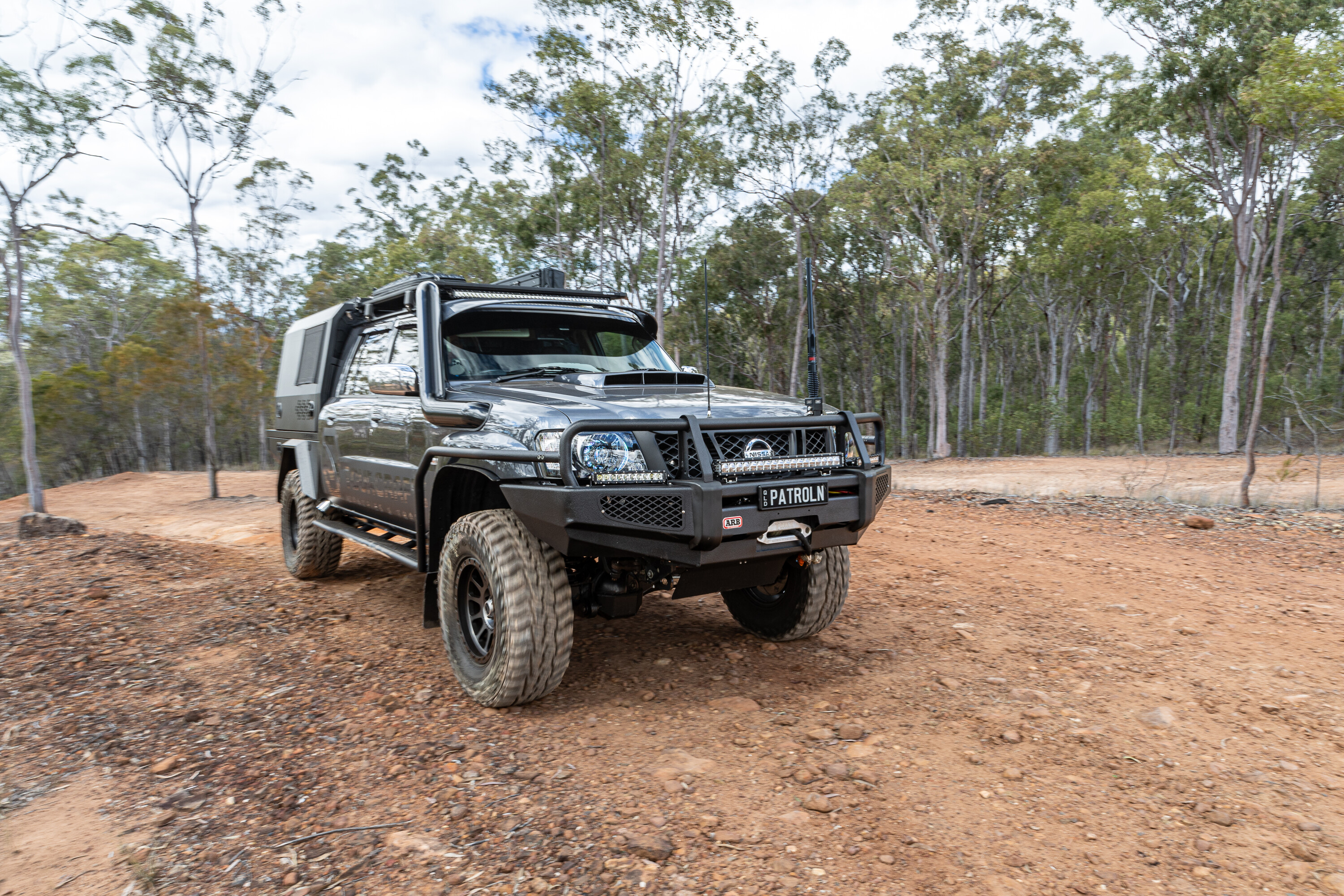
Three killer custom builds feature on the cover: what could be the most modified Nissan GU Patrol in the country; a super tidy custom Toyota 80 Series LandCruiser that proves Cruisers are still the king of the off-road jungle; and a petite Jimny that has been transformed into an ultimate remote-area, long-distance tourer.
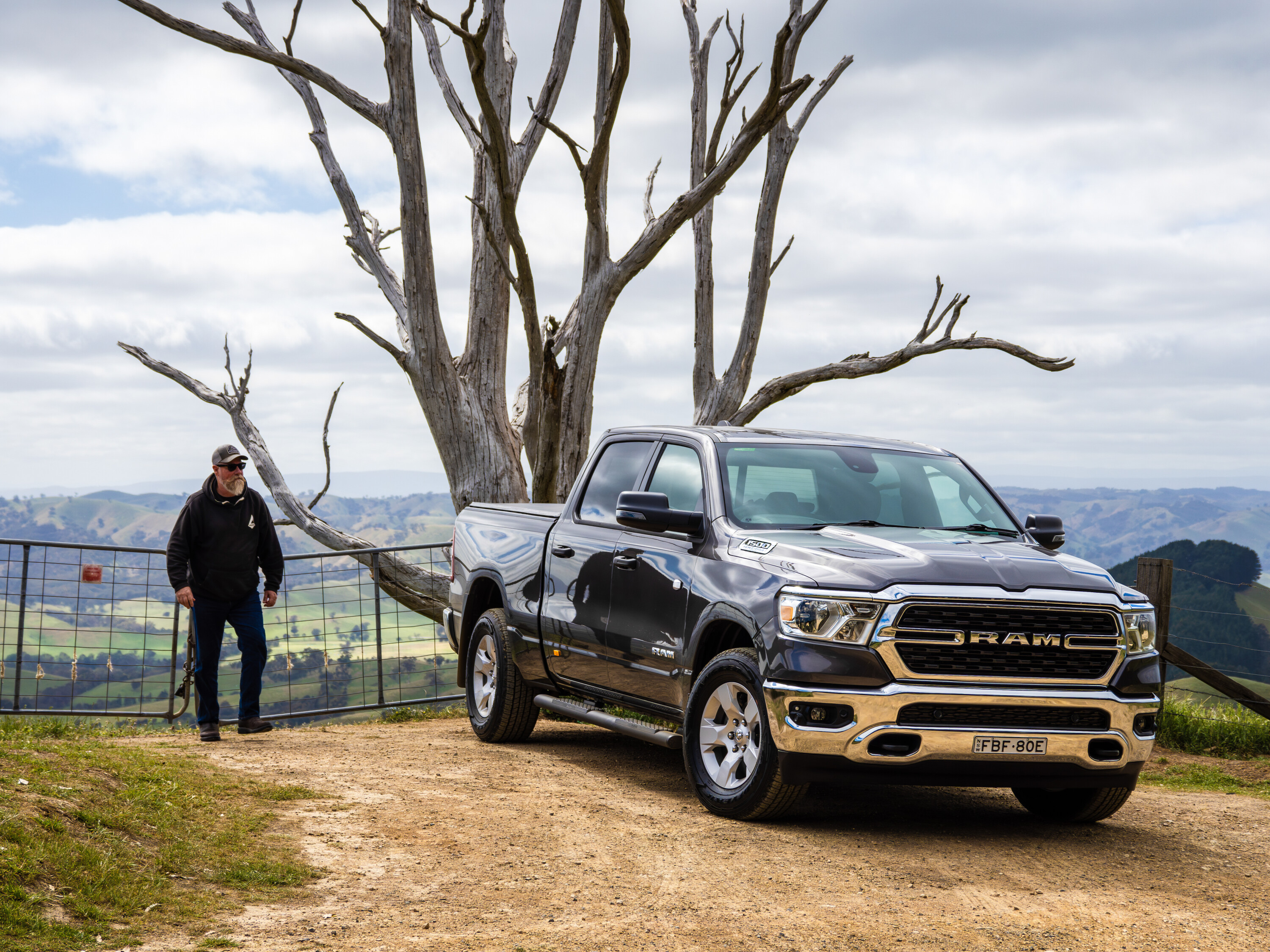
As we near the end of 2023, the 4×4 industry is gearing up for an influx of launches and new metal. To this end, Matt spent some time in RAM’s new entry level 1500 model, the Big Horn. At close to $120K it’s certainly not cheap, but is it money well spent when you can get an F-150 for just under $107K?
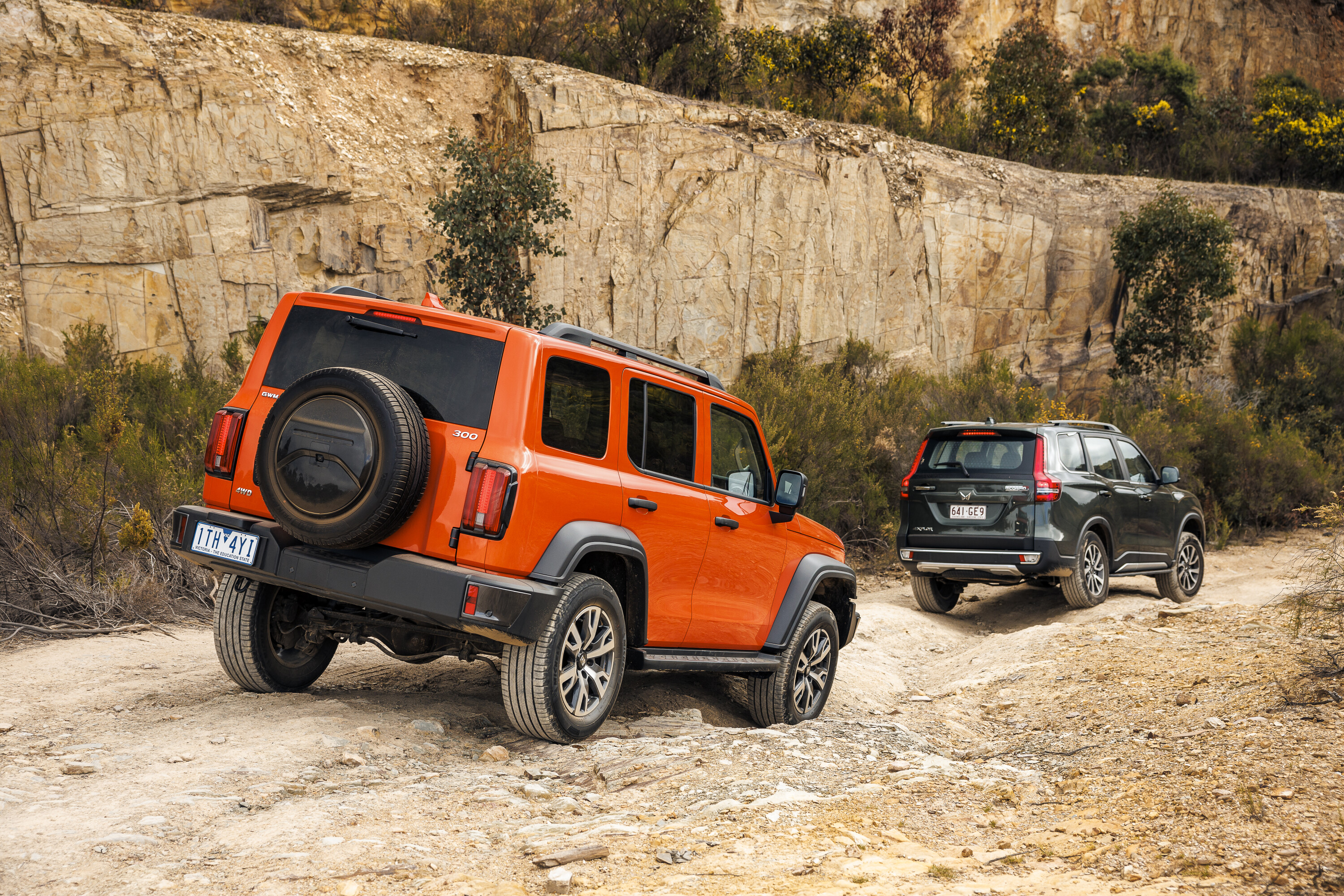
At the opposite end of the market, we line up two competent budget brawlers – the GWM Tank 300 and Mahindra Scorpio – to prove you don’t need silly money to tackle serious off-road terrain.
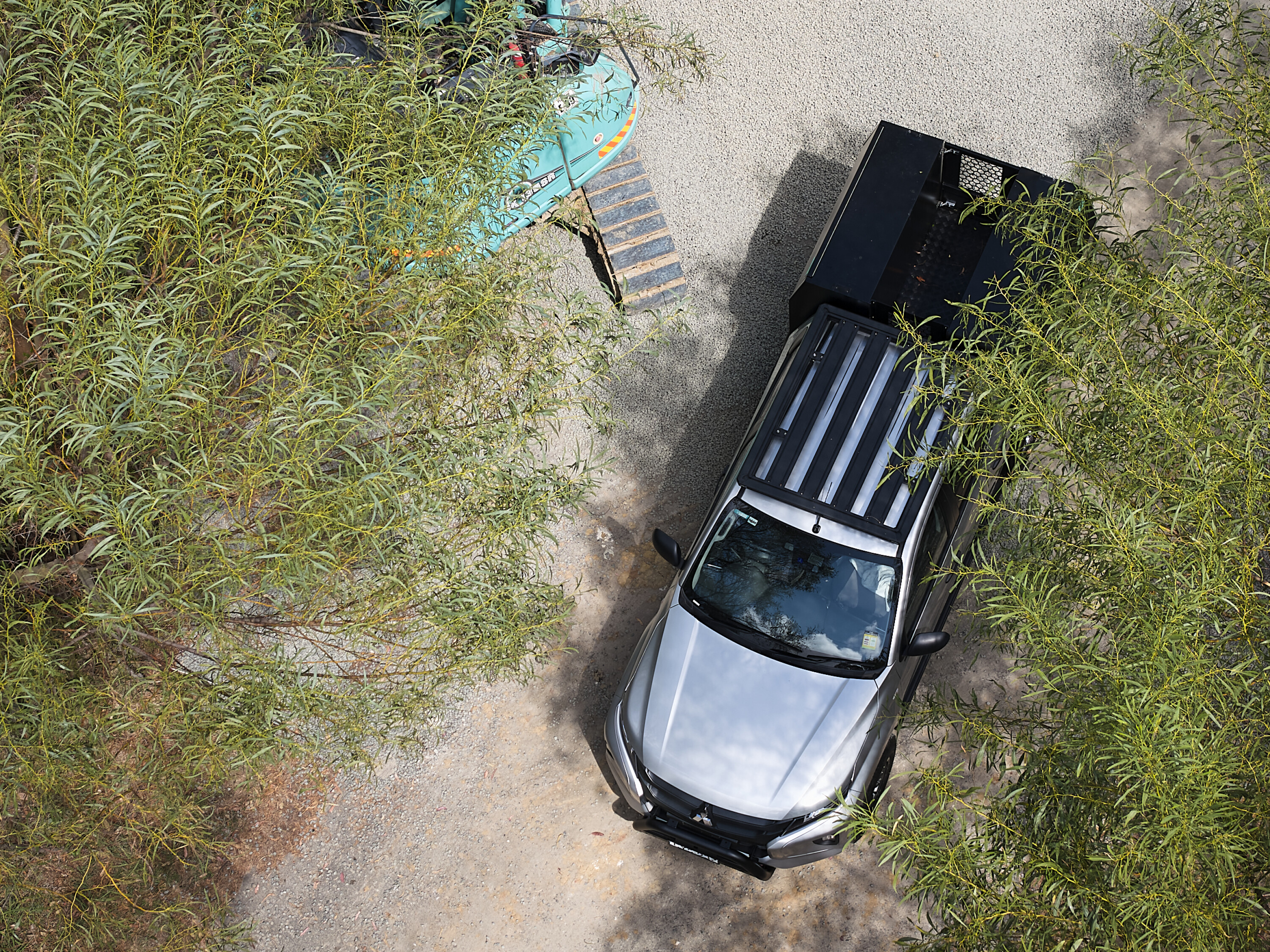
Our Tradie Triton build continues to evolve, and this month we install a Rola Titan Tray and a Hayman Reese X-Bar. Two quality pieces of equipment that have substantially improved the vehicle’s capabilities.
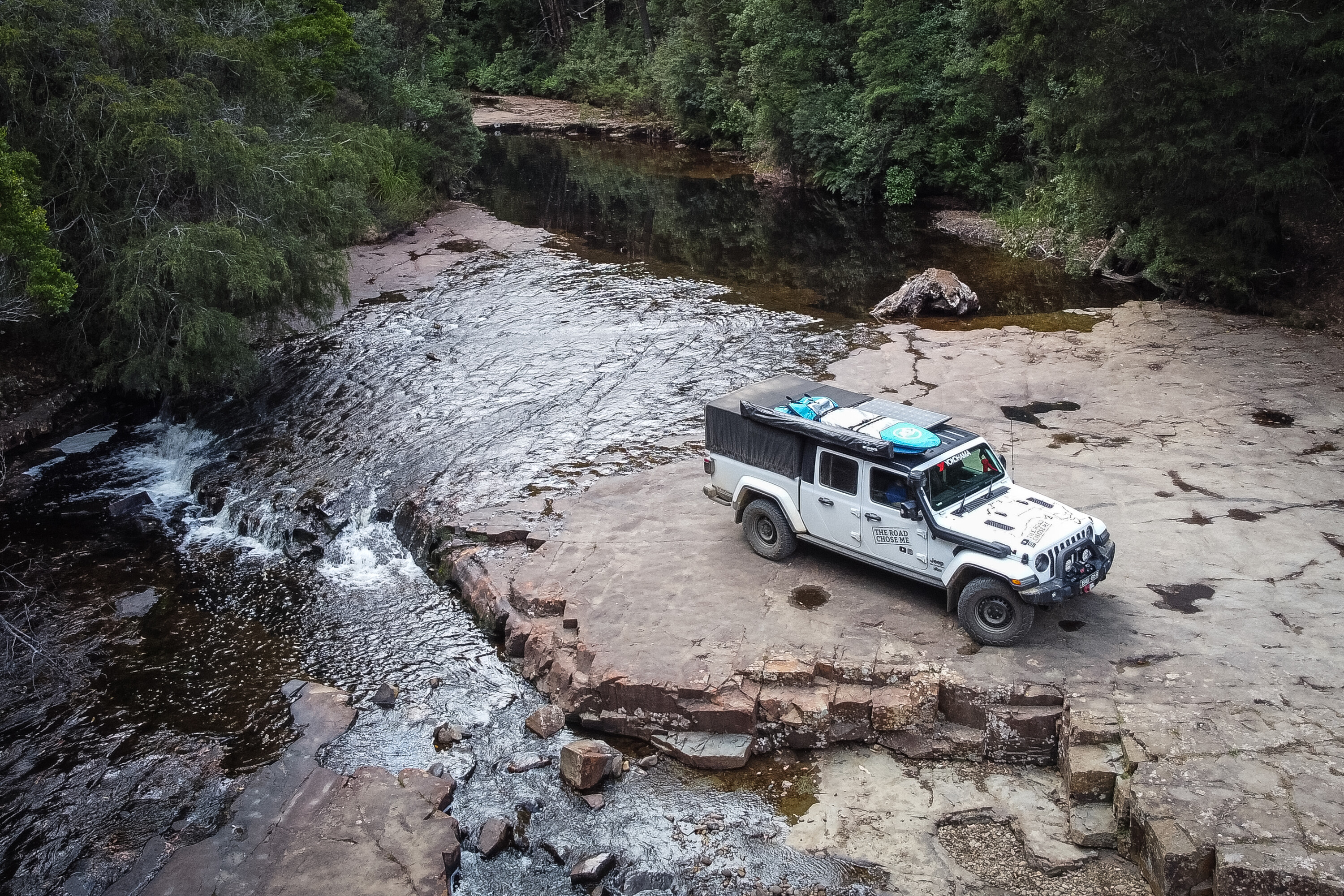
Plus we pack our bags and explore the west coast of South Australia, New England in NSW, the Oodnadatta Track in SA, the wilds of Tasmania in a Jeep Gladiator Rubicon, and have a beer at the National Hotel in Normanton, Queensland.
What else is there?
- Car Builders sound deadener kit tested
- A sneak peak of the 4WD Treks of north-east NSW guide
- New 4×4 products
- Readers Rigs
- News, sales stats, travel news and more!
The Summer 2023 issue of 4X4 Australia is out now.
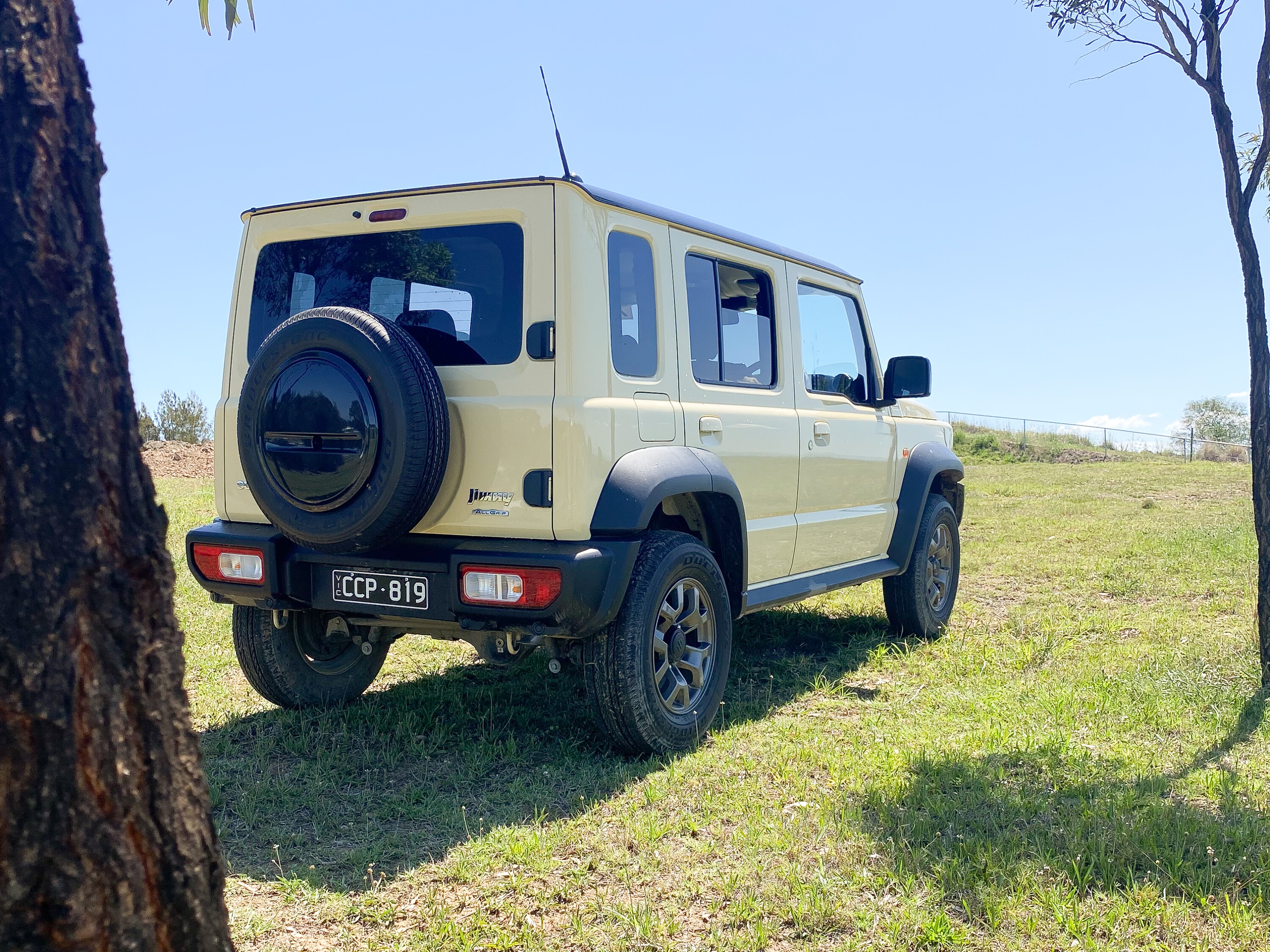
Rumoured since the JB74’s local launch in January 2019, Suzuki has finally provided the five-door Jimny buyers have been begging for. But do the two extra doors really make this dinky off-roader suitable for a big country like ours?
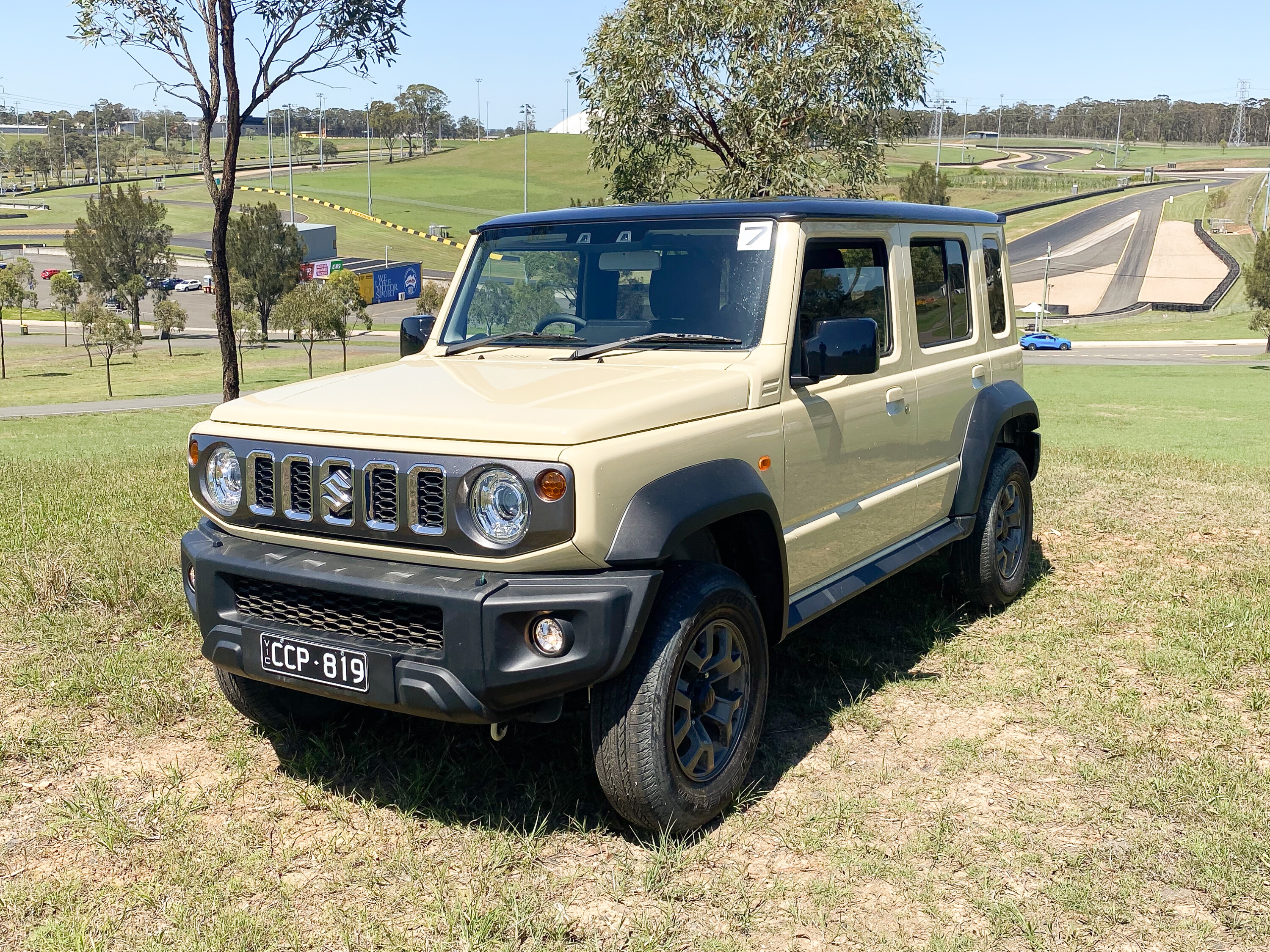
Priced from $34,990 before on-road costs, the four-seat Jimny XL is assembled in India from Japanese-made parts kits. All external measurements are identical bar an additional 340mm between the front and rear axles.
The Jimny XL retains its ladder-frame underpinnings with live axles and iconic appearance, just with a bit more space. You’ll even find the same 75kW 1.5-litre four-cylinder under the bonnet.
Don’t kid yourself that, because it’s got five doors and a bigger boot, the Jimny XL is a do-it-all family car, though. Even with extra space, the Jimny remains closer in ethos to a 70 Series LandCruiser than a small SUV like the Mazda CX-3.
JUMP AHEAD
- How much is it, and what do you get?
- How do rivals compare on value?
- Interior comfort, space and storage
- What is it like to drive?
- How much fuel does it use?
- How safe is it?
- Warranty and running costs
- VERDICT
- Specifications
How much is it, and what do you get?
The XL’s price structure is simple, costing $3000 more than the three-door Jimny in manual and auto guises.
| 2024 Suzuki Jimny XL features | |
|---|---|
| 15-inch alloy wheels | Central locking |
| Four-way manual adjust seats | Cloth upholstery |
| Tilt adjust steering wheel | Air conditioning |
| Digital clock | 9.0-inch touchscreen |
| Wireless Apple CarPlay and Android Auto | USB charge point |
| Four seats | Two-speaker sound system |
| Six airbags | Forward AEB |
| Hill-descent control | Part-time 4WD with low-range transfer case |
How do rivals compare on value?
The Jimny XL’s main rival is the three-door version, and how much space you need will determine the better off-roader for you.
There are a few extra goodies in the XL, such as a 9.0-inch touchscreen with wireless Apple CarPlay/Android Auto and adaptive cruise control in the automatic to aid the value equation. It’s worth noting that since hitting dealers in 2019, the Jimny three-door’s price has climbed from $23,990 to $31,990 before on-road costs.
On-road-focused rivals are worth mentioning as, for a similar asking price to the Jimny, the Mazda CX-3 Touring auto ($34,300) has equal interior space, leather-look upholstery, up-to-date safety systems, and was rated five stars by ANCAP in 2015 – though that rating is now expired.
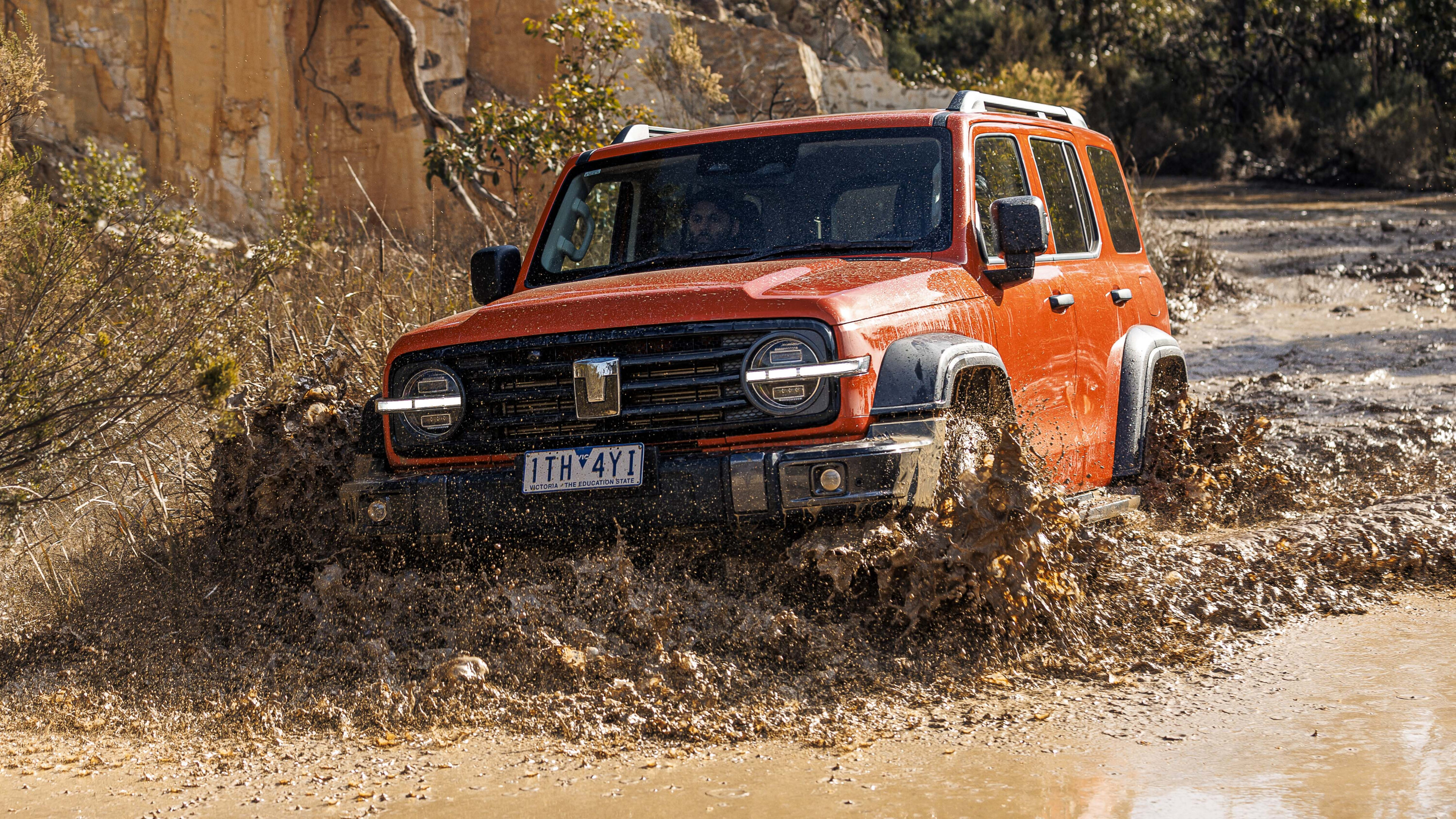
Also worth considering is the much bigger GWM Tank 300. With its Wrangler-like looks, front and rear lockers, turbo-petrol engine, eight-speed automatic and bulging equipment list, the Tank Lux’s $46,990 drive-away price tag is only about $4000 higher than an automatic Jimny XL.
Interior comfort, space and storage
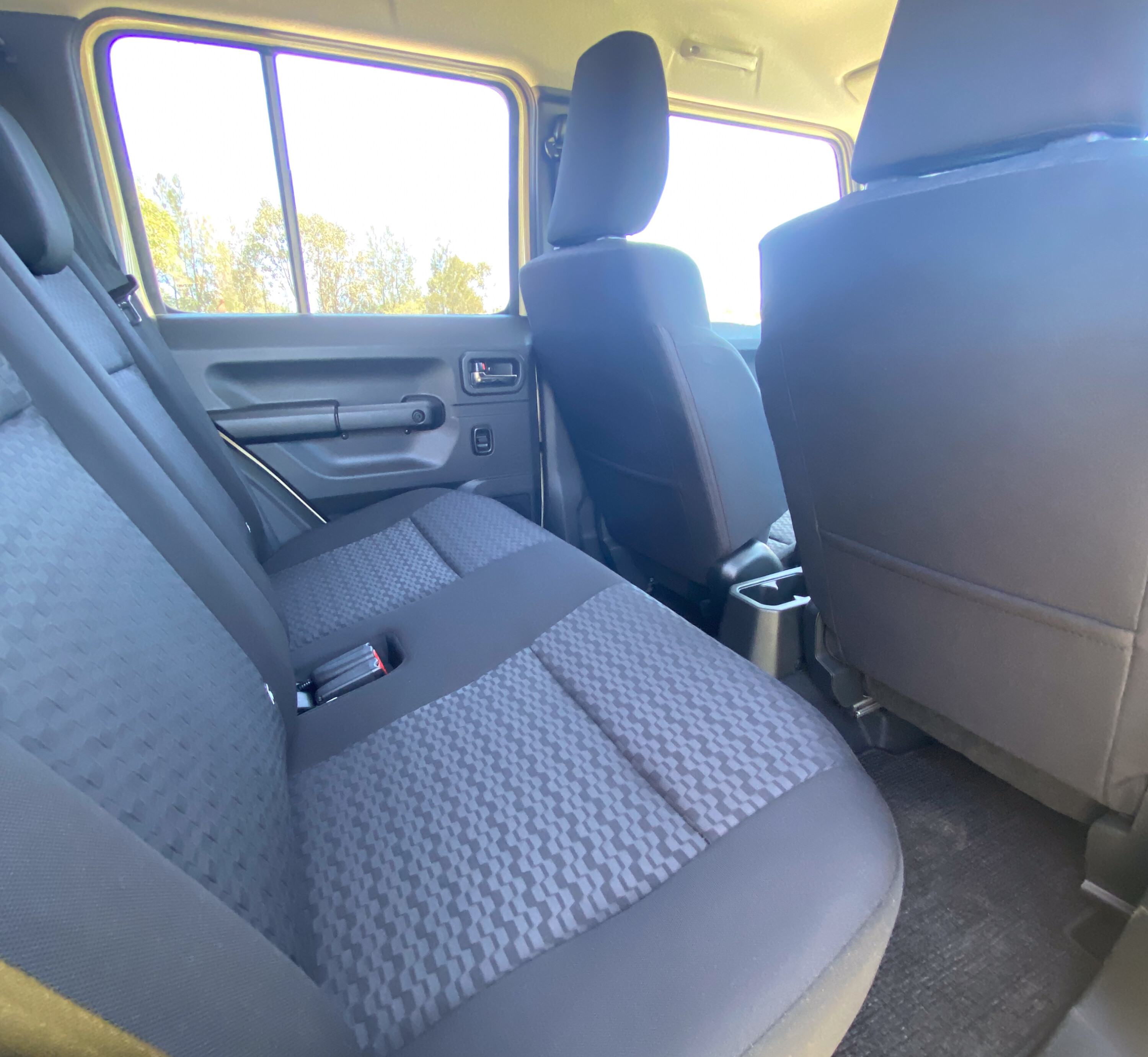
With an extra 34cm between the wheels (don’t worry, it’s still under four metres long) the Jimny XL’s rear seat is comfortable for six-foot adults – a lot more than you can say for a three-door Jimny or even the Mazda CX-3.
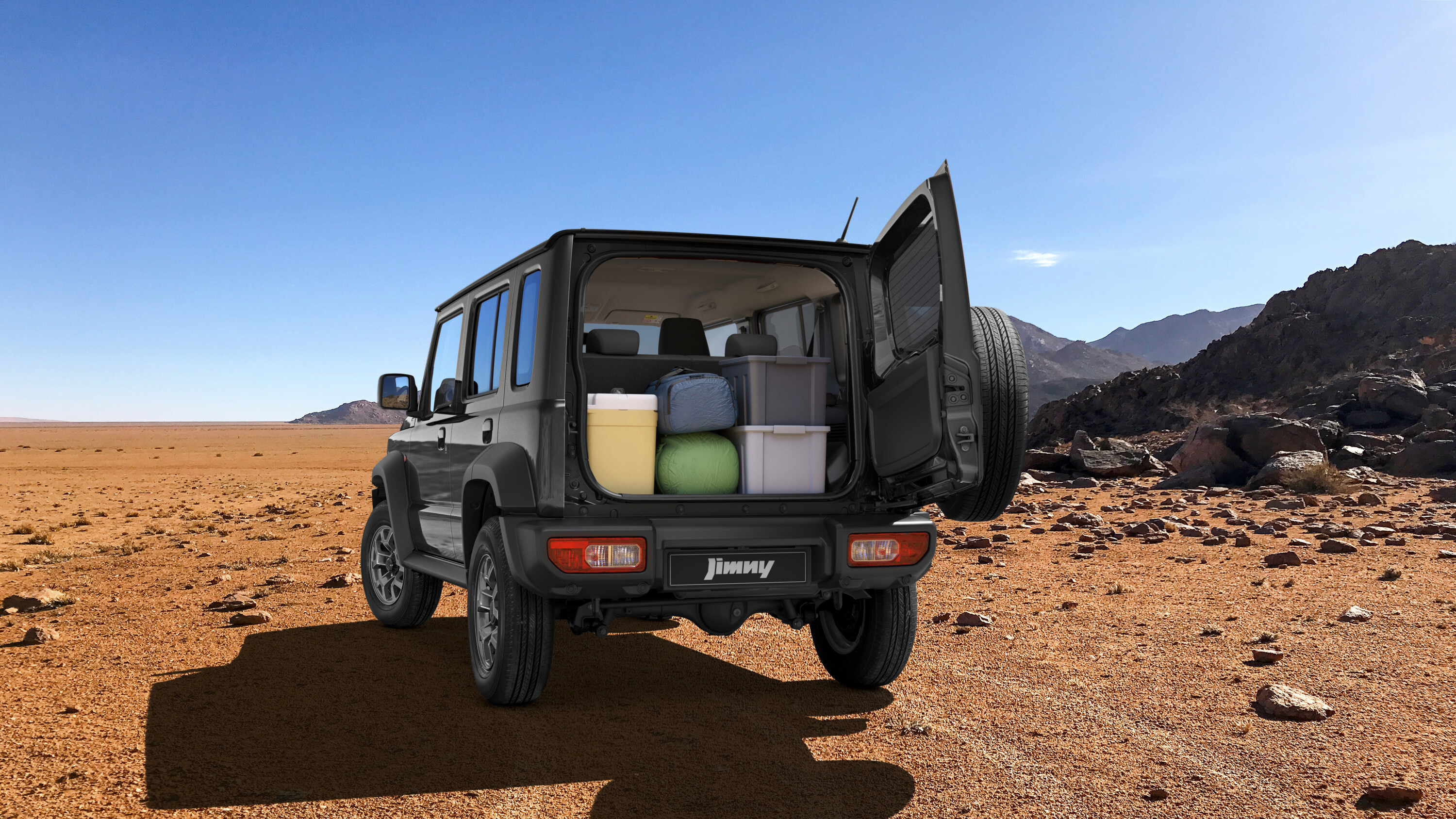
It also means the boot is a lot larger, growing from 85L to 211L behind both rows. Folding the seats down is simple but doesn’t create a flat load space.
Oddly, with the seats folded the three-door Jimny has more litres on paper, though the extended load bay of the XL makes it more practical as a farm hand.
Unfortunately, the Jimny XL’s GVM is only 1545kg, meaning a 360kg payload for the manual. With four 80kg adults onboard you’re left with just 40kg capacity for gear.
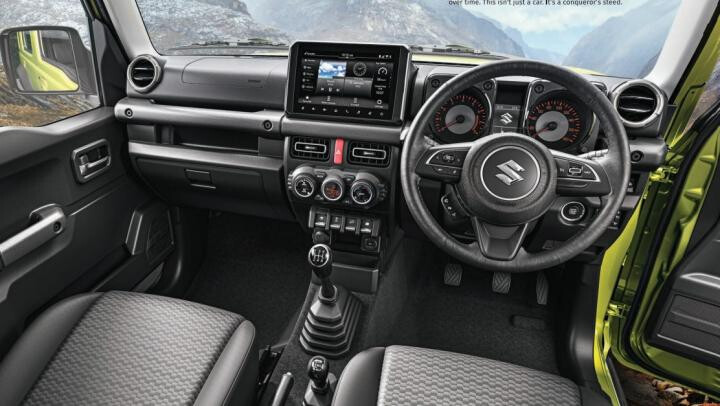
The 9.0-inch touchscreen on the dash looks positively huge and has nice, crisp graphics. There’s also wireless Apple CarPlay and Android Auto, though the two-speaker stereo is weak and there’s no built-in satellite navigation.
The Jimny’s cabin retains all the funky functional touches such as the grab handles and the plastic exposed ‘bolt heads’. Those analogue dials are easy to read and have a digital screen between for extra info.
As the main stack is designed for just two windows, the switches for the rear glass are located awkwardly next to the manual handbrake.
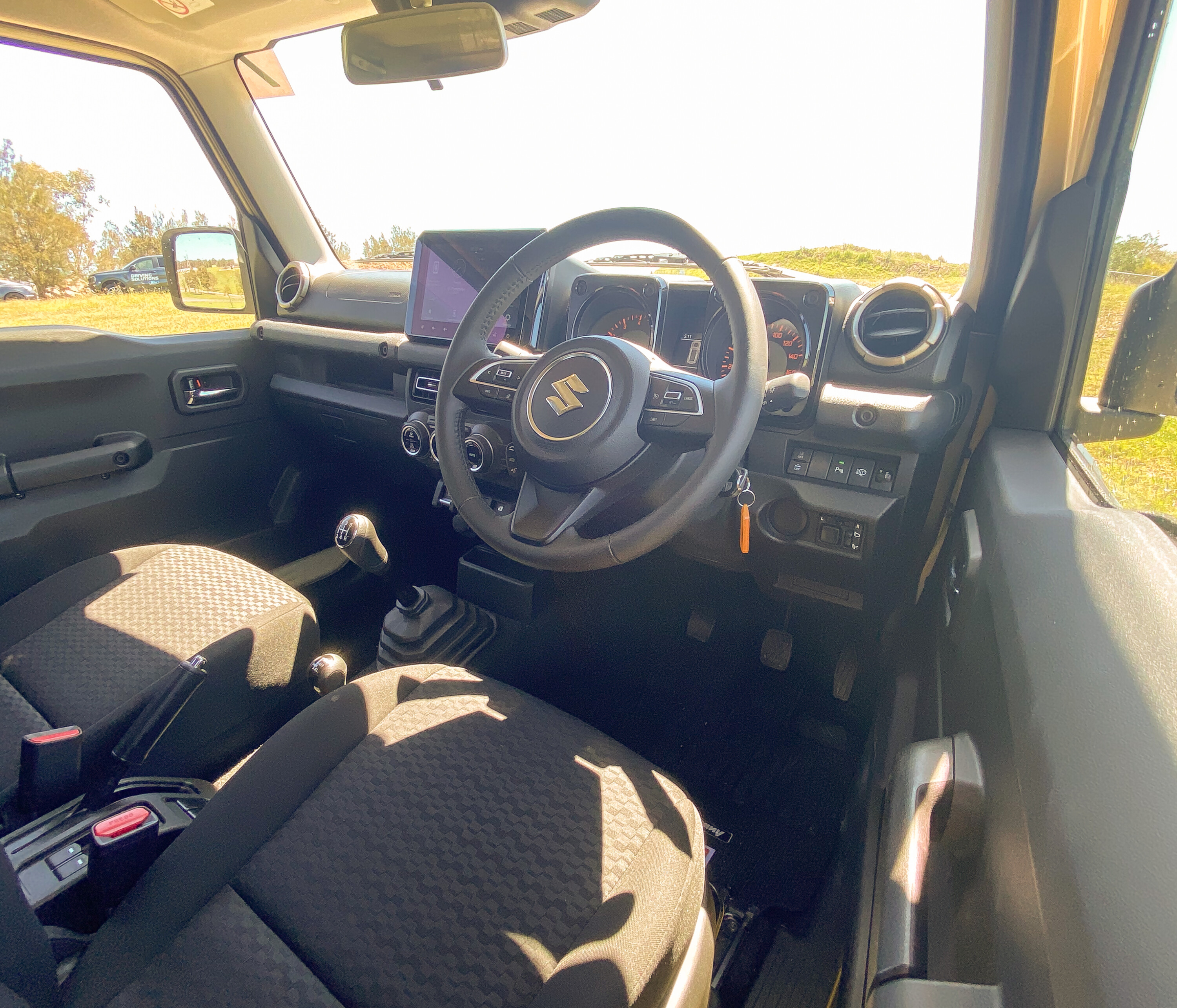
A plethora of hard scratchy plastics is expected and their smell, as they degas in the hot Australian sun, is like sticking your nose inside a cheap Decathlon tent.
The flip-side? The materials are durable and hard-wearing.
It’s the same for the seats, which lack height adjustment. The steering wheel doesn’t telescope, it only goes up and down, so the Jimny requires some body contortion to get comfy. Once you’ve found a spot that works, the firm cloth-upholstered seats are reasonably supportive.
You might be starting to get the picture here. The Jimny is extreme in a sense. It’s either a vehicle that you’ll find completely unsuitable owing to the cheapness of it all, or you’ll fall in love immediately with this eco-friendly rough-and-tumble bush companion.
What is it like to drive?
The biggest criticism leading up the the Jimny XL’s arrival has been an underspecced engine. It uses the same 1.5-litre multi-point-injected four-cylinder as the three-door.
That means a humble 75kW at 6000rpm and wheezy 130Nm at 4000rpm. Paired with the five-speed manual, getting a strop on in the Jimny is loud and uncivilised, though like driving a classic car, you are at least constantly engaged in the process and your surroundings.
With a four-speed auto, the prospect is less appealing. We didn’t test 0-100km/h figures in the 10 minutes we were allotted on the road and Suzuki doesn’t claim a figure. The manual ought to hit the national speed limit in about 12.5 seconds, and the auto closer to 14.
The sluggishness isn’t exclusively a five-door fault as, according to the spec sheet it’s ‘only’ 90kg heavier (which to be fair is nearly a 10 per cent increase due to how light this little Suzuki is) weighing 1185kg in manual trim.
On the road, its 4.25-turn steering rack is ponderous and loads up inconsistently with a dead zone around the centre; not confidence-inspiring, though that’s a good thing. A Jimny can be fun to hustle for experienced drivers who relish a challenge, but for the average punter it’s insecure and aloof.
We weren’t given the chance to sample high-speed dirt roads where the 340mm longer wheelbase would surely aid stability and comfort over the stumpy three-door.
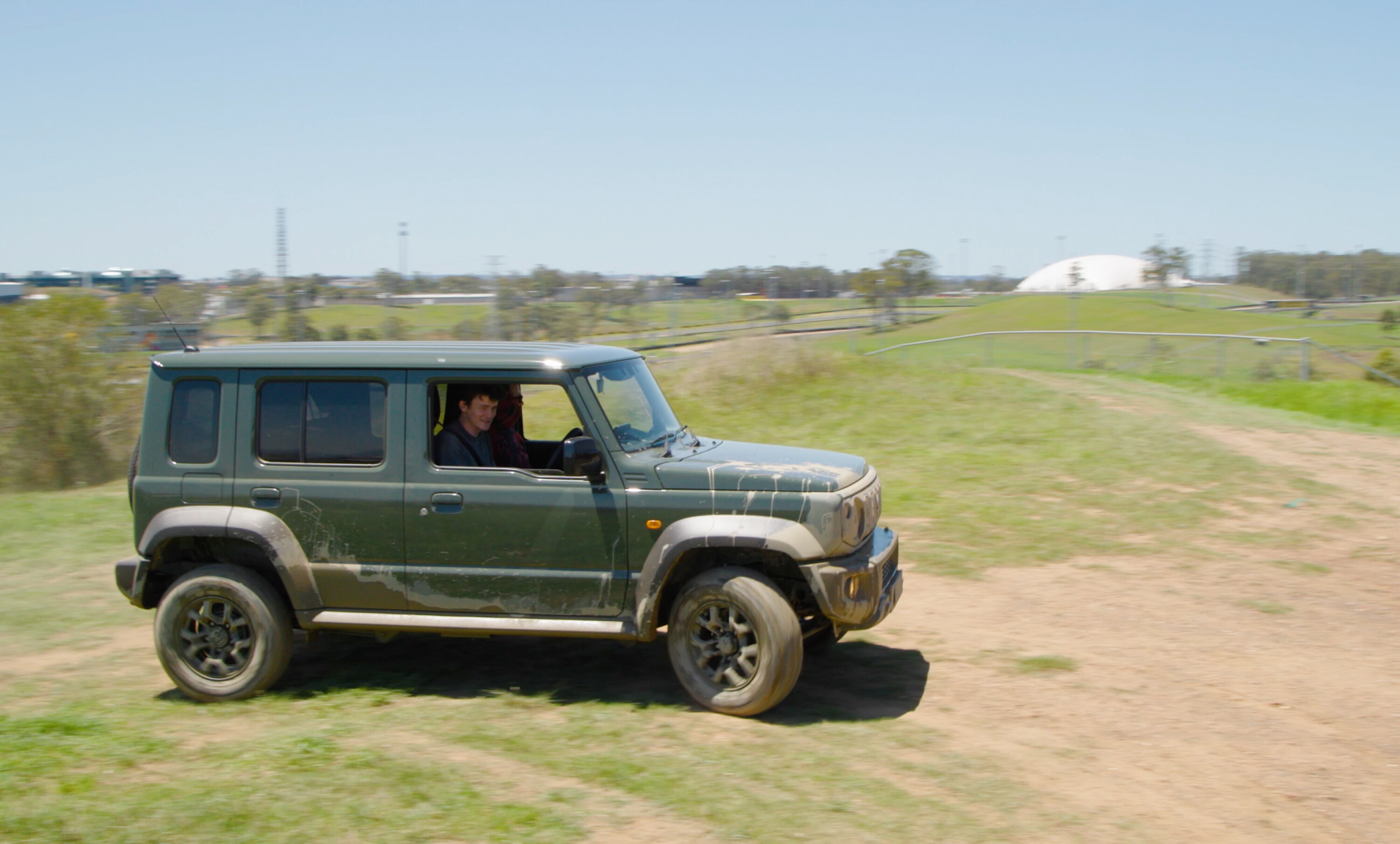
Crucially, the XL hasn’t sacrificed any of its mountain goat persona on technical trails.
Granted, the underbody and diffs scraped where they probably wouldn’t have in a three-door but, without one for direct comparison, it’s hard to say how pronounced the difference is.
The figures confirm that the five-door is less capable. From the same 210mm ground clearance, its ramp-over angle drops from 28º to 24º. The approach angle is 36º and departure 47º, while the only real Jimny shortcoming is a wading depth of 300mm that we nearly maxed out in a fairly shallow puddle.
Lift kits are readily available for the three-door Jimny so it won’t be long before the market is flooded with suspension kits and GVM upgrades for the XL. And aside from getting hung up on a few moguls, the agile Jimny shrugged off the off-road park’s technical descents.
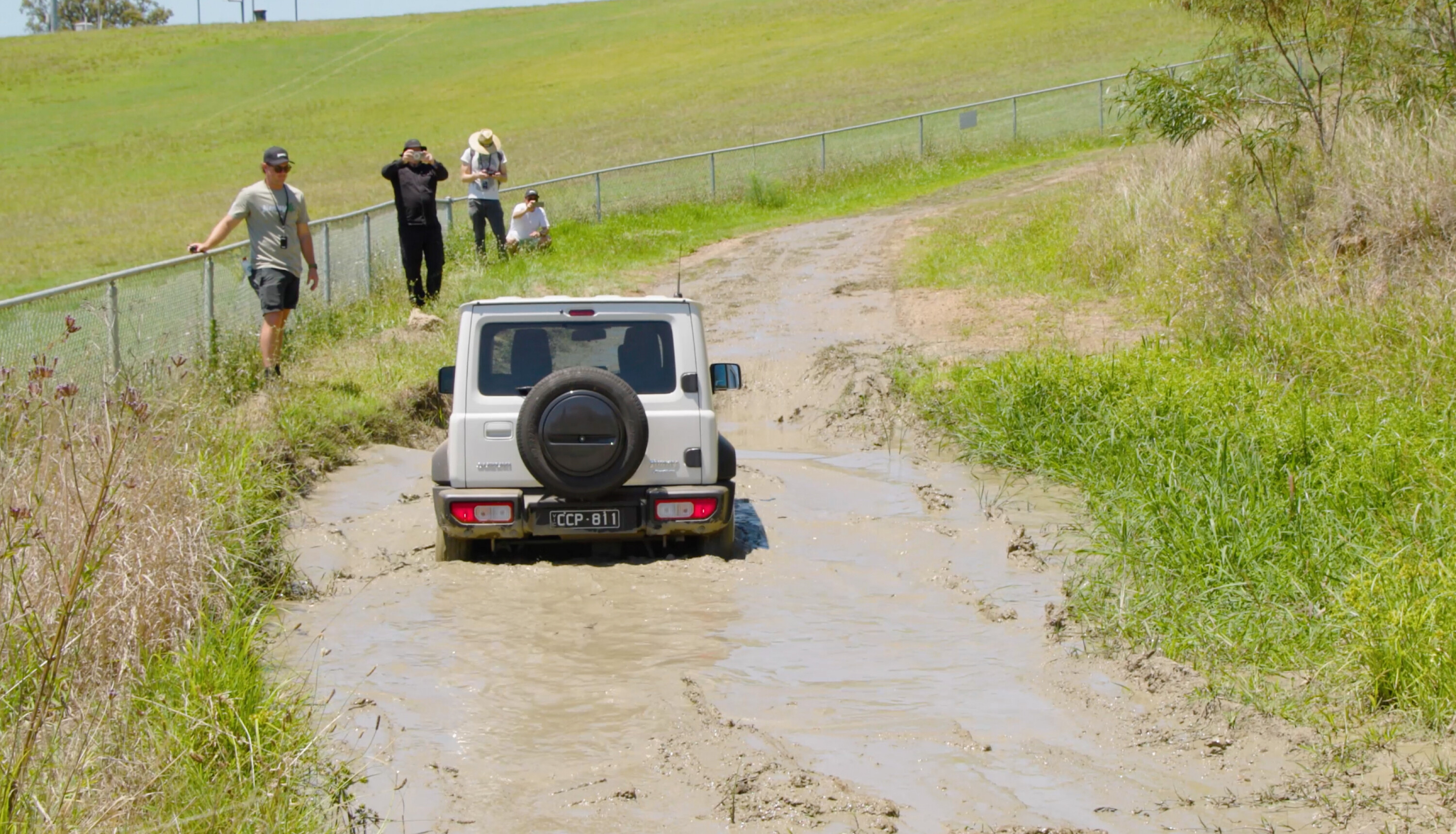
There’s a simple hill-descent control that works neatly, limiting the car to 5km/h in low range and braking individual wheels for controlled descending.
The Jimny XL is very easy to place thanks to a short bonnet, thin pillars, and a big glasshouse.
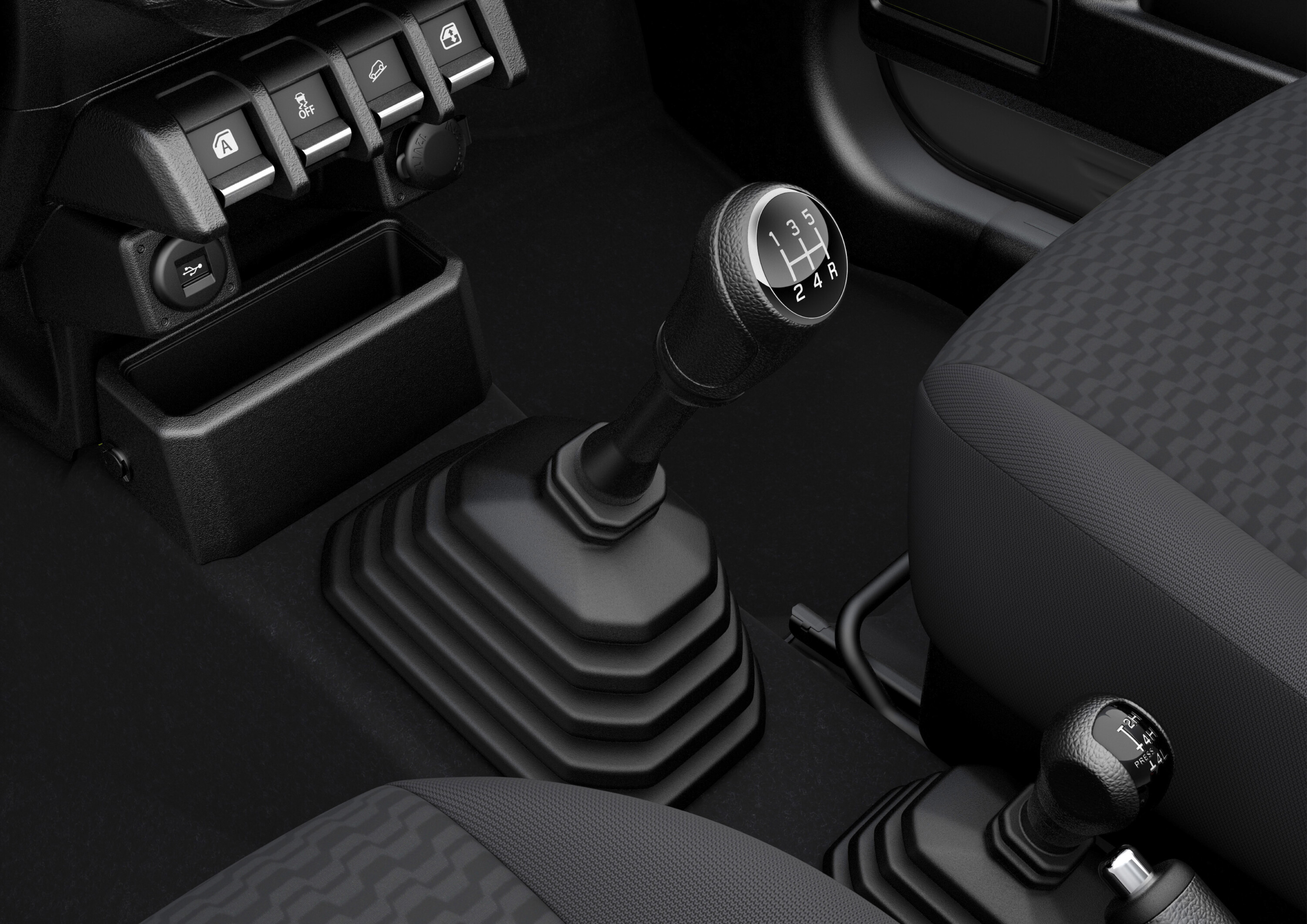
Both manual and automatic Jimny XLs default to rear-drive in two high (2H). Moving the stubby lever back engages four-wheel drive, and pushing down selects low-range for technical trails. Without a locking rear differential (and with peak torque at 4000rpm), the Jimny isn’t the most capable crawler.
The correct technique involves a little more speed, commitment and revs than a diesel HiLux, for example. And where off-roading can be tense and quiet in expensive machinery, the plucky Jimny loves to get stuck in.
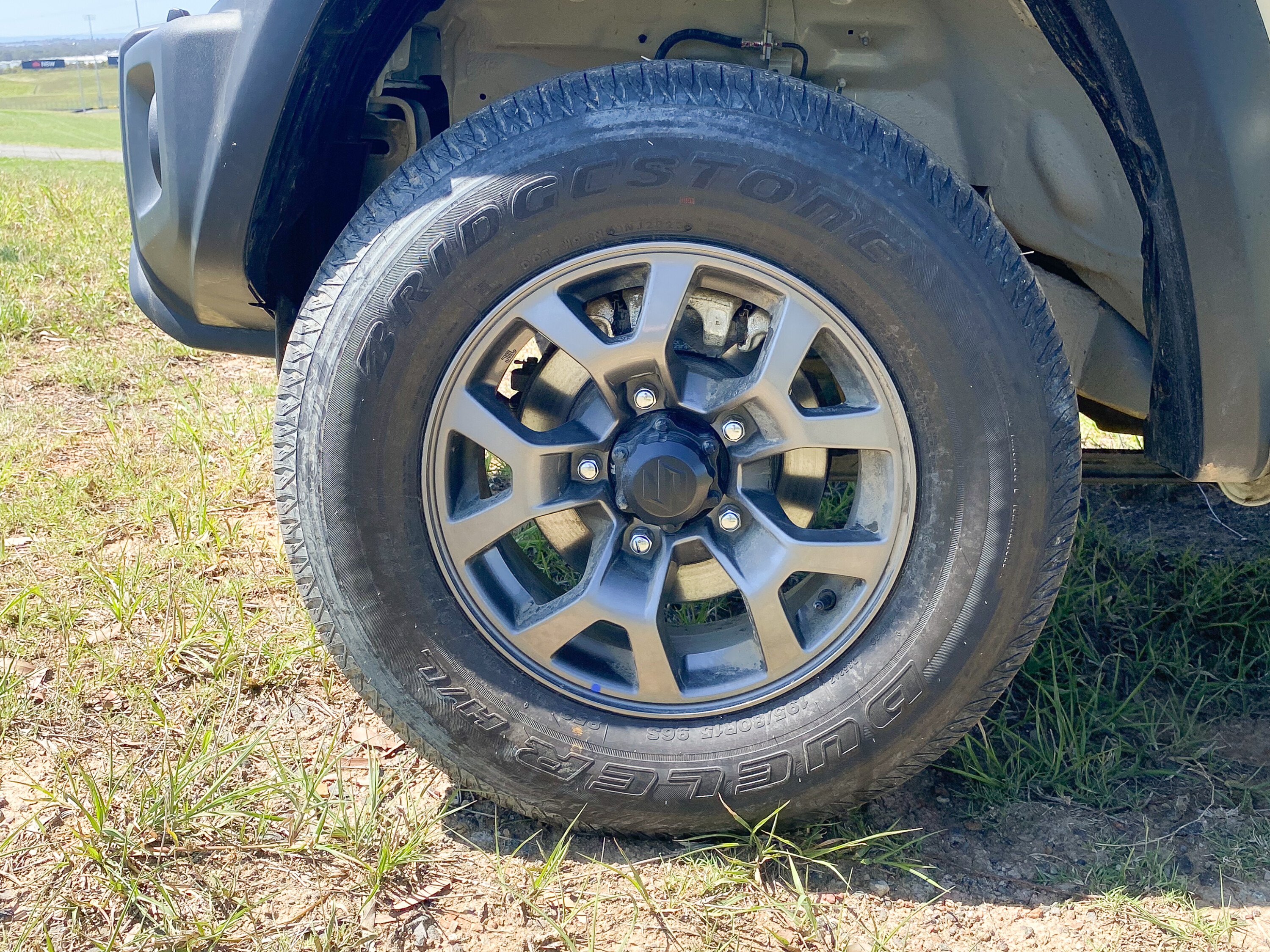
The Jimny XL wears 195/80R15 Bridgestone Dueler all-terrain tyres that are a good starting point for entry-level off-roading. For greater capability, you could fit more hardcore rubber in a bigger size. We’ve found 215/75 R15 or 235/75 R15 to work well on Jimnys.
How much fuel does it use?
In the ADR 81/02 combined consumption cycle, the Jimny XL manual is rated at 6.4L/100km and the automatic 6.9L/100km.
How safe is it?
The three-door Jimny scored three stars in 2018 ANCAP safety testing.
Adult and child occupant protection scores were decent (73 and 84 per cent), though lacklustre safety assist systems and vulnerable road user protection let the Jimny down.
The five-door Jimny XL has not been rated by ANCAP. It’s fitted with six airbags, stability control and frontal AEB.
Warranty and running costs
Suzuki covers the Jimny with a five-year/unlimited-kilometre warranty.
Servicing is due every 12 months or 15,000kms.
Over five years, the Jimny XL will cost $2265 in maintenance under Suzuki’s capped-price servicing program. That works out to $453 per year.
VERDICT
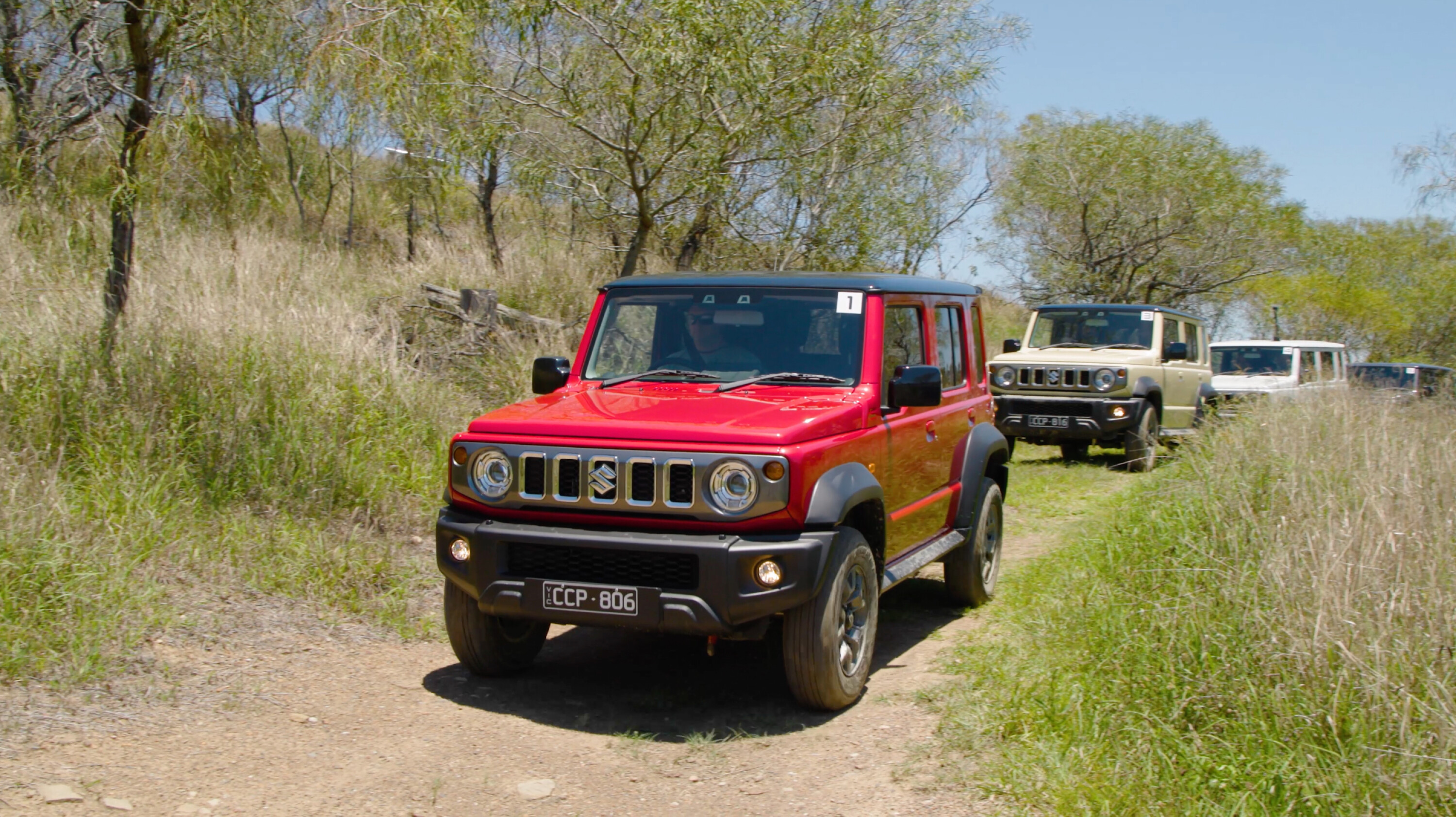
If you’re a Jimny die-hard looking for a glowing report of the new Jimny XL’s added cargo and people space then you should probably stop reading and head to your nearest Suzuki dealer. The wait’s already out to nine months.
But in five-door form, the Jimny is not a do-it-all family car. It can’t hold a candle to an equivalently priced small SUV in a swerve-and-avoid or overtaking manoeuvre and it lacks expected safety systems.
If you see the new Jimny XL as a quirky alternative to a Mazda CX-3 or Volkswagen T-Cross, make sure you test drive the Suzuki extensively before handing over any cash.
However, it is a superb vehicle for those who ‘get’ Jimnying. It’s an attainable and efficient 70 Series or Jeep Wrangler analogue; a Jimny done long. A win for enthusiasts looking for a more usable off-roader.
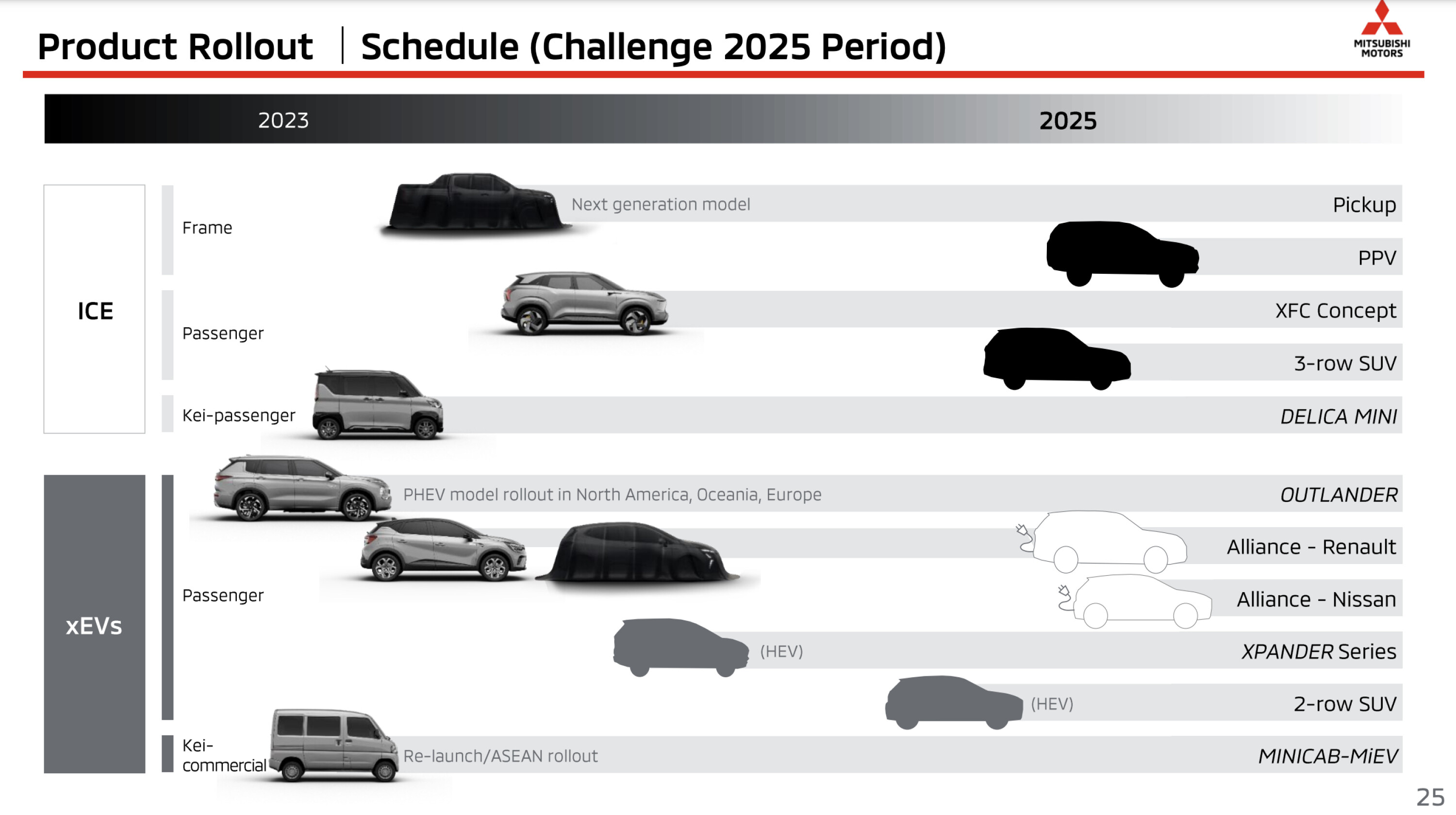
When Mitsubishi released its product rollout schedule for 2025 earlier this year, a number of large SUVs featured on the mid-term plan.
However, the vehicles remain undercover and are shrouded in mystery for the time being.
While one most certainly will be wearing a Pajero Sport nameplate, we asked Mitsubishi Motor Australia’s CEO and President Shaun Westcott for some clarity on whether we could see the return of the Pajero in the near future.
“I’m going to quote our global president and CEO in which he said the Pajero is a very, very valuable nameplate to Mitsubishi, and anything that carries the name Pajero needs to be really distinctive and a really great vehicle,” Westcott said.
“Our global platform over the next few years includes some large SUVs in there. What their nameplates will be, I can’t tell you, but there are definitely plans for us to have large SUVs in the future, and whether that’s a Pajero Sport or whether that’s a Pajero I can’t say as we sit here now.
“Other than to say that we do believe, in Australia that the demand for large SUVs is still pretty strong in this country. Our job is to supply the market with what it needs.”
The Pajero spent 38 years on sale in Australia, building a reputation as a reliable off-roader. Production of the vehicle – then in its fourth generation – ended in July 2020. Whether it returns to Australia remains to be seen.
August 7, 2023: Next Mitsubishi Pajero may not meet ADRs but Pajero Sport will
“If we can introduce Pajero, that is a wonderful dream for us!”, Takao Kato, president and CEO of Mitsubishi Motors, told 4X4 Australia.
A large monocoque SUV features in Mitsubishi’s mid-term plan and it may very well use the Pajero nameplate.
However, Mitsubishi executives cautioned that the non-frame SUV in the plans may not pass Australian regulations without major modification, not unlike the recently-revealed XFC small SUV concept.
Should we make something like the Pajero Sport or more like the Pajero?
“For the non-frame SUV, at the moment we don’t have a plan to introduce it to Australia”, Kato-san said.
He added that “it might be a bit difficult to fit into the Australian regulations”. Also in the plan is a ‘PPV’ – a pick-up based passenger vehicle – which is very much on the cards for us.
“If we make the PPV – that is a Pajero Sport-type vehicle – of course, I would like to bring this to Australia as a successor to the Pajero Sport. It depends on the product concept, but it could be also [called] Pajero. So right now, we are thinking about what kind of vehicle we should make with [the Triton’s] frame.
“Should we make something like the Pajero Sport or more like the Pajero? If we can achieve something like [Pajero] it would be really wonderful. It will require very high performance though, so I’m not sure if we can achieve that, or not”, added Kato-san, promising there’s more to come.
Our original story, below, continues unchanged.
April 2023: Pajero is ‘our brand’ and next-gen 4WD won’t be a Nissan Patrol clone
Koichi Namiki, general manager product strategy division expressed a strong personal interest in an all-new new Pajero at Mitsubishi Motor’s Tokyo headquarters.
“In my mind [new Pajero] is a high possibility! But, as a company, we have to decide on timings and priority very carefully, because as you know, the world is changing very fast. And electrification is one of the very important priorities,” Namiki-san told Wheels.
The fourth-gen Pajero’s death knell came in July 2020 when Mitsubishi announced the closure of its Sakahogi plant in March 2021, marking the end of the Pajero’s 38-year tenure in our market.
A vehicle like Pajero? That’s our brand
The monocoque off-roader was rumoured for a reboot as a platform-share vehicle with the Nissan Pathfinder, but with the passionate way Namiki talks of Pajero, that was never a real possibility.
“The alliance, of course, gives us a lot of opportunity – one very good example is Outlander – as you may see that while we consider that’s a big success in terms of vehicle quality, partially because we had access to Alliance technologies”, said Namiki.
“But a vehicle like Pajero? That’s our brand. So if we do it, we want to control everything.”
Namiki did concede that, were one to be developed, a new Pajero would lean on systems, components, and parts from within the Nissan-Renault-Mitsubishi Alliance, but that Mitsubishi would take lead on the project.
And while it might seem odd to bring a fuel-guzzling off-roader into a world with ever-tightening emissions standards, Mitsubishi wouldn’t be the only one.
Toyota’s 300 Series Land Cruiser is experiencing huge demand and success following its 2021 market launch. The V8-powered Nissan Patrol experienced its biggest Australian sales month ever last year, and a next-gen Y63 is rumoured to debut in 2024.
Mitsubishi also continues to develop frame vehicles, with an all-new Triton gearing up for release next year to be followed by a related Pajero Sport in 2025. Both will be ready for electrification.
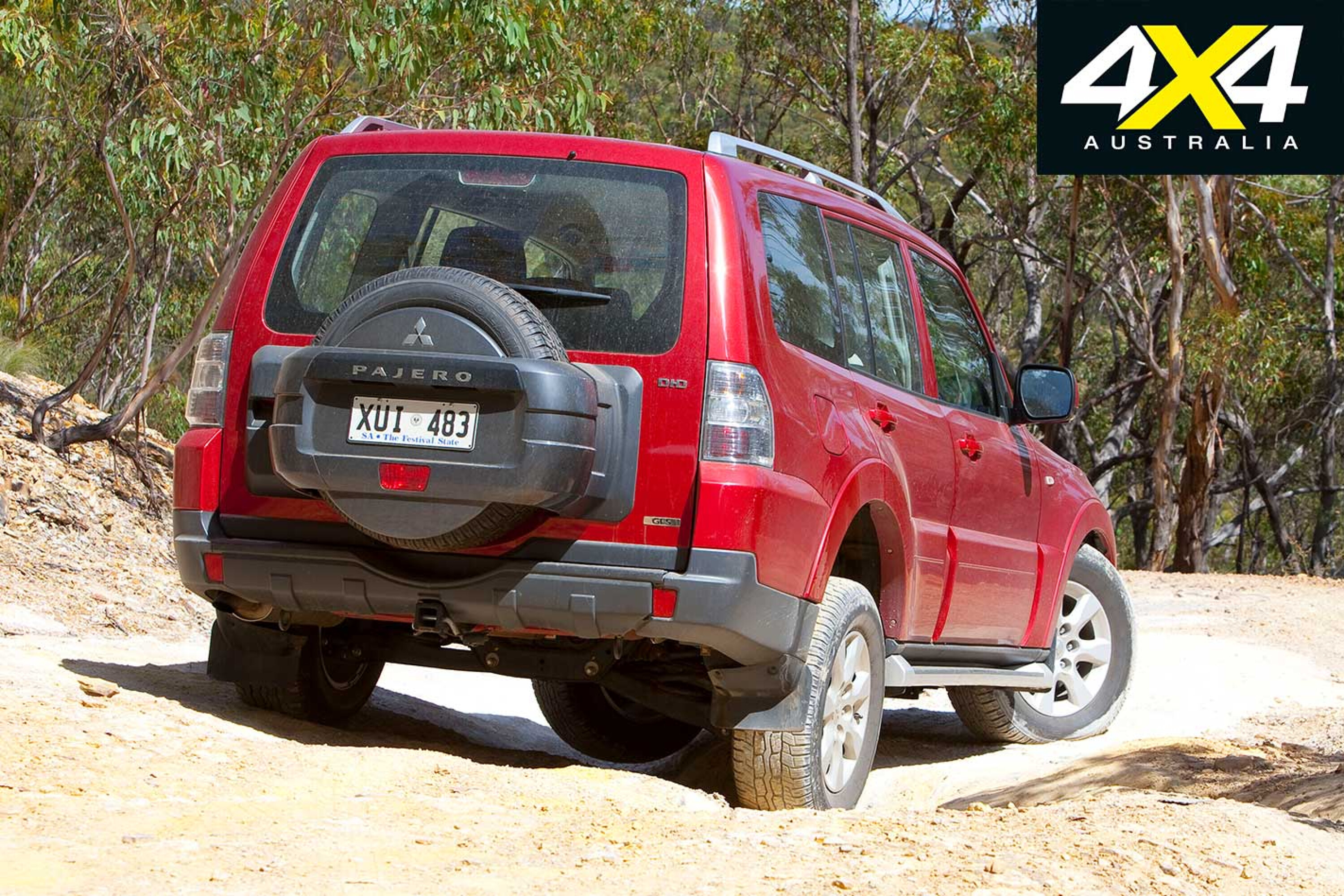
Triton and Pajero Sport have the benefit of being successful across many markets in their respective segments, so it’s easy to see why Mitsubishi is investing in new models. The Pajero will be a more tricky product to push over the line, as Mitsubishi invests in BEV and Ralliart programs.
It’s far from being confirmed, but there’s a clear desire at Mitsubishi to bring Pajero back.
Suzuki has confirmed Jimny XL five-door pricing and features for Australia.
The single variant starts at $34,990 before on-road costs for manual and $36,490 for automatic transmission variants. A premium of $3000 over the regular Jimny.
Like the three-door, the 340mm longer model features selectable four-wheel-drive and four seats, while promising excellent off-road capability.
Customer deliveries begin imminently for those with pre-orders in, and buyers who order the Jimny XL today will be looking at a six-nine month wait.
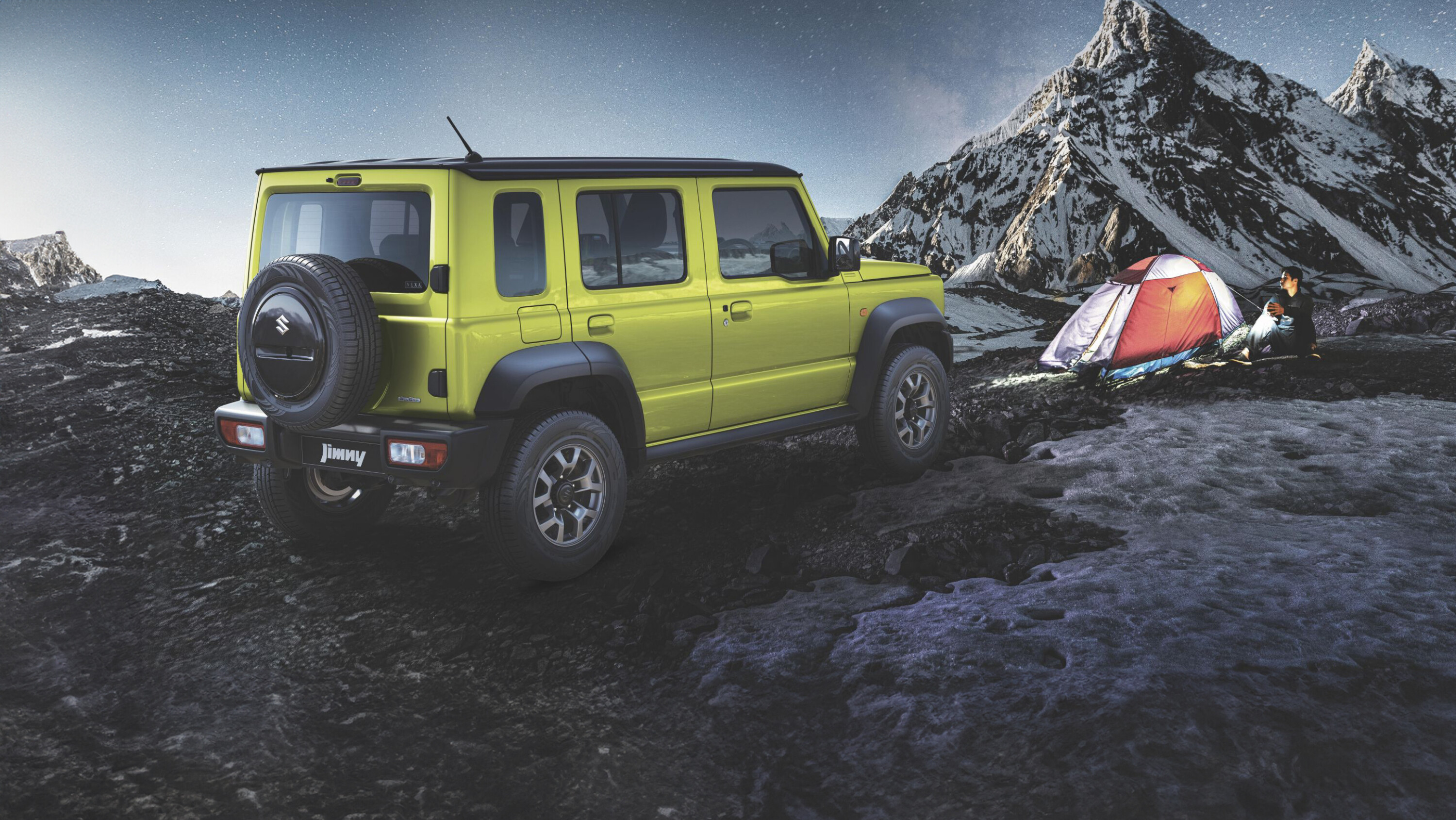
Boot space climbs from 85L to 211L, while weight is up by a mere 90kg (1185kg manual) for the Indian-built XL.
Other changes include a 9.0-inch touchscreen with wireless Apple CarPlay and Android Auto capability. For safety, there’s also adaptive cruise control fitted to four-speed automatic variants.
Aside from those minor changes, the Jimny XL mirrors the specification of GXL (now known simply as the ‘Jimny’) trim.
Our original story, below, continues unchanged
November: Jimny XL name confirmed, pricing due soon
The Suzuki Jimny five-door launches officially next month and will live up to its extra-large status with the ‘XL’ badge.
Snapshot
- Official release locked-in for early December
- 340mm increase to both length and wheelbase
- 1.5L four-cylinder engine and transmission options same as three-door
Suzuki dealers are hoping to receive demo versions of the longer-wheelbase Jimny by the end of November, ahead of the Jimny XL’s media launch in early December.
Pricing and specification details are expected to be revealed around the 5th December media drive day for the highly anticipated model that was unveiled at the start of 2023.
Extra interior space is created by a 340mm extension to the wheelbase, which accounts for the entire increase in vehicle length.
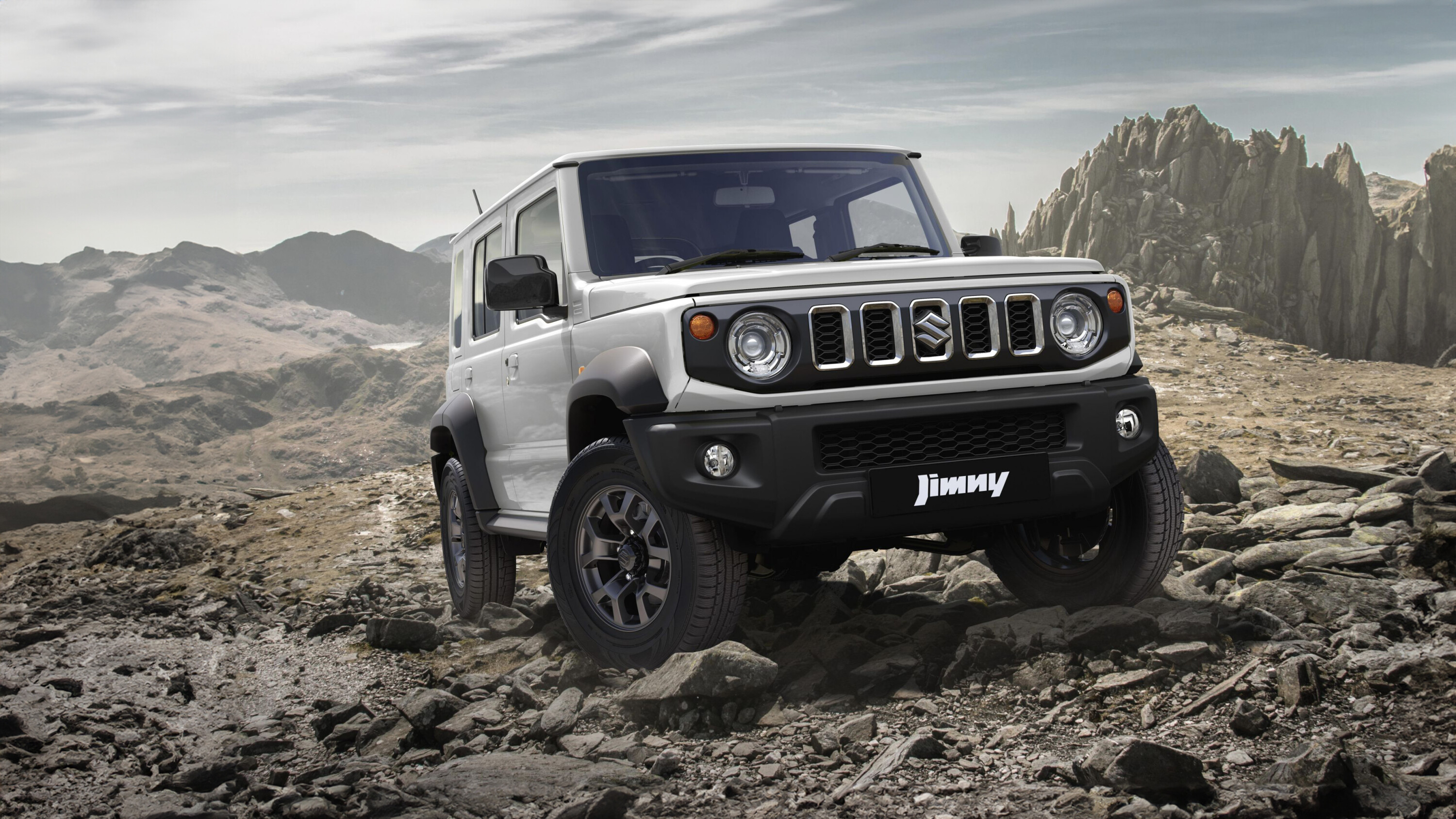
According to specs of the India version where the five-door is built, boot space behind the second-row seats increases from the Japan-built three-door’s tiny 85 litres to a more useable 208 litres.
The Jimny XL will share the majority of its components and features with the three-door Jimny – including 1.5-litre petrol engine and part-time four-wheel-drive system.
The kerb weight will increase by about 100kg for either manual or automatic models.
For off-road enthusiasts, the five-door’s approach and departure angles are similar but its ramp-over is shallower – 28 degrees to the three-door’s 24 degrees.
The Jimny XL remains a four-seater as with its shorter sibling.
4X4 Australia will report on official pricing and specs for Australian versions as soon as they’re confirmed.
Our original story, below, continues unchanged.
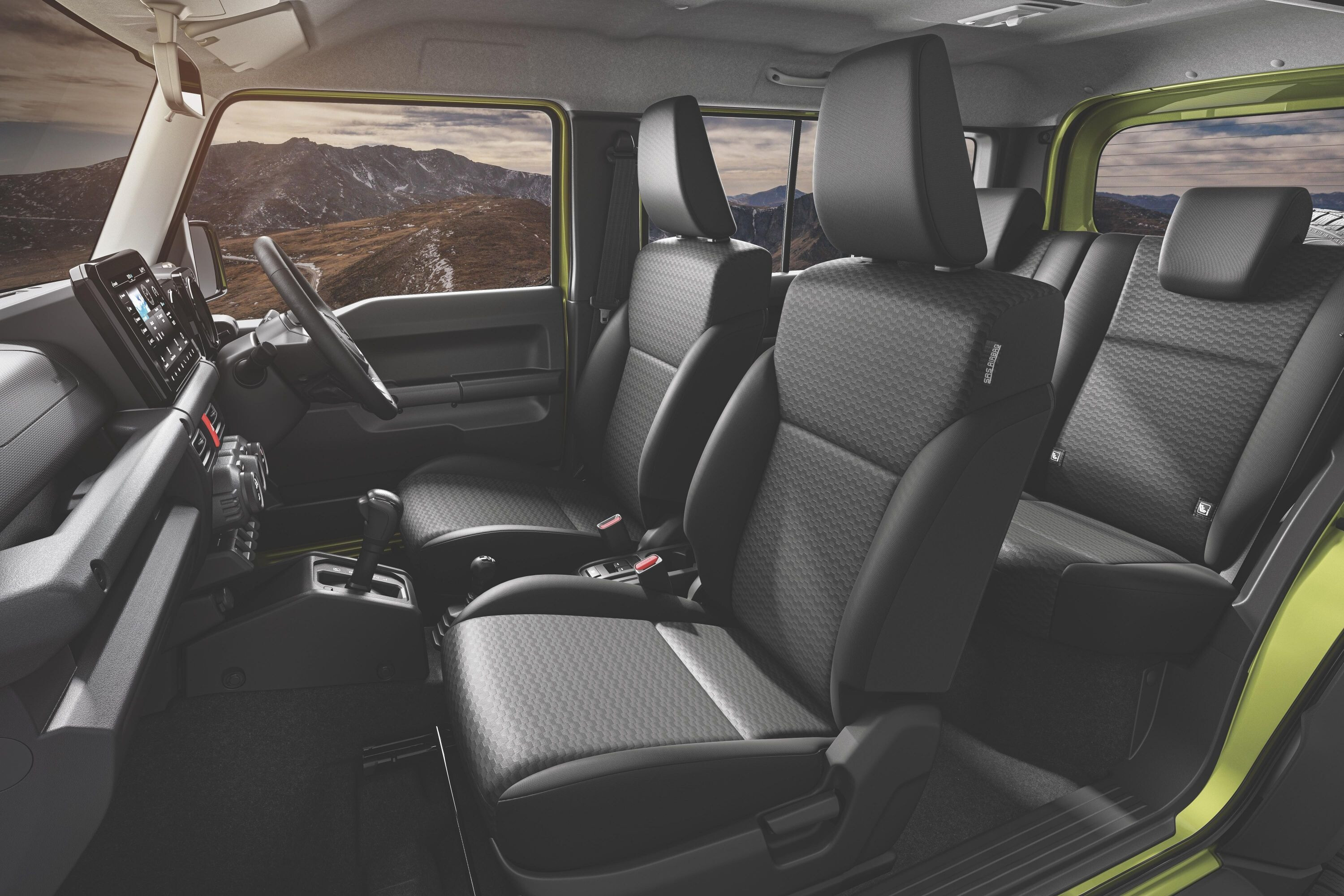
January 2023: New Jimny 5-door revealed
Suzuki has pulled the wraps off its much anticipated 505mm longer five-door Jimny off-roader at the 2023 Delhi Auto Expo.
Snapshot
- Coming to Aus Q4 2023!
- 1.5L four-cylinder engine and transmission options retained
- 505mm increase in length, 340mm longer wheelbase
- Export and Australian arrival on the cards
After months of spy photos emerging from India, the formal unveiling comes as a pleasant surprise. Even more so that the 505mm longer Jimny will hit Aussie dealerships in Q4 this year.
“We’ve been knocking back hundreds of orders and customers for customers that have been speculating that a five door will be available”, General Manager Suzuki vehicles, Michael Pachota told 4X4 Australia.
“Now that we’ve confirmed it for Australia, we’re taking orders. First in, best dressed.”
The Jimny five-door will be constructed in India and exported to Latin America, Africa and Australia from there.
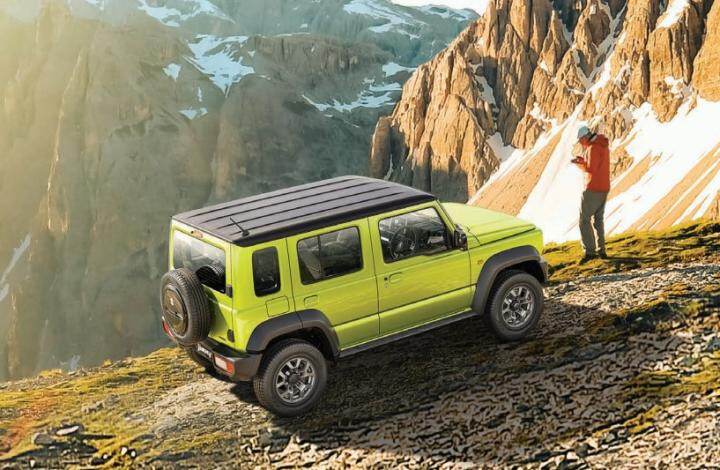
How much bigger is the five-door Jimny?
There’s little need to worry that a five-door Jimny won’t fit into your garage, it’s still less than four metres.
Measuring 3985mm long, 1645mm wide and 1720mm tall, the stretched Jimny five-door rides on a generous 2590mm wheelbase – that’s comparable to a small SUV such as a Hyundai Kona.
Compared to a three-door Jimny, it’s 505mm longer overall with a 340mm longer wheelbase. Significant increases, and some that may indeed harm the Jimny’s off-road chops despite the five-door’s 210mm ground clearance being unchanged.
Upgrade your Jimny
-
Bullbars

-
Underbody Protection
-
4X4 Tyres
-
Canopies
-
Roof Racks
-
Storage
The Jimny will also soldier on with its 1.5-litre petrol four-cylinder engine that develops 75kW of power and 130Nm of torque. A four-speed automatic or five-speed manual will be available.
Further details are very hard to come by, though it appears the five-door scores second-row curtain airbags, too. Pricing for the new five-dorr Jimny will be confirmed closer to its Q4 2023 local launch.
Our original story, below, continues unchanged
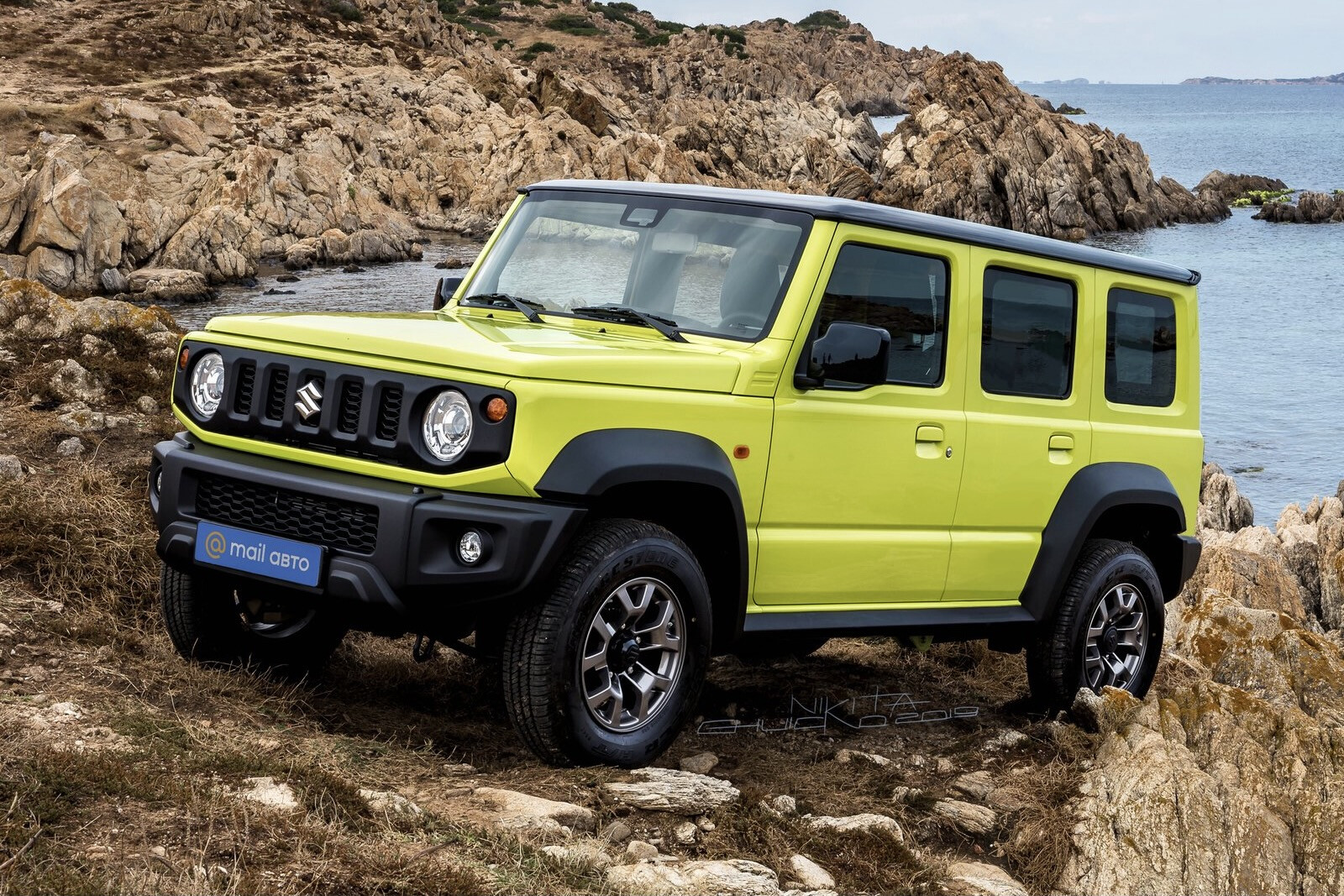
December 2022: Five-door Jimny spied without camouflage
Well, we’ve heard rumours, we’ve seen images of it under covers and now we can finally see what the 2023 Suzuki Jimny 5-door Long model will look like in final production form.
This image appeared today on Autocar India, and you can find the original article here – but the original source, an Instagram post, appears to have been removed.
According to Autocar India, the 5-door Jimny is due for its global debut at the Auto Expo 2023 next month. The vehicle was spotted somewhere in north India, rumoured to be undergoing final rounds of testing before release.
What we know so far
Based on the popular JB74 Suzuki Jimny, the five-door Jimny is reported to have a length of 3850mm – offering a rumoured increase of 300mm to the wheelbase.
This allows space for two additional doors, providing a more comfortable seating experience for occupants, if you can call a Jimny comfortable.
This additional length is also a boon for recreational users, offering more space inside to store camping gear and so on, especially with the seats folded flat.
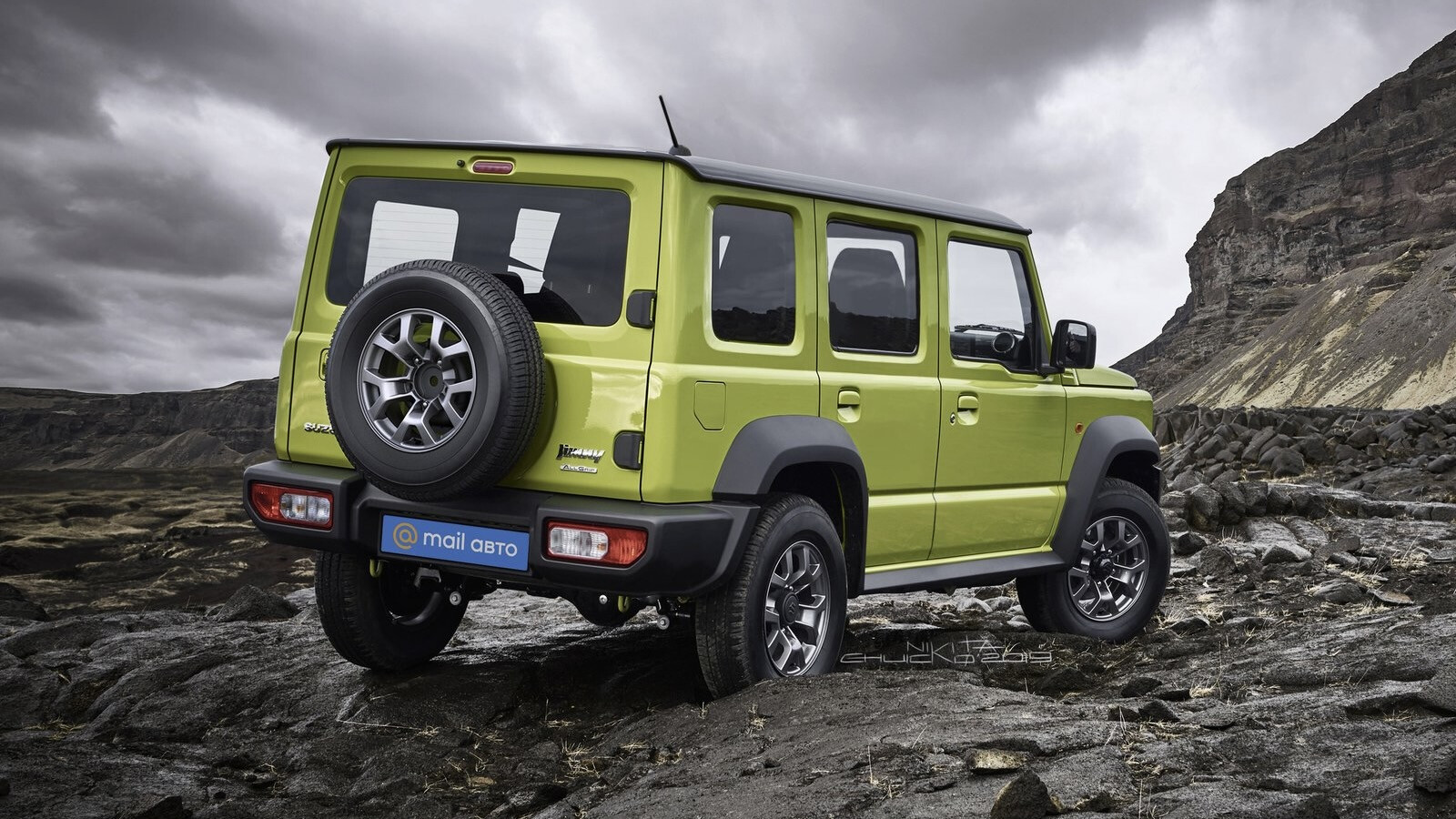
It’s expected the five-door Suzuki Jimny will retain the K15B 1.5L naturally-aspirated four-cylinder petrol engine, unchanged from the current Jimny.
The same applies to the transmissions on offer, a five-speed manual and 4-speed automatic transmission will also carry over.
Personally, I would have loved to see a turbocharged engine offered for a bit more poke to help carry the additional weight of the five-door model, but I’m not surprised either to hear the same engine and transmission combo will remain. Fingers crossed we see something more powerful in coming years, but for now it seems like the 1.5L engine is it.
Autocar India reports that the production of the Jimny five-door is expected to begin next year, with an Indian-market launch due in mid-2023.

Will the 5-door Jimny be sold in Australia?
Australian delivery has not been confirmed, however, Suzuki’s CEO Michael Pachota said this earlier in 2022:
“The moment it’s available for our country, I will place as many orders as I can. When anything starts with the word Jimny, it just ends in sales.
“I can tell you there’s a lot of speculation out there, but can I confirm there’s one coming at all and or to Australia? No, I can’t. It’s an unbelievable product, we are definitely going to have our hands up for it,” he said.
Stay tuned for further updates as they come, and It’s safe to say we are looking forward to getting our hands on one for a proper off-road test.
Will that extra wheelbase be a hindrance off-road? Will the 1.5L engine have enough grunt to move the larger 5-door Jimny? And how much will it all cost? These are the questions we’re keen to answer.
4X4 Australia's project builds
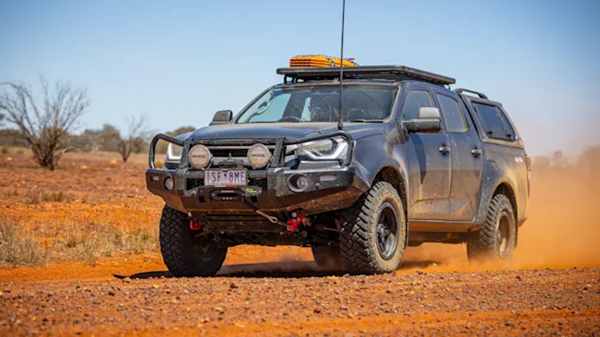
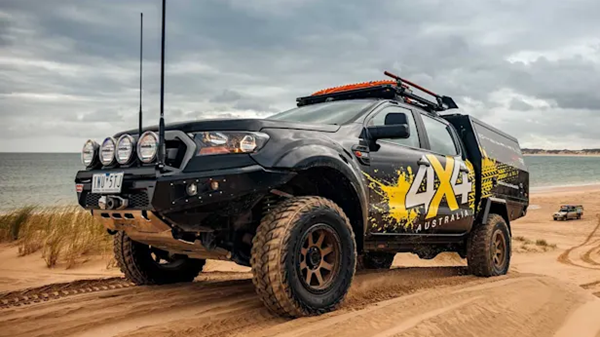
When it comes to setting up your four-wheel drive for Towing or Touring, Pedders Suspension & Brakes are the experts and can specify your vehicle with a total undercar solution designed to enhance your vehicle’s handling and braking performance.
Loading up your vehicle with heavy duty accessories like a bulbar, winch, canopy, underbody protection, plus all of your cargo can leave your four-wheel drive’s suspension struggling to keep up with the additional load. Or worse, you could exceed your vehicle’s Gross Vehicle Mass rating, resulting in fines and possible voidance of insurance.
This is where a tailored Pedders GVM+ Upgrade can significantly boost your four-wheel drive’s Payload capacity as well as improve it’s handling performance. Pedders GVM+ Upgrade kits are specially engineered to restore handling balance to heavily-loaded vehicles, as well as enhance off-road performance.
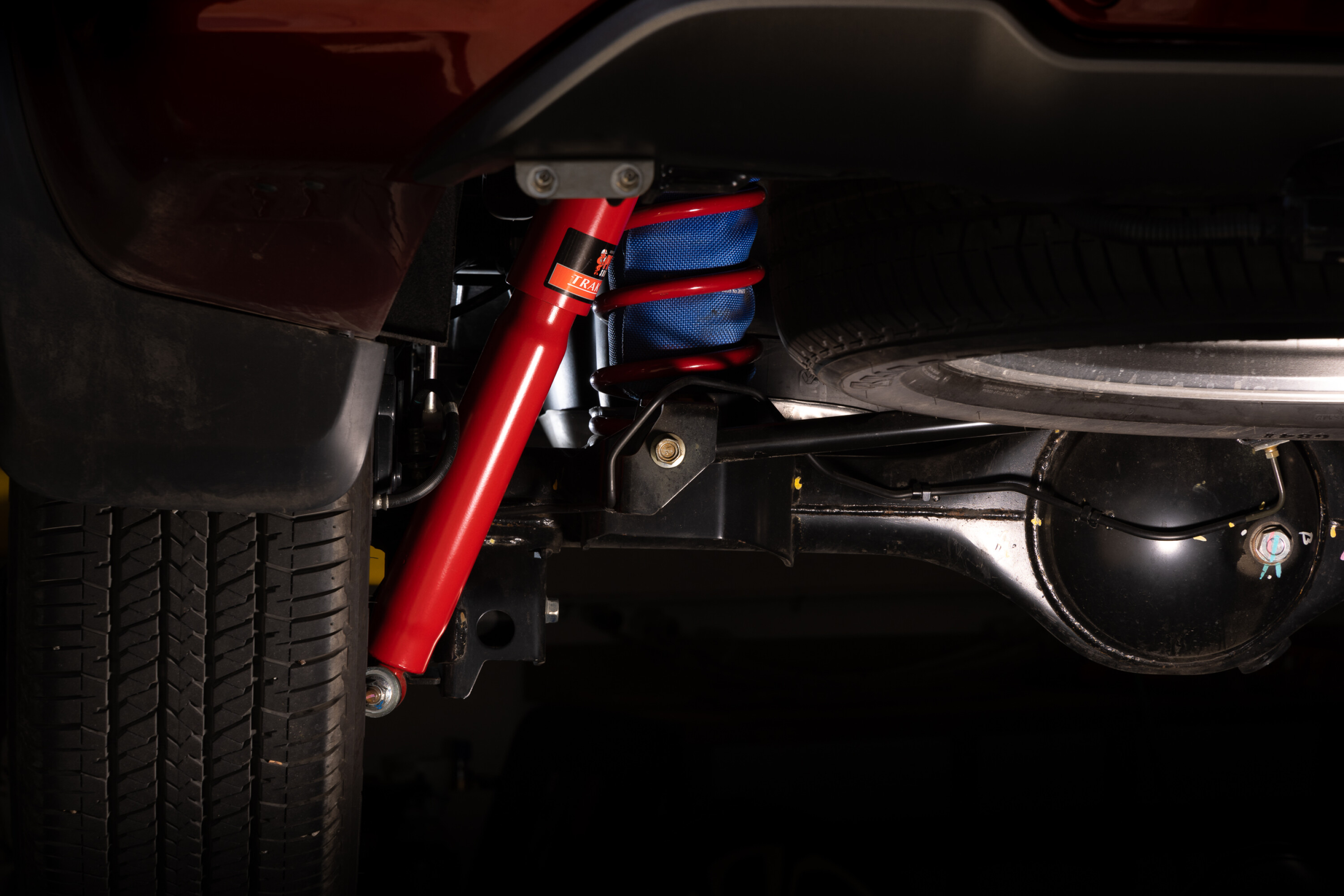
Pedders engineer their GVM kits to meet all Federal Government requirements, so they are fully legal and compliant Australia-wide.
They also offer multiple spring options depending on the vehicle and load requirements, meaning they don’t offer a one-size fits all solution. When you opt for a Pedders GVM+ Upgrade, their team will tailor a spring package to suit you and your four-wheel drive, allowing it to sit level while maintaining ride comfort.
Because Pedders understands that many vehicles equipped with GVM+ Upgrades will be used for touring or four-wheel driving, each Pedders GVM kit is fitted with the brand’s premium Foam Cell Shock Absorber. This not only helps with ride comfort on rough terrain, but it enhances off-road performance.
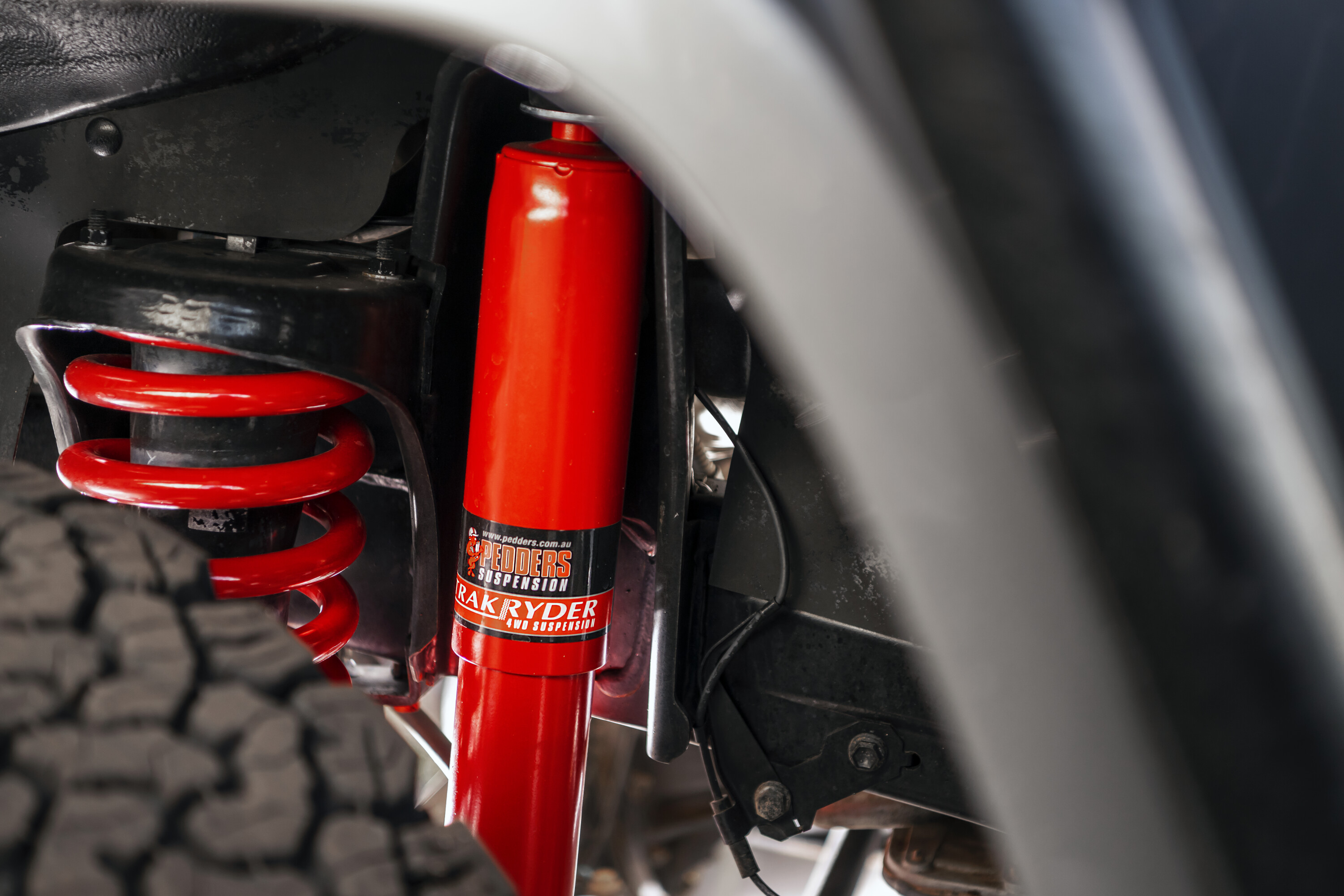
Pedders Foam Cell Shock Absorbers are designed to eliminate any mixing of the shock absorber oil with air, meaning bubbles cannot form within the shock, allowing the shock absorber to maintain optimal damping control even over rough corrugations.
Understandably not every vehicle needs a GVM+ Upgrade, particularly if you’re only towing occasionally, which is why Pedders also offers a range of suspension lift kits, levelling springs, and air bag suspension to suit many popular 4x4s.
Loading up your four-wheel drive with heavy duty accessories can also put a serious strain on your vehicle’s braking system. Hot brakes and a soft pedal are a big warning sign that you need an upgrade.
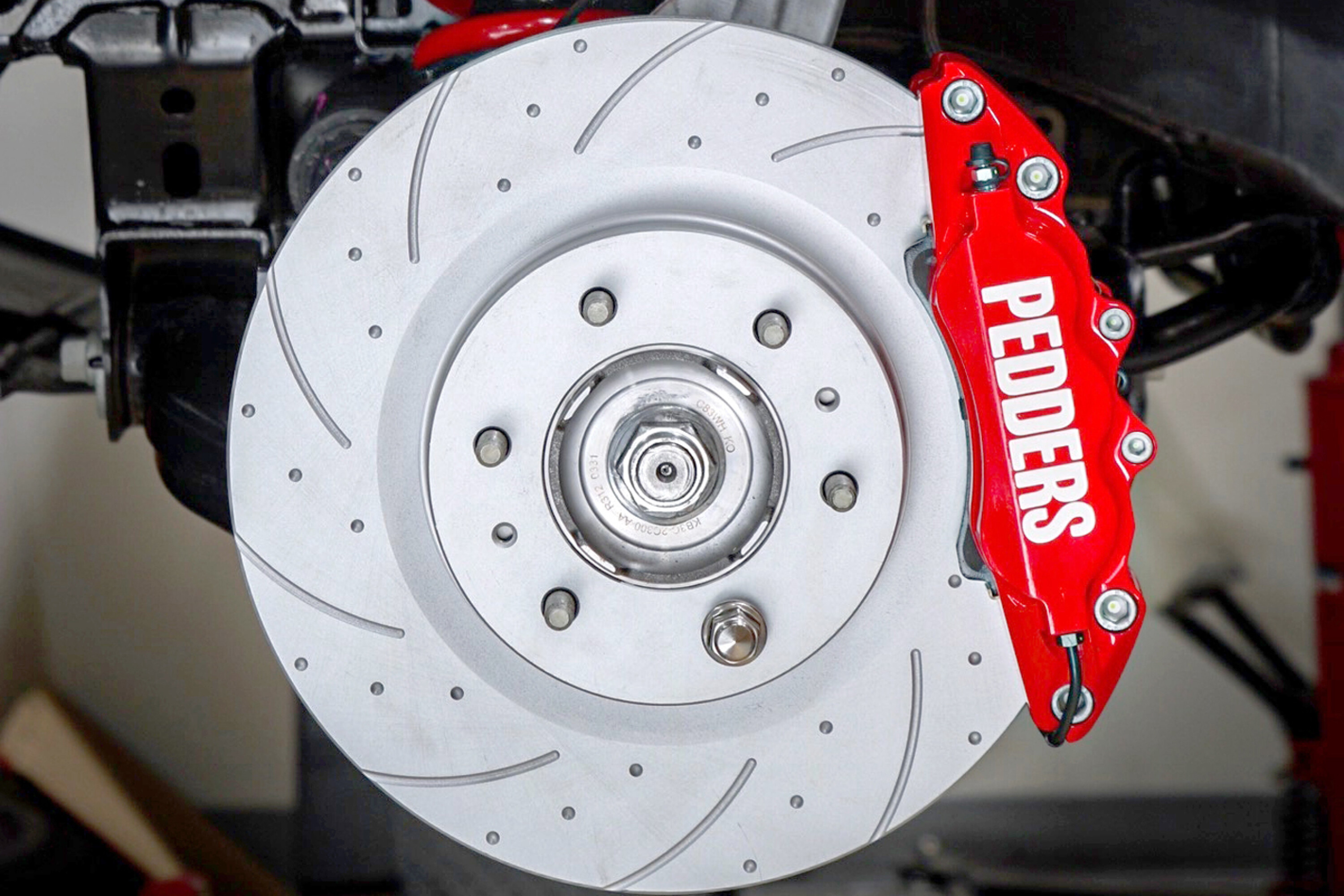
Pedders offer an impressive range of braking products suited for towing and touring vehicles, including performance rotors and pads and full conversion kits.
Pedders slotted brake rotors are more resistant to heat fade than original equipment components, thanks to the specially designed curved slot design which improves cooling efficiency.
While Pedders Kevlar Ceramic brake pads are formulated to enhance your vehicle’s braking system by providing more consistent performance during repeated stops. These rotors and pads are available from Pedders for many popular 4×4 vehicles.
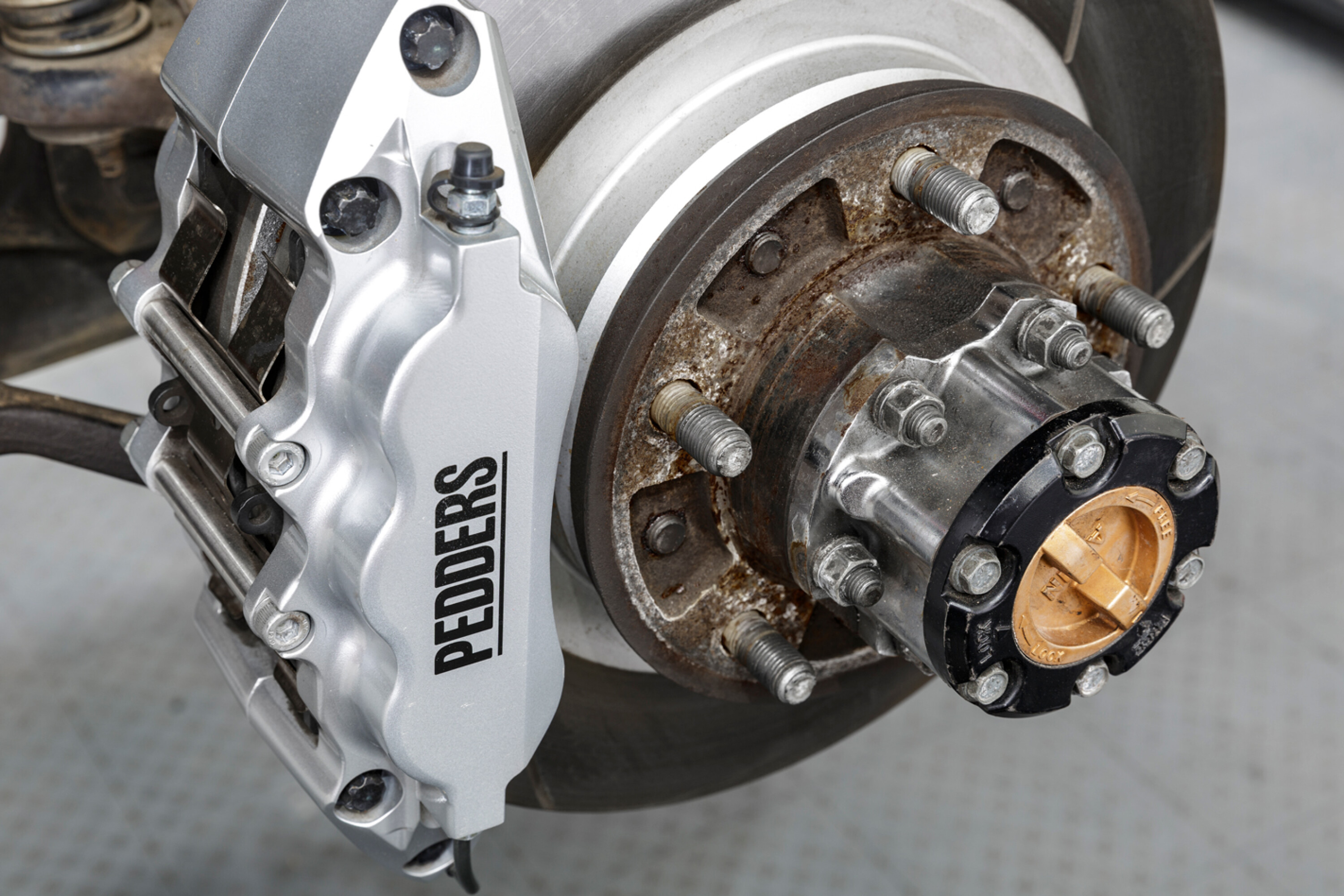
If your vehicle has factory rear drum brakes, then consider upgrading to a Pedders Rear Disc Brake Conversion kit.
This kit from Pedders completely transforms your rear drums to more efficient discs and calipers, providing a serious boost in braking performance and more consistent stopping power, which is ideal for vehicles that tow or carry heavy loads.
Beyond this, Pedders also offer their Big Brake Conversion kit which includes high performance calipers featuring multi-piston design, enlarged brake rotors, braided brake lines, and Kevlar Ceramic performance brake pads.
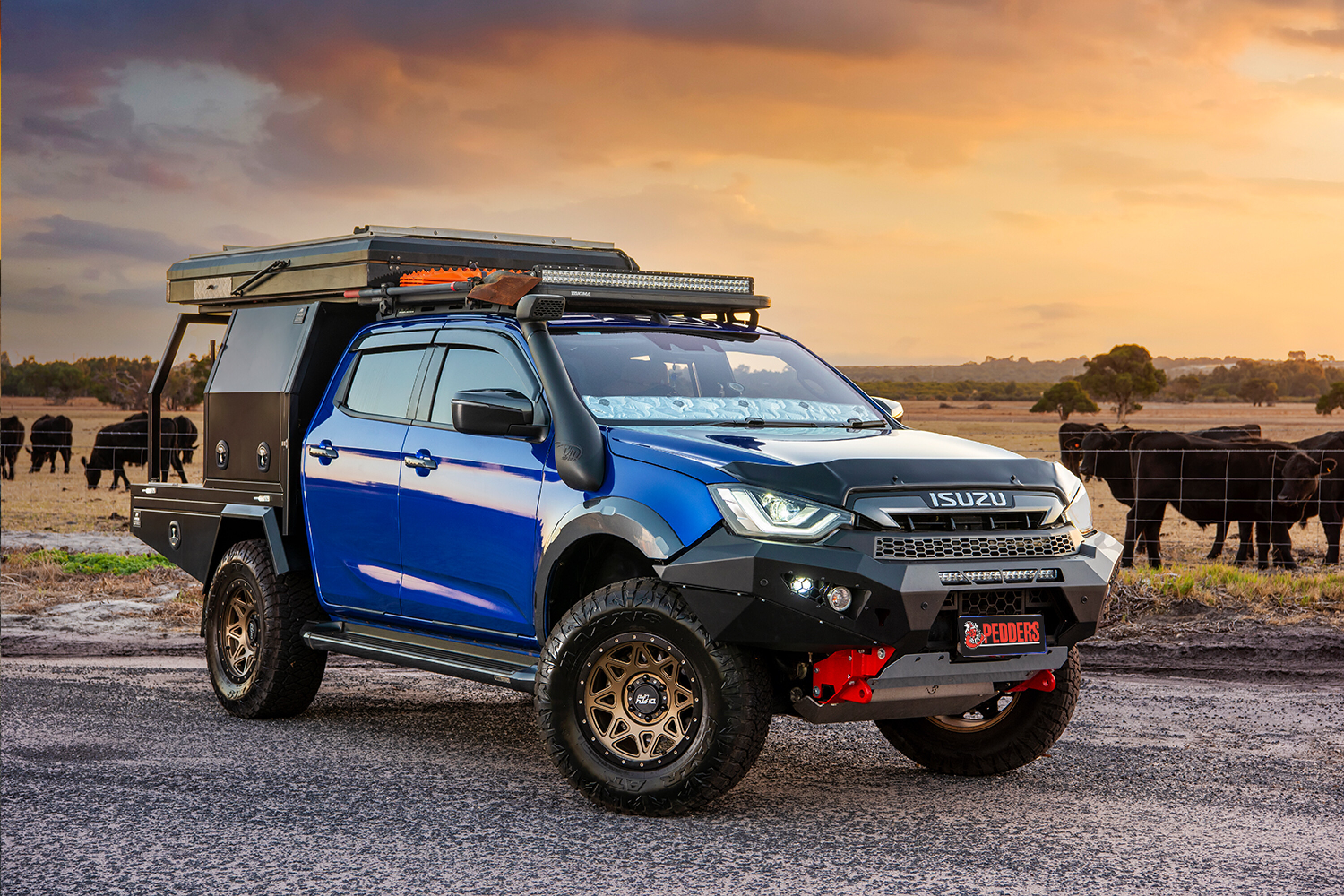
Pedders Big Brake Kits have been proven to reduce stopping distance significantly compared to factory brakes and are available for select 4×4 models including Toyota HiLux & LandCruiser, Ford Ranger, Isuzu D-Max and more.
So if you’re loading up your rig for work, touring Australia, or towing a big caravan, check out Pedders Suspension & Brakes and enhance your vehicle’s handling and braking performance for a Better Journey on the road.
Snapshot
- Ford Ranger best-selling vehicle in November
- Less than 400 units separate Ranger and HiLux year to date
- A Ford model been Australia’s best-selling model since mid 1990s
The Ford Ranger beat its Toyota HiLux nemesis by 400 units in November’s sales as it closes in on its target of becoming Australia’s most popular vehicle.
Ford Australia registered 6301 sales of its locally developed ute last month compared with 5901 for its rival that has been the country’s best-selling model for the past seven years.
The Ranger’s 4×4 variants continue to be its trump cards, with the HiLux maintaining an incredibly narrow year-to-date lead thanks to strong sales of its 4×2 models.
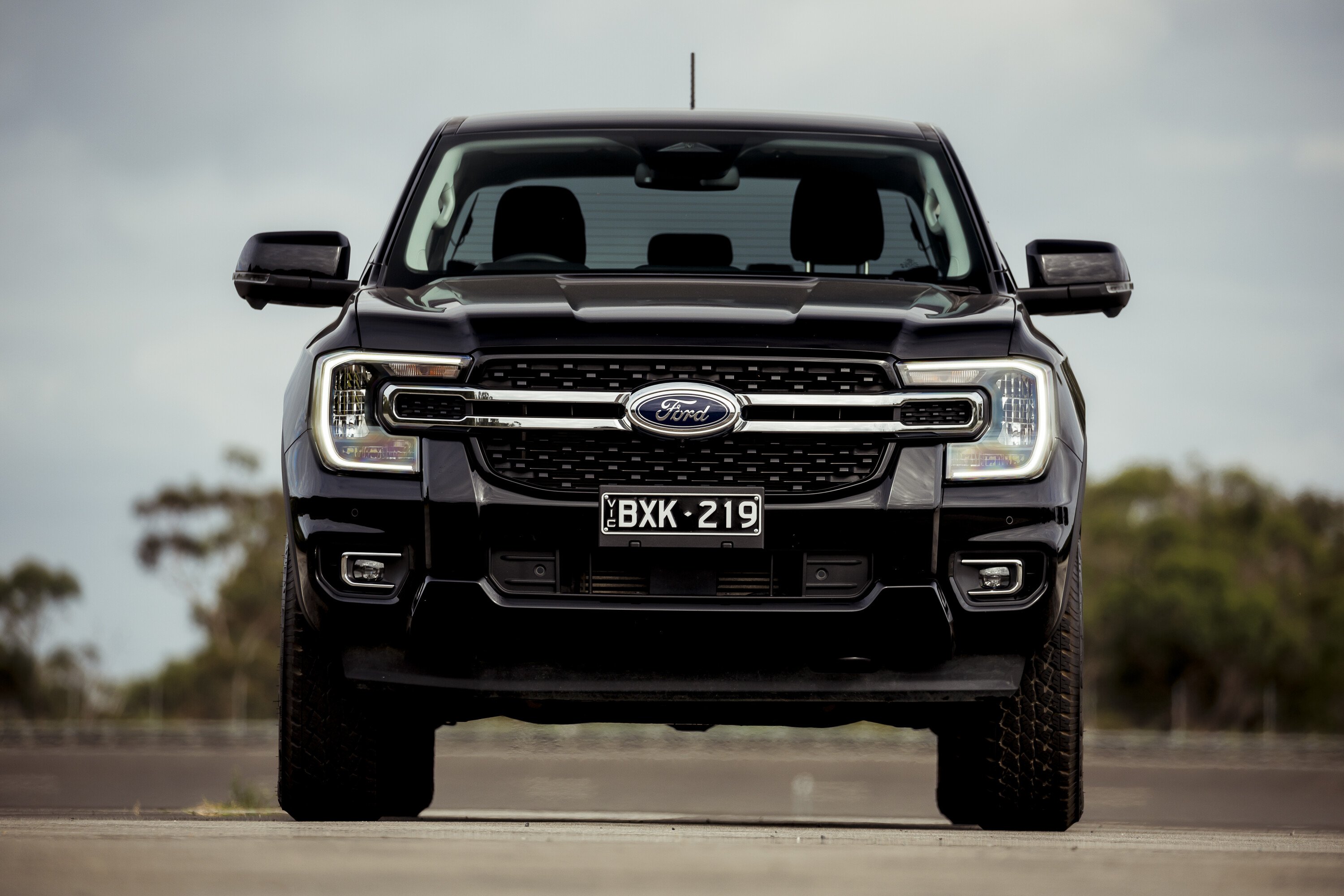
Ford sold just 301 4×2 Rangers in November compared with 6000 4×4 models. In contrast, there were 1058 and 4843 registrations for 4×2 and 4×4 HiLux models, respectively.
With just December remaining, the HiLux leads the Ranger by just 379 units – 55,968 versus 55,589.
The Ranger has been the new-car-sales bridesmaid since 2017. After running the HiLux close in 2021, it was thrashed last year by its rival.
Ford’s ute has the momentum, however, having beaten the HiLux for the last two months. Ranger sales are up 30 per cent – or 12,773 sales – on this time last year, compared with HiLux sales that are down seven per cent (or by 4152 sales).
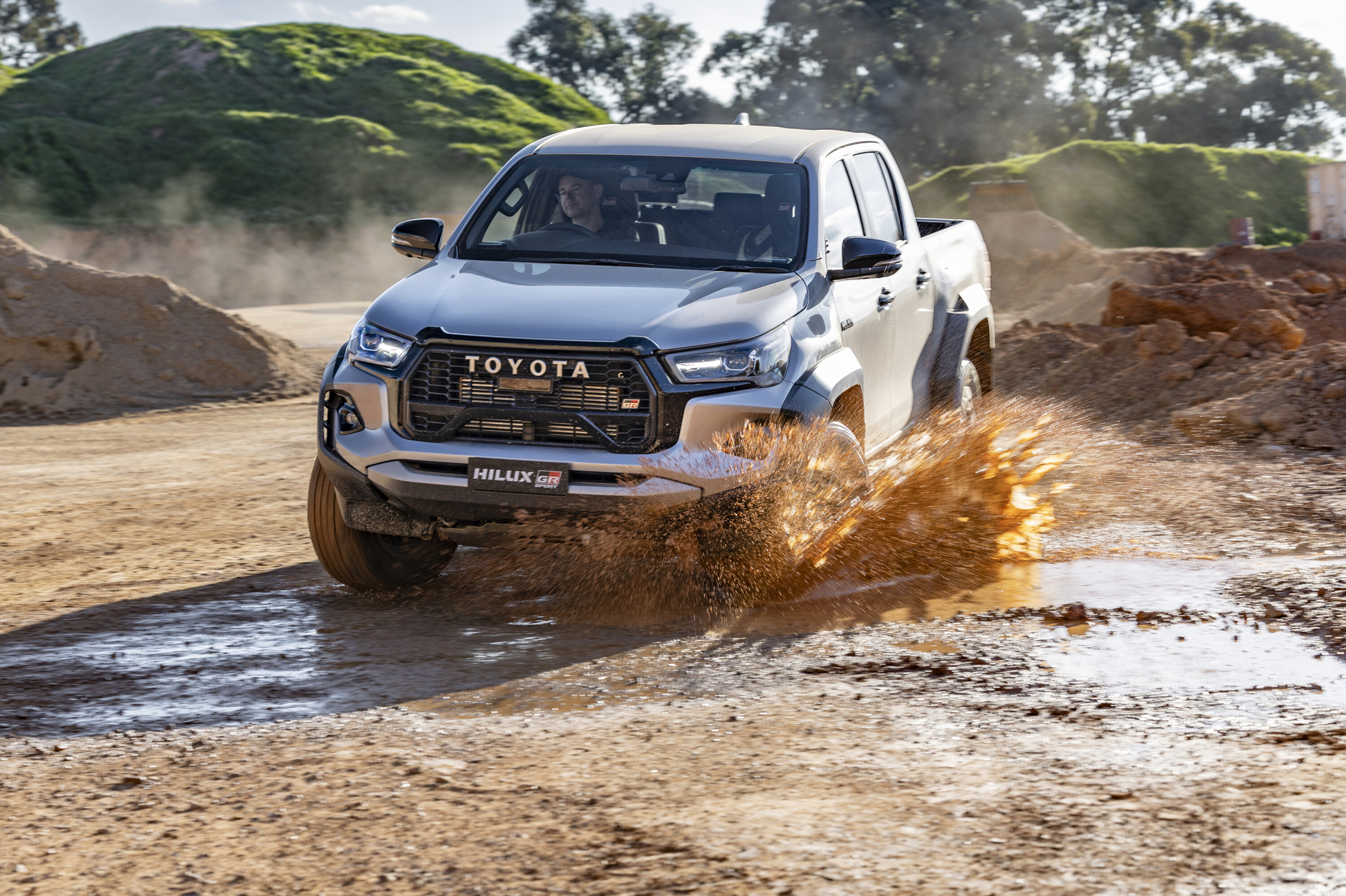
If it were to overtake the HiLux in December, it would be the first time a Ford has been Australia’s best-selling vehicle since the Falcon was No.1 in 1995.
The Ranger has the advantage of being the much newer vehicle, having launched in the second half of 2022 in latest-generation form. The current HiLux has been around since 2015, albeit with significant updates over the years including new variants such as the GR Sport (pictured above).
A new-generation HiLux isn’t expected until 2025.
Snapshot
- Multi-Terrain Select system, new infotainment and improved safety
- Mild-hybrid system confirmed for SR5 and Rogue dual-cab variants, optional for SR
- Due to arrive in Australia in the first half of 2024
December 5: New infotainment, improved safety and Multi-Terrain Select system
Further details have emerged about the upcoming HiLux Hybrid 48V, with the electrified ‘Lux to receive a new Multi-Terrain Select system, new infotainment system, and improved safety.
As revealed back in June, Toyota will add an electrified powertrain to its HiLux line-up, powering SR5 and Rogue 4×4 dual-cabs and optional for SR 4×4 dual-cab variants. Toyota’s venerable 2.8-litre diesel engine will remain, but it will now be strengthened by the hybrid 48V system.
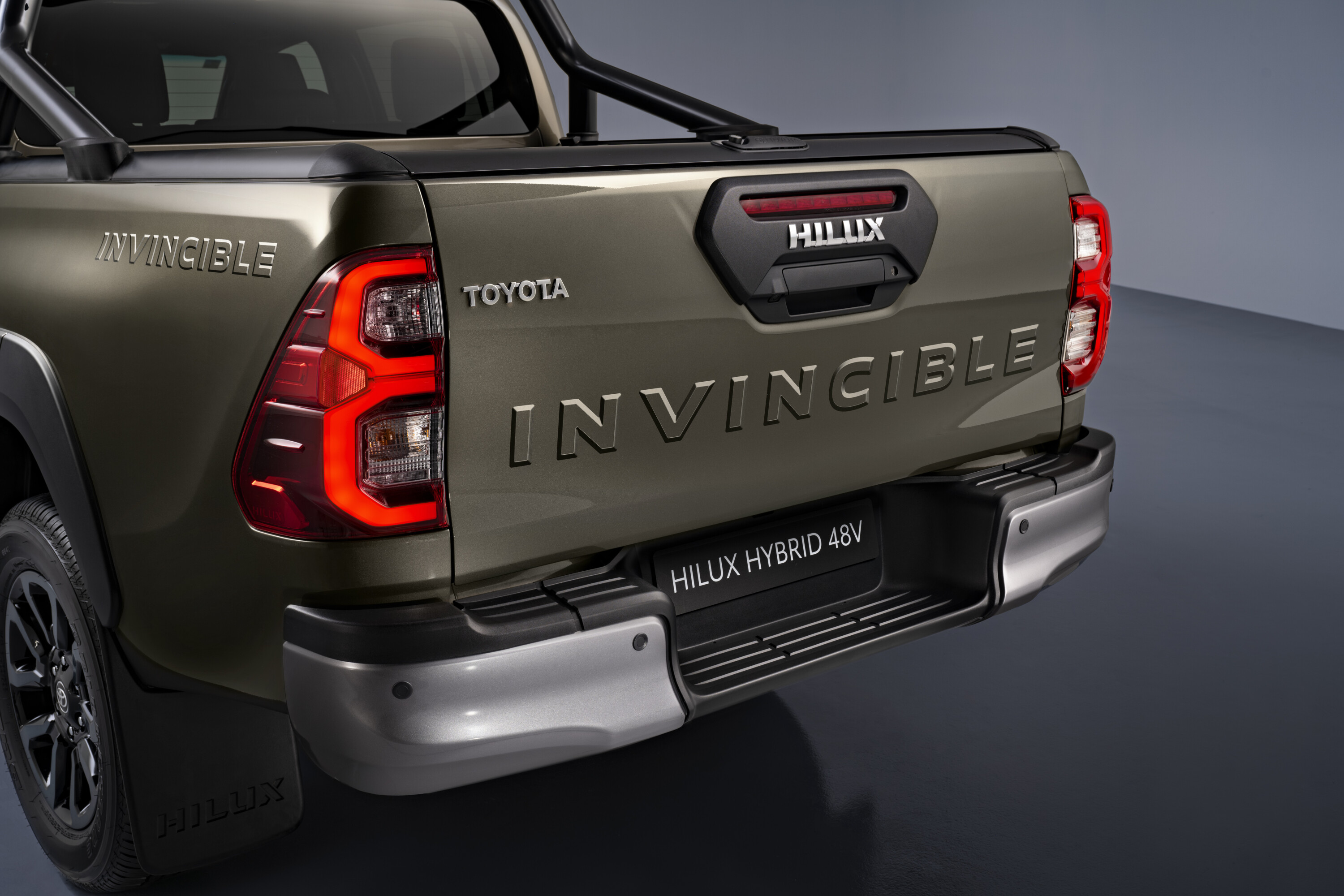
This combination will generate 150kW at 3400rpm and 500Nm between 1600-2800rpm, and is said to improve fuel efficiency by up to five per cent compared to the conventional diesel powertrain.
When charged through regenerative braking, Toyota says the 48V battery sends up to 12kW and 65Nm of additional power and torque, respectively, throught the motor generator to the engine “to enhance acceleration, power and efficiency”.
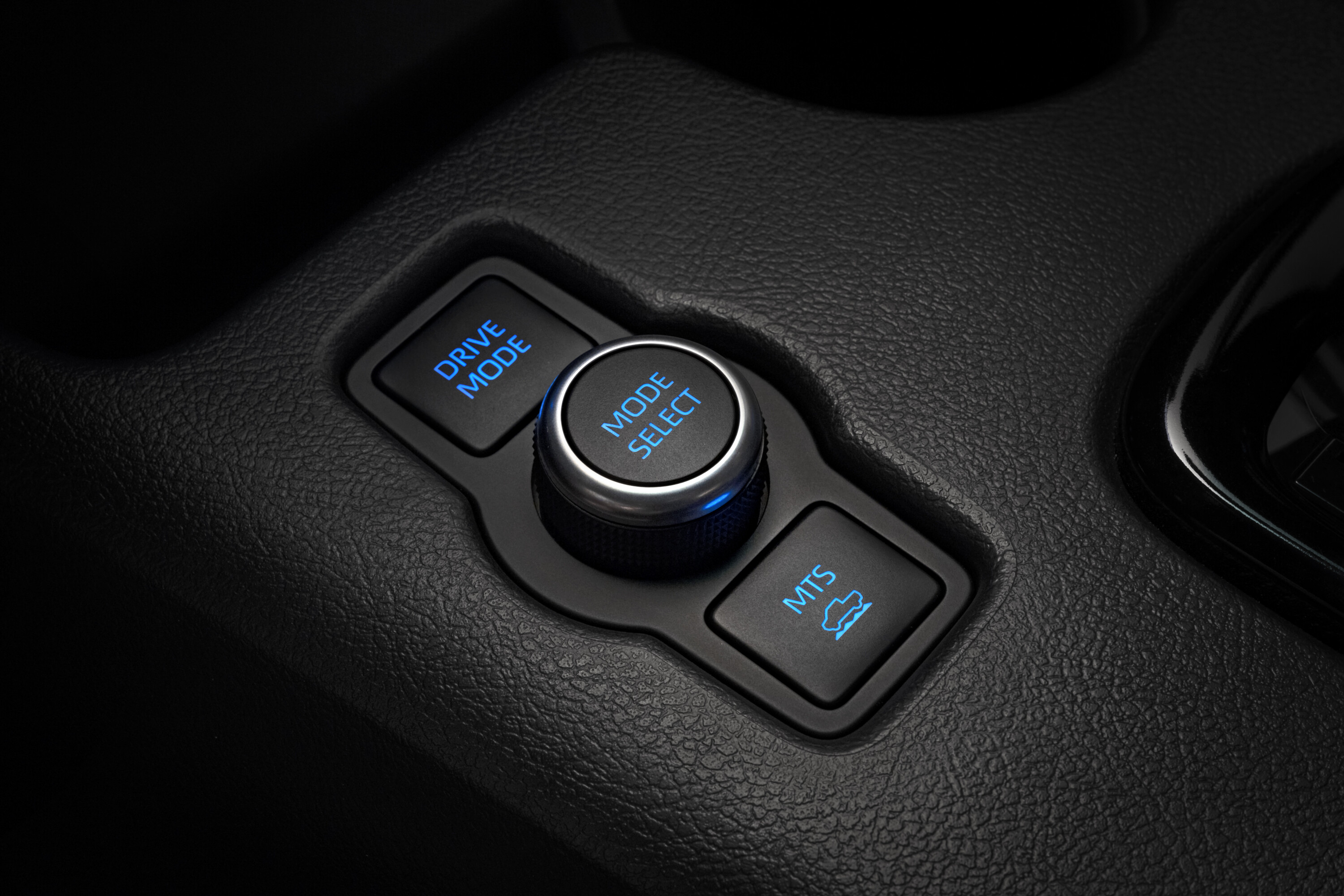
In addition to this electrified powertrain, Toyota has confirmed the HiLux will get a new Multi-Terrain Select system for the first time. The system, widely adopted in some form across the 4×4 landscape, modulates vehicle performance and control settings depending on terrain and driving conditions. In addition to an automatic setting, five pre-set options will be available: Dirt, Sand, Mud, Deep Snow and Rock.
The Hilux Hybrid 48V will remain on a ladder-frame chassis, with leaf springs and twin shocks at the rear for improved off-road ability and handling.
| Hilux Hybrid 48V (double-cab) measurements | |
|---|---|
| Length | 5325mm |
| Width | 1900mm |
| Height | 1815mm |
| Tray length | 1525mm |
| Towing capacity | 3500kg |
| Payload capacity | 1000kg |
| Water fording | 700mm |
| Ground clearance | 310mm |
| Approach angle | 29 |
| Departure angle | 26 |
The HiLux Hybrid 48V will also be equipped with the latest Toyota Safety Sense tech, which consists of an enhanced Pre-Collision System (PCS); an updated Lane Departure Alert (LDA); Adaptive Cruise Control (ACC) with Road Sign Assist (RSA); and Adaptive High Beam (AHB).
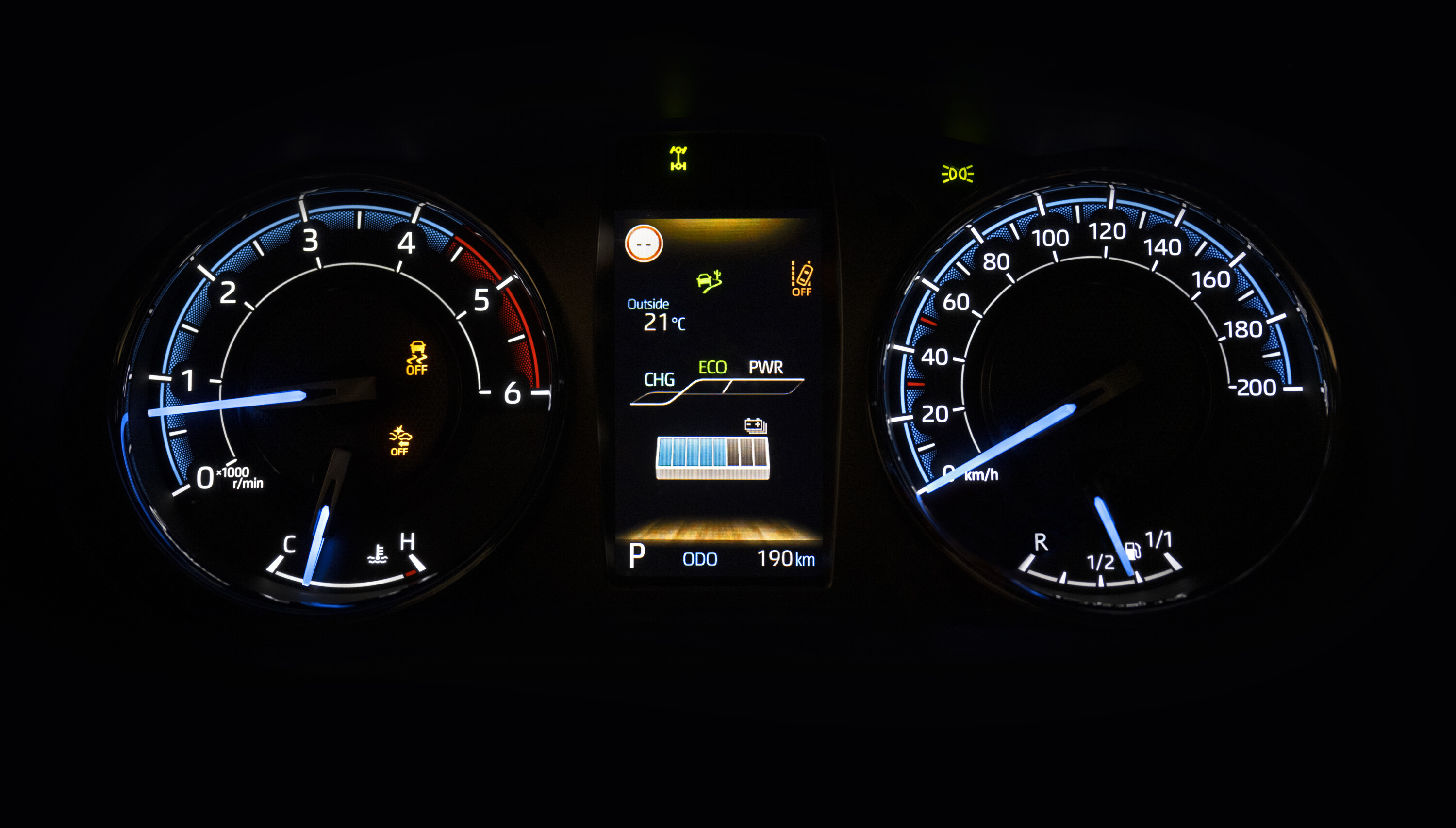
Also new is the latest iteration of Toyota’s Smart Connect system which features an eight-inch screen, cloud-based navigation and wireless Apple CarPlay and Android Auto connectivity. Depending on the grade, drivers will be able to lock and unlock their ‘Lux, as well as control the air-con, via a smartphone app.
The HiLux Hybrid 48V is slated to arrive in Australia in dual-cab guise in 2024.
June 2023: 48-volt mild-hybrid confirmed for Australia
Australia’s top-selling vehicle – the Toyota HiLux ute – is on the path to electrification.
An update for the 2024 Toyota HiLux will introduce a 48-volt mild-hybrid system, the brand has confirmed.
Due to arrive in Australia in the first half of 2024, the electrified powertrain will be standard for the SR5 and Rogue 4×4 dual-cab variants, and available as an option for the SR 4×4 dual-cab.
The mild-hybrid system will be paired to the HiLux’s familiar 150kW/500Nm 2.8-litre four-cylinder diesel engine, six-speed automatic transmission and 12-volt auxiliary battery, with an additional 48-volt battery, a small electric motor-generator, and “other components”.
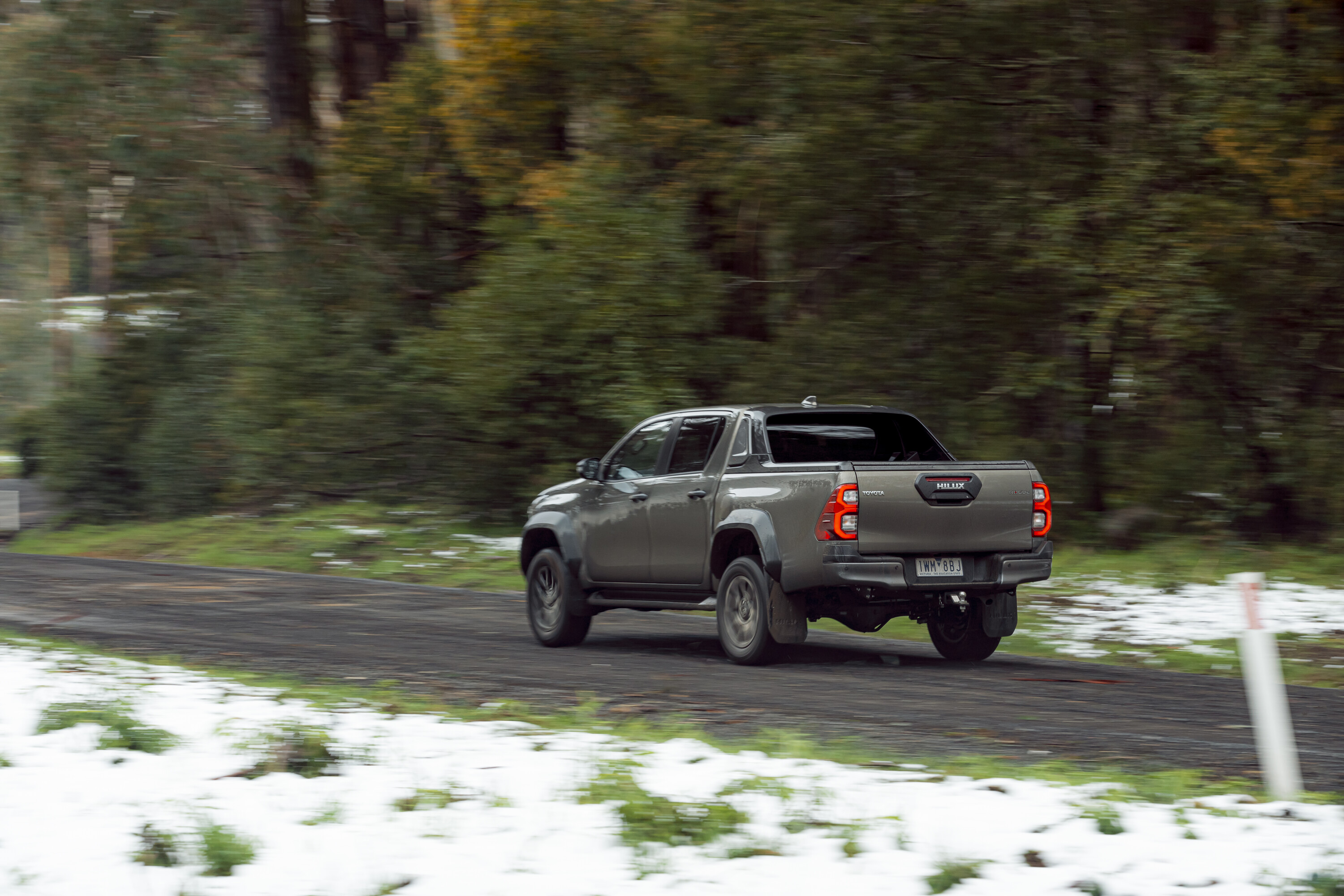
Toyota claims the system will reduce fuel consumption by around 10 per cent, from 8.4L/100km to approximately 7.6L/100km – in line with four-wheel-drive Ford Rangers fitted with the 2.0-litre bi-turbo diesel engine.
A stop-start system to automatically turn off the engine when it is idling will be added to mild-hybrid variants, while the technology is also said to improve drivability and reduce the engine’s noise, vibration and harshness.
“We are continually striving to reduce the fuel consumption of our vehicles to help reduce on-going costs for customers, as well as helping reduce our environmental impact, and the addition of 48-volt technology to our biggest-selling vehicle line will contribute to this,” said Toyota Australia vice president of sales and marketing, Sean Hanley.
“This new technology will not only improve fuel consumption, but customers will also benefit from enhanced on and off-road performance, making the HiLux even more appealing for a weekend away or longer term excursion into the outback.”
Toyota has confirmed the mild-hybrid system “will not have any impact on the capability of the HiLux”, with all 4×4 models set to maintain a 3500-kilogram braked towing capacity.
It is unknown if the update will introduce minor tech updates – such as rear disc brakes on more variants and a larger, updated infotainment system with wireless Apple CarPlay – to better match the Ford Ranger, which could overtake the HiLux to become Australia’s top-selling vehicle in 2023.
The 2024 Toyota HiLux mild-hybrid will arrive in the first half of next year, with further details to be announced closer to launch.
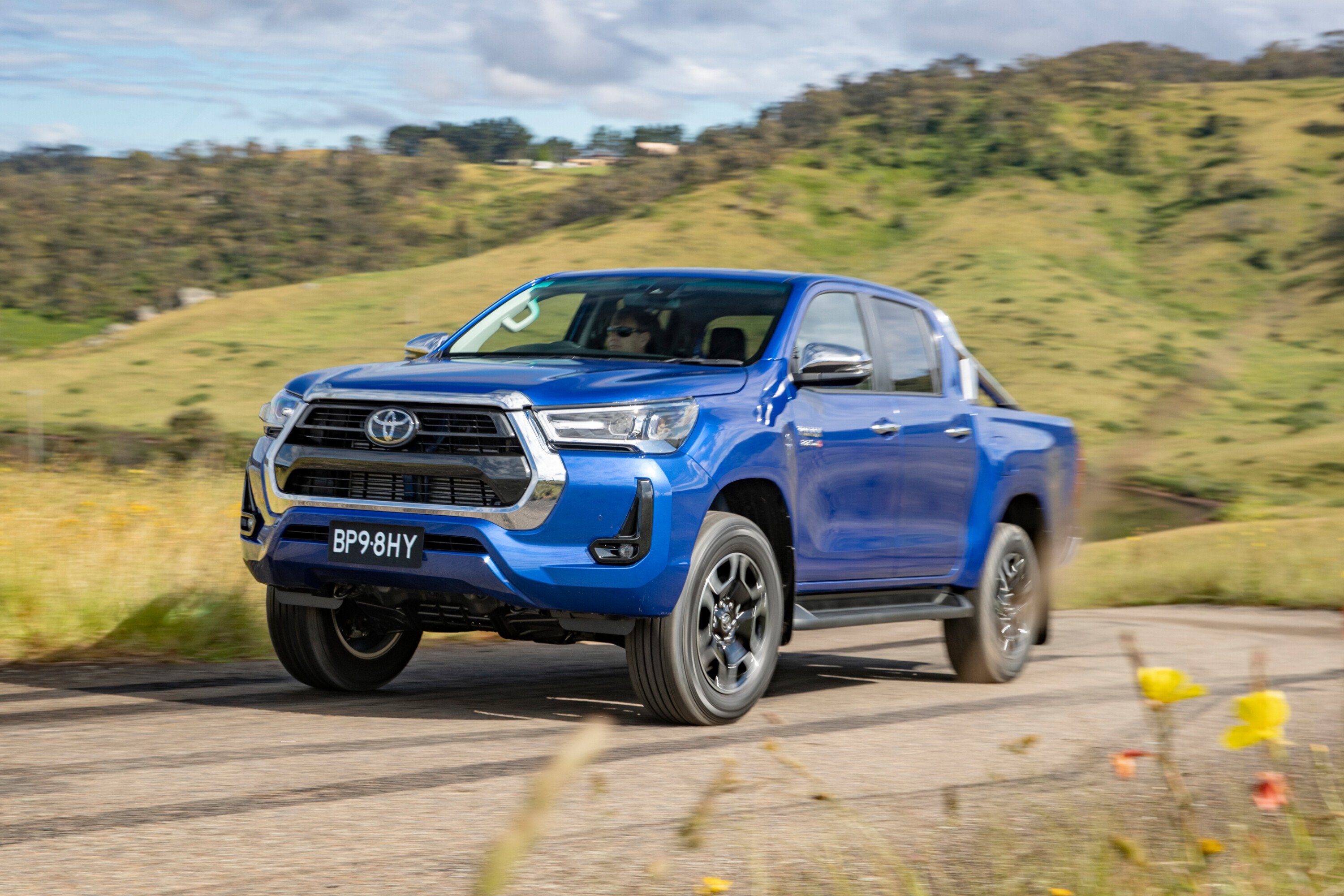
Toyota has yet to confirm if the related Fortuner off-road large SUV will receive the 48-volt mild-hybrid system, while the next-generation LandCruiser Prado – expected here in 2024 – could have this powertrain as its base engine.
A series-parallel 2.4-litre turbocharged four-cylinder petrol-electric hybrid system is also likely to be offered as the 2024 Prado’s flagship engine.
As previously announced, Toyota Australia plans to offer an electrified version of every model in its range by 2030 – including HiLux, LandCruiser and HiAce – but not GR performance cars.
Earlier this year, Sean Hanley said Toyota is also evaluating other forms of electrification for the HiLux, including full-electric and hydrogen.
“Well, there’s hybrid. You know, plug-in hybrid, there’s all sorts of variants. We’ve been looking at H2 (hydrogen) conversions, we’re looking at [battery-electric vehicles], we’re looking at everything. This is exactly what we’re saying, that Toyota won’t put all of its eggs in one basket,” he said.
A series-parallel hybrid is likely for the next-generation HiLux, due around 2025.
Predator Tyres has arrived in Australia with its versatile New Mutant X-AT, an all-terrain tyre that is said to be comfortable, quiet and practical on the highway, yet equally surefooted on weekend wilderness explorations.
You may not have heard of Predator Tyres, but you’ve most likely heard of ROH Wheels, one of Australia’s leading wheel brands with a long history in both the OEM and aftermarket, dating all the way back to 1946. And it’s actually the ROH team who are now distributing Predator Tyres into the Australian market as part of an exciting new project.
Given ROH’s strong reputation in the wheel industry built over many years, the team took their time to find the right high-quality tyres to suit what the Australian market desires. This involved stringent testing of noise, control, wet performance, dry performance, off-road capability and highway driving, across multiple tyre brands, before they settled on Predator Tyres.
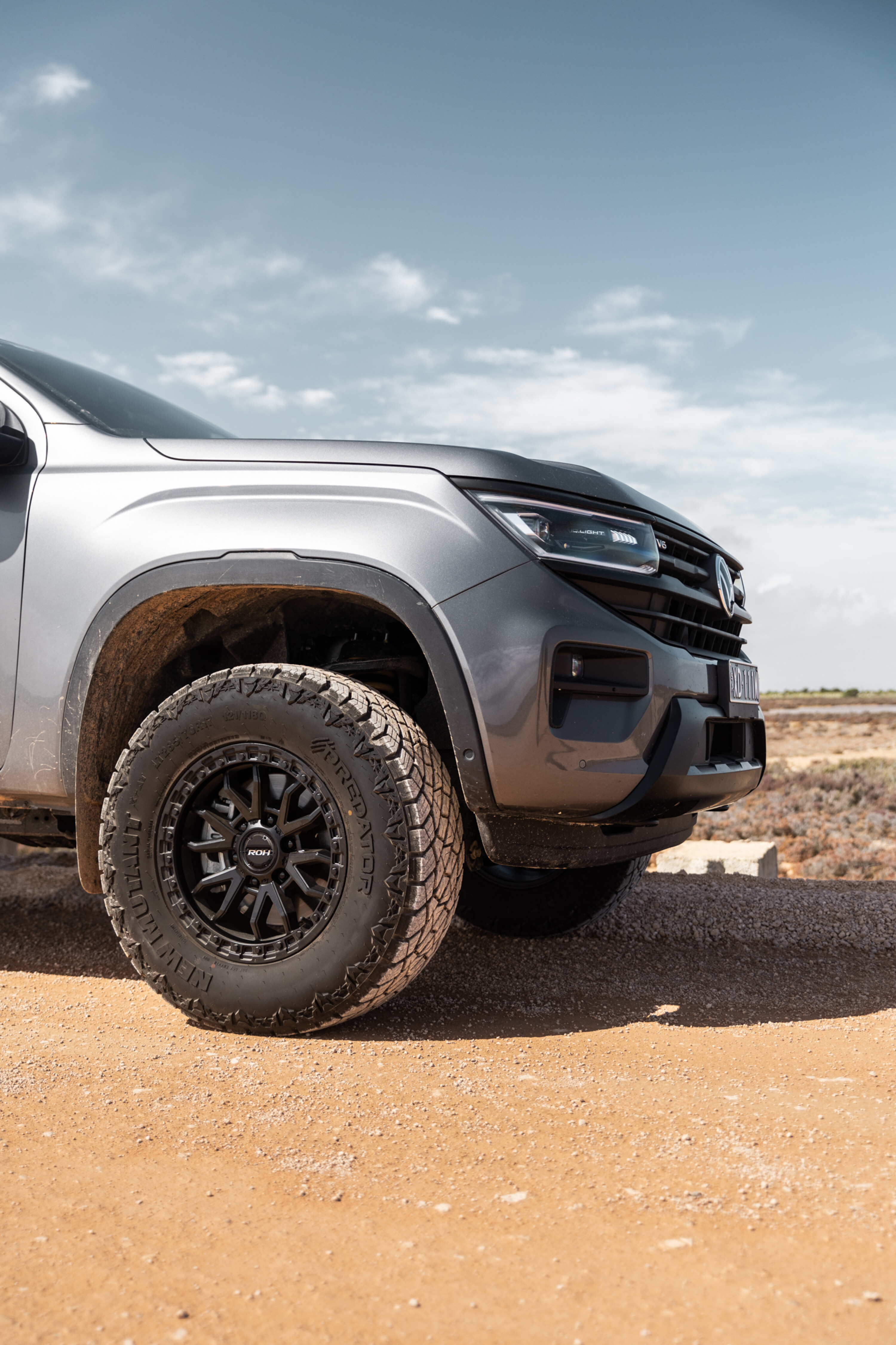
As ROH Wheels is known for being one of the toughest, highest quality wheels around, the ROH Team were determined to find tyres that match this same level of quality and performance its wheels have become known for. Predator Tyres also backs the performance and longevity of its tyres, offering an 80,000km Tread Life Guarantee on the New Mutant X-AT range.
The tyre is built with a reinforced structure and a robust compound, making it exceptionally resistant to damage. Key to this is an aggressive “SPIKE” X-AT dual sidewall design, which increases off-road traction, bolsters sidewall protection and provides an aesthetic option for enthusiasts. As a result, the tyre maintains its optimal shape under pressure and is resistant to cuts, impacts, punctures and tearing.
Dubbed an “all-season” compound, the tyres can adapt to temperature fluctuations, and this is complemented by a finely detailed tread which features dense siping and numerous biting edges. Staggered shoulder lugs provide an enhanced biting edge and improve traction on rocky terrain.
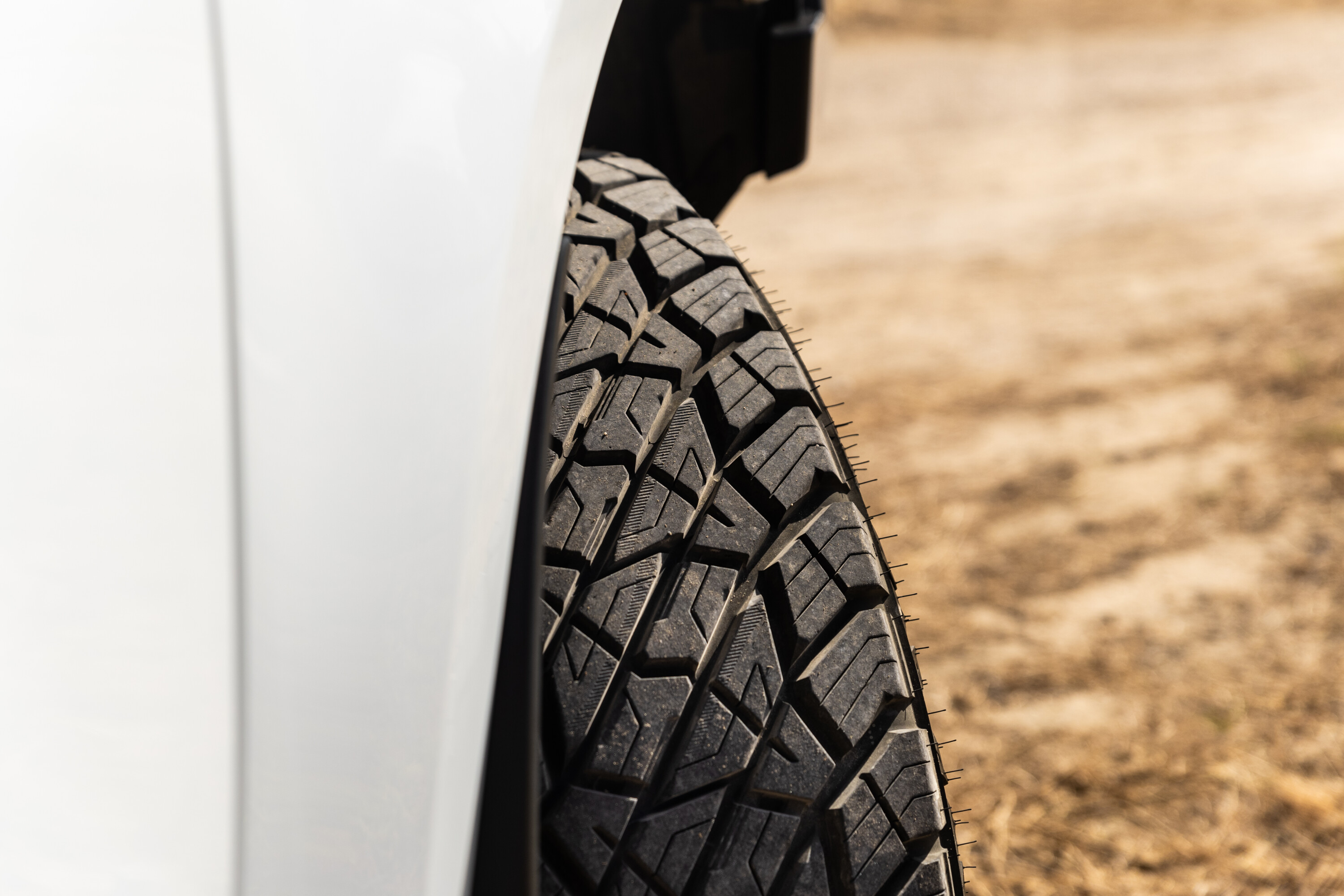
The aggressive tread pattern features tread blocks strategically staggered and irregularly shaped, which forms a network of zigzagging grooves which can efficiently get rid of mud, dirt, snow and other debris and maintain a clean footprint for consistent grip and handling.
These deep, multi-functional tread grooves enhance traction on a wide variety of road surfaces and also help to prevent hydroplaning. An advanced “X” tread pattern and pitch variation also reduces road noise, for a smoother highway ride. The tyre also features a wider contact patch thanks to densely packed tread blocks, delivering additional handling stability for both on- and off-road driving.
The performance tyre – available to suit 16-, 17- and 18-inch wheels – balances performance and safety, making the Predator New Mutant X-AT tyre a serious option to consider for remote-area tourers.
Sizes available
- 265/75R16
- 285/75R16
- 265/70R17
- 285/70R17
- 33×12.50R17
- 35×12.50R17
- 265/60R18
- 285/65R18
- 35×12.50R18