
The myCOOLMAN Recreational 20 fridge is a tough little unit that’s ideally suited for camping trips, off-road adventures and more.
The fridge’s compact design will suit those with limited space; it measures 452 x 346 x 368mm and weighs just 10kg, so it fits comfortably in most vehicles and can be easily transported. Despite its small size, the fridge offers a generous 19.3L capacity (24 cans) with internal dimensions of 280 x 205 x 235mm in the large section, and 160 x 205 x 235mm in the small section.
A sturdy handle makes carrying the fridge easy… even when full. The controls are user-friendly and feature a bright digital display that’s easy to read and operate, even in direct sunlight. The display shows the current fridge temperature, and it’s easy to adjust the settings. You can also monitor and control the fridge via Bluetooth using the myCOOLMAN Recreational Series app.
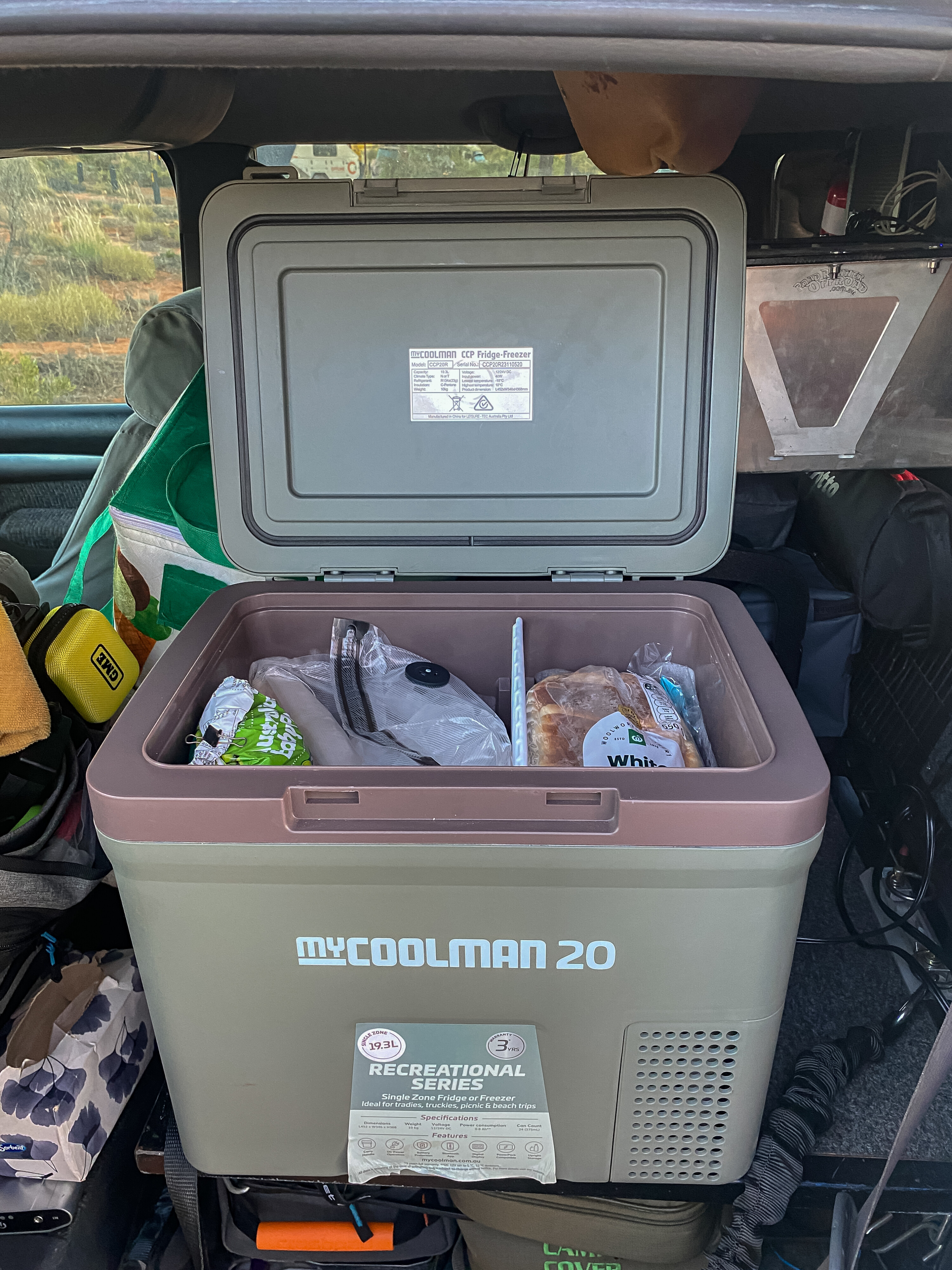
Energy efficiency is a standout feature of this fridge and it also has an eco mode that further reduces power consumption, while multiple power options add to its versatility. The 12/24V DC input is ideal for vehicle use, and the 100-240V AC adapter means you can use it at home as well.
It can also be powered using the DC-DC myCOOLMAN Lithium PowerPack. This versatility allows you to seamlessly transition from using the fridge in your vehicle to using it indoors. Battery protection modes ensure your car battery doesn’t drain while the fridge is running.
The powerful compressor cools the Recreational 20 quickly, and the fridge operates with a temperature range from -18°C to +10°C, which means it will keep your food chilled or your ice cream frozen. On test, when plugged into 240V, it took around 20 minutes to chill the fridge from a room temperature of +21°C to 2°C, which was handy for food shopping.
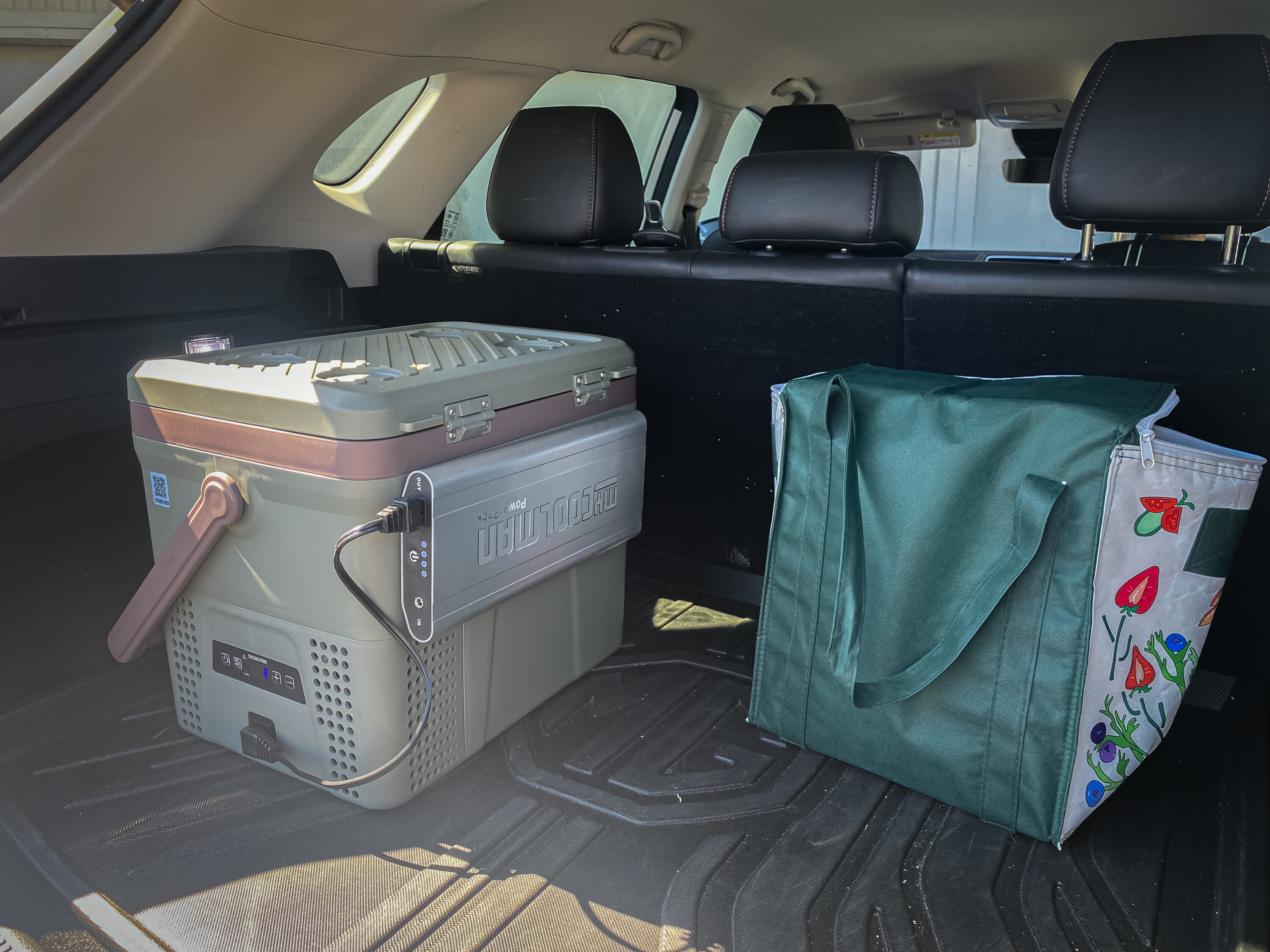
When running the fridge off the myCOOLMAN Lithium PowerPack in the back of a car, it maintained a temperature of 2°C for eight hours before recharging was required. Run as a freezer at -18°C using the PowerPack, we could get four hours out of it during the day and six hours at night.
The compressor in the Recreational 20 is both efficient and quiet, cooling quickly and maintaining a consistent temperature, ensuring that your perishables will stay fresh for as long as possible. Aiding efficiency is the fridge’s well-insulated cabinet, which has a layer of high-density foam to keep the internal temperature stable even in hot weather.
The interior wipes clean easily, and the removable lid and baskets make organising and accessing items straightforward. The durable exterior can be cleaned with a damp cloth, keeping it looking good and functioning well.
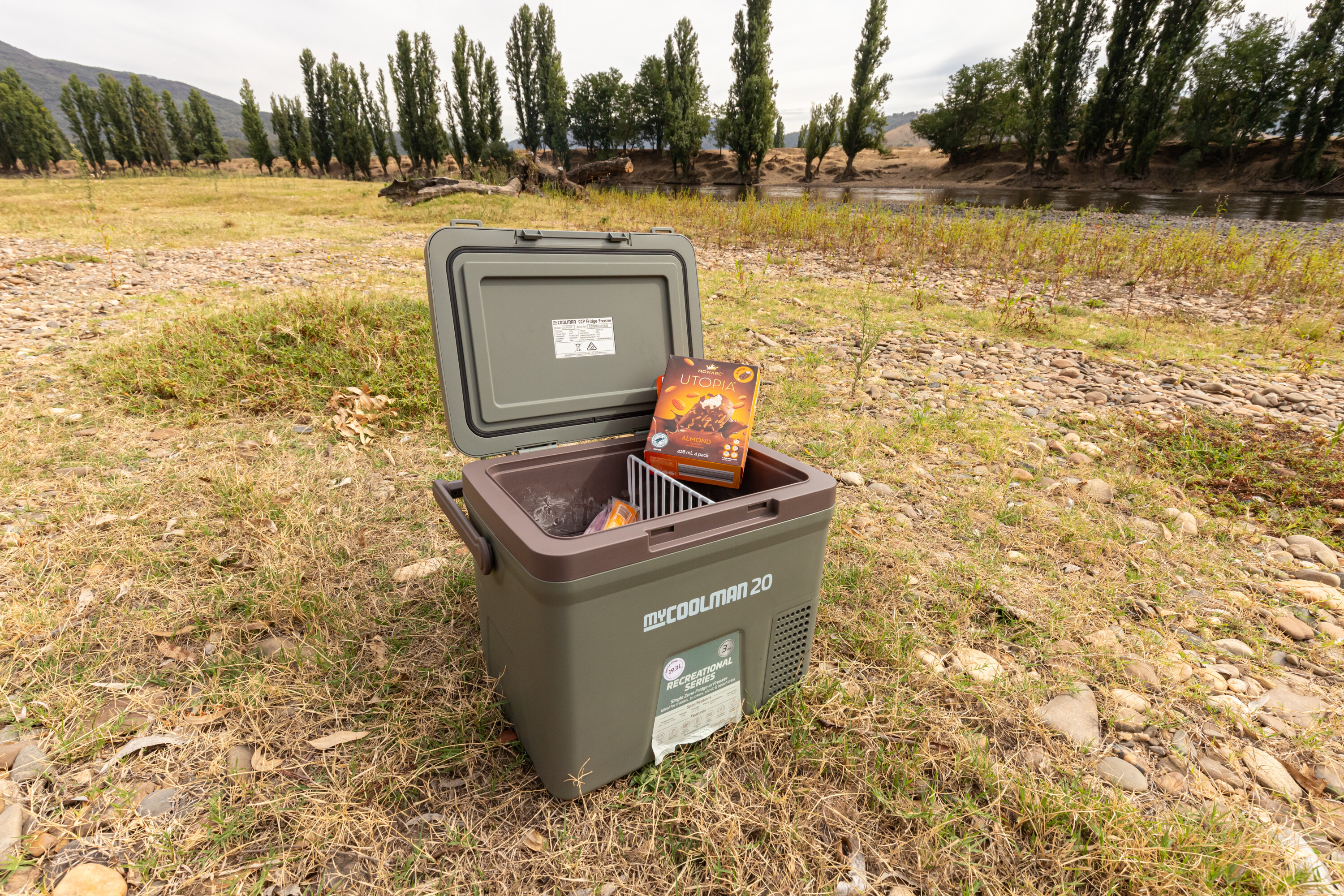
Portability is key for a portable fridge, and the myCOOLMAN Recreational 20 fridge excels in this regard. Its compact size and lightweight design make it easy to carry, and the sturdy handle provides a comfortable grip. The balanced weight distribution ensures you can carry it without straining, which I found handy when staying in caravan parks as it was easy to move the fridge from the Prado and plug it into a powerpoint to keep it running.
The myCOOLMAN Recreational 20 fridge offers excellent value for money. Its durable construction, reliable performance, and energy efficiency make it a great investment for outdoor enthusiasts. Its rapid cooling, user-friendly features, and efficient insulation set it apart from many competitors.
Plus you can count on it to keep your food fresh and your drinks cold, no matter where you are. The only negative, according to my wife, is that it won’t accommodate a bottle of wine standing up.
RRP: $449
Almost 6000 RAM 1500 DT pick-ups have been recalled due to a software issue with the vehicle’s Anti-Lock Brake System (ABS), which could cause the Electronic Stability Control (ESC) to fail and result in a loss of control.
A total of 5916 vehicles built between 2023 and 2024 have been caught up in the recall, with all variants within the model range affected.
A full list of VIN numbers of affected vehicles can be found HERE.
Consumers have been advised to contact their local authorised RAM dealer and they will update the ABS control module software, free of charge. Owners can also contact RAM Trucks customer support by calling 1300 681 655.
RAM only recently announced that its HEMI V8-powered RAM 1500 DT is now in run-out mode in preparation for the launch of the 2025 model, which is expected to be powered by a straight-six powertrain. In 2023, RAM in the USA replaced the 291kW/556Nm 5.7-litre Hemi V8 with the choice of two Hurricane 3.0-litre turbocharged inline-six alternatives (a 313kW/636Nm version and a higher-output 403kW/707Nm option).
The recall has been issued by the federal government’s Department of Infrastructure, Transport, Regional Development, Communications and the Arts.
Mazda has revealed a midlife facelift for its popular BT-50 midsize 4×4 ute range, the biggest update since the new model was launched in 2020.
Sticking with its aim to provide a more stylish and somewhat sportier look than other products in the segment, the 2025 BT-50 has new LED headlights, a new grille with an enlarged logo, and a revised bumper featuring an ‘air curtain’ for increased aerodynamic efficiency. At the back, Around the back, new LED tail-lights frame a new-look tailgate, to complete the exterior upgrades. Fresh alloy wheels are also available.
The changes inside are more significant, with a new infotainment system centred around a screen of up to nine inches depending on model grade. Thankfully Mazda has retained a tactile dial for easy volume control and toggle switches for cabin temperature control, instead of incorporating these regularly used functions within the screen. The driver information screen is now a seven-inch display.
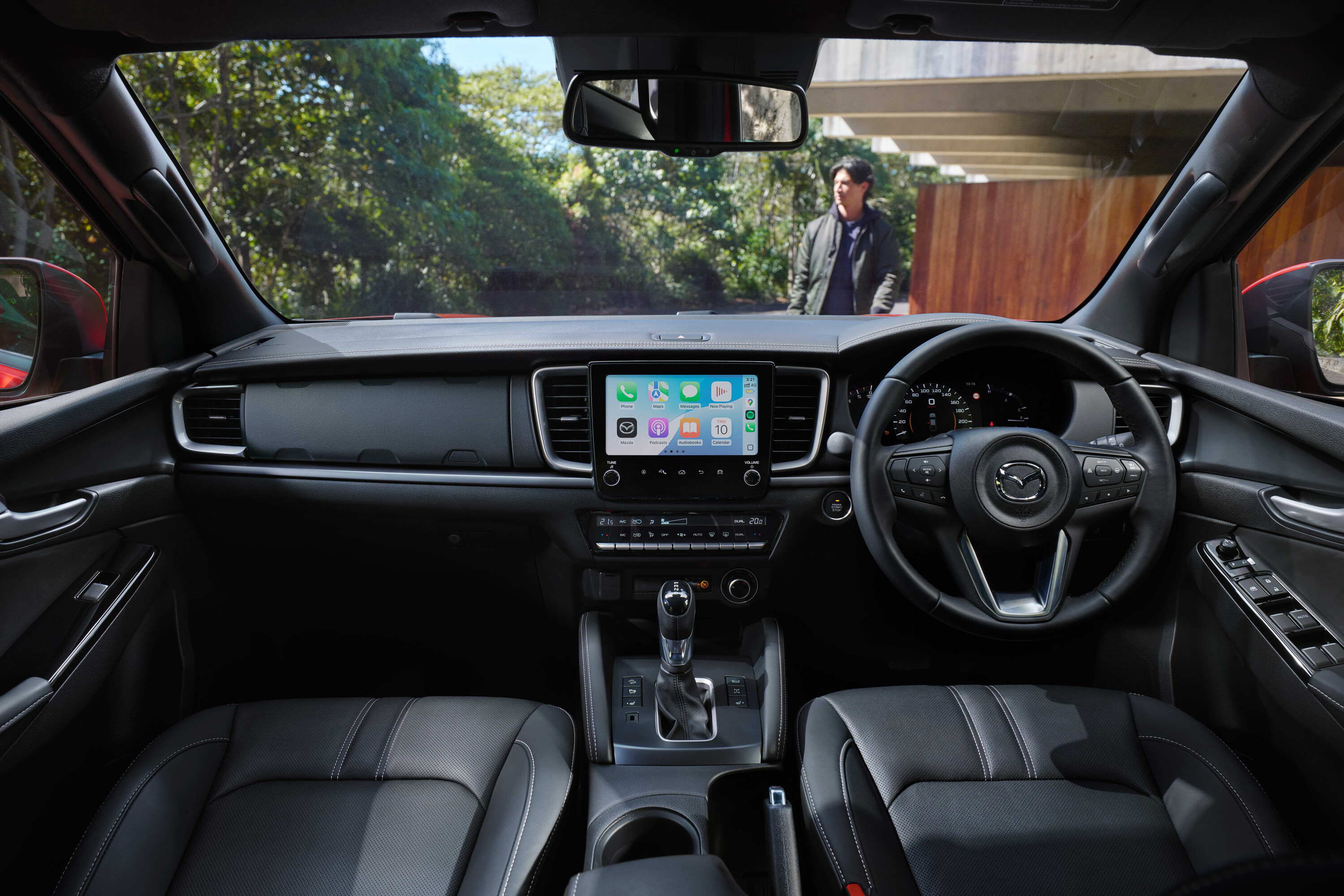
Wireless Android Auto is now integrated within the system, joining wireless Apple CarPlay. The centre screen now also displays information previously only found within the MID screen, including real-time vehicle steering and tilt angles, TPMS status, drive mode/diff lock status, and Rough Terrain Mode status.
The BT-50 is expected to remain closely related to the Isuzu D-MAX in its underpinnings and drivetrains, and Rough Terrain was added to the Isuzu ute with its recent upgrade. It essentially recalibrates the electronic traction control for better performance when driving at low speeds off-road.
ADAS systems have been upgraded with new front stereo cameras that doublethe vehicle’s field of view for checking traffic. Traffic Jam Assist is a new feature, as is Rear Cross Traffic Braking and Adaptive Cruise Control. The AEB system also now has motorcycle and pedestrian detection.
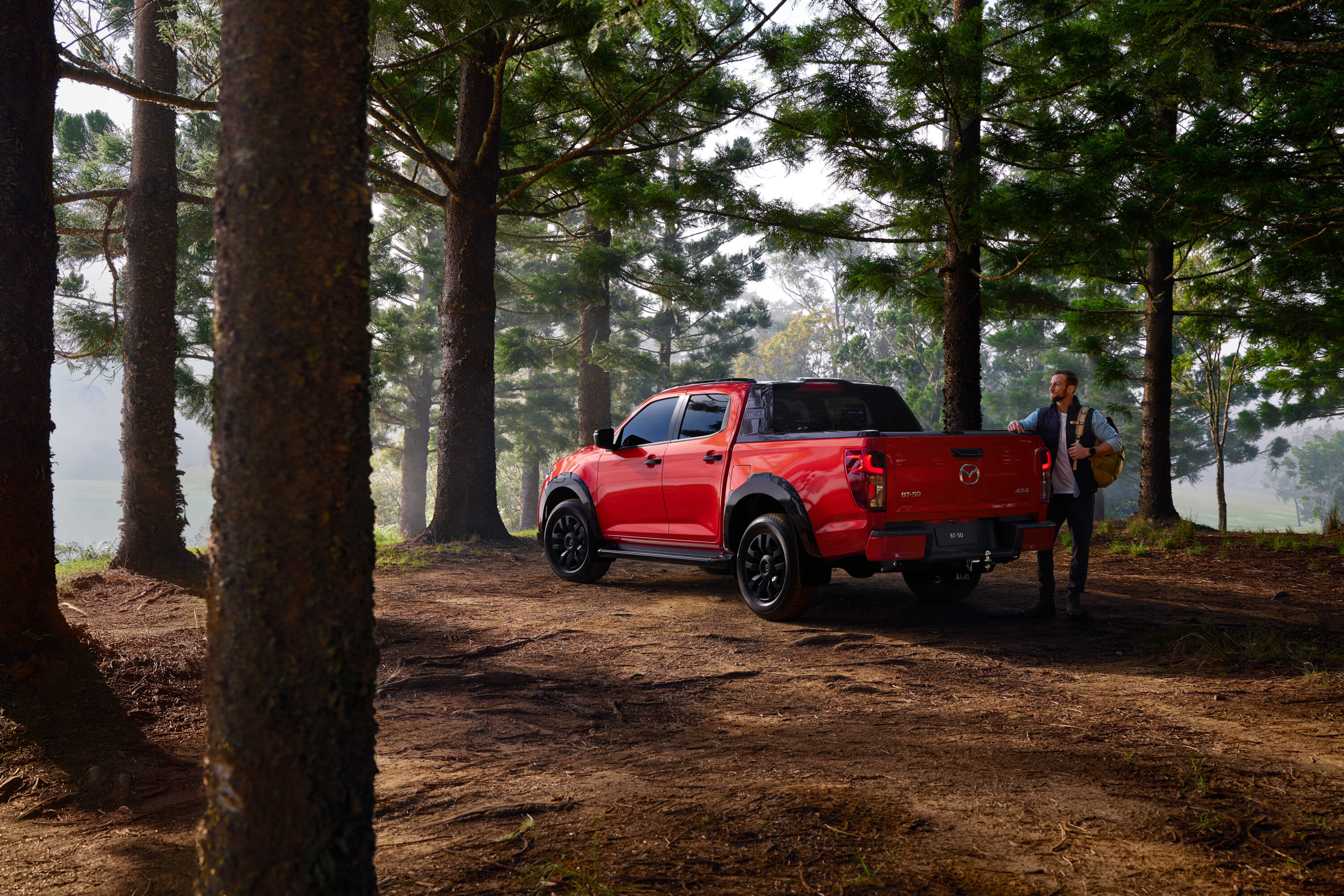
“Forming an integral part of our Mazda model range here in Australia, the BT-50 has set the tone as a versatile, ready-for-anything vehicle that suits a variety of customer needs whether it’s as a trusty work companion or an enabler for life’s passions,” said Vinesh Bhindi, Managing Director of Mazda Australia.
“For 2025, this impactful new design has matured our much-loved ute to be an even more compelling choice regardless of the task in hand.”
Mazda Australia will reveal more information and pricing on the 2025 BT-50 closer to its launch in the new year.
BYD has confirmed the Shark 6 will be priced below $60,000 when it is officially on sale in Australia from October 29 this year.
Released in partnership with BYD’s exclusive Australian distributor, EVDirect, customer deliveries of the Shark are expected to begin in December.
At this sub-$60K price point, the Shark will significantly undercut top-spec rivals and sit more squarely in-line with its competitor’s mid-spec dual-cab models – think Ranger XLS ($57,380); HiLux SR5 auto ($61,930); D-MAX LS-U auto ($61,000); and Triton GLS ($59,090).
The Shark 6 will also beat the more-closely-aligned GWM Cannon Alpha PHEV and PHEV Ranger – which it shares stylistic similarities – to market, but pricing for those two models is yet to be confirmed.
The Shark features BYD’s advanced DM-O (dual-mode off-road) tech, which combines a 170kW 1.5-litre turbocharged four-cylinder petrol engine with dual electric motors for a total output of 320kW. It offers three terrain modes – Sand, Mud, and Snow – and has a claimed range of approximately 800km.
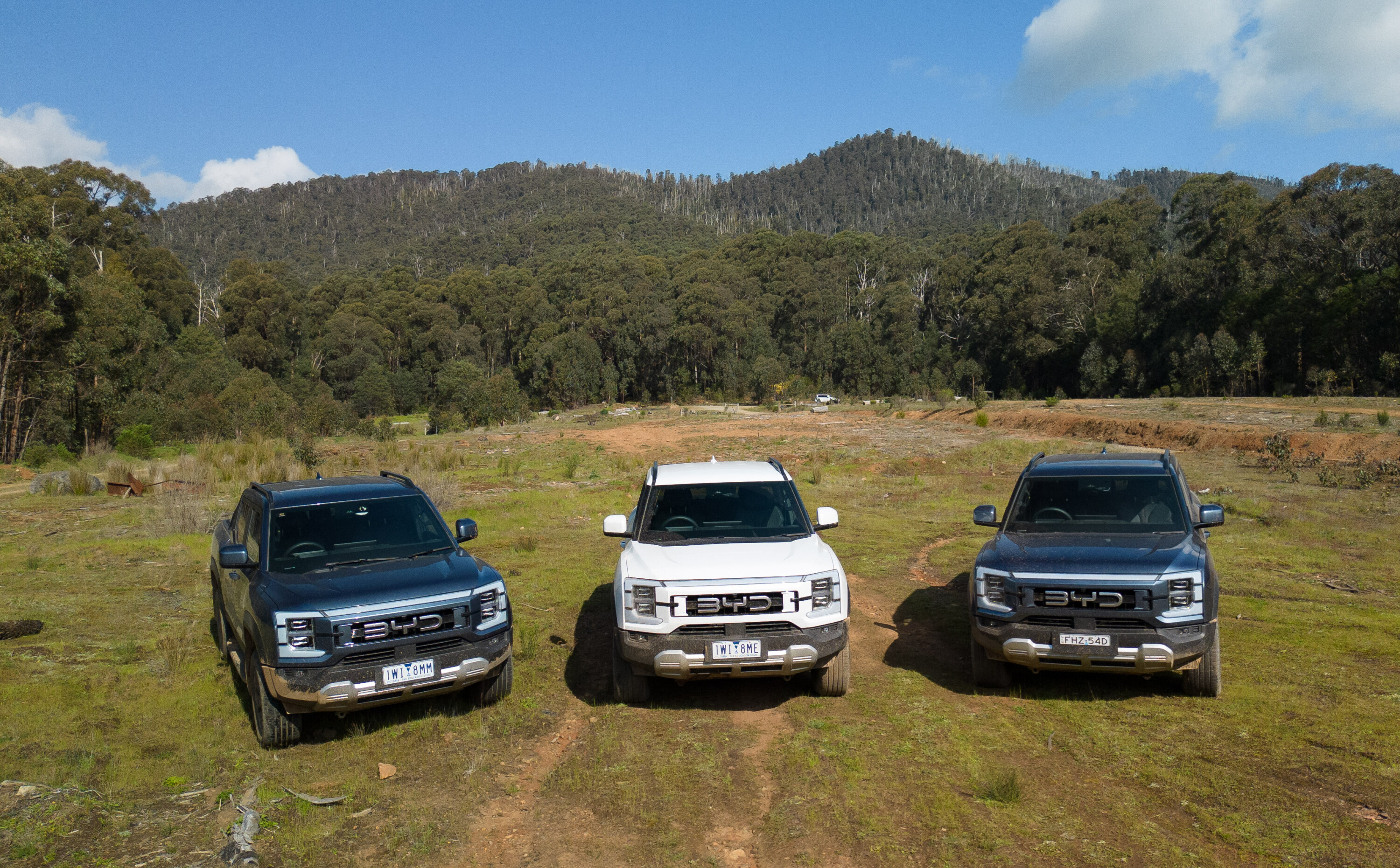
It’s a typical body-on-frame, four-door ute, but the Shark’s frame is specifically designed for a plug-in hybrid electric vehicle (PHEV). The front suspension uses a conventional double wishbone, coil spring independent design, while the rear features a similar configuration without a traditional gearbox or driveshaft connecting the front to the rear axle. This setup enhances the Shark’s driving dynamics, complemented by disc brakes all around and 265/65-R18 tyres fitted to alloy wheels.
Interior features include a 12.8-inch infotainment system that’s compatible with Apple CarPlay and Android Auto; a 10.25-inch digital instrument cluster; a 360-degree camera system; wireless phone charging; a head-up display; and an NFC key card for added convenience.
Exact pricing and further details will be revealed on October 29.
It may not be an off-road 4×4, but the all-new Inster Cross EV city car has been dressed for ‘mild’ outdoor adventure.
Slated to arrive in Australia in Q1 of 2025, the Hyundai Inster Crossover wears a suite of touring equipment including roof racks as standard (with the option to add a basket); new front and rear bumpers; skid plates; bespoke 17-inch alloy wheels; and embossed black claddings.
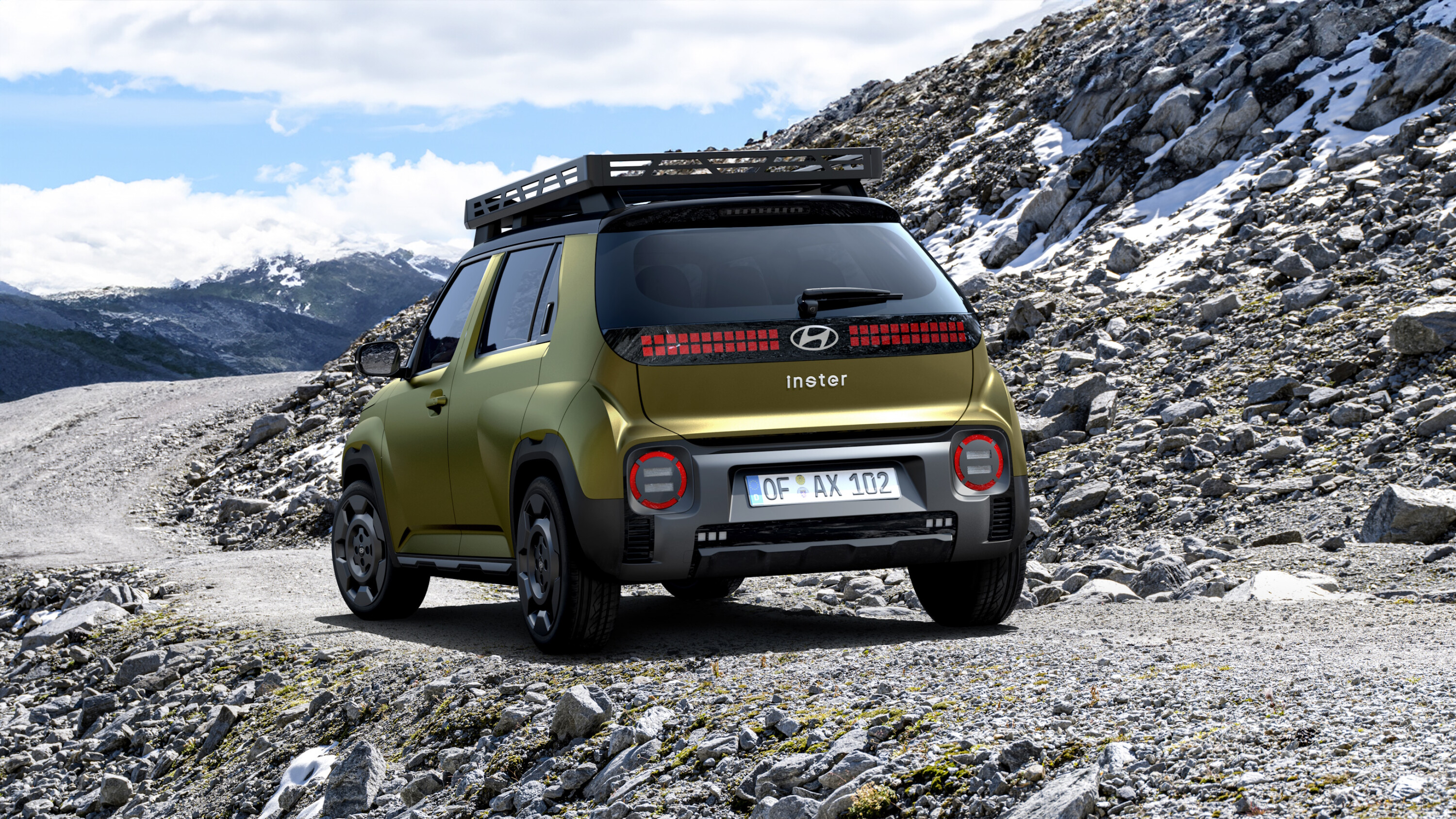
Aside from the aforementioned exterior changes, everything else remains unchanged from the regular Inster model – so both ground clearance and the electric drivetrain remain as per the standard model. Best visit campsites that can be reached via bitumen and mild dirt tracks. The drivetrain is said to offer up to 360km of all-electric range, and it can be charged from 10 to 80 per cent in approximately 30 minutes.
Safety kit includes an ADAS package consisting of Highway Driving Assist 1.5; Smart Cruise Control; and Forward Collision-Avoidance Assist 1.5.
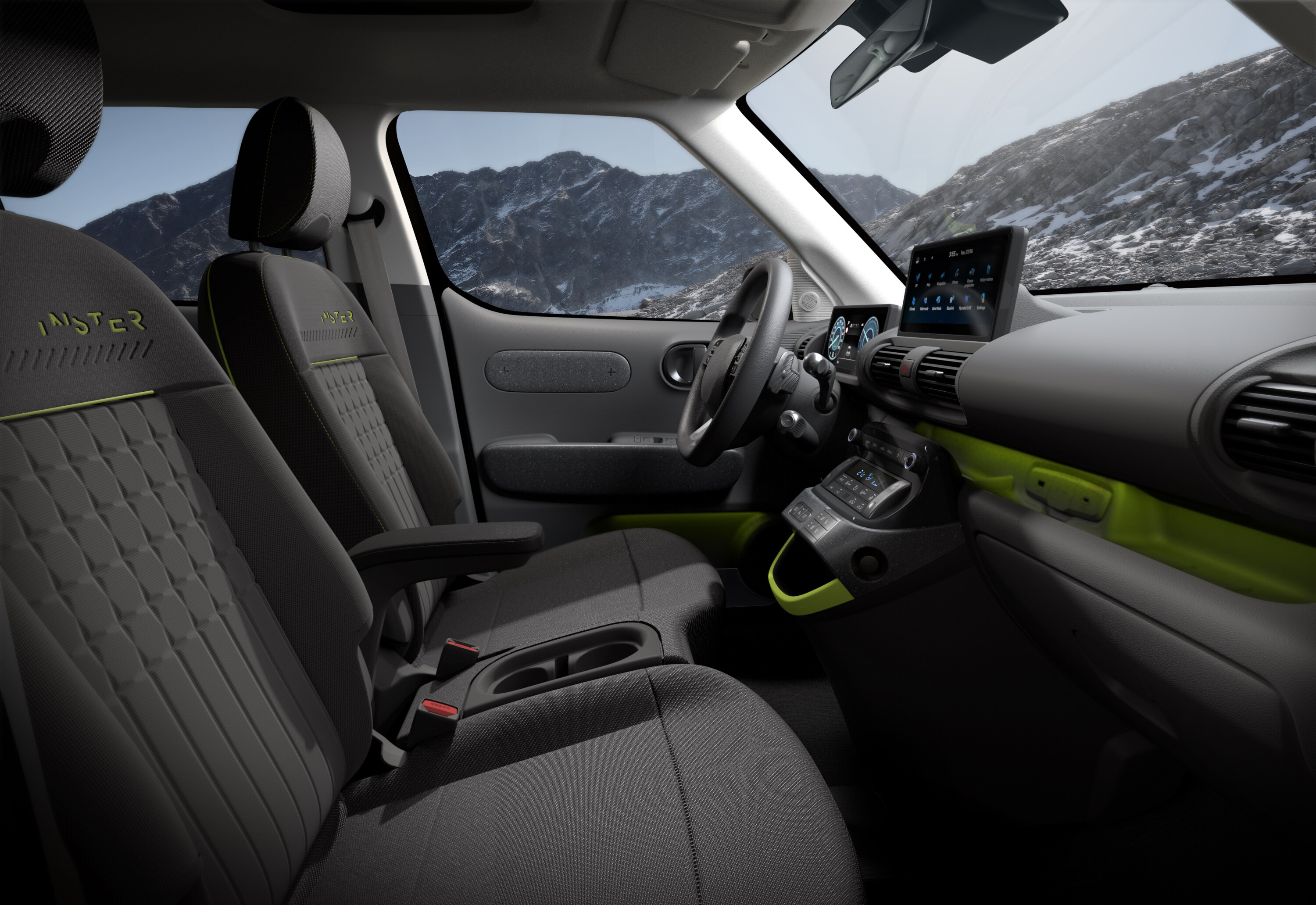
In addition to the regular colour palette offered for the Inster, an exclusive exterior colour dubbed Amazonas Green Matte is offered for this specific model. Plus, it gets a unique colour and trim combination of grey cloth with lime-yellow accents in the cabin.
Production will begin later this year at Hyundai’s manufacturing plant in Korea.
Is the new Prado’s luxury twin on your shopping list? This is everything you need to know.
From initial teasers and the big reveal to our first local drive, all of our latest stories are linked below ?
JUMP AHEAD
- Oct 2024: GX550 Overtrail REVIEW!
- May 2024: GX vs Prado spec battle
- March 2024: Pricing and features confirmed
- Feb 2024: New Australian details
- July 2023: GX confirmed for Oz!
- June: New-gen GX unveiled
- June: New GX previewed
- May: Will the new GX look like this?
- May: GX teased from the rear
- May: GX teased for the first time
Oct 2024: 2025 Lexus GX550 Overtrail REVIEW!
Our first taste of the LC250 comes in the form of the Lexus GX550 Overtrail, and this luxury 4×4 wagon impresses on and off the road
May 2024: Lexus GX550 vs Toyota Prado: SPEC BATTLE!
Examining all the differences between the all-important new 2024 Prado and its new-to-Australia Lexus luxury variant, the GX550.
March 2024: Pricing and features confirmed
Lexus Australia has confirmed the new GX550 will start from $116,000 before on-road costs, with all variants powered by a 260kW/650Nm 3.5-litre twin-turbocharged V6 petrol.
February 2024: Lexus GX Australian details confirmed
The 2024 Lexus GX four-wheel-drive large SUV – heavily based on the all-new Toyota Prado – is due in Australia mid-year, and now the company has confirmed more of what we can expect.
July: Lexus GX coming to Australia!
As expected, the Prado’s luxo cousin, the Lexus GX, is on its way to Australia. Details at the link below.
June 9: Lexus GX revealed!
Here it is at last. Lexus unveiled the new GX today, and we expect it to come to Australia. Details at the linked story below.
June 7: GX shown again in final teaser before the big reveal
The new-generation Lexus GX is expected to be unveiled this week, offering a first look at the next Toyota Prado in the process – given the GX is currently the upmarket version of the Prado.
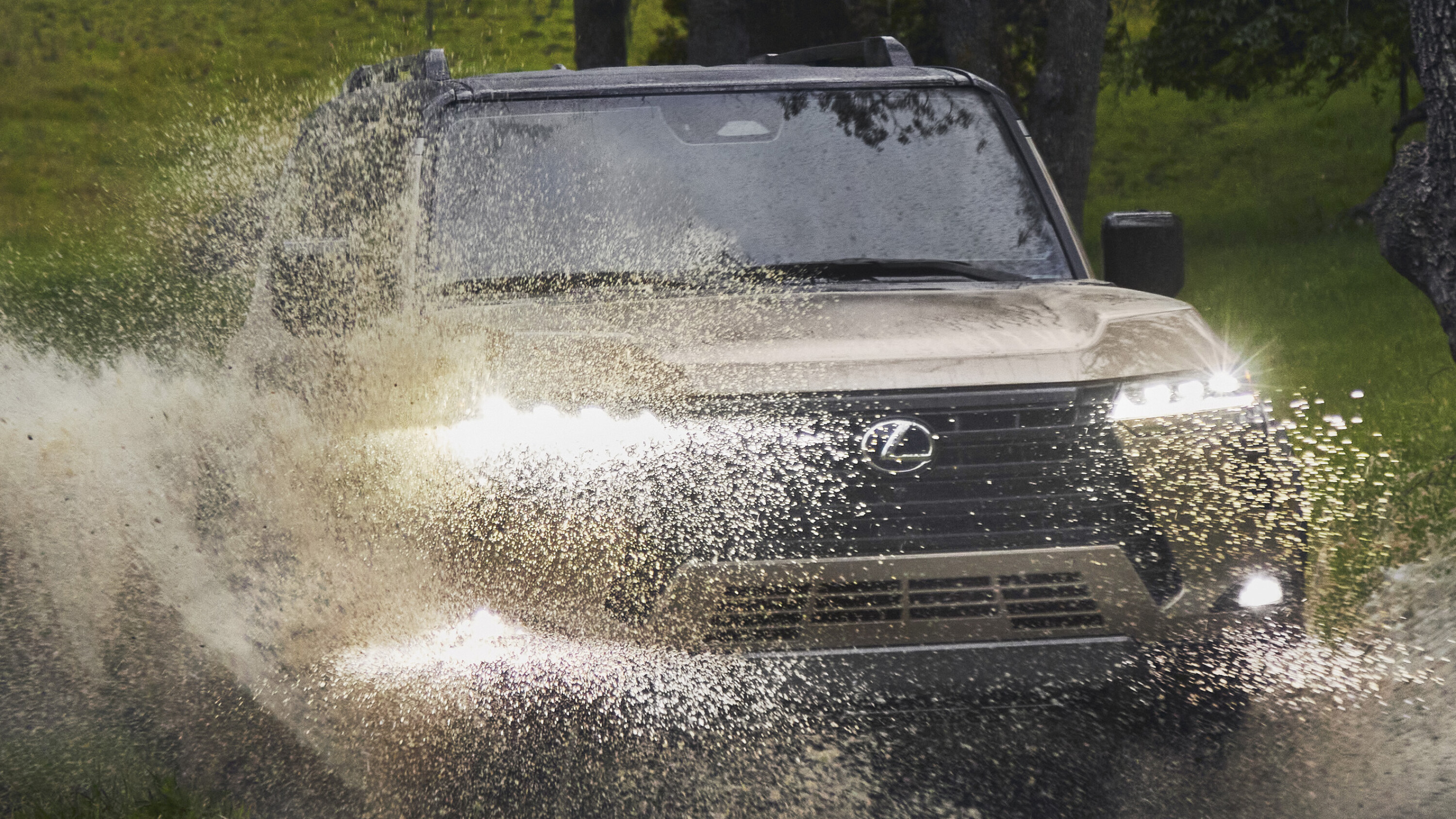
Before the big event, Lexus has handed down a fresh new teaser image, showing the GX tearing through water at an off-road location. Good reminder of its capability…
What do you think of the GX’s look? The current GX wasn’t offered in Australia, but this new model is expected to come here in the months ahead.
Catch up on our evolving story below.
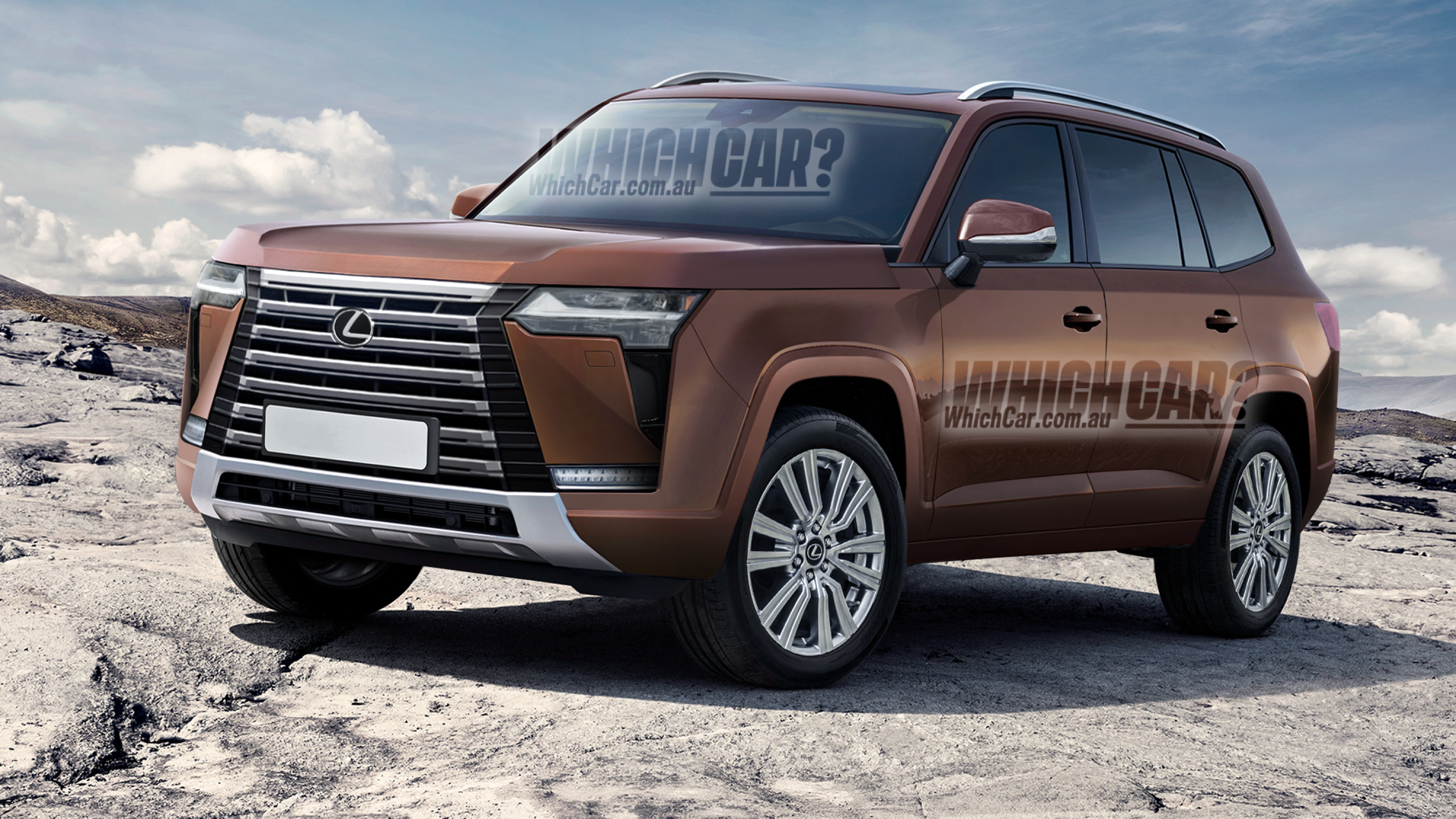
May 31: New Lexus GX rendered ahead of Australian debut
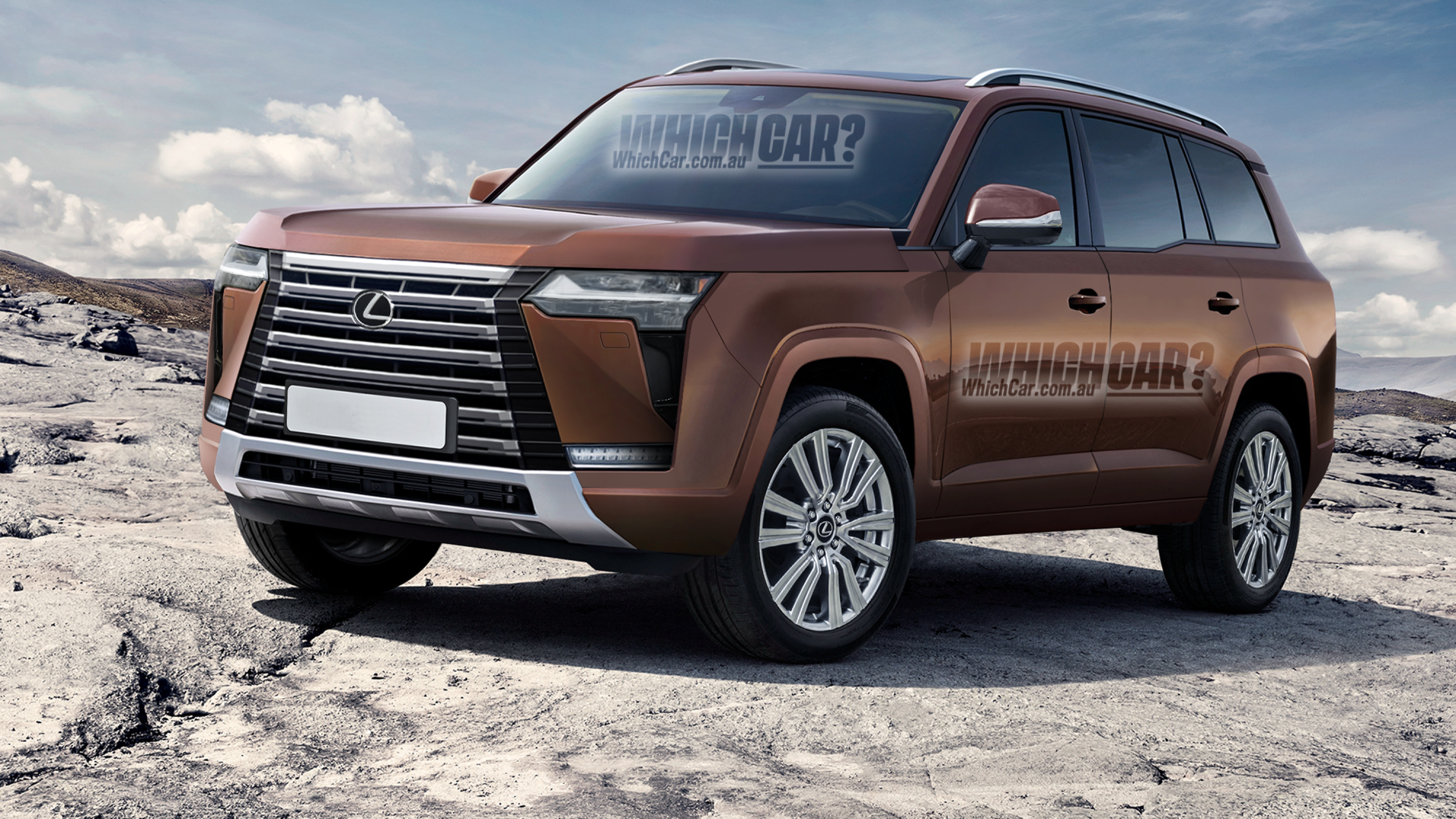
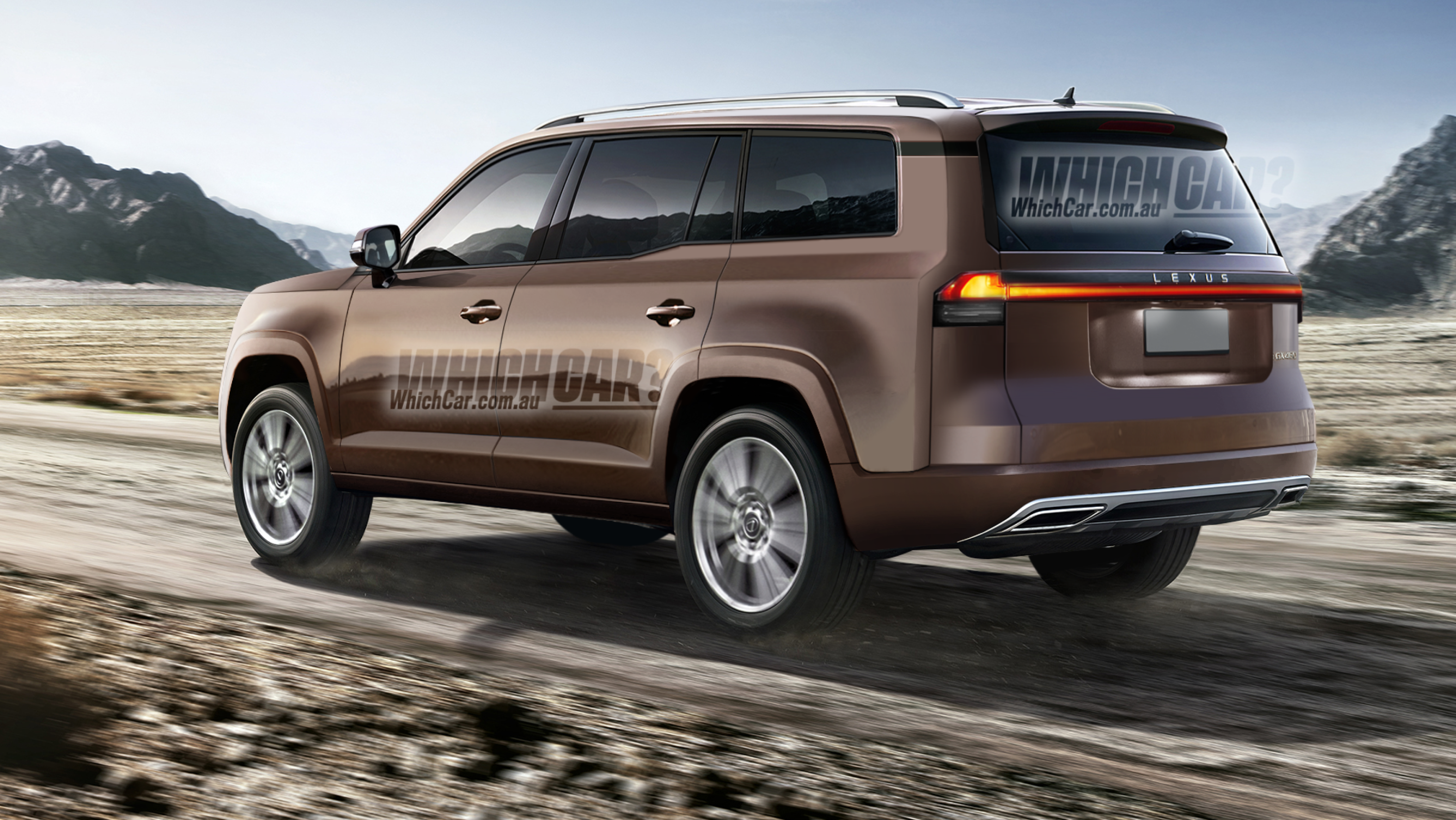
Thanks to last week’s revealing new teaser of the 2024 GX’s rear end, our updated renderings now offer what we reckon is an accurate look at the new model.
Lexus Australia hasn’t yet confirmed the new GX for our market, but it’s been rolling out teaser images – which it doesn’t tend to do unless it has plans for a local launch.
Tell us what you think of our renders, and catch up on the rest of the evolving 2024 Lexus GX story below!
May 26: 2024 Lexus GX teased from the other end!
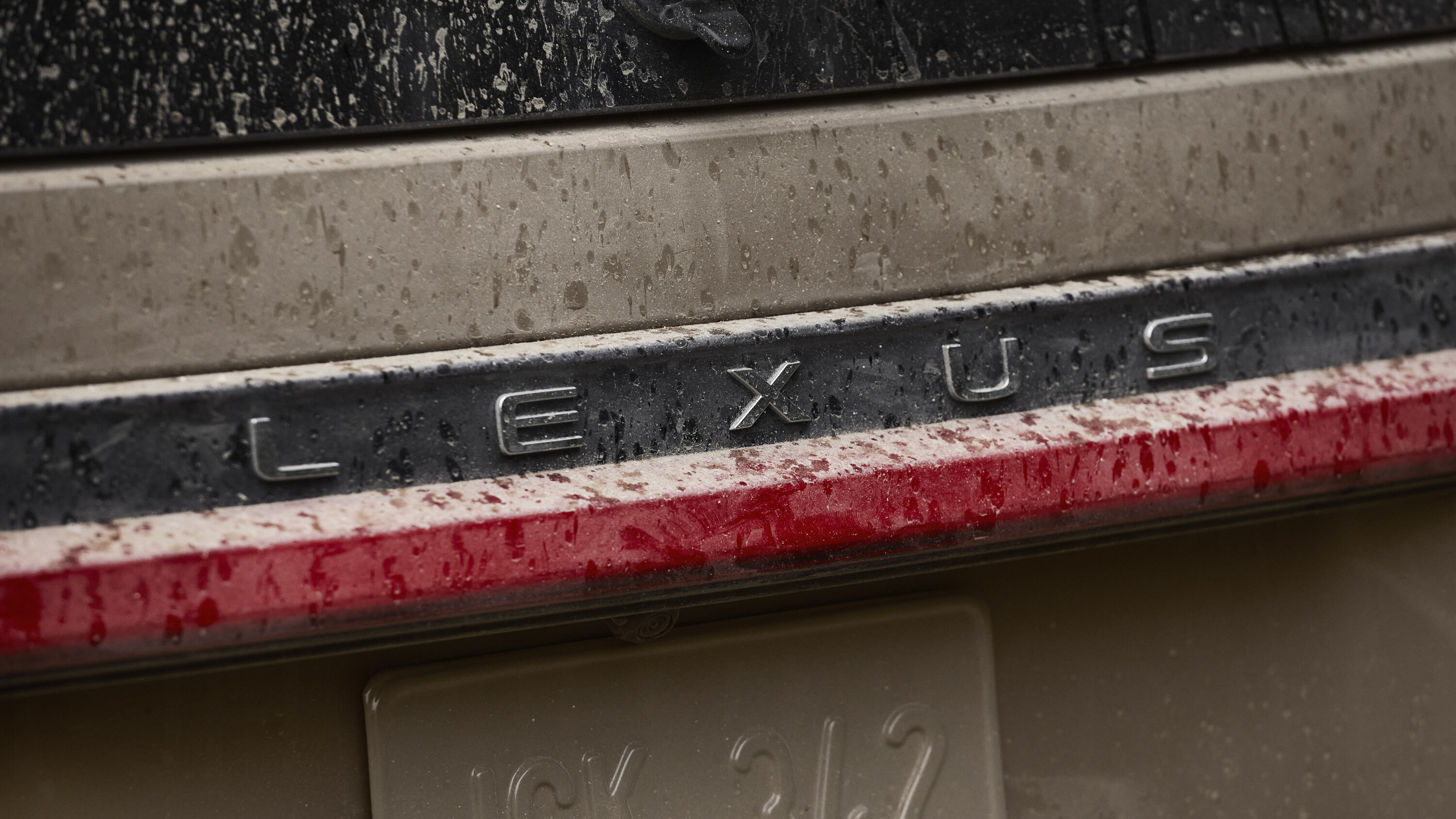
A second new teaser of the upcoming Lexus GX has been handed down ahead of its upcoming debut.
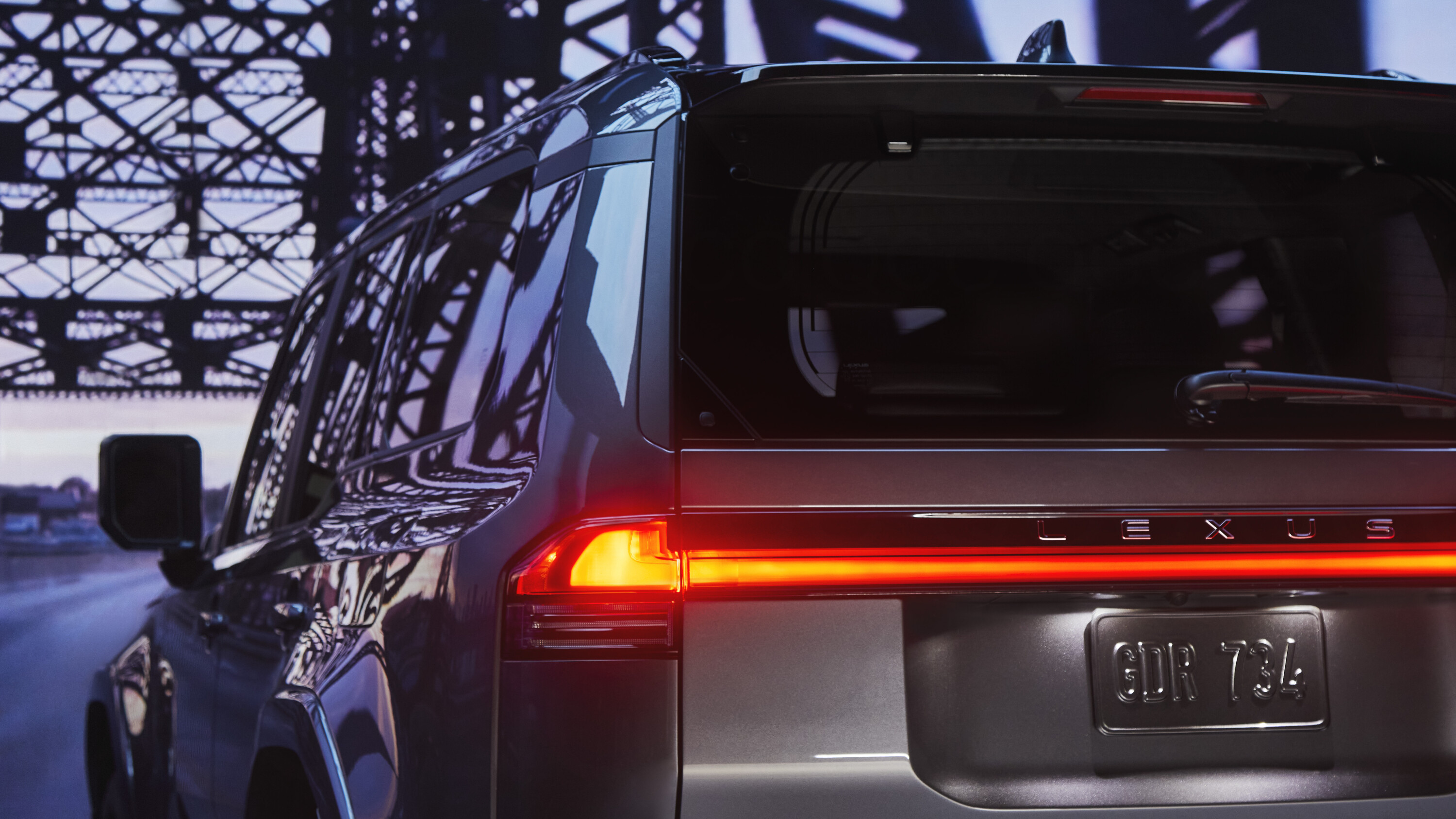
This time, we get a look at the rear end, showing a full-length LED light bar terminating at a compact corner unit, giving the GX a more utilitarian look than most of its stablemates.
Of course, being based on the next-gen Toyota Prado likely plays a part in that particular aspect of the GX’s design.
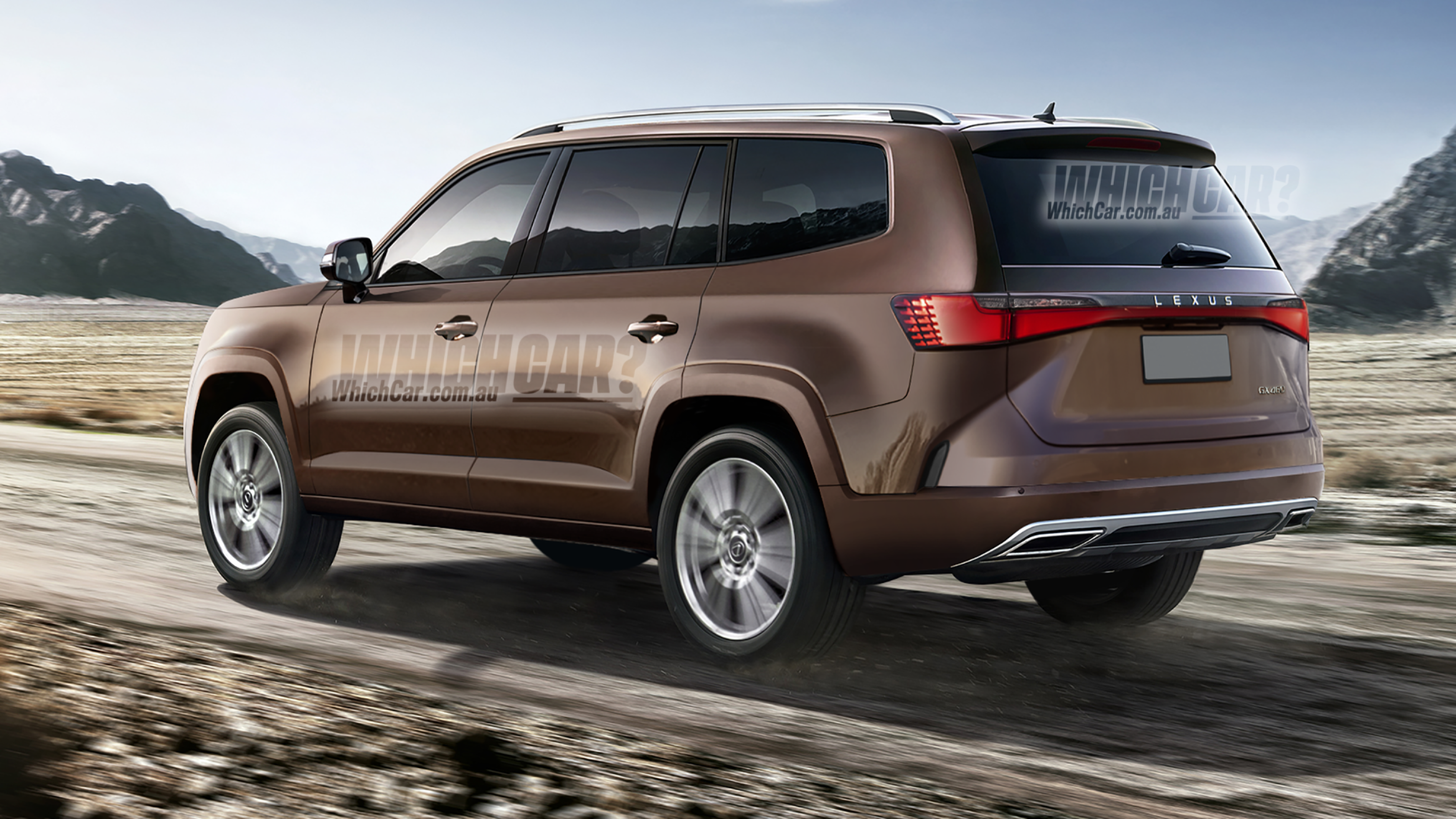
Before today’s teaser was released, we’d prepared the below speculative renderings. But, as this latest preview shows, our imagined rear-end design is a little wide of the mark – so we’ve tasked our Photoshop wiz with taking another pass at it.
In the meantime, what do you think of our version of the GX?
May 11: 2024 Lexus GX teased
The 2024 Toyota Prado large SUV appears closer to its long-awaited debut.
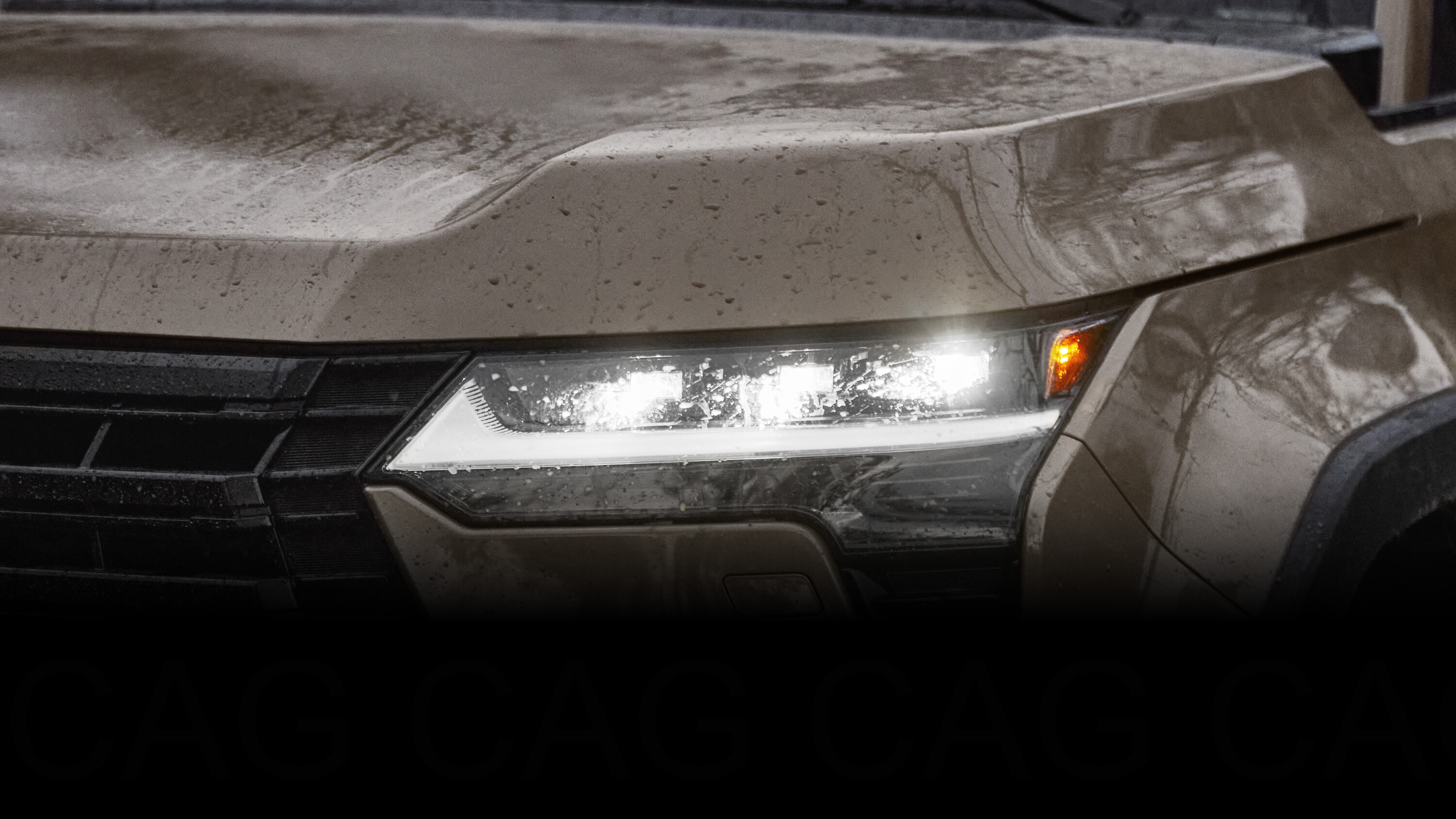
Lexus has provided a first glimpse of its third-generation 2024 GX off-road SUV before its unveiling, which is expected soon.
The latest model is expected to share its fundamentals with the forthcoming LandCruiser Prado, which should debut later this year – after the Lexus GX appears.
The current Lexus GX is based on the Toyota Prado available in showrooms today – dating back to 2009 – with a 4.6-litre naturally-aspirated petrol V8.
While the model is currently focused on the left-hand drive North American market, an Australian launch is likely for the new-gen.
The brand’s local arm distributed an official press release on its media website late Thursday, stating further information would be announced soon.
It follows a similar strategy for the latest LM people-mover confirmed for Australia, with the new model teased one week before its debut at the 2023 Shanghai Auto Show in April – though a longer wait is likely for the new GX.
In late 2021, Lexus trademarked the GX badge in Australia, though it isn’t unusual for brands to protect trademarks in global markets, regardless of any launch plans.
The trademark listing refers to a ‘GX550’ variant, suggesting it could be fitted with a less-powerful version of the 305kW/650Nm 3.5-litre twin-turbo petrol V6 found in the LX600 and overseas LandCruiser 300.
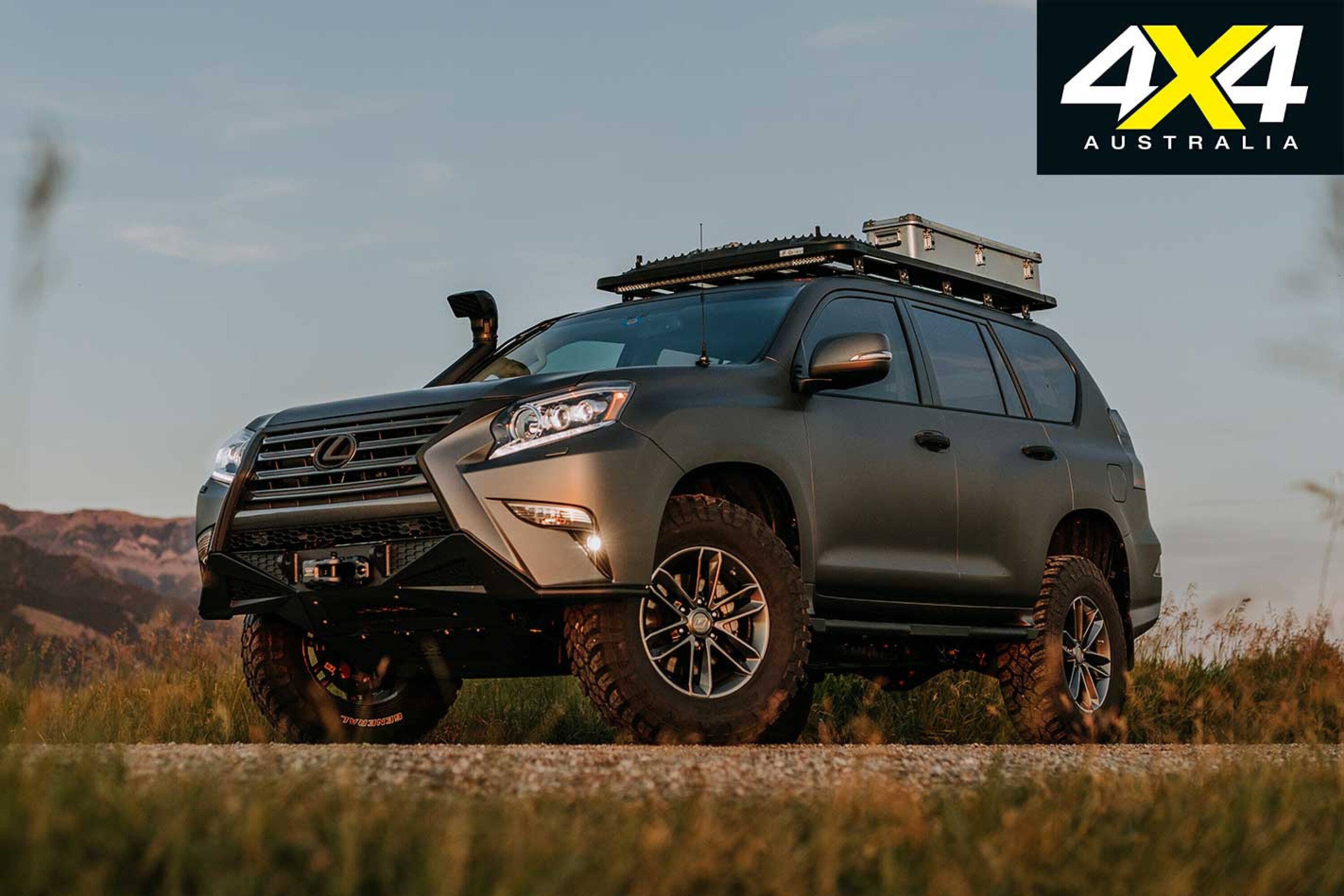
With the demise of the seven-seat Lexus RX L, the new GX would provide Lexus Australia with a more-affordable three-row SUV positioned below the larger LX.
As such, it would also help to fill the difference between the RX and LX, with a circa-$27,000 gap between the flagship RX550h and the entry-level LX500.
As with all Toyota-derived Lexus models, the GX should build on the Prado’s appearance with its own ‘spindle’ grille and L-hooked headlights.
The teaser images showcase headlights reminiscent of the LX, while – interestingly – the B-pillar sits lower than the chiselled bonnet, allowing for a more-rugged design to rival the Land Rover Defender off-road SUV.
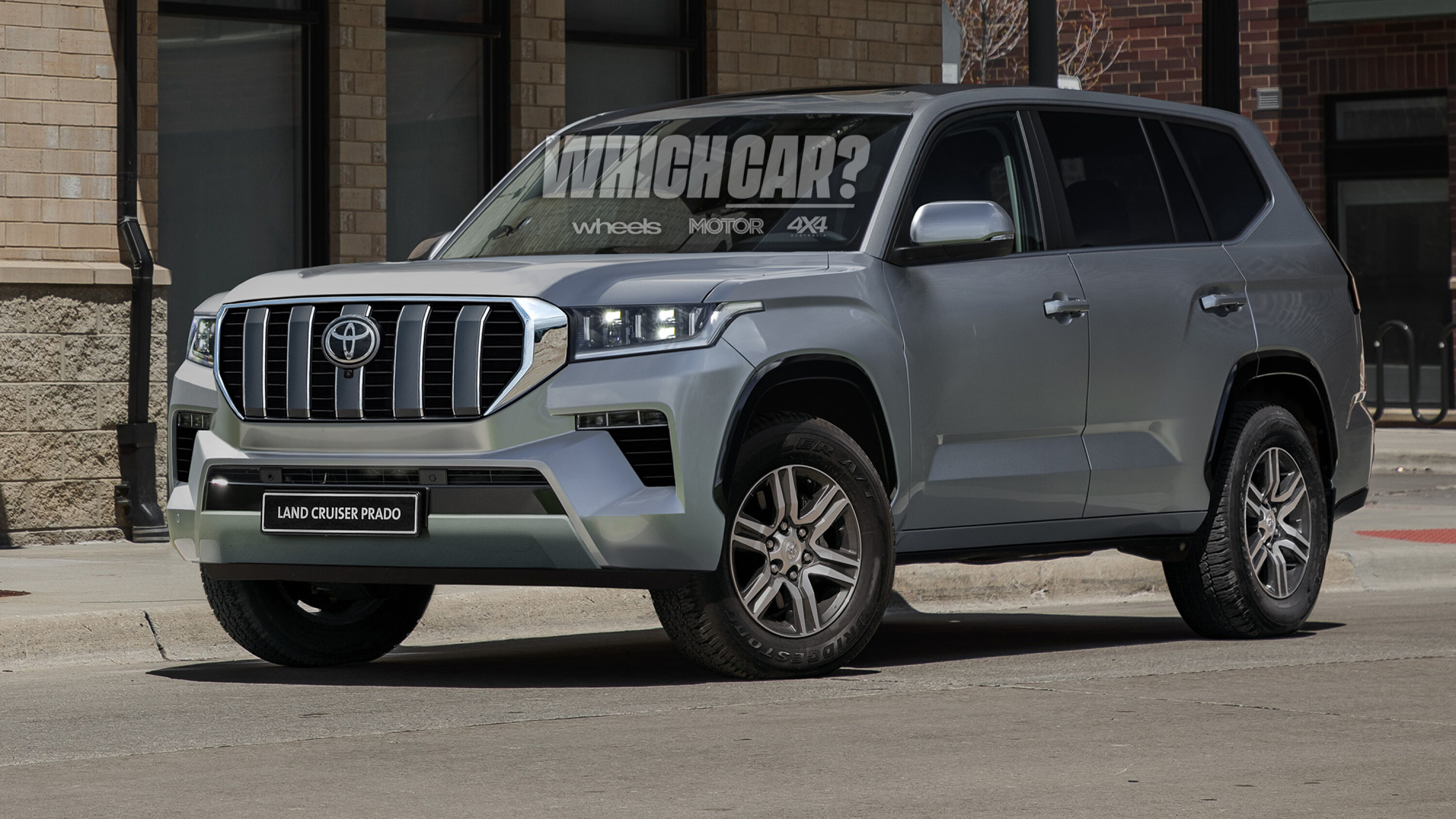
The smaller Toyota Prado and Lexus GX would typically follow a year behind the full-size LandCruiser and LX. That would’ve seen the new models debut in 2022, but supply and production issues have reportedly delayed the release.
While details remain sparse, both are expected to ride on Toyota’s latest TNGA-F frame architecture shared with the LandCruiser 300, Lexus LX, and the Toyota Tundra ute.
As reported, the current 2790mm wheelbase and 1585mm track width are expected to remain – similar to the LandCruiser 300 Series, which retained the 200 Series wheelbase.
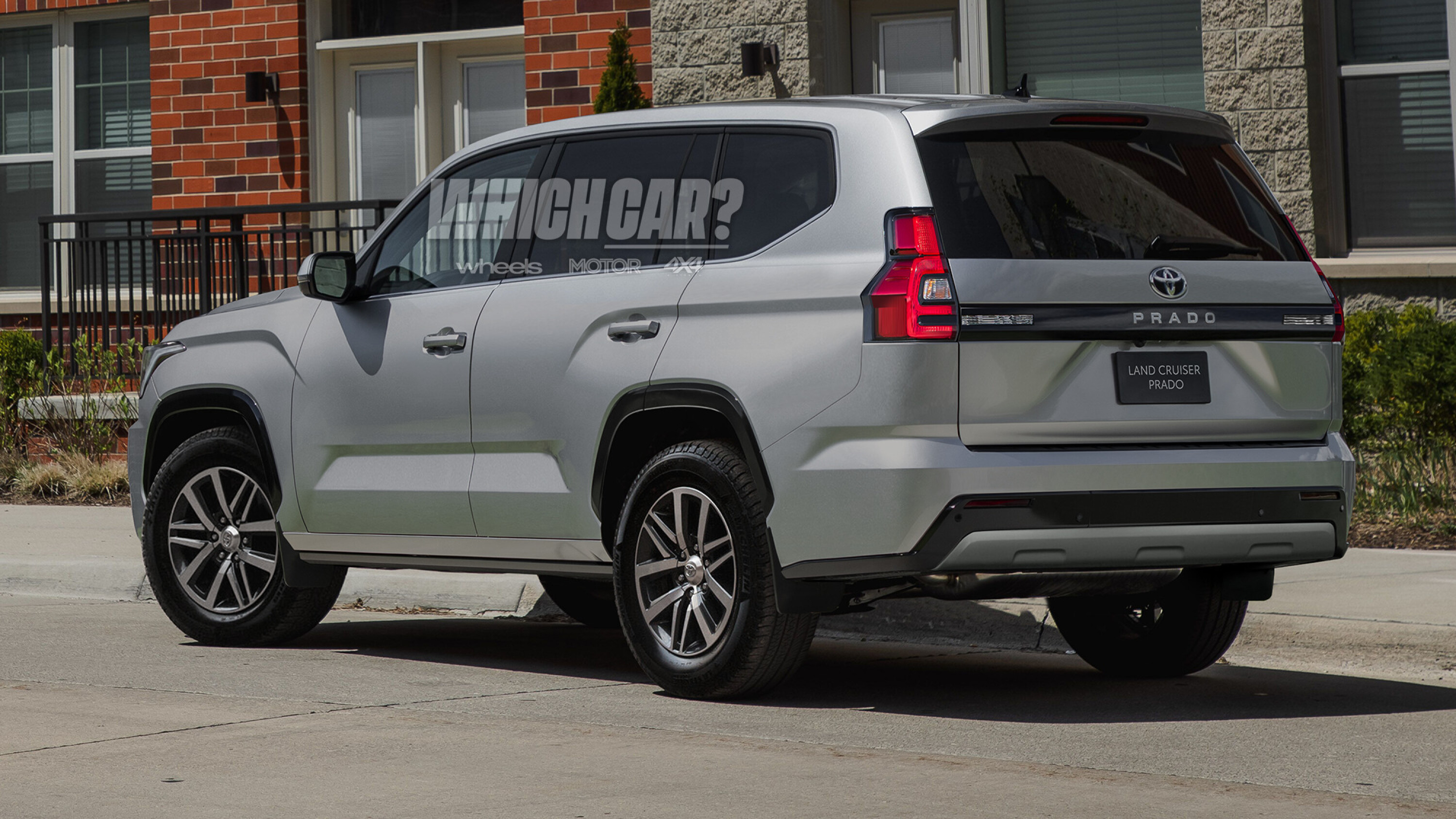
Under the bonnet, the Prado’s familiar 2.8-litre turbo-diesel four-cylinder appears set to remain, though it’s likely to receive hybrid power – either as standard or optionally – to improve fuel economy and boost its 150kW and 500Nm outputs.
Other reports have suggested the new Prado could also pick up the 3.5-litre petrol V6 tipped to feature in the Lexus GX.
The 2024 Lexus GX is expected to debut soon, with more information likely in the coming weeks, so stay tuned to Wheels for the latest news – including for the all-new 2024 Toyota LandCruiser Prado.
Spring in Australia brings perfect weather for exploring the outdoors.
Whether you’re venturing into Tasmania’s dense forests, enjoying Queensland’s scenic coastlines, or cruising along the iconic National Highway 1, staying connected and powered is a must for today’s adventurers.

Traditional fuel generators may have been the go-to choice for years, but their noise, fumes, and reliance on fossil fuels are hard to ignore. Enter BLUETTI’s solar-powered portable power stations—clean, quiet, and eco-friendly solutions to keep all your gear charged without the hassle.
Let’s dive into how you can stay powered during your springtime adventures in Australia with reliable BLUETTI power solutions.
Sustainable Power Solutions for Every Outdoor Adventure
BLUETTI, a leading provider of portable power stations and solar generators, offers reliable, sustainable, and affordable power solutions for all outdoor explorations.
Portable power station for 1-2 day weekend getaways: BLUETTI AC180
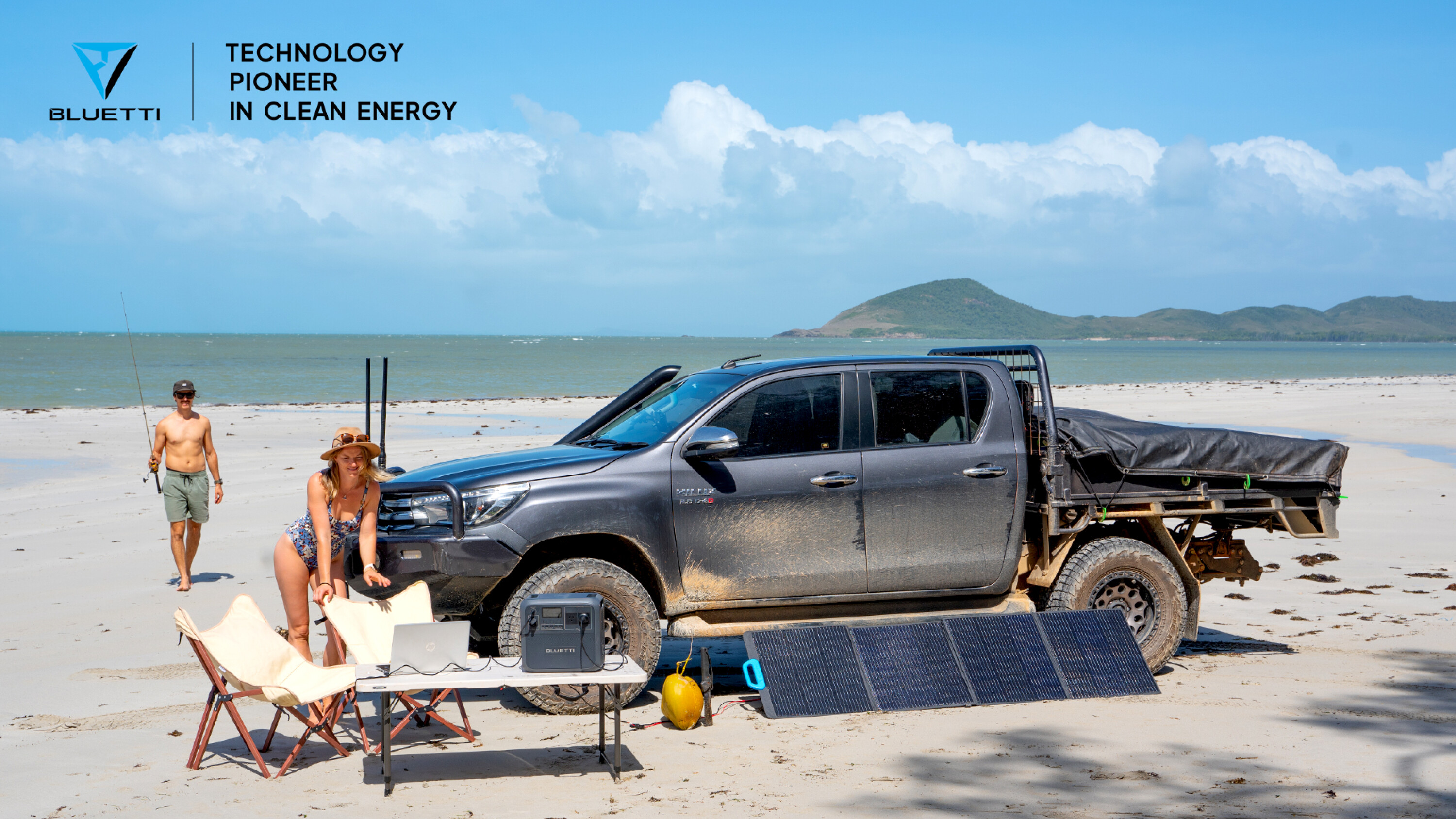
For short weekend getaways, the BLUETTI AC180 is the ultimate power companion. Weighing only 16.4kg, this compact generator packs a punch with 1,800W output and 1,152Wh capacity—enough to keep your essentials running while you enjoy the scenery. Capture every moment with fully charged phones, cameras, and drones, or power your picnic with camping fridges and portable grills.
Here’s what you can expect: charge your smartphone up to 62 times, your laptop 15 times, and your camping lights up to 93 times. Best of all, the AC180 runs on solar power. With solar panels, it recharges in just 3 hours under bright sunlight, letting you reduce your carbon footprint without sacrificing comfort.
Portable solar generator for 3-5 day camping trips: BLUETTI AC200L
For longer camping trips with family or friends, the BLUETTI AC200L provides more power and flexibility. Its 2,400W output and 10 outlets handle everything from charging phones to powering hairdryers and coffee makers. With 2,048Wh battery capacity, it can run a 150W fridge for over 30 hours or a 600W microwave for around 3 hours—perfect for off-grid cooking.
The AC200L supports 6 ways to recharge. You can top it up at 2,400W in 1.5 hours from a wall outlet, or 2.5 hours from 1,200W solar chargers. So you’ll never have to worry about battery life if you grab some portable solar panels like the BLUETTI PV350 before you hit the road. They harness solar energy to keep your adventure fully powered, no matter how remote your campsite is.
Power kit for long-haul road trips (7 Days+) : BLUETTI AC200L + Charger1 + B300K
For extended caravan trips, the BLUETTI AC200L , paired with the Charger1 alternator charger and the B300K expansion battery, creates an unstoppable power combo. Even far from civilization, this setup keeps you charged.
Here’s how it works: the Charger1 DC-DC car charger taps into your vehicle’s alternator, charging the AC200L power station while you drive. It delivers a robust 560W power, charging the AC200L about 6 times faster than the 100-200W from a cigarette lighter charger. With multiple layers of safety guards, it never drains your car battery for a worry-free drive. The B300K battery expansion allows you to store an extra 2764.8Wh of electricity, powering larger appliances like air conditioners longer. This power kit forms a small off-grid power system to let you enjoy a fully-powered, luxurious RV trip experience.
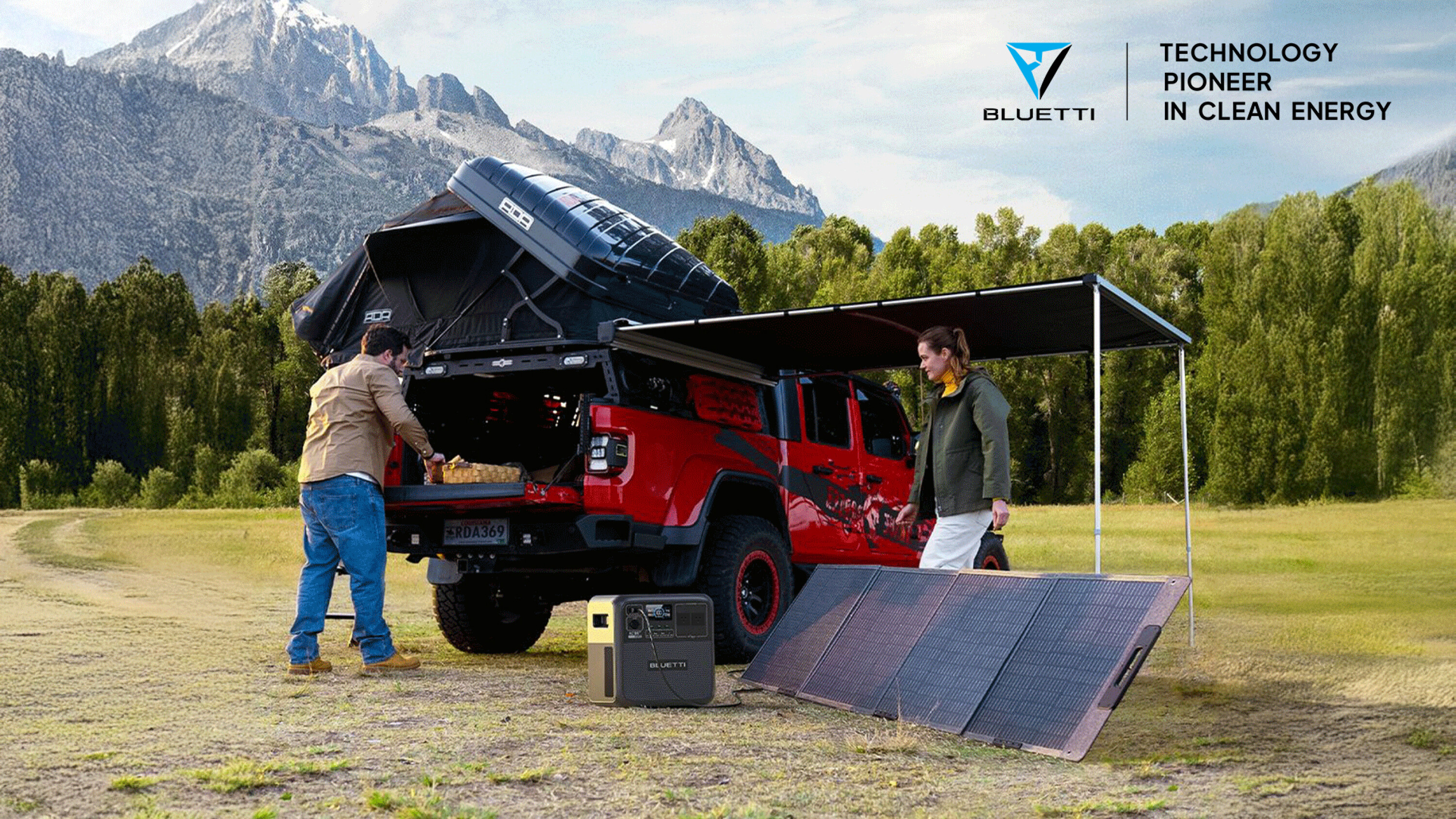
Show your green journey to inspire others
This spring, BLUETTI invites you to inspire others with your eco-friendly adventures through the #BLUETTIGlampThisSpring campaign. From October 16th to November 5th, share your green journeys powered by BLUETTI products for a chance to win amazing prizes, including the latest iPhone 16 or BLUETTI power stations. Let’s show the world how rewarding sustainable outdoor living can be.
About BLUETTI
As a technology pioneer in clean energy, BLUETTI is committed to a sustainable future by providing affordable green energy storage solutions for both indoor and outdoor use. Through initiatives like the LAAF (Lighting An African Family) program, BLUETTI is dedicated to bringing power to 1 million African families in off-grid areas. With a strong focus on innovation and customer needs, BLUETTI has established itself as a trusted industry leader in over 110 countries and regions.
Hyundai has added two off-road option packs that can be equipped to its Santa Fe Hybrid, with the dealer-fit Genuine accessories available now to suit the SUV.
The packs are a result of a collaboration between Hyundai Motor Company Australia (HMCA) and Hyundai America Technical Centre, with extensive development and testing ensuring the kits will meet the challenge of difficult terrain.
Both packs include new suspension componentry – Mando dampers, and XRT suspension knuckles and stabiliser bars – to give the vehicle a 30mm lift, thanks in part to the use of an Australian-exclusive 17-inch wheel and all-terrain tyre combination. The Pirelli Scorpion All-Terrain Plus tyres are available in either 235/65R17 108H or 245/70R17 110T sizes. Here are the differences both kits make when off-road ?
| u00a0 | SANTA FE (standard) | SANTA FE XRT |
|---|---|---|
| Approach Angle | 17u02da | 19u02da |
| Departure Angle | 20u02da | 22u02da |
| Breakover Angle | 17u02da | 19u02da |
| Ground clearance | 177mm | 210mm |
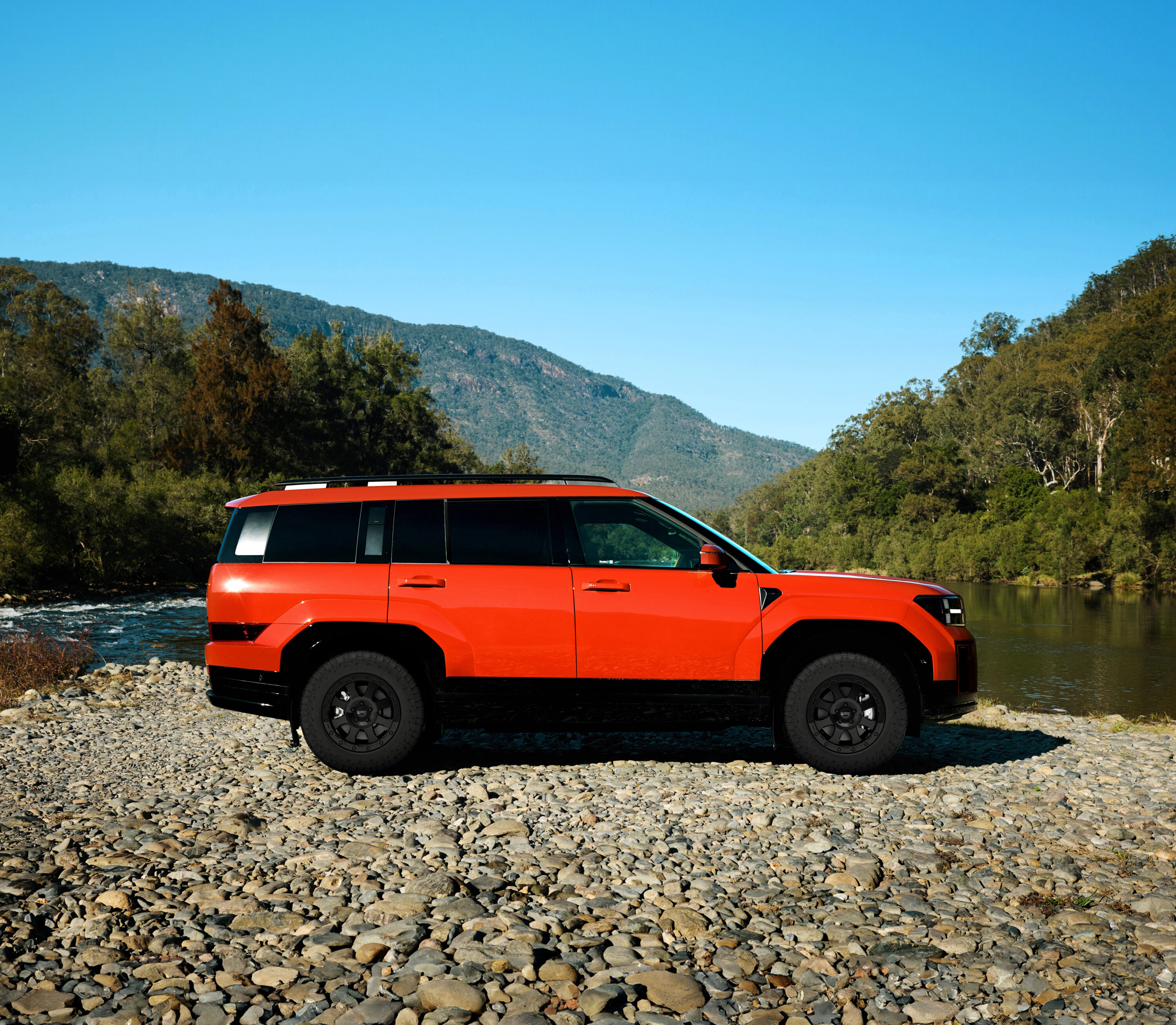
“Our XRT Option Packs enhance Santa Fe Hybrid’s off-road capability to help our customers boldly explore the great outdoors,” said Ted Lee, Hyundai Motor Company Australia Chief Executive Officer.
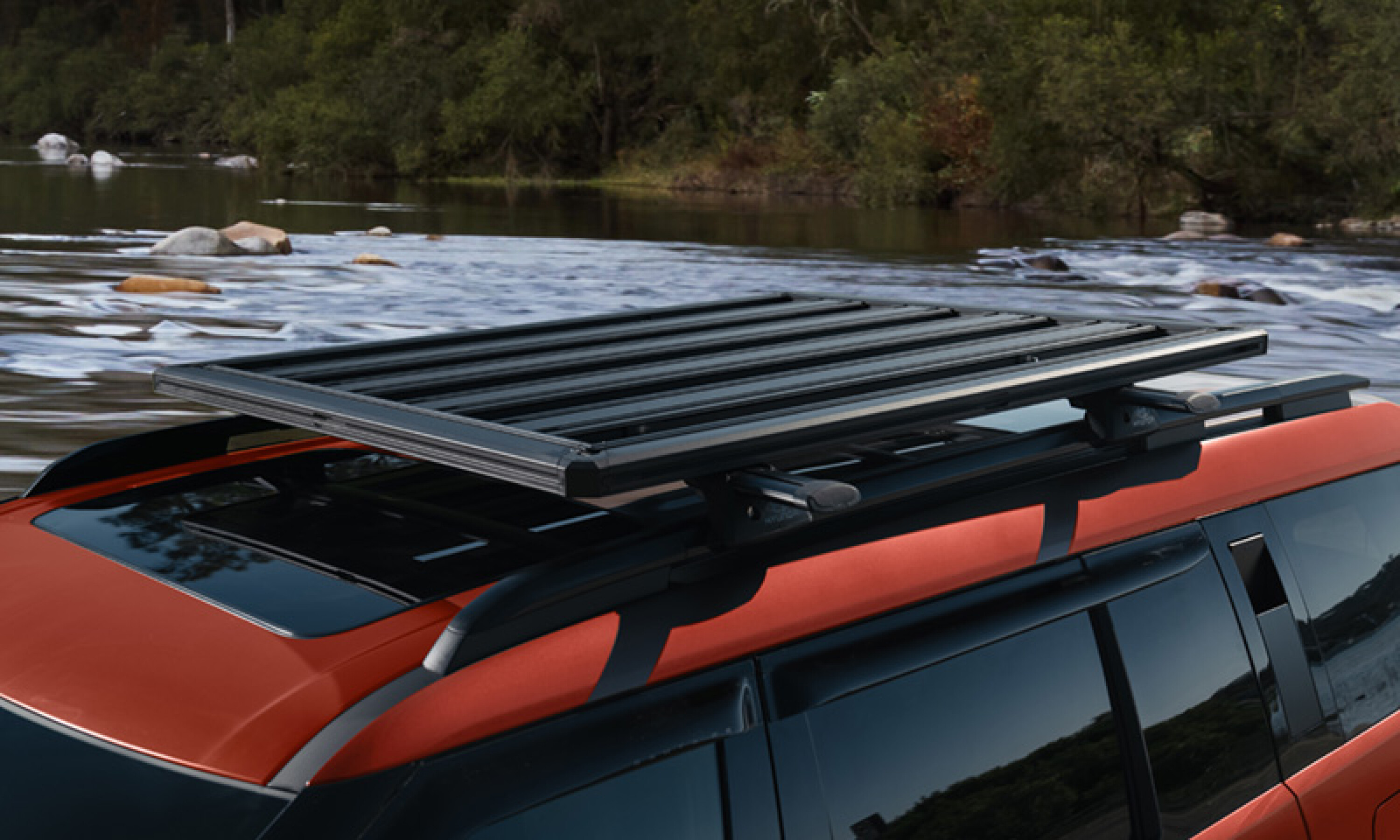
The cheapest entry point is the XRT Adventure Option Pack, priced at $6990. This pack comprises the XRT-exclusive 17-inch off-road wheel and tyre package, XRT mud flaps, an underbody skid plate, and the XRT suspension kit.
Spend an additional $3000 for the XRT Peak Option Pack ($9990) will get consumers the same equipment listed above, as well as integrated side steps, genuine roof racks, a roof platform, a bonnet protector and dark-tint style visors.
Both packs are available now for new and existing Santa Fe Hybrid owners, and they’re covered by Hyundai’s five-year, unlimited kilometre warranty when they are fitted by a Hyundai Dealership at new vehicle purchase.
The story so far ?
Santa Fe XRT off-roader revealed at LA Auto show ?
With the new ‘MX5’ Hyundai Santa Fe’s Land Rover Defender-like looks it needs off-road capability to match.
And Hyundai revealed just the ticket at this year’s LA Auto Show with the XRT variant. Designed as a joint flagship with the Calligraphy, the lifestyle-oriented trim promises enhanced rough terrain capabilities along with sportier blacked-out styling.
Hyundai Australia trademarked the XRT name locally in October, though a spokesperson told Wheels the XRT is for the North American market only.
However, the spokesperson did admit to some “light smouldering” – if not quite fire – around the XRT trademark. In other words, there’s potential if Hyundai hears enough customer demand.
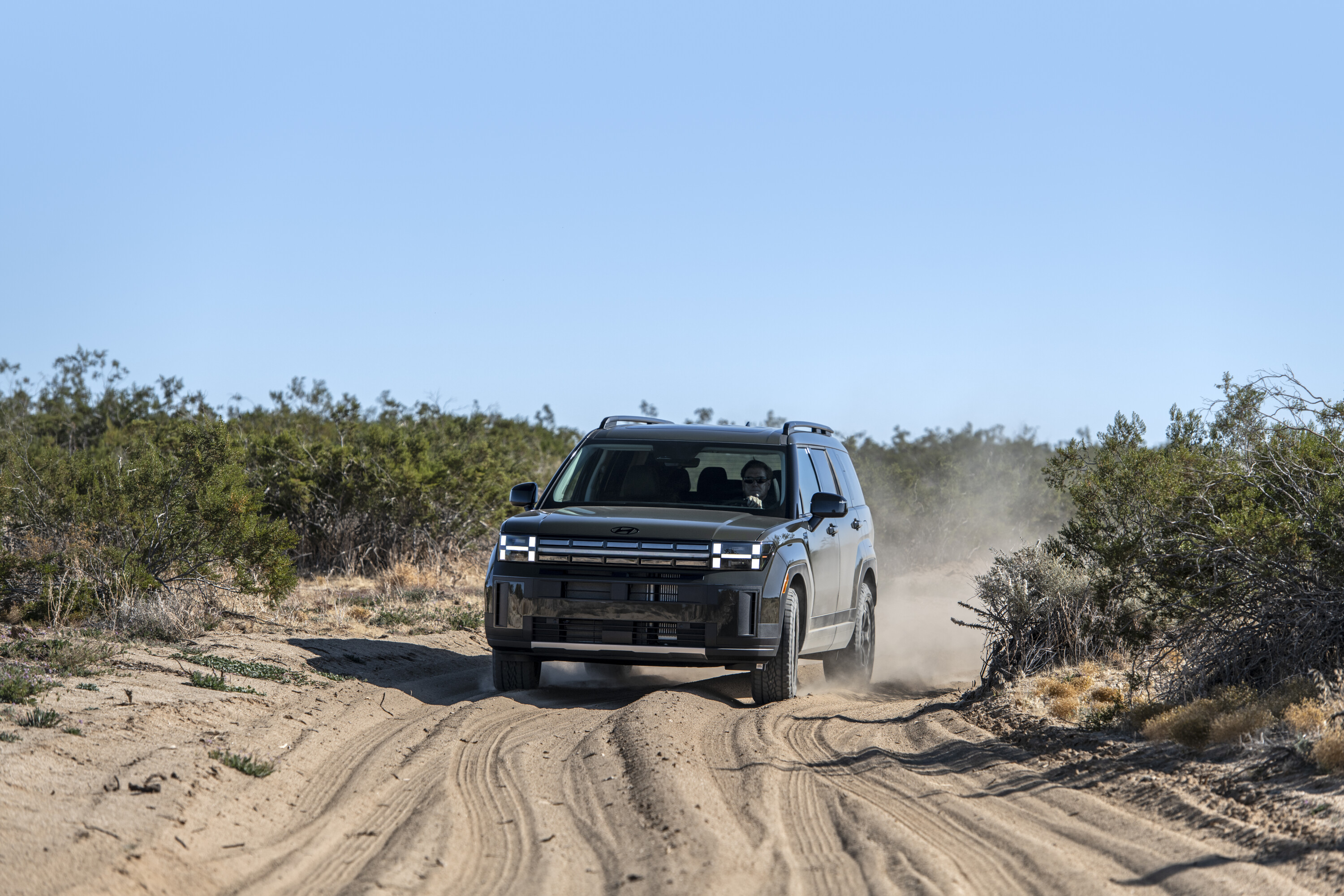
Hyundai describes the Santa Fe XRT as “an outdoor-focused sport model tailored to the diverse needs of enthusiasts” – and, thankfully, it’s more than just a black pack.
It rides on steel springs and traditional dampers (no Defender-esque air suspension with height adjust here) with 30-inch all-terrain tyres (the fitment is 245/60R18) wrapped around beefy black 18-inch alloy wheels.
Hyundai hasn’t said whether it’s fitted a body or spring lift, but has said the XRT boasts 40mm more ground clearance. Braked towing capacity is rated at 2040kg with the NA-market 207kW 2.5-litre turbo-petrol four-cylinder.
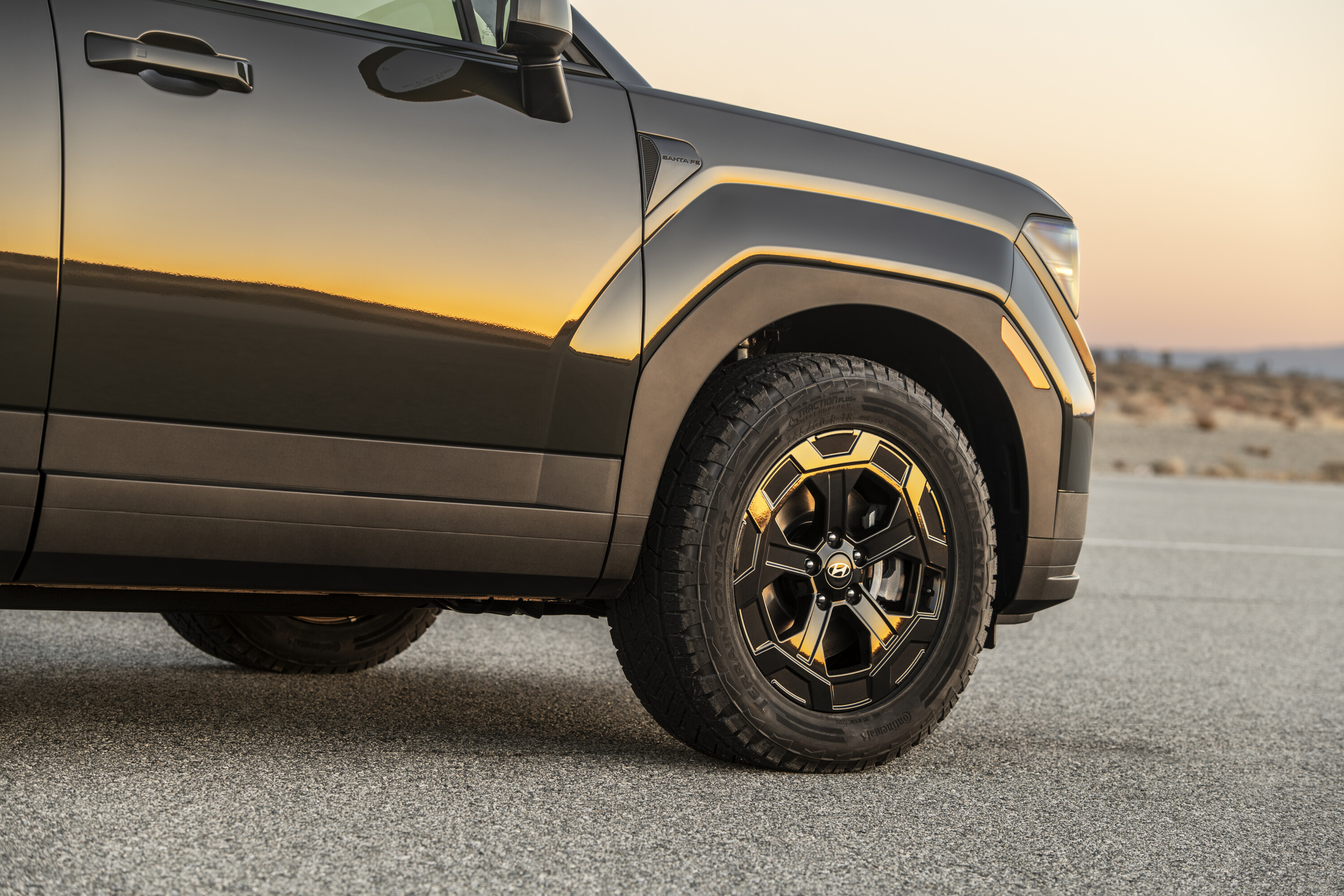
Visually, the XRT is set apart from the chrome-heavy Calligraphy with dark chrome and piano black exterior trim, different grille design, black roof rails and bars.
Inside the leather turns to black with ‘XRT’ debossed into the headrests of the seats. It’s otherwise the same vertically laid-out cabin design as the standard vehicle.
As mentioned above, the Santa Fe XRT is not confirmed for Australia and is built for domestic consumption in Alabama, not South Korea where Aussie cars come from.
There is interest in a local introduction, but don’t expect the off-road-focused Santa Fe XRT to arrive at launch.
New Hyundai Santa Fe revealed with 2.5T
After more than two decades in local showrooms, the latest version of Hyundai’s largest SUV, the 2024 ‘MX5’ Santa Fe, will be expected to perform more strongly in the sales race against more fancied rivals, according to company insiders.
Revealed tonight in – where else – Santa Fe, New Mexico, the large, bold and brash Santa Fe will arrive in Australia in 2024, some two years after category leader Toyota dropped its brand new Kluger into the burgeoning large SUV sector.
Hyundai Australia insiders have admitted to Wheels that the unibody Santa Fe, which on average only manages around a third to a half of the Toyota Kluger’s monthly sales volume, has underperformed down under.
Other unibody-style large SUVs like the Subaru Outback have also traditionally outperformed the Santa Fe, while ladder-on-frame 4×4 wagons, including the Isuzu MU-X and Ford Everest, also sell strongly in comparison.
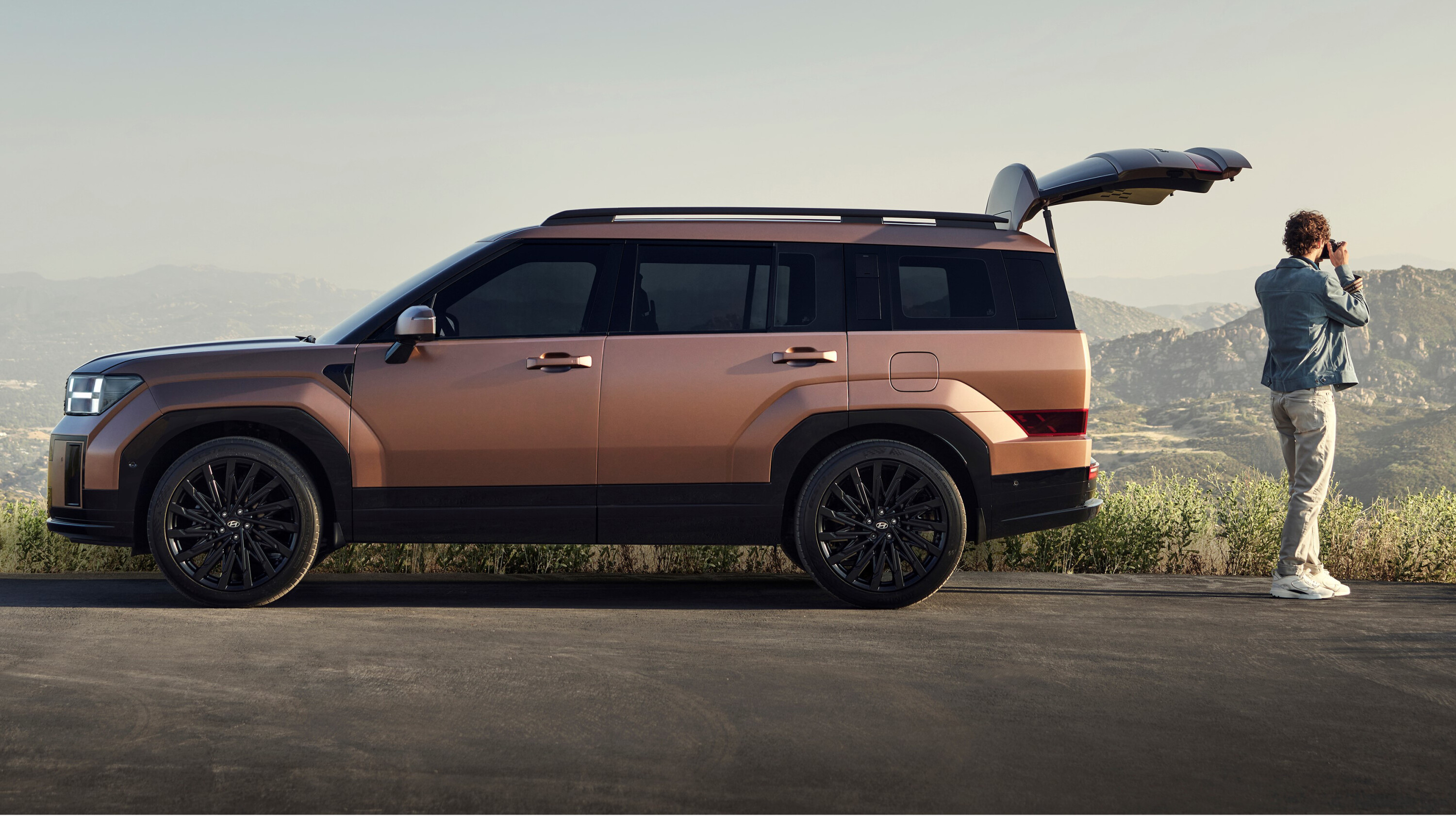
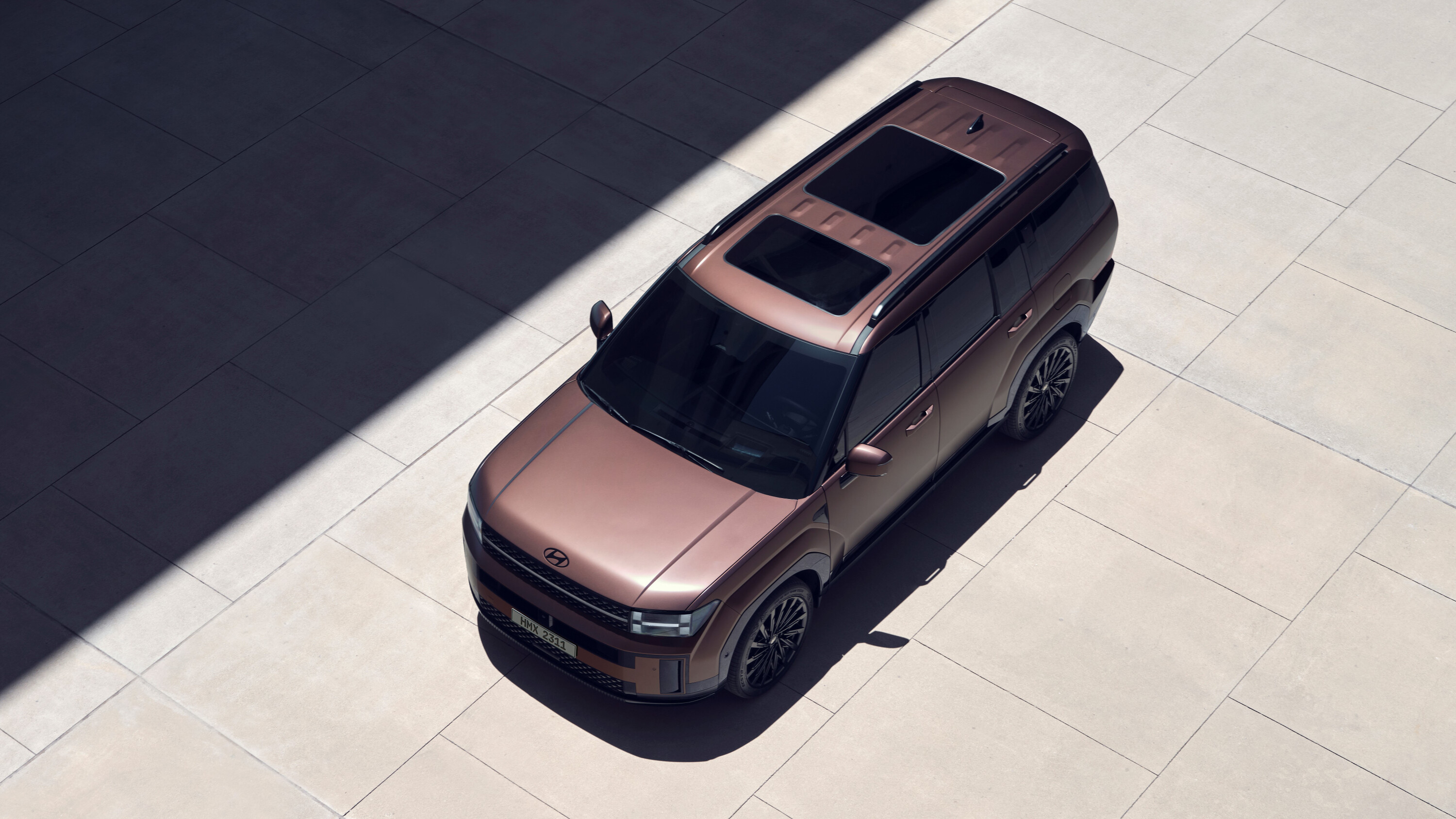
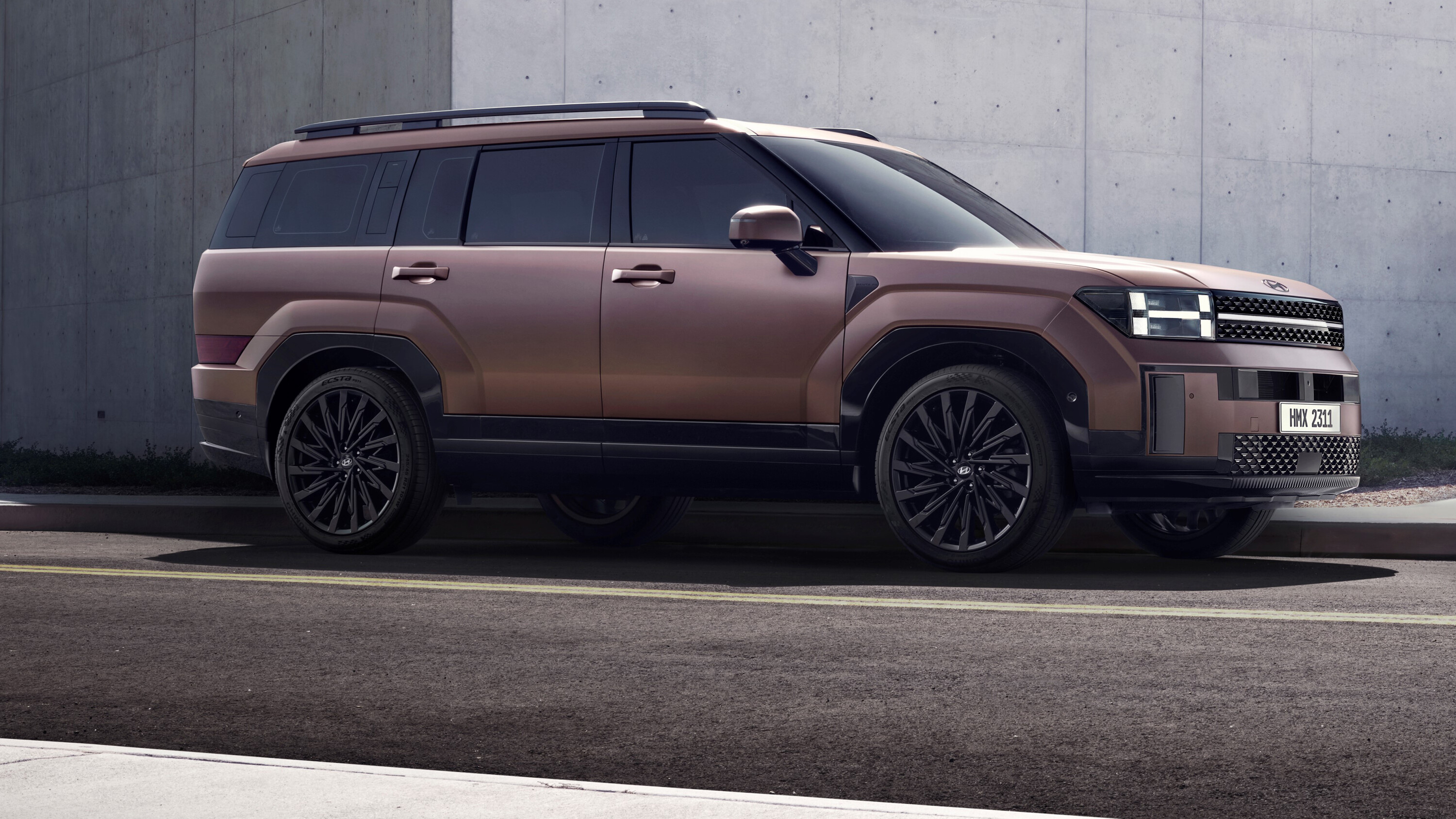
However, the all-new version of the Santa Fe will push it up and away from its key rivals, most notably from a design front. It’s big and it’s bold, and it cuts a swathe through more traditionalist design – including its own former visage.
While final specs are yet to firm up ahead of its launch, locally-delivered Hyundai Santa Fes are likely to utilise a 207kW/422Nm ‘Theta III’ turbocharged 2.5-litre four-cylinder engine from the Sonata as the headline powertrain.
Although there’s no information to confirm the drive configuration, images show an HTrac badge on the back. The spec sheets suggest the 2.1-tonne Santa Fe will return a fuel economy figure of 9.0L/100km and hit 100km/h in 8.0 seconds.
The other option likely for Australia is a hybrid ‘Gamma III’ 1.6-litre turbocharged four-cylinder.
The petrol engine is good for 132kW and 265Nm and expect the gearbox-mounted electric motor to raise combined outputs near or above the existing car’s 169kW/350Nm figure. The supplied specs confirm a 6.5L/100km efficiency rating.
However, there are a couple of notable omissions from the Santa Fe’s specification sheet; both the 2.2-litre turbo diesel and 3.5-litre naturally aspirated V6 powertrains present in the current Santa Fe will not be available in the 2024 Santa Fe.
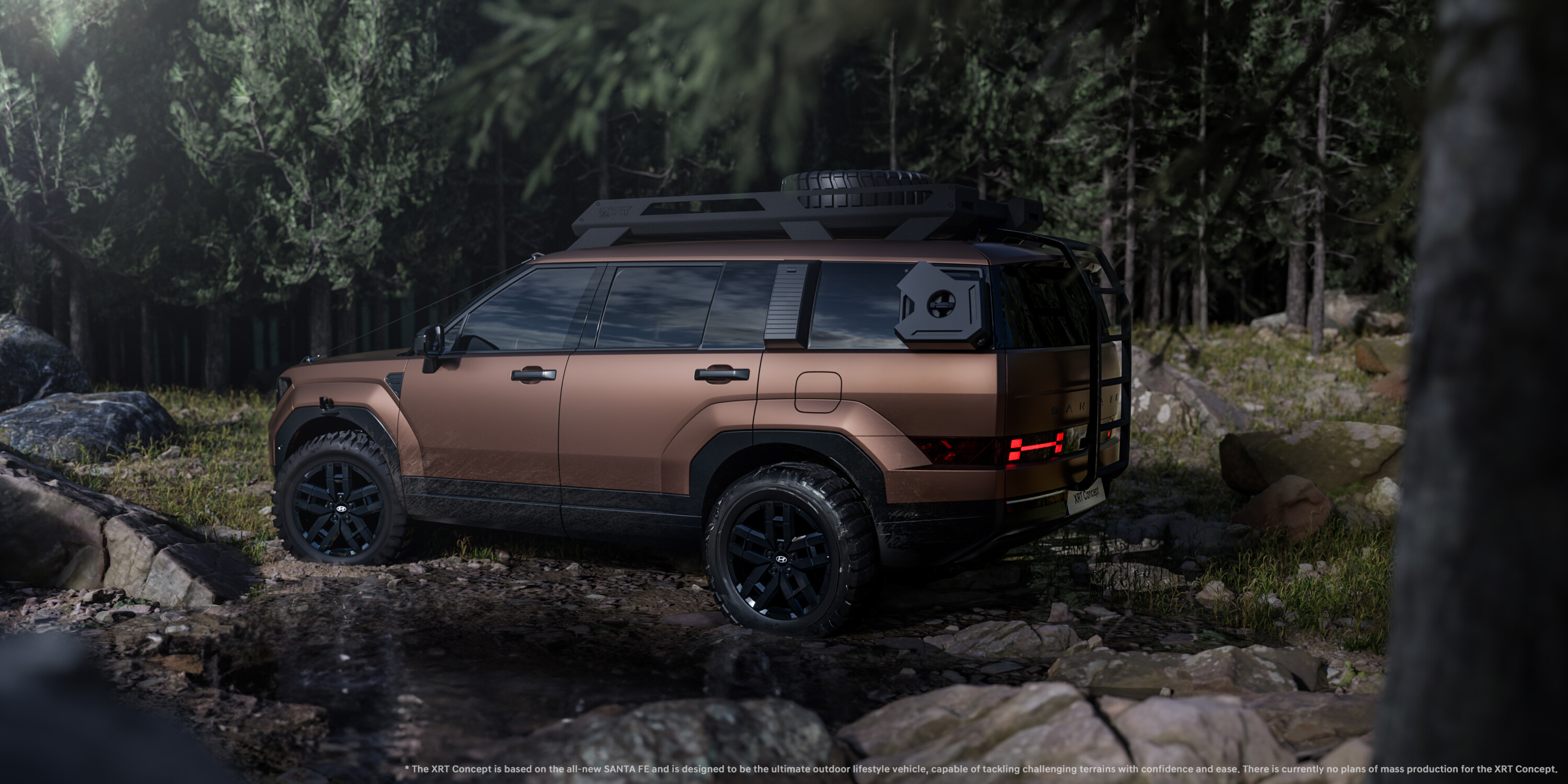
Hyundai showed off an image of an off-road concept it’s calling the Santa FE XRT – a beefed-up SUV with mud tyres a very Land Rover Defender 130-style safari kit hanging off the side.
It’s bigger in almost every direction; at 4830mm it’s 45mm longer than previously, its 2815mm wheelbase is 50mm longer than previous, and it is 35mm taller at 1720mm. Its overall width remains static at 1900mm, despite those prominent wheel arches.
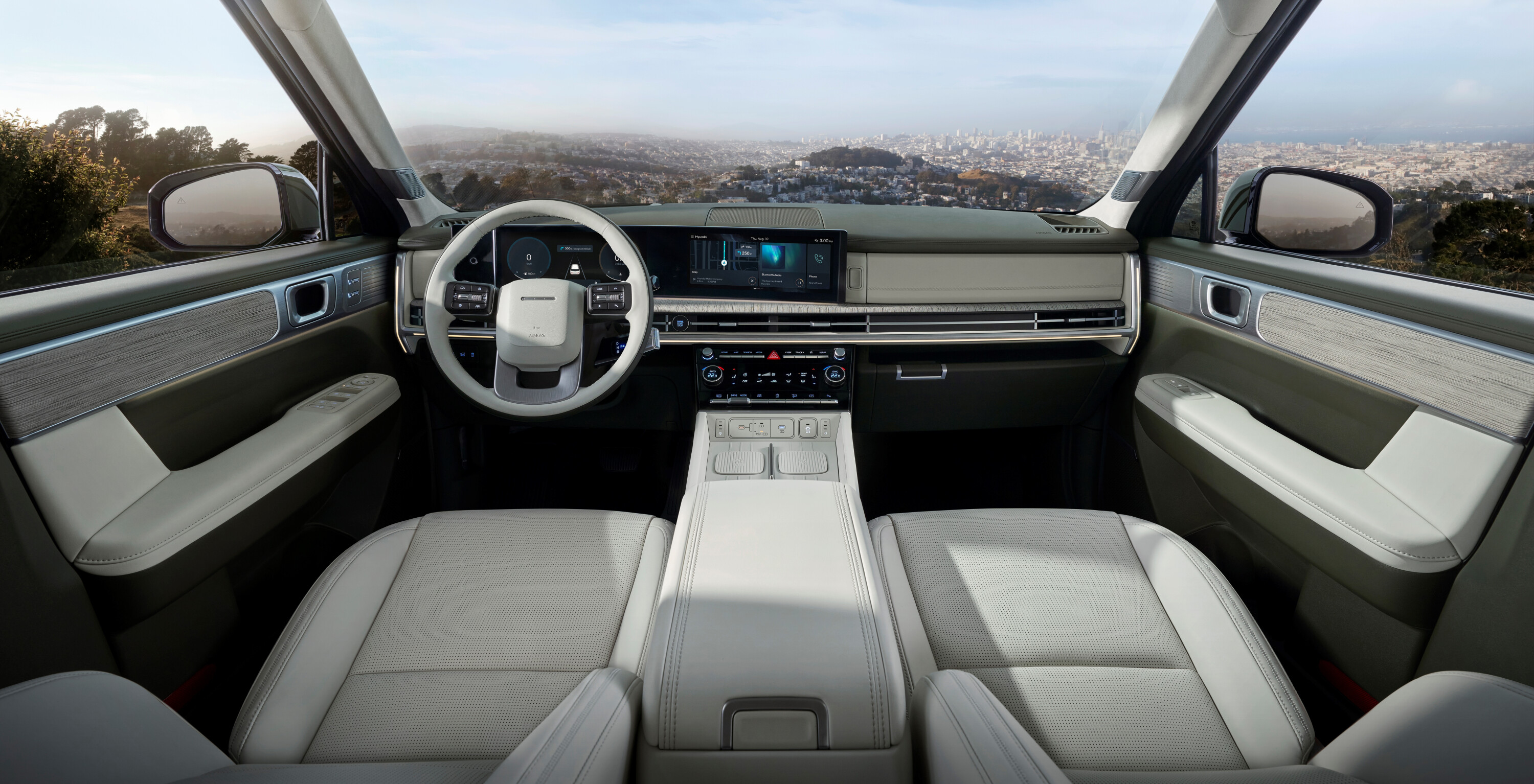
Nowhere is that extra length more evident than on the inside.
The second-row legroom has increased by 35mm to 1075mm. and by 20mm to 1055mm in the hybrid-equipped version. Third-row legroom, meanwhile, has increased by 15mm to 761mm.
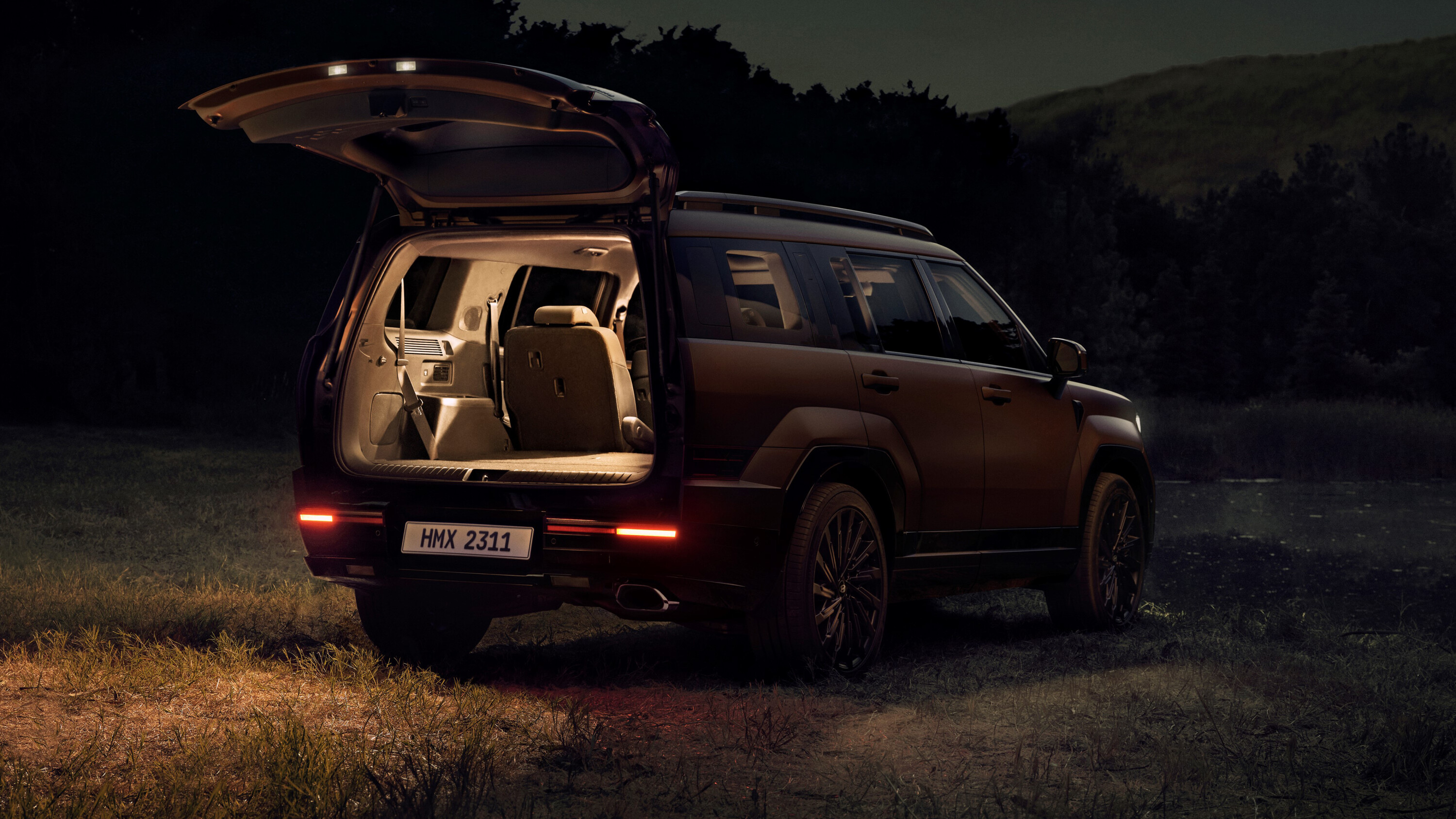
Hyundai is also claiming best-in-class third-row headroom as well, with the third-row headroom’s height lifting by 69mm to 958mm.
It is also claimed that the Santa Fe’s luggage capacity is up by 91 litres, while tailgate opening width jumps by 125mm.
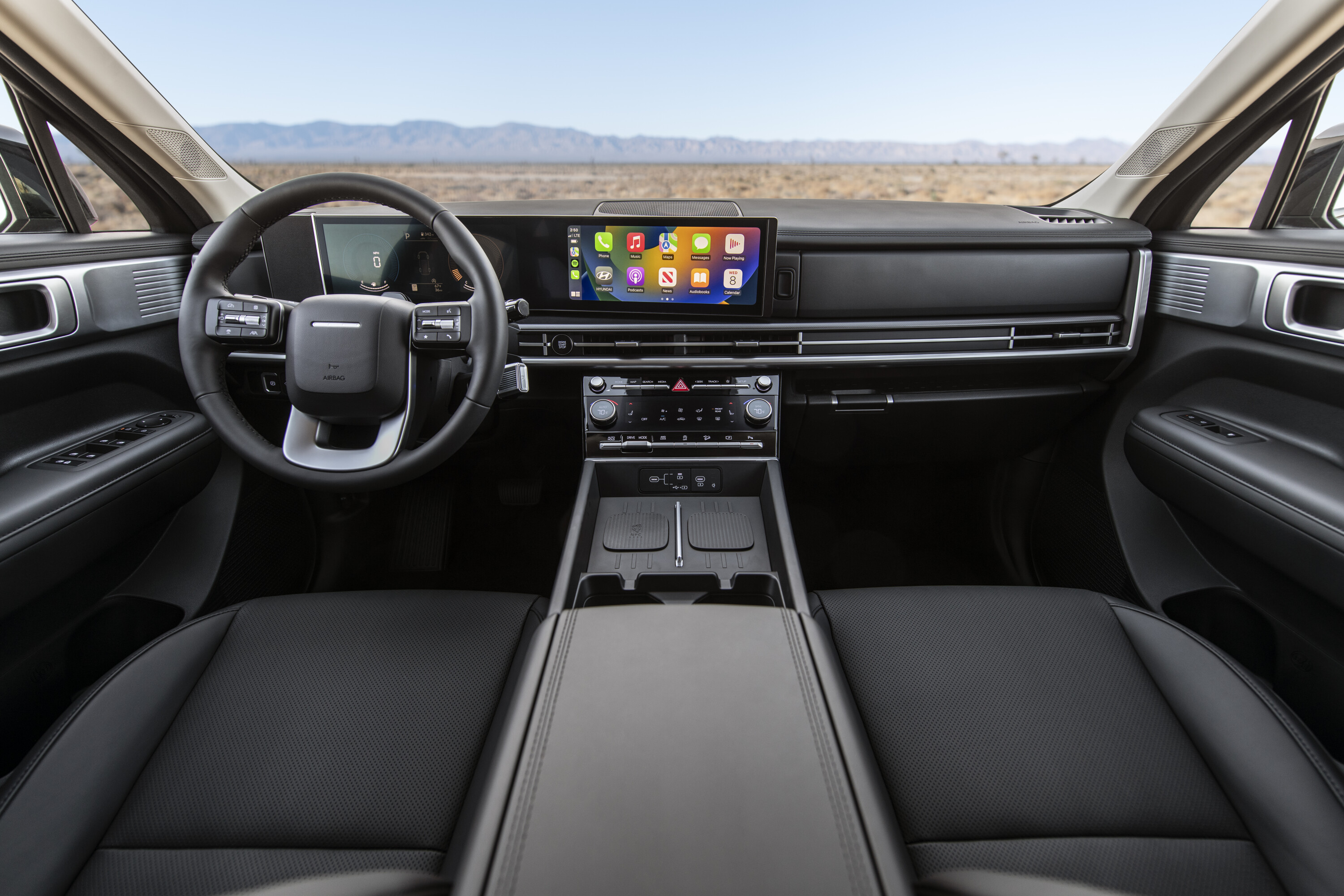
Inside, the dash mimics the style of the Sonata and Tucson, with twin 12.3-inch screens mounted side by side on a sweeping curved binnacle, while the electronic gear shifter has been relocated behind the steering wheel.
A mix of digitally accessed controls and traditional dials and switches for climate control and the like combine with a generously wide centre console that’s home to a pair of inductive phone charging pads.
The high-spec version used for press images sported heated seats, push-button start, multi-zone climate control and a digital rear-view mirror that can be used when visibility via the traditional glass mirror is compromised.
Hyundai has also added an ultraviolet light-based steriliser atop the glovebox, in what is a genuine industry first, that can be used to sterilise items like phones and wallets.
Over-the-air (OTA) software updates for the Santa Fe will negate the need to visit a dealership for some upgrades, while on-board near-field technology (NFC) will allow the use of a phone-based digital key.
The Santa Fe’s suite of active and passive safety features is comprehensive and includes second-generation intelligent cruise control that can moderate speed in corners and keep the car centred within a lane.
Intelligent speed limit assist, rear-view monitor, rear cross-traffic collision-avoidance assist, front/rear parking distance warning, surround view monitor, remote smart parking assist, and safe exit assist are all listed as standard fitment.
Pricing hasn’t been divulged for the 2024 Hyundai Santa Fe, but it’s reasonable to expect that they will increase from their present position, given the increase in specification, new powertrains and increased production costs.
For example, the 1.6-litre HEV-equipped AWD Highlander currently costs $69,500 plus ORCs, while the base model V6 FWD starts at $46,050 plus ORCs.
Expect the range to climb above $50-55K for an entry model and over $70K for a flagship Highlander.
The 5.7-litre Hemi V8 is officially in run-out mode across the RAM 1500 DT line-up, marking the end of the line for the eminent 291kW/556Nm eight-cylinder engine.
This follows in the footsteps of RAM Trucks in the USA, which in 2023 replaced the V8 with the choice of two Hurricane 3.0-litre turbocharged inline-six alternatives (a 313kW/636Nm version and a higher-output 403kW/707Nm option). While an announcement is yet to be made, RAM Trucks Australia is expected to follow suit – but to what extent is still to be confirmed.
What is known is that the phasing out of Hemi V8 stock – an iconic engine which can essentially trace its roots back to 1951 – is in preparation for the soon-to-be-announced, revamped 2025 RAM 1500 line-up.
“Hemi V8s and RAM Trucks go hand in hand, so now’s the perfect time to grab a future classic,” said Jeff Barber, General Manager, RAM Trucks Australia.
“The legendary Hemi V8 has been the rock-solid backbone of the RAM Trucks product line-up since the early 2000s, offering unrivalled drivability, outstanding towing capability and, of course, that unique V8 rumble for over 70 years in various incarnations.
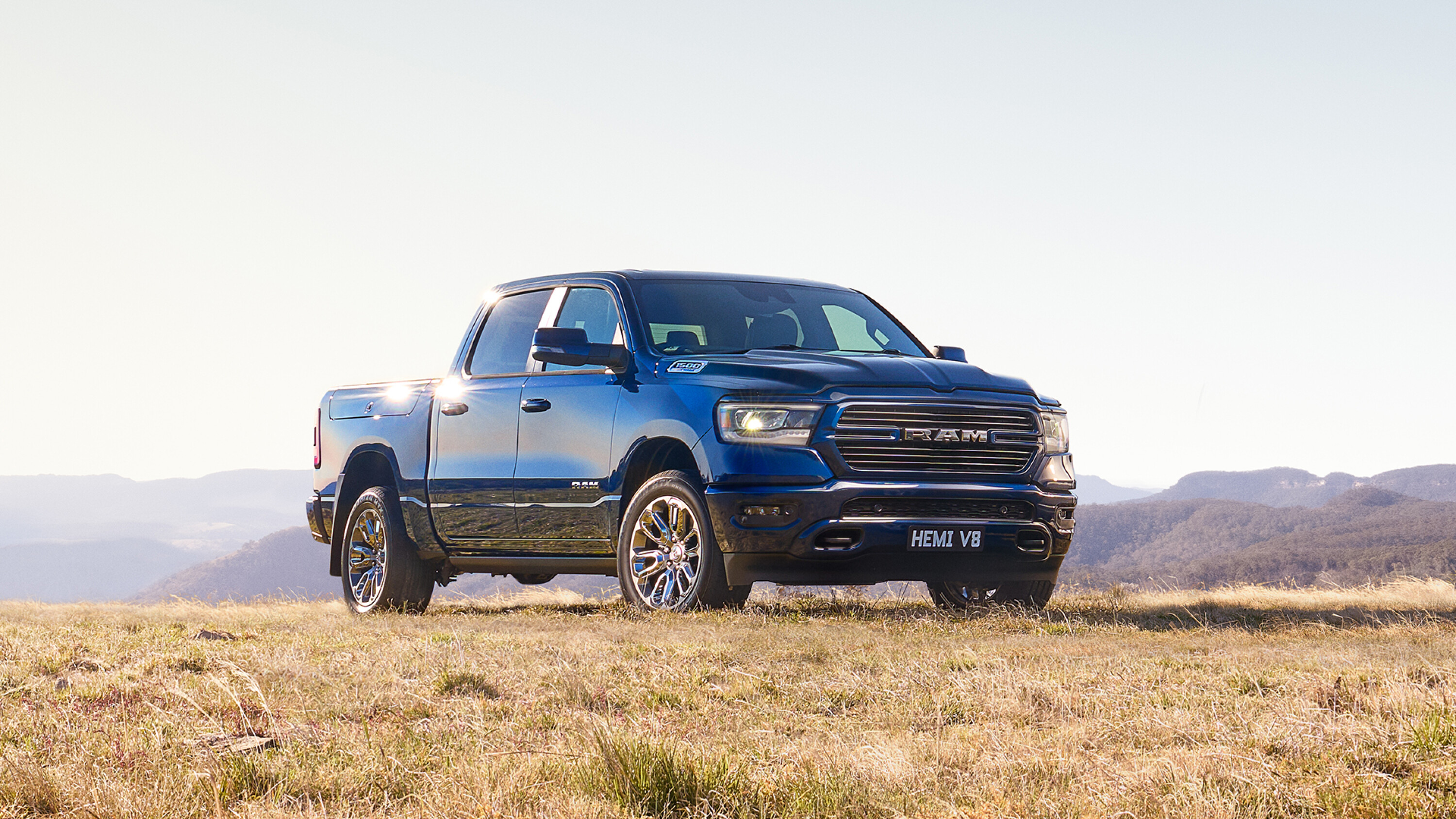
“While we have exciting news ahead for what will power future RAM Trucks, once these history-making Hemi V8s are gone, they’re gone,” Barber added.
The Hemi V8 currently powers Big Horn, Laramie, Laramie Sport and Limited editions of the DT range, and it promises an industry-leading 4500kg towing capacity.
BYD will launch Australia’s first PHEV mid-size 4×4 ute on October 29, when the order books open on the Shark 6 double-cab pick-up – customer deliveries will begin in December.
Pricing and full details on the new Chinese ute will be revealed on October 29, so keep an eye on our website for those numbers on the day.
Senior BYD management told us they realise the burgeoning brand doesn’t have the decades of history in the popular Australian ute market that top-selling marques do, and as such the highly specified Shark 6 will be priced accordingly and very competitively.
The Shark 6 will beat the upcoming GWM Cannon Alpha PHEV to market by a few months, and the PHEV Ranger by a few months more.
Before the Shark goes on sale, we had the opportunity to sample the Premium model in prototype form on a short drive on the tracks at the foothills of the Victorian High Country. We came away with the belief that, if the price is right, the BYD Shark could be in the sights of plenty of Aussie ute buyers.
Four-wheel drivers might not be too familiar with the BYD brand, but it is the biggest seller of EVs in its home country by a long mile and you’ll see plenty of marine life-named passenger car models on Australian roads already. The Australian arm of BYD intends to match that success here and early indications are that it is well on its way. It sold 12,000 cars here in 2023 and is expecting to sell 20,000 in 2024, with plans to double its sales each year going forward.
To reach those ambitious targets, BYD knew it would need to have a contender in the mid-size 4×4 ute segment from where Australia’s top-selling vehicles are coming from. Enter the Shark 6.
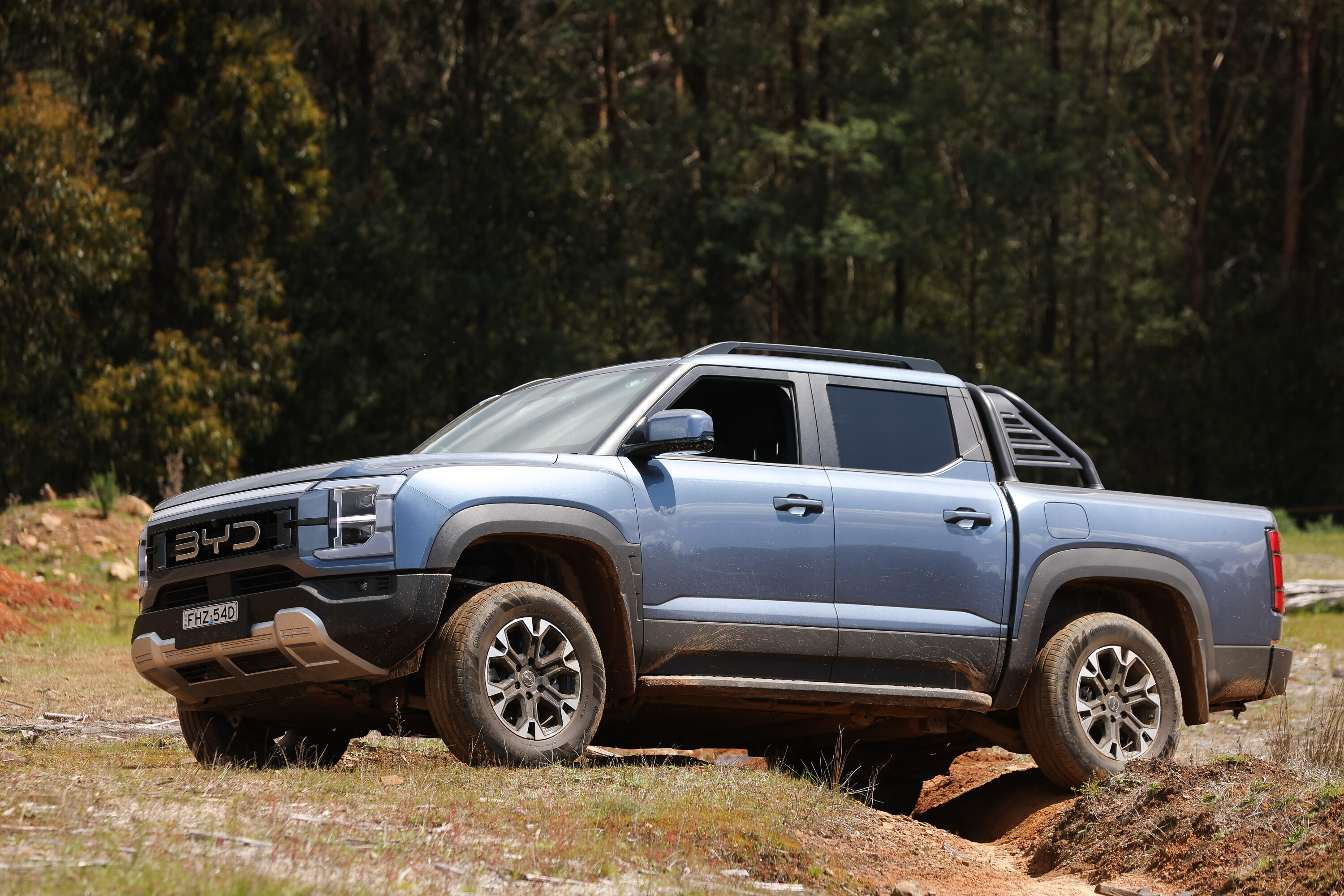
BYD passenger cars include both PHEV and BEV models, but the Shark only comes as a PHEV which is the only configuration suitable for the longer distances Australians drive in their 4×4 utes.
PHEV means Plug-in-Hybrid Electric Vehicle, so it has both an electric powertrain and an internal combustion engine (ICE), and the EV battery can be charged both by plugging into a charger and on the run from the ICE. Keep putting fuel into the Shark’s 60-litre tank and your range is endless, but BYD says the Shark should be good for around 800km between fill-ups/charging stops.
The PHEV drivetrain combines a 1.5-litre turbocharged Miller-cycle petrol engine that is mounted longitudinally in the front of the Shark with a pair of electric motors, one each for the front and rear axles. The ICE engine makes 260Nm and the electric motors make 310Nm and 340Nm front and rear respectively. Combined, that’s enough to propel the 2710kg Shark from zero to 100km/h in just 5.7 seconds; almost half a second quicker than a Ranger Raptor!
The ICE engine spends most of its time charging the Shark’s 29.58kW/h ‘Blade’ battery pack, and fully changed that should be enough for around 100km of pure EV driving. That’s enough EV range to cover the distance of most folks’ daily commute. Need more and the ICE can send drive directly to the front axle as well as charge the battery pack. As said earlier, a hybrid like this is the only EV powertrain to make sense for Australian touring use.
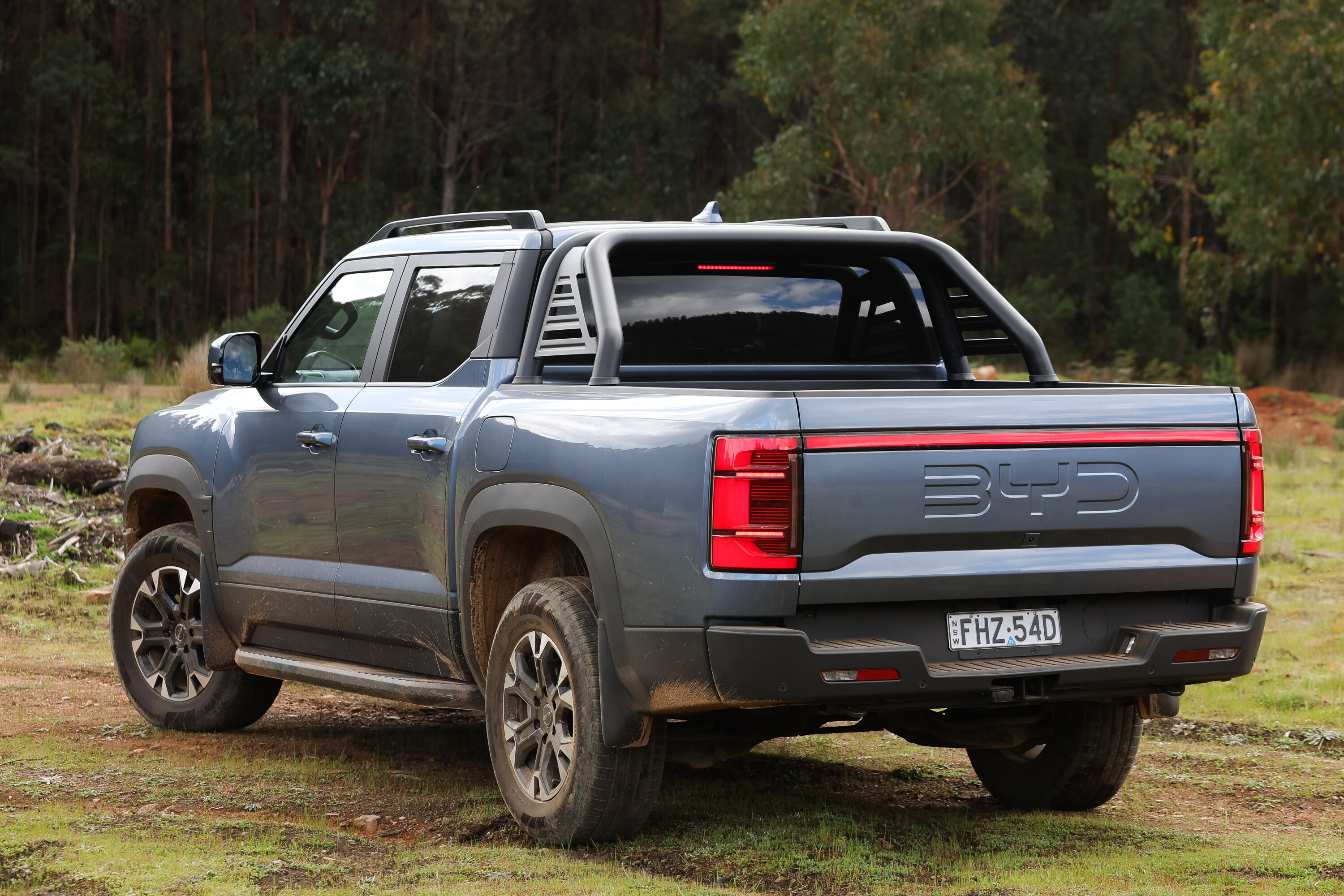
The Shark is a typical body-on-frame, four-door ute, but the frame was specifically designed to be part of a PHEV and not adapted from anything else. The front suspension is a typical double wishbone, coil spring independent design, just like you’ll find under most other utes in this class, but things begin to look a bit different at the back-end.
With no gearbox or drive shaft running from the front of the car to the rear axle, the rear-end is also a double wishbone, coil spring independent configuration, with drive shafts running out from the differential to each rear hub. The full independent suspension configuration improves the dynamics of the Shark ute. The brakes are discs all around and the tyres are sensible 265/65-R18s fitted to alloy wheels.
The Shark is similar in size to the current model Ford Ranger and may be a touch bigger in some dimensions. It measures 5457mm in length and rides on a 3260mm wheelbase. It’s 1971mm wide, with a 160mm wheel track both front and rear.
The styling is also very Ranger-like, with that huge BYD insignia in the grille ensuring that no-one misses the branding.
On- and off-road
The Shark 6 we drove on this day was a pre-production prototype, but a very late one, meaning it was very close to what we can expect of the vehicle that goes on sale in December. It was a premium grade model, which is very highly specified.
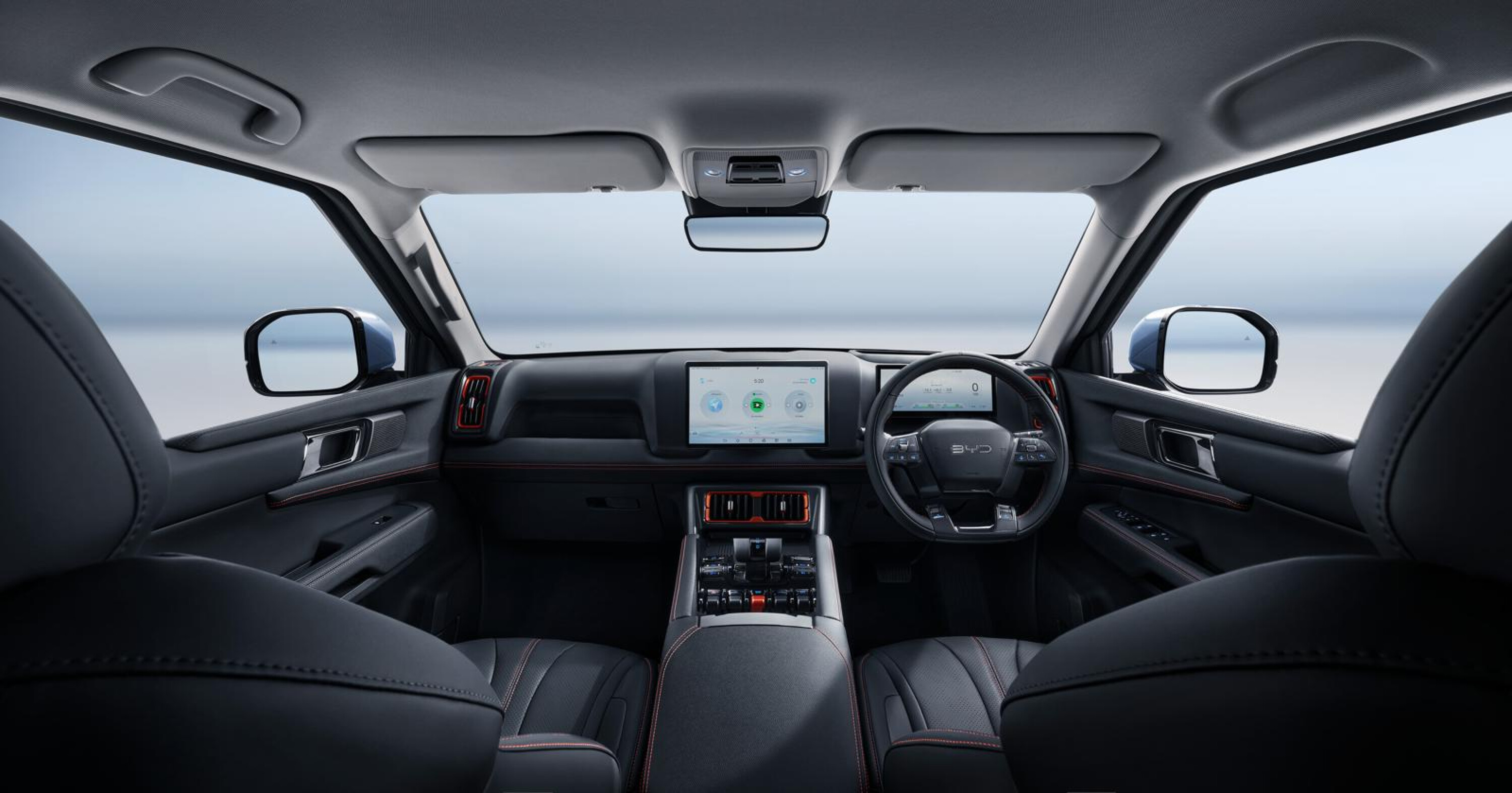
The high spec is evident when you step inside the Shark and you’re met with a 15.6-inch multimedia screen that is able to rotate 90 degrees to be viewed in either portrait or landscape layout, depending on preference. The screen features wireless connectivity for both Apple and Android connections, and there’s a 50-watt wireless phone charger that has a fan to cool your device while it is charging.
Unfortunately there is a lack of manual dials or buttons, with most functions needing to be accessed via the multimedia screen. The driver’s information screen is a 10.5-inch screen, and there’s also a heads-up display.
This teaser drive shows a lot of promise in terms of its high levels of equipment, performance and size
The seats are faux leather-covered and are power adjustable, heated and ventilated in the front. The rear seat is spacious by mid-size ute standards, offering a bit more leg and headroom than the current popular models.
With its large battery on board the Shark features 230-volt AC outlets in both the cabin and the cargo tub, which are claimed to be able to power tools and camping accessories. There’s also an array of USB-A and USB-C outlets in the cabin.
The body shape is unashamedly boxy, giving the Shark a purposeful look. The designers say you can see the look of a shark in the front-end styling, but it was beyond my imagination. LED lighting is used for the headlights and around the vehicle. The Shark is fitted with a tow bar and is limited to a 2500kg capacity.
For safety’s sake, the Shark is fitted with all modern ADAS features up to and including a driver monitor camera, and BYD is predicting it will achieve a five-star rating by the latest 2024 standards. The driver monitor didn’t bother us on this short drive, and I didn’t know it was there aside from spotting the camera on the A pillar.
Our drive was on mountain tracks, where the Shark felt more at home than any marine animal should. The suspension is firm but not uncomfortably so, and it walked its way over ruts and erosion mounds without a problem. Nor was ground clearance an issue, only slightly dragging but not damaging the back bumper when climbing up a steep bank.
With its electric motors and lack of a conventional transmission, the Shark also forgoes a transfer case and any low range reduction gearing. Torque is distributed electronically between the front and rear axle, and each has their own motor; while cross axle torque distribution is via a more conventional electronic traction control system.
With no mechanical link between the front and rear axles, and open differentials in each of them, the system is capable of sending 100 per cent of the power to the single tyre with the most grip, something that can’t be achieved with a locked transfer case and/or differential.
The Shark does have multiple drive modes – Mountain, Sand and Snow – that control the way the throttle and tractive systems are applied for various terrains. While this worked well on the tracks, we found it to be too slow in reacting when we pointed the Shark up a steep bank and one or two wheels lost traction. Admittedly, the highway tyres didn’t have a hope on the wet surface, but we know from experience that the leading ETC system in other mid-size utes would have done better.
When we pointed this out to the BYD staff they said this is something they will look at and it could be tuned in the software controlling the system. We’ll have to wait until we get more time in the production version to see how they go with that.
Likewise, we’ll need to wait until the launch to comment on the on-road characteristics as the prototypes could only be driven on a private property. On the little sealed roads we did cover it felt taught and well mannered, but it wasn’t enough to give a proper assessment.
There’s a lot yet to discover about the BYD Shark 6 when it goes on sale here, but this teaser drive shows a lot of promise in terms of its high levels of equipment, performance and size.