
IF YOU pedal a 70 Series Cruiser, there’s a (relatively) new kid on the block punching out sets of recovery points ideally suited to all 75, 76, 78 and 79 Series.
Manufactured from 350-grade laser-cut 12mm mild steel, the kit comes with two recovery closed eyes and all necessary hardware (8.8 high-tensile bolts, nuts and spacers, depending on exact model) for an easy-fit solution directly into front-end existing chassis holes.
Regardless of the bullbar brand or other parts fitted under your 70 Series – in my case, a 63mm tube Opposite Lock bar with an alloy Front Runner bash plate t – the Thorburns kits will more than likely fit, as the company has more than a keen interest in the marque (it owns a 78 and a 79 Series and has measured all relevant info).
While it has been in the metal fabrication industry for decades, Thorburns has recently plunged into specialised parts for 70s.
However, if you drive a Lada Niva, Cherry, Suzuki or even a Nissan, we suggest that you probably should shop elsewhere.
I took the plunge and bolted a set of recovery eyes to my own Troopcarrier and was relieved it didn’t require amodifications to either my bar or bash plate, like the last set I purchased and had to return.
The blue, powdercoated eyes protrudethe perfect amount from the bar work to enable a rated 4.75-tonne shackle to pass through and also allow a strap or winch cable to take on a fair angle without fouling on the bar’s extremities.
Load testing has damaged the chassis (at 15-tonnes!) before the recovery eyes so there’s no official SWL rating as yet. Thorburns recommends use with an 8000lb strap and 4.75T rated shackles.
Now, given the rare chance I may get bogged – oh, who am I kidding? – I’ll be much more relaxed knowing I’ve got a decent pair of recovery eyes to share the load between the chassis rails.CONTACT Website: www.thorburns.com.au RRP: $170 (76, 78 & 79); $175 (75)
WHEN the mighty 1VD-FTV was introduced in 2007, 4WD circles were plagued with rumours of high oil consumption and injector problems straight out of the box.
This was spurred on by the distrust of common-rail injection technology, with the early 3.0-litre Patrols dropping like flies. The prejudice continues to this day – just check out the second-hand market prices of same-year 3.0-litre and the old-school, mechanically injected 4.2-litre Patrol.
Over the past decade, the Toyota V8 diesel – in either the twin-turbo version found in the 200 series, or the single-turbo perched between the guards of 70 Series workhorses – has built an enviable reputation for both Toyota-spec reliability and a torque curve that feels like it’s cresting Mount Everest. If there’s a better caravan-tug engine in Australia, I certainly haven’t driven it!
What you won’t hear, and especially of the single-turbo version, is the blinding acceleration. In fact, when the single-turbo was introduced, it had exactly the same peak power and torque of the straight-six diesel (1HD-FTE) it was replacing. So, how can you change your stump puller into a potential winner of the traffic-light grand prix?
ENCOURAGING AN ENGINE TO MAKE MORE POWER
THE diesel engine in its simplest form is a very rudimentary engine. There’s no throttle to control engine speed, there isn’t even an ignition system to light the compressed fuel mixture in the combustion chamber.
Instead, it relies on a high compression ratio (the ratio the piston compresses the air/fuel mixture in the combustion chamber and cylinder) to get the air hot enough to ignite it.
Petrol engines typically have a compression ratio of around 10:1, whereas 20:1 is nothing unusual in a diesel engine. In the case of Toyota’s V8, it’s 16.8:1, and the higher the compression ratio, the more efficient the engine is.
Additionally, diesel has more energy content than petrol, with diesel coming in at 35.8 MJ/L (megajoules/litre) versus petrol at 34.2 MJ/L. If that doesn’t make you want to go out and buy a diesel, this might: At part throttle, a diesel engine will require less fuel than a petrol donk.
Finally, as diesel is a great lubricant in comparison to petrol, you’ll lose less power to internal engine frictional losses, and those loses can account for up to 30 per cent of the potential chemical energy produced by the diesel.
The internal-combustion engine is essentially an air pump, and the more efficient you can make that pump, the more likely you are of winning the traffic-light GP.
HOW DOES A TURBOCHARGER HELP PRODUCE MORE POWER?
AS WELL as frictional losses, the engine loses around 30 per cent of the energy released by the diesel straight out of the exhaust (it’s a wonder there’s enough left to turn the wheels).
A turbocharger will enable you to recover some of that wasted heat. The motion of the exhaust gases, in combination with the wasted heat, is used to spin a turbocharger exhaust turbine (effectively a metal windmill) that is then connected by a shaft to the inlet turbocharger compressor wheel.
This, in turn, compresses the inlet air, artificially cramming more oxygen-laced air into the combustion chamber, and, if there’s enough fuel, you’ll get more power. The side effect of compressing the air is heat, and hot air takes up more space than cooler air, leading to less dense air and less power; though, there is a way to combat power-sucking heat.
INTERCOOLERS
INTERCOOLERS or, more correctly termed, aftercoolers, work on the thermodynamic principle of convection; that is, one fluid (air or water) moving energy. In this case, it’s in the form of heat away from the source of energy (compressed heated intake air). It’s actually a little more involved than that, but for our purposes, it’s close enough.
Air travelling into a bonnet-mounted scoop, as the car is moving forward, is at a greater pressure than the air in the engine bay. This allows the air to flow through the intercooler, taking some of the heat generated in the intake charge caused by the turbocharger through the intercooler to be dissipated to the atmosphere.
A cooler and therefore denser air intake charge will contain more oxygen, therefore producing more power.
It works on exactly the same principle as an engine’s radiator. However, there is a common misconception that painting or colouring an intercooler black will increase its efficiency.
It is true that a black object will shed heat via radiation more quickly than bare aluminium surface, but when you flow cooling air through the intercooler, benefiting from the convective heat transfer capabilities of the intercooler, the layer of black paint acts as a thermal insulator. It actually reduces the heat transfer to the atmosphere.
This leads to a hotter, less dense charge and less power is produced.
As well as air-to-air intercoolers, water-to-air units are available. Water is able to shift heat more efficiently than air, so the intercooler can be smaller; though, you’ll still need to get rid of that heat somewhere, and that duty is usually the job of a dedicated additional radiator. There is also the added complexity of pumps and water lines.
If that wasn’t bad enough, some of the standard emission equipment not only clogs up your intercooler, but your intake manifold as well.
WHERE DO YOU START?
WHILE the standard snorkel head might be great at stopping the dust, it’s doing you no favours when it comes to helping the big V8 breathe.
We took a near-standard 76 and, over the process of a day, went from the standard ‘raised air-intake’ to a full aftermarket snorkel with ram head, taking pressure measurements every step of the way. All testing was done in fourth gear, using WOT acceleration runs from 60-100km/h.
INDUCTION | HO RESTRICTION | % IMPROVEMENT |
Standard Snorkel and Top Hat | 16.64 | 0 |
Standard Snorkel No Hat | 7.26 | 56 |
Standard Snorkel Ram Head | 3.6 | 78 |
Aftermarket Snorkel Ram Head | 3.1 | 81 |
From the test data above, it’s easy to see the standard Toyota hat is strangling the engine. Secondly, look at the difference between the ram head and an open snorkel.
It should certainly convince punters not to get a backward-facing stainless drainpipe snorkel in place of a proper ram-head-equipped one. Finally, there wasn’t a large gain in going for the aftermarket snorkel in terms of airflow alone.
However, having pulled the standard ‘raised-air intake’ apart, there are many sections sealed with only a thin strip of foam, not only at the join at bonnet height but also further down just before the air box.
If you intend to do a deep-water crossing, replace the ‘raised-air intake’ with a proper aftermarket snorkel – there are too many ways for the water to get into an expensive engine otherwise.
FILTER ELEMENT AND AIR BOX
IN TERMS of airflow alone, there’s no discernible additional restriction caused by either the filter (standard or good quality aftermarket) or the standard air box to at least 250kW at the wheels. There are, however, reports of dusting of the clean side of the air filter, primarily due to the seal in very dusty environments.
There are many DIY fixes as well, ranging from a bead of sensor safe silicon set to the top of the filter, to a full aftermarket air box – such as the one pictured that clamps down hard on the filter element.
FEEDING THE TURBO
The air box flows well, but the same can’t be said for the crossover pipe from the air box to the inlet of the turbocharger, as it really necks down just before the turbocharger inlet.
An aftermarket one, such as the one pictured, will give your turbocharger a fighting chance. On average, it’ll give your rig an extra 10kW at the wheels for any turbo low-mount set-up.
THE TURBOCHARGER
THIS is where all the magic happens for the 1VD. Both the 70 and 200 Series use variable geometry turbos (VGTs), also known as variable nozzle turbines (VNTs), the difference being the 70 Series has one turbocharger and the 200 two.
VGTs don’t utilise a traditional waste gate, which is a valve able to bypass the exhaust gasses past the exhaust turbine wheel, to control the speed of the turbo and therefore the level of boost.
They use a series of movable vanes located around the periphery of the exhaust turbine that are able to direct either more or less exhaust gasses through the exhaust turbine. The advantage of this is that, at low speed, the turbo is able to act like a smaller turbocharger, with the boost coming on sooner in the rev range.
Then, at higher rpm, the vanes can bypass more of the exhaust gas, allowing continuous boost higher in the rev range. This leads to a much wider torque output and comes close to eliminating dreaded ‘turbo lag’.
The 70 Series VGT is controlled by the vacuum produced by the engine, and the 200 Series VGT is controlled by the ECU. Anyone who has driven both the standard 70 and 200 will attest to how much better the twin VGT ECU-controlled set-up is.
However, if you’re looking for better torque output from your 70 for towing a caravan or the like, the aftermarket has the answers you’re looking for and they’re only a phone call away.
The standard single turbocharger is reputably good all the way up to about 22 psi from a standard boost figure of around 8psi. This will see a sizeable increase of power and torque.
If you’re looking for more performance than a standard turbocharger can provide, the aftermarket can almost accommodate you as quickly as you can whip out the credit card. A ‘high-flowed’ standard charger can replace the cross shaft with a larger 8mm version (up from 5mm), as well as aftermarket exhaust turbines and compressor wheels and their respective housings.
How to change your Differentials oil
You’ll get more boost, with many ‘high-flowed’ turbochargers for the 1VD capable of an efficient 32psi. To gain the extra top end, however, you’ll compromise bottom-end lag. At this stage, the standard intercooler is having trouble with both the flow and heat produced by the upgraded turbocharger. So you’ll need to start looking toward the aftermarket.
Steve Booth from Power Torque Victoria pointed out: “The factory intercooler cools pretty well up to about 22 pounds of boost. After that it’s found a little wanting.”
FUEL INJECTORS
THE standard injectors will fuel your rig right up to about 200kW at the wheels. If your power goals are in excess of 200kW, you’re able to source +30 per cent, +50 per cent and +70 per cent, though at these levels your pockets better not be empty, as they’ll cost you around $4000-4500 fitted.
EMISSIONS
CRANKCASE GAS RECIRCULATION
AS PART of the emissions used on modern engines, the combustion gasses that blow past the piston rings can’t be vented to the atmosphere and are plumbed directly into the inlet before the intercooler. While it’s a great idea to recycle the gasses, unfortunately atomised oils are carried into your intercooler as well.
Thankfully, you can easily and legally do something about it. Simply plumb the crankcase gas via a catch can, as the filtering system condenses the airborne atomised oil, which needs to be periodically emptied.
Steve Booth said: “The oil running back through the intercooler (from the CGR) creates a thermal barrier, making the intercooler less efficient.”
EXHAUST GAS RECIRCULATION (EGR)
EGR was introduced to combat Nitrogen Oxide (NOx) emissions. Introducing burnt exhaust gases into the inlet reduces the combustion chamber temperature, leading to less NOx out the tailpipe.
Unfortunately, in a diesel, introducing exhaust gases into the inlet increases the particulate matter (primarily unburnt carbon) that is reintroduced via the EGR, working its way past the piston rings, acidifying the oil, and putting fine abrasive material in the oil to reduce the longevity of the engine.
Additionally, adding the exhaust gases reduces the specific heat ratio of the engine on the power stroke – the effect of this is that less power is able to be produced. To combat the increased particulate matter, manufacturers have introduced particulate filters. If the vehicle is to be used strictly off-road, without having to maintain registration, an ECU remap can integrate turning off the EGR valve.
DIESEL PARTICULATE FILTER (DPF)
AS A result of increased particulate matter, DPFs have been introduced on the latest versions of both the 70 and 200 Series, and they filter a large proportion of particulate matter from the exhaust stream.
Eventually, the particulate matter fills the filter to a point where it needs to be emptied – this is called ‘filter regeneration’. If the vehicle does plenty of stop-start driving, the filter may not reach a temperature where the ECU is able to regenerate the filter on the go.
Fortunately, Toyota saw fit to add a manual burn facility that can be activated by the user via a button on the dash.
Unfortunately, the DPF provides a major exhaust restriction – decreasing power and increasing exhaust backpressure that hurts the performance of the turbocharger and increases fuel consumption. As usual, the aftermarket is leading the way with performance alternatives. Just as when catalytic converters were introduced along with unleaded fuel all those years ago, there were cries of the end of performance modifications.
These days, a high flow cat is just a phone call away. In the not-too-distant future, the same will be the situation for the DPF.
If your 70 is for off-road use only, DPF delete kits are already hitting the shelves. With an accompanying ECU tune, a DPF can be a thing of the past.
EXHAUST
BACKPRESSURE is every turbochargers nemesis. Anything you can do to reduce the backpressure experienced by the turbocharger will have positive gains. However, you’ll have to keep it quiet enough not to wake the neighbours when leaving home at 2am. The turbocharger goes some way to quieting things down, but you’ll still need to add a muffler to the equation.
A well-designed three-inch system using mandrel bends will suffice for all but the most radical builds. Four-inch systems are available; though, in reality, adds little to the power output. They do, however, cost twice as much; though some prefer its slightly different note.
The crossover pipe that feeds the right cylinder bank’s exhaust to the turbocharger is very restrictive as well; though, you can’t see it from the outside, where the flexible joints are extremely restrictive.
Again, it’s the aftermarket to the rescue, and several aftermarket vendors offer crossover pipes of around a constant 50mm diameter internally, including the flex joints.
Aftermarket exhausts will integrate an increased diameter ‘dump pipe’. This section of the exhaust pipe is of a larger diameter than the rest of the exhaust system (for example, the four-inch system will have a five-inch dump pipe), resulting in minimal restriction to the hot exhaust gasses exiting directly from the exhaust. This allows for a quicker spool, which means boost will build sooner under WOT.
WRANGLING PIXIES
WHEN it comes to tuning the ECU, there are a few options available to you. First, there’s the ‘ECU remap’, where the tuner re-writes the information on the computer that controls the car. Alternatively, an aftermarket chip can offer the driver multiple maps to suit the driving they’ll be doing.
You could have one map that’ll be tuned for economy, another which gives as much torque as possible low in the rev range for towing a caravan, and another that’ll raise the idle speed a few hundred rpm to increase the alternator output for winching. Look for a unit that has the ability to read the level of boost and can also read the throttle position – it’ll be more responsive.
12-volt air compressor comparison
The ability to ‘live tune’, that is, make changes to the maps parameters while the engine is running, will cut down on the dyno time versus the traditional process of writing to the chip with the engine stopped and then assessing the changes on the next dyno run.
More important than the hardware, though, is the person tapping away at the keyboard. Buy once, cry once is definitely the motto to go for here. Do your research, talk to other owners about their experiences with various tuners, and let them do their job. Cheaping out on the thriftiest quote will only lead to tears down the track.
PUSHING THE ENVELOPE
MOST owners will be amazed what a simple tune, chip, new exhaust or bumping up the boost will do. Your humble scribe drove Steve of Power Torque’s 79 with a remap exhaust and boost. It completely transformed the mid-range torque. Potting along at a little over 1500rpm in second gear, a simple press of the accelerator lit up a rear tyre!
For some, there isn’t such a thing as too much power. How does 426kW and around 1100Nm at the wheels grab you? You’ll need aftermarket turbos, an inlet manifold and all the fruit that goes into a high-end build.
To get there, though, you’ll need cubic dollars and NOS. That’s right, at the bleeding edge of 1VD-FTV power output, tuners are using a 200 shot of N20 on the dragstrip. And, as they always say, if you have to ask how much, you probably can’t afford it.
WATCH us have fun jumping this rough-and-ready JK Rubicon on some off-road tracks.
Vote for the Jeep JK Unlimited Wrangler Rubicon to win the 2017 Custom 4×4 of the Year
The JK Unlimited is one of the most popular 4x4s out on the tracks right now, but most pale in comparison to owner Bill’s Rubicon.
As stock, the JK Rubicon comes with plenty of cool kit, including a beefy front axle, lower case gearing, rock sliders and an electronically disconnecting front swaybar.
This highly modified JK steps it up a notch again, thanks mainly to the crew at Double Black Offroad who went through the Jeep from front to rear prior to dealer delivery.
Up front is a DBOR stubby bar for greater wheel exposure, which provides greater approach angles, as well as a Smittybilt winch and controversial Smittybilt mesh grille. Lightforce HTX230 driving lights reside up top.
The JK Unlimited sits 4.5 inches higher thanks to a full Double Black Offroad Wild Kit, which replaced the factory suspension links with heavy duty adjustable items from Synergy Manufacturing. Taller Rubicon Express coils were also added front and rear.
Among a heap of other kit, features include a Daystar hood cowl, an AEV snorkel, Airaid air box, DBOR flat fender flares, Smittybilt XRC rock sliders, DBOR rocker guards, Smittybilt Atlas rear bar, and Teraflex removable mud flaps.
What about that hue? “It’s Sunset Orange, which is a rare colour,” Bill said. “And it matches General Lee from Dukes of Hazzard.”
Watch the monster JK tackle steep tracks with aplomb in the above video.
To read our full review of this incredible 4×4, buy the August issue of 4X4 Australia – in stores now.
UPON hearing the name Clark Rubber, most people instantly think of swimming pools and hot summer days.
This is advertiser content
However, the Australian owned company has been delivering a broader range of equipment – namely rubber and foam products – since 1946, when its founders, Charlesworth and Clark, formed a partnership to establish Clark Matting and Rubber.
This has expanded to include a catalogue of pools, spas, pool accessories, mattresses and bedding, tiles, carpet, footwear, and even artificial grass.
With such a rich history of manufacturing and selling rubber products, the company recently released a new range of rubber mats, in particular its heavy duty Ultimate Matting.
Made using natural rubber, the Ultimate Matting is cut-to-measure in-store and is priced at $149 per linear metre, which places it at the higher end of the rubber-mat price scale. But with that high price, comes a quality-made, durable product.
The Ultimate Matting is (on average) 20 per cent thicker than standard ute matting, has a unique reversible design, and is UV-stabilised so it will last longer when exposed to the elements. The rubber is also made from a new compound that adds to its high levels of durability, and it has been designed as a versatile surface solution for utes, trailers and trucks.
With that in mind, we scooted down to Clark Rubber’s Moorabbin store in Melbourne’s south-east to pick up a 2x2m offset of heavy duty rubber, which was cut to shape by the staff to fit nice and snug in the Ranger Wildtrak’s tray – this was relatively easy thanks to 3mm channels to help guide the cutting process.
With the impressive-looking mat blending in nicely in the Ranger’s tray, we spent the following weekend putting it through its paces: we threw a heap of gear on top of it and then pointed the Ranger at a variety of terrain, from undulating trails to cruisy highways.
It’s safe to say, the gear hardly budged an inch – everything stayed in place and we didn’t have to tie anything down.
The durable rubber can also cop a pounding, with only a blast from a high-pressure hose needed to wipe away any remnants from a weekend spent tackling muddy tracks.
The Ultimate Matting has been designed to assist with the drainage of water, something which is imperative for an exposed tray. Despite working well, we found this design attracts leaves that burrow into all of the mat’s tiny gaps.
The stubborn little leaves refused to budge, even when hitting 100 clicks – we can only imagine how this issue will only be exaggerated when heading off on a camping trip, among a flurry of red gums and eucalyptus trees.
Despite this, the Ultimate Matting has considerably improved grip in the tray and is now permanently affixed to the Ranger Wildtrak, with no intention of removing it anytime soon.
Clark Rubber’s Ultimate Matting comes with a two-year warranty.
CONTACT Website: https://www.clarkrubber.com.au/ RRP: $149 per linear metre
RAM has launched its limited edition 2500 Code Black on to the Australian market.
Much like the Ranger FX4, Hilux TRD and Colorado Z71, the Code Black – RAM’s first Australian limited edition version of the 2500 – has mainly been built to keep up appearances.
However, separating the 2500 Code Black from the likes of the FX4 is that it comes with class-leading rubber in the form of Nitto ‘Terra Grappler” 275/65R20 A/T 126/123R all-terrain tyres. These surround 20-inch black alloy wheels and are protected by heavy-duty wheel arch flares, also black.
The aesthetic upgrades mainly involve – as the name suggests – black paint, which has been splashed over the special edition RAM 2500’s grille, front and rear bumpers, the door-mounted rear-view mirrors, and the badging.
Other than this cosmetic treatment, the special edition RAM 2500 is standard. A 6.7-litre Cummins turbo-diesel engine – capable of generating 276kW and a mammoth 1084Nm – is carried over and enables the ute to tow up to a massive 6942kg.
American Special Vehicles engineers all right-hand drive RAM utes to Australian conditions, and each vehicle is covered by a three year/100,000km warranty, which includes full parts and service support from a nationwide dealer network.
The RAM 2500 Code Black has a RRP of $149,500 plus statutory charges, delivery and dealer costs.
For more information, including the full range, specs and RAM dealer network, visit: www.ramtrucks.com.au
THERE’S no shortage of aftermarket kit on the market, so we’ve compiled a shortlist of the hottest products currently in catalogues.
Here’s a sample of some of the best kit you can add to your fourbie.
ARB DIGITAL TYRE INFLATOR & AIR PRESSURE GAUGE
ON AN average 4×4 adventure, punters are likely to cross all sorts of terrain – mud, water, rocks, dust – so it pays to carry the right gear to keep an eye on tyre pressures. ARB’s digital tyre inflator and air pressure gauge makes it simple to check pressures and alter it via simple operation. The unit features an easy-to-read, large LCD screen, an ergonomic thumb-operated inflator lever, a bleed button, a clip-on chuck, and a battery capacity indicator. The pressure range is: 0-200 psi, 0-414 bar, 0-1400 kPa, or 0-14 kgF/cm2. Website: www.arb.com.au
OPPOSITE LOCK 70 SERIES BULLBARS
TO KEEP the front end of Cruiser safe, Opposite Lock has released a MY17 Land Cruiser 70 Series range of bullbars. The Premium Steel Post Type Bullbar, made from premium grade steel, provides superior protection and maintains the Cruiser’s already pleasing aesthetics. OL’s Steel Fleet Bullbar is a simplified design for those who are thriftier. Both have been uniquely designed by Opposite Lock engineers to complement the single-cab LC’s original looks. Website: www.oppositelock.com.au
UNIDEN CB TITANIUM TWO-WAY RADIO
UNIDEN’S flagship two-way CB Titanium handheld radio has copped a few performance upgrades and additional car accessories thanks to the introduction of the car kit deluxe pack. The heavy-duty UH850S-DLX Titanium radio has an extended battery life of 39 hours operating time, with a range of 17km and 5W. Other key features include access to 80 UHF channels, waterproofness, a voice enhancer with four audio settings (normal, bass, midrange and high), and it comes with a three-year warranty. Also included is a magnetic portable antenna and a Cigarette lead battery saver. Website: www.uniden.com.au RRP: $329.95

EAST COAST BULLBARS
EAST COAST BULLBARS has a shed full of Land Cruiser bullbars available for purchase and fitment. Two bar styles are available: Big Tube Bar and Big Tube Winch Bar. ECB’s Big Tube Bars are ADR and airbag compliant, have air-directional cooling vents, a CB aerial bracket on selected models, ECB bumper lights, ECB LED indicator/park lamps, and a choice of superior finishes. The bars are a full bumper replacement or a bumper over design. Bars are available for 60, 70, 80, 100 and 200 Series. Lifetime warranty supplied. Website: www.ecb.com.au RRP (from): 60 Series Big Tube Bar: $2390 70 Series Big Tube Bar: $2390 80 Series Big Tube Winch Bar: $2490 100 Series Big Tube Winch Bar with ECB bumper lights: $2585 200 Series Big Tube Winch Bar with ECB bumper lights: $2990
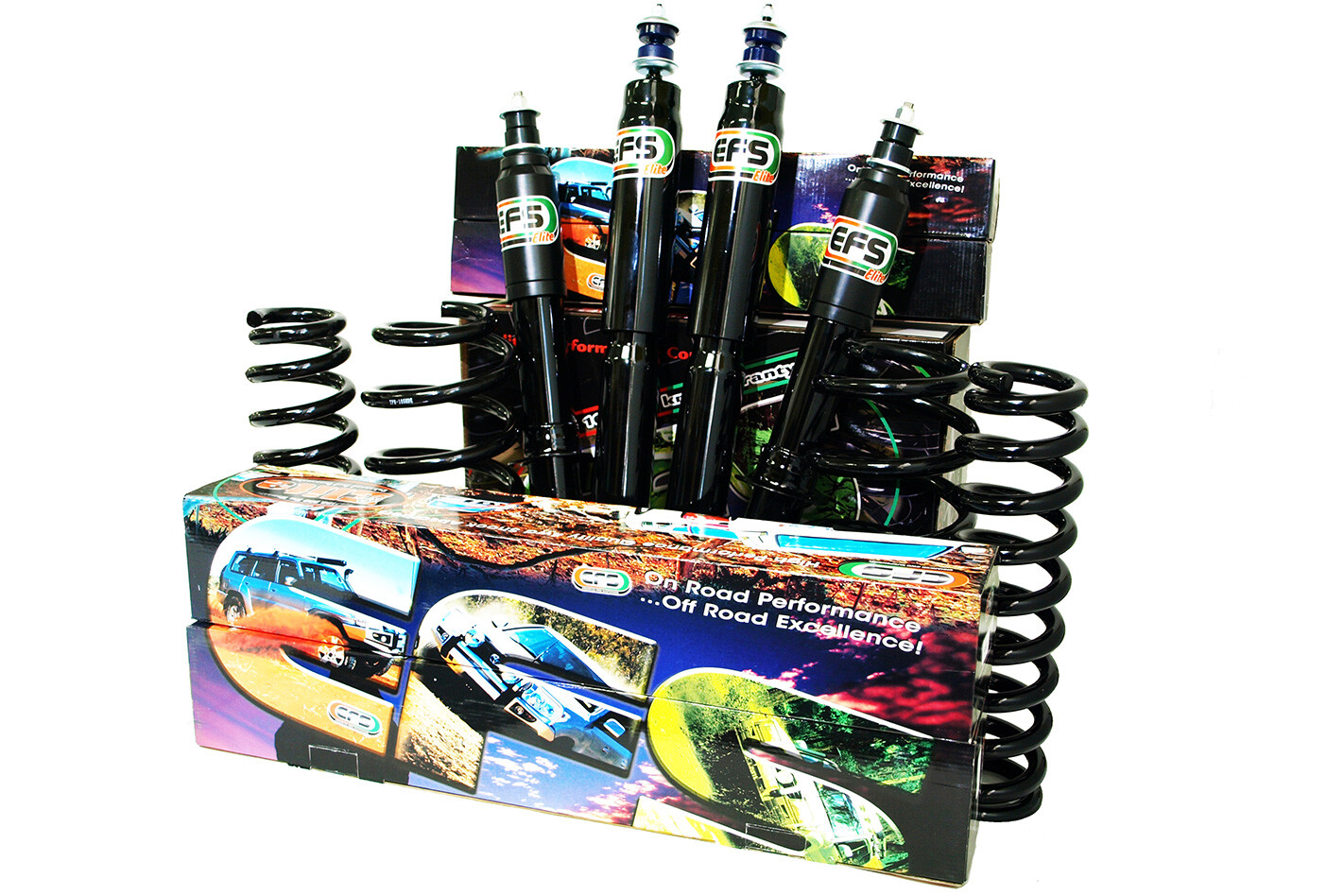
EFS SUSPENSION
EFS are the suspension specialists, and it has your Land Cruiser’s needs covered. Want a lift? Or simply need to improve the OE suspension’s handling and stability? Then give the crew at EFS a call today. EFS have developed kits for the 200 Series, 76 Series, 79 Series and the Prado. All products are backed by a nationwide three year/100,000km warranty. Head online for full specs and details. Website: www.efs4wd.com.au RRP (from): 200 Series $1250 76 Series $1750 79 Series $1870 Prado $1400
MSA 4X4 EXPLORER STORAGE DRAWER SYSTEM
THE storage experts at MSA 4×4 have put their minds together to create the Explorer Aluminium Storage Drawer System, what it claims to be Australia’s most advanced 4WD storage system ever. The system maximises storage space, yet remains similar in size on the outside to most other systems. Features include Pro-Glide technology, which handles up to 250kg per pair of drawers; Open-stay block, which holds a drawer open on steep inclines; the MSA 4X4-designed handle lock system for maximum security; and an LED strip light flush mounted to the inside of the drawer. The system is compatible with MSA 4X4 drop slides, fridge slides and fridge barriers. The ADR-compliant system comes with a lifetime guarantee. Website: www.msa4x4.com.au
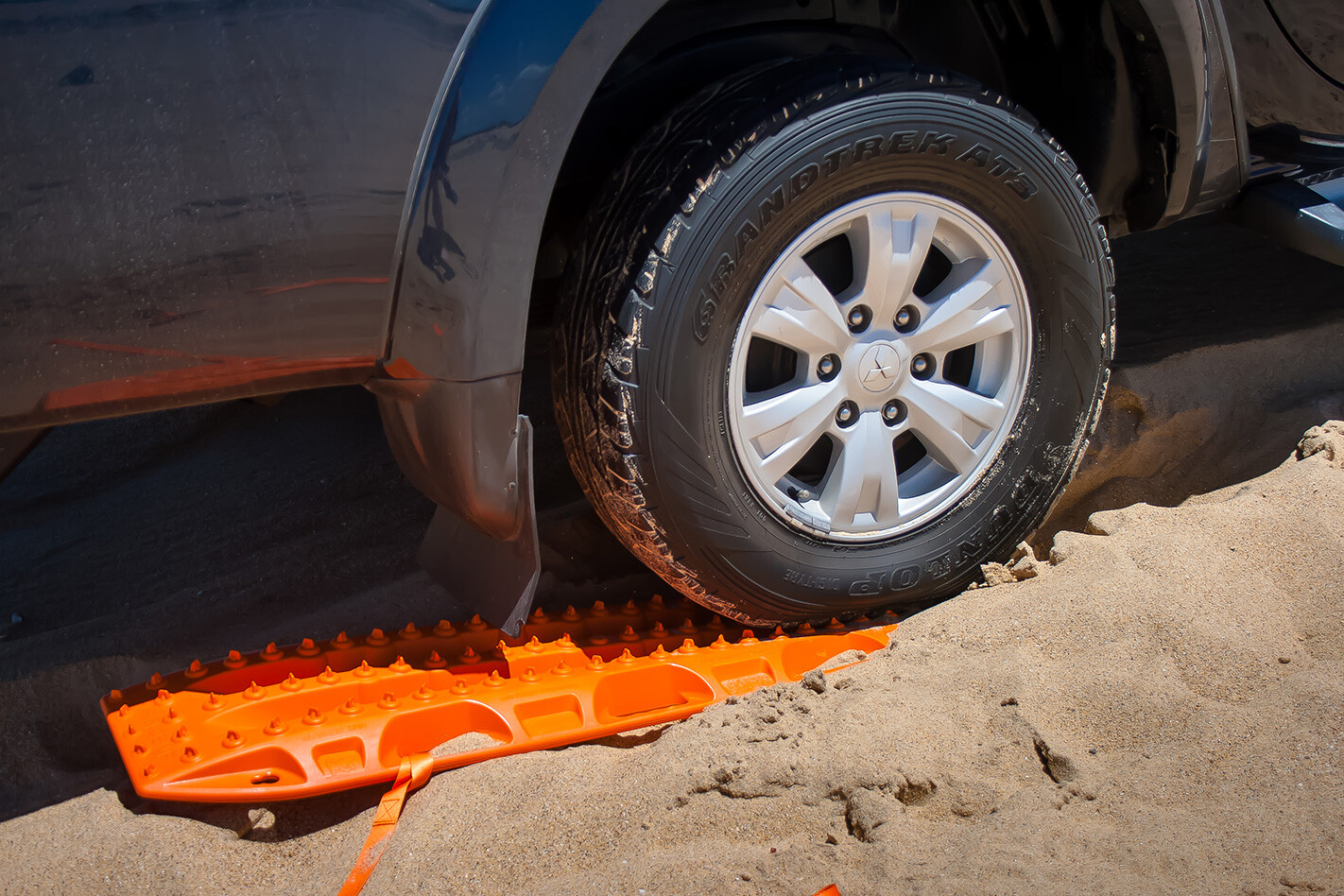
MAXTRAX
WE’VE done countless off-road recoveries here at 4X4 Australia, and the consensus always seems to be that a set of MaxTrax will get you out of trouble better than other recovery board. The lightweight boards measure up at 150mm long X 330mm wide x 85mm tall, so they can easily be stored in your fourbie’s tray, or on a roof rack for easy access. The clever design will clear you from mud, snow or sand! Website: www.maxtrax.com.au RRP: $299
WHEN Toyota introduced the 1VD-FTV 4.5-litre common-rail TDV8 engine to the 70 Series Land Cruiser range in 2007, it endowed the venerable workhorse with significantly more torque than it ever had previously.
In fact, the new TDV8 engine made a claimed 430Nm at 1200-3200rpm, up by 50Nm compared to the earlier 1HD-FTE six-cylinder turbo-diesel powerplant, and up a whopping 145Nm compared to the naturally aspirated 1HZ.
However, more torque places more pressure on driveline components, and although many owners have never experienced issues with the standard clutch in the VDJ70, complaints are not uncommon, with issues including clutch slipping, clutch noise and premature wear.
Any potential problems with the standard clutch are exacerbated when the Land Cruiser is modified, whether via a performance upgrade (think: chip, exhaust, etc.) and/or the fitment of larger diameter tyres.
Problems can also arise when the Land Cruiser is used for heavy towing purposes, or is subjected to extreme off-road conditions.
Steve Booth from Power Torque Vic, which specialises in power upgrades on common-rail diesel engines, told us he replaces just about every VDJ70 Land Cruiser clutch that comes through his workshop.
“Every single 70 Series [TDV8] that we tune, except for the really early stuff like ’07, ’08 and ’09 models, the clutches are pretty much garbage, they don’t hold anything,” he said.
“Toyota must have made a change along the line somewhere and it wasn’t for the best, that’s for sure. Even with power increases to around 140kW, the clutches are slipping, but it’s more the torque of the V8 that makes them slip.
“A lot of people, when they put slightly bigger tyres on them, and an exhaust system on them, that’s enough to make them slip,” Steve said.
Even the latest variants of the 70 Series Land Cruiser aren’t immune to clutch problems when modified.
“When the DPF model came out [in 2016], that had a better slave cylinder and improved clamping force, but we’re still finding that they’re not good enough… as soon as you tune the DPF model, the clutch goes. We’ve had brand new ones on the dyno where they’ve done 100km and the clutch fries,” Steve explained.
Rather than replace the standard clutch with an OE item, Steve fits a heavy-duty aftermarket clutch kit, along with a billet flywheel.
In fact, there are several aftermarket clutch kits on the market designed to better stand up to the high torque output of the TDV8 engine, particularly those that have been modified, placing added stresses on driveline components.
Adelaide-based company Australian Clutch Services (ACS) has been supplying clutch kits and components for more than 25 years, and it offers a wide range of aftermarket heavy-duty clutch kits to suit most four-wheel drive vehicles on the market (including the VDJ70 Land Cruiser) under the Xtreme Outback banner.
The company says its in-house R&D facility provides it with the resources to “continually analyse new friction materials and evaluate spring rates to obtain the optimal combination of performance, noise suppression and durability”.
Australia leads global Toyota Land Cruiser sales
The latest Xtreme Outback clutch kit to suit the VDJ70 Land Cruiser utilises an extra-heavy-duty pressure plate, and it provides a 58 per cent increase in clamping force over the OE clutch.
Despite this increase, ACS claims the heavy-duty clutch retains close to original “driveability” courtesy of a replacement slave cylinder, which is designed to alleviate any extra pedal effort required to operate the clutch.
While this kit utilises an extra-heavy-duty pressure plate, the company also offers a standard heavy-duty version.
The Xtreme Outback clutch kit comes with everything needed to replace the OE clutch, including an extra-heavy-duty pressure plate, 300mm OE quality replacement friction disc, thrust bearing and carrier, replacement slave cylinder, pilot bearing, and clutch alignment tool.
Xtreme Outback also supplies replacement flywheels, if required.
“We offer a comprehensive range of upgrades for Land Cruiser vehicles including the extra-heavy-duty upgrades for 70 series six- and eight-cylinder models,” Xtreme Outback mechanical engineer, Stewart Furze, said.
“Our range includes a variety of upgrade options in organic and we also offer a ceramic upgrade for very high horsepower applications.”
2018 Toyota Prado leaked online
As Stewart Furze mentioned, Xtreme Outback also offers an extra-heavy-duty clutch kit to suit six-cylinder HDJ70 Land Cruisers.
According to ACS, the “design of this kit is focused on producing a clutch that offers exceptional driveability and improved torque holding capability when the vehicle has engine modifications and is used in extreme conditions”.
If you intend to modify your 70 Series Cruiser, whether an older six-cylinder model or new TDV8, chances are you’ll need to upgrade the clutch to an aftermarket heavy-duty item.
CONTACTS XTREME OUTBACK Phone: 1800 CLUTCH Website: xtremeoutback.com.au
POWER TORQUE VIC Phone: 0417 558 799 Website: powertorquevic.com.au
WHILE local car companies serve up dress-up pack for Aussie 4×4 utes, Isuzu in the UK got serious when it teamed up with Arctic Trucks, a company with 25 years’ experience developing 4x4s for the chilly climes of Iceland and Scandinavia.
Unfortunately, the resulting Isuzu D-MAX AT35 is only sold in the United Kingdom and there are no plans to introduce it here.
What makes it so extreme? The AT35 retains much of the D-MAX’s original drivetrain, including the 2499cc 2.5-litre in-line four-cylinder engine capable of extracting 120kW and 400Nm.
But where Arctic Trucks enforces its influence is underneath, with re-engineered suspension courtesy of Fox Performance Series dampers, front and rear. This, in addition to 35-inch Nokian Rotiiva AT tyres (fitted to 17-inch x 10-inch wheels), means the AT35 rides 55mm higher than a standard double-cab D-MAX.
It also has six degrees more approach angle and 10 degrees more rampover angle, placing ground clearance at 290mm, approach angle at 36 degrees, rampover angle at 32 degrees and departure angle at 23 degrees. The AT35 measures up at 5295mm (length), 1930mm (height) and 2000mm (width).
The tough and durable chassis features the high tensile strength steel and cross-member braces of the D-MAX it’s based on, but comes with additional braces to aid stability and spread payload weight evenly.
Just like its D-MAX siblings, the AT35 can haul more than 1000kg of on-board gear and tow up to 3500kg.
Shift-on-the-fly four-wheel drive selection (two, four and low-ratio) can be applied via a dial located on the centre console, which, when used correctly, can theoretically mean the AT35 can crawl over “almost anything”.
We took a double-cab AT35 (it’s also available in extended-cab configuration) with all the bells and whistles mentioned – including the massive tyres and motorsport inspired dampers – to a disused quarry in Rutland, UK, for a thorough initiation.
Mazda to team with Isuzu for next-gen ute
The older five-speed auto (new Australian D-MAX has a six-speed gearbox along with a torquier revised engine) test mule had the high and low-ratio four-wheel drive options, but no locking diffs, none of that fancy terrain mode nonsense, and no adjustable ride height.
For the test process, we took a three-prong approach to evaluate the D-MAX – a hill climb, a rock crawl and a timed obstacle course.
The first challenge was a hill climb from a standing start – one short, scrabbly testing hill, a right turn and a left turn, followed by a second (and more upright) ascent. The D-MAX scrabbled and its live rear axle – it’s an unloaded ute, remember – bounced to provoke some axle tramp, before cresting the climb.
A rock crawl test was next on the card. The idea was simple enough, navigate the D-MAX from one end of a series of large rocks to another, testing ground clearance, traction and axle articulation.
The accessories gave it such tremendous clearance that it hopped over the obstacles, with barely a whimper.
Tow ratings are just marketing hype
The final test wasn’t out of the 4×4 purist’s handbook. We picked a start point, an end point and a series of obstacles between the two, and then drove as quickly as we could from one end to the other, across all obstacles, without damaging the Isuzu.
The course went: Risk-of-grounding-out jump, turning-circle test, steep descent, water wade, abrupt climb, gentle mogul, steep descent, open plain, narrow climb, muddy mogul, slippery corner, turning-circle test, and back to the start.
The D-MAX felt like it wanted the abuse and it finished the course at 1min 50sec – for comparison’s sake, a Land Cruiser finished the route in 2min 7sec.
Isuzu UTE Australia surpasses 100,000 cumulative sales of its D-MAX and MU-X
In addition to the AT35’s standard kit – fender flares (front and rear), extended profile AT side steps, an integrated fuel filler cap, daytime running lights, chrome front grille and rear bumper, LED rear lights, roof bars (double-cab only), body-colour front bumper, rear parking distance sensor (double-cab only), projector headlamps, a receiver hitch, and folding heated chrome door mirrors with side-indicator repeaters – a host of optional off-road extras are available for the AT35.
This includes 27 LED square work lights with Arctic Trucks logo, a skid-plate underneath the radiator/engine, a skid-plate underneath the engine/gearbox, an ARB inflator with gauge, and a pump-up emergency inflation kit.
Unfortunately, the Isuzu D-MAX Arctic Trucks AT35 is only available in the UK, meaning you can’t get one here. Still, it comes with a full factory-backed five-year/200,000km warranty package, with three years recovery and assistance cover.
AMONG the hundreds of Toyota 4x4s in attendance at the annual 2014 FJ Summit in Ouray, Colorado, there was one Land Cruiser that really grabbed our attention.
The FJ Summit is primarily an event for the FJ Cruiser crowd, but this old-school FJ45 stood out among the late-model wannabes.
As we were checking it out in the street, we got to talking with its owner, Tim McGrath. Tim hails from Albuquerque, New Mexico, from where he runs a business called Sackwear that designs and sells T-shirts, patches and other cool 4×4 related gear. Check it out at www.sackwear.com.
Like everyone else in Ouray that weekend, Tim was there for the FJ Summit as part of his travels in his super-cool FJ.
Tim and his wife Jennifer have children, and their old FJ40 ‘Shorty’ was getting too small for their needs. They also had what Tim calls an FJ45 pick-up (what we’d call a ute) and a plan was hatched to create a more family-friendly fourbie.
When you see the designs at Sackwear, you’ll see Tim has some talent with a pencil. He penned a concept sketch of the 4×4 and took it to Don Haywood at Wolf Creek Rod Works in Pagosa Springs, Colorado, to turn his ideas into reality.
Tim says the remade 45 is a Troopy as it takes its style from the venerable Toyota Troop Carrier, but it differs from the norm with its custom bodywork and soft top.
The cab and pick-up bed from the FJ45 were sold and a 1966 FJ40 was sourced as a donor vehicle for the new project. It was cut behind the door pillars, retaining the forward portion, and a new rear section was custom-fabricated by PACOL, a Florida company that specialises in vintage Land Cruiser body panels.
Classic 4X4: Toyota BJ/FJ Land Cruiser
The body was remounted to a refurbished FJ45 chassis and completed with NOS front ’guards and the remaining panels from the original 45.
When completed, the body was painted in a metallic grey taken from the Porsche palette, while the soft-top is a custom-made piece from TLC 4×4, the same company behind Icon 4×4 vehicles.
The chassis refurb included the original differentials being rebuilt with ARB Air Lockers and 4.11:1 gears, with disc brake conversions both front and rear.
The axles are slung under Alcan leaf spring packs with Bilstein 7100 shocks, while the wheels are Walker Evans Racing alloys with 37-inch BF Goodrich Krawlers bead-locked to them.
No old Toyota six-cylinder engine was going to turn those big tyres, so a small-block Chevy engine was the logical install, and a relatively stock Ram Jet EFI 350 was fitted.
The V8 is backed by an NV4500 five-speed manual transmission and an Advanced Adapters Orion ‘twin-stick’ transfer case fitted with a 4:1 low range gear set. Tom Wood’s drive shafts feed the drive to the axles.
Inside this Land Cruiser is a mix of new tools with old-school charm. The rear section of the body was made with a flat floor, allowing Tim to fit a Mastercraft bench seat to match the buckets up the front.
Jaguar Land Rover opens the doors to its Classic Works facility
All the seats feature five-point harnesses, also from Mastercraft, while further protection comes from a roll-cage by Metal Tech of Oregon.
Up front, the dash continues the mix of old and new. The metal dash panel is retained, but the gauges have been replaced with AutoMeter units.
Myriad switches are mounted below the dash and a massive Lowrance GPS unit. An aftermarket air-con and heating unit keeps the cabin cool regardless of whether the Cruiser is in the Colorado Alps or the New Mexico desert.
Modern touches are few on the outside of the car, but include plenty of LED lights. The rock lights are from Vision X; Baja Designs supplied the back-up lights; and fitted to a Hanson Offroad front bumper are a pair of Hella Xenons and flood lights from Rigid Industries.
Mounted inside that bumper is a Warn 9.5t winch fitted with synth rope and a Factor 55 Pro Link. The rear bar comes from 4Plus Products and includes the tyre carrier which mounts another massive BFG, a set of MaxTrax and some Jerry cans.
With prices of the FJ40 and 45 Cruiser going through the roof in the USA, there’d be plenty of purists who might scowl at Tim and Jennifer’s ‘Restomod’ Troopy because it wasn’t restored to original condition.
Land Cruiser Heritage Museum: World’s best Cruiser collection
That doesn’t bother the McGraths, and the vehicle has taken them all over the US and has caught the eye of plenty of fans along the way.
“We have gone to Colorado, the San Juan Mountains area two or three times a year, and to the Overland Expo in Arizona” Tim said. “These have all been family trips, along with our two kids who are eight and 10 years old. It’s a tight fit, but one heck of an adventure.”
With that tight fit in mind, Tim is planning to build a storage system for the rear of the Troopy to better carry cargo.
Other changes include adding some skid plates to protect the underside, and fabricating an airbox to connect with the snorkel that is fitted.
With its classic, old looks and capable V8 drivetrain, this FJ has plenty of life left in it.
ANOTHER Land Rover has arrived in the 4X4 Australia shed.
It’s a small price to pay for getting Justin Walker back on staff at the magazine, and as JW will be our man in Sydney, we’re glad it can drop its oil up there.
JW’s recently acquired Series 2 Discovery makes it a trio of Landies for our team in New South Wales. Dean Mellor just got back into one in the form of a 300tdi Defender 110, while Fraser still rolls around his highland estate in his Range Rover Classic. And folks think we’re Toyota biased!
Ron Moon recently added a Land Cruiser 79 to the expedition-ready Patrol in his garage, while Dan Everett is steadily removing parts of his 60 Series that you could hardly call a Toyota anymore.
I still have my BJ73 Cruiser, but haven’t been able to afford to register it for the past two years – because I do this job for love, not money. I’m feeling broke in both currencies (insert sympathetic violins here).
Elsewhere in our team of regular contributors, Russ Ryan has his dependable Defender 90, Mark Allen his VDJ78 Troop Carrier, Scott Heiman has a Toyota Hilux, Lucy and Matt Eaton get around in a D22 Navara, Robert Norman has a Toyota Prado, Mick Hurren drives a three-door Discovery, Matt Wood a 4×4 Perentie, Cristian Brunelli a SWB JK Wrangler, Dan’s daily is a new Ford Ranger, and both Nathan Duff and our chief photographer Ellen Dewar are in FJ Cruisers.
So there you go, it really is a mixed bunch of 4×4 vehicles in the 4X4 Australia family.
While it is an assorted fleet of manufacturers, it is notable that 12 of the 18 vehicles listed above have live axles front and rear. It’s that proven set-up that gives a vehicle the strength, ability and reliability you want in a do-anything 4×4.
New Land Rover Defender coming in 2020
As we continue to see less of this configuration in new car showrooms, our vehicle fleet will get older.
Thankfully, there are so many great aftermarket products available and workshops out there to keep them on the tracks.