
Snapshot
- Standard setters for towing in the mid-size ute segment
- Advanced towing tech is clever and simple
- Rangeru2019s bigger footprint assists stability over rough ground
The 2023 Ford Ranger V6 4×4 will be hot property for those that tow heavy trailers; so as soon as the chance arose, we hooked a Ranger Sport V6 up to a caravan for a quick lap around Melbourne.
For comparison’s sake, we repeated the exercise with a 2023 Ranger XLT 4×4 with the carried over bi-turbo I4 diesel engine.
Upgrade your Ranger
Mid-size 4×4 utes are very popular choices with those that tow because most of them offer a 3500kg tow rating, their relatively long wheelbases are good for stability when towing, and they are more affordable than the big 4×4 wagons that also offer that 3500kg capacity like LandCruiser, Patrol and Land Rovers.
The Ford Ranger is the newest mid-size 4×4 ute to hit the Australian market and it is the first such vehicle to really take towing seriously. Not only does it offer the choice of the V6 diesel engine and a 4-wheel drive system that gives users the versatility and safety of full-time 4WD, but it’s loaded with clever tech features to make towing easier and safer for all users, be they beginners or seasoned towing experts.
By the numbers
All-new Ford Rangers (except the Raptor) have a 3500kg tow rating when towing a trailer with brakes.
The Gross Combined Mass (GCM) that is the maximum allowed weight of the Ranger, fuel, any cargo and accessories and the weight of the trailer behind the car, varies depending on model specification but for the Ranger Sport V6 as tested here, it is 6400kg and for the Ranger XLT I4 it is 6350kg.
These important figures are at or near the top of the mid-size ute category and are sure to entice buyers who want to haul a boat, horse float, caravan or race car.
The engine outputs also create an impressive set of numbers. The 3.0L V6 diesel engine produces 184kW of power and 600Nm of torque giving the V6 Ranger the most grunt in the class.
Even the bi-turbo I4 engine isn’t lacking in this regard with 154kW and 500Nm, making it one of the gruntiest of the four-cylinder 4×4 utes.
Both engines are backed by a 10-speed automatic transmission and only the V6 gets the 4×4 system that offers full-time 4×4 as well as 2WD, locked 4×4 high range and locked 4×4 low range.
Towing technology
The new Ford Ranger brings a level of technology specifically designed for towing that you won’t find on any other ute in this segment.
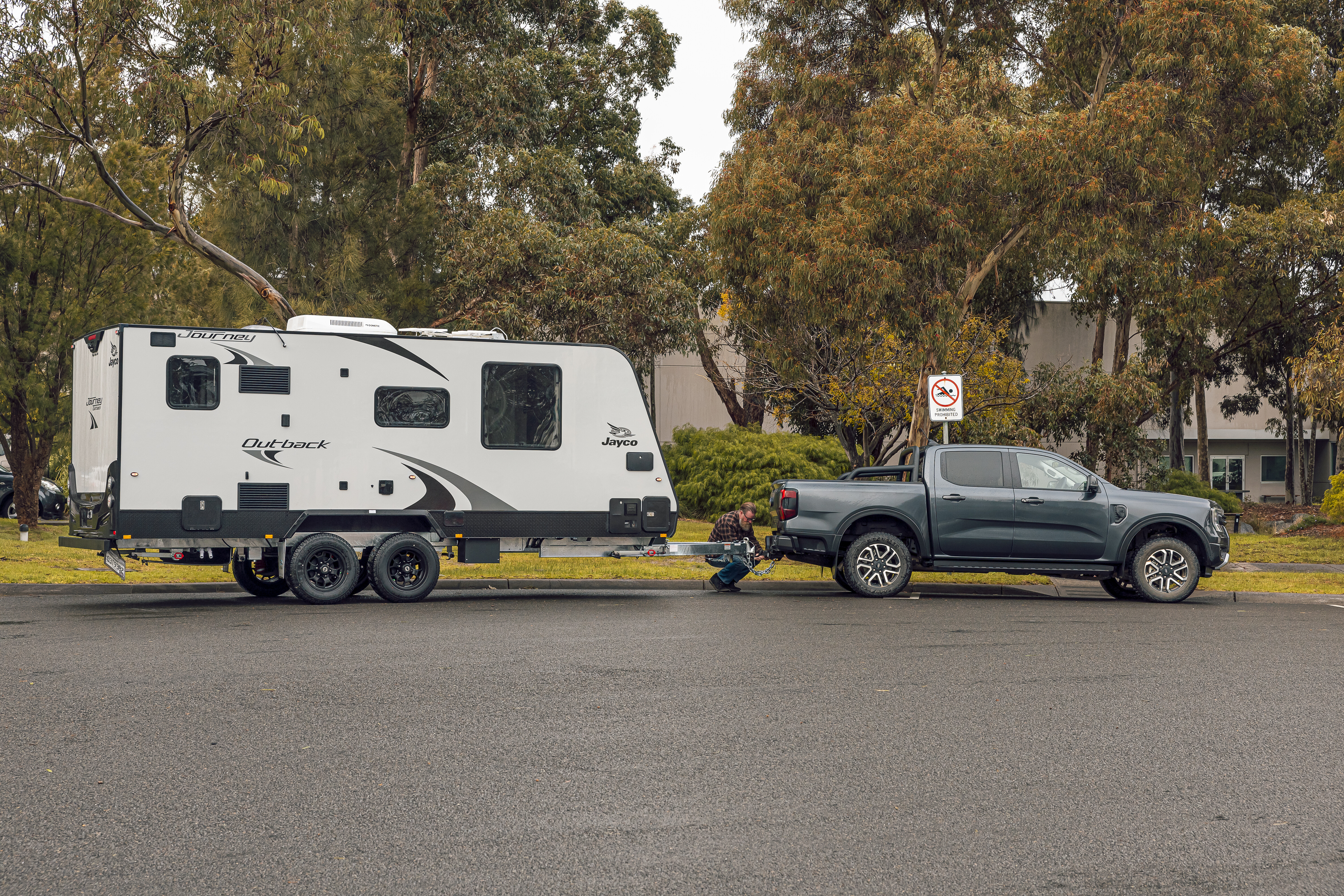
From the start point of hooking up the trailer, the Ranger has towing in mind. When reversing up to the trailer the rear-view camera not only has directional lines showing you the steering angle but also a centre line that you can follow back, to line the tow ball up directly under the tow hitch. This makes hooking up easier if you are solo and have no one to guide you back.
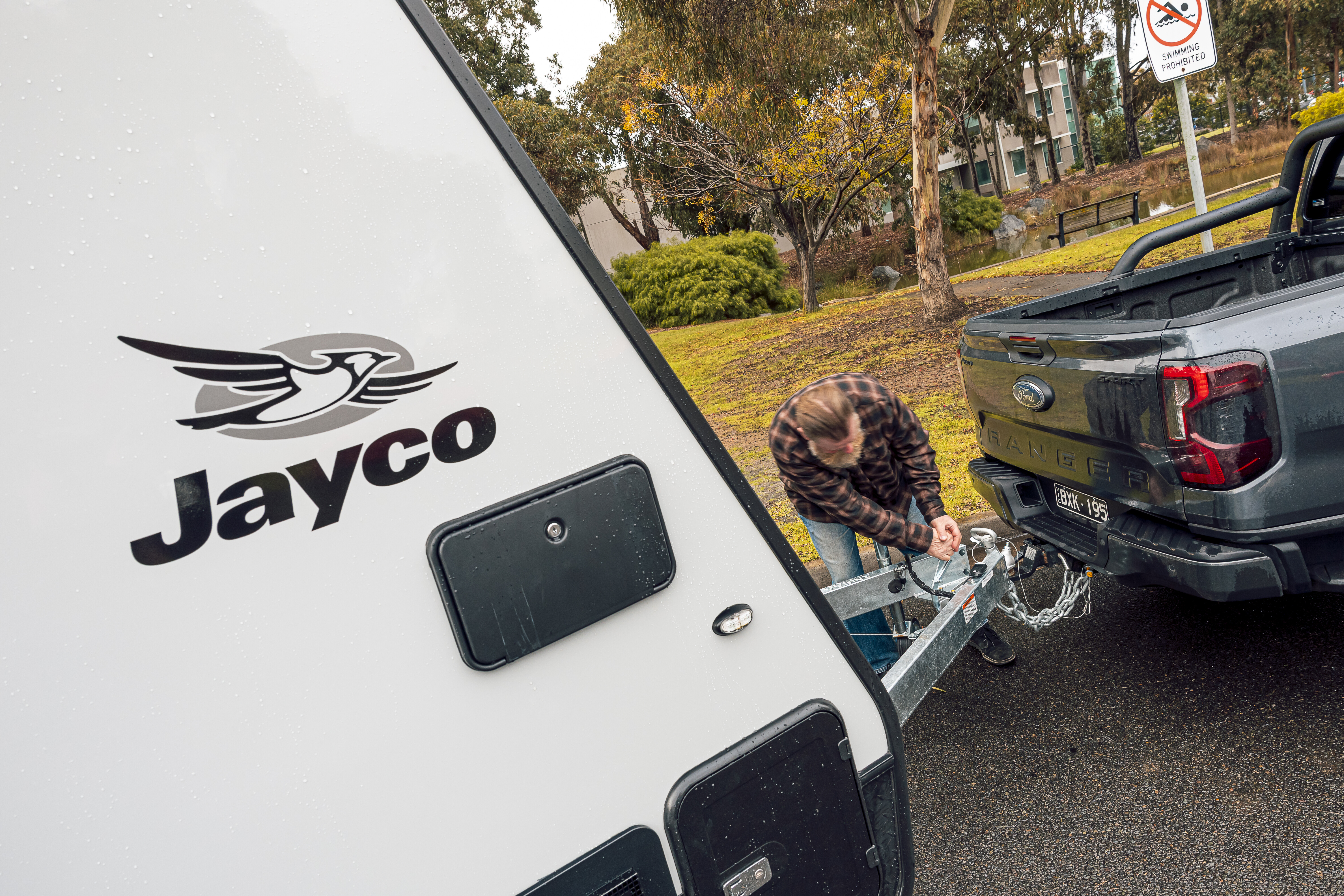
Both our Rangers were fitted with the optional Touring Pack which includes the 360° camera and an integrated electronic brake controller. You need a brake controller to operate the electric brakes on heavy trailers and in the past you had to buy an aftermarket unit.
Ford has its own controller and it integrates neatly on the lower dash. The tow bar and associated wiring come standard on Rangers.
Once you have the trailer electrics hooked up, the SYNC 4 centre screen will show you that it has detected a trailer and ask if you would like to configure it.
You can configure your Ranger for multiple different trailers if you own a caravan, a box trailer, a boat or any other trailer, all of different sizes.
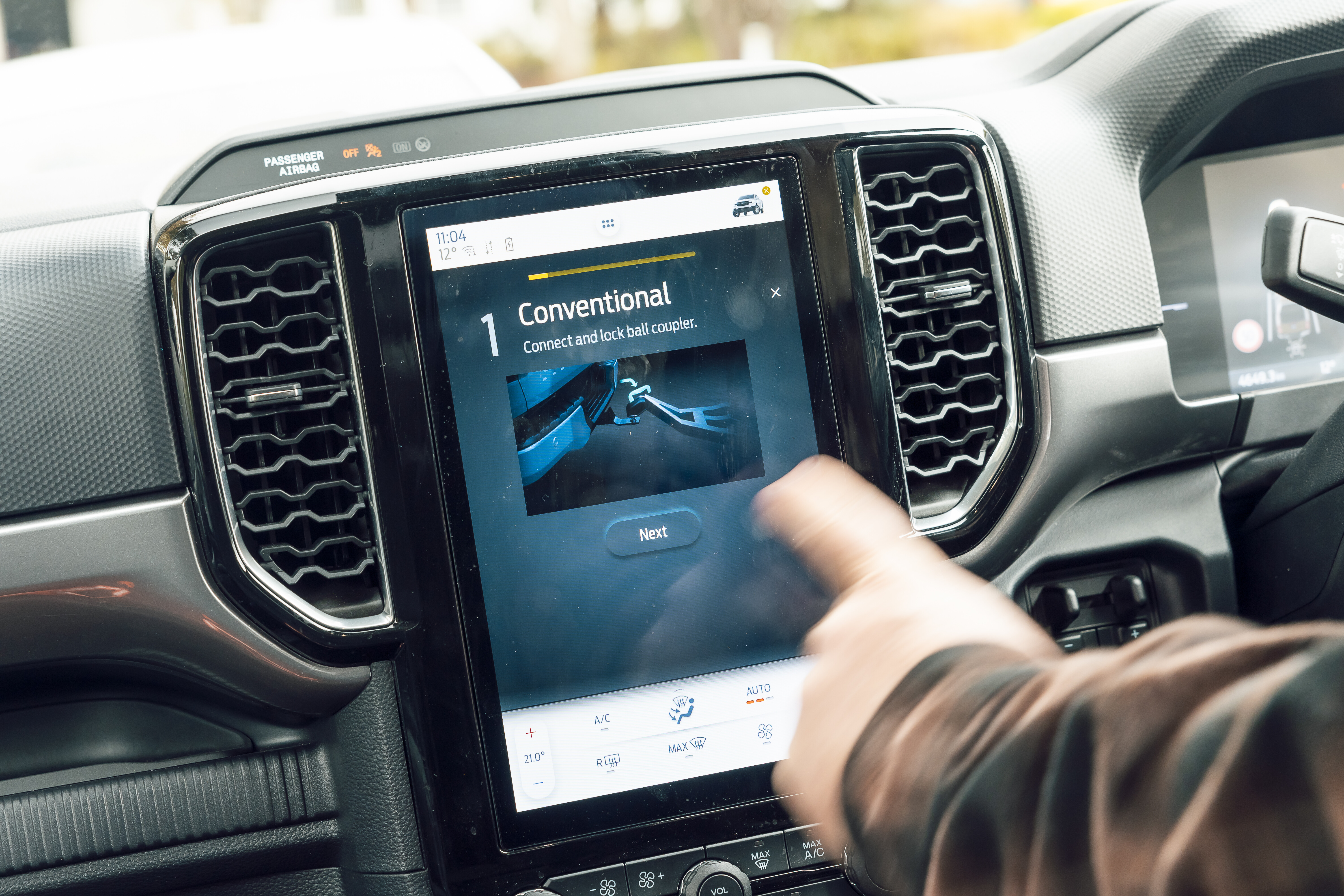
By inputting the length of your trailer when configuring it, the software then calibrates systems such as the blind spot monitoring, rear cross-traffic alert to ensure they still work as they should with the added length of the rig. There’s also a default trailer setting which is what we used for this test.
Once you are all hooked up and configured, the screen can then take you through a step-by-step towing checklist to make sure you’ve hooked up all the relative hardware and electrics needed.
There’s even a trailer-light check mode that once activated, cycles the rear lights so that you can check that all your trailer lights are working as they should without the assistance of a spotter.
This is all really clever but simple stuff that will make it safer and easier for any driver to tow any type of trailer.
One last piece of tech available on most of the new Ranger models is the various drive modes which include a ‘Tow-Haul’ that sets the respective chassis and throttle calibrations to the optimum settings for towing.
On the road
So how do those numbers and tech features add up in the real world? Before we get in to that, lets look at what we were towing and its relevant numbers.
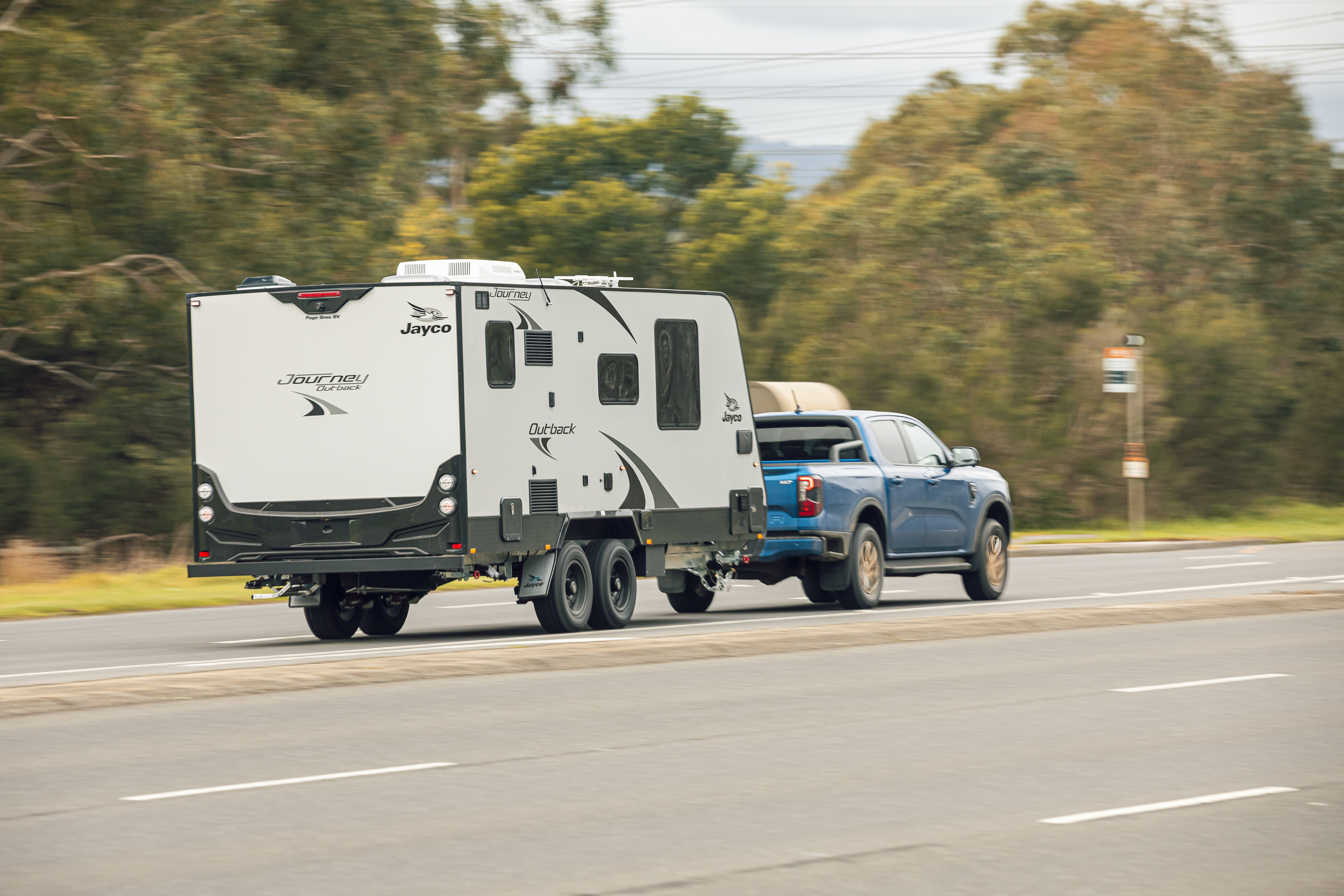
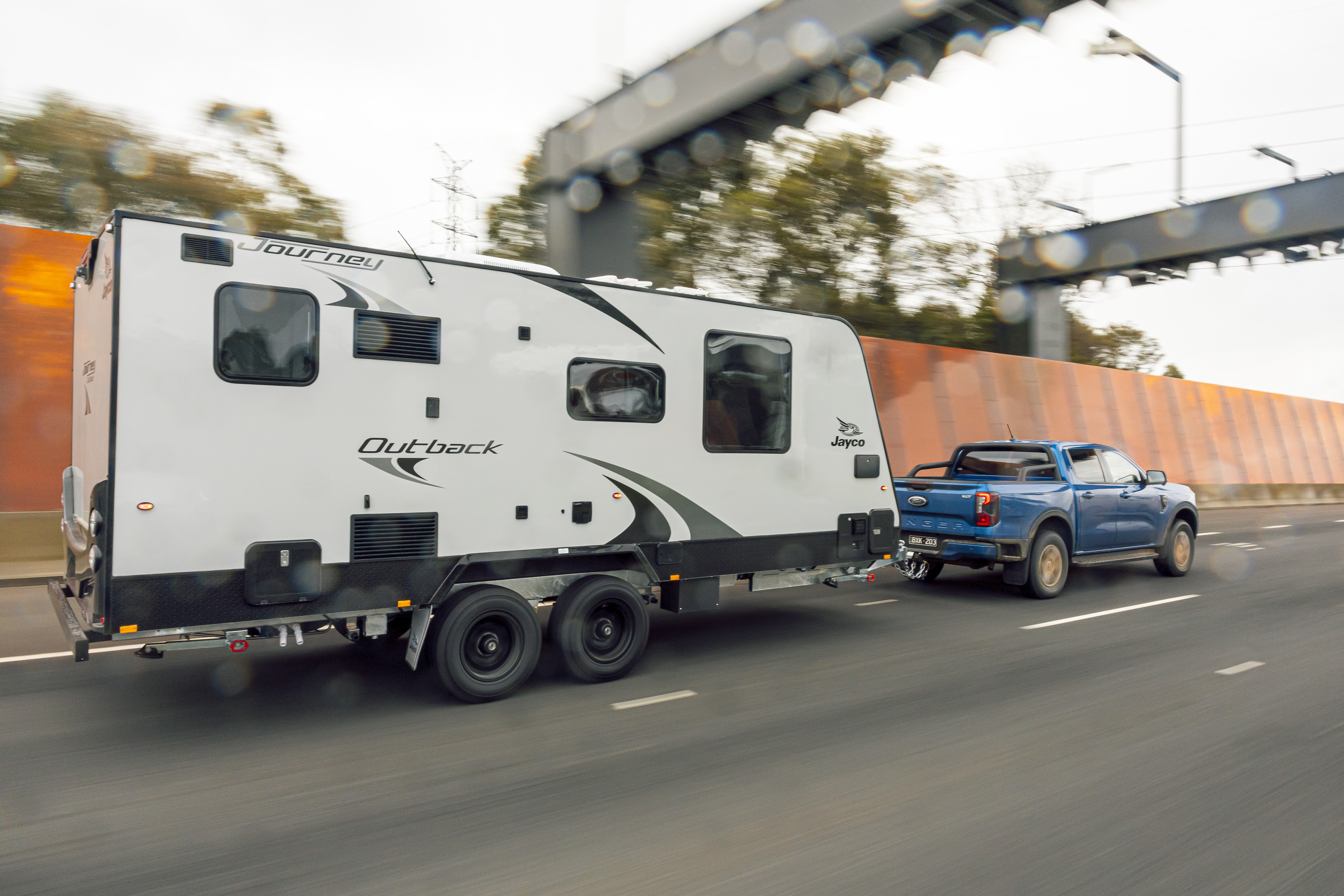
The good folks at Page Brothers Jayco RVs and Caravans in Moorabbin kindly lent us a Jayco Journey Outback caravan for the test.
This is a dual-axle off-road ’van that is 6.1 metres long and weighs in at 2100kg, with approximately 140kg down on the tow ball.
It’s a fairly typical example of the size and type of caravan you see being hauled behind utes all over Australia so it suited our test perfectly.
Ford Ranger Sport V6
With the Jayco hitched up behind the Ranger Sport, we set off. The previous Ranger already had one of the longest wheelbases in the class providing a stable platform for towing but Ford has taken this further with the new model, adding 50mm to the wheelbase and also 50mm to the wheel track to further improve stability.
This provides the Ranger with a large ‘footprint’ on the road and this in turn works with a very well-calibrated suspension to deliver smooth travel over rough roads. There’s very little if any of the pitching and porpoising that you might get in many vehicles when towing on the factory-fitted standard suspension. The chassis remains smooth and balanced over the rougher terrain to give the driver control and a feeling of confidence in the Ranger’s abilities.
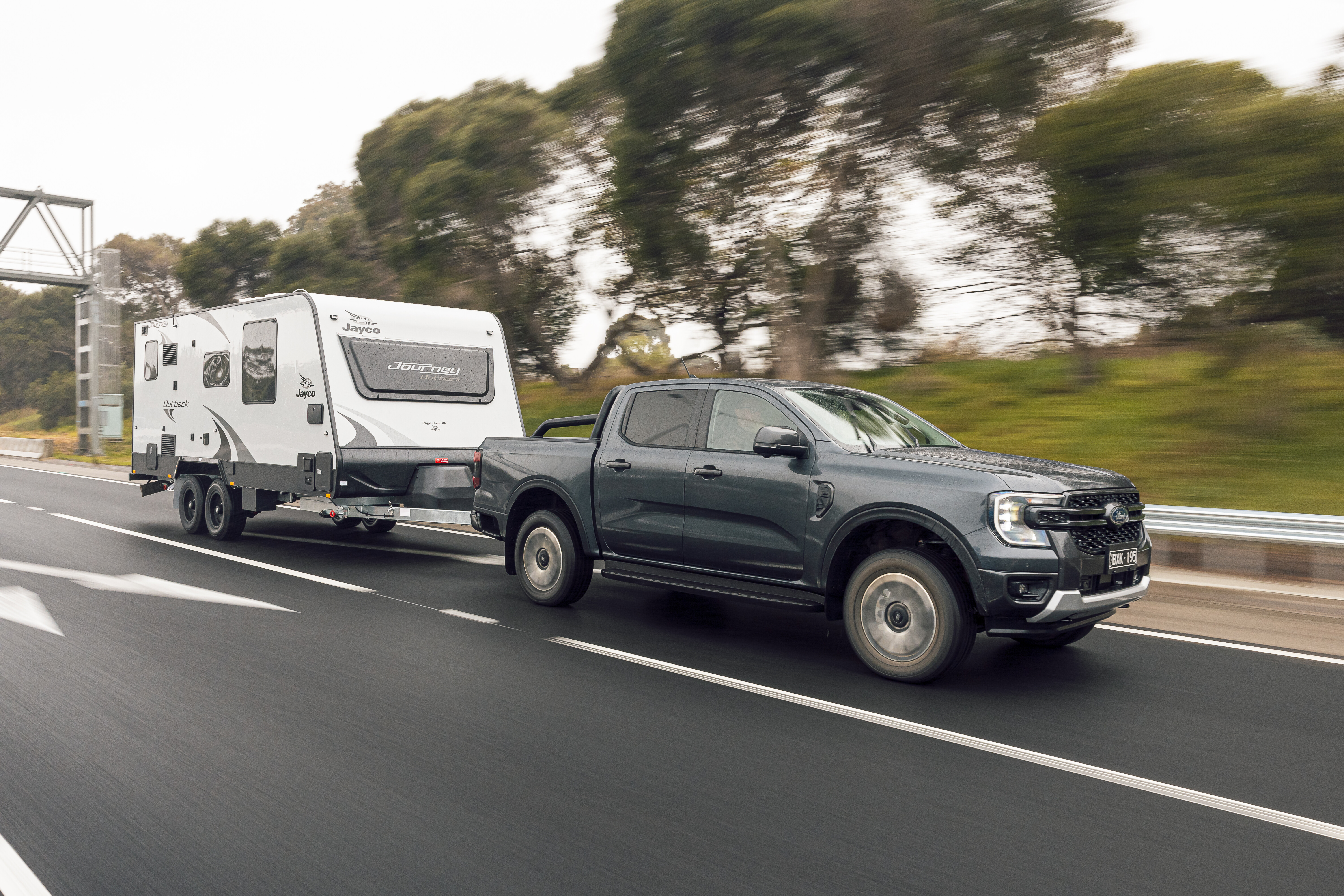
The roads were wet on this day and pulling away from a standstill on a hill produced wheelspin with the system in the 2-wheel drive setting. Selecting 4A full-time 4-wheel drive allows you to run in 4×4 on sealed roads and removed that problem of rear wheelspin in the wet. Very few 4x4utes offer this full-time 4×4 setting; only the Mitsubishi Triton and outgoing Volkswagen Amarok among the popular models, so it’s great to now have it on the new Ford.
The V6 diesel engine pulls the 2100kg Jayco van with ease and has plenty in reserve for overtaking and climbing hills. It’s relatively quiet and refined in the way it gets on with its job, again making the task of the driver easier.
The 10-speed automatic transmission performs well when left to its own devices, and manual shifting is done using buttons on the right-hand side of the transmission shifter. This is especially useful when you want to downshift to give a bit of trailer braking when slowing down.
We did find that the transmission was shifting through to higher ratios sooner than what was ideal. This was with the drive mode in the Normal setting but after switching it to the Tow-Haul mode, the transmission holds the gears longer and made driving even easier.
Ranger’s chassis electronics include trailer-sway control which works with the vehicle’s Electronic Stability Control (ESC) system to detect if and when a trailer might start to sway or fishtail on the road. This wasn’t the case on this drive with the Jayco but it could happen with an incorrectly balanced or set-up trailer.
Interestingly, the Jayco Journey is equipped with its own ESC system but when plugged in to the Ford, it was automatically disabled. This didn’t present any issues on this drive.
Ford Ranger XLT I4
The new Ford Ranger Wildtrak, Sport and XLT models are each available with the choice of the V6 or I4 diesel engines and the V6 is a $3000 extra, over the purchase price of the four-cylinder.
Choosing the bi-turbo I4 engine means you don’t just miss out on the performance and refinement of the V6 engine but a few significant features as well. The biggest omission is the full-time 4×4 capable transfer case which is exclusive to the V6 powered models and the benefits this brings especially on wet and varied roads when towing. You also miss some of the driving models but the Tow-Haul setting is still there.
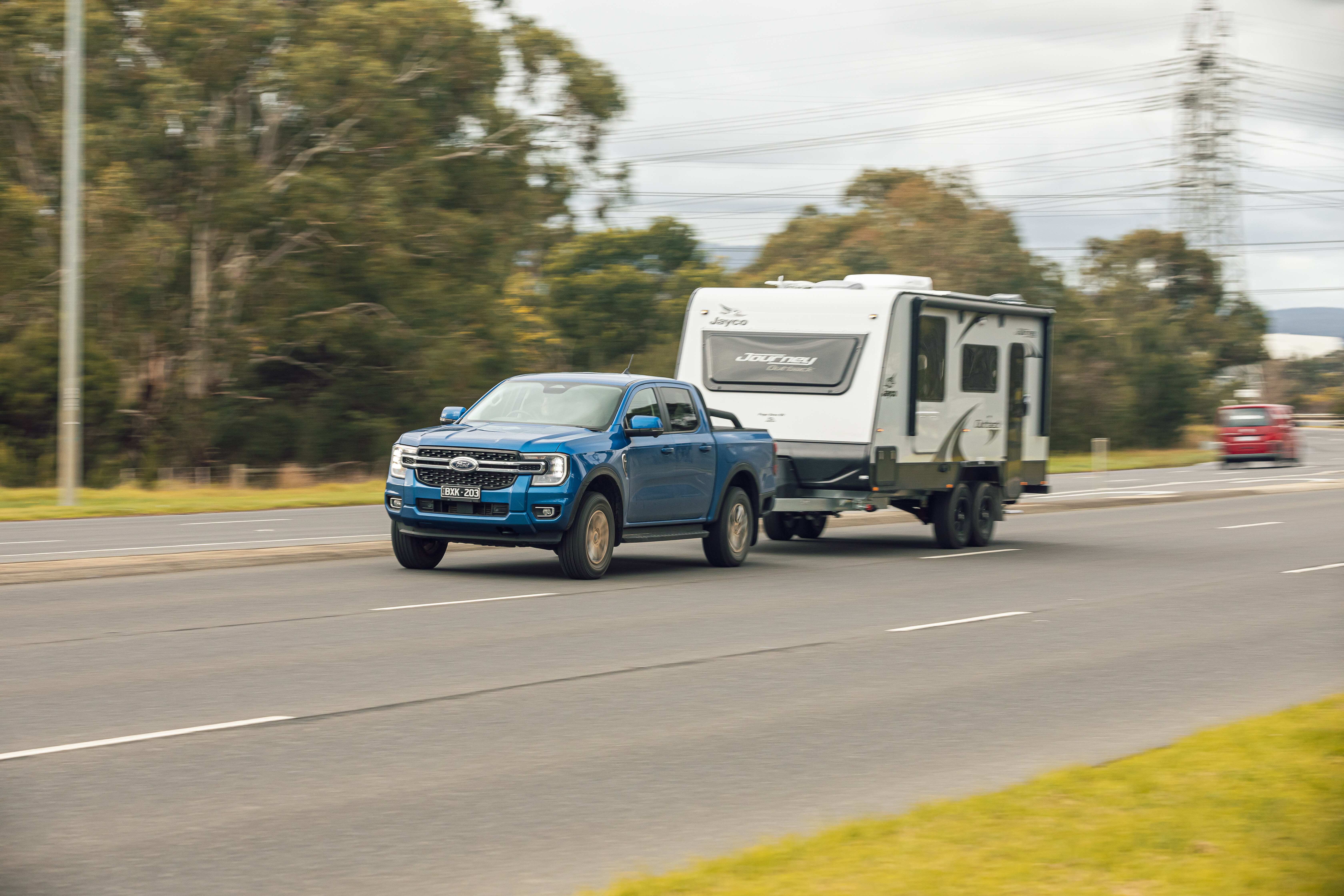
The electronic towing aids and on-screen guides are also there when you have the optional Touring pack fitted as our blue Ranger did.
Heading out of town in the four-cylinder powered Ranger XLT with the Jayco on the back and you still get all the chassis benefits of the V6 Ranger. It’s stable and controlled and again really gives the driver confidence in the car’s abilities.
You need to put your foot down a bit harder to get the most out of the smaller engine but with 500Nm available, the XLT wasn’t left lacking on our drive. It was only on the longer hill climb that it was holding a lower gear and you could hear and feel the engine working harder but not as if it was being flogged.
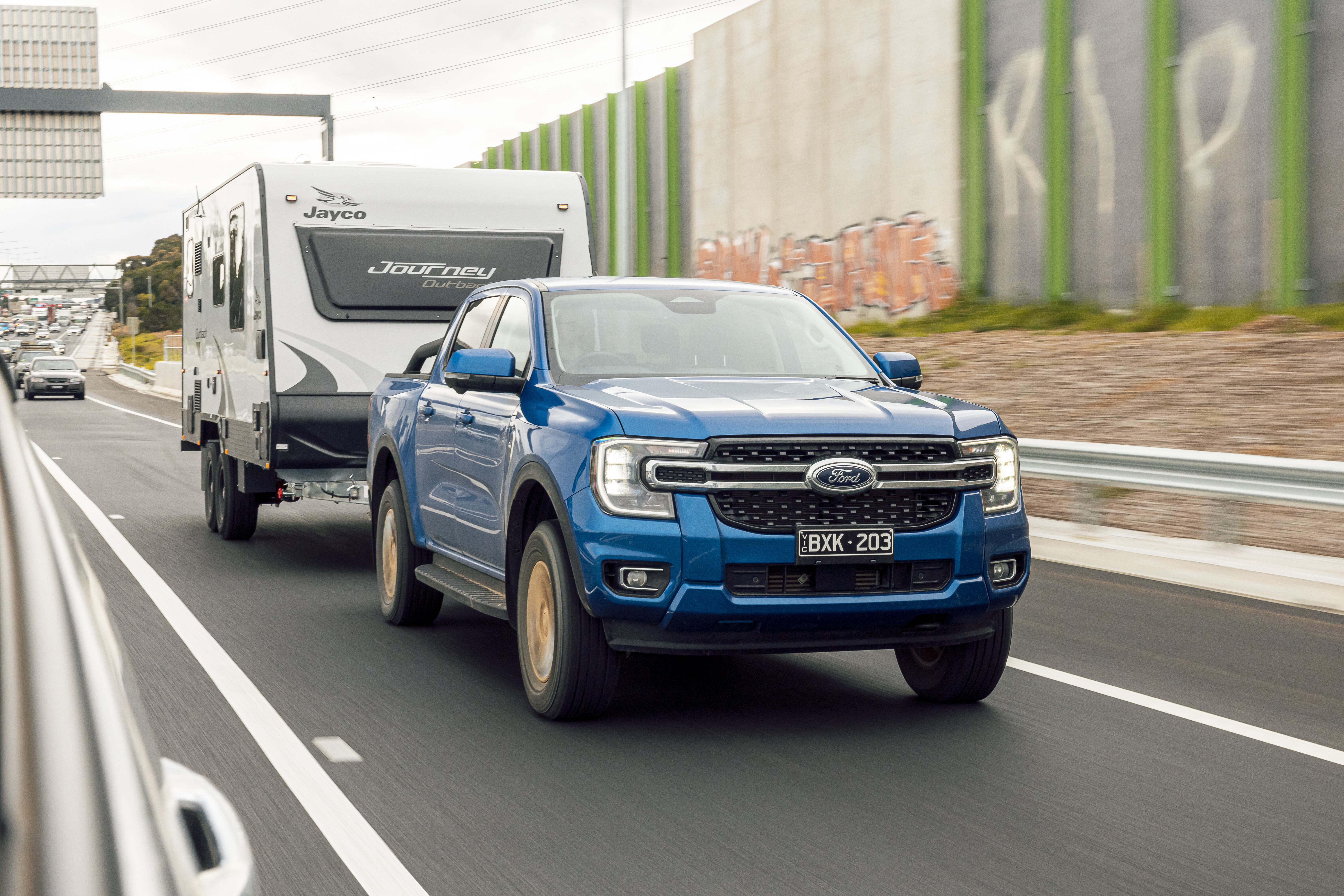
An indicator of how much harder the four-cylinder XLT Ranger worked than the V6 Ranger Sport was in the fuel consumption. The smaller engine used 17.3L/100km of diesel over the same road loop, whereas the V6 used 16.7L/100km. We’ve found similar results in the past when asking a smaller engine to do the same work in the same cars over the same route.
4X4 Australia project builds
Verdict
The new Rangers proved not only to be competent and relaxed towing vehicles but with the new technologies and features included in the cars, they made towing easier and safer.
Ranger should become the standard setters for towing among the highly competitive mid-size ute segment and its competitors will have their work cut out to catch up.
Thanks to
Snapshot
- 2023 Nissan Navara SL Warrior revealed for Australia
- Cut-price sibling to the PRO-4X Warrior, with modifications by Premcar
- Priced from $58,000 plus on-road costs; August launch confirmed
The cut-price 2023 Nissan Navara SL Warrior has officially debuted ahead of its August launch.
It is priced from $58,000 before on-road costs with a six-speed manual or $60,500 plus on-roads for the seven-speed automatic – around $10,000 less than a range-topping Navara PRO-4X Warrior.
Like the PRO-4X Warrior, the new variant is modified and tested in Melbourne by Premcar, with the entire vehicle covered by Nissan’s five-year, unlimited-kilometre warranty.
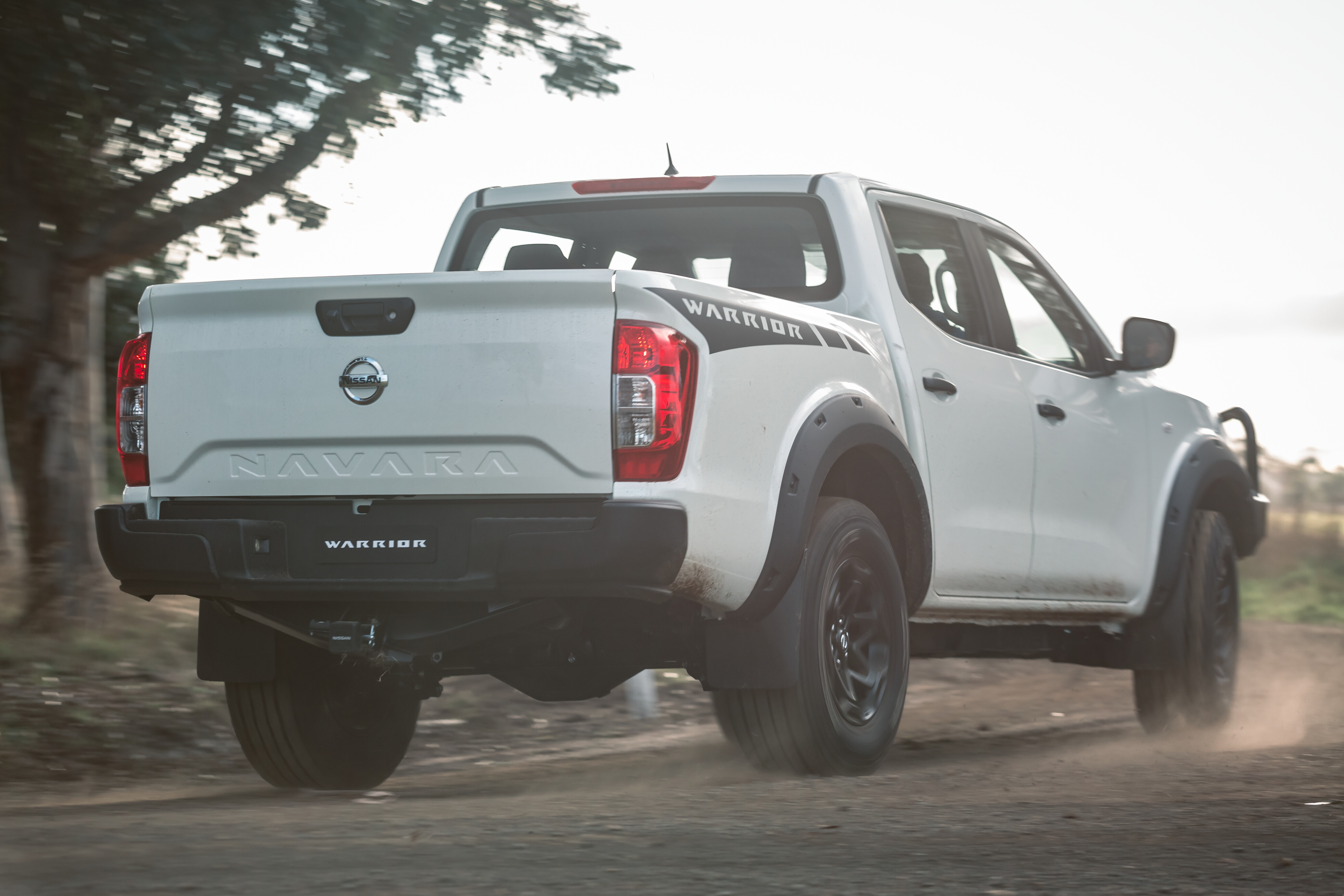
However, it is based on the entry-level Navara SL, allowing for a new, low-cost model from Premcar to ensure supply can meet overwhelming demand aggravated by the ongoing semiconductor chip shortage.
As such, the SL Warrior misses out on key equipment found on the PRO-4X Warrior to avoid delays, including; bi-LED headlights, quilted leather upholstery, heated front seats, carpet floors, sports bars, cargo rails in the tub, and a host of active safety technology.
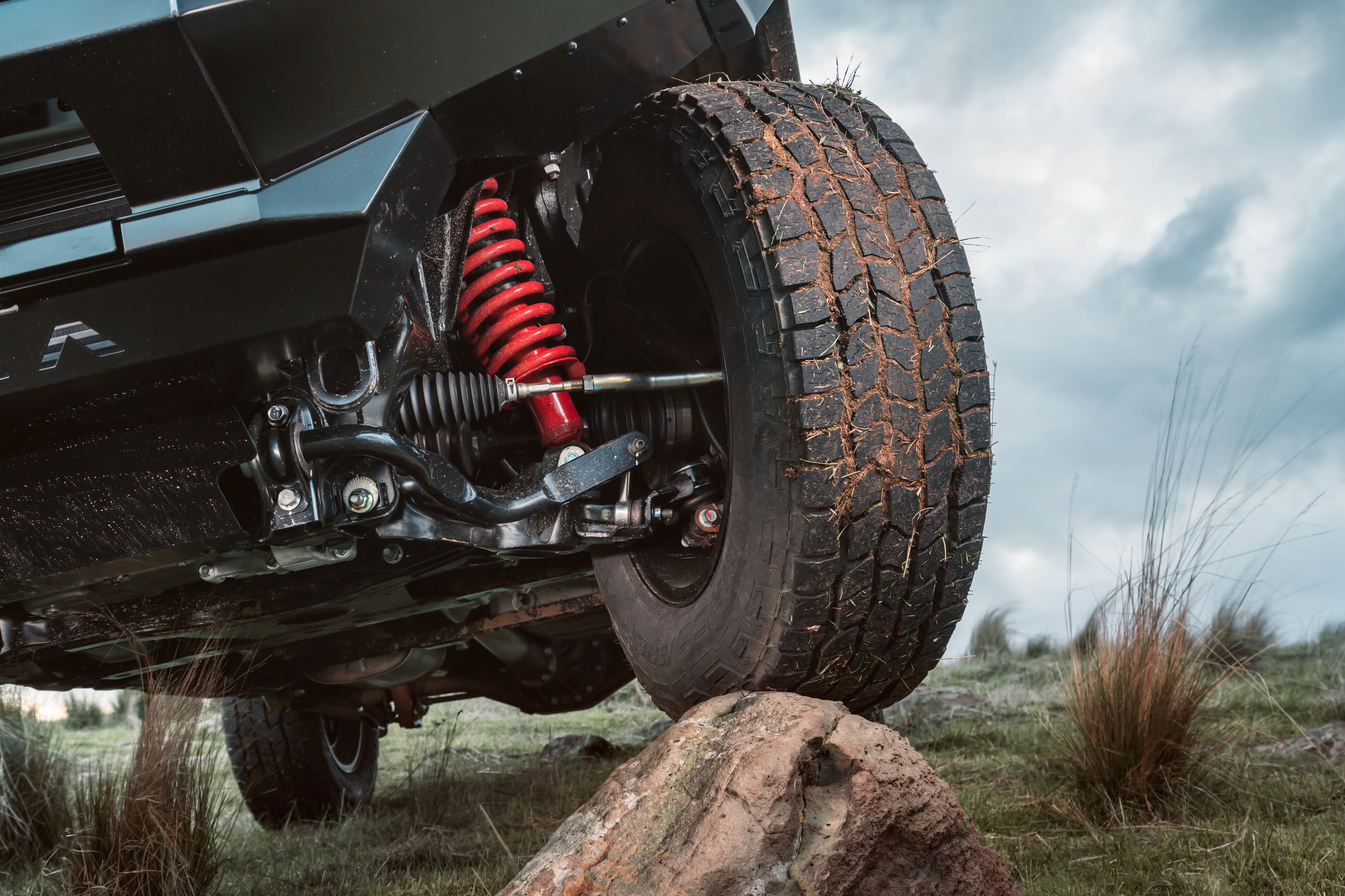
However, the Warrior-specific enhancements carry over, with a 100-kilogram gross vehicle mass upgrade to 3250kg, 32-inch Cooper Discoverer All-Terrain tyres, 17-inch black alloy wheels (in place of the regular SL’s steel items), raised suspension, and off-road enhancements.
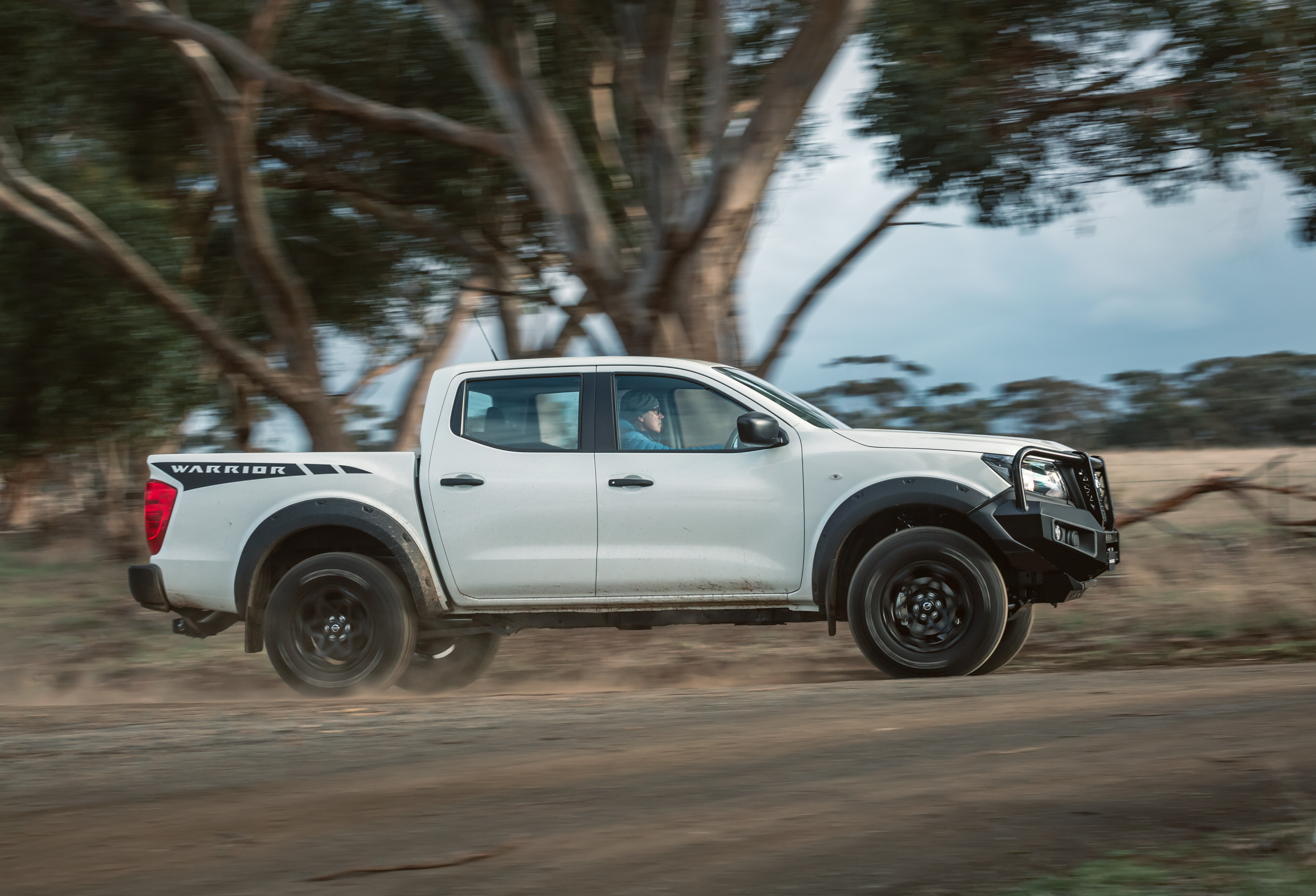
Other bolt-ons retained for the SL Warrior include; a Navara-branded front bash plate (in black, not red), improved suspension tuned in Australia, revised front and rear damping, fender flares, unique body decals, and a standard tub liner.
A hooped steel bullbar with an integrated LED light bar – allowing for brighter high beams with the SL’s halogen lights – is fitted, in place of the PRO-4X’s hoopless design.
Nissan claims the Navara SL Warrior has 260 millimetres of ground clearance – a 40mm increase – a 36-degree approach angle, a 26.2-degree breakover angle, and a 19-degree departure angle.
Both variants are powered by the familiar 2.3-litre twin-turbo four-cylinder diesel engine, producing 140kW of power and 450Nm of torque.
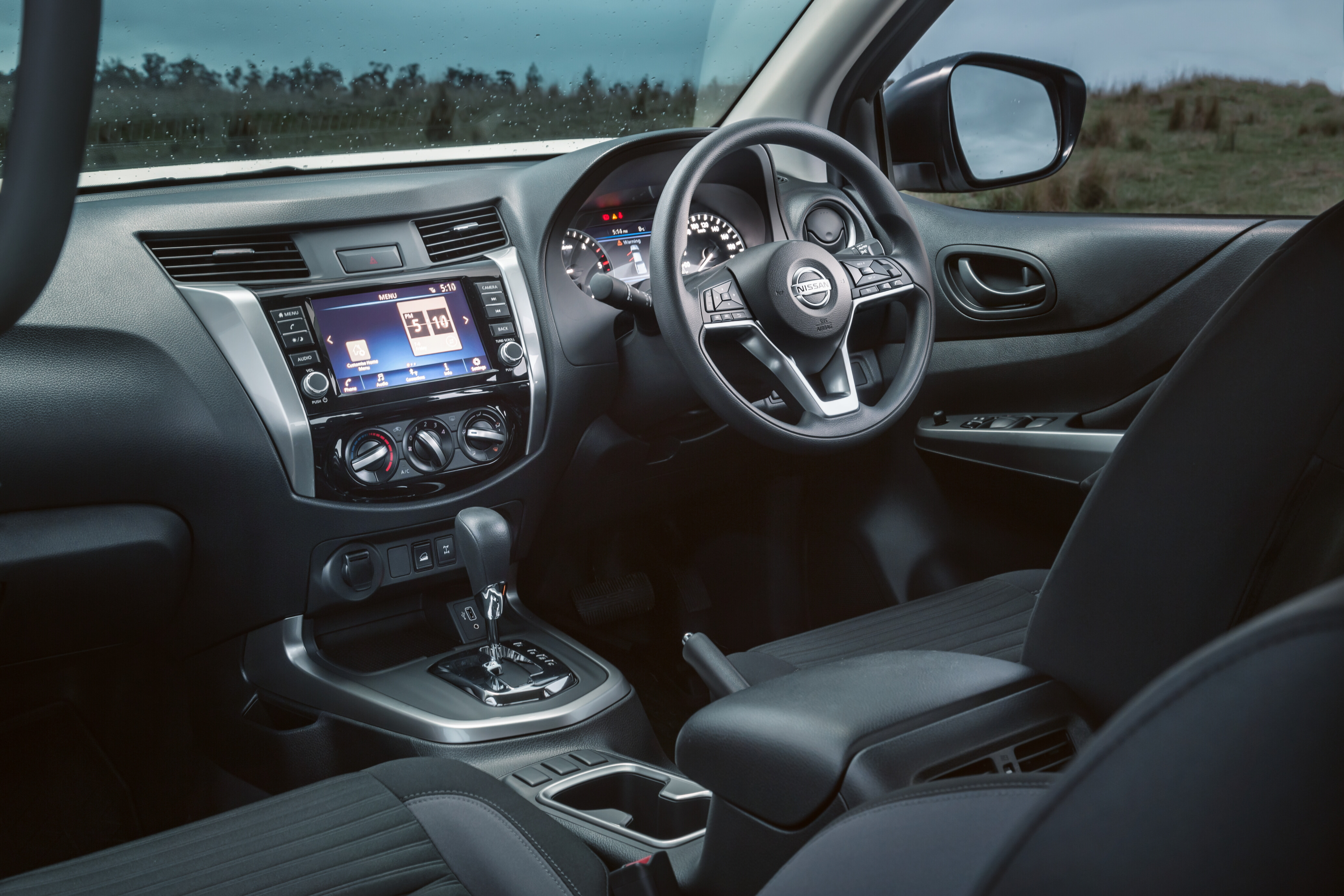
Compared to the regular Navara SL, the Warrior attracts an $11,400 premium in manual or automatic guise, with base equipment carried across.
These standard features include; autonomous emergency braking, an 8-inch infotainment system, Apple CarPlay and Android Auto, four USB ports (3x USB-A and 1x USB-C), black plastic door handles and side mirrors, a 7-inch semi-digital instrument cluster, and halogen front and rear lighting.
Nissan Australia is likely to expand its locally-developed Warrior range in the coming months, with a more hardcore take of the Patrol large SUV currently under development.
The 2023 Nissan Navara SL Warrior will arrive in local Nissan showrooms in August 2022.
2023 Nissan Navara SL Warrior pricing
Prices exclude on-road costs.
| Model | Transmission | Pricing |
|---|---|---|
| Navara SL Warrior 4×4 dual-cab pick-up | Manual | $58,000 |
| Navara SL Warrior 4×4 dual-cab pick-up | Automatic | $60,500 |

If things were continuing along as usual, the performance Raptor would come with a relatively large-capacity (5.0-litre or so) naturally aspirated petrol V8, an engine configuration that Ford knows a thing or two about.
The fact that there’s even a petrol engine in the new Ranger’s line-up, even if the Raptor is a bespoke performance model within the line-up, is also telling. Until it arrived, you couldn’t buy a petrol engine in a new mainstream 4×4 ute. The last time you could was in 2017 before Toyota withdrew the 4.0-litre V6 from Hilux.
In fact, it was a surprise that Toyota carried over the petrol V6 from the previous generation Hilux into the current generation model when it was released in late 2015. Toyota’s thinking at the time was that given no other manufacturer offered a petrol engine in a mainstream 4×4 ute, then the Hilux V6 would attract petrol-preference buyers from other brands.
As it turned out, that wasn’t the case, at least in sufficient numbers to keep the V6 on sale. By that time 4×4 ute buyers were totally convinced that the modern turbo diesel with its combination of relaxed power and good economy was the only way to go compared to petrol engines as they had known them.
It’s noteworthy, too, that the new Raptor isn’t offered with a diesel option in Australia and, as the curtain inevitably comes down on diesel engines in next decade or so, the replacement engine in 4x4s will be small to mid-sized turbocharged petrol engines, such as the new Raptor’s V6.
Don’t be surprised if the Raptor’s turbo-petrol V6 finds its way into mainstream Rangers here in a few years time, even if it does so in a detuned form than what’s found in the Raptor. The Raptor’s V6 has been tuned by Ford Performance from the standard version as sold in the USA in the Ford Explorer.
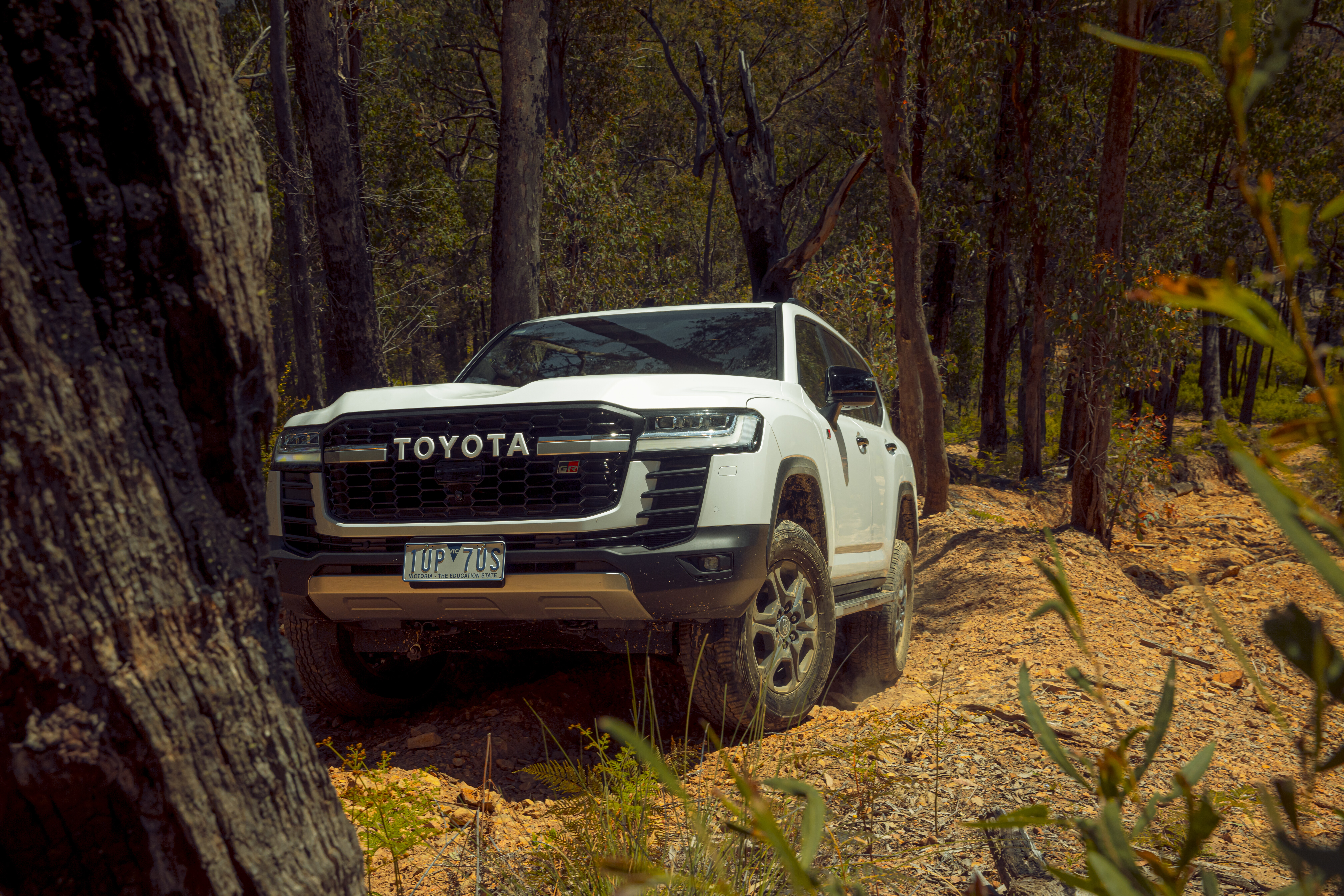
Meanwhile over at Toyota in those overseas markets where you can buy a petrol LandCruiser, the naturally aspirated 4.6-litre and 5.7-litre V8s are gone, replaced in the 300 by a 3.4-litre twin-turbo V6, the first turbo-petrol engine ever to appear in any LandCruiser. This engine will eventually be coming to Australia in the 300 Series – around or after 2025 – but almost certainly as the main part of a petrol-electric hybrid powertrain and will sell alongside the V6 diesel in the 300.
If new 4×4 ute buyers liked modern turbo diesels for their relaxed drivability where there’s good power and response at low and middle engine speeds combined with moderate fuel use, they will love these new-generation turbo-petrol engines. They, too, offer excellent low and middle-rpm response but combine that with the sort of high-rpm power that diesels just can’t do.
The turbo-petrol V6 in the 300, for example, has its maximum torque (650Nm) available at just 2000rpm but spins out to over 5000rpm to make a more than handy 305kW of power, a fair jump up from the 3.3-litre V6 diesel’s maximum of 227kW. Some versions of this 3.4-litre twin-turbo V6 – used in other Toyota-family models – have maximum torque available at an even more diesel-like 1600rpm.
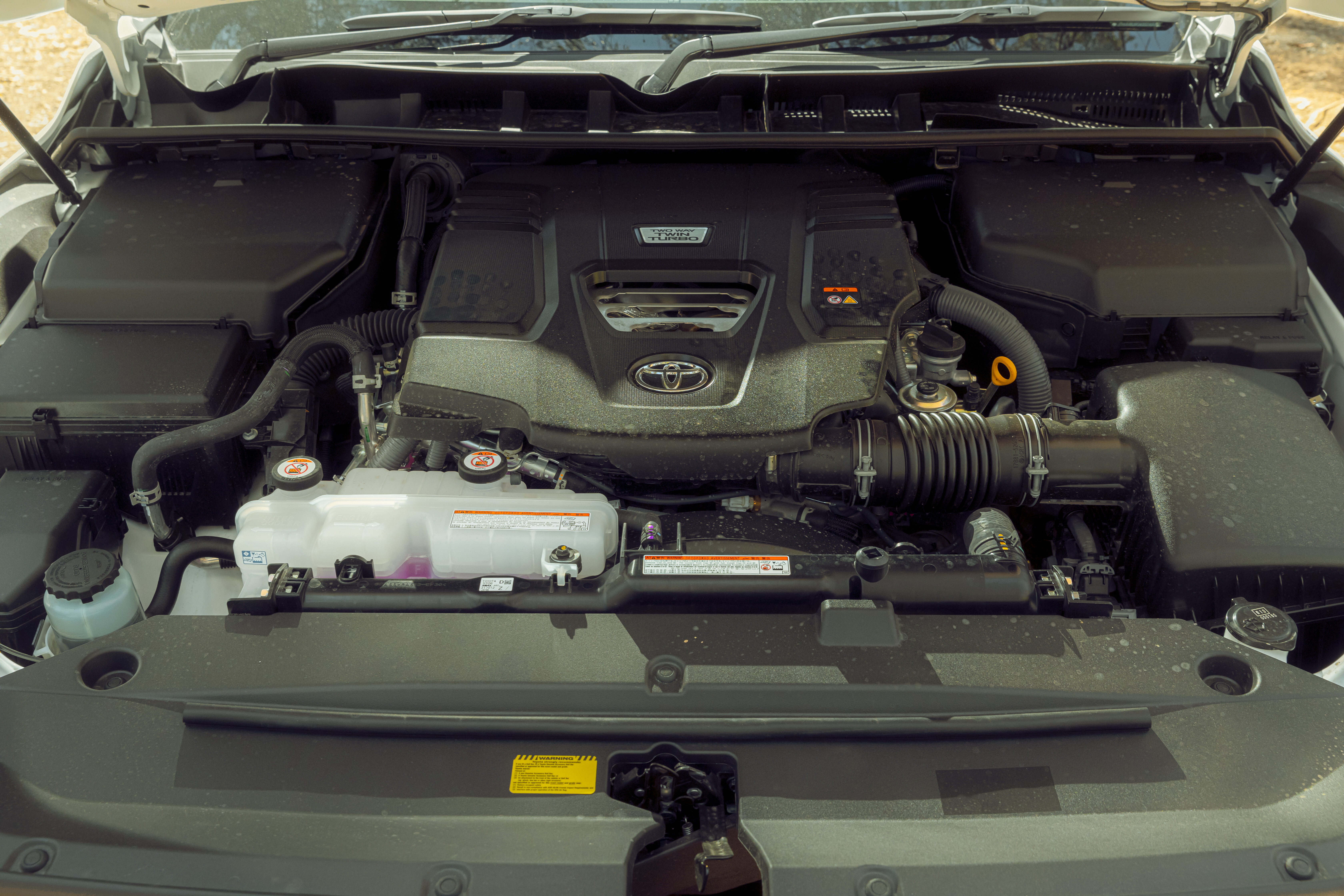
Of course, the concern with a petrol engine, compared to a diesel engine, is fuel consumption but these new generation turbo-petrol engines will be far more fuel efficient than the naturally-aspirated petrol engines – like the 4.0-litre V6 that disappeared from the Hilux five or so years ago – without being quite diesel-frugal.
However, add on a hybrid system (electric motor/generator plus battery) and diesel-like economy becomes achievable.
These new generation turbo-petrol engines, with or without electric hybrid add-ons, have of course been around for a while now in pricier passenger cars and SUVs and some very pricey 4x4s – think Range Rover – but haven’t appeared as yet in mainstream 4×4 utes or wagons. But that’s changing.
The 2023 Ford Ranger arrives at a time when the previous model was still one of the leading vehicles in the mid-size 4×4 ute category. Ford’s Ranger has been in an arm wrestle with the venerable Toyota Hilux for the title, of not only Australia’s favourite 4×4 vehicles but the top-selling model in the county overall for the past few years, and this ‘Next-Gen’ Ranger is Ford’s latest salvo in the battle.
Not only is the latest Ranger almost all-new, but its trump card is the inclusion of a V6 diesel engine. The 4×4 ute category is mostly powered by four-cylinder diesel engines and the introduction of the new V6 mill is akin to bringing bazooka to a gun fight.
Also bolstering Ford’s armoury is a new model in the range. The Ranger Sport slips in to the line-up between the popular XLT model and the top of the range Wildtrak to give ute buyers another choice in style and equipment levels.
Upgrade your Ranger

We’ve got a Ranger Sport with the V6 diesel engine, which sells for $66,690 plus ORC, and pitted it against the popular Hilux SR5 which, when fitted with the Premium package that gives it leather-trimmed seats, sells for $63,320 plus ORC.
You might say the $3300 price difference puts the new Ford at a disadvantage to the Toyota, but when you consider that the Ranger Sport is available with either the carried over I4 bi-turbo diesel engine or the V6 diesel which is a $3000 extra, the two models are close to on par in everything bar the powertrains.
Using the respective manufacturers’ online configurators, the Hilux as tested would be a $68,477 drive-away price in Melbourne, while the Ranger Sport as tested would be $73,261 drive away.
Let the battle begin!

Ford Ranger Sport V6
THE 2023 Ranger is just about all new from the ground up. The central body structure including the cabin, door openings and glasshouse are close to the same as the old Ranger with a few tweaks, while everything else – including the chassis, sheet metal, interior, powertrains, cargo tub and suspension – are either new or heavily revised.
As mentioned, the I4 engine is carried over as well, but we’re driving the V6 here.
So its fair to call the new Ranger all-new and everything Ford has done in updating the Ranger has been done to improve what was already an award-winning package, with many of the changes based on customer and user feedback.

Powertrain and performance
Ford pulled its 3.0-litre ‘Lion’ V6 engine out of retirement for the latest Ranger. This engine can trace its lineage back to the Land Rover Discovery 3 and Ford Territory diesel where it was used in 2.7-litre capacity, and since then via many Land Rover and Range Rover products as a 3.0-litre with single- and dual-turbocharger induction systems.
It was used most recently in the Ford F-150 Power Stroke in a tune very similar to how it appears now in Ranger.
That tune gives us 184kW of power and 600Nm of torque, so it’s a relatively mild tune considering its capacity yet it eclipses the 147kW and 470Nm of the 3.2-litre engine it replaces in the Ranger.

By far the biggest element the V6 brings to the Ranger and 4×4 ute category, is a level of refinement previously only seen in the soon to be superseded Volkswagen Amarok and the departed Mercedes-Benz X350d.
The 4×4 ute pack is mainly powered by in-line four-cylinder diesel engines which are inherently rough running and noisy in their operation. The V6 on the other hand is smooth, quiet and refined when compared to the four-pots, and delivers its performance in a more relaxed and well-mannered fashion.
The best of the four-cylinder ute engines, including Ford’s own bi-turbo 2.0-litre and Toyota’s 2.8-litre as found in the Hilux, make a healthy 500Nm of torque but need to be worked hard to achieve that and this is where they are rough and raucous.

The design and capacity of the 3.0L V6 engine means that it doesn’t suffer anywhere near the noise and vibration of the in-line fours.
On the road and tracks the V6 delivers its grunt seamlessly through Ford’s 10-speed automatic transmission which has been heavily revised for this new application.
The transmission doesn’t exhibit any of the hesitancy or indecision of the previous generation of this same transmission as found in the PX series Rangers and performs faultlessly on highways and secondary roads.

On-road ride and handling
The Ranger’s ladder-frame chassis has been made wider for a number of reasons, including fitting the V6 engine up front and widening the wheel track for improved dynamics. Down the track, this wider chassis will also aid fitting EV drivetrains.
For now, the 50mm extra width in the wheel track and equal amount added to the length of the wheelbase, are felt in the vehicle’s stability and ride control.
The track width takes the wheels out to the extremes of the body which benefits both ride and handling, as does moving the rear shock absorbers to the outside of the chassis rails where they have more leverage on the axle.

The changes and increased dimensions give the Ranger a more sure-footed and controlled presence on the road, adding to the feeling of it being a bigger truck.
The coil front and leaf-spring rear suspension feels firm over rough roads, but never jittery or uncomfortable. This is the price you pay in a vehicle designed to carry a tonne or tow 3.5-tonnes.
The full-time 4×4 system of the new Ranger is a benefit on rough tracks and wet roads, where it also improves the sure-footedness of the chassis. It’s also handy in the suburbs where, on wet roads, part-time systems in 2WD are prone to wheelspin when pulling out in to traffic or when towing heaving loads.
Off road
Those chassis modifications also benefit the Ranger off road, allowing for more articulation of the rear axle to keep the wheels on the ground in uneven terrain. The Ranger has never really suffered in this regard, but it is now better than it was in the outgoing model. The independent front end still suffers a bit and picks up wheels quite easily.
For when those tyres do lose traction with the terrain, the Ranger has an effective electronic traction control system (ETC) which remains active if and when you engage the standard rear differential lock (RDL). The ETC still isn’t as fast in action as the system in the Hilux which has always been the standard setter.
Heading along a rut up a steep, loose surface, the Ranger was more prone to allow the wheel to slip before the ETC would catch it and send the drive where it was most effective.

Playing with the drive modes and selecting the mud and ruts setting sharpened up the response of the ETC, but still it wasn’t as quick as the Toyota’s.
This again had me asking why, when you have selected low range and are obviously looking for the best tractive ability that a car can deliver, why the ETC wouldn’t automatically go straight to its sharpest and most effective setting?
The forward facing and 360-degree cameras available on the Ranger Sport’s 10-inch centre screen also proved to be a useful aid when driving off road and manoeuvring the car in tight spaces.

Cabin and accommodation
Stepping inside the new Ranger, passengers are greeted with an interior that raises the bar in the ute segment. It’s more modern looking and technically equipped than in the past, with a swag of features that will take some time to adapt to.
The aforementioned 10-inch screen takes pride of place in the centre of the dash and while it seems big for a ute, it’s the smaller of the two offered in the new Ranger. The Wildtrak models get a version of the portrait-style screen that is two inches taller.
The screen displays the usual things like maps and entertainment controls but also HVAC settings and off-road screen, and controls for exterior lighting. Thankfully Ford has included dials rather than buttons for the most used functions of audio volume and temperature controls.

Beneath the screen is a wireless charging pad for your mobile phone from where it connects to Ford’s SYNC 4 system wirelessly for Apple CarPlay and Android Auto.
The dashboard reflects the blunt upright look for the Ranger’s new grille and headlamps, and now includes a handy little shelf forward of the front seat passenger and below the glove compartment for a convenient place to toss your phone, keys, wallet or whatever.
The driver sits behind a steering column that is now adjustable for both reach and height. Forward of the steering wheel is another large digital screen that is configurable to display the information you might want to see more often. You also get a full display of off-road settings up here when the off-road mode is selected.

The Ranger has new seats across the model range and they have taller seatbacks that better follow the shape of your spine for improved comfort and safety. In the Ranger Sport they are leather covered and power adjustable in the front row, although you’ll need to step up to a Wildtrak if you want heated seats.
As the cabin is pretty much the same width as the outgoing model, the rear pew remains a tight squeeze for three adults across, but there’s plenty of headroom and adequate legroom. The new Ranger now has vents for the rear-seat passengers.

Practicalities
Ford listened to a lot of customer feedback on how Ranger owners used their utes and how the company could improve the experience. This led to things like the steps at the rear of the cargo tub sides to improve access to the back, exterior lighting changes, an integrated electronic brake controller for towing and a clever function that cycles through the lights so that you can check your trailer lamps.
On the Sport model as tested here, the integrated brake controller comes as part of a $900 optional ‘Touring Pack’ that also includes the 360° camera and four-zone exterior lighting. These features are standard on the Wildtrak.
The company didn’t forget the essentials like maintaining a 3500kg towing capacity, 6400kg GCM, close to a tonne payload (934kg in the Sport V6), 800mm wading depth, and better than average overhangs and clearance.

That wading depth is class leading, but we still question the forward-facing air intake for the engine that all Rangers now have and would be looking for an intake snorkel if it were our car.
Better news in the engine bay is the space for a second battery and the availability of a factory-backed kit from ARB.
The wider wheel track allowed a wider cargo tub that now accommodates a Euro pallet in-between the wheel arches, and also features LED lighting, four tie-down points, a 12-volt power outlet and an easy-lift tailgate. Things like the clamping points and ruler on the tailgate seem a bit novel, but we’re sure someone out there will find a use for them.

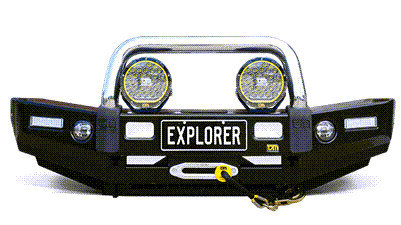
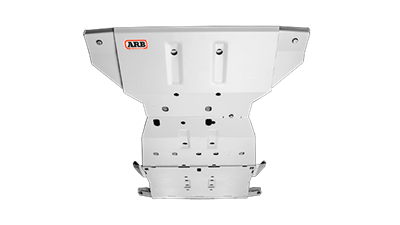
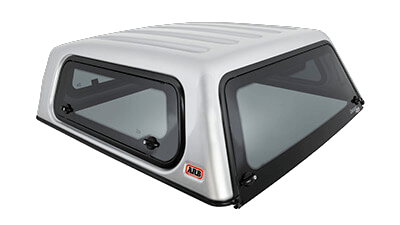
By teaming up with ARB to develop the factory-approved accessories for the Ranger, Ford is able to offer a range of kit that is unrivalled among its competition. Everything from a front Air Locker, bullbars and suspension kits to rear cargo storage, air compressors and canopies are available at the time of vehicle purchase.
Of course they will also be available from ARB stores who have a head start on developing kit for the Ranger, but you can bet the other leading manufacturers won’t be too far behind in developing their own accessories for such a high-demand vehicle.
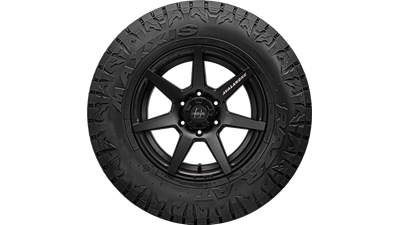
Ranger Sport rides on 18-inch alloys wearing 255/65-section tyres so it shouldn’t be too hard to find tougher tyres for bush use, while there’s no reason you couldn’t fit the smaller diameter 17-inch wheels from the XLT or aftermarket.

Toyota HiLux SR5 – Premium
WHILE the Ranger’s lineage is a bit harder to trace via its collaborations with Mazda and other changes over time, the Hilux’s is simple. This N80 Hilux is the eighth generation of Toyota’s mid-size ute, and over more than 50 years it has developed in to one of the world’s leading and most recognised vehicles.
The eighth-gen Hilux was introduced in 2015 and it was only back in 2020 when it received its latest updates including the all-important improvements to the 1GD-FTV engine.

Powertrain and performance
THE 2020 upgrades to the Hilux range marked a significant improvement to its 2.8-litre diesel engine, notable in its outputs which jumped up to 500Nm to match Ford’s 2.0-litre diesel in the PX2 Ranger.
It wasn’t just about peak torque for the 1GR engine as the extensive upgrades improved the engine’s performance right through its delivery range, dramatically improving the Hilux’s drivability.
This was especially true when matched to the 6-speed automatic transmission where in the past, it had hunted through the gears while trying to find the sweet spot in the engine.

There’s none of that indecisiveness in the current iteration of the power train; the transmission is perfectly matched to the engine’s outputs proving that six speeds is enough for any vehicle. The engine is punchy and delivers plenty of grunt, placing it at the pointy end of the four-cylinder powered 4×4 utes in terms of performance.
While the 4-cylinder engine can’t compete with the V6 engine in terms of outright performance, where it really feels old school is in the noise and vibration it transmits to the cabin.
This leaves the Hilux, and any other 4-pot powered ute for that matter, feeling like the light trucks that they really are, while the V6 powered utes like Ranger and Amarok feel and sound more passenger car-like in the way their engines perform.

On-road ride and handling
THE V6 Ranger also leaves the Hilux feeling more light truck-like in its chassis and the way it drives on the road. Like the Ranger, the Hilux feels firm in its suspension and this is following Toyota revising the suspension in the past to soften the ride of the unladen vehicle.
But the Hilux feels taller and narrower in the way it sits on the road, as if it has a higher centre of mass than the Ranger. This probably has a lot to do with the Ranger’s wider wheel track giving it a more stable platform to ride on.
It’s interesting to see that Toyota is releasing a wider-track Hilux model later this year with an extra 120mm of width added to its 1535/1550mm front/rear wheel tracks. This should significantly change the way the ute feels and drives on road.
There’s nothing wrong with the way the Hilux rides and drives now, it’s just that newer utes are changing the way cars in this segment perform.

Off road
LIKE any Toyota 4×4, the Hilux’s strengths lie in its gravel road and off-road performance and Toyota has given the Hilux class leading rear-axle articulation and the sharpest ETC calibration in the segment to ensure it gets over most rough terrain.
On that rutted climb where the Ranger spun its tyres as it ascended, the Hilux didn’t kick up a bit of dust thanks to its superior tractive abilities without relying on any additional drive modes or buttons to get it there.
The tables are turned when the terrain requires a diff lock (RDL) though and engaging the Lux’s RDL kills the ETC across the front axle leaving the car a three-wheel drive instead of four.
And once one of the front wheels starts spinning, the front axle become useless so it relies on the locked rear end. As such, the Hilux will often get over tricky obstacles easier using just the excellent ETC and not engaging the RDL.

Cabin and accommodation
THE Hilux’s cabin is another part of the car that has been upgraded through the life of this eighth-gen model, and each time it is an improvement. The dash’s eight-inch screen was updated to give a dial for volume control and made easier to use, but many people we speak to don’t like the way the screen sits on the dash as opposed to being more integrated. Personally, I have no problem with it.
The gauge binnacle is much simpler than that of the Ranger, but still tells the driver everything he or she needs to know. In many ways I find the simpler dash easier to read than the Ford’s busy gauge screen.
The leather-trimmed seats that are the Premium package combine with the piano-finish black trims to add a feel of luxury and quality to the ute’s cabin and, unlike those in the Ranger Sport, the SR5 Premium’s front seats are heated.

The rear seat in the Hilux is a tighter squeeze than that in the Ranger in all key dimensions: less headroom, legroom and shoulder space.
The Hilux also drops behind in not having all the latest safety technology. It has the essentials like ABS, ESC, ETC, AEB buts its lane-departure system doesn’t offer proper steering correction, nor does it have features like blind-spot indicators or rear cross-traffic alerts – all of which the Ranger has as standard.
This deficiency in safety tech is as much to do with the age of the current model Hilux when compared to newer models like the Ranger, Triton, BT-50 and D-Max.


Practicalities
THE SR5 rides on 265/60R18 tyres which are becoming a common size for utes, but you can fit the smaller and more practical 17-inch wheels off the lower grades for better tyre choices.
The cargo tray is smaller than that of the new Ranger but has tie-down points low in the four corners and lacks the tub lighting or 12-volt power that the Ranger has. The Toyota’s tailgate feels like it weighs a tonne when compared to closing the assisted tailgate of the Ranger.
The Hilux’s engine bay has space for a second battery and the air intake is well-placed where it draws from the inner ’guard.
As one of the worlds most popular vehicles, the Hilux is extremely well-supported by aftermarket accessories manufacturers and Toyota offers a healthy range of factory kit for the ute including steel and alloy bullbars. If you can imagine a part you want for a Hilux, there’ll be someone somewhere making it for you.

VERDICT
When driving these two utes side by side, there’s no hiding the fact that the Ranger is a new model, while the Hilux is the best part of seven years old. You feel the age difference in the way the two cars drive, the features and technology in them and the level of performance.
The V6 engine might only offer 100Nm more grunt but the way it delivers its torque through the rev band feels much more effortless, even though official numbers claim that the I4 Toyota engine has a wider spread of torque.
More than just the performance alone, the refinement that the V6 engine and 10-speed auto sets a new standard in the 4×4 ute category that nothing else comes close to.
Combine this with the tractability of the full-time four-wheel-drive system and its benefits on varied roads, and the Ranger is the better driving ute by a country mile.
Even without the V6 engine, the Ranger’s dynamics and comfort trump every other ute on the market, including the Hilux. Combine this with leading levels of safety and convenience features and the new Ford ute is hard to go past.
That’s not to say there’s anything wrong with the Hilux. It was only two years ago the Hilux, in this exact specification, won our 4×4 Of The Year award for its all-round competence and ability.

It might not do things amazingly well, but it does everything you need of it with nothing to let it down. Yes, it’s showing its age now, but Toyota is already promising upgrades to the N80 model before an all-new Hilux arrives in a few years’ time.
Will those upgrades to Hilux be enough to combat the onslaught of the new Ranger; we think not. Not without a new, more refined and powerful engine package at least.
So for now – the Ford Ranger sits at the top of the ute segment and it will come down to which of these two titans of the industry can get the supply of product in to meet customer demand, that determines which of them will be Australia’s best selling 4×4 in 2022.
SCORING
HiLux SR5: 8/10
What we like
- Excellent ETC calibration
- Solid construction
- Value for money
Not so much…
- Narrow chassis and cabin
- Noisey engine
- Lacking latest safety equipment
Ranger Sport V6: 9/10
What we like
- Refinement of powertrain and chassis
- Chassis dynamics
- Levels of standard equipment
Not so much…
- No manual transmission offered
- So much fiddly tech
- Electric parking brake
| Off-road specs | Toyota Hilux SR5 u2013 Premium | Ford Ranger Sport V6 |
|---|---|---|
| Departure Angle | 28u00b0 | 25.6u00b0 |
| Rampover Angle | 00u00b0 | 00u00b0 |
| Approach Angle | 29u00b0 | 30u00b0 |
| Wading Depth | 700mm | 800mm |
| Ground Clearance | 216mm | 000mm |
4X4 Australia’s project builds
https://www.facebook.com/4X4Aus/posts/5984316488250139
Snapshot
- ACCC report reveals buyers are being misled and struggling to get help with faults
- Suppliers also say they in turn can’t get backup from manufacturers for repairs
- Reform of Australian Consumer Law needed to protect all involved
New caravan owners are flocking in their droves to complain to a consumer watchdog after it was found 80 per cent had issues with their purchase, and many couldn’t get help when things went wrong.
Buyers have reported widespread consumer guarantee failures, being misled by suppliers, and experiencing unexpected delays in the delivery and repair of their caravans, according to the Australian Competition and Consumer Commission (ACCC).
A report carried out by the authority found of the 2270 caravan owners it spoke to, 80 per cent had problems with their new caravan – of which 50 per cent were major faults and 48 per cent had to wait more than two months for a fix.
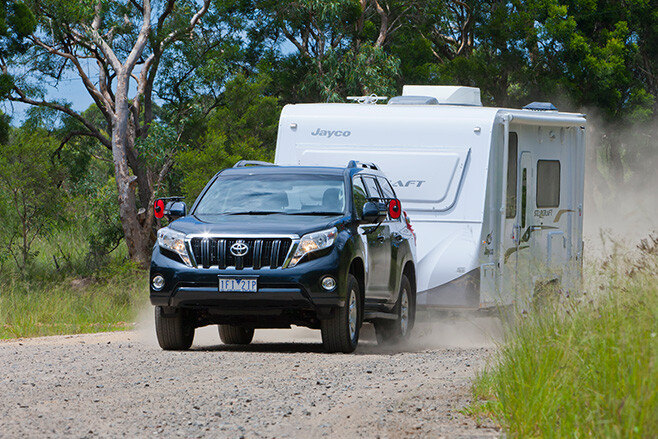
The number of complaints is also on the rise – with more than 1300 people getting in touch over the last five years. Twenty-nine per cent of those the ACCC surveyed said a claim about their caravan at the point of sale was inaccurate, and 13 per cent had a dispute with the supplier over a fault.
“I told the manufacturer that under the consumer law I had certain rights that they were ignoring. They said, ‘so what’,” one buyer said.
Another added: “We paid for half of the costs involved in fixing it. Otherwise, we would have months of haggling and [still have] an unacceptable caravan.”
“A caravan can represent a significant financial and emotional investment. Some people save for years in anticipation of purchasing and travelling in a caravan. If something goes wrong the harm can be significant,” ACCC Deputy Chairwoman Delia Rickard said.
Under Australian Consumer Law, if your caravan fails to meet one or more consumer guarantees, for example it is not of acceptable quality or doesn’t match a description made by a supplier, then you are entitled to a remedy from the supplier – which can be a repair, replacement or refund.
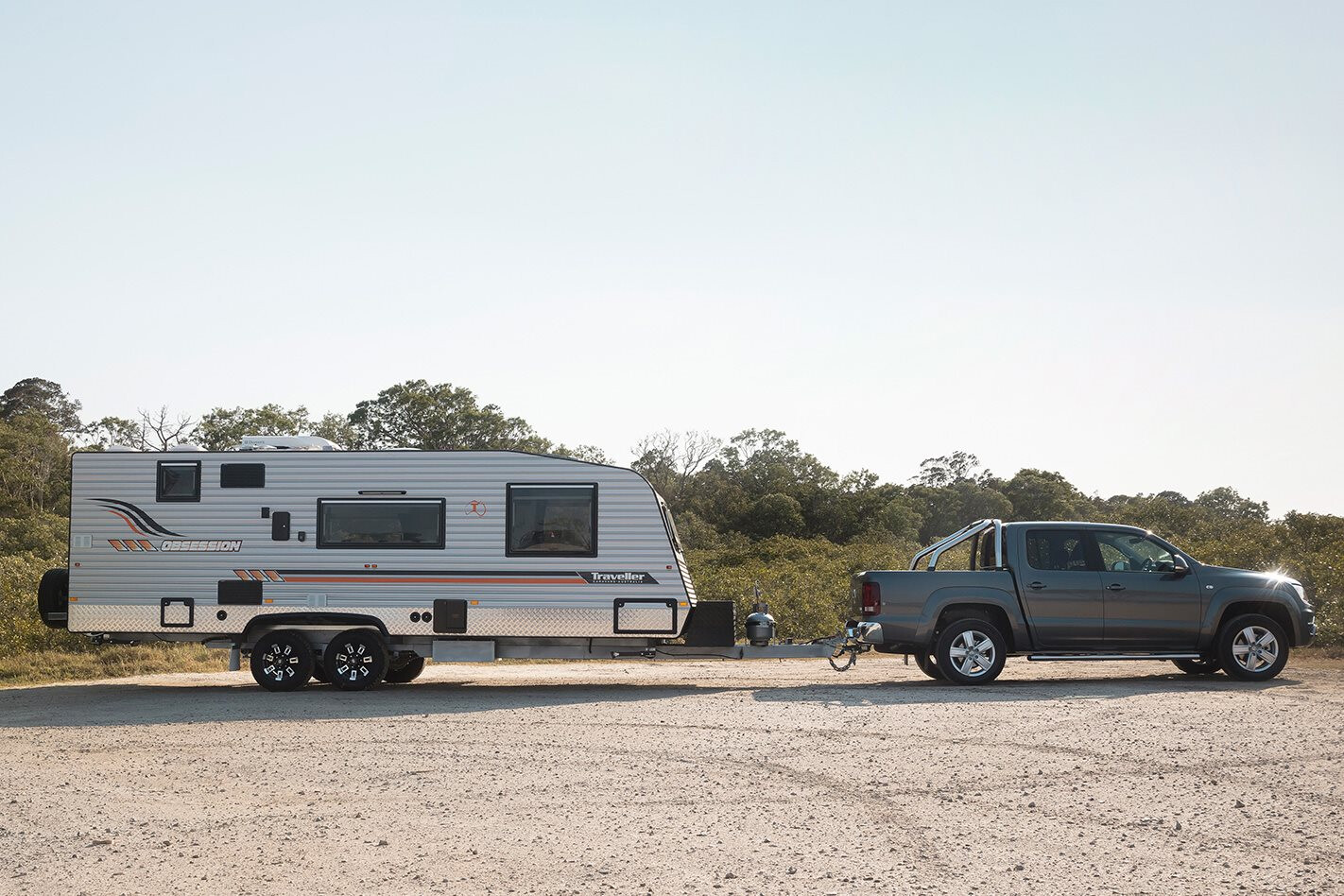
If a consumer guarantee failure is minor, the supplier can choose to offer you a repair. If they refuse, you are entitled to a refund or a replacement. If a failure is major however, you are entitled to your choice of a replacement or refund. Multiple minor faults also constitute a major problem.
“We are very concerned by these reported failures to comply with obligations under the Australian Consumer Law, and the impact that these failures have on consumers who have purchased a caravan which develops a fault,” Rickard added.
“Consumers need to be confident that when they make a significant financial purchase like a caravan, they will be able to get a refund, replacement or a repair if there is a failure.
“It is the ACCC’s view that it is reasonable to expect a new caravan won’t develop a major fault within the first several years of use.”
The most common issues reported by new caravan owners included being misled about their consumer rights and warranties, as well as being given inflated claims about their caravan’s performance and towing capabilities.
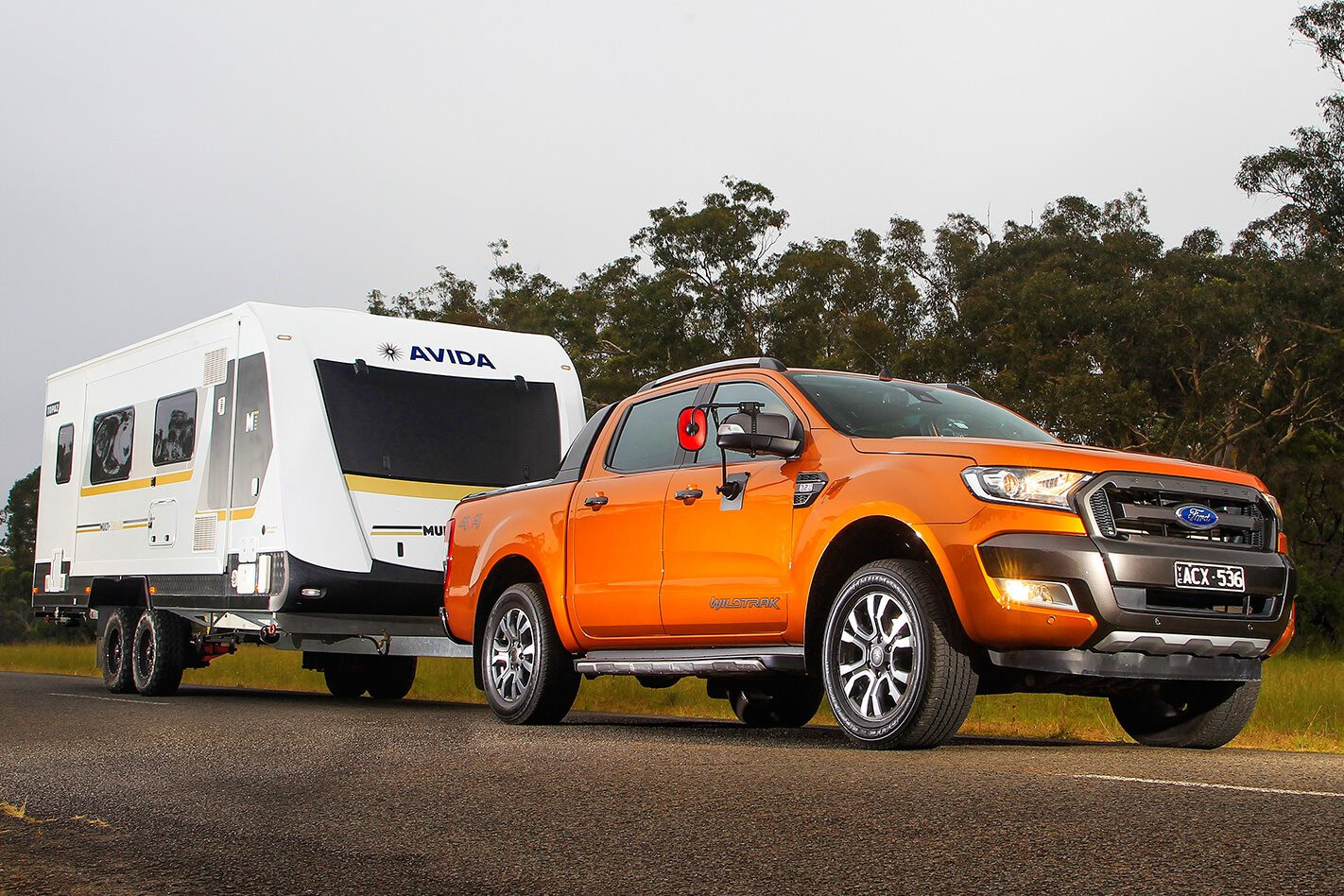
“Reports of misleading representations about caravan’s tow-weight and other important performance capabilities are particularly worrying given the grave safety implications for consumers,” Rickard said.
“The ACCC will investigate and take enforcement action against suppliers and manufacturers we believe may have misled consumers.”
Under Australian Consumer Law, a retailer must provide the consumer with a remedy when there is a consumer guarantee failure. However, the blame doesn’t lie squarely with suppliers. The ACL also says the supplier is entitled to recover any costs associated with providing a fix from the manufacturer, which includes parts and labour associated with repairs.
But 40 per cent of caravan suppliers surveyed told the ACCC that a manufacturer had refused to reimburse them for providing a remedy to a consumer when such an issue arose, and often it was just too expensive or difficult to fight the battle in court.
“While a supplier can take legal action against a manufacturer to recover costs, the ACCC’s survey of suppliers found some were reluctant to take this step due to fear of retribution,” Rickard said.
“We are very concerned by reports that retailers are unable to obtain the reimbursement they are entitled to for providing remedies to consumers.”
“This is a grey area with current legislation where there is no protection for the dealer on behalf of the customer to seek reimbursement or costs without going down a legal route (at significant cost),” one supplier said. “As dealers, we have little option other than to do the right thing by the customer and wear the cost as it often isn’t worth pursuing legally and not worth the damage to the relationship with the manufacturer. These small cases, accumulate into a larger overall amount over time.”
Another added: “Mostly the caravan manufacturers don’t want to recognise faults in manufacturing. Even to the point where their brand will be taken away from the retailer and given to another dealer.”
“Manufacturers [have] no accountability. The dealers are always fixing faulty issues without compensation. We have no way of defending ourselves at tribunal…the law is directed at us. There is no one to help the dealers against the manufacturers,” said a third.
As a result, the ACCC is advocating for the ACL to be amended to crack down on caravan sellers and manufacturers not following the rules, but also to offer better protection to those who are trying to do the right thing.
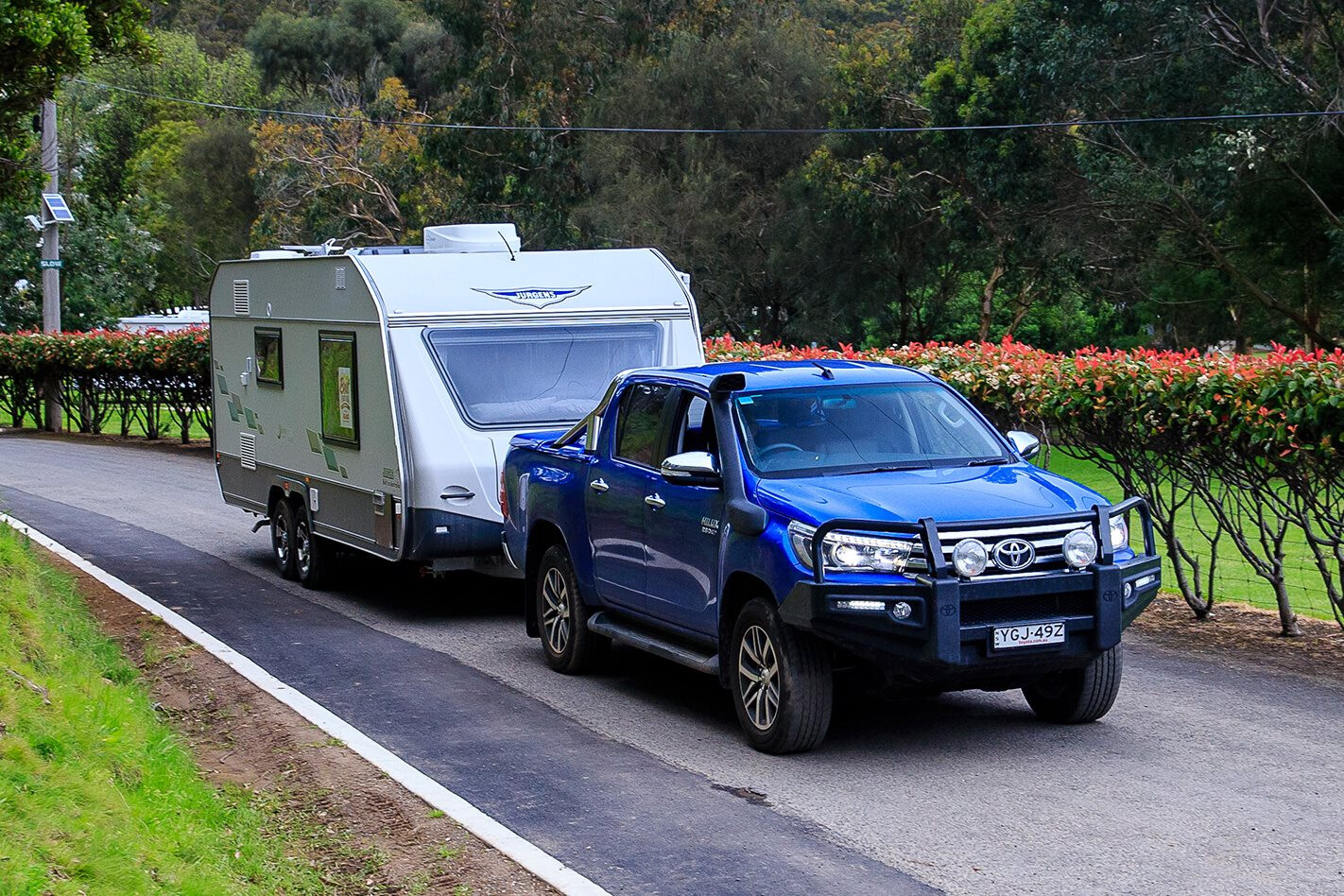
The move follows legal proceedings in which, in November 2017, the ACCC took court action against caravan manufacturer Jayco Corporation Pty Ltd alleging that it had acted unconscionably towards four consumers by denying them the right to refunds or replacements for their defective caravans.
The ACCC also alleged that Jayco had made false or misleading representations to the four consumers about their rights to a refund or replacement.
The Federal Court found Jayco had only made a false or misleading representation to one of the consumers about their consumer guarantee rights under the Australian Consumer Law, and ordered it to pay a penalty of $75,000 to said owner.
Generally while touring I have a place in mind I want to explore, or I just need somewhere to camp. However, while heading south from Adelaide I was drawn to the bottom of the Fleurieu Peninsula, not for the wineries (although they looked pretty inviting) but for the fact I may see Kangaroo Island.
Little did I know at the time, the Fleurieu Peninsula is known for its stunning rugged coastline, white sandy beaches, oodles of wildlife, and a few spectacular campsites.
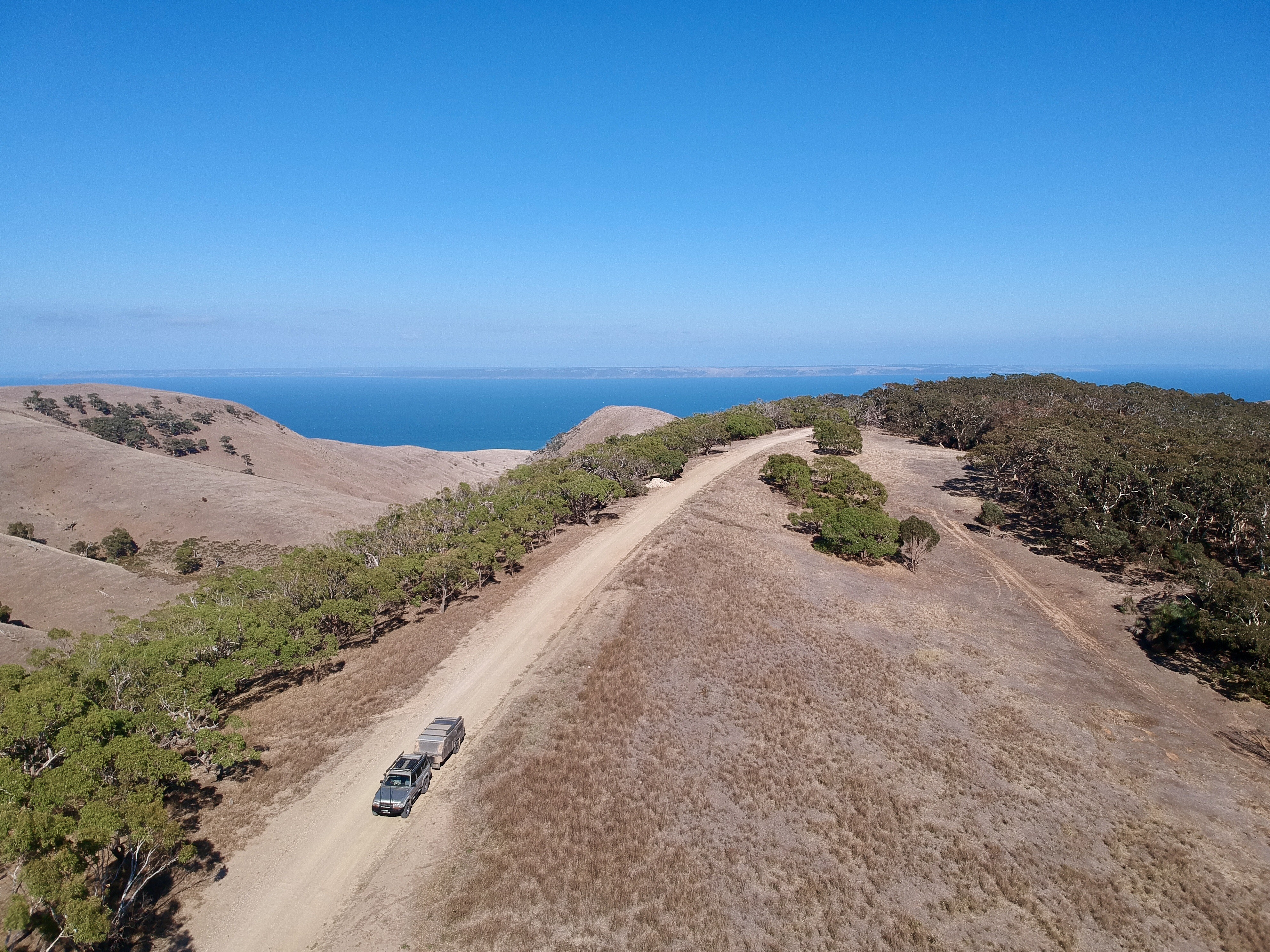
According to the map, the obvious place to head to was Deep Creek National Park for a few days to explore and see what this area has to offer.
Being only 100km south of Adelaide, it seemed the perfect option. Online bookings are essential, but, of course, the usual problem of a very poor network signal at the bottom of the Peninsula made booking quite difficult.
Camping
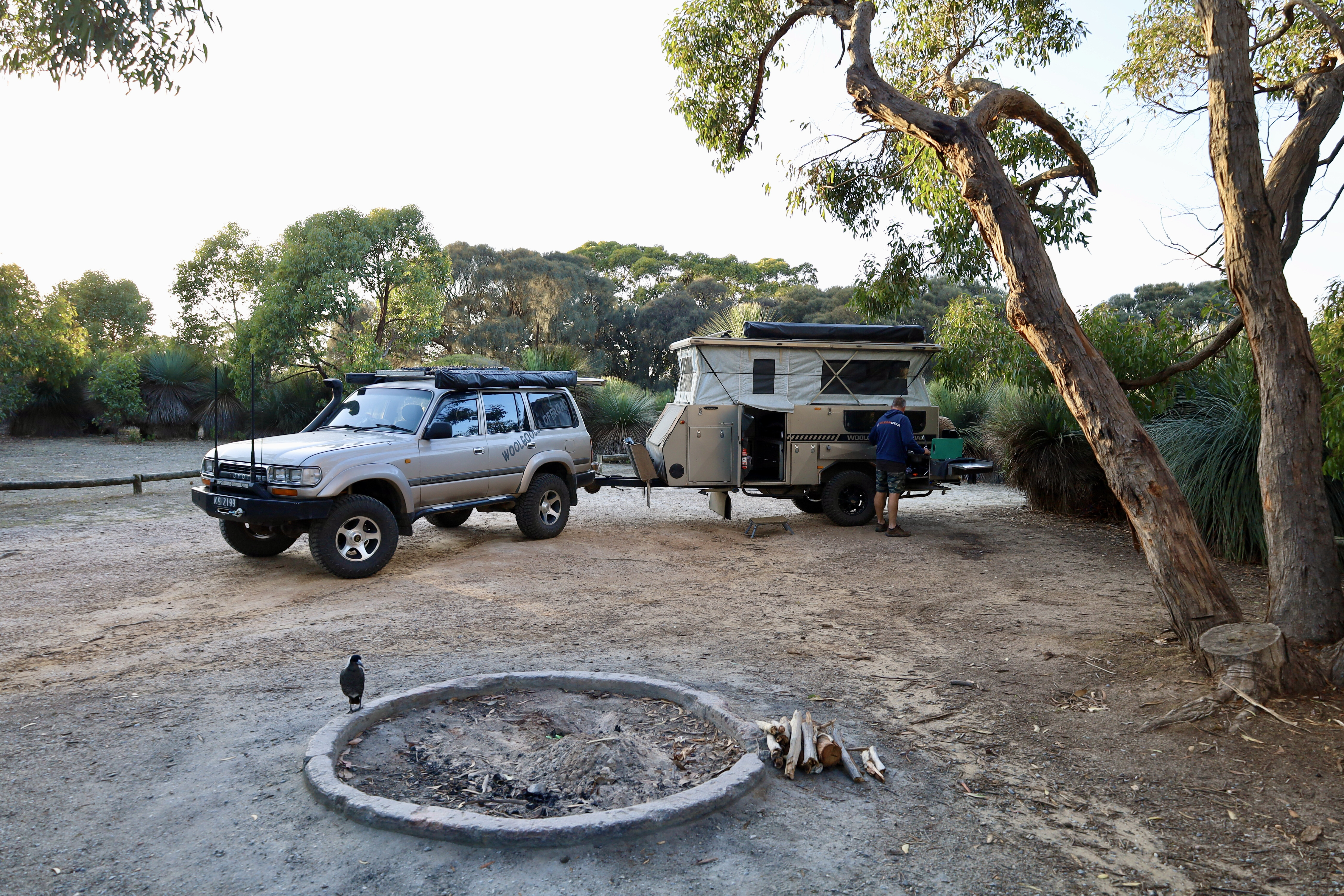
There are five campgrounds within Deep Creek, so unless you’ve been here before it’s a bit hard to work out which is the one for you, and because you need to book online it’s also a bit of a gamble. My option was limited to the Trig campground, and boy I wasn’t disappointed.
Trig caters for all styles of camping right through to off-road ’vans, where most sites are private with huge grass trees or gums screening the other sites. There are firepits at nearly all campsites and several toilets around the campground; and if you’re lucky enough to snag a site at the popular Stringybark campground, you get hot showers too.
If you’re after a bit more comfort, Goondooloo Cottage near Goondooloo Ridge picnic area was built with ironstone walls, slate floors and tree-trunk posts to portray an early settler’s cottage, and it’s filled with modern-day comforts. It has large panoramic windows overlooking the windswept paddocks towards Pages Island and across the southern ocean.
From Trig campground there are several hikes through to local landmarks including Deep Creek waterfall. You can also cut across to Cape Jervis to the famous Heysen Trail, which heads all the way north to the Flinders Ranges. In fact, there are 15 walking trails in Deep Creek, ranging from easy to difficult, with some providing spectacular views across to Kangaroo Island, Back Passage and the rugged Creek Valley.
Two local Aboriginal language groups have a deep spiritual connection to the Fleurieu area, and the Kaurna and the Ngarrindjeri both illustrate through their dreamtime stories on how the landforms were created. The two groups have lived here for thousands of years and there are restricted areas of significant importance to the groups, with protocols in place to protect their heritage.
Off-roading
Nearly all of the roads in to and around Deep Creek are 2WD accessible, which does explain why the campsites are always busy, but there’s one track on the western side of the park down to Blowhole Beach that’s 4WD only. Rated as a medium track for the sheer steepness and the rough rocky sections, it’s high-range 4×4 down and low-range 4WD back up.
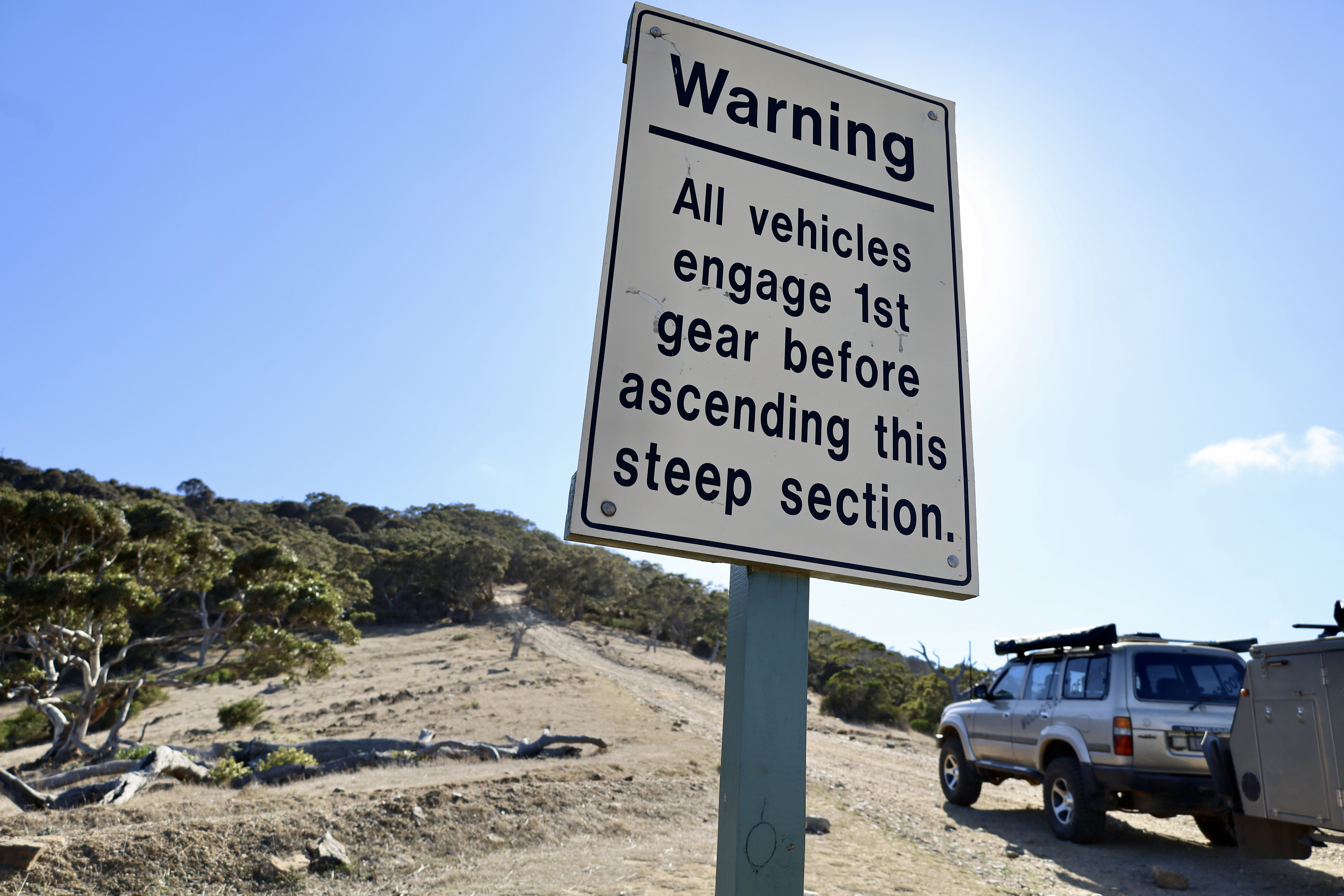
It’s a relatively short 5km drive down to the carpark, with superb views across the strait to Kangaroo Island, making it a magic trip to the bottom. They call this stretch of water Backstairs Passage, a 14km straight of treacherous water between the Fleurieu Peninsula and Dudley Peninsula on KI. Very strong and dangerous currents flow through here, connecting Gulf St Vincent to the open Southern Ocean.
Encounter Marine Park
Surrounding the Fleurieu Peninsula and across to the eastern shores of KI, is the Encounter Marine Park. This marine sanctuary, KI and the mainland are close to the southern edge of the Continental Shelf. Known as Murray Canyon, it’s one of two known deep-water submarine trenches in SA, with depths plunging dramatically to some 5000m and supporting a rich and varied mix of sea life.
The marine park protects giant sponge gardens in a huge habitat containing an array of sea life that make this sanctuary zone extraordinary as a refuge. Chatting to a local ranger at the car park who was passionate about the area, they said they often spot seals, southern right whales and white pointer sharks in the bay below, but it’s all a matter of being there on the right day.
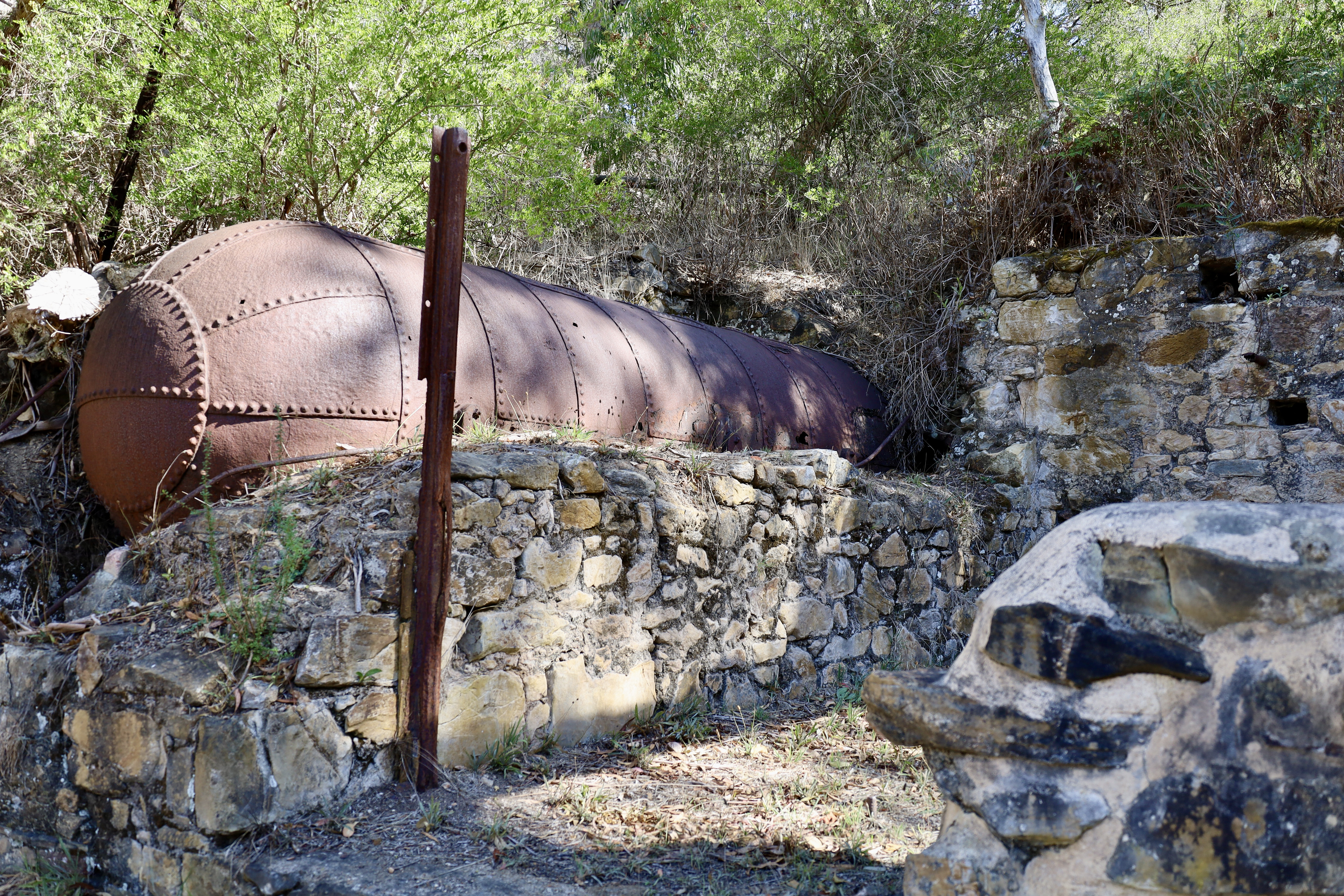
Also on the western side of the Deep Creek NP is Talisker Conservation Park, where you’ll be blown away by some rich mining history. Silver was discovered here in 1862 by a couple of Scottish brothers looking for gold, and it was named the ‘Talisker of Scotland’ after a place near their home. Up until 1872, these mines were the largest-producing silver and lead mines in SA, with some even quoted as the biggest in the Southern Hemisphere at the time.
After the minerals dwindled, arsenic was discovered and was mined until the mines finally closed in 1925. Walking around the old stone miner’s huts, manager’s office, the old whim foundations and indeed the fenced-off mines, the Talisker mines must have been a huge operation. Cornish miners worked hard across the years, transporting more than 36,000 bags of ore to the waiting barges in Fishery Bay. The workers carried the bags of ore through chest-deep water on to the barges, then transferred to ships in deeper water for transportation.
The mine site is truly amazing, with the main shaft more than 130m deep, with eight levels connecting to the other mines. The miners hit water at 132m deep and the pump struggled to keep the water at bay, so a connecting shaft was dug to act as a drain to let the water out; this can be found on the steep creek walk below the tailing mounds. Along the trail, look for the round kiln built in 1869 that supplied bricks for other structures.
Cape Jervis
The next stop was the settlement of Cape Jervis, which is the port for the ferries heading across to Kangaroo Island. Just before 1834, John Haynes established a whaling station at the cape employing 24 men where, for a few years, they were successful; but when Haynes died, his operation was sold off. In 1850, only one whale was caught by another operator and the station was subsequently abandoned.
It was in the mid-2000s when evidence of old stone cottages and the former whaling station were uncovered at Fishery Beach. Fragments of whale bone, chimney and flue remnants were enough evidence to recognise this as the old headman’s hut from the whaling days, which according to archaeologists is the only hut of its type identified in Australia to date. There’s only a few stone walls left to find, but projects are underway to preserve the area.
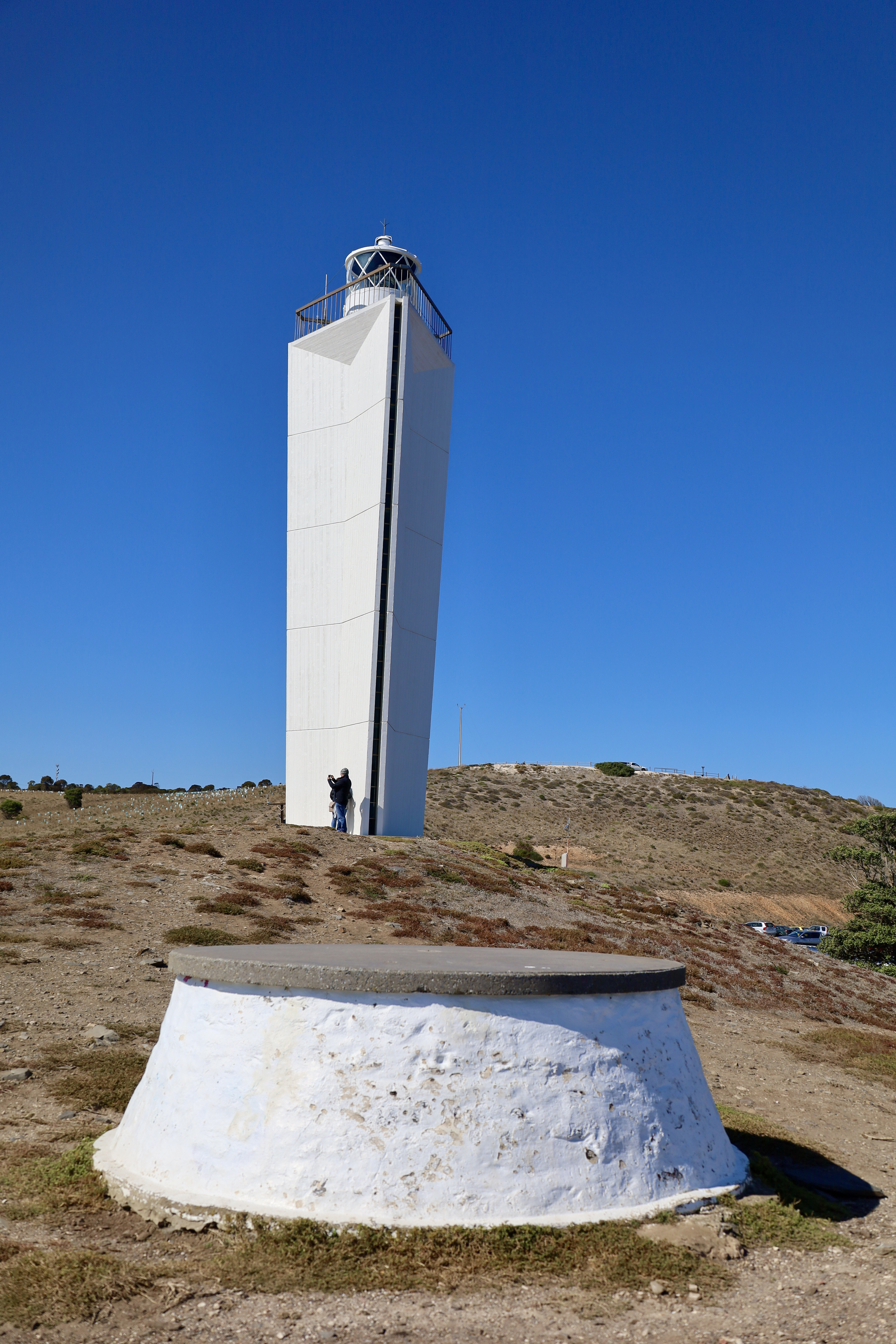
Across at the marina at Cape Jervis, the new unusual lighthouse was built in 1972 to replace the original, much shorter round one erected in 1871. The original light stood only seven metres high and was fitted with a kerosene wick-burner lamp, manned by two lighthouse keepers 24 hours a day.
Over the next 100 years, kerosene lamps were changed to incandescent kero-vapour lamps, then to a gas flashing light in 1927 when the two keepers were withdrawn from service, before the current 18m fully automatic lighthouse was constructed. The original base of the 1871 lighthouse has been kept as a memorial to where it originally stood.
It’s easy to work out that Deep Creek NP is all about nature and, along with the scenery, the native wildlife is in abundance with western grey kangaroos, short-beaked echidnas, more than 100 different bird species, and whales which pass by between June and October on their annual migration. Put this park on your to-do list when in the area – it has to be seen to be believed.
5 things to see and do
TALISKER SILVER LEAD MINE HIKE
There are three hiking options to explore the 19th century silver-lead mining and ore-processing operation. Learn about the ingenuity of the Cornish miners and their families as you walk through this revegetated area of the Talisker Conservation Park. Other buildings such as a miner’s cottage, the manager’s office, the stone flue and the round Cornish boiler next to the engineering shed can all be viewed on the interpretive walk around the hill. Allow a good two hours to wander around the 1.5km loop
WHALE WATCHING
During winter and spring, whales pass by Deep Creek NP on their migration north from the cool Antarctic waters to the warmer East Coast waters to give birth. There are plenty of vantage points throughout the park to view this spectacle, as well as other marine life.
FOUR-WHEELING
On a calm day, head to stunning Blowhole Beach via the 2km hiking track from the Cobbler Hill car park or get there by 4WD on the steep drive down to the eponymous car park. The beach itself is only some 200m in length, but rests between two rugged headlands and is a great place to spot dolphins and other marine life, plus kangaroos and other nearby terrestrial wildlife.
CAPE JERVIS
West of Deep Creek NP is the small town of Cape Jervis on the headland of the Fleurieu Peninsula. Standing sentinel here is the uniquely shaped Cape Jervis Lighthouse that was built in 1972, replacing the original and much shorter light built in 1871. Cape Jervis is the jump-off point to Kangaroo Island, with a regular daily passenger and vehicle ferry service that operates on the hour during summer, but extends to three hours in winter.
WHEN TO VISIT
Early spring or late Autumn would be ideal the time to explore Deep Creek NP’s 15 walking trails when the nights are cool and the days are warm. During summer the temperatures can hit anywhere up to 35C, making the area and the hiking trails very uncomfortable.
UPDATE: Now we’ve driven them!
The big moment is here. 4×4 editor Matt Raudonikis has now put the 2023 Ford Ranger and Toyota HiLux through the wringer together. Let’s see how they go… hit the link below!

Story continues…
It’s been a wild ride for fans of dual-cab utes in the past few weeks, with solid information from Ford, Volkswagen and Toyota coming in hot and fast.
There’s also news of an updated 2023 Toyota Hilux, with a wider stance and disc brakes being introduced on the rear end – although we haven’t seen this in the flesh yet, so we can’t offer a proper assessment yet. You can read about it here though.
Both the 2023 Ford Ranger and 2023 Volkswagen Amarok have been revealed, and both look to be a real step up in terms of power, refinement and day to day liveability.
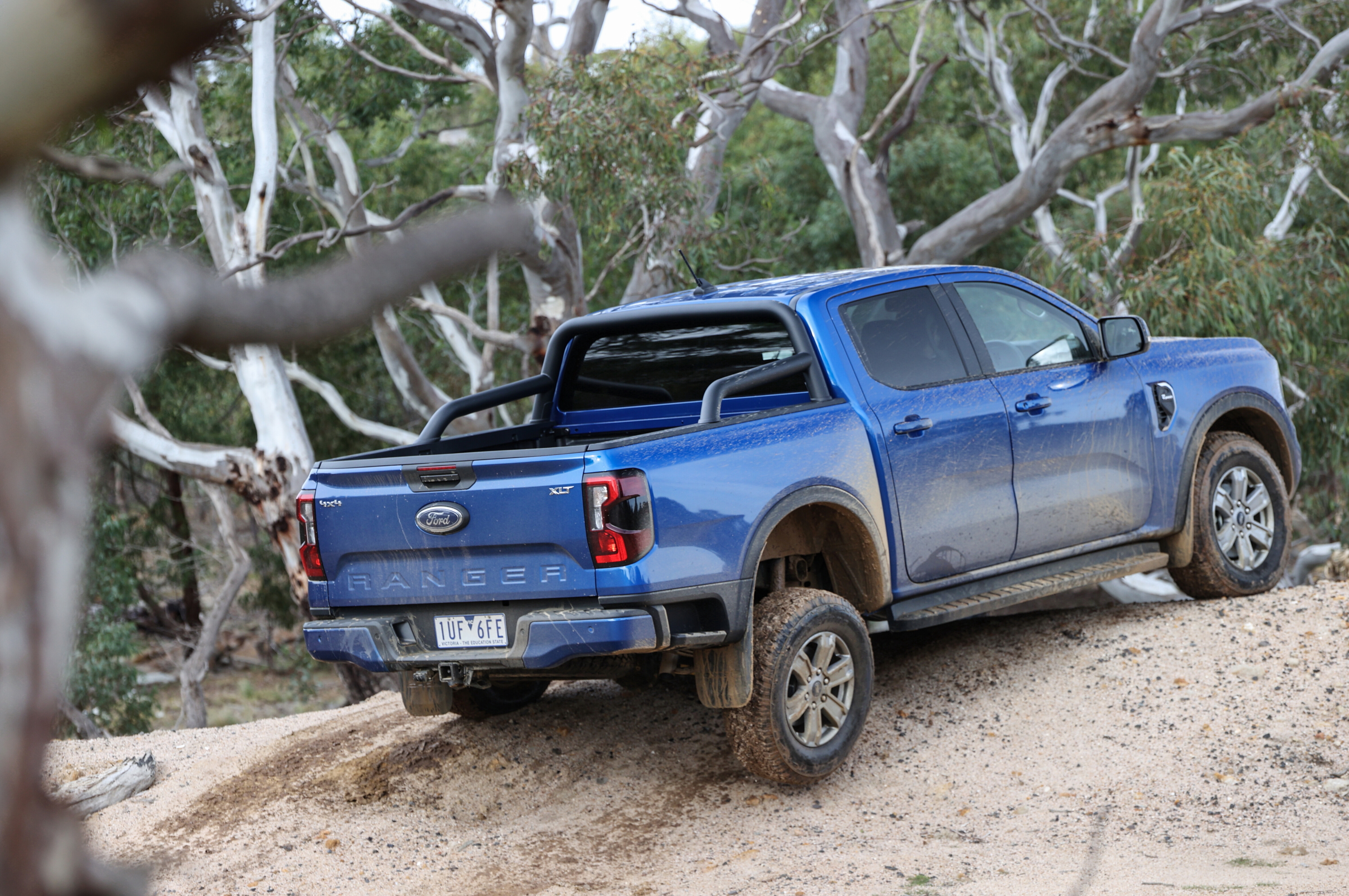
Let’s get to it: Ranger v HiLux specs
For the sake of this exercise, we want to put a microscope on the current model Toyota Hilux that is still on sale (if you can get your hands on one) and how it compares to the next-generation 2023 Ford Ranger.
This is to see just how far, if at all, the new Ford Ranger is ahead of the outdated Hilux. Or, has Toyota nailed the HiLux formula to begin with and the Ranger is playing catch up?
We’ll update this article as more information comes to hand, but you must admit it’s a good time to be an Aussie four-wheel driver, with so many new off-road dual-cab utes coming onto the market in the near future.
Put on your glasses, pop on the kettle and take a closer look at these specs we’ve assembled on the 2022 Toyota Hilux vs the 2023 Ford Ranger.
Upgrade your Ranger
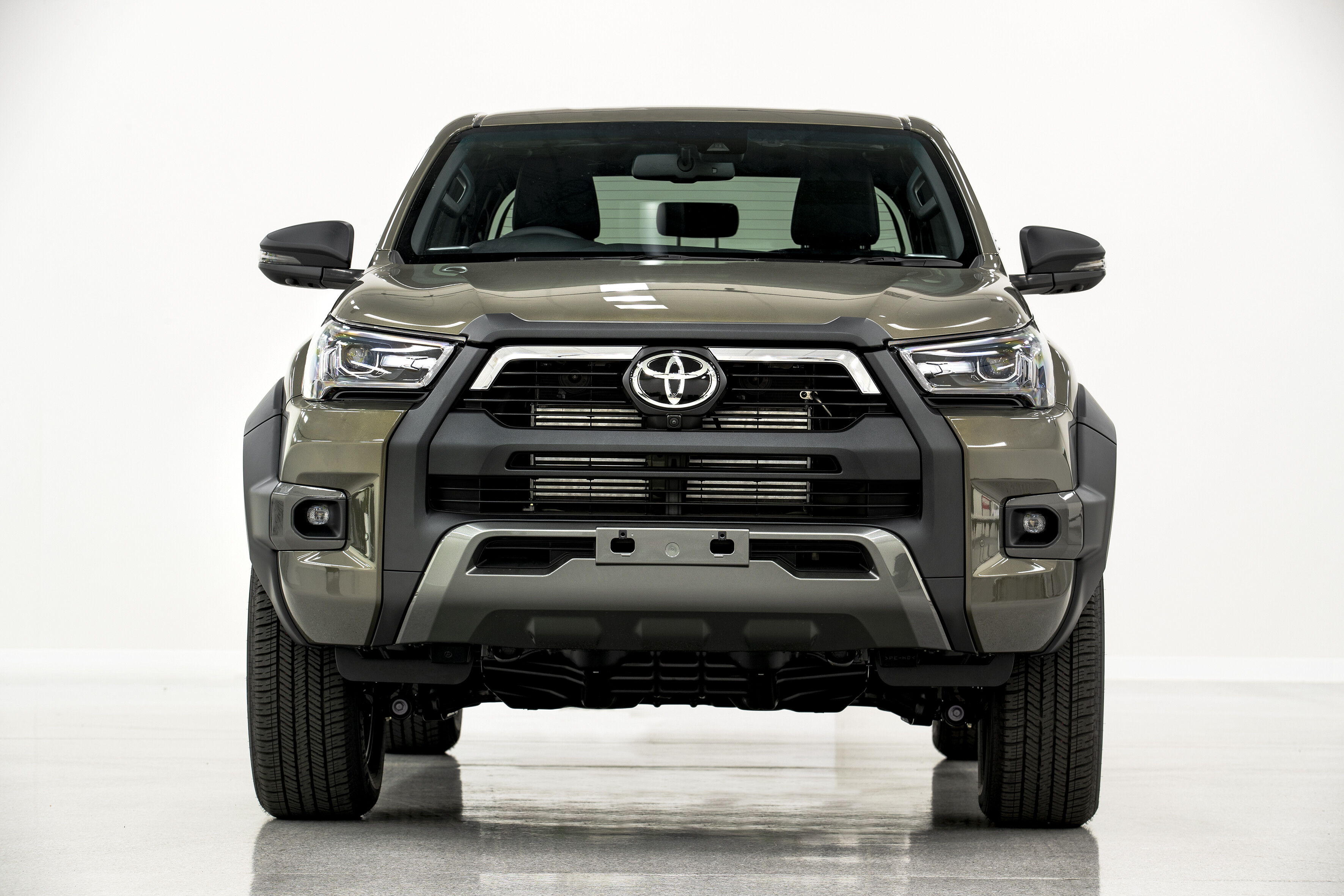
Vital weights and towing capacity
This is serious business. Get it wrong and not only is your vehicle unroadworthy, but also dangerous.
First up, the vital load and towing capacity specs that every caravaner or four-wheel driver will want to be aware of.
Check out the below specs to see how the current generation Toyota Hilux stacks up with the new 2023 Ford Ranger.
| 2023 Ford Ranger (V6 XLT Model) | 2022 Toyota Hilux (Dual Cab SR5) | |
|---|---|---|
| Towing capacity | 3500kg Braked | 3500kg Braked |
| Kerb weight | 2285kg | 2110kg |
| GVM (Gross Vehicle Mass) | 3100kg | 3050kg |
| GCM (Gross Combined Mass) | 6400kg | 5850kg |
| Payload capacity | 995kg | 940kg |
Engines compared
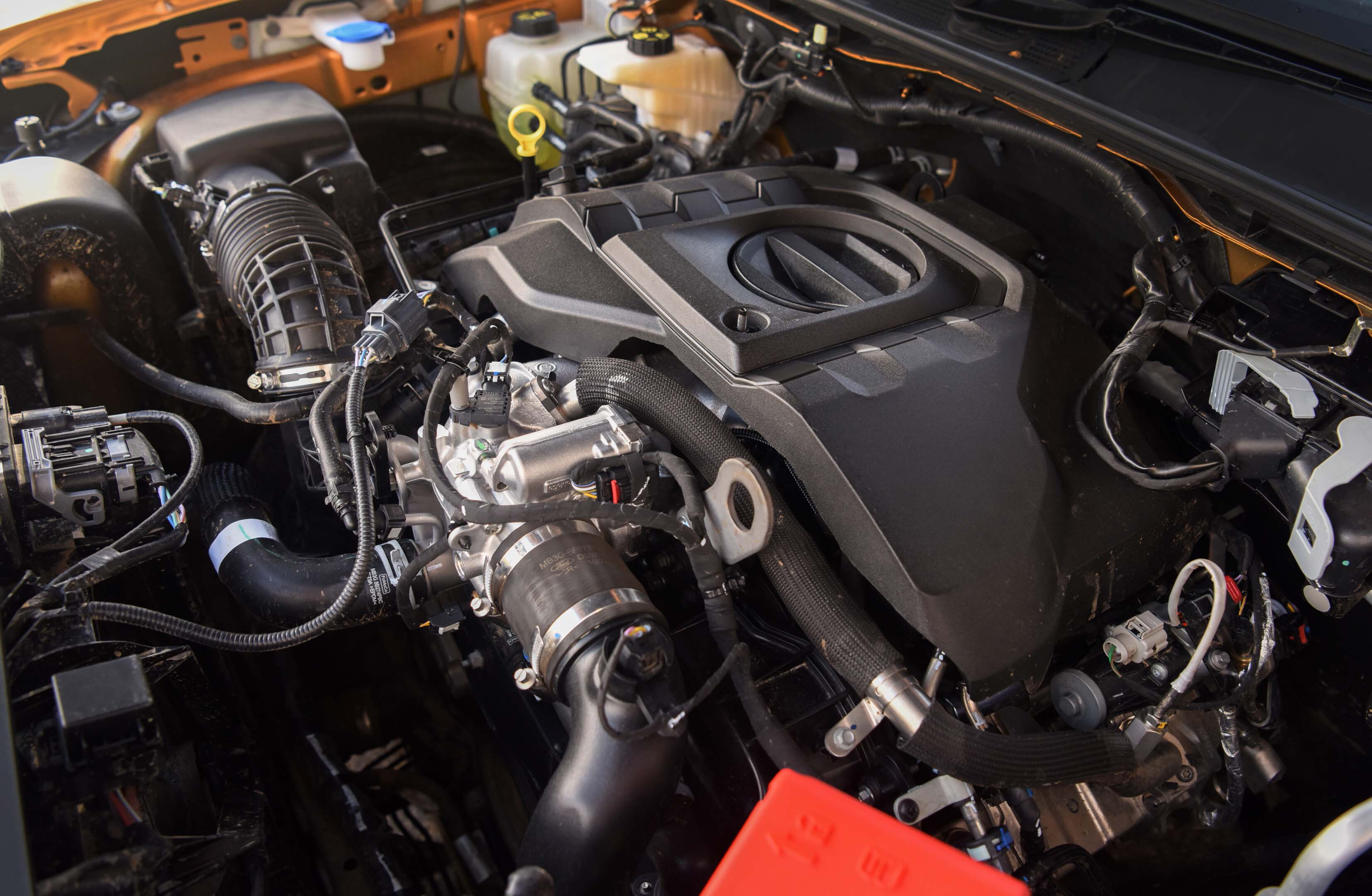
The last-generation Ford Ranger offered three engines throughout its lifetime, the larger 3.2L five-cylinder turbo diesel engine, a 2.0L bi-turbo and a 2.2L turbo diesel.
There are also three engine options on offer in the 2023 Ford Ranger, ranging in capacity from 2.0L to 3.0L – all turbo diesel, with one twin turbo.
The Hilux on the other hand, is offered with two engines. The most common and popular is the 2.8L 1GD-FTV producing a claimed maximum power figure of 150kW and 500Nm.
There is also the choice of a 2.4L 2GD-FTV turbo diesel available in lower Workmate trim specification which makes 110kW of power and 400Nm of torque between 1600 and 2000rpm. Let’s take a look at their power figures:
| 2022 Previous generation Ford Ranger | |
|---|---|
| 3.2L 5-Cylinder Turbo Diesel | 147kW @ 3000rpm 470Nm @ 1750-2500rpm |
| 2.0L 4-Cylinder Bi-Turbo Diesel | 157kW @ 3750rpm 500Nm @ 1750-2000rpm |
| 2.2L 4-Cylinder Turbo Diesel | 118kW @ 3200rpm 385Nm @ 1600rpm |
| 2023 New generation Ford Ranger | |
|---|---|
| 2.0L 4-Cylinder Turbo Diesel | 125kW and 405Nm |
| 2.0L 4-Cylinder Twin-Turbo | 154kW and 500Nm |
| 3.0L V6 Turbo Diesel | 184kW and 600Nm |
| 2022 Toyota Hiluxu00a0 | |
|---|---|
| 2.4L 2GD-FTV 4-Cylinder Turbo Dieselu00a0 | 110kW and 400Nmu00a0 |
| 2.8L 1GD-FTVu00a0 4-cylinder Turbo Diesel | 150kW and 500Nmu00a0 |
Dimensions compared
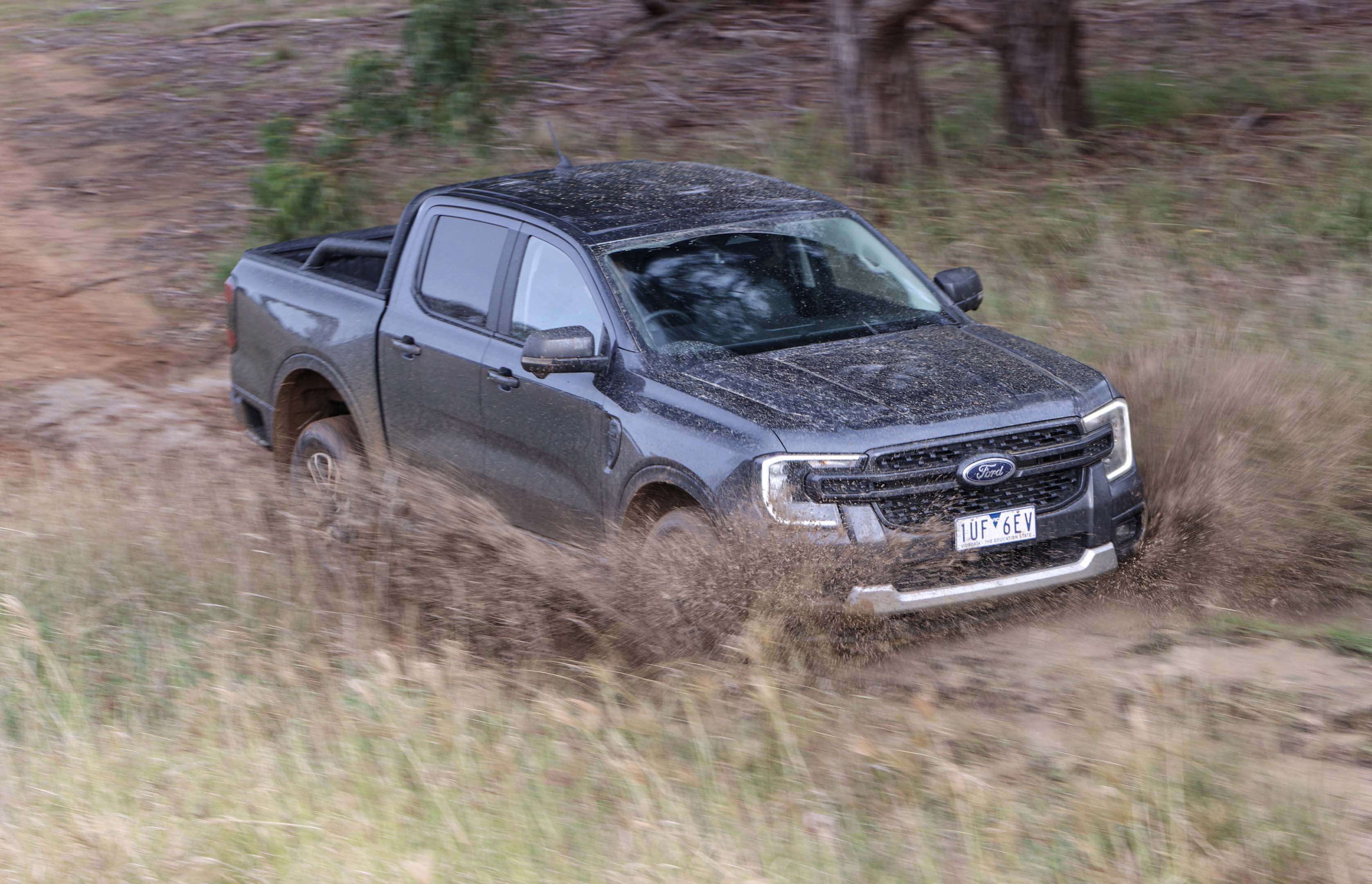
One of the bigger news items here is that the new Ford Ranger is a larger vehicle than the one it replaces, both in terms of wheelbase and overall dimensions.
That’s a good thing overall, as it will provide a more relaxed ride when loaded up, or when carting around passengers – somewhat at the expense of the vehicle’s ramp-over angle.
There’s certainly some interesting data to sift though on both makes and models, especially if you are in the market for a new dual-cab ute.
So which ute would you be taking home? The 2022 Toyota Hilux or the 2023 Ford Ranger?
4X4 Australia’s project builds
When it comes to cross-camp rivalry, there’s really not a longer running saga than the Nissan versus Toyota storyline, with either camp backing their brand with yarns of legend and awe to anyone with a social media account.
As both moved through the decades, finding better ways to build their products, loyal followers maintained their allegiance eagerly looking forward to the next iteration and upgrades. A driving force behind automotive evolution being the want for more factory power and torque, or the promise of more with an aftermarket tickle.
In today’s 4×4 market, that rivalry has really become more of a byword, with so many other options available on the market that can achieve all that their eclectic buyers require – however, the current Series 5 Y62 Nissan Patrol remains in the good books of many a punter.

Kye Appleton was in the market for a new rig after owning two GQ Patrols powered by a TD42 and 350 Chev respectively. More recently, a 2015 Ranger Wildtrak and a 2012 Jeep Wrangler were part of his stable, but Kye was keen to adopt more of the latest technology when it came to his latest build.
“The powerplant they come with was my first reason (to buy one), and options for forced induction were also there,” he tells us. “The size of these vehicles matched with comfort for long distance, it’s a great all-round 4×4. Good to tow heavy, good for rock, dirt, mud and sand, and not good on fuel which is my type of car.”
The 2021 Ti-L Patrol you see here is the end result of sitting down with a list of requirements, correlating the latest methods to achieve them, and sticking to the plan.
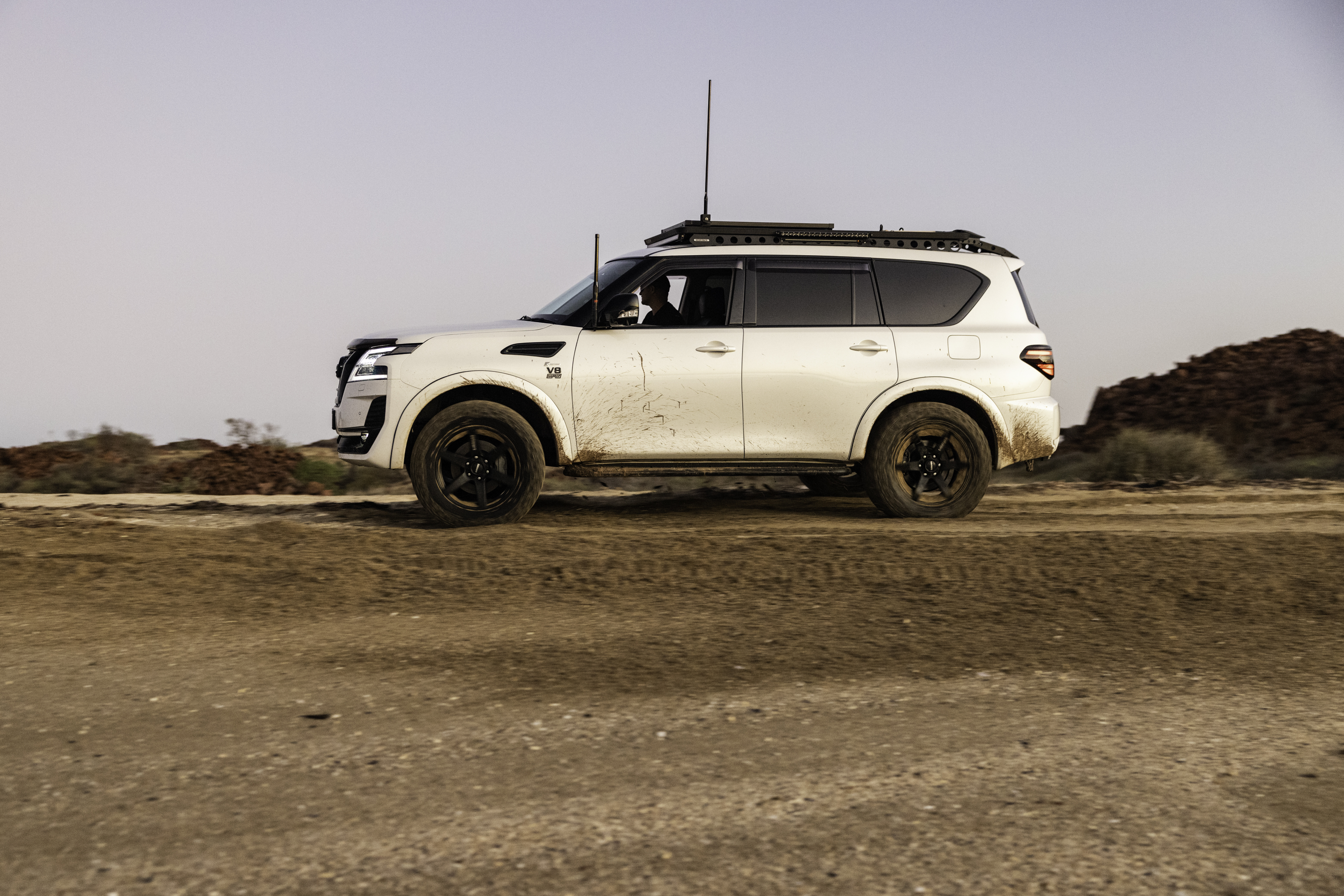
“My main aim for this build was to have a clean, almost UAE-spec Patrol, and bring the interior in to the 21st century, increase the factory power to the maximum available on the market, at the time safely and reliably,” says Tye. “Also to be able to run zero gas cooking and be off-grid for multiple nights.”
Kye set about designing his Patrol just the way he envisioned, being quick enough to enjoy daily duties around downtown Karratha, while also being capable of traversing the rocky archipelagos and inland rivers across the Pilbara region he calls home. Supporting a couple of days camping out on a weekend away with the jet skis in tow wasn’t going to go astray either.
Engine modifications
With Nissan stuffing V8 grunt in a chassis capable of putting it to the ground, Kye wanted to maximise what was possible before even taking delivery.
After securing the Patrol from a Queensland dealer, it was shipped to Melbourne where Matt at the Horsepower Factory fitted the Harrop TVS2650 (Twin Vortices Series) supercharger to the VK56VD 5.6L petrol V8.
An 85mm supercharger pulley was used, allowing the blower to deliver 6psi to the engine; with the Harrop kit also supplying a water-to-air intercooler, keeping down the intake temps from compressing oxygen molecules together.

A Harrop DI (Direct Injection) Fuel Pump upgrade keeps the 98RON up to the standard injectors, with a factory ECU tune resulting in a 47 per cent increase from factory power, to 330kW – torque has been bumped up around an extra 40 per cent from standard, too.
Clearing the extra combustion gases from the cylinders is a Horsepower Factory ‘Big Boy’ exhaust, which starts with high-flow catalytic converters, progressing to dual 3-inch pipes, then to a 3.5-inch single exit.
Getting all that new-found power to the ground are a set of tortured Maxxis RAZR MTs in a 35×12.5 sizing, mounted on Simmons S6 20-inch rims in a matte black finish. While there would be some conjecture from the 4×4 community as to this tyre combo handling serious four-wheel driving, Kye has seen no issue getting to anywhere he needed to go.

“I like the look of a 20-inch rim with a 35-inch muddy,” Kye admits. “The Patrol is a big car and most Patrols out there look like they have skipped leg day with tiny wheels and tyres.”
To aid in keeping the big meats on the ground, Kye has invested in Blackhawk UCAs and a two-inch lift all-round from On Track 4X4. A key advantage being it can be installed without depressurising Nissan’s HBMC (Hydraulic Body Motion Control) system. To assist the rear springs, a pair of Airbag Man airbags fill out the rear coils when the rear cabin is loaded, or when towing.
UAE influence
Being a UAE-type build would mean keeping the exterior looking mildly modified and clean, with little to give away the modifications hiding inside, so any accessories added to the outside were integrated as best they could – or hidden, like the Rough Country DRL LED light bar behind the grille. If it couldn’t be hidden, it was blacked out along with all the OEM exterior chrome work.

Bruno from Hydrographics WA stripped the chrome from the plastic body parts like the grille, vents, window surrounds and wing mirrors, and hydro-dipped them in Night-Sky Pearl. At the same time, the fake woodgrain interior panelling was whipped out and dipped in a matte white, with the stereo surround and centre console finished in a brushed dark gun-metal grey.
A Rhino-Rack Pioneer bar sits across the full length of the roof, supported by its Backbone system, containing the PV panel as well as a Laser 48-inch light bar up front. There’s also a Stedi LED light bar and secondary camping lights down either side, with a final pair of Stedi LEDs across the rear for reversing.
Kitchen set-up
Going the standard route of a gas cooker propped up on a shelf was a path Kye just didn’t want to go down. Deleting the need to carry and refill an awkwardly shaped canister just as unappealing.

The far cleaner option of an induction cooktop, which takes electrical energy and generates magnetic energy that can be passed through any iron-based pot or pan to create a controllable heat, made far more sense. He was just going to have to figure out a way to generate enough electrical juice to make it all work.

Advancements in battery and 12-volt inverter technology has now made this a very viable option, so Kye started with twin 150amp/h AllSpark LiFePO4 batteries which feed a KickAss 3000-watt inverter. The inverter has enough grunt to support the induction cooktop, but also powers two 240-volt GPO twin sockets mounted on the passenger-side D-pillar should the need arise.
The lithium batteries are kept topped up via a 50amp/h Redarc BCDC charger while the engine is running, and a 240-watt solar panel mounted up top when parked. There’s a Victron shunt mounted between the lot to connect and distribute, plus take readings from, and a spare input via Anderson plug for another solar blanket located underneath the rear bumper.
Keeping supplies fresh is a retro green Legacy Edition Engel fridge loaded on an Engel slide, which is mounted as low as possible in the Full Boar Fourbie Drawers Canning wagon system set-up. This was constructed in Victoria, before being shipped to Kye to be installed in Karratha. It includes a single storage drawer with a pull-out kitchen bench underneath, which Kye was able to modify to accept the induction cooktop.
With quite a few kilometres now under the tyres of the Patrol and a few camp-outs, Kye has found the big Patrol as capable as he had envisioned. While there is a friendly rivalry with his hometown LC200 owners, it’s really only lip-service with many getting just as big a kick out of the build as Kye.
“The EATS200 plates are a great head turner for 200 Series owners,” says Kye. “When you smoke them at the lights or in the sand with that subtle whine from the supercharger, it makes everyone smile. Including them, from behind!”
Cluster replacement
Having a brand-new Patrol Ti-L has its benefits when it comes to the interior, with leather seating, climate control, a Bose 12.1 sound system, and enough cupholders to get a six-pack home comfortably; but in today’s automotive market the use of an analogue-style dash cluster (even if the internals were digital) just wasn’t going to cut it for Kye.

Enter the guys at CaRobotor who supply a complete cluster replacement that swaps out the OEM offering to a full digital screen more in line with what is available in the European automotive market.
Swinging over to the stereo, Kye stepped it up even further with a 12-inch PX6 touchscreen stereo replacement. Running custom Sergey Kozlov firmware allowed Kye greater control, being able to reverse the standard AC display back to the Australian market positioning, and insert pictures of his own car on the display, along with more choice in themes. An added benefit being ultra-fast boot-up times, which came with the new software.
I remember the day clearly. It was the day before my 36th birthday and I was lying in bed with a serious itch to celebrate the day.
I’d been eyeing off a project to better occupy my time in lockdown (didn’t that suck), and couldn’t stand the thought of baking bread, taking up yoga or having virtual drinks with my mates. I needed a new source of entertainment … a bit of action in my life.
Before I could say Axial Wraith Spawn, I decided to buy myself a rock crawler. I’d owned cheap units in the past, but as I’m pretty rough on gear – constantly busting steering servos or rear diffs – finding these parts can be tricky, but it’s an issue I don’t have with the Wraith; quite the opposite, to be honest.
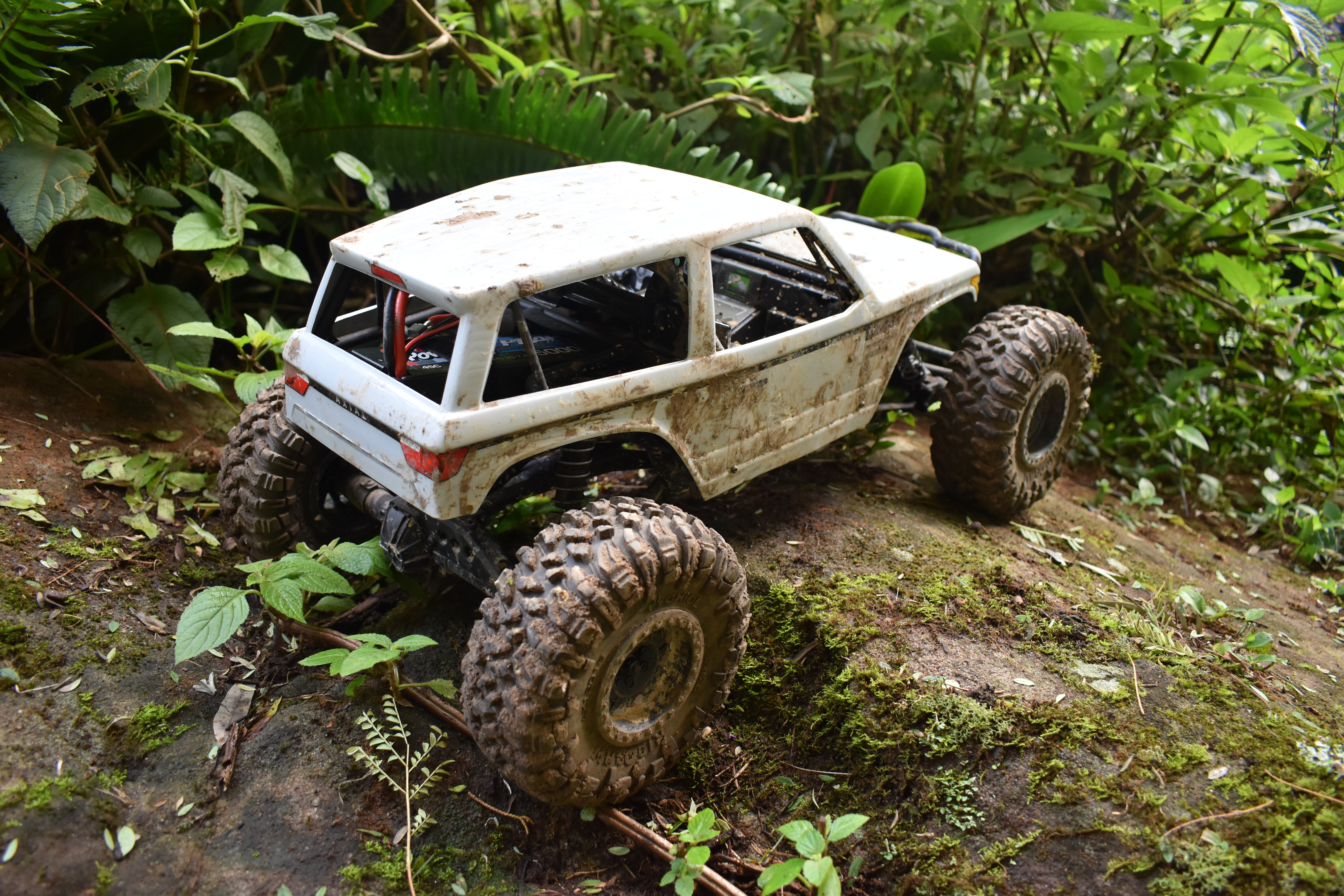
I paid $750 for the RTR (Ready To Run) Axial, as well as a fast charger and 500mAh 7.4-volt LiPo 2S battery. I despised the days of charging a battery for three hours and only getting five minutes of play time, so I spent a bit more up front and I’m glad I did.
Charging the battery takes less than an hour, and my record drive time so far is taking the Wraith Spawn on a 5km bushwalk, and it still had juice in the tank. So, what’s the verdict?
It’s an awesome bit of kit, quick enough for a laugh on dirt and capable enough on the rocks, but it’s not without flaws. Firstly, I have managed to destroy two plastic hubs in the rear end, losing drive to the wheel with the busted hub. On the plus side, the replacement part cost $11 and the shop had them on the shelf.

Next up, the factory steering arms aren’t much chop if you want to drive on rocks, they are just too soft and bend instead of performing their task of steering. This is a more complicated fix, as there are so many choices when it comes to upgrades. I’ll be buying an alloy replacement part in the very near future, which should solve that problem.
I’m certainly glad I bought this lockdown distraction, though; it really is a hobby you need to immerse yourself in. You will break parts, and you will want to upgrade them. It’s kind of like owning an actual 4WD, except when you roll it, you have a laugh and kick it back on its wheels ready for another crack.
AVAILABLE FROM: Check hobby stores online RRP: $750
What’s so great about this new Navigator? It’s not just an improvement on the old HX-1, it’s an evolution of the entire system.
It’s slimmer (more than half the thickness of the HX-1), the battery is smaller and has a longer life (due to a faster internal 2GHz processor, providing a claimed eight-hour battery life compared to four hours in the old HX-1), and it has a brighter screen with easier controls and better mapping.
After using the old HX-1 all over Australia and then trying to compare the old unit with the new, it’s like chalk and cheese, so it was a little difficult at first trying to use the HX-2 due to the new systems and better mapping.
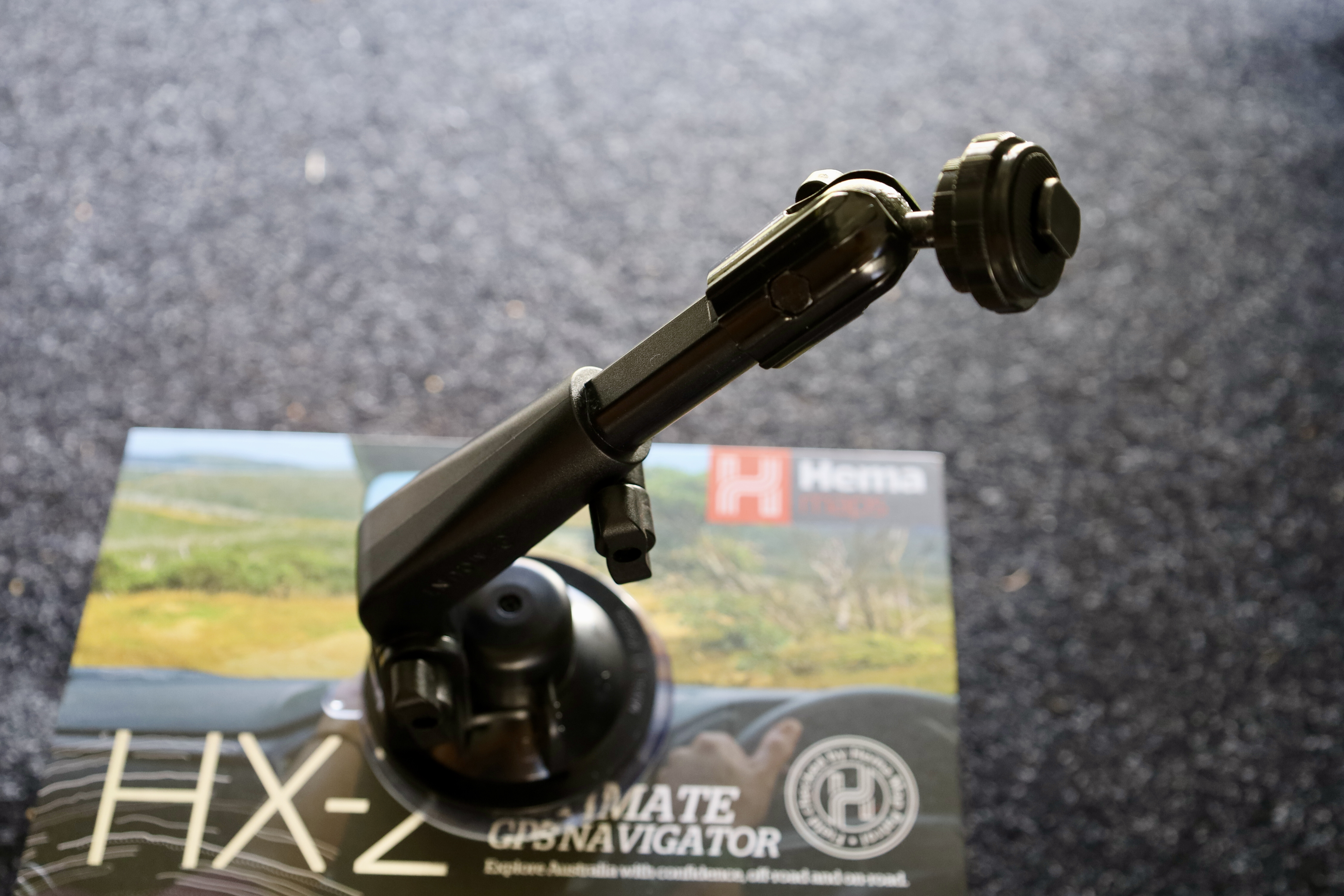
Straight out of the box, it’s all-new and improved. The windscreen mount is now a very solid light metal,with an extendable arm and swivel-mount head where the HX-2 slides in place.
Doing this allows the unit to face slightly down to avoid sun glare, and the extendable mount gives the unit more flexibility to where and how it’s placed on the windscreen. The USB-C charging unit is faster and cleaner.
Hema has included a quick-start instruction guide, and a soft bag to store the unit in. It also includes instructional videos on its website on how to operate the unit’s features correctly and with confidence.
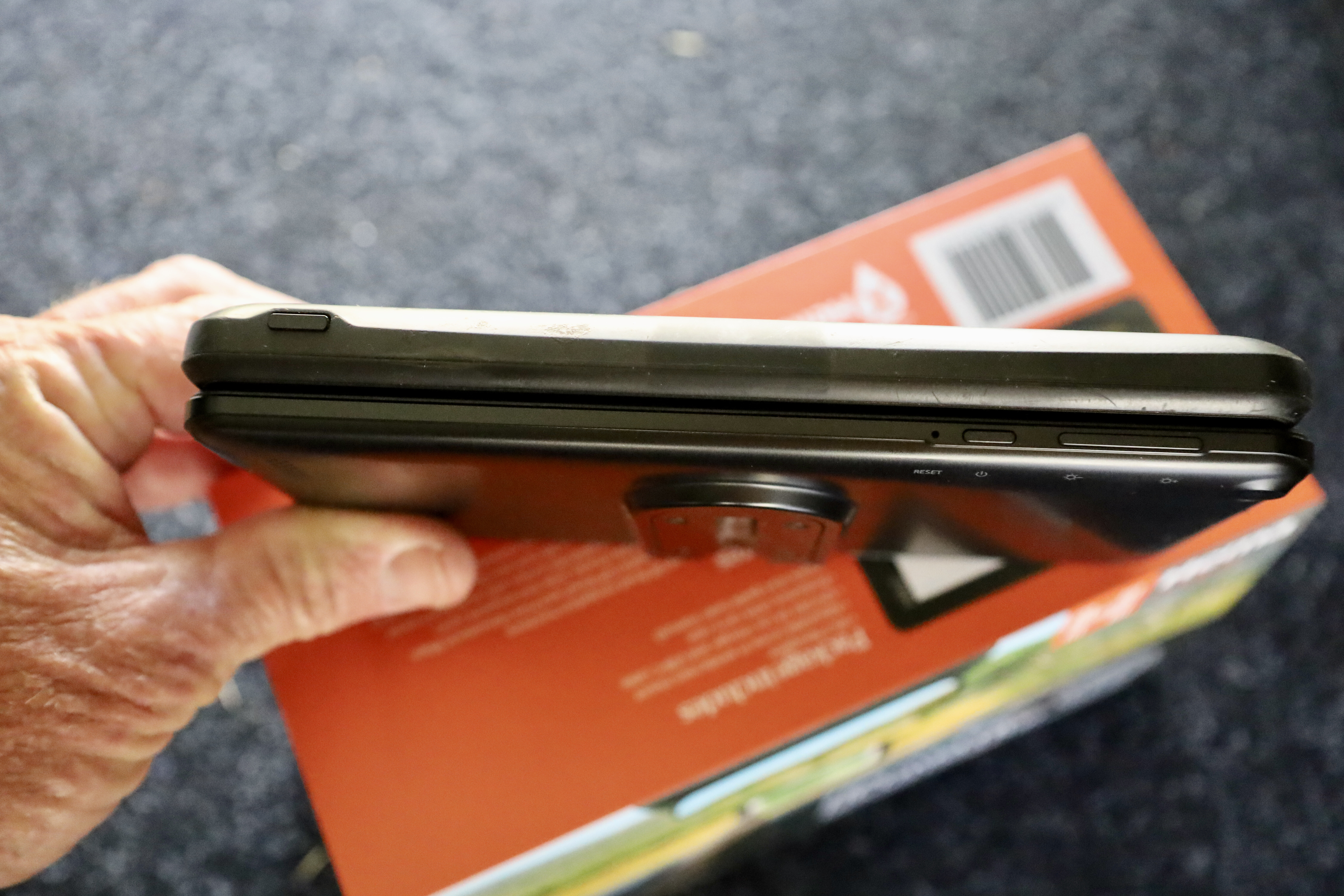
Once the unit is switched on you’ll see new map options and easy-to-find setting icons. The icons down the left-hand side allow you to preset most of the unit features, complete downloads, take photos, operate the reversing camera and much more. If this is your first Hema unit, you’ll need to register to the Hema Cloud so you can download maps and install the free updates.
The new pinch screen is amazing and brighter than the outgoing unit, with a new option for either 2D or 3D viewing modes. Hema says it has listened to the masses by adding screen brightness buttons to the top of the unit, as well as an auto adjustment functionality (from day to night) that uses soft greys and blacks to reduce glare.
On road
The on-road turn-by-turn mapping is similar to most sat-nav systems, so it’s very easy to use. Incidentally, the internal workings of the HX-2 is based on an Android operating system.
The on-road experience is very user-friendly, from putting in a destination and following the route, to on-screen speed limits and warnings. If you have Wi-Fi turned on, the HX-2 will provide live warnings including accidents or traffic congestion en route.
Off road
This is where the unit shines. Hema has gone from the old Raster map system to Vector maps, where you can zoom in seamlessly for more detail. The off-road mapping can also be used as an on-road touring map, but you can’t ask for spoken navigation.
Once you get your head around the unit, you can use the Hema Explorer option in the off-road map section and zoom right in to 1:25-thou, which is generally needed in places where high detail is required (Vic High Country, Great Dividing Range, etc.).
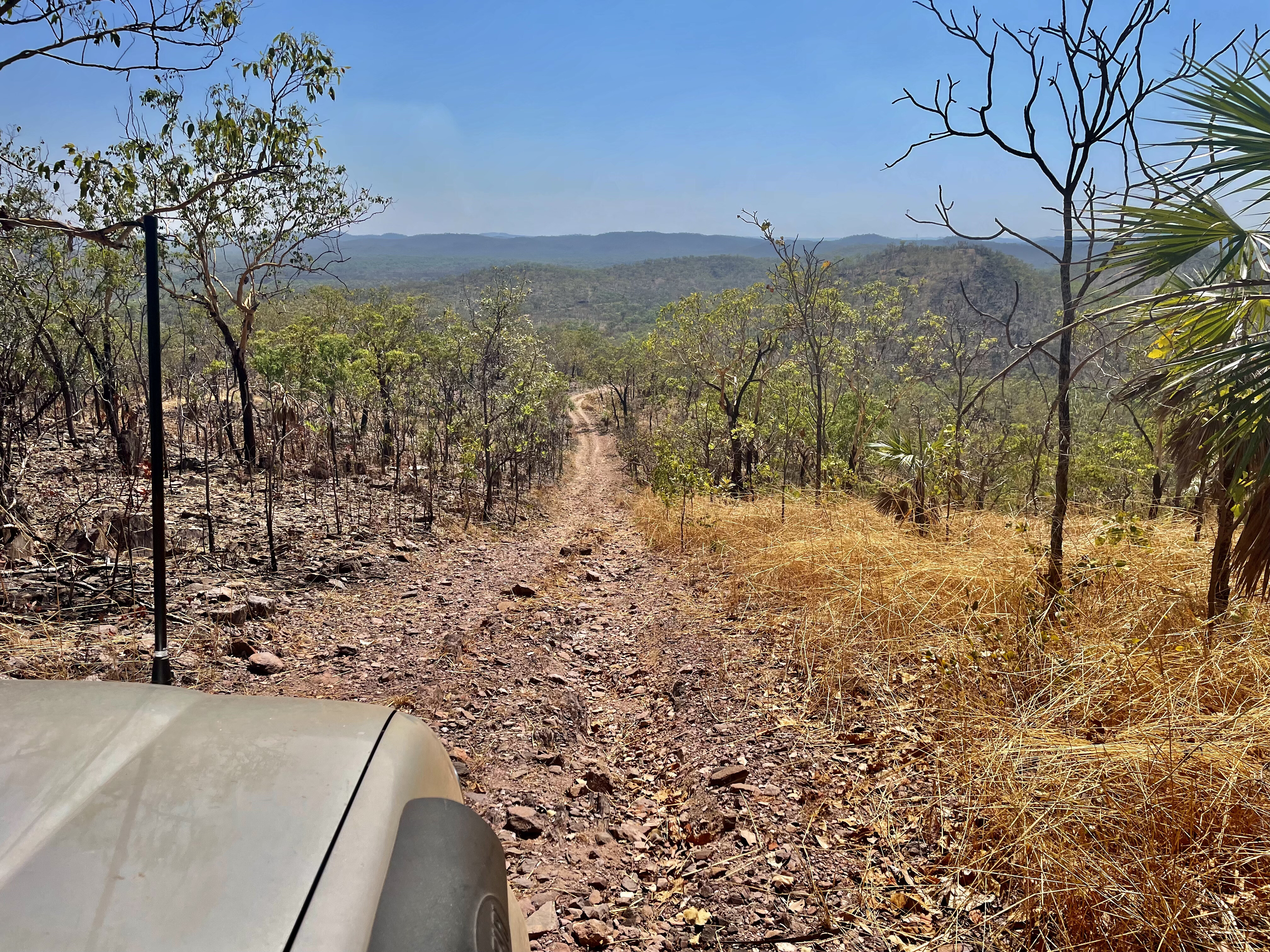
A couple of other options include satellite and hybrid views. If you have the POI (points of interest) turned on, a large number of icons will fill the screen, which you can click on for a pop-up detailed rundown; from tracks (some with grading levels), fuel stops, all types of accommodation and much more.
These can be filtered and turned on and off from a shortcut button. The POI feature is available on all maps, with more than 40,000 verified to date.
Adventure maps
In true Hema fashion, the Adventure Maps mode is like using normal paper maps – it’s a good-sized screen to use if you’re doing big, boring distances across the country. Utilising the old Raster system, the Adventure Maps mode won’t keep zooming in and will only get more pixelated if you try.
The advantage is that all of the Hema maps you can buy from 4WD shops are included, so if you’re sitting around the fire planning a trip, the maps are all readily available. The POI and tracking features are usable, along with side icons for features such as map centering and quick tracking.
Verdict
After using the HX-2 for a while, I’m glad Hema listened to the public about what they wanted from a navigation unit. I thought it would be easy to transition from the HX-1 to the HX-2, but you need to forget everything you have learned using the old unit, as the HX-2 is definitely new and improved. For most users, the default settings and basic maps are fine for touring and exploring.
One major gripe is that to access the more detailed Explorer maps (located in the off-road section) you need a Wi-Fi or hot-spot connection. Living on the Great Divide in NSW, the cellular network isn’t always the best, so if you lose phone signal the Explorer section won’t load when in deep gullies or thick rainforest.
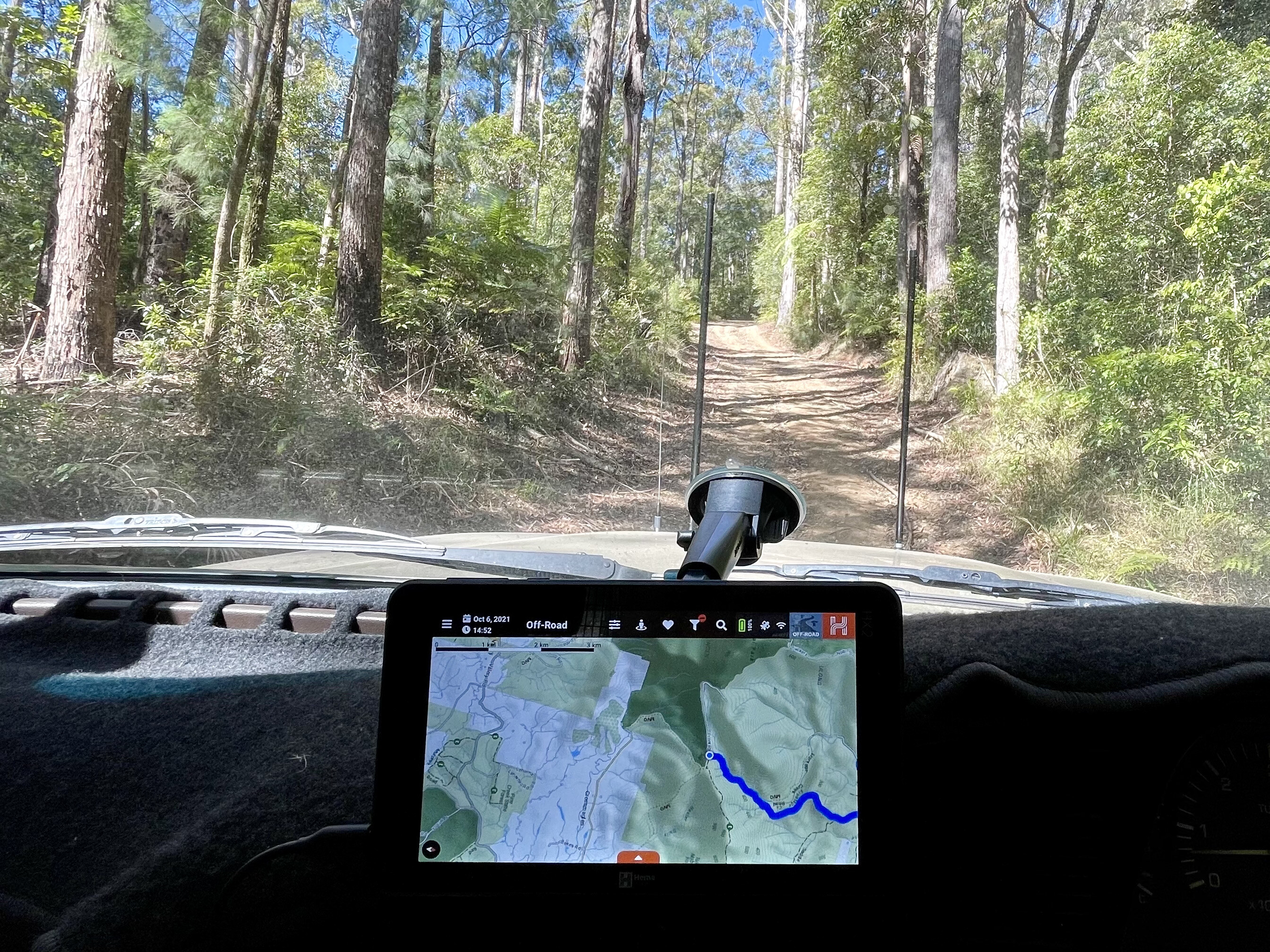
The new touch-pinch screen is easy to use and nice to view, and the swivel-ball head that adjusts the HX-2 is also a breeze. Don’t expect to understand the unit’s many features overnight, and we’d recommend watching the bite-size instructional videos. Hema also runs scheduled training sessions online through Hema University (HEMA-U). For any serious user, this is essential viewing.
There is an option to buy a sun visor, but due to the unit’s extra brightness settings, and the fact you can tilt the screen, it’s not necessary. Another bonus is the reintroduction of a reversing camera, something the HX-1 missed out on – but at $199, it may scare a few buyers off.
There are so many quirky features with the HX-2 – map tracking and syncing it to the cloud – but it’s a great unit once you understand them all.
The HX-2 is listed at $749, but we have seen it for sale for as low as $649 – so shop around.
Pros
• Easy-to-use screen • Improved windscreen mount • Reversing camera capability • The use of Vector maps in off-road mode • Larger battery • Faster internal processor
Cons
• Need internet connection for Hema Explorer maps • Expensive reversing-camera option ($199)
Rated
AVAILABLE FROM: hemamaps.com RRP: $749