
Ford’s 2023 Ranger ute has set the mid-size 4×4 ute segment on fire since its launch just three months ago.
A combination of fresh, bold design, a choice of engines and class-leading technology has put the ‘Next-Gen’ Ranger at the top of every potential ute owner’s shopping list.
The 2023 Ford Ranger is almost all-new from the ground up. The central body structure including the cabin, door openings and glasshouse are close to the same as the PX series Ranger in size and shape with a few revisions, while everything else – including the chassis, sheet metal, interior, powertrains, cargo tub and suspension – are either new or heavily revised.
The 2023 Ford Ranger is available in five double-cab 4×4 model grades starting with the Ranger XL at $49,930, the Ranger XLS at $54,330, Ranger XLT from $61,990, Ranger Sport from $63,990 and top of the range Ranger Wildtrak from $70,190.
Upgrade your Ranger
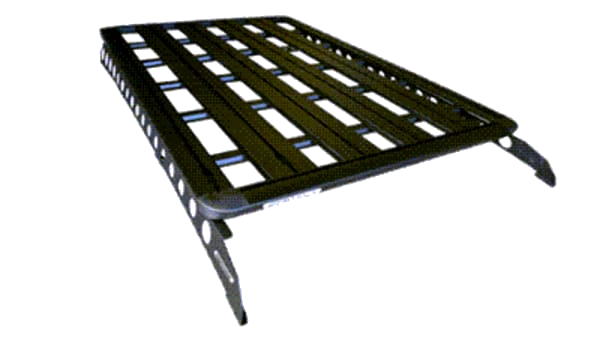
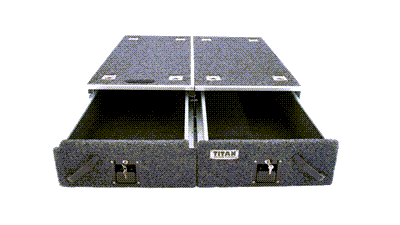
Those prices are all for Rangers fitted with the 2.0-litre diesel engine which is available in all grades while only the XLT, Sport and Wildtrak can be optioned with the new 3.0-litre V6 diesel engine. The V6 engine adds $3000 to the price of the Ranger.
The Next-Gen Ranger will also be available in single-cab and extra-cab models, but these are yet to arrive in Australia.
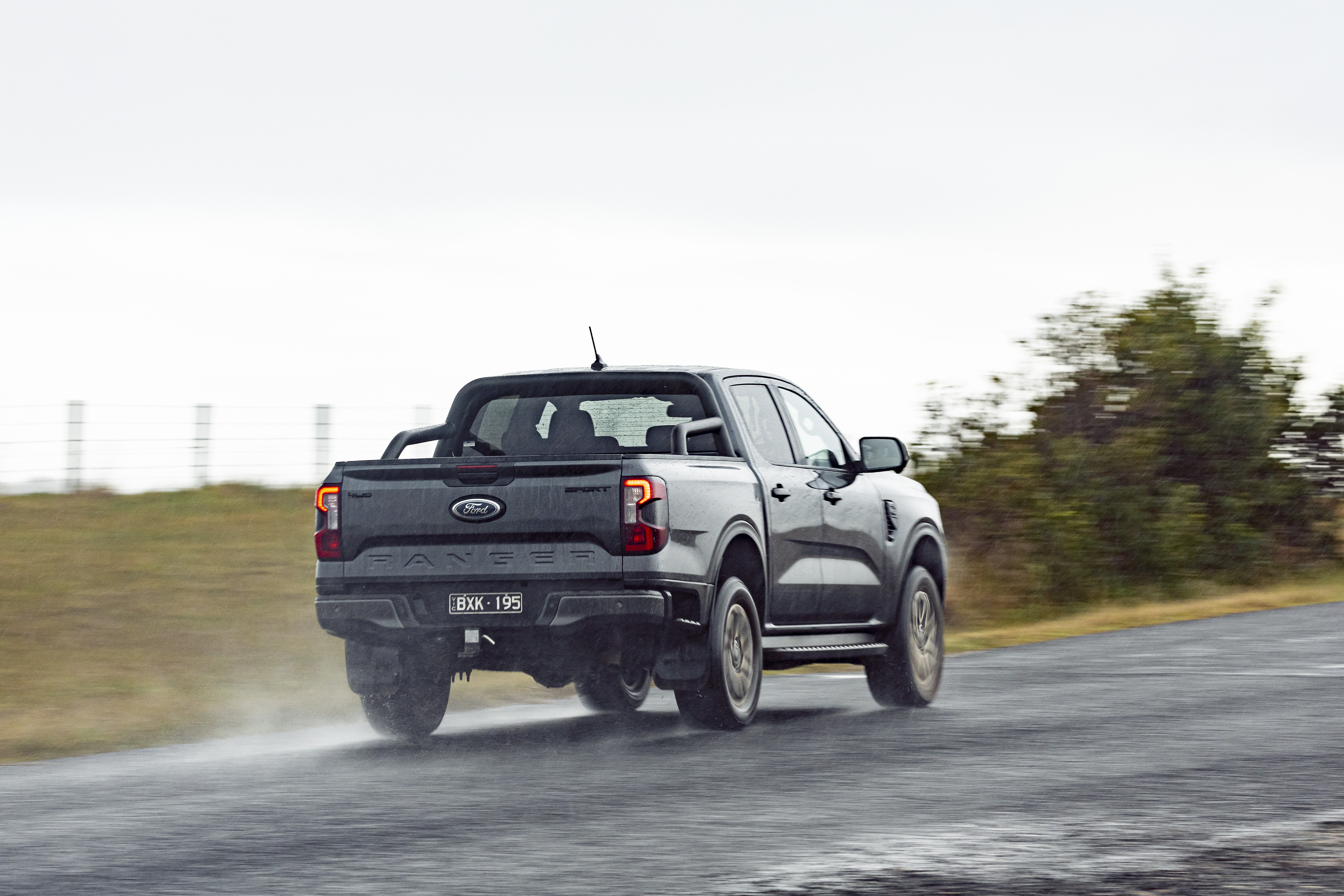
We’re reviewing the Ranger Sport V6 this time, which starts at $66,690 plus on-road costs.
Powertrain
Ford pulled its 3.0-litre ‘Lion’ V6 engine out of mothballs for the new Ranger but it has been heavily revised and upgraded since it last appeared in an Australian Ford-badged vehicle, the SZ Ford Territory diesel.
It was 2.7-litre in capacity back then but now it is a 3.0-litre as it was recently used in the Ford F-150 Power Stroke full-size pickup truck.
This Ford V6 diesel engine now produces 184kW of power and 600Nm of torque, which eclipses the 147kW and 470Nm of the 3.2-litre engine it replaces in the PX Ranger.
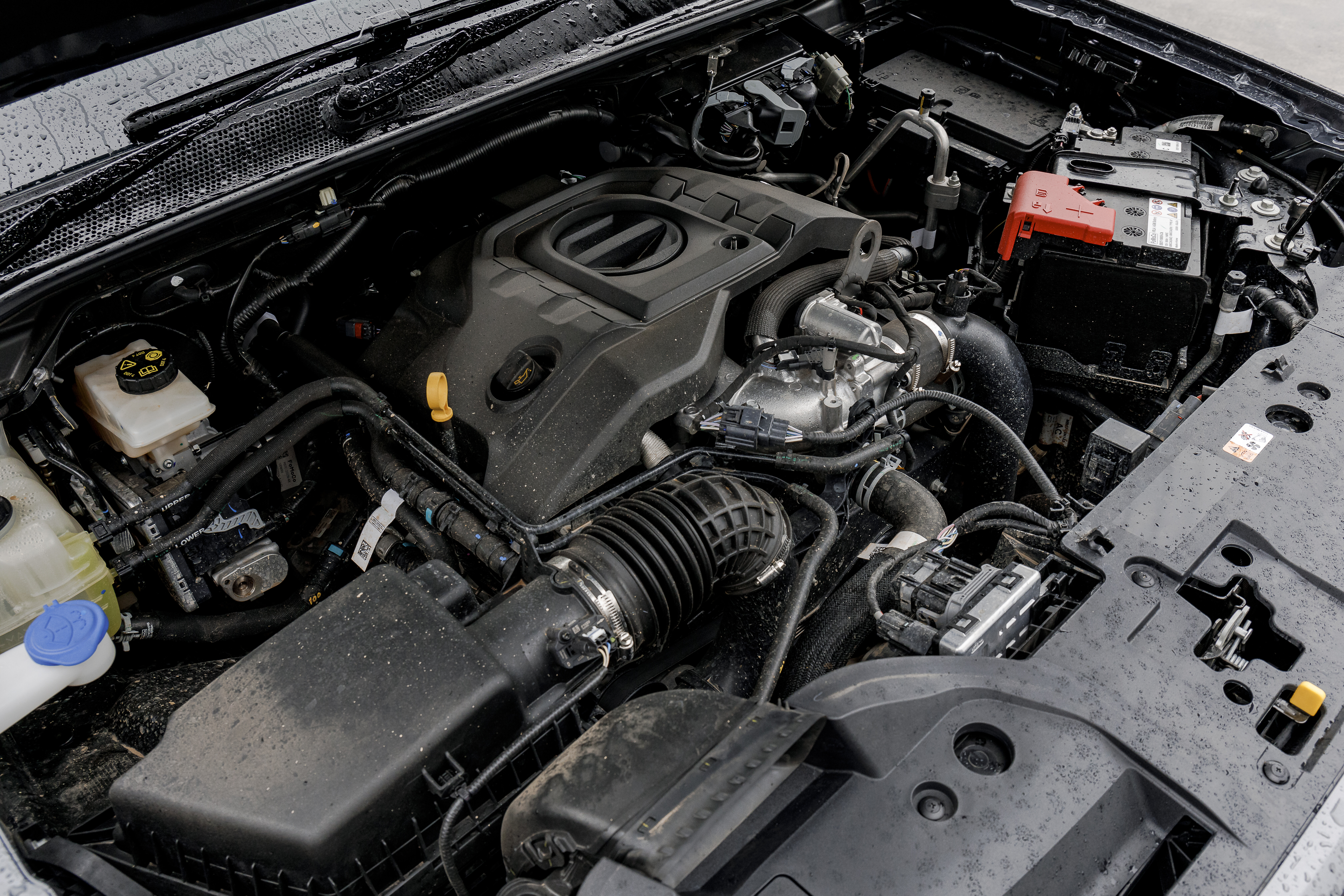
It also offers the most torque in the class and is only out-powered by the 200kW available from some models in the existing Volkswagen Amarok range.
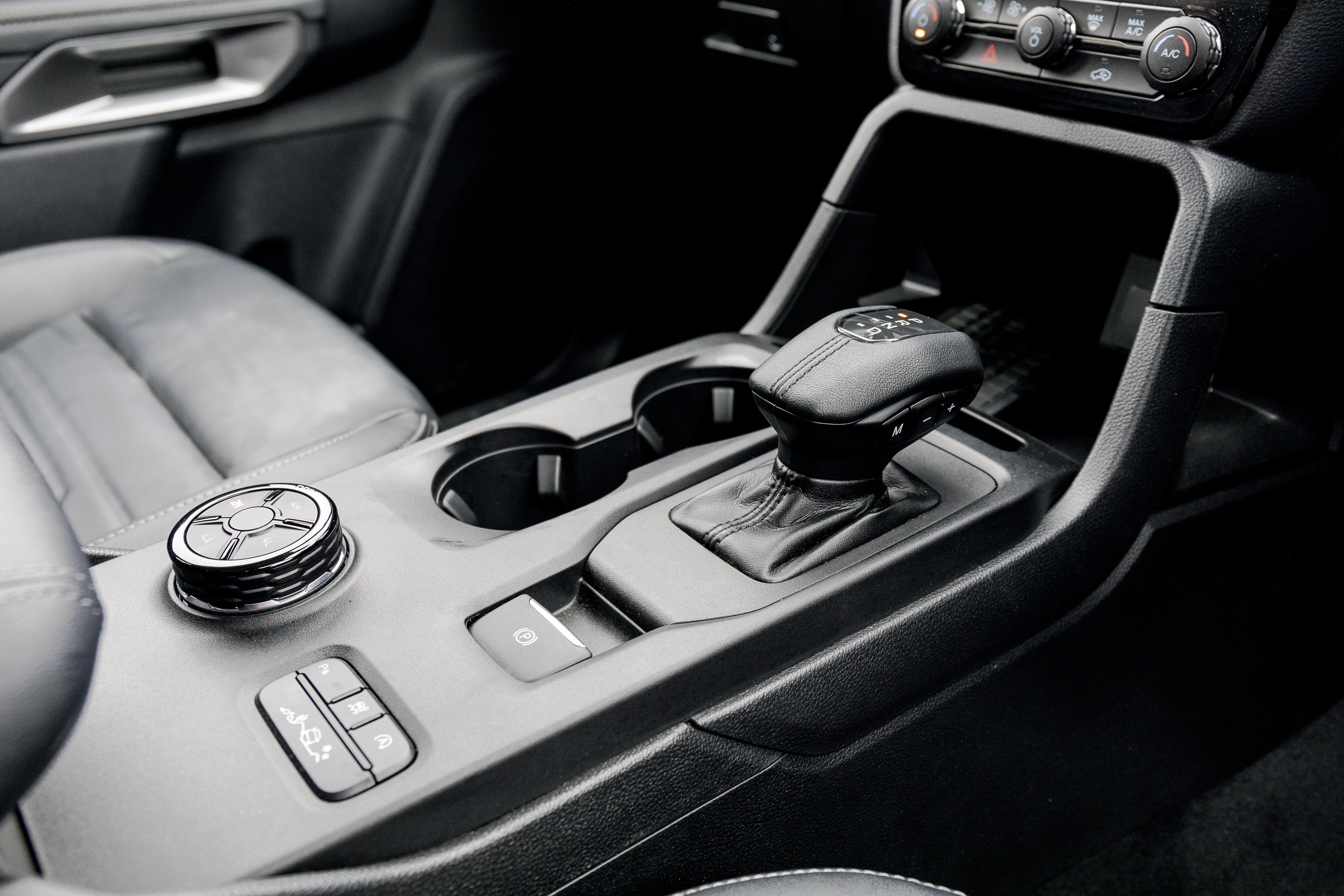
On the road and tracks the V6 delivers its grunt seamlessly through Ford’s 10-speed automatic transmission which has been heavily revised for this new application over how it appeared in the previous PX generation of Ranger.
By far the biggest advance that the V6 and 10-speed brings to the Ranger and 4×4 ute category, is a level of refinement previously unseen in the mid-size segment.
On-road and handling
The Ranger’s ladder-frame chassis has been made wider for a number of reasons, including fitting the V6 engine up front and widening the wheel track for improved dynamics.
The 50mm extra width in the wheel track and equal amount added to the length of the wheelbase, are felt in the vehicle’s stability and ride control.
The track width takes the wheels out to the extremes of the body which benefits both ride and handling, as does moving the rear shock absorbers to the outside of the chassis rails where they have more leverage on the axle.
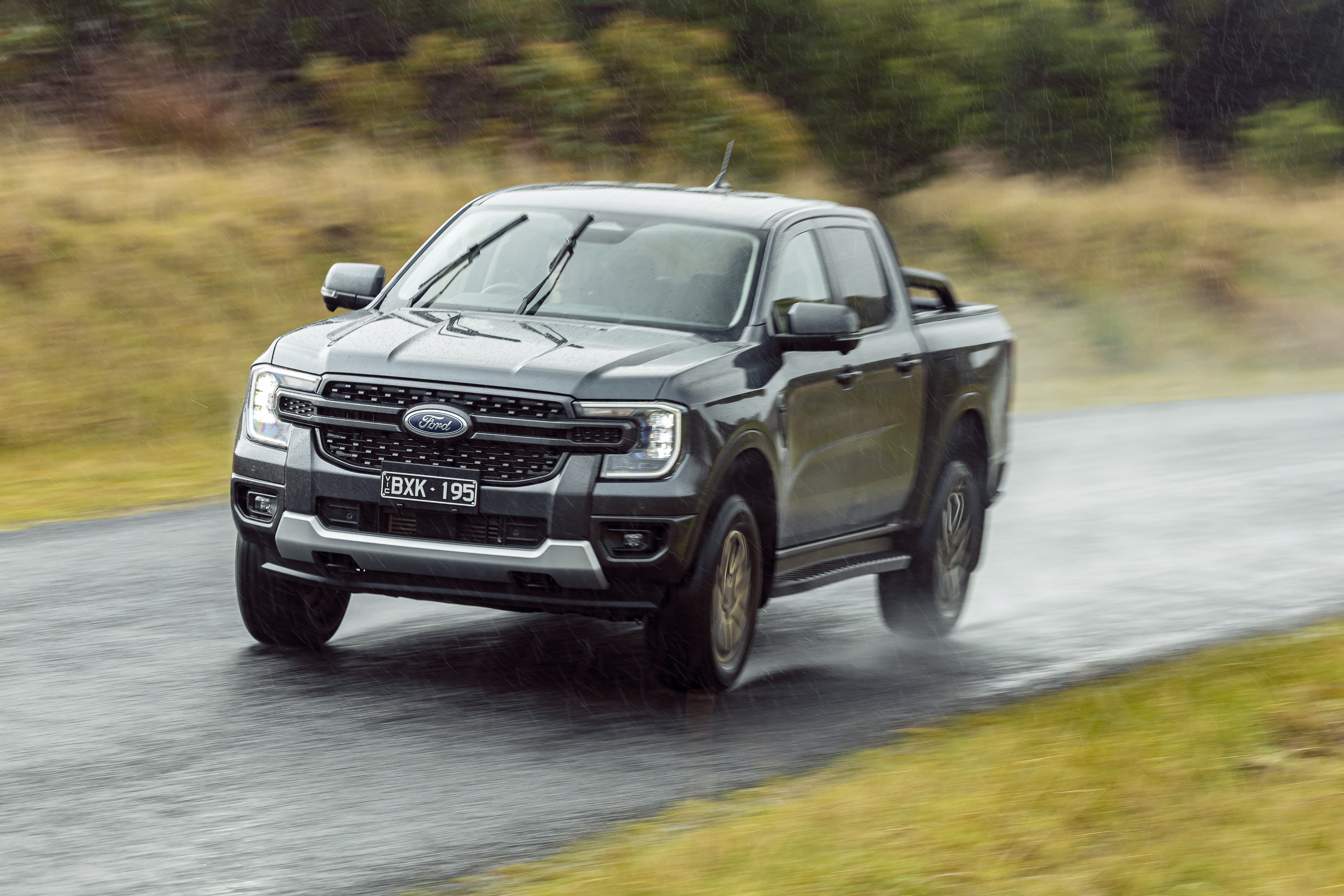
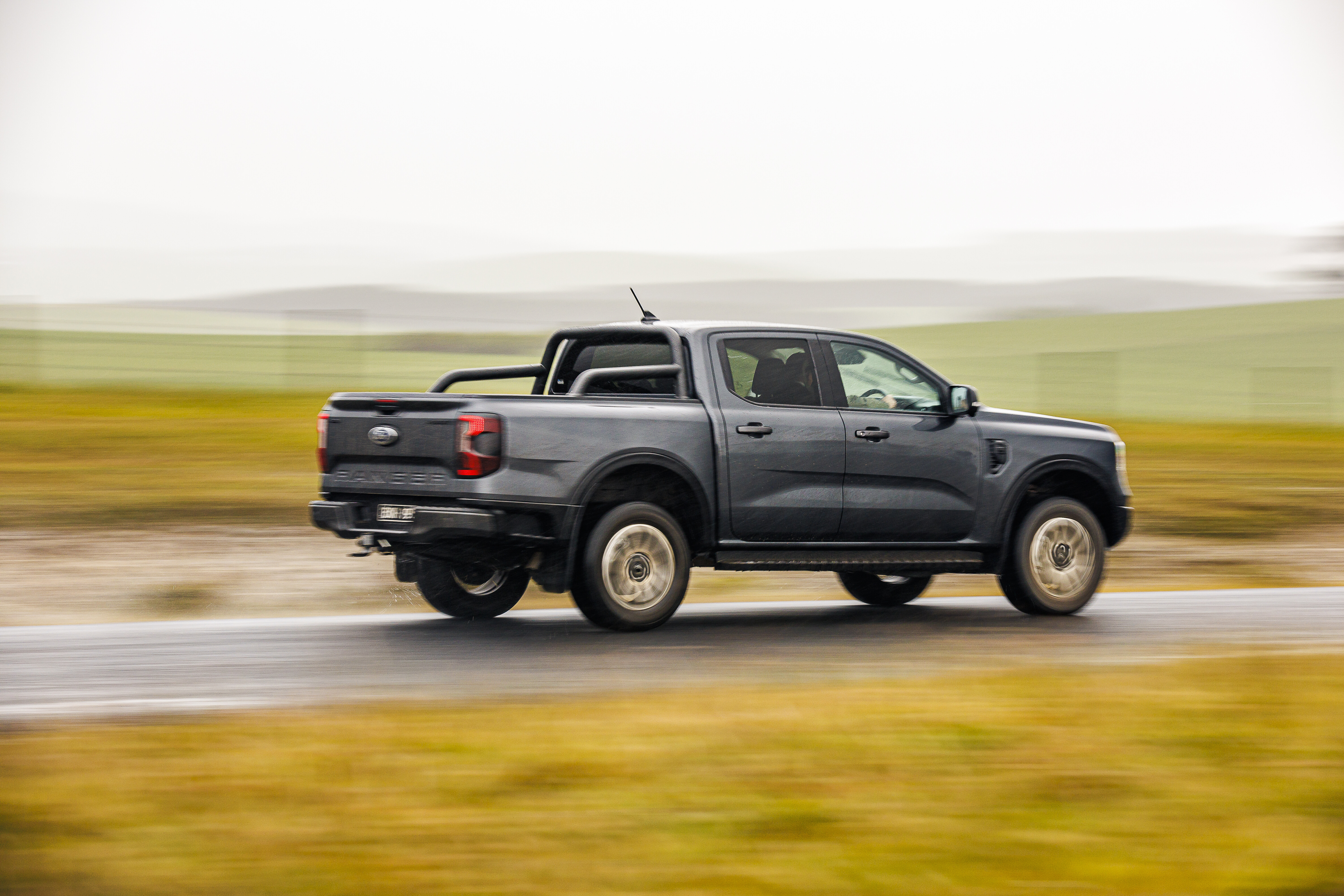
The changes and increased dimensions give the Ranger a more sure-footed and controlled presence on the road, adding to the feeling of it being a bigger truck.
The coil front and leaf-spring rear suspension feels firm over rough roads, but never jittery or uncomfortable. This ride quality is the small price you pay in a vehicle designed to carry a tonne on-board or tow 3.5 tonnes.
The new full-time 4×4 system of the new Ranger is a benefit on rough tracks and wet roads, where it also improves the sure-footedness of the chassis.
It’s also handy in the suburbs where, on wet roads, part-time systems in 2WD are prone to wheelspin when pulling out into traffic or when towing heaving loads.
Off-road
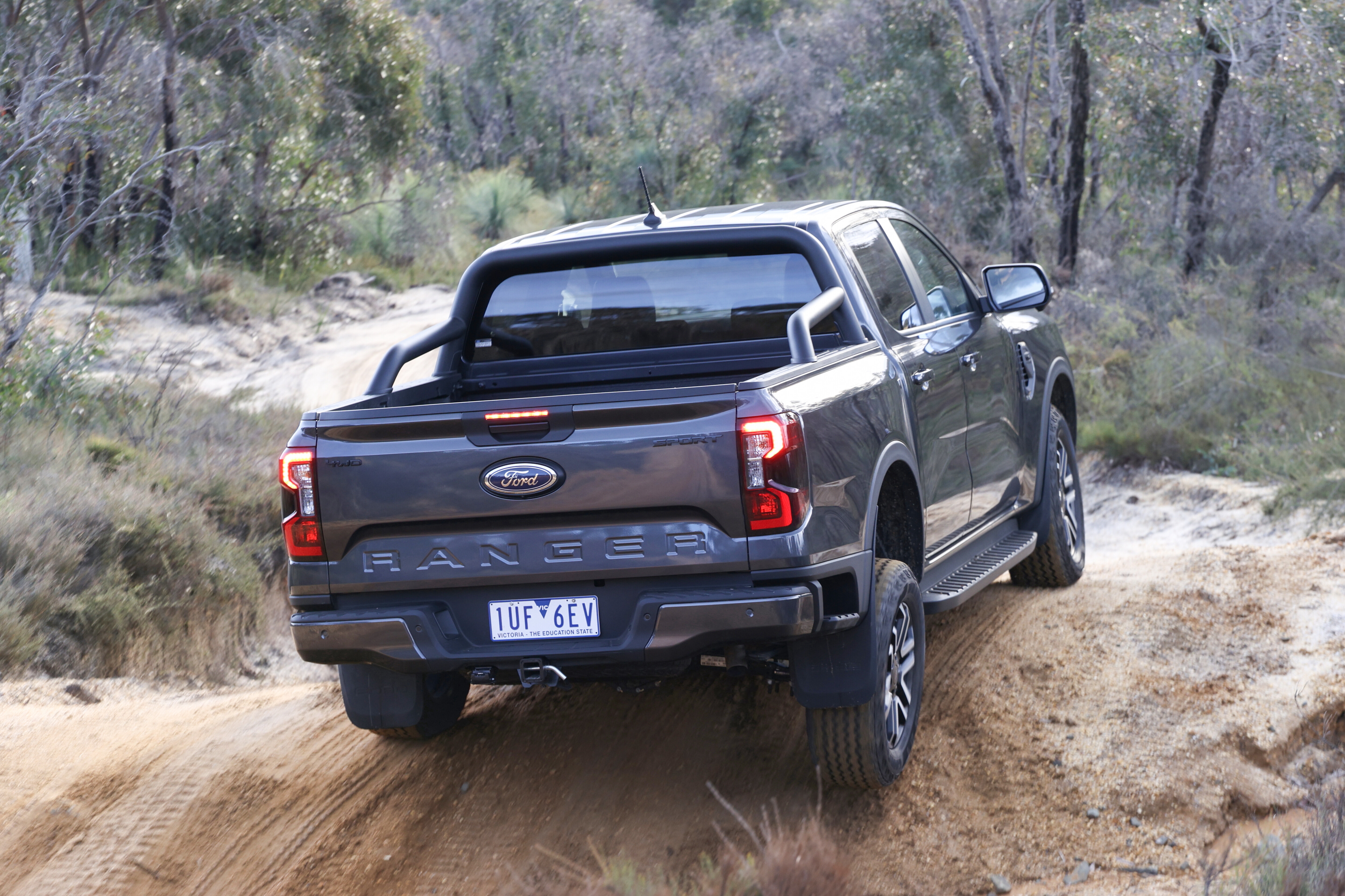
The Ranger’s new chassis also benefits the ute when driving off road, allowing for more articulation of the rear axle to keep the wheels on the ground in uneven terrain.
The Ranger has never really suffered in this regard, but it is now better than it was in the outgoing model. The independent front end still suffers a bit and picks up wheels quite easily.
For when those tyres do lose traction in the rough or slippery terrain, the Ranger has an effective electronic traction control system (ETC) which remains active if and when you engage the standard rear differential lock (RDL). Not all 4×4 utes do this and it makes a big difference in their capability.
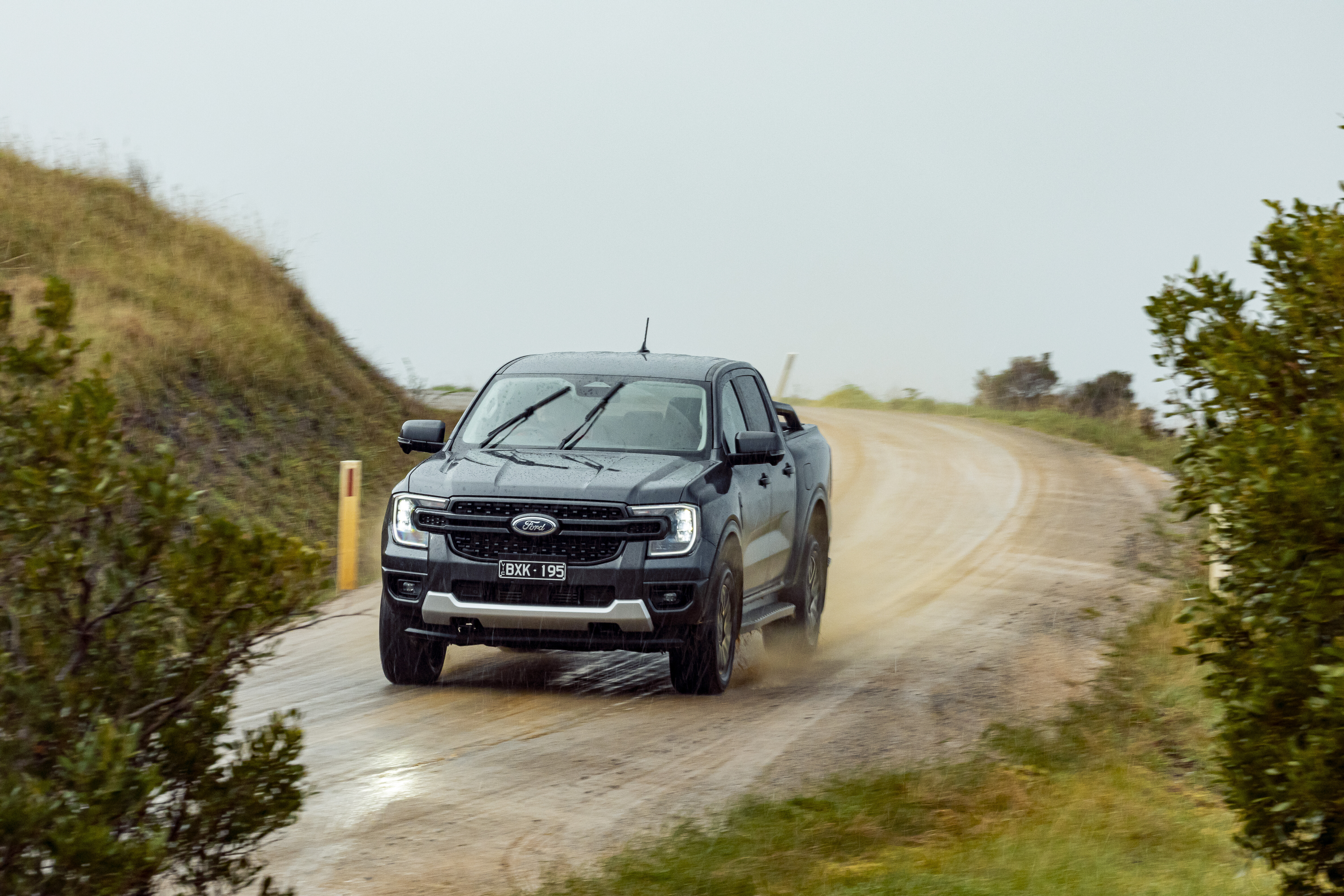
Heading along a rut up a steep, loose surface, the Ranger is prone to allow the wheel to slip a fraction before the ETC catches it and sends the drive where it is most effective.
Playing with the drive modes and selecting the ‘mud and ruts’ setting sharpens up the response to better suit these conditions.
The forward facing and 360-degree cameras available on the Ranger Sport’s 10-inch centre screen also proved to be a useful aid when driving off road and manoeuvring the car in tight spaces.
Towing
All new 4×4 Ford Rangers (except the Raptor) have a 3500kg towing rating when pulling a trailer with brakes.
The Gross Combined Mass (GCM) that is the maximum allowed weight of the Ranger, fuel, any cargo and accessories and the weight of the trailer behind the car, varies depending on model specification, but for the Ranger Sport V6 as tested here it is 6400kg and for the Ranger XLT I4 it is 6350kg.
These important figures are at or near the top of the mid-size ute category and are sure to entice buyers who want to haul a heavy boat, horse float, caravan or race car.
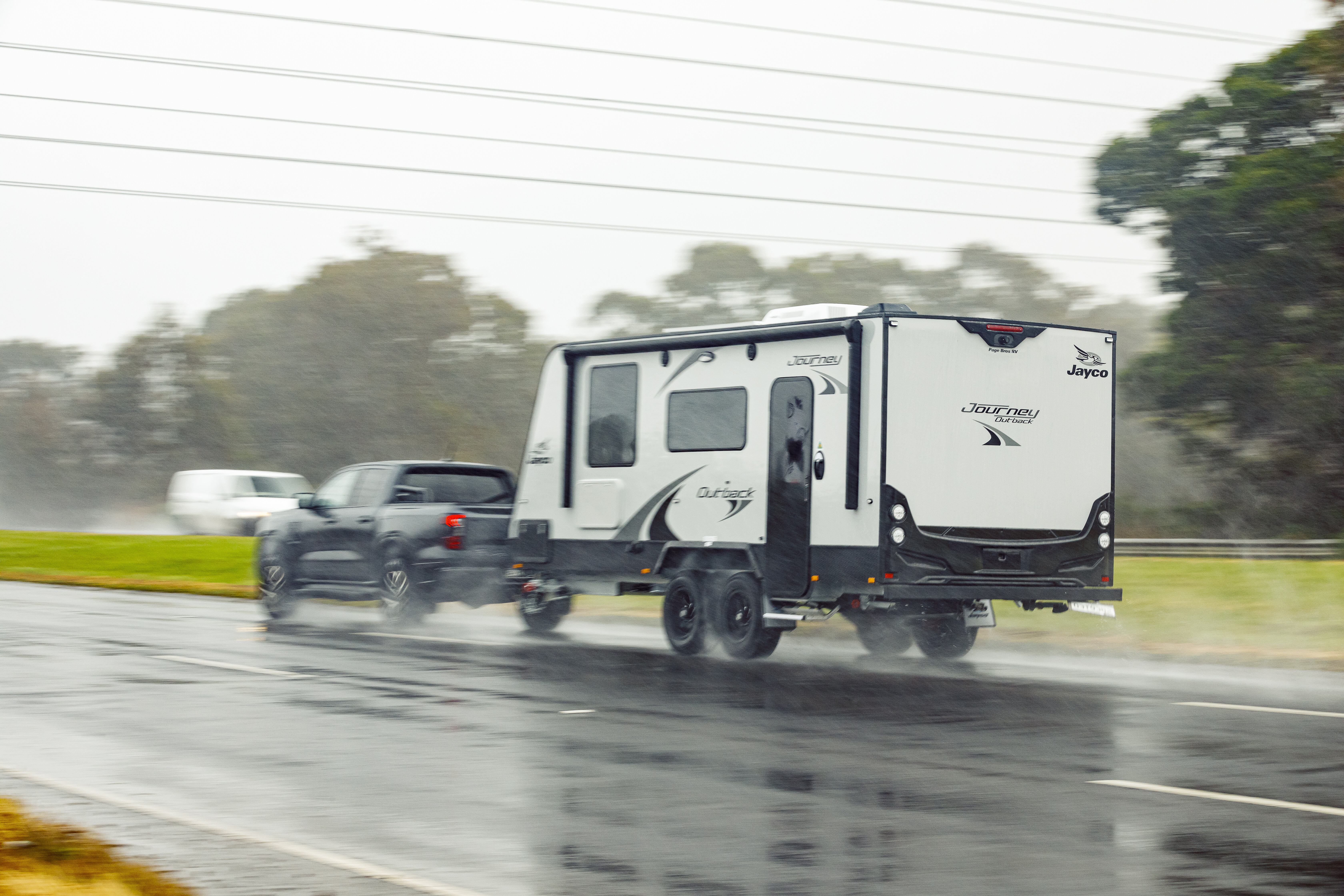
The Rangers also come with some amazing technology to make hooking up a trailer and towing easier and safer, especially for novices.
From the way the rear-view camera guides you back directly under the trailer hitch and the integrated trailer brake controller, to the on-screen towing checklist and ability to remotely check your trailers rear lights, the Ranger is equipped for hauling like no other ute.
We pulled a 2100kg caravan with the Ranger Sport and the V6 engine and 10-speed automatic transmission hauled it with ease. The ability to employ full-time 4×4 on wet roads was also a bonus to control wheel spin.
Cabin and accommodation
Stepping inside the new Ranger, passengers are greeted with an interior that raises the bar in the ute segment. It’s more modern looking and technically equipped than in the past, with a swag of features that will take some time to adapt to.
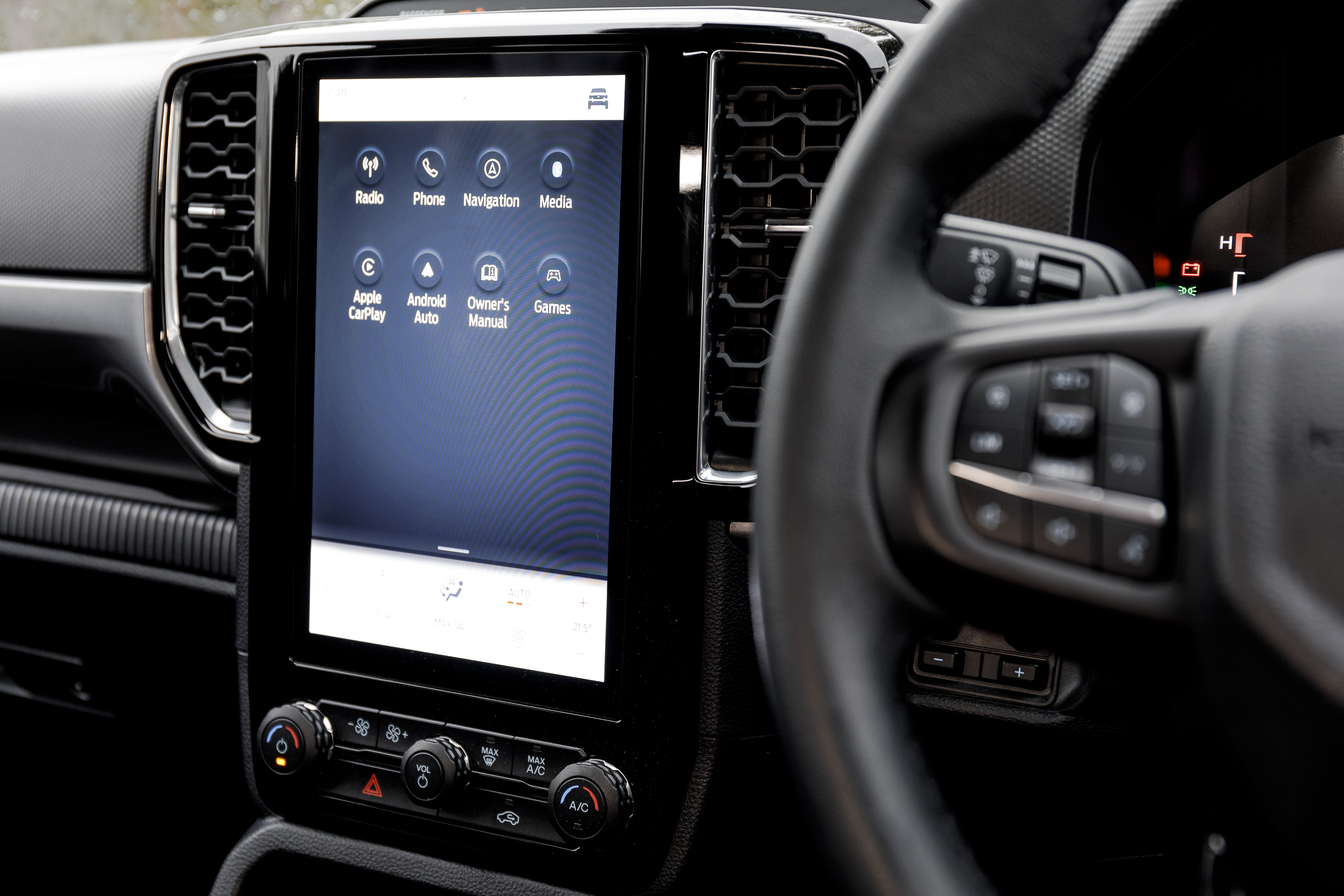
The Sport gets a huge 10-inch centre screen which not only has the usual sat-nav, audio controls, wireless Apple CarPlay and Android Auto, but also the HVAC controls and an off-road screen where you can control the off-road modes, diff lock and hill descent control.
Thankfully, Ford has included dials rather than buttons for the most used functions of audio volume and temperature controls as these are faster and easier to use than slow-responding buttons that can be difficult to locate quickly when your eyes are on the road.
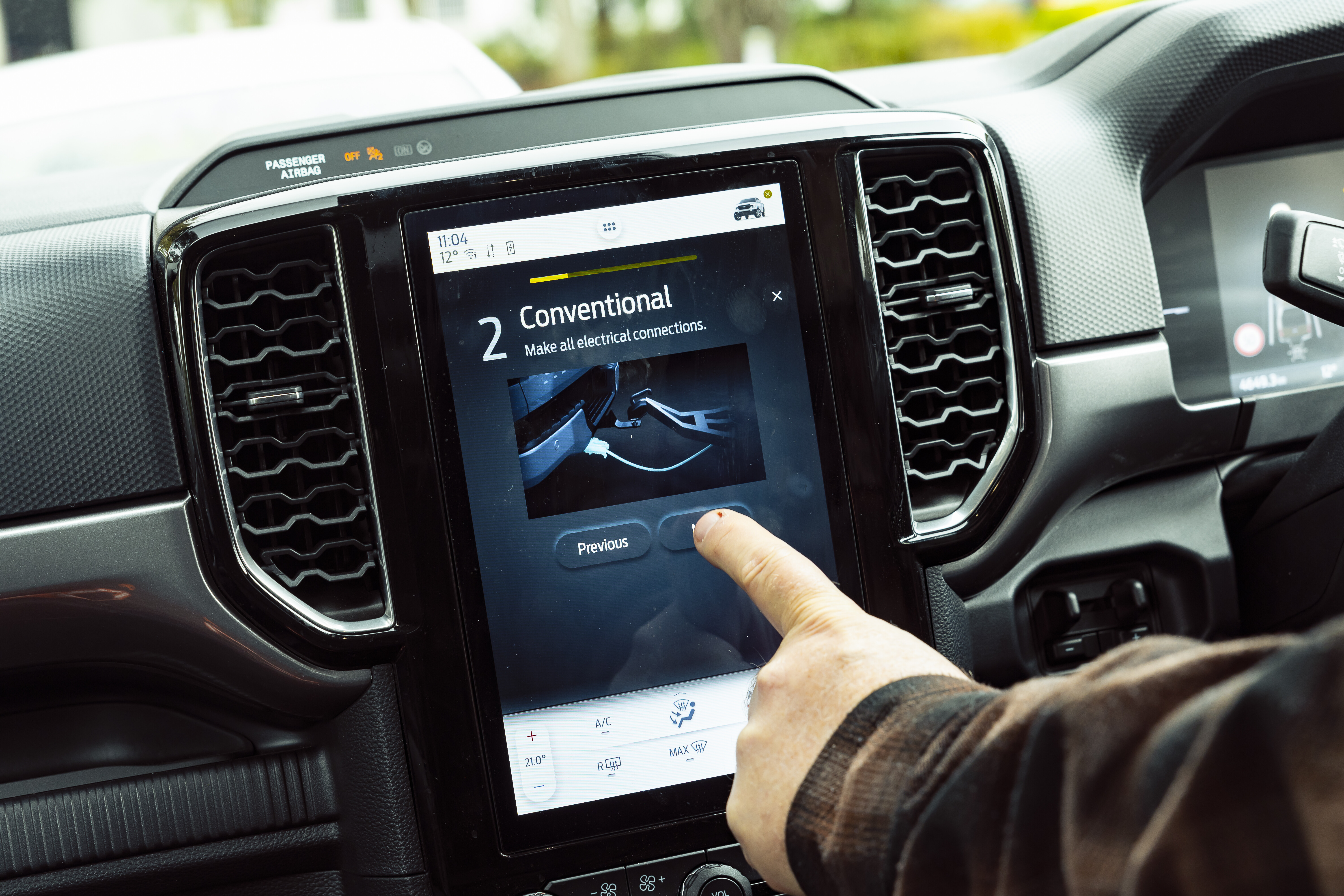
Beneath the screen is a wireless charging pad for your mobile phone from where it connects to Ford’s SYNC 4 system wirelessly for Apple CarPlay and Android Auto. A handy little shelf forward of the front-seat passenger and below the glove compartment for a convenient place to toss your phone, keys, wallet or whatever.
The driver sits behind a steering column that is now adjustable for both reach and height. Forward of the steering wheel is another large digital screen that is configurable to display the information you might want to see more often. You also get a full display of off-road settings up here when the off-road mode is selected.
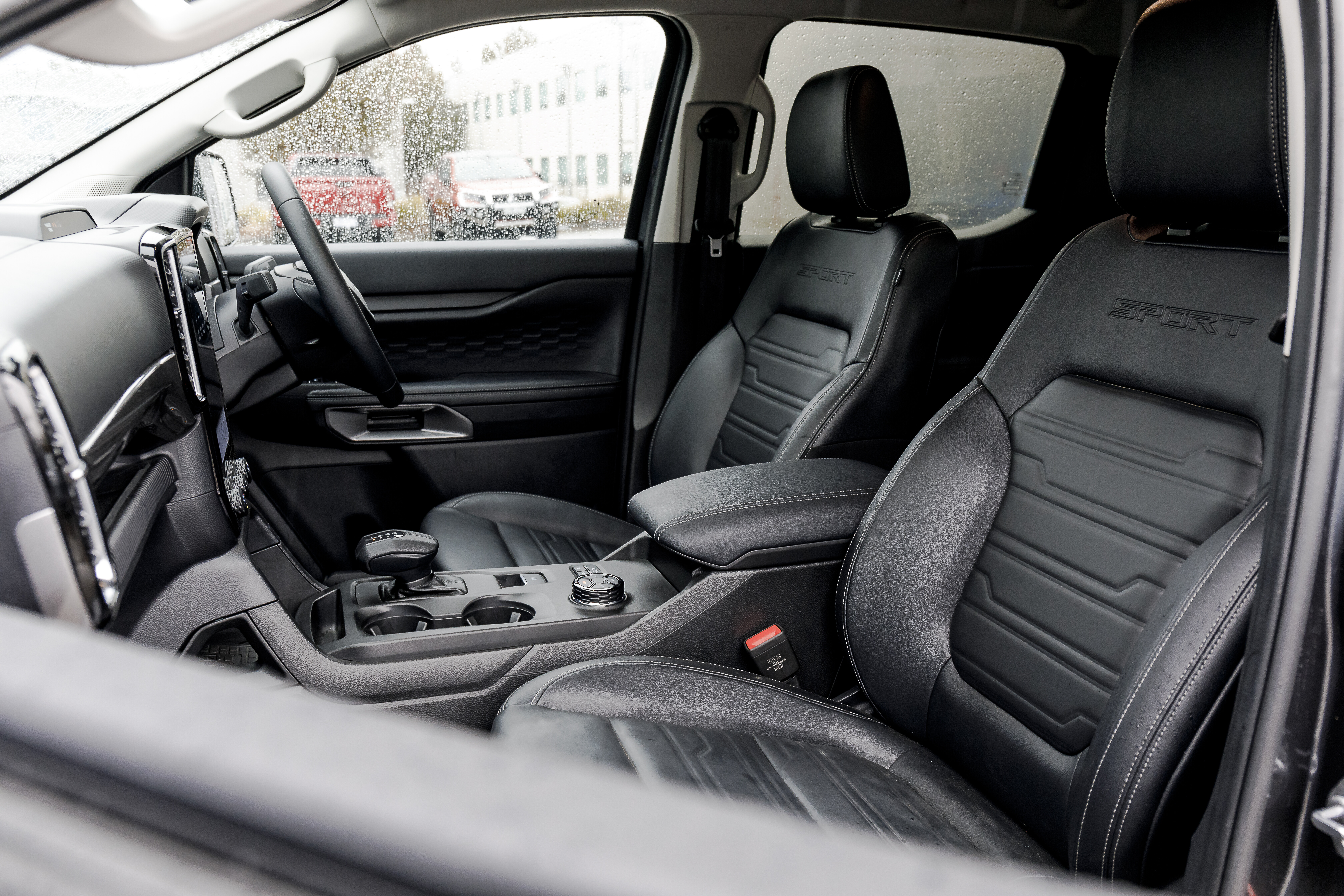
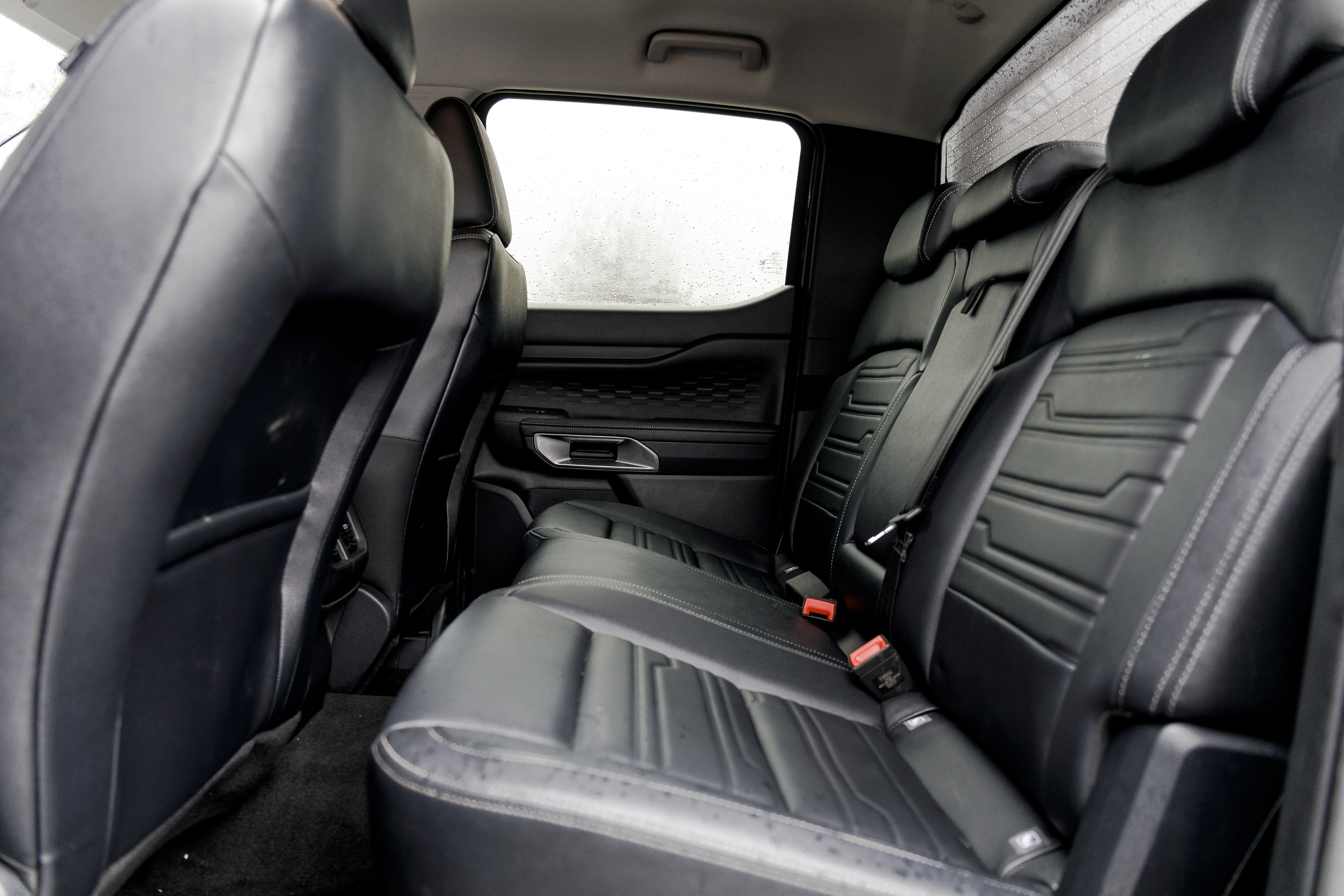
The Ranger has new seats across the model range and they have taller seat backs that better follow the shape of your spine for improved comfort and safety.
In the Ranger Sport they are leather covered and power adjustable in the front row, although you’ll need to step up to a Wildtrak if you want heated seats.
As the cabin is pretty much the same width as the outgoing model, the rear pew remains a tight squeeze for three adults across, but there’s plenty of headroom and adequate legroom. The new Ranger now has vents for the rear-seat passengers.
Speaking of the rear seats, some owners have complained that it can be difficult to fit child seats in the back, but it sounds like this is more related to the models of seats they are using and the length of the tether straps.
Safety
As the newest ute on the block you would expect the new Ranger to have the best safety features and it doesn’t disappoint here. The Ranger has a full 5-star ANCAP rating and was the highest scoring one-tonne ute to be tested by ANCAP to date.
Helping it to attain such a score are nine airbags, three-point lap/sash seatbelts all-round, childproof door locks, intelligent adaptive cruise control, blind-spot monitoring with cross-traffic alert and trailer coverage, speed-limit recognition, lane-keep assist with road-edge detection and driver alert.
It also has pre-collision assist with autonomous emergency braking (AEB), trailer sway control, front and rear parking sensors plus a rear-view camera.
A 360-degree camera is optional on the Sport and we found it handy on this test particularly when driving off road.
Disappointing is that only the Wildtrak Ranger model gets the important tyre-pressure monitoring system as standard equipment and the system is not offered as a factory accessory.
Practicalities
Ford clearly listened to feedback on how Ranger owners used their utes and how the company could improve the experience.
This led to things like the steps at the rear of the cargo tub sides to improve access to the back, exterior lighting changes, an integrated electronic brake controller for towing and a clever function that cycles through the lights so that you can check your trailer lamps.
On the Sport model as tested here, the integrated brake controller comes as part of a $900 optional ‘Touring Pack’ that also includes the 360° camera and four-zone exterior lighting. These features are standard on the Wildtrak.
The company didn’t forget the essentials like maintaining a 3500kg towing capacity, 6400kg GCM, close to a tonne payload (934kg in the Sport V6), 800mm wading depth, and better than average overhangs and clearance.
That wading depth is class leading, but we still question the forward-facing air intake for the engine that all Rangers now have and would be looking for an intake snorkel if it were our car. Better news in the engine bay is the space for a second battery and the availability of a factory-backed accessories from ARB.
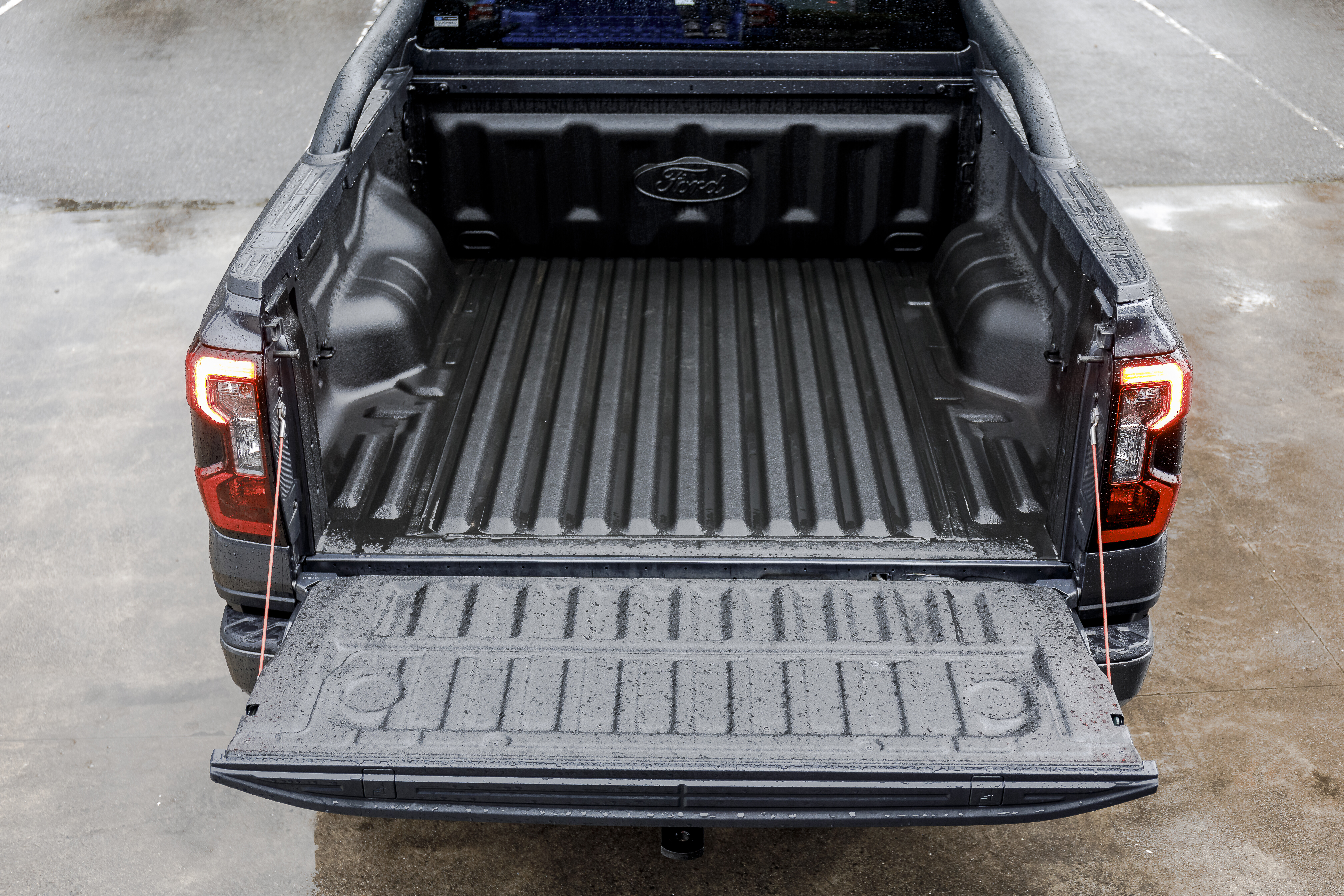
The wider wheel track allowed a wider cargo tub that now accommodates a Euro pallet in-between the wheel arches, and also features LED lighting, four tie-down points, a 12-volt power outlet and an easy-lift tailgate. Things like the clamping points and ruler on the tailgate seem a bit novel, but we’re sure someone out there will find a use for them.
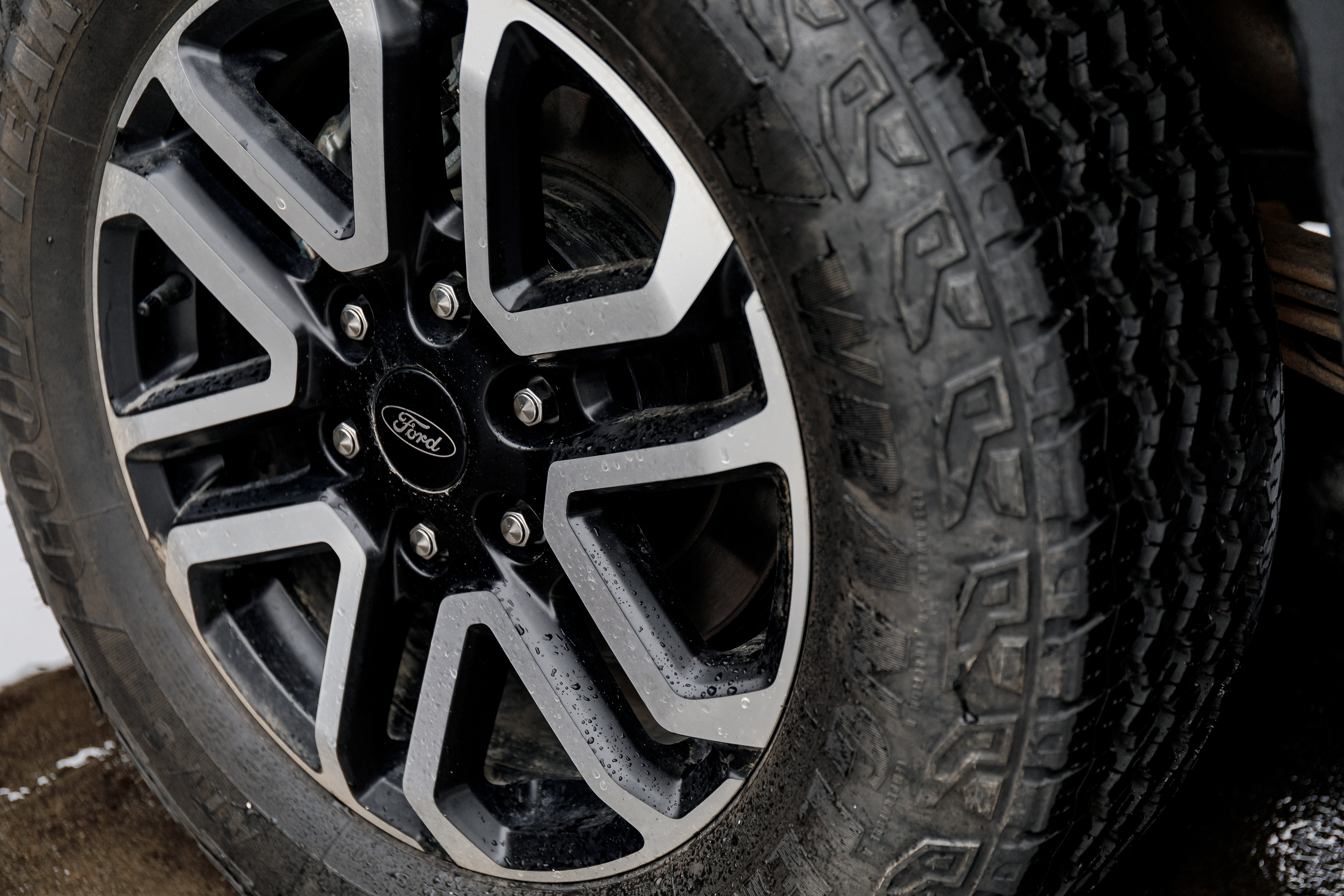
Ranger Sport rides on 18-inch alloys wearing 255/65-section tyres so it shouldn’t be too hard to find tougher tyres for rough-road use, while there’s no reason you couldn’t fit the smaller diameter 17-inch wheels from the XLT or aftermarket, again better for off-road use.
VERDICT
The new Ford Ranger has certainly raised the bar in the mid-size ute segment and by introducing the Sport as a new model variant it has given buyers another reason to look at what’s behind the Blue Oval.
At around $70K drive away the Sport offers buyers a bit more luxury such as the leather seats and wireless phone charger over and above the XLT which has traditionally being the most popular model with recreational and family buyers.
At that price it’s more affordable than the top-of-the-range Wildtrak which adds features like heated seats, a powered roller shutter over the cargo tub and a style-feature sail plane that doesn’t really do anything.
No matter the model, or engine choice, the Next-Gen Ranger buyer will be getting the class-leader in terms of equipment, safety, towing and performance.
4X4 Australia’s project builds
2023 Ford Ranger Sport V6 specs
| Price | $66,690 +ORC |
|---|---|
| Engine | V6 diesel |
| Capacity | 2993cc |
| Max Power | 184kW at 3250rpm |
| Max Torque | 600Nm from 1750 to 2250rpm |
| Transmission | 10-speed automatic |
| 4×4 System | Full-time 4×4 |
| Construction | 4-door ute on ladder chassis |
| Front Suspension | Independent via wishbones and coils |
| Rear Suspension | Live axle on leaf springs |
| Tyres | 255/65R18 on alloy wheels |
| Kerb Weight | 2264kg |
| GVM | 3280kg |
| Payload | 934kg |
| Towing Capacity | 3500kg |
| GCM | 6400kg |
| Seats | 5 |
| Fuel Tank | 80L |
| ADR Fuel Claim* | 8.4L/100km |
| On-Test Fuel Use | 11.4L/100km |
| Departure Angle | 25.6u00b0 |
| Approach Angle | 30u00b0 |
| Wading Depth | 800mm |
Snapshot
- Triton Sport Edition limited to 400 units
- Better stereo for range-topping trims
- Pricing up between $300-1500
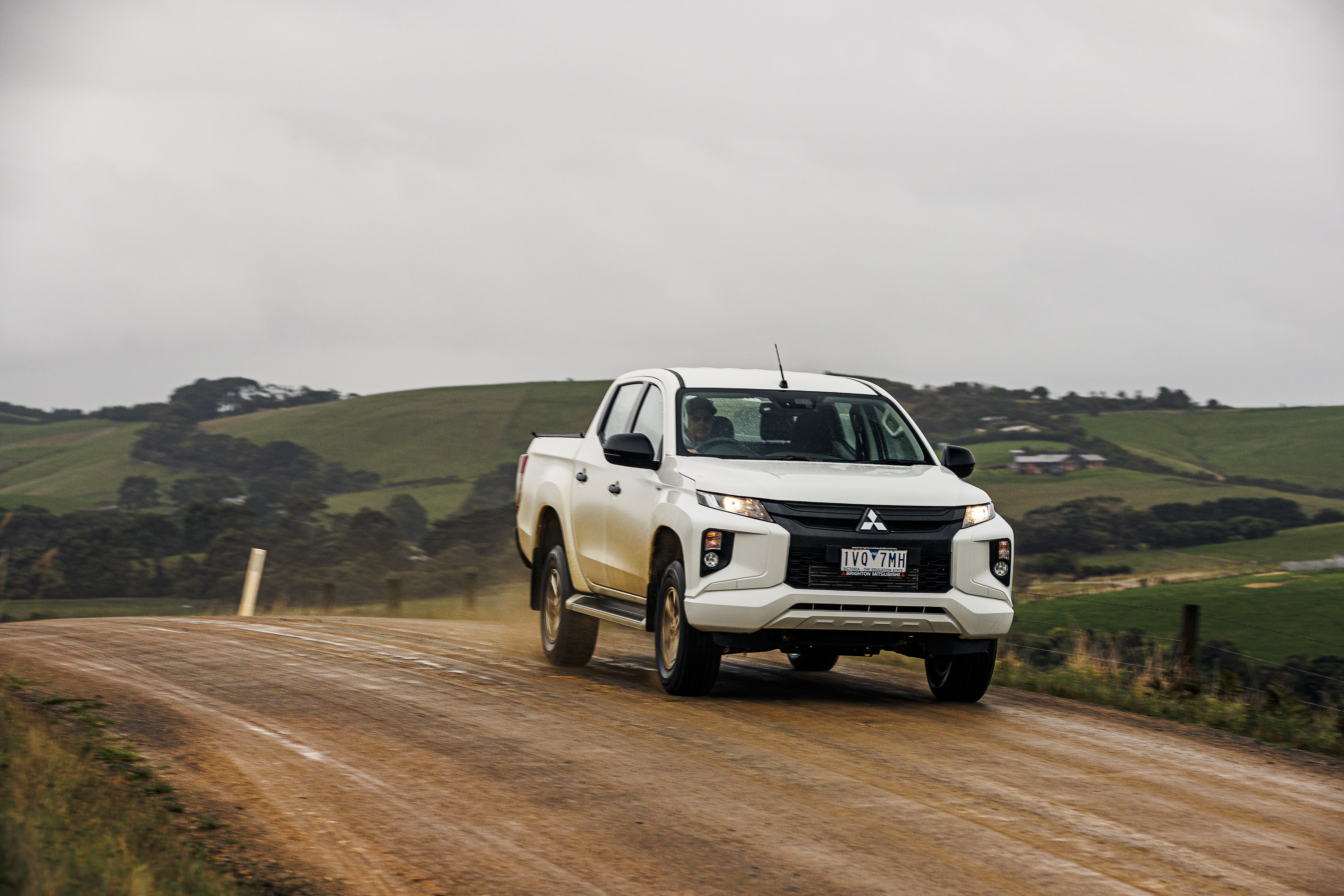
Mitsubishi Australia has announced a 2023 update for its popular Triton ute range. The MY23 Triton gets small spec tweaks, a new grade, and will go on-sale in December.
Prices are up across the Triton lineup, from $300 for the GLS dual cab to $1500 for base GLX trims. The range starts at $30,740 and runs to $64,640 before on-road costs.
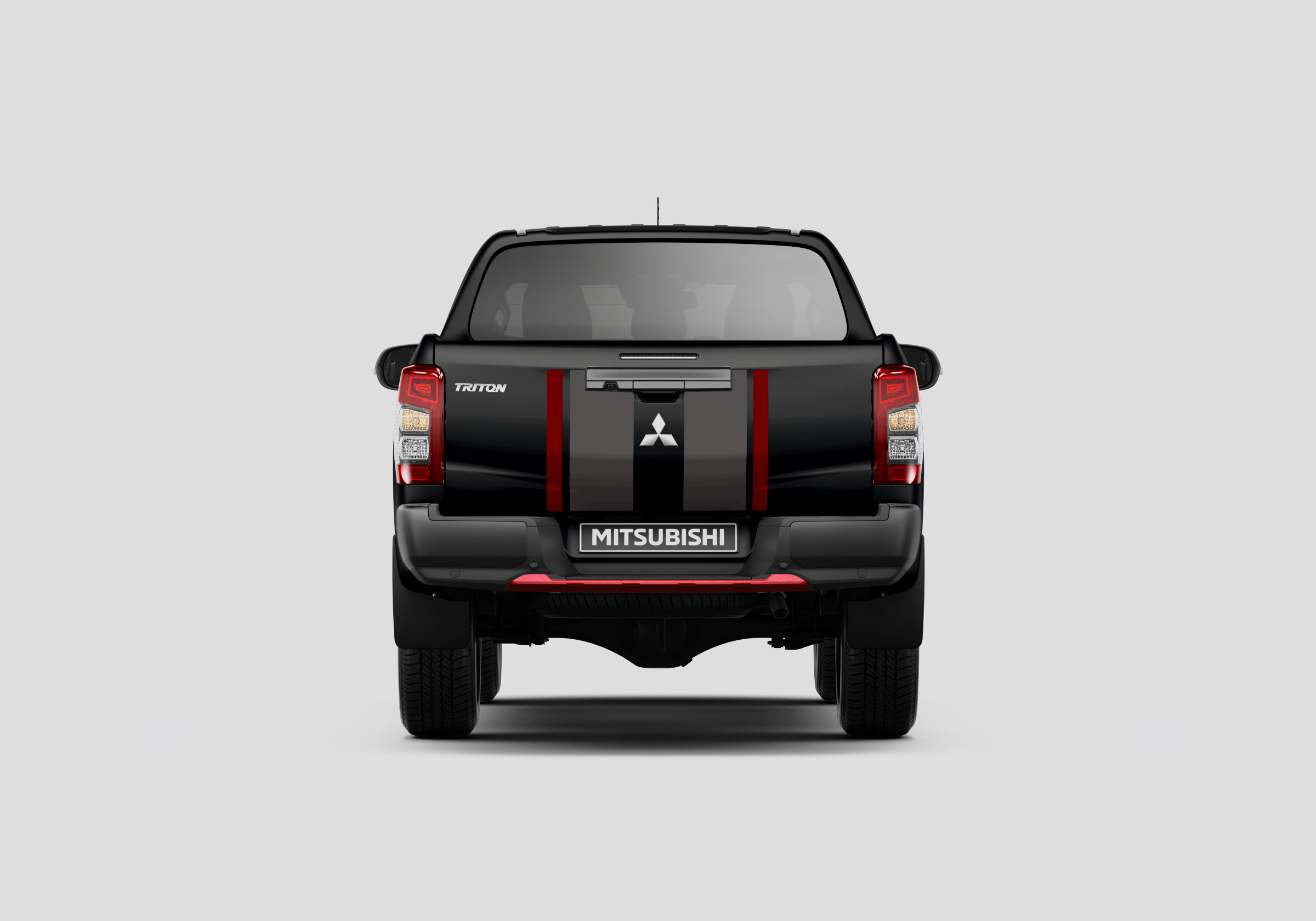
The new limited edition Sport trim will be capped at 400 units from $56,440 before on-road costs. The spec is based on the up-spec GLS Deluxe with some exterior flair courtesy of a sticker pack, contrast stitching and accented skid plates.
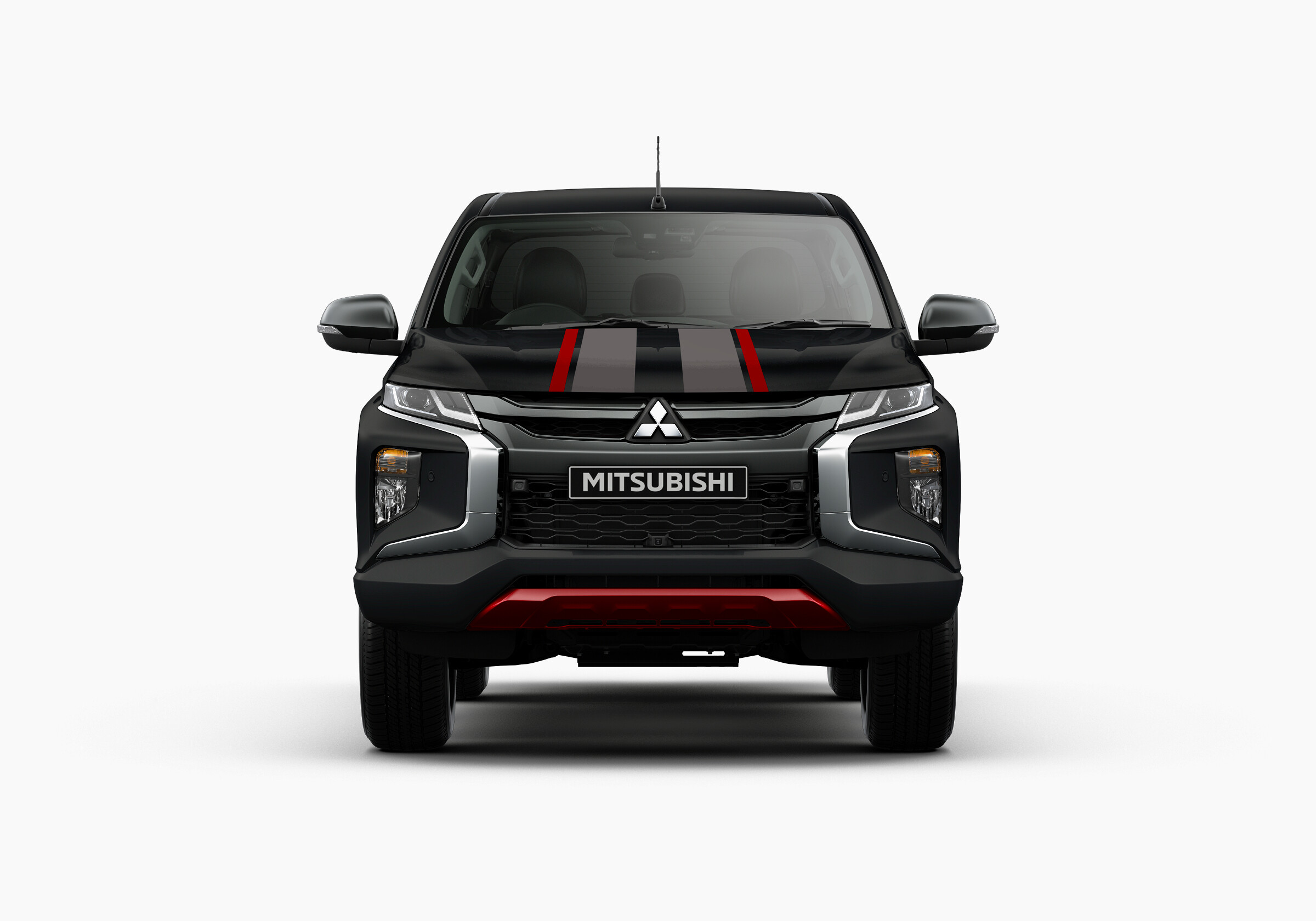
Like the GLS Deluxe, the Sport is outfitted with leather upholstery, a 7.0-inch colour touchscreen and electric seats.
Although there are no upgrades to the Sport grade’s capability – though Mitsubishi has hinted a Nissan Navara Warrior and Toyota HiLux Rugged X rival is on the way – it has the GLS’s Super Select 4WD system, locking rear differential and all-terrain tyres.
“As part of continually evolving our product offer, we now welcome the new, limited-production Triton Sport Edition to Australia”, said Mitsubishi Australia CEO Shaun Westcott.
“This vehicle is perfectly placed to appeal to those who value a uniquely sporting style, combined with the capability, functionality and practicality that Triton is renowned for.”
Changes to existing variants
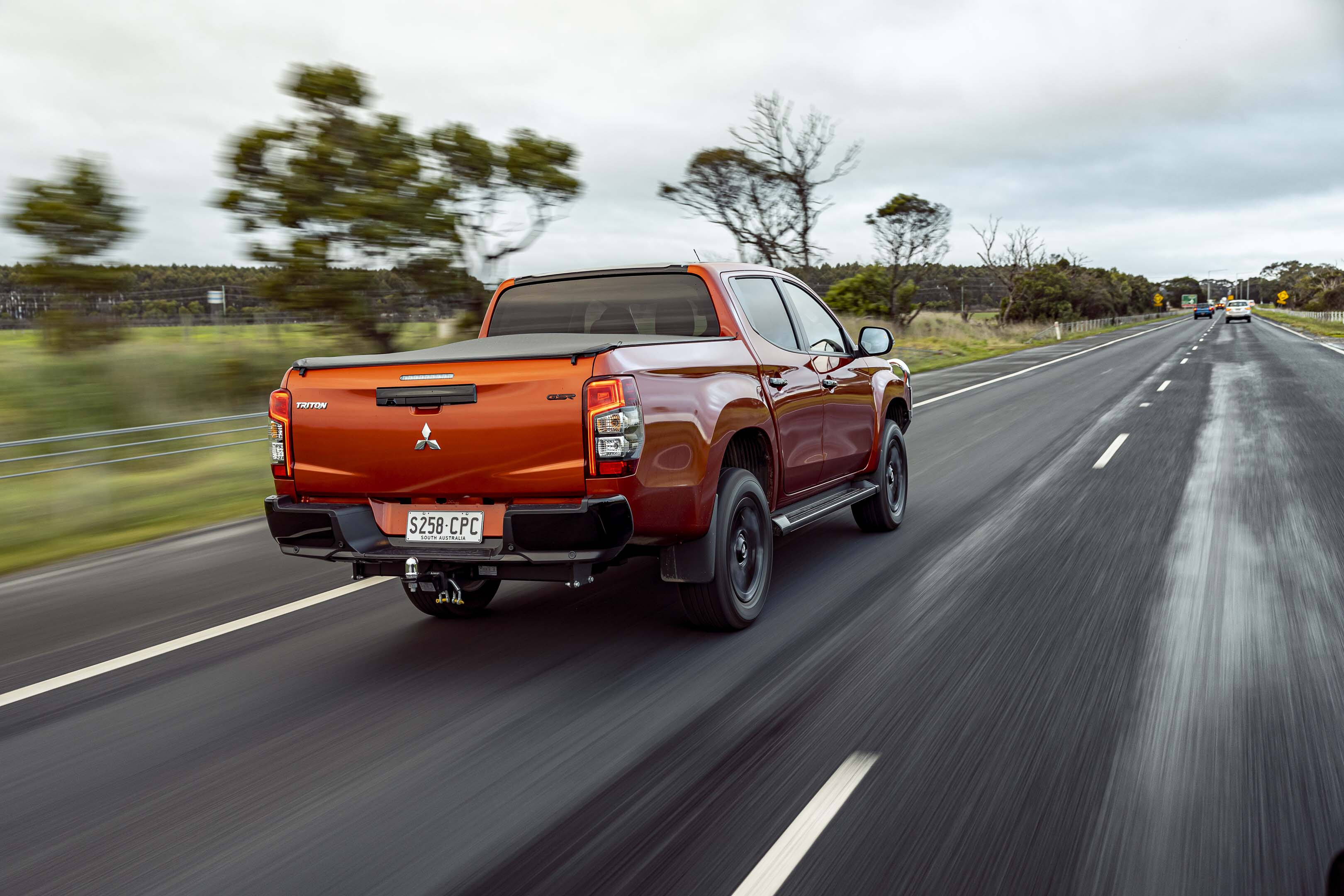
For MY23, the base GLX gains black side steps as standard and a $1500 price bump. The 2.4-litre petrol engine has been culled as an option on this variant.
As a result of losing the base petrol engine, the Triton entry price climbs to $30,740 before on-road costs for a GLX single cab chassis 4×2 manual with the turbo-diesel donk.
Most of the changes come for higher-spec GLS and GLX-R trims which, for MY23, have a higher quality ‘SDA1’ sound system – though with the same six-speakers as MY22.5 models. The $1000 tan leather option for the top trims – added in 2020 – continues for 2023 as well.
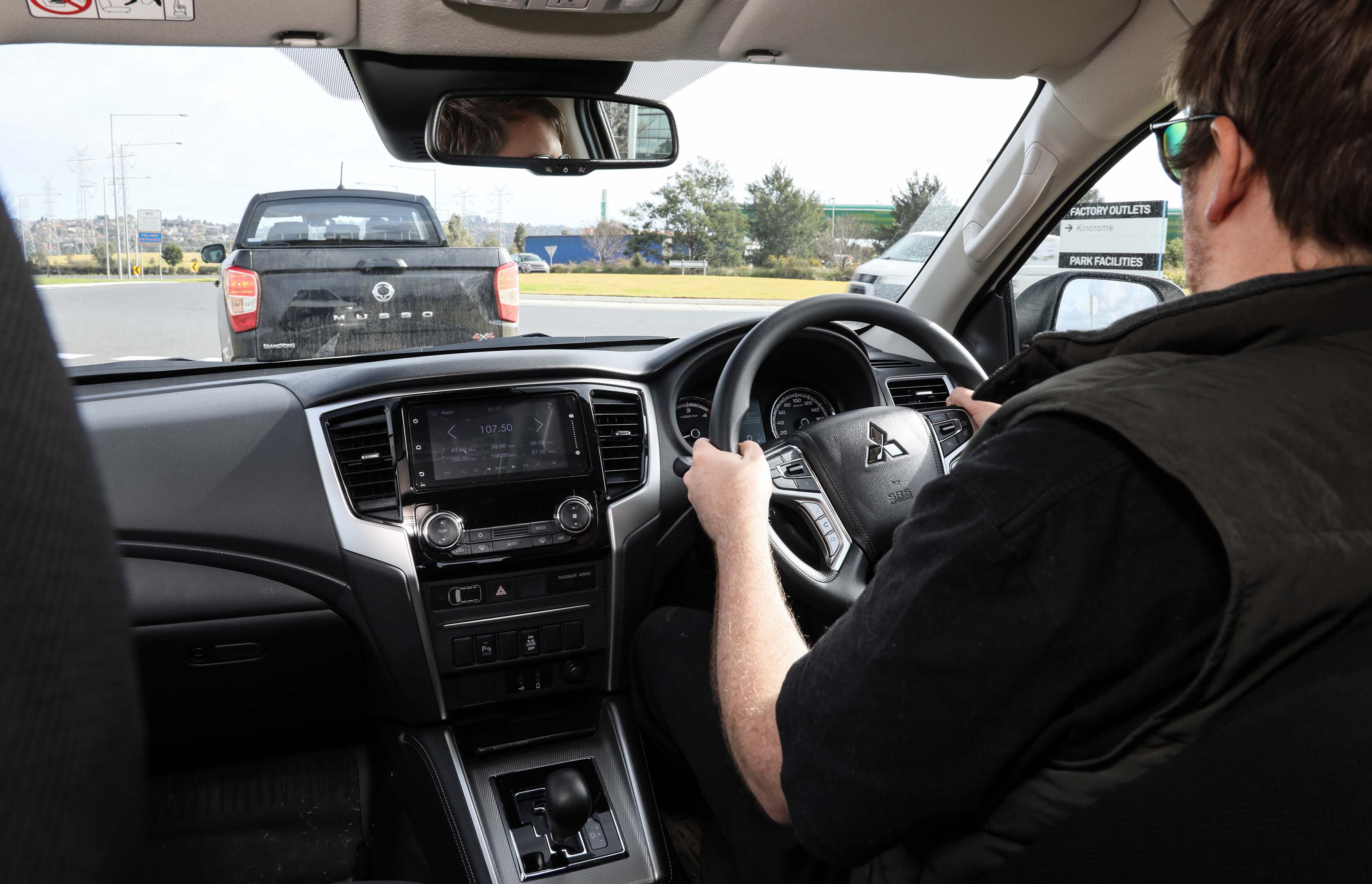
Aside from these minor changes, the Triton spec remains untouched. That means the GLX comes with cloth upholstery, manual seats and two-speaker sound system.
Safety features include stability control, ABS, seven airbags and a five-star ANCAP rating from its 2015 evaluation.
Forward collision warning and AEB systems are fitted to GLX Club and dual cab variants with automatic transmissions, while the range-topping GLS and GSR are fitted with blind-spot monitoring, rear cross-traffic alert and adaptive cruise control.
2023 Triton 4×4 pricing
Prices are before on-road costs
| Triton 4×4 Grades | Pricing |
|---|---|
| GLX single cab 2.4TD 6MT | $37,490 (+$1500) |
| GLX single cab 2.4TD 6AT | $39,740 (+$1500) |
| GLX Club Cab 2.4TD 6MT | $39,940 (+$1500) |
| GLX Club Cab 2.4TD 6AT | $42,940 (+$1500) |
| GLX+ Club Cab PU 2.4TD 6AT | $45,440 (+$1000) |
| GLX dual cab 2.4TD 6AT | $41,440 (+$1500) |
| GLX dual cab 2.4TD 6AT | $43,690 (+$1500) |
| GLX dual cab PU 2.4TD 6AT | $44,690 (+$1500) |
| GLX+ dual cab PU2.4TD 6MT | $44,940 (+$1000) |
| GLX+ dual cab PU 2.4TD 6AT | $47,190 (+$1500) |
| GLX-R dual cab PU 2.4TD 6AT | $47,940u00a0 (+$750) |
| GLS dual cab PU 2.4TD 6MT | $49,690 (+$750) |
| GLS dual cab PU 2.4TD 6AT | $51,490 (+$300) |
| GLS DLX dual cab PU 2.4TD 6AT | $54,940 (+$750) |
| Sport Edition dual cab PUu00a0 | $56,440 |
| GSR dual cab PU 2.4TD 6AT | $56,940 (+$1250) |
| GSR dual cab PU 2.4TD 6AT roll-top tonneau cover | $63,640 (+$1250) |
2023 Triton 4×2 pricing
Prices are before on-road costs
| Triton 4×2 Grades | Pricing |
|---|---|
| GLX single cab 2.4TD 6MT | $30,740 (+$1500) |
| GLX single cab 2.4TD 6AT | $32,990 (+$1500) |
| GLX dual cab PU 2.4TD 6AT | $40,440 (+$1500) |
| GLX-R dual cab PU 2.4TD 6AT | $43,690 (+$1500) |
The Armadillo Bag is a flexible, collapsible, lightweight expedition-ready utility bladder designed around the safe transportation and storage of liquid hydrocarbon products and other automotive fluids.
Armadillo Bags weigh a fraction of what rigid containers do, and pack up small for ease of storage when empty.
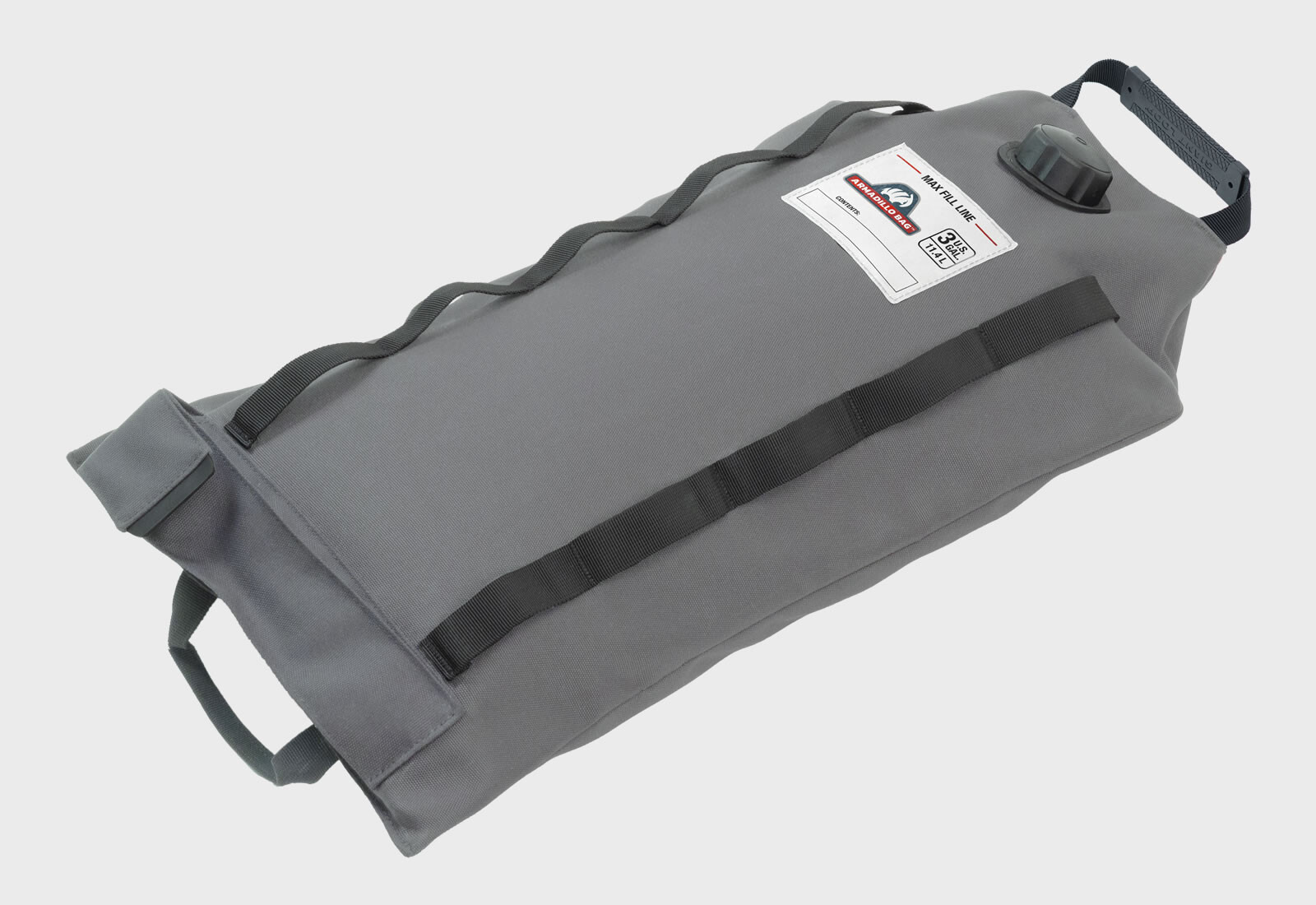
Each Armadillo Bag is pressure tested to ensure leakproof performance, and include a pour spout with a dedicated storage pocket.
There are four sizes available, from 3.8L right up to 18.9L with the largest size weighing in at just 680g.
Please note, these bags do not meet local standards for portable or long-term fuel storage; their intended purpose is for temporary transport of permitted automotive liquids.
RRP: From $169.90 WEBSITE: www.armadillobag.com.au
YOKOHAMA’s Geolandar X-AT G016 has been designed to offer the strength of a mud-terrain tyre, with the tread pattern of an all-terrain tyre.
Key features include an aggressive tread design that YOKOHAMA says provides long tread life, off-road and wet-surface traction, excellent on-road handling as well as low noise with a comfortable ride.
The Geolandar X-AT G016 is rated as a 70 per cent off-road tyre and 30 per cent on-road tyre, and is covered by YOKOHAMA’s Road Hazard Protection plan for peace of mind.
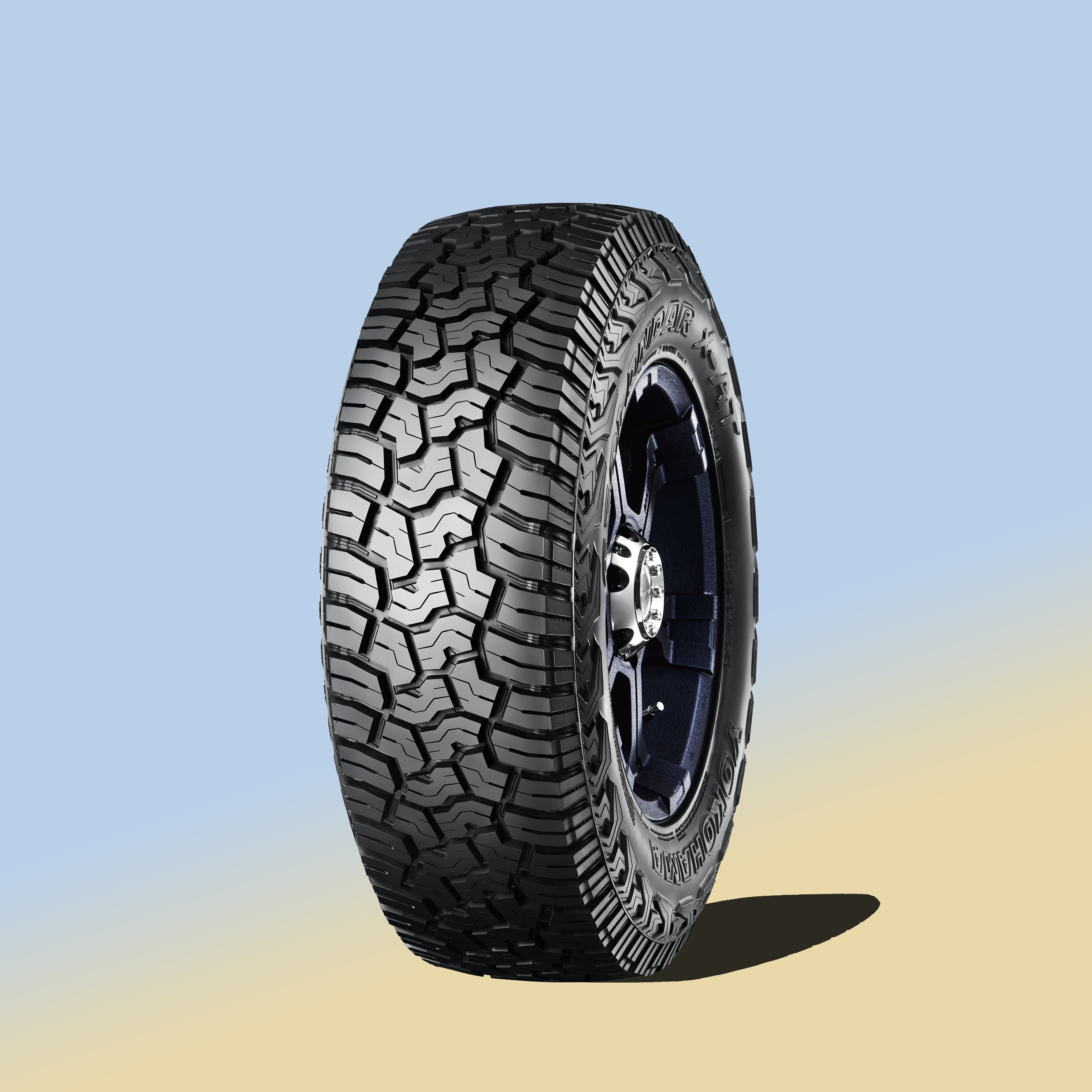
There are plenty of sizes available also, ranging in wheel diameter from 15- right up to 20-inch. Website: www.yokohama.com.au Price: Depends on size
The 2023 Ford Ranger has barged past the Toyota HiLux on the 4×4 sales charts in September, with the Blue Oval registering a total of 4381 sales of its next-gen 4×4 ute for the month.
The HiLux had held top place consistently throughout 2022, but with supply meeting demand, more and more Rangers are finally being delivered to new customers. Considering the age of the current-gen HiLux, Toyota still shifted a significant 3544 units in September.
Plus, when you combine 4×2 and 4×4 sales, the HiLux remains the highest-selling overall model with 5170 sales reported. The Ranger is second (4890 sales), followed by the Tesla Model Y (4359), Mazda CX-5 (2439) and Mitsubishi Triton (2319).
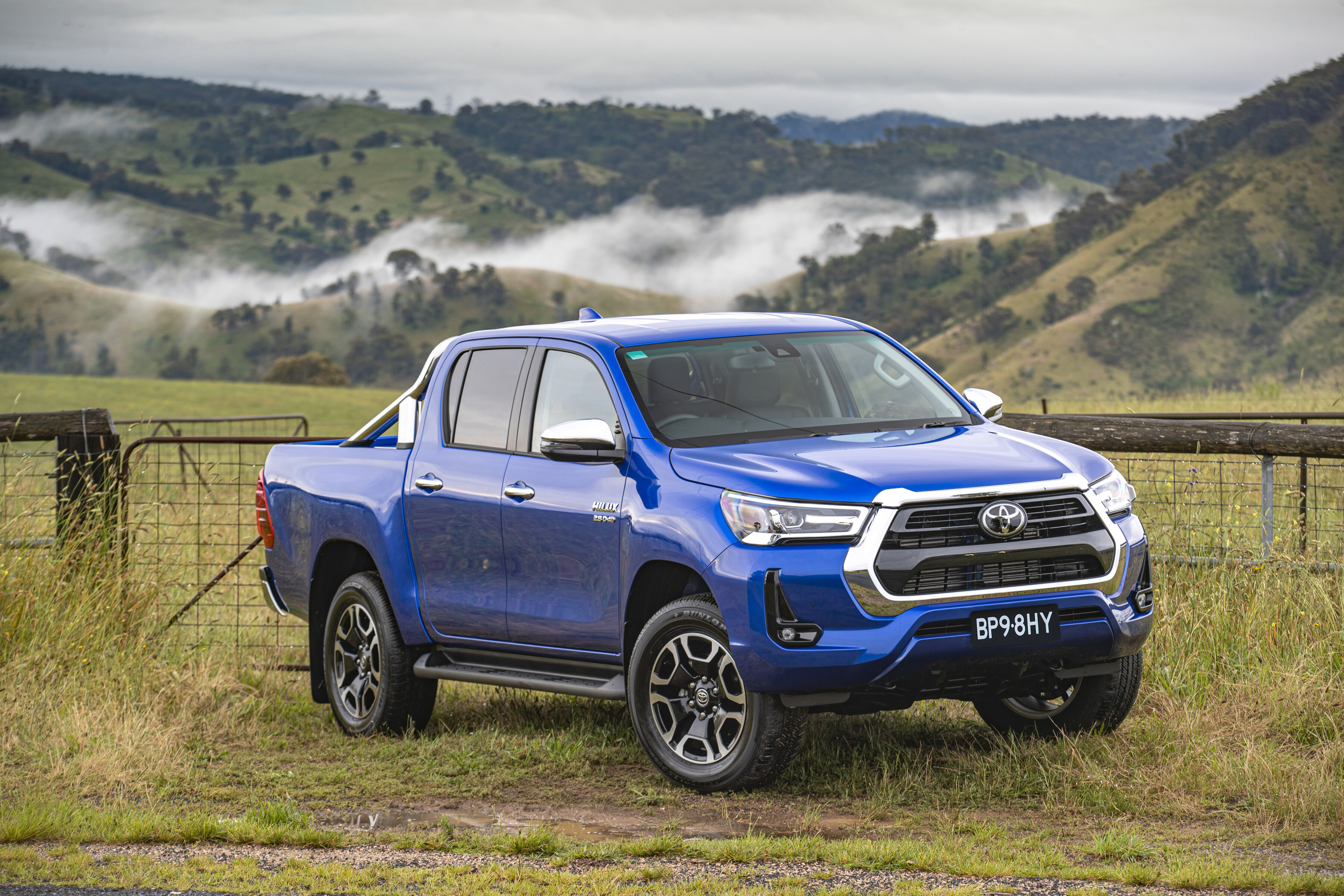
The Triton regained third spot on the 4×4 sales charts, climbing above the ever-popular Prado, with its compelling price tag luring 2029 new owners in September.
Other budget-priced models performed well on the 4×4 sales charts, with both the LDV T60 and GWM Cannon continuing to demand a slice of the action, with 962 and 936 sales respectively.
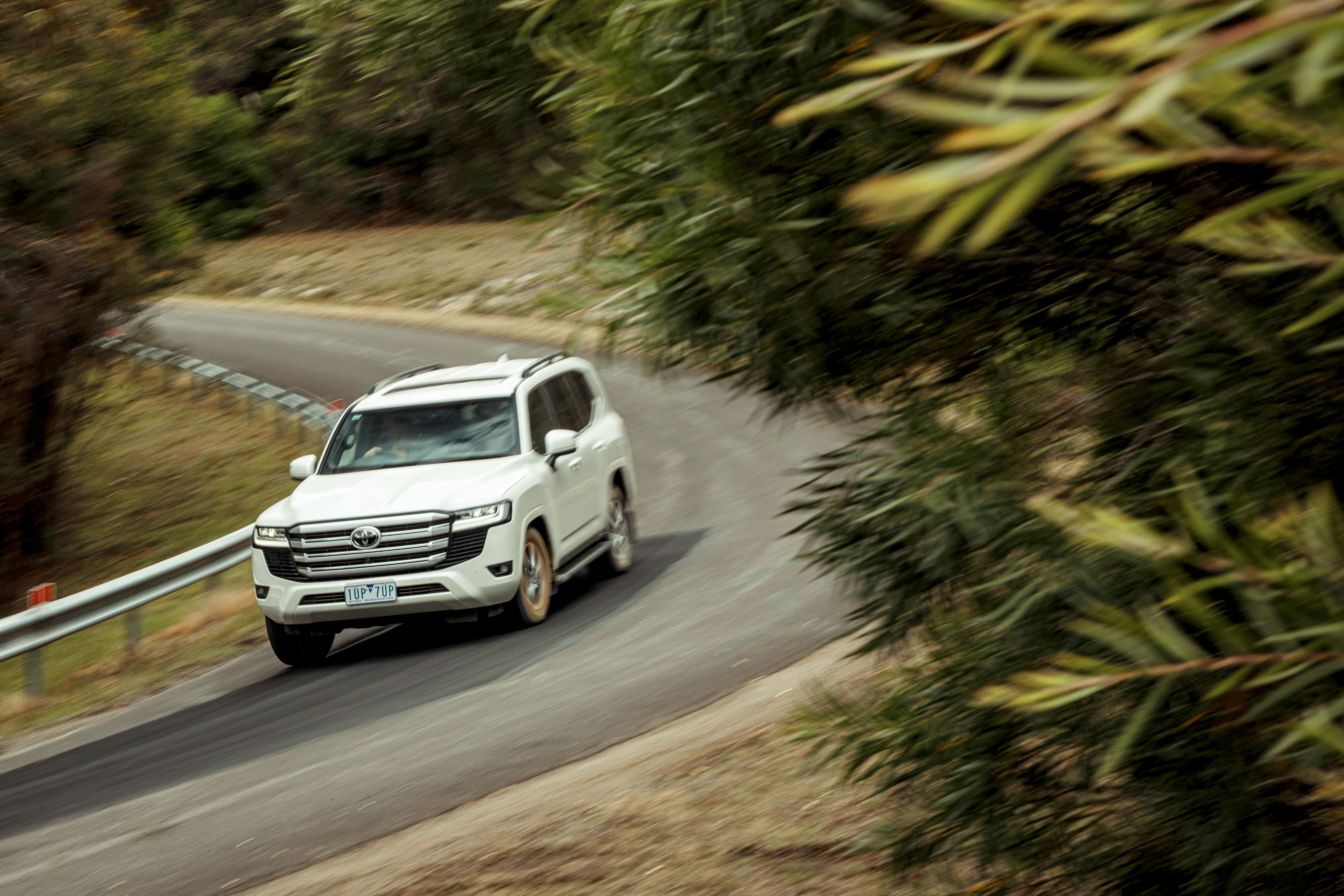
With orders currently on hold and delays in delivery, the 300 Series LandCruiser slid off the top 10 charts for September, with only 634 sales registered.
With a new Amarok arriving in the first quarter of 2023, sales of the current-gen model have stalled, with just 318 units sold in September – a decline of 71 per cent compared to the same month in 2021. Put this down to stock shortages and run-out mode of its current model.
Likewise, sales of the Navara 4×4 dropped to 681 units in September – a fall of 25.2 per cent compared to September 2021.
Overall vehicle sales increased by 12.3 per cent in September 2022 compared to September 2021, with the SUV (+21.6 per cent) and LCV (+11.1 per cent) markets carrying much of the load – the passenger vehicle market was down six per cent.
Top 10 new 4×4 sales: September 2022
| 1 | Ford Ranger | 4381 |
|---|---|---|
| 2 | Toyota HiLux | 3544 |
| 3 | Mitsubishi Triton | 2029 |
| 4 | Isuzu D-MAX | 1741 |
| 5 | Toyota Prado | 1698 |
| 6 | Toyota LandCruiser 79 | 1006 |
| 7 | LDV T60 | 962 |
| 8 | GWM Cannon | 936 |
| 9 | Isuzu MU-X | 894 |
| 10 | Ford Everest | 801 |
Top 10 new 4×4 sales: YTD
| 1 | Toyota HiLux | 36,566 |
|---|---|---|
| 2 | Ford Ranger | 29,389 |
| 3 | Mitsubishi Triton | 20,337 |
| 4 | Toyota Prado | 17,626 |
| 5 | Isuzu D-MAX | 15,488 |
| 6 | Toyota LandCruiser 79 | 9083 |
| 7 | Toyota LandCruiser 300 | 8914 |
| 8 | Mazda BT-50 | 8018 |
| 9 | Isuzu MU-X | 7911 |
| 10 | Nissan Navara | 7333 |
It’s funny how the weather can affect things while travelling, either the best-laid plans get thrown out the window and you’ll head home, or you simply just change plans like in our case. Our base to explore was the unique outback town of Coober Pedy in South Australia. Known as Australia’s opal mining capital with underground buildings, a landscape full of mole hills and mines, it needs to be visited at least once on anyone’s travel itinerary.
History states that about 150 million years ago, inland Australia was covered by a vast ocean and when it started to dry up, the water and silica seeped in to the earth’s cracks and fault lines. Over time, chemical reactions happened, opals were formed, and in 1915 the first opals were found by Willie Hutchinson.
Today, Coober Pedy’s many mines produce 85 per cent of the world’s most stunning opals … and they say, if you can’t find colour here, you’re not looking. The word got out and a year later, miners rushed the area and established a town.
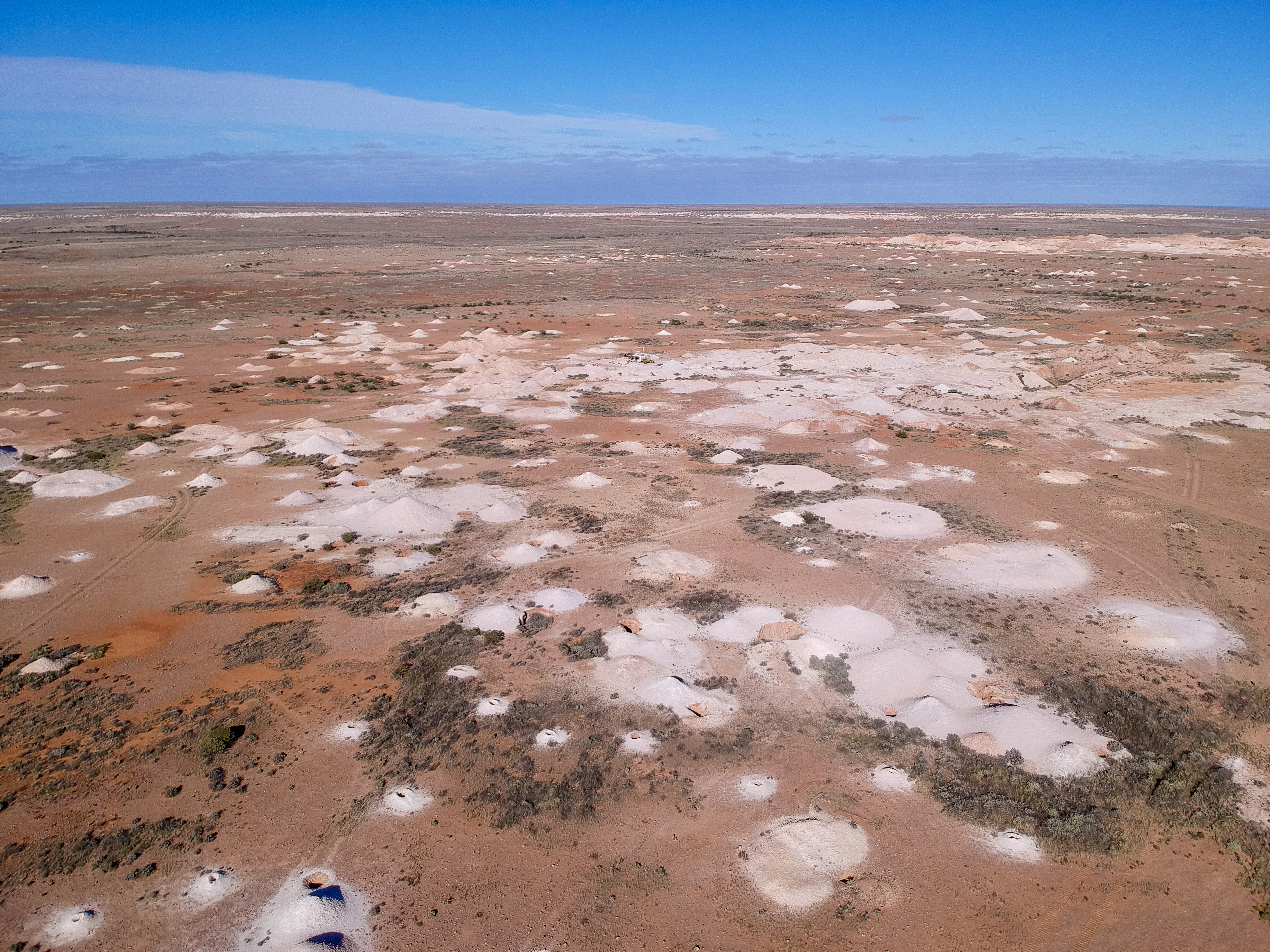
Today, it’s a busy place offering plenty of opportunities to explore the dugouts and mines. In fact, records show there are about 260,000 shafts across the local landscape. Around 50 per cent of the townsfolk live underground due to the extreme temperatures in summer, and interestingly there are more than 40 different nationalities making up the population.
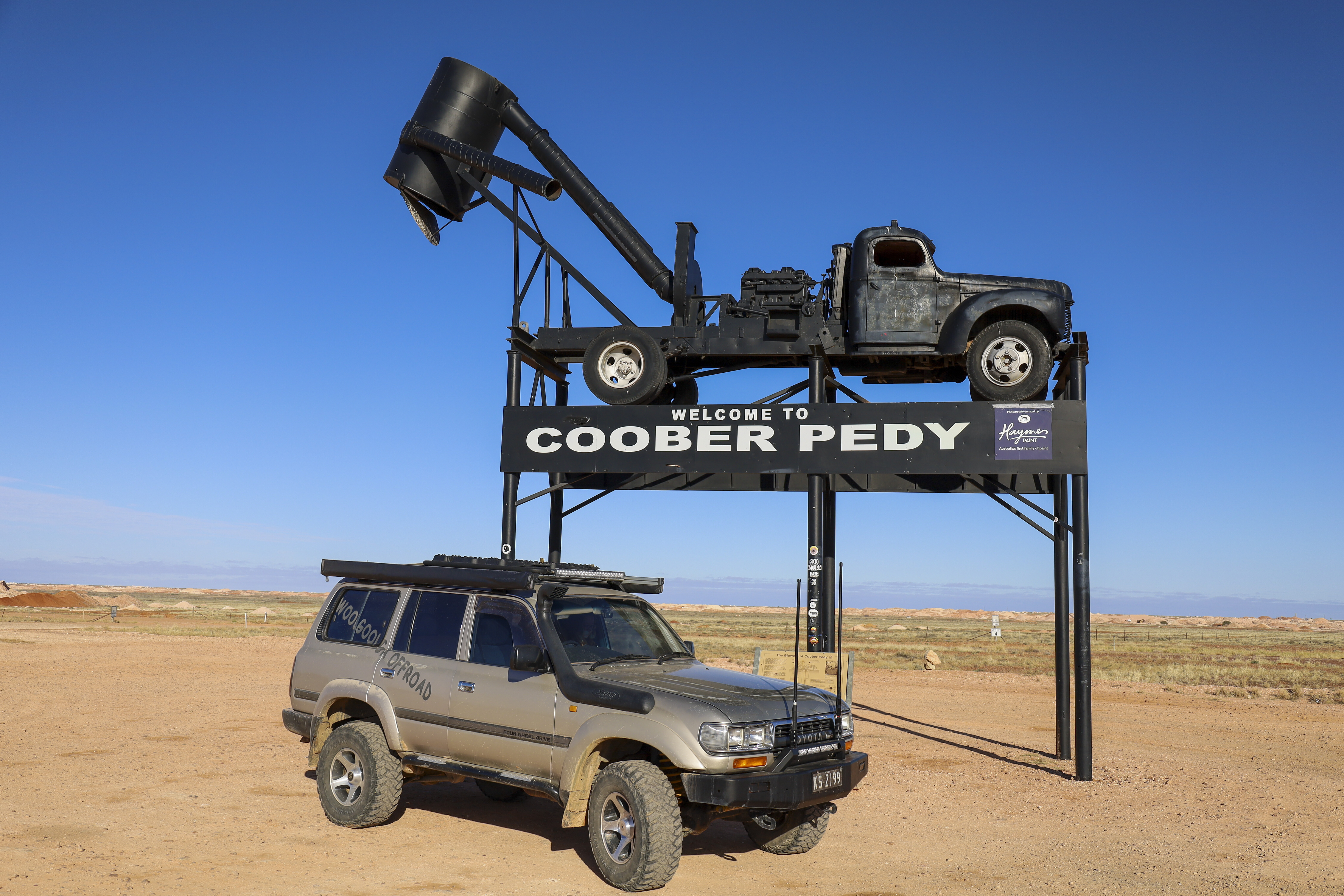
The town has the usual and unusual tourist attractions with plenty of opal shops, a grassless golf course, mine tours, an underground church, motels, plus if you’re a tent camper you can set it up underground at Riba’s Underground Camping & Caravan Park. Originally named Stuart Range, it was officially changed to Coober Pedy by the local Progress and Miners Association in 1920.
It’s thought that the name Coober Pedy is derived from what the local Aborigines saw as strange activity of ‘white men down holes’. Natural attractions surround the town and include the stunning The Breakaways (ranges) to the northeast and out to Lake Cadibarrawirracanna (the longest lake name in Australia) to the east in the Woomera area.
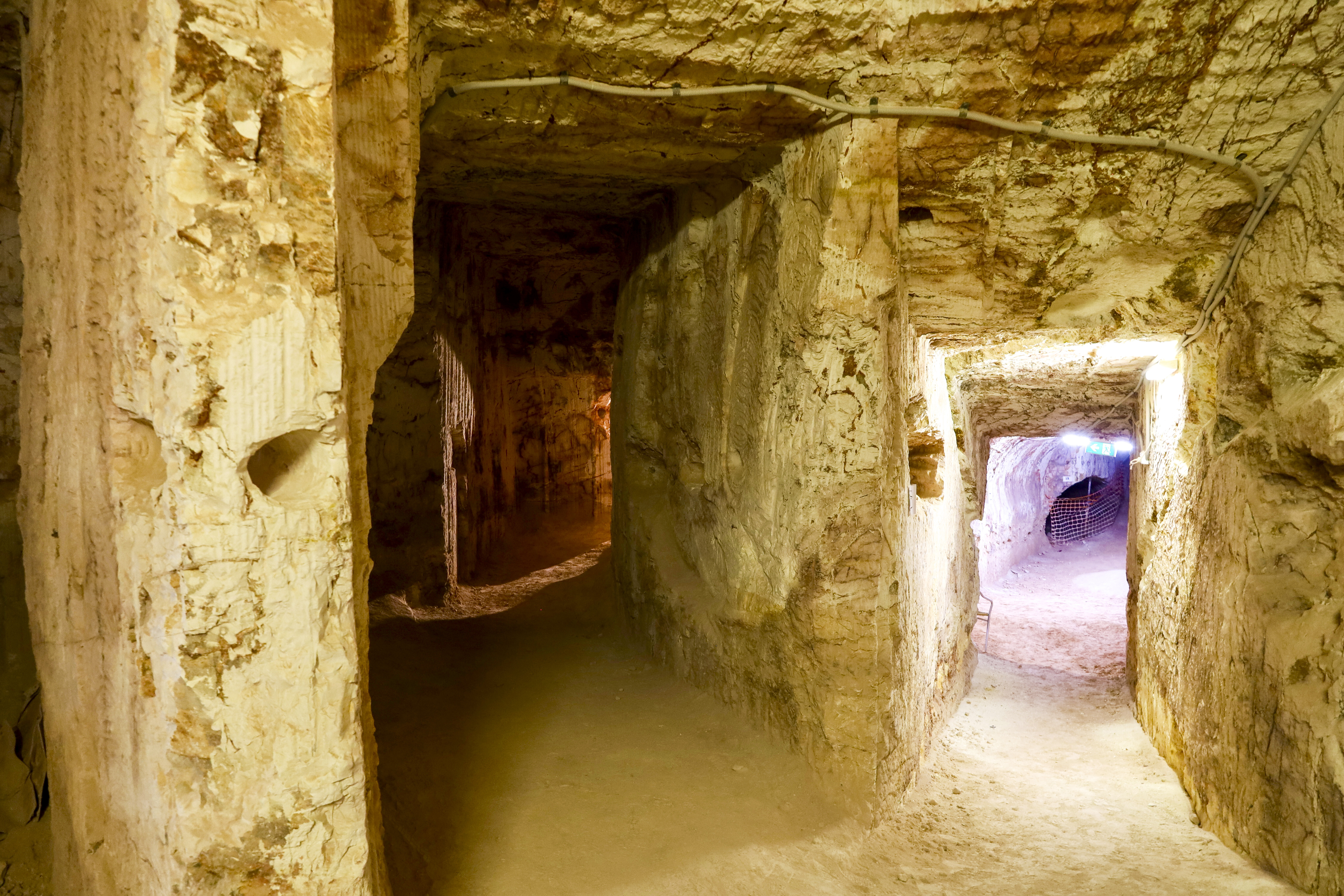
With low rainfall, the town pumps its water from a deep artesian bore 25km away, after attempts by the government to establish several local water sources failed. The first program was to build a 2-million-litre tank underground but it was deemed unreliable, then in 1967 a desal’ plant was built to treat salty water pumped from 100m below ground but it didn’t produce enough to supply the whole town.
The Stuart Highway runs through Cooper Pedy and from here are opportunities to explore the desert regions to the east towards the famous Oodnadatta Track, and our plan was to head along Kempe Road towards Oodnadatta. Now while Kempe Rd may seem ‘just’ another desert dirt road, the scenery is pretty mind blowing.
There are miles and miles of treeless plains for as far as the eye can see, and with shimmering masses of gypsum popping out of the ground, it’s a sight to behold. But combined with the rocky gibber plains, there’s not much life out here or fun during the warmer months.
It’s hard to imagine the early explorers trudging through here looking for water or shade back in the late 1880s, when at times their convoys could only travel up to 20 miles a day.
Pink Roadhouse
The Pink Roadhouse at Oodnadatta is an Aussie icon, if not for the massive burgers just visiting it is another must. Most know the roadhouse for being painted all pink and from the circular road signs made by Adam Plate (and his wife Lynnie). Tragically, Adam passed away but his legacy lives on at the roadhouse and indeed along the Oodnadatta Track. For those that don’t know, Adam cut the tops off of old 44-gallon drums, painted them pink and put interesting facts on them – before placing them along the track.
The Oodnadatta Track covers 620km between Marla in the north to Marree in the south, and is packed with history – it’s best to do the whole track from start to finish to explore all of the heritage and unique features along the way. Before Europeans started to explore the area and indeed start using the track, it was an ancient ochre trading route used by Aboriginals going from waterhole to waterhole.
Explorers used the route to head north to the Gulf, in fact it’s roughly the route taken by explorer John Stuart on his third expedition in 1859 and before the Overland Telegraph was built where nearly 33,000 poles lined the way from Adelaide northward to Darwin.
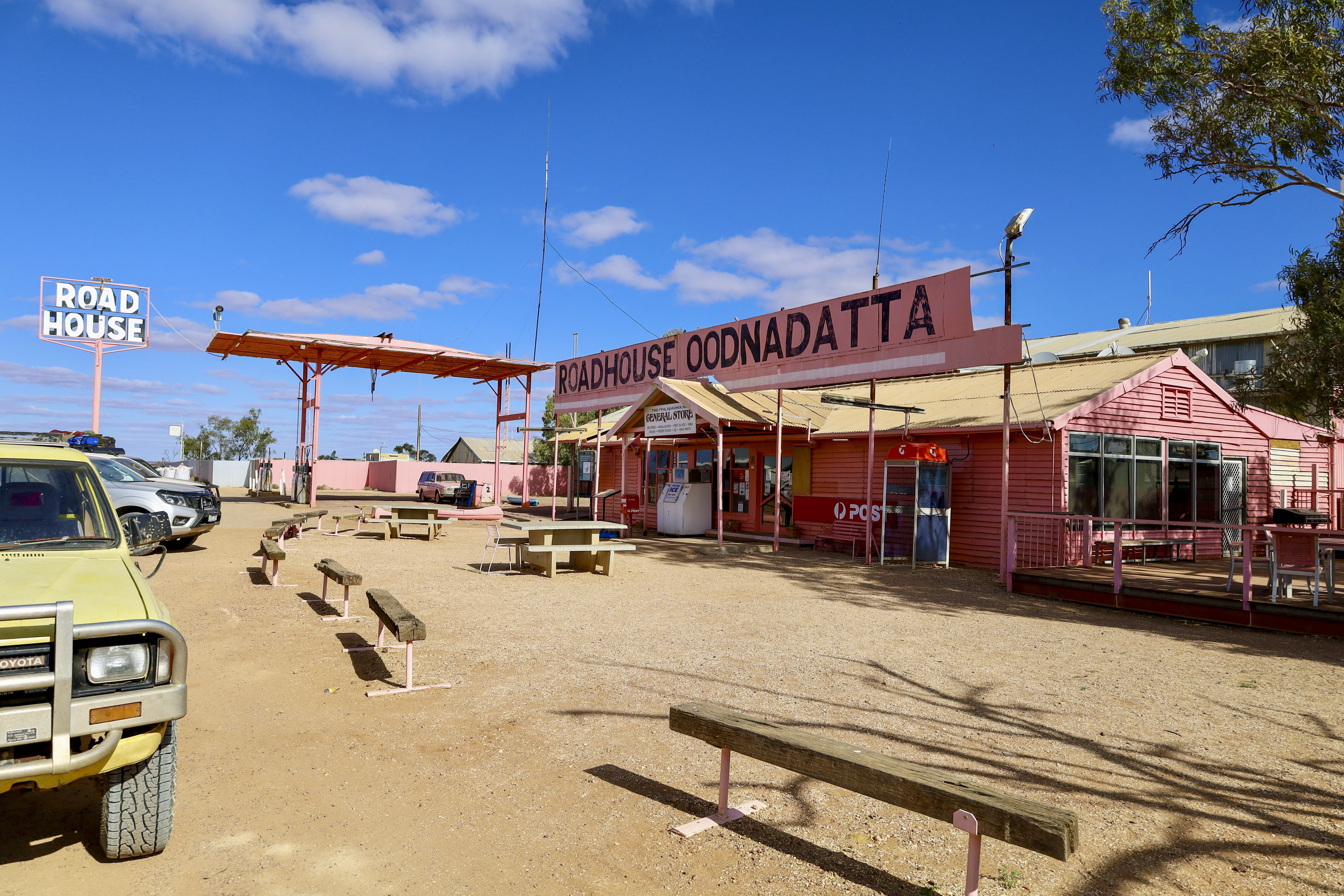
Oodnadatta has several restored buildings, an explorers and pioneers park, while the old railway station is now the museum and is free to enter. It was in 1890 that Oodnadatta was proclaimed a town and during that time millions of acres were taken up as pastoral leases.
By the end of 1891, the railway line had come to town from Warrina in the south making Oodnadatta the end of the line, and it was around this time that the tough and amazing Afghans moved in to the area.
With their knowledge of harsh desert life as nomadic travellers they were soon moving mail, freight and the odd passenger northwards to Alice Springs with their camel teams. This lasted for a good 30 years until the railway line was extended north phasing out the teams. Their legacy still lives on with monuments throughout the area, descendants and other related history.
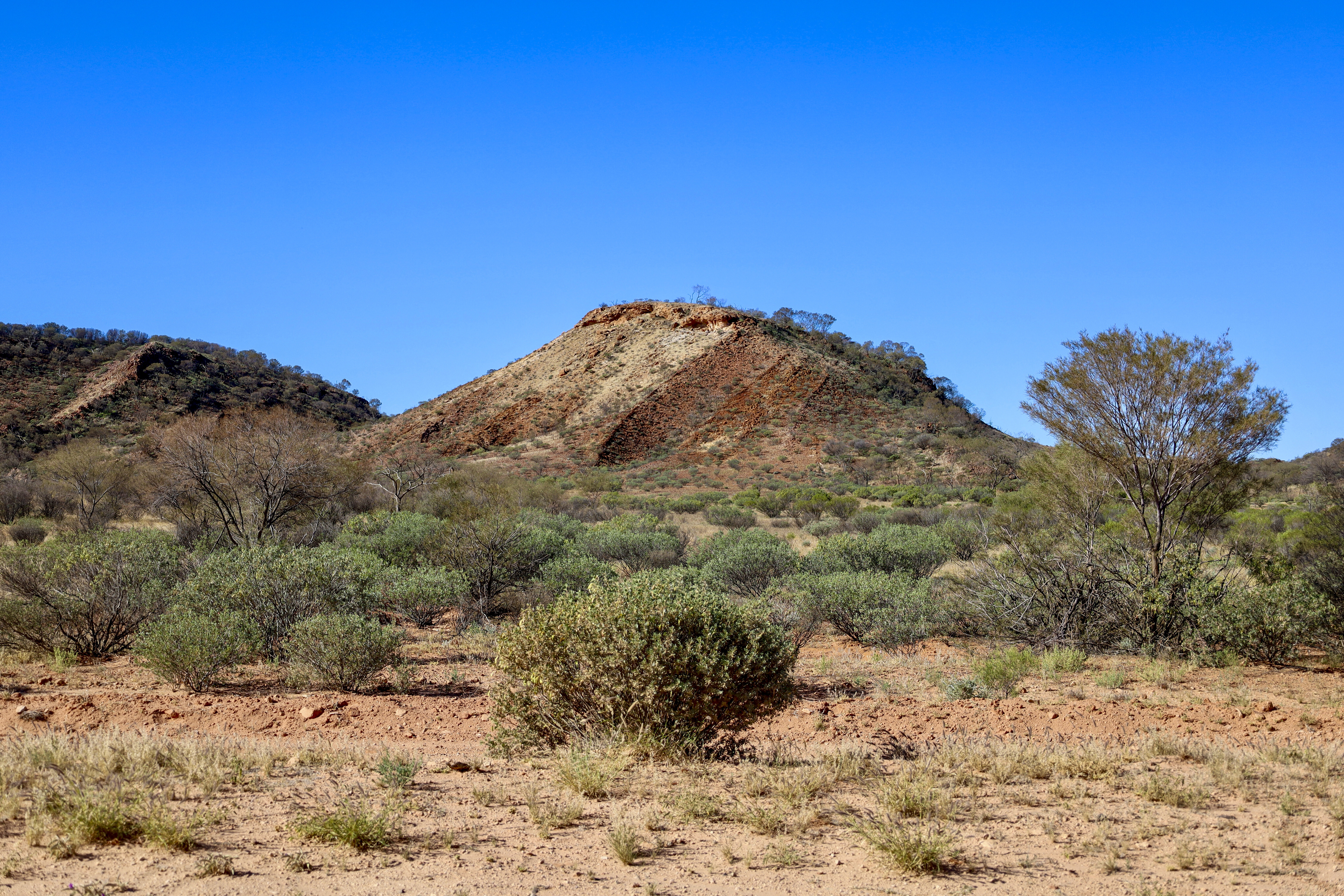
After spending a few hours at Oodnadatta, our plan was to head up through the remote Witjira National Park on the western edge of the Simpson Desert via Mount Dare. Recent rainfall though, still had this area closed off to all travellers and the only option was to head up the track to Marla on the Stuart Highway, some 210km away.
Although the Oodnadatta Track needs to be treated with respect due to its remote location, more often than not the road is in pretty good condition, as long as you drive accordingly. Prior to our camp at Coober Pedy we spent time on the southern end of the Oodnadatta Track exploring the railway heritage ruins that have easy access.
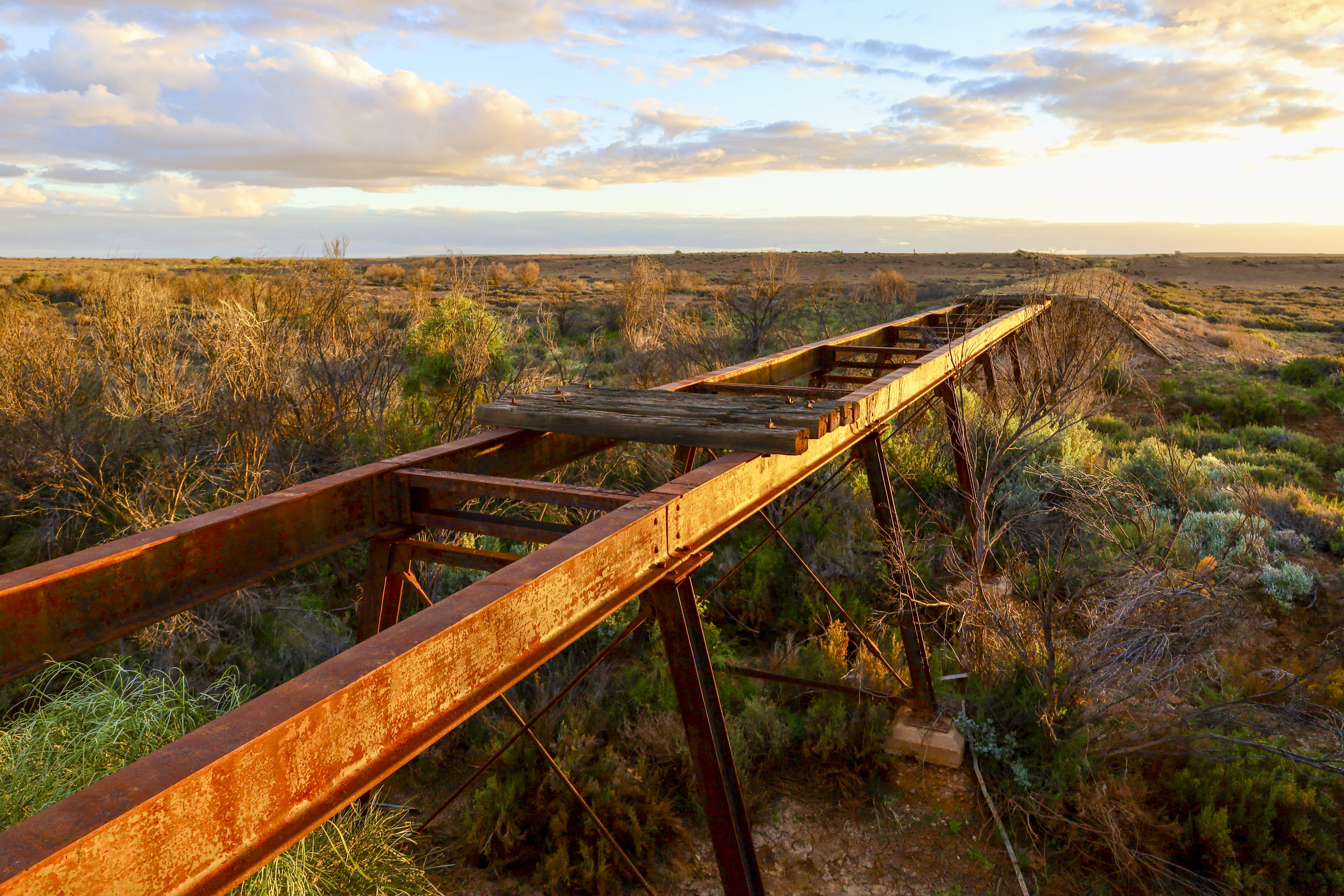
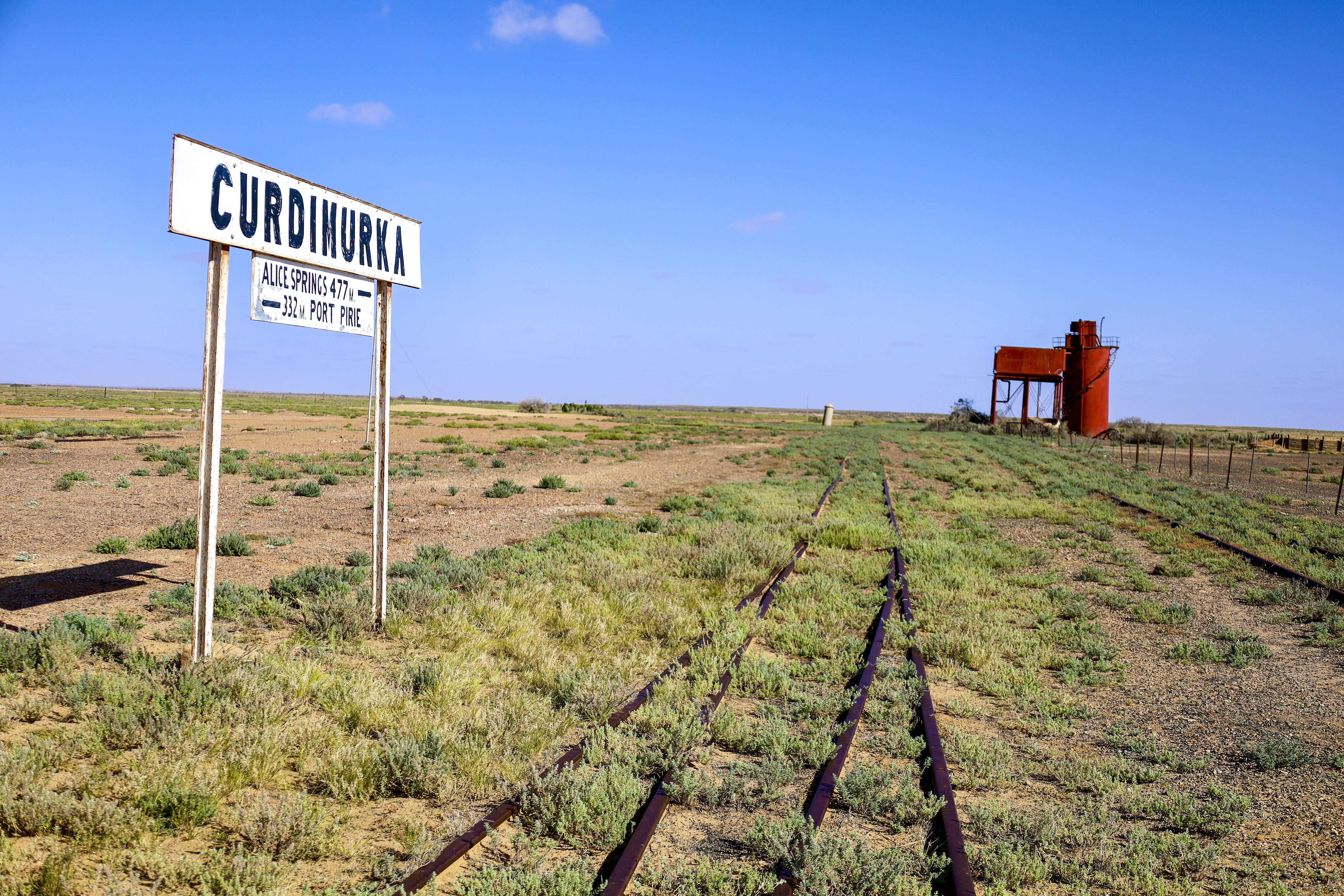
Some worth a mention include the Curdimurka Siding dating back to 1888 where most of the buildings, water tank, desalination boiler and the 433m-long plate girder bridge can be viewed, thankfully all listed on the Heritage Register.
In 1943, a Kennecott lime-soda plant was built to deal with the high minerals in the water that was needed for the locomotives. It seems like this siding was in the middle of nowhere but the settlers made it home until 1980 when the last Ghan train went through. Along most of the Oodnadatta Track are plenty of ruins to be viewed, sadly some have been vandalised.
Hitting Marla and the straight Stuart Highway, we headed north towards the Northern Territory and just 20km over the border we pulled in to Kulgera Roadhouse for fuel and to gain current road conditions as we wanted to head east from here. According to Kulgera, they had received no rain and it had only passed across the nearby Stanley Tableland.
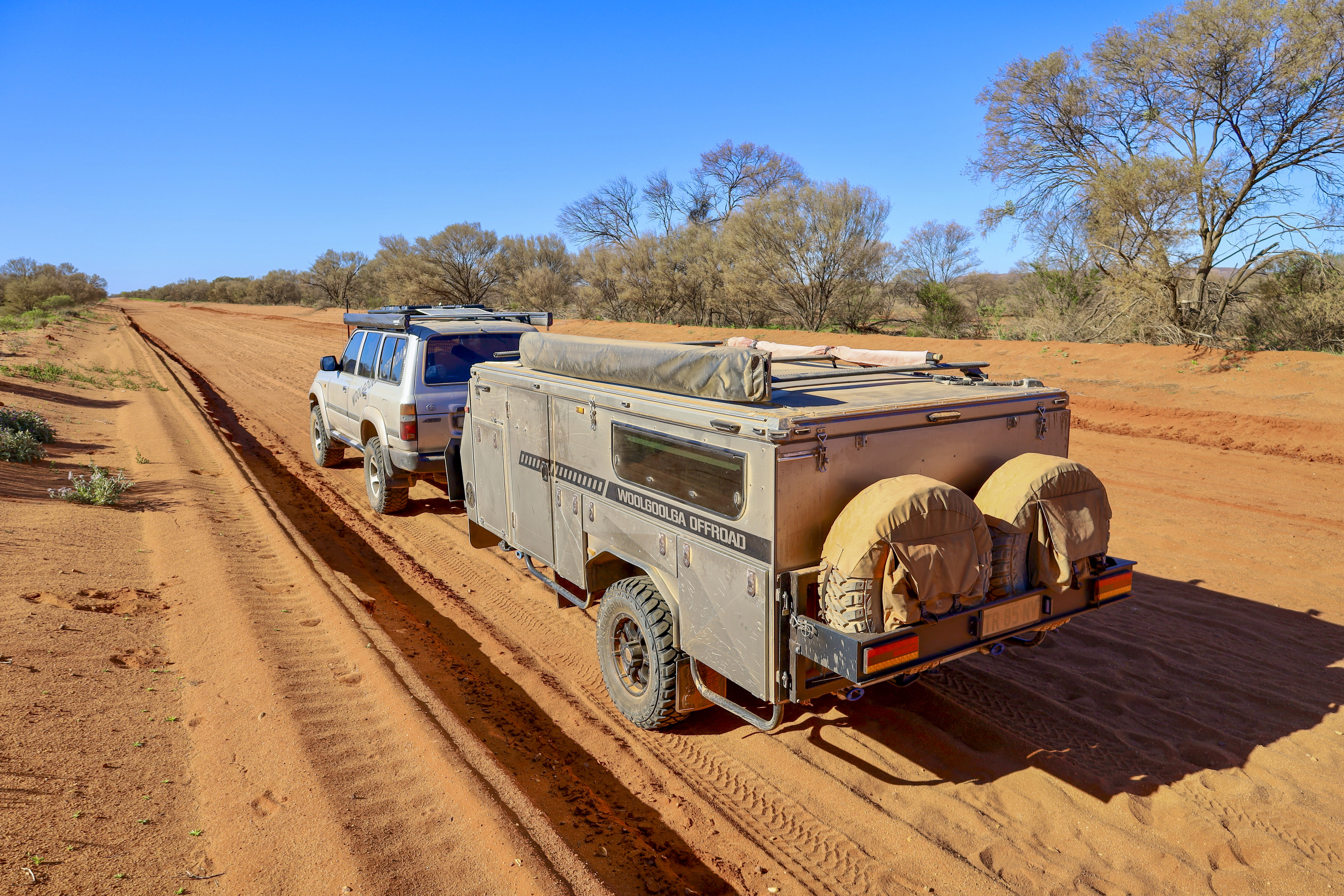
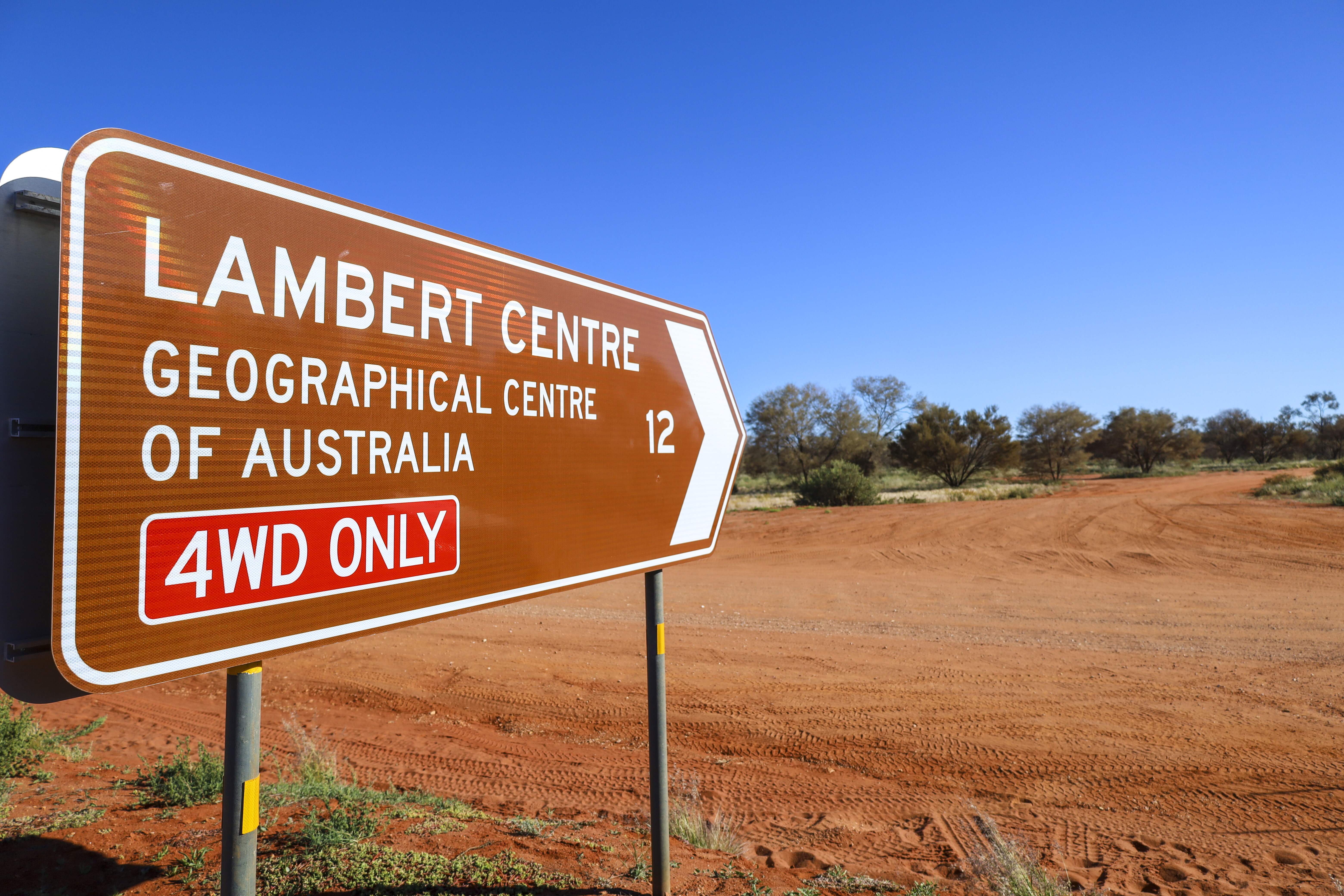
With changed plans, we again hit the sandy surfaces along the Finke Road, as the destination for the night was within the Newland Ranges and the official ‘Centre of Australia’. The road to the Lambert Centre of Australia is only 12km but was extremely chopped up taking nearly an hour, dodging severe washouts and battling endless corrugations. This is now known as the true centre of Australia after many others claimed to have found it. Even explorer Stuart claimed he worked it out but unfortunately his was hundreds of miles away.
Explorer Dr Cecil Madigan, who in 1930 used a crude metal cut-out of Australia was closer, just 11km away. Finally in 1988, the exact position was determined by the Royal Geographical Society of Australasia after plotting more than 25,000 points around our coastline, and now on the exact spot is a replica of the flagpole that sits on top of Parliament House.
Finke
After heading back out to Finke Rd, it’s another hour of travel passing by the Beddome Range before entering the cultural town of Apatula (formerly Finke). It’s here we jumped back to our original plan to follow the Old Ghan railway line 180km to Alice Springs. The well-signposted Old Ghan Railway Heritage Trail runs loosely along and beside the old railway line. Although the track has been pulled up when it was moved farther west, there’s still plenty to explore along the way, as well as dodging the numerous metal spikes left on the ground from the old line.
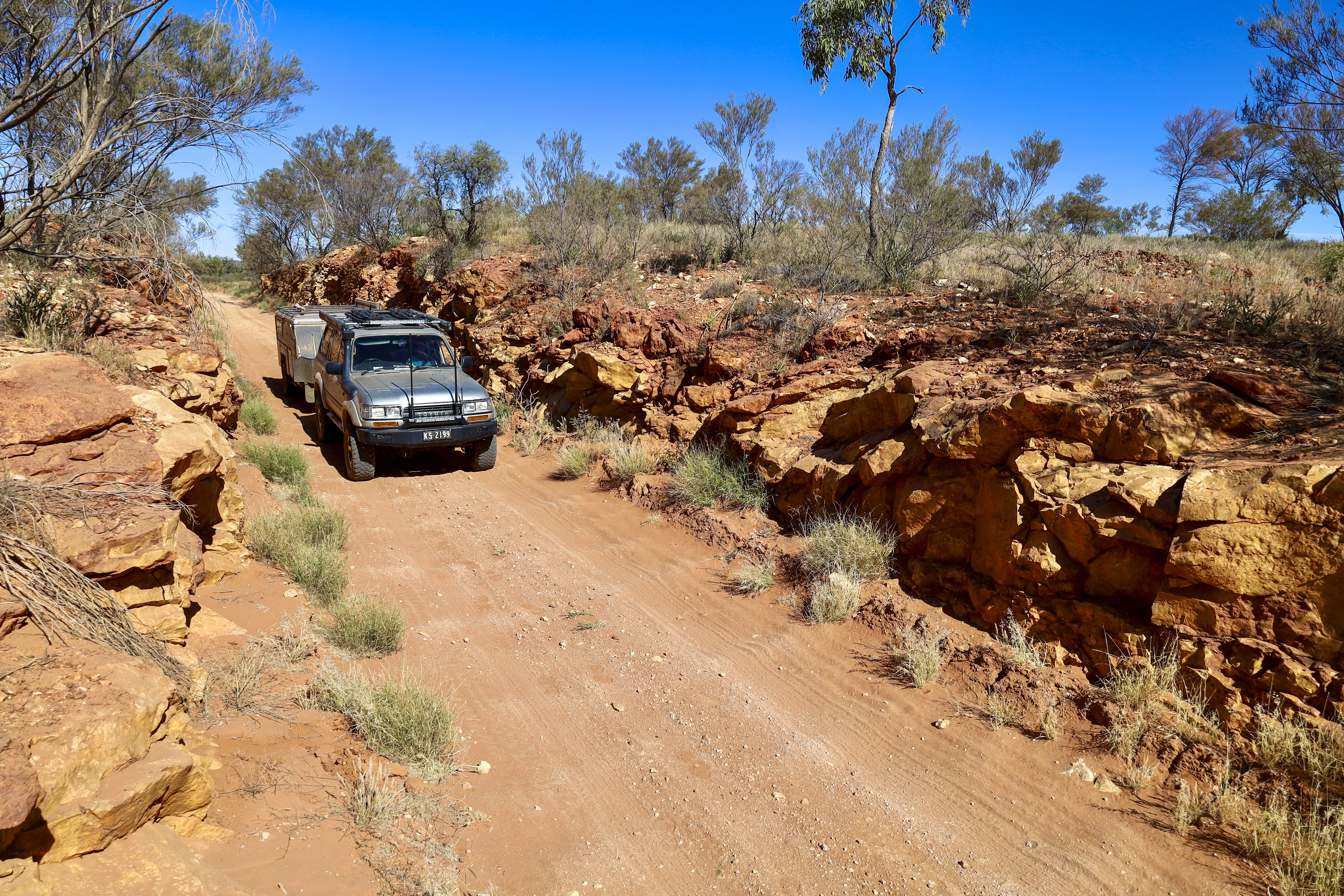
A four-wheel drive is definitely recommended as the road is mostly unmaintained with rough sections, miles of horrid corrugations, narrow cuttings and of course, desert sand. The Old Ghan trail runs beside the Finke Desert Race track which in parts, wasn’t as rough as the main track.
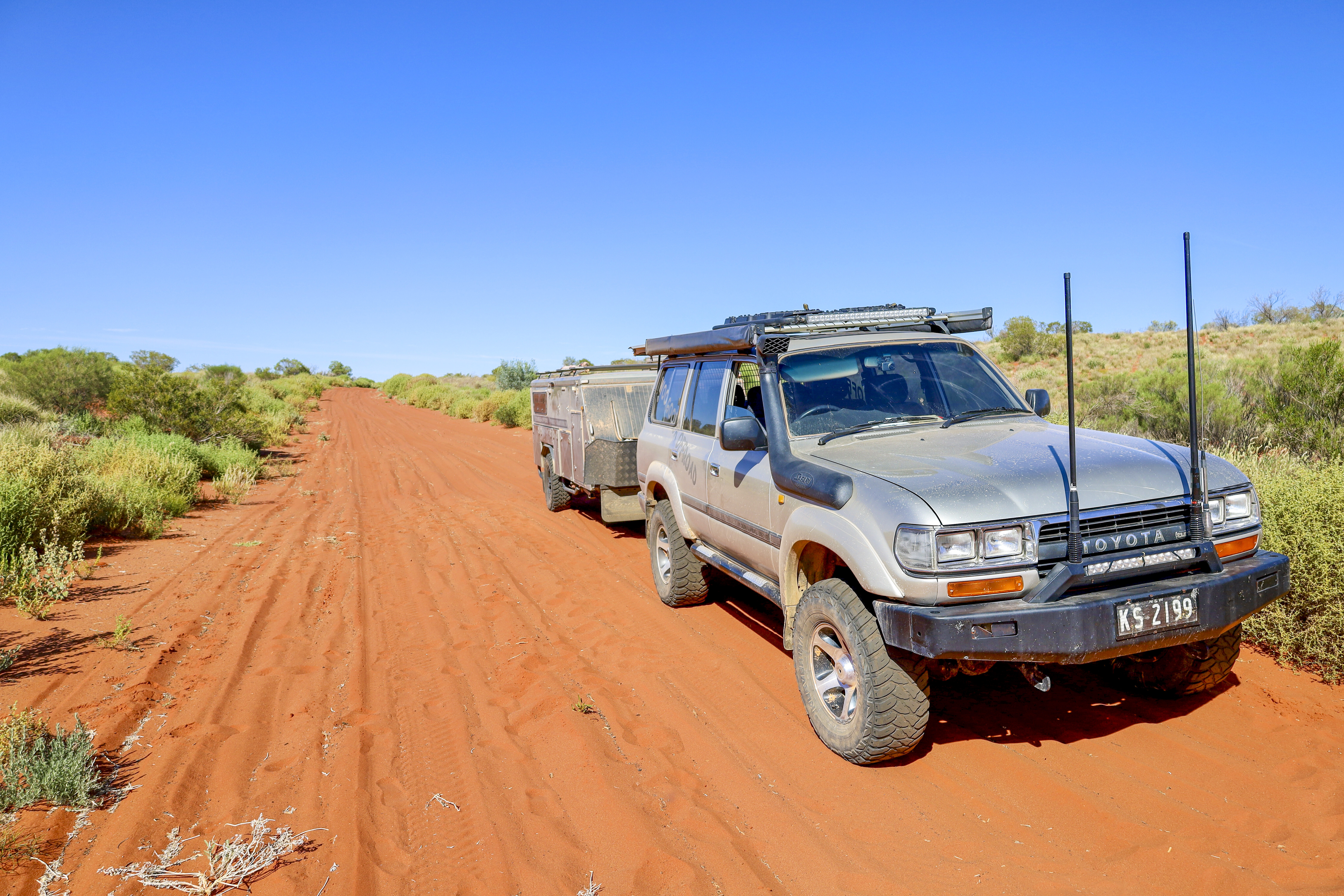
Along the way are several places of interest to stop at right on the old railway line, where relics from the past lie, the buildings still stand and informative information boards tell the story behind what once was. Engoordina is the first visible stop and was the base for maintenance crew number 22 servicing the line.
When the war effort was on, men left here for better pay and the government ran adverts calling for more workers to maintain the line across the flat ranges, through desert oak fields and the rolling sand hills of Finke. The only thing left here now are roofless buildings of the workers’ quarters, the interiors of which have piles of sand blown in from harsh storms. A few relics lie outside and there’s plenty of graffiti on the walls.
Farther along, the huge water tank at Bundooma stands out against the sand dunes and desert trees. Another hour up the track is Rodinga, which is Aboriginal for foot or road; and again, the ruins here are just roofless buildings where workers made camp out of the harsh weather that this area can have, and was the second-last siding before Alice Springs. The storyboards beside the buildings (both here and Engoordina) tell of the hardship and history of the line and of course, personal stories.Although the weather may have upset our direct travel plans, the diversions we had to make were pretty cool, exploring the heritage and ticking more off our bucket list.
Five Finke-trip favourites
1. Opal capital of the world
Supplying most of the world’s gem-quality opals, Coober Pedy is an interesting place to visit, where a lot of the population live underground to escape the scorching summer desert heat. It’s said that your average ‘three-bedroom cave’ known as a ‘dugout’, costs the same as an above-ground house, but without the cost of running air-con. The local landscape is pockmarked with more than 260,000 mine shafts and entrances, and is not the place to wander around in the dark.
2. Apatula/Finke
The remote indigenous NT community of Apatula (previously known as Finke) is 139km east of the Kulgera Roadhouse, south of Alice Springs. It has steadily grown in sporting notoriety as the target point of the Finke Desert Race from Alice Springs, Australia’s premier off-road event. Once known as Finke Siding when the Central Australia Railway pushed through around 1925, Apatula today holds on to its former railway heritage as a point of interest along the Old Ghan Railway Heritage Trail. Oh, and it’s also the farthest populated area from the sea in Australia, while the nearby ephemeral Finke River is said to be oldest river in the world.
3. Geographic centre of Australia
Also close to Apatula is the Lambert Centre of Australia monument, representing the geographic centre of the Australian continent. Named in honour of Dr Bruce Lambert, a UN expert on geodesy and cartography, the monument is a scaled-down replica of the flagpole design that sits atop Australia’s Parliament House in Canberra.
4. Oodnadatta Track
It’s roughly a 200km trip from Coober Pedy to Oodnadatta and it’s famous namesake Track that runs 620km from Marree to Marla (on the Stuart Highway). Doing the track has become a sort of ‘rite of passage’ for serious 4WD tourers to tackle at least once in a lifetime. The Track follows a traditional Aboriginal trading route, with Oodnaddatta a major rail head on the Old Ghan train line to Alice Springs. Highlights along the way include The Pink Roadhouse, of course.
5. Chasing trains
The Old Ghan Railway Heritage Trail spans 1300km from Quorn in South Australia to Alice Springs in the Northern Territory. For our journey we linked up with the Trail at Oodnadatta, and again at Apatula/Finke after detouring via the Kulgera Roadhouse on the Stuart Highway. Passing through on Old Ghan railway cutting on Finke Rd.
Clearing a track or cutting some wood for a campfire used to rely on either manual labour (think axe or hand saw) or a noisy and heavy petrol powered chainsaw. The manual option is quiet but slow and takes a huge amount of effort on anything bigger than a stick. The old petrol chainsaw is highly efficient but does require petrol and two-stroke oil to be carried and is noisy enough that with frequent use you might get to meet the guys from ACDC when picking up your new hearing aids. What if there was an option that was the best of both worlds?
We’re here to tell you that there is. Portable electric chainsaws are here to stay. These things are quiet enough to make a circular saw seem like a banshee that has just stubbed its pinky toe and, with improving technology, are starting to challenge petrol saws for efficiency. With no need to carry extra fuel or two-stroke oil, there’s less chance of a spill making a mess and no smelly petrol inside a wagon. There’s also no rope to pull 27 times to start the saw. Simply press or hold a button.
Already got some 18V battery tools at home? Most manufacturers also make battery powered chainsaws that will be compatible with your existing batteries and chargers. Need something a little more heavy-duty than 18V? We’ve got those covered here too. So read on modern day lumberjacks, as we outline some of the best battery powered chainsaws on offer for four-wheel drivers.
Product Details
For this comparison we have split the chainsaws into two categories:
- Chainsaws that run on 18V batteries; and
- Chainsaws that run on 36V batteries or more.
First, letu2019s simplify some of the jargon used around battery powered chainsaws. See a number with a little u2018vu2019 after. This one is simply volts. Ah refers to amp hours, which is essentially the capacity of the battery. High Ah means more capacity. The term u2018skinu2019 refers to the chainsaw only without any batteries.
18V Battery Chainsaws
Makita 36V
- Power Output: 36V (18V x 2)
- Bar Length: 400mm (16-inch)
- Chain Speed: 1200m/min
- Warranty: 5 years
- Skin Weight: 4.2kg
SPECIFICATIONS:
- Power Output: 36V (18V x 2)
- Bar Length: 400mm (16-inch)
- Chain Speed: 1200m/min
- Warranty: 5 years
- Skin Weight: 4.2kg
Utilising two 18V batteries, this chainsaw captures the flexibility of using batteries that are compatible with other tools combined with the additional power of 36V output. A 400mm long bar allows cutting of some decent diameter logs and with a chain speed of 1200m/minute it will get through just about anything with ease.
This saw features toolless chain tension adjustment and adjustable chain oiling. Makita claim that with two 6Ah batteries it will complete 90 cuts of 150mm diameter cuts of a treated pine log.
Ryobi One+ HP
SPECIFICATIONS:
- Power Output: 18V
- Bar Length: 300mm (12-inch)
- Chain Speed: 600m/min
- Warranty: 6 years
- Skin Weight: 3.2kg
- Power Output: 18V
- Bar Length: 300mm (12-inch)
- Chain Speed: 600m/min
- Warranty: 6 years
- Skin Weight: 3.2kg
At only 83.1dB this is one of the quietist high-performance chainsaws on the market. Best suited to those that already have 18V Ryobi tools as the standard 18V batteries will power this saw. The chain speed is very good for an 18V chainsaw and will compete with smaller petrol saws. At only 3.2kg, it’s super easy to handle and adds very little weight to that dreaded GVM when thrown in the back of the four-wheel drive.
This chainsaw features auto oiling and has next to no reports of leaks. I can personally report to destroying the internals of one of these, but also to having trouble-free replacement under warranty. There are cheaper versions in Ryobi’s 18V range but they typically require tools to adjust the chain tension, have a less powerful motor and only include a 10-inch bar. The extra $$ is absolutely worth it in this case.
Milwaukee M18FCHS140
SPECIFICATIONS:
- Power Output: 18V
- Bar Length: 356mm (14-inch)
- Chain Speed: 744m/min
- Warranty: 3 years
- Skin Weight: 4.7kg
- Power Output: 18V
- Bar Length: 356mm (14-inch)
- Chain Speed: 744m/min
- Warranty: 3 years
- Skin Weight: 4.7kg
Milwaukee claims its M18 FUEL technology allows the battery powered chainsaw to reach full throttle in under one second providing maximum control and productivity. The powerful brushless motor promises cutting without bogging down. The Milwaukee is slightly heavier (4.7kg) and longer (787mm) than competitors, but part of that is due to the slightly longer bar (14-inch) compared to other 18V powered saws.
The most expensive saw in this category, but also one of the best performers. It does require tools to adjust the chain tension, but the wrench is included and attaches to the unit. Users report that when paired with a 12amp battery, this saw will outlast a tank of two-stroke fuel on a petrol saw.
Ozito PXC2
SPECIFICATIONS:
- Power Output: 36V
- Bar Length: 356mm (14-inch)
- Chain Speed: 900m/min
- Warranty: 5 years
- Skin Weight: 4.1kg
- Power Output: 36V
- Bar Length: 356mm (14-inch)
- Chain Speed: 900m/min
- Warranty: 5 years
- Skin Weight: 4.1kg
Another that utilises two 18V batteries, this chainsaw is the budget option for those that want the flexibility of using batteries that are compatible with other 18V tools combined with the additional power of 36V output. At less than half the price of the Milwaukee, this is very much the saw for occasional users that can’t justify spending big money on a chainsaw and, as you would expect, is not as heavy-duty as some others.
The saw does have a very useable 900m/minute chain speed and includes great functionality with toolless chain tension adjustment and automatic chain oiling. One of the very few saw to include a window on the oil tank so you can easily see the oil level.
High Voltage Battery Chainsaws
*fits various options up to 400mm
Husqvarna 540i XP
SPECIFICATIONS:
- Power Output: 36V
- Bar Length: 350mm (14-inch)
- Chain Speed: 1440m/min
- Warranty: 2 years
- Skin Weight: 2.9kg
- Power Output: 36V
- Bar Length: 350mm (14-inch)
- Chain Speed: 1440m/min
- Warranty: 2 years
- Skin Weight: 2.9kg
Husqvarna claims this saw is equivalent to a 40cc petrol chainsaw and you can tell it really is designed for professional use. It is fully customisable from bar size (either 350mm or 400mm) to battery size. There’s even an optional battery backpack which not only allows for all-day running but also makes the saw lighter in the hand. The saw features an IPX4 weatherproof rating and a handy little LED display which shows you whether the chain brake is on or off and whether the saw is in eco mode.
Let’s not beat around the bush, this is an expensive saw, especially when you start optioning up bigger batteries and bars, but this is a professional grade saw. A genuine petrol replacement that at only 104dB and at around 4kg while using the battery backpack, will provide a much more user-friendly experience for those that use a saw for long periods. Tools are required to adjust bar tension but the use of a single retaining bolt does make this very quick and easy, however, it’s yet to be seen if a single bolt is sufficient to retain the bar properly long term.
Stihl MSA 220 C-B
SPECIFICATIONS:
- Power Output: 36V
- Bar Length: 350mm (14-inch)
- Chain Speed: 1426m/min
- Warranty: 2 years
- Skin Weight: 2.9kg
- Power Output: 36V
- Bar Length: 350mm (14-inch)
- Chain Speed: 1426m/min
- Warranty: 2 years
- Skin Weight: 2.9kg
The most powerful chainsaw in the Stihl battery range, this is another professional grade saw that has been designed as a replacement for petrol saws. It comes with optional bar size (either 350mm or 400mm) and toolless bar tensioning. Stihl recommends an AP300S battery, which gives excellent performance and very handy battery life, but does mean the saw weighs in at close to 5kg. It comes standard with the Picco Super 3 chain, a low-profile, low-kickback chain.
This is a professional grade saw and is priced accordingly. A genuine petrol replacement with a very high chain speed that will make light work of most jobs. The saw features what Stihl call Ematic Lubrication, which basically means more even bar oiling that is more efficient and uses less oil. A very nice safety feature is the braking system that stops the chain when you release the trigger and if the saw senses a change in inertia (e.g. in the event of kickback).
DeWalt DCCS670B
SPECIFICATIONS:
- Power Output: 60V
- Bar Length: 400mm (14-inch)
- Chain Speed: 900m/min
- Warranty: 3 years
- Skin Weight: 4.4kg
- Power Output: 60V
- Bar Length: 400mm (14-inch)
- Chain Speed: 900m/min
- Warranty: 3 years
- Skin Weight: 4.4kg
At slightly lower price point, we have this saw that does include things like plastic chain covers, however, it also has several high-end features like inertia braking and chain tension adjustment built into the body of the saw rather than the bar cover. The battery system uses 20/60V batteries, which effectively means the batteries are more versatile and can be used on a larger range of tools. DeWalt does recommend emptying the bar oil after every use and this is likely to be required to prevent leaks.
DeWalt claims the saw is good for up to 70 cuts per charge on a 150mm x 150mm pressure-treated pine wood beam using a 3Ah battery. Toolless chain tensioning is a welcome inclusion, as is a window to check the bar oil level. This is a relatively heavy saw and at operational condition with a 6Ah or 9Ah battery will nudge 7kg. That said, it’s probably not suitable for everyday professional use but for camping or firewood collection it will make a very handy addition to your kit.
Ego Power+ CS1611E
SPECIFICATIONS:
- Power Output: 56V
- Bar Length: 400mm (16-inch)
- Chain Speed: 1200m/min
- Warranty: 5 years
- Skin Weight: 3.9kg
- Power Output: 56V
- Bar Length: 400mm (16-inch)
- Chain Speed: 1200m/min
- Warranty: 5 years
- Skin Weight: 3.9kg
The value pick in this category. The Ego Power+ is claimed to be the equivalent to a 40cc petrol chainsaw and the performance of this saw would certainly agree with that. With a lightning chain speed of 1200m/minute this saw is quick and will cut through just about any timber with ease. Ego claims that the saw is good for 130 cuts of 100mm x 100mm pine running a 2.5Ah battery.
The saw features toolless chain tensioning, a brake position indicator light and steel bucking spikes for extra grip. Field tests indicate that this is one of the fastest electric saws on the market. This is the saw for the budget conscious person that still requires very high-performance. Although lacking some of the features of the very high-end saws, this saw does have some very thoughtful features. One such feature is the bar oil level window that features a ‘max’ indictor line on both the upright side and on the front for when the saw is turned sideways during filling.
HOW WE REVIEW PRODUCTS
4X4 Australia has been reviewing four-wheel drive vehicles and aftermarket products for more than 40 years.
When looking for the best electric chainsaws in Australia we considered value for money, versatility, speed and functionality. We compared features across hundreds of products split into two categories based on the battery output: the 18V range; and the 36V and above range.
In addition to this we also looked at thousands of user reviews and our own experience with these products to make sure our recommendations are for the best on the market.
We’ve also included a few pointers on what to look for when purchasing an electric chainsaw and how to avoid being ripped off or disappointed.
Disclosure: When you buy through our links, we may earn a commission. We also include products that we do not earn a commission from.
BUYERS’ GUIDE TO PORTABLE ELECTRIC CHAINSAWS
Petrol chainsaws have long been part of the kit for four-wheel drivers, campers and anyone that enjoys the outdoors. The problem being they are very noisy, heavy and vibrate so much that they make you feel you’ve been having a swordfight with that big rubber sword you found in your mum’s top drawer. On top of this, you have to carry extra fuel and 2-stroke oil. In the past the only solutions were back breaking hand saws or axes.
In recent times, battery technology has moved ahead in leaps and bounds and with these advancements came battery powered tools that could compete with corded or petrol variants. On top of this, electric motor technology has advanced too and brushless motors have become commonplace. Thankfully for those of us that need to clear a track or grab some firewood, this has included electric chainsaws.
Electric chainsaws are generally lighter than petrol counterparts, simpler to use and, without the need to carry fuel or 2-stroke oil, less smelly and able to be recharged without the need for towns or service stations.
Value for money
Walk the aisles of your local hardware store and troll the internet and you will find plenty of cheap electric chainsaws. A low price is fantastic if it’s something you need once but if you want something that is going to give you years of use, what you really want is value. Many cheap saws will have inferior batteries and even cheap options of reputable brands will have brushed motors that are just so slow you’d be better asking a beaver to chew up your logs.
For these reasons we’ve excluded the ‘base model’ of some brand names and unbranded online specials from this comparison. Value adding features like bar oil level windows, LED displays and high chain speed have been highly regarded here. A solid warranty ensures peace of mind and adds to that value too.
The best way to get value for money on any battery tool is to pick a system/manufacturer and stick to it. Use one charger and set of batteries across all your tools. If you need something outside your usual manufacturer, then have a quick browse of their other compatible tools and see what else you might need in the future.
Functionality
A chainsaw is only useful if it works and works well. Battery powered saws need to have the same functionality as their petrol powered equivalents or all those advantages go out the window. This means they need to have a useful chain speed, a useable bar length and enough power to do the job you need.
It’s sometimes nice to have a petrol saw with a 22-inch bar on the front of it but realistically that’s not what most of us need. Just cutting a little bit of firewood for a campfire? Then a 12-inch (300mm) with a decent chain speed and 18V output is probably plenty. Need something that will replace the petrol saw for use around the farm or collecting a winter’s worth of firewood? Then you probably need a bigger bar and something with a higher power output and longer lasting battery options.
When looking for a chainsaw to best suit your needs, start by having a good think about what you need it for and then look at where you need to store it while in transit and that will help you decide what size to go for. Remember, if you’re using it while travelling it’s going to spend a whole lot more time packed away than it will being used.
Versatility
Once you’ve had a think about what you will be using the chainsaw for, be sure to grab a unit that will meet all those requirements wherever possible. The last thing you want to do is buy something that does one job well but just doesn’t work for another job. This could be an 18V saw that is great for camp wood but not good for loading three trailers in a day or a 60V saw that fills the trailers with ease but means carrying extra batteries and chargers on top of your other tools on a long trip.
The ideal versatile solution is a saw that shares batteries with your other tools and does all the jobs you need it to.
Speed
Chain speed and enough power to do the job are the things that make a chainsaw capable. The higher the chain speed, the quicker it will cut, provided it doesn’t bog down or stall. Manufacturers know this and this is why the good saws will typically advertise their chain speed. Anything over 600 metres per minute (10m/second) will do a pretty reasonable job. Anything over 1200m/minute (20m/sec) will leave you wanting to ditch your petrol saw.
How to avoid being ripped off
Plenty of manufacturers will have budget options out there for those that don’t want to spend big on an electric chainsaw. The problem is these are often quite slow. Often this is due to a brushed motor that simply doesn’t have the power and efficiency of a brushless motor. The cheaper variants often lack inclusions like toolless chain tensioning and are more likely to leak oil than higher level saws.
Look out for advertised chain speed to make sure your saw will do what it says on the box. If a manufacturer isn’t advertising the chain speed anywhere, then there’s a good chance it’s because it’s slow.
Look to reputable manufacturers to ensure decent quality batteries. No-name online saws might seem like a good idea until the battery life plumets after a few uses.
Aftersales Support
A well-known and respected brand with a good warranty and manufacturer support should give confidence during the purchase process and many happy years of portable lumberjacking. Focus too much on price and chances are you will end up with a saw that disappoints and doesn’t last as long as it should.
Grab a reputable brand and you will even be able to buy spare parts if something does go wrong in the future.
Be sure to check what the warranty covers as many will have separate warranties on the saw vs the batteries.
It was while we were around the Wentworth-NSW area on the Murray River, when I heard about the Rufus River drive. Wentworth itself is chockers with history, dating back to 1830 when explorer Charles Sturt and his crew rowed down the Murray River and reached the junction of the Darling River, where he wrote in his log, “a new and beautiful stream apparently coming from the north.”Sturt was the first white man to encounter the local Barkindji people along the river, and they did not welcome the new arrivals. It was just six years later when explorer Thomas Mitchell travelled down the Darling to the junction of the two rivers. This opened the door to an influx of European overlanders who moved sheep and cattle along the rivers to find better pastoral lands.
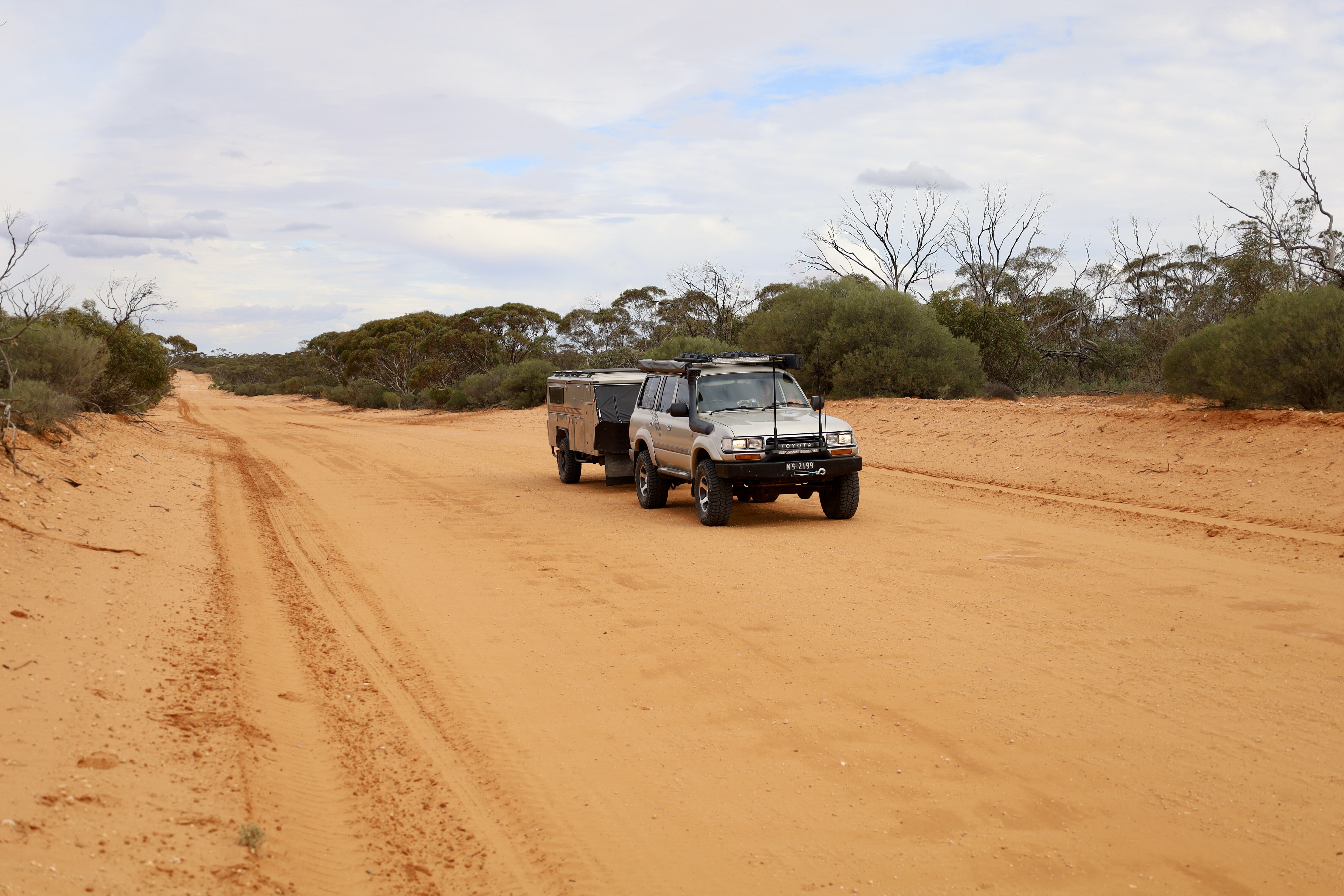
Houses were built from early 1851, but Wentworth wasn’t proclaimed until 1859. Over the next few years it boomed from the river traffic, with police quarters built and a solid town emerging – it’s reported that in 1895, 495 vessels passed through the customs office at Wentworth.Today, Wentworth has a strong local population and plenty of tourists visiting year-round. There’s plenty to see and do around town including the replica of the 1879 wharf, which was claimed to be the busiest port in NSW in its heyday (after Sydney and Newcastle); the heritage-listed buildings lining the streets; and Junction Park, to see where the Darling and Murray rivers meet. Explore the history at Fatherly Park and its old implements, the Paddle Steamer called Ruby, and McClymont House which was Wentworth’s first courthouse built in 1863. There’s also Sturt’s Tree, and the monument to the Ferguson ‘Fergie’ tractor, where back in 1956 nearly 40 Fergies worked day and night building a levee bank around town when it was threatened by the worst floods at the time.
Along the Murray are a series of locks, and in Wentworth the historic lock number 10 and weir is always a good visit. It was built to maintain and control water levels, and there’s a fishway to allow fish to move freely past the weir.
Old Wentworth Gaol
A must-do while in town is to spend time at the Old Wentworth Gaol and Pioneer Museum. The gaol dates back to 1879 and is unique with its 45cm-thick walls, lookout towers, shackles set in a boulder in the full sun, stretching rack, whipping stocks, and much more.
The gaol was built for very serious offenders at the time, with only 10 male and two female cells. More than one million bricks were used in its construction. Nearly 3000 items are on display across the road at the museum, with items from old river-boat days, extinct megafauna fossil remnants, and folk and pioneer memorabilia.

We started the Rufus River Run from the northern side of Wentworth, along Renmark Road. It was only 4km out of town where we found the turn-off to the stunning 40,000-year-old Perry Sandhills. These remarkable dunes and its surrounding landscape have uncovered an array of bones from many megafauna animals including kangaroos, emus, wombats and giant goannas. There’s been evidence of early Aboriginal occupation both here and at the nearby lakes. Today, both kids and adults use the dunes as big sand slides, going down them on anything flat and smooth.
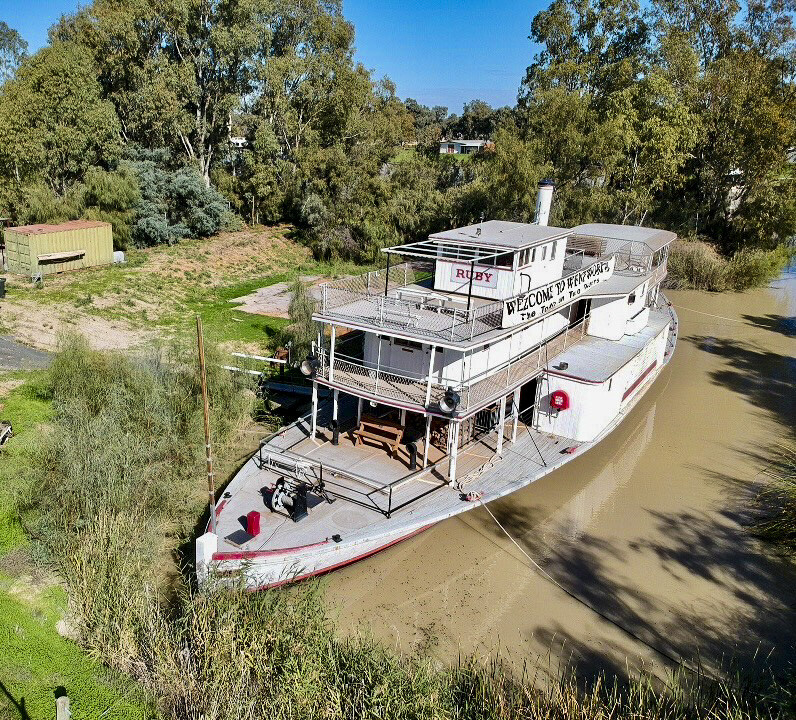
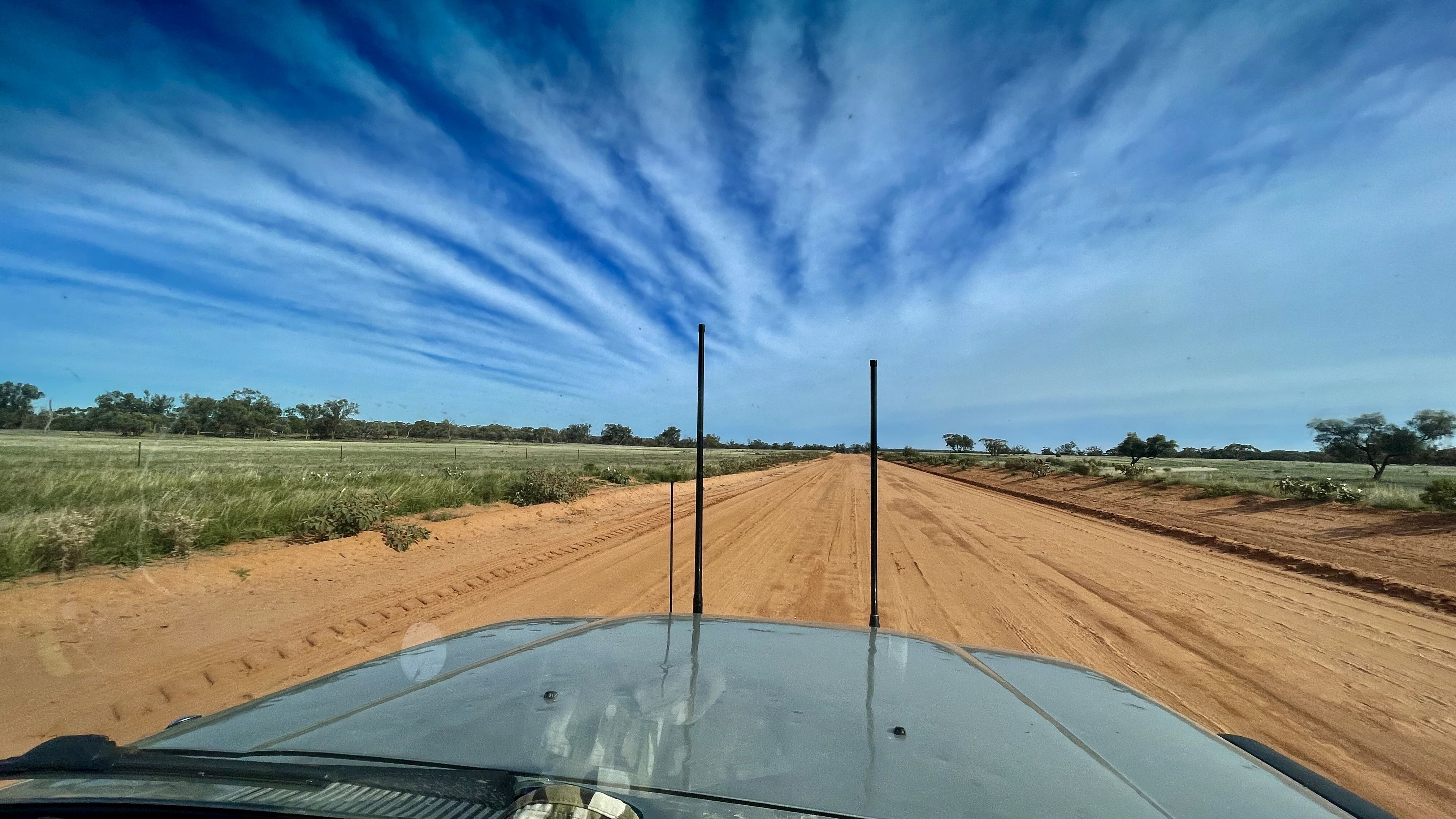
Heading back along Renmark Rd for another 20km, Rufus River Rd swings off to the left and straight on to dirt. We found the road in pretty good nick, driving the entire 170km through to Renmark in South Australia. Along the way are several free camps beside the river, as well as information regarding the Australian rangelands as you pass through Moorna Station. The rangelands are defined as a mix of drylands and wetlands, where businesses harvest either plant or animal, mine resources or provide recreational areas. This contributes more than $150 billion annually to the Australian economy and covers nearly 80 per cent of our mainland.
TAR-RU
Continuing on through station roads, we closely followed tributaries of the Murray until Lake Victoria. Traditionally known as Tar-Ru, the lake has been home to the local Maraura people for more than 45,000 years.Around 10,000 years ago the flow from the Murray slowed, leaving a smaller lake. When explorer Sturt (in 1830) passed through here, it disrupted the life of the Maraura people, with herds of sheep and cattle subsequently being driven through the area. In consequence, exotic diseases spread through the region, while in 1841 a disastrous conflict occurred when nearly 40 locals were massacred – they were no match for guns, and it was known as the Rufus River Massacre.
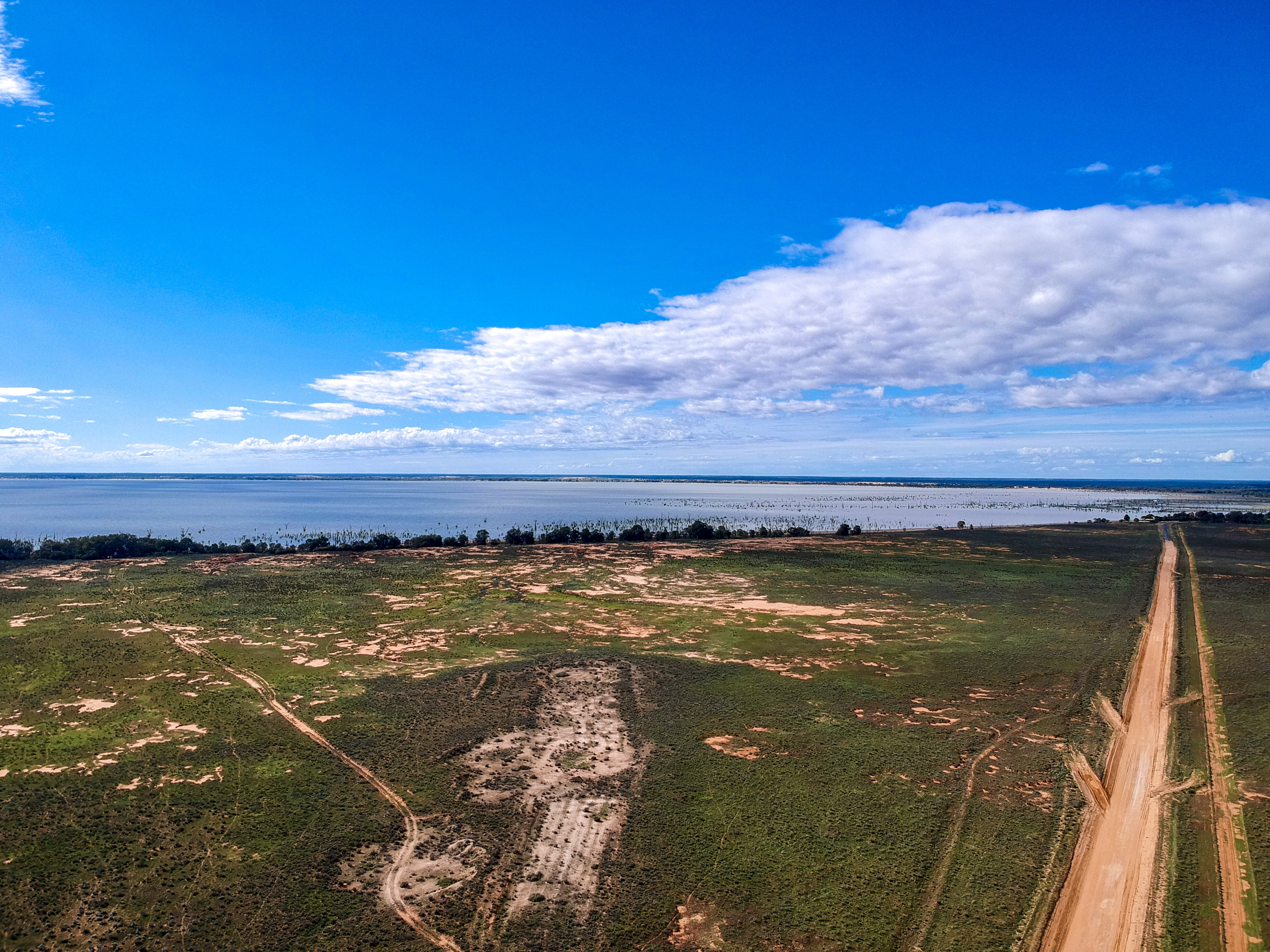
In 1919, the natural lake was doubled in size to hold a massive 680 gigalitres, with nearly 55km of new levee banks constructed.Following this came transformations in the landscape, with rivers being rerouted, existing shorelines dying off and changes in erosion and sediment patterns. Push the clock forward to 1994 when the lake was lowered for maintenance, and delicate and significant Aboriginal human remains and artefacts were found. Areas uncovered also featured campsites, stone tools, shell middens, cooking hearths and a large burial ground.In the following years, elders and archaeologists surveyed and put protection orders in place over these significant areas. Today the lake is a holding source for the river downstream, where the Murray-Darling Basin Authority controls the discharge of water to the Murray River via the Rufus River – this was named by Charles Sturt in honour of his red-haired friend George McLeahy.
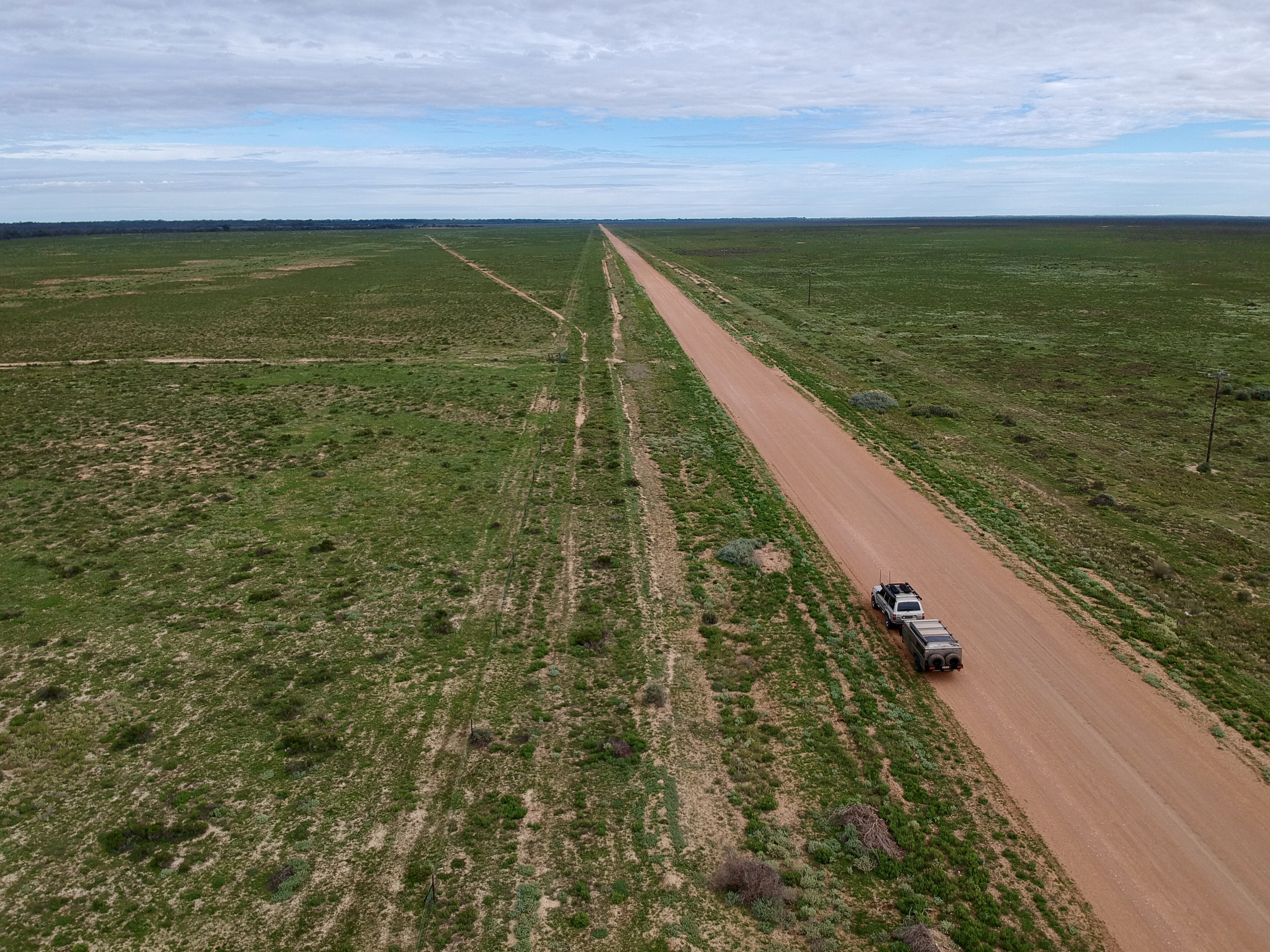
Today the lake has an impressive viewing point and info boards explaining in-depth the prehistoric, Aboriginal and other significant history. There’s also a free camp beside the lake’s lookout, with toilets, fireplaces and free showers. The Rufus River Rd continues for another 30km before it rejoins Renmark Rd north of the lake, where it leads in to SA and passes the official border marker.There are bins at the border to throw out fresh fruit and veggies that are illegal to take in to SA, as they may be carrying fruit fly which causes damage to the valuable crops in the area. Funnily enough, once you cross the border grid, the road name changes to the Wentworth-Renmark Road. We were surprised to see such wide, sandy roads throughout the trip.
Renmark
It’s another 55km to the outskirts of Renmark, which itself has a stack of history and more free camping along the banks of the Murray. Renmark dates back to 1830, when Charles Sturt rowed down the Murray River and the area inhabited by the local Naralte people. The name Renmark derives from the local language for ‘red mud’, presumably from the rich, red sands that surround the area and the red cliffs along the Murray.
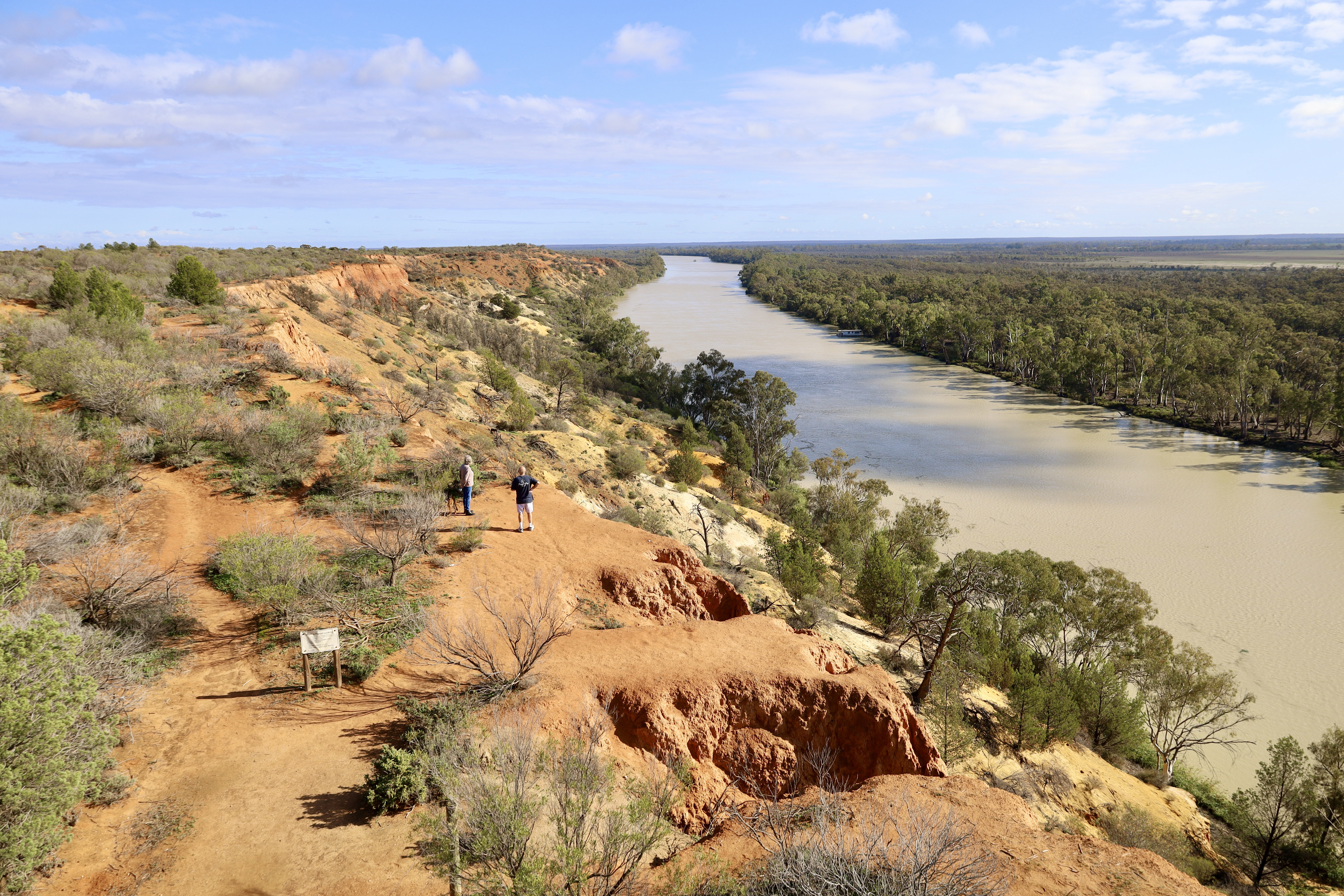
Today the town is known as a major service town for the region and as the oldest irrigation settlement in Australia. Renmark is surrounded by a host of horticultural crops including grapes, citrus, olives and seasonal veggies. Among the displays around town is the Argo Barge, which is recognised as the largest barge to grace the waters of the Murray, carrying at times up to 200 tonnes of freight. It worked on the river until 1942 before being put to work to help pump water for new irrigation channels. Then there’s the PS Industry that was built in 1911 and spent its working life removing snags from the river, with the odd rescue when other steamers sank.The beautiful Renmark Hotel was once known for having the finest accommodation in the state and serving the finest meals. When established, the hotel became famous for two reasons: putting a reported 13 sly grog shops out of business in the ‘supposed’ dry town, and becoming the first community hotel in the British Empire.

The Rufus River drive from Wentworth to Renmark is a great route, and there’s plenty of river pioneering and local history to delve into along the way.
If you’ve ever felt Toyota’s FJ Cruiser was pulled from the market too soon, you might have a counterpart in the Middle East surprised at how long the FJ had soldiered on.
While the FJ Cruiser’s Australian run lasted about six years – from 2011 to 2017 – its tour of the UAE began in 2007 and will end in December, 2022, giving it a 15-year story in that region.
The FJ will be sent off with a 1000-car Final Edition, each of them finished exclusively in beige and wearing a blacked-out look to the grille, bumpers, mirrors, door handles and tyre cover. Sounds a lot like this one here.
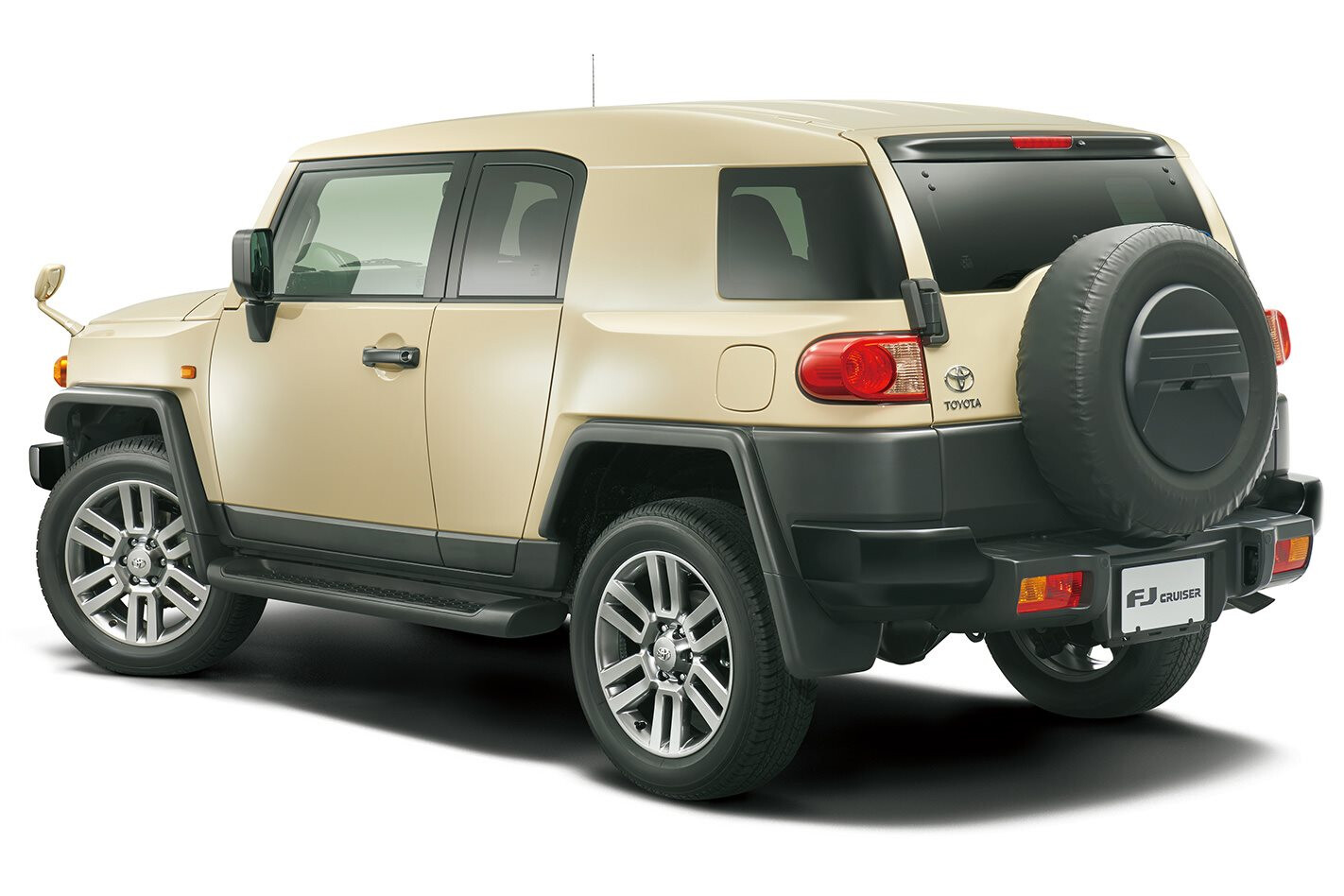
As before, the Prado-based FJ Cruiser draws power from the 1GR 4.0-litre naturally-aspirated V6 producing 200kW and 380Nm.
As Matt notes in his original story below, “a couple of modern concessions include an upgraded audio system with Apple CarPlay and Android Auto, plus there’s an in-built air compressor for re-inflating the tyres after playing out in Middle Eastern sand dunes.”
Toyota’s regional boss for the Middle East, Kei Fujita, said:
“The FJ Cruiser rides into the sunset leaving lasting memories of one of the most iconic SUVs in Toyota’s rich history.
“The vehicle’s winning combination of off-road capabilities, style, and performance make it equally at home during desert adventures or everyday activities and provides a comfortable and dependable experience for drivers and passengers, wherever their journeys may lead.”
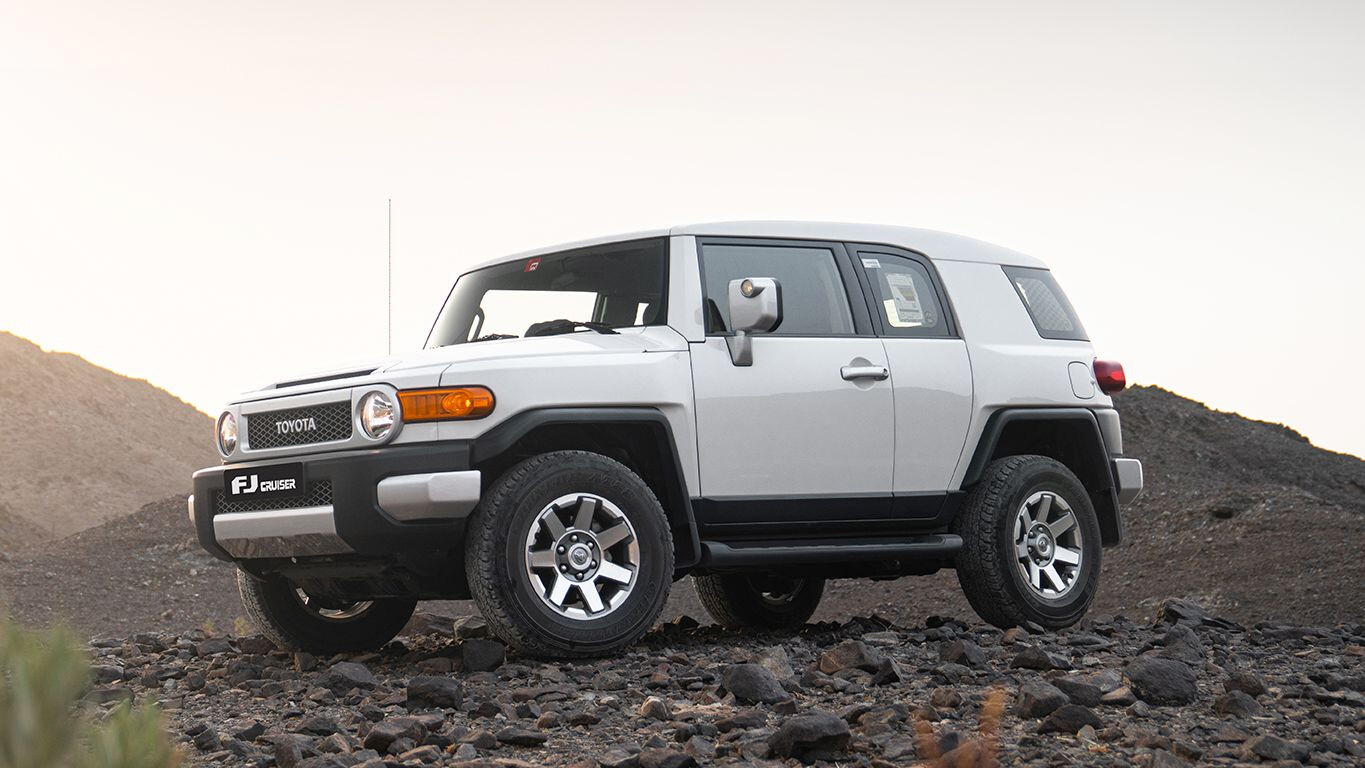
Will we see another FJ Cruiser?
Given the ‘second wind’ of popularity it’s finding on the used market – even our own Ellen Dewar and Evan Spence both own one each, Evan having only picked his up recently – it might seem like it’d be mad for Toyota to not introduce a new one.
Jeep’s continuation of the Wrangler, Suzuki’s Jimny and Ford’s new-gen Bronco and even the modernised new Defender all demonstrate that the market’s love for retro-styled 4x4s is as alive as it’s ever been.
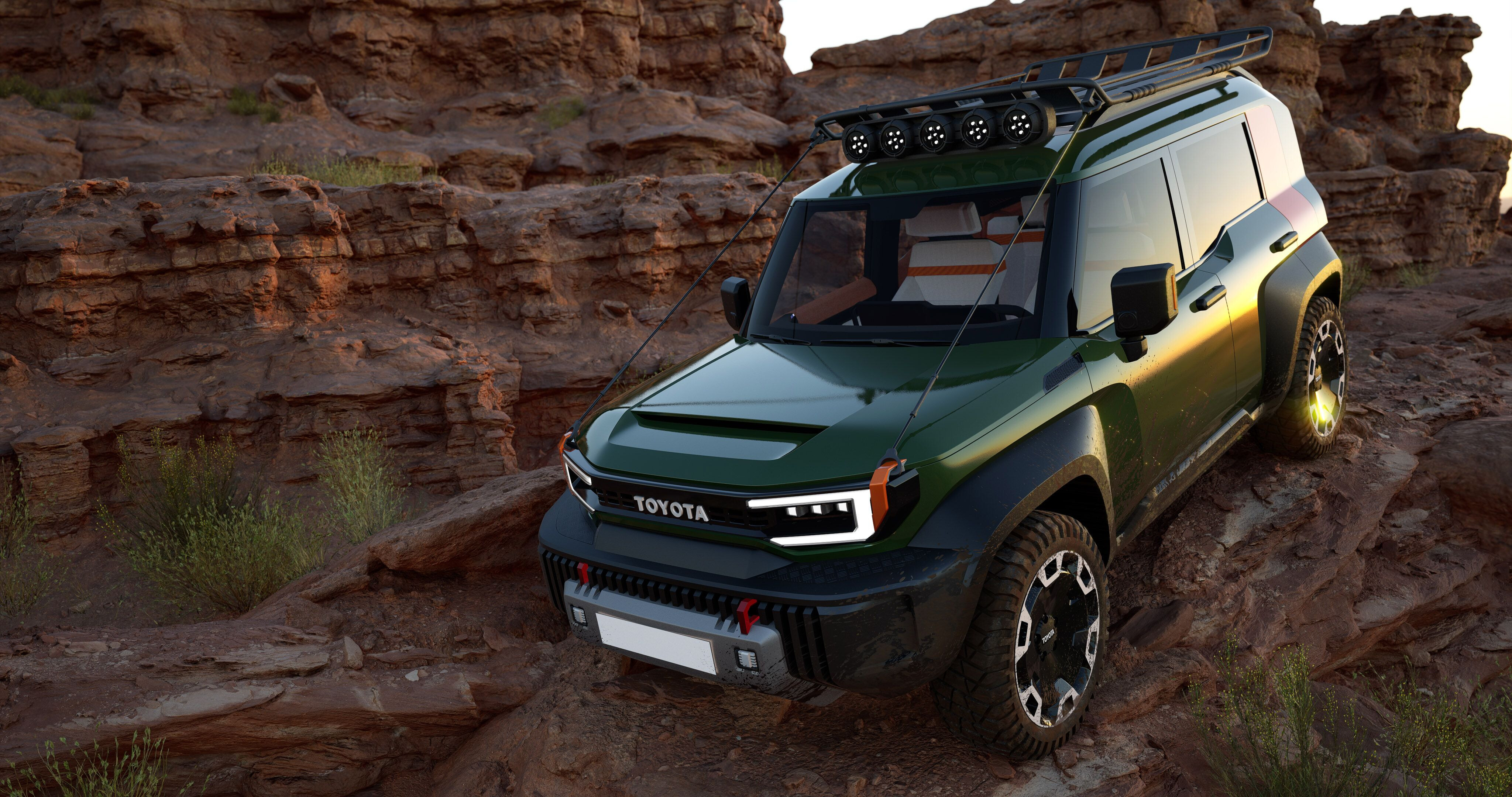
And, with Toyota’s new TNGA architecture proving to be something of a driving and reputational revolution for the brand, it’s easy to think a new FJ Cruiser would run circles around its rivals.
Alas, for now, there are very few hints that Toyota has any such plans, although fans were given some hope earlier this year when the company revealed its Compact Cruiser concept.
It’s no direct successor to the FJ, being more Jimny-sized, but it would likely prove just as popular if it were to enter the market.
In December, Toyota inadvertently offered a hint that the concept will go into production when an interior shot revealed the name ‘LiteCruiser’ in the instrument cluster – but there’s a catch: it’s electric. Yep. Sorry.
Maybe one of these aftermarket retro ‘downgrades’ would be the way to go…

Are you keen to see a new FJ, or this new Compact Cruiser? Sound off in the comments below.
The story to here
April, 2020: FJ Cruiser still available in the UAE
BUYERS in the UAE can buy a 2020 Toyota FJ Cruiser from their Toyota dealer for the equivalent of $66,500 Australian dollars.
Toyota Australia (TMCA) stopped selling the popular FJ here back in 2017, when the Hino production plant in Japan stopped making them in right-hand drive configuration.
However, I bet most of us didn’t realise they were still being made in LHD for the Middle East.
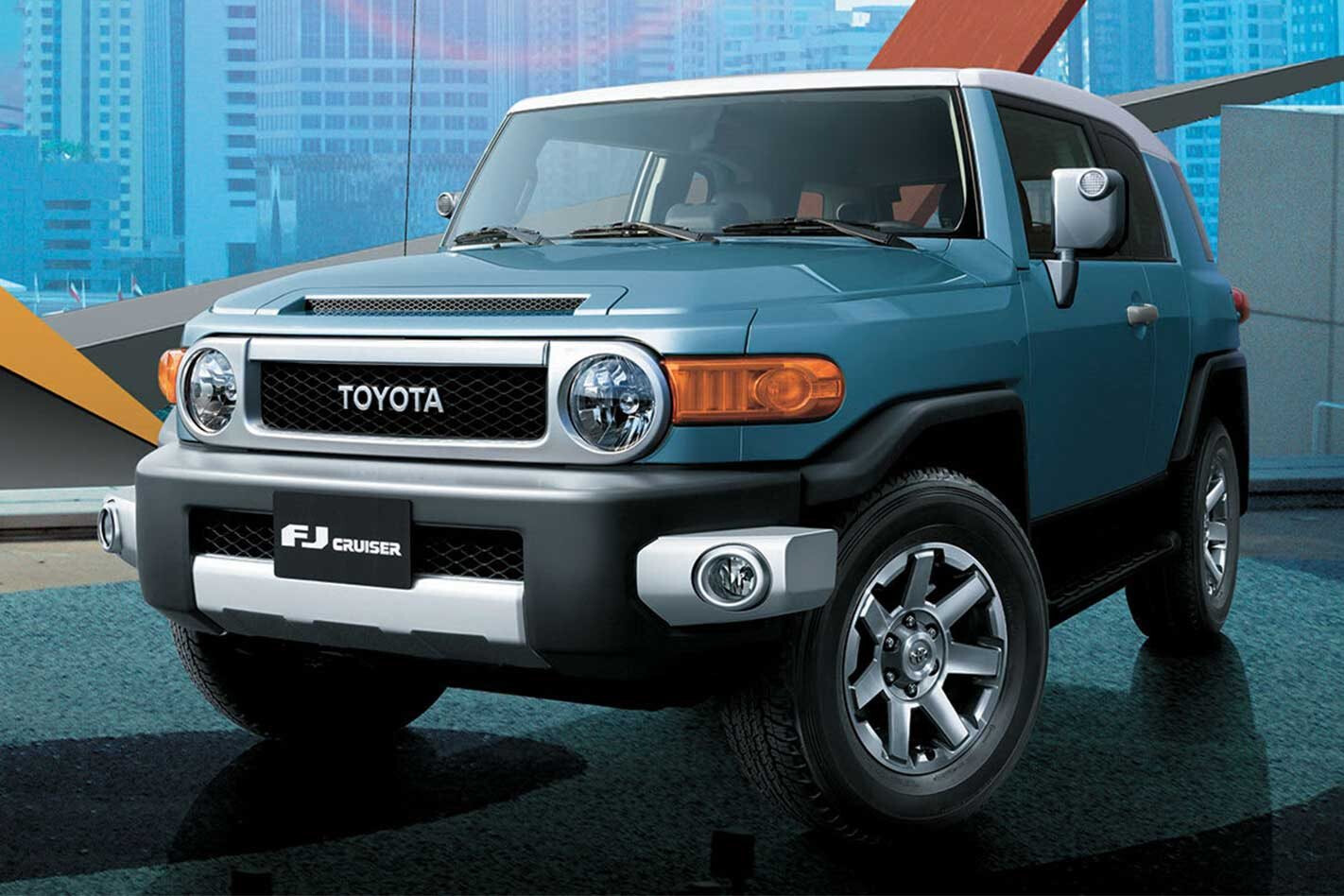
The FJ Cruiser was conceived for the US market and, when it first landed there back in 2006, many saw it as an alternative off-roader to the Jeep Wrangler. In reality, that couldn’t be further from the truth, as the FJ was a much more refined and well-built SUV.
With its shortened Prado chassis and architecture including independent front suspension, the FJ lagged behind the Wrangler in off-road ability but left it for dead in on-road manners and driveability.
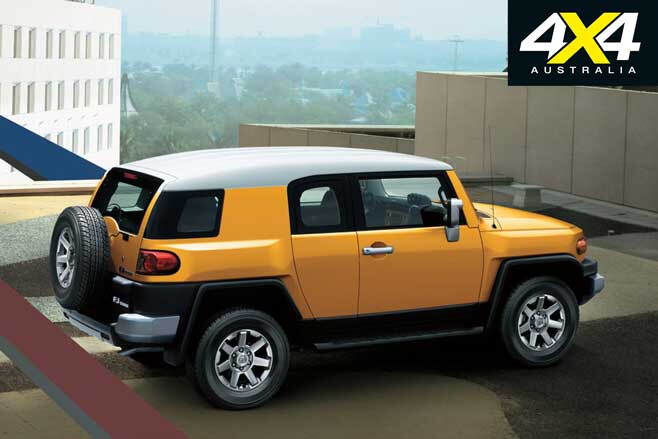
Right-hand drive production began in 2011 for countries such as Australia, South Africa, Japan and New Zealand, where the FJ outsold expectations. But when the USA announced that 2014 would be the last year for the FJ there, we thought the end was near for the model.
Australia and other right-hand drive markets held on to the FJ until 2017, but when RHD production ceased we thought that was the last we’d see of it.
That was until we spied the new car line-up of Toyota vehicles available in the United Arab Emirates, and to our surprise, there’s a 2020 FJ there.
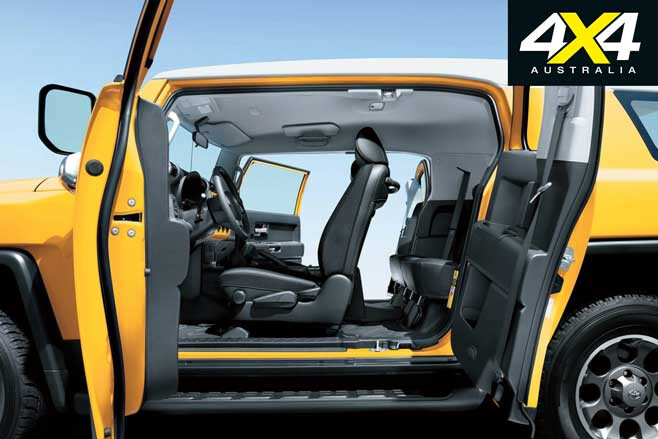
Still the same old FJ from every angle, and still powered by the 1GR petrol V6 engine with a five-speed auto transmission and part-time 4×4 system, the Arab FJ seems to be the same spec as the last of our models equipped with ATRC, crawl control and the dual fuel tanks.
A couple of modern concessions include an upgraded audio system with Apple CarPlay and Android Auto, plus there’s an in-built air compressor for reinflating the tyres after playing out in Middle Eastern sand dunes.
The FJ Cruiser’s styling meant it would always be polarising, but in reality, it was a great little off-roader and all ’round adventure mobile.
While those that hated the FJ mightn’t care less that it’s still around, we’re grateful to see it – and Toyota sure could do with a vehicle like the FJ Cruiser in its current global new product range.
Modern four-wheel drives are equipped with an impressive arsenal of 4×4 systems and traction aids designed to make them more capable – and easier to drive – off road, but to get the most out of your vehicle you need to know precisely what devices are at your disposal and how to correctly operate them.When it comes to 4WD systems, there are part-time 4x4s, on-demand 4x4s and full-time 4x4s, and in the case of vehicles with genuine off-road capability, most* are usually equipped with two-speed transfer cases (high and low range) to allow for slow driving over obstacles and better performance in steep terrain.
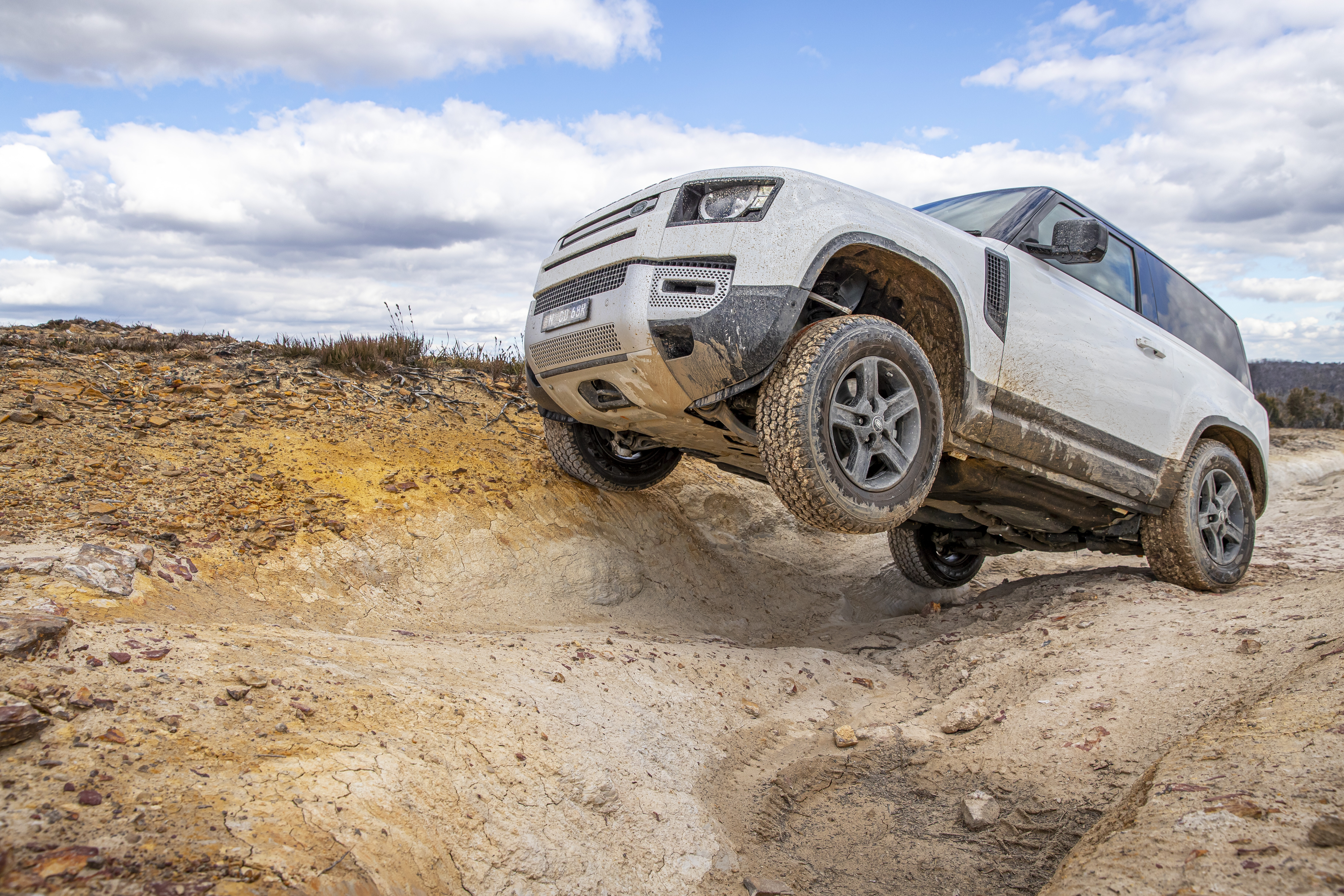
As for traction aids, modern 4x4s are equipped with a combination of mechanical and electronic devices. Mechanical traction aids built in to a 4WD include its gearbox, transfer case, differentials and brakes, while electronic traction aids include electronic traction control, stability control, selectable drive modes and hill-descent control.Of course, all these 4×4 systems and traction aids won’t be of much use unless you know when and how to use them.
*Owners of some Volkswagen Amarok models may disagree, but these vehicles have a low first gear to make up for the lack of a two-speed transfer case.
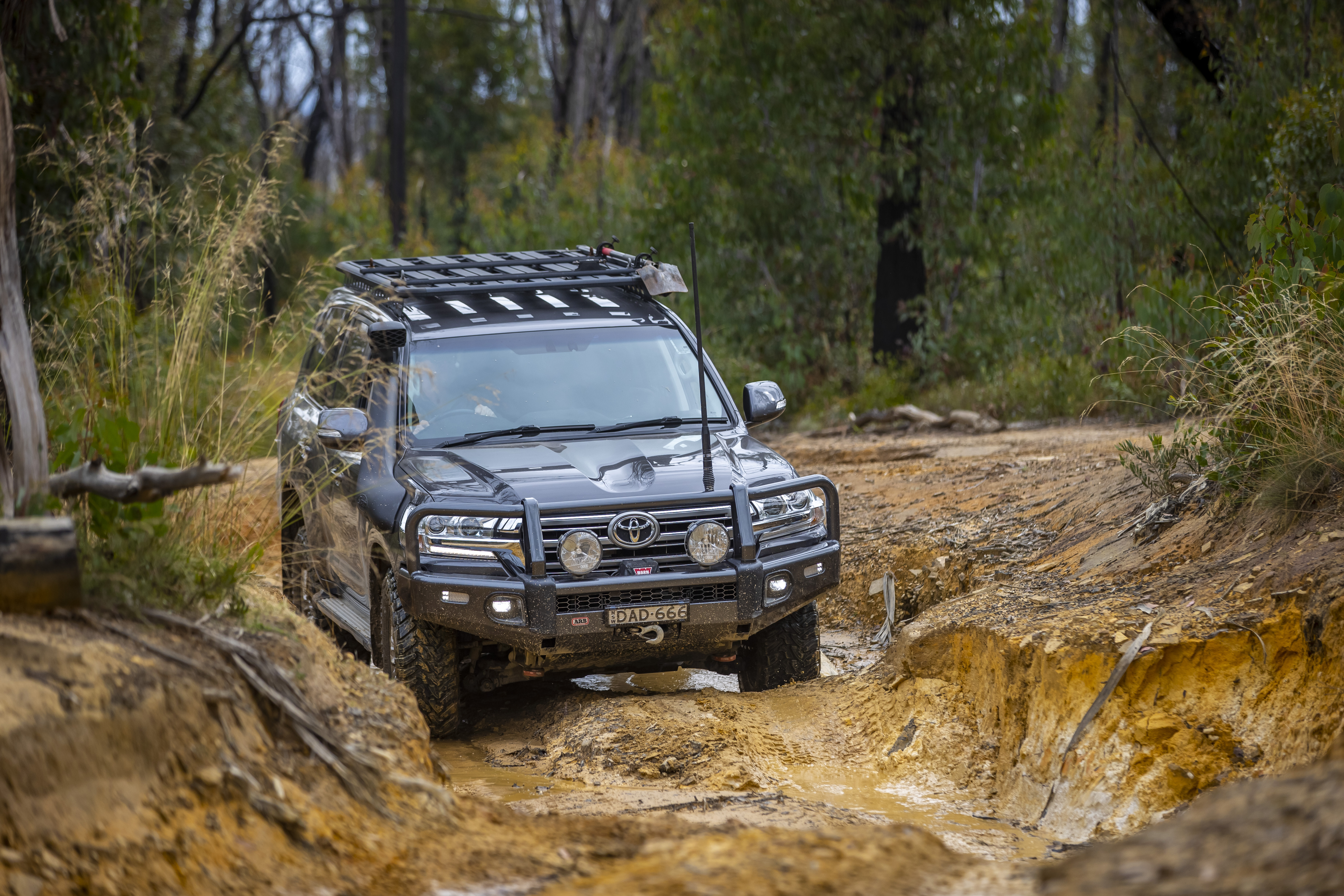
Back to basics
Before we get stuck in to the electronic stuff, let’s look at the mechanical equipment that dictates how well a vehicle might perform off road.The earliest 4×4 vehicles like the Willys Jeep and old Land Rovers, and right up to 1980s Japanese wagons such as the Nissan MQ patrol and Toyota 60 Series LandCruiser, featured live axles front and rear with open differentials and leaf-spring suspension with relatively limited wheel travel.
When driven in undulating off-road terrain, if the vehicle’s wheel travel was exceeded, engine power would be fed through the open differentials to the wheels with the least resistance, or those up in the air, rather than those on the ground. As a result, the wheels in the air would spin while those on the ground would not, halting forward progress.
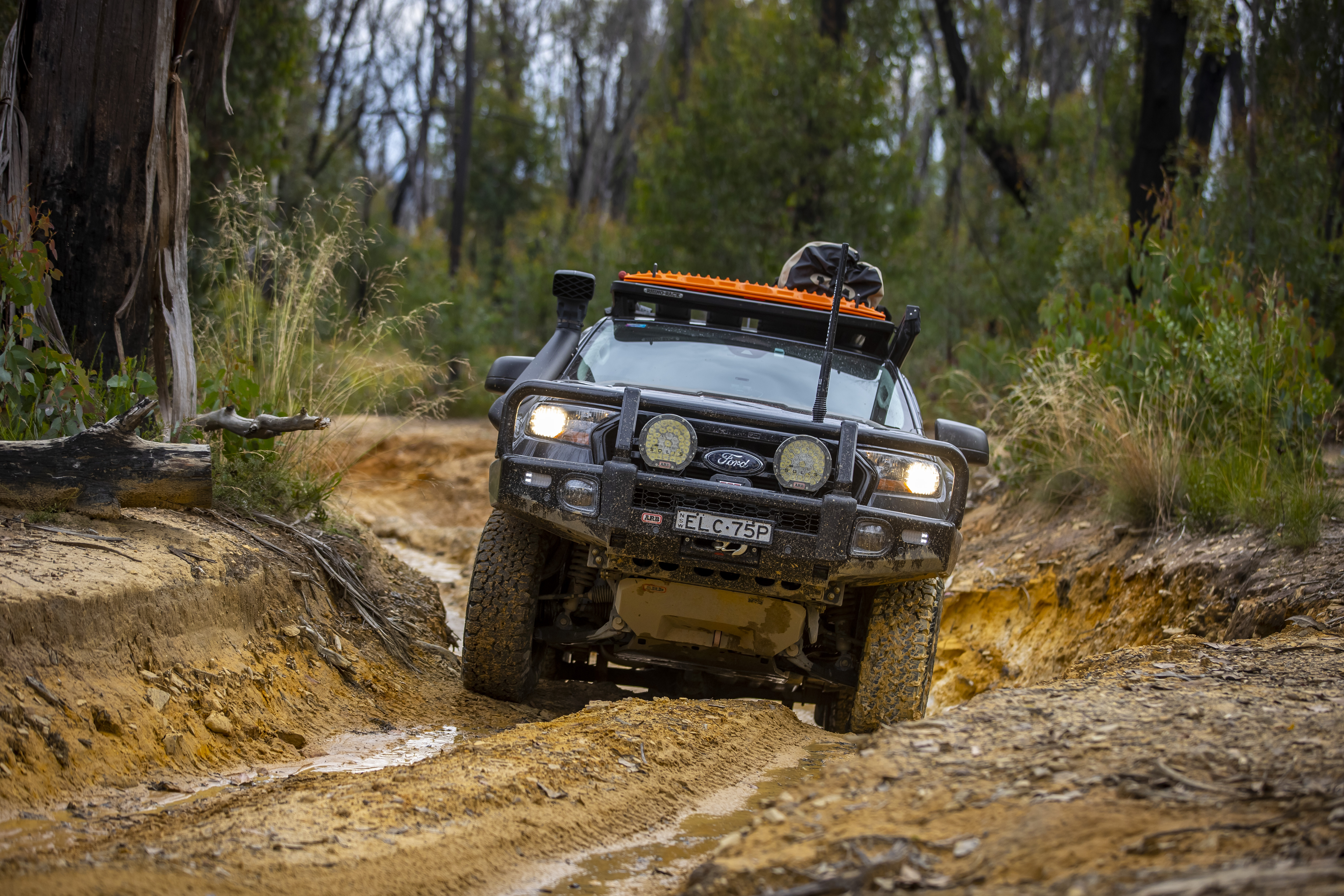
A way to prevent the wheels in the air from spinning was for the driver to apply some brake pressure, which would in turn apportion engine power to the wheels with grip, hopefully resulting in a resumption of forward progress. In effect, this is how electronic traction control works, using a modern vehicle’s ABS sensors to detect wheelspin, and then automatically applying braking pressure to the wheel in the air so that drive is apportioned to the wheel on the ground.
Another mechanical device employed to minimise across-axle wheel-speed discrepancies is the limited slip differential (LSD), which many manufacturers used to fit to the rear diffs of their 4×4 models. As its name suggests, the LSD is designed to ‘limit’ slip, and in practice some LSDs worked a lot better than others. From memory, the LSDs fitted to mid ’90s Nissans and Mitsubishis were way more effective than those fitted to mid ’90s Toyotas.
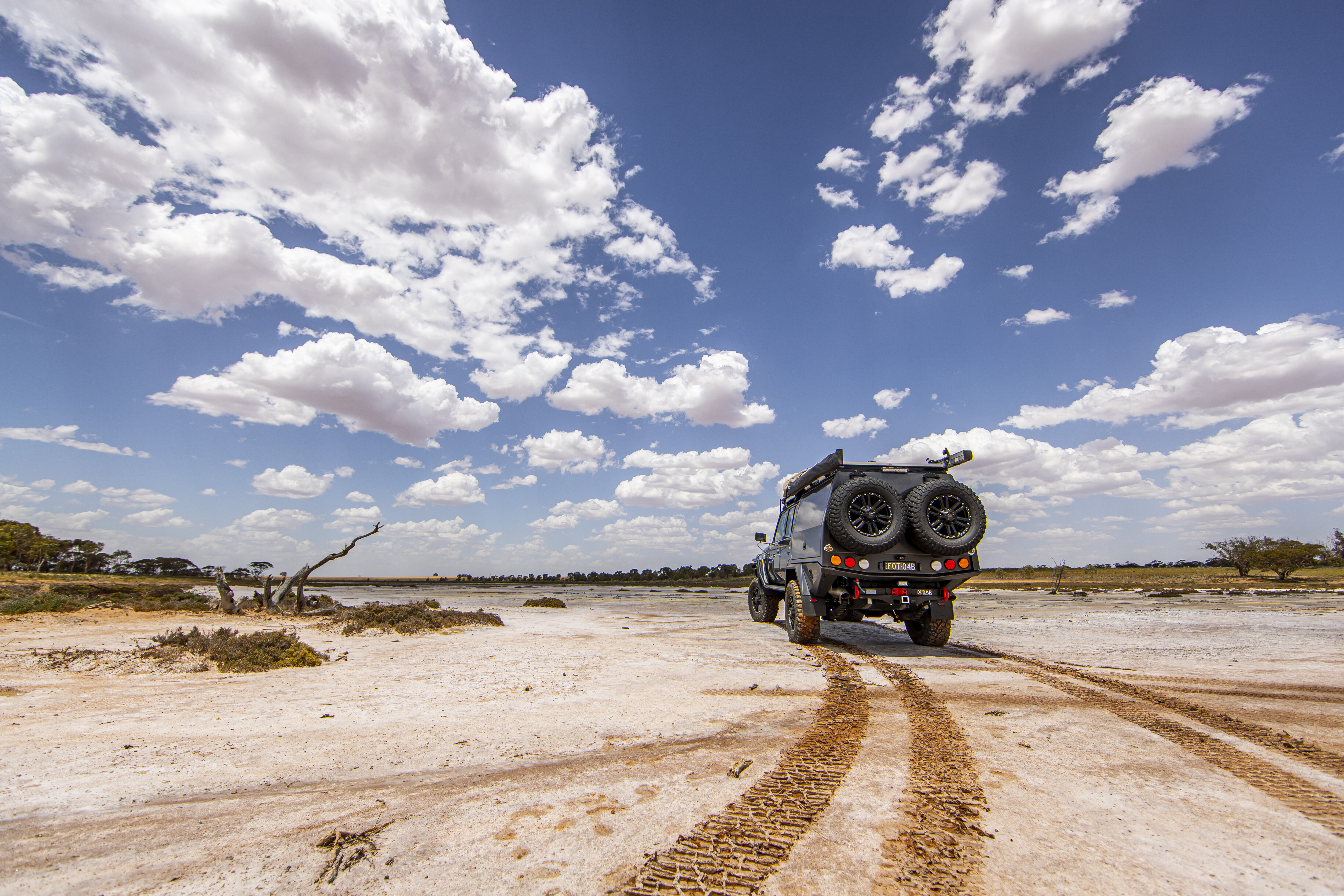
Going a step further, and available as an option on some 4×4 models as early as the ’90s, was the fitment of a driver-selectable rear differential lock. When engaged by pressing a button inside the cabin, a rear diff lock eliminates across-axle wheelspin on the rear axle. Many modern 4×4 wagons and utes are now available with standard rear diff locks.
Most manufacturers are reluctant, however, to fit locking differentials in the front axle because when engaged they can make it difficult to steer the vehicle. But if you really want to eliminate across-axle wheelspin up front, the 4WD aftermarket will be happy to oblige with a front diff lock.With diff locks fitted to front and rear axles, on either a part-time 4×4 vehicle or a full-time 4×4 vehicle with its centre diff locked, all four wheels will always spin at the same speed, even if only one of those wheels is in contact with the ground. This is the ultimate set-up when it comes to mechanical traction aids and maintaining forward progress in extreme off-road terrain.
Knowing your rig
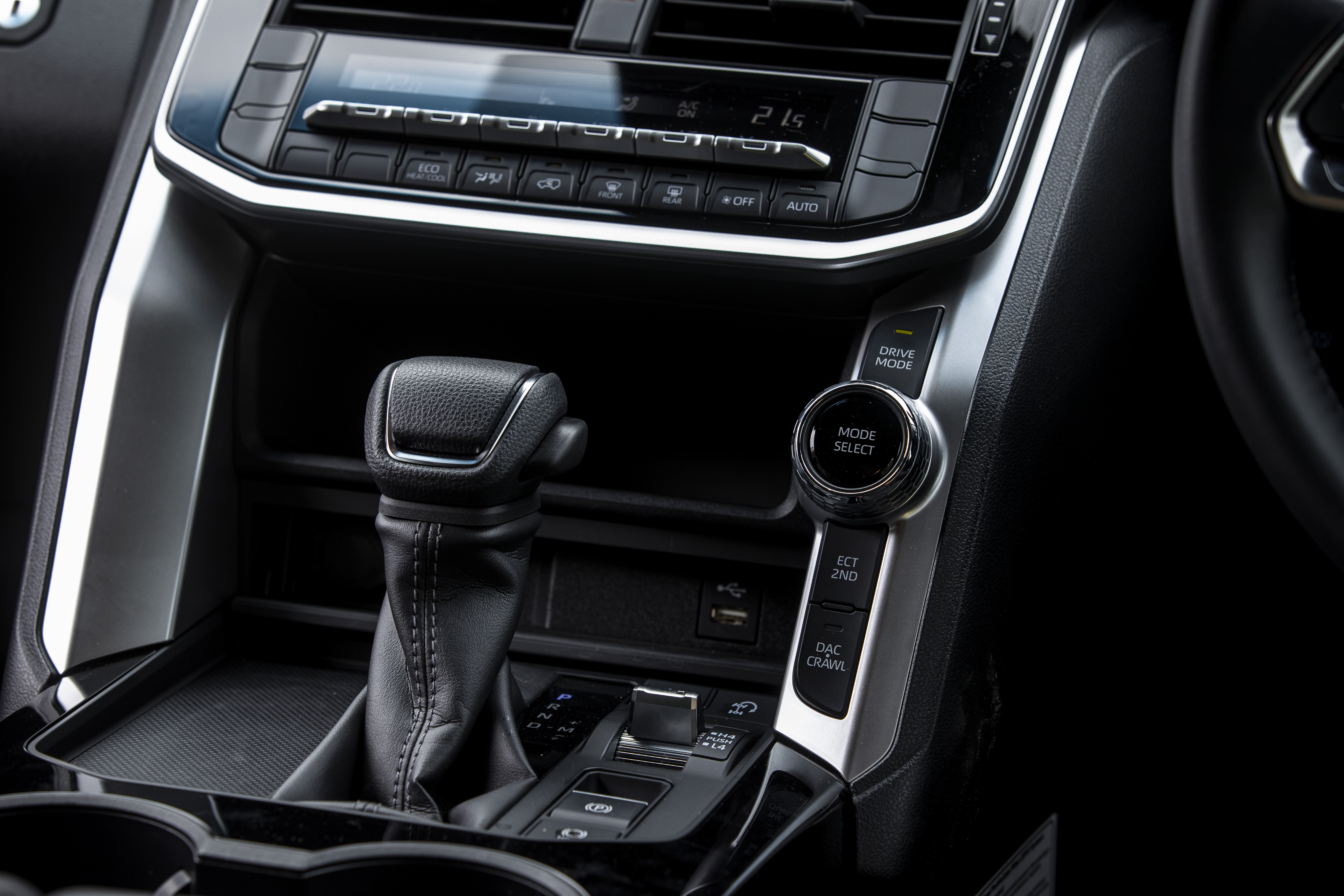
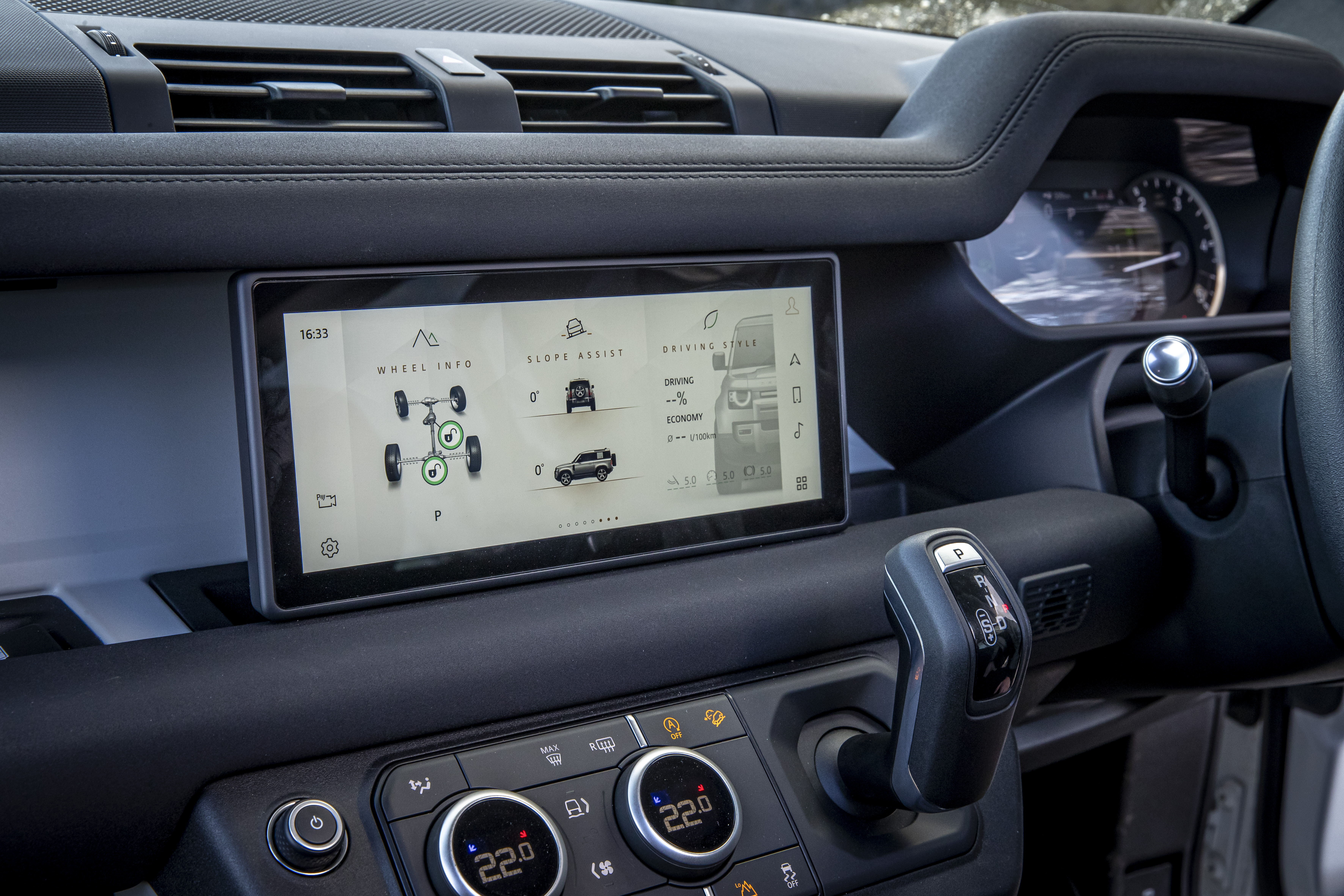
Different 4×4 vehicles are equipped with different types of traction aids and these can be engaged via a wide variety of different levers, buttons and dials, or even via touchscreens, and these controls can be located either sensibly or seemingly randomly, all over the dash and centre console.
When you’re driving in tricky off-road terrain, the last thing you want is to be searching throughout your vehicle’s cabin to engage a diff lock or specific drive mode, rather than focussing on the terrain being driven.Take some time to familiarise yourself with your vehicle’s 4×4 systems and traction aids before you need to use them.
Electronic solution
While there are automatically engaging diff locks on the market, manually operated diff locks are more common as they can be engaged and disengaged when needed at the flick of a switch, but the problem with these is the driver needs to know when and how to operate them.To overcome the potential for inexperienced drivers to misuse diff locks, vehicle manufacturers turned to an electronic solution in the form of electronic traction control (ETC) which is essentially ABS in reverse. With ABS, the vehicle’s ECU receives information from wheel-speed sensors and if there is an anomaly in wheel speeds when braking, an ABS modulator rapidly turns braking valves on and off to prevent wheels from locking, resulting in that pulsating feeling through the brake pedal when actuated.
ETC uses those same wheel-speed sensors to detect anomalies in wheel speed when accelerating and in turn, rapidly applies braking pressure to individual wheels via the braking valves to eliminate wheelspin.
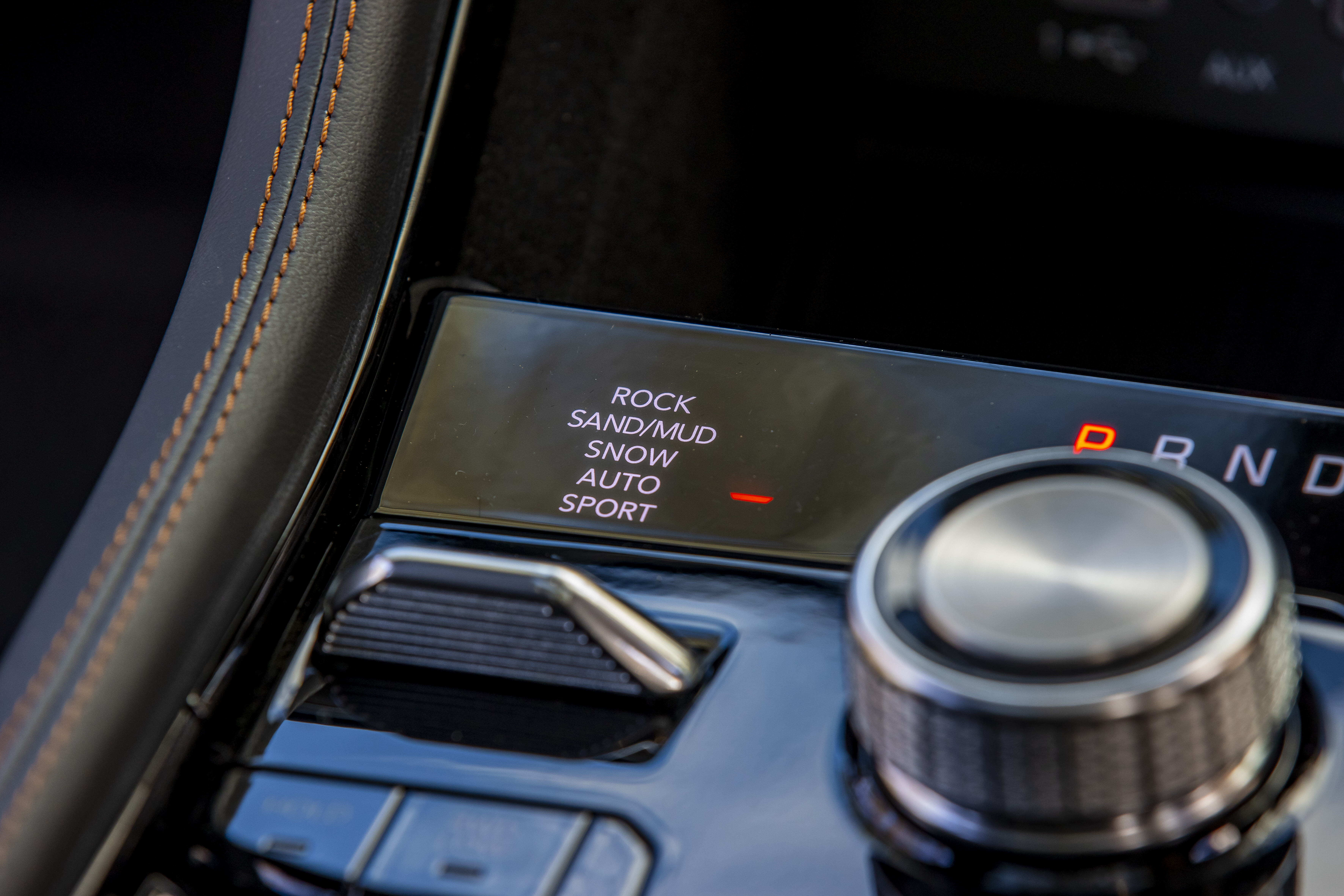
These days, just about all vehicles are equipped with vehicle stability control (VSC) which uses pitch, roll and yaw sensors to detect whether a vehicle is heading where intended and, if not, intervening with brake pressure and cutting engine power to individual wheels to make it stable again. Most VSC systems can be switched off by the driver, as they can reduce off-road capability on loose surfaces such as sand by applying the brakes when you don’t want them to.
Another system that uses the ABS hardware and software is hill descent control (HDC) which when engaged, brakes individual wheels to maintain a set speed on steep descents without locking up the wheels. Most HDC systems are operated by pressing a console-mounted button, and with some, the target speed can be adjusted using up and down buttons on the steering wheel.
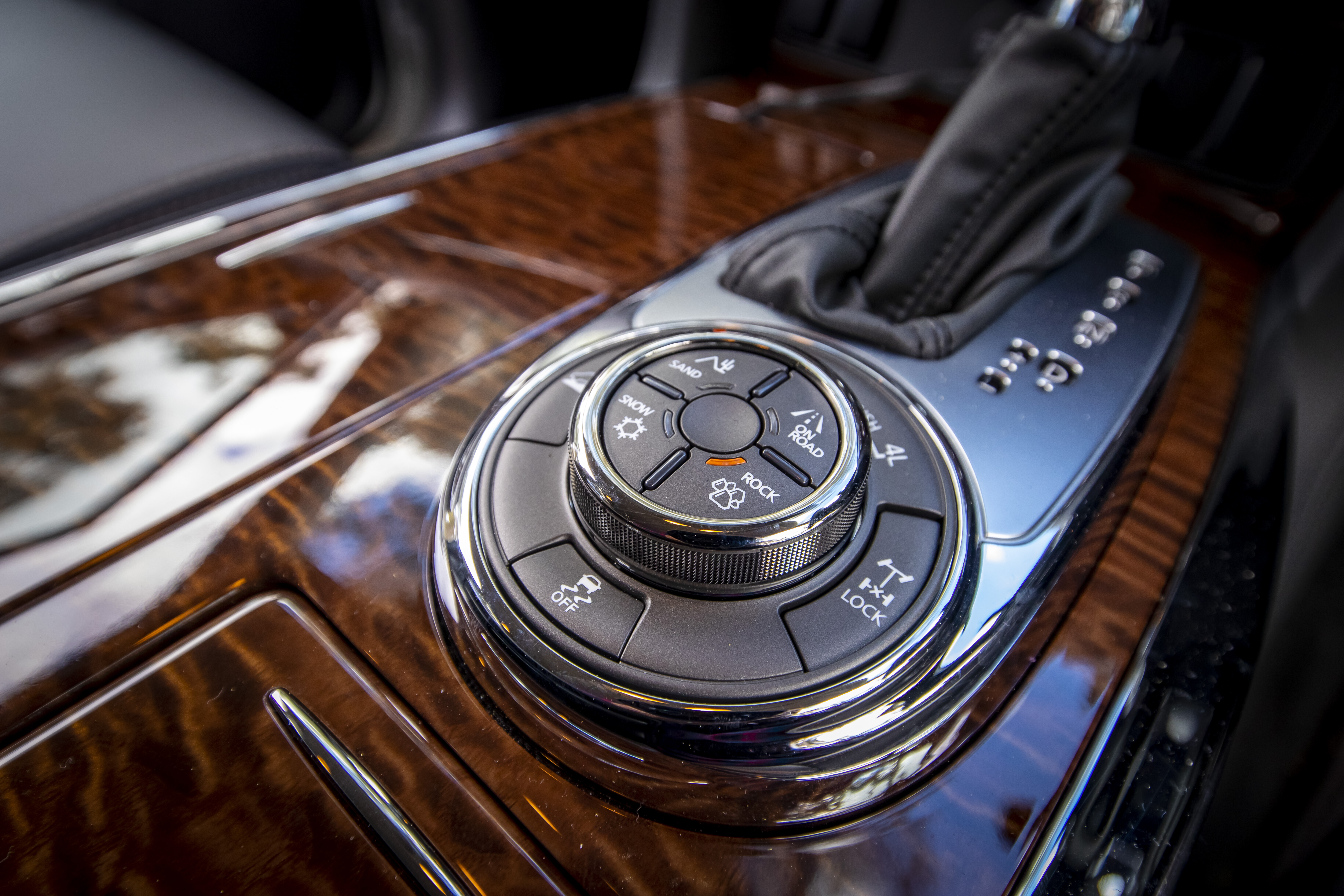
Different levels of electronic traction aid intervention might be required depending on the terrain, so some vehicles feature selectable drive modes to suit different conditions, such as: ‘Road’, ‘Sand’, ‘Grass, gravel and snow’, ‘Mud and ruts’ and ‘Rock’ mode. These different modes tailor the vehicle to suit different terrain.
For example, in Sand mode the throttle response will be sharpened up, the transmission will downshift more aggressively, and VSC intervention will be minimised, while in Rock mode the throttle response will be dampened to prevent unwanted surging if the driver’s foot is bouncing up and down on the accelerator pedal. Some selectable drive modes even change the way in which automatically locking diffs operate, when fitted, and adjust suspension height to suit different terrain, where applicable.
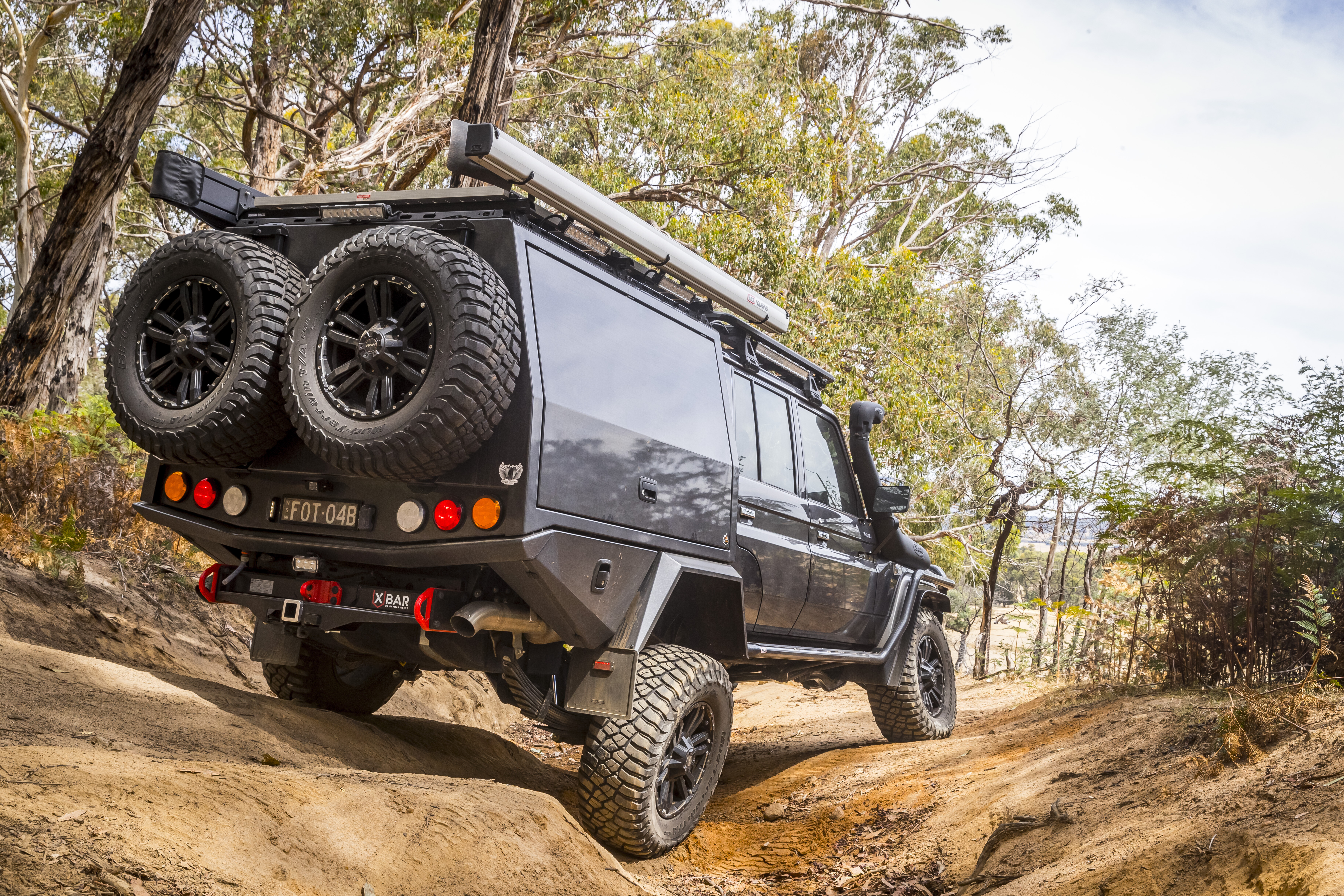
Tyres & pressures
In just about every instalment of 4X4 Australia’s How To Off-Road Driving Guide we have discussed the importance of setting the correct tyre pressures to suit the terrain in which you are driving, and this one is no exception.
No matter how advanced the 4×4 systems and traction aids your vehicle is equipped with, it will perform better off road if you lower tyre pressures to suit conditions.Lowering tyre pressures results in more grip, which not only improves vehicle performance, but also minimises the strain on mechanical components and the effort exerted by electronic traction aids. It also minimises the risk of tyre damage when driving off road.For full details see 4X4 Australia’s How To: Tyre Pressures
Using what you’ve got
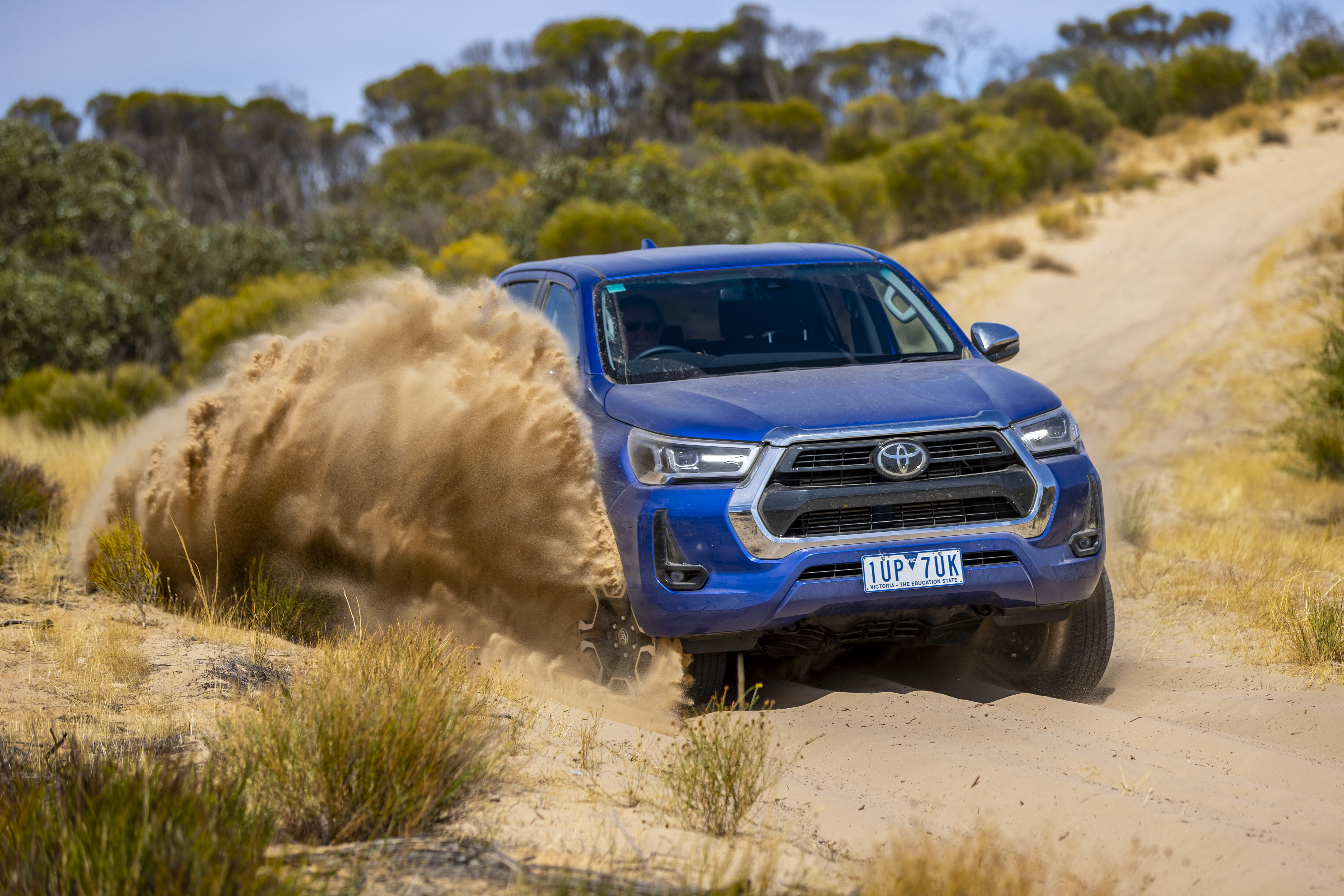
The key to getting the most out of your vehicle when driving off road is to know what 4×4 systems and traction aids it’s equipped with, and when and how to use them. If you drive a part-time 4×4, for example, you will need to run it in 2WD on hard surfaces and only switch to 4WD on loose surfaces, and then in steep terrain you should select 4WD low range. Engaging 4WD might be via a lever or a button or a dial, located on the dash or centre console, and you need to know where this is and how to operate it.If you drive a full-time 4×4, it will usually have a clutch pack or a viscous centre differential to allow for different wheel speeds on front and rear axles, which prevents transmission wind-up when cornering, but this will need to be locked when driving off road to ensure equal drive is sent to front and rear axles. The centre diff lock is usually engaged via a switch on the dash or centre console, and again, you need to know where this is, and how and when to operate it.When driving in steep country, or crawling over obstacles at low speeds, you’ll need to engage low range. Again, different vehicles have different set-ups for this, some using a lever connected directly to the transfer case, and some using an electronic switch via a button or a dial.
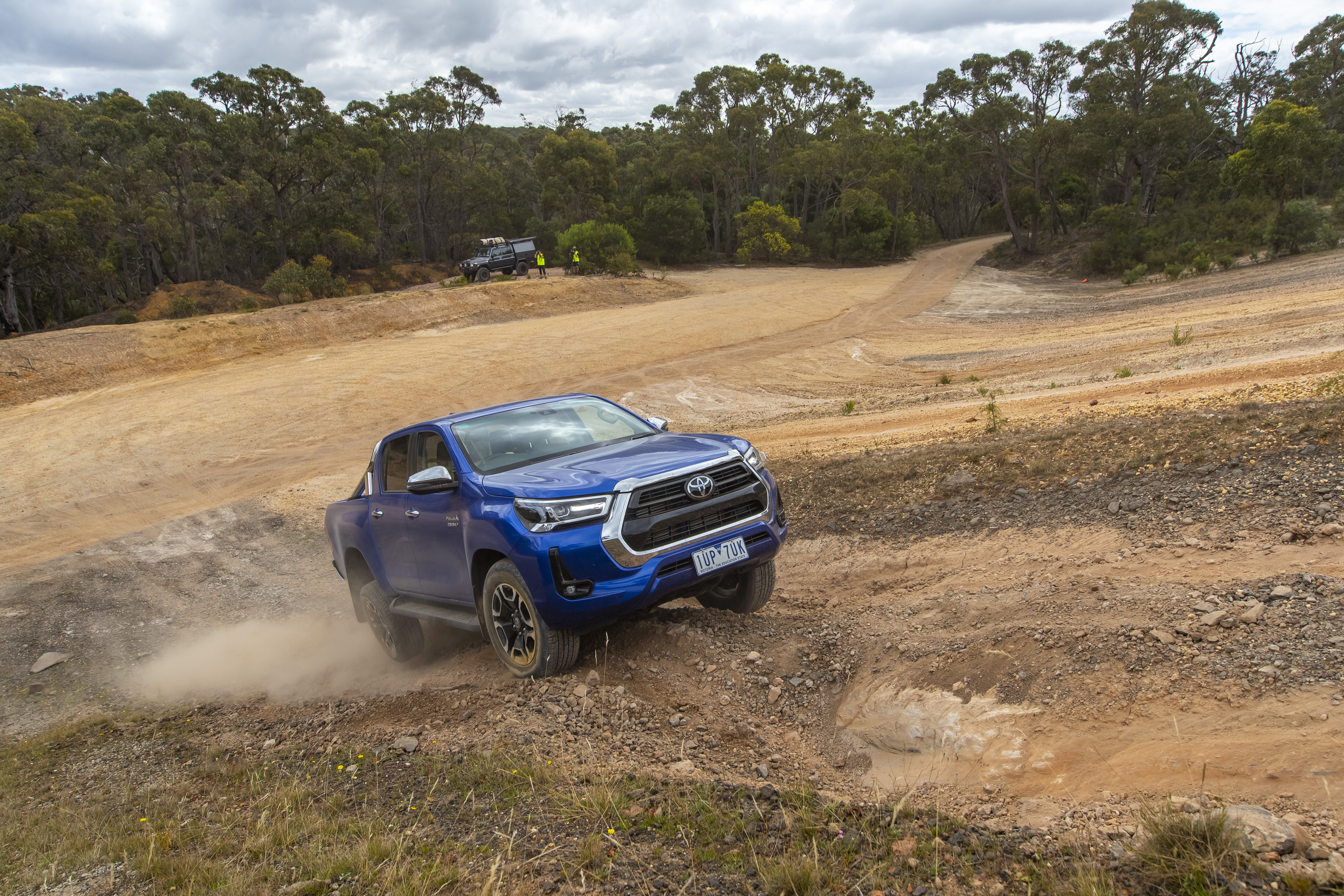
While just about all modern 4×4 vehicles have electronic traction control, some ETC systems are more effective in off-road terrain than others due to a combination of factors, including the vehicle hardware as well as the calibration of the electronics. What that means is that you might need to engage the rear diff lock, if fitted, for some tricky off-road sections, or select the correct drive mode, again if fitted.Even the way in which rear diff locks interact with other vehicle systems varies from vehicle to vehicle. For example, if you engage the rear diff lock on a Ford Ranger, the ETC will remain active on the front axle, but if you engage the rear diff lock on a Toyota Hilux, it will disengage the ETC on the front axle. In the case of the Ranger, with the rear diff lock engaged it will always improve off-road capability in undulating terrain, whereas with the Hilux, engaging the rear diff lock will sometime decrease off-road capability.
Fortunately, the Hilux’s ETC is one of the better calibrated ones on the market, but the simple fact these seemingly very similar systems operate in very different ways highlights just how important it is to know precisely how your 4×4 functions.If you have selectable drive modes, you should always select the one that best suits the terrain, so if you’re confronted with a muddy climb, engage the Mud and ruts mode before you tackle the hill, or if you’re about to climb a sand dune, make sure you have Sand mode selected.
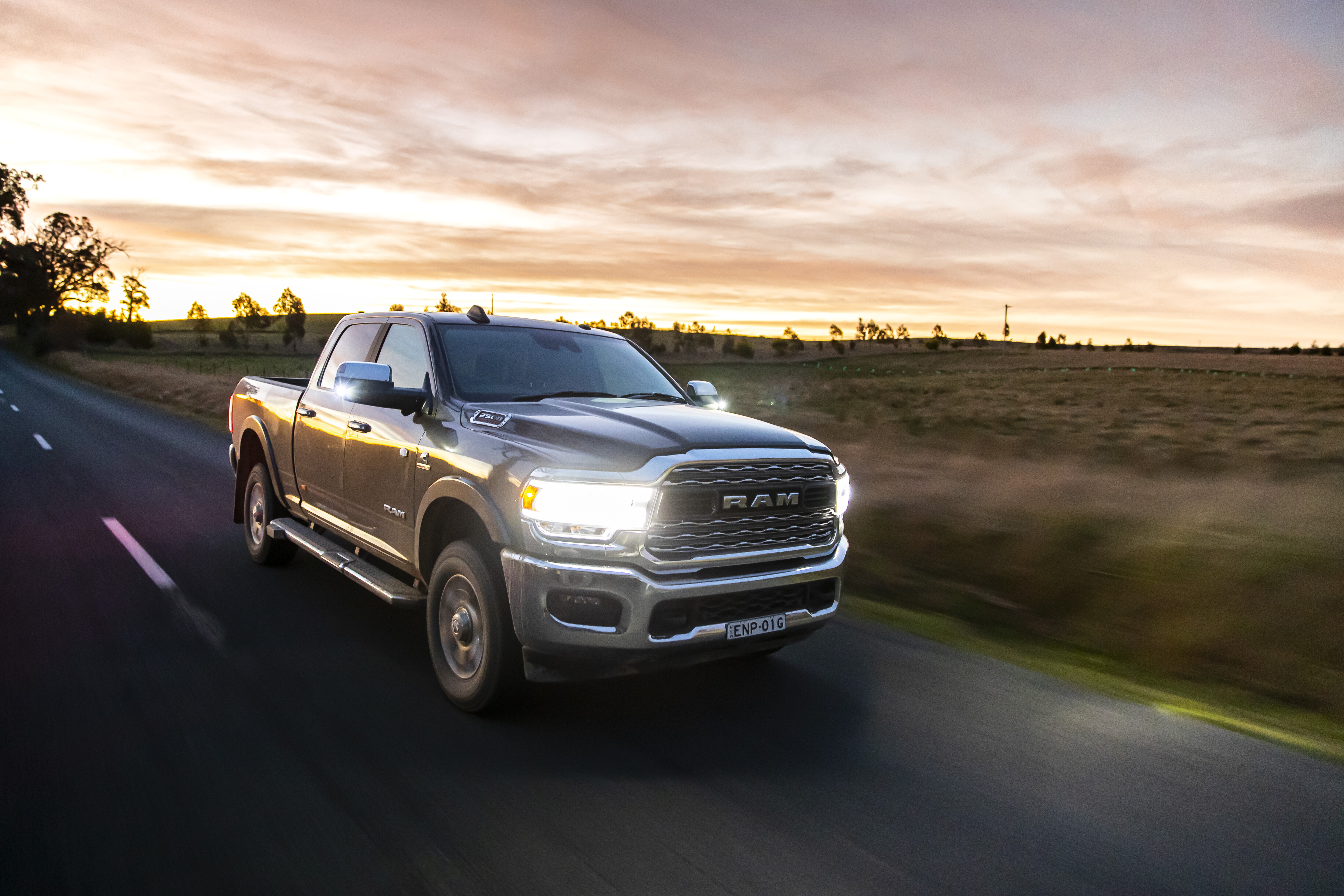
Low-range gearing is not only beneficial on steep climbs, but also steep descents, allowing you to make the most of your vehicle’s engine braking, which is important for a couple of reasons. Firstly, if you rely on your brakes alone to keep your speed in check on long and steep descents, they can overheat and become ineffective.
Secondly, you will have more vehicle control when you use the engine braking to help arrest speed on steep descents. If your vehicle has a manual gearbox, select the gear in low range that provides a good compromise between speed and control, and do likewise if you have an auto than leaving it in ‘D’ for drive. Most modern autos offer a sequential shift, so shifting up and down the ratios is easy.You might be surprised at just how capable your 4×4 is once you’re aware of all its 4×4 systems and traction aids, and you know how and when to use them.
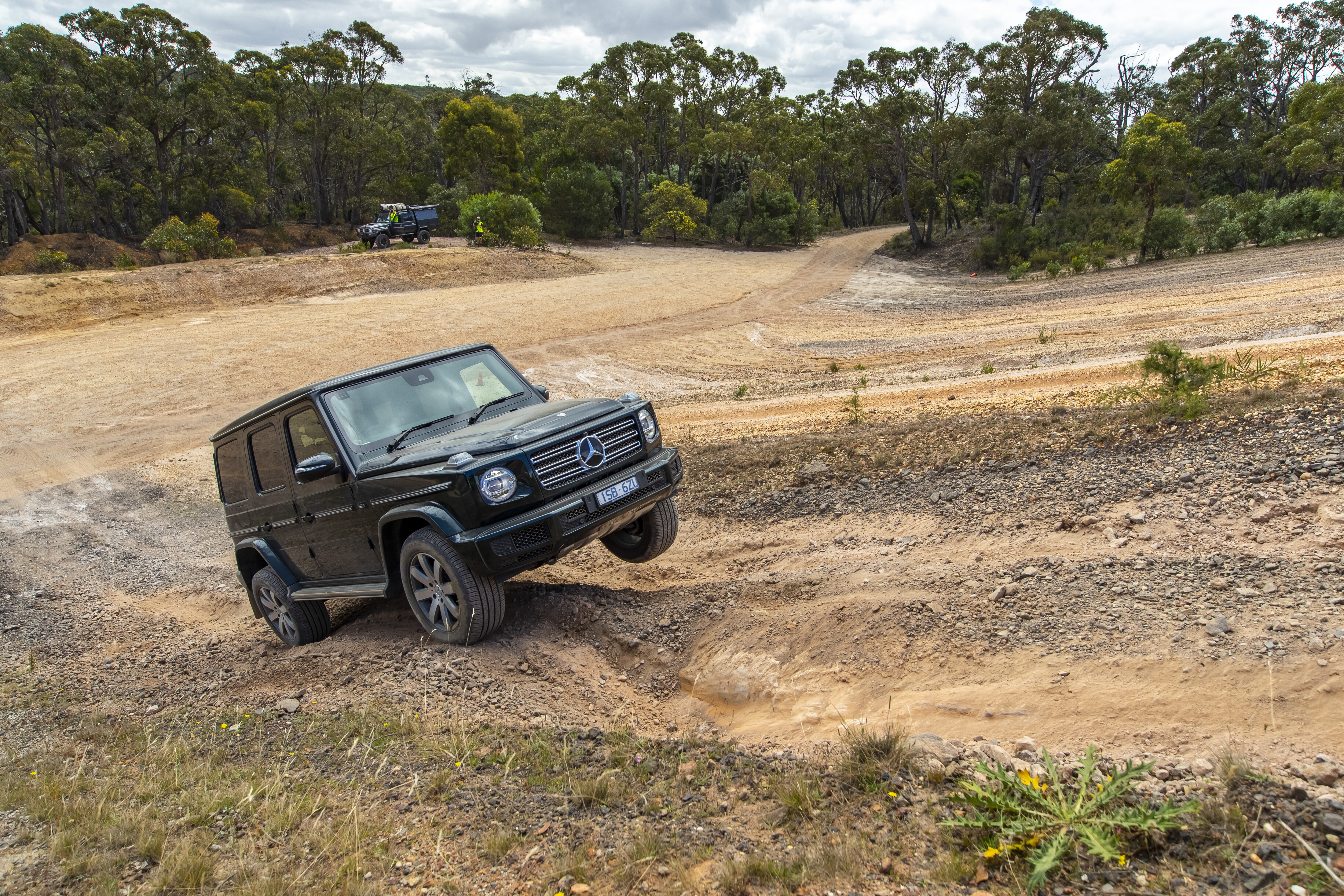
4×4 systems & traction aids – the dos and don’ts
DO
- Familiarise yourself with your vehicle’s equipment
- Know how to operate different systems and traction aids
- Engage the correct settings prior to tackling terrain
- Engage low range for climbs and descents
- Lower your tyre pressures to suit terrain
DON’T
- Assume your vehicle will look after everything
- Assume rear diff lock will improve off-road performance
- Rely on brakes alone for steep descents
- Forget to reinflate tyres when back on road
- Forget to select 2WD/disengage centre diff lock when back on road