
Key Points
- Recall on all Pro Forge UCAs
- Premature wear detected on ball joint
- Owners should contact store to have parts inspected ASAP
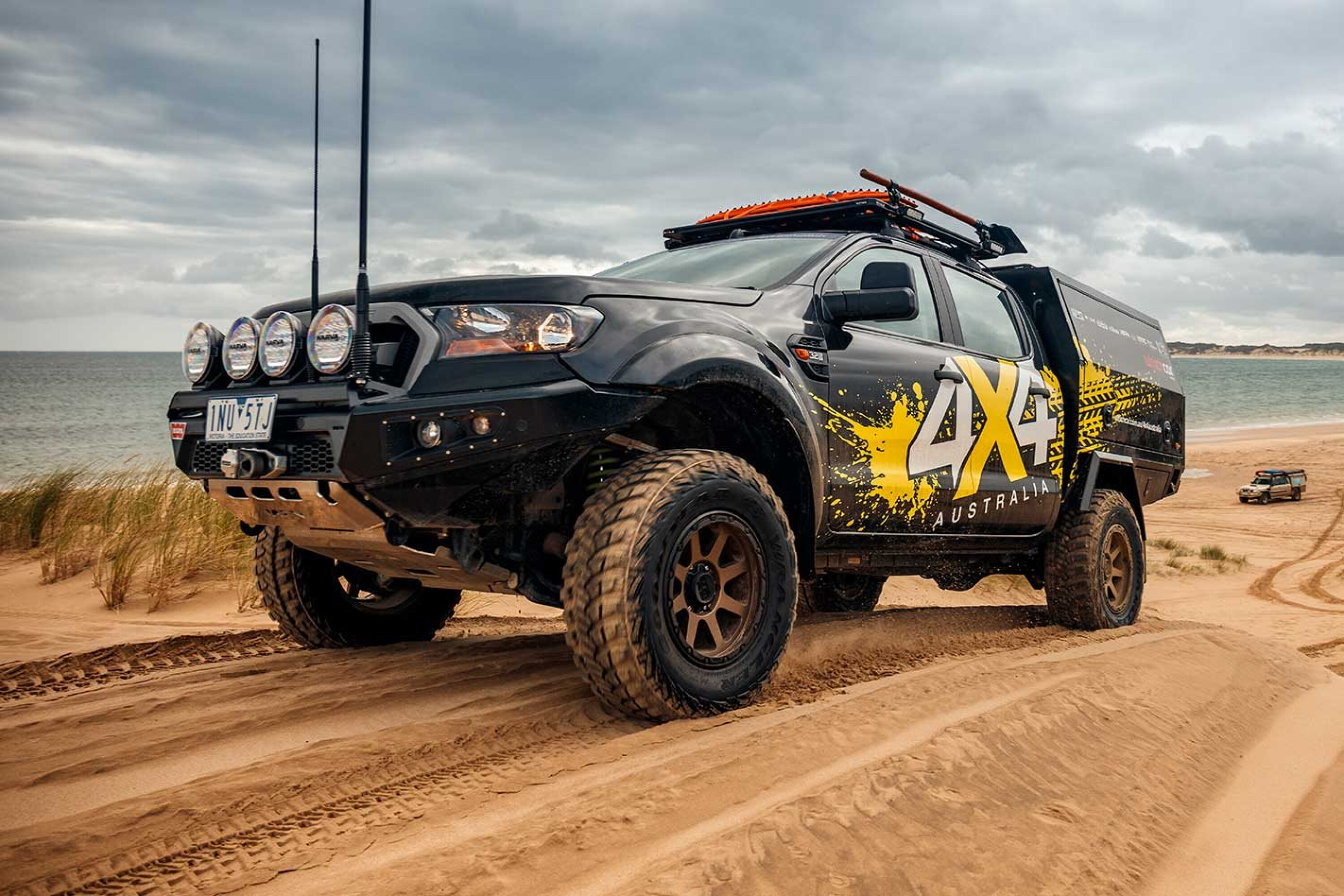
Our PX Ranger build was one of the best-handling double-cab, load-carting 4×4 utes we’ve ever driven.
Bang for buck, the Ironman suspension package we fitted couldn’t be beaten and it out-drove set-ups costing way more than what was on it. And the current owner of the Ranger tells us it still performs incredibly well.
The kit on that ute consisted of Ironman 4×4’s coil and leaf springs, Foam Cell Pro shock absorbers and the then-new-to-market Pro Forge upper control arms (UCAs).
So it was with interest we read of Ironman 4×4’s recent recall on its Pro Forge UCAs.
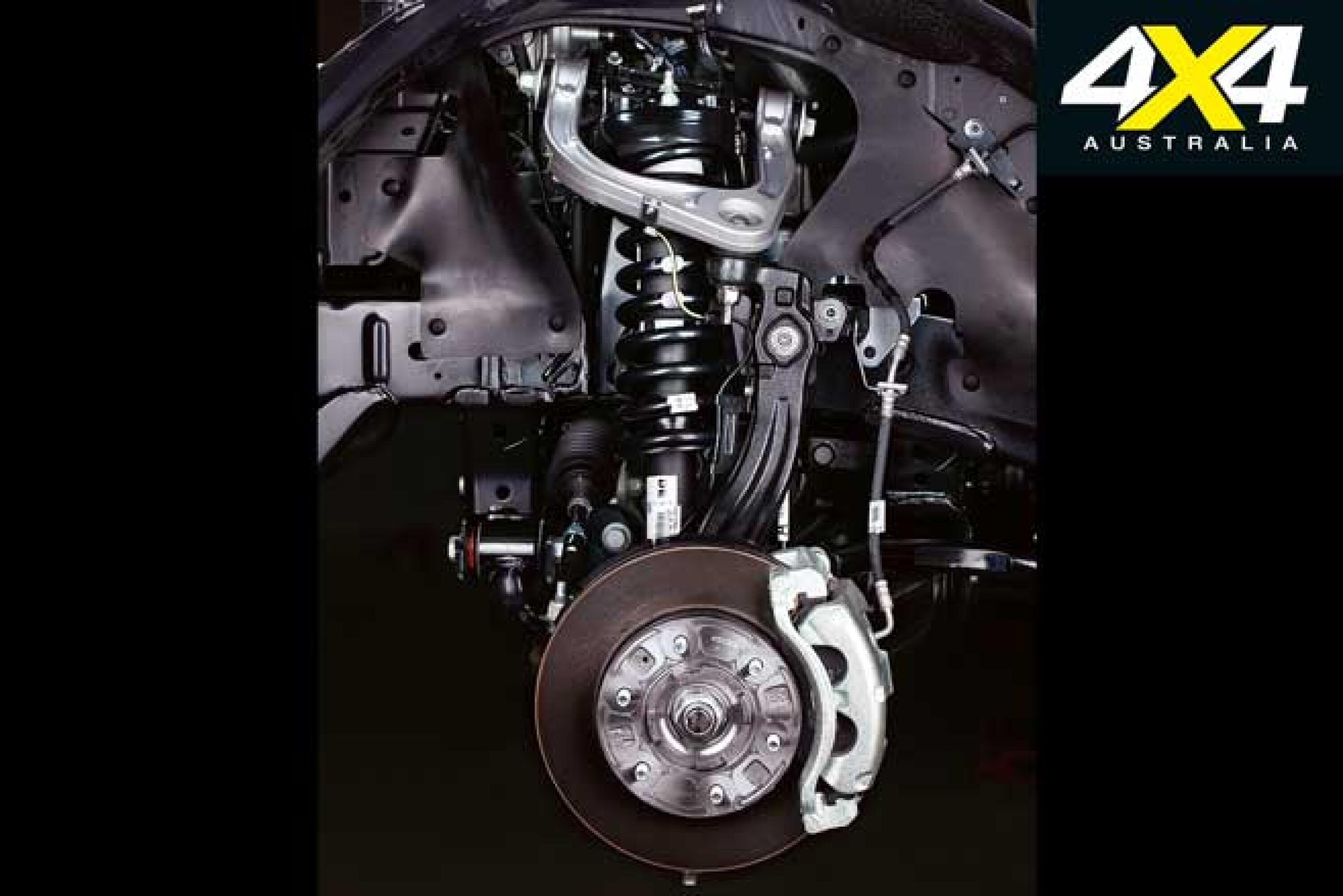
The recall affects all Pro Forge UCAs (not just Ranger) and includes products sold from January 2019 to June 2023 and are under product codes of: UCA001FA, UCA001FAS, UCA041FA, UCA041FAS, UCA048FA, UCA050FA, UCA054FA, UCA054FAS, UCA056FA, UCA073FA, UCA074FA, UCA075FA or UCA090FA.
Ironman’s own product testing has revealed that some Pro Forge UCAs have shown premature wear of the ball joint fitted to the arms. At worst, the premature wear could result in a failure of the joint and loss of vehicle control; although, no failures of the arms/joints have been recorded.
The company is recalling all of its Pro Forge UCAs as a result, with owners of vehicles equipped with them urged to contact an Ironman 4×4 store or dealer to arrange an initial inspection, to repair or replace the affected product at no charge.
Ironman’s product recall states that the ball joint is replaceable with a standard OE or similar quality part, and this work can be done by any qualified mechanic or workshop with reimbursement available for the cost of parts and labour.
The company says it is already well underway in sourcing and testing a new ball joint with an updated design, to ensure the Pro Forge UCA remains a premium product.
Ironman 4×4 is contacting all owners of vehicles affected that it has on file to make them aware of the recall, and is also encouraging people who have sold their Pro Forge UCA-equipped vehicle to get in contact and let the current owner know where possible. Just as we have done with the owner of our old Ranger.
See the full release from Ironman here.
Why fit upper control arms?
When you raise/lift the suspension in your IFS vehicle it lifts the chassis and body away from the mounting point of your wheels and tyres, which frees up room for larger tyres and provides ground clearance.
Doing this affects the camber and caster settings, and lifting an independent 4×4 even just a bit can knock all the alignment out of spec and cause issues with ball-joint operating angles, clearance on the tyres, as well as other suspension components.
Aftermarket upper control arms are designed to alleviate all of these issues, getting the suspension geometry and alignment back to factory or better calibration and giving the best ride and handling with added tyre clearance and ride height/ground clearance.
There are many brands of aftermarket upper control arms available for 4×4 vehicles these days, but the advantage of the forged aluminium Ironman 4×4 Pro Forge UCAs is that they are less likely to flex or bend which can be a problem with some tubular arms.
The rigid construction of the forged alloy arms means they are less likely to flex or distort under heavy loads, and our experience with them proves they do a great job of getting the raised suspension just right.
The Ironman 4×4 Pro Forge UCAs were designed from the outset to use OEM-style ball joints and bushes so that they can easily be serviced and maintained by any mechanic, no matter where you are.
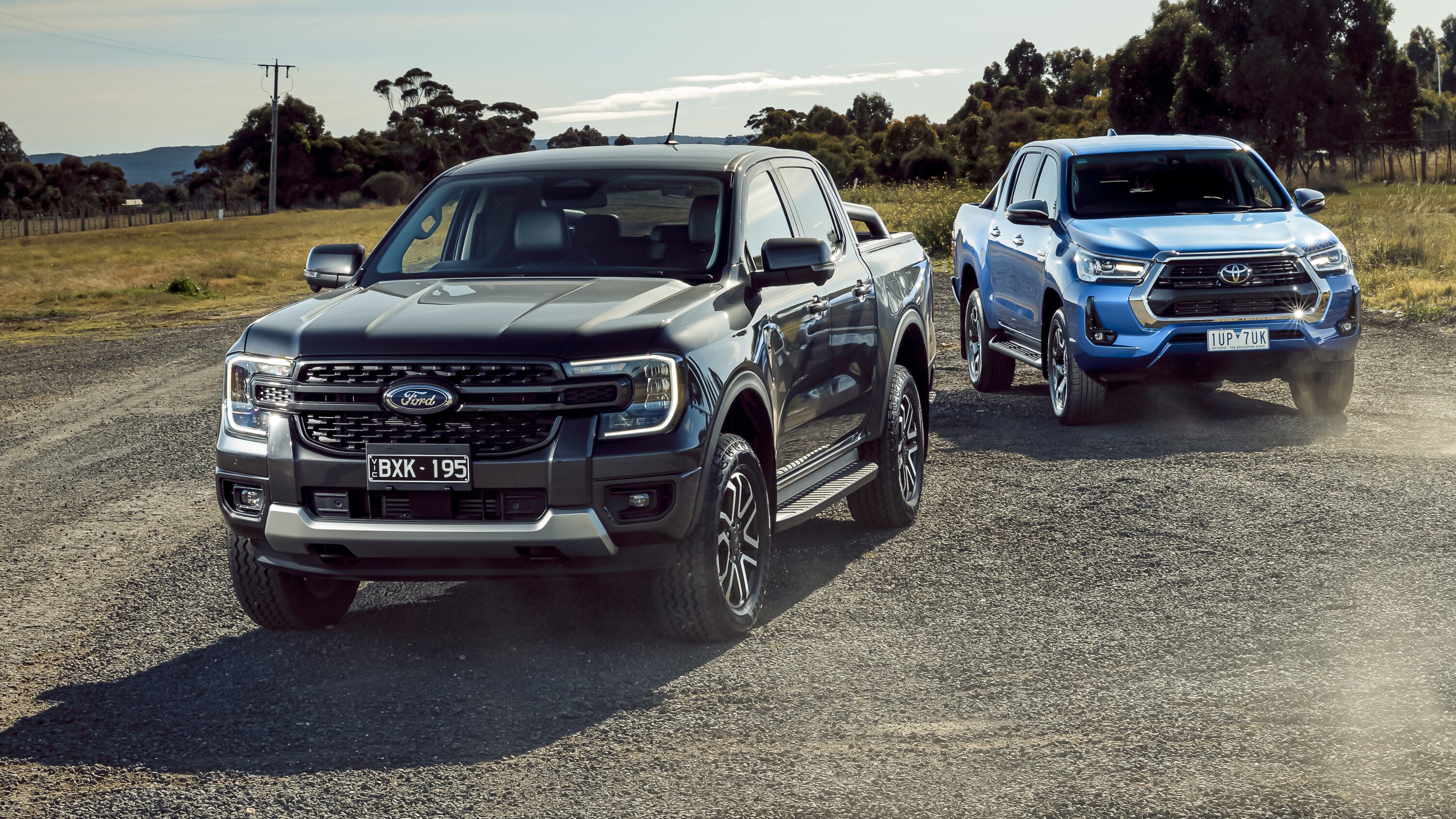
The Ford Ranger outsold the Toyota HiLux by a miserly 80 units in June 2023, to keep the blue oval ute atop the 4×4 sales charts.
A total of 4895 Ford Ranger 4×4 models were sold throughout Australia in June 2023, with Toyota shifting a total of 4815 HiLux 4×4 variants in the same month.
For comparison’s sake, in June 2022 – just prior to the launch of the next-gen Ranger – the HiLux (5355 4×4 sales) convincingly outsold the Ranger (2547 4×4 sales).
When combining 4×4 and 4×2 sales, the HiLux remains the best-selling vehicle in Australia, selling a total of 6142 vehicles. The Ford Ranger sits in third place (5334 sales) behind the Tesla Model Y (5560 sales).
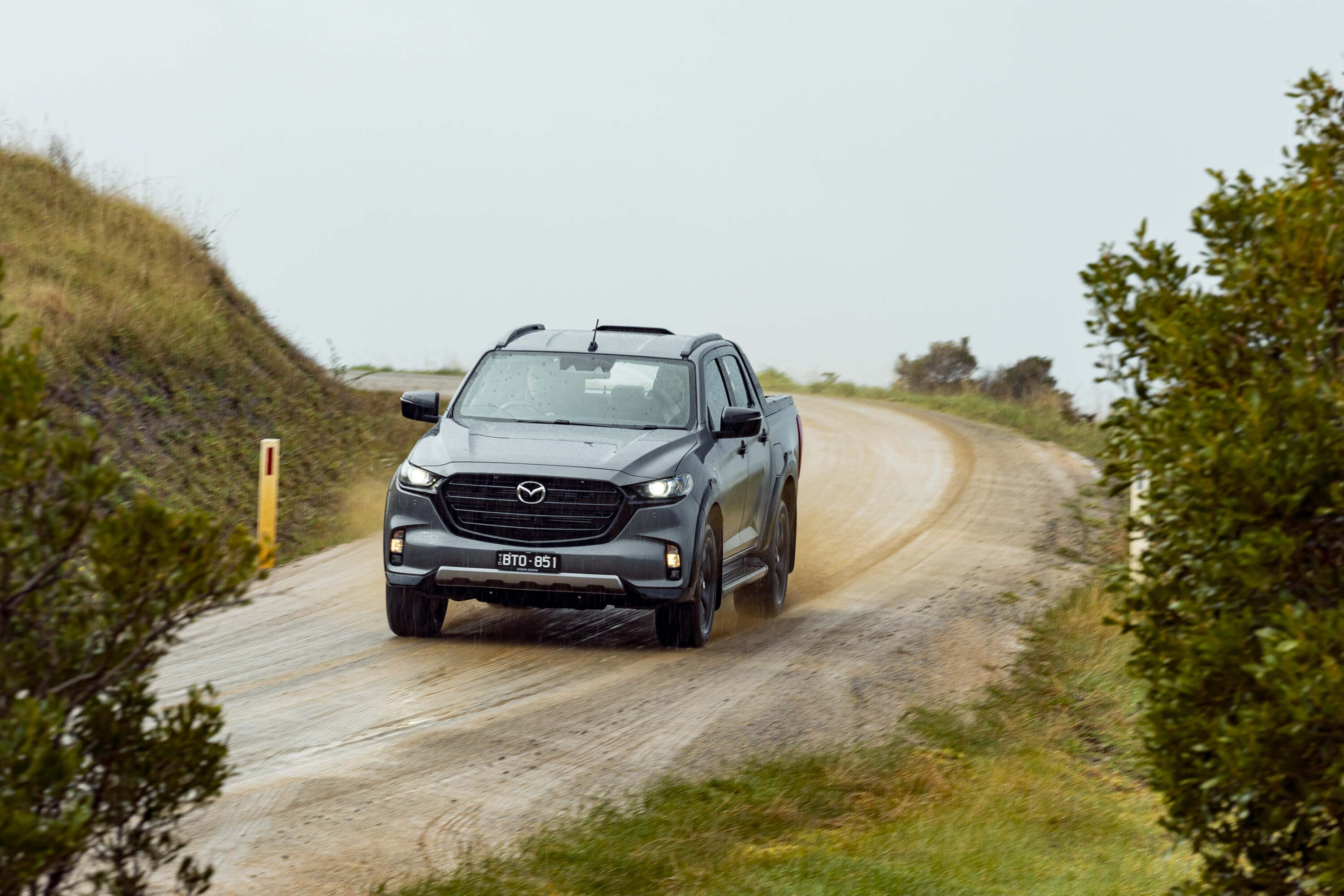
The Mazda BT-50 was the third best-selling 4×4 vehicle in June 2023 (2002 sales), scraping in ahead of the Isuzu D-MAX (1977) and Mitsubishi Triton (1883).
The Prado was the most sought after SUV in June 2023, but the MU-X remains the most popular on the YTD charts.
In the battle of the big utes, a total of 992 RAM 1500s were sold in June, placing it well ahead of the Chevrolet Silverado which sold 429 units. On the YTD charts, the RAM 1500 has notched up a total of 3697 sales, compared to Chevrolet which has sold 1568 Silverados.
Top 10 4×4 models: June 2023
| Model | Sales | |
|---|---|---|
| 1 | Ford Ranger | 4895 |
| 2 | Toyota Hilux | 4815 |
| 3 | Mazda BT-50 | 2002 |
| 4 | Isuzu D-MAX | 1977 |
| 5 | Mitsubishi Triton | 1883 |
| 6 | Toyota Prado | 1627 |
| 7 | Toyota LandCruiser 300 | 1562 |
| 8 | GWM Ute | 1210 |
| 9 | Toyota LandCruiser 70 | 1162 |
| 10 | Ford Everest | 1153 |
Top 10 4×4 models: YTD 2023
| Model | Sales | |
|---|---|---|
| 1 | Ford Ranger | 23,620 |
| 2 | Toyota Hilux | 21,808 |
| 3 | Isuzu D-MAX | 10,787 |
| 4 | Mazda BT-50 | 7866 |
| 5 | Mitsubishi Triton | 7354 |
| 6 | Isuzu MU-X | 7114 |
| 7 | Toyota Prado | 7044 |
| 8 | Toyota LandCruiser 300 | 6541 |
| 9 | Ford Everest | 5609 |
| 10 | GWM Ute | 5291 |
Thanks in part to the end of the financial year, a total of 124,926 new vehicles were sold in Australia in June 2023, which is a massive 25 per cent increase compared to June 2022 where 99,974 vehicles found new owners.
Breaking it down further, each segment showed considerable growth in June 2023 compared to the same time last year: passenger vehicles (+10.6%); SUVs (+31.5%): and LCVs (+20.9%).
This has seen sales of both diesel- and petrol-powered vehicles increase compared to June 2022. However, most notable is the rise of EV sales, with 11,042 electric vehicles sold in June 2023 compared to 1137 EV sales in June 2022.
“The early adopters of the new powertrain technology continue to push up the sales of electric vehicles across the country,” FCAI Chief Executive Tony Weber said.
“The steady introduction of new battery electric models across all model segments at more competitive price points is critically important as we deal with the challenges of supplying electric vehicles that meet business and personal consumer needs at prices the mainstream buyers can afford.”
| June 2023 | June 2022 | Difference | |
|---|---|---|---|
| Diesel sales | 37,497 | 35,306 | +6.2% |
| Petrol sales | 59,995 | 51,381 | +16.8% |
| Electric sales | 11,042 | 1137 | +871.2% |
Australian family-owned suspension and brakes specialist Pedders are one of Australia’s largest providers of GVM Upgrades and their range of load-carrying solutions is more extensive than any other aftermarket player.
While Pedders may have made its name in hot rodding Holdens and Fords back in the day, the brand is now a serious player in the 4×4 space and has invested significant resources into developing a range of 4×4 suspension and brake products that are truly world-class, designed for how Aussies use their vehicles, and highly innovative!
The Toyota LandCruiser 79 Series is a hero vehicle for Pedders – as it is for many Aussie 4×4 enthusiasts, – and the brand offers an extensive range of upgrade components to suit the legendary Toyota which are suited to enhancing both on-road and off-road performance.
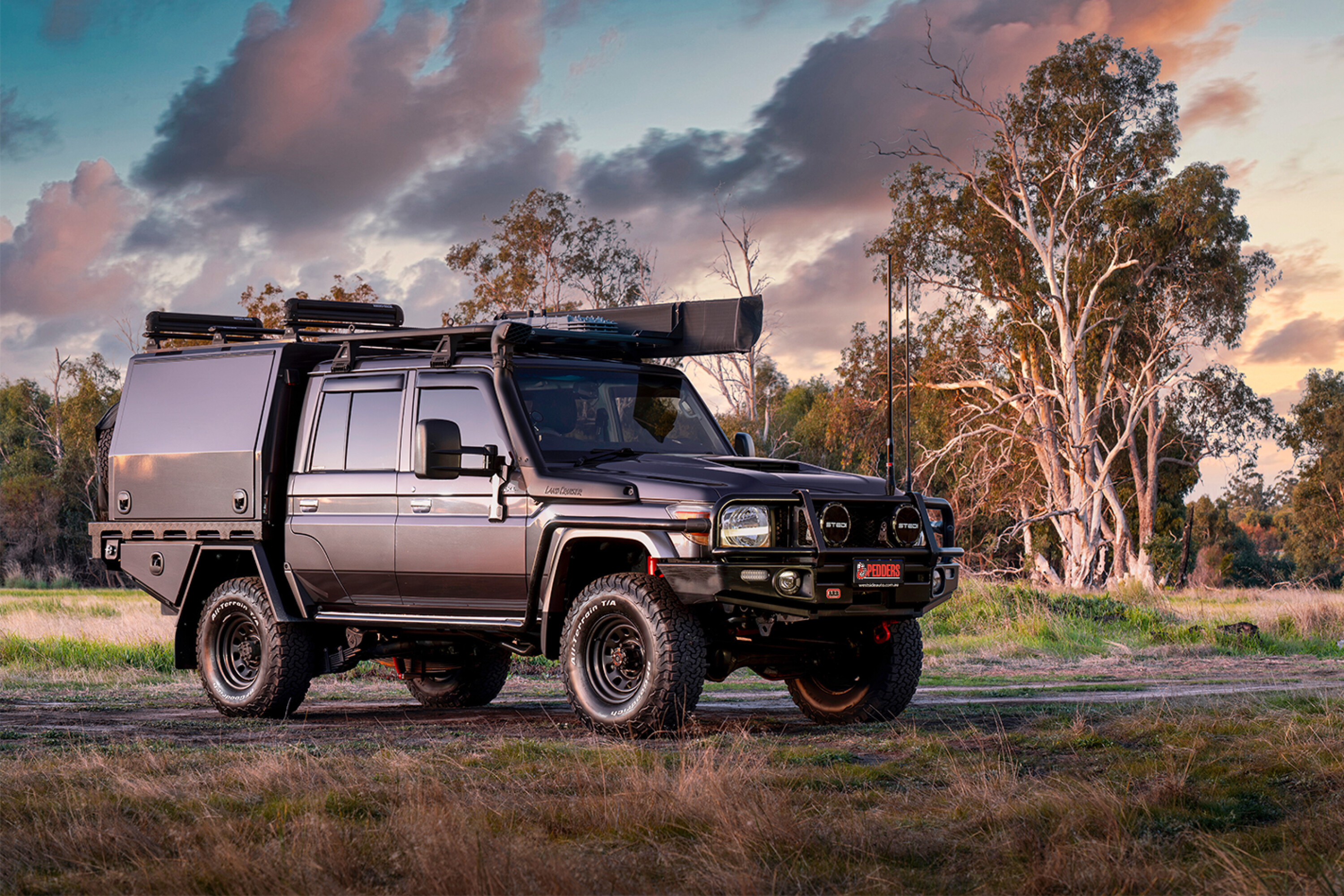
Scott Edmonds is the owner of this particular 79 Series which has recently been beefed-up by the team at Pedders Joondalup in Western Australia with a full touring setup including a GVM+ Upgrade and brakes solution. Scott uses his vehicle primarily for adventuring and getting off the beaten track so he needed the additional load-carrying capacity to carry all of his gear in the custom TLX canopy.
As with all Pedders GVM+ Upgrades, Scott’s rig includes Pedders premium Foam Cell Shock Absorbers which provide superior on-road comfort and enhanced off-road performance. Pedders Foam Cell Shock Absorbers offer enhanced temperature control and reduced shock fade when driving on rough roads, making them the ideal shock absorber for tough touring!
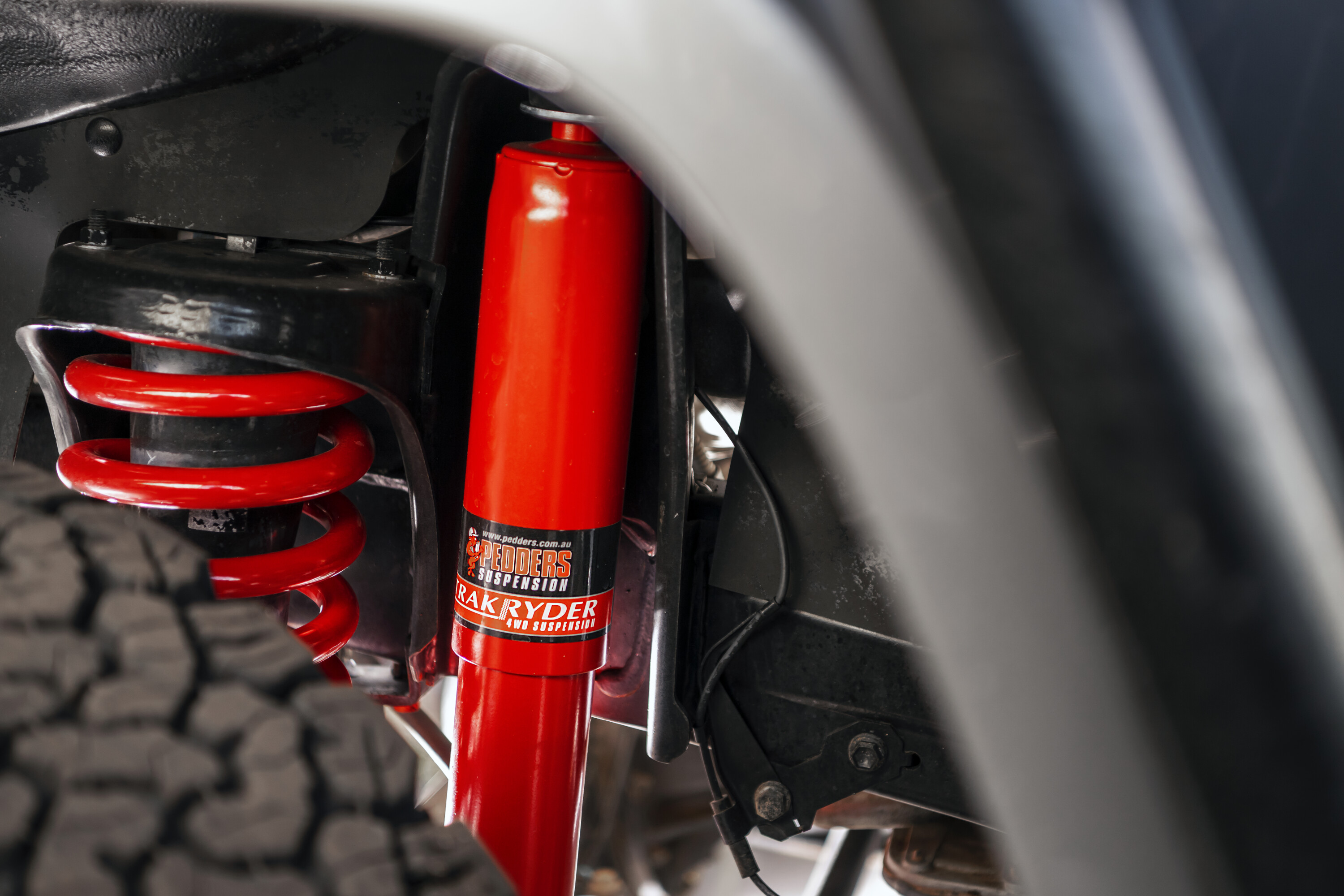
Foam Cell technology works by eliminating the mixing of oil and air within the shock absorber, preventing cavitation. Often when driving on corrugated roads, the oil within the shock can overheat and generate air bubbles which then causes the shock absorber to lose damping control or experience ‘fade’. Pedders Foam Cell Shock Absorbers are specially designed to eliminate this from happening, meaning the shock always maintains optimum damping.
The team at Pedders Joondalup also fitted the Pedders Dual Diaphragm Brake Booster upgrade to this rig, which has seriously improved the vehicle’s stopping power. Independent testing confirms this simple brake booster replacement mod will yield an extra 30% more braking performance out of otherwise standard LandCruiser brakes.
JUMP AHEAD
- GVM+ upgrades for 79 Series
- Brake upgrades for 70 Series
- Electric secondary park brake
- LoadRyder onboard scales
Pedders GVM+ Upgrades for 79 Series LandCruiser
When it comes to GVM+ Upgrades for the 79 Series Toyota LandCruiser, Pedders offer three GVM options depending on the load requirements of the customer, including a 3780kg, 3950kg and monster 4200kg options, offering up to 690kg of additional Payload for 2023+ models.
Each kit can also be specified with constant load rear springs ranging from 400kg to 800kg for vehicles equipped with heavy-duty accessories.
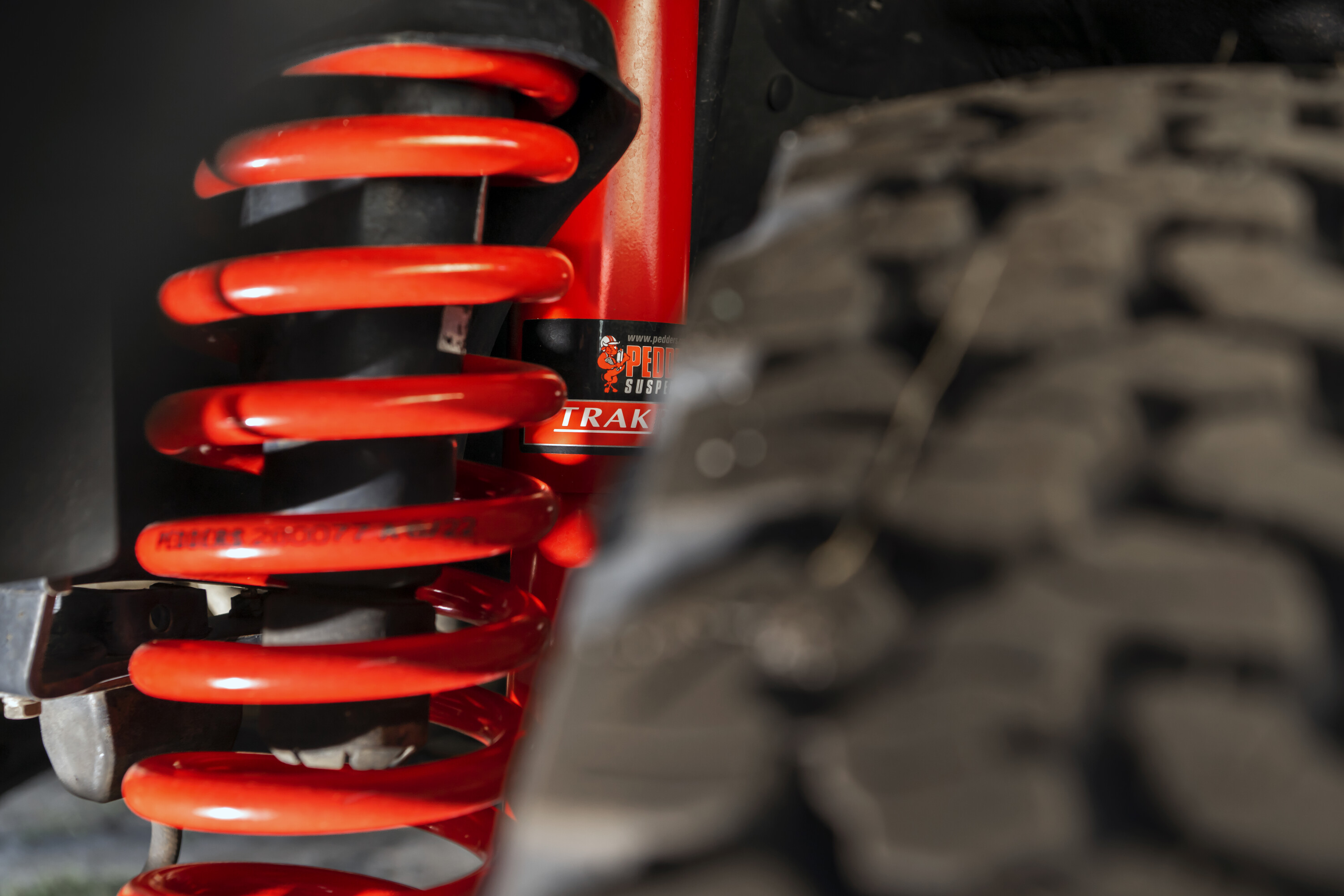
In addition to the spring options for each Pedders GVM+ Upgrade, customers can also specify a series of brake upgrades which are fully compliant with the GVM Upgrade. This is a unique point of difference for Pedders, in that the brand is able to offer fully compliant brake upgrades with its GVM solutions which improve the braking performance of the vehicle – extremely important when you’re loaded to 4200kg!
The Pedders brake upgrade options with GVM Upgrades includes the Pedders TrakRyder Dual Diaphragm Brake Booster which offers up to 30% additional stopping power, plus performance brake pads and braided brake lines.
This additional brake upgrade as part of the Pedders GVM+ Upgrade ensures the LandCruisers brakes are able to safely and confidently stop the vehicle when it is loaded with a heavy Payload.
Toyota LandCruiser 79 Series with Pedders GVM+ Upgrade
| Pedders 3780 GVM | Pedders 3950 GVM | Pedders 4200 GVM | |
|---|---|---|---|
| New GVM | 3780kgu00a0 | 3950kg | 4200kg |
| Approximate Additional Payloadu00a0 | 270kg | 440kg | 690kg |
| Front Axle Capacityu00a0 | 1480kg | 1540kg | 1780kg |
| Rear Axle Capacity | 2300kg | 2420kg | 2420kg |
The above GVM+ Upgrade kits are available with optional Pedders TrakRyder Dual Diaphragm Brake Booster upgrade OR Brake Upgrade Kit, including Pedders TrakRyder Dual Diaphragm Brake Booster, performance brake pads, and braided brake lines.
Pedders Brake Upgrades to suit LandCruiser 70 Series
If you’re adding hundreds of kilograms of Payload to your GVM+ Upgraded LandCruiser, it makes sense to also upgrade your vehicle’s braking system to handle the additional load! Pedders have released a series of innovative products in the braking space, to take your LandCruiser’s stopping capability to the next level.
One of the unique products on offer Pedders TrakRyder Dual Diaphragm Brake Booster – suited to ABS and non ABS 70 and 80 series Cruisers. Offering 30% more braking performance, this is one of the best bang for buck brake upgrades available for 70 and 80 Series LandCruisers!
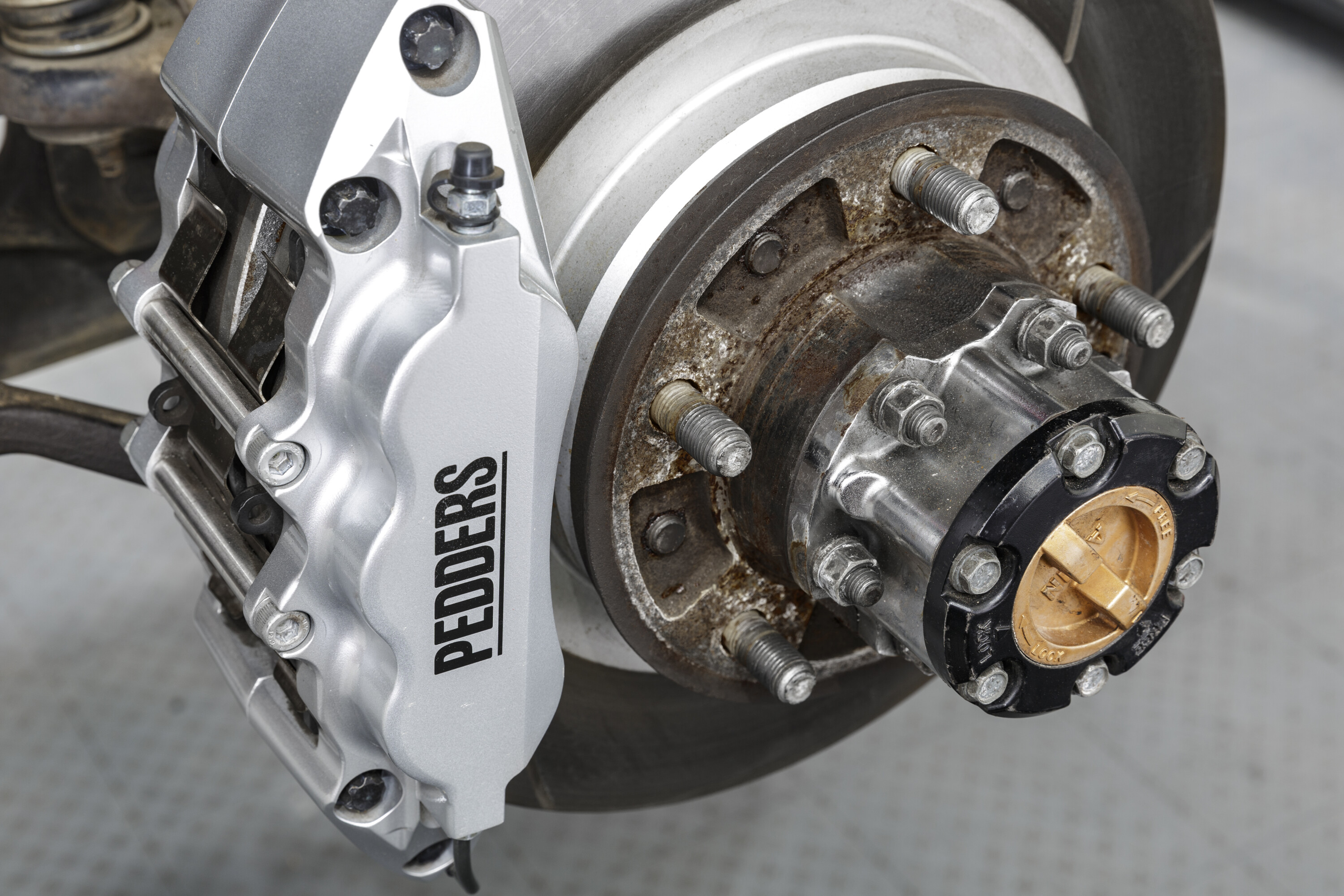
Team the brake booster with Pedders slotted and Geomet-coated brake rotors, Pedders Kevlar Ceramic brake pads, and Pedders braided brake lines to completely transform the braking performance of your LandCruiser.
For those that want their LandCruiser to stop like a sports car, Pedders offer the front and rear eXtreme Big Brake Kit! This high-performance complete replacement brake upgrade includes enlarged slotted rotors, monster six-piston front and four-piston rear brake calipers finished in a metallic silver finish.
Pedders testing results using a single-cab 79 Series loaded to 4200kg, show this brake upgrade package to reduce the stopping distance from 100km/h by 24.8m when combined with the Pedders Dual Diaphragm Brake Booster – that’s a seriously impressive improvement!
Pedders Electric Secondary Park Brake
Drivers that tow or carry heavy loads with their Toyota LandCruiser 70 Series could benefit from the innovative new Pedders Electric Secondary Park Brake.
If you’ve ever tried leaving your heavily laden 4×4 on a steep incline with the handbrake engaged, you’ve probably felt the manual cable-operated handbrake struggle to hold the load, or worse, fail altogether. This problem gets even worse as the vehicle gets older and the handbrake cable stretches over time – the risk of vehicle roll-away becomes very real.
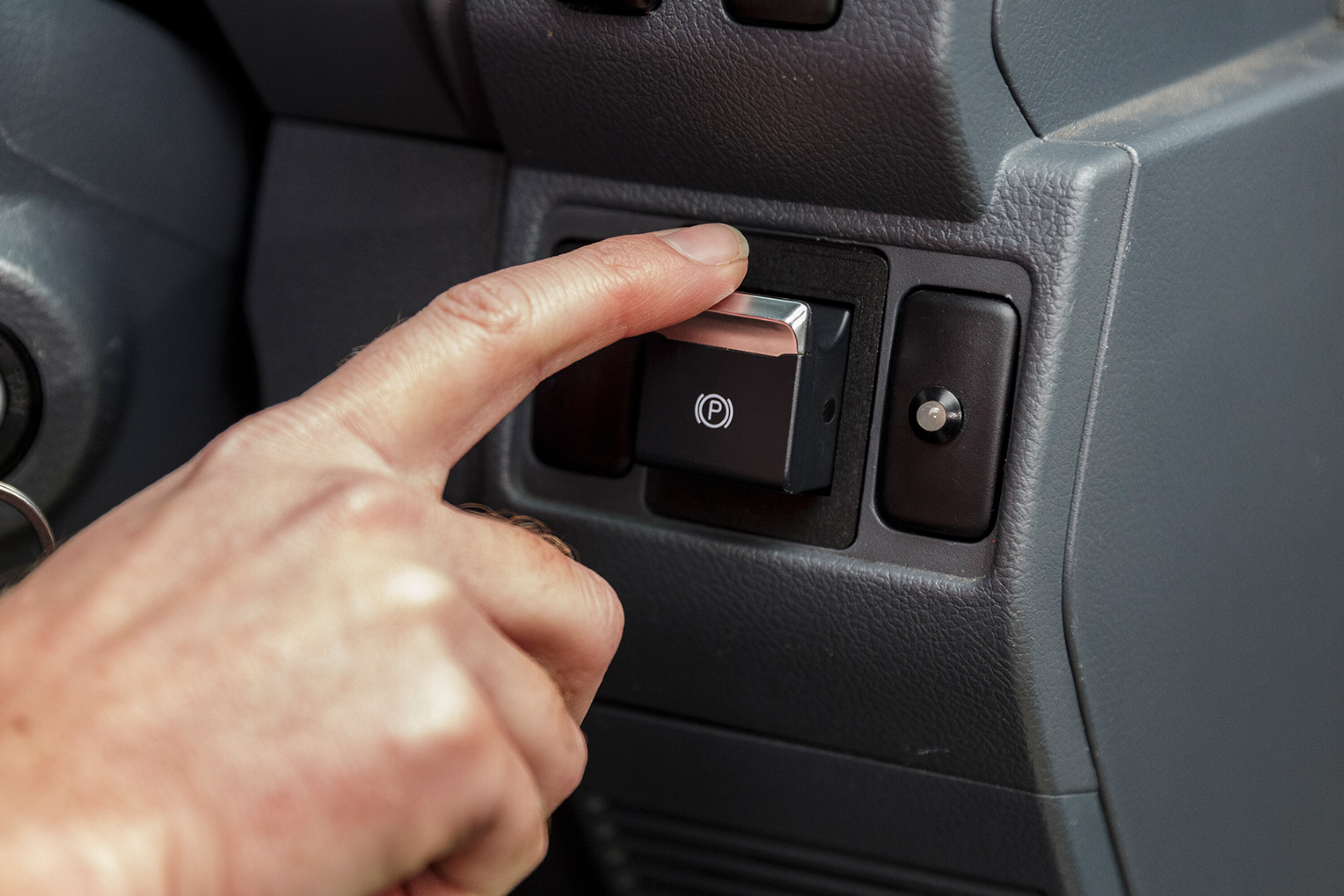
This is where the innovative new Pedders Electric Secondary Park Brake (ESPB) aftermarket solution steps in. The ESPB works in conjunction with the factory park brake as a back-up safety solution which uses an electric park brake caliper similar to what is found on many new vehicles. The ESPB ensures the appropriate clamping pressure is always applied by the park brake, minimising any risk of vehicle roll-away. This kit retains the mechanical hand-brake, and adds the ESPB function as an added benefit.
Pedders testing results showed the Electric Secondary Park Brake to be able to safely hold a heavily loaded 4260kg LandCruiser on a 34-degree incline with no issues.
Pedders LoadRyder Onboard Scales
Pedders LoadRyder Onboard Scales is a solution that will give you your LandCruiser’s actual weight anywhere, anytime.
This gives you the control you need to monitor your vehicle’s axle load weights and payload, ensuring you do not exceed your GVM. It doesn’t matter if you’re towing or touring, with real-time vehicle weight information you can ensure you are operating your vehicle safely.
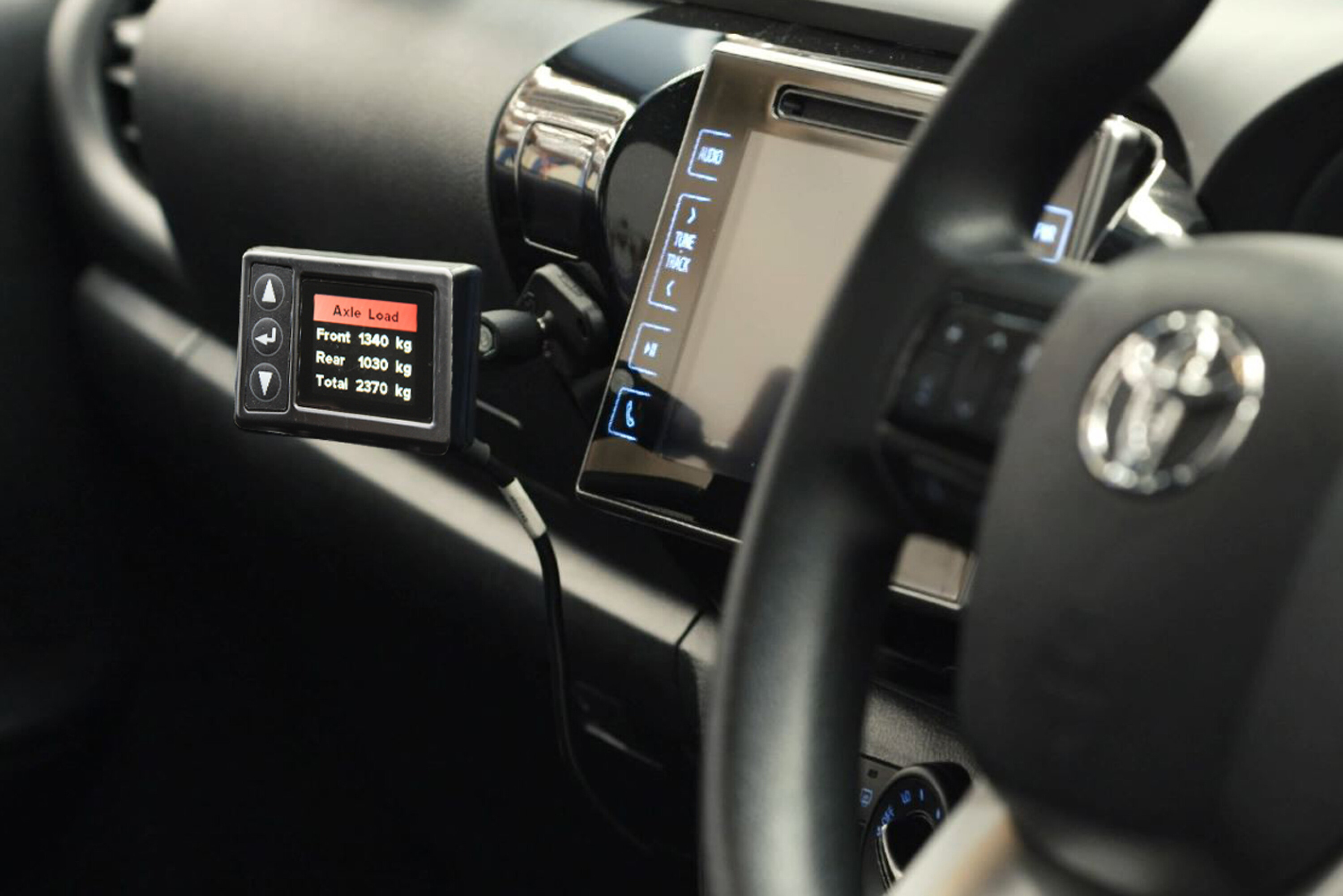
The LoadRyder Onboard Scales system is designed for dual-axle vehicles with standard coil or leaf spring suspension. Each axle is monitored with a robust IP66 rated potentiometer, relaying signals via the inbuilt RF transmitter. Utilising an integrated accelerometer, data is then transmitted to the display unit when the vehicle is stationary and the handbrake is applied. An audible alarm will sound if the total vehicle or if the axle weight maximum is exceeded.
Each LoadRyder device is calibrated to the specific vehicle, meaning vehicles with GVM+ Upgrades will have their GVM limit increased to the new axle capacities and Gross Vehicle Mass certification.
LoadRyder Onboard Scales is available for LandCruiser 79 Series, plus other popular 4x4s including Toyota Hilux, Ford Ranger, Isuzu D-Max and more!
Pedders 4×4 towing and load-carrying solutions:
- 4×4 Lift Kits & Heavy Duty Springs
- GVM+ Upgrades
- Pedders Air Assist Air Bag Kits
- Upgrade Brake Rotors and Pads
- Dual Diaphragm Brake Booster
- eXtreme Big Brake Kit
- Electric Secondary Park Brake
- LoadRyder Onboard Scales
- Chassis components and control arms
For further information on Pedders products to suit the Toyota LandCruiser 79 Series, check out Pedders.com.au or contact your local Pedders outlet.
Store Locator: https://www.pedders.com.au/store-finder/ Pedders website: https://www.pedders.com.au Pedders Catalogue: https://shop.pedders.com.au/
An SUV made in India has set the inaugural world record for shortest trip of a production vehicle across Australia’s Simpson Desert.
Key Points
- New record time of 13h 21m 5s over 385 kilometres
- Mahindra Scorpio driven by Gene Corbett & Ben Robinson
- More than 1100 sand dunes, temperatures over 50u00baC
The Mahindra Scorpio completed the 385 kilometre journey from Birdsville, Queensland, to the Alka Seltzer Bore in South Australia in 13 hours, 21 minutes and five seconds – for an average speed of approximately 30km/h.
For the safety-minded, it’s important to note that the record was set without exceeding any speed limits along the desert tracks, which are officially public roads and generally limited to 40km/h.
The drivers were Gene Corbett and Ben Robinson, and the record attempt took place on March 16, 2023.
“I am proud to be a part of history by setting this record and have enjoyed every bit of it,” Corbett said. “Scorpio’s journey … truly captures the essence of global motoring.”
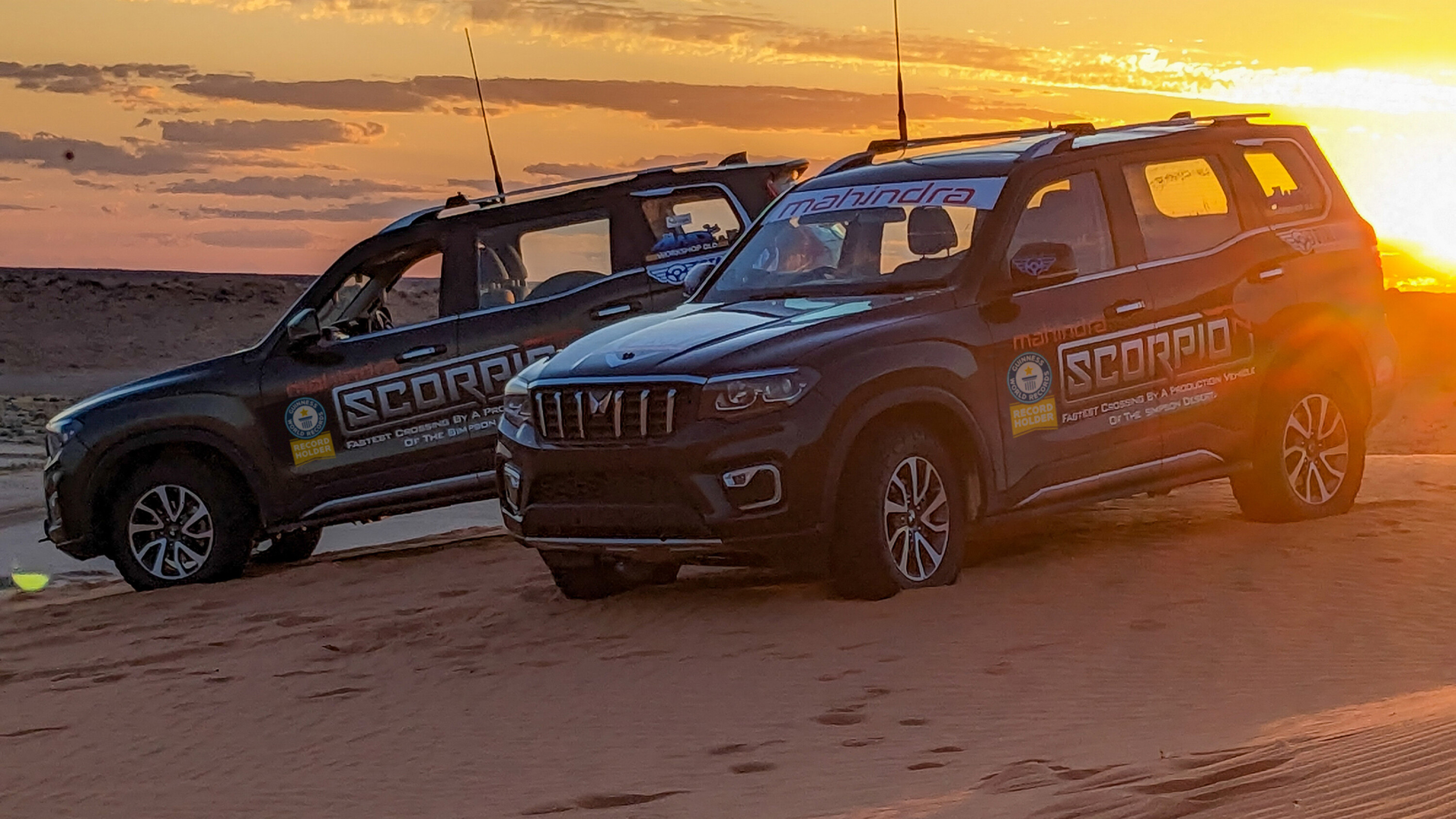
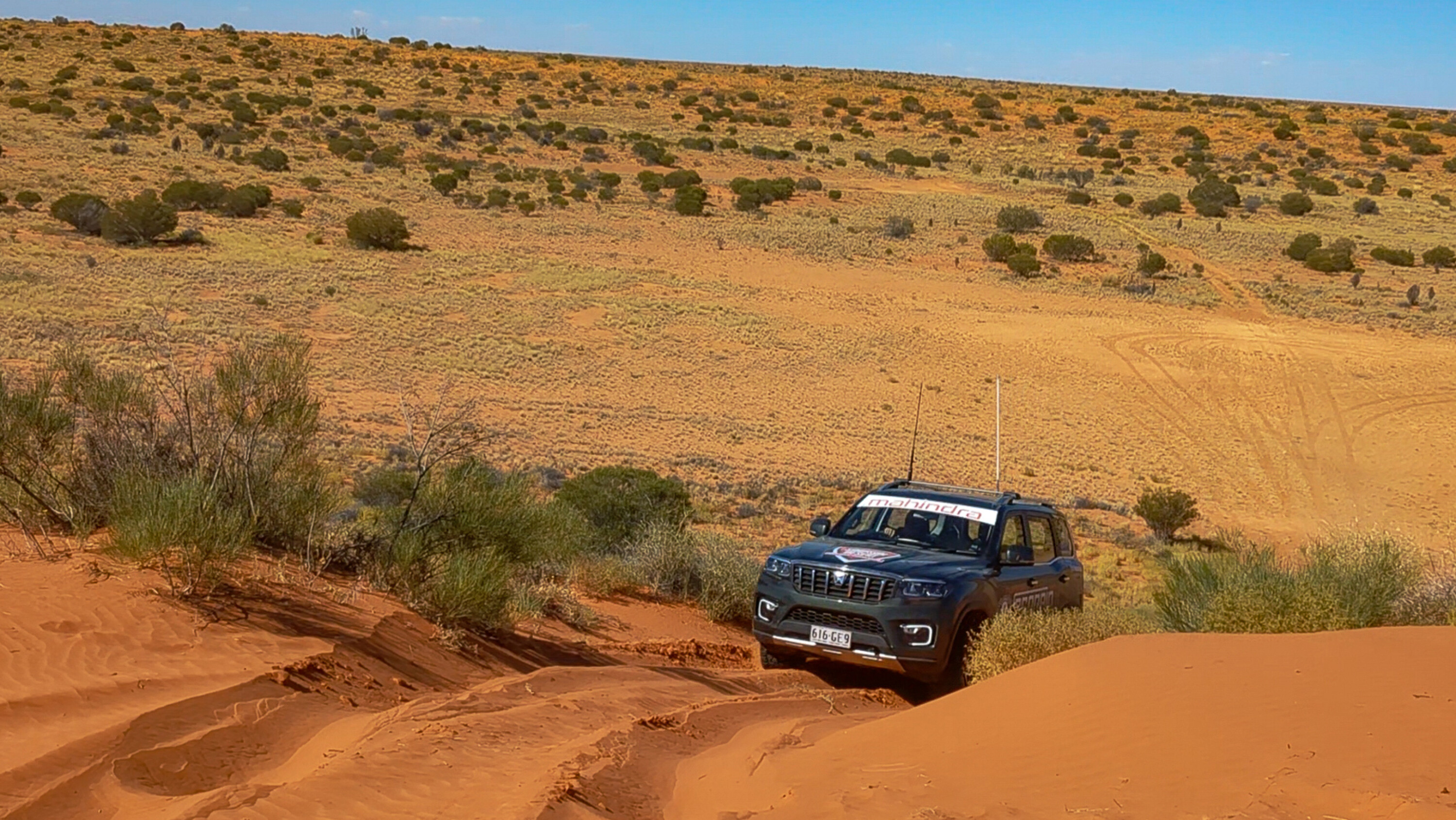
Corbett and Robinson had to traverse more than 1100 sand dunes and treacherously soft salt flats as temperatures regularly soared beyond 50 degrees Celsius.
The Mahindra Scorpio was a factory-specification vehicle, save for the fitment of all-terrain tyres.
The time was verified by Guinness World Records. It is the first time a production vehicle has officially set a time for crossing the Simpson Desert with Guinness World Records.
Other Guinness World Records for the Simpson Desert include fastest crossing by foot (Pat Farmer in 1998, in three days and eight hours) and by solar-powered vehicle (Mark French and Denny French in 2017, in four days and 21 hours, using an electric Suzuki Sierra).
Spanning the Northern Territory, Queensland and South Australia, the Simpson Desert is the fourth-largest Australian desert and contains the world’s longest parallel sand dunes ranging in height from three metres to 30 metres.
Made in Maharashtra, India, the Mahindra Scorpio is an all-wheel-drive, body-on-frame SUV powered by a 2.2-litre turbo diesel inline-4 producing 129kW/400Nm. It’s priced in Australia from $41,990 drive-away.
The imminent 2024 Mitsubishi Triton will receive a “new” powertrain.
Snapshot
- 2024 Mitsubishi Triton to feature u201cnew powerhouseu201d
- Updated 2.4-litre with more power and new auto likely
- All-new model to debut on July 26
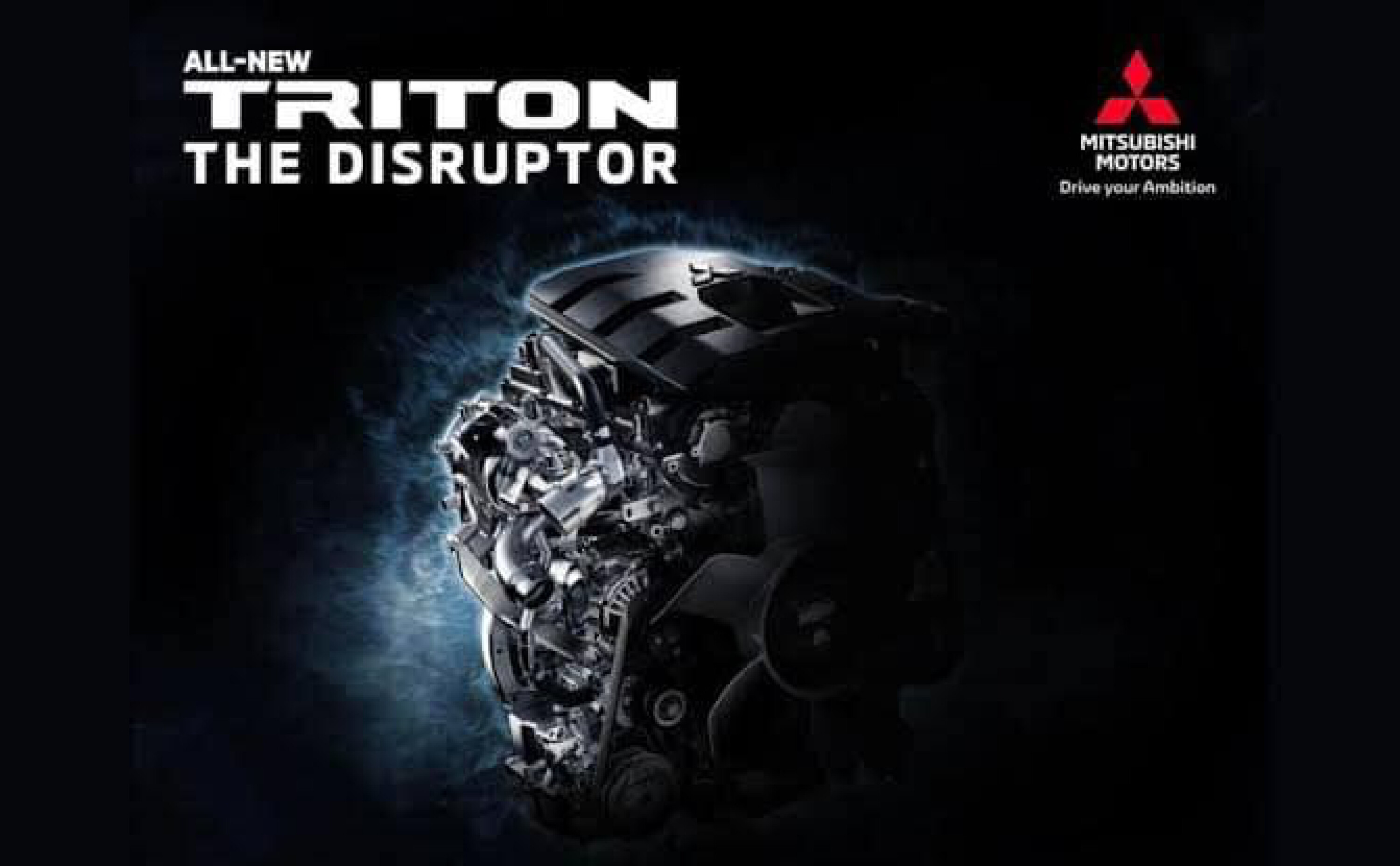
A social media post by Mitsubishi Motors Thailand reveals the new Triton’s engine, which is said to be “new” and “more impressive than ever” – but the changes aren’t believed to be revolutionary, according to overseas reports.
South-East Asian media reports it is likely a revised version of the 2.4-litre diesel engine found in the current Triton and Pajero Sport, with outputs tipped to rise closer to the four-cylinder benchmark of around 150kW and 450-500Nm.
The current Triton produces 133kW and 430Nm, with a 3.1-tonne braked towing capacity and six-speed manual or automatic transmissions.
Codenamed 4N16, the updated diesel is an evolution of Mitsubishi’s current 4N15 mill with a 2439cc displacement, down from 2442cc. It is already found in the Japanese-market Nissan Urvan/Caravan.
There, it is paired to a Jatco-developed seven-speed torque-converter automatic transmission – but Mitsubishi could instead develop the Pajero Sport’s Aisin-sourced eight-speed unit for the new Triton.
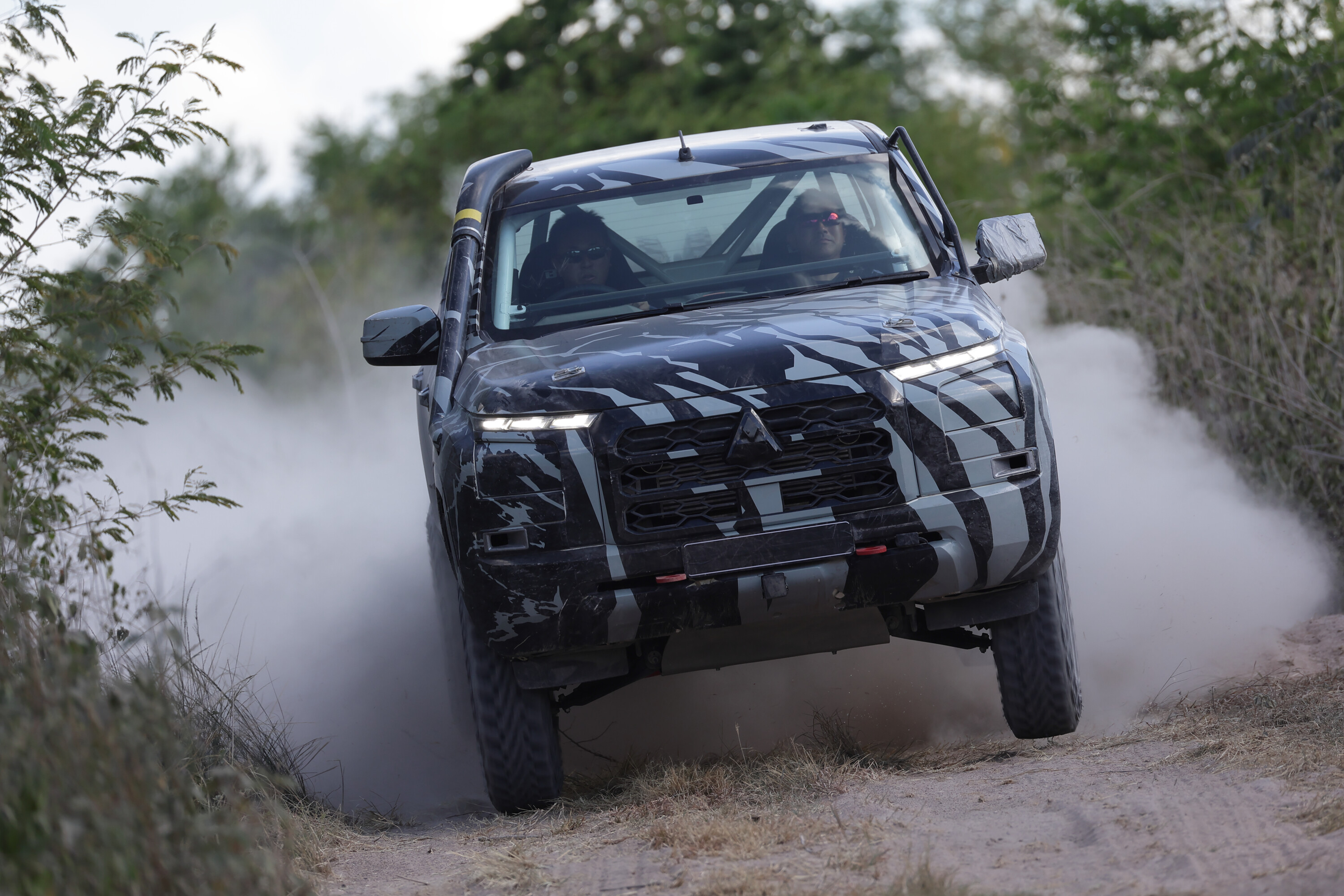
A manual transmission is seen on the new Triton AXCR rally car, suggesting Mitsubishi will continue to offer manual and automatic options – at least in overseas markets.
“Australia is a core market globally for Mitsubishi Motors, and we have been a key stakeholder in the next-generation Triton’s development process,” said a Mitsubishi Australia spokesperson.
“The light commercial utility segment is more competitive than ever, and we are confident that next-generation Triton will take Mitsubishi’s enduring presence in this market to the next level.”
Mitsubishi has announced it will offer a ‘Trail Package’ for the new Triton in its home market at 40,000 baht (AU$1710), bringing a black sports bar, a chrome front grille, wheel arch extensions, floor mats and ‘door protection moulding’.
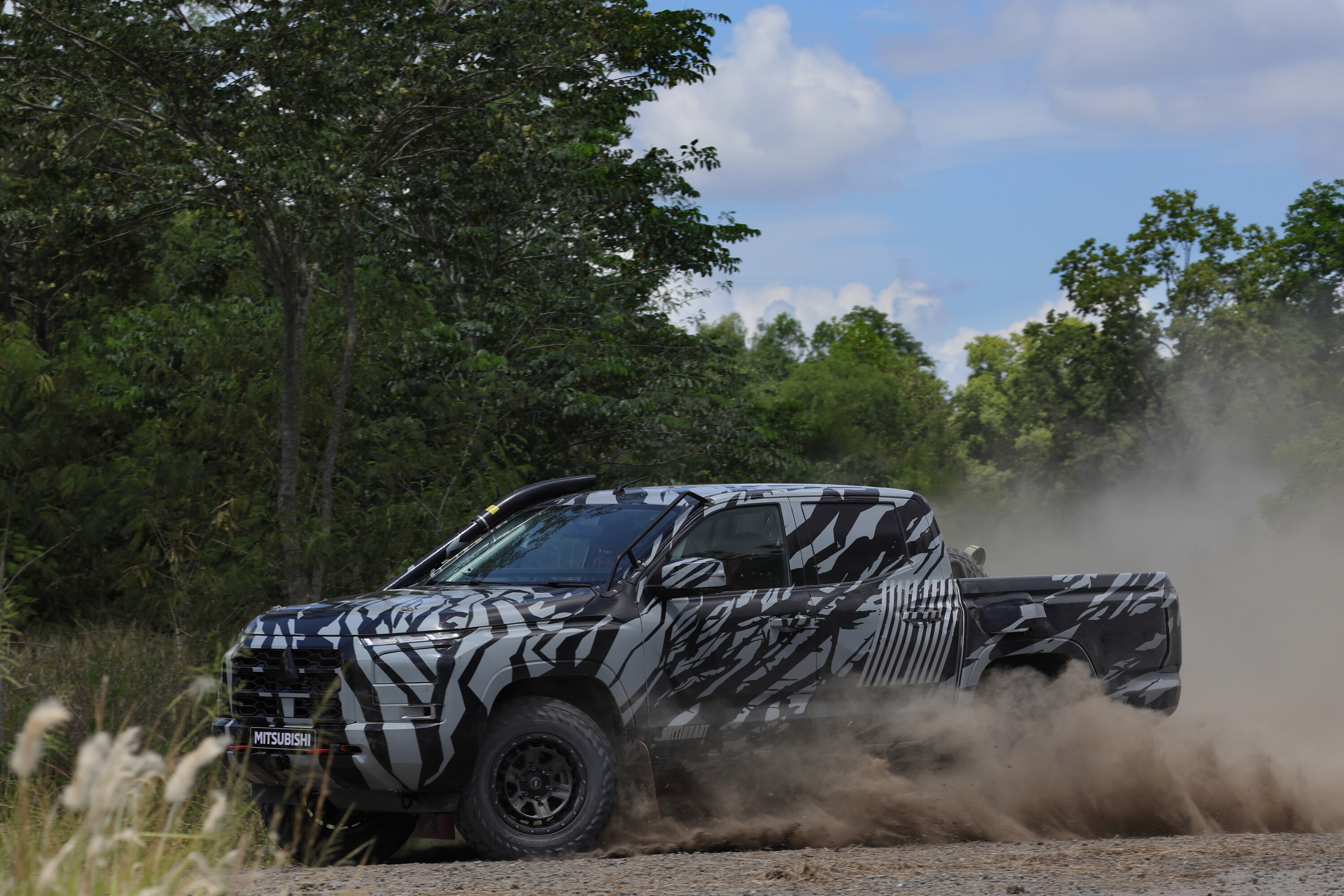
The latest news follows the Mitsubishi Ralliart team’s announcement that it will participate in the upcoming Asia Cross Country Rally (AXCR) in a race car derived from the new Triton.
The team, led by Hiroshi Masuoka, will aim to defend their overall victory from last year, with Chayapon Yotha – the reigning champion driver of AXCR 2022 – and Rifat Sungkar to return, joined by new Japanese driver Katsuhiko Taguchi.
The team will compete with three new Triton Group T1 prototype cross-country vehicles, with the championship due to commence in August.
Mitsubishi said endurance tests were conducted on the redesigned Triton rally cars to ensure reliability, durability, and improved performance in the forthcoming competition.
“Based on the original strength of the all-new Triton, the handling performance, stability on rough roads, and ride comfort are further improved as a rally competition car,” said Mitsubishi Ralliart team director, Hiroshi Masuoka.
“The turbocharger has been improved to increase engine response throughout the entire rally range from low to high rpm, resulting in a powerful rally car that can handle any road conditions.”
Inside, the AXCR rally car previews the Triton’s redesigned cabin, with visible components – including the engine start/stop and steering wheel controls – similar to the latest Outlander midsize SUV, which also shares parts with the related Nissan X-Trail.
The “fully redesigned” 2024 Mitsubishi Triton ute will debut in Thailand on July 26.
“We look forward to sharing more details of the development process, and of the new Triton’s Australian range, specification, timings and pricing as we move towards delivering this next-generation utility vehicle to Australian customers,” added the Mitsubishi Australia spokesperson.
The biggest difference between what we do on a regular new-vehicle test and what we can do when we buy a new vehicle is what we can learn about it the more time we spend with it.
All those little things you learn that only come with time; peculiarities both good and bad.
We’ve always said that the latest Ford Ranger is a great vehicle and it has raised the bar for all other midsize 4×4 utes. Living with our Ranger Sport and driving it almost daily has given us no reason to change this opinion. The V6 Ranger is quite simply next-level good!
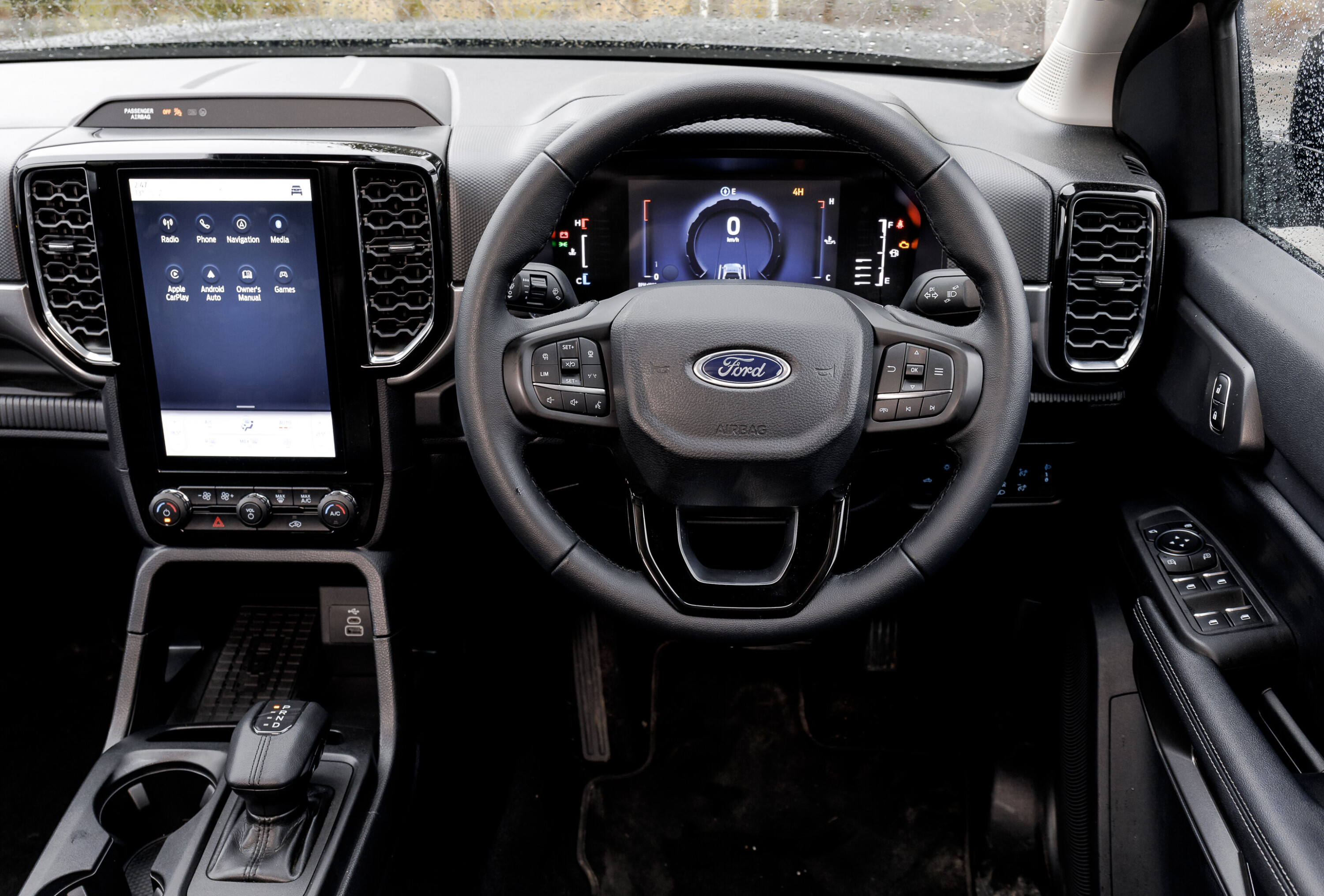
The clever placement of all the buttons and the functions within the Ranger have become so second nature to me that I have come to expect such ease of use in other vehicles, but am always disappointed.
The location and ease of use of the interior door handles is a great example; they are perfectly situated and funnily enough not in a dissimilar position to where they were in classic Aussie Fords in the late-60s through to the early-70s. It just goes to show that you can’t beat good design.
If you have to have a start button then at least the RA Ranger puts it in the correct position on the right-hand side of the steering column where your hand naturally goes to start a vehicle, so you don’t need to go looking for it.
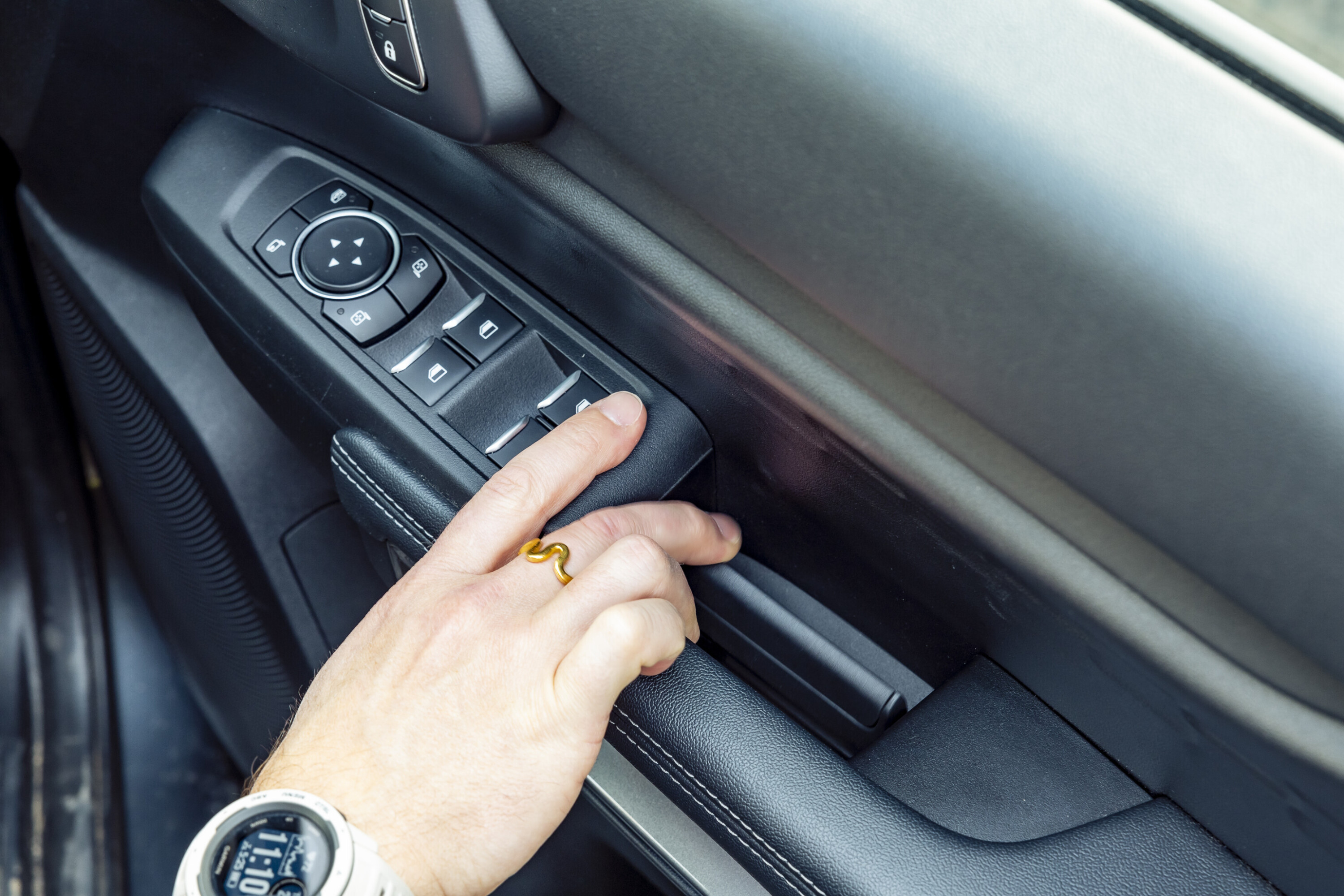
The big tactile dials for the HVAC temperature controls and audio volume are also very easy to find and use, without having to take your eyes off the road.
Sure you could use the volume buttons on the steering wheel but the real estate on modern tillers has become so cluttered that you need to look down to find the right button… and even then they are slower to function than a fast-acting dial.
With the volume and track buttons, cruise control and menu buttons all on the steering wheel, it is very busy and not ideal. Moving the cruise control to a separate stalk like Toyota used to use would declutter the wheel and make using the cruise control easier.
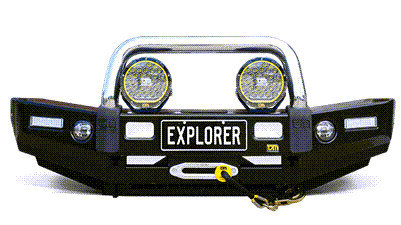
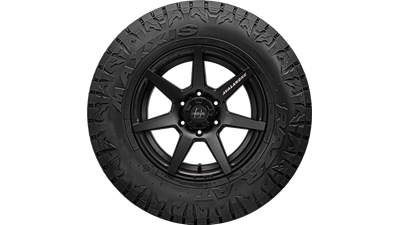
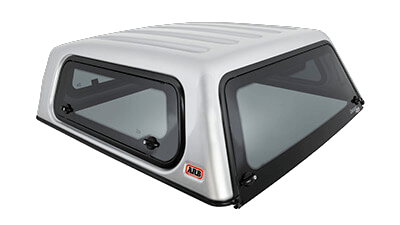
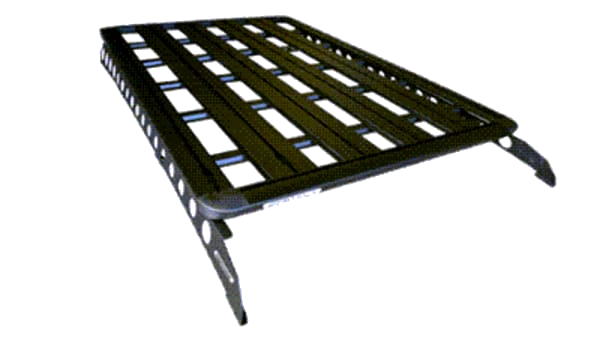
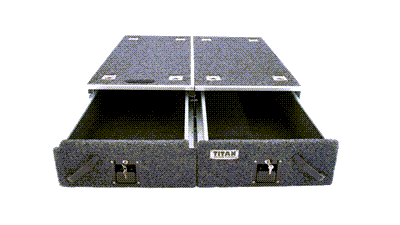
While all the accessories and modification we’ve had fitted to the Ranger make it a better off-road touring vehicle, they do take away some of the excellent traits of the standard vehicle. The aggressive mud-terrain tyres can be heard and felt as you drive along, the roof racks give a little bit of wind noise once you hit 100km/h on the highway, and the storage canopy restricts rearward vision.
But these are all grievances we are prepared to put up with to make the vehicle better suited for outback use.
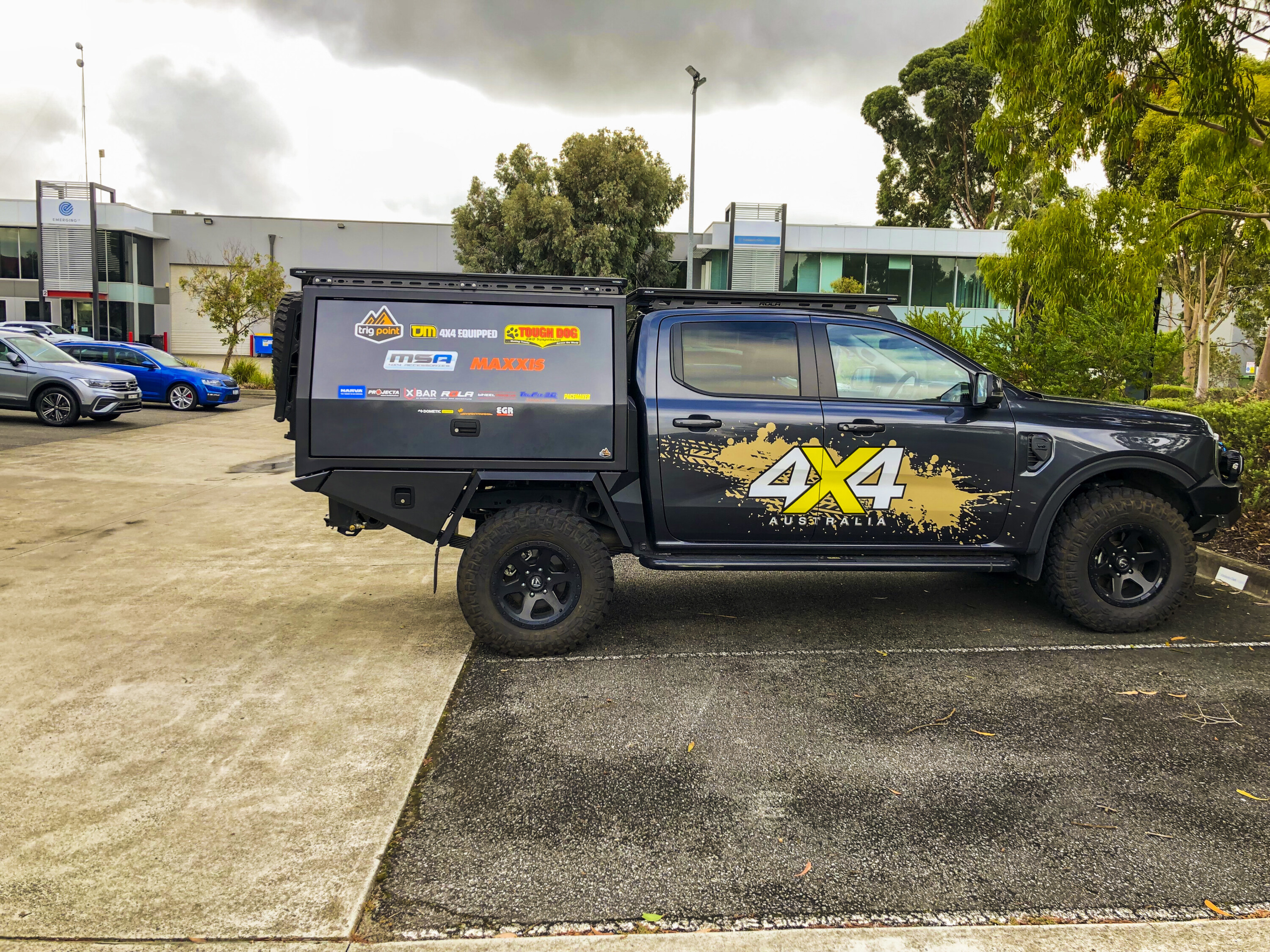
Something that we did find surprising was how poorly the factory suspension coped with the extra weight of the canopy on the back of the chassis. Trig Point tells us that by removing the factory steel tub and installing its aluminium canopy, you are adding around 130kg to the overall weight, but the weight moves further back on the chassis.
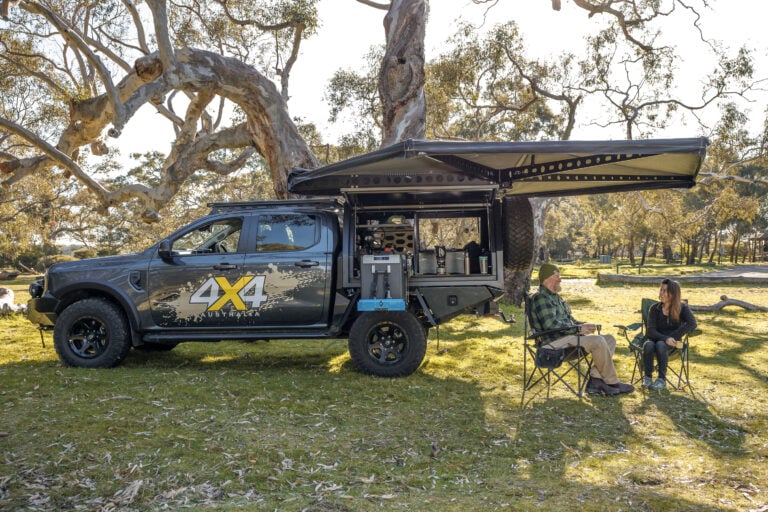
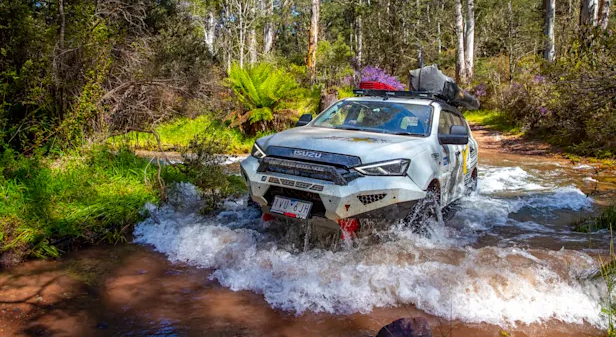
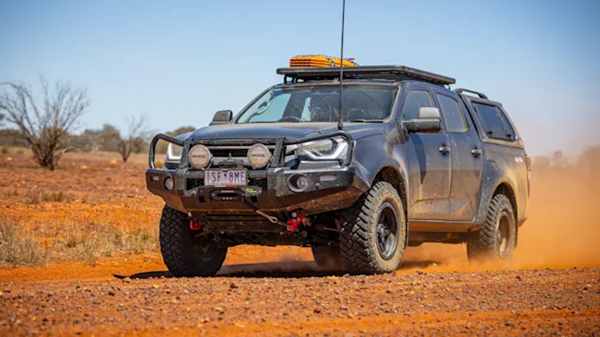
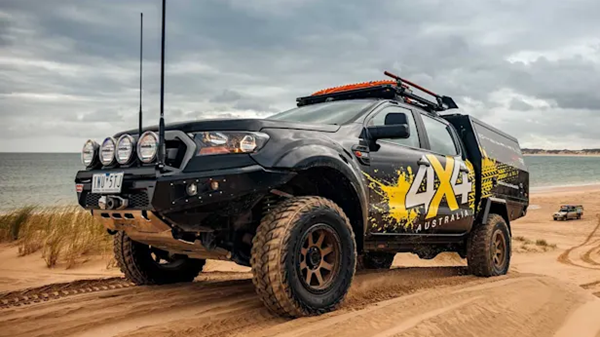
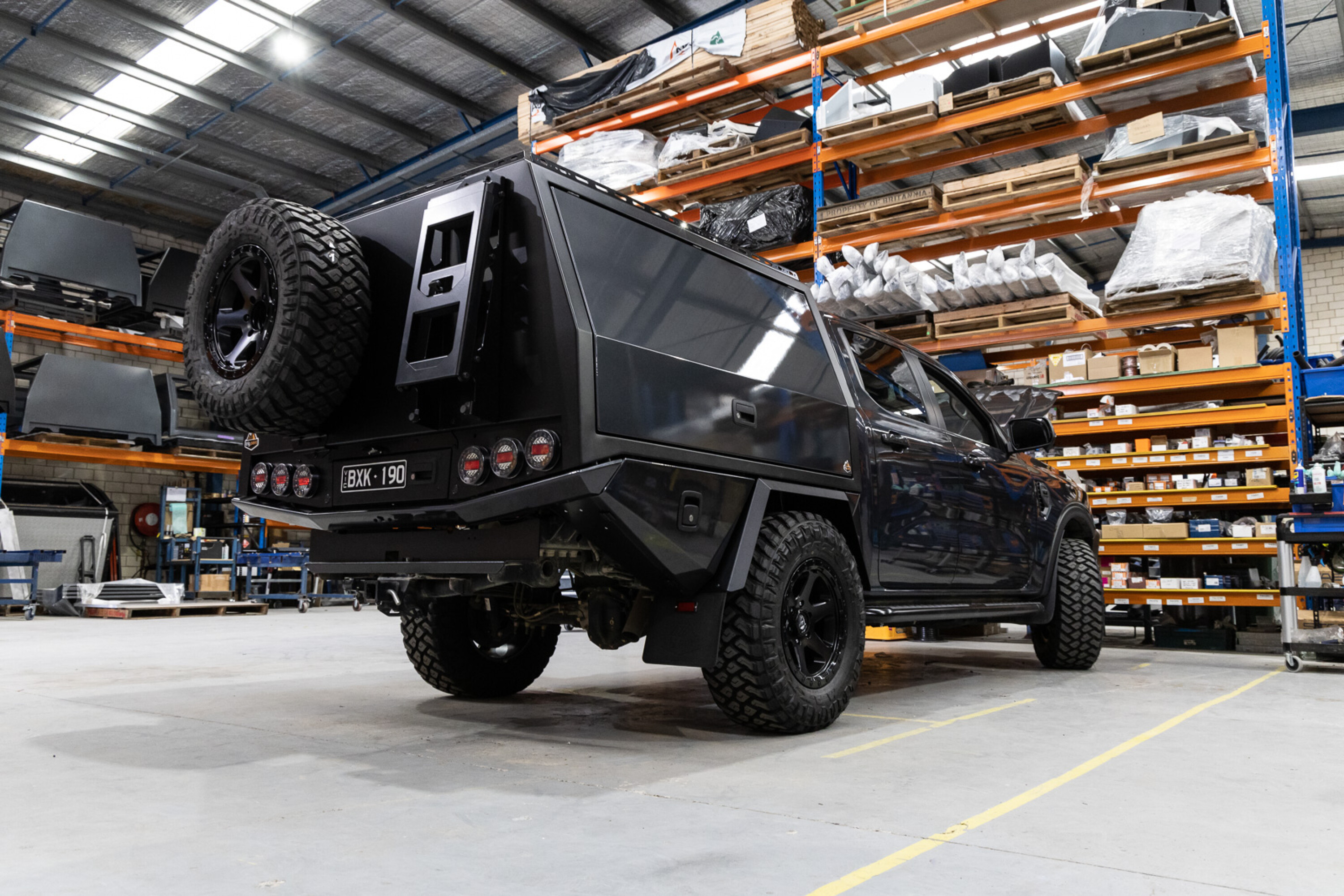
Our canopy also has side toolboxes, a 50-litre water tank and we’ve fitted the extensive 12-volt system inside it. But we reckon there’s no more than 350kg to 400kg on the vehicle over standard, yet the rear suspension sagged down to such a point that it was riding on the bump stops.
When you consider that the V6 Sport has a claimed payload of 934kg, it makes you wonder how it would handle that. People towing heavy vans behind Rangers have been reporting the same problem with the stock suspension, but it comes back to the way Ford has tuned it softly so that it drives and handles so well without a load on it, but is less than ideal with weight on the back.
This makes me wonder if Ford should offer a choice of rear leaf springs for load and comfort like VW used to do on the original Amarok.
Not everyone wants a full suspension upgrade, and better-suited springs would be all they need for towing.
Cleared mine areas are in evidence as you approach Weipa, where the sudden appearance of traffic lights might be a bit startling… and the last thing you would expect after long distances behind the wheel.
After all, Weipa is situated at the end of the Peninsula Developmental Road (PDR), some 850km north of Cairns.
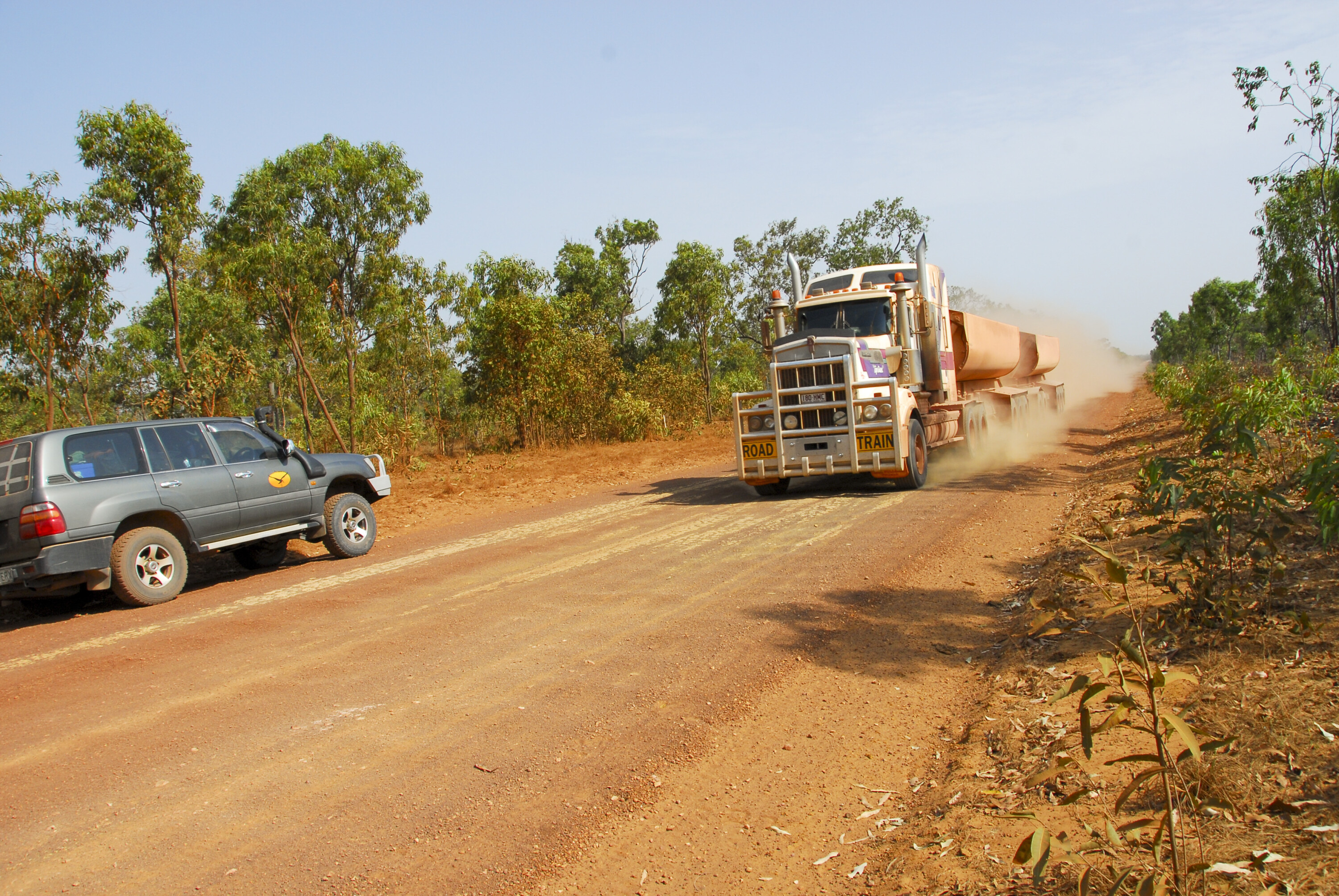
You had better stop on a red signal though, as 110-tonne loaded scrapers travel along this stretch at 60 clicks. I once saw a Nissan Patrol that had been run over by one of these at Mount Isa… and it wasn’t a pretty sight.
Weipa history and facilities
Weipa has a population of 3000, and it was founded on rich deposits of bauxite, the raw material for aluminium.
Mining has been ongoing here since 1962, and it will continue to thrive for many more years, with more than 3.5 billion tonnes of ore remaining unmined.
The mining is performed by clearing the monsoon woodlands and the topsoil from the underlying 2m-thick deposits, scooping up the ore with scrapers and bulldozers, and washing and shipping it to smelters at Gladstone in massive ore carriers. The topsoil is then returned and the disturbed area is revegetated.
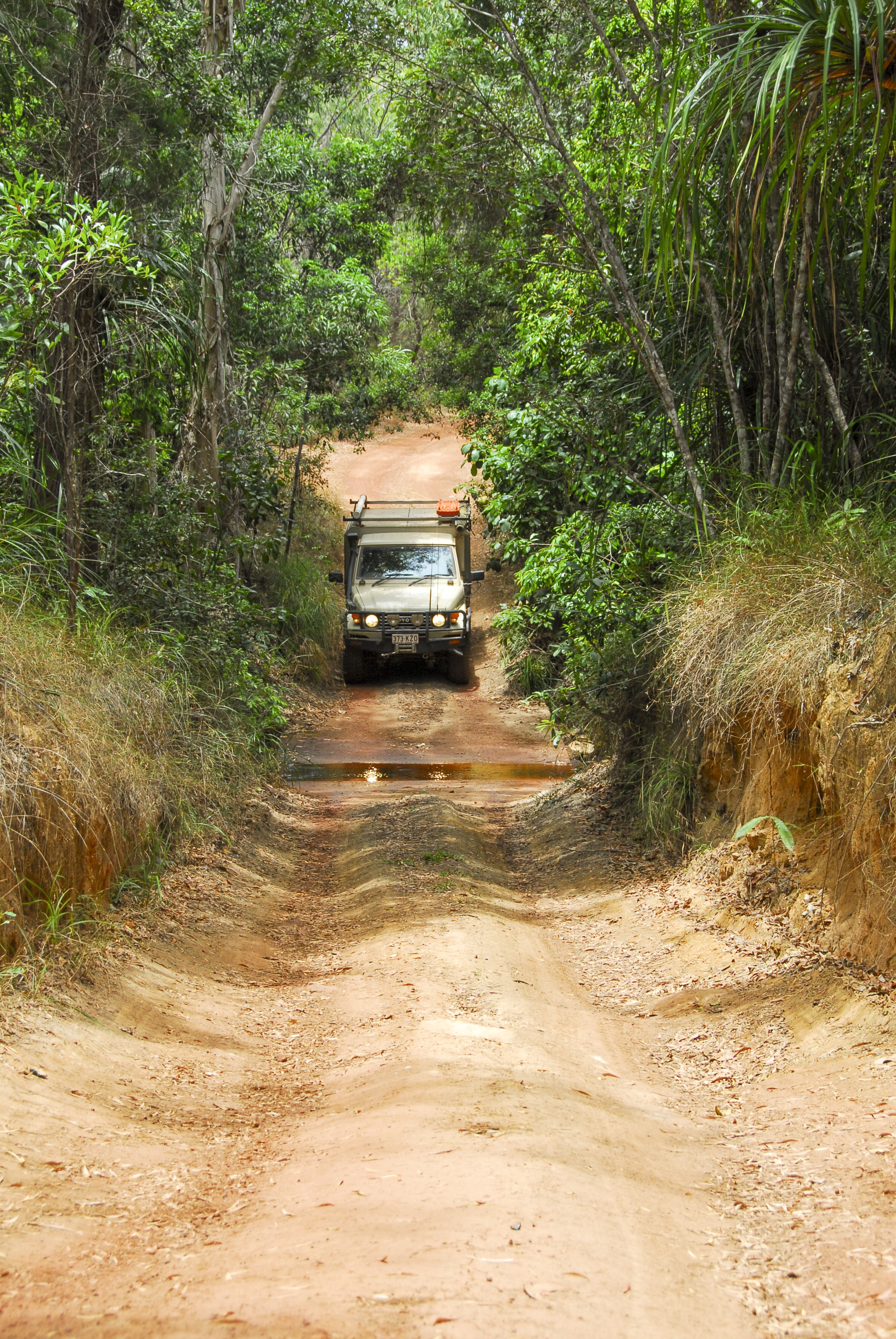
While the PDR is graded after each Wet, enough corrugations remain that you will soon form an appreciation for Weipa’s bitumen roads. As well as several workshops and garages, the town boasts a modern shopping centre, so it is a good place to get repairs done, do some shopping, relax a little or drop a line with one of the local guided fishing operations.
Mine tours are also available. If you have never done a mine tour, those on offer at Weipa will no doubt amaze you with the sheer scale of the equipment used in the mining operation, which is used to dig out about 16 million tonnes of bauxite a year depending on demand.
There are plenty of other activities on offer in Weipa too, including golf, bowling, cricket, pistol shooting, football, scenic flights, boar hunting, birdwatching and, of course, the fantastic fishing the region is famous for. Many people live in Weipa solely for the fishing and the hunting.
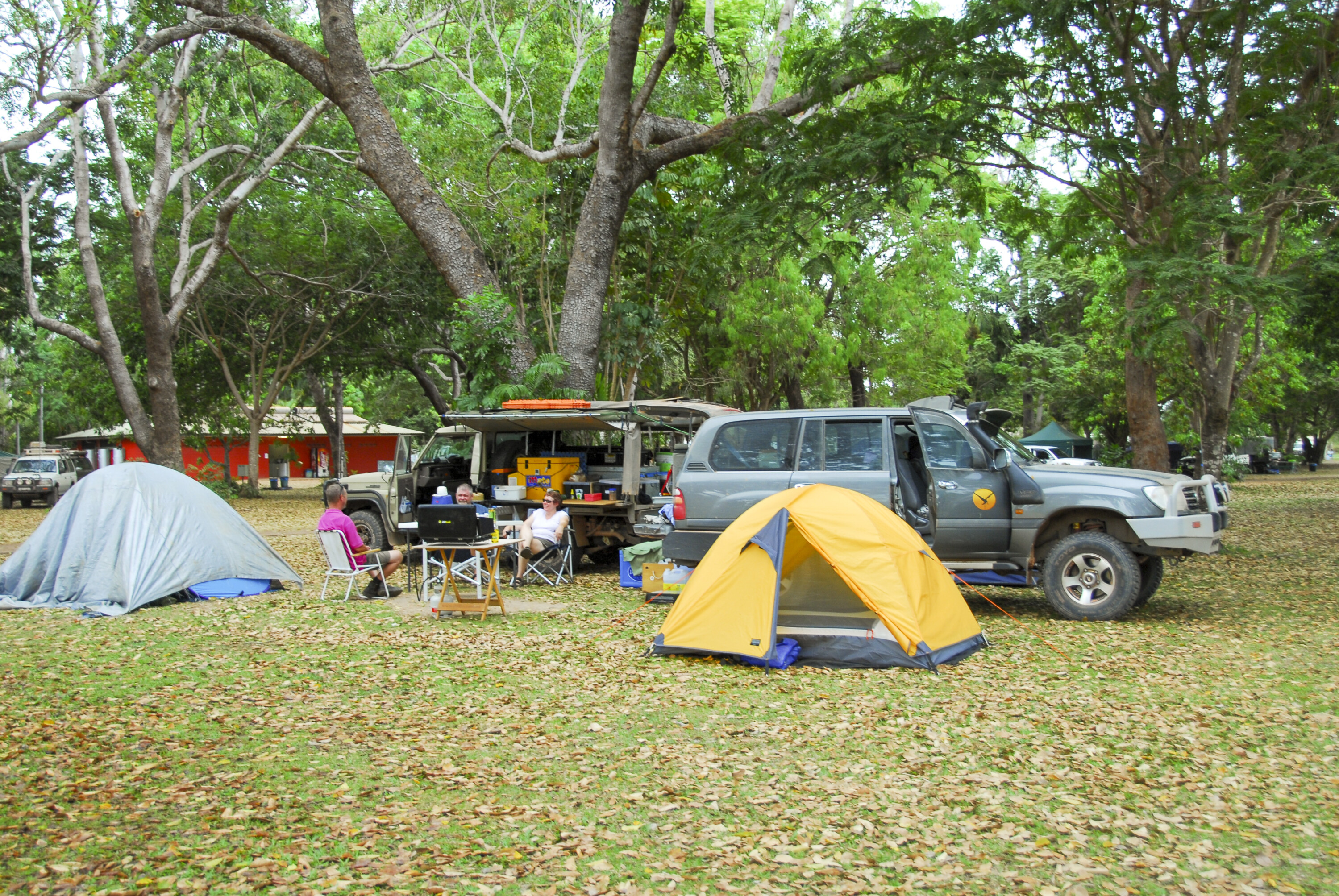
The well-appointed Weipa Camping Ground on Albatross Bay is a bit crowded in the dry season, but by avoiding the busy period between June-August you may find that you have plenty of elbow room. The dry season school holidays are very popular with families that come here for the fishing. The campground office is a booking agent for mine and fishing tours and can arrange permits for Mapoon, Pennefather, Aurukun and Stones Crossing.
Other accommodation in Weipa ranges from motels, lodges and B&Bs. For something different, Weipa Houseboats can accommodate up to 10 people and is a lot of fun if fishing is on the agenda. Bring a couple of mud crab pots for a change of diet.
Weipa North
For the non-anglers, there is still plenty to see and do; the sand dunes and beach driving to the Pennefather River estuary and campground, the Cullen Point campground at Mapoon, and the Jamie Creek Turtle Conservation Camp en route are just some of the wonderful places to visit.
There is some wonderful scenery and wildlife to take in in this tranquil wilderness, while Cullen Point has a great campground with water, showers and toilets present, and a bitumen road from Mapoon to the point. If you run out of tucker, the community store has plenty and fuel.
As well as a boat ramp, Jamie Creek also has camping, and you may be able to take part in the local turtle-rescue project, which involves the removal of discarded commercial fishing nets from beaches, called ghosts nets, because they kill fish and marine animals.
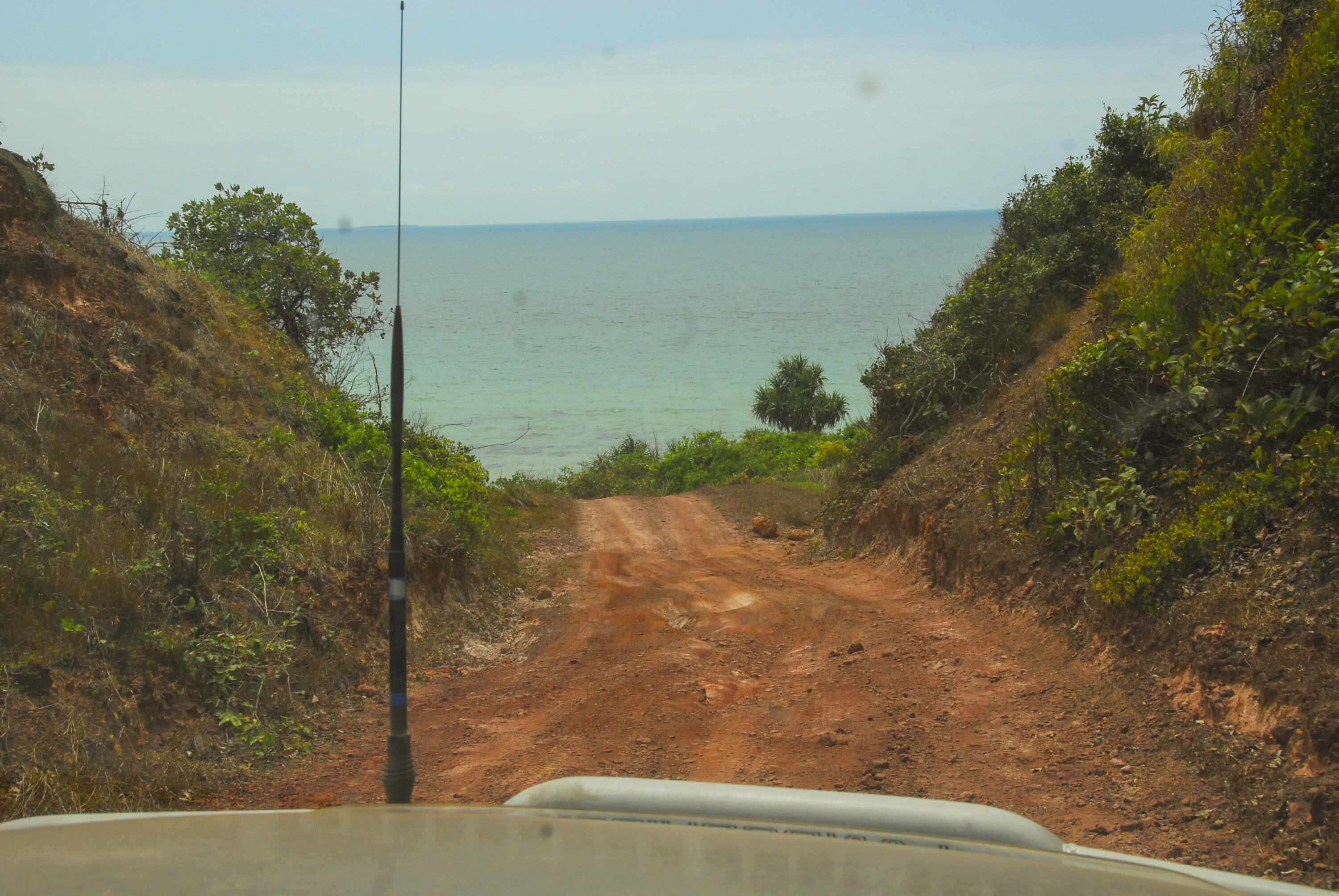
Cullen Point is on Port Musgrave, which is fed by several rivers and creeks, and has wonderful fishing… and plenty of crocodiles. The Wenlock River flows into Port Musgrave but can also be reached at Stones Crossing on the upper tidal reach of the river.
It is a wonderful place to camp, catch a barra on the incoming tide and relax under shady monsoon gallery forest that fringes the riverbank. You used to be able to cross the river and take a shortcut to the Bamaga Road from here, but since the generous Australian taxpayer purchased the property and gave it to the Irwin family to run cattle on, the track has been closed.
Weipa should really be on your travel agenda when heading north. The 3km Batavia shortcut, 72km south of Weipa, is graded and an easy drive to the PDR from Weipa – either coming from the north or heading there.
Captain Billy Landing
A lot of people don’t rate Captain Billy Landing and Chili Beach for fishing due to high winds. Sure, this can be a problem if you want to fish the east coast, but there is much more to see and do here than just fishing. The best time to fish the east coast and escape the wind is just after the wet season and in the latter part of the dry season from late-September onwards.
The lagoon extending out from Captain Billy Landing may be the best fishing hole on Queensland’s east coast thanks to its designation as a yellow zone (recreational fishing only), and the fact it’s totally surrounded by the largest green zone (no fishing) in the Great Barrier Reef Marine Park. That alone makes it a worthwhile turn-off from the Bamaga Road – 6km north of Bramwell Junction – onto the 27km landing track.
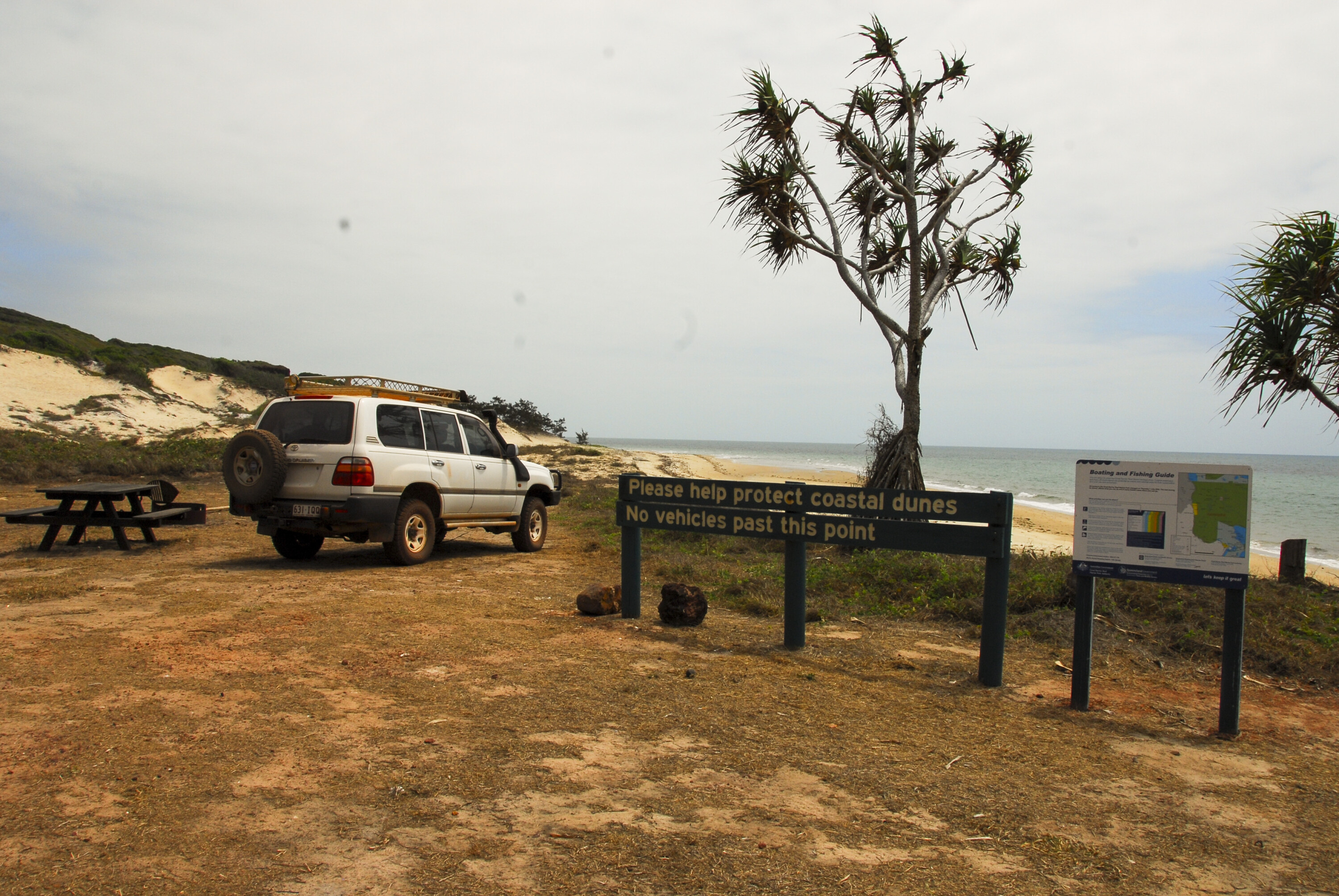
In addition, this is one of the best nature drives on the peninsula. The area is part of the Heathlands Resources Reserve, in what the early explorers dubbed the Wet Desert or Badlands. Consisting of heath-covered sand dunes, more than 2000mm of rain falls here every year, and about 90 percent of that in the wet season from October to April. The rain is stored below the sand in the rocks and released sponge-like throughout the dry season.
This is the wettest place in Australia, with more streams born from springs here than anywhere else. Fraser Island promotes itself as being the only place in the world where rainforests grow on sand, but it is not, as the Wet Desert has some fine monsoon rainforests growing on pure sand also.
One of the largest patches of rainforest is where the Bamaga Road junctions with the Captain Billy Landing track. I think there was a failure to understand the importance of this rainforest patch when the road was pushed through; there should have been a diversion around it.
The track runs under the verdant canopy for almost half its length, and it is an amazing birding area, with many sightings and the vociferous noise of our feathered friends will enthral you.
There are speed humps about 150m apart along most of the track to stop erosion from water run-off during the wet season, and these slow the traffic, which in turn aids people in seeing and enjoying the wildlife the peninsula is gifted with. You’ll find that even the open woodlands house a rich variety of species if you bother to slow down, look and listen.
A lookout from the top of the Richardson Range (8km) offers sweeping panoramic views of the Olive River dunefields, Temple Bay and the Great Barrier Reef. If you have a GPS or a compass, you can walk down to where both the Jardine and McHenry rivers are born from bountiful swampy springs a couple of kilometres north of the lookout. It’s tough walking country though, so you need to be prepared and have the right gear to undertake walks in the Wet Desert wilderness.

Heath replaces the rainforest where the track drops down onto the coastal lowlands below the Richardson Range. There is an open clearing about 18km in, once a resting paddock for cattle herds from Heathland Station. They were held there and loaded on a cattle barge at the landing.
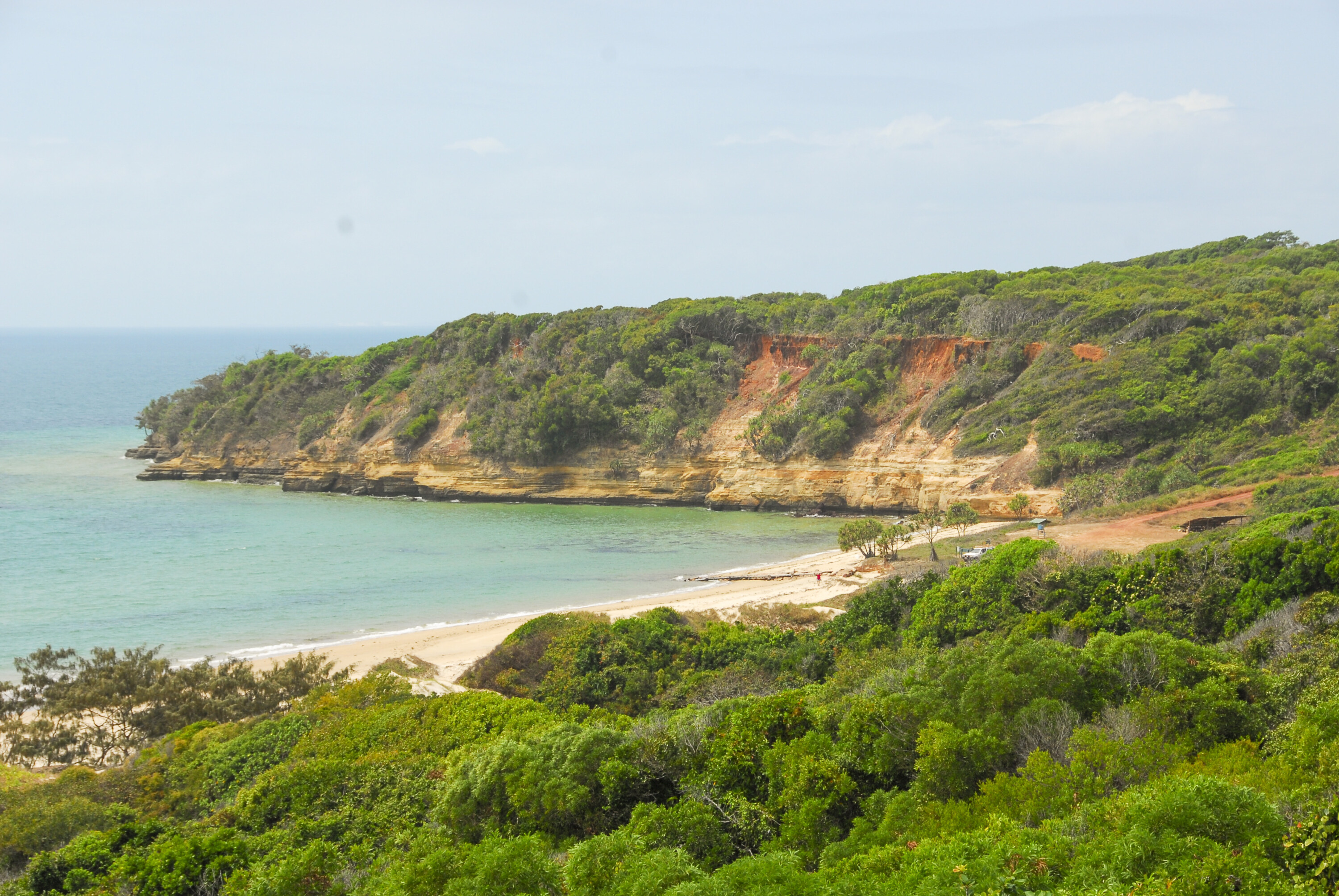
The landing is below a high cliff and there are some imposing views of the Great Barrier Reef lagoon and coastal scenery along the route. There is a toilet and a shelter at the landing, but if the southeast trade winds are blowing a lot of sand is mixed up with it. There is a great beach walk along the dunes to the north, to Hunter Point, and for the adventurers and the fit, walks on the escarpment to the south.
No vehicle access is permitted on the beach as it is an important turtle and sea bird breeding site – and impossible to get off in most places anyway. The old barge landing makes a good boat ramp if the wind is down. There are plenty of fringing reefs about the area and pelagics roaming out wide in the blue water that will tempt fishers.
A challenging past
Government Geologist, explorer and author Logan Jack explored and mapped this region in February 1880, at the height of the wet season. His team had to build dugouts and bridges to cross some of the streams. Horses were bogged and had to be dug out. Everything was wet, fly blown and covered with maggots including saddles, clothing and blankets.
In the rainforest they followed tracks made by the Aborigines and struggled crossing the deep gullies and creeks. Horses “knocked up” and died, or were abandoned, and most were sick from eating poisonous plants. In all they were lucky to escape. They met some natives, a couple who had a smattering of English, probably from working on trepang boats, and their spokesman introduced himself as Captain Billy.
He guided the party down to a creek where a large outrigger canoe was moored. Jack named it Captain Billy Creek. Captain Billy turned out to be a treacherous scoundrel and later led the party into an ambush. They opened fire on a large armed war party, about 15 in all. None were hit and the warriors fled.
Jack’s men camped and during the night long spears flew through the air: “One crashed through my neck above the right-shoulder-blade, injuring the deltoid muscle,” wrote Jack.
The spear was cut out with a knife after shots dispersed the war party. Jack described the spear being eight-foot long and fitted with a seven-inch barbed iron rod. It disabled Jack for the rest of the journey. Before they left the ambush site they collected the spears from the tents and burned an “armful.”
Unlike in Jack’s time, visiting Captain Billy Landing is nowadays as easy as turning off the Bamaga Road and into the encapsulated world of the Wet Desert’s monsoon rainforests.
Accommodation
Weipa Camping Ground and Weipa Beachfront Lodge
Ph: (07) 4069 7871 Email: [email protected]
Weipa Houseboats
Ph: (07) 4069 7469 Email: [email protected]
Western Cape Centre
Ph: (07) 4090 6800 or 0488 195 559
Rainbow Resort Inn
Ph: 1800 000 548
The Anchorage
Ph: (07) 4069 7535
Weipa B&B
Ph: (07) 4069 9796
Camp Chivaree – Mapoon
Ph: (07) 4069 9978. Email: [email protected]








In this rolling chronicle of updates, you’ll find links to all the big news and reviews for the upcoming Ineos Grenadier.
June 2023: Ineos Grenadier Quartermaster teased
New British 4×4 brand Ineos reveals first image of production dual-cab ute that will carry the Quartermaster name.
February: Grenadier driven!
We head to the Scottish Highlands for a first drive of the Ineos Grenadier – the new 4×4 aiming to replace the discontinued original Defender.
February: Interview with Justin Hocevar on Ineos and the Grenadier
Former Renault Australia boss Justin Hocevar takes on his greatest challenge yet – introducing unorthodox challenger brand Ineos and the Grenadier.
January: Grenadier pricing increases and delays explained
In a story common to all brands and buyers since COVID arrived on the stage, the Grenadier has suffered a significant price rise and production delays. Get the full story at the link below.
January: The Ineos Grenadier ute is due in Australia this year
The double-cab ute version of the incoming Ineos Grenadier off-roader should launch in Australia this year.
January, 2023: Ineos names Lynn Calder as its new CEO
Ineos has promoted from within, announcing longtime executive Lynn Calder as its new CEO.
The appointment is joined with Hans-Peter Pessler moving to Ineos Automotive as Chief Operating Officer, having performed executive duties with Magna Steyr – the company that manufactured Mercedes-Benz’ G-Wagon, among other models in the automotive market.
Related video: Grenadier first look
October 18: First Grenadier rolls off production line
The first market-ready 2023 Ineos Grenadier has rolled off the company’s production line in Hambach, France, ahead of its big launch next year.
Ineos’s local arm told 4X4 Australia that if shipping goes well, the first Australian deliveries could come as early as December but most likely early in the new year.
The six-variant Grenadier range consists of three five-seat station wagon models, and three two-seat utility wagons. All models are available with either petrol or diesel BMW 3.0-litre turbocharged six-cylinder engines.
Model nomenclatures include Grenadier, Grenadier Trialmaster Edition and Grenadier Fieldmaster edition, with prices starting at $84,500 before on-road costs for the base utility wagon. Prices top-out at $96,495 for the range-topping Fieldmaster station wagon.
September 30, 2022: PTO2 on tour
The 2023 Ineos Grenadier made its latest appearance at the 2022 UCI World Championships in Wollongong.
The same Grenadier was shown off at the National 4×4 Outdoors show at Sydney Motorsport Park earlier in the month. In case you missed it, the ‘PTO2’ prototype will continue to pop up at events around the country.
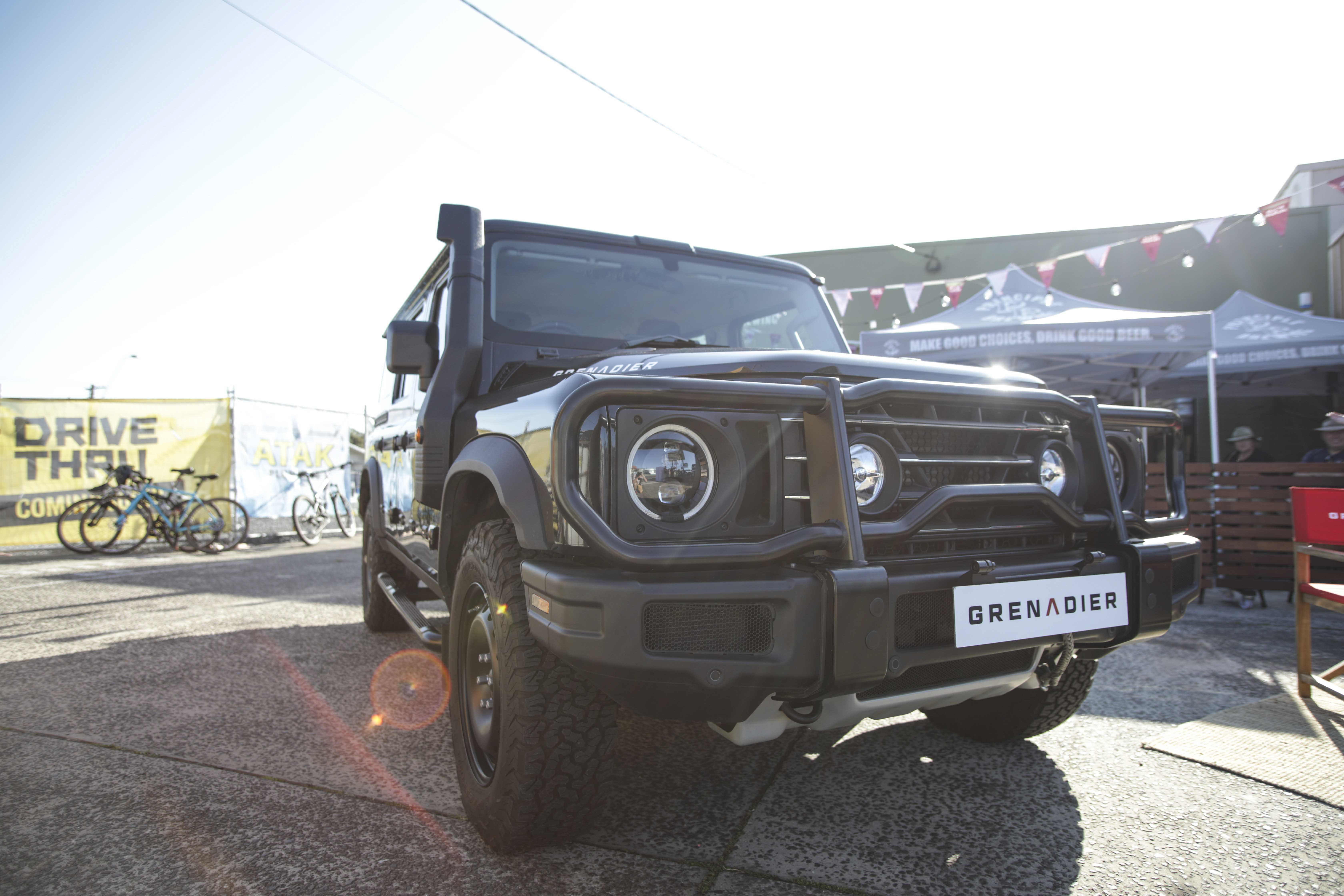
The latest ‘PTO2’ Grenadier is a more complete prototype that is very indicative of the final product allowing customers to make final spec choices following order books opening in May.
The vehicle in question is the off-road biased Trialmaster fitted with a few extras including a bull-bar, black paint and siderunners.
May 19, 2022: Australian order books open
Australian buyers interested in the Ineos Grenadier can now put down an order for the off-roader.
The British-based manufacturer today announced its order books were opening globally, including for Australian customers, less than a month after Ineos revealed Grenadier pricing for the local market.
Starting at $84,500 before on-road costs for the base utility wagon, prices go up to $96,495 in its range-topping Fieldmaster station wagon guise, with prospective buyers given the option to configure their Grenadier on the Ineos website.
April 29, 2022: Full specification of line-up revealed
Ineos has revealed the details and specification of its six-model Grenadier range of 4×4 wagons, which is set to go on sale in Australia later in 2022.
They include three models each of the five-seat Station Wagon and the two-seat Utility Wagon. All variants are offered with a choice of petrol or diesel BMW 3.0-litre turbocharged six-cylinder engines.
Click the link for the full story.
April 27, 2022: Order books to open in May
Ineos has announced it will have 32 sales and service centres across Australia and New Zealand when its Grenadier 4×4 wagon goes on sale later in 2022.
The dealers give the start-up 4×4 brand a widespread network across the two southern nations, and they will be among 200 centres set to be spread across the globe by year’s end.
Notably under-represented, however, are Western Australian dealers, with just two announced in our biggest state.
Read more of this story by visiting the link below.
February 23, 2022: Ineos Grenadier review: Prototype drive
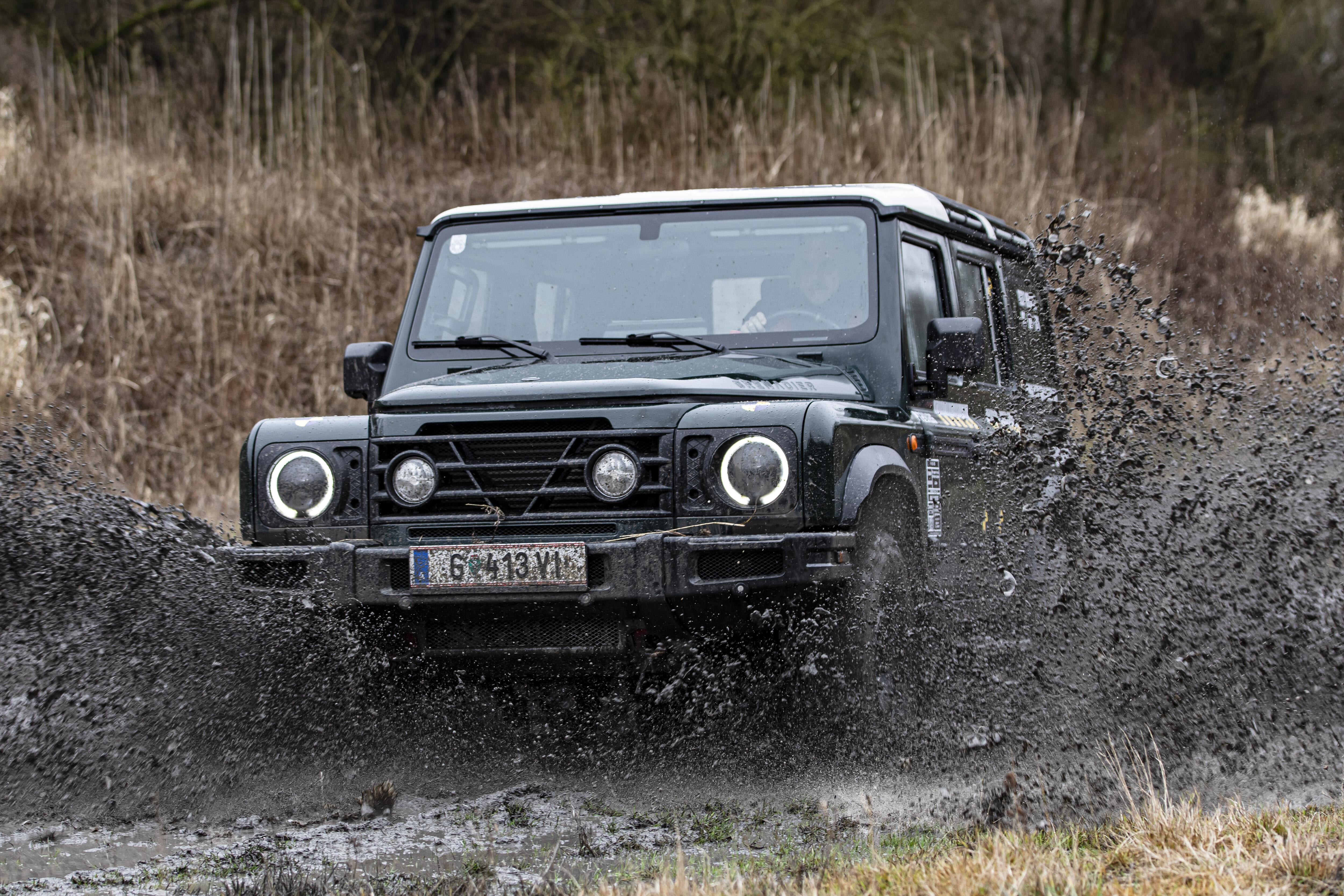
The Grenadier is tipped to be a confident and comfortable off-roader that feels as solid and unstoppable as Toyota’s benchmark 4x4s.
But can Ineos really challenge the LandCruiser? Angus Mackenzie finds out. Read his review of the prototype by clicking the link below.
October 12, 2021: Grenadier testing on Australian soil
The 2022 Ineos Grenadier is set to arrive in Australia this time next year, but a prototype is already undergoing durability and hot-weather testing in the Outback.
Ineos has released new images of the Grenadier mule being subjected to Australia’s challenging environment, as the new British carmaker seeks to create a reliable and heavy-duty four-wheel-drive designed to compete with the likes of the Toyota LandCruiser 70 Series.
September 29, 2021: How Ineos plans to appeal to Australians
As engineers complete a total of 1.8 million test kilometres with prototypes around the globe – including here in Australia – Ineos says it’s created a proper off-roader as an antidote to the softening of other four-wheel-drive models on the market.
“We will offer some versions that will go up in the range with nicer interiors for example – for those that want more comfort – but what’s not on the cards for us is going down this direction of ‘SUV’,” Ineos Australia sales and marketing manager Justin Hocevar told 4X4 Australia.
Read more of our interview with the company here.
September 29, 2021: Australian pricing revealed
Australians will be able to place an order for an INEOS Grenadier from October 2021, with deliveries of the all-new 4×4 wagon set to occur late in 2022.
The five-door Grenadier wagon will be offered initially, with prices starting from $84,500. A four-door double-cab pick-up will follow in a few years’ time.
Read our full pricing story here.
July 7, 2021: Interior revealed
Ineos Automotive has revealed a functional and practical interior cabin for its Grenadier wagon, which is due to go on sale around the globe in 2022.
The styling is very military-like with plenty of switches and dials which are said to be easy to reach and use, even when wearing gloves.
Hopefully, the abundance of dials and switches means users won’t be pushed in to menus within the screen to access commonly used controls as seems to be the case in many new vehicles.
Find out more about what the interior has to offer.
July 1, 2020: Ineos Grenadier revealed
In a world where traditional live-axled, ladder-frame four-wheel drive vehicles are becoming a rare commodity, there’s a new vehicle coming to market in 2021 and it’s coming to Australia.
The Ineos Grenadier promises to bring back the old-school off-road traits adventurers appreciate, in a vehicle that has up-to-date emissions and safety tech to make it viable in this day and age.
The live-axle Land Rover ceased to exist in 2016, and even the 40-year-old Mercedes-Benz G-Wagen switched to IFS, leaving the Jeep Wrangler, LandCruiser 70 Series and Suzuki Jimny as the only vehicles to retail the live-axle arrangement both front and rear.
It was Land Rover’s decision to re-invent the Defender as a more on-road-focused SUV that led to the birth of the Grenadier, and it’s no coincidence it bares distinct similarity to the iconic Brit.
Ineos is a British chemicals company that operates globally, with 183 manufacturing facilities in 26 countries supplying markets around the world. Fans of F1 and yacht racing might have seen the brand name on the Mercedes-Benz F1 team cars and America’s Cup racing boats and wondered who they are.
Ineos founder Jim Ratcliffe is a proud Brit and was a big fan of the Land Rover Defender. So much so, that when JLR announced it was discontinuing the Defender as we knew it, Ratcliffe tried to buy the rights and equipment to keep the Defender in production. JLR didn’t want a bar of that, so Ratcliffe decided to do it on his own and created Ineos Automotive to build the Grenadier.
“The Grenadier project started by identifying a gap in the market, abandoned by a number of manufacturers, for a utilitarian off-road vehicle,” says Ratcliffe. “This gave us our engineering blueprint for a capable, durable and reliable 4×4 built to handle the world’s harshest environments.”
Significantly, Ineos has employed the services of Magna Steyr (who manufacture the G-Wagen for Mercedes-Benz, as well as many other cars) to get the prototype ready for testing. It also secured BMW six-cylinder engines, both diesel and petrol, to power the vehicle. Transmission will be a ZF automatic, and it will have a dual-range transfer case. The production chassis will be manufactured for Ineos in Portugal and the live axles will come from Italian manufacturer, Carraro.
Interestingly, Carraro mainly makes axles for heavy and agriculture vehicles, but it also makes portal axles for lighter vehicles. When asked if the Grenadier would be equipped with portal axles, an Ineos spokesperson said that it won’t have them at launch as the vehicle has to be affordable. However, he didn’t rule out making them available to fit in the future. Front and rear locking differentials will be optional.
The standard axles are rated to 300kg front and 925kg rear, and the Grenadier wagon will have a 3500kg GVM and 7000kg GCM. With a final weight expected to be around 2500kg, the wagon will have around a one-tonne payload, and it’s being designed to accommodate a Euro pallet between the wheel arches in the cargo area. The dual rear doors are also designed to accommodate this size.
The components will all find their way to the new ‘greenfield’ factory in Bridgend, Wales, where Ineos expects to employ up to 500 staff to build the Grenadier. Initially, Ineos is planning to make 25,000 to 30,000 Grenadiers per year, but it will have the ability to produce more in the future.
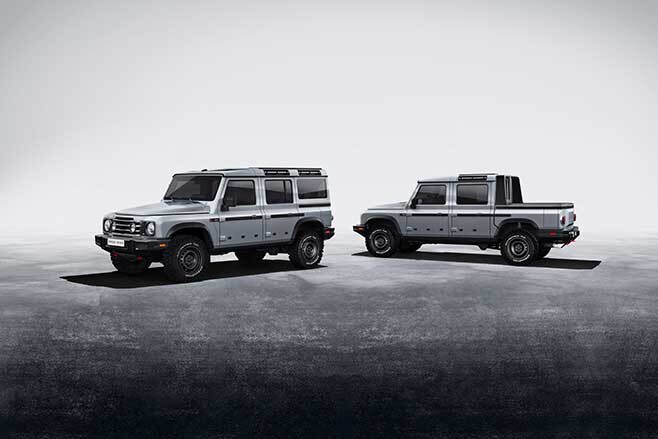
On July 1, Ineos revealed what its Grenadier will look like, and there’s no hiding similarities to the Defender and G-Wagen which reinforces the type of vehicle this will be. The reveal also showed the Grenadier will be available as a five-door wagon and a four-door, long wheelbase pick-up. These will be the initial models, with Ineos not ruling out more in the future, including a single-cab pick-up.
Ineos Automotive’s CEO, Dirk Heilmann, said, “We are delighted to be able to share the design of the Grenadier so early in the process. Most manufacturers would hold back, but we are a new business, building a new brand, and we want to take people with us on this exciting journey.
“Showing the design now allows us to focus on the critical next phase of the vehicle’s development, testing its capability and durability. We have a very challenging programme ahead, as we put prototypes through their paces in all conditions, on the way to accumulating some 1.8 million test kilometres over the coming year. From today the covers are off. Testing ‘in plain sight’ without the need for camouflage wrapping, foam blocks or fake panels is an added benefit.”
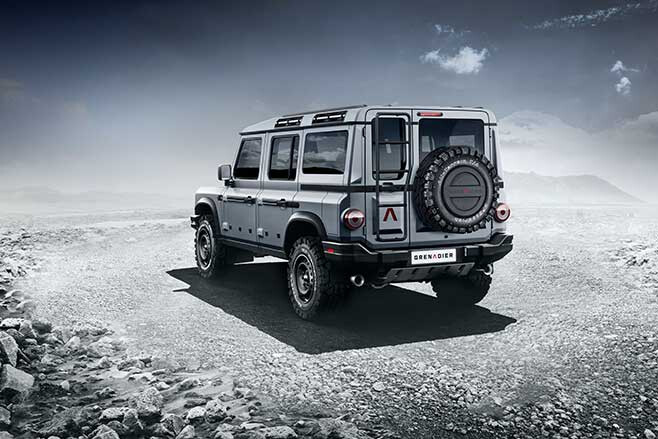
All Grenadiers will be built on a bespoke ladder-frame chassis with the aforementioned Carraro live axles riding on long travel coil springs, with sway bars front and rear. This design is used to keep the vehicle simple, durable, capable and affordable. In fact, these prerequisites run across the Grenadier design philosophy and are very much in line with what we would like as 4×4 users.
The body will be made from high strength steel, with the hanging panels made from aluminium. Most importantly, it will meet all expected safety requirements, allowing it to be sold around the world including in the USA and Australia.
In fact, Australia will be one of the first countries outside of the UK to see the Grenadier late in 2021 or early 2022; while left-hand-drive countries such as the US will have to wait a bit longer.
Final pricing is a long way off, but don’t expect it to be as cheap as an old Defender. Ineos spokesman said it “won’t be a cheap vehicle but it won’t be priced like G-Wagen”. We’re tipping in will start sub-$100K and be similar in price to a LandCruiser 70 Series.
With testing ramping up we expect to see a lot more of the Grenadier over the next 18 months, and we look forward to sampling the final product.
What is Grenadier?
The name Grenadier was chosen as it was the name of the pub in London where Ineos boss, Jim Ratcliffe came up with the plan to create his own uncompromising vehicle back in 2017.
Like all good ideas it happened over a pint of beer with the plan to build a stripped back, utilitarian, hard-working 4×4 engineered for modern day compliance and reliability.
With the design reveal in July, testing of the vehicle now gets underway with plans for a 2021 release date.
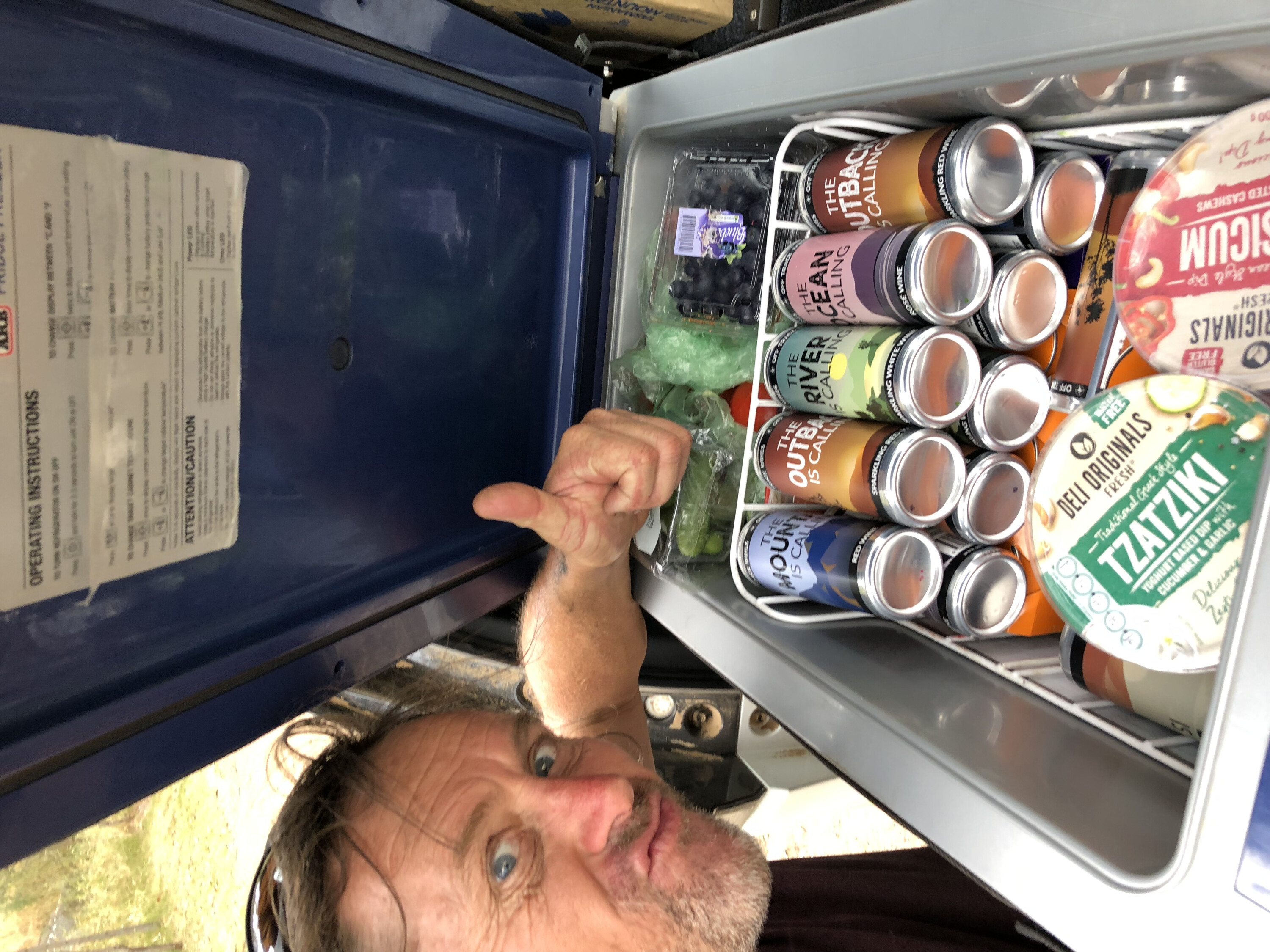
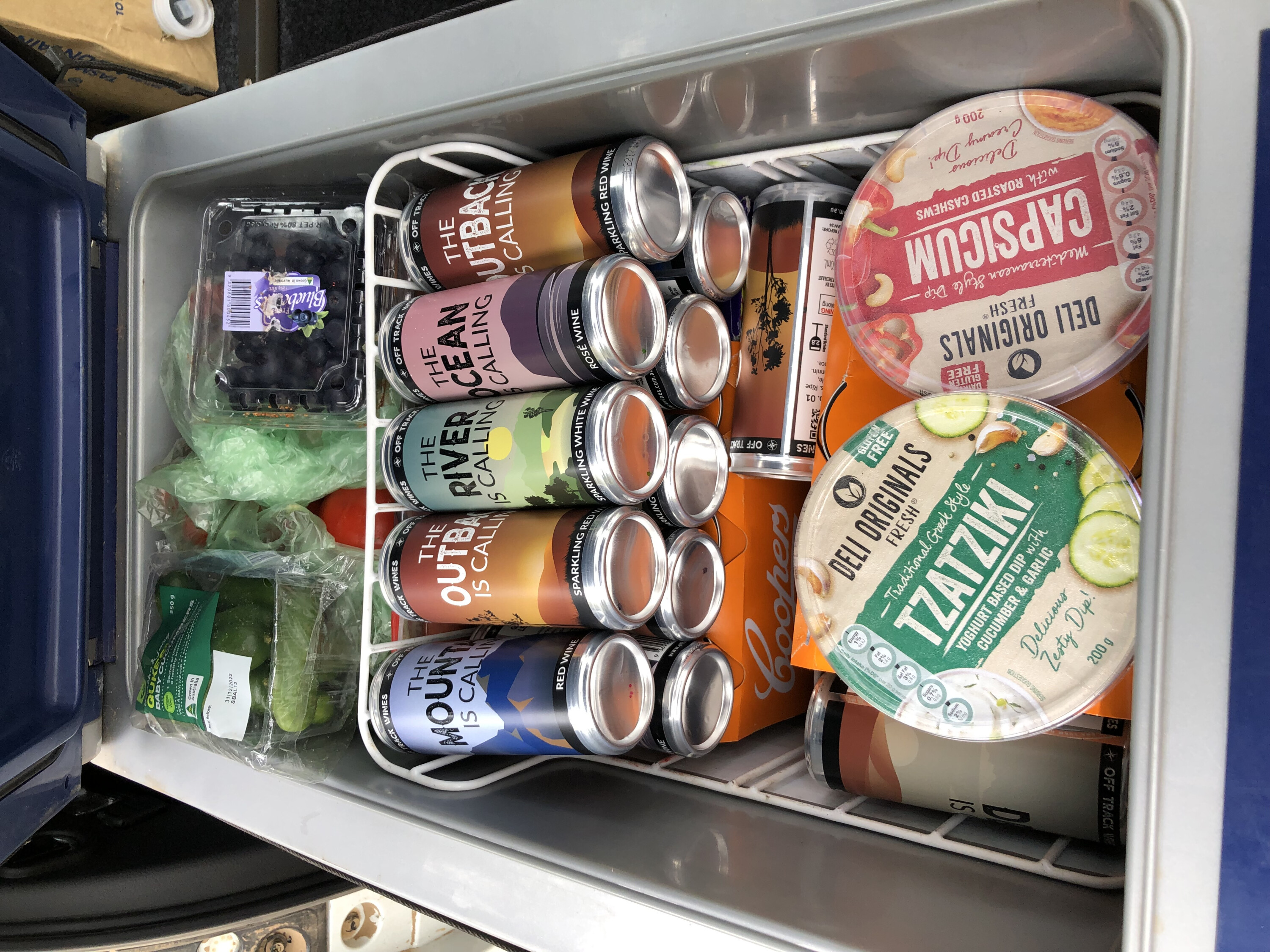
On recent trips we’ve been enjoying a selection of canned wines from Off Track Wines at camp.
Being the fine wine connoisseurs that we are, we were sceptical about wine in cans, but we soon changed our tune once we gave them a crack.
We shouldn’t have doubted Off Track Wines. The product comes from a winemaker from McLaren Vale, South Australia, who was frustrated by carrying wine in glass bottles that rattled in the back of their vehicle when travelling and camping, let alone the bulkiness of the empty bottles that needed to be disposed of.
The winemaker knew there had to be a better way to carry quality wine in vehicles off road, and so started looking at putting wine into aluminium cans.
Cans are better than bottles for vehicle travels as they stack more easily in a box or fridge, they keep the product fresh and cold, and the empty cans crush down for easier disposal.
But it wasn’t as simple as just canning the same wine that is bottled. The characteristics of aluminium cans have a different effect on the wine to glass, and getting the formula right took some time.
Six years, in fact, before the winemaking team was confident that the wine in cans maintained the same taste and quality as bottle wine, and Off Track was launched in 2022. We’re told the same wine sells for around $30 a bottle in liquor stores.
The Off Track range comprises half a dozen different sparkling and blended red and white wine varieties to appeal to a range of palettes. They were selected to be the best examples to store and travel well in the aluminium cans, and with a mixed 12-pack to sample we gave them a try while camped on the banks of the Snowy River.
As predominantly red-wine drinkers, we were attracted to the blended red ‘Mountain’ cans. This is a Shiraz-like blend that went down with those in our crew who appreciate a hearty red.
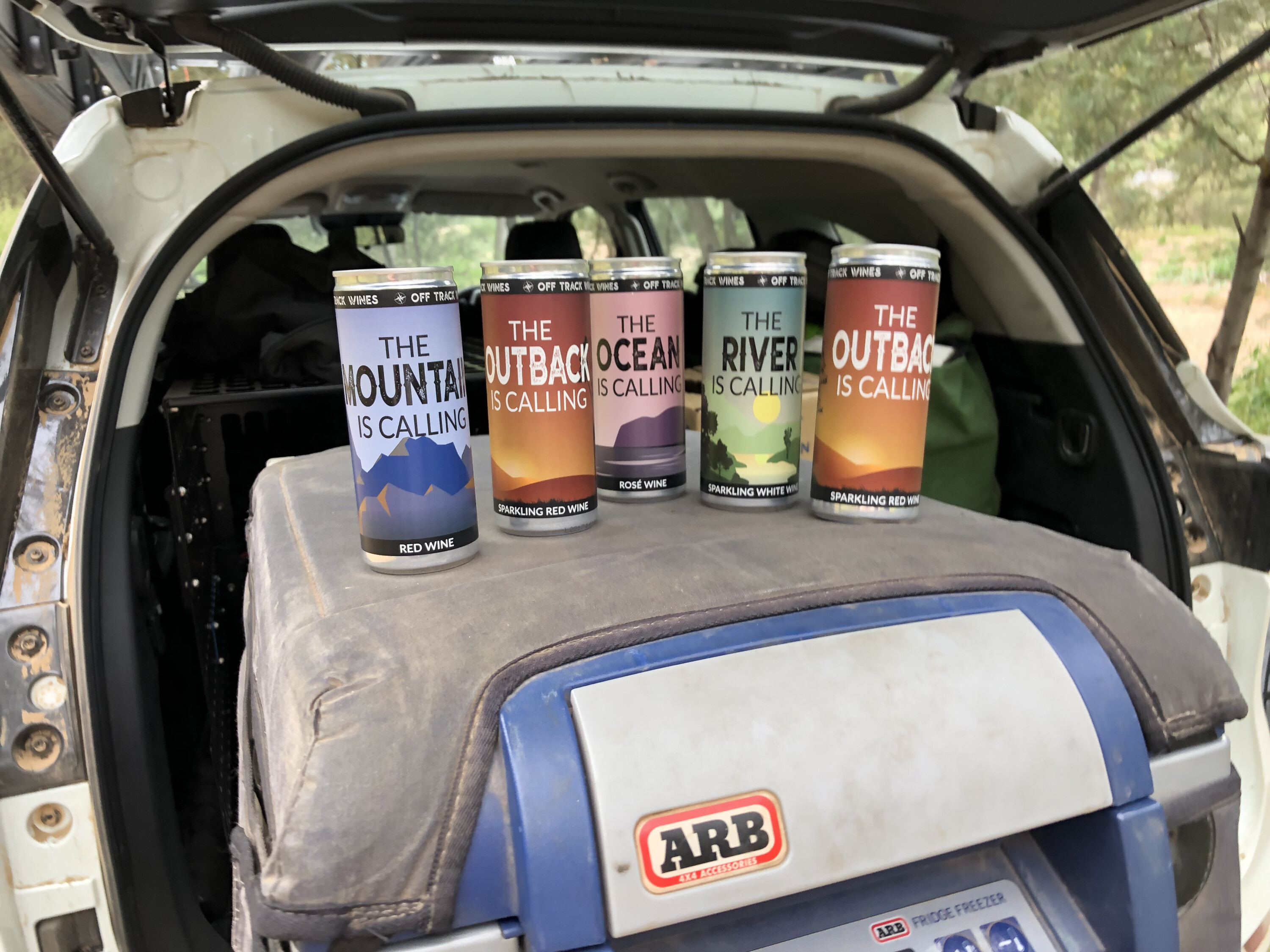
The ‘Ocean’ Rosé was similarly well received and there were no complaints as we worked our way through the range over the ensuing days. All the wines in the Off Track range have names evoking the places that four-wheel drivers like to travel – Mountain, Outback, River, Island, Desert and Ocean.
Off Track Wines exceeded our expectations of canned wines and will be a welcome inclusion on future trips.
Pricing
A single-style 12 pack (250ml cans) will set you back $98.50, while a mixed dozen costs $118.50.
The wines are available from select outlets or direct from the winemaker online at www.offtrackwines.com.au
The Overland Expo is the biggest 4WD show in the USA, and one of the biggest in the world, probably only eclipsed by the German-based Abenteuer Allrad show in Bad Kissingen.
Set amongst the forest of the San Francisco Mountains just south of the major city of Flagstaff in northern Arizona, the three-day Overland Expo attracts companies and spectators from across the globe. Thousands camp out amongst the pines, some in tents, many with rooftop tents and slide-on campers (like us), and small and large overlanding rigs.
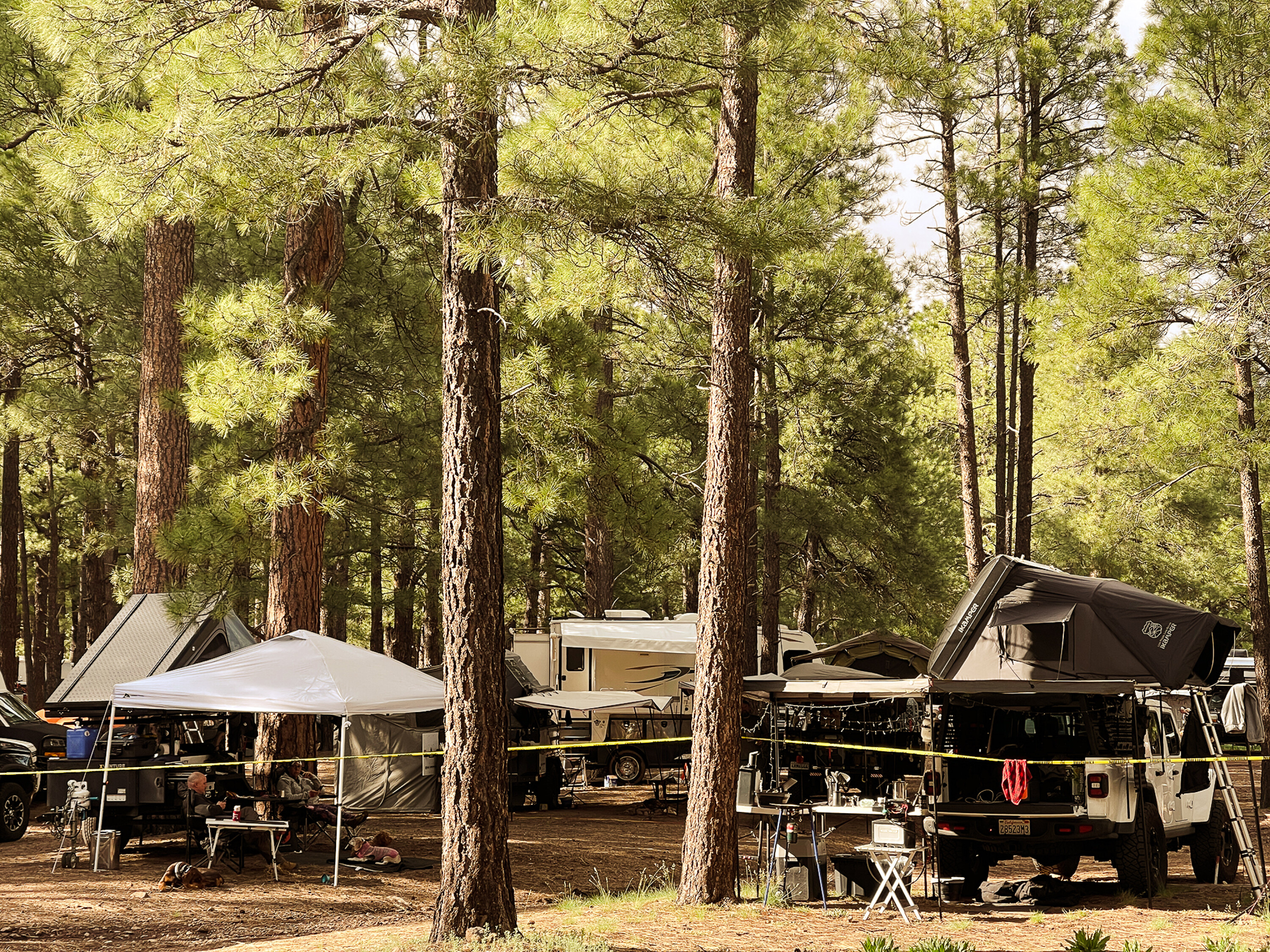
Compared to earlier years, the growth in the number of vans at this show – such as the Mercedes Sprinter for long-distance touring – has been incredible, and with that explosion in numbers has come a similar increase in the availability of aftermarket accessories to suit this growing field. We saw dozens of vans down in Baja Mexico earlier in our travels.
In all there were more than 380 manufacturers, retailers and operators from around the world at Overland Expo. As to be expected, Aussie companies were there in force, showing off their wares and reinforcing their status as some of the most respected 4WD accessory makers in the world.
ARB has been at this show from its inception and this year was no different with an ARB-equipped Ford Bronco positioned proudly on the Aussie company’s stand. Somewhere in amongst the gigantic spread of equipment and vehicles on show, there was a Toyota stand with the new Tacoma on it, again dressed in ARB livery; the show is so big that in three days of wandering, I never even found the Toyota display!
Latest Gear Guides
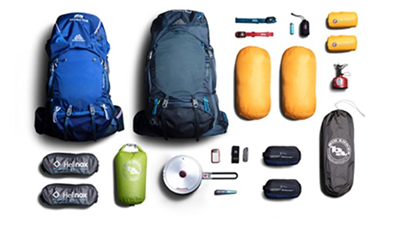

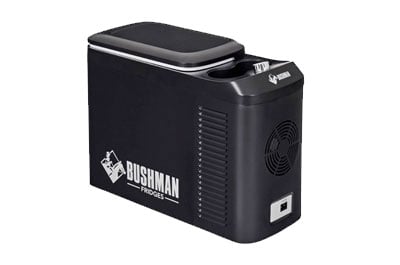
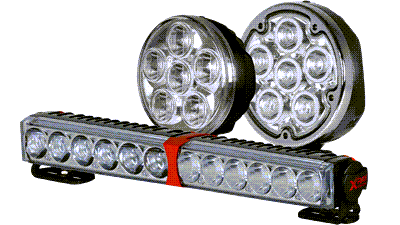
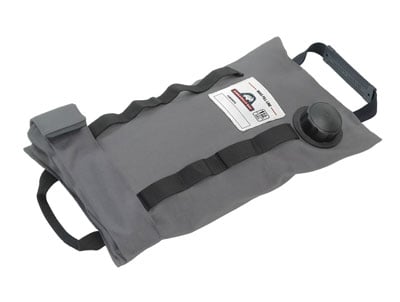
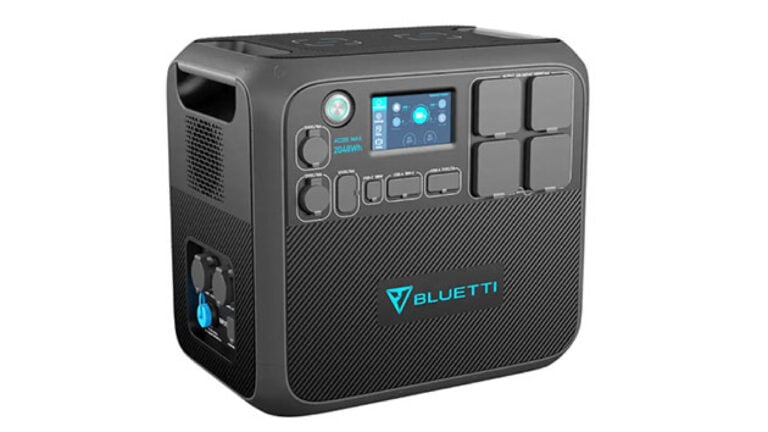
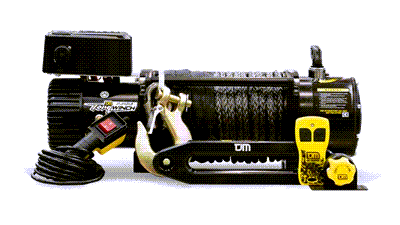
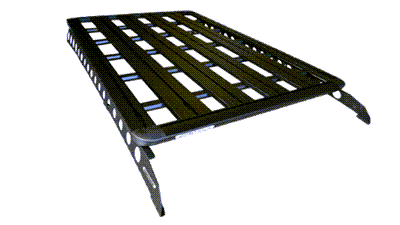
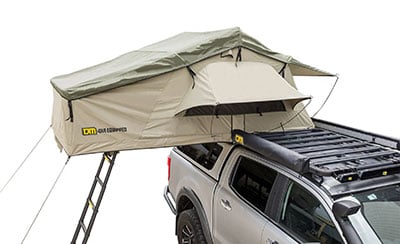
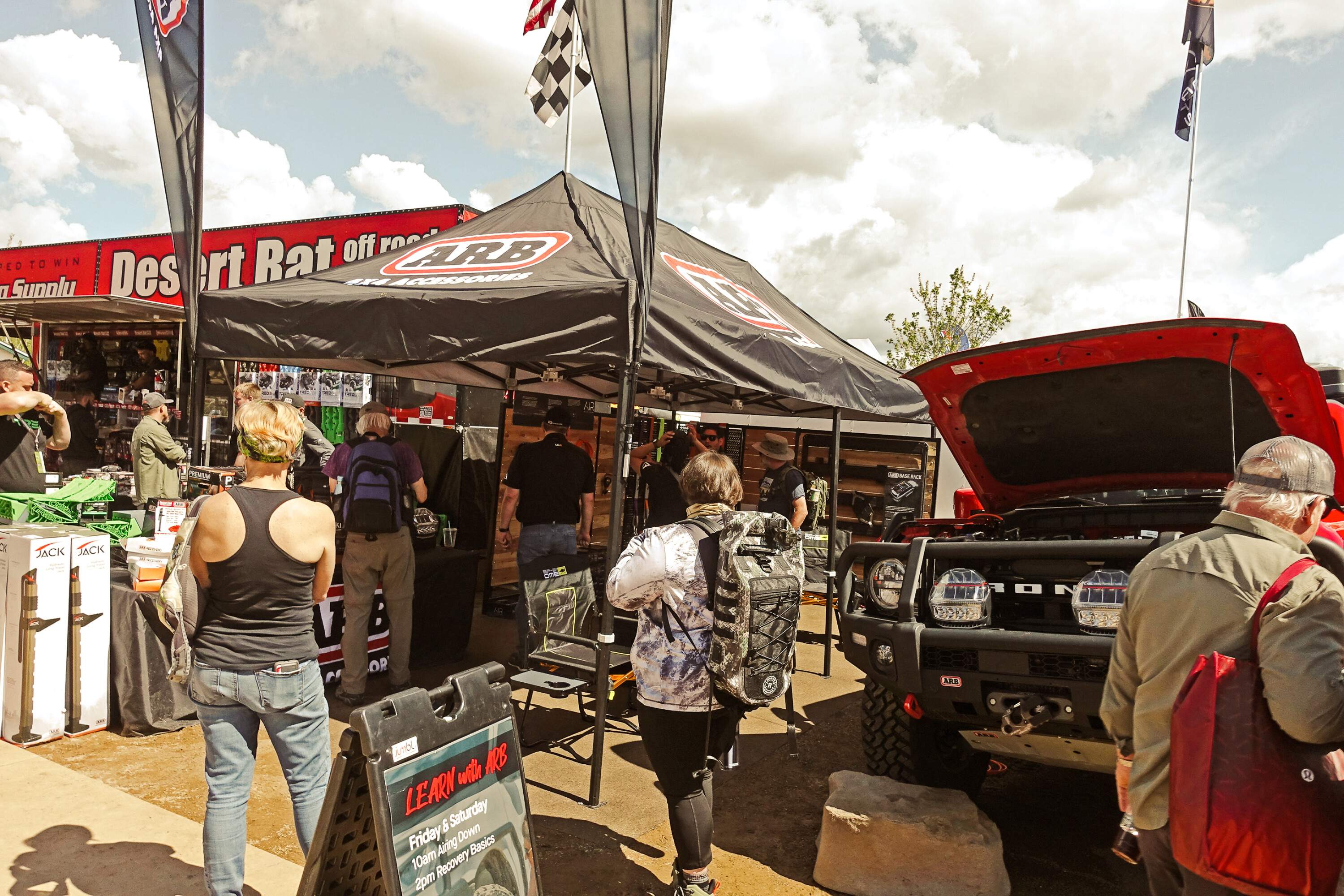
Like most of the Aussie companies present, ARB is again increasing its North American presence. The company is just about to open its third distribution centre in Texas, while its first ARB retail store has just opened in the Pacific North-west.
Highly regarded South Australian company Redarc had some of its latest electronic gear on display, while Redarc equipment had been installed as the chosen battery management system in many of the campers, vans and large overlanding rigs at the show, which was great to see.
Ironman 4X4 had a popular stand highlighting its suspension products and bar work, and its 70 Series ute caught a lot of people’s attention. If Americans are wont to drool over any vehicle, it seems the 70 Series Cruiser is it! But Ironman 4X4 distributes more than just suspension and bar work here in the States, with its full product range from rooftop tents to fridges and more having a presence.
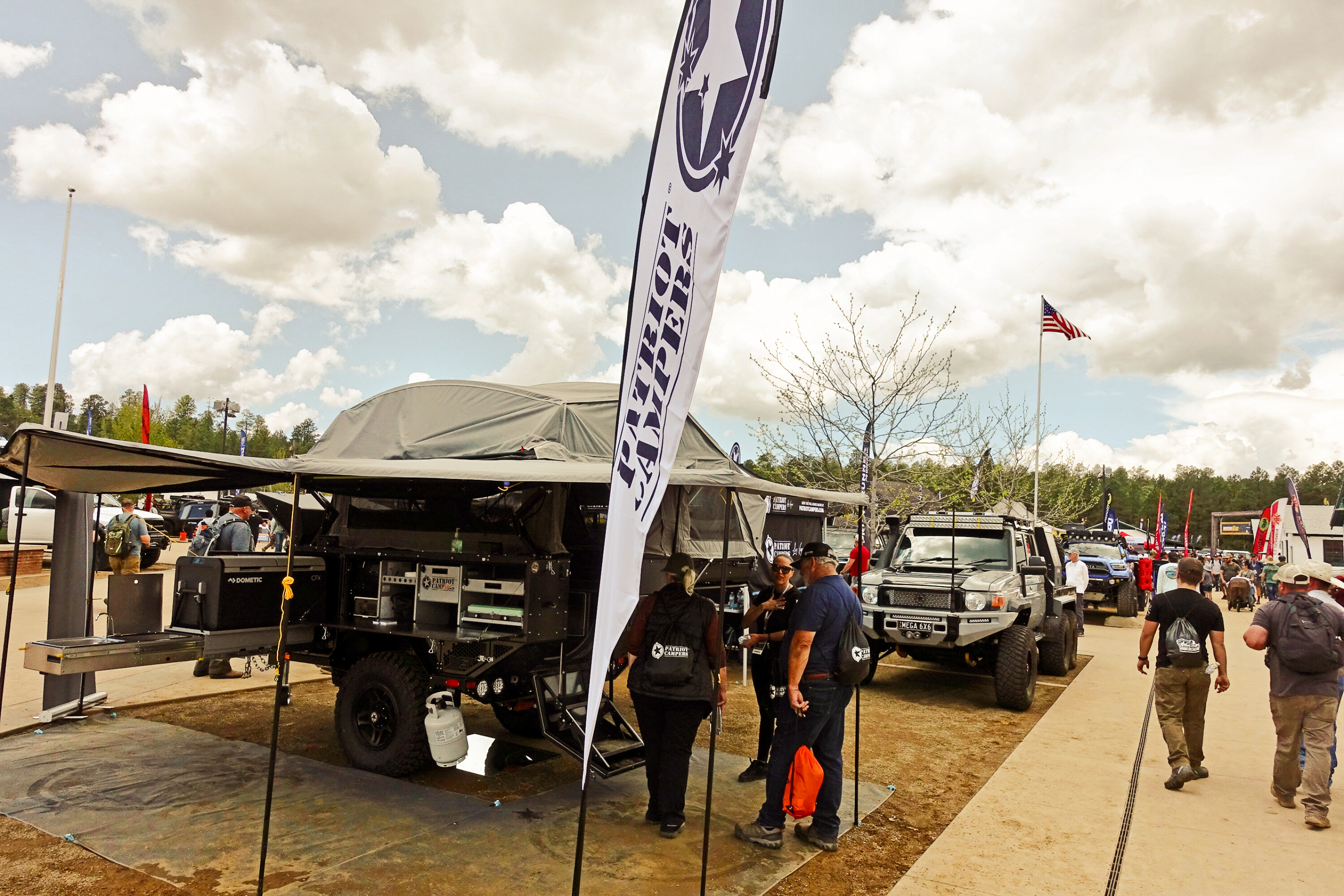
Another change that has occurred in the North American 4WD touring scene since we first came to Overland Expo in 2012 has been the huge increase in camper trailers that are now available. In 2012 there was just one South African brand on display; today there are dozens of US trailer manufacturers, but none match the capability or standard of Aussie-made Patriot Campers, which were again on show here. In addition to its trailers, Patriot had one of its 6WD 70 Series Cruisers for fans to ogle (and drool) over.
Two other Aussie trailer manufacturers – Track Trailers and AOR – were present this year, which was great to see. Track showed off its incredible Tvan, while AOR had a select range of its excellent trailers and campervans on display to tempt the buying public. From my observations the Tvan, so vastly different to the normal trailer fare here in the USA, received a lot of attention. Hopefully the efforts of both manufacturers will be rewarded.
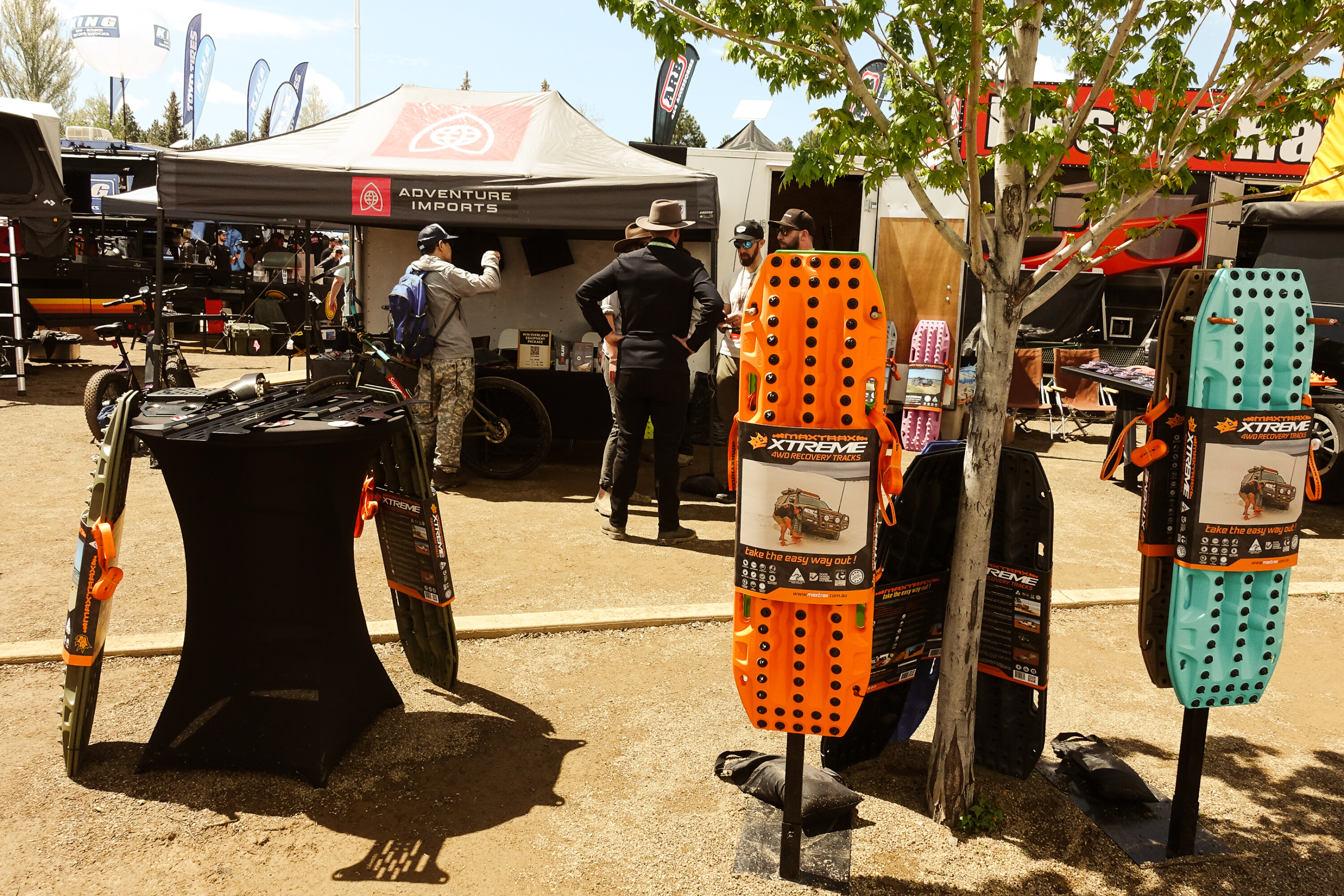
Other Aussie manufacturers in attendance included Maxtrax, the Bush Company, Kaymar, Australian Offroad, Kimberley Kampers, Rhino-Rack and MSA 4×4 Accessories, along with a number of suspension suppliers including Dobson and Cruisemaster. Kakadu Camping also had a range of gear from Oz including its shower system, swags and the Oz-Pig, the latter such an unfamiliar cooking system in the US that it garnered a lot of comment.
EarthCruiser, an Australian and US-based manufacturer of overland vehicles, had some good-looking and practical overlanding rigs on show, but for those with an unlimited budget, there were a couple of mammoth trucks on display with hefty price tags; one was listed at US$1.8 million and the other, complete with rooftop lounge, was in excess of US$2.5 million!
In addition to the trade displays, there were instructional classes covering a huge variety of subjects from touring Africa and Australia to how to cook and crap in the bush, and how to get the best out of your solar set-up.
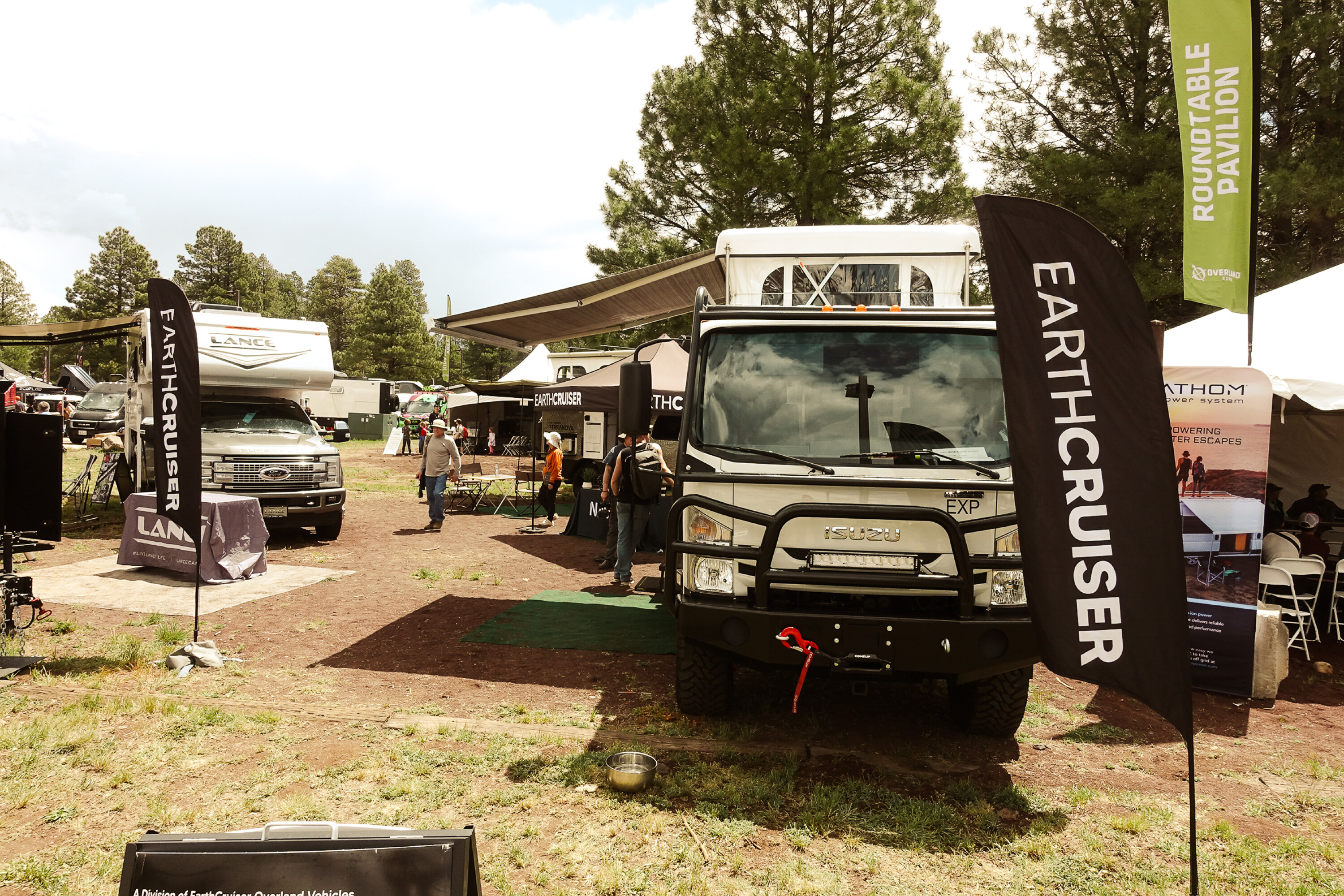
In other areas of the show, there were demo rides on the latest electric bikes and side-by-sides, classes on repairing tyres, 4WD maintenance on the road, and essential 4WD driving skills. There was no way you could attend all of the classes, so you just had to pick what interested you the most; feedback suggested that our presentations on touring Australia were pretty well received.
Food stalls and bars kept everyone fed and watered while music and entertainment was provided each evening. In all, it was a top show, made even better by the Australian contingent.
For more information on the four Overland Expo shows held around the USA go to www.overlandexpo.com and if you are ever stateside when an Overland Expo is on, make sure you check it out; you won’t be disappointed.