
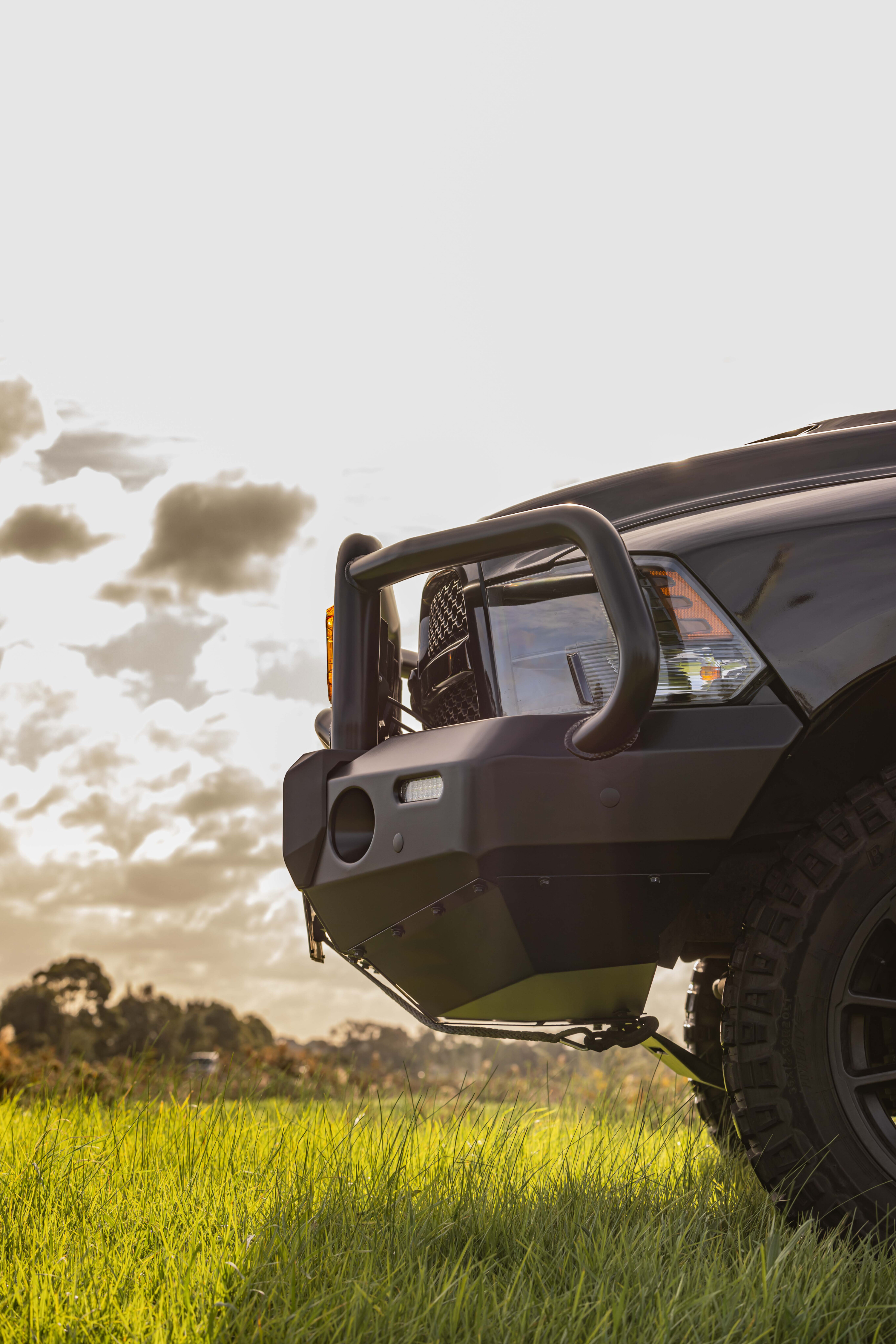
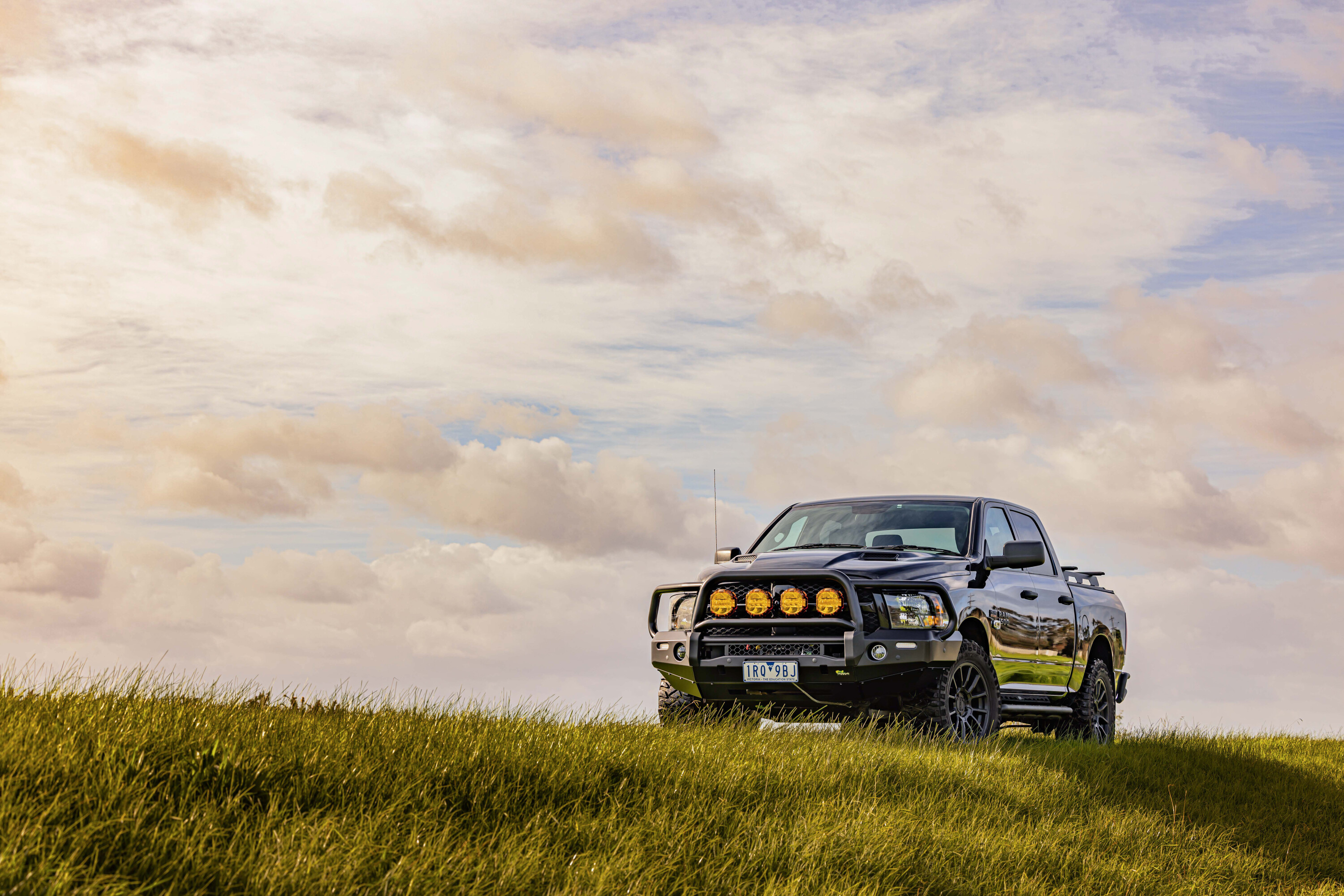
The RAM is one of the leading tow vehicles and work utes in Australia, so it makes sense to install a bull bar, especially when heading beyond the black stump.
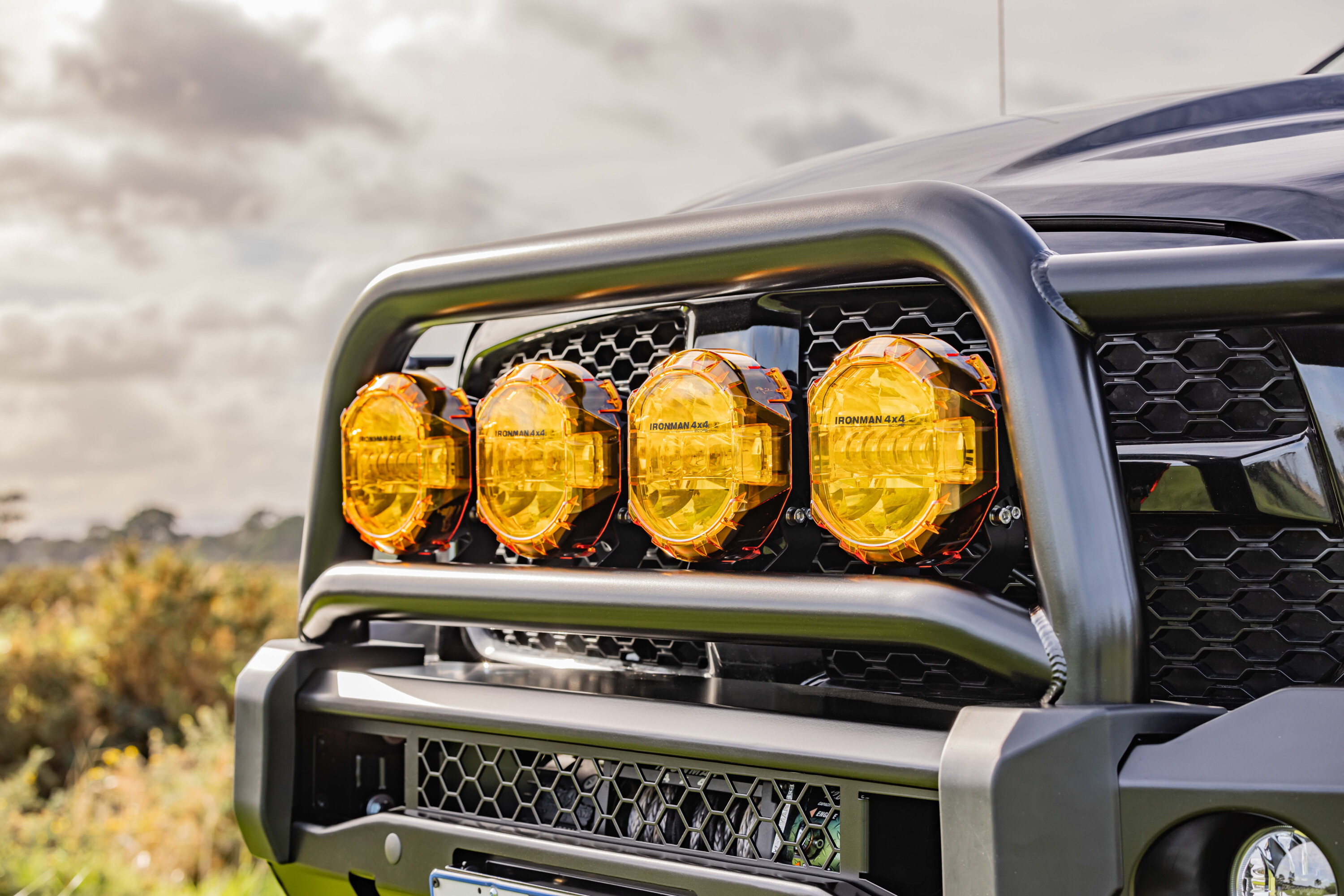
One of the world’s leading bull bar manufacturers, Ironman 4×4, has designed the Premium bull bar to not only protect the front end from animal strikes but also offer mounting points for several accessories. Plus, it incorporates several safety features and helps to keep the engine cool.
1
The sleek design of the bull bar also blends functionality and strength, to create the ultimate front-end protection for the RAM DS 1500.
Ironman 4×4’s Premium series of bull bars are designed and manufactured to provide maximum safety for the occupants of the vehicle. The essential features include improved vehicle protection, improved approach angles and additional ground clearance.
The newly designed Premium bull bar has incorporated all of the RAM’s factory OEM safety features including parking sensors, blind spot monitoring and radars. Premium bull bars also include vehicle-specific parking sensor holders that allow simpler and faster installation.
Latest Gear Guides
1
When designing the Premium bull bar, Ironman 4×4 wanted to ensure the engine, transmission and front-mounted intercoolers remained cool, and the design of the large front mouth on the bull bar and the strategically placed centre grille will help with that.
The bull bar’s sleek design features streamlined hoops and a built-in mounting platform for driving lights, which adds style and functionality. The 76mm middle hoops and 60mm staggered outer hoops will complement the distinctive front-end design of the RAM DS 1500. The Premium bull bar includes LED fog lights and is powder-coated for longevity.
1
The bull bar also incorporates high-lift jacking points, and a winch box remote mounting plate and flip-up number plate bracket are also included, making it simple to install one of Ironman 4×4’s winches. When it comes to installation, no cutting is required.
The Premium bull bar weighs 103kg, but installation removes 32kg, so the total added weight is a respectable 71kg. The steel bar is 3mm thick, the steel cradle and chassis mounts are 4mm thick, the steel centre and side plates are 2mm thick, and the powder-coating is AkzoNobel in a satin black.
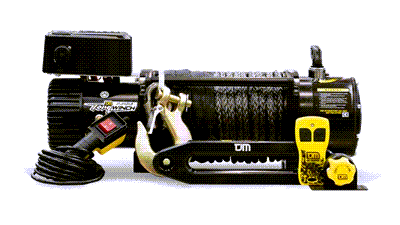
You can install either the 9500lb or 12,000lb Monster winch, but the Premium bull bar will only allow the synthetic rope. Rated recovery points and wiring looms for lighting are coming soon.
RRP: $3250
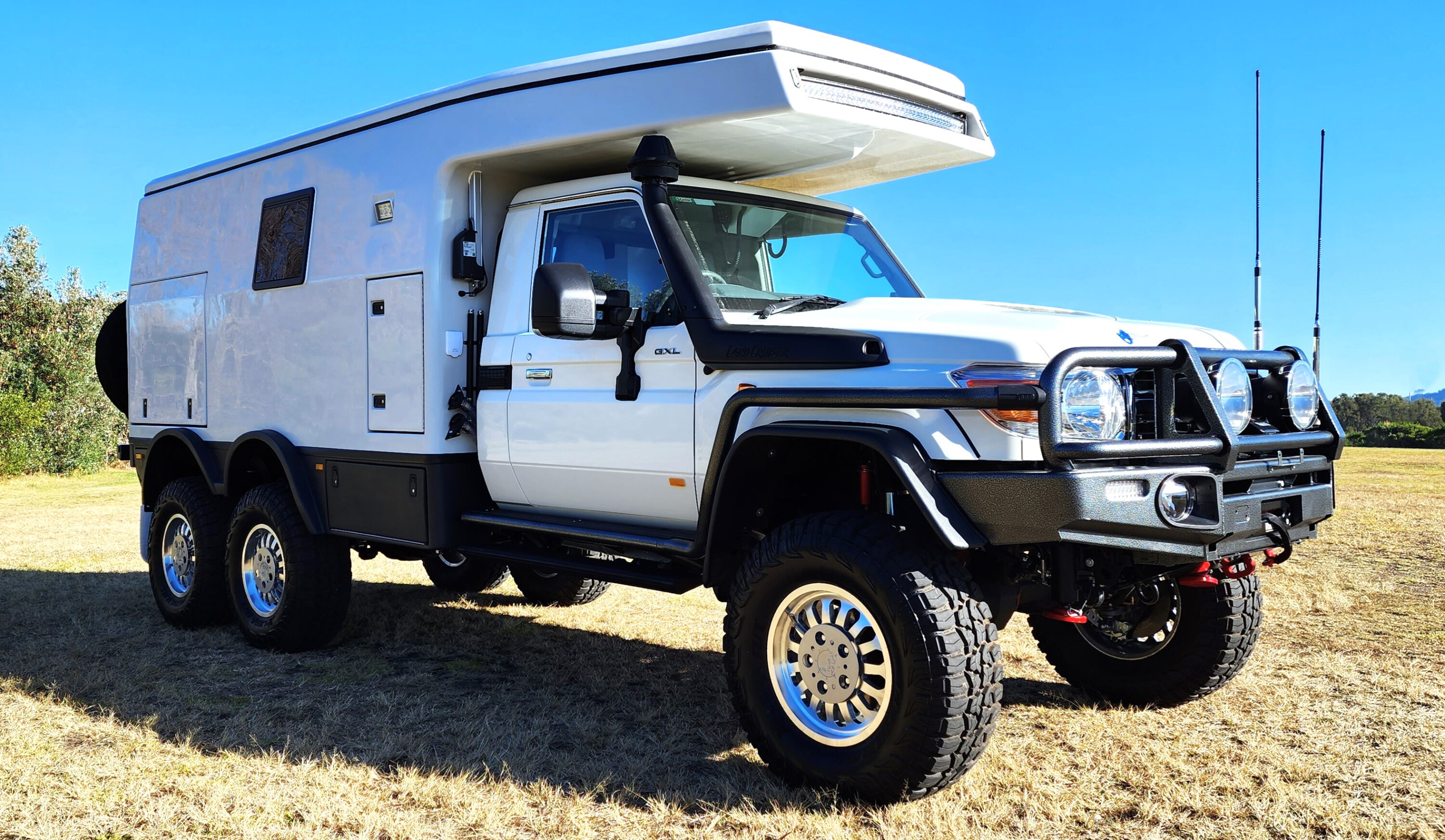
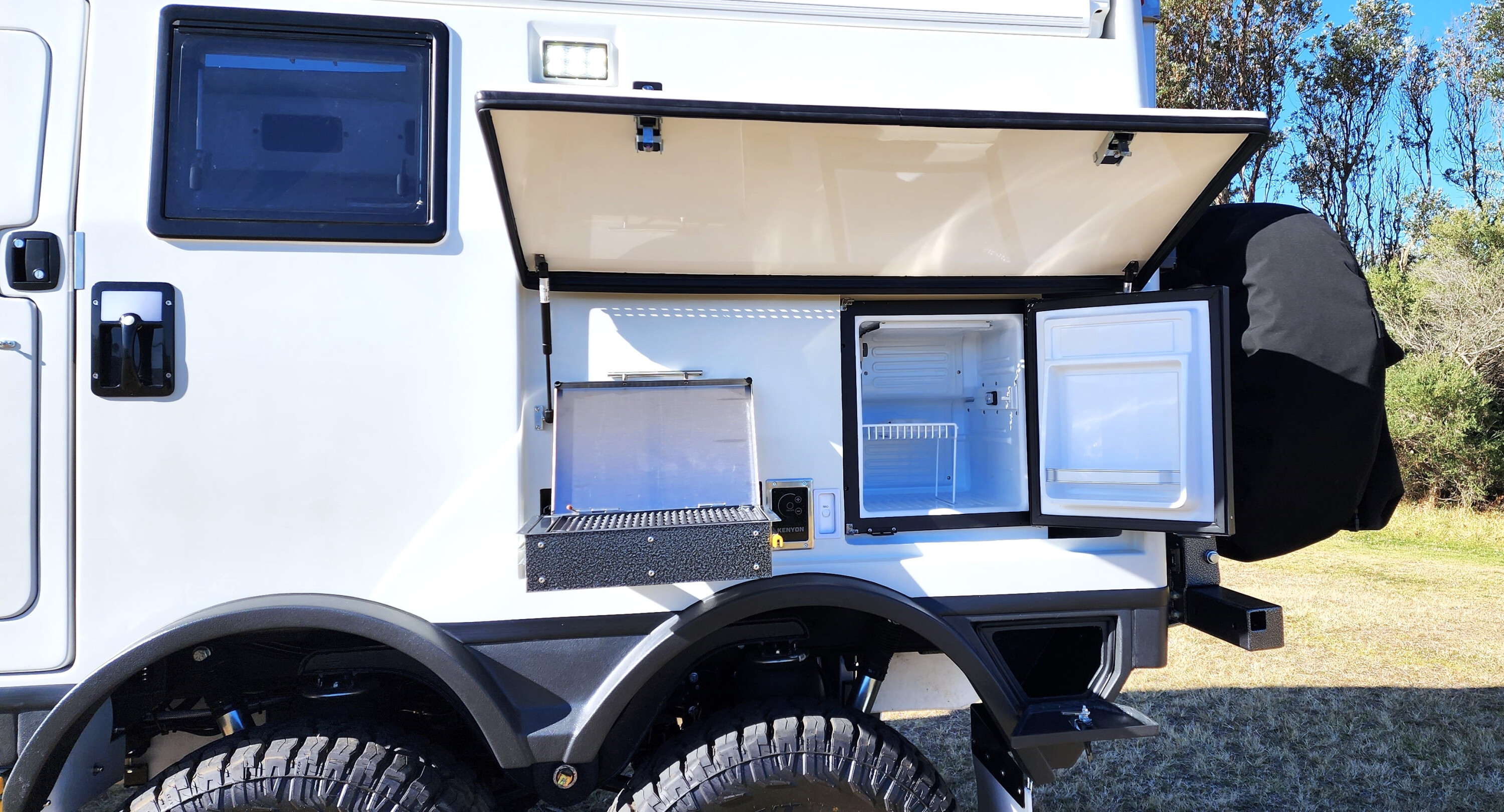
Earthcruiser Australia has taken the covers off an all-new purpose-built 6×6 based on a 79 Series LandCruiser, dubbed the Earthcruiser Extreme 330 XTR6x6.
Following more than 12 months of development, the end result is an off-roader that has been tailor-made to overcome the world’s harshest terrain.
At the core of its go-anywhere ability is a drive system developed by renowned 6×6 conversion specialists, 6×6 Australia. The “bogie drive system” comprises a unique coil/airbag sprung bogie drive rear axle system that boasts full load-sharing capabilities between the axles.
1
The vehicle is fitted with a drive-through diff and power divider, which allows the third axle to remain undriven on smooth roads but lock up 100-per-cent drive to all wheels should traction stumble. Other attributes of the bogie system include Ford 10- and 9-inch differentials fitted with ARB air lockers, and hardened Chromoly 300M high-strength axles shafts.
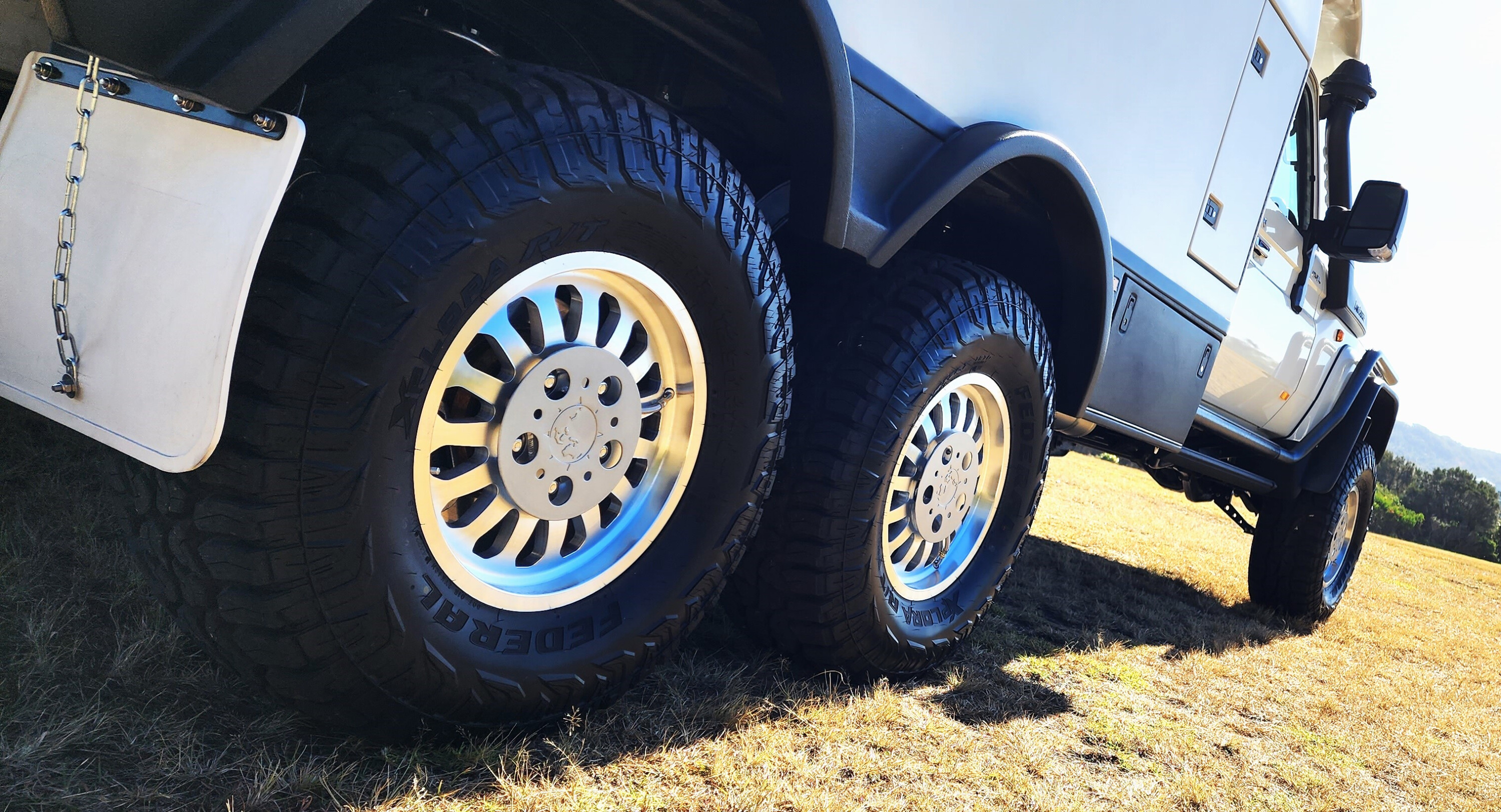
Portal axles provide up to five inches of lift, and each portal is FEA tested and certified to over 1500kg each – or 3000kg per axle. The axles include a CTIS (Central Tyre Inflation System), which enables on-the-move inflation and deflation via an in-cabin Garmin digital touchscreen.
1
The Extreme 330 XTR6x6 is also fitted with an airbag suspension system (totalling six airbags) with automatic load and horizon levelling, and it comes pre-loaded with three height modes with up to 100mm between the lowest and highest settings. The suspension also comprises military-spec HD sway bars, custom-built heavy duty Bilstein shocks, and Bilstein heavy duty steering dampers.
The vehicle rides on 35 x 12.5-inch Federal Xplora mud-terrain tyres, wrapped around 17-inch forged alloy rims that are exclusive to Earthcruiser.
1
A build of this magnitude requires an upgraded GVM capacity, and the Earthcruiser has a generous 7000kg GVM, with a front axle capacity of 1980kg – that’s 500kg more than stock. Payload has increased to 3000kg, to boot. To assist with the extra heft, the rig features a hydraulic brake booster, upgraded calipers, heavy duty brake rotors, and an electric parking brake. To take adventurers further, the vehicle has 275 litres of fuel capacity.
For protection, the Extreme 330 XTR6x6 is fitted with a winch-compatible bullbar with colour-coded steel scrub rails and side steps. The vehicle also comes with front and rear 13,000lb electric winches, two spare wheel carriers, a set of Maxtrax, and heavy duty front and rear recovery points.
1
The chassis was extended and reinforced using advanced CAD modelling and CNC laser cutting techniques. The engine remains unfettled, with drive running through either a six-speed genuine Toyota automatic transmission or standard manual.
Other key features
- Four lockable tool boxes
- Lockable pass-through rear locker
- Triple-layer block-out roof curtain
- Clearview power-fold electric mirrors
- Personalised leather console
- More than 10 USB ports
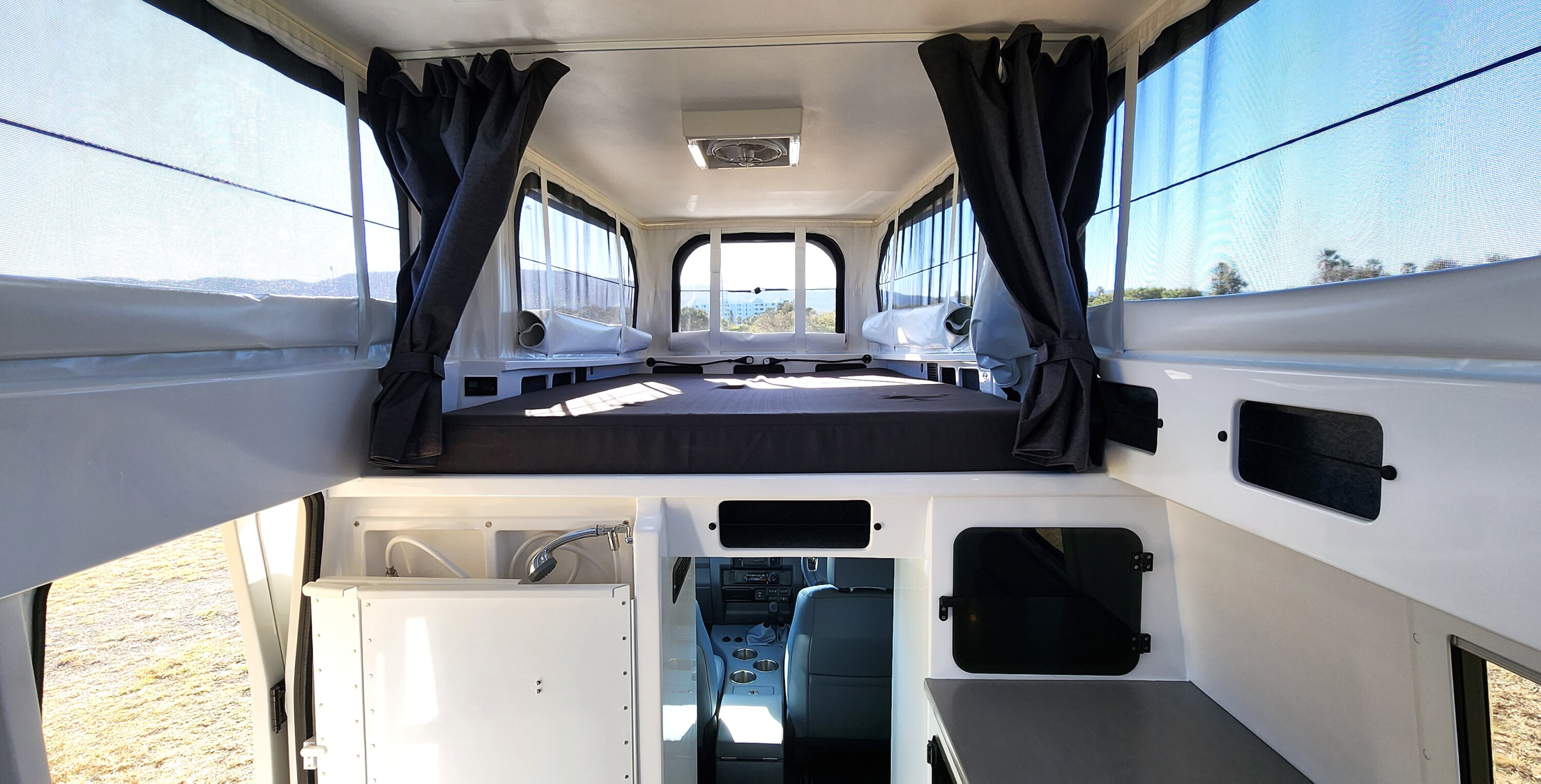
- Sleeping capacity for up to three
- Stainless-steel sink
- Internal and external showers
- Central air heating (diesel)
- Slide-out toilet
- Complete lithium battery system
- 810w solar panels
- 3000w Victron inverter
- GME XRS UHF radios
- Hella HID spotlights
- 52-inch Road Vision light bar
- 360-degree flood lighting
- Starlink capability
- Garmin head unit touchscreen
- Microwave oven
- 224v electric barbecue
- 12v air compressor
- Two fridge/freezers
- Two-burner plate induction cooktop
The Earthcruiser Extreme 330 XTR6x6 will be on display at the Sydney 4WD and Adventure Show, held at the Sydney Dragway, Eastern Creek, from September 8-10.
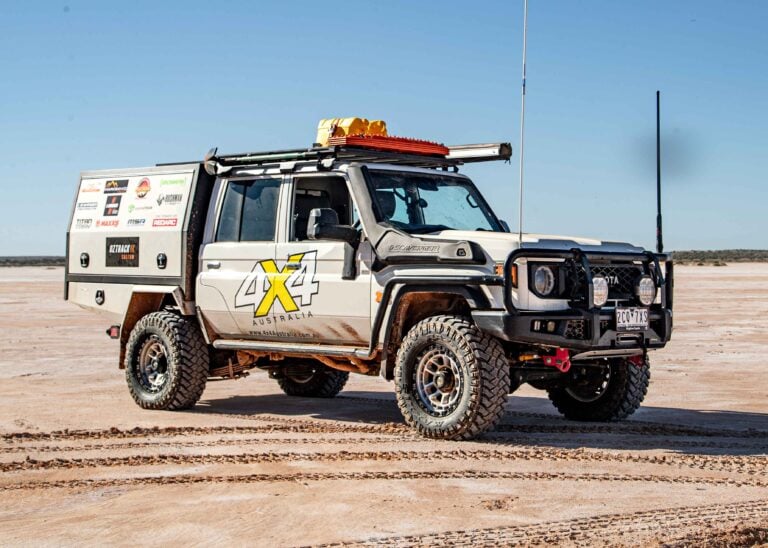
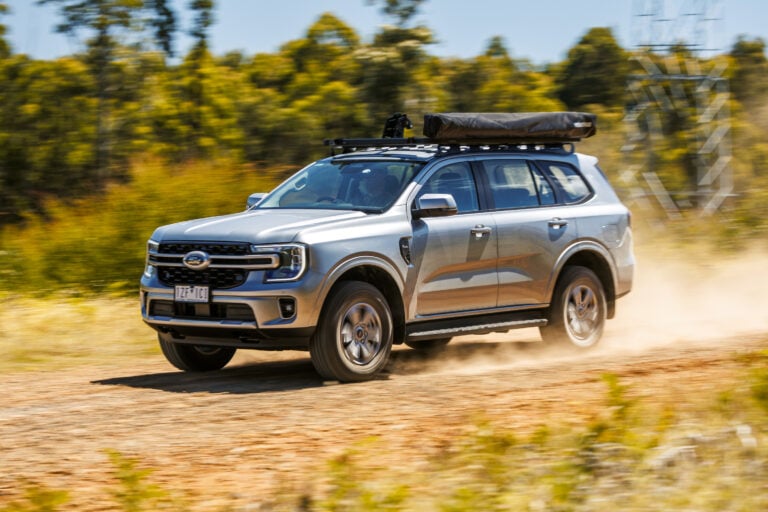
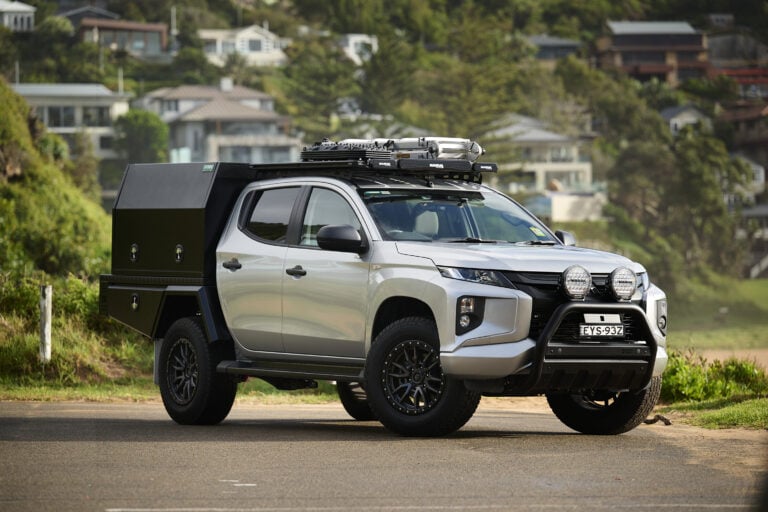
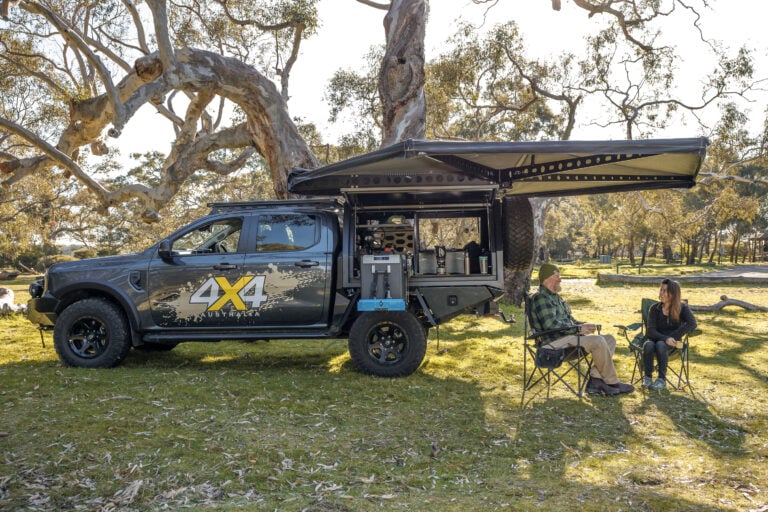
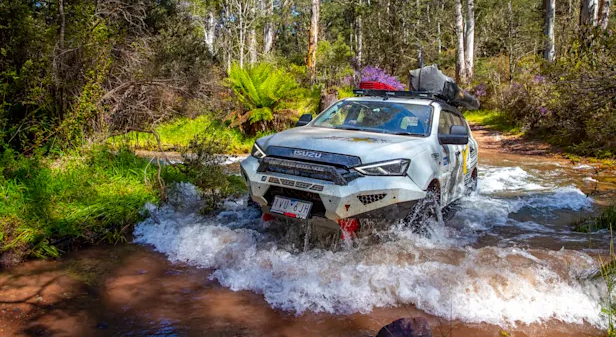
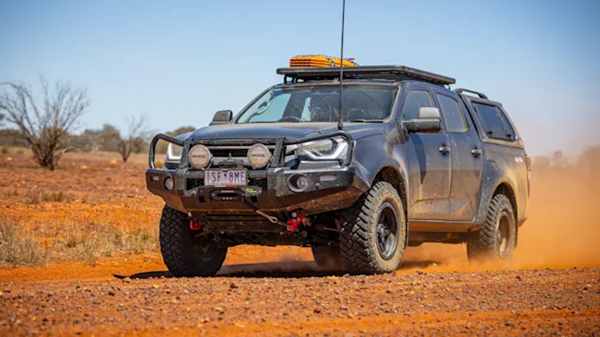
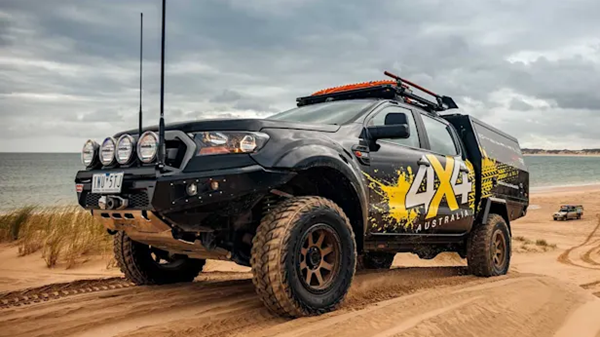
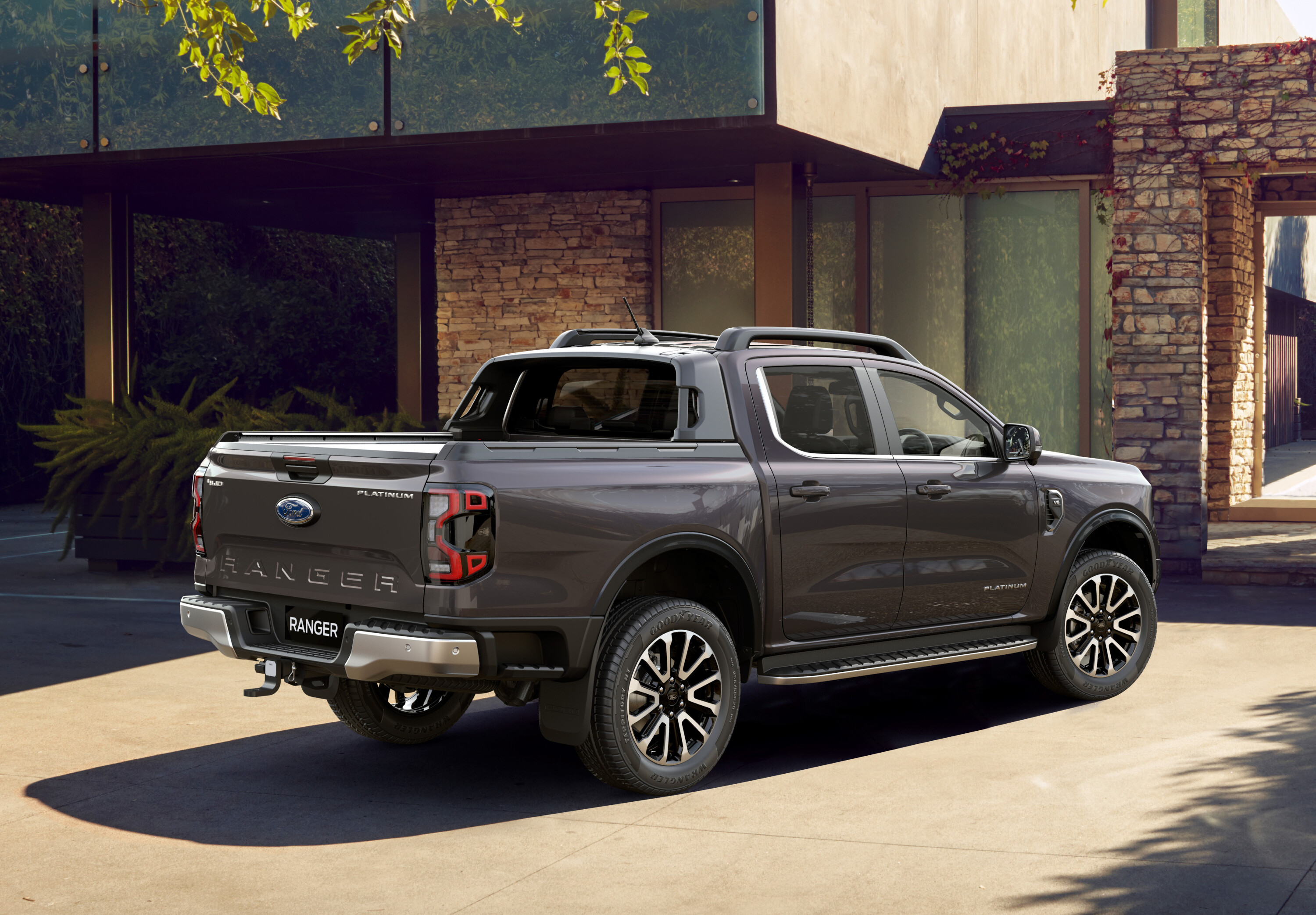
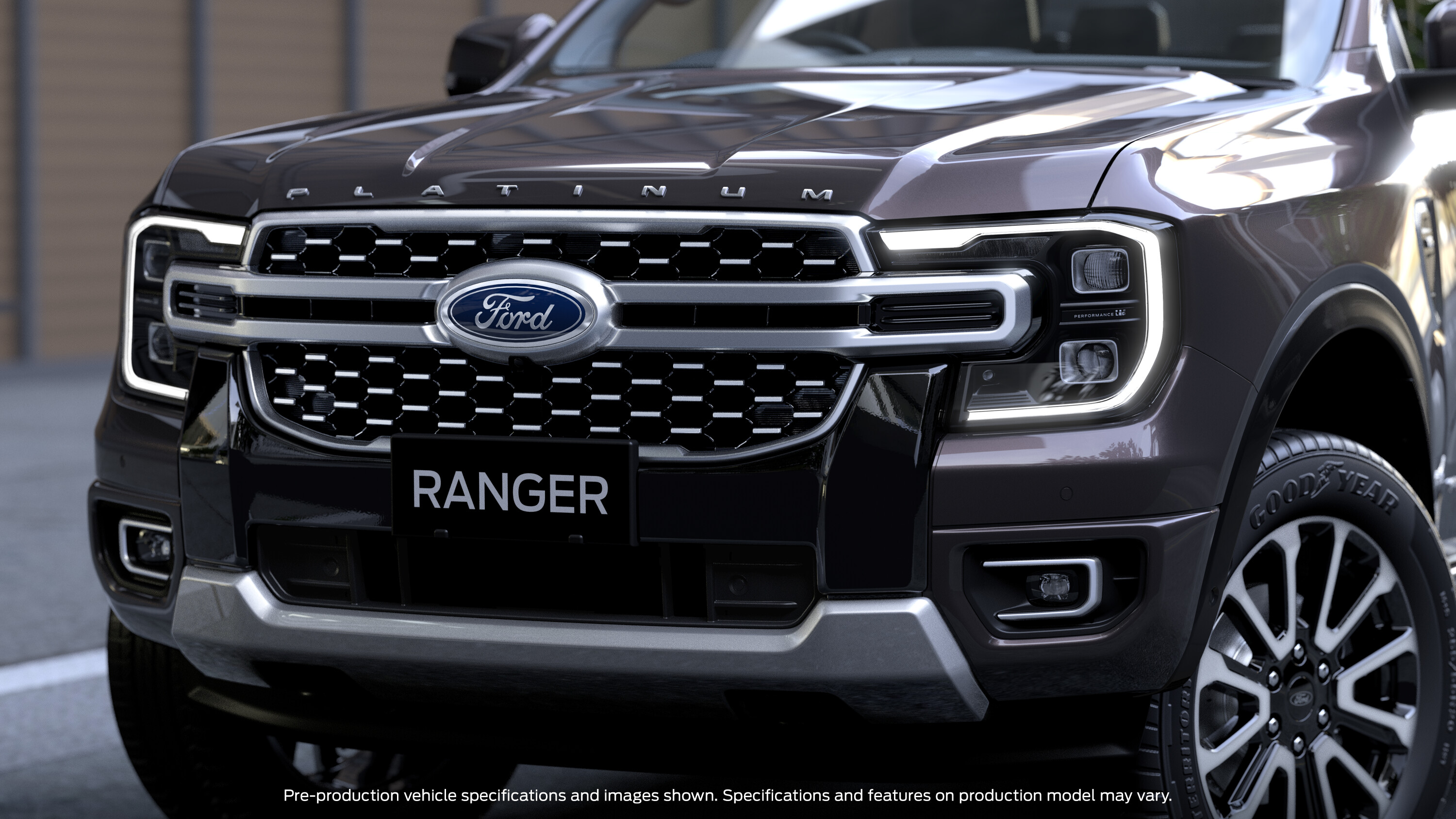
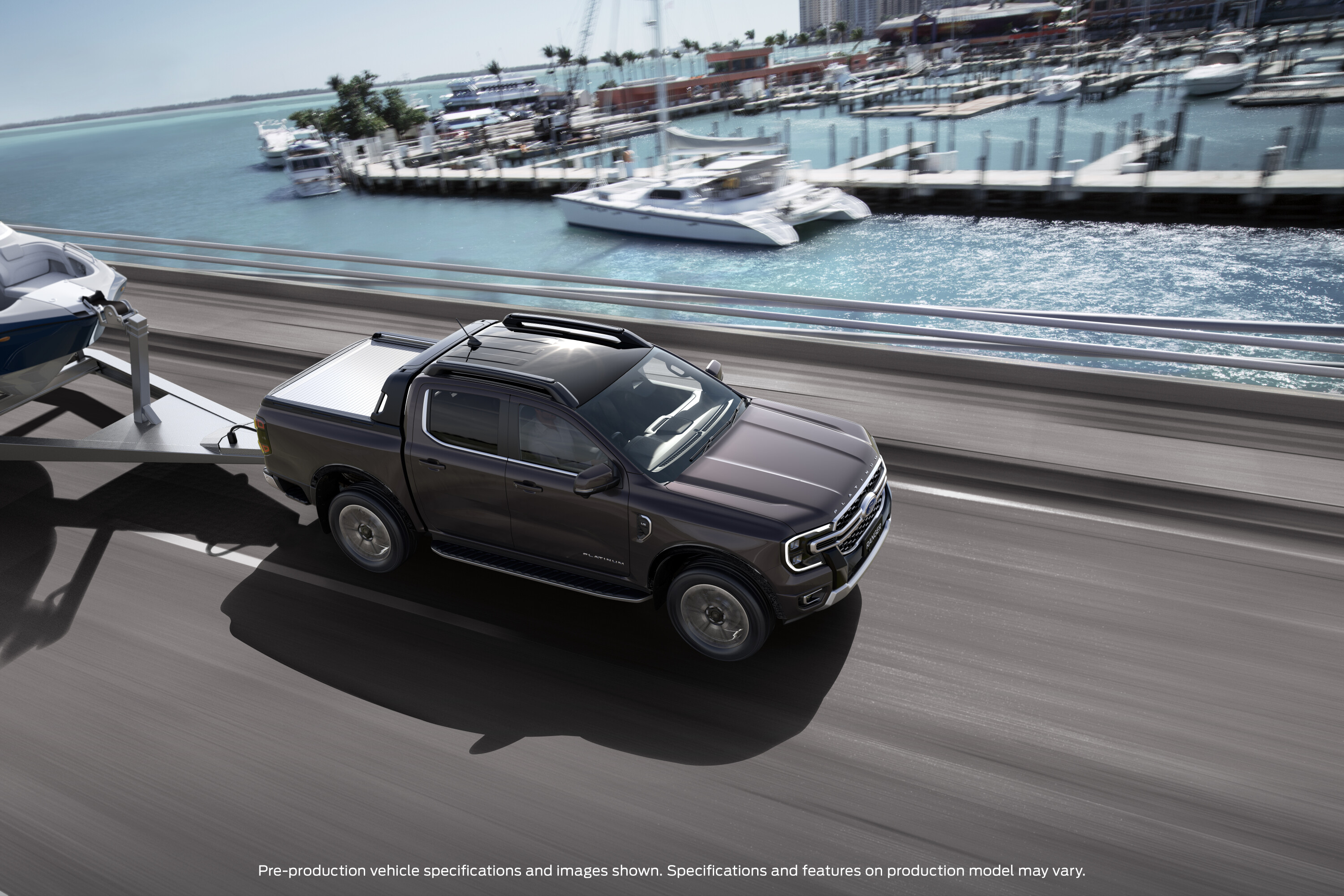
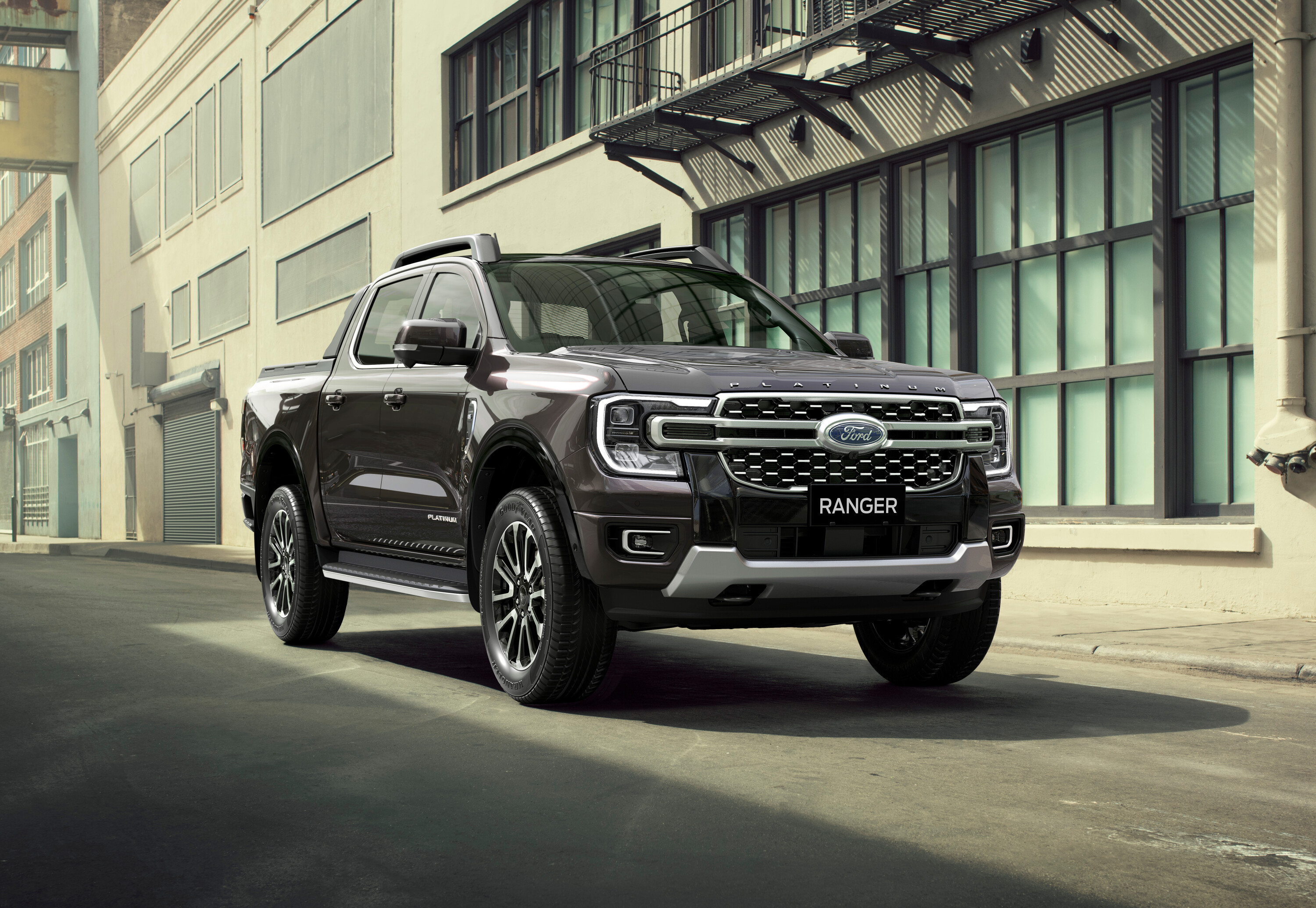
The Ford Ranger swept all before it when it was unleashed on Australia’s booming dual-cab market in 2022. A range-topping Platinum model has now been perched atop the regular Ranger line up, albeit still a good deal more affordable than the specialist Ranger Raptor.
It’s only available with the top-spec 3.0-litre V6 turbodiesel engine and borrows much of its trim and finish from its Wheels Car of the Year-winning sibling, the Everest SUV. In other words, you know it’s off to a great start.
But at this price point come some fairly serious expectations. Can the Ranger Platinum live up to the big billing?
1
Click here for more detailed expert opinions on the Ford Ranger.
JUMP AHEAD
1
| 2023 Ford Ranger Platinum specifications | |
|---|---|
| Engine | 3.0-litre V6 diesel (single turbo) |
| Max power | 184kW @ 3250rpm |
| Max torque | 600Nm @ 1750-2250rpm |
| 4×4 system | permanent four-wheel drive |
| ADR fuel claim | 8.4L/100km (combined) |
| Price | $76,990 + on-road costs |
Upgrade your Ranger
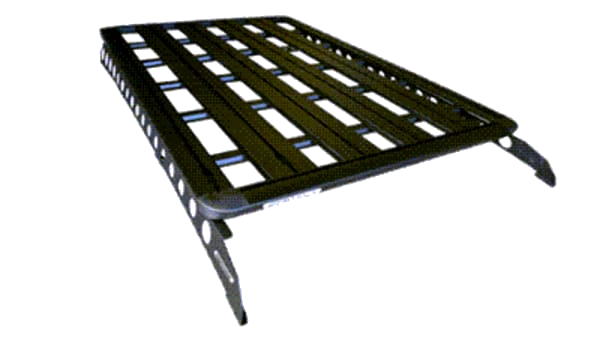
1
Pricing and features
As you might expect, the Platinum gets all of the good stuff poured into it. There’s really very little that you can point to as a trim shortcoming over the already very well appointed Wildtrak model.
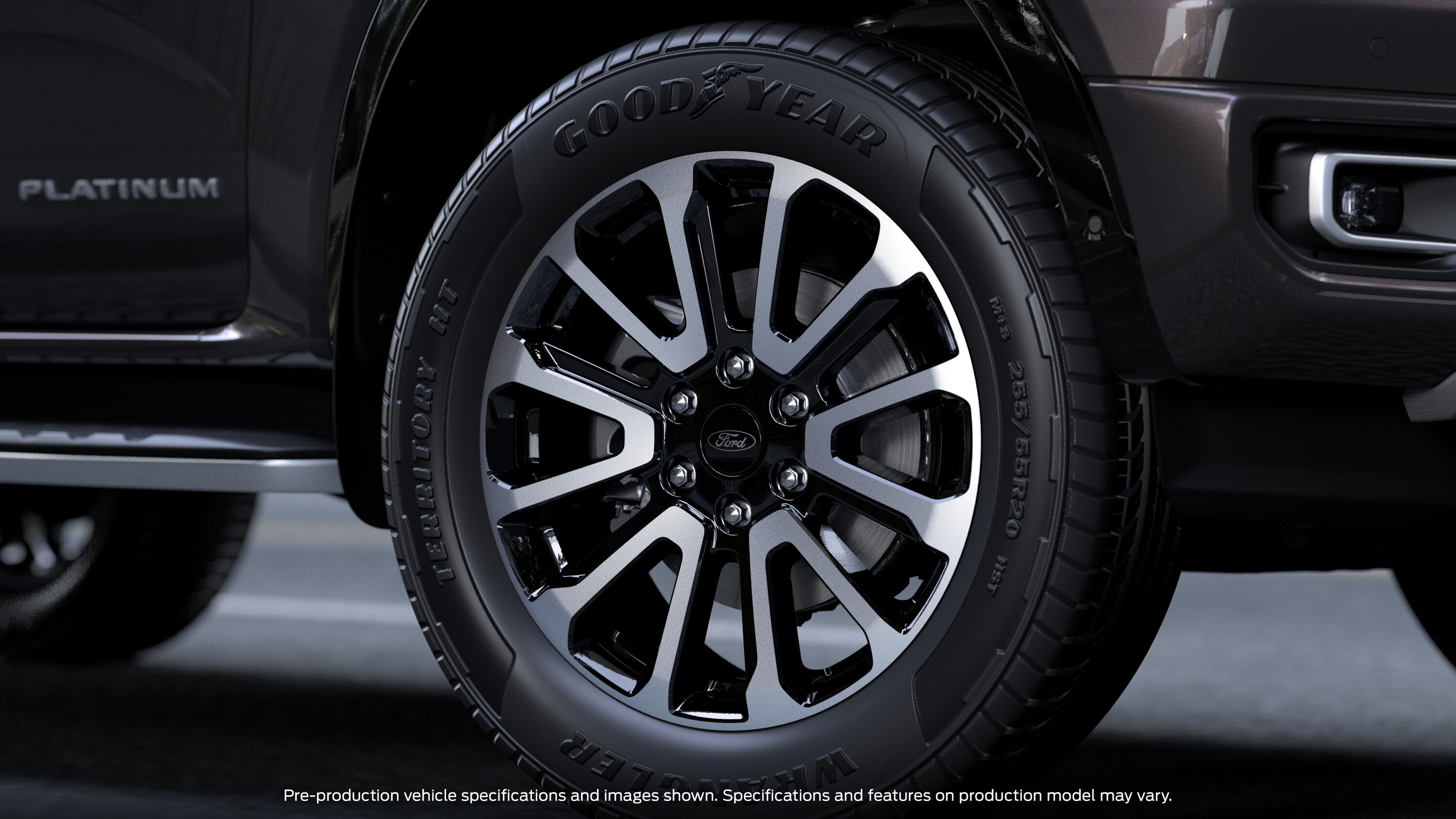
For an additional five grand over the price of the $71,190 Wildtrak, the Platinum features 20-inch alloy wheels, ‘Platinum’ badging, matrix-LED headlights, satin chrome exterior trim, a damped tailgate and Ford’s clever rail-mounted flexible rack system.
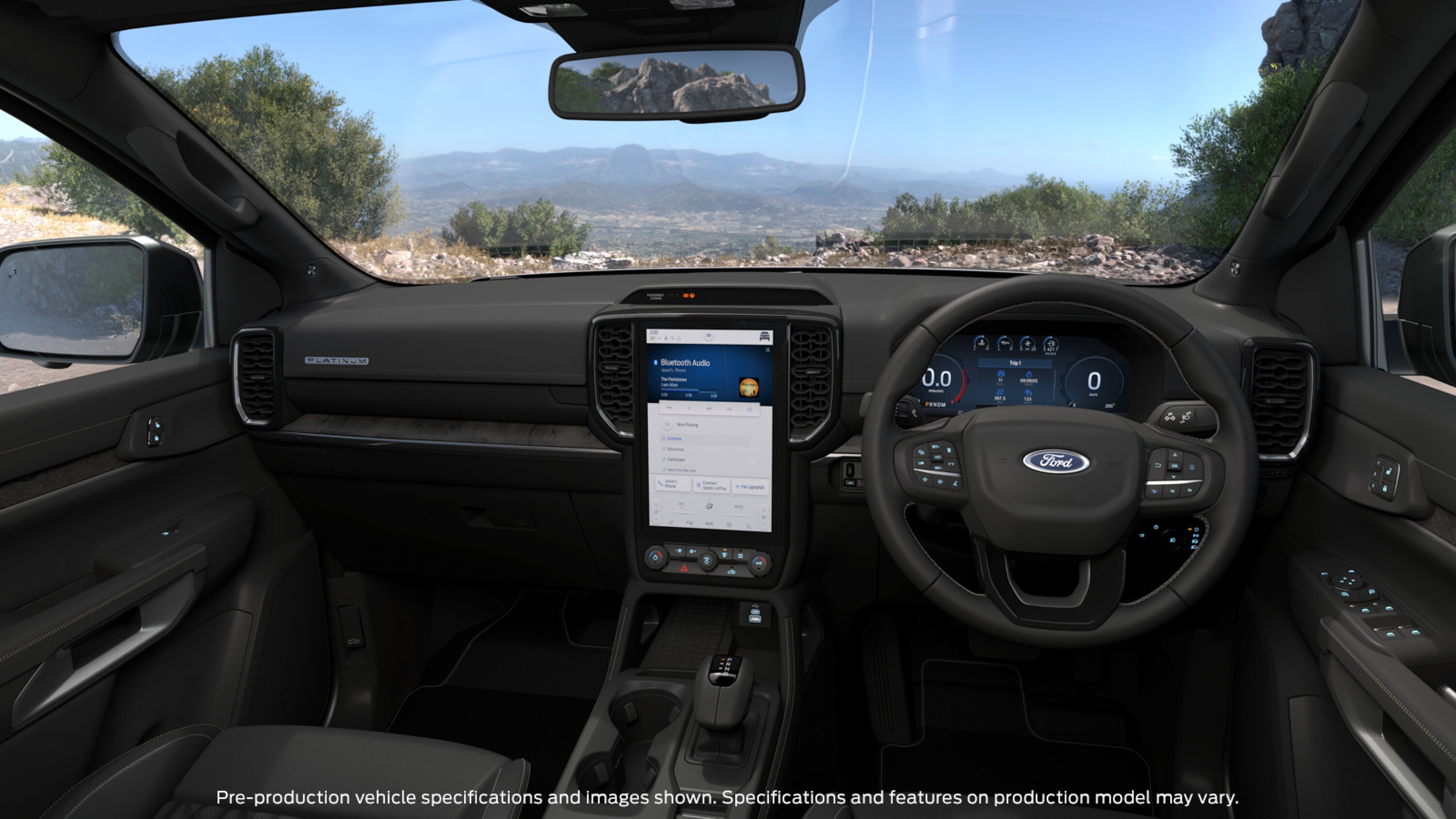
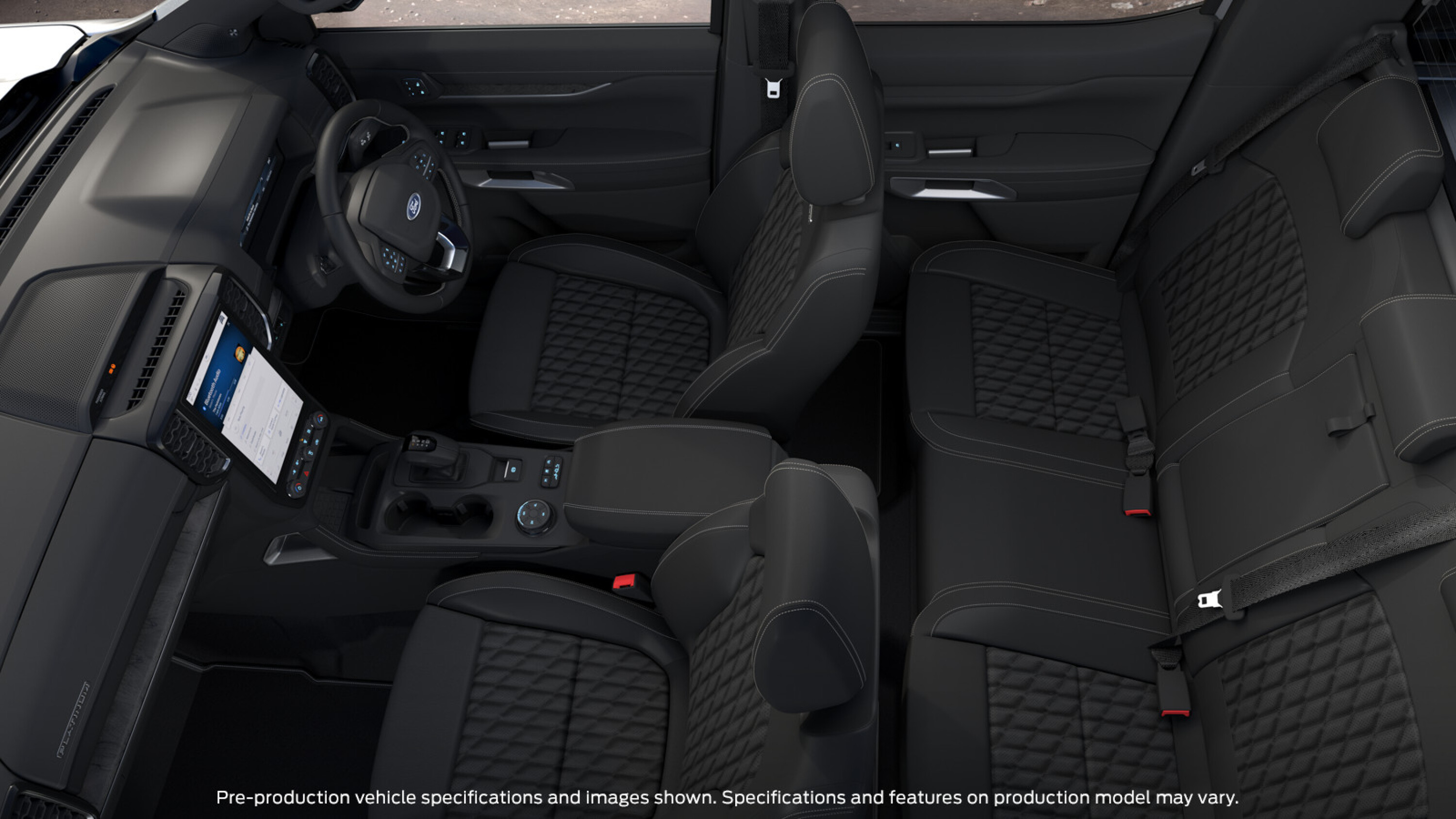
Indoors, Platinum owners will find quilted leather seats which are heated and ventilated up front, a heated steering wheel, 10-way power adjustment for the front pair of chairs as well as a driver’s seat memory function.
1
The centre display measures 12.4-inches so it runs full screen rather than being bounded by a chunky frame as in some lowlier Rangers.
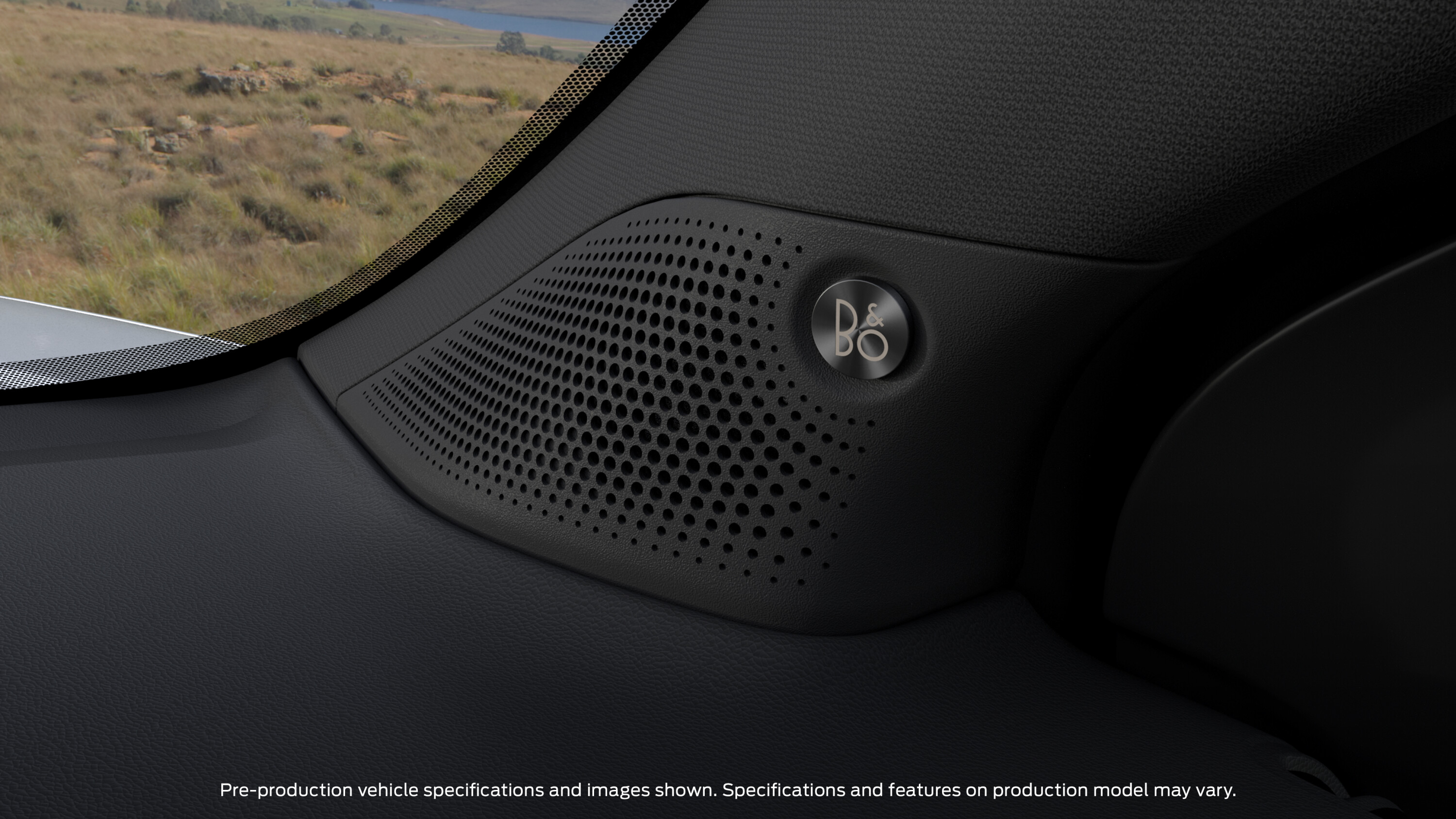
The premium pack that is popular with Wildtrak buyers has also been thrown in for nix with the Platinum, bringing you a 10-speaker Bang and Olufsen stereo, full LED tail lights and an overhead auxiliary switch bank. This latter fitment means that you won’t need to be drilling holes in your dash to fit switchgear for functions like auxiliary driving lights, winches and so on.
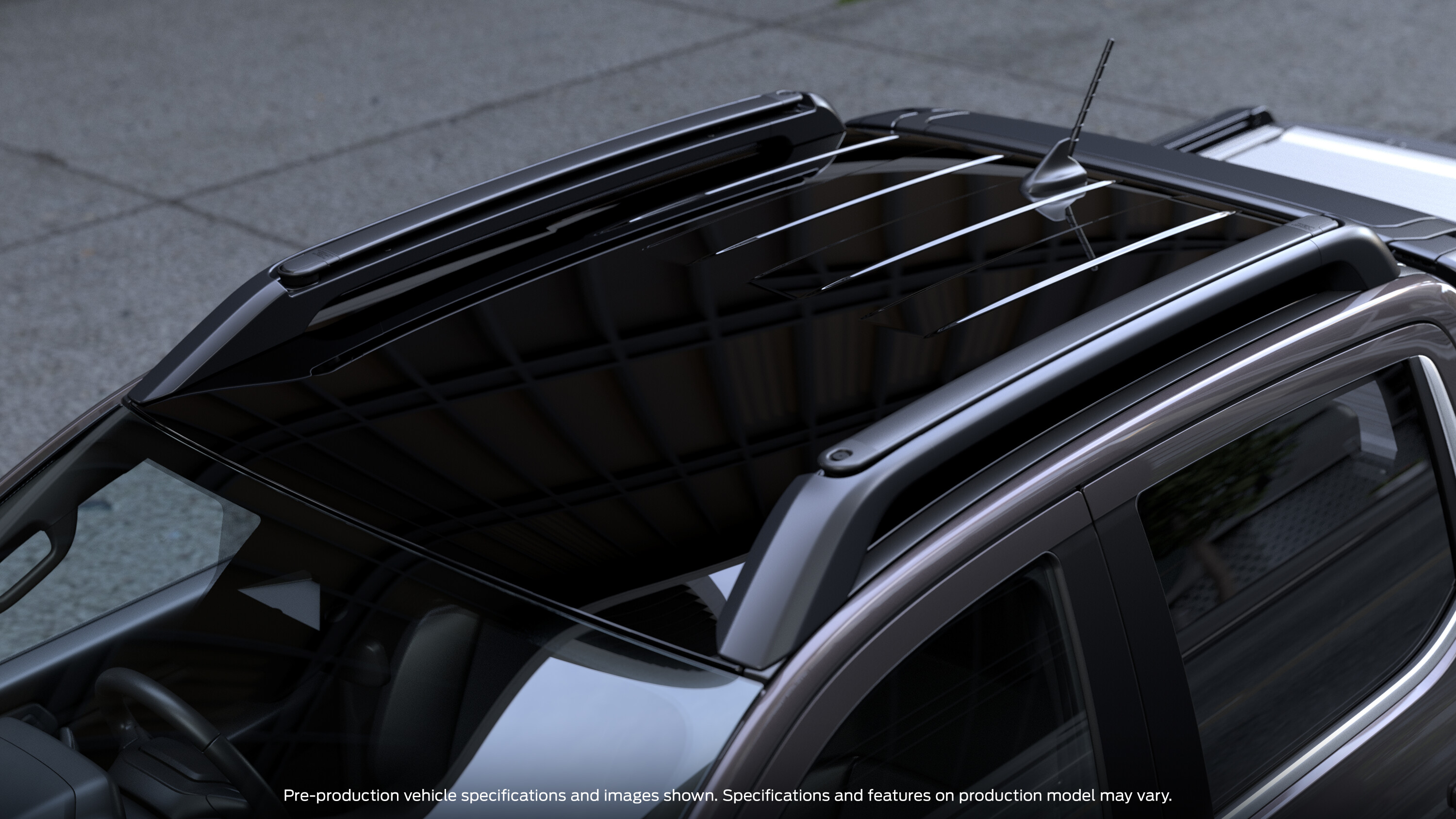
Dig a little deeper and you’ll find a few other Platinum-specific niceties like a black-painted roof, premium carpeting, accent stitching and the option of Equinox Bronze paint. Metallic paint remains a $700 option.
1
Safety
The Ford Ranger scores five stars on the ANCAP review.
In crash testing, the Ranger scored well for protection of adult occupants in frontal offset, side impact and far-side impact tests, although a result of ‘marginal’ was assigned for protection in the full width frontal crash test and for the chest of the driver in the oblique pole test.
Likewise, maximum scores were awarded recognising the Good levels of protection offered to child occupants in the frontal offset and side impact crashes. All body styles with rear seats feature two ISOFIX anchorage points in the outboard seats.
Every Ranger carries a high level of standard safety gear including dual frontal, side chest-protecting and side head-protecting curtain airbags, along with a driver and passenger knee airbag.
1
A front centre airbag is also standard, which protects front seat occupants in side impact crashes and also prevents front occupants from clashing heads.
Features such as pre-collision assist, post-impact braking, blind-spot monitoring with trailer tow function and cross-traffic alert, reverse brake assist and evasive steer assist are all available.
Adaptive cruise control is standard across the range and there’s intelligent adaptive cruise that features lane centreing, traffic sign recognition and a ‘Stop & Go’ function that will allow the vehicle to come to a complete halt in traffic and then automatically resume its cruise setting.
There’s also Active Park Assist 2.0, which will help with parallel parking
1
On the road
Things we like
- The 184kW 3.0-litre V6 turbodiesel feels strong and responsive
- 10-speed auto transmission does a good job of plugging into the 600Nm torque
- Advanced safety assists work and work really well
Not so much…
- Unsettled ride
- Youu2019ll cede a stack of the Rangeru2019s vaunted off-road ability with these tyres
- We emerged wondering whether Ford had over-egged the pudding with this one
For most buyers, the Ford Ranger works best with an 18-inch wheel and a multi-purpose all-terrain tyre.
Fit a 20-inch wheel and the ride suffers a little, despite the tyre sidewall being a relatively generous 55 series. There’s quite a bit of head-toss and nerviness over typical Aussie B-roads that you don’t tend to experience with an 18-inch wheel.
Click here for more detailed expert opinions of the Ford Ranger’s on-road qualities.
1
Key rivals
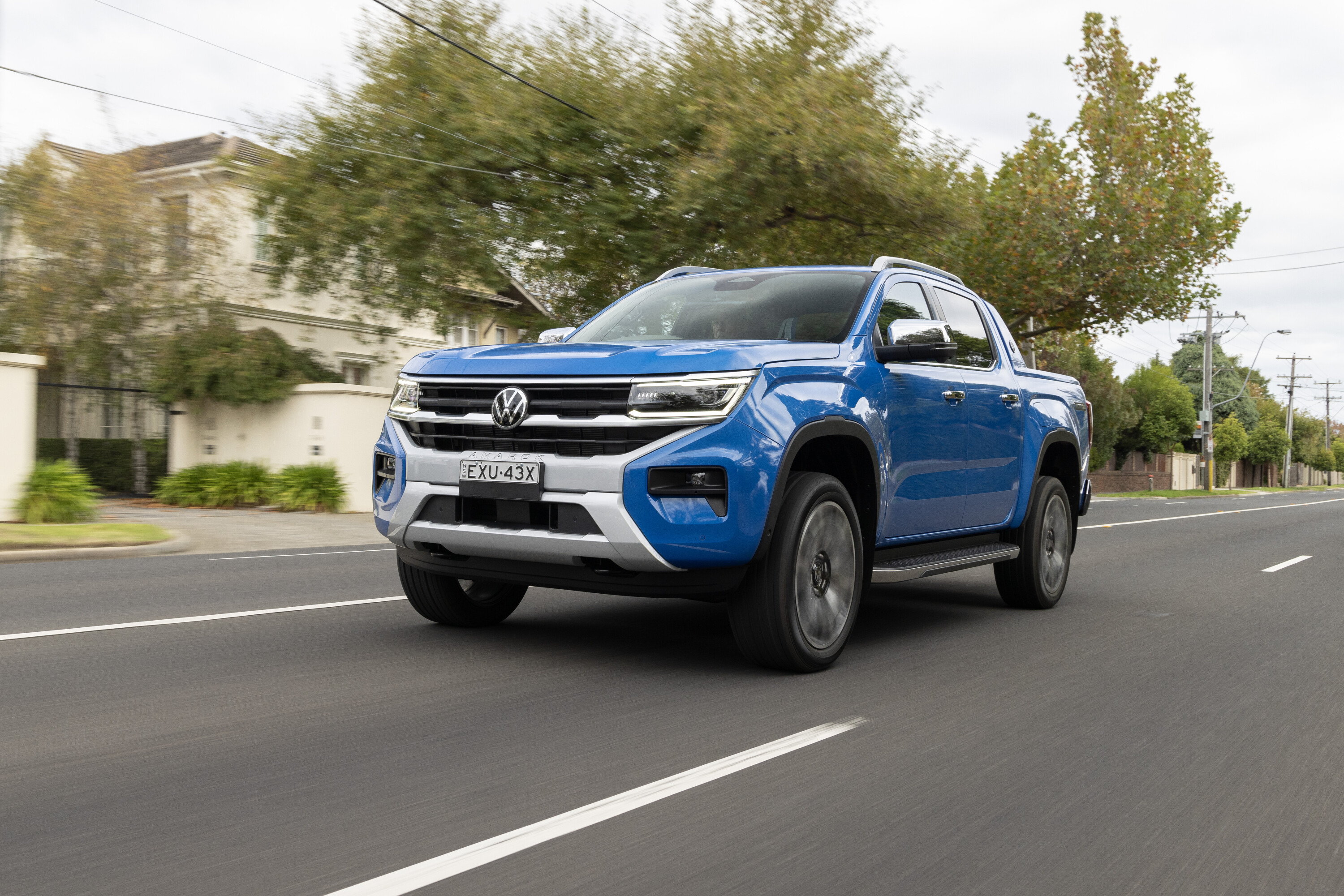
Until the Volkswagen Amarok arrived this year, the Ford Ranger was a long way clear of the chasing pack.
Now that the Amarok Aventura is available, the Ranger Platinum has far less of an easy run at things. Still, the Amarok has its work cut out levelling with the big Ford’s value proposition.
Rivals worth considering include:
1
Should I put it on my shortlist?
Taken in isolation, the Ford Ranger Platinum is a very good flagship model. The problem is, other models in the Ranger line-up give a far better demonstration of the full gamut of this vehicle’s extraordinary abilities.
Were you fairly unconcerned about going off road and just want a lavishly equipped Ranger model, the Platinum answers that call but we still have some reservations about the way it rides on the big 20-inch alloys.
For our money, we’d go for a Sport on 18-inch wheels with A/T tyres and use the $9K saved to select a few choice options.
1
MORE
Everything Ford
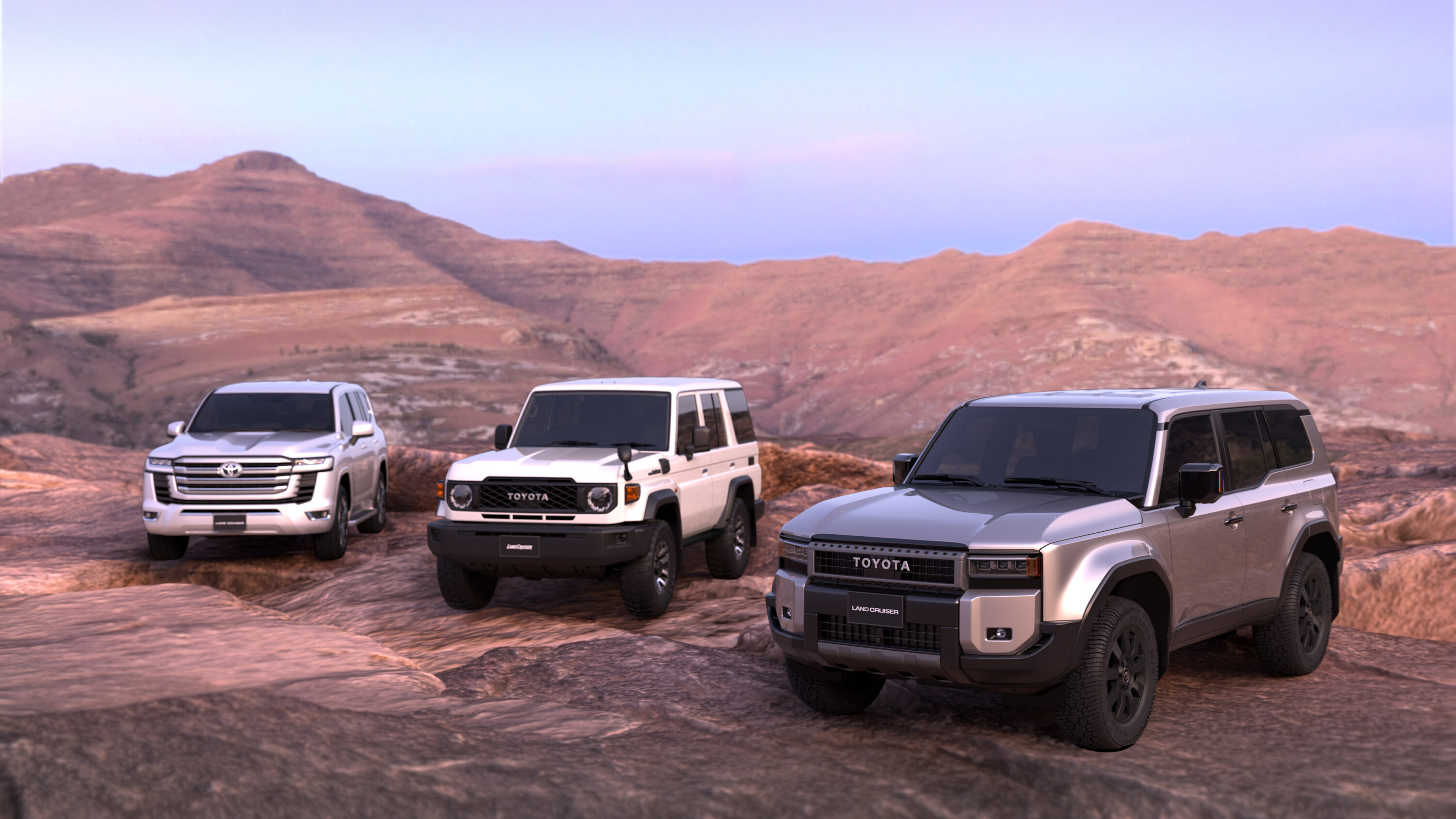
It has been over a week since the reveal of what will be the first all-new Prado in nearly 25 years, with the first photos and some general info of the 2024 model.
Get up to speed on the new Prado
The stories below will give you a guide to everything we learned about the new Prado when it was unveiled. All fresh stories published since then will be found on our Toyota Prado model page here.
2024 Toyota Prado coverage
- 2024 TOYOTA PRADO REVEALED
- Spec battle: New Prado v LandCruiser 300 Series
- Spec battle: New Prado v Old Prado
- Spec battle: New Prado v new Ford Everest
- 2024 Toyota Prado: Everything we know
- What is the towing capacity of the new Prado?
- New Prado: What YOU think so far!
- BONUS: New 70 Series facelift revealed
- A 2025 Prado ute? Yes please!
- ALL PRADO NEWS & REVIEWS
JUMP AHEAD
The expected wide range of reactions has followed, from those crying the death knell of the model even before it lands mid next year, through to those excited by the style and design, if a little underwhelmed by the carry-over 2.8TD (with hybrid assist) as the engine choice for this market. To us, and noting it is very early days, the new Prado looks exciting with plenty of promise.
So should buyers wait? Well, that’s more difficult to answer, and shines the light on the other option of buying a second-hand Prado. To answer this, you need to decide whether you want to go second-hand or nab a new 150 Series – if you can find or wait for one.
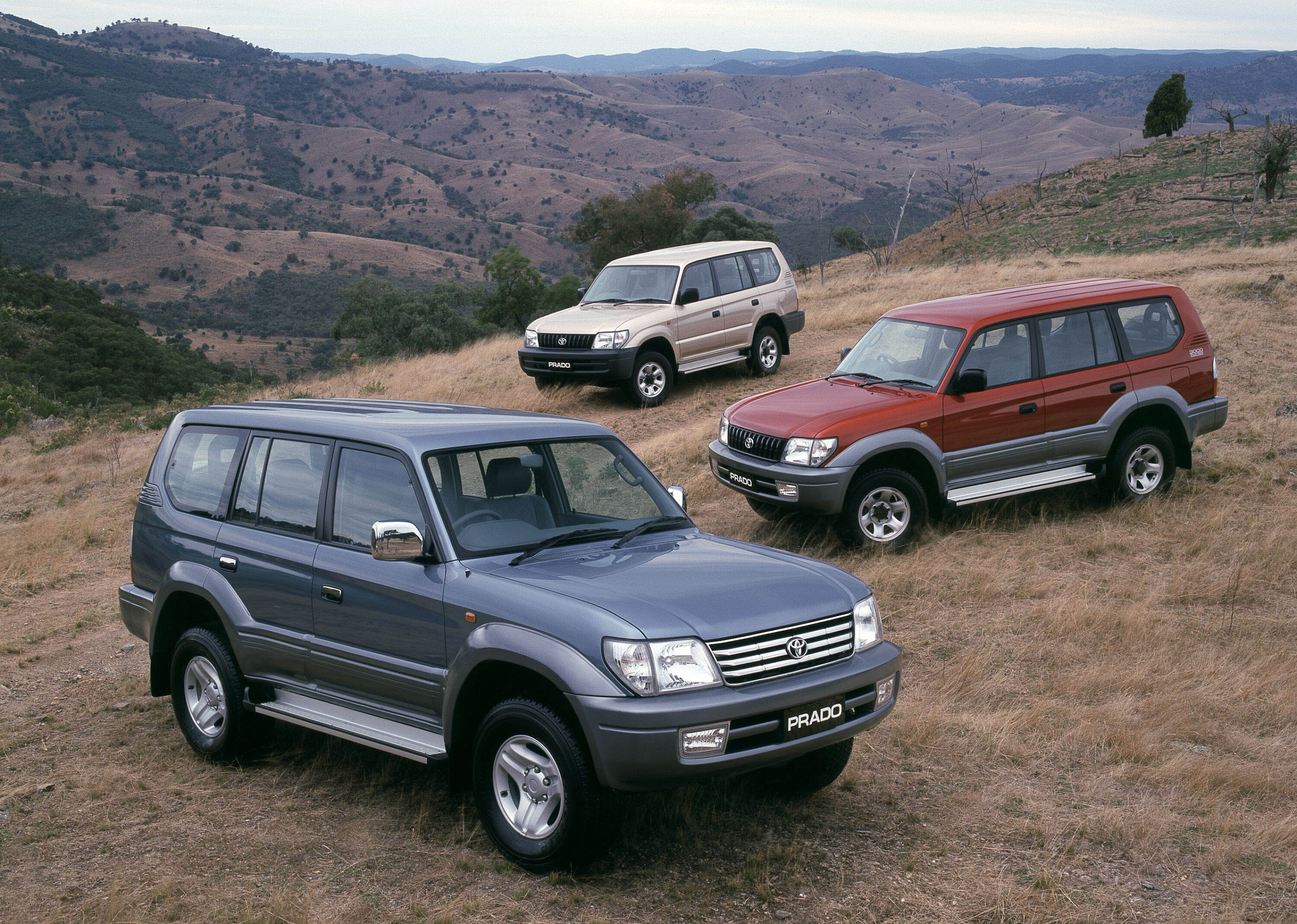
Going the second-hand route opens up a raft of options, from the cheap and cheerful – but long in the tooth – 90 Series, the near-iconic 120 Series, or a used version of the longest-serving Prado, the 150 Series.
1
Even now, close to 15 years since the launch of the current 150 Series, the LandCruiser Prado is still the mid-size 4×4 wagon king in Australia. In fact, the past five years have been the best sales results ever for Prado, and you could point a finger at a few potential reasons why, beginning with the fact its major long-term competitor – Mitsubishi’s Pajero – is now no more.
The obvious ‘new’ contender is Ford’s latest Everest, especially with its 3.0-litre TDV6 spec; but for some, the Everest is still seen as a ‘ute-based SUV’, as if that moniker suddenly renders that vehicle lesser than a true 4WD wagon design as the Prado is viewed.
Regardless of all of that, the fact is, ever since its official launch in Australia back in 1996, Aussie buyers have flocked to the Prado. Along the way they have excused some potentially serious problems that would be deemed inexcusable for other brands, for the Prado to reach a total local sales figure (as of July 2023) of 380,192 vehicles. Yep, that’s bloody impressive.
In short, whether families, hardcore tourers or whomever, Aussies are super-keen to get themselves into a Prado; brand-new, or second-hand. It’s just a matter of deciding which one is your best option.
Toyota Prado 90 Series
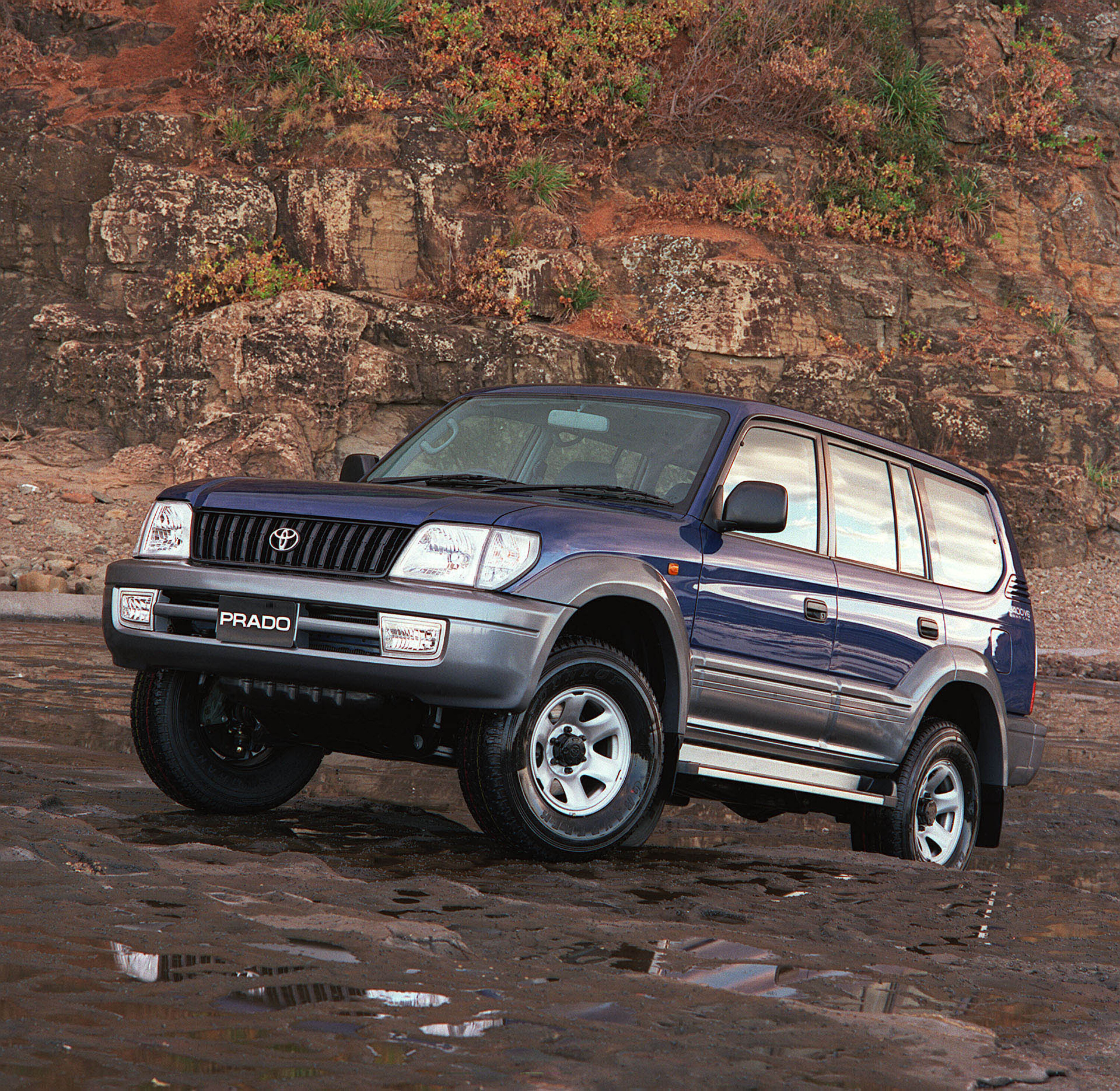
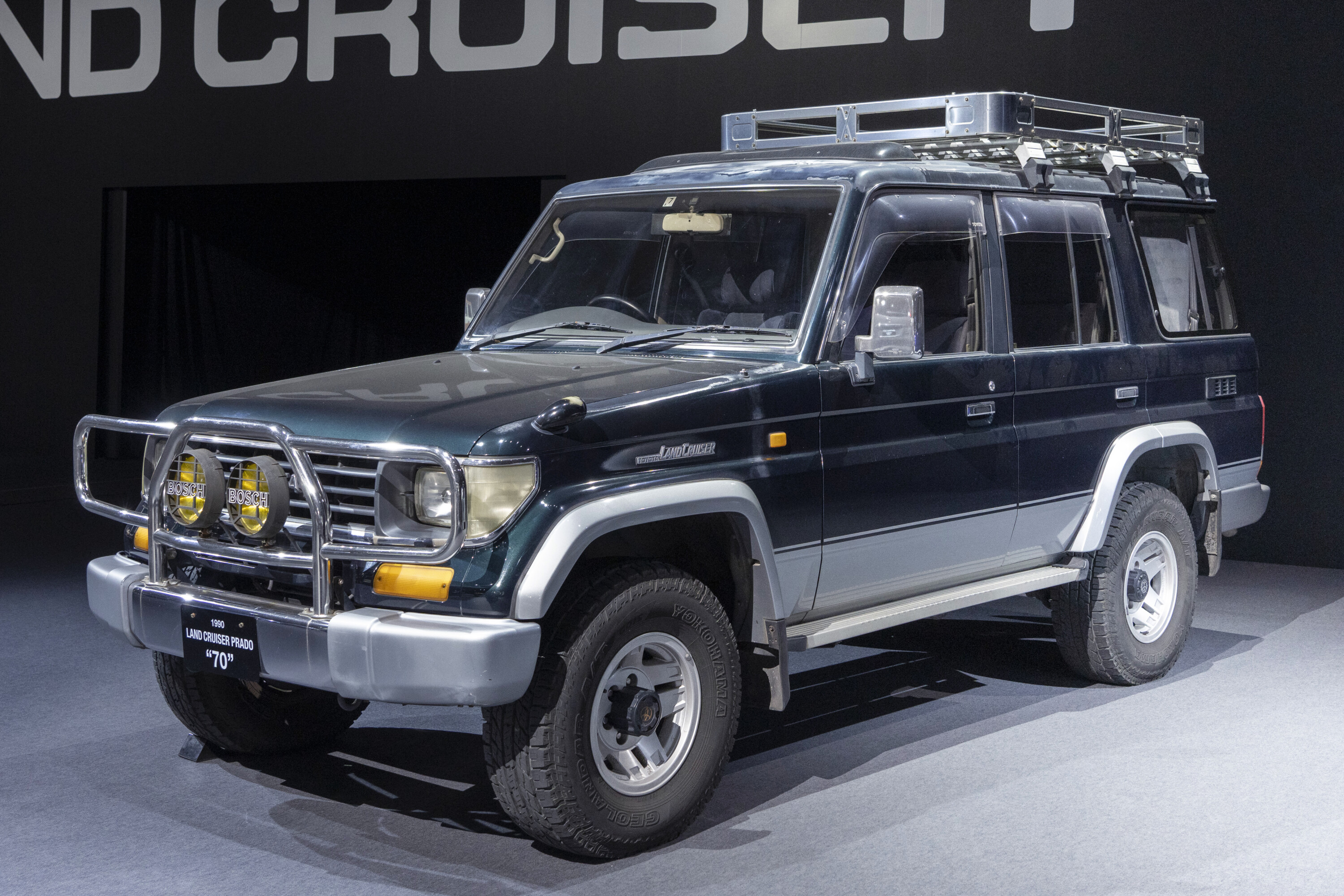
It was 1996, and the Mitsubishi Pajero was proving that new-vehicle buyers were surprisingly amenable to a mid-size off-road wagon that was equally comfortable on the bitumen. Toyota, of course, already knew this; the first-gen Prado, with live axles front and rear, and a choice of three- or five-door variants, had been introduced to a number of overseas markets but not here.
This short moment of market inattention by the Big T was addressed with the 1996 launch of the 90 Series “LandCruiser Prado”, Toyota cleverly leveraging the iconic LandCruiser nameplate when badging this mid-sizer for the Aussie market.
1
The 90 Series debuted with a live-axle rear and an independent front setup, combining to provide a more ‘car-like’ driving experience – and a small turning circle (11.6 metres) for those pesky city/school car parks – without sacrificing too much off-road capability.
This ‘new’ mini-Cruiser also offered seating for up to eight occupants, thanks to third-row seating that conveniently folded up to the sides (albeit at the cost of cargo space).
The vehicle launched with two petrol engines – a 3.4-litre V6 and a slightly anaemic 2.7-litre four-cylinder – and a surprisingly large 159-litre fuel tank, allowing the Prado to lug more fuel than even its big-brother 100 Series LandCruiser.
1
A diesel version of the 90 Series didn’t lob until March 2000, in the form of the 96kW/287Nm 3.0-litre (1KZ-TE) intercooled four-cylinder, with indirect injection, and backed (initially) by a five-speed manual gearbox. A four-speed auto box became an option in October 2000, bringing the total number of diesel Prado models to eight of the 16-model range.
Buying a second-hand Prado 90 Series
The 90 Series models are relatively cheap but come with the caveat of an ageing body and mechanicals, as well as lower levels of safety tech (which may, or may not, be an issue).
Still, for a relatively low entry point, you can get into a more-than-capable tourer, with a simpler, well-proved diesel powerplant, or that fun V6 petrol. Aftermarket manufacturers still offer some accessories for this model, so that cheaper entry price does leave wiggle room for spending on the fun stuff.
Pricing on the major online second-hand vehicle sale sites sees a private sale 2001 3.0-litre turbo-diesel, with 147,000km on the odo, at an asking price of $17,000, with a jump to a very low-kay (107,000km) 1996 3.4-litre V6 petrol VX Grande sitting at a dealer with $26,990 on the window. Unless you really want to punish yourself, steer clear of the 2.7-litre four-cylinder petrol.
Toyota Prado 120 Series
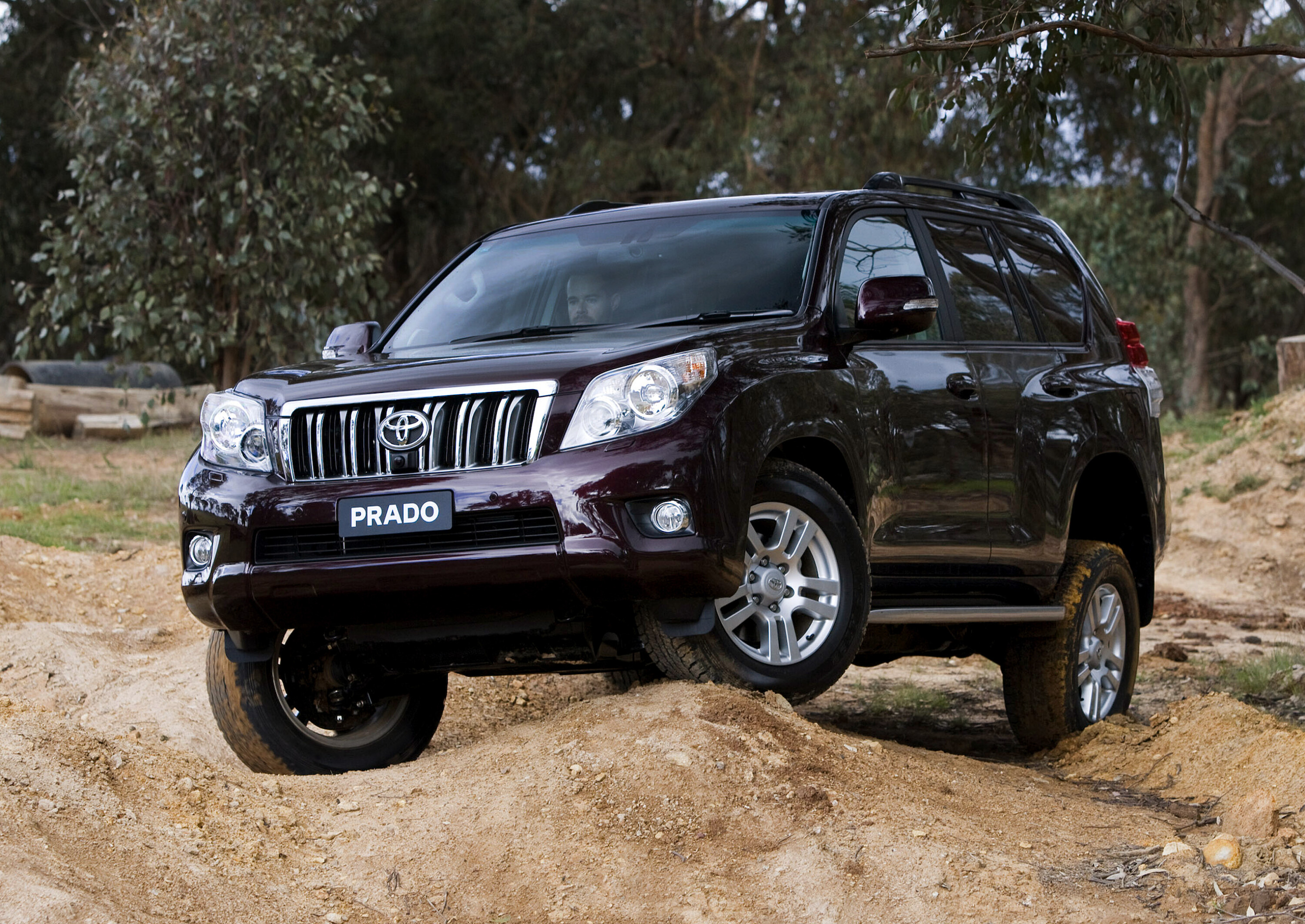
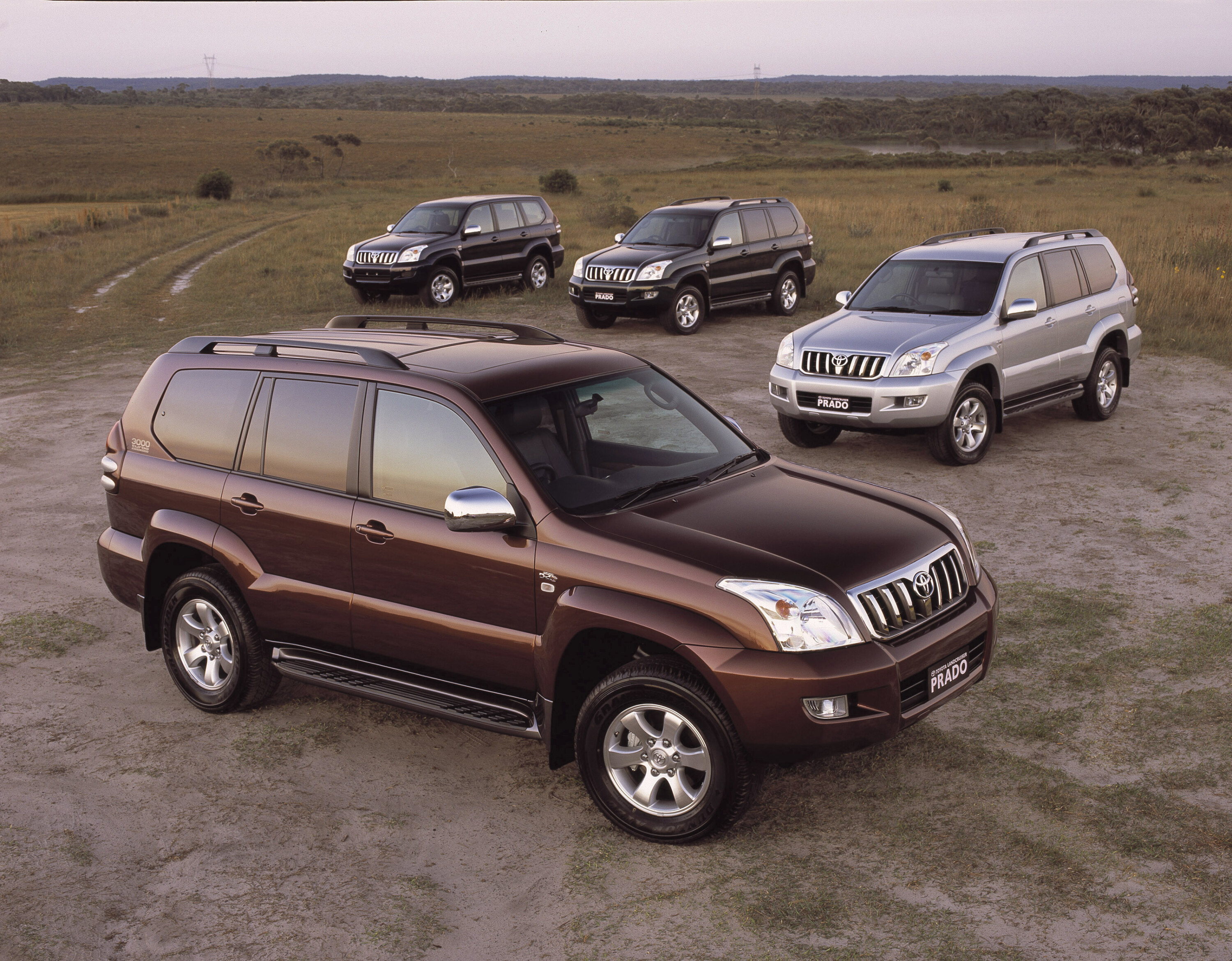
In 2003, Toyota launched the larger, roomier, safer and more refined 120 Series, with the 3.0-litre turbo-diesel and the 2.7-litre petrol from the 90 Series initially carrying over and being joined by a stonking all-alloy 4.0-litre quad-cam V6 petrol (dubbed the 1GR-FE) that pumped out 179kW and 376Nm, while being fed go-juice via a monster 180-litre fuel capacity courtesy of an 87-litre main and 93-litre sub tank.
This generation of Prado also received updates to its Driver-Assist Technology (DAT), featuring Active Traction Control (A-TRC), vehicle stability control, Hill-start and Downhill Assist Control, and continued on with full-time 4WD, with the drivetrain now using a Torsen centre diff.
1
The model range included the base-spec GX (five-seats only), GXL, VX and Grande, with the Grande also featuring electronically controlled self-levelling rear air suspension. Third-row seating was standard from GXL up, while leather seating was only available in VX and Grande.
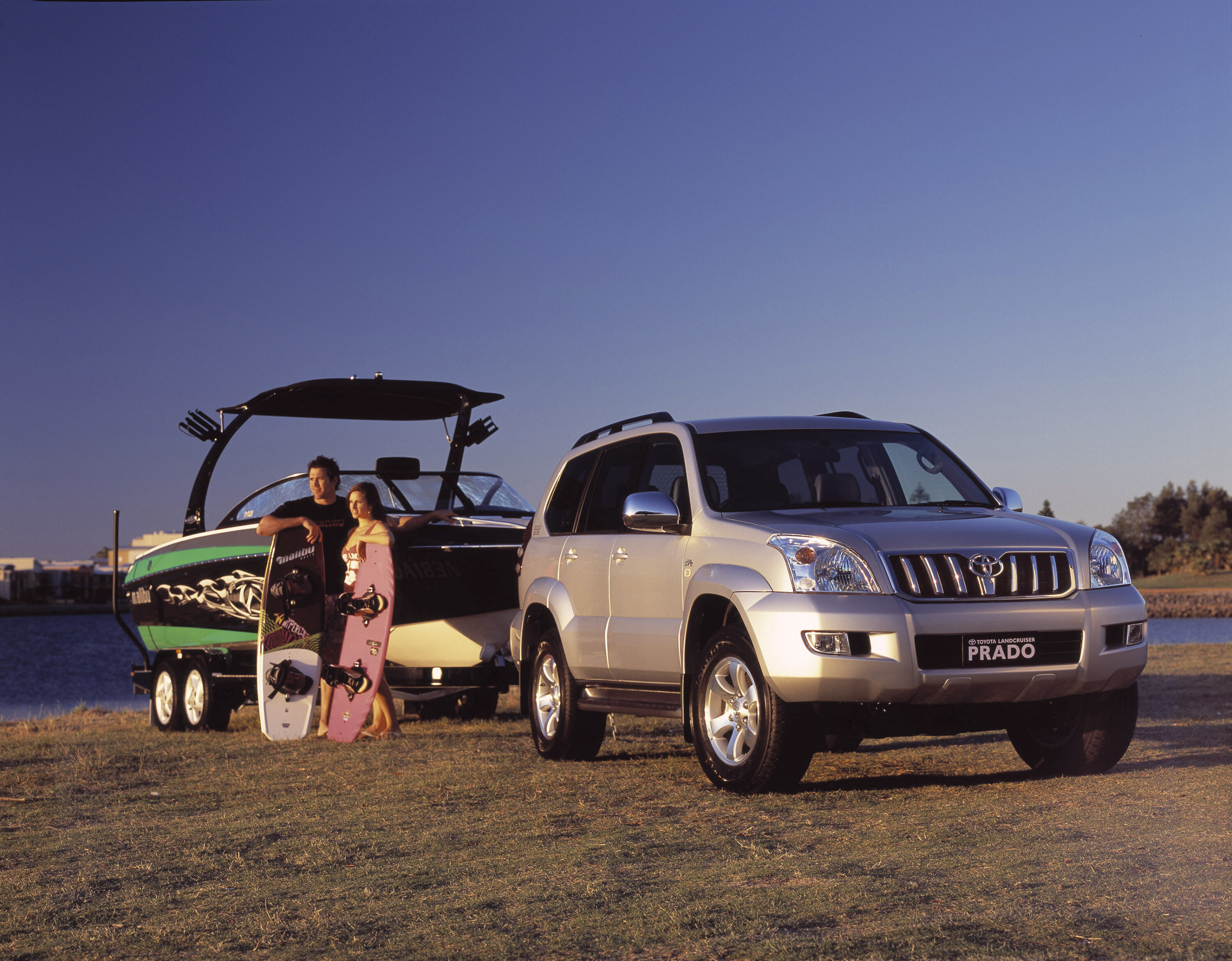
The 120 Series proved hugely popular in 2003, with sales nearly doubling from the previous year to 14,639 vehicles, and saw the Prado become the best-selling overall four-wheel drive vehicle (including SUVs) from May of that year. Incremental changes through the first few years of the 120 Series resulted in the original four-speed auto backing the 4.0-litre V6 receiving an extra ratio for a modest increase in economy, but a notable upping of overall driveability.
Perhaps surprisingly, even with a well-proven diesel option, petrol variants remained the best-seller for the Prado up until 2006, when diesel sales finally accounted for more than half. Coincidentally, it was this year that saw the 120 Series receive a more modern and powerful DOHC common-rail direct-injection 3.0-litre turbo-diesel engine, the 1KD-FTV.
1
This new oiler was impressive; a 32 per cent jump in power to 127kW (at 3400rpm) and the higher (by nearly 20 per cent) peak torque of 410Nm was available at a lower point (1600rpm) in the rev range, and it made it more flexible for off-road driving. Backed by either a six-speed manual or slick five-speed auto (with a new gated shift), this new donk seemed like the perfect powerplant for long-distance off-road touring, with far better fuel economy compared to its predecessor.
It was this last incarnation of the 120 Series, from 2006 through to 2008, that saw the biggest boost to the Prado’s reputation as a great off-road tourer option, and one that was also easy to drive around town. The comfortable ride, decent on-road handling, long-travel suspension, modern engines with well-matched gearboxes, bush-friendly 17-inch wheels, copious aftermarket accessories, a spacious interior and an extensive nationwide dealership network all offset a much smaller list of negatives. These included the side-mounted third-row seats, which eat into rear cargo space, the low 2500kg braked towing capacity, the still-considerable thirst of the V6 petrol, and the 1KD-FTV’s infamous ‘injector issue’. Speaking of which…
With modern diesel engines comes complexity, which can lead to unforeseen problems. In the 1KD-FTV’s case, this was the motor’s injectors – or, more accurately, the injectors and their seals. Originally, the seals were made from copper and, when they failed, they would then allow excess gases into the engine where, mixed with oil, it’d create a build-up of carbon which would, in turn, block the engine’s oil pick-up. We all know what happens when an engine has no oil.
1
The injectors themselves are also known to either outright fail (it is recommended the tolerances are checked every service and they are replaced very 100,000km regardless) or ‘stick’ open, again causing an oft-fatal flood of fuel into a cylinder chamber.
Yep, it sounds scary – and bloody expensive – but it is also a prime example of ensuring your vehicle (regardless of make/model) is regularly serviced and any pre-emptive modifications are done. It should also be noted that, for every 1KD-FTV-powered Prado (both in 120 Series and 150 Series form) that has failed, there are thousands out there that have happily clocked up hundreds of thousands of trouble-free kilometres.
Buying a second-hand Prado 120 Series
Yes, you will need more dosh to get into a 120 Series compared to snaring a nice 90. But, regardless of whether you are looking for one of the ‘old’ 3.0-litre oilers (2003 to 2005), that rorty 4.0-litre V6 petrol, or the post-2006 update common-rail 3.0-litre diesel donk, with the increased sales of that model, you will have a wider range to choose from.
If you’re keen on the V6 petrol, do yourself (and your wallet) a favour and bypass the earlier four-speed auto versions; the five-speed auto (or the rarer six-speed manual) behind that engine will offer at least a modicum of ‘acceptable’ fuel consumption.
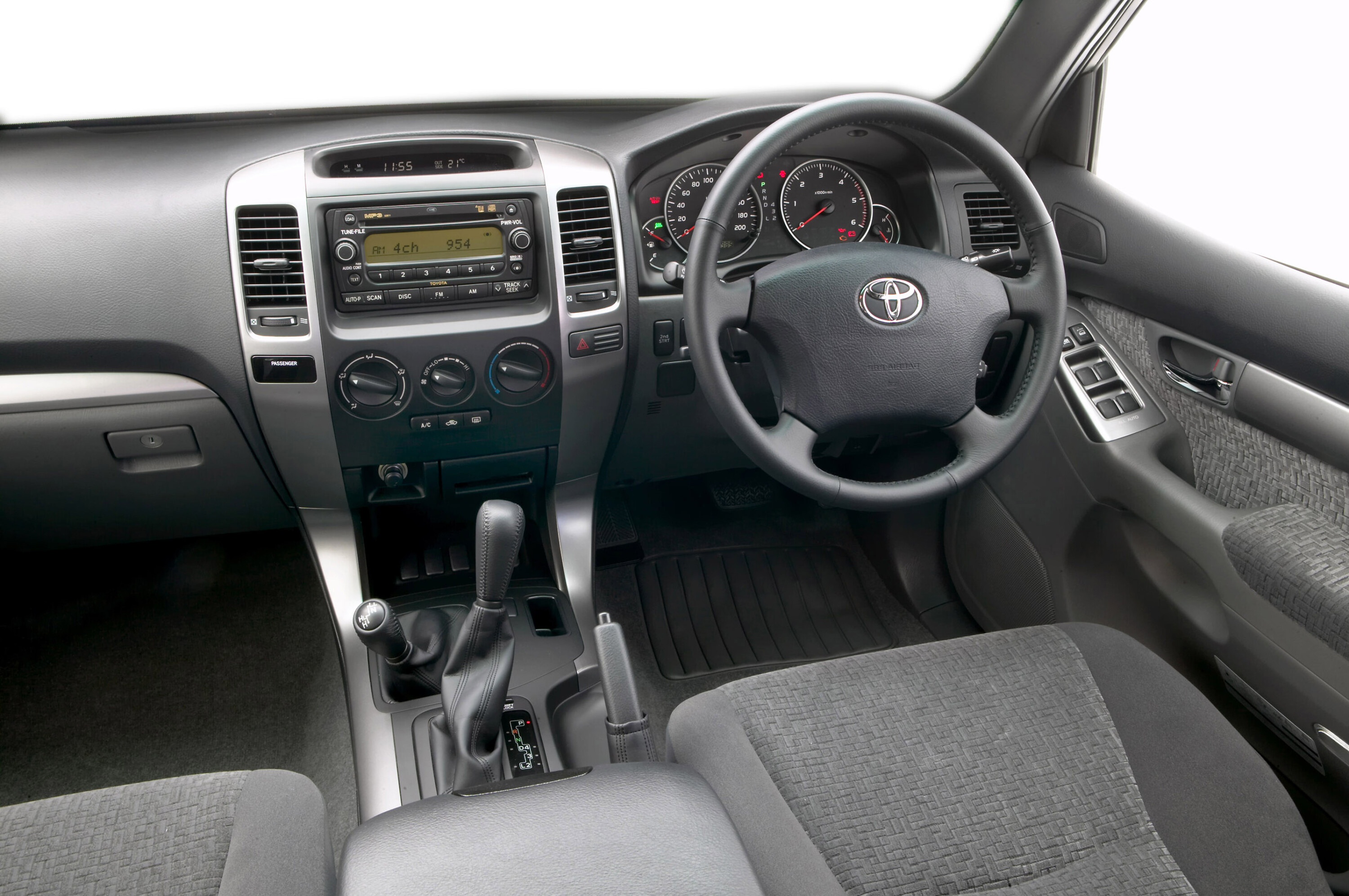
1
Most touring-oriented buyers, though, will look to the 3.0TD engine. Even allowing for the injector issue, this engine’s power and torque, in a relatively lightweight wagon and backed by that 180-litre fuel capacity, make for a brilliant base from which to start a tourer project build – just be sure to check the vehicle’s service history, and ask if the injectors have been replaced during the previous owner’s tenure. Pricing for this engine option is highest in the 120 Series range, with low-kay examples asking mid-$30K pricing.
It’s here you may need to do the sums; a 4.0-litre V6 of equivalent spec and odo reading is around $5K to $10K cheaper, and that pays for a lot of petrol. Plus, that engine is renowned for its durability, with no big ‘issues’ in its history, and we’ve heard of a number of examples ticking over 300,000km and more, and still going strong.
For those looking for more ‘luxury’ in their 120 Series, the VX and Grande are the two model specs to focus on, with leather interiors and better sound systems. However, be aware that the Grande’s self-levelling rear suspension, while excellent in operation, makes fitting an aftermarket suspension system a much bigger (and more expensive) task than the coil-sprung models. For any other off-road touring mods, there are oodles of aftermarket suppliers who produce gear for this popular vehicle.
Toyota Prado 150 Series
It’s a credit to Toyota’s designers and engineering teams that the 150 Series has, firstly, stayed at the top of its market segment for close to 15 years up to now and, secondly, during that near decade-and-half, Toyota has not rested on its sales laurels, subjecting this model to a number of tweaks over the years.
The 150 Series was launched in 2009, with both a five-door and three-door model on offer. Five-door badges were GX, GXL, VX and Kakadu (replacing the Grande nameplate), with the 150 presenting slightly wider, lower, longer and notably heavier than its predecessor, albeit retaining the approach, ramp-over and departure angles of the previous gen.
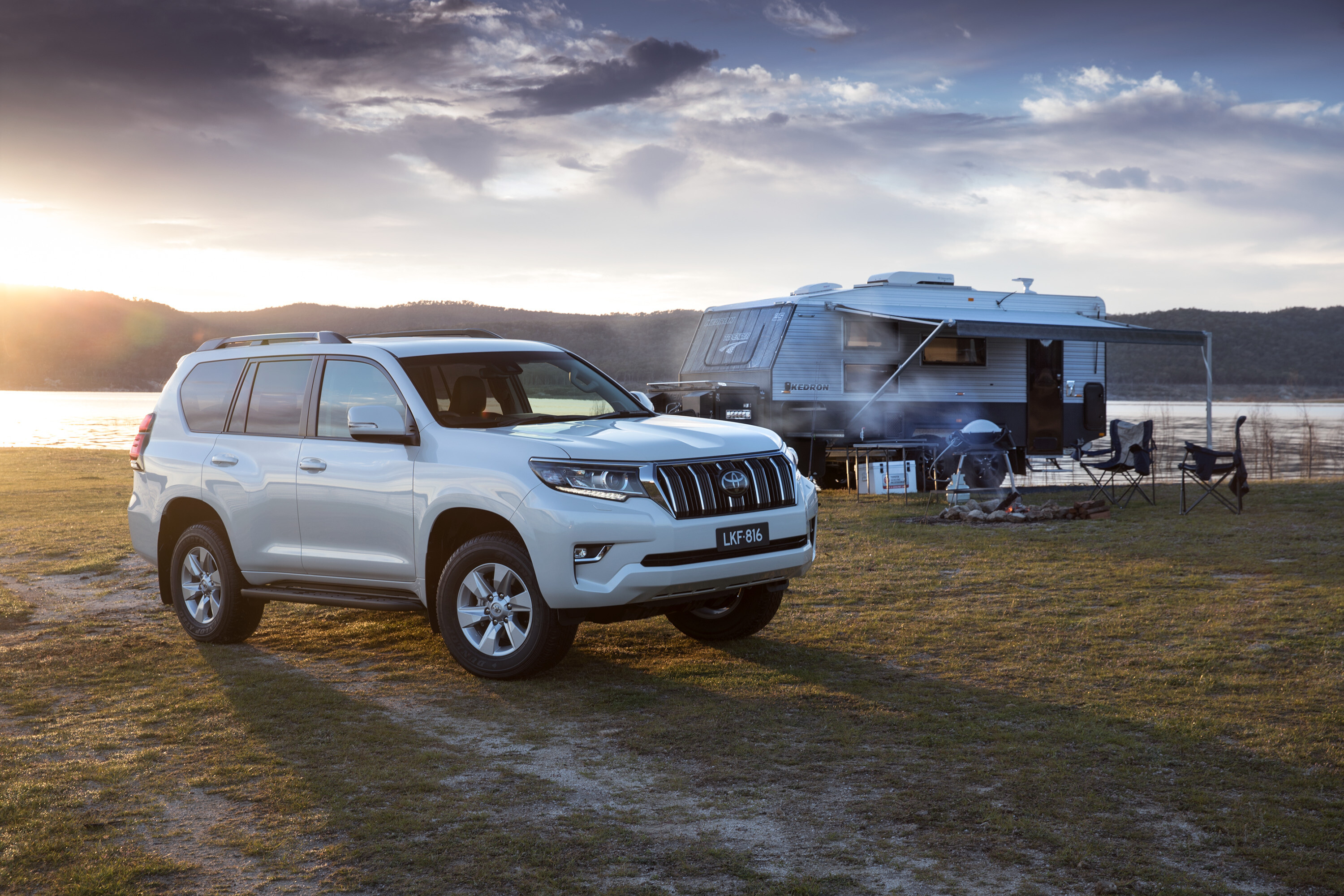
1
That extra heft brought a raft of improvements including better safety tech (seven airbags across all models, up from two), an all-new more comfortable and spacious interior (at last, the third-row seats folded flat under the cargo floor; seating capacity drops to seven, though), a lift in standard features per spec level (including three-zone aircon on GXL, VX and Kakadu), ‘Multi-terrain ABS’ (self-adjusting ABS dependent on terrain surfaces), and even adaptive cruise control, albeit only on the top-tier Grande and three-door ZR (yep, there was a three-door; the ZR and the lower-spec SX).
Unfortunately, the extra weight also meant less payload, the fuel capacity dropped to 150 litres, and the braked towing capacity stayed at 2500kg.
Motor-wise, there was further tickling of that big-bopper 4.0-litre V6 petrol, with more power and torque (202kW/381Nm) and – hallelujah! – better claimed fuel economy (11.5L/100km for the five-speed auto) thanks to the adoption of dual intelligent variable valve timing (Dual VVT-i). The 3.0TD also copped a small change; with a nod to the injector dramas seeing new injectors fitted and moving the intercooler from the top to the front to aid cooling.
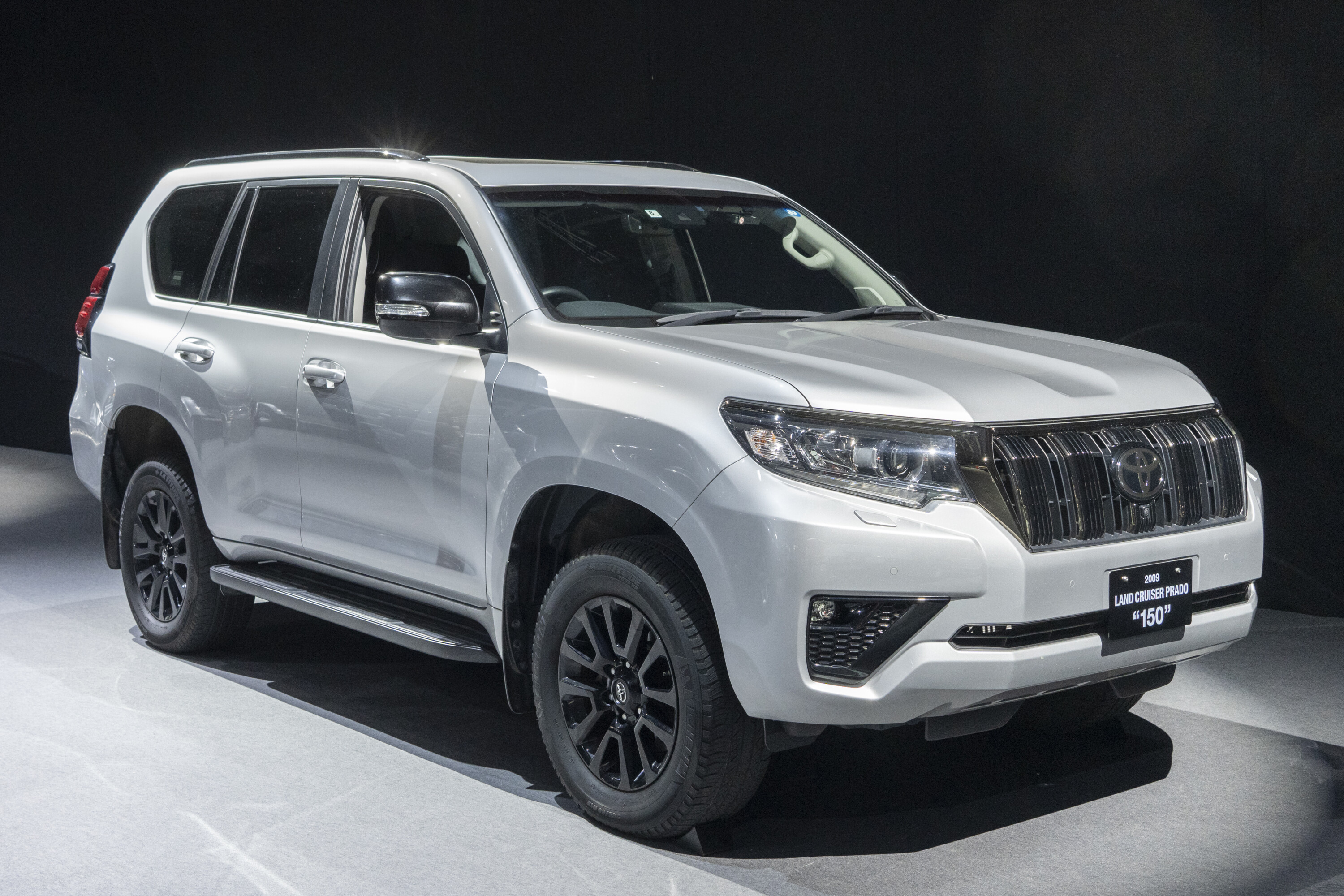
1
As expected, the Prado’s well-proven IFS front end/live axle rear combo carried over (with revised spring and damper rates) in all models bar the top-tier Kakadu (which kept its predecessor Grande’s self-levelling rear suspension). The Prado’s excellent traction control system was also (again) improved.
Both Kakadu and VX now featured Toyota’s KDSS (Kinetic Dynamic Suspension System – more on that in the 150 Series buying guide, below), with the Kakadu version of KDSS adding adaptive variable suspension. Kakadu (and ZR) also now included Toyota CRAWL (basically a low-speed cruise control for off-roading), along with Multi-Terrain Select (with five off-road driving ‘modes’) and Multi-Terrain Monitor, too. Yep, the Prado was going high tech.
It was not until 2015 we saw the next major Prado update – an extra 5kW for the now low-selling 4.0L V6, and the arrival of the new 2.8-litre 1GD-FTV turbo-diesel engine, backed by an also-new six-speed automatic. Offering 450Nm (in six-speed auto form; 420Nm for the six-speed manual) at 1600rpm and 130kW, the new oiler was also very fuel efficient. This was attributed to both the new engine and the new gearbox, although the six-speed auto’s two overdrive gear ratios (5th: 0.67 and 6th 0.58) caused a few dramas as the ’box would not always shift into that very tall sixth gear unless you were exceeding some speed limits!
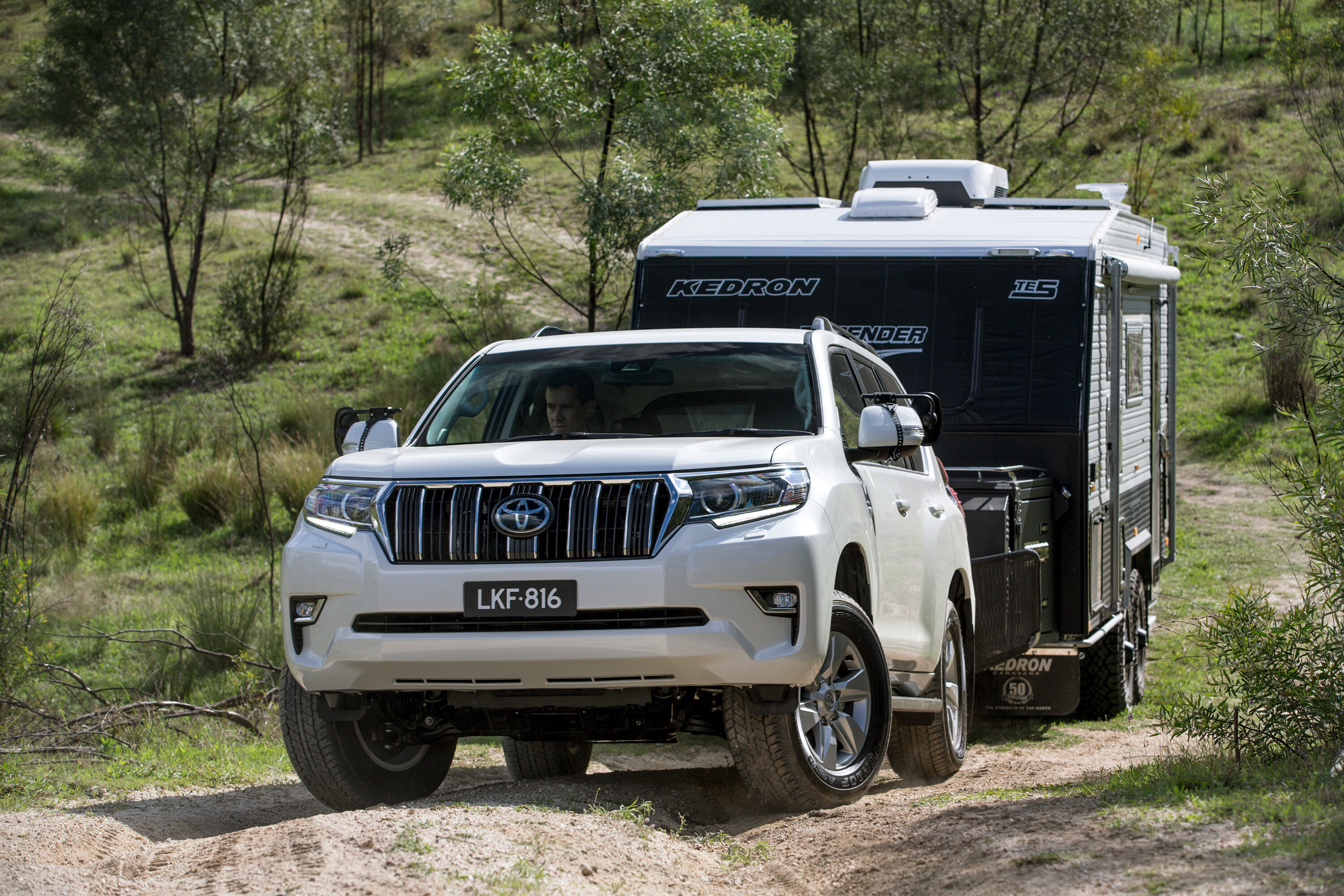
1
Another update followed in late 2017, featuring the latest 150 Series exterior styling, but Toyota sadly dropping the beloved 4.0-litre V6 petrol. An easy decision as it turned out, with only 1.2 per cent of Prado sales now petrol models. Braked towing capacity was increased to 3000kg in this year update, too.
August 2018 saw a very hush-hush dropping of KDSS from VX models, an upgrade of the lower-spec models (GX and GXL) to the safety tech previously available only on VX and Kakadu, and the appearance of a ‘flat-back’ Prado; with removal of the sub-tank (dropping fuel capacity down to 87 litres) and fitting the spare underneath, Toyota could offer a rear door that, although it still opened sideways, at least now offered a lift-up rear window for easy access to the cargo area. It’s been very popular.
As with the 3.0TD, the 2.8TD was not without issues, the main one being a faulty Diesel Particulate Filter, in vehicles built between 2015 and 2020. In very basic terms, the DPF is designed to reduce emissions by collecting particulates and then ‘burning’ them, a process Toyota dubs ‘regeneration’. Unfortunately, this did not work and the DPF would pack up with unburnt particulates, causing everything from increased fuel consumption to the now infamous white smoke from the Prado exhaust. After two cracks at it, Toyota looks to have resolved the problem.
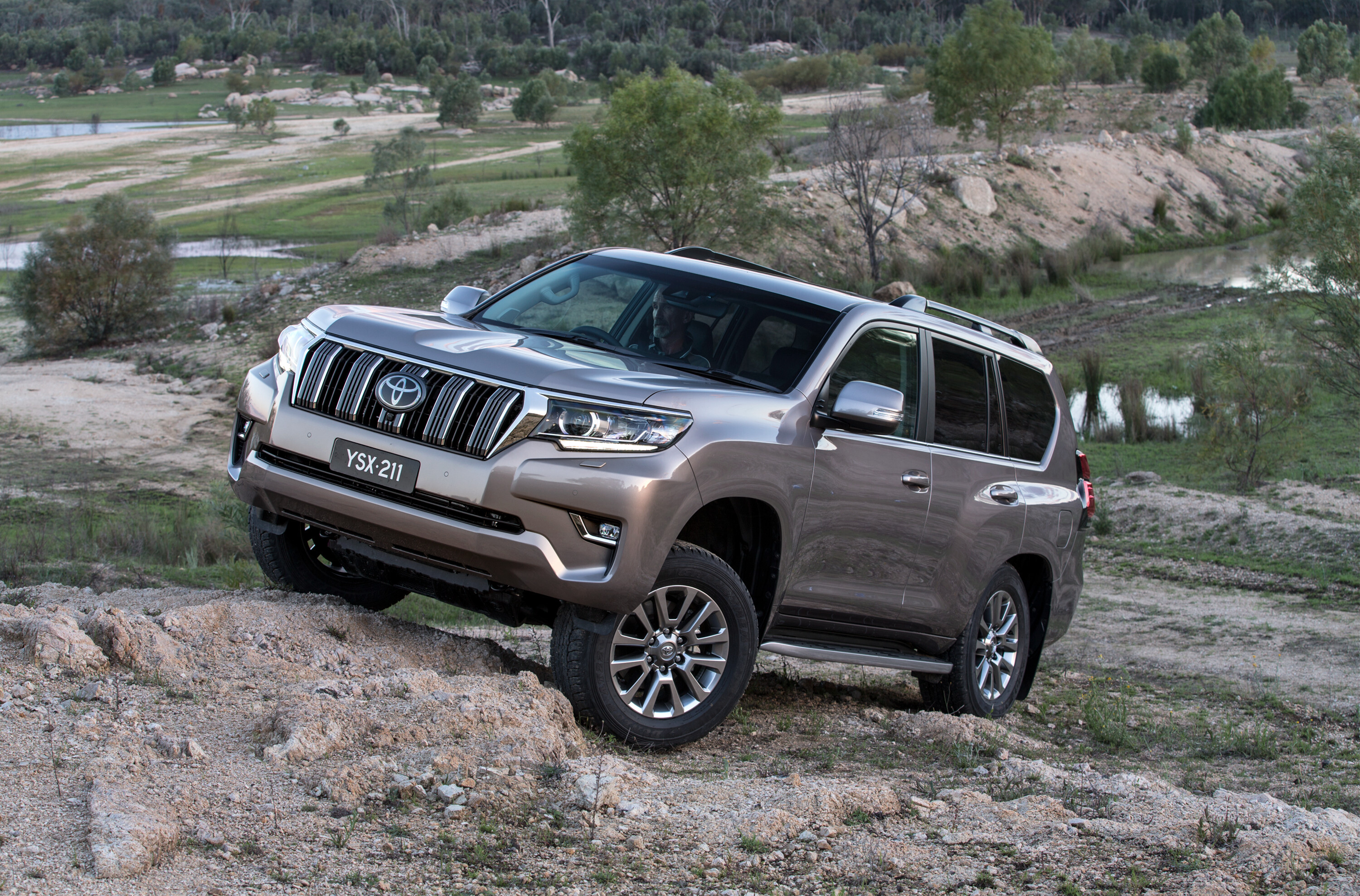
1
The last – and now final – update to the Prado 150 Series happened in late 2020, with the big news being a bump in grunt to 150kW/500Nm, the result of a mini-overhaul of the 2.8TD covering new turbo (with a larger turbine and impeller), cylinder block and head tweaks, and an increase in fuel-injection flow rates. The end result was a smoother delivery of grunt, with the maximum torque spread now going from 1600rpm to 2800rpm.
Other improvements included a final resolution to the abovementioned DPF issues, a new multi-media system (yes, you could now use Apple CarPlay), rain-sensing windscreen wipers, and another increase in safety systems.
New diesel outputs aside, you’d think there wouldn’t be much buyer interest in buying what is, sort-of, now a 15-year-old vehicle. But you’d be wrong; 2022 and the first half of 2023 have seen the highest sales ever for Prado. The 150 Series may have been around for what seems like forever, but incremental improvements (and fixes) have kept this best-seller at the top of the market. The 250 Series has a lot to live up to.
Buying a second-hand 150 Series Prado
If you have a slightly larger wad of cash, the 150 Series Prado is well worth the additional outlay; but, as with the 120 Series, comes with those diesel-related caveats attached, whether you’re looking at the 3.0TD or the 2.8TD from 2015 to 2020 (in relation to the DPF).
The 150 Series is arguably the most capable Prado off-road straight from the showroom floor. It is also probably one of the most modified touring vehicles ever in Australia, with every 4×4 aftermarket manufacturer producing tons of goodies for this rig.
As mentioned, it is wider, lower and arguably more comfortable and capable on- and off-road, but also heavier. Balancing that was the increase in safety tech (both internal and external), better claimed fuel economy, general build and mechanical improvements, along with that welcome tweak to the 4.0-litre V6 in terms of efficiency (if you’re looking for the V6).
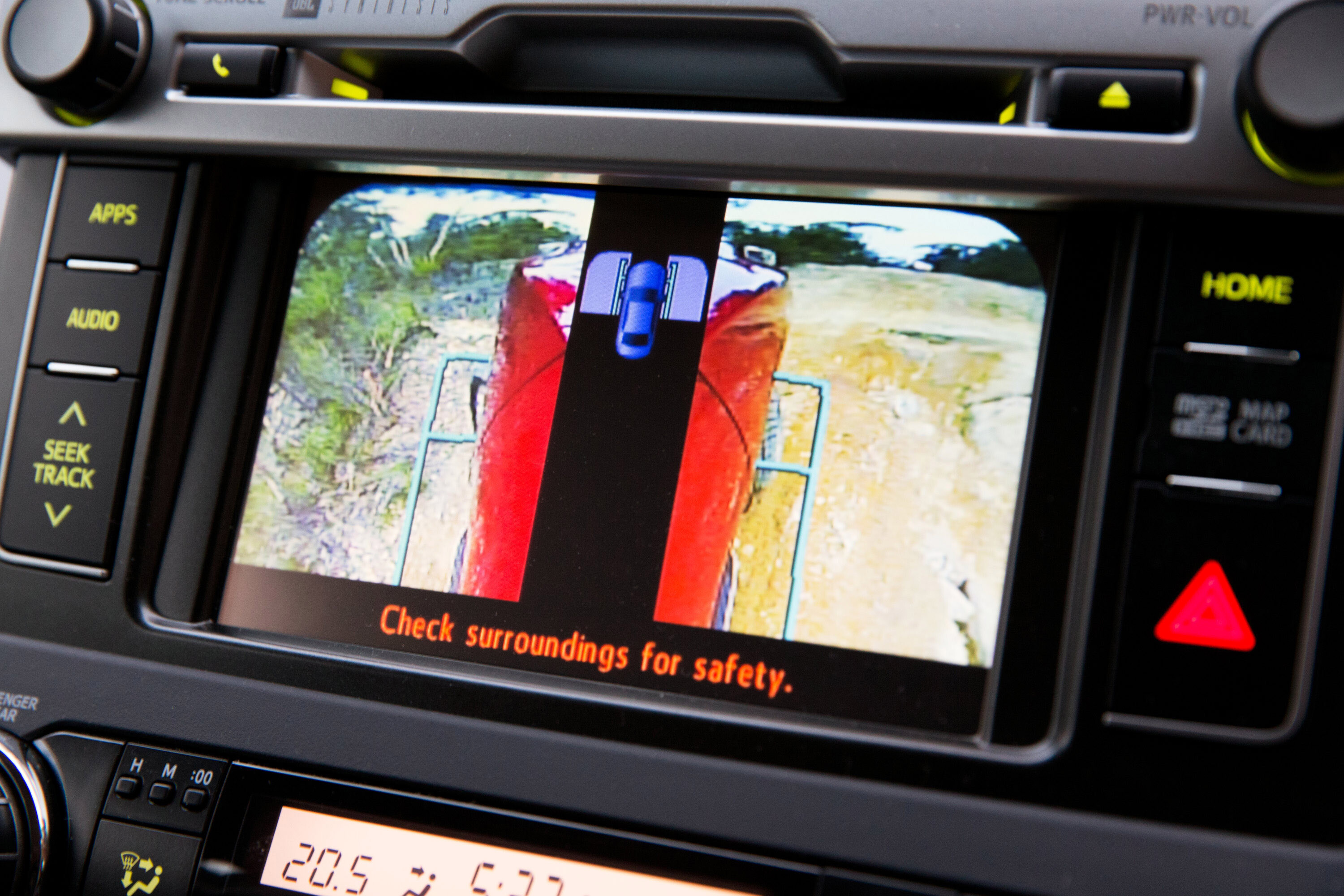
1
As with any second-hand purchase, a check of service records is a must, and especially so with the two diesel options. A 3.0TD Prado GXL may look amazing value for money compared to the ‘newer’ 2.8TD, but be sure to ask about the injectors, i.e., have they been checked regularly at service intervals and/or been replaced.
Same goes for any 150 Series built in the years/months covered by the DPF-related dramas. Both of these issues sound very dramatic – and they certainly can be that, plus very costly – but on the whole, most Prado 150 Series, if properly serviced/looked after, will provide many years of reliable on- and off-road fun.
Pricing for Prado 150 Series varies widely, simply due to this model having been around for so long. A peek at some online vehicle sales sites sees prices include a $30L 3.0TD GXL with 172,000km on the odo, to a $49K 2015 2.8TD Prado with 106,000km, through to a 2021 2.8TD VX with only 30,000km on the odo (and four more years of new car warranty).
So, in short, there are plenty of 150 Series out there and, as per usual, it will depend on both your budget and your engine preferences.
From the experts
Dean Mellor, 4X4 Australia editor (2003-2009)
“The first Prado launched in 1996 was essentially a better Pajero, and with Toyota’s unequalled sales and service network throughout Australia it’s little wonder it was an instant sales success. Over the past three decades the Prado has remained at the top of the sales charts thanks to offering customers a family-friendly wagon that is equally as competent on the road as it is off it, and although it has never excelled in any one area, it is certainly a jack of all trades.”
Justin Walker, 4X4 Australia editor (2010-2012)
“The Prado has always been the ultimate combo of tourer and town vehicle and proved itself to this overly fussy judge in 2010, when I drove a then all-new 150 Series GXL 3.0TD down Len Beadell’s Sandy Blight Junction Road, through the Gibson Desert. All I did was fit some M/T tyres and away we went. Out of the box, the Prado was perfect for that adventure; equally comfortable negotiating deep, soft desert sand as it was punching along the Stuart Highway, I knew then that Toyota had created a brilliant touring vehicle.”
Ron Moon, 4X4 Australia editor (1987-2001)
“I’ve long contended that the Toyota Prado is, and has been, the best mid-size wagon on the Australian market. Its longevity and its sales figures kinda bear that out. Why is it so popular? First, it comes with Toyota’s legendary reliability backed up by its LandCruiser heritage – even more so now in the soon-to-appear Prado 250. Then the size is just right. Big enough for the family to go on an outdoor adventure or to tow the camper to Cape York while lacking the dominating and large appearance of a 200 Series which puts a lot of people off. For a long time to come the Prado will remain a winner!”
Edeowie Station is a 69,000ha working sheep and cattle station which, like many grazing properties, has supplemented its income by providing a range of accommodation options to the 750,000 tourists who pass through South Australia’s spectacular Flinders Ranges every year.
There are several choices for those who want to spend a night or more at Edeowie Station, including bush camping, shearers’ quarters and a guest house.
The guest house sleeps up to six people and it offers all the comforts of home – including a telly, dishwasher, air-conditioning and laundry – so all you need bring with you is food… and perhaps a bottle or two of whatever tickles your fancy.
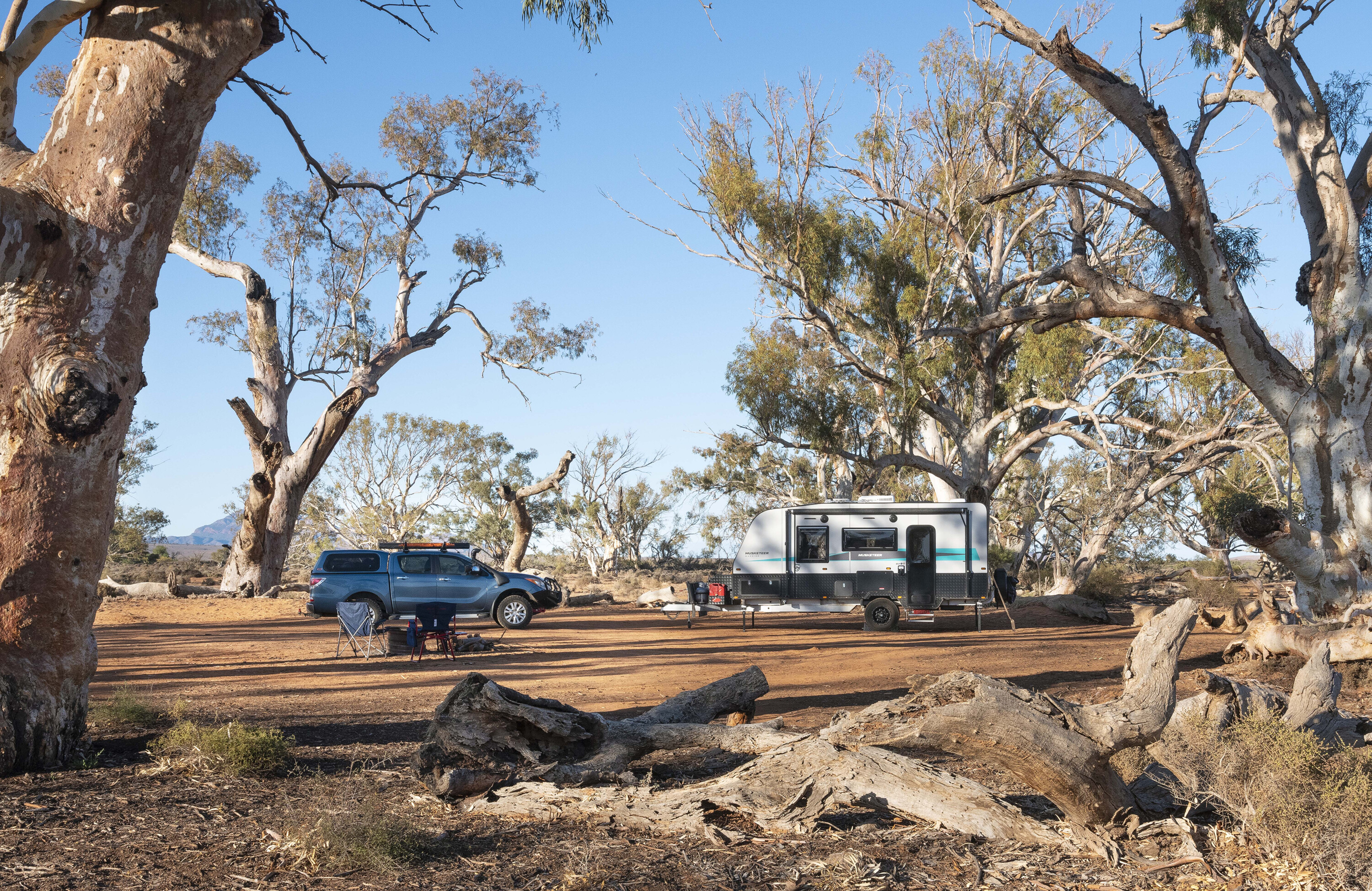
1
In addition, the station’s nine-bedroom shearers’ quarters will sleep up to 18 guests, making it ideal suited to bushwalking and four-wheel driving groups wishing to explore the property and other nearby attractions.
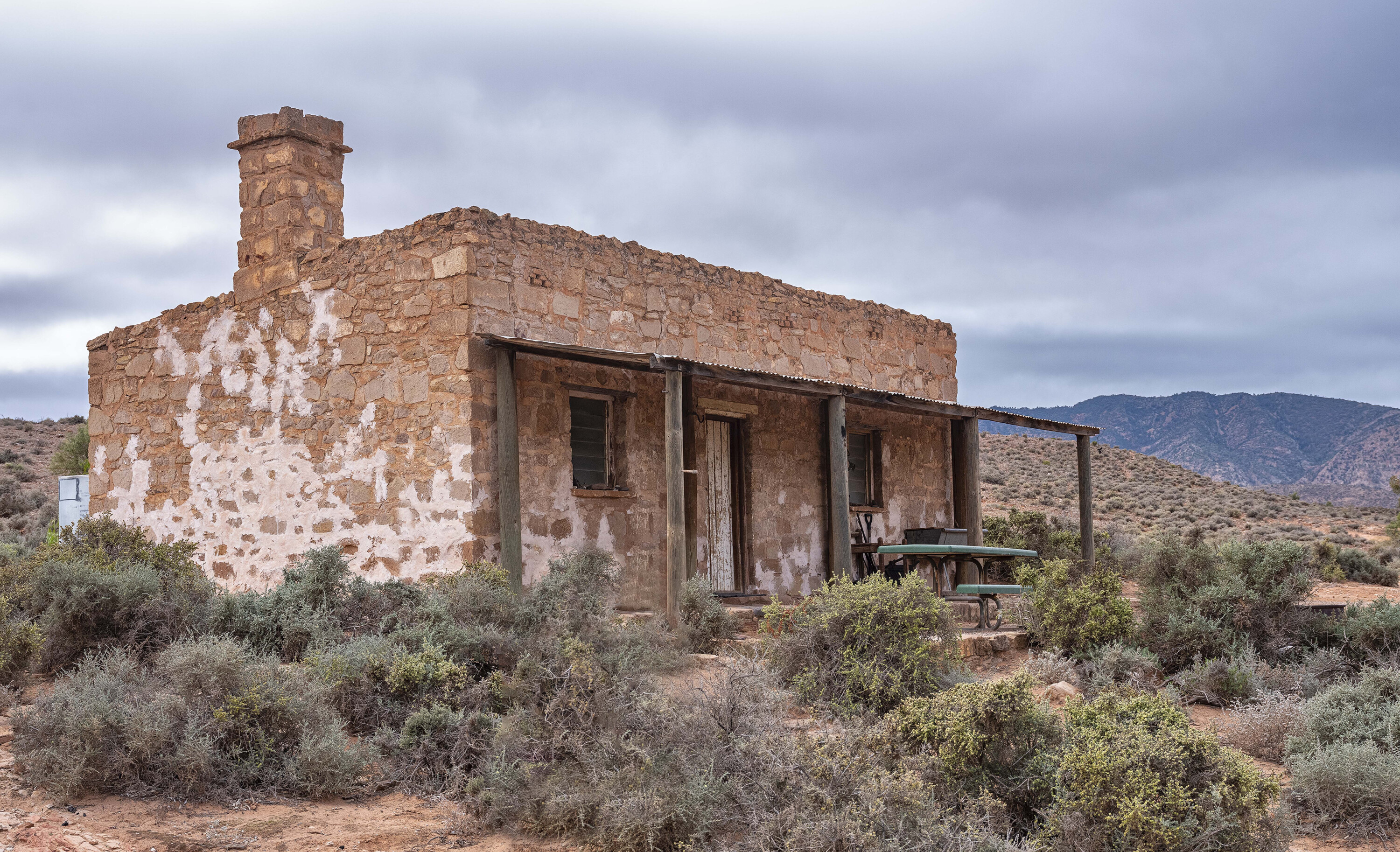
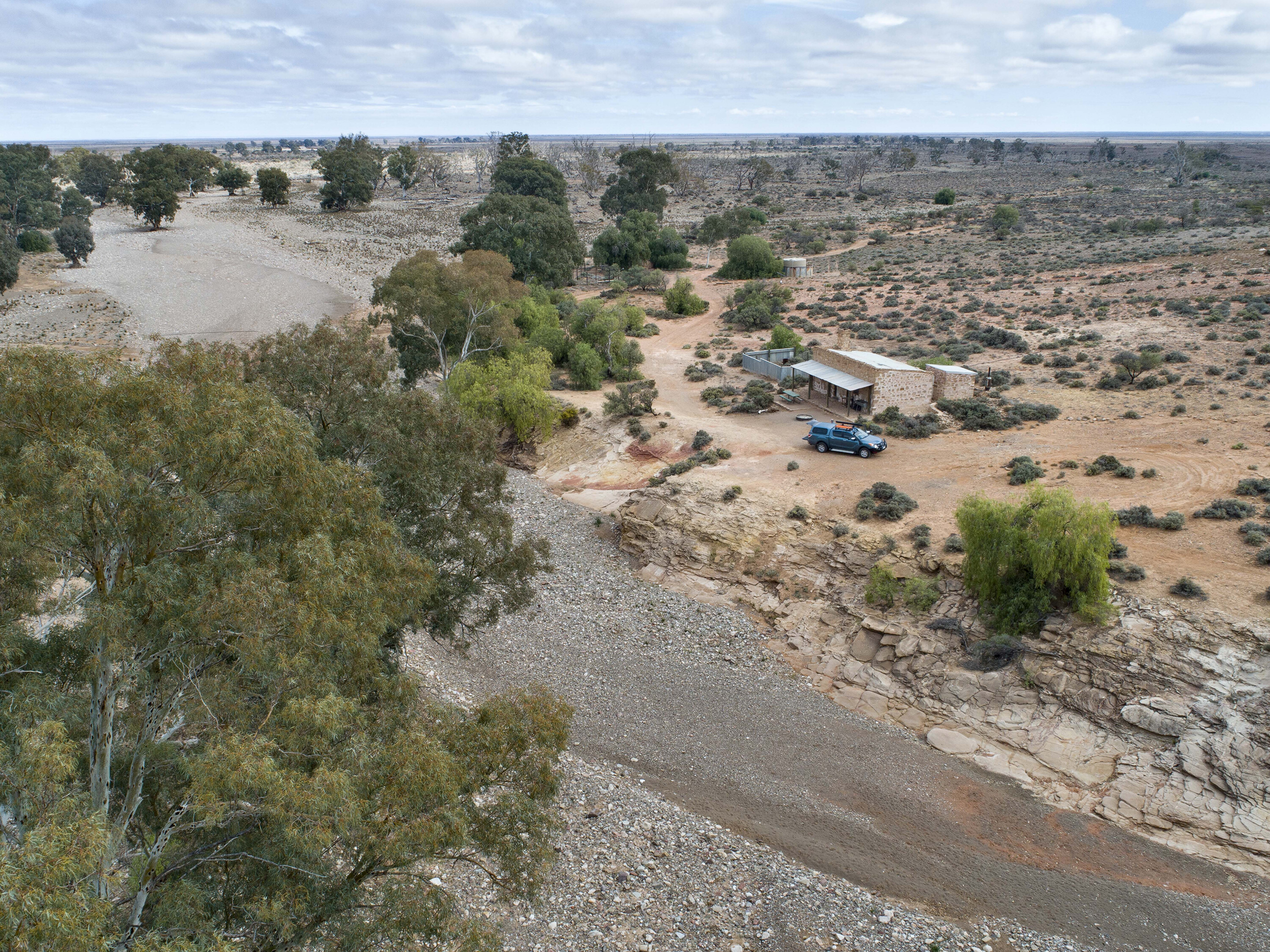
Those seeking a somewhat unique and remote bush experience should check out the property’s Brachina Hut. Little changed from when it was constructed in the 1800s, this rustic hut sleeps up to eight people. There is no power or lighting, but a wood stove and separate shower room supplied by a hot water ‘donkey’ provide a reasonable degree of comfort.
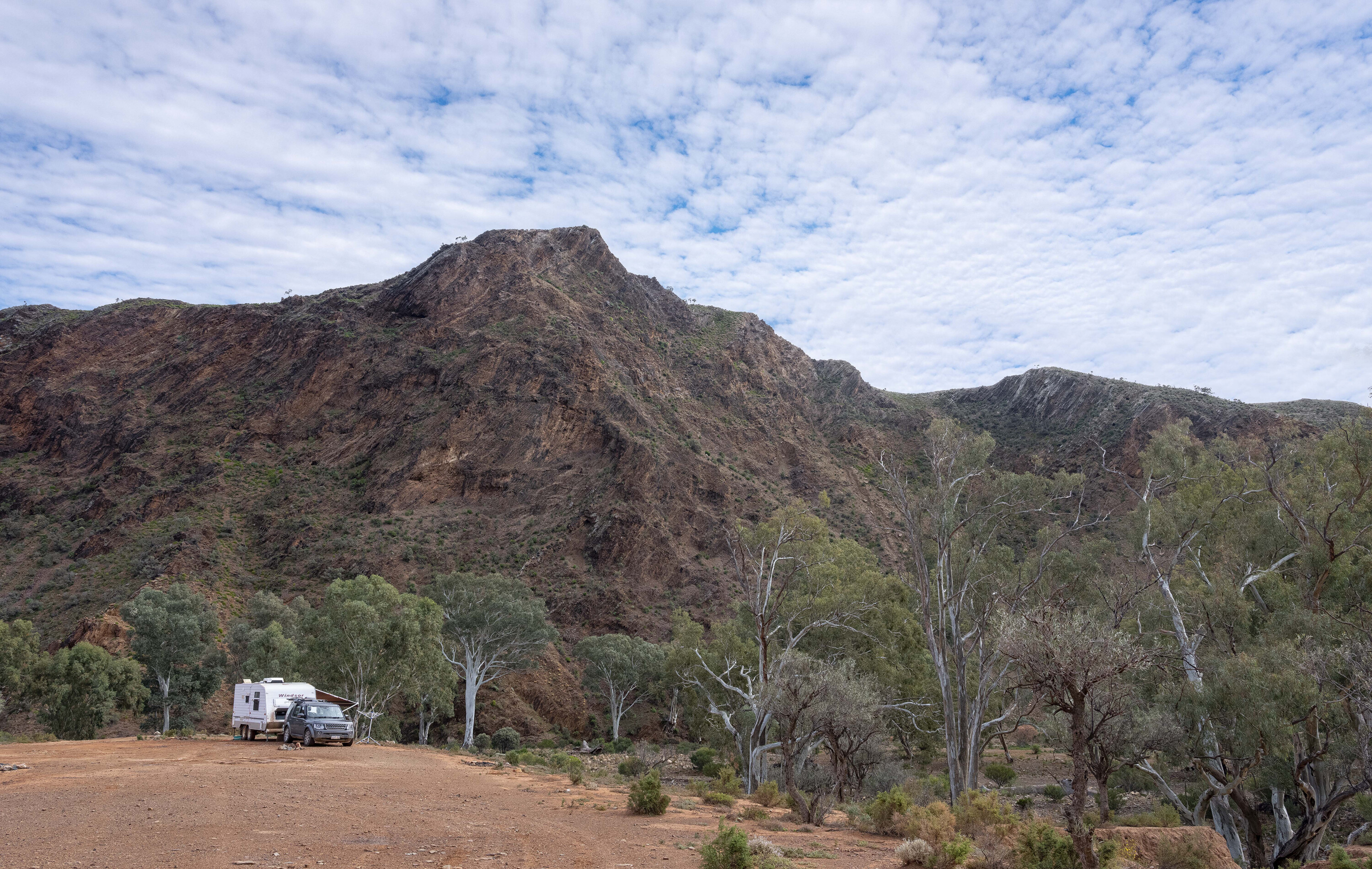
Brachina Hut is, unsurprisingly, located near the Brachina Gorge access to the Ikara Flinders Ranges National Park. Sitting on the banks of the (usually) dry Brachina Creek, the hut wouldn’t look out of place in a Spaghetti Western.
2
The nearby gravel road running through Brachina Gorge is named the Geological Way, which takes its name from the 130 million years of rock strata exposed by the gorge where it cuts through the Heysen Range.
The tectonic uplift that created the Flinders Ranges blocked the western flow of rainfall, creating a large body of water on the eastern side of the range.
This body of water eventually broke through the range carving out Brachina Gorge in the process.
1
Room to move
One of the great things about station stays is that you don’t find yourself cheek by jowl with hordes of tourists ruining the peace and solitude – something which has to be one of the outback’s most appealing aspects.
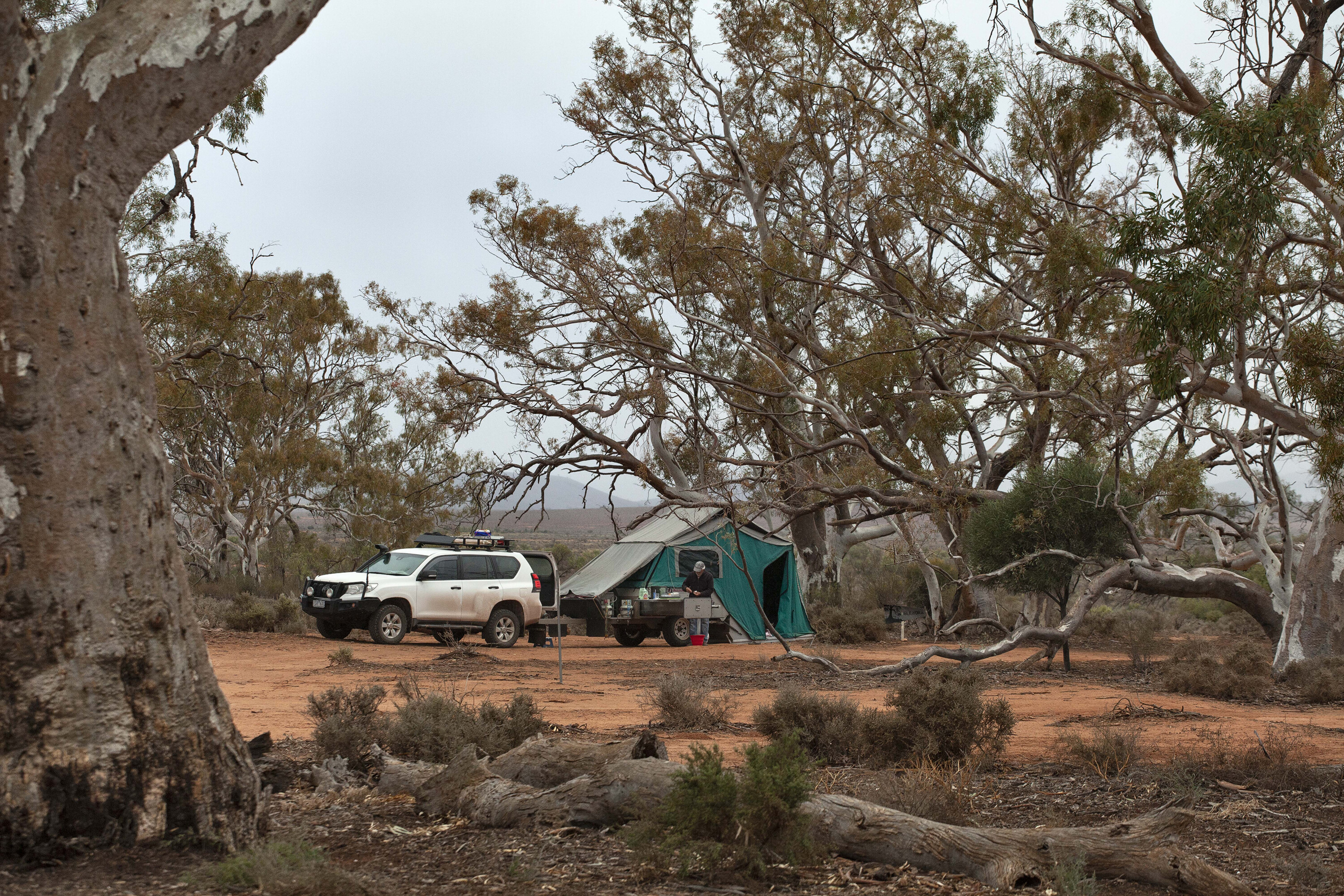
While the station also offers five bush campsites, they are set well apart to ensure guests’ privacy. And without mobile service out here (except near the homestead) you won’t be bothered by the troubles you’ve left behind.
Firewood can be purchased to use at the bush campsites, and this is delivered by Edowie’s managers Peter and Wendy, who go out of their way to make guests’ stays as pleasant as possible.
1
There are long-drop toilets at the campsites and shower facilities near the station’s old shearing shed.
This is proper bush camping and as such Edeowie is perhaps better suited to those travelling in self-contained vans or campers, with their own toilet and shower facilities, and no need for 240V power.
Pets are not allowed on the station given the risk to stock and native animals, as well as the danger presented by 1080 poison baits that may have been picked up by crows in the adjoining National Park and redistributed far and wide.
1
Colours of the outback
The sand is deep red in places with the occasional low dune, not unlike those found in the Simpson Desert.
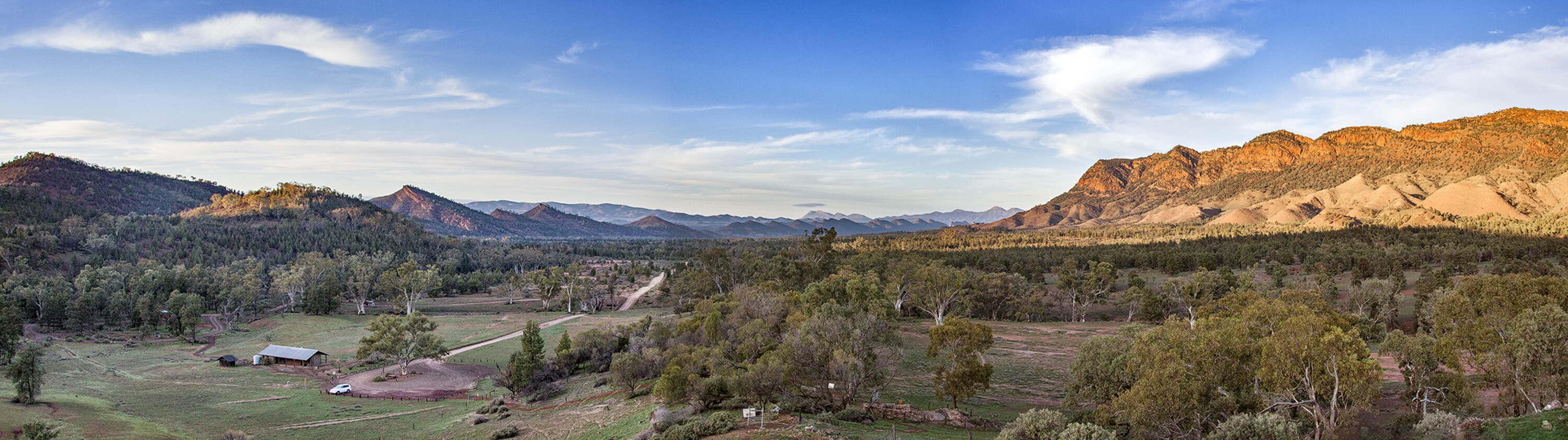
The station’s bush camping sites look across to Mount Abrupt, which rises some 700m above the flat plains to its west.
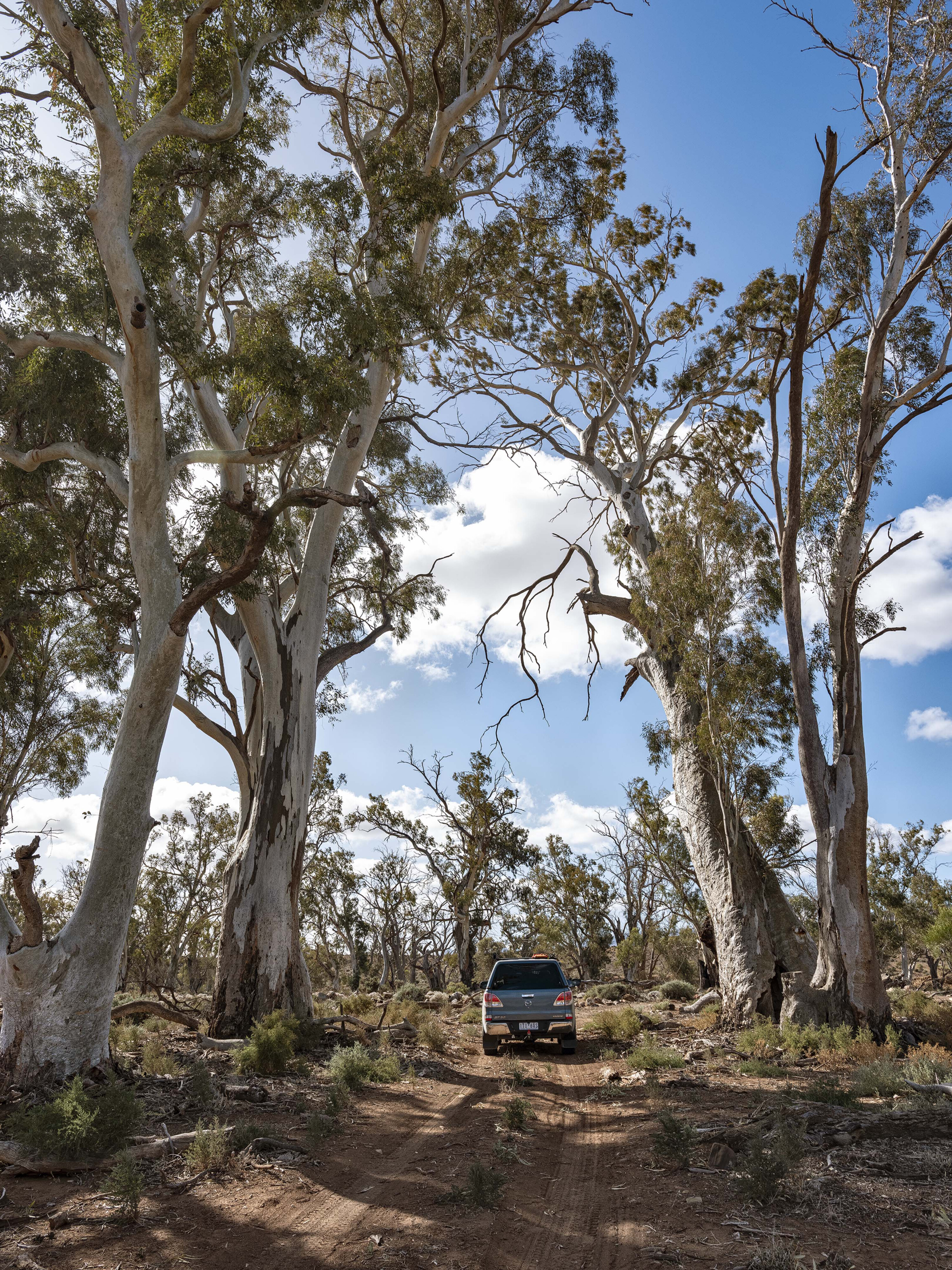
The sunsets at Edeowie Station can be spectacular and while sunrises are largely masked by the ranges to the east, both dawn and dusk often see the clouds over Wilpena Pound painted with vibrant colours. Stately red gums, hundreds of years old, punctuate the landscape and when lit by the soft early morning light make you feel like you are standing in a Heysen painting.
1
In fact, Sir Hans Heysen frequented the nearby Aroona Valley homestead and painted some of his famous works there early last century.
The Flinders literally blossoms after good rains and when we visited, recent rainfall in the area had made me hopeful of seeing a good range of wildflowers, but Edeowie was still very dry as it was early in the season, and the flat plains no doubt experience less rainfall than the ranges themselves.
That said, foliage along the water courses and near the range were starting to show some colour, with wildflowers and native shrubs racing to make the most of their short growing season.
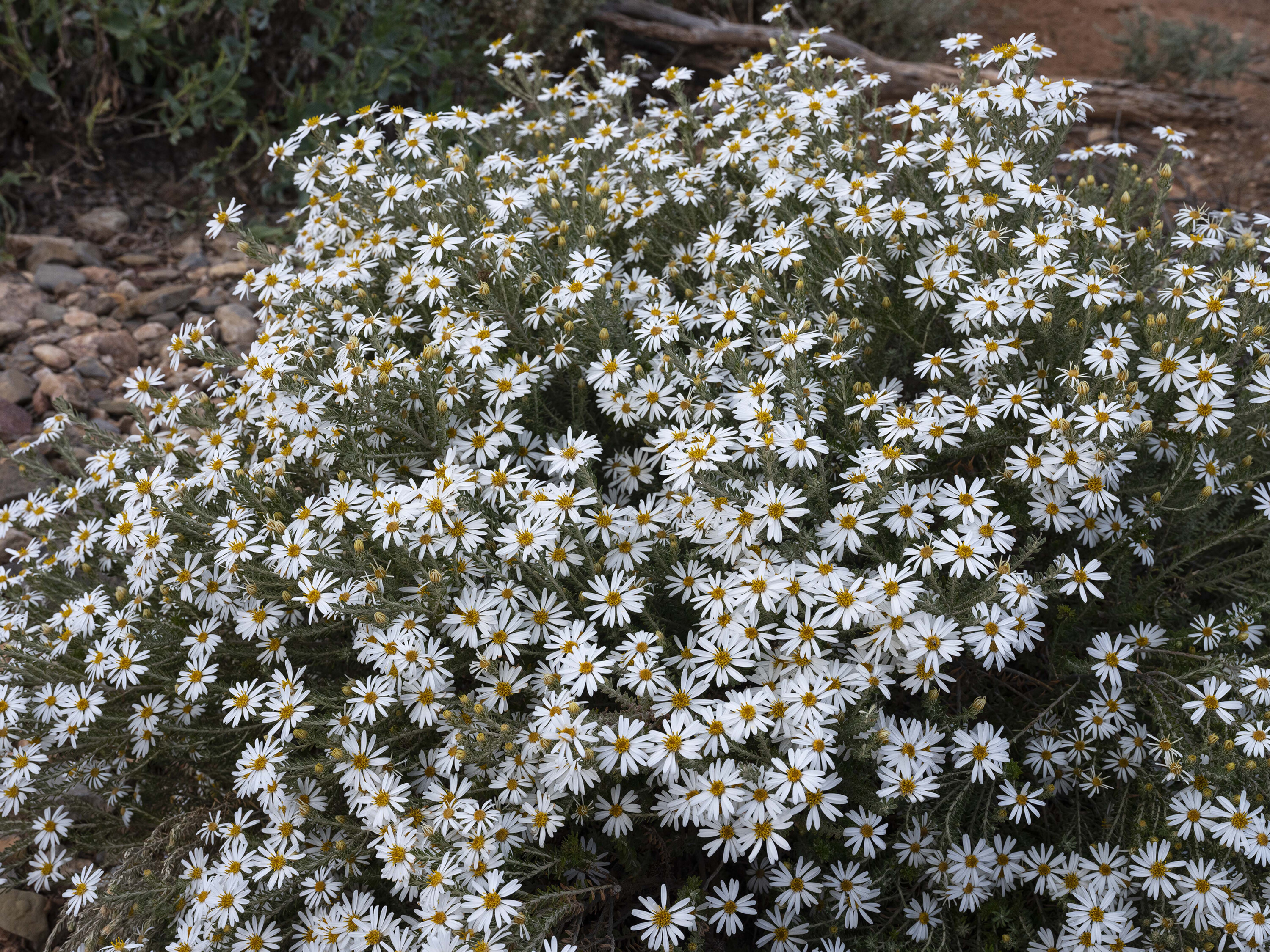
1
In this harsh and arid climate, native blooms tend not to be particularly showy given their need to conserve energy for survival.
Apart from the stunning views, there is something for everyone at Edeowie Station – ruins of old buildings from the 1800s, bushwalks in Bunyeroo and Edeowie Gorges, historic buildings and a four-wheel drive track that runs out to Bunyeroo Gorge before circling back to the homestead.
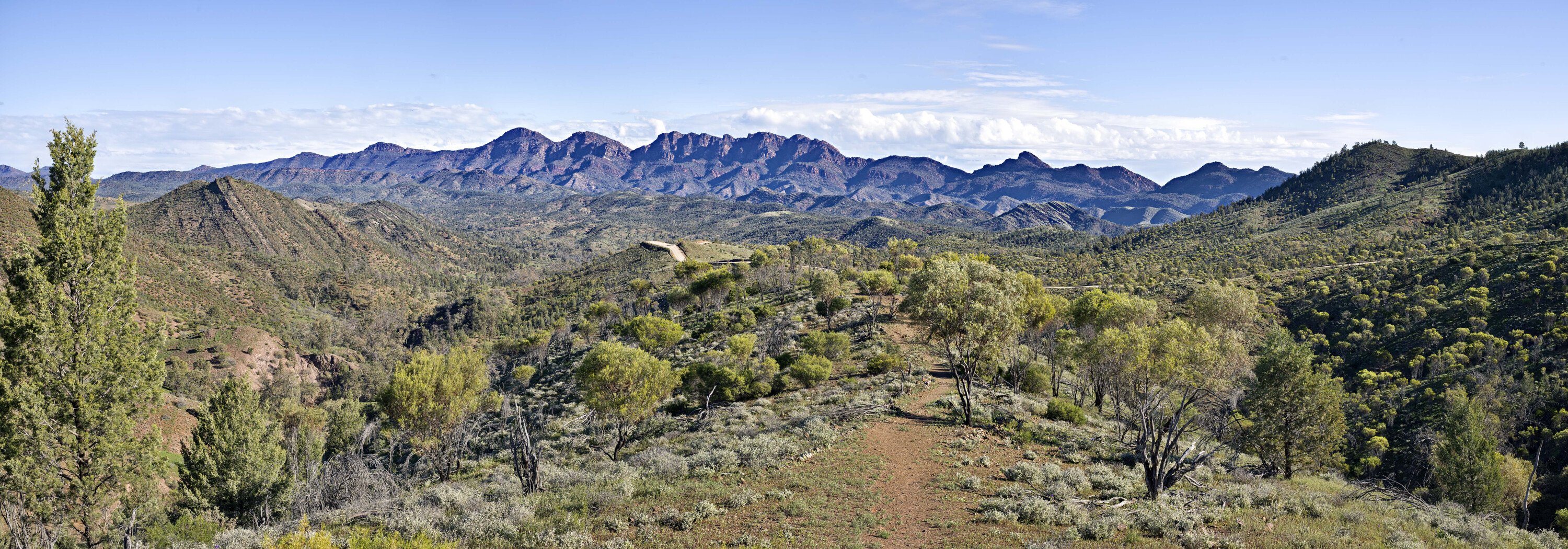
1
History Lesson
Edeowie was first settled in 1851. By the 1860s a number of copper mines opened in the area and with above average rainfall, along with high prices for both copper and wool, prospects for the region looked good.
Adelaide residents speculated on property by buying up blocks in new townships along the supply routes used by bullock teams. Edeowie was one such town and in 1863 a hotel and a supply store were opened.
Drought conditions saw the new town fall upon hard times and the 1864 population peak of 316 had fallen to 36 people just two years later.
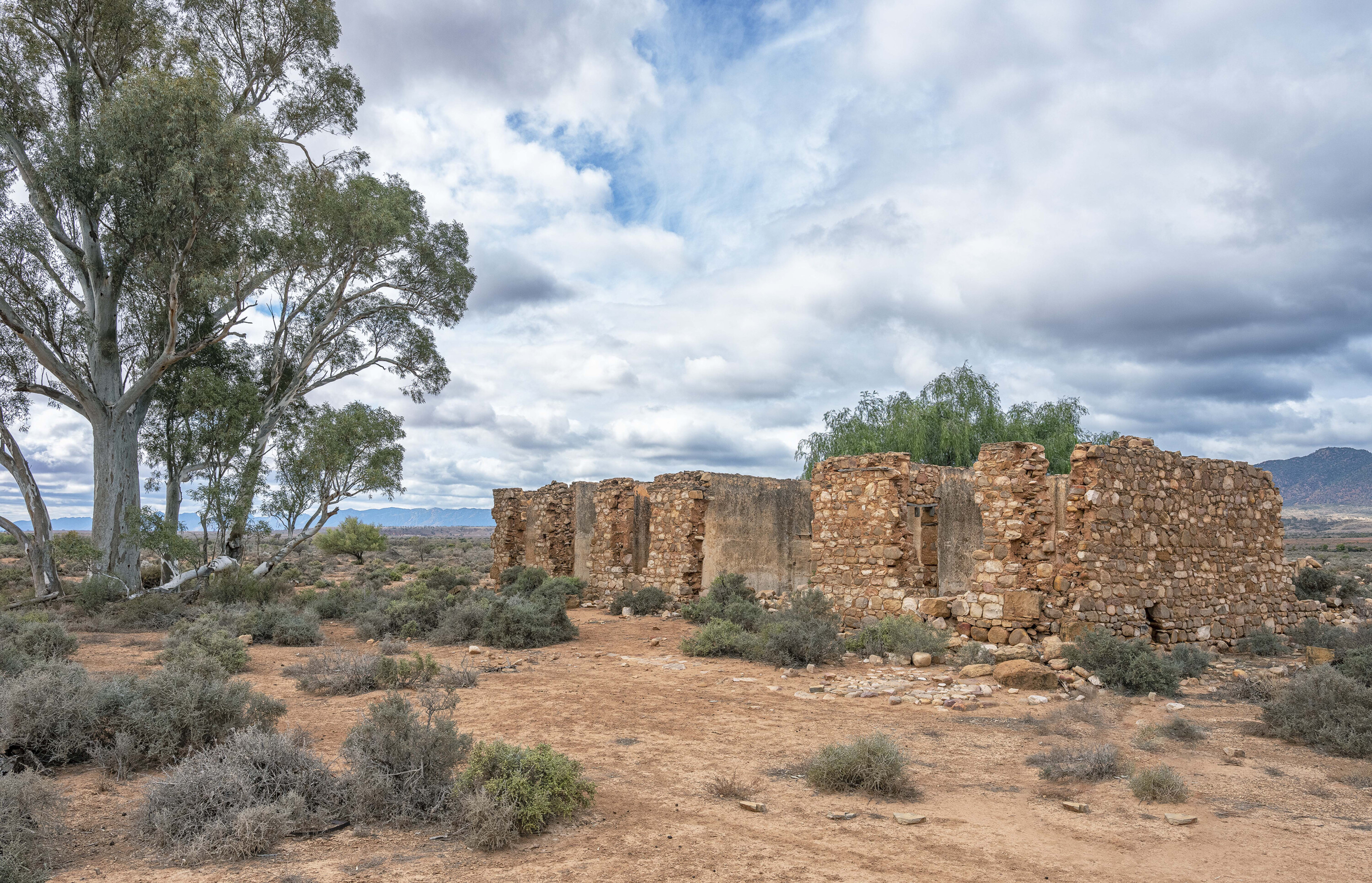
1
The hotel finally closed in 1886 and its ruins (and those of the supply store) still stand not far from the station homestead.
The immediate area around the hotel is littered with thousands of broken bottles, suggesting many a thirst was quenched there. Hard drinking probably provided one of the few escapes from what would have been a difficult life in those early days.
The homestead cemetery has a plaque listing 16 residents of the early township who passed away there, a third of whom were under eight years of age.
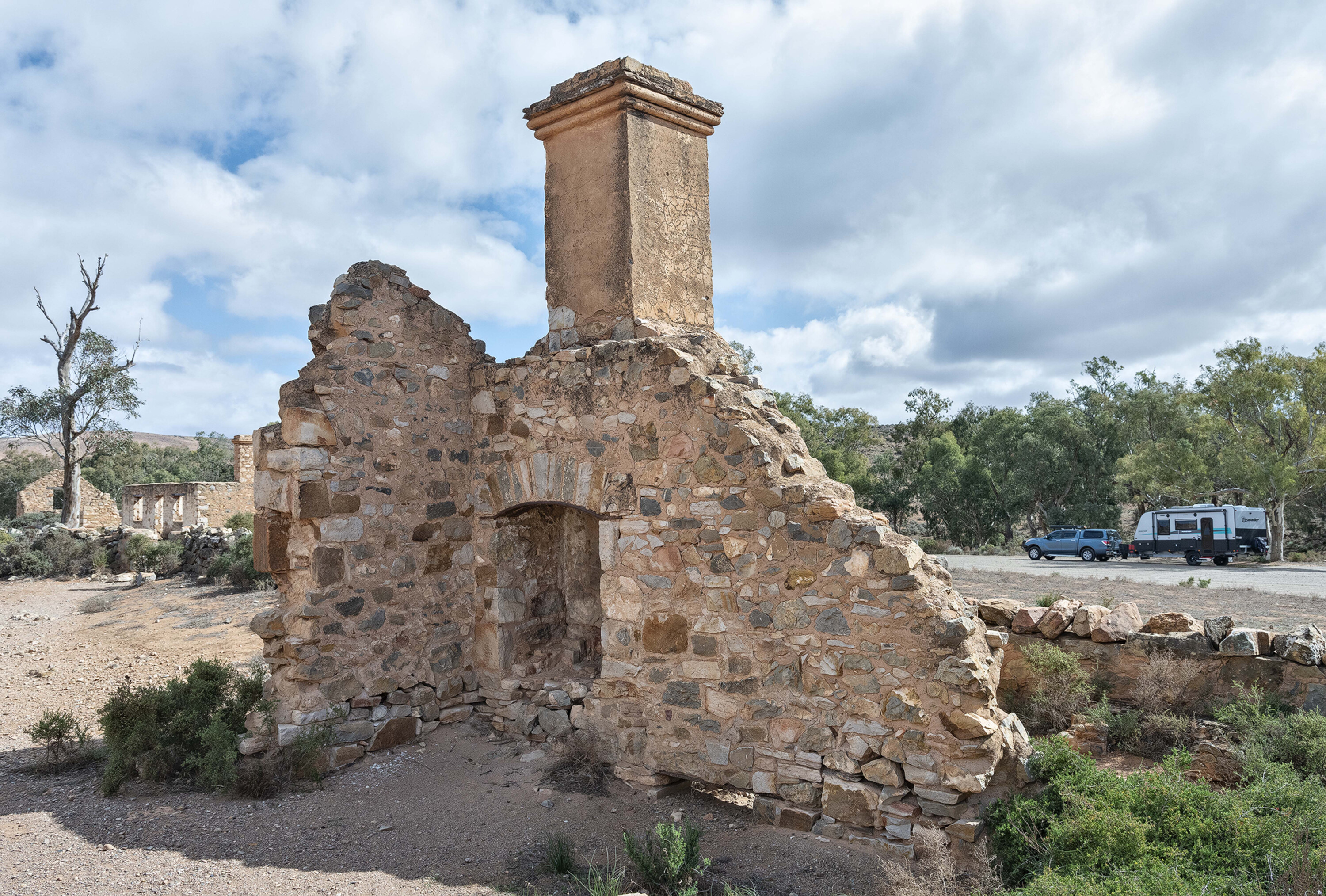
1
Making tracks
The walk into Edeowie Gorge piqued my interest and while I did get to the start of the Gorge, the track was little used and quite indistinct in places.
It would be easy to lose your way and the need to continually watch one’s step given the uneven and loose rocky ground had me deciding this walk was one for more seasoned and experienced bushwalkers than myself.
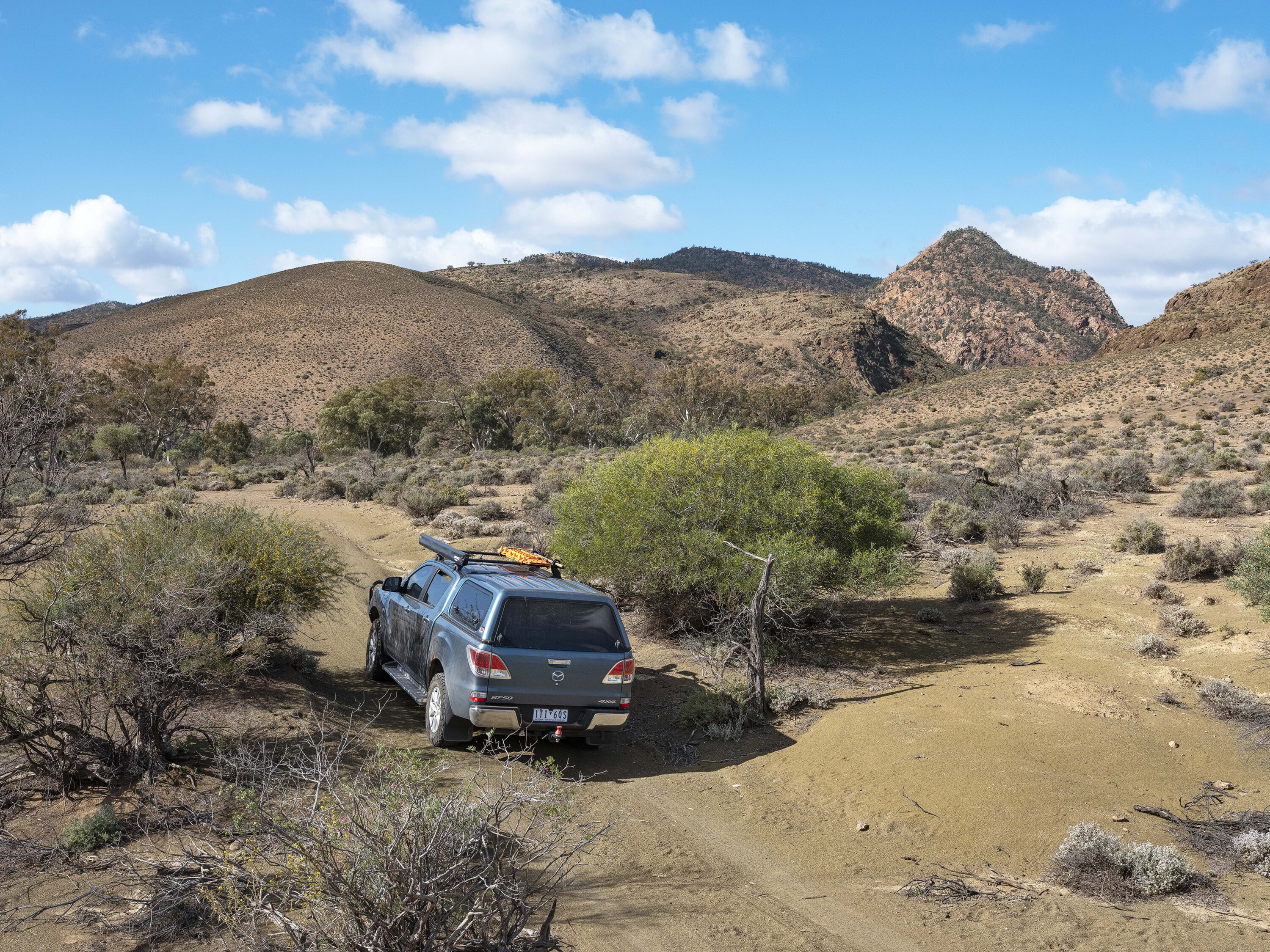
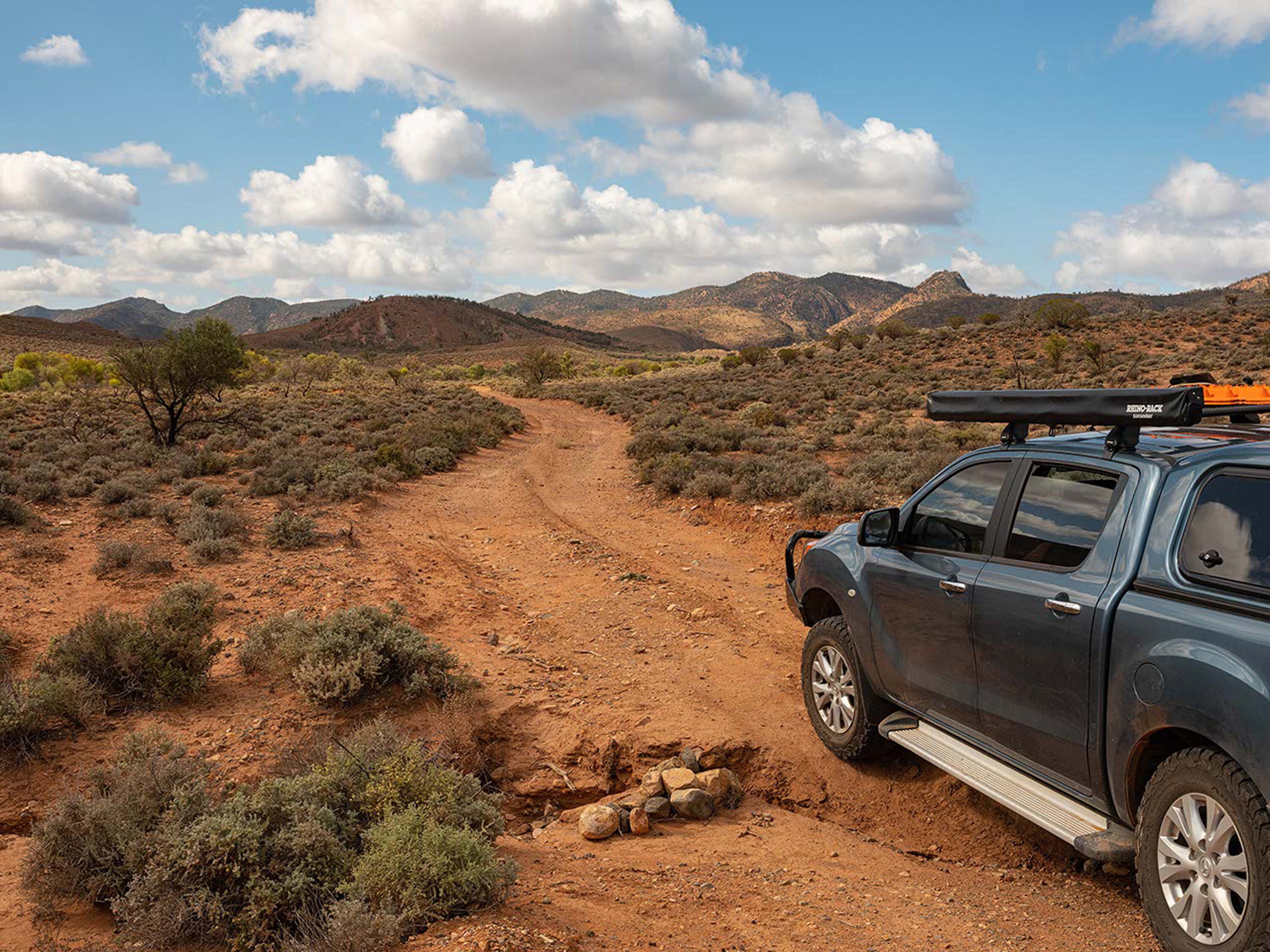
The station has a four-wheel drive track that runs out to the entrance to Bunyeroo Gorge (another walk) before looping back to the homestead. The track has a loose rocky surface in places and a number of steep drops into and out of dry creek beds and washaways.
1
For a time the track follows a creekbed where white native daisies thrive and other native shrubs were just beginning to flower in a range of colours.
This is relatively flat country, and while the drive is interesting and well worth doing, it probably isn’t going to get a seasoned off-roader’s blood racing.
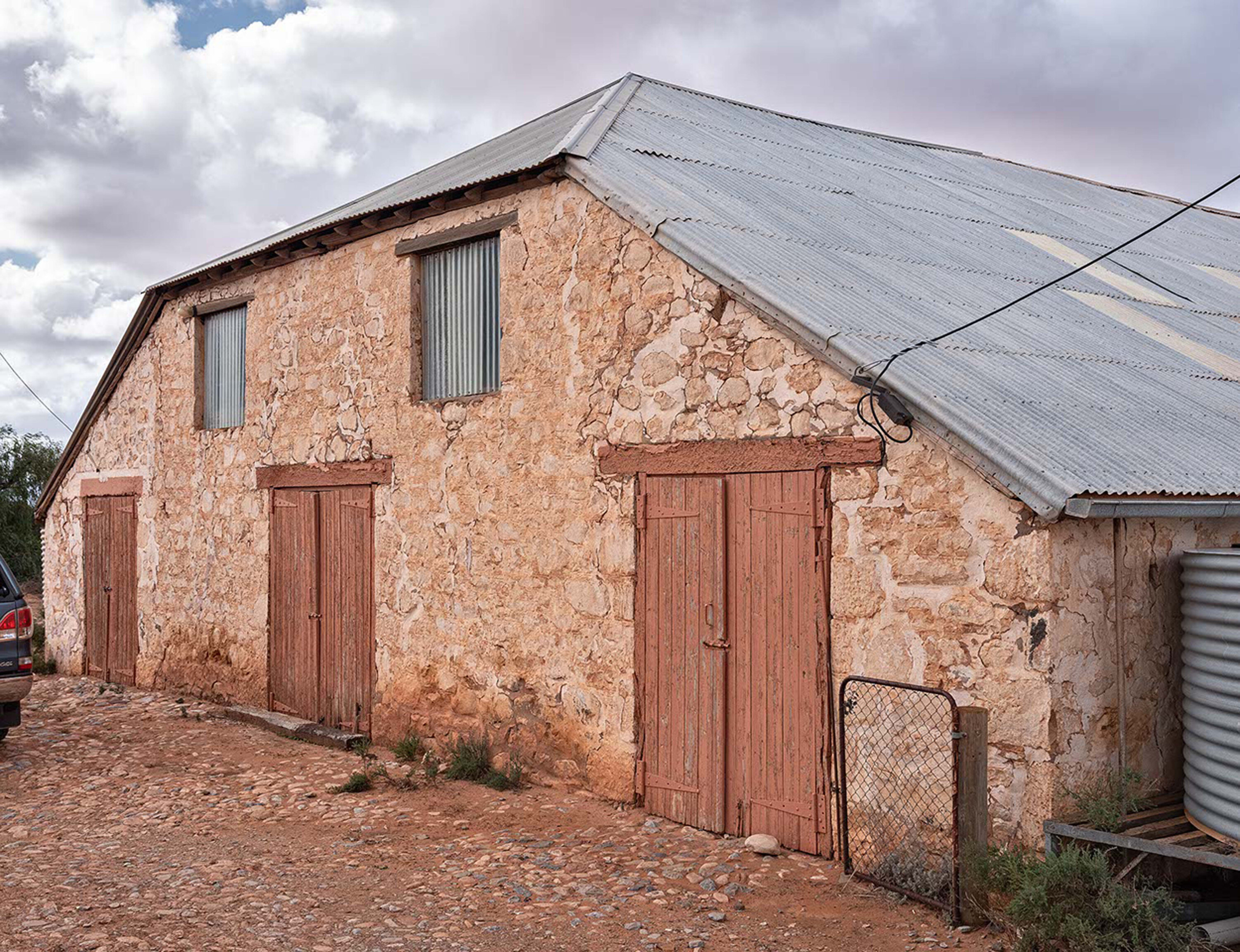
The old shearing shed and shearers quarters near the homestead were built in 1860 and are still in use today. Unlike most old outback shearing sheds, which were constructed of timber and corrugated iron, the shed at Edeowie is built from stone.
1
Its size is impressive and while the original shingle roof has been replaced with iron, in places some shingles are still visible from inside the building.
Apart from exploring the station it is only a short drive to Brachina Gorge and the Geological Trail. At the eastern end of the gorge, the Bunyeroo Valley Scenic Drive winds back towards Wilpena in the south, along the way providing spectacular views of the Pound.
To the north of the Geological Trail, as it runs towards the Blinman road, there are several good campgrounds, my favourite being at the end of Aroona Valley, near the ruins of the old Aroona Homestead. As mentioned earlier, anyone with knowledge of Hans Heysen’s paintings will quickly recognise some of the scenery here.
1
Parachilna Gorge
Those in need of supplies or fuel can reprovision at Parachilna or the Angorichina Tourist Village near Blinman (which incidentally has the highest elevation of any town in South Australia).
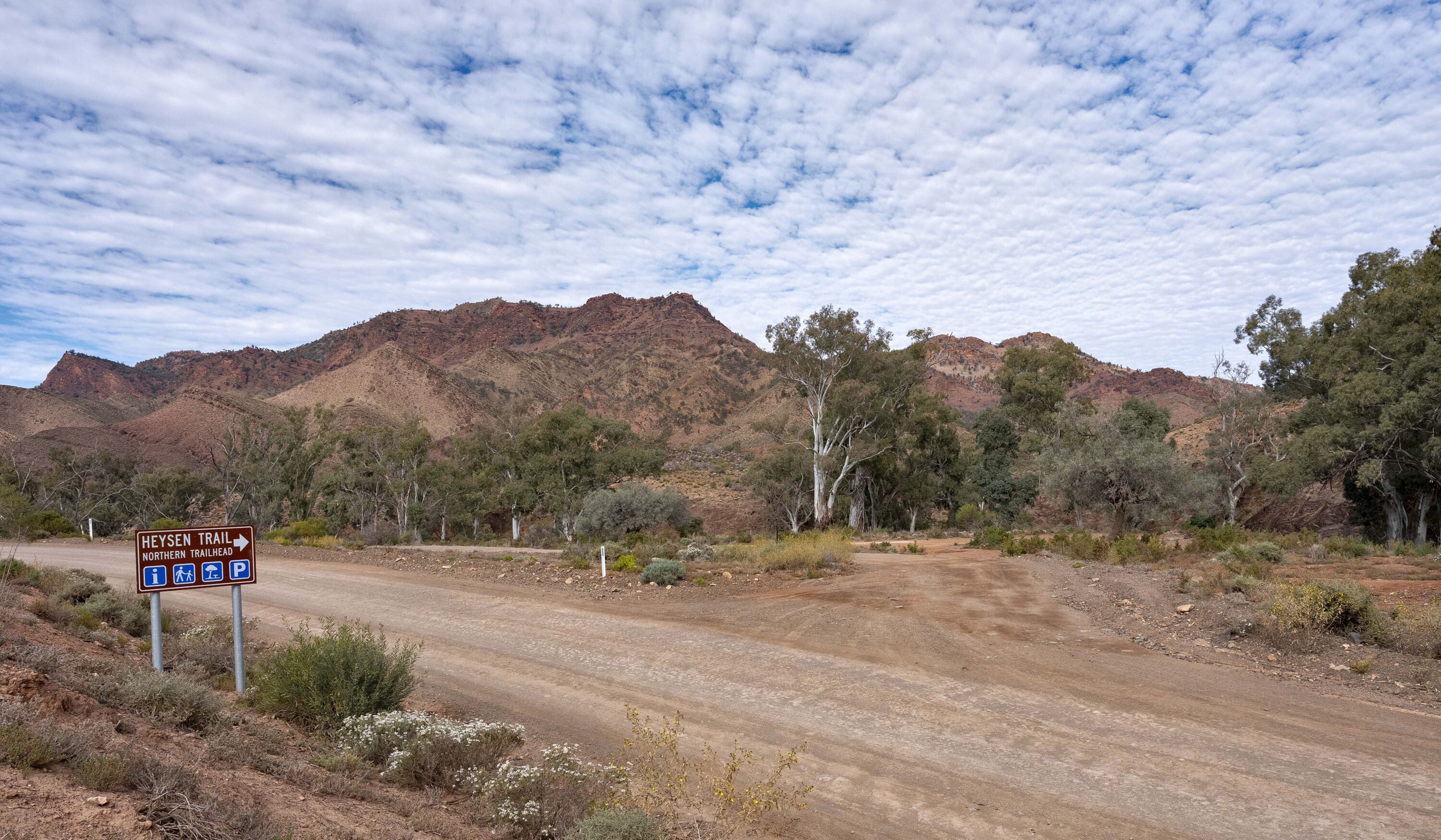
Needing a gas refill, we stopped in Angorichina on our way north after our stay at Edeowie. This detour took us through Parachilna Gorge which has been carved from the range by eons of floodwater.
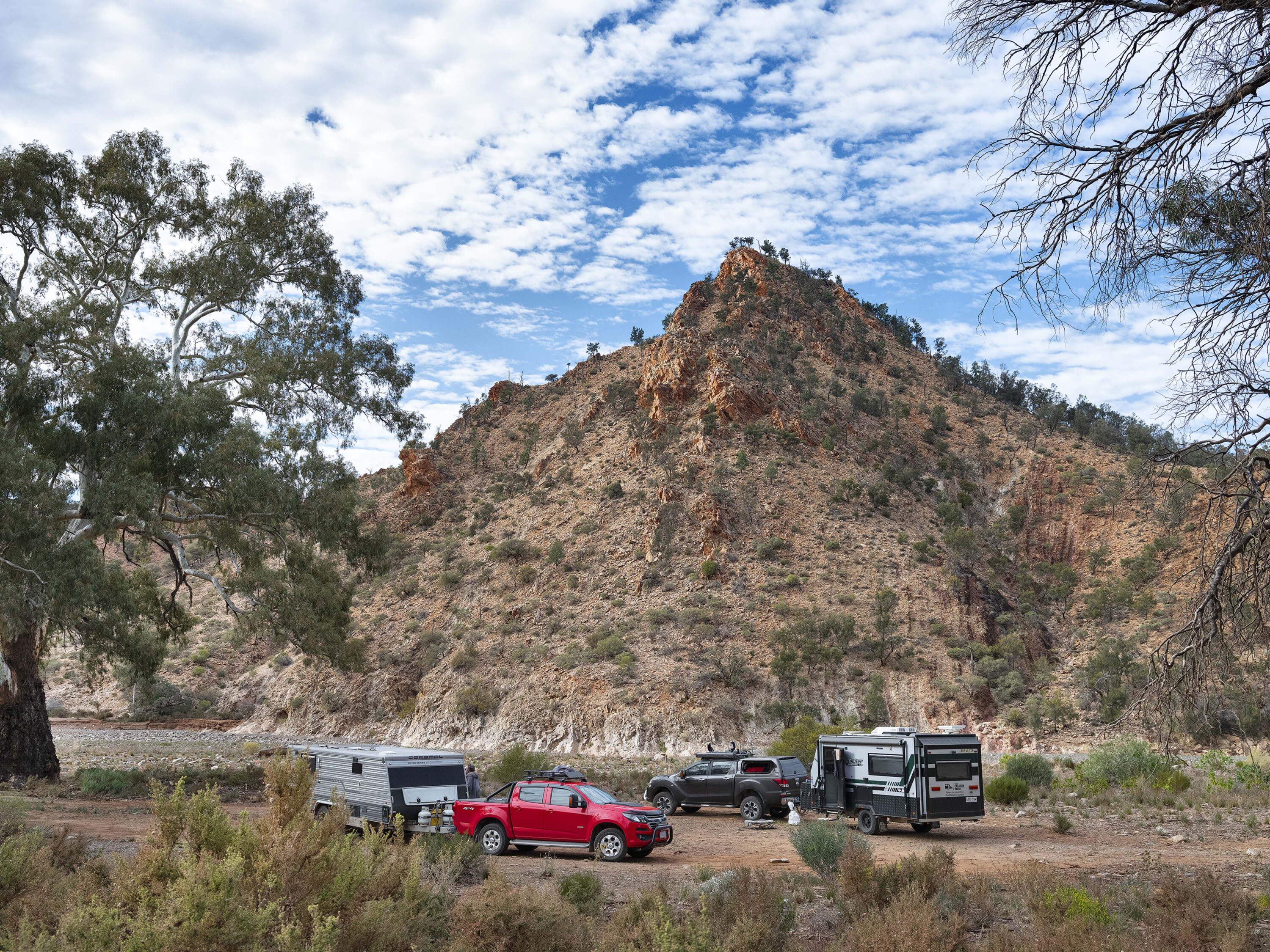
Vibrant, ochre-coloured cliffs tower over the wide dry creek bed lined with huge old river gums. The gorge is sufficiently wide in places to offer numerous shady campsites set back off the road.
1
While this wasn’t a holiday season, the 20 or so camps seen along the gorge suggested many grey nomads know about Parachilna Gorge.
A couple of decades ago I expected those camps would have been mainly tents, 10 years ago, camper trailers were probably the weapon of choice, but today’s remote-area tourists seem to have moved on from tents and basic campers.
Along Parachilna Gorge, like every other place we visited during our month-long journey north to Queensland and down the Darling River, top-of-the-range campers and off-road and semi-off-road caravans were the norm. The money invested in these assets over the last couple of years must be staggering.
1
And that’s without factoring in the cost of all the shiny new tow vehicles out there.
I’d forgotten how picturesque the drive through Parachilna Gorge was, so we decided to stay on at Angorichina for a couple of days to recharge our batteries (and given the overcast conditions, those of our van). At nearby Blinman there was hardly a parking spot left in the main street given the number of vans and campers that had pulled in.
I was there in a vain attempt to access the internet which the locals said was available ‘sometimes’ but a satellite connection was required for anything usable.
1
We got ‘online’ a couple of days later at the Leigh Creek library, but apart from Bourke in New South Wales we had no internet access for the next couple of weeks.
Just about everything we do these days seems to be reliant on being plugged into the internet and I may need to review my usual practice of hot-spotting my phone for a laptop connection. It clearly isn’t up to the task in the outback, even when there is mobile signal.
Apart from the privations of not having internet access, Edeowie Station and its surrounding attractions make it a very pleasant base to spend a few days and get back in touch with nature. I for one have certainly pencilled in a return visit.
5 things to see and do
Soak up the early history
Check out the ruins of the old Edeowie Hotel not far from the homestead and visit the station cemetery to see a plaque detailing the early settlers who lost their lives to very harsh living conditions. On your way to or from Edeowie take the time to drop in at the Kanyaka Ruins between Quorn and Hawker
Break out the camera.
With stunning views of the Flinders Ranges from your campsite and world class vistas to be found in the adjoining Ikara Flinders National Park, it is hard to take a bad photo. Picturesque gorges like Brachina and Parachilna, with their ancient river gums along wide dry creek beds, and scenic drives like Bunyeroo and Aroona beckon photographers. Vibrant sunrises and sunsets are common and the clear night sky is bright with stars.
Engage 4X4
Check out Edeowie’s 4X4 track from the homestead to Bunyeroo Gorge or, for seasoned four-wheel drivers wanting something more challenging, contact Alpana Station north of Wilpena and book a drive on the challenging Mount Samuel Track (you will not be disappointed).
Visit the Ikara Flinders NP and surrounds
Walk into Wilpena Pound or take one of the scenic drives in the area. Consider driving up to the Prairie Hotel at Parachilna for a camel burger, or the Blinman Hotel for a cold beer, before returning via the scenic Geological Trail.
Take a deep breath.
One of the best things to do sometimes is nothing, and there is no place better to do nothing than the outback. Take the time to sit back and enjoy an environment without television, mobile phones, the smell of traffic and constant background noises that you just can’t escape in the city.
There’s a thread that binds all four-wheel drivers together. It weaves its way through all of us regardless of age, sex, or interests.
Whether you’re a grey nomad pining for that perfect campsite by a flowing stream, or you’ve spent months dialling in your suspension for maximum articulation to conquer the toughest tracks, or maybe you’ve just finally got the weekend off work and you’re looking for wide open spaces for the kids to explore while you sit by the fire with a cheeky red, that call to the wilderness is something all of us share.
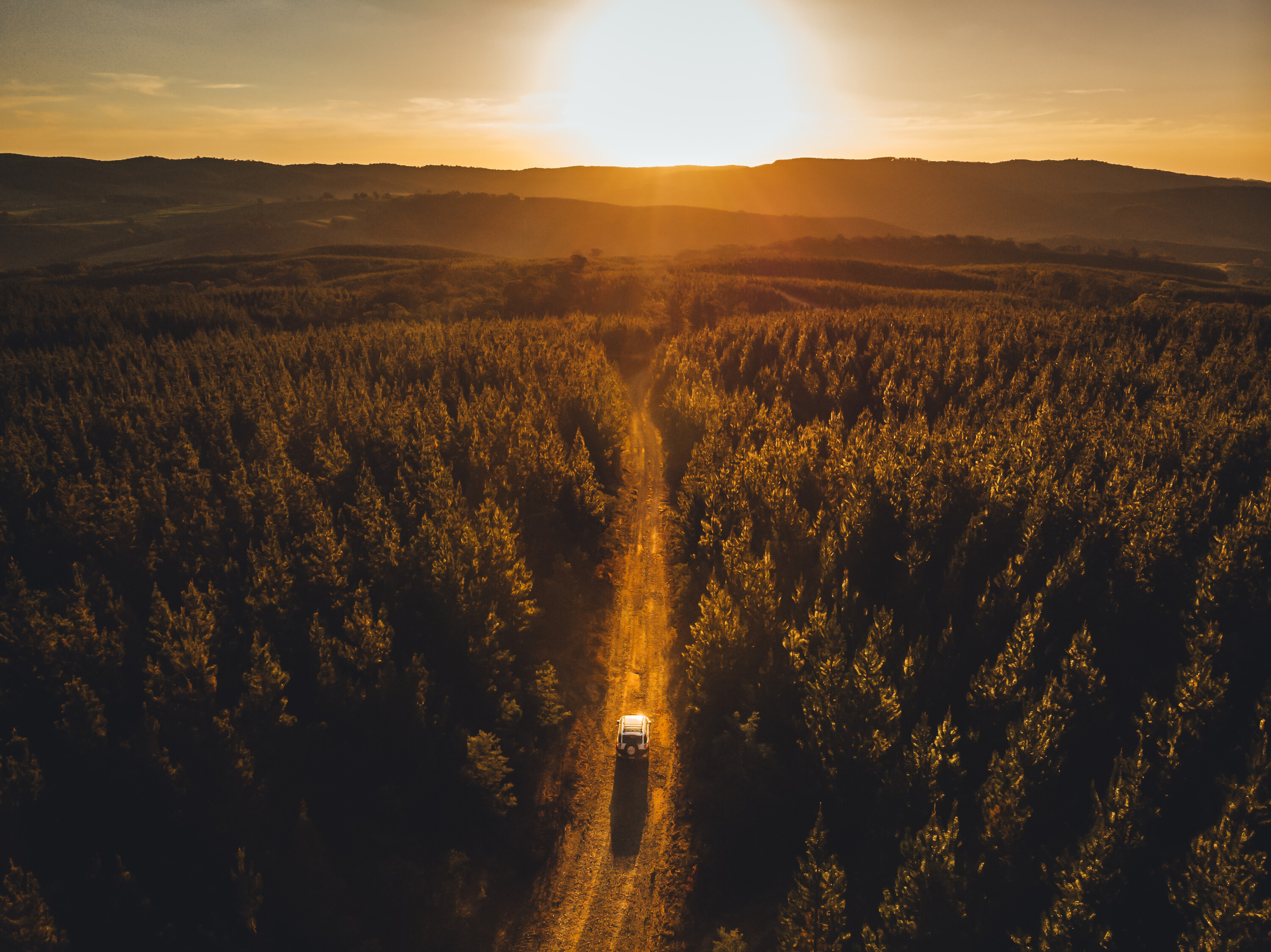
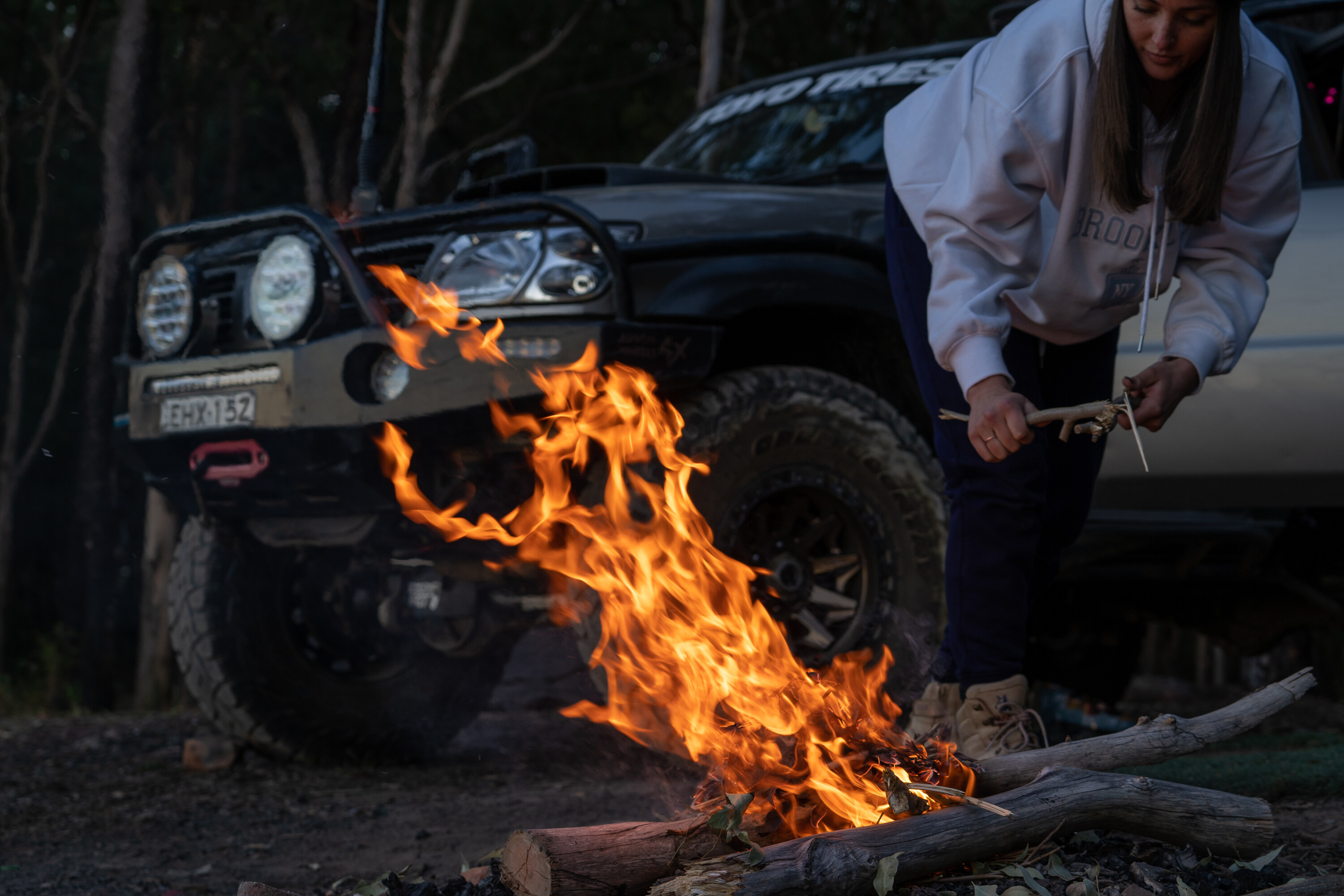
Forget being beyond the city lights, we want to be beyond the crowds, where a busy night means counting stars, and the only sounds filling the camp are the roar of the fire and the laughter of good friends.
1
With four-wheel driving becoming ever more popular, it’s becoming harder and harder to find that little slice of wilderness.
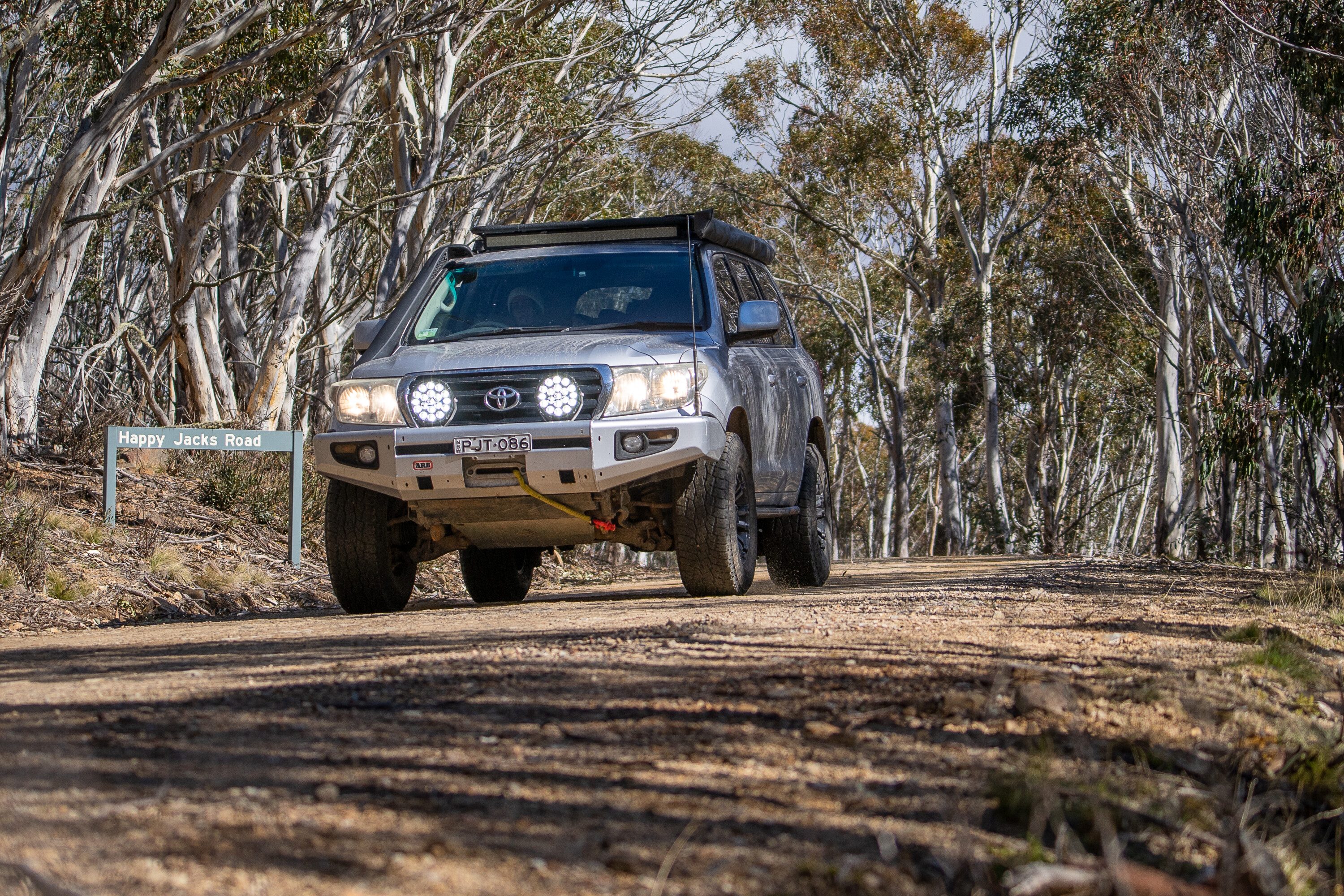
You won’t find it at your local campgrounds, and it’s even less likely to find it at those big bucket-list destinations. But the NSW Snowy Mountain region might just be what you’re looking for.
Soaring high above the surrounding terrain, ‘The Snowies’ as they’re affectionately called, play host to some of the most stunning terrain in Australia and remain almost entirely off the radar of most four-wheelers and campers alike.
1
Five of Australia’s highest peaks, ancient glacial lakes, and 20,000 years of history
Stretching from Canberra in the north to the Victorian border in the south, the region covers endless sweeping plains, five of Australia’s highest peaks, ancient glacial lakes, and 20,000 years of history from ancient feasts to the hardened High Country stockmen of Banjo Paterson’s The Man From Snowy River.
Over the course coming paragraphs we’ve put together a hitlist of how to see the Snowy Mountains, from the places to camp and the places to see, to the tracks that link them all together.
Here’s our guide to help you start planning your trip to one of Australia’s most known, but best kept secrets.
1
Places to camp
Long Plain Hut Campground
If there was ever a campsite to perfectly encompass the Snowy Mountains, it’d have to be the famous Long Plain Hut Campground.
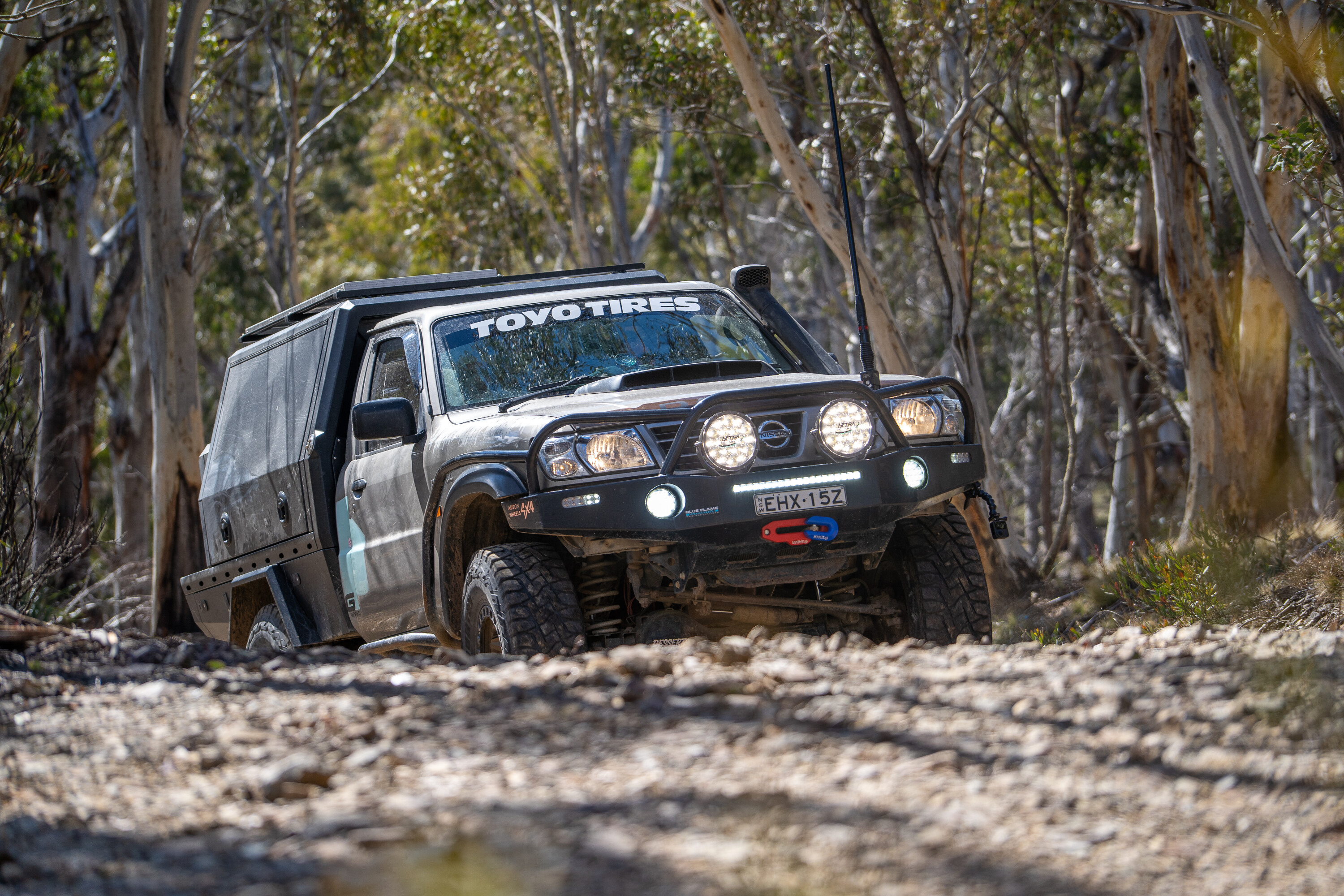
Nestled high in the hills above Long Plain itself, the campground boasts sweeping views of the plains below while offering plenty of protection from the elements amongst the snow gums. While booking is essential (and a $6 fee to do it) the campsites themselves are spacious with minimal infrastructure.
Whether you’re perched up high in a rooftop tent, rolling in with a caravan, or kicking out your swag by the fire, you’ll find a space to suit. Don’t expect any power, but there is a long-drop toilet in an old tin shed for people who like the fancier things in life.
1
The campgrounds themselves are in the old yards of Long Plain Homestead, a remnant of the early pioneer days of the region.
Draped in history, the homestead played host to everything from graziers to gold miners over its 200-year history. You can still visit the hut today; like most alpine huts, it can be used in an emergency, but use your commonsense.
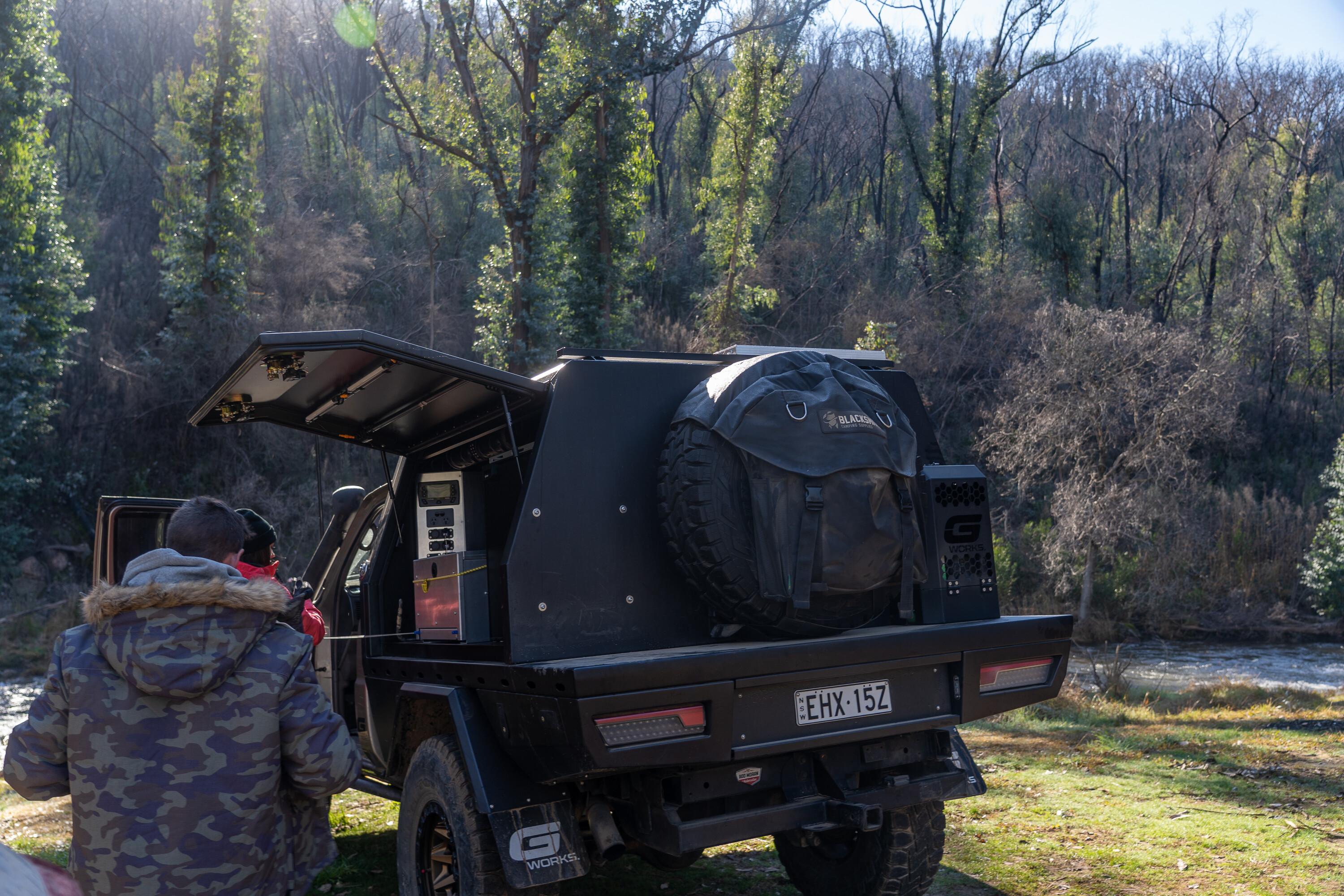
Located just a half hour’s drive from Talbingo and the Blowering Dam to the north, it’s the perfect spot to camp the night as you work your way down through the region.
1
Pinch River-Moyangul Campground
Right at the southern end of the Snowy Mountains, Pinch River-Moyangul Campground is the perfect place to get away from it all, including away from all the other people getting away from it all.
Around 60 kays south of Jindabyne, Pinch River campground will take you a good hour of dirt road winding switchbacks along Barry Way near the Victorian border before you can pull up for the night.
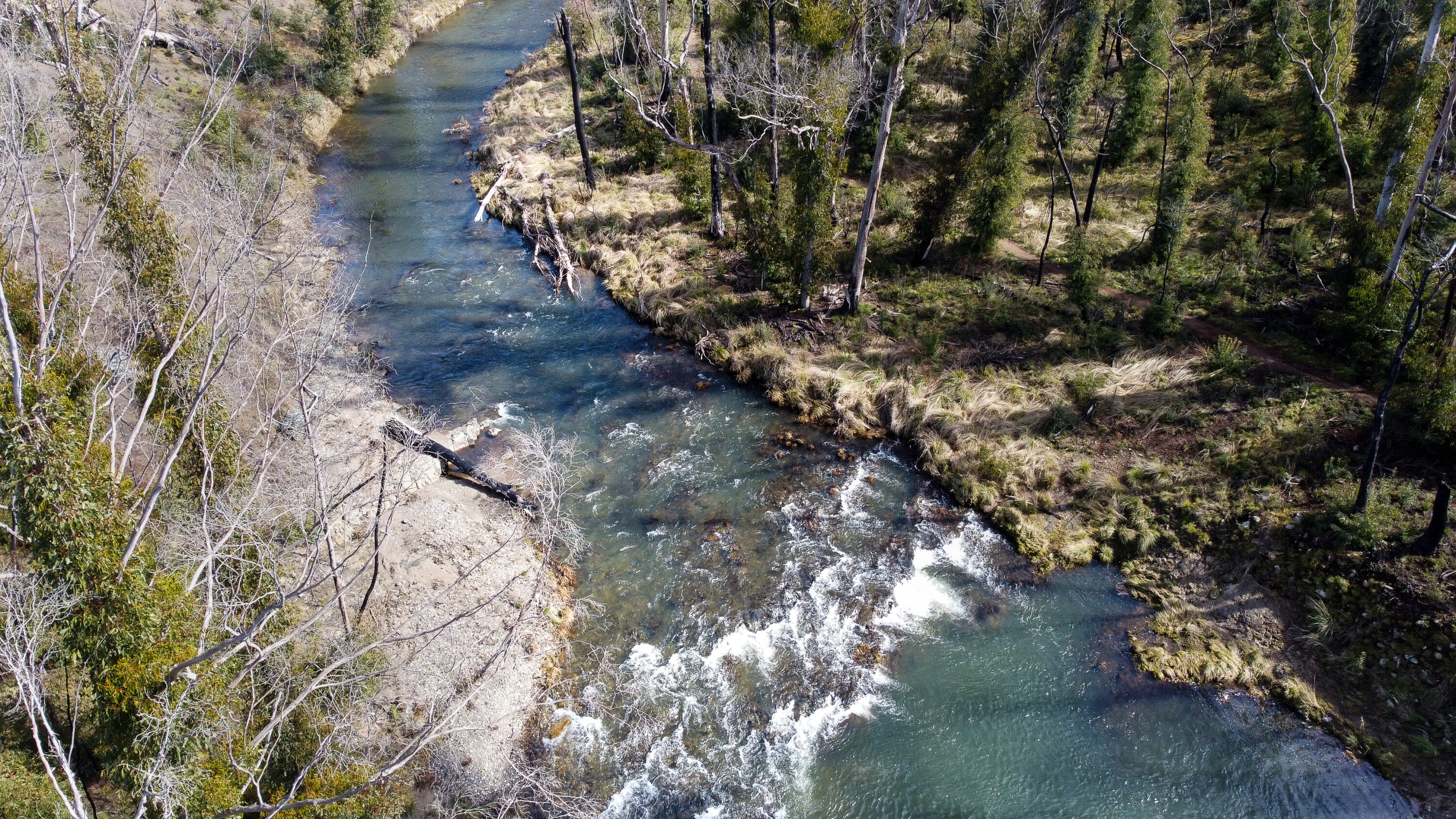
In autumn and spring the camp makes a fantastic spot for people looking to swim or lilo in the mighty Snowy River running alongside the camp, or for people looking to dodge the crowds in winter.
1
If you’re keen on a little deadly-treadly action, the 53km Pilot Wilderness mountain bike ride kicks off nearby, or alternatively just use it as one of the many campsites you can park up your rig for a night around the campfire.
Like most camps in this area, there are long-drop toilets, wood barbecues and fire rings, but you’ll need to bring in your own wood so load up the roof rack before you arrive.
The road in is steep and winding, so is best left for rooftop tents or swags; a caravan is a recipe for disaster and camper trailers won’t be much better.
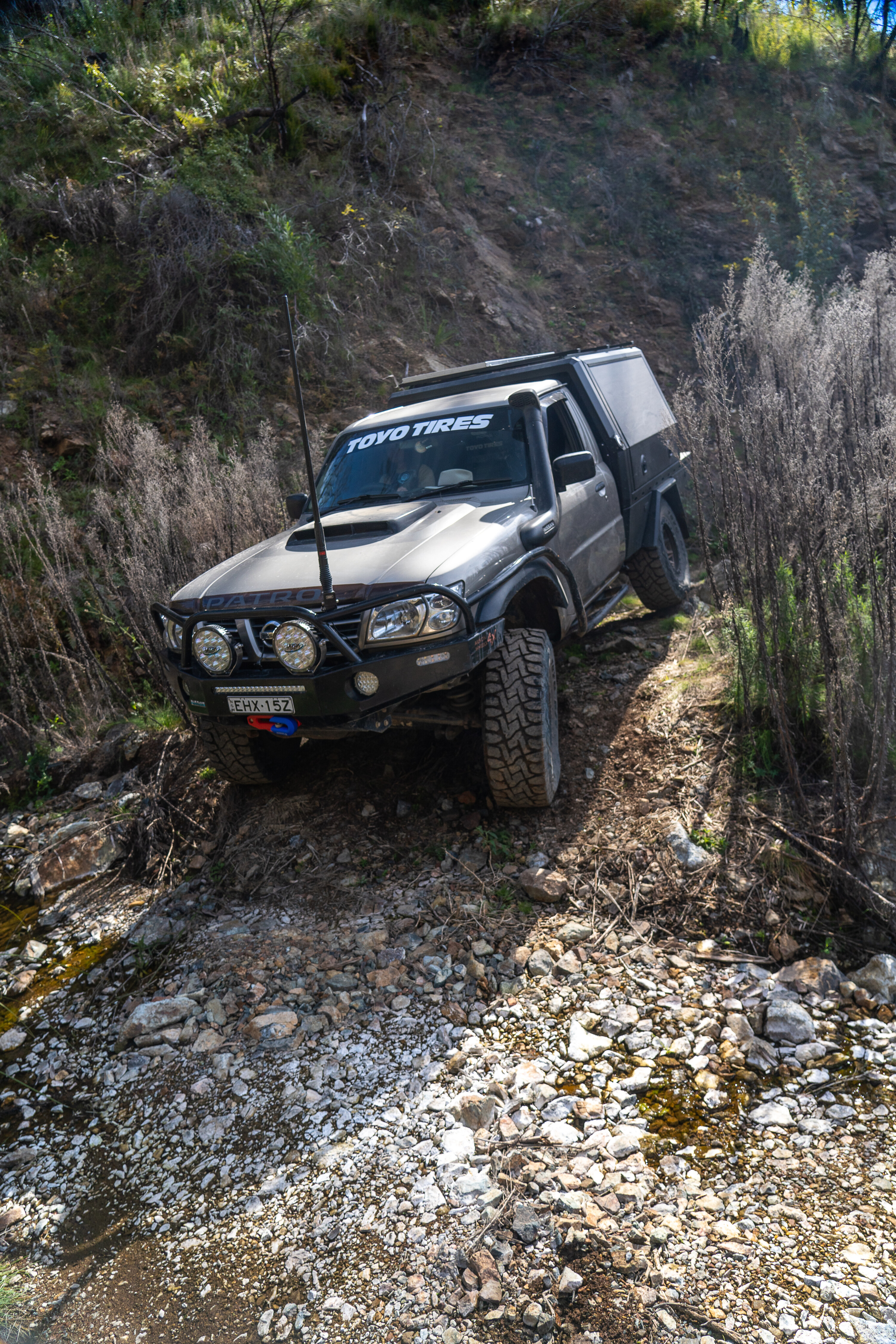
1
Tom Groggin Campground
Situated literally metres from the very southern edge of the Snowy Mountains region, Tom Groggin is a campsite starting to gain in popularity, but large enough that you can find yourself all alone if you avoid long weekends and public holidays.
Perched up on the northern banks of the mighty Murray River, it can be found 60km to the west of Jindabyne along Alpine Way.
The campsite features rolling alpine plains hidden amongst the gums, so there’s ample opportunity for camper trailers and caravans alike to spread out for a night or a few days.
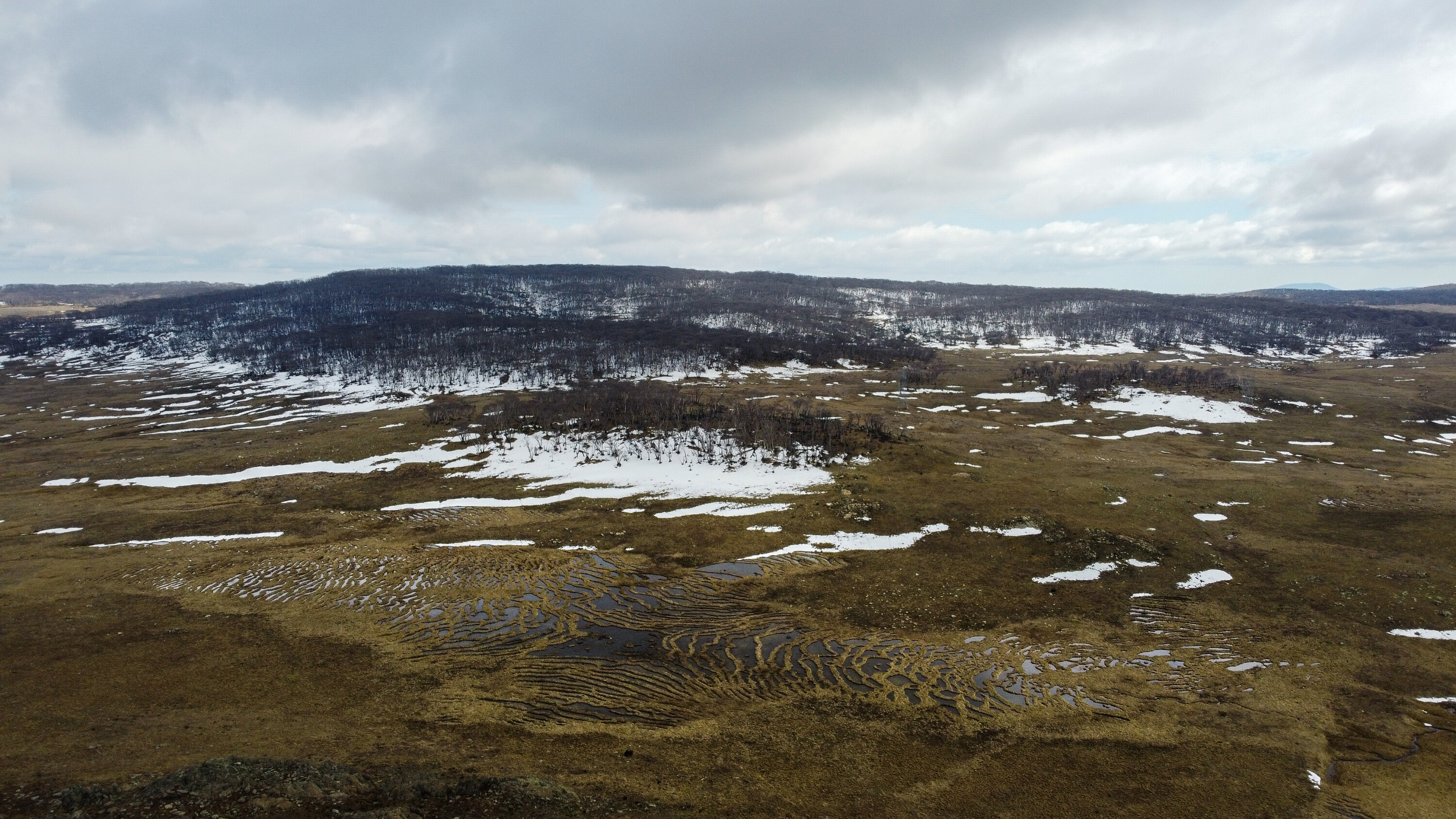
1
Head down mid-week and you’re guaranteed to find a quiet place to yourself with nothing more than a campfire to keep you company.
While temperatures can get low enough to make you rethink your life choices, you’ll have plenty of eastern grey ’roos and echidnas to distract you.
There are also plenty of mountain biking and hiking trails in the area, but the real attraction is Mt Pinnibar just across the Murray. Just don’t tell Victorians we’re roping it in as part of the Snowies.
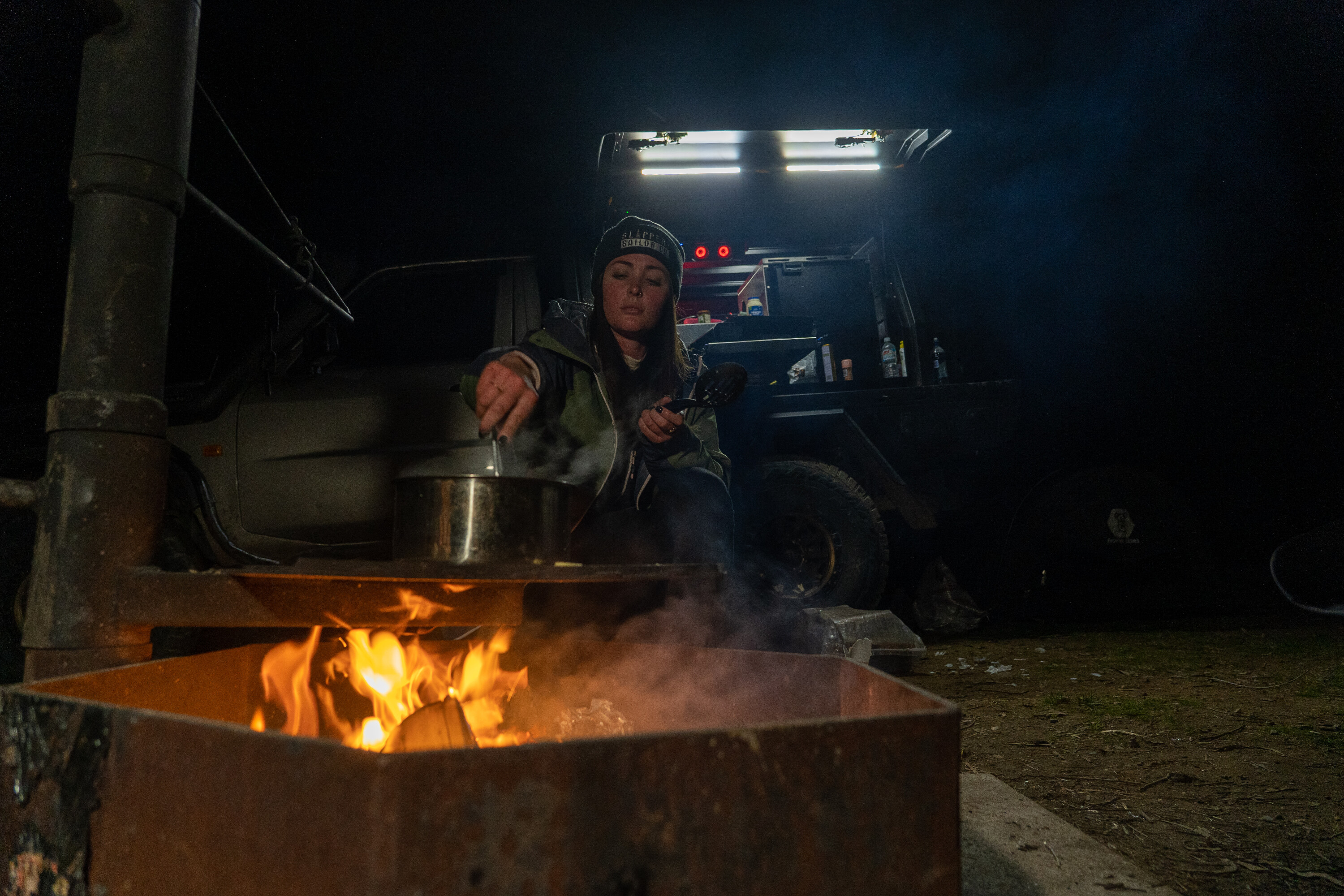
1
Gungarlin River Campground
If you absolutely don’t want to see anyone else at camp then Gungarlin River Campground needs to be on your hitlist.
Perched up high in the hills to the northwest of Lake Jindabyne, Gungarlin River Campground is 4×4 access only and has the low visitor numbers to prove it. At 1300m above sea level you’re well above the snowline so expect cold nights and colder mornings.
The area is closed over winter but time it right and you’ll score yourself an epic alpine adventure before the rangers lock the gates.
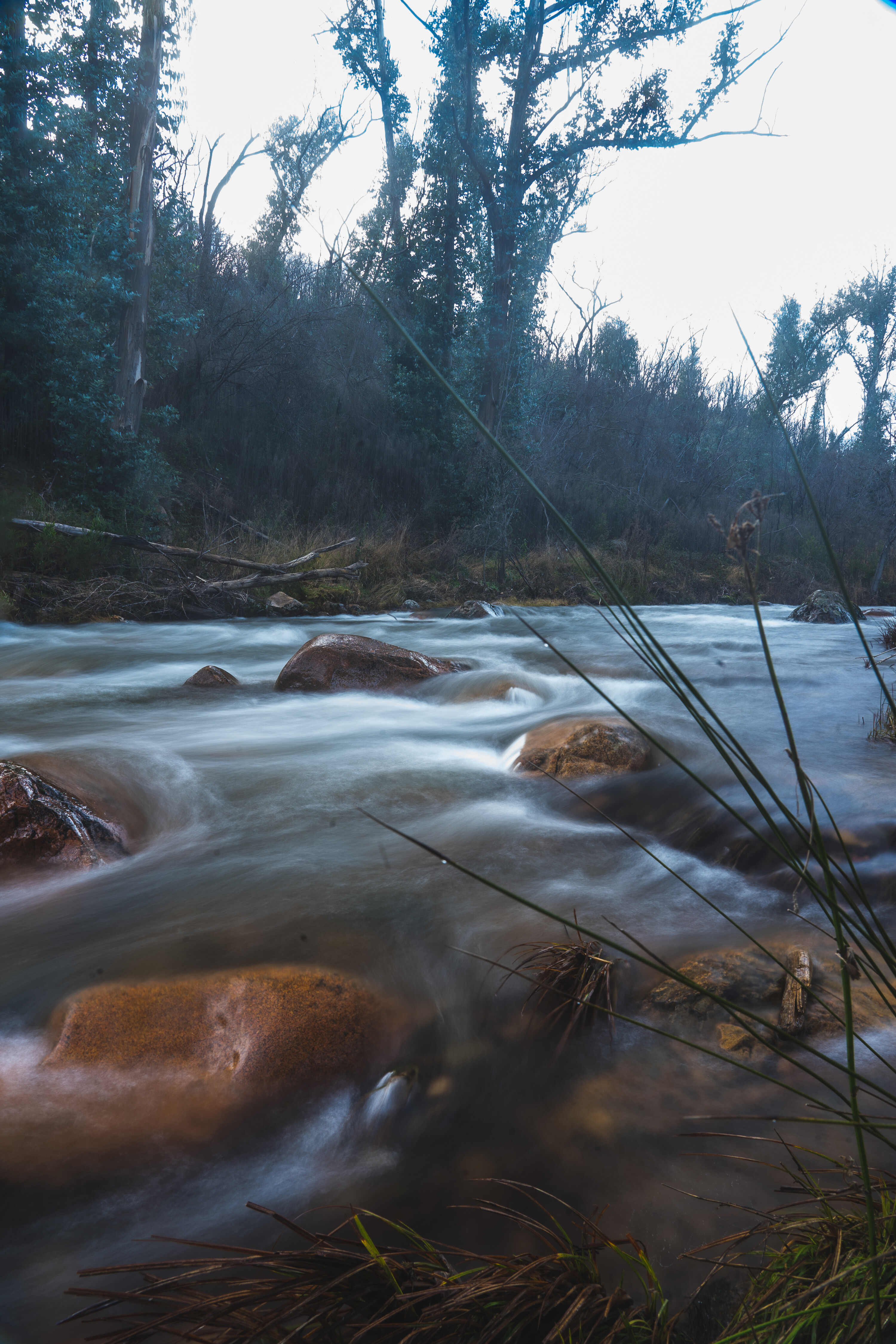
1
Fording the river is worth the experience so leave the old rickety bridge to its own devices and find a little remote wilderness on the banks of the Gungarlin.
You’ll get a camper trailer in, but caravans are best left on the blacktop. There are basic amenities like tables and barbecue pits, but there are no powerpoints or bollards within cooee so don your Akubra and live a little High Country Men lifestyle for the night.
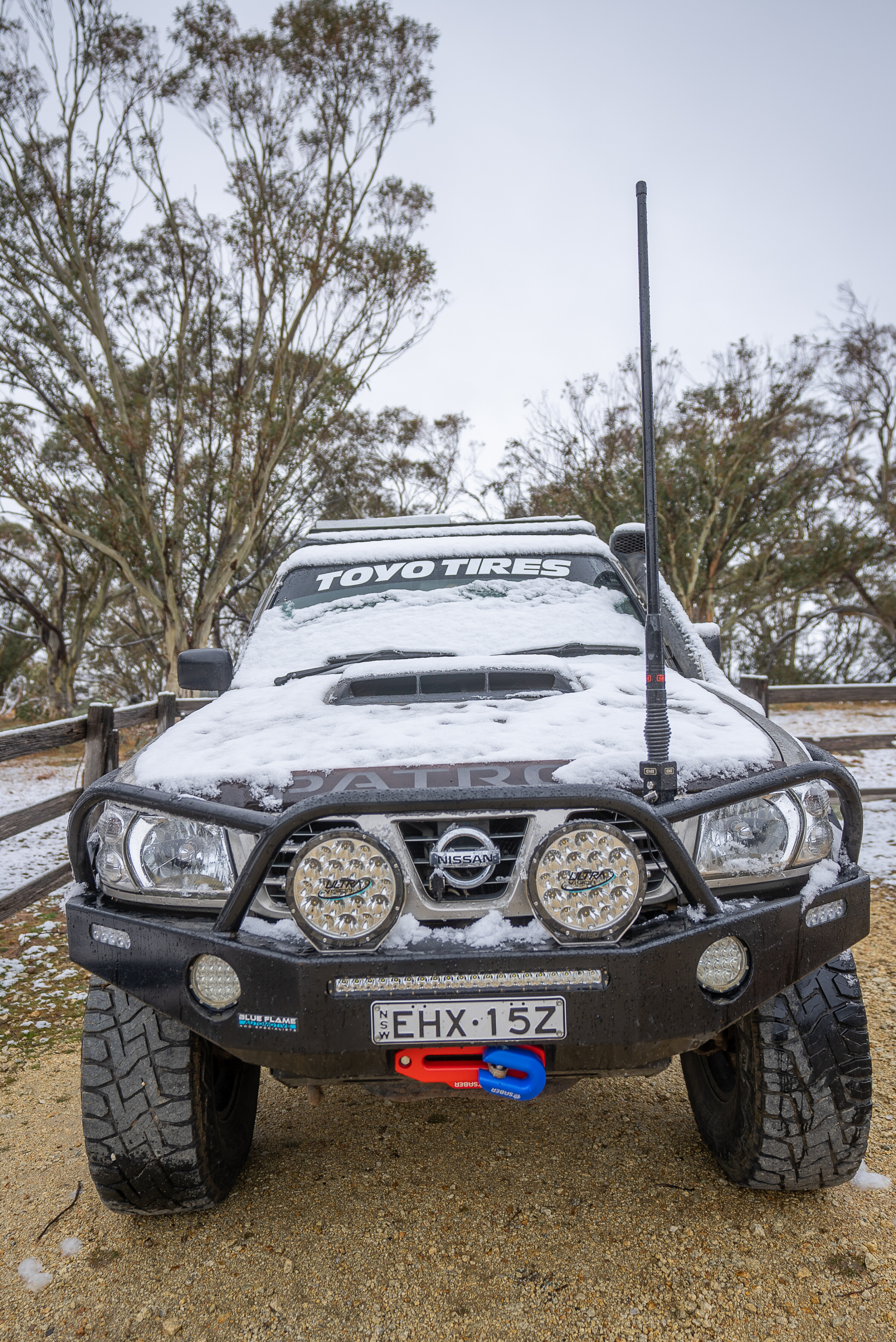
1
Tracks to drive
Lower Snowy Drive (Barry Way)
We’re going to level with you here: if you’re after wheels in the air while your 37-inch tyres scrabble for traction you’re going to have to settle for a few side tracks because the main attractions in the Snowy Mountains are epic touring and stunning views, not hardcore low-range action.
The Lower Snowy Drive might just be one of the best too. Showing as Barry Way on some maps, it looks little more than a route from point A to point B, but on the ground it’s a near endless single-lane trail winding its way up and down mountains, through tight switchbacks with perilous drop-offs on either side, and often framed with the mighty Snowy River on one side and sheer cliffs on the other.
Kicking off from Jindabyne in the north, the track meanders through the Lower Snowy River wilderness for nigh on 100km, passing by countless lookouts and campsites along the way.
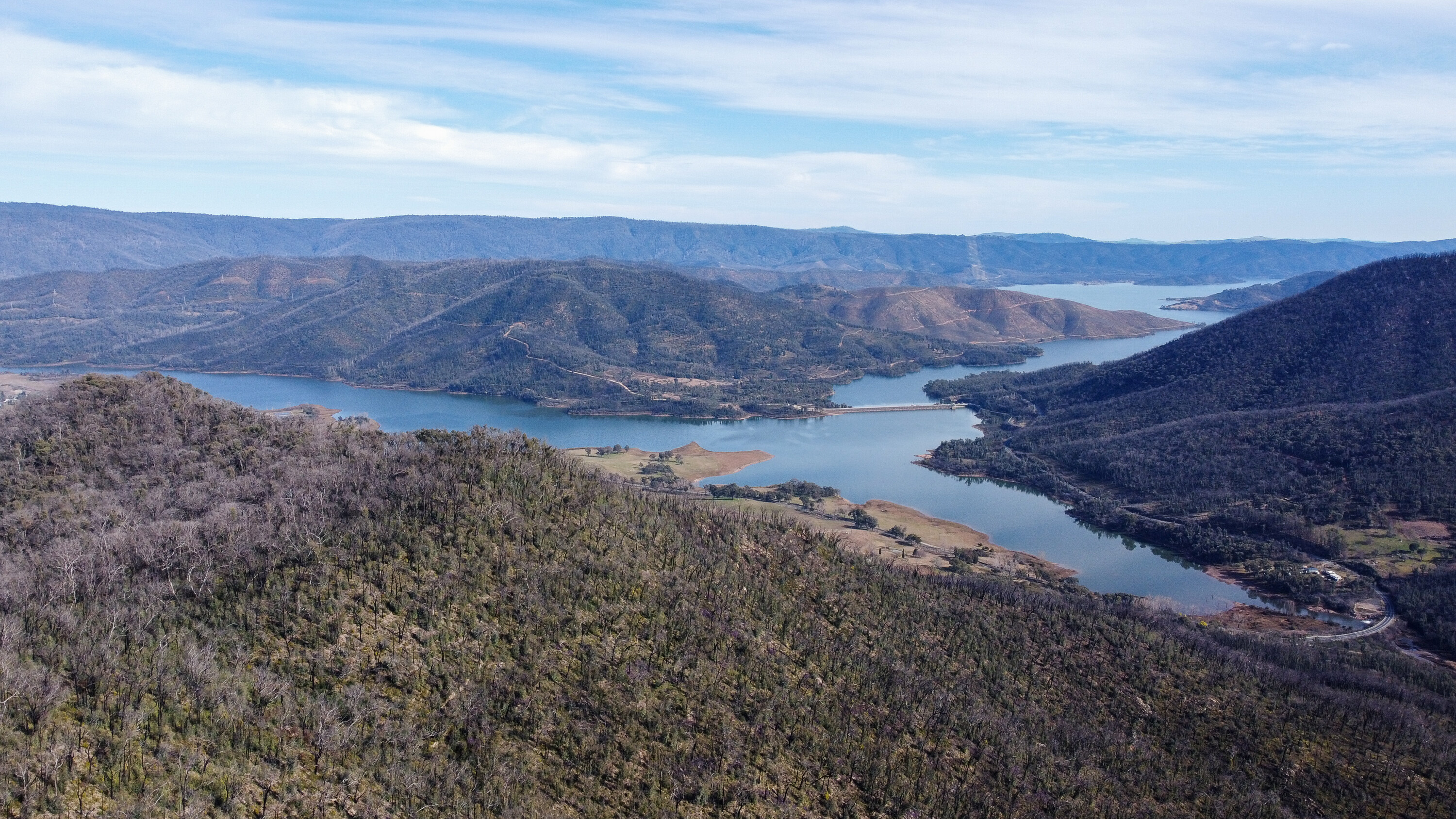
1
If you fancy flicking a line, the river is teaming with life, or stop in at Jack’s lookout for a bird’s eye view of the river.
Somewhere along the way you’ll tick past a sign marking the Victorian border, and while the terrain won’t look any different, you’ll have access to some epic tracks if you’re looking to throw a little hardcore in with your touring.
When you cross the border you can hook west through a labyrinth of trails to end up near Tom Groggin and Mt Pinnibar, or push east to take on the mighty Deddick Trail.
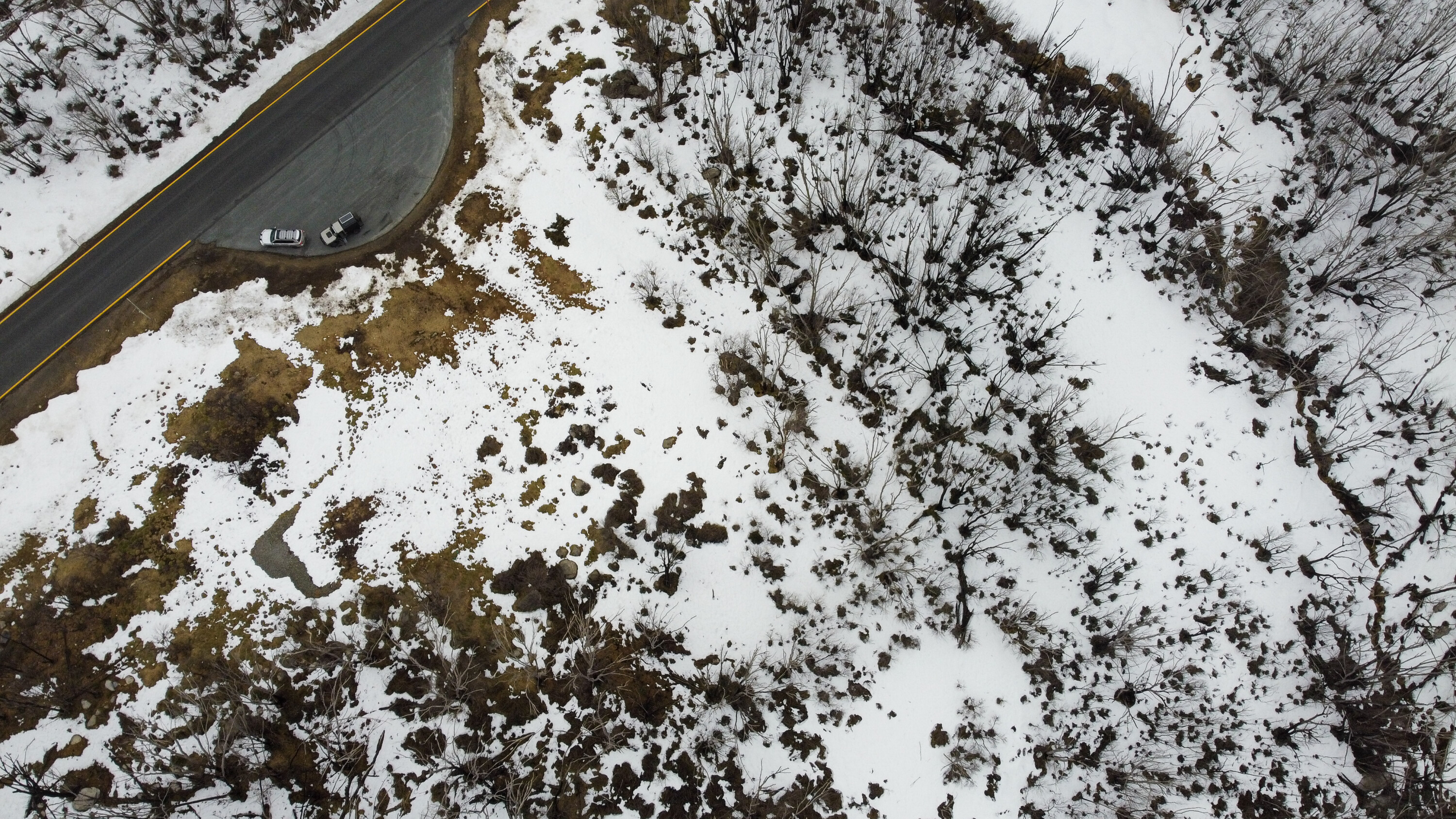
1
Broken Cart Trail
While there are plenty of quaint towns and stunning scenery if you follow the blacktop south to the Snowies, save the pie shops and breweries for the return trip.
Instead, on the way down, pick up a track called the Broken Cart Trail. Starting in the back of the Brindabella Ranges in the ACT, the Broken Cart Trail is a sure-fire way to experience the Snowies in good and proper isolation.
The track will see you zig-zagging through pristine alpine wilderness for over 100 kays as you make your way deeper south into the Snowies. Follow through enough river crossings and bog holes and you’ll eventually link up to the northern end of Long Plain Road and all the touring and scenery it has to offer.
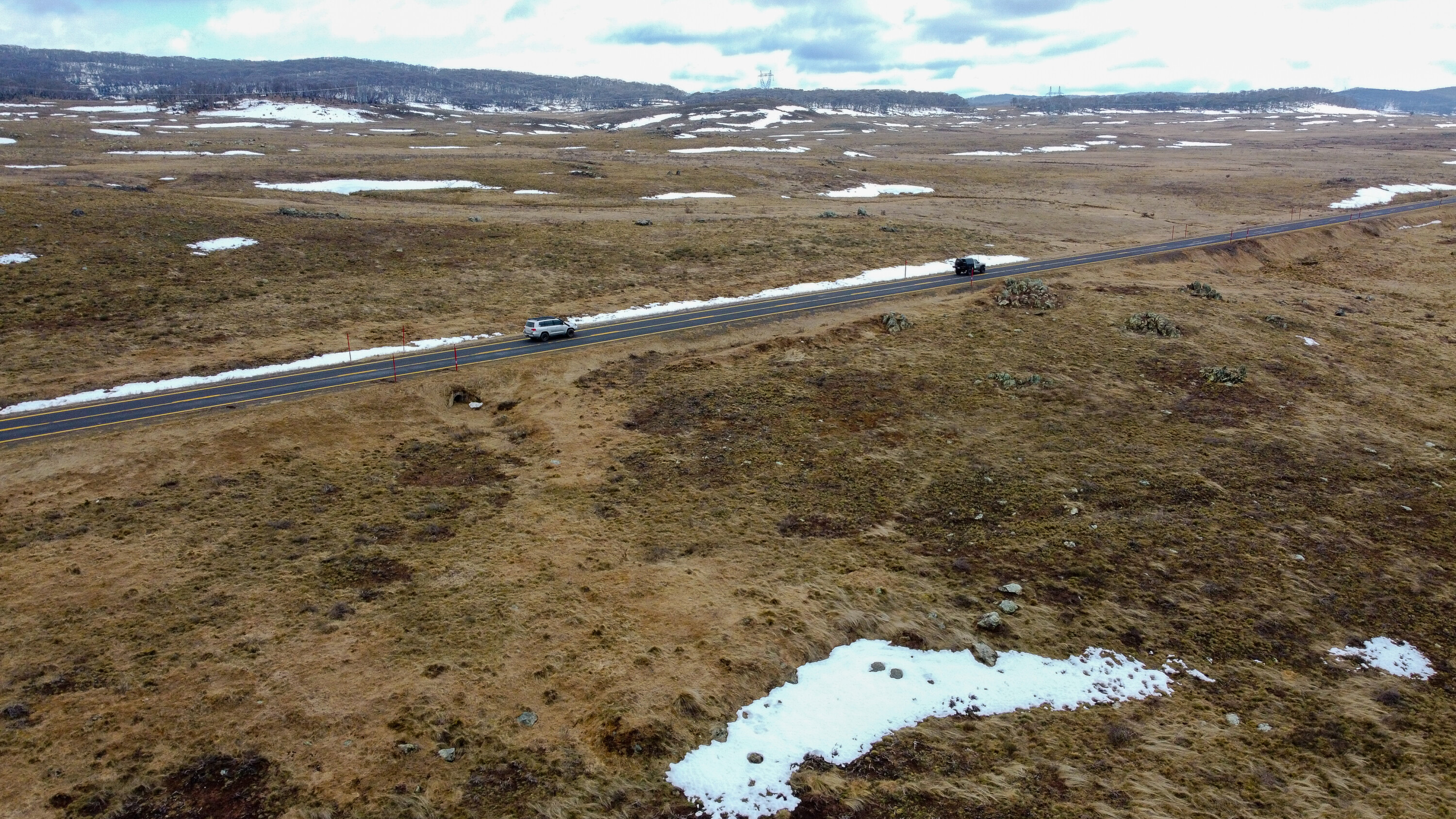
1
If you’re on the hunt for mud, ruts, and wheel lifts, allow yourself an extra day or two as you travel along the trail to explore the side tracks.
Skirted by the Bimberi Nature Reserve to the east and Blowering Dam to the west you’d be hard pressed to find any signs of civilisation out here.
Like most regions in the mountains, it can be wildly affected by weather so pack warm, expect closures over winter, and don’t head in without a chainsaw. You should be right towing a camper along its length, but your off-road van may be a gamble.
1
Geehi Walls
If you’re a history buff, a fiend for a good side track, or just want to explore more of the iconic high country huts, then the Geehi Walls and Major Clews Trail loop should be right up on your list.
If you’re heading up in a Jeep on 40s, don’t expect too much of a challenge, but for everyone else it’s a great day out exploring with the hubs locked in.
Kicking off around 30 clicks south of Khancoban along the Alpine Way, you’ll hook a right at the Geehi Picnic Area where you’ll find basic amenities and ample camping at Geehi Flats, as well as the Geehi Hut to poke your head into.
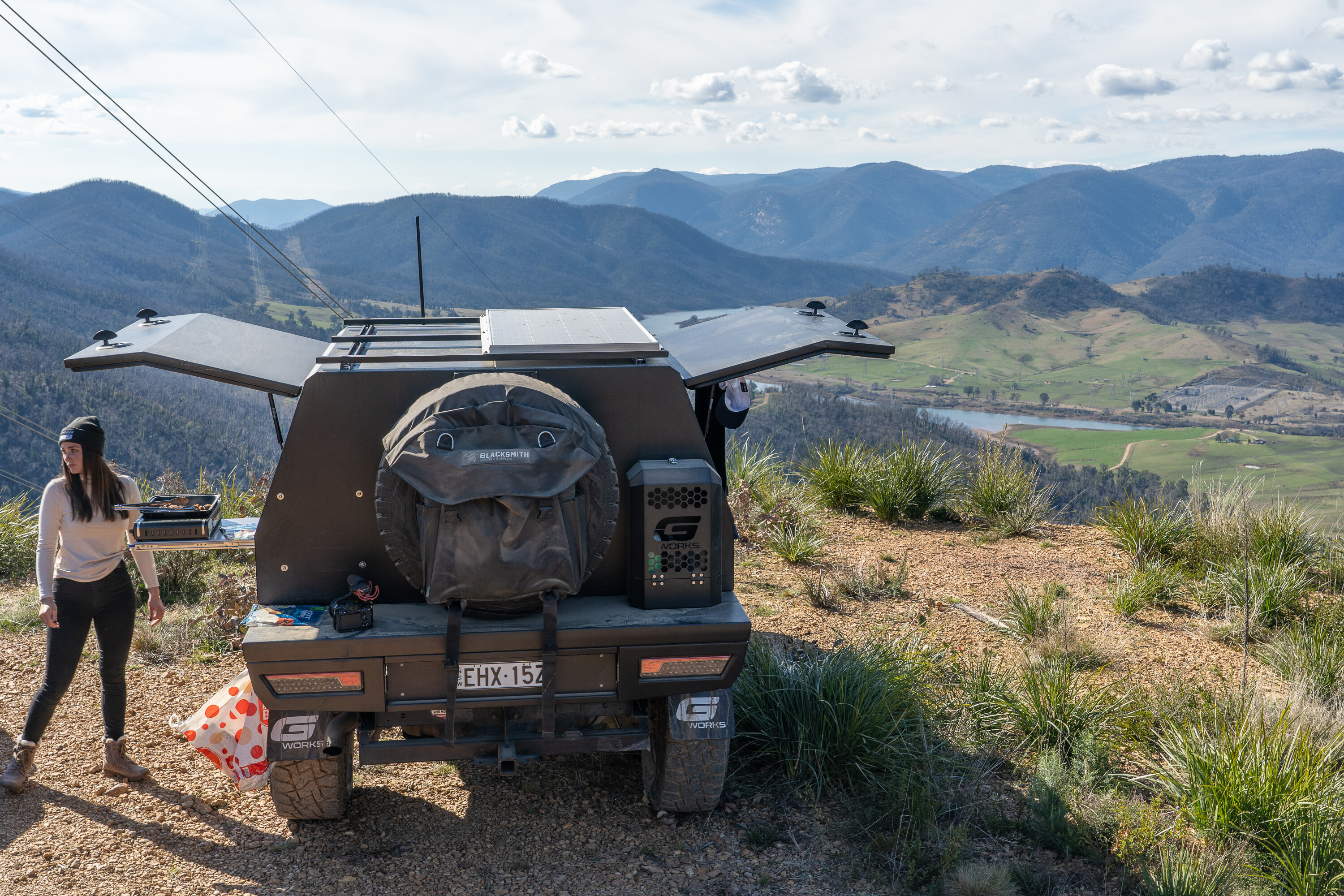
2
You’ll head deeper into the campground along the Behrs Flat Trail before facing a couple of classic Snowy Mountain river crossings on the Swampy Plain River.
In warmer months, the path is well trodden but with river rock bases you’ll need to take things slow. As the snow melts above, the water levels can rise, so don’t assume it’ll be an easy crossing and barrel in blindly.
Deeper along the track you’ll hook right at the Old Geehi Campground and start the long climb back up into the hills. The track gets steep, rocky and narrow in parts but the views are well worth it and the old cattleman huts along the way provide plenty of opportunity to stretch the legs.
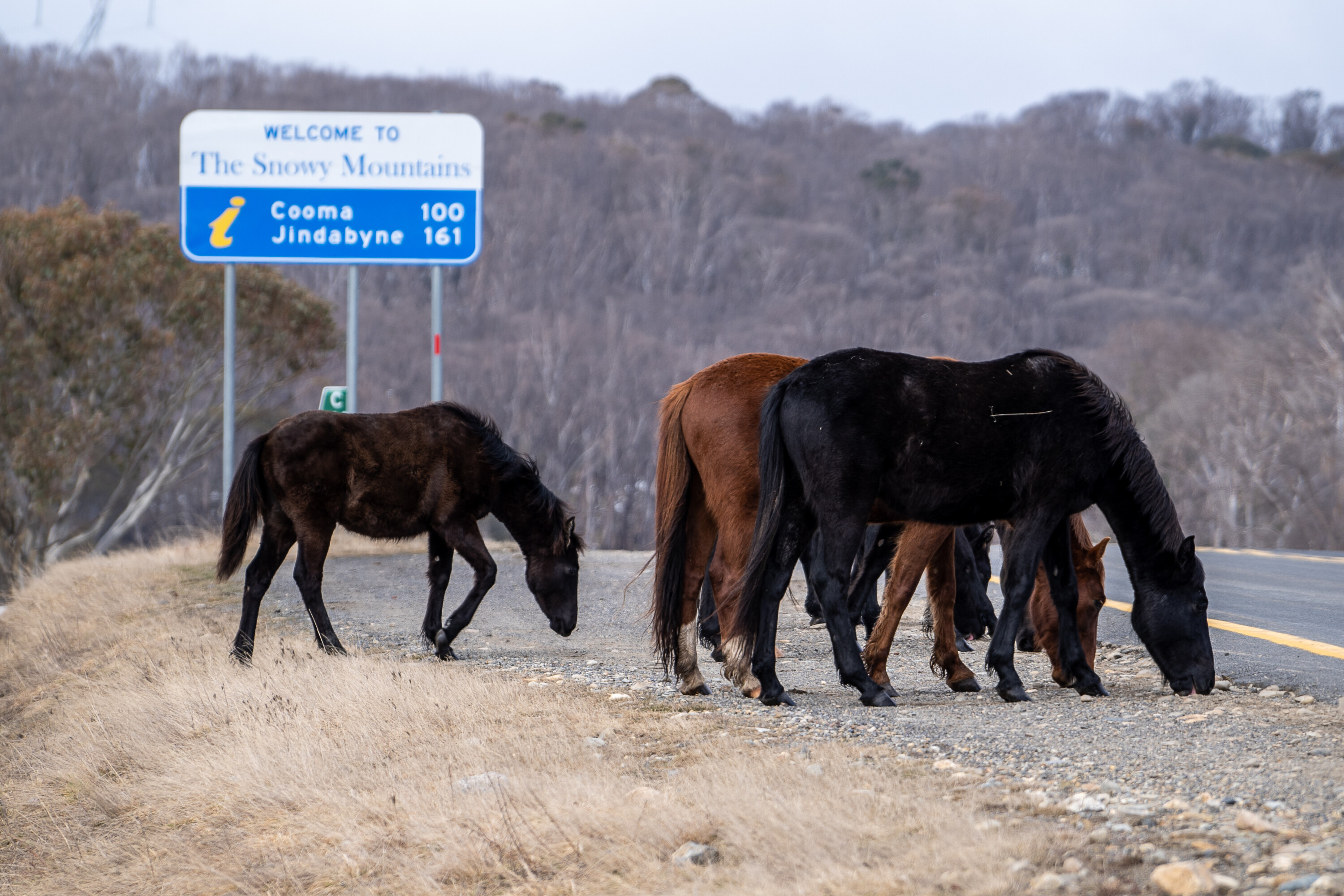
1
Mt Pinnibar
We’ve left the best to last because quite frankly it’s a little morally ambiguous.
Not in the end-up-in-the-newspaper kind of way, more like eating an apple when your neighbour’s apple tree hangs over your fence line. Mt Pinnibar is just a stone’s throw across the Victorian border, but it’s best accessed from none other than the previously mentioned Tom Groggin campsite you’ve already punched into your must-see Snowies itinerary.
You might as well air down your tyres at camp because you’ll cross the mighty Murray River right from Tom Groggin over on to the Tom Groggin track in Victoria.
1
You’ll be reaching for 4-low as your spotlights point to the sky and your tyres will be scrabbling for traction as you navigate the various ruts and steps along the way.
You’ll throw it in 4-high as you snake your way through the dense bush before finally starting the climb up Mt Pinnibar itself; with the summit a massive 1772m above sea level it’s one of the highest roads in the country. At the summit, you’ll have endless views out over snow-capped mountains in every direction, but the climb up is just as good.
You’ll be reaching for 4-low as your spotlights point to the sky and your tyres will be scrabbling for traction as you navigate the various ruts and steps along the way.
It copped a flogging over the 2019/2020 bushfire season, and receives plenty of snowfall, so is subject to a variety of closures. If you can align the stars to get up there when there’s snow on the ground it’s one of the most magical tracks in Australia. Just don’t let the Victorians see you sneaking over the border.
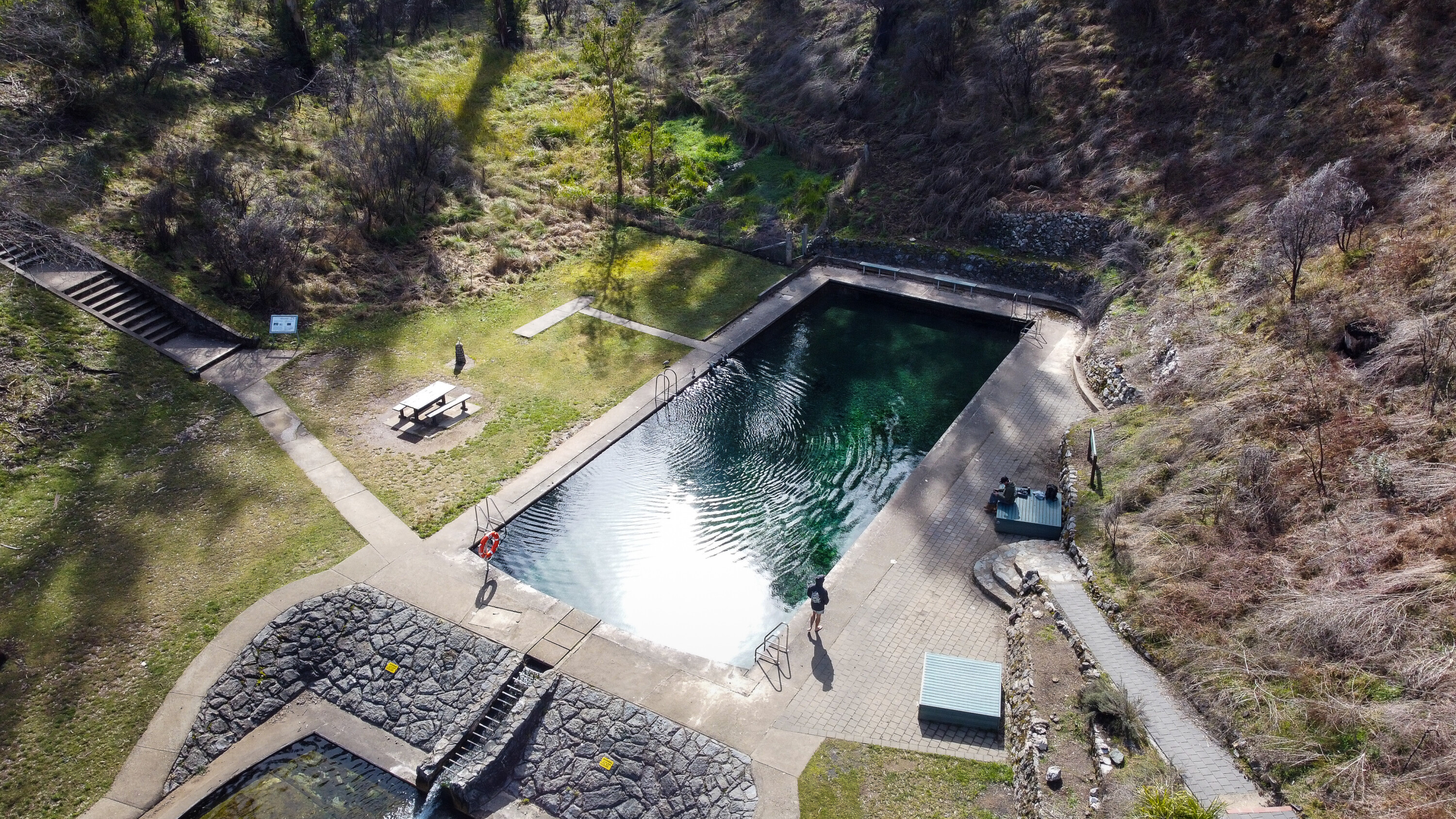
1
Sights to see
Yarrangobilly Region
If there are two things that go together like peas in a pod it’d have to be snow-covered alpine regions and outdoor swimming.
Alright, well not normally, but Yarrangobilly Thermal Pools aren’t your typical public pool. Heated from a subterranean water source 1km below ground level the pools are heated to a comfortable 27°C year round. There’s a 25m long pool cascading down into a smaller wading pool for kids. The climb back up to the carpark sucks so take your time and do the gentler 3km Yarrangobilly river walk instead to get back.
If you’re feeling extra adventurous, the area boasts six massive limestone caves through which you can do guided or self-guided tours.
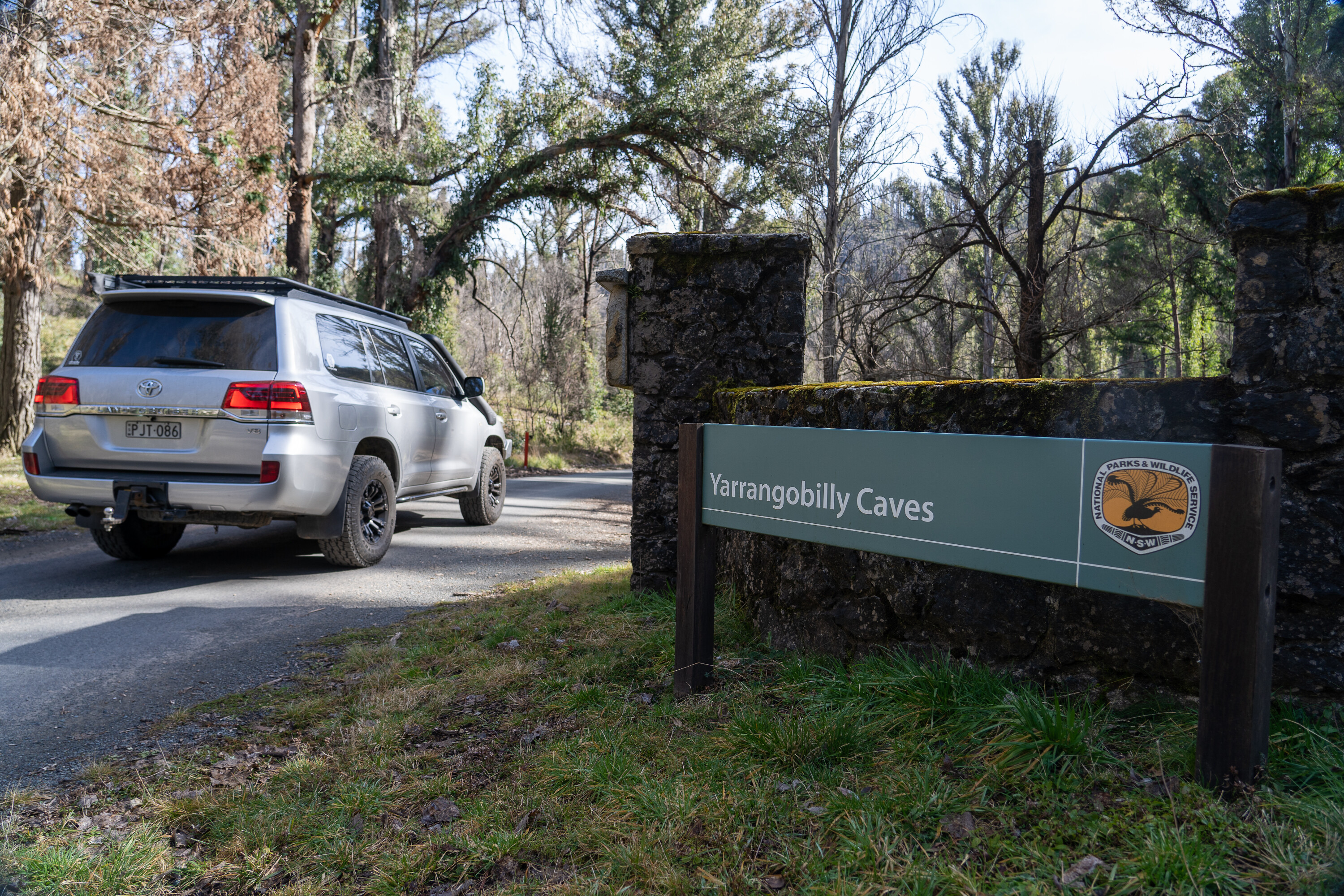
1
Clarke Gorge
Dust off the lamborfeeties again as Clarke Gorge is one of the most spectacular must-dos in the Snowies, and it’s best done with a pair of hiking boots.
Kicking off near Blue Waterholes campground deep into Long Plain, Clarke Gorge is a 5km loop that’ll take you 400 million years back into the past. Cut deep into the limestone surroundings by Cave Creek, the Gorge features cave formations along both flanks with a stunning 15m waterfall at the end as well as views down into Wilkinsons Gorge.
The going will be tough with several creek crossings along the way but is well worth it if you’re up for the physical challenge. The creek dips underground some way before popping up again at Blue Waterholes.
1
Coolamine Homestead
If you’re travelling along Long Plain Road you’d have to be bonkers not to duck on into historic Coolamine Homestead for a quick visit.
A remnant of the old sheep and cattle grazing days where drovers would utilise the plains for easy summer grazing, the Coolamine Homestead features four unique buildings constructed in the late 1800s.
The Cheese Hut constructed out of interlocking whole logs is well worth a look, the thick logs designed as a thermal battery to maintain a consistent temperature perfect for storing dairy products.
But the newspaper-lined Campbell House is the main attraction. Constructed out of horizontal timber slabs, the inside is lined with newspapers as wall coverings dating from the early 1900s to the 1980s when restoration works were undertaken. It makes for interesting reading and a unique look at our history.
1
Mt Kosciuszko Summit Walk
Look, most attractions on a trip like this are best experienced somewhere down a dirt track, but we do need to make a few exceptions from time to time.
The hike to the top of Mt Kosciuszko is an experience like no other, and what better time to tick it off the bucket list.
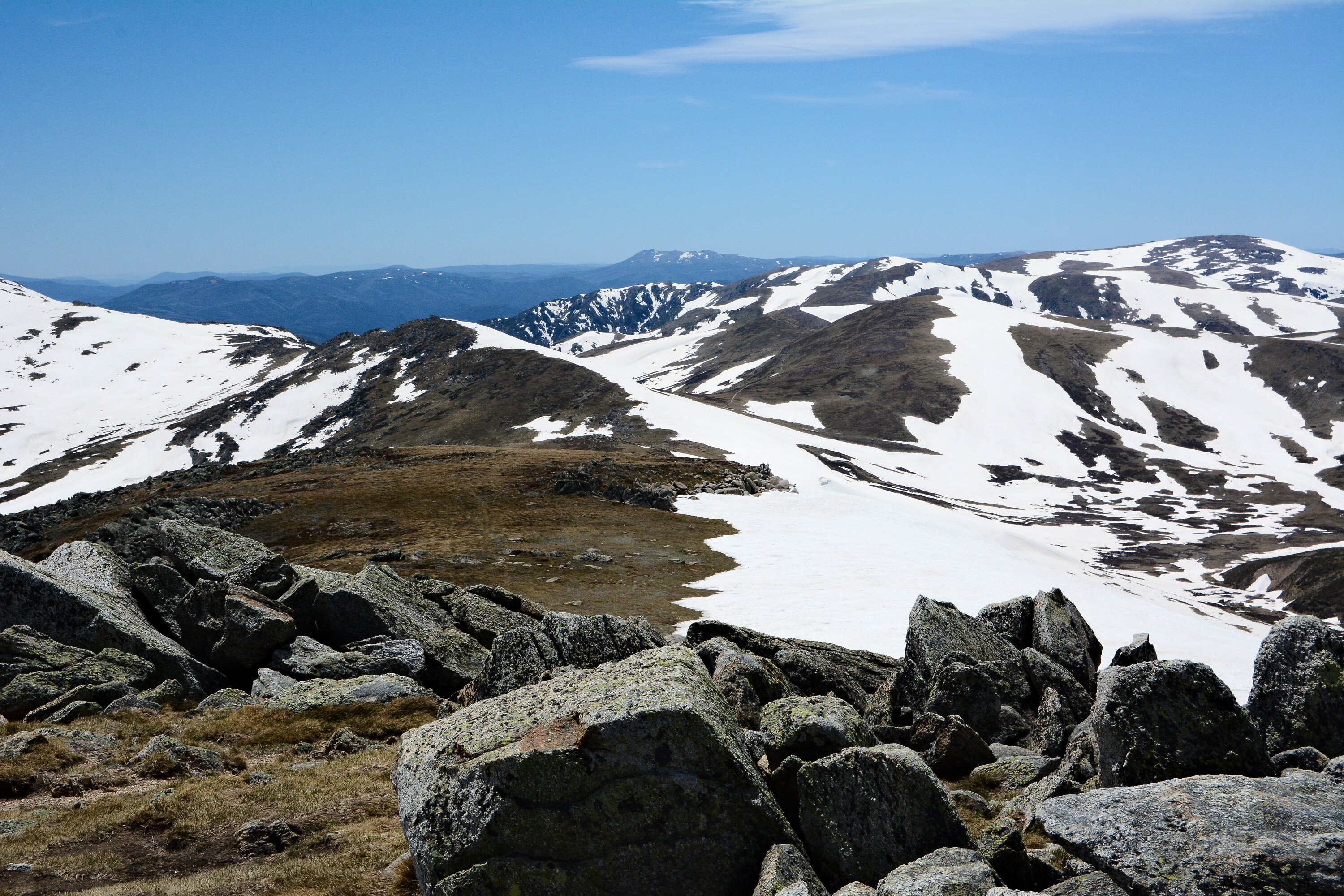
The quick option is to head up in summer, catch the chairlift up to Eagles Nest and do the 13k return hike. If you’re a little more adventurous, the Alpine Lakes Hike is an all day 19km effort along the ridge line that’ll swing past the summit and head out past the glacial lakes too.
It can be looped into a 32km return loop picking up the Seamans Hut as well. Built in 1929, the hut is a memorial to Laurie Seaman and William Hayes who perished attempting to ski the summit in 1928, both men within an inch of salvation refusing to leave the other behind, a testament to the fact that despite the ski lifts and bakeries, this is still wild country.
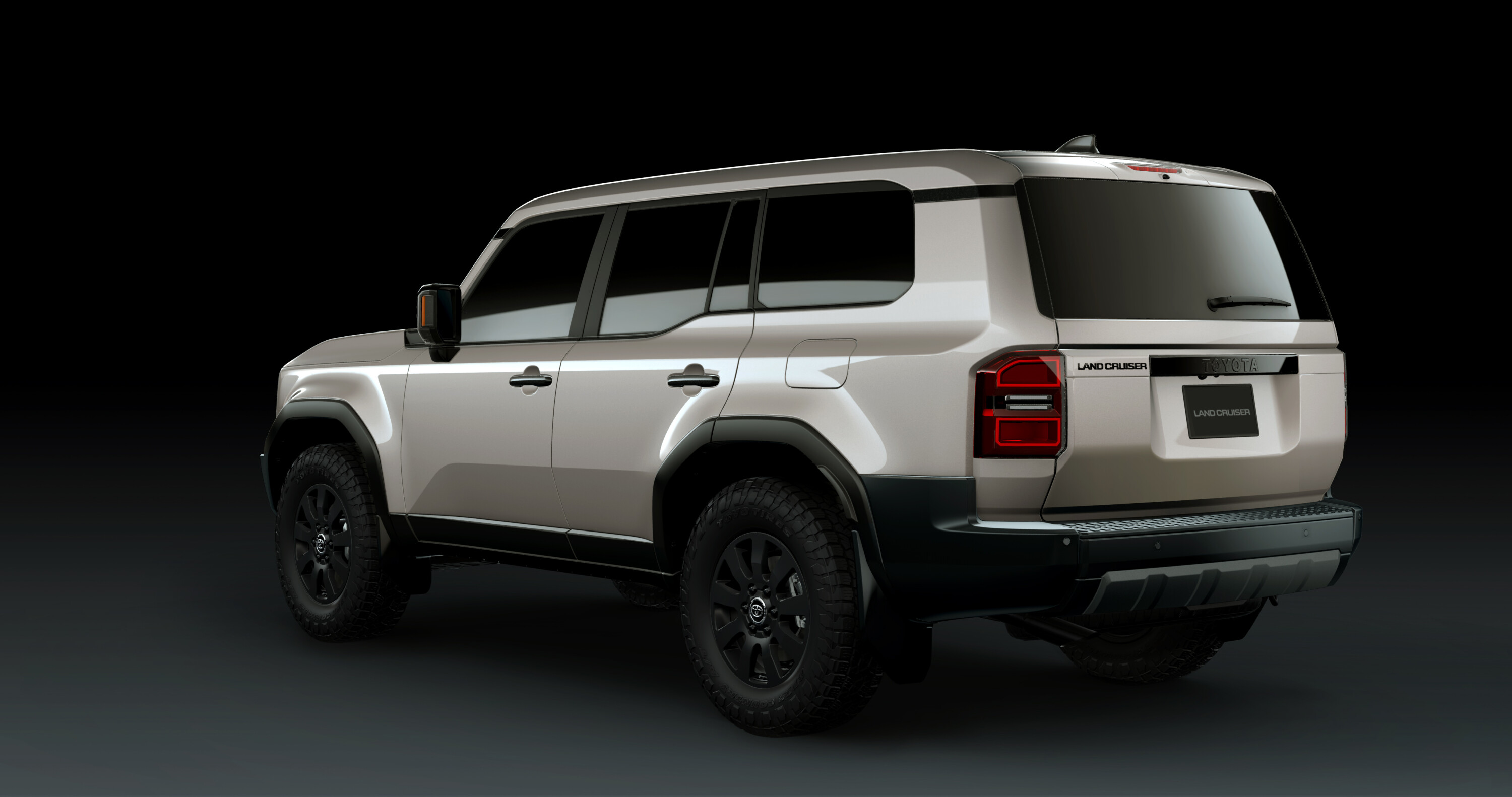
It’s been some 14 years, but finally the fifth-generation Toyota Prado is heaving into view… and this time around it’s got some stiff opposition to overcome to keep its place in the hearts and minds of large SUV-loving Aussies.
Not due to land until next year, first impressions are positive, with a bold, sharp yet evocative design language striking the right chord with a brace of increasingly emboldened buyers.
Based on the same ladder-frame platform that underpins the hugely popular 300 Series LandCruiser, the Prado will back up its boxy visage with proven diesel powertrain tech, mixed in with fuel-saving hybrid technology.
1
But the new Prado has been a long time coming, and its rivals haven’t been hanging about.
Launched last year to great fanfare, Ford’s put more than a little bit of effort into its new T6.2 Ranger/Everest pairing, which are now sold in more than 20 markets around the world.
In fact, Wheels rated the Everest so highly that it took the coveted 2023 Car of the Year trophy back to Broadmeadows.
Does the Prado have what it takes to not only hang onto its loyal army of current owners, but to knock the Everest off its perch as the pick of the 4×4 SUV circus troupe?
Get up to speed on the new Prado
The stories below will give you a guide to everything we learned about the new Prado when it was unveiled. All fresh stories published since then will be found on our Toyota Prado model page here.
2024 Toyota Prado coverage
- 2024 TOYOTA PRADO REVEALED
- Spec battle: New Prado v LandCruiser 300 Series
- Spec battle: New Prado v ‘old’ Prado
- Spec battle: New Prado v new Lexus GX
- Spec battle: New Prado v Fortuner
- Spec battle: New Prado v Ford Everest
- 2024 Toyota Prado: Everything we know
- What is the towing capacity of the new Prado?
- New Prado: What YOU think so far!
- BONUS: New 70 Series facelift revealed
- A 2025 Prado ute? Yes please!
- ALL PRADO NEWS & REVIEWS
- 2024 TOYOTA PRADO REVEALED
- Spec battle: New Prado v LandCruiser 300 Series
- Spec battle: New Prado v ‘old’ Prado
- Spec battle: New Prado v new Lexus GX
- Spec battle: New Prado v Fortuner
- Spec battle: New Prado v Ford Everest
- 2024 Toyota Prado: Everything we know
- What is the towing capacity of the new Prado?
- New Prado: What YOU think so far!
- BONUS: New 70 Series facelift revealed
- A 2025 Prado ute? Yes please!
- ALL PRADO NEWS & REVIEWS
Dimensions
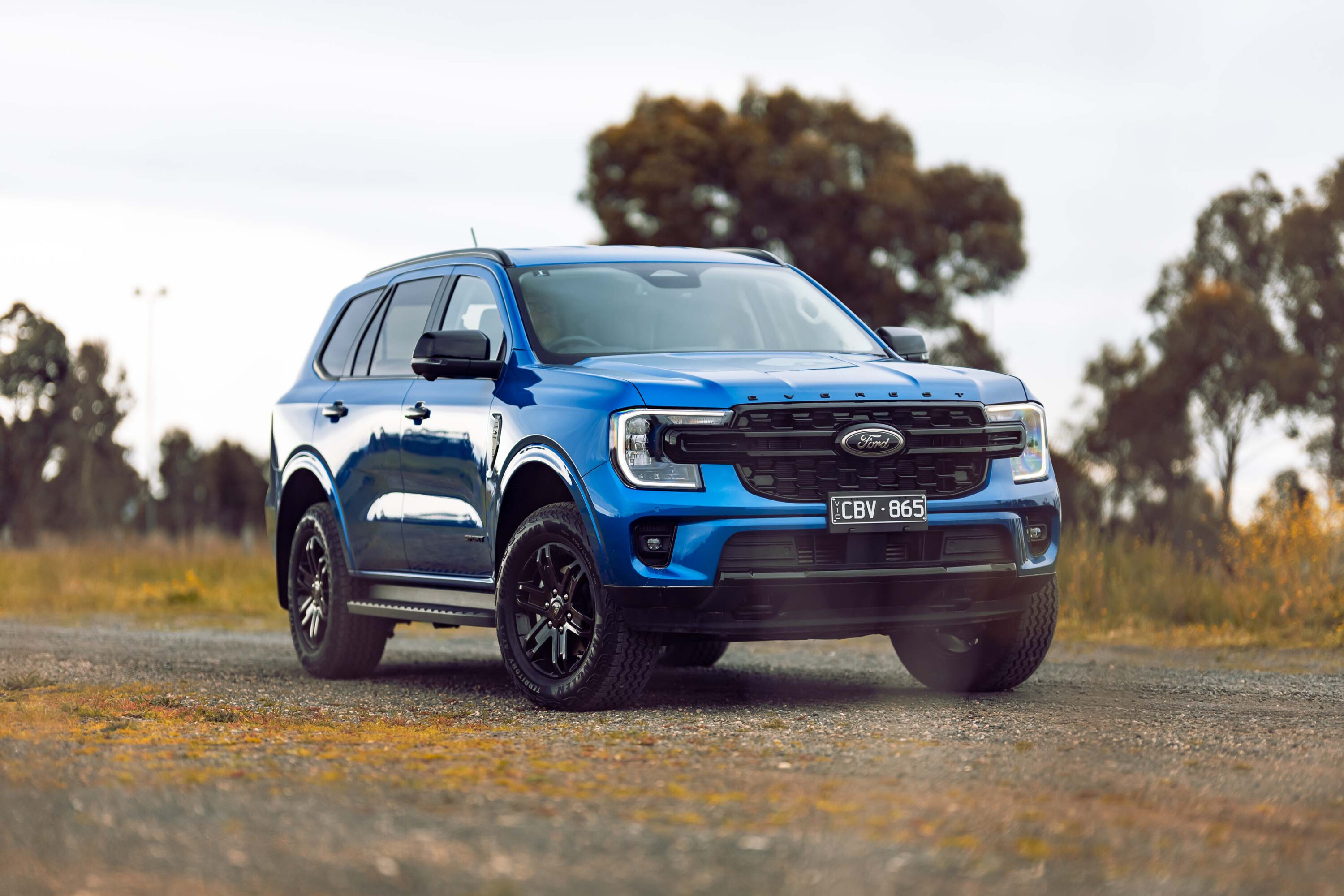
At 4914mm long, up to 2015mm wide and 1842mm high depending on variant and the Everest is 50mm longer than the previous model, and a whisker shorter, wider and lower than the new Prado.
Measuring 4925mm long, 1980mm wide and 1870mm tall, the new Prado is 100mm longer, 95mm wider and 20mm taller than the outgoing car.
When it comes to wheelbase measurements, the new Prado’s TNGA-F platform measures 2850mm between the wheels; it’s the same as the current LandCruiser L300 and 60mm longer than its predecessor.
1
The Everest is a lick longer at 2900mm long; it’s a vital stat when it comes to interior room as well as on-road manners.
Details like the boot space capacity of the new Prado have yet to be released, but it will need to compete with the Everest’s 898-litre capacity with its third row of seats stowed and 259 when all three rows are in use.
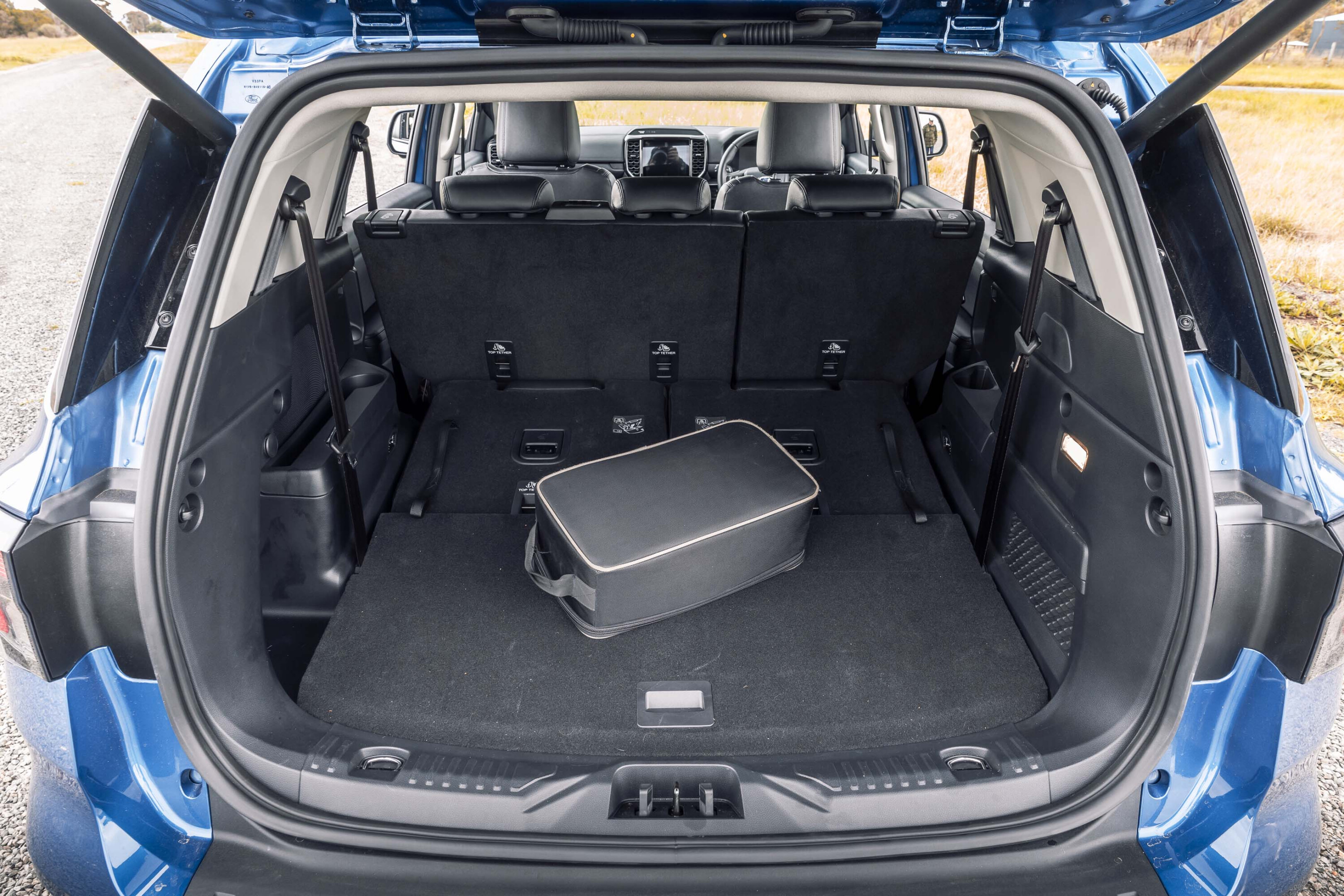
1
Chassis and towing
Given that it’s being dubbed the LandCruiser 250 in overseas markets, and that it’s based upon the same chassis as the L300, the new Prado was always going to present with a formidable set of off-road chops.
The Prado runs high-mount double-wishbone front suspension and a four-link rigid axle with lateral control arms at the rear.
It will have a full-time all-wheel drive system with a low-range transfer case and a locking centre differential, as well as an electronic locking rear differential and front a sway-bar disconnect system.
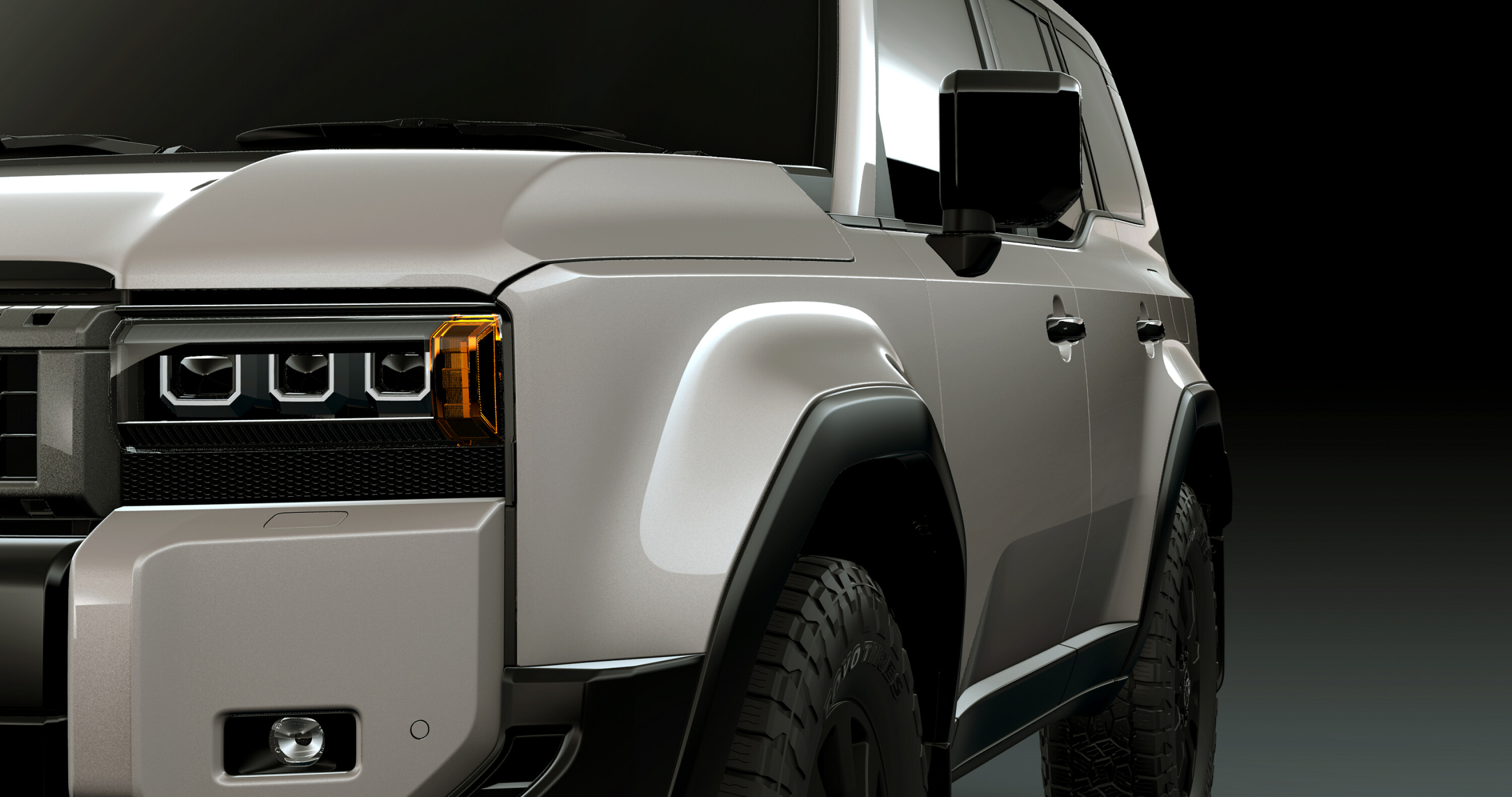
1
Unlike the hydraulically actuated KDSS, the new system allows stabiliser-bar disconnection on demand via a button in the cabin. This should make for excellent wheel articulation without sacrificing roadholding.
Electric power steering replaces the hydraulic system to increase steering feel, too.
Compare this to the Everest, which also uses a separate ladder chassis to which the body is mounted. Independent front suspension features double wishbones and coil springs, while a live axle suspended on coils and a multi-link set-up out back uses a Watts link to keep the rear axle in check.
1
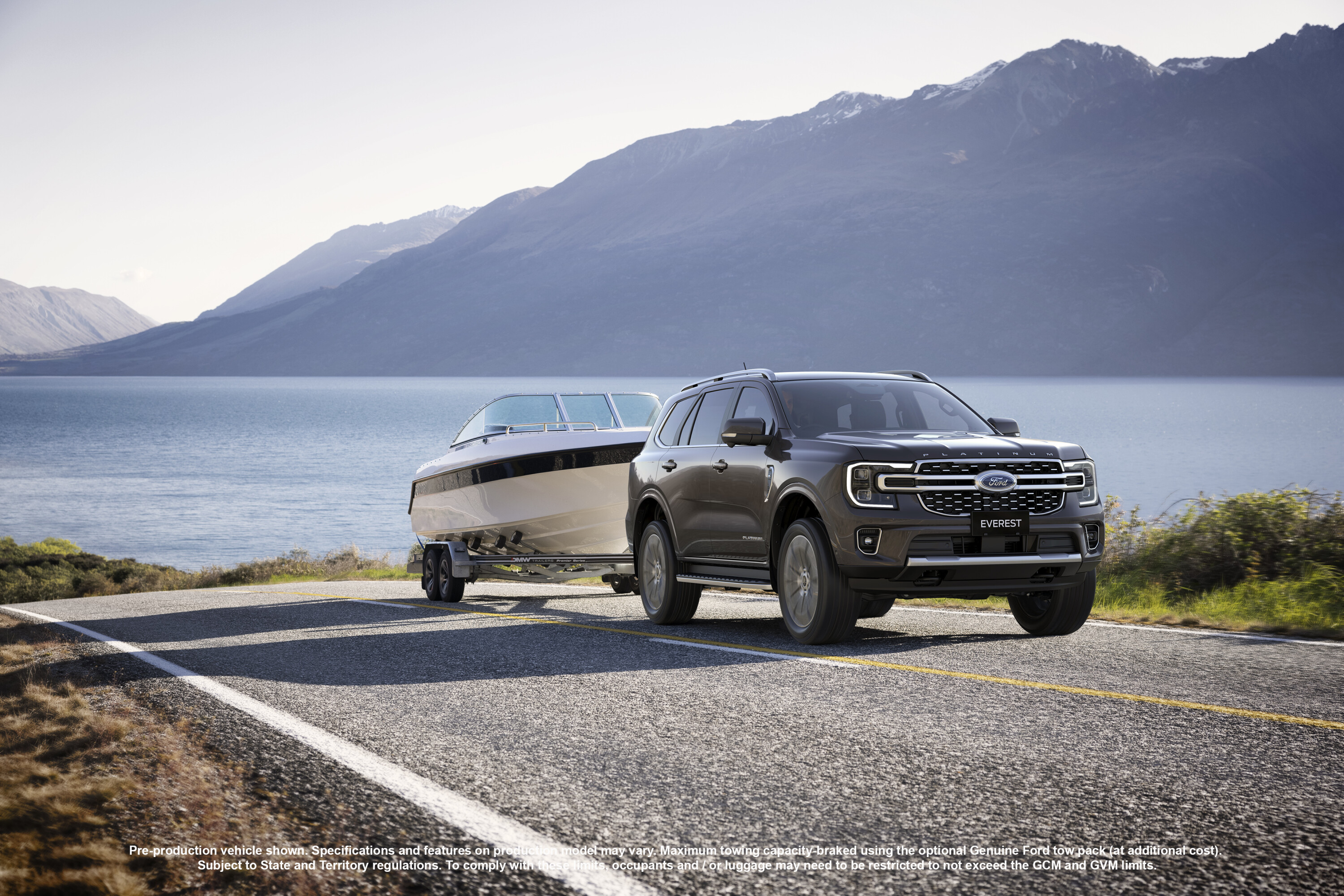
US specs suggest that the Prado is likely to be offered with 3500kg braked towing capacity
While it uses traction control linked to multiple driver modes in combination with its electro-mechanically operated diffs in its full-time 4×4 variant, the Everest eschews all other forms of electron-powered trickery in its suspension system.
The Ambiente, Trend and Sport-model Everests can be bought as 4×2 vehicles, while all are offered as 4×4.
Towing capacity for the new Toyota Prado is yet to be confirmed, but US specs suggest that the Prado is likely to be offered with 3500kg braked towing capacity for the first time ever, jumping by 500kg and matching the Everest’s towing figure.
Similarly, gross combined mass figures for the new Prado aren’t available, which of course would reveal its potential payload capability.
It’s a fair bet, however, that the new Prado will weigh a fair bit more than the current car, which comes in at a claimed 2350kg kerb weight, giving it a 640kg payload. Expect a similar payload figure for the new car, despite an expected 150-200kg jump in weight.
The Everest was praised highly by our COTY judges for its towing technology, and its GCM of 6250kg across the entire range nets it a payload of 741kg.
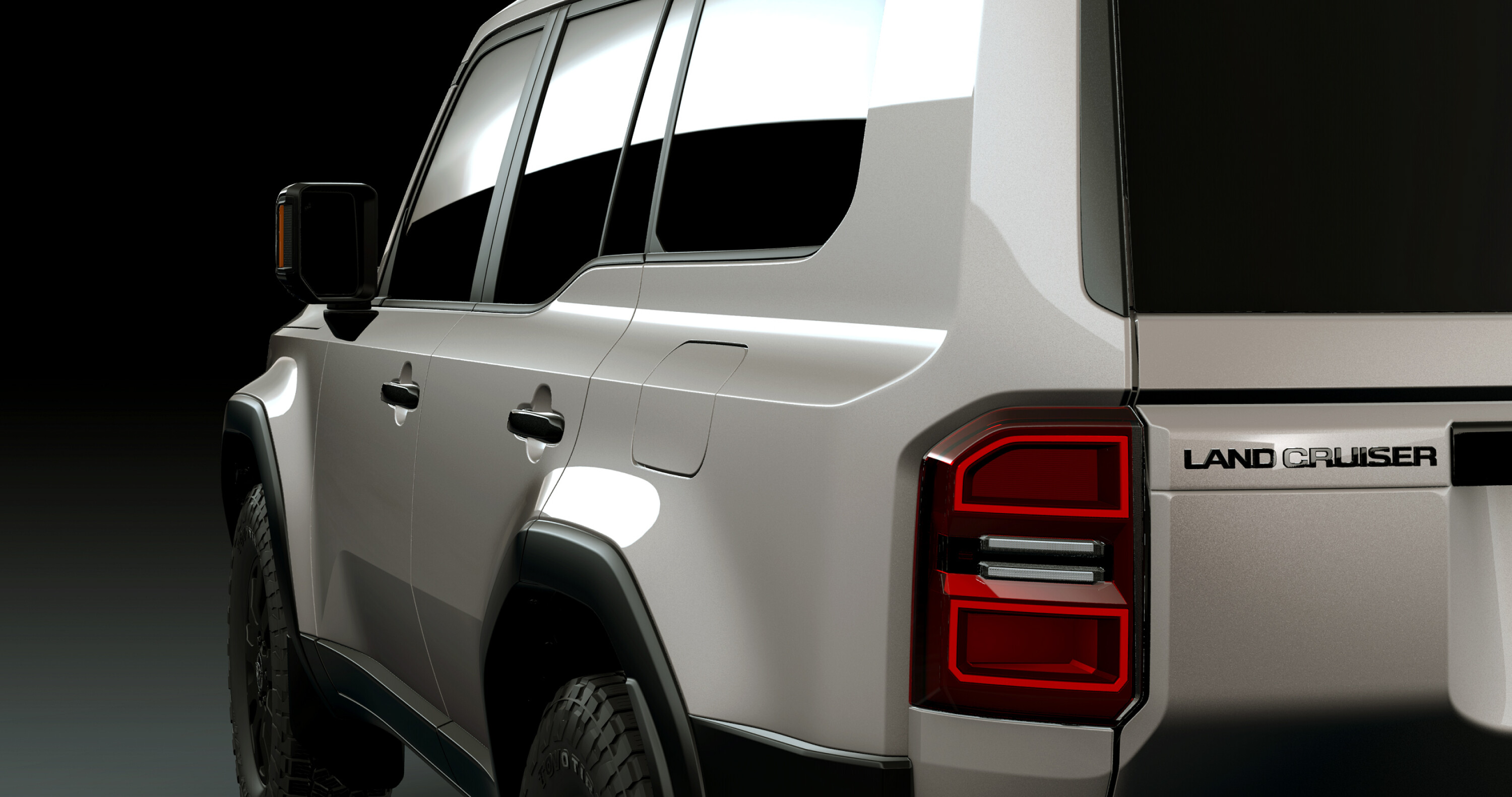
1
Engines
For the 2024 Toyota Prado, mild hybrid assistance will be added to Toyota’s familiar 150kW/500Nm 2.8-litre four-cylinder diesel motor.
There’s also a small electric motor mounted between the motor and new eight-speed gearbox supplemented by a 48-volt battery and a stop/start system to net an estimated 10 per cent fuel saving.
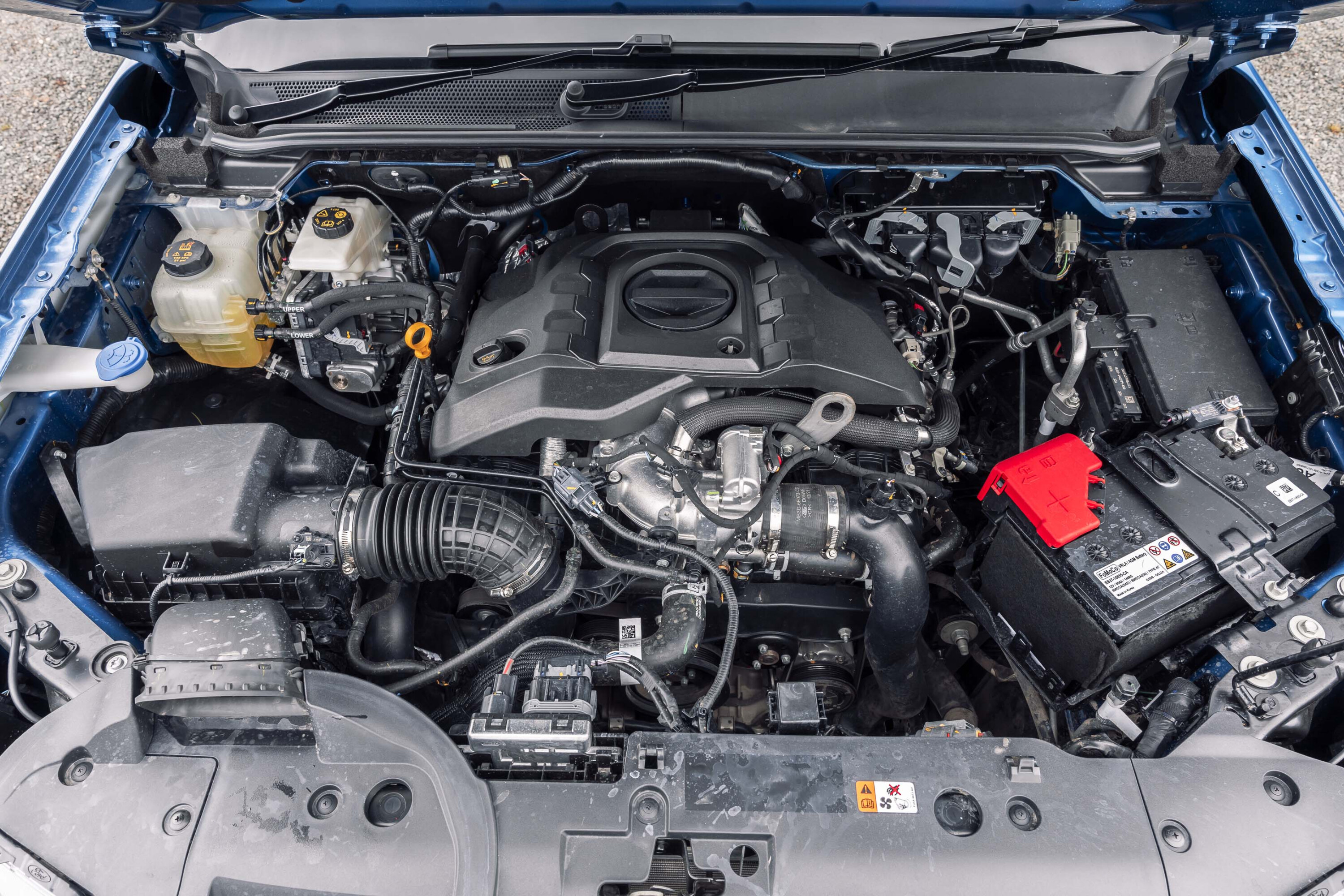
The Everest, meanwhile, comes with the choice of a 154kW/500Nm twin-turbo 2.0-litre four-cylinder diesel engine or a 184kW/600Nm V6 turbo diesel.
1
The Ambient and Trend models come with the four-cylinder bi-turbo diesel engine only, while the Sport is offered with a choice of either a four-cylinder or the V6, and the Platinum only comes with the V6 diesel engine.
Despite being several decades old in origin, the V6 gives the Everest a real point of difference over the Prado, which is unlikely to benefit from any other drivetrain in its model life.
One spec that many prospective buyers will be awaiting is the fuel tank capacity of the new Toyota Prado. If, as is predicted, the Prado’s full-size spare wheel moves from the tailgate to the underside of the rear bumper, it’ll likely mean the end of the Prado’s 63-litre sub-tank option – and the demise of its 150-litre fuel capacity.
1
Interior and cabin design
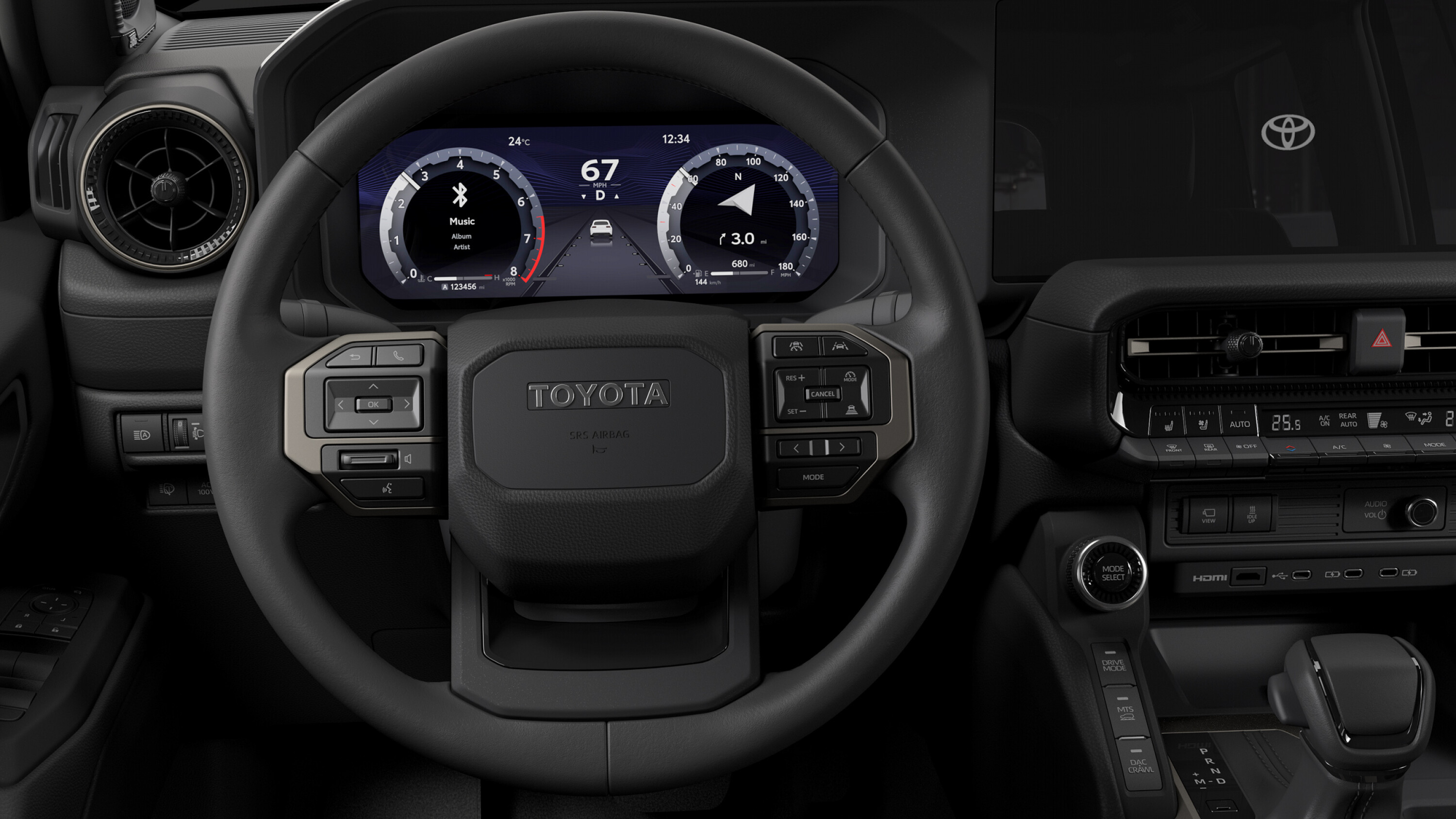
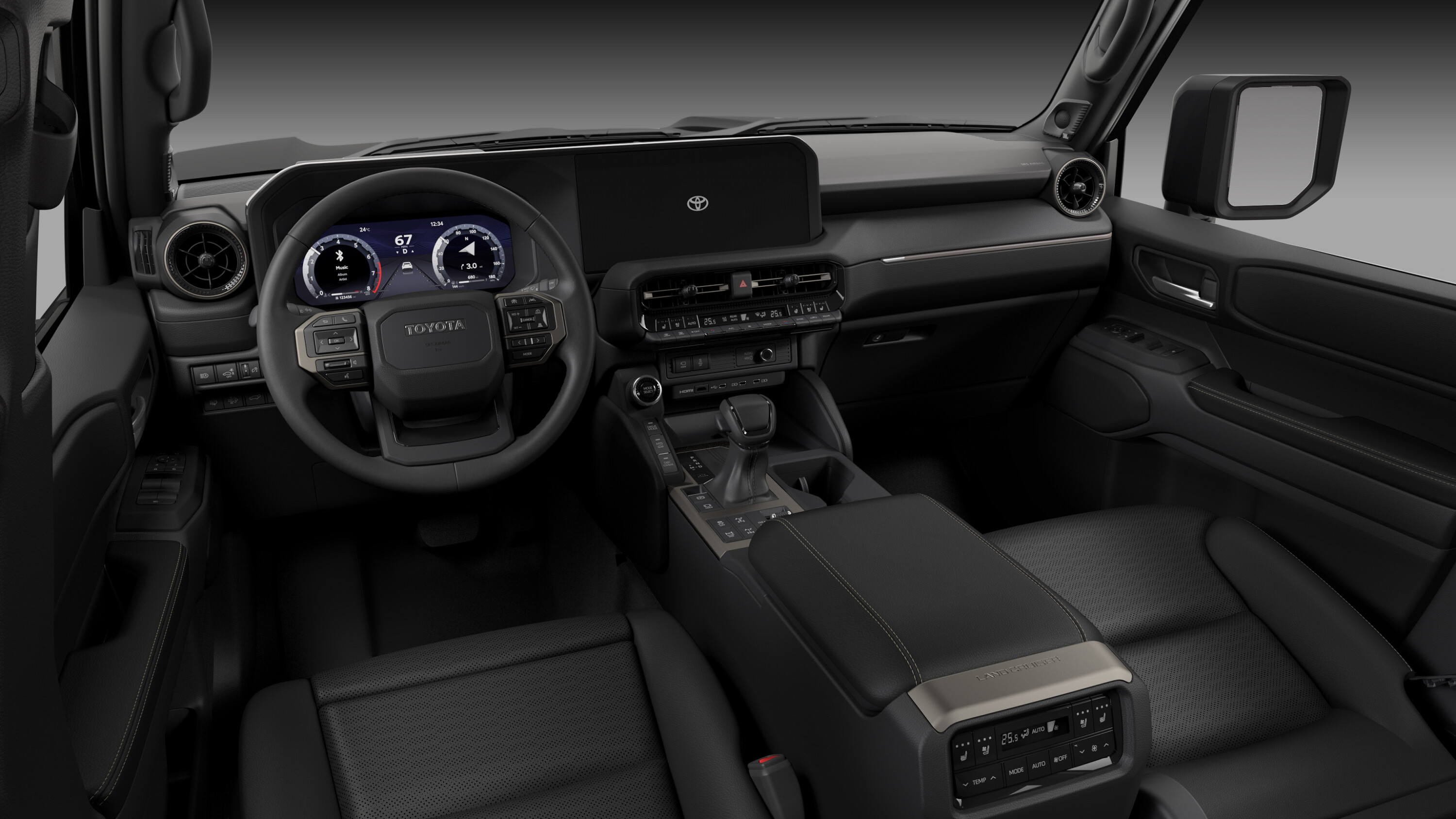
Toyota has gone all in on the new Prado, presenting a sharp, rugged and confident interior that’s not overly dominated by a massive screen up front.
Though the Prado will likely adopt a digital dash across the range, traditional analogue controls still feature strongly, with more than a nod to the LandCruiser’s storied past in the bulky, squared-off steering wheel with its prominent type-written badge.
In fact, the explosion of buttons across the dash and centre console is prolific by modern standards. Not only are all the climate controls easily accessible, drive modes can be accessed by both button and dial, while the overseas model pictured even sports an HDMI port along with a brace of USB-C outlets.
1
The extra width of the new Prado is evident in the huge centre bin and console layout, while a traditional gear selector is retained.
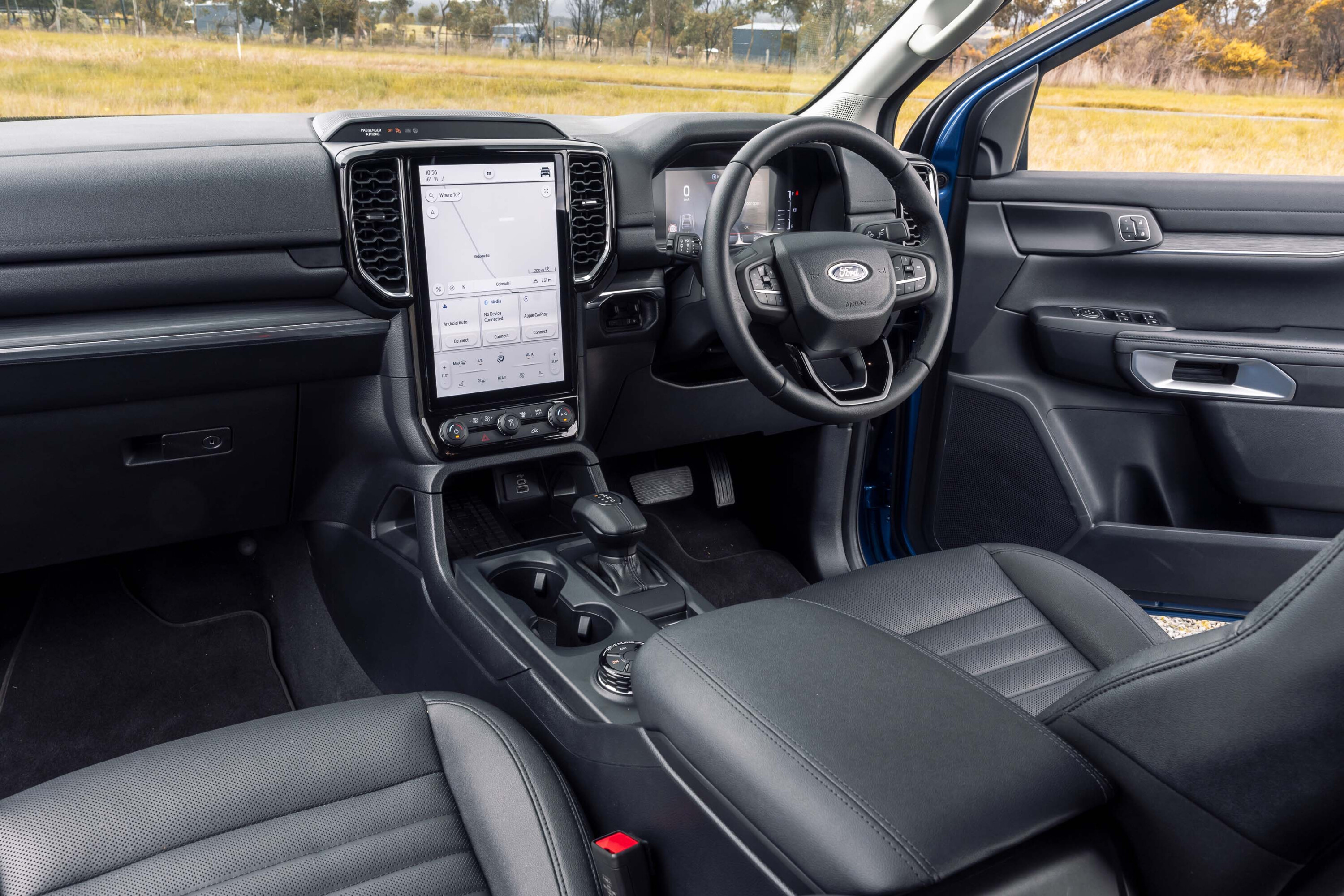
The more classically styled Everest relies heavily on a massive vertical screen to provide access for many onboard systems, though it too has retained sufficient traditional dials to sate the traditionalists.
Not so traditional is its rocker-action gear actuator, which is very much a love-it-or-hate-it proposition.
Given its previous spec and its positioning in the Toyotas SUV range, the Prado is likely to offer seven seats as standard fitment, matching the layout of the Everest.
1
Pricing
Prices for the 2024 Toyota Prado are yet to be confirmed, but it’s likely that there will be an increase across the board given the expected rise in equipment levels and the addition of a hybridised powertrain.
Currently, the Everest undercuts the Prado right across the range, even though the latter is an older vehicle at heart. When comparing like with like, the Ambiente 4WD costs $58,290 plus on-road costs, compared with the Prado GX at $62,830 plus ORC.
A richer variant mix for the Everest offers buyers more options; in our view, the Sport variant provides a great mix of spec and value, particularly in its 2.0-litre twin-turbo guise. Buyers have voted with their wallets, though, with the V6 Sport one of the strongest-selling Everest variants to date.
1
Expect Toyota to largely mirror the current four-strong Prado variant mix, though it’s reasonable to expect that a sporty GR will feature within the range at some stage in the model’s lifecycle.
Prices will definitely come under pressure, as well. Though specs haven’t been revealed for Australia, the 2024 Toyota Prado is likely to be available only in diesel hybrid form, despite the presence of petrol-powered hybrid drivetrains in the Toyota family. This will instantly add a minimum of $2500 to $3000 to the current price.
As well, the Prado is likely to present with an organically increased MSRP, given its move to a new platform, the addition of new tech and the general state of the automotive world.
How much will the 2024 Toyota Prado cost? We expect to hear more about final specs and pricing later in 2023, ahead of its launch in the first quarter of 2024.
Get up to speed on the new Prado
The stories below will give you a guide to everything we learned about the new Prado when it was unveiled. All fresh stories published since then will be found on our Toyota Prado model page here.
2024 Toyota Prado coverage
- 2024 TOYOTA PRADO REVEALED
- Spec battle: New Prado v LandCruiser 300 Series
- Spec battle: New Prado v ‘old’ Prado
- Spec battle: New Prado v new Lexus GX
- Spec battle: New Prado v Fortuner
- Spec battle: New Prado v Ford Everest
- 2024 Toyota Prado: Everything we know
- What is the towing capacity of the new Prado?
- New Prado: What YOU think so far!
- BONUS: New 70 Series facelift revealed
- A 2025 Prado ute? Yes please!
- ALL PRADO NEWS & REVIEWS
- 2024 TOYOTA PRADO REVEALED
- Spec battle: New Prado v LandCruiser 300 Series
- Spec battle: New Prado v ‘old’ Prado
- Spec battle: New Prado v new Lexus GX
- Spec battle: New Prado v Fortuner
- Spec battle: New Prado v Ford Everest
- 2024 Toyota Prado: Everything we know
- What is the towing capacity of the new Prado?
- New Prado: What YOU think so far!
- BONUS: New 70 Series facelift revealed
- A 2025 Prado ute? Yes please!
- ALL PRADO NEWS & REVIEWS
The all-new 2024 Toyota Prado is gathering plenty of attention with its retro-themed look – but the short-wheelbase variant is no more.
Our rendering wizard Theottle has imagined a new take on the small LandCruiser: a restyled and rebadged Suzuki Jimny, which we’ve dubbed the ‘LandCruiser 25’.
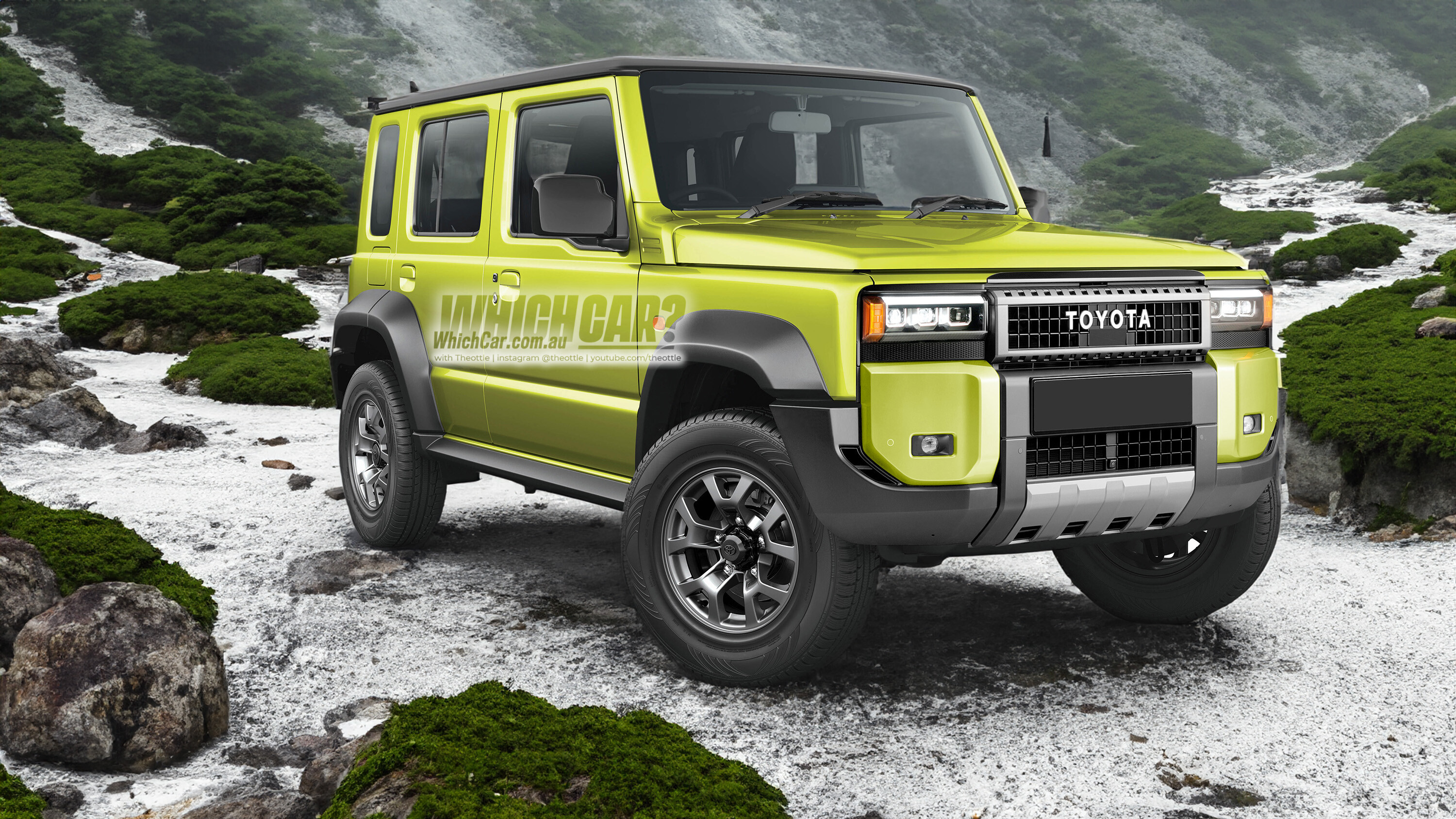
1
While there are no plans for a tiny LandCruiser-badged vehicle, the imaginary LandCruiser 25 here borrows the Jimny’s body, but features a Prado-derived front end.
Overseas, the two Japanese brands have a vehicle-sharing agreement, particularly in India, Africa, and Europe.
For instance, the Suzuki Baleno hatch is sold as the Toyota Glanza in India or Starlet in Africa, and the Toyota Corolla hybrid wagon and RAV4 plug-in hybrid are available as the Suzuki Swace and Across, respectively, in Europe.
A small Toyota four-wheel-drive would also act as the spiritual successor to the Japan-only Toyota Cami, which was a version of the Jimny-sized Daihatsu Terios.
So, could the iconic Jimny become a Toyota product, potentially with the even-more-iconic LandCruiser badge? Not so fast…
There are no known plans for a rebadged Jimny, but a production version of the small Toyota Compact Cruiser concept is in the works, with a teaser image shown at the debut of the new Prado and updated 70 Series last week.
Potentially reviving the FJ Cruiser badge, the production Compact Cruiser – likely based on LandCruiser’s TNGA-F platform – would rival the Jeep Wrangler and Ford Bronco, rather than the smaller Jimny.
What would you call it?
Jump into the comments to share your thoughts, and catch our ongoing new Prado coverage at the links below.
Get up to speed on the new Prado
The stories below will give you a guide to everything we learned about the new Prado when it was unveiled. All fresh stories published since then will be found on our Toyota Prado model page here.
2024 Toyota Prado coverage
- 2024 TOYOTA PRADO REVEALED
- Spec battle: New Prado v LandCruiser 300 Series
- 2024 Toyota Prado: Everything we know
- What is the towing capacity of the new Prado?
- New Prado: What YOU think so far!
- BONUS: New 70 Series facelift revealed
- A 2025 Prado ute? Yes please!
- ALL PRADO NEWS & REVIEWS
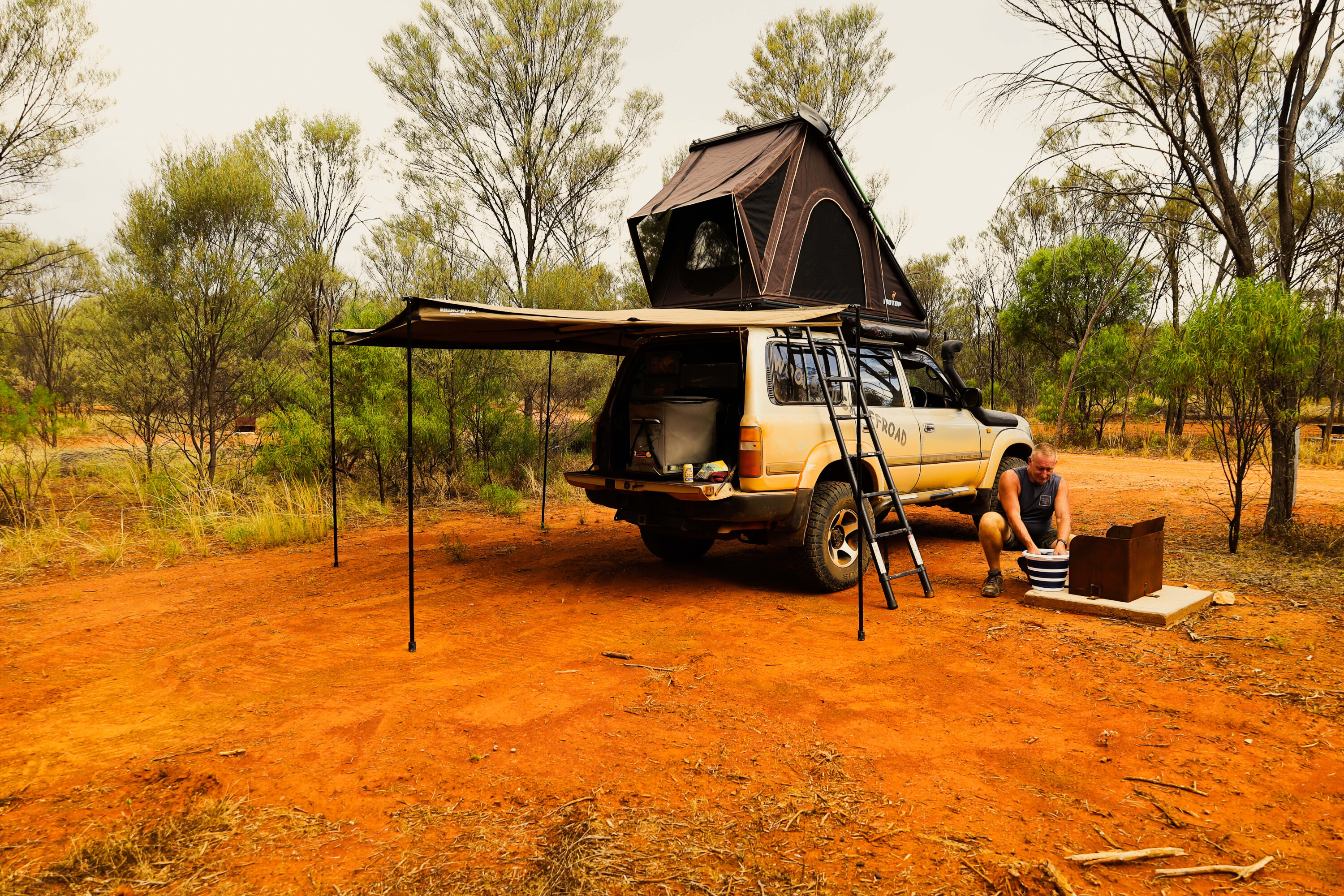
Gundabooka National Park, which is situated 60km south of Bourke and covers 64,000ha, is a hidden gem and it is well worth spending a few days exploring if you can afford the time, or is within easy reach of Bourke for those who want to make it a day trip.
Bourke itself is around 800km northwest of Sydney, and is situated on the Darling River. While the traditional owners of this land (the Ngemba and Paakandji people) have called this place home for hundreds of years, the first white explorer to come here was Charles Sturt in 1828.
Several years after Sturt’s excursion, explorer and surveyor Thomas Mitchell travelled through the area, and in 1835 the settlement of Bourke was begun.
The Darling River was used as a transport system for various types of freight and Bourke soon began to boom when the river level was up. Today, Bourke is a picturesque town where you can visit galleries, exhibition centres or even cruise the Darling River on a traditional steamboat.
1
Going to Gundabooka
There are two ways to get to Gundabooka NP; either off Kidman Way (Bourke to Cobar Road) or along the Bourke to Louth Road, which runs close to the Darling River.
As soon as you enter the park, it feels like the real outback, with dusty red roads and stunning white gums towering over the mulga bush. Just inside the park, an information bay provides all the relevant information on what you’ll be able to see and do here, where to camp, what dangers are lurking and general map information.
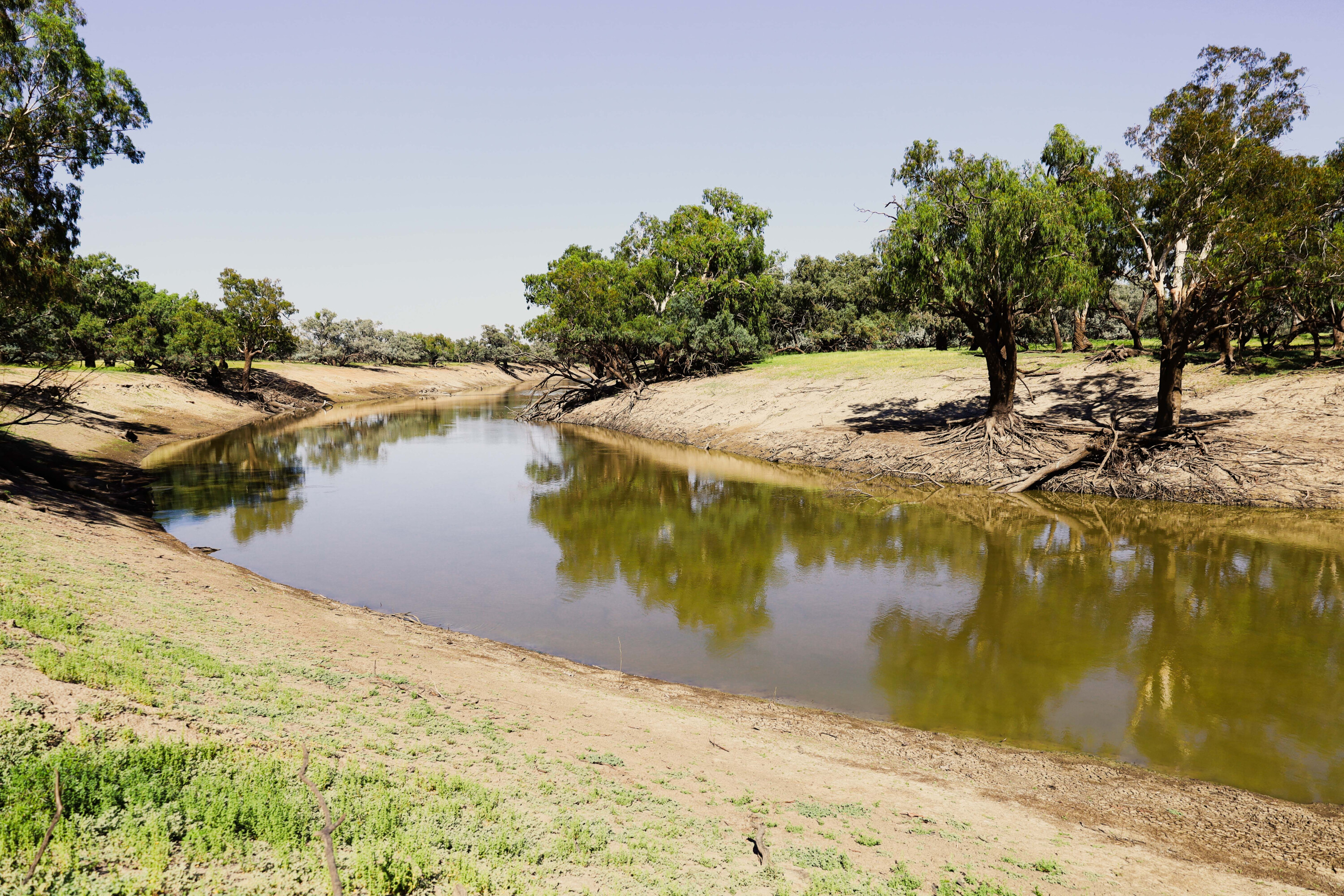
My designated campsite for the next few nights was Dry Tank campground, located 20km into Gundabooka NP. Another campsite, Yanda campground, is located beside the Darling River, but I wanted to set up in the heart of Gundabooka.
1
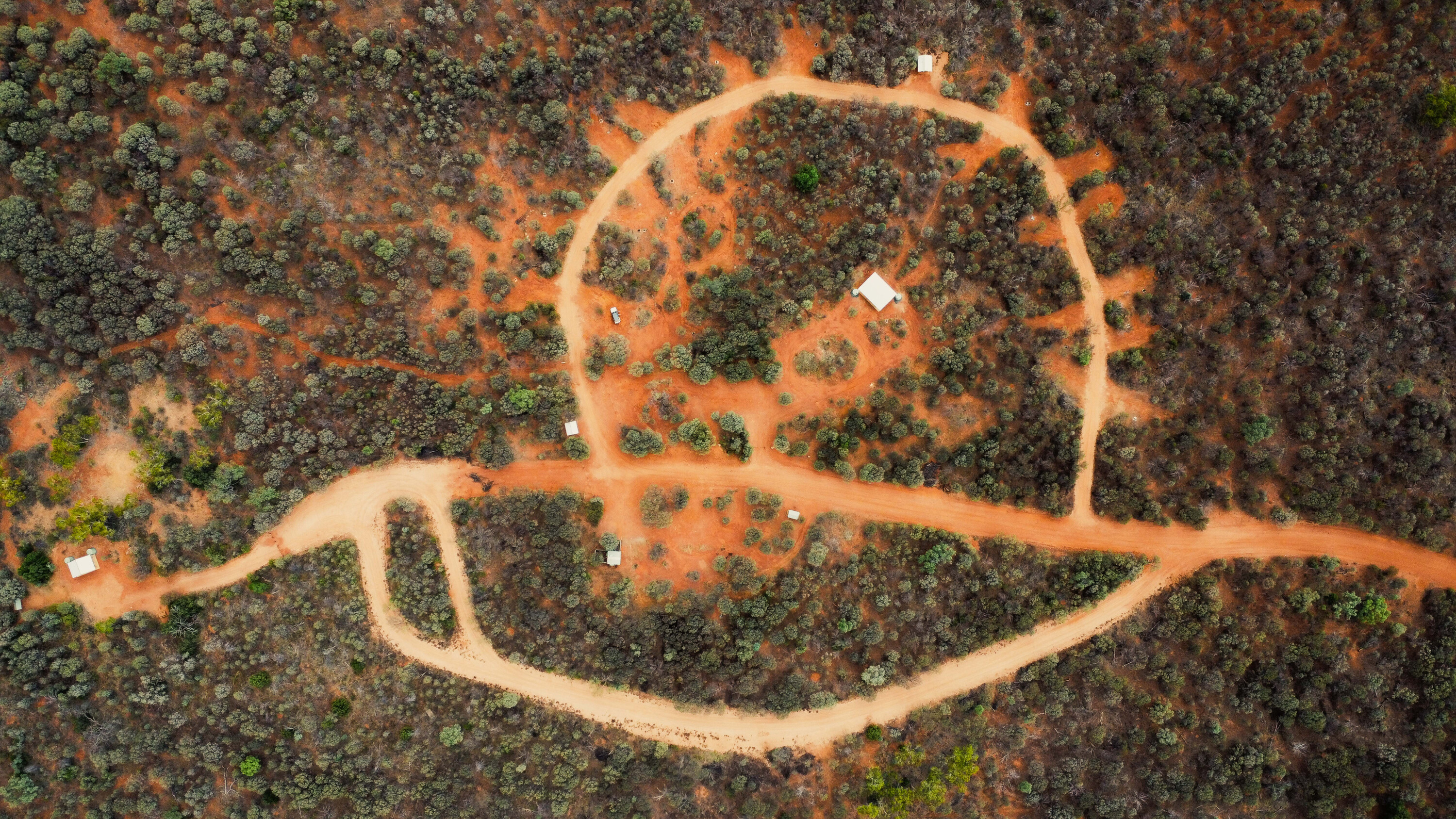
Dry Tank has had a makeover since I was here last and I was pleasantly surprised with the new layout.
There’s parking for day-trippers and those wanting to start off here for the walking trails, private areas for camper trailers and tents hidden in the mulga, plus a large open area for group camping with picnic tables and a barbecue under a new shelter.
Bookings now must be made online through the NSW National Parks and Wildlife Service website before you get to the park, because phone service here is very patchy.
1
Mountain Views
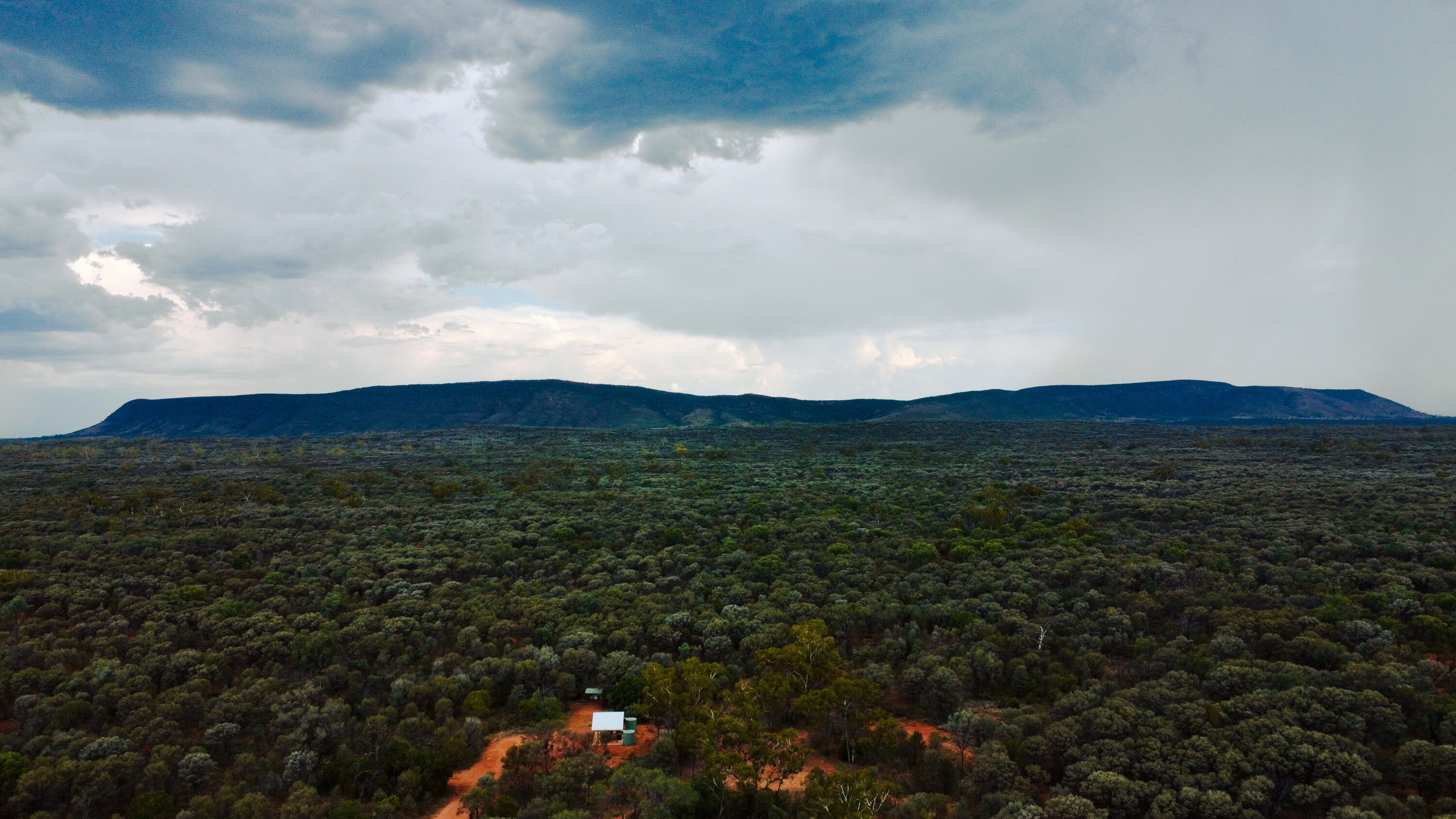
Dry Tank is situated at the start of the 5km trail known as Little Mountain Walking Track, which meanders through thick Mulga and outback grevilleas to a viewing platform that offers uninterrupted views across the plain towards Mount Gundabooka.
The mountain, which rises 500m above sea level, was formed from millions of years of constant weathering from winds and rain. For those keen to do so, you can also walk the trail that leads you to the base of the mountain, but you need to be well prepared and experienced for this hike.
Around the scrub I was lucky enough to spot a few large mounds that are home to the Mulga Ant. These large black ants are omnivores that eat any dead matter, and are mostly nocturnal.
1
Rock Art
On the eastern side of the park, there’s the Yapa (Mulgowan) aboriginal rock art hike into Mulareenya gully where you’ll be able to view an array of artwork on the undercliff, with helpful signage that delves into the origin and meanings of the pieces.
This artwork near Mulareenya Creek is related to the heritage-listed Brewarrina Fish Traps on the Barwon River and the Byrock Rock Holes. This site is now on the register of the National Estate due to its significance as an important historical and cultural site.
Fires are permitted in the park but you need to bring your own timber and watch for restrictions. Gundabooka is a relaxing place to sit by a campfire as the mulga scrub goes quiet at night and has a relaxed feel to it. The stars appear as bright as some city lights and it makes for a great ambience.
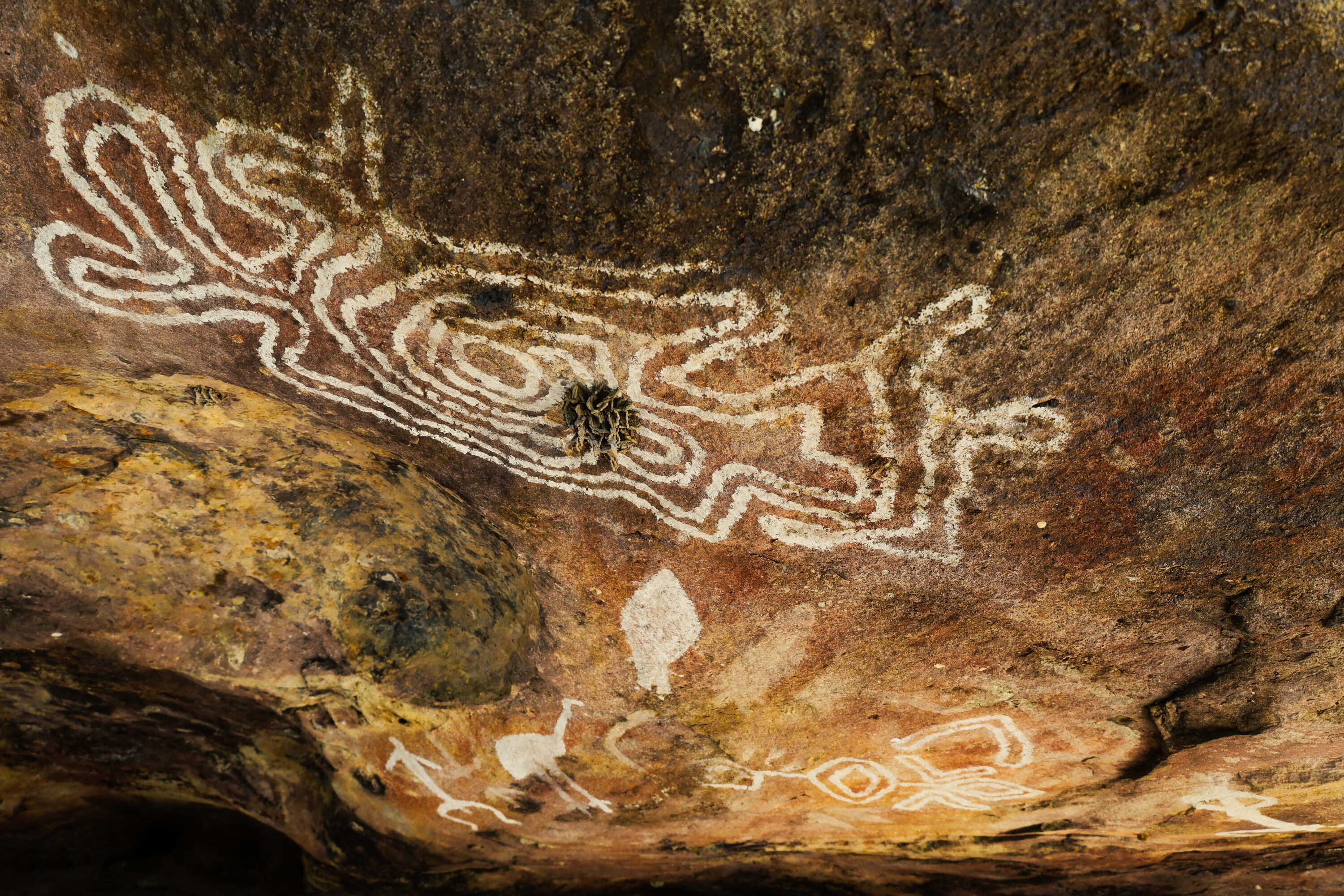
1
My next mission was to head up the road to the Bennetts Gorge area.
After a 10km drive heading west from camp I was soon turning left into Corella Tank Road. With a further 2km drive in towards the looming base of Mount Gundabooka, the views towards the plateau are nothing short of spectacular.
NPWS class Bennetts Gorge as a picnic area, and in addition to the amazing views there is plenty of shade and toilets here, as well as intermittent phone reception.
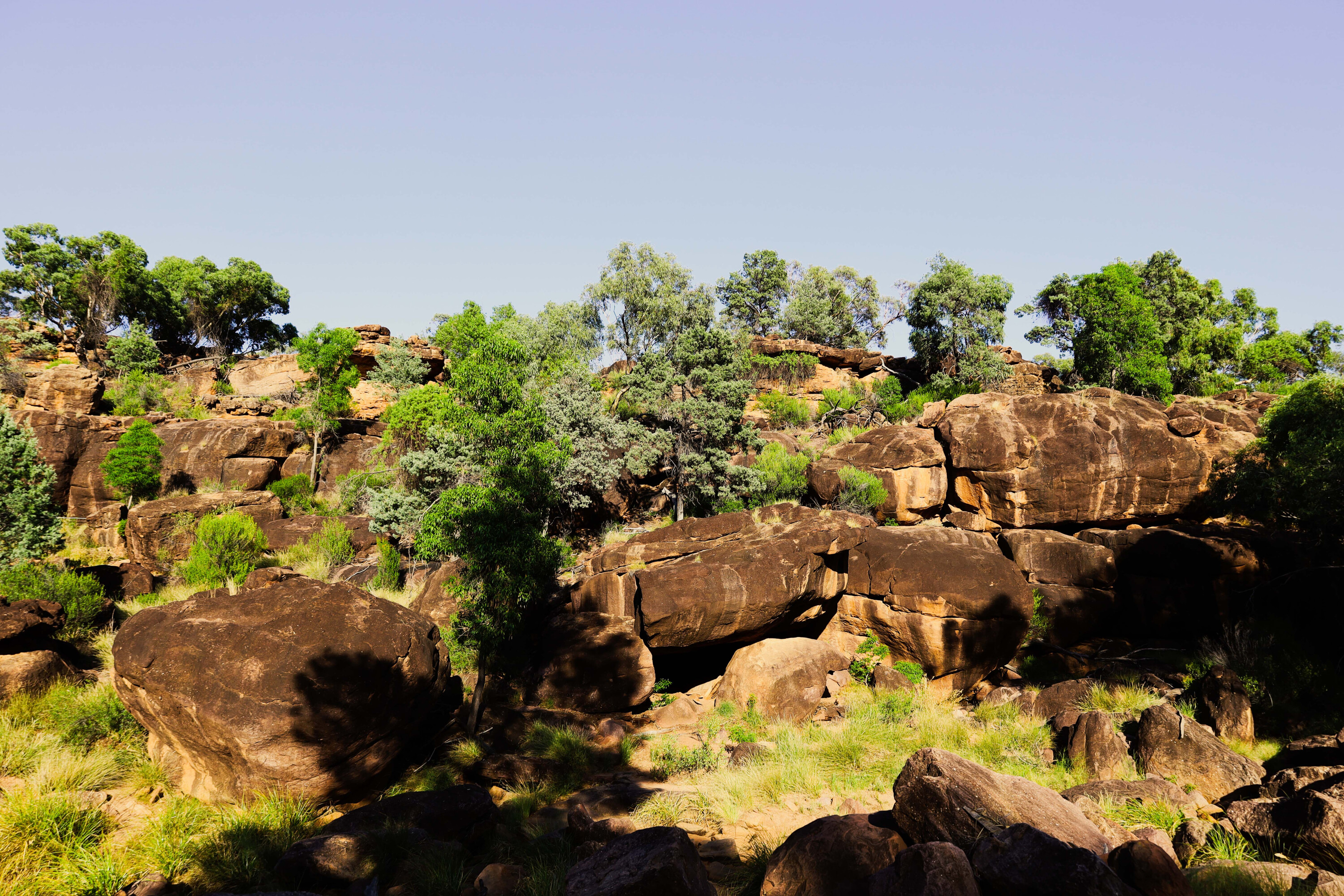
1
From the Bennetts Gorge carpark you can head off on the Valley of the Eagles walk, which is an easy 1km stroll to the base of the mountain viewing area where you can sit and take in the Mount Gundabooka.
There are detailed information boards that list the history of the area, point out the location of the gorges and highlights that can be seen on the mountain, and explain how the resident eagles use warm air currents to glide around while they search for prey.
The walk takes around 30 minutes, but I spent a good two hours here just admiring the views of the surrounding landscape.
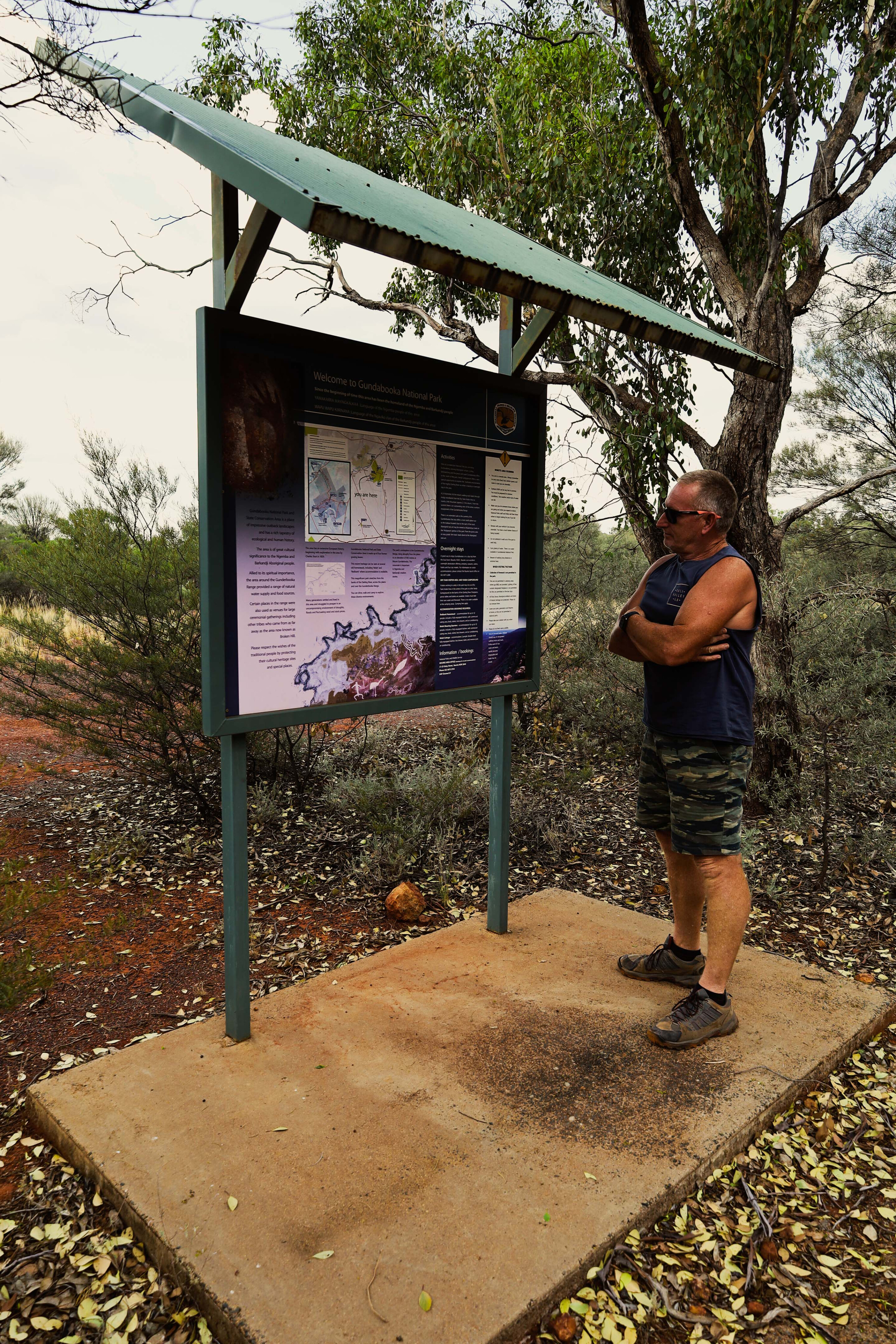
1
Three parts
The park was broken up into three separate outback stations just after the First World War, and this is evident by the number of fence lines you’ll spot and grid lines you’ll cross.
Up along the Yanda Track Road, there’s an out-station that’s pretty much as it was left 50 years ago, with the home, wrecks around the scrub and the shed up the back with a few relics still inside.
Towards the western end of the park the Louth Road cuts straight through, separating Yanda Campground from the main Gundabooka area. This area is different to the main camp, and here camping is permitted close to the Darling River. There’s plenty of room for trailers, tents and off-road vans, and there are also toilets and shelters.
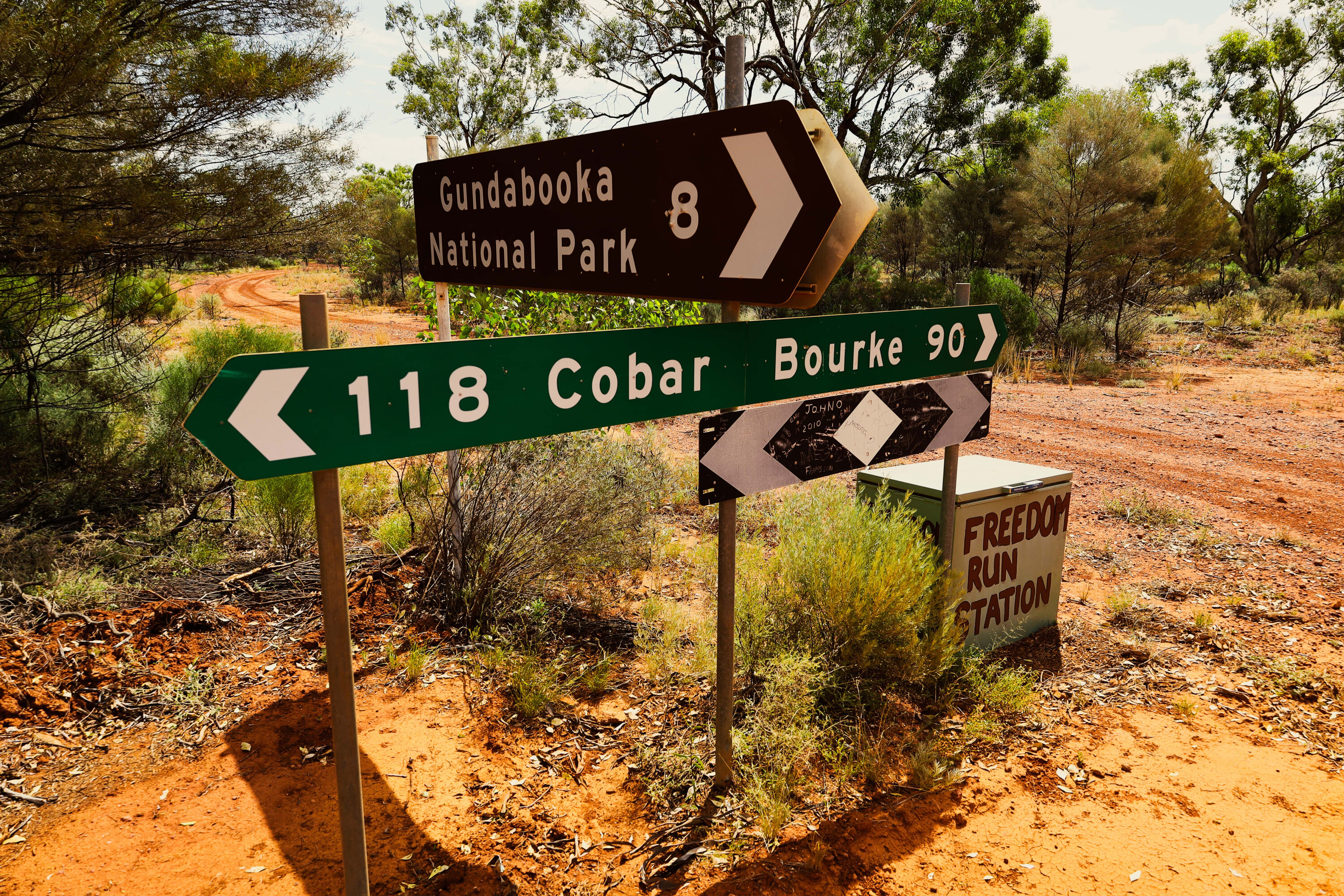
1
Take a short stroll down to the water’s edge and you’ll be greeted by stunning views of old river gums looking over the slow moving Darling River, and good spots to fish or throw a yabbie trap in.
For those not wanting to camp within the park, there are homestay options nearby where you can stay in outback luxury, and still be able to explore the park. The park is certainly isolated, so you’ll need to be totally self-sufficient in terms of food, water and fuel. And bear in mind that winter temperatures can drop below freezing, and in summer it can be stifling hot.
NPWS has put a lot of resources into preserving Gundabooka in terms of pest control and weed management so we can all continue to explore and enjoy this precious park. For those looking for a fabulous outback experience, Gundabooka proves you don’t need to head much past the back o’ Bourke to find one.
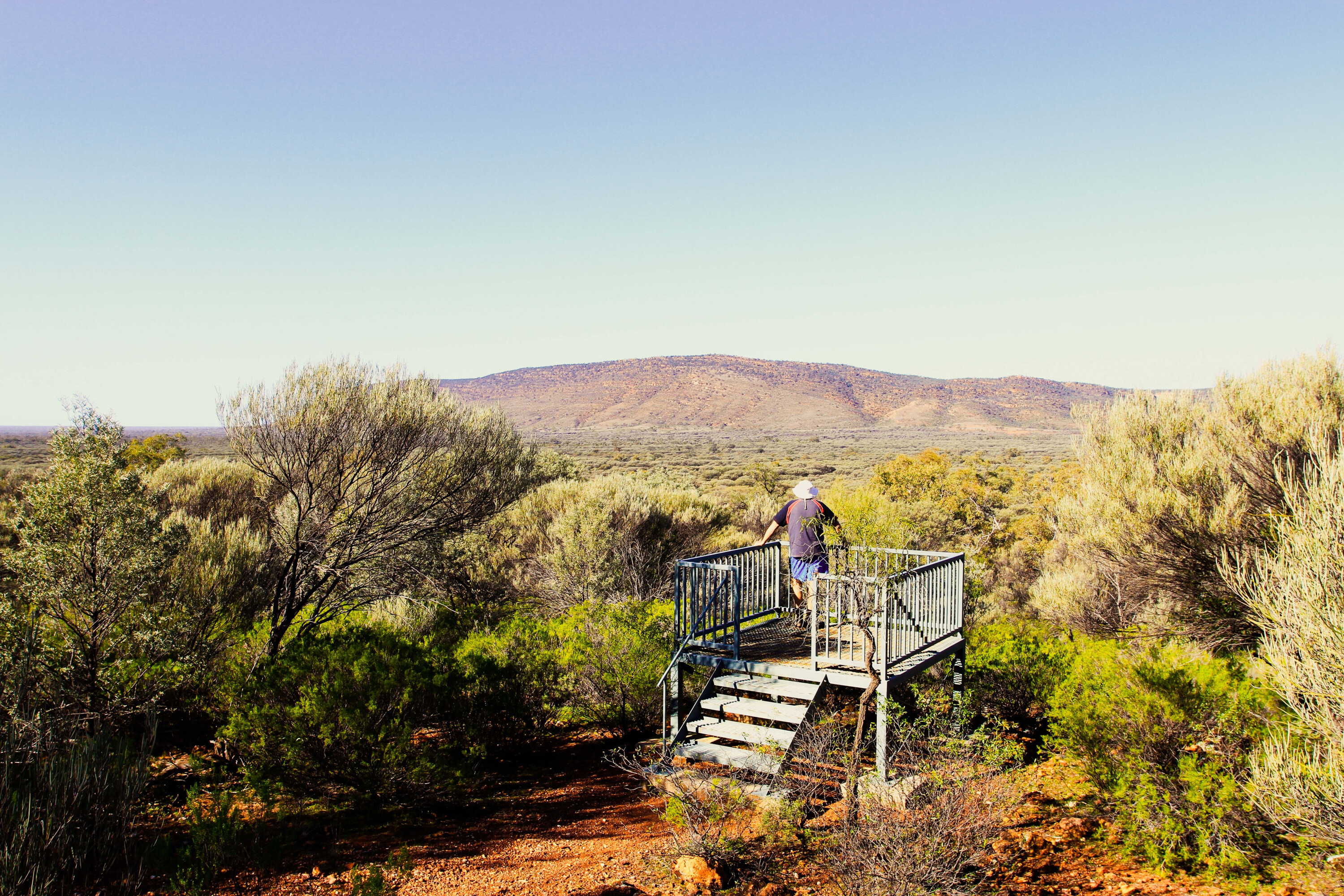
1
TOP 5
- Wander up the 5km Little Mountain Walking Track to the viewing platform that offers uninterrupted views across the plain towards Mount Gundabooka.
- Take the Yapa (Mulgowan) aboriginal rock art hike into Mulareenya gully where you’ll be able to view an array of artwork on the undercliff.
- Relax by the campfire as the mulga scrub goes quiet, enjoy the serenity and take in the spectacular night sky.
- Check out Bennetts Gorge picnic area and then continue on for a couple of kilometres to the looming base of Mount Gundabooka.
- Stroll down to the water’s edge and throw in a fishing line or a yabbie trap beneath the old river gums that line the slow moving Darling River.
Travel planner
- Wander up the 5km Little Mountain Walking Track to the viewing platform that offers uninterrupted views across the plain towards Mount Gundabooka.
- Take the Yapa (Mulgowan) aboriginal rock art hike into Mulareenya gully where you’ll be able to view an array of artwork on the undercliff.
- Relax by the campfire as the mulga scrub goes quiet, enjoy the serenity and take in the spectacular night sky.
- Check out Bennetts Gorge picnic area and then continue on for a couple of kilometres to the looming base of Mount Gundabooka.
- Stroll down to the water’s edge and throw in a fishing line or a yabbie trap beneath the old river gums that line the slow moving Darling River.
Where
Gundabooka NP is 800km northwest of Sydney and 60km south of Bourke in NSW’s outback region. Once made up of several stations, it’s now a protected National Park with a heritage listing.
What to see and do
Gundabooka NP is a naturalist’s delight with walking trails, birdwatching and isolated camping. Walking trails range from an easy one kilometre stroll through to overnight hikes to Mount Gundabooka. Stunning Aboriginal art can be viewed here with signage explaining the rock art.
More information
Most information can be found online through the NSW NPWS website or by calling into the Back O’ Bourke Information & Exhibition Centre on Kidman Way, Bourke.
Websites
www.nationalparks.nsw.gov.au/visit-a-park/parks/gundabooka-national-park
When it comes to varied terrains, Australia has to be darn close to first place the world over.
There are not too many places out there where you can experience 50°C days in the desert, freezing alpine blizzards, and pristine sub-tropical sand islands all within a few days of driving.
Each terrain not only requires an entirely different skill set and mentality to tackle, they also require vastly different vehicle preparation to get the most out of them. A temperature range of nearly 60°C is no laughing matter.
Whether it’s a quick reminder for the southern states, or a 101 intro to snow wheeling for our northern brothers and sisters, we’re looking at a quick hit list of everything you need to not only survive the snow this winter, but thrive.
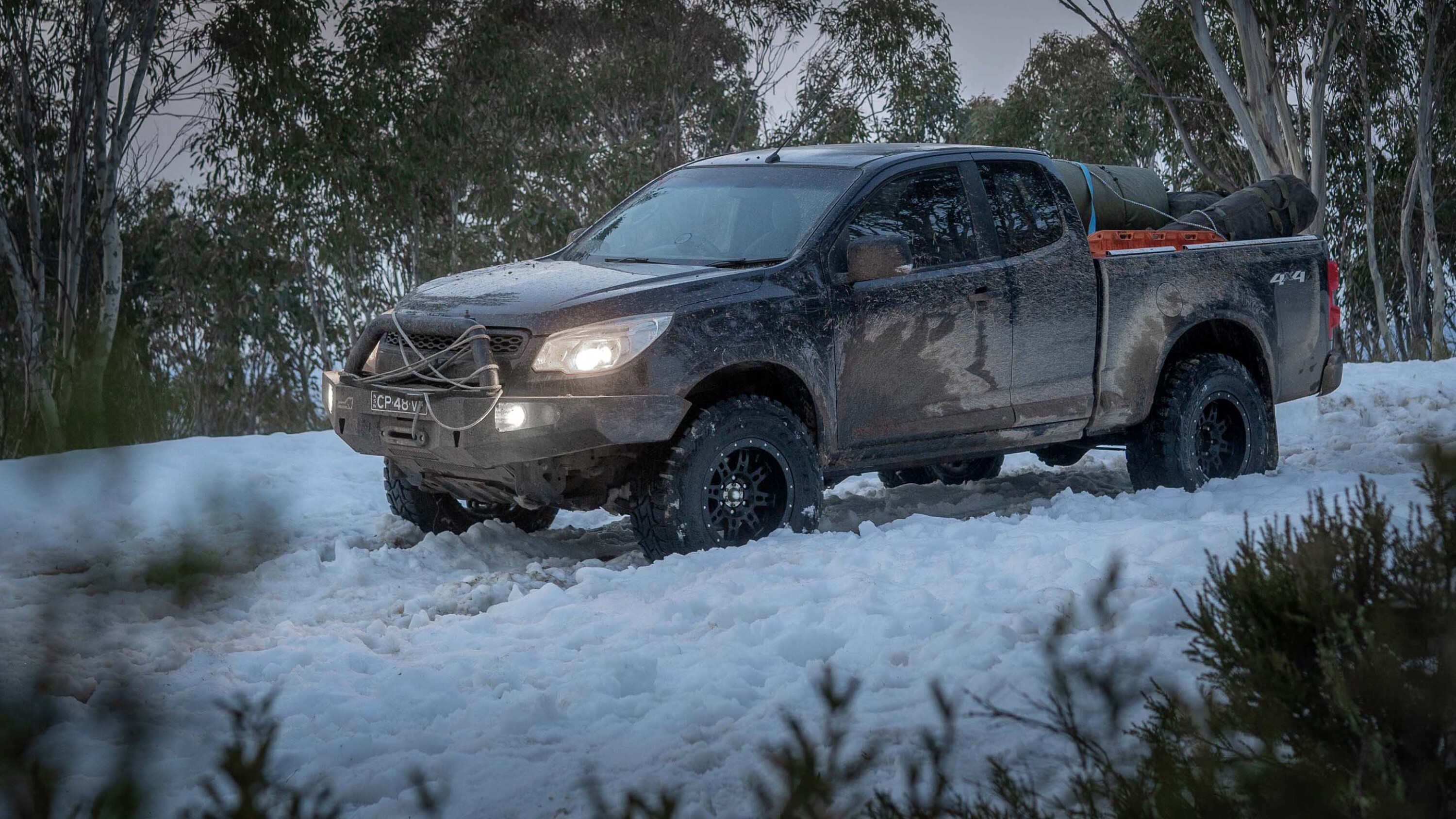
1
Get the rig ready
Most of us tend to think of mechanical contraptions as generally infallible; they either work or they don’t.
After all, when was the last time you thought about the operating temperature range of your toaster? But your 4×4 is a little different, especially as it ages.
The difference between -5°C and 25°C will have a drastic effect on the viscosity or thickness of your engine’s oil; the colder it is, the thicker the oil, and as a result the engine becomes harder to turn over requiring significantly more oomph from the battery to get it fired up.
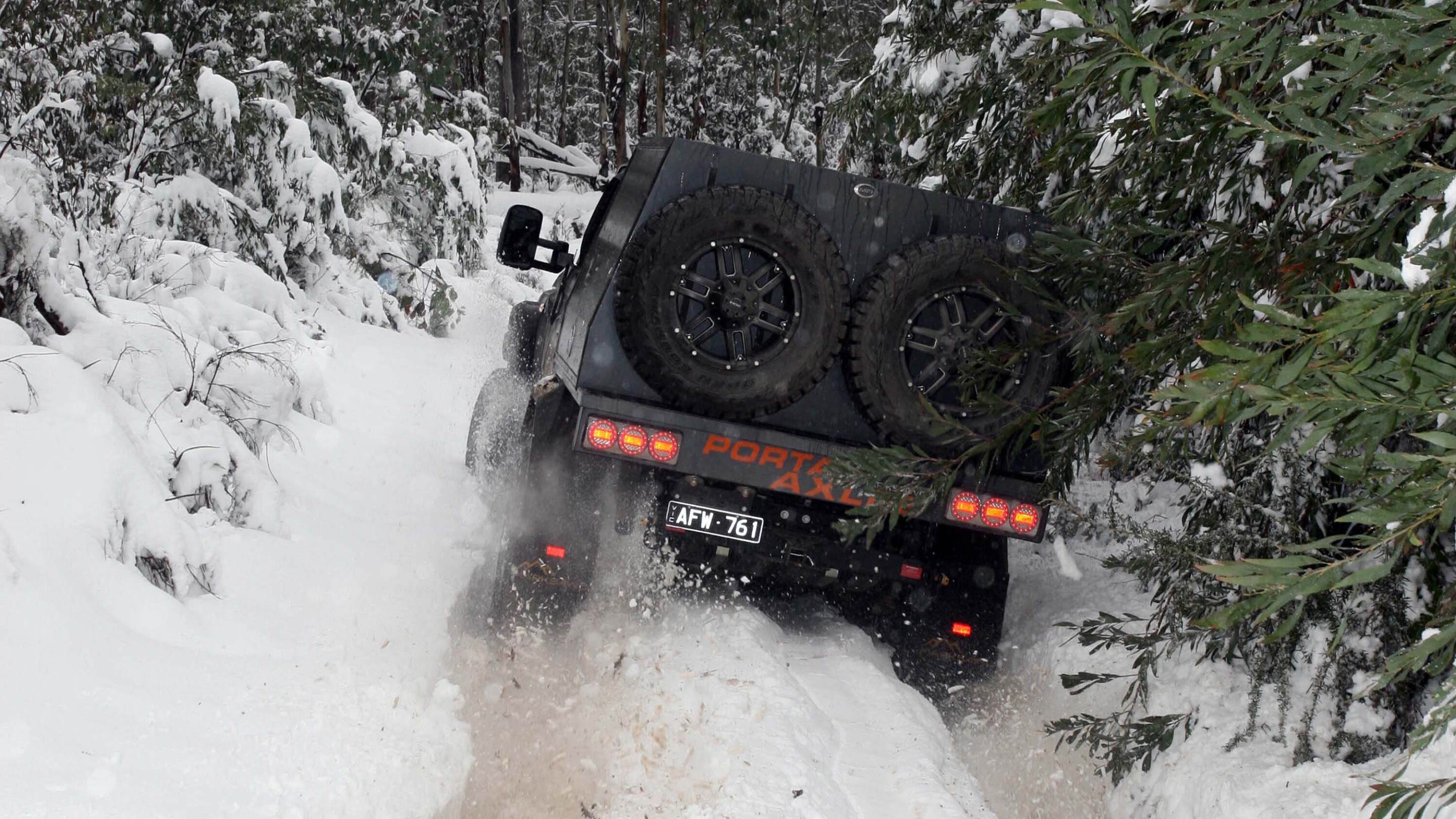
1
Ironically, the cold weather also slows the chemical reaction in your battery giving you less oomph as well.
If your battery is on its last legs, that first alpine night might just tip you over the edge where it can’t overcome the cold. Before heading to the snow, replace your old starter battery and ensure your engine’s oil has the correct winter weight. The low temperatures will also stiffen up any plastic or rubber components so run your eyes over fan belts and radiator hoses too.
You’ll need to pay special attention to the fuel in your tanks too. Diesel contains paraffin wax to help with lubrication but down around 0°C that paraffin starts to solidify, causing the diesel to thicken to the point it’ll clog injectors and fuel filters.
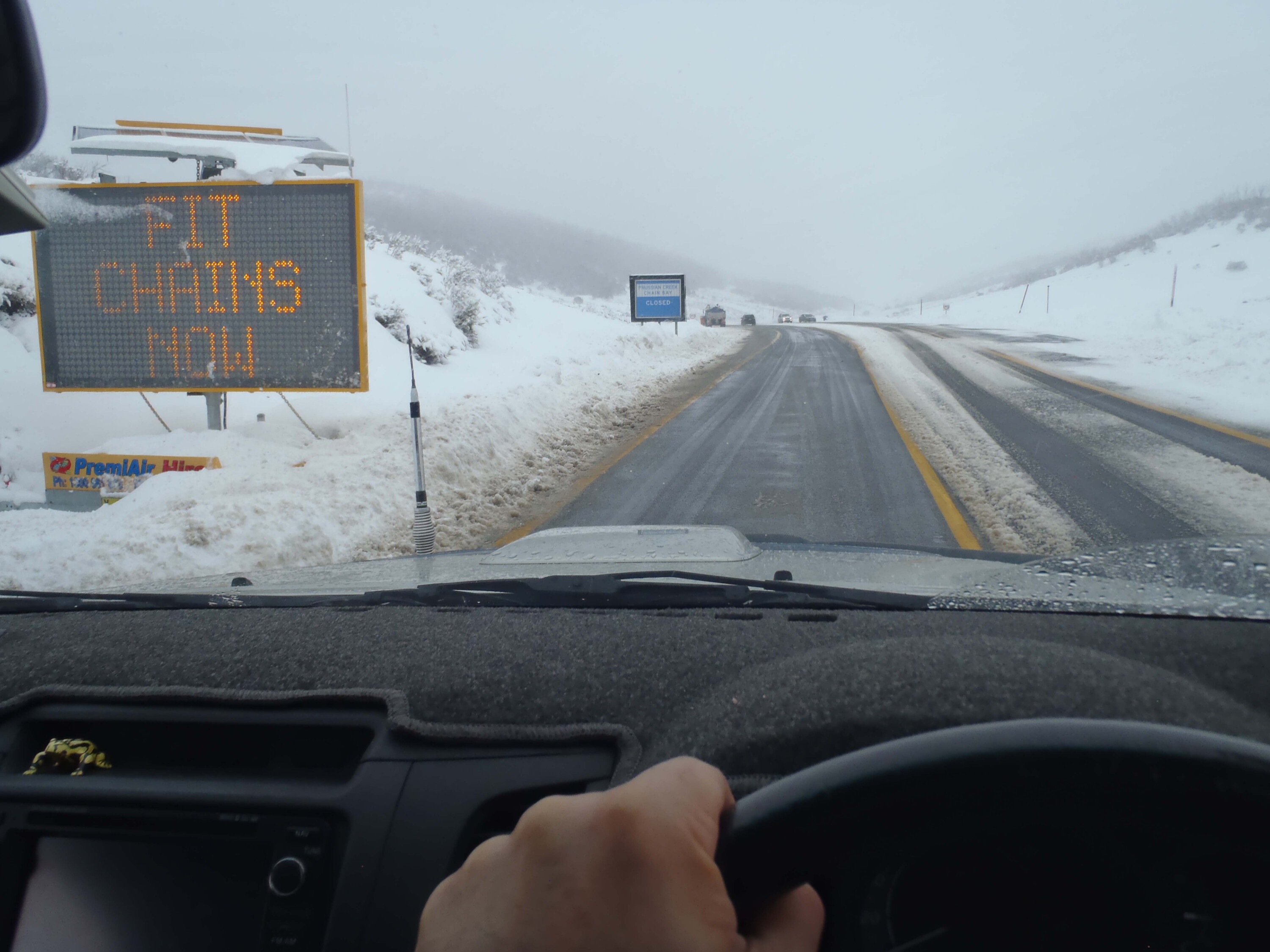
1
If you’re heading anywhere snow is possible, fill up your tanks with alpine diesel.
There’s a variety of additives that can be mixed in depending on the blend that’ll allow your diesel to run as normal below freezing temperatures.
Finally, poke a watchful eye under the radiator cap to have a look at your coolant situation, to make sure the last dodgy mechanic didn’t just fill it with straight water.
Coolant, or anti-freeze as it’s otherwise known, has additives to not only raise the boiling point above 100°C, but lower the freeze point below 0°C. It doesn’t take an active imagination to see the effects of a frozen radiator on reliability.
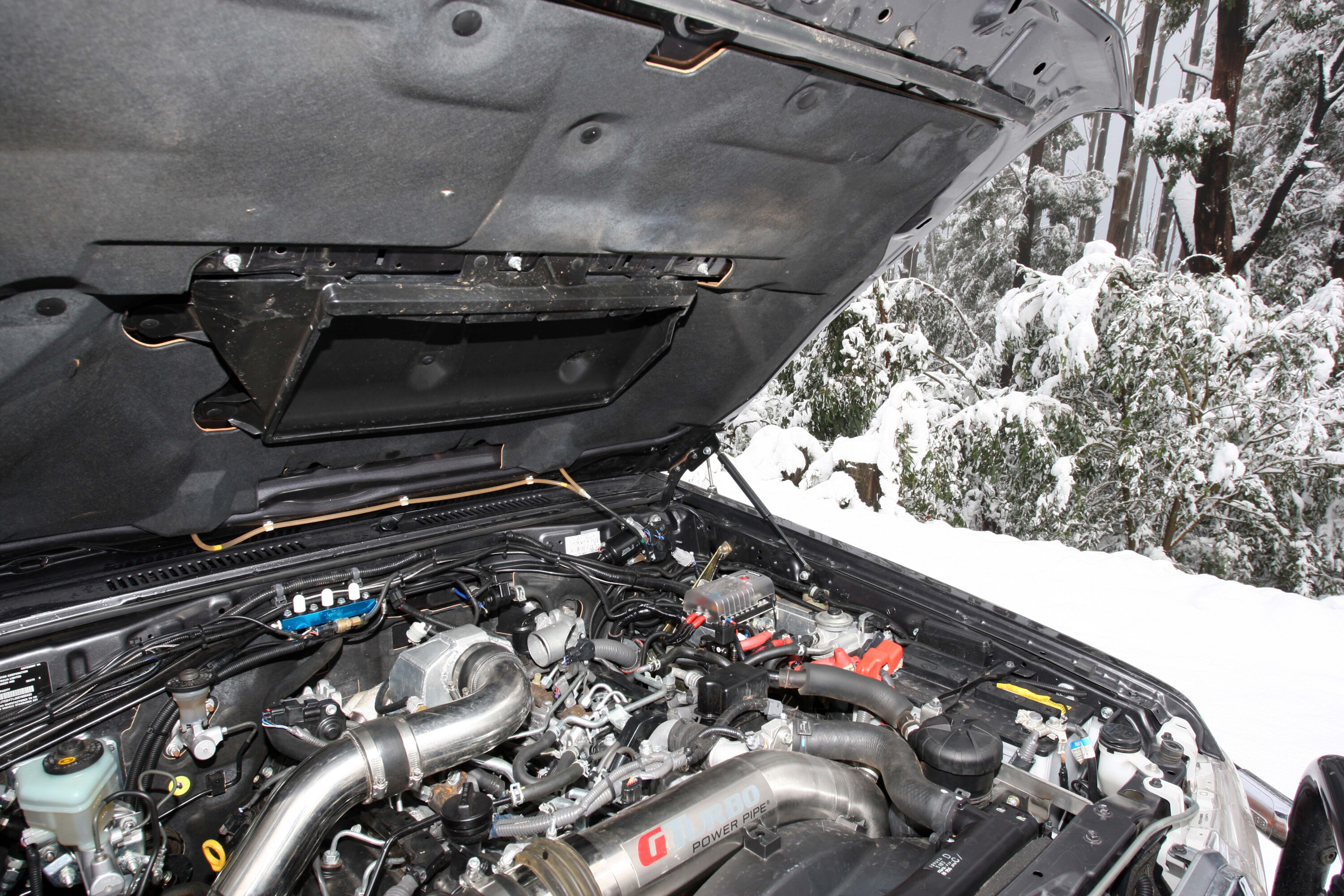
1
The gear to bring
When it comes time to decide the right tyres for your snow-bound adventure machine there are endless arguments back and forth between mud terrains and all terrains.
It’s generally thought that an AT will perform better than an MT on hard-packed snow due to the higher number of biting edges, while the MT’s large voids allow them to dig deep into soft powder.
Either way, an M+S symbol will mean your tyre’s rubber compound has been formulated to stay pliable in low temperatures.
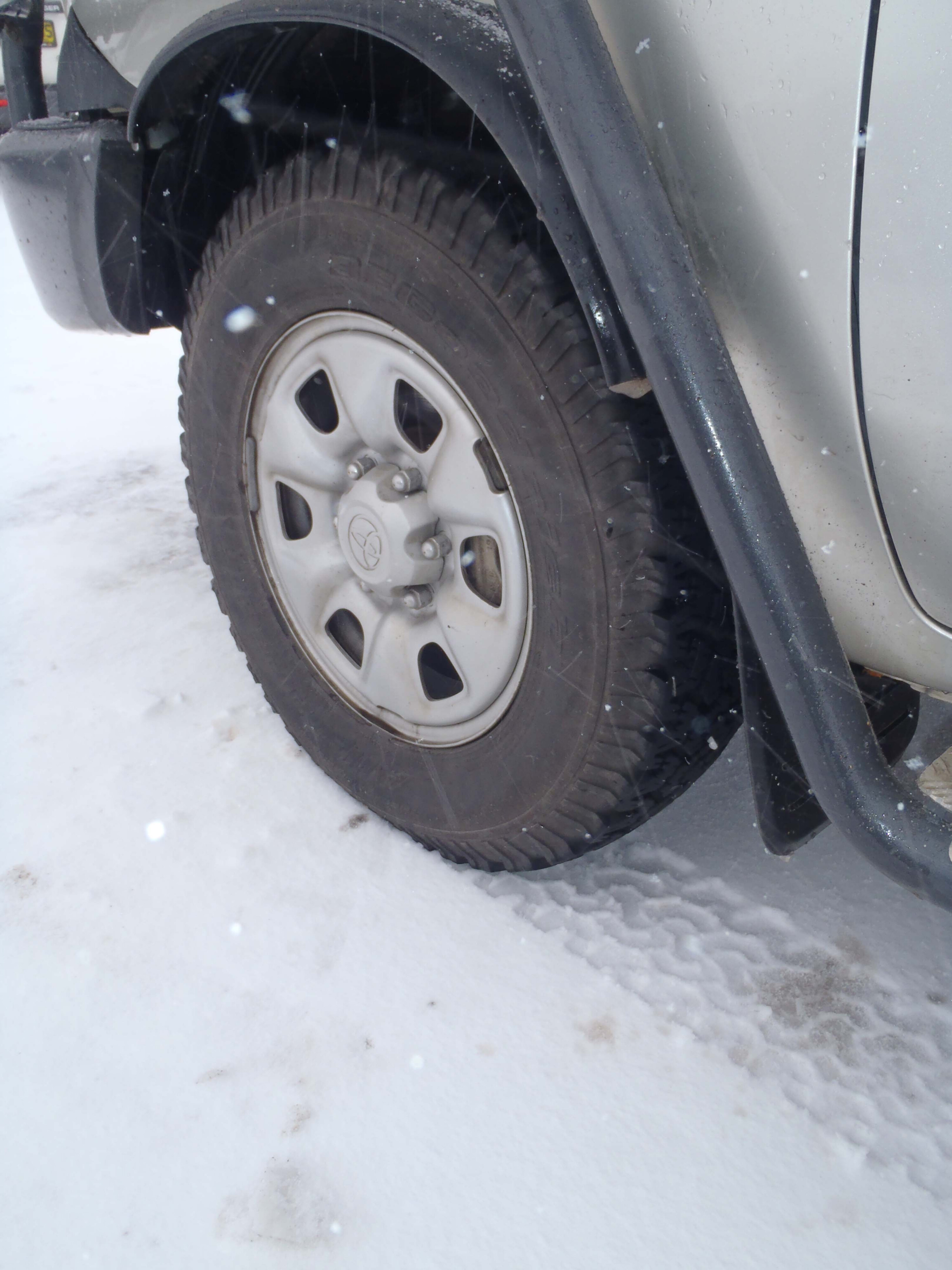
1
If you find the limits of traction, a set of recovery boards can be a handy ‘get out of jail free card’
Like any other terrain, dropping air pressures will give your tyres significantly more traction; you’ll need to go lower in soft pack vs hard pack, so don’t be afraid to experiment. If you find the limits of traction, a set of recovery boards can be a handy ‘get out of jail free card’ and can double as a shovel in a bind.
Like any backcountry adventure, you’ll need to have some means of self-extrication, so make sure your rig has a recovery kit and either a winch or a second 4×4 in the convoy.
Don’t forget a UHF and a satellite phone for if things go proper pear shaped.
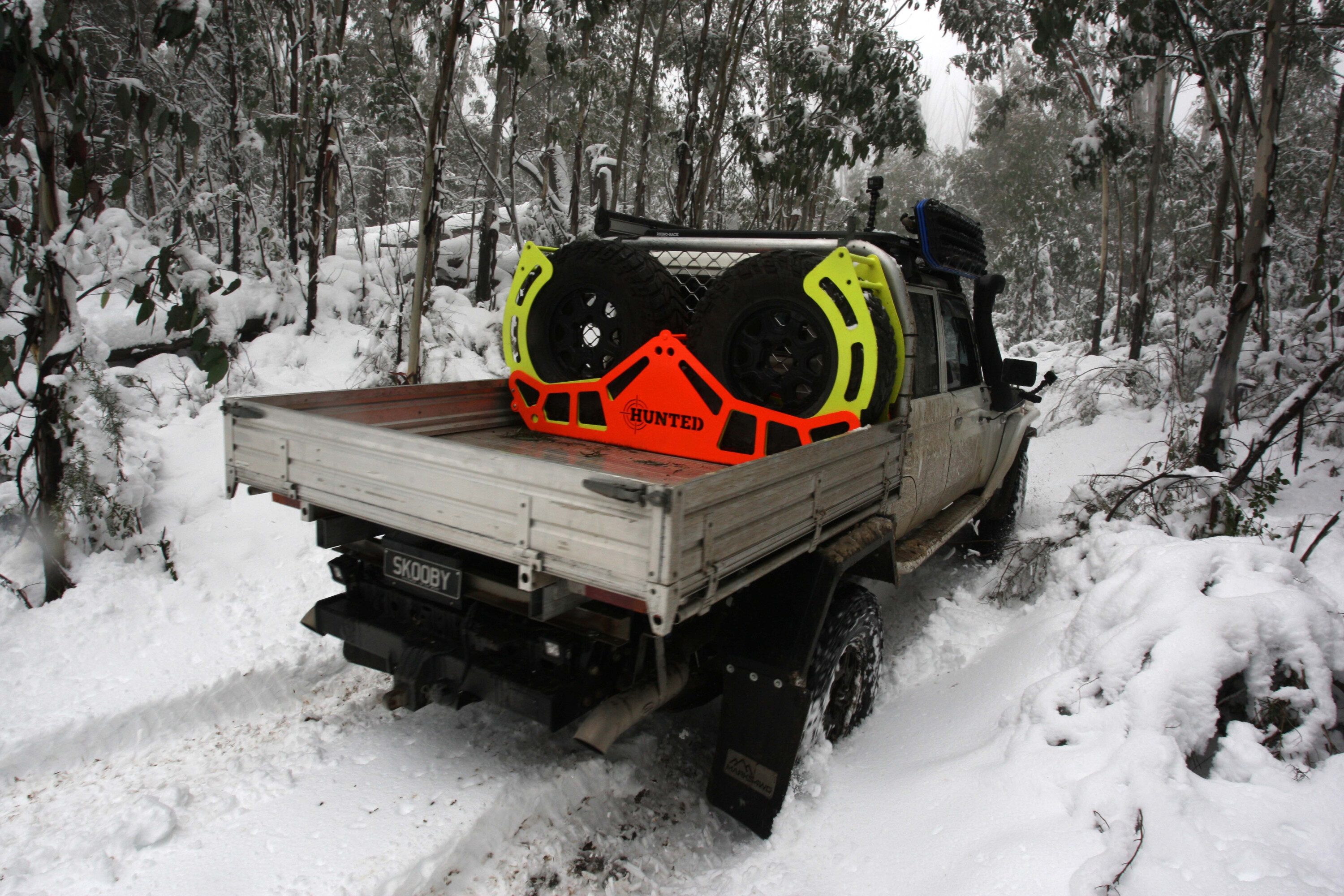
1
Behind the wheel
Snow driving is one of the best experiences you’ll ever have behind the wheel, but your rig making it home afterwards is even better.
Whether you’re on the soft stuff itself or still on the winding mountain pass to get there, it’s important to keep all your inputs smooth. That means gentle steering and subtle brake and accelerator inputs to ensure your rig does exactly what you need it to. Don’t white knuckle the steering wheel in terror, but do leave a little extra braking room to account for the low traction.
When you get higher up in the mountains remember that snow won’t sit evenly on the ground.
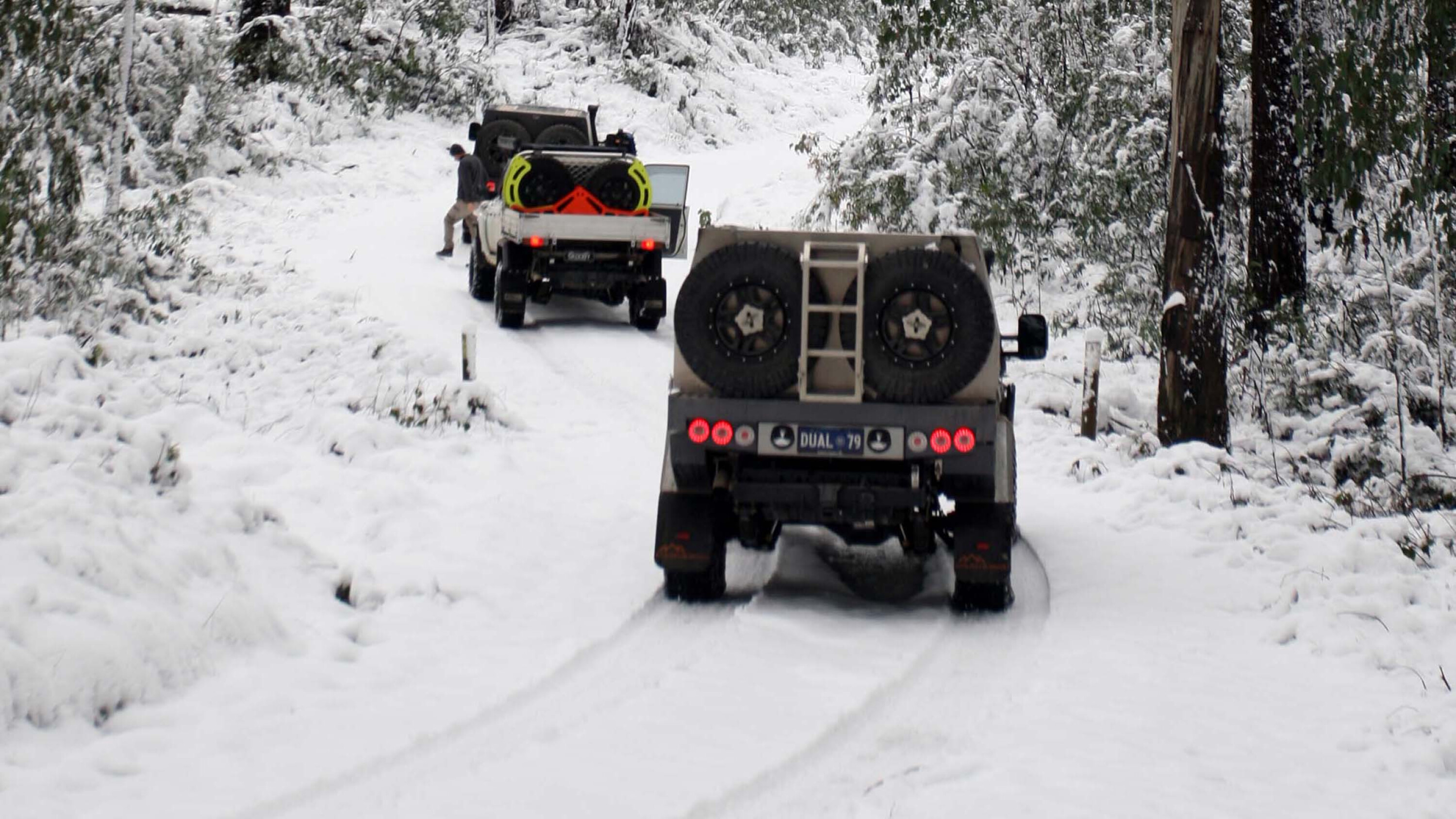
1
If you don’t know 100 percent what you’re driving into, stay on the track.
Ditches, washouts and culverts can all quickly fill with soft-packed snow, bringing them to the same level as the road, until you put a wheel into them and find yourself helplessly bogged. If you don’t know 100 percent what you’re driving into, stay on the track.
If you do find yourself bogged, and you haven’t gone with a mate in a second vehicle, stay with the vehicle. If it’s cold enough to snow, it’s cold enough that you’ll have a bad time trying to hike out of the bush to get help.
Even if you’re low on fuel your engine will idle all night, keeping the heater running. If the UHF or satphone don’t get you out of strife, the friend or family member you told your plans to will be able to help.
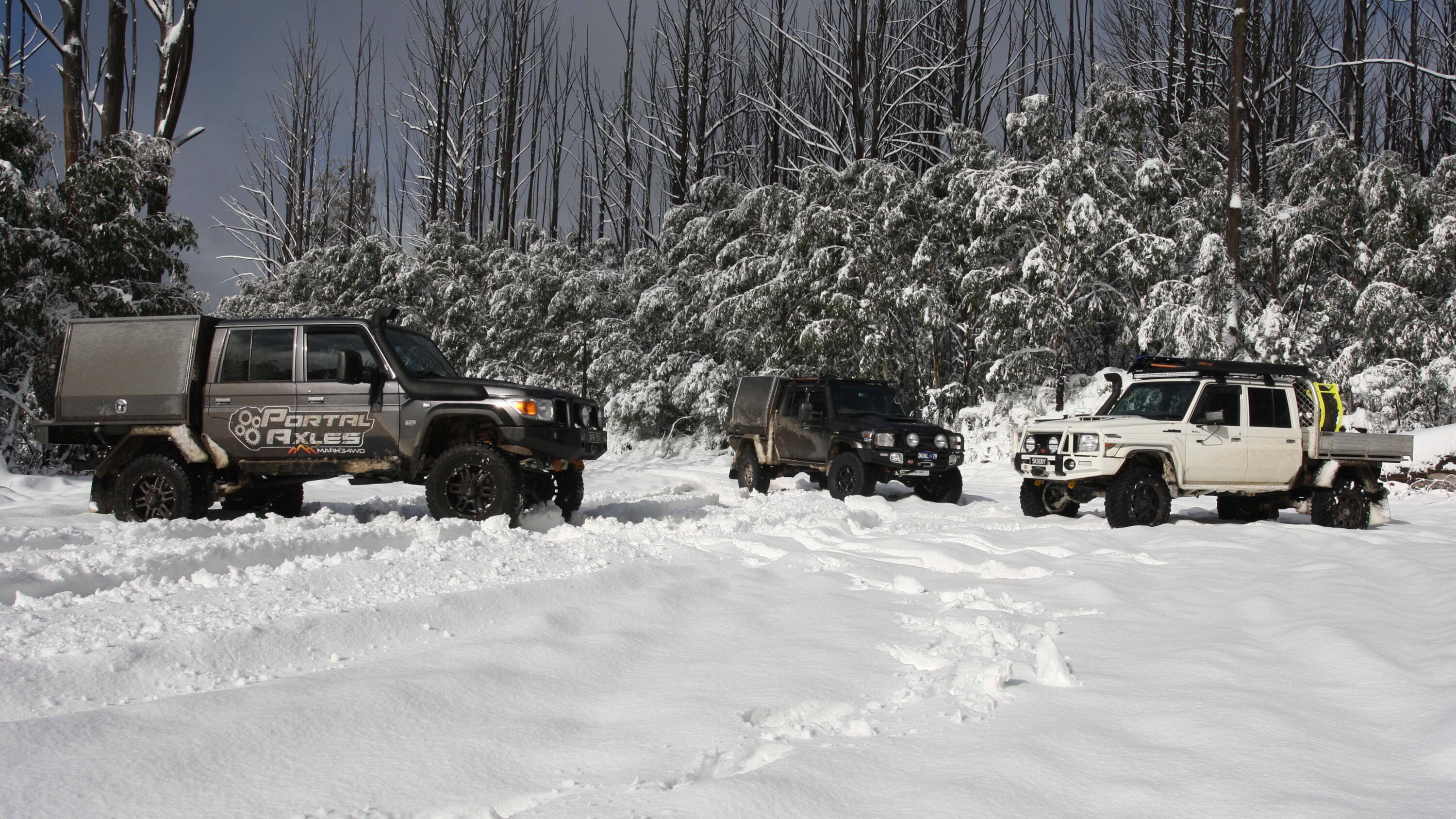
1
In chains
If you’re looking for a little extra something up your sleeve when it comes to snow capability you can’t go past a set of chains.
Available in a variety of different sizes to suit your tyres perfectly, snow chains are mandatory in a bunch of alpine regions thanks to the additional safety on icy roads they provide.
Fitted up to your steer tyres, they’ll see you safely driving through terrain that’d have others spinning on the spot, but you will need to adjust them when you air down and take them back off when you’re out of the danger zones. If you’ve never fitted them up before, have a practice run in the dry when your fingers don’t hurt.
MORE
4x4Australia Explore