Websites
www.discovertasmania.com.au [↗]
www.spiritoftasmania.com.au [↗]

Andy Hunt
Commenting on a memo obtained by Automotive News [↗], Ford said the adjustment is due to “changing market demand.”
This is not a phenomenon exclusive to the Blue Oval, with many other brands in the US market observing that earlier predictions on sales growth had been overestimated.
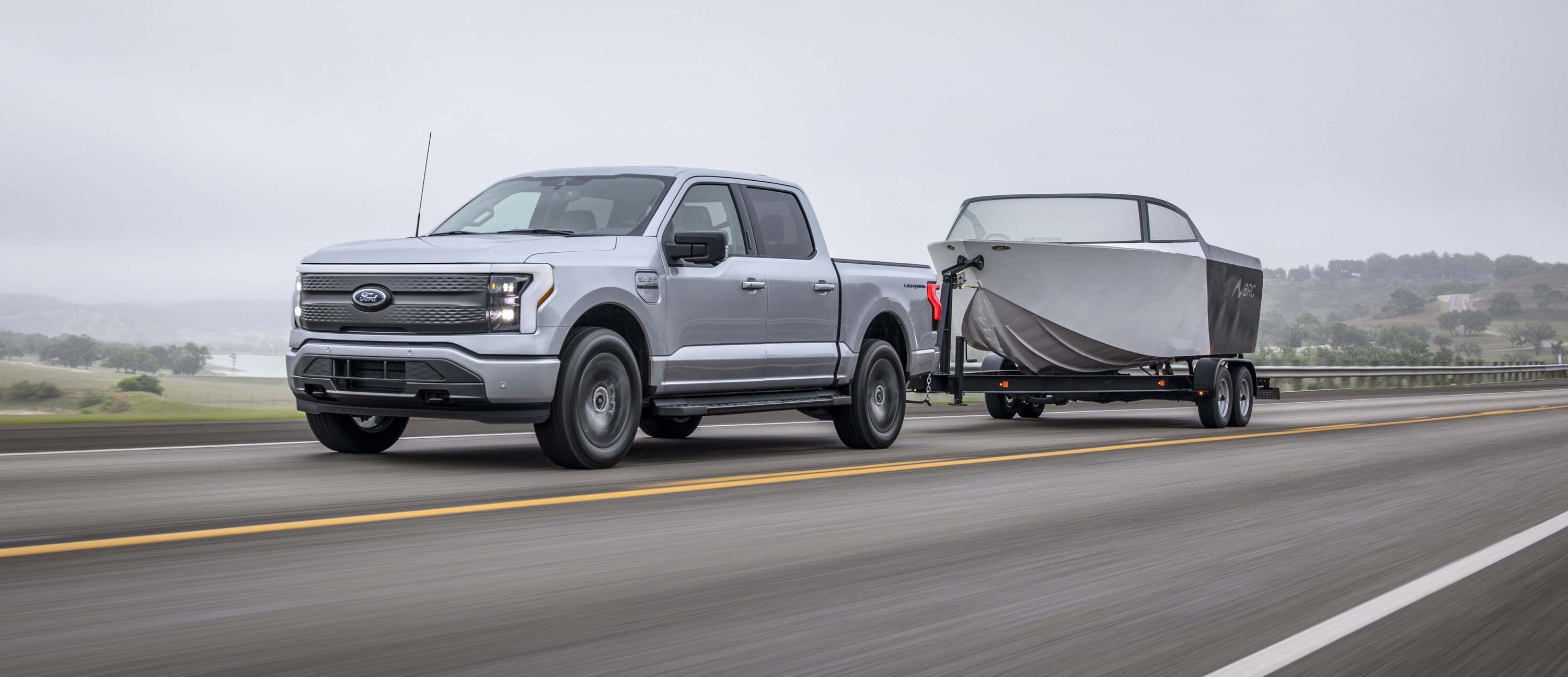
This news follows fluctuating prices for the F-150 Lightning, with prices in March 2023 being as high as US$20,000 over the originally announced figure for the base “Pro” variant, before being later slashed in July 2023 by roughly US$10,000.
Ford was anticipating 5000 sales of their iconic F-150, seeking to compete with the popular RAM 1500, but the impact of the Lightning’s production cut remains unknown at this time.
Ford has confirmed the F-150 Lightning is still a chance for Australia, with the all-electric pick-up set to be explored once the regular F-150 has been launched successfully.
Hope that the Lightning would join the petrol-powered F-150 on Aussie roads has been building since Ford announced its deal with RMA Automotive to convert the full-size US pick-up to right-hand drive.
Ford has also trademarked the Lightning name in Australia, adding further fuel to speculation that the 386-515km all-electric range pick-up would soon hit Aussie showrooms.
But while the first examples of the petrol-powered F-150 will arrive in dealers next month – stay tuned for our Aussie review on October 10 – Ford has reaffirmed the Lightning project is still in its infancy.
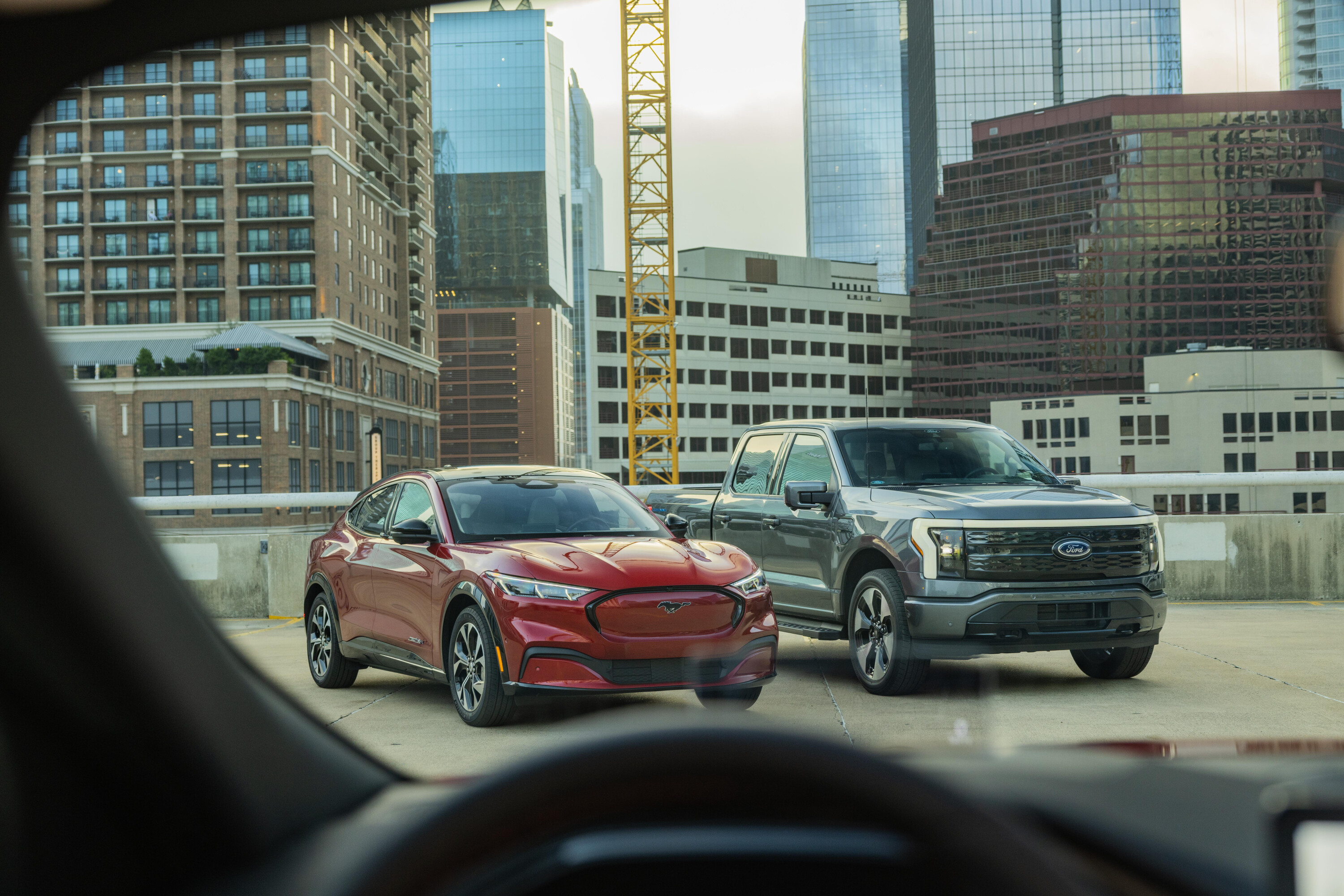
“Are we looking at it? Yes,” confirmed Ford Australia boss Andrew Birkic at the media launch of the petrol F-150. “Is there a confirmed product program? Have I rung up Trevor [the GM of RMA Automotive] and said I need another line? No.
“That will come in the fullness of time. Not whether I say yes or no but in terms of we need to do further analysis and we just need to prove that we can do the conversion [on regular F-150], that we can do it with a lens on quality.
“So let’s just do that first. And then we’ll have a yarn about Lighting.”
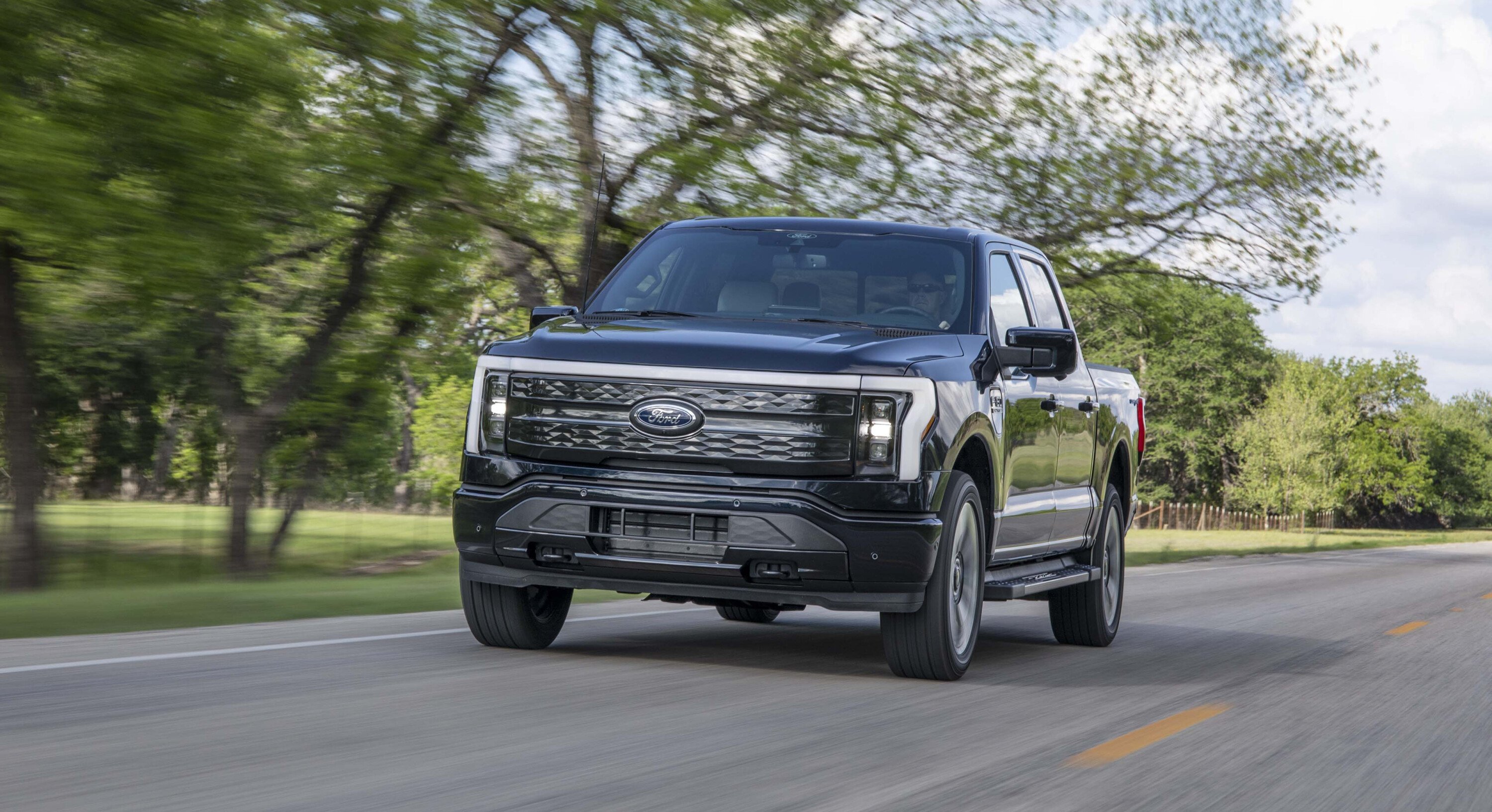
Encouragingly, the general manager of RMA Automotive, Trevor Negus, confirmed there is capacity to add Lightning and other Ford models into production should Birkic give the green light.
“Absolutely. The whole facility has been built with other products in mind, I guess,” said Negus. “So we’ve got the capacity to take larger F Series. We’ve got the capacity to take other vehicles.”
Other models understood to be considered for conversion are the Ford Bronco SUV and the larger F Series Super Duty.
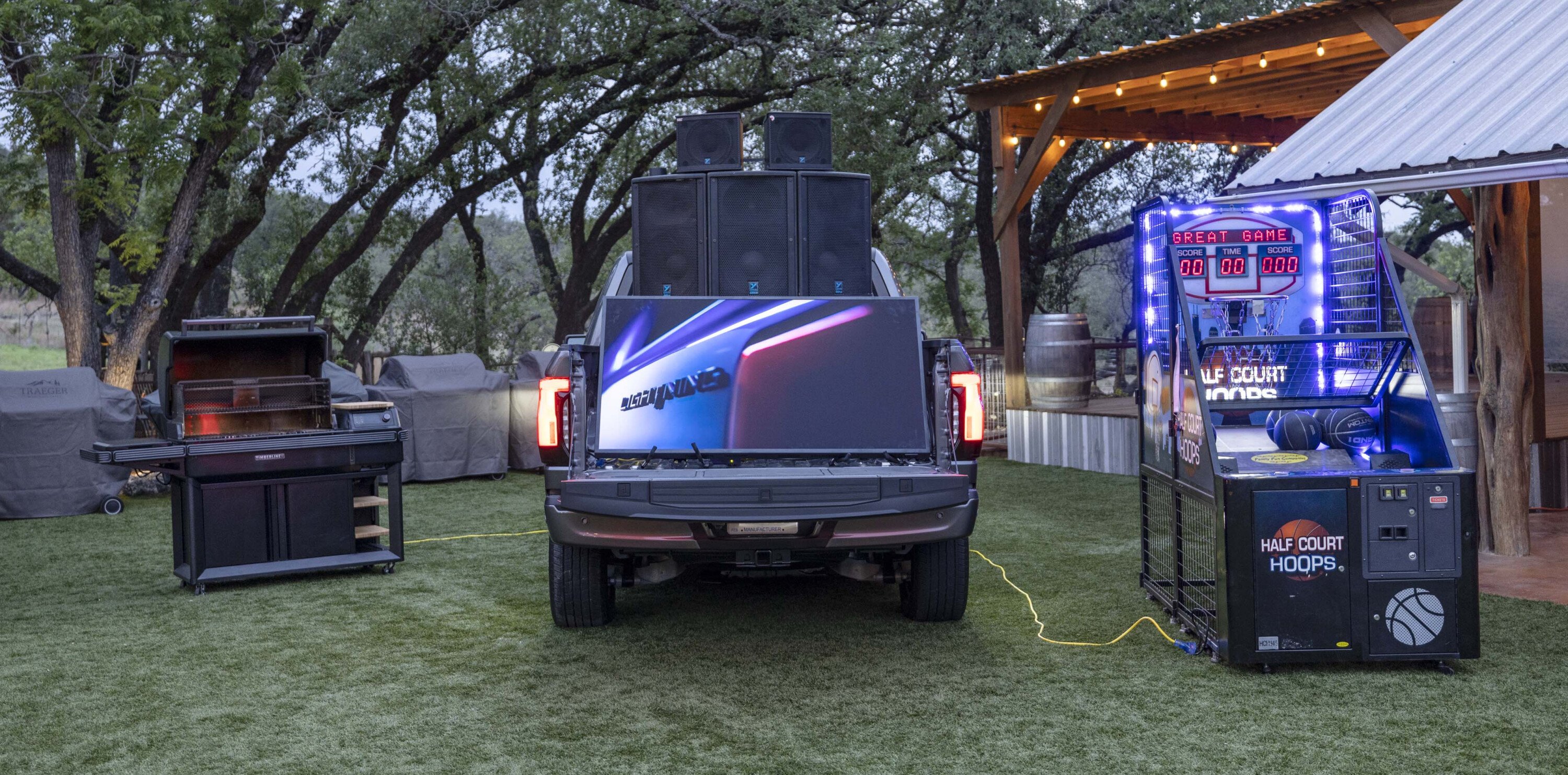
Our original story, below, continues unchanged.
The fully electric version of America’s biggest-selling vehicle is set to go on sale in the US in 2022, where demand has already prompted Ford to increase production targets from 40,000 to 80,000 by 2024.
The potential for the Lighting to be imported here has increased after Ford Australia this week confirmed it is importing the EcoBoost V6 version of the F-150 from mid-2023.
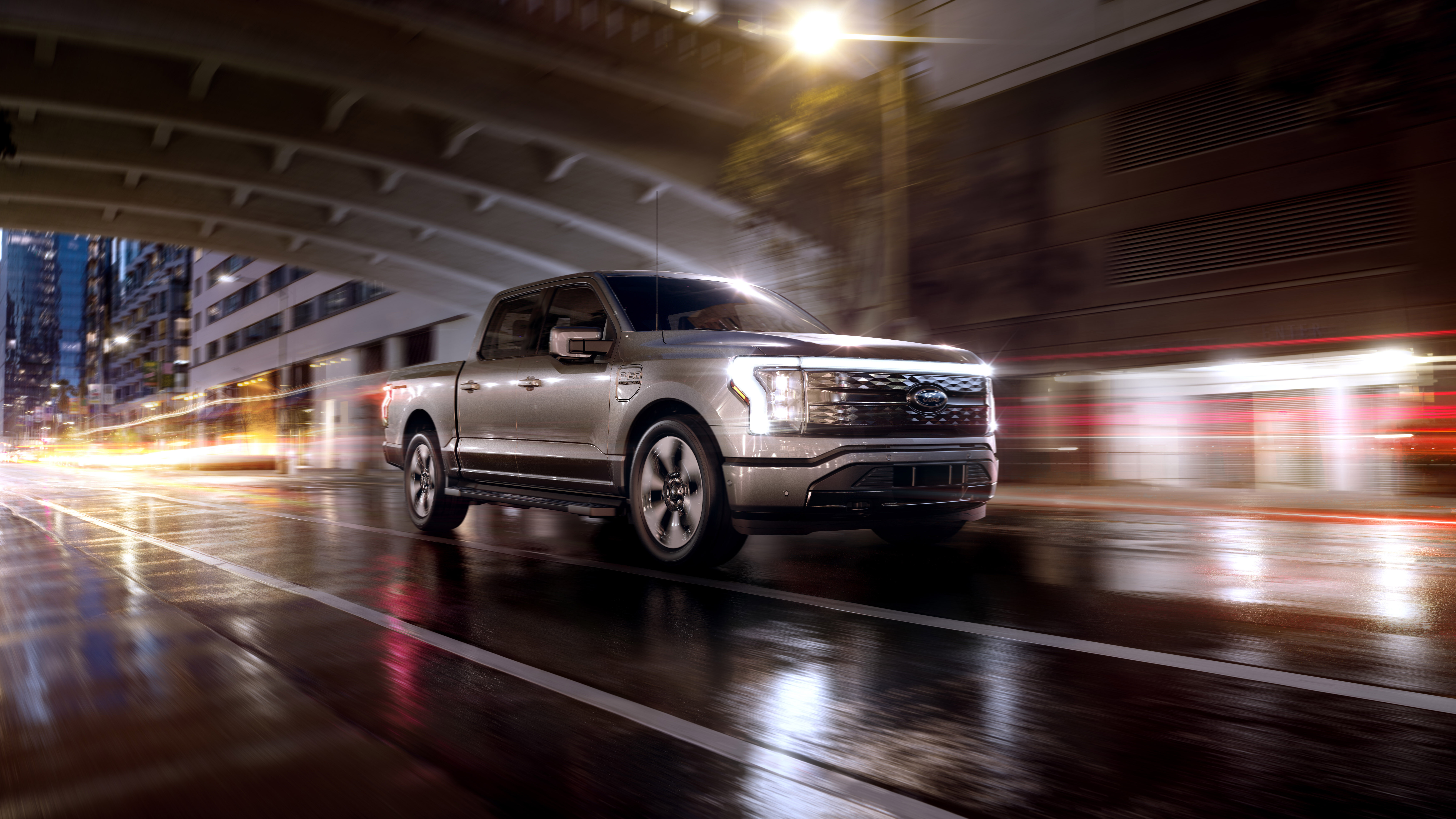
Ford Australia and New Zealand CEO Andrew Birkic said the manufacturer needs to focus first on launching the regular F-150, but admitted the door was open for the Lightning down the track.
“There’s a lot of excitement globally about what the Lightning brings … and there has been a huge demand for [the Lightning] in the US,” said Birkic. “Is there a demand here? Yes, I’m absolutely sure we could sell that product, but we’ve got to make sure it’s commercially viable, and what we’ve also got to do is be in tune with our overseas colleagues, and right now that really is the focus.
“[The regular F-150] is an amazing product and we’re seeing the investment in Tennessee and Kentucky to support that. We’ve always got an open mind [about other variants], but we’re focusing on what we need to do – get the [regular] product here, get it done in a robust way, get the engineering done, get the remanufacturing set up. That’s our key focus and it needs to be. It’s important for us to have a significant and strong remanufacturing process.
“North America is investing billions of dollars in making sure that program is robust and they can get the cars to dealers and into customer hands, so right now our priority is ICE.”
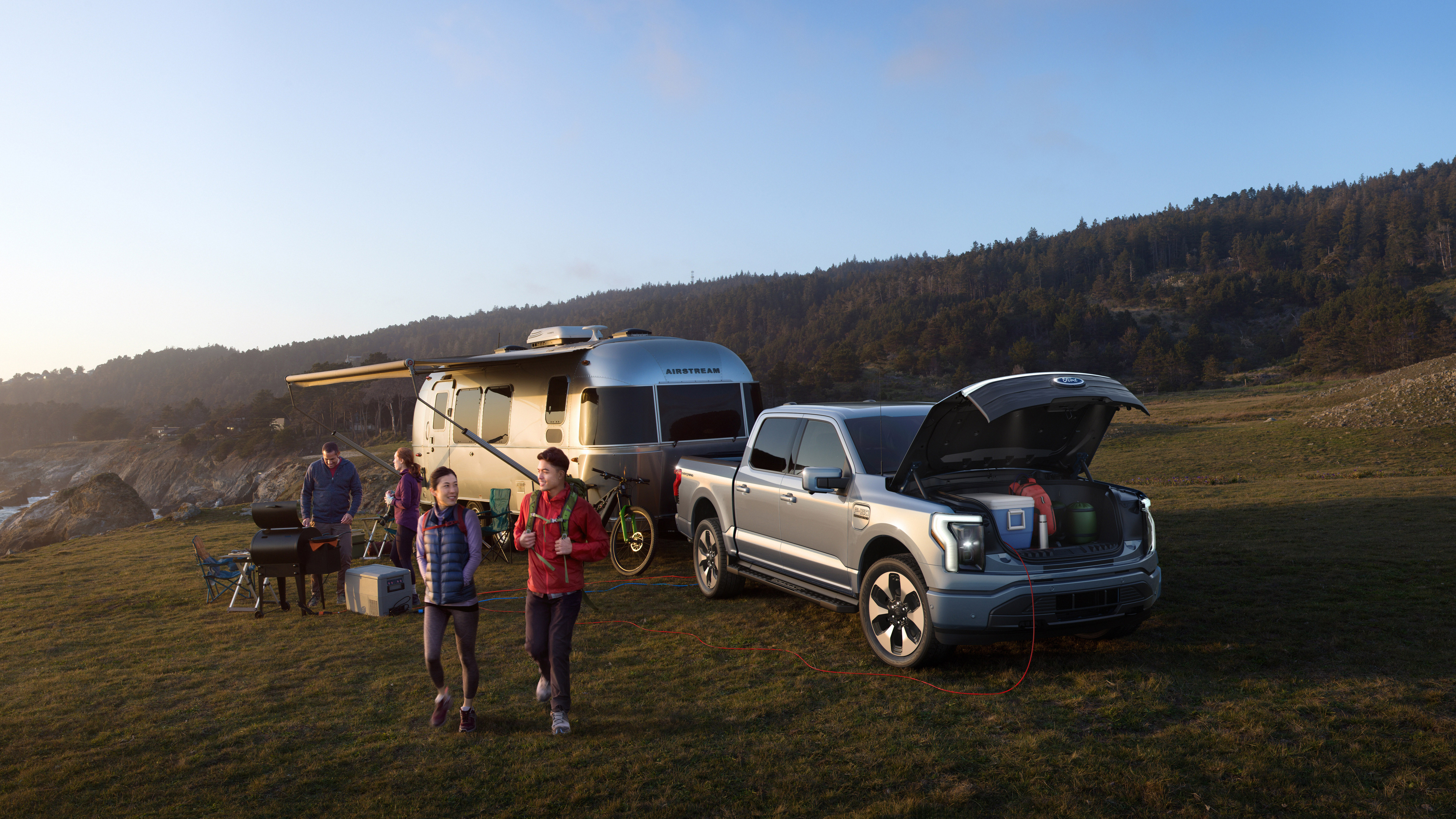
The Blue Oval’s Australian arm has previously committed to introducing five electrified models to local shores by 2025, with the E-Transit and Escape plug-in hybrid (PHEV) already confirmed as two of the five offerings.
While hybrid versions of the Ranger and Everest are expected to be the next models announced, many believe the Mustang Mach-E will complete the set – although today’s announcement has thrown another hat in the ring.

With the spotlight on the ICE-powered F-150, Ford fans might have to wait until after 2025 for the Lightning to turn up in Australia, although by this time it will be a second-generation model as the first-gen electric vehicle is expected to go out of production in 2025.
If your new year’s resolution was to get out and about more in your 4×4, then we have you covered here at 4X4 Australia. And our first issue for the year is packed with off-road goodness to get you started.
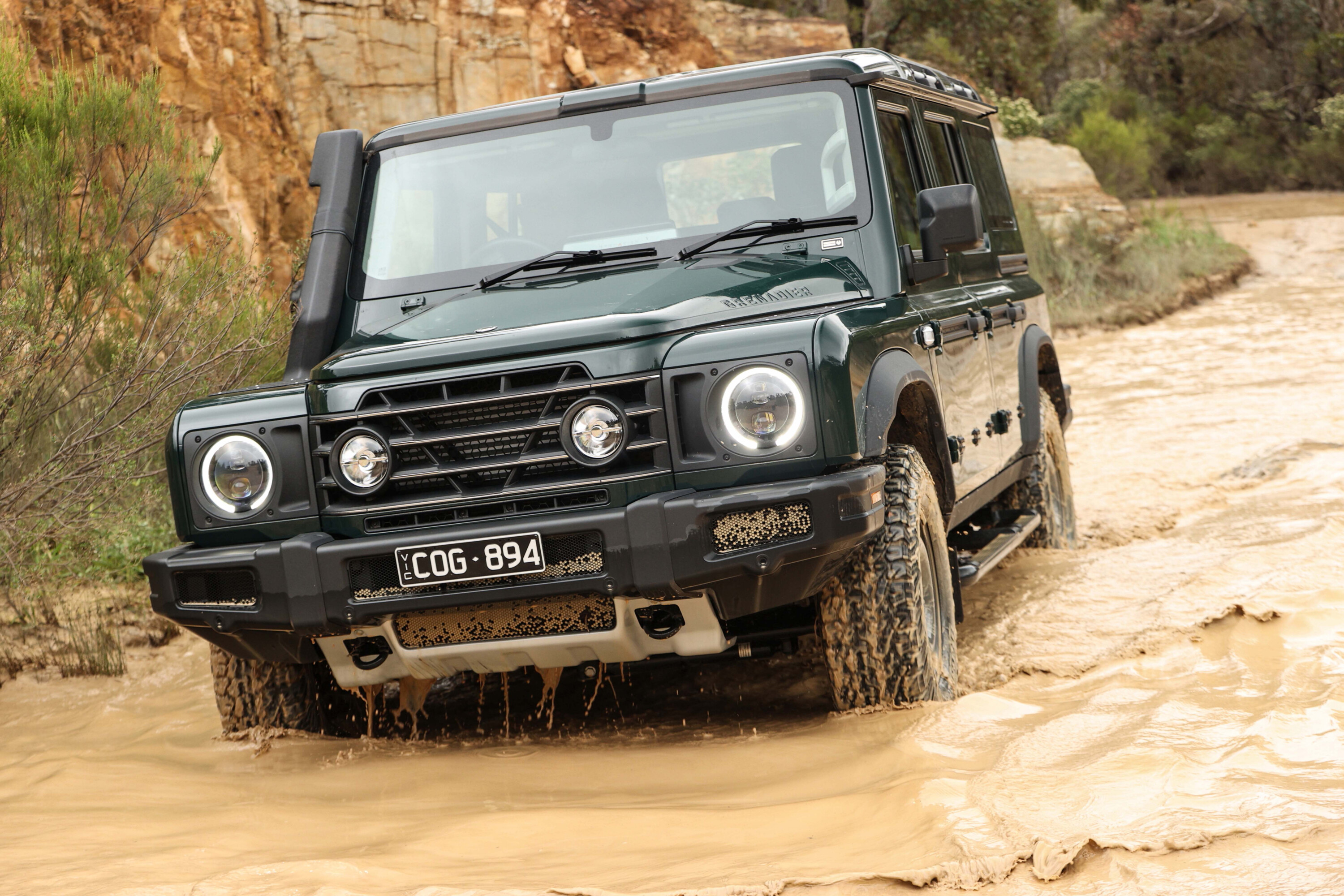
There’s plenty of new metal arriving in 2024, and none more exciting for traditional 4WDers than the INEOS Grenadier. In a market that is creeping towards a softer future, the rugged, go-anywhere Grenadier is bucking that trend. Read our comprehensive analysis in this issue.
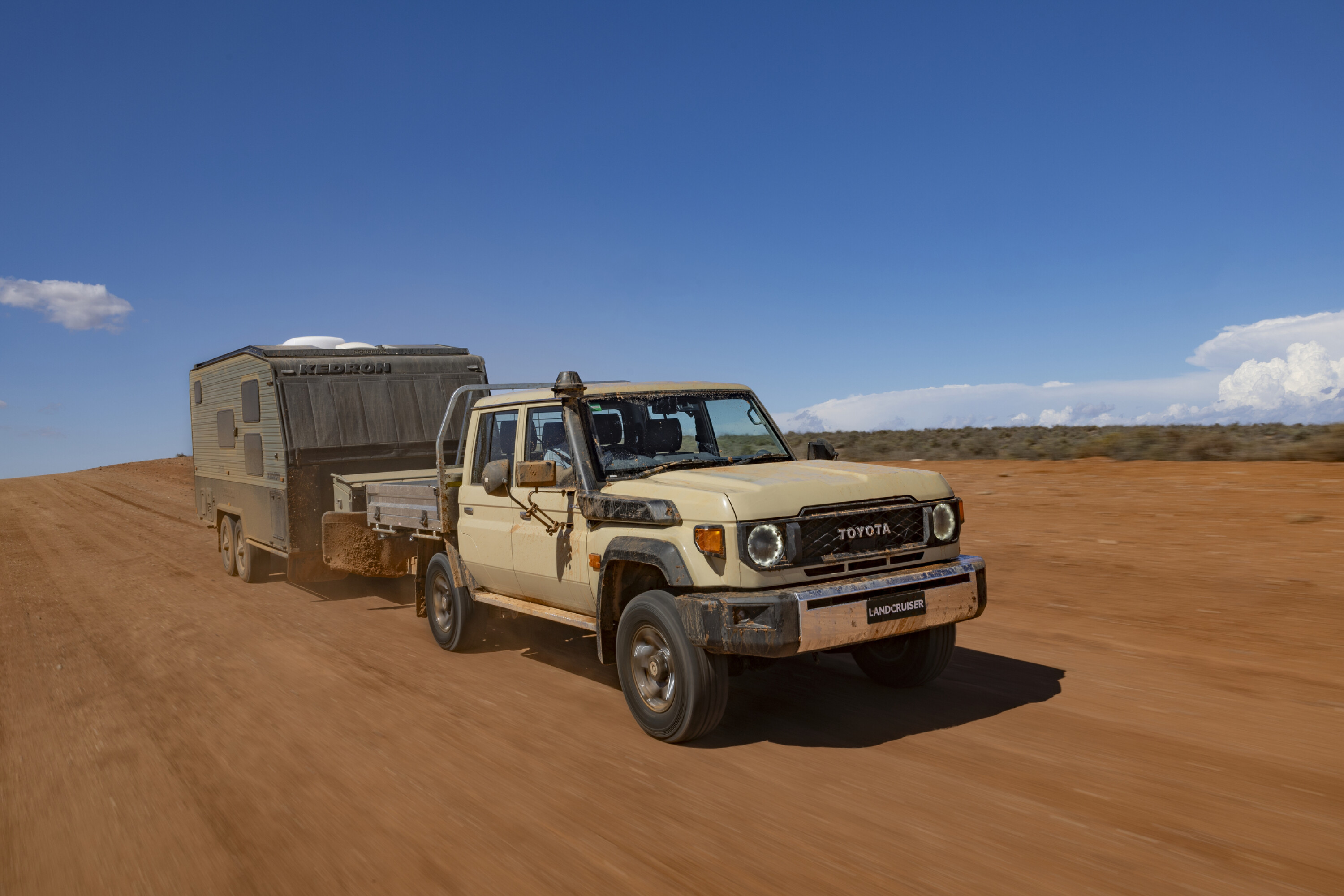
Equally exciting is the reinvented 70 Series LandCruiser now with an inline four-cylinder powerplant mated to an automatic transmission. We spent time at the vehicle’s local launch to establish whether the four-pot can live up to the legendary LC70 nameplate.
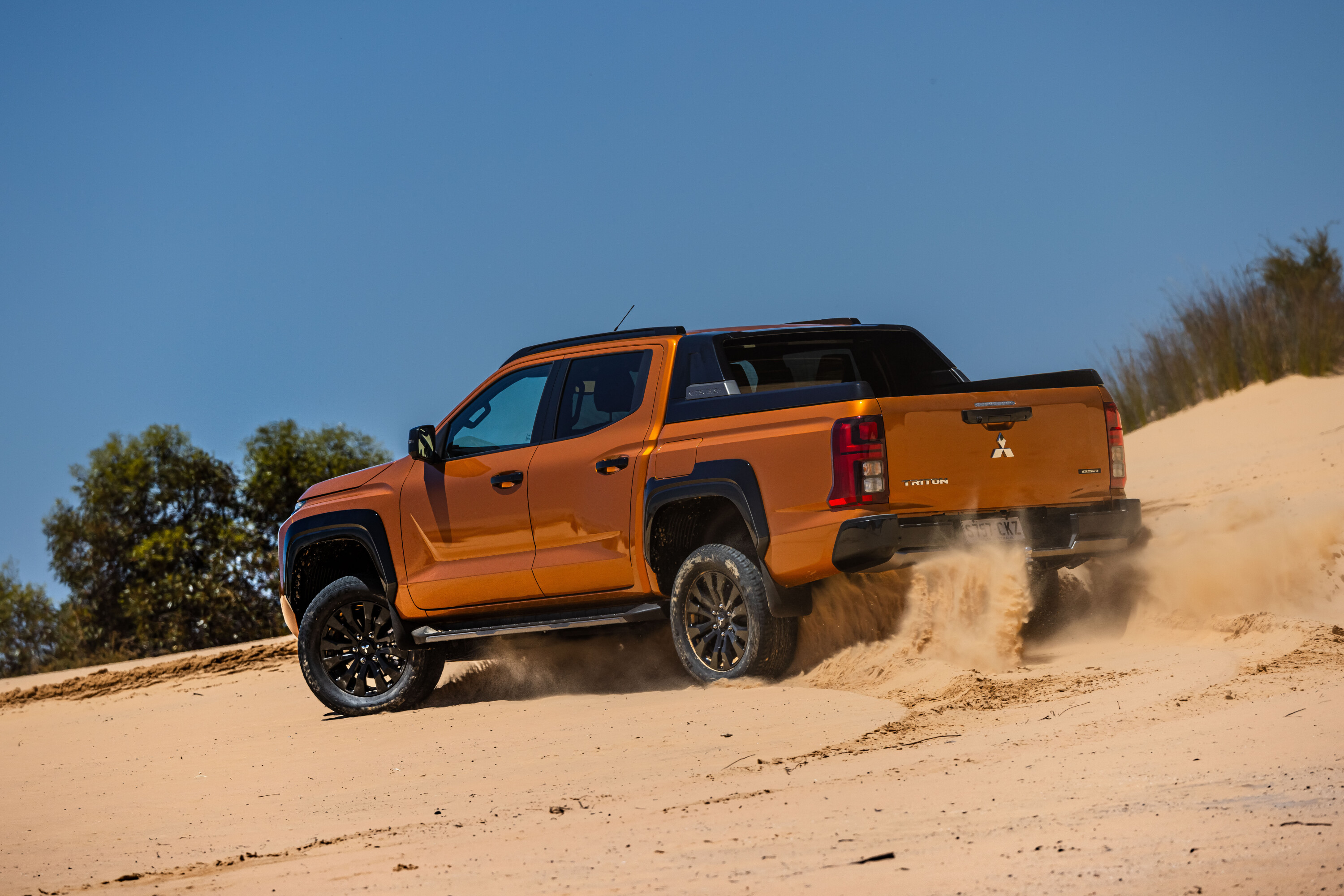
Another vehicle arriving in the first quarter of this year is the new-gen Mitsubishi Triton. We drove two pre-production variants ahead of the vehicle’s Australian launch and, without giving too much away, the completely redesigned and rebuilt vehicle is bigger and better than the vehicle it replaces in just about every way.
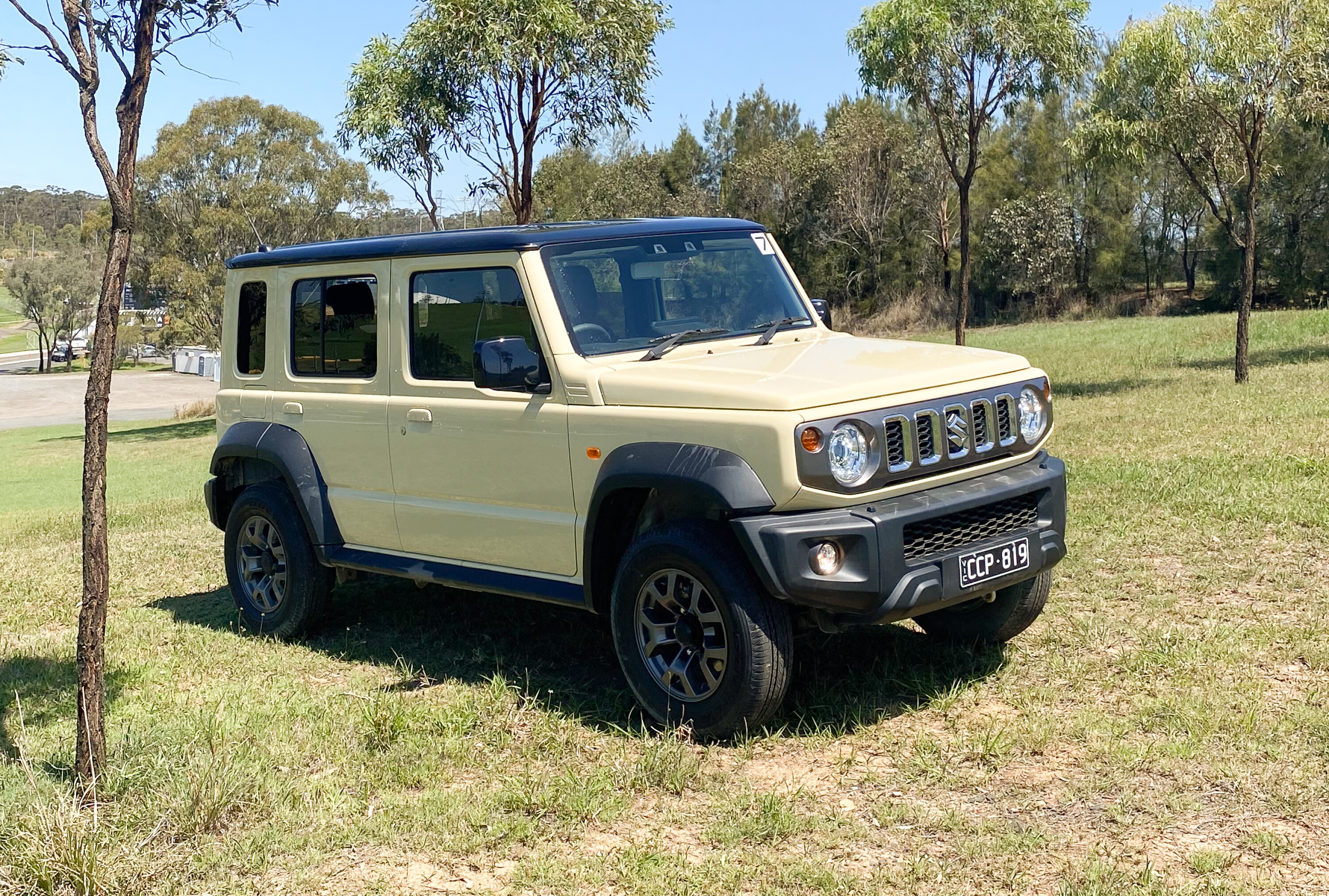
The five-door Jimny XL is finally a reality, and John Law sampled the grown-up Jimny at the wagon’s local launch. The three-door is a fan favourite, but has it transformed into a genuine family 4×4 contender?
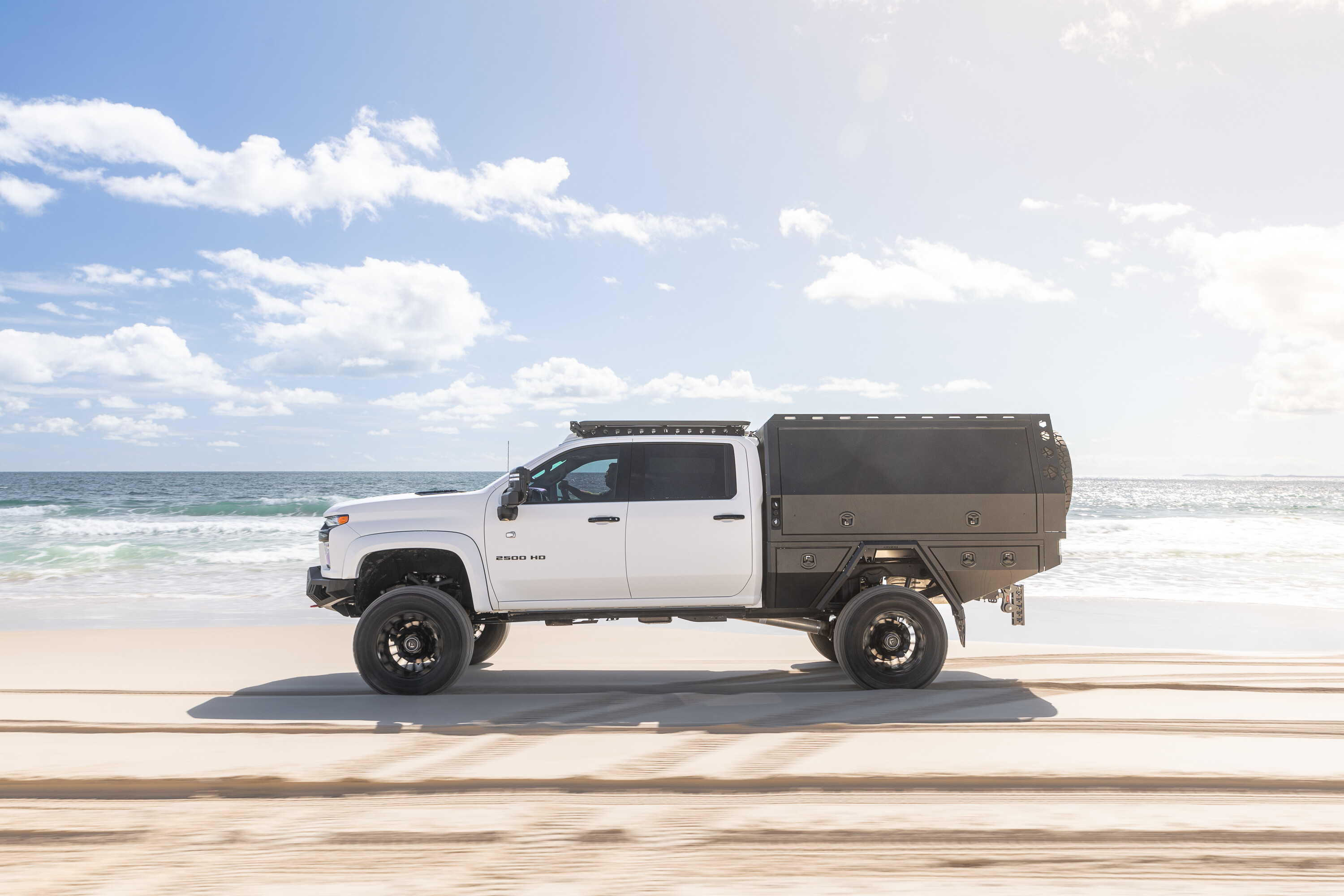
On the custom 4×4 front, we point a microscope at a next-gen Ranger that’s now a work-and-play weapon sitting on 37-inch tyres. Plus, we take a look at a 2023 Silverado 2500 built to be the ultimate camping set-up. The behemoth proves there’s a spot for full-size American pick-ups in the Aussie bush.
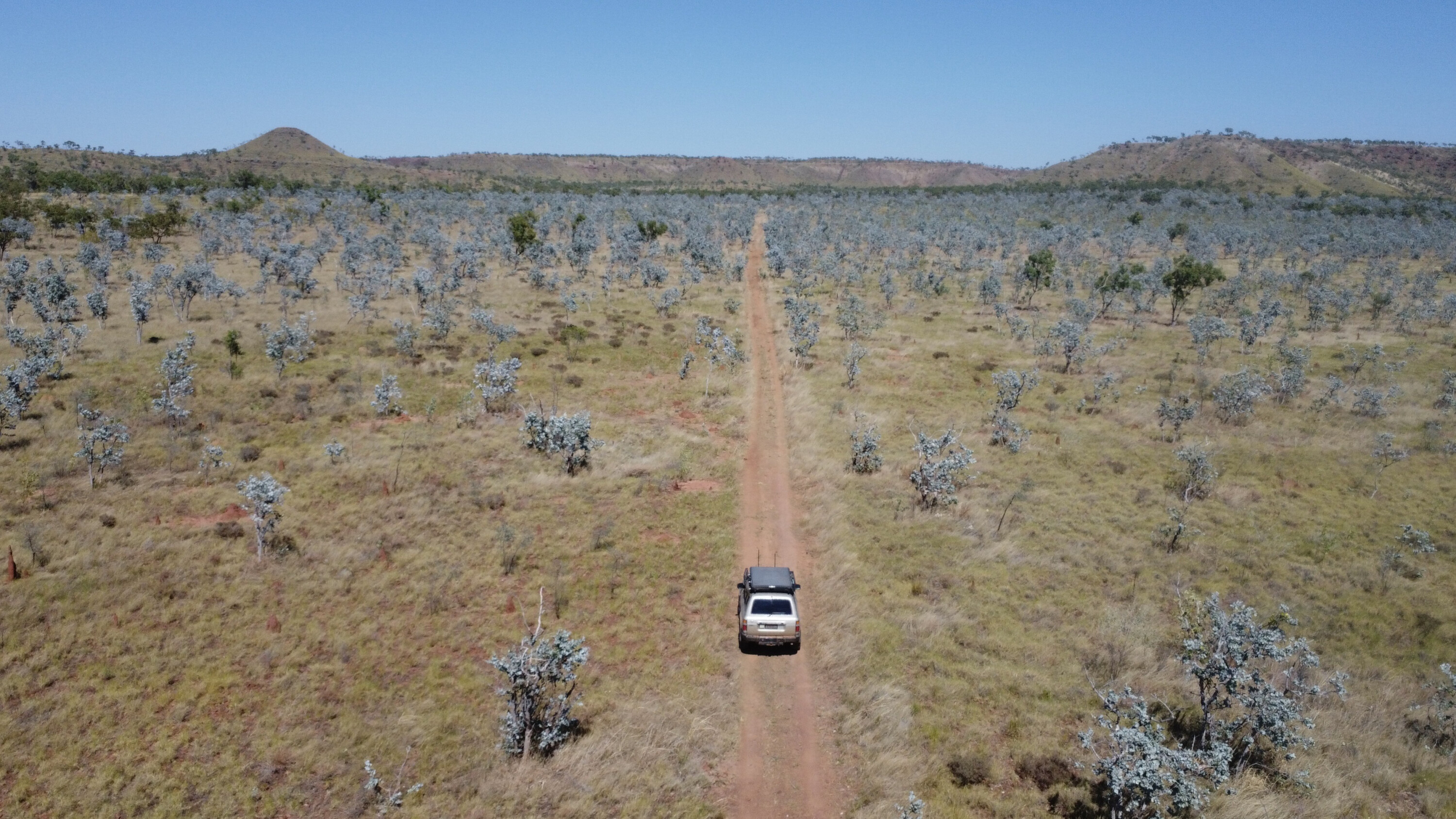
If your end-of-season break isn’t ending anytime soon, we’ve included a handful of travel pieces to help guide you to your next off-road destination. This month we travel to Judbarra National Park in the NT, along Karunjie Track in WA , and trace some of North Queensland’s remote mining trails.
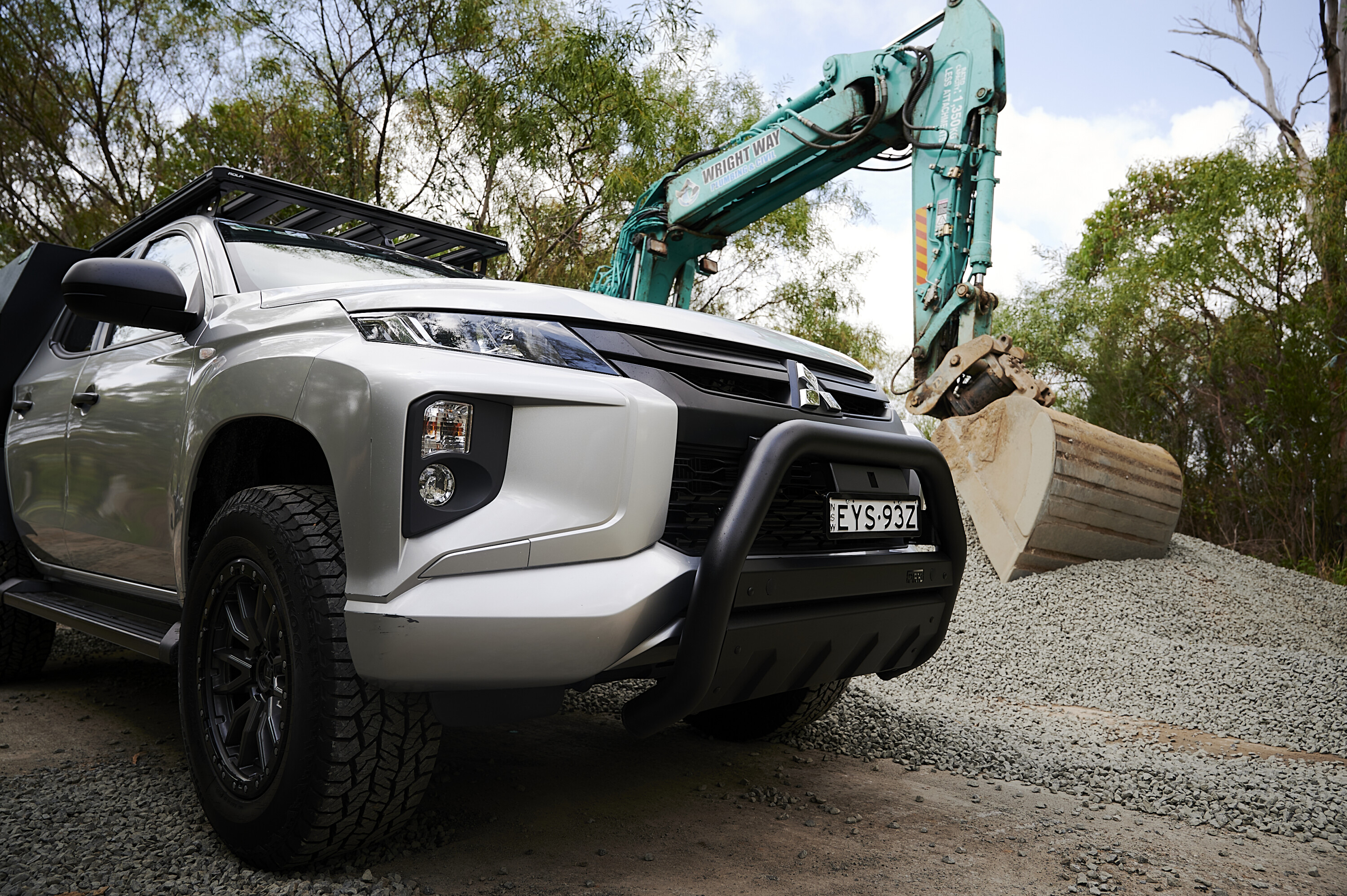
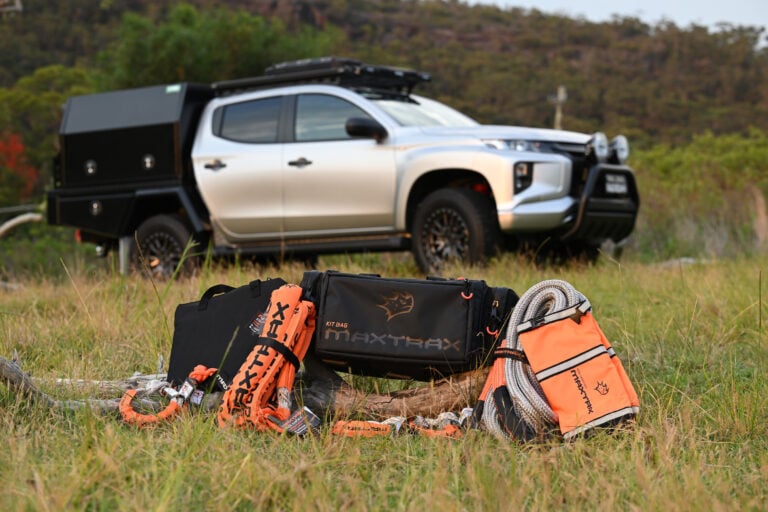
As our Tradie Triton build nears the finish line, we’ve added a MAXTRAX Bush Recovery Kit and Lite recovery boards. Plus, to keep us out of strife, a new PIAK Nudge Bar has been installed for frontal protection.
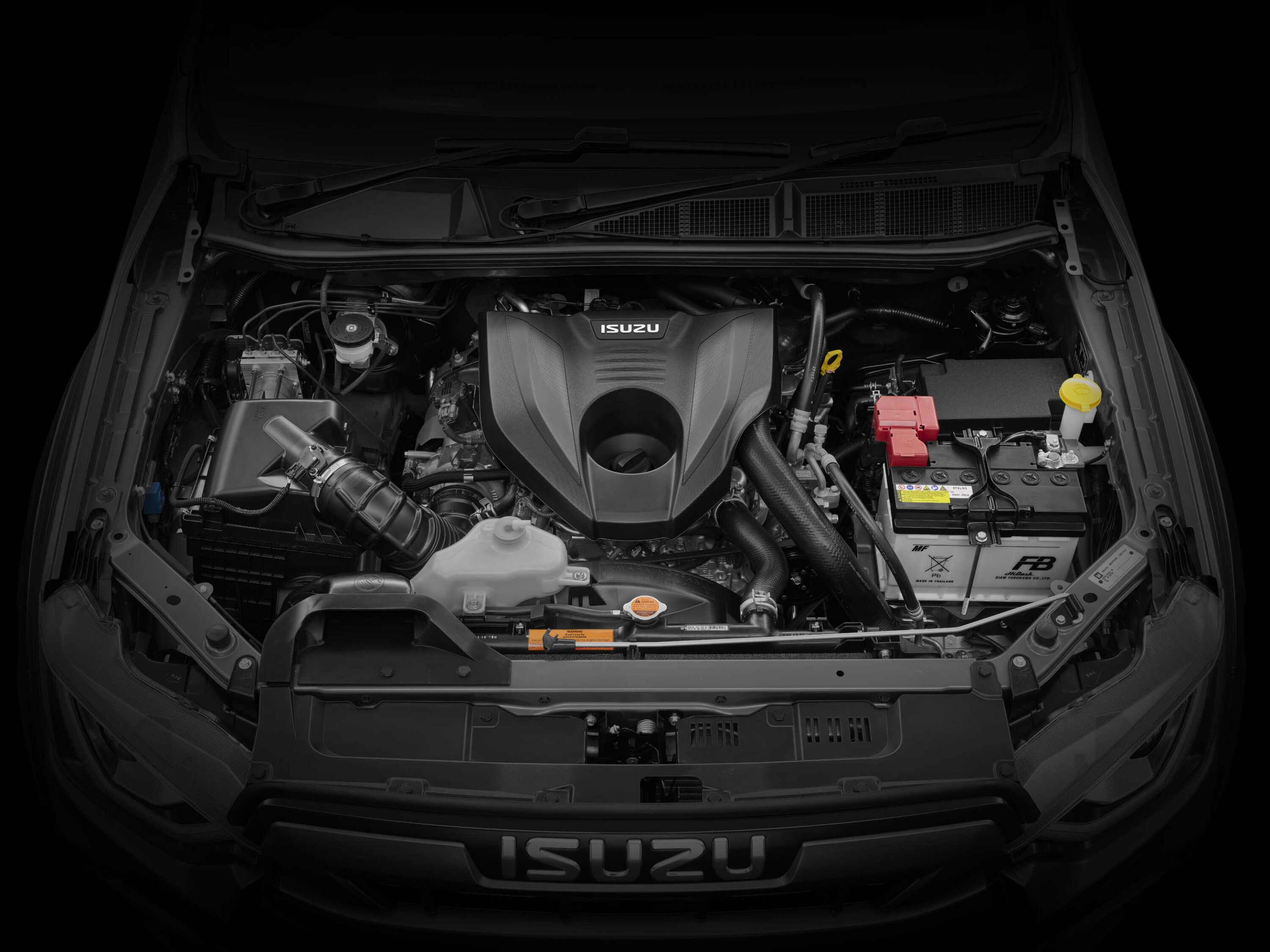
Reports out of Thailand, which is where the D-Max is produced, speculate the D-Max will soon gain a newly developed 2.2-litre four-cylinder turbo diesel that includes a 48-volt mild-hybrid system.
According to Thai outlet Headlight Magazine, the new engine could be introduced as early as 2025 and is also tipped to power the D-Max’s SUV sibling, the MU-X.
The mild-hybrid set-up will reportedly use a belt-driven integrated starter motor to help reduce start-up vibration and improve engine response and performance in short bursts.
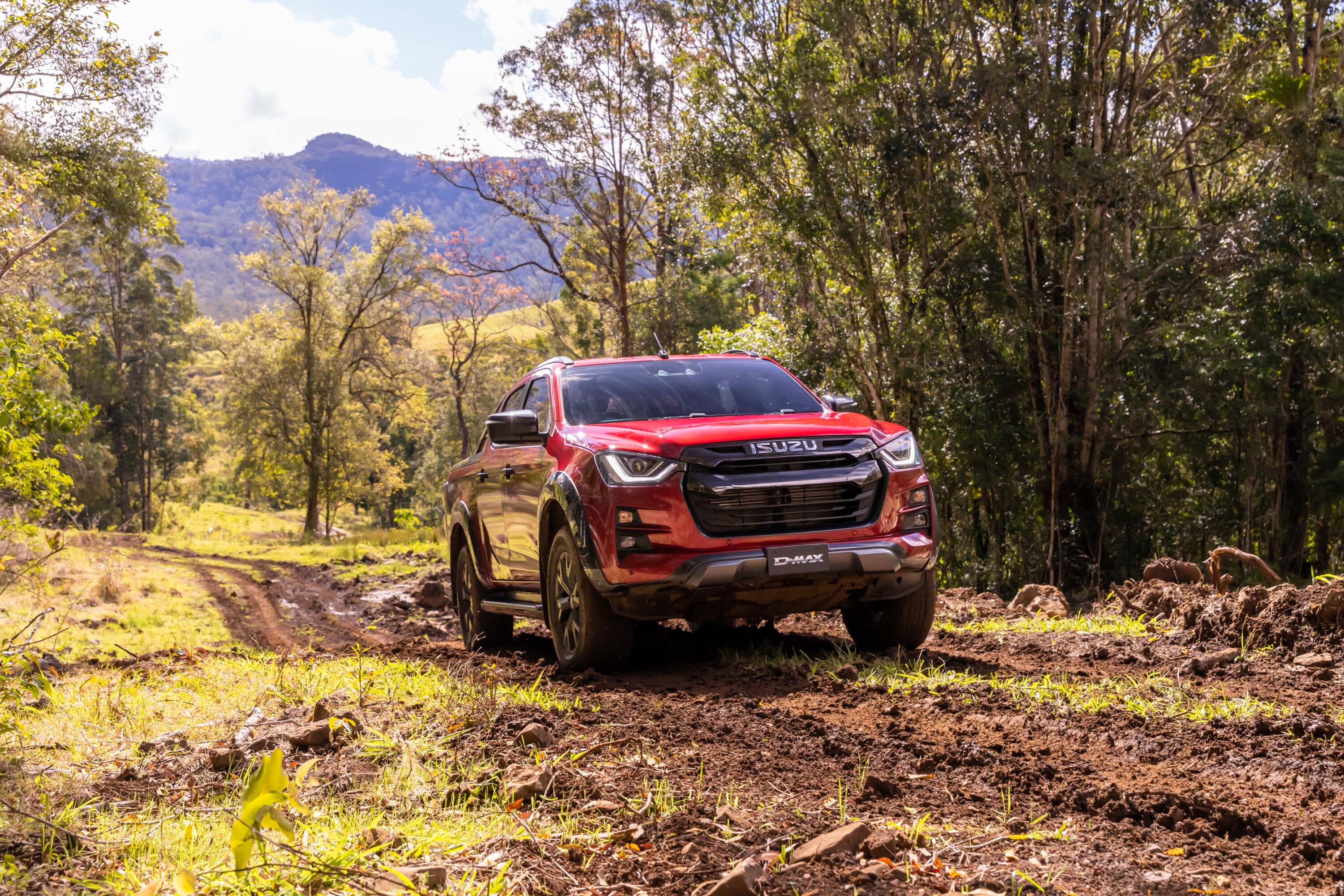
It’s unclear when the new engine will be sold in Australia or whether it will replace one of the D-Max’s existing engines or be sold alongside the current line-up.
When asked about the likelihood of the new engine being sold Down Under, Isuzu Australia provided the following comment:
“At this point in time, we are unable to comment on any future model plans or powertrain developments. That said, as part of our due diligence IUA will continue to monitor local market requirements to provide a product mix to meet Australian consumer needs.”
Currently the D-Max is powered by either a 1.9-litre four cylinder turbo diesel with 110kW/350Nm or a more powerful 3.0-litre turbo diesel that produces 140kW/450Nm.
Both engines also feature in the Mazda BT-50 which was co-developed with the D-Max, meaning the Mazda is also a candidate to receive the new hybrid powertrain.
Hybrid engines are quickly gaining momentum in Australia’s dual-cab ute segment. A mild-hybrid version of the popular Toyota HiLux is confirmed to launch in the second half of 2024
The hugely popular Toyota HiLux will add a mild-hybrid variant later this year, with Toyota promising the new engine will offer a 10 percent fuel saving and improved refinement. The Hilux’s hybrid engine is based on the existing 2.8-litre four-cylinder turbo diesel and will be standard on SR5 and Rogue 4X4 models and optional on the SR 4X4.
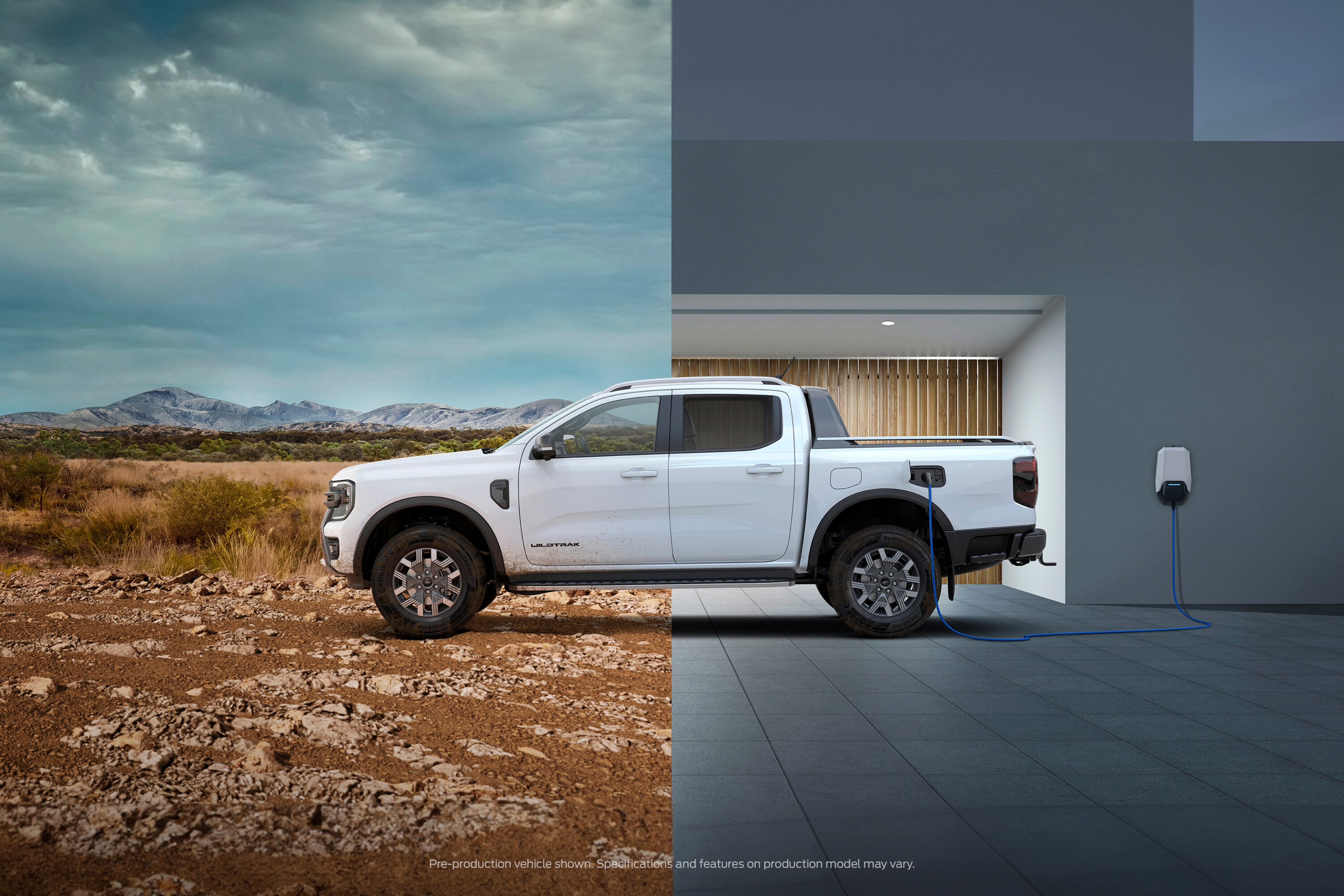
Mitsubishi is also expected to launch a hybrid version of the soon-to-arrive new-gen Triton and the Ford Ranger — which was Australia’s most popular vehicle in 2023 — will add a plug-in hybrid model next year. Chinese brand BYD is also developing a plug-in hybrid dual-cab and testing mules have recently been spotted on Aussie roads.
Should the mild-hybrid D-Max make its way to Australia, it will be a logical stepping stone towards an all-electric model. Isuzu has already confirmed it is currently developing an all-electric version of the D-Max, with deliveries expected to commence in Europe in 2027.
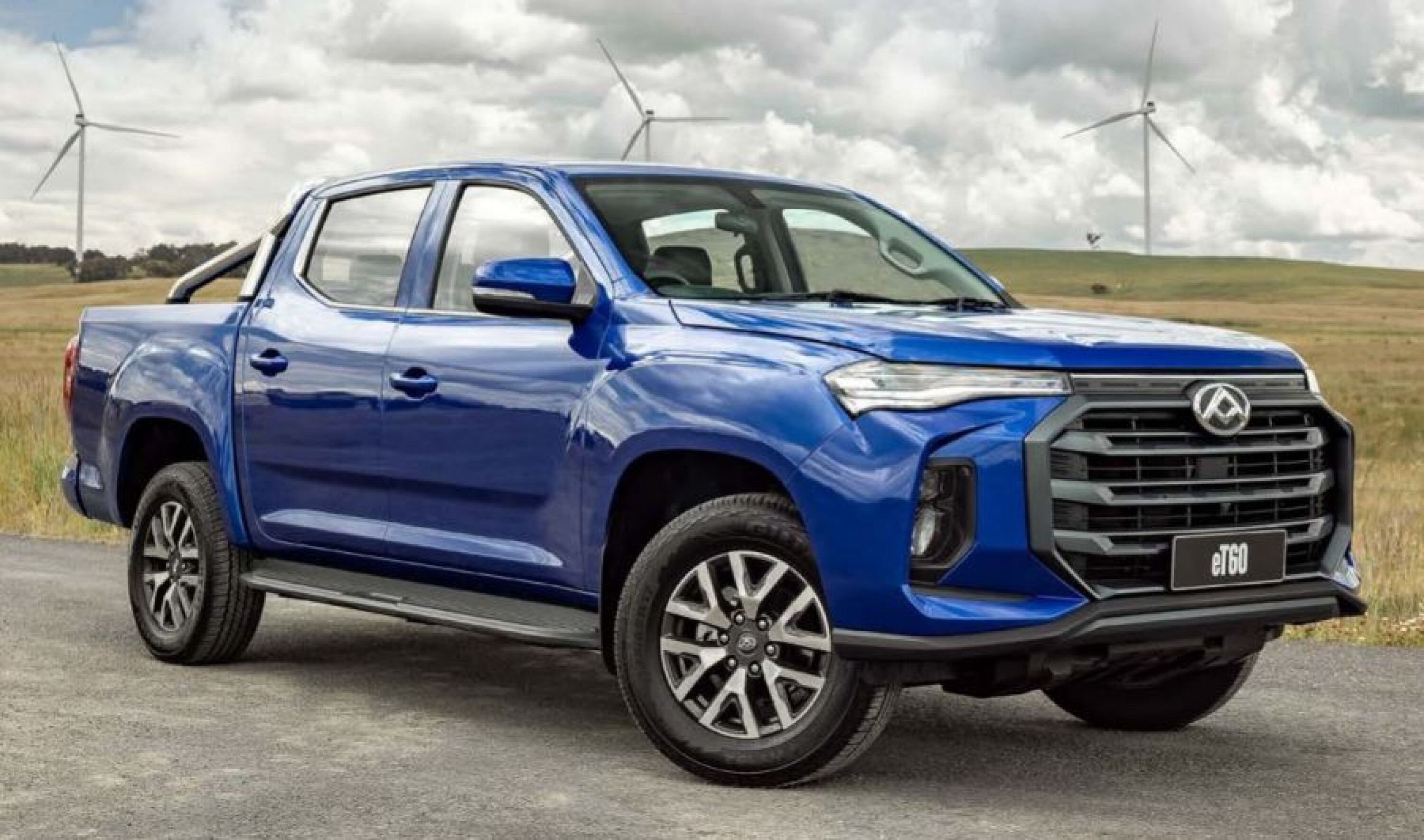
That electric ute will join the LDV eT60, which is currently the only fully electric dual-cab offered in Australia.
Offsetting price rises that will come into effect on 1 February for MY24 models, Volkswagen is offering select MY23 stock at between $5000-$6800 off (depending on state charges).
Initially, the deals were set to end on 31 December but the offer has now been extended with the addition of the V6 Style TDI600, which you can nab for $72,990 drive-away (instead of $70,990 before on-road costs) until 31 March 2024.
Like the other trims (detailed below), the Style V6 drive-away price includes five years of servicing, valued at $1800. Read on below for more info on the other models available.
Our original story, below, has been updated to reflect the extended offer.
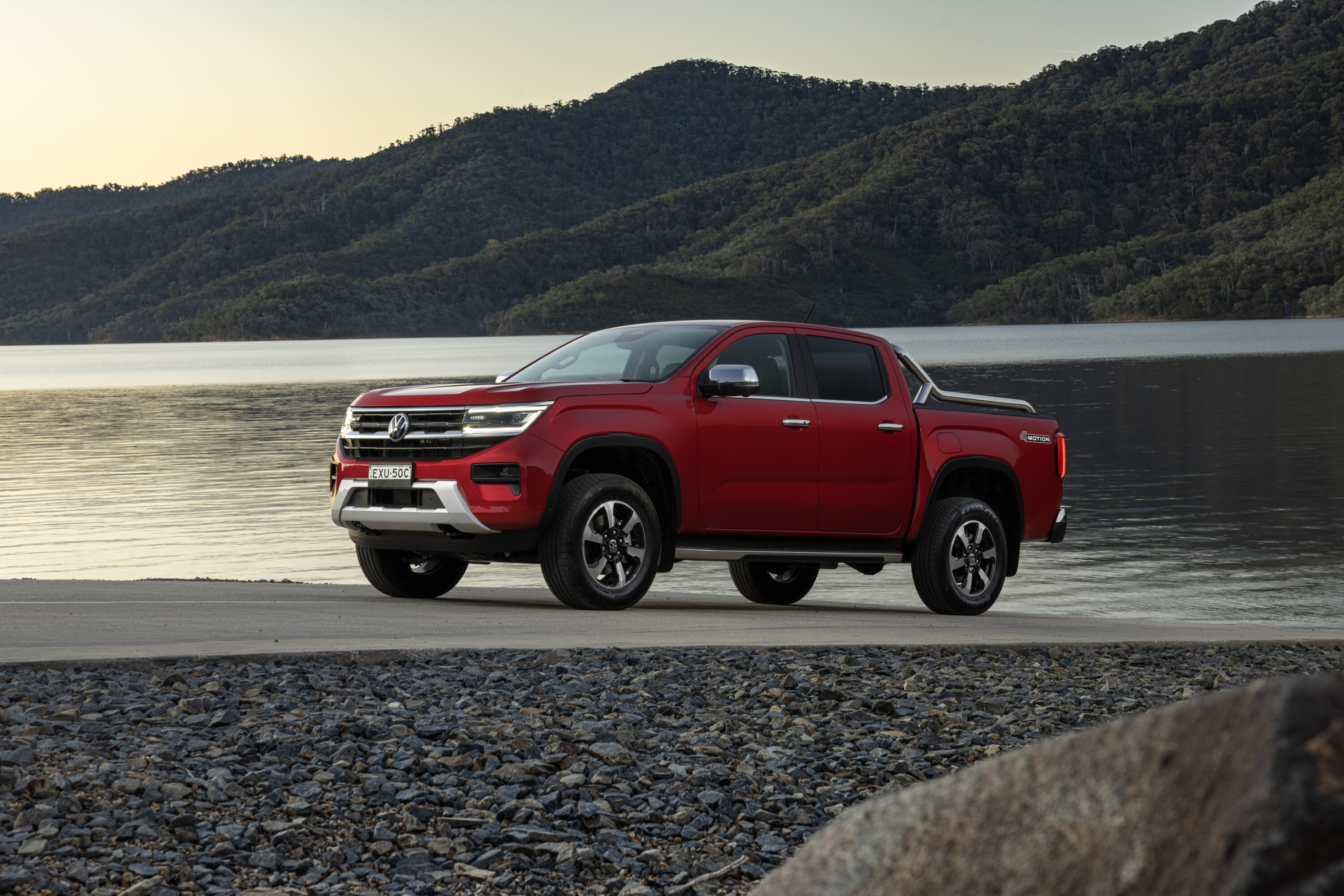
Volkswagen Australia has confirmed national drive-away pricing and a complimentary five-year service plan for the Amarok Core TDI405, Life TDI500 and Style TDI500 four-cylinder variants.
The base Core dual-cab 4×4 is available for $54,900 drive-away nationally. It usually retails for $52,900 before on-roads, or around $59,600 drive-away with a Sydney postcode – not including the additional $1800 five-year service plan.
Likewise, the mid-spec Life TDI500 is around $5000 off, priced at $58,900 drive-away nationally – compared to its $56,900 retail price, or circa-$63,800 on-road price.
The Style TDI500 is available for $68,990 drive-away nationally – $2000 more than its $66,990 retail price, and a saving over its usual circa-$74,000 drive-away price with a Sydney postcode.
The complimentary five-year service plan is also available for the mid-spec Style TDI600 diesel V6, which retails for $70,990 plus on-road costs – or around $78,000 drive-away.
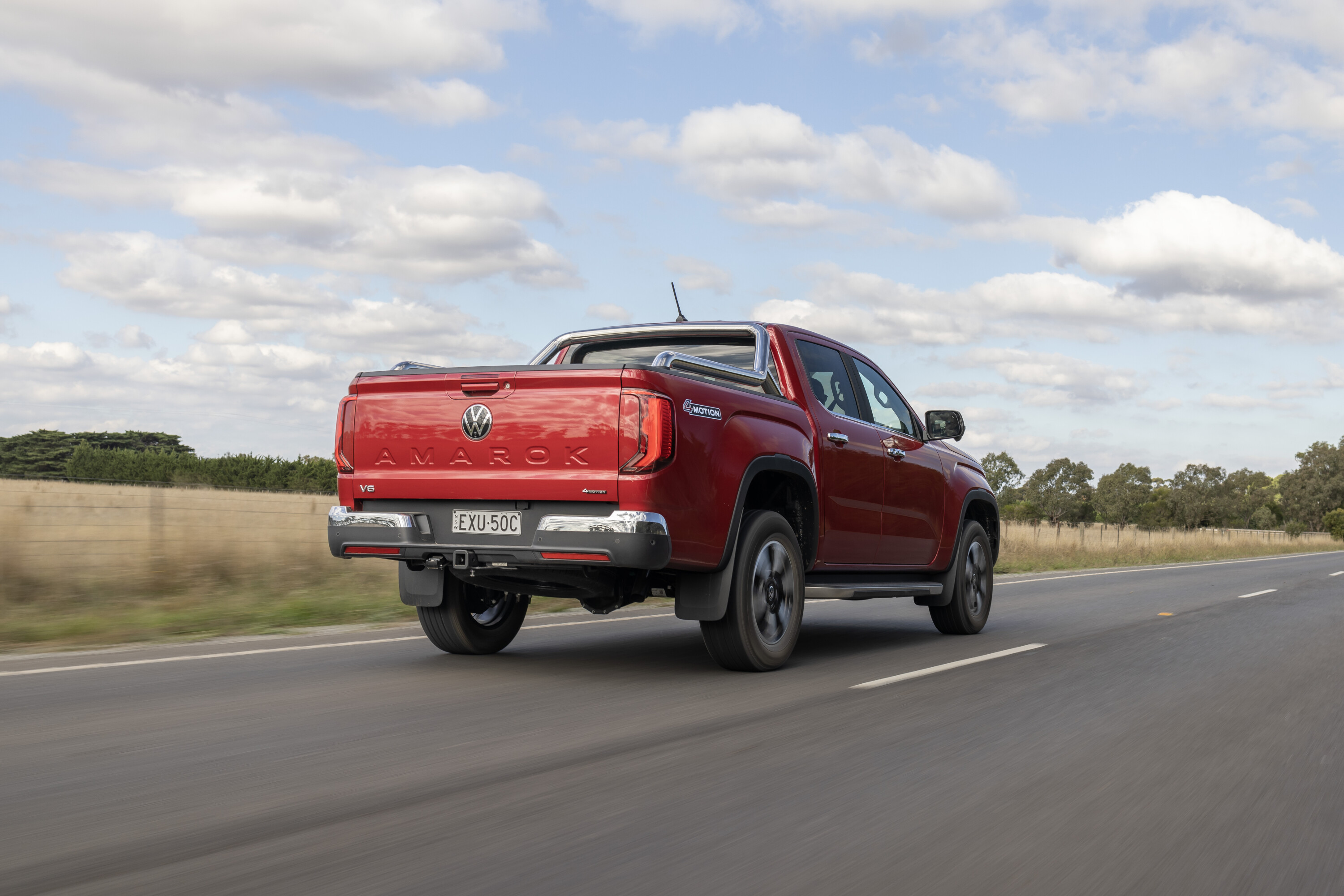
Volkswagen Australia has confirmed Amarok Core, Life and Style variants are available for immediate delivery, while the flagship PanAmericana and Adventura – fitted with the more popular diesel V6, along with an optional turbo-petrol four-cylinder – incur wait times.
“While we thank patient customers for moderate wait times for the Amarok PanAmericana and Aventura at the top end of our range, we are pleased to offer these deals on other variants that are readily available in showrooms,” said local Volkswagen Commercial Vehicles director Ryan Davies.
The second-generation Volkswagen Amarok – heavily based on the latest Ford Ranger – launched in Australia in May. It is sourced from South Africa, not Thailand like the Ford, and incurs an additional five per cent import tariff.
Volkswagen’s minor updates usher in price rises between $2500 for the entry grade and $3000 for flagship Aventura and Panamericana trim levels.
With improved stock flow for 2024 and all variants online, Volkswagen is looking to crack 10,000 Amarok sales this calendar year.
With the increases on board, Volkswagen’s answer to the Ford Ranger climbs closer to the Blue Oval’s flagship Platinum ($83,201 before on-road costs) and climbs well above the single-turbo Ranger XL entry ($50,380).
To offset price rises, the brand is extending drive-away deals for in-stock and soon-to-arrive MY23 models (first announced last year) to 31 March 2024.
| 2024 Volkswagen Amarok Pricing | ||
|---|---|---|
| Grade | Price (MSRP) | Change |
| Amarok Core 2.0 TDI405 4MOTION (Auto) | $55,490 | Up $2500 |
| Amarok Life 2.0 TDI500 4MOTION | $59,490 | Up $2500 |
| Amarok Style 2.0 TDI500 4MOTION | $69,740 | Up $2750 |
| Amarok Style 3.0 TDI600 4MOTION | $73,740 | Up $2750 |
| Amarok Panamericana 3.0 4MOTION | $78,990 | Up $3000 |
| Amarok Aventura 3.0 TDI600 4MOTION | $82,990 | Up $3000 |
| Amarok Aventura 2.3 TSI452 4MOTION | $82,990 | Up $3000 |
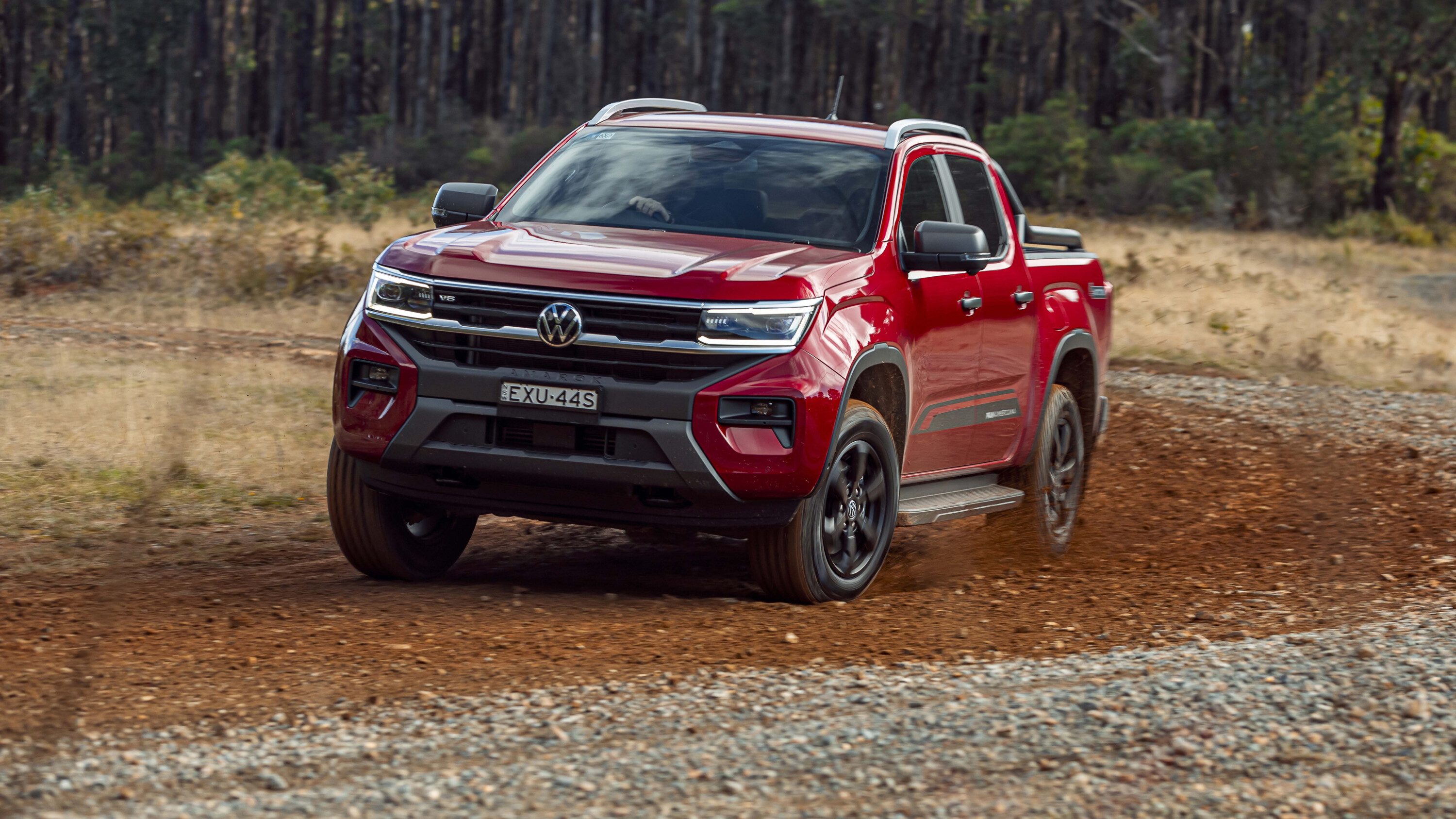
Additionally, the 184kW/600Nm Style V6 (currently the most popular Amarok) is on offer for the first time, listing at $72,990 drive-away and representing a circa-$5000 discount depending on your state.
It features intelligent Matrix LED headlights, a digital driver’s display, 18-inch alloy wheels, chrome exterior trim, ‘ArtVelour’ upholstery, 12-speaker sound systems and heated front seats.
It joins the Core ($54,990), Life ($58,990) and Style TDI500 ($68,990, all drive-away) in also getting five services thrown in for free at time of purchase – adding $1800 value.
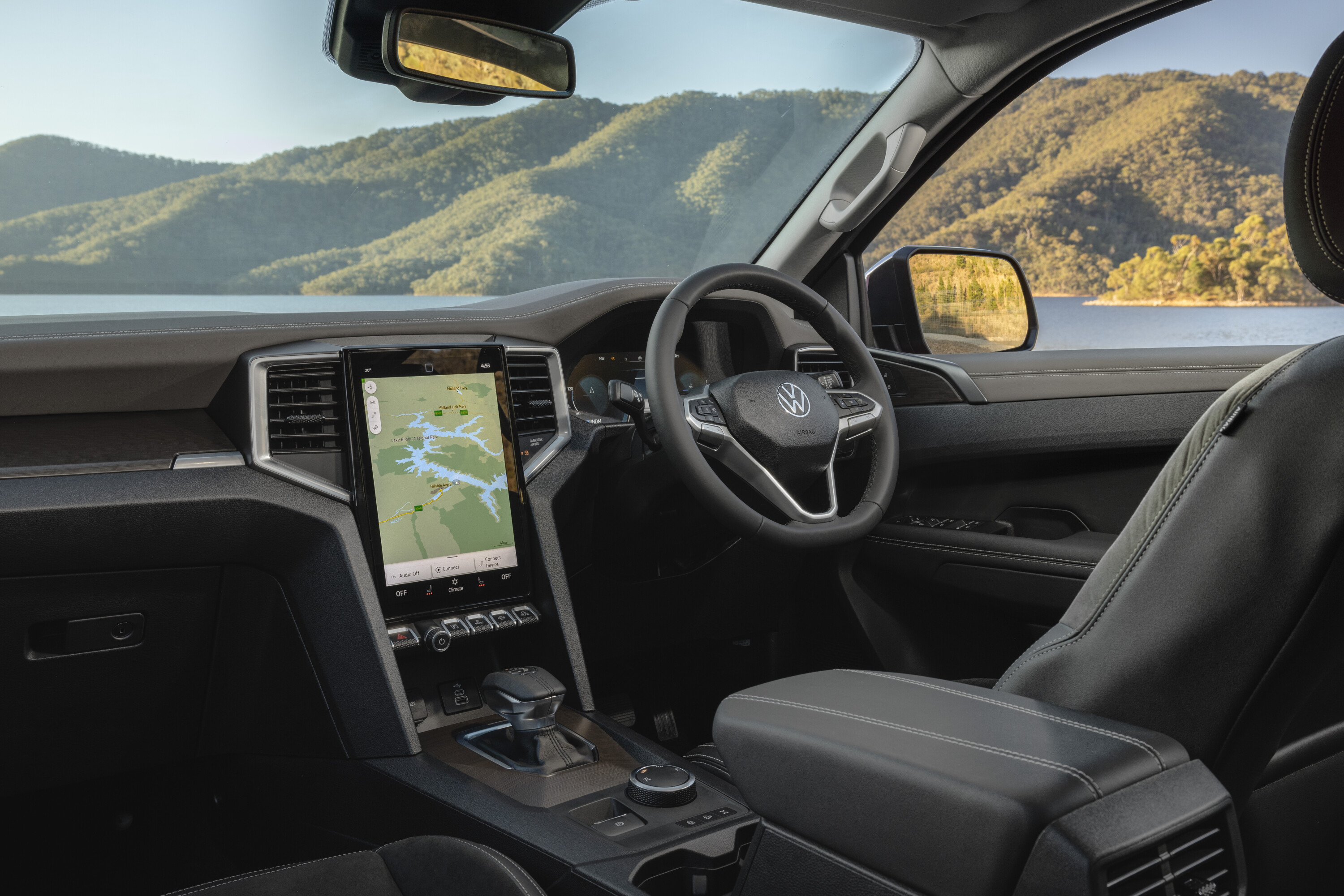
| Amarok Core features | |
|---|---|
| 17-inch alloy wheels | Mudflaps front/rear |
| Electric foldable Exterior mirror | Towbar (brake controller optional) |
| LED headlights | Tailgate lock (manual) |
| Tie-down ring on cargobox | Cargo box lighting |
| Brake controller (new) | Rear cross-traffic alert and blind-spot monitoring (new) |
| Fabric seats | Single-zone air-conditioning |
| Vinyl floor covering | Wireless charging |
| 10-inch radio (inc DAB) with four speakers | Rear centre armrest |
| 8.0-inch digital instrument cluster | |
| Amarok Life features | |
|---|---|
| 17-inch alloy wheels | Locking wheel nuts |
| Front bumper, mirrors & door handles in body colour | Power tailgate lock |
| LED fog lamps | 2 front towing hooks |
| Electric foldable, heated mirror & puddle lamps | Front and rear floor mats |
| Fabric seats | Carpet floor covering |
| Privacy glass | Rain sensor |
| Leather gearlever | Blind-spot monitoring |
| Leather multifunction steering wheel | Auto-dimming rear-view mirror |
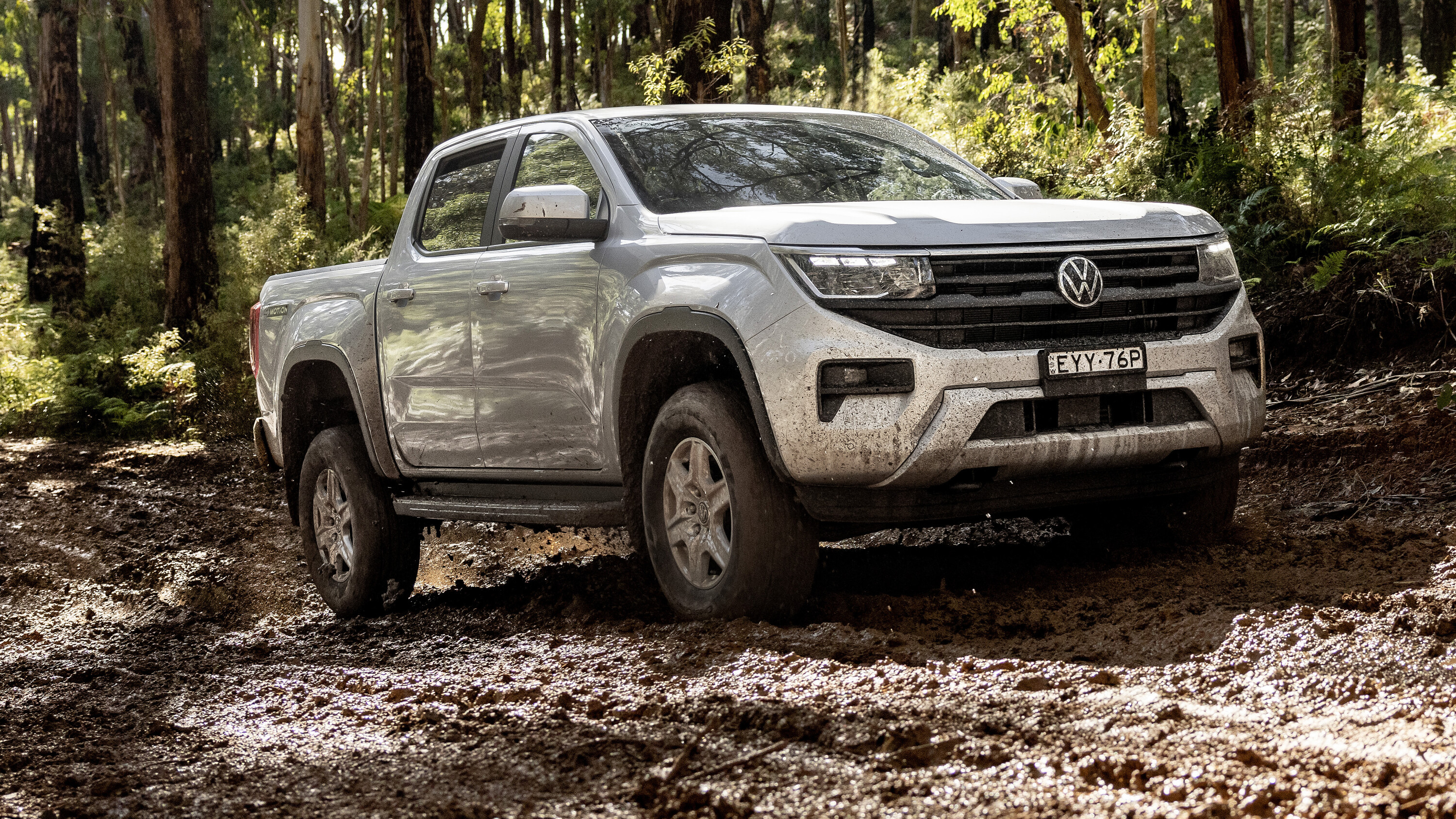
| Amarok Style features | |
|---|---|
| 18-inch alloy wheels | IQ. Light LED-Matrix headlights |
| Chrome rear bumper and step | Bed liner |
| Stainless-steel sports bar | Dual-zone climate control |
| u2018ArtVelouru2019 seat upholstery | Ambient lighting |
| 12-inch audio with navigation | Keyless entry and start |
| 12-inch digital instrument cluster | Thatcham alarm system |
| 10-way electric driveru2019s seat | Surround view |
| Insulating windshield | Park assist |
| Amarok Panamericana features | |
|---|---|
| 18-inch black alloy wheels (with all-terrain tyres) | Roof rails |
| Front bumper in X-Design (black) | Spray-in bed liner |
| Side mirrors, bumper and door handles in black | PanAmericana decals |
| Black sports bar and steps | Leather door inserts |
| Leather (cricket) upholstery | Premium audio |
| Leather-covered dashboard | 10-way electric front seats with heating |
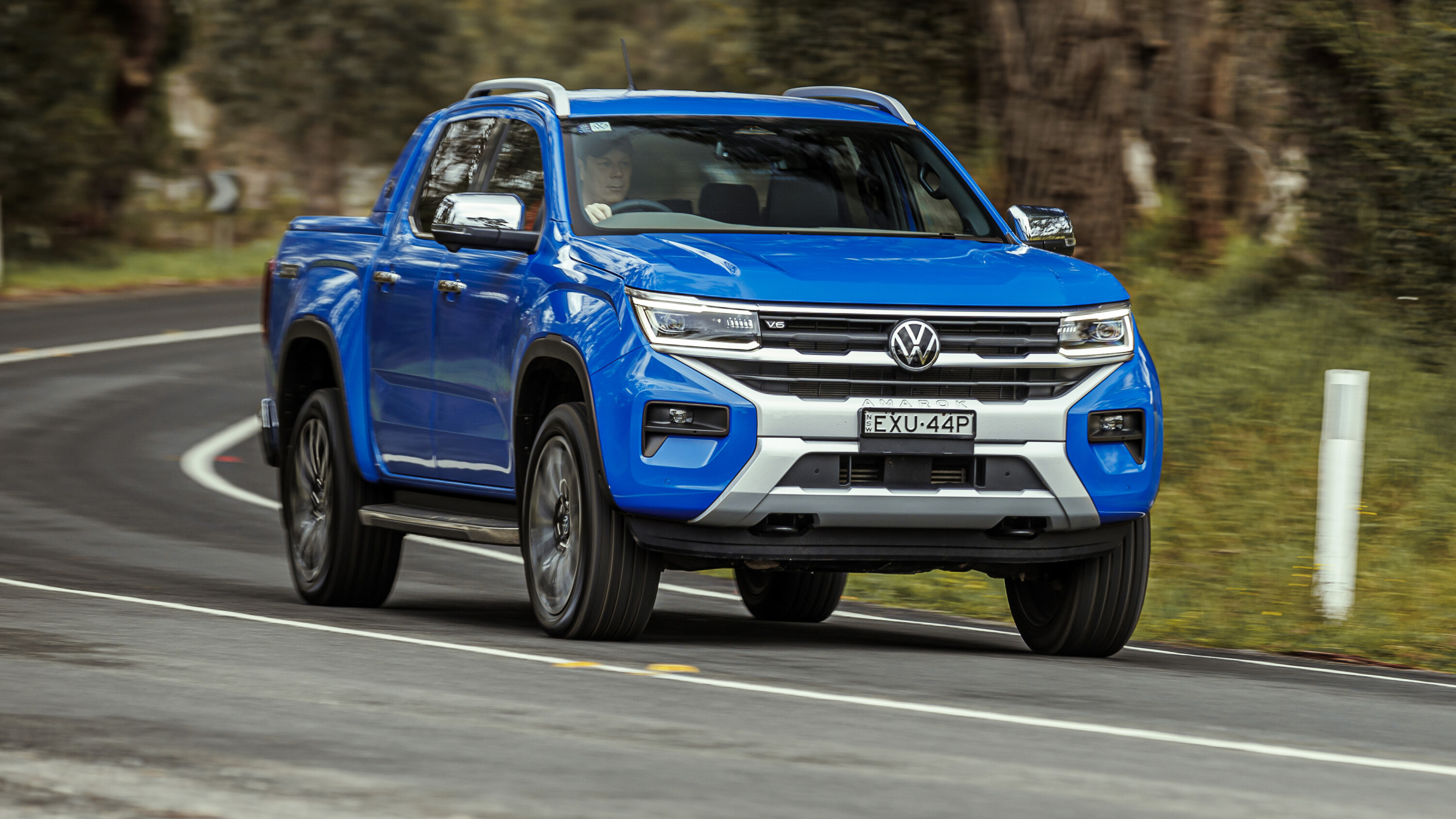
| Amarok Aventura features | |
|---|---|
| 21-inch alloy wheels | Sailplane and steps in chrome |
| Front bumper in X-Design (chrome) | Electronic roll cover |
| Side mirrors, door handles and rear bumper in chrome | Bed liner |
| u2018Savonau2019 leather upholstery | Leather-covered dashboard |
The MY24 Amarok will arrive in Australia on 1 February, with drive-away deals and free servicing on select MY23 models offered until 31 March.
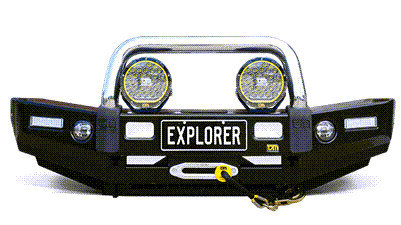
Built from robust steel the bar has a 3.5kg carrying capacity making it the ideal platform for fitting driving lights. Maintaining a safe work vehicle is extremely important for tradies, either when driving around the job site or when the family is on board for weekend getaways.
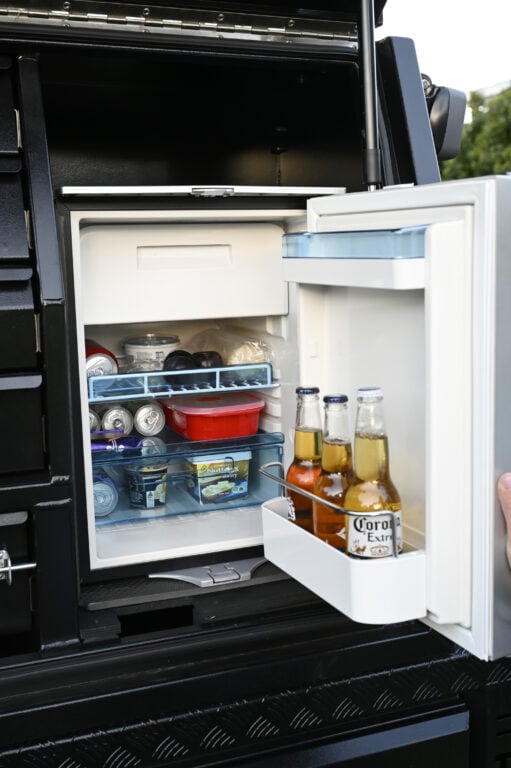
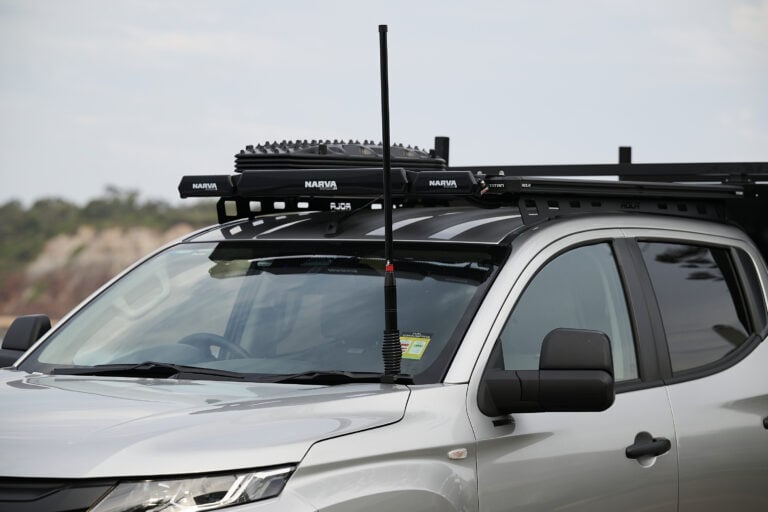
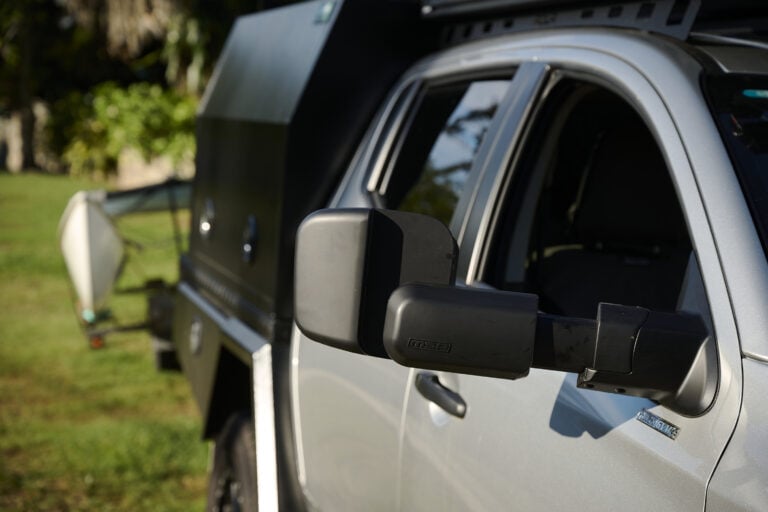
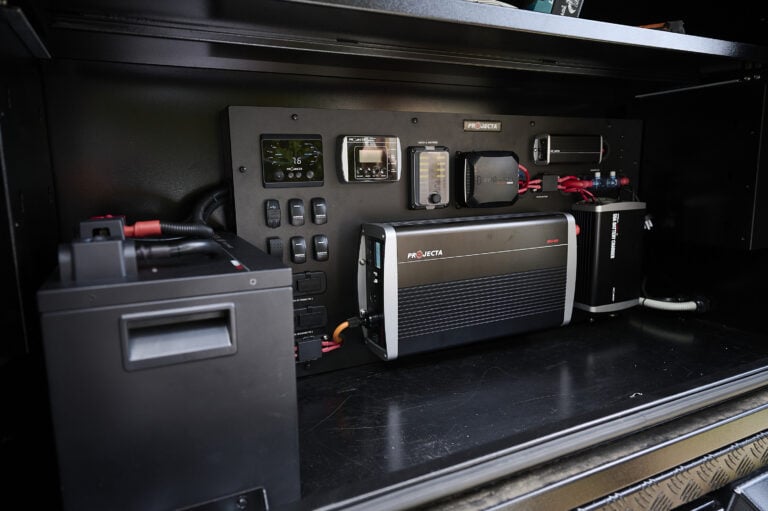
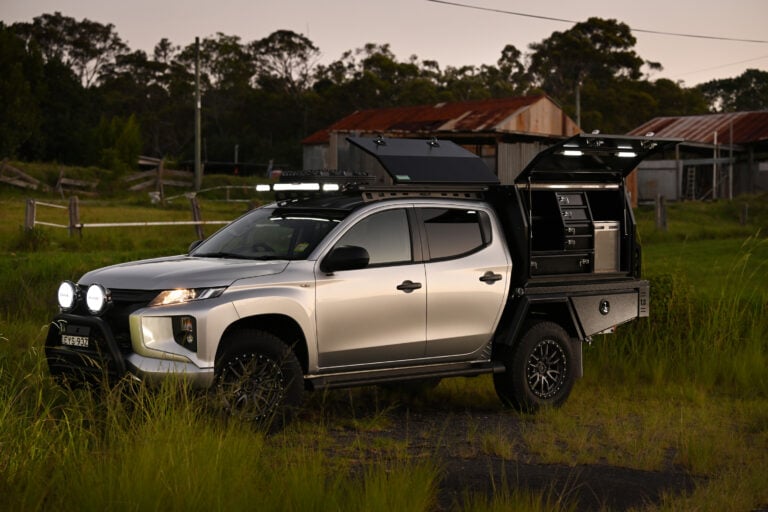
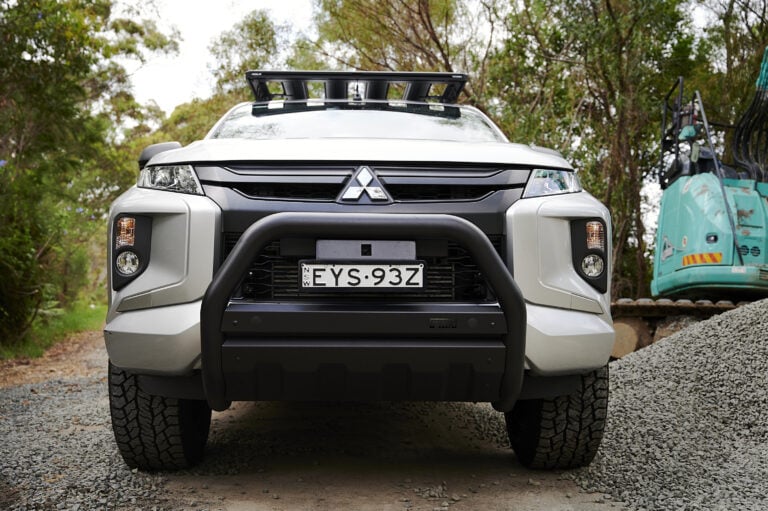
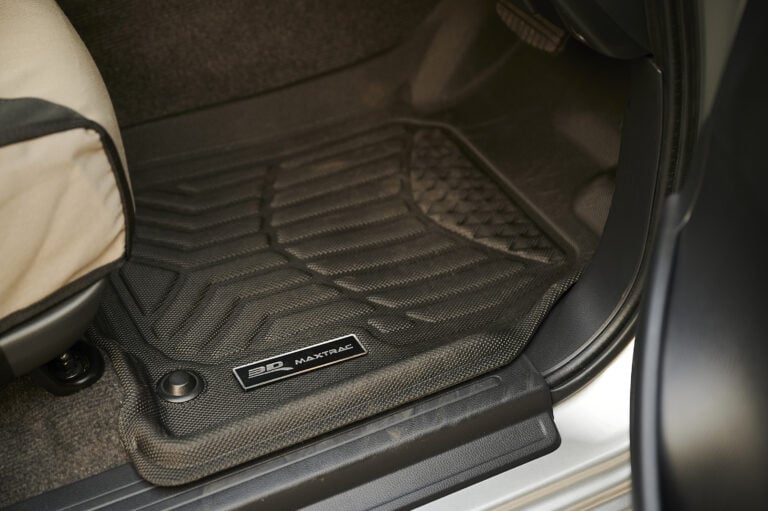
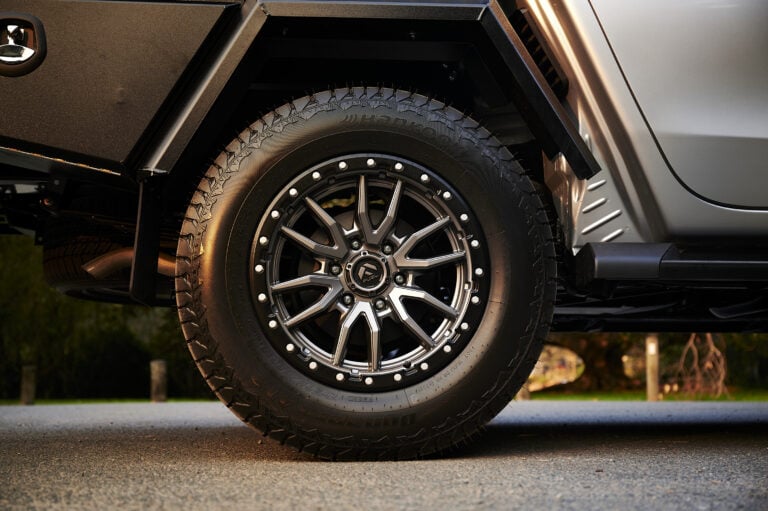
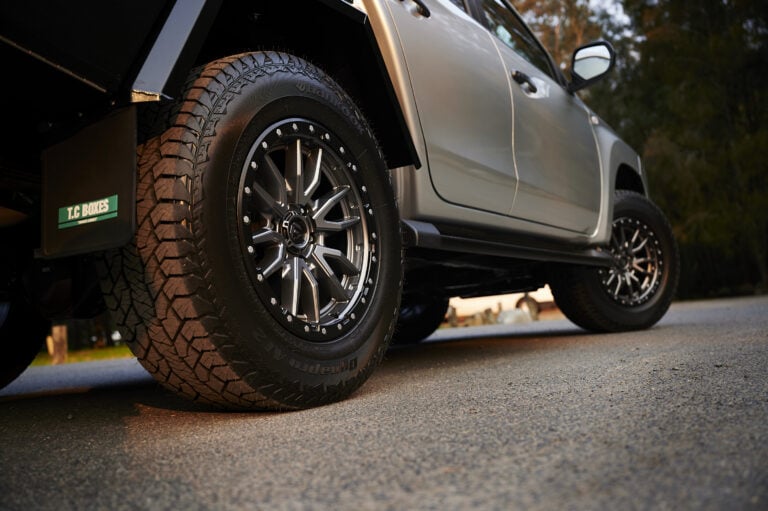
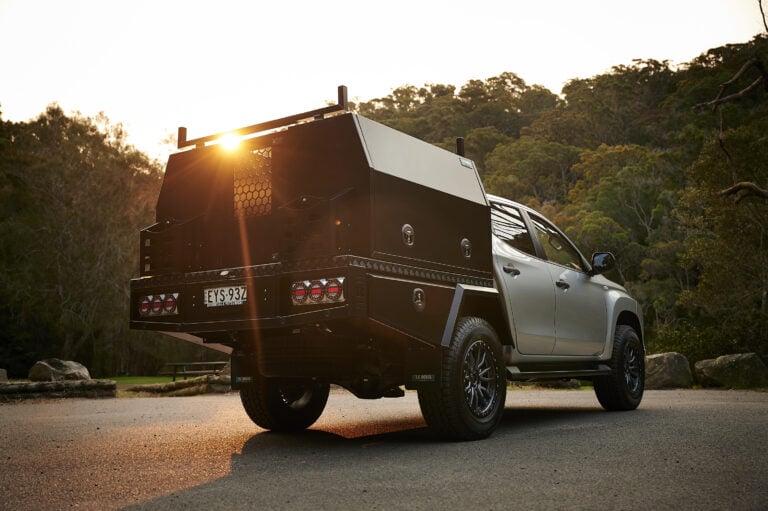
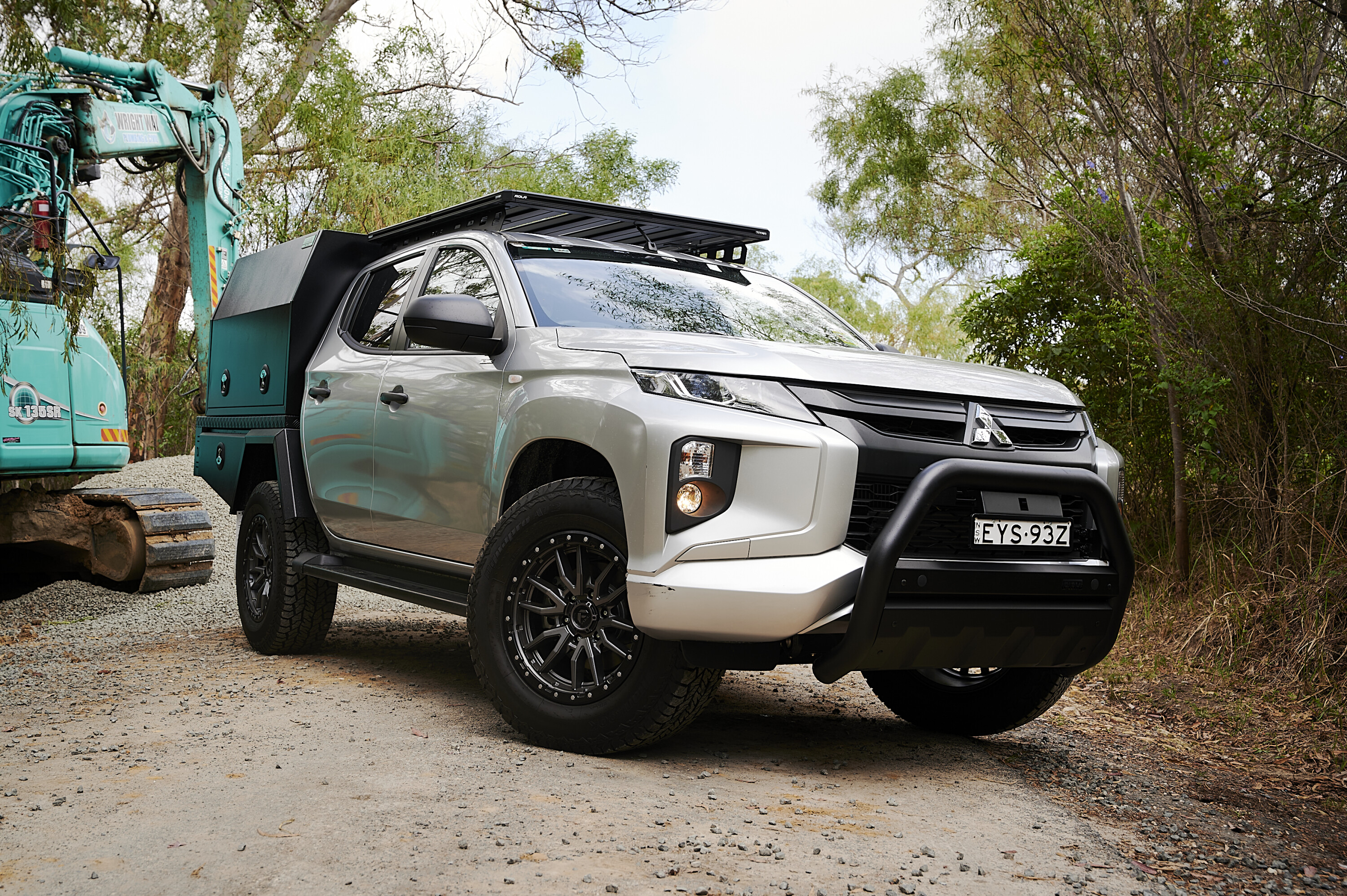
The PIAK nudge bar allows for retention of the Triton’s OE parking sensors, and these integrate seamlessly into the design. The bar is also compatible with vehicle cameras and sensors, while airbag compatibility reinforces PIAK’s commitment to the well-being of vehicle occupants.
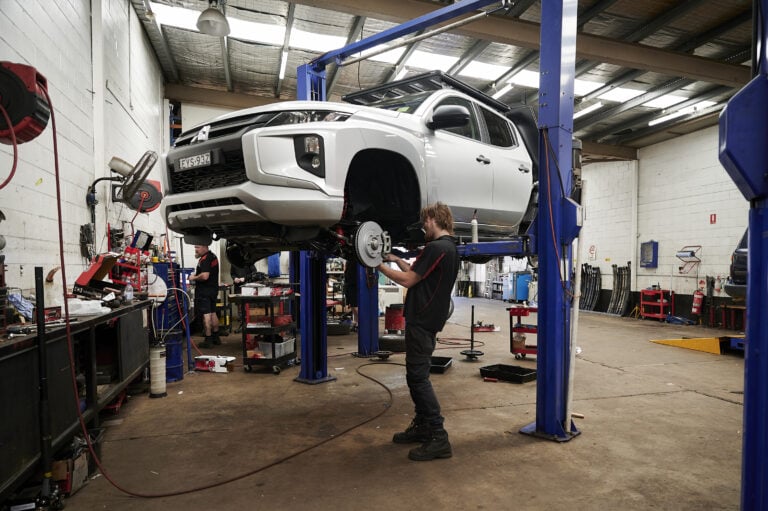
While installing the PIAK nudge bar is relatively straightforward, we had our good friend Gordon from Opposite Lock South Sydney fit it up to the Triton. An experienced fitter like Gordon can have the job done in as little as 15 to 20 minutes as the bar bolts directly to the chassis and there is no interference with the Triton’s OE front-end.
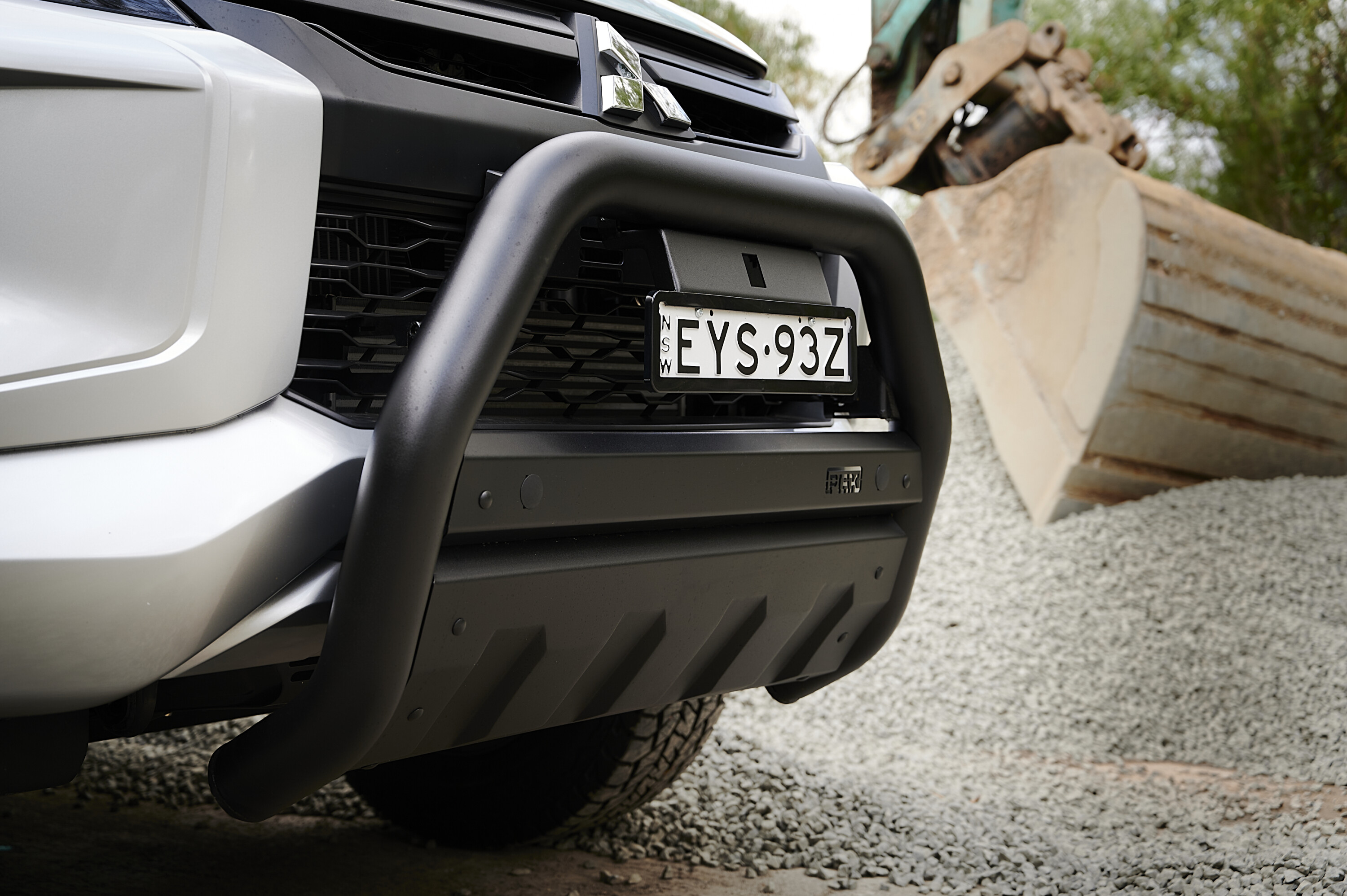
As well as the safety benefits, we reckon the PIAK nudge bar has also enhanced the Triton’s aesthetics. It doesn’t just add flair; it protects the front-end of the Triton in challenging work environments, especially on sites where every trade might be working at the same time and parking can be tight.
We reckon the PIAK nudge bar is a great option for those four-wheel drivers who want some frontal protection in the urban jungle, as well as somewhere to mount a set of lights, but who don’t need the extra protection that a full bull bar setup provides. It is also much lighter than a bull bar.
I was fixated on the bigger and more impressive destinations on the mainland, and I figured a little out of the way island wouldn’t have much for me.
For decades Tasmania has been the brunt of many bad jokes on the mainland, but a little research reveals that this little island contains some of the last great wilderness in all of Australia, including mountain ranges blanketed in snow for many months each year, stunning white sand beaches and genuine old growth forests that contain some of the oldest trees on the planet.
Not to mention the number and variety of wild animals crawling, swimming and hopping all over the island. With hundreds of kays of remote tracks to explore and hardly any people around to hamper the views, suddenly this little island caught my attention.
After exploring high and low all over the ship I barely made it back to my seat just as the worst of the rocking and rolling began, and I actually had to push off walls and tables in an attempt to walk in a straight line.
Fearing the worst I downed a couple of motion-sickness tablets which knocked me right out, and I woke just before dawn as we slowly drifted into the mouth of the Mersey River, with the picturesque city of Devonport perched on the far bank.
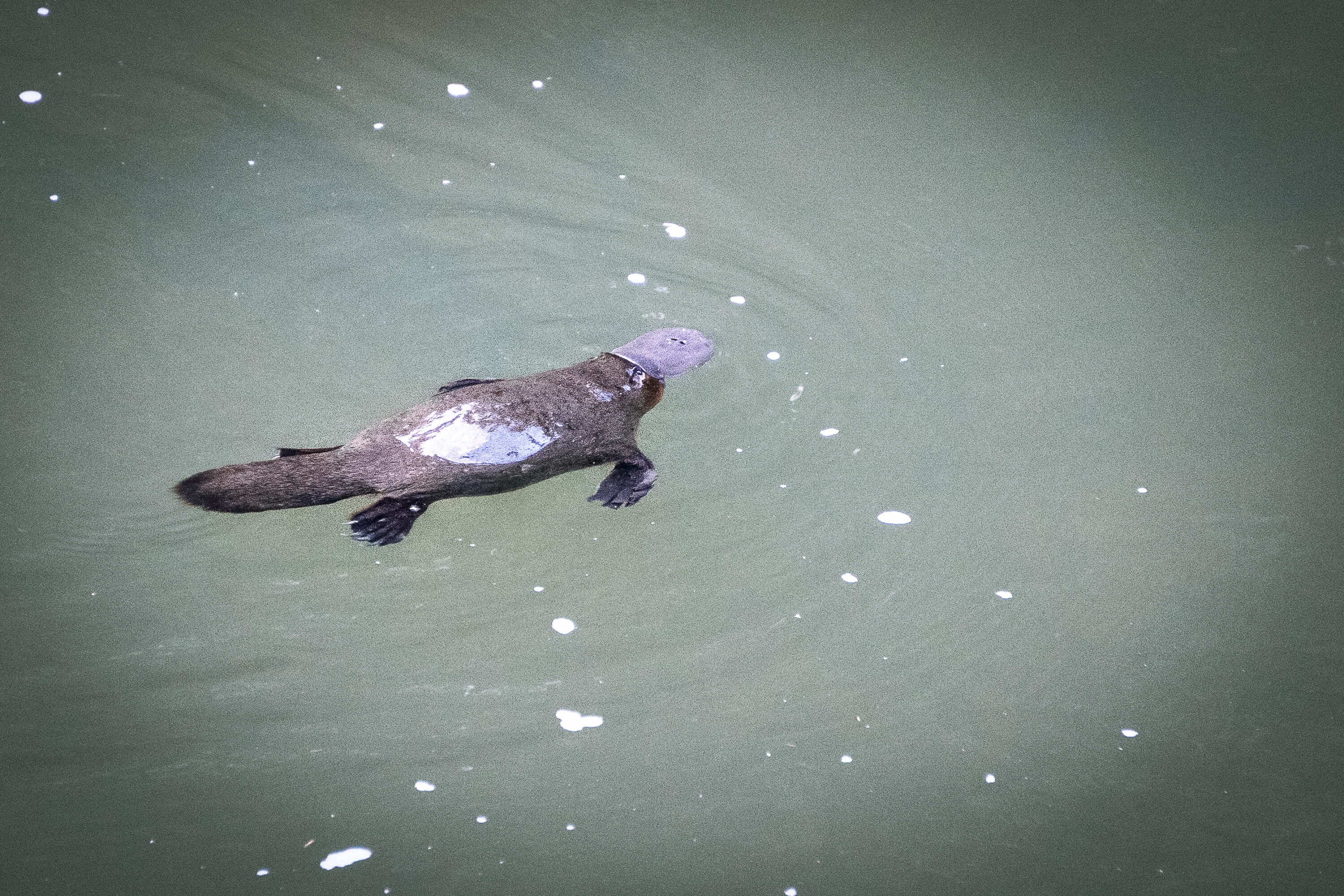
On our second day we spotted another, and by the third day I’d seen more of these strange little creatures in Tasmania than over the course of my entire life.
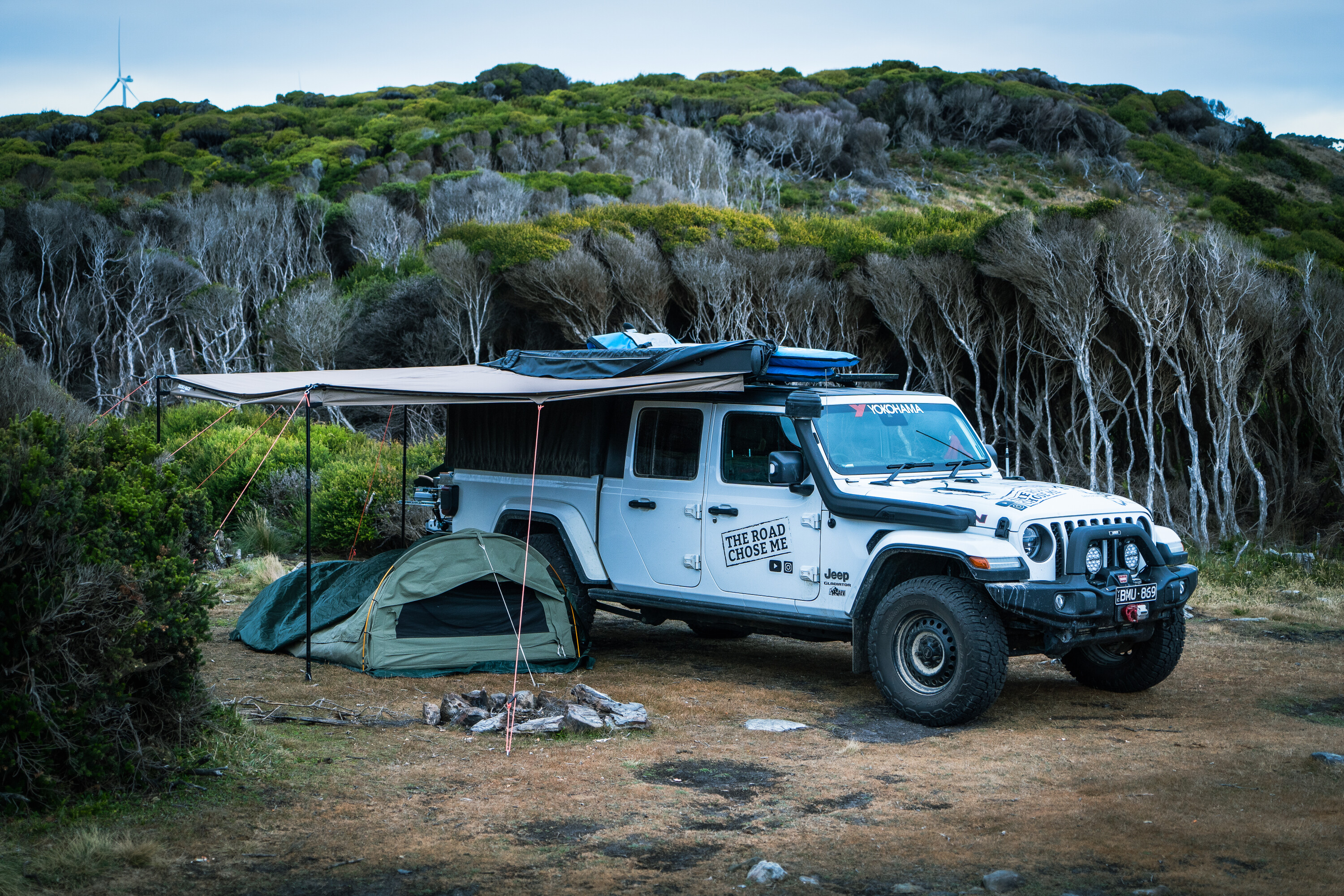
During our first week we quickly learnt Tasmania is an utter paradise for touring in a 4×4. In stark contrast to Victoria and New South Wales, there are free campsites dotted all around which provide clean toilets and sometimes even showers.
The ocean was also not nearly as cold as I had been expecting, and with a wetsuit we had no trouble surfing for an hour without feeling the cold.
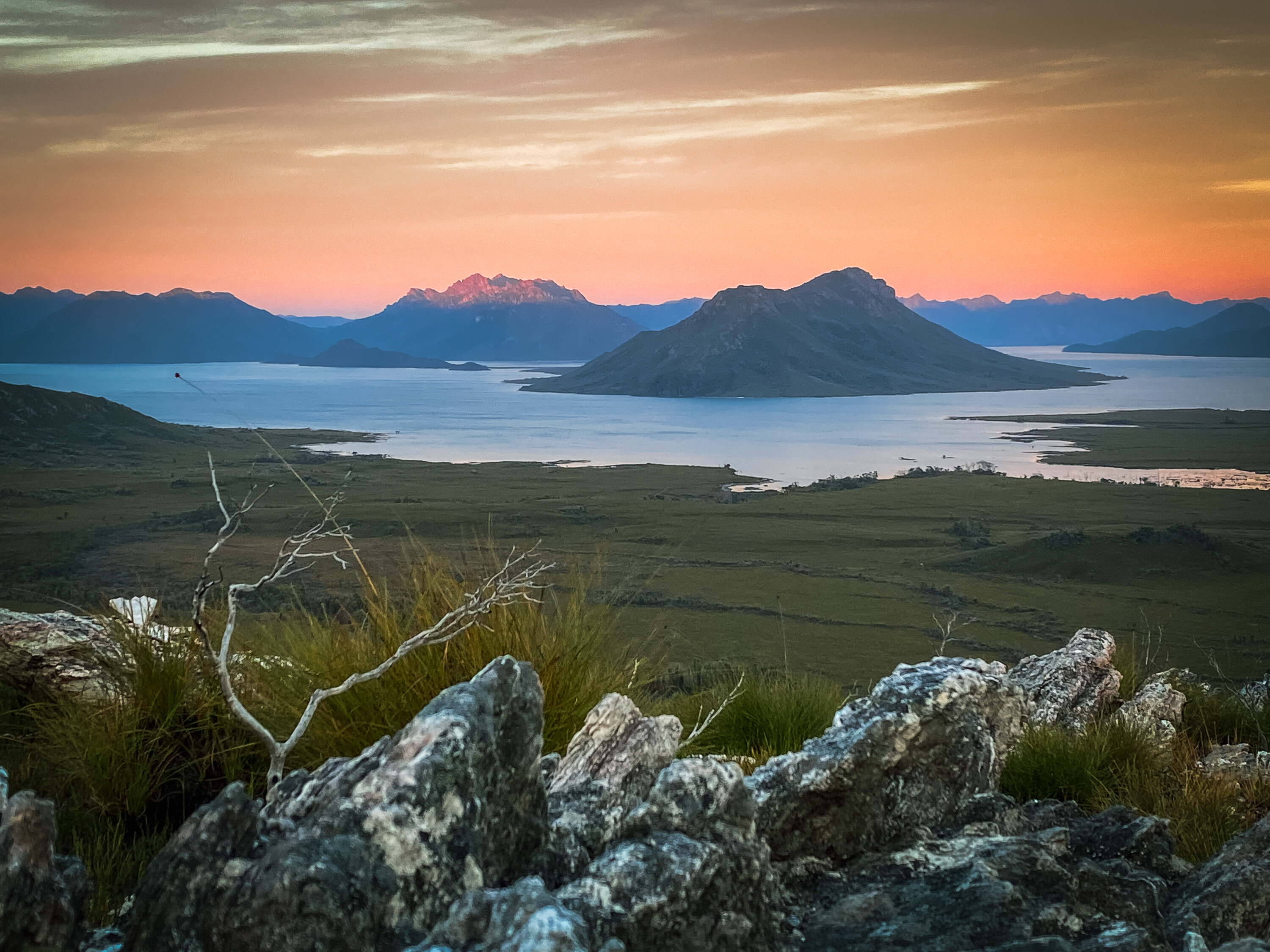
The series of dams that were built resulted in the creation of the enormous Lake Pedder, and the damming of the once wild and mighty Gordon River.
Although I feel somewhat conflicted about the enormous impact the dams have had on the region, there is one lasting critical piece of infrastructure that meets my needs: gravel roads deep into the otherwise inaccessible wilderness.
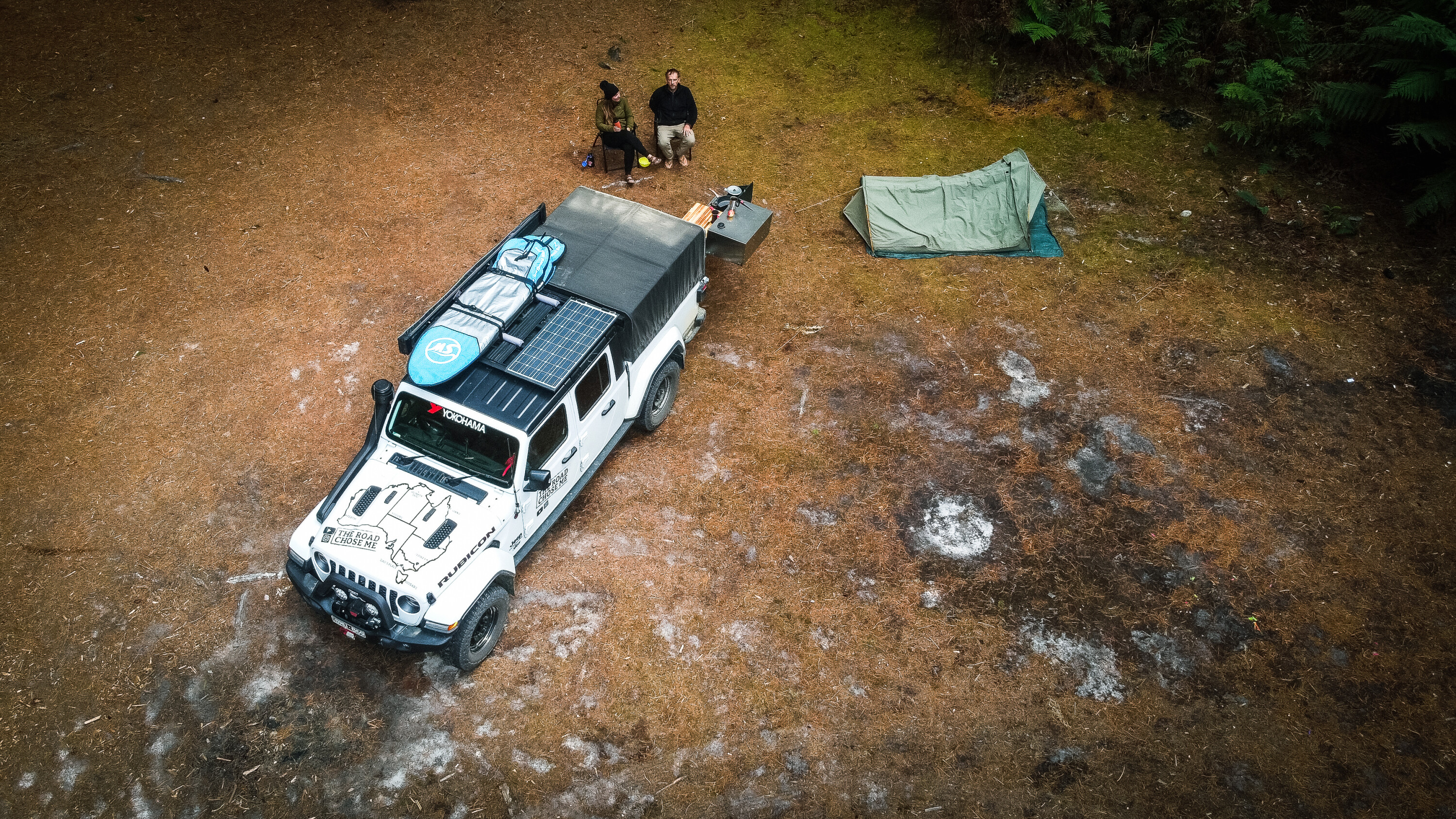
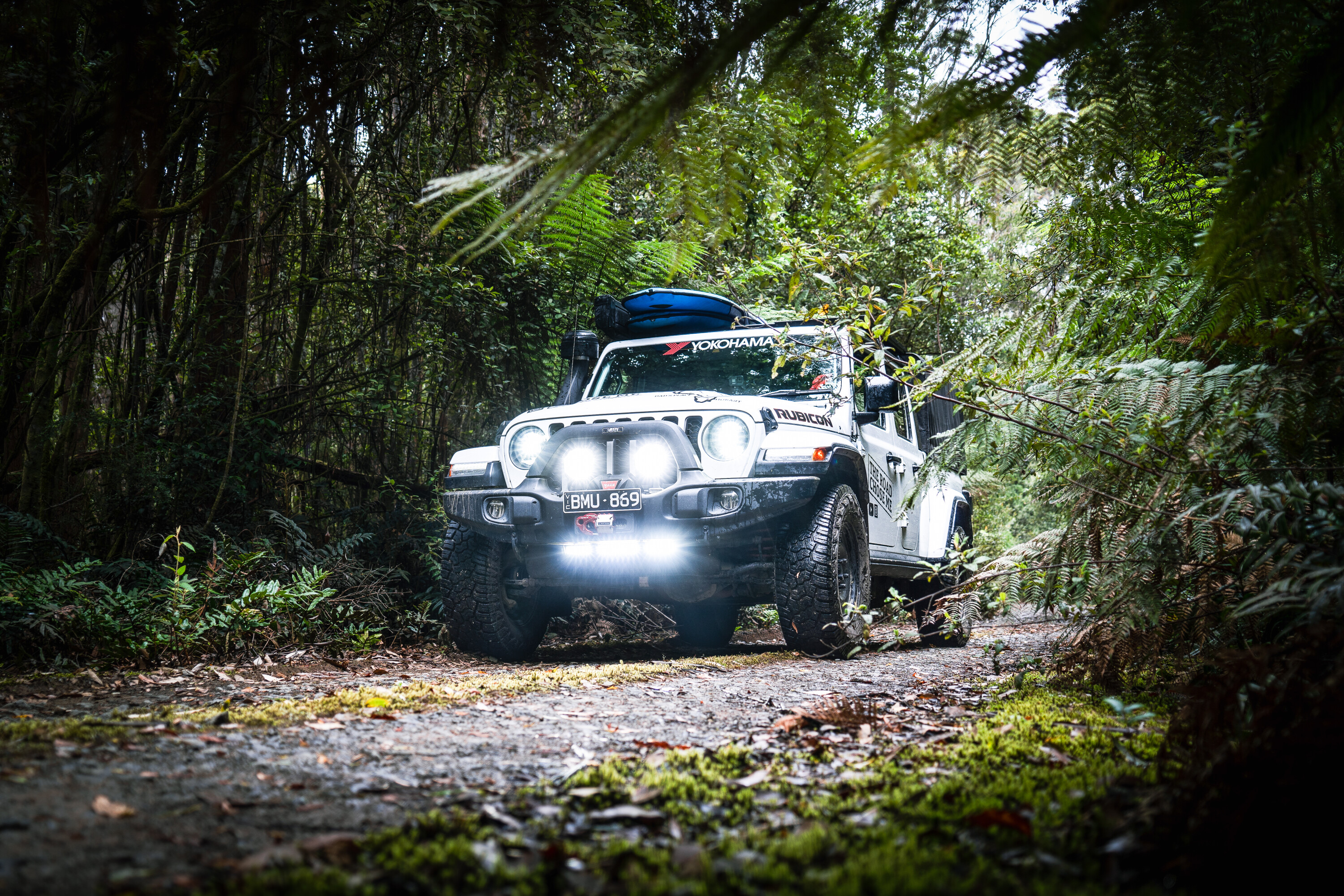
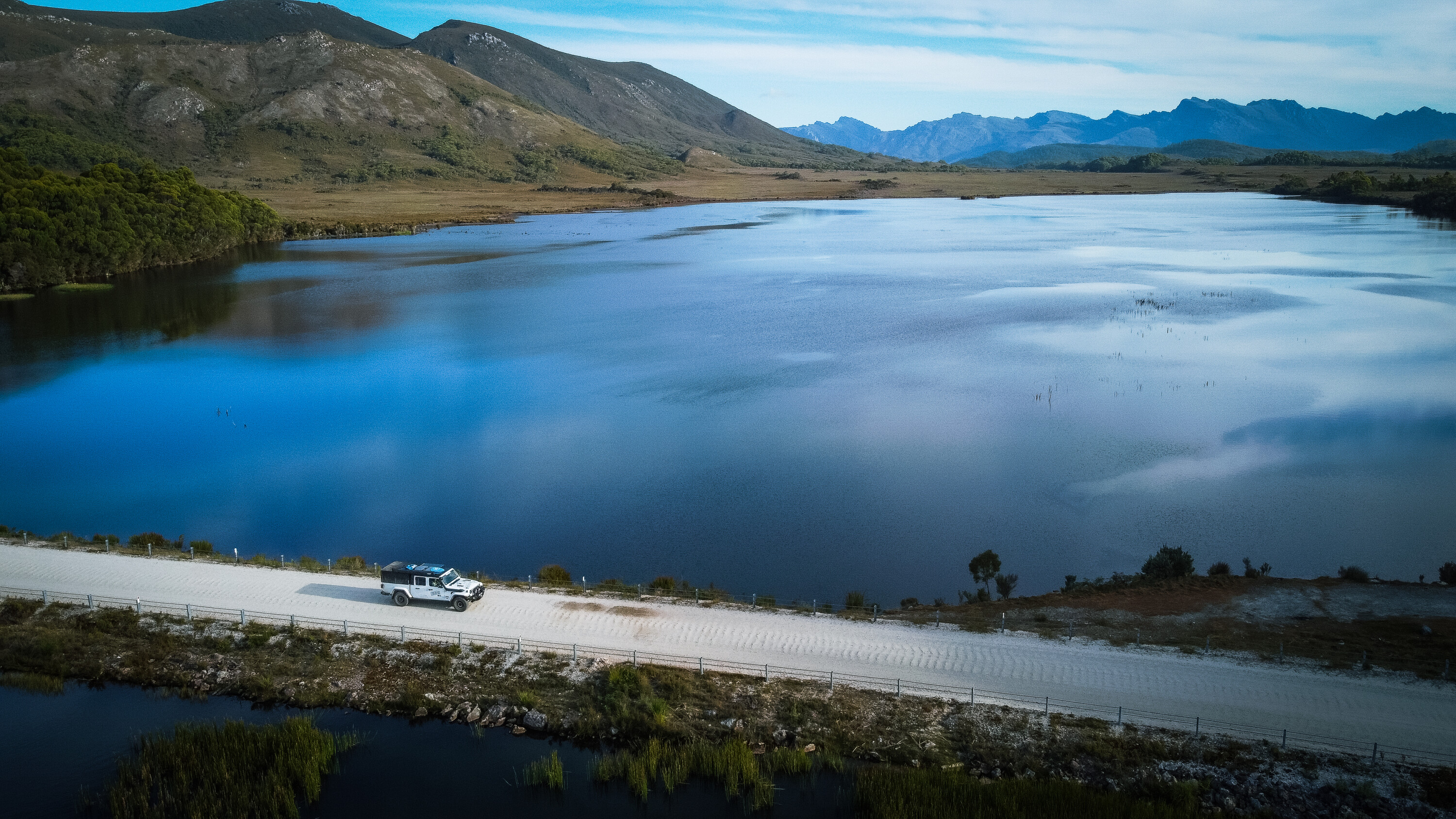
The few gravel roads used in the dam construction are now open to the public, which allow us to explore literally to the end of the road in multiple stunning locations while rarely seeing another vehicle. We camp, hike and explore the entire area in our Jeep, with nights dropping to almost freezing, even during January, the warmest month of the year.
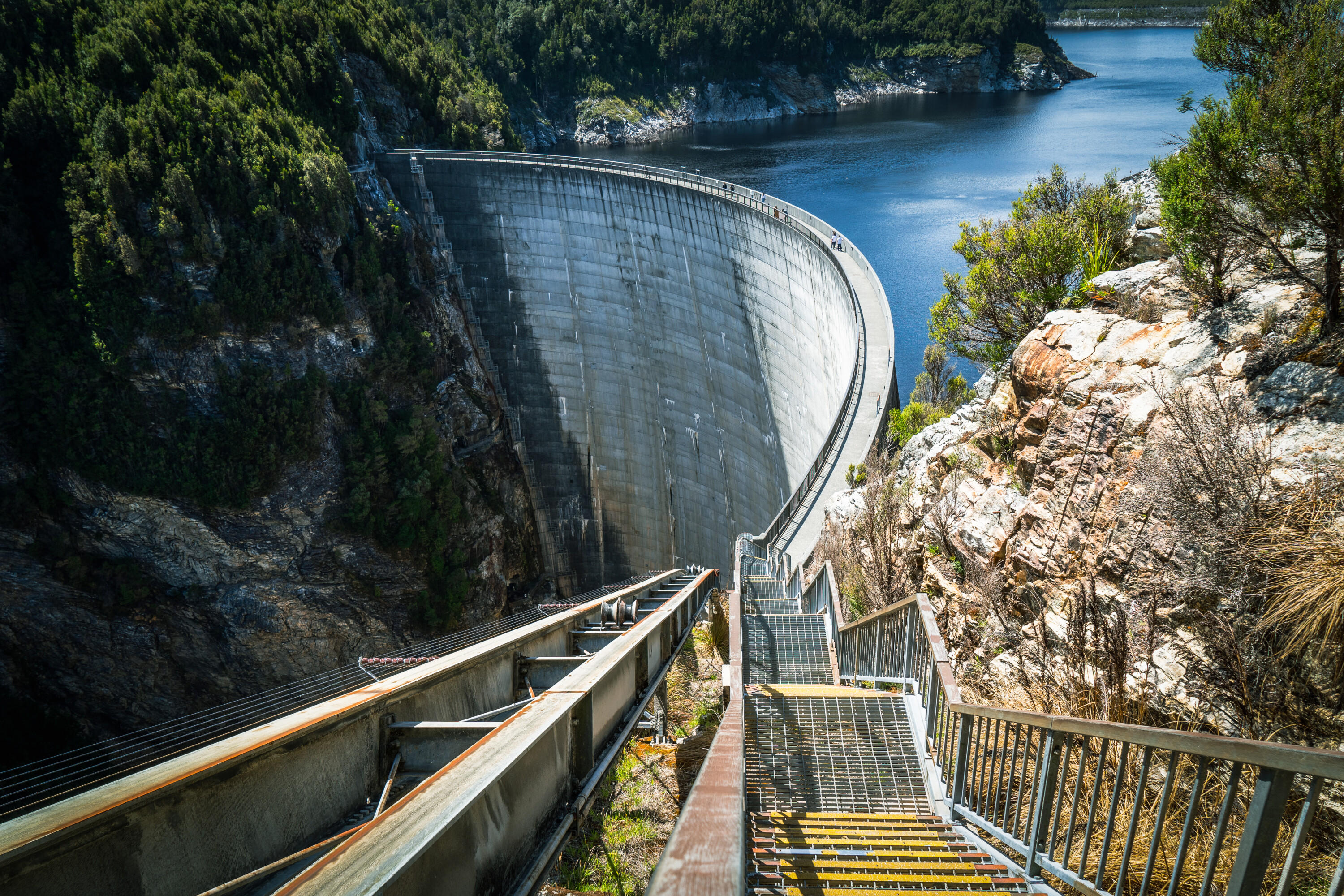
At more than 140m high the very impressive Gordon River Dam lays claim to being the tallest in Australia, and walking across the wall invokes a very strong feeling of vertigo.
Tasmanians are free to make their own choices about personal safety, and I find it a very refreshing change after the nanny-state mainland with its abundance of warning signs and rules.
Leaving the area I spotted a tiny gravel road that climbs steeply up the side of a mountain, and I knew we were onto a good thing. At the top we found a stunning place to wild camp for the night, with only the full moon to keep us company.
This gravel road sees very little traffic and requires the use of a tiny cable ferry across the Corinna River, which is considered way too deep to construct a bridge.
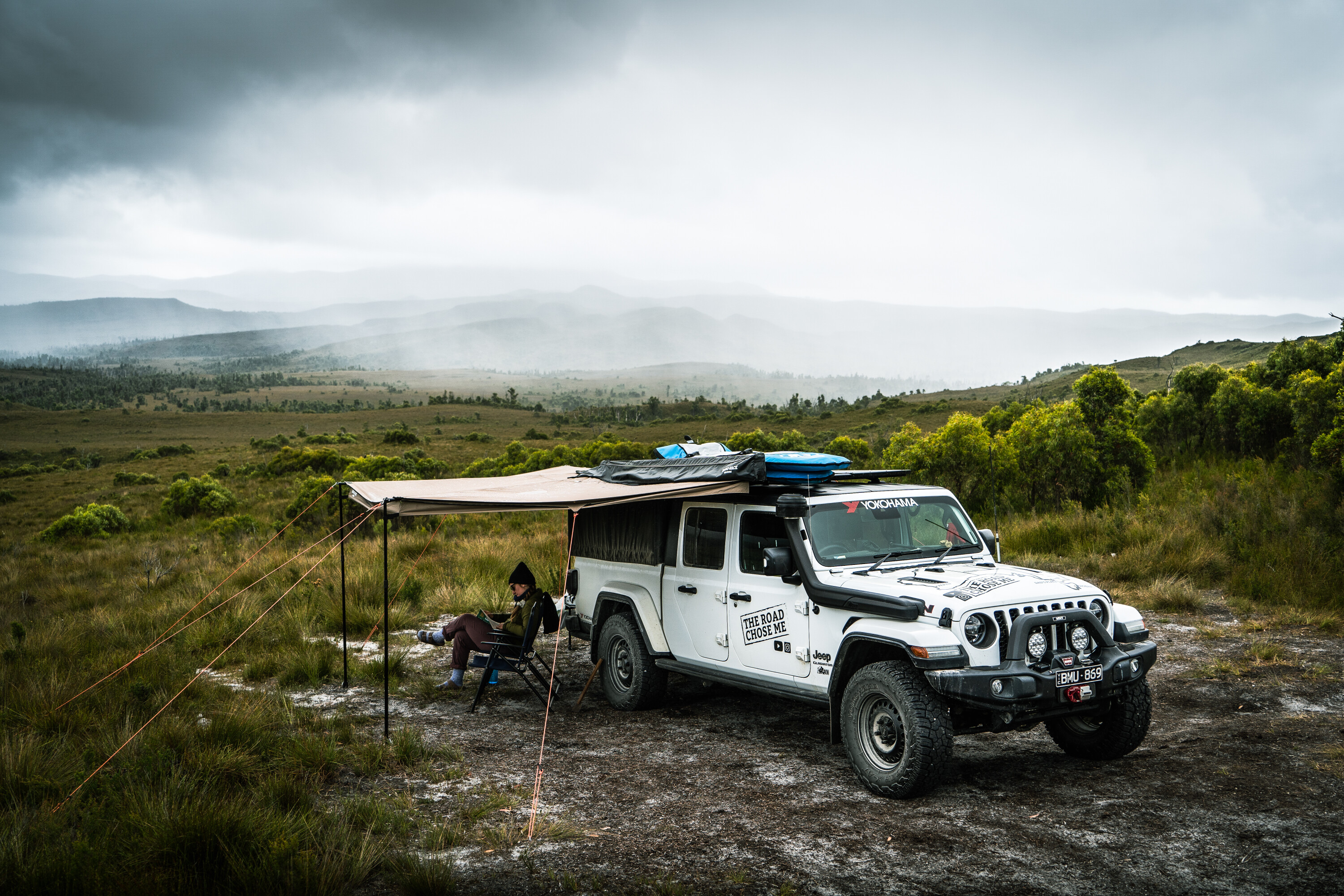
Late in the afternoon we found a clearing to make camp with stunning views over an alpine valley to enormous mountains in the distance.
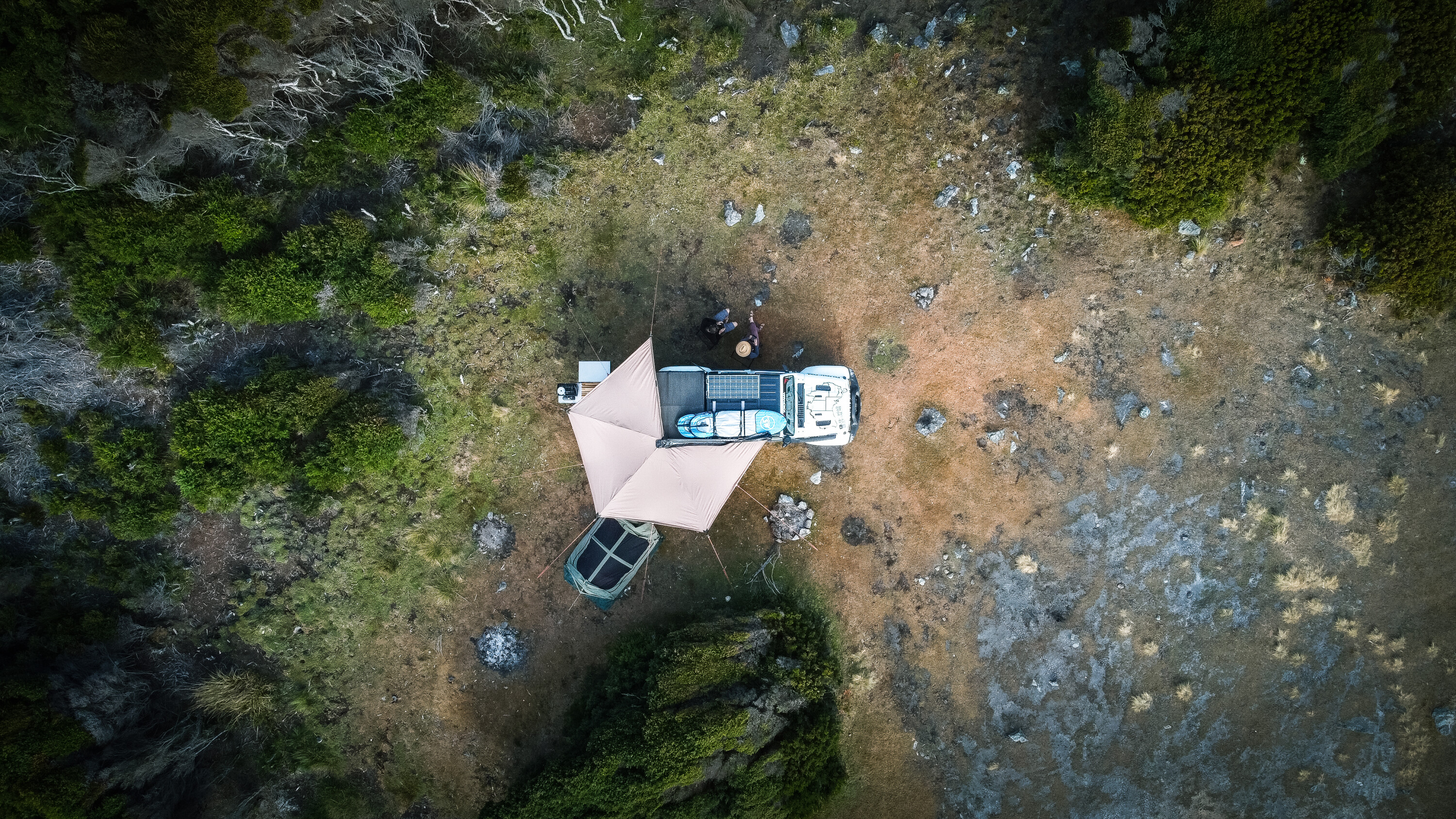
Even in the middle of summer we were soon wearing all our cold-weather gear from Canada, and it was a struggle to stay warm.
I can only imagine this place in winter, and we made a promise to return one day to enjoy the snow-capped peaks.
Deep in the Arthur-Pieman Conservation Area, the infamous Sandy Cape track is well known for claiming multiple vehicles every year, and while buying an access permit at the ranger station I paid particularly close attention to the wall of shame, covered in dozens of photos of vehicles lost to the raging and unforgiving tides.
The friendly park ranger was all too happy to explain the situation and gave multiple warnings of the very real consequences of bad decisions. Water flowing onto the beach from numerous rivers and creeks causes beach sand to become exceptionally soft and dangerous, and in places it forms literal quicksand.
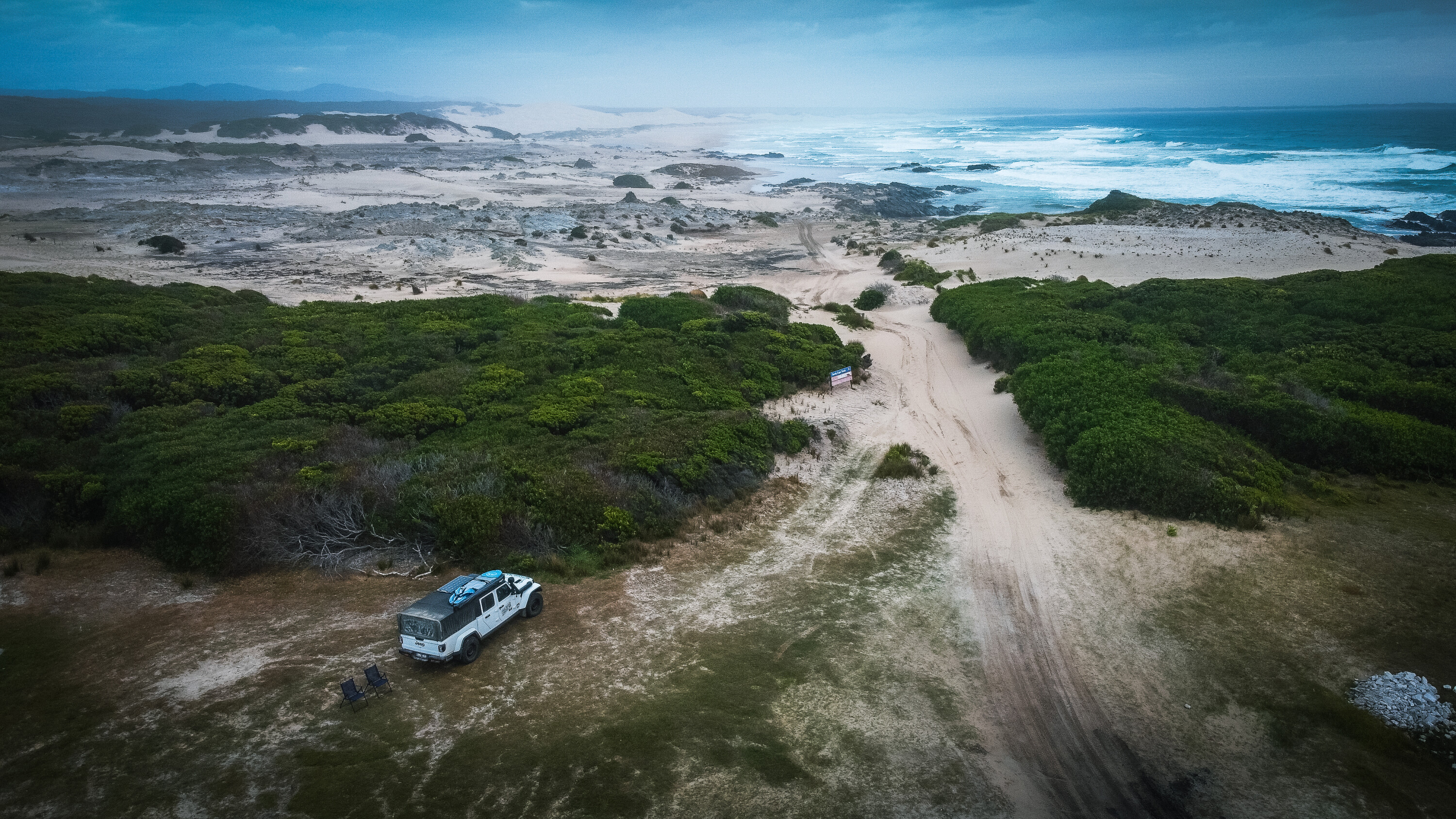
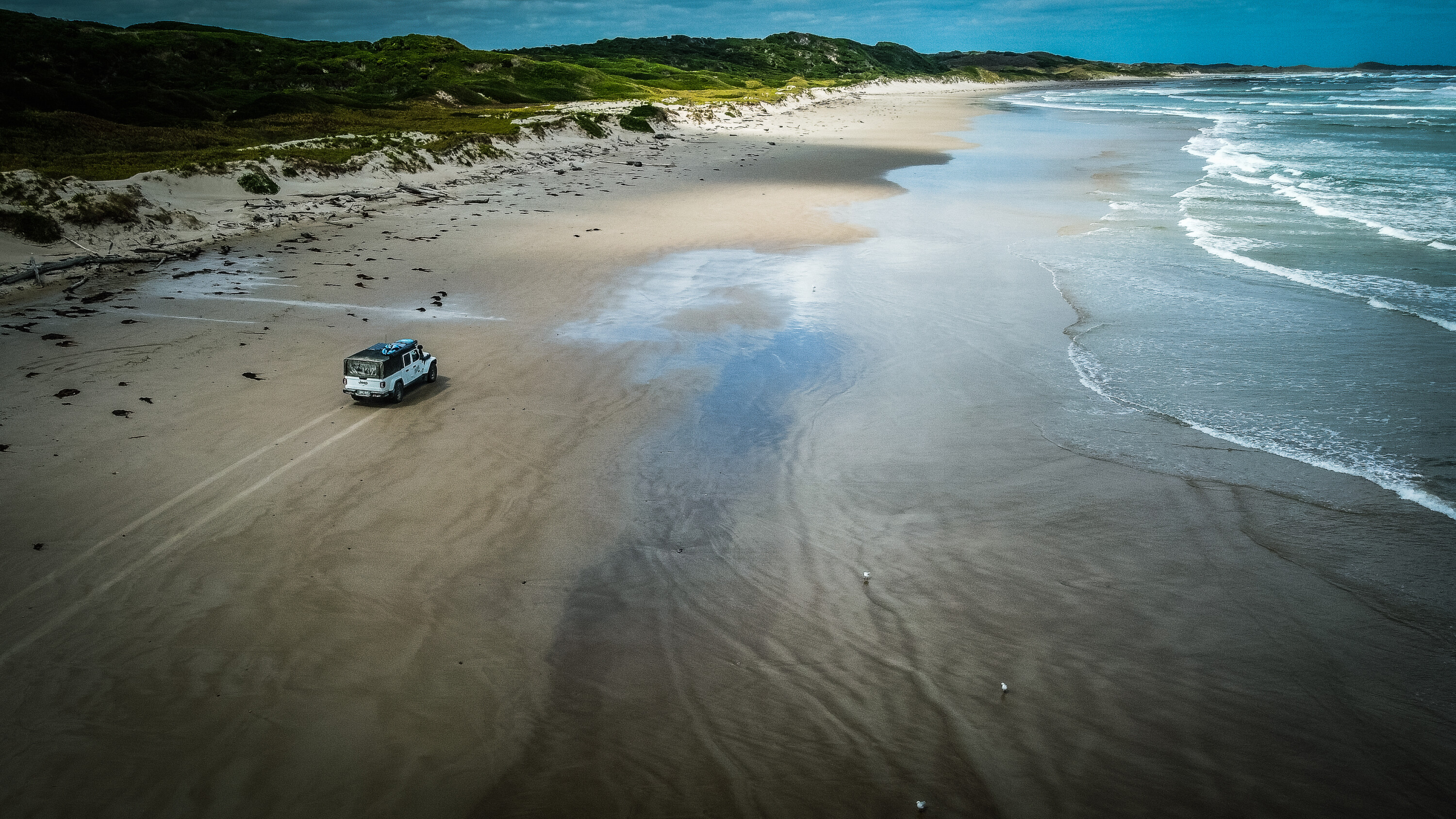
Leaving the little town of Arthur River the track starts with a beach drive, and we slowly made our way South towards Sandy Cape. The area is completely deserted, and while enjoying the early morning sunshine we alternated between beach and gravel track driving, elated to have the whole place to ourselves.
After lunch we arrived at the first major obstacle, Brooks Creek. In years past this crossing has not been much to speak of, though recent king tides have dammed the creek, creating a crossing roughly a hundred yards across that is deep enough to require a much closer inspection.
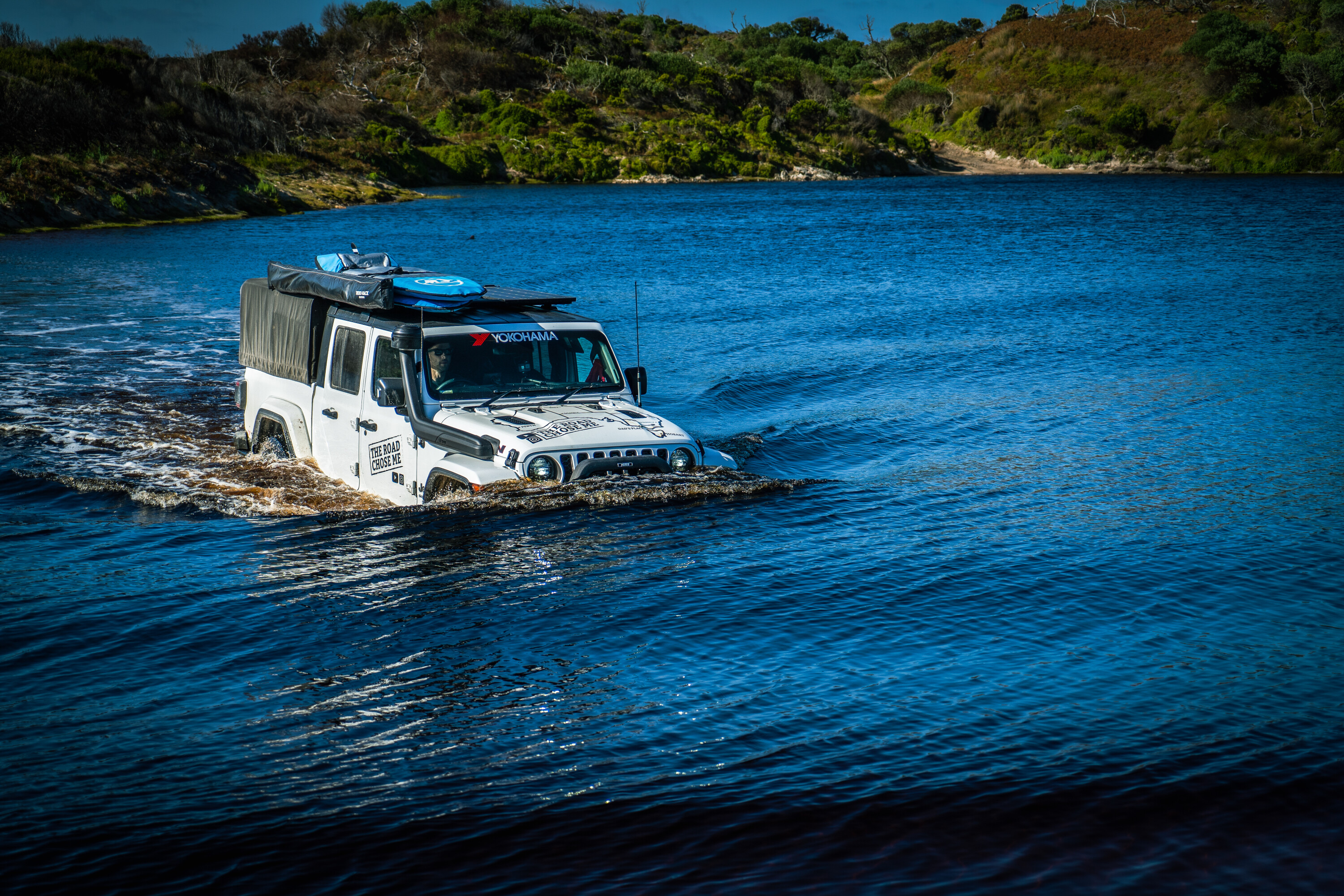
Comparing the water line on my shorts to the height of the Jeep, I saw that water shouldn’t come over the bonnet, so I decided to make an attempt.
I always prefer the slow and steady approach, but I was happy to create a good bow wave to help propel me forward and make sure I didn’t stop in the deep water that almost covered the front grill.
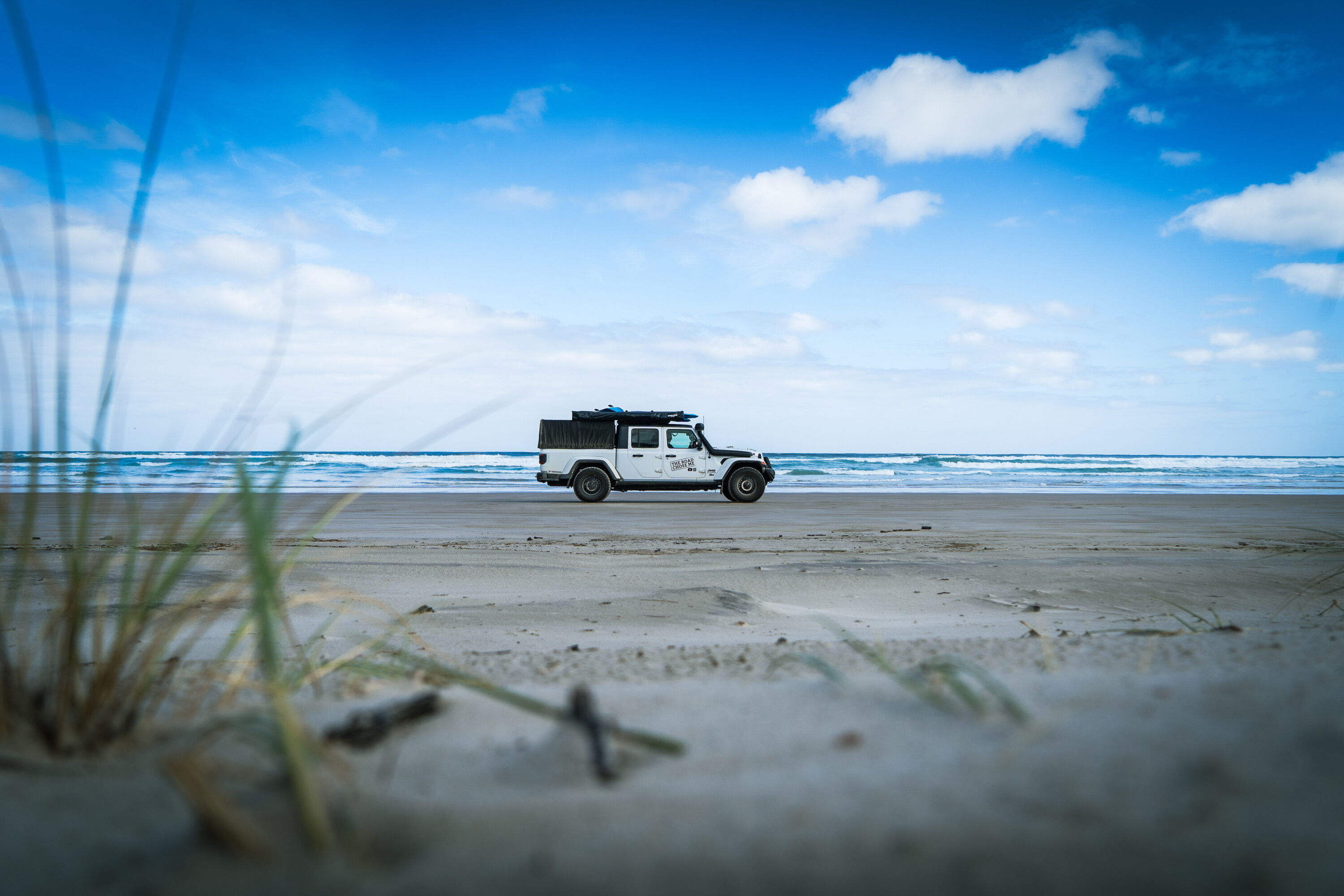
After agonising over the decision all night I decided not to tackle the beach section alone, wary of quicksand at each river crossing.
With no other vehicles arriving on scene we turned back, happy to have explored this far into the wilderness, and also happy to have made smart decisions that would allow us to explore another day.
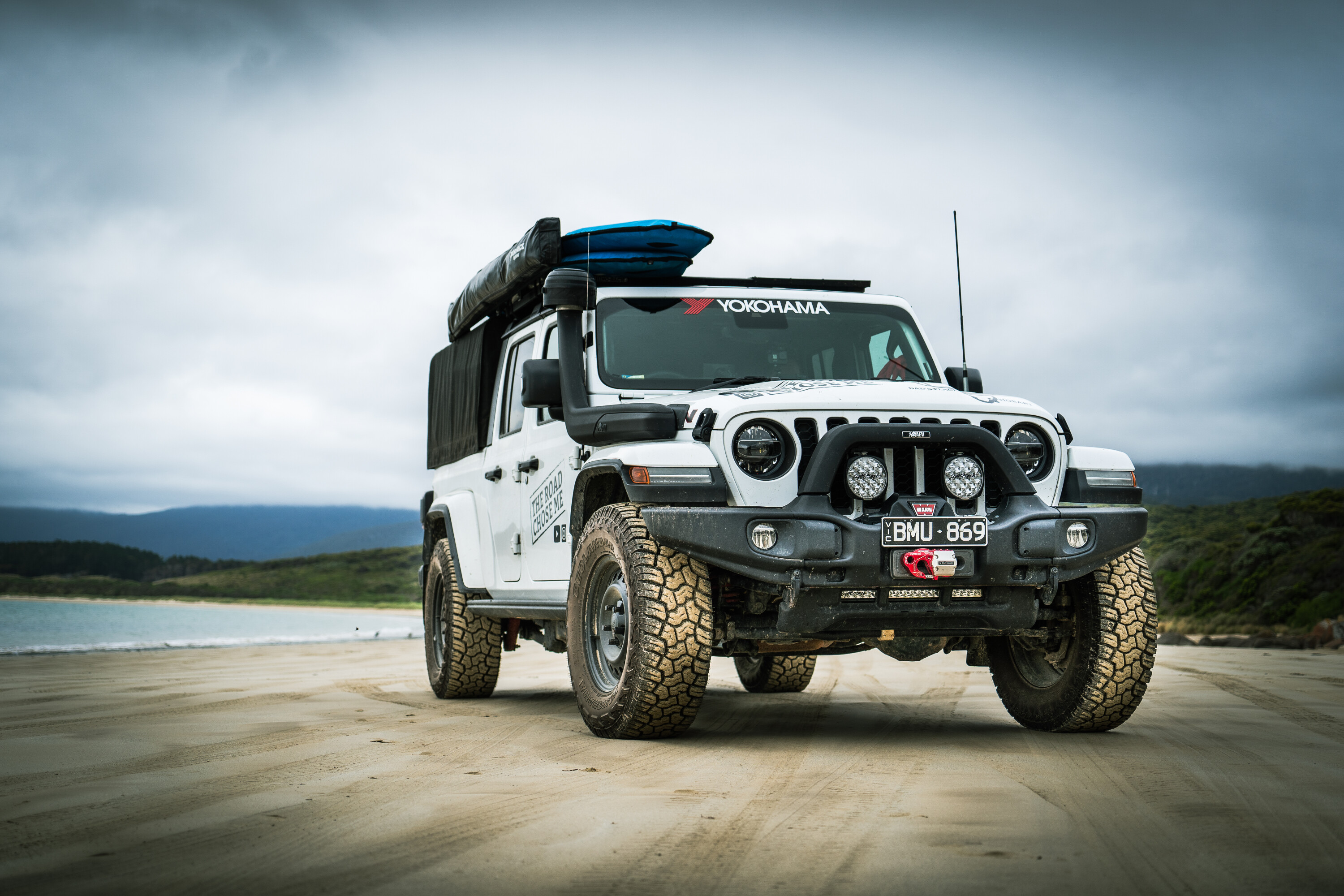
Tiny logging and mining exploration roads dot the landscape, providing endless opportunities to roam in the Jeep and camped where we pleased.
With more than 40 per cent of Tasmania reserved as UNESCO World Heritage or National Park, and very few people about, wild critters seem to outnumber humans 10 to one. During our exploring we saw countless wombats, kangaroos, wallabies, echidnas and handful of platypuses.
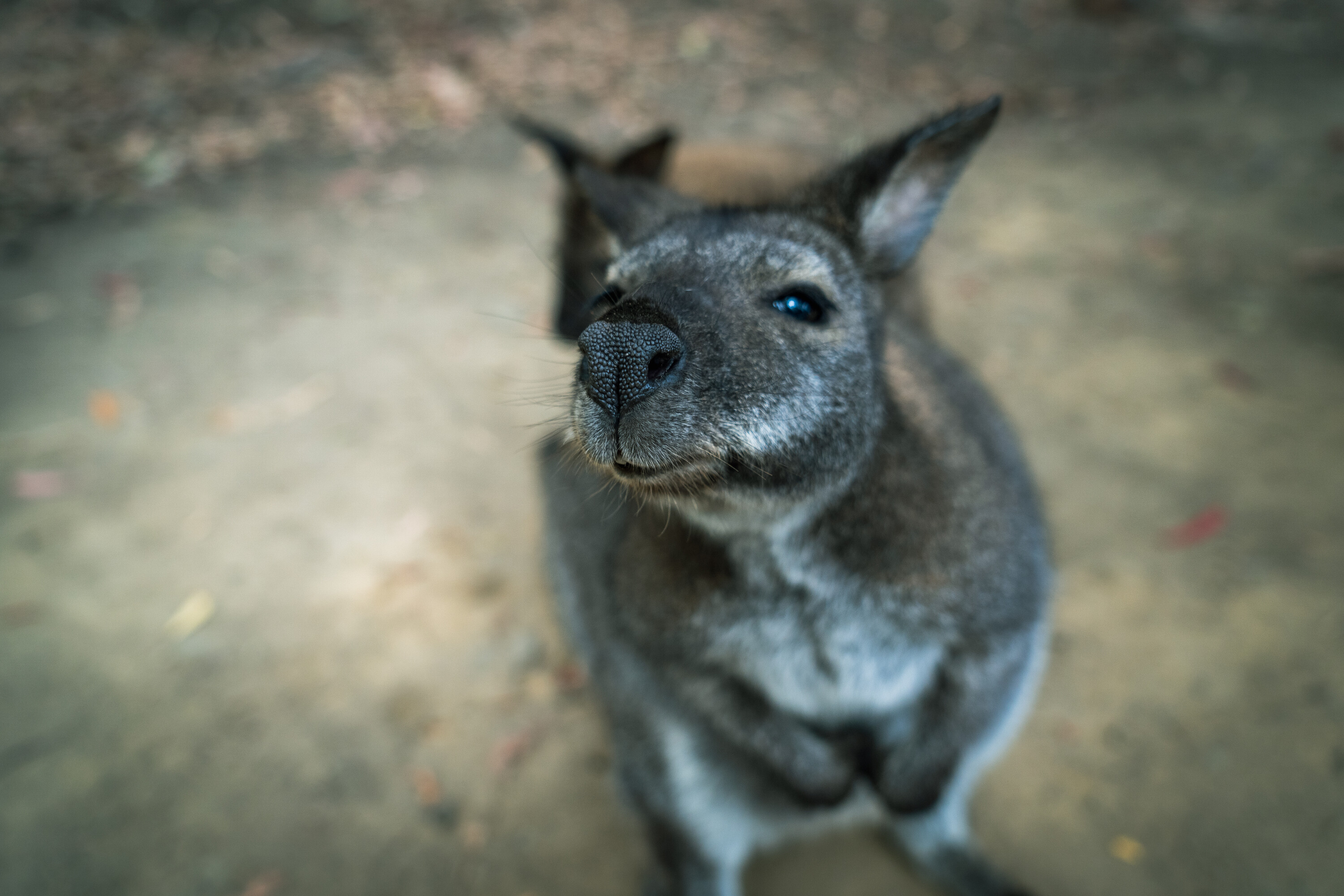
Late one evening an eastern quoll payed a visit to our wild campsite and darted around the swag and Jeep for 10 minutes so we could get a great look at it.
Because there are no introduced foxes in Tasmania, this is one of the last places eastern quolls can be found in all of Australia.
While those who live in urban centres around the globe often put on a face every day and pretend to be something they’re not, those who live in out of the way places are unashamedly themselves, warts and all.
In my experience these people are more genuine, more honest and universally much, much happier.
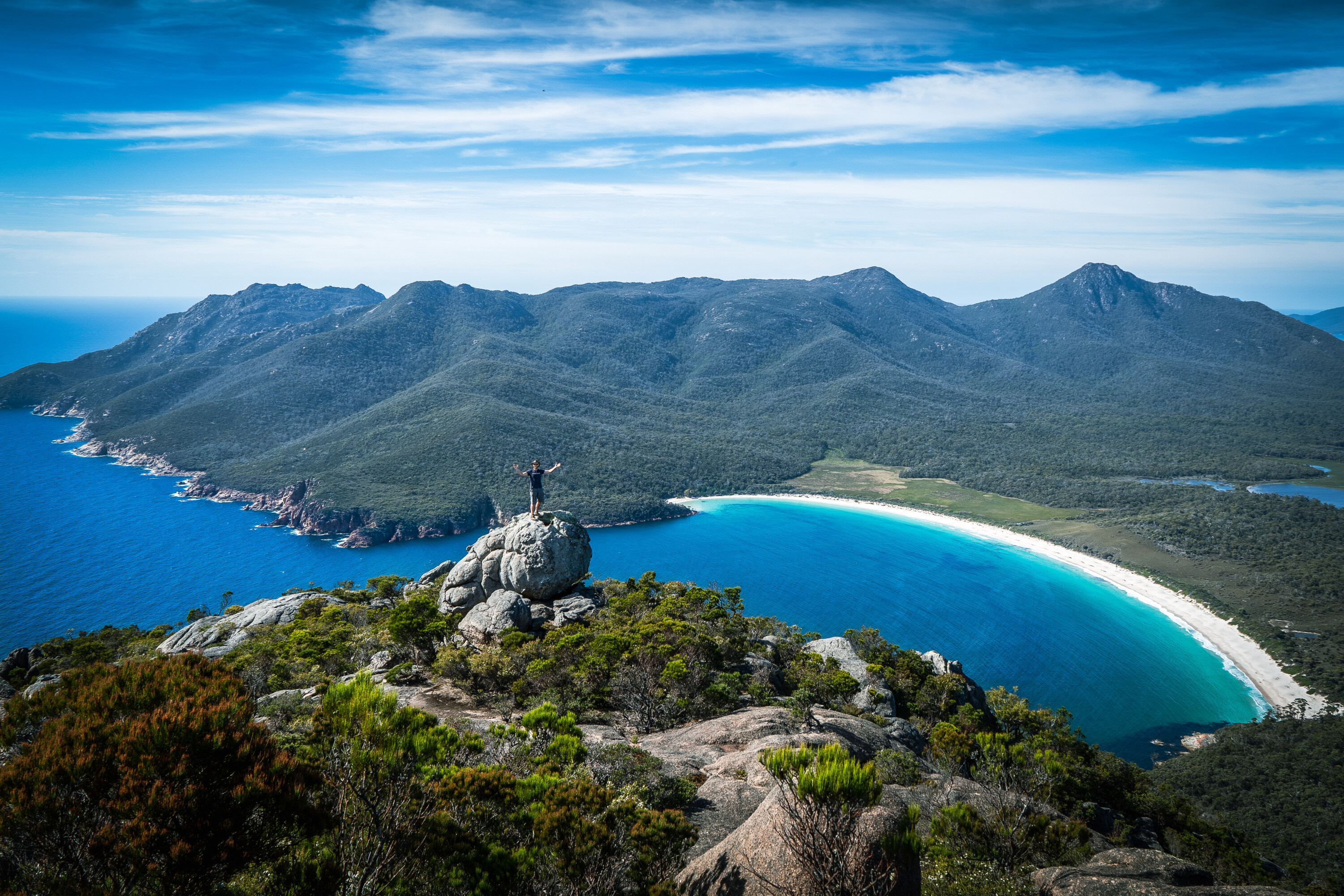
After experiencing all it has to offer first hand, I can’t help but wonder if Tasmanians themselves came up with some of the rumours and jokes about their island state to keep mainlanders away.
With stunning wilderness, an abundance of wildlife, super friendly and laidback locals and plenty of open spaces to roam free, I’d be protective of this magical little island paradise too.
In a world where exploring the great outdoors has become a way of life, these two products have garnered attention for their exceptional design, functionality and versatility.
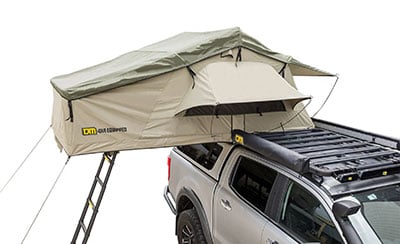
What distinguishes this WKND Warrior combo is its seamless compatibility, as the awning and rooftop tent are expertly designed to work together. Using the WKND 316 stainless steel brackets allows the awning to securely attach to the side of the rooftop tent.
Additionally, standard installation options are available for securely mounting the awning to your vehicle’s roof rack. There is flexibility when it comes to mounting the rooftop tent, with the choice to mount it directly on to a platform rack, crossbars or canopy.
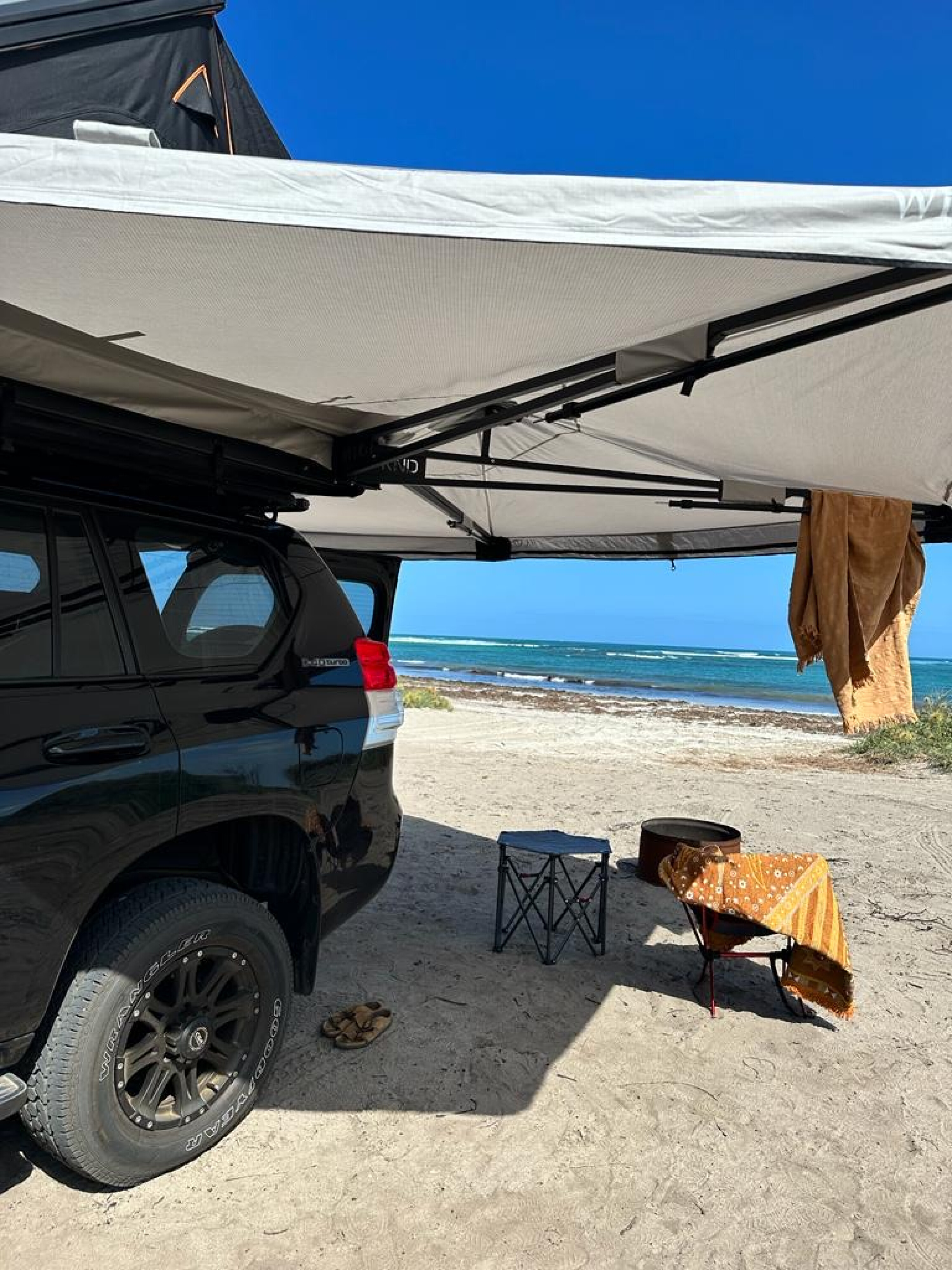
“The Warrior 270 Awning and Odin rooftop tent are a dynamic duo, a perfect pairing that turns any camping trip into a well-coordinated outdoor masterpiece. Together, they redefine comfort and convenience in the wilderness,” said Kaedon Thiart, owner of WKND Warriors.
The rooftop Tent boasts a sleek and slim design, standing at only 170mm in height (excluding roof racks and solar panels), it is one of the slimmest rooftop tents available. Using robust 280gsm rip-stop polyester-cotton material with double-stitching and waterproofing, you’re shielded from the elements, ensuring no seepage or mildew, even on rainy nights.
The tent comes equipped with anti-condensation mats at both the top and bottom, along with three access zippers to perfectly accommodate any touring setup. All of these features are encased in a durable honeycomb aluminium hard shell, providing excellent insulation against varying weather conditions.
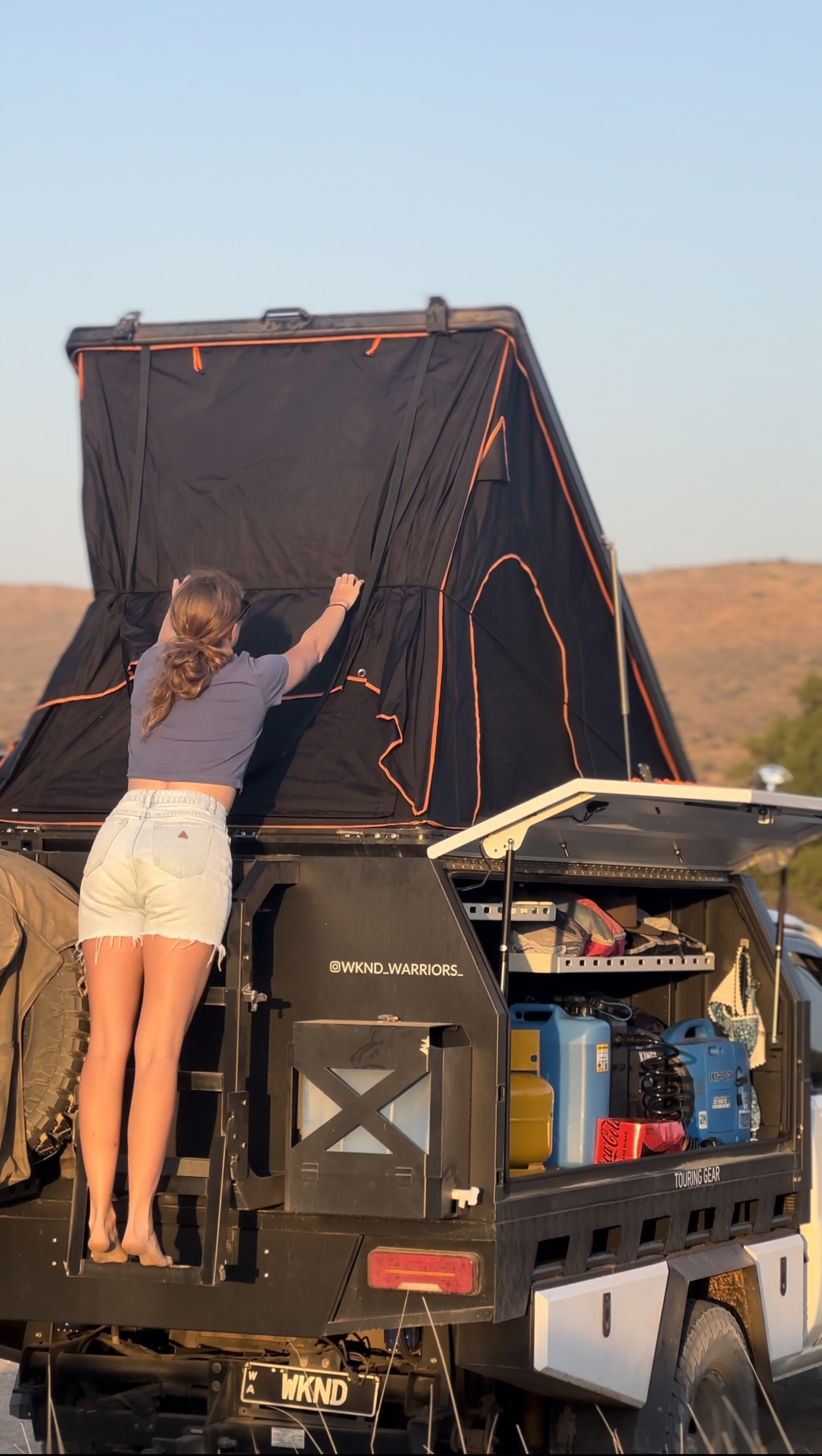
Other features include internal USB/USB-C charging points, six roof storage pockets, a 12V red/white LED strip light, and a 70mm high-density foam mattress. Weighing 65kg, this certainly is a lightweight rooftop tent. The internal sleeping space is 2050mm x 1220mm and the closed dimensions are 2100mm x 1340mm x 170mm, not taking into account the included 125W ultra-thin hard solar panel.
The awning is self-standing, with the externally braced design offering an advantage in maximising your usable shade compared to other 270-degree self-standing awnings. It includes a fold-up pole and features extended final arms and improved rear coverage. Made using the same polycotton as the RTT, the awning is lightweight with functional bracing designed to withstand high winds.
But it wasn’t until I started doing proper research that it’s not quite that easy; this needed some proper logistical organisation.
The island has a few rules, and one of the most important is that only 20 vehicles are allowed there at any one time. So with that in mind I found a time slot to suit my exploration of the island for five days, next was fuel and supplies.
All up I should be good for nearly 500km worth of 4WDing. A fuel drop can be organised on the island, but expect to pay a premium price.
With both fuel tanks chokers and a top-up shop at Denham on the Cape Peron peninsula I headed to Steep Point, and where the Dirk Island barge pick-up point was. Conserving fuel, it was an easy 100km drive to the turn-off point on to Useless Loop Road which is sealed for part of the way.
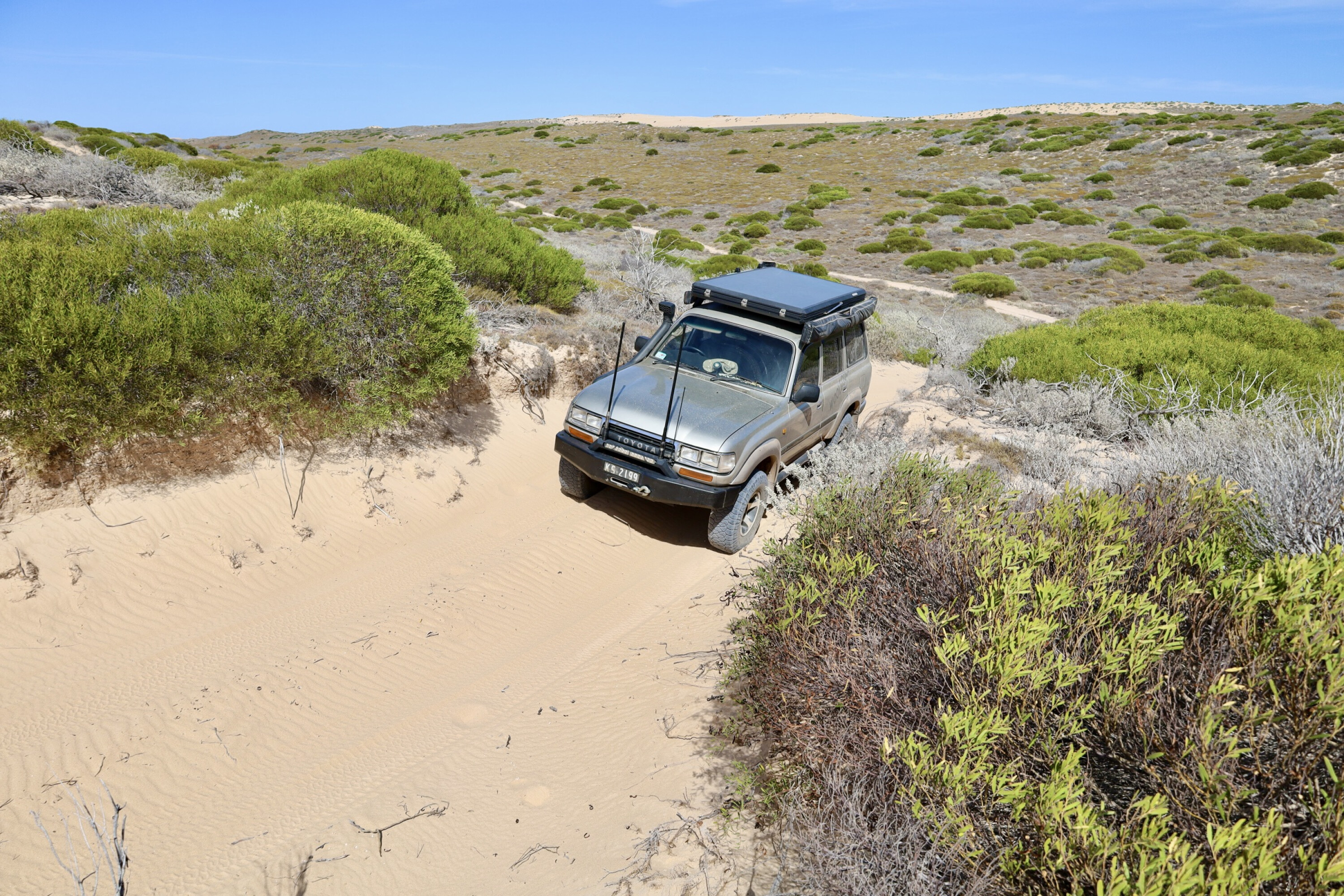
Signposted 39km before Steep Point, Parks WA recommend dropping tyres down to 28psi and switching to low range for the sand-dune section and corrugated roads. It’s a point well taken as the road to Steep Point was extremely rough from recent traffic, and I must admit some of the worst I have come across in 30 years.
With a few hours of daylight left I headed up to the Steep Point sign for the obligatory photo to say ‘been there, done that’, and with the barge pick-up point and camp spots right on the beach.
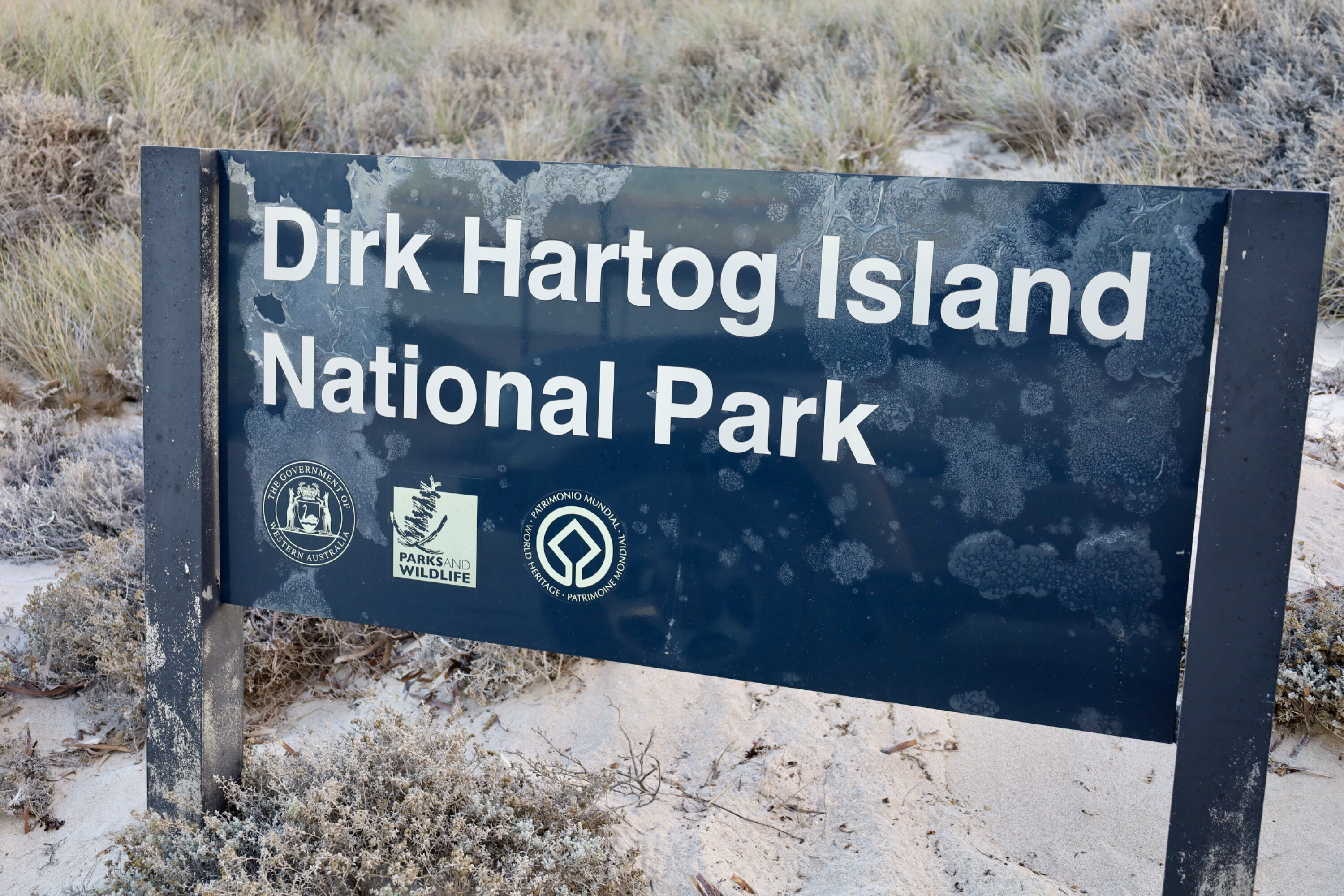
I soon settled in for the night to wait for the early morning departure to Dirk Hartog Island National Park in the Shark Bay World Heritage Area.
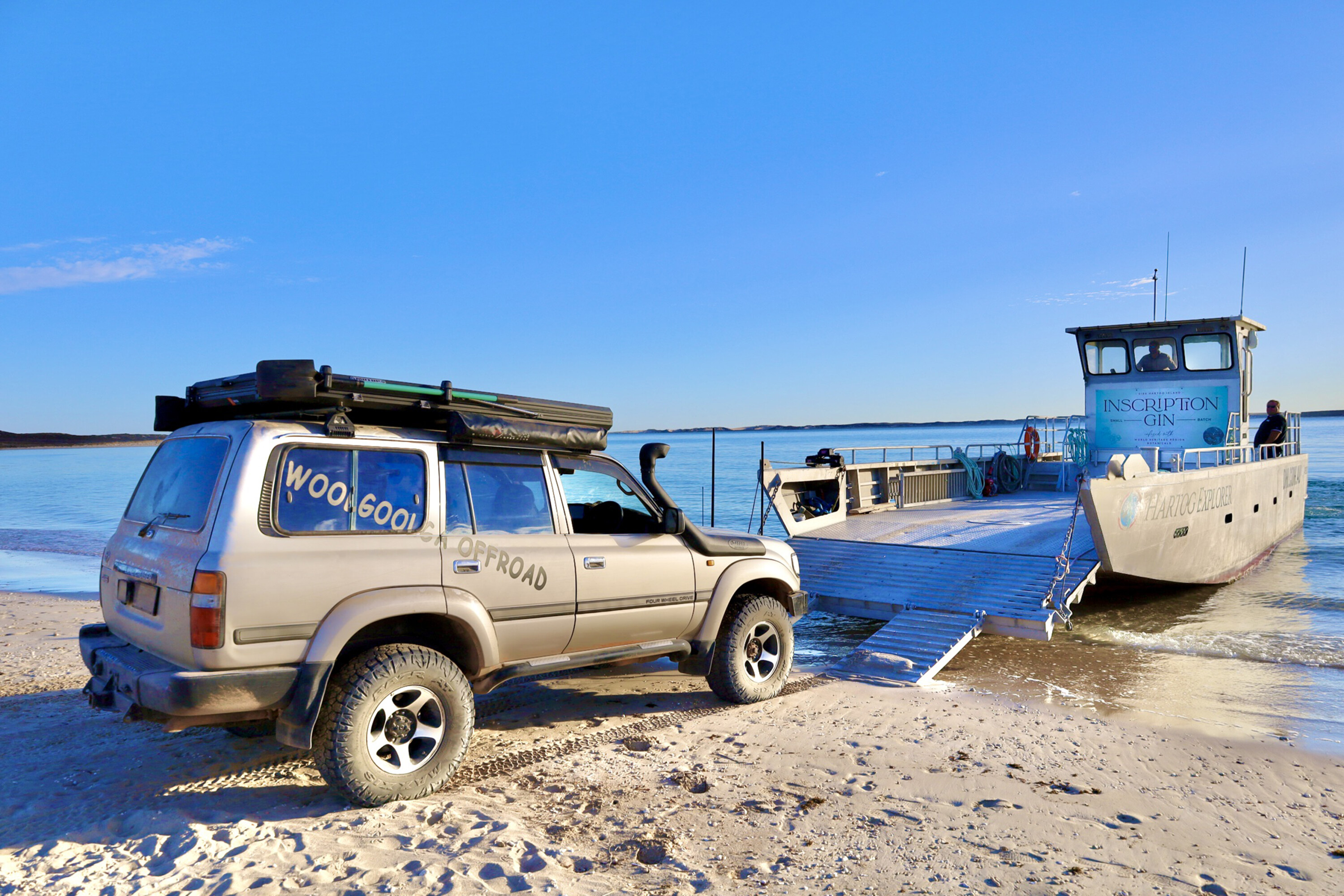
Camper trailers are welcome but must come within a specified length, and 4WDs must have their tyres down to 20psi so they don’t get bogged when backing off the barge.
My reasons for going to Dirk Hartog Island were to explore the remoteness of this island, delve in to its history and see just why it’s now classed as a World Heritage site. The island is roughly 70km long, 20km at its widest point and has only about a dozen tracks that criss-cross its entirety.
With five nights on the island, I chose a variety of the remote camps away from the centre to experience the isolation and beauty of the place. All the camps have some sort of water view right on the coastline. On the east, the water was still and calm on the sandy shores, but on the west side, Indian Ocean waves constantly pounded the rough rocky coast.
The island took shape during the last glacial period in the Pleistocene epoch (2.6 million to 11,700 years ago) and during the warmer times since then, sand dunes formed and plants grew on them.
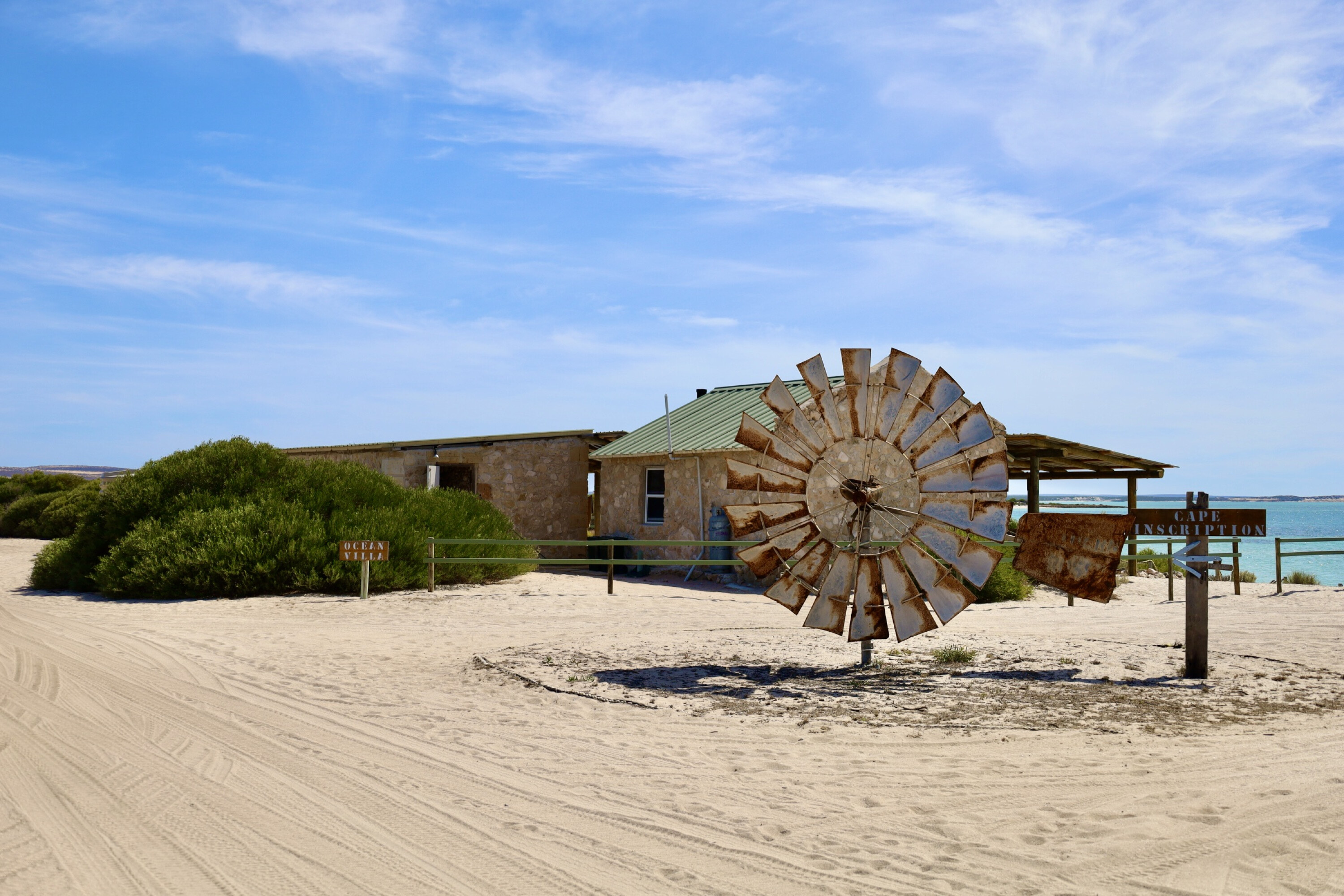
What’s pretty impressive are the shifting dunes in the centre of the island. Ever changing, these dunes are as white as anywhere on the east coast, and the track across the top changes constantly.
My camps varied from the beautiful Notch Point watching the sunrise over dead-still water and watching the flurry of birds when baitfish appeared off the point, to where William Dampier landed in 1699 and be the first person to make the first scientific collection of plants in Australia, then across to the ever-eroding west coast at Quoin Head, watching big sharks cruise the cliffs below.
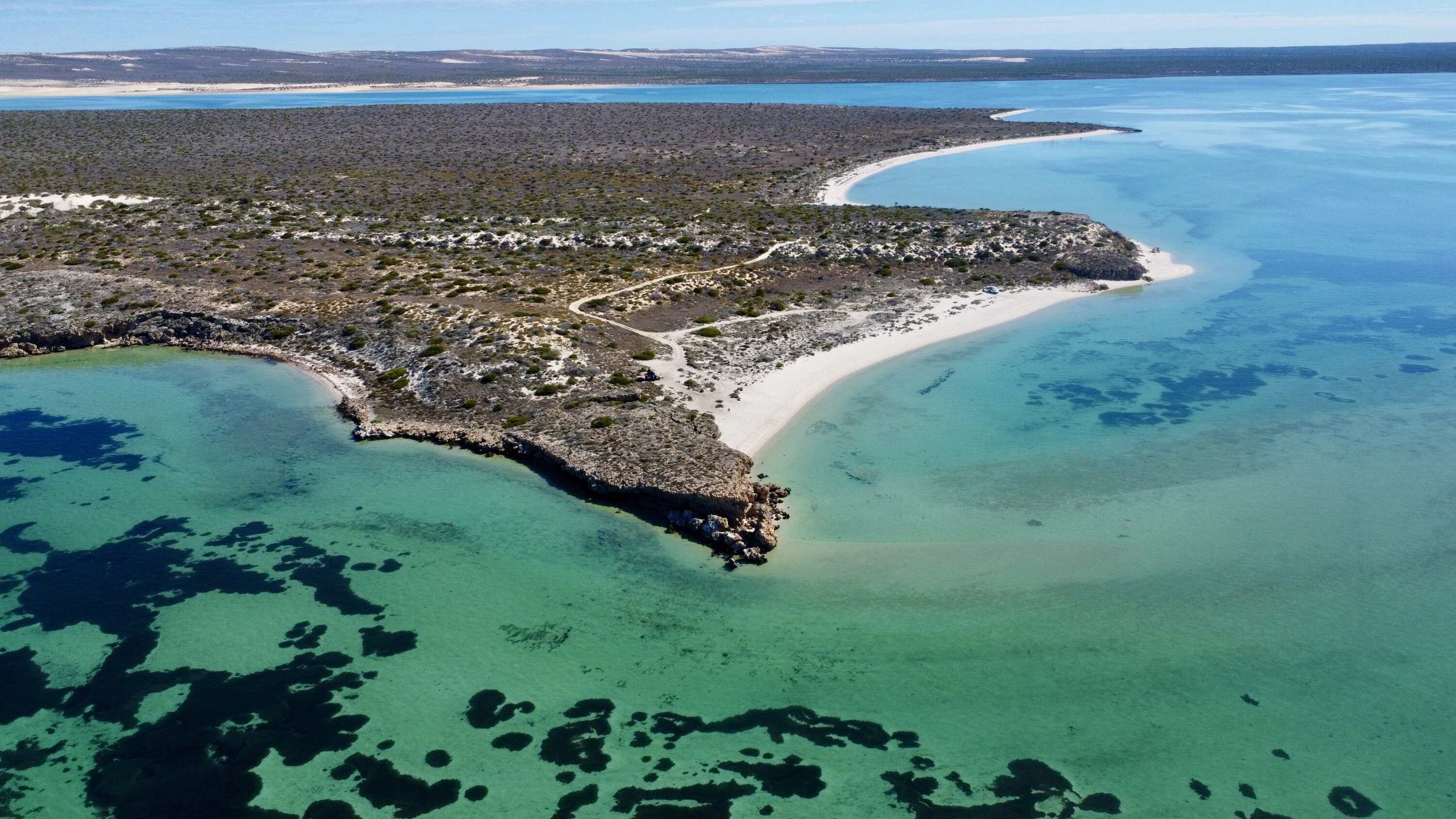
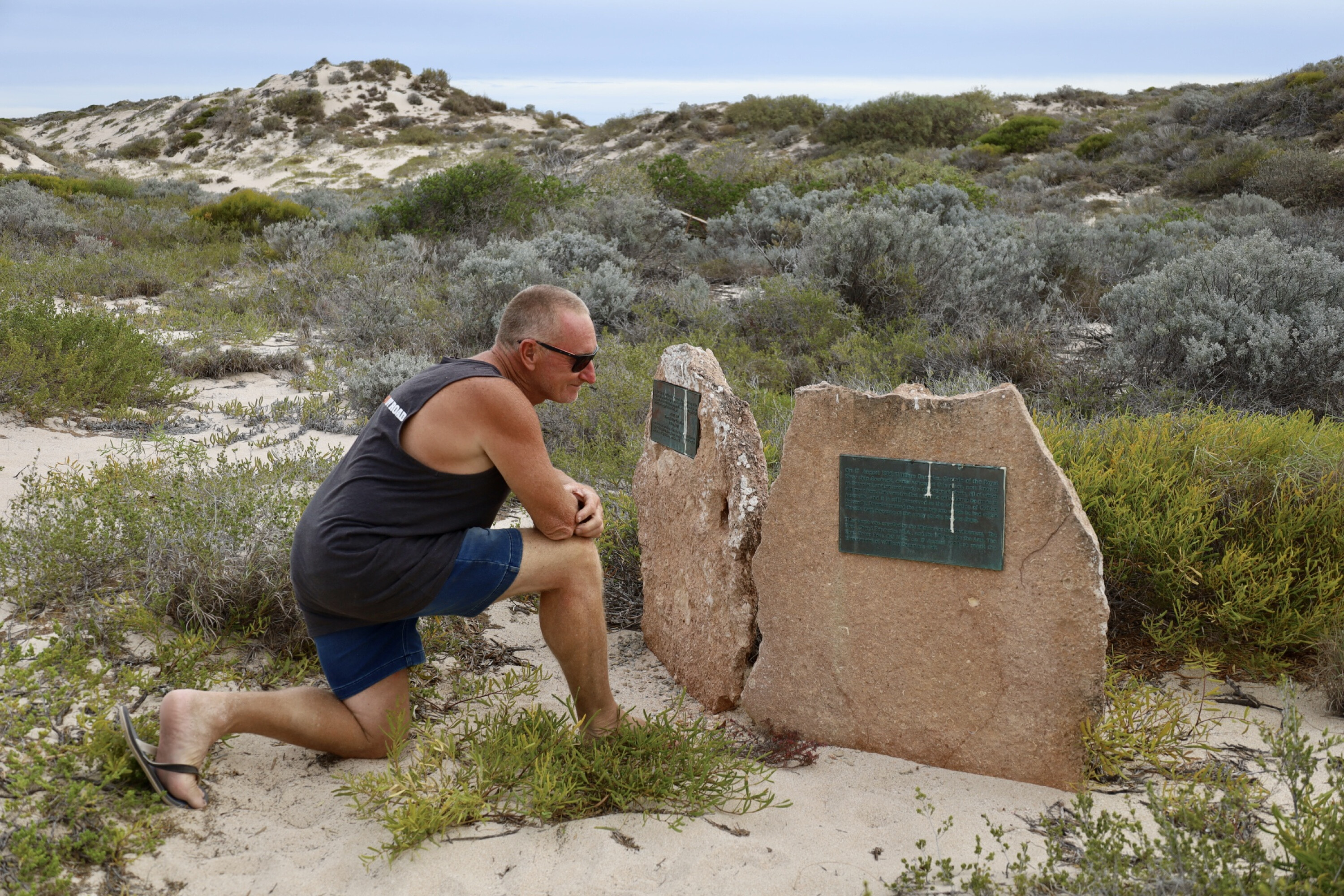
Named Inscription Point, this is where dutch skipper Dirk Hartog left a battered inscribed pewter dish in 1616 declaring he was here. Hartog was looking for a faster way across the globe for trading goods when he saw the island, he had sailed much farther east than any skipper of the time.
Over the next 200 years, more explorers visited the island, such as William de Vlamingh who in 1697 removed Hartog’s dish and left another one with the original inscription with his own details, then in 1818 Freycinet visited the island removing Vlamingh’s dish hoping to take it back to France for safe keeping.
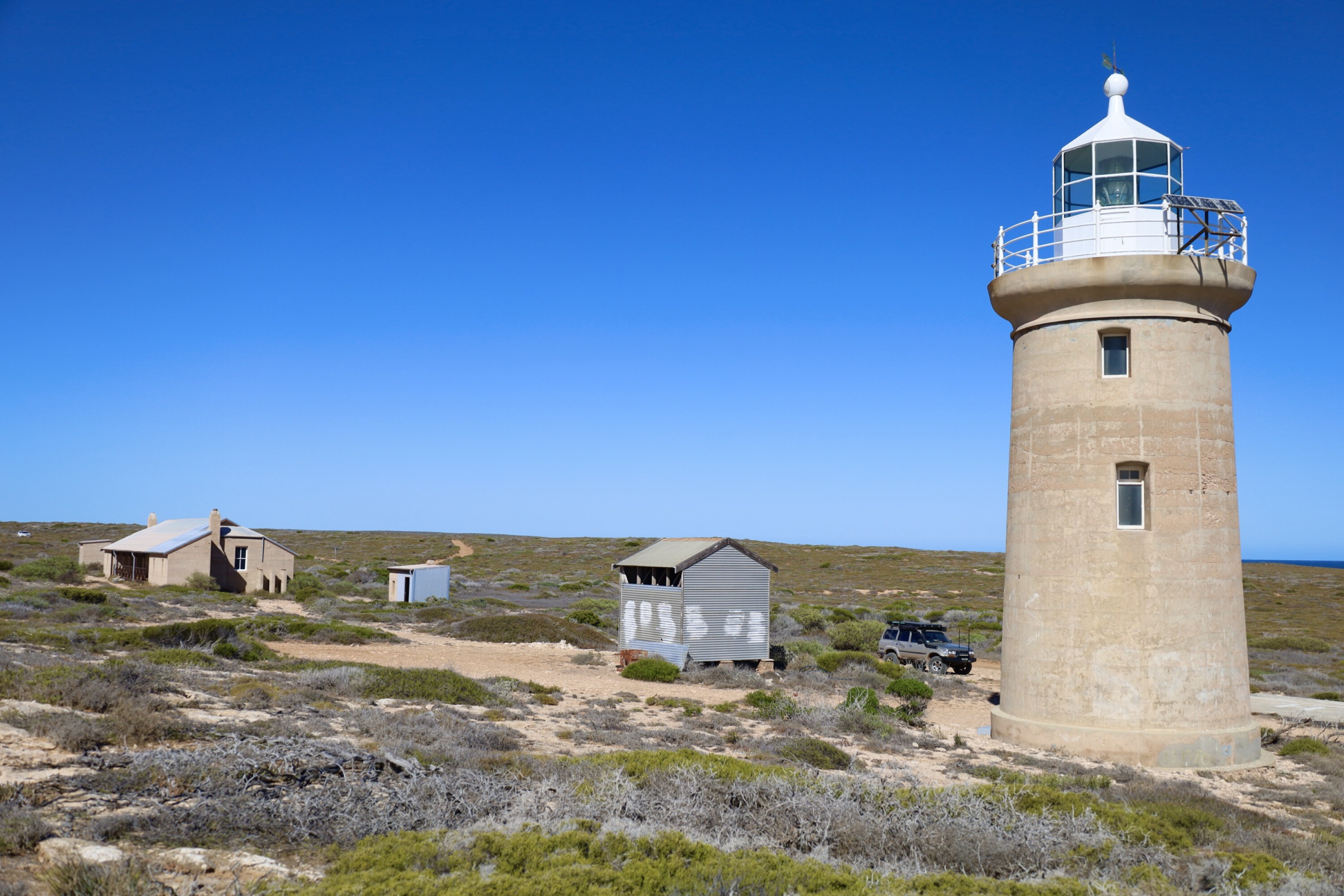
At Inscription Point, the 123-year-old lighthouse is now solar powered and several other buildings around the historical site have interpretive boards. It was in 1908 that construction of the lighthouse started to improve navigation along this part of the coast and nearby at Turtle Bay, a 70m-long jetty was built and connected to the lighthouse by a tramway.
At Dampier’s Landing, turtles lay their eggs through the dunes between November to April, this significant spot is the largest nesting area for the loggerhed sea turtle in Australia.
Anything from goats, sheep, foxes through to cats have now been removed from the island. Grazing also trampled the food and shelter for many of the native species which were in grave danger of extinction.
A feral animal fence divided the island in to sections to control and eliminate the pests and even today it still stands and cuts the island in half. The Return to 1616 project has been a huge success and ten of the native species have been returned to their natural habitat across the island.
Dirk Hartog island is a beautiful yet harsh place to visit, and is now a World Heritage island for the future.
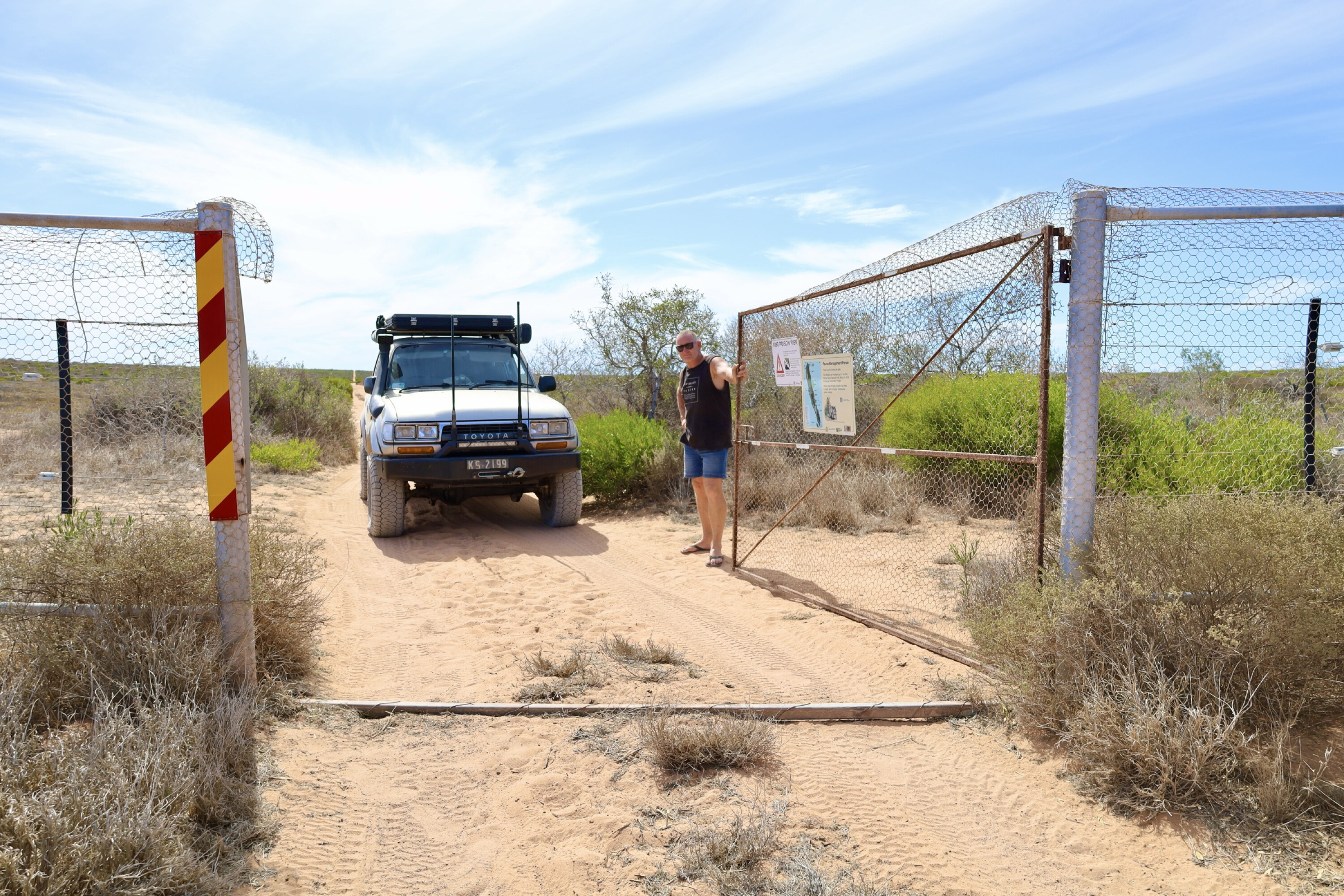
Now classed as a national park, Dirk Hartog is being returned back to its natural habitat with the eradication of all feral pests. It’s a logistical effort to get to island where only 20 vehicles are allowed on the island at any one time, so it’s peaceful, isolated and a remote place to spend some time.
The Island is part of the UNESCO Shark Bay World Heritage Area. Dirk Hartog is WA’s largest island.
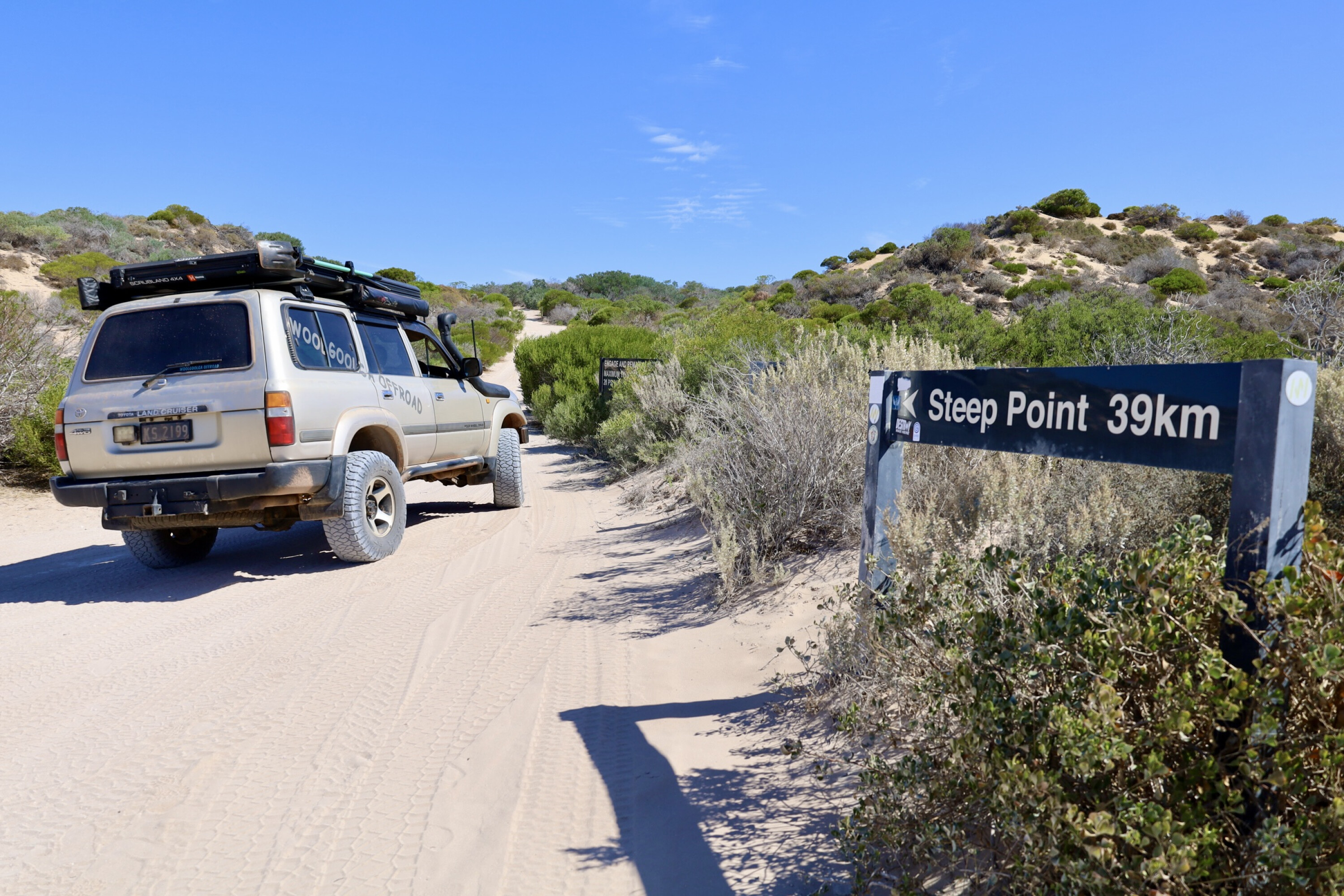
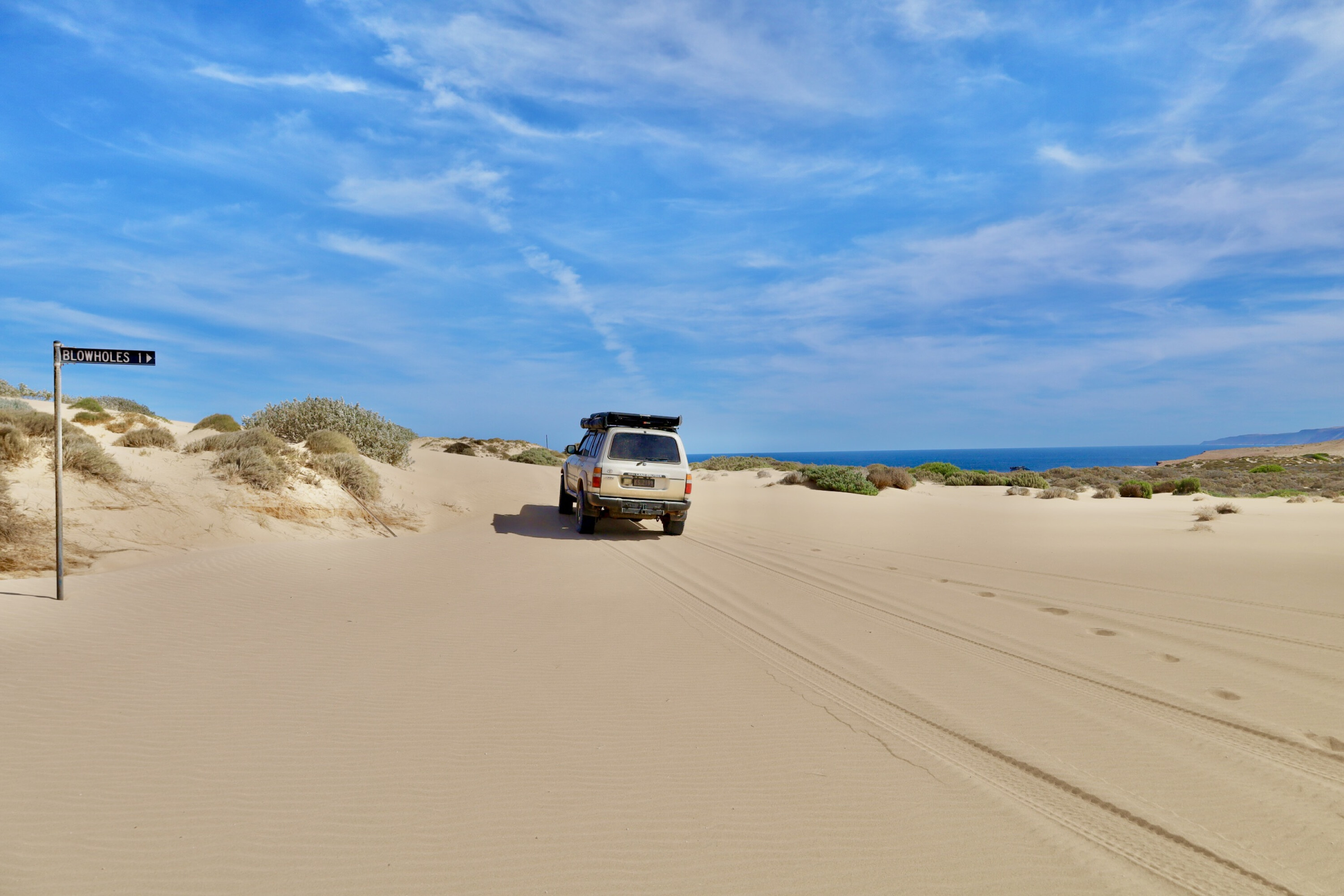
Cape Inscription has a lighthouse and buildings, there are remote camps and blowholes, and visit where William Dampier landed in 1699. There’s great fishing and snorkelling around the island also.
All the relevant information can be found on the Dirk Hartog Island website [↗]
Prado sales surpassed 20,000 units for the third consecutive year, extending the Toyota 4WD’s run as the country’s most popular large SUV to nine years.
With 20,710 sales for 2023, the Prado saw off its closest challenger despite a slightly smaller total than 2022 and 2021.
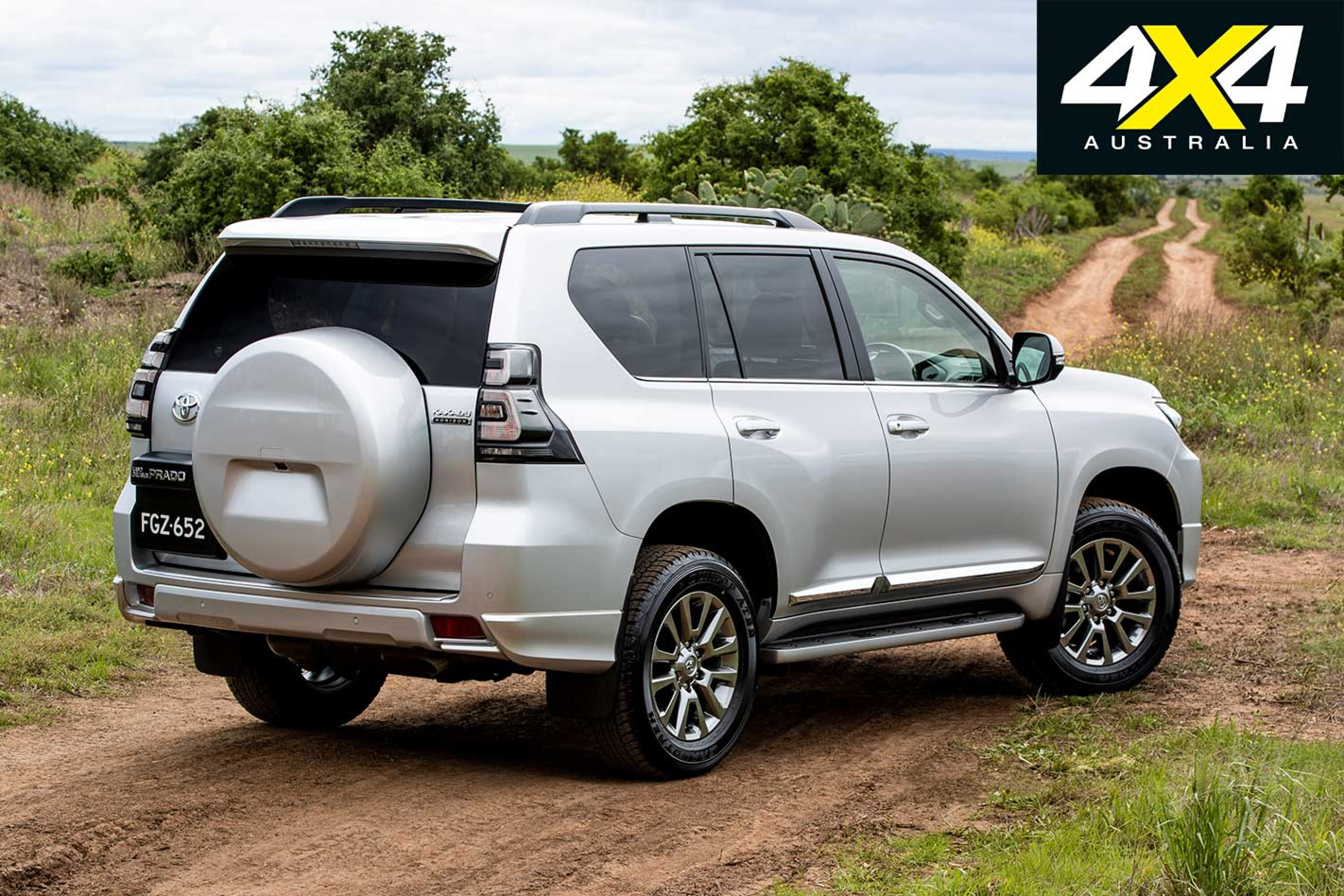
The Ford Everest claimed a hugely respectable second place, overtaking the full-size Toyota LandCruiser wagon just – by 15,071 to 15,035 units thanks to 46 per cent year-on-year growth.
Another two models took the remaining top-five places with strong annual growth – the Isuzu MU-X with 14,139 registrations and the Subaru Outback with 12,903 units.
Toyota’s Prado has been Australia’s most popular large SUV for nearly a decade. It was last beaten in 2014, when the Jeep Grand Cherokee narrowly pipped it to the No.1 spot with 16,582 sales compared to 16,112.
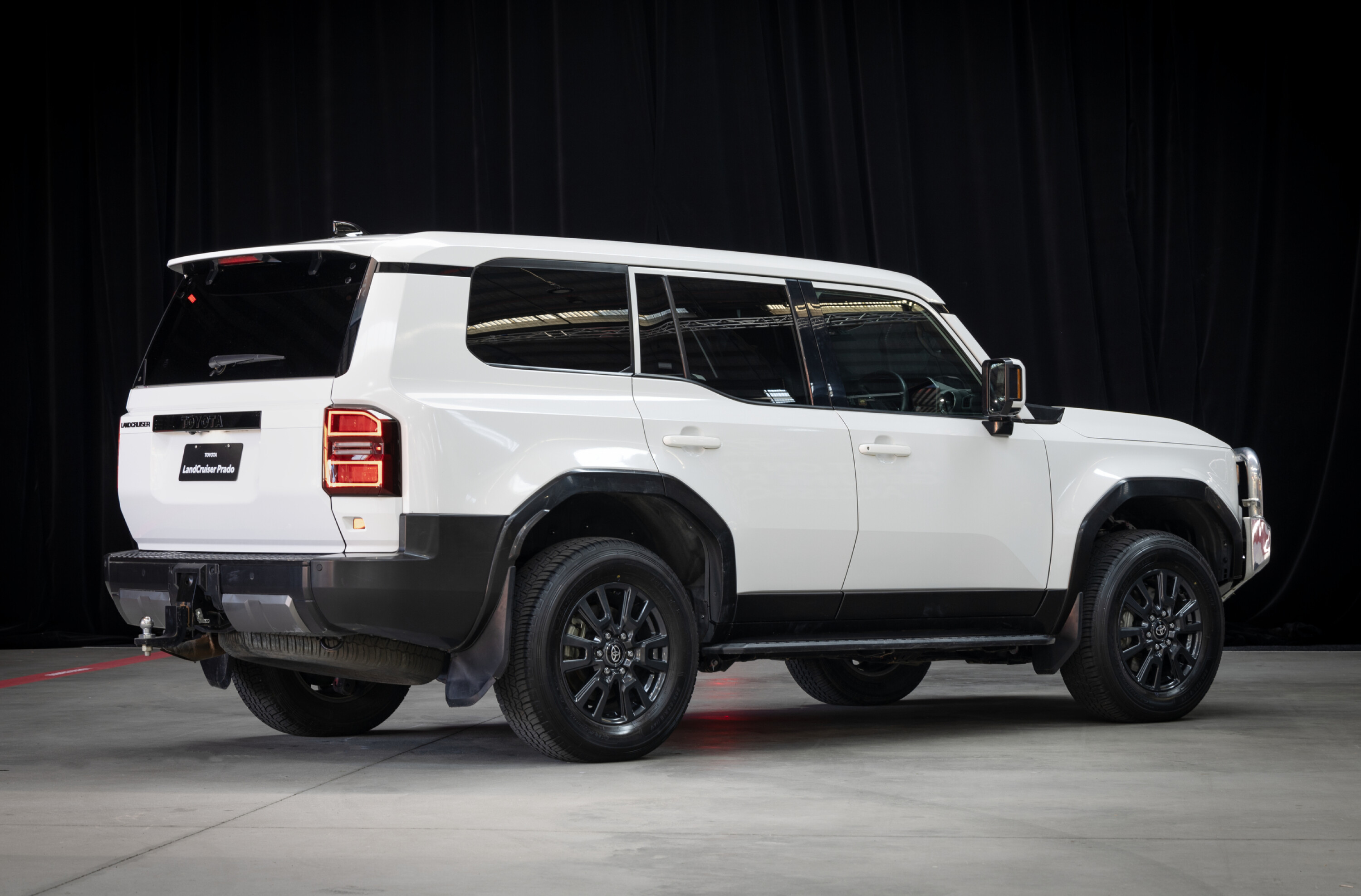
The Japanese brand will have high hopes for the nameplate in 2024, with a new-generation Prado (above) due mid-year and already the subject of intense buyer interest.
The Prado joins seven other Toyota models – including the RAV4 mid-size SUV and Camry medium sedan – that won their respective vehicle segments.
The results are some consolation after the Ford Ranger ended the HiLux’s seven-year as Australia’s best-selling model.