Reviews


Gallery 1
9
/10
Score
Things we like
- Strong petrol-hybrid performance with 341kW and 790Nm
- Excellent off-road hardware and capability
- Smooth on-road dynamics and strong touring performance
Not so much
- High purchase price compared with diesel equivalents
- 14.8L/100km on-test fuel consumption
- Diff lockers took longer than expected to engage
Hybridisation appears to have put petrol-fuelled combustion engines back on the menu for 4×4 vehicles.
I don’t know if that’s simply because hybrid systems are easier to adapt to petrol internal combustion engines (ICE) than diesel-fuelled ICEs, or because hybrid systems are improving efficiency to bring it closer to diesel performance. It should be noted that we will be seeing hybrid-boosted diesel-fuelled powertrains in 4×4 vehicles very soon, but so far they all operate with petrol ICEs.
When Toyota fitted its hybridised, turbocharged 3.5-litre V6 engine to the Toyota Tundra pick-up truck and the Lexus LX 700h, Toyota Australia saw the opportunity to give petrol fuel another try in the popular LandCruiser model.
Toyota discontinued the petrol V8 engine during the reign of the 200 Series due to a lack of sales, but as the brand now likes to spruik that it offers some form of electrification across all of its models, this powertrain provided the perfect opportunity to bring petrol back to LandCruiser. It must have helped the cause that the Tundra and Lexus both ride on the same TNGA-F platform as the LC300, so the transplant should have been relatively easy and cost-effective.
1
Petrol-hybrid powertrain
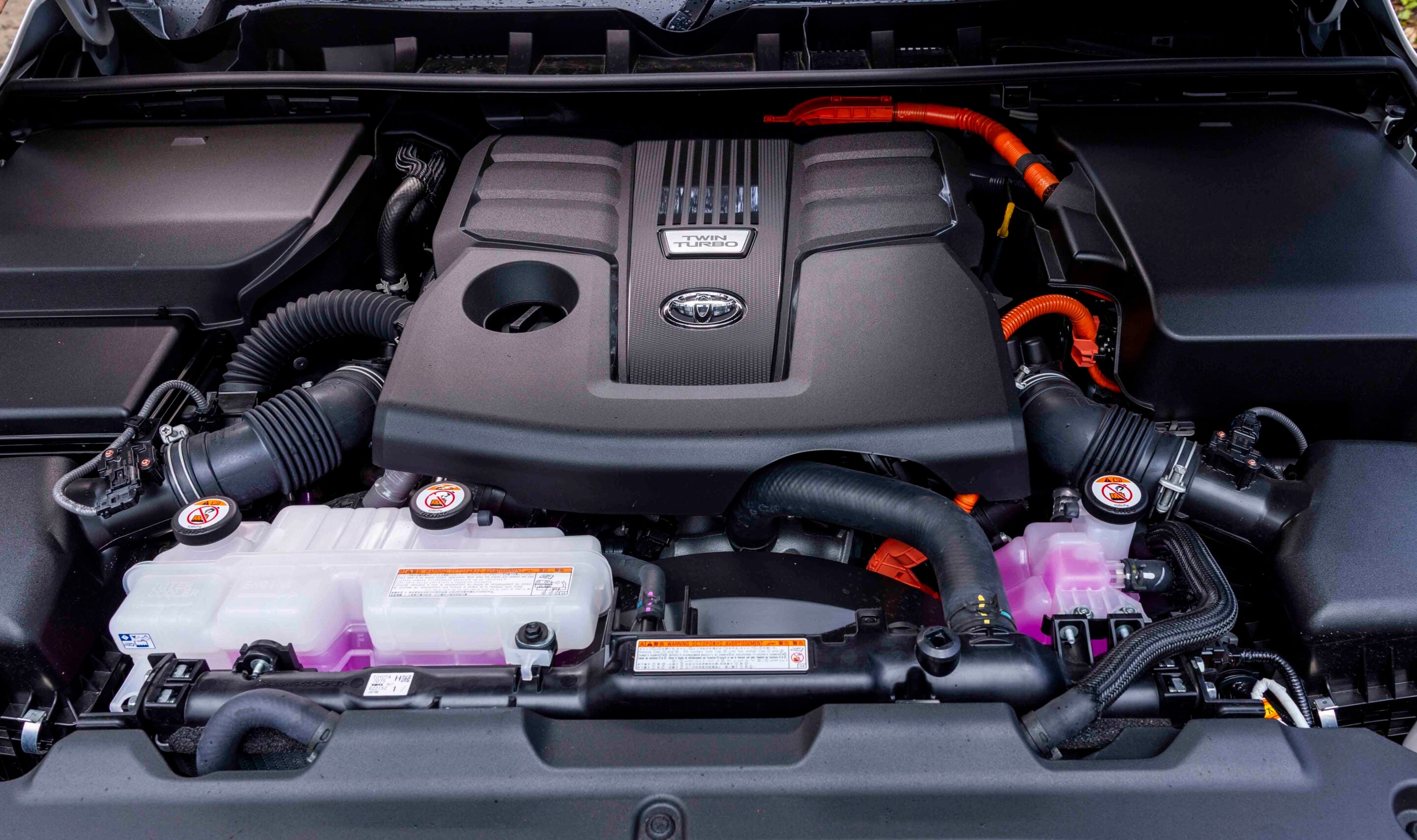
The twin-turbo 3.5-litre V6 single-motor hybrid system generates claimed combined outputs of 341kW and 790Nm to deliver performance to the LandCruiser.
The combination of petrol engine and hybrid power means you get the performance with relative efficiency. The electric power system uses an air-cooled 6.5Ah, 288V nickel-metal hydride (NiMH) battery that is installed in a waterproof tray beneath the rear luggage space. For this reason, the Performance Hybrid powertrain is only offered in five-seat versions of the LC300 and only in the high-end grades. The placement of the battery does raise the floor height in the cargo area a smidge, but it’s not enough to be a real negative.
1
Pricing
Toyota Australia is only offering the petrol-hybrid powertrain in two variants of the LC300 range: the Sahara ZX at $156,740 and the GR Sport at $155,990.
By comparison, the diesel-fuelled variants of the same two models cost $137,790 for the GR Sport and $138,790 for the Sahara ZX, so the price of the hybrid is a big step up.
After sampling the Sahara ZX Performance Hybrid at the launch earlier this year, this was our first chance to try out the drivetrain in the GR Sport on familiar Melbourne tracks.
Off-road equipment
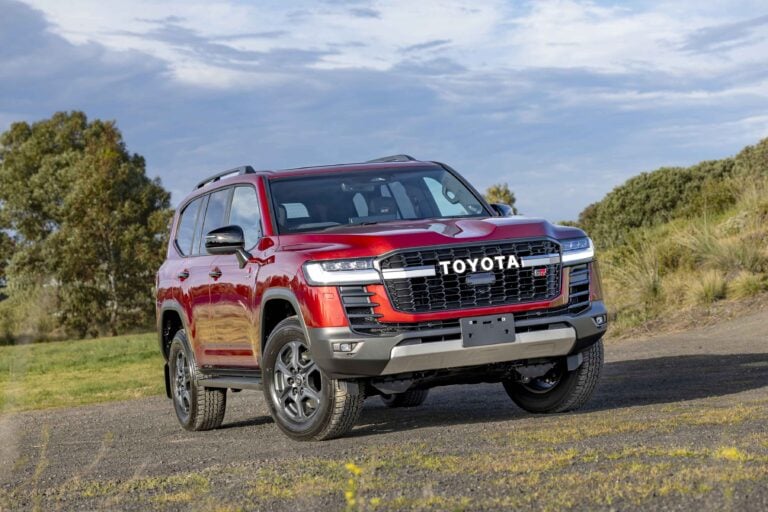
The GR Sport is the most off-road-ready model in the LC300 showroom, regardless of the fuel used.
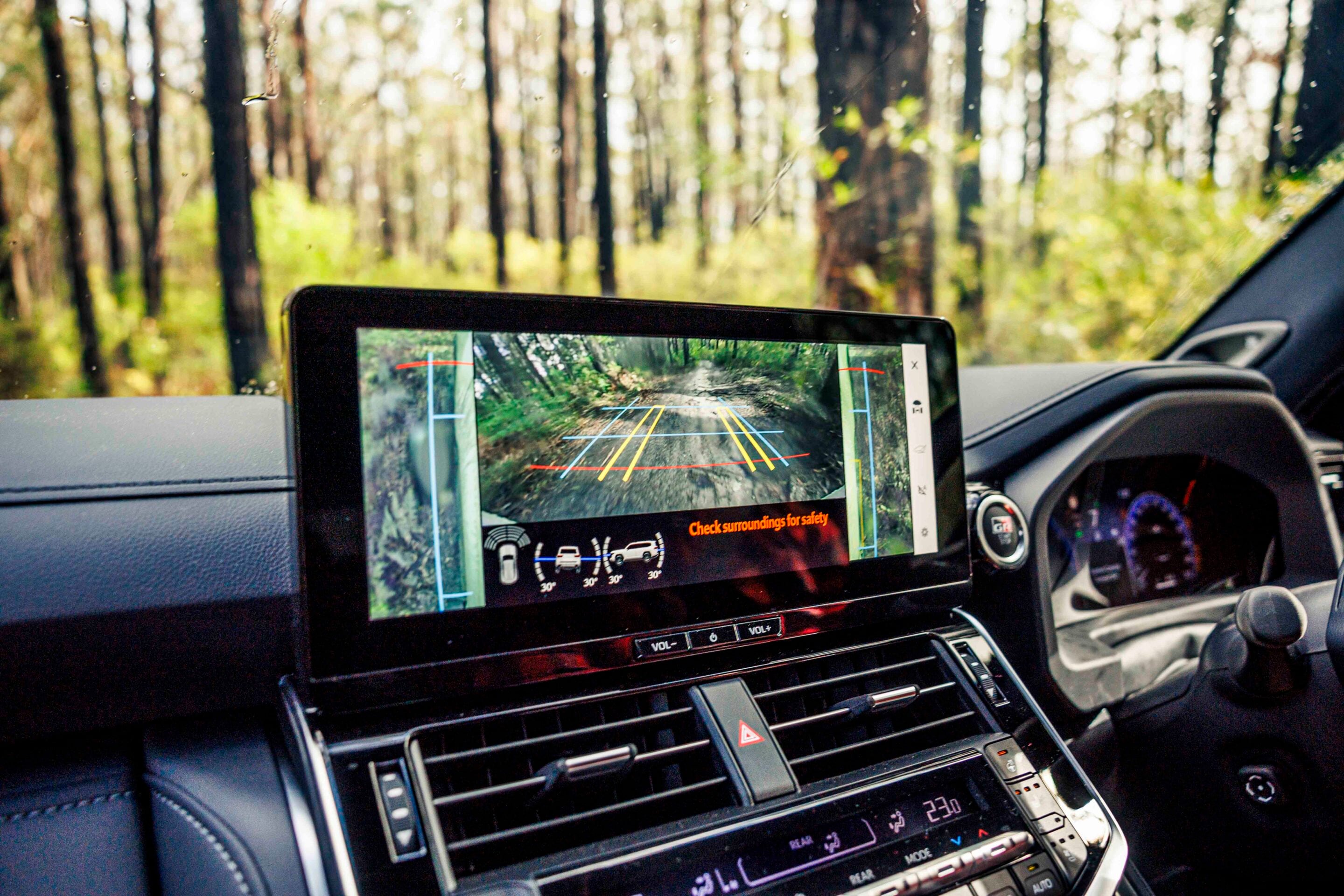
This is thanks to front and rear locking differentials for improved traction, 18-inch tyres for more choice and a better ride, and e-KDSS suspension that adds extra wheel travel for improved traction off-road. There are also additional modes in the Multi-Terrain Select system to make the most of the hardware.
The GR Sport also gets a model-specific grille, wheels, badging and red highlights in and around the Cruiser. The Performance Hybrid Cruisers are five-seat only, while some other models in the LC300 range offer seating for seven.
1
Off-road performance
It’s those added extras in the GR Sport that give the driver the confidence to take on more difficult off-road terrain or unexpected obstacles.
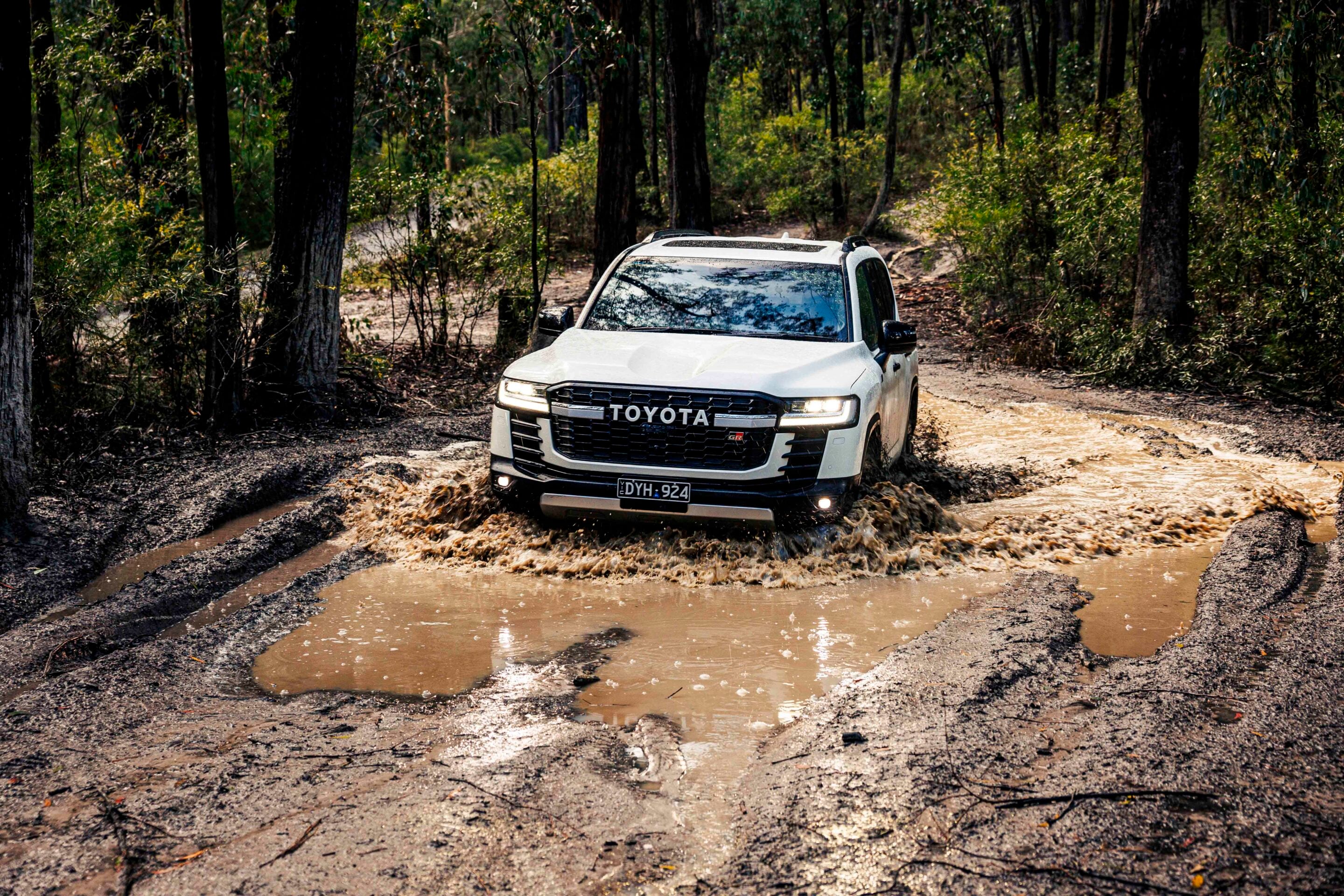
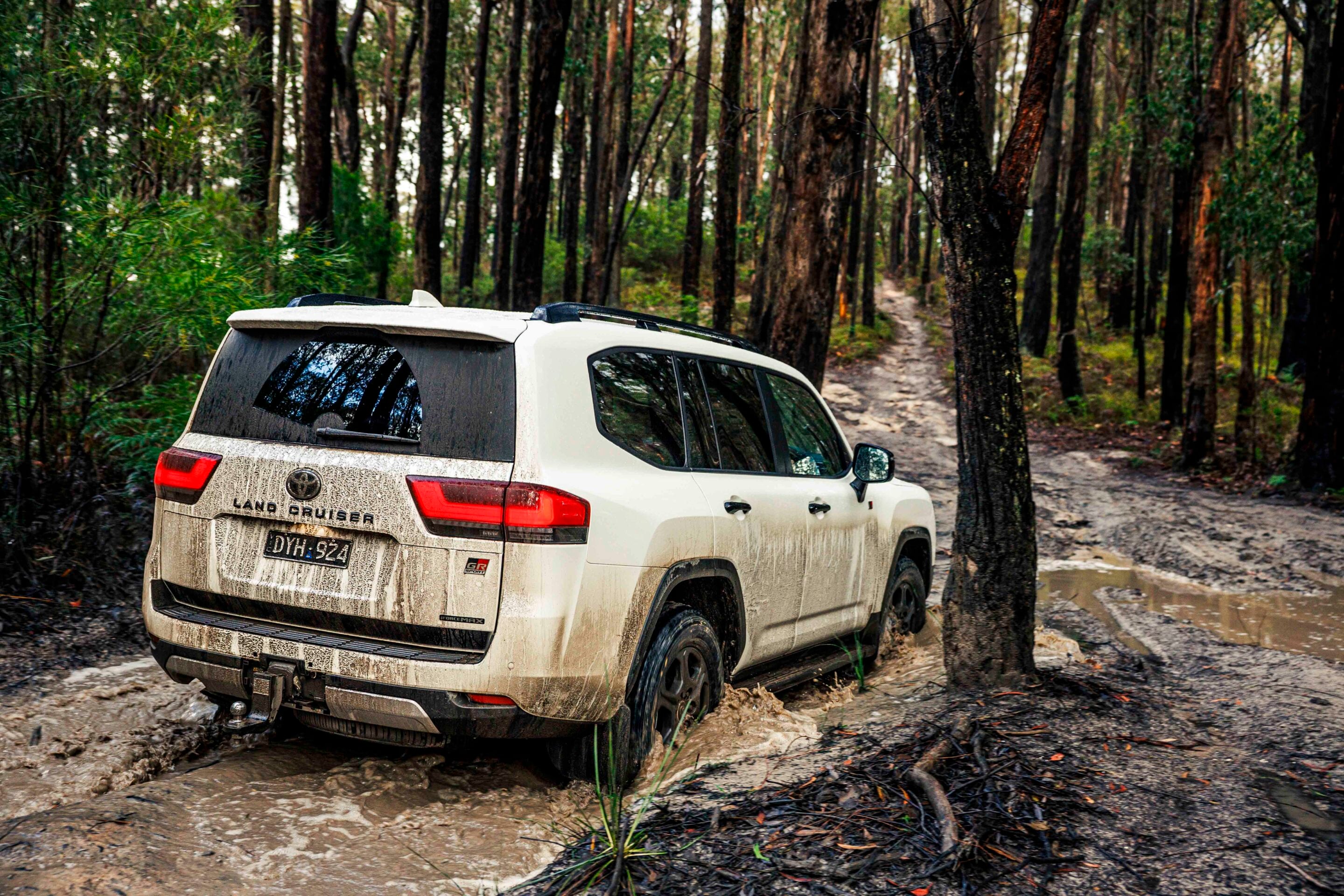
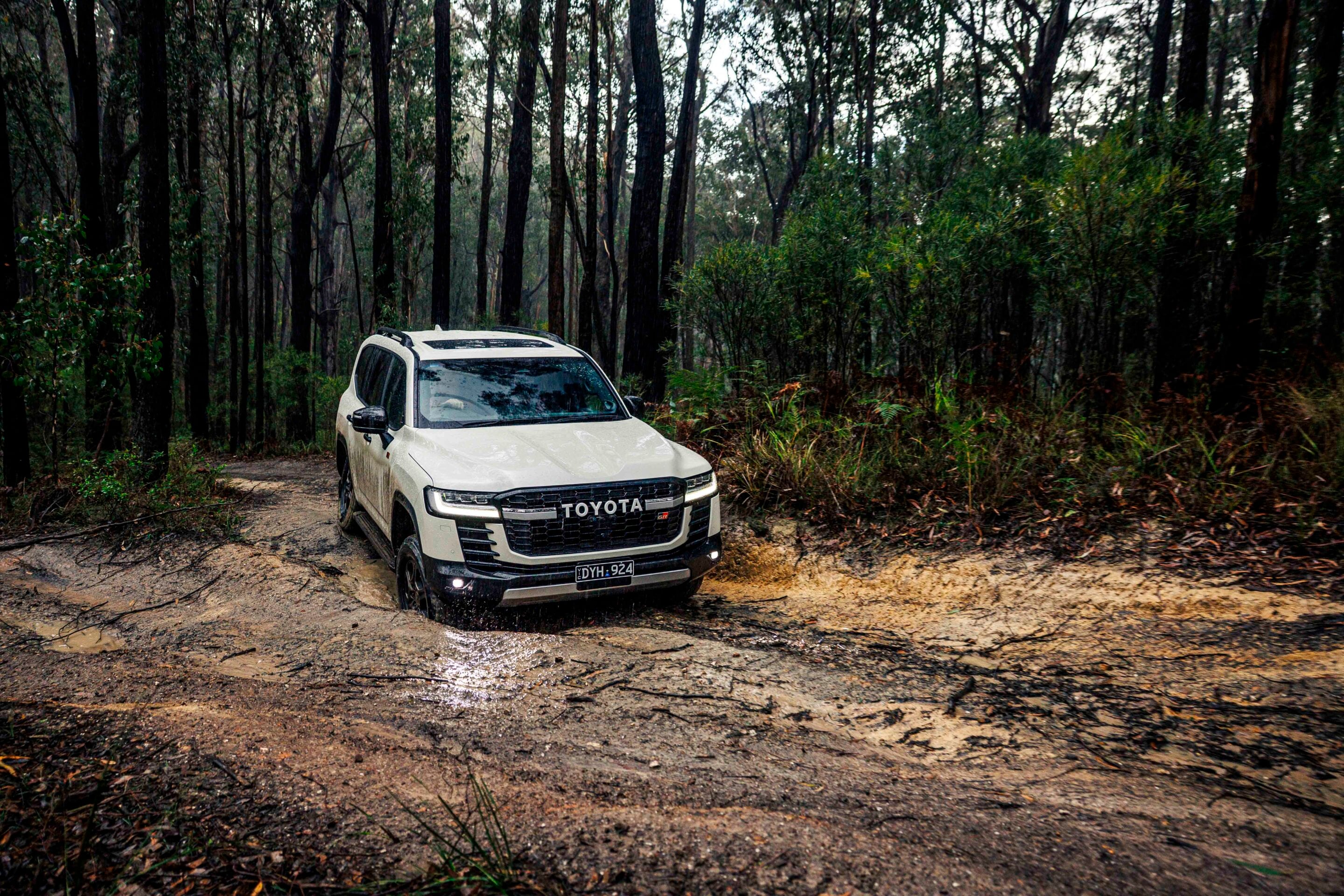
On our drive we came across a track with flooded ruts and holes, but we had a fair idea they weren’t too deep. Still, they looked boggy, so we activated the Cruiser’s full off-road armoury just to be sure: low range, front and rear diff locks engaged and Mud & Ruts selected in the MTS.
LandCruisers have always had pretty good articulation from the rear live axle, but this is enhanced by the clever e-KDSS controlling the sway bars, allowing the heavy LC300 to crawl through the ruts while the locked diffs limit wheelspin in the boggy conditions.
1
You could feel the suspension working beautifully, slinking its way across the crevasses in a way you wouldn’t expect of a big wagon that also has excellent on-road dynamics. It’s a system that works, and works well, which is all the more appreciated when driving on the modest OE tyres. We didn’t need Crawl Control or the tight-turn function, but they’re only a button press away if required.
If there was any complaint, it was the time it took to get the three lockers to engage after selecting them. It took longer than I would have liked, with the locker lights flashing on the dash until they could be coaxed in.
| Off-road specification | Measurement |
|---|---|
| Approach angle | 31 |
| Ramp-over angle | 21 |
| Departure angle | 24 |
| Ground clearance | 231mm |
| Wading depth | 700mm |
On-road performance
As mentioned, the LC300 is an accomplished on-road tourer, with e-KDSS again playing its part in the dynamics.
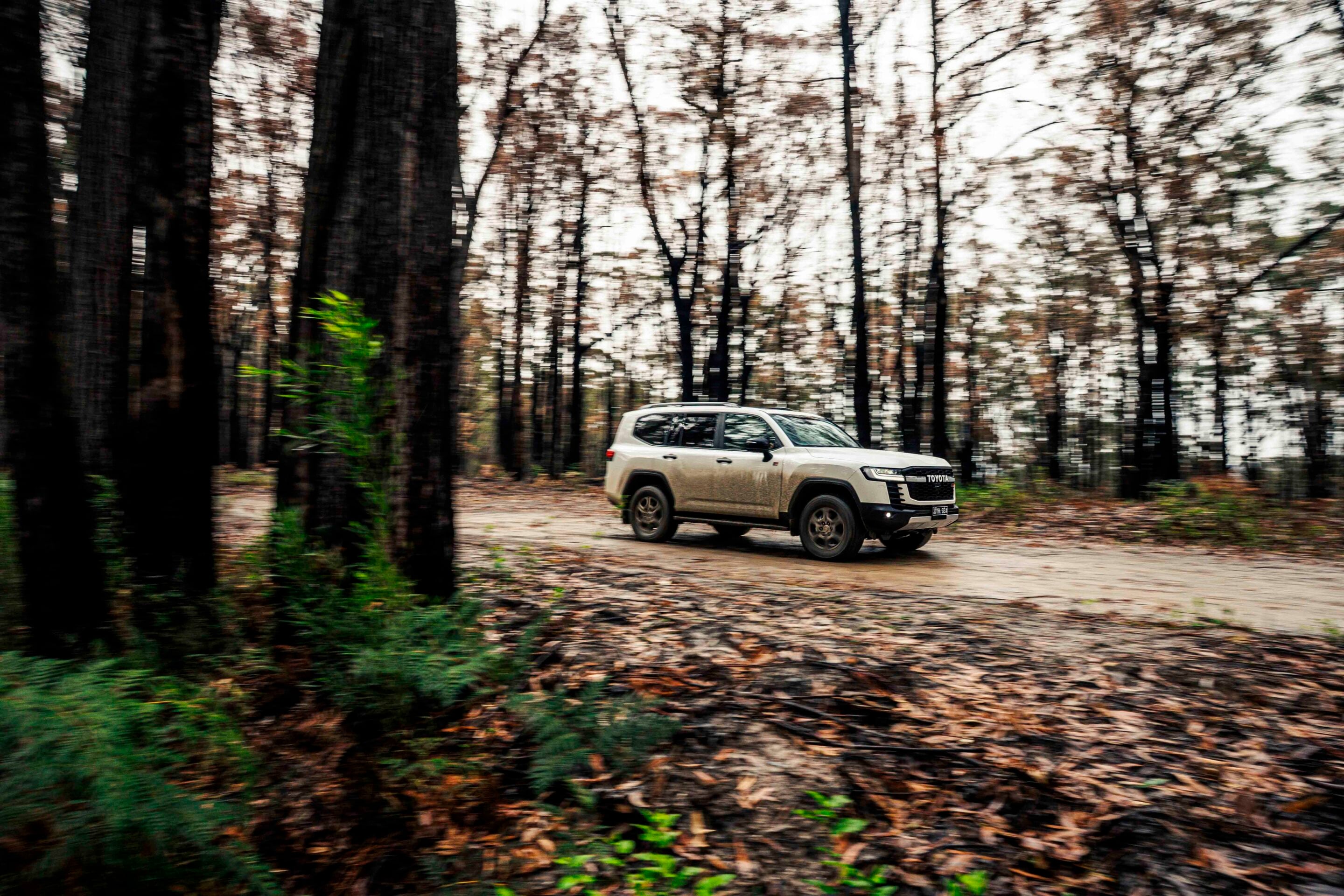
The GR Sport delivers a sure-footed and stable performance on wet gravel roads and highways alike. The performance of the petrol-hybrid powertrain is a revelation compared with previous Cruisers, and the electric assistance provides diesel-like torque at the bottom end while the turbocharged V6 carries that performance through the upper rev range. The LC300 Performance Hybrid is the most powerful and quickest LandCruiser ever offered in Australia, and drivers will appreciate its strong performance.
Interior and equipment
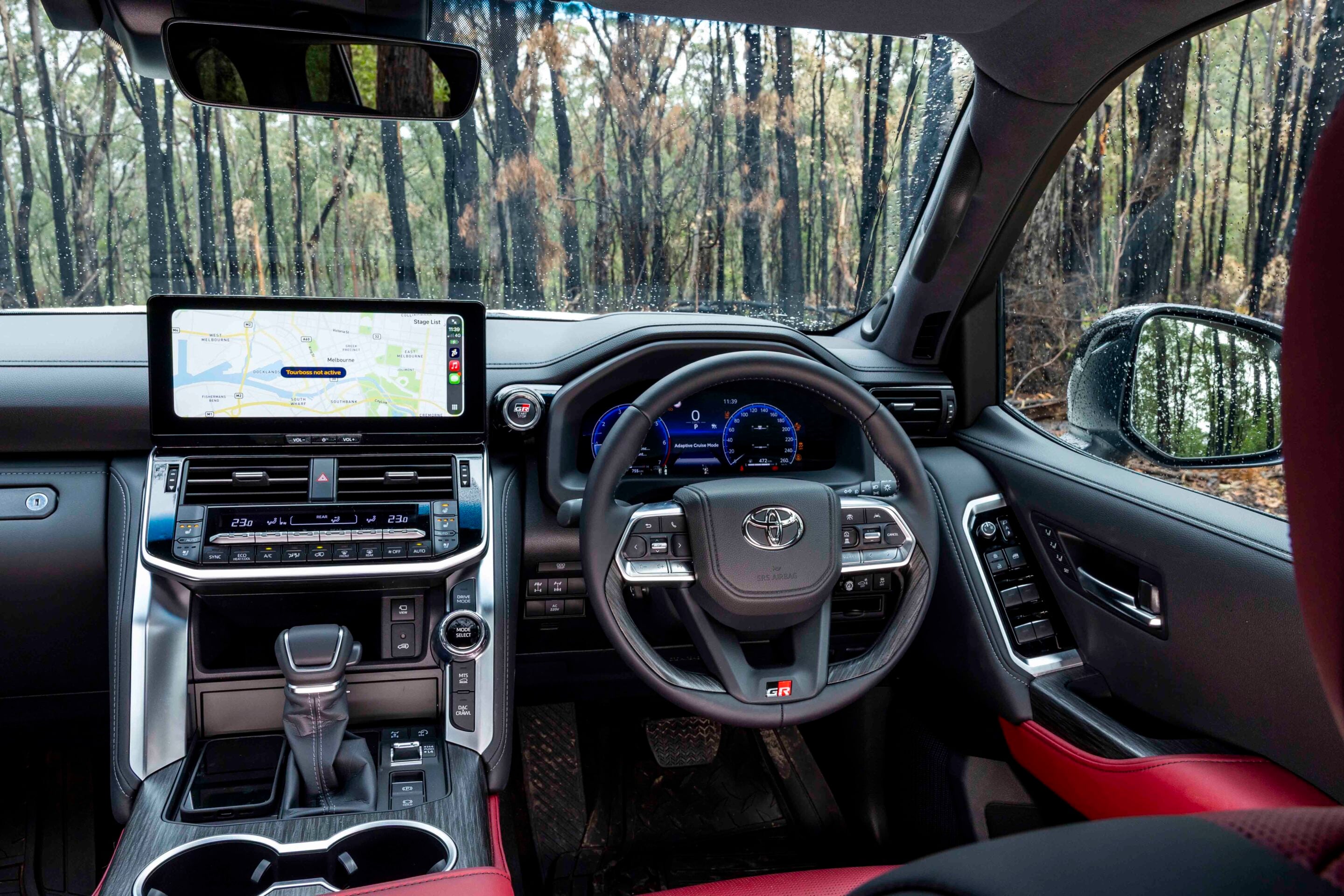
As the two Performance Hybrid LC300s are both high-end models, they come loaded with features. Both are luxurious inside, while the GR Sport gets red trim accents and GR badging to give it a sportier look.
Inside, passengers are made comfortable with leather-accented seats with heating and cooling, heated outboard seats in the second row, a 14-speaker sound system, head-up display, heated steering wheel, cooler box in the console, rear-seat entertainment (headphones not included), four-zone climate control and wireless phone charging among its features. It’s the same cabin specification as the diesel GR Sport LandCruiser.
4
Verdict
That’s the good thing about the Performance Hybrid versions of the LandCruiser 300: Aside from the bigger fuel tank, the petrol model carries over all the 4×4 hardware and technology of the diesel models.
For the GR Sport, that means class-leading off-road equipment to get the Cruiser through tough terrain or around the country on your lap of the map.
The LandCruiser Performance Hybrid models share the same five-year/unlimited-kilometre Toyota warranty as the rest of the range, along with capped-price servicing for the first five years or 100,000km at $450 per service. Those services come every six months or 10,000km, whichever comes first, which is the same as the diesel-fuelled LC300, so there’s little, if any, cost saving there.
The Performance Hybrid powertrain requires 95RON or higher fuel, so depending on current prices, fuel costs will probably be higher for the petrol than the diesel once you factor in the petrol model’s higher consumption.
Most touring four-wheel drivers will still choose the diesel engine option, but it’s good to know there’s an alternative for those who don’t want diesel for whatever reason – and it’s a bloody good one.
5
Specs
| Specifications | |
|---|---|
| Price | $156,060 + ORC |
| Engine | Twin-turbo petrol V6 with single-motor hybrid system |
| Capacity | 3445cc |
| Max power | 341kW |
| Max torque | 790Nm |
| Transmission | 10-speed automatic |
| 4X4 system | Full-time/dual-range |
| Crawl ratio | N/A |
| Construction | Five-door wagon on ladder-frame chassis |
| Front suspension | Double wishbone with coils and e-KDSS |
| Rear suspension | Live axle on links and coils with e-KDSS |
| Wheels & tyres | 18×7.5J alloy, 265/65R18 |
| Kerb weight | 2715kg |
| GVM | 3380kg |
| GCM | 6750kg |
| Towing capacity | 3500kg |
| Payload | 665kg |
| Seats | 5 |
| Fuel tank | 98L PULP |
| ADR fuel consumption | 10.0L/100km |
| On-test fuel consumption | 14.8L/100km |
9
/10
Score
Things we like
- Strong petrol-hybrid performance with 341kW and 790Nm
- Excellent off-road hardware and capability
- Smooth on-road dynamics and strong touring performance
Not so much
- High purchase price compared with diesel equivalents
- 14.8L/100km on-test fuel consumption
- Diff lockers took longer than expected to engage
Follow 4X4 Australia on Google
Get more 4x4 news, reviews and gear stories from 4X4 Australia in your Google feeds.


We recommend
-
 4x4 Comparisons
Toyota LandCruiser 300 Performance Hybrid vs V6 diesel: How they compare on paper
Toyota’s new LandCruiser 300 Performance Hybrid delivers a spike in power, but how does it compare with the V6 diesel across the board?
-
 Reviews
Toyota LandCruiser 300 Performance Hybrid review: A hybrid that’s actually fun to drive
Petrol power is back in a LandCruiser, and it's a belter!
-
 News
News300 Series Hybrid: Most powerful LandCruiser ever priced from $156K
Toyota has priced its hybrid LandCruiser 300 Series ahead of a mid-year launch