
I’ve spent decades swapping from one camp light to another, never totally happy with what I’ve got. It’s not that I’m hard to please or get on with, it’s just that all the camp lights I’ve used in the past have problems, flaws and downsides, which led me to a never-ending search to find the perfect camp light.
To set a few rules, I’m talking about broad-area lighting, like what you’d need at a campsite to help you see when setting up camp, cooking meals, hosting a crowd of people for a game of cards or for general campsite needs. I’m not talking about camping headlights, torches or any other handheld device for dunny runs in the dead of night, playing spotlights or shining rays out into the bush.
It was pure coincidence that I spotted the Rockarmor light stand while in its Aussie Offroad 4×4 Accessories Sydney HQ, having one of the company’s GT bull bars fitted to my HiLux. The more questions I asked, the more information I gleaned, and the more I was convinced this might be the (almost) perfect camp light for my needs.
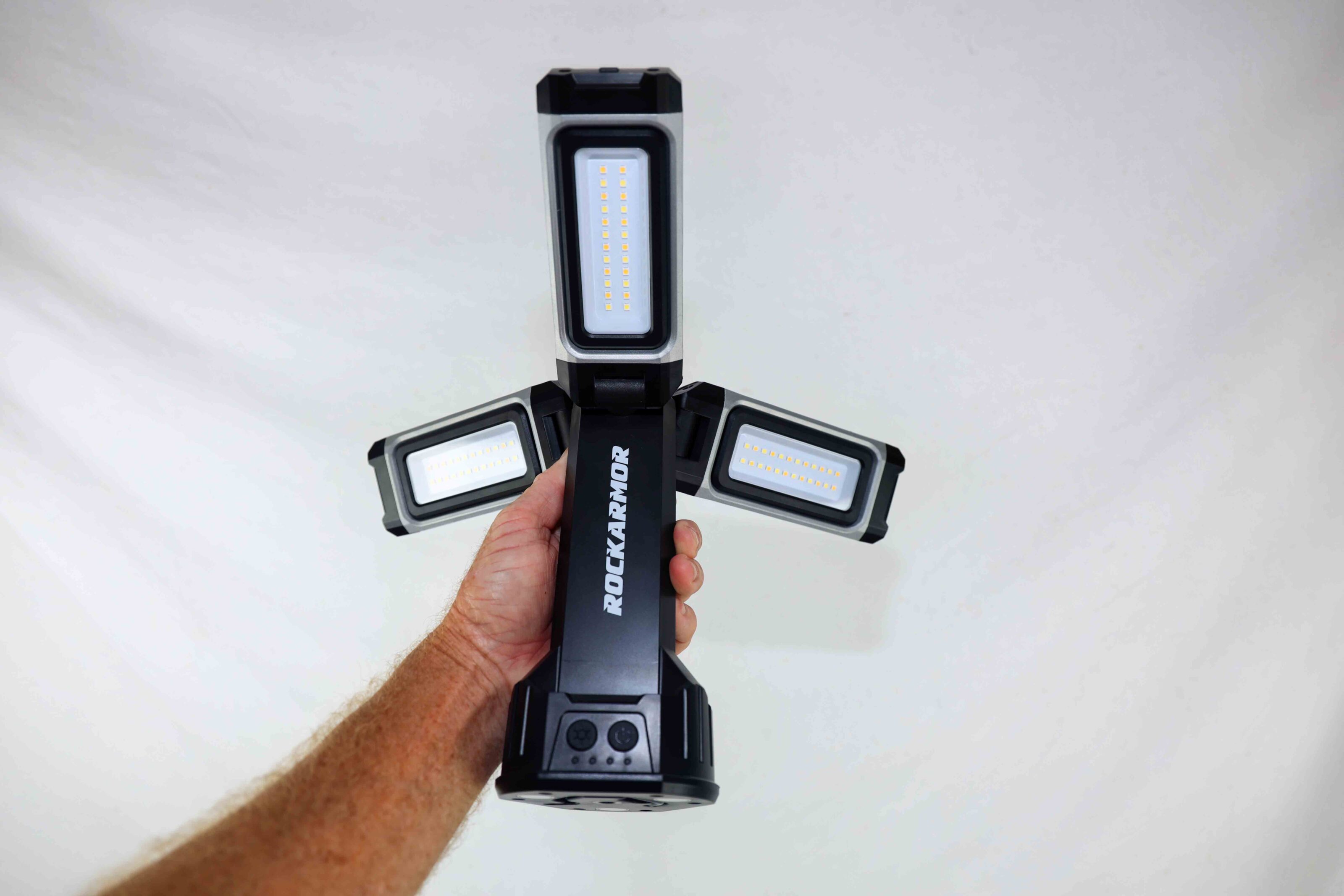
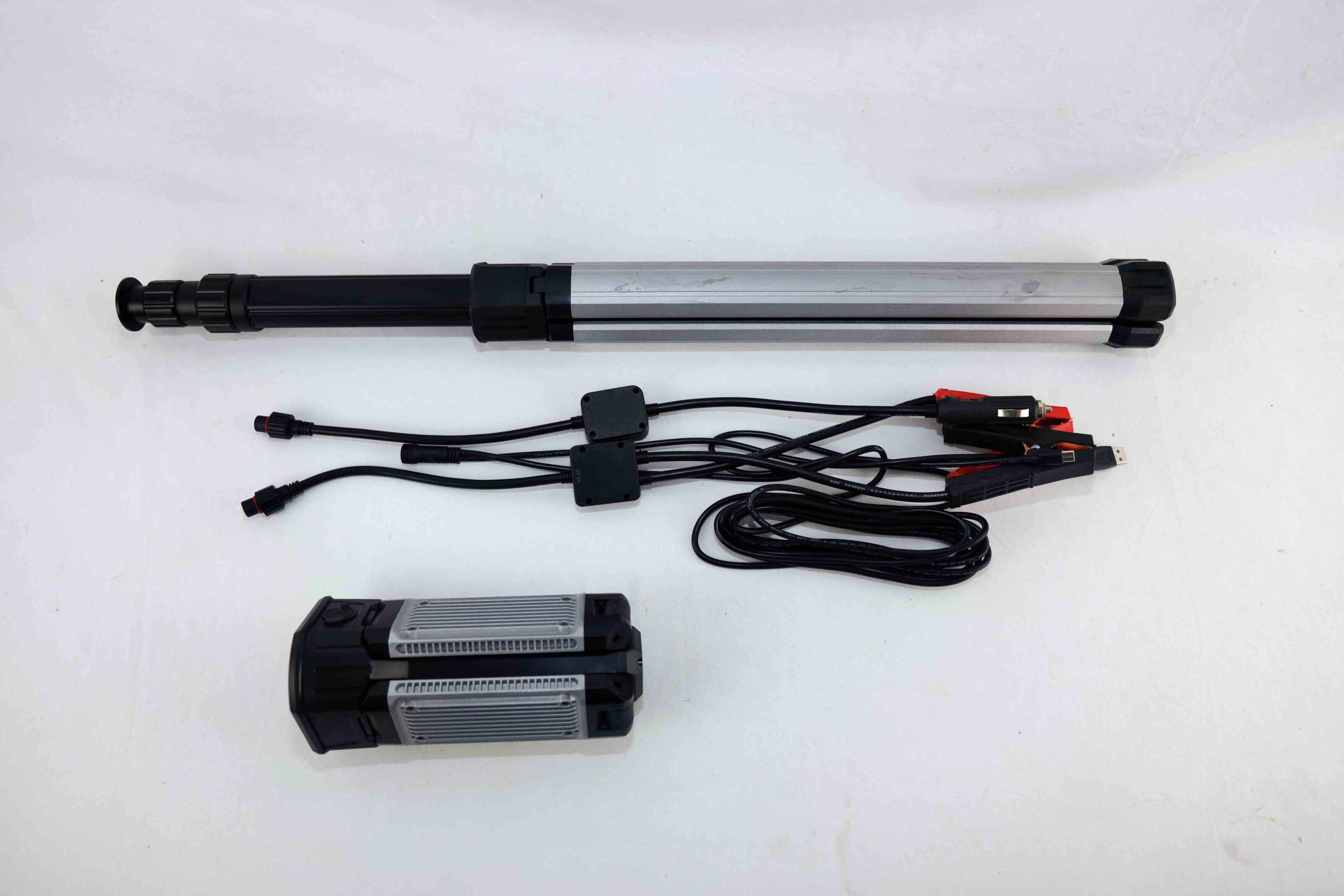
While the stand itself is a substantial, well-built and sturdy part of the kit, it does take up considerable room in the 4×4. If space is at a premium the stand can be disconnected from the light and left at home if needed.
Yep, the triple fold, flip and 360-degree rotatable light bars on the main light body can be unscrewed from the stand. That main light section can be sat flat on a tabletop, or hung from a rope, tree branch, awning or any other horizontal section via the inbuilt flip-out hook. Plus, given the three strong magnets on its base, it can be set onto any steel surface – your 4×4, trailer or shed – and it can shine the three individual light bars in almost any direction.
The ability to shine all three LED light panels in any direction is a boon for keeping out of campers’ eyes. All too often, I’ve had to shield my eyes from bright camp lights at or below head height to be able to see what I’m eating, working on or doing. Of course, when hung overhead from the inbuilt hook, it’s equally impressive to be able to direct the broad LED spread beams in almost any direction.
Given that a lot of my camping has been in my 4×4 converted Hiace van lately, the large side sliding doors and panels provide the perfect perch on which to mount the magnetic base. Again, the three light bars can be adjusted in any direction.
Aside from the practicalities of use, this LED light incorporates both warm and cool light modes, with the ability to produce low, medium and high power/beams for each light colour. This provides the ability to light up the whole campsite or turn it down to create a more ambient atmosphere and preserve battery life, which should see an entire night’s worth of use.
Rockarmor claims a continuous use of 8.5 hours, which would be roughly two to three nights’ worth of camping before the need to recharge. I’d recharge as often as possible while driving each day or by plugging into the 4×4 battery system while it’s being solar charged. There are plenty of recharging options via USB, USB-C, battery clamps directly to the battery, and a ciggie socket plug.
The few nights camping I’ve used this light have convinced me it is the best general flood camp light I’ve ever owned and used. Nope, it’s not perfect, but geez, it’s got plenty of runs on the board. Ideally, I’d like to see an orange light mode to help restrict insect attraction and a slightly more compact light stand, provided it remains sturdy enough to do its job without fail. The current stand packs down to 660mm and raises up to 2000mm for above-head-height lighting.
A carry bag and a 5m cord are included, making for an ideal freestanding campsite lighting kit that is quick and easy to set up and shines in all the right places.
RRP: $140
There’s something indefinable about the Y62. Like it has some sort of “it” factor that you’d more likely hear from a reality TV talent show host talking about a good-looking young person who can sing rather than about a 4×4.
The Patrol just has that special extra ingredient. It’s a big, brash, V8 petrol-only behemoth with fully independent suspension and a luxo interior. Australians should have hated it. But somehow, it’s more than the sum of its parts and it simply works. Like, really, really well. And we love it.
It’s almost spiritual about getting in a vehicle the size of an ocean liner and having the handling and acceleration of a V8-swapped MX5. It not only defies modern physics and lets you know you’re behind the wheel of a very special piece of automotive engineering, but it goes even deeper than that.
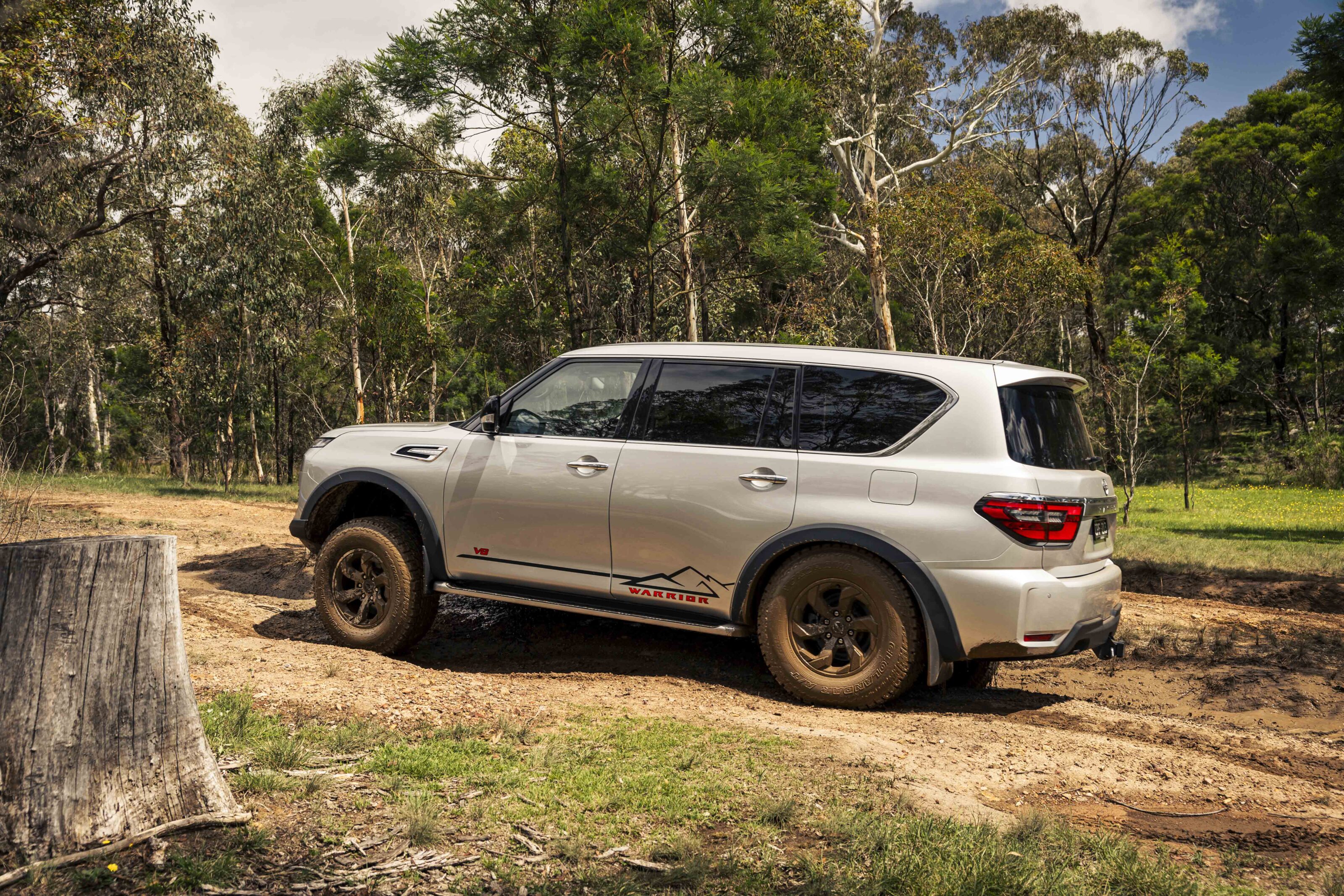
Like there’s no problem this vehicle has that cannot be solved by letting that VK56 5.6L engine eat, washing your soul with that glorious exhaust note and healing your ailments with the sheer sense of fun and adventure that is inescapably evoked from the deep recesses of your subconscious with a simple downward nudge of the loud pedal. It’s a powerful rig in more than one sense.
However, despite the big `Trol’s long list of positives, there are still more than a couple of negatives to offset. The interior is at least ten years out of date (an update has since been revealed), the V8 drinks fuel (by modern standards) like a salty sea-dog at an open bar and, no matter how you slice it, independent suspension is still a far cry from the solid axles that gave the GQ and GU models of yesterdecade their off-road prowess and cemented the Patrol badge as one of the best and most trustworthy in the country.
With the Y63’s release being promised for later this year, does the latest and greatest Y62 – the Premcar-tweaked Warrior – have enough to entice buyers to spend six figures on an outgoing old warhorse?
JUMP AHEAD
On-road performance
At first look, the Patrol is too big, too tall, too long and too wide to ever be something that would have the words “good handling” ascribed to it. And yet, almost illogically, the Warrior holds the road brilliantly, stops and steers accurately and predictably and overall is just a pleasure to drive.
You won’t be keeping up with Nissan’s other flagship, the Skyline GTR, on the twisty roads, sure, but you won’t be too far off and they certainly won’t be following you, let alone keeping up, across the Simpson. There is a little more body roll from the two-inch-higher Warrior, and the brakes, while excellent, still have to pull up nearly three tonnes, but all in all the acceleration and cornering are fantastic.
The inside is hardly cutting-edge, but it’s also far from uncomfy. Technology wise it has enough safety features to be annoying (like most new vehicles, to be fair) but if you’re someone who derives a sense of security from things like emergency assist braking and lane departure warnings then you won’t feel like you’re missing out. It has an eight-inch touchscreen which is large enough without being overbearing and is fairly intuitive to use.
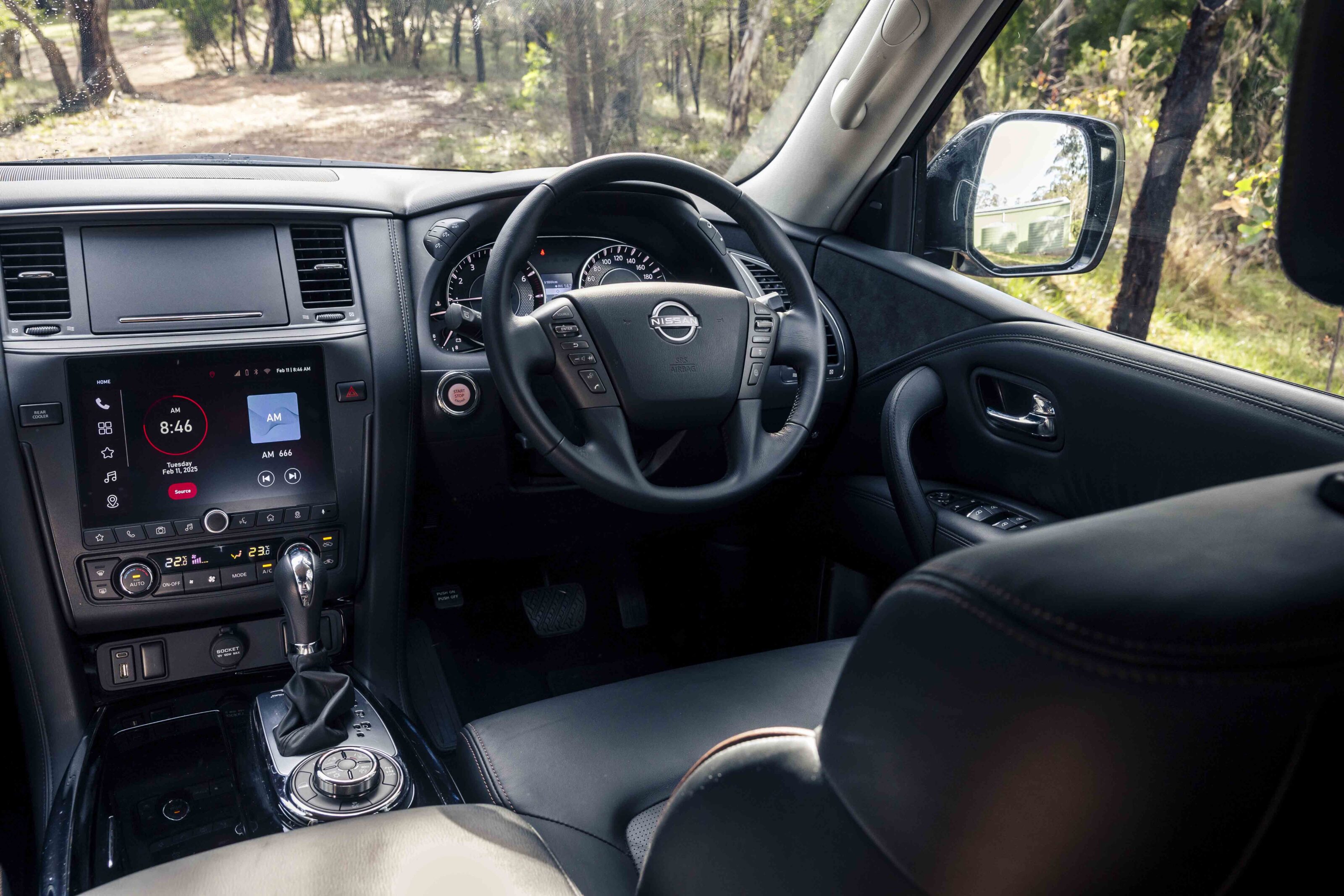
The seats are plush and wide – you sit in them rather than on them – but other than that it’s a standard Ti interior, which is not a bad thing by any means, just a wee-bit outdated. A brand-spanking Range Rover it is not.
Still, as an effortless mile-eater and tow rig, it’s up there with the best of them. Even with the big V8 it uses a bit over 14L/100km, which really isn’t too bad considering the power on tap, but if you are lugging a trailer along, have bigger tyres bolted up, or you’re doing a lot of low range work, then expect that figure to rise accordingly.
As a daily driver and family adventure machine, though, it’s not only a heavyweight contender, it’s in with a real shot at the title.
Off-road performance
The “defies all logic” ethos transfers over to the Warrior’s off-road prowess, too.
Even with its 50mm increase in ride height and the Premcar-tuned Hydraulic Body Motion Control system, the fully independent suspension is not the starting point most of us would like for an off-road tourer. Except that it works so well.
Of course, if you’re searching for hardcore rock-crawler performance this isn’t the droid you’re looking for, but for everything else the suspension is more than up to the task. There’s a surprisingly useful amount of suspension travel, but you’ll still lift wheels, however the rear locker and traction control (which is also showing its age, just quietly) are up to the job of maintaining forward progress over all but the gnarliest of obstacles.
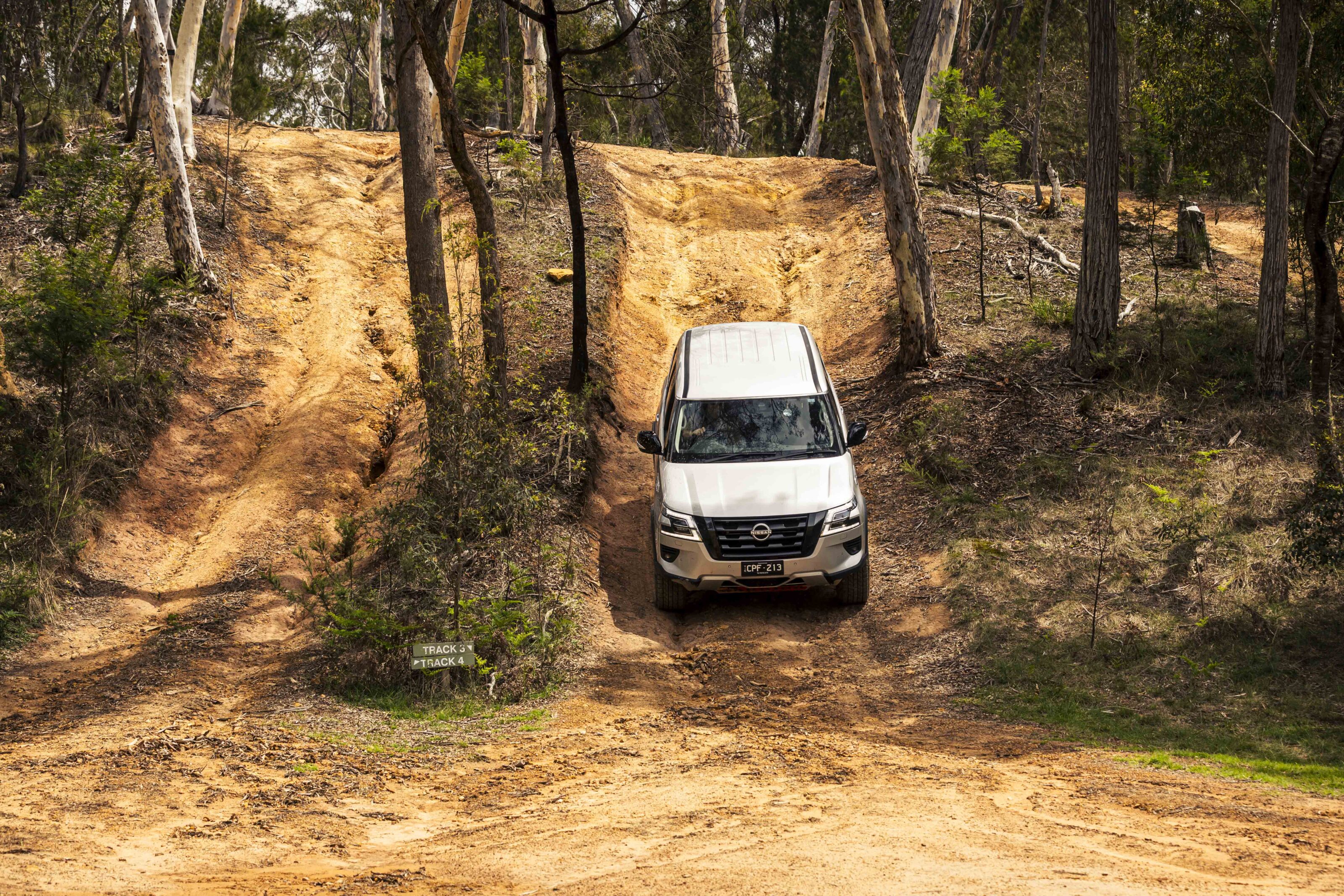
In terms of dirt road and sand performance, this thing shines brightly. The V8 does the heavy lifting and propels you over the soft stuff laughingly easily, and the Premcar suspension soaks up corrugations and washouts at near Trophy Truck levels of refinement. If you’re tackling a particularly steep climb, putting your foot down or shifting into manual mode is rewarded with the bi-modal exhaust shifting to the less restricted side exit pipe that puts out a sound that’s nice enough to give Jimi Hendrix imposter syndrome.
As a tourer, this is a weapon. Don’t let the old-school “diesel is the only way to tour” way of thinking stop you. The Warrior has 140 litres of fuel on board, which is enough to cover a respectable distance – the only diesel engines that can really even come close in terms of power output are the big units found in full-size American rigs.
Seriously, take a Patrol for a drive and tell us we’re wrong. The fact that Patrol sales have been increasing steadily over the last few years, with 2024 showing the highest sales numbers ever in Australia should give you a hint that we’re not. The people who own these things love them.
Verdict
Unless you are absolutely married to the idea of a diesel, the Patrol Warrior is easily (still) as good an option as an LC300, Land Rover Defender or Ineos Grenadier (which is a very different vehicle to begin with) and is a fair bit cheaper to boot.
The daily commute, while more expensive at the bowser, would even out over the long run with cheaper servicing and, again, the power makes for a very easy and less fatiguing drive overall. Especially over big distances.
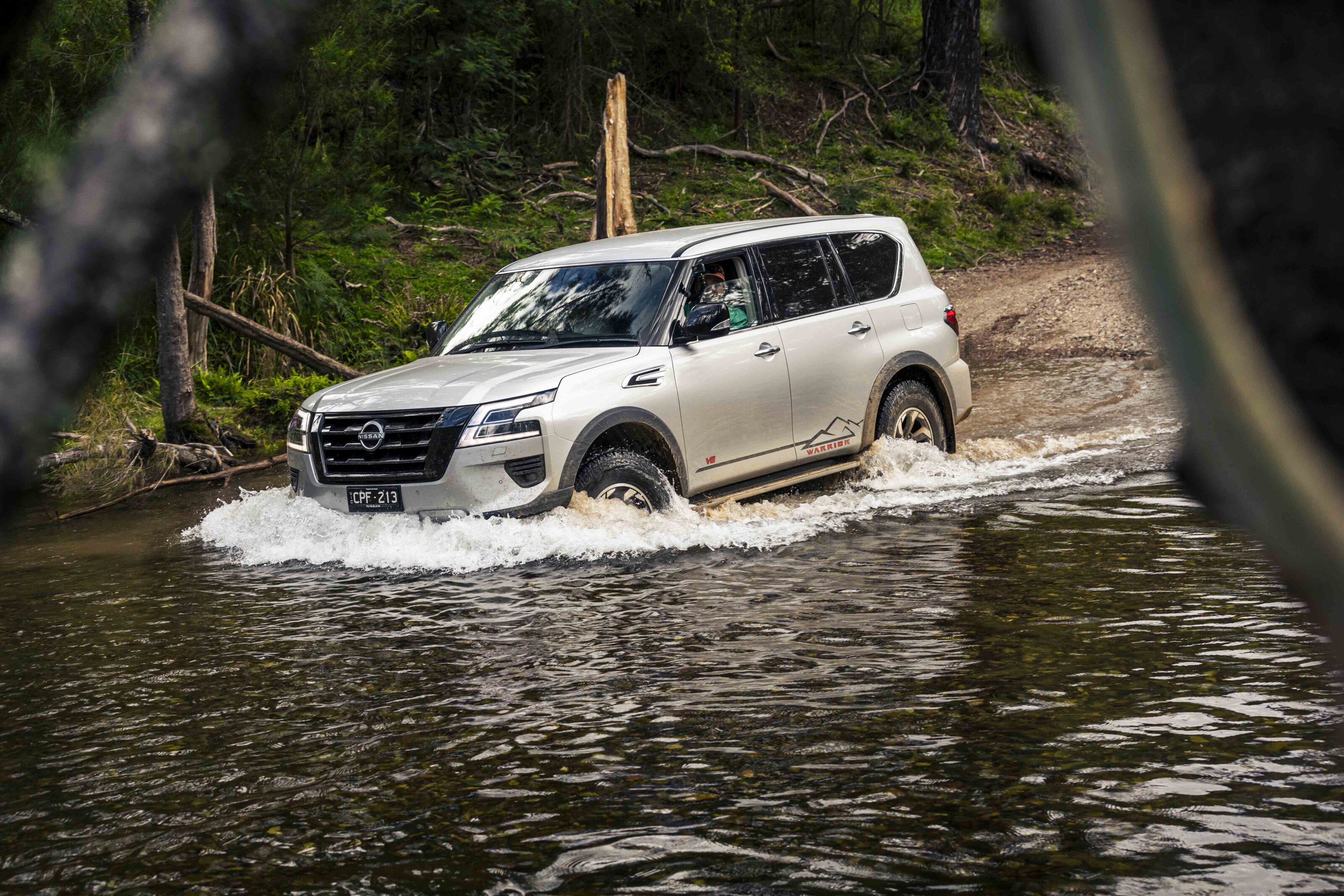
At the end of the day, the big deciding factor is going to be those fuel costs and whether you personally think they’re worth the superb amount of advantages a Y62 gives you, both on- and off-road. For us, they’re worth it. And buying the last of a model run means the manufacturer has got the recipe absolutely dialled, and with the factory warranty-backed mods from Premcar, the Warrior starts making a lot of sense.
Cheaper and more powerful than its competitors and easily capable enough to take you to any destination in the country with a minimum of mods. So, is the old warhorse still worth those six-figures? Yeah, yeah it is. Long live the Y62.
Plenty of drivers want the largest diameter driving lights with the longest and brightest beam light they can muster into their bull bar. All good in theory, but this mentality has a few downsides.
For my newly acquired HiLux, I figured I would break a few of these rules to improve the night-driving experience, both on and off the road and at high and low speeds. For starters, for my long on-road drives, both the highways and the back blocks, I wanted a long enough beam that would fill not only the road but also onto the verge of both sides, plus provide plenty of reaction time for anything that needed avoiding. The same goes for long, high-speed gravel and dirt tracks; plenty of distance, with more than the standard pencil beam spread to help spot hidden hopping dangers that lurk off to the sides.
I also wanted a light for slow four-wheel driving through tight, twisty tracks, picking a line through ruts, and wanting to see all track options at the front of my 4×4. Enter the Altiq Rogue 8.5 Mk3 driving lights.
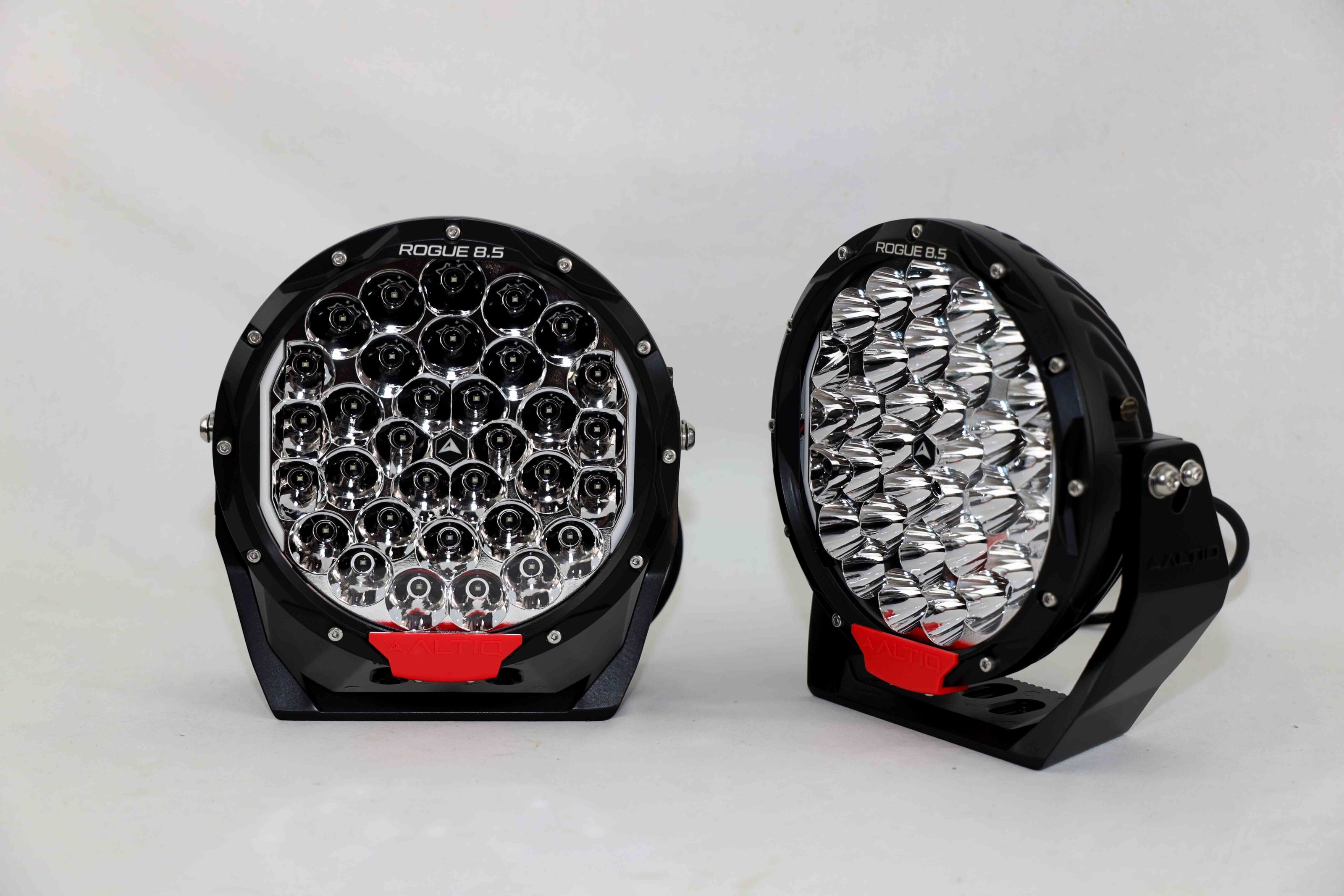
On paper, these lights should fulfil all my requirements and then some. They are smaller than the often sought-after nine-inch rounds, have a wide standard beam pattern that doesn’t resemble a light sabre being waved about by a lunatic at night, and can be transformed into a 180-degree flood spread via clip-on lenses. This beam versatility should return everything I wanted.
Added to that, the light temperature output of 5700 lumens, with a CRI (Colour Rendering Index) of 87 isn’t as harsh to the eyes as higher-valued units that appear overly white and bright.
While the claimed 1 lux at 1900m is impressive, the even spread of the hybrid beam pattern up to 800m gets my interest. Given the 180-degree spread with the panoramic flood covers installed, overall beam length is reduced, but that’s to be expected, and it is still more than usable to spot anything on the tracks or road. Also impressive is the near seamless coverage all the way from the long-distance spread to the mid- and close-range wider spread.
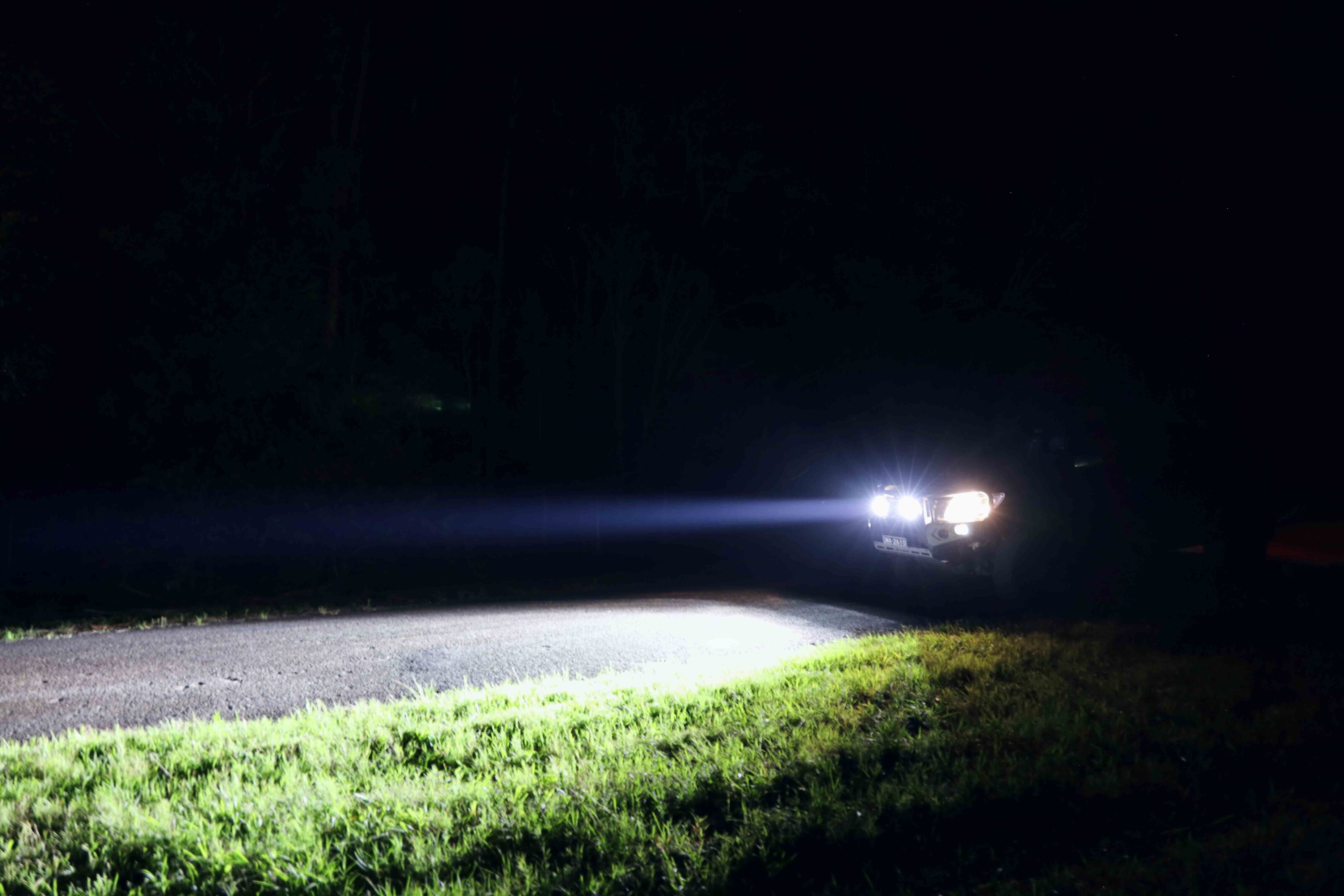
While I’m not one for snazzy accompaniments, Altiq offers a host of 20 different coloured fascia trims, as well as two solid blackout covers. There are also amber flood covers – perfect for dusty conditions, snow driving and fog – to drop the colour temperature to 3120K. These offer a full 180-degree spread, like the clear clip-on covers. There is also the option of an Arctic White-bodied version of the 8.5 Rogues if black is not your thing.
The Rogue 8.5 lights boast a few impressive credentials: 165 watts of power, 7-watt Osram chips in combination with Lexan indestructible lenses, and hybrid optic reflectors, which together result in the one lux at 1900m claim. Daytime running lights (DRLs) provide enhanced visibility to other road users, even with the covers installed.
All fasteners are marine-grade stainless steel, and the body and 17mm alloy mounting brackets have been coated in DuPont paint. Given that some others have failed over the years, it’ll be interesting to see how these stand up in my coastal living environment. The Gore-Tex breather should allow the equalisation of pressure as temperatures change, keep moisture from entering the lights, and add to the IP69K waterproof rating. A fast-fit wiring harness is also included, making for easy installation. It includes H4/HB3 beam adaptors for halogen high-beam globes.
Rockarmor GT bull bar
Many new-style bull bars on the market cannot accommodate a large diameter or deep-dished driving lights, so before you spend your hard-earned on a set of driving lights, double-check they’ll fit your bar.
If you’re also purchasing a bar at the same time, I can confirm these Altiq lights will fit a Rockarmor GT bar, as that’s what I have fitted to my HiLux. Besides looking damn fine, the GT bull bar has an integrated lightbar housing that offers a recessed fitment if required.
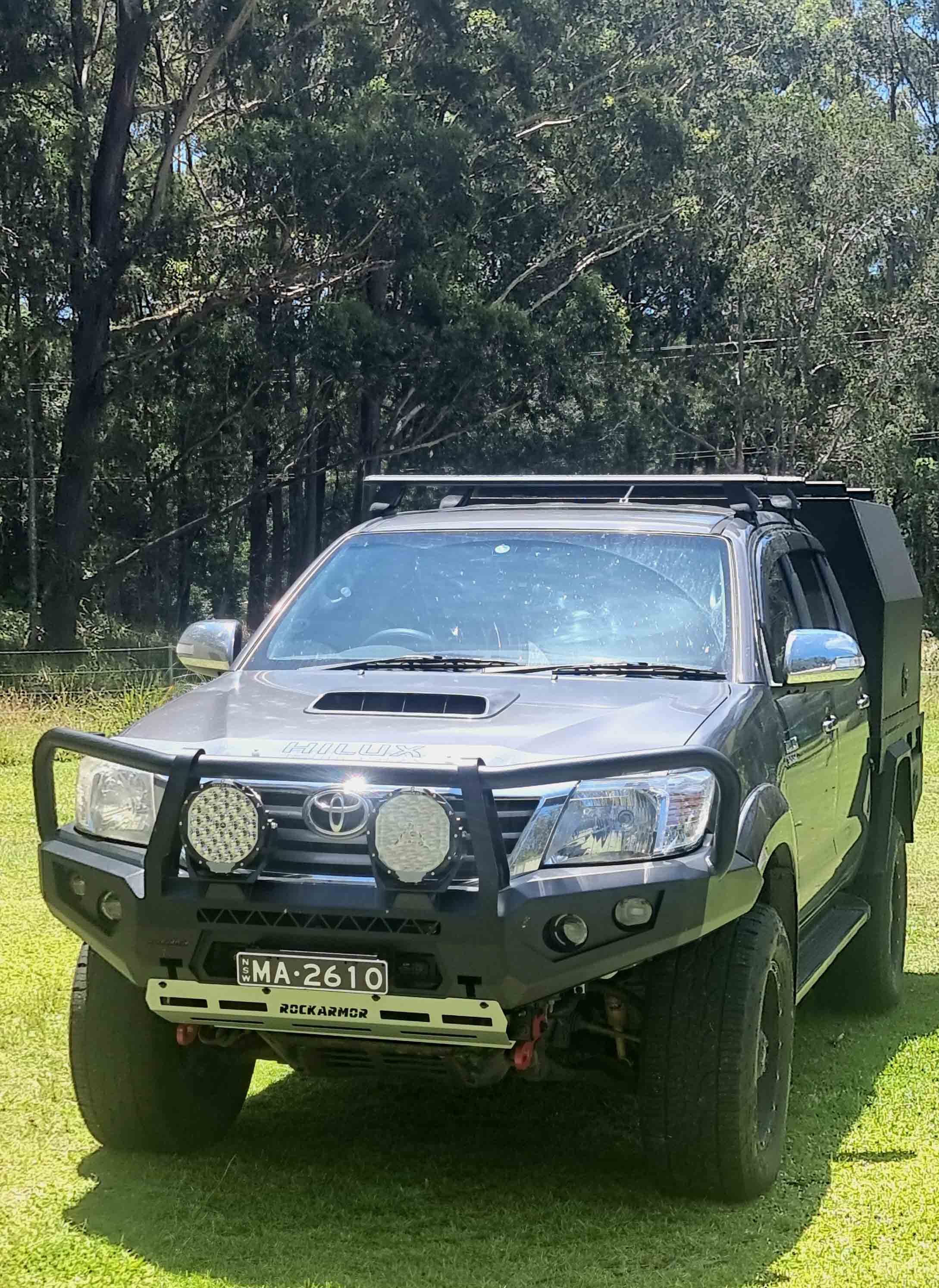
A bull bar should have a whole host of attributes; this bar is ADR-approved and airbag-compatible and has rated recovery points and twin-slotted antenna mounts. The E-coating, combined with powder coating, gives the best chance for the steelwork to survive the extremes of outdoor life, while the underbody skid plate also offers protection for the HiLux’s radiator. Fog and turn indicators are neatly recessed into the wings to give protection and additional modern design cues.
Of course, the sturdy driving light mounts keep the Altiq lights rock solid over any terrain, and the 55mm tubing mounted to the cleverly designed main section returns a modern touch to my older vehicle.
Verdict
Given that these Altiq lights come with a 10-year warranty, I’m confident they’ll continue to impress in their workings and aesthetics, but only time will tell.
While I haven’t tackled long-distance, outback red dirt drives yet, my highway, rural bitumen and faster dirt track adventures, along with a little low-range playing, have been nothing short of brilliant. Once the spread beam clips were installed, my ear-to-ear grin was almost enough to light up the cabin of the HiLux.
I’ve now permanently fitted one clip-on lens to one light while the other goes without, returning what I believe to be the perfect lighting setup with two lights. A collection of LED light bars, LED light conversion kits, work and rock driving lights are also available from Altiq.
RRP: $870 (inc. wiring harness)
Value. It’s a concept that’s getting more and more rare in this day and age. Somewhere along the way, 4x4s went from being the agricultural second vehicle you could throw a few bucks at and tour Australia in, to ultra-commodified luxo-barges with price tags to suit.
Enter the Chinese contingent. Over the last decade the high-value, low-dollar, medium-quality Chinese 4x4s have taken this country by storm, and they’re only just getting started. Sure, they’re not quite as refined as a Lexus or as ballsy as a V6 Ranger, but they’re bringing huge amounts of bang-for-buck to the Australian public.
Take the GWM Tank 300 turbo-diesel for example. For $53,490, some twenty gorillas cheaper than the cheapest JL Wrangler (probably the most similar vehicle in terms of size and functionality) this thing offers diesel economy, legit off-road prowess and plenty of scope for modification while wrapping you in comfort and technology.
We recently got our hands on one of the first diesel models in the country and put it through its paces on our 4X4OTY test, where, it has to be said, it more than held its own. Can that magic combo of diesel power, twin lockers, modern comfort and capability offset the fact that it’s not an established brand in this country? Let’s find out.
JUMP AHEAD
Turbo-diesel powertrain
The 2.4-litre turbo-deezy, borrowed from the GWM Cannon, could best be described as ‘adequate’.
Words like grunty, or torquey or even fast don’t really belong in a story about this engine, which is unfortunate as the overall vehicle really does have a lot to crow about. But the engine just doesn’t inspire much in the way of acceleration-induced grins. Sure, there’s now a 3000kg tow rating, up from the 2500-odd kgs the petrol can lug behind it, and the nine-speed auto does its job, if somewhat uninspiringly, but the reality is the engine is a bit of a miss.
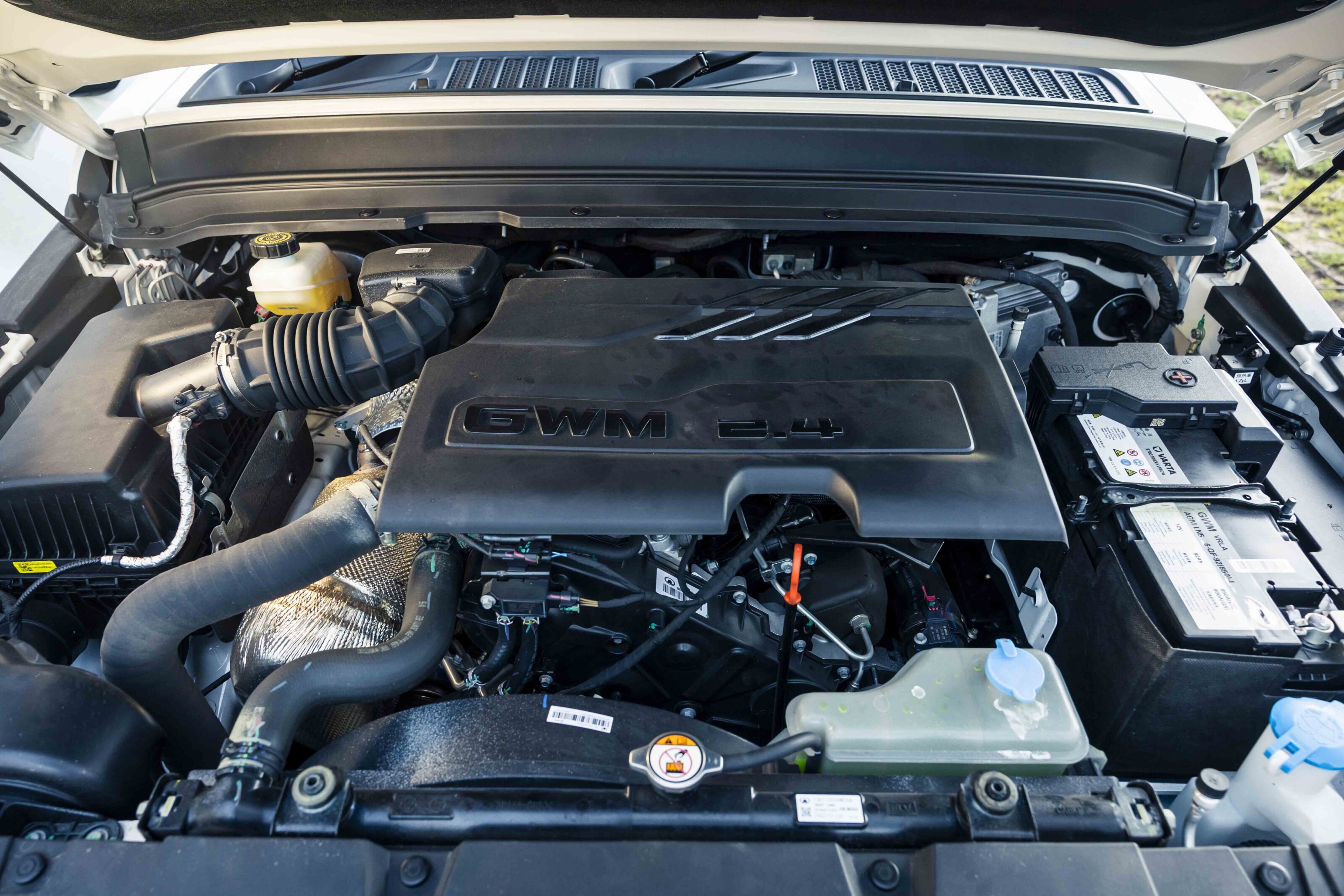
It’s rattly, it’s asthmatic and really doesn’t give you a lot of confidence in terms of prospective longevity either. On the plus side, it’s economical and has enough to do the job, both on- and off-road (sorta), but falls short in terms of outright power and torque delivery to the point where it was the only vehicle in our 4X4OTY test to not make it up a particularly steep and scrabbly hill climb. It wasn’t a lack of grip or articulation that let it down, it simply lacked the wheel speed to get it up the obstacle.
To be honest, it’s frustrating in this day and age of 160kW+ diesels from factory coming out and returning decent economy with barrels of torque available, for a manufacturer to see the 135kW and 480Nm from the Tank as acceptable. Come on guys, to be competitive you need to pump those numbers up by a good 20 per cent as a minimum. You’re making the Toyota four-cylinder diesels look fast, which at the very least should be raising a few red flags in the design meetings.
Still, the Tank is easy enough to punt around the suburbs, through the dirt and up the highway, just don’t expect the old pulse to be set racing while you’re doing so.
On-road performance
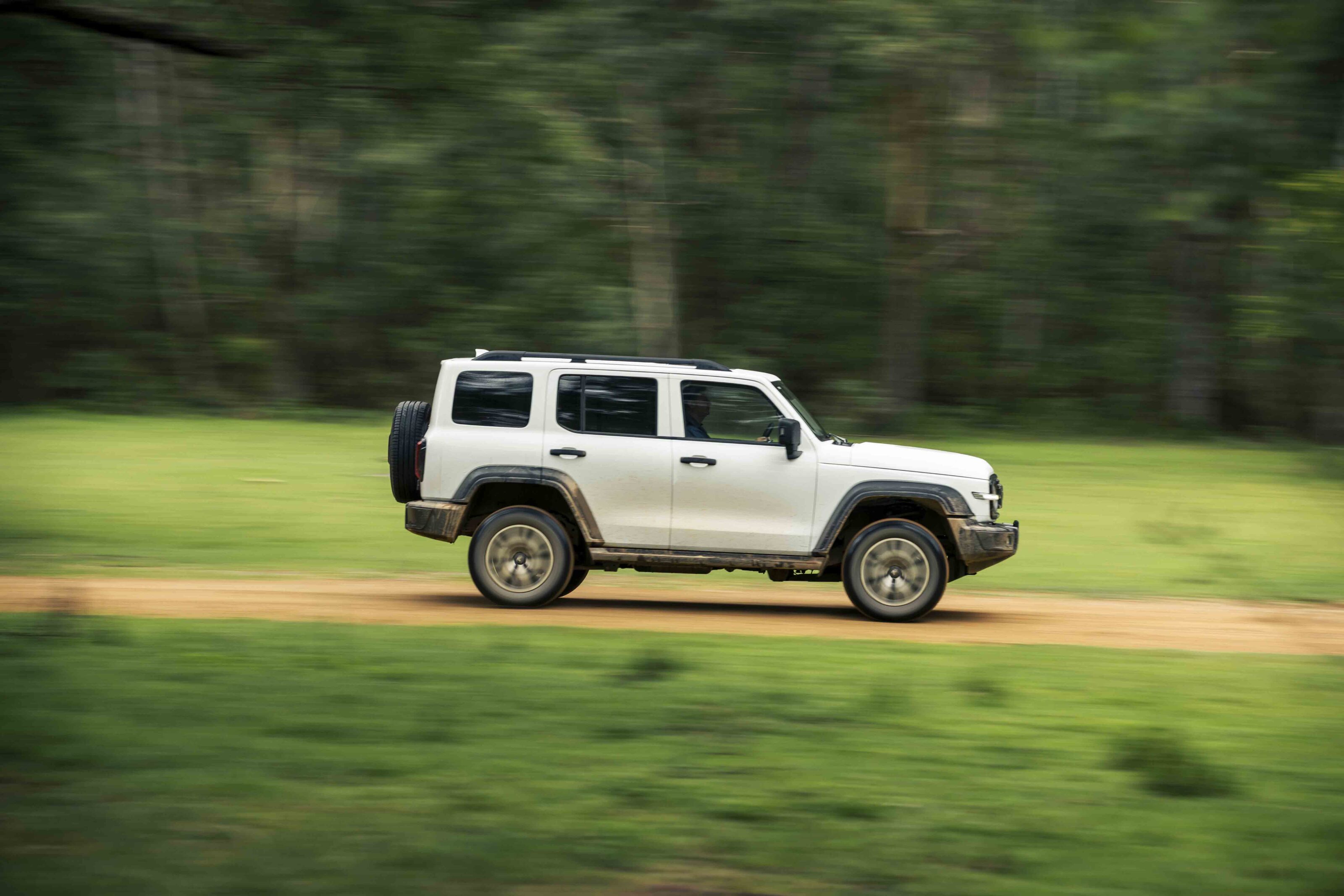
For a RWD, short(ish) wheelbase and relatively high centre of gravity, the Tank handles way better than it should.
It can be pushed past its limits without a heap of effort, but you should expect that from this type of vehicle. It’s really very easy to keep within those limits and make the bitumen commute a pleasurable one.
We won’t re-hash the engine shortcomings, but one thing we should chat about is the overly intrusive driver aids that are more frustrating than finding out the hottest person in your year had a crush on you back in high school. In a word, they’re garbage.
Lane assist as a concept should never have been green lit in any vehicle ever in the first place, but the Tank’s steering-wheel grabber is even more overbearing than normal. If it were human, it would be a close-talker who reckons brushing its teeth is only for special occasions. As it is there are moments where you’d swear you can feel its breath on your neck. It sucks.
Then there are all of the other autonomous braking and dings and bells and red-light flashes that can also die in a fire. I’d sincerely like to meet the driver these things are invented for, so I can forcibly remove their license and maybe break their kneecaps to ensure they’re never behind the wheel again. If you cannot keep your vehicle in its lane, or realise that you’re a wee bit close to the car in front of you during peak hour, maybe it’s time to hang up the stirrups, cowboy.
Oh, and the facial recognition that detects when you’re yawning and annoyingly and insistently suggests you take a break, or the polite lady who suggests you slow down when you’re driving spiritedly to the conditions? Yeah, they can also hop straight in the bin.
The thing is, though, these things aren’t solely a Tank thing. Almost all modern vehicles have them to some degree or another. Other than that, the Tank is actually a nice on-road experience that offers better than decent value, so you have to give it the credit it deserves. Sure, the rear-view mirror vibrates at speed to the point you can’t tell what’s behind you, and the speakers aren’t great, but the 8.5-in touchscreen, digital dash and power everything (except, oddly, the steering wheel adjustment) make for a modern and relatively stress-free driving experience.
Off-road performance
With a nice mid-wheelbase, twin lockers and decent approach and departure angles, the Tank really does shine off-road.
Low range gearing is fantastic, especially paired with that nine-speed auto, and it was really only that one hill climb that troubled the Tank during our testing, which was a power issue, and can’t really be laid at the feet of its off-road credentials.
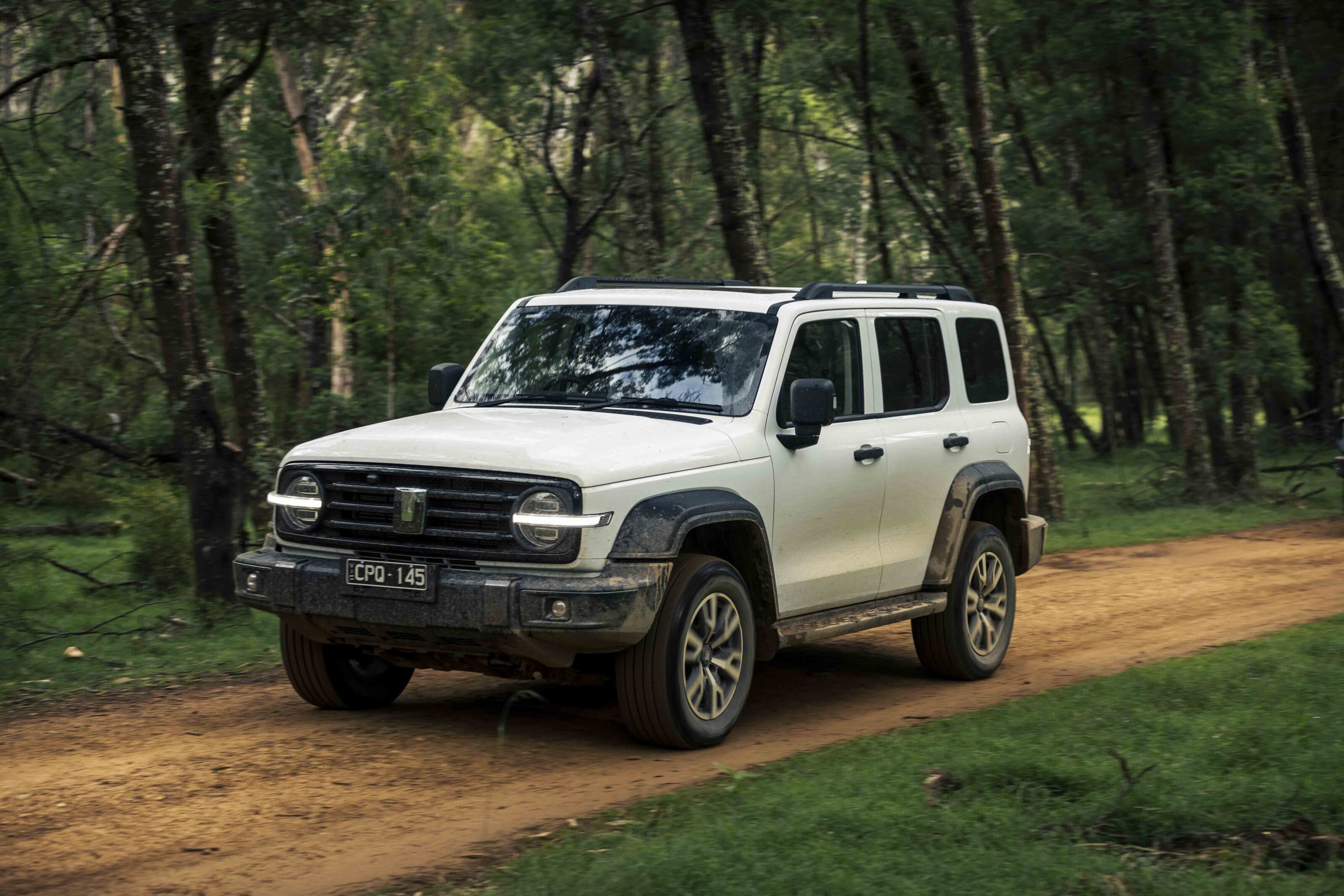
For the money, there aren’t too many other stock 4x4s that’ll come close. It’s a great throwback experience to the middy LandCruisers and Jeeps of yesterdecade that were off-roaders first and foremost, with everything else a secondary consideration. There’s a lot to love about that.
In reality, there are very few mods needed to make the Tank an absolute track-eating weapon. Even just a set of aggressive rubber would make this thing very close to unstoppable. Of course, there are portal hub kits available for them, and the diffs and CVs are strong enough to handle 35-inch tyres… just thinking out loud here.
Verdict
The driver aids deserve a Darwin Award, but we’ve already banged on enough about them.
Most can be turned off in the settings on the touchscreen, but geez it’d be nice if they stayed off and didn’t have to be re-done every time you turn the engine on.
Storage is couple-friendly, but a family may need a roof rack or a larger vehicle for long distance touring. This isn’t really designed for extended family getaways though, it’s more of a ‘drop the kids off at school and maybe head away for a quick weekender (with or without the kids) a few times a year’ affair, as opposed to ‘let’s hit the road full time and start an Instagram page’ situation.
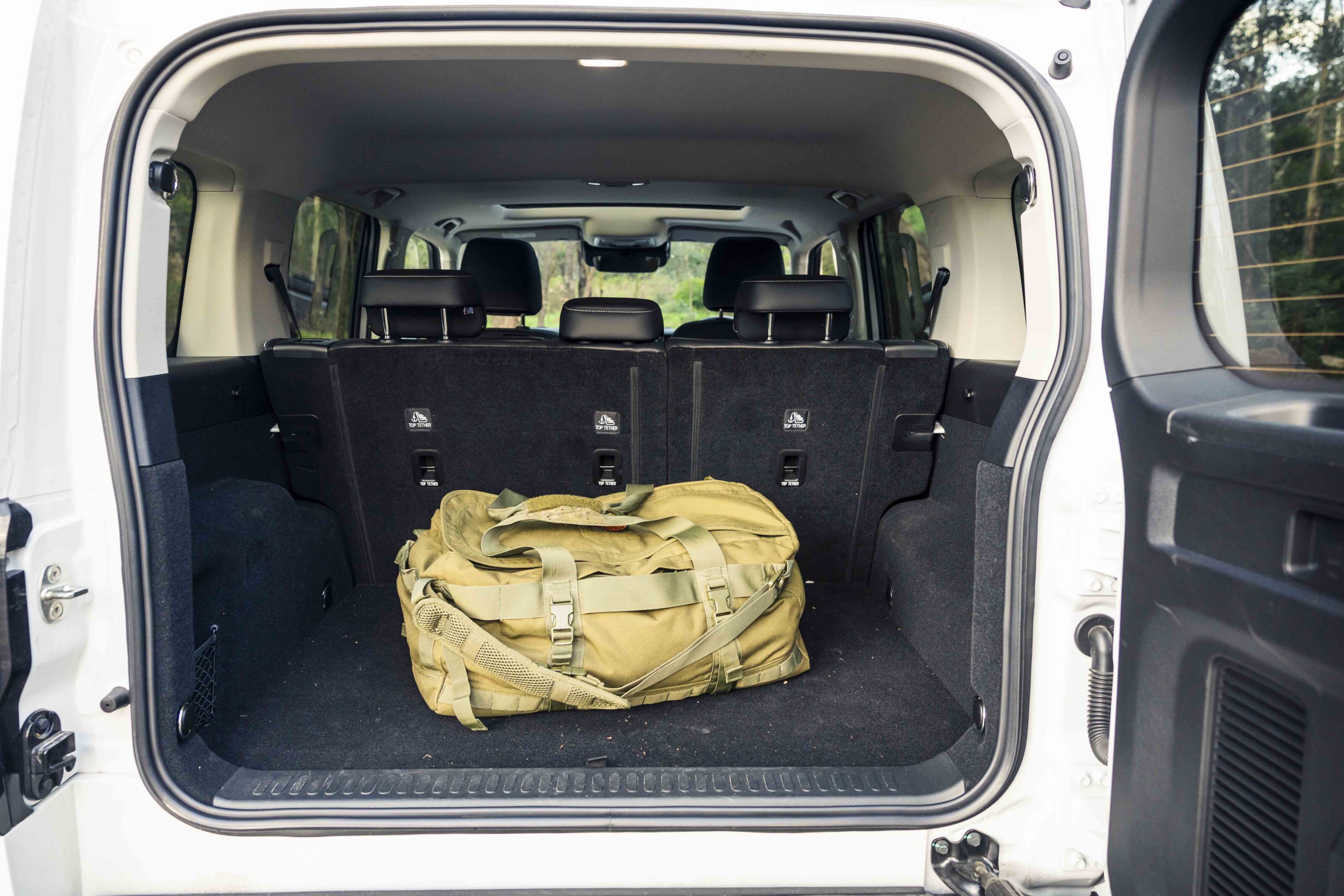
With that said, the electric front seats are supportive and good for long distance comfort, and the mod cons are plentiful, so there’s no reason you couldn’t tour comfortably in a Tank. Plus, there’s a lot of scope for additional accessories to make it an ideal multi-purpose 4×4. For us we’d start with the usual power-ups to get things moving like they should, then turn our attention to some barwork and winch, then the suspension and tyres. It’s practically begging for all of them, and that’s really the beauty of a vehicle like the Tank.
It’s an entry level blank canvas that could quickly be turned into something as wild as you could want, and on a budget. And there’s a hell of a lot of value in that.
The Kia Tasman dual-cab 4×4 ute will start from $49,990 and top out at $74,990 when it lands in local dealerships this July.
With pre-orders for the hotly anticipated Kia pick-up now officially open, this sub $50,000 launch price of the Tasman S positions it fractionally below the Ranger XL equivalent, currently listed at $50,880 (single turbo) or $53,680 (bi-turbo).
The top-spec X-Pro will be priced at $74,990, on par with the V6-powered Wildtrak ($74,840) and under-cutting the Wildtrak X ($77,640) and Platinum ($80,640) 4×4 variants.
| 2025 Kia Tasman 4×4 dual-cab pricing | |
|---|---|
| Tasman S | $49,990 |
| Tasman SX | $54,490 |
| Tasman SX+ | $62,390 |
| Tasman X-Line | $67,990 |
| Tasman X-Pro | $74,990 |
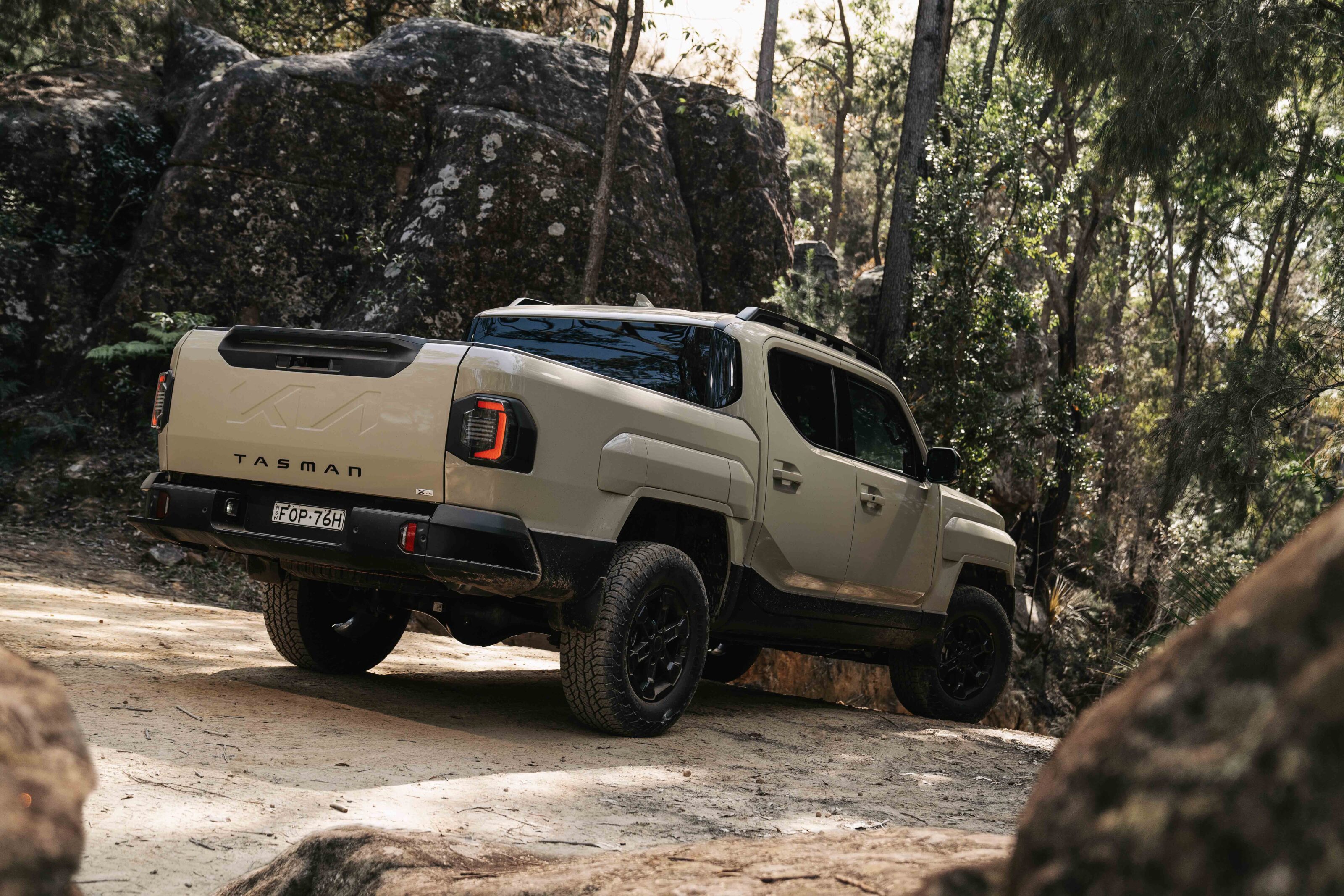
A 4×2 model – S – will be released at the same time, for $42,990. Plus, Kia Australia has confirmed a dual-cab chassis will arrive approximately one month later than the July launch, and this will be followed by a single-cab chassis late in 2025. Pricing for these variants is yet to be determined, but Kia has stated the single-cab chassis will be offered in S 4×2, S 4×4 and SX 4×4 guise; and the dual-cab chassis in S 4×4 or SX 4×4 trim.
“The Tasman is by far Kia Australia’s most anticipated model yet, reflecting the scale of Australia’s ute market and the passion of these owners,” said Damien Meredith, Kia Australia’s Chief Executive Officer.
“We are confident the input from Kia Australia at each stage of its development, along with its competitive value and versatility, will make it a very strong contender in the local market.”
The five-model line-up has been built on an all-new ladder-frame chassis, with all variants boasting a braked towing capacity of 3500kg and payloads in excess of 1000kg – but all dual-cab pick-ups can be secured with a reduced payload option to meet the criteria for a novated lease.
All Tasmans are also equipped with an integrated Trailer Brake Controller (with a Towing Mode). The Tasman’s tub can fit a pallet between the wheel arches, with the tub’s cargo capacity listed 1173 litres. The vehicle measures 1512mm (length), 1572mm (width), and 540mm (height). All 4×4 variants, including the entry-level S, come standard with a mechanical rear diff lock.
On the inside, all variants receive a 12.3-inch driver monitor, as well as a 12.3-inch infotainment screen with wireless Apple CarPlay and Android Auto. The two upper-spec variants – X-Line and X-Pro – come with dual wireless smartphone charging capabilities. Also limited to these two models is a “slide and recline” function for the second row seating.
The Tasman is powered by a 2.2-litre four-cylinder turbo-diesel engine, producing 154kW and 440Nm and paired with an eight-speed automatic transmission.
What does each variant get?
Tasman S
- 17-inch black steel wheels
- Full-size spare wheel
- Front parking sensors (pick-up only)
- Rear parking sensors
- Rear View Camera (pick-up only)
- Smart Cruise Control
- Drive Mode Select
- LED headlights (MFR Type)
- Daytime Running Lights
- Trailer Sway Control
- Smart Key with Push Button Start
- Rear Bumper Steps (pick-up only)
- Integrated Trailer Brake Controller
- Tailgate with Lift Assistance (pick-up only)
- Integrated Panoramic Display (12.3-inch Digital Driver Cluster + 5-inch HVAC + 12.3-inch Multimedia Screen)
- Kia Connect with OTA
- LED Interior Lights
- FCA 2
- Wireless Android Auto/Apple CarPlay smartphone connectivity
- Cloth trim seats
- Dual-zone climate control
- 6 Speakers
- 2nd Row under-seat storage
SX (in addition to S)
- 17-inch alloy wheels
- Terrain Mode: Snow, Sand, Mud
- Safety Power Window – 1st Row
- Inbuilt Satellite Navigation
- Highway Driving Assist 2
- Smart Cruise Control – Nav based
- Electric folding side mirrors
SX+ (in addition to SX)
- 18-inch alloy wheels
- Cloth/artificial leather seats
- LED fog lights
- Ambient Mood Lighting (Light)
- 2nd row air vents
- Bedliner
- 2 x 240V power outlets (tub & behind centre console)
- Wireless charging pad (single)
X-Line (in addition to SX+)
- Column-type shifter (E-SBW)
- Paddle shifters
- Privacy glass
- Roof rails – Bridge type
- 2nd row armrest
- Wireless charger (double)
- Rear fender flare storage*
- RSPA
- Parking Collision Avoidance Assist
- Surround View Monitor
- Blind-spot View Monitor
- LED Headlights (projection Type)
- Heated seats – 1st row
- Artificial leather appointed seats
- Powered driver seat – 8-way
- 2nd row slide/reclining seats
X-Pro (in addition to X-Line)
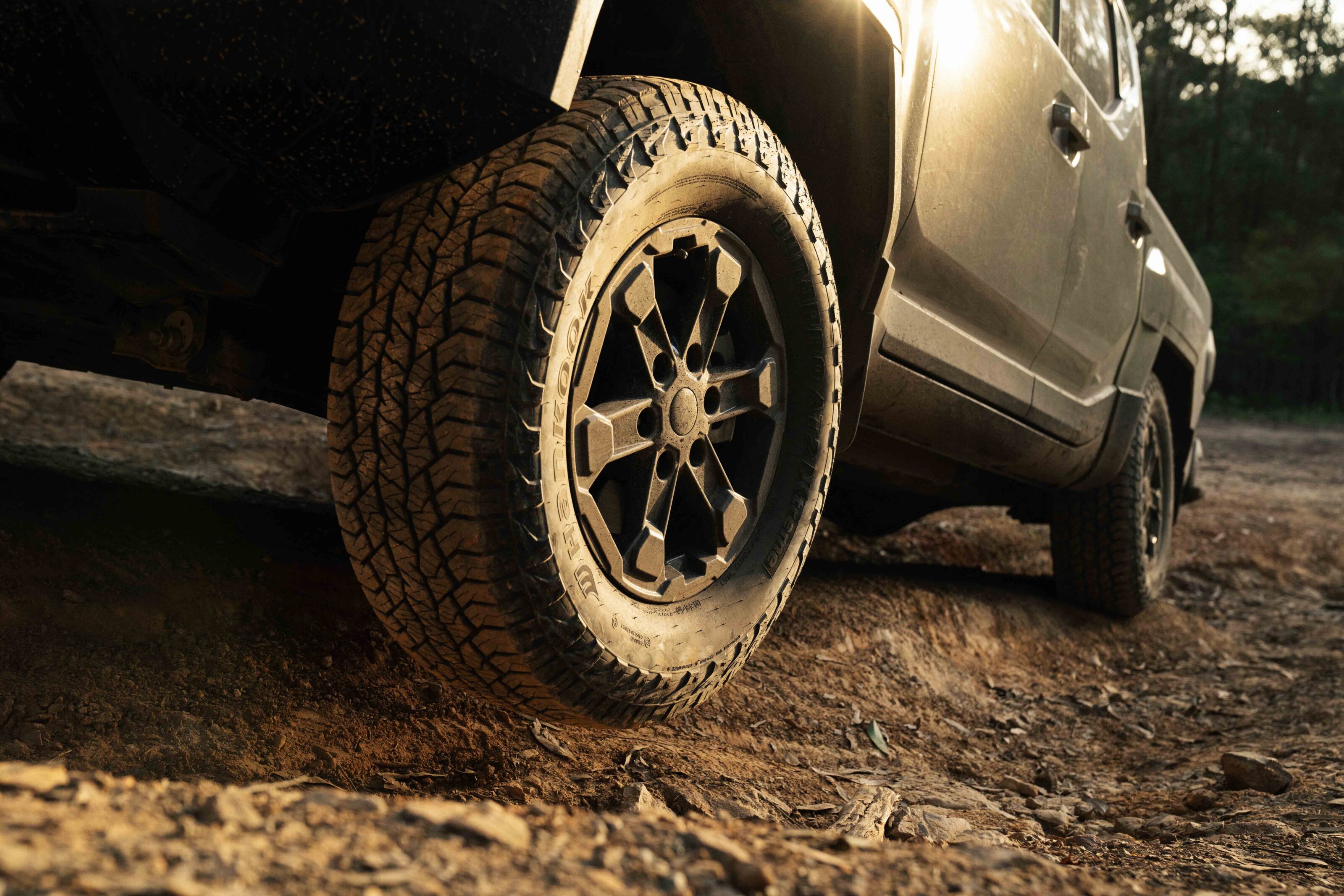
- 17-inch black alloy wheels with A/T tyres
- Electronic locking differential with on/off switch
- X-Trek Mode
- Terrain Mode: Snow, Sand, Mud, ROCK
- Ground View Monitor
- Premium Sound System (Harmon Kardon)
- Fuel tank undercover protection
- Heated steering wheel
- Ambient Mood Lighting (Full)
- Heated seats – 2nd row
- Ventilated seats – 1st row
- Powered passenger seat – 8-way
- Integrated Memory System
- Sunroof
- Off-Road Page (steering direction, steering angle, oil levels, etc)
The Pajero has always been a good package, but not enough people ever give it much thought.
This sense of being overlooked by a lot of new car buyers may be a nightmare for Mitsubishi’s marketing team, but for you it means you can get a Japanese-built, reliable and capable 4×4 wagon for around the same price as a freshly introduced Chinese wagon. In fact, the top-of-the-line Pajero Sport GSR rings in at around the $65K mark, which is about what you’d fork out for a mid-range Everest.
Even so, the upper end of the Pajero Sport stable is not where I’d be dropping my cash. Sure, you miss out on the eight-inch touchscreen and leather seats, but there’s no better engine on offer, no uprated transmissions, not much of anything that’ll make touring any easier or better, so I’ll save my money for stuff I actually do want.
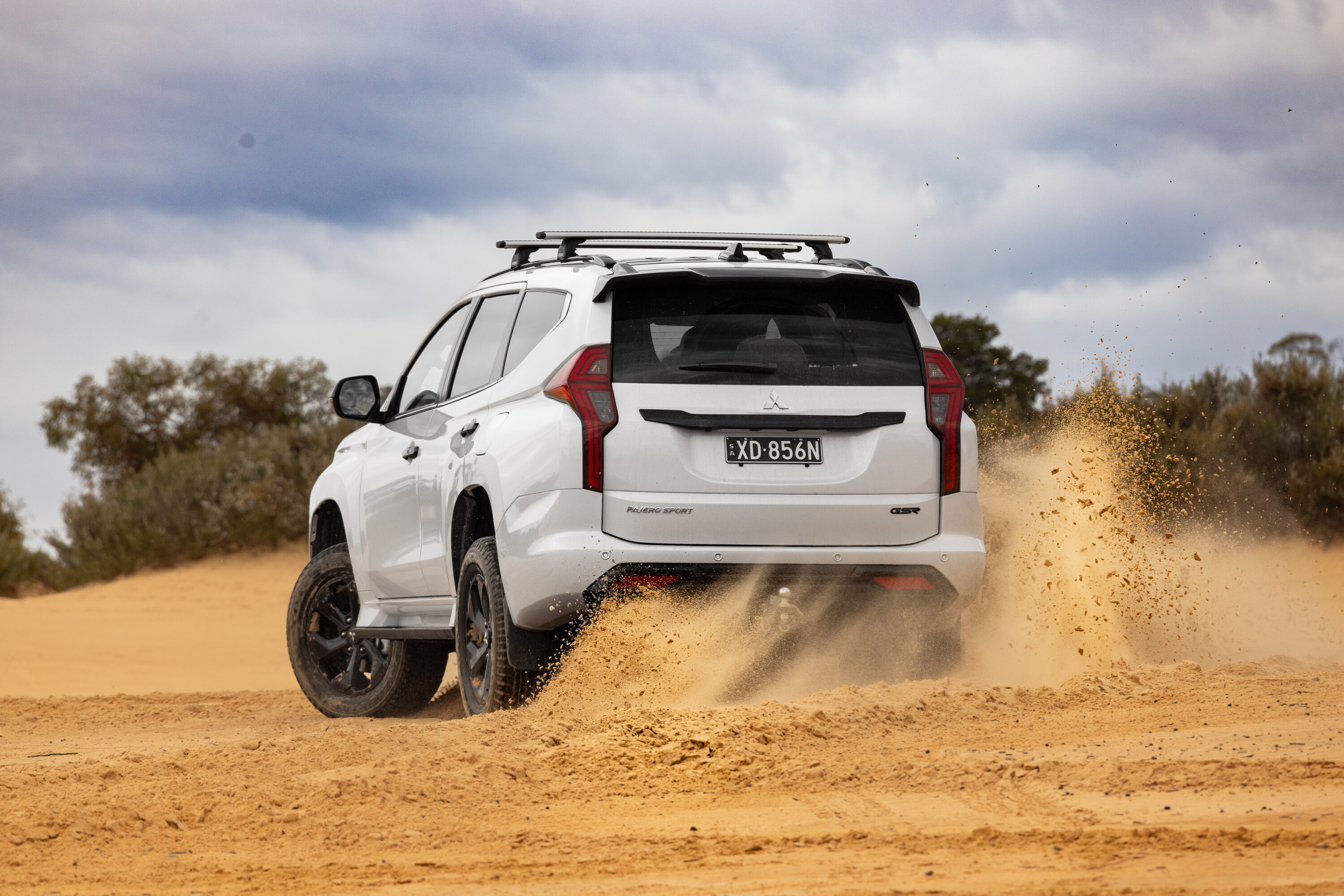
For me, the one-step-up-from-the-base-model Pajero Sport GLS is the gee-oh. Mainly because they come with a rear diff-lock, and colour me old-fashioned, but lockers are still the king of the traction aids off-road. Even from stock, the GLS ticks the boxes for weekenders, and the annual pilgrimage to somewhere awesome that can’t be reached by the masses in their beige cardigans, ahem, Camrys.
By buying the cheaper model, it makes sense that you have a few bucks left over for mods. The list should be familiar to most by now: bar-work, long-range tanks, racks, drawers, batteries and power-ups, and finally, some suspension and rubber to get the spring rates dialled.
The 2.4L twin-turbo-deezy, while an improvement on the older models, is still about as exciting as a dissertation on Taylor Swift’s back catalogue, so an ECU tune or quality plug-in-play module (whichever you prefer, me, I’m a tune guy) for around two-grand would be my first stop.
From there, a quality alloy bull bar and winch which would set me back roughly five gorillas. I like modern alloy bars (like the Rival bars for around $3500) because they save on weight, incorporate recovery points and have provision for an electric winder. I do a bunch of solo travel, so that means a lot to me.
While drawers and roof racks are great, I don’t think I’d bother here. Just use the old plastic boxes in the back and forgo the roof-topper for a swag-n-stretcher, which is still the best and easiest set-up in the world. Fight me. I’d use my remaining savings on the best two-inch lifted suspension I could afford (I reckon Bilstein are up there as one of the best in performance versus cost for a Pajero Sport) and some hybrid AT rubber – I’ve always run Japanese or American tyres and never gone wrong (Toyo, Nitto, Mickey Tees, Goodyear, etc.).
That’d be stage one. After a few months of letting my bank account recover, I’d look into a lithium set-up (around the 100A mark) for my fridge, some LED spotties, a long-range tank and, if I could stretch it, a front locker. With that, I reckon there’d be fewer than a dozen gazetted tracks in the country I couldn’t confidently tackle.
Toyota has given its 300 Series LandCruiser its first significant update since the vehicle launched in Australia in 2021, with the revised model line-up now in dealerships.
As a result of these changes, pricing has increased across the six-model line-up. The entry-level GX now costs $97,990 (previously $96,991); the GXL is $110,820 (previously $108,791); the VX is $122,510 (previously $120,991); the Sahara is $139,310 (previously $138,191); the GR Sport is $146,160 (previously $144,791); and the Sahara ZX is now $146,910 (previously $145,791). All prices are before on-road costs.
As reported in December last year, the update will see the 300 Series gain a suite of safety and multi-media updates.
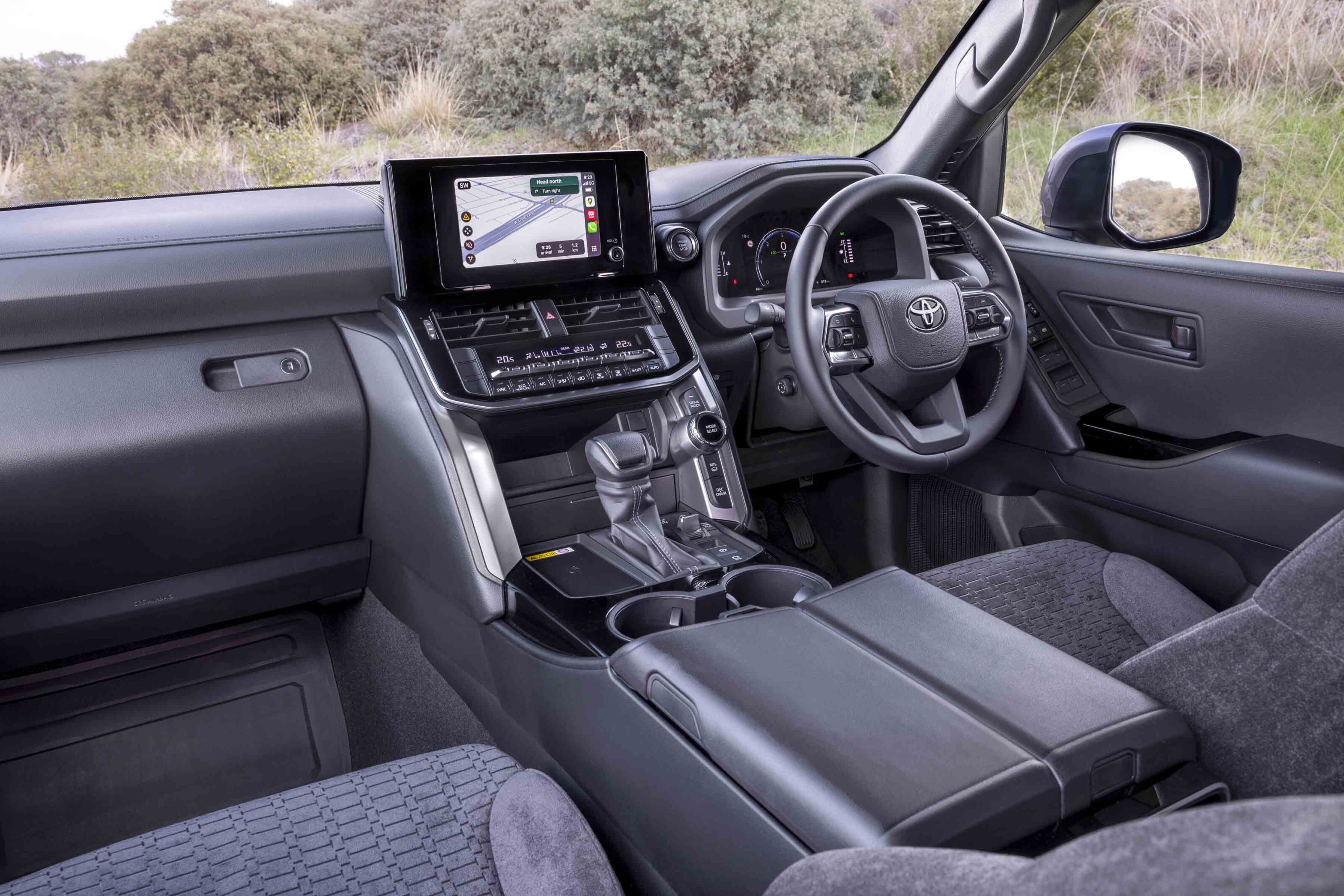
A key update for MY25 is that the base-spec GX is now equipped with a broader range of Toyota Safety Sense active safety technologies – tech previously only offered on the VX and above. This includes lane trace assist with steering wheel vibration; emergency steering assist; and the emergency driving stop system. Guidelines have also been added to the GX’s reversing camera.
As part of the mid-life update, the GX also gets a 7.0-inch digital instrument cluster, and new power adjustment for the steering wheel.
The entire range now also benefits from the latest-gen multimedia system that supports connected sat-nav, and wireless Apple CarPlay and Android Auto. Plus, the company’s Toyota Connected Services now includes a remote air-conditioning function and cloud-based connected navigation.
As per the GX, the GXL has also received a 7.0-inch digital instrument cluster. In addition, it gets four-zone automatic climate control; a centre console cool box; suede-like fabric upholstery; eight-way driver’s seat powered adjustment with lumbar support; 40/20/40 split-folding second-row seats; and a second-row centre armrest.
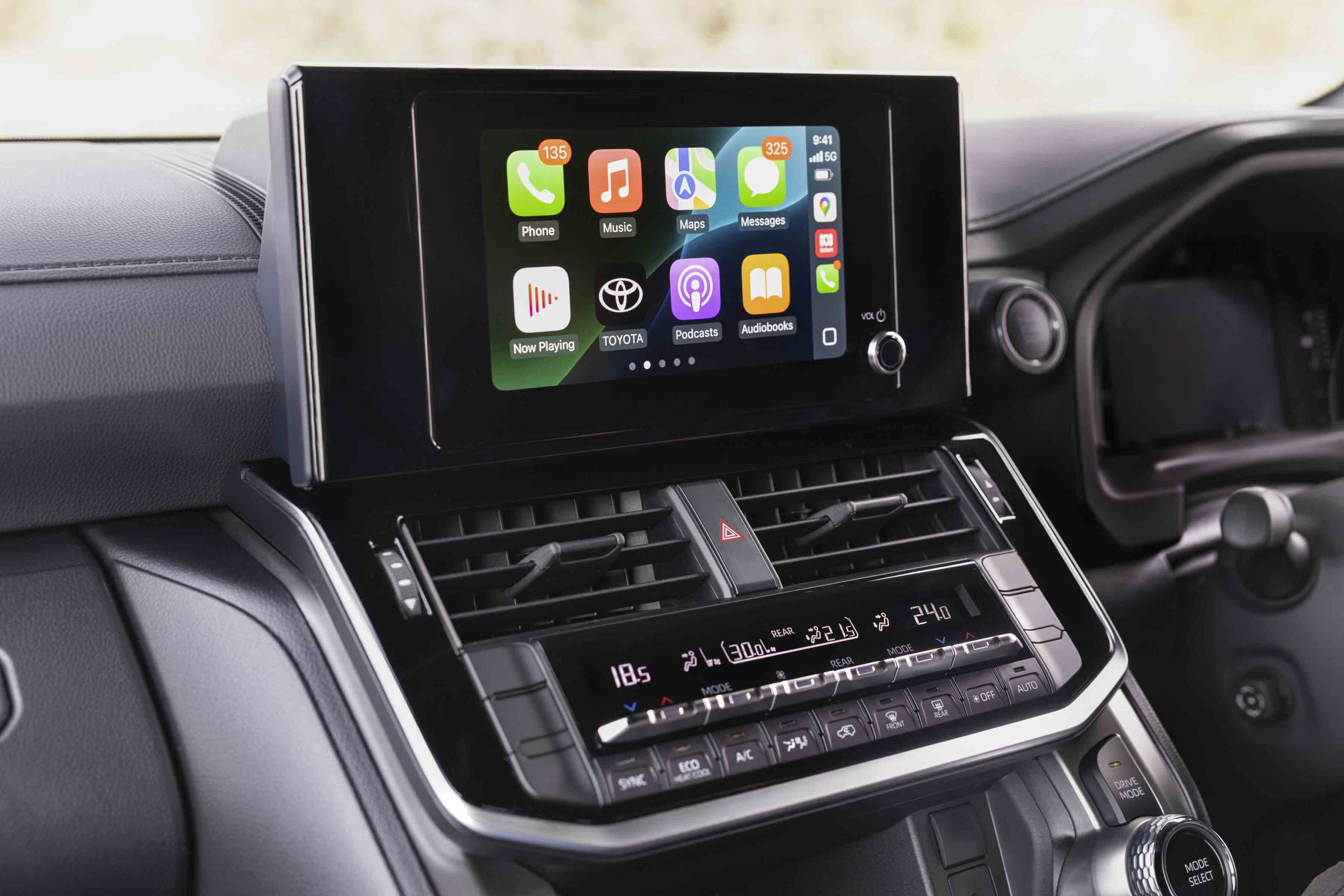
The VX gets a bigger 12.3-inch digital instrument cluster; eight-way power adjustment for the front passenger seat; a powered tailgate; and an HDMI port has replaced the DVD/CD player. The GR Sport now gets a puddle lamp on the inside of the tailgate, while the Sahara and Sahara ZX remain unchanged.
“When launched locally in late 2021, the LandCruiser 300 Series continued the legacy created by its forebears, offering excellent performance, comfort and off-road capability for families and adventurers alike,” said Sean Hanley, Toyota Australia’s Vice President Sales, Marketing and Franchise Operations.
“This new range of upgrades to the line-up offer valuable safety, comfort and technology improvements which customers are sure to appreciate.”
The LC300 remains powered by a 3.3-litre twin-turbo-diesel V6 producing 227kW and 700Nm. It’s paired to a 10-speed automatic transmission and a full-time all-wheel-drive system.
2025 Toyota LandCruiser 300 Series pricing
| GX | $97,990 |
|---|---|
| GXL | $110,820 |
| VX | $122,510 |
| Sahara | $139,310 |
| GR Sport | $146,160 |
| Sahara ZX | $146,910 |
I have a rather huge soft spot for the heavily under-appreciated BT-50, ever since I pummelled one through the High Country a few years back chasing dirt bikes and highly modified GQ and GU Nissans on a wheeling trip.
For a stock standard rig, the BeeTee handled itself incredibly, suffering only a weeping shock at the end of a gruelling week on all of the main tracks plus a few that weren’t signposted.
Another thing I’m a fan of is Extra cabs, or as Mazda calls them, Freestyle cabs. Why? Because dual-cabs really don’t offer heaps of room as it is, and the shorter tray means a lot of sacrifice in terms of what you can carry. Plus, the rear axle is more centralised under the tray, so handling is optimised. As someone who regularly takes my dirt bike away, the extra tray length trumps the extra rear seat room, which I rarely need, and it fits my fridge on the back seat nicely. So I’m sold. Given Mazda only offers the Freestyle cab in the XT cab-chassis models, that’s my huckleberry.
At $51,700, it offers decent value, and assuming I can afford the top-spec BT-50 SP at around the $70K mark, it gives me a bunch of wiggle room to turn this thing into a proper tow rig and tourer that’d be right at home tackling a Simmo crossing as it would turning right at Dalhousie and heading up to explore the Top End for a few weeks… or months.
The engine in this trim is the same as the D-MAX – the 4JJ3 3.0L turbo diesel, which I love, because while its power output is lame from the factory, the wick can be turned up a lot without affecting reliability. I’d spend $8000 to upgrade the snail with a G-Turbo, PWR front mount, a Process West Catch Can and custom tune, then I’d chuck an extra grand on top for a Redback DPF-back three-inch exhaust (it’s actually legal, officer). The result: 280 horses to the rubber and a swarthy 650Nm for towing and cool points. Lock me in, Eddie.
I’d then swing past my local Ironman 4X4 store and grab a Raid front bar with a 32-inch lightbar, and then bolt in a Carbon Scout Pro 9000lb winch while it’s all getting fitted up. That’d cost me around $4000, and while my wallet is getting lighter, the front end of my rig is starting to get a little heavy so it’s time for suspension shopping.
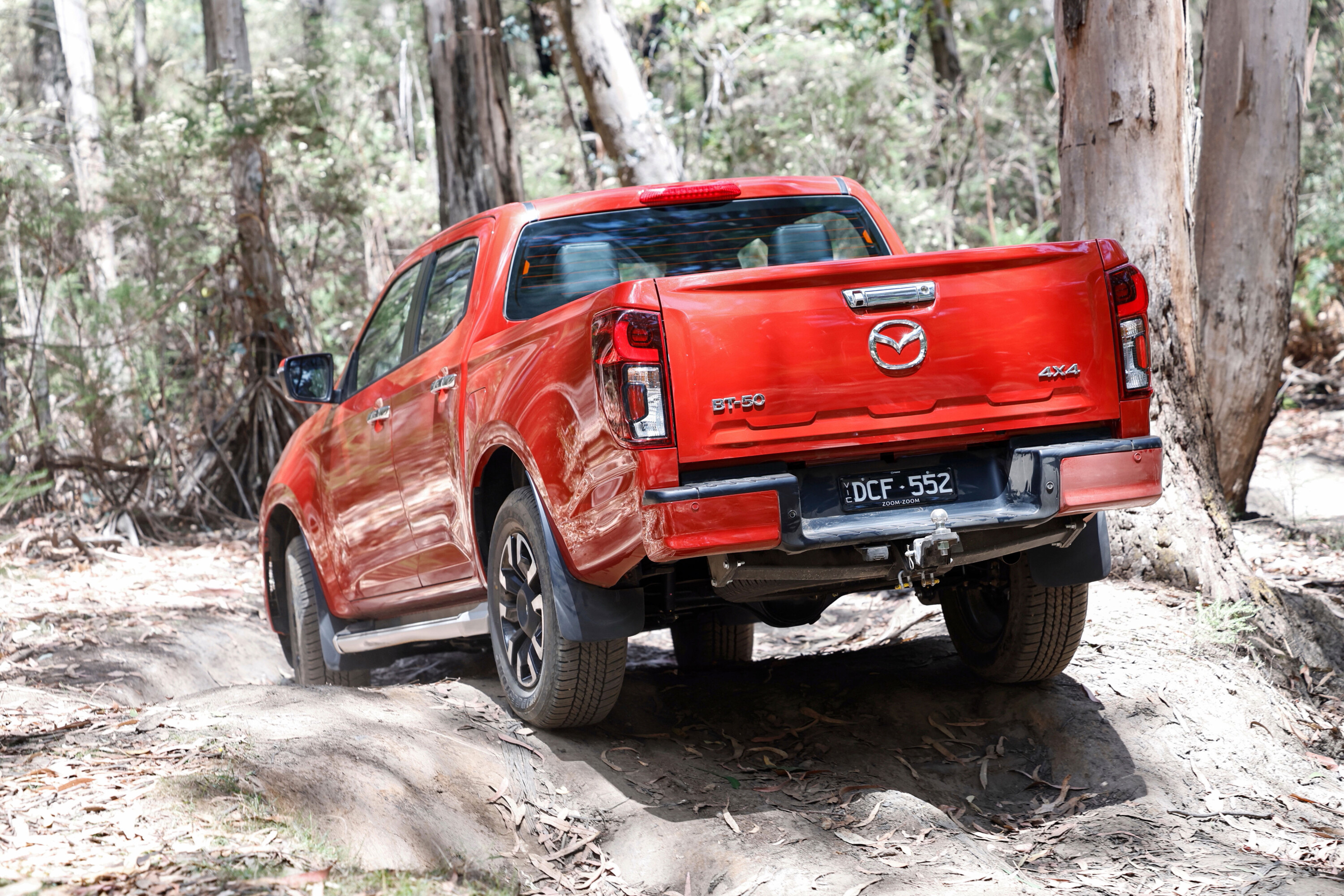
With utes, I’m a huge fan of fitting the best shocks you can afford. Mainly because the front coils and rear leaf springs, once you have the rates sorted, don’t affect the ride nearly as much as the shockies do, in my experience. I don’t need a big lift from this thing, so a set of 25mm spacers under the rear leaf packs with King shocks and a replacement set of King coilovers from Mike’s Shock Shop ($5000-ish) in the front should level things out while still retaining a bit of lift to fit up some 265/75R17 Falken Wildpeak ATs.
This’d give me about the ultimate in rutted desert track hooning ability without the undue stress on ball joints and steering arms that comes with big lifts and bigger rubber. And I still have my rear diff locker that’d get me over the majority of tracks. 250+hp, 650Nm of pull, riding on Kings while being able to self-recover and with a few bucks leftover for fuel.
Who said Mazdas were boring?
The 2025 Nissan Patrol is on sale in Australia, with the family off-roader benefitting from a suite of interior and tech updates as part of its latest refresh.
As a result, the price has increased marginally: the Patrol Ti is now $90,600 (previously $89,260), the Ti-L is $102,100 (previously $101,960), and the Premcar-fettled Patrol Warrior is $105,660 (previously $105,520).
The ‘Y63’ Patrol was officially unveiled last year, with the seventh-gen model set to transition from V8 grunt to V6 power in the form of a 3.5-litre V6 twin-turbo producing 425hp (317kW) and 700Nm, and a 236kW/386Nm 3.8-litre naturally aspirated V6. However, for the time being, the V8 remains.
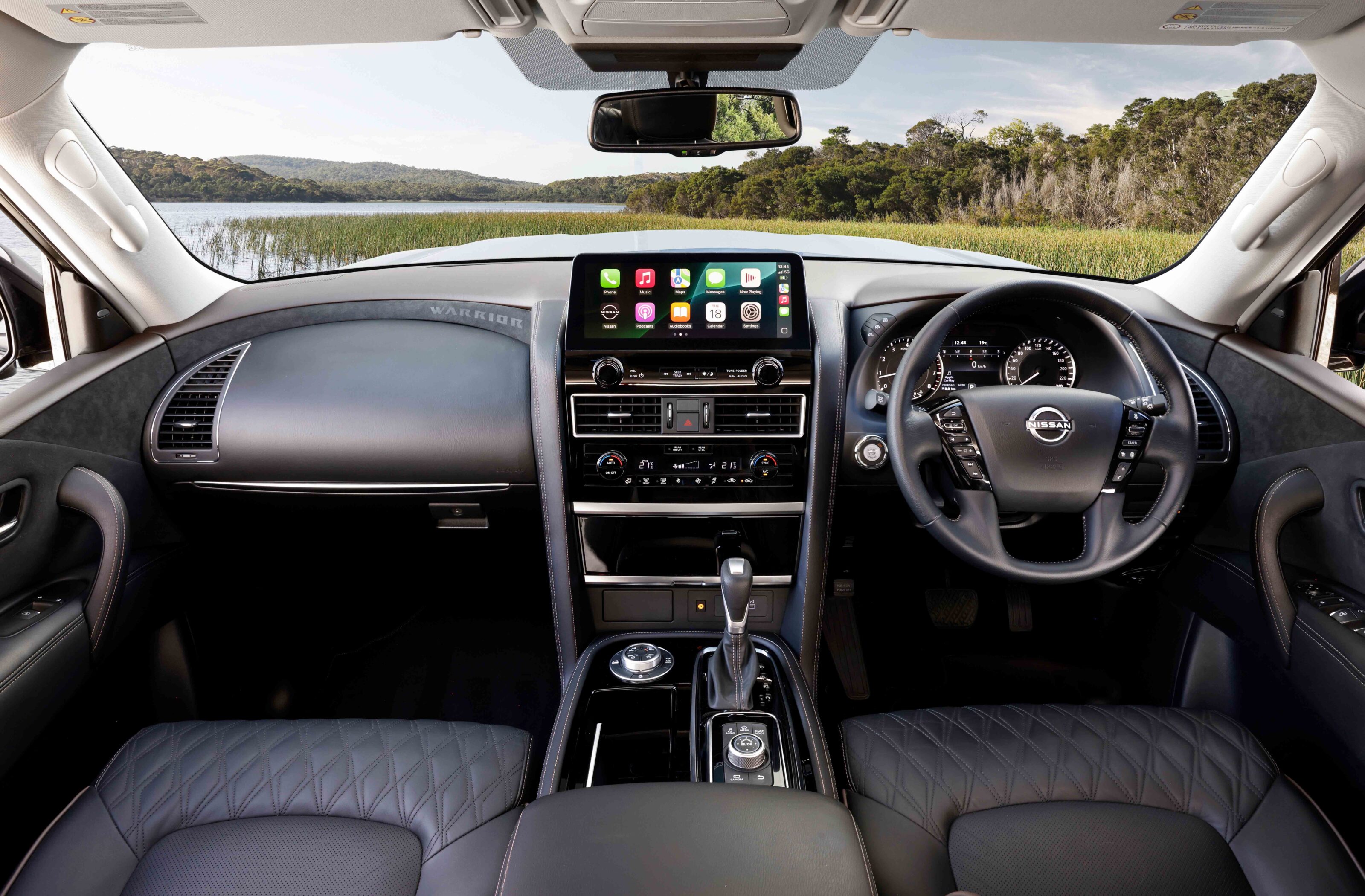
New for 2025 is the inclusion of a new 12.3-inch central touchscreen across the range, which replaces the outgoing 10.1-inch screen. The new infotainment unit includes wireless Apple CarPlay and Android Auto, in-built sat-nav, and a wireless charger.
Also new for MY25 is a fully customisable 7.0-inch TFT Driver Dash Display; an Off-Road Monitor, to provide an increased line of sight when off-roading (ala Land Rover’s invisible bonnet); and an Intelligent Around-View Monitor with Moving Object Detection.
The cabin has also been treated to an upgrade, with two colour schemes now available: a black leather-accented layout; or a chestnut palette with woodgrain highlights through the dash and door, and quilted leather seats.
On top of these changes, the top-spec Patrol Ti-L now gets a premium 13-speaker BOSE sound system, a cool box in the centre console, and a digital high-definition Intelligent Rear View Mirror.
“Practicality, capability and comfort have long been the hallmarks of the Patrol, and these 2025 updates only improve the recipe that has made our flagship SUV so enduringly popular among adventurous Australian families,” says Nissan Oceania, Vice President and Managing Director, Andrew Humberstone.
“The 2025 Patrol delivers improved cabin comfort, and technology that only enhances the drive experience whether you’re on- or off-road, without altering any of those core fundamentals.“
The Patrol remains powered by the 5.6-litre V8 petrol engine, producing 298kW and 560Nm and running through a seven-speed automatic transmission.
Updates for MY25
Nissan Patrol Ti and Patrol Warrior
- Off Road Monitor
- 12.3-inch infotainment with wireless charger
- Satellite navigation
- Wireless Apple CarPlay and Android Auto
- Seven-inch TFT dash display
- Intelligent Around-View Monitor with Moving Object Detection
- Black side steps (exclusive to Warrior)
Nissan Patrol Ti-L adds
- 13 premium BOSE speakers
- Centre console cool box
- Enhanced high-definition Intelligent Rear View Mirror
Hot off its recent debut at the 2025 Melbourne Motor Show, the all-new MG U9 ute is currently undergoing real-world testing in the Australian wilderness in preparation for its launch later this year.
Slated for a Q4, 2025 launch, the U9 is travelling from “Broome to Albany to Cooktown and everywhere in between” as part of a rigorous testing program led by an in-house team of MG engineers, to ensure the vehicle is built to handle Australia’s harsh conditions.
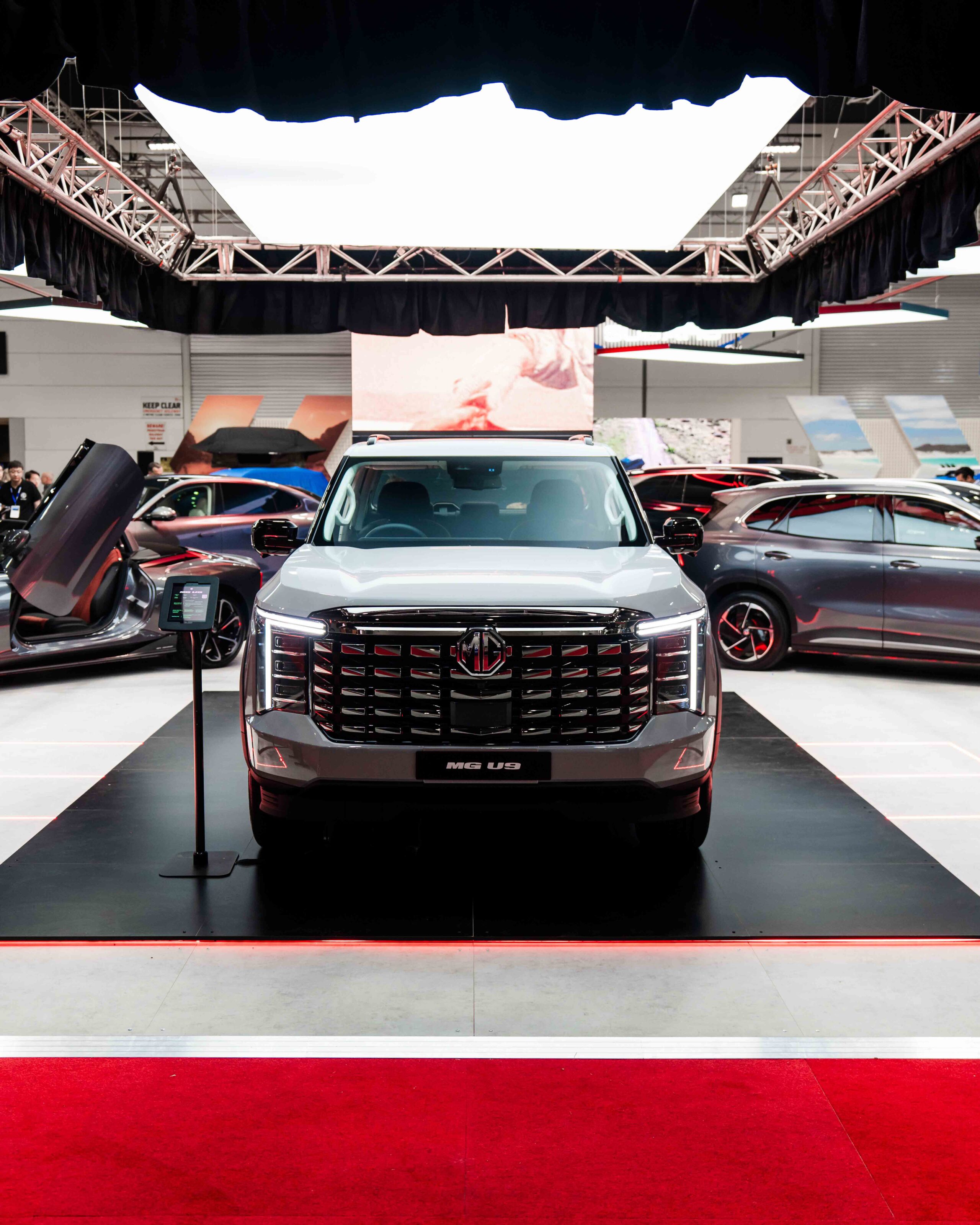
“The reaction to the MG U9 at its global reveal at the Melbourne Motor Show was fantastic. We are proud to have unveiled MG Motor Australia’s first-ever ute – a vehicle designed, engineered, and refined by MG,” said Peter Ciao, MG Motor Australia’s Chief Executive Officer.
“Our local team is committed to fine-tuning the MG U9 over the coming months to meet the needs of Australian drivers. This is MG’s ute – tough, capable, and designed for the diverse conditions and demands of this country. Most importantly, it will offer incredible value for Australian families and tradespeople alike.
“We’ve already seen strong early interest from motorists registering for updates. We’re looking forward to sharing more with them in the lead-up to the MG U9’s launch later this year.”
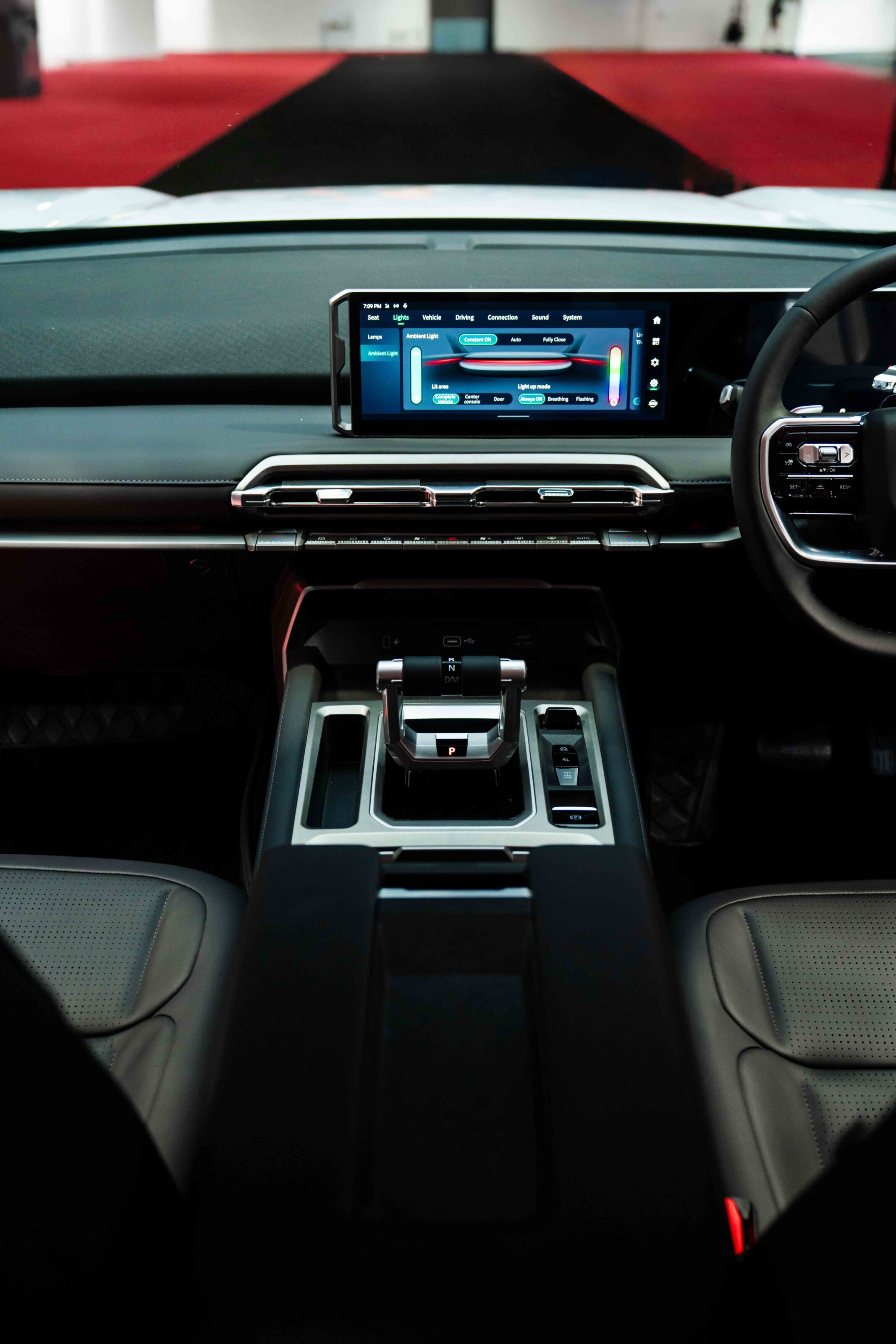
Details remain scarce, with full pricing and specs to be revealed closer to the U9’s launch in Q4 this year. However, MG has confirmed the U9 will be powered by a 2.5-litre turbo-diesel engine, producing 160kW and 520Nm. It will have a 3500kg towing capacity, as well as a hidden rear foldable step.
The U9 will also feature the MG Pilot safety suite with 360-degree cameras and sensors. It will also get MG’s iSMART app, which allows remote access functions. Wireless Apple CarPlay and Android Auto will also be standard.