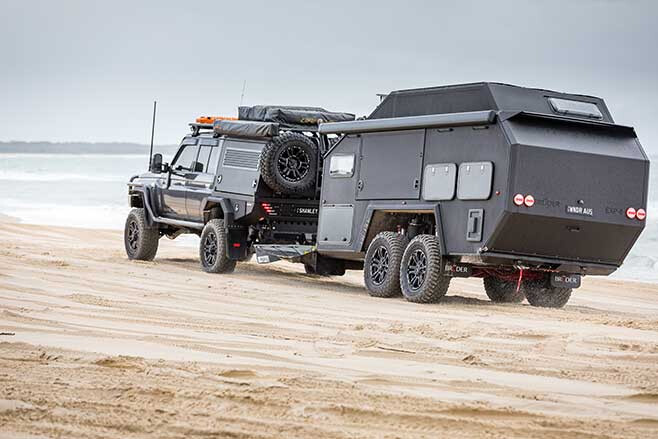
WHAT would be your ultimate rig for doing the full-time lap of Australia? For Queenslanders Brendan and Nikita Shanley it’s this incredible portal axle-equipped 79 Series LandCruiser and the mind-boggling Bruder EXP-6 caravan. We certainly can’t argue with their choices.
The venerable Toyota workhorse has been the first choice as an expedition vehicle for many travellers for near-on 40 years, but the double-cab variety brought with it a new-found popularity with family adventurers. Such was the attraction for the Shanley family, but it hasn’t been a straightforward journey getting to this point.
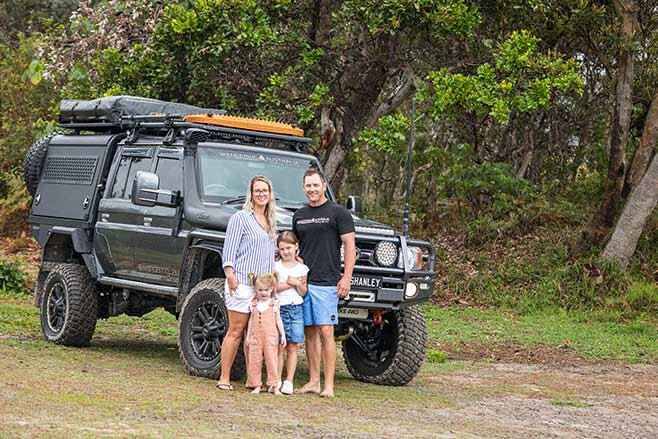
Starting out with a LandCruiser 200 Series and Patriot Campers Toy Hauler, they whetted their appetite for travel and soon ordered the 2015 LC79 double-cab to give them some more flexibility.
“I always loved the 79 Series farm truck and wanted to build it into the ultimate off-road touring rig,” says Brendan. “The plan was to set it up to take the family touring this great country, on- and off-road and into those quieter ‘off the beaten track’ camp spots.”
With a basic tray behind the cabin, ARB bar work and suspension, Redback three-inch exhaust, Safari Armax snorkel, and the TH610 in tow, the four-door farm truck took them all over Queensland and to the Top End of the Territory, but the idea was always to set off on a full-time lap of the map.
To do that job the Toy Hauler was set up with two tents, one for Brendan and Nikita and the other for their daughters – Bella (6) and Hannah (3). A rack is fitted to carry a tinny with space to haul a pair of dirt bikes, the outboard motor, and all the tools and kit needed when you’re travelling with your toys.
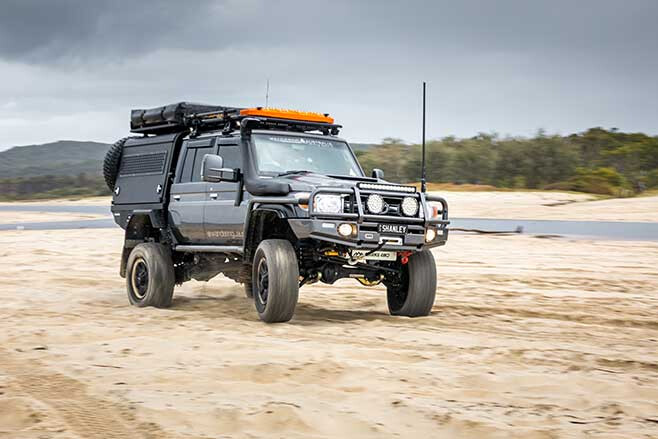
Further extending the flexibility of the Cruiser, the factory tray was replaced with a tray and canopy from Outback Customs. It is filled with drawers from Loaded Drawers and an MSA Drop Slide for an Engel 40-litre fridge. A rooftop tent on top of the canopy has been equipped so the Cruiser can be used for camping when the trailer is left behind.
“Living in the bush made it a little tricky to get work done,” recalls Brendan. “But the rewarding bit was the end result, as the Outback Customs build went on the rear just before taking off on our lap.”
Late in 2019 the Shanleys set off with their Cruiser and Toy Hauler to start their year-long trip around Australia. They headed south and took in all the highlights of the High Country and other parts of Victoria before discovering the coast of South Australia with its many remote beaches, coves and fishing spots.
2020 proved to be a year of cancelled plans for many of us and the Shanleys were not exempt from such interruptions. As COVID spread and borders closed restricting travel, they retreated back home to rural Queensland to see out the pandemic and put their travel aspirations on hold. No one could have predicted such a global event and no one knew the extent of it and how long it would last.
Never one to sit back and waste time, Brendan used the time to refine their set-up and make further improvements to the Cruiser.
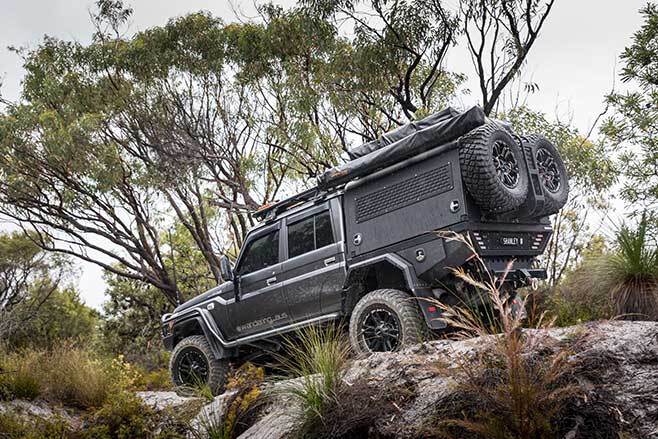
“We spent our ‘quarantine time’ on the banks of the Balonne River and not being able to travel is dangerous for the bank account,” says Brendan. “We loved the Patriot Toy Hauler for its ability to carry so much including motorbikes and boat, however we found it was a lot of set-up and pack-up every three days with the rooftop tents and we were constantly dusty with this. We decided to sacrifice the bikes and boat and go for a caravan for ease of set-up and the amenities.”
Bruder is a Queensland company producing what can only be described as one of the most impressive off-road caravans ever seen. No stone was left unturned when they designed and created the EXP-6 caravan, with its unique height-adjustable suspension, top-end levels of equipment and lightweight but durable construction. So much so that Brendan and Nikita put in an order for one built to their own requirements.
“We chose the Bruder for many reasons, but mostly because it is like no other van. The Bruder is the same width and height as the car, and tracks in line with the car making it much easier to tow and good for fuel economy. It has plenty of storage, great off-grid power, and full-size toilet and shower.”
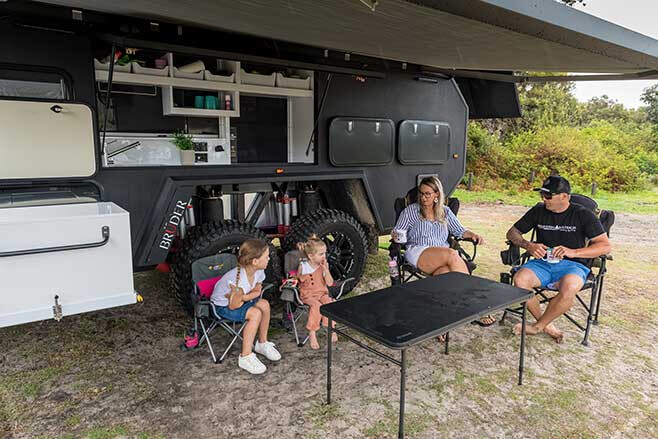
Extras fitted to the EXP-6 include an additional 60-litre water tank, a powered 4.5m 12V awning, a pair of drop-down external tables, an internal 60-litre drawer fridge, the front bar protection system to carry pushbikes and firewood, midgee screens to the kitchen and bedroom, child bunk screens, a 240V microwave oven, extra USB and power points throughout, plus a Warn winch on the rear of the ‘van.
VIDEO: Marks 4WD LC79 in the High Country
While the van was being built, the Cruiser was sent to Mick Tighe Automotive in Toowoomba where a set of Marks 4WD portal axles and a Marks 4WD hydraulic brake booster system were fitted. The portal axles are the ultimate off-road accessory as they give the Cruiser plenty of clearance under the axles without a massive suspension lift, and they are nationally approved to run with 35-inch tyres under the Second Stage approval scheme. The hydraulic brake booster fixes the less-than-optimal performance of the standard Toyota braking system, especially on Cruisers with big tyres and extra weight onboard or in tow.
With the wider wheel track of the portal axles, the wheels used are equivalent to 200 Series in their offset. Brendan chose ROH Vapour wheels shod in 35-inch BFG KM3s and, when you add the two spares on the back of the canopy plus another four on the Bruder van, this is not a tyre bill you want to think about.
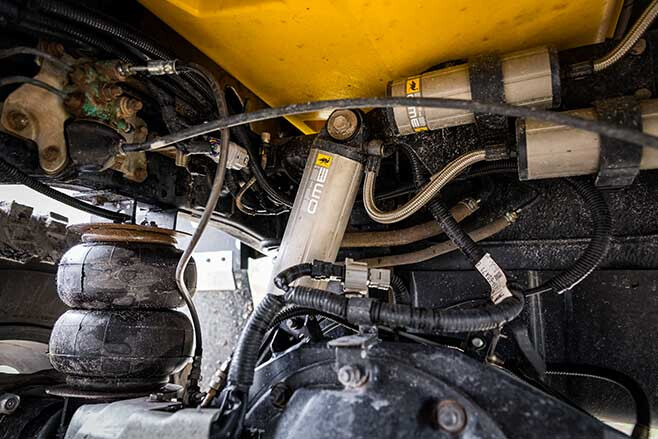
The suspension retains the ARB coils up front and leaf packs at the back with OME BP-51 shock absorbers all around and Airbag Man bags under the back to assist with the towing loads. JMACX arms are used to maintain proper front axle location and caster angles.
Once the now taller Cruiser and its Bruder caboose were completed a couple of shakedown runs were done in regional Queensland, to Gordon Country and to Stradbroke Island where we were able to get these photos shot.
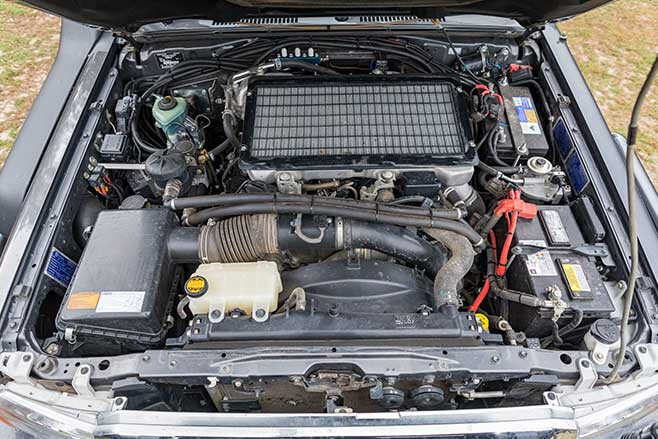
“We loved the Bruder with our first few trips. We did find it quite compact with not much room in the interior. However we are all about outdoor living and only use inside for sleeping or to get out of the elements. We haven’t found anything we would change, although we are working on putting the motorbike on the drawbar so we can take the bike on the trip with us.”
I am always interested in chasing up the stories behind some of the old, historic vehicles we have here in Australia, and they often have a fabulous story to tell.
One that grips the imagination more than most is Francis Birtles’ ‘Sundowner’, now in the National Museum of Australia, often on display in the main hall.
Made famous by Birtles’ exploits around Australia, it gained enduring fame when it became the first vehicle to drive from London to Melbourne in 1928. It was an incredible achievement.
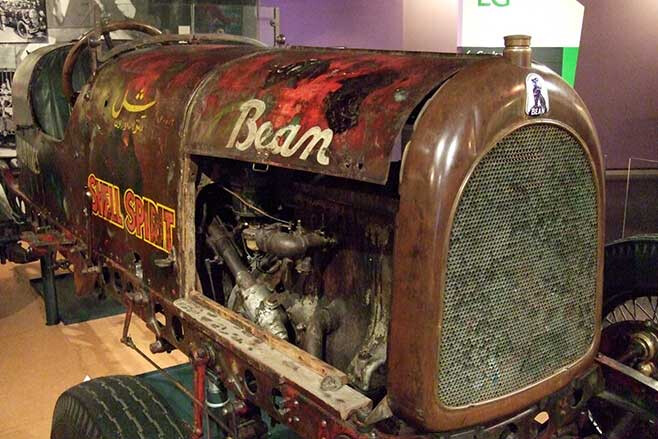
But there are others.
At the National Motor Museum (NMM) in Birdwood, South Australia, which houses one of the greatest collections of vehicles in the country, you will find a heap of interesting, old vehicles.
The outstanding one, no doubt, is the 1908 Talbot that was the first vehicle to drive across the continent from Adelaide to Darwin. In fact, it did the trip a few times and is now in impeccable condition in its new home.
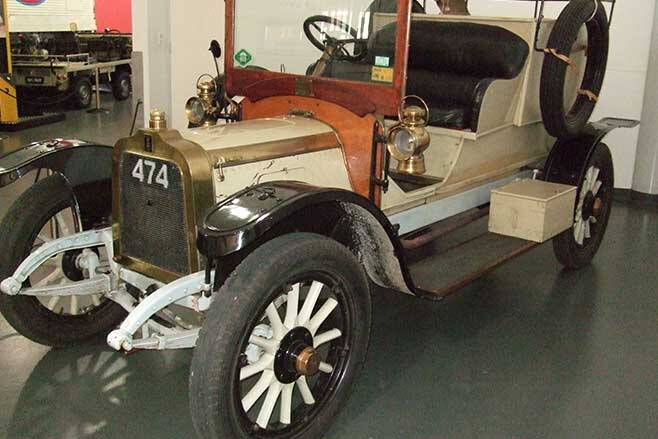
One that caught my eye on my first visit to the NMM was a not-so-shiny slab-slided affair that I wanted to know more about. When Matthew Lombard, the curator at the museum, contacted me to let me know the original owner of the vehicle was in town, I organised a quick trip to see the vehicle and to yarn to the guy.
Meeting up with Brian Materne at the museum I got the story of the ‘Overland’, as Brian called his vehicle, and the trips he and his wife, Julia, had done in it.
Based on a 1952 Vanguard it had a 2088cc four-cylinder engine producing a staggering 51kW at 4200 revs. Top speed was reported to be in excess of 120km/h, but Brian reckoned his less-aerodynamic vehicle cruised effortlessly at 90km/h.
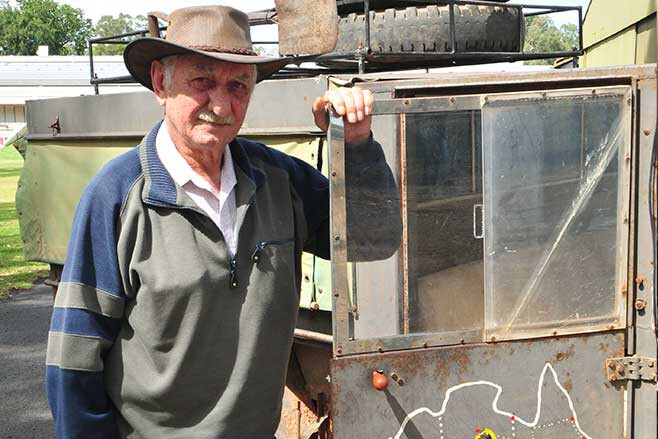
In 1962, once Brian had the Vanguard back home, he found the body riddled with rust, so he removed the body and after much deliberation fitted a wooden box on the chassis, where he told me, “I thought it would make a good driving position”.
The body was then mounted to the chassis on nine engine mounts, while the canopy was removable with roll-up curtains and an inbuilt roof rack. The seats – pretty basic I gotta say – were hinged to allow for the stowing of rifles and spare parts behind them. A 40-litre water tank, an axe and a shovel were mounted below the tray.
The front coil suspension remained unchanged, but Brian changed the rear leaf springs to heavier duty Holden springs. During all this work the vehicle was completely rewired, even though Brian was not an auto electrician, welder or mechanic. Finally, he christened the vehicle Overland. A bloody good effort you gotta say for a home mechanic with very limited resources!
TOP TEN: 10 greatest 4x4s of all time!
With his wife, two kids and the family cat they toured all over the country between 1963 and 1991. In between travelling, there were jobs working on or managing remote sheep properties as far-flung as Lake Everard Station in South Australia, Gunbah Station near Hay in western NSW and finally, in 1979, Wilgena Station near Tarcoola in the west of SA where they stayed until 1991. All were reached in the mighty Overland.
In 1992 the Overland was bought by the Australian Motor Vehicle Museum in Sydney, but when that museum folded the vehicle found its way to the NMM.
It is now on display amongst a whole range of many fine automobiles, some much prettier and far more expensive but few with more travel credentials – and the only one that hasn’t been manufactured in a factory.
USUALLY our February 2021 edition of 4X4 Australia magazine would contain the annual 4×4 Of The Year report, where we bring together the best new 4×4 releases of the previous year and put them through a rigorous week of testing to determine our 4×4 Of The Year.
We do the testing for this event as late as possible each year so we can include all of the new and substantially updated models from the manufacturers. It usually happens in the first week of December.
2020 being what it was, we weren’t able to do that testing in our regular timeslot because of border closures, travel restrictions and general uncertainty of what we would be free to do.
So we’ve moved the testing to the first week of February this year (we’re on it now) and the results will come to you in the April 2021 edition.
Our test will still focus on the best new 4x4s released between December 1, 2019, and November 30, 2020, so anything that might have hit the market late last year or early in 2021 will still have to wait until the next round.
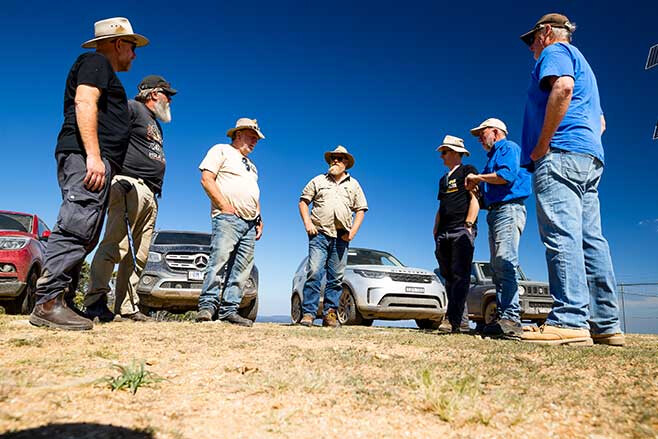
And, again, 2020 being 2020, the number of new contenders released was relatively small, but it is still a quality field.
Our five finalists present a broad cross-section of the market – from the popular double-cab utes to a lone wagon, all-new vehicles and a significantly upgraded one.
Those finalists are (in no particular order) the Jeep Gladiator Rubicon, Land Rover Defender 110 P400, Mazda BT-50, Isuzu D-MAX and the Toyota Hilux. Obviously, the Hilux is the upgraded model and our testing of it in late 2020 deemed the improvements to the ute warrant its inclusion.
As always, we’ll bring together a team of experienced four-wheel drivers to do the testing, and our best photographers and videographers willk document the process as we put them through their paces at the proving ground and in the bush.
There’s a lot of work involved in the testing, but it’s also a lot of fun. I mean, who wouldn’t want to be out four-wheel driving with a group of blokes I call mates and get paid for it?
The real work starts when we get back to the office and wade through the pages of notes, data and the judges’ scores to determine a winner. Yes, it’s work, but I wouldn’t miss it for quids!
THE latest issue of 4X4 Australia has officially hit the market, with the February 2021 issue brimming with modified metal and unmissable 4×4 getaways.
Headlining the custom 4×4 charge we’ve included a giant-killing 1969 Toyota Stout, said to be one of the toughest rigs you’ll find roaming Aussie bush tracks – a claim we believe.
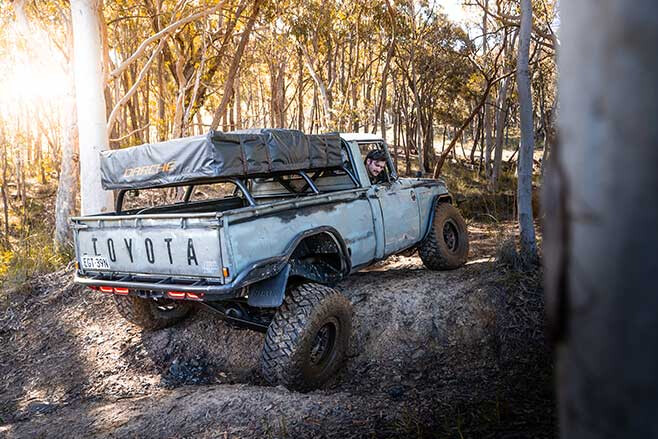
If the Stout isn’t your flavour, perhaps a meticulously built Amarok dripping with quality kit is more your style.
The custom Amarok – Dr Rok – wears 34-inch tyres … when’s the last time you saw an Amarok wearing those hoops?
Rounding out our trio of insane custom creations is an FJ45 winch truck that combines the best bits from Toyota, Nissan and GM. You need to see this wild winch truck to believe it exists.
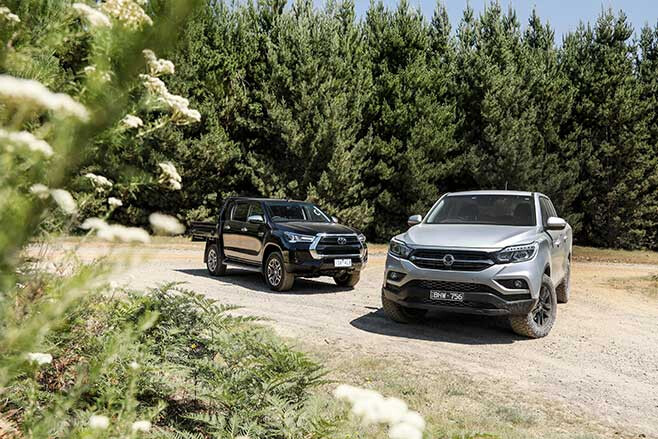
A head-to-head comparison you might not be expecting is a David-versus-Goliath dual between the proven SR5 Hilux and the relatively unknown SsangYong Musso XLV Ultimate (the one we’ve had in the 4×4 shed for the past six months).
Are the odds stacked too heavily against the Musso? Or are we in for a surprising result?
Plus, we crunch the numbers to bring you Australia’s best value 4x4s for 2021.
WHAT ELSE IS THERE?
– 2020 D-MAX LS-M off-road review – 4×4 trips to Fowlers Bay and Portland Road – AOR Sierra ZR camper trailer tested – ARB Base Rack + Accessories tested – Lux Fab exhaust system tested – Monthly columns, new gear + more
The February 2021 issue of 4X4 Australia is out now.
THE third-generation Raptor F-150 debuted overnight in the US, and you’d be forgiven for thinking it doesn’t look all that different to the outgoing model.
Delve a little deeper, however, and you’ll notice Ford has tickled with it just enough to improve its already impressive dune-bashing ability.
OFF-ROAD SUSPENSION HARDWARE
The high-performance suspension hardware has been re-engineered with a fresh five-link rear set-up, said to give the Raptor even greater control and power when scorching dunes beyond the black stump.
The hardware allowing this to happen includes extra-long trailing arms, a panhard rod and gigantic 24-inch coil springs.
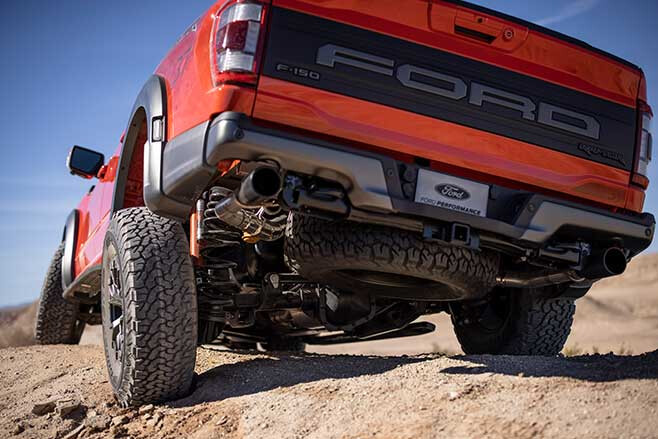
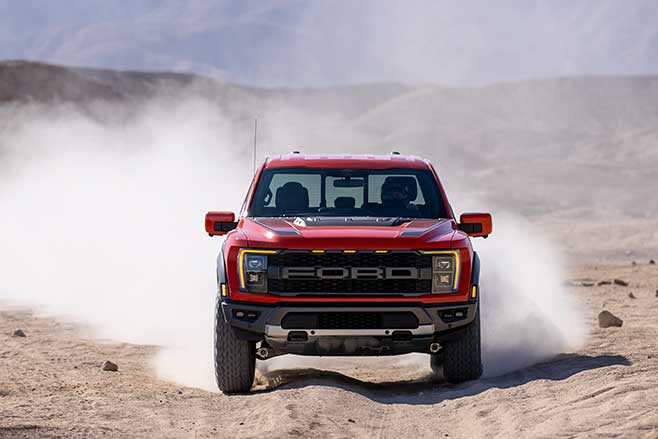
The new five-link rear set-up allowed Ford to fit massive 37-inch BFGoodrich All-Terrain T/A KO2 tyres beneath the wheel arches.
With this large set of rubber installed, the Raptor claims 333mm of running clearance, 33.1 degrees of approach angle, a maximum departure angle of 24.9 degrees and 24.4 degrees of breakover angle.
Wearing the standard 35-inch tyres, the Raptor manages a still-impressive 305mm of clearance, with an approach angle of 31 degrees, maximum departure angle of 23.9 degrees and breakover angle of 22.7 degrees.
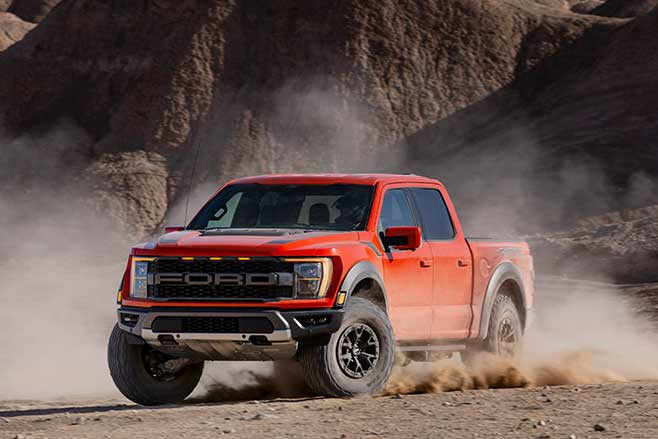
Dashing through the desert in relative comfort is achieved via (you guessed it) massive next-gen Fox Live Valve internal bypass shocks capable of position-sensitive damping adjustability.
Measuring at 79mm in diameter, the race-proven shocks enable “upward of 1000 pounds (453kg) of damping per corner at desert speeds”, according to Ford.
Seven driving modes are available via the Terrain Management system – Slippery, Tow/Haul, Sport, Normal, Off-Road, Baja and Rock Crawl – which modulate driving dynamics and transmission shift points depending on the terrain.
V6 POWER PLAY
Clever engine management software combines with the state-of-the-art suspension set-up, allowing the twin-turbo 3.5-litre EcoBoost engine to deliver a torque-kick to the rear wheels, as well as providing improved throttle response, and the comfort and control at speed the Raptor is known for.
It’s mated to Ford’s familiar 10-speed transmission.
The EcoBoost has a 10.5:1 compression ration, while the cooling system utilises new high-power fans, essential for the obligatory high-speed desert safari.
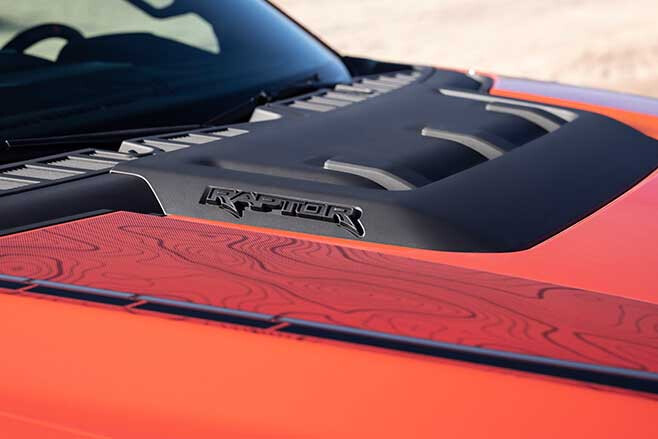
Customers can even customise their very own exhaust symphony, with four sound level options available via the three-inch exhaust system: Quiet, Normal, Sport and Baja.
In a clever addition, Ford also included its Pro Power Onboard system, which enables the Raptor to be converted into your very own power station.
Just tick the options box to get the extra two kilowatts of exportable output, and you’ll be able to charge all of your gear on your next trip while you sink a few cans at camp.
TRAIL 1-PEDAL DRIVE
Who needs to master the art of rock-crawling when the vehicle can do it for you? That’s exactly what the Trail 1-Pedal Drive system does: it simplifies the pedal-work required for rock-crawling by braking for you when pressure on the accelerator is released.
CONNECTIVITY
Improving connectivity was another area the boffins at Ford were tasked with. In addition to a new 12-inch digital gauge cluster and a new 12-inch centre screen, the F150 features over-the-air updates.
This ever-evolving tech keeps the Raptor connected to the Ford grid, to allow easy access for future system upgrades like trail maps.
IS IT COMING HERE?
Nope. Ford Australia has repeatedly said it won’t bring it here. Plus, the vehicle is made in LHD only.
Of course, there is a tranche of importers ready to take your money and convert the F-150 of your choice…
Improve your camping experience with these goodies!
EFS YA’MATE HEAD TORCH
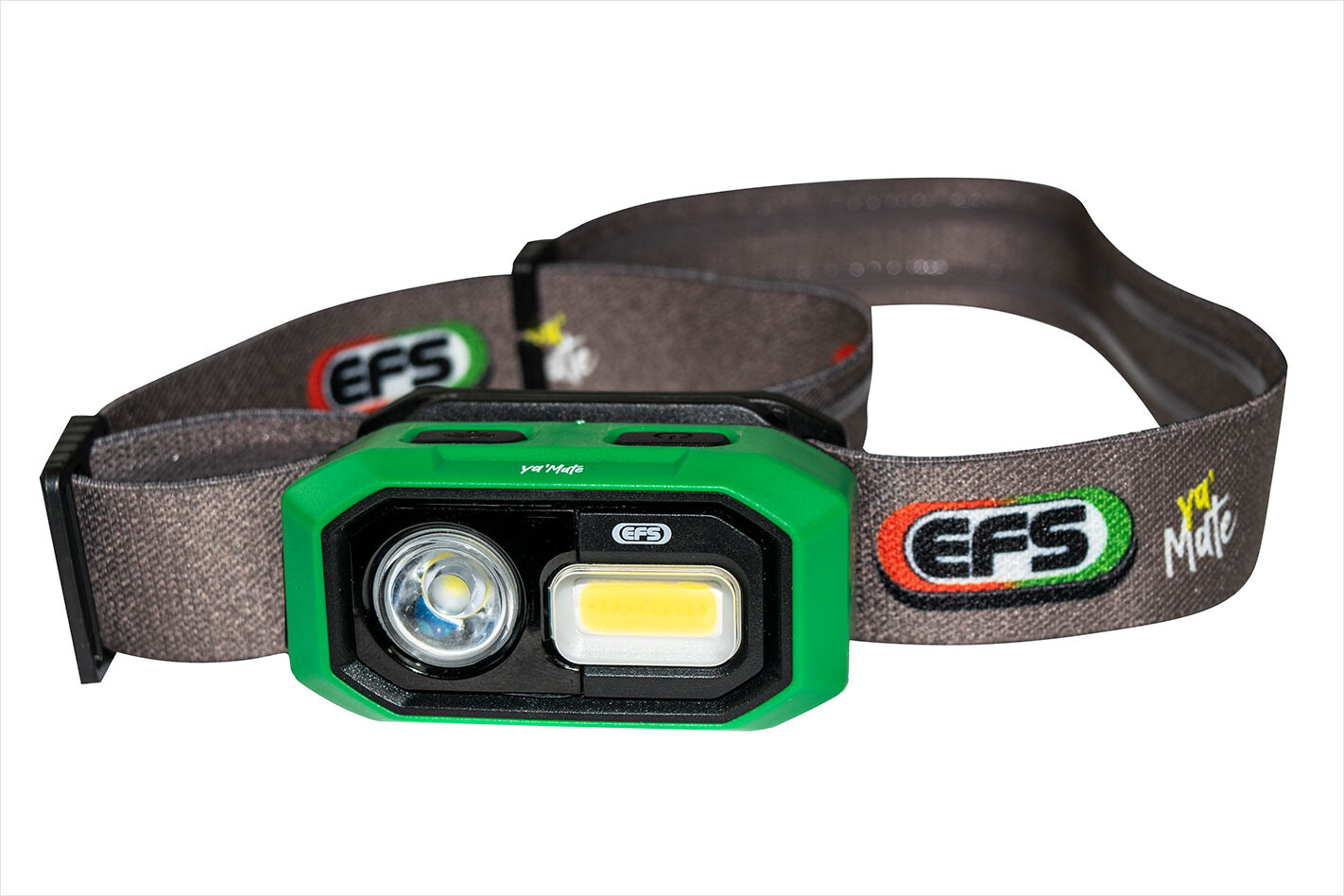
The new Ya’Mate head torch from EFS 4WD is motion activated and extremely useful for any under-bonnet projects or campsite duties. The unit’s lithium battery is rechargeable via USB (a full charge takes three hours) with a run-time of up to 3.5 hours on a full charge. The torch features a 60-degree adjustment and three modes of operation (250LM, 300LM and 480LM). It weighs just 100g and includes a headband with a length of 12 to 22cm. It comes with a one-year limited warranty.
RRP: $89.99 Website: www.efs4wd.com.au
OZTRAIL IGNITE SPEAKER LANTERN
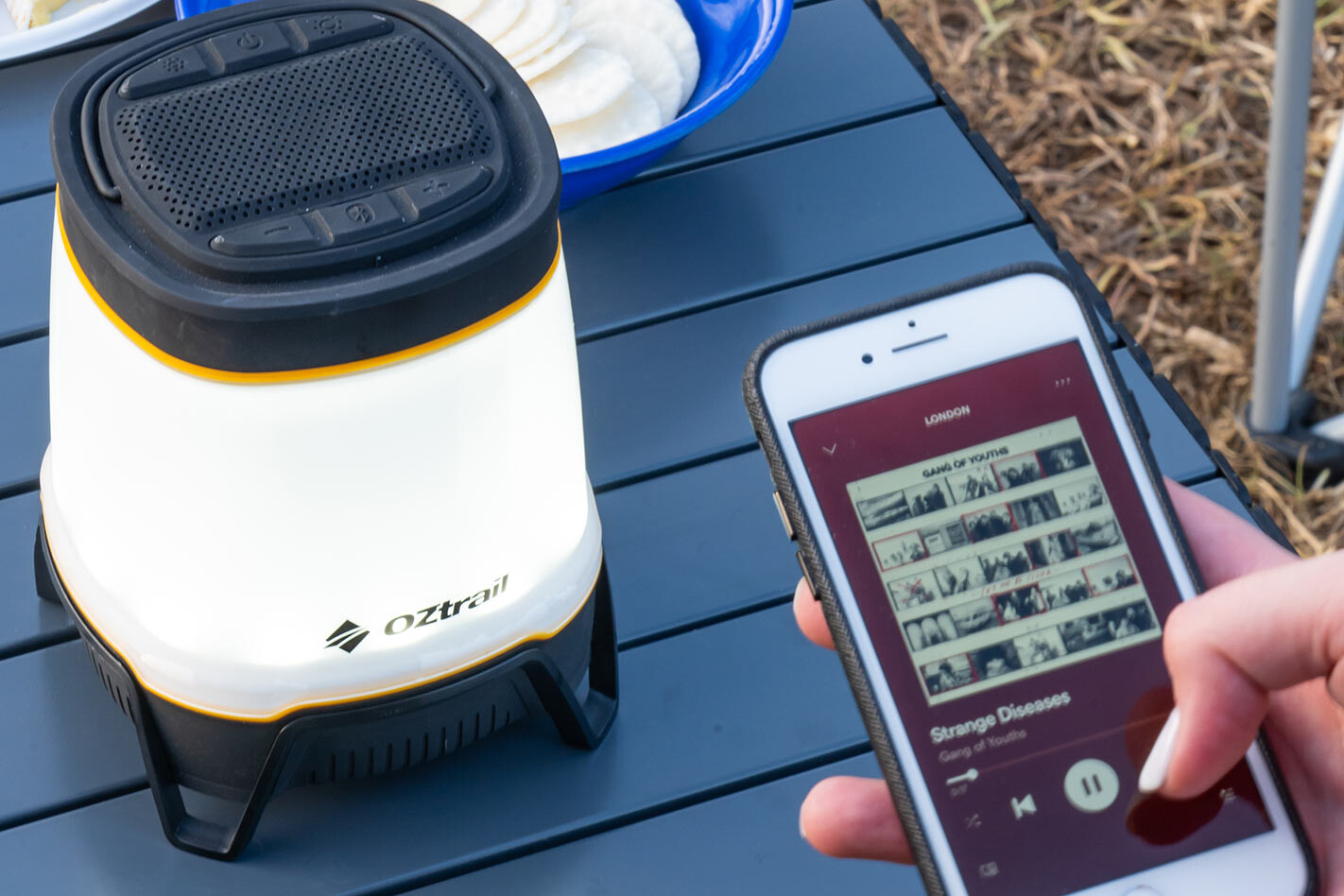
Keep the tunes pumping and your campsite illuminated with the two-for-one Ignite Speaker Lantern from OzTrail. The lantern features multiple Samsung LEDs to create up to 1000 lumens of white light, and the brightness can be modulated using five preset settings – on the high setting the lantern has a run-time of five hours; on the low setting run-time increases to 32 hours. The unit is powered by a 4000mAh rechargeable lithium-ion battery with a power bank function. Tunes flow through a 3W RMS Bluetooth speaker, and the unit has a splash-proof IPX4 rating.
RRP: $119.99 Website: www.oztrail.com.au
CAMPFIRE COOKING GRILL COMBO
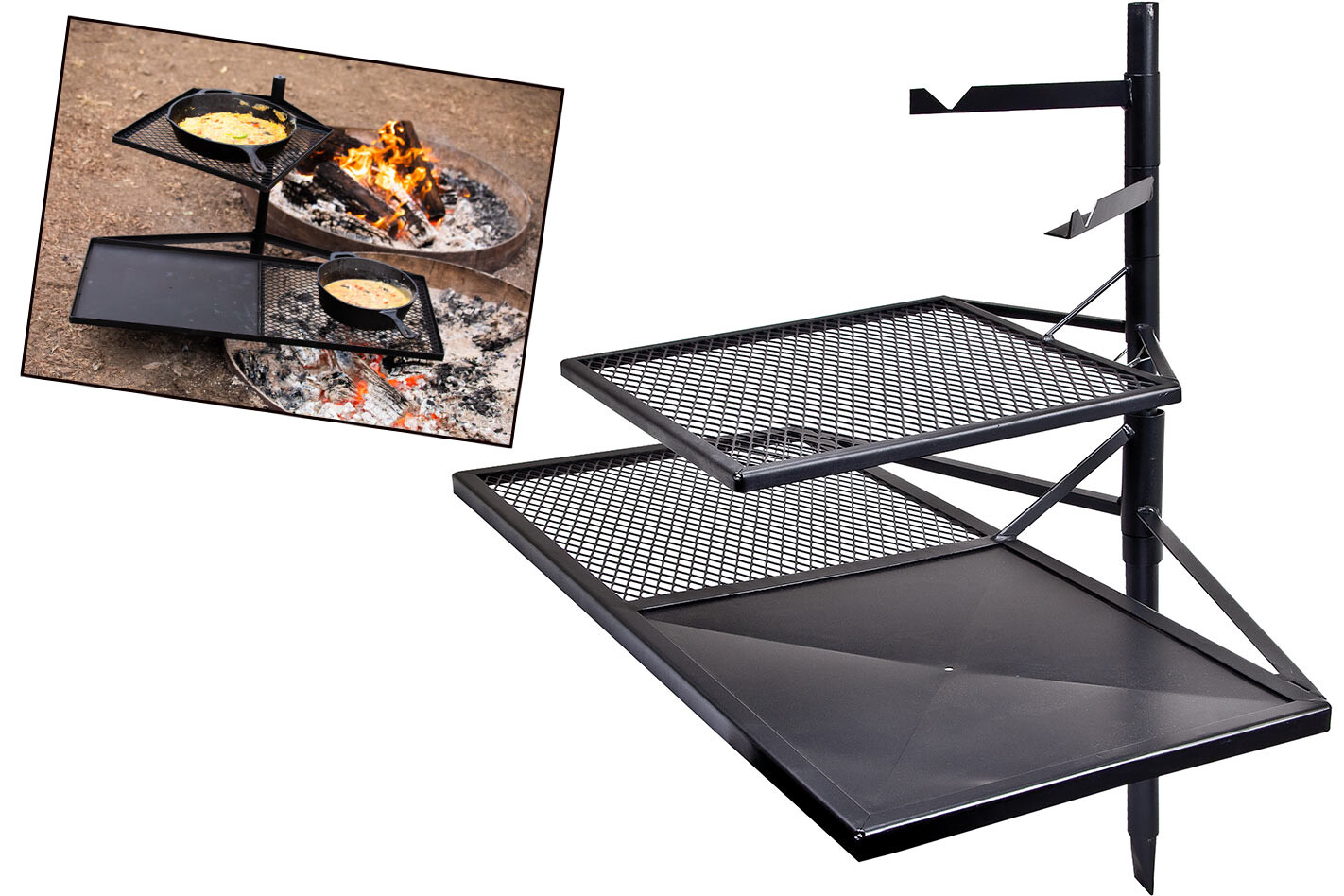
You’ll be the most popular person at camp with this brand-new cooking grill combo, which is the perfect tool to cater for a large group of hungry campers. The sturdy unit is made of solid, heavy-gauge steel and features generously sized cooking areas, so that you’ll be able to sizzle-up the entire family’s dinner to perfection. The grill combo also features two hanging hooks to cater for camp ovens, kettles or billy cans. A storage bag is included.
RRP: $157.99 Website: www.campfirecook.com
This month our Readers’ Rigs include a Ranger, a Navara, two Patrols, a LandCruiser and a Hilux dubbed Pablo.
To include your 4×4, send a photo with a brief description to our 4X4 Australia Facebook page and send us a photo and brief description of your fourbie.
2016 Ford Ranger
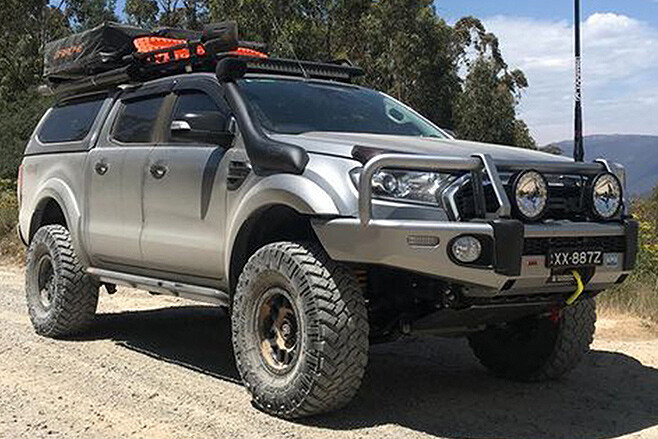
I bought it in 2016 new (pre-DPF). All the work after it left the showroom floor has been done by myself: high-flow turbo upgrade; Unichip; intercooler; catch can; three-inch King Brown exhaust; and it’s dyno’d to 131rwkW. In the electrics I have a semi-flexible solar panel with a Redarc BCDC charger and 130amp/h AGM battery in the back, beneath the wing of a custom-made rear drawer system. Full Stedi LED exterior lighting wire leads to switching at rear. It also has a 42-inch Stedi light bar beneath the front of the platform, as well as Lightforce HTX spotties up front. I removed the rear seating for storage platform and water storage. Underneath is a full Bilstein height-adjustable three-inch lift with 35-inch Nitto Trail Grapplers on KMC Machete black alloy rims, and a PSR diff drop to save them CV problems. That’s only half the mods! – Billy Cain
Pablo the Hilux
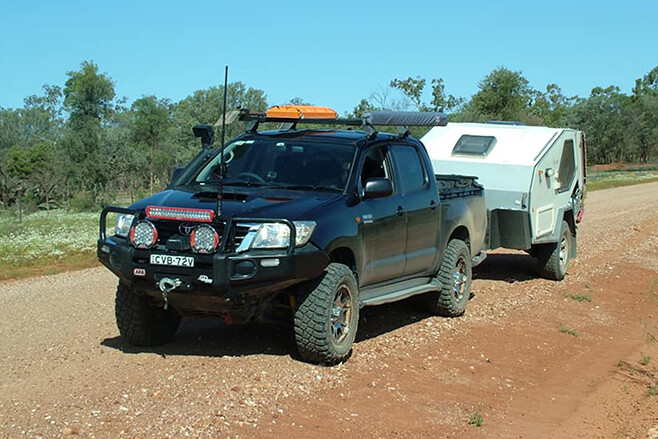
He loves to escape. Blerto’s ultimate touring ute. Favourite accessories include the light set-up: two Solis spotties and an AR40 combo! – Ian Bellert
2020 Nissan Navara ST
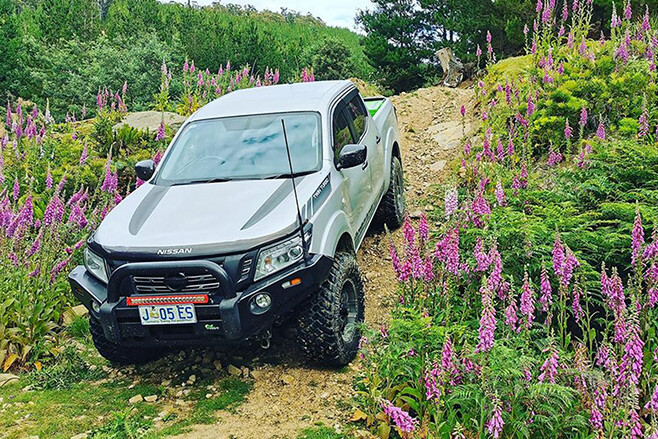
Gear includes a two-inch Dobinsons remote res lift; 33-inch Maxxis RAZR tyres; HD rear sway bar links; an Ironman 4×4 winch bar; Versus Gridlock wheels; a three-inch exhaust; extended brake lines; catch can; GME UHF; a Platinum hot pipe; and a PWR intercooler kit. – Jamie Philpotts
1989 TD42 GQ Patrol
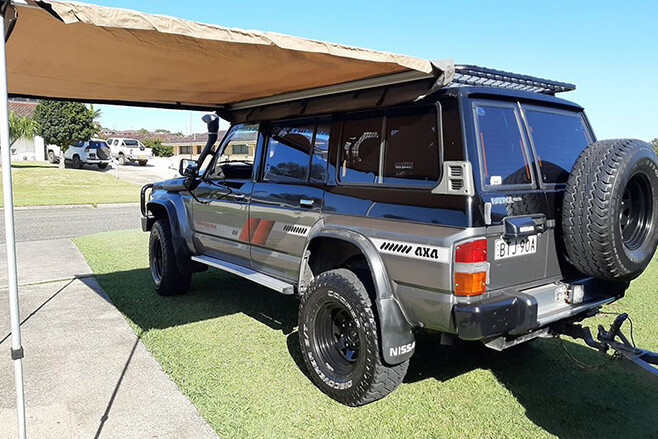
It’s a factory 4.2-litre diesel fitted with an aftermarket turbo and twin top-mount intercoolers; a two-inch suspension; two-inch body lift; and 285/75/16 tyres. It has done 330,000km and still has original paint. – Robert Woodley
2015 LandCruiser 200 Series GXL
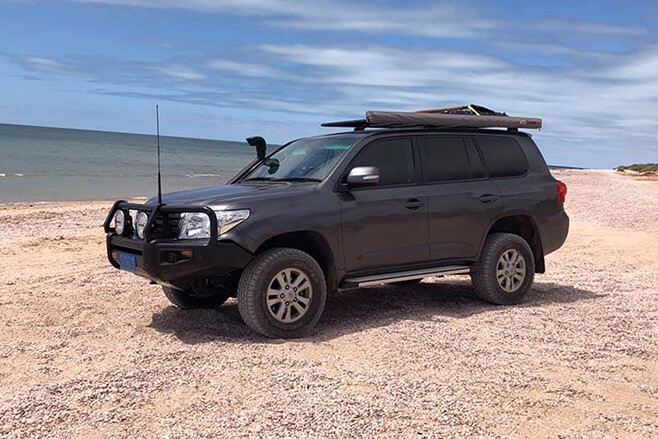
It’s a pre-DPF model and it has done 82,000km. Features include an Old Man Emu two-inch lift with GVM upgrade; Safari snorkel; battery split with Redarc BCDC charger; Provent catch can; Unifilter; iDrive throttle controller; Titan drawers; ARB Elements 60-litre fridge; ARB bullbar; Narva Ultima 215 spotties; UHF radio; and a roof rack with an ARB awning. Love it; it’s perfect for towing the caravan. – Kevin Cooke
Nissan Patrol 6×6
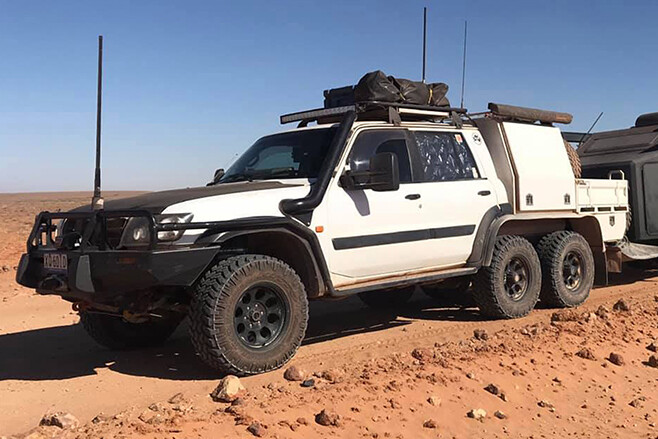
Powered by the 6.6-litre Duramax, it has three ARB lockers; two fridges; an Enerdrive lithium system; stainless-steel 60-litre water tank; long-range tanks; and front and rear winches. The list goes on and on. – Paul Thompson
THERE’S no doubting that one of the best things about Nissan’s Y62 Patrol is its VK56 V8 engine. No matter what side of the petrol versus diesel debate you sit on, you can’t help but smile when you plant your boot in a Patrol to unleash the full 298kW of power and the big wagon roars towards the horizon.
While the factory performance is bloody good, that doesn’t mean it can’t be better. If Nissan gives you almost 300kW to play with off the showroom floor, there are clever people out there who can improve the numbers.
Nissan’s VK series V8 engine has a rich motorsport history, especially in Japanese Super GT racing and endurance prototype categories like you see in the 24 Hours of Le Mans. A 5.0-litre version of the VK56 was even used in Australia’s V8 Supercars when Kelly Racing ran the factory-backed Altimas last decade.
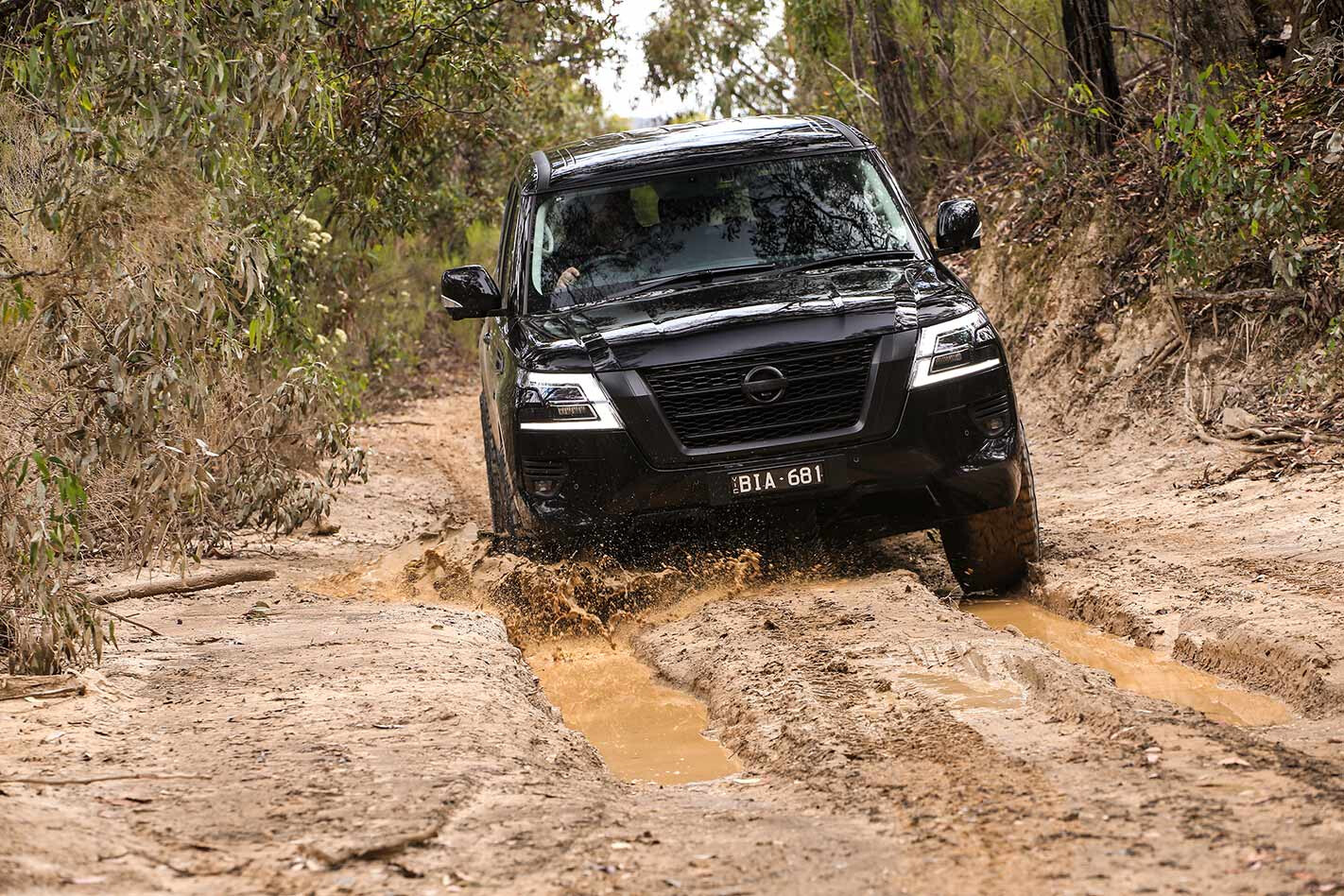
The only road car to get the VK V8 in Australia is the Y62 Patrol and for most punters bolt-on performance upgrades will suffice, so the crew at Harrop have developed a supercharger kit for the 4×4 that has proved popular with owners.
When we saw and heard the bellow from Anthony Barr’s blown Patrol that was on the cover of the magazine last month, we wanted to check it out for ourselves. As it turned out, Harrop had just developed a new supercharger package for the latest generation of Patrols and had a new demo car for us to sample.
Previous Harrop supercharger kits for the Patrol have utilised the company’s FDFI2300 blower (2300cc displacement) but the latest kit uses the bigger FDFI2650 blower following demand from the Middle East market which, incidentally, is the biggest market for the Y62 and they are super keen for performance upgrades.
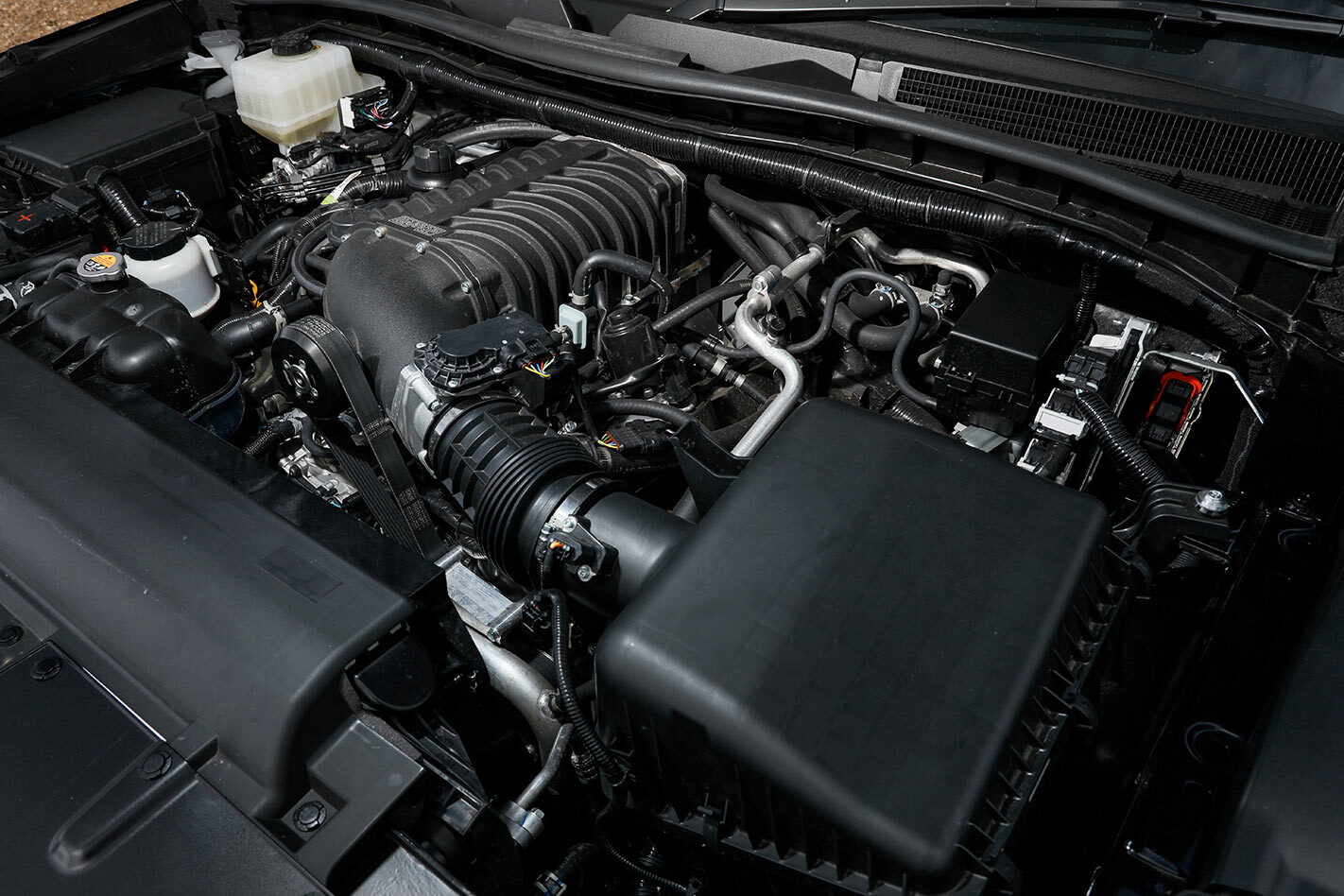
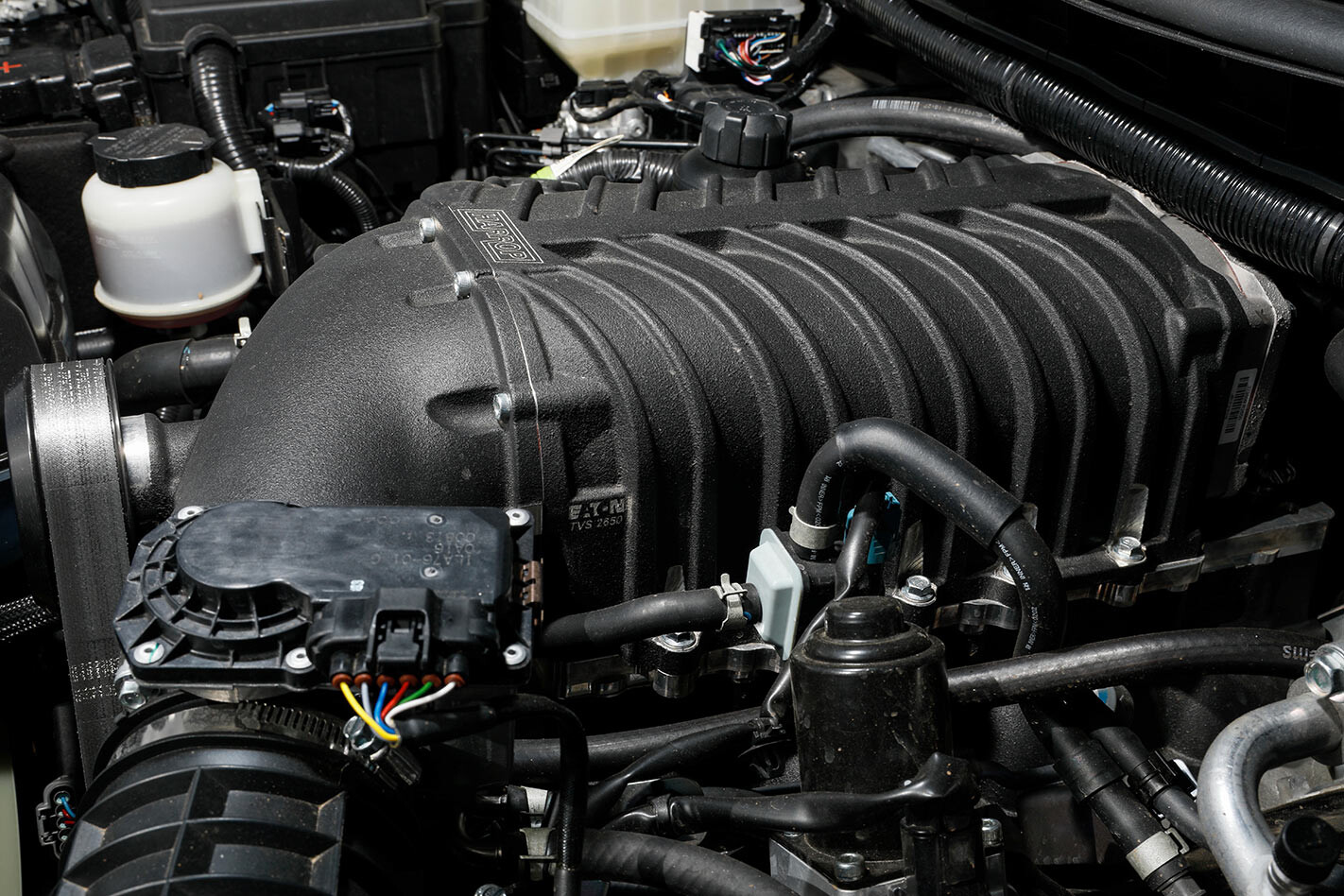
The Harrop superchargers are a positive displacement, Roots-style supercharger that incorporates TVS design from Eaton in the USA. TVS is Twin Vortices Series and refers to the two rotors within the housing which are a unique twisted four-lobe design to deliver optimal efficiency. That’s keeping it simple but suffice to say, this is the latest technology in supercharger design that dates back more than 120 years, and it delivers maximum performance.
The TVS supercharger kits for the Patrol have developed along with the VK56 engine itself to work with both the direct-injection versions (VK56VD) as found in the current models and the port injection VK56DE that came in the earlier Y62s.
The Harrop kit includes the supercharger itself, the intake manifold, water-to-air intercooler and associated radiator and its plumbing, and all drive belts, brackets and hardware for installation.
The complete kit has been designed for relatively simple installation and it retains a factory appearance in the engine bay. If it wasn’t for the little ‘Harrop’ insignia on the supercharger you could be fooled in to thinking this was an OE installation from Nissan.
In standard form there is no real performance advantage using the FDFI2650 over the FDFI2300 blower as the bigger unit is driven via a larger (90mm) top pulley to slow it down when compared to the 2300.It’s on modified and specifically built engines that the true value of the 2650 can be unleashed. Pumping more air into an engine requires more fuel to burn and Harrop has employed an upgraded XDI fuel pump to supply more fuel into any direct-injected Patrol using the 2650 supercharger.
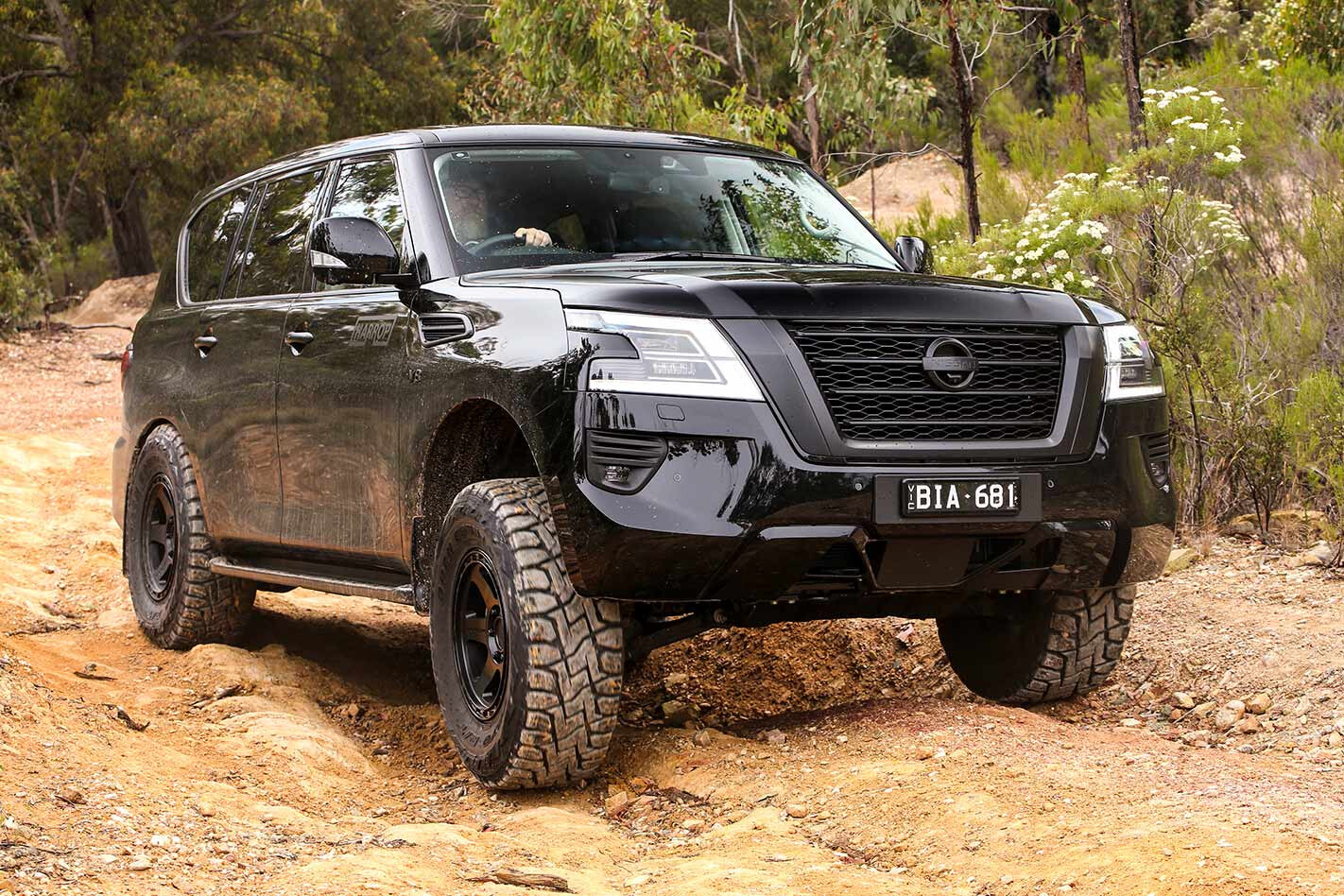
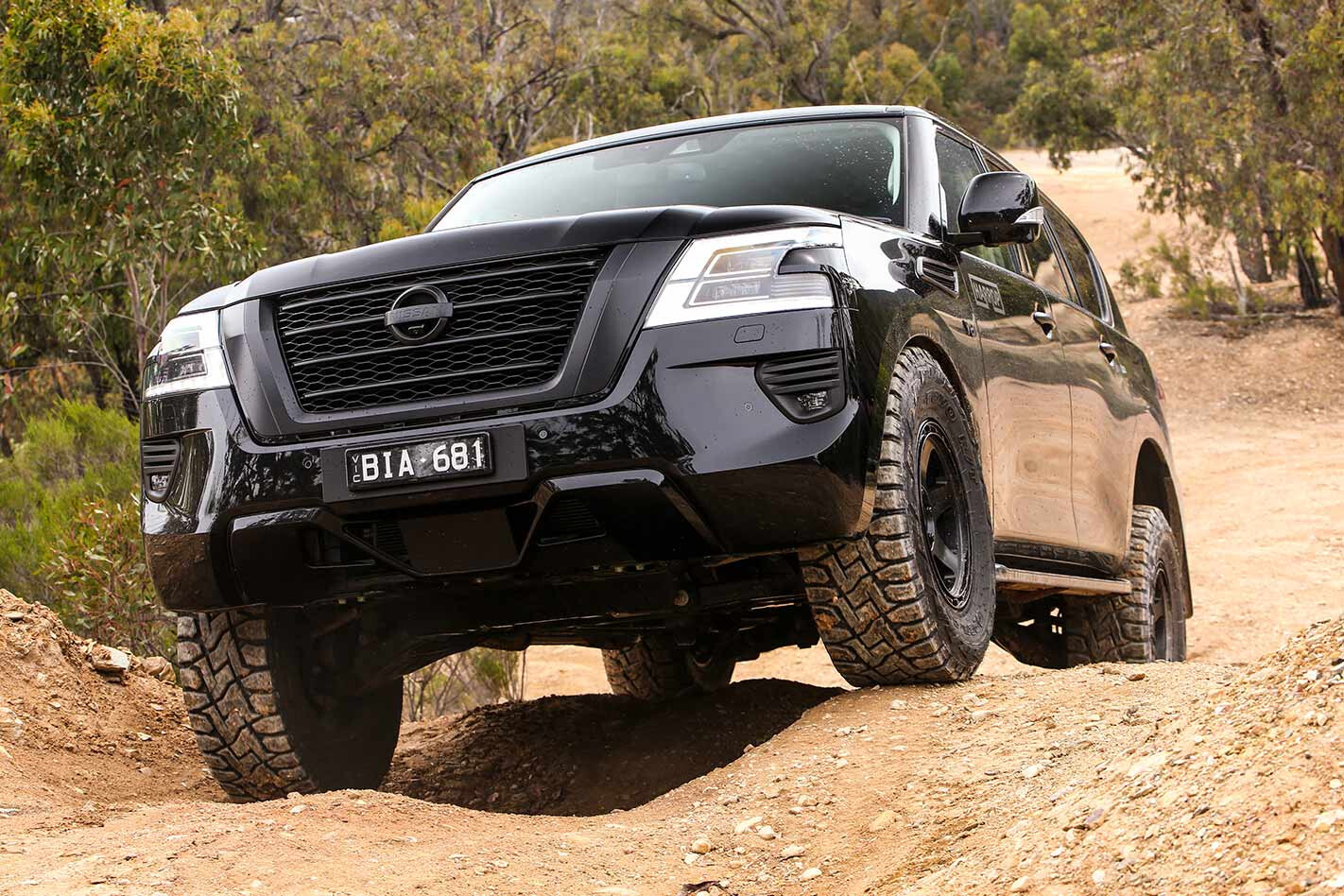
Harrop’s murdered-out Patrol is a 2020 ‘Series-5’ Y62 and the engine and driveline remain otherwise standard, bar a muffler change to give the engine a richer exhaust note. The team put it on the hub dynamometer at the Harrop Performance Centre in Melbourne to get a baseline figure before starting work on it. It spun up to show 350-horsepower and 368-ft.lb at the hubs which they say is indicative of any standard new Patrol.
With the Harrop FDFI2650 fitted and the factory ECU recalibrated to suit using HP Tuners software, the car put out 482hp and 488lb.ft. That’s around 360kW and 662Nm of torque in the new money; up from 261kW and 499Nm before the pump went on.
Dyno figures are fine for impressing your mates at the pub but the real proof is in the drive and we were smiling as we took the keys to Harrop’s Patrol for a day. The full blackout treatment is enhanced by a set of similarly dark Method Wheels wearing 35-inch Toyo R/T tyres which look a bit funny under the stock-height suspension, but overall it’s an appealing and menacing appearance.
Easing out of town the Patrol retains mild manners but you can certainly feel that that will change if and when you squeeze the accelerator down. The pedal does feel a bit more sensitive than we remember it in the stock car and this was further evident when driving slowly off road.
Squeezing that pedal a little farther as the freeway opens up and a tsunami of mid-range grunt pushes you back in to the seat and the Patrol quickly reaches the speed limit and wants to blast beyond it. The mid-range oomph is much appreciated on the country backroads as it makes overtaking slow trucks a swift and safe exercise, rapidly leaving the slower vehicle behind with minimal time spent overtaking.
The VK56 is no slouch of an engine in stock, naturally aspirated form and impresses with its torque delivery throughout its rev range. But the torque curve starts higher with the supercharger doing its thing and maintains that pick-up through to redline if you have the space to let it have it way.
From a standing start, mashing the throttle delivers instant push belying the Patrol’s bulk. The torque delivery is briefly interrupted as the 7-speed transmission pulls second gear but soon comes back on strongly. It almost feels like turbo lag before coming back on with a rush, but this torque control is needed to protect the driveline. Harrop’s own testing had this car knock over the zero to 100km/h sprint in 6.6 seconds, around a 1.4 seconds quicker than a naturally aspirated Y62 similarly riding on 35-inch tyres.
As much fun and as sweet-sounding as that top-end charge is, it’s the mid-range torque boost that will be most appreciated by tourers and off-roaders. Hold the auto transmission in gear to keep the engine in its sweet spot on a winding mountain road and the driver is rewarded with turbo-diesel-like grunt out of bends and uphills. Those towing heavy loads would also appreciate this improvement in the way the supercharged Nissan engine delivers its torque.
It’s not like the V8 Patrol is actually lacking in performance in its factory form but the Harrop supercharger kit delivers that bit more grunt across the rev range any performance enthusiast will appreciate. And using the 2650 supercharger as the start point, the sky’s the limit for engines built with stronger internals, bigger injectors or even just a free-flowing exhaust system. All this potential in a top quality, well-engineered and factory-looking upgrade package.
The Harrop FDFI supercharger kit for the VK56 engine costs $12,650 plus fitting and ECU calibration for the Series 2 to 5 Y62, or $11,990 plus fitting for the earlier models. The kit is also compatible with Nissan Titan pickup trucks using the VK56 engine.
For more information, visit www.harrop.com.au
Photos: Cristian Brunelli, Video: Cam Inness
UPDATED – Nissan’s local website has revealed drive-away pricing for the 2021 Navara range.
Gone is the base model RX, with the 4×2 SL kicking off the range at $33,890.
The cheapest dual-cab offering is now the ST Dual Cab at $50,990 drive-away.
DRIVE-AWAY PRICES (PRIVATE BUYERS)
| SL Single Cab Chassis 4X2 Manual | $33,890 |
| ST Dual Cab Pickup 4X4 Manual | $50,990 |
| ST-X Dual Cab Pickup 4X4 Manual | $57,290 |
| ST-X Dual Cab Pickup 4X4 Auto | $58,790 |
| PRO-4X Dual Cab Pickup 4X4 Manual | $61,290 |
| PRO-4X Dual Cab Pickup 4X4 Auto | $62,790 |
Nissan announced details of the 2021 Navara late in 2020, which will arrive in local dealers in the first quarter of this year.
The model range will be capped by the new Pro-4X grade, which is mainly a styling package but includes leather seats and all-terrain tyres.
This will take over from the N-Trek specification.
Dropping back through the line-up you’ll find STX, ST and SL specs in 4×4 and 4×2 drivelines; double-cab, extra-cab and single cab configurations; and tub or cab-chassis models.
The dual-cab STX builds upon the ST with a tub liner, tow bar, sports bar, push-button start, 18-inch wheels, tyre pressure monitoring and dual-zone climate control.
The dual-cab ST is offered with only a manual transmission, and comes with digital radio, faux-leather on the steering wheel and gear lever, auto wipers, heated folding door mirrors, digital radio, sat-nav, drive selector and an off-road monitor on 4WD models.
Safety kit includes radar cruise control, rear cross-traffic alert, 360-degree cameras, lane departure warning, lane intervention, and blind-spot warnings, among its dings and buzzers.
Unique features outside include a power sliding rear window, a polished sports bar, privacy glass, LED headlamps and front foggies to complement DRLs and turn signals in the door mirrors.
Meanwhile, a base SL trim offers a $33,890 entry point into the range as a single-cab 2WD manual.
Its base specification includes 17-inch wheels, halogen front lights, an eight-inch touchscreen with smartphone mirroring, digital speedo, cruise control, power mirrors and windows, auto headlights as well as hill start assist.
It packs seven airbags, a reverse parking camera, AEB, trailer sway control, driver alert, rear diff-lock (on 4WDs) and a full-size spare.
Mechanically, the Navara carries over its unchanged 2.3-litre diesel engine with the choice of single and bi-turbo forced induction. Single and dual-cab SL 2WD manual variants score the 120kW/403Nm single turbo engine, while twin-turbo engines with 140kW/450Nm are fitted to everything else.
In what is a mid-life update for the one-tonne ute, the changes focus on a new front end designed to give the Nav a bigger and bolder look with a higher bonnet line, bold ‘Interlock’ radiator grille, LED headlights, and associated front bumper.
The cargo tub height has been raised 20mm and straightened out as well, to create a straight line from front to back.
“While pick-up customers want their new car to look fresh and impressive, they do not let us sacrifice functionality in the name of style,” explained Ken Lee, Senior Design Director for pickups and frame SUVs.
“Equipped with the latest advanced technologies the new model features a very recognisable, iconic look, but it is now more imposing in nature with its high command structure, new interlocking frame grille and new high-tech, squared C-shaped headlamps,” he said.
Safety tech is included in the 2021 Navara to meet the specs of other fresh utes on the market; but as a mid-life update, the 2021 car will retain its five-Star ANCAP safety rating on the old testing criteria, unlike the latest Isuzu D-Max and Mazda BT-50 which have been graded under the newer, tougher testing regime.
The chassis and suspension remain primarily unchanged, except a heavier rated rear axle fitted on 4×4 models means the Navara is now capable of carrying a “minimum” of a one-tonne payload.
There’s the 5-link coil spring rear suspension or traditional leaf springs, depending on the chosen variant.
A new steering rack has been fitted to improve the feel at the tiller, something that had been criticised in the current generation Nav.
The Australian-developed N-Trek Warrior model which is decisively the best driving variant in the current Navara range is currently in design planning and yet to be confirmed.
However, it’s a fair bet it will be back. A new front bumper design will be needed for the Warrior to integrate into the redesigned front-end grille and sheet metal.
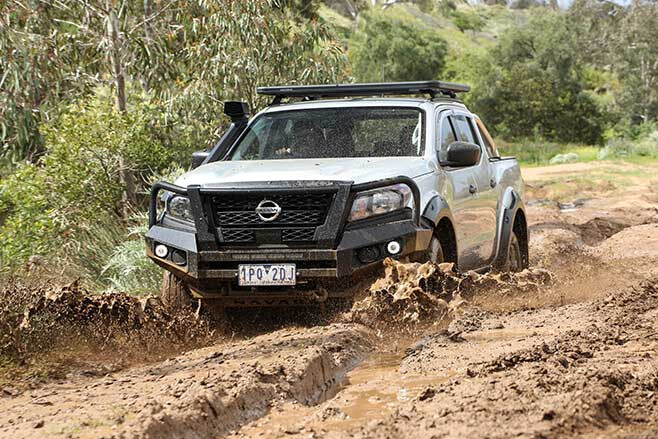
Nissan has a range of Australian designed and tested genuine accessories ready for the 2021 model including full and loopless steel and alloy front bars – each designed to work seamlessly with the radar and cameras of the safety systems – underbody protection, roof racks and an air-intake snorkel.
The current Navara hasn’t enjoyed the success its previous models experienced, and it’s outsold by the Ford Ranger, Toyota Hilux, Mitsubishi Triton and, up to September, even the old Holden Colorado.
Nissan will be hoping to win back some sales when it arrives early next year, but it will be up against some stiff competition in the ute class with the aforementioned new BT-50 and D-MAX and a refreshed Hilux already on sale. A new Ford Ranger won’t be due until later in 2021.
Contributing – Louis Cordony
Nissan’s 2022 Australian line-up is coming together
Speculation that Toyota’s 4.5-litre V8 diesel is on the chopping block is gaining more voice, and while the big oiler V8 won’t live forever I think its imminent demise is overstated.
The diesel V8 in question is currently used in the LandCruiser 200 (in twin-turbo form) and as a single-turbo engine in the various 70-Series models.
Its future seemingly hinges on the replacement for the 200 Series – let’s call it the 300, which has been “about to arrive” for a couple years now but hasn’t. Third-quarter 2021 is the latest debut date.
OPINION V8 diesel vital to LandCruiser’s future
That the 300, and its Lexus equivalent, won’t have naturally aspirated petrol V8s is a given, V8s being on the nose environmentally.
Not that you can buy a petrol V8 in an Australian-delivered 200 now, but petrol V8s are currently the default engine globally for the 200 and its Lexus stablemate.
To replace the current 4.6- and 5.7-litre petrol V8s globally, downsizing to something smaller suggests two V6s, somewhere between 3.5 and 4.0 litres.
One will need forced aspiration (presumably turbocharging) to make up the capacity difference and to be used in the LX and top-spec 300s, while commercial-grade 300s will need a naturally aspirated engine that wouldn’t be so fuel-sensitive.
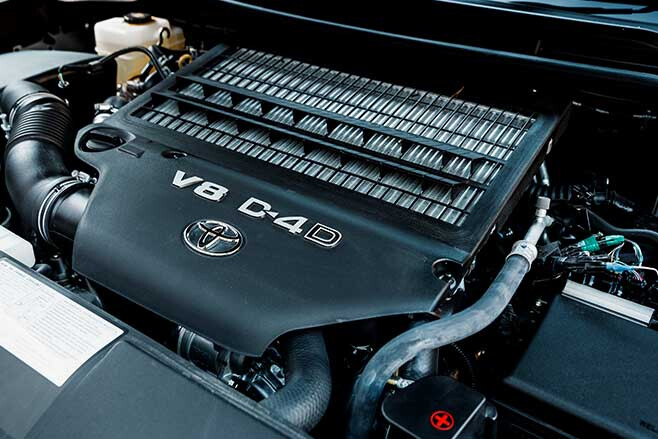
Both of these petrol V6s will most likely be teamed with electric motors in hybrid powertrains, given the electric-motor component in these hybrid powertrains can add off-idle torque, which also helps to offset the reduction in engine capacity.
So much for the 300’s petrol-engine global future; the more pertinent question for Australia is what about the diesel?
If the diesel V8 is to go … that is, not appear in the 300 when it arrives (presumably late 2021) … it’s hard to imagine Toyota not offering a diesel of some sort in the 300, given it has only recently dropped the 4.6-litre petrol V8 from the 200 due to an almost complete lack of buyer interest.
When the petrol V8 was available some 98 per cent of buyers still opted for the diesel V8.
Australia is, in fact, the biggest market for the 200 diesel when compared to other significant 200-Series markets. These include not only the Middle East but also South-East Asia, North America and Russia, who also prefer petrol.
And if the V8 diesel does go, where does that leave the 70 Series, given most 70s sold globally now have the diesel V8?
LC300 Prado power predicted
Toyota does have a modern diesel engine in its ‘cupboard’ in the form of the recently re-engineered 2.8-litre four (in Hilux and Prado), and while this engine may work in the 70 in some markets and perhaps here too for some buyers (it actually claims more torque than the 70-Series V8), it’s hardly going to cut the mustard in the 300.
At a time when the global future of the diesel engine is uncertain, is Toyota going to invest in a new-generation diesel for the 300, when the demand for such a thing outside Australia is limited? That’s the question.
One option for Toyota, and one that would save development and manufacturing costs, would be to simply build a six-cylinder off the 2.8, given the 2.8 currently represents the most up-to-the-minute diesel tech that Toyota has.
It’s certainly more modern than the V8, which first appeared in 2007.
A six-cylinder engine based on the cylinder architecture of the 2.8 four would end up at 4.2-litres, which is a very familiar capacity for a six-cylinder Toyota diesel.
And on extrapolation it could make 225kW and 750Nm, which is handy in anyone’s language.
And my guess is that if Toyota were to develop a six, an in-line six is more likely than a V6 due to reduced manufacturing costs, smoother running, and simpler turbocharging.
A low-power version of this six-cylinder diesel could be used in the 70, while the 300 gets a high-power version with a bigger turbo, or perhaps a bi-turbo arrangement.
Anyway, it’s all still speculation, which only comes into play if indeed the V8 diesel is consigned to history. Time will tell.