
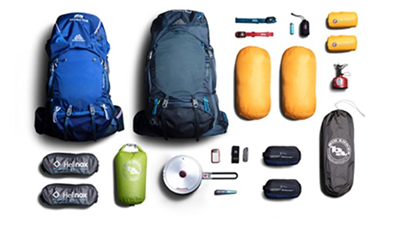
See our Top 5 4WD Road Trip Tips at the end of this yarn to make sure you’re fully prepared for a memorable adventure. Jump ahead here!
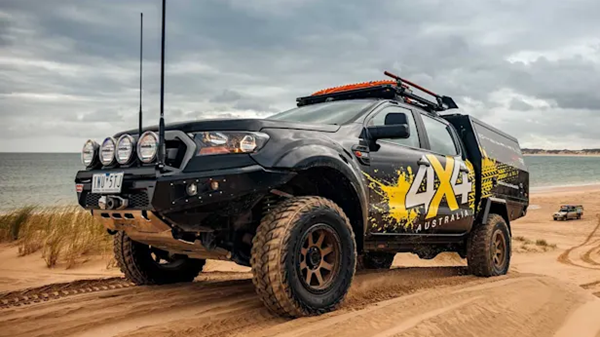
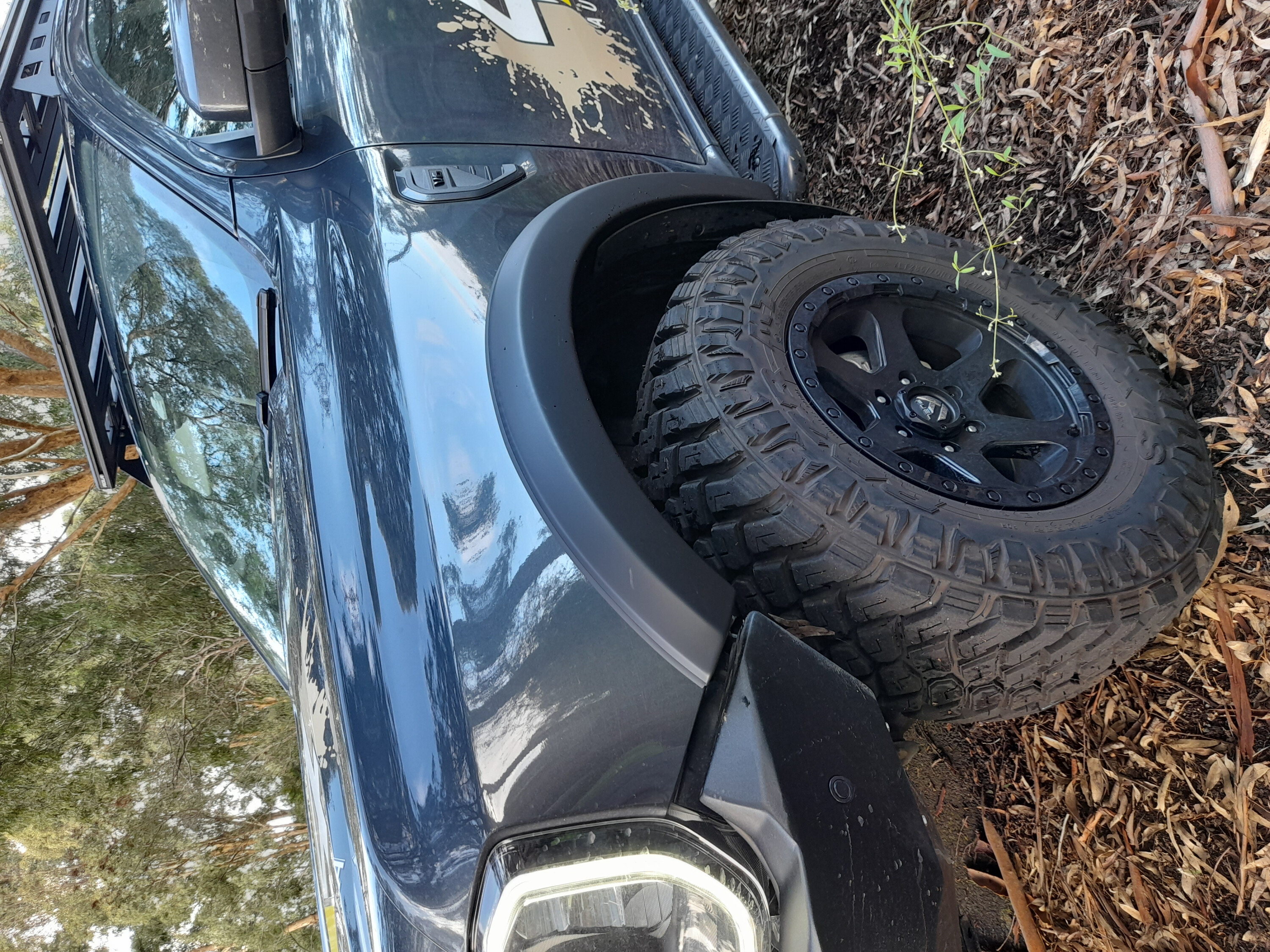
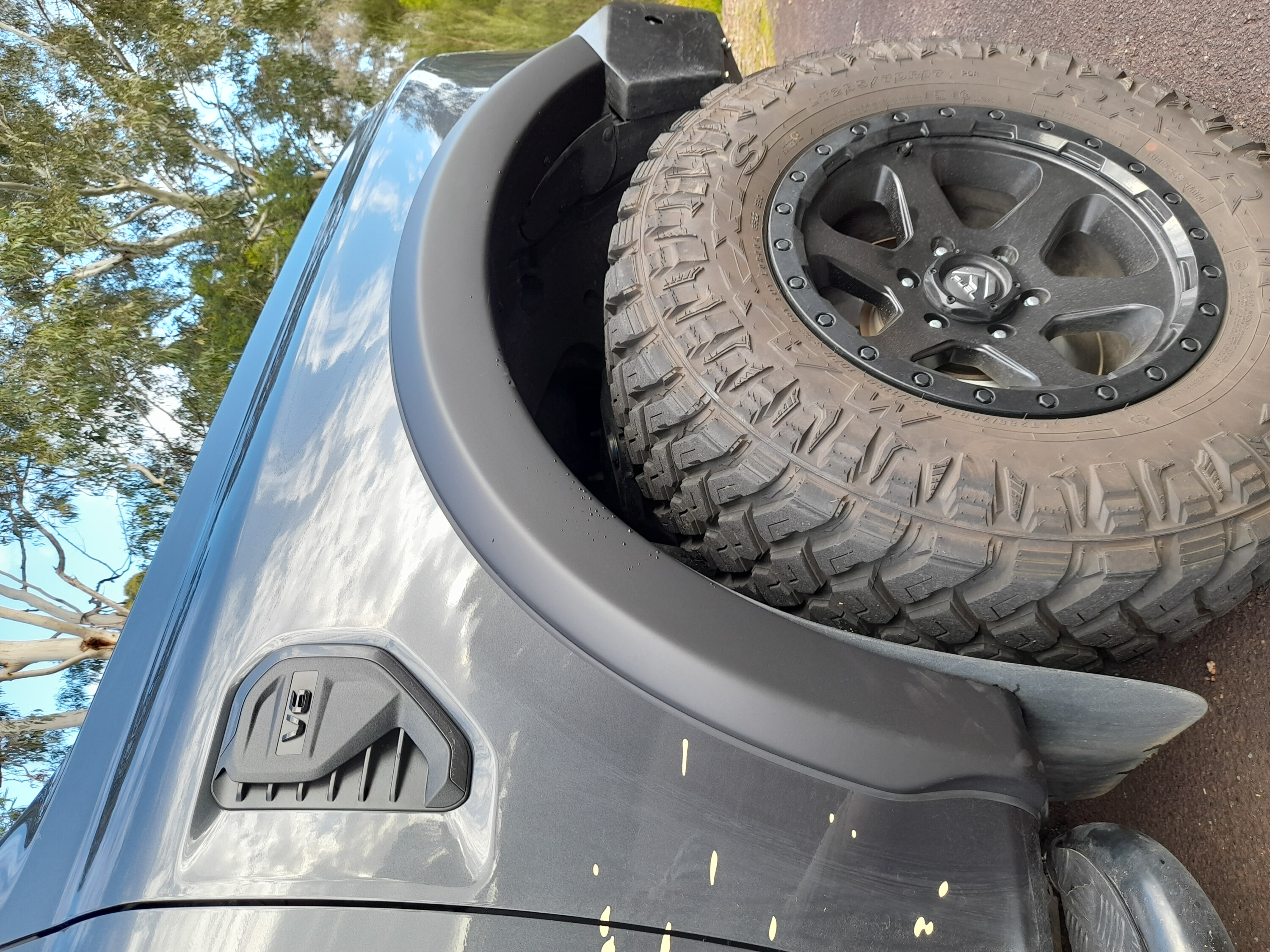
The front-end of our Ford Ranger has been updated, with a set of neat-looking EGR fender flares taking pride of place protecting the front wheels.
With two styles of fender flares for the next-gen Ranger on offer from EGR – Smooth and Bolt – we opted for the Smooth design for a more discrete, clean finish. Still, both styles look great and we would’ve opted for the Bolt design had we desired a more aggressive look.
Both styles can be colour-coded to the vehicle – the box we ticked – or optioned with an ultra matte black finish which also looks fantastic.
1
Australian designed and manufactured, these CAD-designed flares are designed specifically for the next-gen Ford Ranger using vacuum-formed, UV-stable ABS plastic that has been robotically trimmed for the perfect fit – in fact, EGR flares are the OE fitment flare for the Ranger when ordered from Ford.
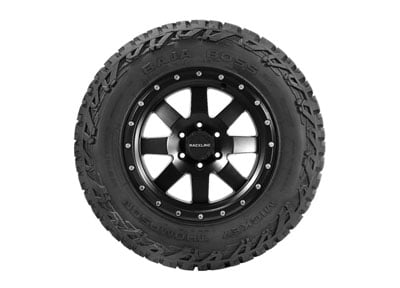
It also means the flares fuse seamlessly into the style lines of the vehicle’s original bodywork, and they look great covering the Ranger’s Maxxis RAZR rubber and Fuel Ripper wheels. Plus, they blend nicely with the TJM tubular steel side-steps we’d recently installed.
The flares are designed to integrate with sensors, so no rewiring is required upon fitment. Fitment itself is a relatively straightforward and quick process, with no drilling required into vehicle panels. EGR achieves this by utilising existing vehicle attachment points and specifically designed hardware.
1
DIY fitment will save you some coin in installation fees, and EGR even provides detailed fitting instructions on its website – so it’s possible to do it in your garage in just a few hours.
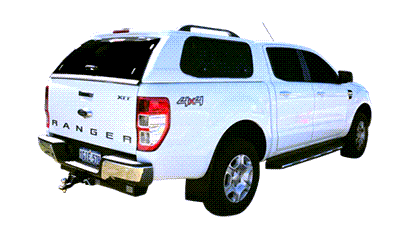
Fitting a tray to the rear of your ute is like adding a Swiss Army knife to your back pocket. However, picking the right tray can be difficult thanks to the bewildering assortment of materials, options and configurations.
Understanding trays
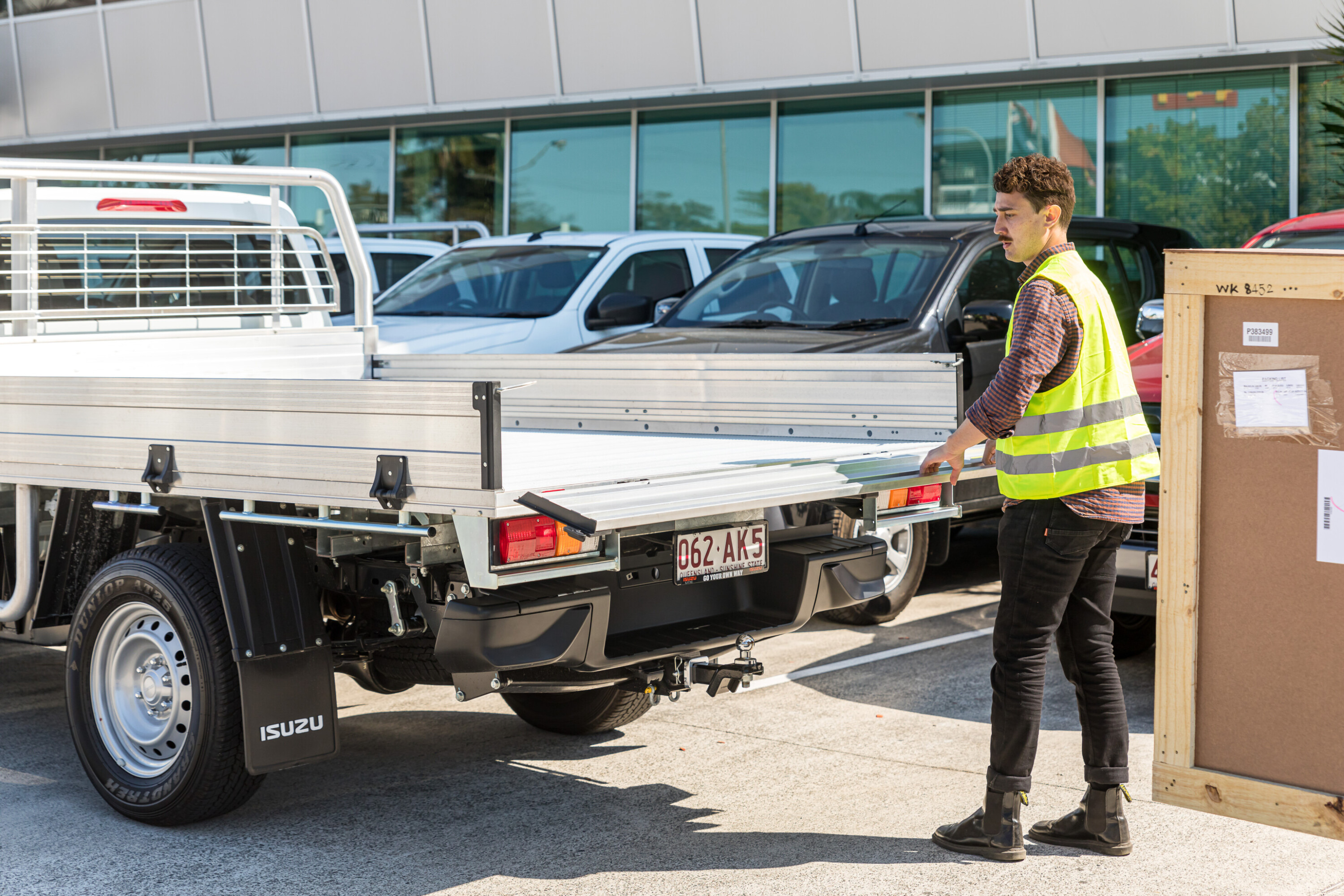
A tray is essentially a go-to tool for tradies, farmers and everyone who loves a bit of rough-and-tumble in the outdoors. They provide a solid platform for tools, gear and larger equipment, and there many sizes to choose from, depending on individual requirements.
1
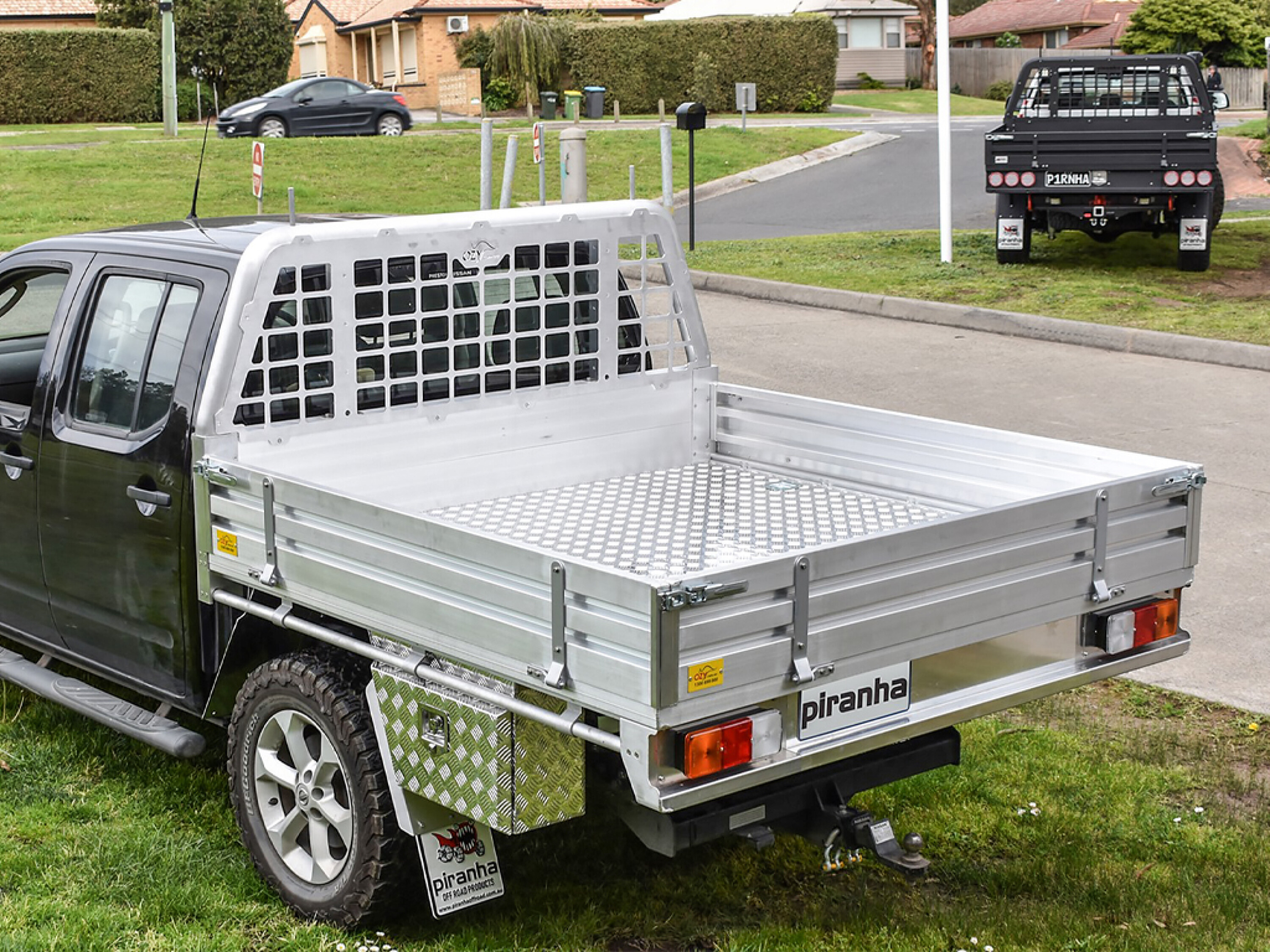
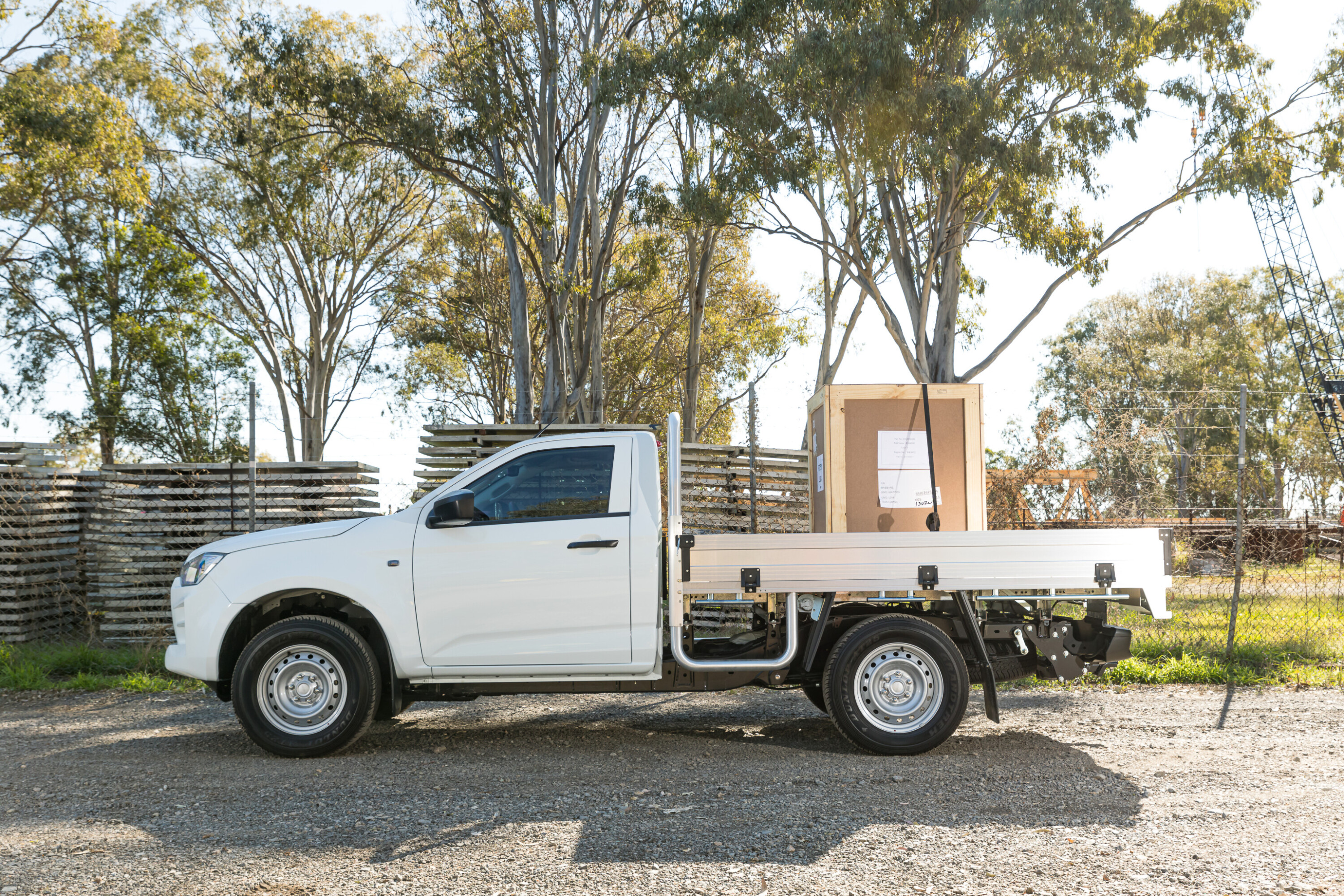
A tray will either be steel or aluminium, each with their unique blend of pros and cons. Aluminium trays are lighter, nimble, and more resistant to corrosion; Steel trays are tough and can take a beating, making them ideal in construction and mining industries.
A ute’s tray is your ticket to efficient, convenient, heavy-duty hauling, and can be tweaked to perfectly suit your needs. Whether you’re a tradie, farmer or just love hitting the great outdoors, investing in a tray is a smart move.
Aluminium
Aluminium trays impress with their strength-to-weight ratio. They’re lighter than steel trays, and rust-resistant capabilities give them the edge in Australian weather.
The light weight of an aluminium tray can work wonders for fuel economy – a major plus for those clocking up serious miles. Plus, their rust-busting powers are invaluable for keeping your tray in top nick in the face of Australia’s temperamental weather.
However, they can dent easier and they come with a heftier price tag.
1
Steel
Steel trays are the old guard; they’re tough, built to last and made to handle serious rough-and-tumble action.
One major advantage of a steel tray is its unparalleled strength. If you’re in a heavy-duty trade industry, a steel tray is less likely to dent or scratch compared to aluminium units.
There are a couple of downsides, though. Steel trays can be quite heavy which can put a dent in fuel economy – something to consider if you’re clocking up a lot of kays. Plus, they need a bit more elbow grease to keep rust at bay, which can add up over time.
Aluminium vs steel
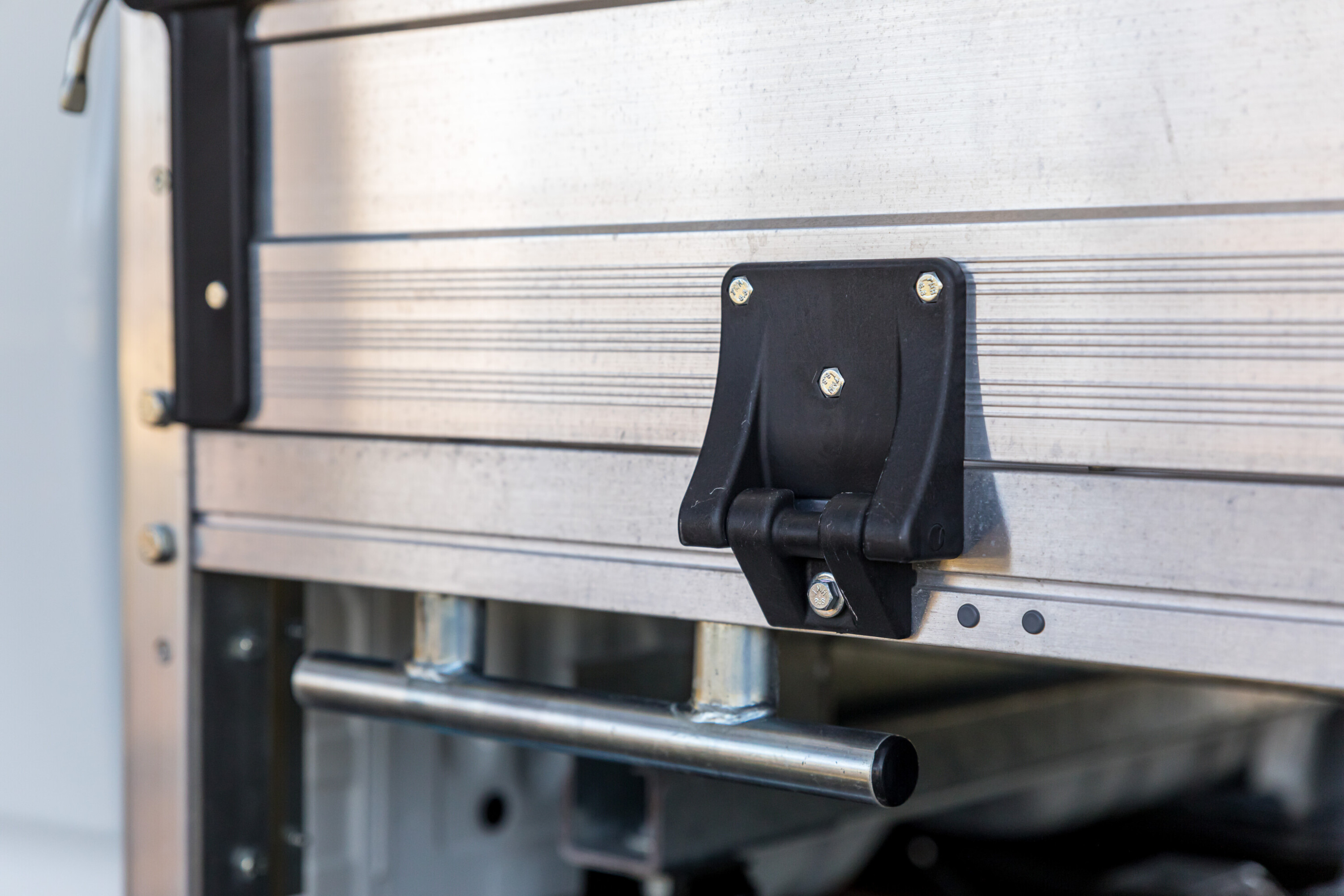
Whether you opt for aluminium or steel, it all boils down to individual needs. If you require a lightweight, corrosion-resistant tray, then aluminium best fits your needs. If you’re after something that can take a beating and handle serious weight, then steel would be better. At the end of the day, it’s all about your budget and what you use your ute for.
1
Durability
Steel trays are more durable and steel is king when it comes to strength. Sure, steel can rust and corrode over time if you don’t keep an eye on it, but it’s less likely to dent or scratch than aluminium.
Aluminium, on the other hand, can handle wet and mucky conditions better due to its rust-resistance, making it a top choice if you regularly get your wheels dirty. Keep in mind that aluminium is a softer metal, so it might pick up a few more dings and scratches.
Fuel efficiency
Weight is critical when it comes to fuel efficiency, and steel trays are the heavyweights here which can substantially increase your fuel bill.
The difference in fuel consumption can vary depending on your vehicle and its engine, but if you’re a long-haul driver, you might want to swing towards aluminium to keep fuel costs in check.
Load capacity
Whether you choose aluminium or steel, most ute trays can handle a load of around 1000kg. However, steel trays might be better for heavier stuff, thanks to their increased strength.
1
Cost comparison
Aluminium trays tend to cost a bit more than steel due to higher manufacturing costs, but you might save some dosh on fuel in the long run thanks to their lightweight design. Steel trays are easier on the wallet initially, though.
Aesthetics and customisation
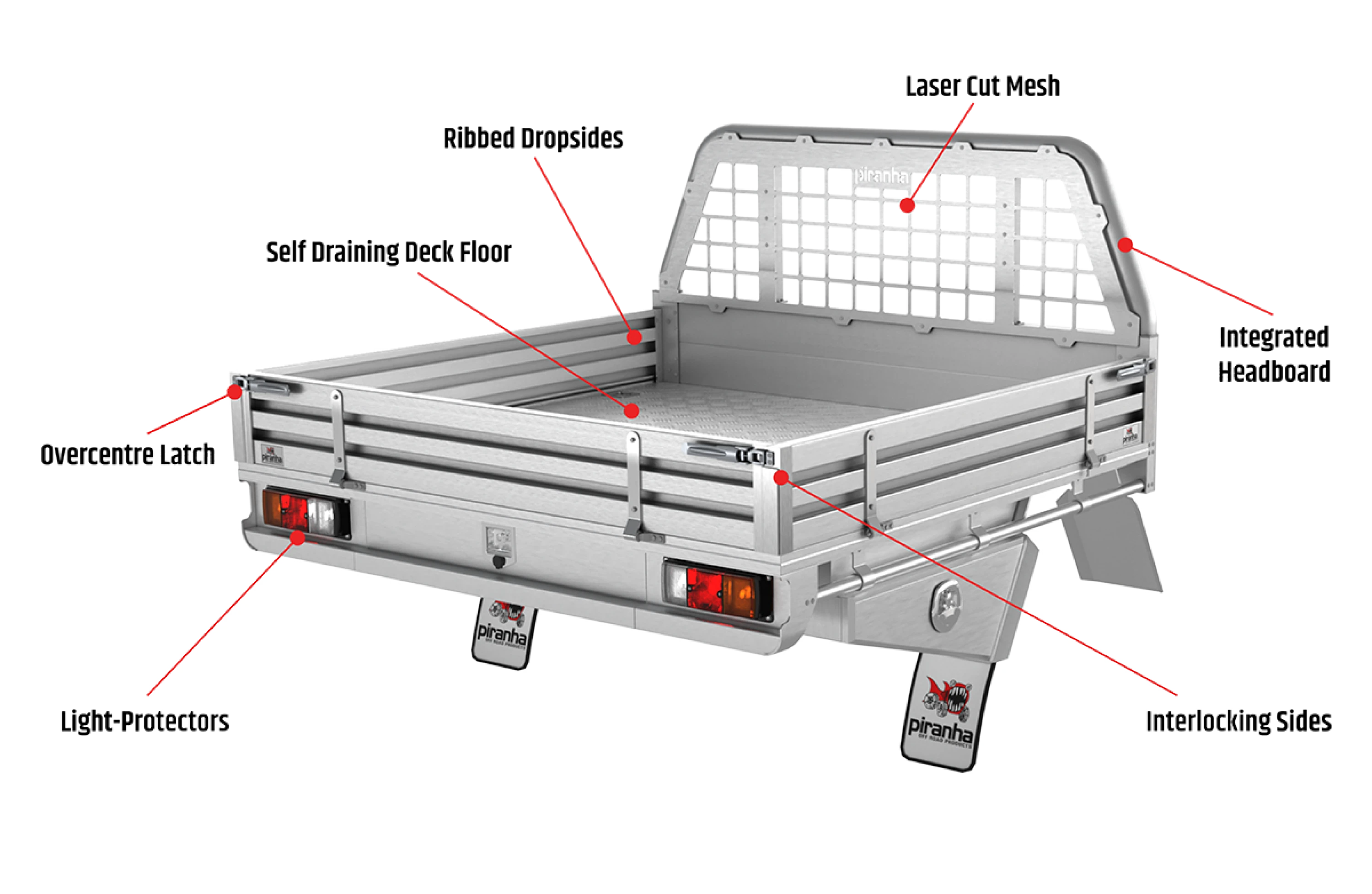
Aluminium trays can be both practical and visually appealing. Being easy to customise and available in a dazzling array of powdercoated colours, aluminium trays offer a smorgasbord of design choices.
Steel trays may be rough, rugged and ready for action, but their customisation options are more limited due to their inherent toughness and the nature of the material.
1
Industry opinions
Industry folk reckon there’s a place in the market for both aluminium and steel trays, as both have their strong suits. Your choice ultimately comes down to your specific needs.
Aluminium trays win the day for lighter loads and touring vehicles, while steel trays are better suited to heavy-duty loads and work/trade conditions.
Choosing the right tray
The key to finding the perfect tray relies on your specific needs and intended purposes. If you’re a light hauler, live in coastal areas, or have a fuel-efficient beast with a smaller engine size, aluminium is recommended.
If you’re regularly lugging heavy tools or working in rough conditions, then you’ll want to buddy up with a steel tray.
The latest Gear Guides
Looking for a 4×4 touring adventure that combines stunning natural landscapes, remote tracks, crystal-clear waters of the Great Barrier Reef and the spectacular Outback?
Look no further than a North Queensland road trip.
JUMP AHEAD
- Tropical North Queensland: Cairns to Cape York
- Outback Queensland: Australian Dinosaur Trail
- Townsville: North Queensland highlights
- Best of The Whitsundays
- Mackay Isaac Region: Reef to Rainforest
2
Tropical North Queensland: Cairns to Cape York
If you’re a 4×4 tourer, Cape York is more than likely at the very top of your adventure bucket-list.
This amazing journey will take you through some of the most rugged and stunning terrain in Australia, including the Bloomfield Track and the Old Telegraph Track, while also offering the chance to experience the region’s rich Indigenous culture and check out some amazing historic sites.
You need to be an experienced 4×4 tourer for this one, with a fully kitted-out rig and be ready to have your driving skills tested (and have some cracking fun) on this 1432km one-way epic.
You will negotiate river crossings, rocky terrain, steep inclines, and magical sandy beaches, while exploring the remote and beautiful landscapes of the Cape York Peninsula, Australia’s northernmost point. Yep, there are many reasons why it’s regarded as not only one of the best 4×4 adventures in Oz, but the world.
Starting at Cairns, the ‘trip to The Tip’ visits remote Aboriginal communities, historical sites, and scenic coastal areas, with some of Australia’s best camping along the way.
To ease your way into the trip – and to make effective time from Cairns to Cooktown (known as the ‘gateway’ to the Cape), head inland to the Atherton Tablelands, and join the Mulligan Highway. It’s a cruisy four-hour drive if you’re keen to get straight to Cooktown, but if not, take advantage of the side-trips along the way, with bird viewing, rock art (at Laura) and the chance to check out Kalkajaka (Black Mountain) National Park’s namesake large black boulders that dominate the landscape.
For keen anglers, the turn-off to Archer Point (17km south of Cooktown) will take you to one of the best fishing locations on Australia’s east coast.
For those after a more remote journey north, and one that’ll put your rig and yourself to a sterner test, you can opt for two 4×4-only routes, instead: the Bloomfield Track (accessed via Cape Tribulation) which is quite close to the coastline, or the challenge of the CREB Track, which starts at Daintree and takes you over the McDowall Range.
The Bloomfield Track, at 30km, is a brilliant off-road experience and sampler for what lies ahead for travellers.
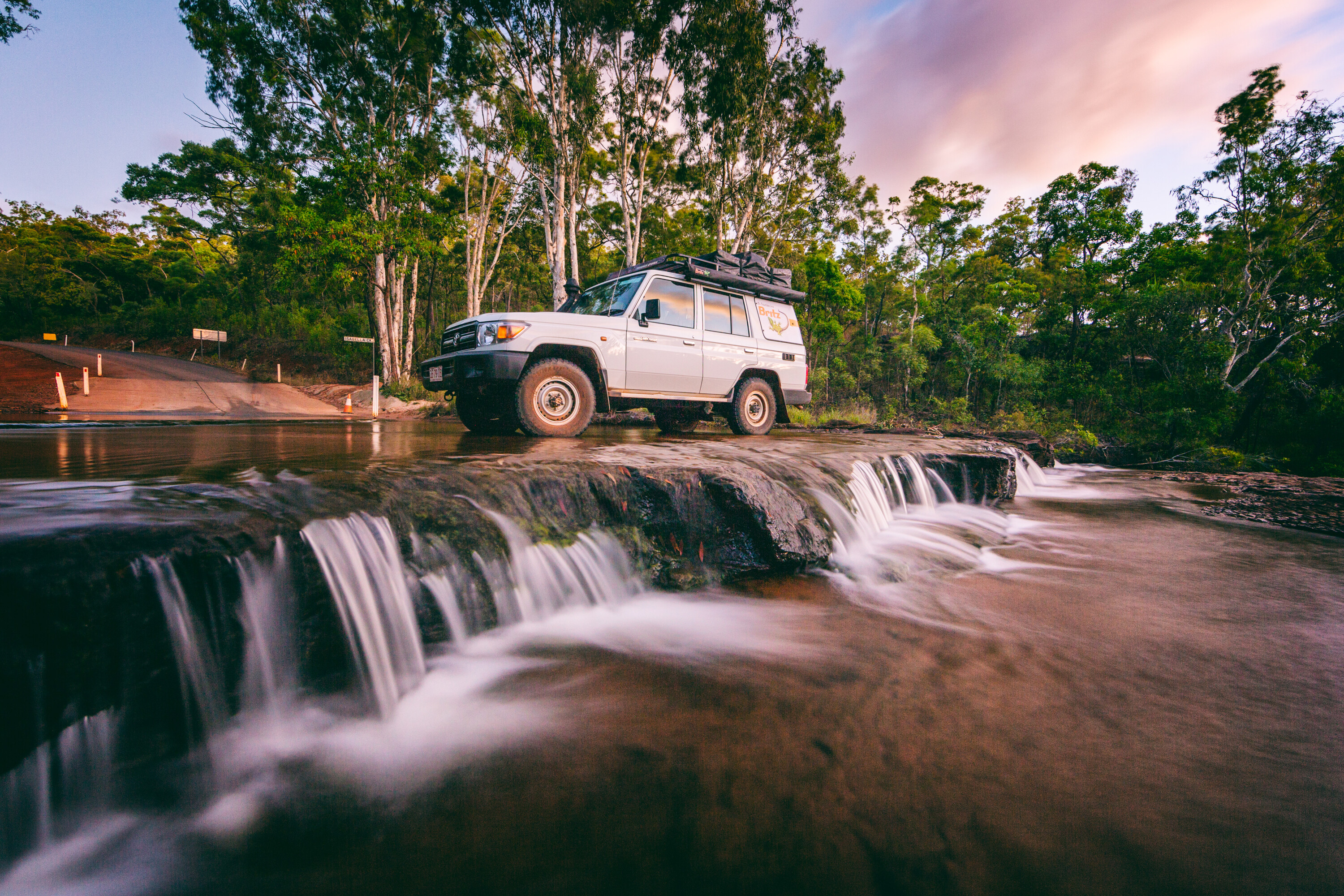
Originally an Indigenous footpath, then an old miner’s packhorse route, the Bloomfield Track takes you through spectacular rainforest, with a number of creek crossings (some now with concrete bases, some with bridges, and some without) and steep climbs and descents to tackle along the way.
The CREB Track (60km) is more challenging than the Bloomfield, and it sees you follow red-clay tracks through the Wet Tropics Workd Heritage area’s deep rainforest and steep terrain (rain can affect track conditions here, so always check it’s open before attempting this route) but it rewards you with a fantastic sense of remoteness and adventure.
The views from this track’s high points – across the magical tropical rainforest and mountains – are simply awesome. Roaring Meg Falls is another highlight of this drive, as is camping at Yindilli camping area.
Both of these routes link to Shiptons Flat Road and then, further north, this road ends at the sealed bitumen of the Mulligan Highway on to Cooktown.
1
After a day in Cooktown, it’s time to continue north toward Hope Vale (if you have time, take the must-do off-road side-trip to pretty Elim Beach and its Coloured Sands, where you can drive your 4×4 on the beach at low tide – it’s a brilliant experience) and then it’s on to Cape York’s largest (and Queensland’s second largest) national park, Rinyirru (Lakefield).
There is plenty of awesome camping here (for a remote camp experience, check out Old Faithful and 12 Mile Waterhole, on the Normanby River) and, again, some cracking fishing spots. Make the most of your time here before continuing to Coen, via primarily dirt roads through the national park, before joining the Peninsula Development Road (PDR) at Musgrave Roadhouse for the final leg to Coen itself.
From Coen you continue north and then, after chowing down on some tasty food at Archer River Roadhouse, you can opt for a side-trip along Portland Road to Kutini-Payamu (Iron Range National Park) or continue northward along the PDR to another junction where, if going straight ahead, you will reach the west coast community of Weipa.
For those continuing north, you have reached the start of the mighty Telegraph Road, considered the most famous (and challenging) part of this journey and one where a fully-prepped rig is a must. While this ‘road’ follows the original route of the Old Telegraph Track (OTT), it has been upgraded to a degree, with some (not all) rivers, such as the Wenlock, now bridged.
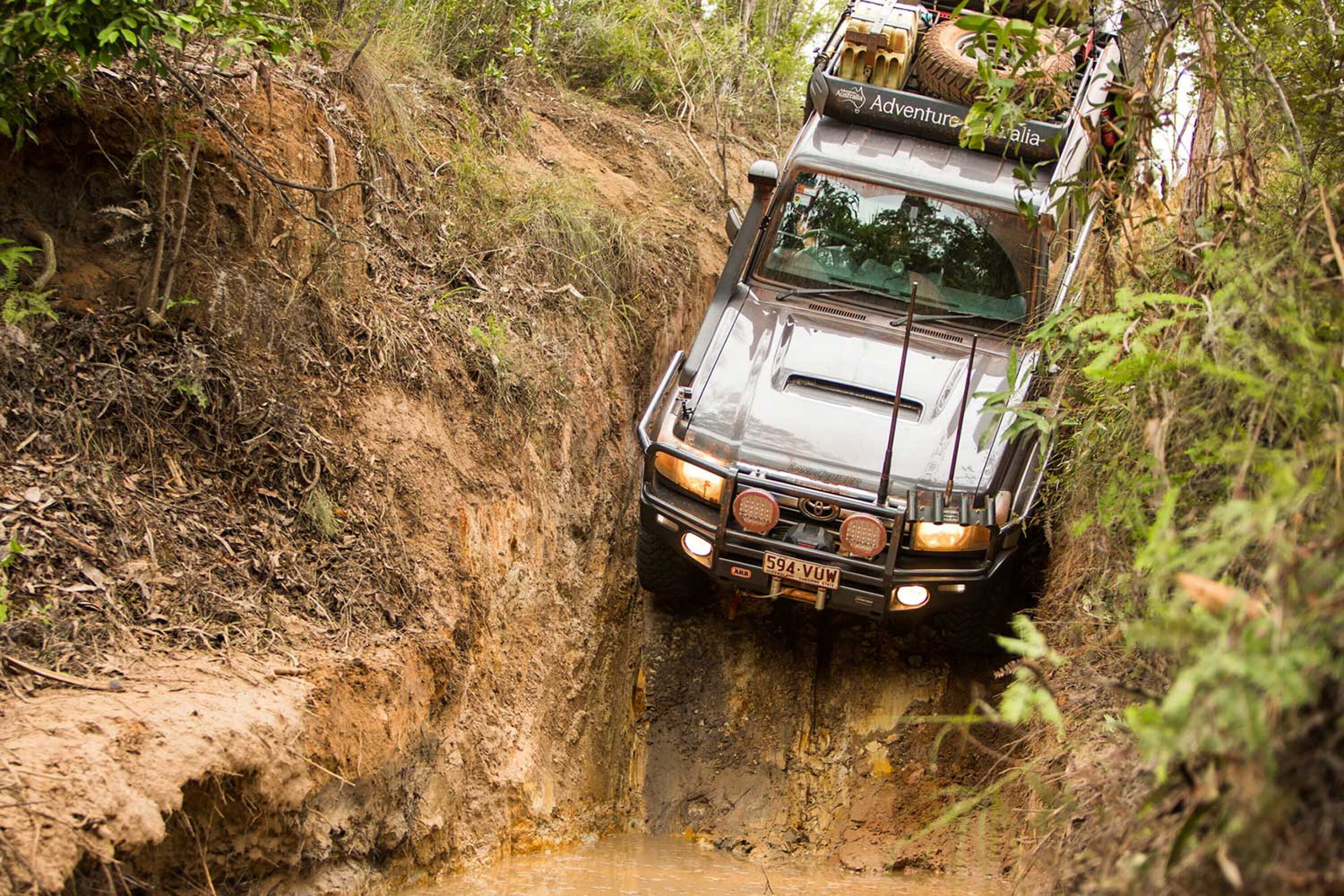
Even with some ‘modernisation’, the OTT remains a fun challenge for 4×4 tourers. Each year, the many creek crossings can change, although there are detours around some of the most challenging sections.
Highlights include the (in)famous Gunshot Creek crossing in the track’s southern section, where vehicles get nearly vertical as they enter the water, the long, deep crossing near Fruit Bat Falls and, further north in Jardine National Park, the chance to swim at magic Eliot or Twin Falls (there is nice camping at Eliot Falls, with the chance to relive the adventure around a campfire that night). Indian Head Falls is worth more than a day’s camp, too.
1
From Twin Falls camping area it’s around a 60km trek (fording several creeks along the way) before you reach the ferry crossing of the Jardine River itself. Once across this mighty waterway, it is another 48km to Seisia, the popular fishing town on the peninsula’s west coast, before the short 34km push on to the tip of Australia and its famous sign, which is reached via a 20-minute walk from the car park.
As you’re reading that sign’s message (“You are standing at the most northern point of the Australian continent”) just think you get to experience it again on the return journey. Speaking of which, most travellers take a different route south, so you allow for that in your trip-plan – you really don’t want to rush your time in this spectacular part of Australia.
For more, see drivenorthqueensland.com.au [↗]
1
Quote from 4X4 Australia writer/photographer Kev Smith
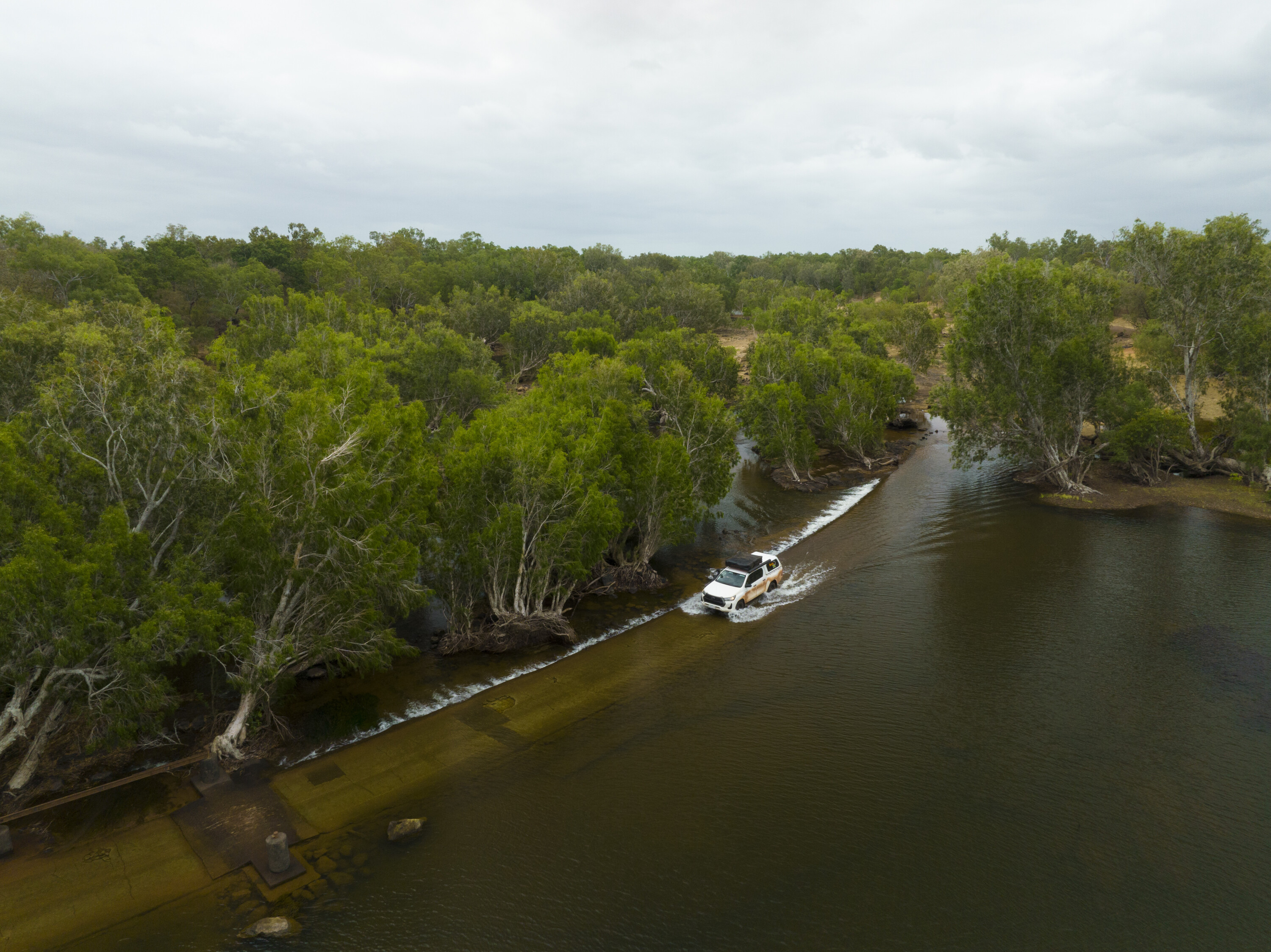
“For me, the Gulf region of North Queensland always has a place in my heart. From the sheer diversity of landscapes – the massive salt pans in the north to the harsh rocky areas to the southern gulf – there’s just so much to see and do. Then there’s the amazing and often heartbreaking history that can be found all through the area where relics have been left behind.
“When the wet weather passes through, the wide rivers flood, leaving behind a trail of destruction but also giving life to the Gulf region. I find prepping and travelling these remote areas a joy, plus exploring the wide range of 4WD roads and tracks that lead into vast and isolated areas discovering what used to be. Often an underestimated region, the Gulf has more to offer than most people realise.” – Kev Smith
Outback Queensland: Australian Dinosaur Trail
For those looking to combine a big 4×4 touring experience with – yep – a dinosaur hunt, the Australian Dinosaur Trail, in Outback Queensland is an absolute belter.
Along this route, you will experience some of the region’s most ruggedly stunning terrain, including Porcupine Gorge.
For adventure-seekers, this trail takes you on a journey through time as you explore the ancient landscapes where some of the world’s largest dinosaurs once roamed. It’s not a challenging drive, with relatively easy driving on sealed outback roads, Again, a SUV or 4×4 will see you making the most of this spectacular part of Oz.
There are four parts to the trail; two are located near Winton, which is 1150km west of Brisbane, and the other two are farther north at Richmond and Hughenden.
1
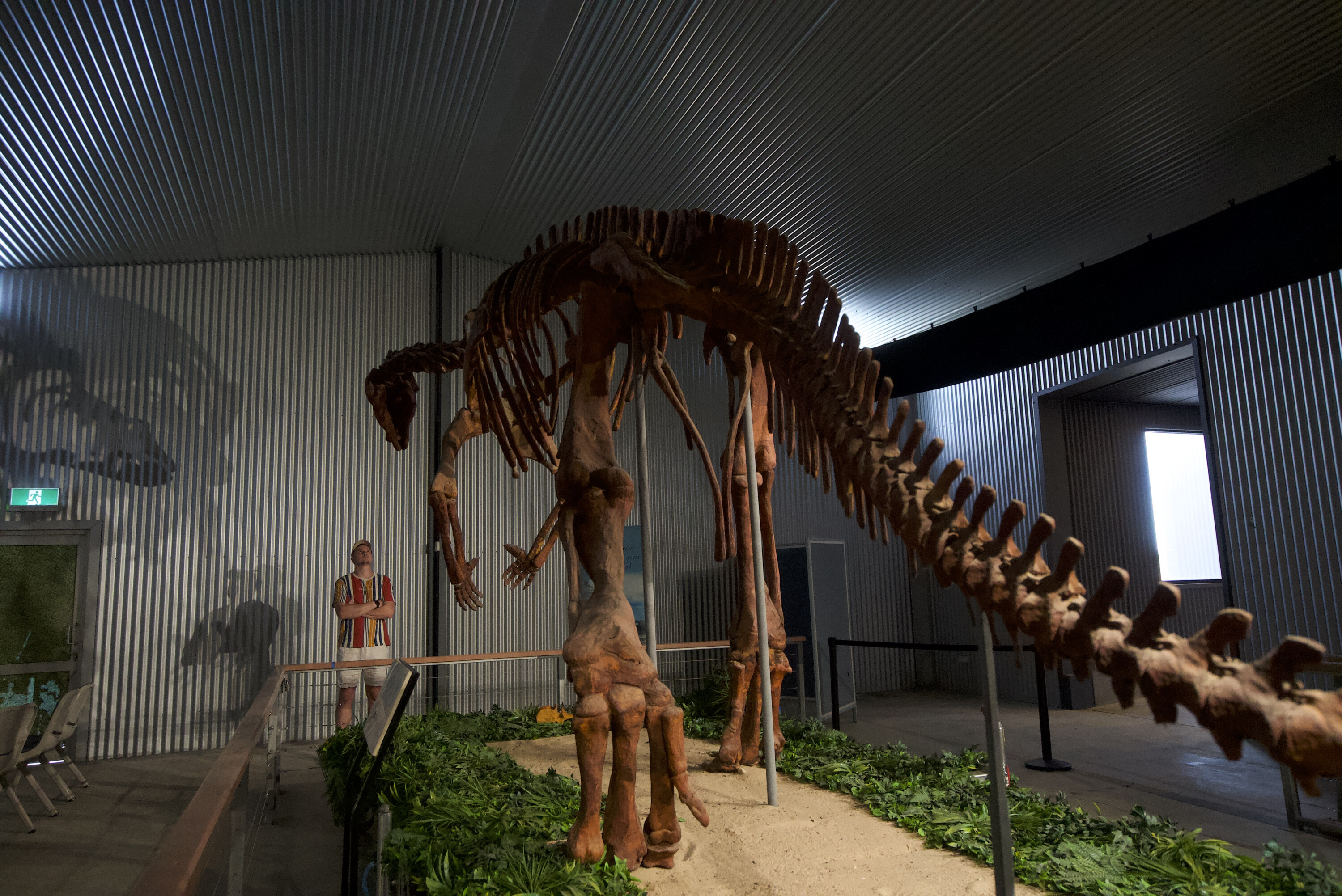
Head to Hughenden to check out ‘Hughie’, a Muttaburrasaurus fossil (and resident of the Flinders Discovery Centre) and then tackle a 54km side-trip to magical Kooroorinya Falls Nature Reserve.
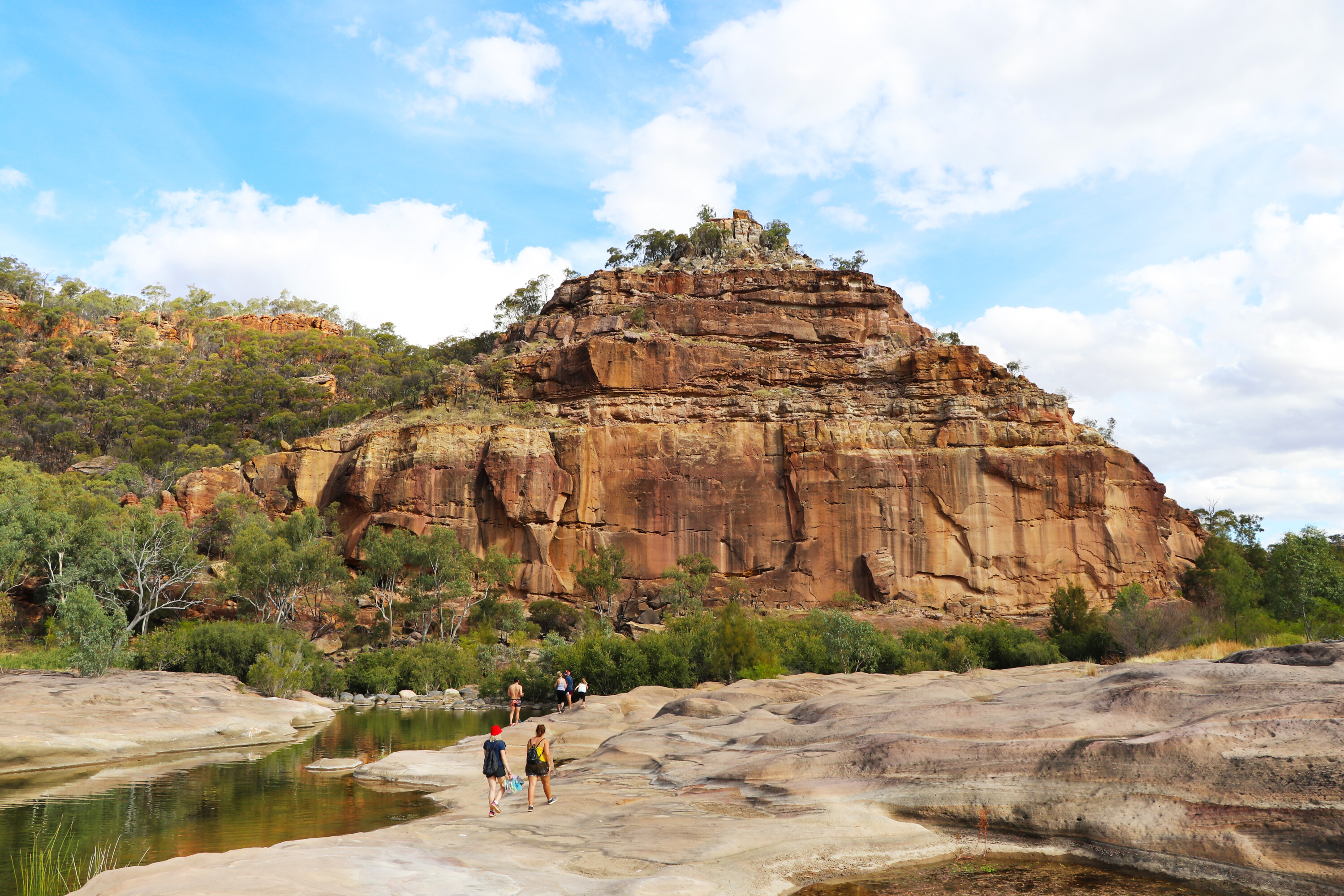
An overnight in Hughenden also allows for plenty of time the next day to visit Porcupine Gorge National Park (the 1.2km walk to the gorge base is a must-do; you can also camp in the park) and, after tackling some of the region’s 4×4 tracks, taking the 115km drive to Richmond.
1
Here, you will find the awesome Kronosaurus Korner, containing Australia’s premier collection of marine fossils, and including ‘Penny’, the country’s most complete marine vertebrate specimen.
There’s a Heritage Walk around town, too, and the option of taking a dip in Lake Fred Tritton.
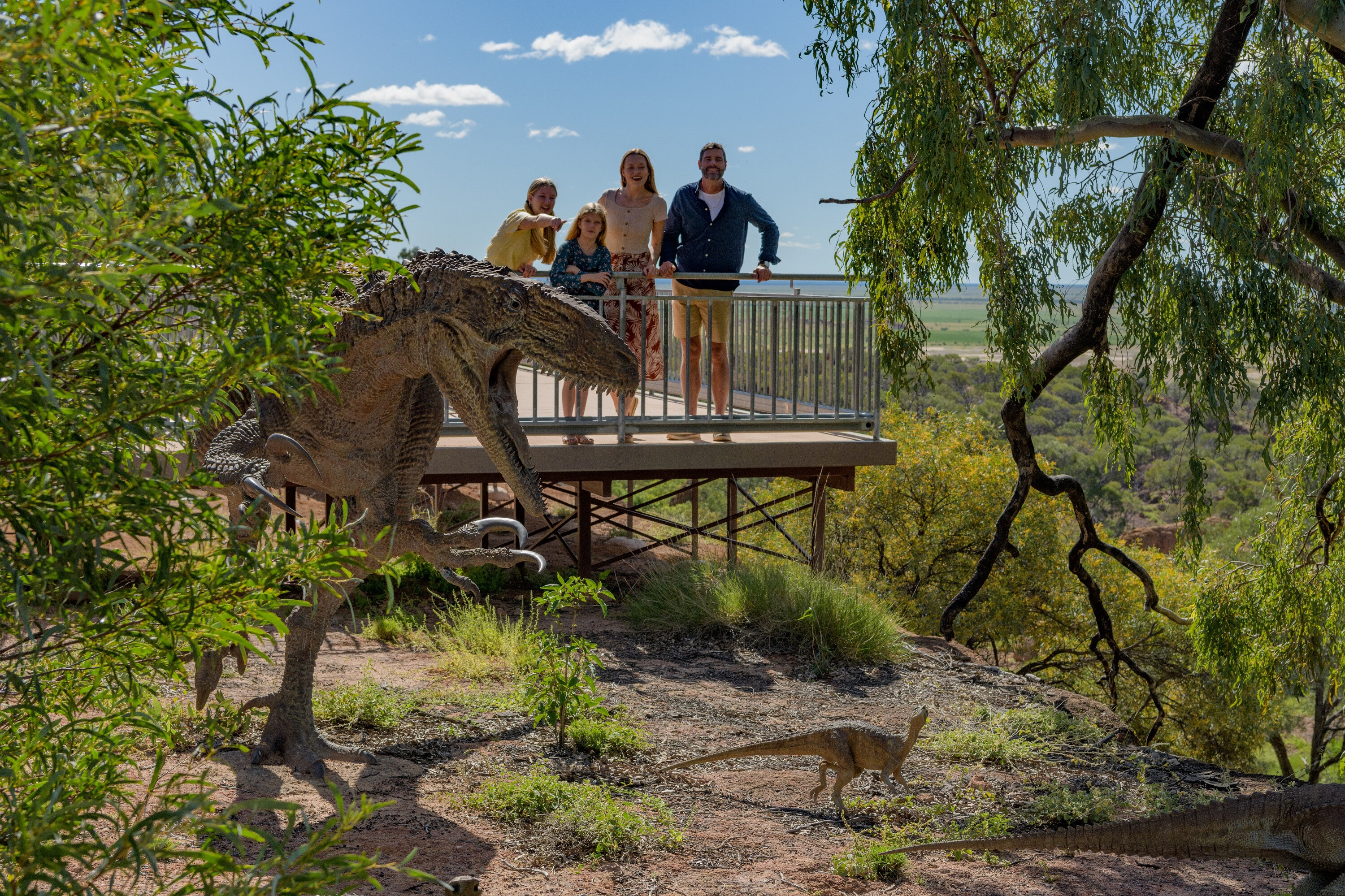
The Dinosaur Stampede National Monument, about 110km south-west of Winton, is home to the Lark Quarry Dinosaur Trackways; another must-visit on the Dinosaur Trail.
1
Located only a few kilometres off the main road, it’s the only place in Australia where evidence of a dinosaur stampede has been discovered.
Here, you can see impressions of dinosaur footprints in mud from a stampede that occurred an estimated 95 million years ago.
Once inside, there’s a short video on how scientists think the stampede occurred, and then you’re taken inside a specially built shed where you can view the footprints in the dried mud. Volunteers run the show out here and share a wealth of information on this area and anything to do with the stampede.
The final stop on the Dinosaur Trail is the Australian Age of Dinosaurs Museum, located 25km south-east of Winton and has the largest display of Aussie dinosaur bones in the world, plus you can check out the lab where bones are cleaned for display.
Make sure you allow at least half a day here, as there’s lots to see and do, including a wander through the Dinosaur Canyon, join an interactive guided museum tour, and take in the March of the Titanosaurs exhibition. And don’t miss a visit to the café and museum shop.

1
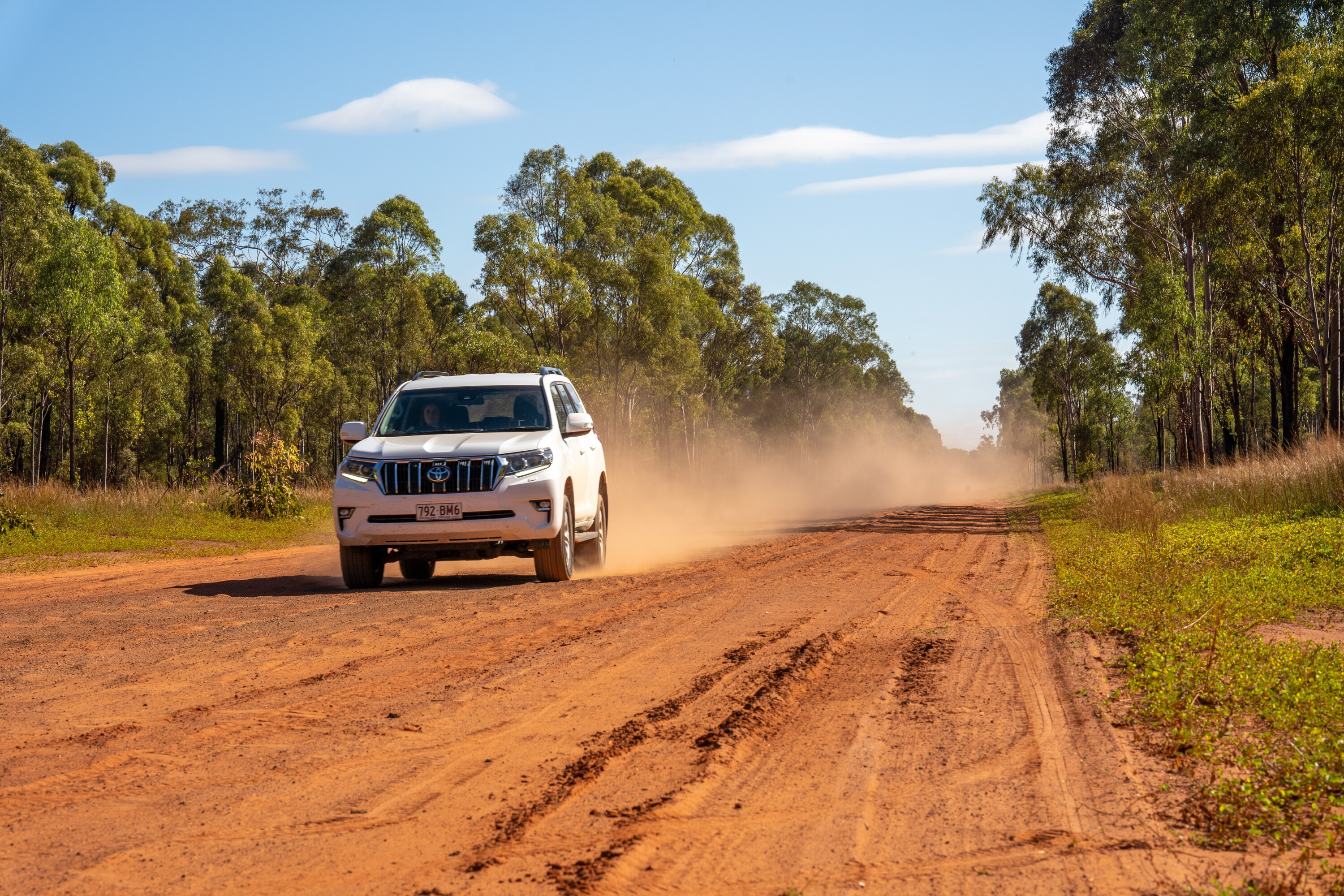
The entire trip is doable with a camper trailer, but you’ll need to be prepared for a good 400km of outback roads that rarely see maintenance. Believe us, it’s worth it!
For more, see drivenorthqueensland.com.au [↗]
1
Townsville: North Queensland highlights
The North Queensland Highlights adventure begins with a visit to the Burdekin region, known for its sugar cane and fishing locations.
Ayr and Home Hill, the two main towns of the region, are separated by the Burdekin River and connected by the Silver Link, a 1km-long bridge.
The area is great for fishing, and visitors can take a scuba diving trip with Yongala Dive to the famous SS Yongala, one of the best shipwreck dives in the world.
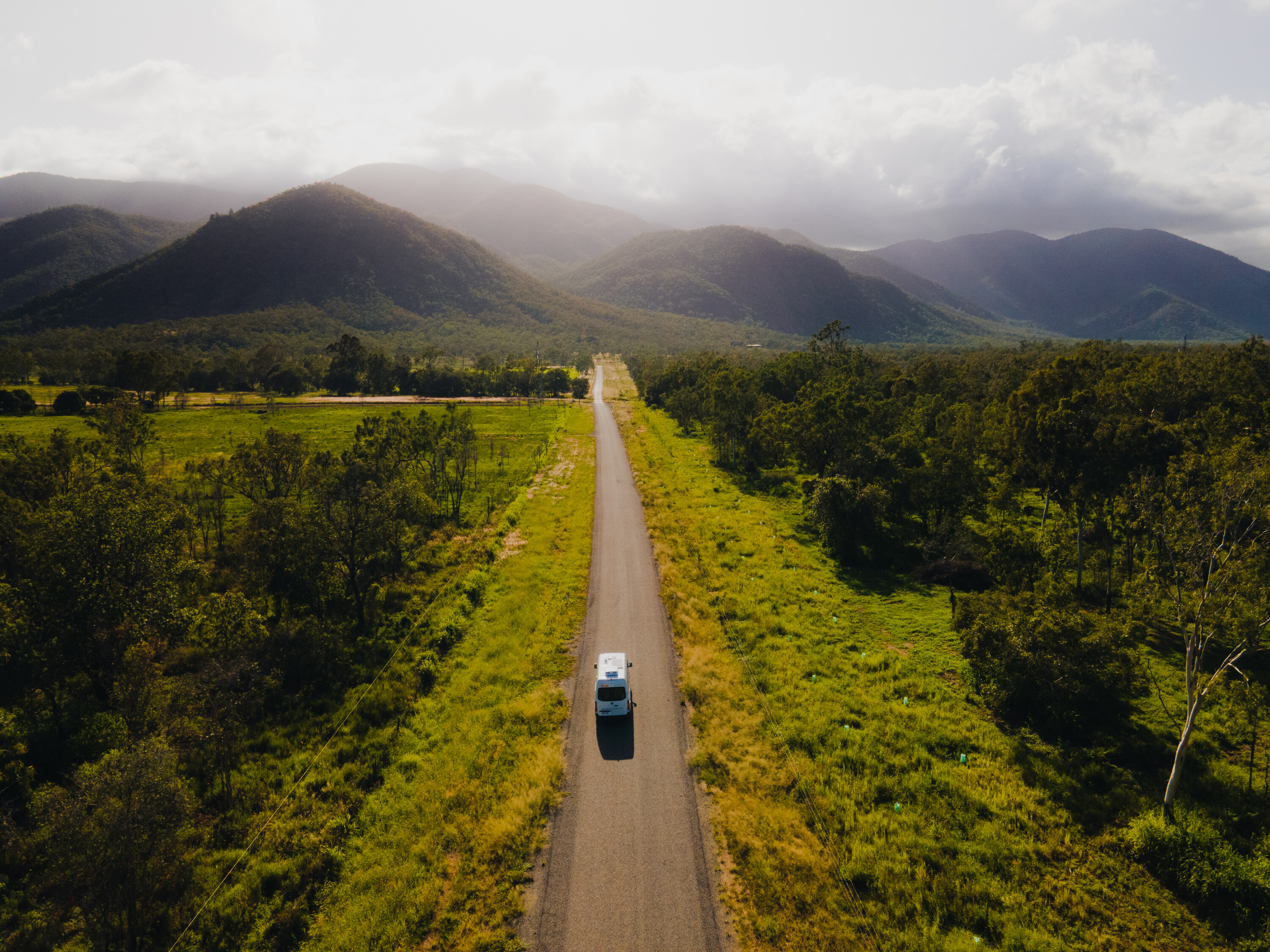
Townsville, the largest regional city in Northern Australia, is the next destination and is an ideal base for 4×4 enthusiasts seeking to explore the rugged terrain and stunning scenery of North Queensland. It’s the gateway to some of the most exciting off-road adventures in the region, from the challenging tracks of Paluma Range National Park to the beautiful remote roads of Magnetic Island.
1
Townsville is also home to several 4×4 clubs and groups, making it easy for enthusiasts to connect with like-minded individuals, share tips and tricks, and explore new trails together.
Proper preparation and equipment are crucial for safe off-road adventures. So, whether you’re an experienced off-road veteran or a newcomer looking to get started, Townsville has everything for your 4×4 adventure.
The city is nothing if not vibrant, with museums, galleries, and cultural events. After a long day on the tracks, unwind in the bustling nightlife and enjoy the city’s restaurants and cafes. For those keen to learn more about the region’s native wildlife, check out Billabong Sanctuary, with its resident native animals, such as koalas, wombats, dingoes, and snakes – and home to mainland Queensland’s largest captive croc – Krakatoa, who measures an impressive 5.1 metres in length!
In the centre of town, visitors can find the Museum of Tropical Queensland, which offers a chance to see and learn about the region’s amazing sea life and artefacts, as well as its rich Indigenous culture (you can join the Walking Through a Songline immersive experience to learn more). If history is your thing – be sure to take a walk through the Jezzine Barracks parklands, featuring military fortifications, artistic sculpture trails, and traditional custodian bush tukka trails.
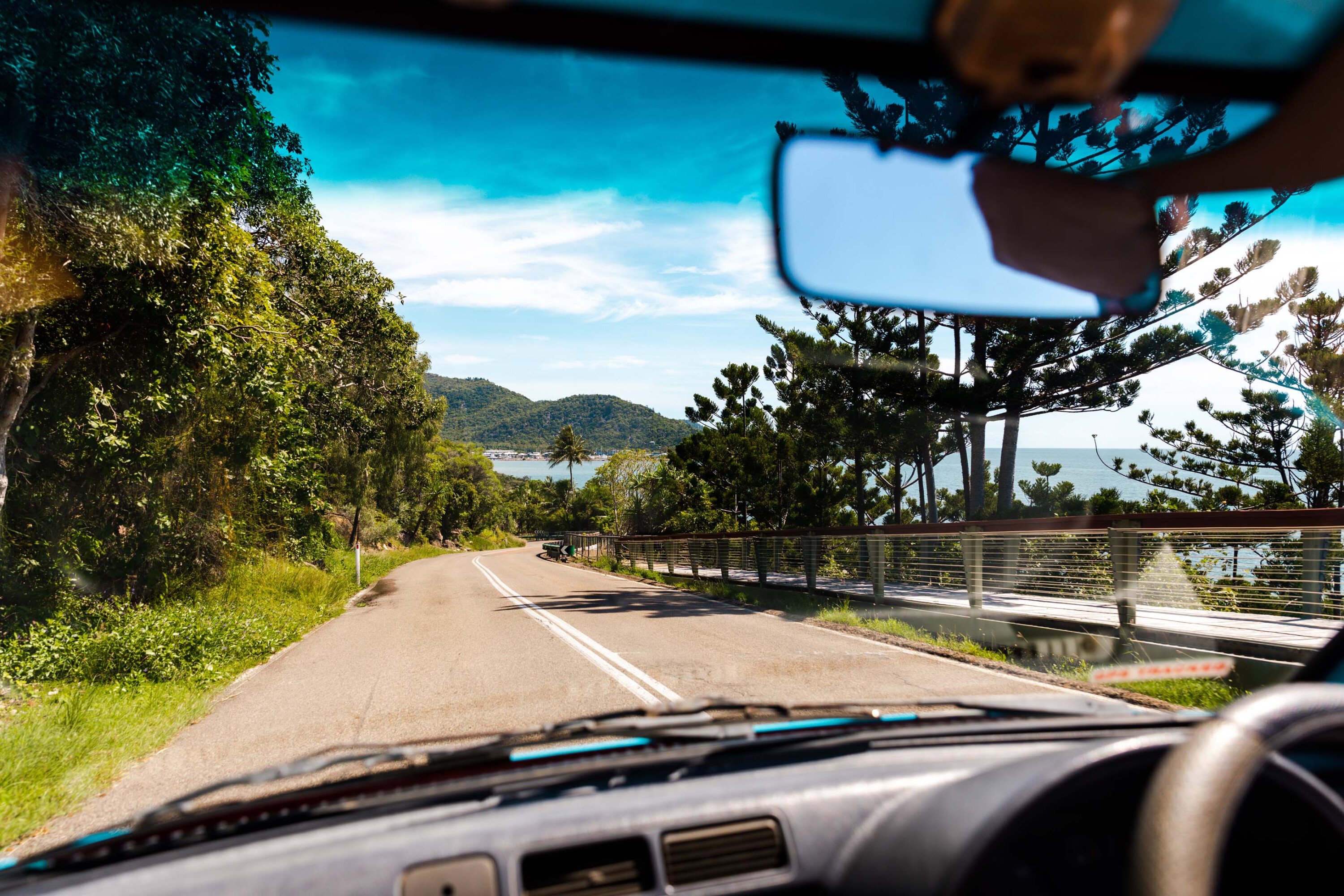
Magnetic Island, just 20 minutes away from Townsville’s city centre by SeaLink Queensland or Magnetic Island Ferries, is another must-visit. The island offers 23 beaches and bays to explore, which can be accessed by car or by hiring an island cruiser with one of the many car hire companies on the island.
1
Visitors can also take a discovery tour with Aquascene Charters to access some of the most remote and exclusive beaches on the island.
The Forts Walk is a great place to spot wildlife – including some of Northern Australia’s largest colony of wild koalas – and offers an excellent sunrise vantage point with 360 degree views.
From the sea, it’s a journey south-west from Townsville, to Charters Towers, the gateway to the mighty Outback. The contrast in the landscape as you travel to Charters Towers is amazing in itself, and the drive is more than well rewarded once you reach this former gold rush town’s magnificent heritage buildings – they are magnificent and it’s worth taking a big walk around town to check them out or, to really learn about what was once Queensland’s second biggest city, join a guided walking tour.
Don’t miss sunset at Towers Hill, an absolute belter way to finish a day exploring the town. Add in a trip out to nearby Leahton Park (home to Australia’s largest herd of Texas Longhorn cattle) to check out ‘JR’, the former Guinness World Record holder for a horned steer with his immense 3.1-metre wide horns. Yep, impressive!
From the Outback, it’s a return to North Queensland’s iconic Tropics, with Ingham the final stop on this mighty adventure.
An exciting way to return to the coast from Charters Towers is via the Gregory Developmental Road (a mix of sealed and unsealed surfaces) that will take you through the pretty Herveys Range.
Once you’re back on the coast at Ingham, you’re on the southern doorstep of the Wet Tropics World Heritage-listed rainforest, and a short trip out of town to Wallaman Falls (at 268m, Australia’s highest sheer drop waterfall), or a visit to the excellent TYTO Wetlands Information Centre is a great way to finish this road trip.
Oh, and for the keen bushwalkers or kayakers, Hinchinbrook Island, north-east of Ingham, beckons with its famous Thorsborne Trail multi-day walk, or a day (or more) paddling around parts of the island.
For more, see drivenorthqueensland.com.au [↗]
Best of The Whitsundays
Take a journey through paradise with this itinerary, exploring everything from hidden beaches and well-kept secret spots to the iconic Whitsundays highlights.
From the stunning coastline to the rugged interior, there is something for every road-tripping enthusiast. Start your journey in the lively and picturesque Airlie Beach before heading out on a breath-taking adventure to Bowen. Enjoy scenic drives and panoramic ocean views as you make your way through rugged terrain. Keep your eyes peeled for wildlife and exotic birdlife along the way.
Proserpine
Head to the charming town of Proserpine, where you can venture out to explore Lake Proserpine, home to some huge barramundi (up to one metre in length) and serene lakeside camping.
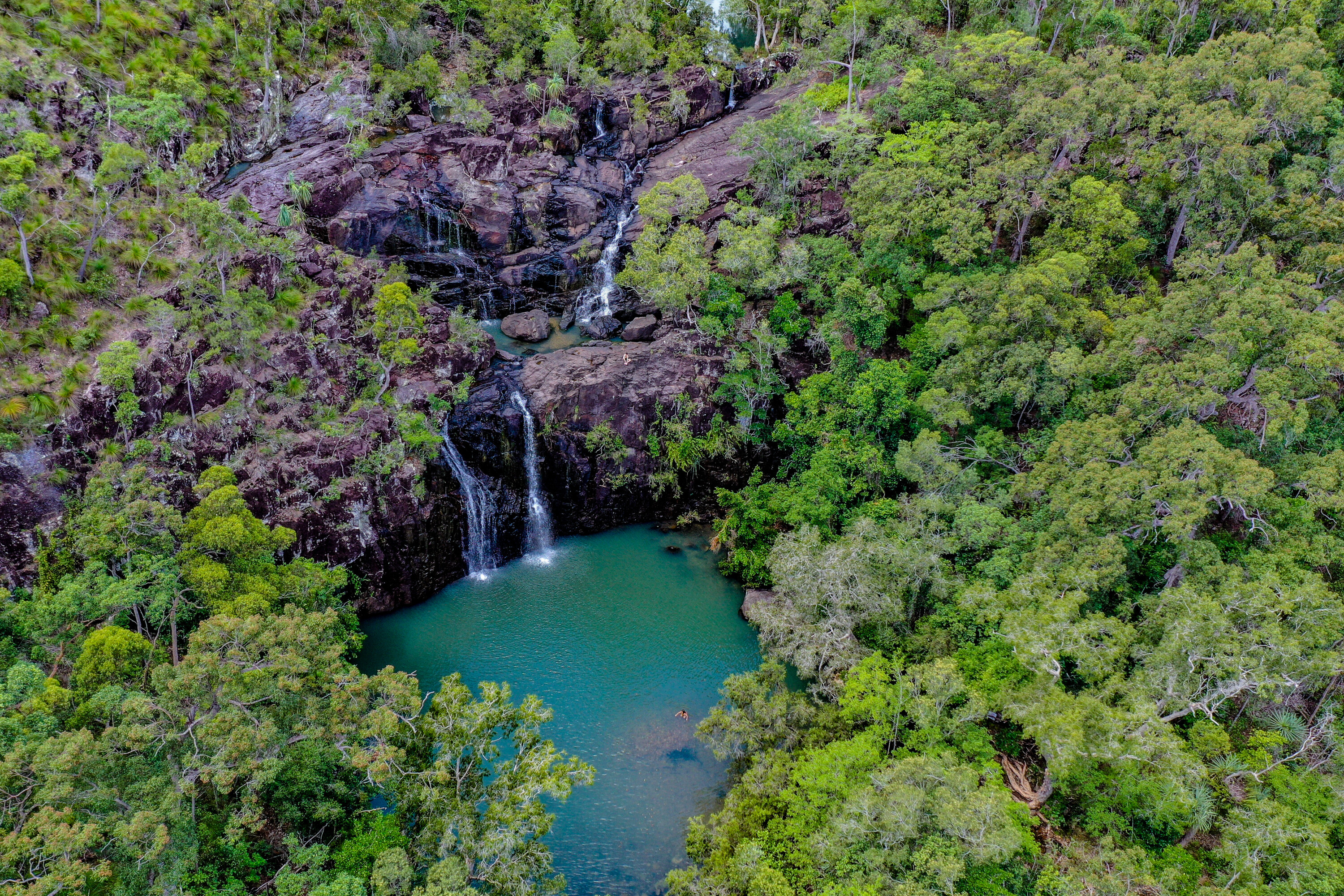
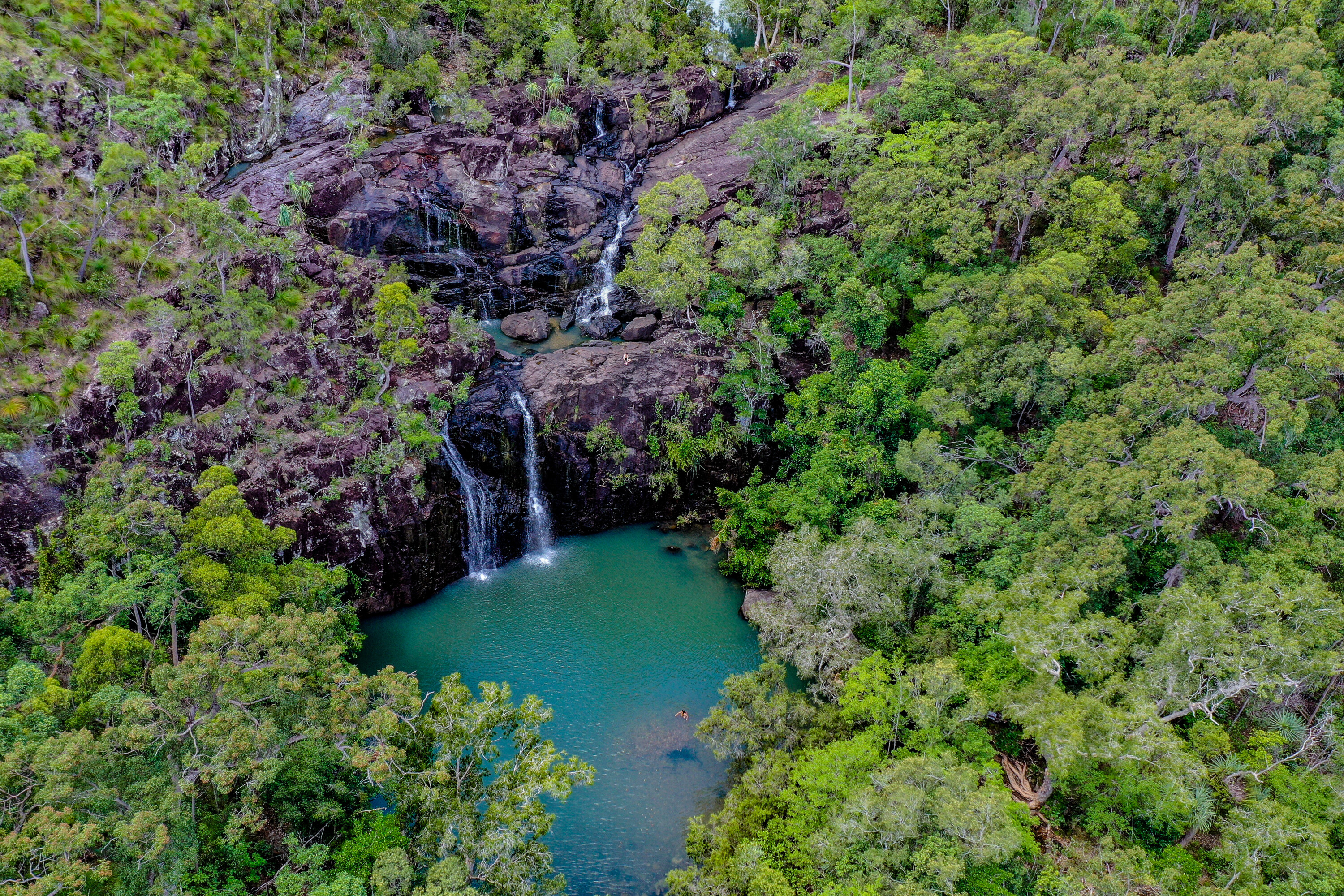
Just 20 minutes from Proserpine, you will find the stunning Cedar Creek Falls. Cedar Creek Falls is a beautiful natural attraction, perfect for a day trip. The crystal-clear water below this towering waterfall makes it an ideal location for hiking, swimming, and picnicking. Accessing the falls is a breeze with a short bush track, ensuring a seamless experience to enjoy the refreshing water.
2
Proserpine is home to various agricultural activities, including the farming of sugarcane and cattle.
There are plenty of camping options in the area (including in nearby Conway National Park), enabling you to extend your adventure and spend a night under the stars.
Additionally, you can check out the Proserpine River and go croc-spotting! The Whitsunday Croc Safari will take you on a cruise along the river, and you can observe plenty of native wildlife in the nationally listed wetlands of Goorganga Plains.
Collinsville
No Whitsundays off-roading adventure is complete without a visit to Collinsville.
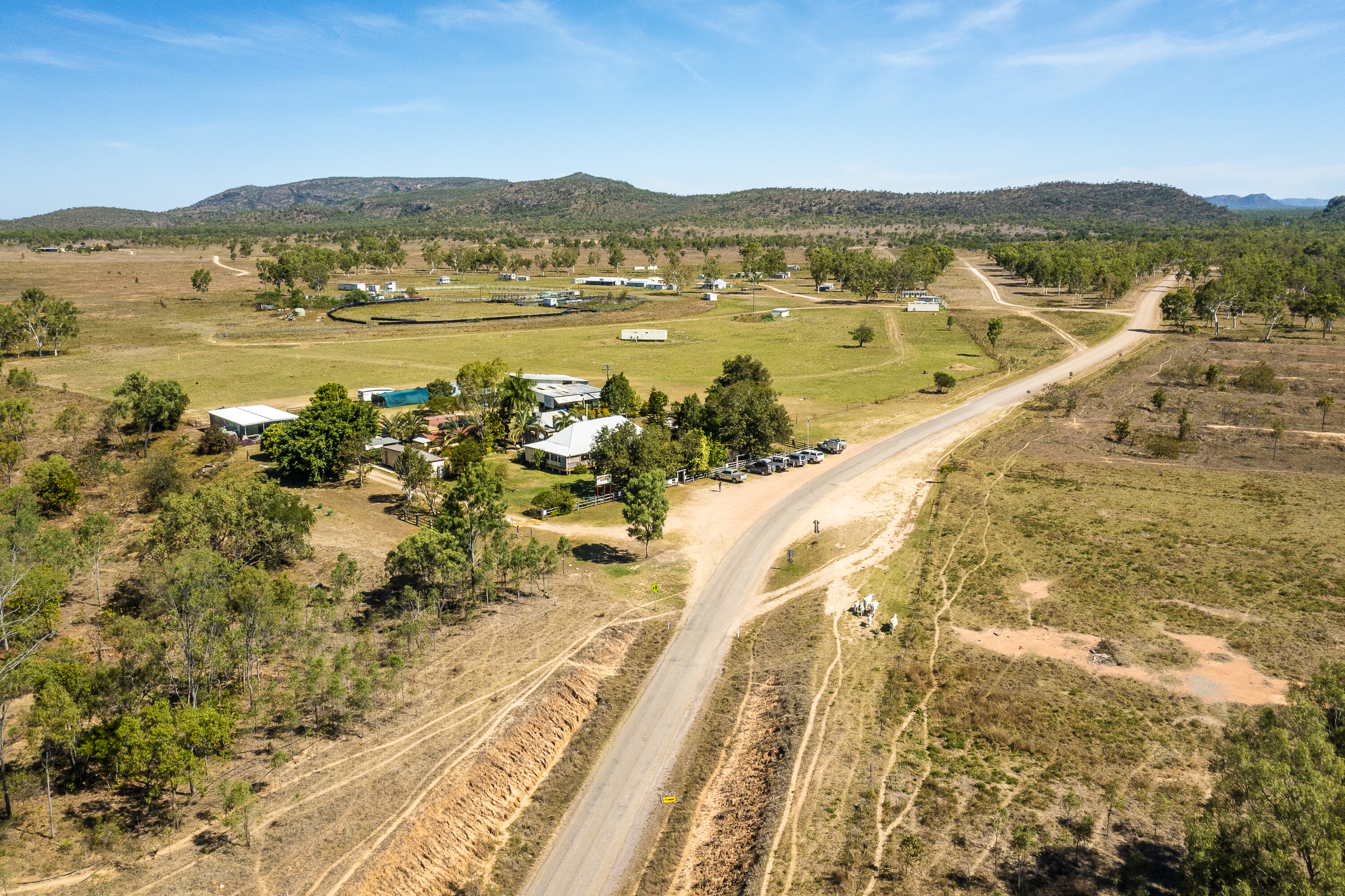
This historic mining town is surrounded by diverse terrain and offers endless opportunities for exploration. There is plenty to see and do, from the Collinsville Power Station to the Bowen River Hotel.
Collinsville is surrounded by jaw-dropping scenery, including the Bowen River, a popular fishing and camping spot. One of the best off-roading spots in Collinsville is the Collinsville Power Station, and the station is an abandoned industrial site, making it a popular spot to explore.
Another great spot is the Bowen River Hotel – a heritage listed pub from the 1800s, which offers a glimpse into the town’s history and is a great place to stop for a cold drink.
1
Bowen
Bowen is a beachcomber’s paradise, with eight spectacular beaches and stunning fringing reefs you can snorkel straight off the beach.
Follow the beachfront road to the iconic Horseshoe Bay, where you can enjoy panoramic ocean views and stunning sunsets. The Cape Edgecumbe Walking Trail, which begins at Horseshoe Bay, offers endless exploration of the region’s natural beauty.
The Bowen hinterland is also a great place for 4×4 touring. Explore the rugged outback terrain and experience the region’s unique flora and fauna. Head to Flagstaff Hill for stunning coastline views and the surrounding hills. Don’t forget to stop by the Big Mango, a local landmark, and a great photo opportunity.

1
Hydeaway Bay
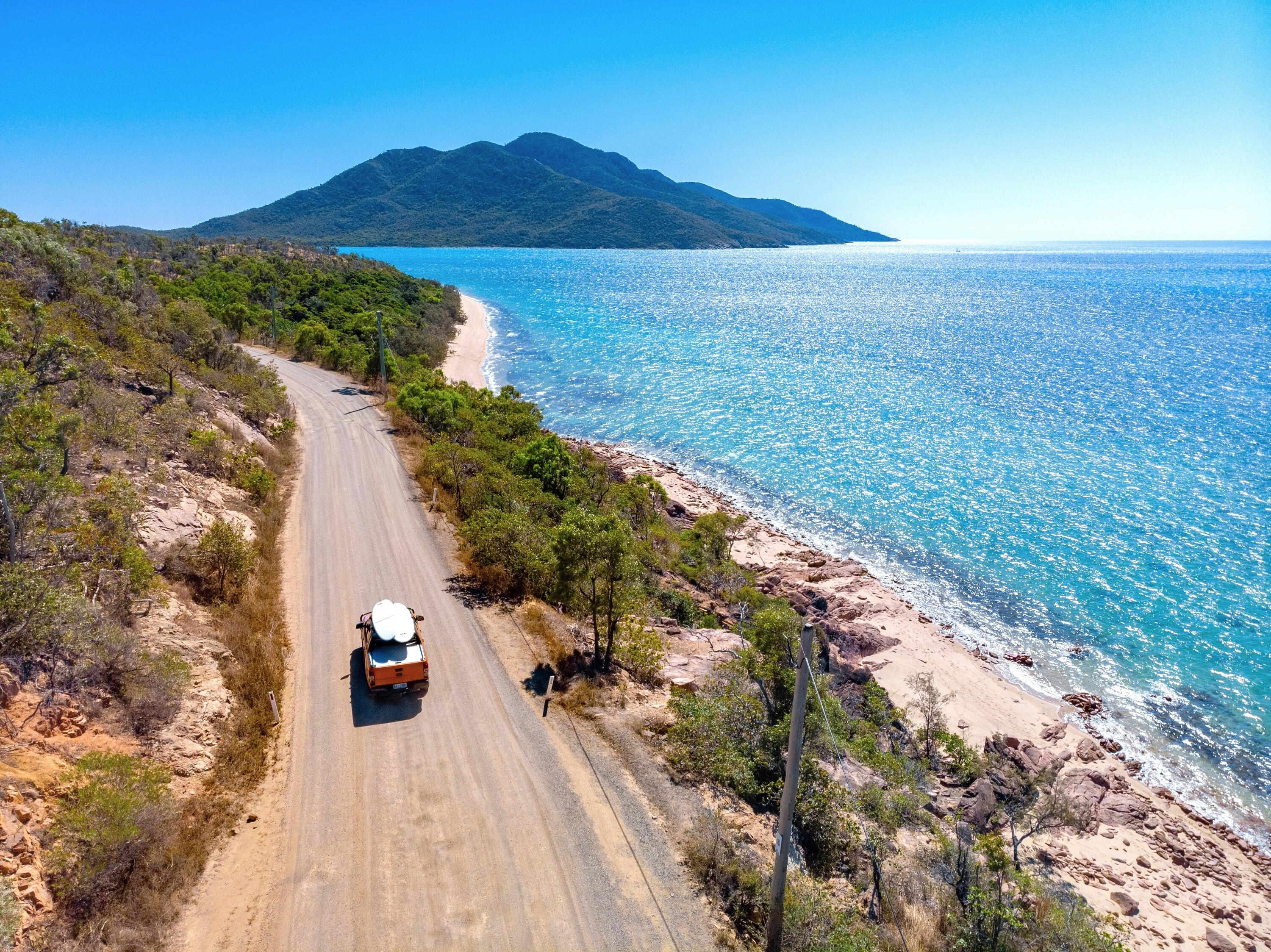
Hydeaway Bay is a hidden gem on the Whitsunday Coast that’s ideal for an off-road adventure and home to several isolated and unspoiled beaches to explore.
The area is rich with native wildlife and stunning landscapes, providing a great place for adventure enthusiasts to explore. When you’re ready to take a break, you can relax on the beach and watch the sunset over the ocean.
Hydeaway Bay and the sister town of Dingo Beach are great destinations for fishing enthusiasts, with plenty of offshore fishing spots. If you’re looking for a relaxing off-road adventure, you can take a drive down the Cape Gloucester Road, which winds through the countryside and provides stunning views of the ocean and surrounding hills.
1
Airlie Beach
A great launchpad for water tours or personal exploring, Airlie Beach is a perfect location to experience the beauty of the Whitsunday Islands.
It is also from this mainland hub that you can access the surrounding regions and lush rainforests of the national parks.
If you’re keen to work up a sweat, hike through the Conway National Park on the Mount Rooper or Honeyeater Lookout tracks. If relaxing is more your style, check out the iconic Airlie Beach Lagoon or head to Boathaven Beach where you can while away the day watching the boats coming in and out of Airlie Beach.
1
The Whitsunday Islands
The Whitsunday Islands are a popular destination for tourists from all over the world, and for good reason.
With crystal-clear waters, stunning beaches, and a wide range of marine life, the islands offer a unique and unforgettable experience.
Most of these islands are uninhabited national parks, however, several islands offer a variety of resort accommodations or back-to-basics camping, all with the fringing Great Barrier Reef at their doorstep.
Overnight sailing trips are a popular way to explore the Whitsunday Islands, many of which include stops at different islands. Guided overnight sailing trips are a fantastic way to meet new friends and have more time exploring this aquatic playground.

1
Whitehaven Beach
The 7km long Whitehaven Beach is one of the most popular tourist attractions in The Whitsundays, and famous for its pristine white sand.
Several day and overnight tours are available that take you to Whitehaven Beach and the surrounding areas.
Most tours include a stop at Hill Inlet Lookout, which offers stunning panoramic views of the inlet’s iconic swirling sands and turquoise waters. The tour guides are knowledgeable about the area and provide fascinating insights into the region’s geology, flora, and fauna.

1
Mackay Isaac Region: Reef to Rainforest
There are few better ways to spend four days in North Queensland than this reef to rainforest journey.
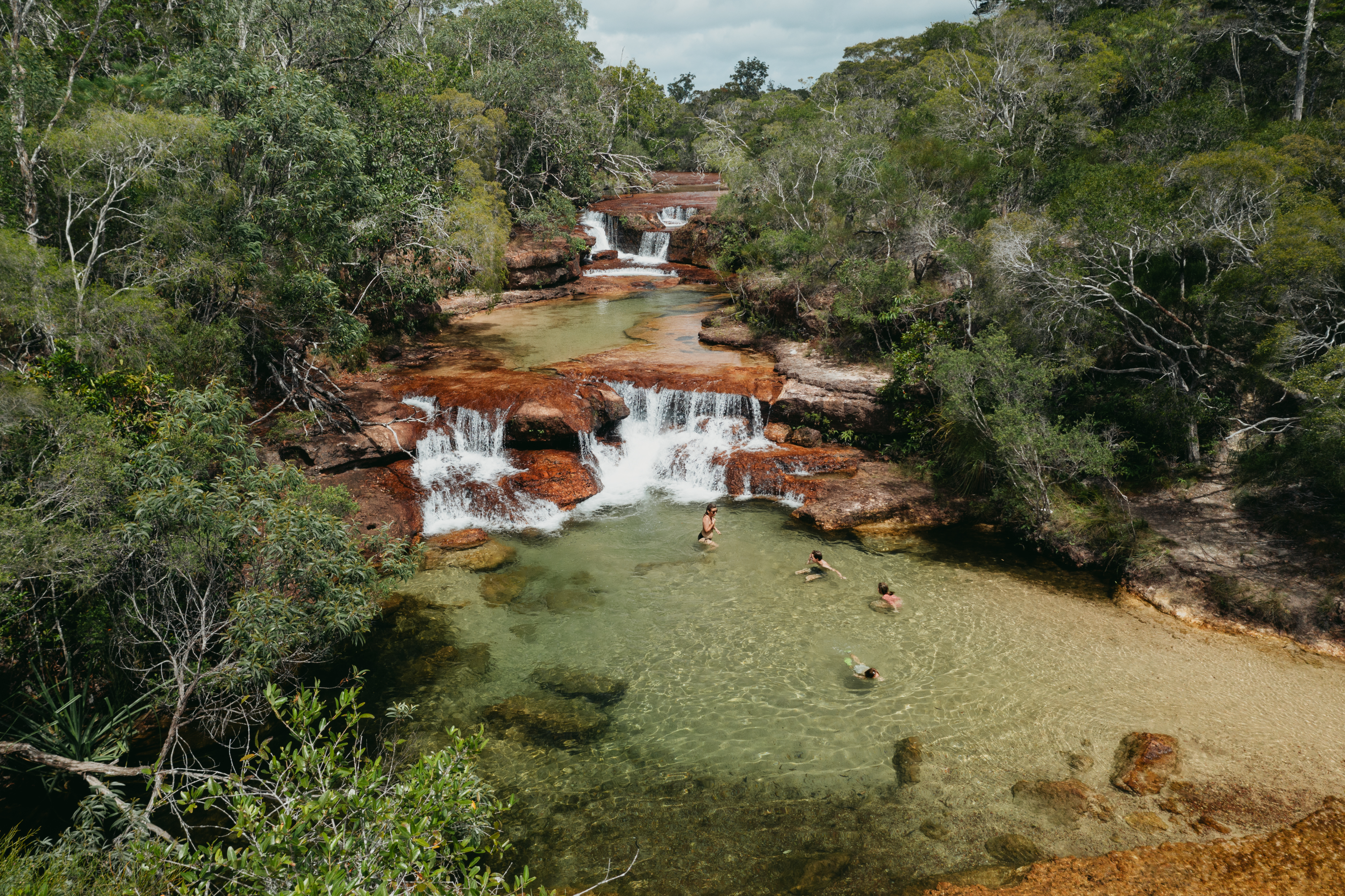
Kicking off at Airlie Beach, you’ll experience everything from your own private beach swimming spot, to viewing one of Australia’s most iconic animals – the platypus – in pristine Eungella National Park.
Airlie Beach, in the north of the Mackay Isaac Region, is known as the gateway to the Great Barrier Reef and Whitsunday Islands. Here, you can jump on board a boat to explore The Whitsunday Islands.
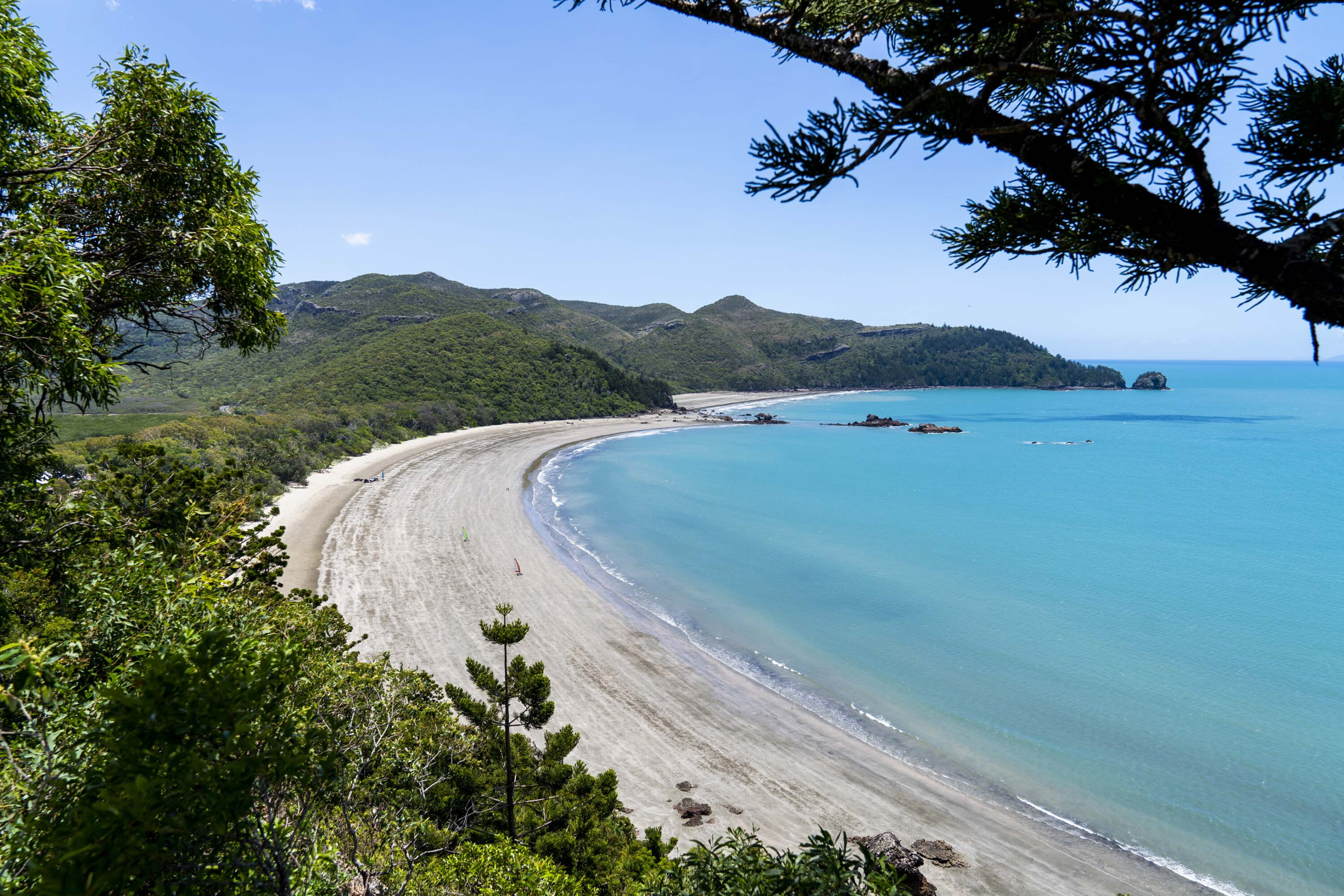
Returning to the mainland, head south to Cape Hillsborough National Park, where you can explore the beach of the same name before dossing down for the night at Cape Hillsborough Nature Tourist Park.
Be sure to wake up early the next morning to enjoy this tourist park’s famous Sunrise with Wallabies experience, before tackling more of the beach’s walks and lookouts.
1
Cape Hillsborough National Park is well worth a day or two of exploration, with its rocky peaks the result of an ancient volcanic eruption, which has resulted in the visually spectacular strata visitors can see on some of the park’s hills.
The park’s day-use area allows for beachside walks and exploration, as well as the chance to scramble over some of the park’s coastal rock formations.
For that ultimate beach-side campsite, this park delivers, too; set up your tent at pretty Smalleys Beach camping area and you are, literally, right near the shoreline of the park, where it abuts the waters of the Great Barrier Reef Marine Park. You need to book online for a site here, but for those after a more remote, wild, overnight experience, this is a no-brainer.
Short walks in the park include the brilliant ascent to the top of Andrews Point, with all-encompassing views of the rainforest, beaches and ocean below. It’s steep, but worth the effort. Other easier walks include the Beachcomber Cove Track, and the Yuibera Plant Trail, which educates you about the original inhabitants – the Yuibera people – and their ever-lasting connection to this land.

1
Leaving Cape Hillsborough, you will continue south, toward Mackay – but with one short (or longer) stop-over: if you’re a keen angler, you’ll want to stop at the net-free Seaforth Beach along the way. With luck, a barramundi or two awaits.
Upon reaching Mackay, nestled beside the Pioneer River, be sure to take some time to explore this city. You can swim at Bluewater Lagoon, or follow the Bluewater Trail’s raised boardwalk through pristine river wetlands to the Mackay Regional Botanic Gardens. For those after a beachside experience, nearby Lamberts Beach is the go, with its patrolled beach and children’s playground.
Once you’ve explored Mackay’s (and sampled some top nosh at one of the riverside cafes), it is time to turn inland and head to Eungella National Park. Part of your journey to Eungella National Park will take you through the picturesque Pioneer Valley. For fans of waterfalls and rugged volcanic landscapes, this valley delivers. It is also great for swimming (Platypus Beach is a must).
Eungella National Park is regarded as a true outdoor playground, thanks to its 20km of walking tracks, and fantastic swimming at the Finch Hatton Gorge.
1
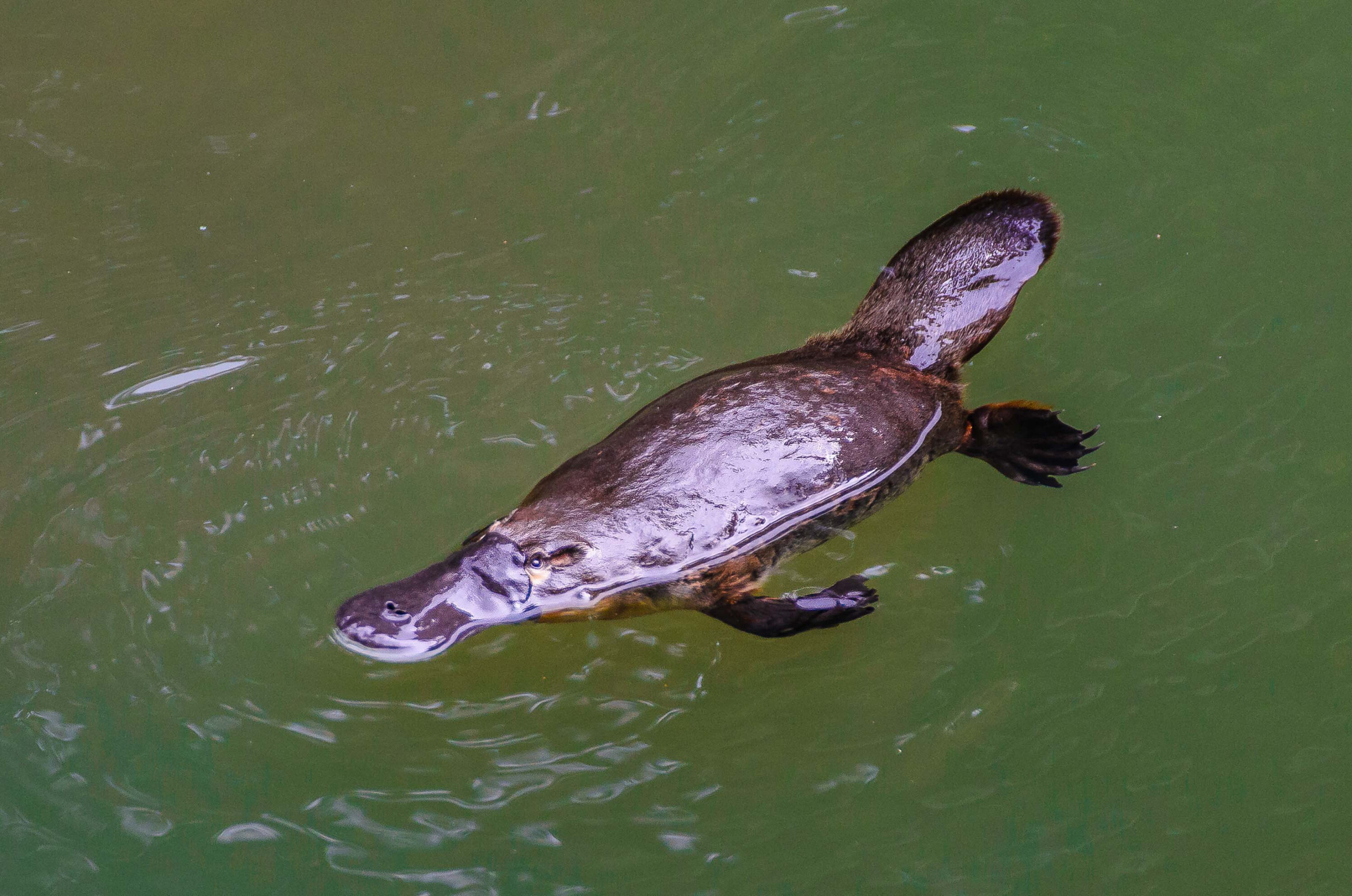
Lovers of flora and fauna are spoilt here; more than 800 plant species are found in the park and, if you’re lucky, you may spot the reclusive platypus in Broken River. Yep, it’s not a bad way to finish a four-day reef to rainforest adventure…
For more, see drivenorthqueensland.com.au [↗]
Top 5 4×4 road trip trips
1. Service and education
Before heading out on any road-trip, no matter how close to home or otherwise, get your vehicle serviced beforehand. Your mechanic will pick up any potential issues and advise you on any spare parts you should take or any essential modifications (such as new suspension, additional lighting or frontal protection) that may be needed to ensure your 4WD (and yourself) completes the trip safely.
In addition to making sure your 4WD is up to that big road trip, be sure you, as the driver, are as well. Attending a 4WD driver training course is a must; you will learn how capable your particular vehicle is and be far more confident in both its – and your own – capabilities when exploring remote areas. Topics usually covered include how to perform a vehicle recovery, water crossings, how to safely negotiate steep terrain, drive in sand, and more.
2. Tyres
For off-road travel (dirt roads, fire tracks, etc.), we’d advise – at a minimum fitting All Terrain tyres of Light Truck (LT) construction to your 4WD. If the route you’re contemplating is particularly rugged, go for LT Mud Terrain tyres. Tyres of Light Truck construction feature a thicker and more aggressive (read: grippier) tread pattern than the highway terrain tyres that are standard fitment on most new 4WDs these days.
LT construction tyres will also include a stronger sidewall, which increases resistance to staking or puncturing – especially pertinent when travelling off-road and having to lower tyre pressures. Speaking of which…
3. Air up, air down
A four-wheel drive vehicle can take you to some spectacular remote parts of Australia, via some often rough, and/or sandy, tracks. For optimum traction (and safety), you will need to learn to adjust tyre pressures to suit different terrain.
When driving on sand, for example, by lowering your tyre pressures, you subsequently increase the tyre’s ‘footprint’, i.e., more of the tyre is in contact with the sand, which enhances traction in these types of loose surfaces. A similar process applies for rocky terrain; lowering tyre pressures so that your tyre ‘folds over’ the rock, means the rock has less chance of puncturing the tyre, as it has conformed to the shape of the rock, rather than being too highly inflated and thus forcing the rock into the tyre, causing a puncture.
Oh, and remember to pack a portable air compressor. You will need this to re-inflate your tyres to safe pressures once you are back on sealed roads.
4. Pack properly, pack safely
It is all too tempting to just throw all your camping gear, luggage, recovery equipment, water containers and other road-trip paraphernalia into the back of your 4WD and then drive off – but please don’t. In the unfortunate case of an accident, any unsecured luggage or gear transforms into a potentially deadly missile for vehicle occupants.
By strapping down all your gear with ratchet straps (or ropes), you will ensure that everything stays still and secure in the back, while you and your fellow occupants stay safe up front.
5. Safety first
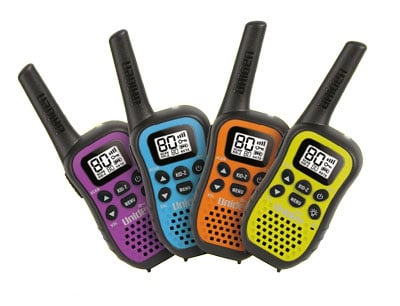
Before you head off on your big adventure, leave a rough timeline or itinerary with family and/or friends. Make sure you pack reliable communications as well, whether that is a UHF radio or a satellite phone; a mobile phone will not have a signal in most remote (and even not so remote) parts of Australia. If you don’t own a sat-phone, hire one – they are the most reliable form of remote area communications.
If you’re travelling with more than one vehicle, adhere to ‘convoy procedure’ which is, in a nutshell, where you always maintain visual contact with the vehicle behind you – especially if turning onto another road. And don’t crowd yourself and the other vehicle, either; keep at least a 100m gap between each to avoid rocks hitting the windscreen or dust kicked up from the vehicle in front obscuring your forward vision.
UPDATE: Our MU-X officially has a new owner, with the vehicle selling at auction.
The vehicle received a whopping 164 bids at the Grays online auction earlier this week, with the winning bidder from Western Australia getting the keys to the adventure-ready Isuzu for a touch under $70K, at $69,100.
The vehicle is equipped and ready for action, and we hope to see it touring the country soon. Enjoy!
May 19: Our MU-X is up for sale
After spending more than 12 months working with Australia’s world-leading aftermarket industry to transform this MU-X into a highly capable tourer, it’s now on the market and could be sitting in your driveway in the very near future.
1
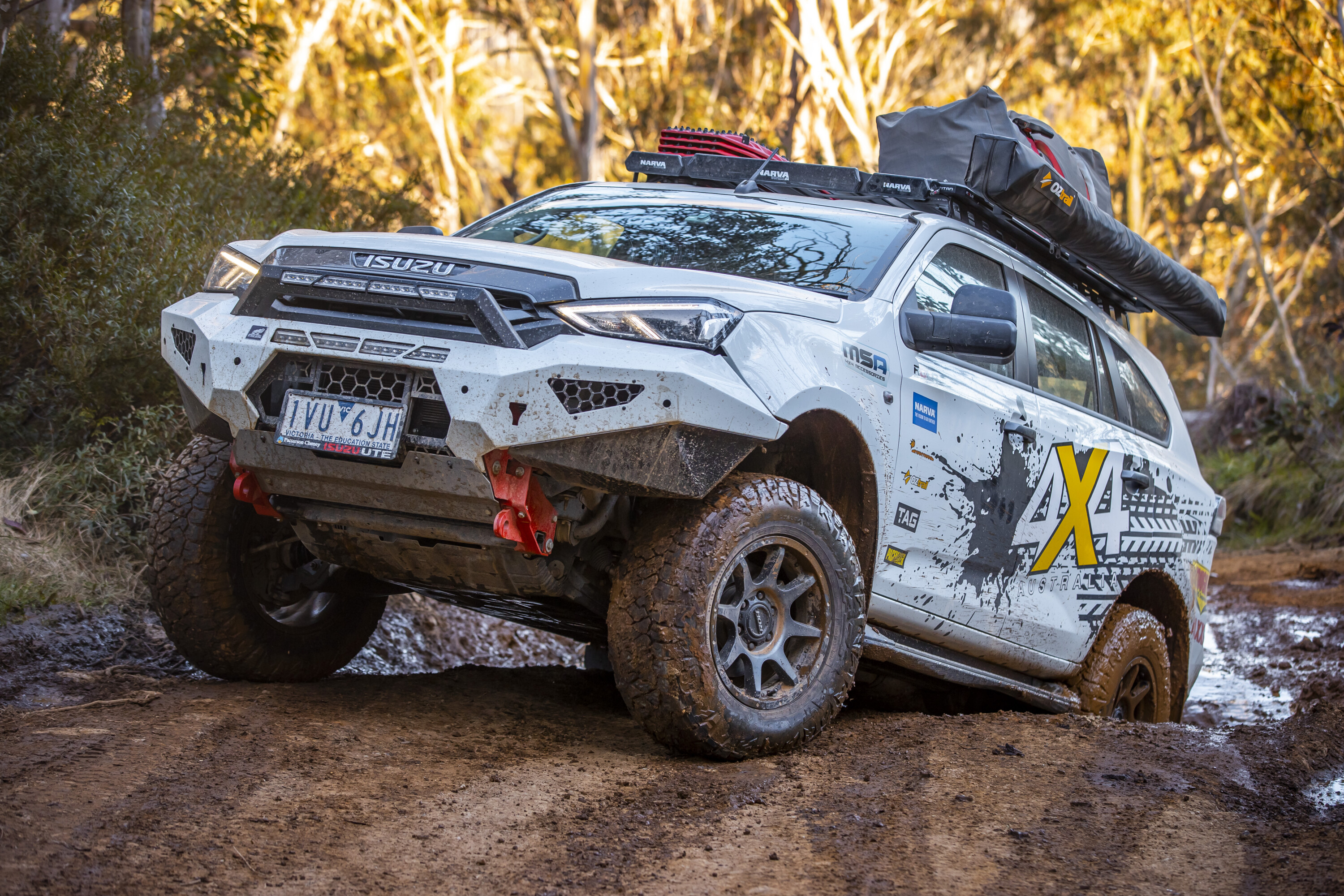
We bought it new and it has travelled just under 17,000km, and it’s equipped with some of the best aftermarket kit in Australia to enable the Isuzu to conquer the deserts of Central Australia, the wilds of Cape York, and the beauty of the Vic High Country. It’s now the complete package.
In phase one of the build, the MU-X was equipped with a discrete Predator Stealth bar from Offroad Animal; Narva Explora LED light bars; 265/70R17 Maxxis RAZR rubber wrapped around 17×9 ROH Trophy alloy wheels; and a Century Batteries Dual Force hybrid starter/deep cycle battery.
MSA 4×4 then installed a fridge slide and fridge barrier, as well as a set of fantastic towing/touring mirrors. We then added a TAG XR towbar; and a Tough Dog suspension set-up that has transformed on- and off-road comfort.
Other gear includes an Oztrail awning that sits on a Rola Titan tray.
The vehicle is in great condition, and to see the full listing head to the Grays website.
No reserve has been set and the auction ends on May 23 at 20:05 AEST, so get your bids in before it’s too late!
The June 2023 issue of 4X4 Australia is out now!
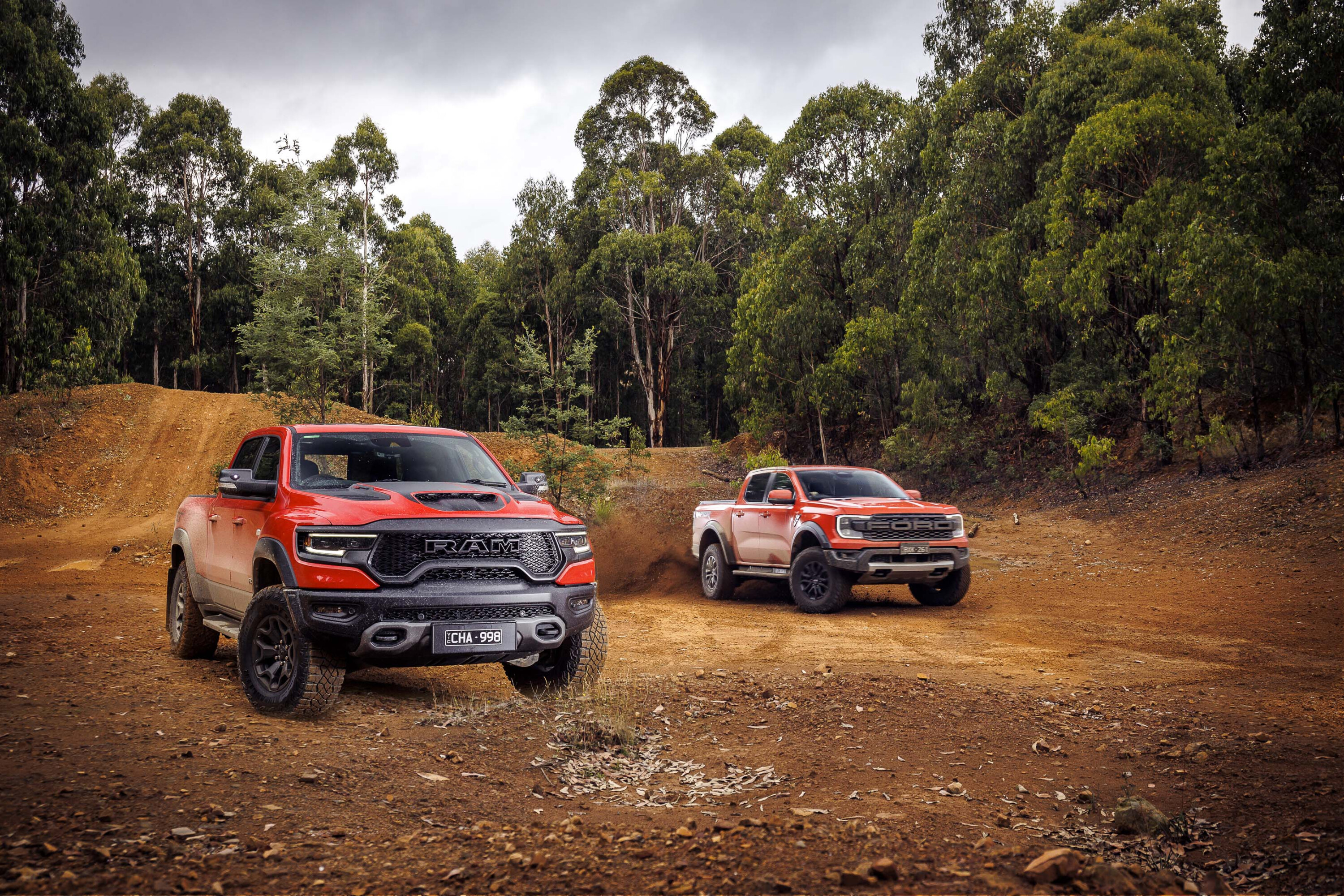
On paper, the RAM 1500 TRX and Ford Ranger Raptor aren’t really in the same ballpark – for starters, one has a feisty 532kW Hemi-powered V8, the other a V6 with 240 fewer kilowatts. However, the thing is, the Ranger Raptor is the closest thing we have in Australia to the TRX, except for perhaps the Silverado ZR2.
1
Both are flagship models of their respective brands, and both have updated suspension and brakes tailored for high-speed off-roading. The big question is, though: Is the TRX really worth twice as much as the Ranger Raptor?
1
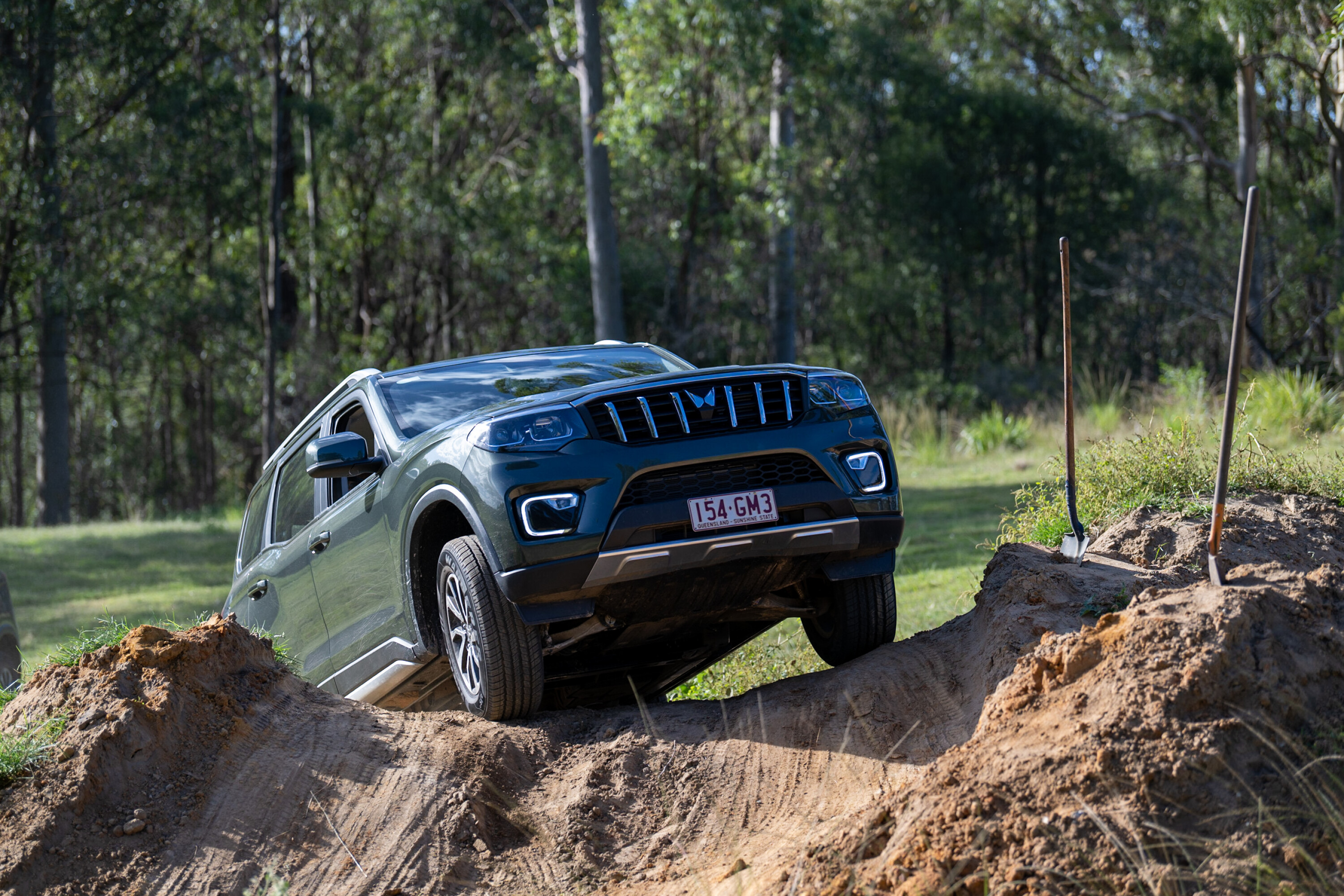
The new-look Mahindra Scorpio has arrived in Australia, ready to shake up the midsize 4×4 wagon market. The budget-priced vehicle starts from $41,990 driveaway, which is a great bang-for-buck proposition, but what’s the thrifty, three-row Scorpio like to drive off-road?
The latest gear guides!
1
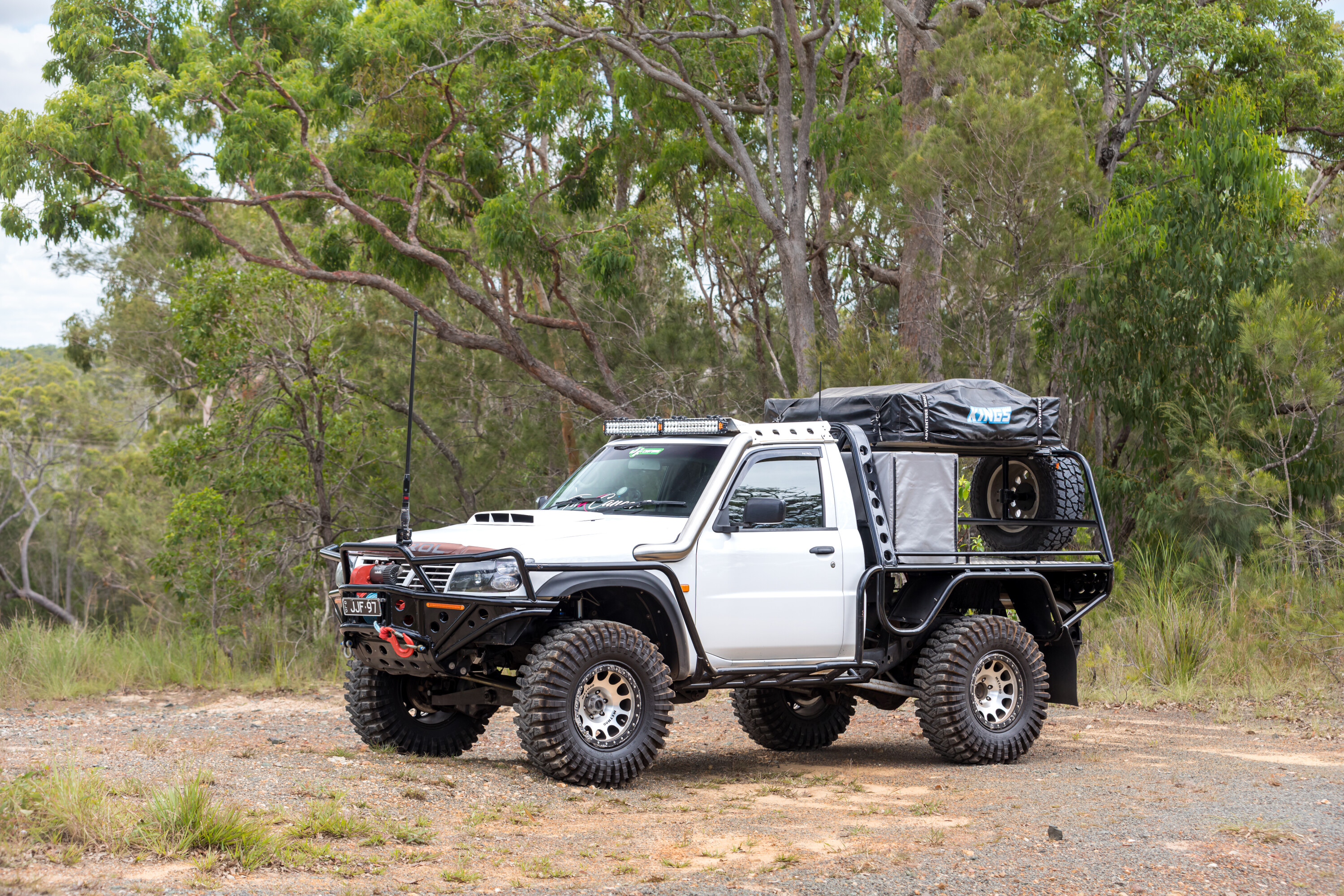
On the custom metal front, we take a closer look at a home-built GU Patrol ute that can rock-crawl one day and tour the countryside the next. The capable all-rounder is the result of more than 2000 hours of DIY labour. Very impressive.
1
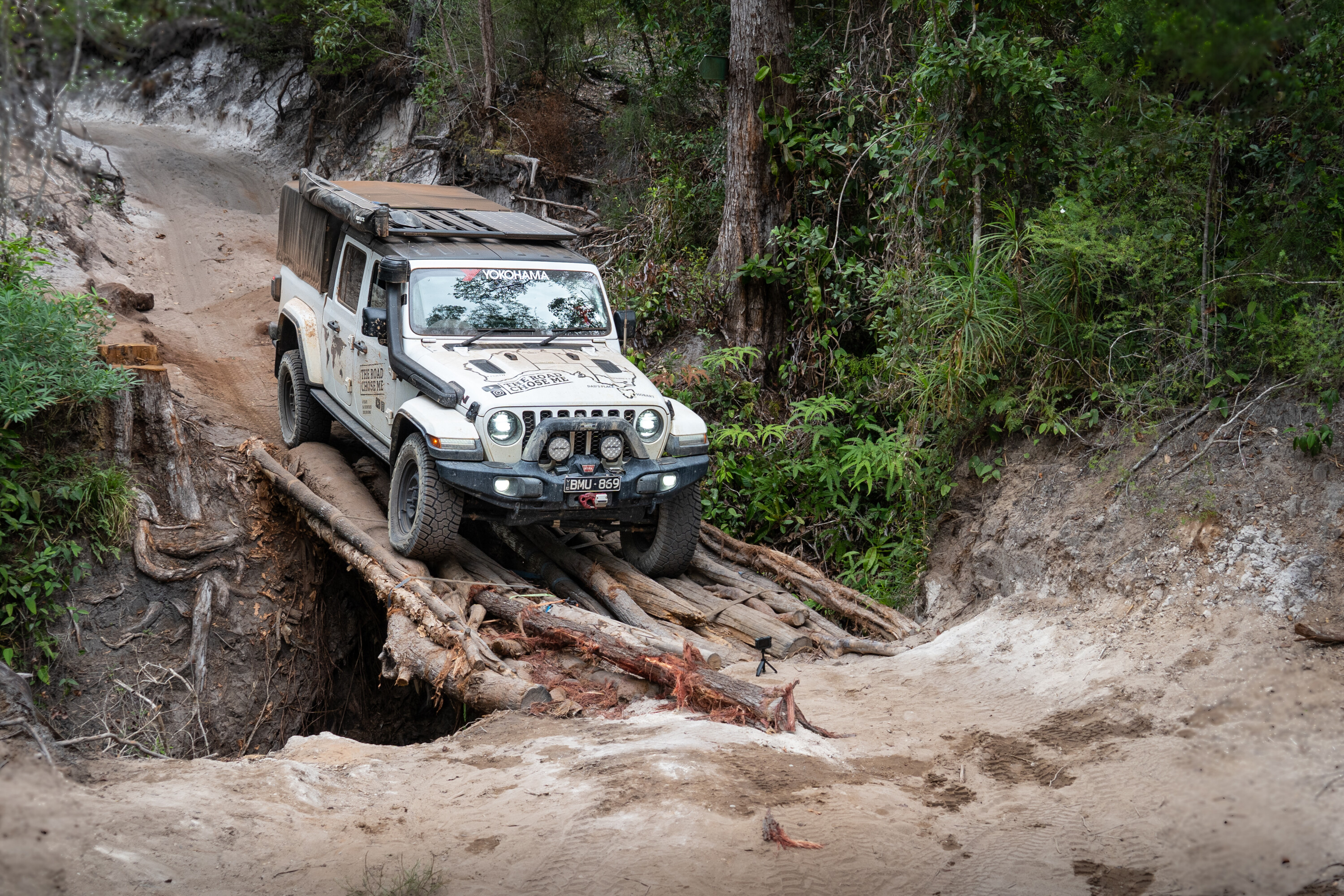
Can the Jeep Gladiator Rubicon stand up to Australia’s torturous conditions and survive a lap of the map? Find out in this issue whether it can overcome 60,000km in 12 months!
1
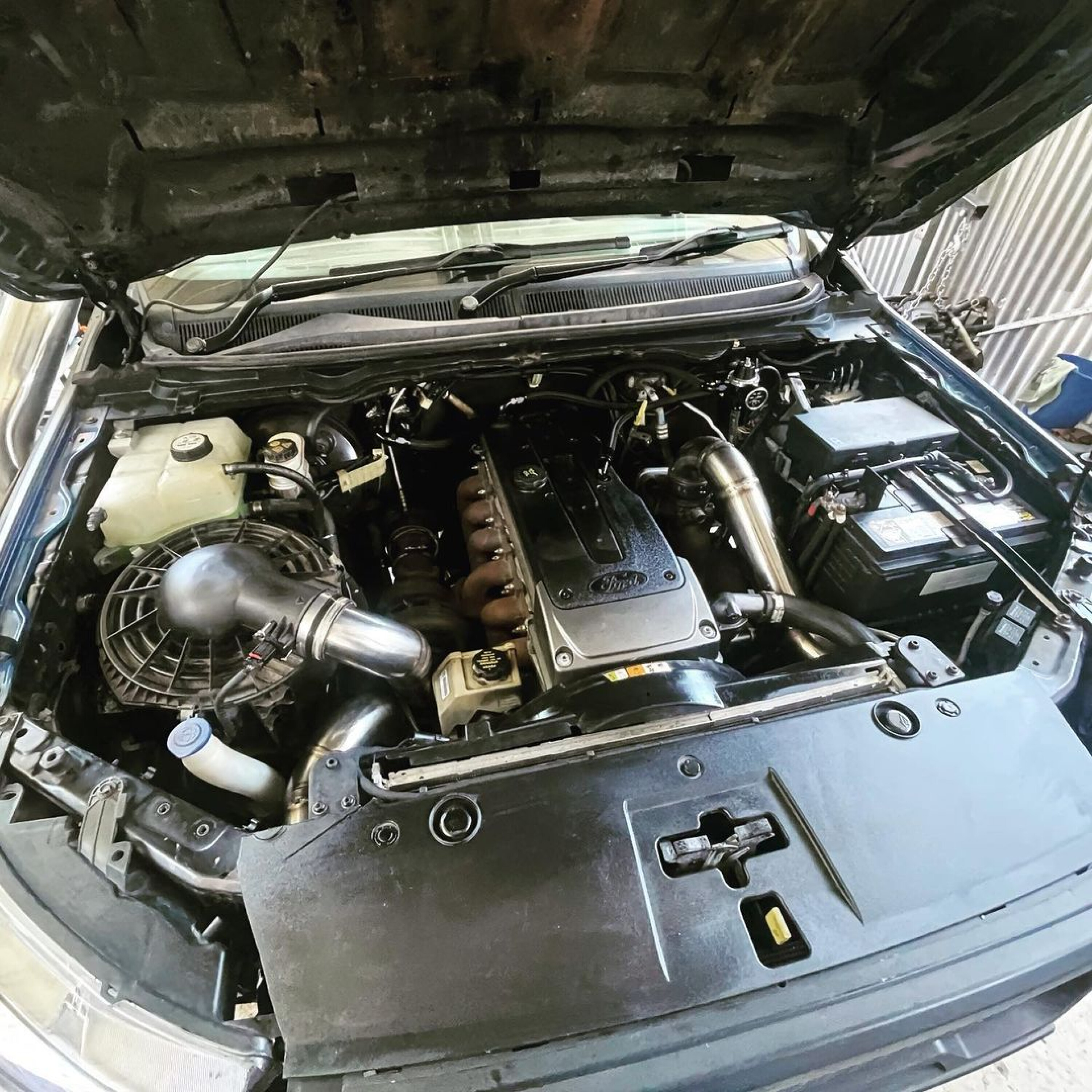
We take a deep dive into the world of Barra engines, discussing what they are, why they’re so good, and whether you actually need one. We also examine the nitty gritty of diesel filtration, and why fuel filters are now an essential piece of kit.
1
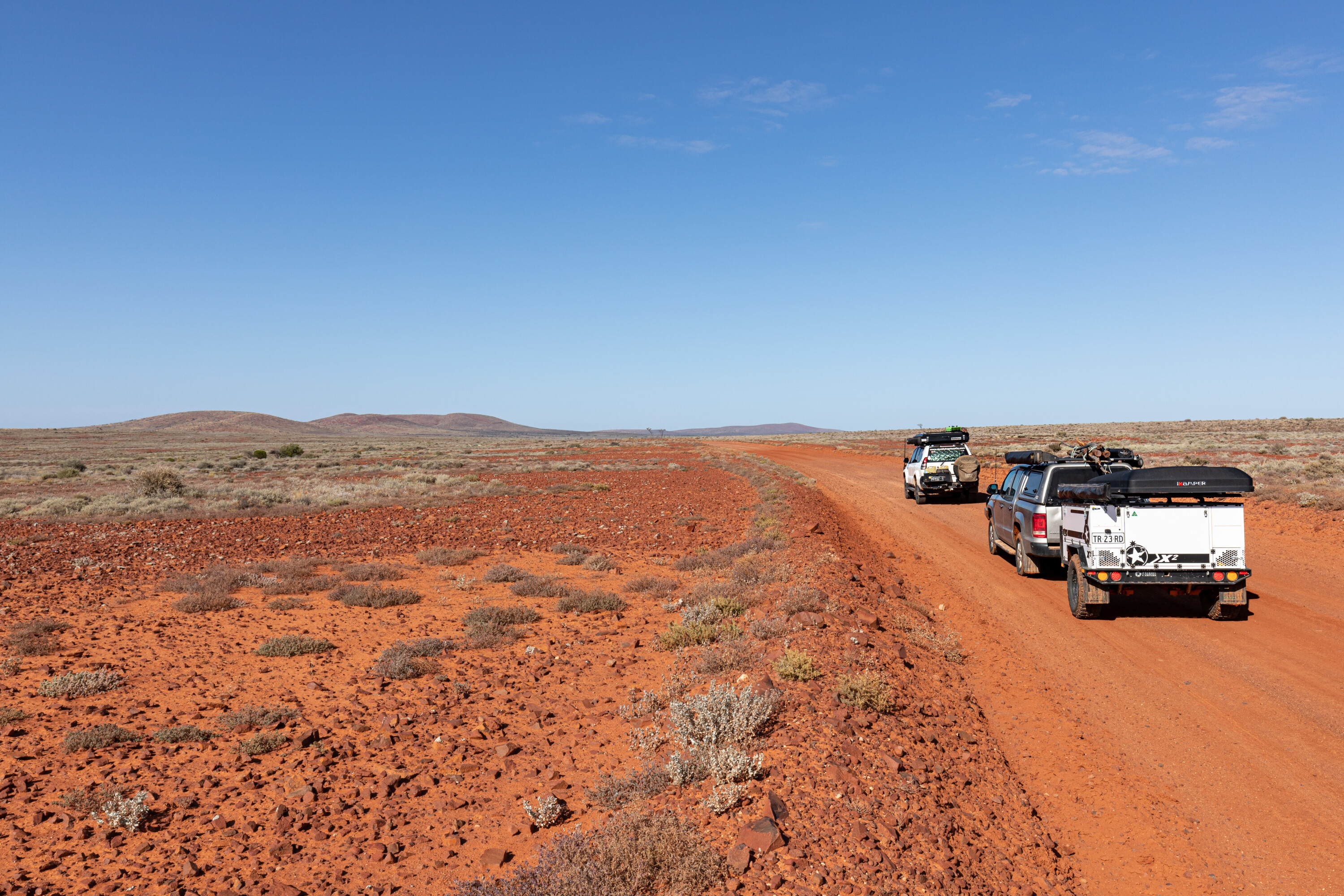
Plus, we get our boots dirty as we travel to and explore the Gawler Ranges in SA and Pemberton in WA.
What else is there?
- Celebrating Land Rover’s 75th anniversary in Cooma, Victoria
- Loading up and testing a Front Runner roof rack and accessories
- We plug in a Gator rear camera and test is out
- In-depth update on our 2023 Ford Ranger build
- New products + much more!
The June 2023 issue of 4X4 Australia is out now.
As Indian SUV and LCV manufacturer Mahindra brings its latest vehicles to the Australian market in the form of the recently launched Scorpio 4×4 wagon and soon-to-arrive XUV7OO, it has also given insight into its plans for electrification.
On a recent visit to Mahindra’s facilities in India, officials told us they have no plans for any type of hybrid powertrains but plan to go exclusively into full EVs.

1
Hybrid and so-called mild hybrid vehicles have proven a popular choice in Australia, as they offer a stepping stone toward electrification and provide a solution to limited driving range in a country where long distances are often travelled.
Mahindra will forgo this with its plans to launch five new EVs in the coming years, with four of them coming to market by 2026 including a version of the XUV7OO (that’s seven double-o, not seven double-zero).
1
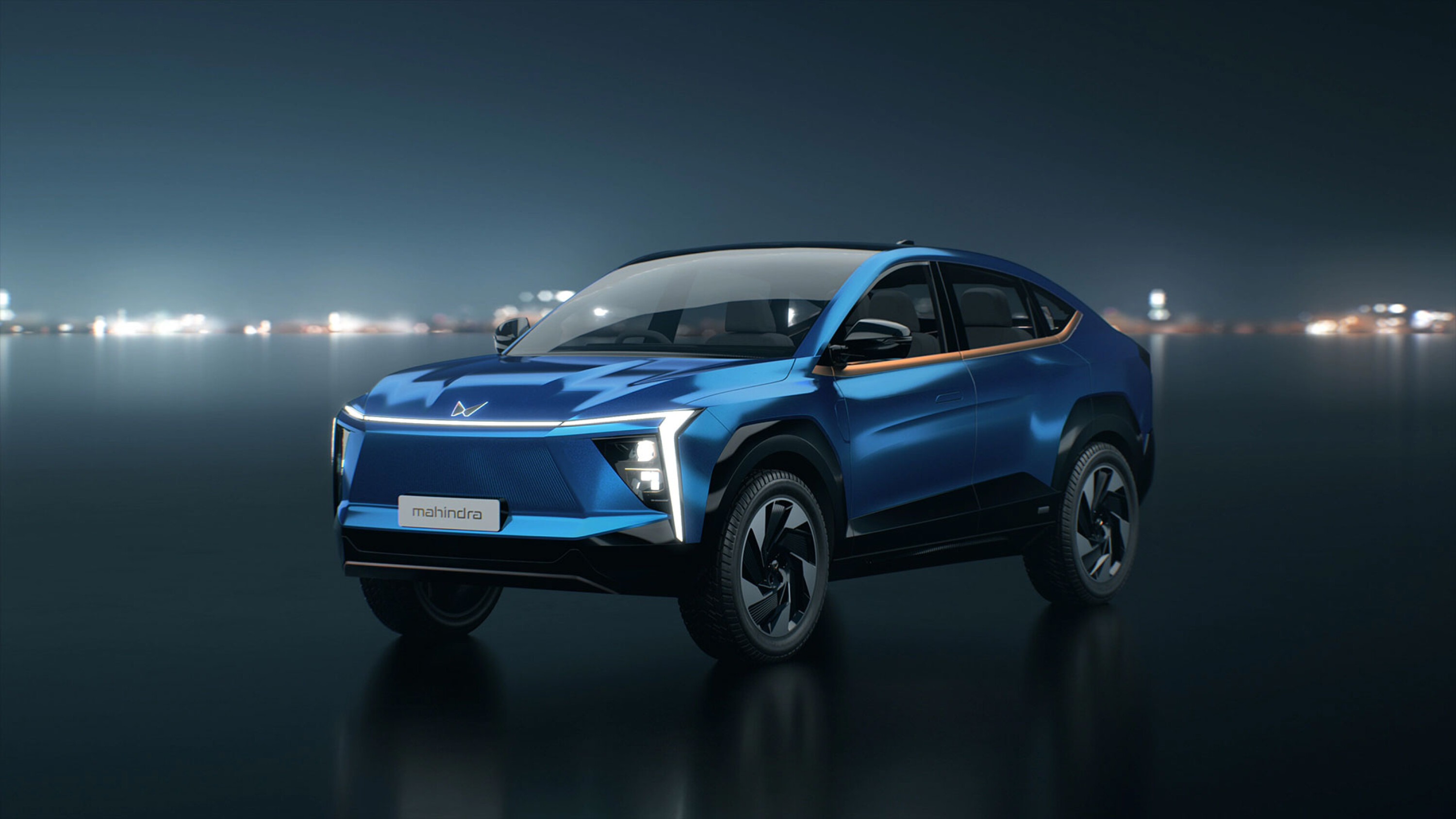
Existing vehicles such as the XUV7OO that spawn EV variants will maintain the XUV nomenclature, while vehicles built on a new pure EV platform which the company is calling INGLO will be called BE (Born Electric).
Mahindra’s first EV is the XUV4OO, which is an EV version of the XUV3OO small SUV, a platform shared with SsangYong. The XUV400 produces 110kW and 310Nm and offers up to 456km of range from its 39.4kW lithium-ion battery.

1
The EV variant of the XUV7OO is expected to be the next EV from the company, while other existing models such as the new Scorpio, the Jeep Wrangler-like Thar, and even the PikUp utility will be in line for electrification; although, no timeline was shared for these.
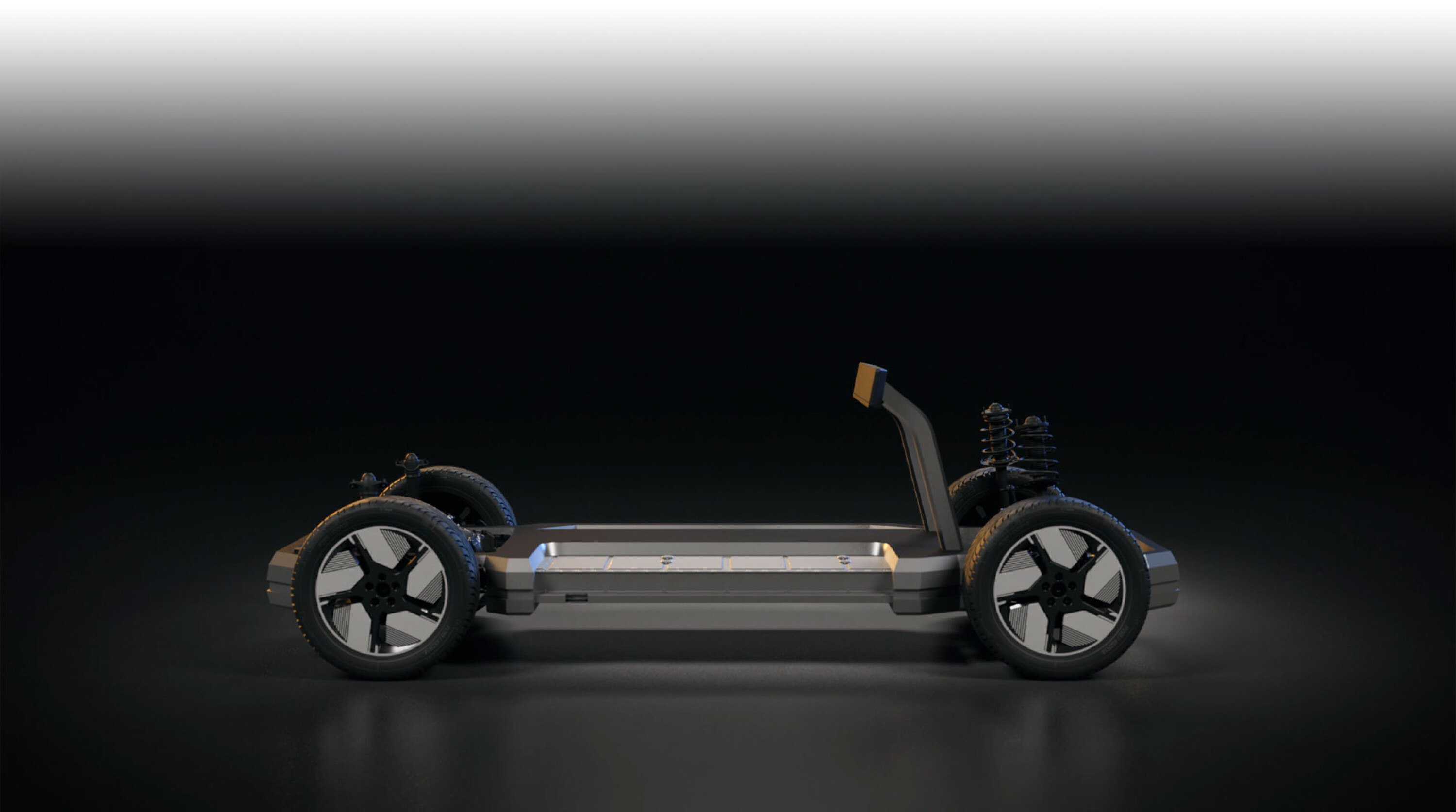
The Born Electric pure EV range will arrive later in 2024 on the INGLO platform, which is a lightweight skateboard-style of architecture.
1
Mahindra previously announced it had entered an agreement with Volkswagen to share the German brand’s electric powertrain technology to speed up its development.
The Indian company has also started work on a new vehicle production plant in the Pune district of India, where it maintains an existing plant building ICE SUVs.
Mahindra executives tell us they are focused on getting EV products out to the domestic Indian markets, with other markets to follow including the possibility of Australia.
Born Electric SUV timeline
XUV.e8
Launch: December 2024 Dimensions: L x W x H: 4740 x 1900 x 1760 mm Wheelbase: 2762 mm
XUV.e9
Launch: April 2025 Dimensions: L x W x H: 4790 x 1905 x 1690 mm Wheelbase: 2775 mm
BE.05
Launch: October 2025 Based on: INGLO Platform Dimensions: L x W x H: 4370 x 1900 x 1635 mm Wheelbase: 2775 mm
BE.07
Launch: October 2026 Dimensions: L x W x H: 4565 x 1900 x 1660 mm Wheelbase: 2775 mm
BE.09
Launch: TBC Dimensions: TBC
MORE
Everything Mahindra
-
Audi

-
BMW

-
BYD

-
Cupra

-
Genesis

-
Hyundai

-
Jaguar

-
Kia

-
Lexus

-
Mazda

-
Mercedes-Benz

-
MG

-
MINI

-
Nissan

-
Polestar

-
Porsche

-
Renault

-
Tesla

-
Volvo

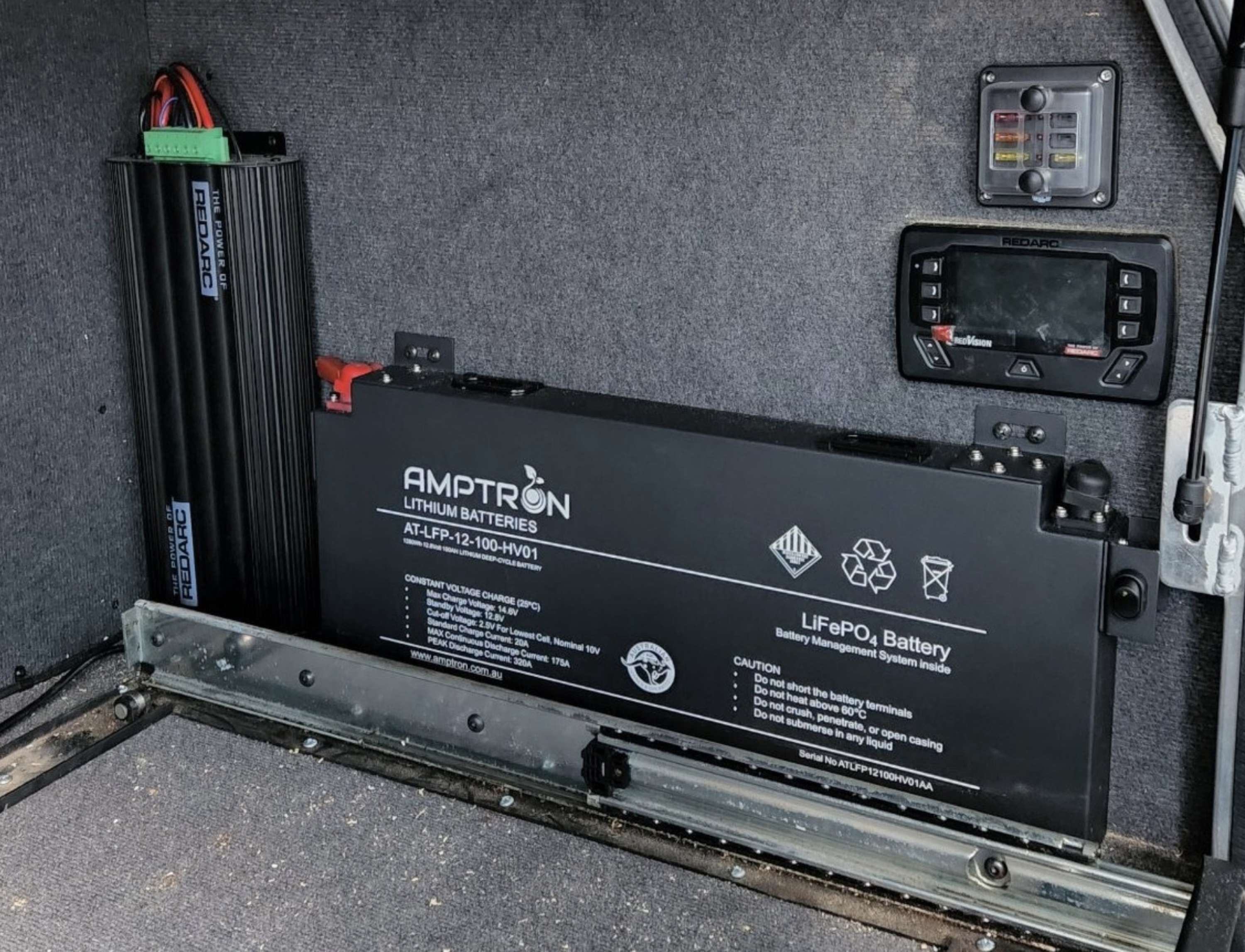
The new 12V 100Ah lithium LiFePO4 Blade battery from Amptron is designed using only the highest quality components and is backed with a four-year replacement warranty.
This includes the use of a robust Battery Management System (BMS), aluminium-encased prismatic cells, solid busbar connectors, and internal protection to reduce movement and damaging vibrations. The battery can also be placed on its sides to provide versatile installation options.
1
The integrated Battery Management System is designed to monitor, protect and optimise each cell within the battery.
The BMS maximises the performance of the battery by automatically balancing the cells through top-end balancing and protecting them from overcharging, over-discharging, over-temperature, and excessive charge or discharge currents.
The integrated BMS allows Amptron batteries to be used as an alternative replacement for most applications requiring deep-cycle batteries, but there are some compromises if the charging system does not support a Lithium charge profile.
1
The Amptron BMS is designed to automatically disconnect the charging or discharging circuits, to prevent damage to the cells and internal electronics from abnormal operation. It also helps to ensure the safe and accurate operation of the battery.
Amptron’s latest prismatic cell technology is manufactured with an internal thermal safety fuse between the anode and cathode that will break and disconnect in the unlikely event the cell would begin to overheat.
Each cell also has a high-pressure safety vent that will flip open to release energy and prevent an explosion. Another safety feature within the battery is that there is a flame-retardant additive in the electrolyte.
1
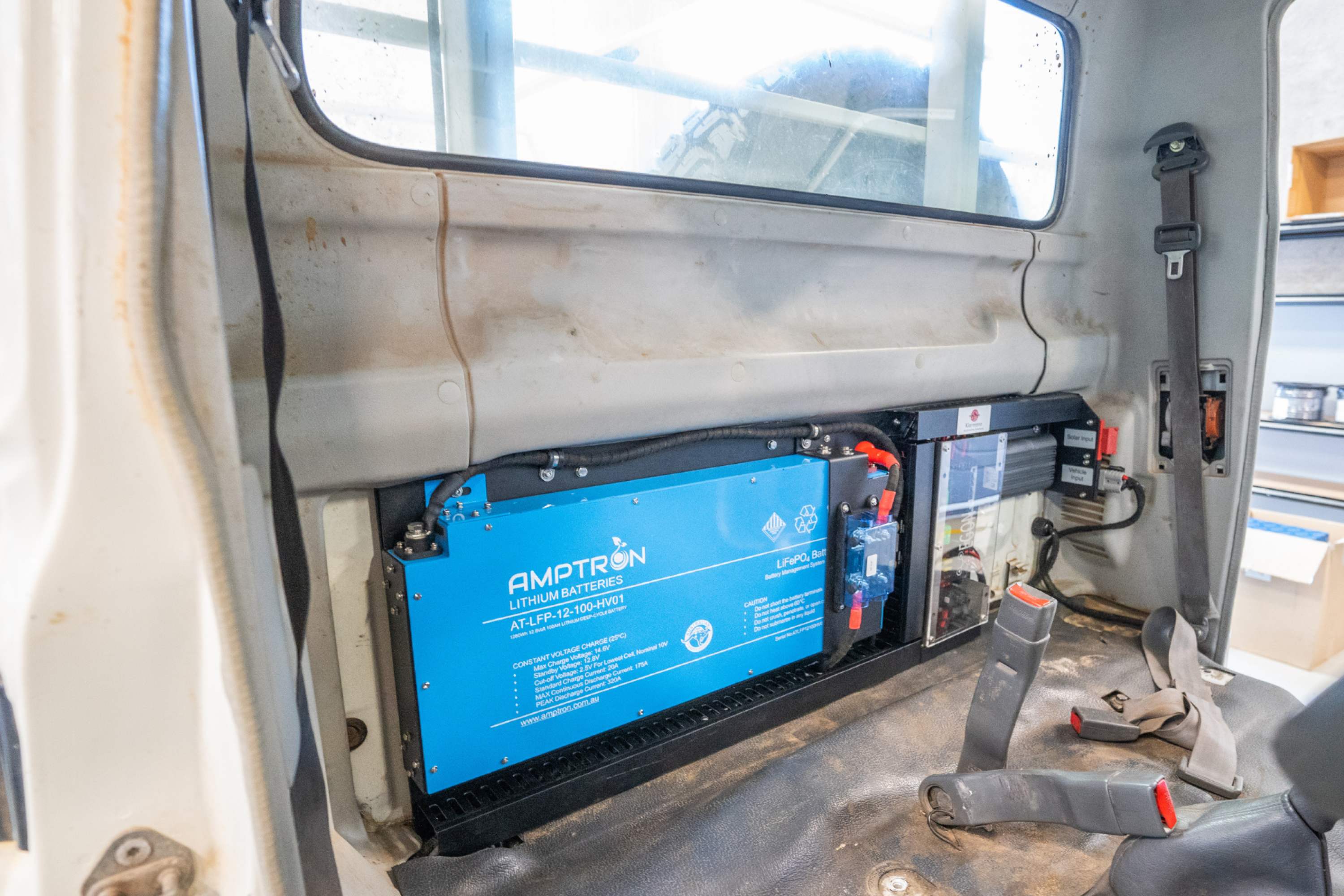
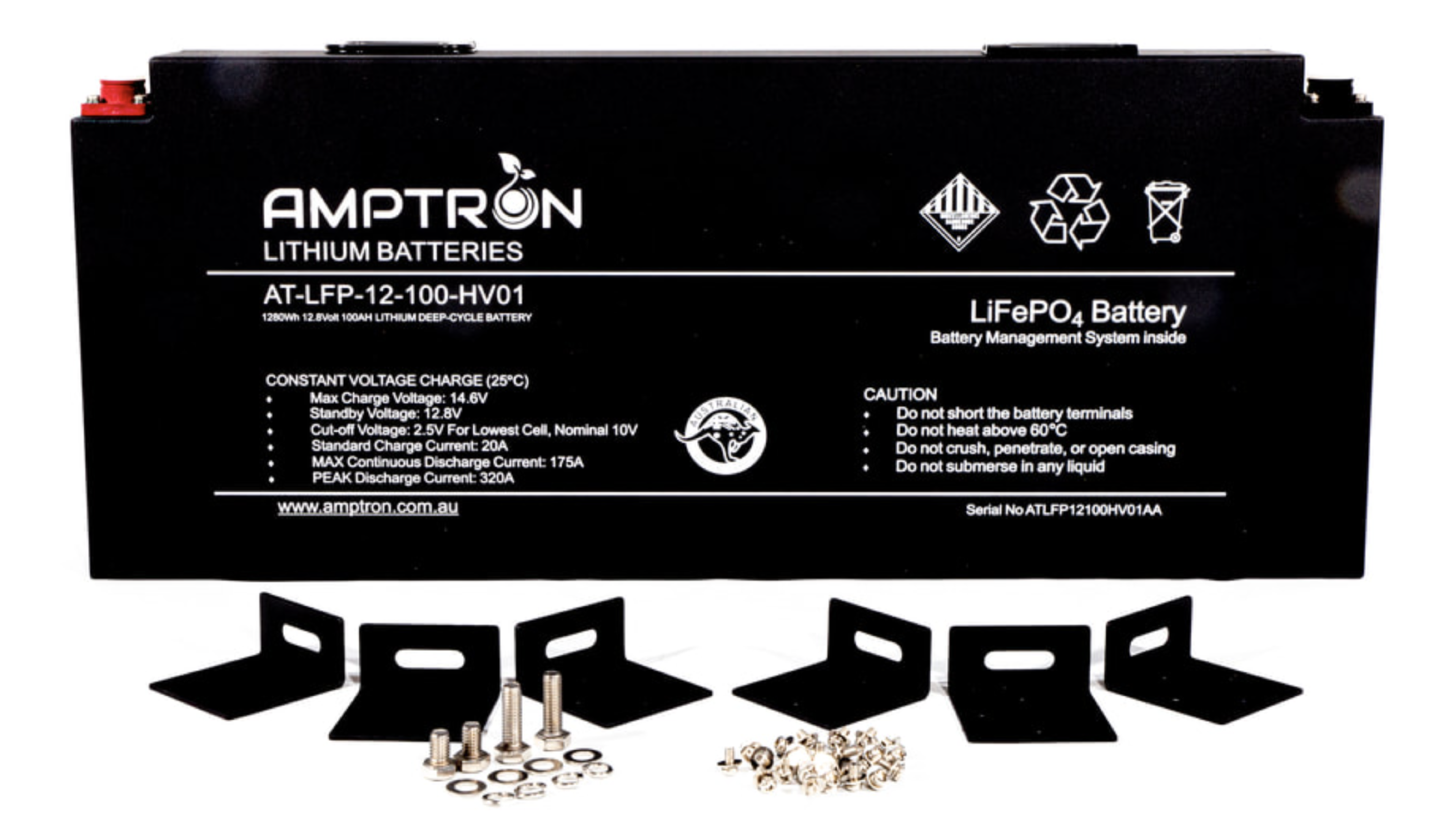
One advantage of this blade battery is in its dimensions – 635mm long 260mm high and only 60mm wide – making it perfect for installation in narrow spaces in your 4WD, canopy or camper trailer. It is lightweight too, at 16kg. The maximum continuous discharge current of the battery is 175A, with a peak discharge current of 320A for three seconds.
“For 4WD vehicles, the blade battery can typically be installed behind the rear seat inside the cab of a UTE, or against the cab wall inside the tray of a UTE with a canopy, or often against another vertical wall in UTE canopies that has internal frames, or it can even be installed underneath the rear seats of most 4WD vehicles due to its thin profile,” said Frik Stuart, Amptron’s Technical Manager.
“For campers, the blade batteries are often installed against a vertical wall where there may be some cavity space, often where the space is narrow.”
Pricing
The Amptron 12V 100Ah/175A Continuous Discharge LiFePO4 Blade Battery retails for $1172 and includes mounting brackets. For more information on these batteries and other Amptron products, head to Amptron.au
The 2024 Ford Everest Wildtrak will launch in Australia, the brand has confirmed, revealing pricing today.
Snapshot
- 2024 Ford Everest Wildtrak confirmed for Australia
- Limited-run off-road SUV inspired by the popular Ranger Wildtrak
- Priced at $73,090 before on-road costs
It follows the debut for New Zealand, South Africa and Thailand earlier this year, with Ford’s local arm initially stating it had ‘no news’ to share for our market.
Ford Australia said the more-rugged version of its Everest large SUV will be available “in limited numbers”, powered by the 3.0-litre diesel V6 and full-time four-wheel-drive.
The brand has confirmed the Everest Wildtrak will arrive here in the third quarter (July to September inclusive), with 800 vehicles allocated for the Australian market.

1
The Everest Wildtrak will slot in between the mid-spec Sport and flagship Platinum at $73,090 before on-road costs, with several additions over the Sport.
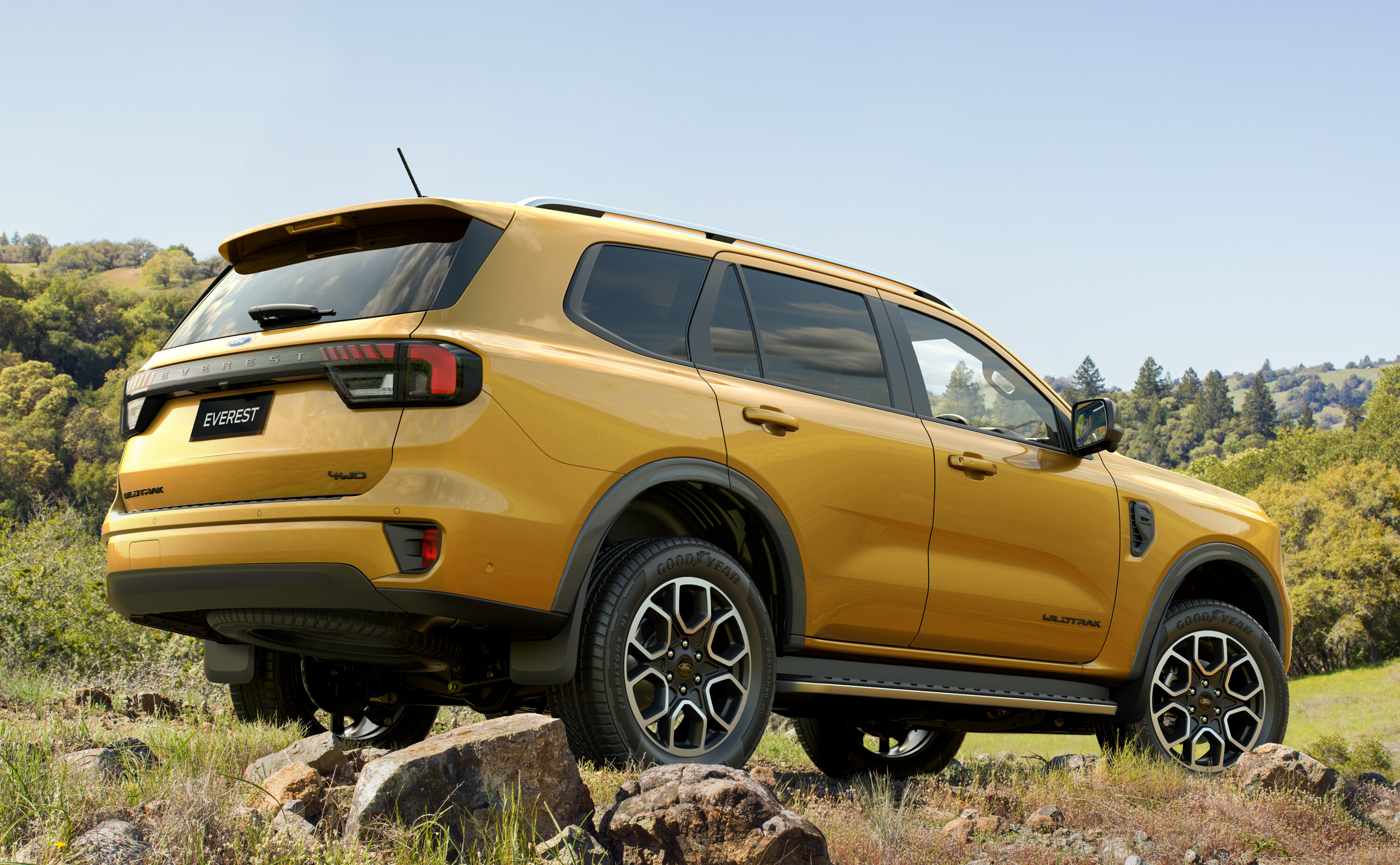
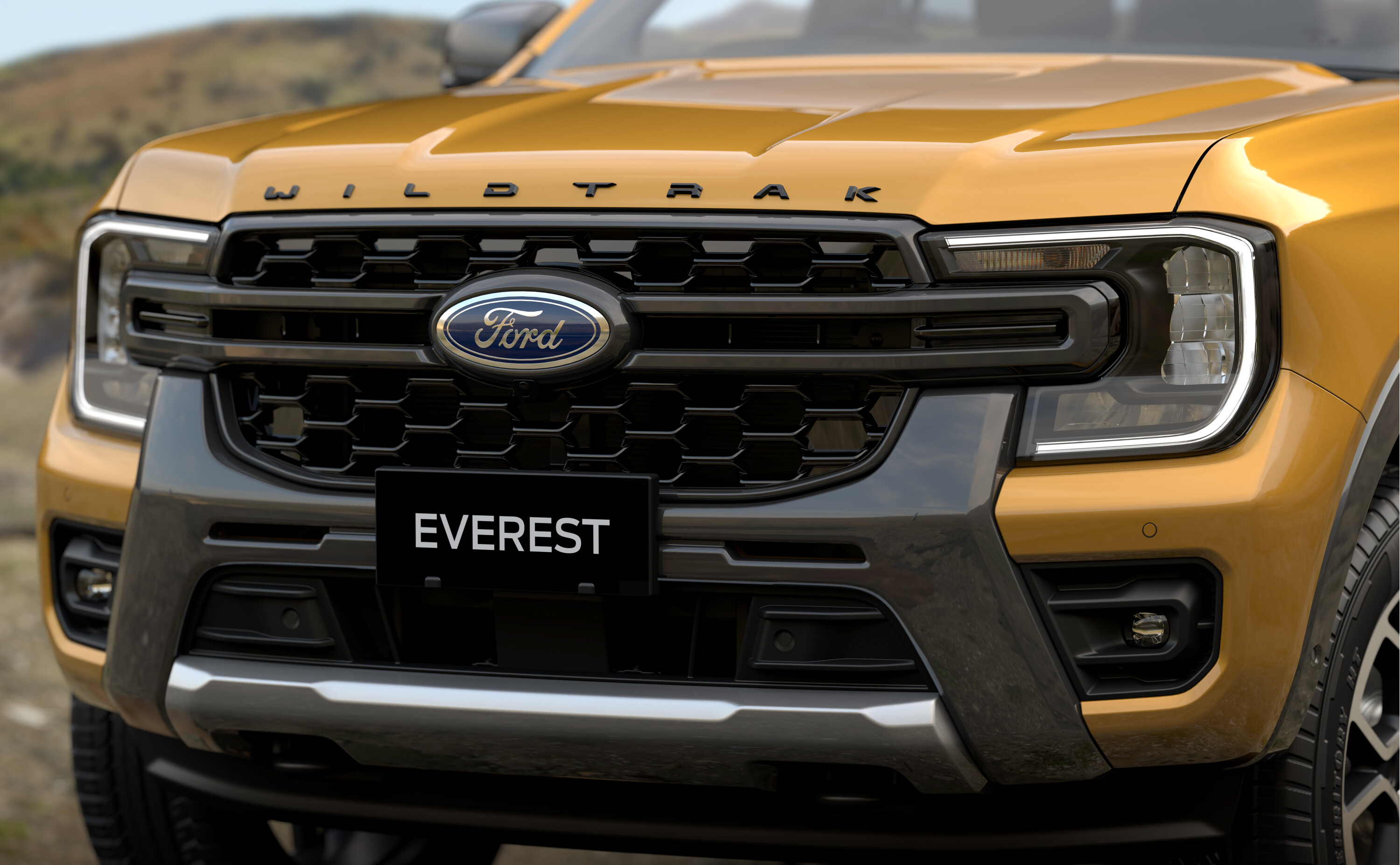
Inspired by the popular Ranger variant, the Everest Wildtrak borrows its front-end design, including a dark grey ‘H-bar’ bumper, and unique LED fog lamps.
The blacked-out Wildtrak badging on the bonnet and lower front doors is similar to the new Ranger Wildtrak X due here later this year.
The new variant is available in the hero ‘luxe yellow’, while other additions include a panoramic sunroof, a 360-degree camera system, exterior zone lighting, chrome roof rails, ‘cyber orange’ stitching with ‘Wildtrak’ embroidered into the front seats, and standard 20-inch alloy wheels with all-season tyres and tyre pressure monitoring.
1
Like the Sport and Platinum, a no-cost option pack will provide smaller 18-inch alloy wheels and all-terrain tyres.
“Australians understand what the Wildtrak badge means – which is why it is one of our most popular Ranger variants – and we’re thrilled to add it to the Everest family for the first time,” said Ford Australia president and CEO, Andrew Birkic.
The limited-edition 2024 Ford Everest Wildtrak will arrive in Australia between July and September, with full details to be announced closer to its launch.
1
2024 Ford Everest pricing
Prices exclude on-road costs.
| Model | Pricing | Change |
|---|---|---|
| Ambiente 2.0 4×2 | $53,490 | up $200 |
| Ambiente 2.0 4×4 | $58,490 | up $200 |
| Trend 2.0 4×2 | $60,990 | up $400 |
| Sport 2.0 4×2 | $62,990 | up $200 |
| Trend 2.0 4×4 | $65,990 | up $400 |
| Sport 3.0 4×4 | $70,590 | up $1000 |
| Wildtrak 3.0 4×4 (new) | $73,090 | u2013 |
| Platinum 3.0 4×4 | $78,530 | up $1000 |
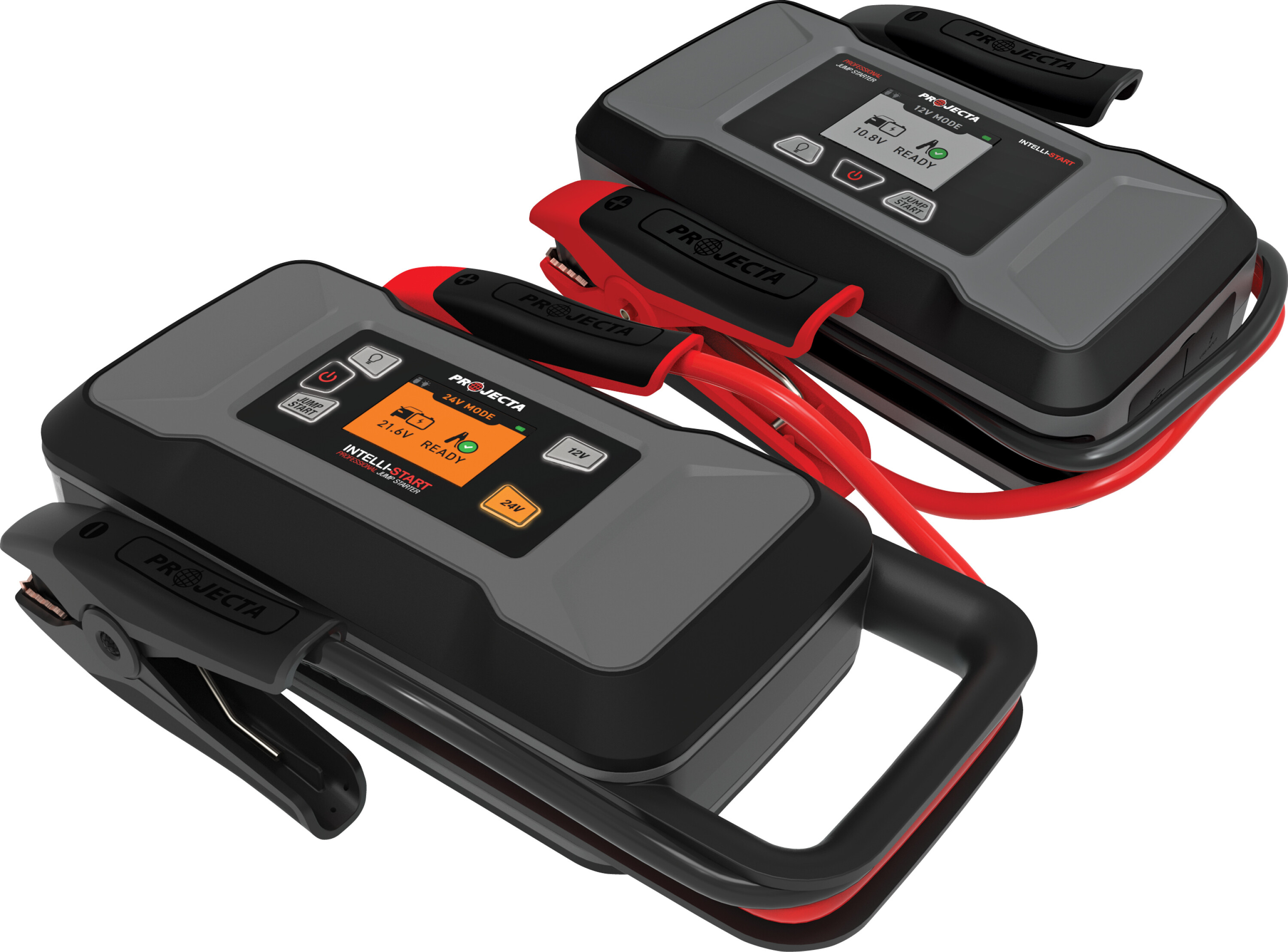
Projecta has expanded its Intelli-Start range by introducing two new jump starters, the IS1400 and IS2000, with patented Rapid Recharge Technology (RRT).
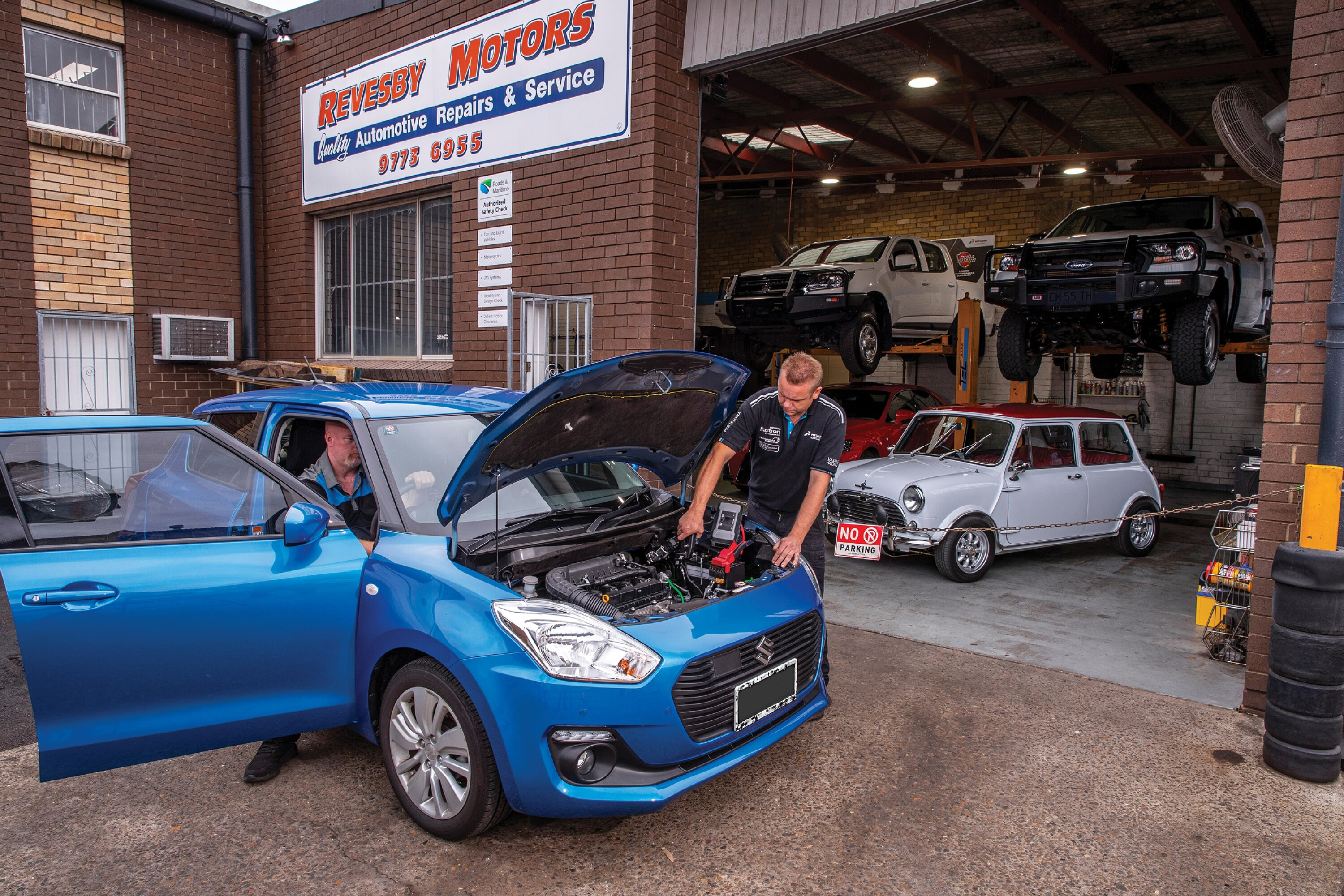
RRT boosts efficiency and convenience for users and owners as – once the vehicle has been started – the Intelli-Start jump starter can fully replenish the energy that was discharged during the starting process in just 40 seconds. Simply keep the clamps connected to the running vehicle’s battery and the Intelli-Start jump starter is ready for the next emergency.
1
This technology means Intelli-Start jump starters can be used time and time again before needing to be recharged, making the product perfect for applications such as roadside assistance or vehicle-holding depots and car yards.
When recharging is finally needed, this can be done back at the workshop, garage or home using the supplied 5V USB charger. A further benefit of the latest models is their ability to jump-start vehicles and machines that use a variety of battery types including Lithium, Wet, AGM, Gel and Calcium.
The IS1400 is suitable for 12V electrical systems and offers 500A clamp power and 1400 peak amps, more than enough to start petrol-powered vehicles up to 7.0L displacement and diesel engines as large as 5.0L.
Latest Gear Guides!
1
These capabilities along with a compact design make the IS1400 an ideal choice to carry in the glove box for stowage with 4×4 recovery gear, or to keep on hand at workshops or car yards.
The larger-yet-still-compact IS2000 model provides even further versatility, with its auto-sensing clamp connections making it convenient for use on both 12V and 24V electrical systems.
The IS2000 will jump-start 12V petrol vehicles with engines up to 8.0L, and up to 6.0L for diesels. It can also jump-start petrol and diesel 24V vehicles with engines up to 7.0L. This level of performance makes it suitable for passenger vehicles, small trucks, agricultural equipment and mid-sized earthmoving machines.
Along with revolutionary battery technology, the IS1400 and IS2000 utilise an advanced all-in-one protection system that prevents surges, short circuits and overheating
Additionally, the IS2000’s integrated, ergonomic handle allows for easy portability, making it an ideal alternative to cumbersome lead-acid jump starters that are normally moved around on a trolley.
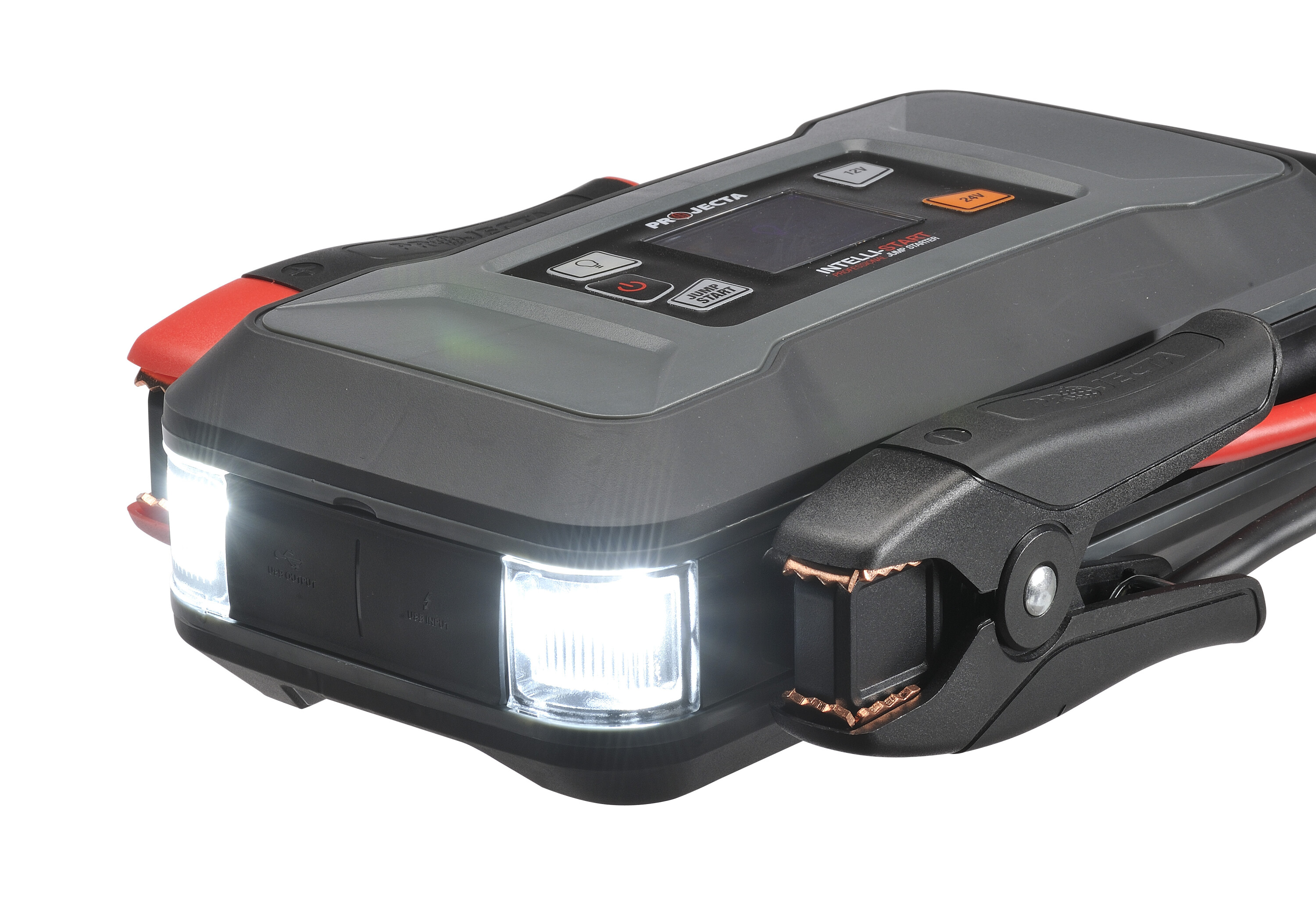
Common to both units are premium spark-free clamps; no solder, high current connections for added longevity and performance; intuitive LCD display with real-time updates; in-built LED work light; EVA storage case; USB charging port; and the ability to be used as a power bank. The IS2000 also features a ‘set and forget’ docking station for hassle-free benchtop charging.
The Intelli-Start range is equipped with premium LiFePO4 batteries and provides more starts with up to 2000 battery cycles. This range delivers a substantially longer operating life and provides a smooth and reliable start, time after time.
1
Added durability comes from the range’s rubber-moulded impact and drop-resistant housing and IP-rated dust and water ingress protection. They also now come with an extended five-year warranty.
Along with revolutionary battery technology, the IS1400 and IS2000 utilise an advanced all-in-one protection system that prevents surges, short circuits and overheating. For novice users, a further benefit is that the premium clamps won’t spark if attached incorrectly and won’t damage the vehicle or injure loved ones or employees.
The display will also alert the user of an incorrect connection and advise when they’re ready to use, making these jump starters not only the safest on the market but one of the easiest to use.
Pricing
- IS1400: $550
- IS2000: $999
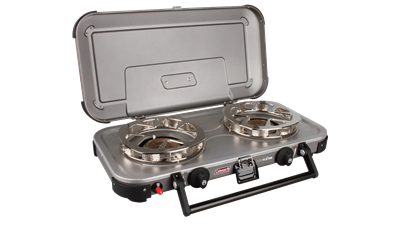
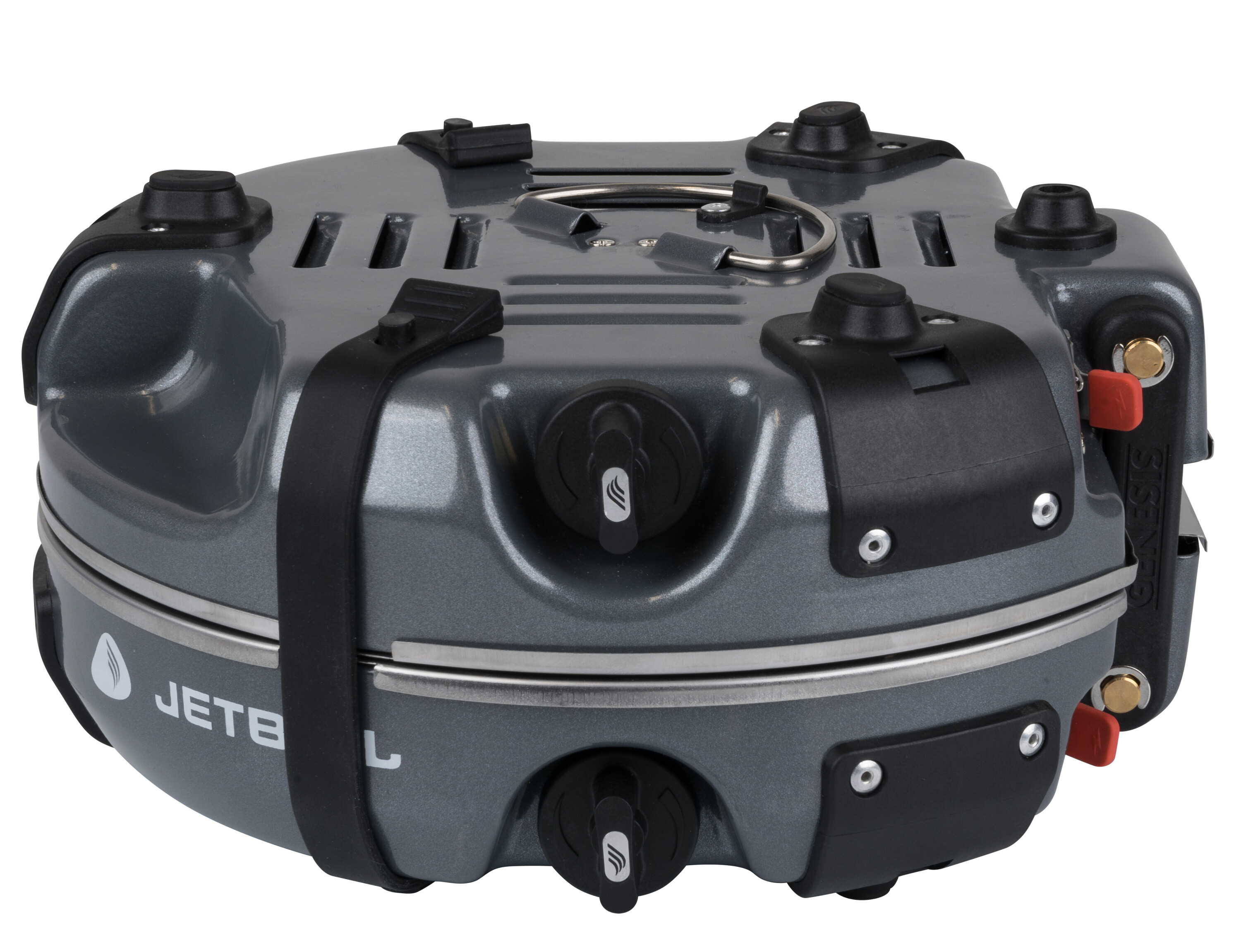
The JetBoil kit is a purpose camping cooking system.
Compared to other camping stoves, the JetBoil camping unit is not cheap, but what you get for the price is a solid, no nonsense lightweight alloy unit that is totally portable when folded and packed away in its carry case.
Plus, it has two burners that burn with sustainable heat when used with the unique ‘fluxring’ technology on JetBoil cooking pots, so there is no waste of gas.
1
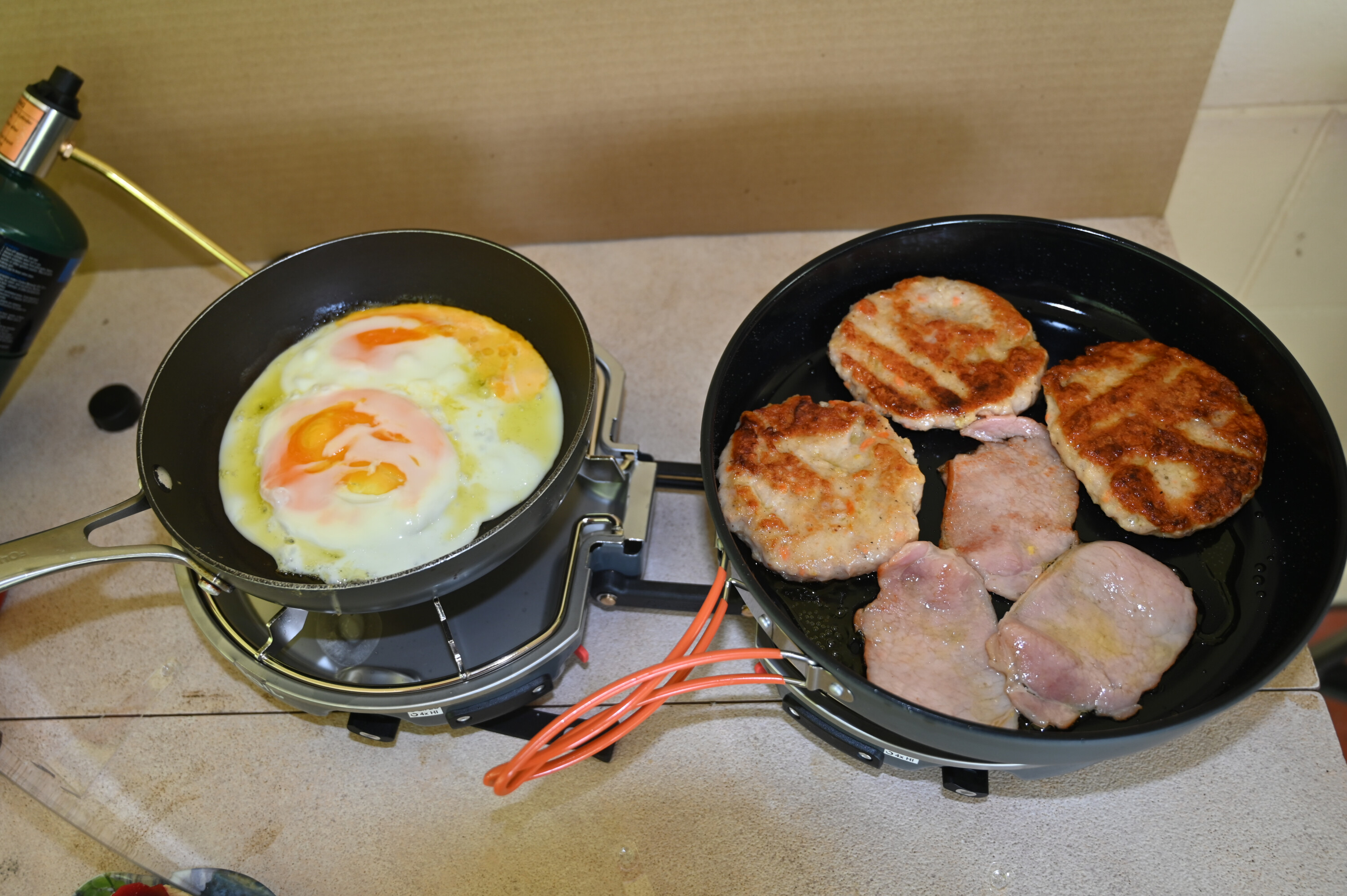
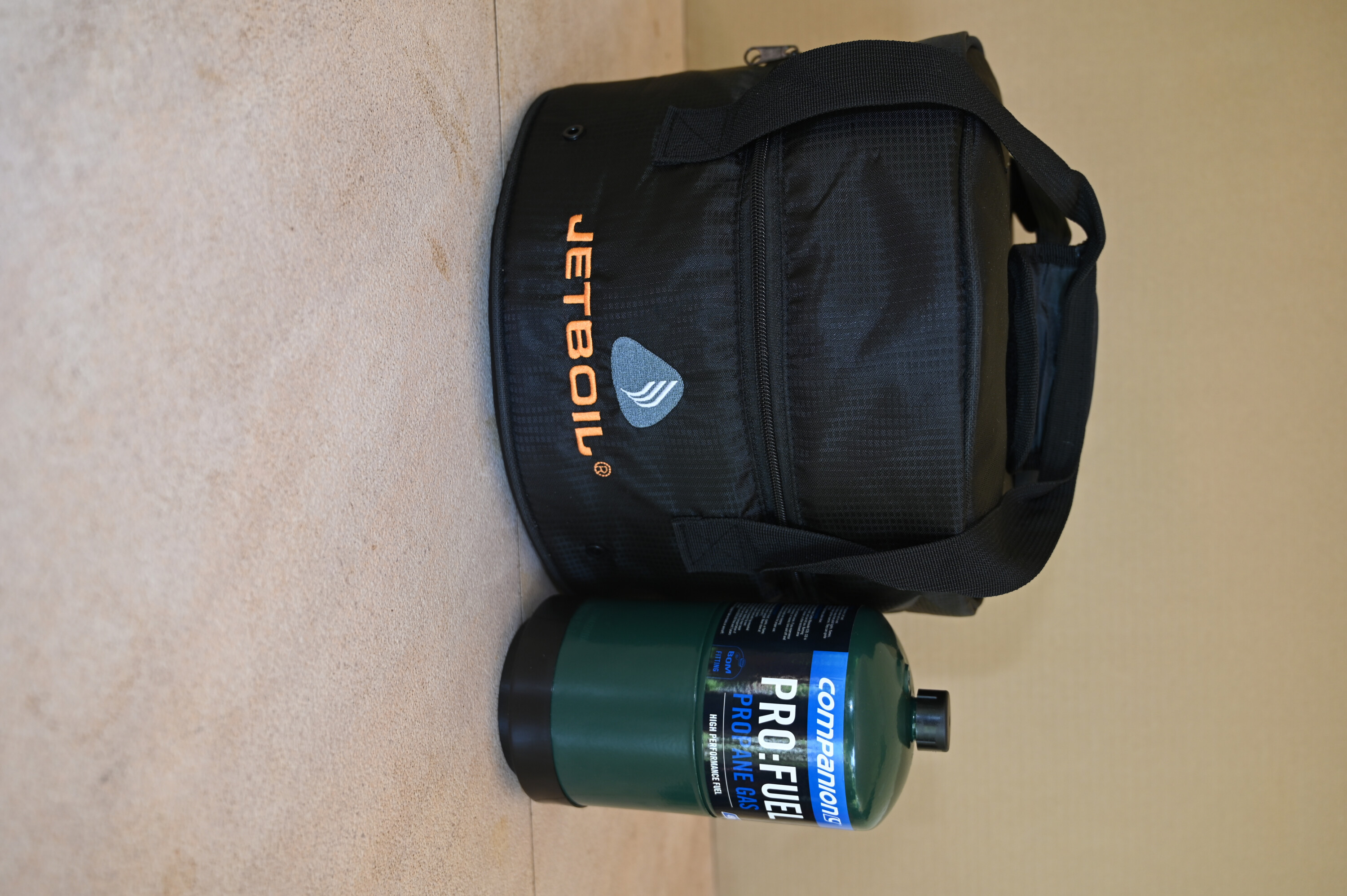
The unit comes with a gas regulator, 10-inch frying pan, a five-litre ‘FluxPot’ lid with inbuilt strainer, a windscreen, and a heavy-duty carry bag fitted with a shoulder strap. The compact package weighs 2.7kg. It’s compatible with the universal 468g Companion Pro:Fuel propane gas bottle and has a 12-month warranty.
Jetboil recommends using fuel canisters with a propane and isobutane mix for best performance especially in cold climates where propane doesn’t burn well. Their own Jetfuel canisters are ideal for any conditions.
Heat exchange
Currently there is nothing on the market that is similar, including the easy-to-clean lightweight ceramic-coated pan and pot bases that have ‘flux rings’ centred underneath them for heat distribution.
The lightweight aluminium frying pan has a high wall that retains internal heat, especially when the lid is on it. The heat is fully controlled, and food can be left simmering for extra taste, made possible with a four-setting control knob on each burner. The frying pan heats up quickly, and it takes little heat to cook a tasty bacon-and-egg breakfast or a juicy steak for tea.
The pot can be used to boil water or cook soup, stews and anything else that takes your fancy. Heat retention is caused by flux rings on the pot base, which are designed to increase heat exchange and save gas in real-time cooking.
1
It’s said to improve the efficiency of stoves by up to 25 per cent. The pot’s unusual ‘waffle’ bottom design distributes heat from the bottom and directs it up the sides of the pot, unlike heat from a normal gas stove which flares away from the burners and is wasted.
Put simply, heat exchanger pots increase the general surface of the pots’ outside area to allow metal conduction to function at the highest possible peak and performance coupled to fuel efficiency. The task of a heat exchanger is to increase extra heat and transmit it to the pot for boiling and cooking. When all is well, a heat exchange pot saves up to 30 per cent in fuel.
When the JetBoil stove is exposed to wind, the heat blows away from the wind direction. JetBoil has a wind deflector shield which can avoid this; or just cook in an area that is protected from the wind.
Burners
Each burner has Piezo ignition and an individual setting knob. The system can be used with other JetBoil stoves via a connecting port hose to a Luna satellite burner, to boil and make a cup of coffee or tea.
The beauty of the burner is that you can let the coffee pot simmer over a low flame. Should spillage occur, the burner, pot stands and bases are simple to dismantle and clean.
Verdict
The JetBoil system is a lightweight, compact unit of a high quality, albeit with an expensive price tag. It’s surprisingly fuel efficient and ideal for cooking in a vehicle, boat or camper, or as an addition to a caravan.
Can you use other pots and pans on the JetBoil stove? Yes, but it’s not recommended to cook with pots and pans that exceed the diameter of the cooking ports. This is due to flame-spreading, which may cause gas bottles and lines to heat up, something that was dangerous in older butane stoves before updated models rectified this issue. If you do cook with a wide pan, do so on the right-hand burner as it is the farthest away from the gas bottle.
1
That aside, the JetBoil stove is the most fuel-efficient stove I have ever used and it’s surprising how much can be cooked using a 468g gas bottle. It has two 10,000 BTU burners and takes only three minutes to boil a billy of water for tea or coffee. Another thing we loved is the exacting simmer control that can be fine-tuned the same way as a home gas stove – it cooks perfect meals every time.
Use Kydex/plastic utensils or Jetboil branded ones instead of steel, to prevent marring the non-stick surface of the pots and pans. Also, be careful when cleaning the pot and frying pan, and don’t use any abrasive cleaners or wipes or the surface will be damaged in a very short time. A soft-wash dish cloth and detergent will rid food particles from the surfaces.
I’m very happy with the system and will no doubt add some extra pots, a Luna Satellite burner and other accessories to this stand-alone kit. The cost is around $600, so it’s not for people who only camp once a year; but for outdoor lovers who head bush at the drop of a hat, it’s well-worth having this stove.