
Snapshot
- Nissan exploring u2018lightu2019 electric ute
- Could use battery-only, plug-in hybrid, E-Power hybrid power
- Key challenges remain for electric utes
Nissan is exploring a ‘light’ electric ute that could debut after 2030.
According to Automotive News [↗], as automakers from General Motors, Ford and Rivian launch electric pickups in North America, Nissan wants to compete, too.
The Japanese company – most famous in the EV space for the Nissan Leaf hatchback – is reportedly considering a full battery-electric, plug-in hybrid, and even its E-Power series hybrid system for the electric ute.
As it has done with the platform-sharing X-Trail medium SUV, Nissan could also tap into its alliance with Mitsubishi and Renault.
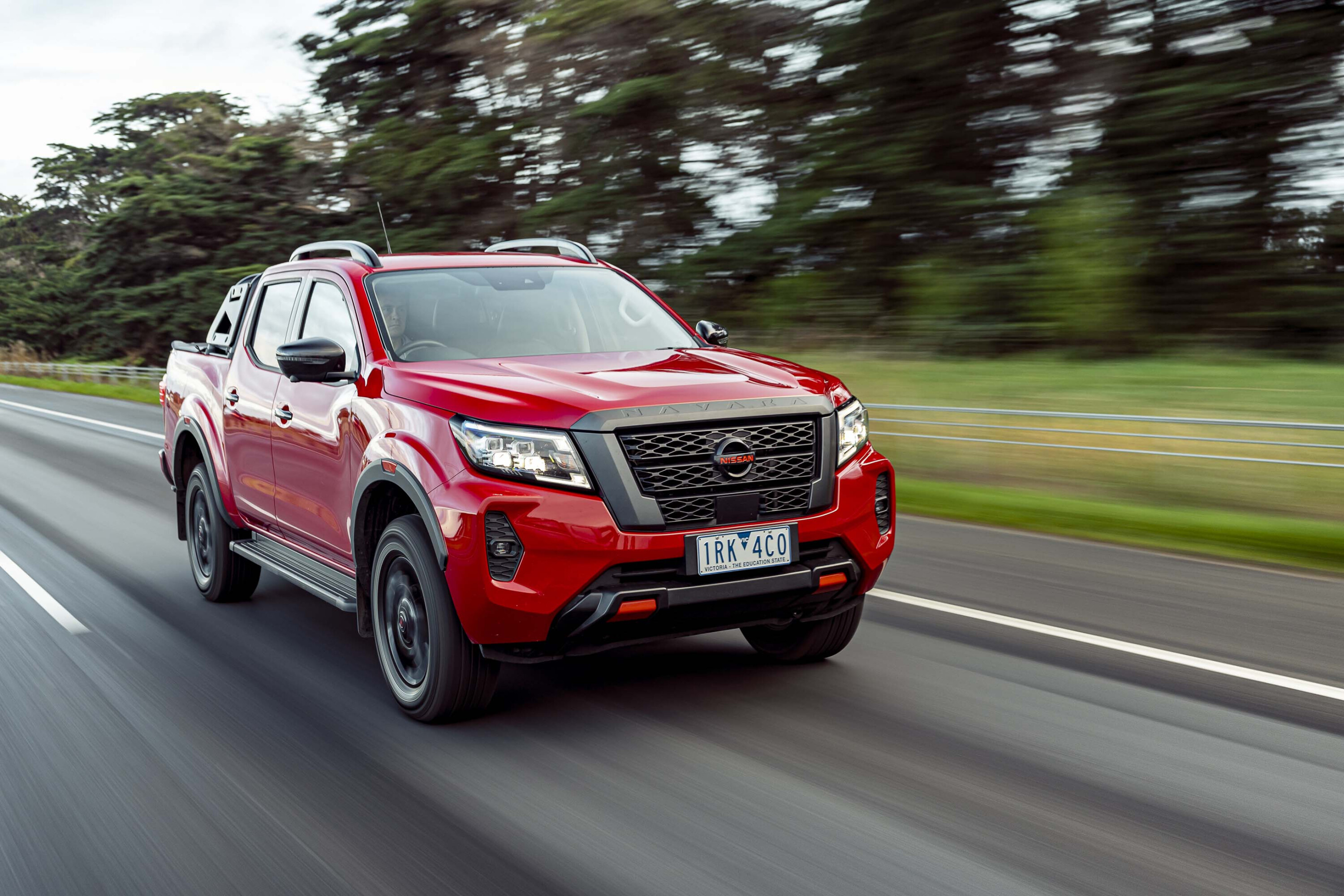
Nissan dealer board chairman Tyler Slade said the automaker will aim to be in the ‘affordable’ US$40,000 (AU$63,000) range, rather than competing with the more premium Rivian R1T and Tesla Cybertruck.
For now, Nissan’s global product strategy and planning head Ivan Espinosa said the company will prioritise introducing electric SUVs first, as hinted by its ‘Hyper’ concepts.
“We are looking at electrifying many segments… The key here is to read the customer requirements accurately and jump on the wave at the right moment,” said Espinosa.
“The good thing is we have this diversity of technical offerings to match with the customer requirements.”
Currently, Nissan’s electric offerings only include the Leaf hatch and Ariya SUV globally.
The electric ute challenge
As automakers look to electrify their ute offerings, key challenges remain.
Besides the marketing barrier to convince diesel ute buyers to make the switch, battery-electric utes simply can’t offer the same driving range (especially when loaded), payload and towing capabilities today due to large and heavy battery packs.
The Australian distributor of BYD electric cars, EVDirect, has even opted to sell a unique hybrid powertrain first when the BYD Ute lands by the end of 2024, followed by an all-electric battery-powered version about a year later.
“We want vehicles that Australians can actually afford,” EVDirect chief executive Luke Todd previously told 4×4 Australia.
“The reality is a full EV ute at the moment would be over $100,000 just of the battery size, to power, to get enough range.”
For context, the only new electric ute on sale in Australia is the two-wheel-driven LDV eT60.
It is priced from $92,990 before on-road costs with up to 330 kilometres claimed WLTP range, 1000kg maximum payload with a 100kg towball download, and 1000kg braked towing capacity.
Full disclosure: I’ve never driven a ‘soft-roader’ SUV in my life.
I’ve spent my personal and professional life driving four-wheel-drives, and four-wheel-drives alone. Yet, I’ve always been curious to see just how far you can take an SUV off-road. Can the lack of low-range gearing and diff locks be overcome with clever traction control systems and modern technology?
The opportunity to conduct this experiment presented itself when we found ourselves with a Mitsubishi Pajero Sport and Mitsubishi Outlander in our test fleet at the same time.
The only logical thing to do was to grab a photographer to document the occasion as well as new Wheels Media teammate John Law, and head for the hills with both vehicles. Here’s my summary of how the two performed off-road – spoiler alert, the results probably won’t surprise you…
(Psst, when you’re done here, get into John’s on-road comparison.)
JUMP AHEAD
The basics
| Outlander | Pajero Sport | |
|---|---|---|
| Power & torque | 135kW / 245Nm | 133kW / 430Nm |
| Gearbox | CVT auto | 8-speed auto |
| Weight | 1760kg | 2080kg |
| Fuel/tank | 91 RON / 55 litres | Diesel / 68 litres |
| Economy | 9.2L/100km (tested) | 8.8L/100km (tested) |
| Approach angle | 18.3u00ba | 30u00ba |
| Departure angle | 22.2u00ba | 24u00ba |
| Ground clearance | 210mm | 218mm |
| Weight | 1760kg | 2080kg |

Mitsubishi Outlander off-road
Straight up, the ground clearance – in particular the approach angle of the Outlander – is what will catch you out first.
Even on mild tracks to get to tougher sections, I had to drive at a snail’s pace to avoid damaging the front end of the Outlander.
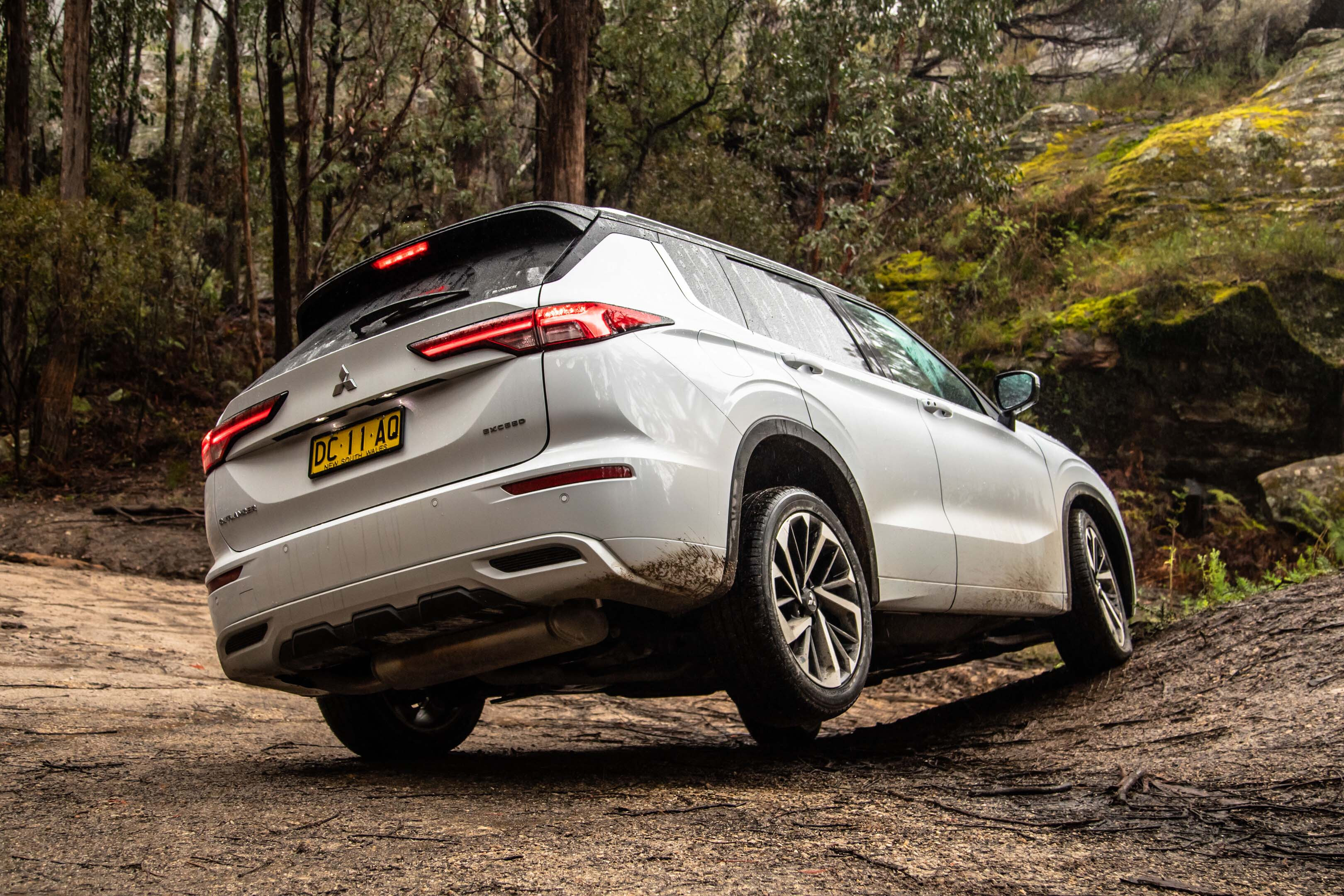
Next, the suspension isn’t suited to corrugated dirt roads as it simply doesn’t offer enough suspension travel to absorb bumps in a controlled manner; it also rides quite firm.
Speaking of suspension travel, there’s not much down travel in particular, with the Outlander picking up a wheel without effort. In some ways it was fun as even simple obstacles required a bit of thought on how to best attack them.
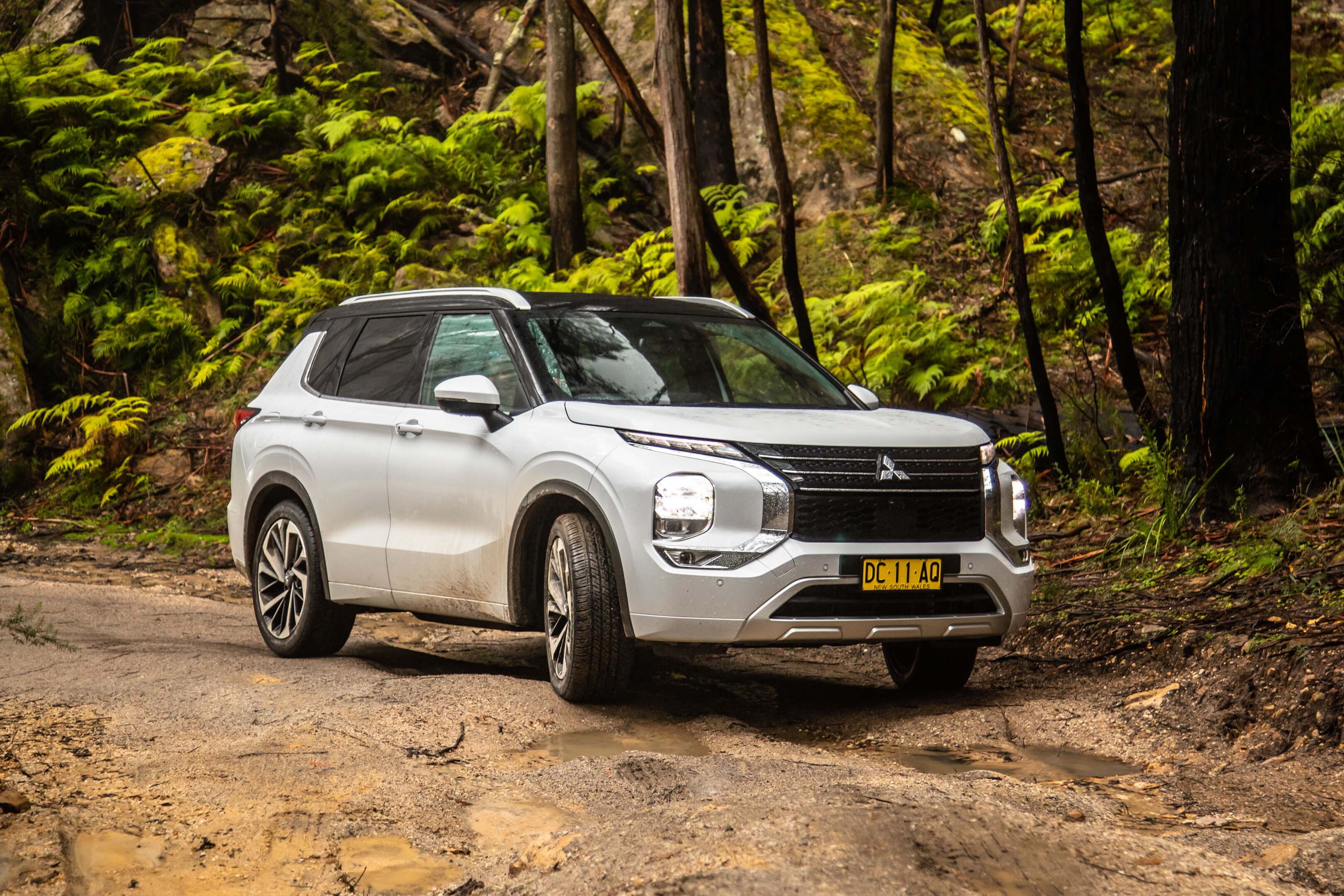
It’s clear to see this also offers a sportier ride on-road compared to the Pajero Sport, which is softly sprung in comparison. Which ride you prefer will be up to your individual taste, but for me I prefer a softer ride especially on poorly maintained roads and on the dirt.
Hill Descent Control in the Outlander is not terribly effective; you can hear it working but it’s no match for the low-range reduction gearing found in the Pajero Sport. Off-road traction control modes seem to mainly alter throttle response, as they are all loose-traction surfaces ie gravel mud sand and snow. It’s nice to see they are there, though, and will provide a confidence boost to those new to off-road driving.
In terms of positives, the turning circle of the Mitsubishi Outlander is fantastic, which makes picking a suitable line off-road much easier. Braking feel is also first rate, as is the interior design which I really liked.
Pajero Sport off-road
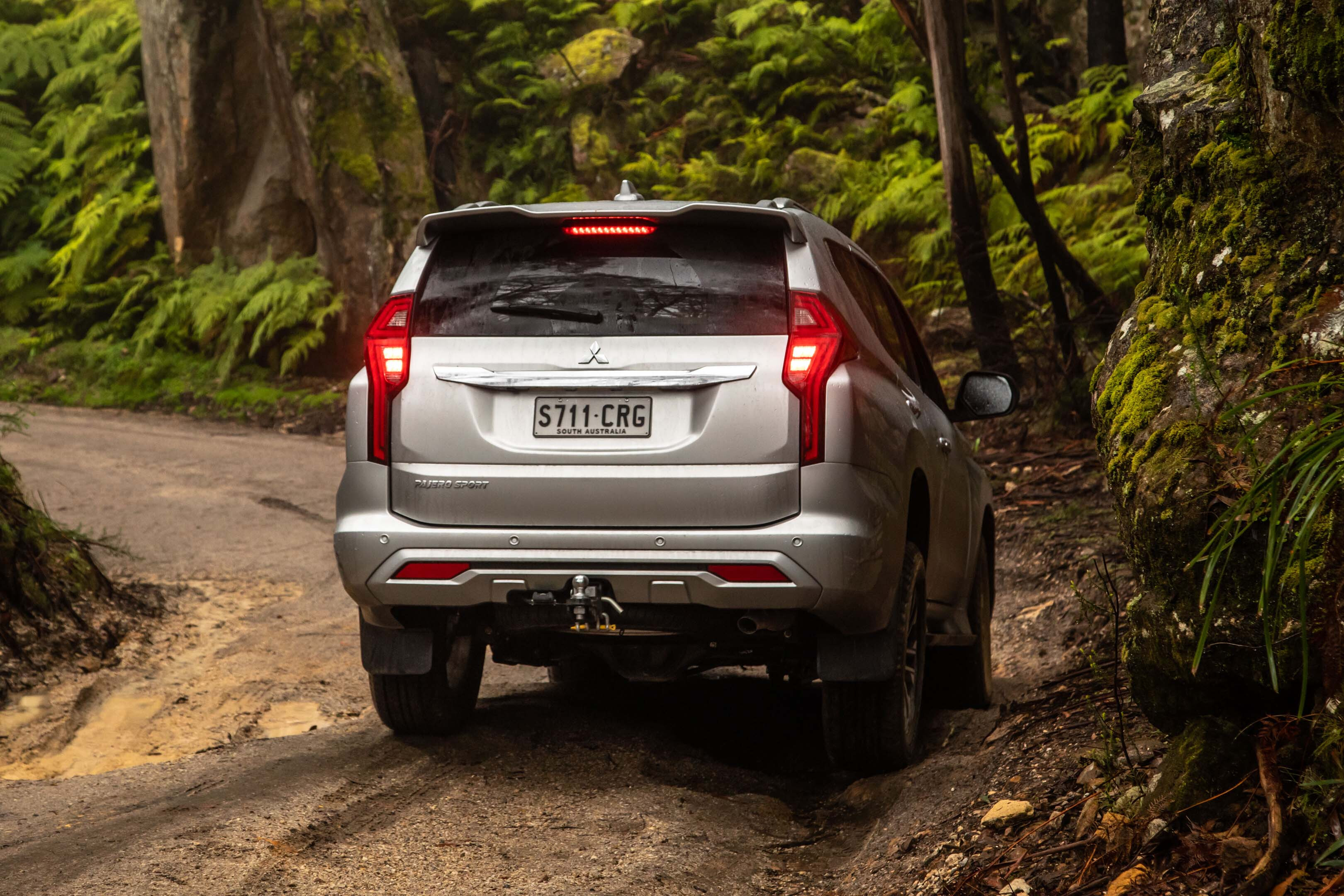
The Pajero Sport is a little tractor when it comes to off-road work, with excellent low-range gearing reduction.
While the traction control system isn’t class leading, it proved effective on our test drive, as well as the inclusion of a rear differential lock that boosts off-road capability significantly.
Ground clearance on the front end is a limiting factor with the Pajero Sport, however it is nice to see the front is protected by factory fitted bask plates, which took impacts in their stride.
Rear suspension travel is decent thanks to the solid rear axle and coil springs, however the front end felt like it offered significantly less wheel travel, with a more road-biased suspension tune. It’s a compromise many people will be happy with, as this is a vehicle that is suited to daily duties as well as being an adventure machine.
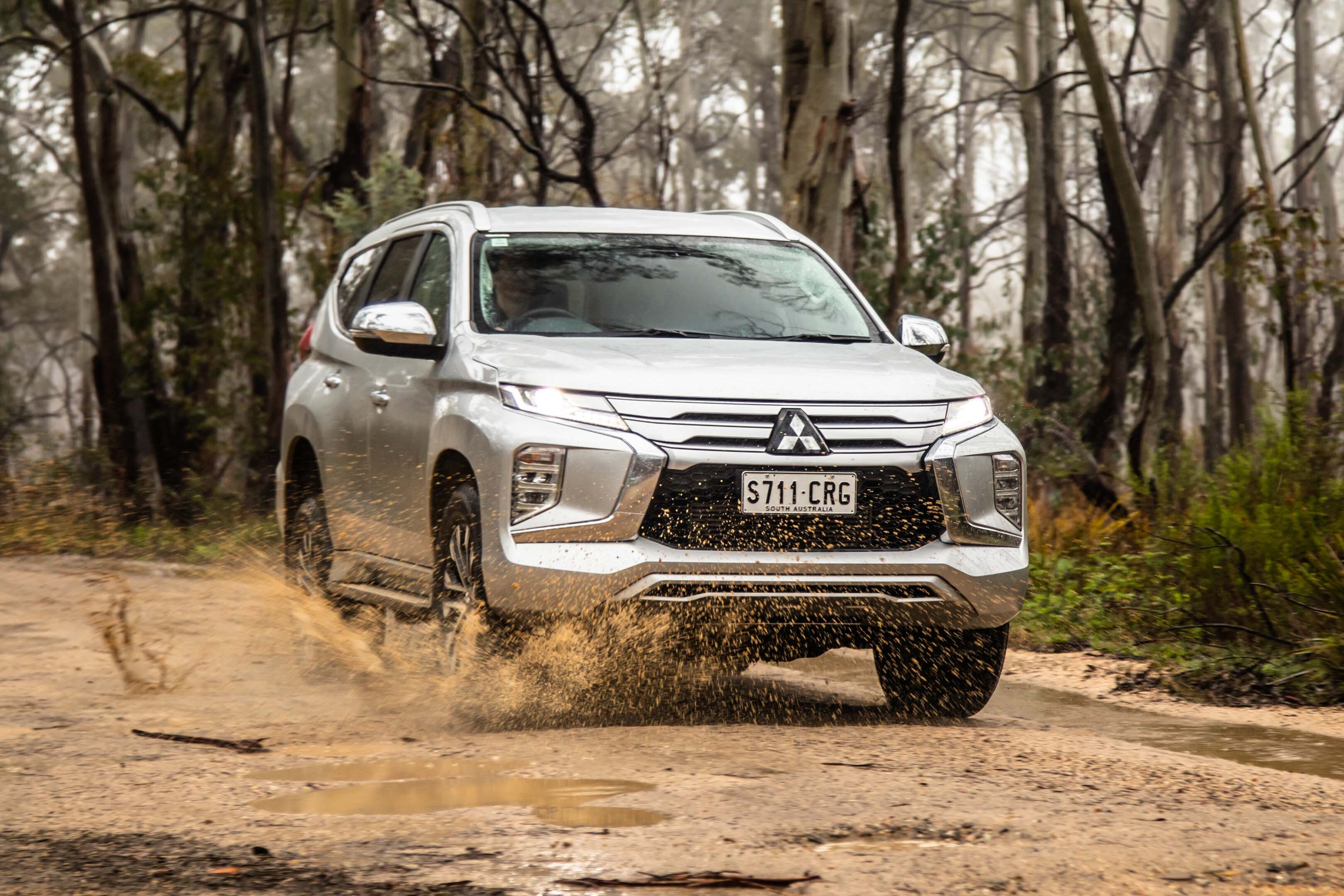
The 2.4L turbo-diesel engine found in the Pajero Sport is lumpy at idle (well, it’s a diesel, after all) but very tractable in low-RPM settings. You are able to inch forward in low-range four-wheel drive with plenty of control.
We found ourselves in one particular spot where the front wheel of the Pajero Sport lifted ridiculously high, but the vehicle just kept climbing, easily making its way to the top of the track, with the only issue being a slight tap on the front bumper.
In comparison, the Outlander couldn’t make it to the summit – spinning opposing wheels while the traction control system cut power to the vehicle without making forward progress.
VERDICT: Off-road conclusion
It’s an easy call for me to make – and it was a foregone conclusion, really – because I will use the additional capability of the Pajero Sport off-road. It is a much more capable vehicle than the Outlander.
But who is the Outlander for? Who should buy it?
I see it as being a vehicle to drive to the snow once a year and, of course, use as a family vehicle during the week. Mild dirt road driving is definitely in its wheelhouse, so if you want to go camping in a National Park, it should be up for it – if you take it easy.
I wouldn’t want to take it on soft sand, though, as it just doesn’t have the ground clearance.
Basically, if you are ever planning on heading to, say, Fraser Island, buy the Pajero Sport. If you are only planning on a snow trip or run through a dirt road to get to a nice camping spot, have a spin of the Outlander.
For me, the Pajero Sort is a much more versatile vehicle, and is the one I’d be spending my money on. But I’m glad I can now say I’ve tried a contemporary SUV.

The Victorian High Country is one of those must-visit destinations that should be near the top of any four-wheel driver’s bucket list.
Not only does it deliver spectacular scenery, unforgettable campsites, a rich history of mountain life and legends, and seemingly endless tracks through the steepest terrain, but just about all of it is free for you to roam and camp in. It’s no wonder it’s one of our favourite destinations for a weekend get-away or an extended stay.
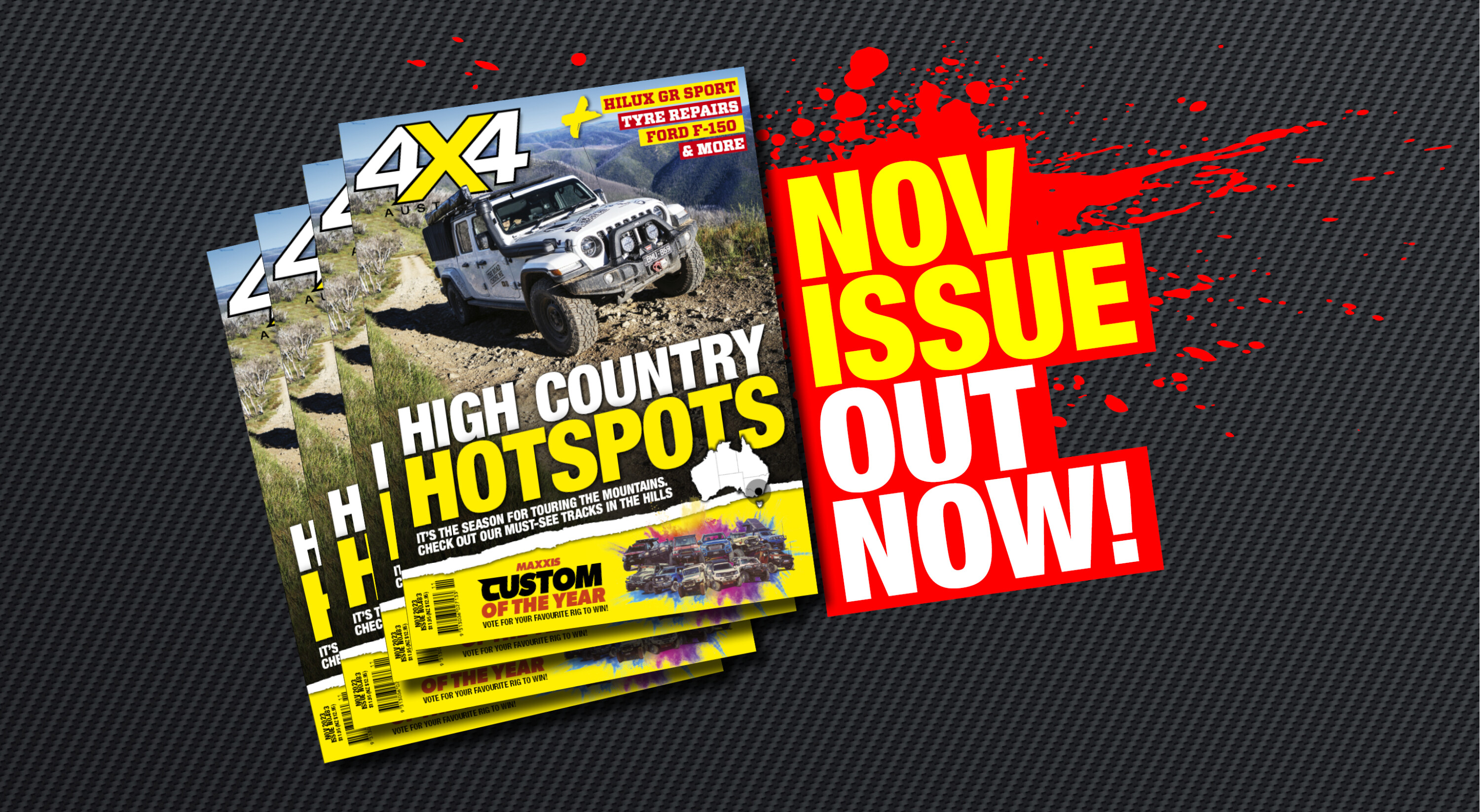
If you haven’t already got yours, grab a copy of the November 2023 edition of 4X4 Australia magazine to discover some of our favourite High Country locations.
Each year in November the tracks of the High Country reopen after being closed for the winter, and it’s time to get back up to the Alps and explore the tracks in your 4×4.
Buller Road Brewery is in Mansfield, in the foothills of the High Country, making it the perfect place to stop and fill up the car fridge before heading to your campsite.
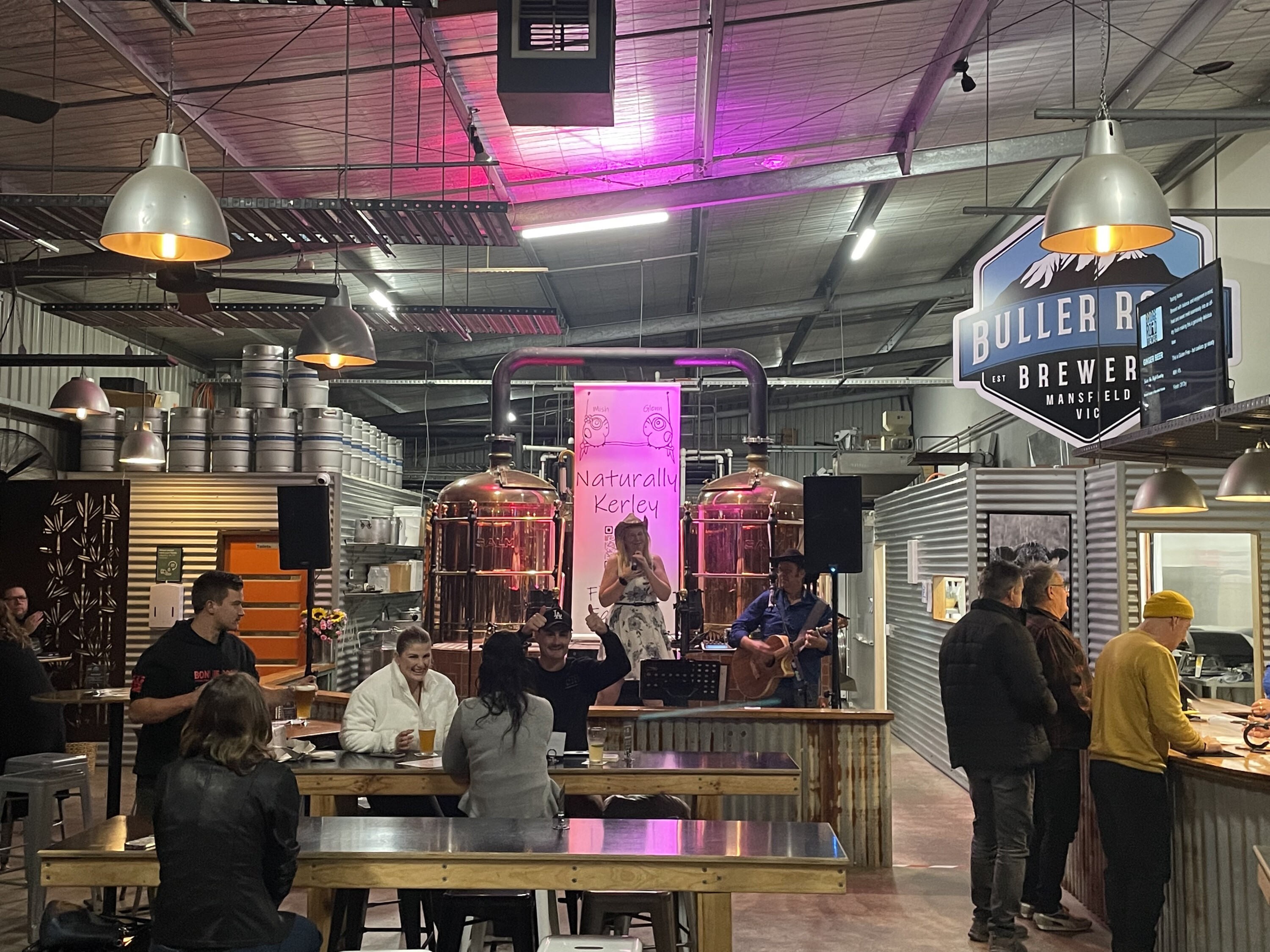
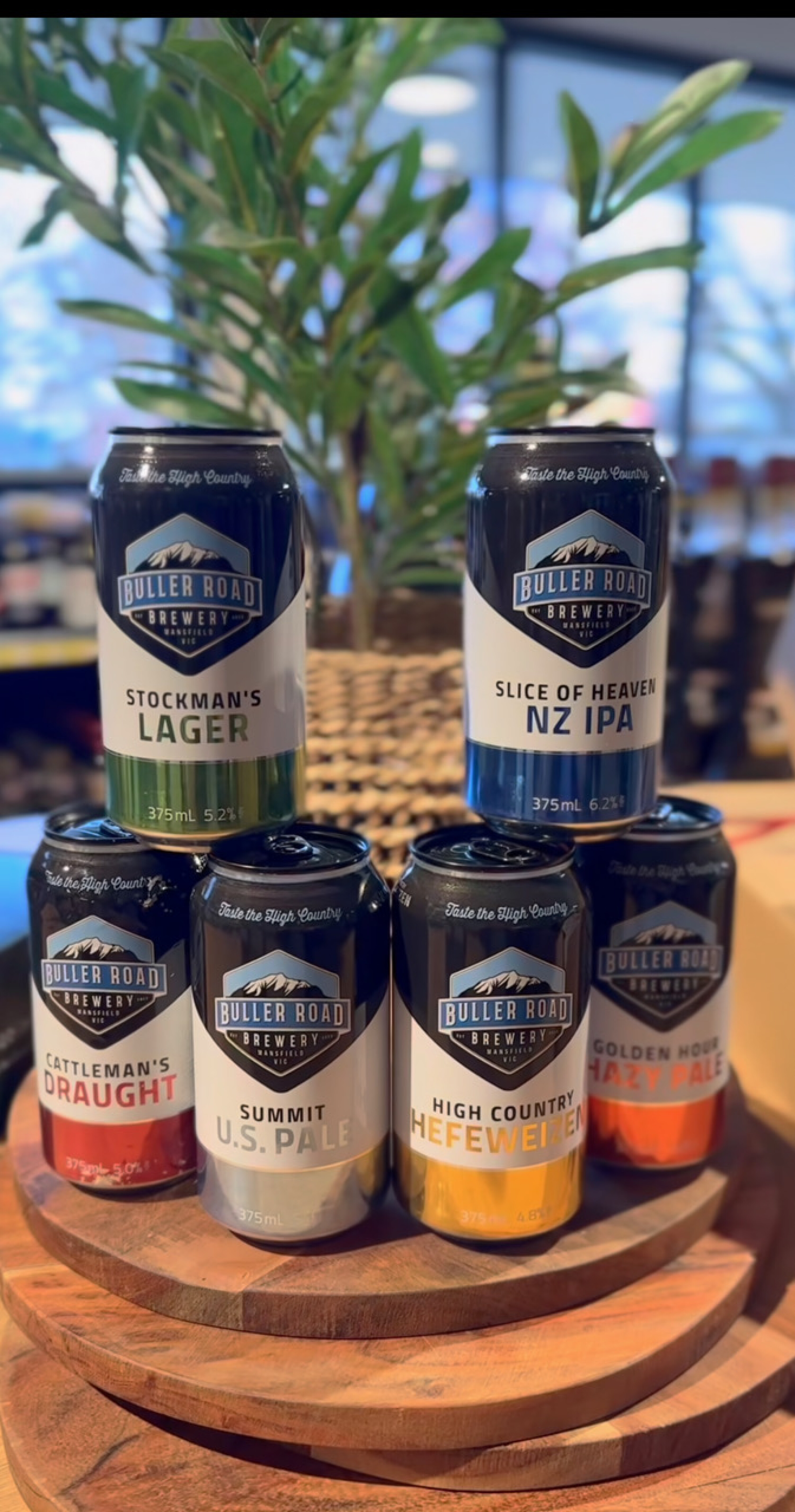
The team at Buller Road Brewery brew all their beers on site and have a fine range available on tap, as well as delicious bar food. Using only the best ingredients they produce a range of lagers, draughts, pilsners, pale ales and craft beers that truly capture the taste of the High Country.
To mark the opening of the High Country tracks, Buller Road Brewery has four cases containing a selection of its signature brews up for grabs. All you have to do to be eligible to win one of these cases is send us a photograph of your High Country 4×4 adventures.
On November 12 , renowned High Country photographer Emily McCormack will select the four photos that best capture the essence of the High Country, and the team from Buller Road will be in touch to send out your prize.
Follow Buller Road Brewery on social media and plan a stop there on your next High Country trip.
For a chance to win a case, add your pics to this post on our Facebook page and tag a few friends you intend to share the brews with.
*You must be at least 18 years of age to enter this competition.
Throw a caravan or camper trailer behind your HiLux and rear visibility will be extremely limited.
There’s not much you can do about the rear-view mirror, but you can certainly upgrade your side mirrors with a set of quality towing mirrors to increase visibility for the driver and ease manoeuvrability.
With many different types of towing mirrors on the market, there’s bound to be a mirror that suits every HiLux owner, and we’re here to help you pick the right one.
- What it is: Towing mirrors that replace the OE mirrors are larger and can be adjusted for width, so you can use them with wider caravans and trailers.
- Why you need it: To stay legal and safe, otherwise you’ll have dangerous blind spots when towing wide trailers. Government guidelines state the driver is required to see 20 metres past the widest point of the towed vehicle.
- Buying tips: Keep in mind the functionality of your factory mirrors, as quality replacement mirrors will include the same functions. You can buy cheaper clip-on mirrors, but they’re simply not as functional as replacement mirrors and don’t provide the same level of visibility. Add to this they will bounce or vibrate and can be easily forgotten or stolen.
Here are some products we recommend, and weu2019ll add more as they become available. For this guide we have omitted generic clip-on mirror extensions and included only quality replacements.
JUMP AHEAD
| Mirrors per side | Extendable | Powered | |
|---|---|---|---|
| Clearview | 1-2u00a0 | Yes u2013 3 position | Yes |
| MSA | 1 | Yes u2013 4 position | Yes |
| OCAM | 2 | Yes | Yes |
Clearview towing mirrors
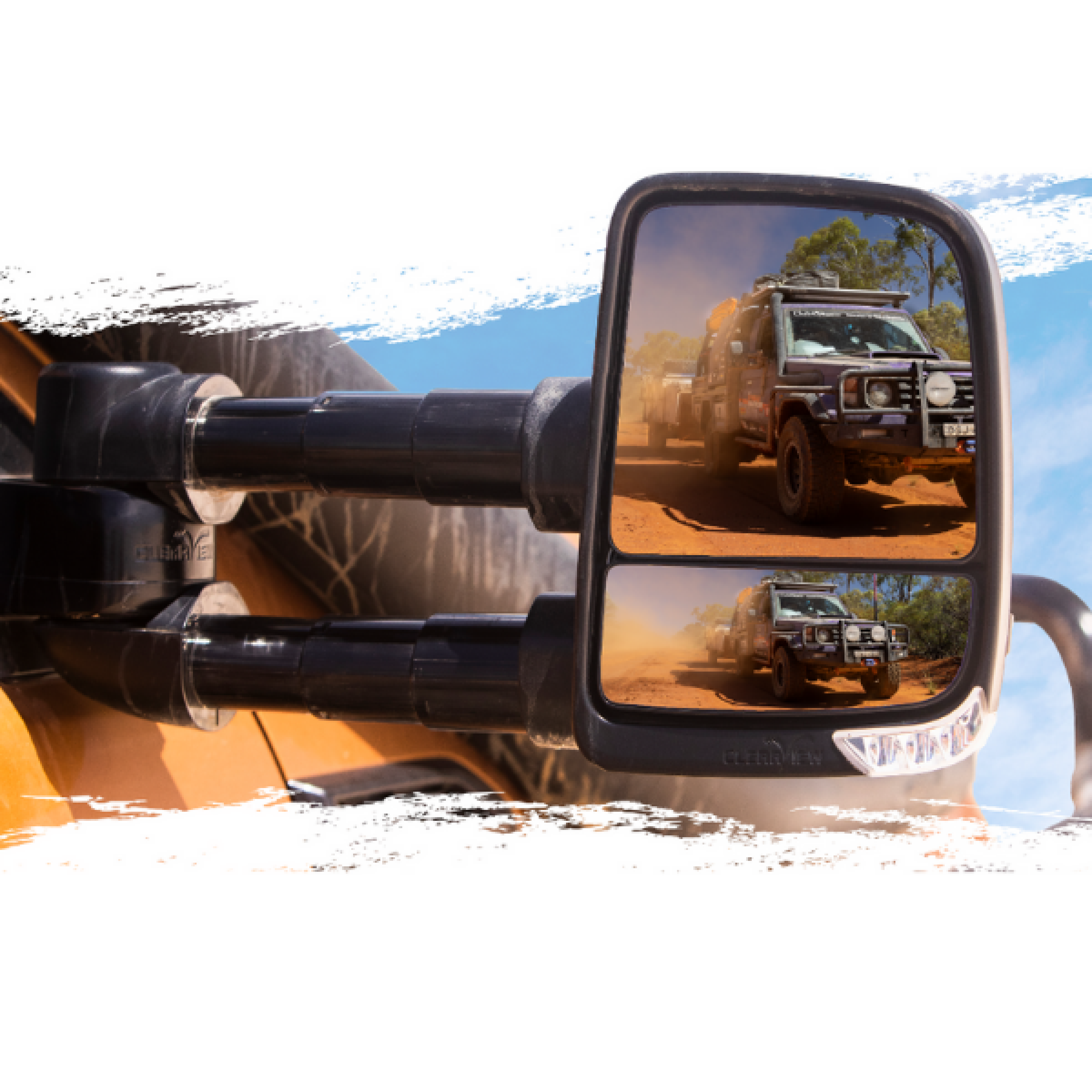
Clearview Accessories has a few different options: Compact; Original and Next Gen. The Compact mirrors are designed to be a comparable size to OEM mirrors and include a single mirror per side. Original and Next Gen mirrors are taller and include a flat mirror and convex mirror on each side. Both types have three levels of extension. Compact models are recommended for vehicles with large canopies or for towing anything under 15ft.
Specifications
- Mirrors per side: 2 (one flat, one convex)
- Extendable: Yes, 3 position
- Powered: Yes
Pros
- All three mirror types include powered options and indicators
- Two-part mirror on Original and Next Gen for increased visibility
- Raw finish option for those who want to colour-code
Cons
- N/A
MSA 4X4 towing mirrors
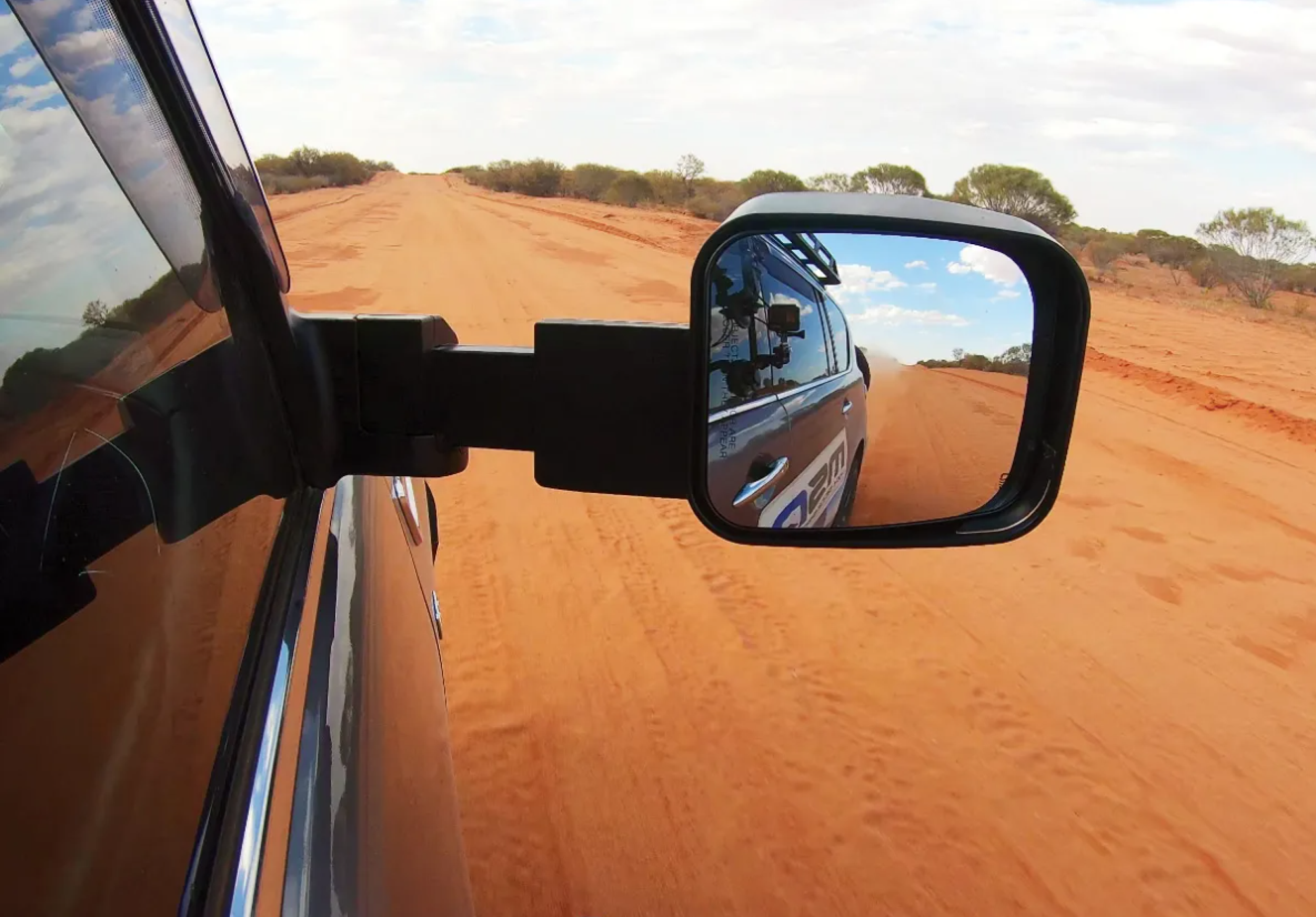
MSA 4X4’s patented, SEMA award-winning Towing Mirrors feature a large single mirror that pivots on a heavy-duty extension slide and allows the mirror to extend when towing and return to a normal driving position when not towing. Featuring four extension positions and a unique pivoting design, these mirrors are highly versatile.
Specifications
- Mirrors per side: 1
- Extendable: Yes, 4 position
- Powered: Yes
Pros
- Includes powered options and indicators
- Market-leading five-year warranty
- Unique pivot design
Cons
- Only the single option, so missing some functions of competitors
OCAM towing mirrors
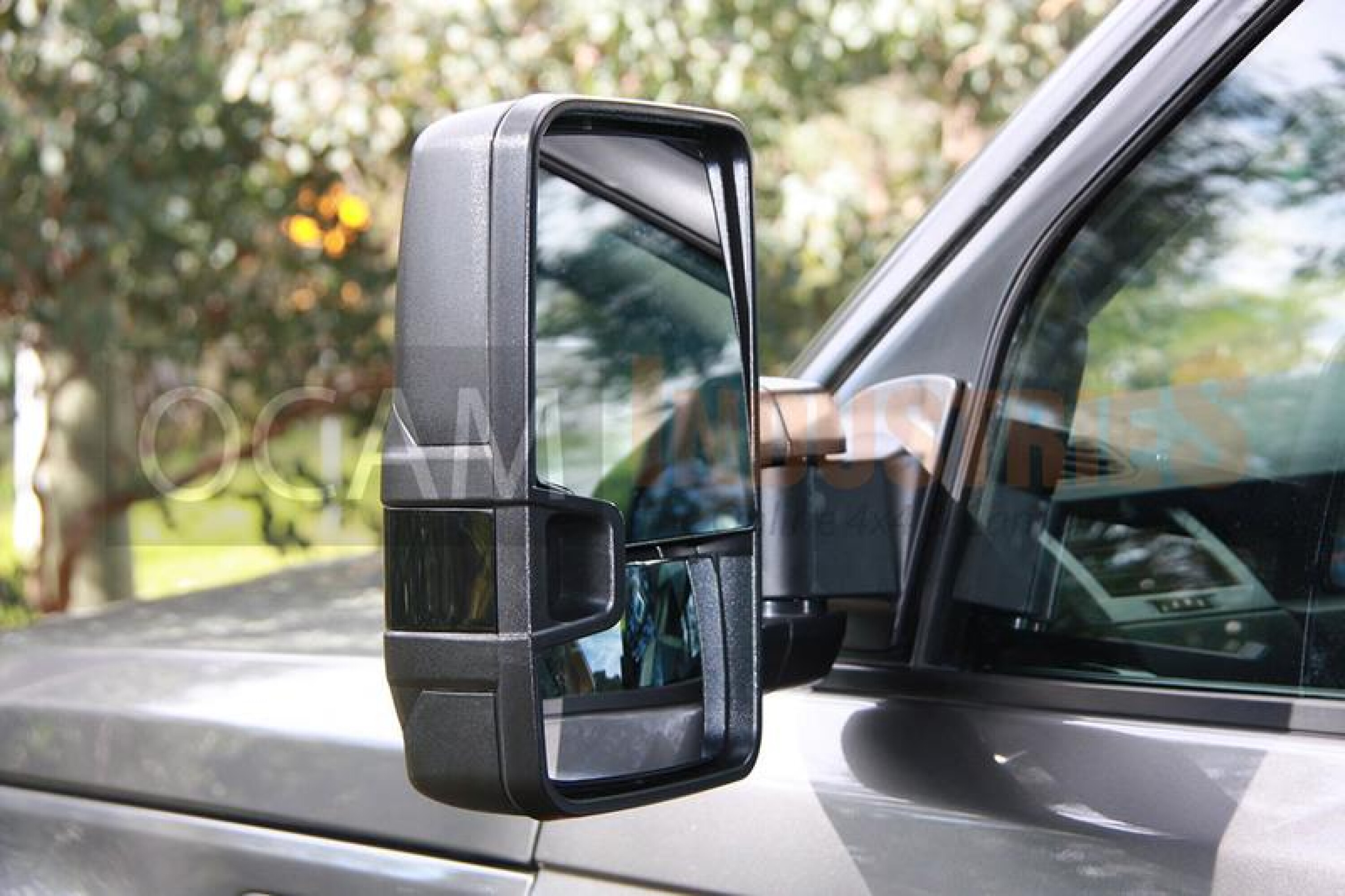
A budget option without losing too much functionality over competitors. These mirrors feature a two-mirror-per-side design for fantastic visibility and extend a whopping 200mm compared to OEM mirrors. These mirrors come in a black or chrome finish and include indicators.
Specifications
- Mirrors per side: 2 (one flat, one convex)
- Extendable: Yes
- Powered: Yes
Pros
- Bargain pricing
- Two-part mirror for increased visibility
- Huge 200mm extension over OEM
Cons
- Fewer positions than competitors
How we review products
4X4 Australia has been reviewing four-wheel drive vehicles and aftermarket products for more than 40 years.
When looking for the best accessories for your make and model of 4WD, there are some things essential to making sure you have the best off-roading experience.
When we compare products, here are some of the things we consider:
- Warranty
- Build quality
- Value for money
- Time and ease to set-up/install
- Weight
- Fit and finish
- How well it gets the job done
- What materials they’re made from
- Corrosion/UV resistance
- Coatings
- Compatibility with other accessories
- Compliance with ADRs and vehicle safety systems
- Country of manufacture
- Load ratings, to determine what’s the best product across each price point.
We also consider user reviews and our own experience with these products to make sure our recommendations are for the best on the market.
Disclosure: When you buy through our links, we may earn a commission. We also include products that we do not earn a commission from.
Update: Toyota Australia is interested in eventual production versions of the electric LandCruiser and EPU ute, but they won’t be for everyone…
Speaking to 4X4 Australia at the 2023 Japan Mobility Show, Toyota Australia vice president sales, marketing and franchise operations Sean Hanley said the electric LandCruiser Se and HiLux-sized EPU ute are on his radar.
“If they ever go into production we’ll certainly put our hand up”, he said when questioned about the LandCruiser Se and EPU concepts.
Though Hanley communicated his excitement for the BEV concepts, he’s adamant that until these vehicles are able to tow 3.5 tonnes and have loaded ranges above 700-800km, they won’t suit the “silent majority” of Australians.
“There may be a market that says: ‘I’m happy about that Land Cruiser BEV, I’m happy to do the town run, fantastic!’ But, if I want to do towing and I want long range, I’ve got a hybrid LandCruiser”, said Hanley emphasising Toyota’s multi-powertrain strategy.
The silent majority Sean is talking about is indeed a huge market in Australia. Sales of large off-road capable SUVs and utes remain strong in 2023 despite advances from Tesla and Chinese EV-makers.
Our original story, below, continues unchanged.
22 October: LandCruiser Se and EPU ute teased ahead of unveiling
Ahead of their official debut at the Japan Mobility Show, Toyota has revealed pictures and details of electric LandCruiser and ute concepts.
Snapshot
- Toyota to show electric LandCruiser concept at Japan Mobility Show
- Monocoque construction differs significantly from 300 Series
- Appears alongside electric EPU pick-up
There aren’t many details, but we do know the electric LandCruise Se concept is of monocoque construction, rather than body-on-frame like the existing 300 Series LandCruiser.
Toyota’s literature describes the concept as one that “further broadens the LandCruiser brand’s appeal with a three-row SUV that caters to the world’s diverse needs.”
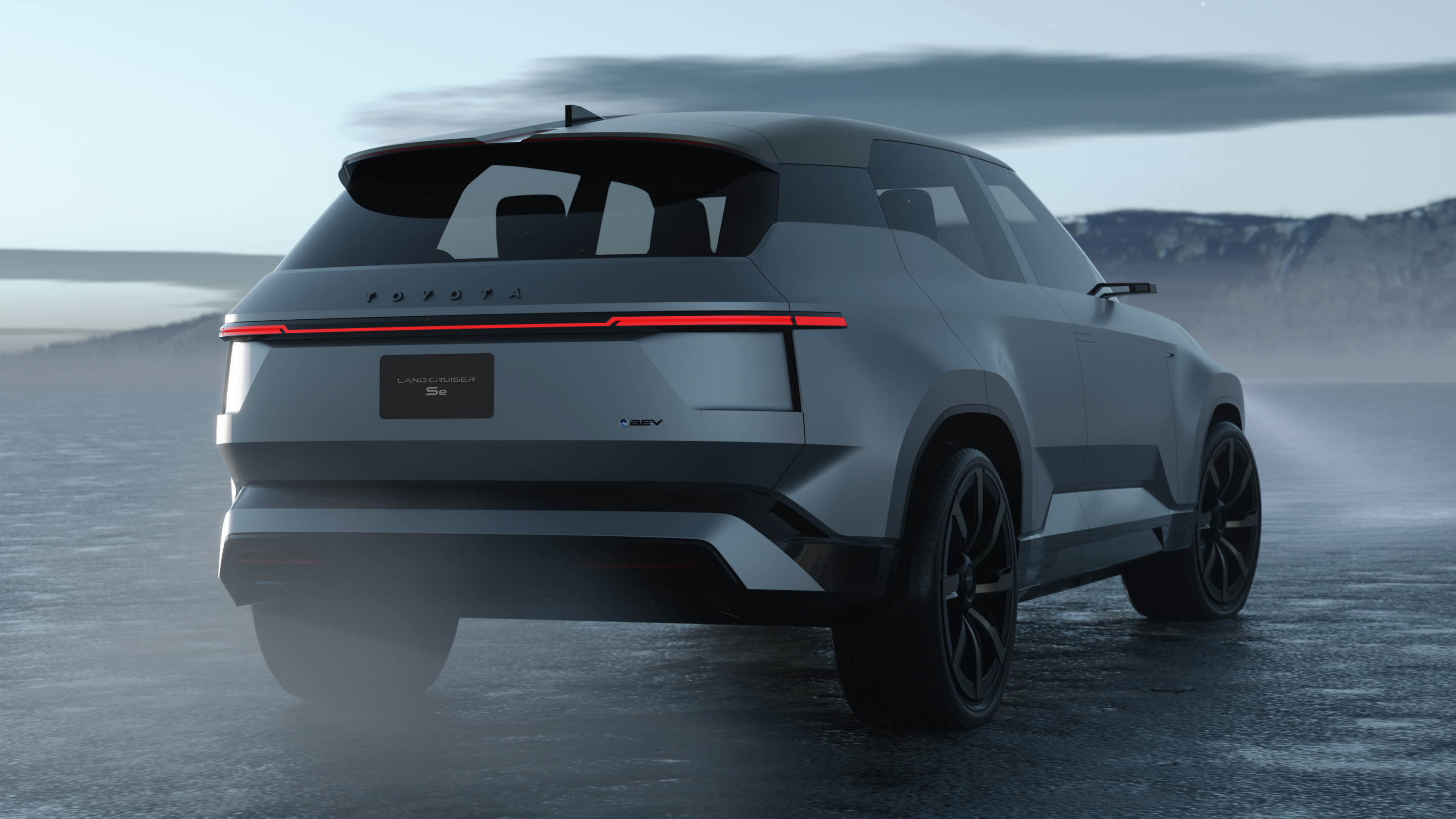
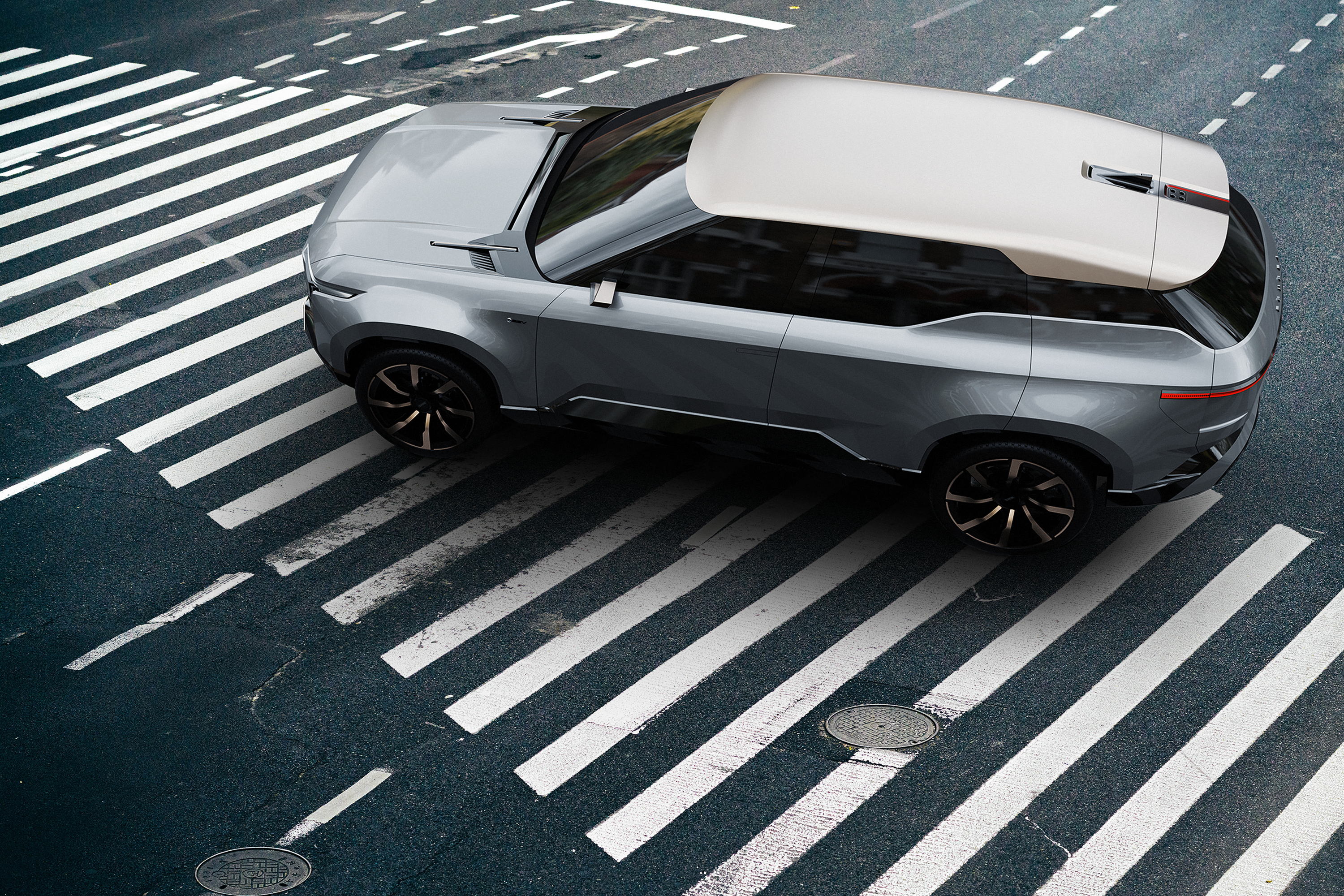
The concept has a lower and more menacing look than the typically tall and blocky LandCruiser models, suggesting the Range Rover Sport might’ve had some influence on its design.
The windscreen is raked back and the designers have gathered the weight over its rear wheels for a clearly performance-oriented appearance.
With Toyota pushing that the concept’s quietness and plush cabin improves its luxury feeling in “urban areas and other on-road situations”, it’s easy to view the LandCruiser Se as the Range Rover Sport to the 300 Series’ full-size Range Rover.
It measures 135mm longer, 10mm wider and rides on a 200mm wheelbase than the existing 300 Series. However, the LandCruiser Se concept’s roof is a significant 200mm lower for a sportier look.
EPU electric ute concept
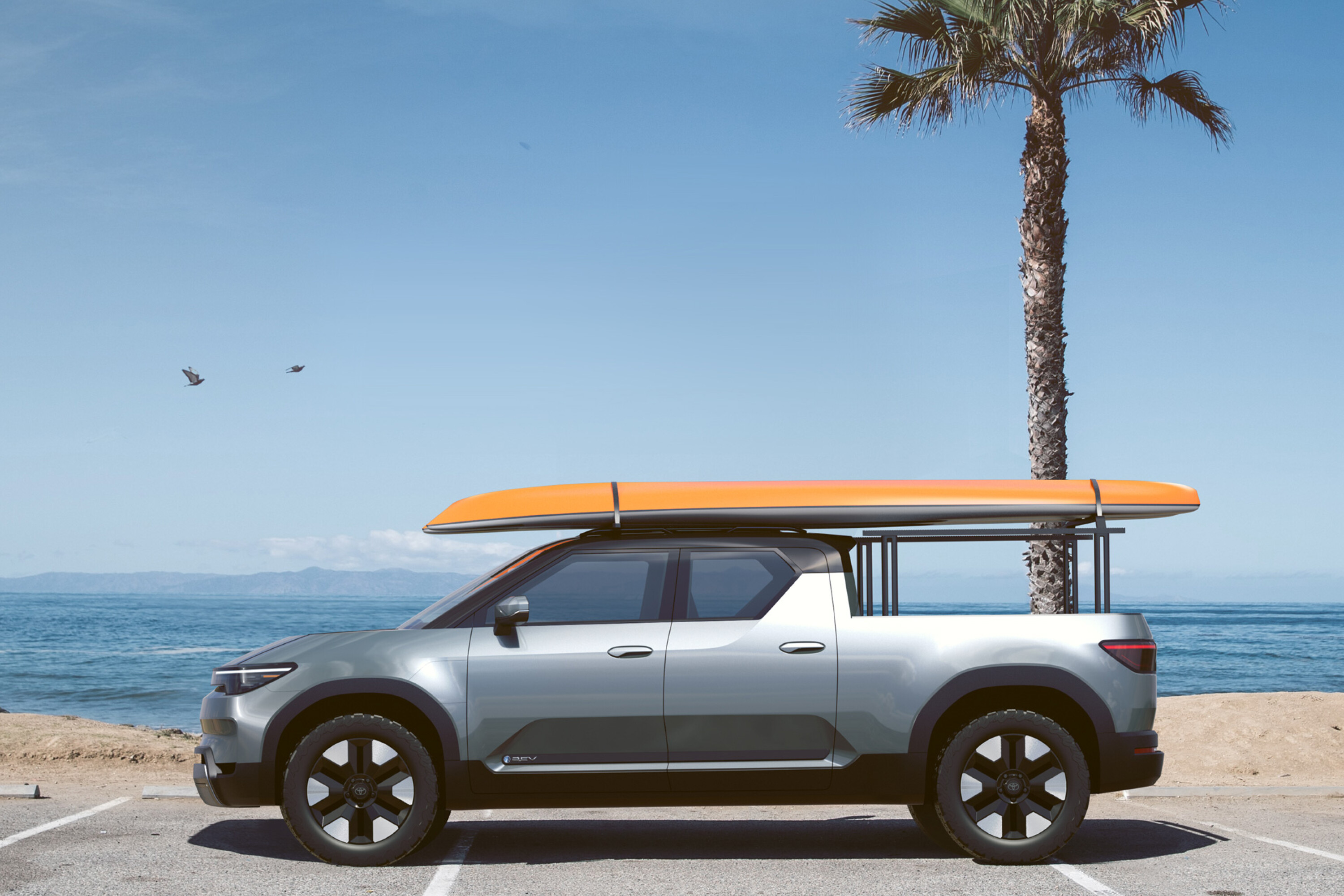
Presumably sharing a platform with the LandCruiser Se is a new monocoque ute that Toyota hinted at previously.
It’s a long way off a Corolla Cross ute but the new concept is still a rival for the likes of the Hyundai Santa Cruz and Ford Maverick – though Toyota’s version will be all-electric.
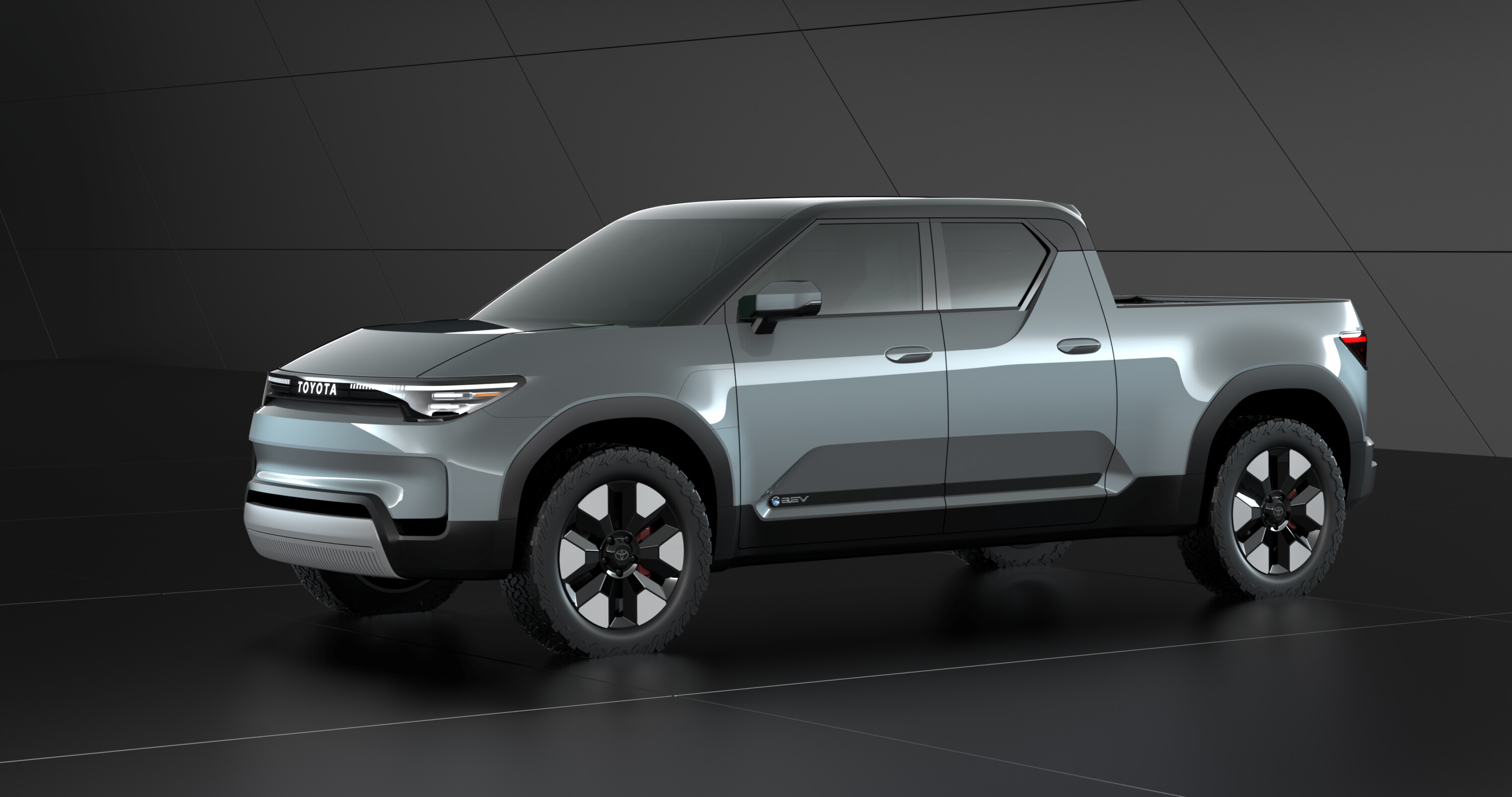
The four-door body accommodates five seats and is relatively long compared to the overall length yet because the wheelbase is so long, the rear wheel is stuck right at the end of the which should be good for load-lugging.
Toyota says the concept supports “a wide range of mobility lifestyles, including outdoor activities”, with the battery pack making for a low centre of gravity as well as car-like handling and ride comfort.
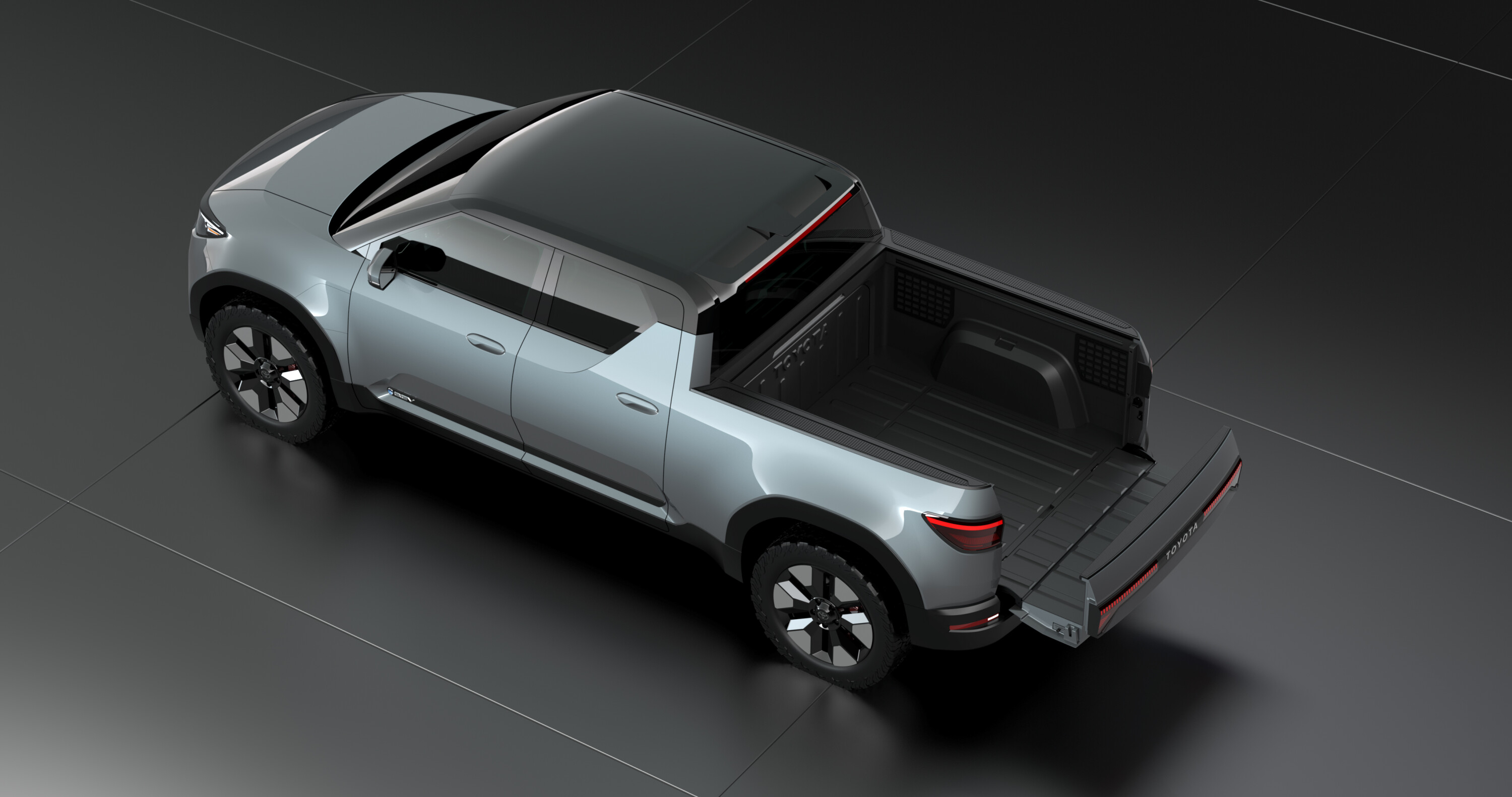
Compared to Australia’s typical dual cab, the Toyota HiLux, the EPU is nearly 300mm shorter with a little more width to improve occupant comfort, and a lower roof for better handling. It also rides on a longer wheelbase than the combustion-engined ute.
Inside it features a yoke-style steering wheel and shows the direction Toyota is heading in the future.
Toyota is yet to reveal details on driving range, power, or what platform these two concepts are sitting on – or whether there will be production versions.
A towbar’s primary purpose is to hitch up whatever you need to tow, be it a caravan, camper or a horse float.
There are many options that will perform this function with minimal fuss, but what about when you’re not towing? Us four-wheel drivers are a special breed who appreciate the extra functionality of a tow bar that can double as a recovery point or provide rear-end protection.
- What it is: A towbar for towing, and maybe more.
- Why you need it: To tow obviously, but also for rear protection and as an all-important rear recovery point. We need to be clear that the tow ball is not a recovery point, but the tow bar itself can act as a receptacle for a proper recovery point or have a built-in recovery point.
- Buying tips: The HiLux is rated to tow up to 3500kg, so make sure your bar is also rated to 3500kg. Those who spend time off-road will appreciate additional rear protection, while anyone accessing the roof will appreciate a built-in rear step.
Here are four products we recommend. Theyu2019re intended as a starting point, to give you an idea of whatu2019s available.
JUMP AHEAD
| Load rating | Rear protection | Recovery point | |
|---|---|---|---|
| Hayman Reese X-bar | 3500kg | No | Yes, rated to 8000kg |
| TJM RB6 | 3500kg | Yes | Optional hitch receiver |
| ARB rear step | 3500kg | Yes | Optional hitch receiver |
| Kaymar rear bar | 3500kg | Yes | Optional hitch receiver |
Hayman Reese X-bar
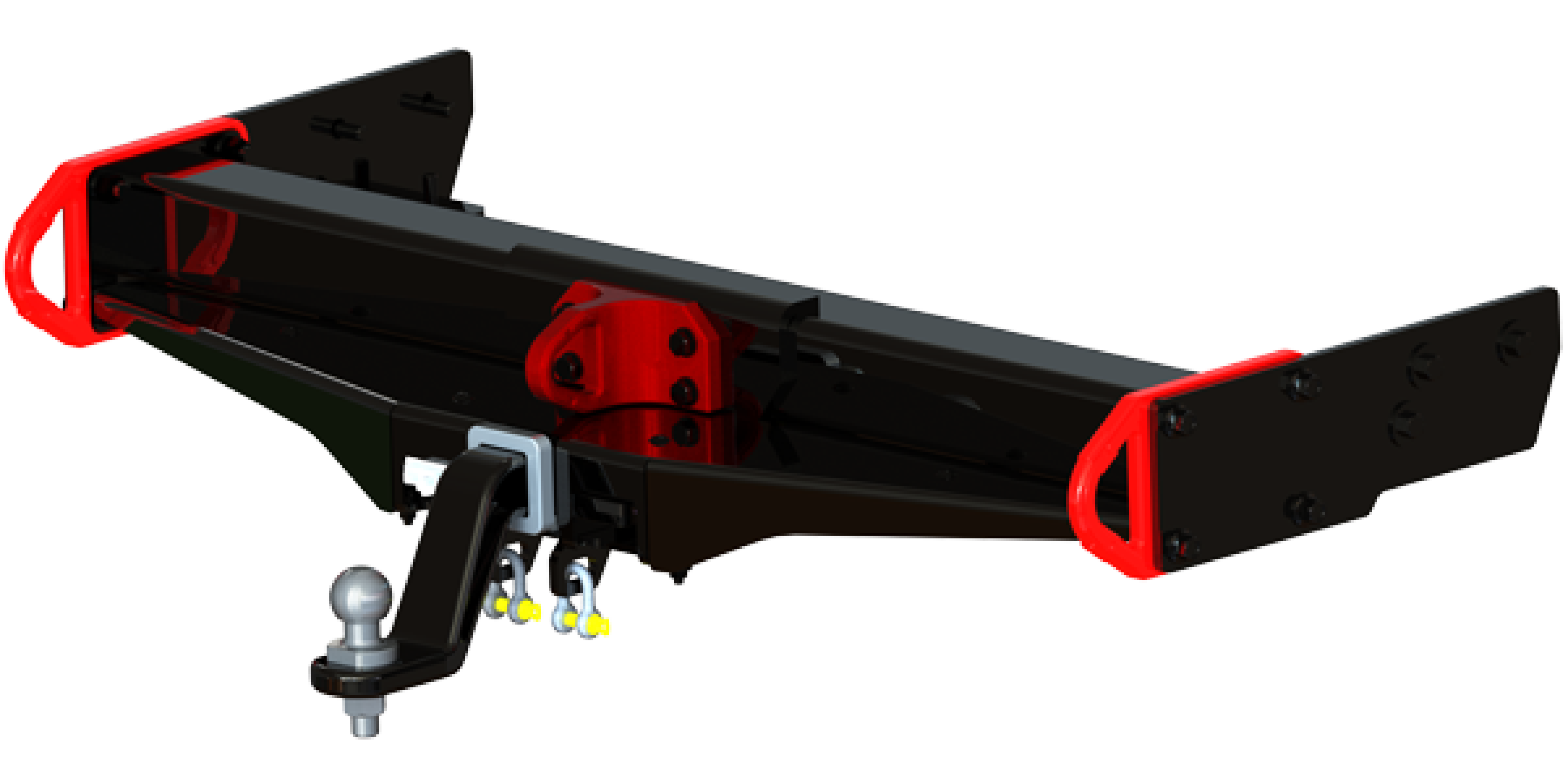
This brand is so well associated with tow bars you would think it invented them. Hayman Reese have been building tow bars since the 1940s, and the X-bar is its best ever off-road model. Featuring fully incorporated recovery points rated to 8000kg, as well as a higher design said to improve departure angle over OEM by five degrees and up to 100mm.
Specifications
- Load rating: 3500kg
- Rear protection: No
- Recovery points: Yes, centre rated to 8000kg and sides rated to 4000kg each
Pros
- Lifetime warranty
- Best-in-class incorporated recovery points
- Extra clearance compared to OEM
Cons
- Wonu2019t protect rear quarters
TJM RB6
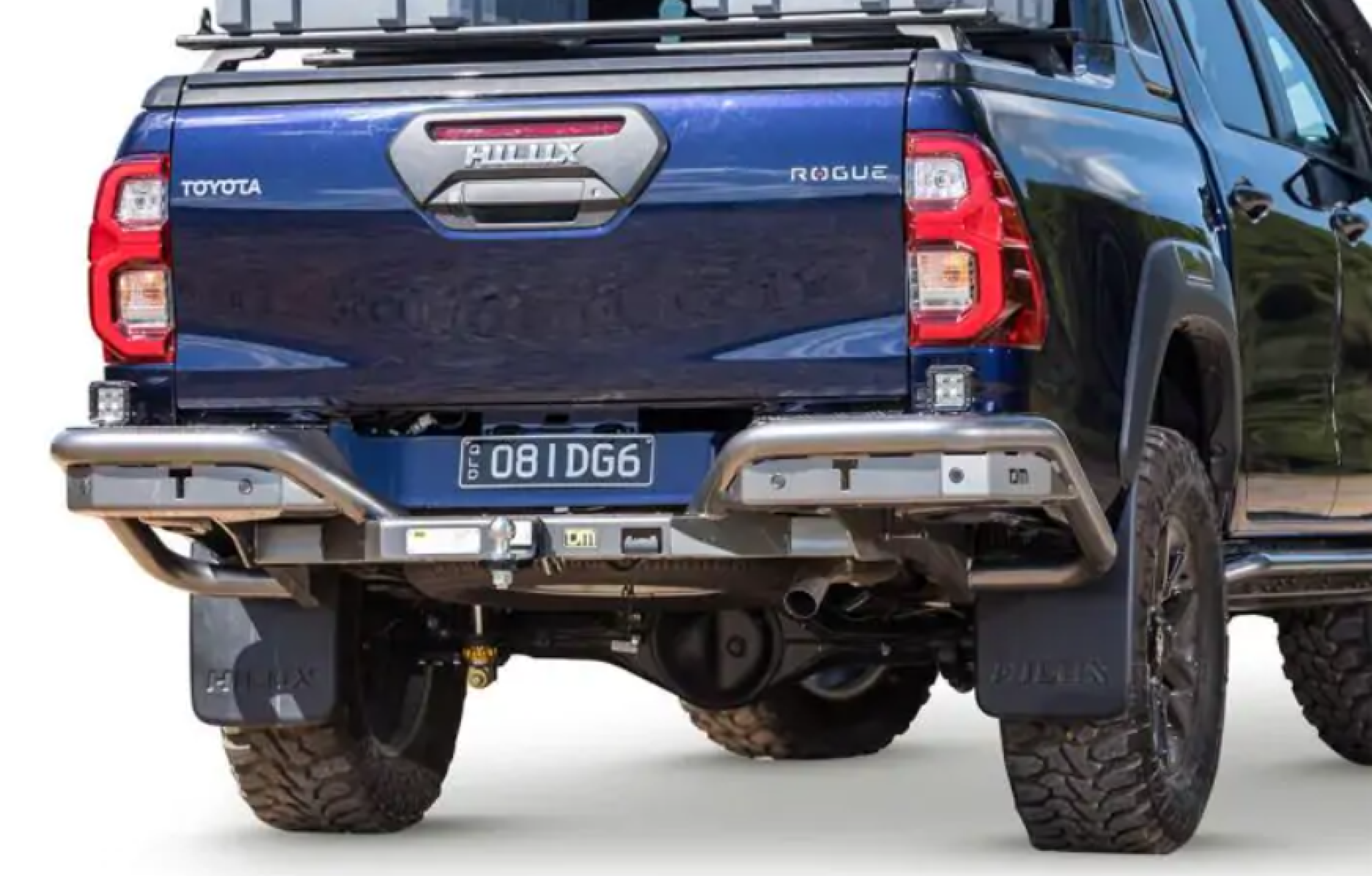
Providing extra protection when off-road while also utilising the full 3500kg tow rating, this TJM rear protection bar should be near the top of the list for serious off-roaders. The T slots allow easy use of high-lift jacks, and the checkerplate steps allow easy access into the back of the ute or to the roof of the canopy.
Specifications
- Load rating: 3500kg
- Rear protection: Yes
- Recovery points: Optional hitch receiver
Pros
- Excellent protection for the tub
- Incorporated step
- It looks the business
Cons
- Only a three-year warranty
ARB Summit rear step tow bar
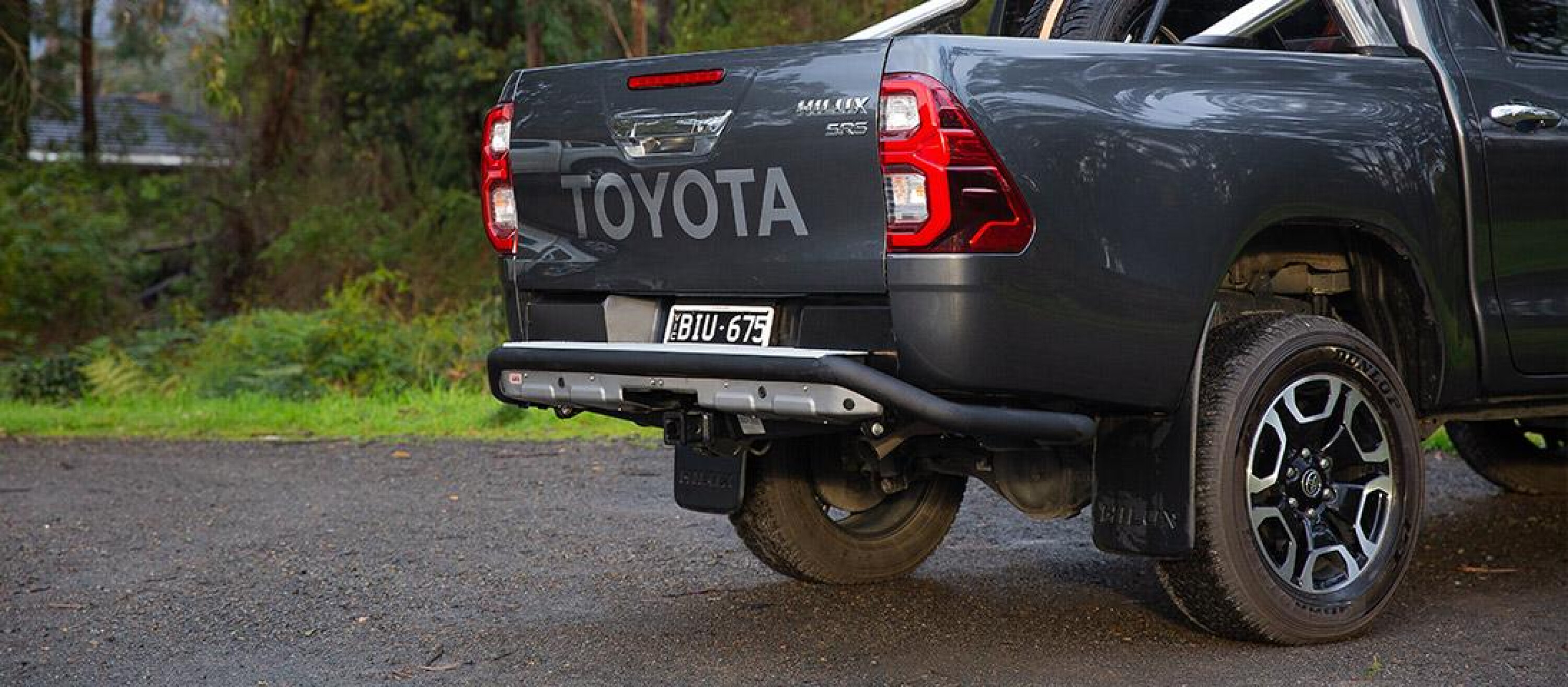
A rear protection bar designed to look more like a bumper bar, but don’t be fooled as the tube underneath is as tough as they come. The bar has provisions for trailer plug wiring, a compressor outlet, trailer camera wiring, parking sensors, and a 50amp Anderson plug. The Summit Raw is also available to suit a factory-fitted Toyota tow bar.
Specifications
- Load rating: 3500kg
- Rear protection: Yes
- Recovery points: Optional hitch receiver
Pros
- Capability to fit parking sensors
- High-lift jack points under the bar
- Can be fitted over a factory Toyota tow bar if required
Cons
- A little more susceptible to damage than full steel bars
Kaymar rear bar
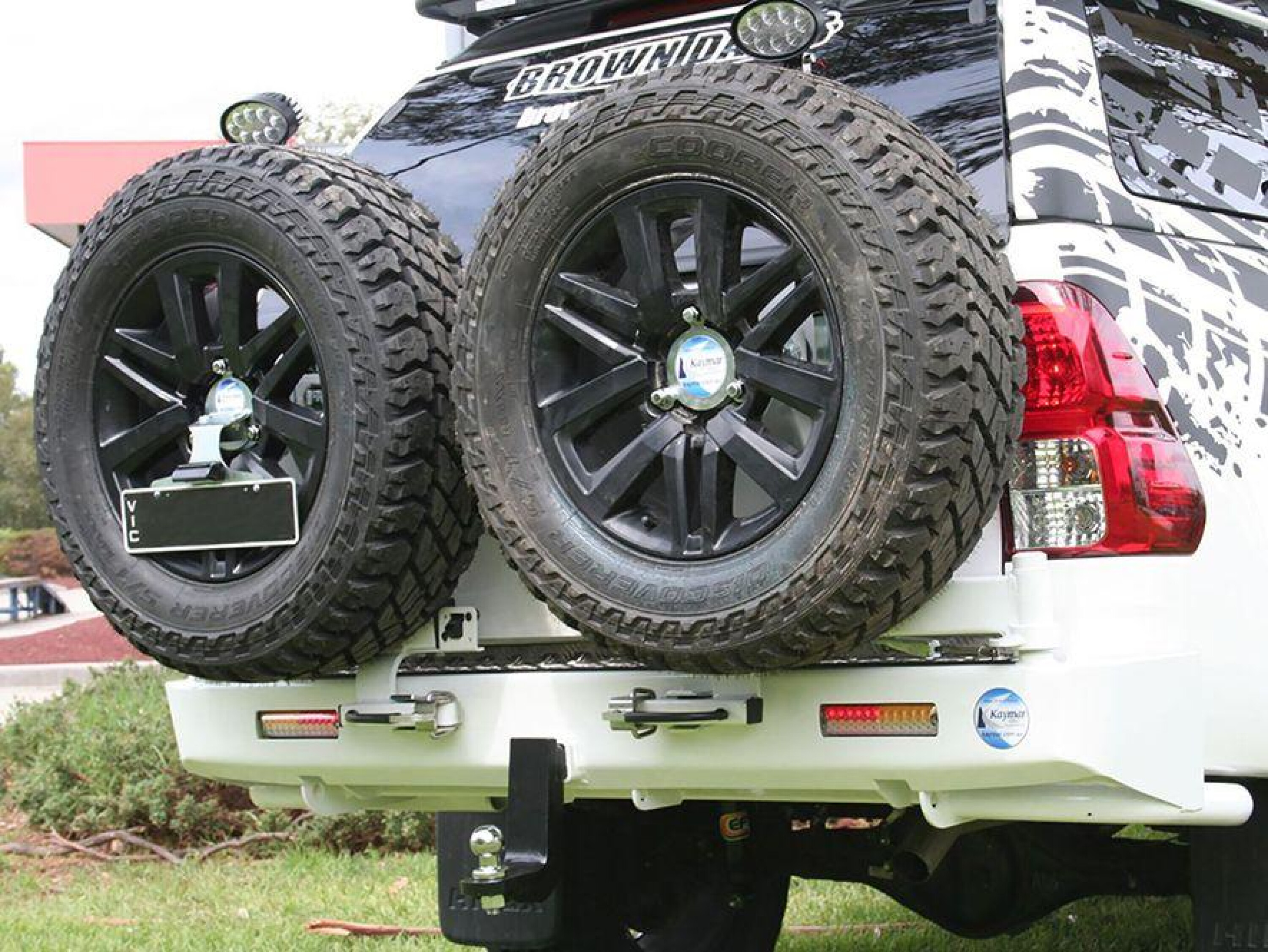
The complete package for those who want to carry an extra spare tyre or an extra jerry can. Also the best option for those fitting auxiliary fuel tanks, as the Kaymar allows relocation of the factory spare. Kaymar is rear bar specialist and its bar for the new HiLux is no exception. It looks the business and you won’t find a tougher bar out there.
Specifications
- Load rating: 3500kg
- Rear protection: Yes
- Recovery points: Optional hitch receiver
Pros
- Ability to carry spare wheel and jerry cans on swing-away carriers
- One of the toughest rear bars on the market
- Neat finish that can be colour-coded
Cons
- Obviously heavier than tube-based bars
- Reversing camera kit will only suit SR5
How we review products
4X4 Australia has been reviewing four-wheel drive vehicles and aftermarket products for more than 40 years.
When looking for the best accessories for your make and model of 4WD, there are some things essential to making sure you have the best off-roading experience.
When we compare products, here are some of the things we consider:
- Warranty
- Build quality
- Value for money
- Time and ease to set-up/install
- Weight
- Fit and finish
- How well it gets the job done
- What materials they’re made from
- Corrosion/UV resistance
- Coatings
- Compatibility with other accessories
- Compliance with ADRs and vehicle safety systems
- Country of manufacture
- Load ratings, to determine what’s the best product across each price point.
We also consider user reviews and our own experience with these products to make sure our recommendations are for the best on the market.
Disclosure: When you buy through our links, we may earn a commission. We also include products that we do not earn a commission from.
If you only occasionally carry heavy loads or tow trailers, a permanent suspension upgrade may see you bouncing down the road when the vehicle is unladen and sagging when the vehicle is heavy.
What you need is something to temporarily beef-up load-carrying capacity. Installing suspension load assists can help improve performance and make your HiLux ride smoother and safer. These aftermarket components are designed to provide additional support to your vehicle’s rear suspension, reducing sag and sway and distributing weight more evenly.
- What it is: Devices designed to temporarily increase the load-carrying capacity of your rear suspension. These are typically air bags that fit on the rear axle to supplement the leaf springs.
- Why you need it: The OE suspension can’t evenly balance the normal (light) weight you run for the majority of the time and heavy weights you occasionally carry, unless you fit auxiliary helpers that stiffen up the suspension when loaded.
- Buying tips: Look for in-cabin controls, and whether the kit will still fit if you have a suspension lift.
Here are two products we recommend. Theyu2019re intended as a starting point, to give you an idea of whatu2019s available.
JUMP AHEAD
| Replaces bumpstop? | In-cab control | On-board air compressor | |
|---|---|---|---|
| Boss Air Suspension | Yes | Optional extra | No |
| Airbag Man | Yes | No | No |
Boss air suspension
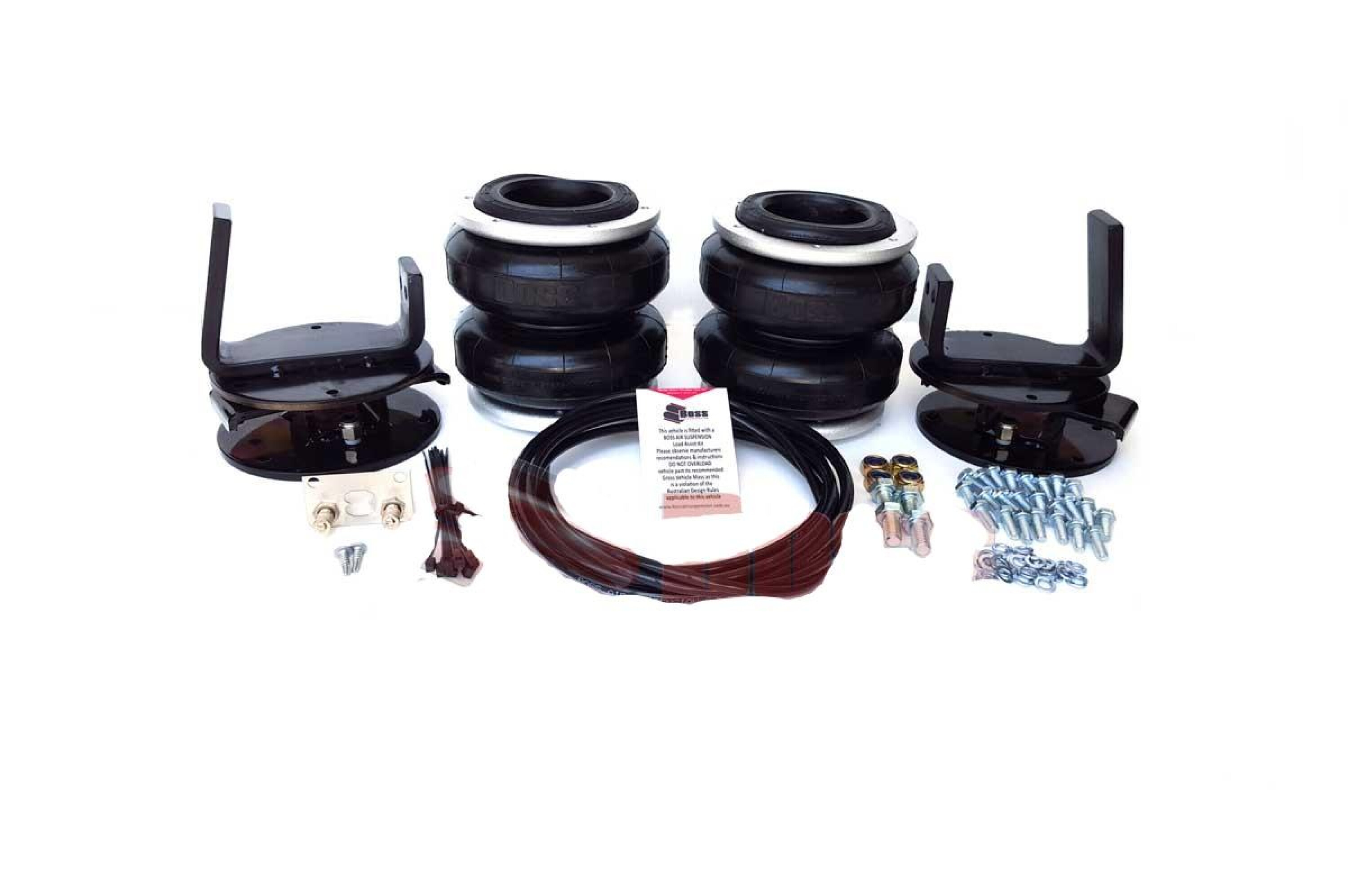
Boss Extreme air bags are rated at 2500lb or 1136kg per side and have been government-approved to over 750psi. Boss states the average dual-cab ute will run around 15-45psi in the air bags, depending on load. These air bags are suitable for vehicles with up to a two-inch lift.
Specifications
- Replace bump stop?: Yes
- In-cab control: Optional extra
- On-board compressor: No
Pros
- Some of the toughest bags on the market
- Rated air lines
- Mounts to factory points
Cons
- You can potentially double the price if you option up on accessories like in-cab control and inflation kits
Airbag Man air suspension
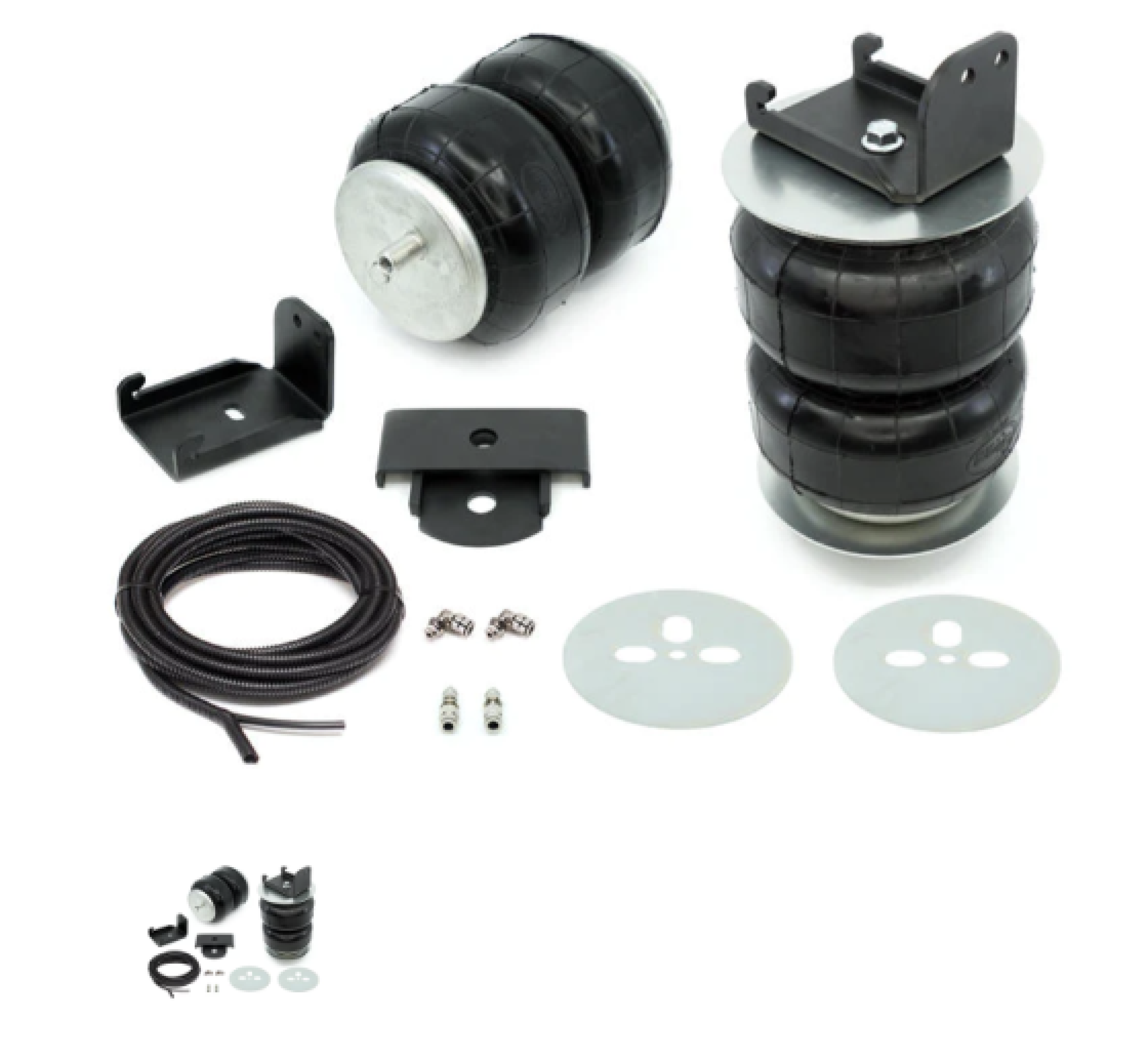
Airbag Man specialises in air suspension systems for various vehicles, improving ride comfort, stability, handling and overall performance. Providing options for either stock-height vehicles or vehicles with up to a two-inch lift, Airbag Man has you covered. Airbag Man recommends a maximum inflation pressure of 50psi for these air bags and claims these can be installed in around two hours.
Specifications
- Replace bump stop?: Yes
- In-cab control: Optional extra
- On-board compressor: No
Pros
- Limited lifetime warranty for peace of mind
- An experienced company that has been in the game a long time
- Simple to fit, utilising factory points
Cons
- Optional extras can really blow out the price
How we review products
4X4 Australia has been reviewing four-wheel drive vehicles and aftermarket products for more than 40 years.
When looking for the best accessories for your make and model of 4WD, there are some things essential to making sure you have the best off-roading experience.
When we compare products, here are some of the things we consider:
- Warranty
- Build quality
- Value for money
- Time and ease to set-up/install
- Weight
- Fit and finish
- How well it gets the job done
- What materials they’re made from
- Corrosion/UV resistance
- Coatings
- Compatibility with other accessories
- Compliance with ADRs and vehicle safety systems
- Country of manufacture
- Load ratings, to determine what’s the best product across each price point.
We also consider user reviews and our own experience with these products to make sure our recommendations are for the best on the market.
Disclosure: When you buy through our links, we may earn a commission. We also include products that we do not earn a commission from.
Anker has launched its new range of Anker Everfrost powered fridges just in time for summer, when enjoying a cold beverage after a long day’s drive is always a winner.
Whether it’s at the beach, picnicking in the park or a weekend away, with an Anker EverFrost you can enjoy twice the storage capacity as a traditional fridge, with no ice needed.
Available in three sizes – 33L, 43L and 53L – the Anker Everfrost range uses a high-efficiency cooling compressor with a 7mm seal and 50mm insulation for speedy cooling.
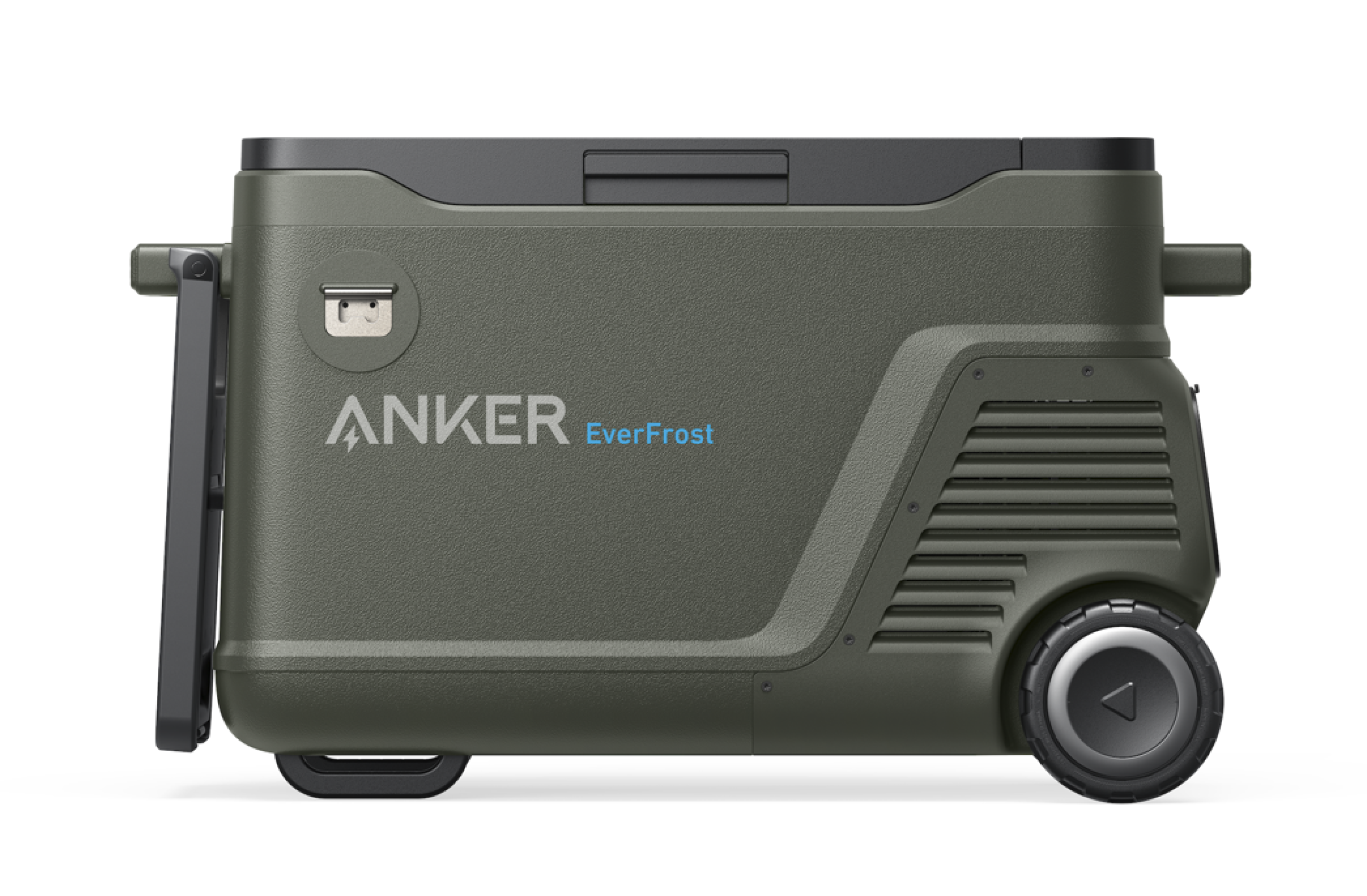
It takes as little as 30 minutes for food and drinks to chill from 25°C to 0°C. The 53L Everfrost fridge is dual-zone so you have the option to run it as a fridge, fridge/freezer or freezer.
“For Aussies, heading out with a cool box of some sort is just a way of life. But with the Everfrost range of fridges, we’re taking the experience to a whole new level,” said Gaspar Xie, Managing Director, Anker Innovations ANZ. “Thanks to Anker’s battery technology, we’re able to provide a complete refrigerant system that makes for the perfect partner for days away from home.
“Not just that, the Anker Everfrost powered fridge offers fast and flexible recharge options and connectivity, with everything controllable via a smartphone app. It’s perfect for those long summer nights, and we’re confident Aussies will think it’s pretty cool,” Xie added.
With up to four convenient charging options, the internal Everfrost battery can be charged from zero to 100 per cent in four hours via 240V or a 12V car socket. The Everfrost range comes with a detachable 299Wh battery that will keep food and drinks at an optimal temperature for up to 42 hours (based on the Everfrost 30).
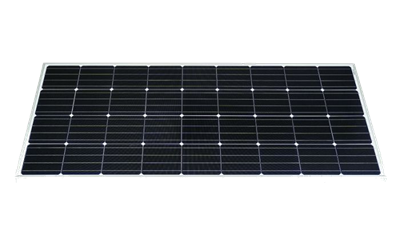
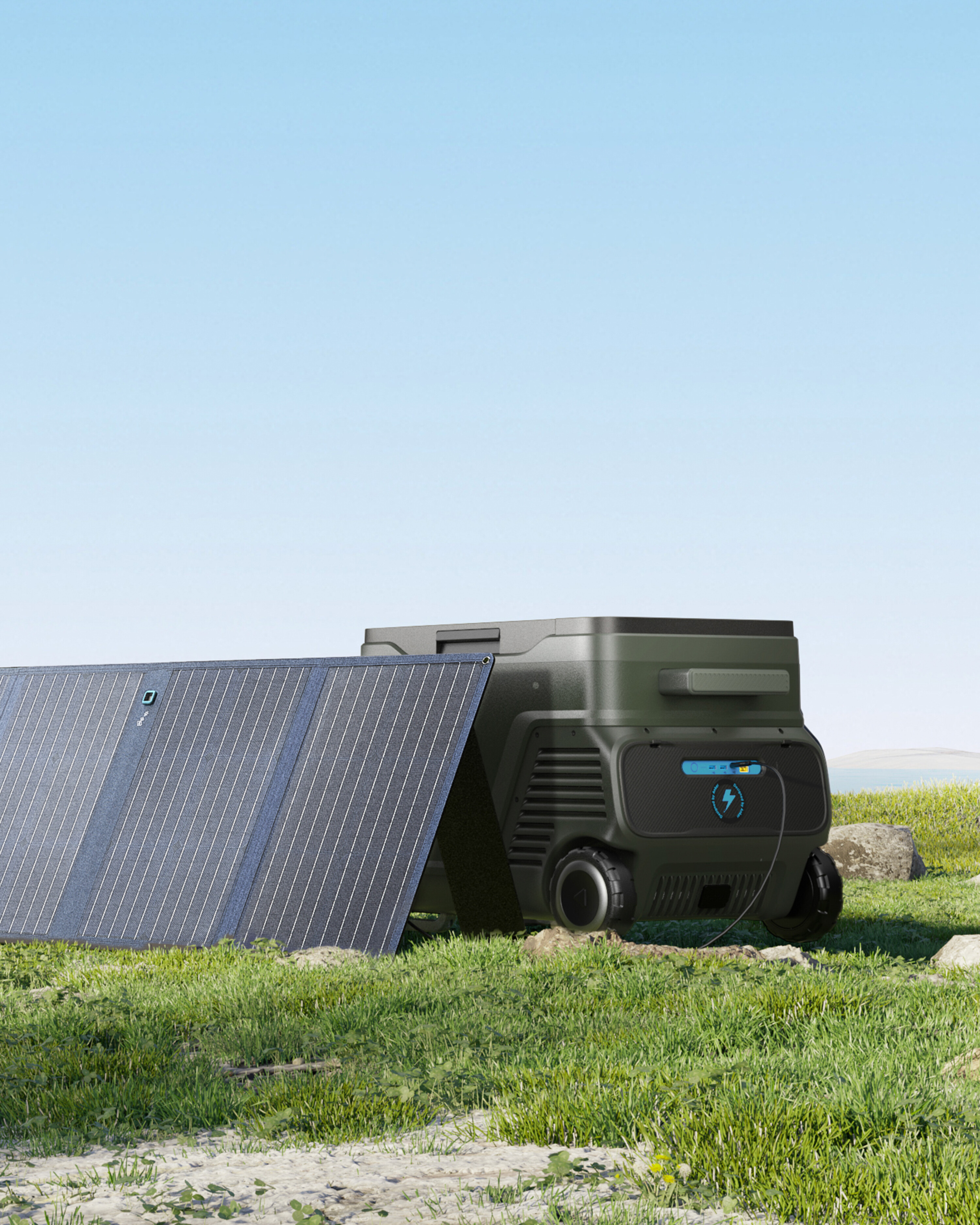
Included with each fridge is a rapid recharge 60W USB-C cable that can recharge the fridge from 0-100% in 5.8 hours. That’s not all, the Everfrost fridge can be hooked up to Anker’s 625 Solar Panel (100W) to be fully recharged in as little as 3.6 hours of direct sunlight.
The Everfrost is easy to transport with its Easytow suitcase-style handles that can be extended for enhanced portability or used as a tabletop even when the fridge is open.
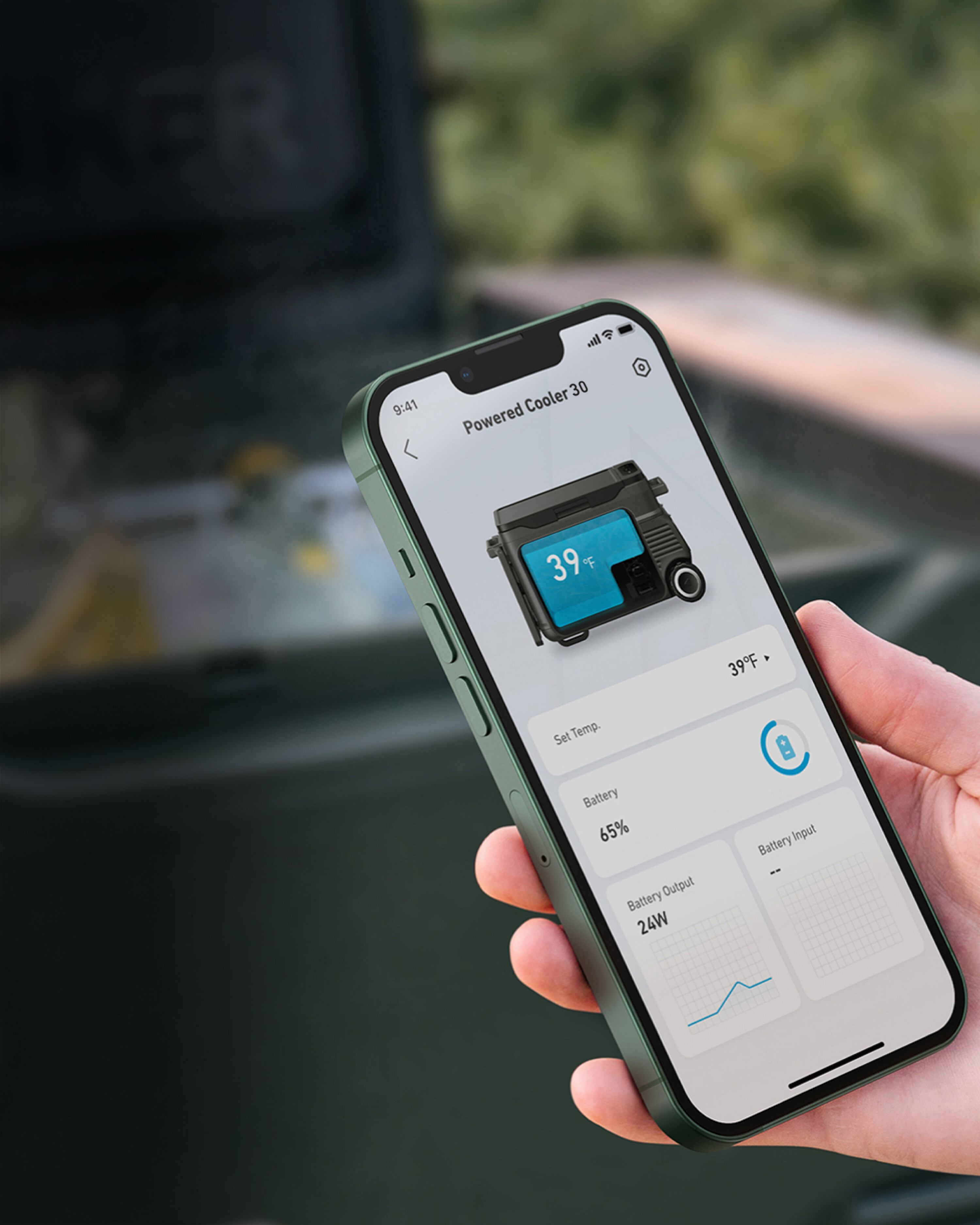
Durable six-inch wheels allow the fridge to be pulled across rugged surfaces, from bushland to beaches. The Everfrost range also includes a bottle opener, and two USB-A and one USB-C ports for charging your phone or Bluetooth speakers.
The Anker app allows you to control the temperature, and voltage protection level and power the unit on/off as well as monitor the battery level. You can also turn the fridge on/off and change the temperature via the panel on top of the fridge.
Pricing
The Anker Everfrost powered fridge is available via the MyAnker store, with prices starting at $1499.95 for the EverFrost 30 (33L). The EverFrost 40 (43L) and EverFrost 50 (53L) will retail for $1699.95 and $1999.95 respectively.
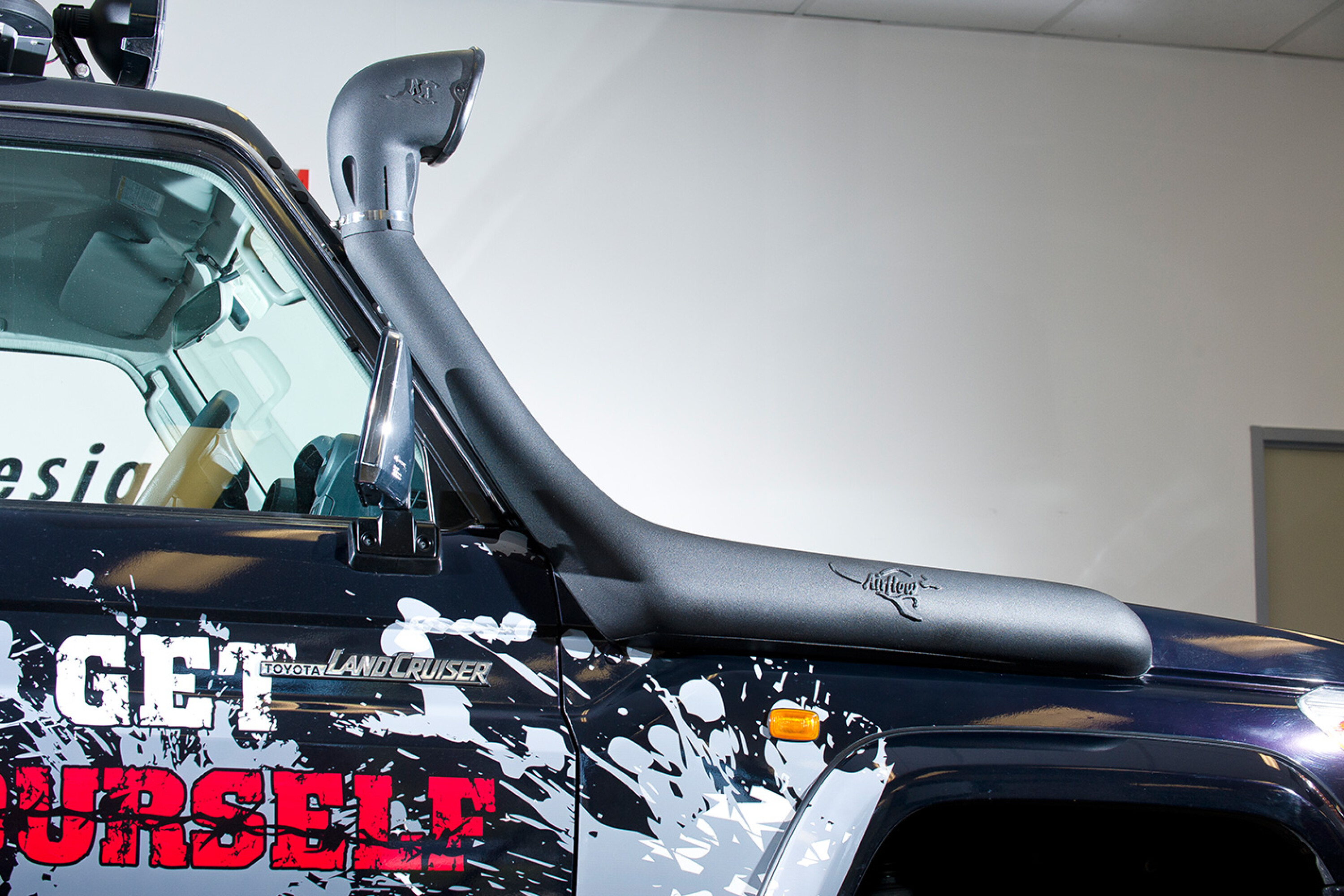
There’s no doubt any off-road-oriented four-wheel drive worth its salt requires a snorkel.
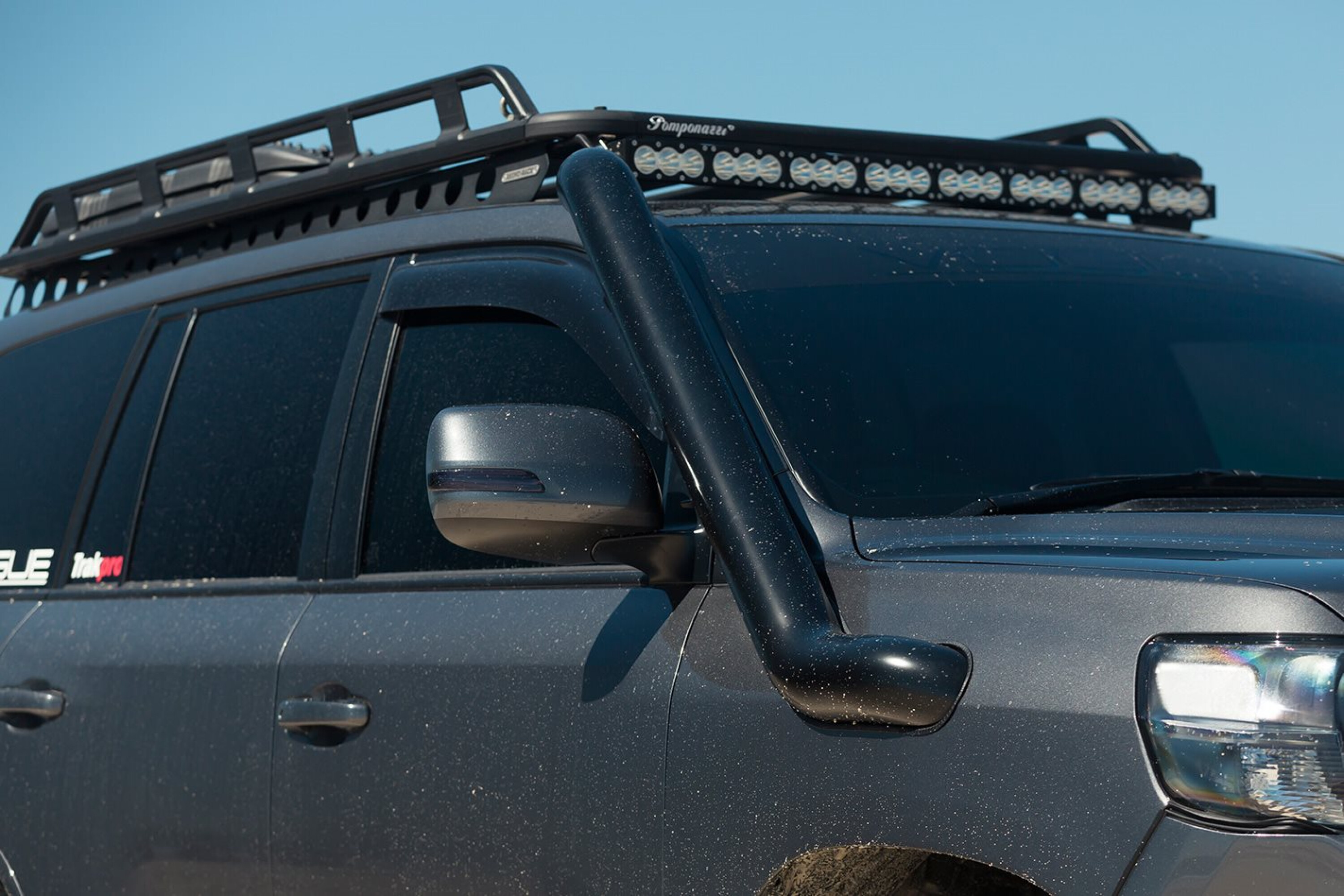
This vital tool in a four-wheeler’s arsenal not only allows vehicles to cross deep water crossings, but its elevated position allows cleaner, dust-free air to filter through to the engine.
“On a standard vehicle setup, the air intake is usually in the inner wheel arch or under the bonnet. The air from these locations is not always the best, as the air can be affected by external elements such as dust, heat or water,” explained Ironman 4×4’s product director, Adam Craze.
“So, as a starting place, fitting a snorkel raises the air intake to allow the air to be taken from a higher, cooler location, that in most cases is less affected by dust.”
Engines require cooler, cleaner air to work to their optimum ability, so having an elevated snorkel filtering air into the engine when attempting to mount Big Red will make it a hell of a lot easier to reach the top.
Jason Luxon, Safari 4×4’s marketing manager, agreed: “A positively sealed snorkel system is generally installed to protect your engine against water and dust ingression, providing cleaner, cooler air at all times.
“Armax snorkel systems go one step further and have the ability to supply up to 40 per cent more airflow over a standard air-intake system, for increased engine performance.”
As well as protecting an engine from silty dust deposits, a well-designed snorkel also enhances a 4×4’s appearance.
“The TJM Airtec Snorkel provides a pleasing aesthetic accessory that will enhance the look of any 4WD,” Brad Cooper, TJM’s category manager for mechanical components, told us.
James David, Sherpa 4×4 technician, added: “The snorkel is an affordable upgrade which not only improves the appearance of the vehicle but also provides a practical upgrade to the factory vehicle airflow design. It is especially important for people planning to do touring or extreme adventures off-road.”
JUMP AHEAD
Sealed versus unsealed
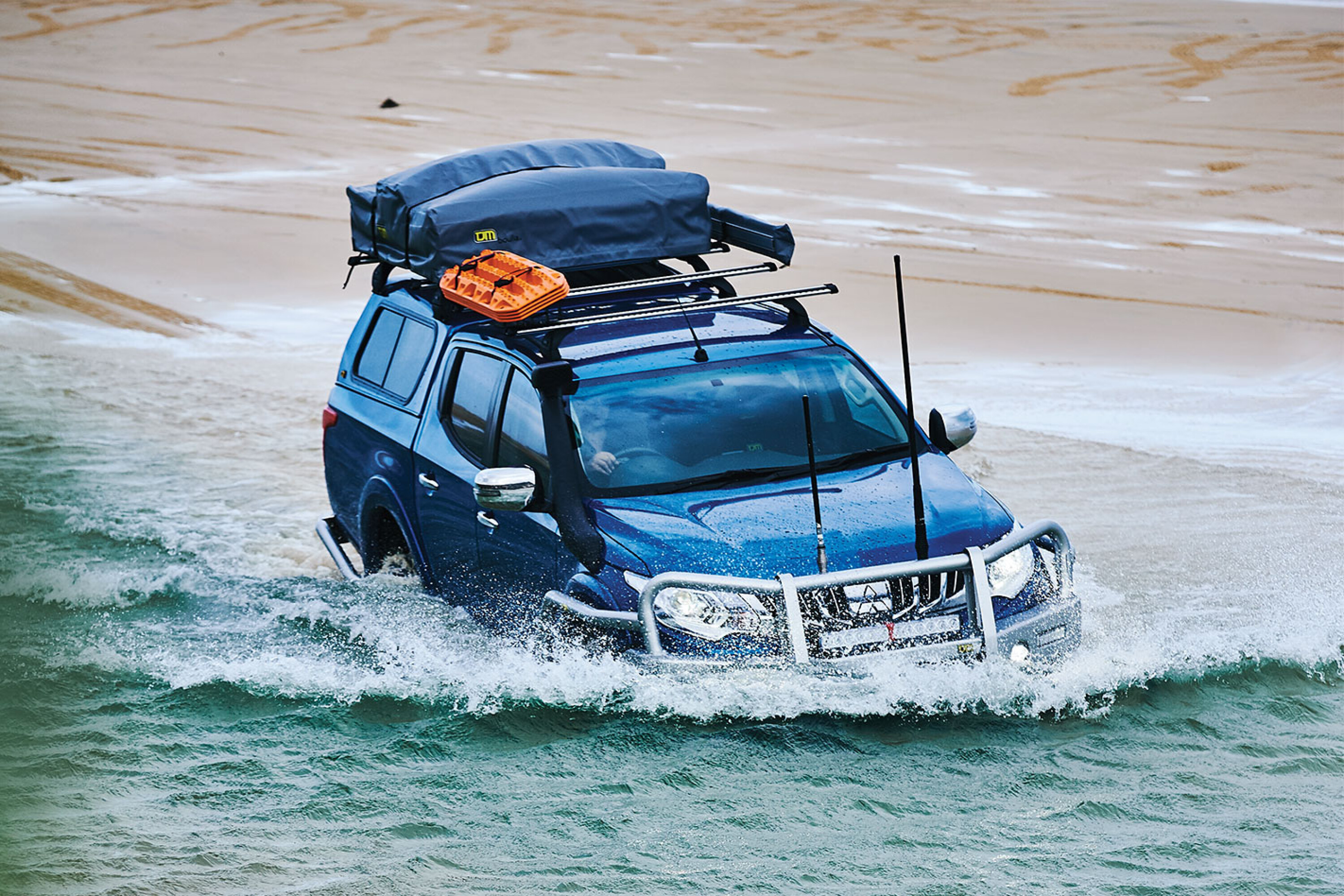
A sealed snorkel will prevent water and dust from entering an engine, while unsealed snorkels, designed as a multi-piece construction are, according to Airflow’s David Mellords, “made for the benefit of external air induction but not with water protection in mind”.
Any serious off-roader will flick an unsealed snorkel in favour of a sealed one as soon as the keys to the new rig exchange hands, as an unsealed snorkel won’t be much chop when the tracks get dusty or wet.
The experts agreed: “We don’t understand why anyone would fit a snorkel only to leave it unsealed,” said Sherpa’s James David.
“A sealed snorkel is the only snorkel to have,” added Adam Craze.
“TJM Airtec snorkels are all positively sealed to the vehicle’s air box during installation,” said TJM’s Brad Cooper, adding: “It’s important to note that to ensure the warranty of your vehicle you must follow the manufacturer’s handbook to ensure you have complied with their recommendations for water wading and general vehicle operation.”
Stainless steel or plastic
Other than the construction, there’s not a hell of a lot of difference between a plastic and stainless steel – typically made from high-grade 304 – snorkels.
“There’s really not that much different between the two,” Phat Bars’ Paul Hanlen told us. He added that a main point of difference between the two constructions is style. “We look at the lines of the car from all directions, to make sure the product remains stylish.”
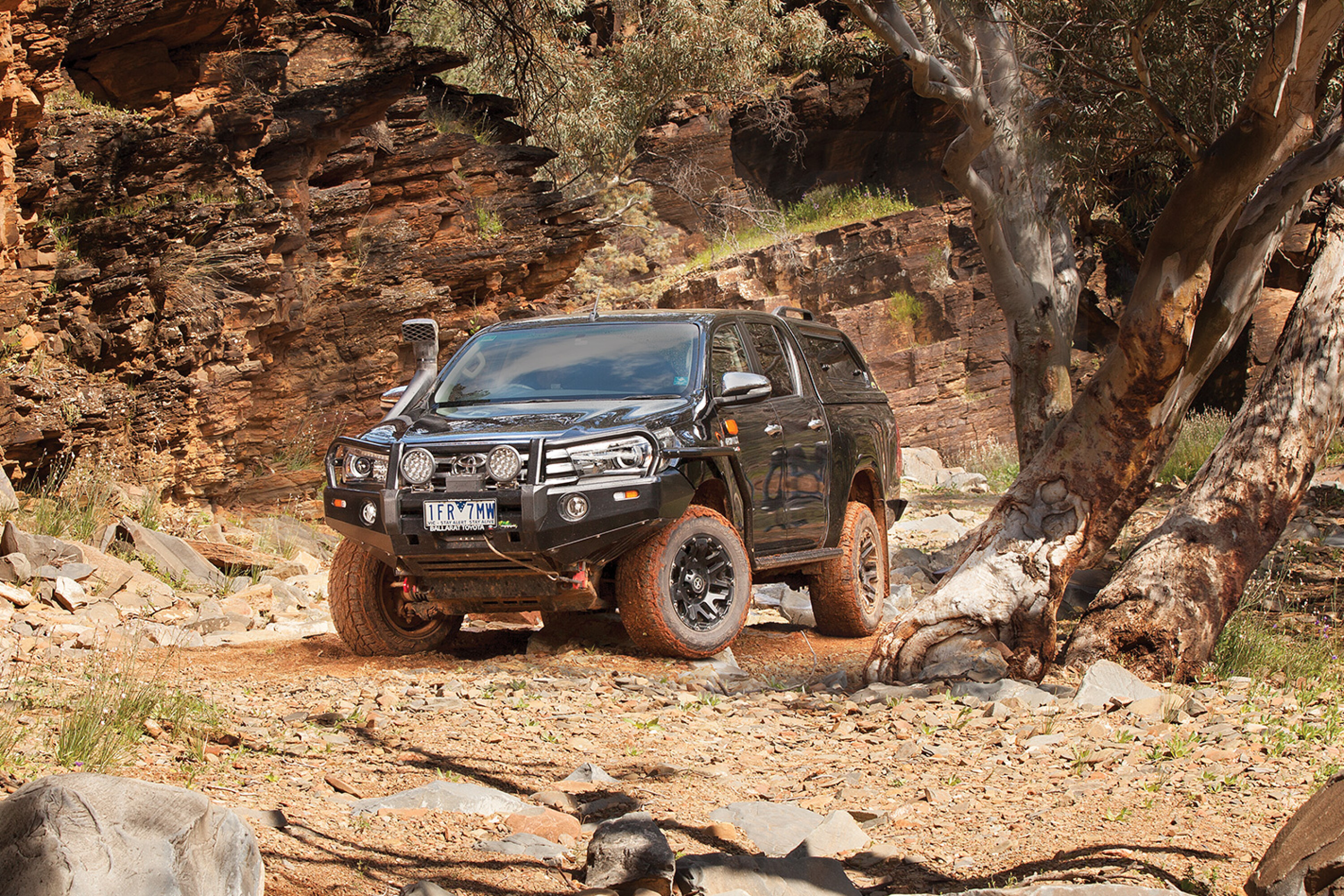
A stainless steel snorkel will afford structural rigidity and robustness, and it will be corrosion-resistant and of one-piece construction, meaning it’ll be just as capable as plastic snorkels for desert and river crossings. Phat Bar snorkels remain between 75 and 100mm all the way to the airbox – often 100mm the entire way.
“There’s plenty of air going all the way to the airbox,” Hanlen said. “We also angle the rear of our snorkels so that they’re not facing totally backwards.”
Avoid cheap imitations
WHY spend your hard-earned on a quality snorkel from a trusted manufacturer when there are imitation versions available for a fraction of the cost?
For starters, quality made aftermarket snorkels are designed and styled to fit specific vehicle applications. Brad Cooper from TJM explained, “Most cheap imported snorkels are either copies or designed to suit foreign vehicles and will not fit your car correctly. TJM Airtec snorkels offer a range of intake (ram) heads to suit your particular style and application.”
Opting to buy an aftermarket snorkel from the specialists could be one of the smartest off-roading decisions you’ll ever make. Not only will the high-quality product be up to the task, you’ll have peace of mind that your engine will be protected from dust and water ingress, and the product will last the duration of your travels.
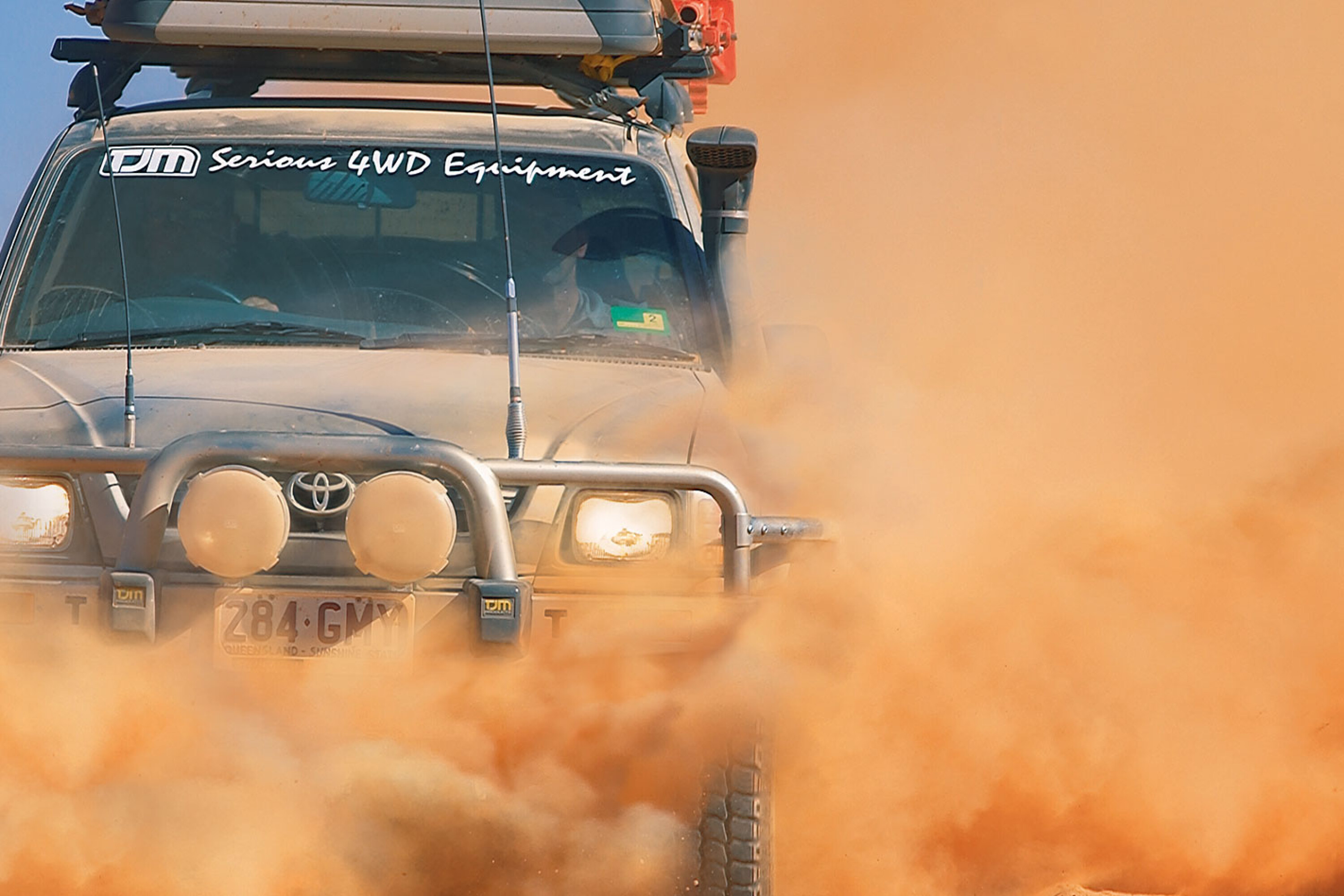
“Purchasing from a trusted manufacturer and retailer gives you the peace of mind that your investment is protected wherever you travel. Why would you risk damaging the engine of your pride and joy by fitting a cheap, poor-fitting imported snorkel?” asked Cooper.
Sherpa 4×4’s James David added that experience and reliability are key reasons to stick with the professionals. “Choosing a Sherpa snorkel, you know the product has been proven and installed hundreds of times before, meaning it will fit your vehicle without trouble. You will also have access to aftersales support from a company that won’t do a Harry Houdini on you tomorrow.”
This level of experience across all brands is a key reason why consumers should lean toward trusted manufacturers.
Latest Gear Guides
“Airflow has been designing, manufacturing and selling roto-moulded products for the last 30 years,” Airflow’s sales manager, David Mellords, told us. “We have been selling snorkels nationally and internationally for 26 years, and manufacturing them for the past 23 years. During that time we have undertaken a comprehensive study program into mould design, mould making, manufacturing techniques using the latest in Computer Aided Design (CAD) and, where necessary, even using imitation technology.”
Safari’s Jason Luxon concurred: “Safari 4×4 Engineering are passionate about the ultimate in 4×4 engine protection and performance and has over 35 years’ experience. Our history in the market place has proven the durability and quality of our products. The high standard and attention to detail is unmatched anywhere in the world.”
It’s also important to remember that hours and hours of testing, research and development goes into a quality-made product before it’s attached to the front of a 4×4.
“Buying from a trusted brand ensures the research and development has been done to ensure there are no negative effects on your vehicle and the raw materials are of the highest quality,” said Ironman 4×4’s Adam Craze.
Installation
Manufacturers typically provide customers with step-by-step instructions on DIY fitment of snorkels, and those with plenty of experience handling tools can fit their snorkels in a couple of hours.
“Each Armax snorkel comes with comprehensive fitting instructions and can be installed by either a professional workshop or DIY,” said Jason Luxon. “Generally, fitting time is two to four hours depending on the model.”
However, as Adam Craze explained: “Cutting the hole in the side of your brand-new vehicle is not normally something someone wants to do, so it is probably better left to the professionals to install.” So unless you know your way around sheetmetal and the front-end of a 4×4, we recommend dropping it off at a workshop.
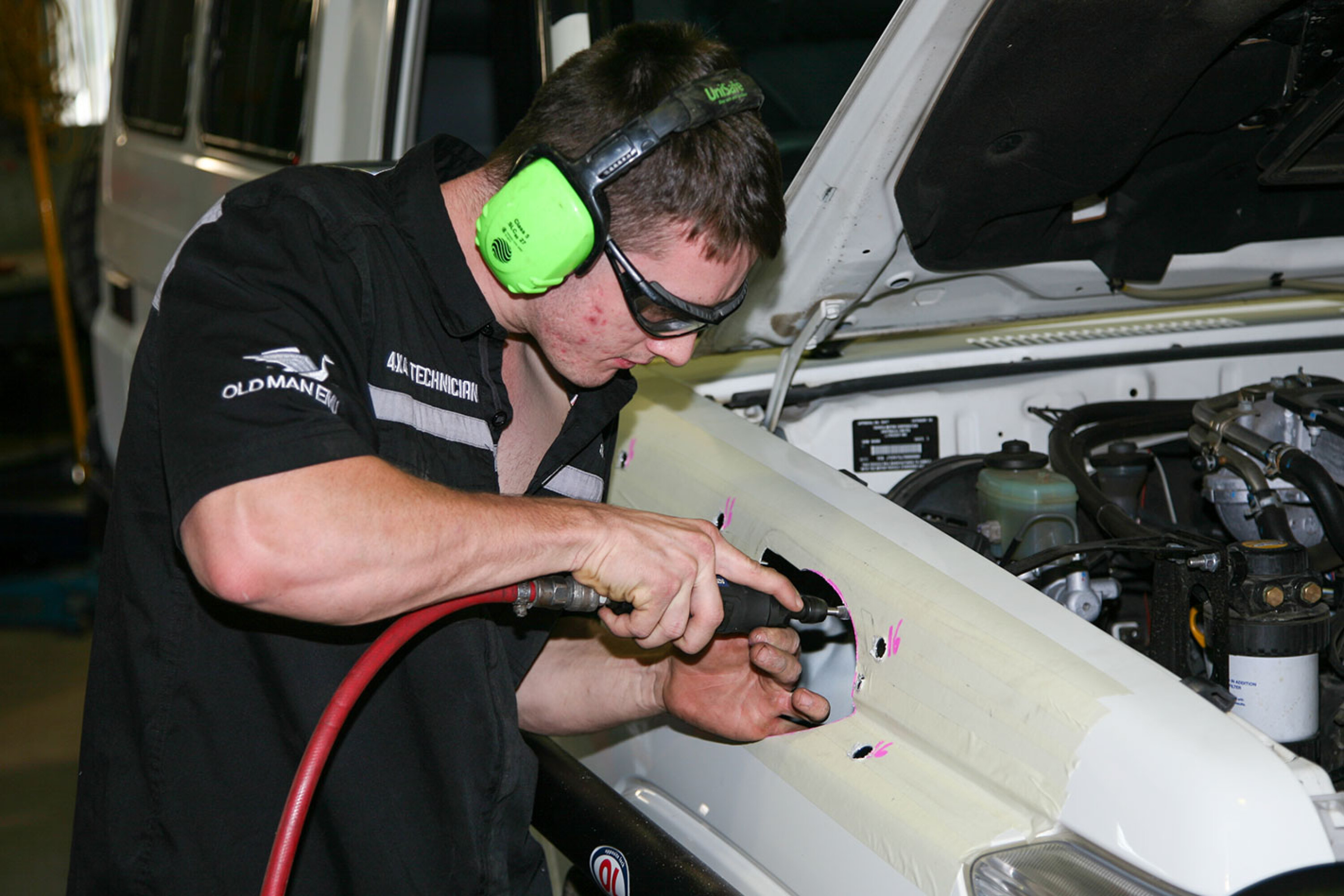
“Ultimately it comes down to the customer’s ability, confidence and willingness in performing the task,” added Sherpa 4×4’s James David. “Many of our customers ask their local mechanic to fit the snorkel at their next vehicle service and this is usually a cost-effective avenue to having your snorkel installed by someone you already know and trust.”
Brad Cooper from TJM repeated this sentiment: “We always recommend professional fitment by a TJM distributor to ensure seamless and problem-free integration with your vehicle’s air intake system. If you would like to fit it yourself, all TJM Airtec snorkels come with a step by step installation guide.”
One of the most important things to remember during installation is to ensure all of the holes are treated for rust protection and all parts are fully sealed.
What to buy?
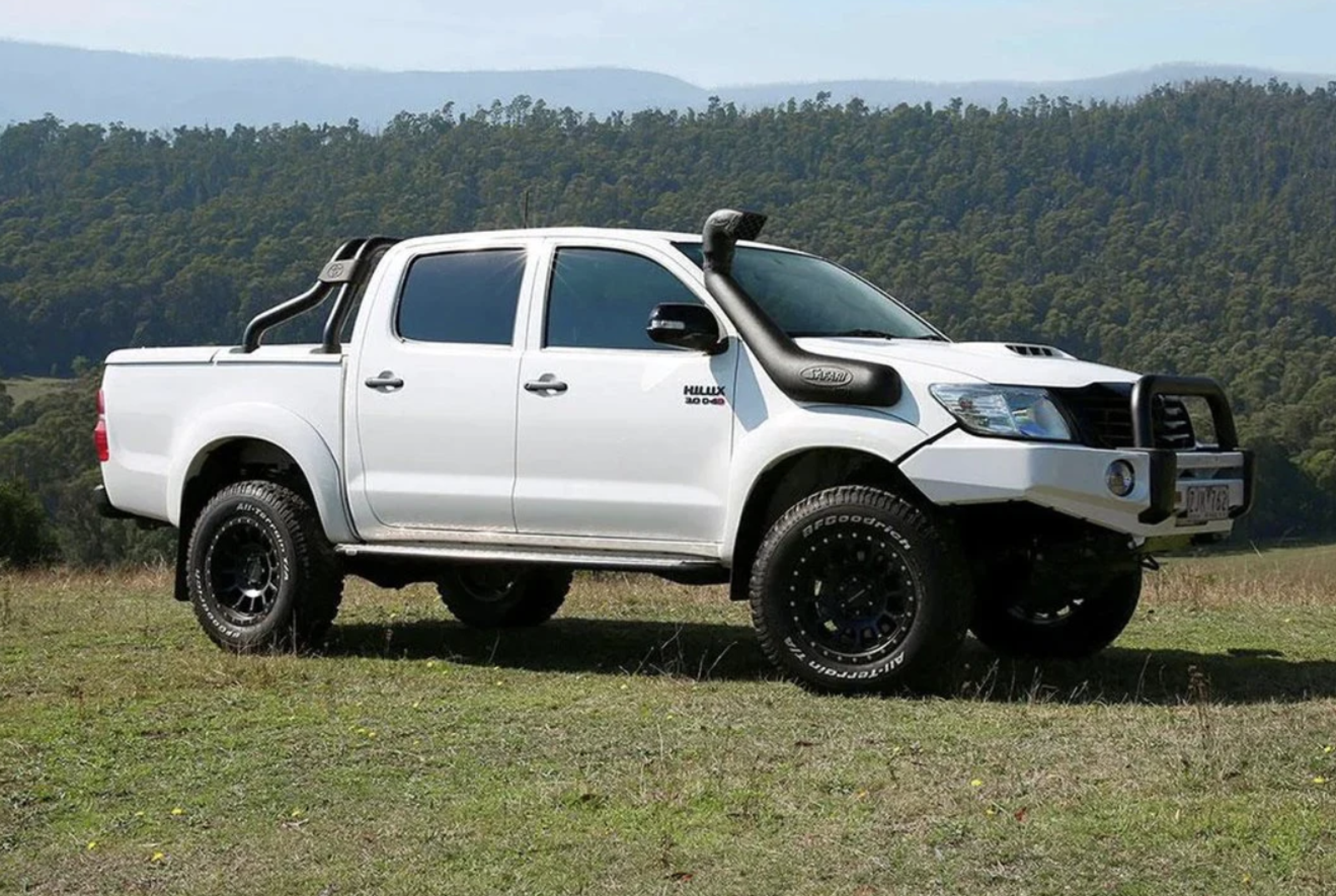
Safari V-Spec snorkel
The Australian designed, moulded and manufactured V-Spec from Safari has been specifically designed and tested to increase airflow over the factory air intake. The UV-resistant material and thick wall design should mean the snorkel will last well and truly the lifetime of your HiLux.
- Materials: Polyethylene, UV-resistant
- Air intake: Air ram
- Sealed: Yes
Pros
- Renowned Safari quality
- Air ram designed to disperse water for safe operation even in rain torrents
- Suitable for engine upgrades
Cons
- You can have it in black … or black
TJM Airtec snorkel
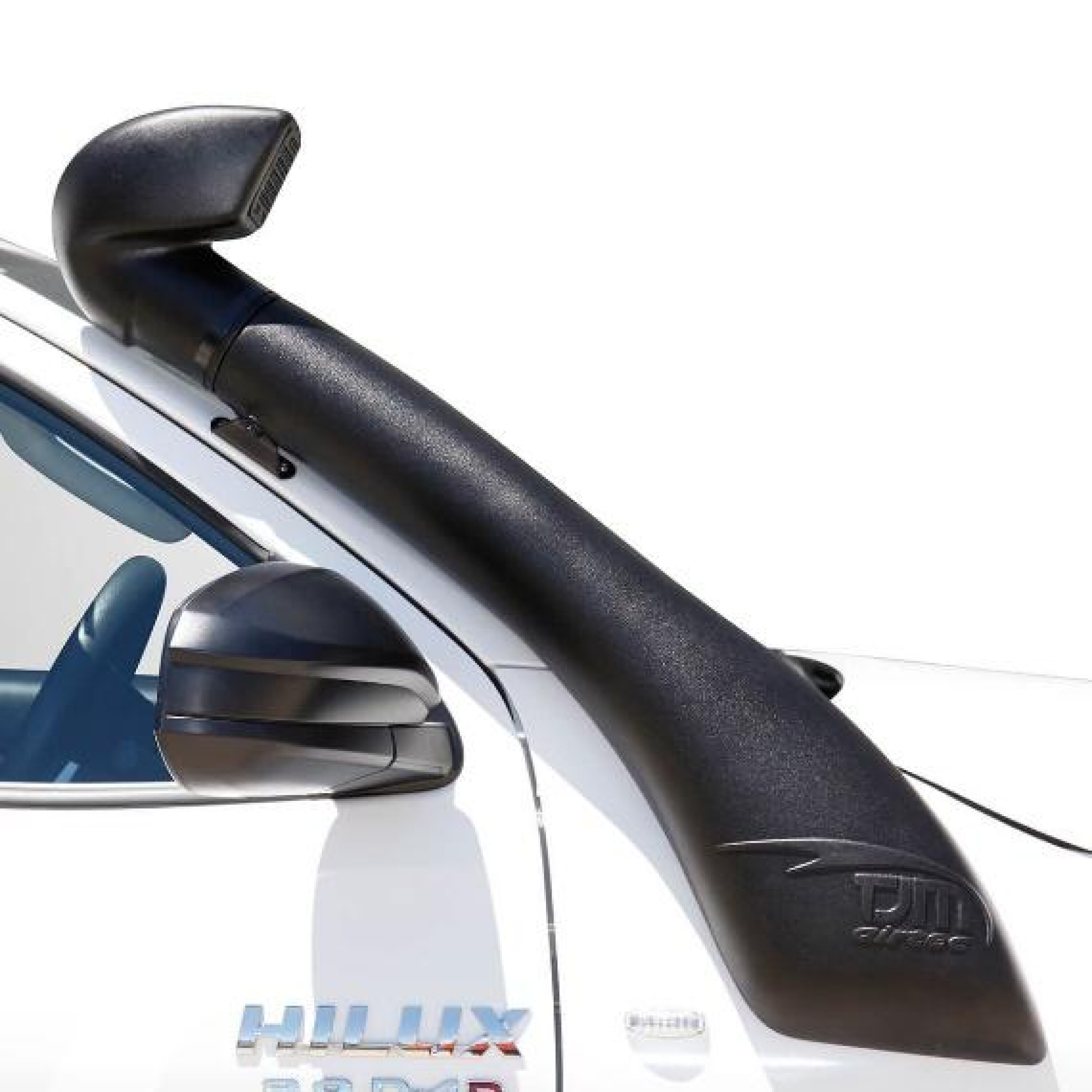
The sleek design of the TJM Airtec snorkel extends down the pillar and enters the quarter panel at the rear of the bonnet rather than running along the quarter panel. Australian-made and engineered to ensure supply of the correct volume of air to engine, the Airtec includes options for both narrow and widebody HiLux variants.
- Materials: Polyethylene, UV-resistant
- Air intake: Air ram
- Sealed: Yes
Pros
- Sleek design with less visible snorkel along the front quarter panel
- Air ram designed to disperse water for safe operation even in rain torrents
- Easy-to-follow installation instructions
Cons
- It also only comes in black
Fabulous Fabrications snorkel
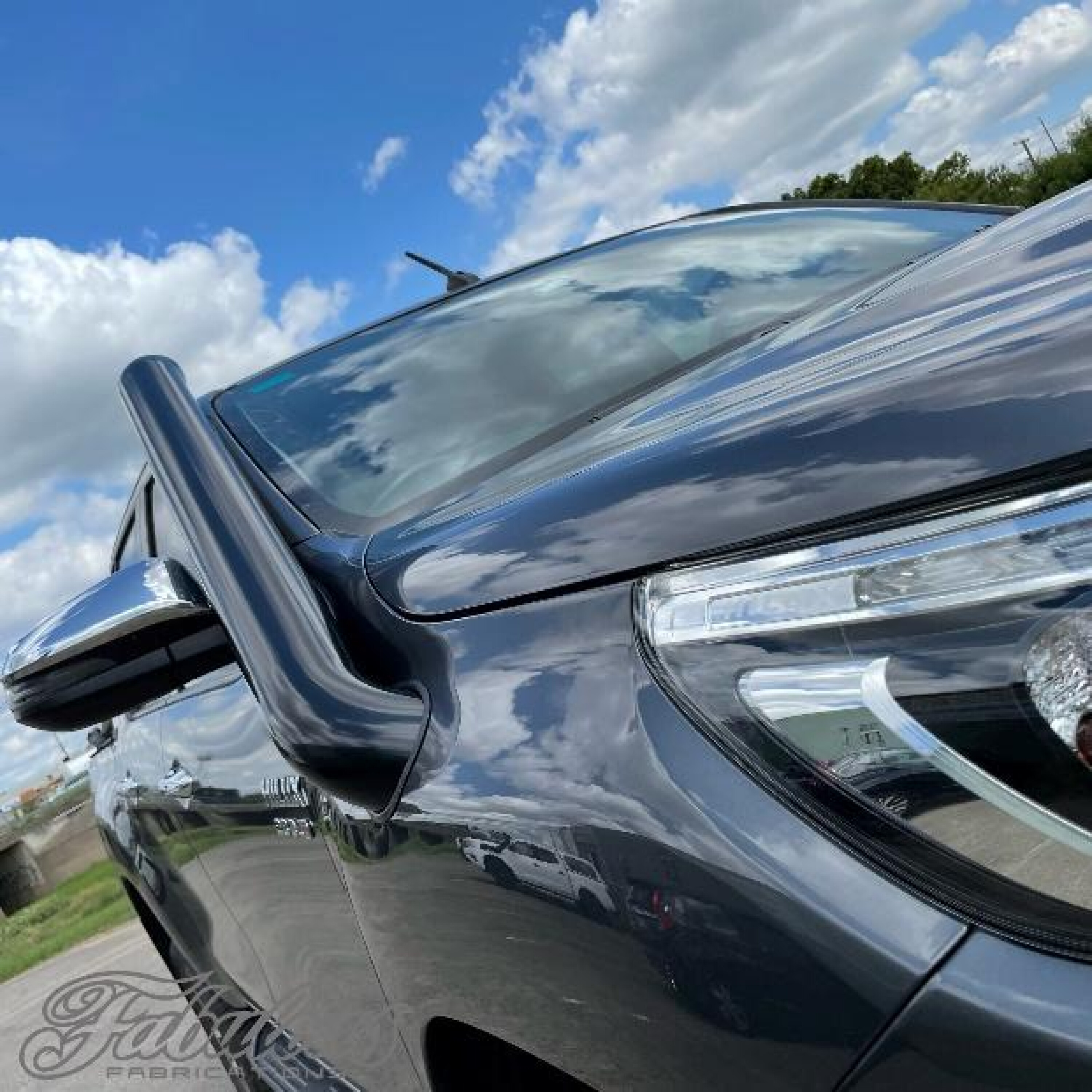
Four inches of snorkel goodness! Each snorkel is handcrafted in-house, made from 316 stainless steel and purge-welded to guarantee longevity and a superior quality finish. Each snorkel comes with a 3mm laser-cut endcap, all required fixtures and fittings, and a comprehensive fitting guide to ensure a trouble-free installation.
- Materials: Polyethylene, UV-resistant
- Air intake: Laser-cut grille (rear-facing)
- Sealed: Yes
Pros
- Sleek design with four inches of air intake
- Quality stainless-steel snorkel that will last a lifetime
- Various colours off the shelf and even colour-coding available
Cons
- Rear-facing negates any potential air ram effect
- Pricier than other options
- As these are hand-made, there are no refund for change of mind
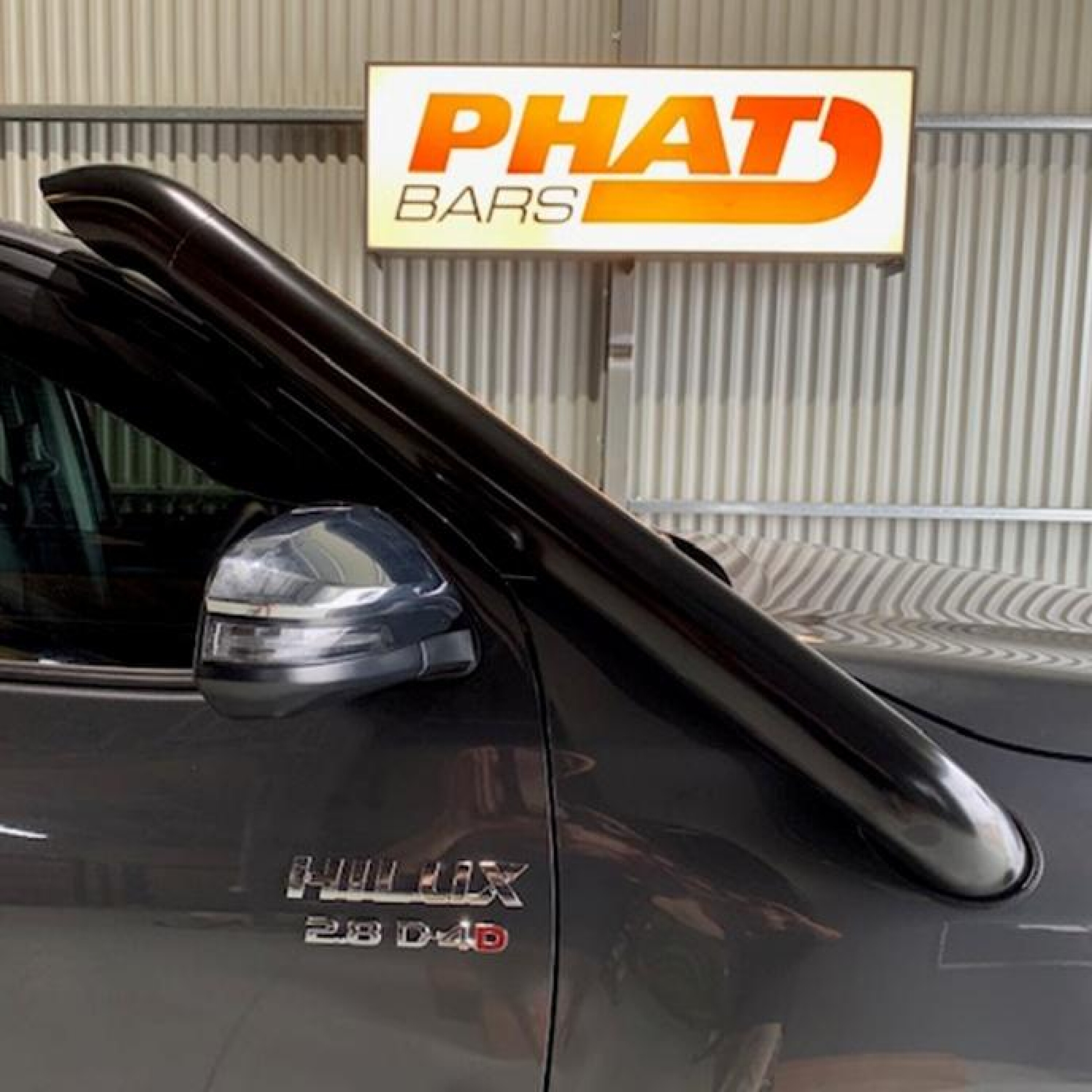
PHAT Bars snorkel
New design includes a water diverter in the top with two 8mm holes to capture the rain water and funnel out the holes. This snorkel screams style and the stainless-steel construction should mean a one-time purchase.
- Materials: Polyethylene, UV-resistant
- Air intake: Mesh grille (rear-facing)
- Sealed: Yes
Pros
- Sleek design with 90-degree angle into the quarter panel
- New water-diverter in snorkel head
- Satin black, matte black or polished available
Cons
- Rear-facing negates any potential air ram effect
*Original article published in 2018
If you’re not interested in a canopy or service body but still want to keep your tray dry and lockable, a tonneau cover is the solution.
A good tonneau provides enhanced security and weather protection, and cosmetic benefits. Let’s take a closer look at some of the best options on the market for HiLux owners.
- What it is: A lid or cover for the tray of the ute.
- Why you need it: Your HiLux will come from the factory with an open tub, which is great for storing and carrying gear until it rains or you need to park the ute unattended. To protect your gear from the weather and prying eyes you will need to cover it.
- Buying tips: Tailgates aren’t dust or waterproof, so a tonneau cover doesn’t provide perfect protection – so consider buying a canopy, which will give you a lot more protected loadspace. The man advantage of a tonneau cover is that it opens up and the tub is then accessible, unlike a canopy. Some tonneaus are electrically operated, others are manual; while some lift up and some scroll back.
JUMP AHEAD
| Material | Finish | Operation | |
|---|---|---|---|
| Toyota OE | Aluminium | Colour-coded | Gas strut |
| Ironman Slide-Away | Aluminium | Powder-coated | Electronic |
| Flat Top E Series | Aluminium Honeycomb | Colour-coded | Electronic |
| Maxlineru00a0 | ABS (Plastic) | Various colours | Gas strut |
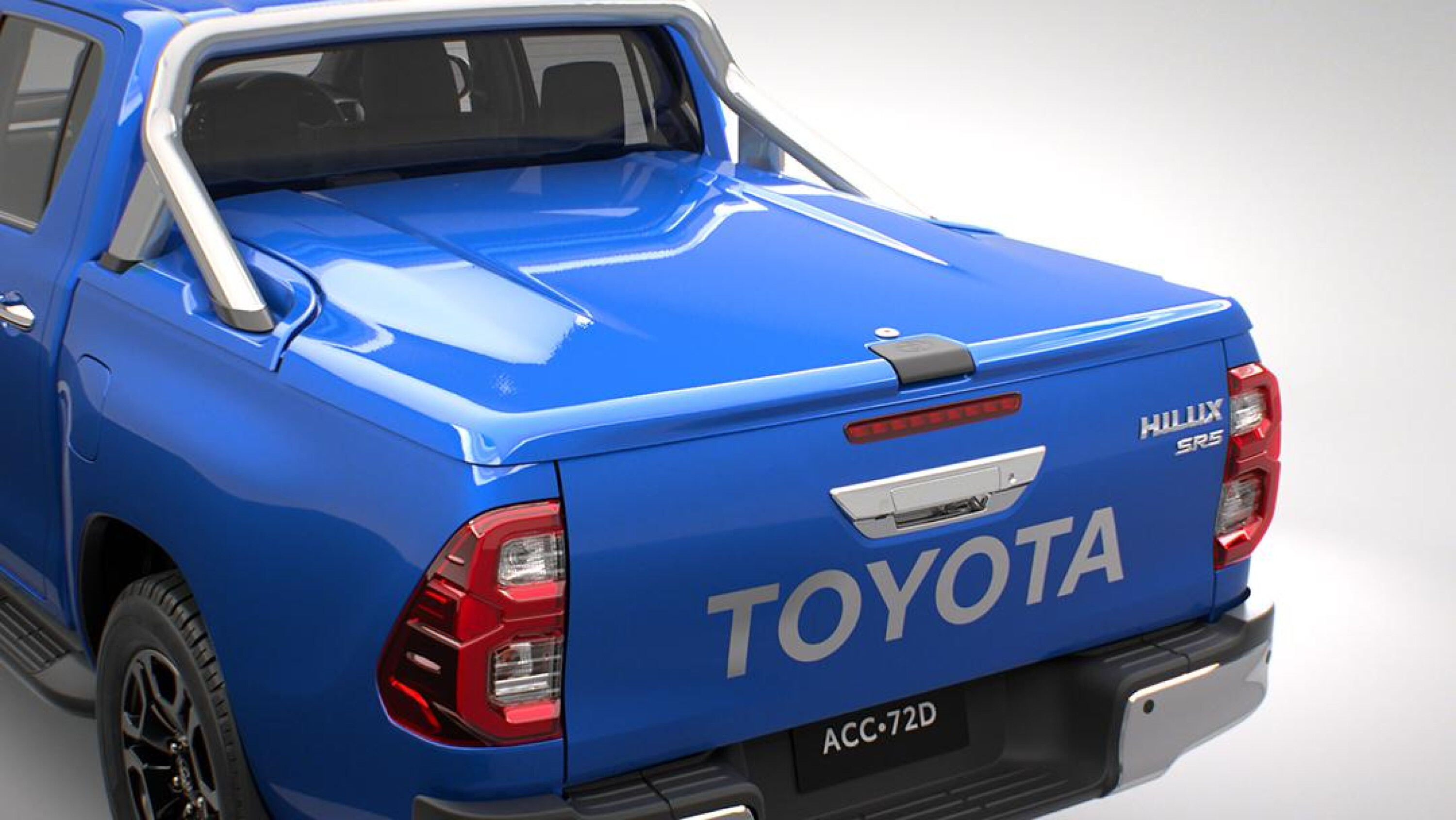
Toyota hard tonneau
A simple option for those who just want to secure gear in a tray, the factory Toyota option is lightweight and includes a single-handed latch, central locking and internal lighting for optimal convenience and ease of use. An optional Dust and Water Defence kit is available for additional protection in extreme conditions.
Specifications
- Material: Aluminium
- Finish: Colour-coded
- Operation: Gas strut lift
Pros
- Ease of operation
- Neat, factory look
- Internal lighting
Cons
- Not the cheapest simple option out there
- Single-piece construction means it needs to be removed if you need an open-top tray
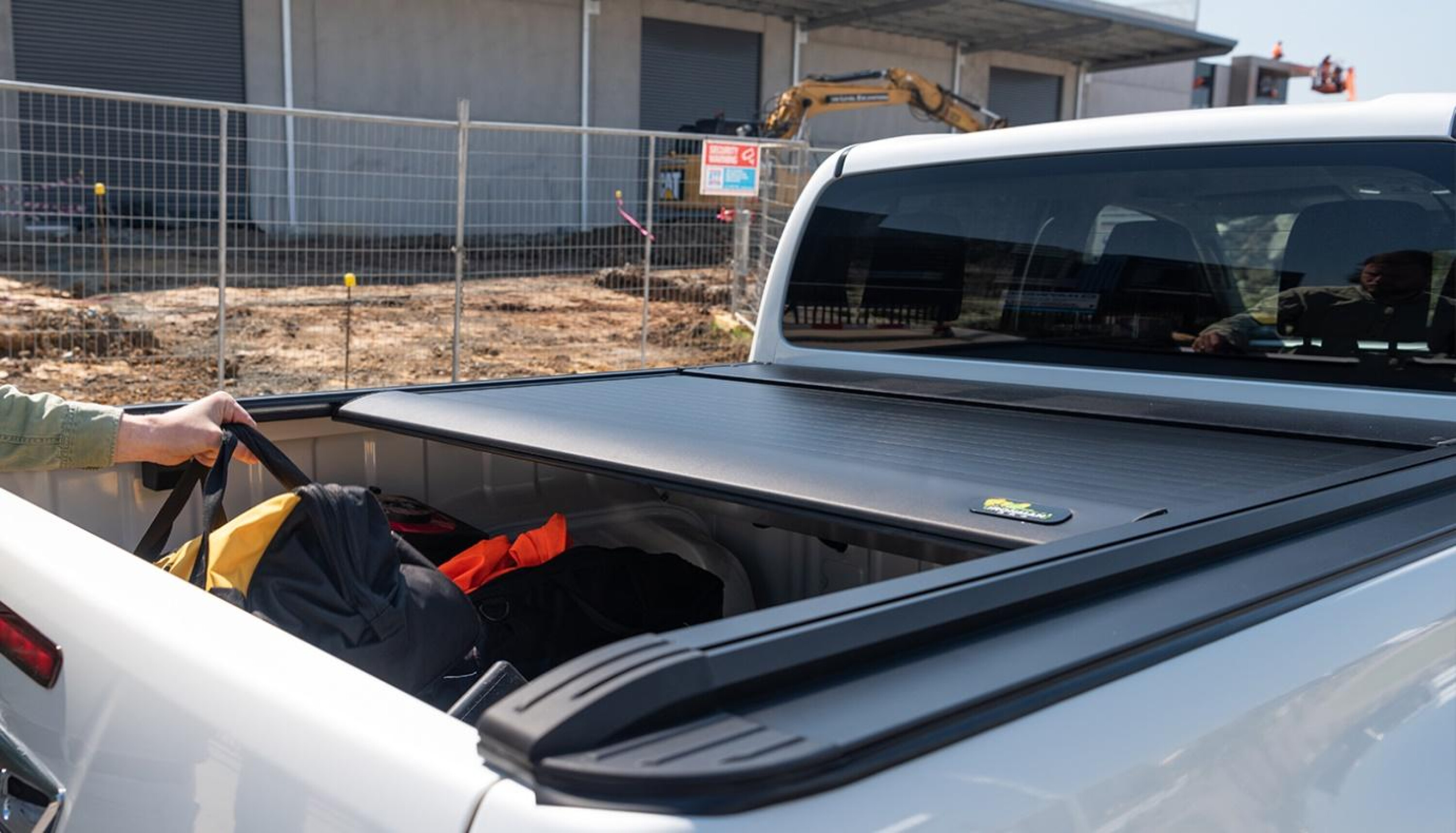
Ironman 4×4 Slide-Away tonneau
Imagine a garage roller door over the top of your tray. That’s pretty much what this Ironman 4×4 Slide-Away tonneau cover is. Featuring electronic operation, this is another practical solution to secure your gear from both prying eyes and the weather.
Specifications
- Material: Aluminium
- Finish: Powder-coated
- Operation: Electronic
Pros
- Push button, electric operation
- Can simply be opened if you need an open-top tray
- Looks neat
Cons
- These roller-type covers typically arenu2019t as weatherproof as single-piece units
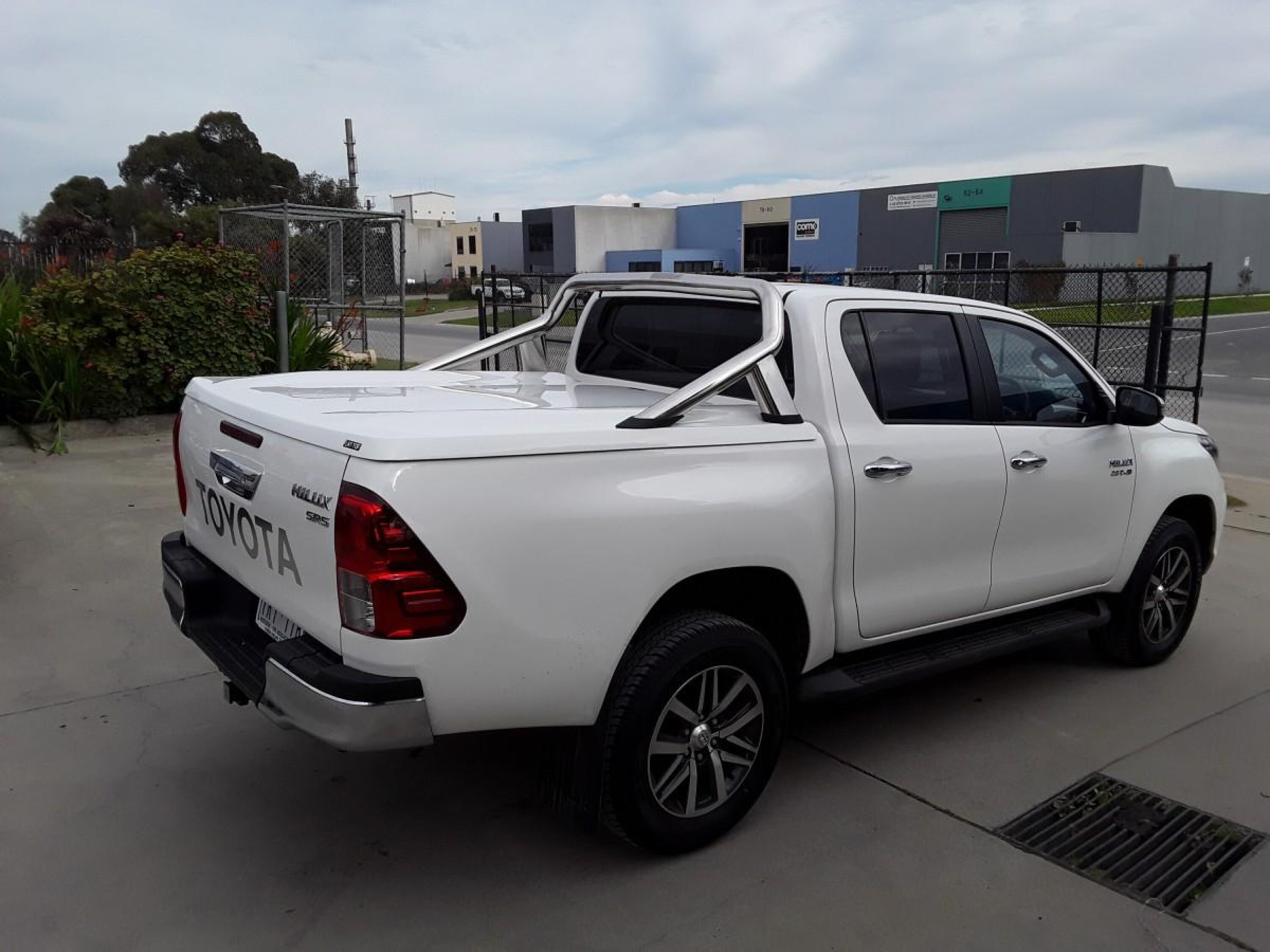
Flat Top electric tonneau
A fully automated, press-of-a-button lifting tonneau cover that not only looks good but genuinely is one of the easiest tonneaus to operate.
Featuring a honeycomb structure that is rated up to 110kg static load, and quick-release pins for ease of removal, the tonneau cover is strong and user-friendly. A ‘monsoon’ channel along the front improves the weather sealing even further, and the electronic operation provides improved security.
Specifications
- Material: Aluminium honeycomb
- Finish: Colour-coded
- Operation: Electronic
Pros
- Ease of operation
- Stylish
- Honeycomb design is stronger than sheet aluminium
Cons
- Single-piece construction means it will need to be removed for open top, but quick-release pins make it quick
Maxliner Hard Cover 180
Innovative design that allows this entire hard lid to lift up means that accessing gear at the front of the tray is easier than ever. With single-hand operation, a simple rise at the rear will lift it at 45°, and a push on the front will lift the entire lid and provide access to the entire tray.
Specifications
- Material: Poly
- Finish: Various colours (texture)
- Operation: Gas strut
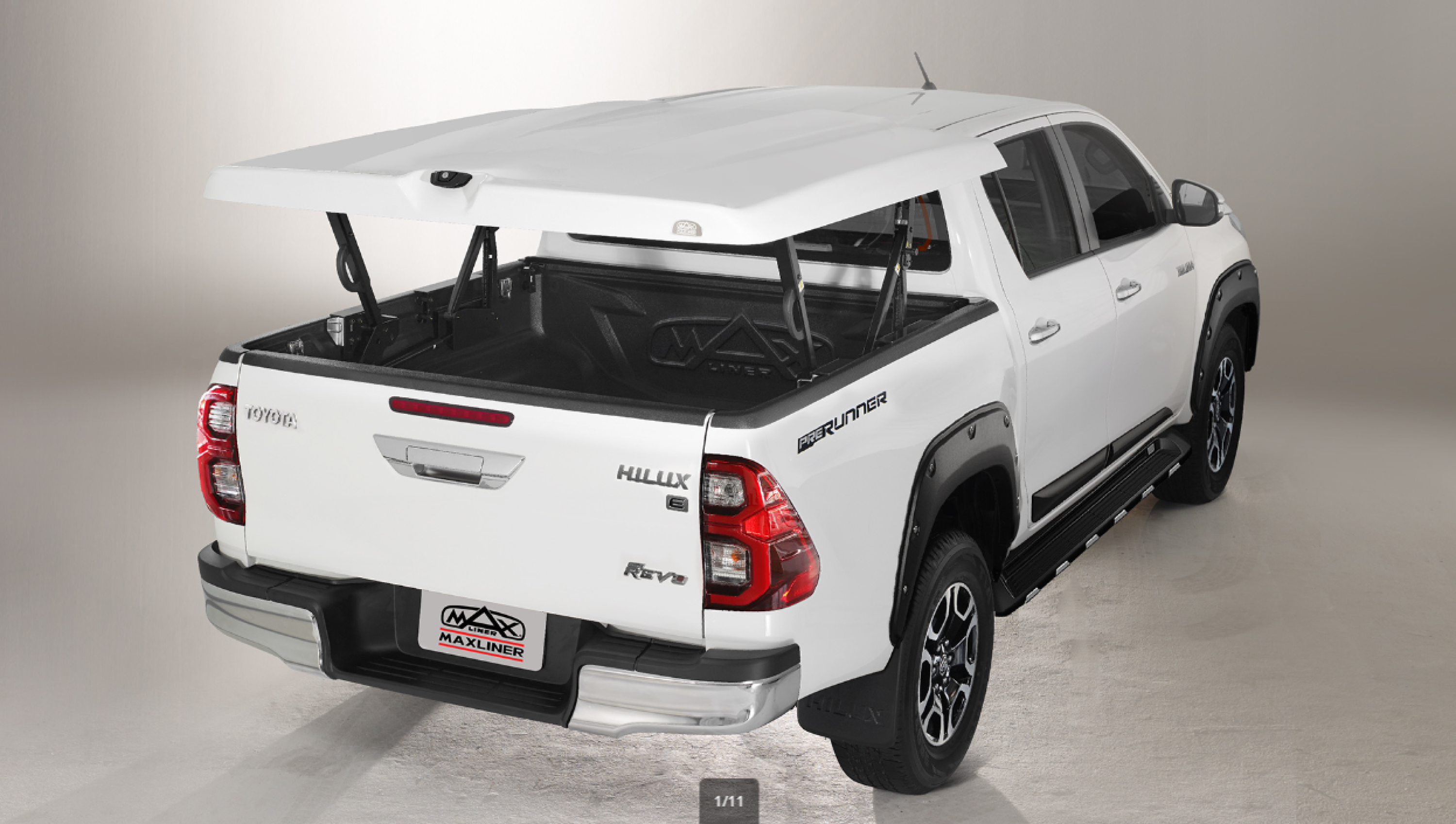
Pros
- Unique lifting mechanism
- Ease of access
- Simple, one-hand operation
Cons
- Lacking the bells and whistles of electronic options
- Single-piece construction means it removes the versatility of having an open-top tray
Buyers’ guide for tub top canopies
As with any piece of aftermarket gear added to a 4×4 build, it’s important to first establish what your intended purpose is: Are you a tradie looking to keep your tools safe? Perhaps you’re planning your next Red Centre run?
“We suggest to identify your intended usage and preferences,” Hannah van der Sluys, Ironman 4×4’s Alu-Cab brand manager, advised. “Is it going to be for trade tools, general storage, weather resistance, security, styling etc. Each canopy on the market offers a unique set of benefits, choose the right one that fits your needs.”
Once that’s established and you’ve started the long, tedious process of browsing aftermarket catalogues, there are a handful of essential elements to keep in mind, as Gräbe de Villiers from South African company RLD Design explained.
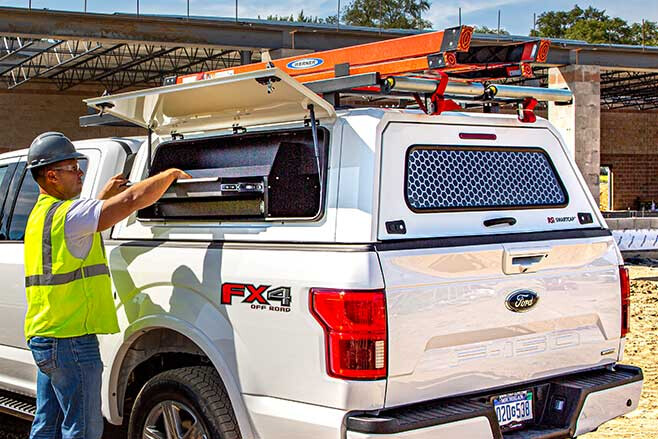
“Compare apples with apples,” he said. “Material; coating finish (powder coated or not); do you have to assemble the product yourself before you can fit it? Would you be able to replace components easily? Fitment (does the product bolt on to the OEM mounting hooks in the load-bin? Lead time to obtain the product; and, most importantly, aesthetics … does the canopy complement the ute and add value?
“Don’t go for the cheapest option and also don’t buy something simply because of its name,” he added. “Make sure about the value for money and also the expandable accessories that could be fitted after fitment or as your need to expand arises.”
Thomas Harding added that other important factors to consider include roof-load capacity; side-door access to cargo; air-pressure vents (to reduce tailgate dust ingress); the finish of the welding and fabrication; the range of accessories (roof racks, drawers, etc.); and, for pooch lovers, whether it’s dog-friendly.
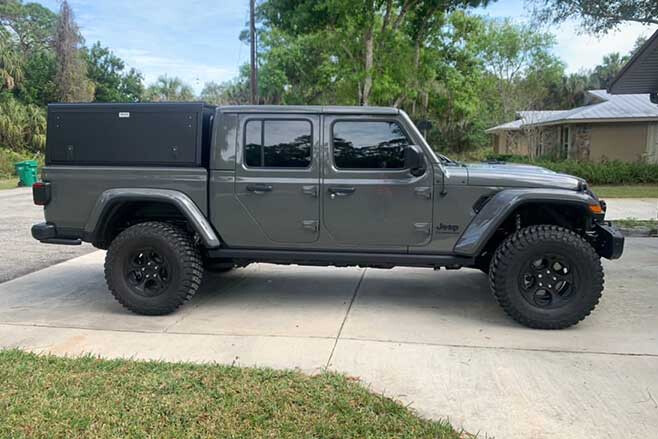
“While researching, we strongly encourage creating a checklist to help determine what constitutes your ideal canopy,” Harding said. Sage advice.
As with any off-road purchase, ensure the supplier has a quality reputation and can back its product with aftermarket support and a substantial warranty. On this point, it’s important to ensure that the tub topper mounts on the prescribed loading points of your vehicle, as it could create a lot of unnecessary headaches with OEM warranties and the like down the track.
When asked what gets customers riled up the most, Troy Bignell told us that small access points are one of the most common frustrations. “Before getting something installed, try to find someone with a similar setup and see how much of the back you can access,” Troy advised.
Materials
Canopies come in a variety of shapes and sizes and are constructed using different materials, with your budget typically dictating what path you’ll head down when the time comes to swipe the credit card. Typically, you’ll have to choose between stainless steel, fibreglass, aluminium/metal, or a form of plastic construction.
The new breed of canopies are made from stainless steel or aluminium and offer greater roof load-carrying capabilities, sturdier construction and extra durability.
Troy Bignell from Camp King Industries tells us that there are a number of benefits to running an aluminium tub topper over a fibreglass option.
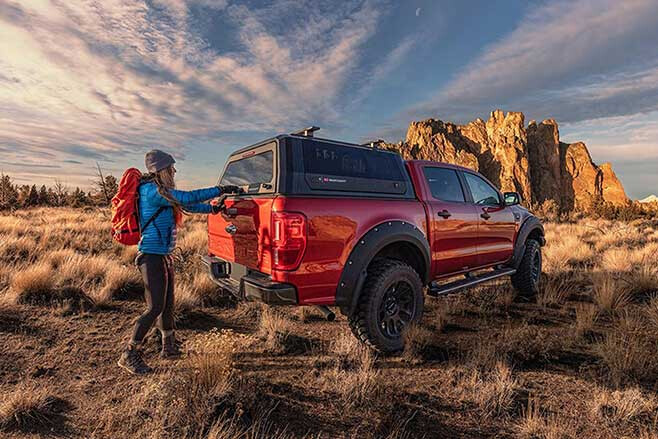
“The biggest benefit is its ability to bear loads much greater than its counterparts,” Troy told us. “Most fibreglass canopies can only carry a load of 50 to 70kg without some sort of additional internal frame. Most aluminium canopies are rated for 300kg-plus and weigh about the same.
“A secondary benefit of this is that due to the rigidity of aluminium, you can have much larger door openings, making it significantly easier to access your equipment in the back.”
Hannah from Ironman 4×4 added: “Aluminium construction provides a rigid chassis for a more sturdy and robust construction. Aluminium offers great resistance to weather and the elements.”
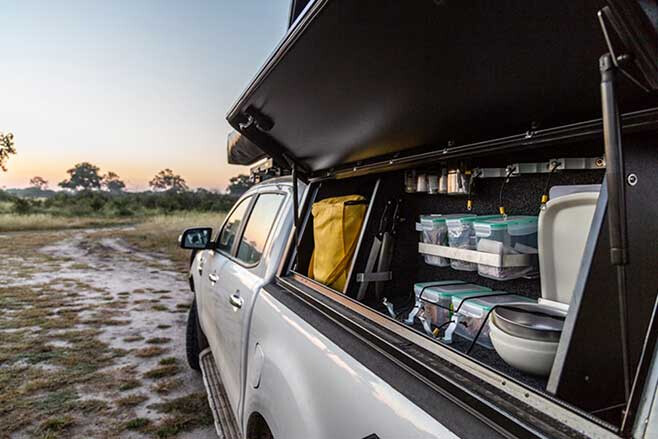
Keep in mind, however, that metal fatigue is more prominent in aluminium than stainless steel, so aluminium may have a tendency to crack more easily over time.
Stainless steel is an extremely strong and versatile material and, contrary to popular belief, isn’t as heavy as you’d think, as Gräbe explained: “Due to the strength of the stainless steel the canopy can be manufactured from much thinner – and therefore lighter – sheets, without sacrificing strength.”
As an example, RLD Design’s stainless-steel canopies have a starting weight of 75kg, which is almost negligible when compared to a vehicle’s carrying capacity of at least 750kg.
Weighty issues
By installing a canopy, like a tub topper, and then loading it with tools and/or gear for your next camping trip, the kilograms will begin to rise. This is why it’s critical to always monitor your vehicle’s weight and not overload it.
“Like any accessory on your vehicle, it is going to reduce the load carrying capacity as it increases the overall weight of the vehicle,” Troy told us. “This is why it is incredibly important to look for a lightweight yet still incredibly strong option.
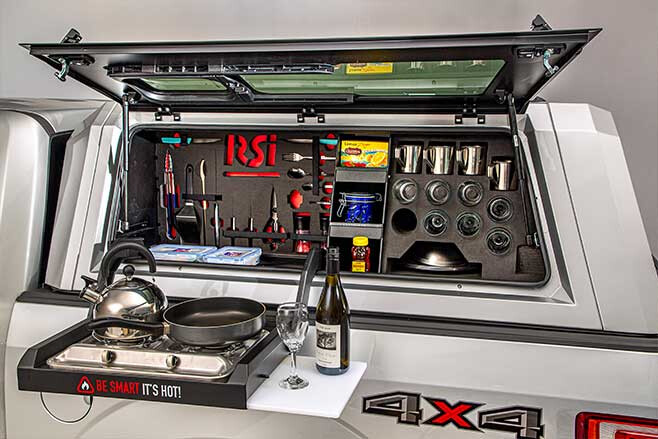
“It is incredibly important not to exceed the manufacturer’s specifications. Not only because it can void your insurance but also because it can make your vehicle unsafe, increase wear and tear, and make it more prone to failure.”
Canopies provide a great way for tradies to house their tools overnight, while also keeping them sorted and secure during transit. Tools can be heavy, though, and their weight can quickly accumulate, adding to the total weights of the vehicle.
“For this reason, the weight of the canopy itself should be kept as low as possible,” Hannah van der Sluys explained.
How we review products
4X4 Australia has been reviewing four-wheel drive vehicles and aftermarket products for more than 40 years.
When looking for the best accessories for your make and model of 4WD, there are some things essential to making sure you have the best off-roading experience.
When we compare products, here are some of the things we consider:
- Warranty
- Build quality
- Value for money
- Time and ease to set-up/install
- Weight
- Fit and finish
- How well it gets the job done
- What materials they’re made from
- Corrosion/UV resistance
- Coatings
- Compatibility with other accessories
- Compliance with ADRs and vehicle safety systems
- Country of manufacture
- Load ratings, to determine what’s the best product across each price point.
Disclosure: When you buy through our links, we may earn a commission. We also include products that we do not earn a commission from.