
I had just received a ScanGauge2 to fit to my new Troopy when my son, Trent, dropped another OBD2 gauge on my workbench and said, “These are better, dad!”
With that comment I opened the box to find the UltraGauge unit along with a mounting bracket designed to attach to the A-pillar of the vehicle. The unit itself doesn’t come with any mounting kit; although, there are three options available from the website, the cheapest being a small patch of Velcro.
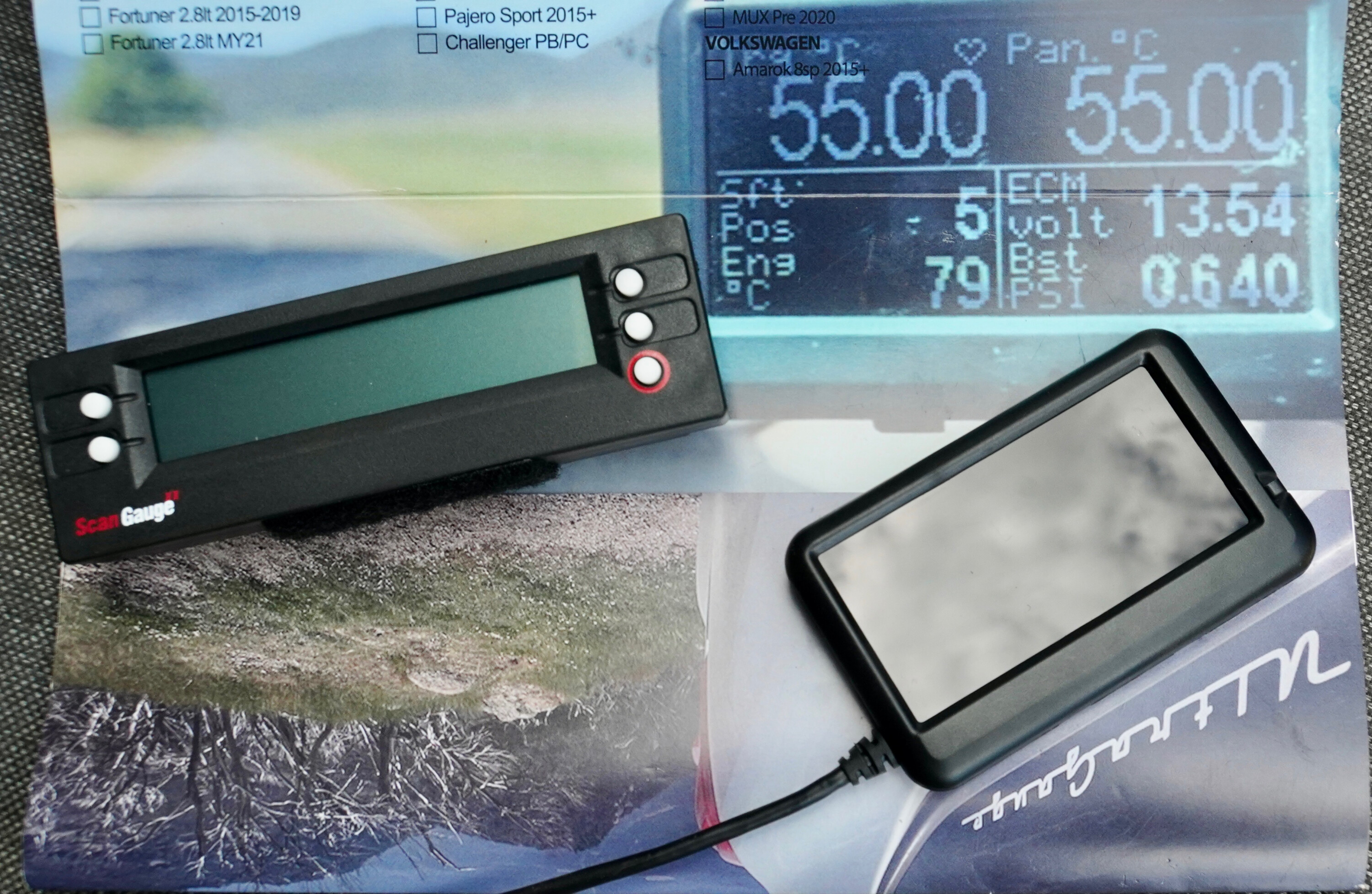
We fitted the gauge to the Troopy, plugged the cable into the OBD2 port located beneath the steering column, and attached the mounting bracket to the A-pillar using one of the grab-handle bolts as the mounting point. This setup so far holds the unit firmly in place, but we’ll see how it likes corrugations later on.
While the standard UltraGauge is designed to suit all makes and models, the Australian distributor pre-programmes some of the parameters to suit specific vehicles. In the unit fitted to my Troopy, this meant it immediately displayed engine temperature, engine speed (RPM), battery voltage, exhaust gas temperature (EGT), and engine load in percentage format. A small beating ‘heart’ at the top of the screen indicates that the gauge is monitoring everything correctly.
The number of engine and transmission functions the unit will display depends on what vehicle you have, the known codes it generates, and what you select to be shown. For example, on the 70 Series LandCruiser the UltraGauge shows RPM and vehicle speed (if selected), along with distance travelled since the trip was reset, average fuel economy in L/100km (or mpg), run-time in hours and minutes, and a whole lot more.
However, it doesn’t show turbo boost pressure, transmission oil temperature and other parameters, but if you drive a 200 or 300 Series, for example, you will be provided a more comprehensive number of gauges. Engine oil temperature and exhaust pressure, for example, are only supported by a few vehicle makes (less than one per cent).
The UltraGauge also displays any engine-trouble codes generated, and it proactively scans for potential or intermittent faults while you are driving and alerts you if trouble is found. If the vehicle’s annoying ‘check engine light’ comes on, the UltraGauge can turn it off easily and quickly.
The UltraGauge can display seven separate pages of gauges, and each page can independently be configured to display four, six or eight gauges. I’ve only used two pages with eight gauges displayed on each page. You can set the unit to automatically scroll through the different pages, or like me just have the first page displayed and then manually select the second page if desired. You can also select alarms for low fuel and more.
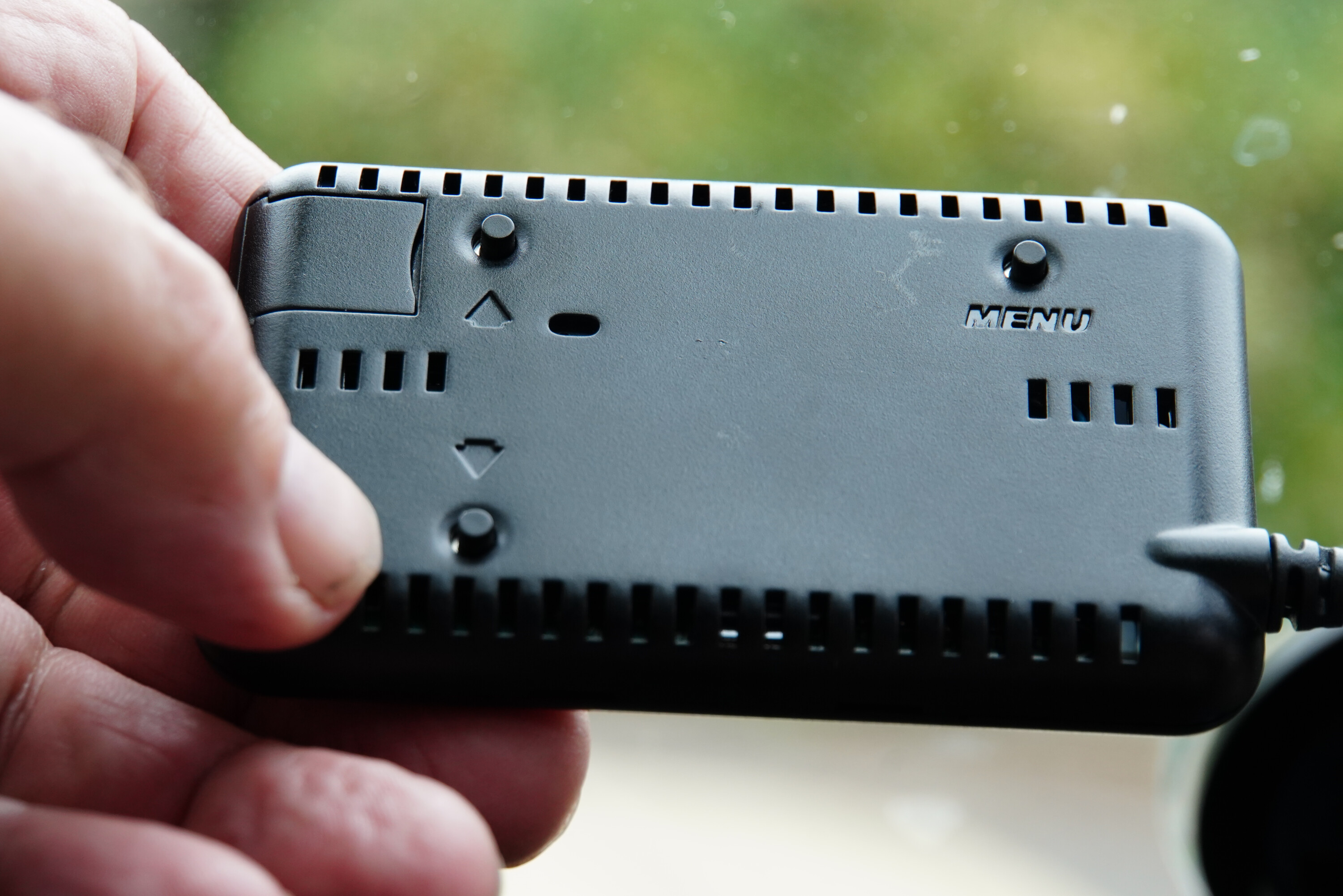
There’s a menu button and up and down buttons on the back of the unit. Once you’ve used each of the buttons and selected a couple of different gauges you’ll find it’s pretty easy to navigate the UltraGauge and to select different pages and gauges, and the appearance and location of said gauges on different pages. Using the same buttons, you can select a number of alarms that will trigger when a set parameter is exceeded.
A comprehensive web-based start-up guide provides all the information you’ll need to operate the UltraGauge and to tailor it to suit your requirements.
So far I’m impressed with this unit and it’s now the gauge I refer to for engine monitoring. Anybody want a cheap ScanGauge2?
RRP: $259
At first glance, the ARB Altitude doesn’t offer much of an insight into what makes this top-of-the-range rooftop tent so special, but dig a little deeper and the hidden secrets will blow your mind.
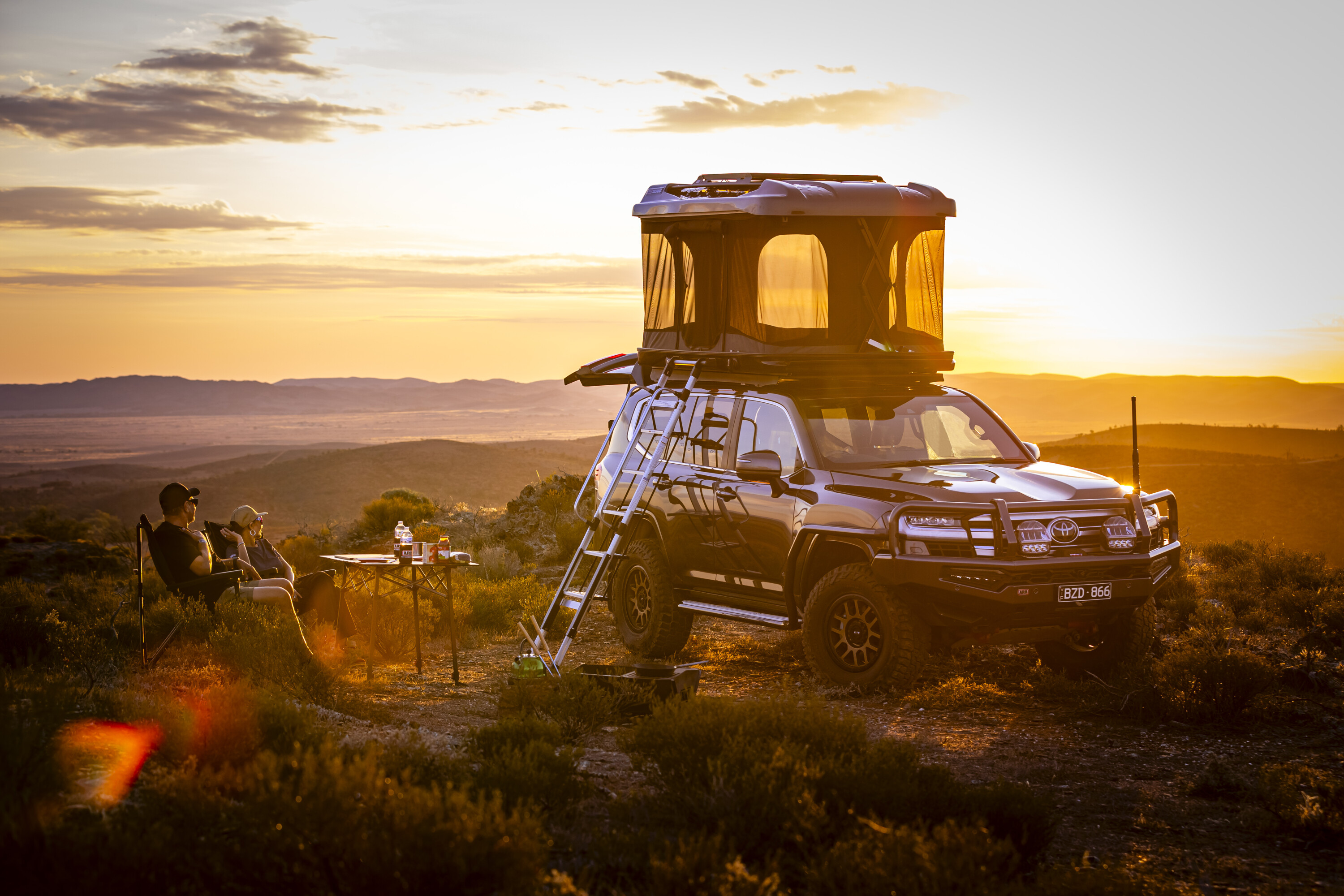
The Altitude offers an innovative design and is packed full of features unique to the traditional rooftop tent market. With a simple one-touch set-up, the sturdiest ladder around, and modern internal storage, you will enjoy a sweet night’s sleep wherever you set up camp.
“The derivative of innovative design, smart engineering and quality in-house manufacturing, the ARB Altitude RTT provides a luxury solution to enable off-grid living with convenience, comfort and accessibility,” said Sandy Fiske, ARB’s product manager. “Succeeding various challenges associated with pioneering new technology, the team have done a fantastic job developing this welcomed addition to the ARB Touring product mix.”
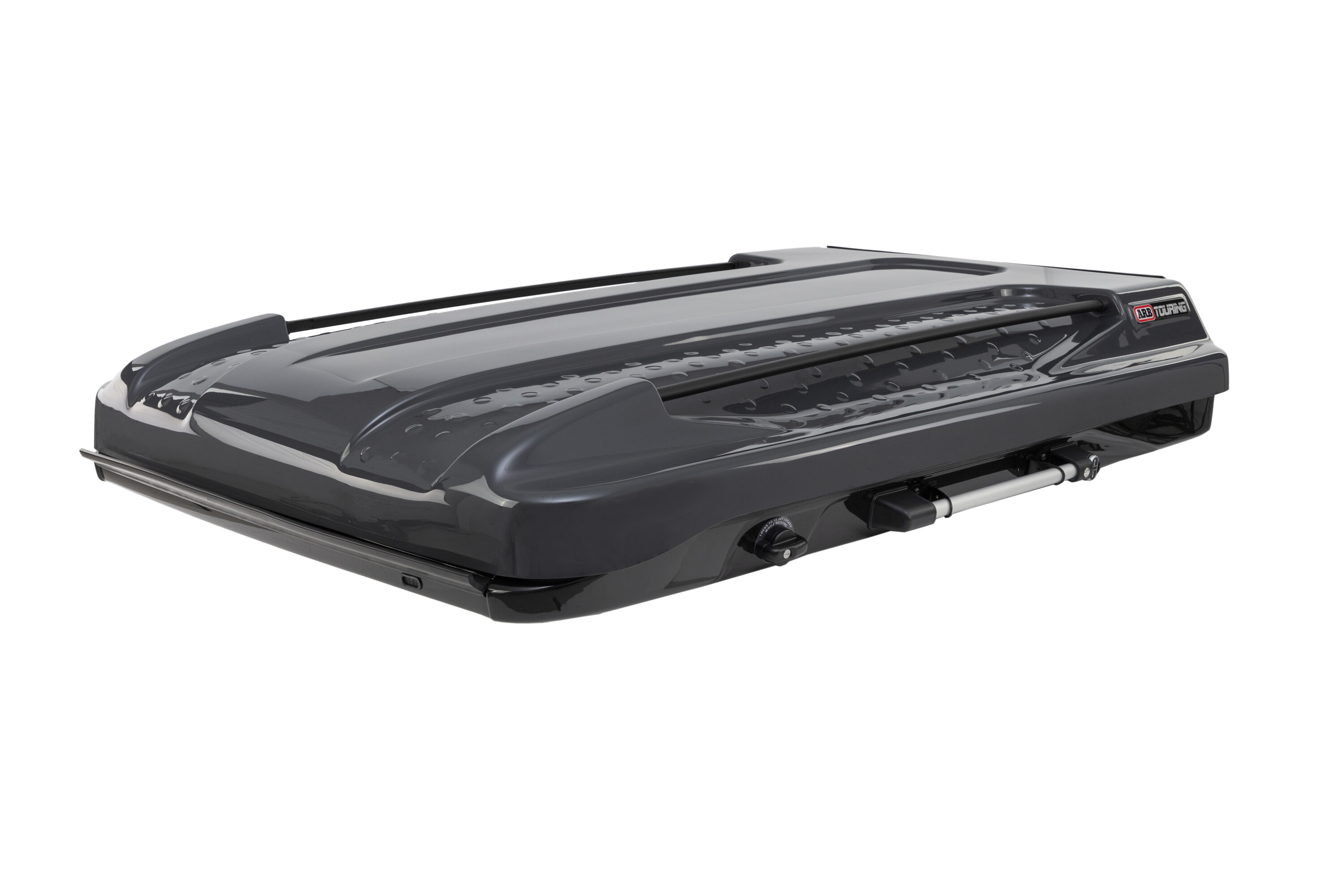
The tent is constructed from a durable fibreglass that’s protected by a two-tone grey gel coat. The integrated roof bars up the top utilise slotted channels for easy transport, and it’s where the optional 120W solar panel is designed to sit. The roof has a dynamic rating of 20kg and can be lifted with this amount of weight still attached.
Up front is an integrated wind deflector, and lockable handles are positioned on both sides. Offering double-sided entry, the ladder attachment rails include built-in dual-temperature lighting that illuminate the ladder at night. The height-adjustable full-sized ladder with steps and side rails is stored within the rear of the shell.
The Altitude utilises an automated electronic opening and closing sequence, removing any manual interaction with the tent to ensure a convenient and hands-free set-up. Using two linear actuators, the innovative ARB Smartfold internal hinges ensure the 380gsm canvas doesn’t get caught when opening and closing – a manual failsafe has also been included.
Large windows offer 360-degree panoramic views and feature fluorescent zippers, and the windows can be closed by zipping up the internal canvas walls. A 70mm double mattress provides a comfortable sleep, while internal dual temperature and dimmable LED strip lights illuminate the tent. For added strength, the floor is constructed using a 20mm honeycomb core.
Recessed into the lined roof are two storage nets, providing the perfect place for your pillows. There is also a comprehensive 12V system that is powered by an Anderson plug connection and includes USB and USB-C charging outlets, a 12V accessory plug, a 12V power isolator and controls for the roof-mounted two-way fan that has extraction and blower settings depending on the climate.
There are plenty of storage pockets internally for drink bottles and mobile devices, and there is even a provision in the roof to mount a tablet or phone to watch a movie while lying in bed.
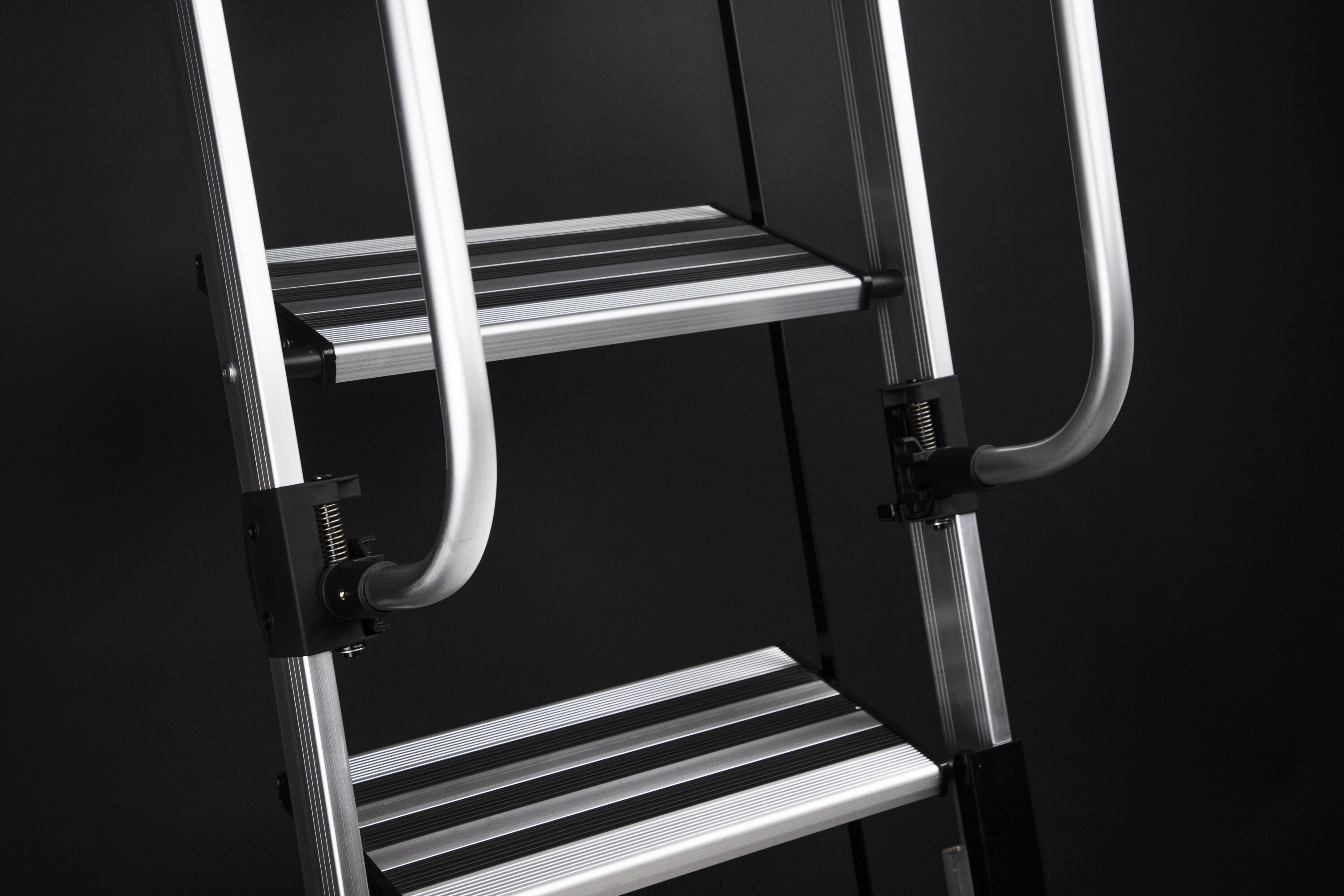
With a mounted weight (including the ladder and mattress) of 106kg, the Altitude is suitable for a variety of vehicles, but you will need to check with your vehicle manufacturer for roof-load capacity. When closed the rooftop tent is 2253L x 1612W x 372H (mm), and it has a height of 1339mm when open. The Altitude has a price of $7249 including GST (east coast metro).
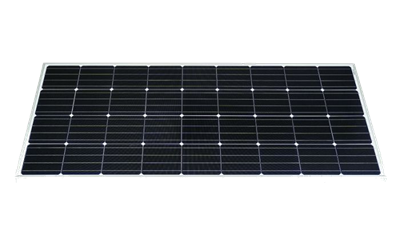
Optional accessories include a ladder extension, 120W solar panel kit, side awning kit, hitch step for easy access to the ladder, roof cross bars, and a range of mounting options to suit a variety of vehicles.
myCOOLMAN recently launched its Recreational Series in Australia.
This new series of portable fridges is packed with technological features guaranteed to ensure Australians can enjoy the great outdoors all day long, whether at work or play.
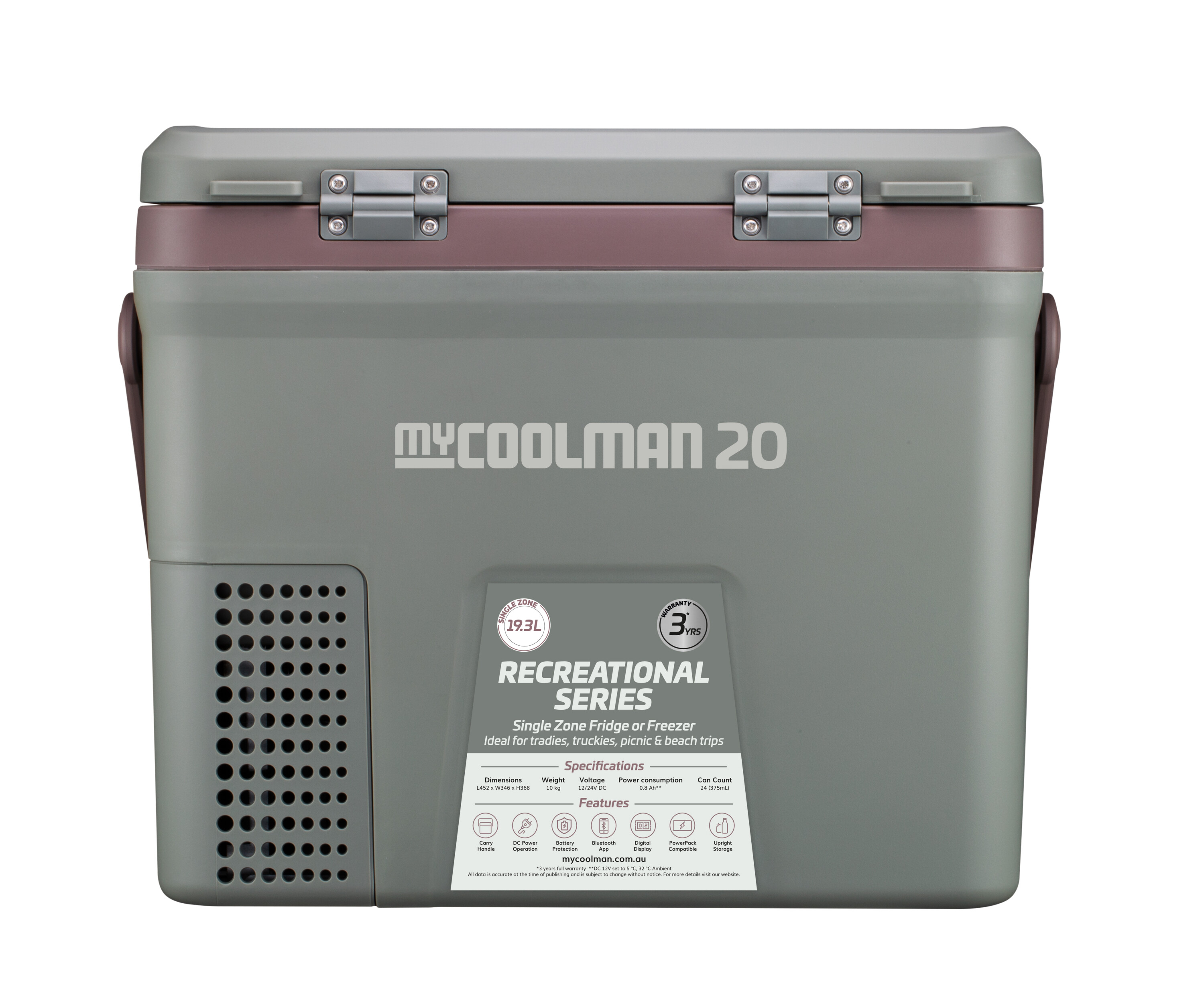
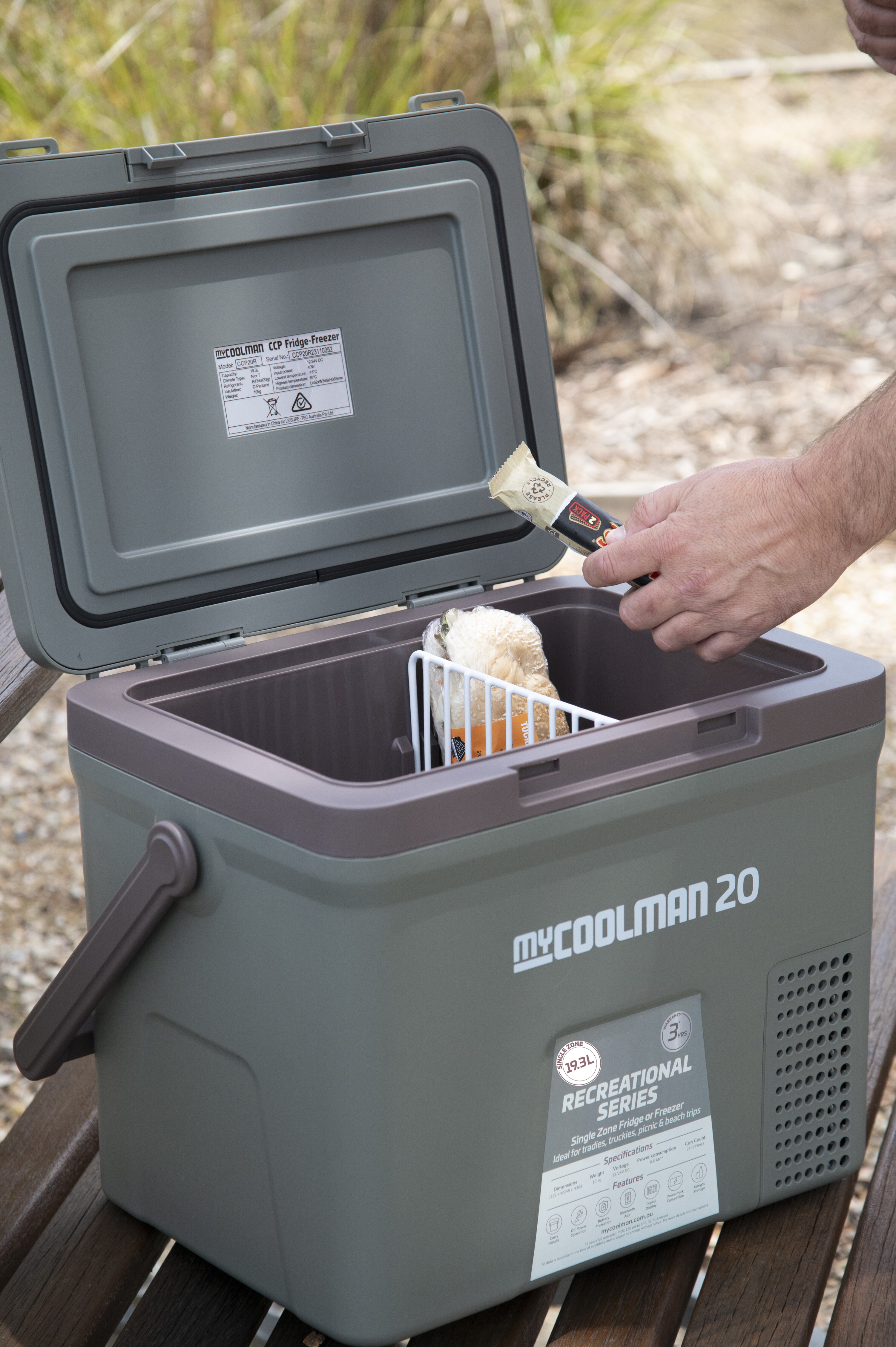
The 15- and 20-litre single-zone fridge/freezers feature a digital display, DC power operation with battery protection, a carry handle, and upright bottle storage. Both fridges can be controlled via the myCOOLMAN Recreational Bluetooth app, are compatible with the myCOOLMAN PowerPack, and come with a three-year warranty. An optional AC power cable is also available, so you can pre-chill the fridges on 240V power.
The 15-litre unit is lightweight, weighing only 9kg, and holds 18 (375ml) cans. The 20 (19.3-litre) fridge can hold 24 (375ml) cans. Depending on your requirements, both can be used as either a fridge or a freezer, as the temperature can go as low as -18 degrees celsius.
“As an Australian-based business growing internationally, we are extremely proud to have produced a new generation of fridges in our extensive range,” said Paul Widdis, Leisure-Tec Australia’s CEO. “The myCOOLMAN Recreational Series fridges/freezers are an easily portable lightweight fridge/freezer that can go anywhere.”
The myCOOLMAN Recreational Series 15 and 20 models are available online at www.mycoolman.com.au and leading recreational, 4WD and camping stores.
RRP
myCOOLMAN 15: $399 myCOOLMAN 20: $449
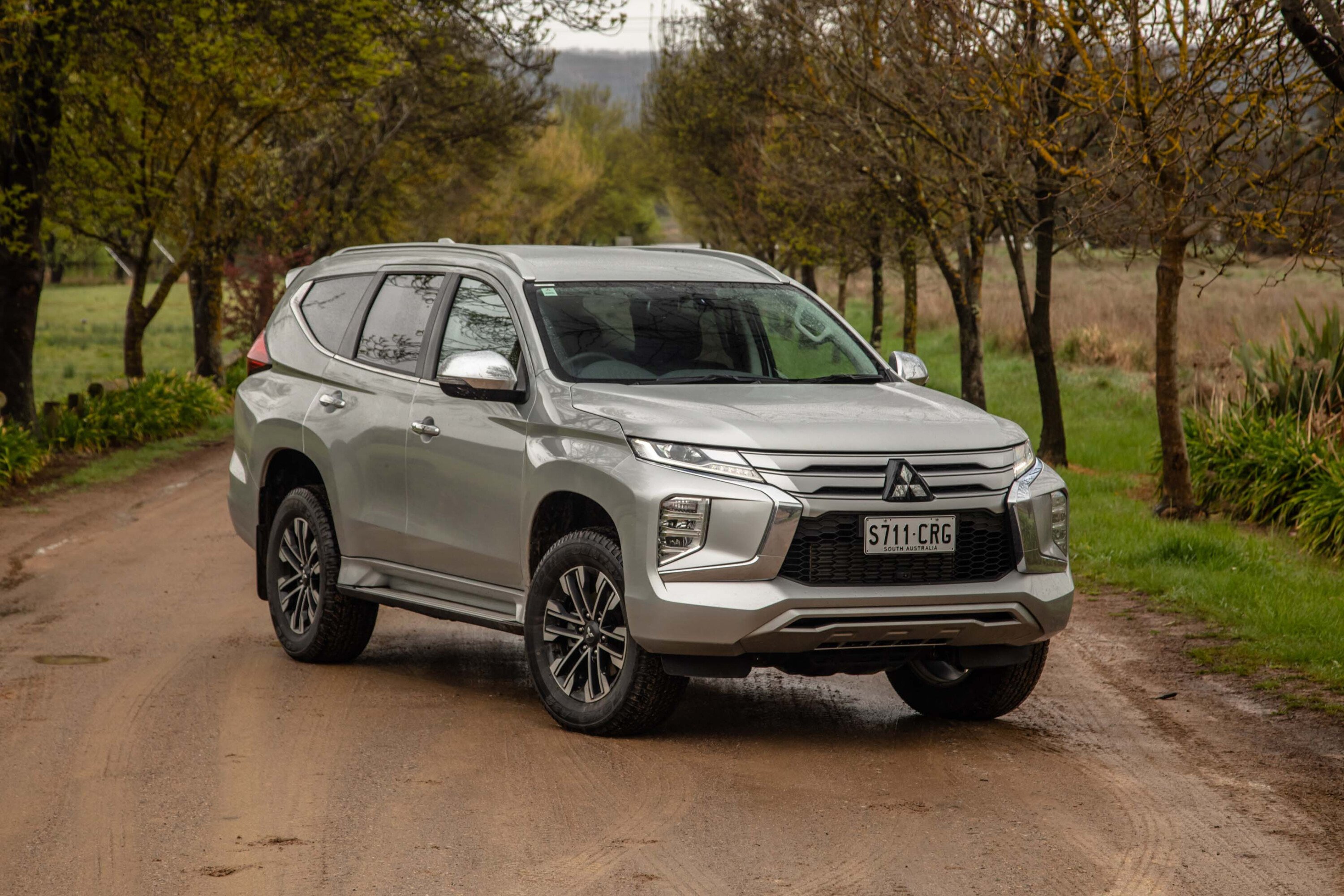
The 2024 Mitsubishi Pajero Sport is one of Australia’s go-to large SUV wagons, but how much can it tow and is it any good at it?
JUMP AHEAD
- What you need to know about the Mitsubishi Pajero Sport
- How much can the Mitsubishi Pajero Sport tow?
- How does it compare with its rivals?
Everything you need to know about 2024 Mitsubishi Pajero Sport
As a popular model for school runs, family holidays and the workday commute, the Pajero Sport is also a solid prospect for towing a boat or caravan.
The Mitsubishi Pajero Sport has soldiered on since arrival in 2015 as a SUV based on the Triton ute platform. It has been refreshed most recently in 2020, and has one further minor upgrade imminent before heading off into retirement in 2025.
While offered in 2WD, it’s the (slightly) more towing-capable 4×4 models we are considering here (3000kg for 2WD versus 3100kg for 4×4).
The standard safety equipment list for Pajero Sport is mostly up to date, which is more than can be said of its ANCAP safety rating.
The ANCAP five star result achieved in 2015 is now considered as not current by the safety body, as the way it measures the star ratings has changed since.
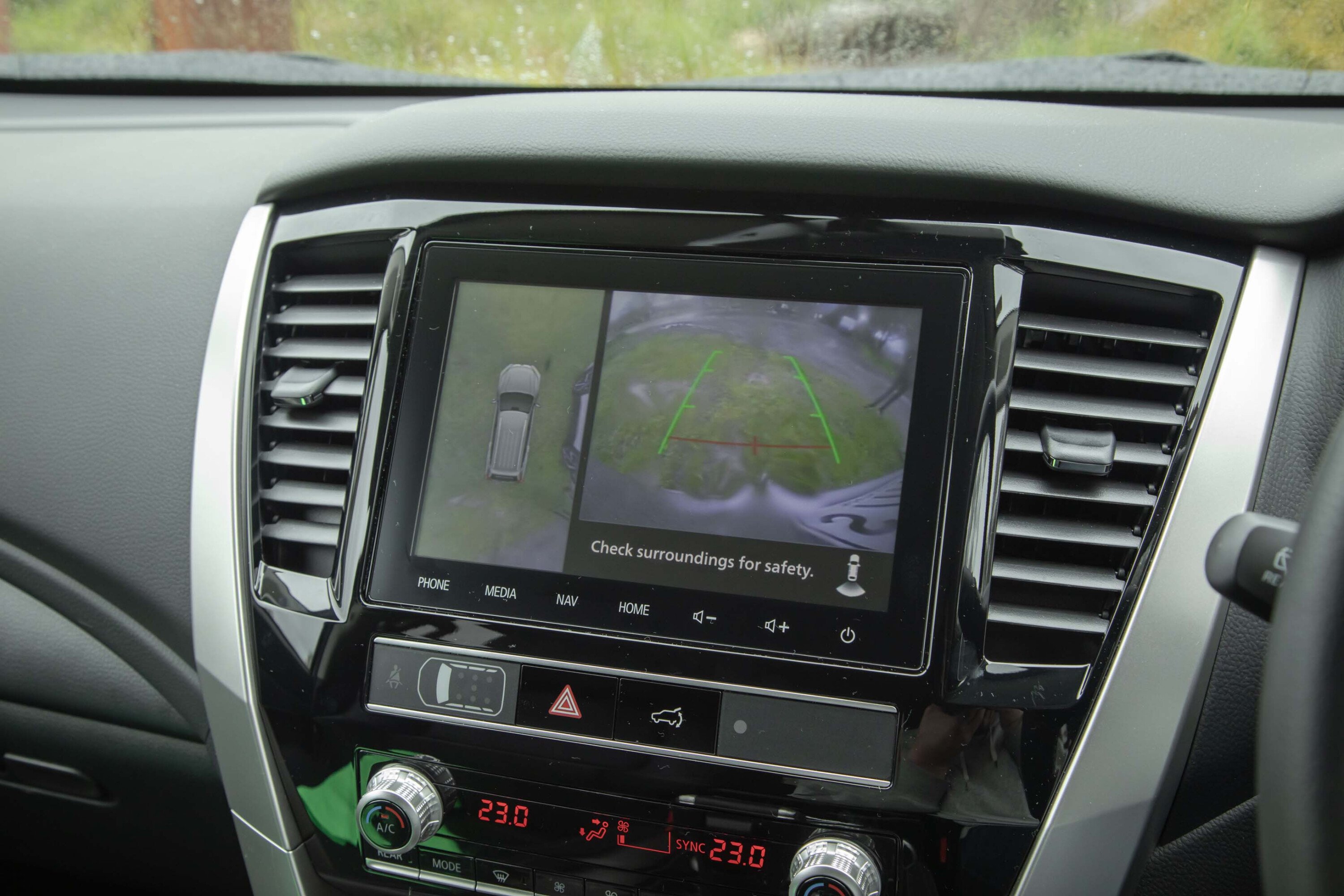
But on the positive side, the GLS spec and up include forward auto emergency braking (AEB) with pedestrian detection, adaptive cruise control, front and rear parking sensors, a low-resolution 360-degree monitor and a reversing camera.
You’ll need to buy the Exceed or GSR to get the benefit of standard front parking sensors, blind-spot monitoring, lane-change assist and rear cross-traffic alert.
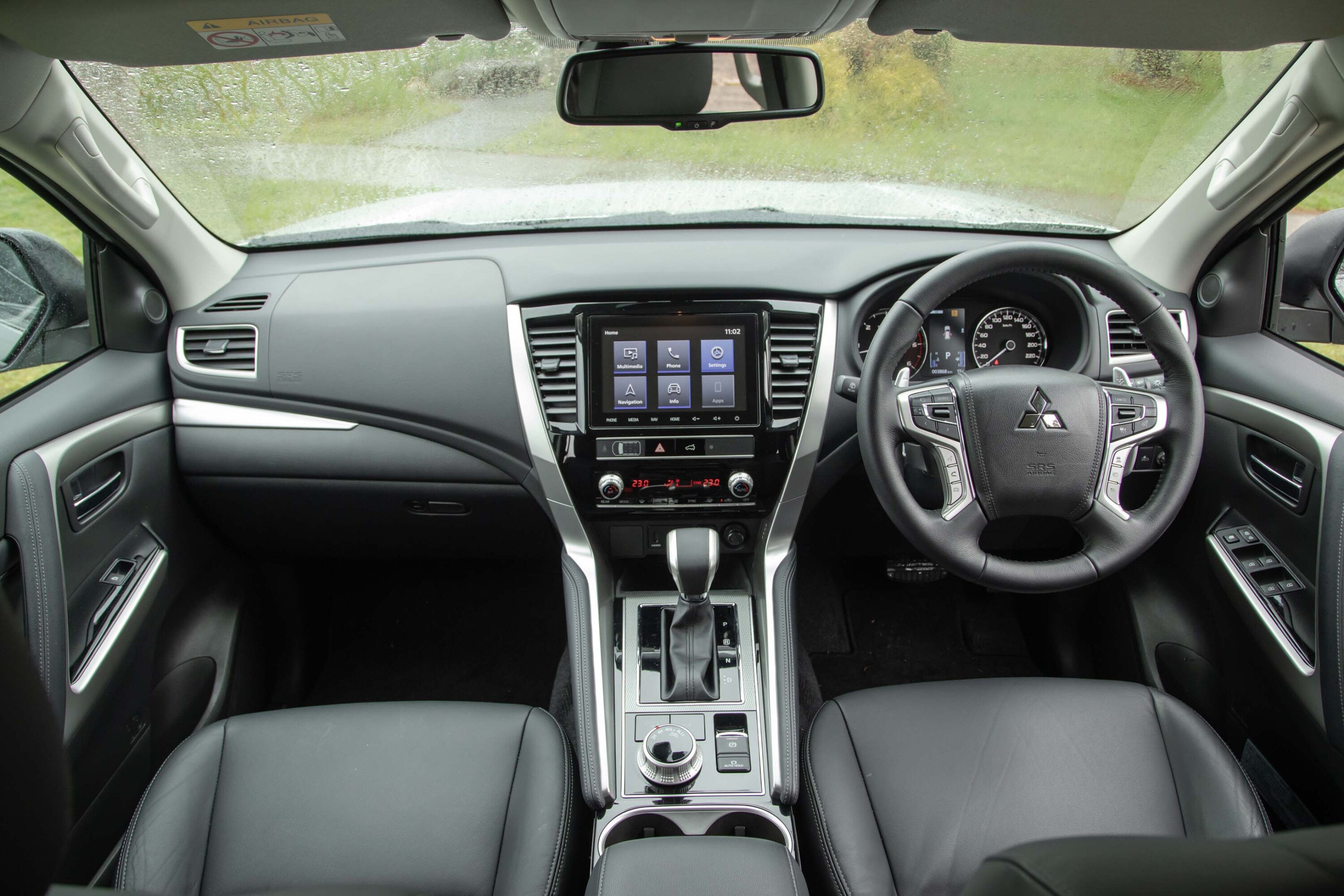
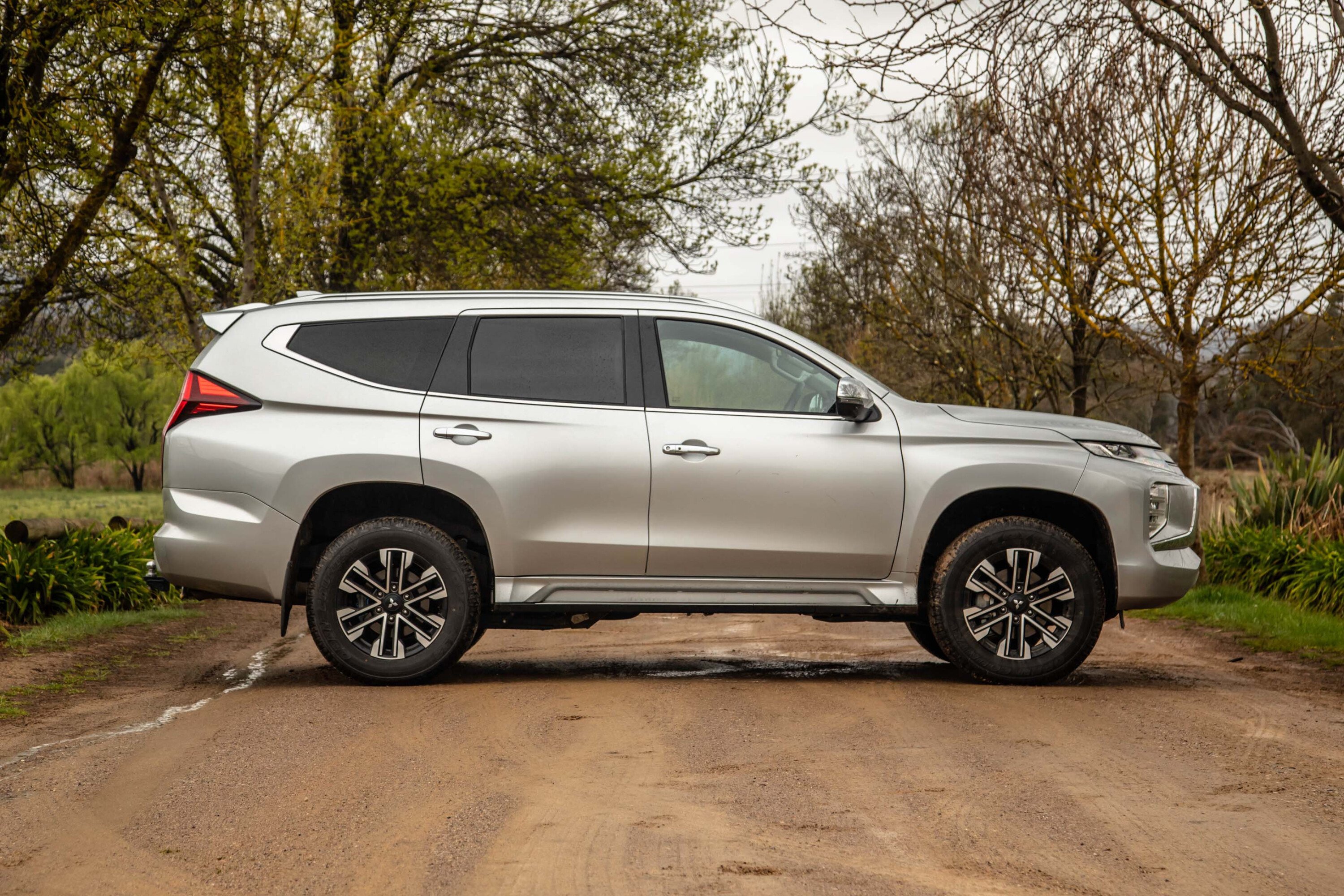
The Mitsubishi from GLX 4WD grade up offers the unique full-time/part-time Super Select II transfer case as standard, as well as features such as dusk-sensing bi-LED headlights, power-folding side mirrors, roof rails, rain-sensing wipers, keyless entry and push-button start, three 12-volt accessory ports, built-in sat-nav, side steps, rear-view camera, rear parking sensors, lane-change assist, autonomous emergency braking and a rear differential lock.
Get up to speed on the Pajero Sport
The stories below will give you a guide on everything to do with the 2024 Mitsubishi Pajero Sport. All fresh stories will be found on our Mitsubishi Pajero Sport page.
2024 Mitsubishi Pajero Sport coverage
How much can the 2024 Mitsubishi Pajero Sport tow?
In the early 1970s, we had a performance war as manufacturers tried to out-do each other with increasingly fast and powerful sedans; in the 2000s, we have had a towing capacity war.
The apparent target has been to reach a maximum 3500kg legal towing performance, and now most larger SUVs and mid-size utes can accomplish this. Of course the compromise, in some instances, is a drastically reduced legal payload maximum when towing a heavy trailer.
Some vehicles really seem to have to work hard up near 3500kg, and don’t feel all that stable when doing it. However, the Pajero Sport 4×4 has a 3100kg maximum braked towing capacity (with a 310kg maximum on the ball) or 750kg unbraked.
While this is 400kg less than some competitors, the bonus is that this is one of few vehicles that can carry a substantial payload as well as towing a heavy trailer at the same time.
It also suggests the company’s engineering department saw 3100kg as a realistic maximum and put their foot down. No doubt Mitsubishi marketing would have really preferred a 3500kg capacity.
On the heaviest, premium Exceed and GSR models, the Pajero Sport has a maximum 566kg payload, 2775kg GVM, and 5565kg GCM details. This means, if you had 310kg maximum towball download (which is then part of payload calculations), you have 256kg payload remaining.
To not cross the 5565kg GCM threshold, you can tow up to 3100kg maximum – assuming that 310kg of the trailer mass is towball download.
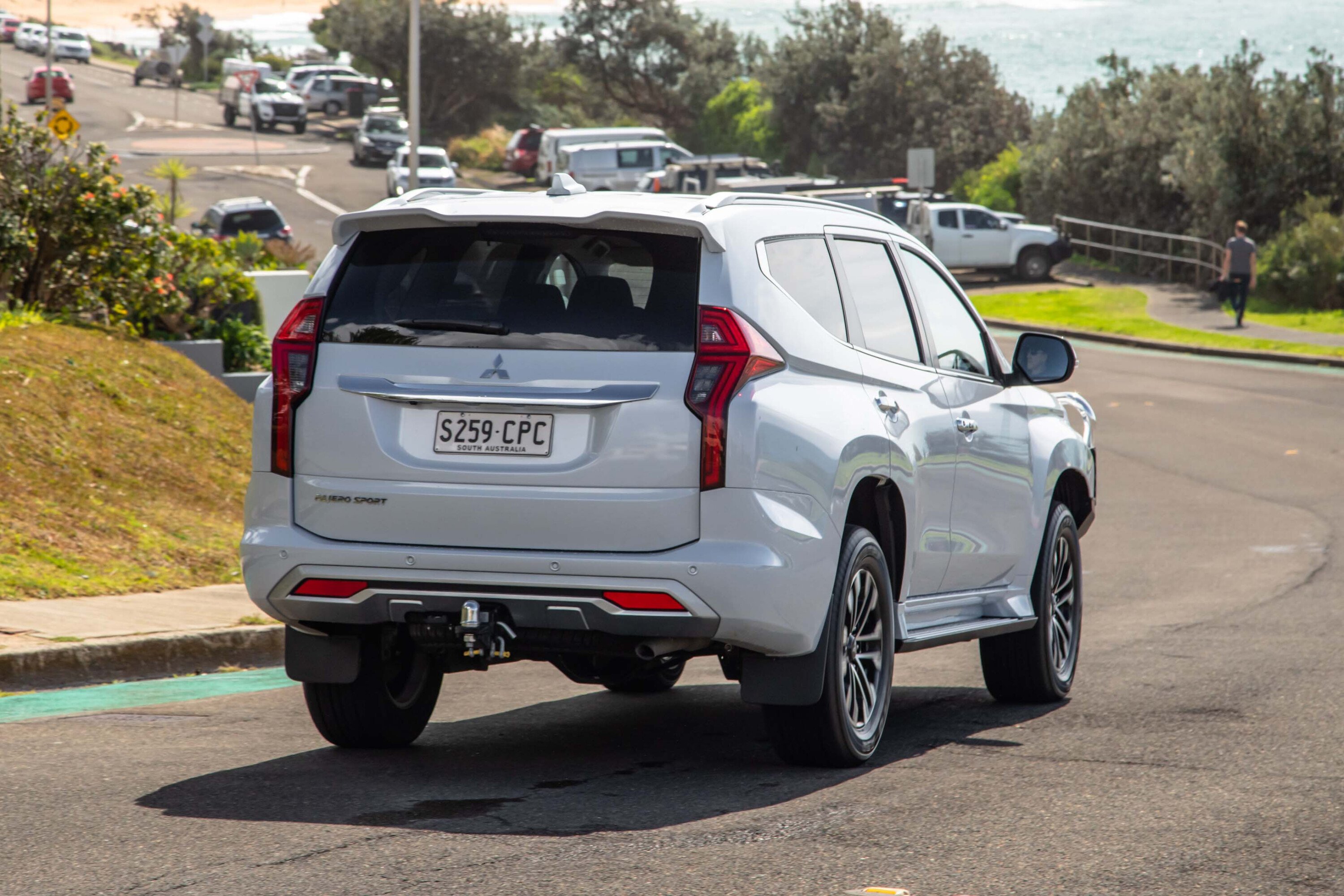
With tow-capable SUVs and utes increasingly offering factory-fitted towing equipment as standard, it’s worth noting that the Pajero Sport is quite sparse on that front. Unlike some of the competition, a towbar is not standard on any Pajero Sport.
You must tick the $1495 (including fitting) towbar kit option if you want the Mitsubishi-approved gear to tow with, and $41 for the 50mm towball. Likewise, you need to delve into the accessories list to have a Redarc electric brake controller fitted by Mitsubishi ($689, including fitment).
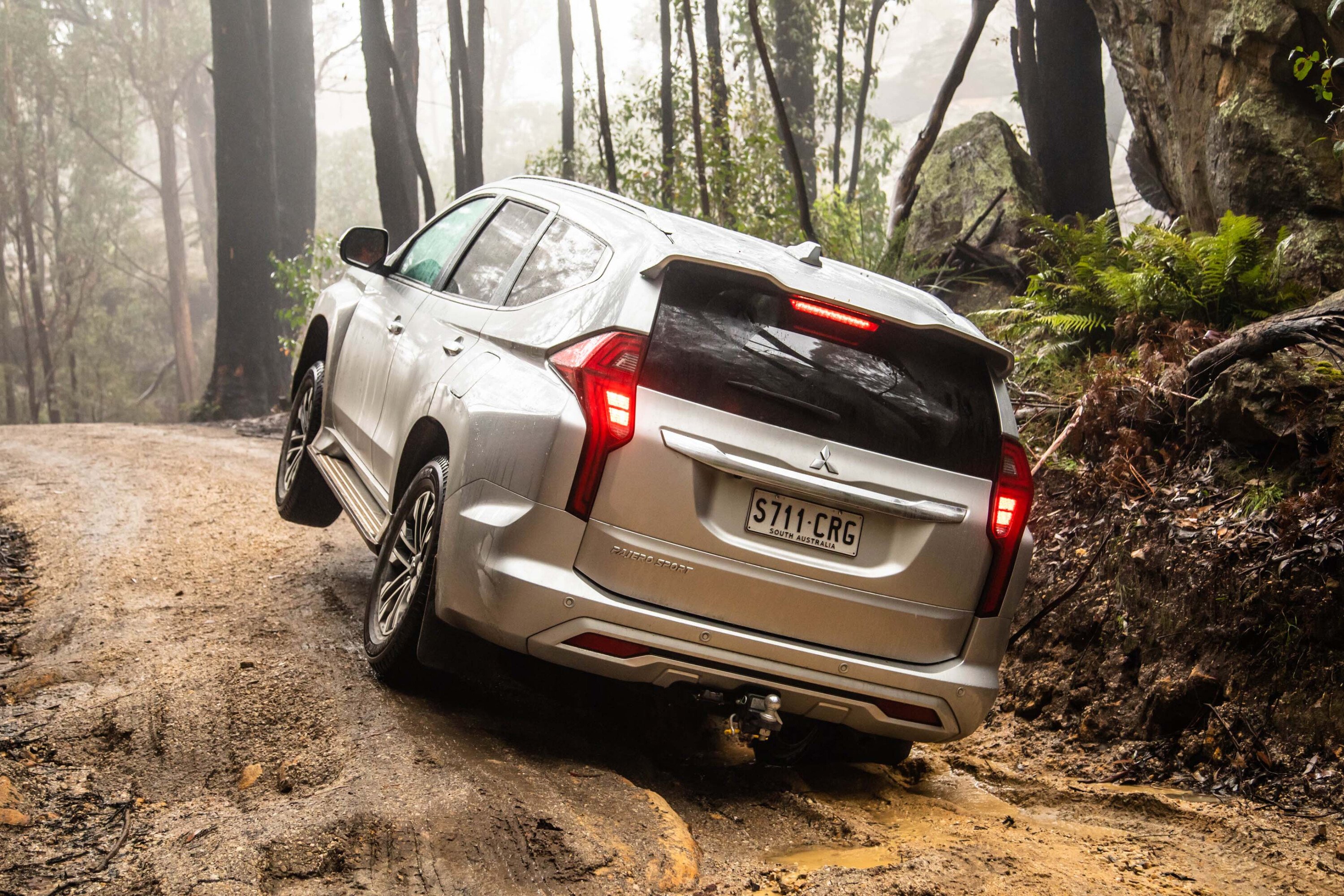
While Trailer Stability Assist (which senses trailer sway and controls individual wheel slip) is bundled into every Pajero Sport’s safety suite, there is little else in terms of dedicated towing assist features off the shelf.
With a heavy trailer approaching the 3100kg maximum behind it, the Pajero Sport’s 2.4-litre diesel has to work hard to maintain speed when climbing in hilly terrain. The engine’s peak torque not kicking in until a relatively high 2500rpm doesn’t help.
While not the quietest diesel, the transmission is smooth and there’s enough torque that the auto doesn’t have to get the engine into the powerband all the time when towing. With a balanced trailer behind, the Pajero Sport is not susceptible to yawing or pitching, and offer a comfortable towing ride.
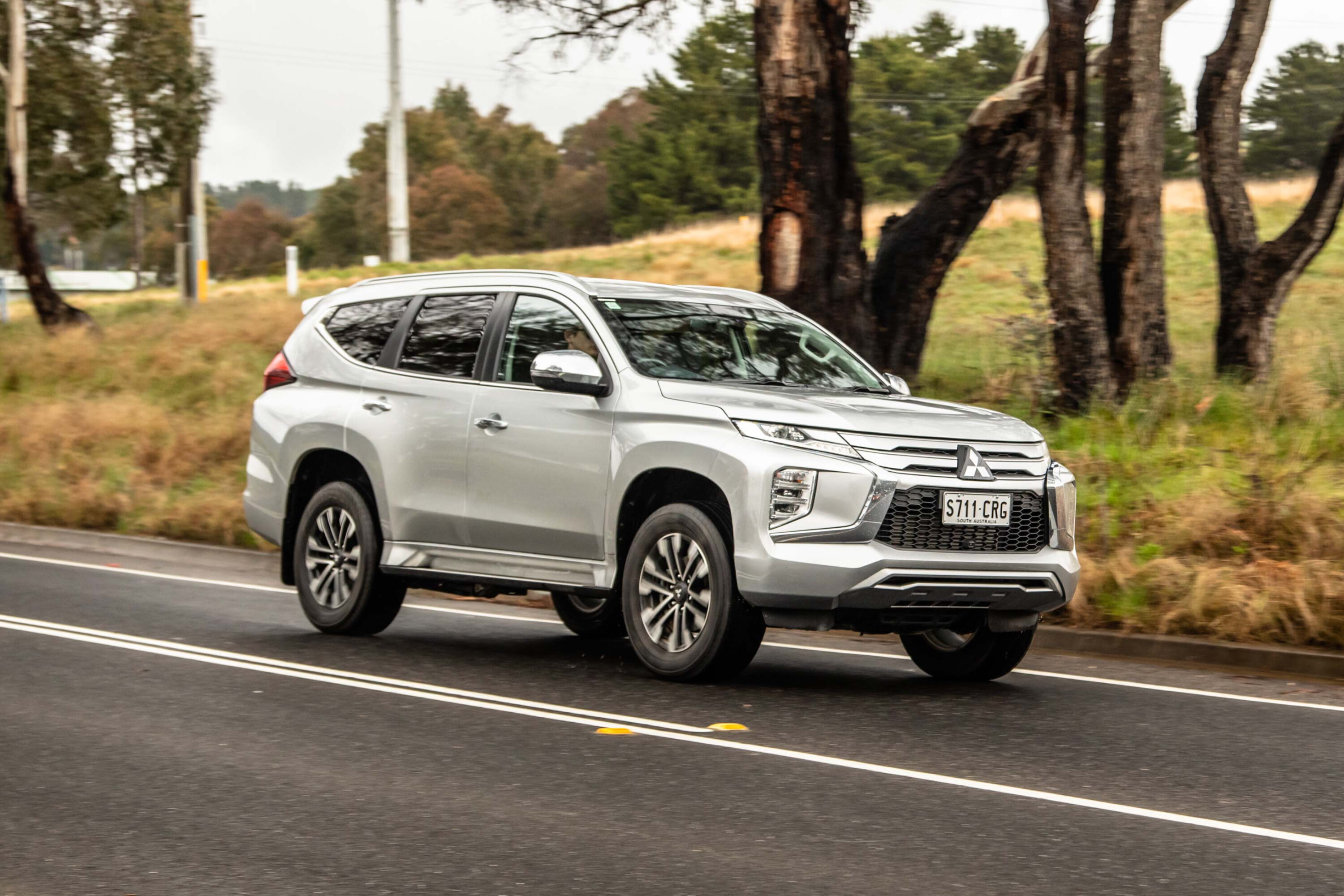
How does this match up with competitors?
There are a few large SUVs in the market with healthy towing capacity and buyers expect them to offer high levels of towing features and ability. The Pajero Sport needs to be on top of its towing game.
The Ford Everest, Isuzu MU-X, SsangYong Rexton and Toyota Fortuner are all key large SUV towing competitors. While all offer a four-cylinder turbo-diesel, the Ford also has a more powerful and torquey V6 diesel option.
The Everest is the best of the bunch here, in either four-cylinder or V6, while the Isuzu is a close runner-up as a tow vehicle. The Rexton is a capable tow vehicle, but is slightly lacking in terms of towing refinement and ride.
| Pajero Sport | Everest | MU-X | Rexton | Fortuner | |
|---|---|---|---|---|---|
| Engine | 2.4L TD4 | 2.0L TTD4 | 3.0L TD4 | 2.2L TD4 | 2.8L TD4 |
| Power | 133kW | 154kW | 140kW | 148kW | 150kW |
| Torque | 400Nm | 500Nm | 450Nm | 441Nm | 500Nm |
| Towing capacity | 3100kg | 3500kg | 3500kg | 3500kg | 3100kg |
| Towball download | 310kg | 350kg | 350kg | 350kg | 280kg |
| Kerb weight | 2209kg | 2396kg | 2155kg | 2130kg | 2185kg |
| GVM | 2775kg | 3100kg | 2800kg | 2960kg | 2800kg |
| GCM | 5565kg | 6250kg | 5900kg | 6460kg | 5550kg |
One of the good things about starting off with a base model vehicle is that you can improve the look of it tenfold simply by replacing the OE wheels and tyres. And so it was with our Ford Everest build.
Even though the Everest Ambiente comes with factory alloy wheels, they are pretty daggy and the original highway tyres were never going to cut it out on the tracks. Enter two of our favourite suppliers: Maxxis Tyres and Wheel Pros.
We chose to go with an all-terrain in the Maxxis RAZR range, with a set of RAZR AT811s in the LT275/70R17 size. Just a plus-one upsize from the factory 255/70 17s that came from Ford, and tyres that would easily fit within the fenders without resorting to flares or modifications of the inner guards.
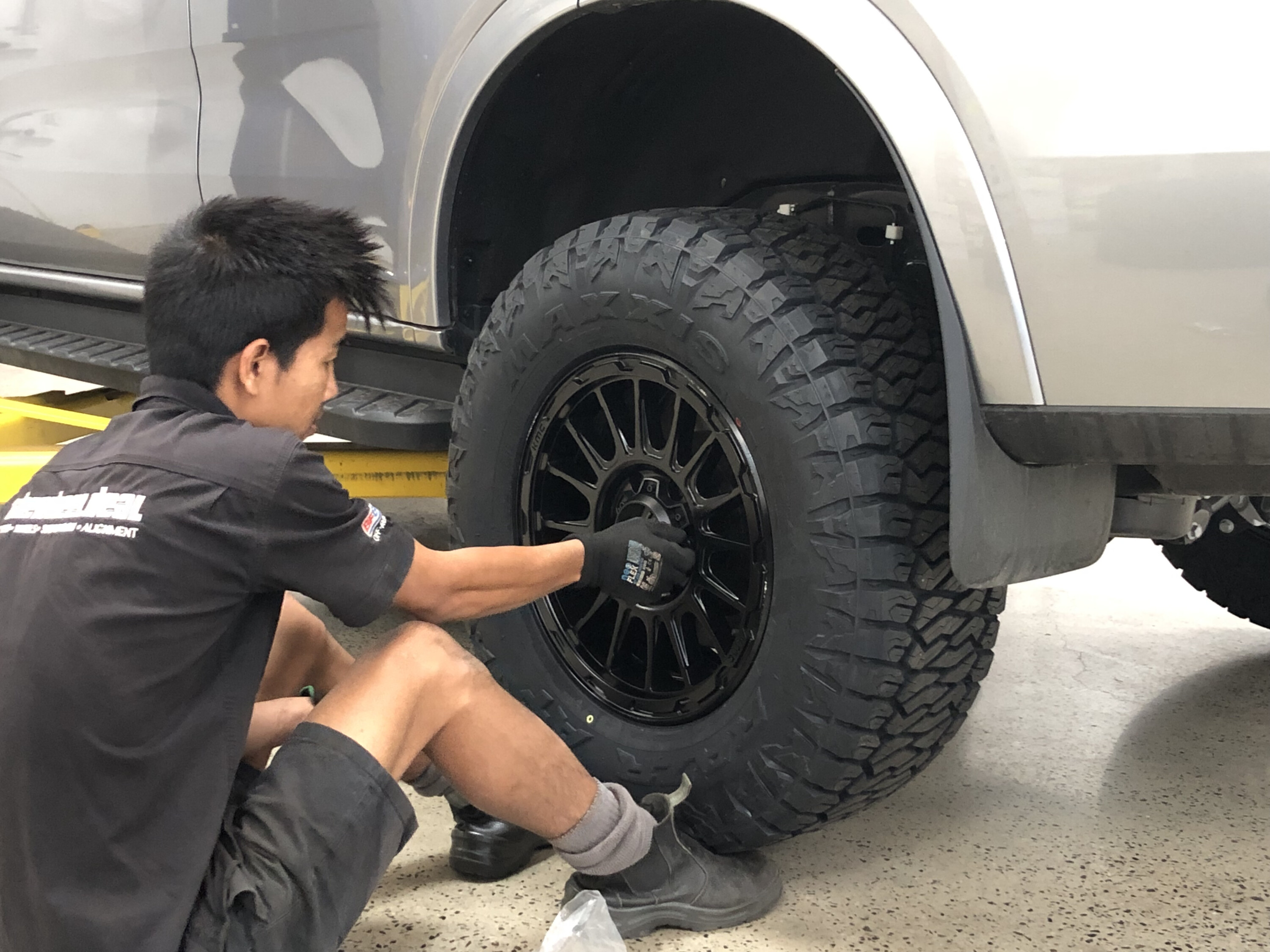
They are only around 25mm wider than the OE tyres and a bit taller to give more ground clearance, but, most importantly, being of LT construction and with Maxxis’ great rubber compound that we’ve grown to love, we know they’ll be durable.
Diving into the Wheel Pros website is a bit like being a kid in a candy store, as there are literally thousands of wheel options to choose from. We always look for wheels that are not overly detailed, with simple designs that will be easy to maintain while still looking great on the car. As our Everest is aluminium in colour, we wanted anthracite or matte black wheels and not a style we have used before.
The positive offset of the OE wheels makes it hard to keep them in the guards and limits options, but we ended up selecting a set of KMC ‘Impact’ wheels in 17X8 6X5.5 with a 35mm backspace and satin black in colour. We reckon anthracite or light grey would have looked better with the silver car, but the black ones look pretty good. The KMC wheels are cast alloy and weigh in at around 12kg a pop, so they go a small way to offset the extra weight of the LT tyres.
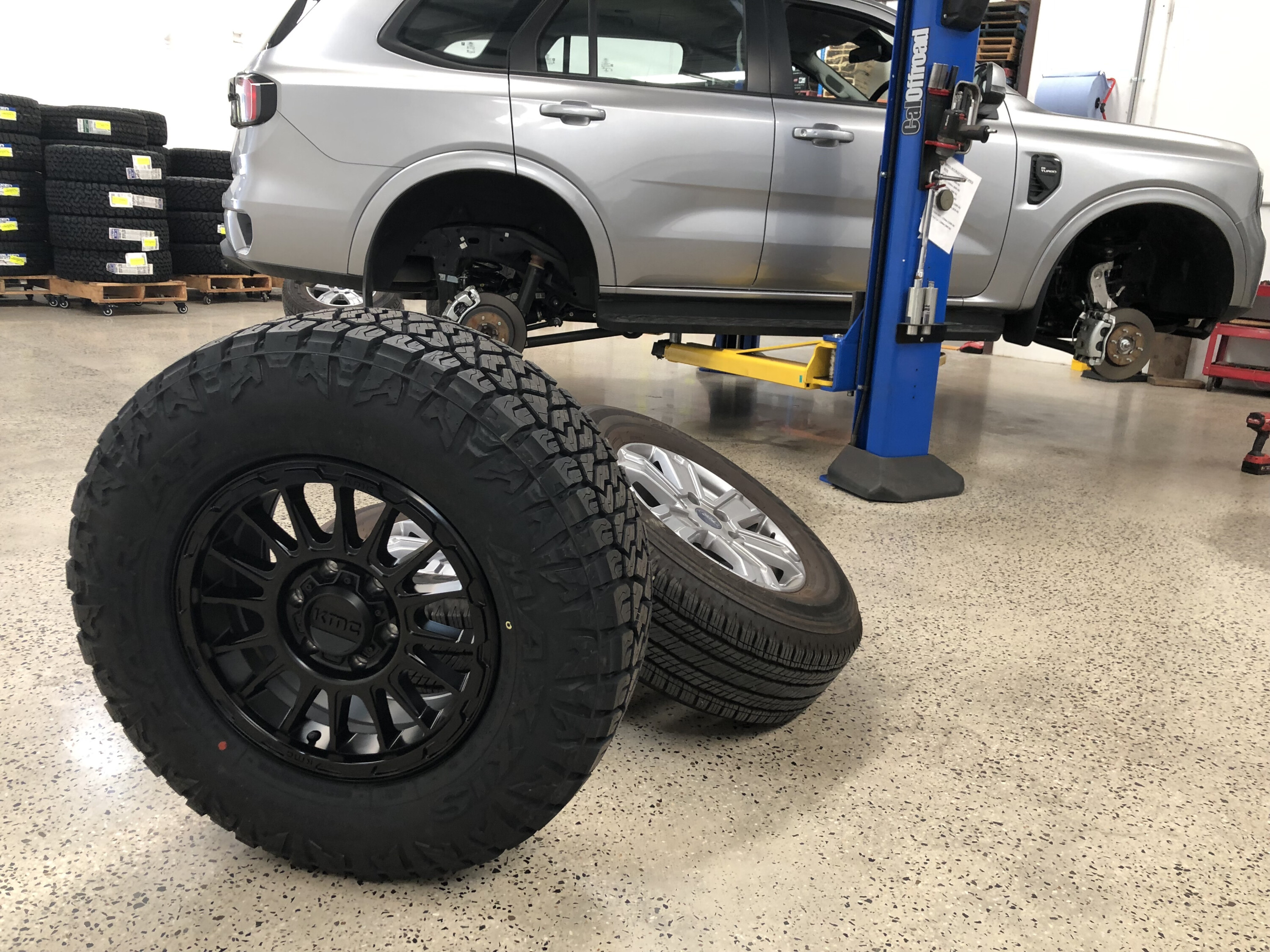
Fitting was done at The Wheel Deal in Melbourne’s eastern suburbs, and when we walked in and saw so many mud-terrain, 35- and 37-inch tyres, and bead-locked wheels in the workshop, we knew we were in the right place. These guys are 4×4 and off-road specialists and knew just what we were after.
The guys took care of fitting and balancing the new wheel and tyres, and it was nice to see a torque wrench come out when it came time to finalise the fitment. A thoroughly professional wheel and tyre shop for all of your 4×4 needs.
RRP
Wheels: $279 each (Wheel Pros AU) Tyres: $390 each (The Wheel Deal)
A Chinese ute from a relatively unknown brand has been spied at Ford Australia’s engineering headquarters in Melbourne – the same facility where the Falcon, Territory, Ranger and Everest were developed.
The JMC Dadao ute – also known as the JMC Grand Avenue – was unveiled in March 2023 based on an all-new frame platform with petrol or diesel engines and an electric version set to follow.
“As part of our work as Ford’s engineering, development, and design hub for the region, we regularly evaluate products from other manufacturers, including those not sold in Australia,” said a Ford Australia spokesperson.
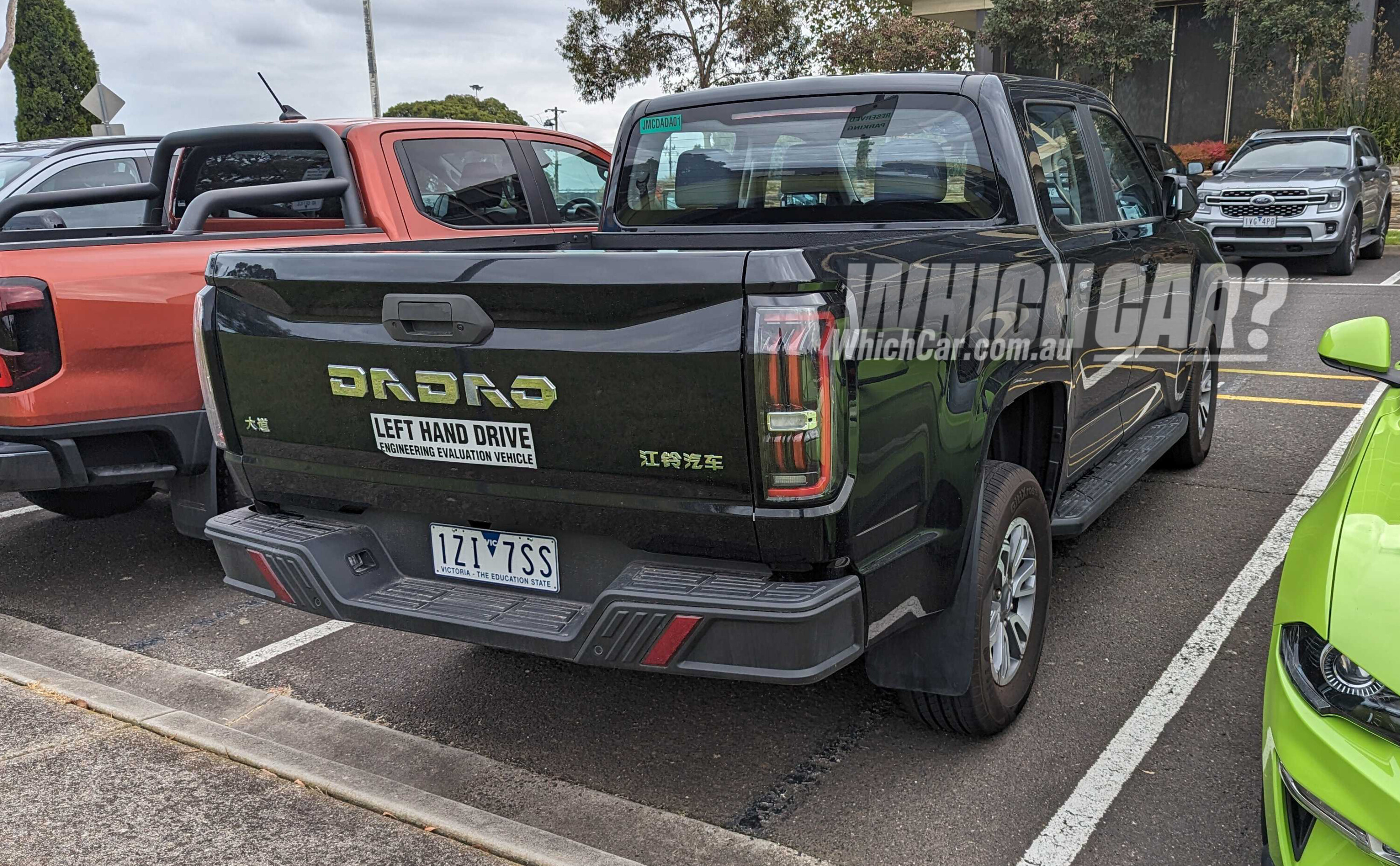
Like previous Chinese-market Fords spotted in Australia, the Dadao is here as the brand’s Melbourne engineering base – known as the Asia Pacific Product Development Centre – is also responsible for evaluating foreign products, not just those bound for local showrooms.
Under the bonnet, the petrol Dadao features a version of Ford’s 2.3-litre turbocharged EcoBoost four-cylinder, which is also fitted to the Ranger, Everest, Mustang, Focus ST and Volkswagen Amarok.
This is due to Ford’s joint venture with JMC – short for Jiangling Motors Corporation – in China, which has led to several co-developed vehicles since the mid-1990s, including the Ford Territory small SUV that bears no connection to the Australian model, apart from borrowing its name.
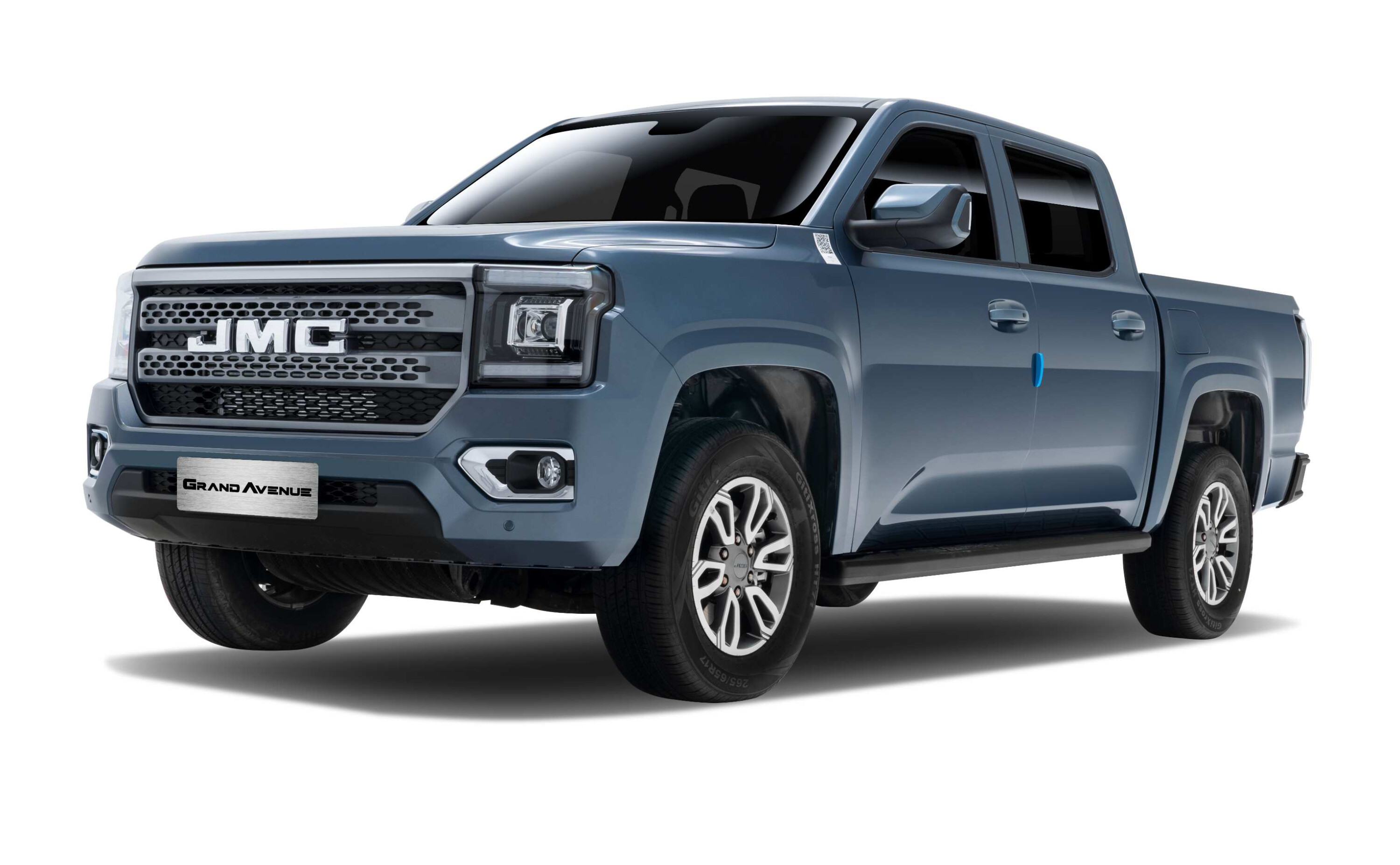
It is not to be confused with JAC, an unrelated Chinese brand that has re-launched in Australia with its new T9 diesel ute.
The 2.3-litre turbo-petrol in the JMC Dadao produces 180Nm and 400Nm – compared to 222kW and 452Nm in the Volkswagen Amarok in Australia. It is matched to a six-speed Getrag MT82 manual – also found in some Ford products – or an eight-speed ZF torque-converter automatic.
A diesel version of the JMC Dadao is also available, featuring a 130kW/450Nm 2.3-litre four-cylinder matched to the same six-speed manual or eight-speed auto as the turbo-petrol model.
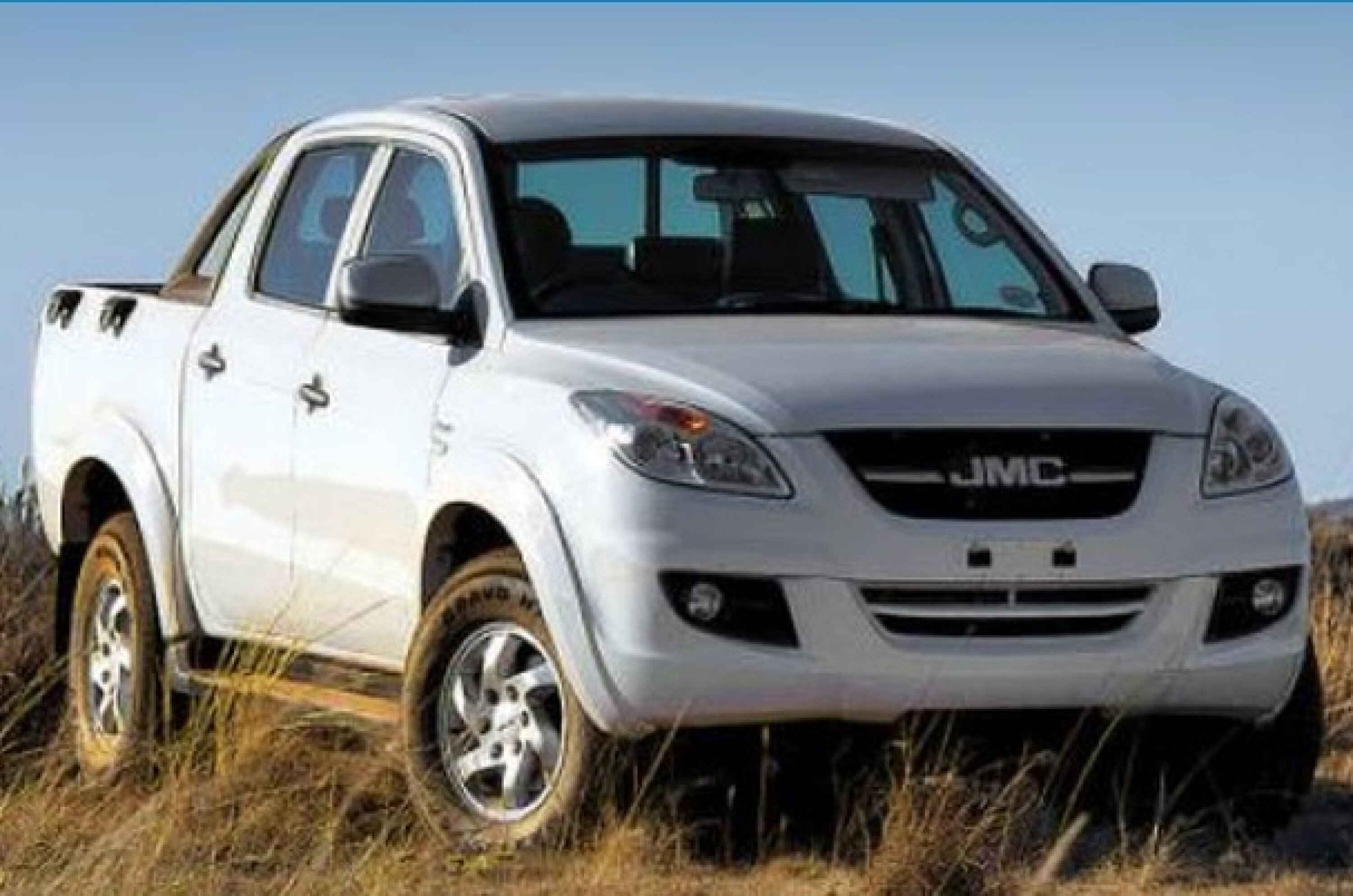
The JMC Vigus dual-cab ute was sold in Australia between 2014 and 2017 before its factory-backed distributor, JMIE Australia, entered voluntary administration in mid-2018.
Like the modern Dadao, the JMC Vigus also featured a version of Ford’s EcoBoost turbo-petrol motor.
JMC has not announced any plans to return to the Australian new-car market.
Running wiring from your roof rack into your 4×4 can be a pain in the butt, particularly with modern vehicles and all the complexities they bring.
You might need to run wiring from the roof for all manner of items you may have up there; not just light bars but reversing and camp lights, and any solar connections that you have running to panels on the rack. You could end up with a thick wad of cables needing to run down to power and switches.
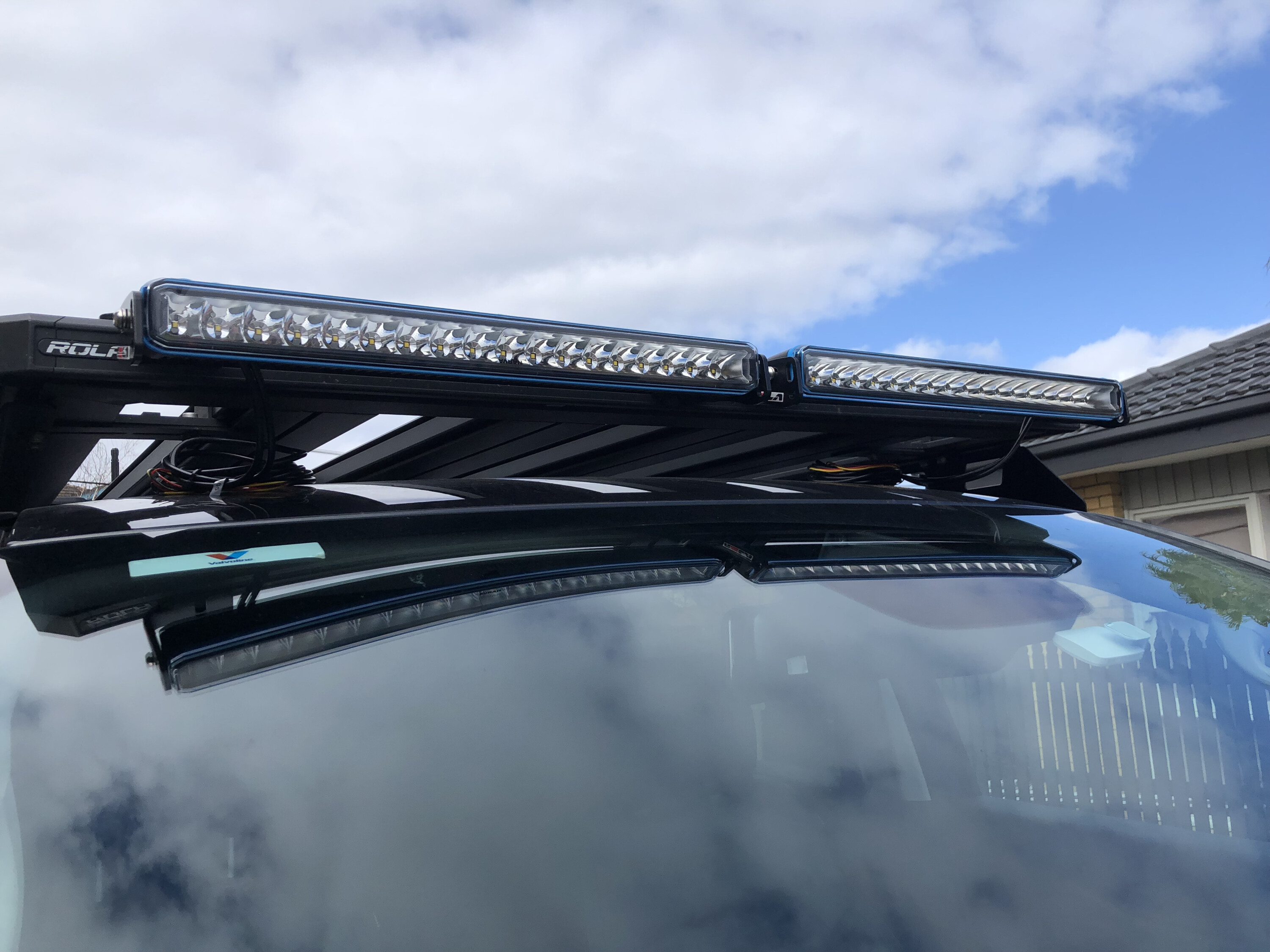
There are all manner of ways of doing this from drilling holes in your roof (not recommended) to running them down through the tailgate on a wagon, tapping into your intake snorkel and running them to the engine bay that way, or just running them down the inside external edge of your snorkel.
When we fitted the Narva EX2 light bars to the Rola Titan Tray on our Ranger, we used this clever wiring concealer from Stedi. It is simply a 1200mm strip of rubber moulding just like you’d find on OE door seals, which you cut to the desired length and stick to the edge of your windscreen with the supplied adhesive tape.
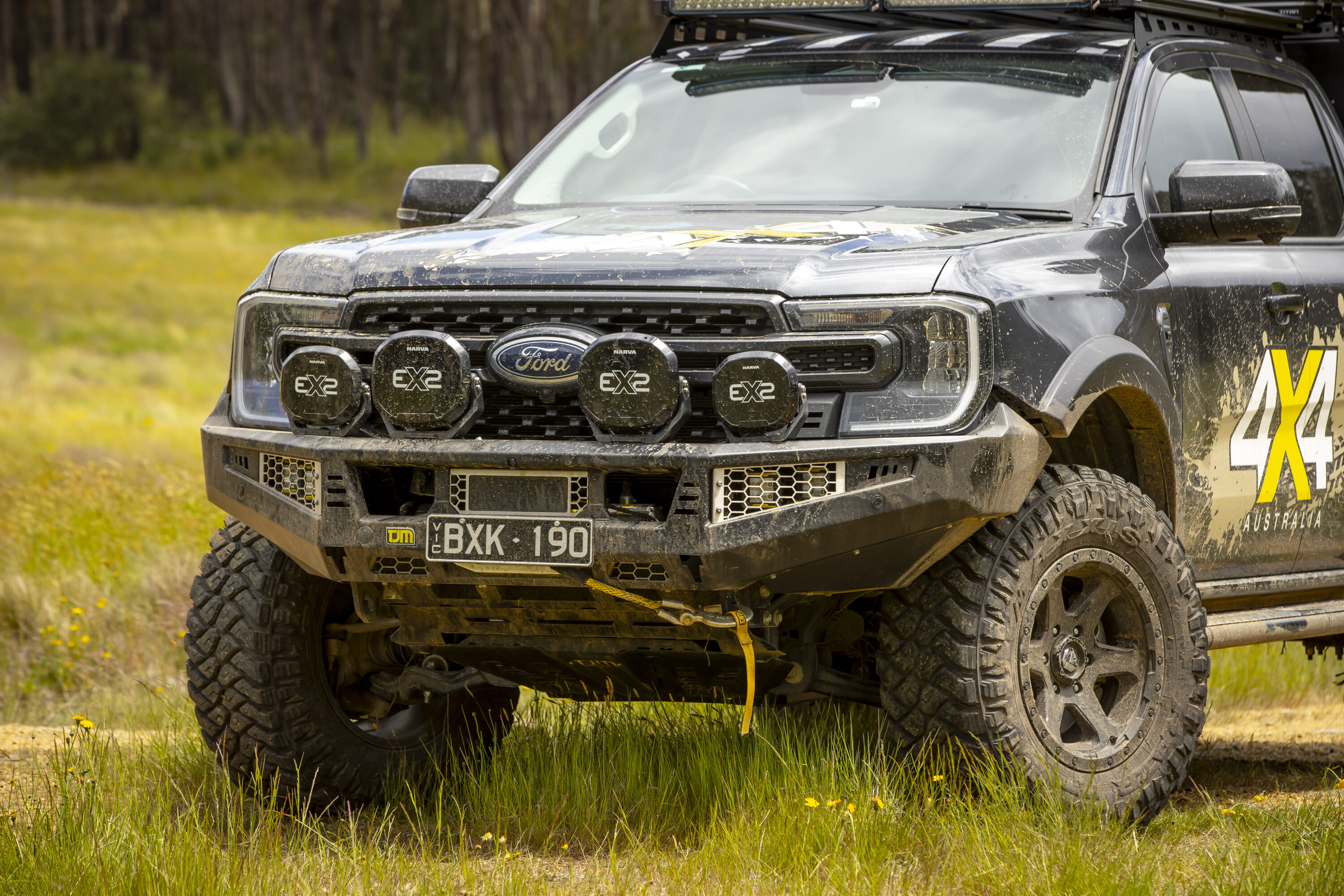
You run your wires down through it and into your engine bay where you can pick up a power source. The channel has around 10mm of inside diameter so you can get a few wires though there, and it locks closed once you tuck it in. It really couldn’t be any easier and the black rubber strip is barely noticeable where it runs down the side of the screen.
We picked the concealer up from our local Repco store for $30, or you can buy it online directly from Stedi or a host of other auto parts retailers.
Mitsubishi is in the midst of a product offensive, with the recently launched 2024 Triton ute to be followed by a host of new metal – including, potentially, a new Pajero.
Snapshot
- X Force Concept & Nissan Patrol-inspired Pajero designs rendered
- Mitsubishi wants a new Pajero, but will it happen?
- It’ll have to be a hugely capable off-roader to carry the Pajero name
One of the already confirmed new Mitsies is a monocoque large SUV. Some have speculated that model will debut as a Toyota Kluger rival – but could it be a 2025 Pajero? Perhaps.
Previously mooted as a platform-share reboot with the Nissan Pathfinder, Mitsubishi executives have since shown an unwillingness to compromise the Pajero’s tough image with a soft-roader reimagining.
Instead, if the Pajero name is to come back – something described as “a wonderful dream” by Mitsubishi president Takato Kato – it’ll be a serious piece of kit.
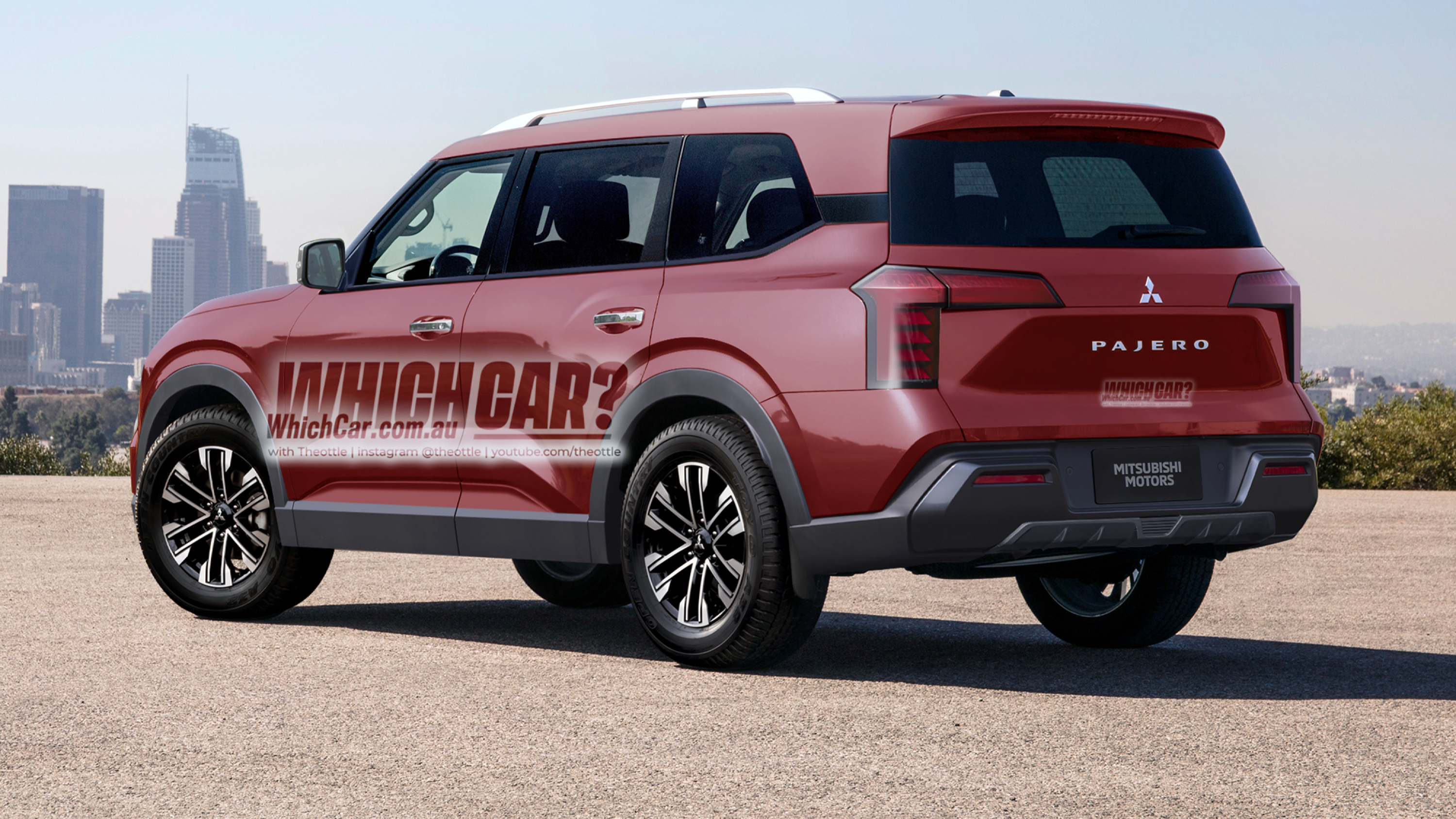
To whet the appetite (and perhaps even inspire Mitsubishi itself), our mate Theottle has spun up a couple of potential Pajeros inspired by existing products in the Mitsubishi and broader alliance portfolio.
Let’s take a look.
1) Outlander lends its looks to papa Pajero
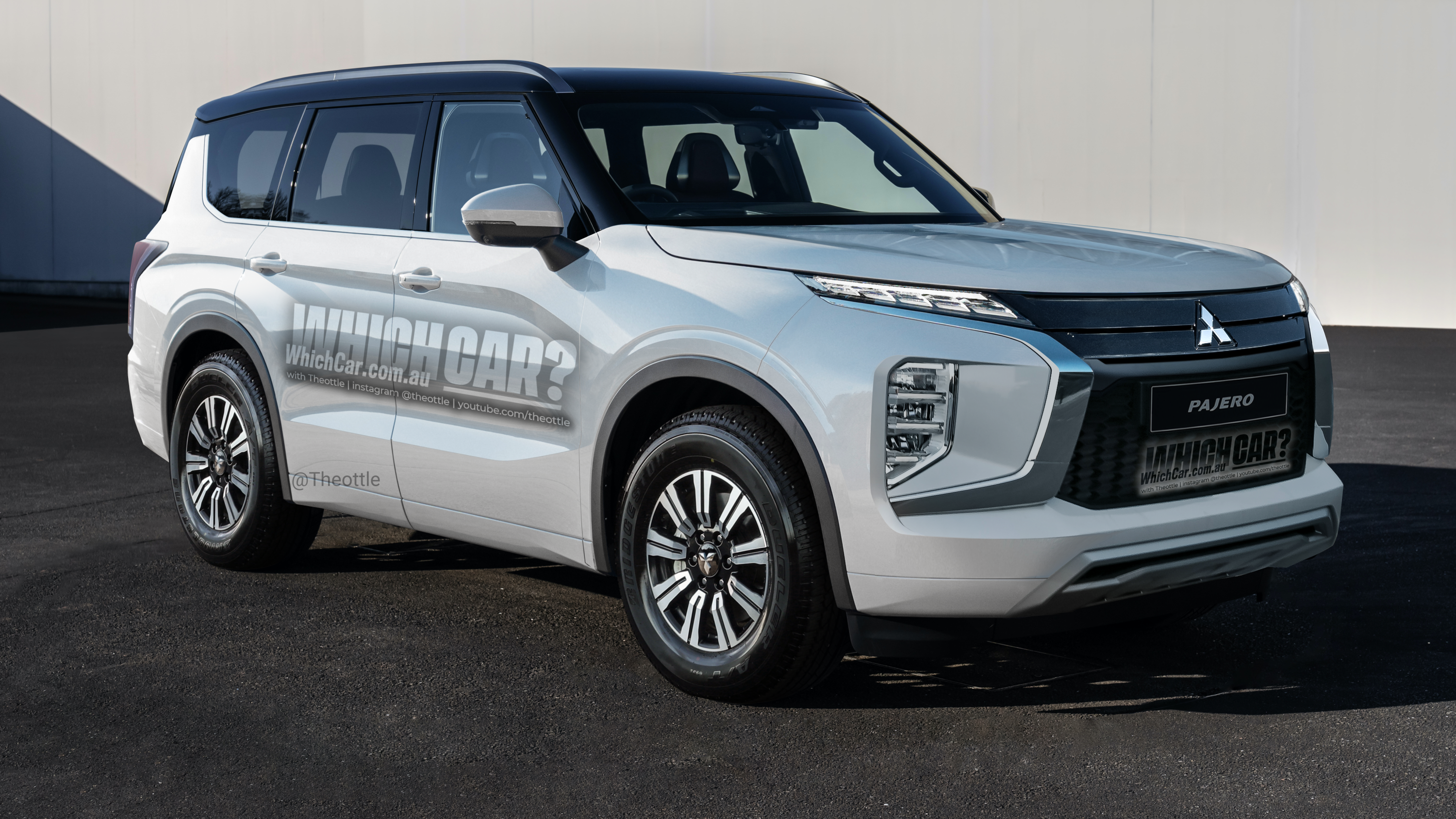
The first of Theo’s concepts takes its cues from the new Infiniti QX80, known to be a preview for the next Nissan Patrol.
To give it a Mitsu edge, Theottle has gone the obvious route of stretching and re-shaping the popular Outlander midsize SUV to suit the proportions and intent of the Pajero.
There’s a clear family connection here to not only the Outlander but also the brutish new Triton – so it could be just the ticket for a new-generation ‘Padger’.
2) XForce expands to large SUV
The second is a burgundy beaut’, with a look inspired by the compact XForce concept revealed in 2023.
If that’s the next ASX, could it also be a hint of Mitsu’s next design direction?
Given such an evolution, we could expect the new Pajero’s ‘Dynamic Shield’ front end and signature lighting to make a distinct leap away from the brand’s current look.
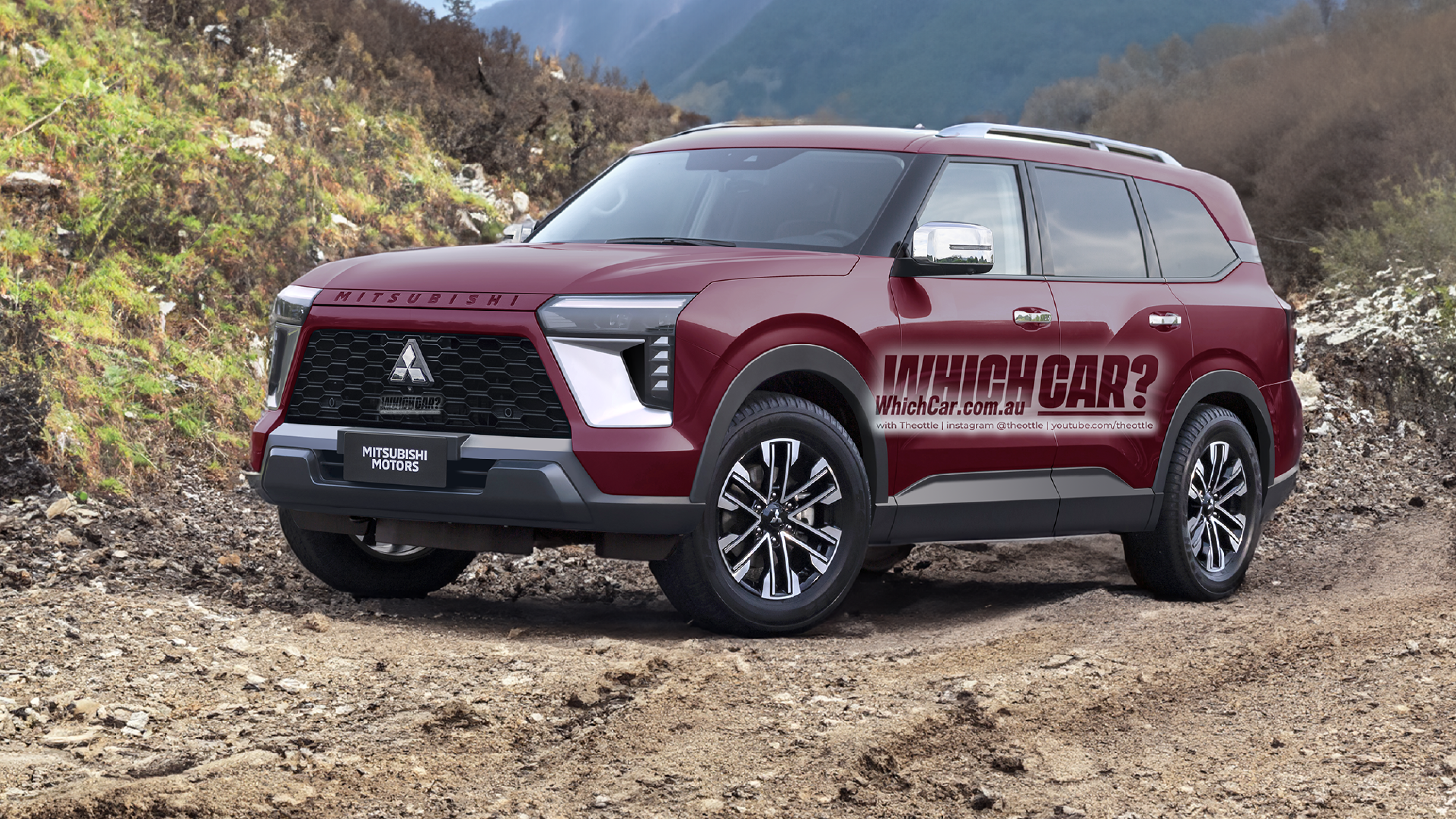
For its proportions, we’ve looked to a combination of the outgoing Nissan Patrol and, again, the big new Infiniti QX80 – or more specifically, the earlier Infiniti QX Monograph.
The rear end, too, carries QX Monograph dimensions and broad shoulder line though it’s accessorised with Mitsubishi-style LED tail lights and alloy wheels from the Pajero Sport ladder-frame SUV.
It is, of course, a huge departure from the last Pajero that first went on sale in 2006 and had various life-cycle updates that kept the monocoque 4×4 going until its plant closure in 2020.
Which would you prefer?
“if we do it, we want to control everything”
Although our imagined Pajero concepts borrow much of their overall shape from Nissan, Mitsubishi’s Pajero (if it comes to be) won’t just be a Patrol clone.
“A vehicle like Pajero? That’s our brand”, Koichi Namiki, general manager product strategy division told 4×4 Australia, adding “if we do it, we want to control everything.”
That could mean the new Pajero would transition to being a body-on-frame vehicle like the LandCruiser 300 Series and Nissan Patrol, utilising a modified version of the Triton’s ladder frame chassis.
It would certainly take the vehicle away from its heritage, but for towing, loading and off-roading, the ladder frame solution could work. Mitsubishi would also be able to better integrate battery-electric or plug-in hybrid powertrains from the ute.
What do you think of our Pajero imagination? Have your say in the comments!
Reading through this feature on the Bridle Track brought back plenty of memories and reminded me you don’t need to go heavy duty off-roading to have a great weekend away from the city.
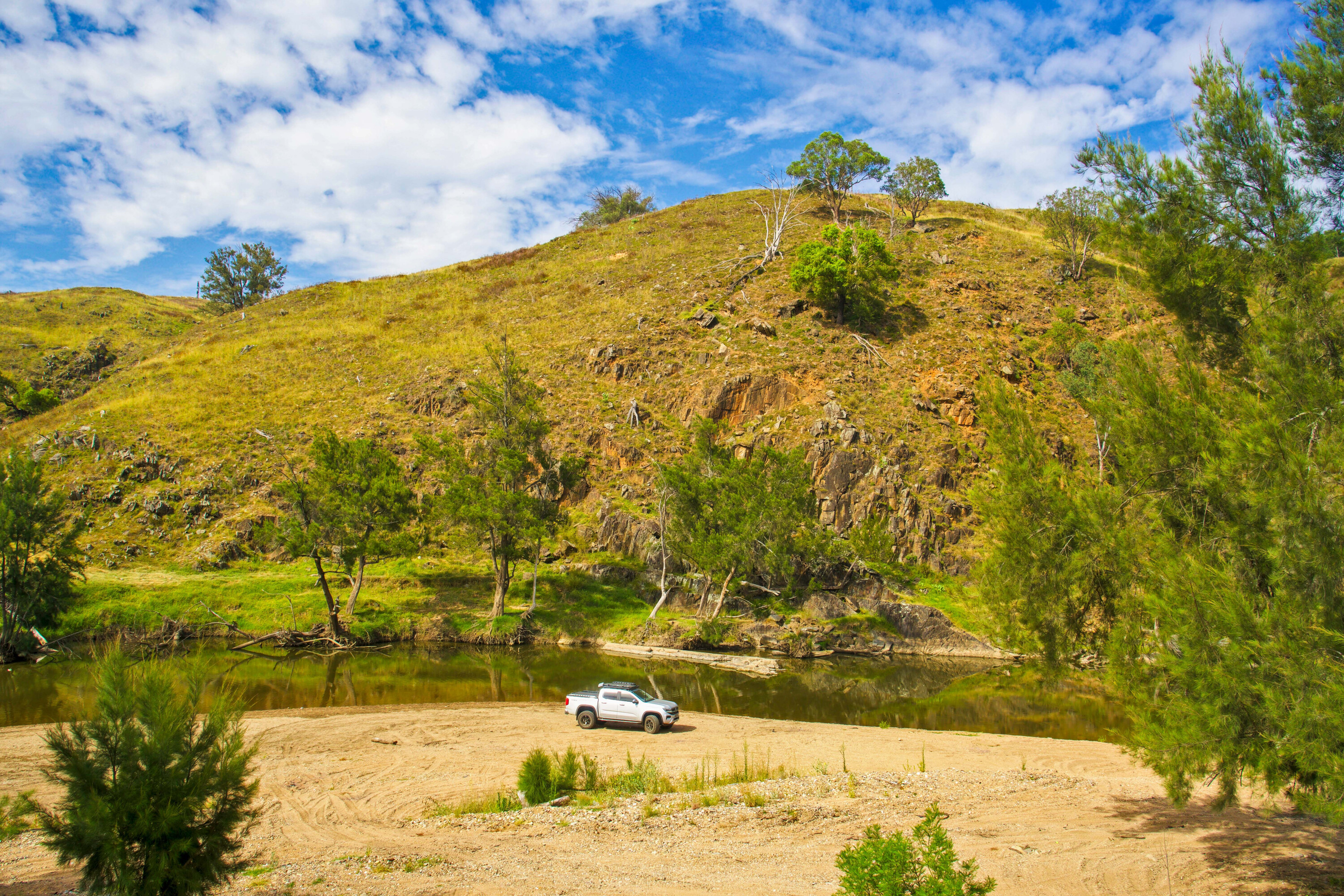
Back when we were in Sydney, the Bridle Track was a regular route for testing new vehicles; and as we were driving more light-duty SUVs back then, this was the perfect location. The Bridle Track is a place you can enjoy in just about any car, without the need for low range or off-road tyres.








With an early start out of town we could do the drive in a day, including stopping for photography and checking out the sort of things we do when testing new cars. However, the track was always more enjoyable when we scheduled it as an overnighter and had more time to spend on it.
With so many great campsites along the river as you traverse the track, you are spoilt for choice when looking for a camp, especially if you’re out there mid-week when there are fewer people using it. We enjoyed plenty of great nights around a campfire there, extolling the virtues of whatever vehicles we were driving over a couple of coldies.
Now that we are based in Melbourne and the Victorian High Country is a comparable distance from us to what the Bridle Track was back then, we tend to head straight up there for its exciting tracks. The Alps also have plenty to offer for owners of soft-roaders; certainly plenty to give you a taste for the adventures on offer and make you think about getting a more capable 4×4 with more ground clearance and low range.
It doesn’t matter what you are driving, there are locations within cooee of all the capital cities that will offer you the chance to escape the rat race, enjoy some fresh air, cool off in a flowing river, and see some amazing sights.
Yes, we see the news stories and photographs of people attempting to take their soft-roaders to places they shouldn’t and failing, but with a bit of research and some common sense (yeah, I know) there’s a world out there to explore without getting into trouble.
The Toyota HiLux has taken the number-one spot as Australia’s most popular vehicle many times in recent years, but this is a ute that has been part of life for generations of Australians for much longer than that.
We talk to three owners for whom the Toyota HiLux has served their family as a reliable, and durable, companion that has kept on exceeding expectations.
Lawrence’s 1987 HiLux dual-cab
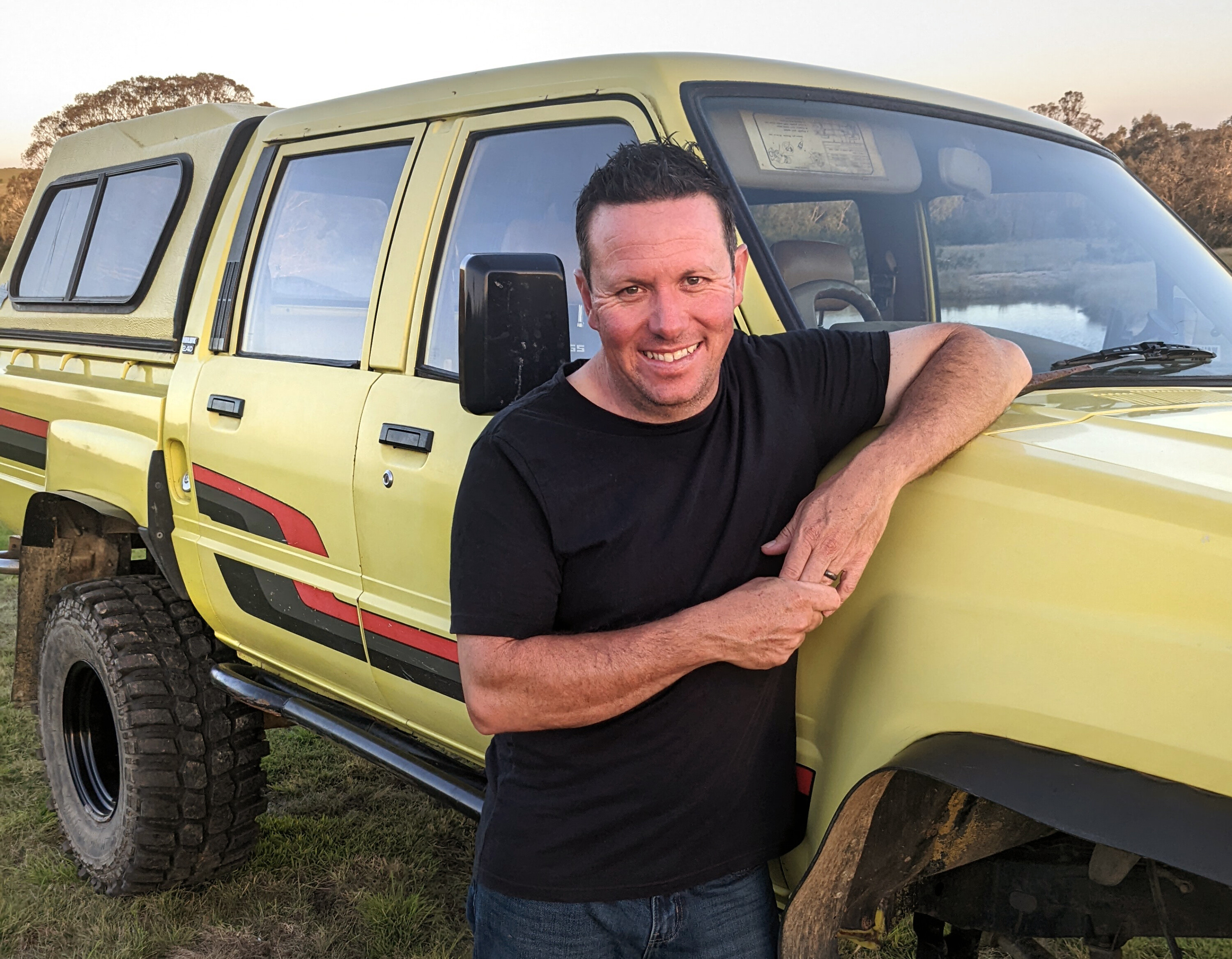
For Lawrence De Pasquale, from Yass River NSW, 1970s and 1980s HiLuxes are what he is most drawn to, even if his family also owns more ‘modern’ Toyotas.
Like many, Lawrence’s HiLux story started young. When he was growing up, he travelled in the back seat of his parents’ 1985 HiLux dual-cab on family holidays deep into remote Australia.
“My parents had a 1985 LN65 dual-cab that we used to travel central Australia and the Victorian High Country with; that’s what started my passion for the HiLux all those years ago,” says Lawrence.
Lawrence bought his first own HiLux – a 1981 model – about 15 years ago and now owns four of them. Two of the utes (both RN46 1981 models) are part of a restoration project while an RN65 serves as a parts vehicle.
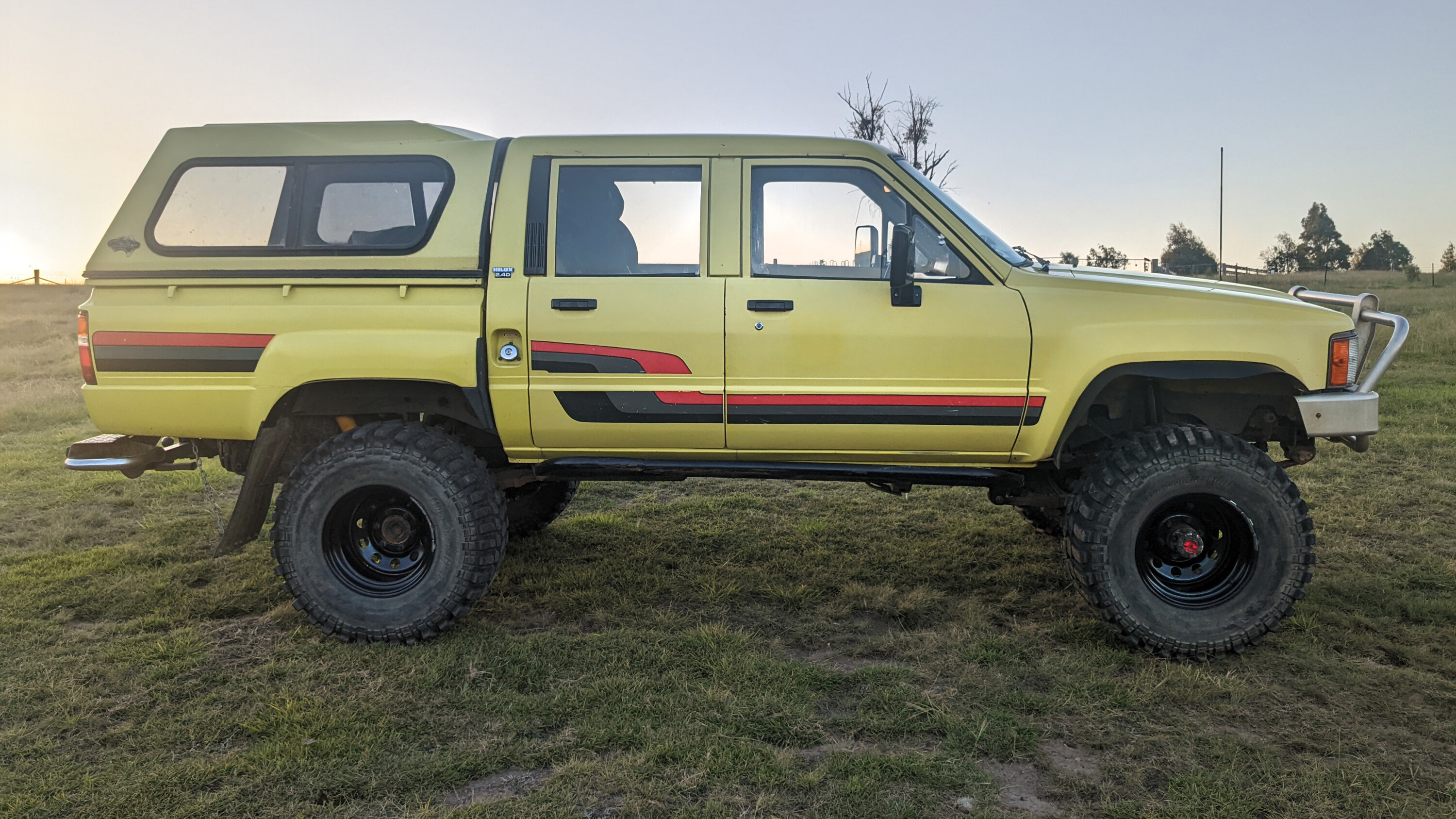
Taking pride of place in Lawrence’s collection is an LN65 1987 HiLux dual-cab, which he has owned for five years.
“It belonged to a guy I worked with. I hounded him to sell it to me for about seven years! Eventually, he did, and I used it as a daily [driver] to begin with.”
The reason Lawrence has so many HiLuxes (and has no plans to move any of them on)?
“I like [HiLuxes] because they’re easy to work on and they’re reliable. Off-road, it’s just the lightness of them, they’re just more nimble, and don’t slide off the track as easily as a bigger, heavier vehicle.”
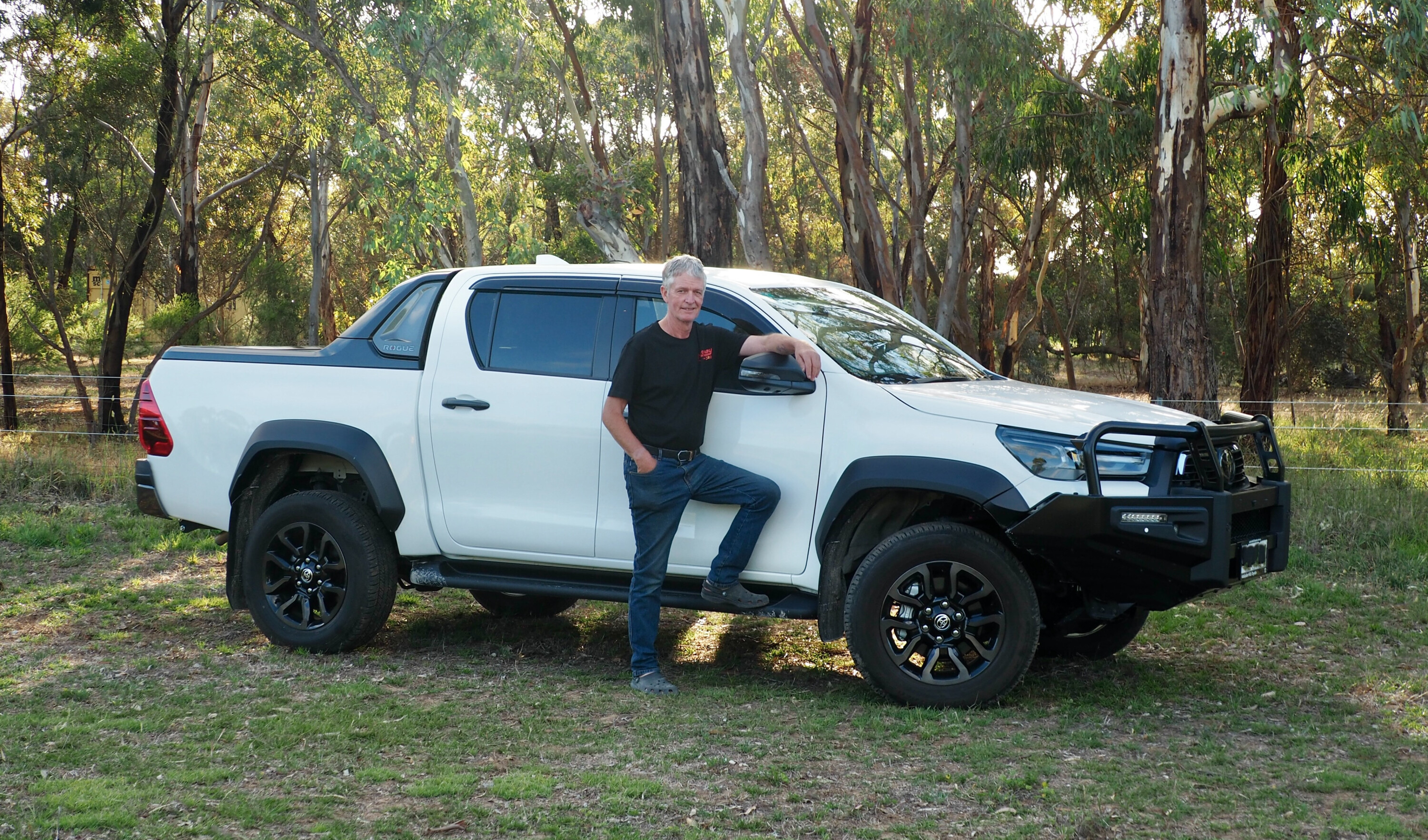
Chris’s 2023 HiLux Rogue
Chris Frizell from country South Australia doesn’t have a large HiLux collection, but it’s a model he has returned to time and again over more than 40 years.
From his first HiLux in 1980, Chris is now up to his fourth – a new HiLux Rogue.
He says what drew him to Toyotas initially was the sheer number of them around him in his formative years.
“When I was growing up, everyone I knew had a Toyota. It goes back a long way. It seemed like just about everyone back then had a yellow Corolla.”
Chris didn’t buy a HiLux as his first vehicle, but it was close. As he knew many people with good Toyota experiences, it seemed natural that his first car was a Toyota Celica. Chris would later buy another Celica, which proved to be just as good as the first.
But when Chris was 19 and working as a merchant seaman, he saw a new 4WD HiLux on the docks at Port Adelaide that ended up being transported on a ship he was working on.
With Chris becoming more interested in doing some camping and off-road motorcycling, he decided to have a closer look at the new 4WD HiLux – a more practical alternative to his Celica. That curiosity began a life-long appreciation for the HiLux that continues today.
Not long after, Chris walked into CMI, the local Toyota dealer, and bought a new 1980 2.0 18R petrol HiLux SWB (short wheelbase), one of the first ‘shorties’ in South Australia.
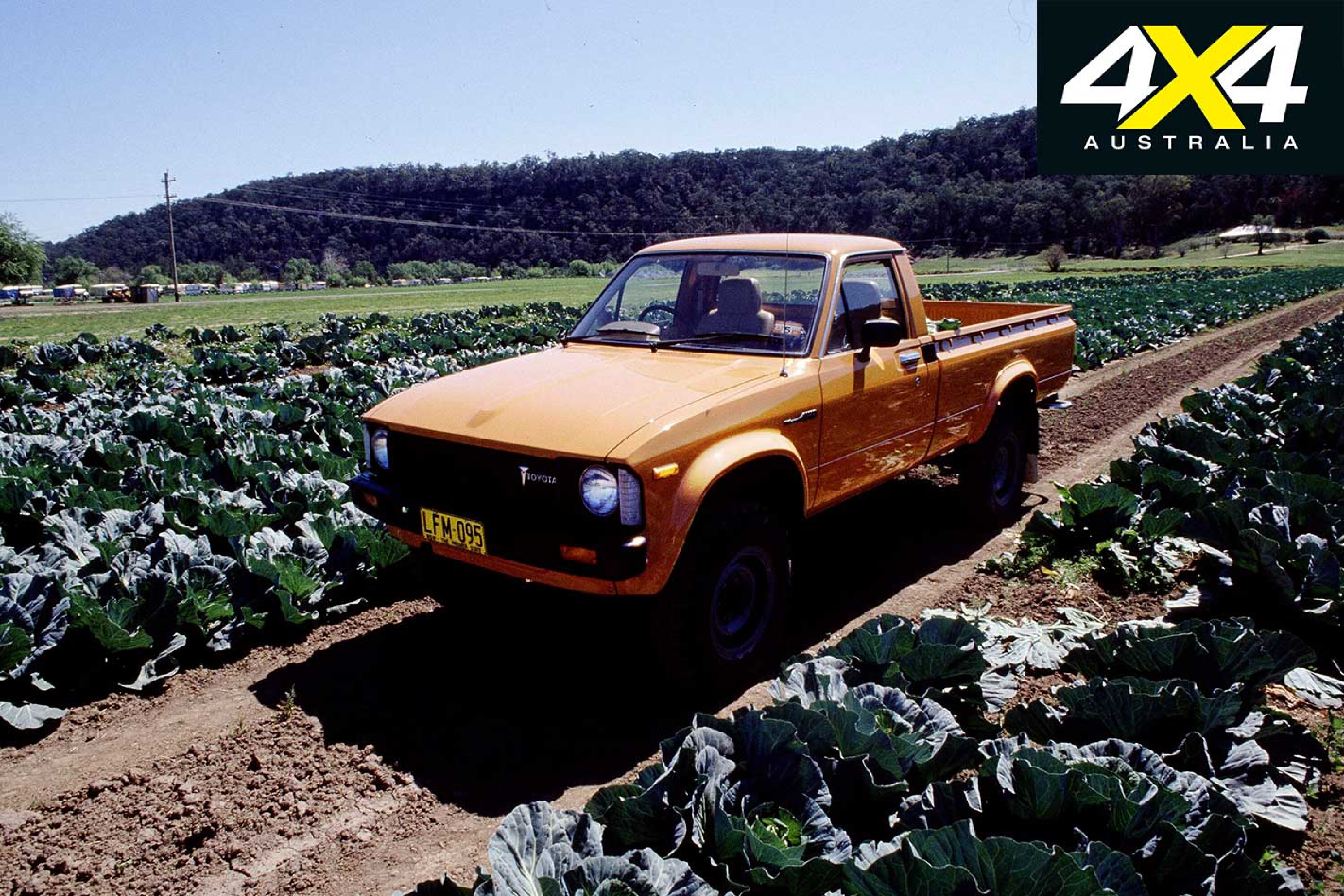
Chris would end up being hugely impressed by the HiLux’s reliability and durability.
“I did 200,000-plus kilometres in that thing and didn’t spend a cent on it for extra maintenance.”
One thing that the HiLux has done for Chris is open the door wide to the great Aussie bush. His HiLux regularly took him all around the bush tracks of South Australia, including the Flinders Ranges and Gammon Ranges.
“It opened up possibilities for fishing, camping, getting out on the motorbike. You could go anywhere.”
“In the late 1980s, I traded that in on the HiLux Extra Cab. That was also a petrol – a 2.2-litre [with] five-speed [transmission] and very reliable. That sort of experience brought me back to Toyotas. Then around 2005, I bought another HiLux: a Twin Cab 3.0 turbo-diesel. That was a good car, too.”
After a time driving other vehicles from other brands, Chris recently bought a 2023 Toyota HiLux Rogue. “I just keep going back to the HiLux. This Rogue I just bought will be my last car I reckon; it’ll last me until I can’t drive anymore, that’s for sure.”
What drew Chris back to the HiLux is his experience with the model over many years.
“I’ve been all over the place, done various things in HiLuxes and I’ve never had any dramas with them. I never had a problem mechanically, and I’ve given them a fair old hiding over the years – especially the first one,” he says.
Chris has seen big changes with the HiLux since he first walked into that CMI showroom all those years ago – except for in one area.
“I think what has changed the most is the technology and safety features,” he says. “From the 1980s petrol four-speed manual with nothing but seatbelts to the Rogue with four-wheel discs, [crash] avoidance technology, driver aids and the sound system. Still tough, but much, much better.”
What Chris likes most about his HiLux experience is that he knows the ute is going to do exactly what is says on the tin, every time. “Basically, I know I can get in [a HiLux], drive it, and it’s not going to let me down; they don’t fall apart. It’s been a good journey.”
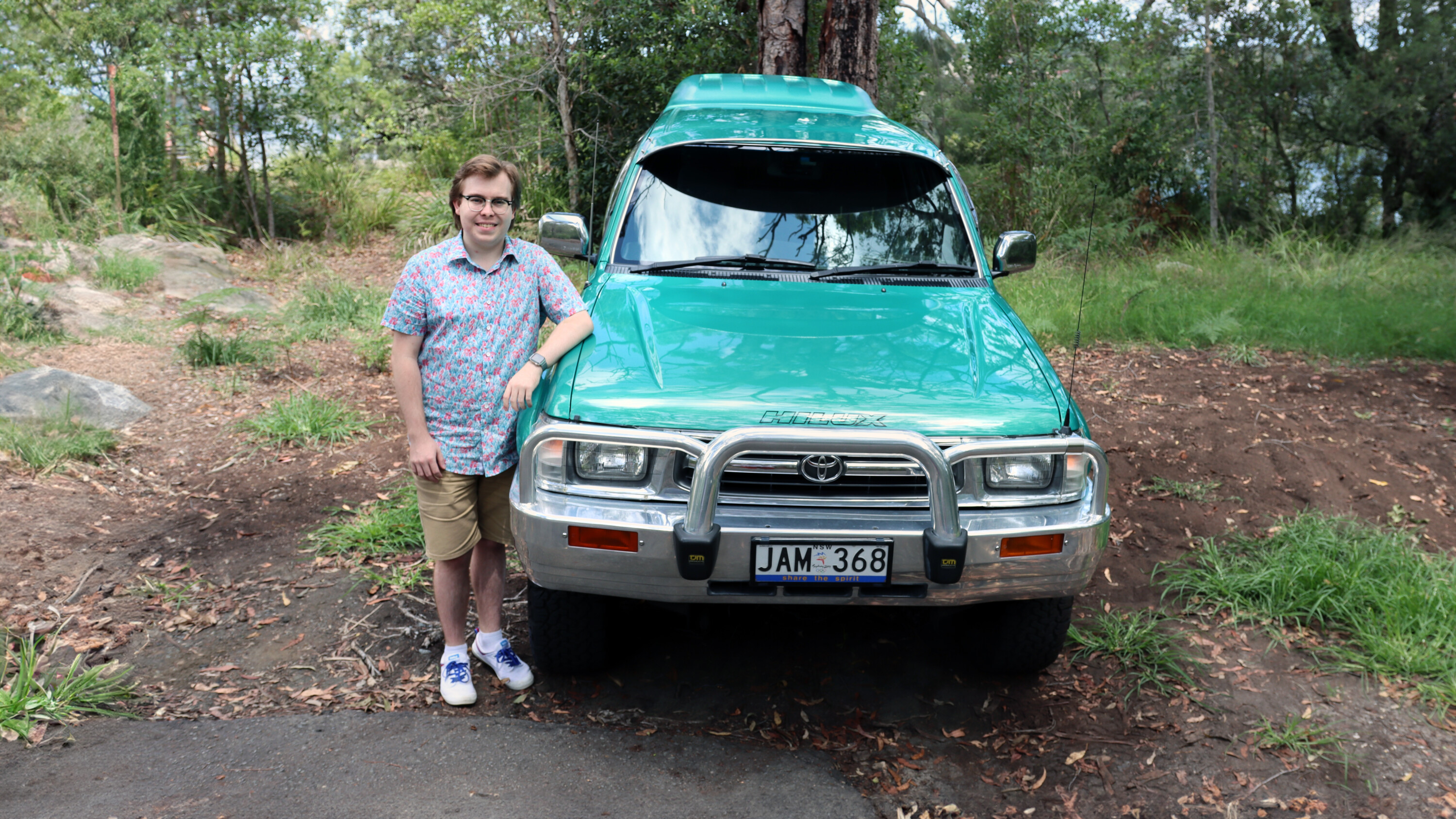
Charlie’s 1998 HiLux SR5
For Sydneysider Charlie Munns, his mum’s 1998 HiLux SR5 has become more than just the family car. It has been around so long that it has become part of the family, as he explains.
“It was the first car I ever knew. Mum bought it brand new in Sydney in 1998, before I was born. It’s been the main family car we’ve had ever since. Mum decided that she liked that model through friends who had them, while dad had a previous-generation live-axle single-cab HiLux for his work, and that’s what solidified the reputation for the model. She wanted something reliable and dependable.”
Charlie said the ute was one that the family expected to keep a long time, so they wanted something a little different, a little special. “It was a car that was hard to find in that Opal Metallic Green colour; in fact, that was the only one at that time in the country. It was sourced from the Bathurst area.”
The Munns’ HiLux has been used as an urban run-about and holiday tow-hauler ever since.
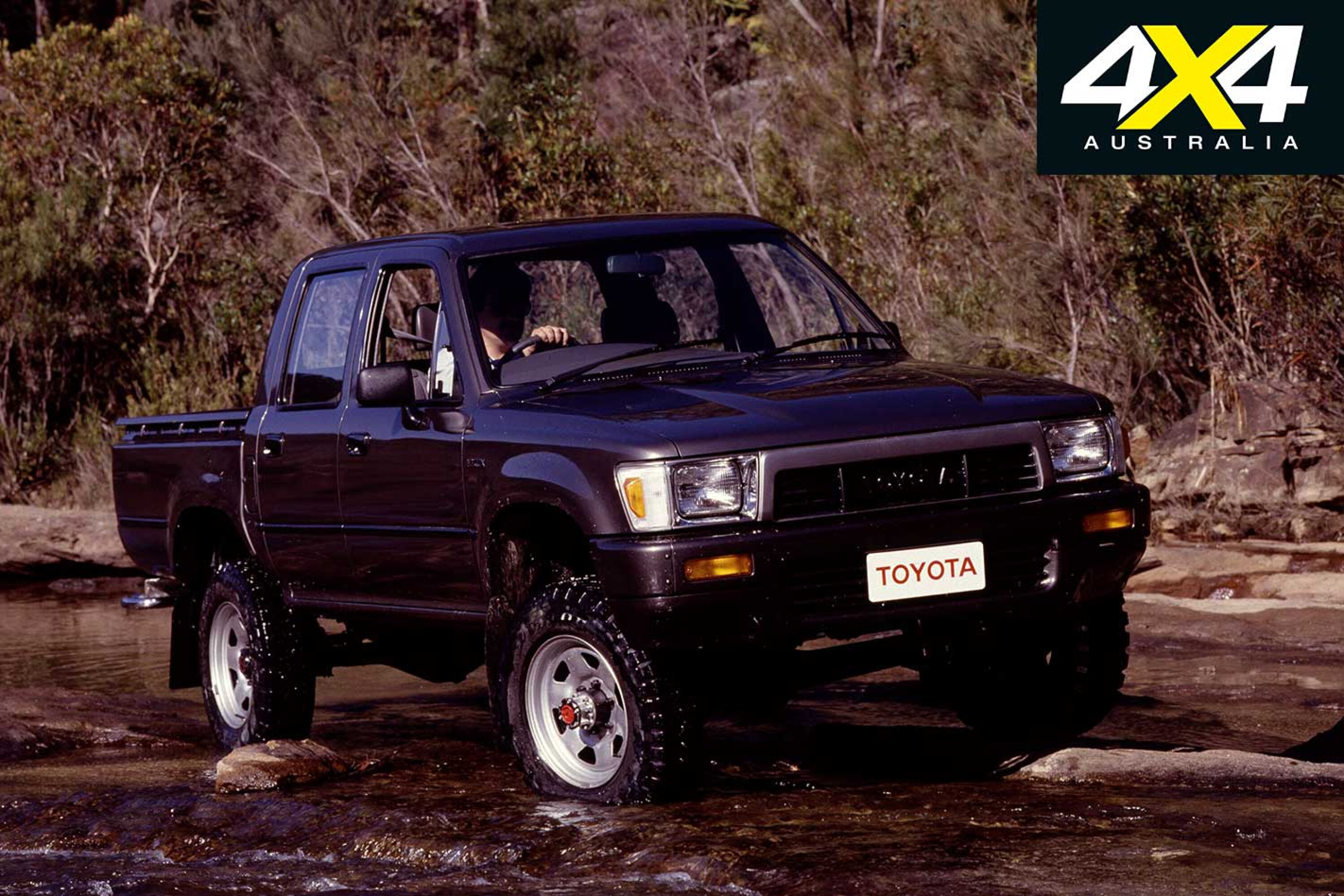
“We used to tow our sailfish catamaran to Port Stephens and back for the annual holidays for 20 years,” Charlie says.
“When I was young I was quite ill, and that car got us to the hospital and back, even at three in the morning – we could rely on the car. It’s got a bit of family fabric to it.”
The HiLux has just less than 290,000km on the odometer now, and while Charlie says it’s had a bit of a cosmetic birthday, it’s mostly original.
Charlie sums up what it’s like to live with a HiLux for as long as he can remember.
“From a lifetime experience, we’ve had the same Toyota for 25 years, and it’s not just a car, it’s become a dependable part of the family. It’s always been the go-to car if we need to get something done.”
“The idea is that I’ll take over ownership of the HiLux in many years’ time, and for it to stay in the family. There are no plans to sell.”