
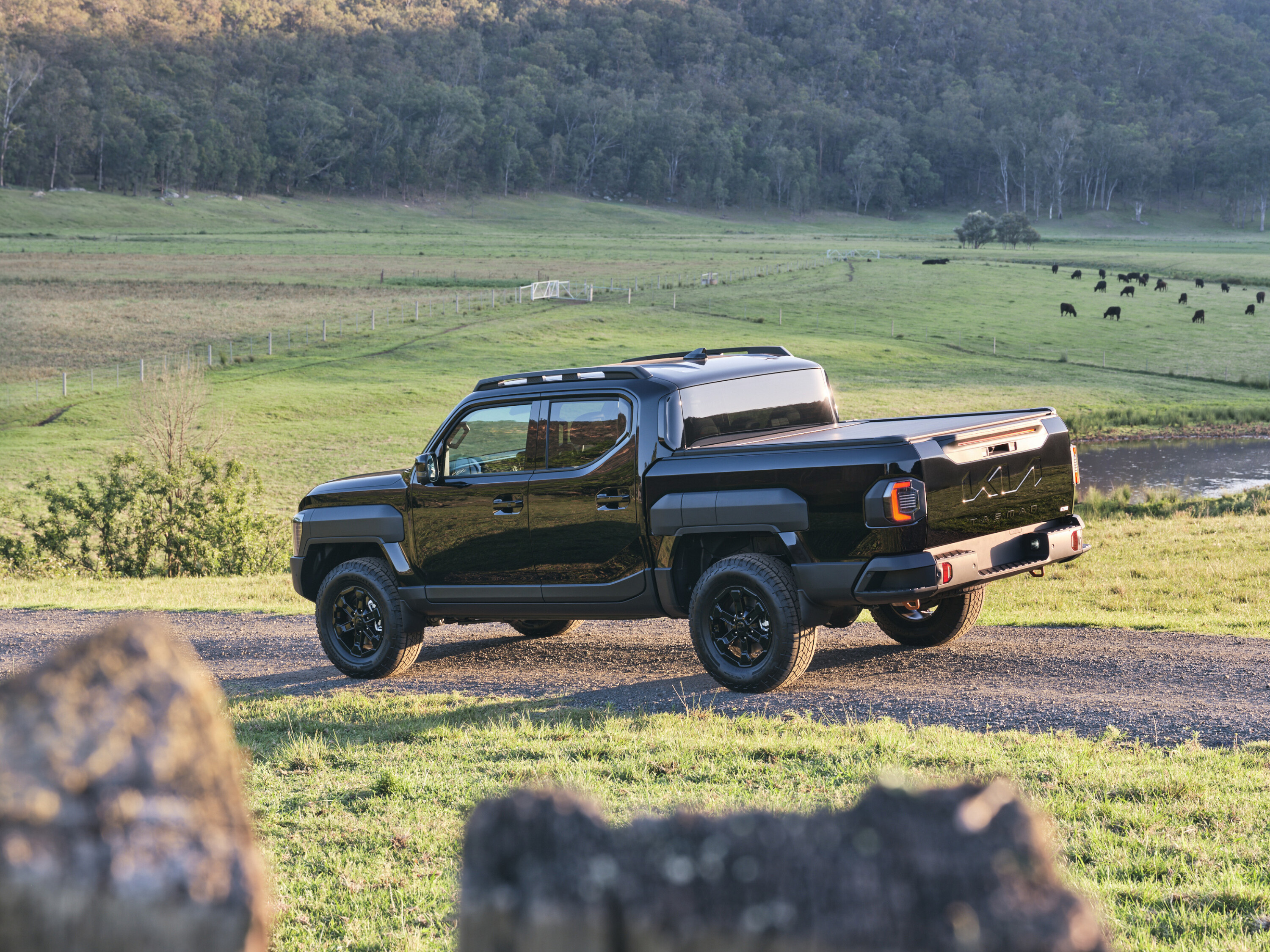
Kia has officially unleashed its Tasman ute, with the Korean marque confirming the hotly anticipated ute will be introduced in Australia following its initial launch in Korea during the first half of 2025.
Revealed at the Jeddah Motor Show in the Middle East – with a local launch running in tandem in Tasmania, of all places – the Tasman will land in Australia with a 154kW/441Nm 2.2-litre diesel engine paired to an eight-speed automatic transmission. Kia says this engine is capable of sending the Tasman from 0-100km/h in 10.4 seconds.
The Tasman utilises a double-wishbone front suspension set-up, while the rear features a rigid axle with leaf springs. The suspension is enhanced by Kia’s frequency selective Sensitive Damper Control (SDC) and Hydraulic Rebound Stop technology, for improved body control and comfort. It comes with an 800mm wading depth limit.
“Kia’s first-ever pickup truck was created from the ground up to transform the market and respond to the growing preference for lifestyle-oriented trucks with advanced features,” said Ho Sung Song, President and CEO at Kia.
Three trim levels will be available: Baseline, X-Line and X-Pro. The X-Line features 18-inch alloy wheels paired with highway and all-terrain tyres; while the X-Pro is bred more for off-road work due to its 28mm higher ground clearance (totalling 252mm) and 17-inch wheels inside all-terrain rubber. The X-Pro also gets an automatically engaging rear Electronic Locking Differential (e-LD), as well as an X-Trek mode which essentially maintains the vehicle at a low speed when off-road without the need for manual input.
Both the X-Line and X-Pro variants are equipped with AWD as standard, but it’s optional with the lower-spec Baseline. In Australia, all-wheel-drive variants are equipped with Sand, Mud, Snow and Rock modes. Rock mode in particular is also designed to enhance performance on challenging off-road terrain.
1
The Tasman features an Advanced Driver Assistance System (ADAS) with a full suite of safety equipment including lane keeping assist, blind spot collision warning, and remote parking assist through Highway Driving Assist 2. The system has been optimised to work when a trailer is attached.
The Tasman is also equipped with a Ground View Monitor, which enables drivers to see what is happening at ground level when off-road. Think Land Rover’s invisible bonnet.
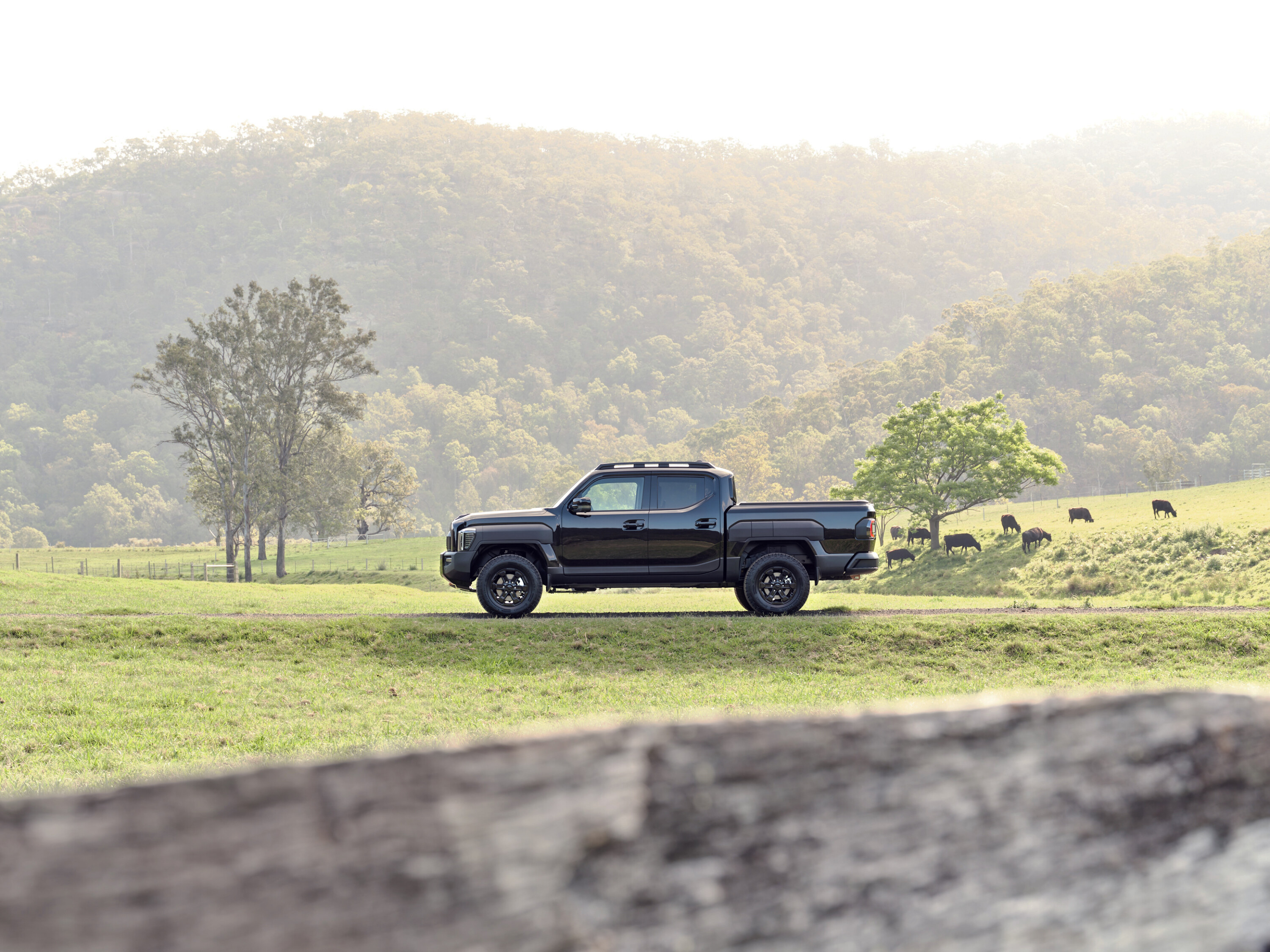
Kia has also stated that customisable cab-chassis variants will be sold, as well as single-cab options. To this end, the Tasman will feature four different bed accessory configurations: Single Decker, Double Decker, Sports Bar and Ladder Rack. All but the Ladder Rack will be available when the vehicle launches – as will 13 accessories including sidesteps and beadlock-style wheels.
- Single Decker: Canopy, butterfly doors, roof rack
- Double Decker: Trunk, butterfly doors, sliding tonneau cover
- Sports Bar: Functional roll-bar frame
- Ladder Rack: Ladder-type rack compatible with roof racks
1
The load bed measures 1512mm (long), 1572mm (wide), 1186mm (between the wheel arches), and 540mm deep, providing a class-leading cargo capacity of 1173 litres. The bed has a 240v power outlet. In addition, the Tasman has a massive payload capacity of 1195kg (2WD mode) and a 3500kg towing capacity.
Of the design, Karim Habib, Executive Vice President and Head of Kia Global Design, said: “Created especially for explorers, adventurers and people who like to get things done, the Kia Tasman is designed to serve as a dependable companion in every situation.
“Solid and capable, its design begins with an honest form, using simple and rugged elements to capture a spirit of practicality. The Kia Tasman is a pickup truck that effortlessly blends lifestyle and utility, and represents our commitment to always bring bold and innovative ideas to our customers.”
1
A total of nine colours will be available: Clear White, Snow Pearl White, Steel Gray, Interstellar Gray, Cityscape Green, Runway Red, Aurora Black Pearl, Tan Beige, and Denim Blue.
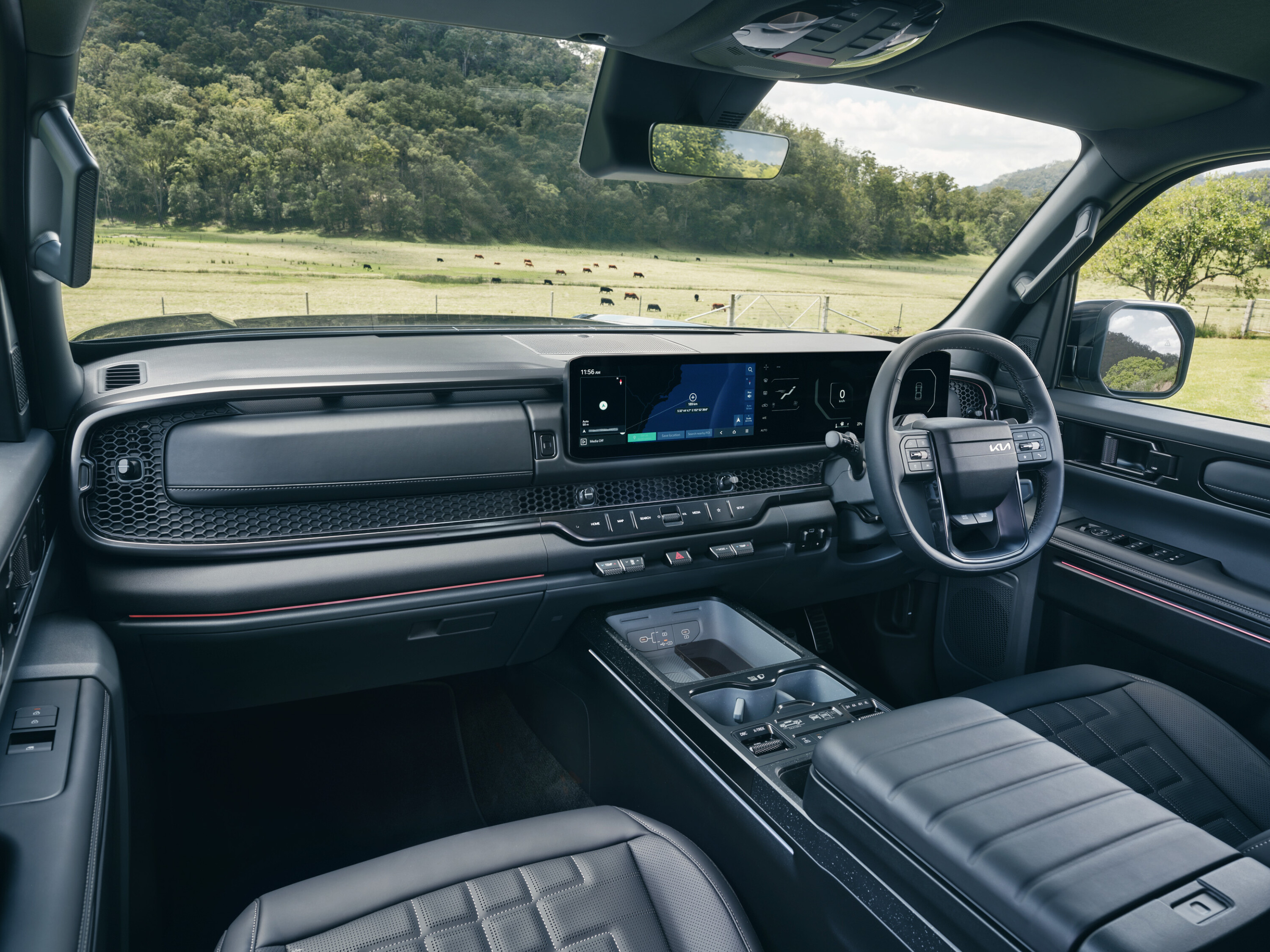
Interior highlights include a multi-function steering wheel; 12.3-inch + 5-inch + 12.3-inch panoramic widescreen technology; an optional eight-speaker Harmon Kardon premium audio system; Apple CarPlay and Android Auto integration; a large folding console table; dual wireless charging pads; and hidden storage bins concealed beneath the rear seats, offering 33 litres of storage. The Tasman offers shoulder room and second-row legroom of 940mm, and the rear seats can recline between 22 and 30 degrees.
Pricing will be revealed closer to the vehicle’s launch.
Ford will showcase its Ranger PHEV in public for the first time in Australia, at the 2024 Mobility Live event.
Held at the Melbourne Convention and Exhibition Centre on October 30 and 31, the free event allows governments and fleets an opportunity to take a closer look at the future of electric commercial vehicles.
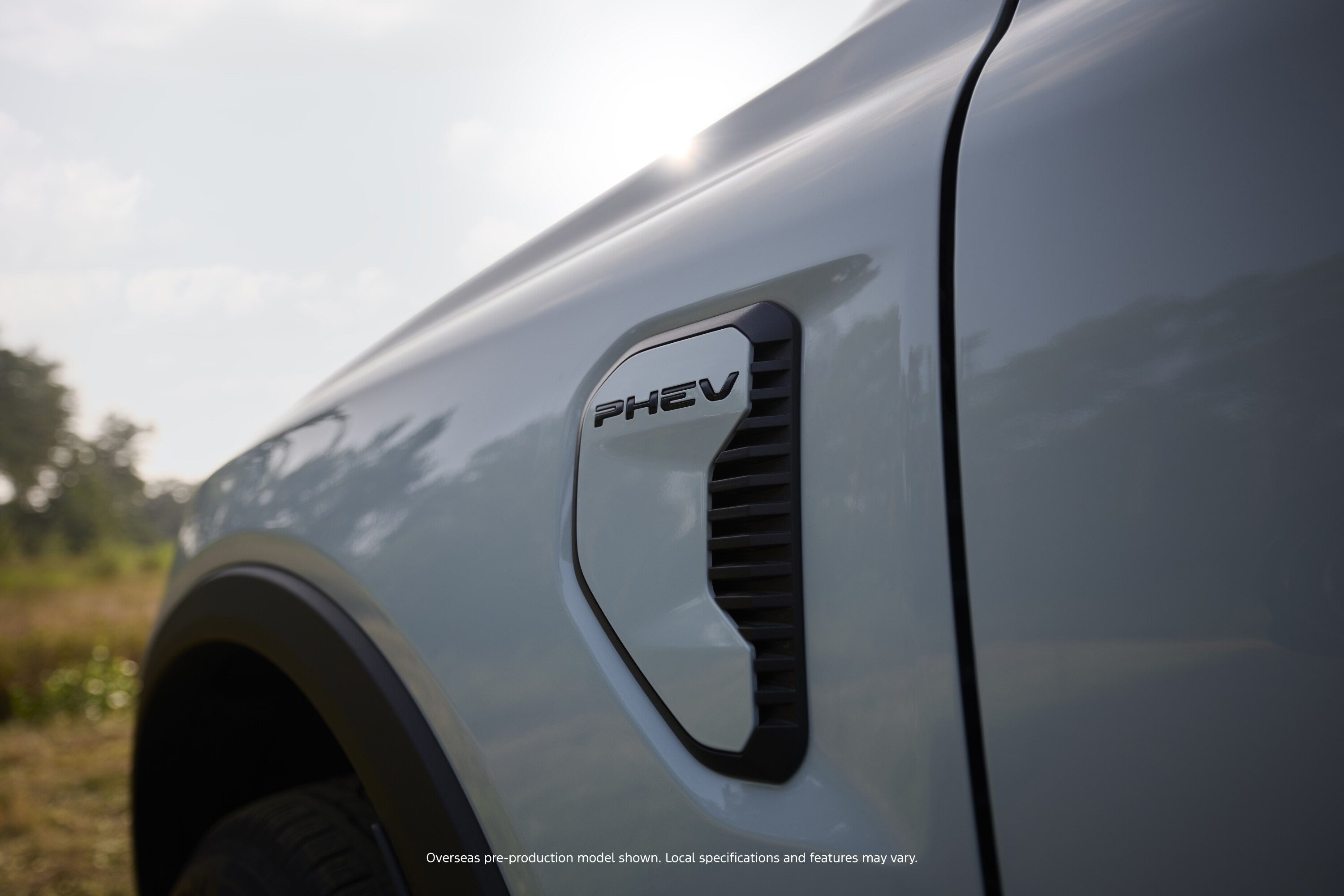
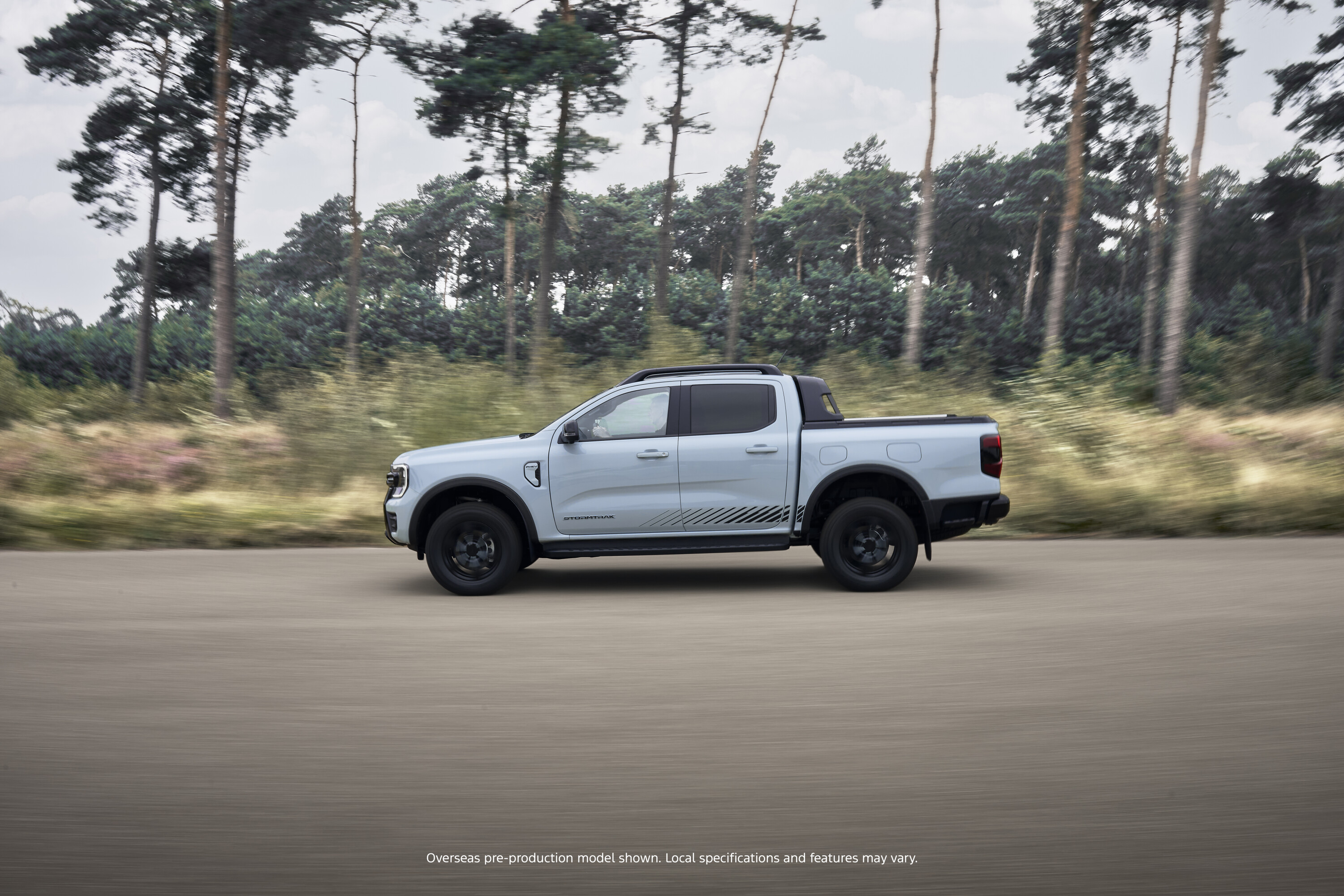
A limited-edition Ranger PHEV Stormtrak model will be on display, wearing an all-new Chill Grey exterior hue. It will debut beside an E-Transit Custom van, also exposed in public for the first time.
1
“It’s really important that fleets wanting to decarbonise have access to vehicles that allow them to continue doing their work without the need to compromise,” says Myles Hartley, General Manager of Electric Vehicles, Ford Australia.
“Both the Ranger PHEV and E-Transit Custom have all the capability that makes their nameplates legendary around the world, with the added benefit of an electrified powertrain.”
The PHEV powertrain will be offered with Wildtrak, Sport and XLT variants, along with the new Stormtrak launch edition that will be on display. The Stormtrak comes standard with a Flexible Rack System, Matrix LED headlights, Pro Trailer Backup Assist, a 360-degree camera, 18-inch alloy wheels, a honeycomb grille, fender vents, a stylish decal kit, and a premium cabin with a B&O sound system.
1
The PHEV powertrain combines a 2.3-litre turbocharged EcoBoost petrol engine with a 75kW electric motor and an 11.8kWh battery. Ford claims the PHEV can achieve over 45 km of electric-only range. A modular hybrid transmission (MHT) integrates the e-motor and separator clutch between the engine and 10-speed transmission, enabling the electric and internal combustion engine systems to work together or operate independently.
Both electrified vehicles will also be on display at the upcoming Sydney International EV show from November 8-10, and both will be on sale in Australia in 2025.
The Isuzu D-MAX competes in the popular and ultra-competitive mid-size ute category.
It has great safety and technology for the class, a relatively roomy interior, strong performance, acceptable payload capacity, and is equal to the best in class with its 3500kg maximum towing capacity.
The current-generation D-MAX arrived in 2019 and was given an update for MY24, with a minor exterior refresh, the permanent addition of the previously limited-edition X-Rider variant, and some spec improvements. The D-MAX shares much under its panels with the co-developed Mazda BT-50.
In October 2024, Isuzu Ute Australia launched a new flagship model that was developed in collaboration with Walkinshaw Performance. The Blade now sits atop the D-MAX line-up, with Walkinshaw adding revised suspension, new wheels and tyres, exterior changes, and more.
JUMP AHEAD
- Pricing
- What body styles are available for the Isuzu D-MAX?
- What features are standard in Isuzu D-MAX?
- What key features do I get if I spend more?
- How safe is the Isuzu D-MAX?
- How comfortable and practical is the Isuzu D-MAX?
- How big is the tray/tub?
- I like driving – will I enjoy this car?
- Which Isuzu D-MAX engine uses the least fuel?
- What is the Isuzu D-MAX’s towing capacity?
- How long is the warranty and what are the Isuzu D-MAX’s servicing costs?
- Which version of the Isuzu D-MAX do we recommend?
- What are the Isuzu D-MAX’s key rivals?
Pricing
| 2024 Isuzu D-MAX pricing | |
|---|---|
| SX Single Cab Cab-Chassis 1.9L 6-speed manual 4×2 High-Ride | $32,700 |
| SX Single Cab Cab-Chassis 1.9L 6-speed automatic 4×2 High-Ride | $34,700 |
| SX Single Cab Cab-Chassis 3.0L 6-speed manual 4×2 High-Ride | $34,700 |
| SX Single Cab Cab Cab-Chassis 3.0L 6-speed automatic 4×2 High-Ride | $36,700 |
| SX Space Cab Cab-Chassis 3.0L 6-speed automatic 4×2 High-Ride | $40,200 |
| SX Crew Cab Cab-Chassis 1.9L 6-speed automatic 4×2 High-Ride | $41,200 |
| SX Crew Cab Utility 1.9L 6-speed automatic 4×2 High-Ride | $42,700 |
| SX Single Cab Cab-Chassis 3.0L 6-speed manual 4×4 | $42,700 |
| SX Crew Cab Cab-Chassis 3.0L 6-speed automatic 4×2 High-Ride | $43,200 |
| SX Single Cab Cab-Chassis 3.0L 6-speed automatic 4×4 | $44,700 |
| SX Crew Cab Utility 3.0L 6-speed automatic 4×2 High-Ride | $44,700 |
| SX Space Cab Cab-Chassis 3.0L 6-speed automatic 4×4 | $48,200 |
| SX Crew Cab Cab-Chassis 3.0L 6-speed manual 4×4 | $49,200 |
| SX Crew Cab Utility 1.9L 6-speed automatic 4×4 | $50,700 |
| SX Crew Cab Cab-Chassis 3.0L 6-speed automatic 4×4 | $51,200 |
| SX Crew Cab Utility 3.0L 6-speed automatic 4×4 | $52,700 |
| LS-M Crew Cab Cab-Chassis 3.0L 6-speed automatic 4×4 | $54,300 |
| LS-U Crew Cab Utility 3.0L 6-speed automatic 4×2 High-Ride | $54,500 |
| LS-M Crew Cab Utility 3.0L 6-speed automatic 4×4 | $55,800 |
| X-Rider Crew Cab Utility 3.0L 6-speed automatic 4×4 | $59,500 |
| LS-U Space Cab Utility 3.0L 6-speed automatic 4×4 | $59,500 |
| LS-U Crew Cab Cab-Chassis 3.0L 6-speed automatic 4×4 | $61,000 |
| LS-U Crew Cab Utility 3.0L 6-speed automatic 4×4 | $62,500 |
| LS-U+ Crew Cab Utility 3.0L 6-speed automatic 4×4 | $65,500 |
| X-Terrain Crew Cab Utility 3.0L 6-speed automatic 4×4 | $70,500 |
| Blade Crew Cab Utility 3.0L 6-speed automatic 4×4 | $76,990 |
1
What body styles are available for the Isuzu D-MAX?
The D-MAX is available as either as 4×2, which drives the rear wheels only, or 4×4, which utilises part-time four-wheel drive. The D-MAX is classed as a light commercial vehicle.
Cab-chassis models give the option of fitting any applicable tray or service body, including designs tailor-made for specific applications.
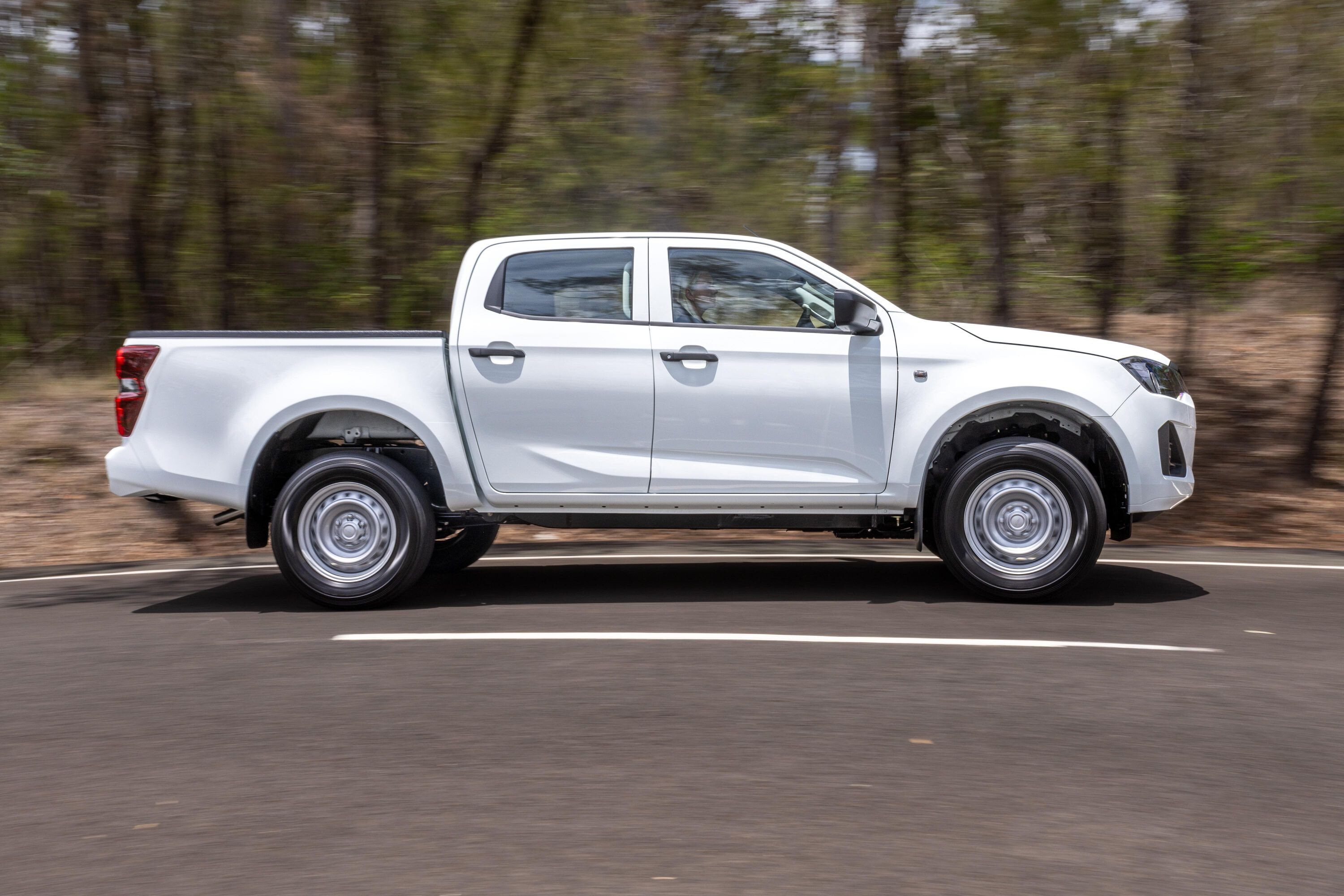
Single-cab and space-cab models come only in this form, but the dual-cab can be optioned as either a cab-chassis, or with an enclosed factory tub at the back.
1
Single-cab models only have room for two passengers, while space-cab versions add two extra rear ‘jump seats’ accessed through shorter, rear-hinged back doors and can seat four.
Dual-cab models have larger, more conventional rear doors and can seat five. Sunshine Orange mica exterior paint features exclusively on the X-Terrain, following the discontinuation of Volcanic Amber metallic in 2024.
1
What features are standard in Isuzu D-MAX?
The features listed below are standard in the entry-level SX dual-cab model and will appear in higher-grade models, unless replaced by more premium equivalent features.
| 2024 Isuzu D-Max standard features | |
|---|---|
| 17-inch steel wheels | DAB+ digital radio |
| Dunlop AT25 tyres | Four-speaker sound system |
| Three-leaf standard rear suspension (Ute models) | Two USB-C ports (one in Single Cab and Space Cab) |
| Three-leaf heavy-duty rear suspension (Cab Chassis models) | USB-A port for aftermarket dash cam |
| Halogen headlights | Air-conditioning with HEPA filter |
| Welcome headlight function | Rear air vents (Crew Cab models) |
| Automatic high-beam | Urethane steering wheel |
| Gloss Black and Material Black grille | Urethane transmission selector |
| Tailgate assist (Ute models) | Urethane handbrake |
| 4.2-inch multi-information display | Vinyl floor |
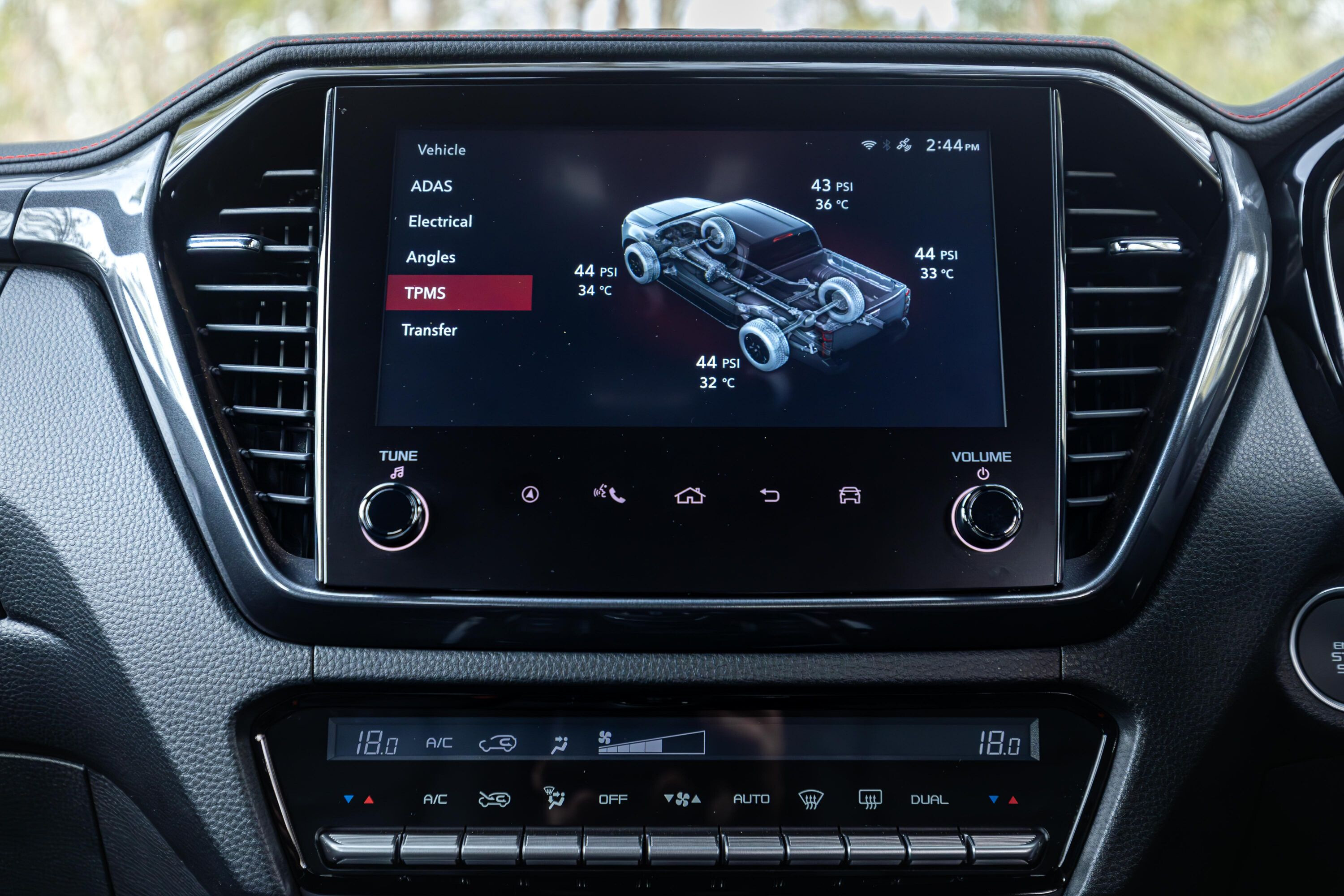
| 8.0-inch touchscreen infotainment display | Cloth upholstery |
| Wired and wireless Apple CarPlay and Android Auto |
1
What key features do I get if I spend more?
There are plenty of changes as you rise up the D-MAX range.
The starting point in dual-cab ute form is the SX pick-up in 4×2 or 4×4 guise, with the 1.9-litre 110kW/350Nm four-cylinder turbo-diesel engine and six-speed manual or auto combination in 4×2 (or auto-only in 4×4).
Also offered in SX specification (with 4×4 only) is the 140kW/450Nm 3.0-litre diesel engine with a six-speed manual or auto.
Specification highlights of the LS-M dual cab over the SX centre on 17-inch alloy wheels, ‘high-grade’ cloth upholstery, LED headlights with auto-levelling, LED daytime running lamps, LED fog lights (new look), rear parking sensors (ute models), body-coloured mirrors, door handles and tailgate handle, and heavy-duty rear leaf spring suspension.
1
All D-MAX models get a six-year/150,000-kilometre warranty, with complimentary roadside assist for seven years. Servicing intervals are 12 months or 15,000km, whichever comes first.
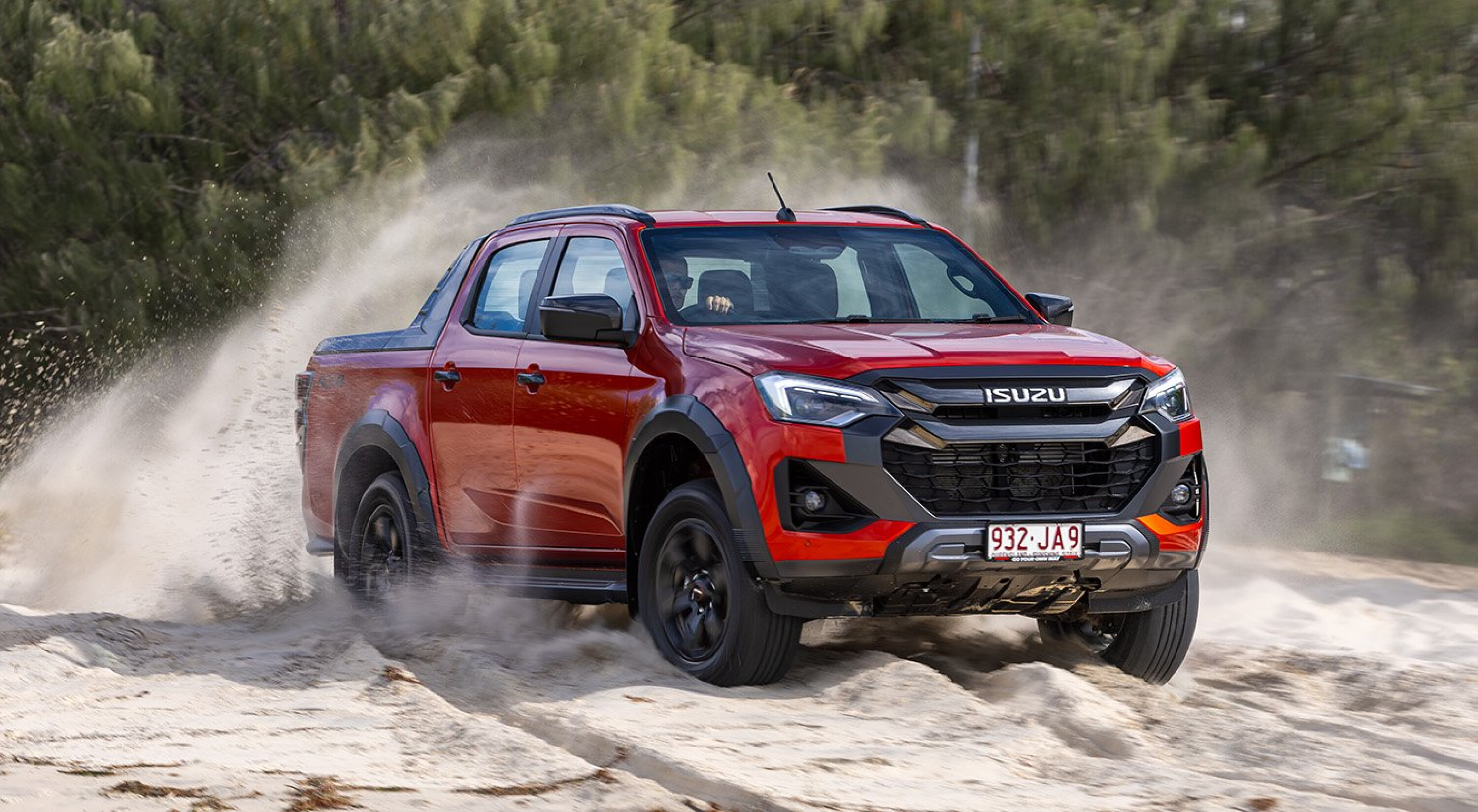
For extra features, you could spend more for a D-M LS-U, which, like the LS-M, is available with a 3.0-litre diesel automatic and rear-wheel drive 4×2 or as a manual or auto part-time 4×4.
| 2024 Isuzu D-Max LS-U adds | |
|---|---|
| 18-inch alloy wheels | Eight-speaker sound system |
| Bridgestone 684II HT tyres | Three USB-C ports (Two in Space Cab) |
| Silky Silver and Dark Grey metallic grille | Proximity entry and push-button start |
| Tow bar receiver | Walk-away door lock |
| Tub liner (Ute models) | Welcome light |
| Silver side steps | Dual-zone climate control |
| Chrome door handles, tailgate handle | Auto-dimming rear-view mirror |
| Electric folding and heated side mirrors | Leather-trimmed steering wheel |
| LED rear combination tail lights | Satin chrome steering wheel spoke trims |
| 7.0-inch digital instrument cluster | Leather-trimmed gear selector |
| 9.0-inch touchscreen infotainment system | Piano black, silver and chrome interior trim accents |
| Six-speaker sound system (Space Cab models) | Soft-touch door trims and centre console armrest |
| Satellite navigation | Carpet flooring |
| Driveru2019s seat power lumbar support | Tyre pressure monitoring |
1
Paying more again for an LS-U+ gets you those features plus:
| 2024 Isuzu D-Max LS-U+ adds | |
|---|---|
| Heated front seats | Leather-accented door trims |
| Leather-accented upholstery | Eight-way power driveru2019s seat |
| Four-way power front passengeru2019s seat |
The previously limited-edition X-Rider variant is now a permanent addition to the range:
| 2024 Isuzu D-Max X-Rider adds | |
| Gloss black 17-inch alloy wheels | Black B-pillars |
| Black grille | Dark grey sidesteps |
| Black front underbody spoiler | Black interior door handles |
| Dark grey grille surround | Dark grey and black interior door trims |
| Black rear step bar | Piano black steering wheel spoke trims |
| Black mirrors, door handles and tailgate handle | Black headlining |
| Black loopless soft tonneau cover | Satin black sports bar |
| u2018Xu2019 badging on tailgate |
The X-Terrain is an upper-spec D-MAX model, offering the following features:
| 2024 Isuzu D-Max X-Terrain adds | |
|---|---|
| 18-inch matte grey alloy wheels | Material black grille surround |
| Dark Grey and Black Chrome grille | Leather-accented upholstery with red stitching |
| u2018Xu2019 badging on tailgate | Red stitching accents |
| Matte black roller tonneau cover | Remote engine start |
| Dark grey metallic aero sports bar | Front parking sensors |
| Dark grey metallic sidesteps, mirrors, door handles, tailgate handle, roof rails, front and rear underbody spoilers and fender flares |
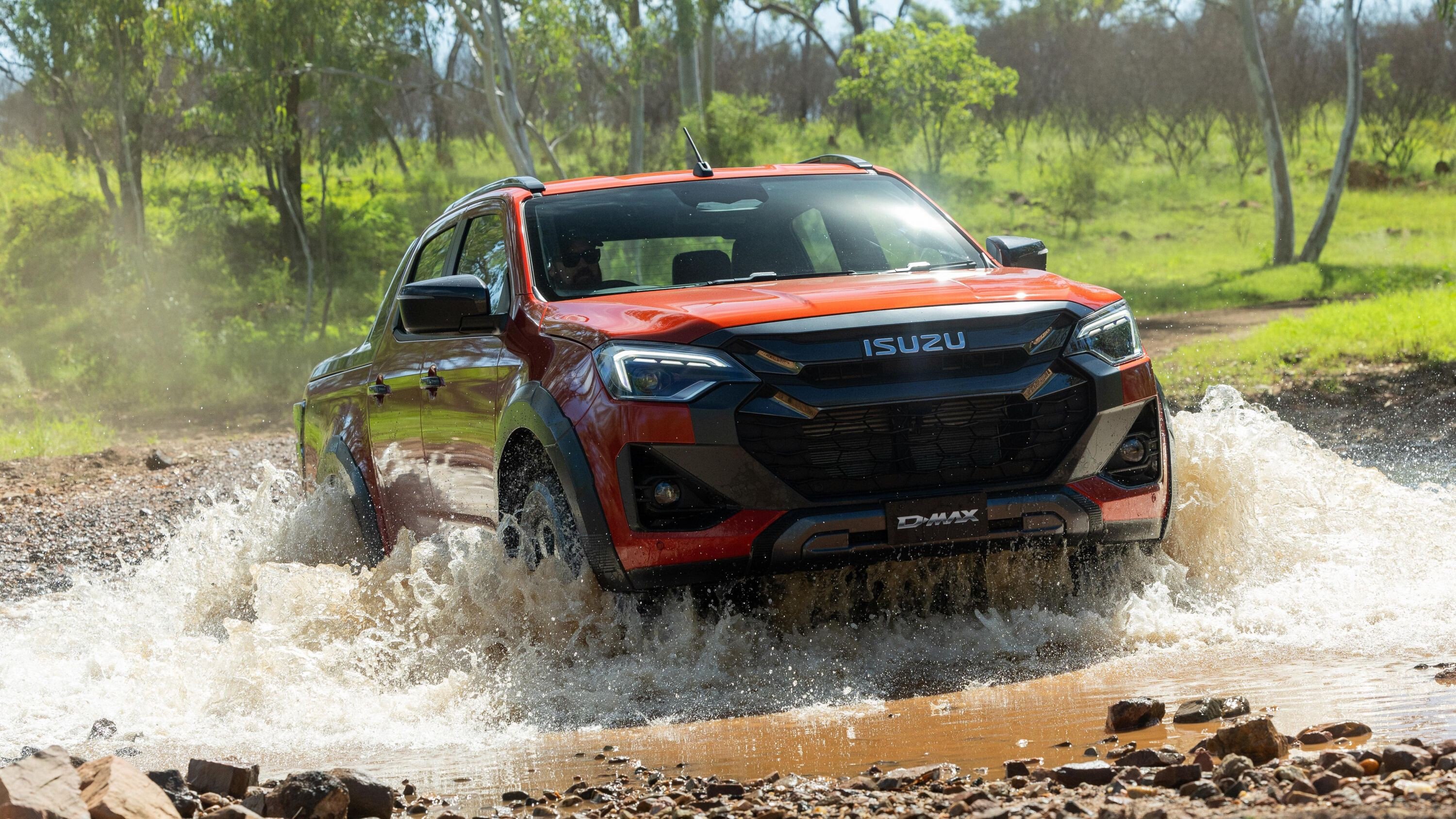
The Walkinshaw-fettled Blade is a permanent addition to the D-MAX line-up. The off-road-focused halo model is loaded with Walkinshaw kit, but the engine remains unchanged.
| 2024 Isuzu D-Max Blade adds | |
|---|---|
| 244mm ground clearance | 29.2u00b0 approach angle |
| 19.2u00b0 departure angle | 25.2u00b0 breakover angle |
| Blade-exclusive lifted suspension, finished in signature Isuzu red | Blade-exclusive 3mm bash plate underbody protection, finished in signature Isuzu red |
| Blade-exclusive 8-tonne load rated recovery points with cross-bracing, finished in signature Isuzu red | Blade-exclusive satin black 17×8.5-inch +28 flow-formed alloy wheels |
| 275/65R17 Goodyear Wrangler Duratrac RT all-terrain tyres | Satin black front grille with ISUZU lettering |
| Satin black front bumper cladding | Satin black fender flares with integrated air curtains |
| Blade-exclusive widened mud flaps | Satin black u2018BLADEu2019 lettering across tailgate |
| Blade-exclusive satin black tailgate badging | Blade-exclusive satin black decals on front bar, bonnet, doors and tailgate |
| Blade-exclusive satin black tubular side steps | Satin black one-piece extended sports bar with integrated stop lamp |
| Tinted lens light bar integrated into the front grille | Blade embroidered headrest |
| Blade embroidered floor mats | Blade embossed scuff plates |
| Individually numbered Blade identification plaque on transmission selector surround | Individually numbered Blade identification plaque in engine bay |
| Basalt Black tailgate and door handles | Basalt Black door mirrors |
| Available in Moonstone White pearl, Basalt Black mica, Granite Grey mica or Sunstone Orange mica | |
1
How safe is the Isuzu D-MAX?
The D-MAX, along with its platform-shared Mazda BT-50 derivative, set a new benchmark among mid-size utes when they arrived in 2019, featuring a long list of standard active safety equipment in all models.
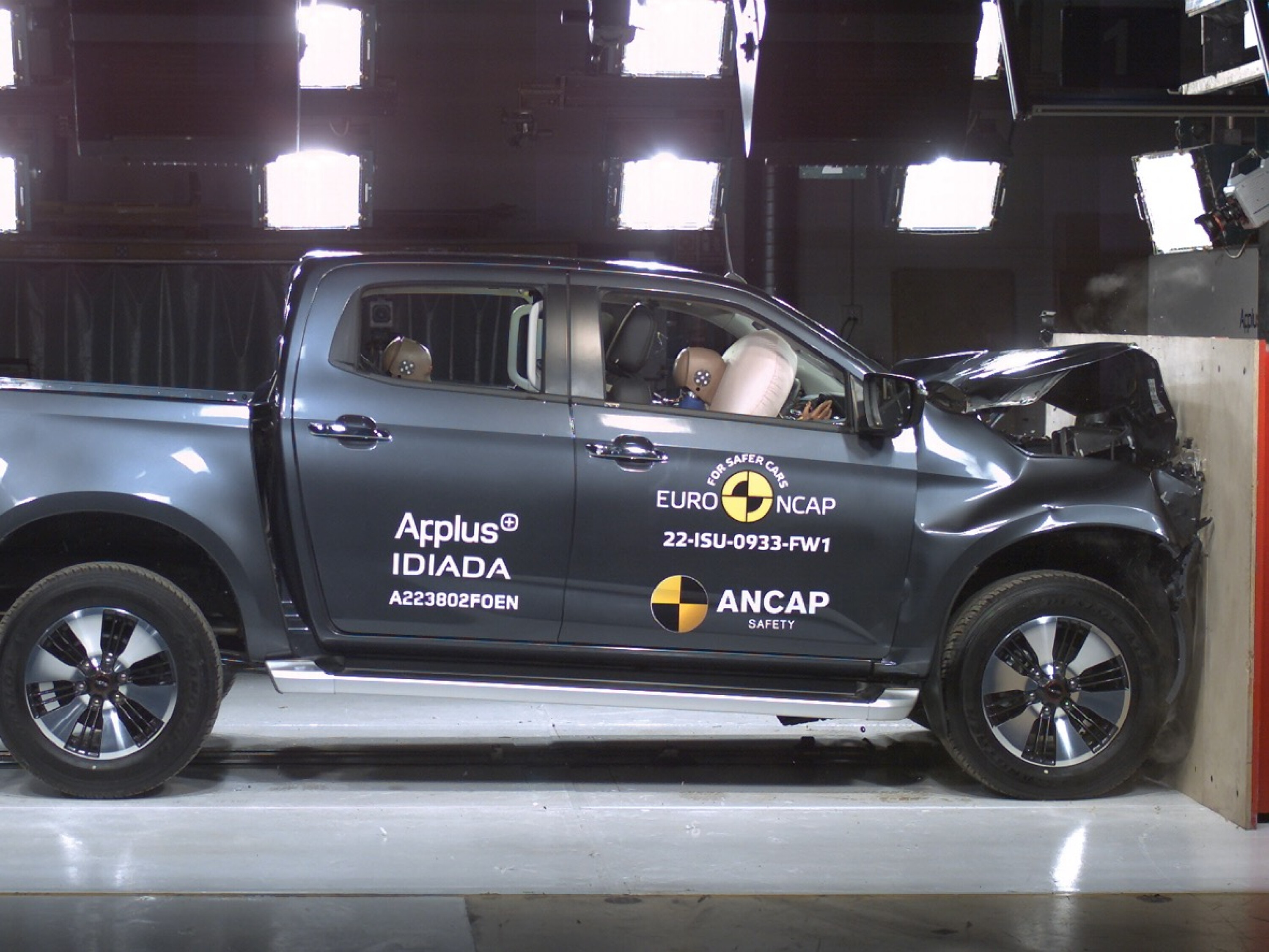
ANCAP (Australasian New Car Assessment Program) awarded the D-MAX a full five-star crash safety rating in 2020. It scored well in child occupant protection as well as safety assistance systems, thanks in part to the inclusion of standard AEB and lane-keep technology.
1
It lost marks for the absence of AEB in reverse and, like many high-riding utes, was marked down for vulnerable road user protection including head impact rating.
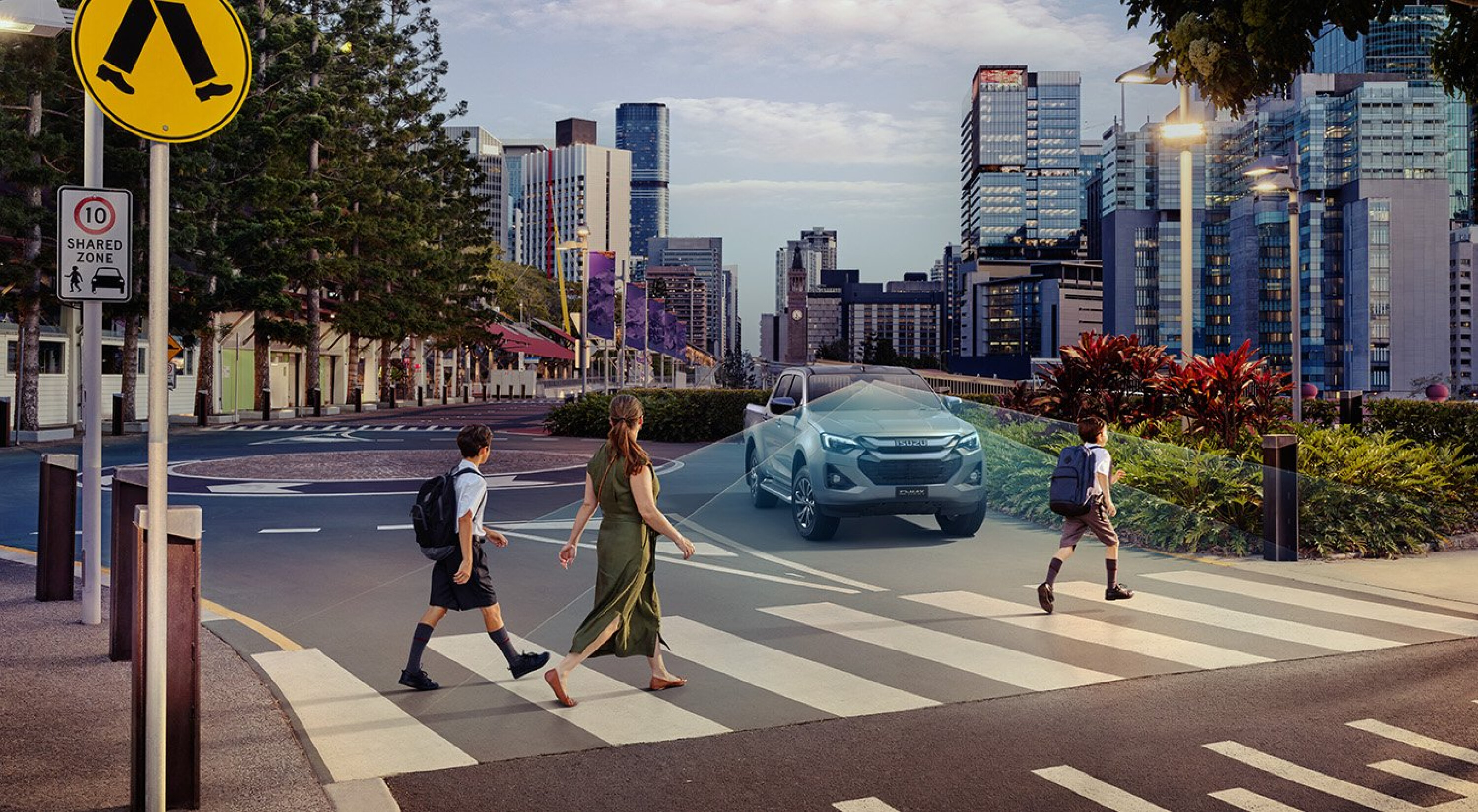
Other standard safety features include eight airbags, ISOFIX and top tether anchors for two child seats in the second row, blind-spot monitoring, speed sign recognition, driver fatigue monitoring, adaptive cruise control, rear cross-traffic alert and reversing camera.
1
How comfortable and practical is the Isuzu D-MAX?
The Isuzu D-Max interior is one of the least utilitarian of dual-cab utes, with good fit-and-finish plus a logical dashboard layout.
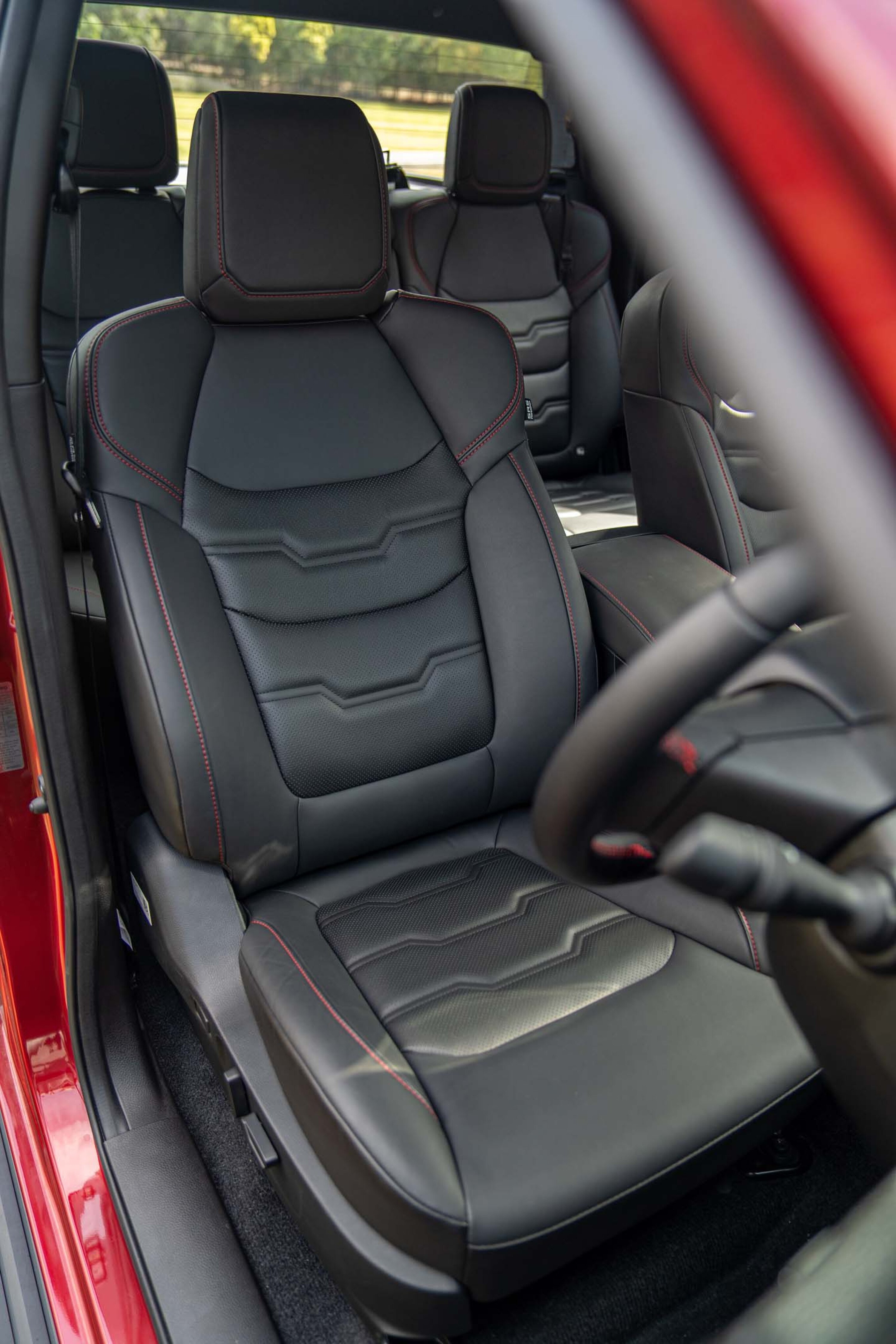
Whereas the Mazda BT-50 has easily the most car-like of ute cabins with its tasteful two-tone upholstery, the D-MAX lacks its platform partner’s more luxurious cabin finish. At least the Isuzu’s front seats are as comfortable as they look and offer a generous 90mm of headroom for the driver.
The impressive 9.0-inch central touchscreen matches that of the BT-50 and, while it has sharp graphics and decent features, the system takes more than 20 seconds to boot up after the engine is started – the longest of any ute in our recent giant dual-cab comparison.
1
Unlike some others, the touchscreen does not incorporate the climate control functions, which are instead housed in a specific panel below with a clear digital display and hard switches.
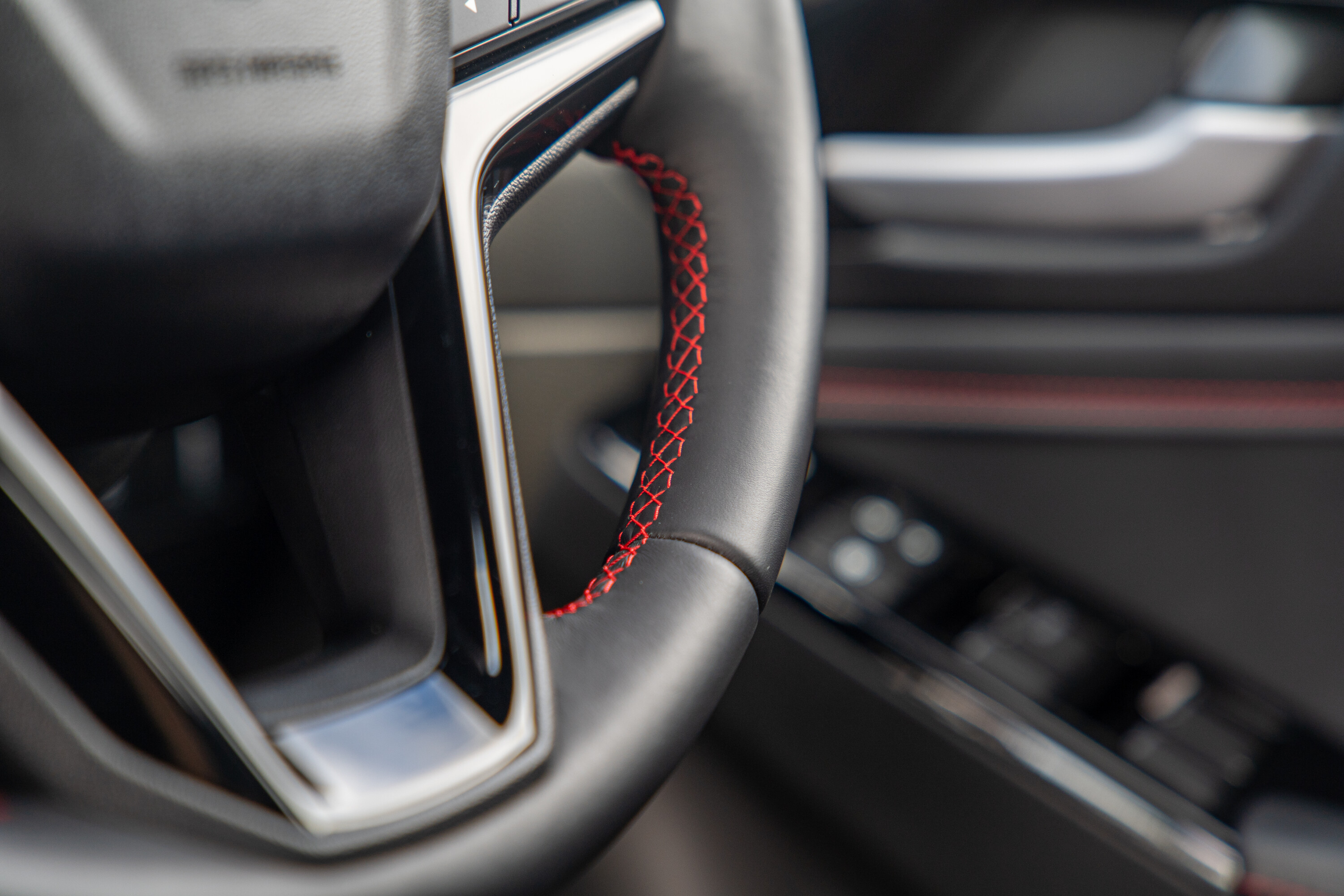
Also common to both Isuzu and Mazda are a small, sporty and ergonomic steering wheel covered in top-quality leather with two-way adjustment, an upholstered dashboard with real stitching, a big phone storage tray and a USB-A port plus 12-volt power outlet for the front row. There’s also a neat double glove box, which the Isuzu adds to with a further lidded cubby on top of the dash.
1
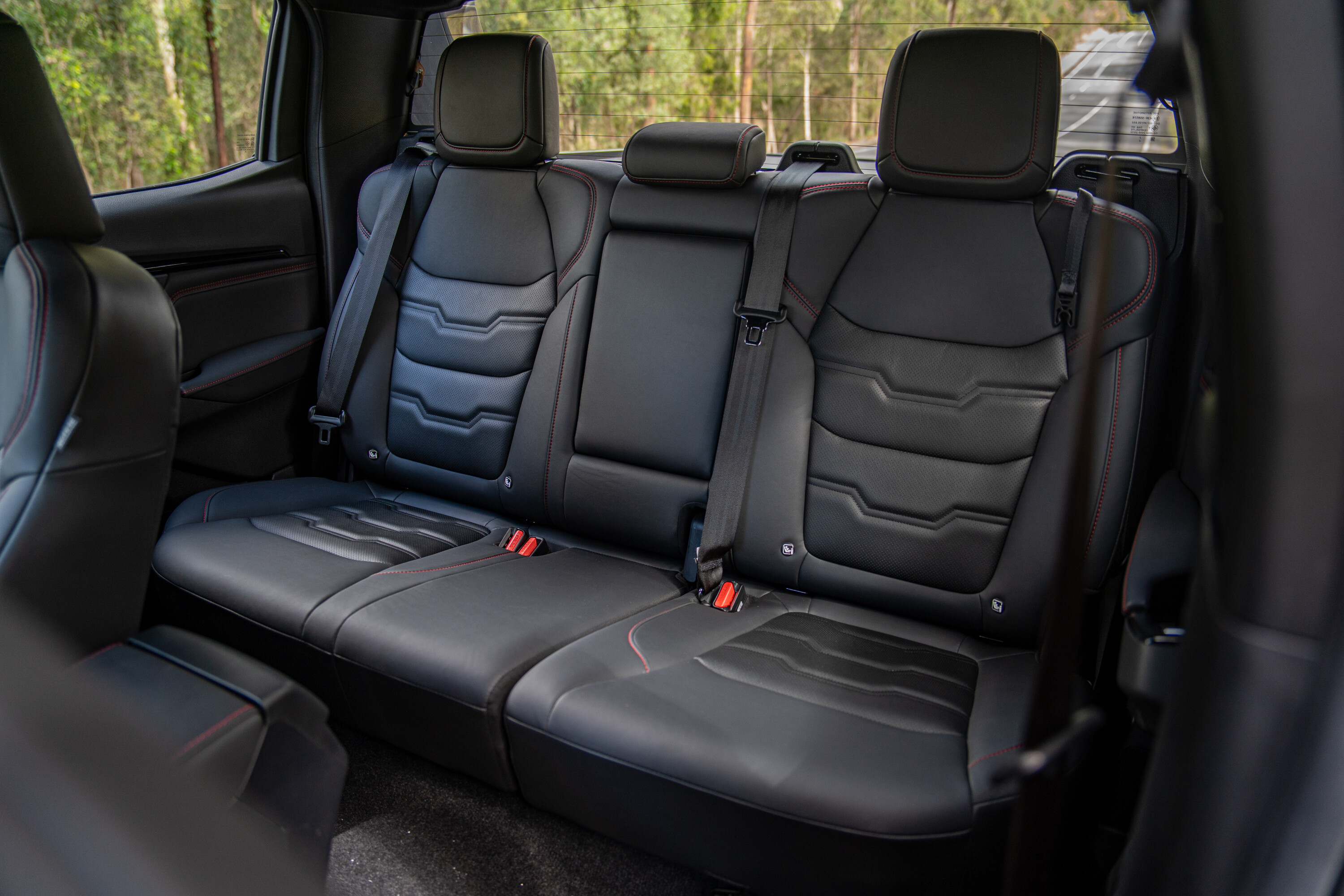
Second-row passengers are also well looked after with a whopping 100mm of knee room, another USB socket, ample toe room, ceiling-mounted speakers and great visibility even for smaller occupants.
Headroom is limited in the second row compared to the front, with just 40mm of space and the rear doors don’t open as wide as some other utes which could make loading people and things a little trickier. The D-MAX gets pleasant cloth upholstery and manual driver’s seat adjustment, plus electric lumbar support adjustment from LS-U trim and up.
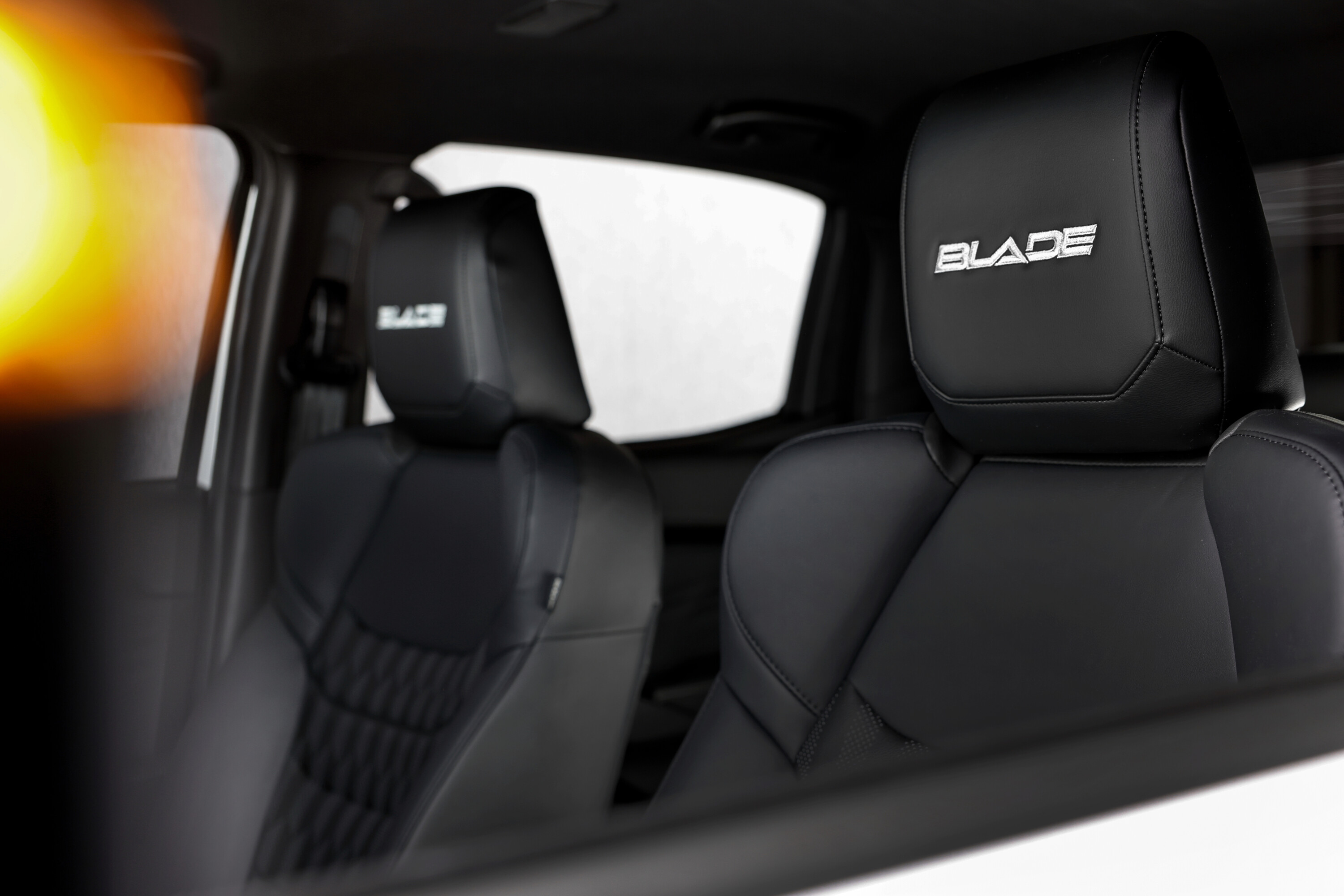
The Blade adds exclusive embroidered headrests and floor mats, as well as embossed scuff plates. Blade variants also feature an individually numbered identification plaque on the transmission selector surround. All else remains the same, otherwise.
1
How big is the tray/tub?
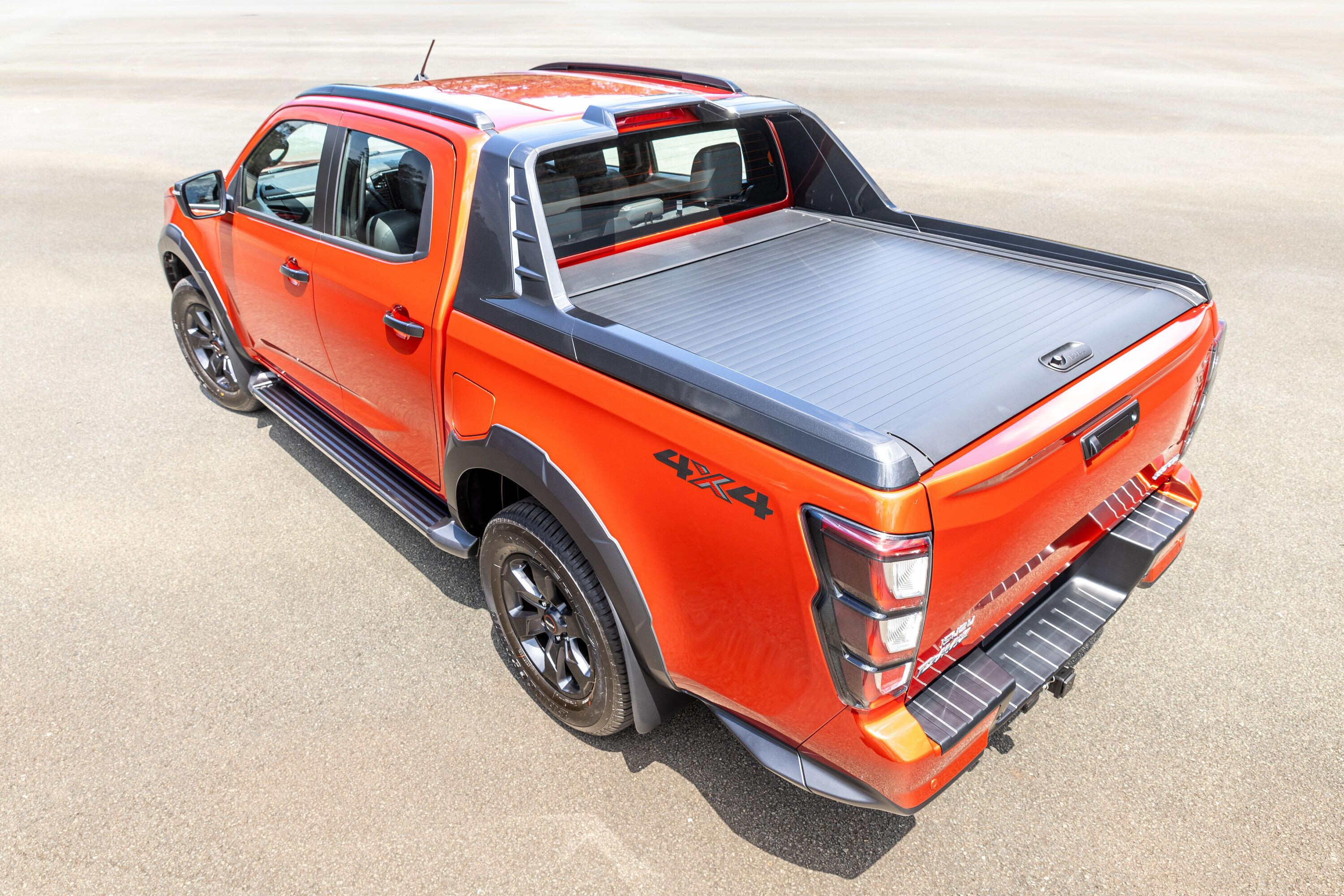
Roller tonneau covers are fitted to the upper-spec models, which are simple in operation and offer effective security but take up valuable real estate and will be the first thing taken off if you actually need to use the ute’s tray much at all.
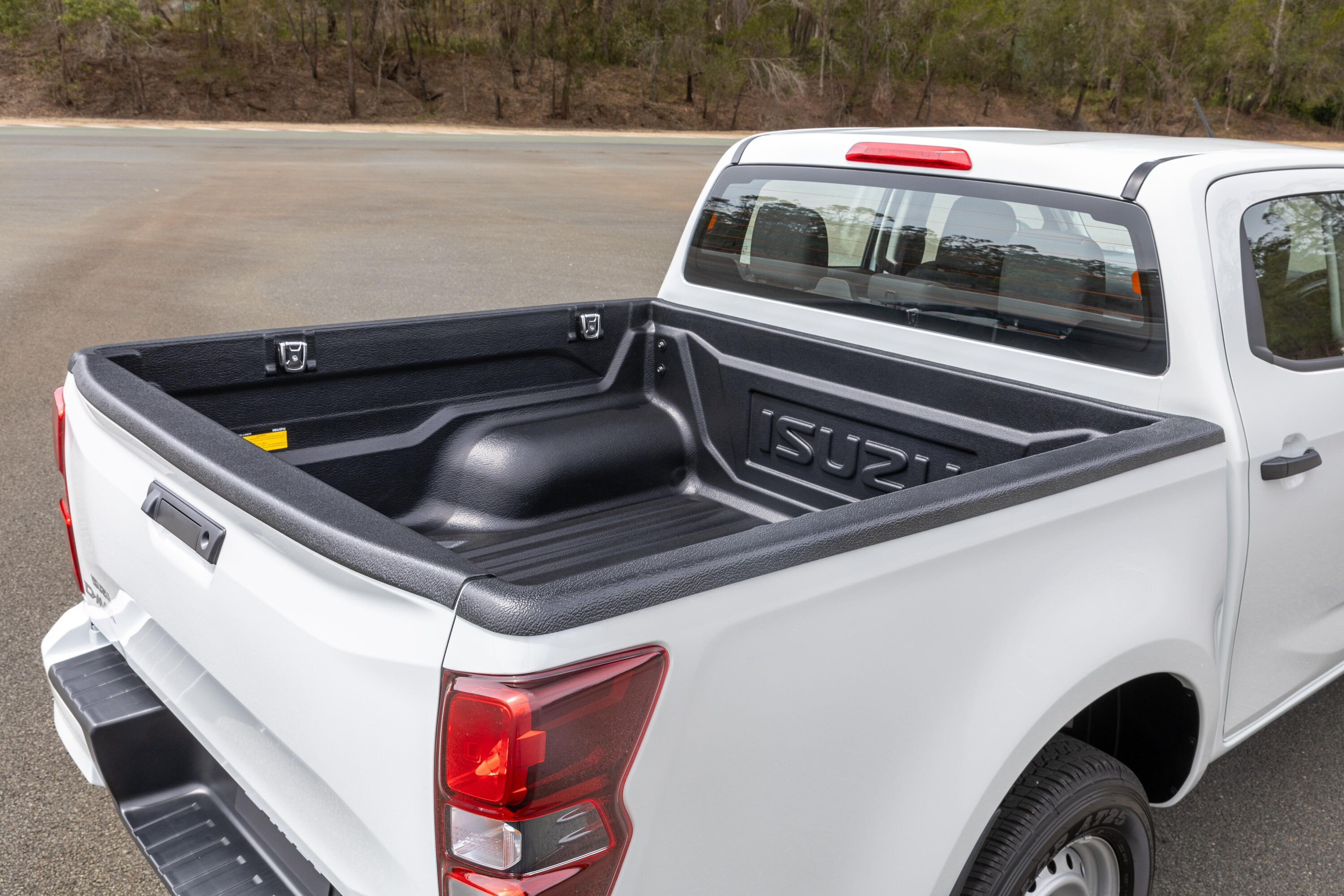
Unfortunately, with the tonneau cover, the tray only features two tie-down points towards the rear, but lower-spec models without the roller cover get four tie-downs. The dual-cab D-MAX has a tray that is 1570mm long by 1530mm wide. The Blade gets a sports bar as standard.
If you are looking to tow a trailer, caravan, boat, or similarly hitched wagon with your dual-cab, the D-MAX LS-U is a compelling choice. It boasts an official braked towing rating of 3500kg, with a 6000kg gross combination mass.
1
I like driving – will I enjoy this car?
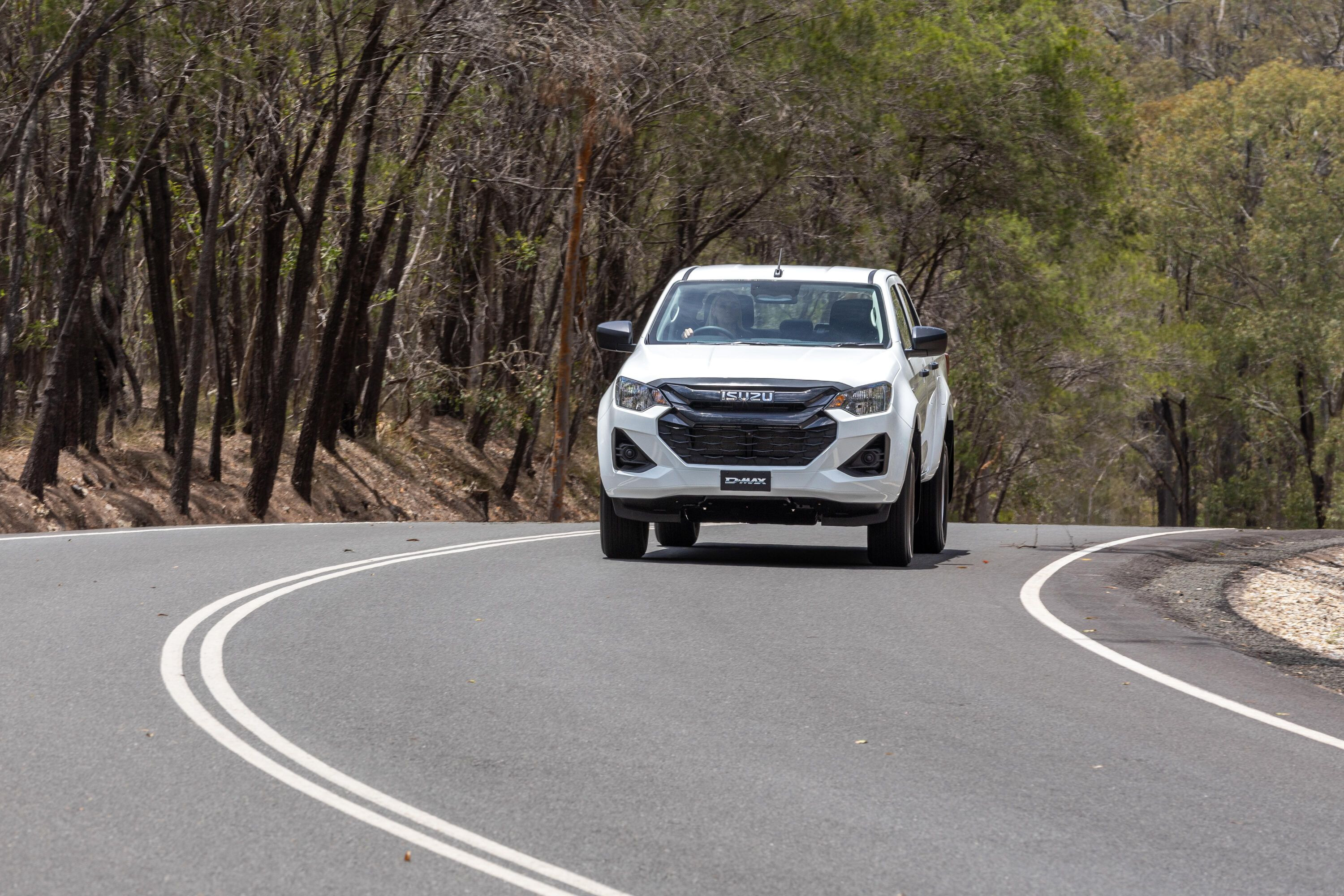
Yes, to a degree. The Isuzu D-MAX is one of the easier and more satisfying mid-size utes to drive, and the rougher the road, the better.
The Isuzu D-MAX isn’t the final word in dual-cab driving refinement, but given its real-world capability off the beaten track, this is very easily forgiven.
It should also be noted that even with a more utilitarian focus, the D-MAX still outclasses key rivals in the segment when it comes to on-road driving. We’re impressed by the relatively responsive engine, which provides a surge of torque from 2000rpm through a sweet spot at 3500rpm.
It has fewer ratios than rivals, but the six-speed automatic transmission has an intuitive calibration. Its only major downfall is a tendency to hold onto revs more than we’d like on prolonged downhill sections.
A stiffer suspension calibration means the D-MAX has the characteristic dual-cab ‘patter’ in most urban environments, but this is offset by excellent (for the class) cabin refinement. With Bridgestone Dueler H/T tyres, the D-MAX impresses with its ability to keep road and tyre noise in check.
A big highlight is the steering. This is a massive step up from the old model and will have few drivers complaining – particularly if they have much exposure to other key dual-cab models.
1
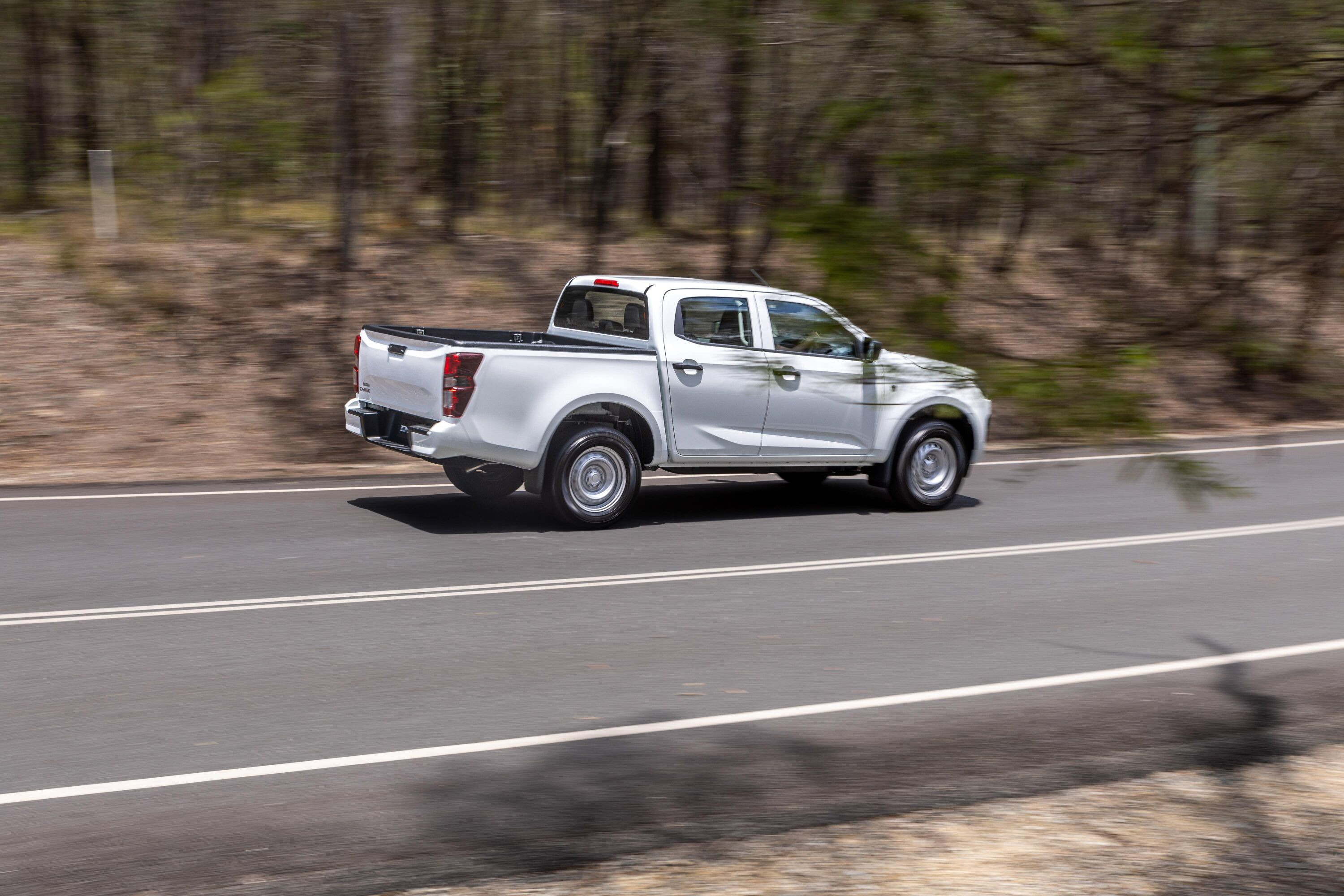
The steering wheel itself is nicely proportioned and is weighted in a sweet spot that balances around-town commuting needs and highway stability with agility at low speeds. While there is some stiff-legged compromise, the D-MAX is a true ‘Jack of all trades’ when it came to driving needs.
1
Which Isuzu D-MAX engine uses the least fuel?
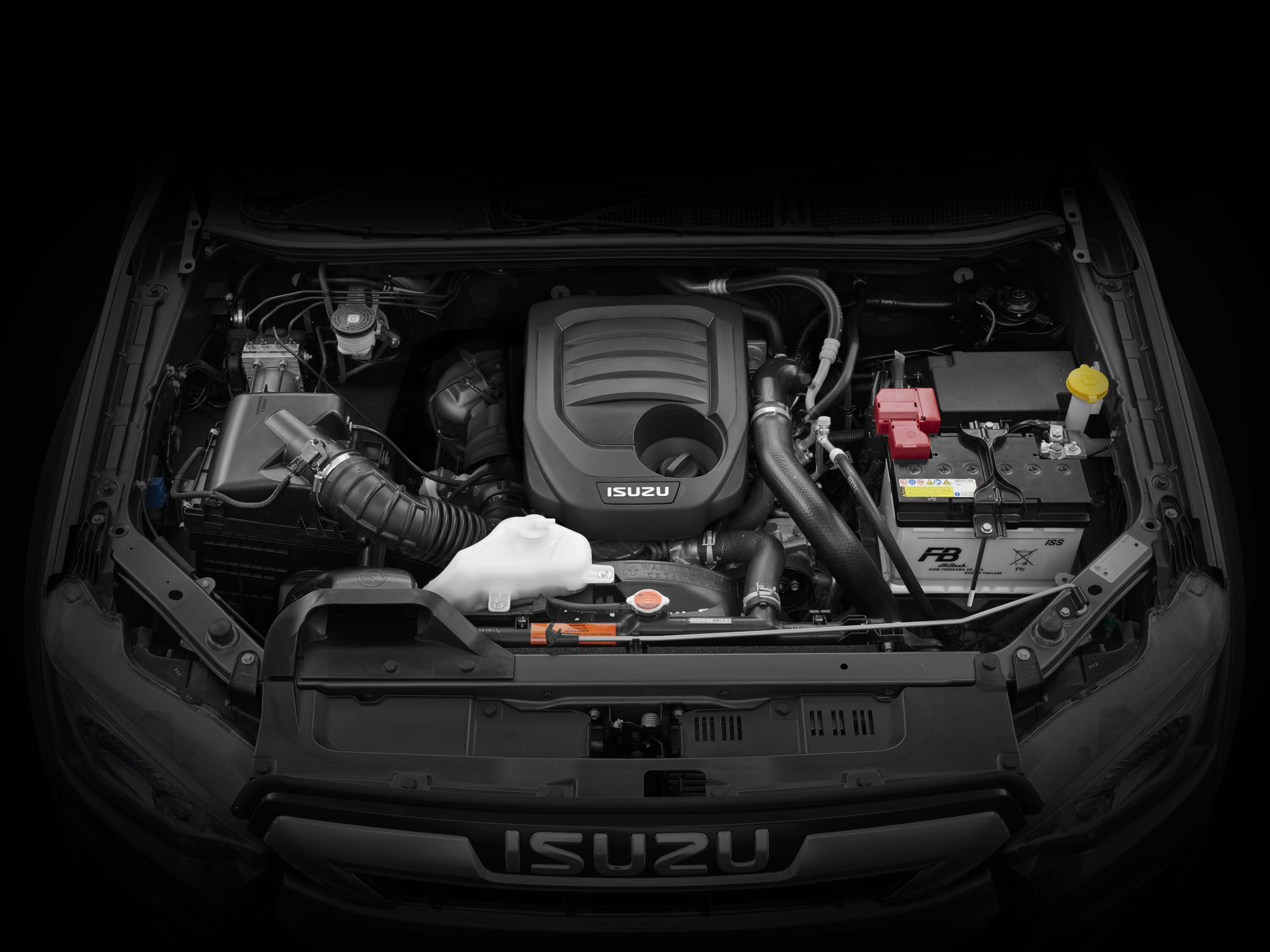
The D-MAX 1.9L 4×2 automatic dual-cab uses just 6.7L/100km (claimed) on the combined cycle, while the 3.0L-engined 4×2 (automatic) and 4×4 auto and manual dual-cab models use a claimed 8.0L/100km. All D-MAX models have a 76-litre fuel tank.
While the 1.9L engine version is cheaper to buy and has slightly better fuel economy, it lacks the 3.0-litre engine’s power and torque (by 30kW and 100Nm) as well as towing capacity (by 500kg to 700kg). For those wanting a 1.9L, it is available with a manual or automatic transmission in 4×2 form or an auto-only 4×4.
1
What is the Isuzu D-Max’s towing capacity?
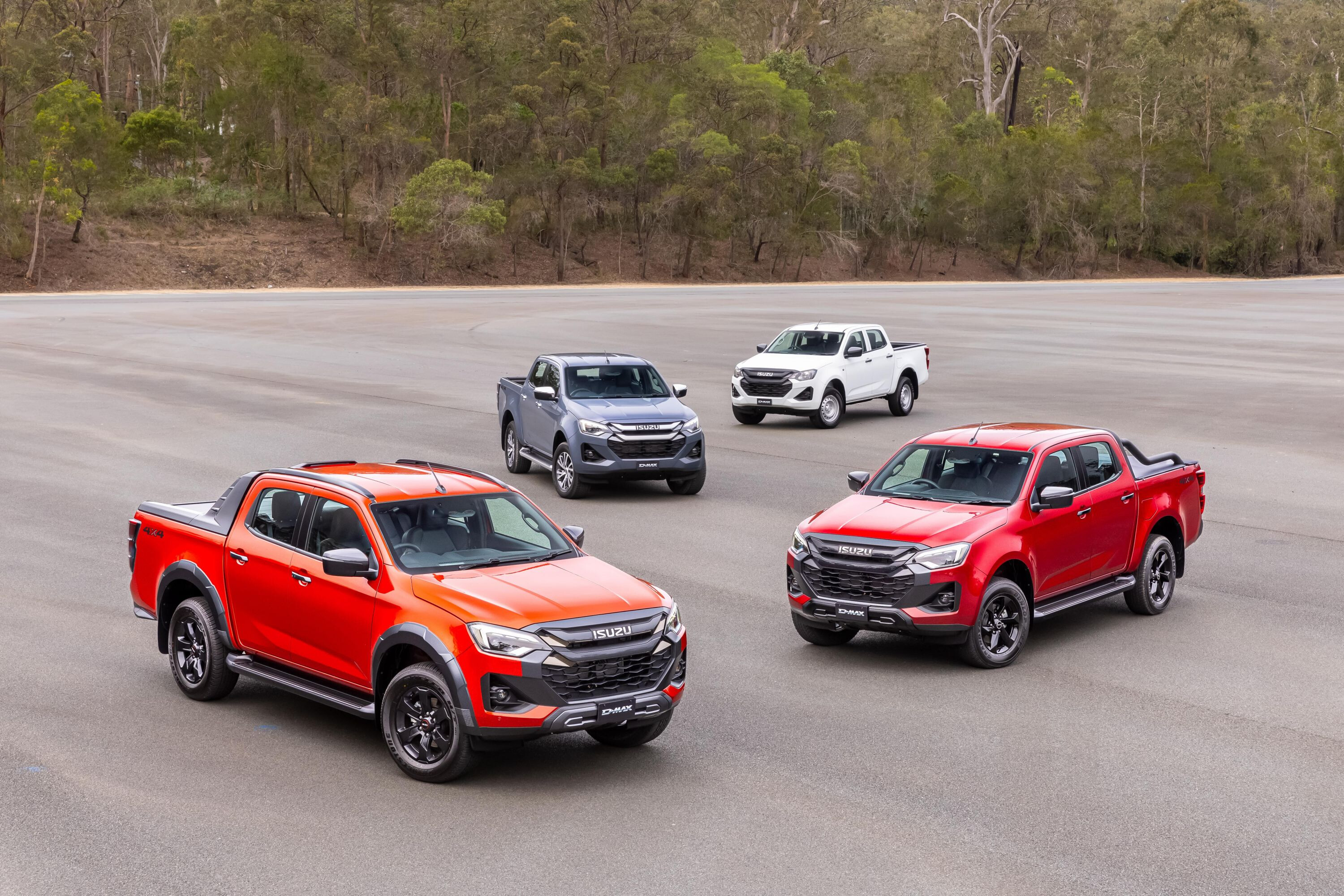
The Isuzu D-MAX has a maximum braked towing capacity of 2800kg/3000kg (manual/auto with the 1.9L engine) or 3500kg (3.0L engines).
It has a tow ball download maximum rating of 280kg/300kg for the 1.9L engine and 350kg on all other models. Payload in the dual cabs ranges from 925kg for the X-Terrain to 1405kg for the SX 4×2 cab chassis.
1
How long is the warranty and what are the Isuzu D-MAX’s servicing costs?
The D-MAX’s warranty coverage is for six years or 150,000 kilometres, along with roadside assistance for seven years.
Isuzu specifies scheduled servicing every 15,000km or 12 months, whichever comes first, with a first free service at 3000km or three months. Under its capped-price service offering, maintenance costs range from $335 to $799 per service, depending on the interval.
1
Which version of the Isuzu D-MAX do we recommend?
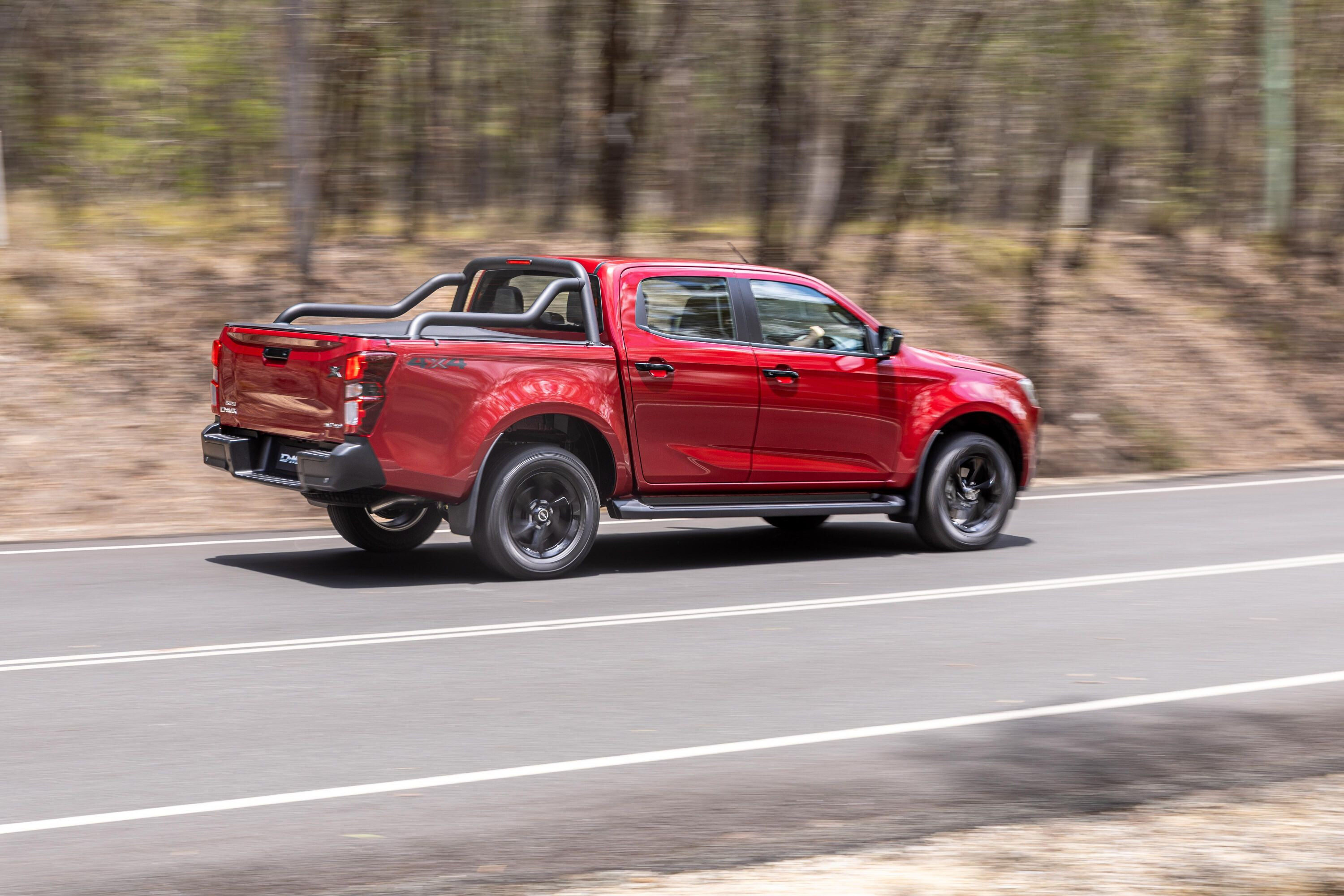
There is much to like about the X-Terrain, with its plush leather interior and roller tonneau cover.
However, for the best value and overall practicality, the D-Max LS-U dual-cab auto at $61,000 (before on-road costs) would be the sweet spot of the range. You get keyless entry and start as well as a tow bar and embedded sat-nav.
If you really must have the luxury feel of leather in your D-MAX, there is the LS-U+, which adds leather (heated front) seats plus a few more power driver’s seat adjustments for an extra $3000.
1
What are the Isuzu D-Max’s key rivals?
- Ford Ranger
- GWM Ute Cannon X
- LDV T60
- Mazda BT-50
- Mitsubishi Triton
- Nissan Navara
- Ssangyong Musso
- Toyota HiLux
- Volkswagen Amarok
One of the many great things about Toyota LandCruisers is that no sooner than a new one hits the market, LC enthusiasts will be modifying them and making them their own.
With so much heritage behind the LandCruiser badge, those who own them will always return to the marque when it comes time for a new off roader. That wasn’t quite the case for Bruce Stewart, the owner of this GR Sport. He’d come from 20 years of driving dual-cab utes but he grew up travelling in LandCruisers.
“I grew up camping and off-roading with my family in my old man’s 55 and 60 Series LandCruisers, which led me to always want one myself,” Bruce told us.
1
That time finally came with the launch of the 300 Series as his teenage kids had grown to a size that wasn’t ideal for the cramped back seat of a ute.
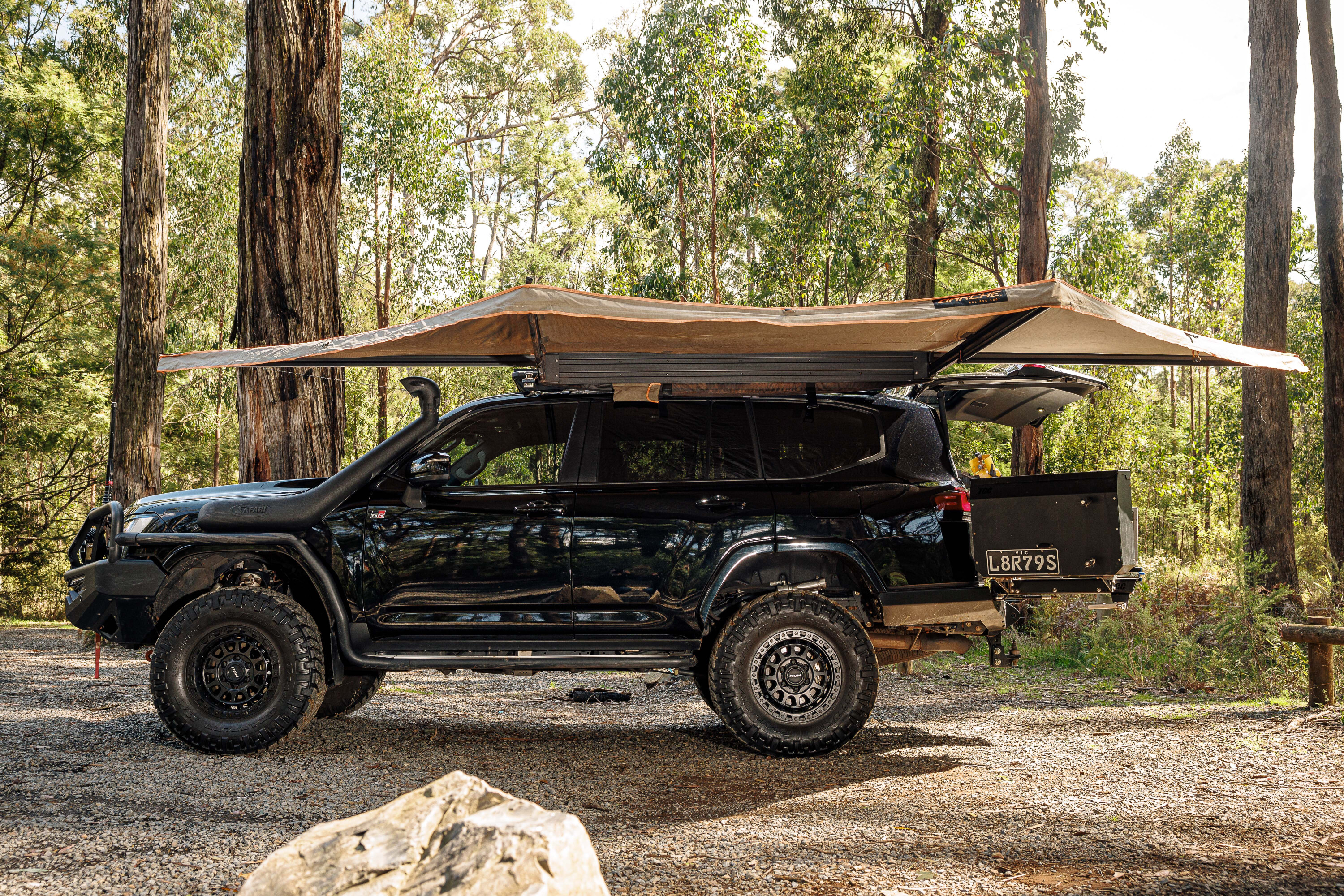
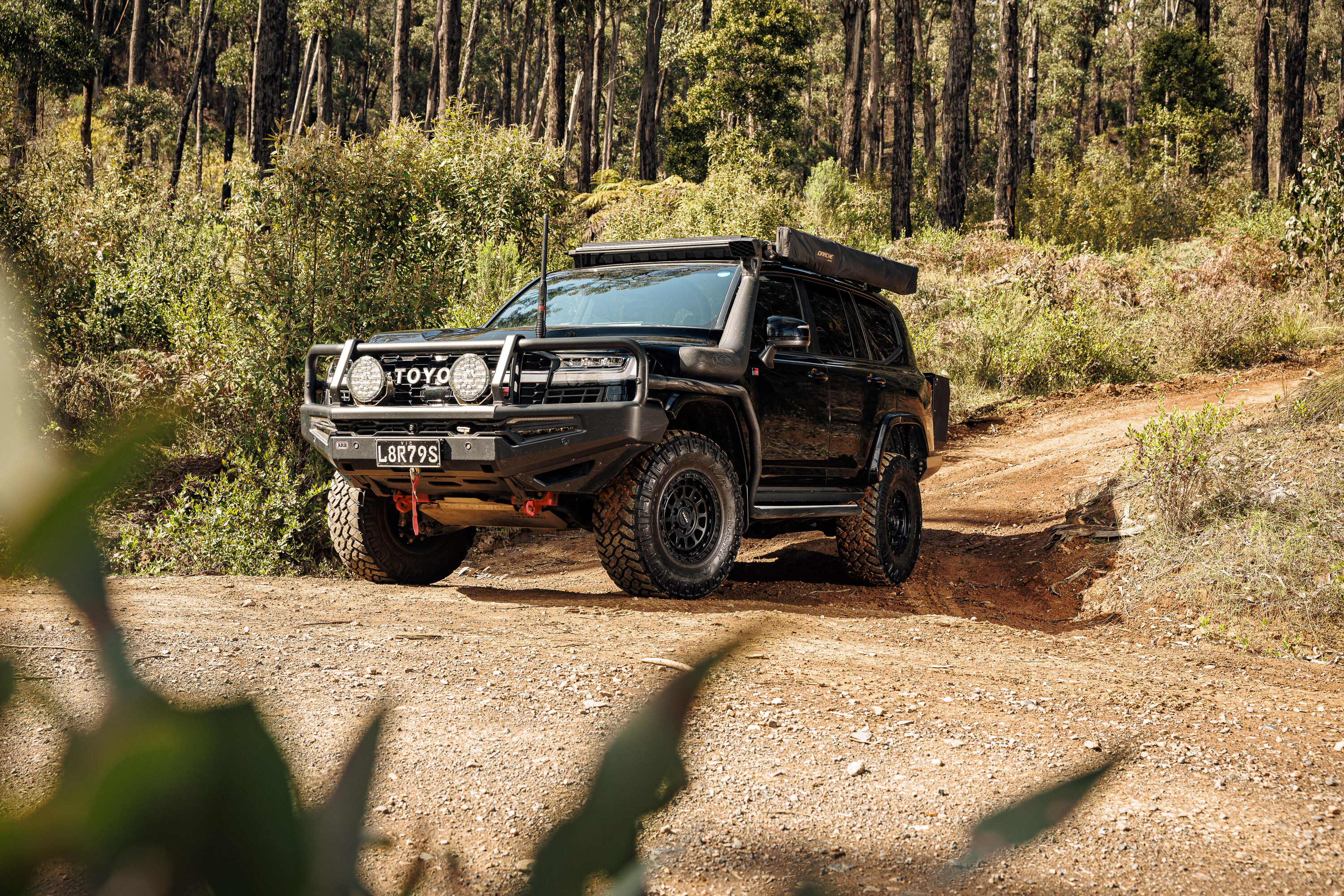
Bruce went for the most capable LandCruiser in the 300 Series range with the GR Sport offering triple locking diffs and the added articulation of the clever e-KDSS suspension… but the factory offerings weren’t enough for Bruce’s off-road trips and he had a long list of extras and modifications planned for it.
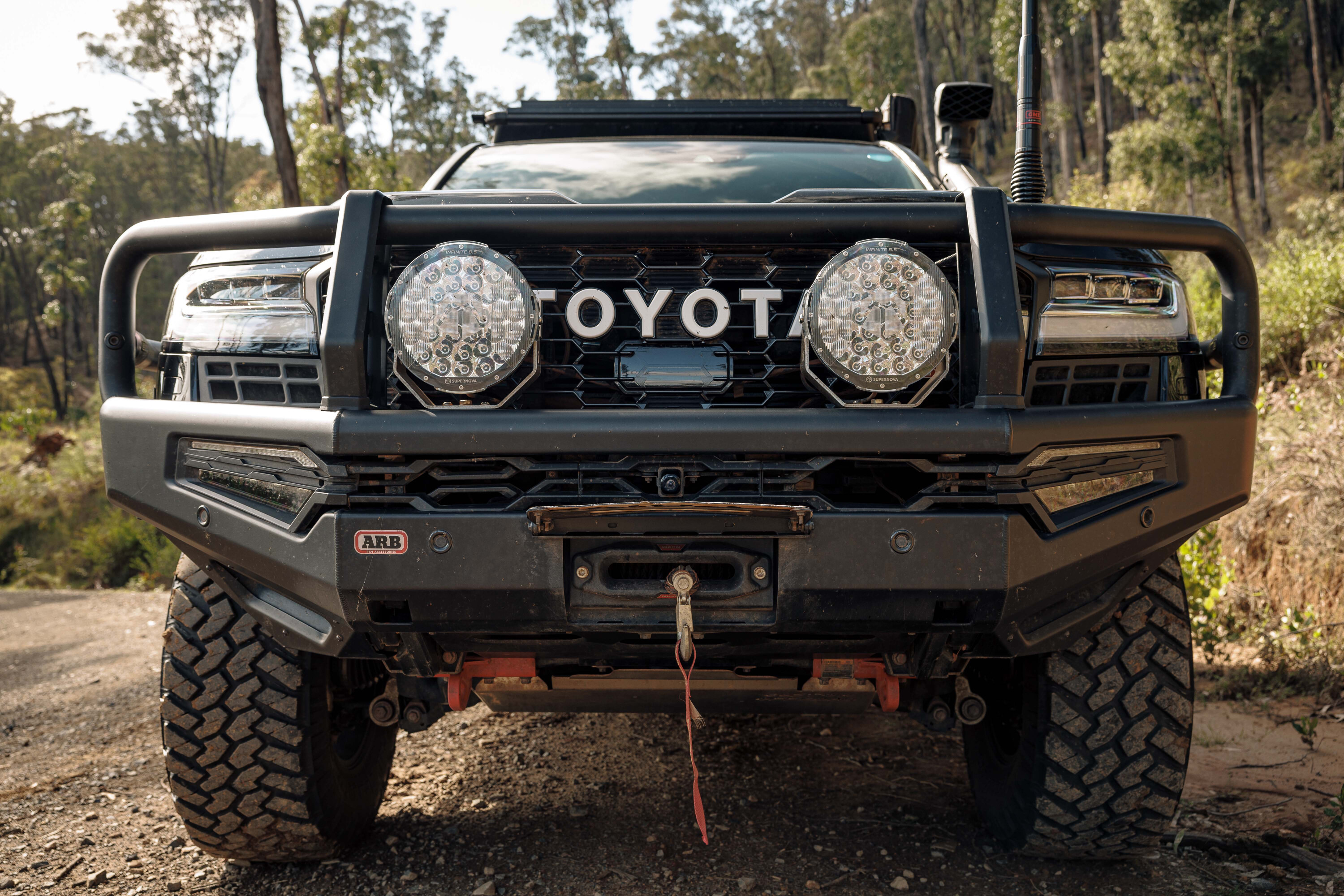
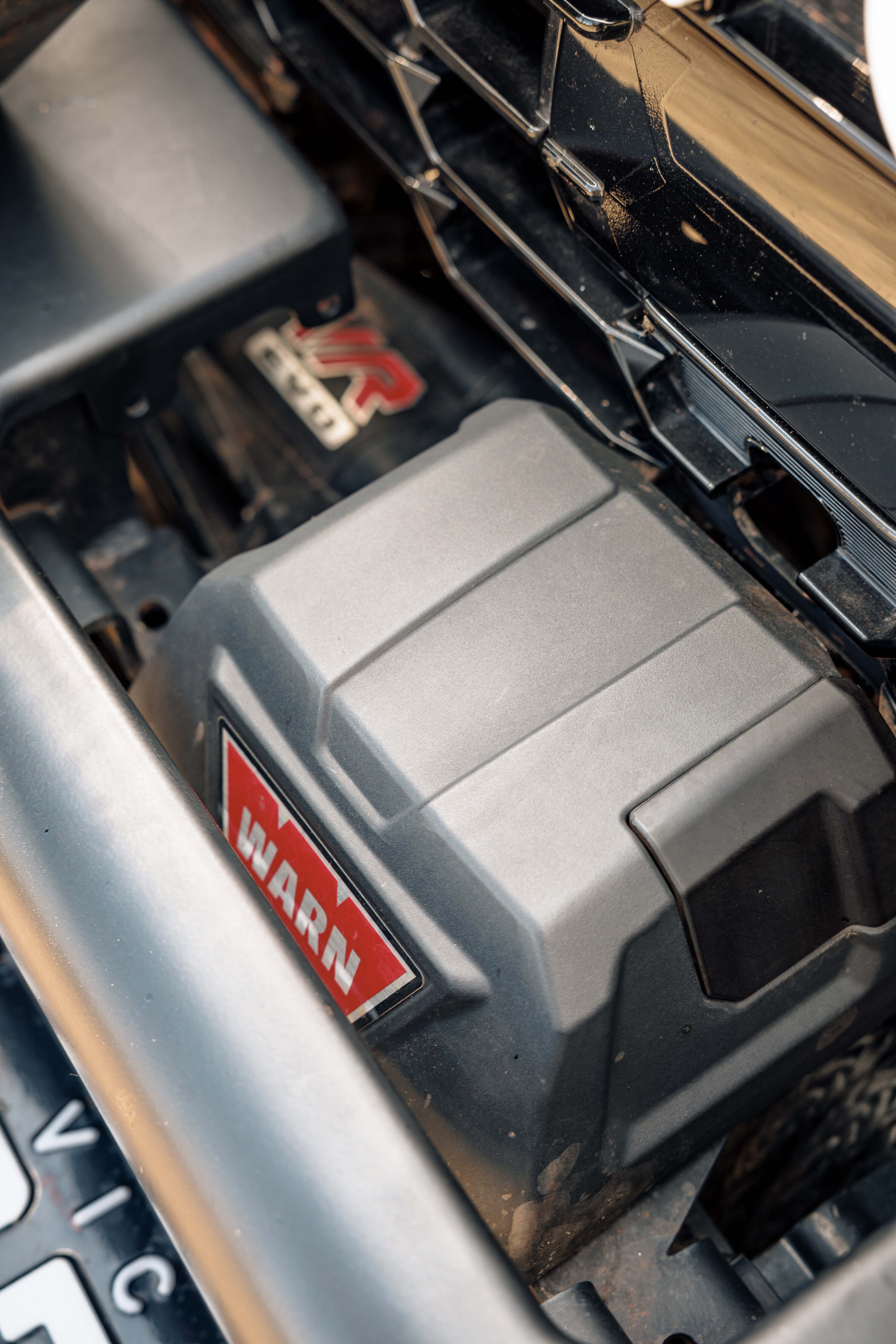
Starting with a vehicle that is arguably the pinnacle of 4×4 wgons available today, Bruce wasn’t about to fit any second-rate products to his Cruiser. An ARB Summit Mk2 bull bar sits up front with side rails running back to sliders also from ARB. A 12,000lb Warn EVO winch is nestled within the bullbar while a pair of Supernova Infinite 8.5 LED driving lights sit up top along with a GME UHF antenna.
2
Underbody protection comes courtesy of a set of stainless-steel plates from Custom Offroad, with the four-piece set protecting under the radiator, sump, transmission and transfer case.
At the back of the Cruiser, a bar from The Cruiser Company not only protects the lower parts of the rear quarters but provides a mount to carry the 35-inch spare. On the other side of the rear bar is a box that holds recovery gear and the chainsaw.
Coming from utes to a wagon poses a problem for storage space and Bruce admits he had to get smart when loading up the Cruiser.
“After having dual-cab utes prior, the reduced space in the rear of the wagon was a new challenge,” he said. “I had to rethink how I’ve set up other cars and change camping gear, like chairs, cooking equipment and tools to more compact products.”
1
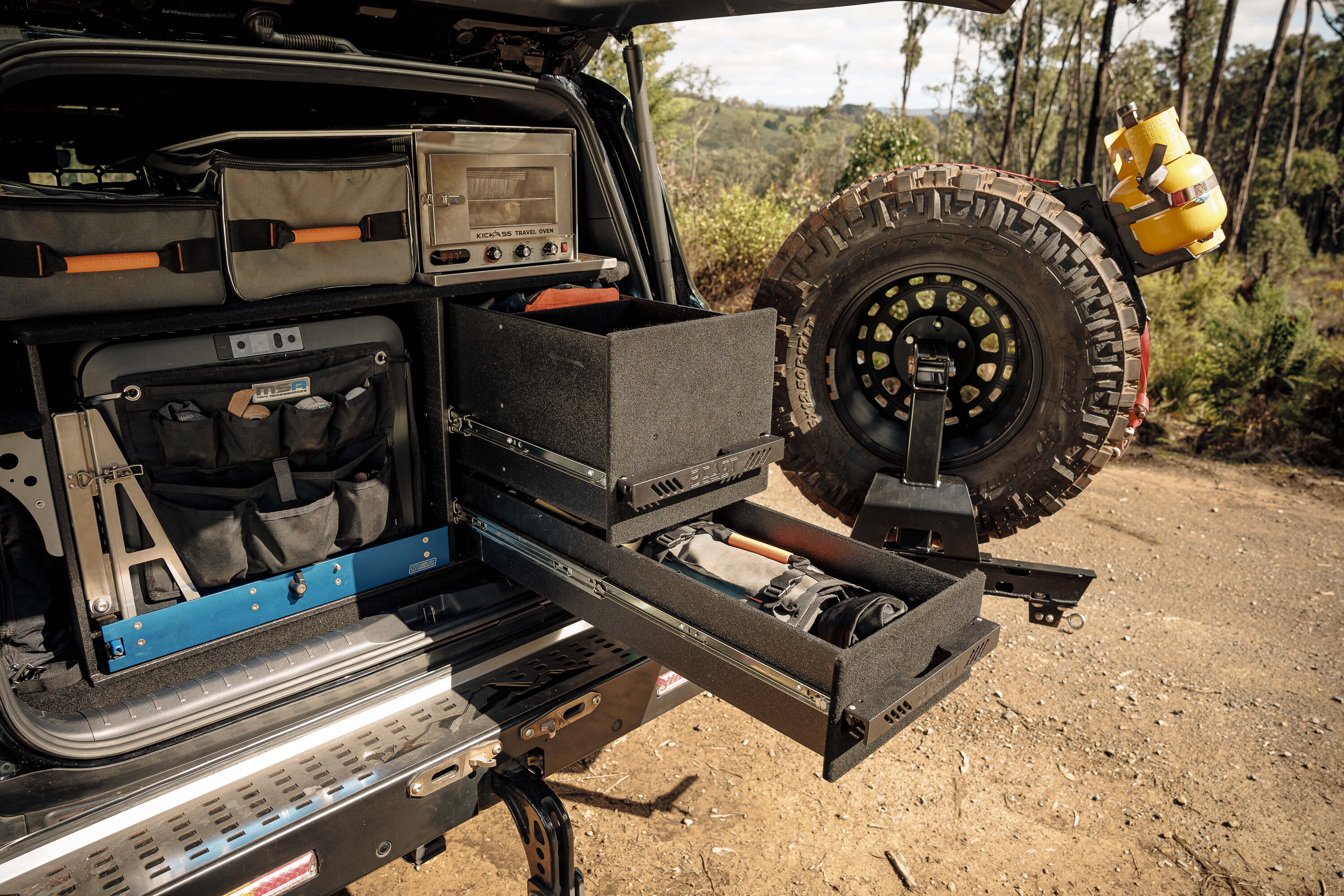
Thankfully the GR Sport only comes as a five-seat model leaving more space in the cargo area which Bruce has filled with a drawer system from Beast Tourers.
These Queensland-made drawer systems use lightweight Thermolite, which is claimed to be lighter than most commonly used materials without sacrificing strength.
To the side of the drawers sits a Dometic CFX 95L fridge on an MSA 4X4 fridge slide while above there’s a small oven to heat those tasty treats on the road. The neat table that folds down off the side of the fridge was custom made by the team at Bruce’s business using stainless steel, and it makes food prep and unpacking the fridge easier.
1
The crew there also designed and fabricated a 105L stainless steel water tank that sits in the rear floor well with a Shurflo pump feeding the outlet at the back and Topargee H2Flow Bluetooth flow meter.
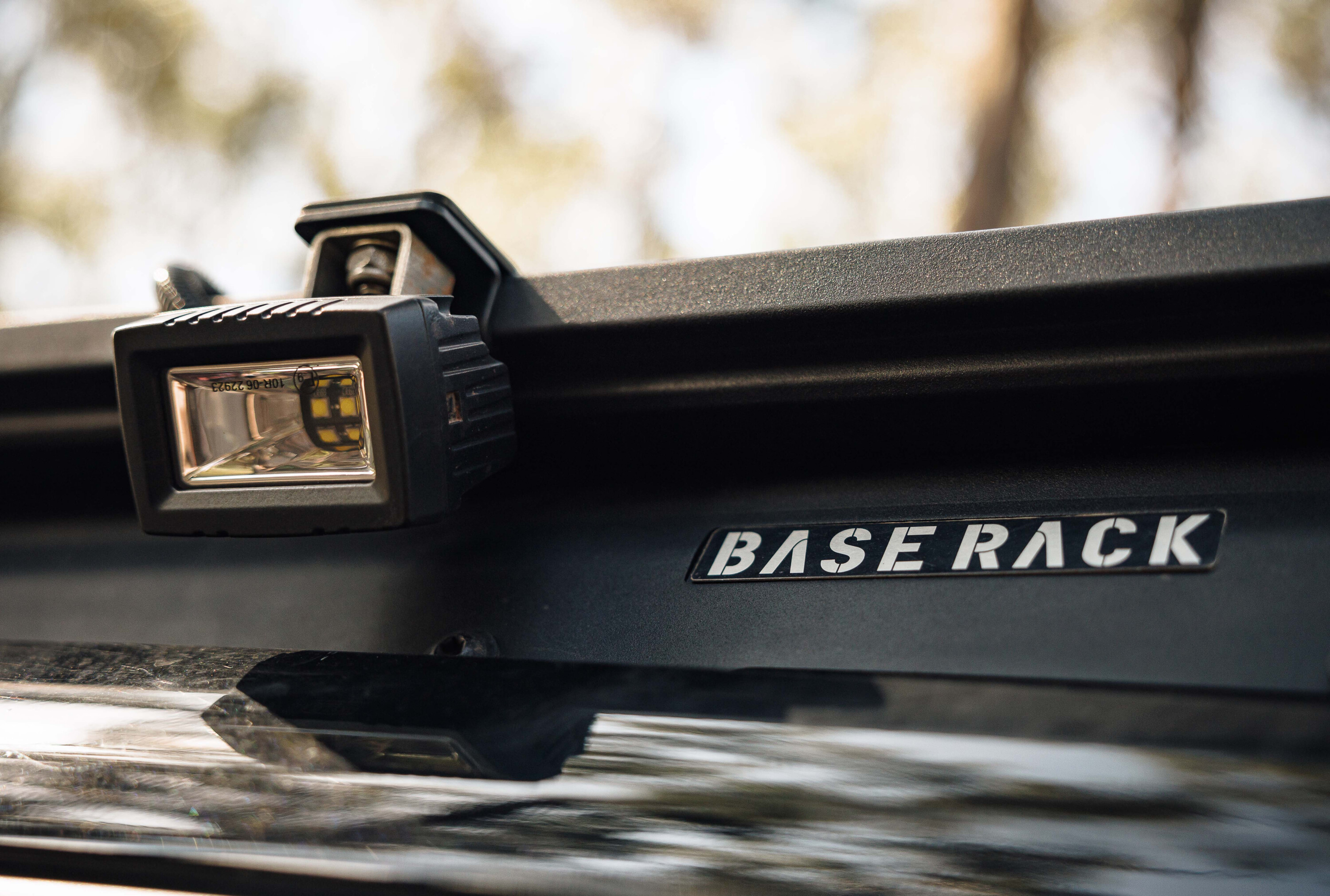
Up top an ARB Base Rack carries a 150W solar panel, Darche 180° awning and TREDS recovery boards, and still has space left to carry more gear when needed.
Bruce’s game of Tetris continued when he went looking for somewhere to mount the ARB air compressor. It’s now in the engine bay where it’s out of the way and shares space with a pair of Deep Cycle Systems 90Ah Lithium batteries that are controlled by a Victron management system.
The Toyota twin-turbo V6 diesel benefits from a Just Autos Stage 3 multi-mapping tune with an extra front-mount heat exchanger, Safari intake snorkel and 3-inch Manta stainless steel exhaust system.
1
The custom tune proved positive with the big Cruiser spinning the rollers up to 745Nm between 3100-3400rpm, measured on the 35-inch Nittos.
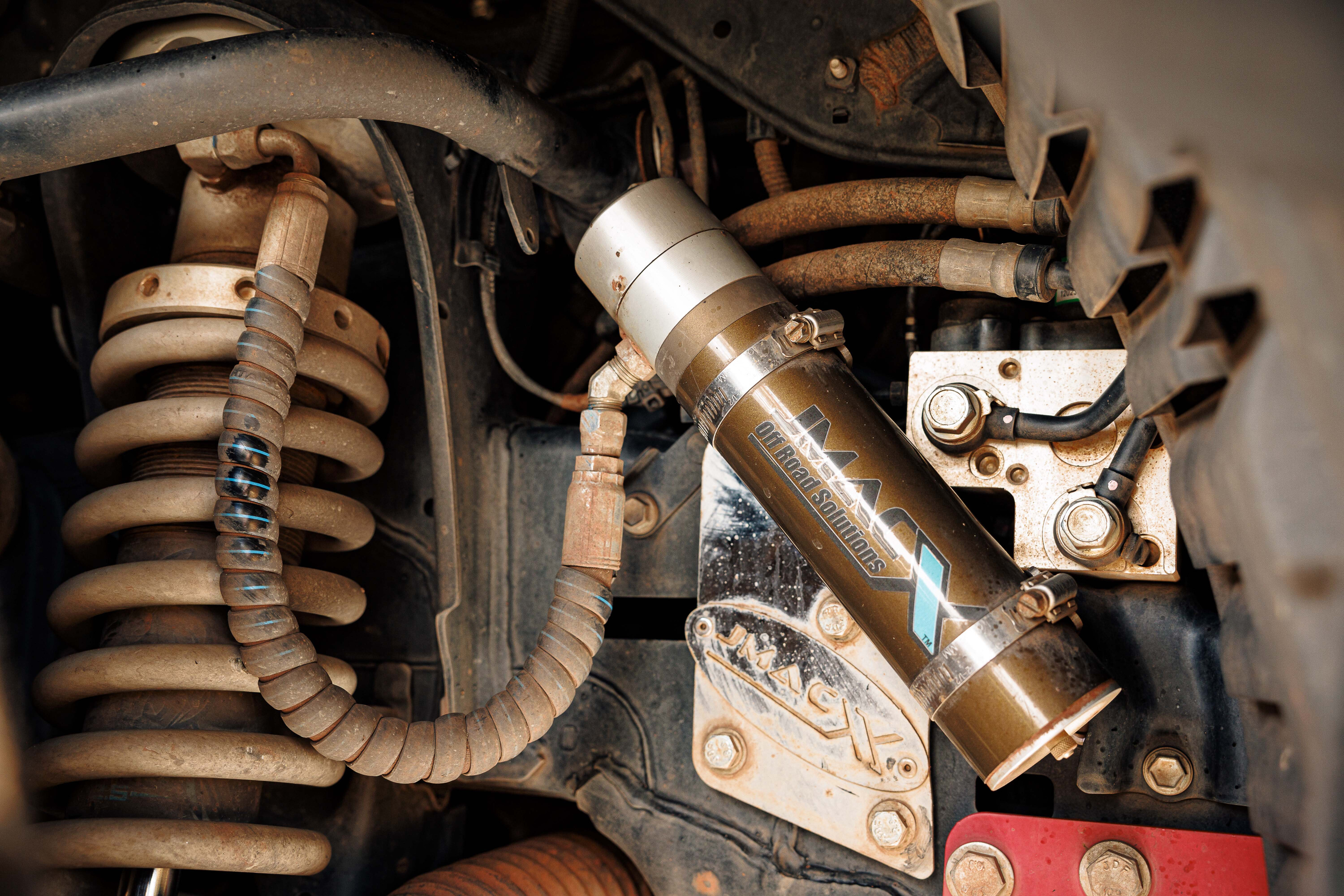
There’s no doubt there’s a lot of gear in the Cruiser but Bruce planned ahead for this by fitting a JAMCX 4200kg GVM upgrade before the vehicle was registered. Part of the hardware for this kit includes a replacement rear axle housing manufactured by JMACX using 6mm plate steel and custom axle tubes.
The housing holds the factory Toyota locking differential and connects to the chassis via an adjustable panhard rod, uprated lower control arms, Superior Engineering coil springs with airbags, and JMACX Alpha remote-res shock absorbers.
1
Another set of the impressive JMACX Alpha struts support the front end with help from Blackhawk upper control arms. The front differential, also equipped with the factory locker, was lowered to maintain CV angles using a diff drop from Superior Engineering.
“I had the GVM upgrade done pre-rego, however, after getting the car built, it’s actually ended up lighter than expected,” Bruce told us. “As a result, the suspension feels like it needs more rebound damping when going through washouts and deep corrugations. I’ve changed the rear springs so far and I’m working with Mountain District 4×4 and JMACX to further improve this.”
We said at the start that Bruce had only fitted top-notch products to his Cruiser but he has also worked with the right people to get the best advice and work done on his rig. These include Paul at Outback 4WD, Mark at Mountain District 4×4 and Troy at Beast Tourers.
1
He also thanks his team at LGPM Process Innovation for their help and input.
As you can tell from the vehicle build, Bruce doesn’t do anything by halves and the first big trip for the Cruiser was Cape York where he says it was perfectly suited to the conditions and performed faultlessly. He’s still working on refining the suspension settings to best suit the weight of the 300, and further trips will include Tasmania and South Australia.
As good as the LandCruiser wagon is, it seems that Bruce still can’t go past the carrying capability of a ute. “There isn’t much more I want to mod on it,” he says, “although a chop in future could be on the cards.”
MORE
Everything Toyota
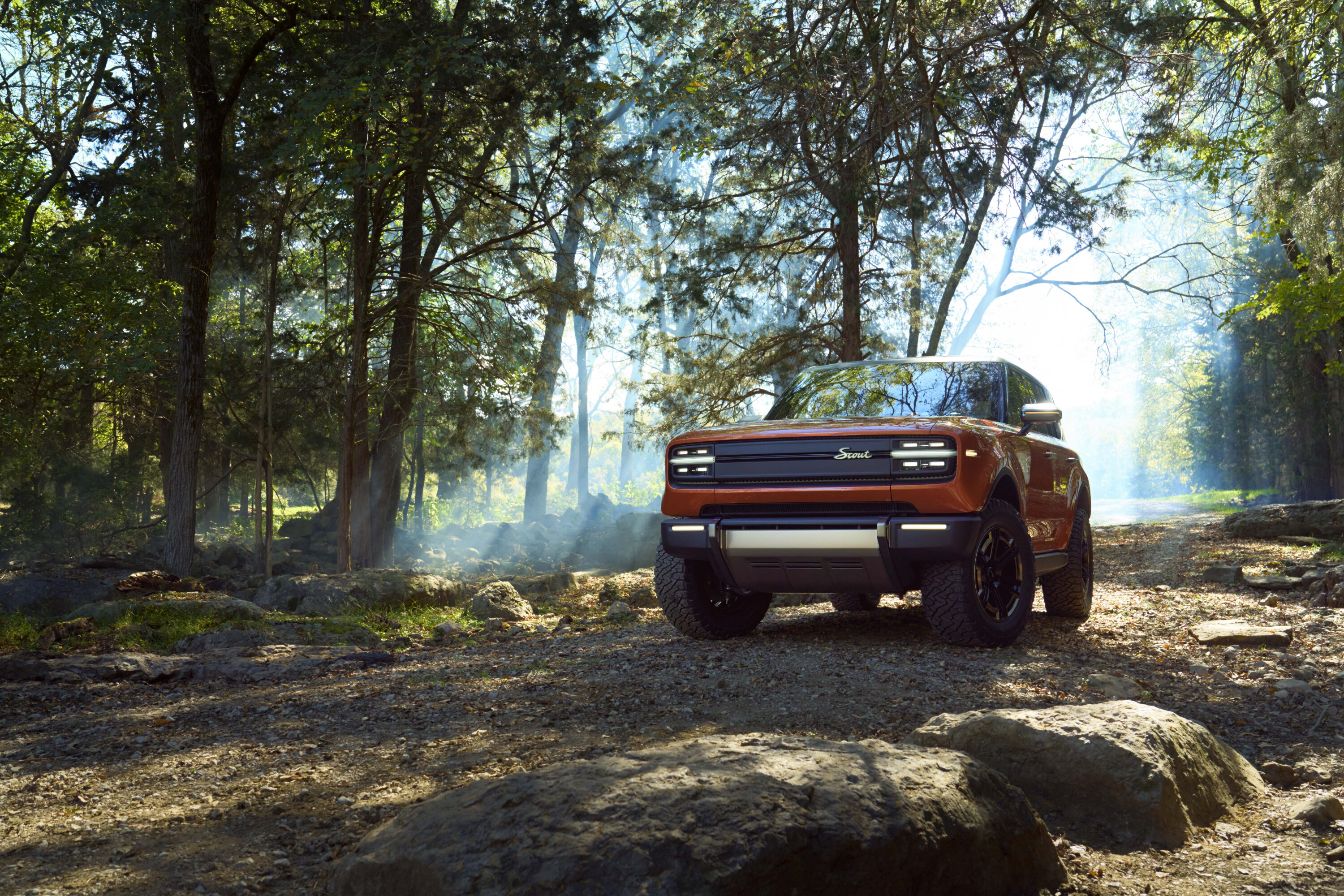
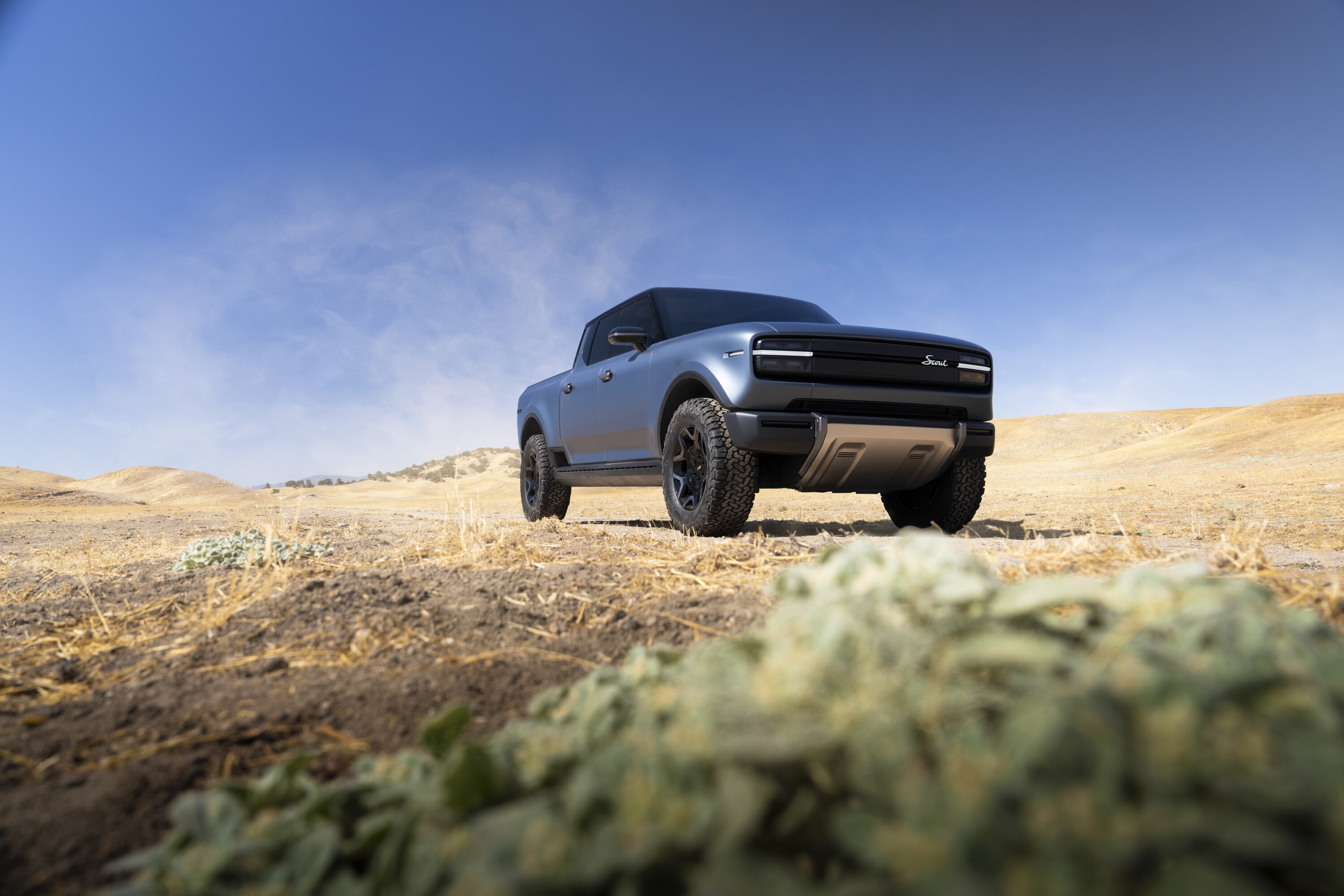
Scout Motors has pulled the wraps off two new electric 4×4 vehicles in the USA, where they are set to go on sale as 2027 models.
Now a part of the Volkswagen Group of companies, these are the first new vehicles to wear the iconic Scout badge since 1980. Dubbed the Scout Traveller for the wagon model and the Scout Terra for the pick-up, they will be offered with a choice of full BEV propulsion or with a petrol-fuelled range extending power plant.
1
Fully electric variants are anticipated to offer up to 350 miles of range (563km), and range-extended variants are projected to offer more than 500 miles (800km). To be built in a new production plant in the USA, they will ride on body-on-frame architecture with a live rear axle and IFS, and they’ll be available with 33-inch tyres as standard with 35s as an option.
1
The new Scout vehicles will include a four-wheel-drive system made up by an electric drive unit on each axle, and it is predicted that they will be capable of climbing 100-per-cent grades and accelerate 0-100km/h in as quick as 3.5 seconds thanks to an estimated output of nearly 900Nm. Towing is rated at close to 3.2-tonne, with a 900kg payload on both models.
As US-specific vehicles, the new Scouts will be manufactured in left-hand drive only and there are no plans for right-hand drive at the moment, ruling it out for any official Australian release through VW Australia.
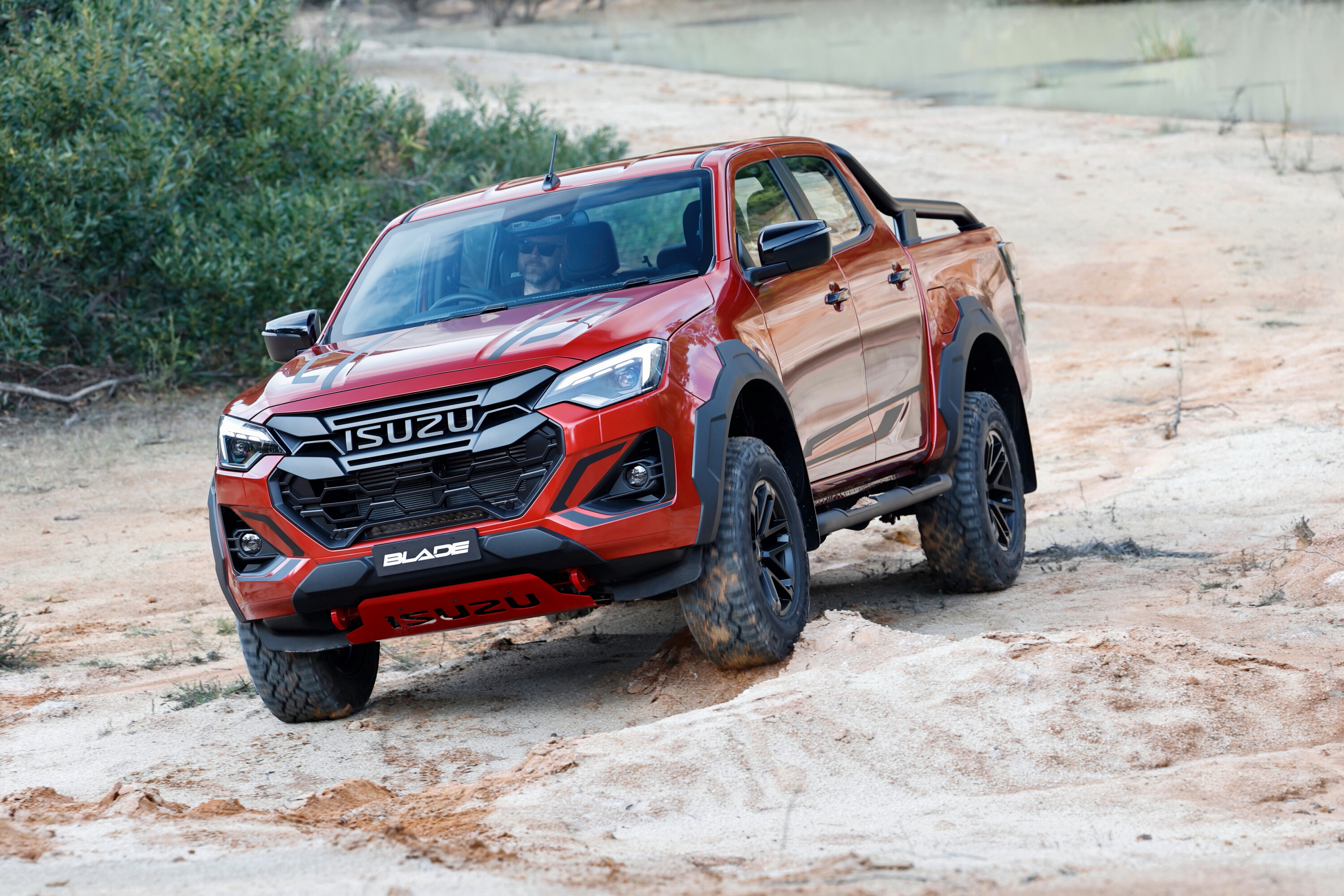
Isuzu has a new flagship model sitting atop its D-MAX model line-up, with the Walkinshaw-fettled D-MAX Blade revealed and set to land in dealerships across the country from November 1.
The all-new Blade will launch with a price of $76,990 drive-away – IUA says this is a special introductory price, so expect that to rise in 2025. That price tag means it only costs marginally more than the former flagship D-MAX X-Terrain (at $70,500 before on-road costs), and despite no change to the powertrain there’s plenty of Walkinshaw treatment included to justify spending that little bit more.
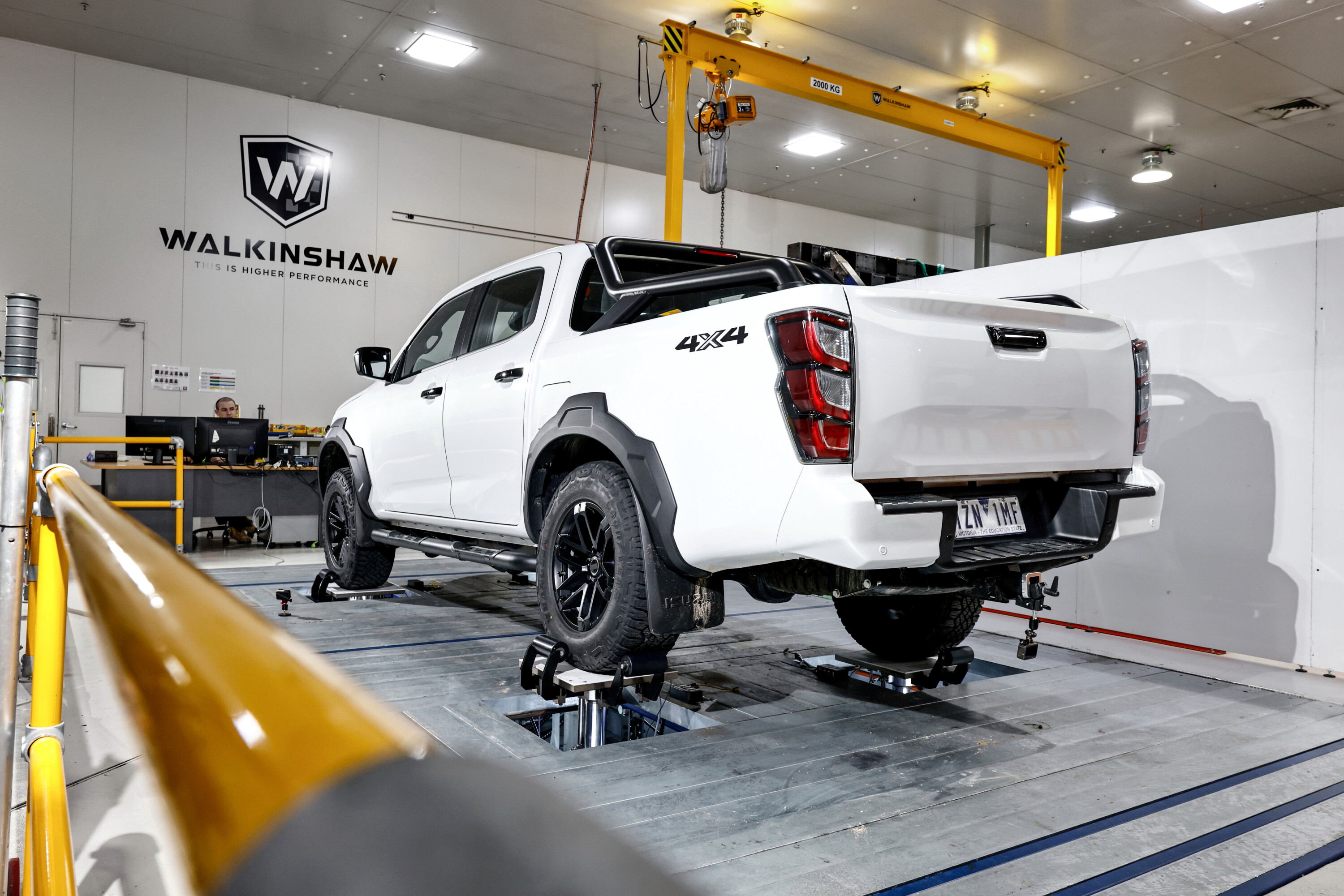
The collaboration between Isuzu Australia and Walkinshaw essentially began more than three years ago, when Walkinshaw began concepting and prototyping the previous-gen D-MAX in secret at its Clayton base in Victoria. The hush-hush development included countless back-and-forth discussions between Isuzu and Walkinshaw to ensure the Blade would stand out but also remain true to the regular D-MAX.
1
“Before we even kicked this project off, we spent months speaking with local engineering outfits to determine how to best bring the Blade to life,” said Isuzu UTE Australia’s Managing Director, Mr Junta Matsui. “In the end, we chose to partner with Walkinshaw due to their unrivalled local LCV experience and local engineering and design talent pool – with the finished product speaking for itself.”
Following countless hours of evaluation including more than 100,000km of durability testing at Lang Lang, as well as a six-day 3300km test trip to the Flinders Ranges via Arkaroola and Cameron’s Corner – towing a Wayfarer no less – the end result is a vehicle loaded with kit that will prove of use when off-road.
The decision was made to use the D-MAX LS-U+ as the base vehicle, which means, in addition to the regular equipment gained with the LS-U, it gets leather-accented upholstery with black stitching; an eight-way power adjustable driver’s seat; and heated front seats. Enter Walkinshaw.
1
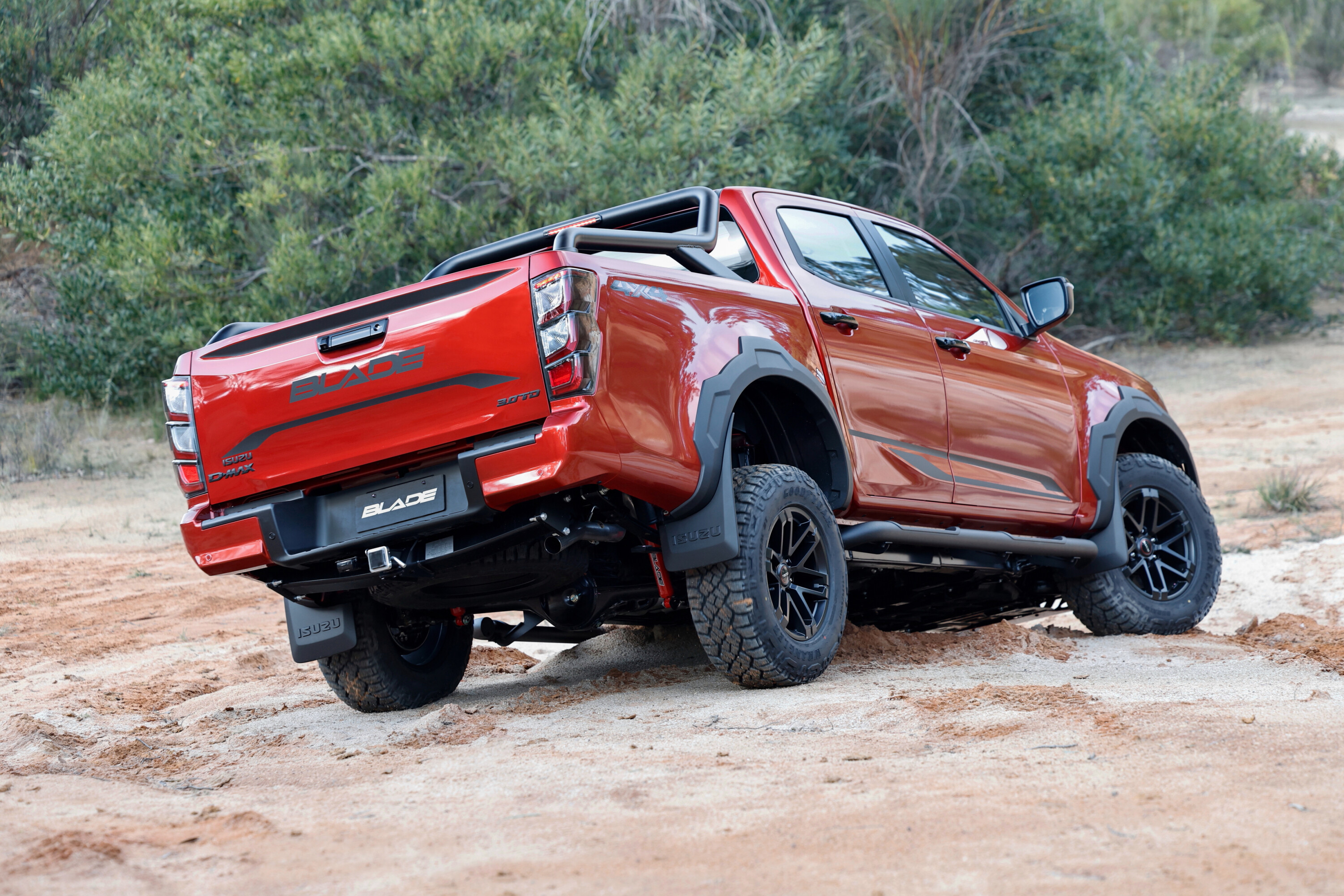
From this base vehicle, Walkinshaw then harnessed the experience gained from previous projects – SportsCat, Amarok and Triton – and worked its magic, giving the Blade a 29mm lift courtesy of new suspension and a larger wheel and tyre package. Monroe 35mm MTV twin-tube dampers, tuned for local conditions, were installed and are said to be 16.6 per cent larger than the original 30mm items.
This suspension set-up has been paired with 275/65R17 Goodyear Wrangler Duratrac RT all-terrain tyres wrapped around satin black 17×8.5-inch flow-formed alloy wheels with a +17mm positive offset. For comparison’s sake, the LS-U+ is fitted with 265/60R18s with a +33mm positive offset, giving the Blade a track increase of 32mm.
For the Blade, Walkinshaw doubled the thickness of the D-MAX’s underbody protection steel bash plate from 1.5mm to 3.0mm. Behind the bash plate, Walkinshaw engineers also developed a new eight-tonne load-rated recovery point system with an integrated cross member – essentially making it a single-piece unit. Despite all of these changes, there was no impact on towing and payload capacities.
1
Walkinshaw’s design team, lead by Chief Designer, Julian Quincey, has implemented a revised satin black front grille surrounded by a hexapod motif, a design feature that has been utilised throughout the exterior including on the bigger wheel-arch flares. An integrated 112w light bar is a welcome addition; plus there’s no shortage of decals and satin black geometric stripes throughout the exterior.
“Visually, with the widened stance and increased ride height, the Blade makes an absolute statement.” said Julian Quincey. “But equally, it looks a part of the Isuzu range.”
The interior is relatively unchanged, save for the addition of Blade lettering on the head rests, floor mats and scuff plates, as well as individually numbered Blade identification plaques located on the transmission selector surround.
1
A full list of Walkinshaw changes
- 244mm ground clearance
- 29.2° approach angle
- 19.2° departure angle
- 25.2° breakover angle
- Blade-exclusive lifted suspension, finished in signature Isuzu red
- Blade-exclusive 3mm bash plate underbody protection, finished in signature Isuzu red
- Blade-exclusive 8-tonne load rated recovery points with cross-bracing, finished in signature Isuzu red
- Blade-exclusive satin black 17×8.5-inch +28 flow-formed alloy wheels
- 275/65R17 Goodyear Wrangler Duratrac RT all-terrain tyres
- Satin black front grille with ISUZU lettering
- Satin black front bumper cladding
- Satin black fender flares with integrated air curtains
- Blade-exclusive widened mud flaps
- Satin black ‘BLADE’ lettering across tailgate
- Blade-exclusive satin black tailgate badging
- Blade-exclusive satin black decals on front bar, bonnet, doors and tailgate
- Blade-exclusive satin black tubular side steps
- Satin black one-piece extended sports bar with integrated stop lamp
- Tinted lens light bar integrated into the front grille
- Blade embroidered headrest
- Blade embroidered floor mats
- Blade embossed scuff plates
- Individually numbered Blade identification plaque on transmission selector surround
- Individually numbered Blade identification plaque in engine bay
- Basalt Black tailgate and door handles
- Basalt Black door mirrors
- Available in Moonstone White pearl, Basalt Black mica, Granite Grey mica or Sunstone Orange mica
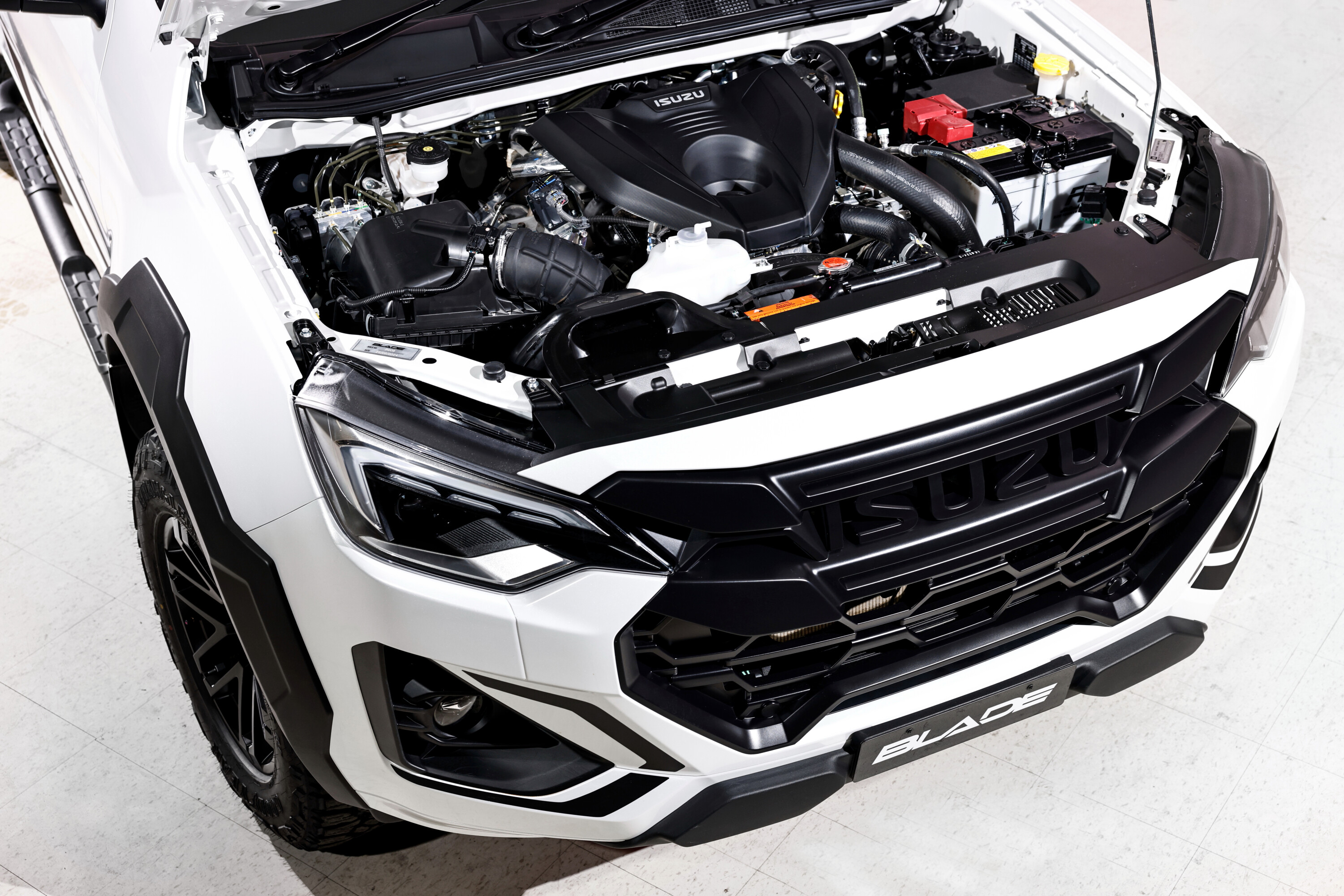
However, an obvious omission is that IUA and Walkinshaw have left the powertrain unchanged. And while the 3.0-litre 4JJ is a proven, reliable engine, its 140kW and 450Nm outputs remain untapped. For a brand known for being big and brash, this is likely to irk a few people, and Walkinshaw says the decision was made based on cost, stringent regulations and, as a result, time.
And while the 3.0-litre turbo-diesel is more than enough for off-road grunt work, the lack of an engine tickle means the Blade is – on paper – more in line with Premcar’s Navara PRO-4X Warrior rather than a desert-tearing Ranger Raptor – which may disappoint those hoping for a relentless off-road racer.
1
The engine is mated to a six-speed automatic transmission and a part-time 4×4 system that remains as per the regular D-MAX. As it’s based on the LS-U+ variant, a rear diff lock is standard, as is Rough Terrain mode.
The Blade is equipped with the full suite of safety kit that comes standard with the MY24 D-MAX. This includes Isuzu’s Intelligent Driver Assistance System (IDAS) which consists of: AEB with Turn Assist; Forward Collision Warning; Adaptive Cruise Control; Intelligent Adaptive Cruise Control; Traffic Sign Recognition; Lane Departure Warning; Lane Departure Prevention; Lane Keeping Assist; Emergency Lane Keeping; Blind Spot Monitoring; Rear Cross Traffic Alert; Rear Cross Traffic Brake; Welcome Headlight; Digital Reversing Camera; Trailer Sway Control; and eight airbags.
Just like the regular D-MAX, Isuzu will offer a six-year/150,000km warranty, and up to seven years of roadside assistance for the Blade. Isuzu will initially have 400 vehicles to distribute at launch, before ramping numbers up in the new year.
Stay tuned to 4X4 Australia to read our full review when the embargo lifts on November 1.
Capacities
| Kerb weight | 2204kg |
|---|---|
| Tare weight | 2151kg (10L of fuel) |
| GVM | 3100kg |
| Payload | 896kg |
| Towing capacity (unbraked) | 750kg |
| Towing capacity (braked) | 3500kg |
Dimensions
| Height | 1810mm |
|---|---|
| Length | 5308mm |
| Width (excluding mirrors) | 1910mm |
| Width (including mirrors) | 2159mm |
| Wheelbase | 3125mm |
| Front and rear track width | 1602mm |
| Ground clearance from bash plateu00a0 | 244mm |
| Rear axle ground clearance | 215mm |
| Approach angle | 29.2u00b0 |
| Departure angle | 19.2u00b0 |
| Breakover angle | 25.2u00b0 |
MORE
Everything Isuzu Ute
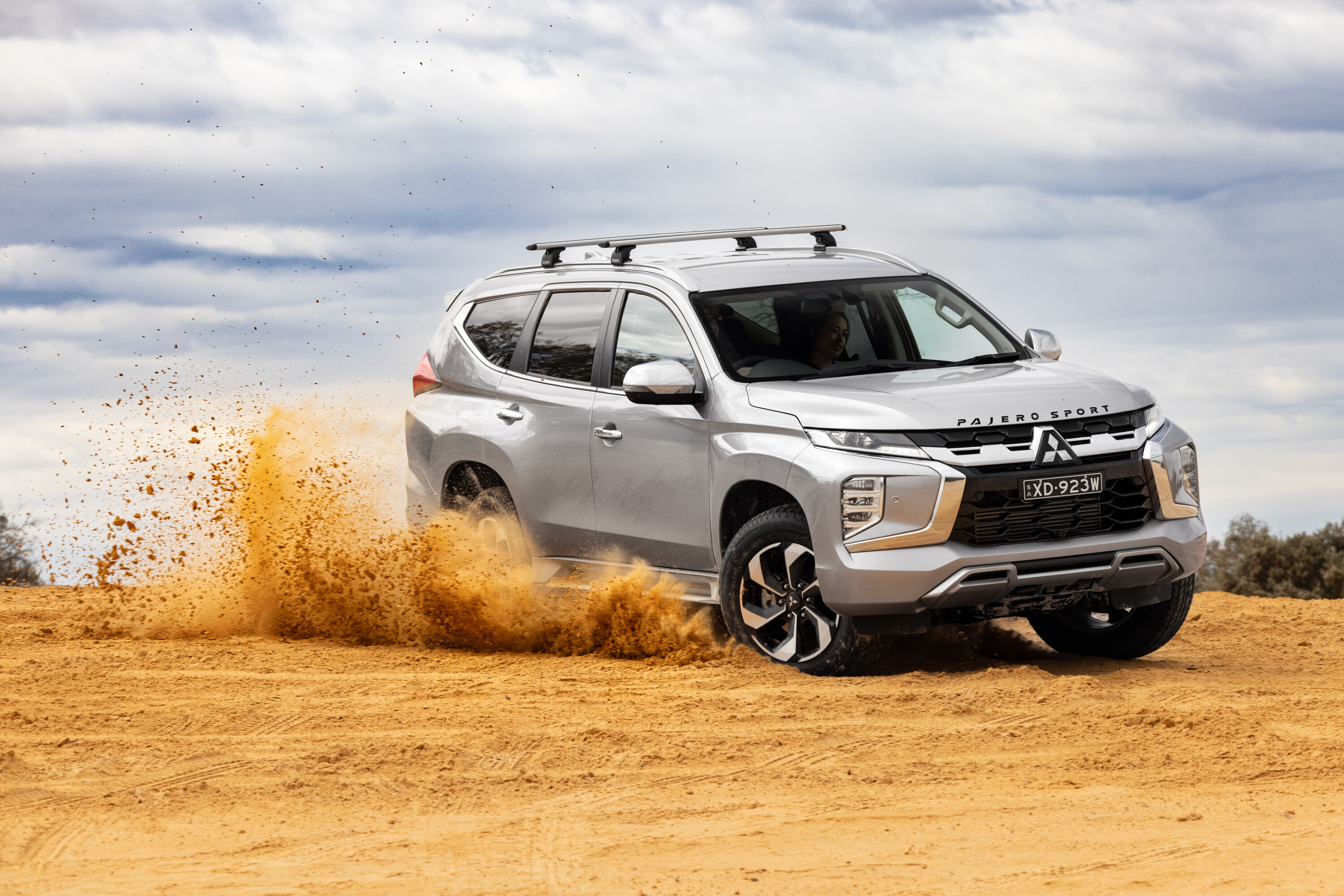
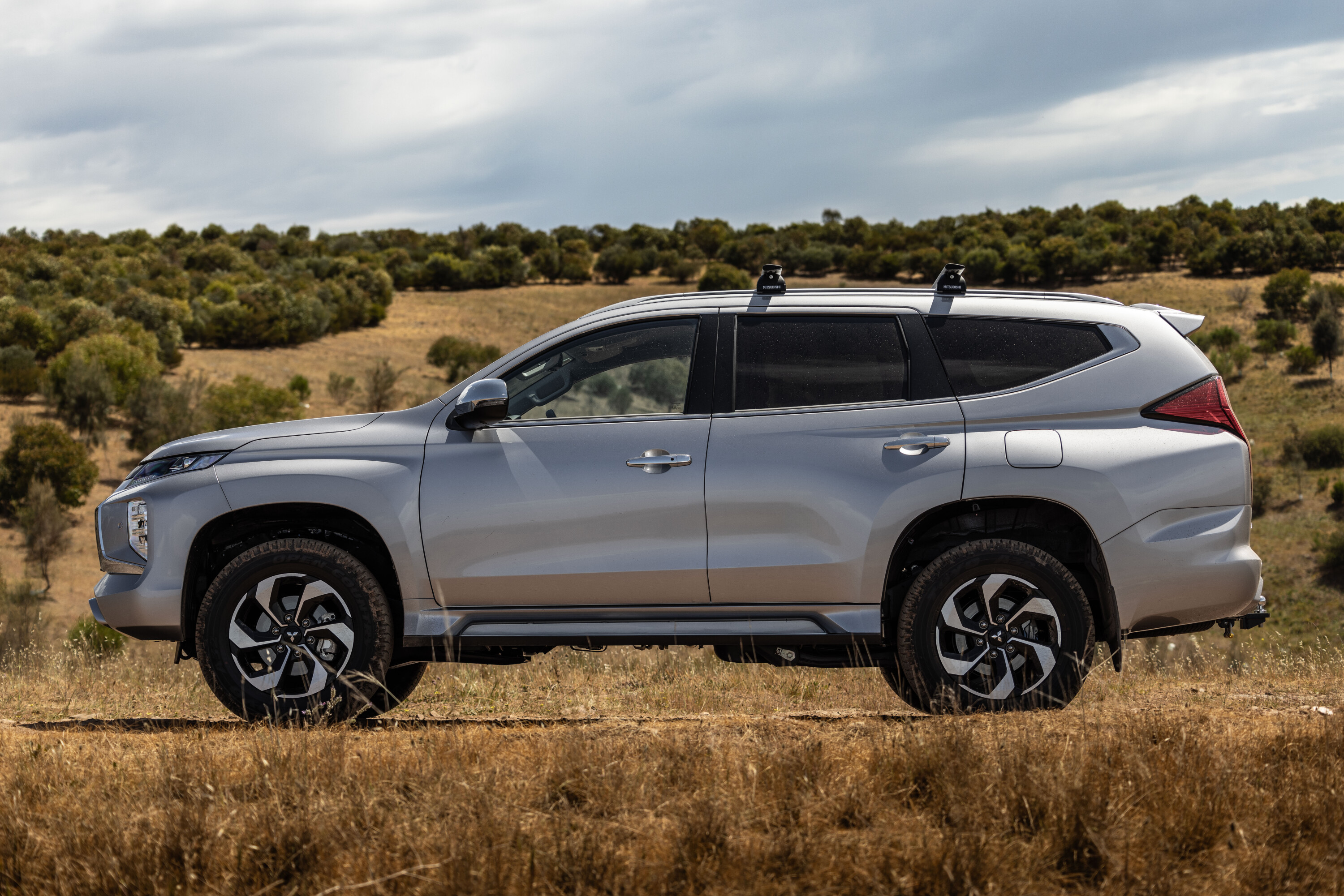
The spacious, comfortable and capable third-generation Mitsubishi Pajero Sport has been on sale since 2015.
For a long time it has offered a reasonable price, a capable selectable four-wheel drive system and decent on- and off-road capability. It received an additional update in 2021, as well a minor facelift more recently to keep it relatively fresh for 2024.
The ute-based four-wheel drive segment is quite competitive – think Isuzu MU-X, Toyota Fortuner, Ford Everest, and the soon-to-be-launched Toyota Prado, but is the Paj Sport still worth considering?
1
What is new?
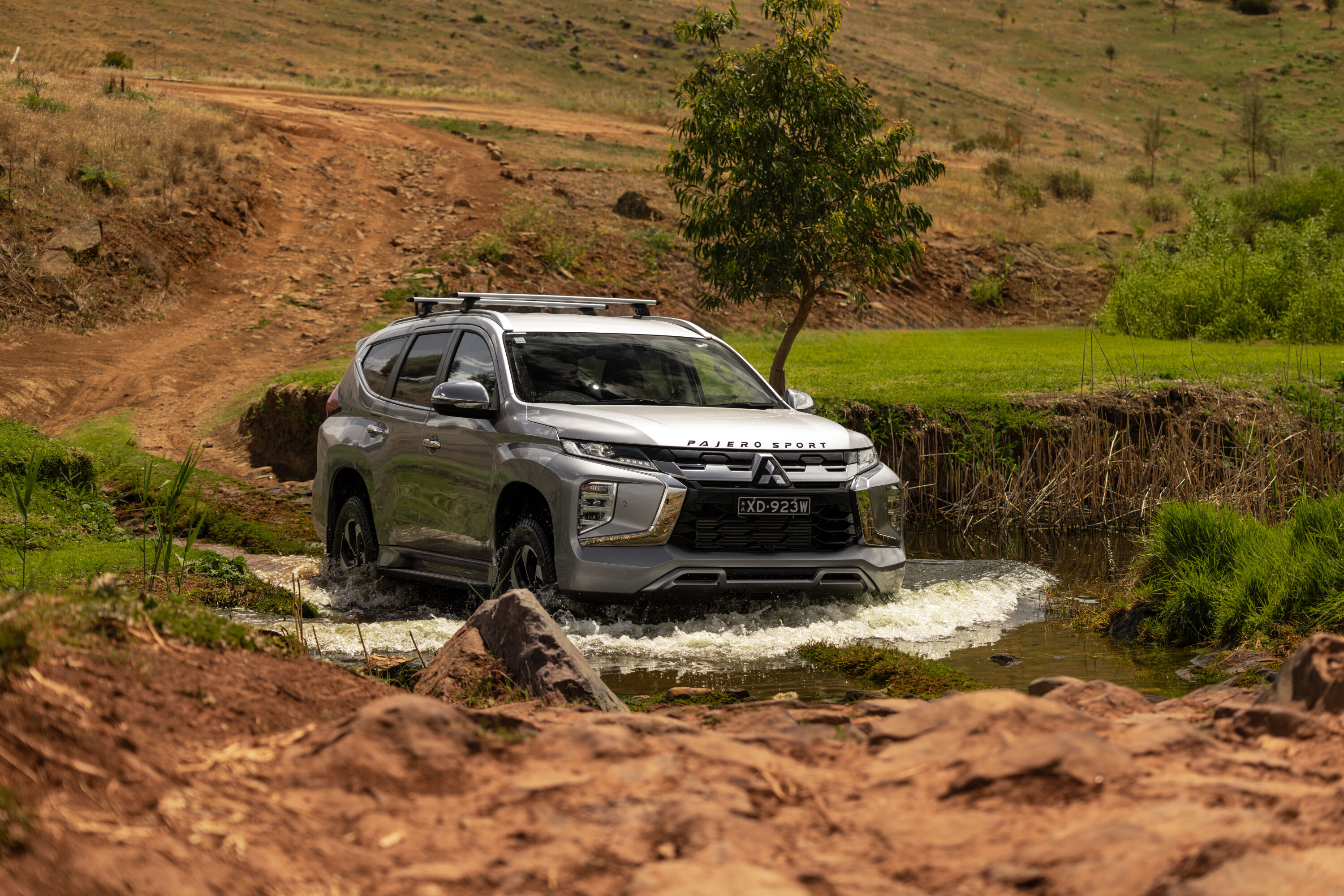
For MY24, the Pajero Sport has received a refreshed exterior, new wheels and upgraded interior. 2WD models are no longer available for the Australian market due to lack of demand, and the Pajero Sport remains powered by a 2.4-litre turbo-diesel engine that is paired with an eight-speed automatic transmission and selectable 4WD system.
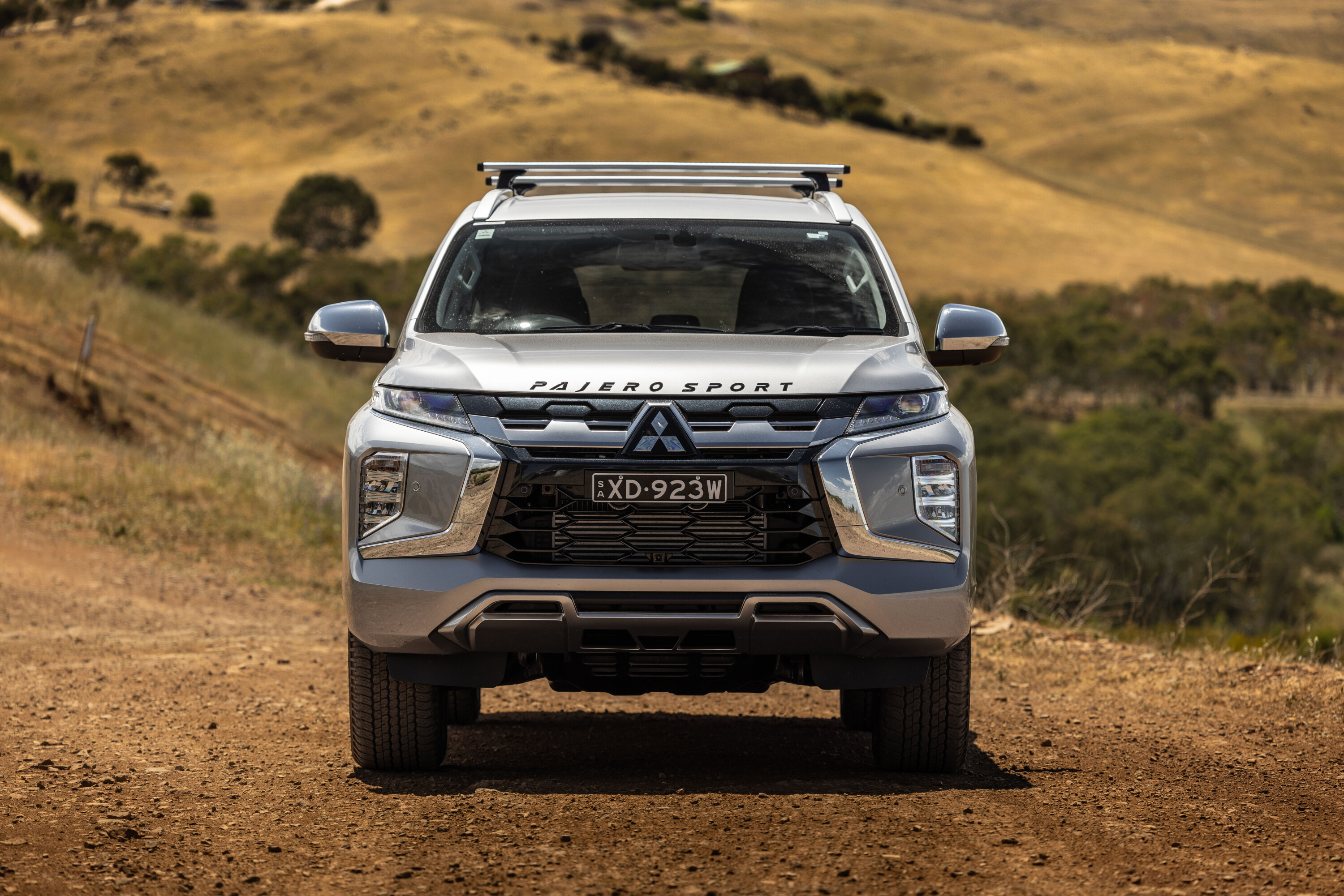
Features that have been added include an automatic LED headlight function, automatic rain-sensing wipers, a revised 18-inch multi-spoke alloy wheel design, a darkened black headlight extension, and revised front and rear bumper trims.
1
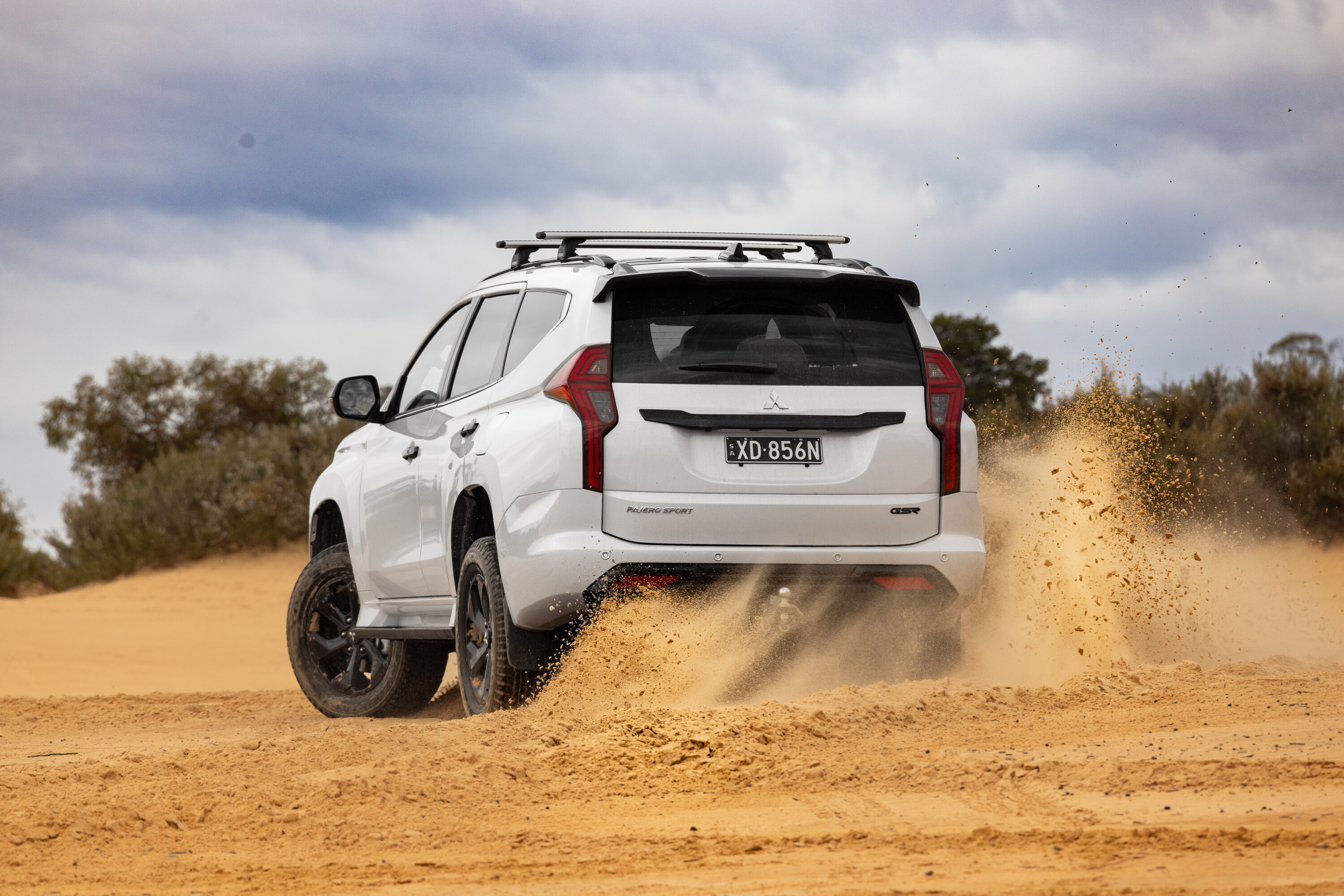
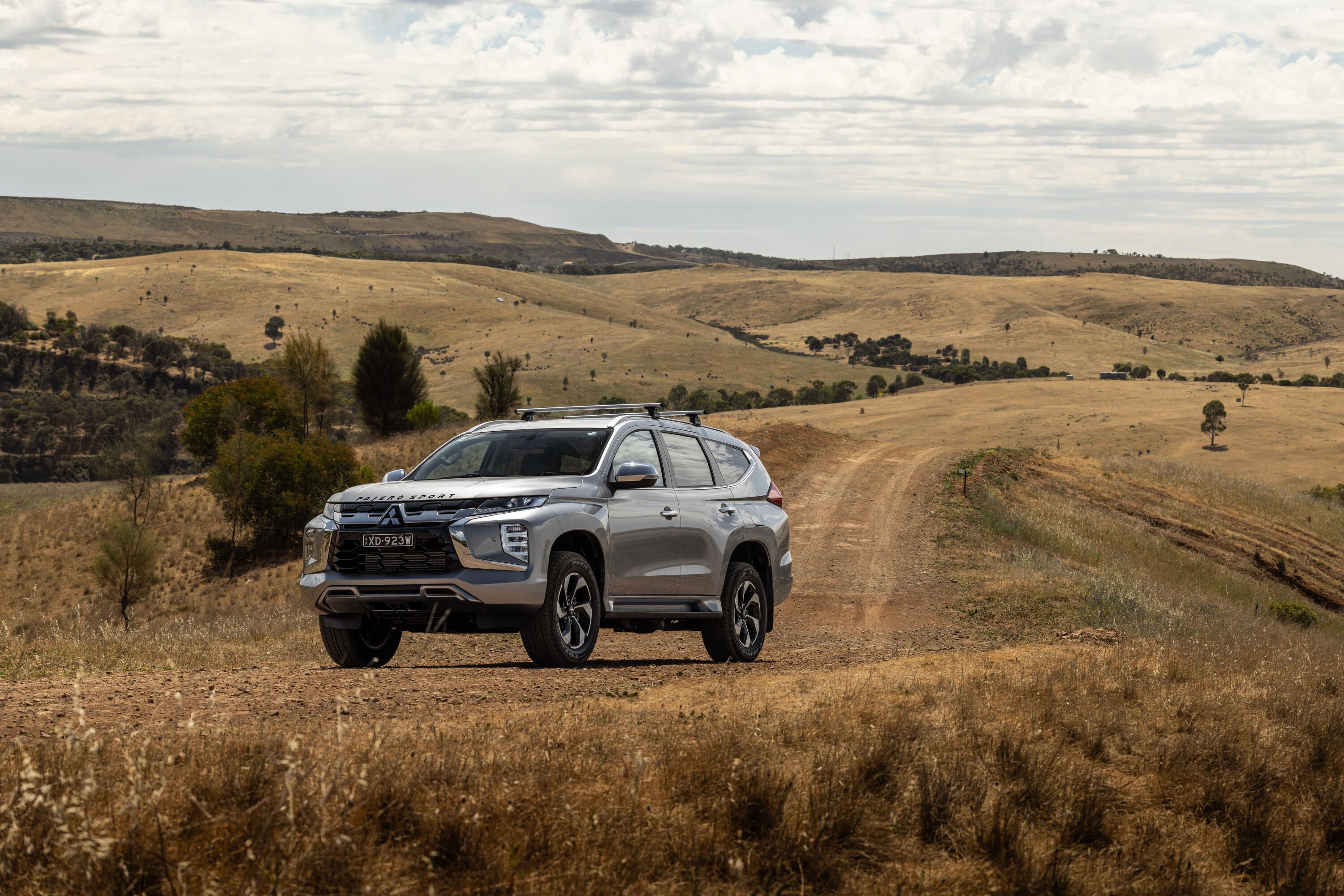
There is also a choice of two new colours stolen from the new-gen Triton: Blade Silver Metallic, which is available on the GLX, GLS and Exceed; and Graphite Grey with a black roof, which is available only on the GSR.
Inside the cabin, the Pajero Sport has received a new steering wheel that has been lifted from the latest Triton, as well as a new, updated digital instrument display for Exceed and GSR modes – as well as an improved standard specification for GLX.
How much is it and what do you get?
Prices start from $51,540, topping out at $64,840 before on-road costs; so, depending on the model variant, prices are up between $1600 and $2400.
This is similar to an Isuzu MU-X, which kicks off from $54,900 for the LS-M 4×4 model to $61,400 for the LS-U 4×4. However, it is still cheaper than a Ford Everest, which is priced between $59,240 for the base Ambiente 2.0-litre 4×4 diesel, to $81,115 for the top-spec Platinum.
The entry-level GLX is only available as a five-seater and is priced from $51,540 before on-road costs. GLX includes side steps, roof rails, LED daytime running lights, cloth upholstery with driver’s lumbar adjustment, an eight-inch touchscreen with both wired Apple CarPlay and Android Auto, four speakers, and an analogue gauge cluster.
1
The next model grade is the GLS, which is priced from $56,890 before on-road costs. For a budget family-friendly version, this is the pick of the range as it gets a seven-seat configuration along with a power tailgate, integrated satellite navigation, a six-speaker sound system, and a rear differential lock.
There is also a $2350 Deluxe option for the GLS, which adds leather-appointed seats, driver’s side electric adjustment, and Mitsubishi’s (MAM) multi-around monitor that provides a 360° bird’s eye view of the car.
1
The Exceed is priced from $62,590 and is a premium variant that comes with an eight-inch digital instrument cluster, heated front row seats, a premium eight-speaker sound system, front parking sensors, and a remote app function via a smartphone.
The top-spec GSR is priced at $64,840 and includes a new two-tone burgundy, black premium synthetic leather trim, and black door mirrors, door handles and a tailgate handle. The GLX also benefits from dusk-sensing headlamps and rain-sensing wipers.
Storage and practicality
The standard GLX is exclusively a five-seater, whereas the GLS, Exceed and GSR come with seven-seat configurations. There are plenty of storage solutions throughout the cabin and, in terms of connectivity, there is an HTMI in the lower section of the dashboard along with two USB Type-A ports. Unfortunately, the CarPlay feature is wired and, as my iPhone 16 is USB Type-A only, I couldn’t connect to Apple CarPlay.
In the second row, there is a 150-watt power socket along with a USB-A port, air vents on the roof, map pockets, bottle holders in the doors, and a centre armrest with two cup holders. For passengers, there is a decent amount of space for legroom for all three adults, but the rear pews aren’t as wide as a Ford Everest or Toyota Prado. The seats also recline backwards and forwards, but have no sliding adjustment. For young families, there are two ISOfix points, as well as a roof-mounted child restraint top tether point for three points.
1
In the third row, there are no ISO fix points or top tether points and, in terms of space, it is only suitable for occasional use or small children.
Boot space with the first row in place is rated at 131 litres; and with the second row in place it expands to 673 litres for the five-seat GLX and 502 litres for the GLS, Exceed and GSR. With all seats folded, it amounts to 1624 litres for the five-seater version and 1488 litres for all seven-seat versions.
All variants also receive a 12V power socket, a small underfloor compartment, a full-sized spare wheel, and Exceed and GSR models get an automatic power tailgate.
Is it safe?
The Pajero Sport received a five-star ANCAP safety rating in 2015, but it is worth noting that all vehicles built from January 1, 2023, are currently unrated at this point.
The standard GLX comes with a reversing camera with rear parking sensors, autonomous emergency braking and adaptive cruise control. Exceed and GSR models receive blind-spot monitoring, front parking sensors, a surround-view camera and rear cross-traffic alert.
Powertrain
The 133kW/430Nm 2.4-litre MiVEC diesel engine performs admirably compared to its closest rivals, but when accelerating beyond 80 to 90km/h, there is a bit of a delay and the turbo-diesel is not as punchy as something like a V6-equipped Ford Everest.
Refinement-wise, the seats in the Pajero Sport offer a lot of comfort. After three hours behind the wheel, the ride remained quite reasonable for a body-on-frame 4WD. In comparison to an MU-X, the steering feels a bit more solid on the road, and the eight-speed gearbox remained fairly responsive through town.
The claimed fuel consumption is at 8.0 litres per 100km, and I managed to achieve 8.6 litres after driving 71k – from Adelaide’s CBD to St Ives. The fuel tank size is 68 litres in capacity.
All variants feature a 4WD transfer box, Mitsubishi’s Super Select II 4WD system, selectable off-road modes, and a rear differential as standard for the GLS, Exceed and GSR. The paddle shifters were quite useful, shifting gears between first and second while performing some mild off-roading at Adelaide Hills 4WD Park.
Off-road specs
| Turning circle | 11.2m |
|---|---|
| Approach angle | 30 degrees |
| Departure angle | 24.2 degrees |
| Rampover angle | 23.1 degrees |
| Ground clearance | 218mm |
Towing specs
| Towing capacity | 3100kg (braked); 750kg (unbraked) |
|---|---|
| Maximum tow ball load | 310kg |
| Maximum roof load | 80kg |
| Payload | 695kg (5-seater); 645kg (7-seater) |
| Kerb mass | 2080kg (5-seater); 2130kg (7-seater) |
| GVM | 2775kg |
| GCM | 5565kg |
Ownership
Mitsubishi Australia offers a five-year/100,000km vehicle warranty that covers all new Mitsubishis as standard. Additionally, if you stay on top of your scheduled servicing with the Mitsubishi network, that extends your warranty to an impressive ten years or up to 200,000km, a 10-year capped price servicing plan and four years of complimentary roadside assistance.
The Pajero Sport’s service intervals are 12 months or 15,000km, whichever comes first, and each visit is between $449 to $999 depending on the service that is required.
1
Verdict
The interior may look outdated compared to most of its rivals, and its performance isn’t the best in its category; but as a value proposition, the Pajero Sport offers the best if you want full four-wheel drive capability and decent space for a growing family. In terms of recommended model grade, it’s hard to go past the GLS with the Deluxe pack.
Pricing
| Variant | Price | Difference |
|---|---|---|
| GLX (5-Seat) | $51,540 | +$1600 |
| GLS (7-Seat) | $56,890 | +$1700 |
| Exceed (7-Seat)u00a0 | $62,590 | +$1900 |
| GSR (7-Seat) | $64,840u00a0 | +$2400 |
*All prices exclude on-road costs **Deluxe pack for the GLS adds $2350
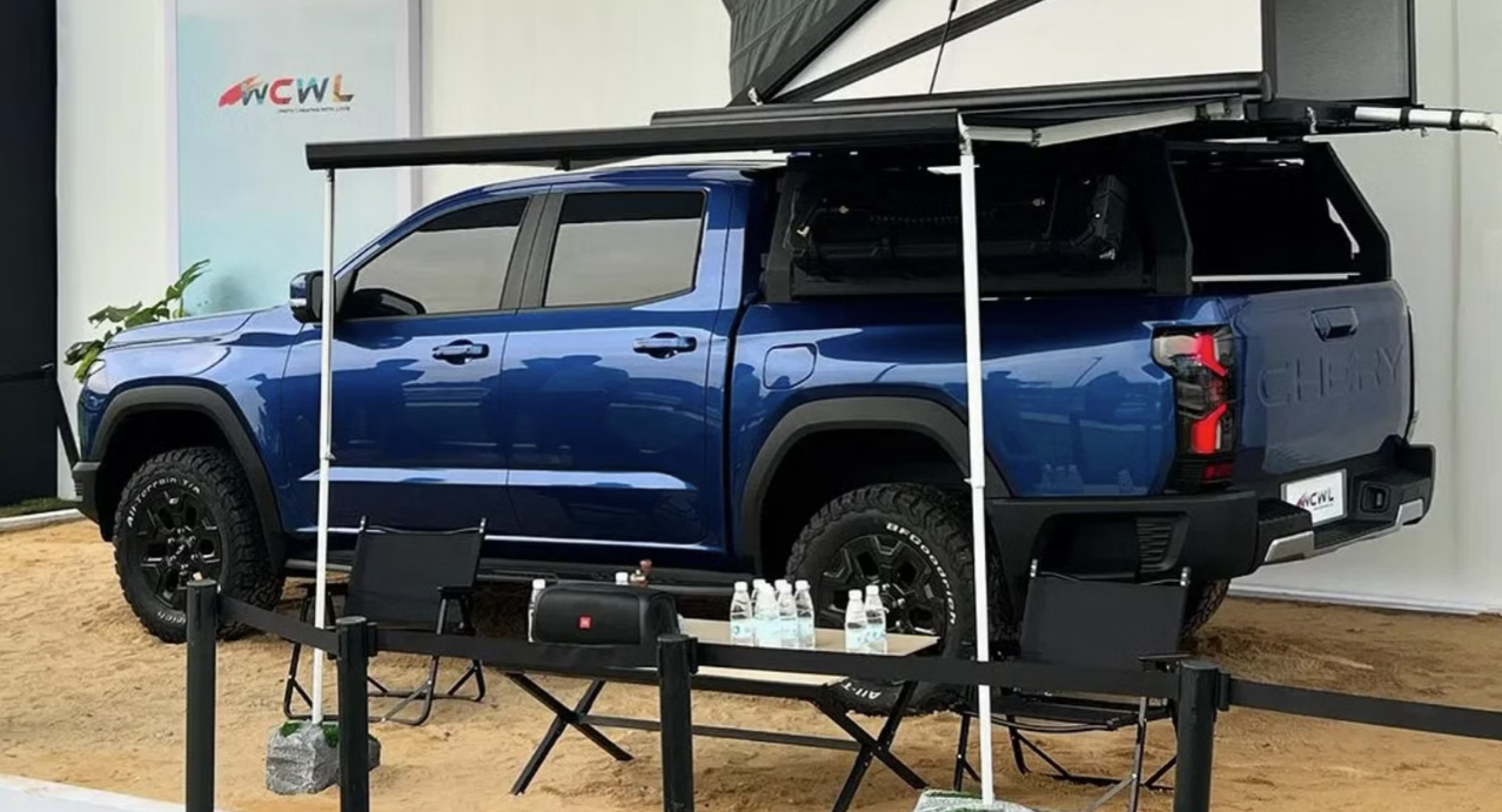
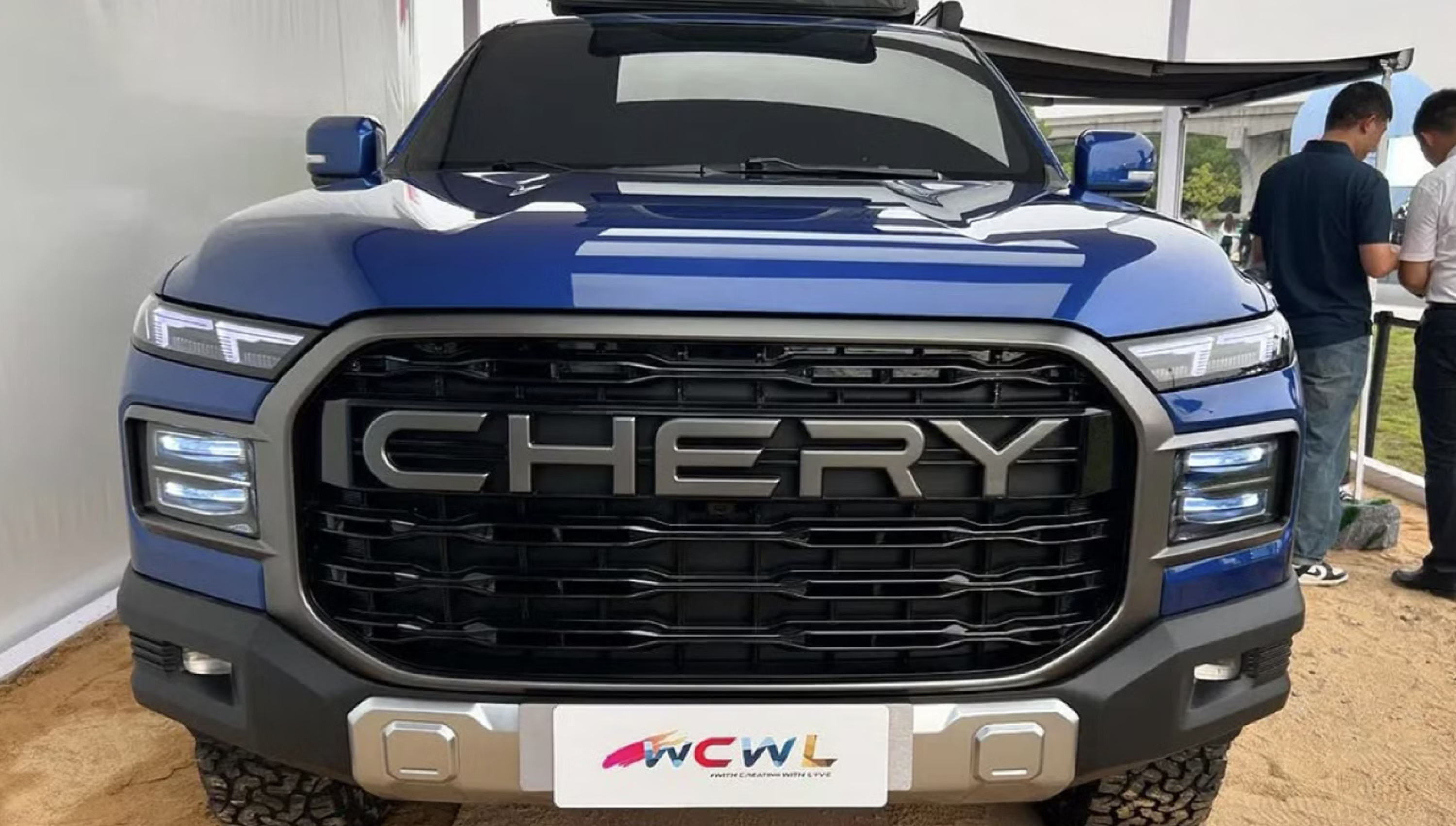
Chery has put on display a K11 Off Road concept, with the adventure-ready dual-cab ute expected to be in showrooms next year.
On show in Wuhu, China – and spotted by Philippine publication AutoIndustriya – the K11 concept looks fit to challenge the likes of LDV and GWM in Australia, but when (or even if) we see it here is yet to be confirmed.
The idea of a Chery ute was first floated way back in June 2022, when news emerged the Chinese brand was hinting at the idea of introducing a ute to compete in Australia against rivals such as GWM and LDV. However, details were non-existent at that early stage.
1
1
According to the AutoIndustriya report, Chery is aiming to have two different designs of the KP11: the Urban, and the Off-Road (as seen here). The report also indicated Chery plans to launch the KP11 ute with three powertrain options: a 2.4L turbo-petrol; a plug-in hybrid electric vehicle (PHEV); and a range-extender (RE-EV/REEV) vehicle.
This model pictured is shown equipped with a rooftop tent and awning, and it’s rolling on BFGoodrich all-terrains.
Further information and specifics at this stage are extremely scarce, but we’ll bring you the latest information when it comes to light.
Images snapped by Autoindustriya.com
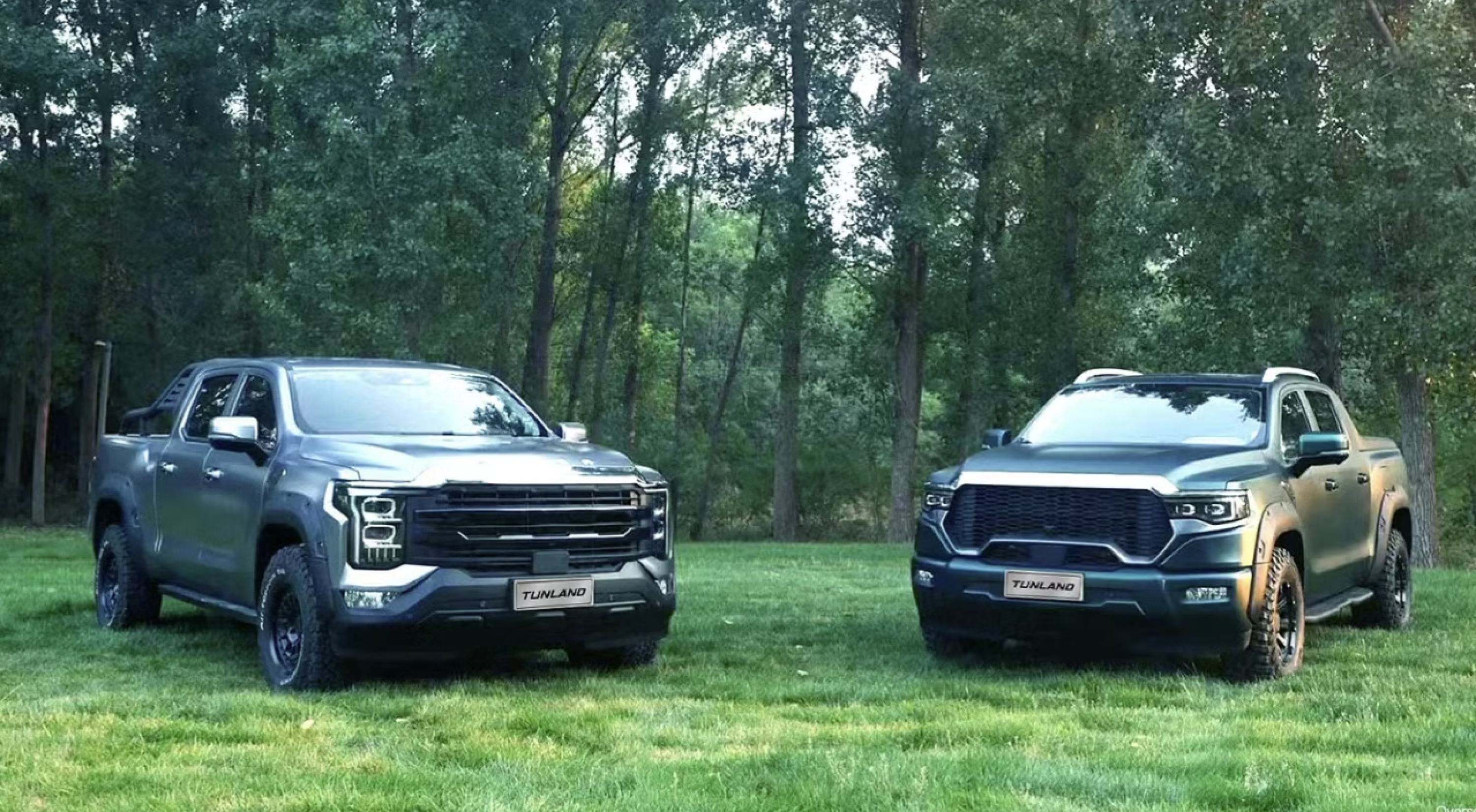
The FOTON Tunland ute is set to land in Australia in the first half of 2025, following the brand’s local relaunch at the end of this year.
Both the Tunland V7 and V9 – a new range of “new energy” and internal combustion utes – are slated to arrive by June next year, joining the Aumark S light-duty commercial truck range in Foton showrooms, which will launch toward the end of 2024.
To be distributed by Inchcape, both Tunland variants are expected to be influenced by the Ford F-150 and Ram 1500, but the Chinese offering will undercut both in price. More information will be revealed closer to the launch.
1
The story so far ?
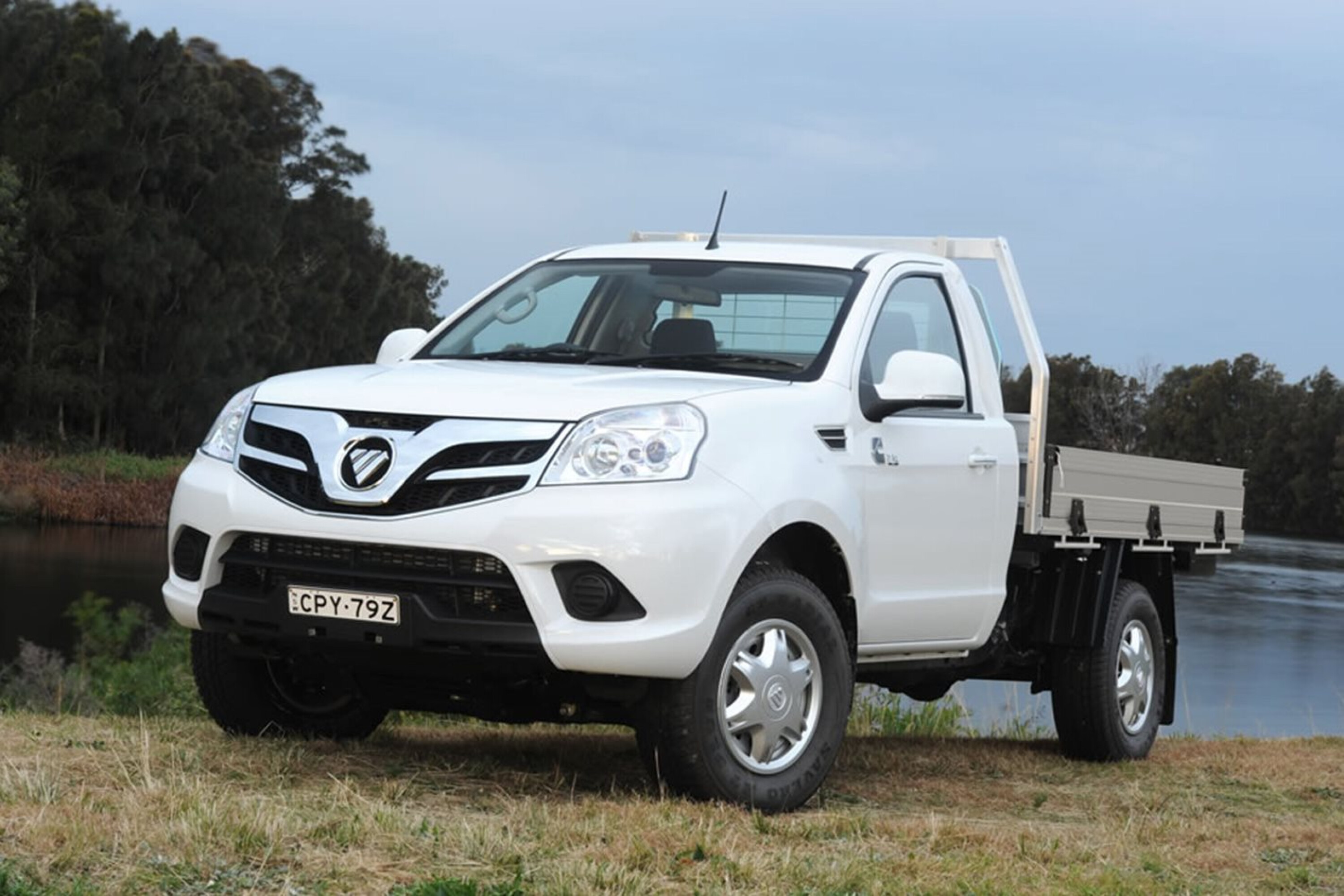
The FOTON Tunland single- and dual-cab ute was last seen in Australian showrooms in 2019, but the appointment of Inchcape as the brand’s new distributor will see its imminent return.
1
However, the 2023 Foton Tunland G7 (SWB) and Tunland V9 (LWB) sold in overseas markets – but never in Australia – are both powered by a 120kW 2-0-litre four-cylinder turbo-diesel engine, either mated to a six-speed manual or eight-speed automatic transmission. The V9 comes with a 48V mild-hybrid system.
In addition to re-launching FOTON’s new generation of utes, Inchcape – also the distributor of Subaru, Peugeot and Citroen vehicles in Australia – will initially focus on expanding the presence of FOTON’s light-duty trucks.This will be followed by the introduction of vans, with electrification of its utes and vans slated for the future.
1
“The addition of the FOTON distributorship enables Inchcape to diversify its local distribution portfolio by entering entirely new segments of the Australian market, including utes and light- duty trucks, and further strengthen our presence in the light commercial vehicle segment with FOTON’s vans also forming part of the local product pipeline.” said Colin Christie, Managing Director, Inchcape Australasia.
Damon Xu, VP, Foton International, added: “With a shared commitment to delivering value for our customers as we bring more high-quality products and services to Australian consumers, FOTON’s partnership with Inchcape, a global leader in distribution, will strengthen our presence in the local market.”
Stay tuned for more details when they are released.
MORE
Everything Foton
Nissan’s GQ/GU series of Patrol has deservedly won itself a reputation as one of the toughest and most dependable 4x4s of all time.
As the basis of touring rigs that have covered thousands of kilometres around the country and the globe, and the bedrock of the toughest competition trucks, it’s a reputation that is well earned.
This reputation was the appeal for Victoria’s James Atkinson who recognised the strengths of the venerable Nissans; as a mechanic at the 4×4 Offroad Clinic in Melbourne’s south-east he has seen first-hand the durability that Nissan has built into its Patrols, so he knew one would be right for him.
1
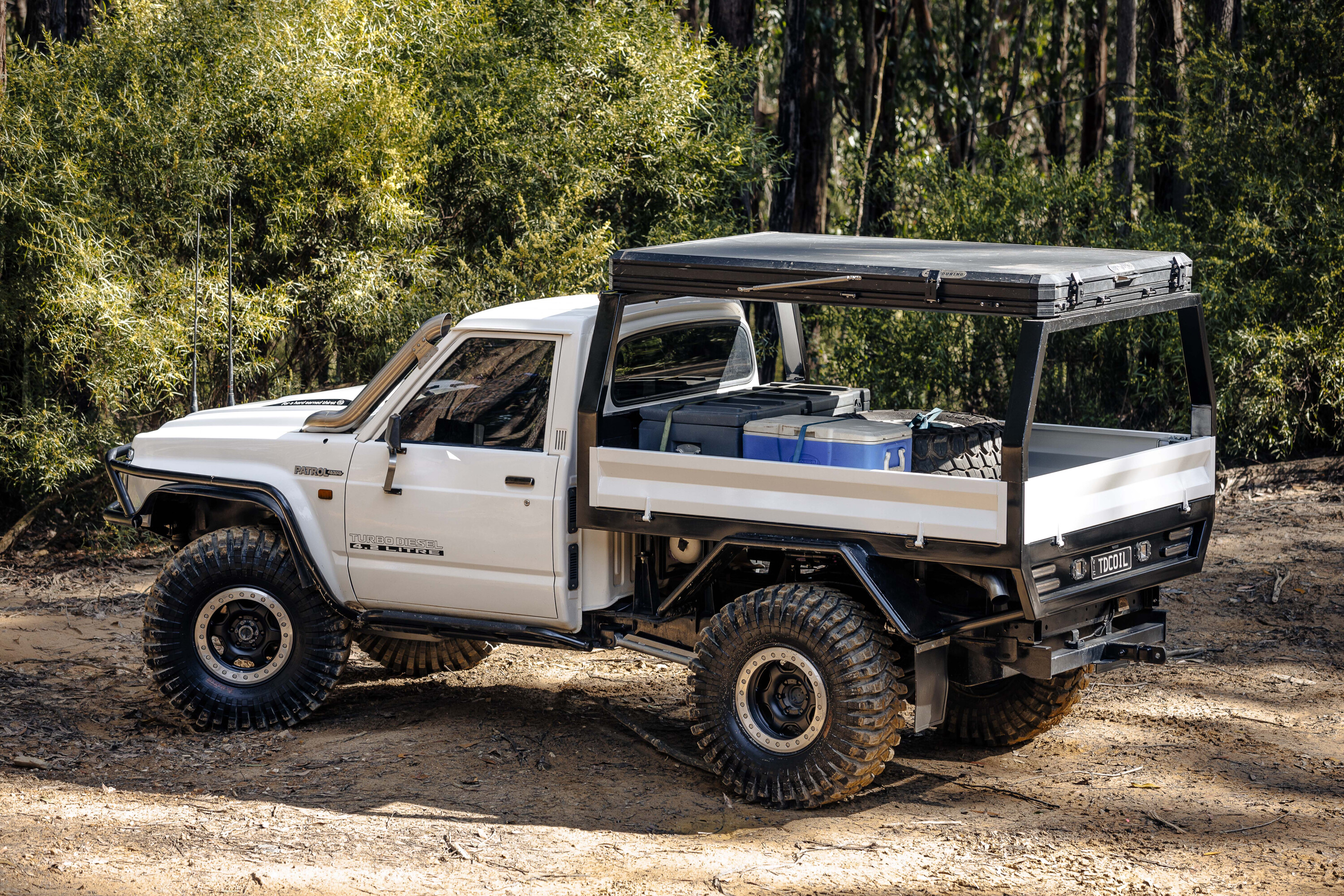
“I’ve always been attracted to how tough a GQ single-cab ute looks, and how strong the driveline and chassis is in Nissans,” James told us.
We couldn’t agree more with him and like James we reckon that the earlier, round headlight GQs are the better looking of the breed and the ones to get. This example is James’s second GQ after previously owning a 2.8 wagon, but he had a hankering for a coil-cab ute and bought this clean example back in 2022.
No puny 2.8 for James his time around, the ’93 model tray-back came with the legendary TD42 4.2-litre diesel that the previous owner had added a turbocharger to. Nissan’s TD42 sixes might be known for their durability but you can’t say much about their power outputs, even with the later factory turbo models. That hasn’t stopped Patrol owners wicking them up and adding some life to the old Nissan lump. For a mechanic like James, it was only a matter of twirling the spanners and adding the right hardware.
1
The engine was pulled out and the bottom-end rebuilt, but retaining the naturally aspirated specifications.
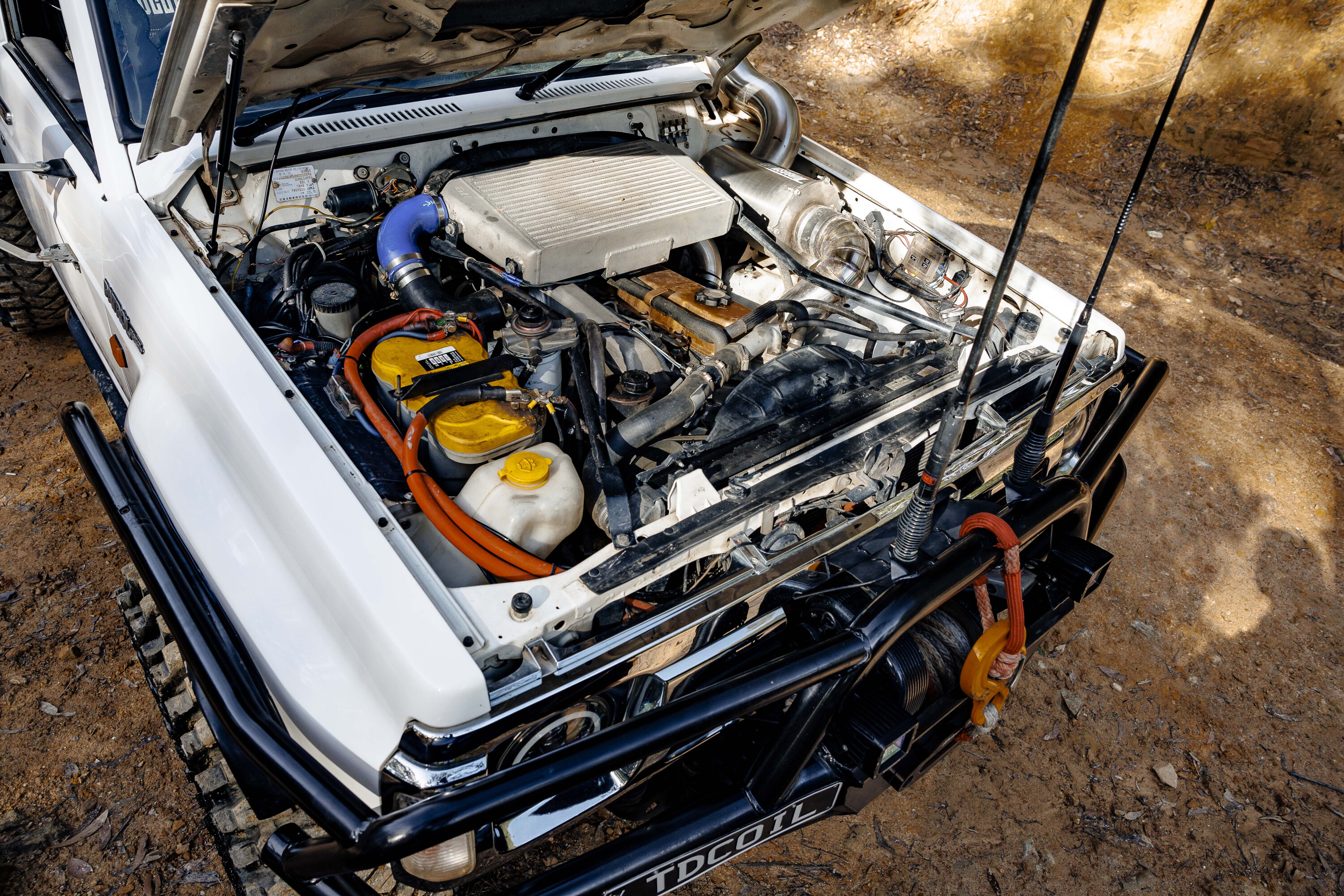
The top-end copped turbo valve springs, turbo injectors, turbo pre-combustion chambers, and a turbo head gasket, all in readiness to accept some boost from a UFI 18G turbocharger via a HPD top-mount intercooler and 40mm Turbosmart external wastegate. The air enters the mill through a weld-on top half intake plenum, where it meets the diesel fuel supplied via an 11mm pump.
The 4.2 gulps air via a PatrolDocta snorkel and a modified airbox before it is compressed to the tune of 27psi, mixed with diesel, goes bang, and then exits via a three-inch stainless steel exhaust that James welded up for the job. The result of all that activity is 112kW and 394Nm measured at the hubs on the dyno.
1
While it’s one thing to turn up the boost and fuel to get the most out of a 4.2, keeping them cool becomes a challenge as they are known to blow steam when you load them up ascending big hills. James has reduced temperatures with a 4×4 Offroad Clinic water pump and a new viscous fan hub.
The engine now makes enough grunt to turn those 37-inch Trepadors when the Patrol is out on the tracks, but for everyday driving the Treps are replaced with a set of 35-inch X-Comp Gladiators. This not only makes it better to drive on the road but it attracts much less attention from the Jacks than it does with the bead-locked 37s fitted. Aside from the beadlock wheels, everything else on the modified Patrol is engineer approved.
The GU Patrol was an evolution of the GQ and as it was slightly bigger and heavier, it scored some heavier duty components which thankfully slip easily under the older model.
1
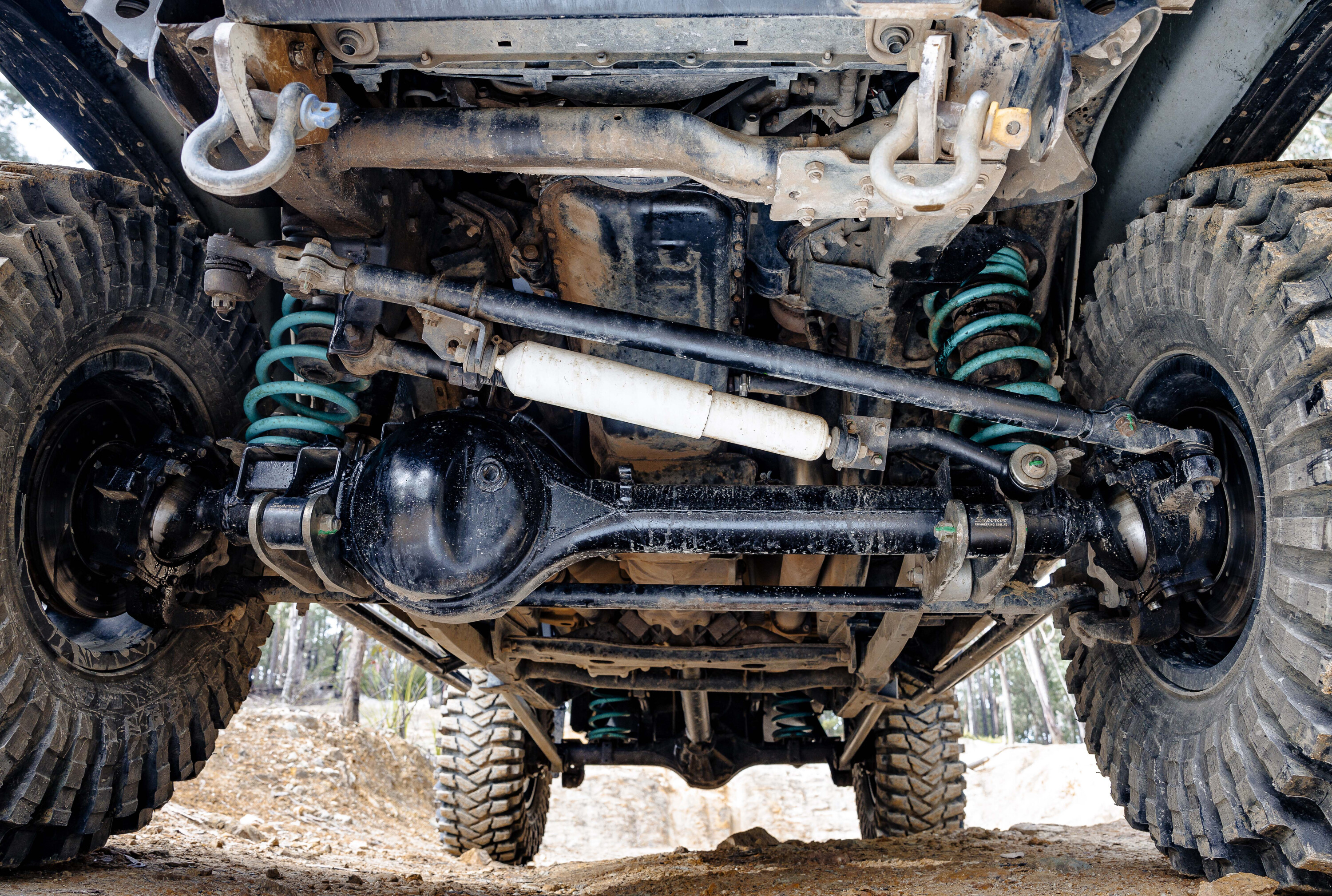
James’s GQ benefits from GU diffs which are not only stronger but also wider to increase the GQ’s wheel track, and they have bigger and better brakes. These diffs are stuffed full with 4.6 geared ARB air lockers front and rear.
The front is located using Superior Hyperflex radius arms and an adjustable Roadsafe Panhard rod, while the rear-end uses Superior long arms, adjustable rear upper control arms, and an adjustable Panhard rod, the latter both from Roadsafe.
Suspending the heavy axles and smoothing out the bumps are Dobinson remote reservoir adjustable shocks and a set of six-inch flexy coils up front, while under the back, another pair of Dobinson remote reservoir adjustable shocks and 250kg rated coils do the work.
1
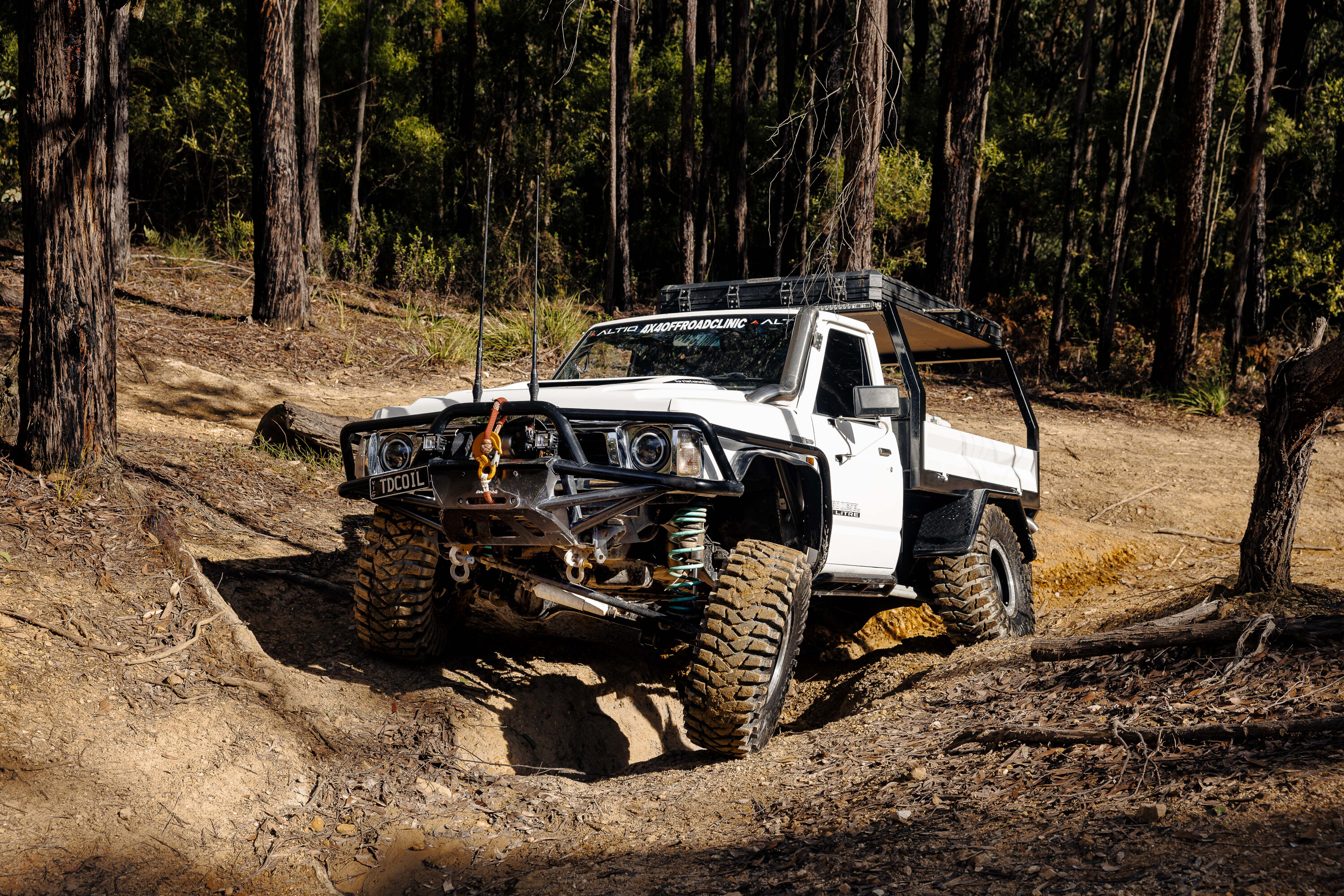
The coil-cab Patrol was in pretty good nick when James picked it up and only required a bit of tidying up to get it looking as good as it does. It even had the PatrolDocta front bar and the high-mount 8274 fitted, but James has added his own touch to both of these.
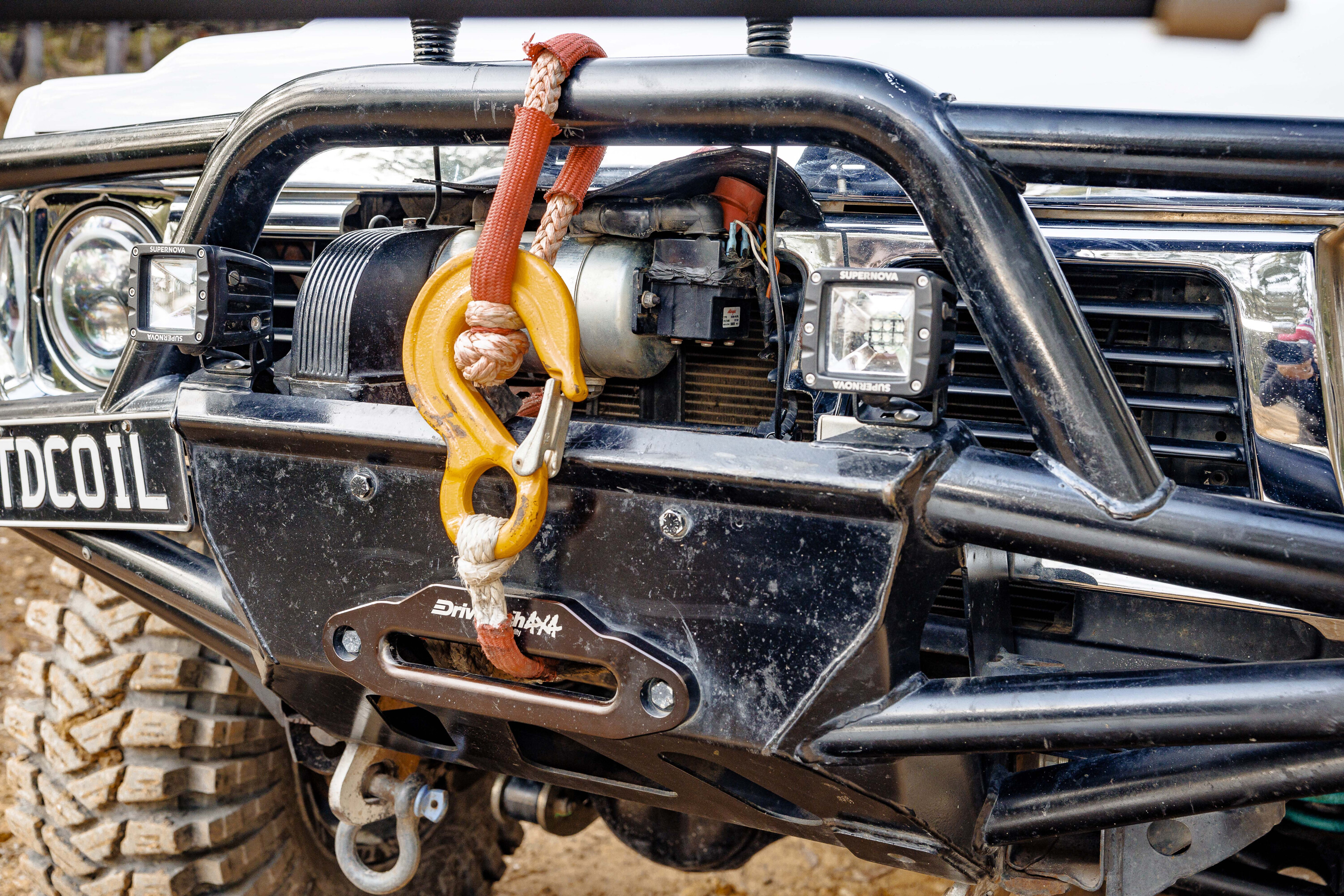
He made his own set of side-rails and sliders and pulled the winch off to give it a rebuild, adding a drilled and tapped brake shaft, pinned free spool and braced housing. An Albright solenoid controls the power to an Iskra Mahle motor via heavy duty 120mm-sq cables. James says it’s a winch that gives him the confidence to hit the harder tracks knowing that he has the pulling power to get out of trouble if needed.
“Being twin locked and (with) a strong high mount winch means I can go just about anywhere in Australia and not have to worry about being stuck,” he told us.
1
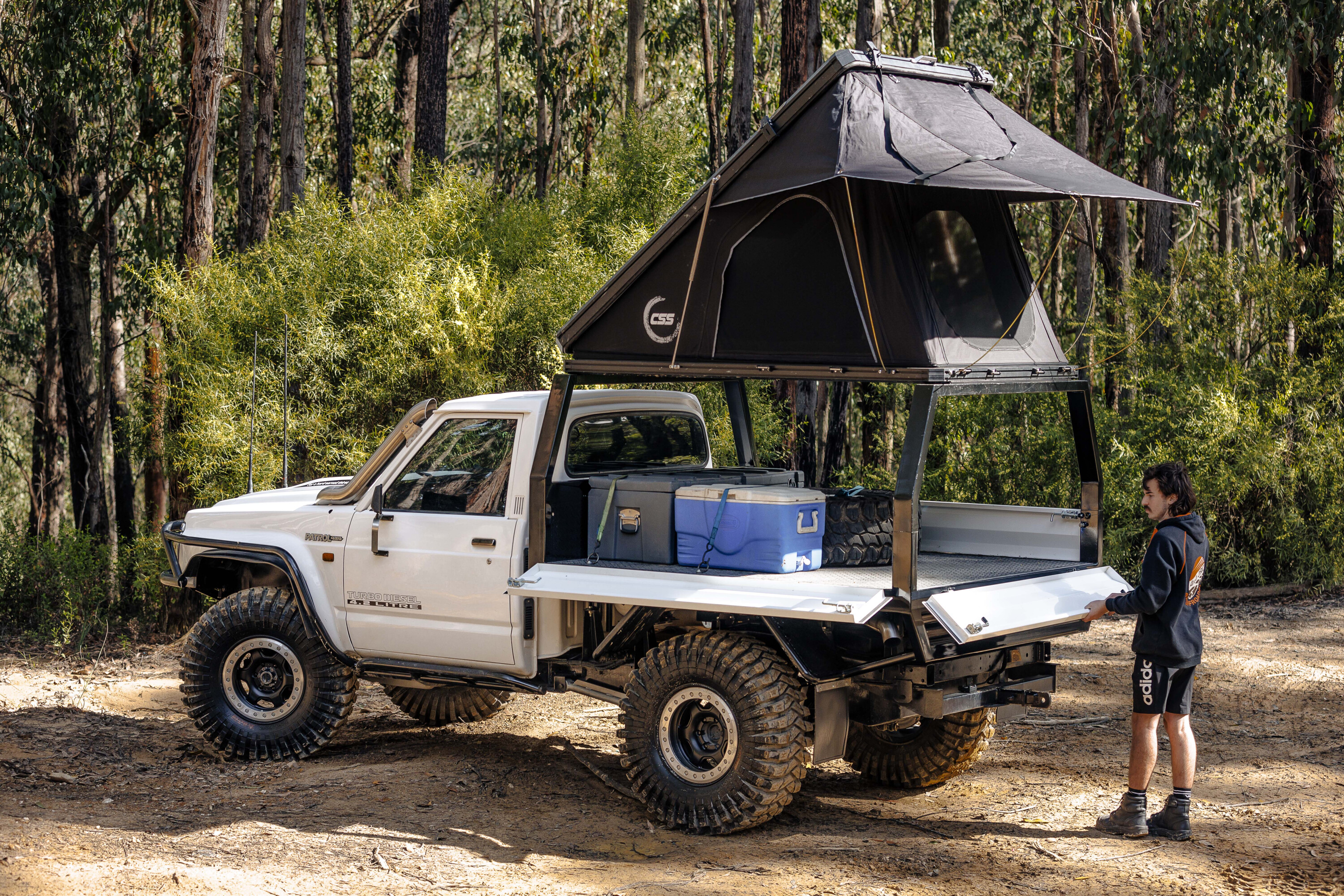
You might get the impression that James is pretty handy with the tools and fabrication, and nowhere is that talent more evident than with the tray fitted to the Patrol.
James made it in the carport at home with help from his dad, saying that they spent about six months tinkering with it and he couldn’t be happier with the result. That said, he’s now working on a canopy to fit to the tray with some more long-distance touring planned in the future. As well as continuing to hit the tough tracks around Melbourne, James wants to see more of Australia.
“I did a trip in January that started off at the beach in Robe, South Australia and we made our way to Arkaroola and Wilpena Pound. It was awesome exploring out in the middle of nowhere.
1
“I want to finish the canopy set up and go to a bigger fuel pump, maybe aim for 150kW, and then start touring around Australia doing Cape York and Fraser Island among other places,” James says. Sounds like a bloody good plan to us and he’ll certainly have the rig to do it.
He’s the first to admit that skill only gets you so far and help from the right people will get you even further. James thanks his folks Joanne and Stewart Atkinson; he says their endless support made this build possible.
Also, his boss Damien Witts at 4×4 Offroad Clinic who is “my boss/sponsor/supporter when I need parts, advice or a hand”.
MORE
Everything Nissan