South Korea’s SsangYong has had somewhat of a confusing history in Australia. It first appeared in 1996 when its Musso 4×4 wagon was sold via Mercedes-Benz dealers. That was off the back of a resource-sharing arrangement that SsangYong and Benz had initiated at the time.
Shortly after, SsangYong sales migrated to Daewoo dealers after the fellow South Korean automaker bought a controlling interest in SsangYong in 1997. After Daewoo went bust a few years later, SsangYong models were imported via third-party distributors until that ceased a few years back.
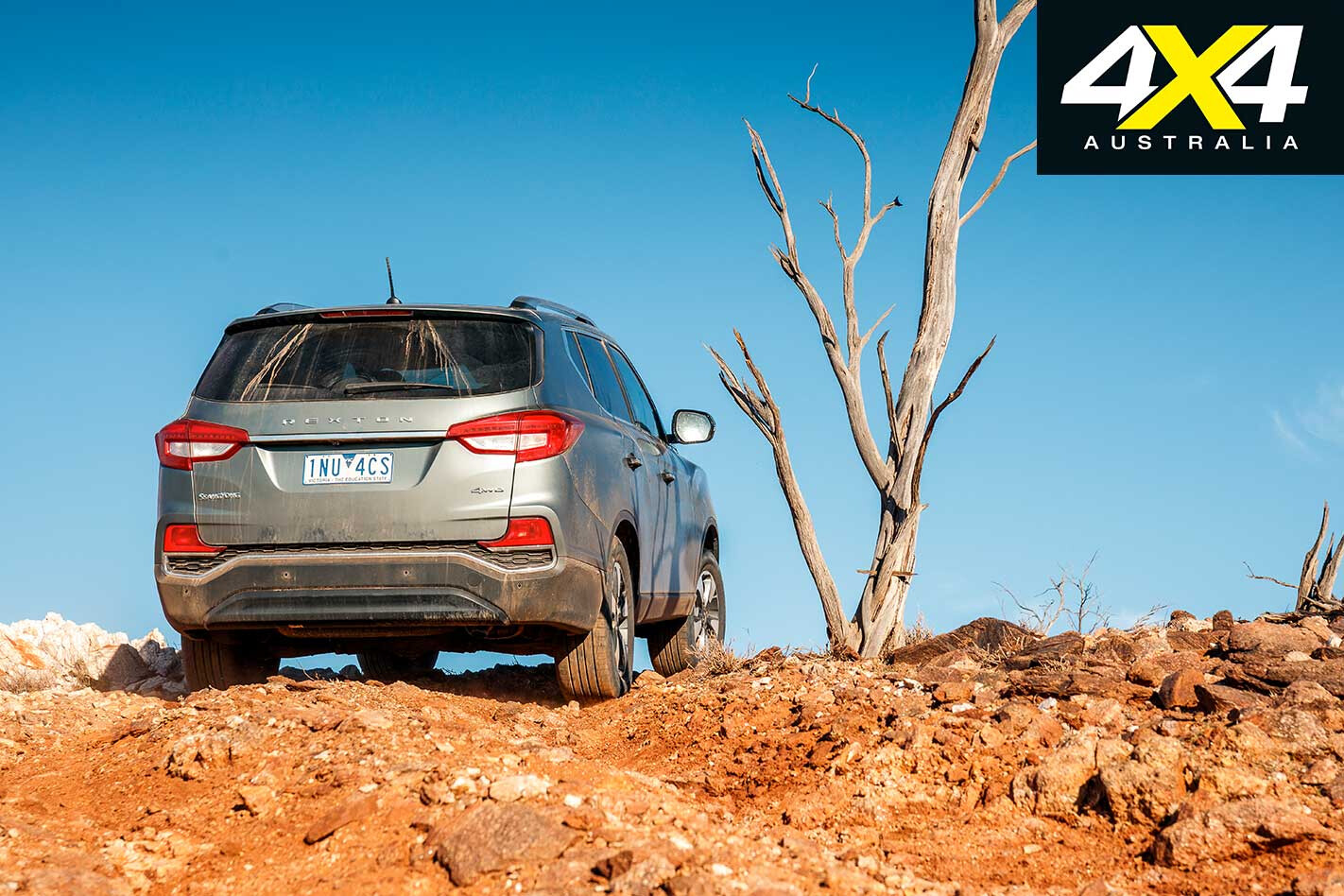
Thankfully, all that turmoil should be laid to rest as SsangYong has, as of 2018, set up a factory-owned and backed distributor here in Australia, which should bring stability to the brand and peace of mind for potential buyers.
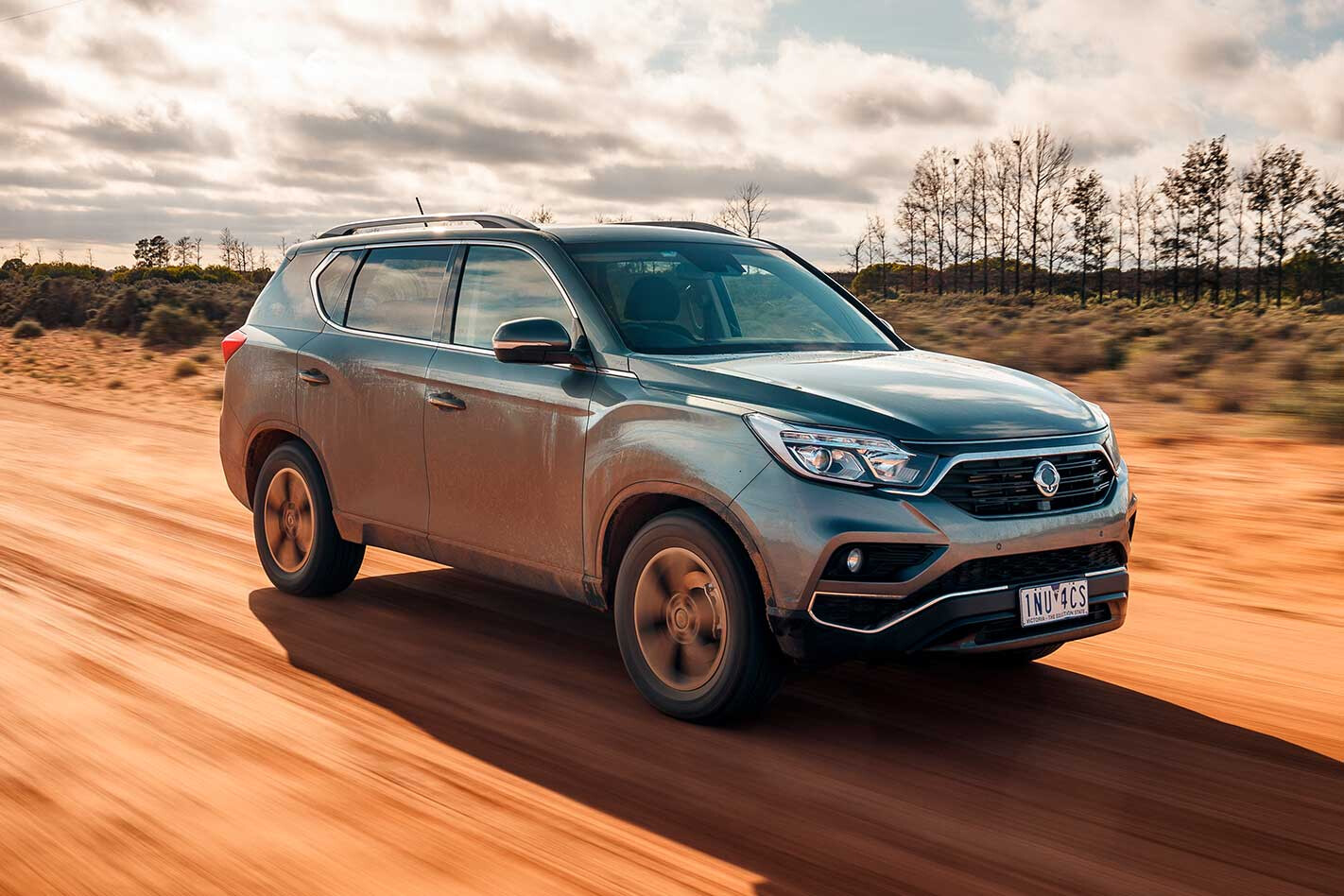
The Rexton we have here is a brand-new design and the first of a number of models SsangYong will introduce in upcoming months. It was all-new in 2017 and shares little with the previous Rexton sold here.
Like Mahindra, SsangYong also has a strong 4×4 background via a Jeep connection, given it built Jeeps for the US Army in the 1960s and subsequently produced its own Jeep CJ lookalike.
The Rexton we tested is $46,990 drive-away, so the second least-expensive vehicle on the short list.
Touring
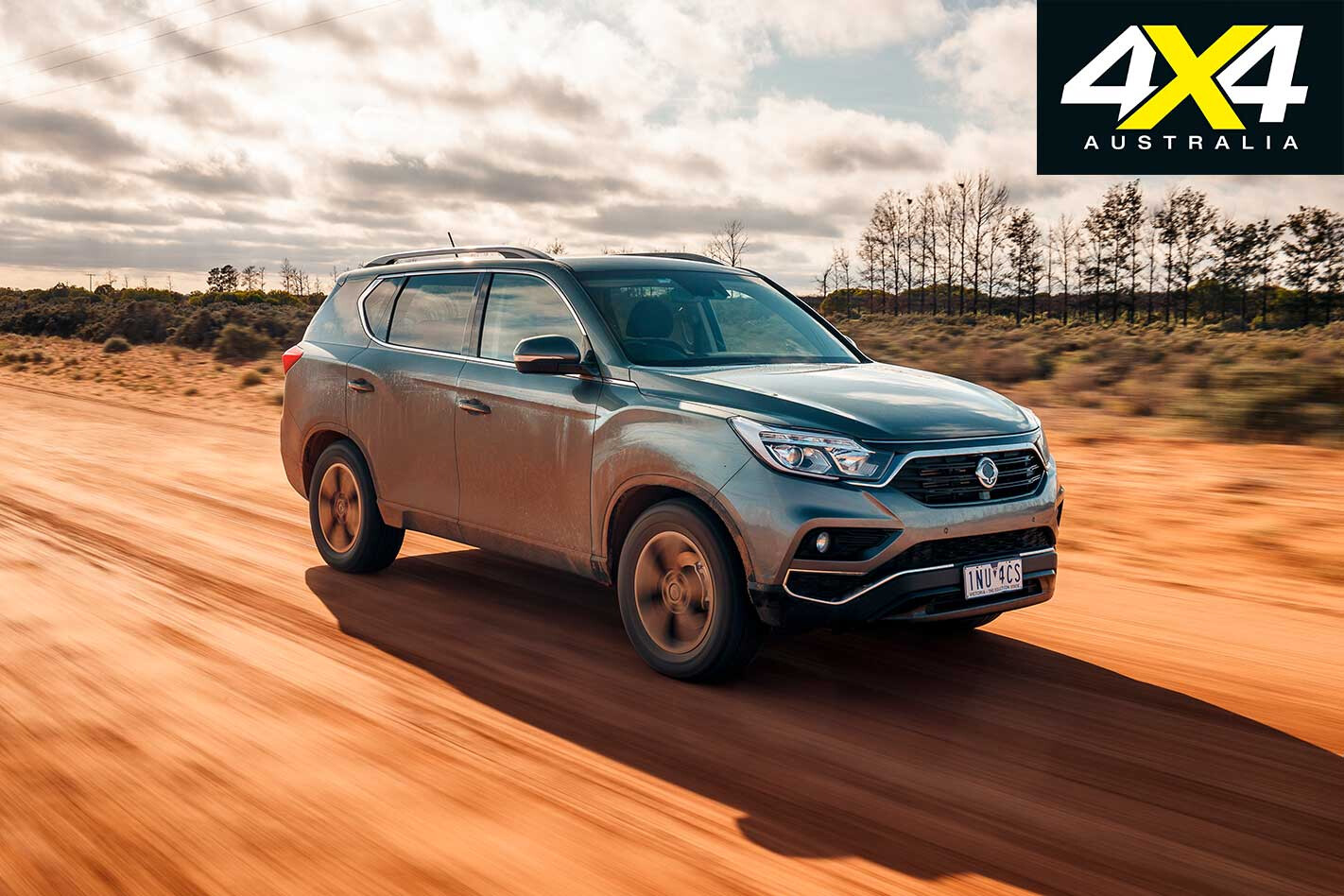
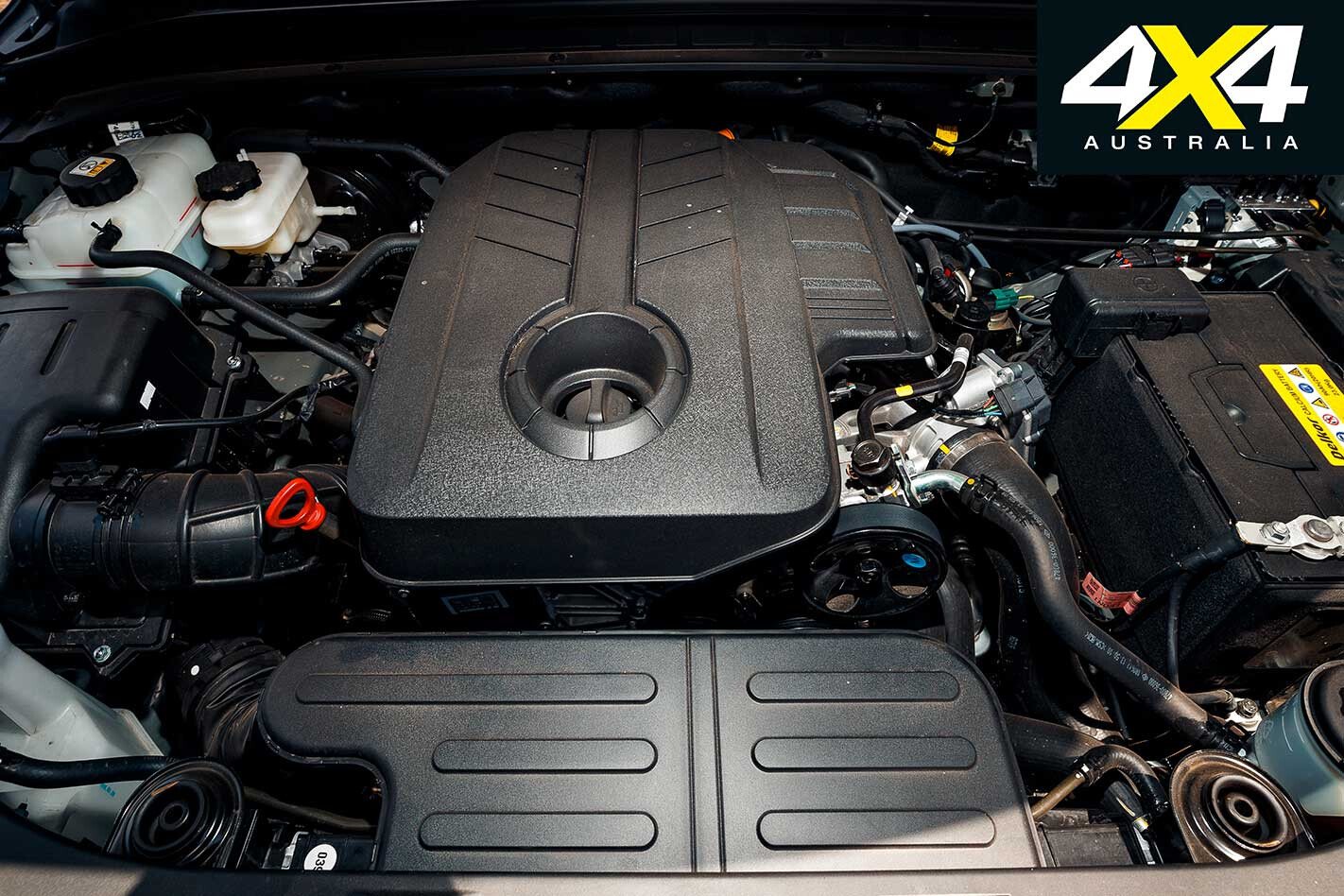
The Mercedes-Benz connection is still evident with the seven-speed auto that backs a recently designed SsangYong 2.2-litre diesel with impressive power (133kW) and torque (420Nm) for a small-capacity single-turbo diesel. It’s also Euro 6 compliant, so it’s ahead of the game in Australia in terms of emission requirements.
The engine and gearbox combine nicely for a notably quiet, refined and slick powertrain that produces more than reasonable highway performance despite the fact the Rexton is one of the heavier vehicles here.
The Rexton offers a mostly compliant, supple and car-like ride as it’s the only one here with independent rear suspension despite still having an old-school 4×4 separate chassis. At higher speeds on bumpy and rough roads it does, however, feel a little under-sprung and under-damped and it became a little ‘floaty’ at times, while the high-speed steering feel isn’t as precise as it could be.
Trail Driving
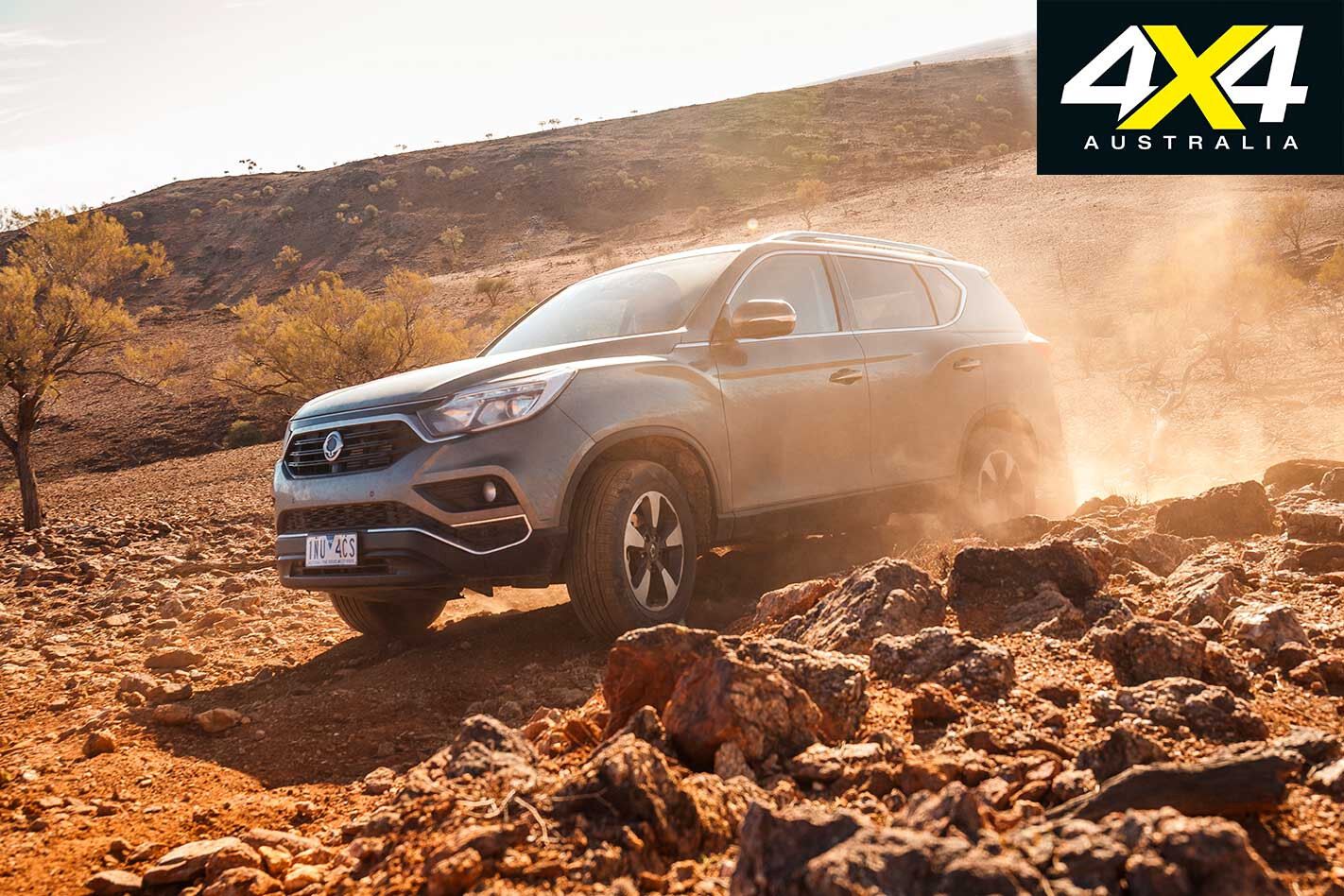
The Rexton is a modest performer on rough tracks, as it lacks suspension travel and the electronic traction control isn’t notably effective. What’s more, both ground clearance and over-bonnet vision aren’t great, which makes it harder to place the vehicle. It still went everywhere we wanted to take it, but it worked harder than any of the other shortlisted vehicles to do so when the tracks became steeper and gnarlier.
The Rexton has a part-time dual-range 4×4 system operated via a rotary dial on the centre console, while ‘manual’ control of the gearbox can be had via a somewhat awkward rocker switch on the side of the shifter.
Set-Piece Hill Climb
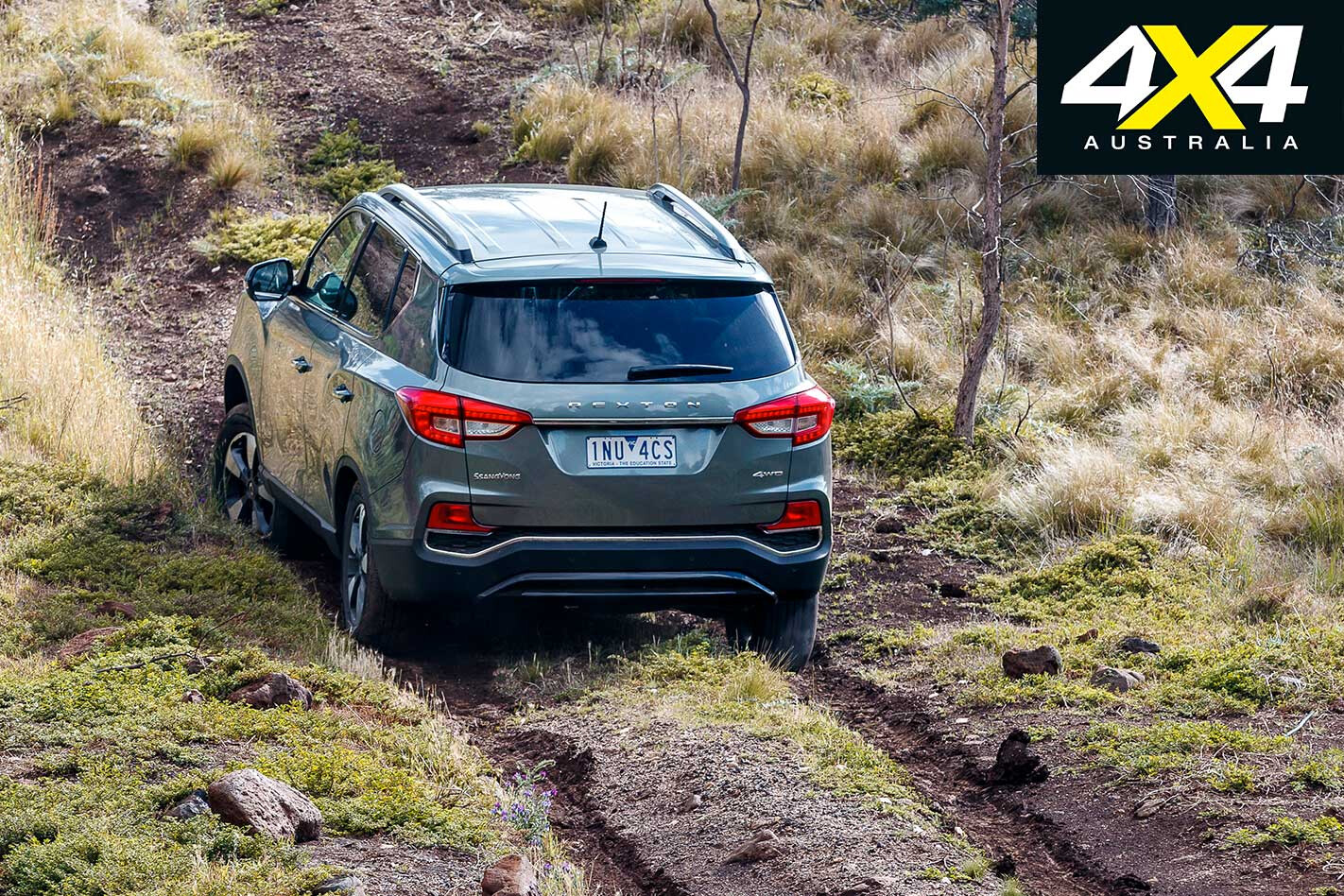
Given its modest performance on the trails it’s no surprise the Rexton was the only one that couldn’t make it up our set-piece climb. In fact, it couldn’t even scale the initial part of the climb which is far less steep and less rutted than the mid and top sections. There’s simply not a lot of wheel travel, and the electronic traction control, perhaps tuned more for on-road rather than off-road use, isn’t clever enough to make good the shortfall.
Cabin, Equipment and Safety
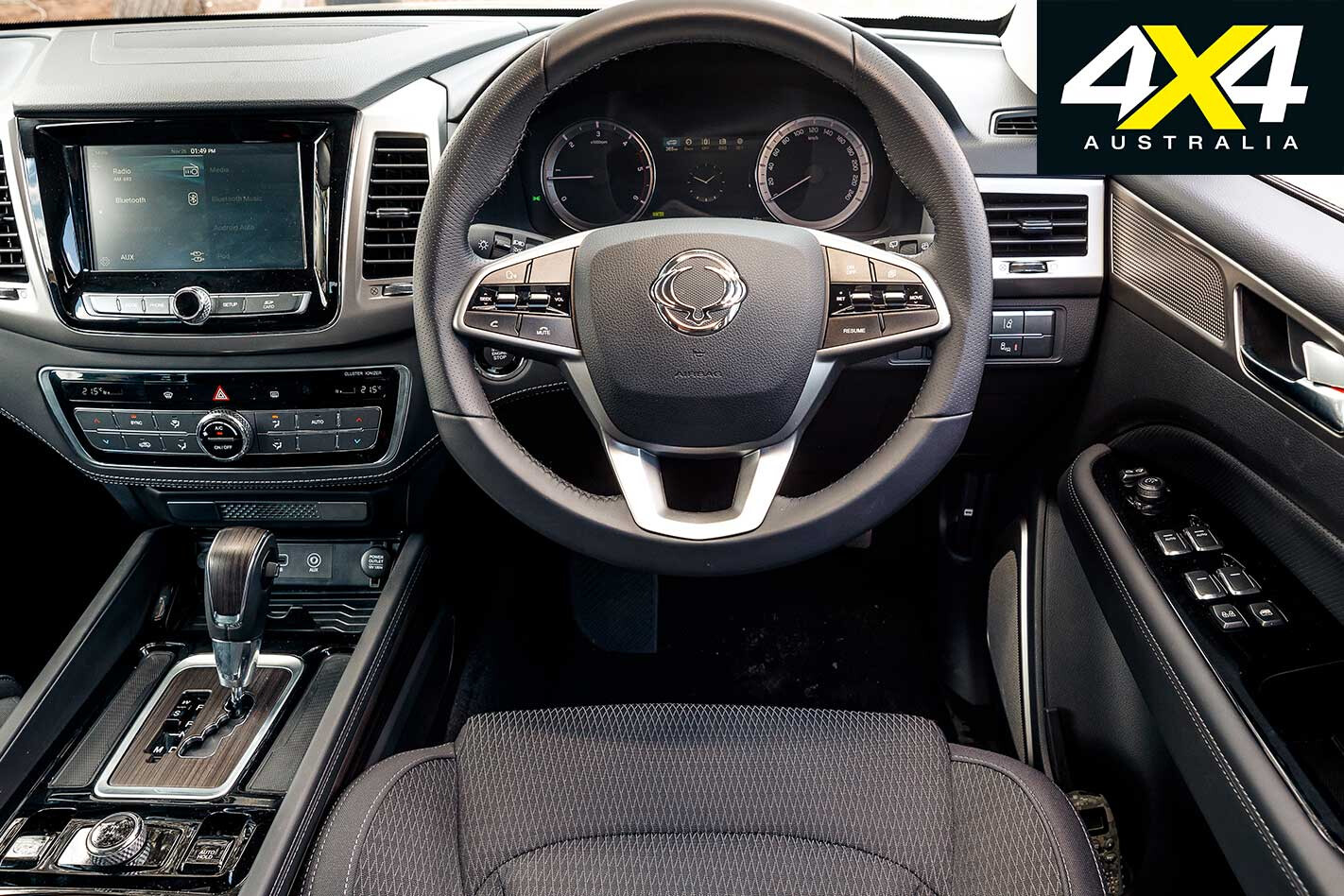
Our test Rexton, an ELX, sits in the middle of a three-model range. The less expensive EX model has a petrol engine, while the top-spec Ultimate is mechanically the same as the ELX, just with more fruit.
The ELX is well-loaded for kit (especially at the price) and comes with third-row seating, autonomous braking, nine airbags, heated and cooled front seats with electric adjust, heated rear seats, tyre pressure monitoring, lane-departure, blind spot warning and rear cross-traffic alert, an eight-inch touchscreen, and smartphone connectivity via the popular apps, among a long list of standard features.
The cabin’s fit and finish is excellent, too; although, it’s busy and somewhat garish. The driver has tilt-and-reach steering wheel adjustment, but the seat is a bit flat and hard and didn’t find favour with many of our testers. Some switchgear and minor controls are also confusing and take a little while to get used to.
There’s a good back seat, however, with plenty of room for tall adults sitting behind a tall driver or front passenger. Not so good is the second-row middle seat (children only) or the third-row seat, which, while wide enough, badly lacks leg- and foot-room.
The Rexton hasn’t been ANCAP tested at this stage but has received a five-star rating in the equivalent Korean crash test.
Practicalities
The Rexton is rated to tow 3500kg, and its 727kg payload rating is a little better than most. However, the 70-litre fuel tank and average fuel efficiency means touring range could be better.
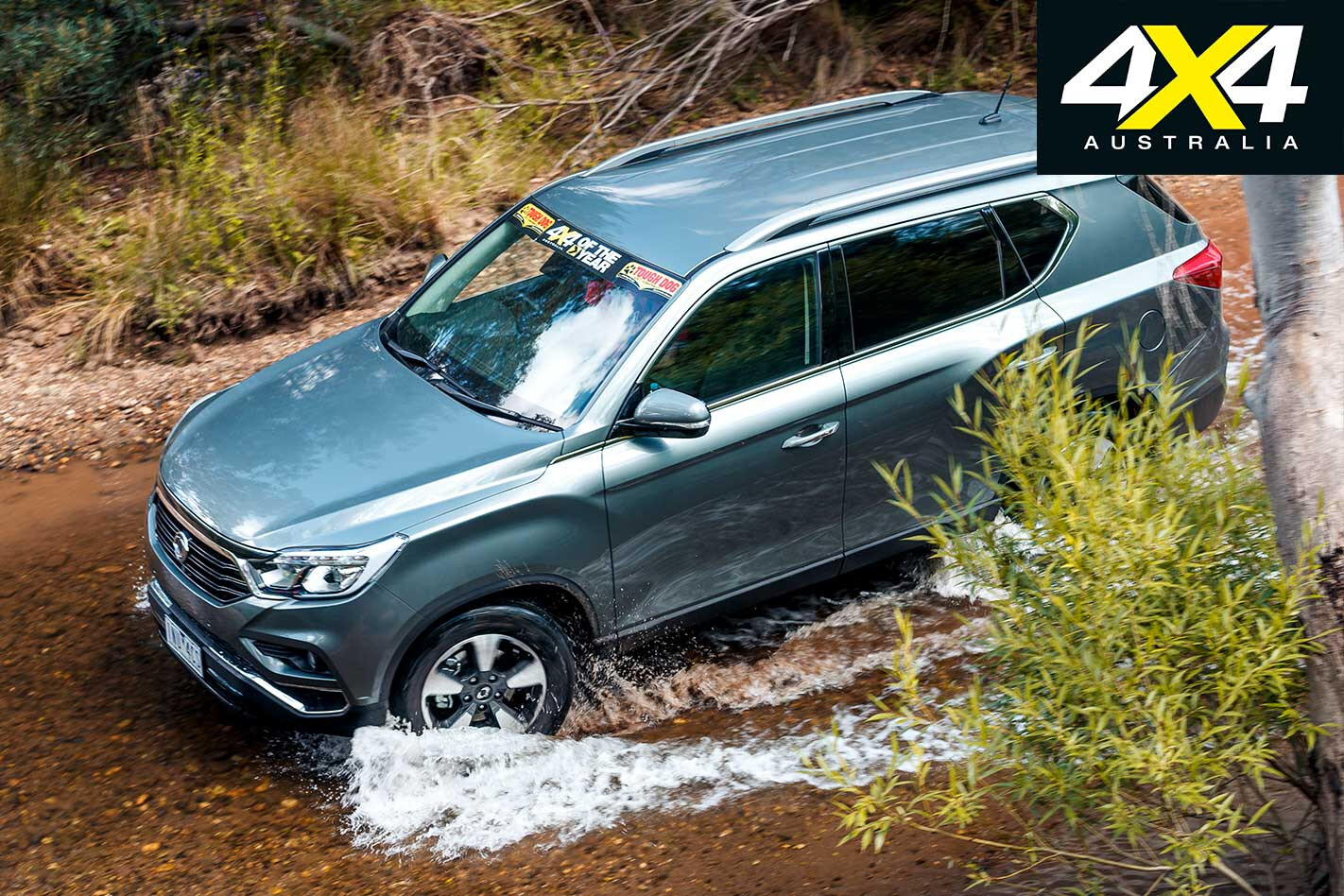
The Rexton draws its intake air from under the bonnet lip, so care needs to be taken with deeper water crossings. No heavy-duty recovery points, either, only tie downs; although, the standard 18-inch wheel carries a decent-sized tyre in the form of 255/60s, which means going one size up to 265/60s opens up a wider choice of all-terrain rubber. Don’t expect too much support from the 4×4 aftermarket, unless Rexton sales take off.
Summary
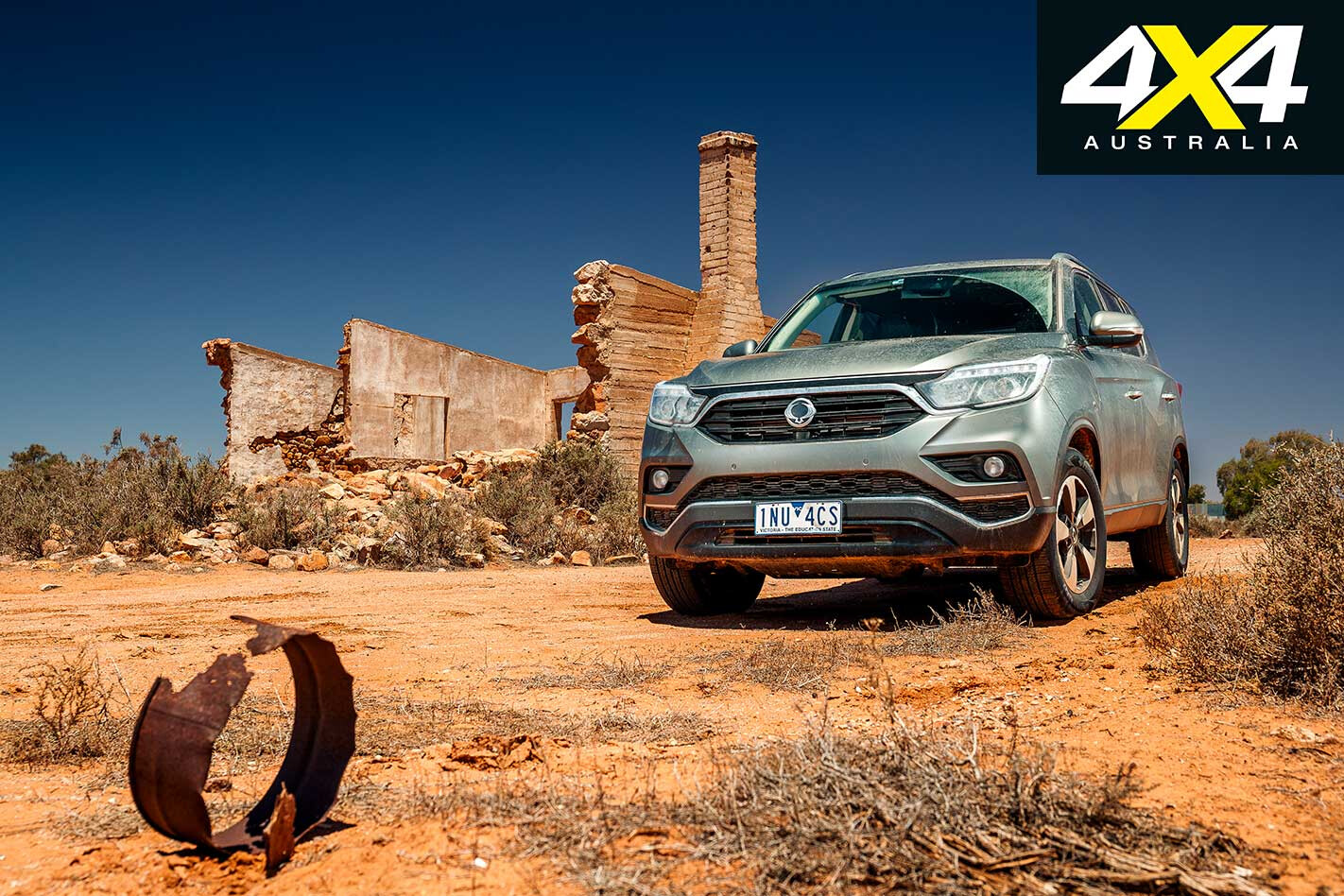
The Rexton appeals as a modern, convincing, well-built 4×4 family wagon that’s packed with equipment given the very reasonable $46,990 drive-away price. It generally drives very well on the road and is useful in moderate off-road conditions, but it’s less happy when off-road conditions become more difficult.
2019 SSANGYONG REXTON ELX SPECS: Engine: 2.2-litre 4-cyl turbo-diesel Max power: 133kW at 4000rpm Max torque: 420Nm at 1400-2800rpm Transmission: 7-speed automatic 4×4 system: Dual-range part-time Kerb weight: 2233kg GVM: 2960kg Payload: 727kg Towing capacity: 3500kg GCM: 5960kg Tyres: 255/60R18 108H Fuel tank capacity: 70L ADR fuel consumption claim: 8.3L/100km On-test fuel consumption: 10.1L/100km Base price: $46,990 (drive-away) As tested: $46,990 (drive-away)
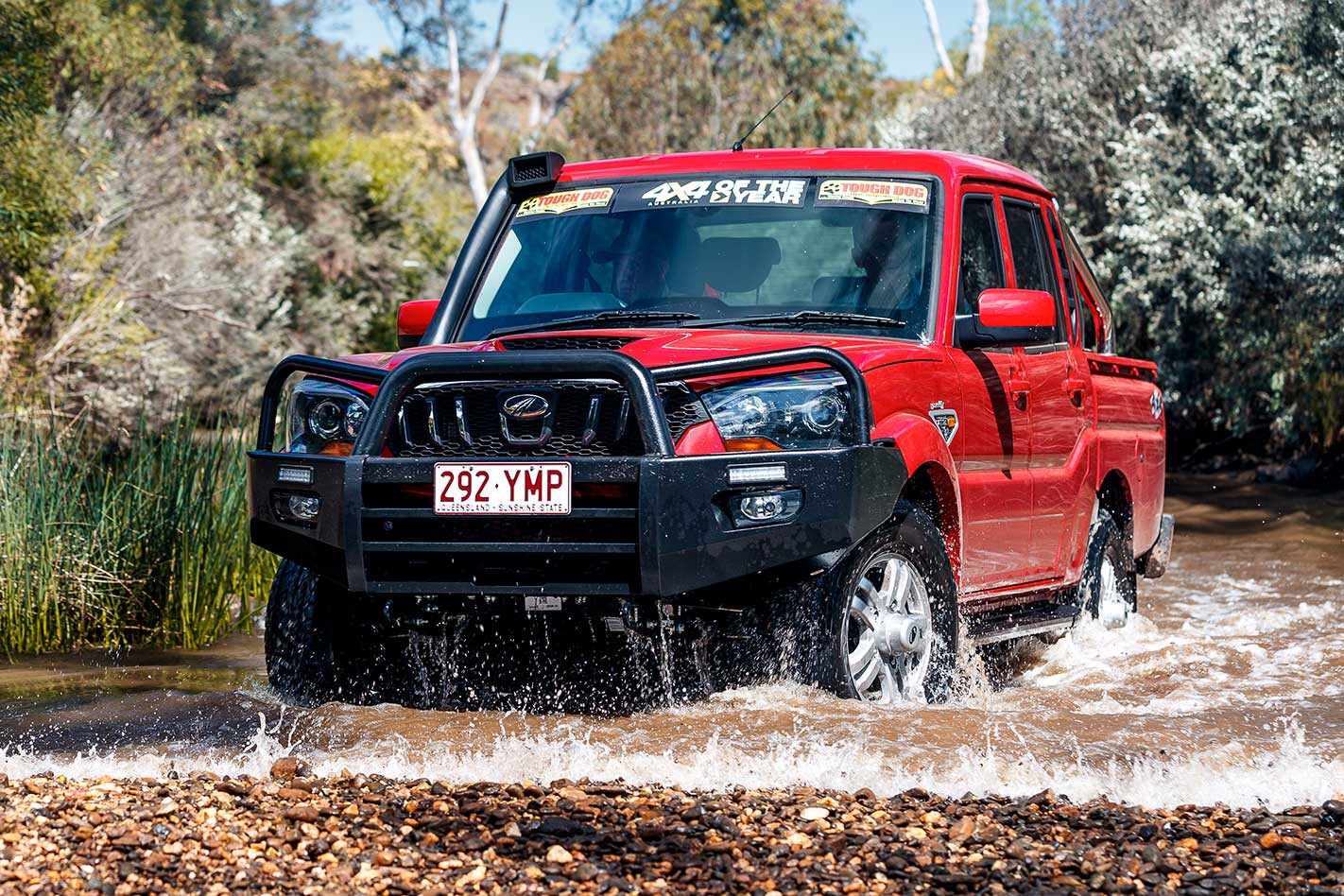
If you’re wondering what a Mahindra is doing at 4X4OTY you may be surprised to hear it has a good deal of old-school ‘4×4’ in its DNA. Mahindra started in the automotive business by assembling war-surplus Jeeps under licence from Willys Overland in the late 1940s and has been building Jeep CJ lookalikes ever since.
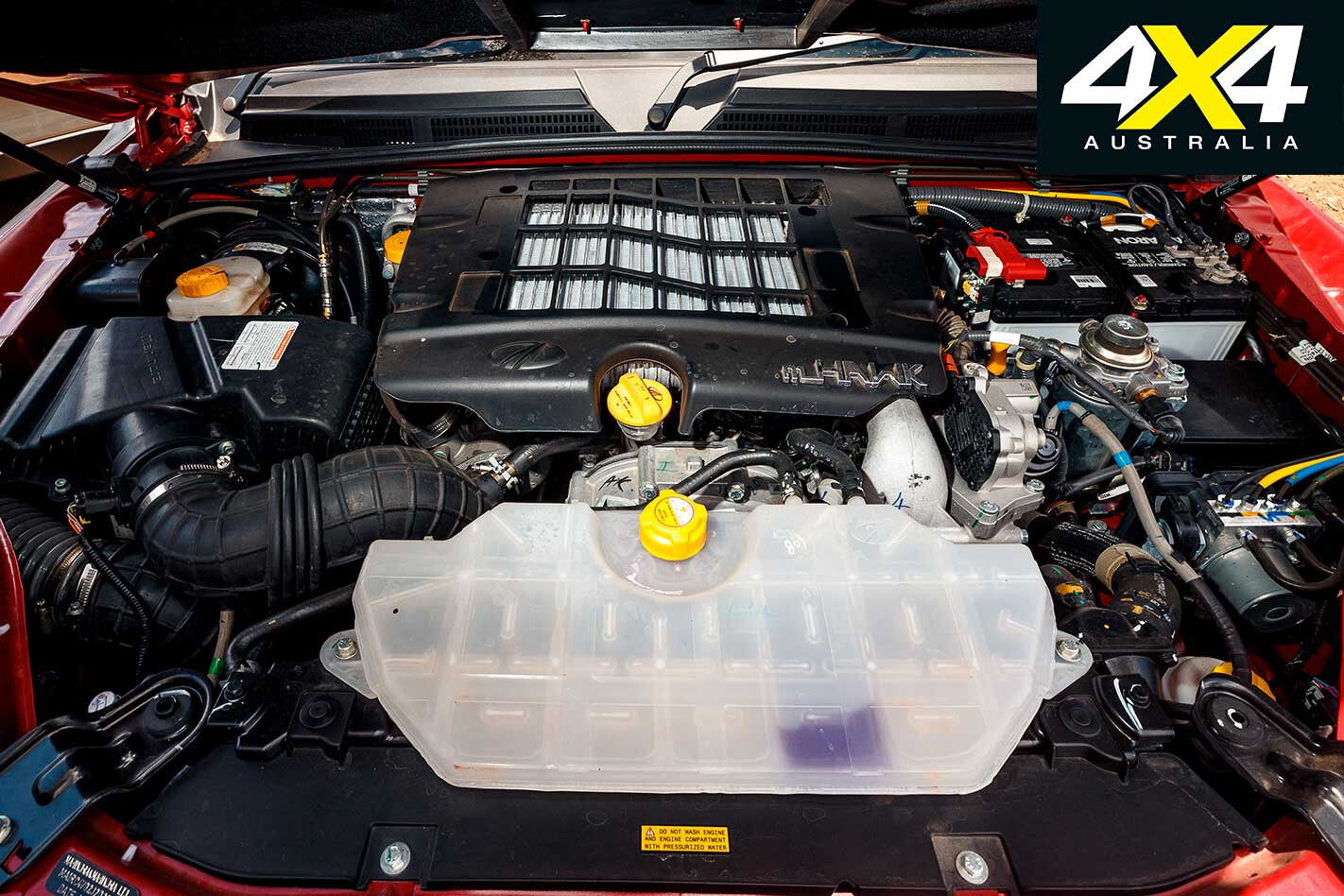
Mahindra ‘CJs’ were first sold in Australia in 1990, while the first Pik-Up, the forebear of what we have here, arrived in 2007. Between now and then there’s been a few changes (most notably a new 2.2L engine in 2011), but this latest Pik-Up is very much a top-to-bottom rebirth that brings new cabin fit-out, a six-speed manual gearbox (replacing the previous five-speed), the now mandatory electronic stability control, and detail changes to the engine, body and chassis in the interests of ride, handling and improved NVH.
Touring
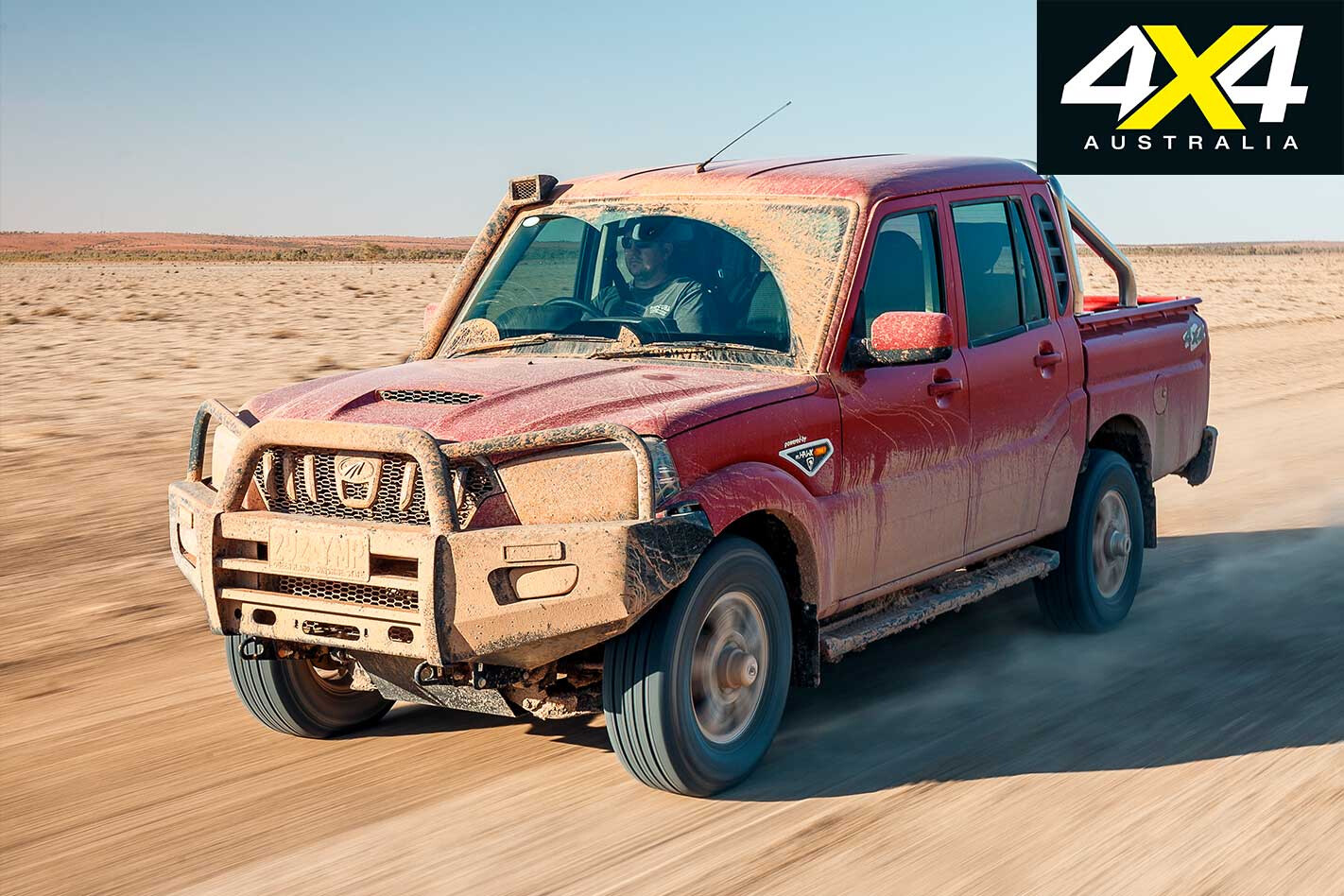
On paper the Pik-Up’s 103kW and 330Nm from its 2.2-litre diesel doesn’t look too promising given the Pik-Up weighs more than 2000kg unladen and has upright light-truck-style body whose design would appear to owe little to aerodynamic efficiency.
Thankfully, that on-paper impression doesn’t play out on the highway and the Pik-Up generally gets along without fuss, even if its highway overtaking performance is far from snappy. Relatively short gearing from the six-speed manual helps the engine flatten the hills, yet at the same time the engine doesn’t feel overly busy at highway speeds thanks to its surprising level of refinement.
The Pik-Up may be the least expensive vehicle here, but its engine is far from the least refined. Proof of the engine’s impressive performance also comes with its fuel use. Despite its compromised aerodynamics and the fact you often have to push it hard to keep up with the seven other more powerful vehicles, it still wasn’t the heaviest on fuel by a good margin.
The chassis didn’t do anything wrong either, even if the unladen ride can be hard and sometimes bouncy on bumpy roads. Still, that’s to be expected, as previous maximum payload testing has shown the Pik-Up’s chassis is happy to carry its substantial payload; so a supple unladen ride is a big ask. The road and wind noise at highway speeds isn’t bad, either.
Trail Driving
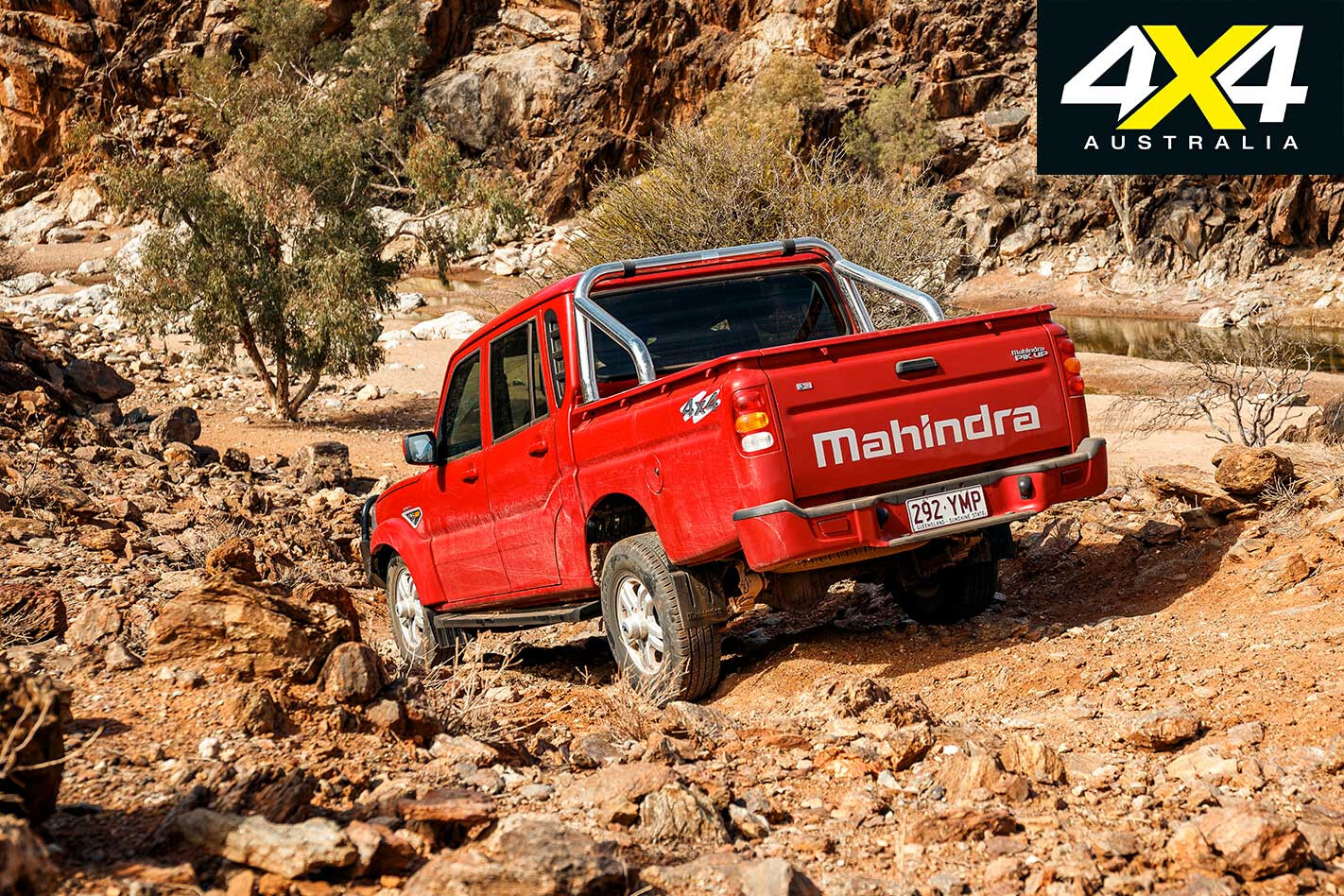
If the Pik-Up felt better than expected on the highway it really came into its own on the variety of off-road tracks we tackled. Most noticeably in this company the upright driving position provided the best vision and the ability to easily place the Pik-Up on the track exactly where you wanted.
If you did miss seeing something nasty the Pik-Up’s reasonable ground clearance, robust underpinnings and old-school tall and narrow tyres on 16-inch rims engendered a degree of confidence lacking in many of the others.
The part-time dual-range 4×4 system – operated via a big rotary dial on the centre console and using a BorgWarner transfer case – works well and without delay and provides reasonable low-range reduction. The positive clutch take-up, well-calibrated throttle, good off-idle response and general engine flexibility (maximum torque from 1600rpm) are also off-road positives.
Set-Piece Hill Climb
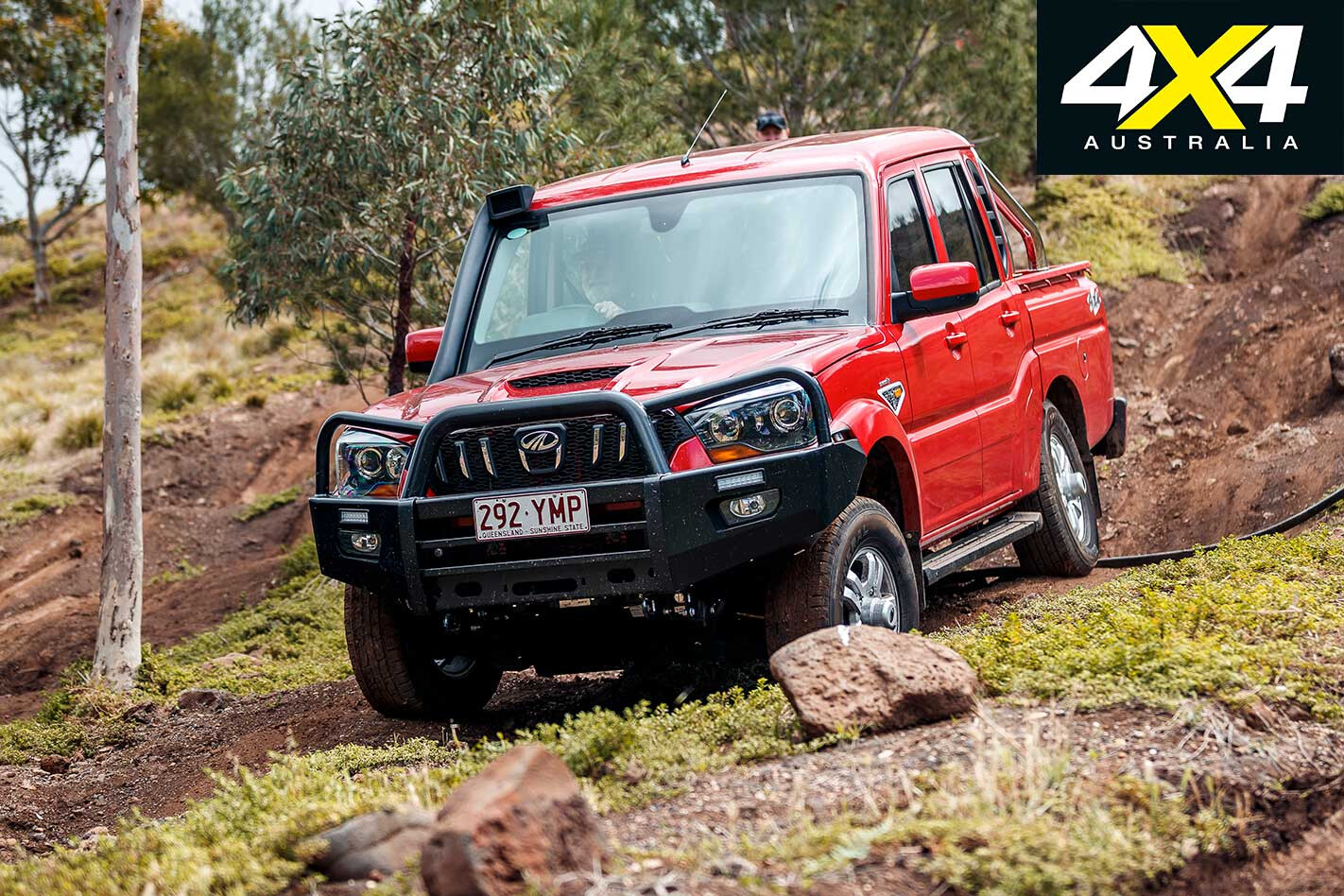
Our set-piece hill climb is not only very steep but has deep holes that are primarily designed to test – to the max – the suspension travel and the subsequent effectiveness of what traction aids a vehicle possesses. It’s also a telling test of gearing.
The Pik-Up has reasonable travel from its rear live axle but isn’t blessed with a great deal of travel from its torsion-bar, independently sprung front end. However, the Pik-Up does have an Eaton self-engaging (mechanical) locker in the rear axle and, helping things further, the electronic traction control stays active on the front axle even when the Eaton is locked.
The end result is that the Pik-Up managed to clear the set-piece climb; although, in a rather dramatic fashion, with lots of wheel lifting and body movement due to the limited front travel. Lower gearing would be handy for both the climb and descent.
Cabin, Equipment and Safety
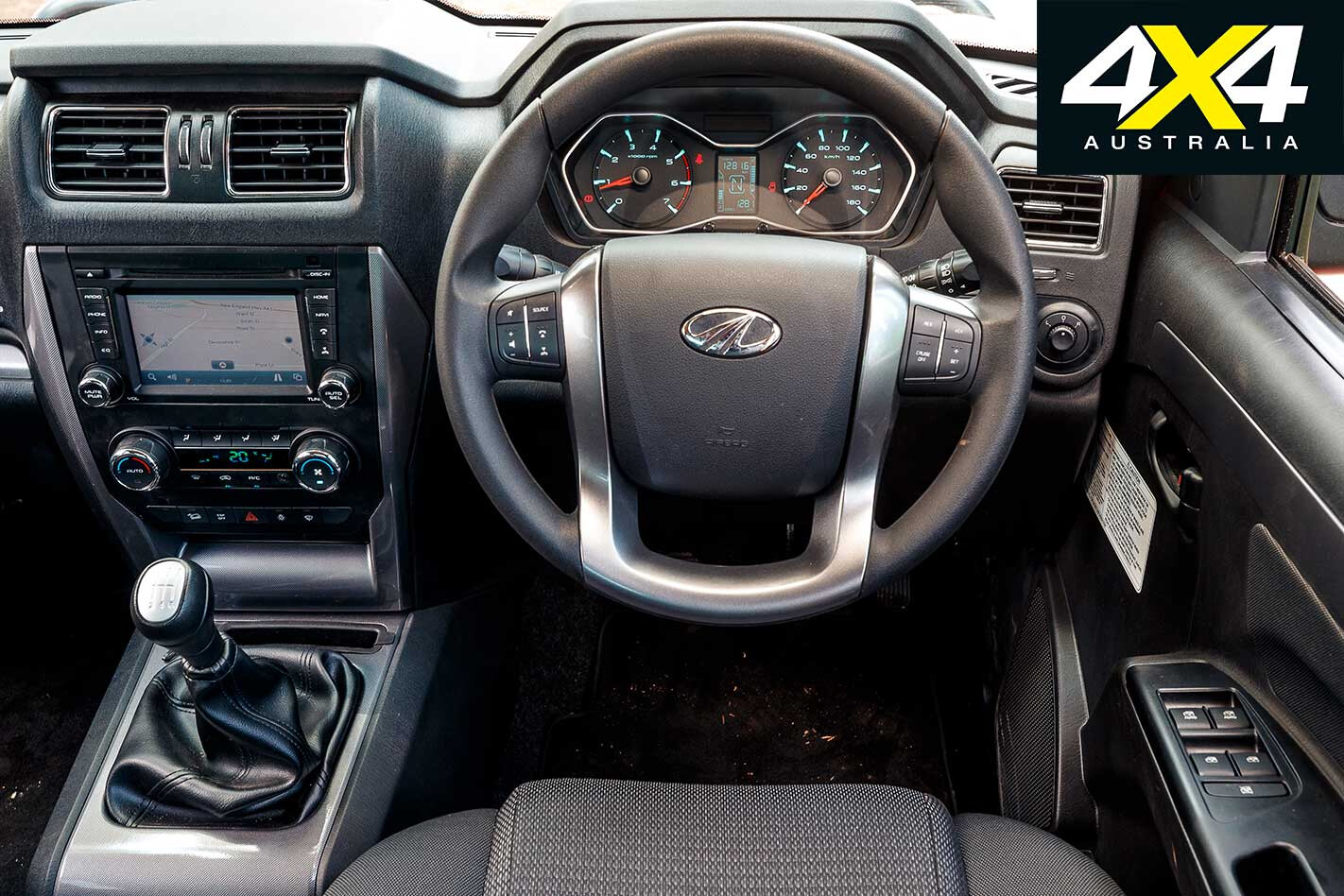
You sit very upright in the Pik-Up’s tall cabin and, while it’s generally comfortable, you sit close to the door, and the door armrest is hard and the steering wheel doesn’t adjust for reach.
On the positive side the driver’s seat has height adjustment and there’s a fold-down centre armrest for the driver and front-seat passenger. The rear seat offers plenty of leg-room for taller passengers, but it’s a bit of a squeeze for three adults width-wise.
Our test Pik-Up was the up-spec S10 model, which runs a six-inch touchscreen, sat-nav, reversing camera, Bluetooth, auto headlights and wipers, DRLs, and climate and cruise control. Unfortunately the display screen is hard to read, the cabin needs more stowage, and there are no intermittent wipers. And, while the interior fit and finish is okay, it could be better.
This new Pik-Up hasn’t undergone ANCAP safety testing, but it has more safety kit since the previous model gained three stars in what was a less stringent test in 2012.
Practicalities
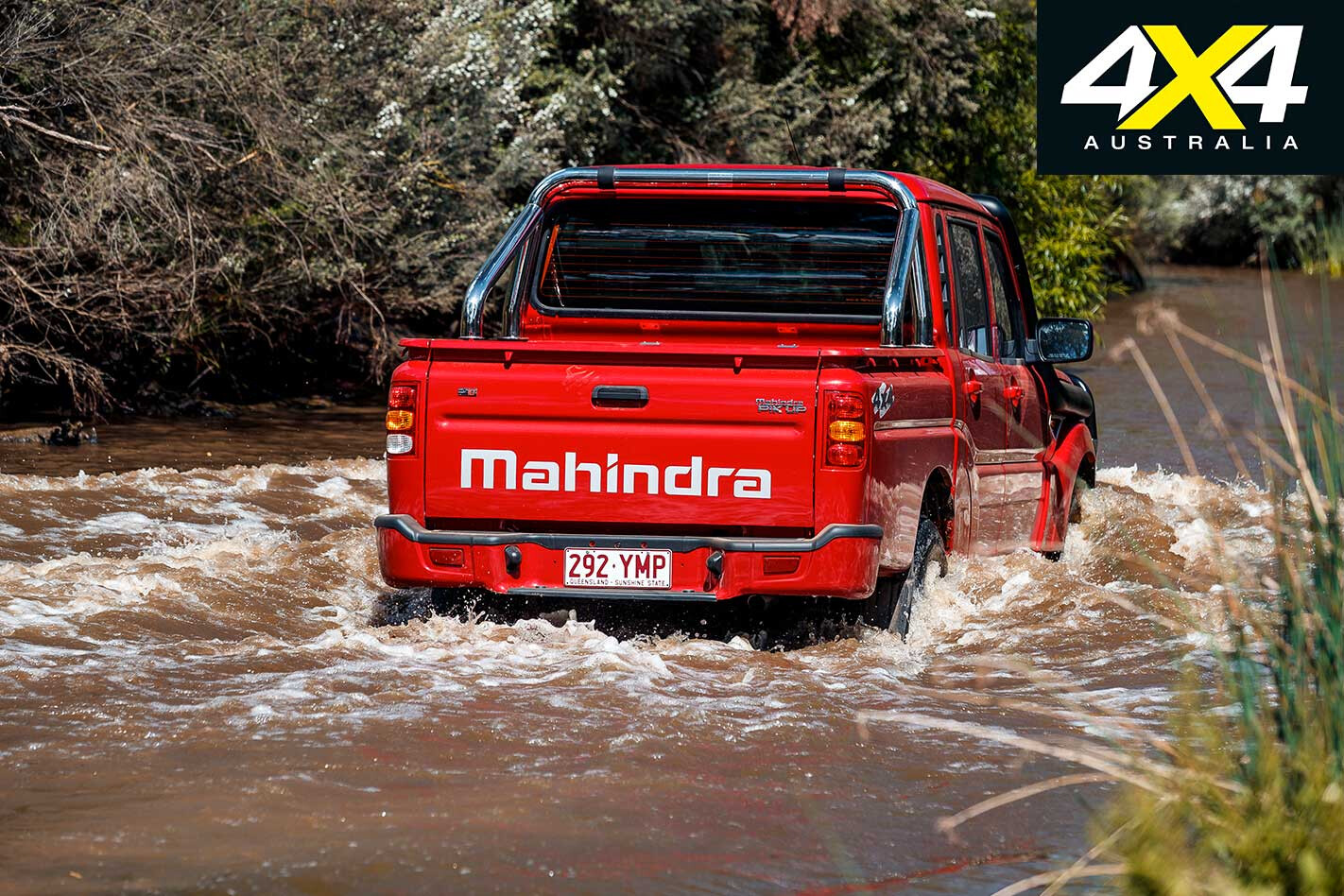
Factory accessories include a winch-compatible steel bullbar (with recovery hooks) and snorkel, accessory trays in place of the factory tub, and a towbar. Nice touches are a manual fuel-pump prime and gas bonnet struts, but it does have a modest tow rating.
Summary
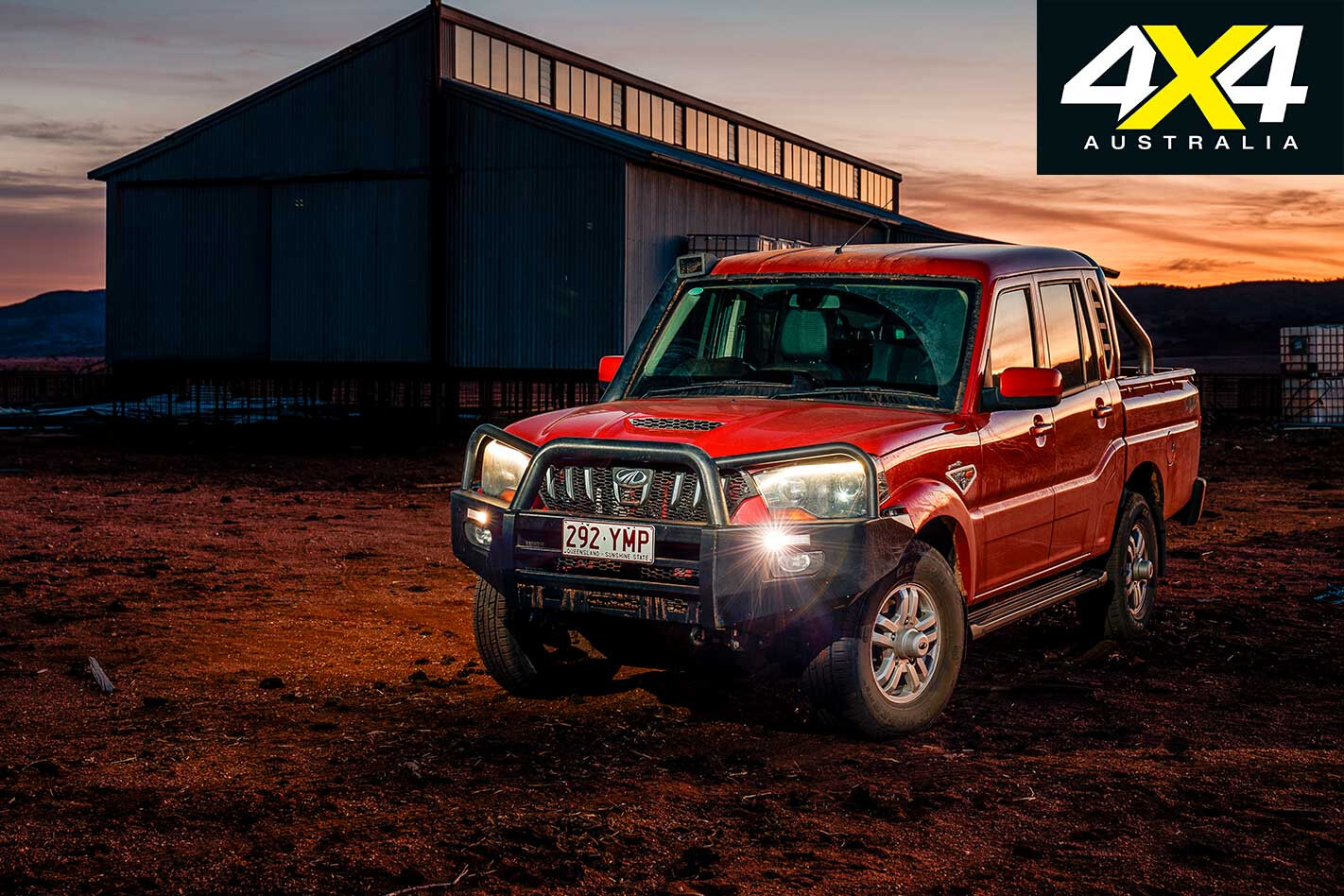
At $31,990 drive-away the Pik-Up is a lot of 4×4 for the money. It did everything we asked of it without fuss and impressed in the way it went about all it did. Without doubt it proved the biggest surprise of the eight vehicles on the test.
2019 MAHINDRA PIK-UP S10 SPECS: Engine: 2.2-litre 4-cyl turbo-diesel Max power: 103kW at 4000rpm Max torque: 330Nm at 1600-2800rpm Transmission: 6-speed manual 4×4 system: Dual-range part-time Kerb weight: 2080kg GVM: 3150kg Payload: 1070kg Towing capacity: 2500kg GCM: 5150kg Tyres: 245/75R16 111S Fuel tank capacity: 80L ADR fuel consumption claim: 8.8L/100km On-test fuel consumption: 10.5L/100km Base price: $31,990 (drive-away) As tested: $35,329 (drive-away)
The eight vehicles fighting for the honour of being the 4X4 of the Year are here for one reason: they are the best new 4x4s from 2018. Some are new from the ground up, while others are a revision of an existing model.
As ever, the shortlist represents more than just the best new 4x4s for the year; it’s also a reflection of the trends at play in the broader 4×4 market. Of the eight shortlisted vehicles, six are utes and one of the other two is ute-based. All eight are diesels and seven have just four cylinders.
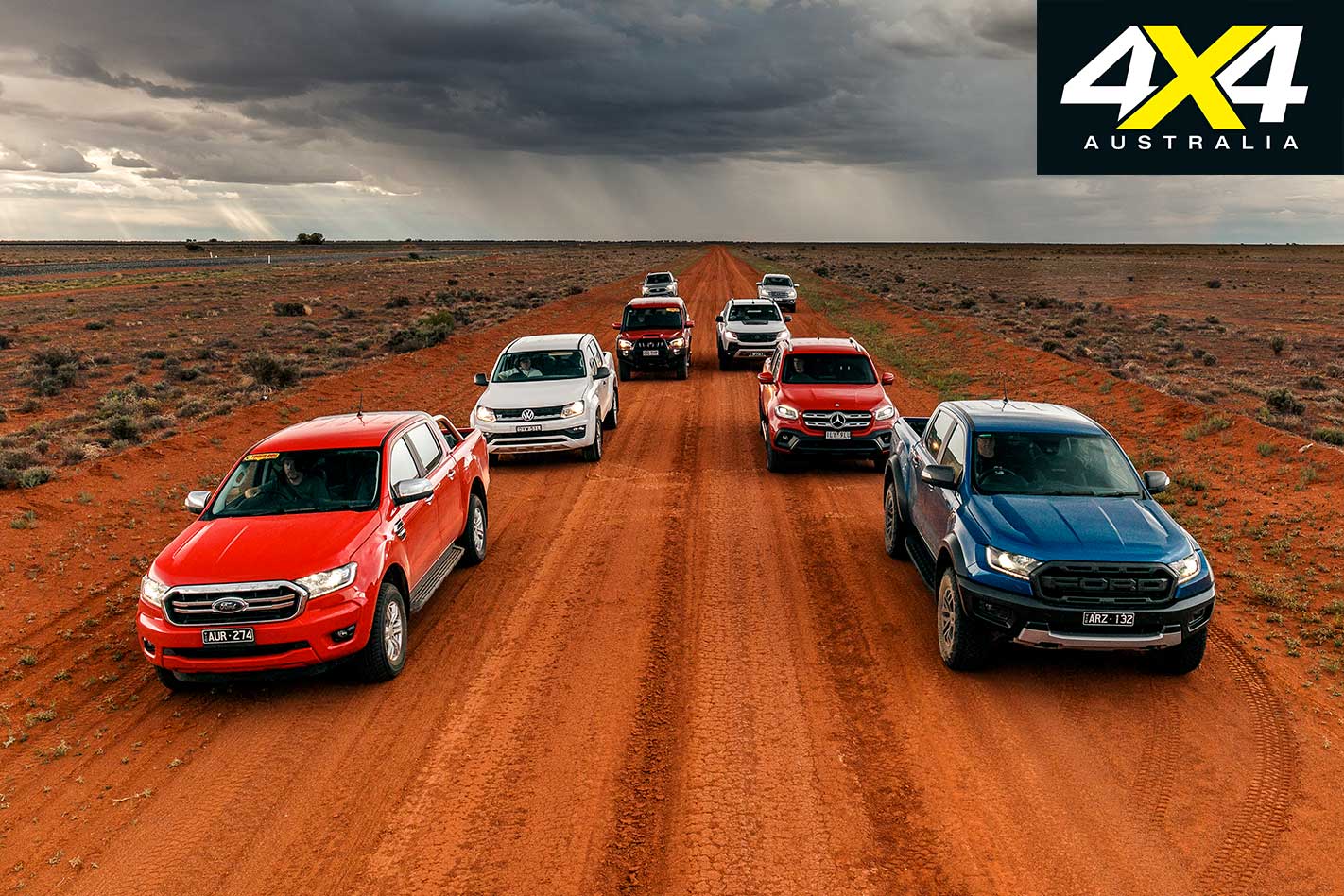
Of the eight vehicles, seven have automatic rather than manual gearboxes. While the field is skewed by having three Fords with the same 2.0-litre/10-speed powertrain, there’s still a broad trend to smaller capacity engines and automatics with an increasing number of ratios. Six of the eight engines are 2.3 litres or smaller, and six of the seven automatics have more than six speeds.
Also in a sign of the times we have emerging ‘budget’ brands in the form of India’s Mahindra and South Korea’s SsangYong coming hot on the heels of Chinese brand Haval’s appearance in 4X4OTY in the last two years.
While there are many similarities in the technology on display there’s still a broad spread of prices, with the most expensive vehicle, the Ford Ranger Raptor, more than twice the price of the least expensive, the Mahindra Pik-Up.
In between (in ascending as-tested price) is the SsangYong Rexton, VW Amarok V6 Core, Ford Ranger, Ford Everest, HSV Colorado SportsCat+ and Mercedes-Benz X250d.
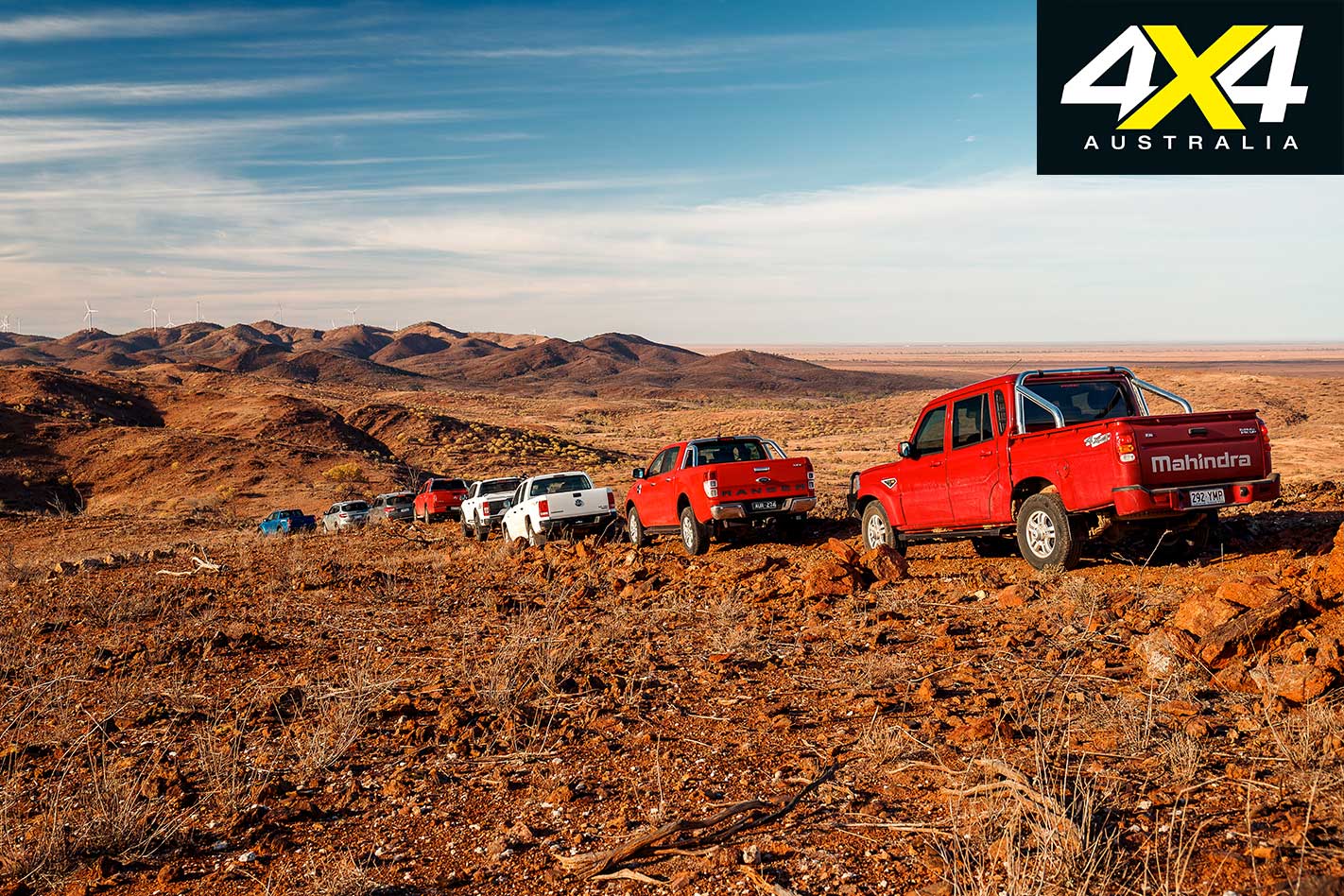
However, this is not a comparison test and, while the eight shortlisted vehicles are referenced against each other – which is inevitable given they are driven back-to-back – they are not judged against each other. Instead, they are judged against the award’s five longstanding criteria (listed below).
Each judge scores each vehicle for each criterion out of ten, for a possible maximum of 50 points. The individual totals are then tallied to determine the winner.
The testing procedure involves set-piece 4×4 tests, touring on a wide variety of sealed and unsealed roads, traversing an even wider variety of outback tracks, cabin seating tests, luggage area appraisal, and under-bonnet inspections. For all but one night of the test we camped out, so we also had to ‘live’ out of the vehicle as well as drive them.
Let’s get to it then!
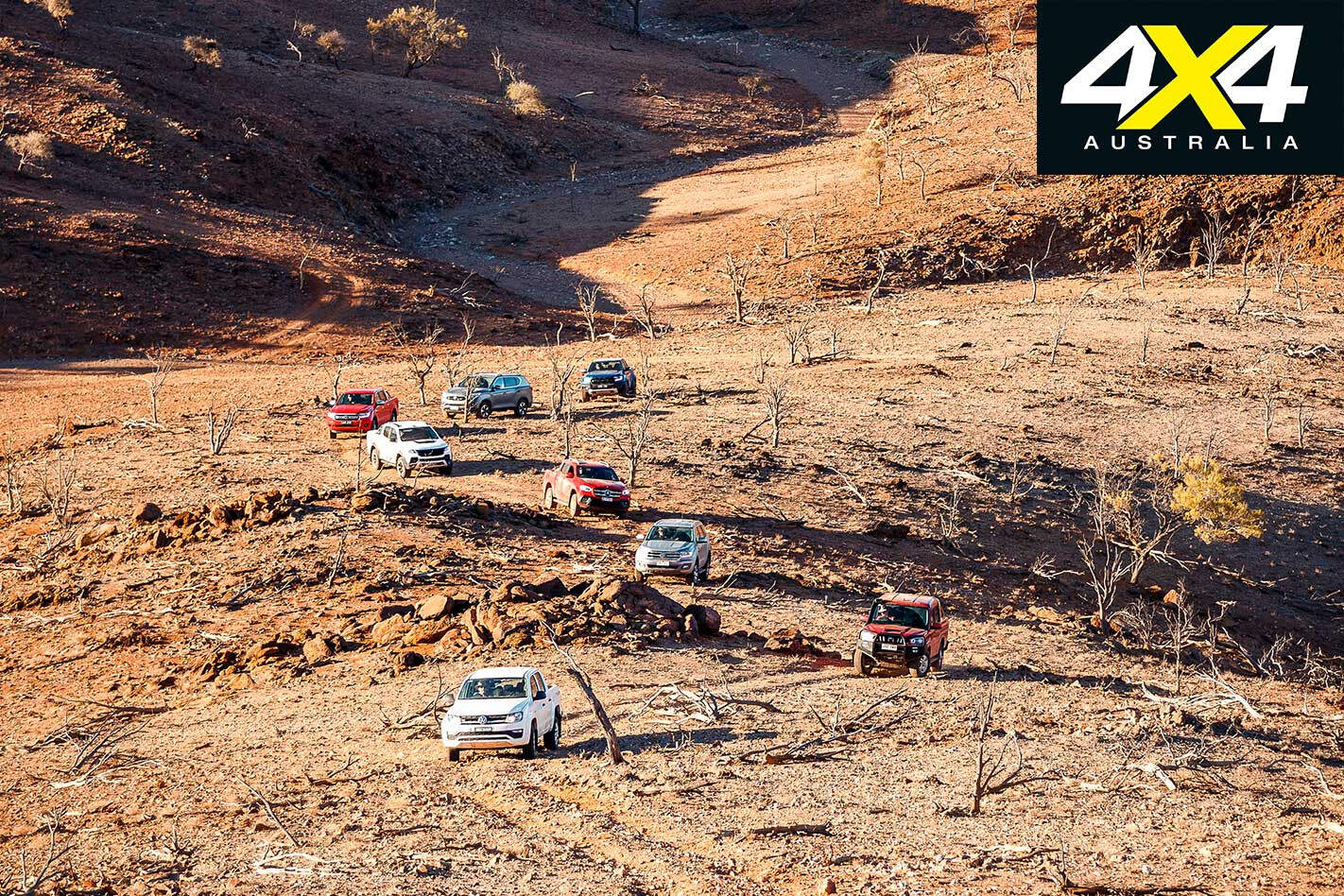
4×4 of the Year 2019 contenders
 Mahindra Pik-Up S10
Can a $30k dual-cab keep up with the big boys?
 SsangYong Rexton ELX
Can the well-built family wagon cause an upset at 4X4OTY?
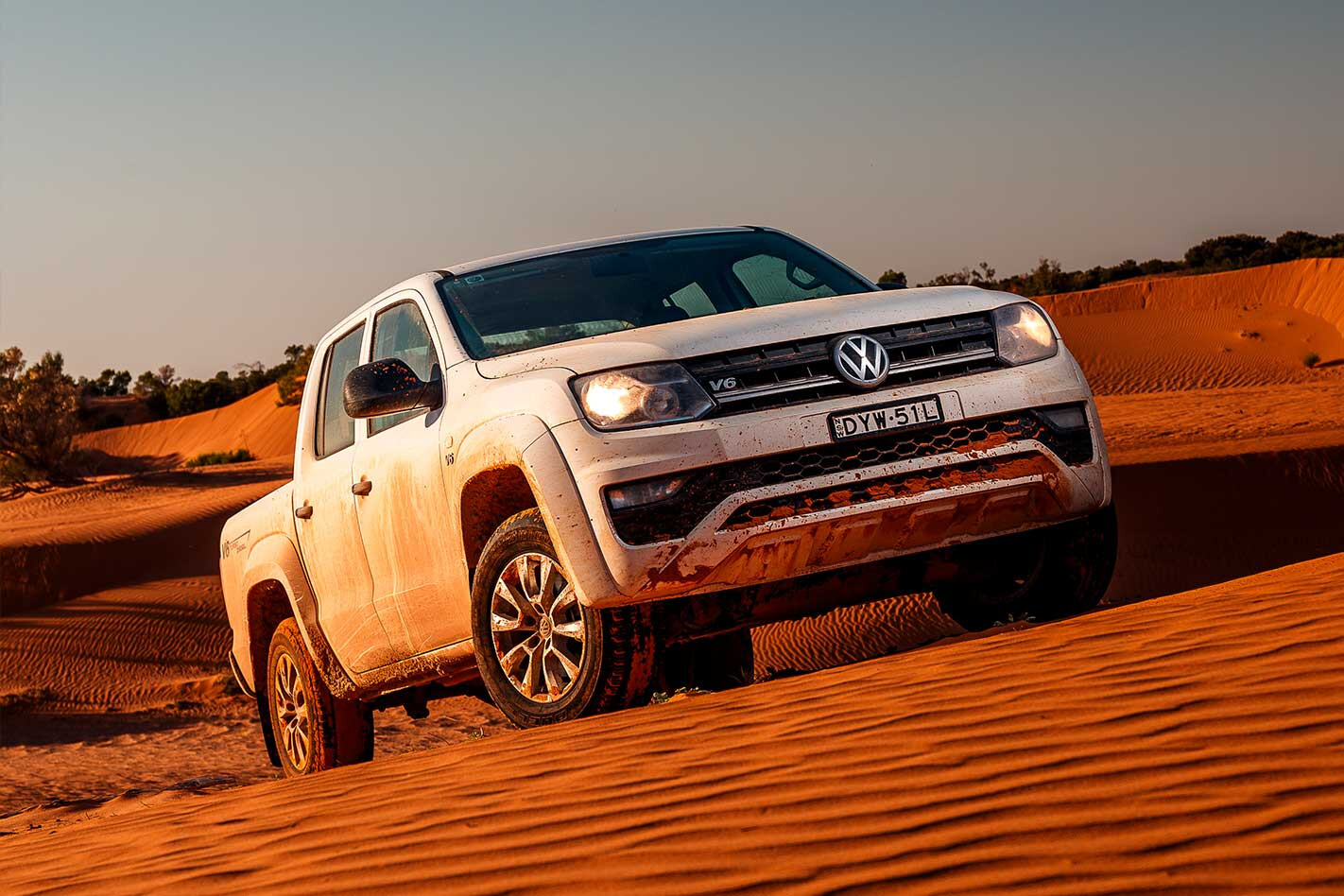 Volkswagen Amarok V6 Core
VW’s stripped-out offering is a great bang-for-buck proposition.
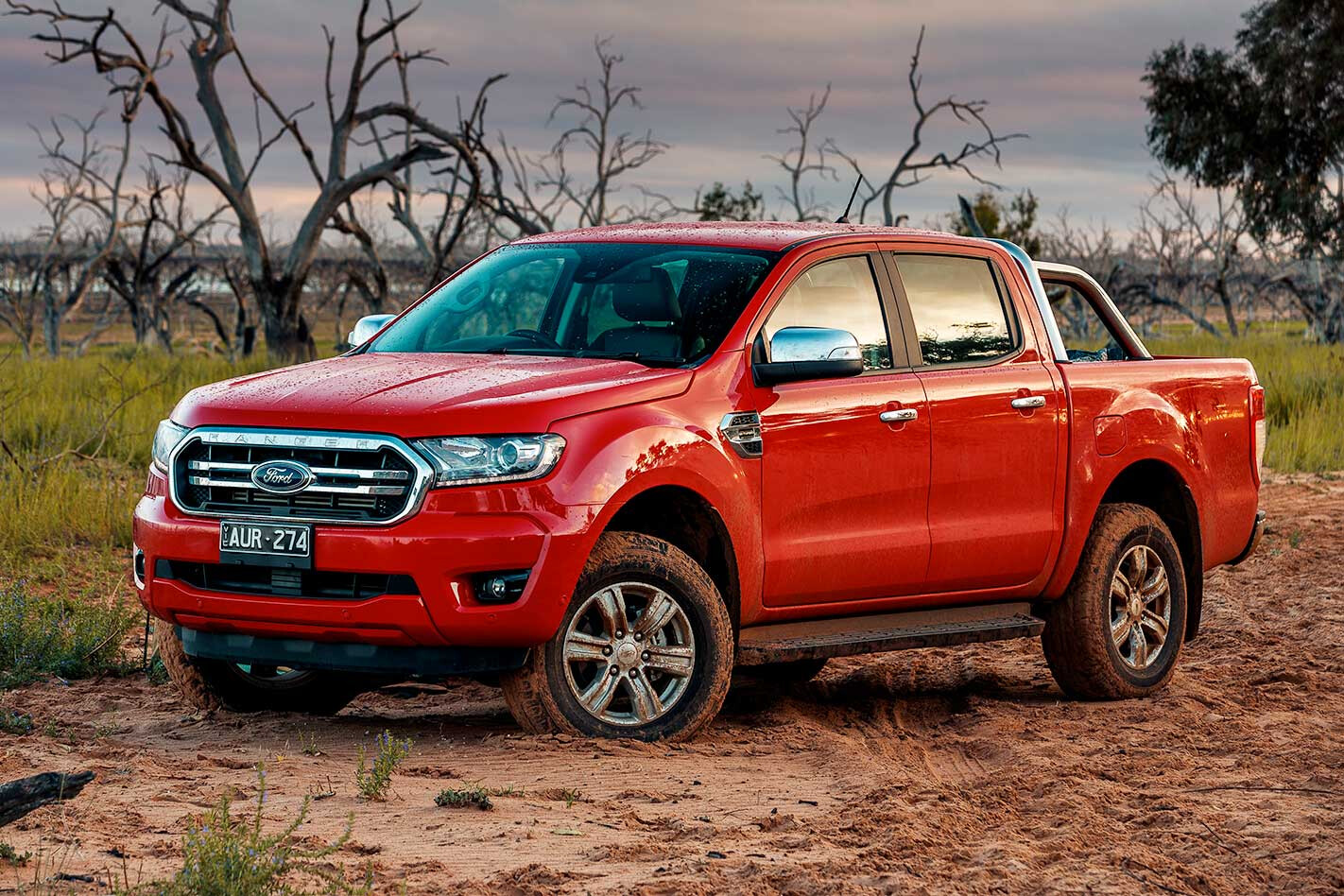 Ford Ranger XLT
New powertrain and significant chassis tweaks makes the XLT an attractive option.
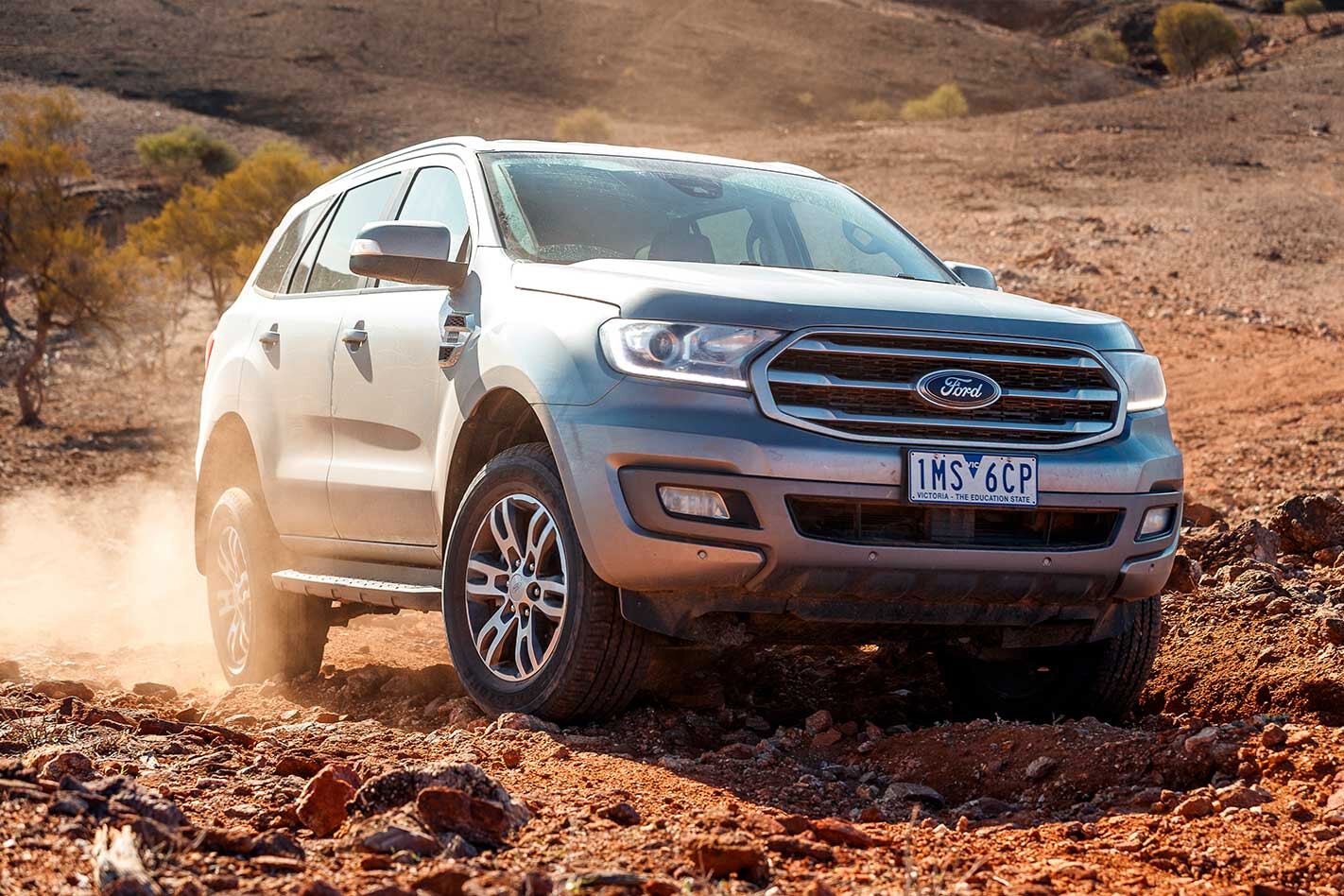 Ford Everest Trend
Can the Everest win its second 4X4OTY gong?
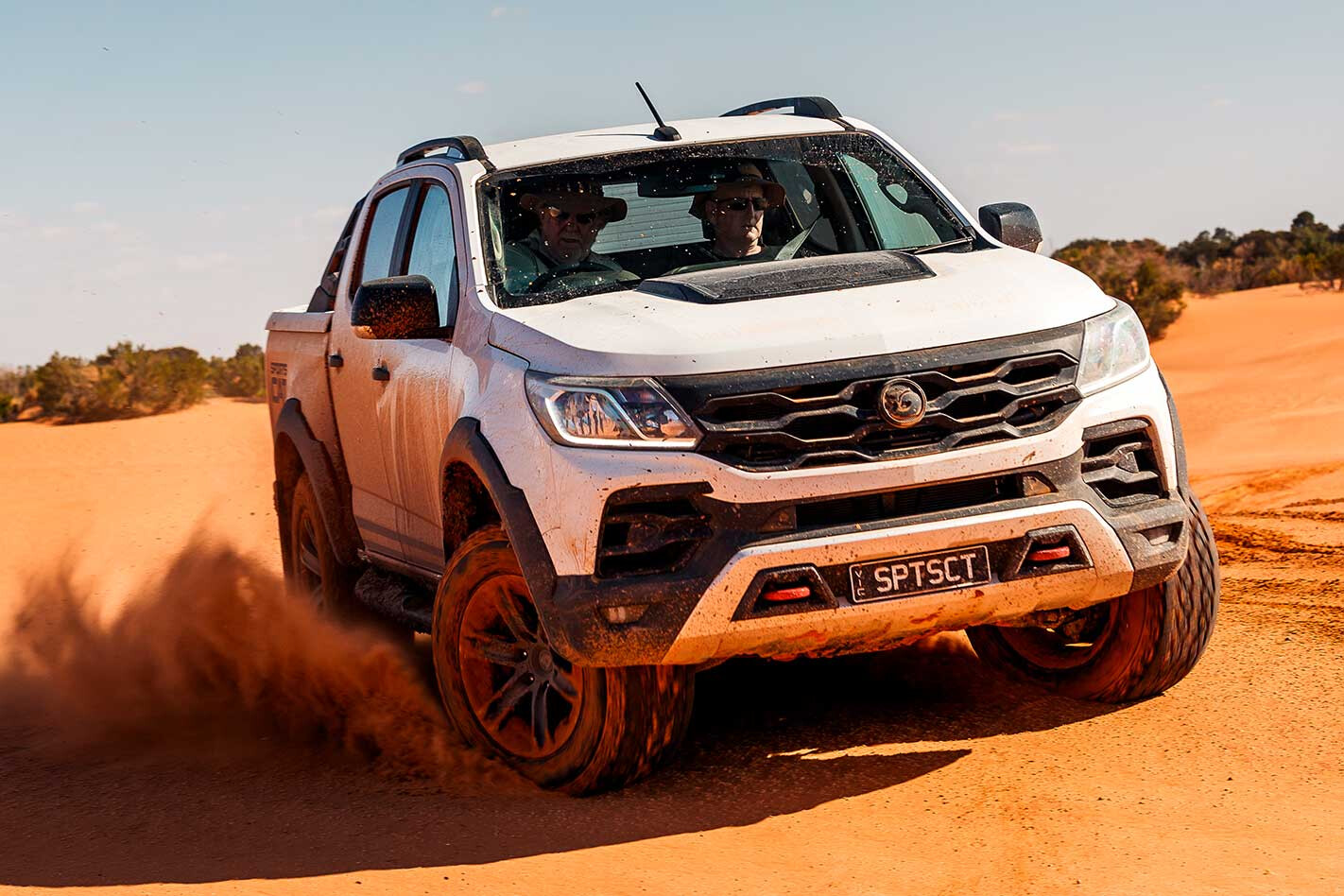 HSV Colorado SportsCat+
SportsCat+ among the pigeons?
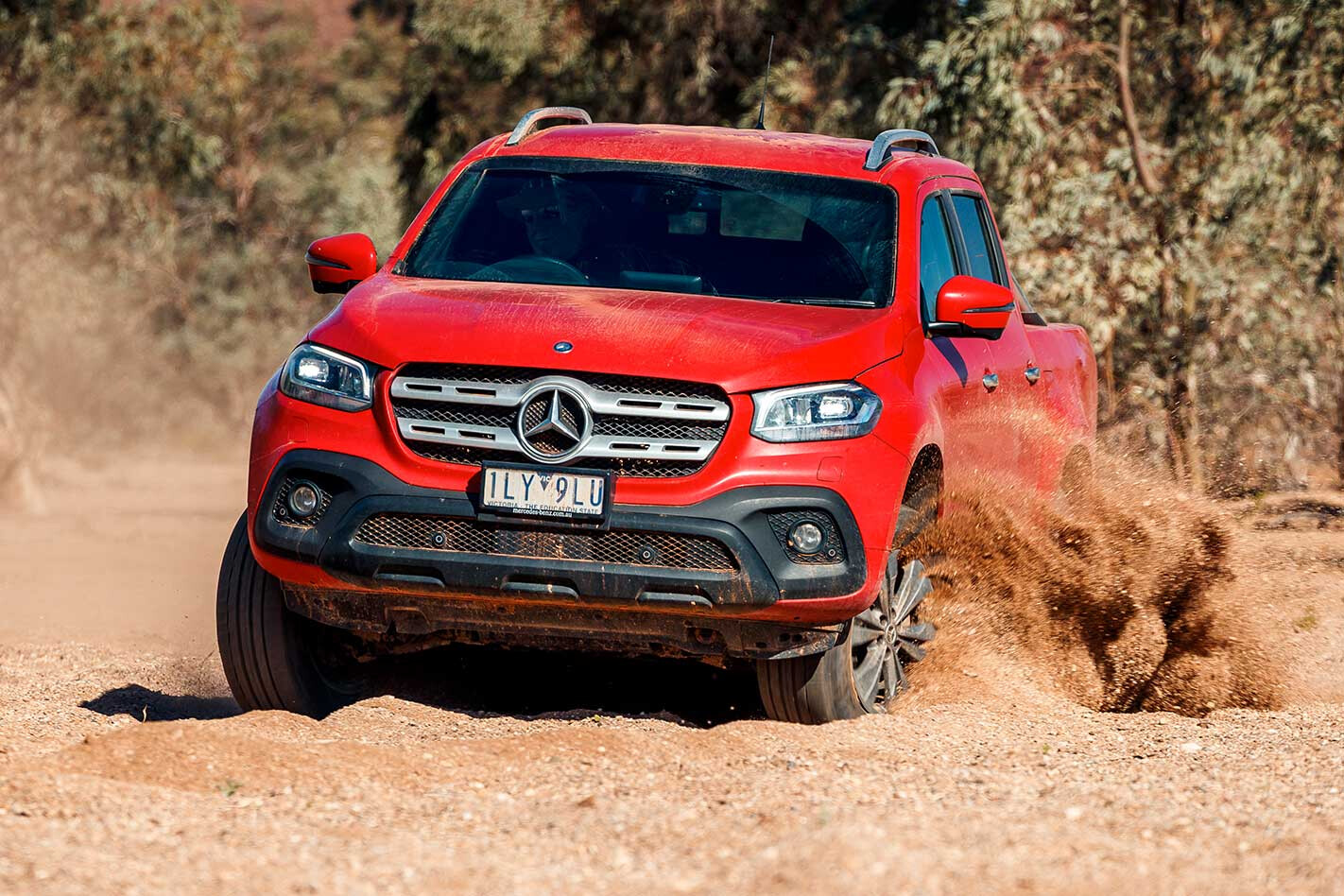 Mercedes-Benz X250d
Can Merc’s X-Class hit the spot?
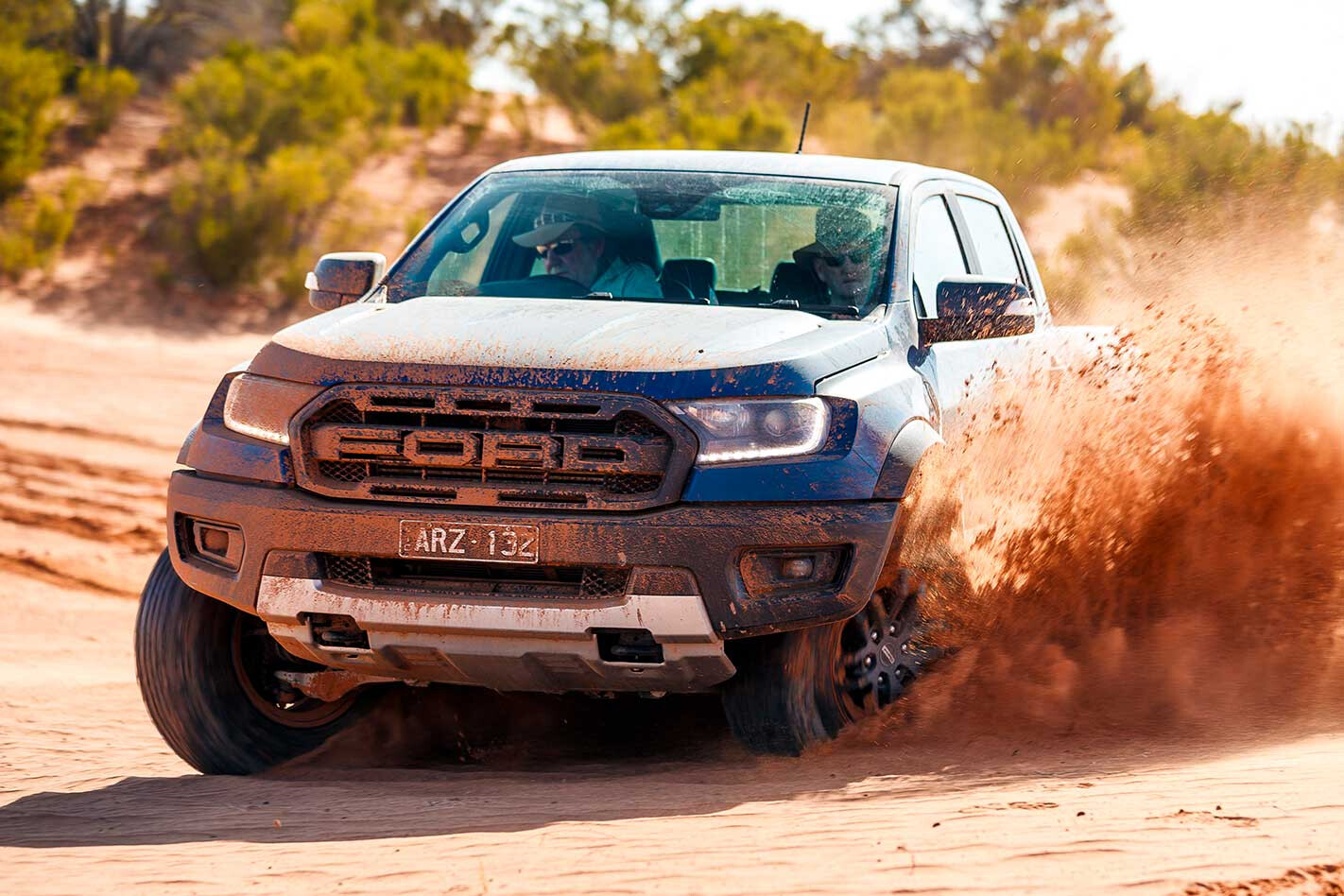 Ford Ranger Raptor
Is this the 2.0-litre four that could?
4×4 of the Year 2019 Judging Criteria
Value for Money What the vehicle offers rated against what it costs. Expensive vehicles can be good value just as less expensive vehicles can be poor value.
Breaking New Ground To what extent does the vehicle introduce new and effective technology?
Built Tough How solid and well-built does the vehicle appear to be?
Bushability How practical is the vehicle off sealed roads and on long distances away from service centres, and how easily can it be made more practical via aftermarket enhancement?
Doing the Job How well does the vehicle do the job it’s designed for? A family 4×4 wagon, for example, isn’t designed to do the same job as a 4×4 ute.
THERE AREN’T too many nationals parks where you can spend days exploring, camping and understanding the hardships our early explorers endured. Tucked right up in the north-west of New South Wales is Sturt National Park.
Within its 350,000 hectares lies floodplains, desert, jump-up country, gorges, an abundance of history and much more for those willing to explore. The park has significant Aboriginal sites that date back 20,000 years, as well as pastoralism for well over 100 years.
Tibooburra, 340km north of Broken Hill, is a great place to prepare for the trip. In town you can get basic supplies including fuel, groceries and advice for exploring the Sturt. In fact, many people only call in at Tibooburra for an overnight stay when heading farther west.
One of our favourite drives starts 24km east of Tibooburra, where you can explore shearing sheds with quarters, a fascinating pastoral museum, and then drive the Gorge Loop Road. Signposted as Mount Wood Station, this is a step back in time; there are boilers, wool scourers, a water-drawing whim, engines, steam gear and heaps more.
Locals and the National Parks and Wildlife Service (NPWS) has done a great job of preserving the history and equipment. Just across the creek via a suspension bridge is Mount Wood Station, which is open to the public and still holds the smells and sights of days gone by.
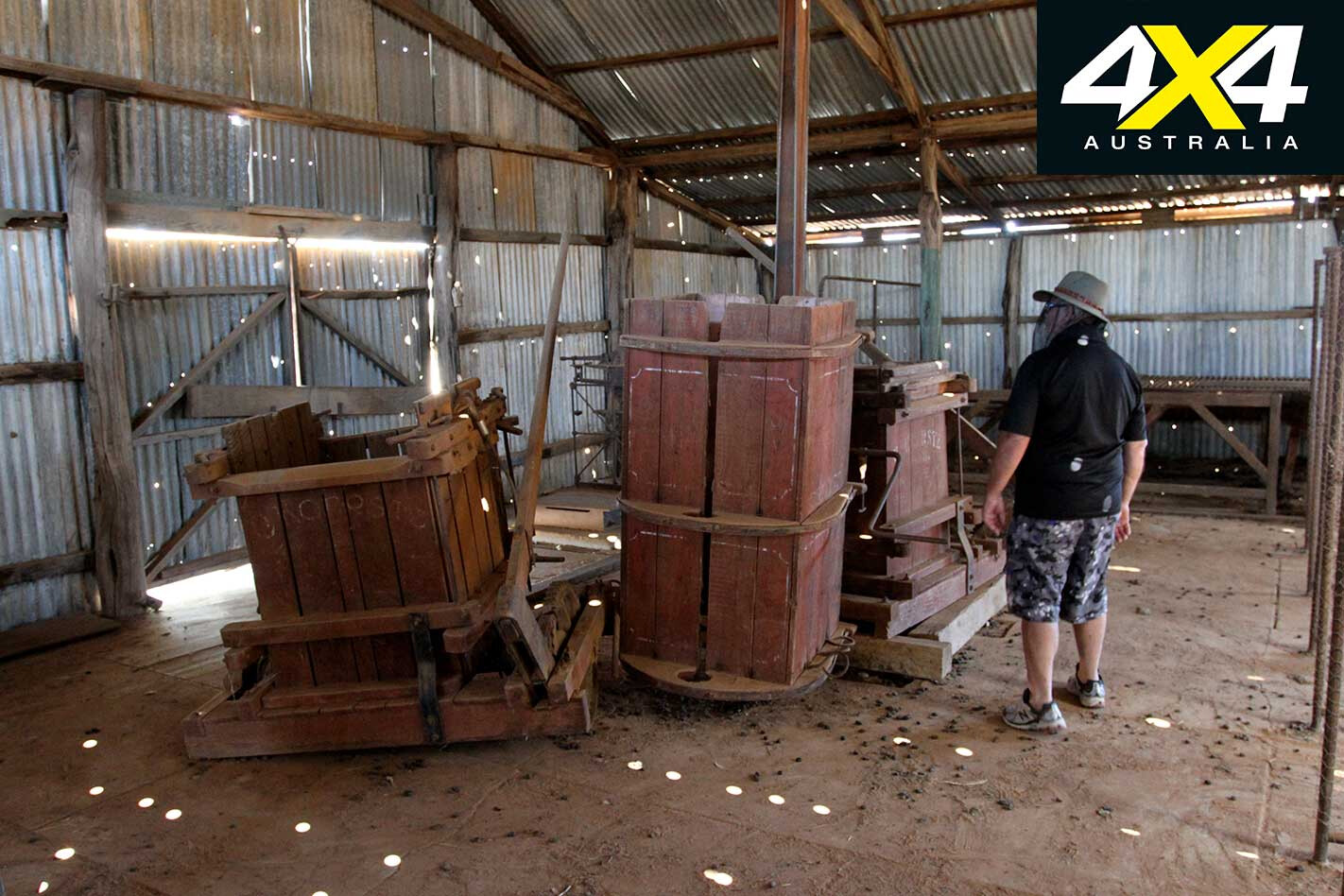
Another highlight is the Gorge Loop Drive, starting from Mount Wood Station. Most people don’t associate this area with gorges, but along the 100km loop there are several which are made even more spectacular following rainfall, where you can see the old river gums lining the banks of the creeks soaking up any water that flows through this barren landscape.
The drive takes you across desolate gibber rock plains, along ridge lines and through several creek crossings; when these low areas are in flood you can see debris high up in the trees. The undulating terrain rises and falls around 200 metres, which doesn’t sound like much, but the weathering effect can be dramatic considering just how flat this landscape is.
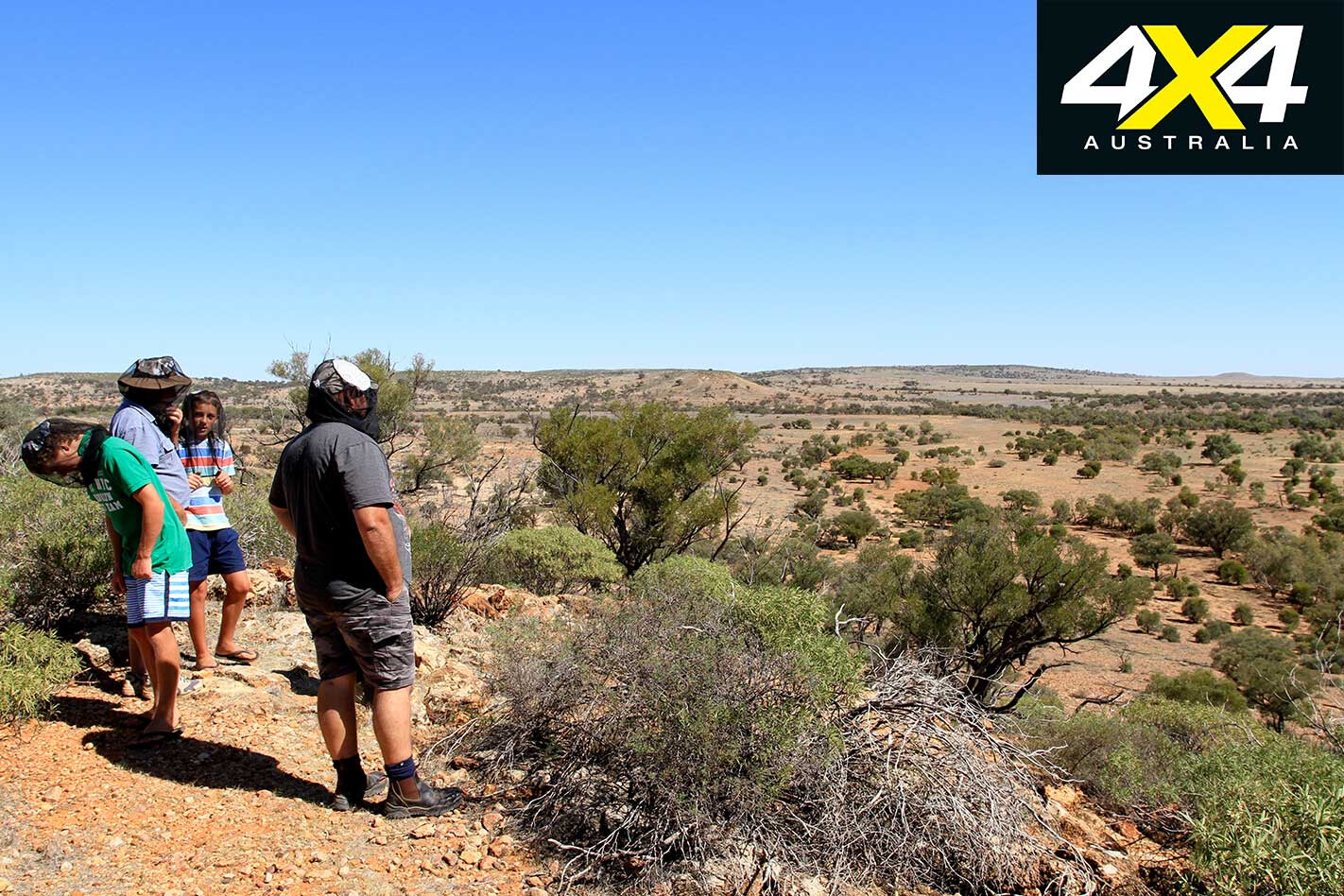
A lookout at about the halfway point provides views across the plains to the horizon, where you can see the effects of how the water has cut a line through the landscape. It’s highly noticeable, as you can trace the old gums growing beside the water source. The landscape changes from white granite to a reddish colour and then to the typical red gibber rock covered with scattered vegetation.
A further 80km along the track stands the remains of Horton Park Station, an outpost set up as a remote camp away from the main station of Mount Wood. Take some time to wander around and discover the remnants of the yards, water rows, fence lines and old bottles. The old house still stands, and one can only imagine the hardships these folk would have endured (the millions of flies, the remoteness…)
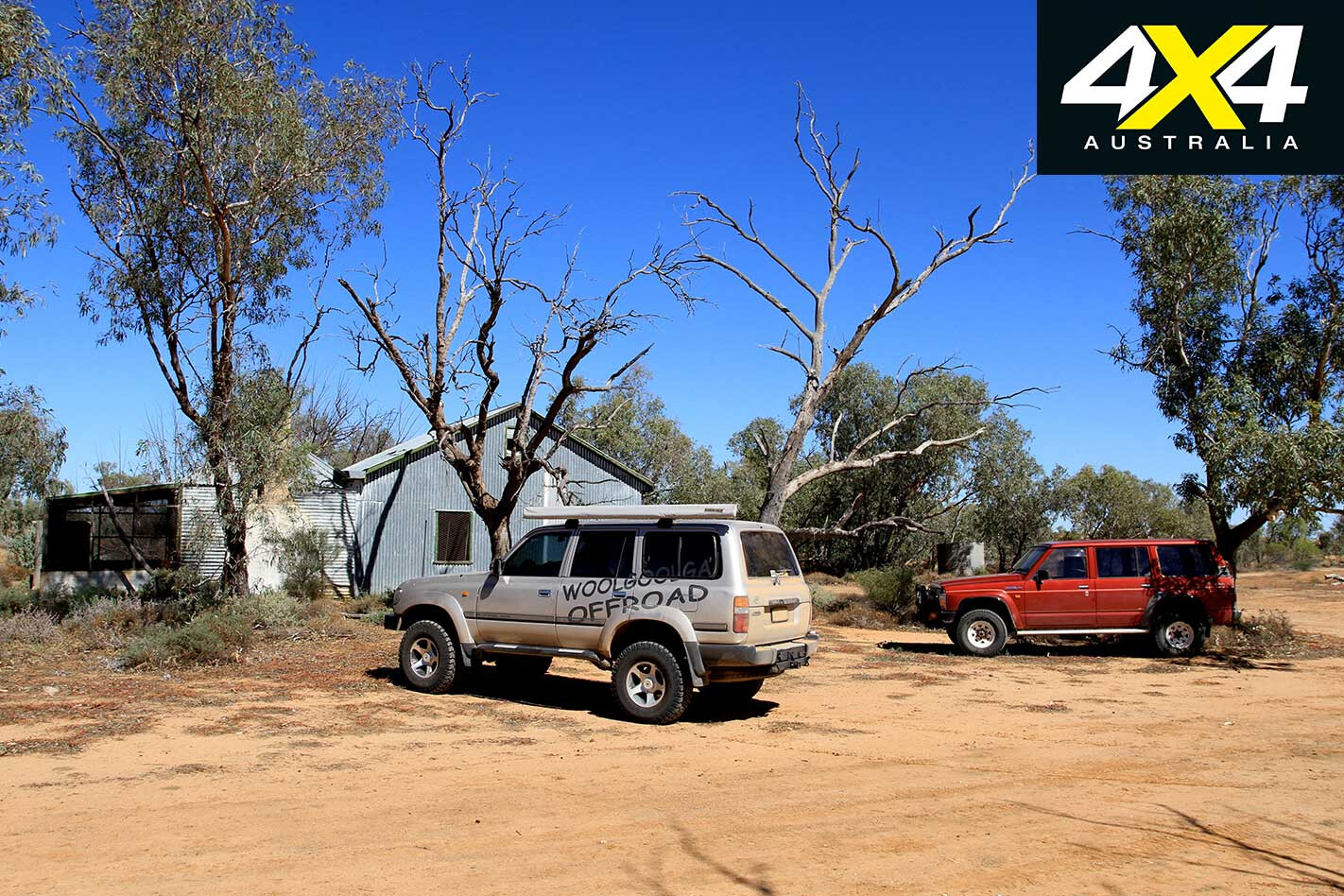
Before too long you will near the end of the loop drive and pop out on the main road back to Tibooburra. After turning left toward town keep an eye out for Sunset Lookout about 2km north of the town on the eastern side of the road, another spot where you can get some great shots and witness how remote this place is. This 100-metre high rocky outcrop is worth the scramble to the top.
While not a hard drive by any standards, the Gorge Loop Drive normally takes around three to four hours to complete if exploring all of the points of interest along the way. This is a remote area and, while you’re not far from Tibooburra, there’s no phone service, very little traffic and no services along the way. Road conditions can vary, but generally expect rough conditions; so tyre pressures for a softer and safer ride.
Charles Sturt
The national park is named after explorer Charles Sturt, who pushed his way through the area in 1845 looking for an inland sea. At Tibooburra, a replica whale boat Sturt and his men dragged on their travels is mounted in the town’s park, alongside other historical gear highlighting how machinery has advanced over the years.
Travel Planner
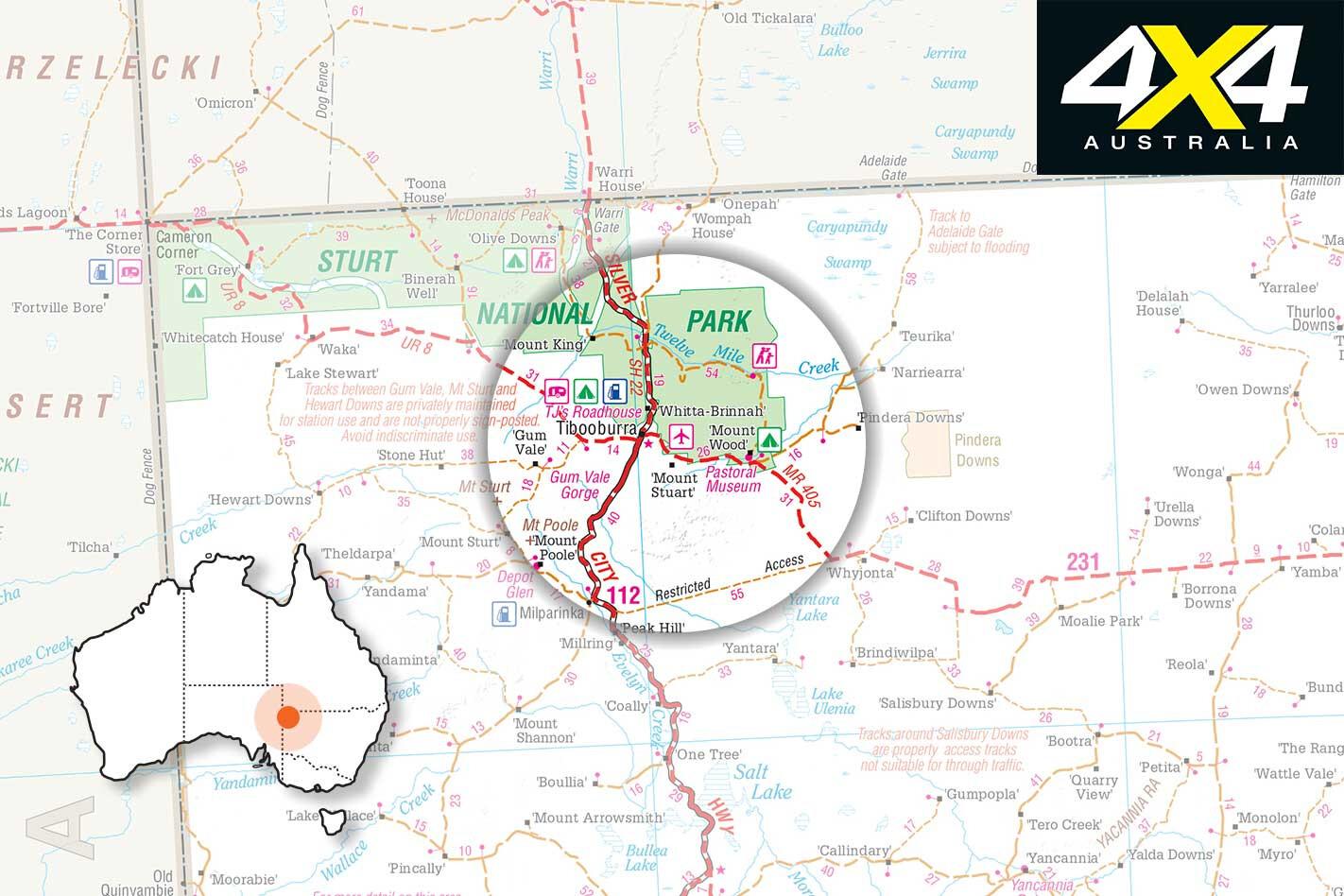
WHERE THE GORGE Loop Drive starts 25km to the east of Tibooburra in Sturt National Park. The loop drive is 100km long and covers a diverse range of landscapes with several lookouts and points of interest along the way.
CAMPING Camping is permitted at the Mount Wood Campground, where there are toilets, shelter and free gas barbecues. Fires are permitted but you must bring your own wood and have them in the designated areas. There are several caravan parks in Tibooburra with all the facilities that offer reasonable rates.
SUPPLIES AND FACILITIES Apart from toilets at the Mount Wood Campground, there are no facilities on the Gorge Loop Drive. You need to be totally self-sufficient, as traffic in this area is irregular and there is no phone service. This is a remote park where you need water, food and spares in case of a breakdown. Tibooburra isn’t far away, but only offers minimal services at any time. There are two great pubs in town.
TRIP STANDARD A 4×4 is recommended for access to the park and its surrounding places of interest. The roads within the park range from sandy, well-used tracks through to rocky sections at the many creek crossings. After times of flood, be aware of washouts and corrugations. Lowering your tyre pressures is essential.
MAPS AND FURTHER INFORMATION Hema’s Outback NSW covers this area. Any good-mapping GPS will show the Gorge Loop Road and other details. Detailed information can be found at either the Tibooburra National Parks office at Tibooburra, by phone on (08) 8091 3308 08, or on their website: www.environment.nsw.gov.au/NationalParks/
BUDGET ATTRACTIONS Even though the drive may only take several hours, this is a great way to spend the entire day exploring what hides within this park. You can visit the pastoral museum, walk in and around the now-disused Mount Woods shearing shed, cross the suspension bridge and explore several outstations. There’s bird watching or take a trek to the top of Mount Wood Lookout. This is one drive where you wonder just how the pioneers survived out here.
THE town of Birdsville will get an injection of Aussie rock at this year’s Big Red Bash, with legendary band Midnight Oil headlining the “world’s most remote” music festival.
The all-ages event will run during the winter school holidays – July 16-18 – with the outback town, located at the edge of the Simpson Desert in Queensland, expected to be abuzz with nearly 10,000 musos and Oil fans.
It will be Midnight Oil’s first Aussie gig since their Great Circle World Tour in 2017, and the band will be joined by a number of household names including The Living End, Richard Clapton, Kasey Chambers and Wendy Matthews.
Making the event even more special is the uniquely Australian destination, with plenty of festival goers required to travel great distances to listen to the great vocals (and dance moves) of Peter Garrett.
“The journey to the Big Red Bash is in itself an amazing and mind-blowing experience – whether you’re an Aussie or an international traveller,” Big Red Bash Founder and Organiser, Greg Donovan, said.
“Visually and culturally, the Outback is like nothing else in the world – and the Big Red Bash often gives people that extra push to make the trip into a breathtaking part of this country that’s right on our doorstep, but that often goes unexplored.
“The fact that you can turn the trek into a fun-filled road trip, take in all of the unique sights along the way, and then experience a world-class music line-up while camping under the Milky Way with your entire family – including the dog – is often the perfect combination of reasons to buy a ticket – and that’s why we usually sell out well in advance,” added Donovan.
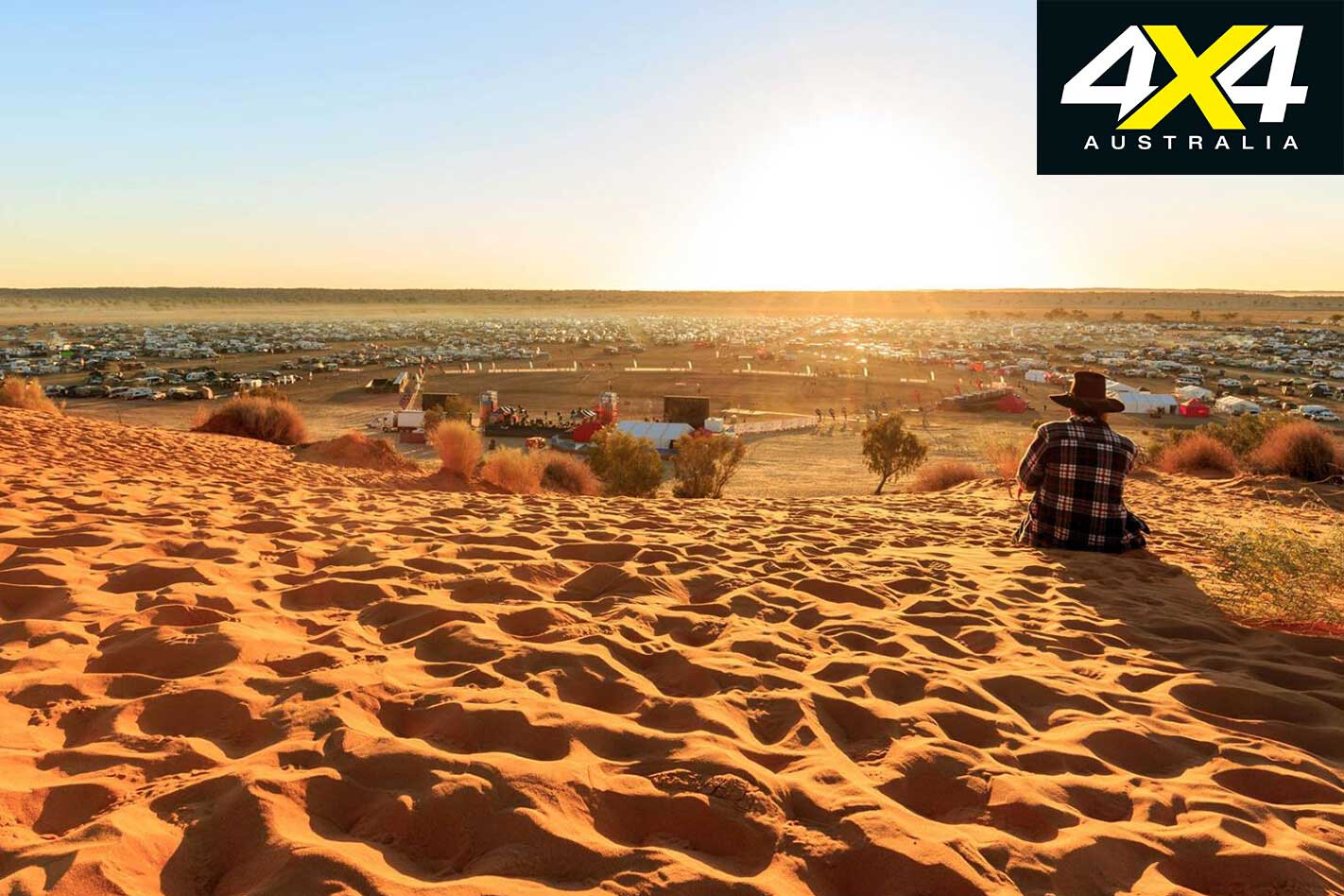
Live music isn’t the only item on the Big Red Bash agenda, with comedy and outdoor film screenings, scenic helicopter flights, dune surfing, beach volleyball, camel rides, the Australian Outback Air Guitar Championships, and Fashions in the Desert all part of the fun.
Prefer to dress up in drag? The Royal Flying Doctor Service (RFDS) Bashville Drags sees punters don their best drag frocks and race down a 500m dirt track.
Tickets start from $92, while kids aged 11-and-under get in for free.
More information here: www.bigredbash.com.au
I started at ARB 25 years ago as a sales person and worked my way up to now being the sales marketing manager. That means I am effectively responsible for all our domestic business units. I look over all the performances across the business from primarily a sales perspective; that’s how I generally start my day. It also means, like everyone else these days, answering tonnes of emails.
Over the 25 years there have been quite a few exciting projects. At the moment we’re rolling out a number of new flagship stores. In the past we’ve always had a fairly relaxed approach to store presentation, but all the new stores we are opening are part of that new flagship program and its focus on a premium store appearance and customer experience. We’ve done about a dozen of these since we launched the project last year.
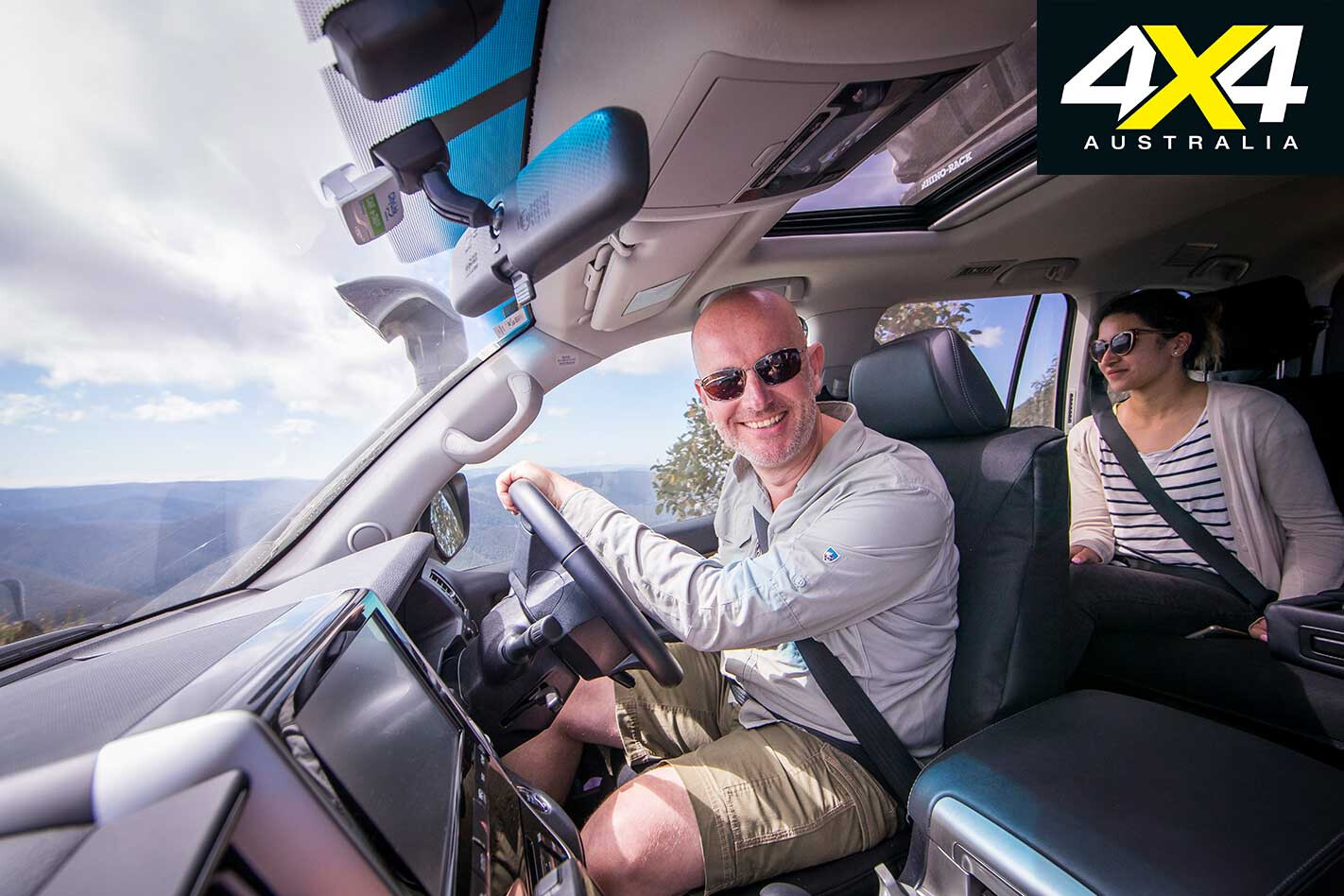
My role is not all in-the-office stuff, though; I have worked on a pile of communication and marketing material over the years but really love rolling my sleeves up and getting stuck in. As an example, just recently I was away with photographer Michael Ellem, filming a video on our new Summit Raw rear bars. I still really enjoy getting out in the field and having real hands-on involvement in a lot of the product launch materials that we develop, whether that is writing, helping with photo shoots, or on video shoots.
The surge in video and social media for us has been amazing. I have hired a number of 4×4 enthusiasts that are very specialised in that field (social media) and it has been very exciting watching ARB’s social media footprint develop over the years. We are one of the top automotive brands across social media now and that has been a really satisfying thing to see develop over the years.
Chatting to our customers and building that community is important and the social media presence obviously presents us with some great opportunities to get some live/interactive interaction and feedback from our customers – it’s been a really exciting thing.
Ironically, in this age of digital, another thing that has been very close to my heart has been the ARB magazine. It was one of my staff who first started it in 2004 and we’ve just done 15 years with that.
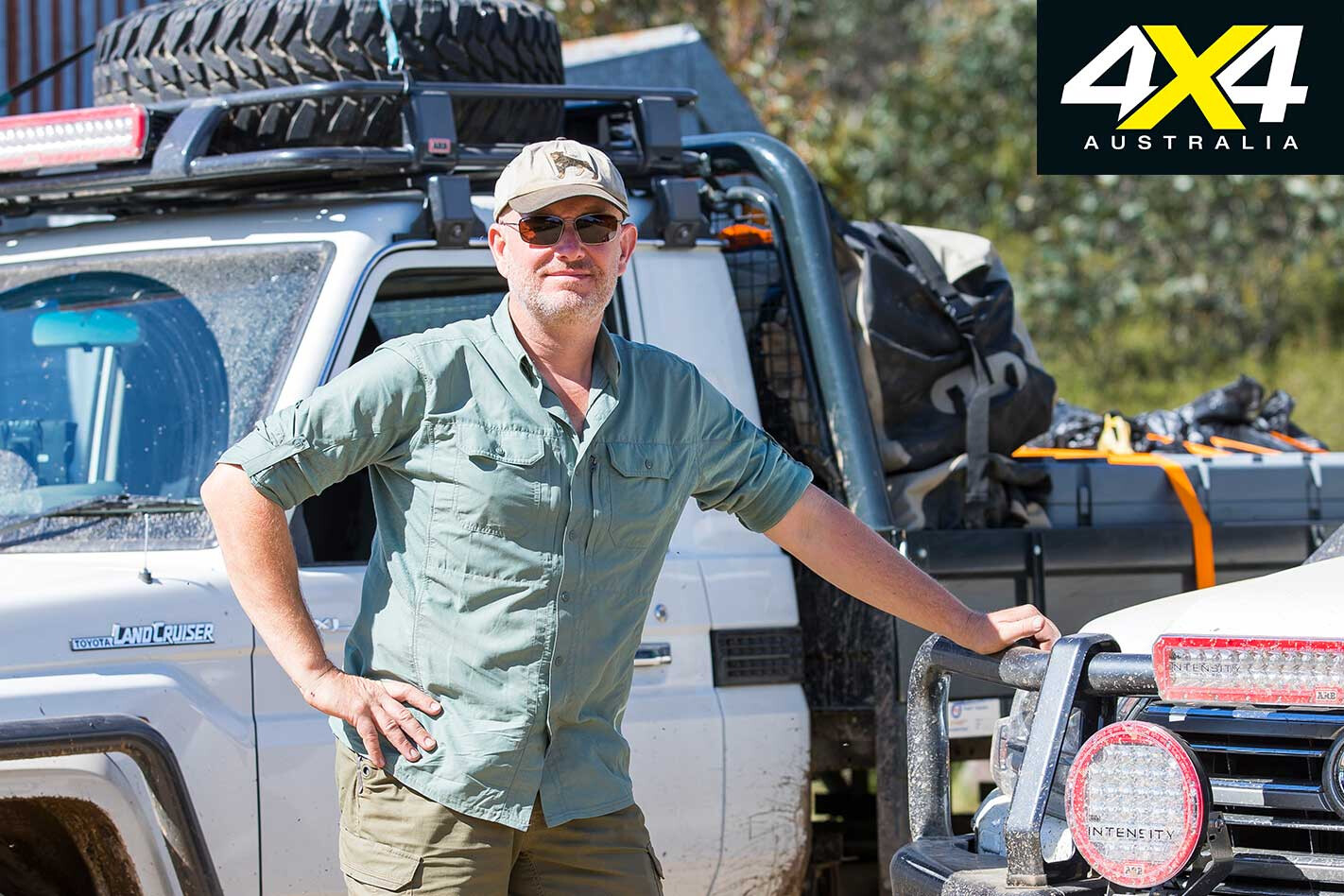
Watching the magazine go from an eight-page newsletter to something that we print and that goes out to something like 60,000 people; it’s been a really exciting thing to do. I still sign off on every single magazine and I write the introduction piece for each issue, so that’s been something I really enjoy being a part of.
The growth and the development of ARB over the past 25 years has been amazing; if you look at the size of the ARB engineering team when I first started with the company there were around three people in that area. Now, we have more than 50 people, so that is really a reflection of two things: one is that our product line has increased dramatically over the years; the second is that the complexity of the product has certainly increased in line with the complexity of the vehicles.
We believe our overseas market has huge potential and if we look at the last few years we have opened a second distribution centre in North America, opened a distribution centre in Europe, and one in the Middle East. Historically we have relied on independent resellers to manage our sales in overseas markets, but we are now establishing warehouses and offices around the world so that is something that is only going to increase over time.
ARB has always had very lofty expectations for everything we do – the company is continually striving to build the very best 4×4 accessories.
For me, that’s a brilliant ethos and I am looking forward to many more years here helping those big ambitions happen.
Meet the Expert Name: Matt Frost Role: Sales Marketing Manager at ARB Experience: 25 years
“BIGGER IS BETTER.” There, we’ve said it. Even though some of us often, and for various – ahem – undisclosed reasons, always say that size is not everything, that oft-overused adage still resonates sometimes.
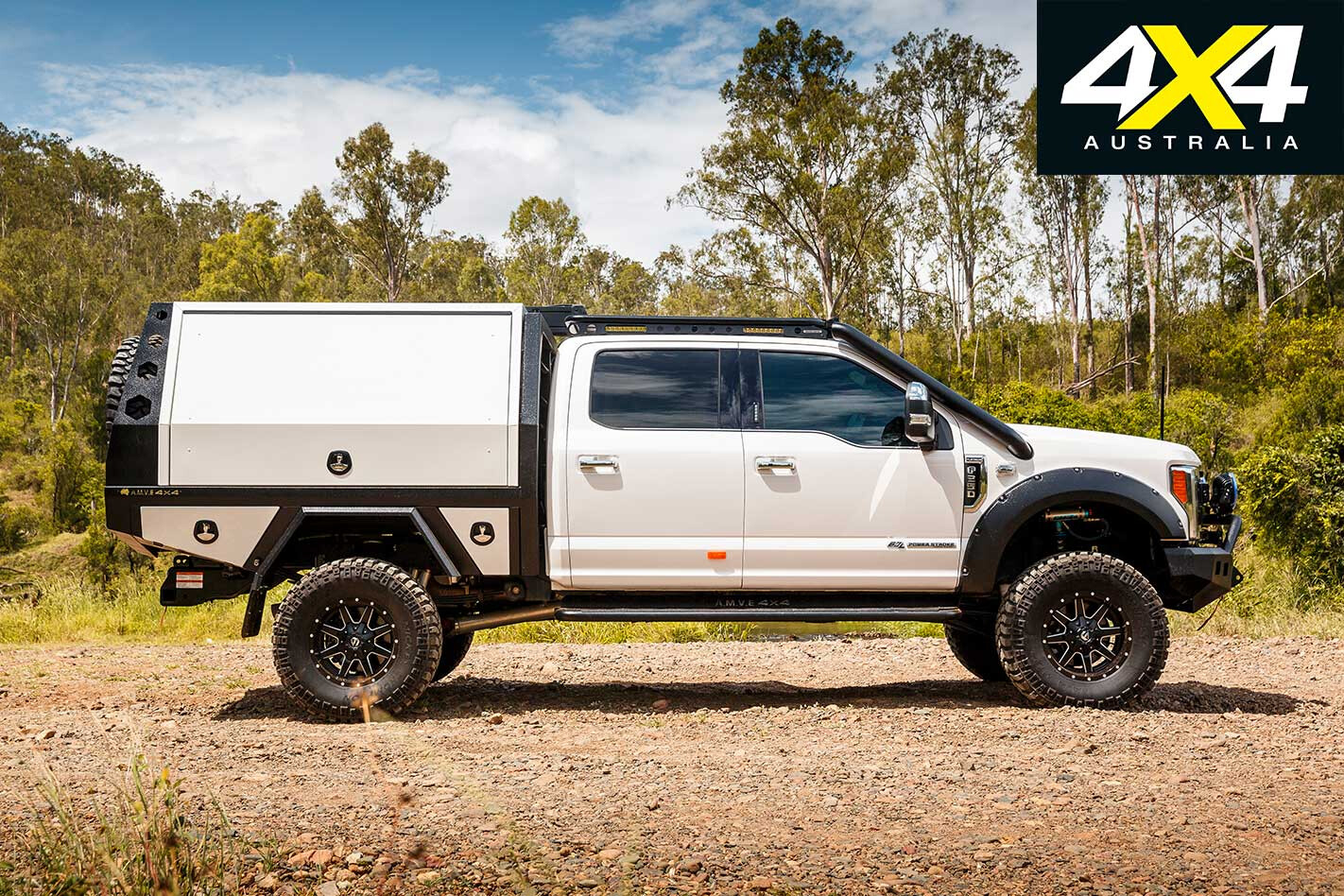
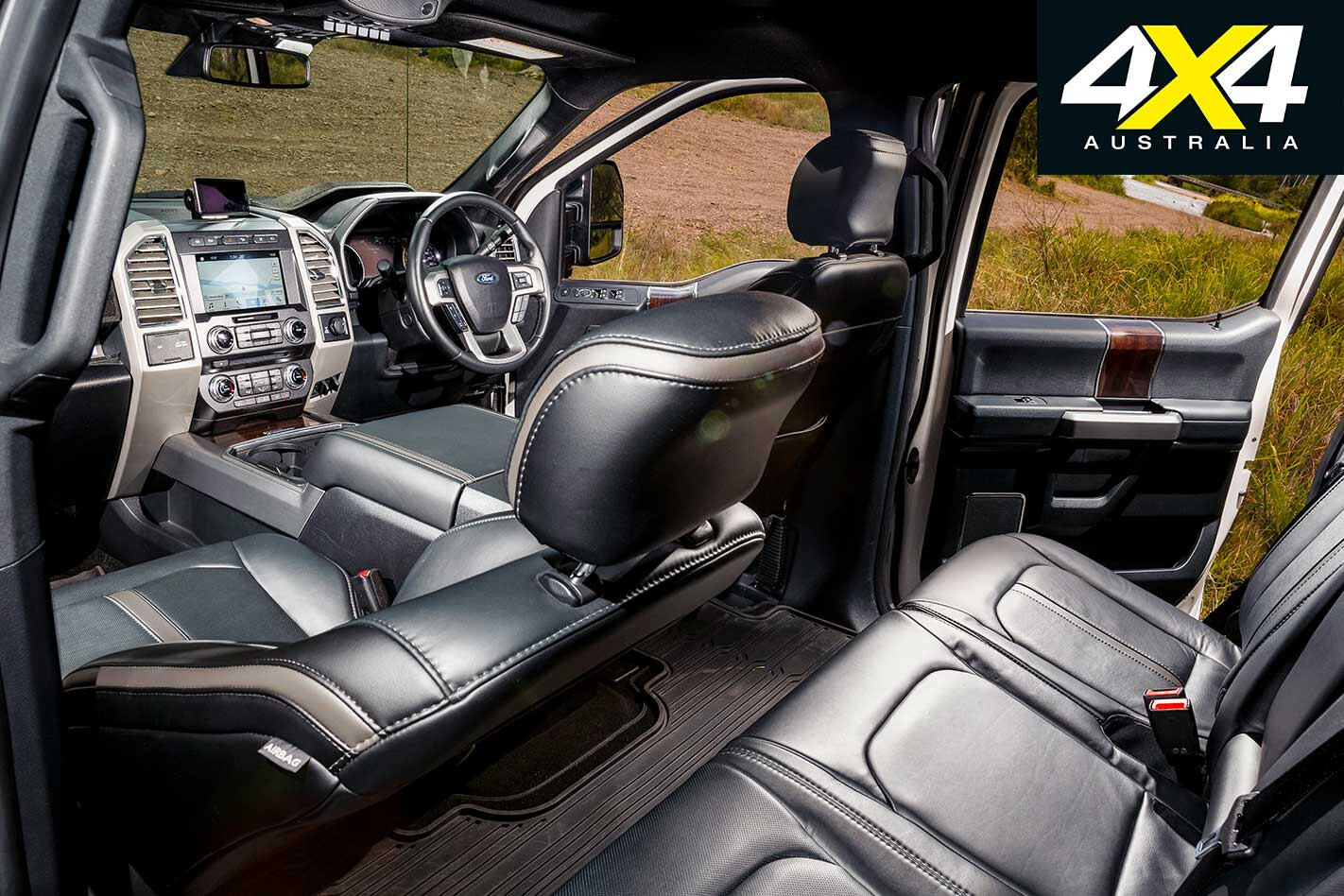
When you’re talking about building an off-road touring vehicle that can tow effortlessly, lug all your gear (and then some more), and negotiate the most challenging tracks while offering ample passenger comfort, that old adage definitely rings true. And that truth is what you’re looking at right here; this epic 2017 F-250 Platinum 4×4 pick-up, powered by Ford’s venerable 6.7-litre Power Stroke V8 engine, and built-up for touring and towing by Jamie Facer of Allsafe Mine Vehicle Equipment (AMVE 4×4). It is the ultimate proof of the bigger and better theory.
More 4×4 gear guides
It’s all about choice
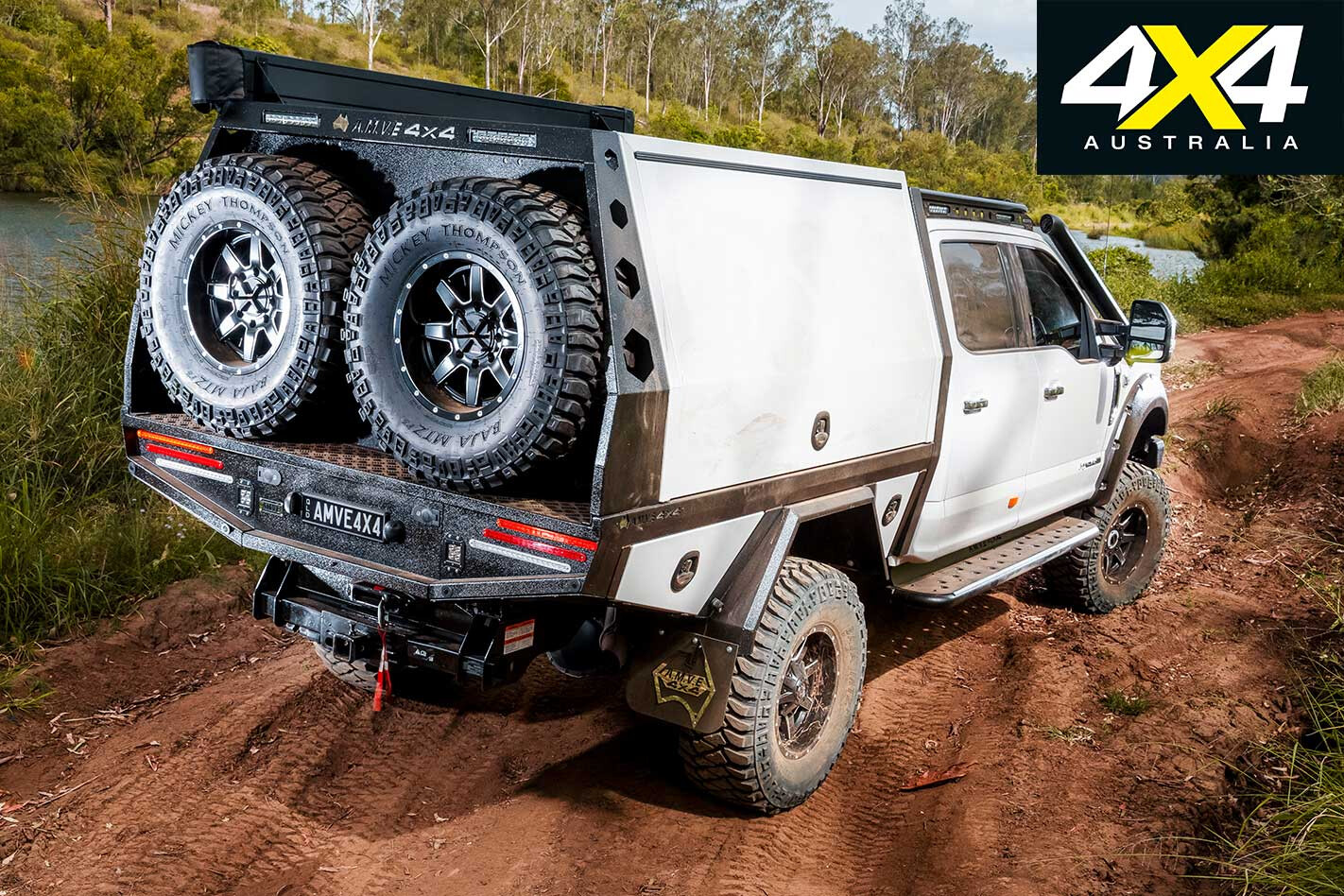
THIS isn’t the first dual-cab tourer that Jamie has modified. Before the F-truck arrived at AMVE 4×4 HQ, he’d had a succession of Toyotas: two 79 Series utes (one dual cab, one single cab) and a trick dual cab 200 Series ute. He liked them, but thought that these vehicles were still slightly compromised – the 200 Series dual cab more so, due to the fact that the cutting of that vehicle significantly alters the Toyota wagon’s dynamics.
He brings up the fact the big Yank tank was an ideal choice, simply due to the fact these vehicles are built to purpose; that purpose being to tow and carry large loads.
“I always wanted a Ford due to the spec of the truck,” Jamie says. “The power, comfort, reputation and tow capacity.”
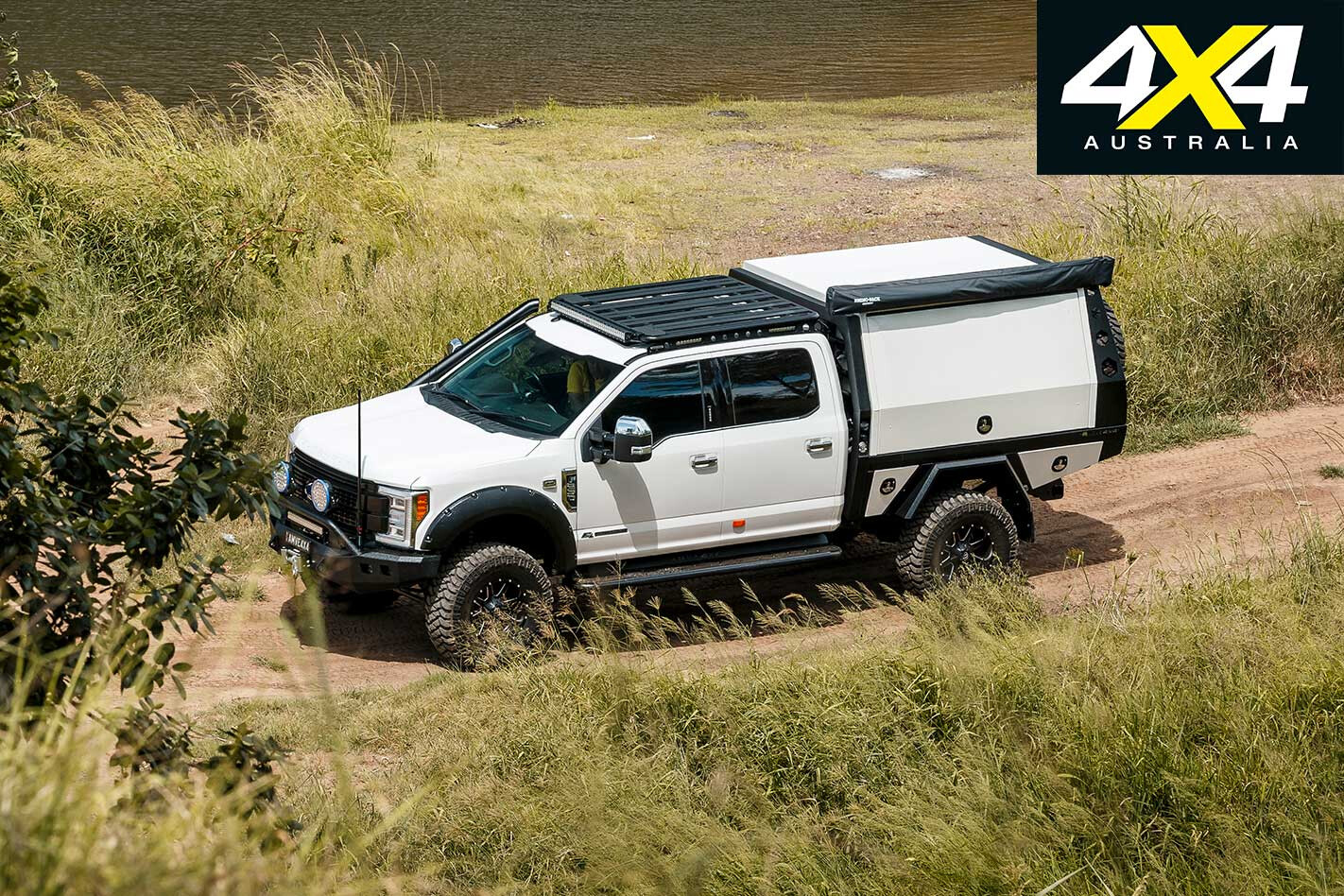
All of which hints at the main purpose for this Pearl White monster: on- and off-road touring throughout Australia while towing a 21-foot Kedron off-road caravan. The F-250 is impressive off the showroom floor, but Jamie had bigger plans to build the best touring F-Truck in Australia.
Tricks of the trade
DIRECT imports to Australia of the Ford F-250 stopped in 2006, but, thankfully, a host of aftermarket import and conversion companies have since sprung up to meet the ever-increasing demand.
However, this still doesn’t mean an F-250 owner has an easy time of fitting-out their particular beast; there’s a distinct shortage of aftermarket accessories available here for these trucks, making Jamie’s work slightly more difficult than usual.
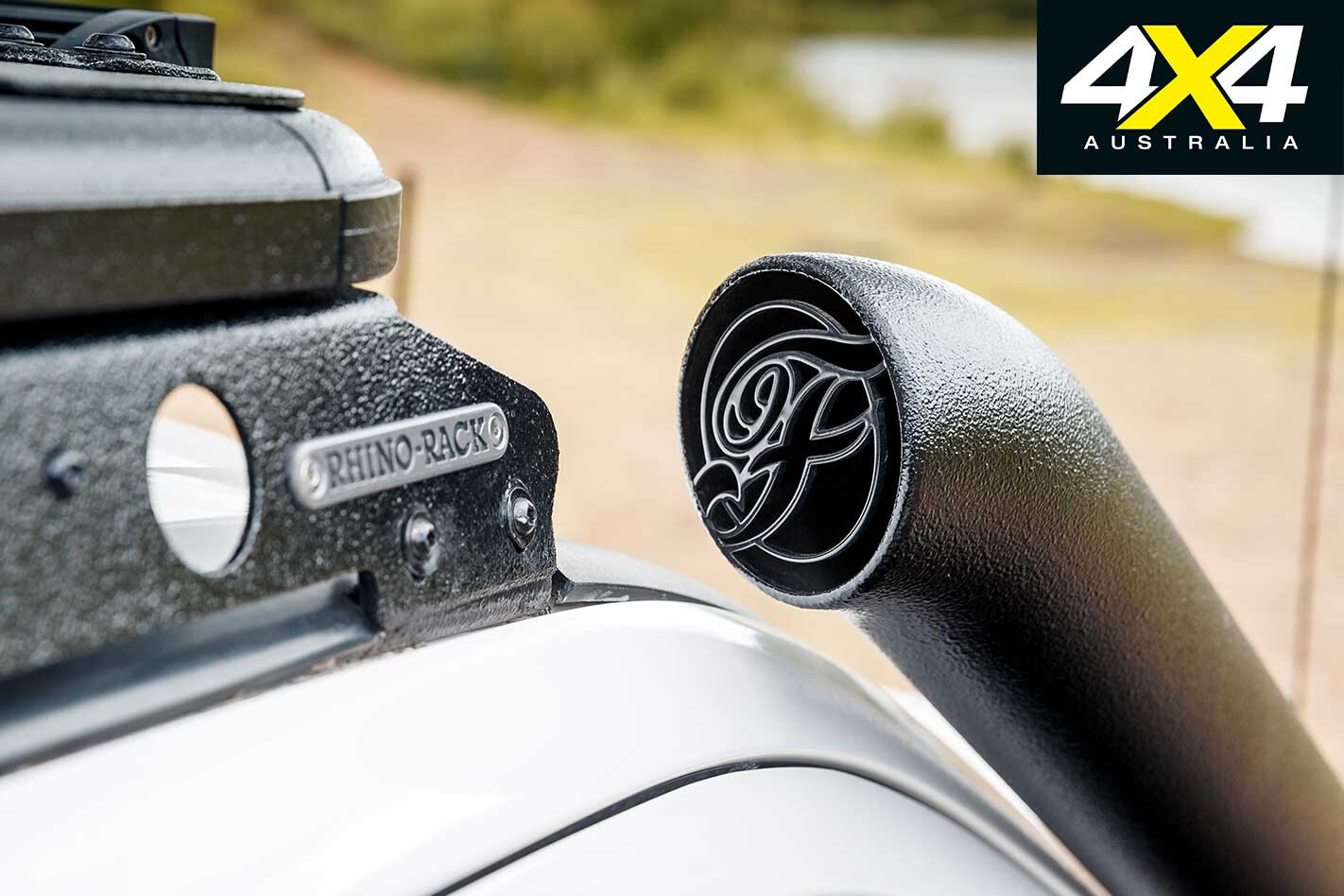
The F-250’s snorkel is the perfect example; with no aftermarket versions available Jamie gave Nathan at Fabulous Fabrication a shout out to build him a four-inch stainless steel snorkel that was then coated in Raptor finish for additional protection.
It was the longer-than-usual wait for spare parts – on top of either sourcing accessories or manufacturing his own – that was the most challenging part of the build, according to Jamie, who cited the popularity of the vehicle in the USA as the main reason behind parts delivery delays. This wasn’t a huge thing, though, and gave him ample time to sort out the major changes to the vehicle, starting with the suspension setup.
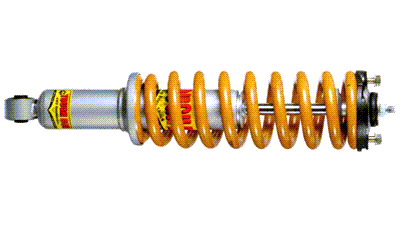
The F-250 stands four inches higher than standard, courtesy of a King Off-Road Racing Shocks coil-over system up front and a set of standard rear springs out the back that have had an additional leaf added to them, as well as a set of Airbag Man airbags and another pair of King Shocks.
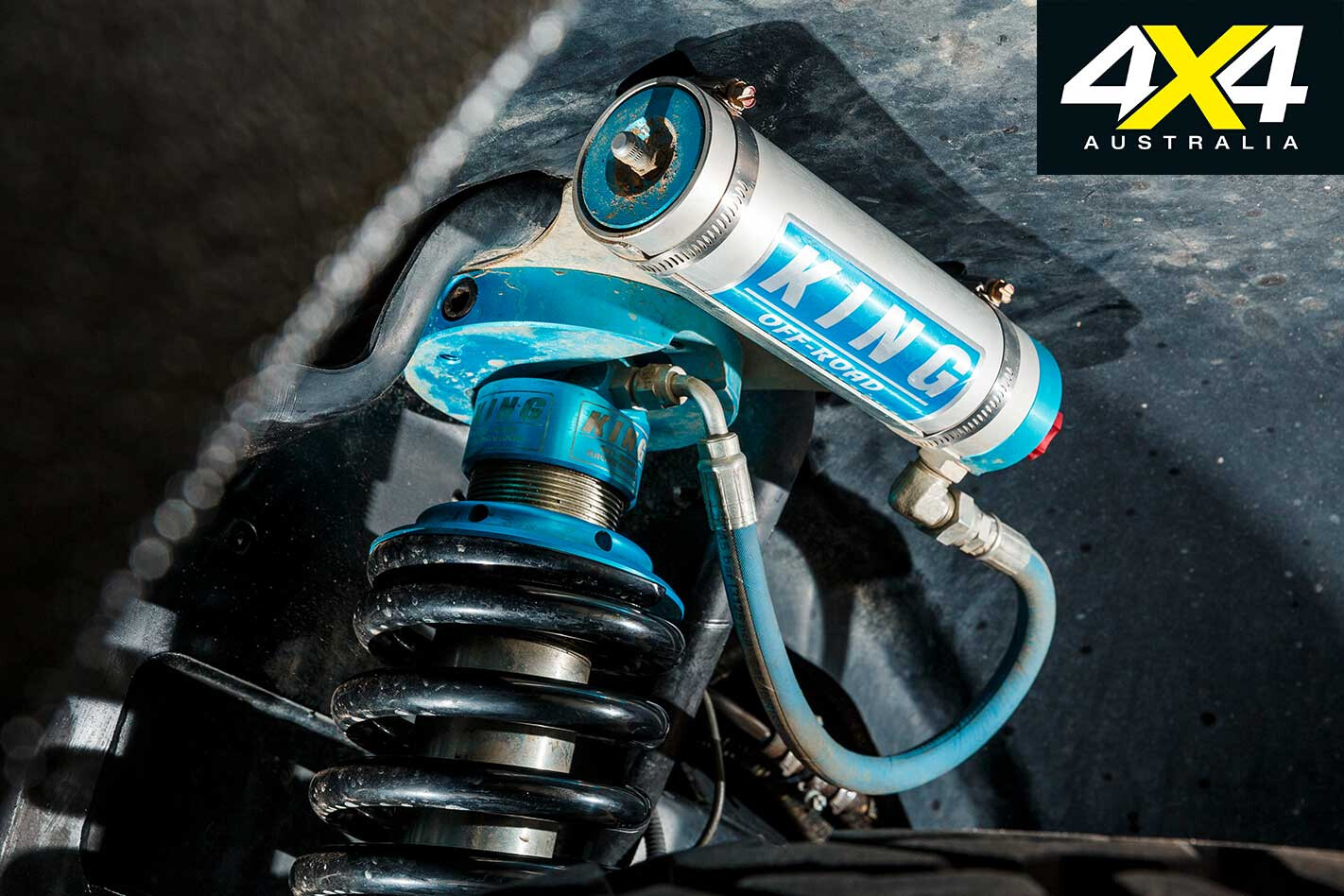
It’s nothing over the top (that’s not what you want for outback travel) but it’s super-smart; having the ability to adjust the airbags in the rear means ride and handling remain unaffected regardless of whether there’s a heavy load on board or the big bopper is cruising unladen.
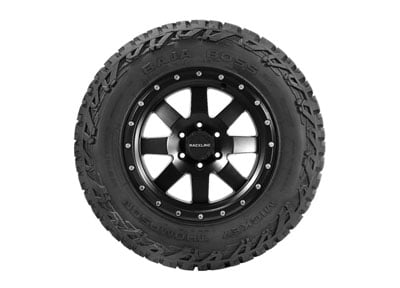
Another bush-touring modification by Jamie is fitment of Fuel 18×9-inch wheels, shod with 37×13.5×18 Mickey Thompson MTZ P3 rubber (he’s a big fan of Mickey Thompson tyres). The reason for opting for 18s and not going ‘fully sick’ with a set of larger 20-inch rims is that Jamie wanted more sidewall depth on the tyres to aid the load-carrying process on- and off-road.
The very personal touch
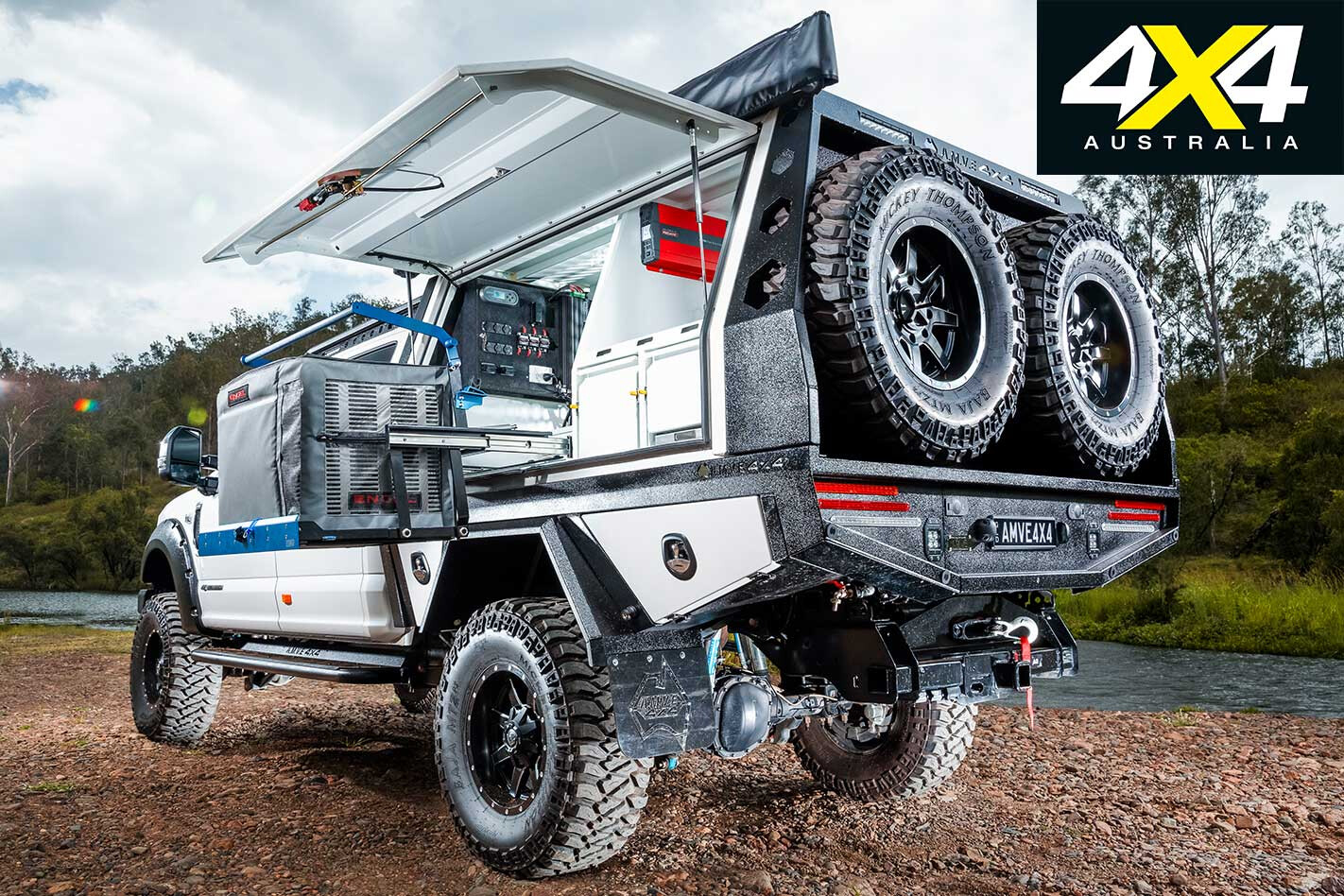
AS YOU’D expect from a company highly regarded for its canopies, tray bodies and custom 4×4 fit-outs, the F-250 sports some brilliant examples of AMVE 4×4’s handiwork throughout. The full-custom aluminium tray (with tapered channel and a one-piece mudguards, again covered with protective Raptor coating) features four very well-finished tapered toolboxes underneath (two each side, one of which houses an ARB twin-cylinder air compressor).
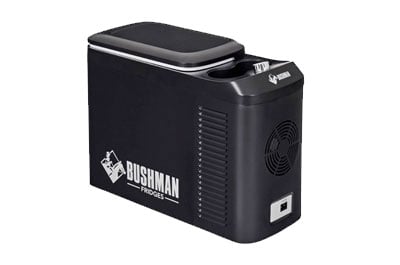
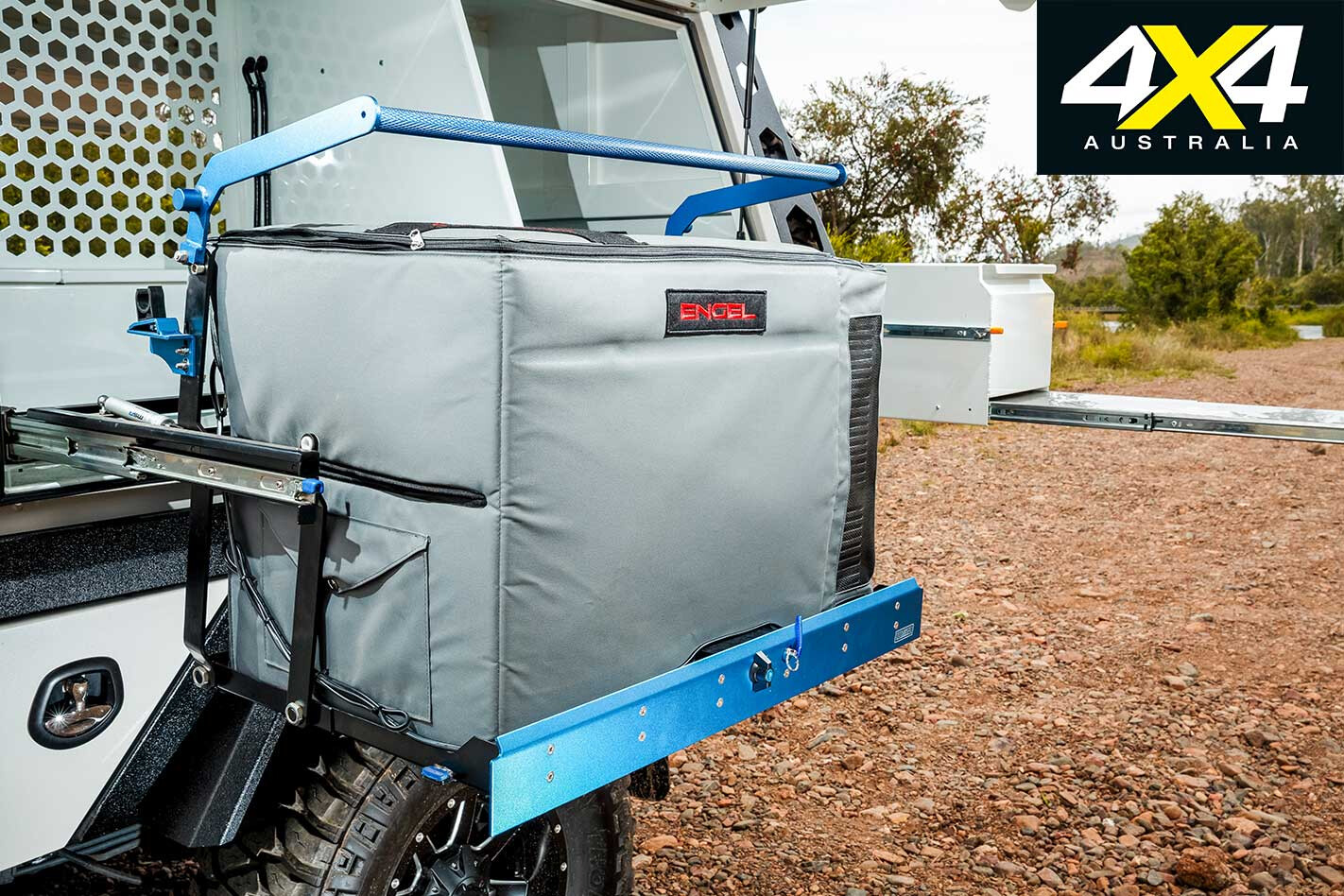
The AMVE 4×4 canopy includes two lift-up side doors that run the length of the canopy, with a divider in the centre of the canopy separating the fridge/freezer section (the Engel 80-litre fridge/freezer is accessed via an MSA 4×4 drop-down fridge-slide) on the left-hand side from the twin cargo drawers (one of which includes a slide-out table underneath).
The electrical work on the vehicle was the most challenging for Jamie and his team, thanks to the increased complexity of the vehicle compared to his previous Toyotas, along with the wiring itself. But you wouldn’t know it by the end product, as it looks neat as a pin. The fridge/freezer and slide section includes a great example of the AMVE 4×4 team’s exceptional auto-electrical work.
A custom panel that houses a Redarc Battery Management System (BMS) along with a combination of USB, Anderson and 12V charging outlets, as well as a 240V input socket, 2000W Redarc inverter is mounted vertically on the front wall of the canopy.
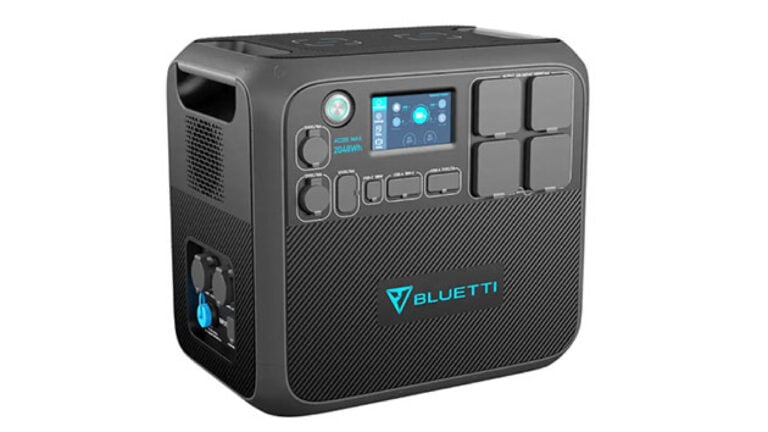
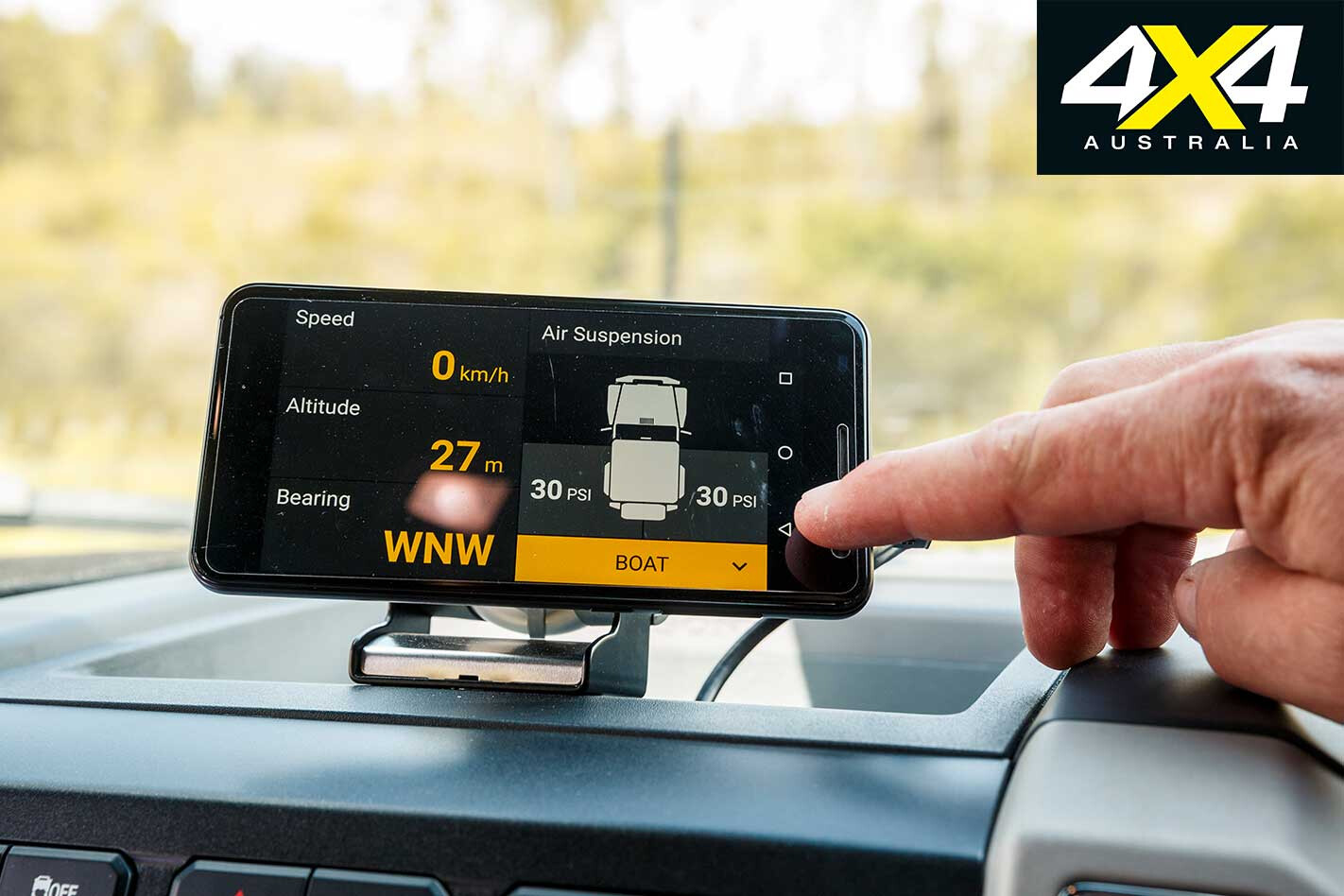
There’s access to the power of the sun, via a Redarc solar blanket, while behind the fridge/freezer you’ll find the power source of this Blue Oval Bruiser – two 160amp/h lithium batteries – housed in a dedicated box. Interestingly, Jamie opted for ARB’s new Linx in-cabin control unit to manage everything from battery voltage to airbag pressures, as well as the external lights on the big rig, plus the ARB compressor.
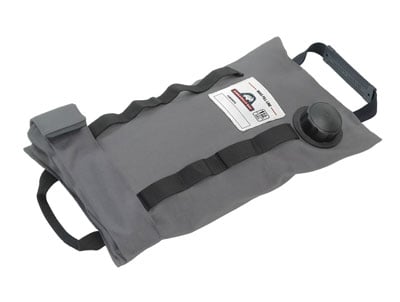
There’s more storage under the tray, with a 1500mm slide-out drawer, while a Rhino-Rack Pioneer platform adds load capacity up on the vehicle’s roof. Swinging off the top of the canopy is a shade-giving Rhino-Rack Batwing awning, while there’s also a 100-litre aluminium water tank aboard, with the liquid gold accessed via a 12V pump.
Last, but most certainly not least, is the custom-built tyre holder at the rear of the canopy that carries those two monstrous 37-inch spares.
Full body press
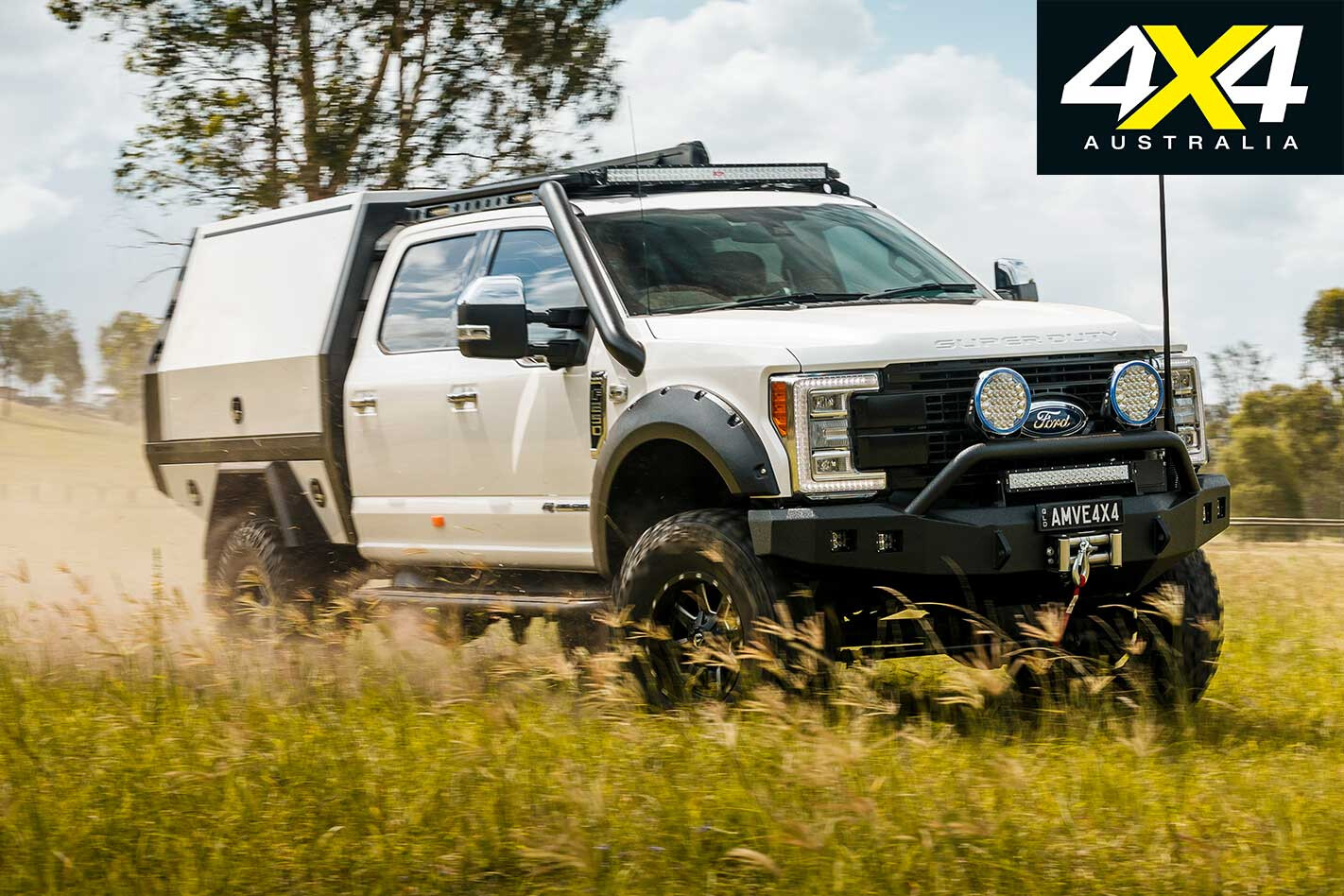
BIG TRIPS often mean big hours behind the wheel each day and night. To this end, Jamie has fitted protective gear and plenty of lighting for those night drives. The front bar is a Road Armor Steel Stealth jobbie, painted in Raptor coating.
As you might have gathered, the team at AMVE 4×4 are big fans of the Raptor protective coating – it’s on numerous parts of the Ford, including the aforementioned bar, the Bushwacker flares, the schmick one-piece mudguards on the cargo tray and all other metal parts.
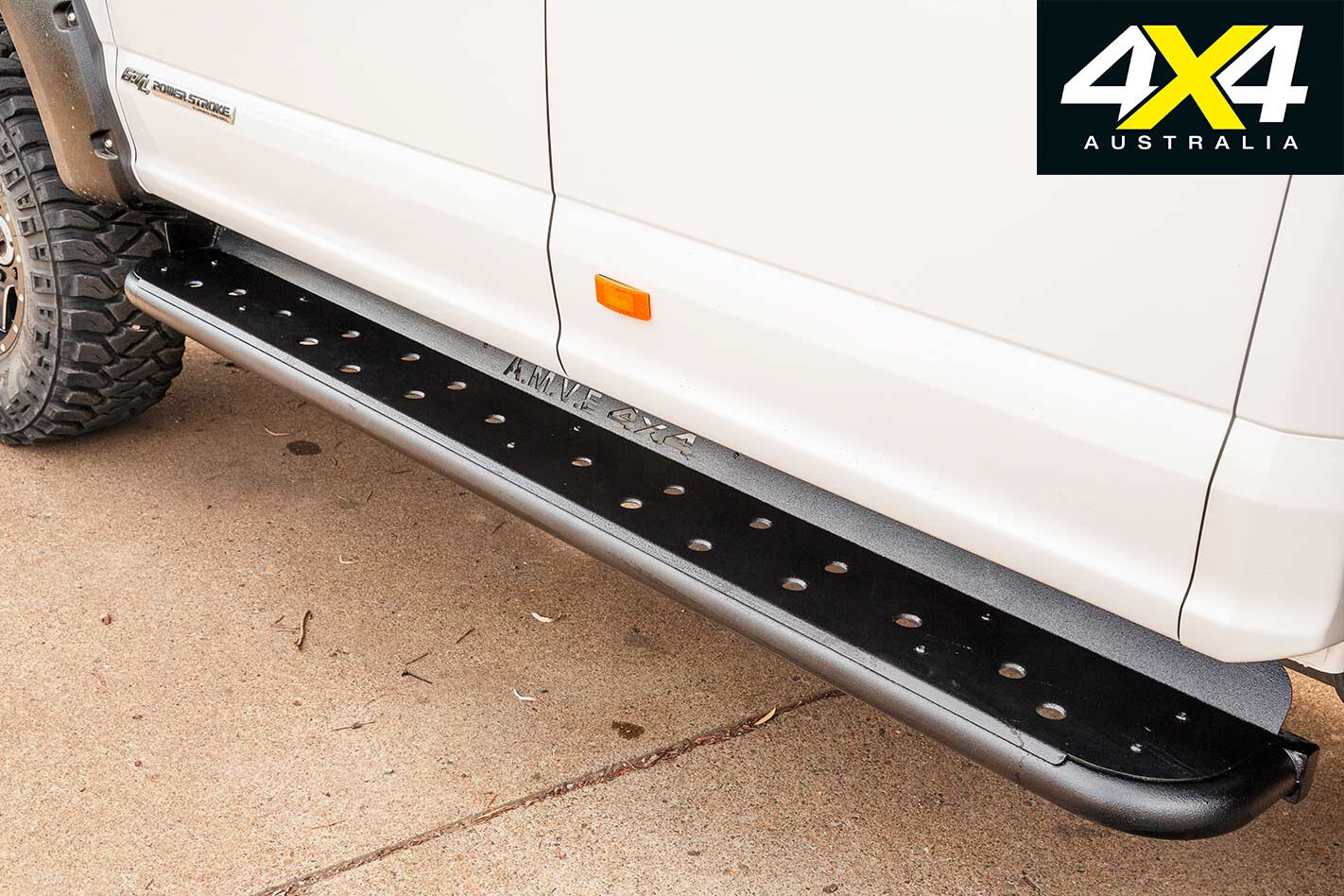
AMVE 4×4’s own steel sidesteps keep the underbelly protected, while recovery is more than adequately covered by the 15,000lb Warn winch at the front, and another Warn winch – a 12,000lb unit – at the rear. We’d be hard-pressed to envisage this F-250 ever being stuck for too long…
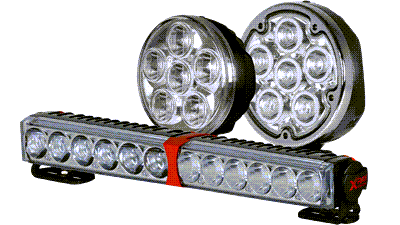
Night driving means increased risk of animal collisions, so Jamie added plenty of lighting to ensure wayward wildlife is spotted (excuse the pun) before it’s too late. Two nine-inch Weldex LED spotties sit on the front bar, accompanied by a 20-inch double-row XRay lightbar.
A 40-inch double-row XRay lightbar sits atop the Rhino-Rack Platform, there are four nine-inch LED lights for side-vision, and two nine-inch LEDs attached to the tyre holder. There’s also rear-strip LED tail-lights built into the tray, which includes flush-mount reverse lights.
Built for purpose
WHEN Jamie affirms his love for full-size Yank pick-ups by saying that “nothing compares to these American trucks” he could not only be talking about these vehicles in the general sense, but more accurately also stating a fact about his own custom rig. When we ask him would he do anything differently if he built another one, the answer was short.
“Nothing,” he affirms. “Everything is spot-on and I would have no changes to make.”
The confidence reflects the attention to detail in the build. Every component on the F-250 has been well-thought-out before fitment, with the view to ensuring that, when complete, this modified beast fulfils the often hard-to-achieve brief of the ultimate long-distance, off-road touring vehicle that can, literally, take itself, a full family, the caravan and even the kitchen sink, anywhere in Australia, in comfort. And then there’s the reassurance of knowing it’ll do it as many times as you can get out there.
For those who are keen to check out this super-tough F-250 tourer in the metal, Jamie will have it on display at the upcoming National 4×4 Show in Brisbane in April.
4X4 Australia's project builds
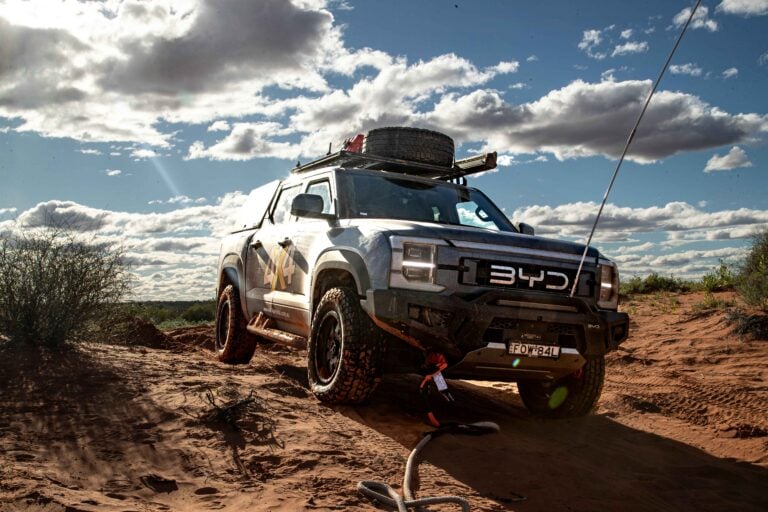
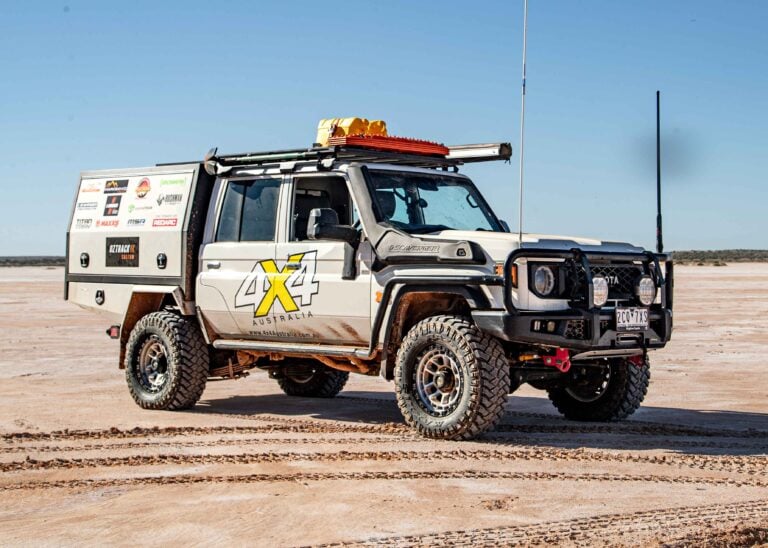
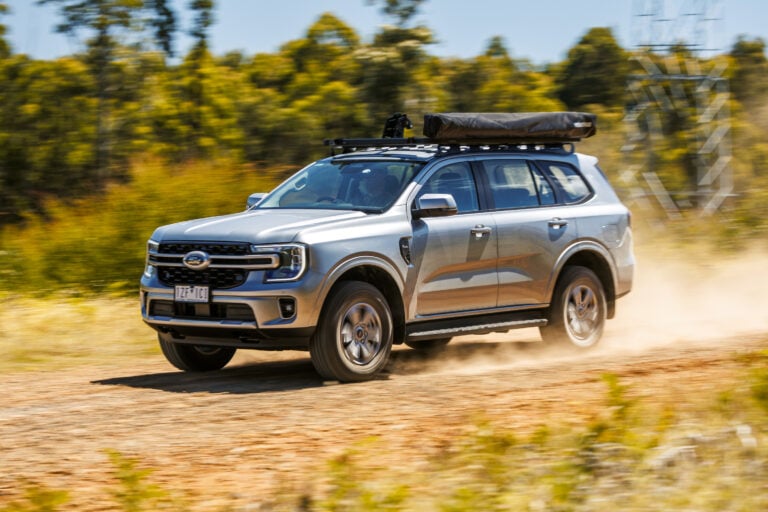
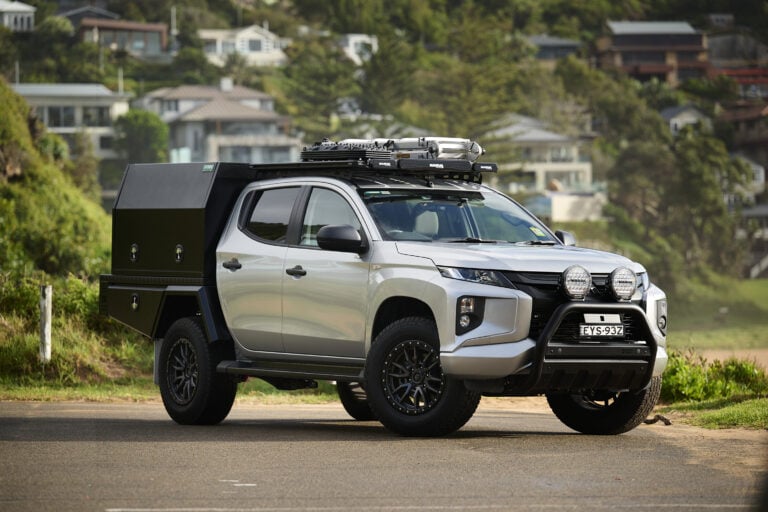
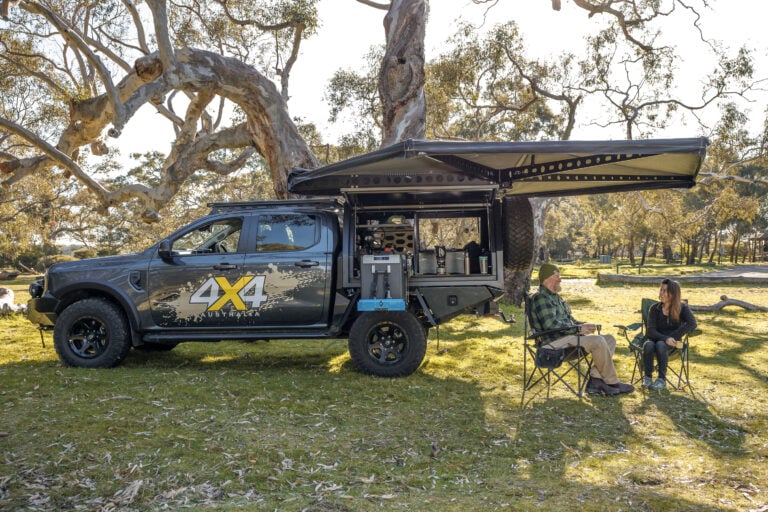
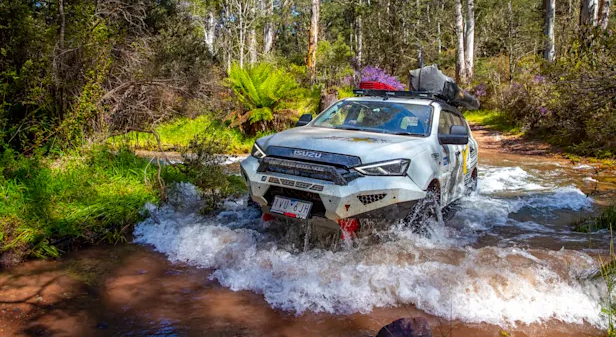
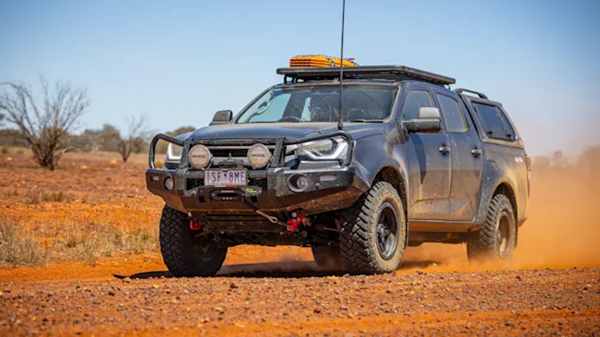
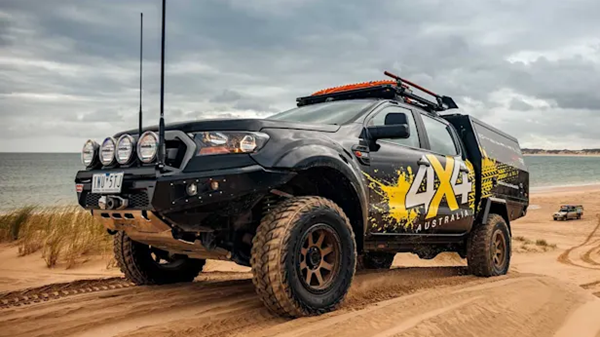
Following a promising campaign at last year’s SuperUtes Series with Holden, Ross Stone Racing (RSR) and Caltex Australia has partnered with Isuzu Ute Australia for the 2019 ECB SuperUtes season.
Piloting duties for Isuzu’s D-MAX SuperUtes entry is 25-year old New Zealand driver, Tom Alexander who will be using 22 as his racing number. Alexander, who finished third overall last year for RSR with six wins and six pole positions under his belt, will be competing in all sixteen races of the eight SuperUtes rounds this year.
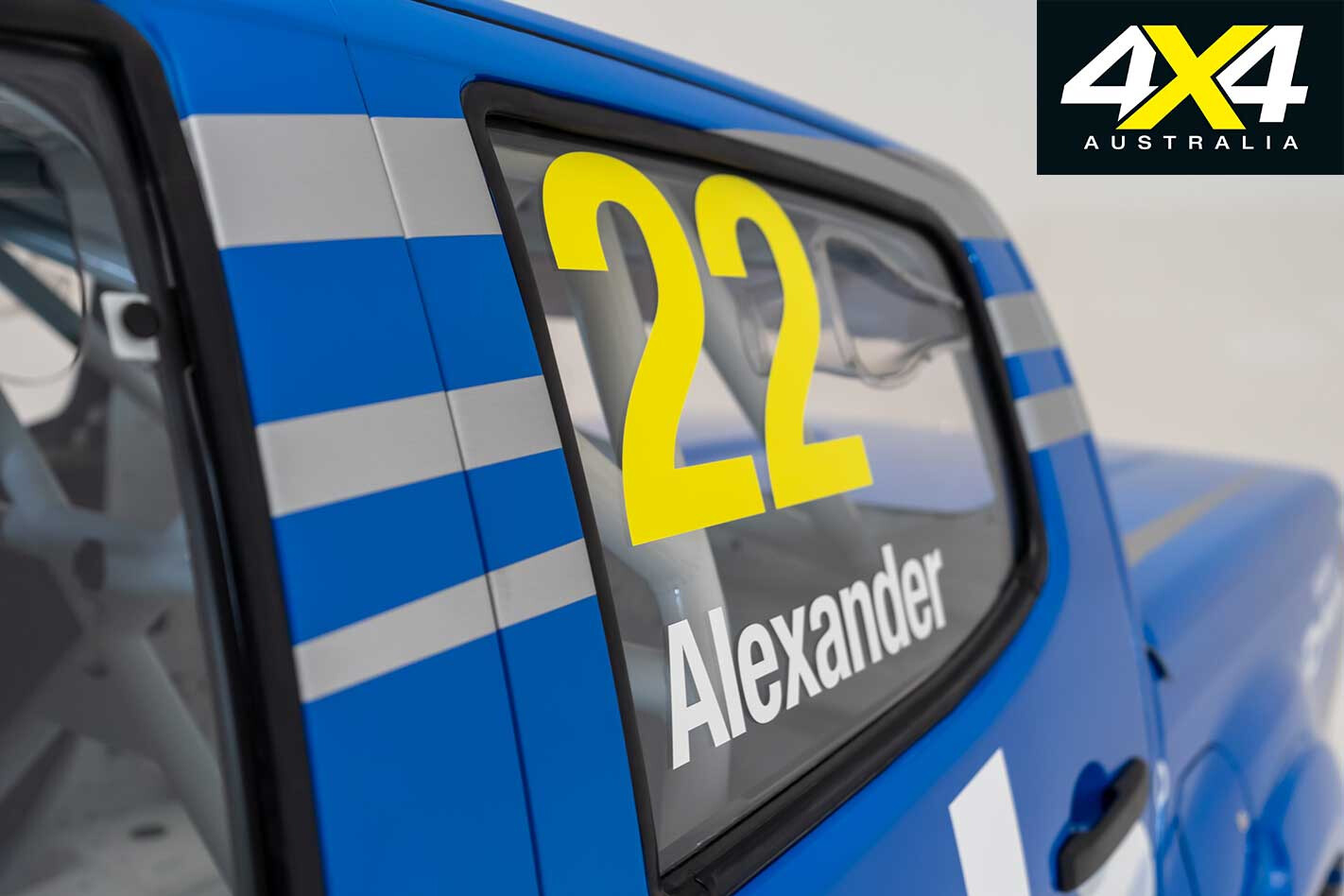
“It’s great to have Tom back on board in the D-MAX, he’s now driven at all the events we’re competing in this year – except for Perth – so we’re already ahead of where we were last year,” RSR team principal, Ross Stone, said.
“We followed the SuperUtes series closely and were impressed with the level of racing displayed and feel that this is a great platform to showcase our 3.0-litre turbo diesel engine in our Isuzu D-MAX,” added Mike Conybeare, general manager of marketing and PR for Isuzu Ute Australia.
The second season of the ECB SuperUtes will start at the Superloop Adelaide 500 on February 28 to March 3, 2019. From there the ute racing series will compete in seven other Supercars Events as follows:
– Perth Supernight (2nd – 4th May) – Winton Supersprint (24th – 26th May) – Watpac Townsville 400 (5th – 7th July) – Coates Hire Ipswich Supersprint (26th – 28th July) – Supercheap Auto Bathurst 1000 (10th – 13th October) – Vodafone Gold Coast 500 (25th – 27th October) – Coates Hire Newcastle 500 (22nd – 24th November)
FOR MORE than 20 years American Expedition Vehicles (AEV) has been the specialist company when it comes to suppling OE and better quality accessories and complete converted vehicles from the Jeep garage.
Starting with the TJ Wrangler and booming through the JK era, AEV provided parts, V8 engine conversions, double cab pick-up conversions and complete turnkey vehicles for anyone wanting top-notch products for their Jeep.
With FCA’s own MOPAR brand branching out to market many of these parts, and Jeep developing its own pick-up, AEV has more recently ventured into the RAM trucks showroom and now beyond the FCA brand altogether with the Chevrolet Colorado ZR2 Bison which it co-developed with GM.
However, the Wrangler was always AEV’s bread-and-butter model and, with the new JL Wrangler available from Jeep, it was only a matter of time before the Michigan-based company revealed its product.
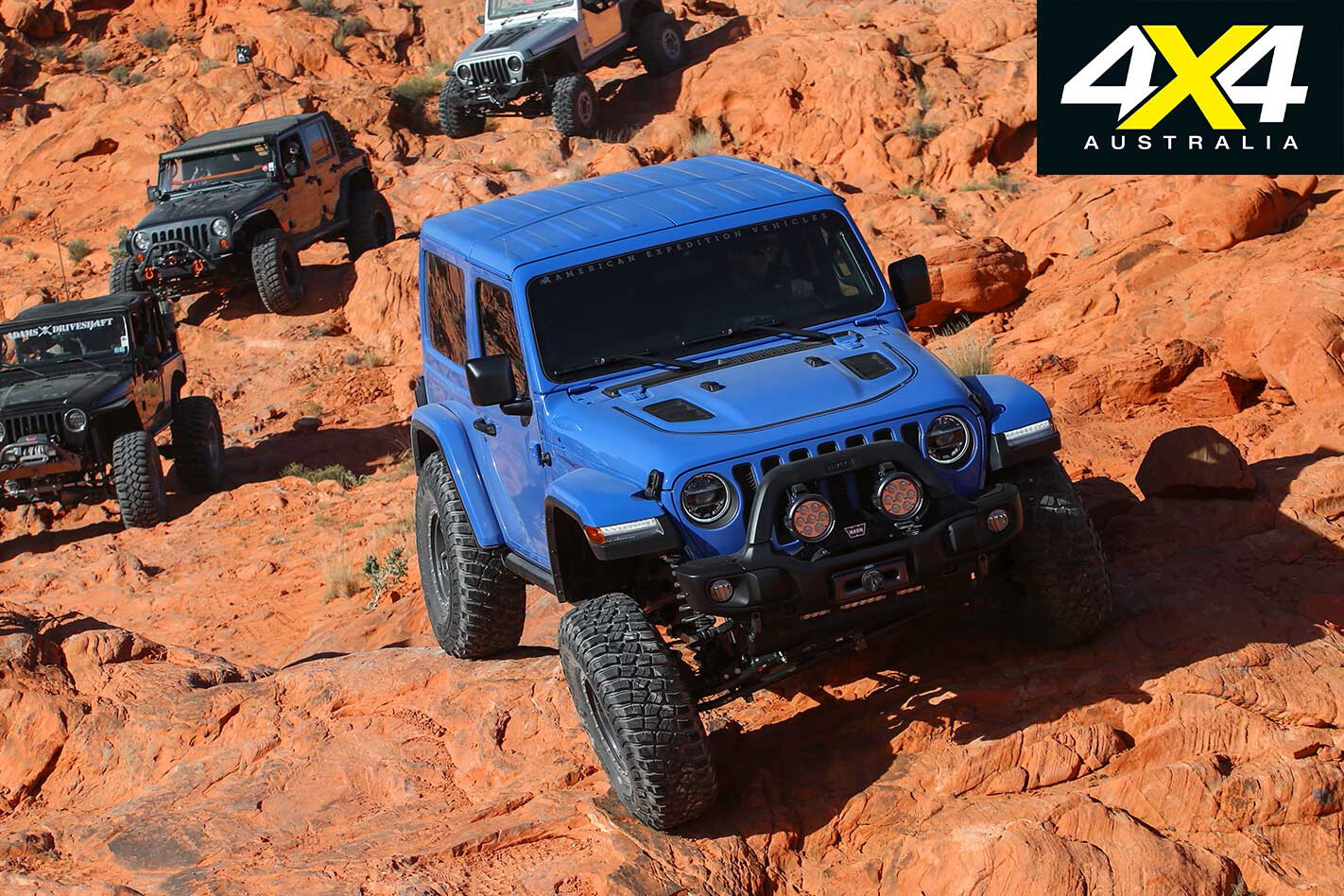
That time came at the 2018 SEMA Show in Las Vegas, where AEV displayed both long and short wheelbase JL Rubicons featuring its new gear. And, as we’ve done in the past, we took the Jeeps wheeling the day after the show finished.
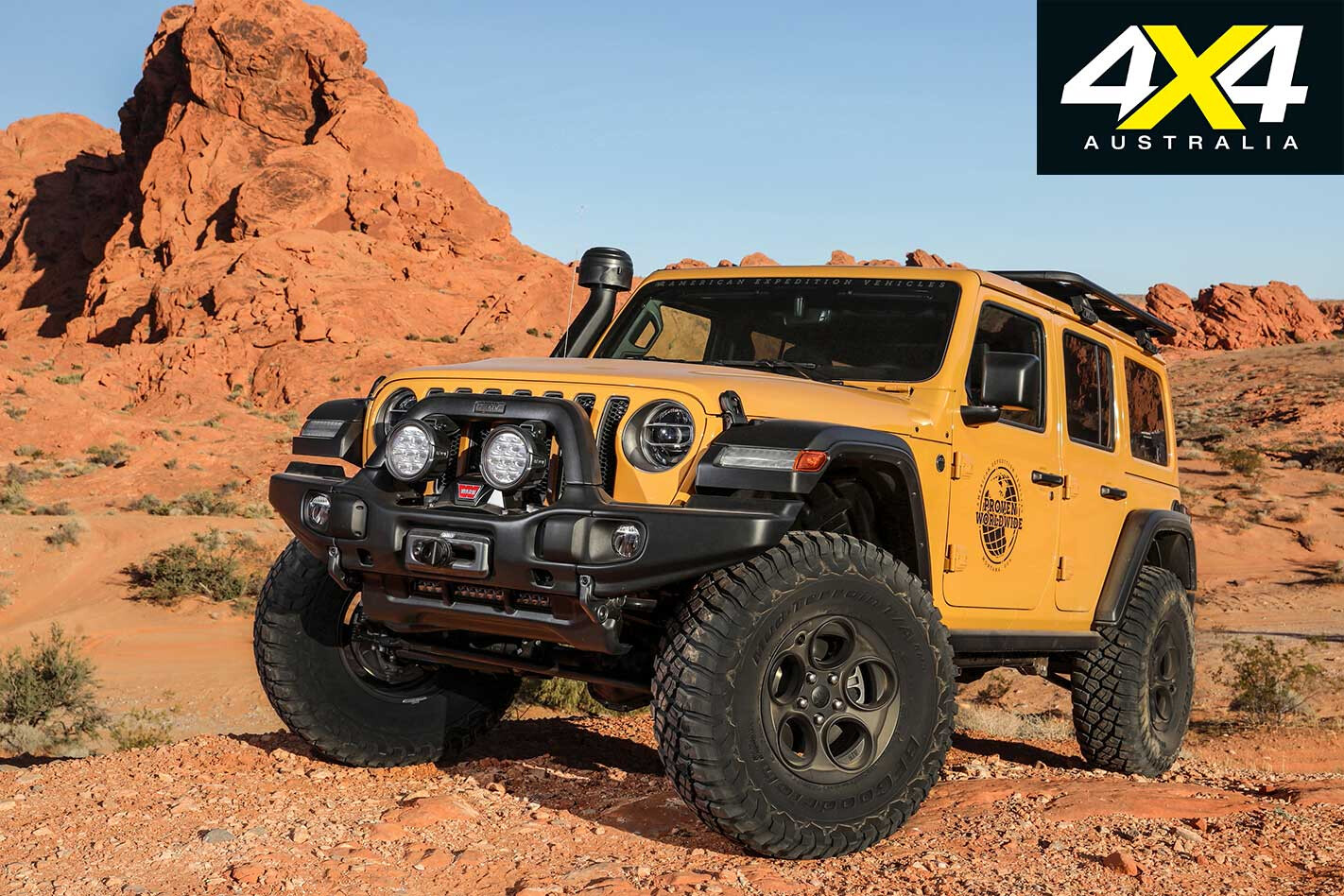
The long wheelbase four-door is a Rubicon model which has been custom-painted in a colour they call Sand Glow. It’s not a Jeep colour, so don’t go asking your Jeep dealer for it. It features the AEV DualSport RT suspension which gives a 2.5-inch lift in ride height, new AEV front and rear bumpers, 17 x 8.5-inch AEV Savegre wheels wrapped in 37-inch BFG KM3s, and the newly designed air-intake snorkel.
“The bar is something we’re extremely proud of,” AEV founder Dave Harriton told us at the SEMA Show. “The bar is made with high-strength boron steel which is about six times stronger than regular steel, so we were able to lose around 20 pounds (9kg) compared to our original bumper system.”
The bumper is modular and uses a common centre section, while the outer ‘wings’ can be tailored to needs and wants. This allows for a full-width bar as on the LWB, or a stubby bar as on the blue SWB.
Jeep offers the JL with different front flares depending on the model and, again, there are different bar wings to suit to ensure they meet up. The JL Rubicon comes with the factory highline flares, which are wider than the lower flares, to cover larger tyres.
The Savagre wheels will be familiar to AEV fans and, along with the Salta, Pintler and Borah wheels, will all be available for JL. They have been modified for the new car with a larger centre opening, which allows the reversing camera to poke through the spare wheel mounted on the back.
The spare is mounted on the AEV rear bar with its swing-out wheel carrier. This bar is similar to the design of the previous JK bar but now incorporates a fold-down step and doesn’t include the water tank in the bar ends.
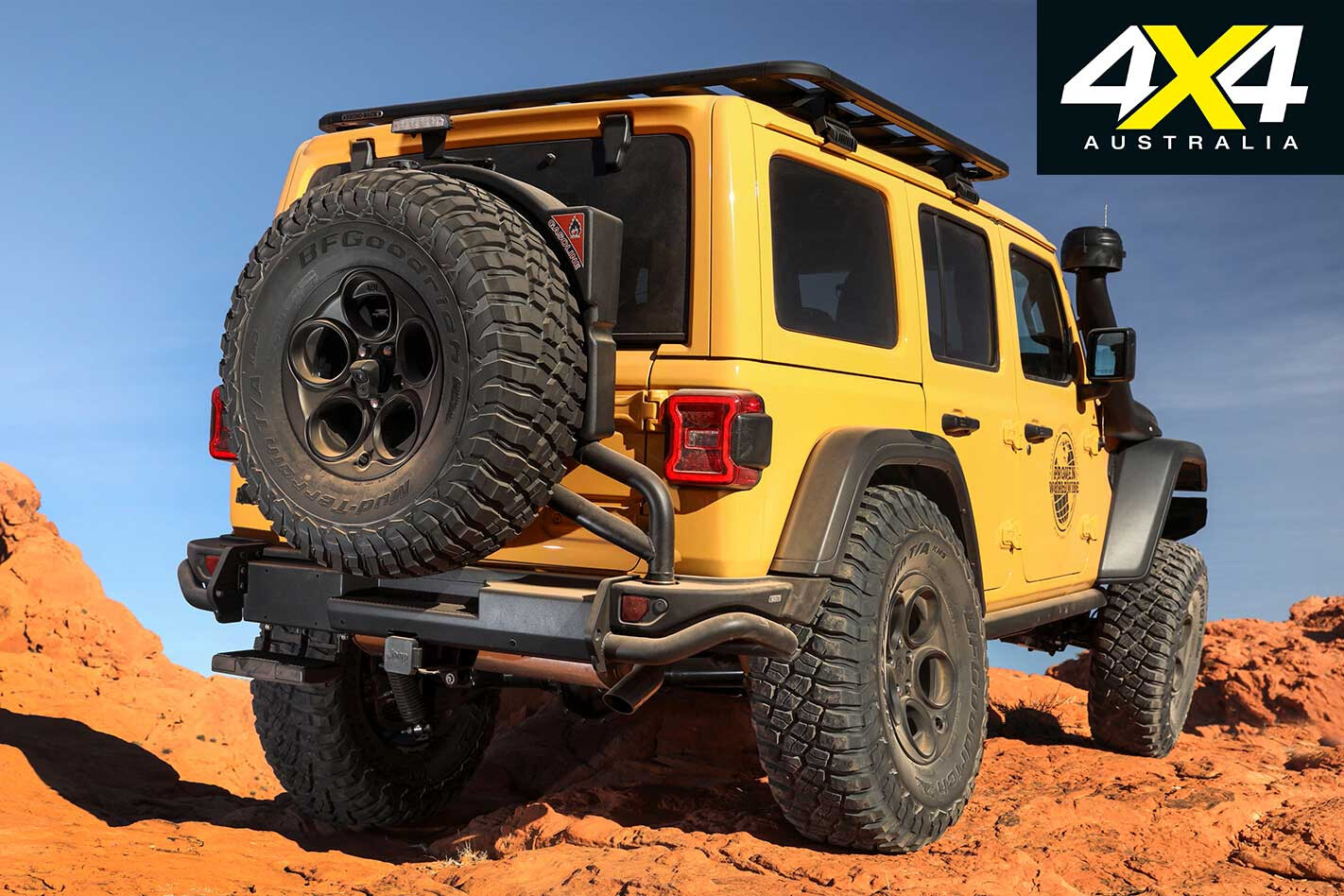
AEV says it is looking at other water-carrying solutions for the JL, and the other side of the bar has been left bare allowing for the possibility of dual swing-out carriers in the future. This is unconfirmed at this stage, but the bar has been designed to accept it if the company goes ahead with it.
The blue shorty is kitted out pretty much the same way as the LWB Rubicon in that it is set up for long-distance touring and expeditions. It has the AEV bars front and rear, with the front bar configured as a stubby. The bars on both cars mount prototype seven-inch LED lights, which will be a future product from AEV, as well as Warn winches with Factor 55 hitches.
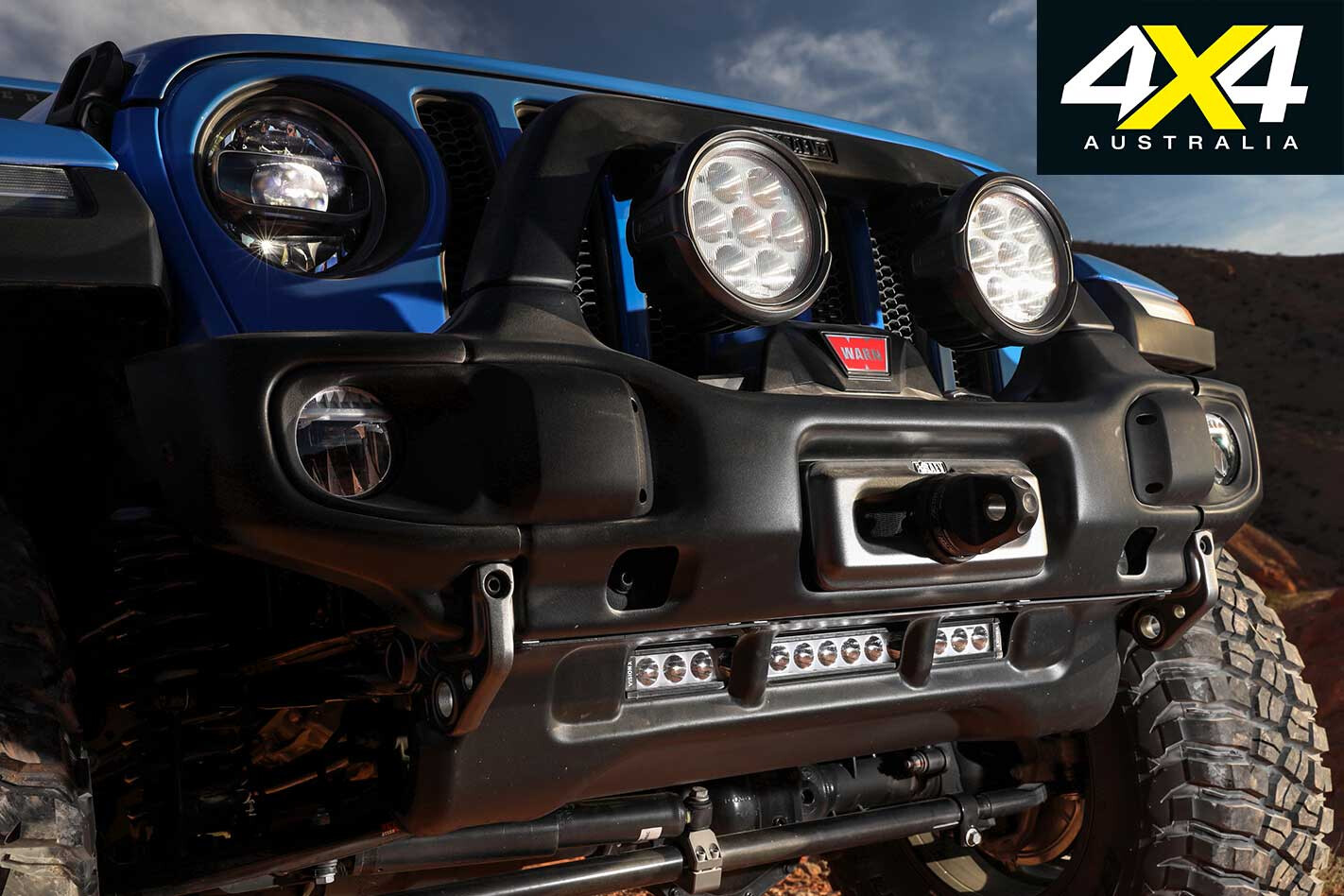
The SWB Rubicon also has the DualSport RT suspension but the wheels are AEV Borah beadlocks, again with the bigger centre hole to allow the rear-view camera to fit. The AEV beadlock wheels can operate as both a conventional unlocked bead or with the ring fitted to lock the tyre on.
The colour is once again not a Jeep offering, but it is in the family. It’s called New Holland Blue and is a limited edition colour on some RAM trucks.
While it might appear to be business as usual for AEV with its new line of JL products, there are a couple of items it won’t be doing for this latest Wrangler. With the launch of the Jeep Gladiator, which looks amazingly similar to the AEV Brute Double Cab, AEV will not be doing conversions on the JL. You can expect AEV products to improve the Gladiator once the vehicle is on the market, though.
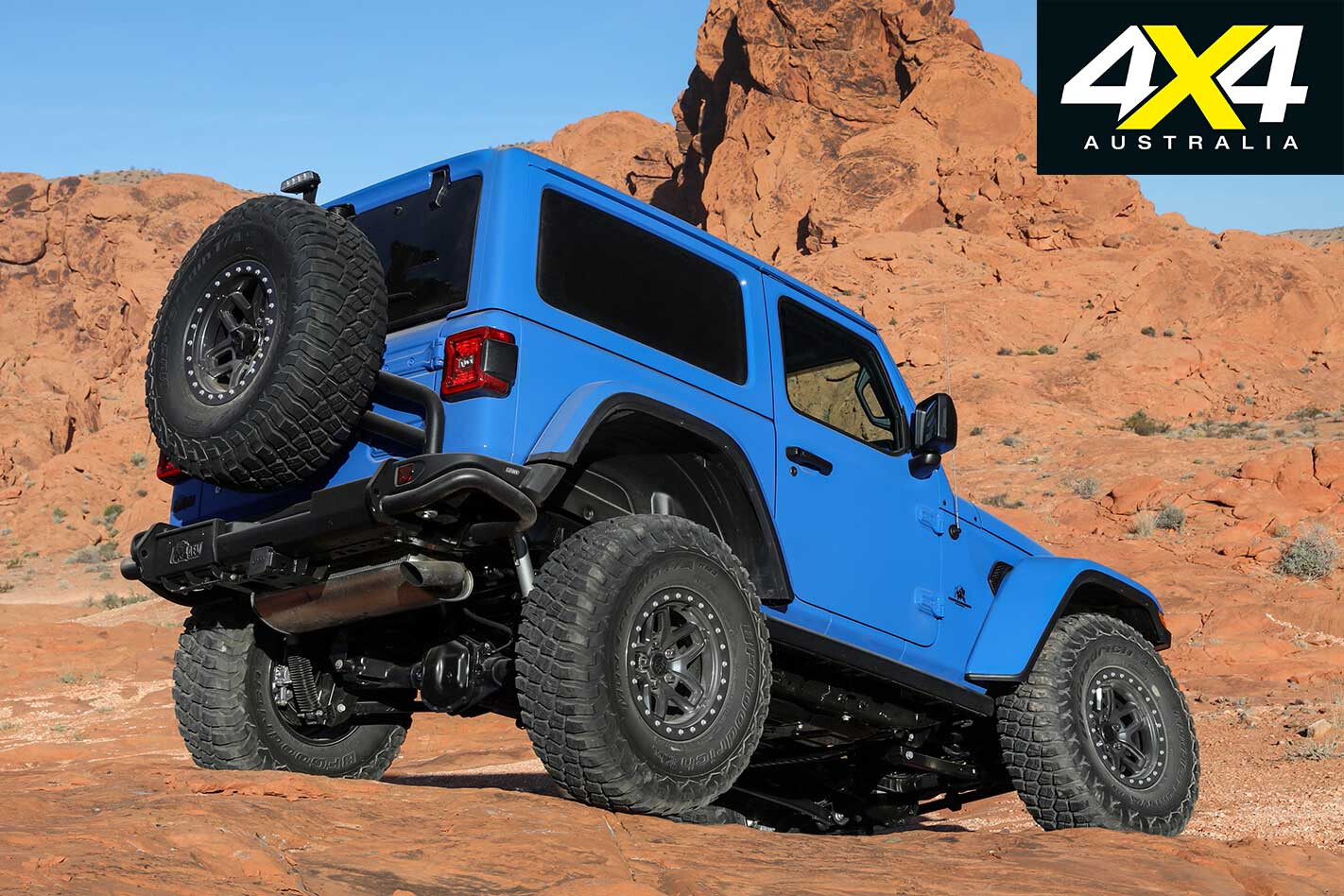
The other big-ticket item is V8 conversions, which were always popular on the TJ and JK models. AEV says that with the different engines now offered on the JL – the petrol V6, turbocharged petrol four-cylinder, the soon-to-come diesel V6, and a four-cylinder diesel in Europe – there will be a lot more time and expense required to develop the conversions for each of the different OE engine options; so at this point there are no plans for JL Hemi swaps. That might change in the future, but there’s nothing for now.
AEV developed the original heat reduction hoods for the JK Wranglers which MOPAR and Jeep later adopted as factory offerings. With this in mind, there are no plans for any AEV hoods for the JL. The JL Wrangler is set to launch in Australia this March, and the approved AEV dealers in Melbourne and Brisbane should be carrying stock for these vehicles.
THE ARRIVAL of the uber off-road version of the new Discovery – Discovery SVX – that was first announced in 2017, is now not happening, with Land Rover terminating the model before a chunky wheel has been turned in anger off-road.
This announcement follows other sad news for cashed-up Landy-philes: the recent deletion of what was to be a limited-run Range Rover SV Coupe two-door. Neither announcement is unexpected in light of the recent the recent news of record losses – a hefty $550 million – in quarter four of 2018 for Jaguar Land Rover.
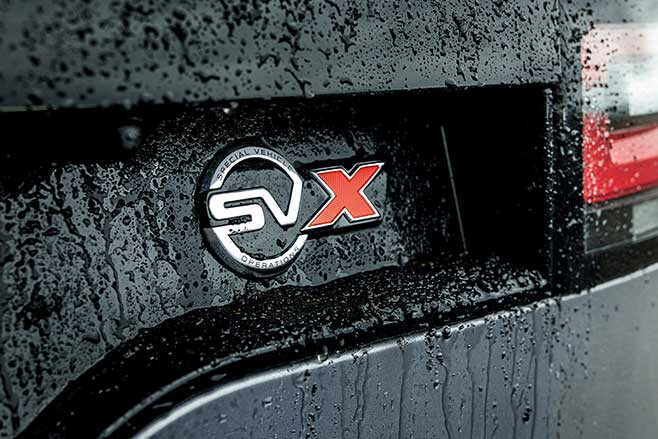
These losses have been attributed to the growing anti-diesel sentiment and tighter emission restrictions from government bodies. Add in a significant drop in sales in China, the continued political mess of Brexit in the UK, and having to make 10 per cent of its workforce redundant as a result of aforementioned factors, and it’s been a tough year for the Brit off-road icon.
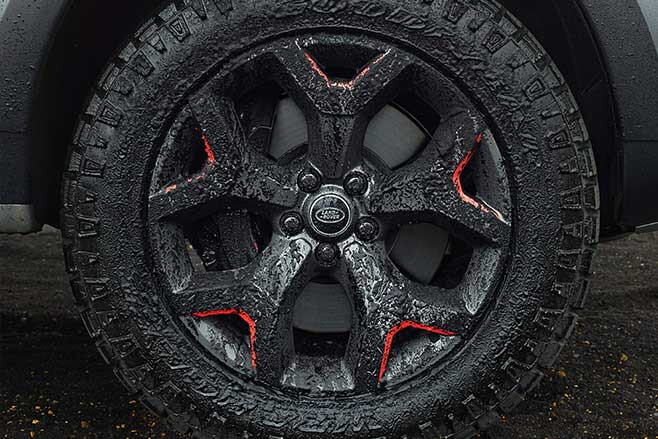
Dubbed “the ultimate all-terrain Land Rover Discovery” by Land Rover, the SVX was to be the first Landy to be fitted with a monster 386kW/625Nm supercharged 5.0-litre V8 petrol donk. On top of this powerplant, the SVX featured raised body height (over the standard Disco), significant suspension mods, beefy 275/55 R20 Goodyear Wrangler rubber wrapped around forged-alloy wheels, integrated rear-mount electric winch, and front recovery points.
The SVX also included Hydraulic Active Roll Control (H-ARC) for improved wheel articulation off-road (when combined with the SVX’s unique revised knuckles and long-travel shocks), and a tighter rein on bodyroll on-road.
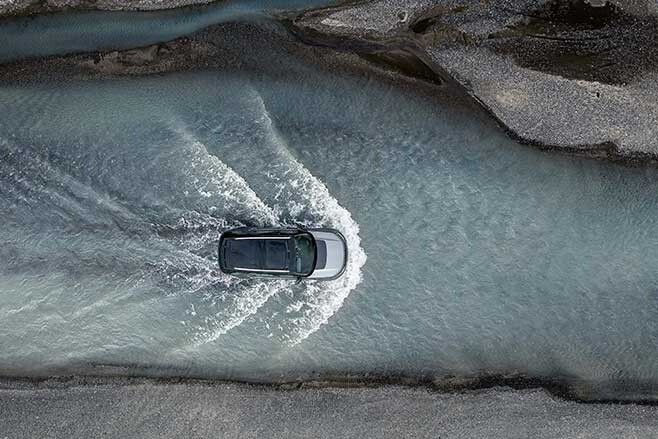
Land Rover sources are saying this is not the end of its Special Vehicles Operations section of the brand, with numerous SVO-tweaked vehicles still in the works or, in the case of the recent Rangie Velar SVR, very close to release. Whether there will be a re-born or revised Discovery SVX, though, remains to be seen, with Land Rover only hinting at future developments by saying that the SVX is no longer going ahead in “its current form”.
With that supercharged V8 now deemed not applicable for the current Discovery, there would seem to be a dearth of powerplant options for any future souped-up Disco. The recently announced supercharged/turbocharged 294kW/550Nm 3.0-litre Ingenium straight-six petrol is the obvious replacement, with this new donk able to be suitably boosted (excuse the pun) to produce even more grunt in line with SVO expectations.
Plus, as part of a modular-style engine family (the new six joins a four-cylinder and upcoming 1.5-litre three-cylinder Ingenium engines) it makes for cheaper overall production costs for JLR, and it could also be slotted into the upcoming all-new Defender as a hero model for that line-up.
With the increasing swing against diesel-powered vehicles, and the impressive improvement in fuel efficiency and low-rpm torque delivery found in LR’s Ingenium turbo-petrol donks (not to mention its hybrid powerplants), this may be the time for Land Rover to return to its petrol-powered origins.