Get up to speed on the new Prado
The stories below will give you a guide to everything we learned about the new Prado when it was unveiled. All fresh stories published since then will be found on our Toyota Prado model page here.

Here it is. If you’re patient and keen on Toyota’s very latest 4×4 offering, the links below hold everything you need to know.
The stories below will give you a guide to everything we learned about the new Prado when it was unveiled. All fresh stories published since then will be found on our Toyota Prado model page here.
New teasers published overnight by Toyota in Australia, the United States and Europe suggest two distinct appearances will be offered with a standard design expected for Australia and Japan, and a more rugged look for the shown North American and European variant.
It is unclear if the off-road-focused variant – potentially wearing GR Sport or TRD badging – will be offered alongside the luxury-focused option, or vice versa.
Interestingly, Toyota Australia does not refer to the new model as a ‘Prado’ in its social media post, referring to it as the “all-new 2024 Land Cruiser” despite the availability of the full-size LandCruiser 300 Series locally.
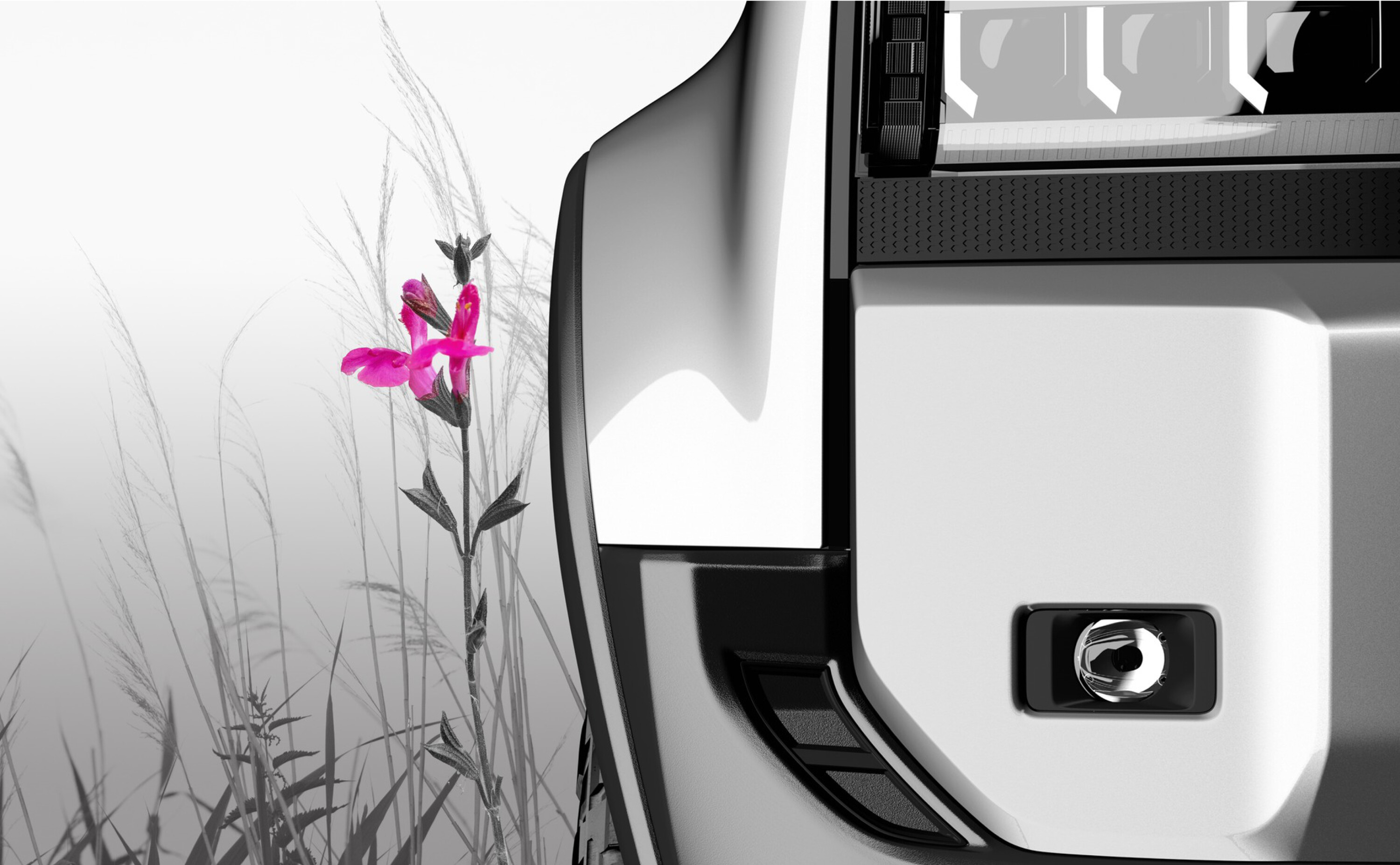
Previous reports suggested the LandCruiser Prado name would be replaced by LandCruiser 250 in Japan – and this could now also occur in Australia.
The 2024 Toyota LandCruiser ‘Prado’ will be unveiled at 11:00am AEST on August 2, Australian time. Stay tuned to Wheels for the latest information as it emerges.
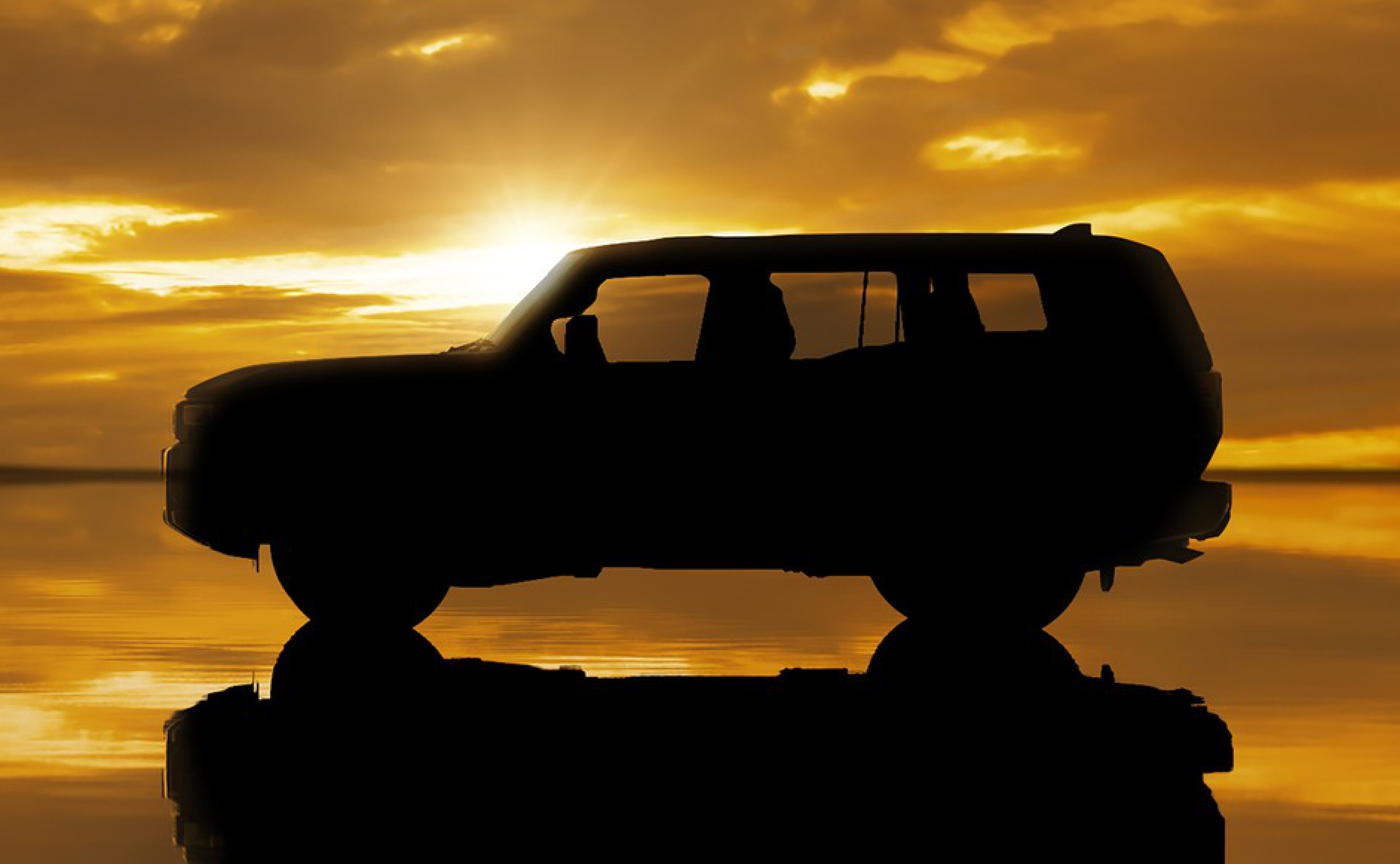
Following confirmation the LandCruiser would be returning to North America in June, Toyota has published official images of an off-road SUV alongside the 60-year-old FJ40 Land Cruiser.
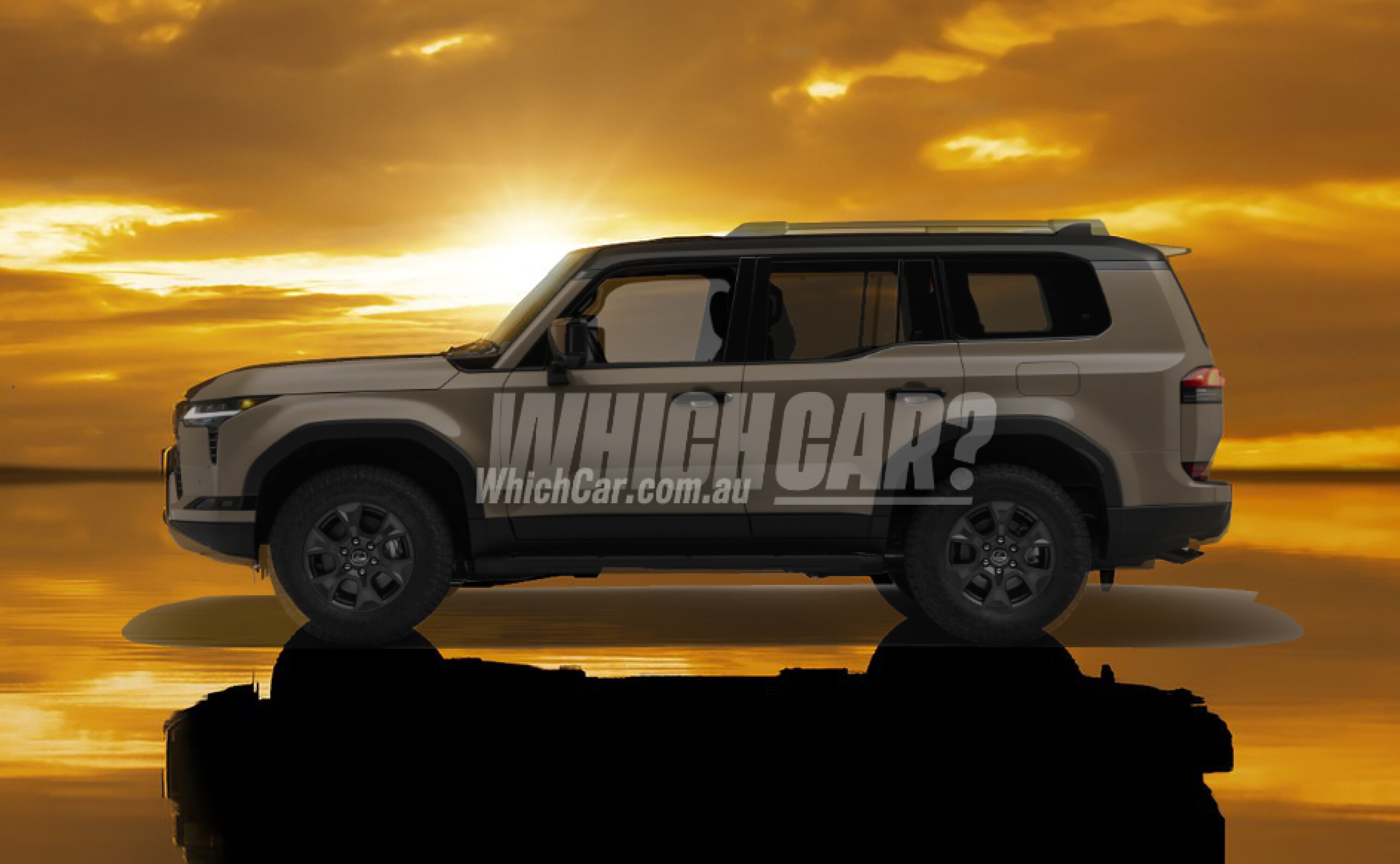
As expected, placing the Lexus GX above what’s believed to be the new Prado reveals a familiar shape, including its upswept beltline – but with unique Toyota design cues, such as a chunkier grille and larger tail-lights.
Our earlier story, below, continues unchanged.
https://www.instagram.com/p/CuWn3TZttRN/
In a teaser published this week, the Japanese brand confirmed the nameplate is returning to the United States and Canada after the larger 200 Series was discontinued in 2021.
“Did you really think we’d be gone for long? The legend returns,” said Toyota on its social media pages, accompanied by images of LandCruiser badging from older models.
https://www.instagram.com/p/CtasgURO6UO/
The Sequoia is exclusively sold in North America as an SUV version of the Tundra pick-up, which shares its TNGA-F body-on-frame platform and many components with the LandCruiser 300.
This means the LandCruiser returning to the United States will likely be based on the next-generation Toyota Prado, which is tipped to be heavily related to the new Lexus GX revealed this month.
Industry publication Automotive News [↗] reports Toyota will drop ‘Prado’ from the name and sell it in North America as the LandCruiser.
This would match the European market, where the current 150-series Prado is simply badged ‘LandCruiser’, as the larger 300 Series is not sold there.
Toyota’s European arm also released an identical teaser overnight, stating: “Ready for your next adventure? More information to come.”
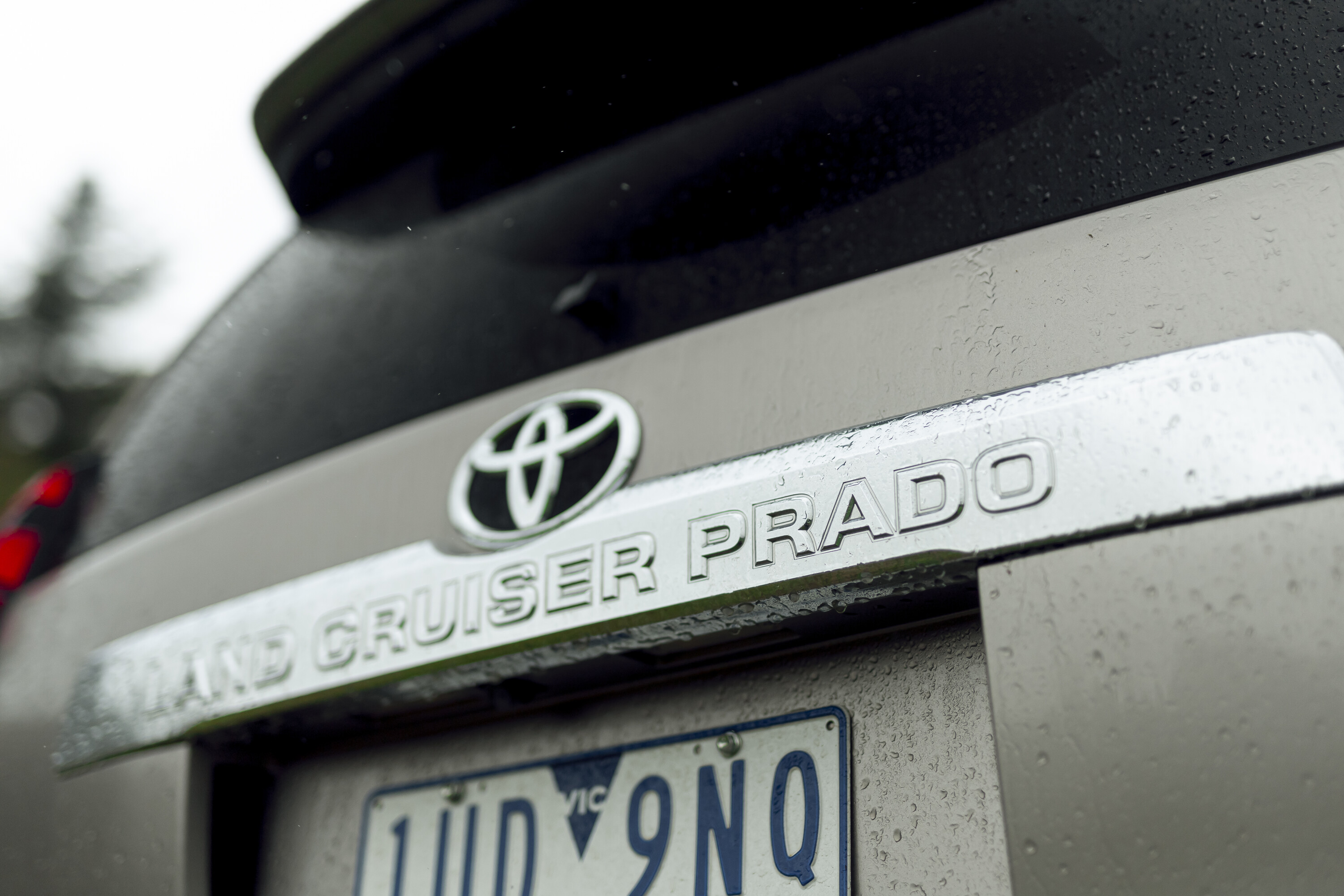
In Japan, it is expected to wear LandCruiser 250 badging – but we’ve yet to hear anything suggesting the Prado nameplate won’t remain in Australia, with the new model likely to arrive here in 2024.
As reported, the 2024 Toyota Prado is tipped to debut in October or November – potentially at the Los Angeles Auto Show in mid-November, in line with the latest announcement – with a larger body and available hybrid power.
On sale now in Thailand, the sixth-gen Triton boasts fresh underpinnings, a more potent twin-turbo diesel engine, and an uprated 3.5-tonne braked towing capacity.
Mitsubishi said it has paid close attention to improving the Thai-built Triton’s on-road manners and cabin comfort, all without sacrificing the HiLux, Ranger and D-Max rival’s signature go-anywhere capability.
An extremely important model for Mitsubishi, CEO Takao Kato is expecting the ute to top 200,000 annual sales in 100 markets around the world.
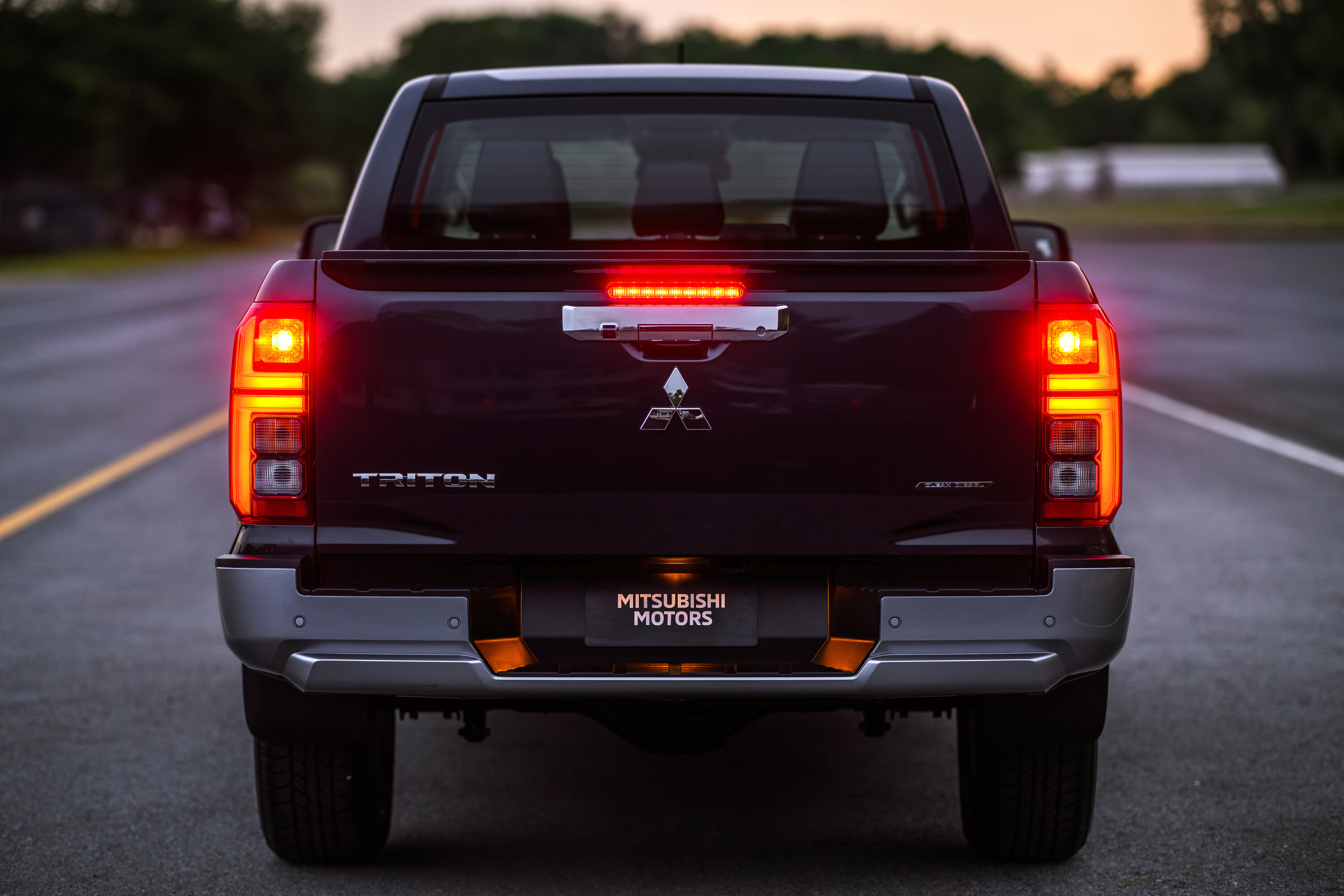
The next-gen Triton is expected to arrive in Australian showrooms in early 2024, around the same time it returns to Japan for the first time in over a decade.
Moving further ahead, we’ll see the new-gen Triton form the basis for the next-gen Nissan Navara ute, with the pair expected to be closely related.
There’s also electrification in the Triton’s future, though Mitsubishi is still playing down the exact strategy for its electrified ute.
The Triton’s new ladder frame promises to be much stronger, with its bending rigidity up by 40 per cent, and torsional rigidity up by 60 per cent with a much greater cross-sectional area.
Extended use of high-tensile steel has minimised overall weight increase, and the new Triton boasts a lighter body than the car it replaces, though Mitsubishi has yet to confirm a final kerb weight.
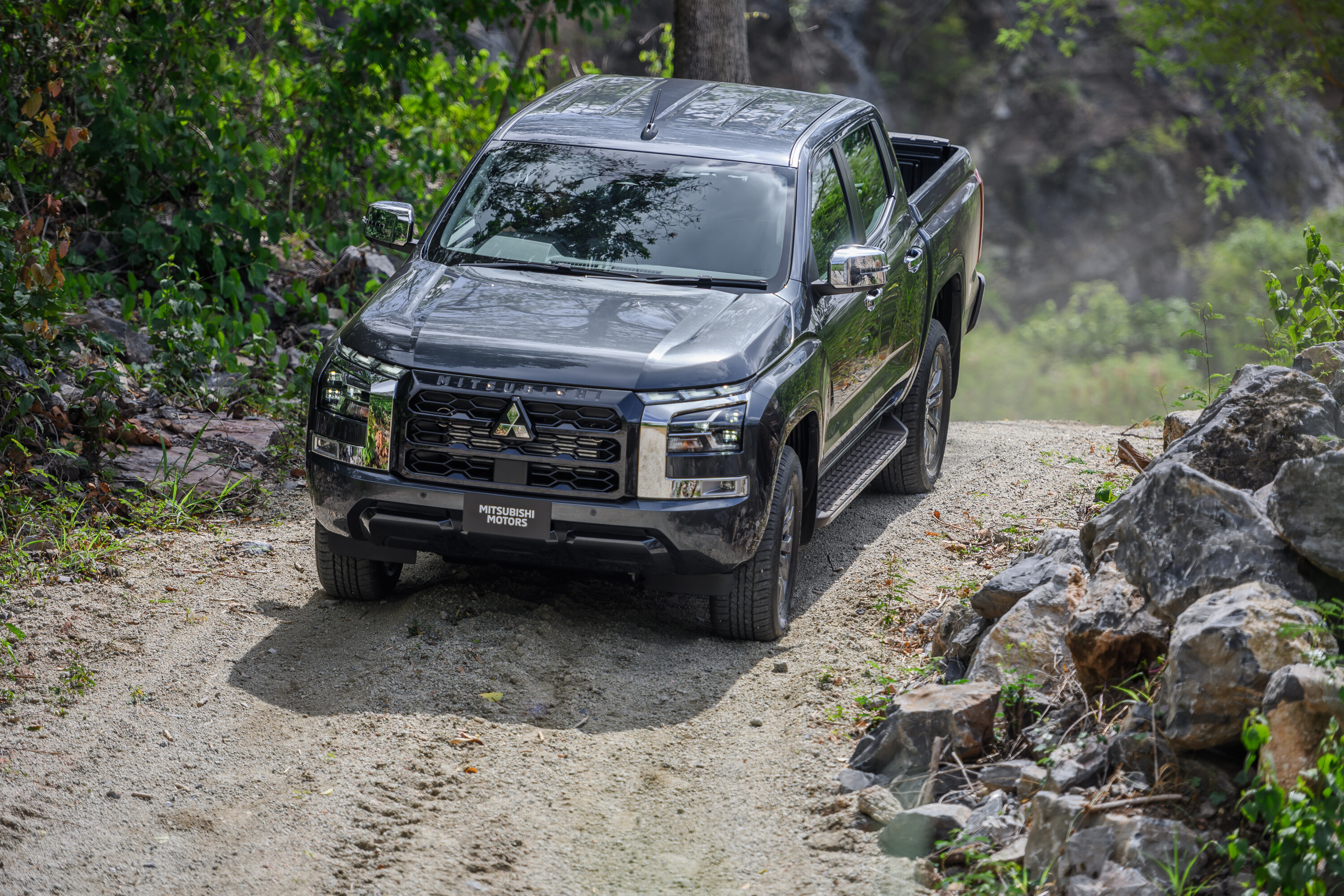
Mitsubishi has increased its front stroke by 20mm with a higher upper mounting point. Beefier shock absorbers and lighter rear leaf springs will lower friction for improved ride compliance.
For the first time, the Triton adopts an electric power steering system in high-end variants. This should result in a lighter feel around town that will weigh up at high speed. Mitsubishi has also worked to reduce kickback in the steering system – a common bugbear of the old car.
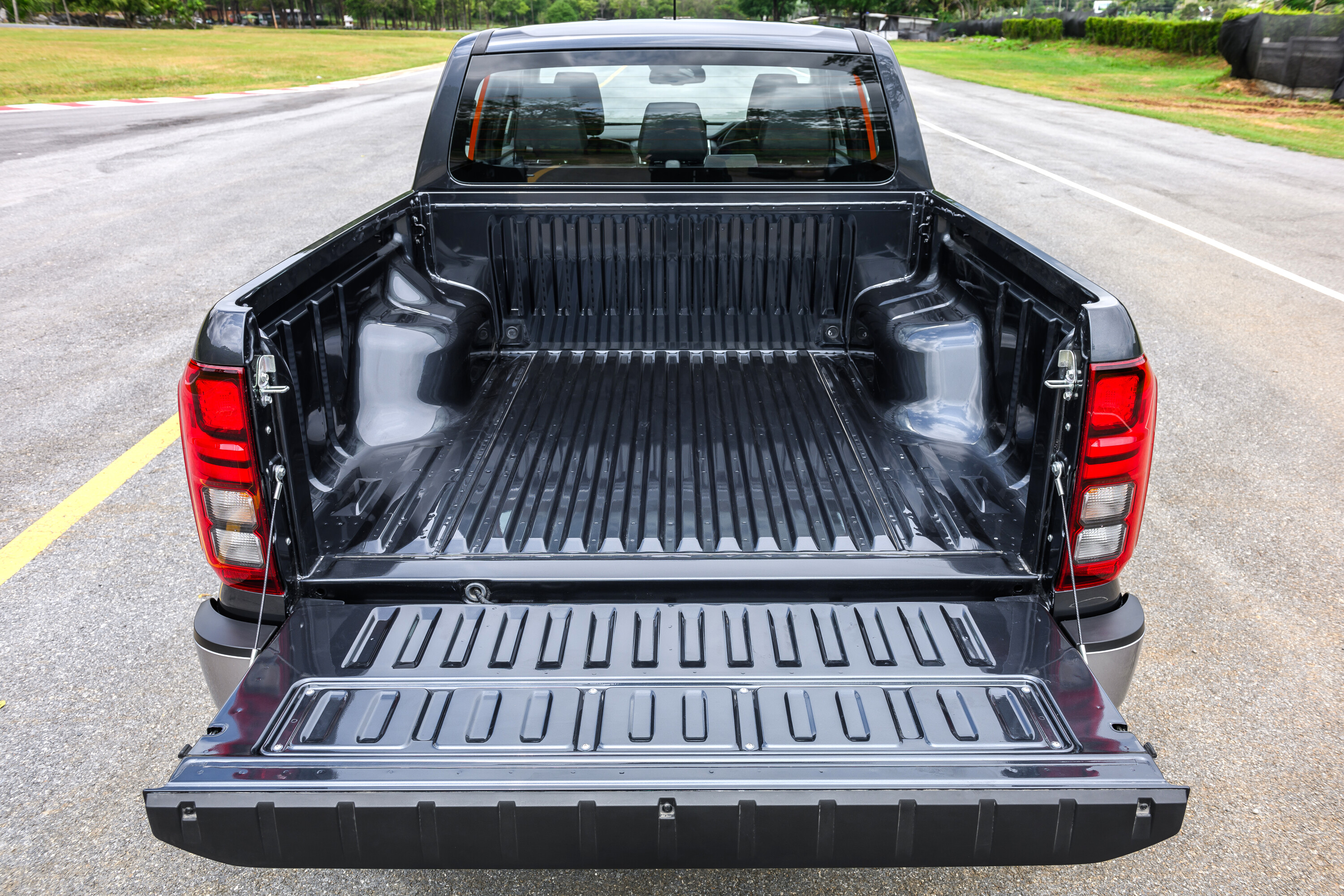
And (finally!) the new Triton’s wheelbase length has grown beyond 3000mm, now at 3130mm. This should improve occupant space, and the new rear axle location should improve its load-lugging ability.
The tray has also grown by 35mm in length to 1555mm and measures 1545mm at its widest point. Its load height is also lower by 45mm (820mm), with a flattened grip-taped area atop the bumper to stand on when loading objects.
All Tritons score a newly-developed ‘4N16’ 2.4-litre turbo-diesel four-cylinder in one of three tunes, with the most powerful (and likely for Australia initially) twin-turbo version producing 150kW at 3500rpm and 470Nm between 1500-2750rpm.
It may not challenge the Ford Ranger’s 600Nm V6 – or the 500Nm bi-turbo and HiLux – but bumping the old car’s outputs by 17kW and 40Nm isn’t to be sniffed at, surpassing the D-Max and BT-50’s 450Nm.
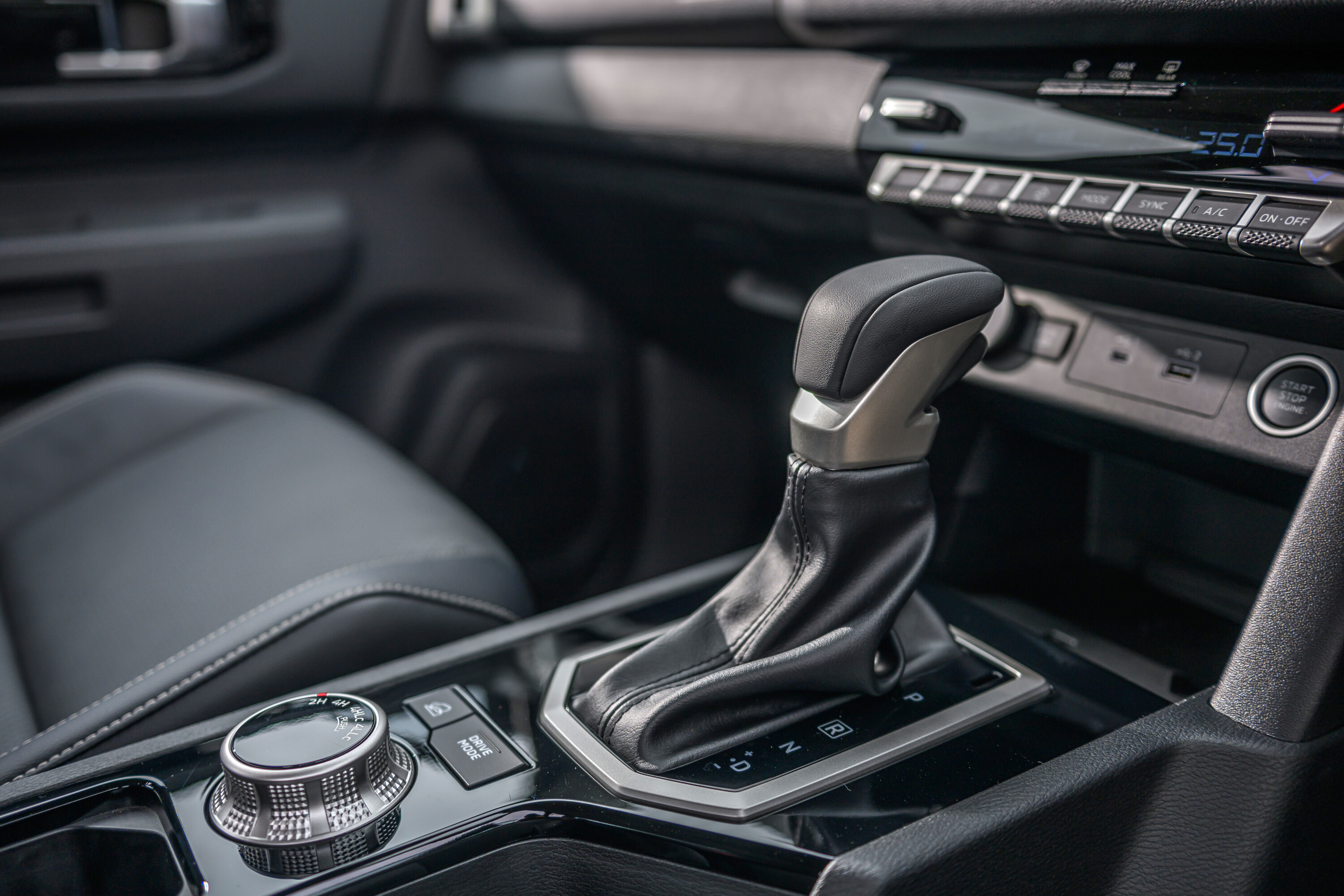
The new Triton’s braked towing capacity climbs 400 kilograms to the industry-standard 3500kg. It will be available with a six-speed torque converter automatic or six-speed manual, with the latter adding a cable linkage to improve NVH suppression and lighten the shift.
The Super Select system allows drivers to keep the Triton in 4H on all surfaces without locking the centre differential for improved grip on paved surfaces.
On the loose stuff, switching to 4HLc (this can be done on the move) improves traction again with a locked centre diff – best combined with mud and sand drive modes – while 4LLc engages the low-range transfer case, and can be paired with rock mode for low-speed crawling.
There’s also what Mitsubishi calls ‘active yaw control’, which uses the brakes on individual wheels to simulate the effect of a locking front diff and minimise traction loss in low-speed slippery conditions.
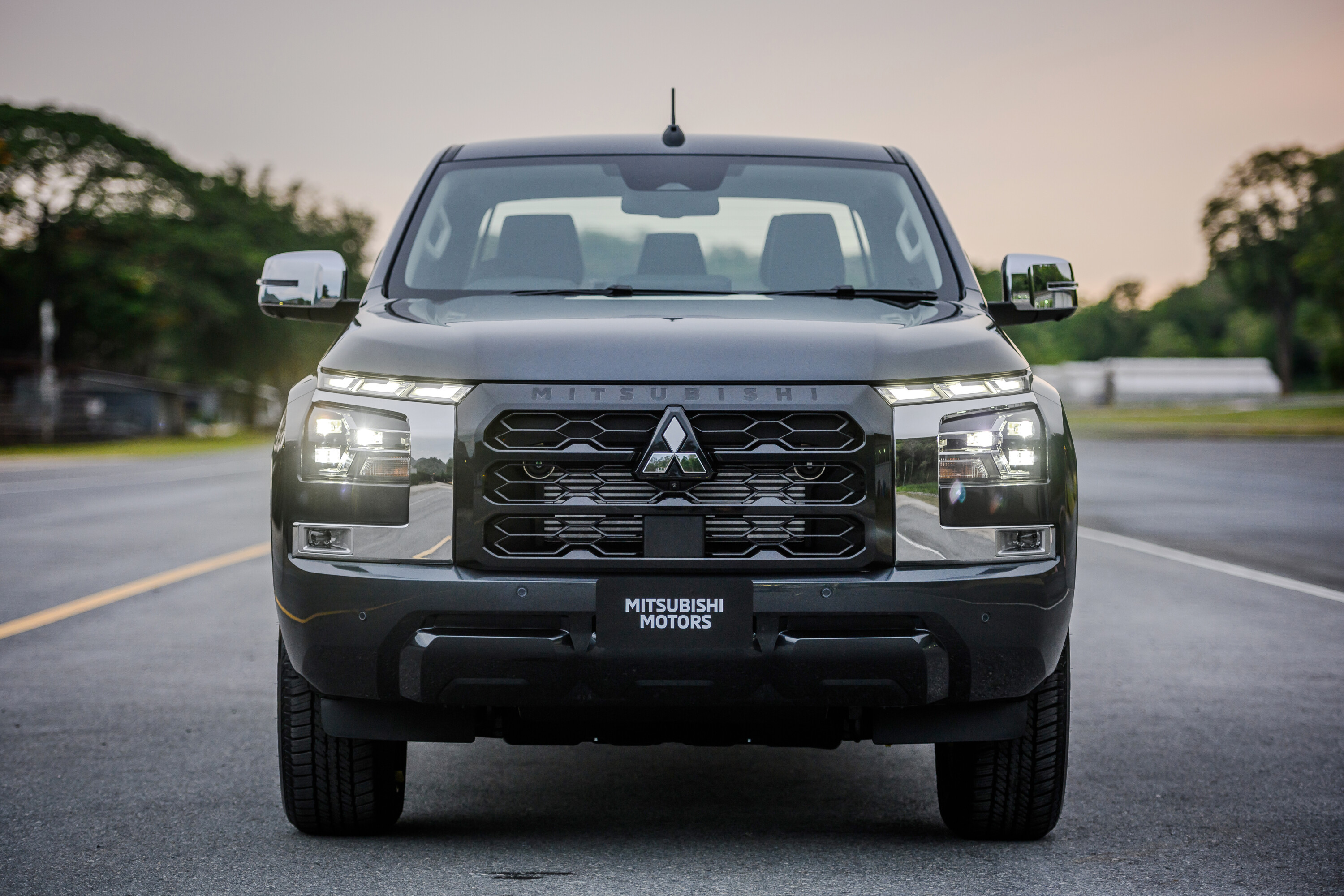
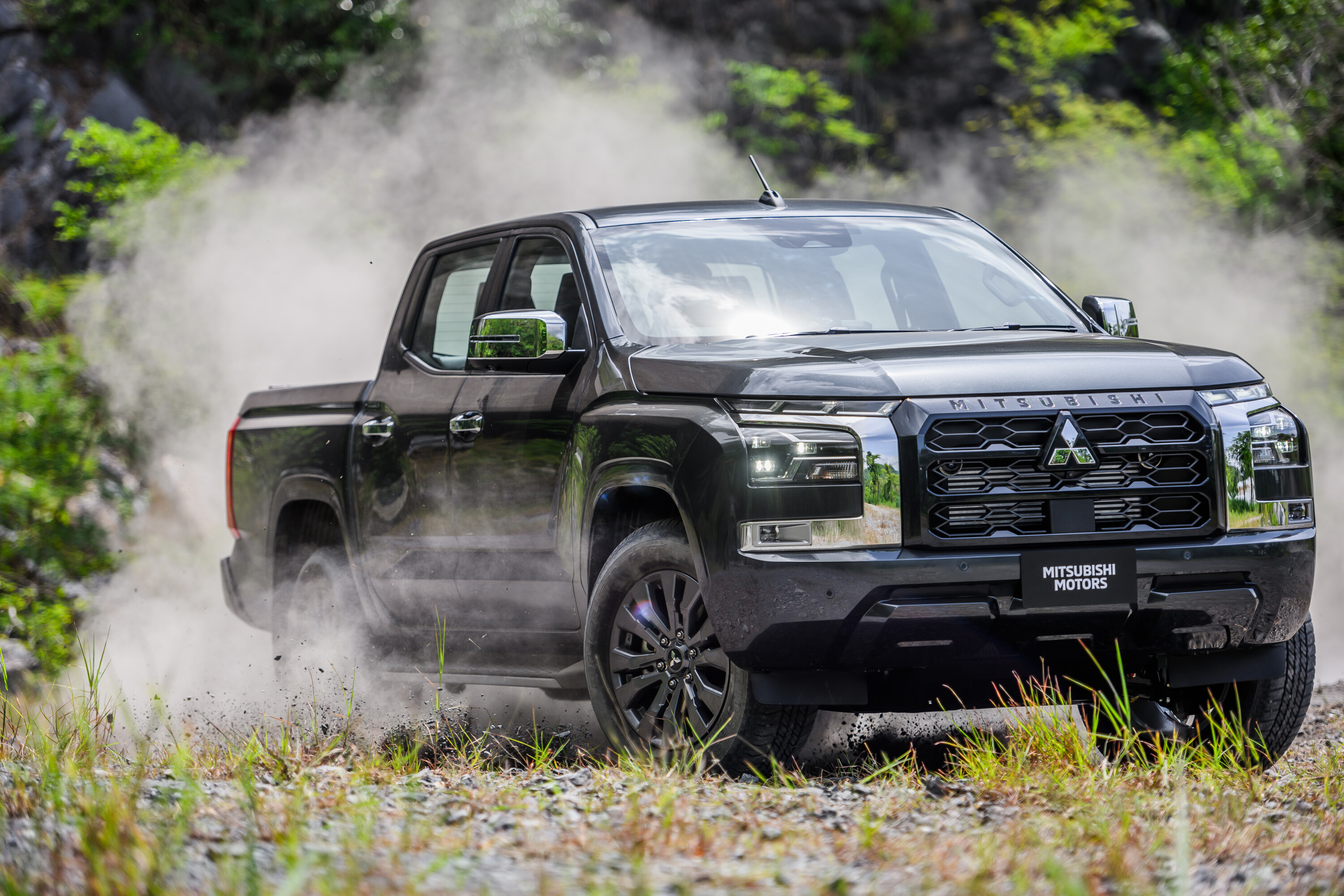
The lighting features have been sharpened for a more modern look, with three L-shaped LED signatures sitting above the chrome bezels nestled in the LED headlights.
Down the flanks, the Triton features more significant fender flares that nod to the previous ute’s squared-off wheel arches. From the rear three-quarter, the broad shoulders remind us somewhat of the Ford F-150 ute, though the T-shaped LED tail lights are unique.
New alloy wheels – though they do bear resemblance to the current rims – finish off the new Triton’s exterior appearance.
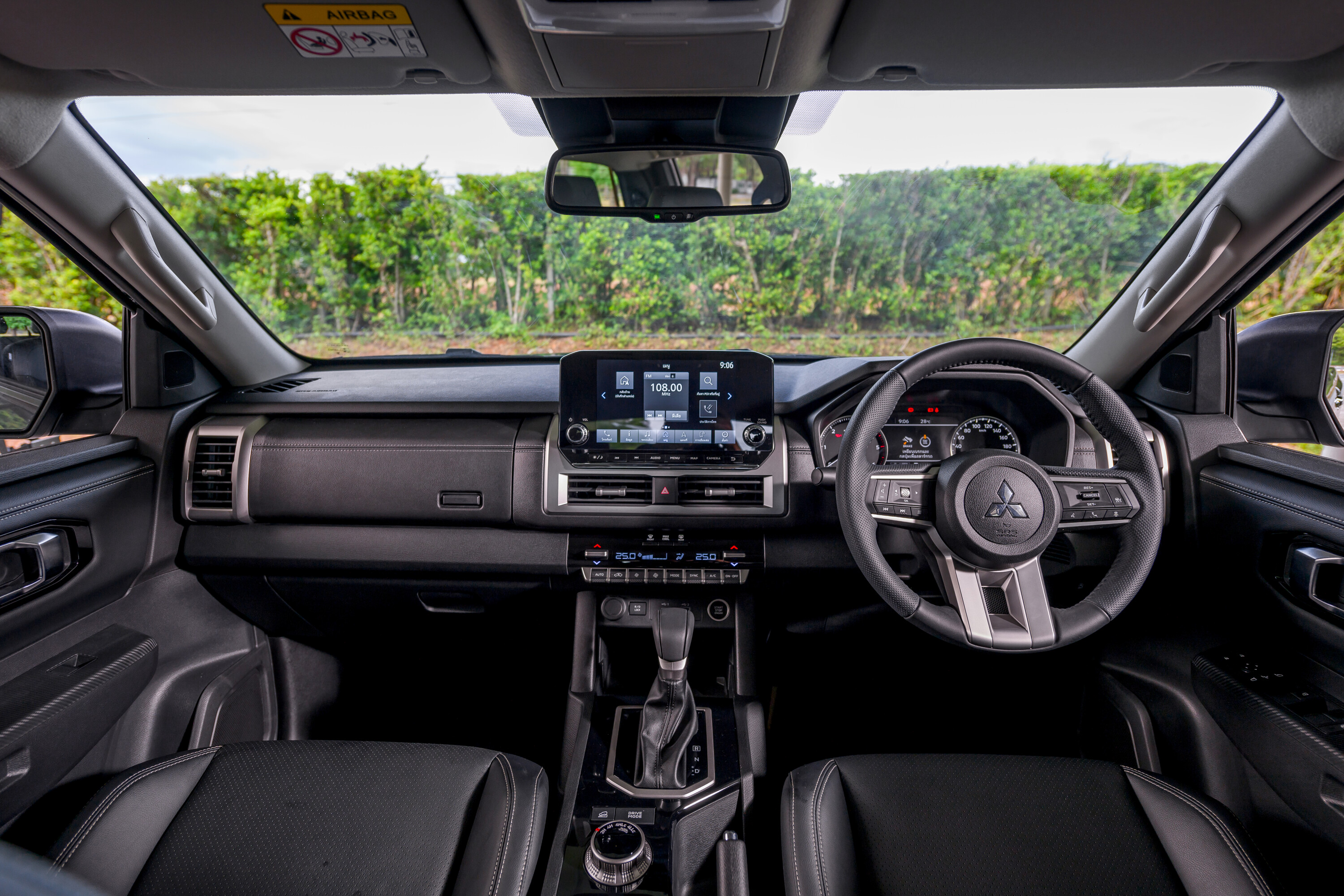
Both mid and top-spec Tritons in Thailand (pictured) will feature a larger 9-inch infotainment system similar to the Outlander midsize SUV, up from 7 inches.
Satellite navigation, traffic sign recognition, wireless Apple CarPlay (and wired Android Auto), and connected-vehicle telematics such as vehicle status, and remote locking via a smartphone application are new, too – but the last feature is unlikely for Australia, at least initially.
While rivals such as the Ford Ranger and Volkswagen Amarok have moved to fully digital dials, the new-gen Triton retains a combination of analogue dials like the Isuzu D-Max, with an integrated 7-inch multi-information display.
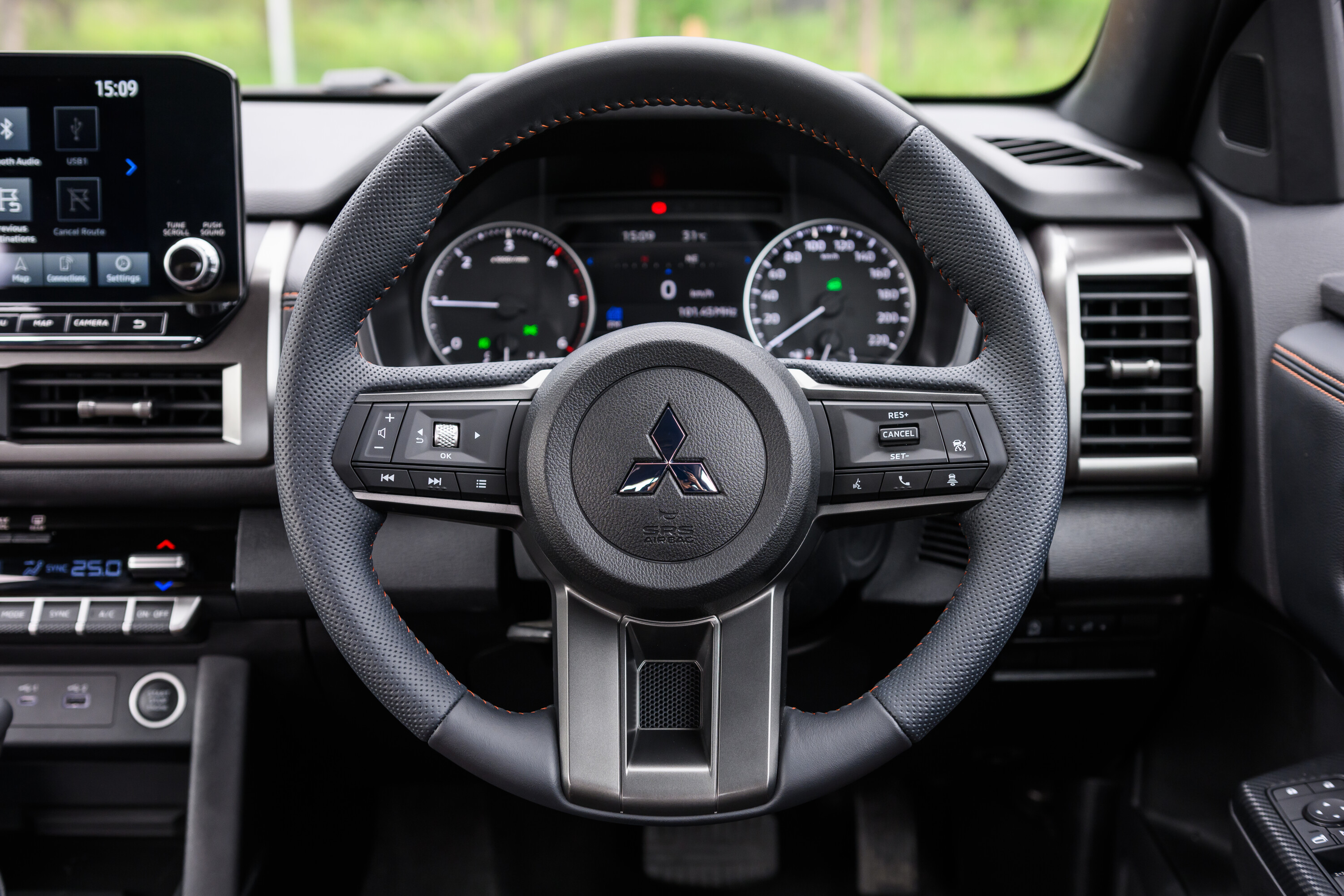
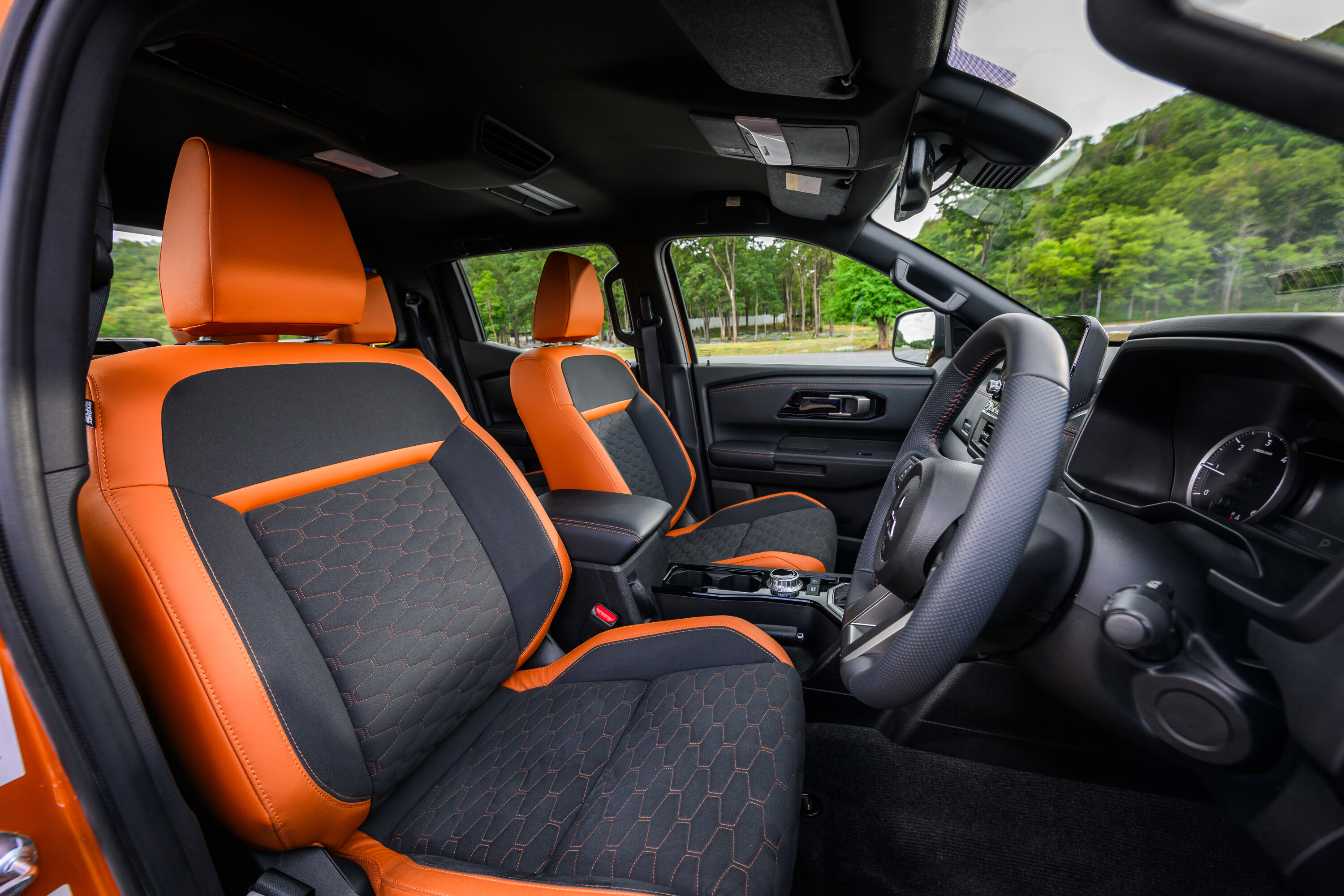
Material quality is also improved, claims Mitsubishi, and visually the introduction of dimpled leather-appointed steering wheels and suede-cloth upholstery in top-spec cars gives credence to its claims.
Mitsubishi claims to have improved the front seats with additional lower back support – a common complaint of the previous car – and a 20mm higher hip point. The new Triton’s more upright A-pillar aids ingress by providing a wider door aperture.
The 50mm width expansion translates almost directly into second-row shoulder room, with 49mm more than before, which should make for happier passengers. The three wide bench also has a fold-down armrest, while the air vents remain in the roof.
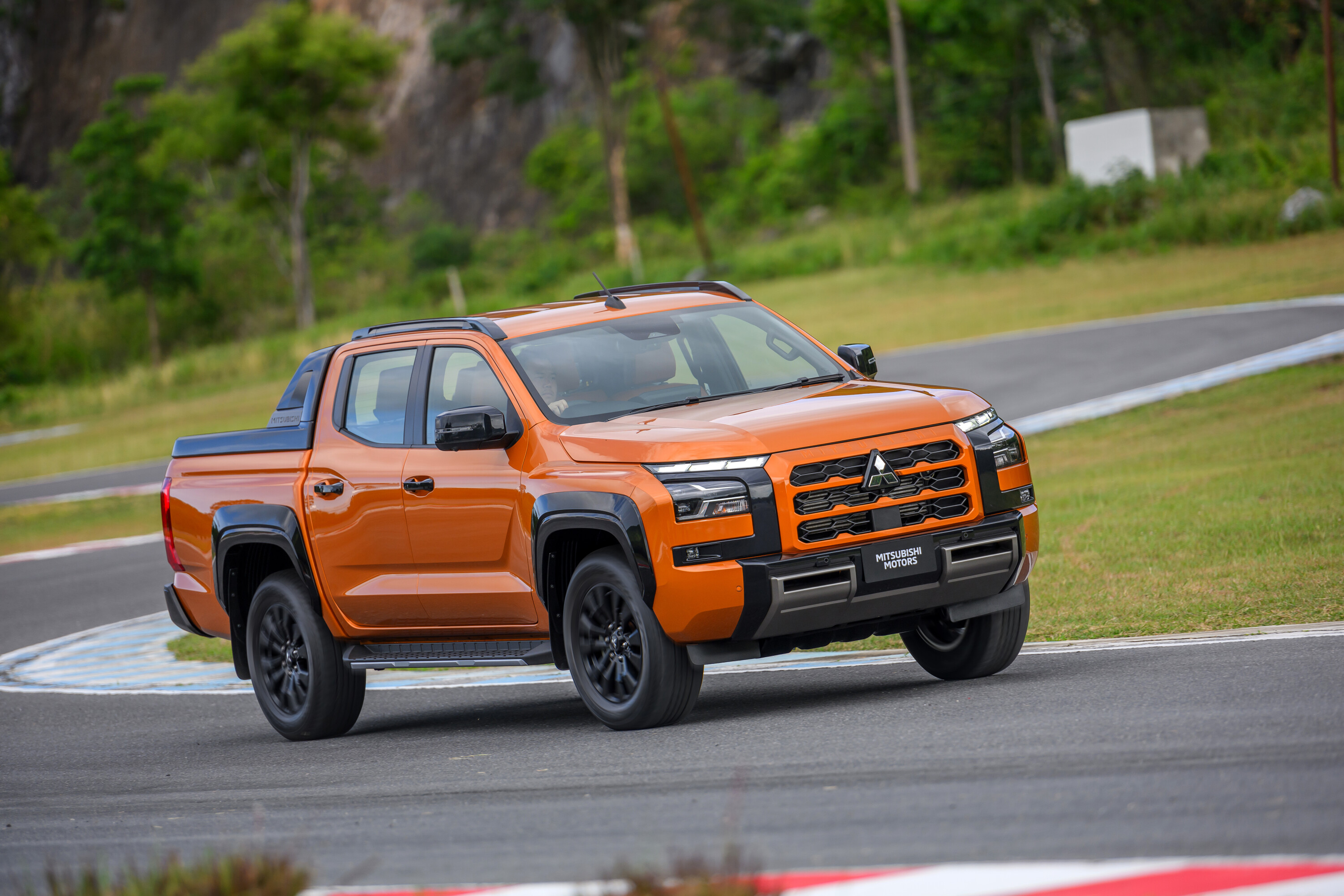
With the Triton’s significant upgrade, Mitsubishi has engineered active safety systems from the start of development.
Front autonomous emergency braking (AEB) with pedestrian, cyclist and junction detection, rear AEB, rear cross-traffic alert, blind-spot monitoring, lane-departure warning, adaptive cruise control and lane-keep assist, “among others”, all feature in the new model.
Mitsubishi has also included a front-centre airbag in the new Triton. The ute is yet to be assessed by independent safety testing bodies such as ANCAP.
The 2024 Mitsubishi Triton ute is expected to arrive in Australia in early 2024, with local details – including pricing and features – to be announced closer to its launch.
It’s true, but it’s also a trap, because the online world is absolutely full of wackos spouting absolute rubbish. And if they happen to be loud wackos… well, you can see the problem.
The point being, just because you saw it on the internet doesn’t make it a fact. And there’s no better example of that than some of the misinformation going around regarding auxiliary fuel filters on common-rail turbo-diesel engines.
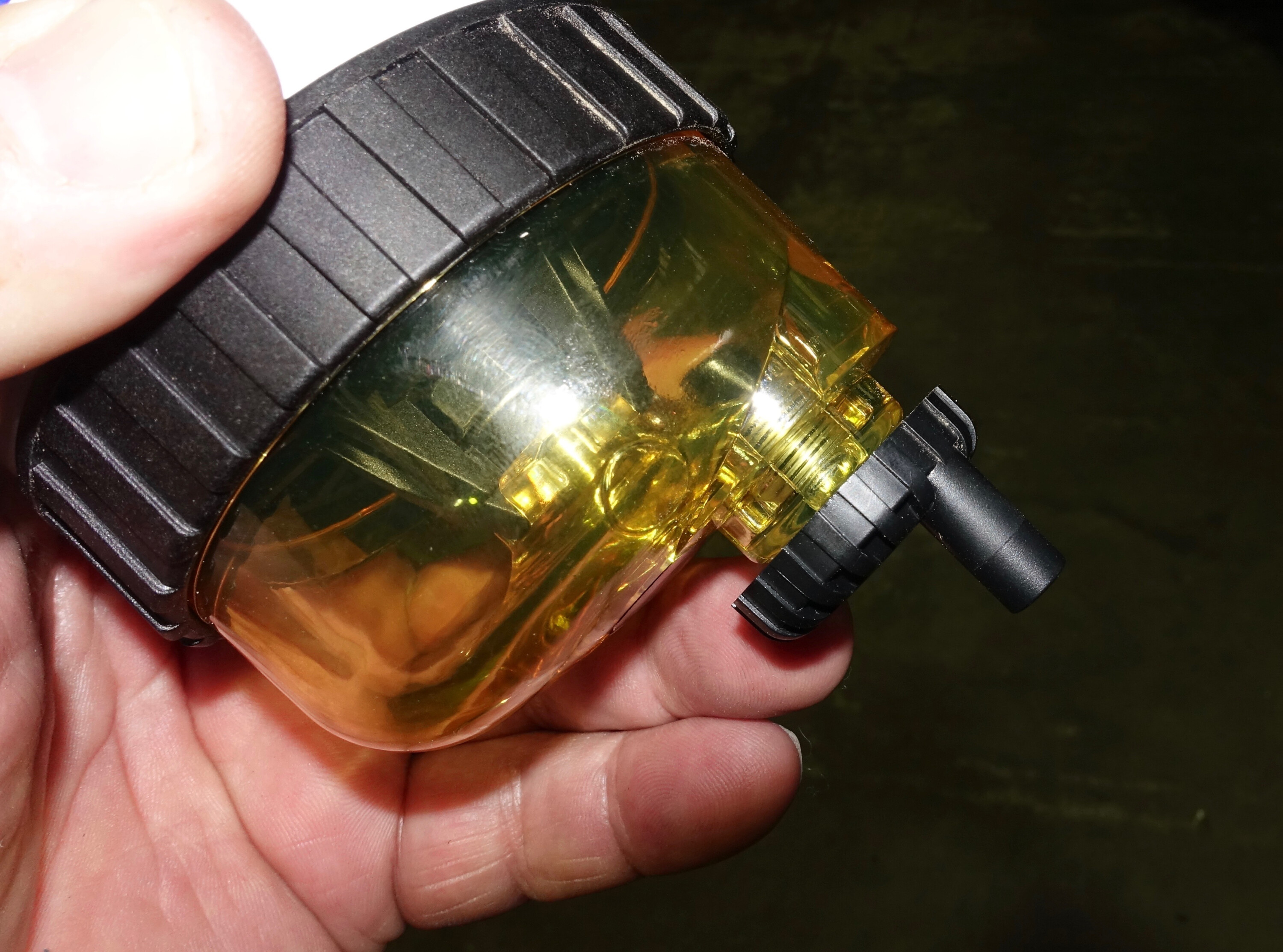
In the old days, this was a pretty straightforward subject, and an extra filter with a water-trap was considered a good idea to prevent a tankful of dodgy diesel finding its way through to your engine.
But things have changed as the march of technology has pushed the average off-roader’s engine towards the space-shuttle end of the tech spectrum. To say fuel filtration is not a simple matter any more is an understatement.
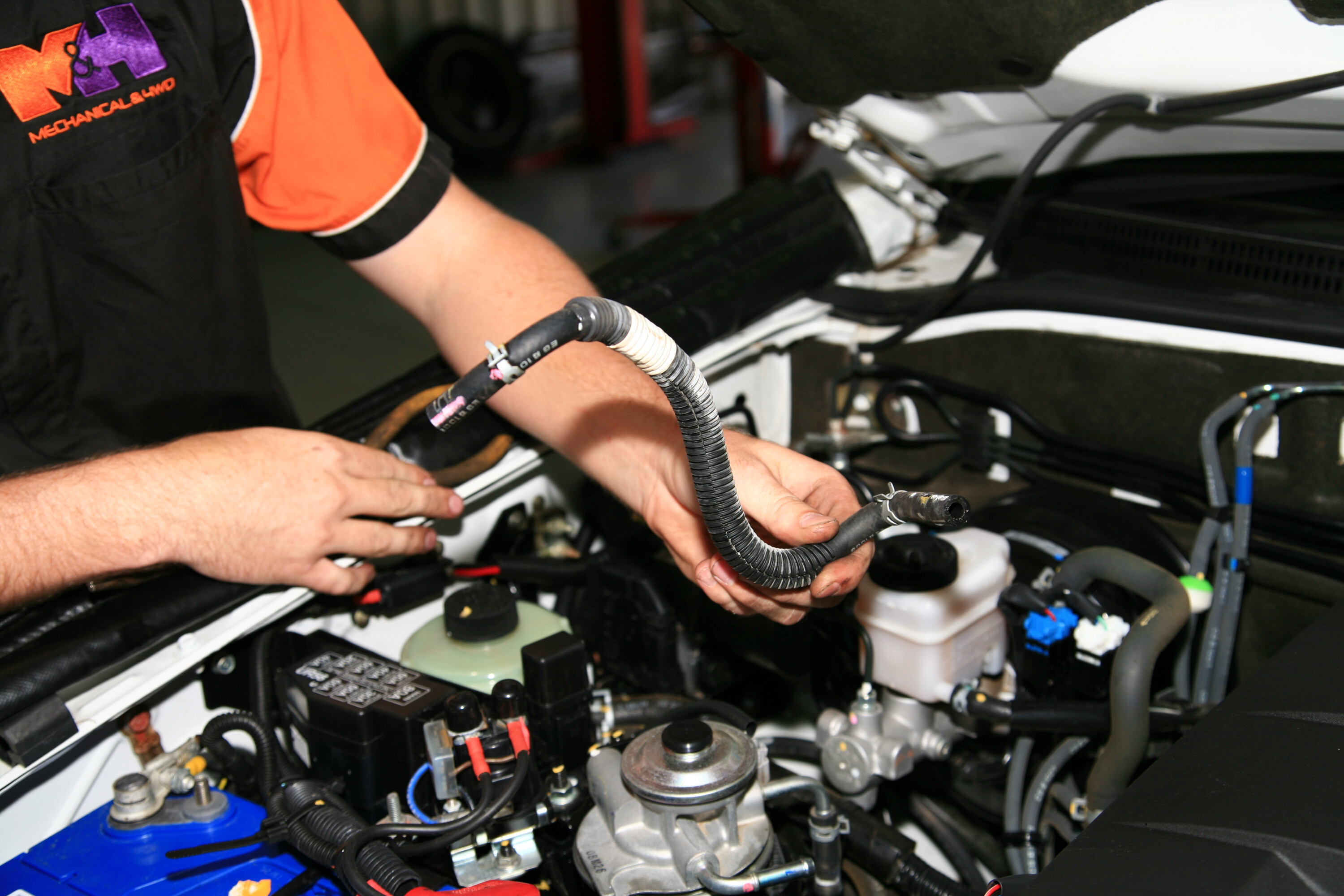
In most cases, the filters we’re talking about are fitted to the fuel system upstream of the vehicle’s factory filter, making them a pre-filter. There are many brands available but, typically, not all of them are created equal.
Which is a major cause of the confusion surrounding them. Like any fuel filter, their job is to allow diesel through to the injectors while trapping dirt, water and other contaminants safely inside the filter body where it can’t do any harm.
But think about it; water and dirt are naturally occurring substances, so there’s always a chance some of either can make it into your vehicle’s fuel tank.
Many 4×4 owners are wary of outback servos where fuel might sit in the underground tanks for weeks or months before it’s used. And in many cases, rust that forms in older underground tanks can create scale that is pumped into your vehicle’s tank. Bingo! Instant contamination. Those same underground tanks can be susceptible to groundwater leaching into them with similar results.
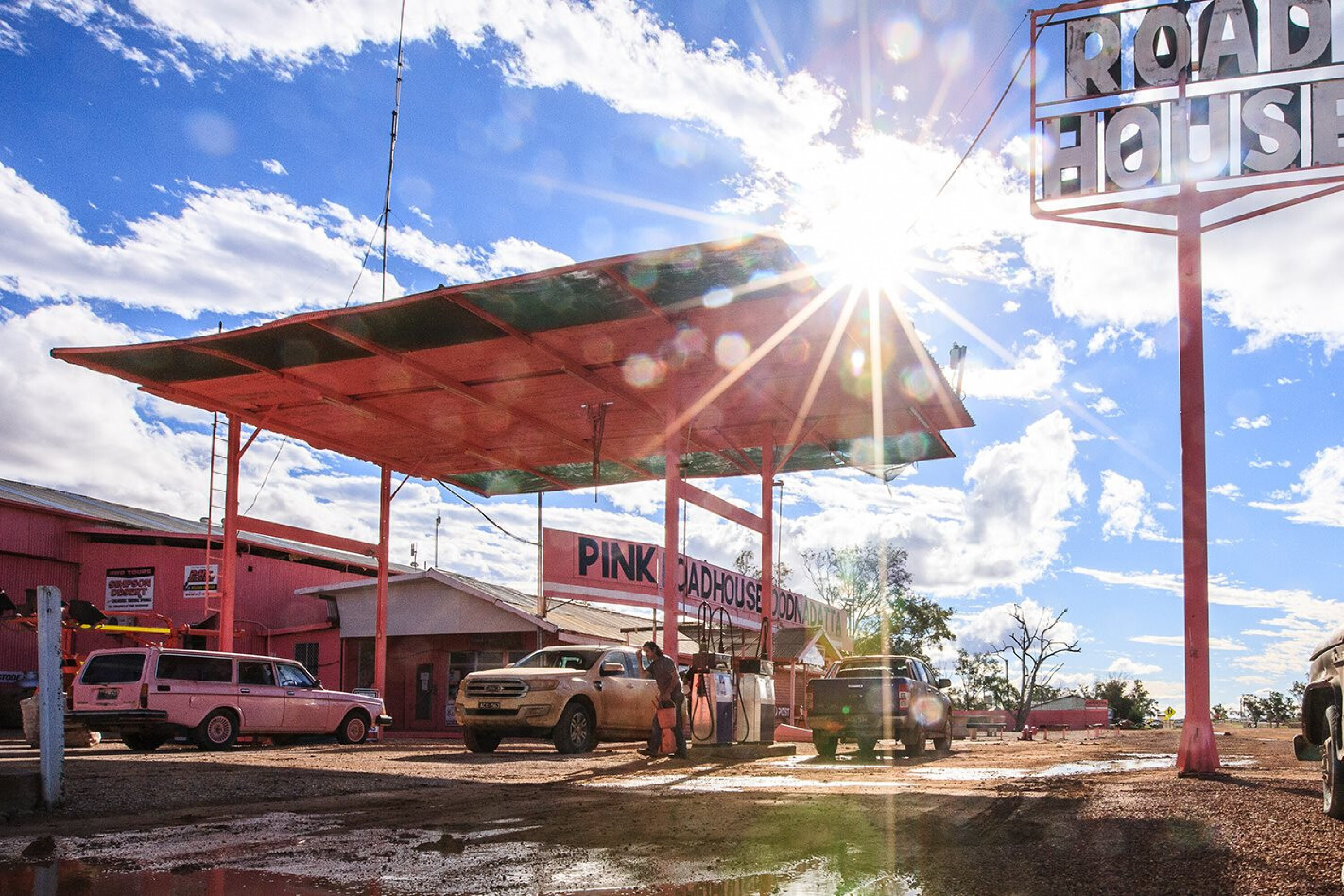
Even high-turnover service stations in the big smoke can have problems with water entering storage tanks, and this is simply due to moisture in the air condensing inside the cold underground tank and mixing with the fuel.
Have you ever lifted your engine’s oil cap to find a grey, slimy muck on the inside of it? Many people think this is a sure sign of a blown head gasket (which it can be) but sometimes it’s simply water from the air inside the crankcase that has condensed on the cold internal walls and then evaporated off as the engine runs, sticking to the oily underside of the cap and creating the scary gloop you’re now looking at.
You don’t want that stuff in your engine, and you sure as hell don’t want it in your injectors or injector pump.
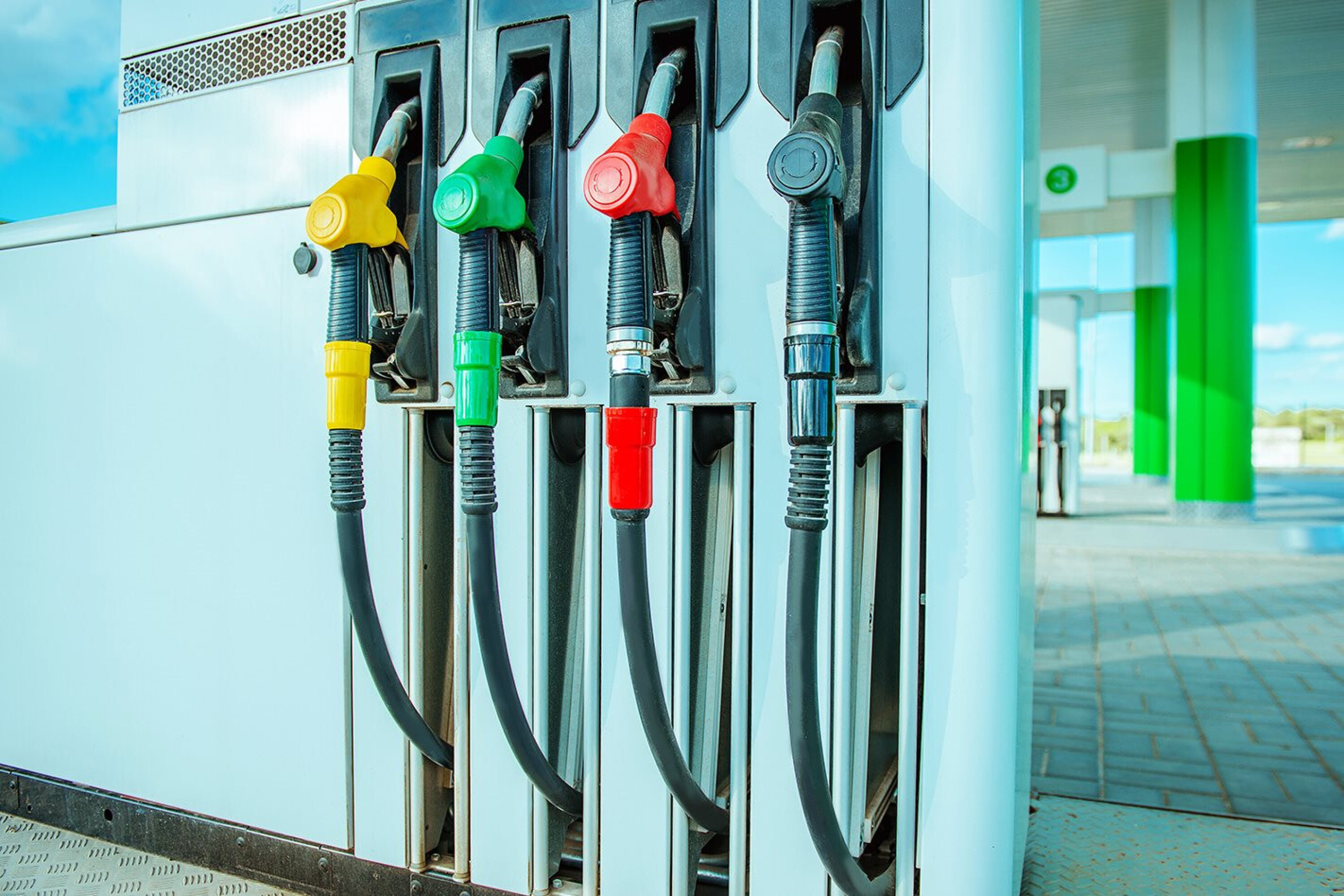
Perhaps you’ve heard the theory that if a tanker is filling up the underground tanks of a service station, you should move on to the next servo. That’s actually good advice, because the action of pumping the bulk fuel from the tanker will stir up any contaminants at the bottom of the underground tank. There’s actually a law in Germany that forbids the sale of fuel from an underground tank within an hour of a delivery having been made, and it’s a law we should consider here.
The point of all this being that dirty fuel is not something that should come as a total surprise. A problem, sure, but not a mystery.
Fast forward to 2023 and the common-rail turbo-diesel in your new 4×4 is a vastly more complex and sophisticated machine. And it’s a lot unhappier when presented with anything but a diet of pristine diesel.
The diesel injectors in, say, the current HiLux run fuel pressures of around 38,000psi. That’s enough to take your arm off (water-jet cutting pressure starts at around 30,000psi) and certainly enough to ensure that any dirt or water in the fuel will cause absolute chaos, from poor running to damaging fuel pumps and even breaking the tips off injectors if the crud gets that far into the engine, and if it’s already past the filter(s), it will.
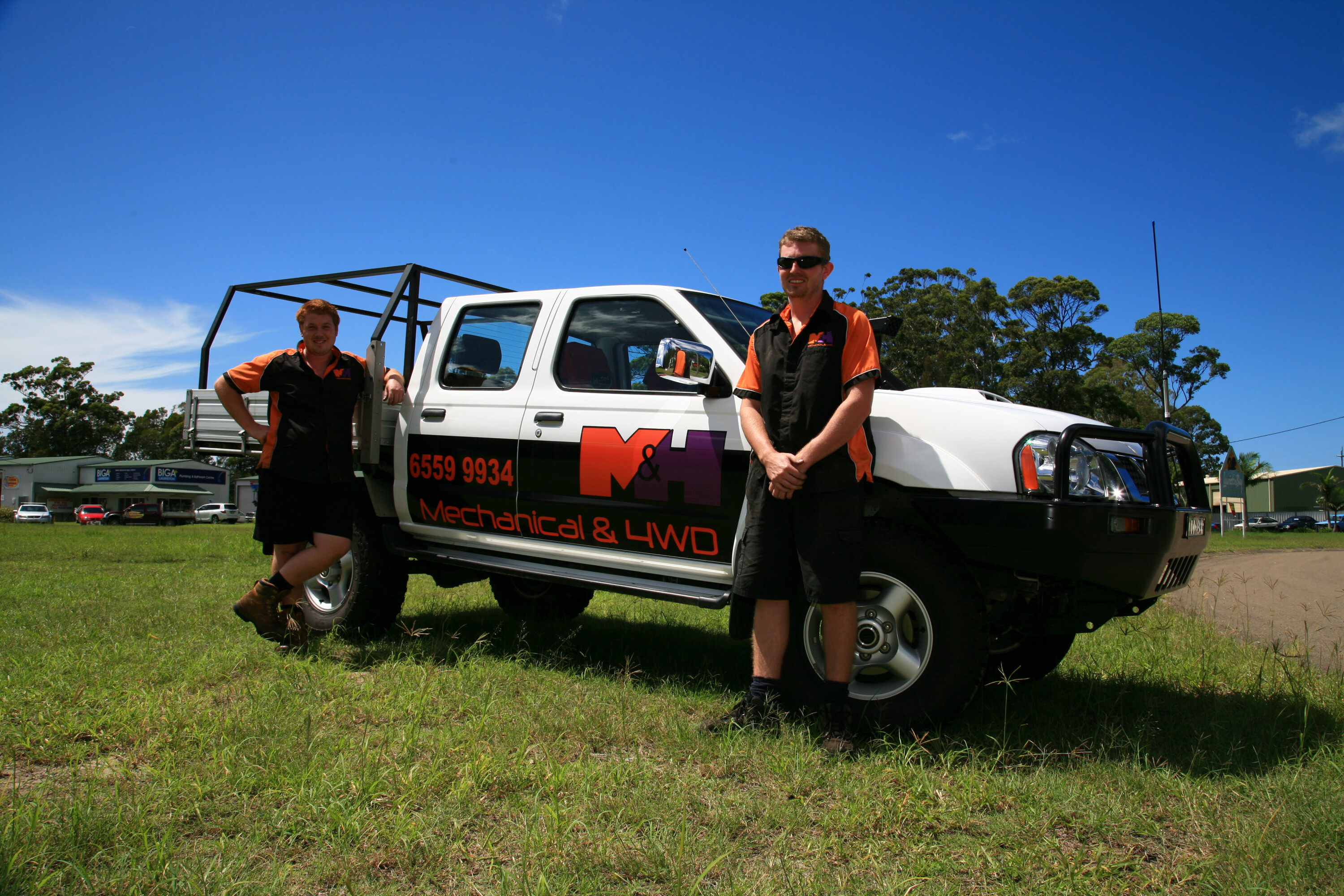
It all sounds pretty dramatic, but that’s the price of extracting so much power and torque from smaller, lighter engines. Clearly, stopping any contamination before it gets that far is the obvious aim of the filtration game.
That explains why vehicle manufacturers fit their own filtering systems, but do those dangers also explain an aftermarket pre-filter? Yes, is the short answer. As Brent Hutchinson, GM of the Don Kyatt Group which markets Flashlube products, puts it: “Why would you say no to more filtration if it isn’t messing up your injection?”
But within that statement is a big clue to the layers of misinformation out there in the ether: ‘As long as it isn’t messing up your injection’. So where does a pre-filter go rogue and create problems? And why don’t vehicle manufacturers like aftermarket pre-filters?
Well, maybe, but if the pre-filter hasn’t caused or contributed to whatever it is that’s failed on your 4×4, then it can’t be held responsible for the failure. That’s just logic (not something that is universally exhibited in online forums).
But there’s another, better reason for the OEMs taking a stand against aftermarket pre-filters. It’s not that most vehicle manufacturers aren’t in favour of keeping clean fuel up to the engine, it’s rather that they can’t control what owners fit to their vehicles. Fit an El Cheapo Inc. pre-filter kit and you’re a fair chance to have problems. And that’s why your dealership will threaten to shred your warranty for fitting a filter kit, because they have lumped all aftermarket filters into a single too-hard basket.
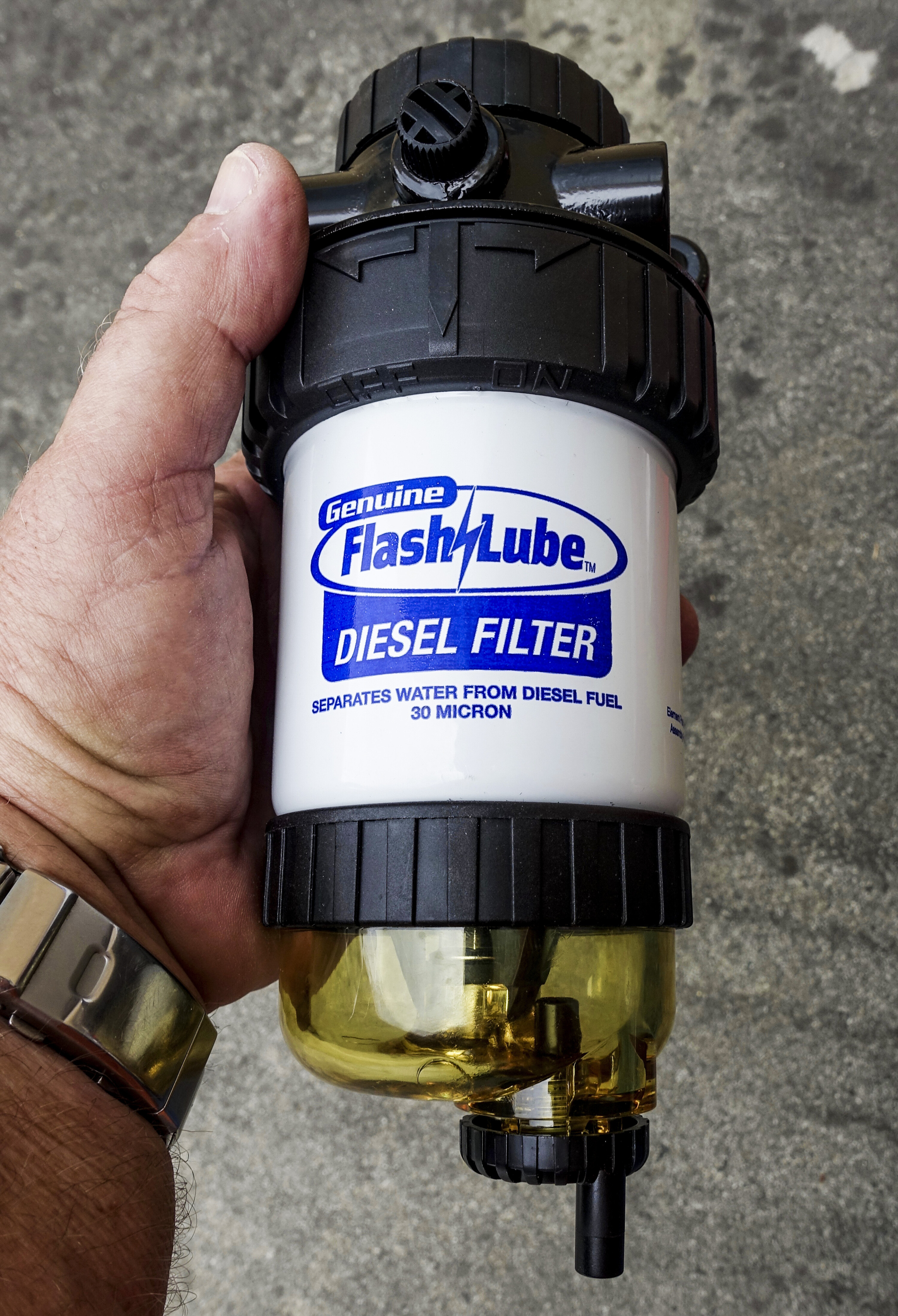
Brent Hutchinson has seen it all before: “The OEMs should love them (pre-filters) because they stop your engine blowing up. But you’d hate them too if they were creating problems with your engines.”
And he says the warranty issue is changing, too. “Some people say the OEMs won’t warrant engines with aftermarket filters. But they’ve become a bit smarter now and they’re trying to address the issue. They don’t warrant bad fuel anyway.”
The big problem, apparently, is that the vehicle manufacturers reckon an aftermarket filter causes problems by restricting the flow of diesel to the engine. That is, the filtering medium is so dense that not enough fuel can pass through to keep up with the high pressures the modern common-rail injection system needs.
You can see their point, too. If the factory filter uses, say, a five-micron filtering medium and manages to produce enough fuel pressure to operate, and then you fit a three-micron filter, inline, into the same system, there’s a chance that the injection pressure could fall. And if that happens on a modern 4X4, it can be lights-out pretty quick.
The solution, says Brent Hutchinson, is to make sure any pre-filter you fit works with the standard filter, not against it.
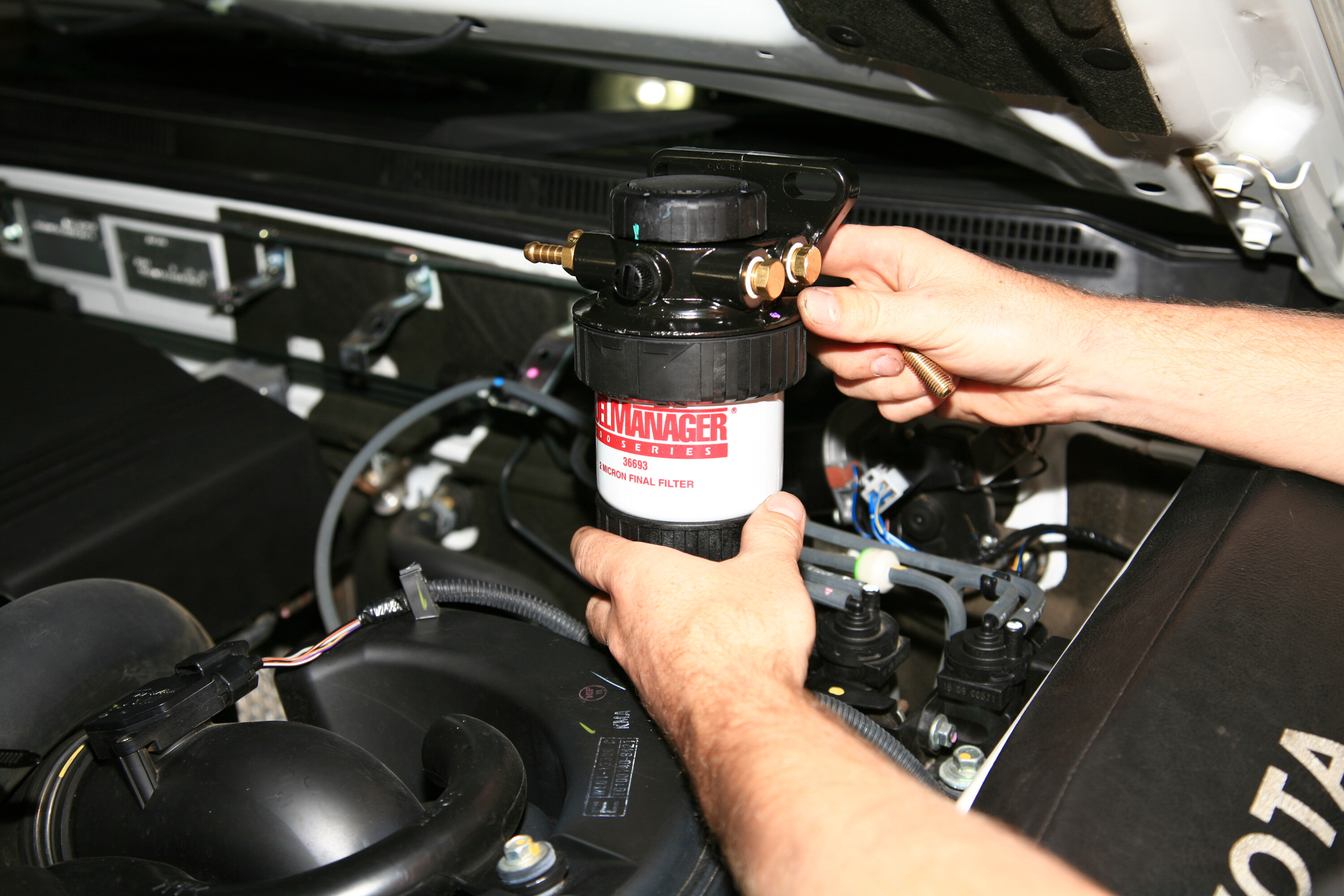
“Most OEM set-ups use a standard filter of between three and seven microns. Our filter is 30 microns, so it won’t impede pressure or flow. Experts in the game reckon that 30 microns is the optimum size and it allows the flow that will trap the most contaminants; the speed that will give maximum filtration. So, if you have a pre-filter pulling out 95 percent of dirt out of the fuel, the OE filter has a much easier job to do.”
Ryco Australia’s 4×4 business development manager (and Chair of the National 4X4 Industry Council) Emma Laukens, points out that it’s important to understand how the micron rating of a particular filter is measured.
“Our most popular filter kit uses a 10-micron filter,” she said, “but you also need to know how a particular filter manufacturer arrived at that specification. There’s an ISO standard for measuring microns and flow, which Ryco sticks to as we have our own test facility. But across the industry, you might find that apples aren’t apples and that our 10-micron filter is no more restrictive than somebody else’s 30-micron unit that has been measured and rated according to a different test.”
Emma also points to Australia’s inferior diesel-quality standards compared with Europe, and the sheer distances we travel in harsh conditions as causes for the OEM’s concerns.
The downstream school of thought has it that the factory filter is the one with the warning lights and buzzer, so that’s the one you want to catch the nasties and let you know about them.
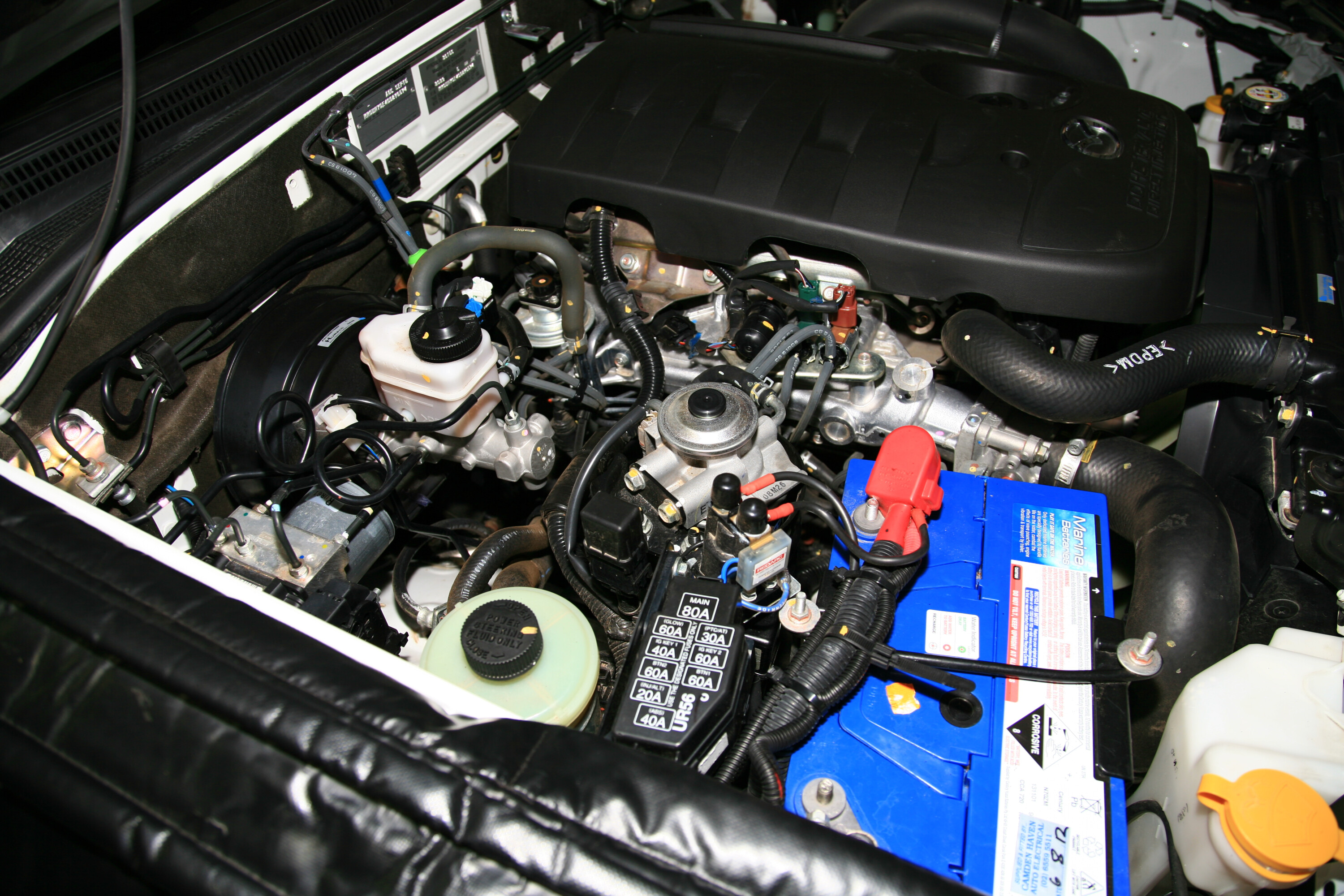
Fans of the upstream alternative point to the fact that a good quality aftermarket filtration system can incorporate its own bells and lights. Also, they add, if the pre-filter is of the correct type, it can do a better job of trapping all the problems, allowing the factory filter to have an easier life.
“Definitely before the factory filter,” says Emma Laukens. “We take the view that if the contamination has made it to the factory filter, it’s already too late.”
This placement issue is also where Emma says the warranty hassles begin. “Some OEM warranties won’t accept a downstream filter.”
The advice here is very simple: The instant you detect any contamination in the filter, it needs to be serviced and the medium replaced immediately. It’s kind of a you-have-been-warned deal, and ignoring this rule is asking for trouble.
Brent Hutchinson points out that the Flashlube product has been designed to work in about 40 different makes and models with specific mounting kits for each one. The kits also use OE mounting points, so there’s no drilling holes in your new vehicle.
Emma Laukens says that it’s important to use the correct fittings and fixtures in order to avoid restricting fuel flow.
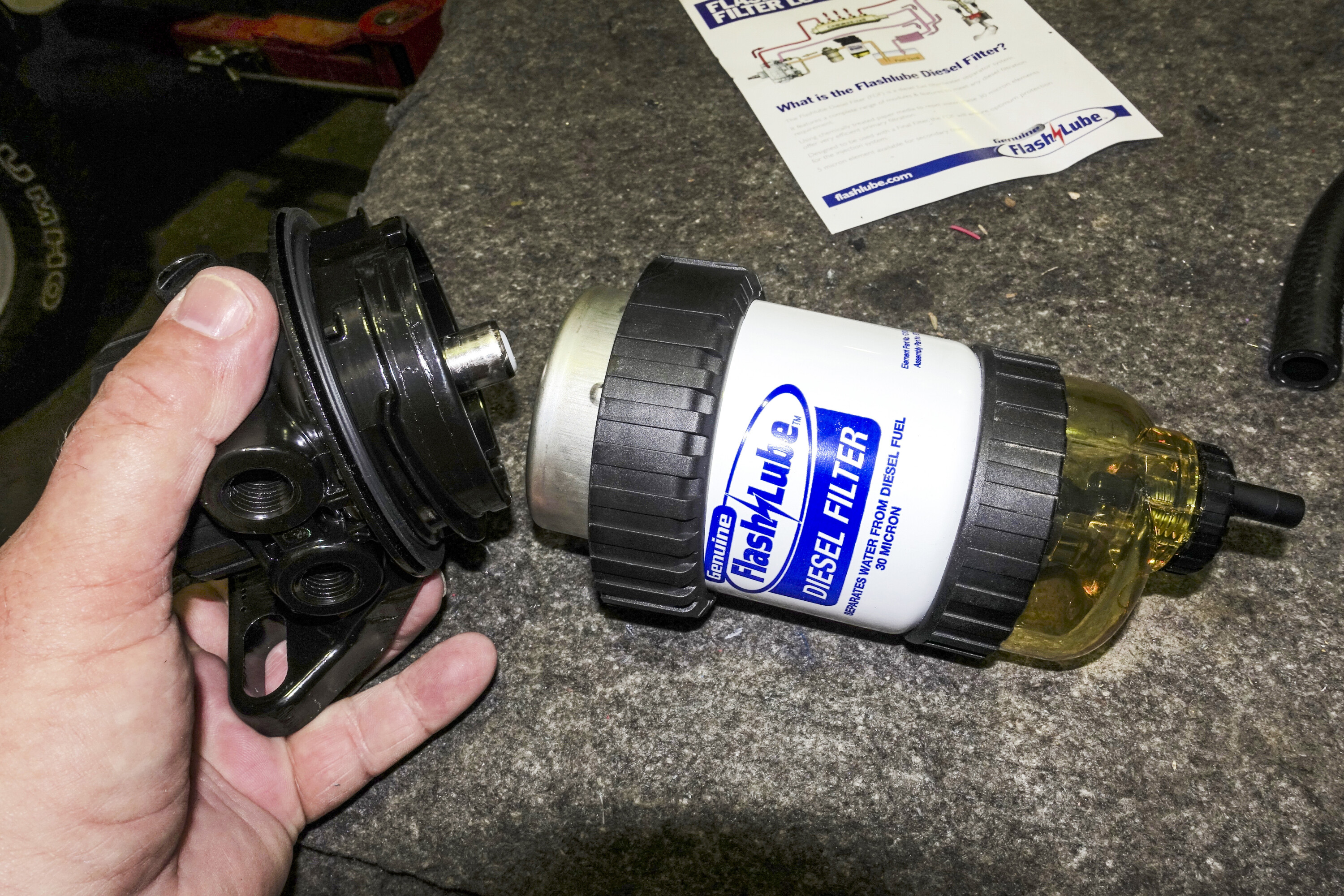
“That means the correct hoses and fittings; as big as the factory stuff or bigger. Also, it’s very important you don’t fit a filter designed for an old-school diesel to a modern common-rail vehicle. Small water particles are the big hazard for a modern turbo-diesel, so that’s what the filter needs to be very good at eliminating.
“You have to remember that most of these modern engines use lift-pumps, so the vehicle is always drinking from the bottom of the tank. That stuff your dad told you (mine did, anyway) about not letting the tank drop below about a quarter-full? Makes no difference in common-rail engines.”
The Ironman 4×4 rear swing arm bar is a great option for those who want to equip their LandCruiser with high-quality rear protection, a tow hitch and the options to make carrying spare tyres and/or jerry cans a whole lot easier.
Ironman 4×4 has just released this seamlessly designed rear bar that has proven tough-track capabilities.
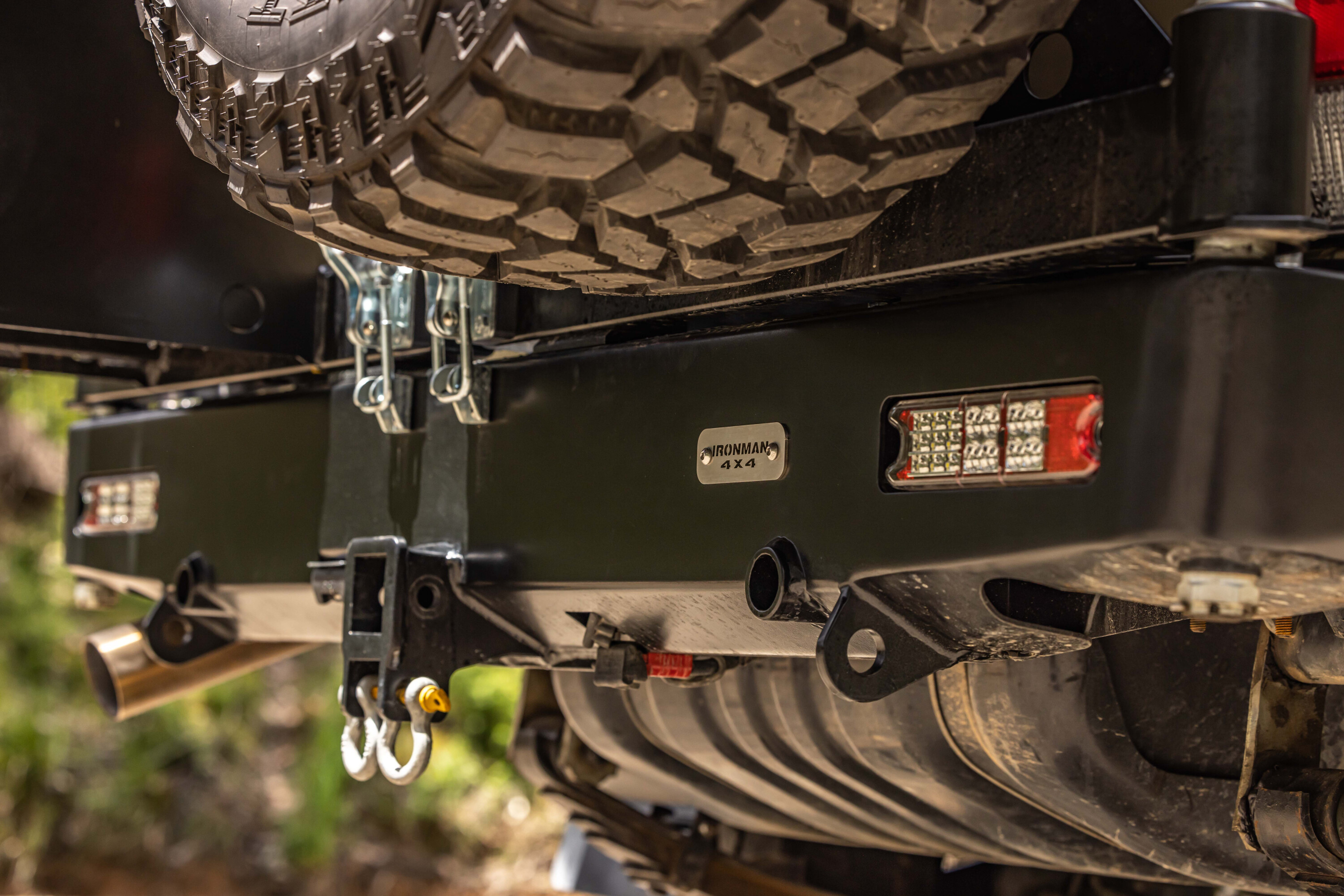
Constructed using 3mm steel, the plating, finishing and coatings are all layered with a quality UV-stable powder-coat. Plus, Ironman 4×4 has rigorously tested this bar over many years in tough off-road conditions, so they know the bar and bearing hardware is as solid as they come.
The swing arms also feature high-powered gas struts, allowing comfortable movement even with a 35-inch mud-terrain tyre attached.
Ironman 4×4 know that LandCruisers are great for towing, so they integrated a hitch into the rear bar. Offering a higher departure angle than competitors and with a load rating of 3500kg, this rear bar will give you the confidence to safely tow your camper trailer, boat or caravan. The bar also includes two high-lift jacking points.
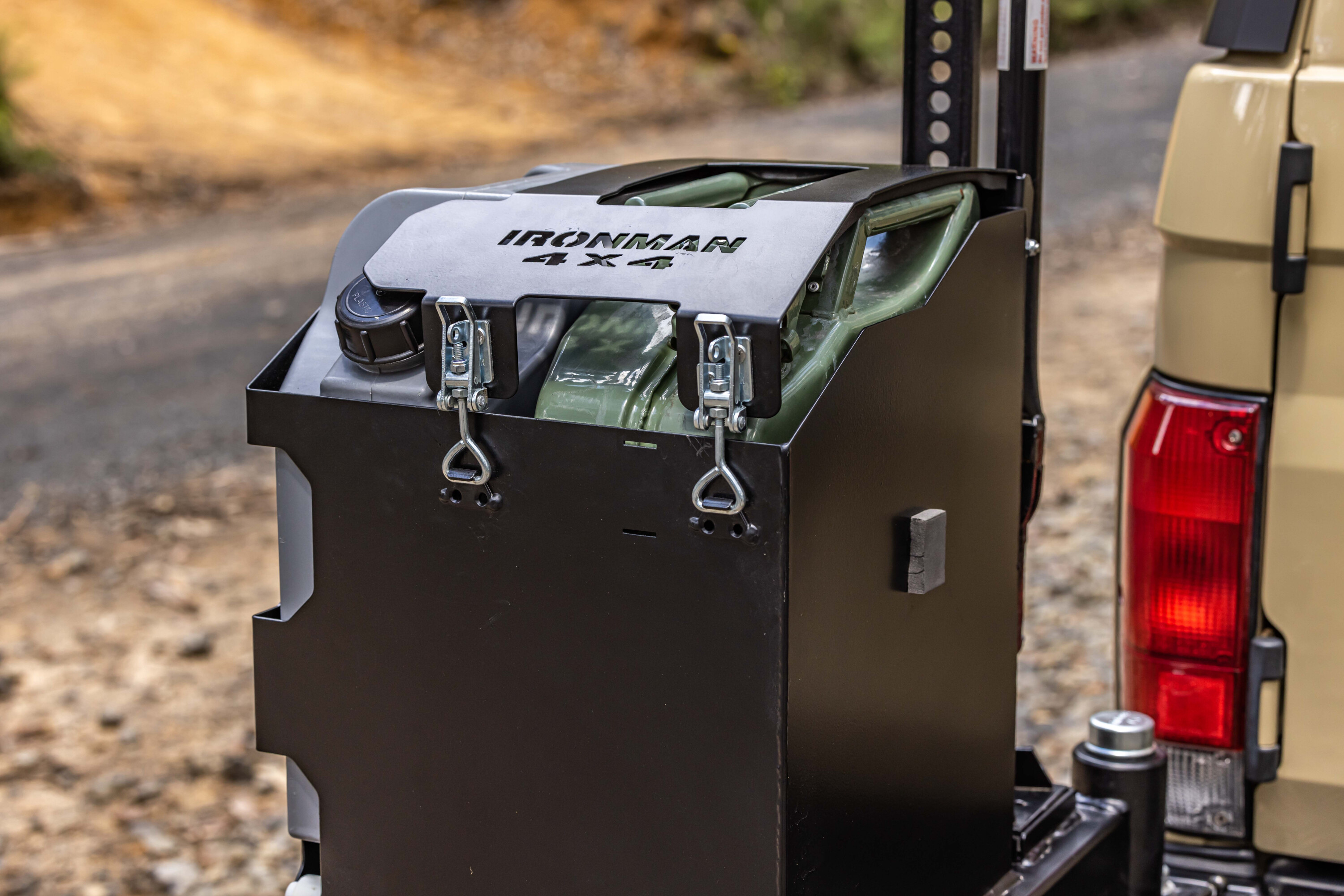
The rear bar has left- and right-handed swing arm mounting options for dual 20-litre steel/plastic jerry cans and spare tyres up to 35 inches. Whatever combination you would like, Ironman 4×4 has the option to create your ideal rear bar setup.
The Jerry Carriers even feature an integrated high-lift jack holder, allowing you to store your jack in a convenient location. By making allowances for a 35-inch tyre and the option of a high-lift jack holder, the jerry cans overhang the rear of the bar further than the spare wheel.
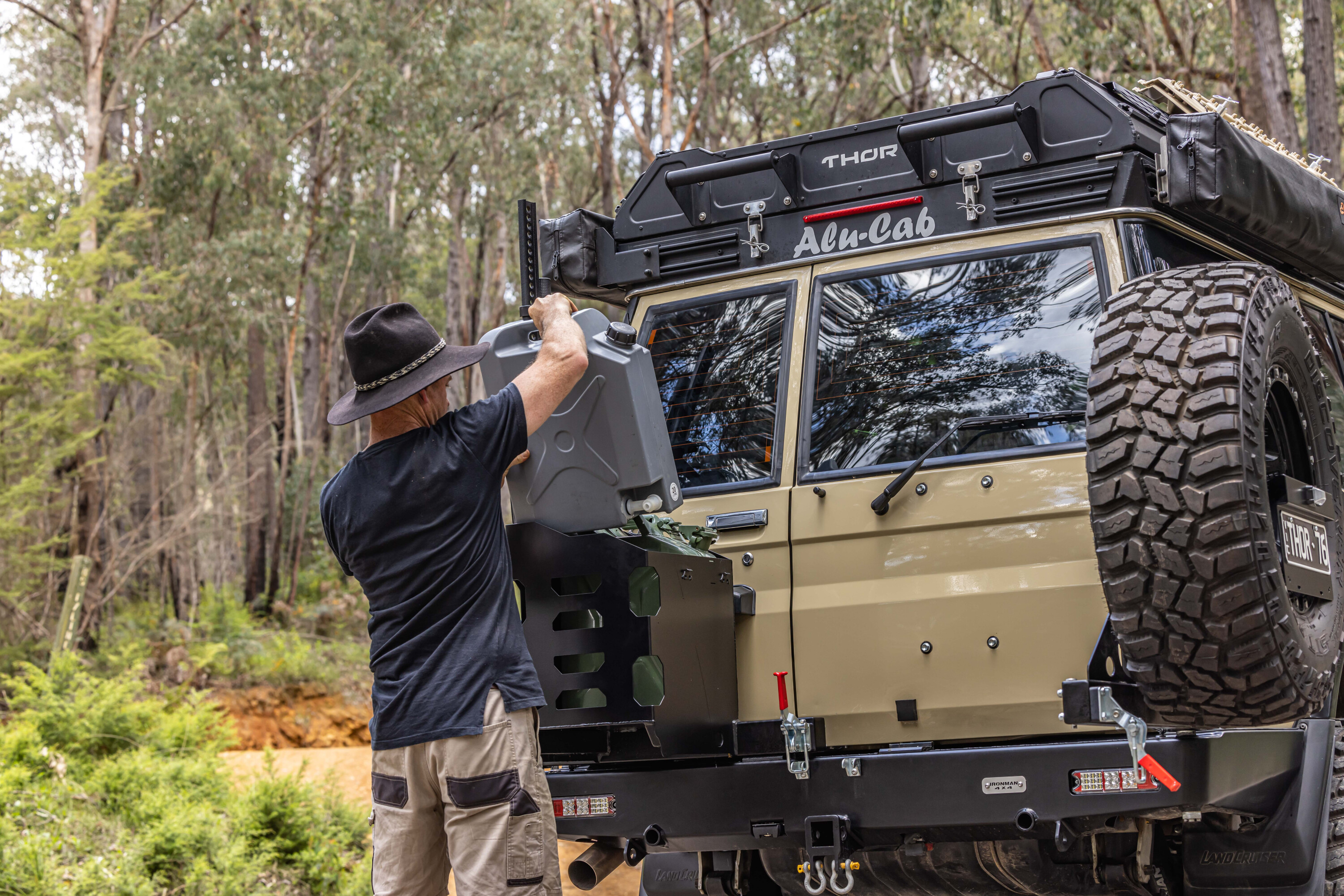
On its own, the rear bar comes in at 56kg and that includes the 50mm x 50mm hitch receiver. The wheel carrier weighs 20kg unladen and the double jerry can holder is 36kg unladen.
The integrated LED lights are IP67 waterproof rated, and a bracket for relocating the number plate to the spare wheel carrier is included.
Ironman 4×4’s pricing starts at $2099 plus fitting and any accessories. You can purchase the rear swing arm bar through any one of the Ironman 4×4 stores nationwide.
While it’s clearly a long wheelbase ute, 298mm longer than a 79 Series LandCruiser, its payload is only half that of the Toyota, leaving many to wonder what exactly it’s good for.
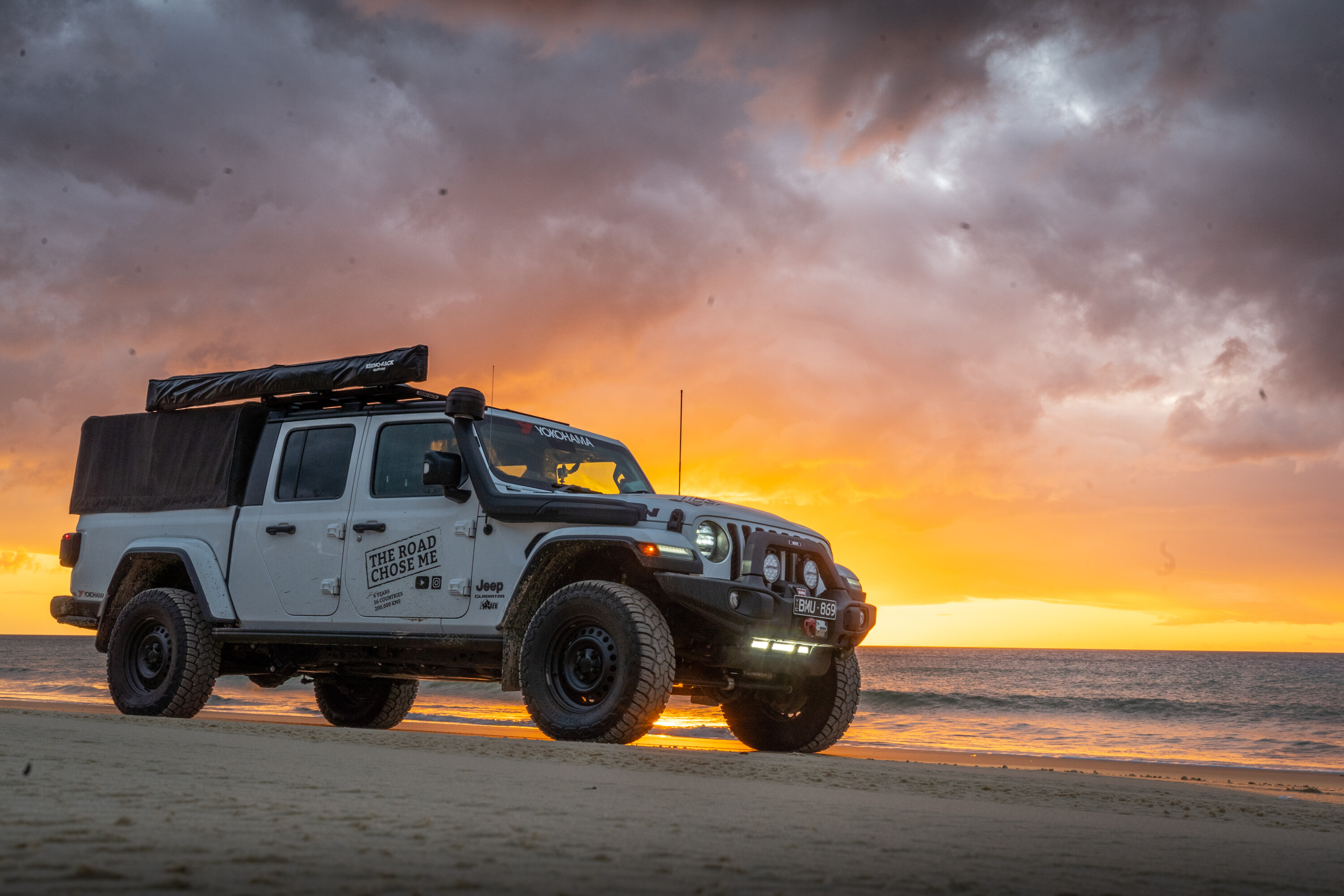
While Jeep’s marketing department would never be so blunt, the Gladiator is essentially a Wrangler with a wheelbase stretch and a five-foot bed bolted to the back. Thanks to that Wrangler heritage, the Gladiator undoubtedly has the off-road chops for more than just a fun weekend on the beach, and some would even say it doesn’t look half bad. That depends, of course, on which half you happen to be looking at.
And while it’s great to have a big beach-buggy with removable roof and doors for some weekend fun in the sun, the question remains as to whether the Gladiator is up to the real challenge of tens of thousands of kilometres in tough Aussie conditions.
The goal was to explore all the remote corners, wild tracks and iconic destinations as I made my way around this wide brown land. I ventured deep into LandCruiser country with an unproven newcomer, and I honestly didn’t know how it would go.
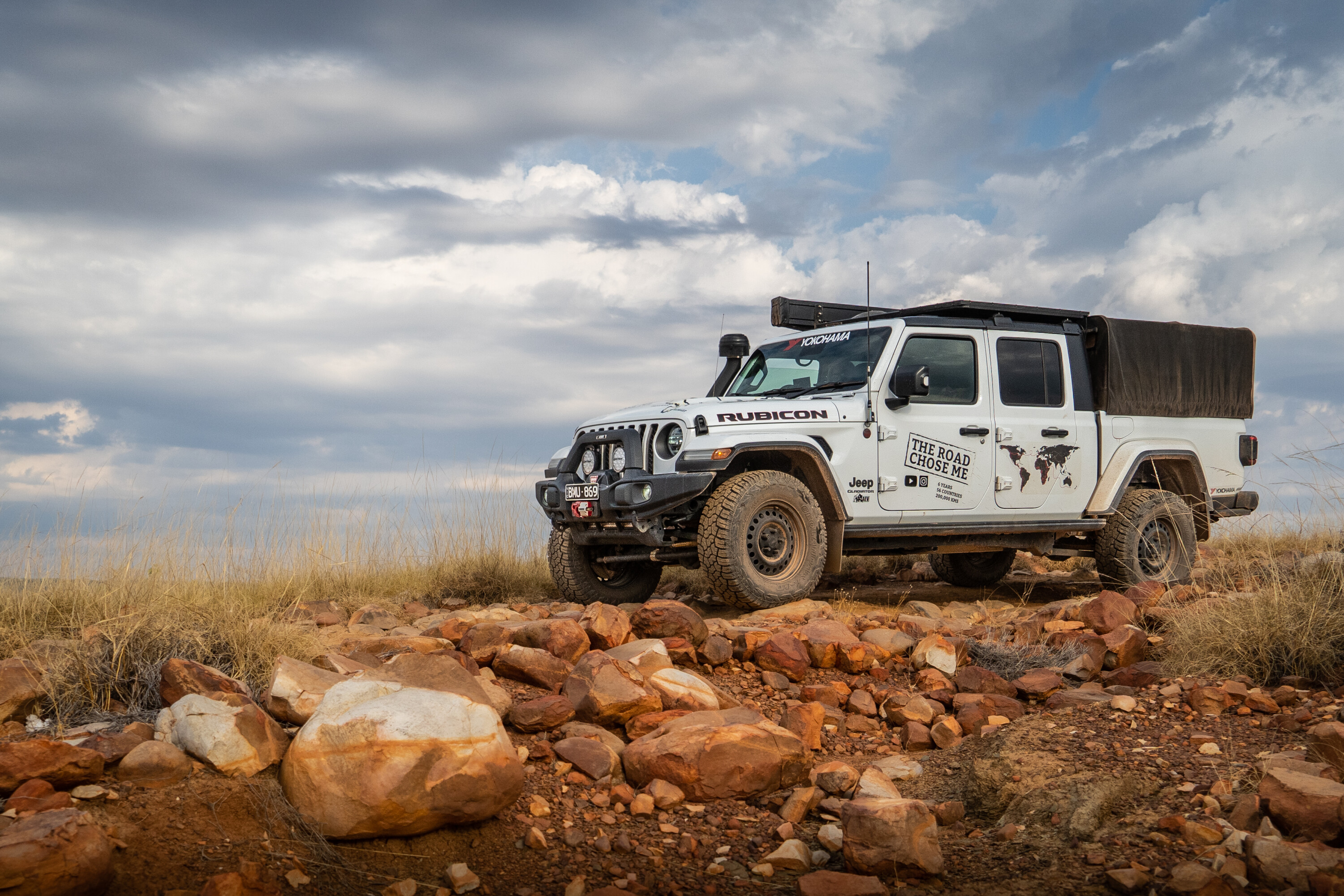
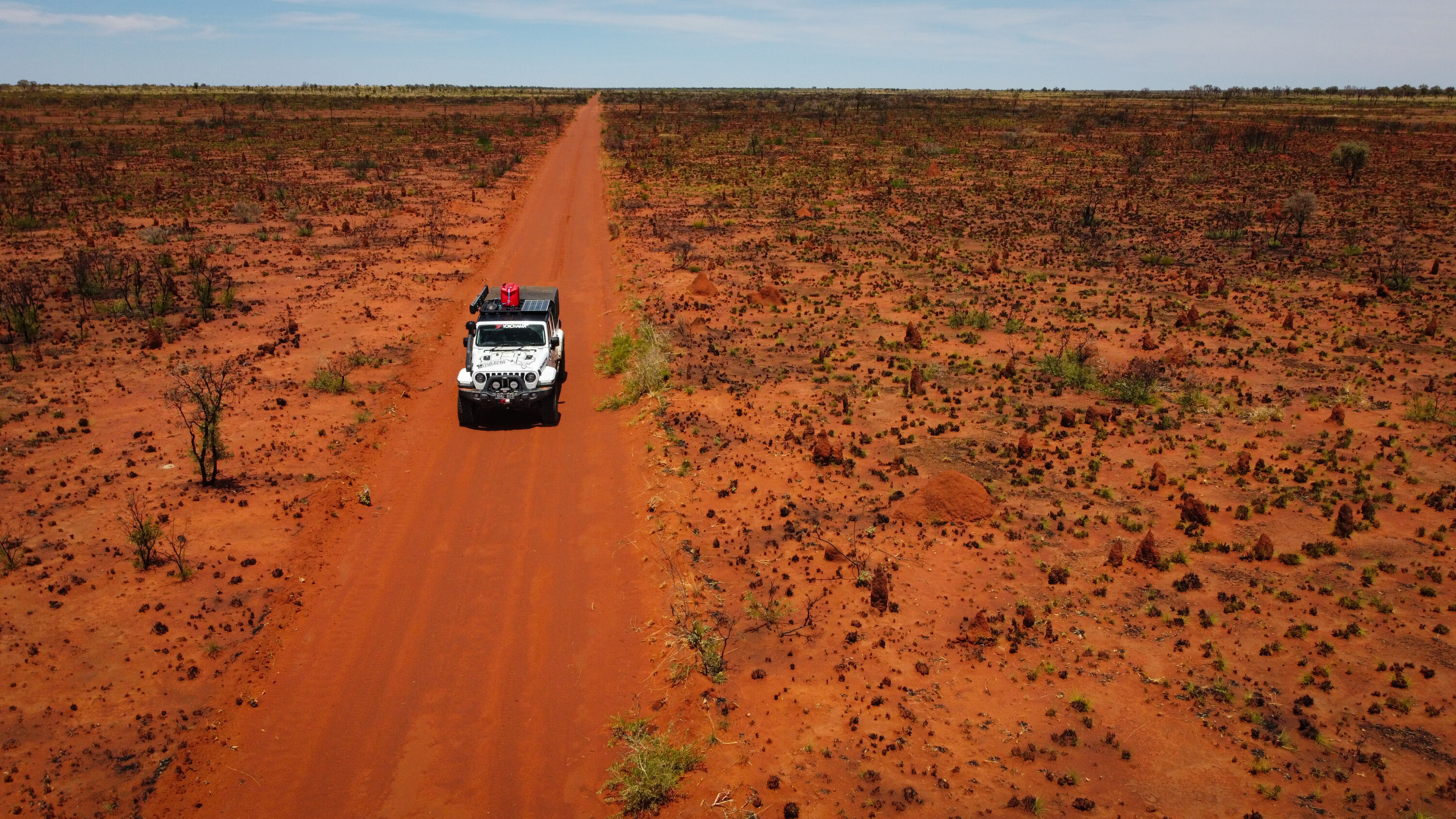
Just 12 months after acquiring the Gladiator, I would cross the Simpson on the Madigan Line, tackle the CREB, Frenchman’s and The Old Tele up in Cape York, explore Fraser Island from top to bottom, scramble around The Victorian High Country, criss-cross Tasmania, South Australia and the Northern Territory, then cross the Top End along the Gibb River Road, and finish off the 60,000km expedition by venturing the length of the remote Canning Stock Route.
How would the Gladiator go? After pondering this question for way too long, there was really only one way to find out.
Once loaded with enough fuel, water, food and gear to safely cross the Simpson Desert, precious little payload would remain for luxuries, and each and every kilo of additional weight had to be carefully scrutinised.
In factory trim the Rubicon package is equipped with front and rear lockers, an electronic swaybar disconnect, 4.1:1 axle ratios and a very low 4.0:1 low-range reduction, giving an impressive crawl ratio of 77.2:1.
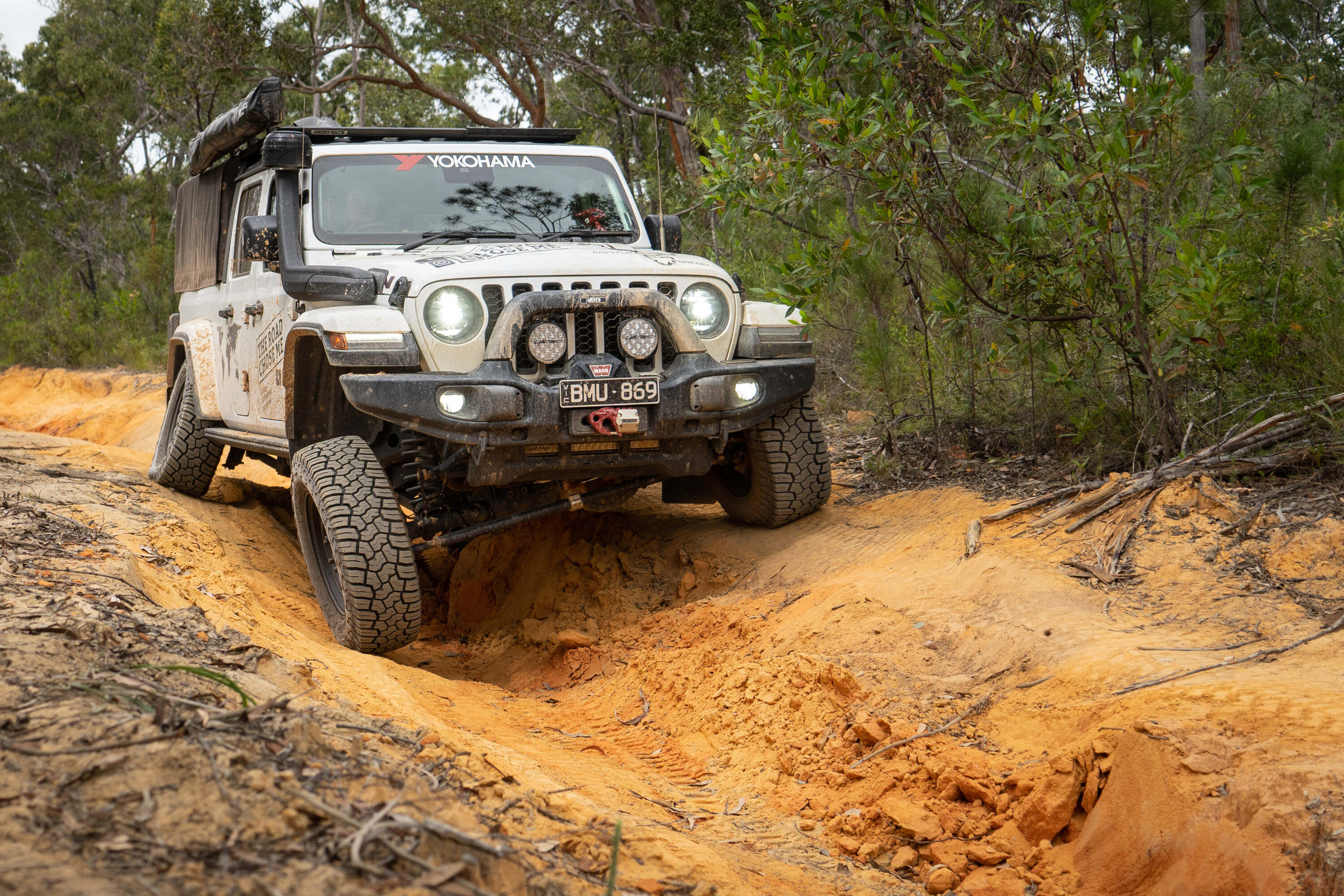
Make no mistake, the Rubicon Gladiator is bred from generations of rock-crawling Wranglers, and it means business. Aiming to avoid problems with the constabulary in every state of the country, I equipped the Gladiator with modest 33-inch tyres on steel rims that could be hammered back into shape in the event of damage.
Expecting to cover thousands of kilometres of nasty corrugations in a vehicle sitting very close to its maximum legal weight rating, suspension choice was critical. For decades, aftermarket Jeep suspension has focused on increased height, though with the growth of off-road touring in the States (overlanding, as the Yanks call it), the aftermarket now offers complete packages designed to carry constant heavy loads, as-is the case with the latest offering from American Expedition Vehicles (AEV).
Rather than a camper or traditional rooftop tent that would raise the centre of gravity and compromise handling, I chose to sleep in a swag for the entire 12-month adventure. I have a simple canvas canopy sewn up to cover the bed, which is a lightweight and durable solution to keep out the sun and dust.
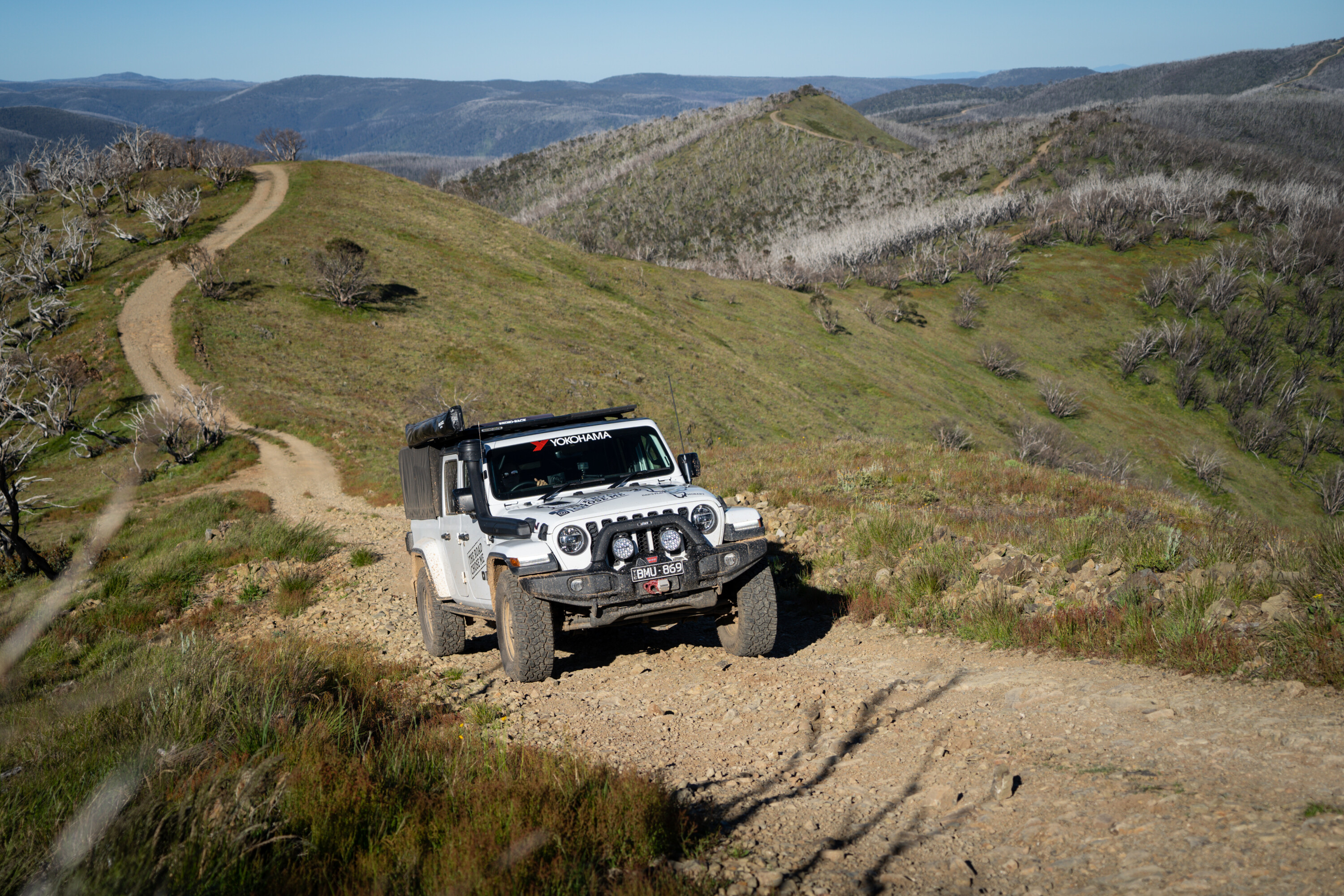
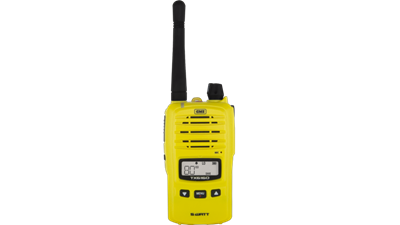
The standard Gladiator fuel tank is a modest 83L, and where I was going, carrying additional fuel was a must. I fitted a 70-litre auxiliary tank from The Long Ranger, giving a total capacity of 153 litres. Hoping to avoid a cracked radiator from a quick introduction to Skippy, I added a steel bullbar and skid plate to protect the steering, an integrated Warn winch, LED lights and a UHF radio.
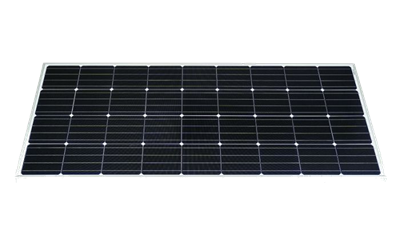
For camp comforts I added a 55L drinking-water tank, a huge pull-out kitchen and Dometic fridge, a lithium battery, a charge controller, a roof rack, a solar panel and a 270° Batwing awning with zip-on walls so we could escape the weather.
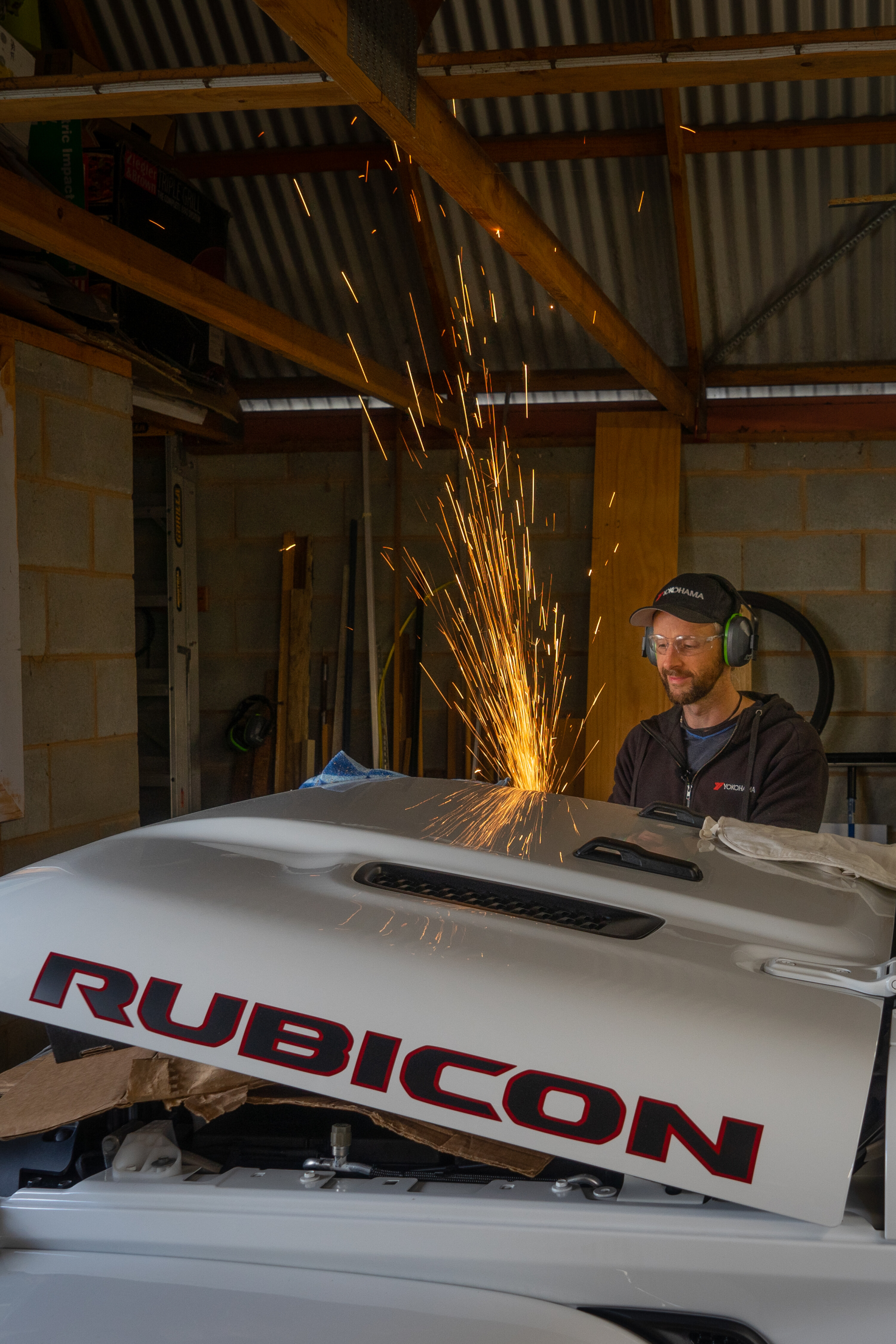
Feeling timid about working on the first new vehicle I’ve ever purchased, I jumped straight in the deep end, drilling holes in the roof on Day 1 to mount the sturdy Rhino-Rack, and cutting a large hole in the bonnet on day two to mount the snorkel.
As weeks turned into months, dad and I worked long days, slowly transferring the huge pile of boxes onto the Jeep. Together with my partner Katie we hit the road, and over 12 months we explored all the remote corners and iconic tracks I had dreamed about for years. As the kilometres rolled by, we got to know the Gladiator well, and it soon became the third member of the journey.
Believe it or not, we successfully completed the 60,000km adventure, making it right around the country and ticking off all the bucket list destinations. As well as Australia, we learned a thing or two about Jeeps… and more than we ever wanted to know about flies and dust.
Here’s how the Jeep Gladiator Rubicon fared.
Around Australia I always had the Gladiator serviced at official Jeep dealers, and found them to be professional and capable. Services were completed in almost every state and territory, and with a little forward planning it was never a problem to locate a dealer wherever I wound up.
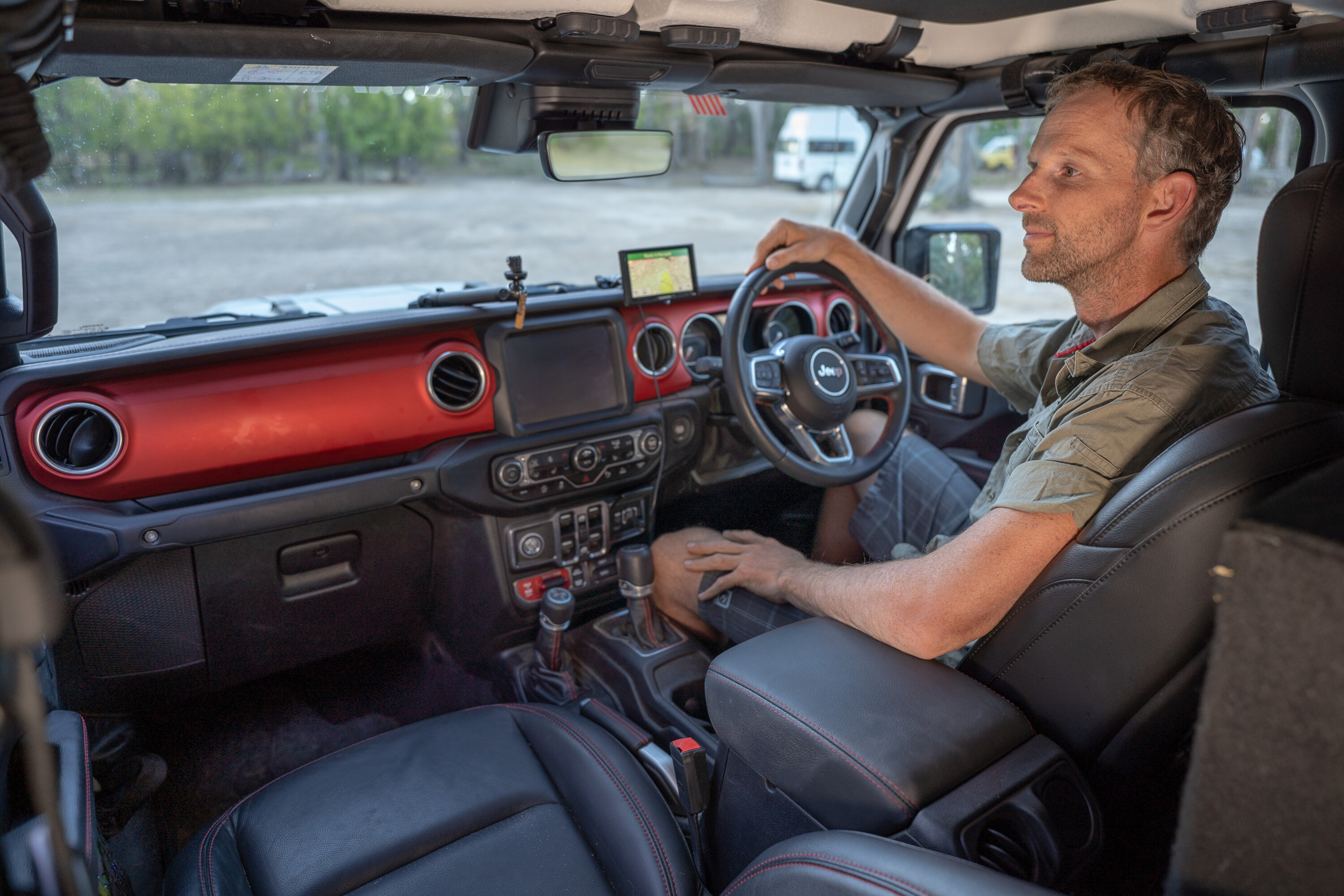
On paper, the Gladiator is sold with a 100,000km, five-year all-inclusive warranty, and I did experience one issue that put this to the test. After a few months and 10,000km, the main touch screen on the dash refused to function.
The problem was intermittent, so I was worried about potential water intrusion or a dodgy connection in some deeply buried wiring loom. While the vehicle still drove perfectly fine, losing the radio, satnav, reversing camera and a bunch of other features was a major pain, and unacceptable for such a new vehicle. Much to my delight, and then horror, the dealer in Adelaide diagnosed the problem less than thirty minutes after my arrival.
As soon as the problem was clear I must have turned many shades of red, feeling every bit the fool. In what is easily my most bone-headed move of all time, I had drilled into a wiring harness while mounting the fridge. Inside the harness, multiple wires were stripped bare, and had been shorting ever since.
Without heaping it on me, Jeep repaired the wiring and had me back on the road in just a few hours. This issue was entirely caused by my own stupidity, so I was shocked when the dealer split the bill with me, leaving me just a couple of hundred dollars out of pocket.
I certainly can’t complain about that.
There’s no doubt Jeep in Australia is working hard to repair its less-than-stellar reputation on that front, and I can only add my own anecdotes to the list.
I was told repeatedly that carrying a spare alternator is essential for outback travel. Having never replaced one while driving well over 200,000km through 55 countries in some of the worst conditions on the planet, I often wondered about this advice that is taken as gospel across Australia.
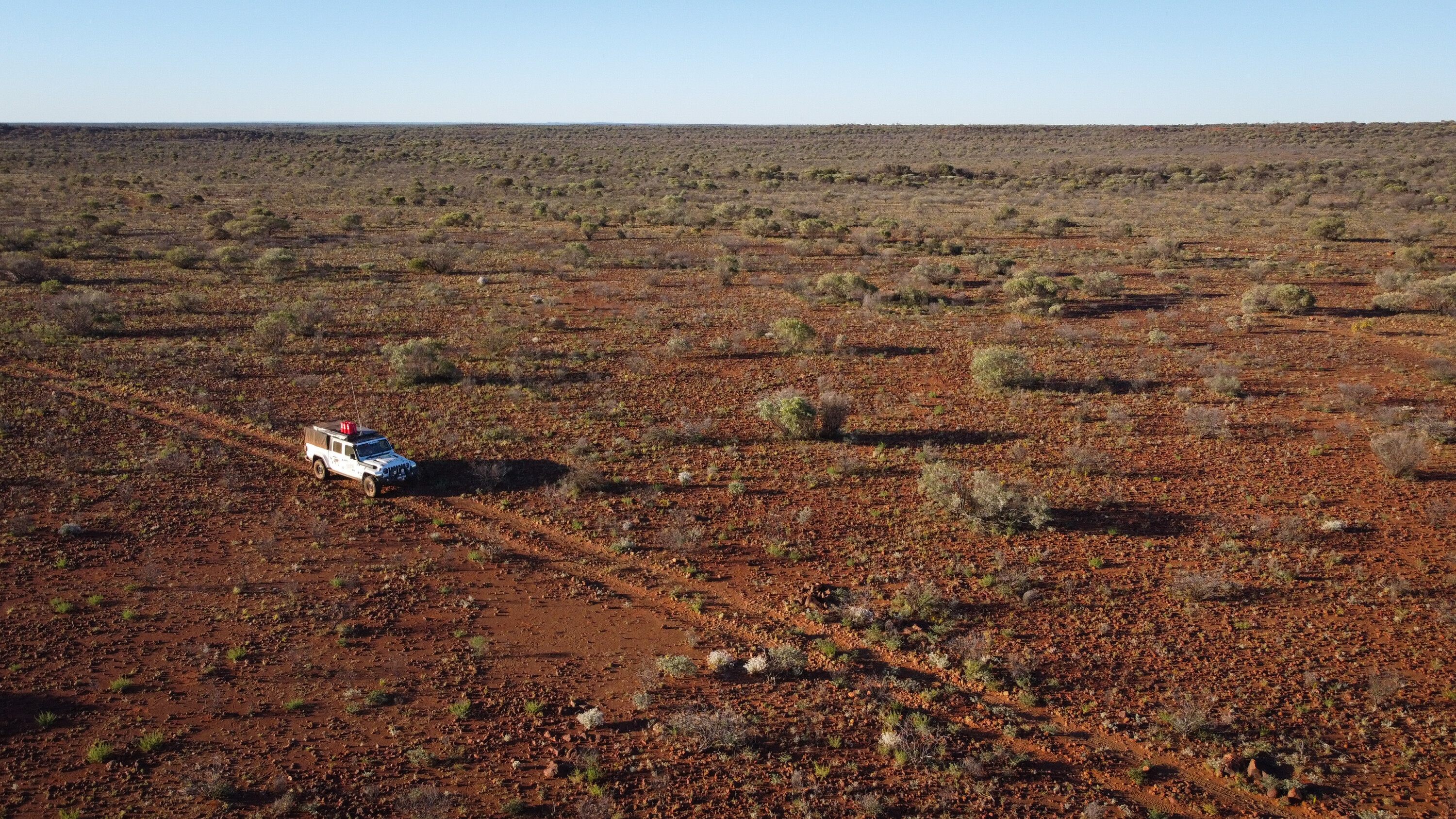
While tackling the Old Tele with a bunch of LandCruisers, I soon learned the reason for this ancient wisdom – alternator placement. While Toyota mysteriously mounts them as low as possible on the engine, to achieve its 750mm water fording capability, the Gladiator’s alternator is mounted at the very top of the engine, and is therefore the last under-bonnet item to be submerged in deep crossings.
While all the LandCruisers that tackled the Old Tele with me have since replaced their silt and mud-laden alternators, the high mount alternator on the Jeep barely saw a drop of water.
While we’re on the topic of alternators, the Gladiator is equipped with a 240A unit from the factory, so not only did it never need replacing, it also didn’t need to be upgraded.
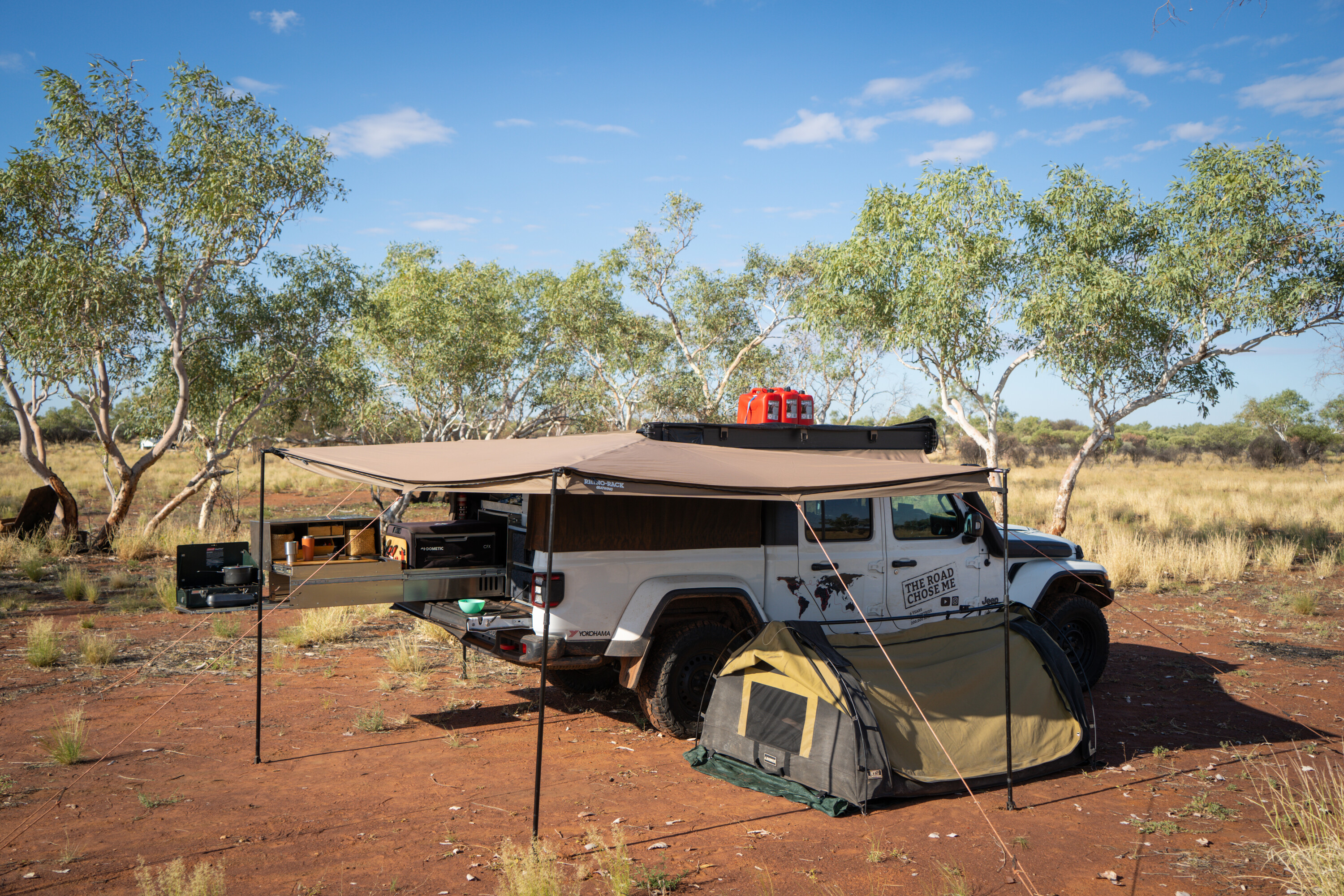
I was also repeatedly told two spare tyres and wheels are essential for tough Aussie conditions, and this was another piece of age-old wisdom I was more than a little skeptical of. I outfitted the Gladiator with Yokohama’s aggressive Geolandar X-AT tyres that blur the line between mud-terrains and all-terrains.
In all 60,000km I never once experienced a single tyre issue, and they performed flawlessly on everything I threw at them, from mud to beach sand, dunes, rock, clay gravel bitumen and all of that times 60,000, they were flawless.
While it might come as a shock to some, the Jeep itself was also flawless on its around-Australia adventure, never requiring so much as a bolt to be tightened.
Sadly, we can only dream about the 3.0L EcoDiesel offered in North America, which would be ideal for touring in outback Australia. Putting out 193kW and a whopping 600Nm of torque, for once the yanks have access to a medium-size turbo-diesel engine that we Aussies do not.
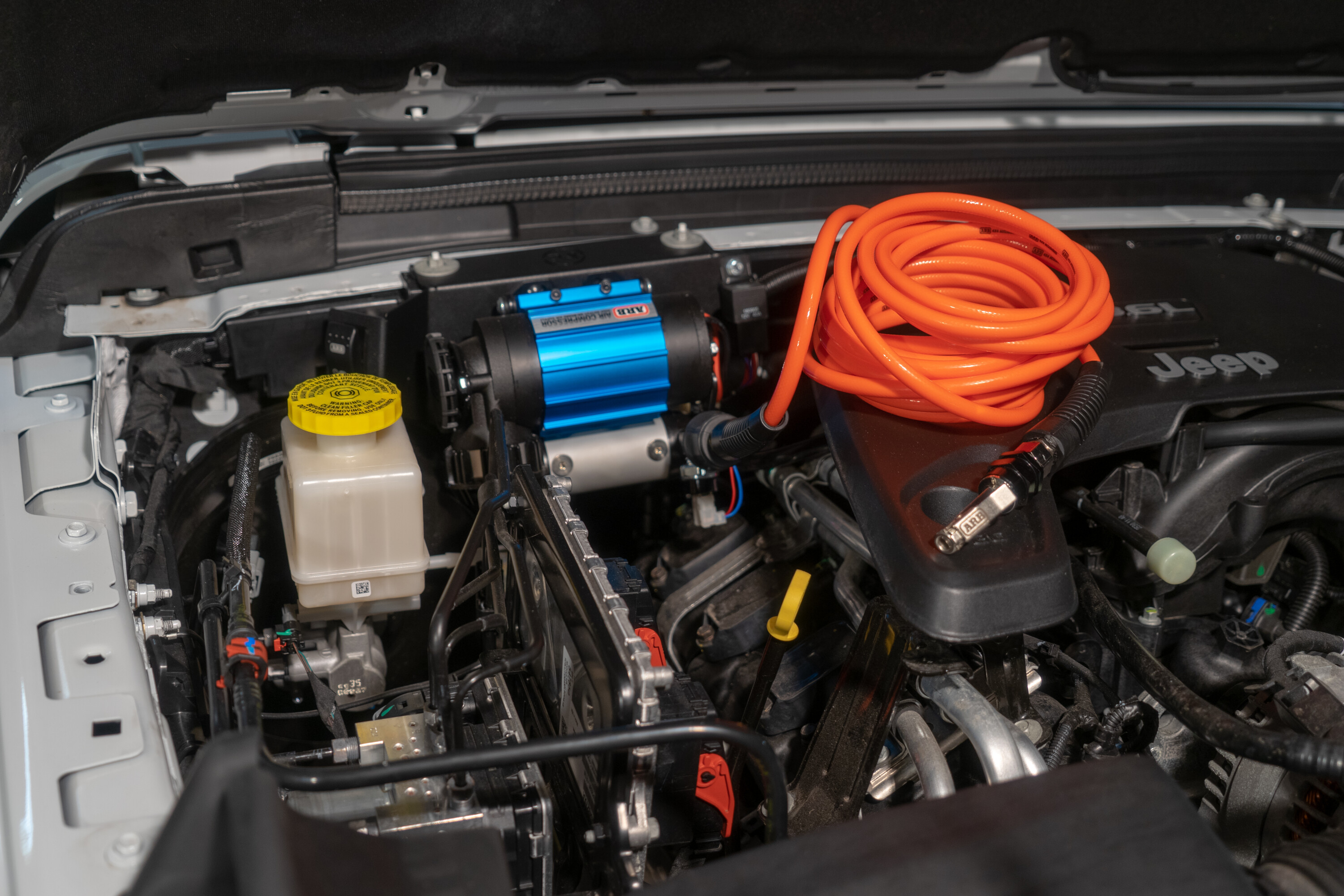
Officially, it seems the Italian-sourced oil burner doesn’t package into the right-hand drive Wrangler and Gladiator, which is a fancy way to say it doesn’t fit. More accurately, the bean counters ran the numbers and calculated the cost to make it fit exceeds the projected sales, so there is no business case.
The Pentastar V6 in my Gladiator puts out a respectable 209kW and 347Nm, making it no slouch, and for such a big vehicle it can leave unsuspecting vehicles firmly in the rear-view mirror if you’re willing to use a good deal of right foot. When it comes to soft sand climbs nothing beats horsepower, and climbing the endless dunes of the Simpson Desert proved downright easy, and we never needed to take a second crack at a single dune.
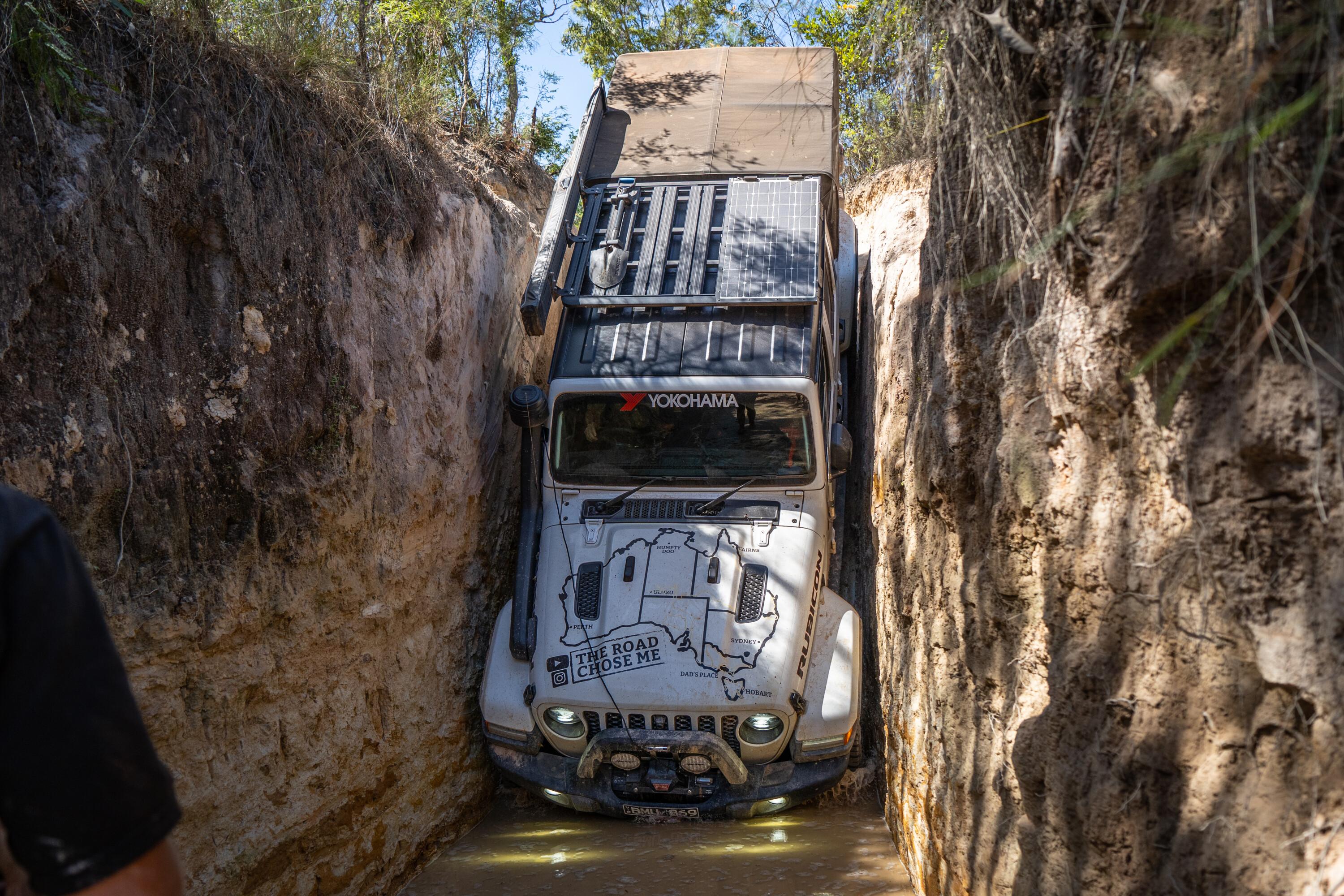
Even the mighty Big Red, arguably the biggest and steepest dune in the Simpson, proved no match for the Gladiator, which easily drove up the steepest line, rocketing to the top with an abundance of momentum.
When driving with a light foot on bitumen, the fully outfitted Gladiator managed an impressive 13L/100km, which due to the huge price difference between petrol and diesel actually made it cheaper to drive long distances than the diesel 4x4s it was surrounded by.
Fuel cost is by far and away the biggest expense of long-distance touring, and covering 60,000km in a single year results in quite the fuel bill. With the auxiliary tank often full, I never had a problem sourcing petrol, even in the remotest outposts.
For a long-term tourer that means it has the off-road chops of the Wrangler while adding the ability to carry more fuel, more water and more food. That’s win, win and win.
With its coil springs and front swaybar disconnect, the Gladiator offers impressive axle articulation and it’s a flexing machine, nearly always keeping all four tyres on the ground to claw forward no matter how steep or how rutted the track. In stark contrast to the army of 78 and 79 Series Land Cruisers that lift front wheels at every opportunity, we hardly got the Gladiator to lift a wheel on the hardest lines on the Old Tele.
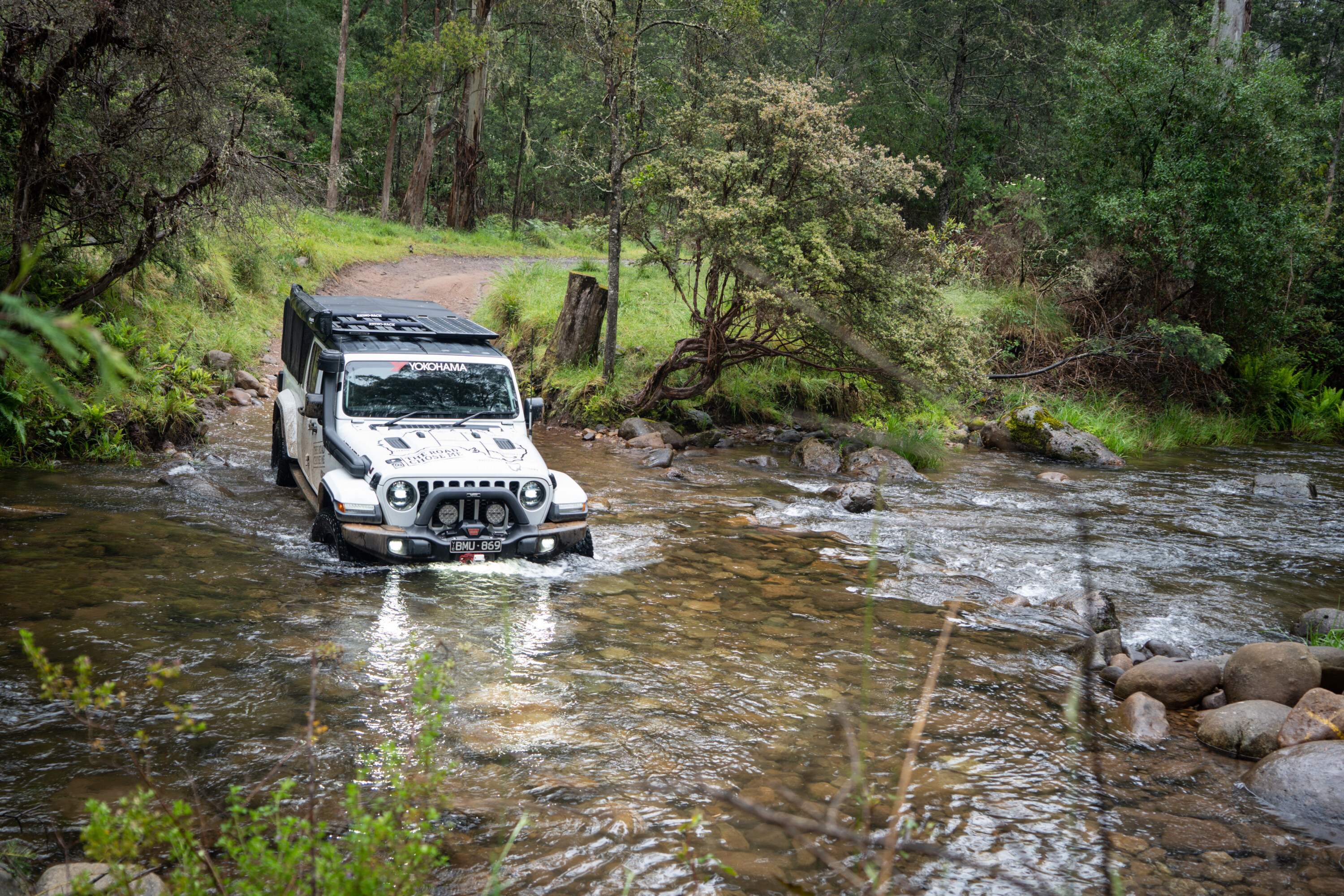
On several occasions on the Old Tele, my adrenaline peaked after helping other vehicles over sketchy hill climbs that had wheels lifting, engines revving and tyres spinning. Quickly we would all run over and stand on bullbars or hang off roof racks to keep vehicles from going over, while winch lines were frantically run out.
Once my turn came around, I would simply crawl to the top without lifting a wheel or even the slightest hint of wheel spin. In low-range first gear, the Gladiator can crawl forward much slower than walking pace, provinding an immense level of control and precision.
In all honesty, it made everything look and feel so easy, everyone stopped taking photos and videos of it, because there was no drama… and no chance of a roll over or nasty situation.
The Gladiator is as quiet on bitumen as any live-axle 4×4 could hope to be, and most impressively it maintained a comfortably quiet cabin on the seemingly endless corrugations of the Gibb River Road. While travelling companions in Patrols and Cruisers were wearing headphones and couldn’t even talk to their partners, Katie and I rolled along in relative comfort.
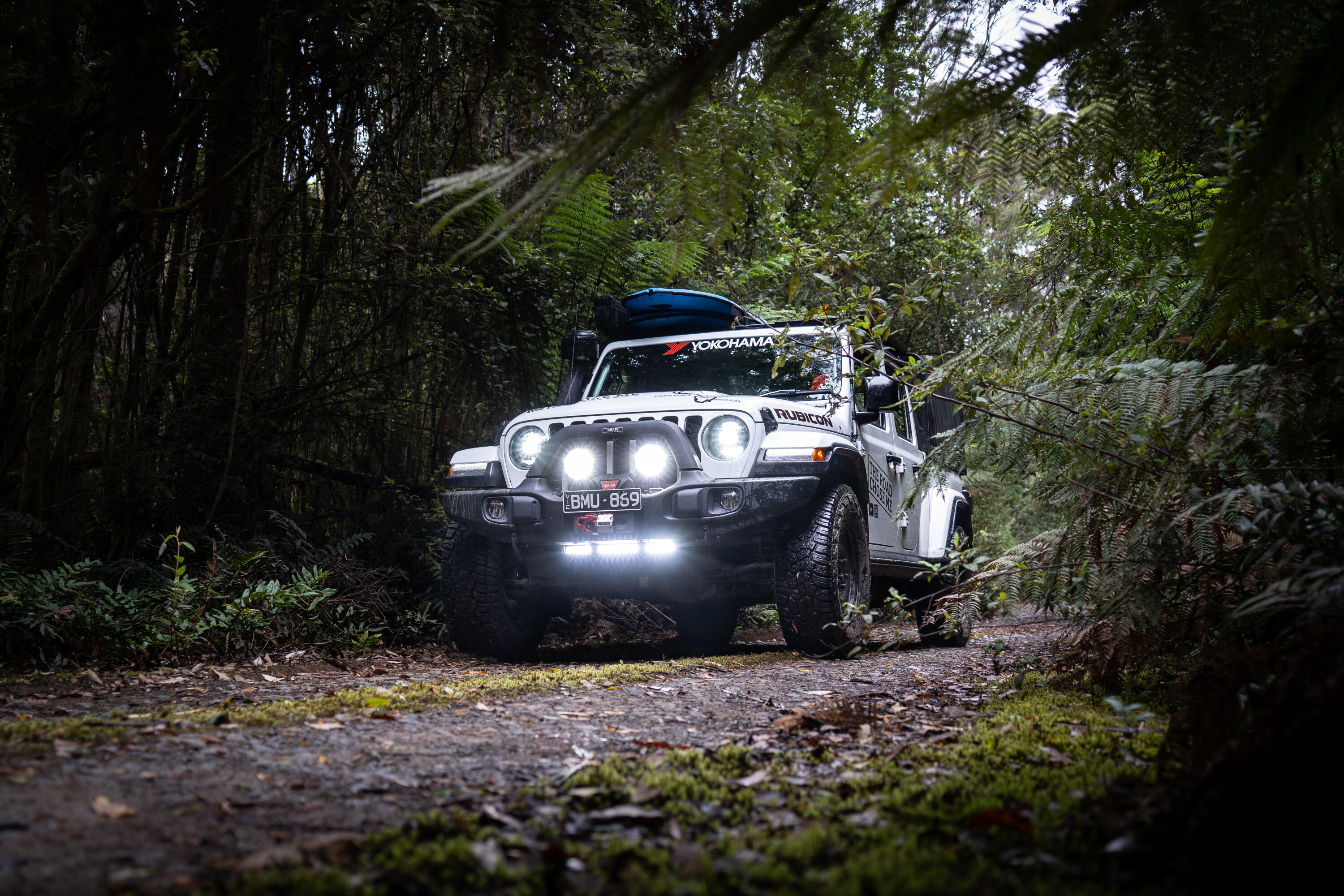
While tackling the Canning Stock Route I was a bit miffed by the continual descriptions and online discussions I’ve seen regarding the corrugations, which are famously Australia’s worst.
While they were undoubtedly bad, the Gladiator ate them up with ease, with drone footage showing the rear coils working just as they should to isolate the cab from the bouncing axles.
I’d spent years dreaming about Australia’s most iconic 4×4 tracks and remote destinations, and now they’re all successfully in my rearview mirror.
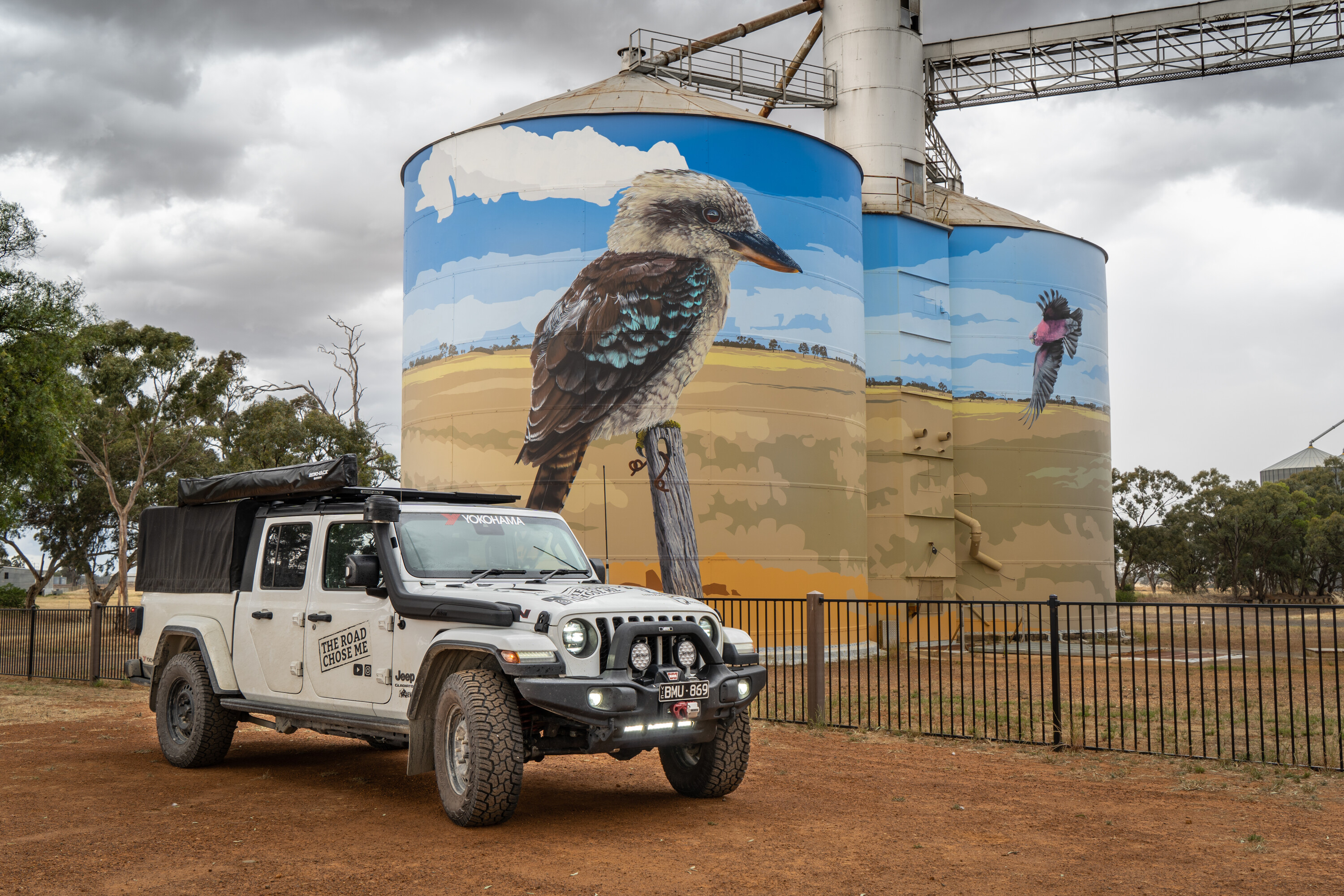
Discounting my own stupidity, across the tens of thousands of harsh kilometres the Jeep never once missed a beat. Not only did it eat up the corrugations and dusty kilometres of the Gibb Rover Road in comfort, it crested thousands of dunes in the Simpson Desert and along the Canning Stock Route, and it easily walked along the Old Telegraph Track.
While the Yanks back in Detroit surely didn’t design this ‘longer Wrangler’ with Aussie conditions in mind, it easily handled everything Australia could throw at it, never once giving the slightest hint of a problem.
As with most places I visit for the first time, my first port of call is always the local information centre so I can get a grasp on what’s in and around town.
With an armful of brochures and a headful of facts and figures, I was ready to explore, but not before spending a bit of time in the museum out the back. Here the collection of memorabilia, photos and displays offer a good indication of what went on in the area from around 100 years ago to the present day.

Pemberton is a quiet town where you can sample local boutique wines and beers, the pies and cakes are still handmade, and the few shops scattered about the place still have a country feel about them.
Keen to check out the rolling stock, I headed down the back of the town where the old restored rail station is, and I wandered around the steam engine, round turntable, diesel engines and huge low-loader crane, and finally the disused tram that once ran tourists along the line several years ago. The tram and trains don’t run anymore but it’s still pretty cool to wander around here.
Predominantly, the rail was built in 1926 through the forest to Northcliffe when the timber industry was booming, transporting goods to newly opened up farmlands and moving loads of timber out.
For 50 years it was an important link, but it ran at heavy losses – it was only the timber industry that kept it alive… just, but from around 1961 things started going downhill with bridge fires, and buildings were sold and relocated, and by 1986 the last train had run the line.
Today a majority of the bridges, sheds and the station are either heritage listed or considered highly significant. A tourist tramway used to run part of the line but sadly this closed in February 2023.
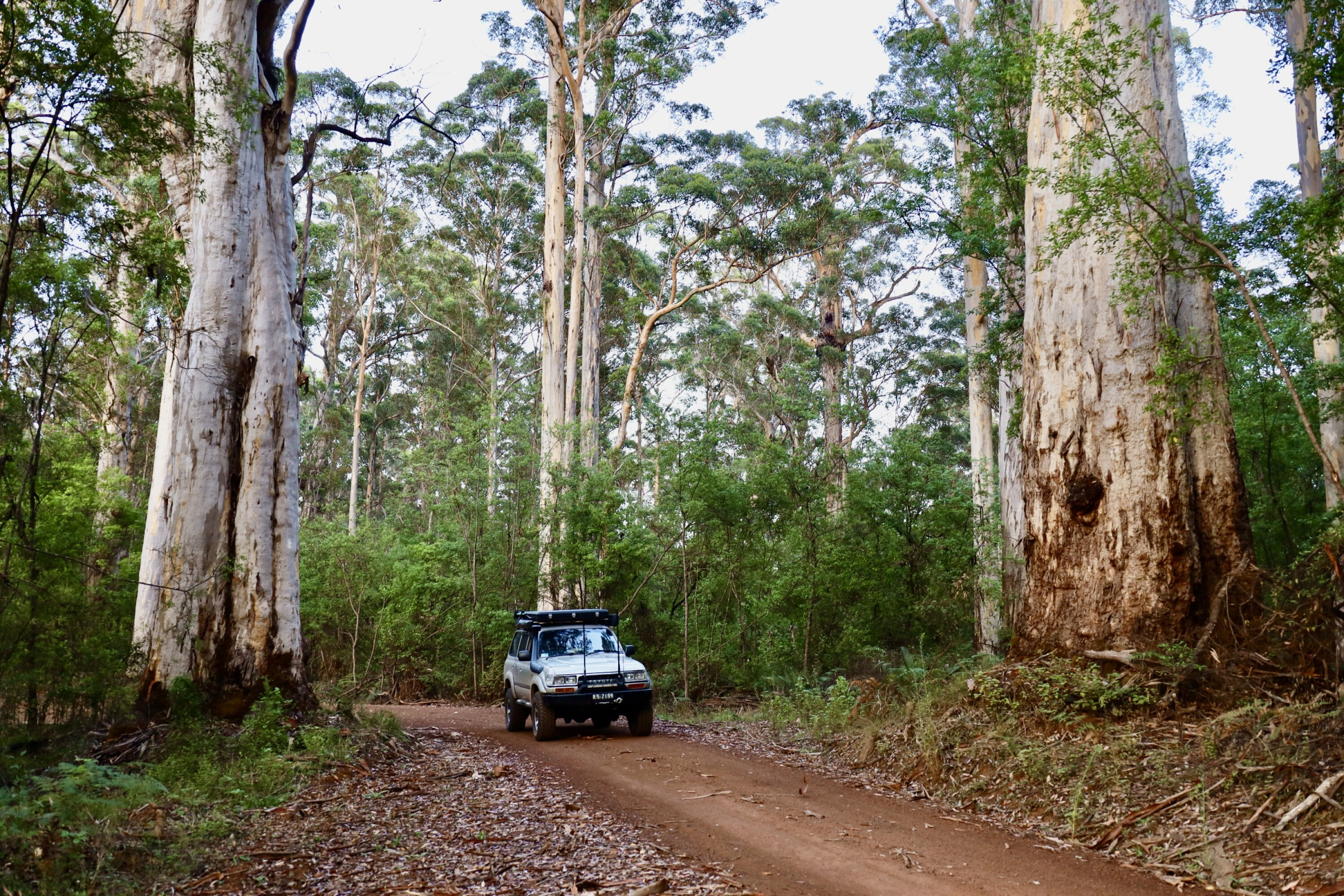
One of the most popular things to do out of town is the signposted Karri Forest Explorer scenic drive that loops around many of Pemberton’s attractions. Surrounded by National Parks (don’t forget to buy a pass), there are plenty of timber-related points to go and find.
His mate Jack Watson scaled a claimed 40 trees to find the biggest in the area, and between 1937 to 1952 eight of these were selected for fire-tower use. Large steel pegs were hammered into the trunks of the trees to form ladders that curl their way to the top where small cabins were built.
Today, two of these trees can still be climbed, while another can be viewed, but decay at the base makes it unsafe to climb. Climbing these trees definitely isn’t for the faint-hearted; there are no safety harnesses and no grab rails, so it’s one step at a time both up and down.
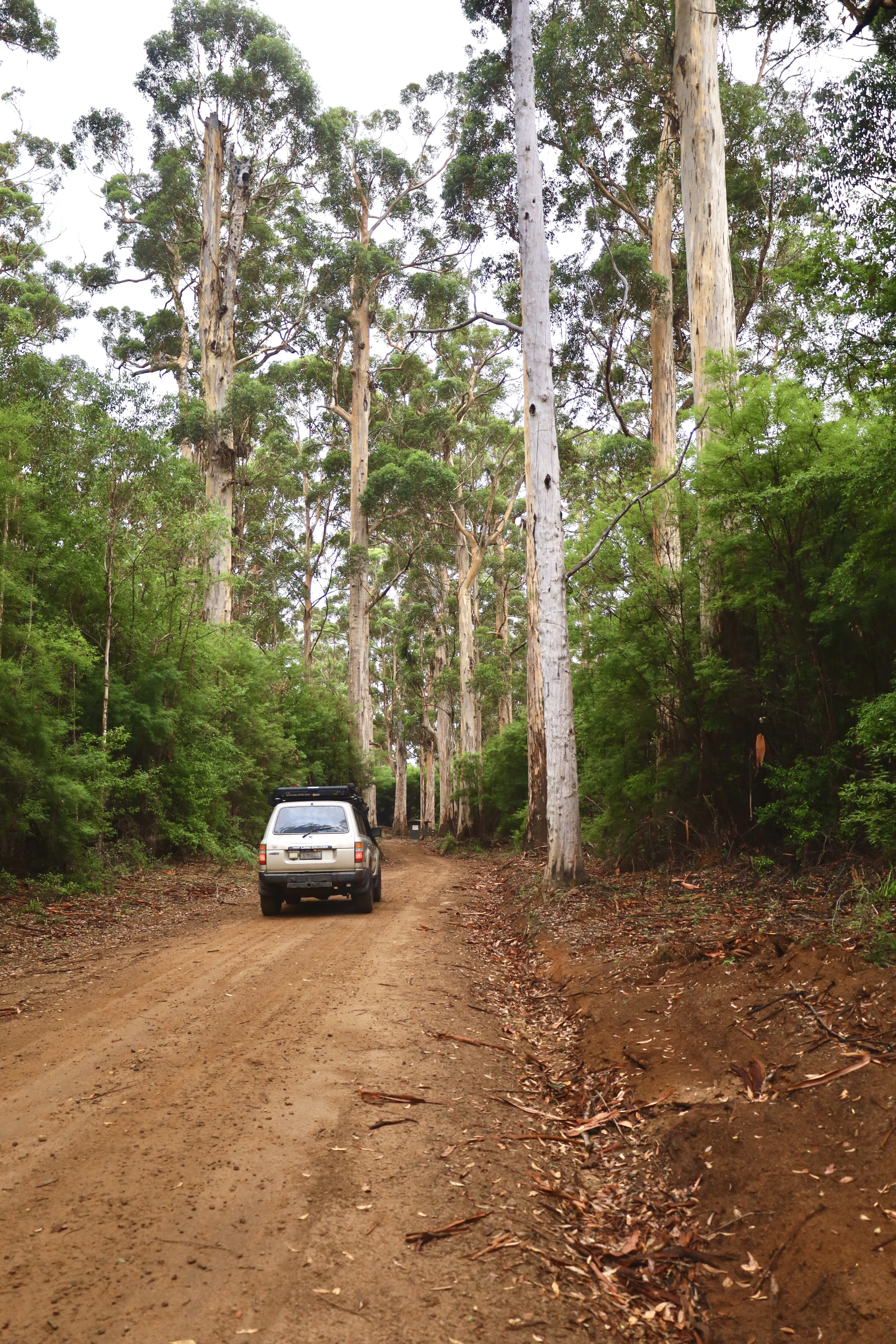
The most famous of these karri tree lookouts is the Gloucester Tree, which proudly stands 53m tall and has a metal platform at the top giving climbers views across the surrounding forest… after clambering up the 153 pegs to the top, that is!
The other karri tree that can still be climbed is the Dave Evans Bicentennial Tree in Warren NP; it stands 65m tall and there are 182 steel pegs to the top.
The third remaining tree is called the Diamond Tree, but due to the aforementioned rot the fire lookout hut has been removed. There’s a replica hut nearby allowing visitors to see just how the lookout men would have spent their time.
Finding it was easy thanks to ample signposting and this 12km one-way track descends into the Warren River Valley.
Apparently the steep track was handcut to provide clear access for firefighters to the river, and the name of the track reflects the difficulties involved in its construction. To be honest, it isn’t very steep and low range wasn’t required to descend it, but it would certainly be more challenging in the wet, and it’s not suitable for trailers.
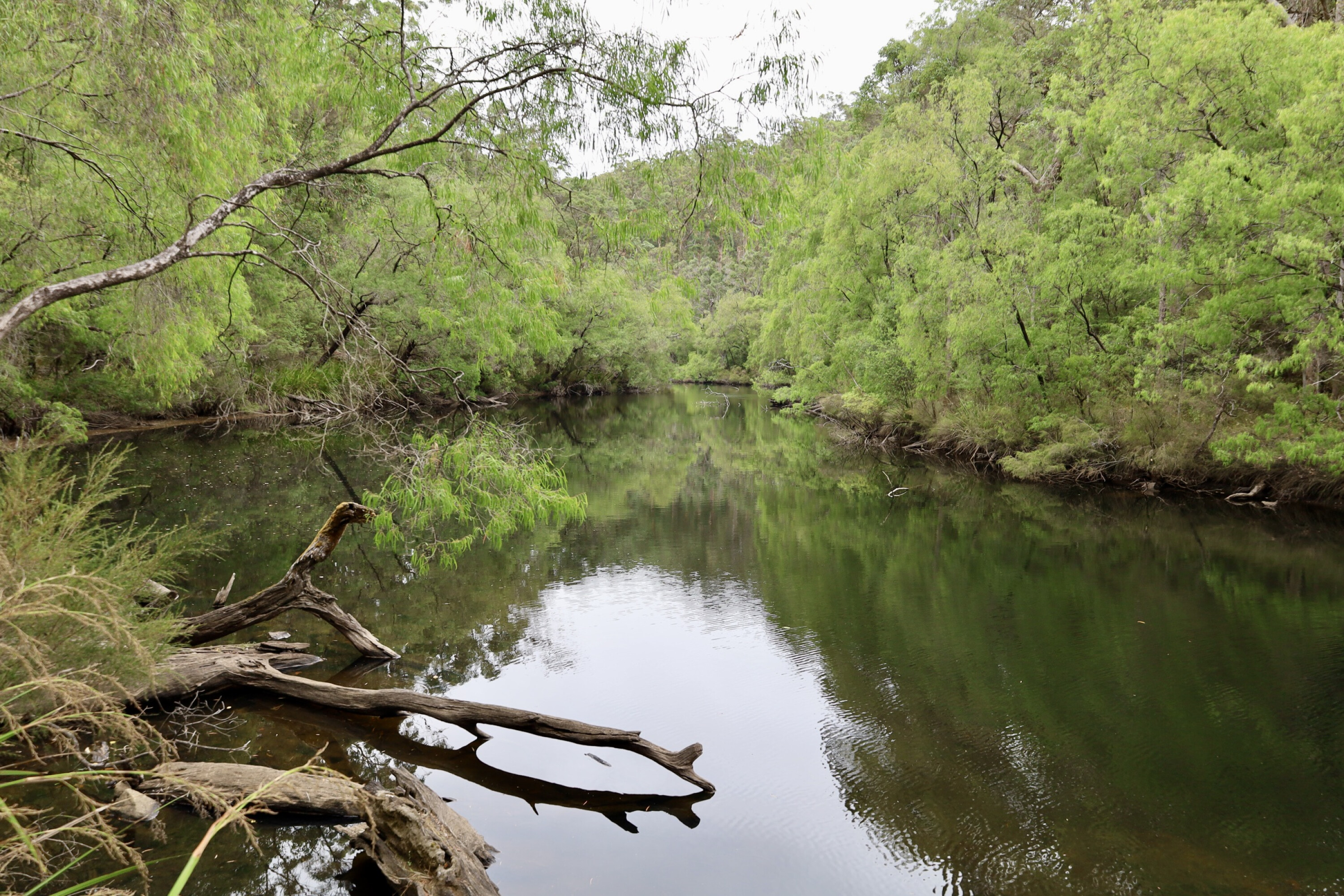
Down in the valley the Warren River comes close to the track at several points and there are two shady campsites to choose from.
Both Drafty’s and Warren camp offer river access which is perfect for launching a canoe in the dark tannin-stained water, and both have day-use areas with a basic drop dunny. As with a lot of national parks camps in the area, there’s no booking; it’s first in best dressed, and pay at the self-registration stations at each camp.
Nearby is Brockman’s Sawpit which is believed to have been dug by convicts sometime around 1865 for the nearby homesteads. Remarkably, the pit was found in 1972 by forest workers complete with jarrah logs, sawn flitches, an axe and a saw.
Beedelup Falls is one of the area’s major attractions in winter, when the falls are in full flow over the rock shelf, but at other times throughout the year the flows are reduced significantly. There’s a viewing platform at the top, as well as a 600m loop walk along a boardwalk and suspension bridge that leads you down and across the bottom of the falls.
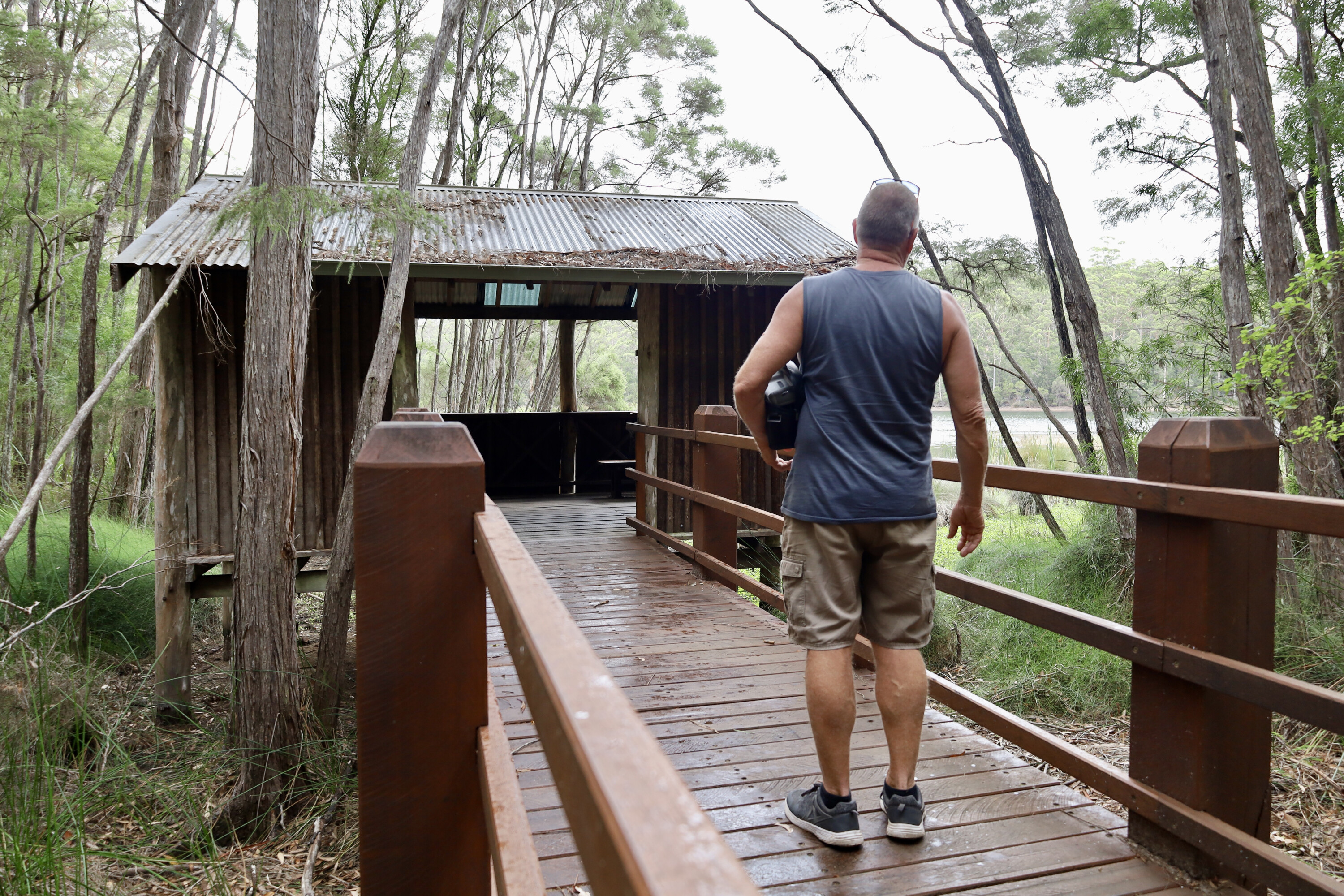
There’s also Cascades, where the water can apparently transform from a gentle flow to a raging torrent after heavy rains. This too has a top viewing platform and a 1km loop track so you can view the rapids down the basalt rock.
Big Brook Dam, constructed in the 1920s, and was the original town’s water supply, can today be used for swimming and fishing. Some kayakers I spoke with at camp told me they frequently paddle down the Warren River, getting picked up much further downstream towards the ocean.
The park has 130km of coastline frontage and was named back in 1792 by a French Admiral who spotted a point jotting out from the coast. There are a few different ways to enter the park; I headed towards the coast along the Yeagarup Track.

You’ll need a good map or GPS to navigate your way through the park, where interlooping tracks are seemingly everywhere. Apart from exploring the stunning coastline, there are plenty of lakes and rock formations to check out, while other activities here include fishing, finding old huts and chilling out at some of the best camping spots in the south.
While this area may not offer the hardcore offroad scene that some may want, it’s a stunningly beautiful place to stay, explore and relax over many days.
The options are many depending on what you want to see or do at and around Pemberton, and this is a place where time doesn’t seem to matter.
Pemberton is roughly 300km south of Perth in what is called the heart of karri country. One of the most visited towns in WA’s south, Pemberton has a cool Mediterranean climate with rich earth allowing for a diversity of plants and animals.
Pemberton is a place where you can indulge in gourmet food and wine, camp in secluded and stunning forests, paddle the still waterways, or head south to the maze of sandy 4×4 tracks where you can fish off remote and isolated beaches.
For those not scared of heights you can climb several of the old fire-tower trees that offer fabulous views and an insight into the area’s history.
There are plenty of walking and mountain bike trails to explore, plus there’s the history of old Pemberton. The 1000km Bibbulmun walking and MTB track passes through Pemberton as well as the Munda Biddi Trail, which is a world-class off-road cycling track.
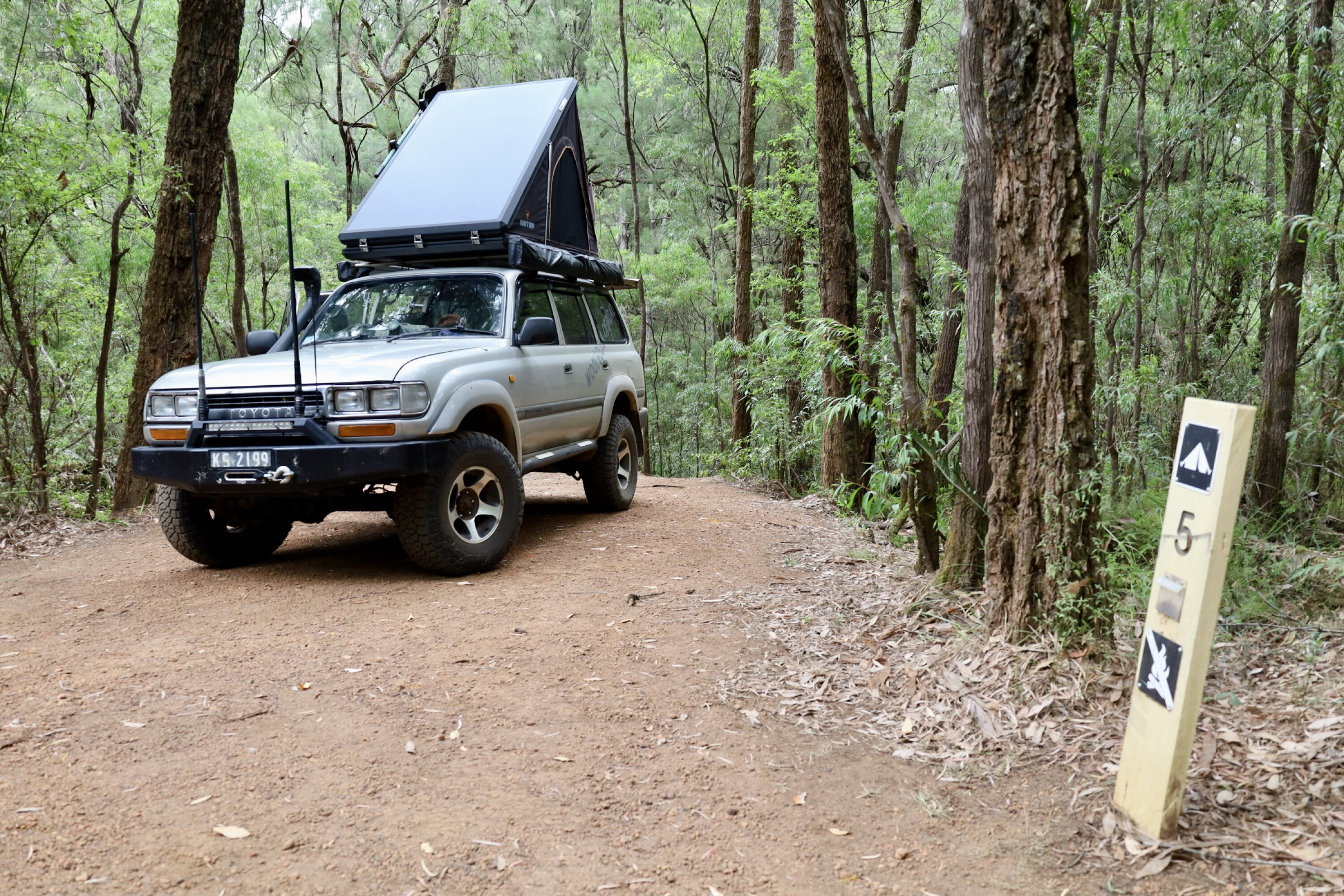
Pemberton has an amazing visitor information centre where the staff are willing to share everything there is on offer in the area.
For a donation there’s also a museum out the back of the info centre to give you an insight into the area’s history before you head out into the wild to explore it for yourself.
The information centre can be found in Brockman St, Pemberton, or by calling (08) 9776 1133, or visit the website at www.pembertonvisitor.com.au
You’ll need to purchase a National Parks pass for each park you enter. If visiting a few parks, it might be worth investing in a WA parks pass that will give you day entry to most parks in the state.
These variants join the hybrid versions already here that utilise a 2.0L petrol-electric powertrain, but undercut them in price by around $10K respectively.
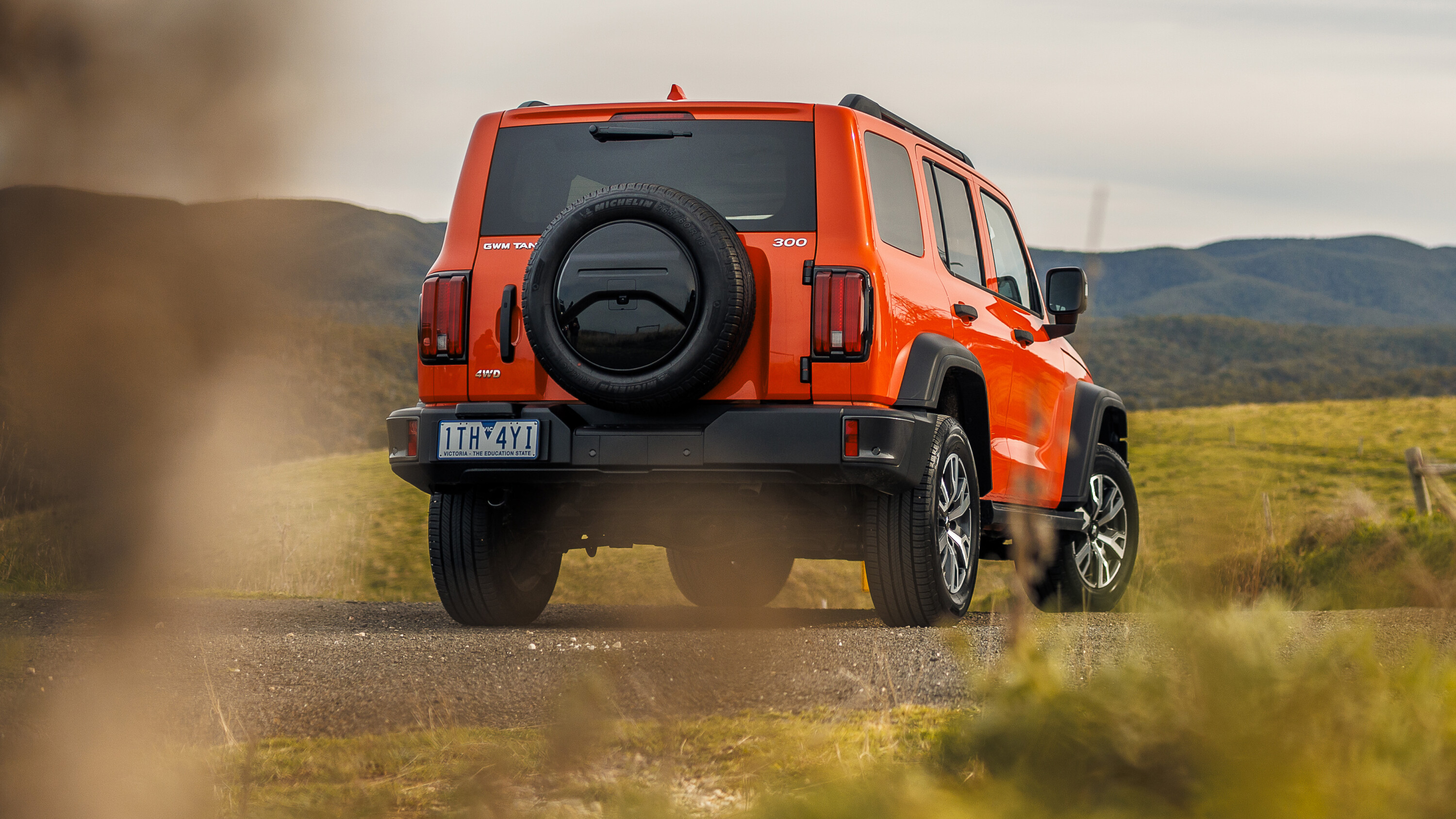
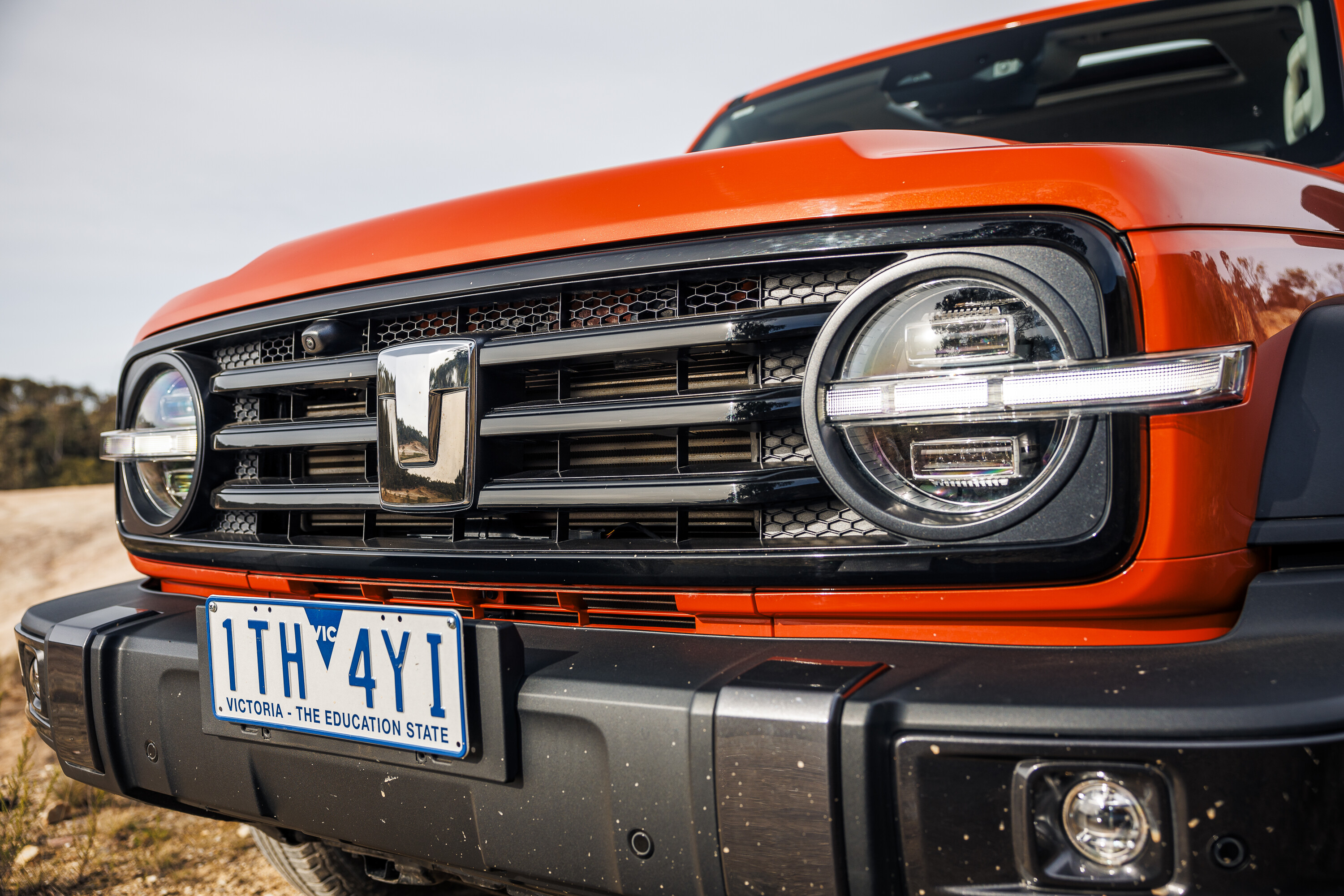
Boasting a lux level of equipment typically unseen in vehicles at this price point, the Tank 300 rides on a version of the GWM Ute’s ladder-frame chassis and features front and rear diff locks, a suite of advanced driving systems, five-star safety, and a modern interior.
So what’s the catch? We took the Tank 300 in top-spec Ultra guise to Lerderderg State Park, north-west of Melbourne, to find out.
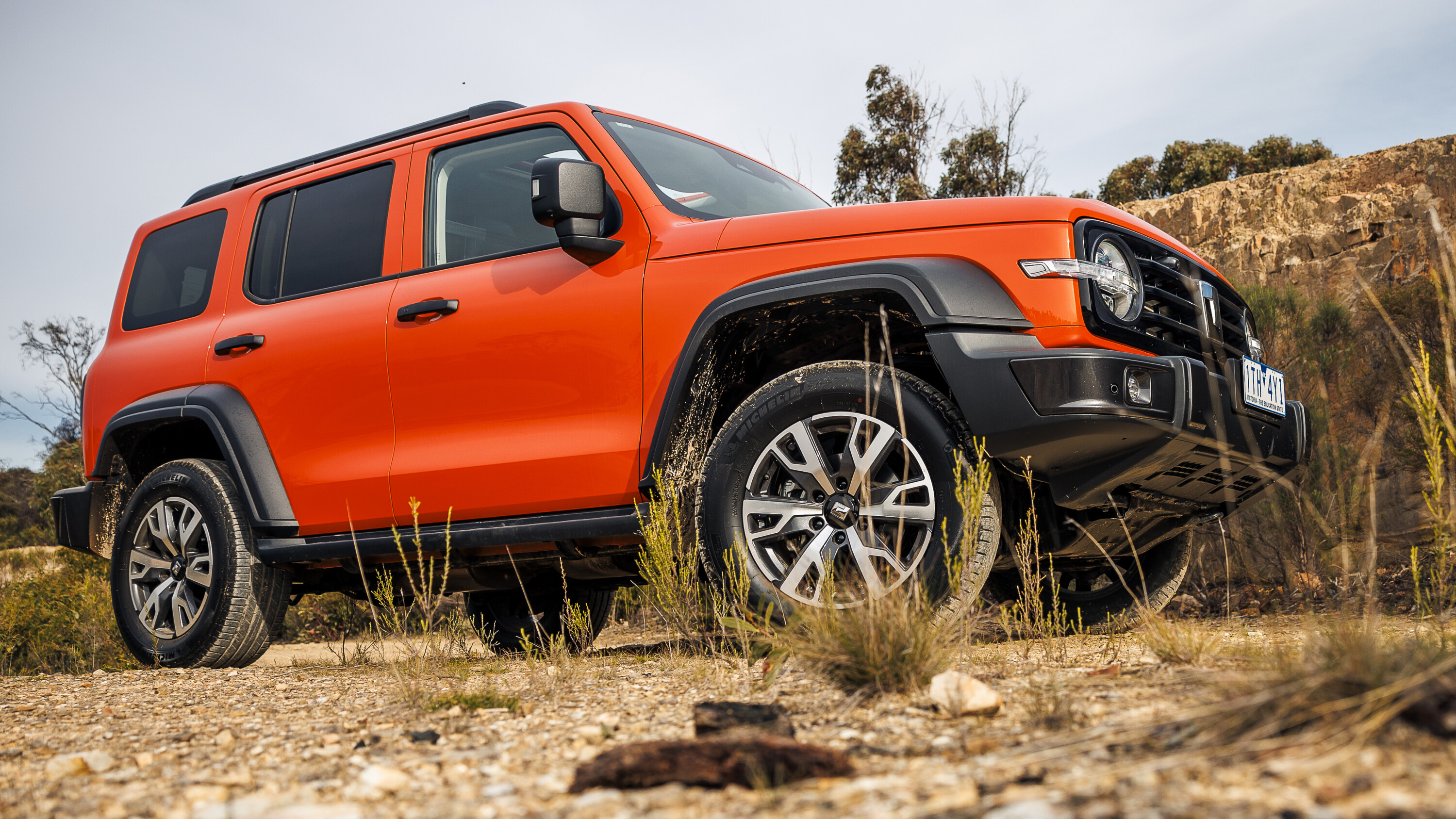
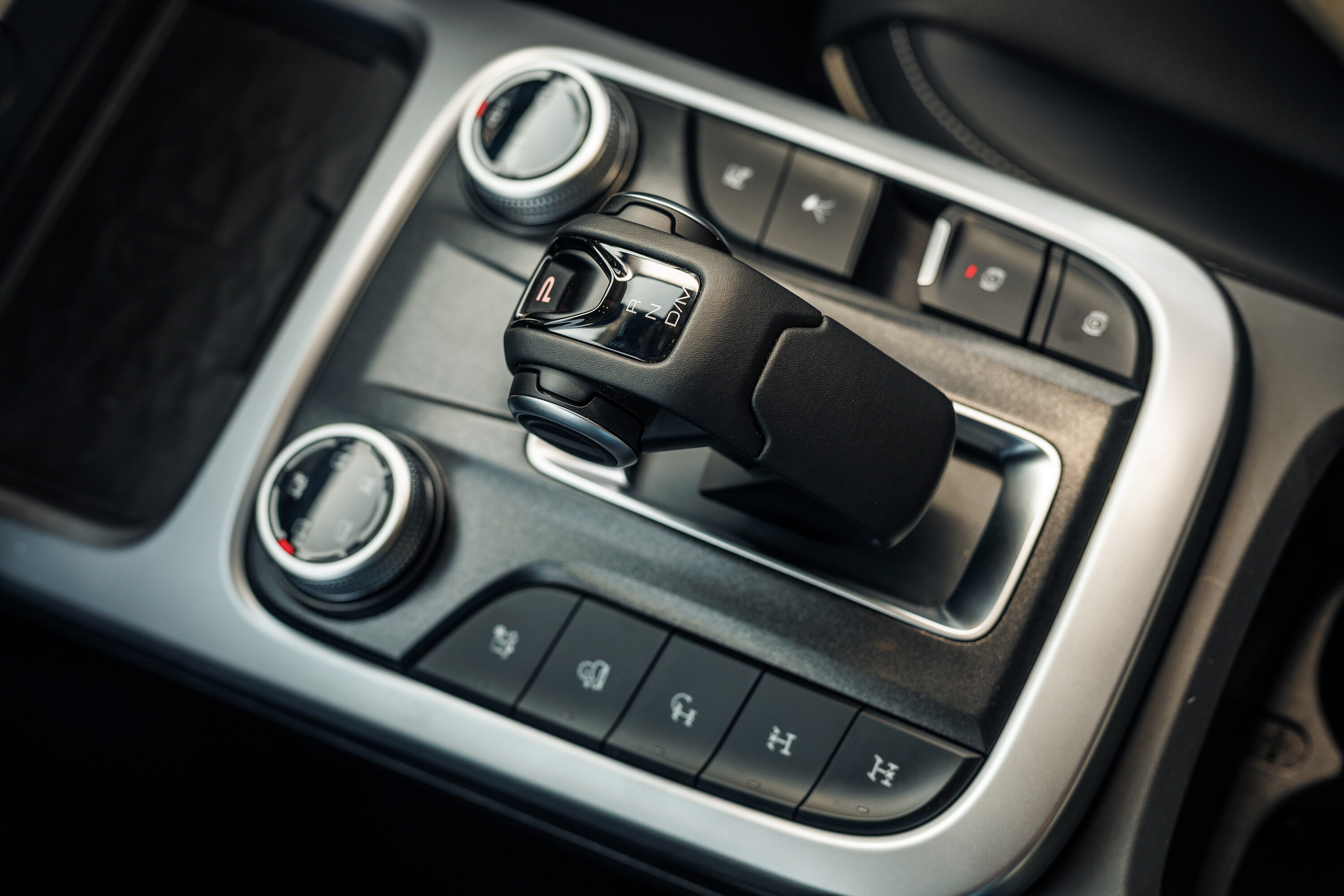
With the Lux, buyers get 17-inch black alloy wheels; LED lighting; a 12.3-inch digital instrument cluster; a 12.3-inch infotainment touchscreen with Apple CarPlay and Android Auto; faux leather seats; a sunroof; nine-speaker sound system; ambient interior lighting; a suite of driver assistance technologies; a rear diff lock; roof rails; a tyre-pressure monitoring system; front and rear parking sensors; a 360-degree camera; and crawl control and tank turn functions.
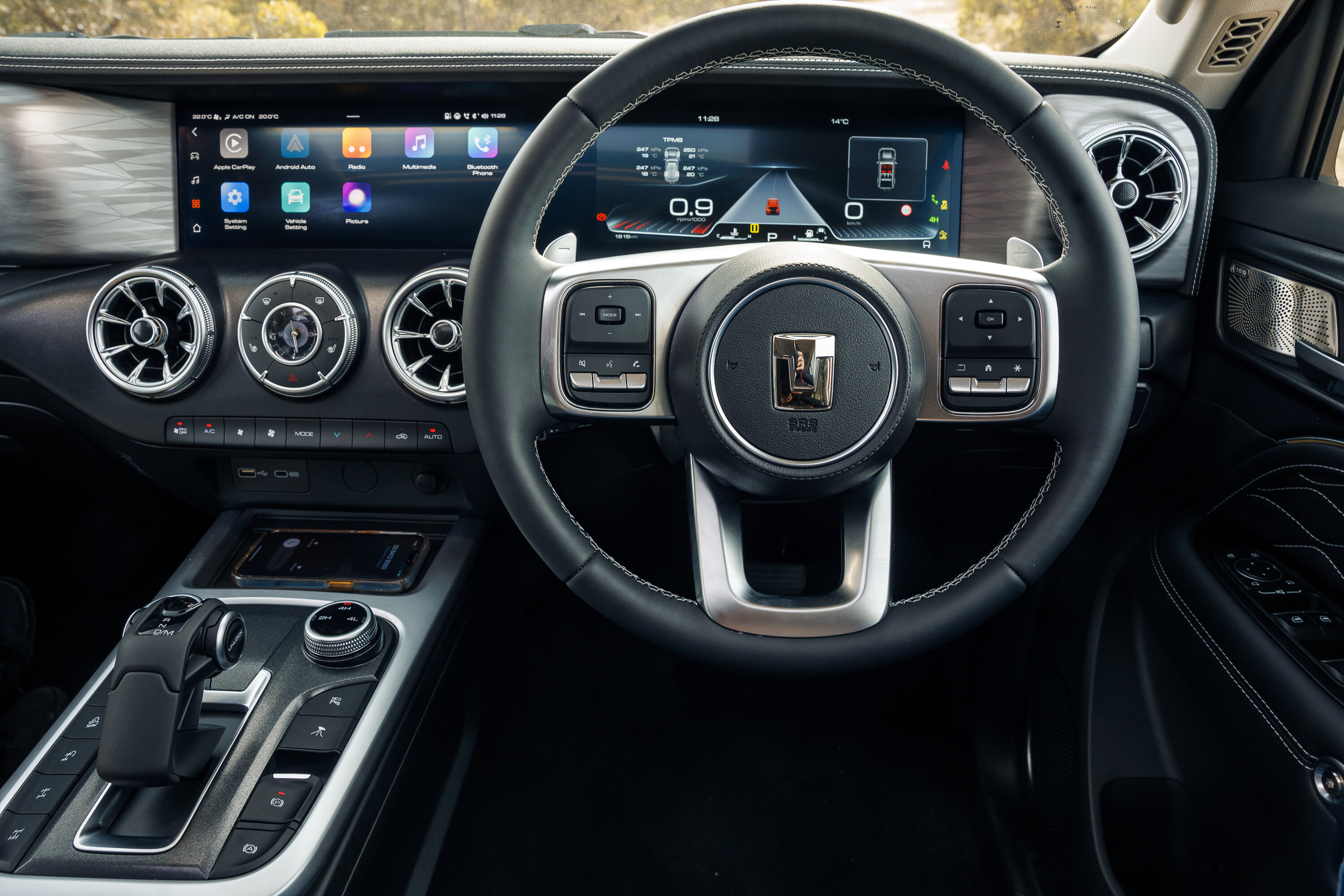
An eight-speed automatic is the only transmission available for the petrol-powered models
Upgrade to the more premium Ultra variant and owners are treated to the addition of Nappa leather seating; a massage function for the driver’s seat; heated and cooled front seats; 18-inch chrome alloys; a better sound system from Infinity; wireless smartphone charging; upgraded 64-colour ambient interior lighting; both a front and rear diff lock; and a 220-volt power outlet in the boot.
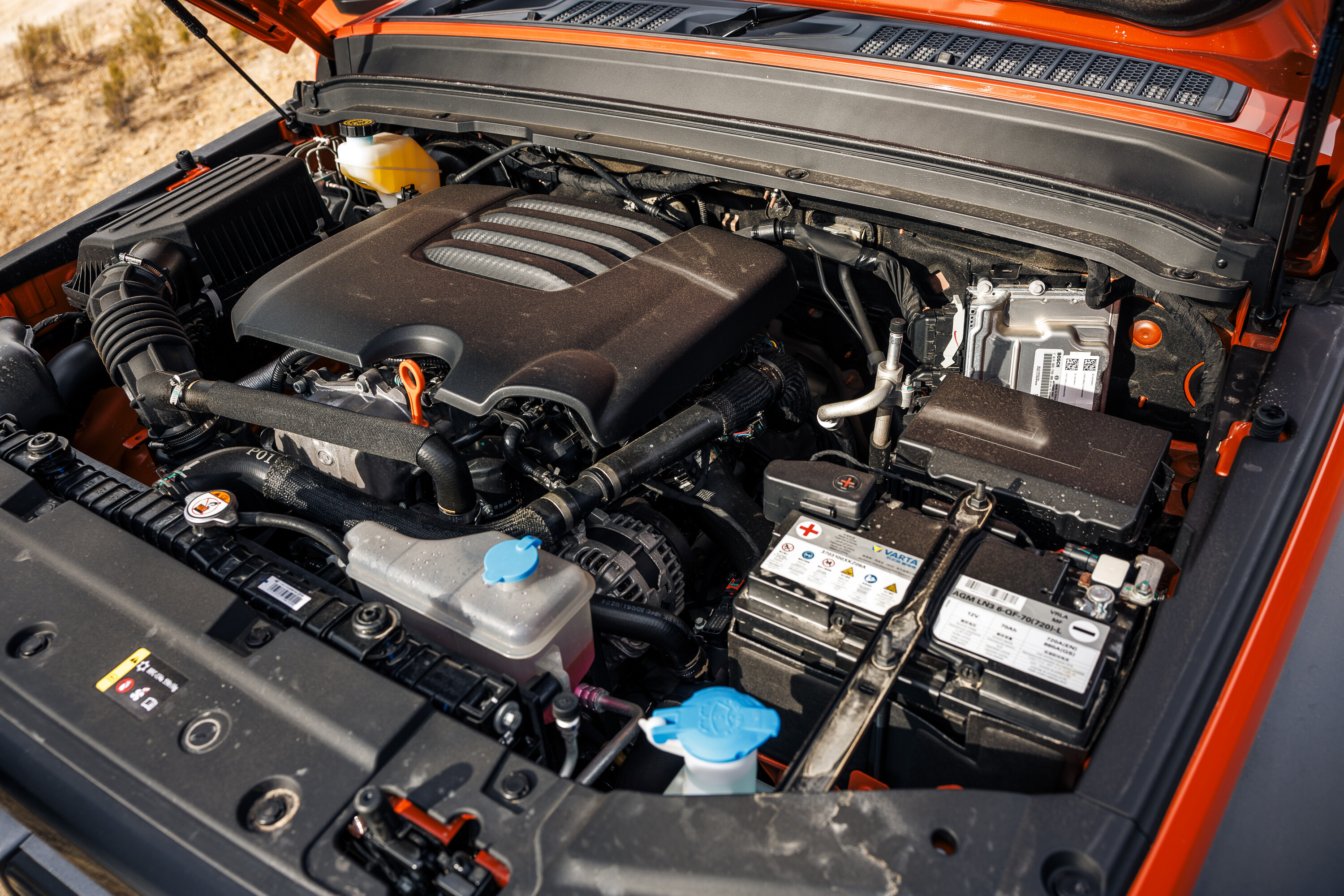
Both petrol-only versions are powered by a four-cylinder, 2.0-litre engine that delivers 162kW and 380Nm. An eight-speed automatic is the only transmission available for the petrol-powered models, while a nine-speed auto is mated to the hybrid variants.
Every Tank 300 model wears disc brakes front and rear and rides on double wishbone (front) and multi-link (rear) suspension.
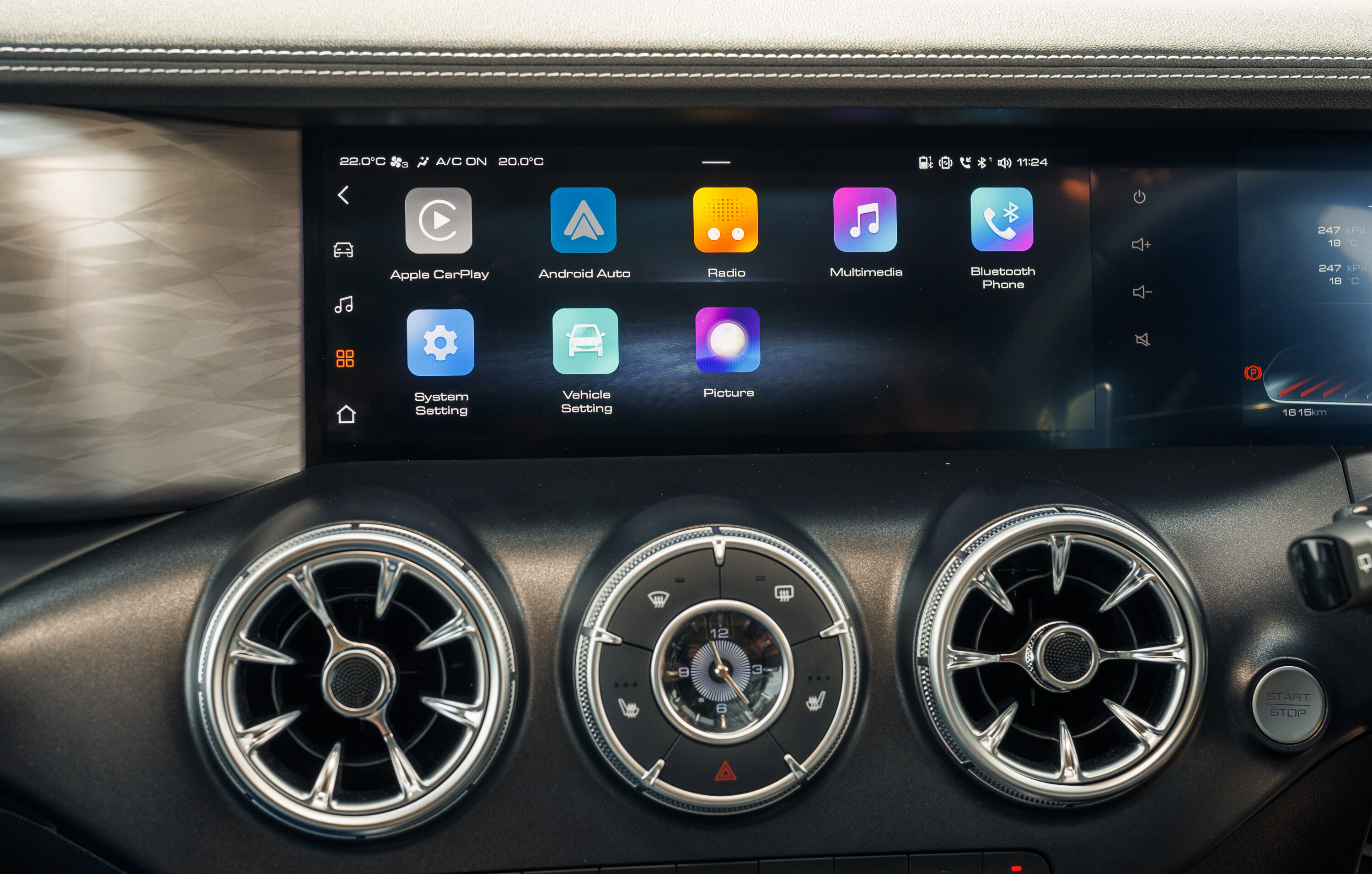
To compare the two would, in reality, not be a fair fight – despite the aesthetic similarities they may share. For starters, the Wrangler in four-door guise is at least $20K dearer.
A more comparable vehicle in this budget, mid-size SUV space is the all-new Mahindra Scorpio, which is more similarly priced at sub $50K, equally adept off-road, and utilises a four-cylinder 2.2-litre diesel engine for 129kW and 400Nm. It’s a tantalising budget-focussed comparison that we’ll bring your way shortly.
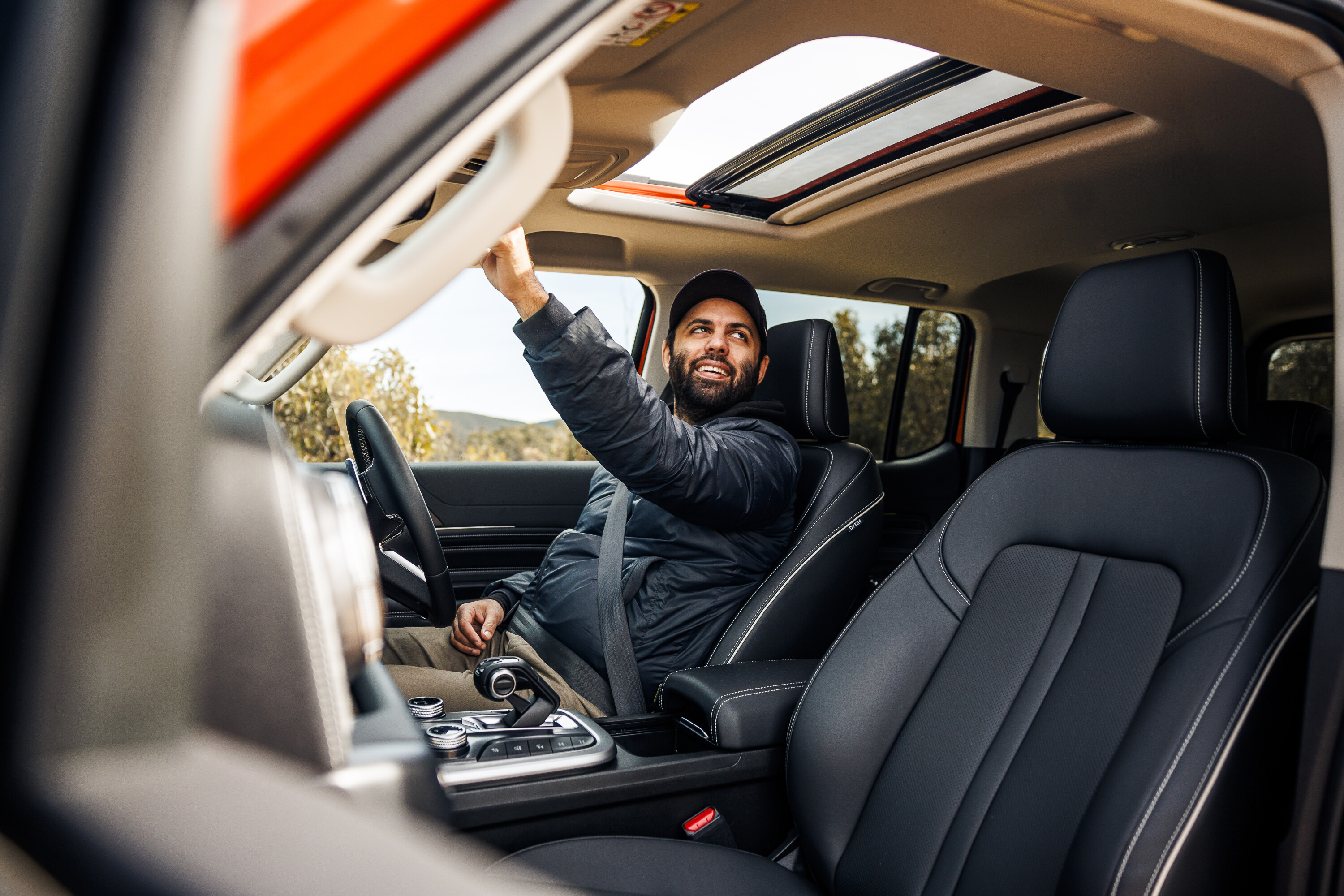
The front seats are well-bolstered and comfortable for long stints behind the wheel in pursuit of remote campsites. In the Ultra, the driver’s seat features eight-way powered adjustment and four-way lumbar support adjustment, to ensure the driver can find the ideal position. Driver’s seat massage is standard in the upper-spec Ultra variant.
There are two well-positioned USB ports in the front, with copious storage pockets for drink bottles and other bits and pieces.
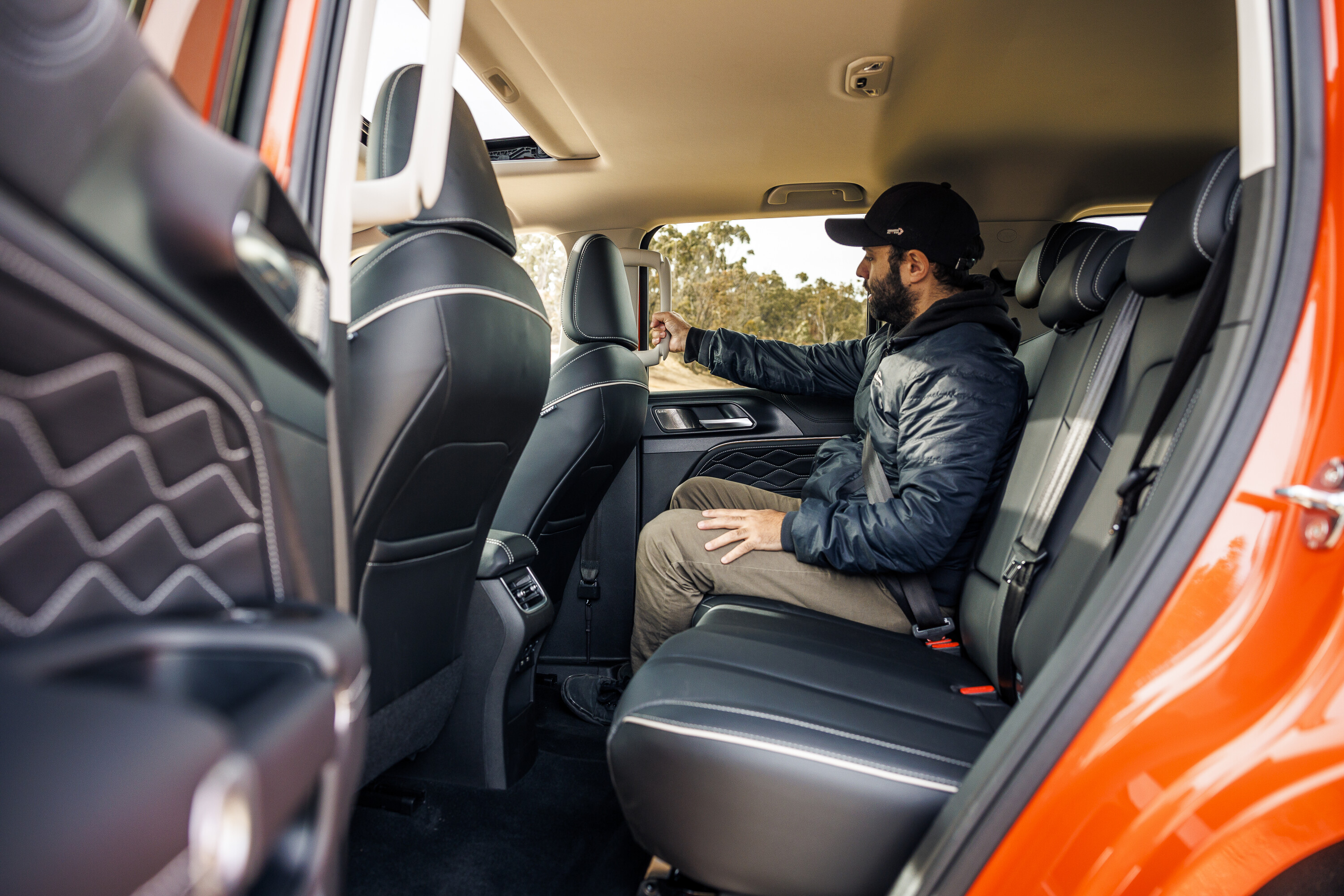
Rear-seat passengers get two USB ports, and the pews are cosy enough for three abreast. Three kids in particular will fit comfortably on longer drives. Grip handles are installed at every door, making entry and exit easier for front and rear passengers.
For those inclined to travel solo or with one companion only, the rear seats can easily be lowered manually to lay flat – no unnecessary powered adjustment here – for increased storage capacity. Laying the rear seats flat does impinge on front leg room, and may affect taller drivers and passengers.
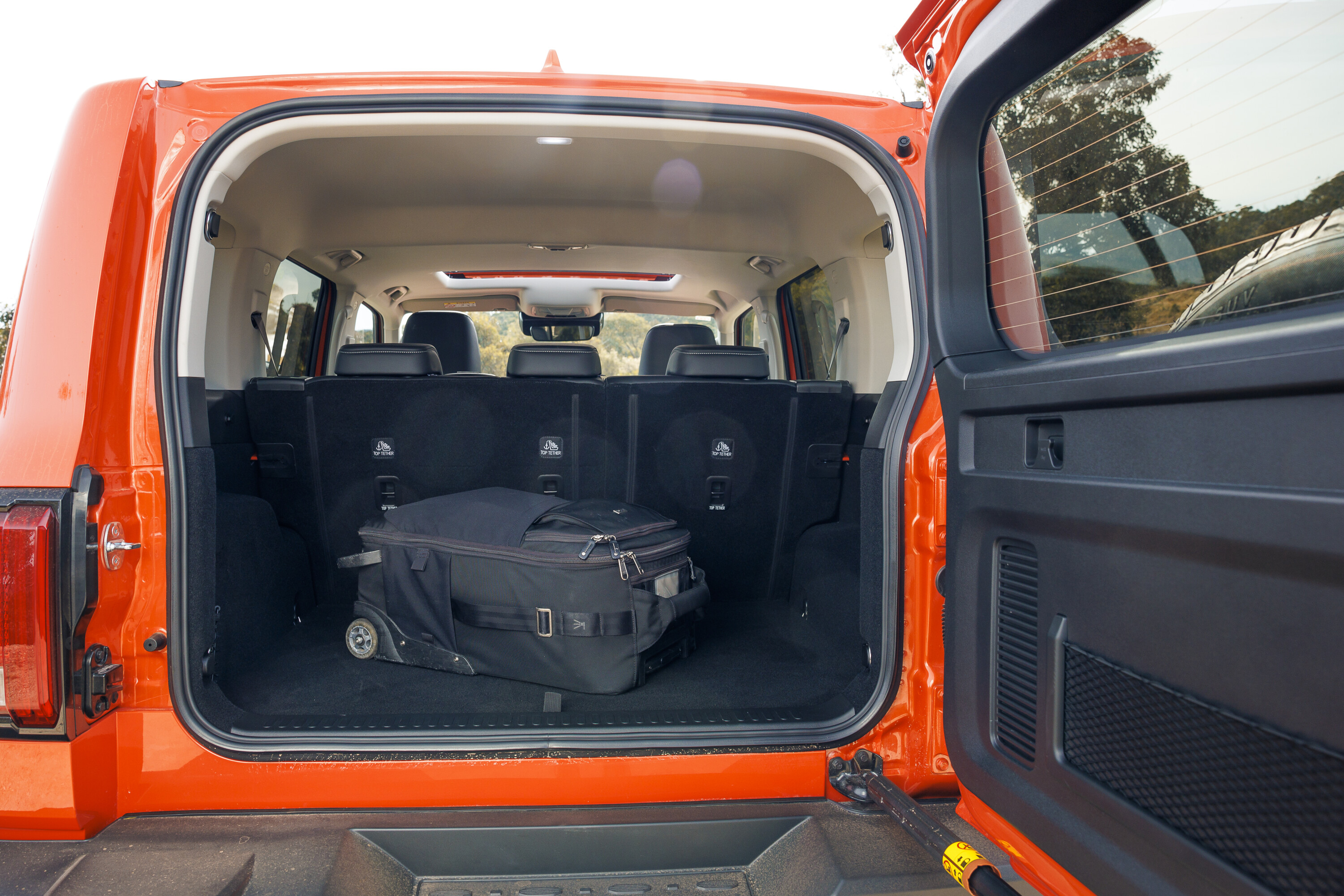
Even with the rear seats in an upright position, boot space is sufficient enough to squeeze in camping kit for a weekend away with the family. As a bonus, a 220-volt power outlet is positioned in the boot of Ultra models, as well as luggage nets to keep smaller items out of the way.
On the downside, a poor maximum payload of just 446kg means that, while gear will fit, you’ll still have to be selective about what you take. Still, it’s better than the Tank hybrid’s 394kg. For comparison’s sake, a four-door Wrangler Rubicon has a 570kg payload capacity.
Apple CarPlay and, in our case, Android Auto connects and works flawlessly, with the menu screens and user interface easy to navigate and logical in design.
The omission of dials and buttons for volume controls and the like is disappointing for off-roaders, with these buttons found on the steering wheel and touchscreen. However, there are physical buttons for the climate control functions.
An issue we encountered was that metallic trim adorning the front dash and steering wheel had a tendency to reflect sunlight and cause issues for the driver. While for off-roaders, the carpet flooring is prone to get dirty quite easily – a set of durable floor mats would be a welcome addition.
| 2023 GWM Tank 300 measurements | |
|---|---|
| Length | 4760mm |
| Height | 1903mm |
| Width | 2750mm |
| Wheelbase | 1930mm |
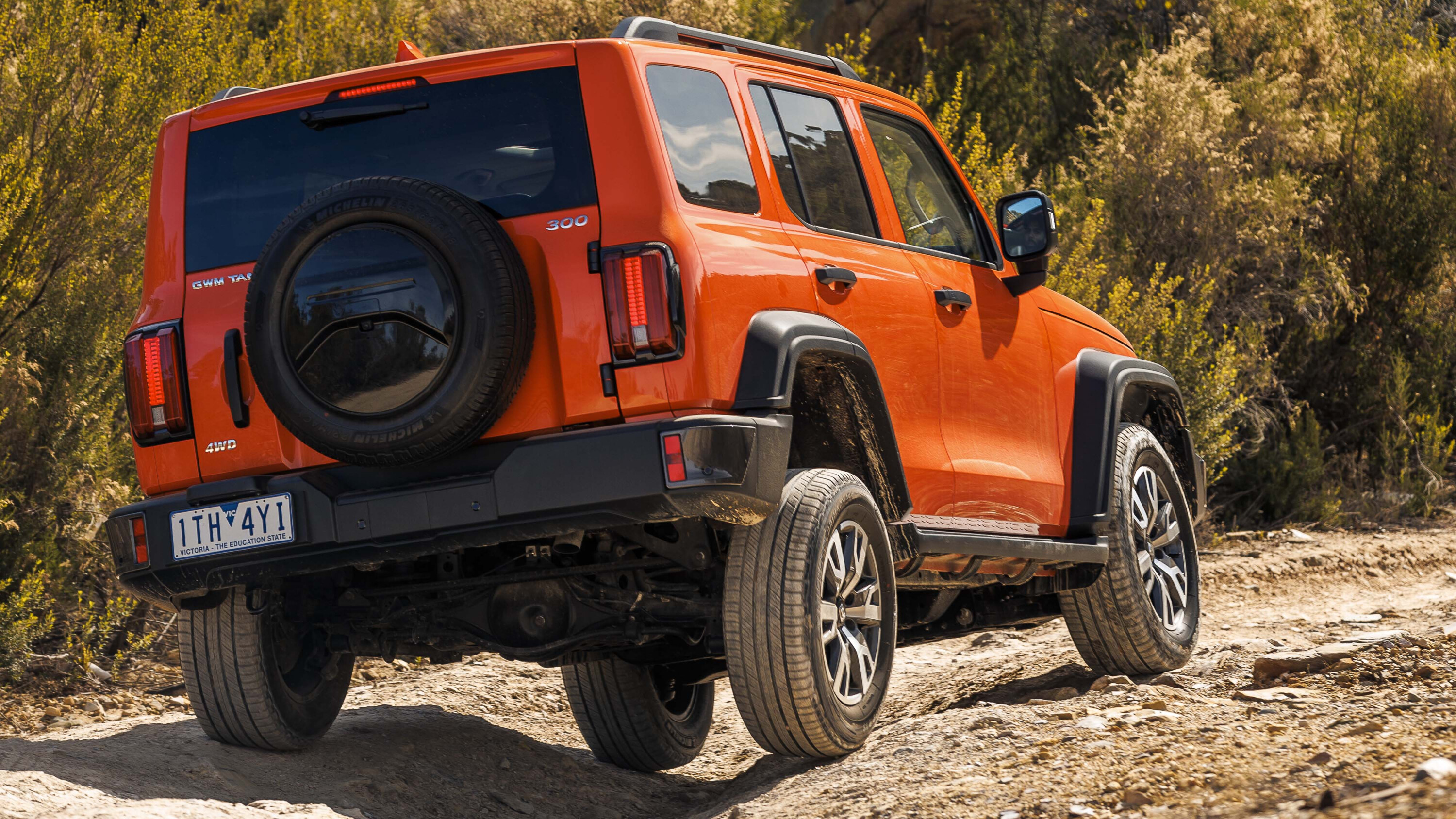
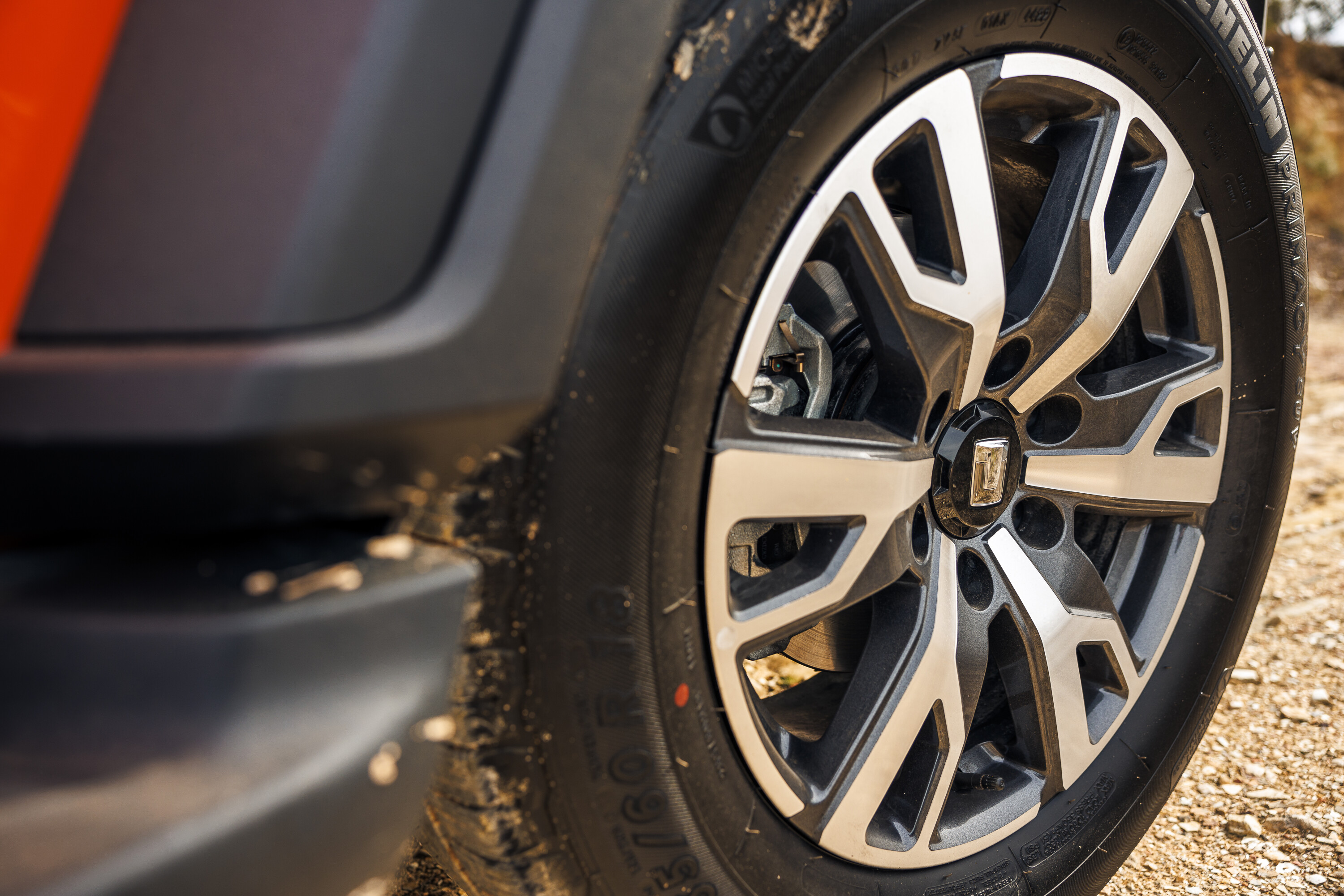
Despite its arsenal of off-road weaponry, we would opt for a set of more aggressive tyres in lieu of the Michelin Primacy SUV 265/60 R18s the Tank 300 comes with from the showroom floor, which we found to be a bit too road-focused and slightly underwhelming off-road.
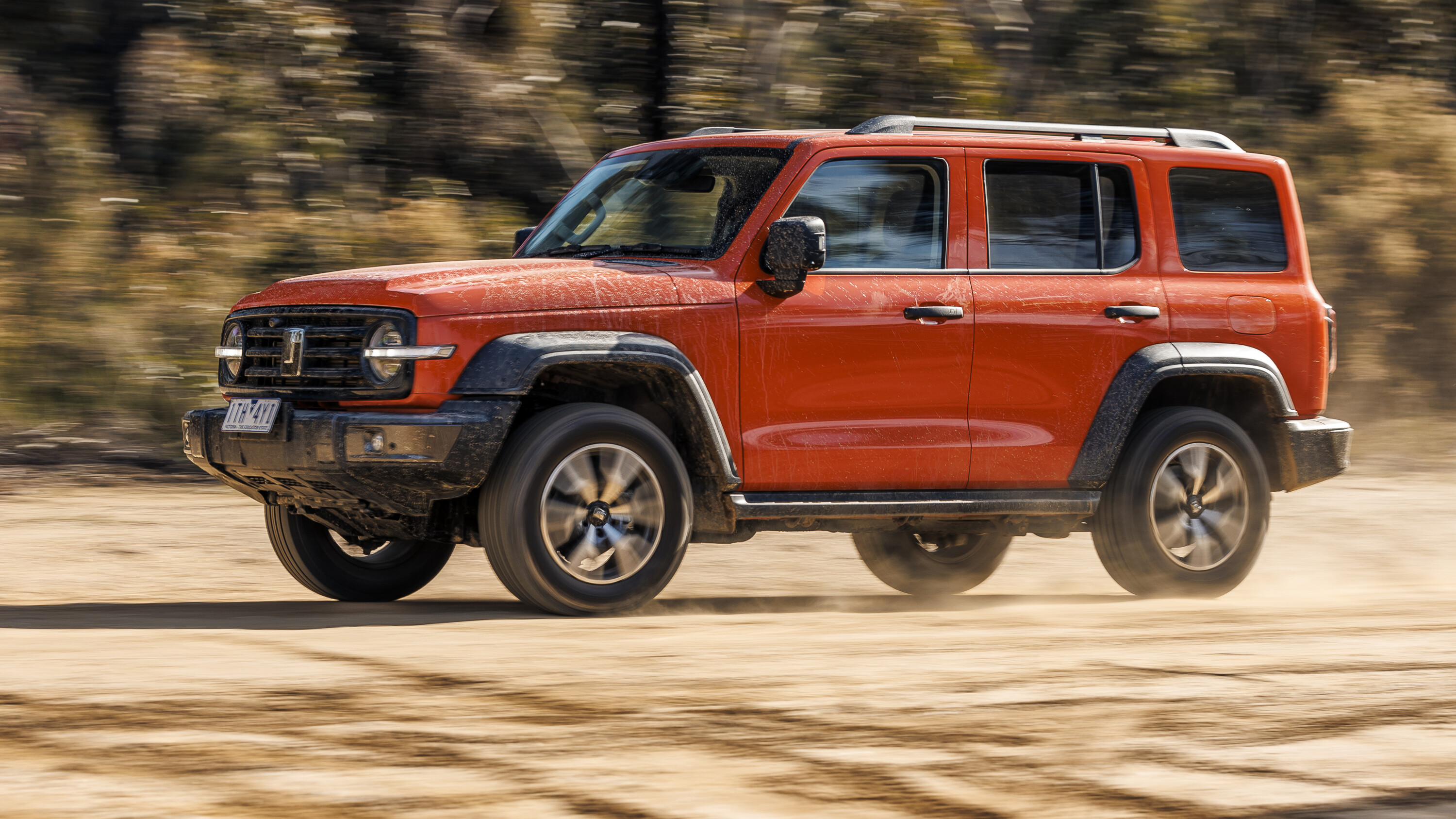
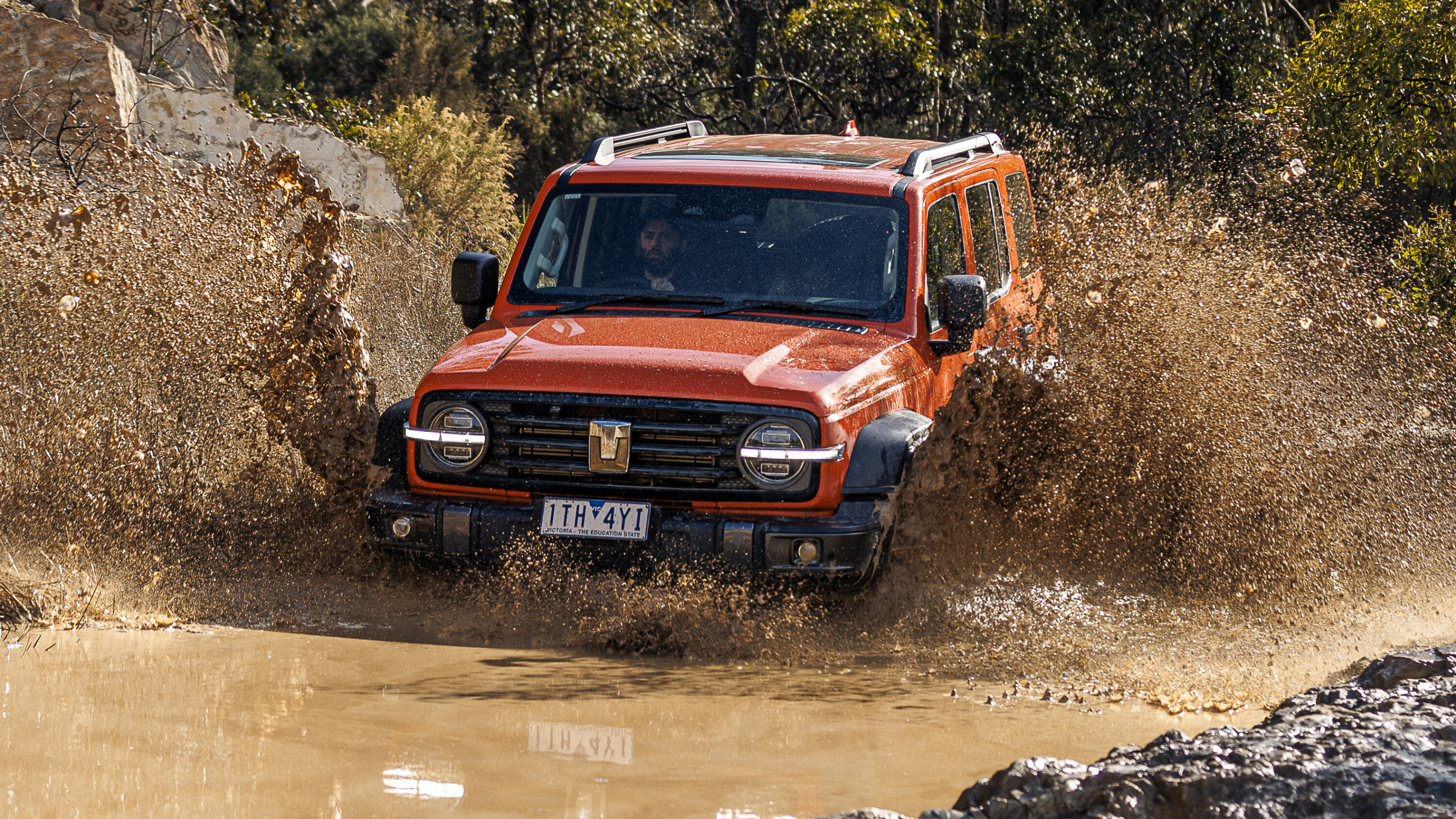
That being said, it still mounted every obstacle we faced thanks to the combination of its lockers and responsive eight-speed automatic transmission. The Ultra gets ‘tank turn’ functionality, while crawl control is standard across the range.
Articulation is adequate – 33-degree approach, 34-degree departure and 224mm of ground clearance – and we didn’t have any issues with the front, rear or side steps making contact with the ground at any stage – our only incident was a dislodged number plate following a water crossing.
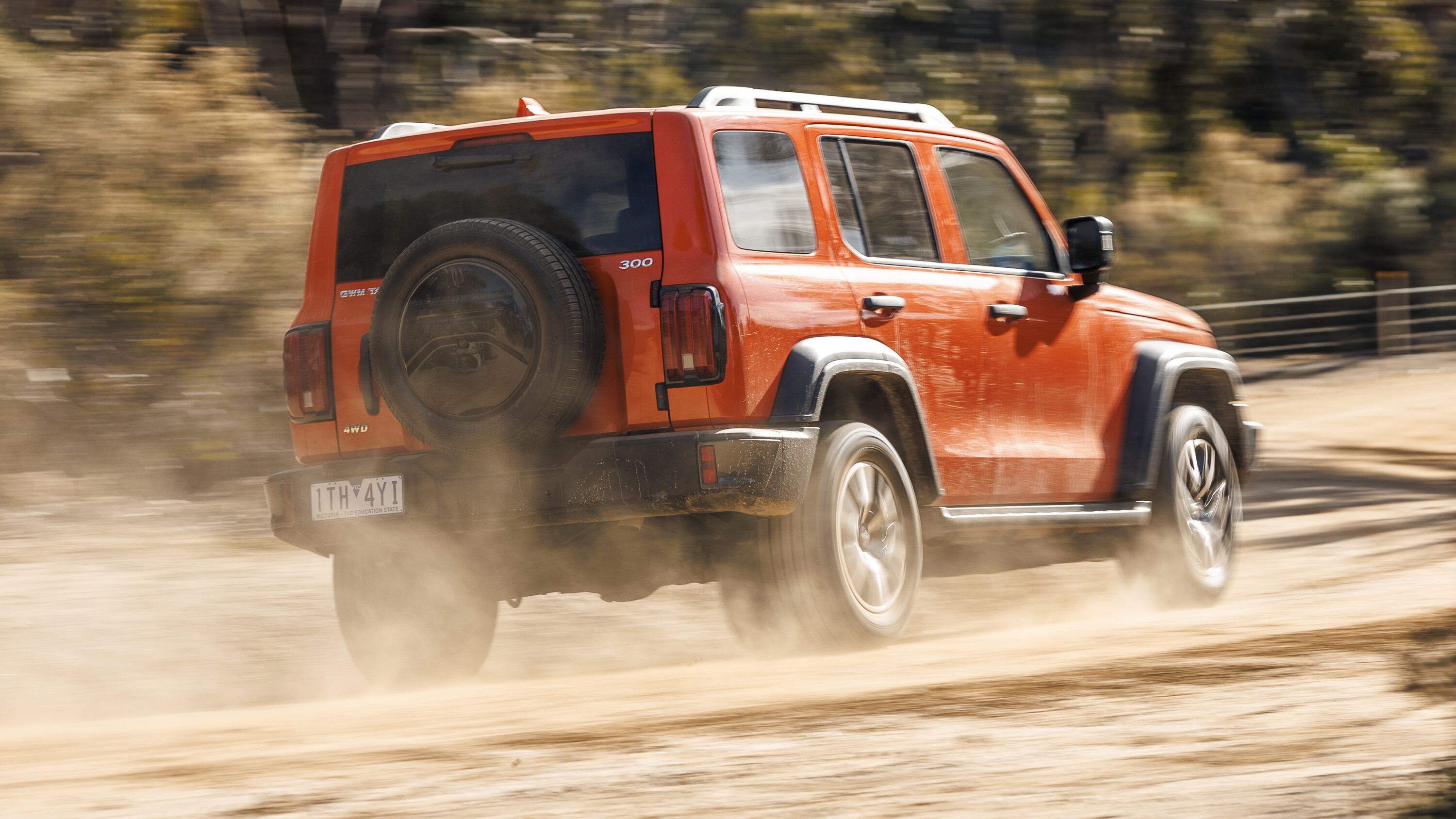
On potholed dirt roads the suspension feels slightly firm, but it does settle down when backroads convert to tarmac. On the blacktop, the Tank’s steering can feel slightly off-centre – similar to the GWM Ute, but not quite as bad (if you’ve driven that). Steering feel can be adjusted between Sport, Comfort and Light settings, which help with personal preferences.
A suite of driving aids – autonomous emergency braking, lane-departure warning, lane-keep assist, traffic sign recognition, rear cross-traffic alert, adaptive cruise control, hill start assist, and hill descent control – are there to assist the driver, but some intrude to the point of being annoying.
Keeping the back-up emergency lane assist option on is recommended, though. We suspect most owners will quickly turn a few off, and, gladly, most systems and settings can be personalised extensively using the central touchscreen.
Another quirk is the way the blind-spot cameras activate – and stay activated – when indicating. This causes drivers to sit at an intersection, waiting to turn, with the cameras blocking access to Maps, Spotify and other apps one would normally interact with when stationary.
The indicator stalk itself is cause for another minor quibble, as it doesn’t provide immediate feedback, feel or affirmation when activated – it’s something you do get used to over time, though.
Speaking of minor quibbles, the key fob is also a strange design choice, as it doesn’t feature a hook so that it can be attached to a key ring. For absent-minded folks like myself, it’s just a matter of time before it gets lost.
At the best of times, the Tank will sit on around 9.5 litres per 100km.
Load up the family and associated camping kit for a weekend away, and that’ll rise sharply – on our off-road run for example (with not much load on board) that figure lifted to 14 litres per 100km.
Plus, the Tank is eschewed with an abundance of driving aids including autonomous emergency braking; lane-departure warning; lane-keep assist; traffic sign recognition rear cross-traffic alert; adaptive cruise control; hill start assist; hill descent control; and a surround-view camera with ‘transparent chassis function’.
Seven airbags (front, side, curtain and centre) are installed, and the GVM Tank 300 (build dates from September 2022 onwards) received a five-star ANCAP safety rating in December 2022 with scores of 88% for adult occupant protection, 89% for child occupant protection; 81% for vulnerable road user protection; and 85% for safety assist.
The Tank 300 is covered by an impressive seven-year unlimited-kilometre warranty. Capped price servicing covers the first five services and totals $2000. The Tank is also covered by GWM’s roadside assistance, which is complimentary for the first five years of ownership.
| Time/Distance | Cost |
|---|---|
| 12 months/10,000km | $300 |
| 24 months/25,000km | $300 |
| 36 months/40,000km | $550 |
| 48 months/55,000km | $550 |
| 60 months/70,000km | $300 |
For the Tank 300, it offers a lot of value for its $50,990 price point. Despite shortcomings when it comes to aspects of its on-road behaviour, the interior feels premium for a car of this ilk, it has a five-star safety rating and comes with a seven-year unlimited-kilometre warranty, and it’s off-road-ready from the factory.
Rugged design, high levels of customisation and personalisation, and an enticing price point make this Chinese SUV food for thought – just don’t call it a Wrangler competitor.
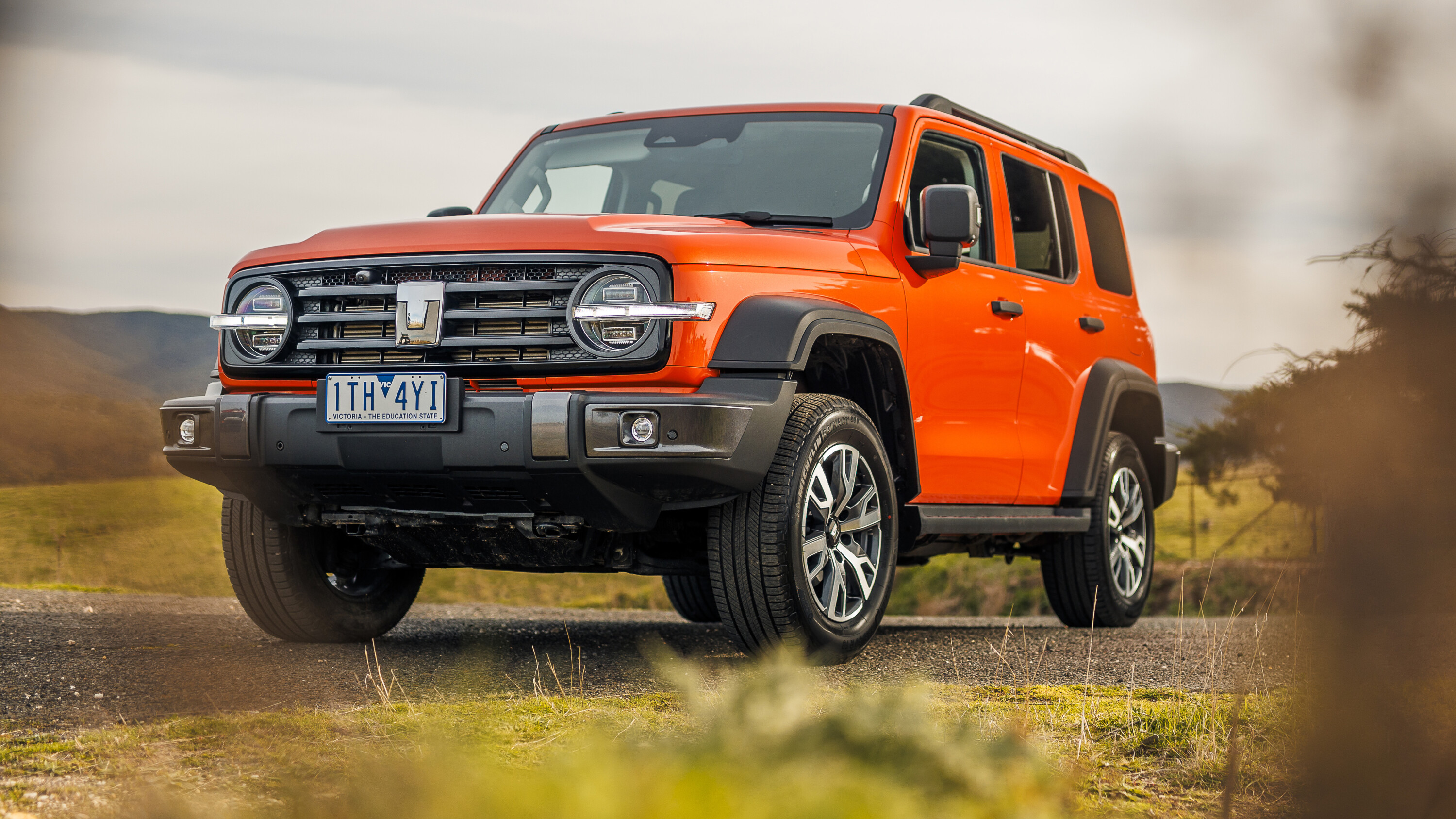
| Price | $50,990 |
|---|---|
| Engine | 2.0L I4 |
| Capacity | 1967cc |
| Max power | 162kW @ 5500u00a0u00a0 |
| Max torque | 380Nm @ 1800-3600 |
| Transmission | 8-speed automatic |
| 4×4 system | Part-time 4×4 |
| Suspension (front and rear) | Double wishbone (front); Multi-link (rear) |
| Tyres | 265/60 R18 |
| Kerb weight | 2155kg |
| GVM | 2552kg |
| Payload | 446kg |
| Towing capacity | 2500kgu00a0 |
| Seats | 5 |
| Fuel tank capacity | 75Lu00a0 |
| ADR fuel claim | 9.5L/100km |
The South Korean automaker is forging ahead with a new design chapter as it goes further upmarket – demonstrated with the retro Ioniq 5 and ‘streamliner’ Ioniq 6 EVs, edgy Tucson midsize SUV, and the futuristic-looking Staria van, Kona small SUV, and upcoming Sonata sedan facelift.
New Hyundai models now feature ‘flat’ exterior badges, the steering wheel has done away with the traditional logo in favour of morse code, its full-width LED ‘Seamless Horizon Lamp’ has become a signature element, and square pixel-dot signatures adorn its electric models.
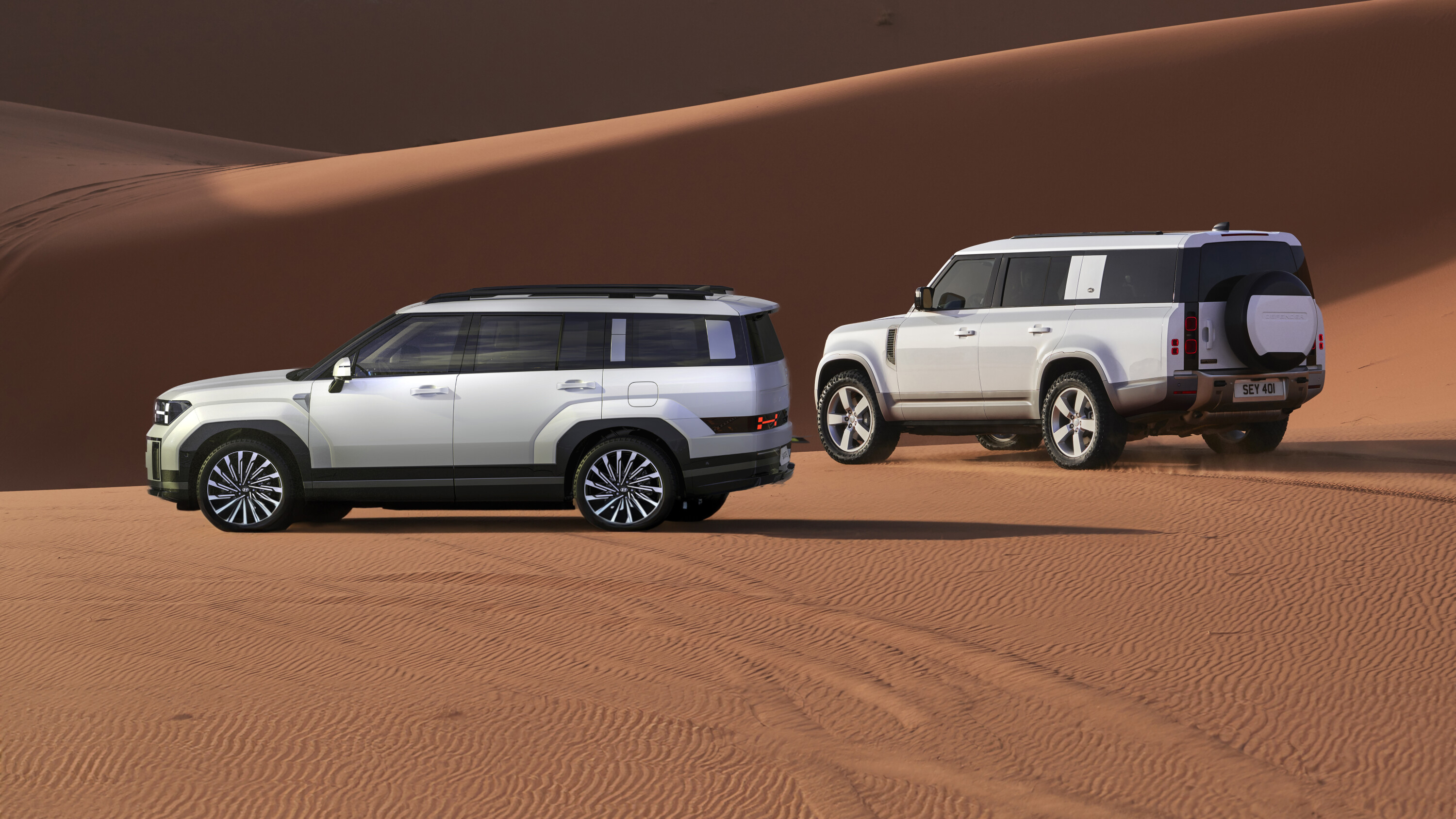
Now, the latest Santa Fe large SUV is a major departure from the mature outgoing model – with a boxy design that’s reminiscent of the Land Rover Defender.
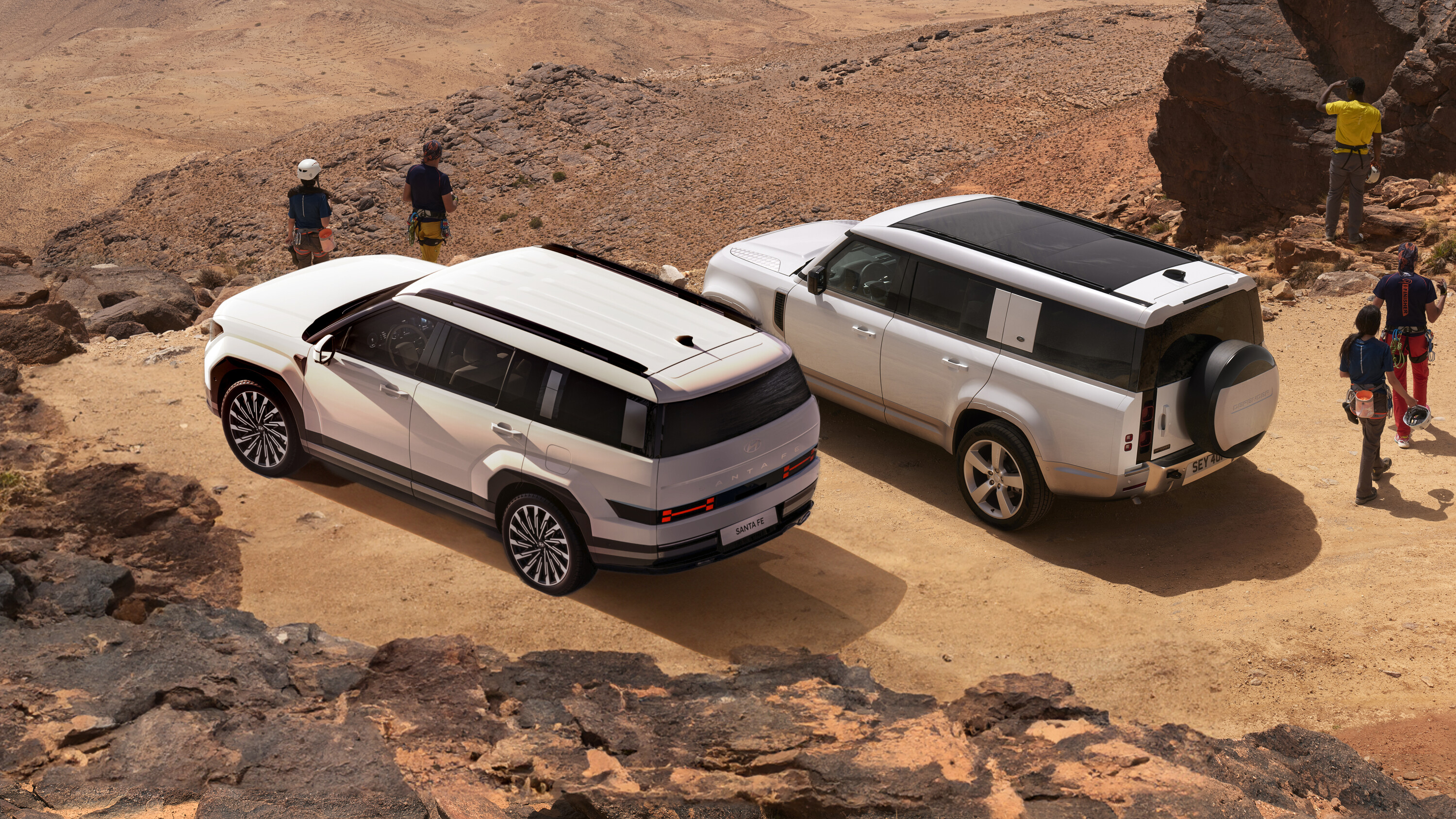
The boxy and long silhouette, available coloured C- and D-pillars (the Defender has two strips at the C-pillar instead), and aggressive wheel arches on the new Santa Fe certainly gives off the rugged off-roading Land Rover vibe.
However, the Hyundai SUV still achieves its own distinct identity with separated H-shaped daytime running lights and a full-width LED light strip that looks more aggressive than the rounded, recessed eyes on the Defender.
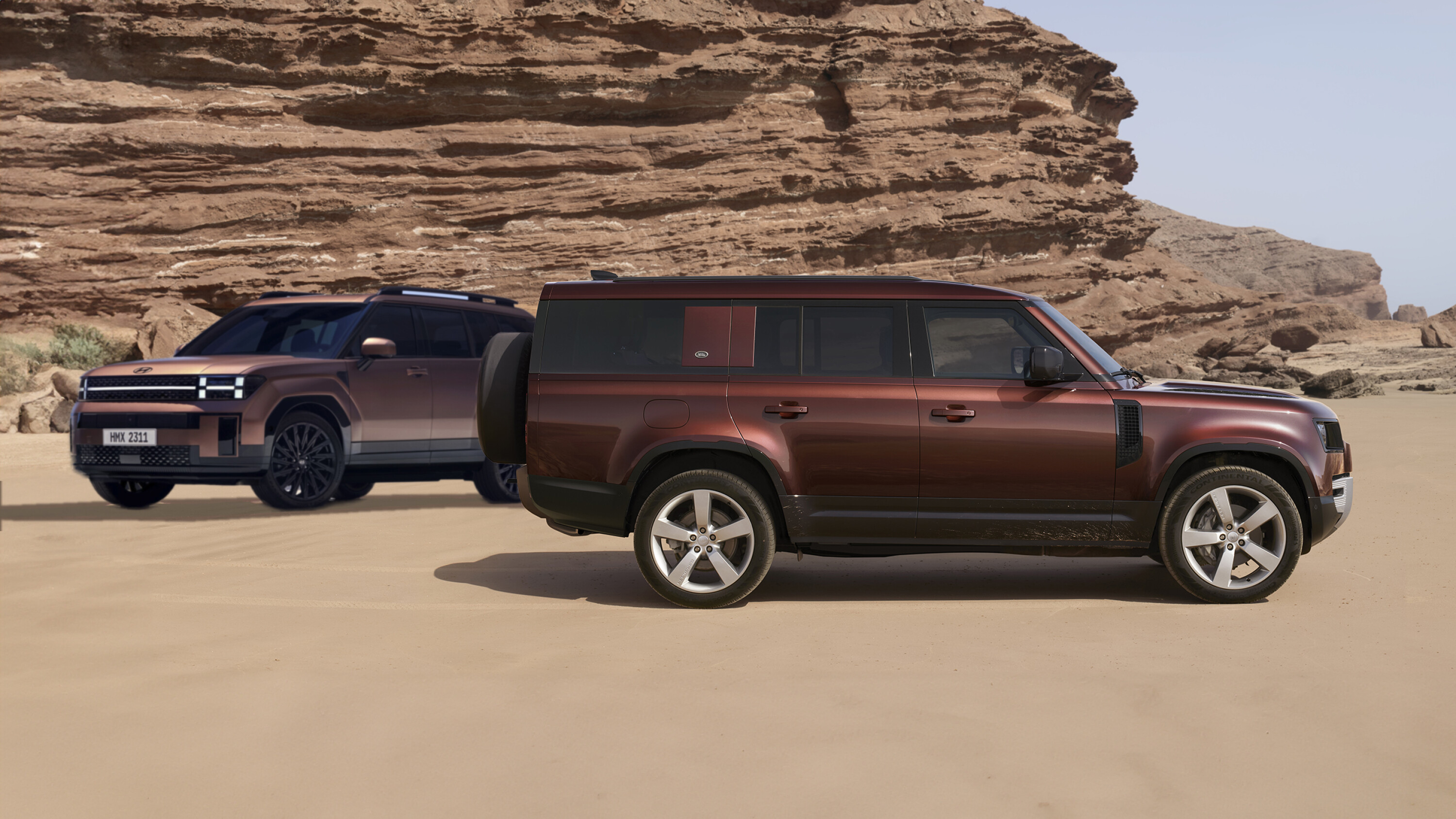
The signature H shape also carries to the body-coloured front bumper, flanked by big, angular wheel arches in gloss black and body colour – as opposed to the Defender’s is more rounded arches that flow into the bodywork.
It also has a smaller front fender trim piece with ‘Santa Fe’ lettering and blacked-out pillars, although it doesn’t have the middle portion between the dual sunroofs painted in black, too.
The H-shaped tail-lights are horizontally laid out lower down the tailgate – this being one of the more controversial design aspects on the new Santa Fe – connected by a black strip, with a reflector panel extending to the side of the body.
Meanwhile, the Defender has more rounded vertically-stacked ‘squircle’ tail-lights, with a similar black strip extending up into the rear glass.
Of course, only the Land Rover attaches the full-size spare wheel at the back of the tailgate, though it opens with a less practical swinging barn door mechanism instead.
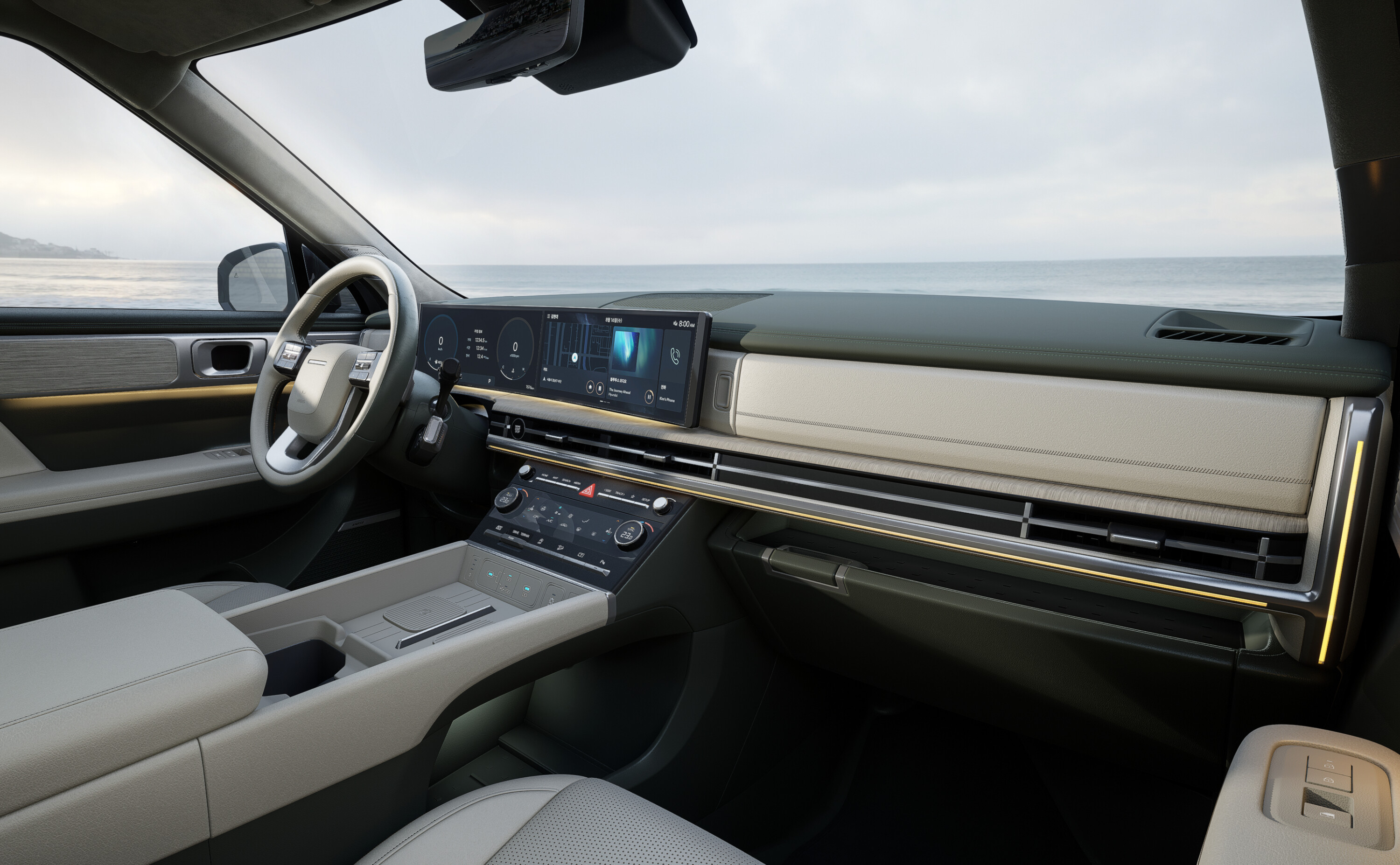
Both large upmarket SUVs feature a prominent centre console divider, undertray storage, and double-stitched armrest.
Hyundai has strangely adopted a morse code design in a silver strip on its steering wheel. There’s also now a more prominent three-spoke design – with a design similar to the company’s flagship Grandeur limousine in South Korea. The Land Rover’s wheel has a more purposeful, rugged-looking four-spoke design.
The Santa Fe’s centre console appears to be deeper, too, with dual Qi wireless charging pads and a UV-C sanitising mode. It connects to a slanted touchscreen climate control panel flanked by two Defender-esque protruding temperature dials. But, while the Defender has a protruding gear stick, the Santa Fe has attached it to the steering wheel column.
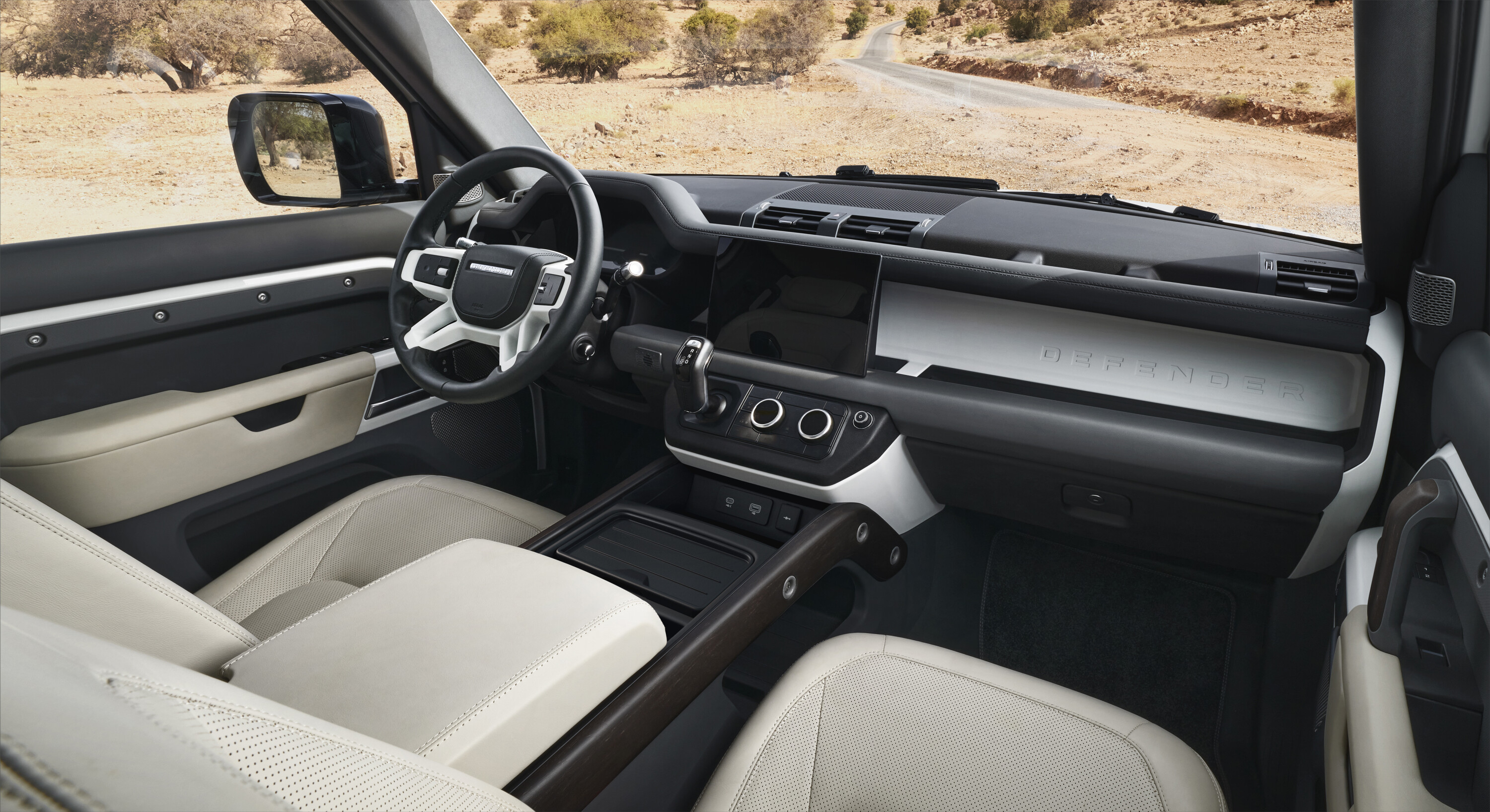
The Hyundai also has slicker dual curved 12.3-inch widescreen displays running its newest operating system, whereas the Land Rover adopts its latest 11.4-inch Pivi Pro system with a more square aspect ratio and is also on curved glass, albeit vertically convex.
In a way, the Defender’s infotainment treatment is refreshingly old-school, with so many new models adopting the same, nearly identical expansive displays used by the Santa Fe.
The Santa Fe offers an additional storage box on the dashboard, H-shaped air vents positioned lower down, swaps the faux screw holes on the doors for wood trim (at least on the variant pictured), and includes ambient lighting and environmentally-conscious materials throughout the cabin.
Hyundai hasn’t provided any pictures of the rear seats, though.
Still, for any buyer drawn to the Defenders looks more than its off-road capability, the new Santa Fe could be considered a half-price Defender.
It’s the closest-looking rival to the boxy high-end Defender yet from a mainstream car manufacturer, other than the Ineos Grenadier and GWM Tank 300. There’s the G-Class too, of course.
The current Santa Fe starts from $46,050 before on-road costs, so expect a price rise. For context, it’s now $5100 more expensive to get into the recently-released Hyundai Kona small SUV, due to its larger design and the removal of poorer-specced, entry-level variants.
It certainly won’t hit the Defender 130’s lofty $124,150 before on-roads starting price – though that could easily happen with the forthcoming Hyundai Ioniq 7 large electric SUV.
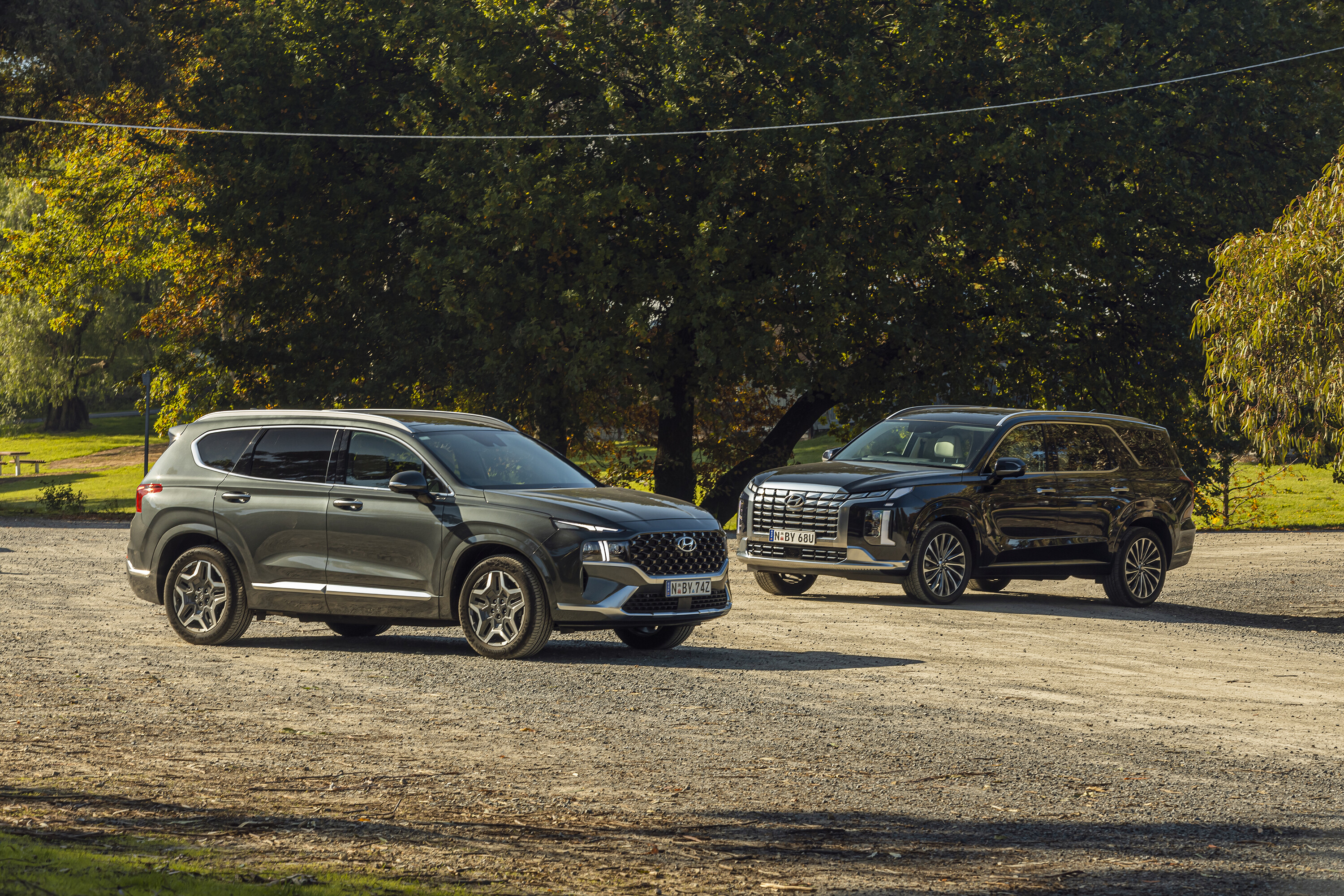
The all-new Santa Fe is the boldest and most upmarket approach yet in its 23-year-old history – and even makes the larger Palisade SUV look middling. However, Hyundai’s ambitious new design move may also polarise some, especially for existing owners.
The carmaker will announce full details next month, ahead of an Australian launch in the first half of next year.
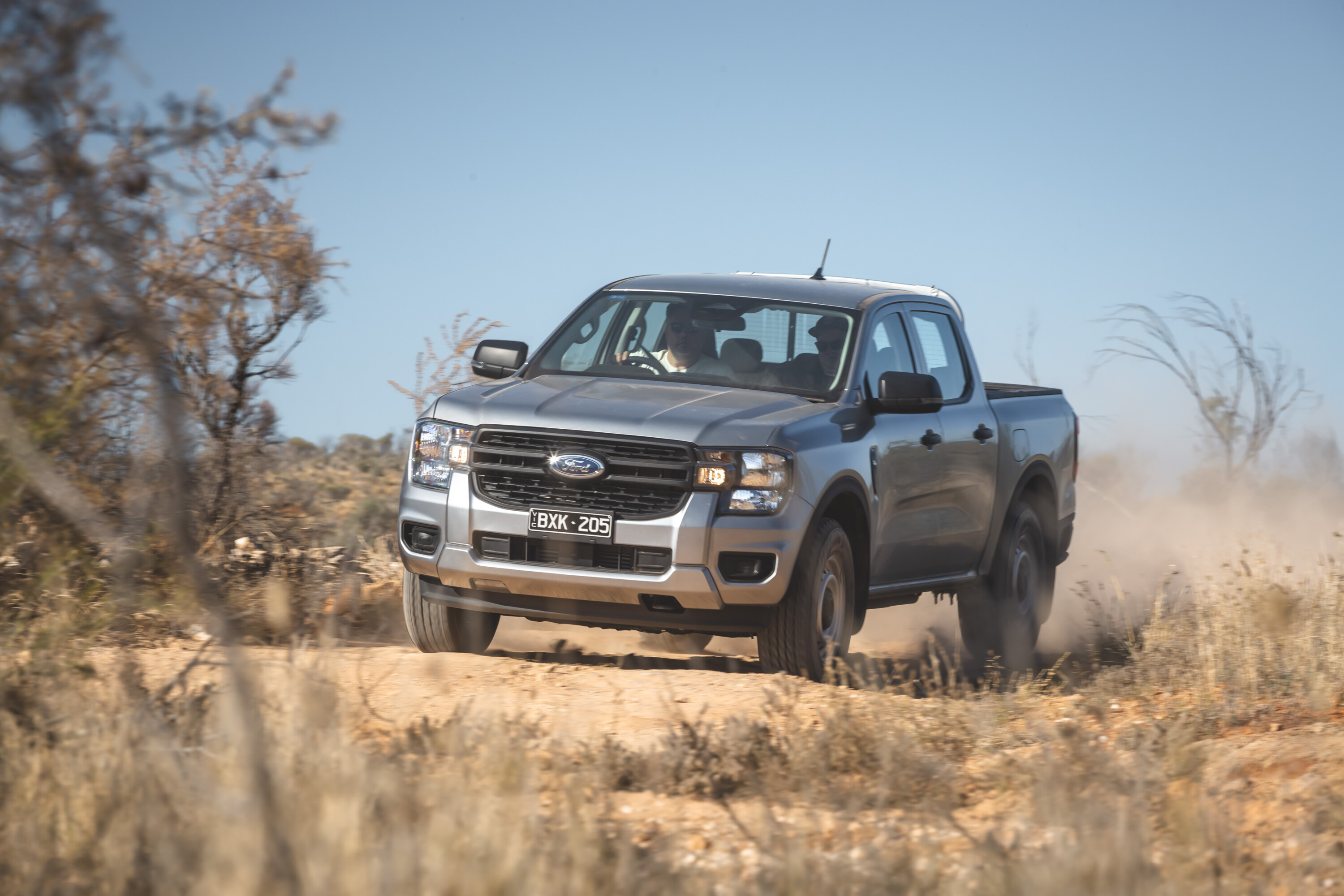
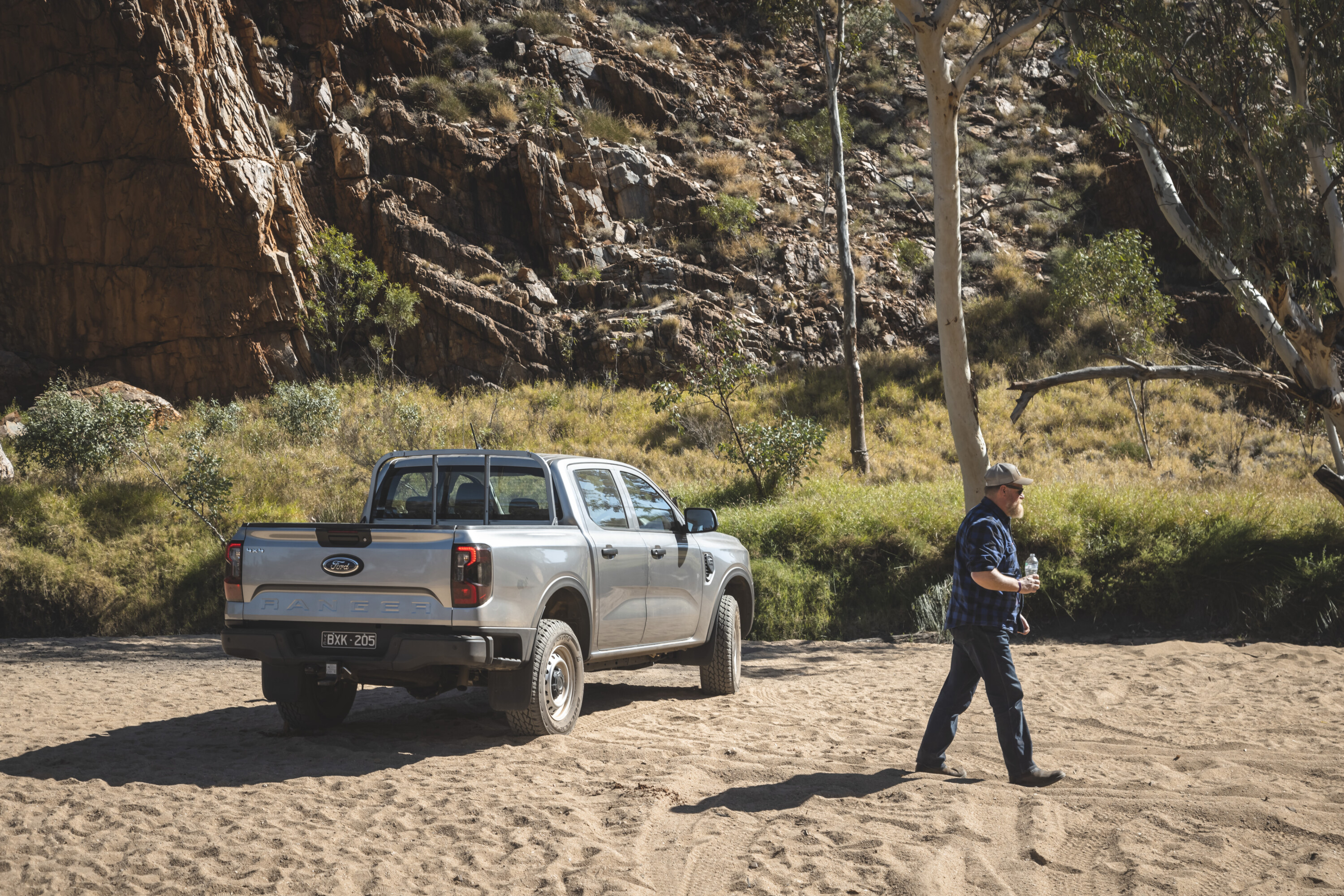
So when we spotted the steel wheel-clad Ranger XL in the hotel carpark while we were in Alice Springs for the Finke Desert Race, we jumped at the chance for a drive.
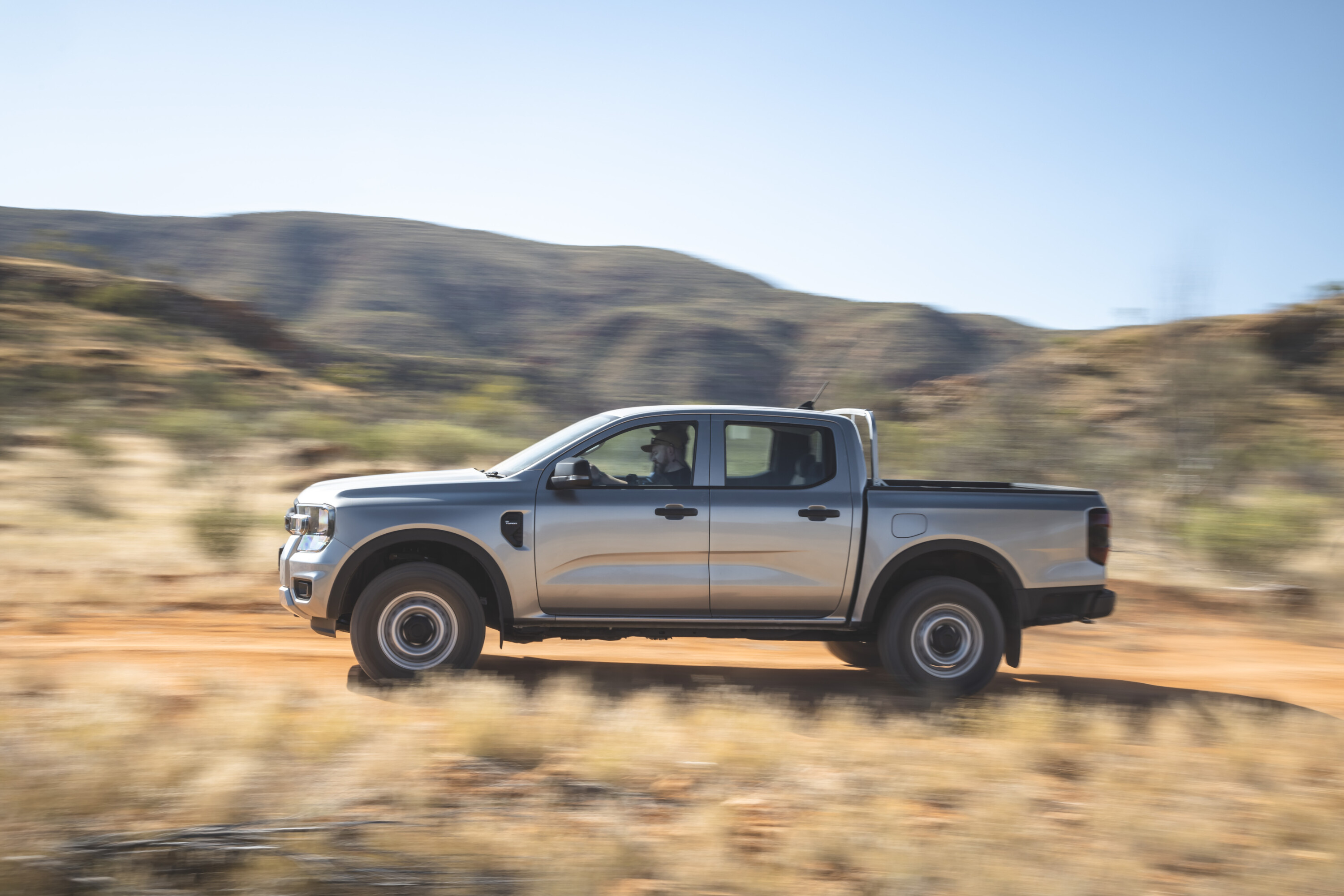
The XL is the entry level ride into the 4×4 Ranger range and it’s available with the choice of the single-turbo or bi-turbo versions of the 2.0-litre four-cylinder diesel engine. Thankfully, this rig was fitted with the 500Nm bi-turbo mill so we had half a chance of keeping up with the Raptors that formed the rest of our convoy. No, not really, but we tried!
The Ranger XL is available in double-, single- and super-cab bodies, and also as a cab-chassis. Obviously this one is the double-cab and it was fitted with the 10-speed automatic transmission. Even in entry level models, you can’t buy an RA Ranger with a manual gearbox.
In this trim our Ranger XL was priced at $53,680 plus ORC, and it was fitted with a few extras that added to the price including prestige paint ($700), heavy-duty suspension ($500), spray-in bedliner ($900) and the towing pack ($1700), so you can see that the price of entry in to a double-cab 4×4 Ranger isn’t cheap. In this case, you’re looking at upwards of $62K drive away with the bi-turbo engine.
While the XL misses out on the multiple drive modes and some of the features of the higher-spec models, it still comes standard with the 10-inch A/V screen, adaptive cruise control, standard air-conditioning, and a reversing camera and rear parking sensors.
Because this example is fitted with the towing pack, it gets an integrated brake controller and a towing tongue to suit the 3500kg-rated tow bar, a camera, and the BLIS (Blind Spot Information System) is calibrated for towing, recognising when a trailer is attached to the vehicle.
Other safety kit includes AEB, ABS, ETC, rear cross traffic monitor, lane detection and keeping assist, collision mitigation and nine airbags.
It was nice to be driving a vehicle with an ignition barrel and somewhere to put the key, and a conventional emergency handbrake lever and not an electric park brake. The conventional gear shifter is also easier to use than the e-shifter fitted to the AWD models, even if it still has the manual selection via tiny buttons on the side of the handle, and not a separate fore and aft gate.
A couple of things that the XL does miss out on that we’d like to see as standard are a tyre pressure monitor system (TPMS) and LED headlamps as are standard on the higher grades. The LEDs are a far better option than the standard halogen lamps, and Ford could take a note from Volkswagen in this regard as the new Amarok gets LED lamps and TPMS across the range.
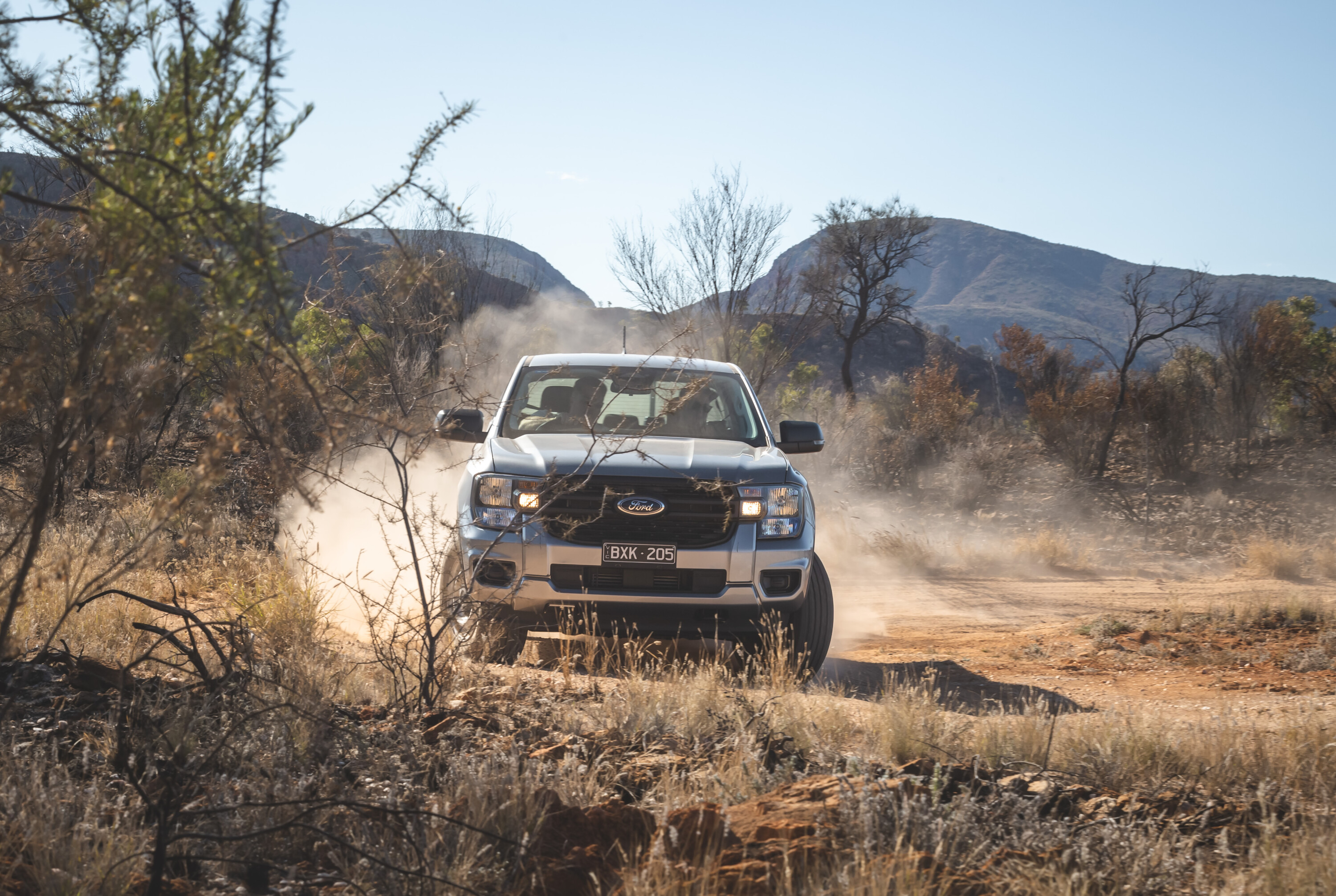
Our drive of the Ranger XL was on a day trip west of Alice Springs and out on the Larapinta Trail. The bi-turbo engine wants for nothing on the highway, easily overtaking slower traffic and giving the feeling that it would still offer decent performance with a load in the tub or when towing.
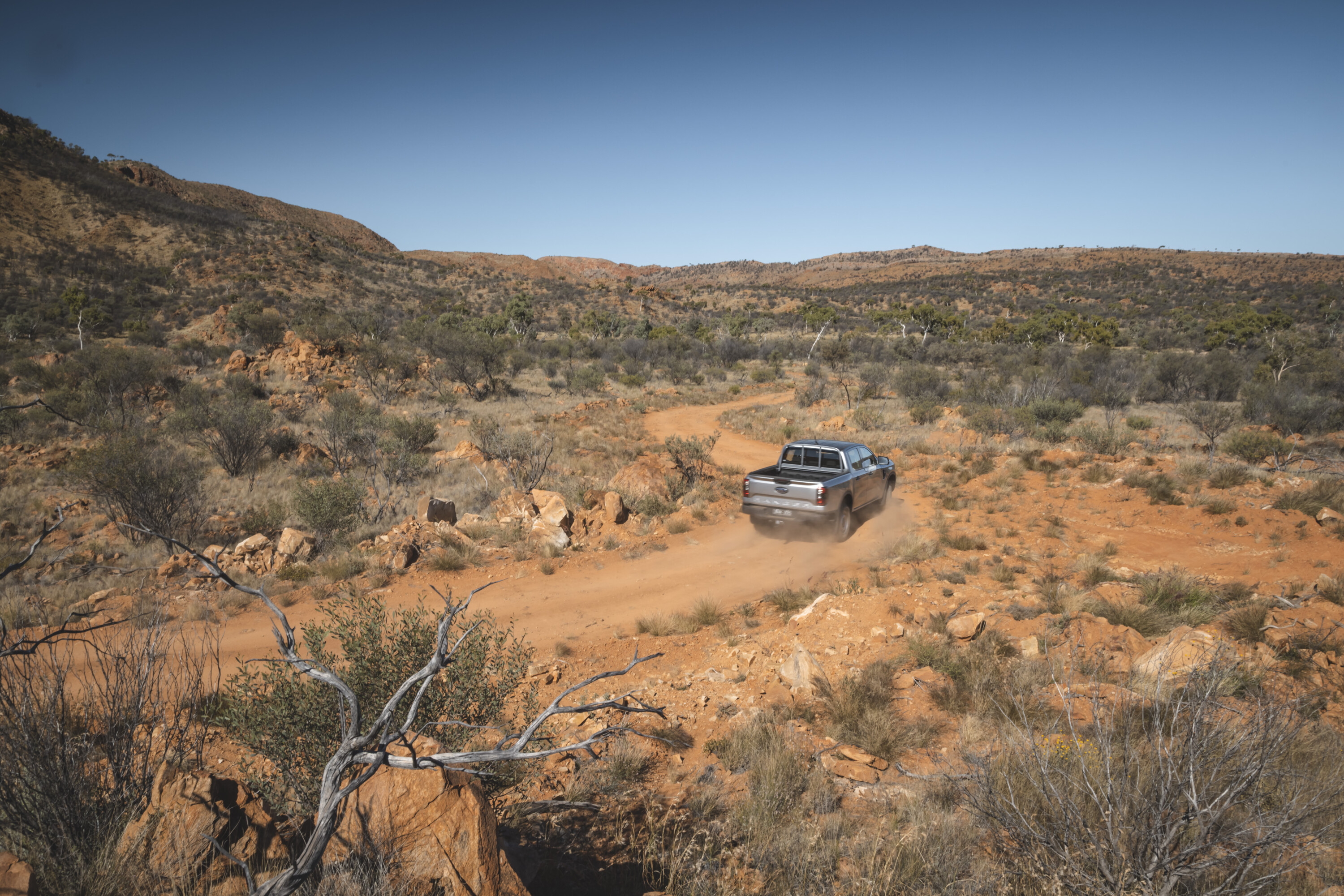
The heavy-duty suspension package as fitted to this test vehicle includes a heavier rear leaf pack with front and rear dampers specific to this set-up. I was impressed to feel that the suspension package didn’t adversely affect the ride and handling of this Ranger on the highway, or even on the sand desert tracks in the West MacDonnell Ranges.
We’re confident this heavy-duty suspension would have to be better than the standard rear leaf springs for carrying loads and towing as well.
The off-highway section of this drive wasn’t particularly challenging, encompassing some sandy tracks, some rocky tracks, and a deep sandy beach beside a waterhole. The Ranger XL didn’t raise a sweat in these conditions and it rode nicely on its tall 255/70R17 all-terrain tyres.
The Ranger XL has a part-time, dual-range 4×4 system with a rear differential lock as standard.
| Approach angle | 30u00b0 |
|---|---|
| Rampover angle | 22u00b0 |
| DepartureaAngle | 25u00b0 |
| Ground clearance | 234mm |
| Wading depth | 800mm |
The Ranger XL has four tie-down points in the cargo tub but no 12-volt power outlet. There’s a single front tow hook but it’s not suited for snatch recoveries. Steel underbody protection for the front part of the drivetrain is also standard.
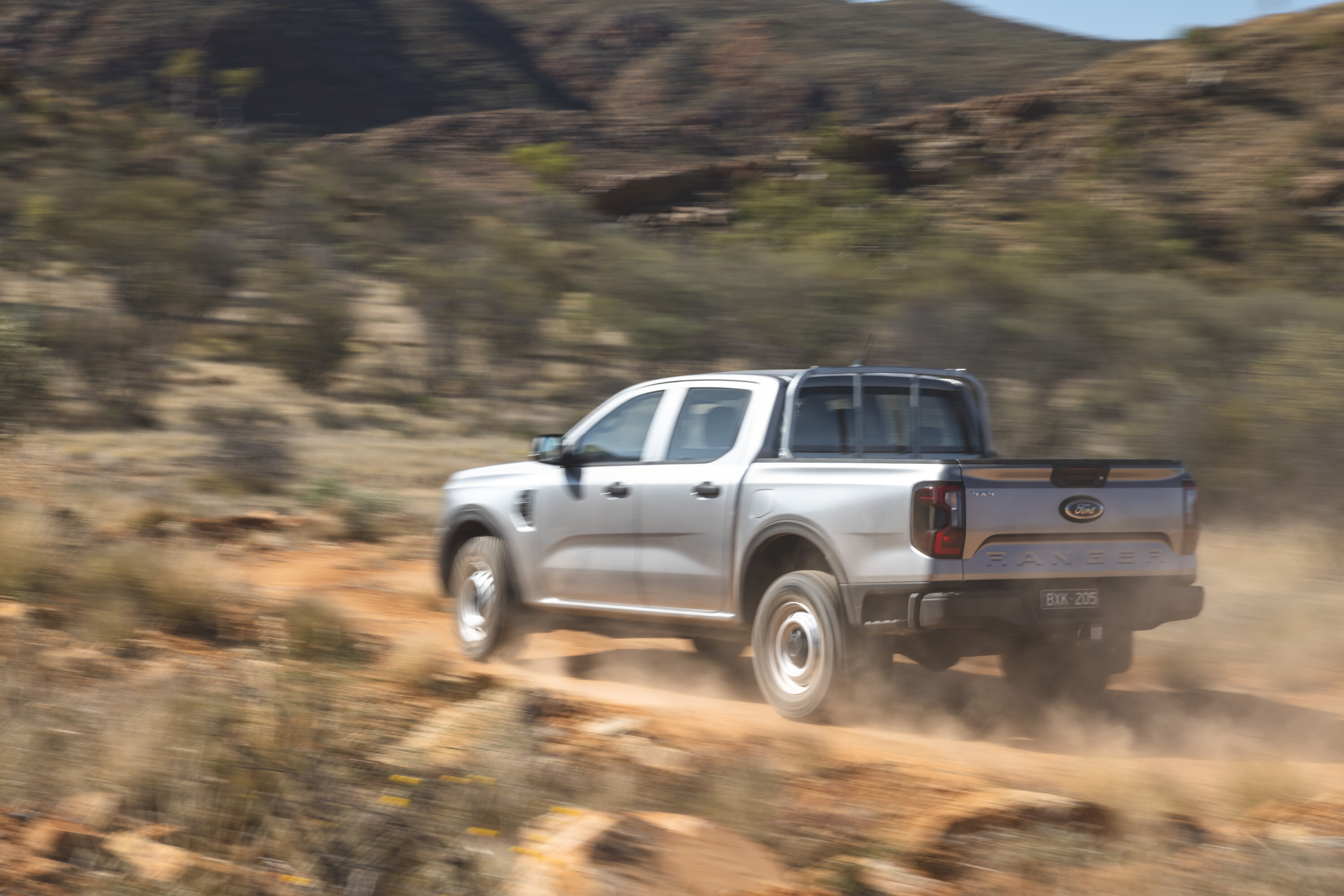
While the price of the XL Ranger might not look like that of an entry-level model, the value in this vehicle comes from the fact that it doesn’t drive or feel like a stripped-out base model.
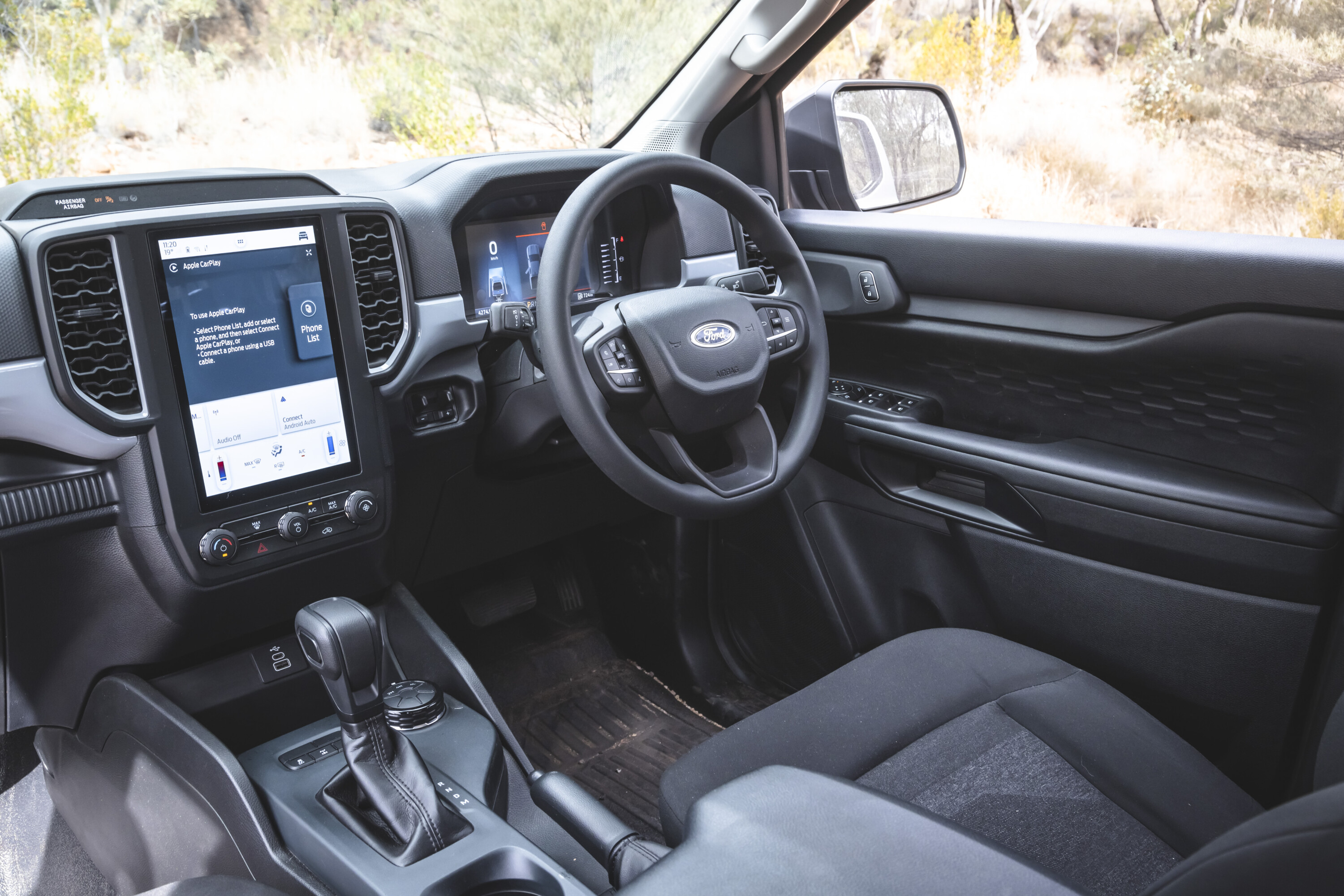
The chassis and bi-turbo powertrain remain class leading, and are only matched by the mechanically similar Amarok Life.
No other midsize 4×4 utes on the market today can match those riding on Ford’s T6 platform for dynamics and ride quality, and with its 154kW of peak power and 500Nm of torque, the performance of this Ranger XL isn’t left behind by the chassis dynamics.
| Price | $53,680 plus ORC |
|---|---|
| Engine | 2.0L I4 turbo-diesel |
| Capacity | 1996cc |
| Max power | 154kW @3750rpm |
| Max torque | 500Nm @ 1750-2000rpm |
| Transmission | 10-speed auto |
| 4×4 system | Part-time, dual range 4×4 |
| Construction | 4-door ute cab with tub on ladder frame chassis |
| Front suspension | Double wishbone IFS with coils |
| Rear suspension | Live axle with leaf springs |
| Tyres | 255/70R17 on steel rims |
| Weight | 2152kg (Tare) |
| GVM | 3230kg |
| GCM | 6350kg |
| Towing capacity | 3500kg |
| Payload | 1014kg |
| Seats | 5 |
| Fuel fank | 80L |
| ADR fuel consumption | 7.6L/100km |
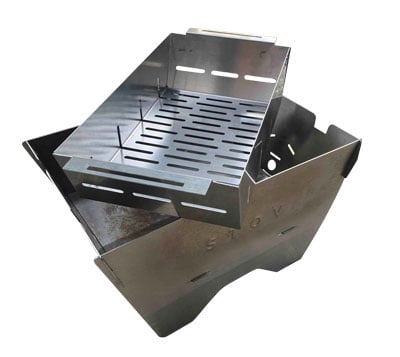
And it’s not just a portable firepit, but also a useful barbecue with an adjustable-height grille.
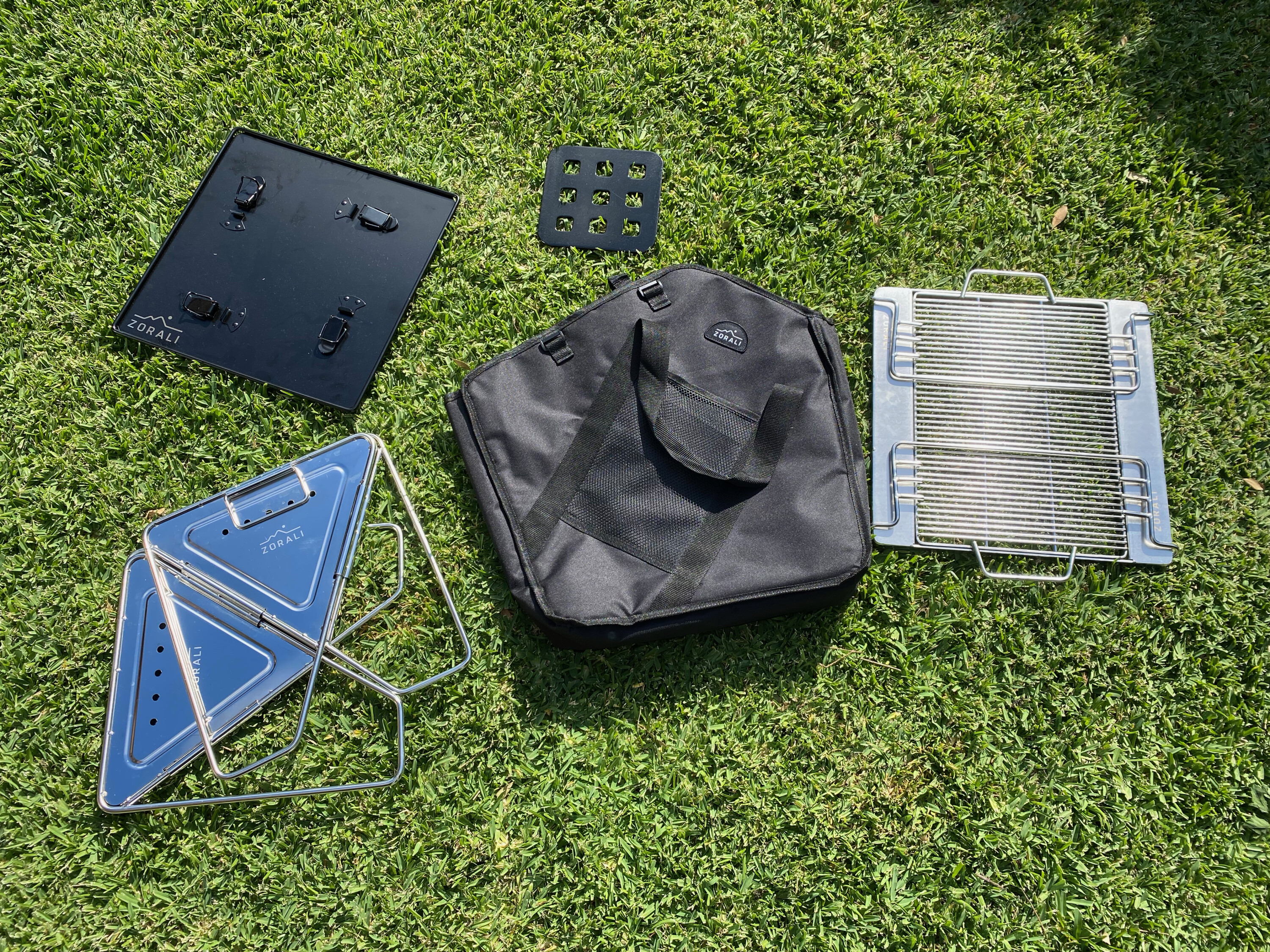
The Pack & Stash is easy to pack and stash because it is supplied flat in a carry bag that’s about the size of a pizza box. The bag has decent carry handles and Velcro straps to keep everything inside, while the fireplace and grille setup is made up of five components.
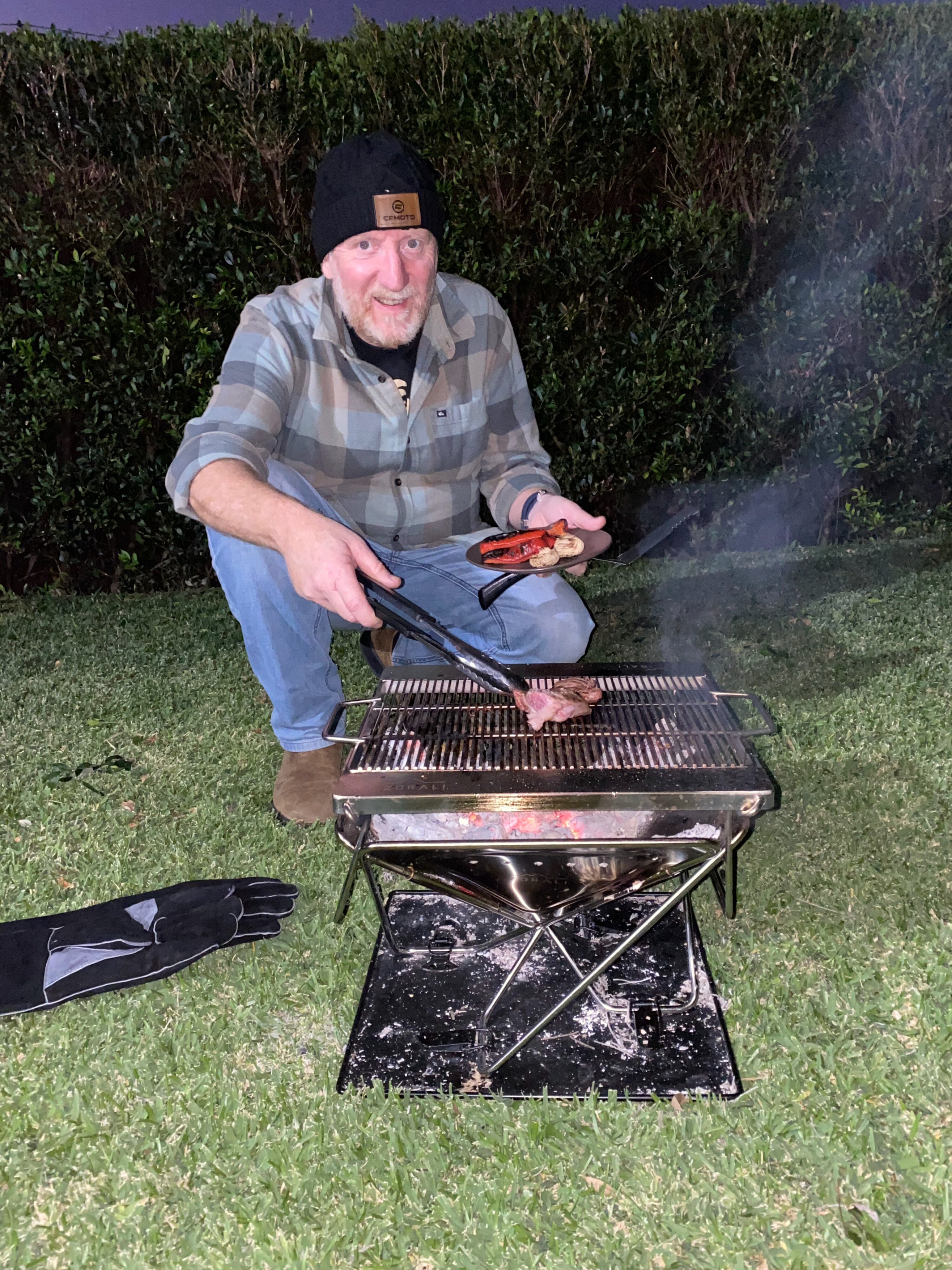
Pack & Stash set up is easy: if you just want a fire, lay out the base plate and position it with the clips facing up; unfold and attach the firepit frame via the four clips in the baseplate; drop in the coal plate; build and light your fire.
Getting a fire going is easy thanks to the ample ventilation provided by the holes in the coal plate and the firepit walls. The top of the firepit measures approximately 35cm x 35xcm when set up, so the Pack & Stash is not designed to accommodate large logs, but it’s still sizeable enough that you can get a decent fire going.
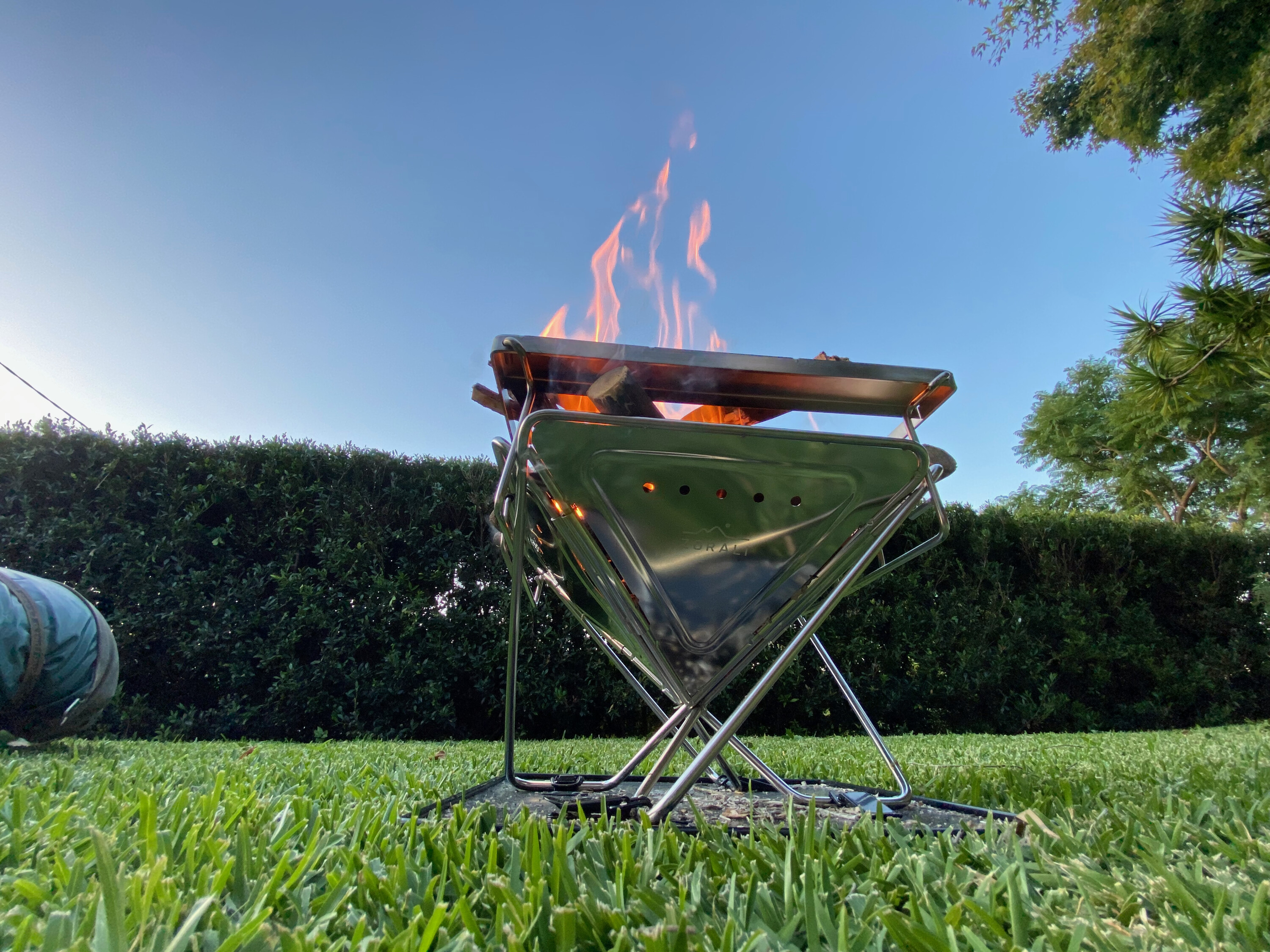
You could use heat beads in the Pack & Stash, but I’ve been using smallish logs cut to short lengths, and a combination of fire starters and small twigs to get a fire going.
If you let the fire burn for 30 or 40 minutes, you’ll soon have enough glowing coals in the firepit that you can fit the grille bridge and the grille, and then start cooking. If you need to add more fuel to the fire at any stage, there is enough of a gap between the grille bridge and the firepit to squeeze in some extra logs when it is set at its two highest levels.
With a few small flames still licking the underside of the grille, you could start cooking on the highest setting, and then drop the grille down to a lower setting as the fire settles. As you’d expect, the grille will be hot, so make sure you wear decent fireplace gloves when handling it, or when making adjustments.
Thanks to the open-grille design, you can use the Pack & Stash to barbecue meat and/or veggies, or you can position a frying pan or a camp stove on top – there’s reasonable space and the structure is strong and stable enough to easily handle the weight of a full cast iron camp stove.
Once you’re done with cooking, throw some more fuel on the fire and while you’re warming yourself it will burn off any food bits and pieces that might have been left on the grille.
One of the best things about the Pack & Stash design is that because the fire is elevated well above the baseplate, you can use it on grass or even on your veranda without fear of burning a big hole in the surface on which it’s placed. The baseplate also catches most of the ash and embers as they fall through the ventilation holes.
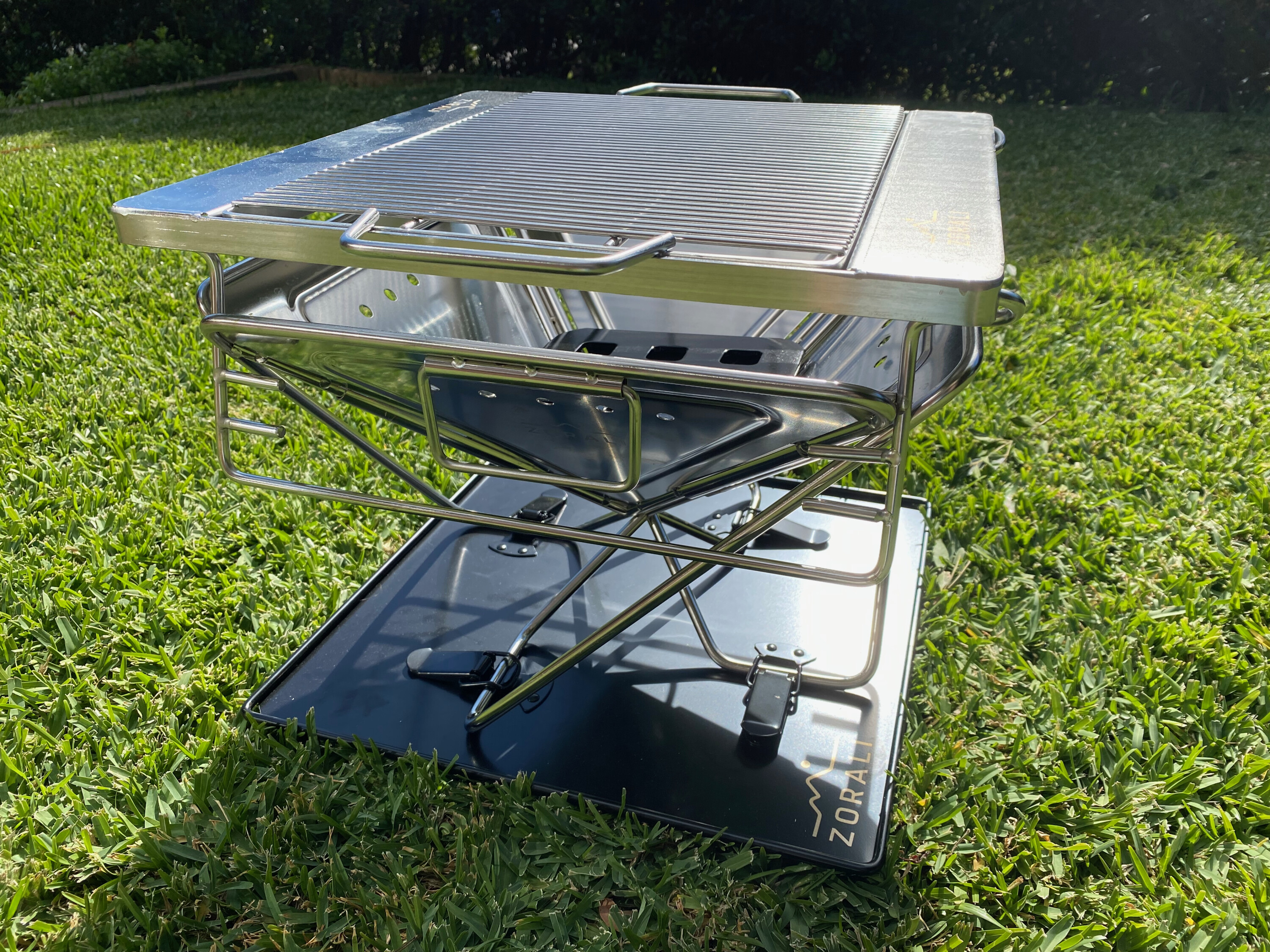
Once you’re finished with the Pack & Stash, and it’s cooled down, all you need to do to put it away is empty out the ash, dust the components off with a brush, pull it apart, fold it and, of course, pack and stash it. It takes a couple of minutes at most.
Key components such as the foldable firepit section, the grille bridge and the grille are made from high-quality stainless steel, so the Pack & Stash should last a lifetime… and it is covered by Zorali’s Lifetime Warranty.
Packed in its bag, the Zorali Pack and Stash Fireplace weighs in at a reasonable 8.6kg, so it’s far from the heaviest of portable firepits on the market, making it well suited to vehicle-based camping or even for use in the backyard.
RRP: $279.95 (inc. shipping) Available from: www.zorali.com