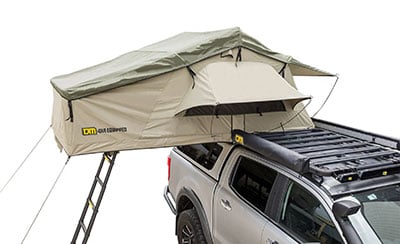
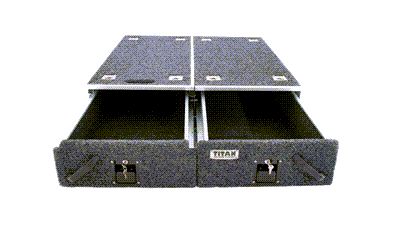
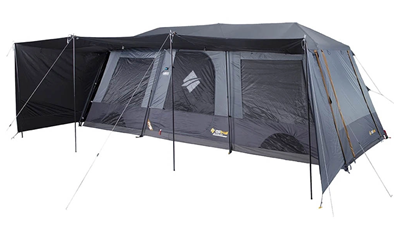
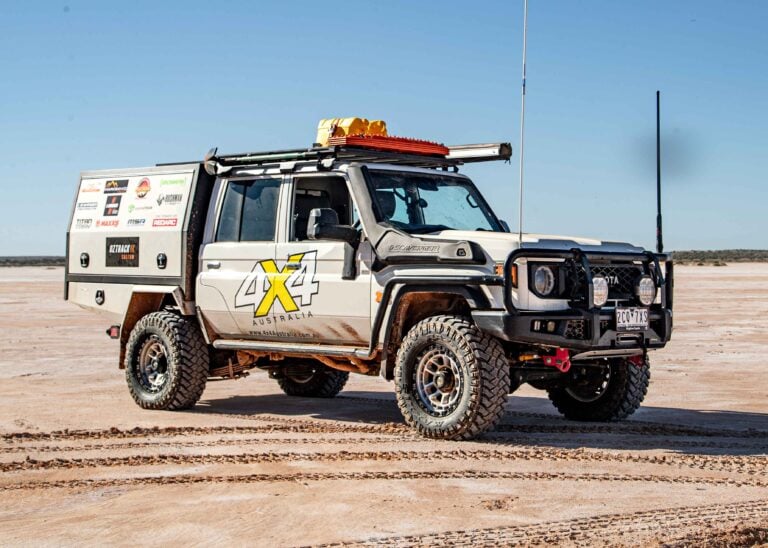
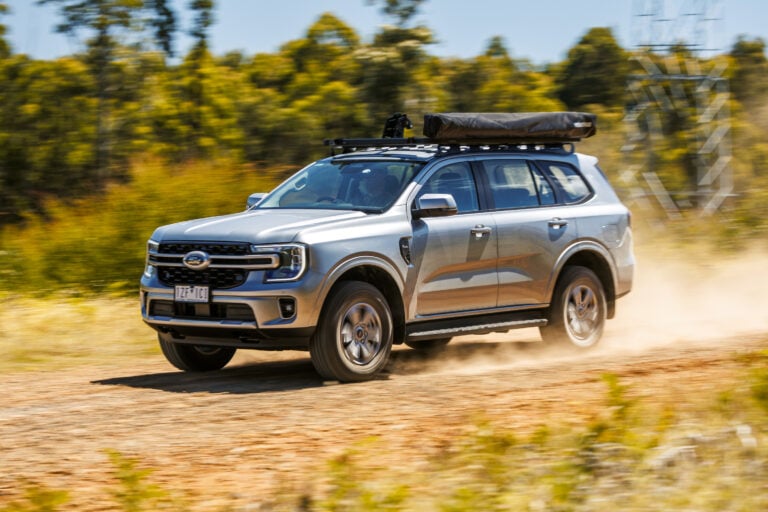
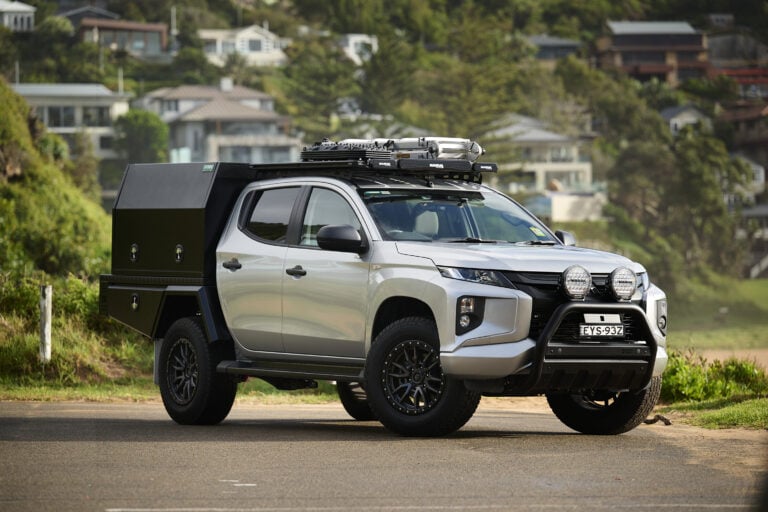
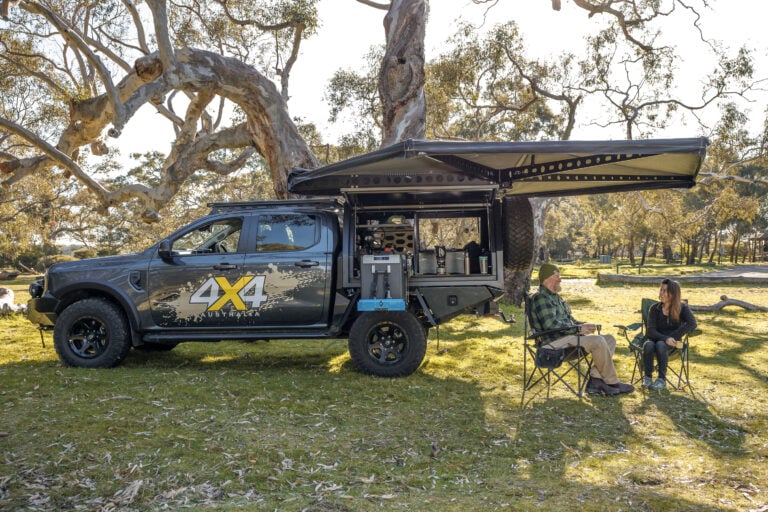
Whether you’re a tradie hauling tools or a family of five setting off with cargo on board, it’s important to find a storage solution that best suits your lifestyle.
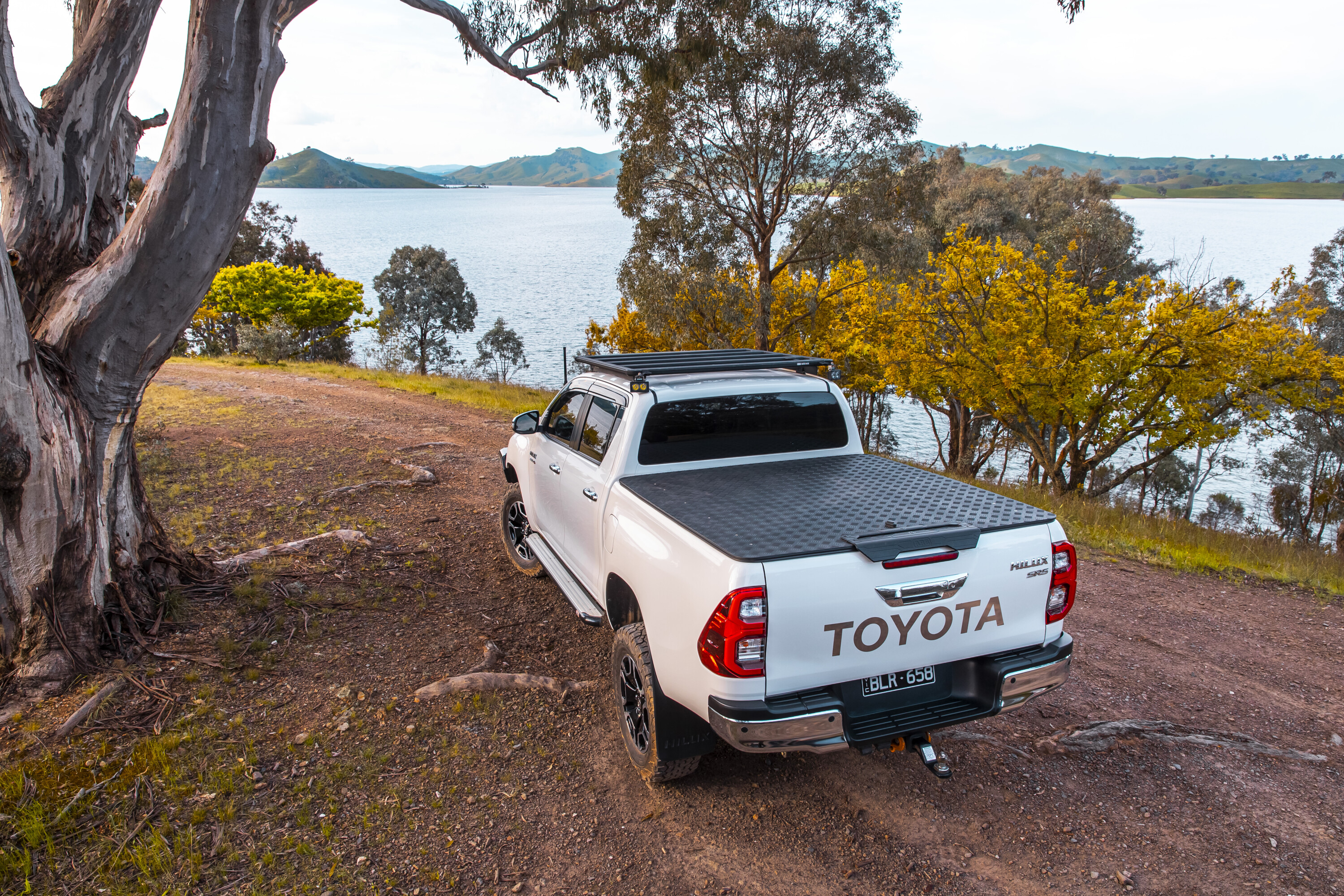
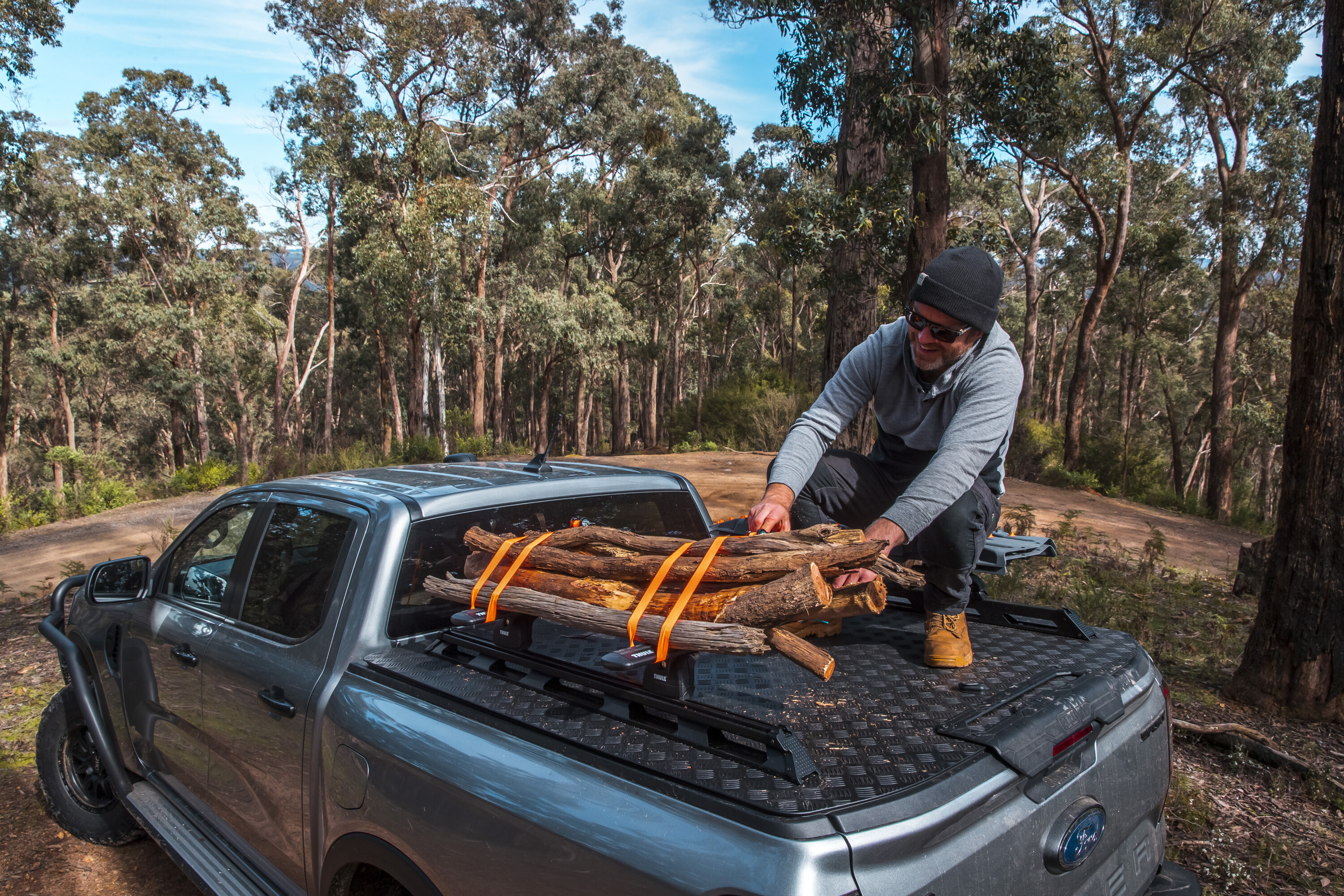
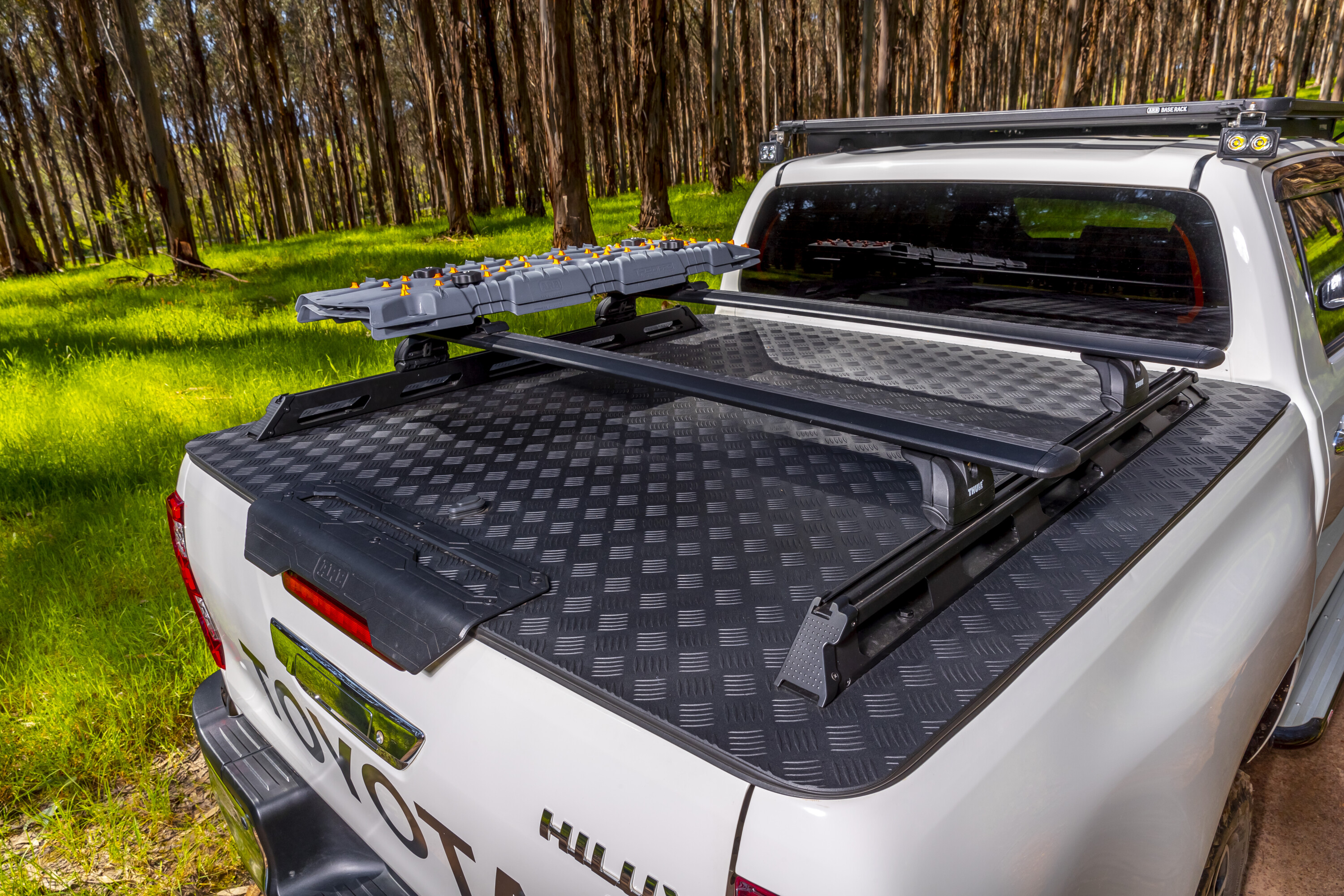
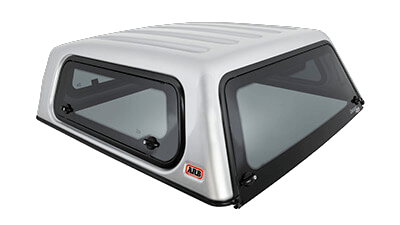
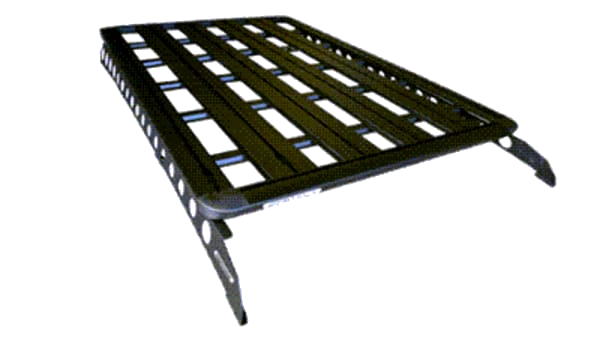
After 18 months of design and development, ARB has created a rugged, versatile and feature-packed tonneau cover and named it the HardLid. It features the same mounting and hinge mechanism used by the ARB Sportlid V, which means these crucial parts are tried, tested and proven.
This hinge mechanism opens the lid rearward and upward, away from the cabin, allowing plenty of clearance. This provides a choice to run your HardLid with or without a factory sports bar and allows for mounting hardware closer to the cab.
The HardLid is opened by a key lockable manual latch, ensuring ultimate cargo security. You can also upgrade to the Premium HardLid, which offers central locking, interior lighting and a set of premium rails.
“The ARB HardLid was born through the collaboration of two great teams, ARB Australia and our New Zealand partners, Beaut Utes. Combining our extensive product, design and engineering knowledge to produce a truly rugged and versatile solution, that’s packed full of features,” said Matthew Rust, ARB Product Development Manager.
While a full-height canopy is good for additional storage, some 4WD owners still prefer the sleek styling of a hard lid without compromising on security and the ability to carry an extra roof load. A ute lid helps keep the load low on the 4WD for improved handling and fuel economy.
The ARB HardLid is the newest addition to its range of rigid tonneau covers. With its rugged and versatile cargo surface, the HardLid provides the perfect mounting platform for items that might be thrown on and tied down as you leave town on a Friday night, or for items you plan to mount permanently in position.
You can customise the HardLid depending on your needs, whether it be mounting custom toolboxes or using the premium rails. The premium rails option utilises a T-slot channel and ARB’s signature BASE Rack dovetail mounting system, allowing a mounting location for a selection of BASE Rack accessories.
“HardLid not only provides security and protection for your cargo area, but its tough aluminium exterior is a game changer for customisation. Whether it’s sports bars, custom toolboxes, recovery gear or even a rooftop tent, combining HardLid with accessories like premium rails, Base Rack or cross bars allows everyone to build out their platform to meet the needs of their lifestyle,” said Rust.
The HardLid’s aluminium skin is supported by a frame substructure, intended to be good for both a high dynamic load of 150kg and total static mass suitable for rooftop tents. With a tough powder-coated black finish, the clean, simple design will make your ute look awesome.
Pricing
HardLid pricing starts from $2750, plus fitting and additional accessories. It’s available for the following dual-cabs:
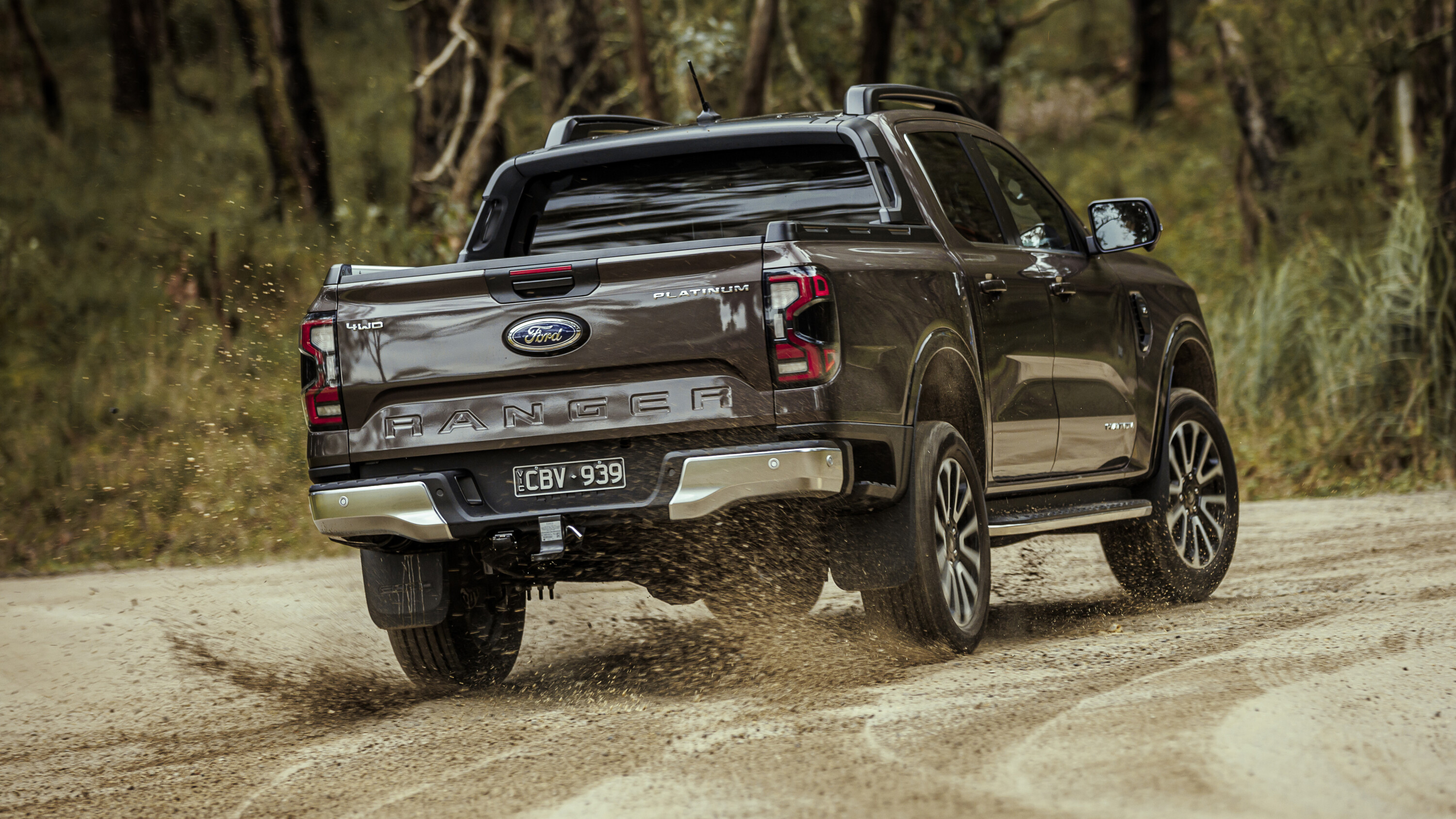
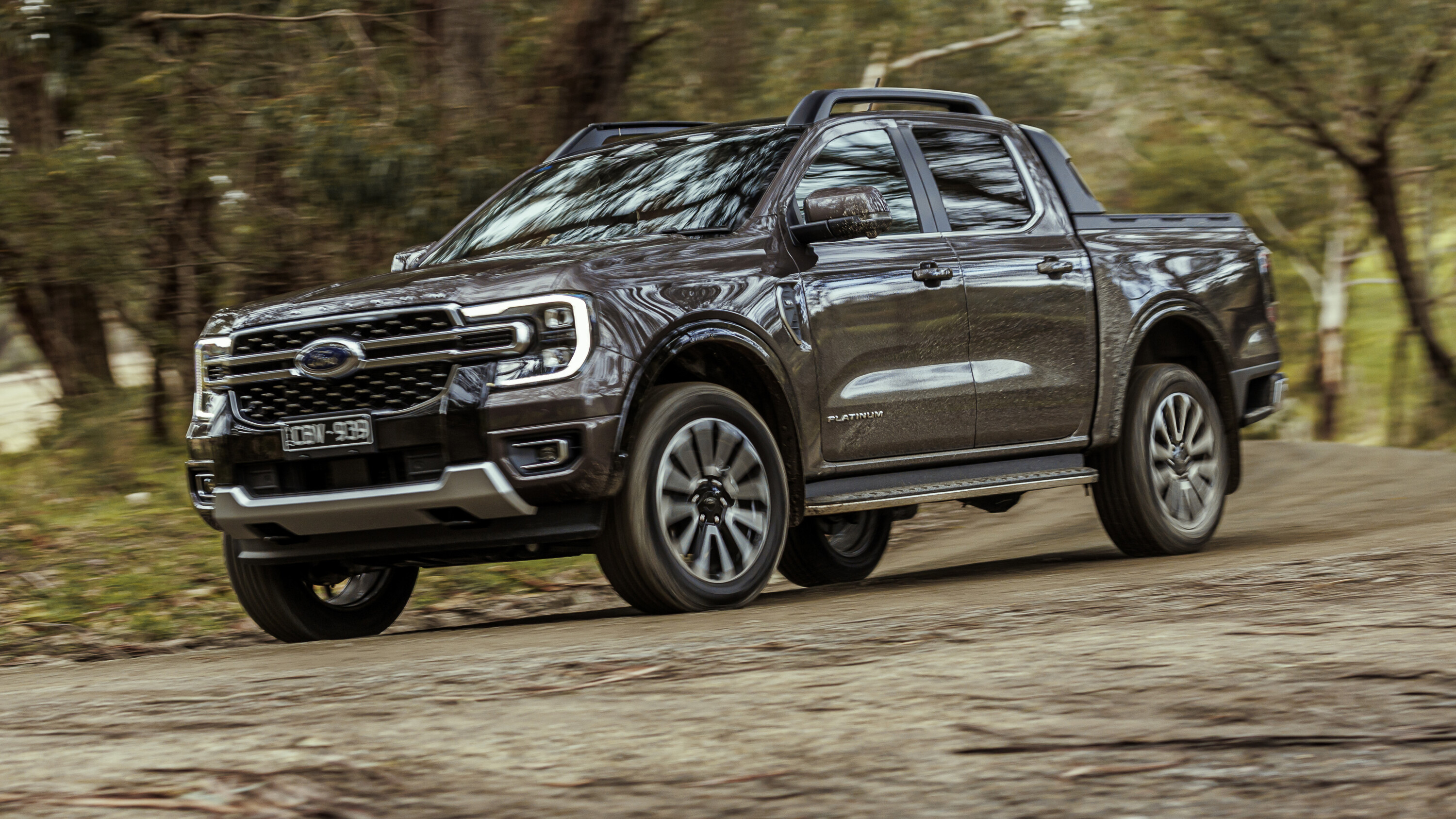
I’m looking at the Ford Ranger Platinum and wondering whether there’s a better-value vehicle trim for sale in Australia.
Not in terms of the overall package, but more in terms of what additional gear you get when you step up to that model. The 3.0-litre V6 Platinum throws in a lot, more of which later. So much, in fact, that you start to question whether it’s cost-effective for Ford to sell this model versus the next Ranger down in the pecking order, the Wildtrak.
As Ford has discovered by its healthy order bank for the $85K Raptor variant, dual-cabs with hefty price tags tap into a bigger and more receptive market than most of its rivals had ever considered. Most but not all.
So it gets all of the good stuff regarding chassis and engines and then garnishes it with the sort of feel-good polish we’ve come to expect from Volkswagen. Perhaps ‘garnishes’ is doing the Amarok a disservice, as it’s more than just a superficial once-over.
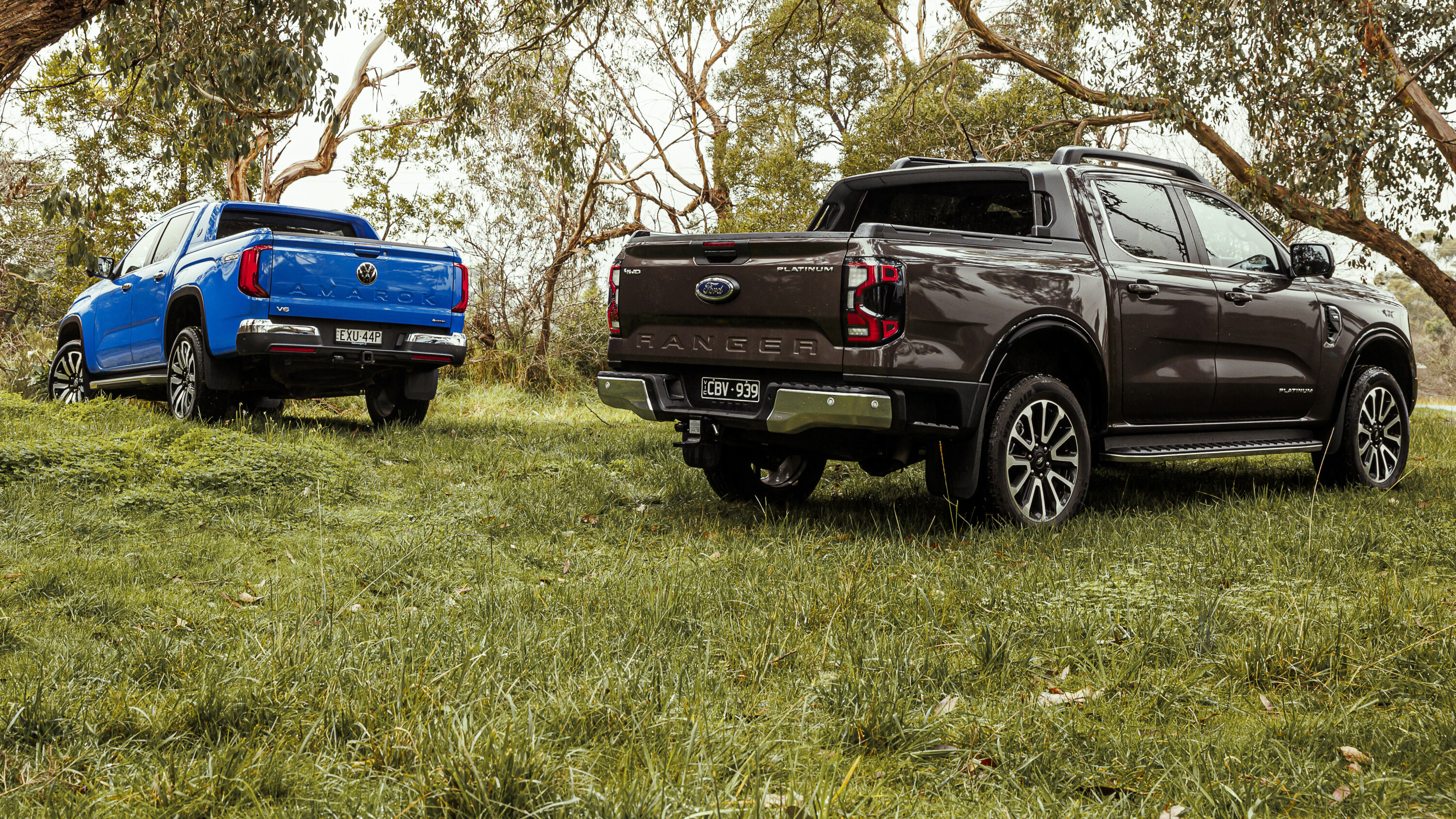
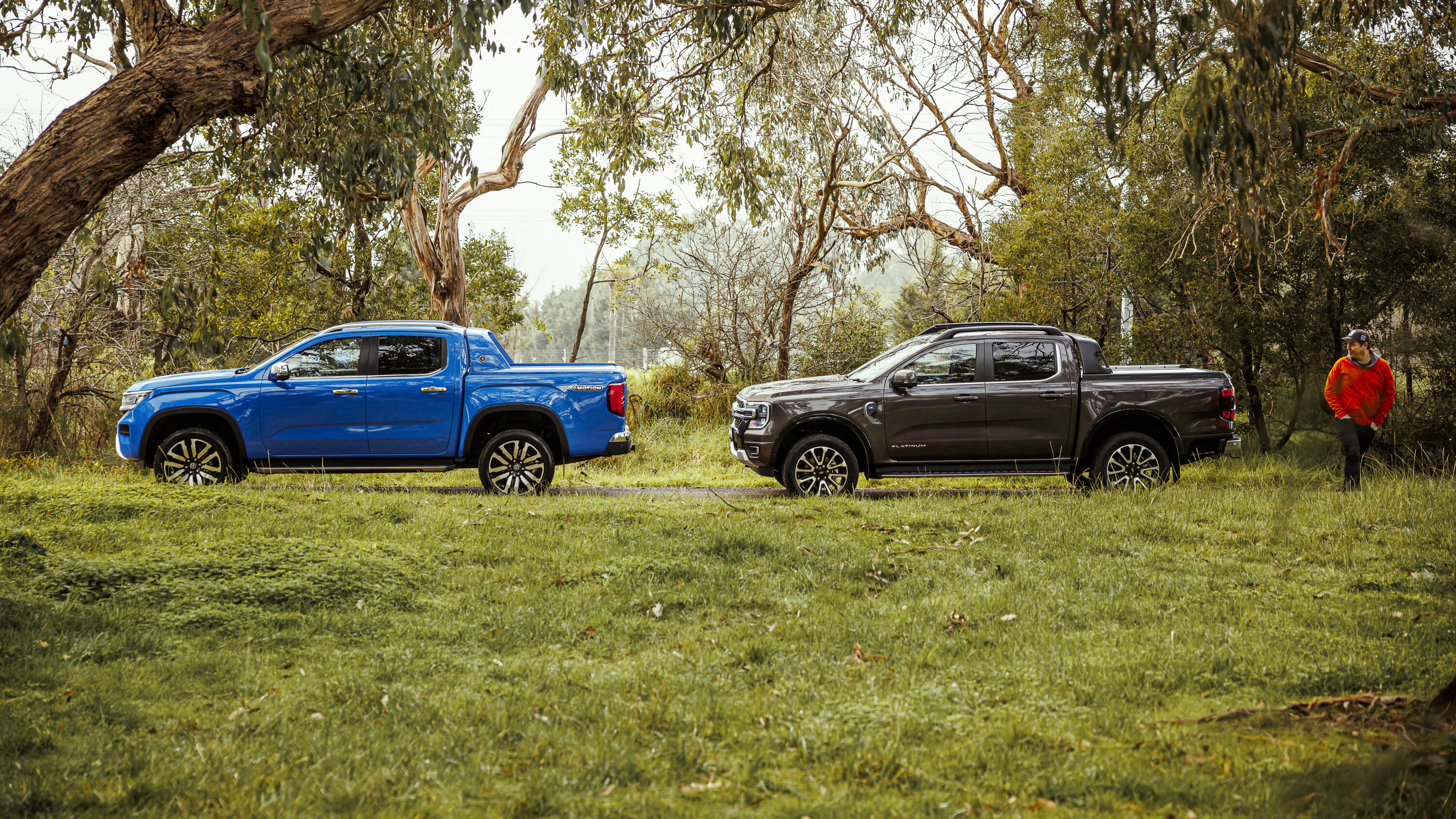
The diesel flagship version is the Aventura TDI 600, so it made perfect sense to line it up against the newcomer from Ford. Last time we put the new Amarok up against the new Ranger, VW’s off-road-specific PanAmericana version got the nod by the merest whiff over the Ranger Sport. This time around, Ford’s out to level the score.
$6800. That’s what it costs to step up from a Ford Ranger Wildtrak to a Ford Ranger Platinum.
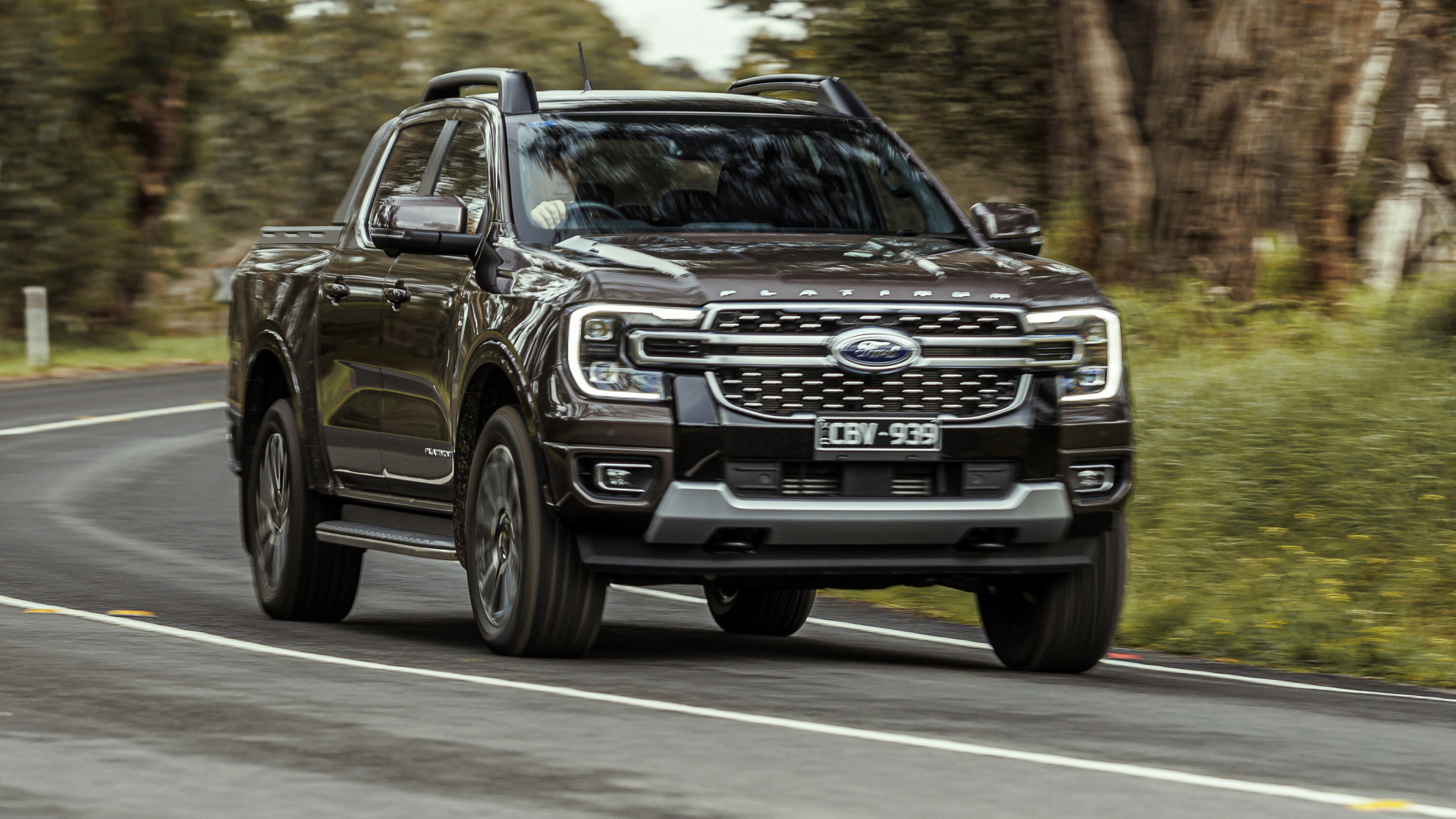
Were this Porsche, you might get coloured crests on your wheel centres and some carbon-fibre mirror caps for that much, but thankfully the folks at Ford are a good deal more generous.
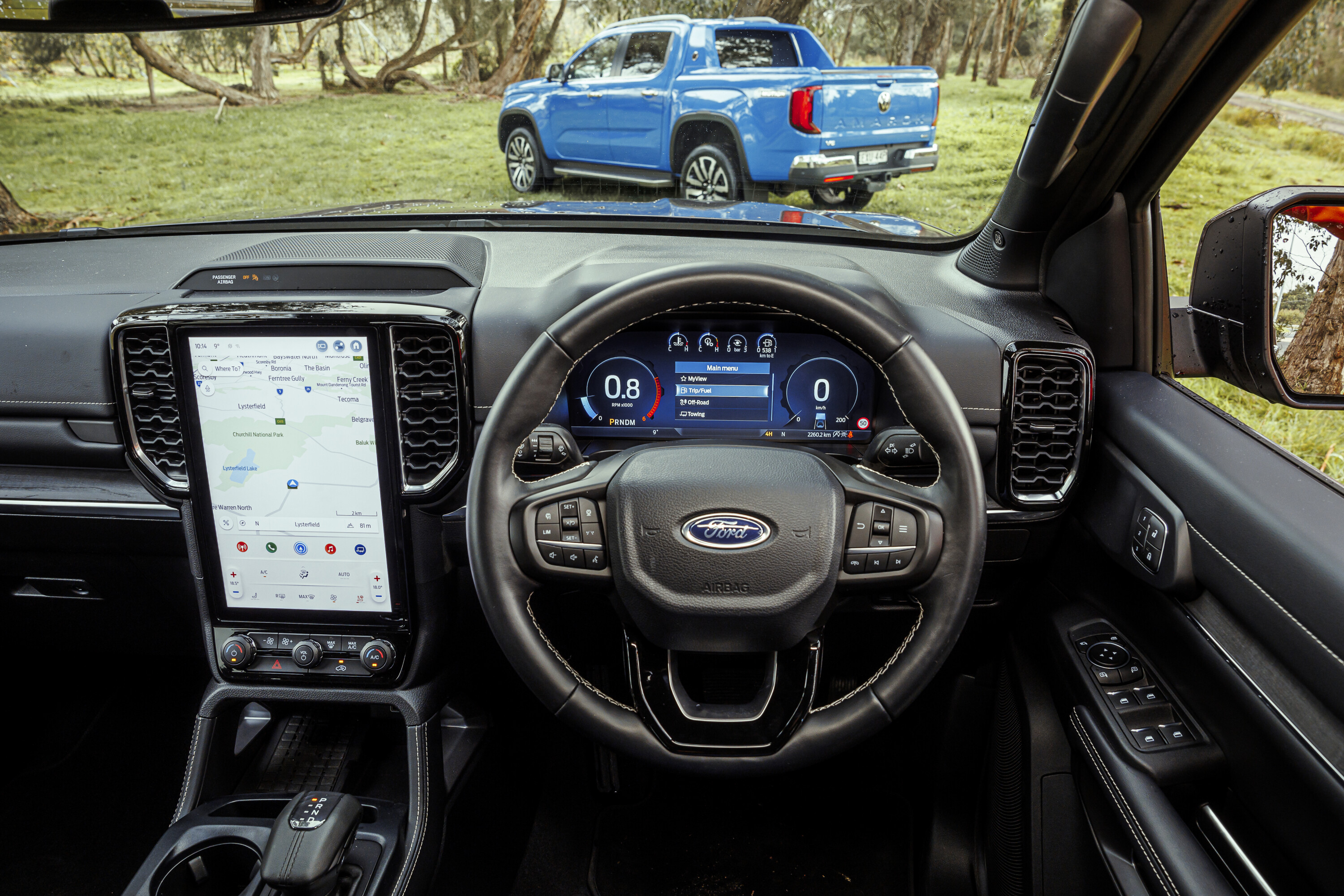
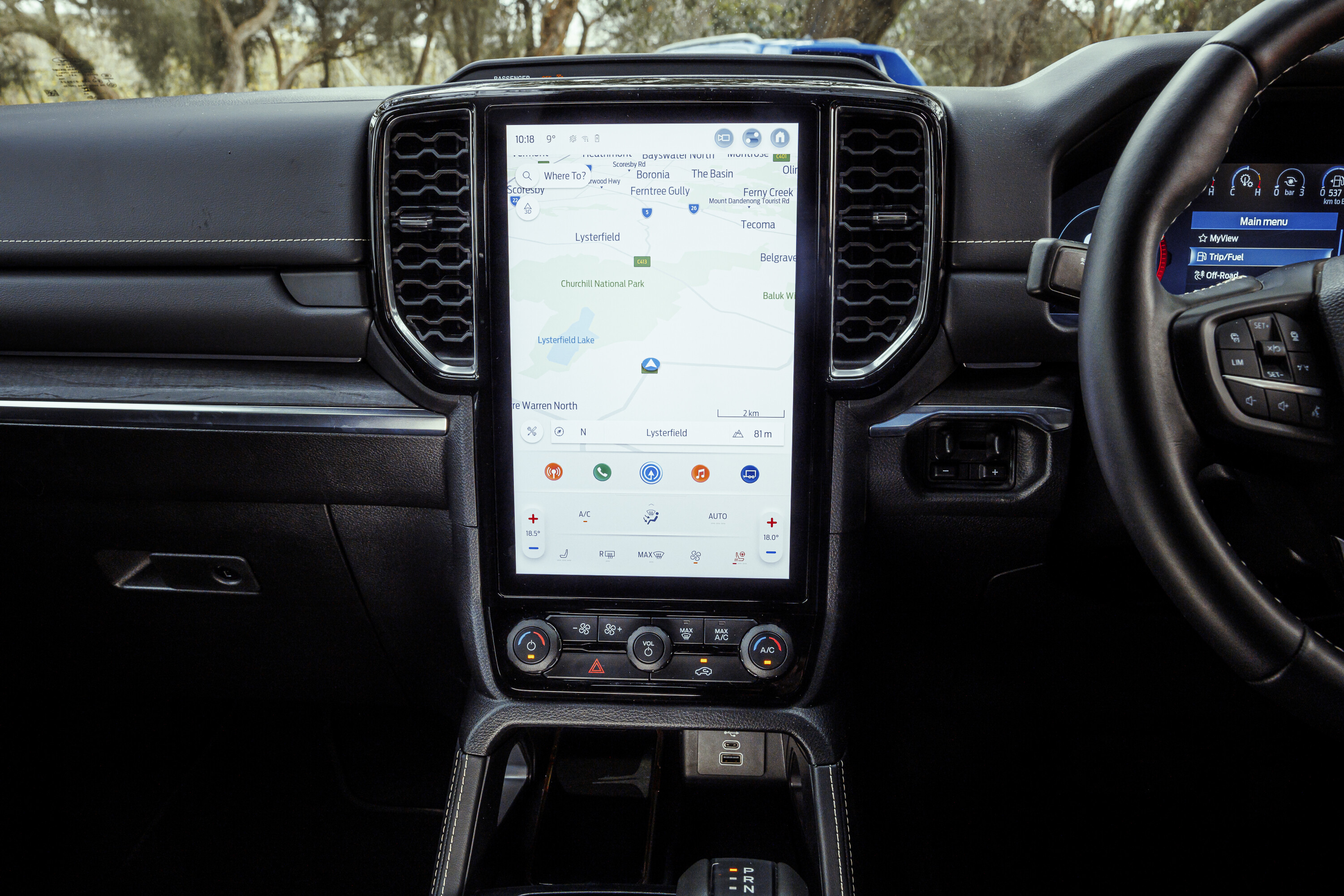
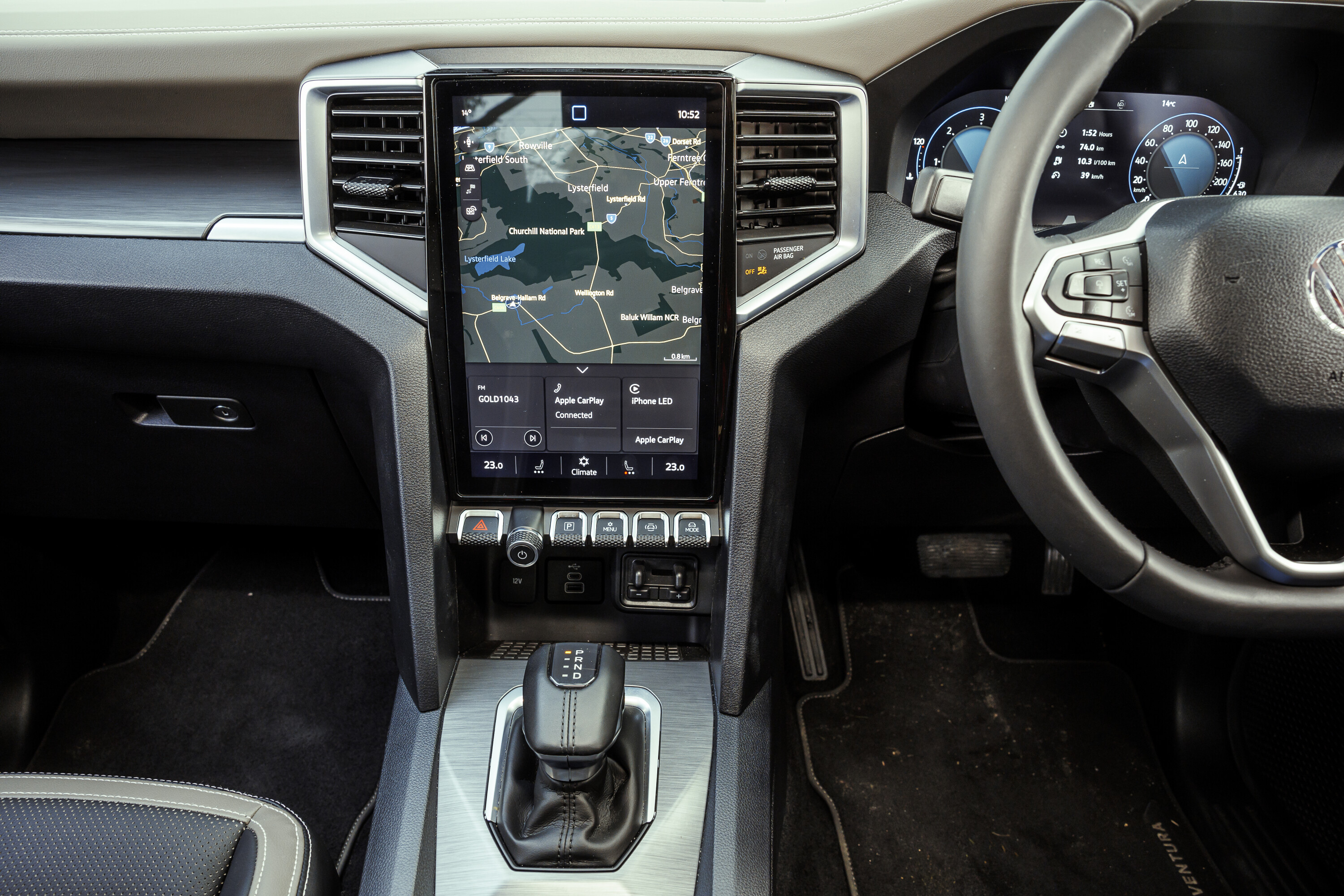
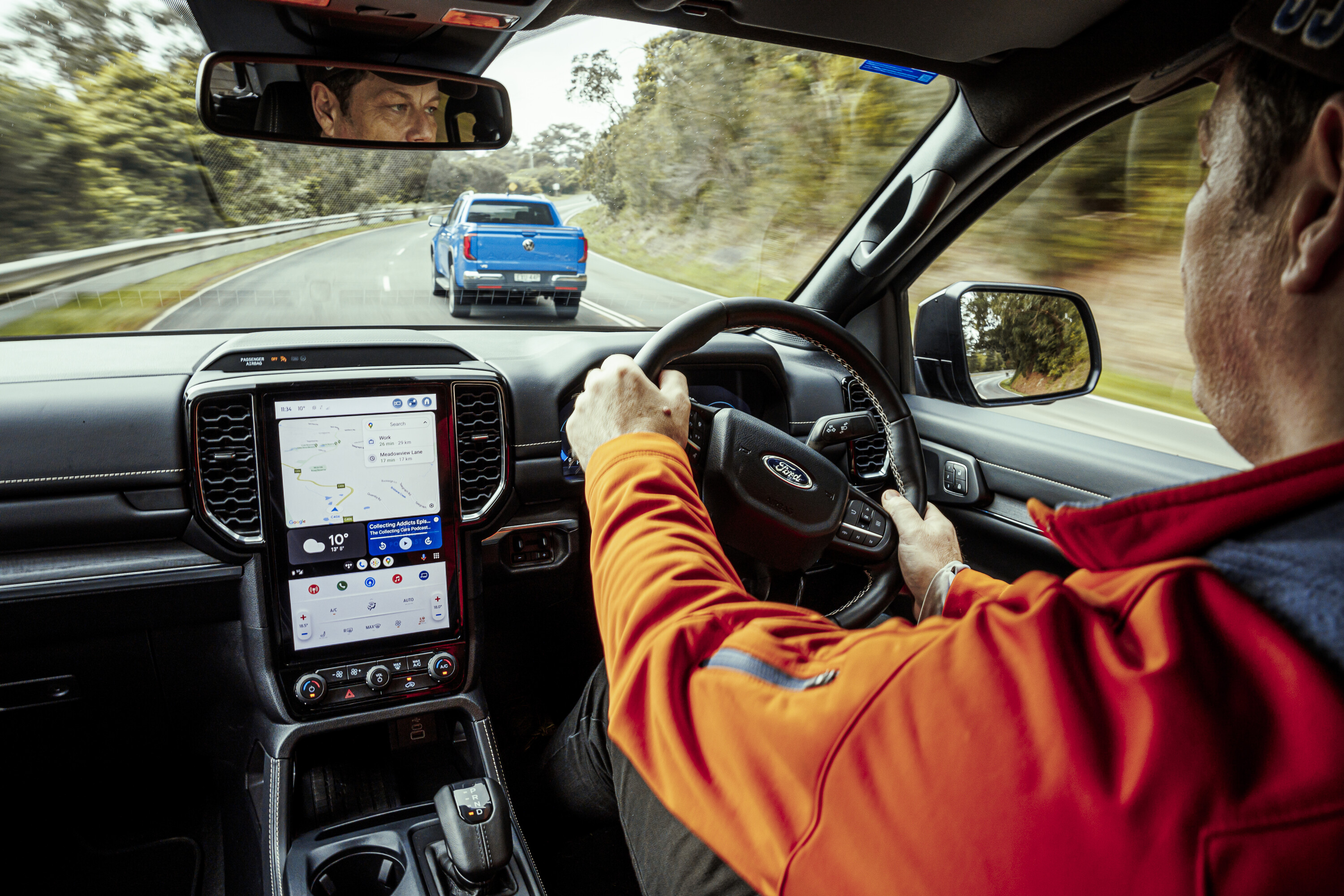
Over and above the $70,190 Wildtrak, the $76,990 Platinum (both before on-road costs) deals you in with three big-ticket items straight off the bat: matrix LED adaptable headlights, the full-frame 12.4-inch touchscreen and a 10-speaker Bang and Olufsen premium sound system. For many buyers that would be a fair deal.
1
But no. Like a shopping channel advertisement for shoddy chef’s knives, there’s more.
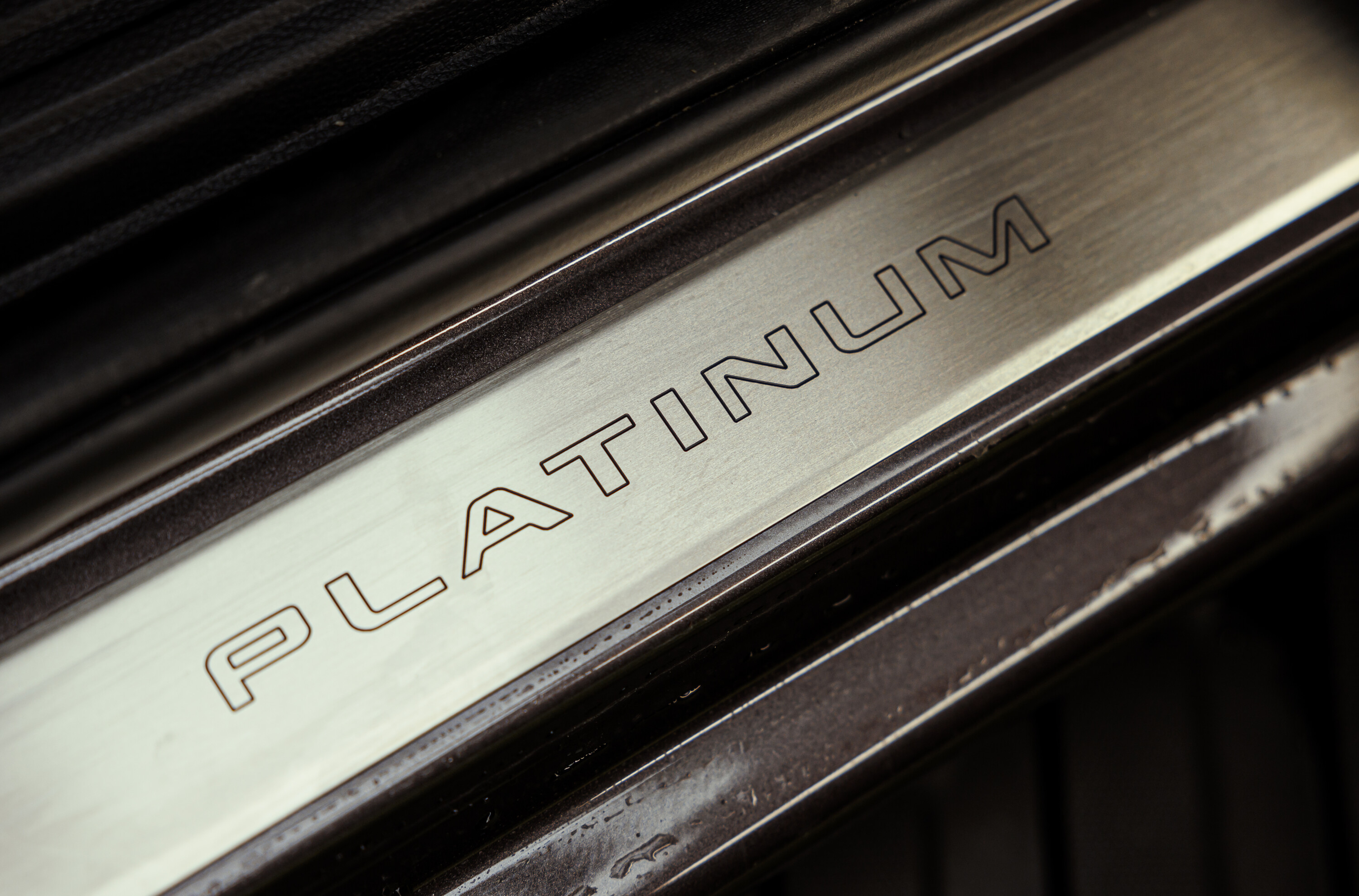
Ford delivers a set of 20-inch alloy wheels, ‘Platinum’ badging, satin chrome exterior trim, a damped tailgate and a clever rail-mounted flexible rack system.
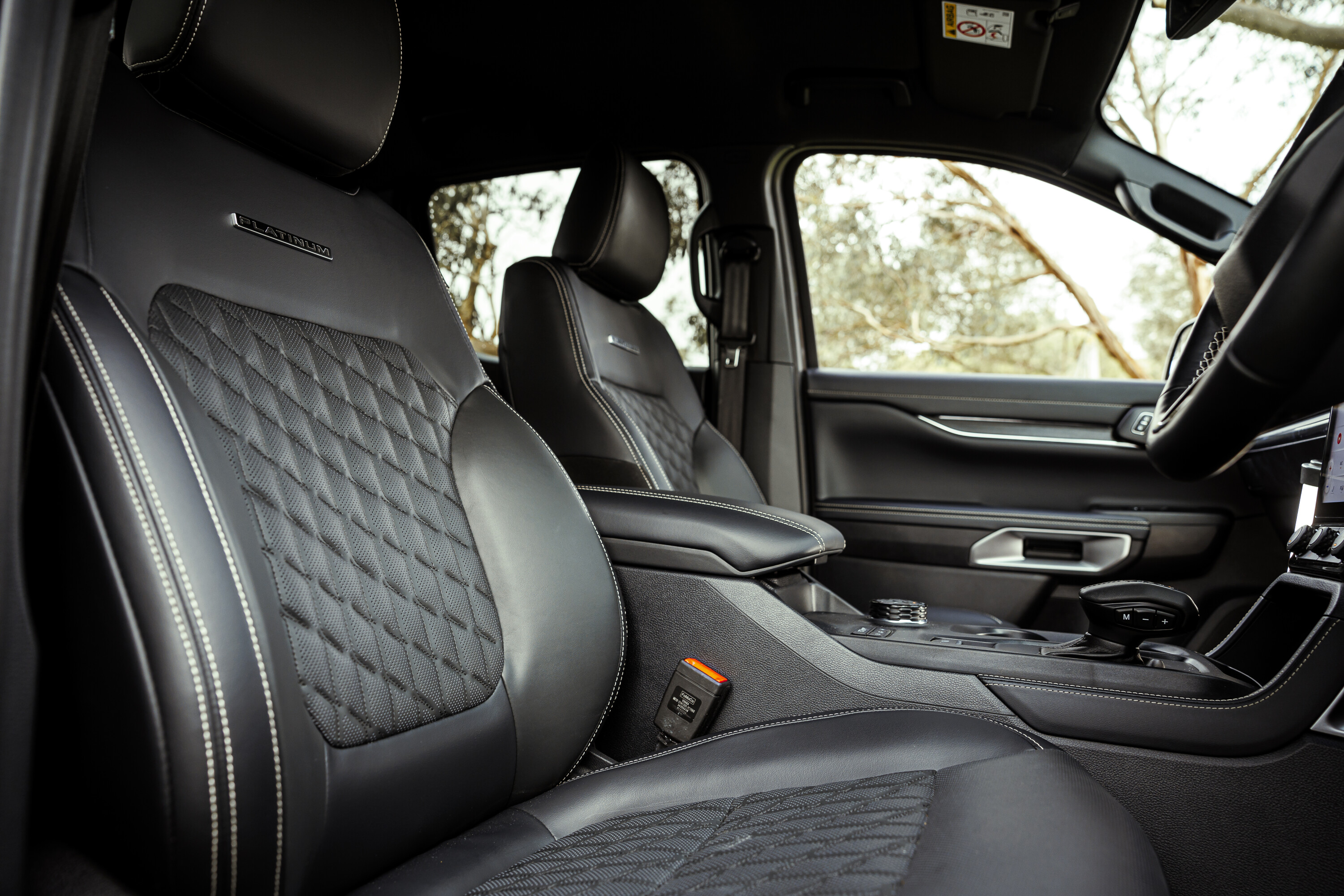
Indoors, Platinum owners will find quilted leather seats which are heated and ventilated up front, a heated steering wheel, and 10-way power adjustment for the front pair of chairs as well as a driver’s seat memory function. The Black Maple dash inserts look good too.
1
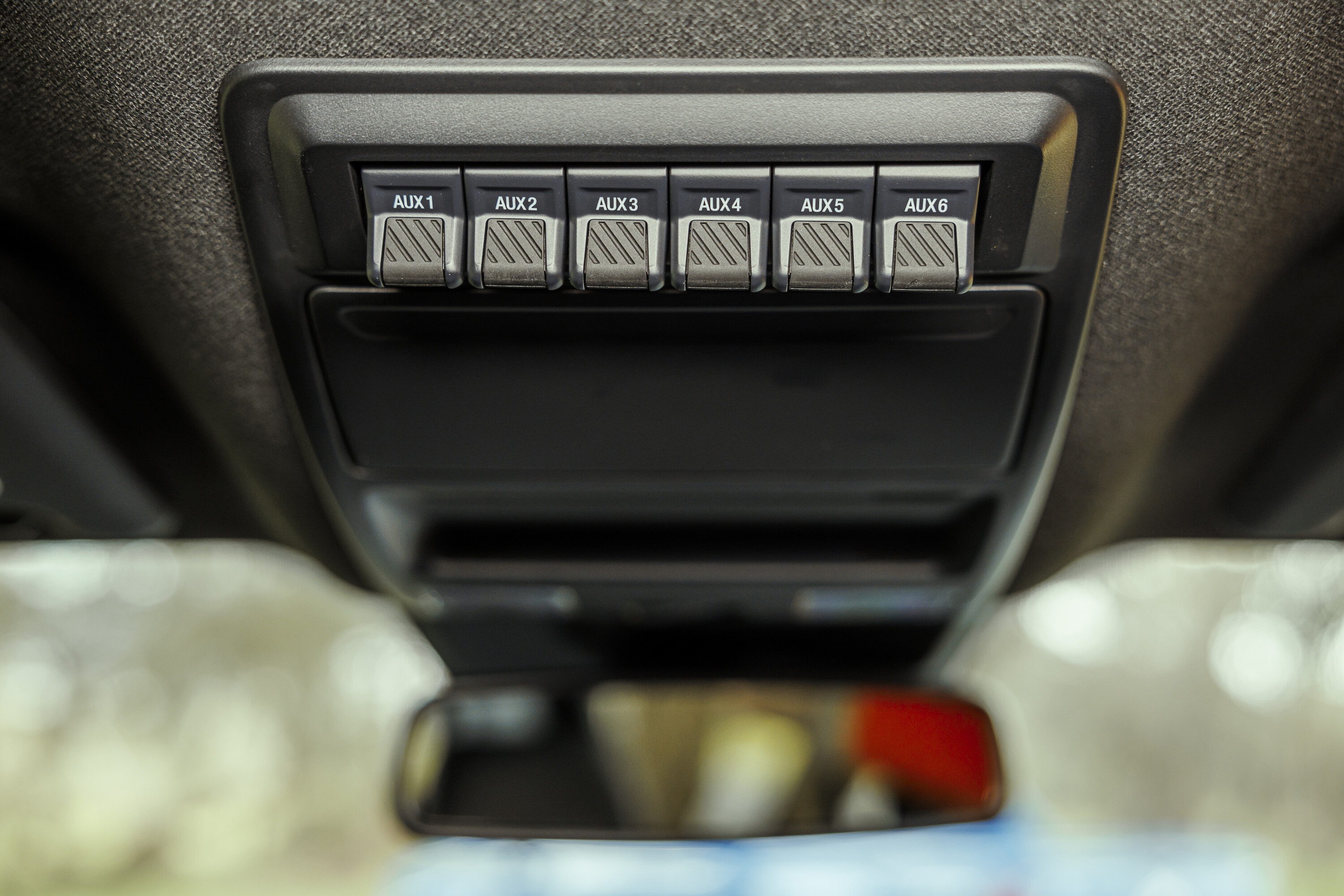
The premium pack that is popular with Wildtrak buyers has also been thrown in for nix with the Platinum, bringing you that B&O audio as well as a set of full LED tail lights and an overhead auxiliary switch bank.
If you don’t fancy drilling holes in your $76K truck to fit switchgear for functions like driving lights, winches and so on, this is especially neat.
You’ll also find some welcome refinements that are common to more proletarian models in the Ranger line-up such as wireless charging for your phone and wireless connection to both Android Auto and Apple CarPlay. Active Park Assist and 360-degree cameras are also fitted as part of a comprehensive safety suite.
1
Unfortunately, the only colour you can choose that doesn’t attract an option charge is Arctic White, which feels a bit mean on a flagship vehicle.
Meteor Grey, Aluminium, Sedona Orange, Shadow Black or the smart Equinox Bronze of the car pictured here will all run you $700.
The Amarok Aventura doesn’t feel as instantly luxe as the Ranger. In fact, it feels a little austere, but the sticker price of $79,990 before on-road costs is anything but spare. Take a closer look at the vehicle and you begin to appreciate that there’s a lot packed in here, but not everything is obvious.
1
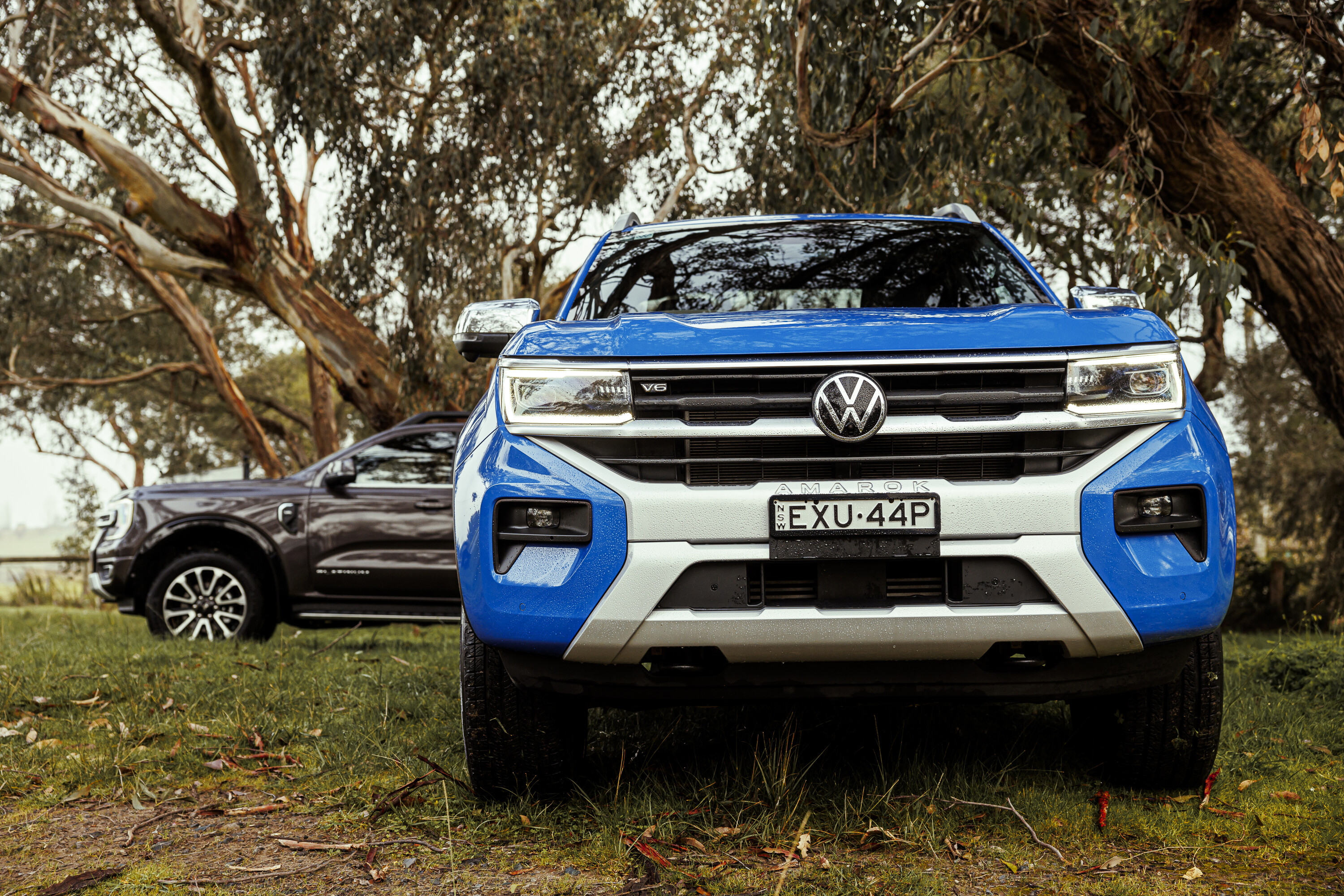
The chromed X-design front end offers more of an extrovert approach than the black plastic of the PanAmericana version
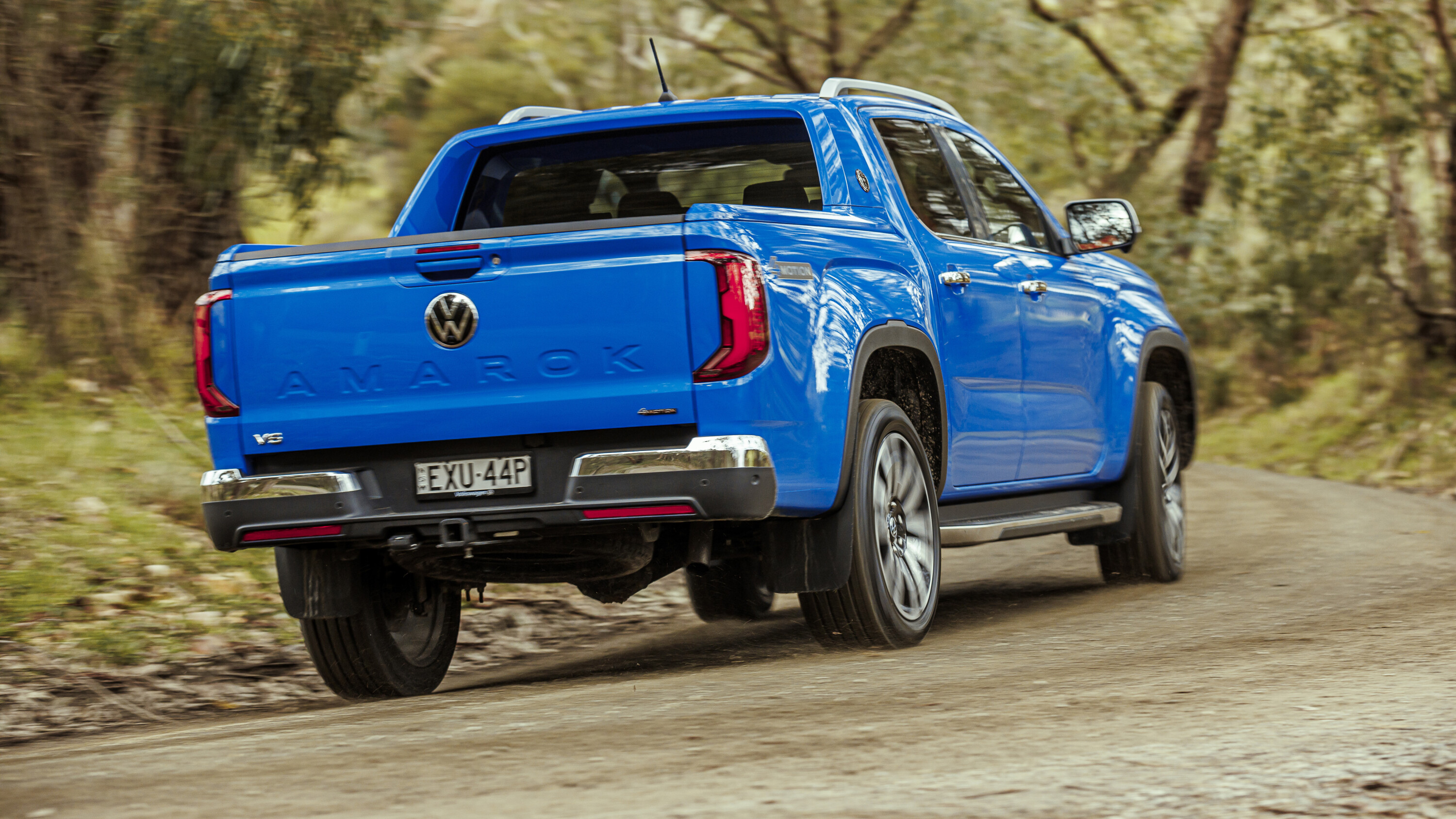
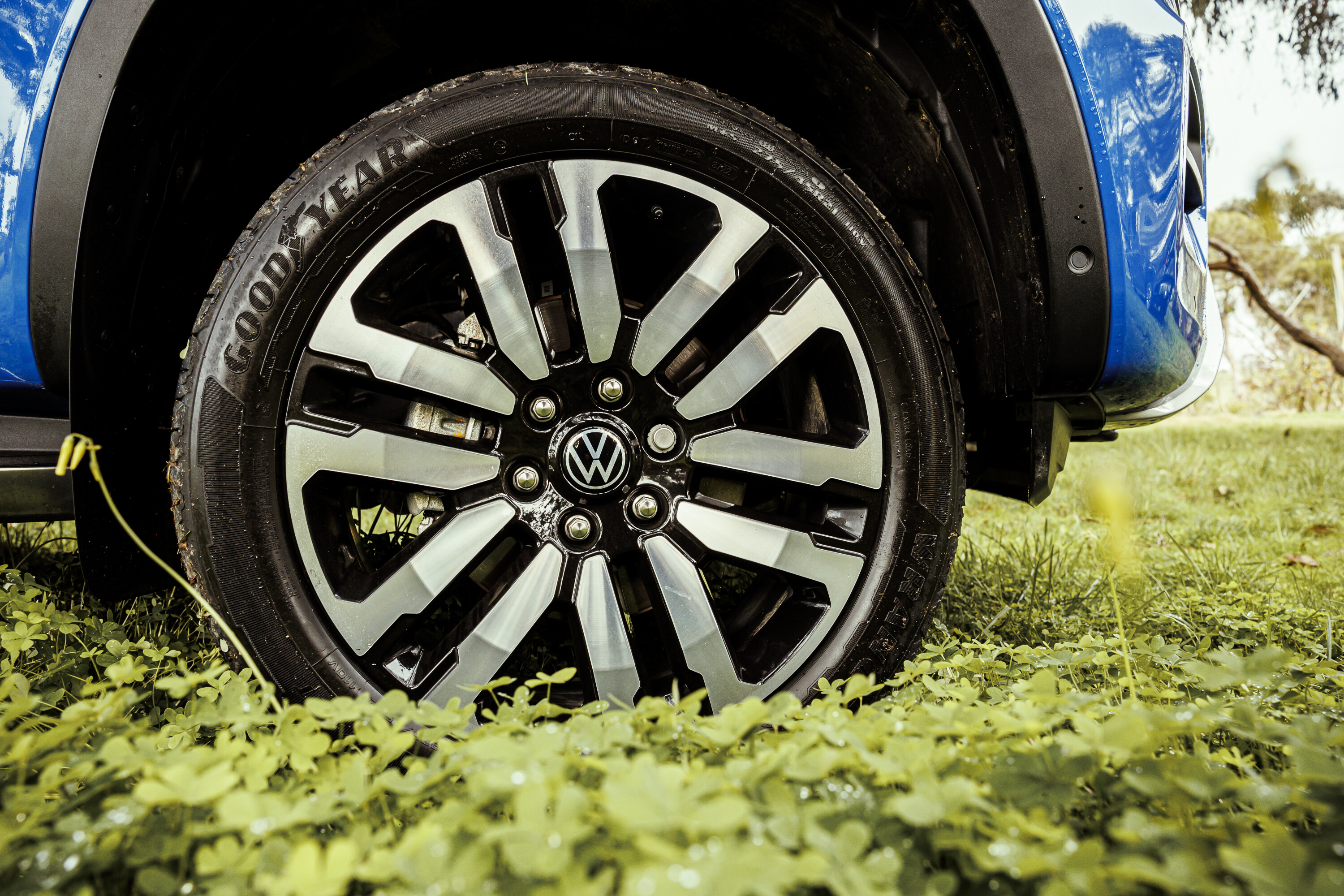
The suspension is uprated to the more expensive Dynamic Suspension pack, the alloy wheels are 21-inch items, and it features an elegant ‘sailplane’ behind the cab with a standard electric roll cover for the tub.
Its chromed X-design front end offers more of an extrovert approach than the black plastic of the PanAmericana version, although, like that model, the aesthetic is slightly tarnished with some astonishingly cheap-looking chromed ‘4MOTION’ stickers on the flanks.
Like the Ranger, white’s the only no-cost paint finish. All of the metallic finishes (Bright Beige, Bright Blue, Dark Grey, Deep Red, Light Grey, Midnight Black and this rather lovely Mid Blue) all attract a $990 option impost.
1
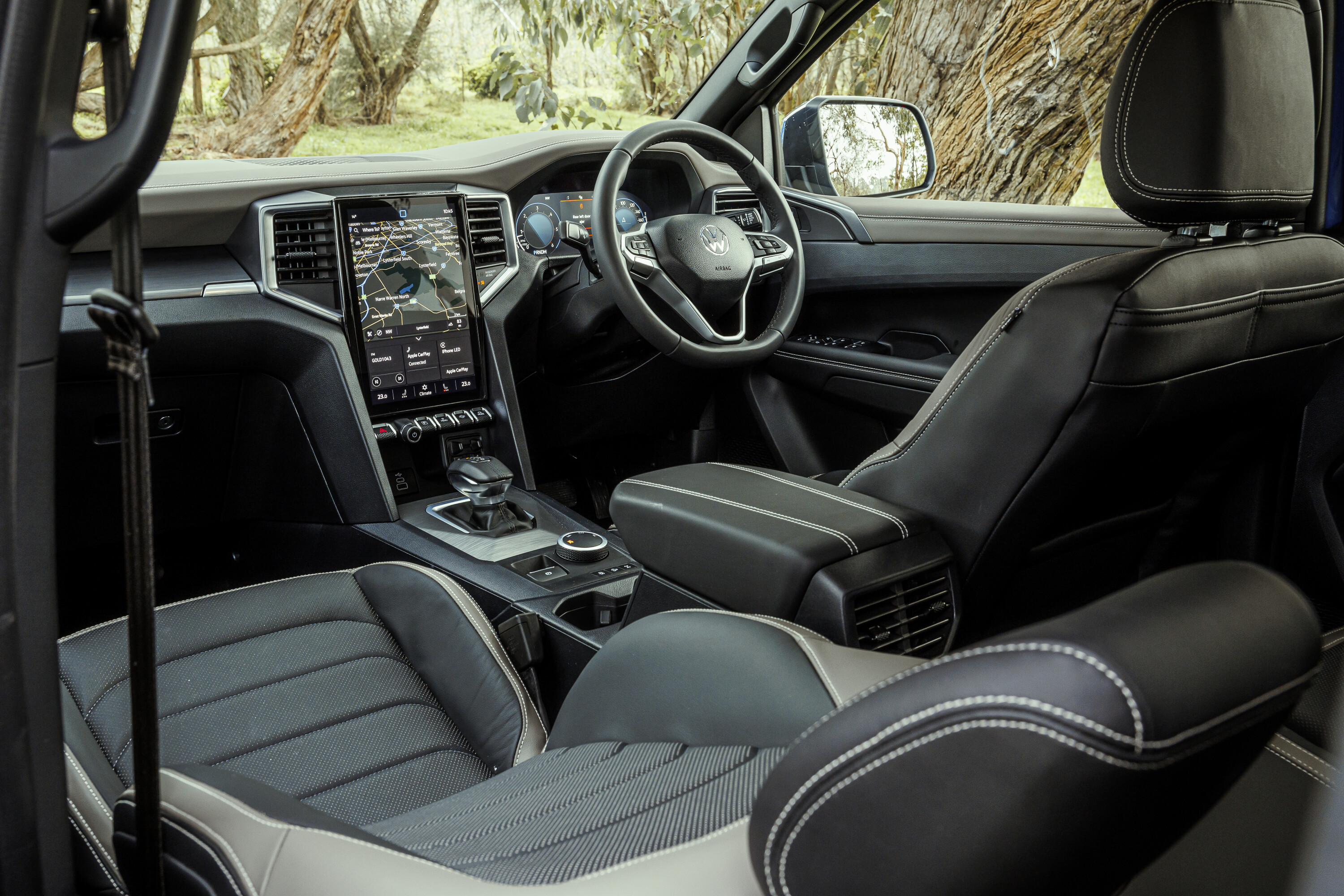
There’s a lot to like about the slightly low-key cabin. The 1920×720 pixel landscape-oriented Digital Cockpit Pro screen in the dash binnacle is slick and can run a full-width map if required.
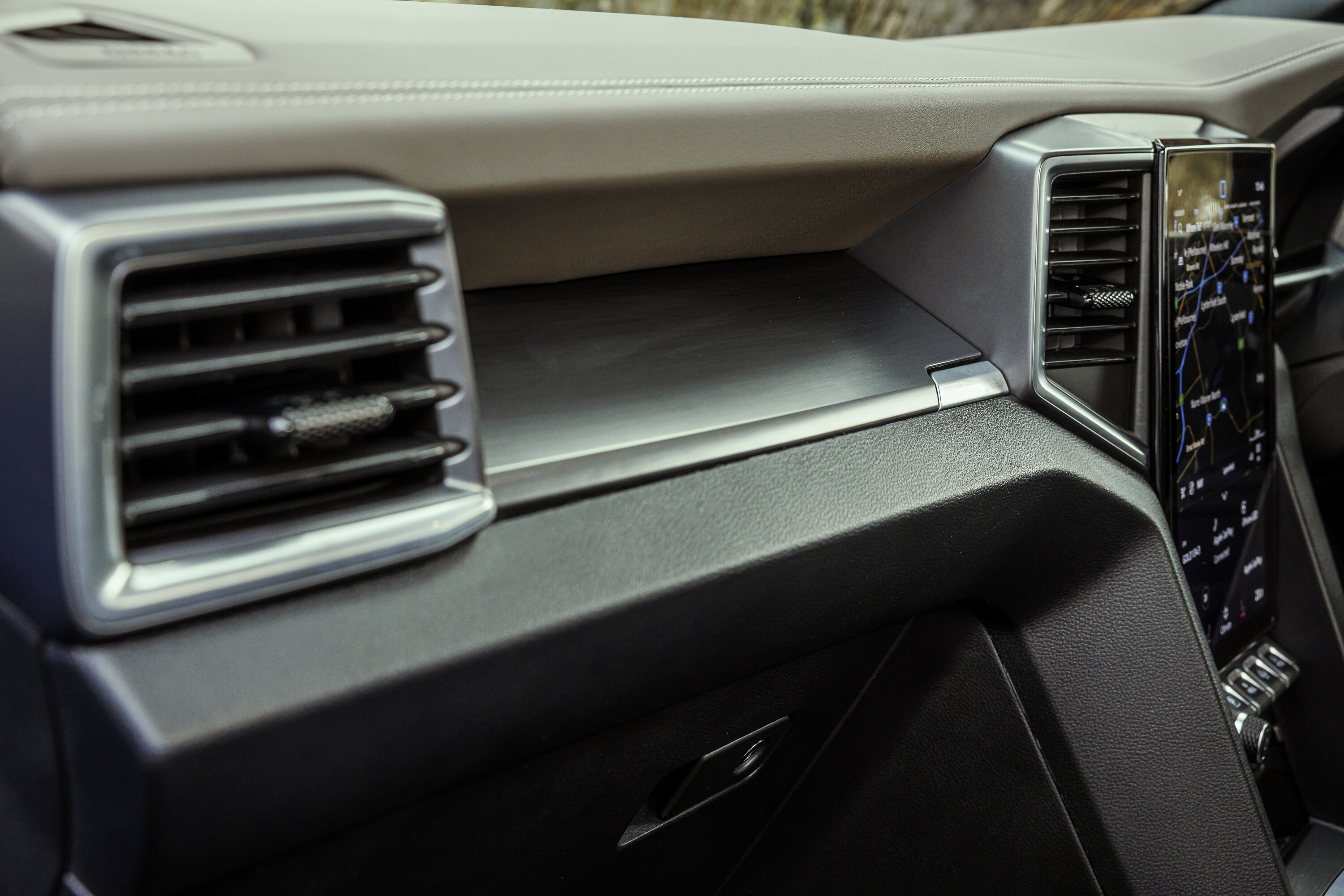
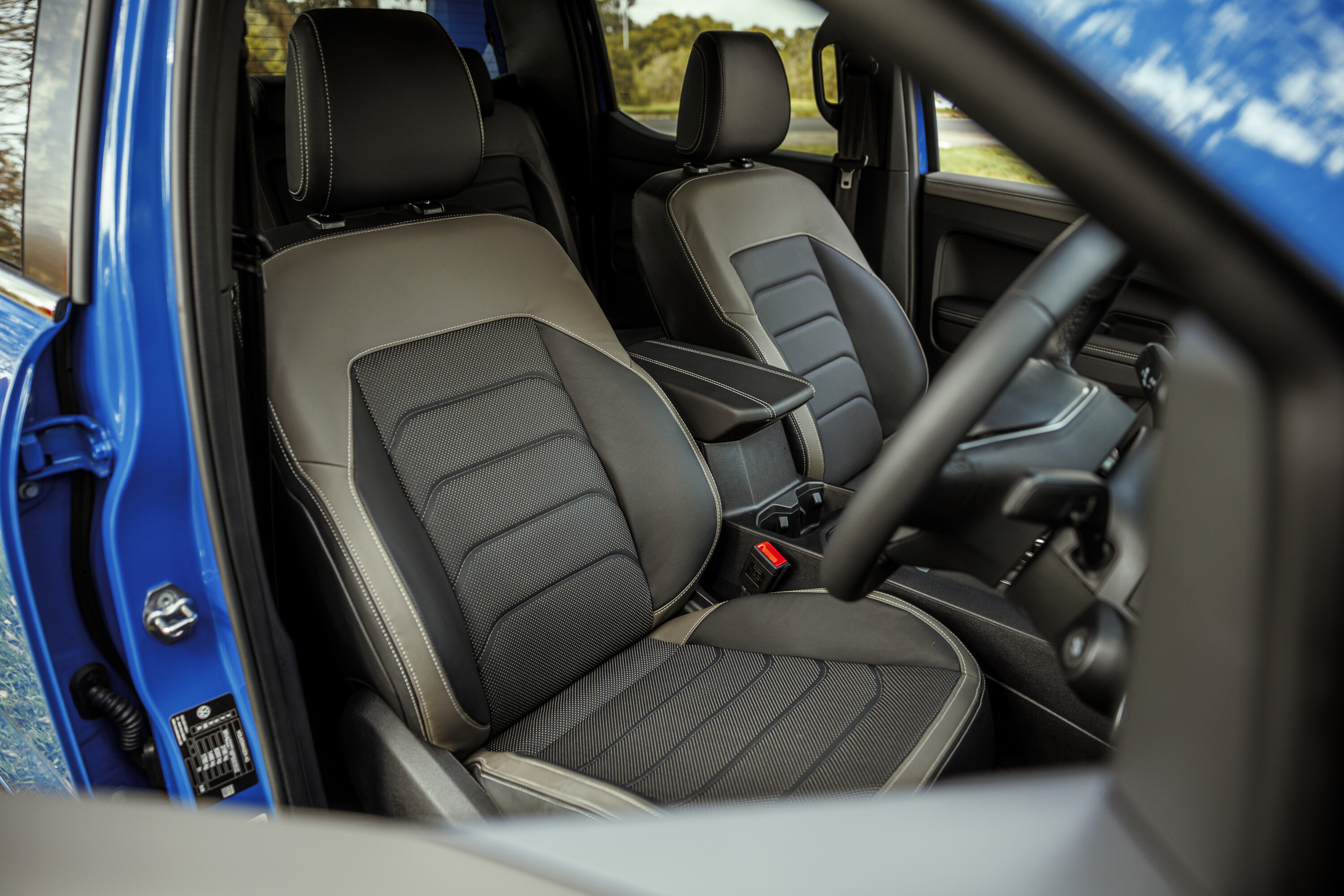
On the seats, Savona stitched leather feels good and the stitched leather look continues across the dash roll top, which one-ups the Ford. The centre console is wider than the Ford’s which lends the Amarok’s cabin a real feeling of solidity.
Like the Ranger, this version of the Amarok gets matrix LED headlights, although the Harman Kardon stereo means you’ll have to make do with a mere eight speakers to the Ford’s ten. First-world problems, we hear you.
If there is one downside to the Volkswagen’s industrial-strength centre console, it’s that the driver’s footwell can feel a little bit tight.
As a result, the Ford’s driving seat feels a good deal more spacious, measuring a full seven centimetres wider from centre console to door than the Volkswagen.
Both utes offer solid-feeling side steps that help you up and into the cabin, albeit at the expense of a little off-road practicality. That’s not really too much of an issue, because if you’re intent on going rock-crawling, you probably wouldn’t spring for either of these flagship models.
The hefty physical heating, ventilation and air conditioning controls of the Ranger are easier to manipulate on the move and more intuitive in their functionality than the HVAC controls of the Amarok, which are chiefly within the touchscreen system.
1
That said, the Amarok’s on-screen seat heater controls are far easier to use than Ford’s infernal slider.
At first glance, it seems that the same goes for drive modes. In the Volkswagen, they’re incorporated into the central screen, whereas the Ranger utilises a rotary dial on the centre console. In practice, the Amarok is probably a slicker implementation.
Hit a physical drive mode button and then select the on-screen mode and you’ve switched mode in the Volkswagen. Yes, it’s a two-step affair, but it takes a second. By contrast, the Ford forces you to cycle through each mode in turn and there are six of them. This can take a surprisingly long time, with your eyes diverted to the mode indicator to check where you’ve ended up.
1
Both run a version of Ford’s Sync4 software, though Volkswagen’s iteration is heavily reskinned.
It’s a very good system but it can be prone to dropping the wireless phone mirroring connection on occasion and then being unable to reacquire it without a hard reboot. The Ranger gets the big screen to match the Amarok, although it has to be said that the slightly smaller screen in lesser Rangers is far from a punishment and is nicely integrated.
Access to the rear seats in both vehicles is reasonably good, although the Amarok’s wider side steps mean that if you’re leaning into the vehicle from ground level, it’s possible to shin yourself pretty painfully on them. That’ll likely only happen once before you wise up.
Both vehicles have rear vents but there’s no USB connection in the back of the Amarok. There are bottle holders in the door pockets, two cup holders in the centre armrest and ISOFIX child seat fixings in the two outer positions though.
1
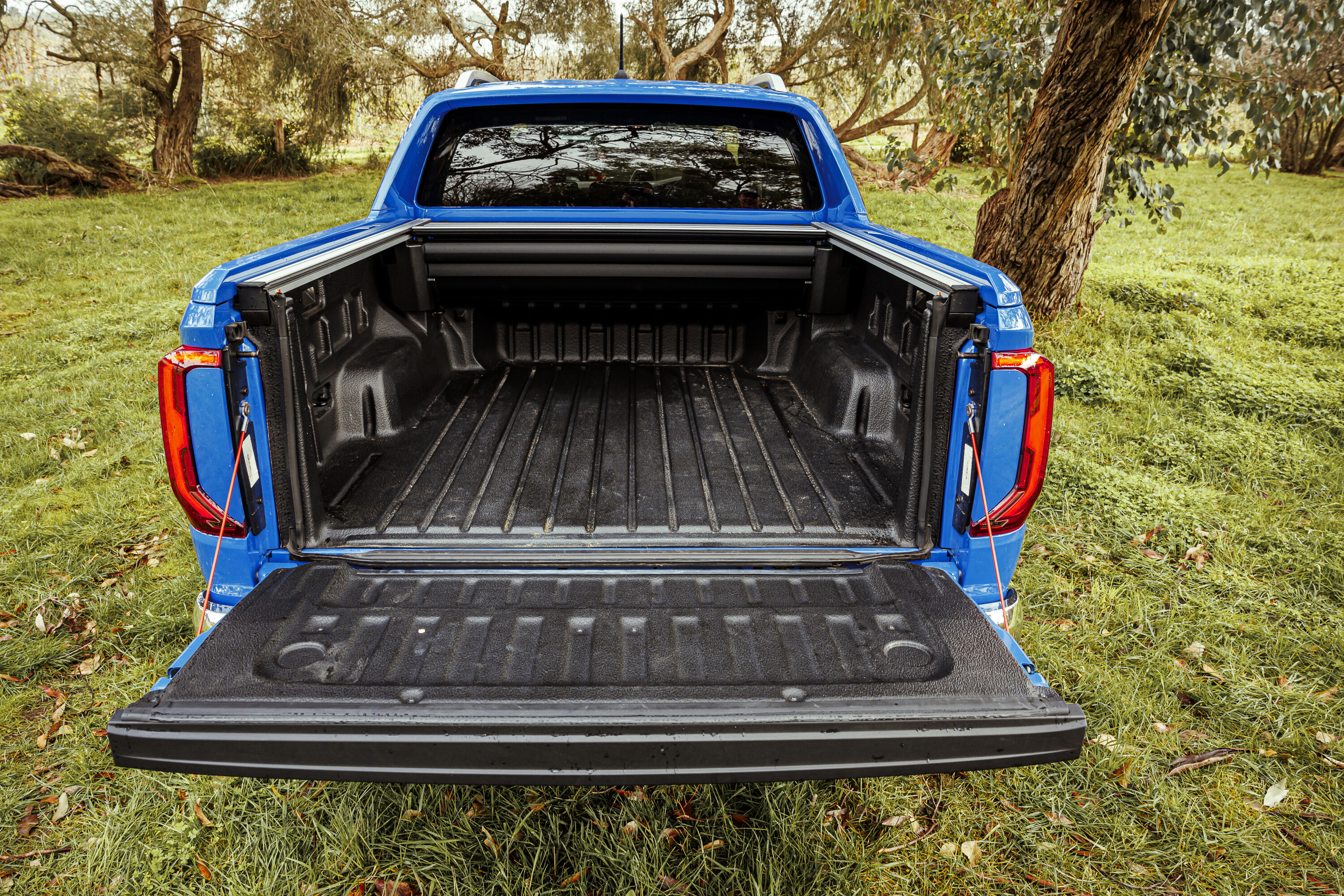
Both vehicles’ trays feature lined load bays and are scaled to fit a Euro pallet, with a 1217mm width between the wheelhouses on the Ranger and 1224mm on the Amarok.
The Amarok features a ruler on its tailgate as well as six tie-downs and LED lighting but, curiously, no 12-volt connection. Both vehicles feature a lockable electric roller shutter as standard, handy for keeping gear away from prying eyes.
Steps notched into the sides of the Ranger’s wraparound bumpers are a piece of intellectual property that Dearborn was clearly not willing to cede to Wolfsburg, and they make jumping into the back of the tray very easy.
Ford’s ingenious automated trailer light sequence check is another neat piece of thinking that the company has preserved as a point of difference.
In that test, both cars were sitting on relatively boofy 18-inch alloys with all-terrain tyres but the Volkswagen’s Dynamic Suspension setup meant it rode a bit more firmly than the Ford. That’s fine for blacktop, but made it a bit more of a handful in the rough.
The tables are turned when both vehicles are on bigger wheels and lower profile tyres. There’s no doubt that the Amarok Aventura is a plusher-riding vehicle than the Ford Ranger Platinum. It’s all the more impressive given that the Amarok rides on 21-inch alloys compared to the Ranger’s 20s.
1
There’s an unexpected suppleness to the Volkswagen’s ride that’s missing from the slightly flintier Ford.
The difference in ride comfort could be due to the fact that the VW’s more expensive monotube dampers are more capable of controlling the greater unsprung masses at play. Whatever the reason, there’s an unexpected suppleness to the Amarok’s ride that’s missing from the slightly flintier Ford.
Otherwise, there’s not much to choose between them, That’s hardly surprising given they share engines, transmissions and basic underpinnings. Neither wants for straight-line grunt.
The 3.0-litre V6’s generous torque (600Nm between 1750 and 2250rpm in both models) combined with a 10-speed automatic transmission means there’s usually a spread of at least three gears where decent acceleration is a given.
1
Each vehicle features an 80-litre fuel tank, offering a typical range of 1000km between fills.
The 10R80 transmission used to have a reputation for hunting around for the right gear ratio, but a combination of an updated torque converter design, smarter software and an engine that offers a deeper and broader swell of torque has solved that problem once and for all.
Braking is also not really anything to worry about. The Aventura is equipped with 340x235mm ventilated discs up front and dual-piston calipers, backed up by 330x25mm ventilated discs aft with a single-pot sliding caliper.
The Ranger Platinum’s stoppers are of a similar spec, with marginally larger diameter discs (341mm up front, 332mm at the back).
1
Each vehicle features an 80-litre fuel tank, offering a typical range of 1000km between fills.
Braked towing is rated at 3500kg for both, although both have the worst payload ratings in their respective ranges.
The Ford wields a slight advantage here, netting a 912kg payload versus a mere 858kg for the Volkswagen. The Amarok features a 350kg static roof load, 85kg dynamic roof load and 350kg tow ball weight for towing.
Standard tyre pressure monitoring is a feature that those who air up and down while off-roading will find useful in the Amarok, that’s missing on the Ranger. The Volkswagen features Normal, Eco, Slippery, Mud, Sand/Snow and Towing/Heavy Load modes, broadly mirroring those of the Ford.
1
The Amarok’s forward collision alert system seems somewhat neurotic, sounding a loud and urgent beep when it thinks you’re about to rear-end something.
It does this a little too frequently, such as filtering into a slip road away from stationary traffic.
By contrast, Ford’s system seems a good deal more laid-back. Otherwise, the safety systems work well, with both vehicles netting excellent surround-view cameras, well-calibrated adaptive cruise control systems and a five-star ANCAP rating.
Cards on table time. We love the new Ford Ranger here at Wheels. We also admire Ford for really going to town on the new Ranger Platinum.
As a flagship experience; a vehicle that feels considerably more premium than the next model in the range, it’s far more convincing than the Volkswagen Amarok Aventura.
Cue the considerable caveat. It doesn’t ride anything like as well as it ought to. This isn’t something we can easily overlook. On its 20-inch wheels, the Ranger Platinum feels nervous and brittle on our typically pockmarked roads. By contrast, the Amarok’s body control and both primary and secondary ride qualities are far more impressive.
2
There’s also an ace up the Amarok’s sleeve in the form of the TSI 452 petrol variant, which uses the 2.3-litre EcoBoost engine that you’ve seen in the Ford Mustang and the Ford Focus RS to offer a ute with a very different flavour.
As it stands, the Ranger’s ride quality is a dynamic issue that, personally speaking, would probably be significant enough to direct me from a Ford dealer to a Volkswagen showroom. Your mileage may differ. Ultimately, much of the appeal of these two well-equipped range-toppers is down to their styling, and you’re the best judge of that, not me.
The Volkswagen is $3000 costlier though, and there are several trim and practicality advantages provided by the Ford that some won’t be able to go past.
1
In other words, this is a lineball decision. If the ride quality of the Ranger Platinum is likely to irk you, the decision makes itself.
Likewise, if you want a ute that’s absolutely rammed to the gunwales with gear, the Amarok might be found slightly wanting.
In truth, for most buyers, most of the time, neither of these vehicles represents the sweet spot in the range. If pushed for advice, I’d recommend saving some money and opting for a Ranger or Amarok model that’s more affordable and which better expresses the incredible all-terrain ability that’s locked away in these flagship variants.
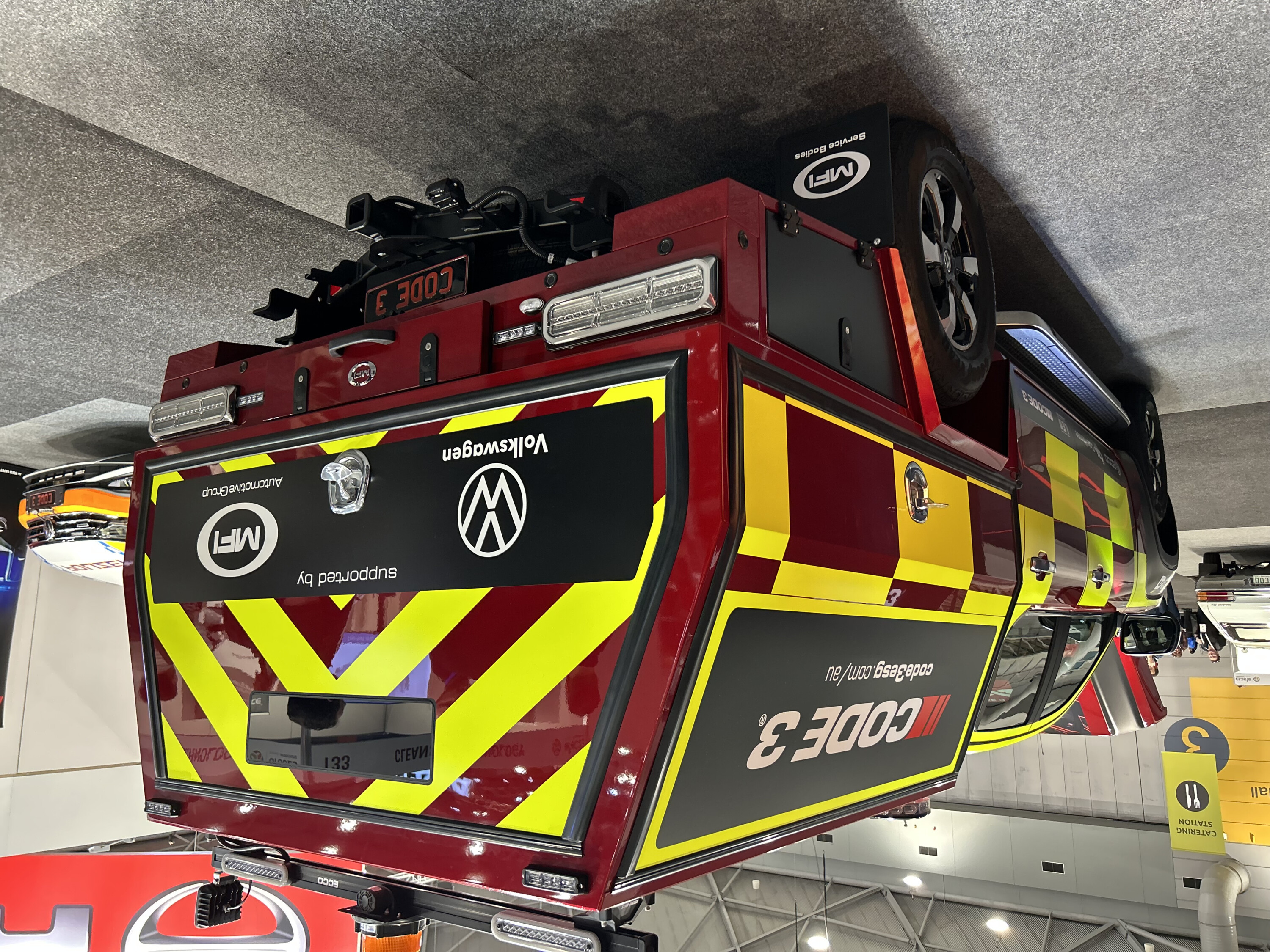
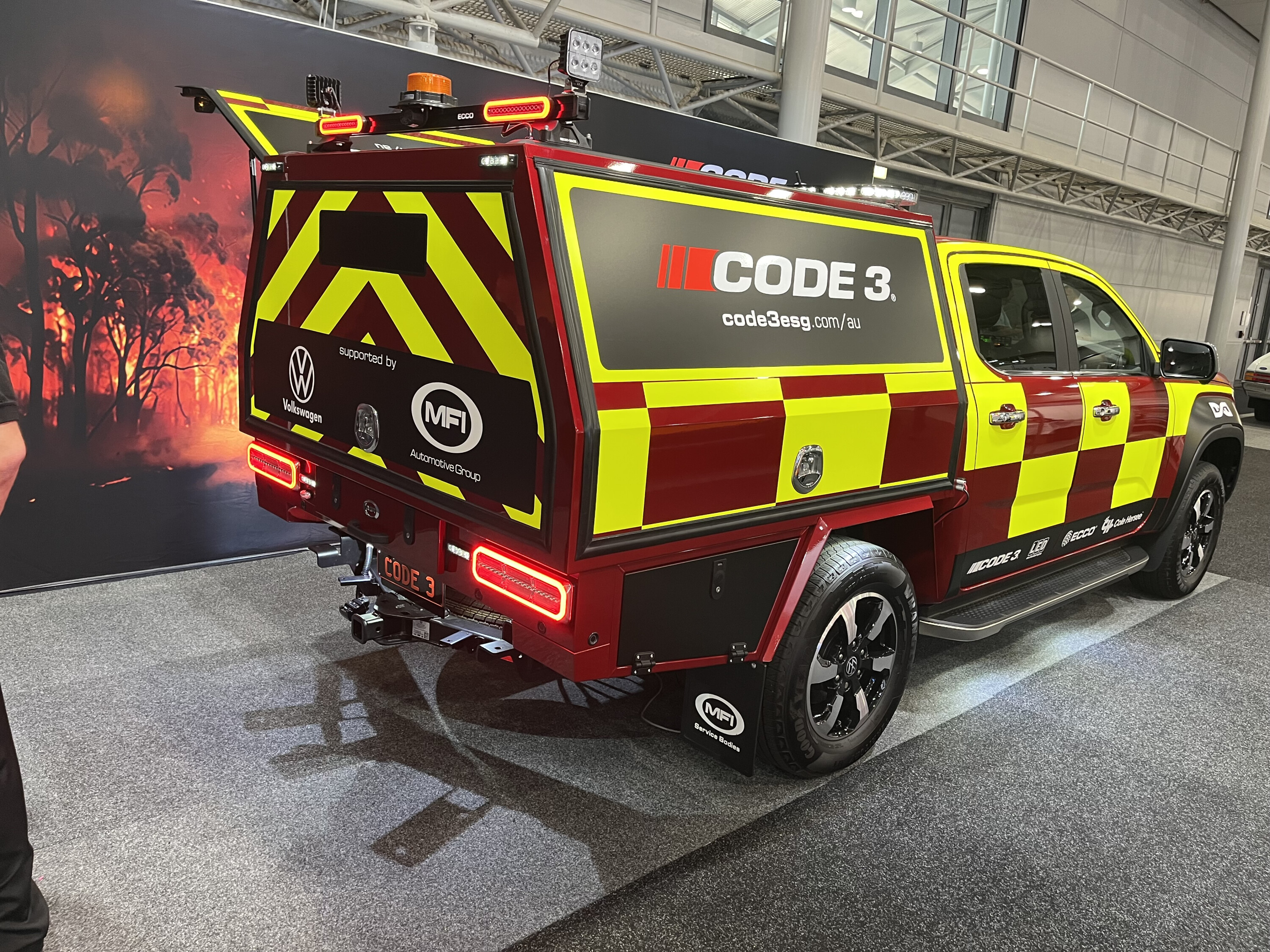
Volkswagen has unveiled a prototype emergency services Amarok at the recent AFAC23 exhibition held in Brisbane.
The Amarok Style V6 has been converted into a prototype fire-and-rescue vehicle in conjunction with MFI Automotive Group – note the canopy – and Ecco Safety Group.
The Amarok integrates its rear traffic alert, reversing camera and sensor systems, and it features a built-in rear sign board. VW says the new Amarok “is under evaluation by various fleets across the country.”
1
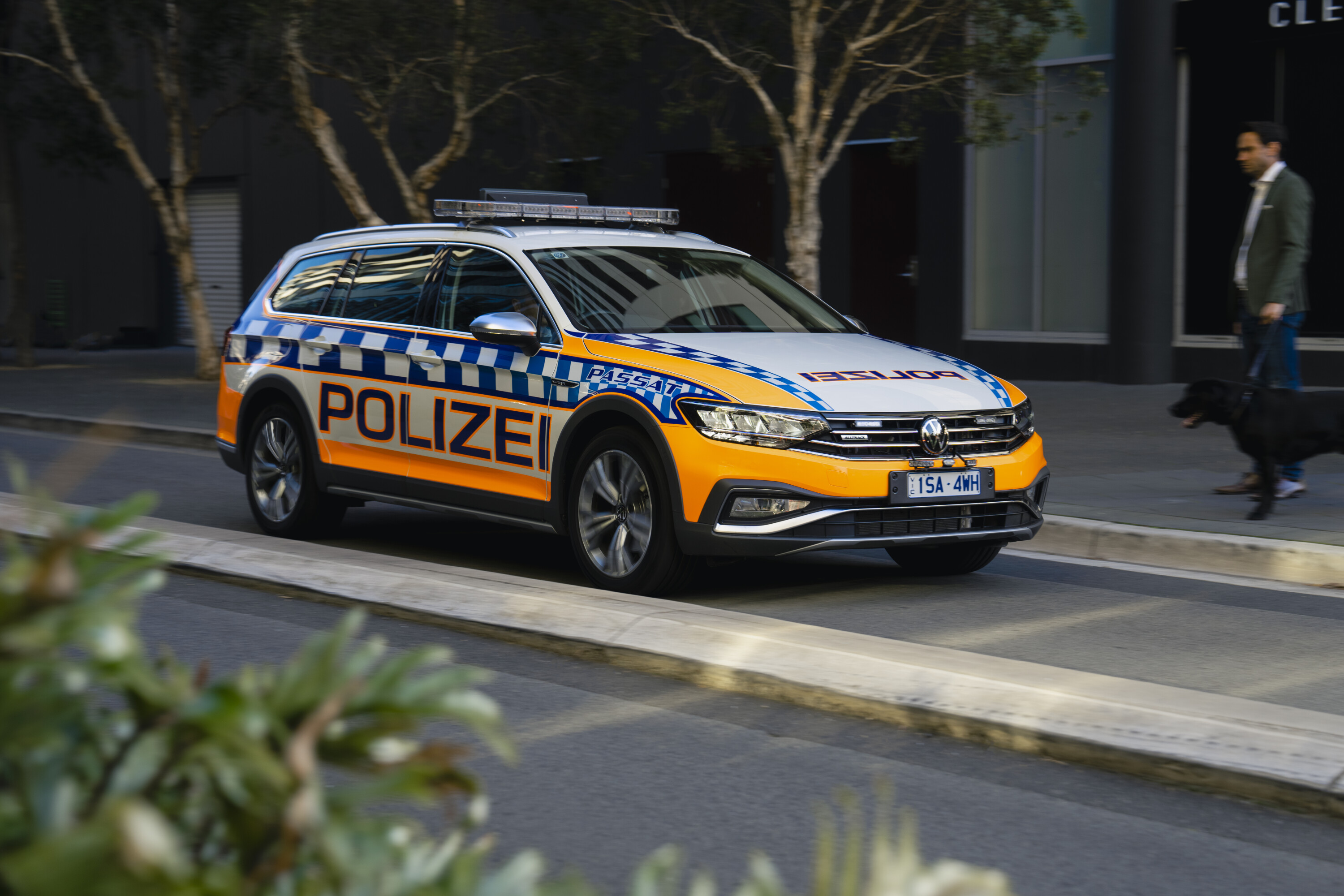
At the same event, VW also revealed a Passat Proline police pursuit car, which features a screen integration system that rids the vehicle of multiple screens and provides access to lights and sirens in one easy-to-use location. The system also includes number plate recognition.
The Passat Prolines issued for emergency service differ from regular vehicles with the provision for an additional battery, an upgraded alternator and modified interior.
“There are no alterations to brakes, engines or drivetrains,” Volkswagen and CUPRA National Fleet Sales Manager, Regine Zschernig, said of the Passat.
“So aside from the Proline adjustments, the police and ambulance have selected Volkswagen cars and SUVs that are essentially the very cars that the public drive.”
THe AFAC23 exhibition is Australia’s largest emergency management conference and exhibition.
Volkswagen’s new state of the art emergency vehicles
A Volkswagen police pursuit car and a prototype emergency services Amarok have starred at the AFAC23 exhibition, Australasia’s largest emergency management conference and exhibition, in Brisbane this week.
The latest version of the screen integration featured in a Volkswagen Passat – thousands of which are already in service in state law enforcement services – is a collaboration with Lumen Australia, Obses UK and Ecco Safety Group.
It features a screen integration system that enables easy activation of lights and sirens through the standard OEM multi-media screen. Number plate recognition capability is now also included. This integration removes the need for multiple screens, saving space, build costs and weight and improves occupant safety. It can be fitted to other Volkswagen emergency services vehicles.
An example of the recently launched Amarok Style V6 premieres in Brisbane in the form of a prototype for a fire and rescue vehicle in conjunction with MFI and Ecco Safety Group. The partnered body integrates rear traffic alert, reversing camera and sensors as well as a built-in rear sign board. The new Amarok is under evaluation by various fleets across the country.
Volkswagen and CUPRA National Fleet Sales Manager Regine Zschernig said Volkswagens of various types, from the Golf hatchbacks to Crafter vans, are in service with emergency services in every state and territory. “Year to date, we have sold more than 1,400 Passat Proline wagons and sedans, and almost 600 Tiguan Allspace Proline – and counting,” she said.
Prolines are developed for and with emergency services, differing from civilian issue vehicles in interior trim, upgraded alternator and a provision for an additional battery. In addition to that the Tiguan Allspace Proline is a five seater, fitted with a 162TSI 4Motion drivetrain and sports suspension.
“There are no alterations to brakes, engines or drivetrains,” Ms Zschernig said. “So aside from the Proline adjustments, the police and ambulance have selected Volkswagen cars and SUVs that are essentially the very cars that the public drive.
“Volkswagen offers an unequalled array of mobility solutions, fit for purpose for fleets of all types. We have compact hatches, a full range of SUVs, a new ute range, and a full suite of commercial vans and chassis up to 5.5t GVM. “We back them all with Care Plans, five year warranty and more than 100 dealers nationwide.”
2
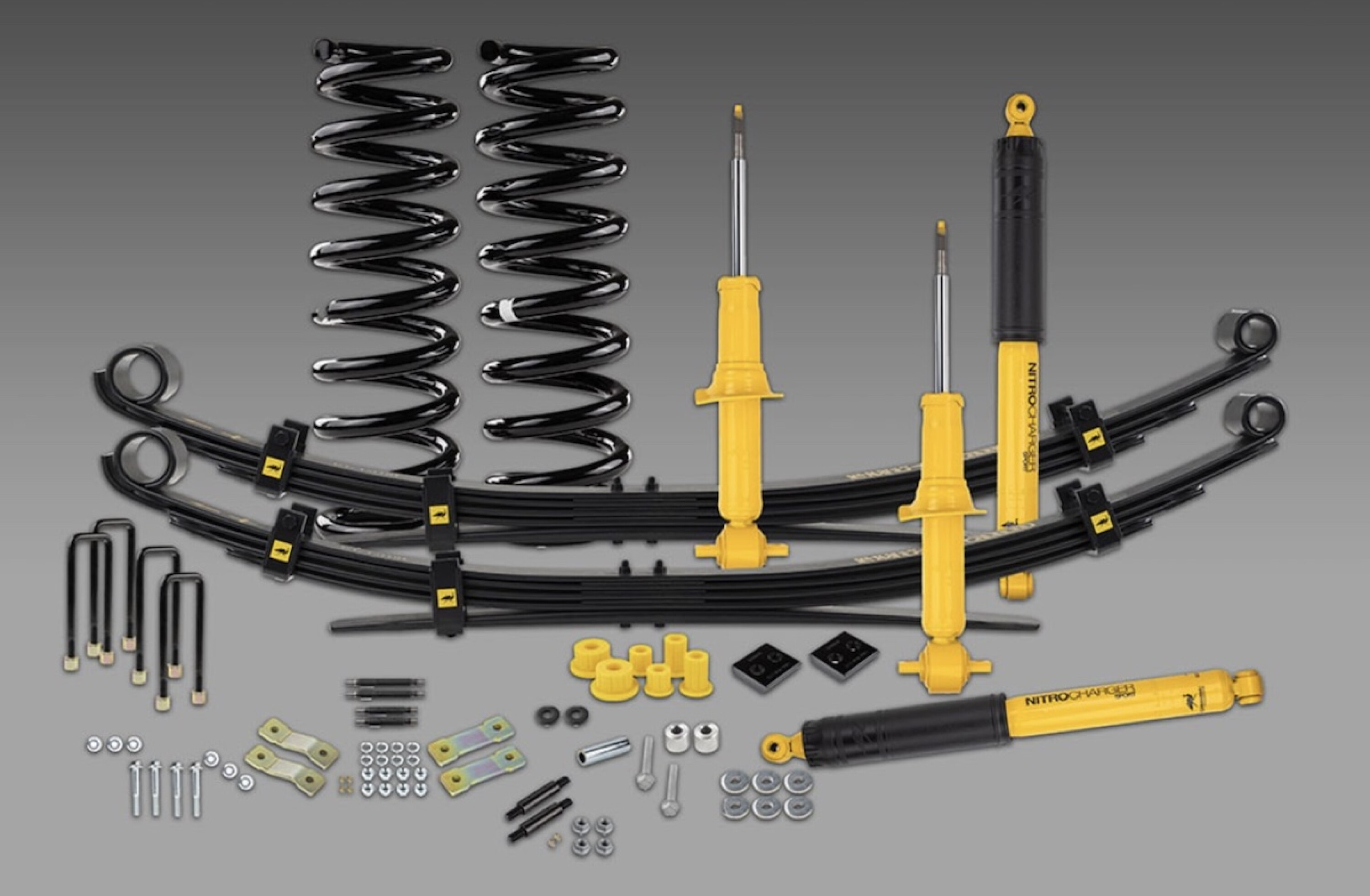
A suspension lift kit is a popular aftermarket upgrade that raises the vehicle’s ride height and improves off-road performance.
These kits typically include upgraded springs and shocks, and allow for the fitment of larger tyres. The benefits for the HiLux include better clearance, improved approach and departure angles, and increased off-road capability. Quality suspension should also improve on-road handling.
A low quality or inappropriately rated suspension lift kit can adversely affect the vehicle’s handling and ride quality, so it’s important to choose the right kit for your needs and have it installed by a qualified professional.
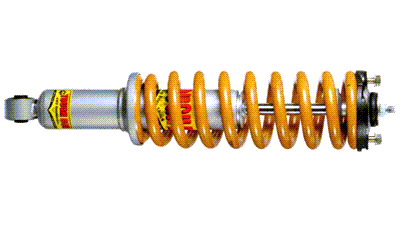
What it is:Replaces your shocks (dampers) and springs to slightly lift body and chassis of the car.
Why you need it: Improved approach, ramp and departure angles, plus better load-carrying ability. The stock suspension isn’t designed for the constant load of accessories.
Buying tips: Work out how much load you’ll have in the car at all times, such as the weight of bullbars, winches, canopies and the like, and whether you’ll be likely to run at GVM (maximum weight). Then select the suspension. Also consider a GVM upgrade for your HiLux while you’re at it.
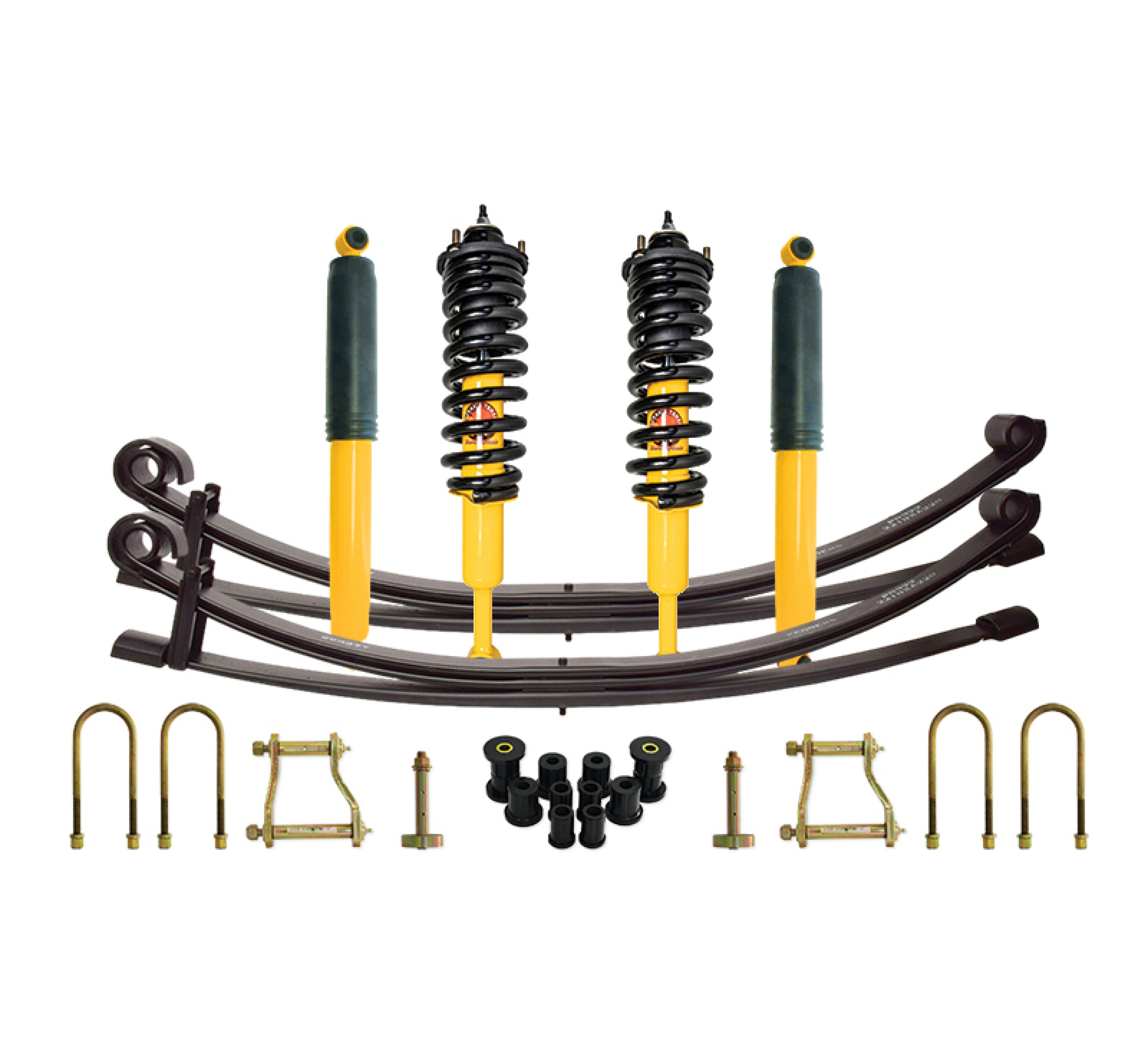
Here are four products we recommend. Theyu2019re intended as a starting point, to give you an idea of whatu2019s available.
A range of front springs with matching shocks were developed to cater for various vehicle set-ups, and front ride height increases of approximately 40mm were achieved without the need for costly modifications. A front trim packer was developed to further fine-tune front ride heights.
With various options depending on your load requirements and the only manufacturer to offer parabolic springs, Terrain Tamer suspension is sure to get you down those bumpy roads safer and more comfortably.
Specifications
Lift: 40mm
Shock design: Mono-tube
Piston bore: 40
Spring type: Tapered coil front and parabolic leaf rear
1
Pros
Progressive springs, front and rear
Parabolic springs reduce unsprung weight and add comfort over typical leaf springs
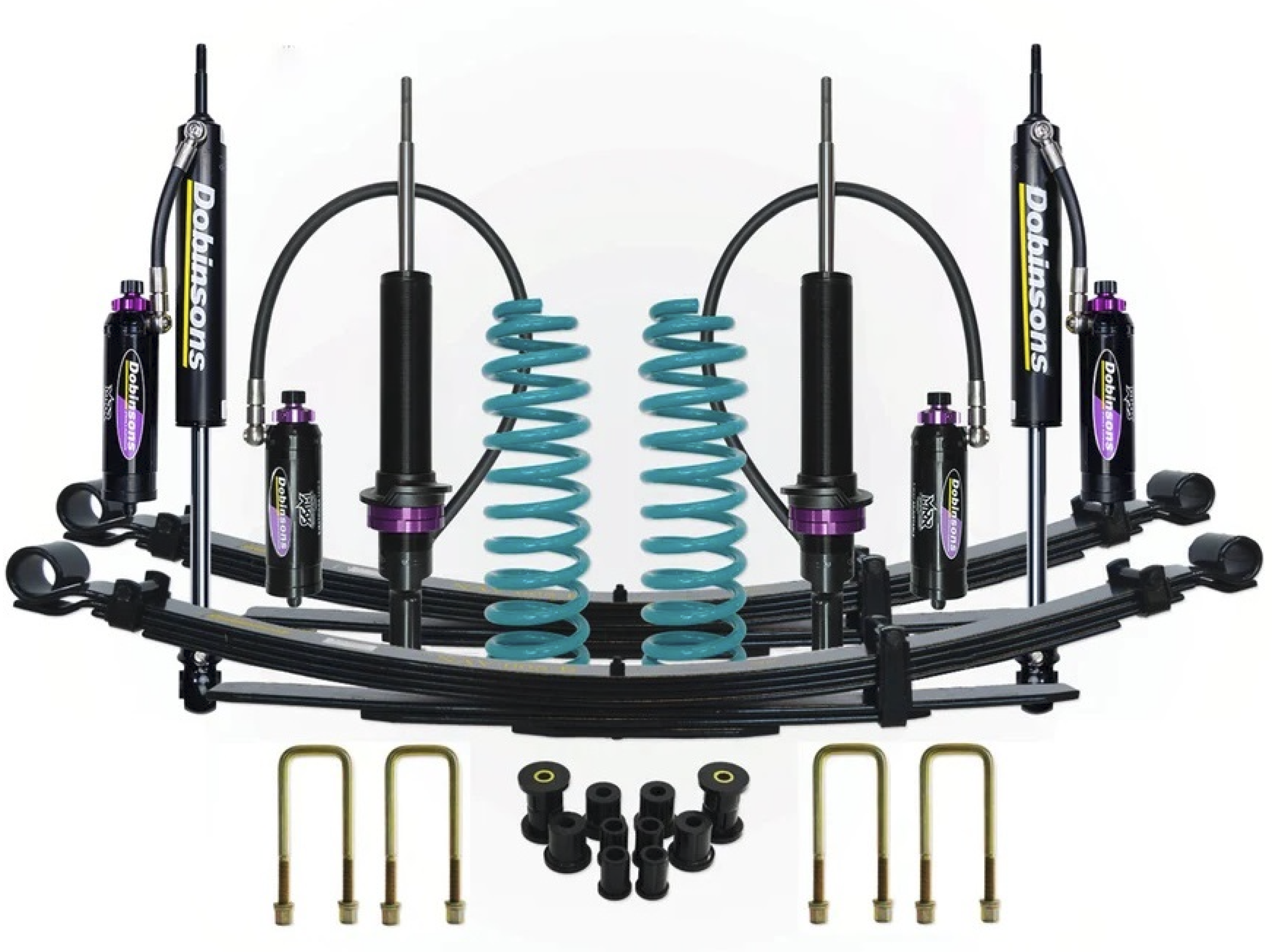
Featuring three-way adjustable shocks, the Dobinsons suspension lift kit will provide maximum adjustability to provide the perfect ride quality for your HiLux, no matter the conditions.
Specifications
Lift: 50-75mm
Shock design: Three-way adjustable mono-tube with 60mm remote reservoir
Piston bore: 56mm
Spring type: Coil front/leaf rear
1
Pros
Three-way adjustable shocks with remote reservoirs make these the corrugation king
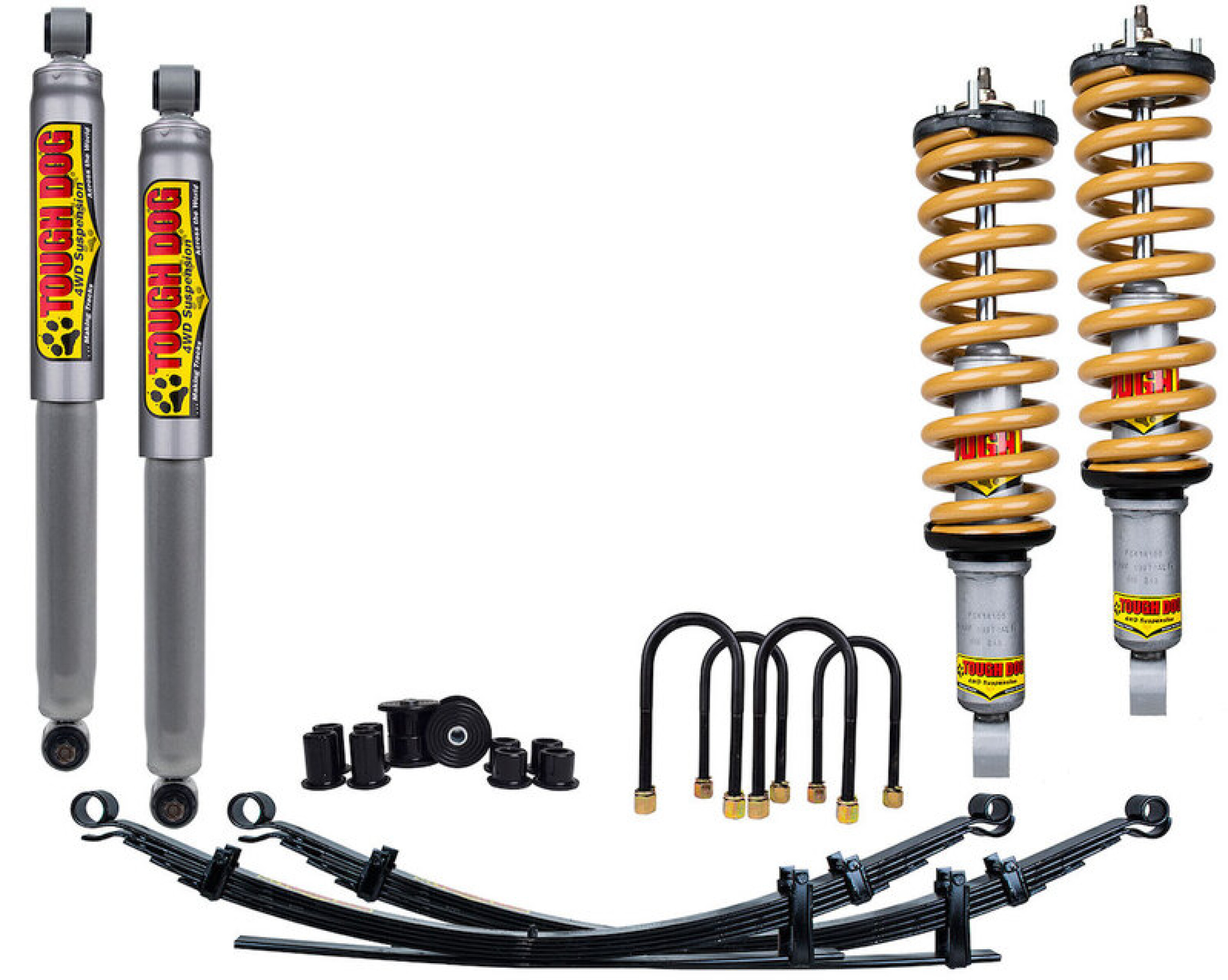
With a plethora of load options for both springs and shocks, there’s sure to be a Tough Dog combination out there to suit the individual set-up of your HiLux.
Specifications
Lift: 40mm
Shock design: Foam Cell
Piston bore: 41
Spring type: Coil front/leaf rear
1
Pros
A bit cheaper than adjustable options
Excellent all-rounder
Four-year warranty on foam cell shocks, for recreational users
2023 Toyota HiLux buyers’ guide: Suspension lift kits
What it is
A suspension lift kit replaces your shock absorbers and springs to lift the vehicle slightly, and to better cope with heavy loads.
The shocks and springs work together as a matched set. If the manufacturer has done its job properly, you’ll end up with a better ride, both on- and off-road.
The springs give you the lift and bear all the weight of the vehicle. Heavier loads mean heavier springs (normally). OEM springs are more rated for a lightly loaded vehicle – they try to be all things to all people. That’s why OEM suspension tends to sag when you load it up, and why you need an upgrade kit.
The shocks are there to control or ‘dampen’ the spring rebound, hence the name ‘dampeners’. Without these, the springs would bounce around like a pogo stick every time you go over a bump.
Any reputable accessories supplier will provide a shock/spring combination which has been designed to work as a unit. They’ll often have multiple kits depending on what load you typically carry and the type of 4WDing you do.
Why you need it
The stock suspension isn’t designed for the additional weight of accessories and typically aren’t designed for tough off-road conditions like endless corrugations.
Once you start loading up your fourbie, it’ll struggle. The ride will be horrible; it’ll roll in corners, bottom out on the bump stops, and the shocks will fade quickly.
Standard shocks subjected to rough dirt roads and corrugations will quickly fade and eventually fail. Shock fade is typically caused by overheating where gas bubbles get in the oil making the shock less effective. A failure typically involves the oil seals leaking with the same result as fade – only permanent. Upgraded suspension will go a long way towards solving these issues.
Another benefit includes improved ground clearance, approach, ramp and departure angles. Even a small lift makes a huge difference to the drivability of a 4×4 in off-road conditions.
Buying tips
Work out how much all of your accessories weigh – bullbars, canopies, drawer systems, dual-battery systems, tow bar, and so on. Then add the weight of passengers plus personal gear. Then add some more for all of the extra bits and pieces you normally pack.
Add your final figure to the tare weight, also known as unladen weight. This will give the suspension supplier a rough idea of what suspension best suits your needs.
Talk to reputable suppliers and they should ask you a few questions about how you use the vehicle. If they understand exactly what you’re trying to achieve (a lift for off-road clearance, better handling, better towing ability, and so on) they’ll be able to choose the best damper/spring combo for you.
Shock absorbers generally fall into three different styles:
Monotube
Twin-tube
Remote reservoir
Hereu2019s a very quick and basic overview of each one.
1. Monotube
The oil and gas inside the shock are separated by a floating piston. This gives less foaming, meaning the shock will take longer to fade or ‘go off’, as it’s often termed. The downside? Monotube shocks can give a harsher ride than the other two styles.
2. Twin-tube
They have a tube within a tube. The inner tube has the piston, valving, rod and oil. The outer tube holds the gas in the gap between the two tubes.
There’s no piston between the oil and gas. So they can potentially mix and cause fade. The biggest advantage of twin-tube shocks is their compact size.
3. Remote reservoir
Generally speaking, these shocks are monotube shocks with one major modification. Instead of the floating piston (the one separating the oil and gas) being inside the monotube shock, it lives in a second cylinder.
This second cylinder is called a remote reservoir and sits adjacent to the main monotube body. The two are connected by a hydraulic hose.
The biggest advantage is a greater surface area and volume. There’s more oil inside the shock, plus a larger overall cooling surface, which means less heat build-up. And by taking the floating piston out of the main tube, the monotube can be more compact or offer increased wheel travel for the same overall length.
Remote reservoir shocks are the ultimate set-up for serious off-roaders. If you’ve ever had a set of shocks go off along a corrugated road, you’ll understand exactly why remote reservoir shocks are worth the money.
Spring types
The HiLux includes a combination of coil and leaf springs. The front are coils wrapped around a shock absorber, otherwise known as a strut. The rear are old-fashioned leaf springs with their ability to carry load.
Leaf springs have been around since the horse and cart and, whilst they may be ‘old tech’, a proper set of leaf springs will perform nearly as well as coils.
Premium leaf springs will include things like additional wraps around the end eyes, and recent advancements such as parabolic leaves (recent to 4x4s, but have been used in trucks for years) have increased the comfort over old-style leaf springs.
What to look for
A massively lifted 4WD might look great to some. Even on a stock vehicle, it’s tempting to push your suspension lift to the max. But there are both practical and legal limits on how high you can lift a vehicle. Legalities vary from state to state, so you’ll need to check these.
Just remember, the higher you lift a vehicle the less stable it’ll be. Start adding loads up high (like a rooftop tent), and chances are your pride and joy will handle like an old boat.
Then there’s the issue of suspension and drivetrain. Lifting a vehicle adds stress to universal joints, CV joints, tailshaft splines, and so on. Worst case, you’ll start snapping drivetrain components.
Look for reputable suppliers with proven track records in providing quality suspension kits. Companies like TJM, ARB, Bilstein and Dobinsons can advise you on the best damper/spring combination. And they’ll give you honest information on issues like the maximum recommended lift for your 4×4
Five things to look for in a damper
Damper internal bore: The bigger the bore, the more oil it holds. The more oil it holds, the longer it’ll take to fade.
Piston rod diameter: Larger diameter rods are simply stronger.
Damper end mounts: Rod ends (also known as rose or swivel joints) are far superior to rubber or plastic bushes. Usually, the first thing to fail on a shock is the bushing. Rod ends avoid this issue by eliminating them altogether.
Flexible boot: The piston should be protected from stone damage with a concertina rubber boot.
Adjustment: Dampers with variable adjustment allow you to fine-tune them for optimal performance.
What about springs?
Springs are more difficult to choose. Springs have what’s called a ‘spring rate’, which in basic terms means the spring becomes firmer as the spring rate increases.
A lot of things affect spring rate including material, thickness and number of coils/leaves. Parabolic springs will provide better comfort and also a lower unsprung weight (the weight of your axles, wheels and basically anything below where the spring mounts to the chassis.
Variable rate coils will allow better absorption of small bumps while also providing decent load bearing capability. All you can do is trust the experts to provide you with the right springs – you’re paying for their expertise after all.
4X4 Australia has been reviewing four-wheel drive vehicles and aftermarket products for more than 40 years.
When looking for the best accessories for your make and model of 4WD, there are some things essential to making sure you have the best off-roading experience.
When we compare products, here are some of the things we consider:
Warranty
Build quality
Value for money
Time and ease to set-up/install
Weight
Fit and finish
How well it gets the job done
What materials they’re made from
Corrosion/UV resistance
Coatings
Compatibility with other accessories
Compliance with ADRs and vehicle safety systems
Country of manufacture
Load ratings, to determine what’s the best product across each price point.
We also consider user reviews and our own experience with these products to make sure our recommendations are for the best on the market.
Disclosure: When you buy through our links, we may earn a commission. We also include products that we do not earn a commission from.
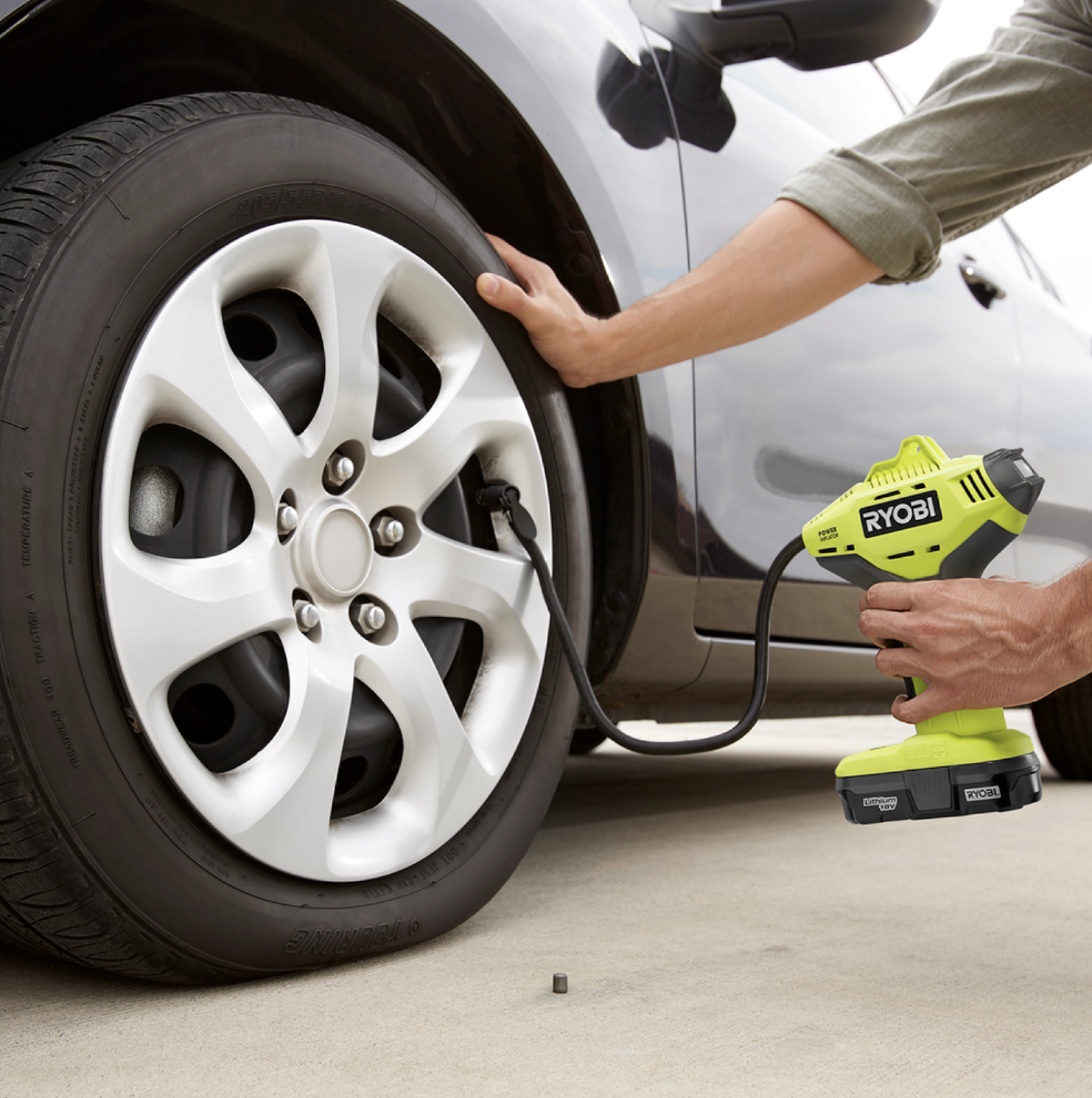
The Ryobi 18V ONE+ Digital Pressure Inflator has a 35mm digital gauge that displays current pressure (both bar and psi) so you’ll know exactly when to stop inflating.
The cordless digital inflator is convenient and portable for ease of use in the garage, driveway, campsite or anywhere else.
2
The digital tyre inflator has a convenient compartment for storing the included sports equipment needle and two high-pressure nozzles. There’s an onboard storage clip for the 50cm hose, making the inflator easy to store and transport.
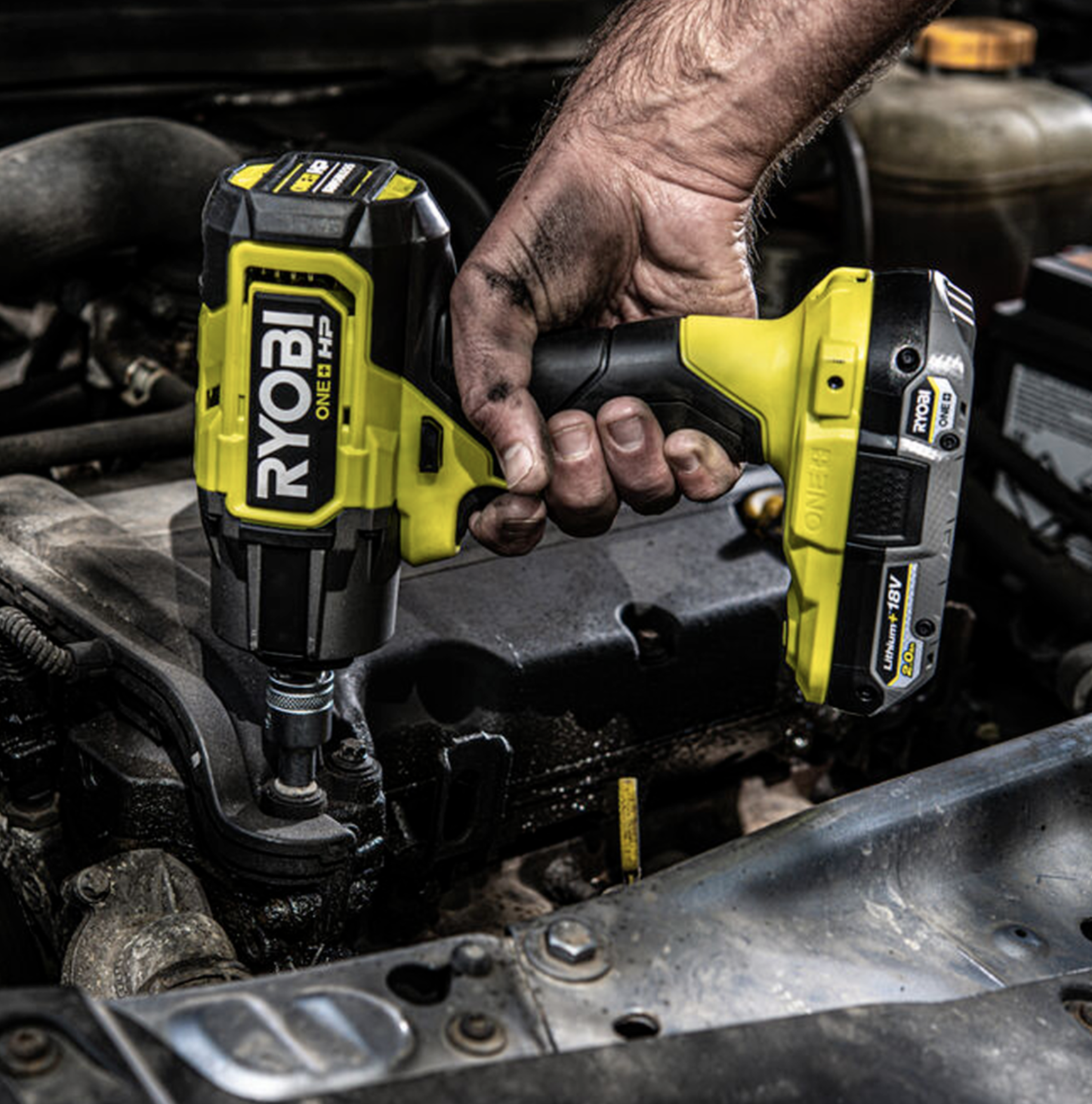
Loosen or tighten lug nuts, large bolts and rusted fasteners with the ONE+ HP Brushless Mid Torque Impact Wrench from Ryobi.
The brushless motor delivers up to 900Nm of breakaway torque and up to 700Nm of fastening torque, making it ideally suited to wheel nuts and any stubborn nuts and bolts.
2
The torque impact wrench produces a maximum of 800 impacts per minute at a no-load speed of 800rpm, and it has four speed settings and AutoStop function for precise control so as not to overtighten and damage the fastener head or the material you’re working with.
The strong ½-inch square drive comes with a friction ring for quick socket changes and a tri-beam LED work light illuminates poorly lit work areas for optimum visibility.
The impact wrench has a brushless motor that is claimed to deliver higher performance, extended battery runtimes and longer motor life. It utilises ONE+ 18V batteries and that can be shared across other tools in the Ryobi range.
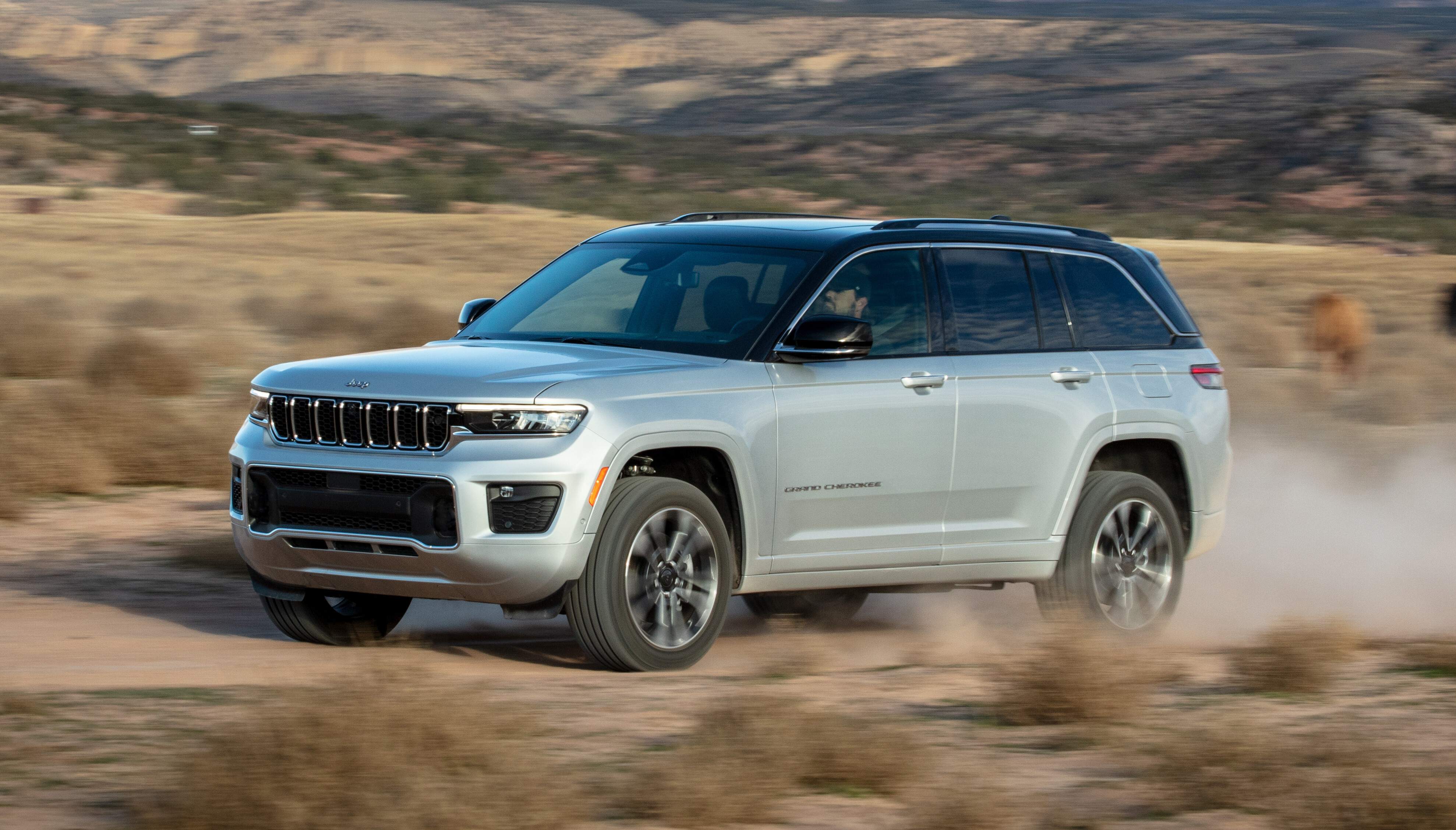
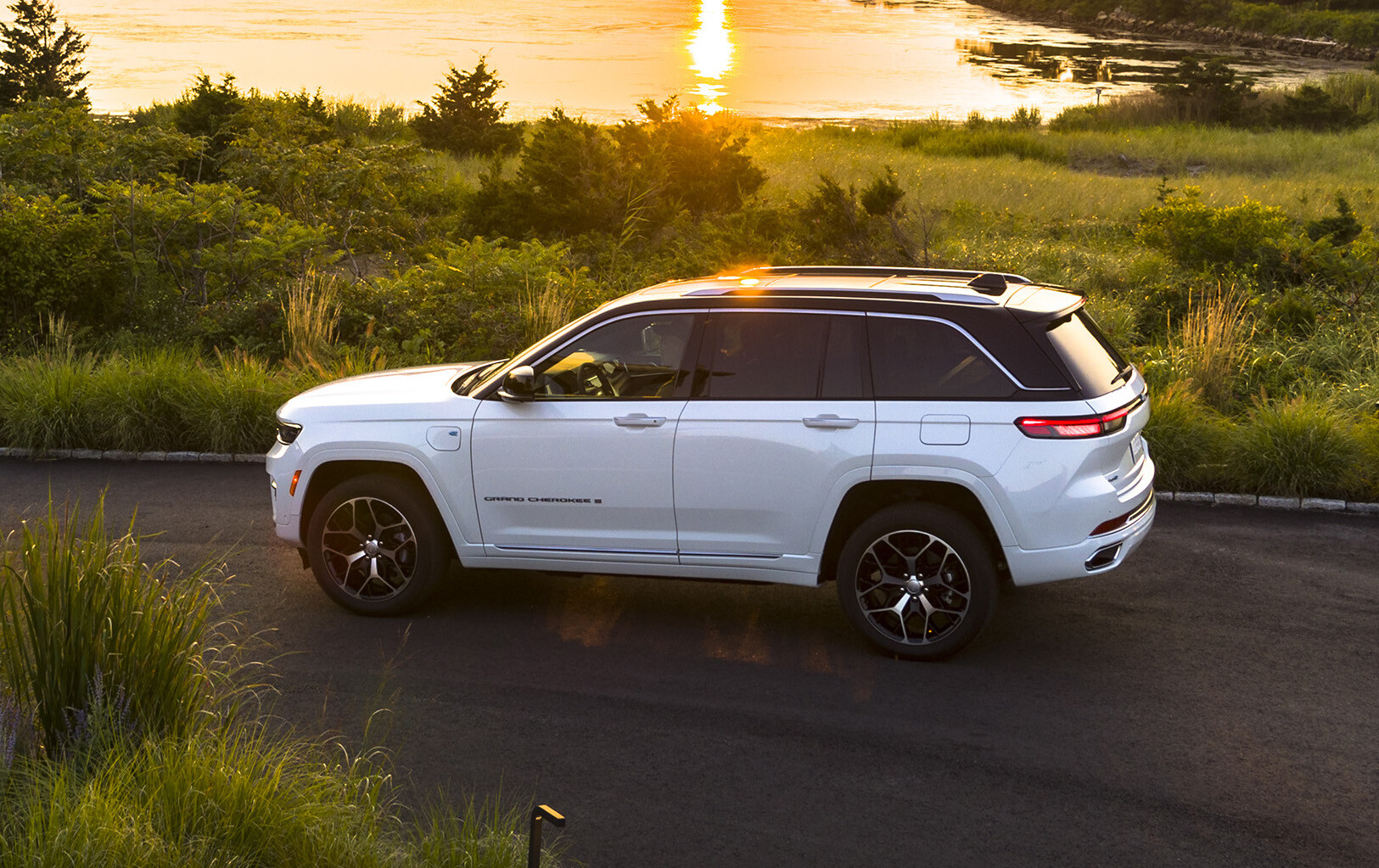
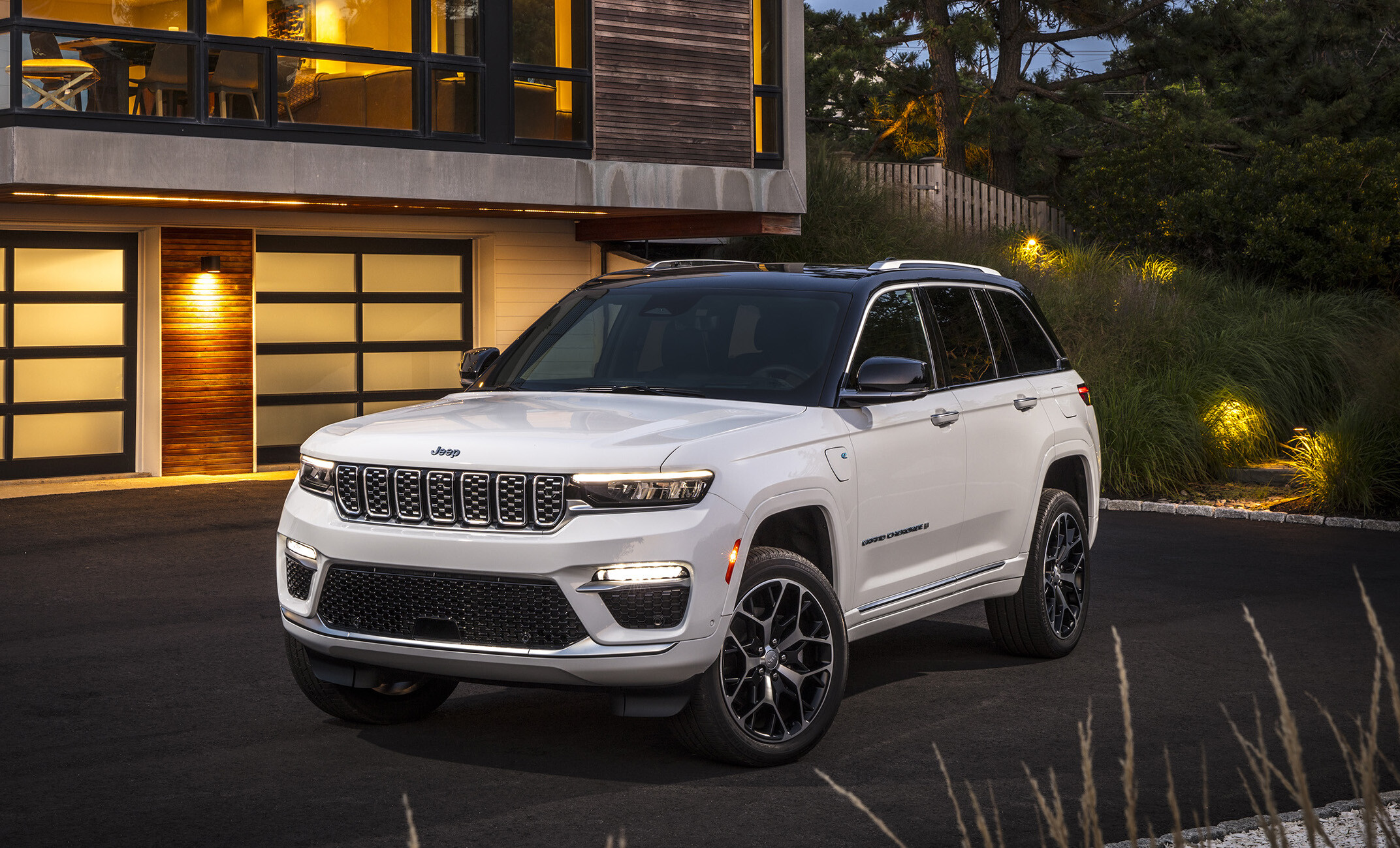
June 23: Grand Cherokee 4xe pricing announced for Australia
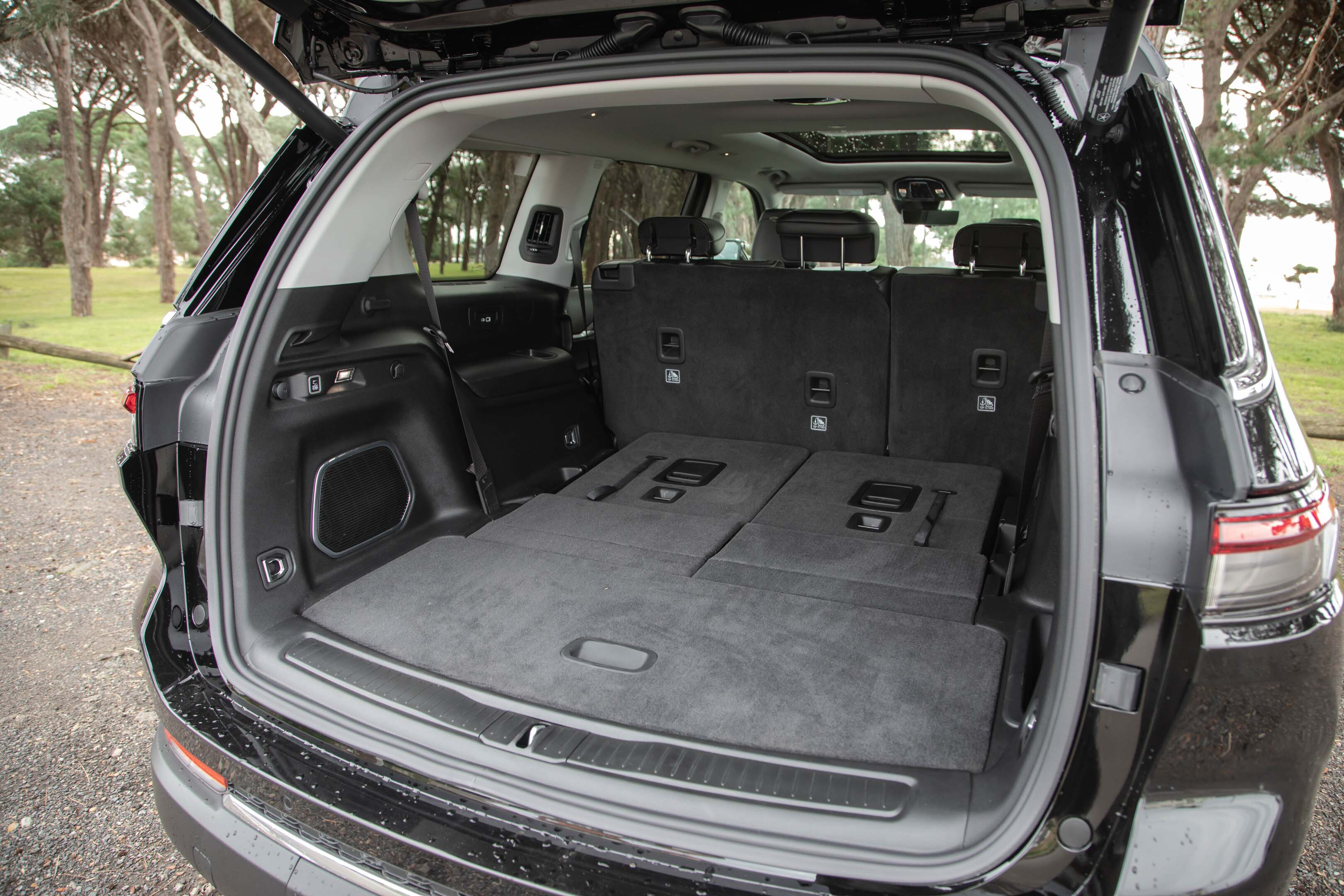
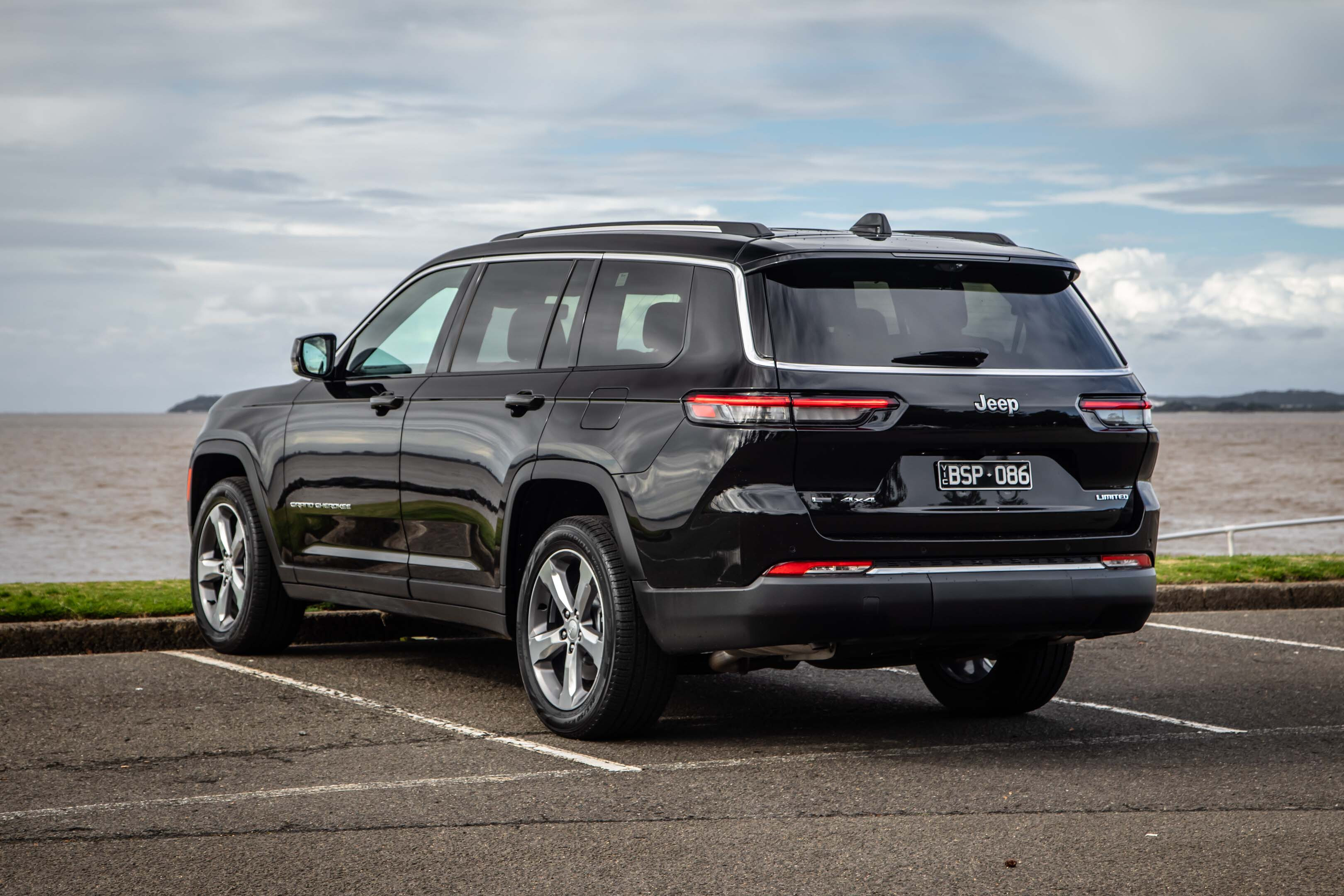
Off-road-focused carmaker Jeep will introduce its first plug-in hybrid SUV in Australia amid high fuel prices. Pricing and details below.
February 2: 2023 Jeep Grand Cherokee pricing and features
Following delays, the ‘regular’ five-seat 2023 Jeep Grand Cherokee will finally land in Australia this month.
Snapshot
2023 Jeep Grand Cherokee pricing and features
Five-seat Grand Cherokee arrives in Australia; new Overland variant
Priced from $77,950 before on-road costs
The new variant headlines an update to the fifth-generation ‘WL’ Grand Cherokee range, which launched in Australia one year ago in seven-seat, long-wheelbase ‘L’ form.
While the 3.6-litre naturally-aspirated V6 continues for most variants, Jeep will offer a 2.0-litre four-cylinder ‘4xe’ plug-in hybrid for the range-topping, five-seat Summit Reserve later this year.
UPDATE, August 22: Blacked-out styling package now available for Jeep Grand Cherokee Limited variants
Jeep Australia has announced a new ‘Black Appearance Group’ styling package for five- and seven-seat Grand Cherokee Limited variants. This story, first published in February, has been updated to include the option package.
1
The five-seat Grand Cherokee is priced from $77,950 before on-road costs – up $17,500 over the previous-generation model – with four grades available: Night Eagle, Limited, Overland and Summit Reserve.
This is in line with the Grand Cherokee L, which gains the mid-spec Overland trim for model-year 2023 and minor price rises.
Other additions include a larger 10.1-inch infotainment system for the entry-level Night Eagle and a 360-degree camera system for the Limited.
While Jeep Australia has homologated the off-road-focused Trailhawk five-seat variant, it remains under consideration – but a Trailhawk-lite ‘Off-Road Group’ option pack is available for the Grand Cherokee Overland.
The 2023 Jeep Grand Cherokee is powered by a naturally-aspirated 3.6-litre petrol six, producing 210kW and 344Nm.
The engine is matched with an eight-speed torque-converter automatic transmission, sending power to all four wheels.
Jeep will not offer the fifth-generation Grand Cherokee with petrol V8 or turbo-diesel power; however, a plug-in hybrid (PHEV) powertrain will be available on the two-row Grand Cherokee Summit Reserve due later this year.
It comprises a 2.0-litre turbocharged four-cylinder petrol engine matched to an electric motor, with a total system output of 280kW and 344Nm.
Braked towing capacity for the 3.6-litre V6 is rated at 2813 kilograms – including the Summit Reserve – while the five-seat PHEV is listed at 2722kg.
The five-seat petrol V6 WL Jeep Grand Cherokee is covered by a four-star ANCAP safety rating, while the seven-seat V6 and five-seat PHEV have a full five-star score.
Both results were achieved under the now-superseded 2020-22 testing standard. For the full run-down, click here.
Eight airbags (dual front, side, curtain, and driver and front passenger knee) are fitted across the range.
As per the wider Jeep range, the Grand Cherokee is covered by the brand’s five-year/100,000-kilometre warranty.
Jeep offers a complimentary roadside assistance program across the entire warranty period. It will provide an additional 12 months when the vehicle is serviced at a Jeep dealership, across its entire lifetime.
Maintenance for the Jeep Grand Cherokee is required every 12 months or 12,000 kilometres, whichever occurs first.
Lifetime capped-price servicing is offered, with prices for the 3.6-litre Grand Cherokee listed at $399 per service.
Jeep has yet to detail maintenance information for the plug-in hybrid variant.
Availability
The updated 2023 Jeep Grand Cherokee is on sale now, including the five-seat version.
The plug-in hybrid variant will launch in Australia later this year.
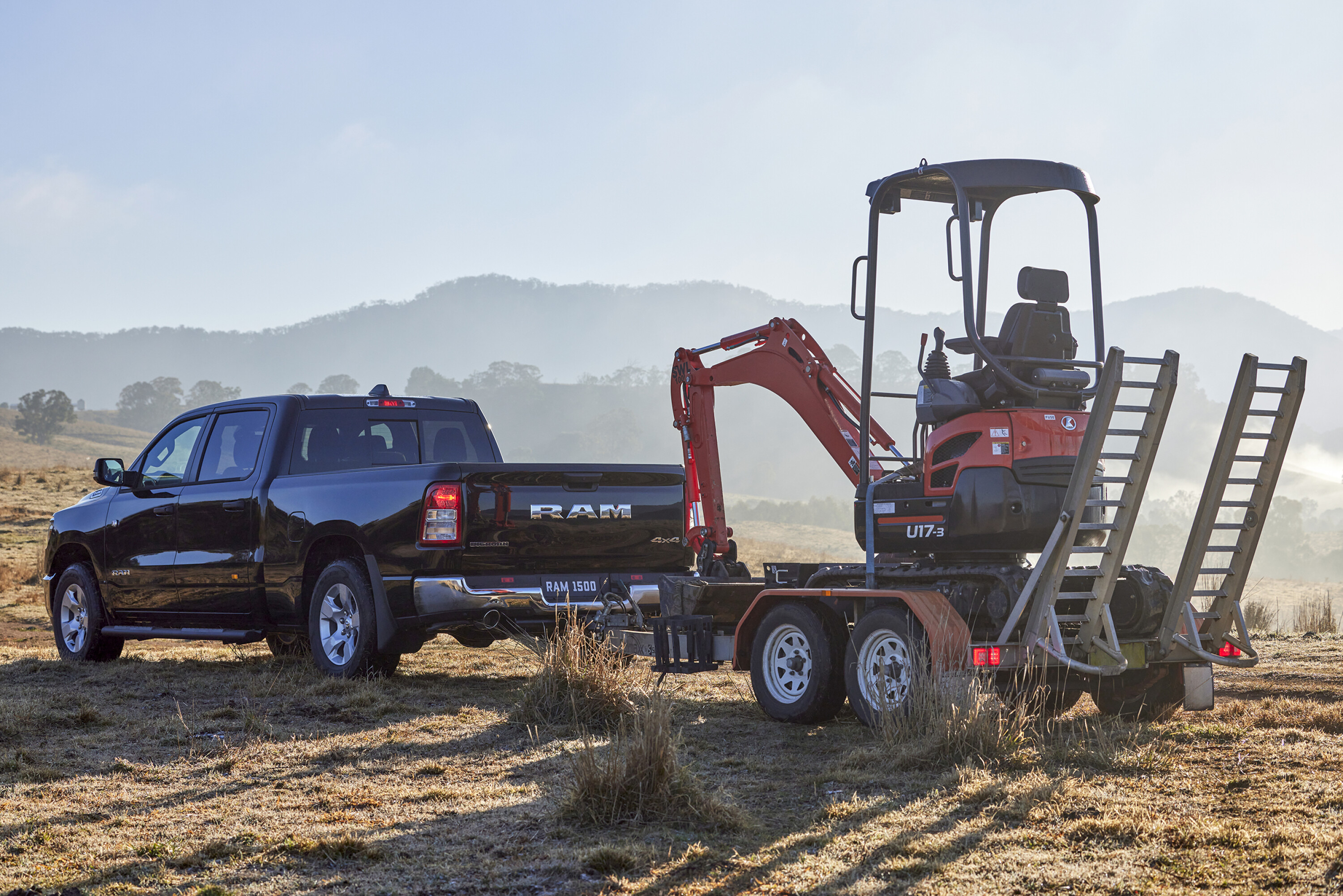
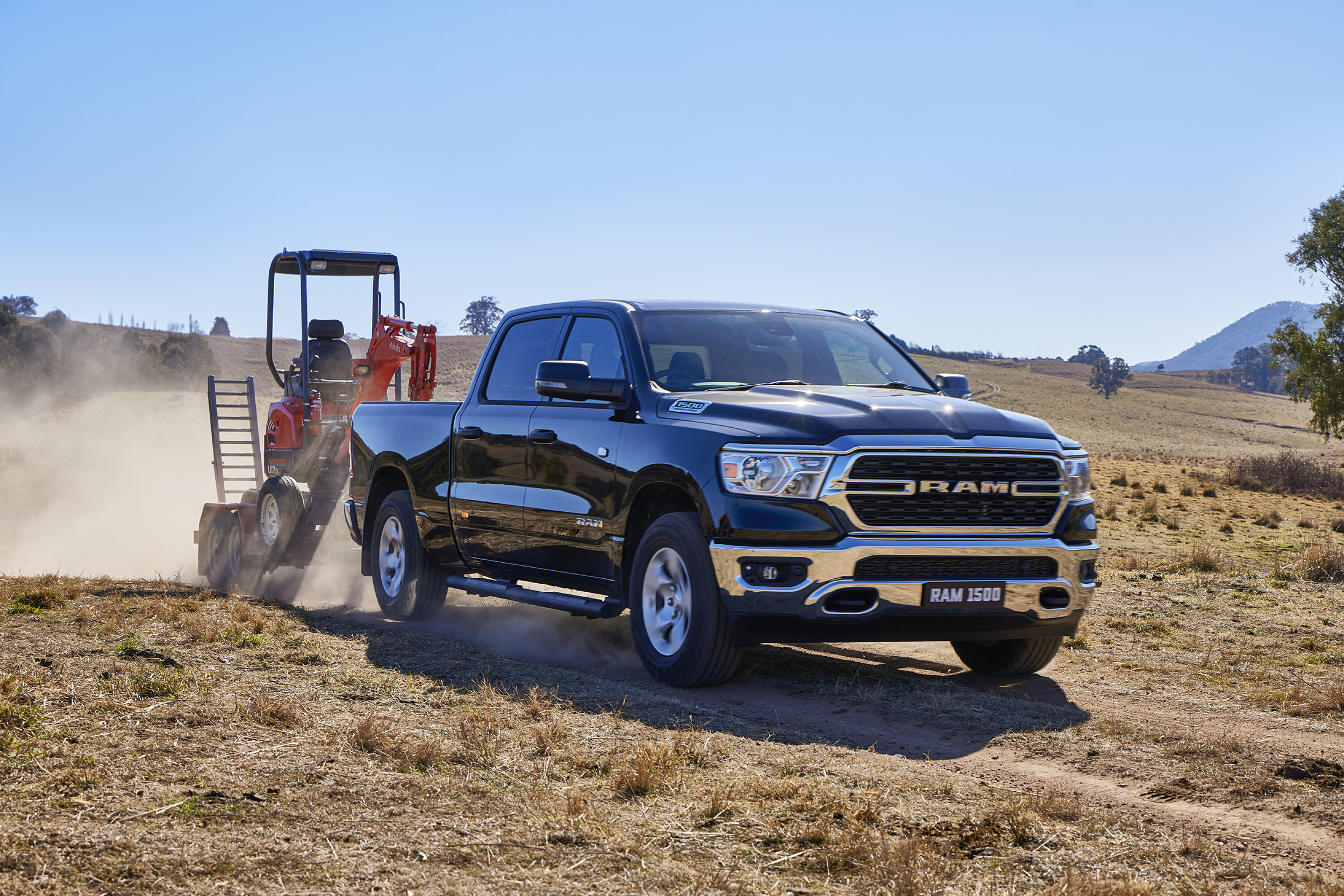
The 2023 Ram 1500 Big Horn has arrived in Australia as the cheapest ‘DT’ model, as the older ‘DS’-series enters run-out.
Snapshot
2023 Ram 1500 Big Horn pricing and features
New entry model as cheaper, older DS-series departs
Priced from $119,950 before on-road costs, up $21,000 over 1500 Express
Ram Trucks Australia, managed by third-party distributor Ateco, said the Ram 1500 Big Horn would become the new “starting point to Ram ownership” once the older DS model stocks are cleared.
Priced from $119,950 before on-road costs in standard-wheelbase form, the 1500 Big Horn is $21,000 dearer than the older DS Express ute, which remained in production alongside its successor. It is currently in run-out at $98,950 drive-away.
The Big Horn is the most affordable version of the latest ‘DT’ series sold in Australia, competing against the entry-level Ford F-150 XLT available from $106,950 plus on-roads – but also the higher-spec $121,000 Chevrolet Silverado LTZ Premium.
1
Like the F-150, a long-wheelbase Big Horn with a larger bed is available for $1000 extra at $120,950 plus on-roads, with the bed size rising from 1708mm (5’7”) to 1930mm (6’4”).
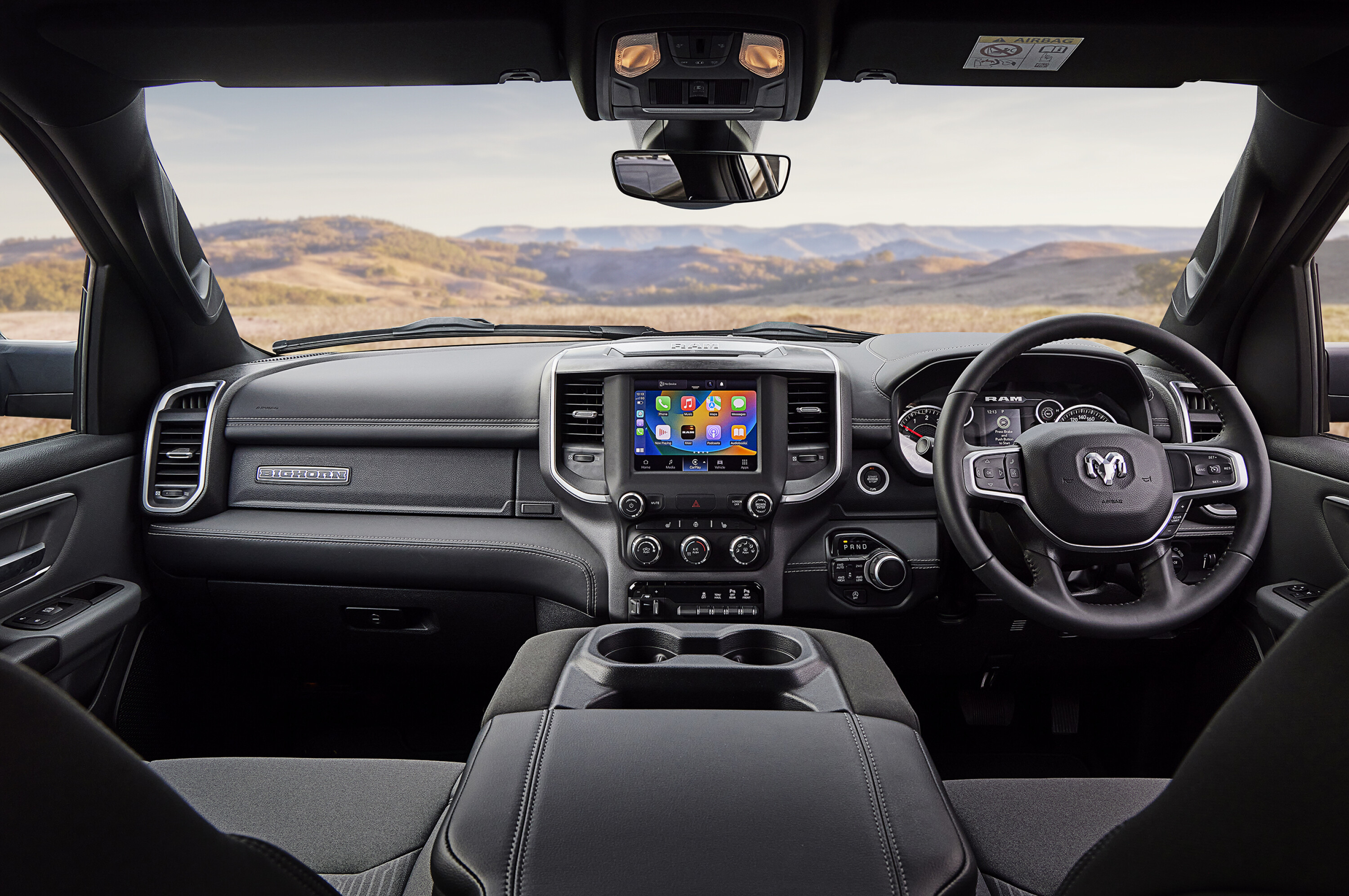
Compared to the existing DT-series 1500 Laramie, the Big Horn has halogen exterior lighting, an 8.4-inch Uconnect infotainment system without built-in satellite navigation (down from 12 inches), cloth upholstery, a smaller 3.5-inch instrument cluster display, and fewer USB ports.
It also has smaller 18-inch alloy wheels (down from 20-inch), a non-power tailgate, black plastic side mirror caps, no wireless phone charger, manually-adjustable seating, a six-speaker unbranded audio system, manual air conditioning, and no automatic high beam.
1
Potentially life-saving autonomous emergency braking technology is also deleted from the Big Horn compared to the Laramie.
Ram vehicles sold in Australia use international specifications and are converted to right-hand drive by Walkinshaw Automotive in Melbourne. An optional active safety package is available in US-spec 1500 Big Horn variants, but this has not been selected for vehicles sent to Australia.
Under the bonnet, the Big Horn retains the 5.7-litre naturally-aspirated Hemi petrol V8 producing 291kW and 556Nm, matched to an eight-speed automatic transmission and a 48-volt mild-hybrid system. Combined fuel consumption is rated at 12.2L/100km.
1
The 4.5-tonne braked towing capacity is retained, in line with other full-size utes sold in Australia.
Year-to-date, 3979 Ram 1500 vehicles have been sold in Australia – compared to 1119 Chevy Silverados.
The ‘re-manufactured’ Ford F-150 is due to launch in Australia in September, while the Toyota Tundra remains likely for Australia in 2024.
A TV in a briefcase isn’t exactly something we’d call essential for remote-area travel.
However, the boffins at LG have released a niche product called the LG StanbyME Go, a wireless 27-inch 1080p smart tablet that is designed to go anywhere.
1
Be it the backyard, on a picnic rig, the back of a ute tray, or in a tent, the StanbyME Go can be set up in seconds to provide outdoor entertainment when a power source is out of reach, and its rechargeable battery is said to provide about three hours of use.
The hard-shell briefcase is designed to be durable and easy to transport, to enable users the ability to stow the tablet with camping gear on long trips. However, the unit weighs 12.7kg, which will eat into valuable payload when packing for such a trip.
The screen extends out of the suitcase via a stand, which can be adjusted to position the tablet in either landscape or portrait orientations. As a bonus, the screen can also be left flat, which transforms it into a digital board-game surface – or a turntable, if so inclined.
It’ll be interesting to see how the unit fares after a few trips on sand and dirt, though…
The tablet also features a pair of 20-watt, four channel speakers, which will be more than enough to provide decent audio quality.
1
The tablet retails for $999.99 via the LG US store, but it isn’t available in Australia.
Is the LG StanbyME Go something you’d take on your next adventure? For us, nothing beats a few drinks in front of a campfire beneath the stars, so we’d leave the screens at home. Still, watching a game of footy with the ocean as a backdrop does sound pretty good … so each to their own.
Screens in the bush. Yay or nay?
There are attributes a vehicle must have to cement it as a successful long-haul expedition rig capable of conquering the Australian outback.
Off-road capability, touring range, load-carrying capacity and reliability are prerequisites, but there are plenty of other factors that separate the pretenders from the real deal when it comes to touring Australia.
An expedition vehicle also needs to be tough, practical and functional. There needs to be a good range of aftermarket accessories available for it, to suit the demands of the job at hand. If you can’t equip it with gear to protect it in the scrub, or gear to help it safely haul all the items you’ll need on a big trip, then it simply won’t make the grade.
Simplicity is also an advantage when it comes to the best 4WD for remote travel. If something breaks in the bush, many miles from help, you need to be able to fix it where it lies.
With modern four-wheel drives this is not as straightforward as it once was, thanks to electronic engine management and traction aids. Luckily, modern vehicles are also far more reliable these days. Still, old-school mechanical fuel management and traction aids are hard to beat.
Taking the above factors into account, 4X4 Australia has come up with a list of the top six rigs suited to long-haul, offroad expedition use.
Topping the 4X4 Australia list of expedition vehicles is the venerable LandCruiser 70 Series, a vehicle that ticks off just about every attribute required in a long-haul, remote-area offroad tourer.
The LandCruiser is tough, with a full box-section separate chassis, live axles front and rear, coil springs up front and rudimentary but effective leaf springs at the rear.
This simple design gives the LandCruiser good chassis flex when off the beaten track, good body isolation from road noise and vibrations, excellent wheel travel and good load-carrying capacity.
The Cruiser is powered by a grunty yet frugal 4.5-litre V8 turbodiesel engine that’s proven exceptionally reliable since its launch in 2007. It generates a claimed 151kW at 3400rpm and 430Nm from a lazy 1200rpm through to 3200rpm, making it ideal for hauling heavy loads, towing big trailers (up to 3500kg) or slogging through difficult offroad terrain.
The engine is mated to a five-speed manual transmission and simple part-time 4×4 driveline with manually locking hubs and optional (standard on GXL) front and rear diff locks. This driveline, combined with impressive low-range gearing and the Cruiser’s decent wheel travel, endows the 70 Series with excellent offroad capability.
Double Cab and Wagon variants come with a 130-litre fuel tank while Single Cab and Troop Carrier models are offered with two 90-litre fuel tanks for a touring range in excess of 1500km. There are four body styles on offer, so that means there’s a 70 Series to suit just about every budding adventurer.
The 70 Series is equipped with ABS and dual front SRS airbags, and a revised interior has (almost) dragged the Cruiser into the 21st Century. The air-conditioning system is also second to none, which is bloody important on those long, hot days in extreme environments.
1
If you want to modify your LandCruiser 70 Series, the aftermarket offers just about everything from protection equipment, suspension kits and GVM upgrades to traction aids, snorkels, roof racks, cargo systems and more.
Toyota offers some of the best parts and service in the country, with a big network of dealers around Australia. If you intend to go global roaming in your 70 Series, the vehicle and parts are available in most corners of the world, although you might struggle in North America; the 70 Series was never officially sold in the USA or Canada.
If you don’t have the dough to stump-up for a new 70 Series LandCruiser, there are loads of second-hand models on the market with plenty of life left in them.
The next best thing to the current TDV8 model, in terms of performance, is the Cruiser equipped with the 1HD-FTE 4.2-litre direct injection turbodiesel engine. But for those who prefer the simplicity of mechanical injection – and who aren’t in that much of a hurry – the 1HZ 4.2-litre indirect injection naturally aspirated diesel is the pick.
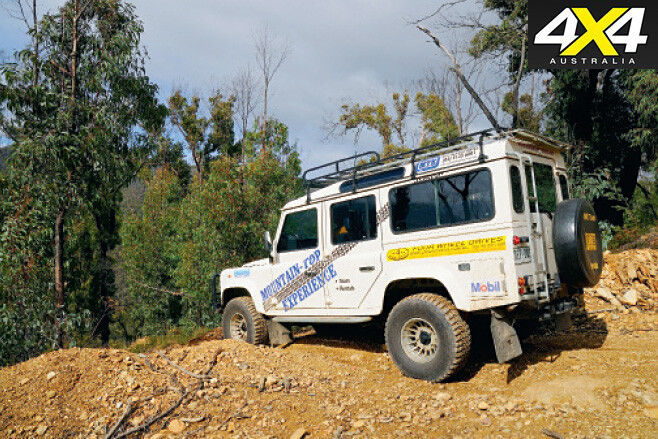
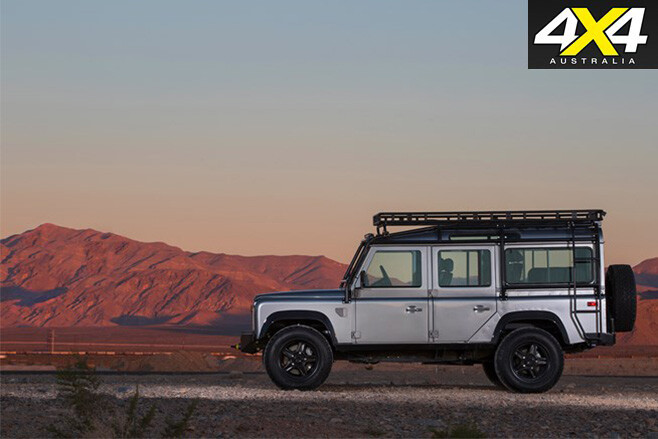
To some people the idea of travelling long distances in a Land Rover Defender is hell on earth, but to others there is no better way to explore the most remote places on the planet.
The previous-gen Defender can trace its lineage back to the original Land Rover launched in 1948. Despite its turbodiesel engine and sophisticated electronic traction control system (on 90, 110 Wagon and 110 Double Cab models), the Defender was largely manufactured by hand at Land Rover’s Solihull factory.
The Defender’s aluminium body sits atop a rugged box-section separate chassis. Suspension is by way of live axles front and rear with long-travel coil springs. Payload ranges from just under a tonne in the 90-inch wheelbase model to almost a tonne-and-a-half in the 130-inch Crew Cab model.
If fitted with just two seats, even the short wheelbase Defender 90 offers a decent size cargo area, and many people use this model for remote area expedition travel. The 110 Wagon offers even more space and the cab chassis models can be kitted out to carry a massive amount of gear, or can be set up with a variety of accommodation options.
1
All models are powered by a frugal yet surprisingly strong 2.2-litre four-cylinder turbodiesel engine that pumps out a claimed 90kW and 360Nm from 2200rpm to 4350rpm. The engine is mated to a six-speed gearbox and a full-time 4WD system with lockable centre differential and two-speed transfer case.
Excellent low-range reduction makes the most of the engine’s low-rpm torque when tackling difficult offroad terrain and good axle articulation endows the Defender with formidable offroad capability.
Although fuel tank capacity is modest in Defenders (60L for the 90 and 75L for 110 and 130 models), the engine is quite frugal. There are also plenty of aftermarket auxiliary tanks available to increase the capacity.
You can source just about anything you want to suit this Defender, from protection equipment, diff locks, suspension kits, roof racks, ladders, cargo systems, water tanks and much more.
1
Unlike Defenders of old, this generation offers quite a high level of luxury – a modern dash and ventilation/air-conditioning system, as well as optional leather trim.
Still, you’ll have to get used to the cramped cabin that makes driving a Defender a unique experience – window down and elbow out is the most comfortable position.
When it comes to reliability, Land Rover doesn’t have the most enviable reputation – although this is not entirely fair. I have driven Defenders in some of the most remote places on the planet and have never had a serious mechanical failure. And as the Defender is sold all around the world, sourcing parts is rarely a problem.
If you’re looking at older models, the Td5 turbodiesel offers a good combination of performance, fuel economy and reliability. Older 300Tdi and 200Tdi models are getting a bit long in the tooth.
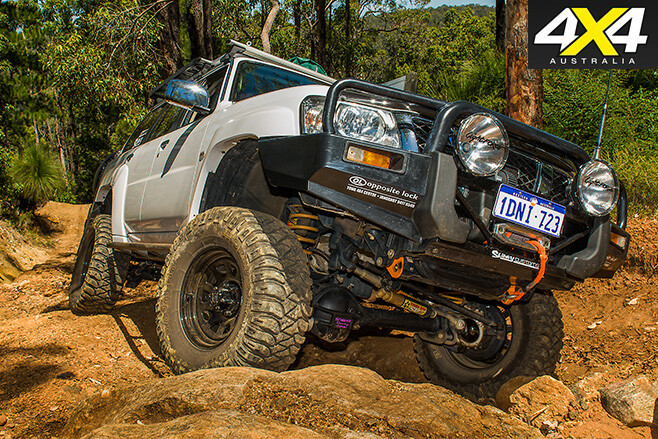
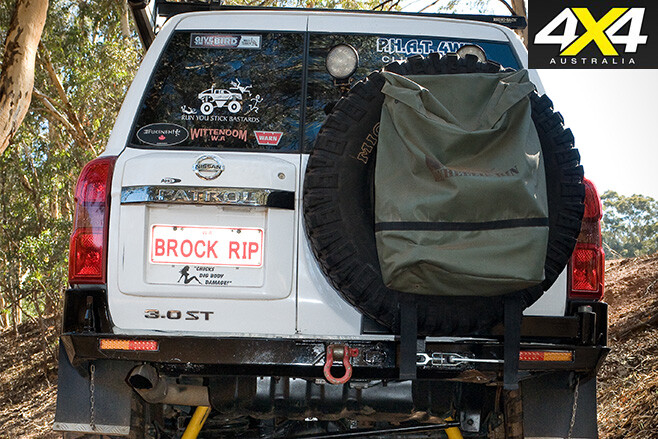
Like the 70 Series LandCruiser and the Defender, the Nissan Patrol GU is a relatively simple and tough design that’s well suited to remote-area travel.
The big Patrol features a box-section separate chassis, live axles front and rear and coil springs all-round, with rear leaves on some cab chassis variants.
Its wide track and long wheelbase make it a stable platform that is well suited to carrying all the gear you need on a big trip, and it’s available in wagon or single cab chassis configurations.
MY16 models are powered by the ZD30 3.0-litre four-cylinder common rail turbodiesel engine, it makes a claimed 118kW and 380Nm from 2000-2400rpm. Over the years, this engine hasn’t had the best track record and, for remote area travel, 4X4 Australia’s Ron Moon recommends the older mechanically injected TD42T 4.2-litre six-cylinder turbodiesel engine for its simplicity and reliability. Ron should know – he’s driven his stretched Patrol all over the world without a problem.
1
The Patrol has a simple part-time 4WD system with manually locking hubs on DX models and auto-locking hubs on ST models.
The two-speed transfer case offers reasonable low-range gearing. Excellent axle articulation keeps all four wheels on the ground… most of the time.
The Patrol GU has been on the market in various guises since 1997, so there are plenty of aftermarket accessories available for it, including long-range fuel tanks, water tanks, protection equipment, roof racks, cargo systems and more.
Depending on the tray or camper fitted, the cab chassis variant of the Patrol GU has quite a long rear overhang. There have been examples where the rear chassis section has bent under load. Set it up correctly, however, and this won’t be a problem.
A 3200kg (manual) towing capacity will haul most trailers with ease – at least those designed to tackle genuine offroad conditions.
1
Wagon variants have a carrying capacity between 600-700kg while the cab chassis will carry between 1100kg (coil rear springs) and 1300kg (leaf rear springs).
The interior of the Patrol offers generous space and comfort. There’s plenty of cabin width and the long wheelbase ensures there’s enough legroom for those in the second row of the wagon.
Servicing and parts support is good in Australia and the Patrol GU is sold in many countries around the world other than North America, so if a global expedition is on your bucket list then this is one of the vehicles you could easily do it in. Many parts are interchangeable with the older Patrol GQ, which has been around since the late 1980s.
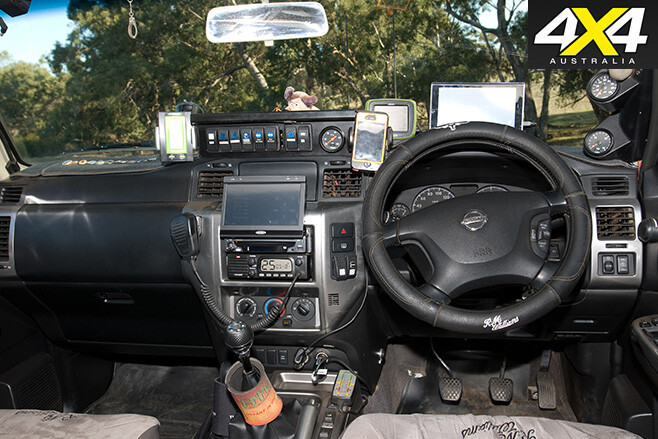
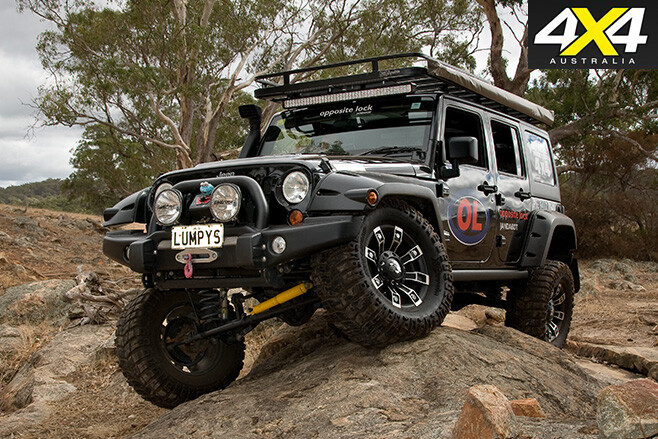
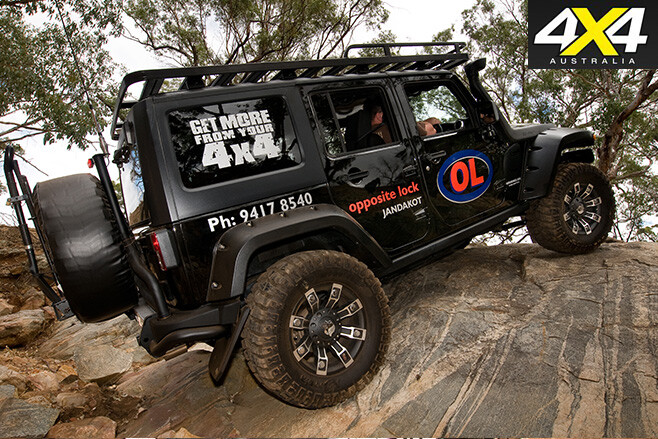
The Jeep Wrangler JK makes the list thanks to its exceptional offroad capability, the fact it’s available with a powerful yet economical turbodiesel engine and because there are so many aftermarket bits and pieces that can transform it into a genuinely capable expedition vehicle.
If you want the Wrangler Rubicon spec, with its standard sway bar disconnects and super low-range gearing, you’ll have to opt for the 3.6-litre petrol V6, which we wouldn’t recommend for long distance expedition work. Still, the base-spec Wrangler Sport is a very capable offroader.
The JK has a separate chassis design with live axles front and rear and coil springs all around. Of the petrol or diesel engine options, the 2.8-litre common rail diesel is the pick for expedition work, pumping out a claimed 147kW of power and a stump-pulling 460Nm of torque from 1600-2600rpm when mated to the five-speed auto transmission, or 410Nm from 2600-3200rpm with the six-speed manual ’box. This engine can achieve fuel economy on the right side of 10L/100km.
1
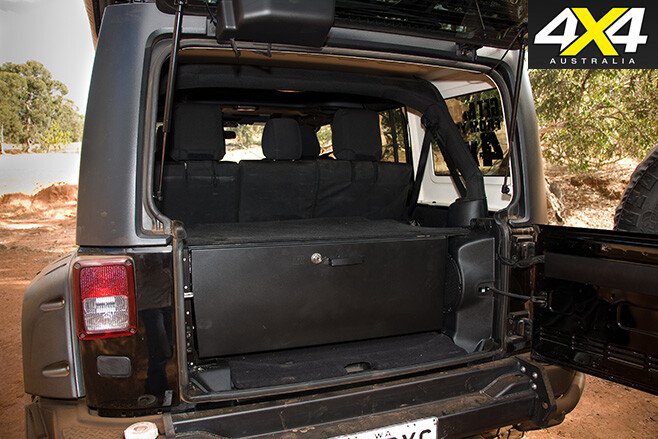
The Wrangler is available in traditional two-door short wheelbase guise or the more expedition-friendly four-door long wheelbase Unlimited model. The Unlimited offers much more interior space than the shorty, although load-carrying capacity isn’t great at a shade over 400kg.
As the Wrangler is a US-market vehicle, the list of aftermarket accessories is almost endless, and includes massive suspension lifts, protection equipment, diff locks, super low-range reduction, cargo systems, long-range fuel tanks, water tanks and more.
1
While not everyone’s cup of tea, driving offroad with the roof down truly immerses you in the environment, and in this respect the Wrangler offers a unique experience. Or you could just fit the hardtop and whack on the air-conditioning.
Significantly bigger than competitors such as the HiLux, Navara and Triton, the Ranger/BT-50 was built on a separate chassis with a live axle rear-end with leaf springs and an independent front-end with double wishbones and coil springs.
Load capacity ranges from 1000-1400kg depending on body style and model, so you’ll have no problems hauling all the gear you need for a remote area expedition. Towing capacity is a whopping 3500kg.
There are two engines on offer; a 2.2-litre four-cylinder turbodiesel (in the Ranger only) makes a claimed 110kW at 3700rpm and 375Nm of torque from 1500-2500rpm, while a 3.2-litre five-cylinder turbodiesel ups claimed output to 147kW at 3000rpm and 470Nm of torque from 1500 to 2750rpm.
Both powerplants offer more than enough grunt but the bigger five-cylinder engine is the pick, and works well mated to either the six-speed manual or six-speed automatic transmission. Low-range gearing is excellent, with an overall reduction in manual gearboxes better than 50:1 in first gear, and better than 40:1 with the auto in Low.
A combination of electronic and mechanical traction aids endow the Ranger and BT-50 twins with excellent offroad capability, including Dynamic Stability Control (DSC), Hill Descent Control (HDC), Hill Launch Assist (HLA) and a standard electronically locking rear diff.
1
Both engines average better than 10L/100km, giving the Ranger/BT-50 a touring range of around 800km from its 80L tank. Want more? A number of aftermarket companies manufacture long-range fuel tanks to suit the vehicle.
In fact, you can get all sorts of aftermarket goodies to suit the Ranger/BT-50, from protection gear, snorkels, winches and suspension kits to tub liners, canopies, roof racks and cargo systems.
Even though the Ranger/BT-50 is a ute, don’t let it fool you into thinking it’s a commercial vehicle; top-spec models are as well-equipped as any wagon on the market and offer excellent comfort for those long stints behind the wheel.
The Ranger/BT-50 is available in single, extra and dual-cab models, either as a ute or cab chassis, so there are plenty of options to suit all requirements, even for those who want to fit a camper on the back.
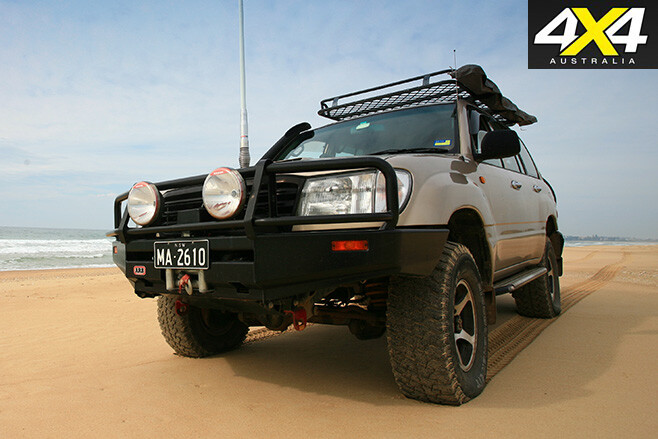
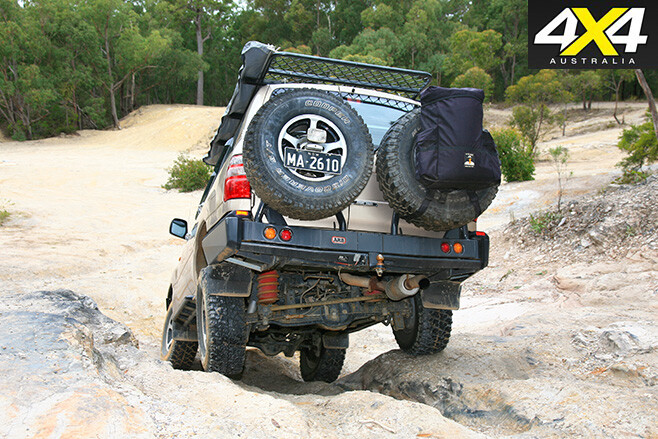
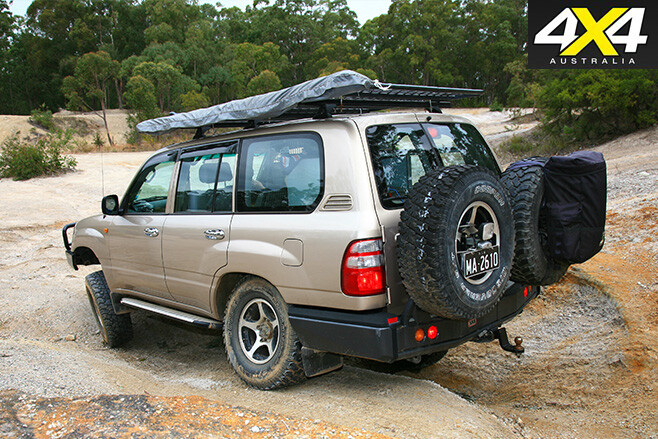
We ummed and aaahed a bit by the time we got down to the bottom of our list of top six expedition vehicles but, in the end we couldn’t go past the Toyota LandCruiser 100 Series – at least, the Standard HZJ105R.
This base-spec LandCruiser manufactured from 1998 to 2007, was the last to be fitted with live axles front and rear with coil springs all around, whereas higher grades were fitted with an independent front suspension that wasn’t as bush friendly as the live axle design.
Being the base-spec Cruiser, you need to look at the Standard as a blank canvas. It has a bare-bones interior with low-rent cloth seats and vinyl trim, skinny steel rims and a basic barn door arrangement at the back. But that can be a good thing, and there are plenty of examples on the market that have already been modified for expedition travel.
1
Power comes from a lethargic and somewhat asthmatic 1HZ indirect injection, naturally aspirated 4.2-litre six-cylinder diesel, which is claimed to make a modest 96kW at 3800rpm and 285Nm of torque at 2200rpm.
But this simple engine is supremely reliable and relatively easy to fix if something goes wrong. And you can always fit an aftermarket turbo and intercooler to extract plenty more power from it. There’s also a 4.5-litre petrol version, but we wouldn’t recommend that for long distance expedition travel.
The standard 145L fuel capacity sounds pretty good, but the old 1HZ isn’t as fuel efficient as modern electronically injected turbodiesel engines. Expect consumption of around 12.5L/100km for standard vehicles in a good state of tune, and significantly more when fully laden and driving off road. Luckily there are plenty of long-range fuel tank options on the market.
1
A 900kg payload means you can kit this Cruiser out with all the goodies you like and still have plenty of capacity to carry a heap of gear for extended remote area expeditions. And there are plenty of goodies available to suit the 100 Series, such as protection gear, suspension kits, diff locks, snorkels, roof racks, luggage systems, performance parts and more.
Sourcing parts for the 100 Series is possible just about anywhere in the world. The HZJ105 was sold in Australia, Africa, Asia, the Middle East and South America, and
while not sold in Europe or North America those continents got other versions of the IFS 100 Series, and various parts are interchangeable.
The best thing about the LandCruiser 100 Series Standard? You can pick them up for as little as $10K! But be willing to spend more for a model with low kays, few signs of offroad abuse and appropriate modifications.
Should I wait for the newer & more expensive 2024 Prado, or is the Fortuner all the 4×4 wagon I need?
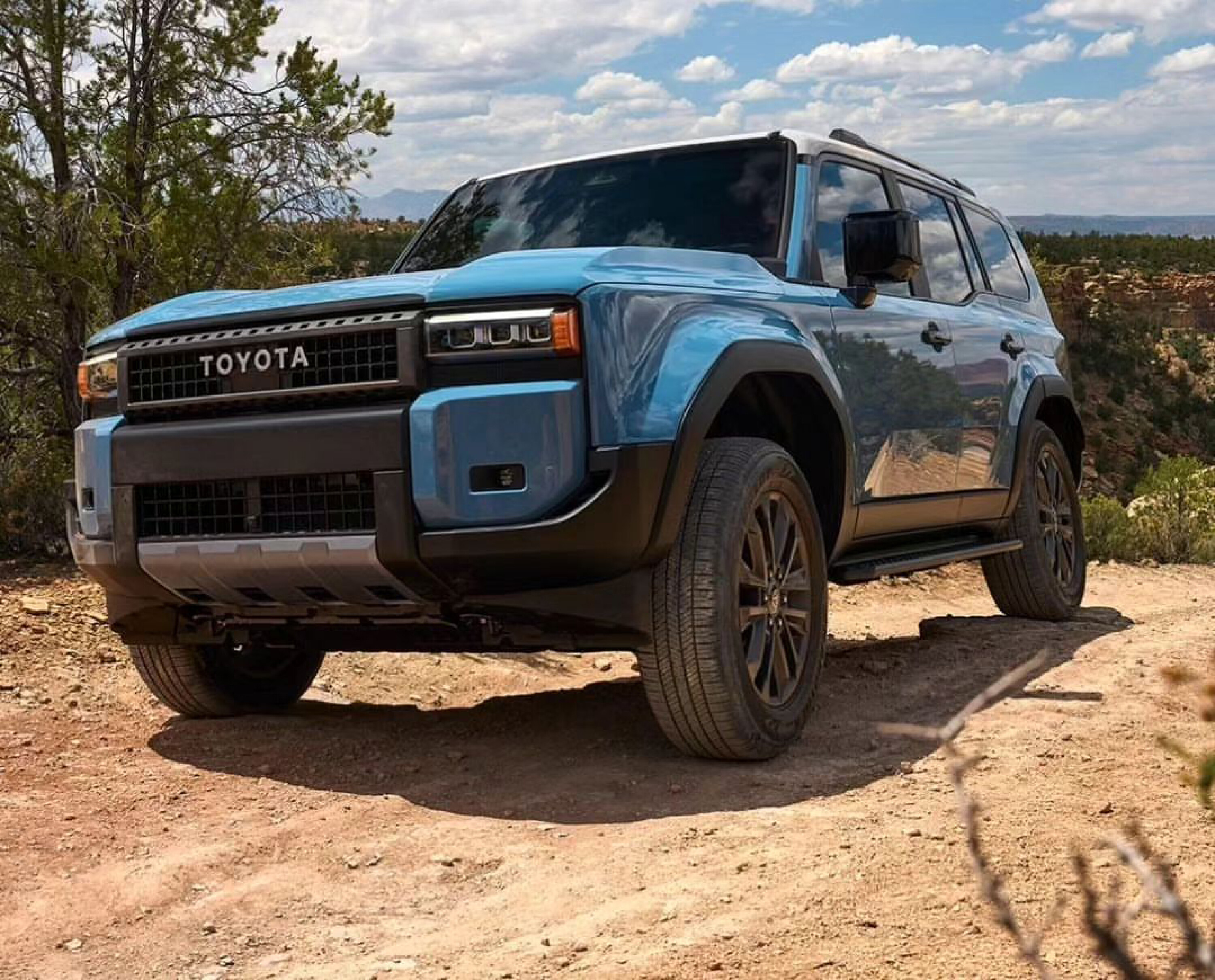
It’s been some 14 years, but finally the fifth-generation Toyota Prado is nearly here… and this time around it’s got some stiff opposition to overcome to keep its place in the hearts and minds of large SUV-loving Aussies.
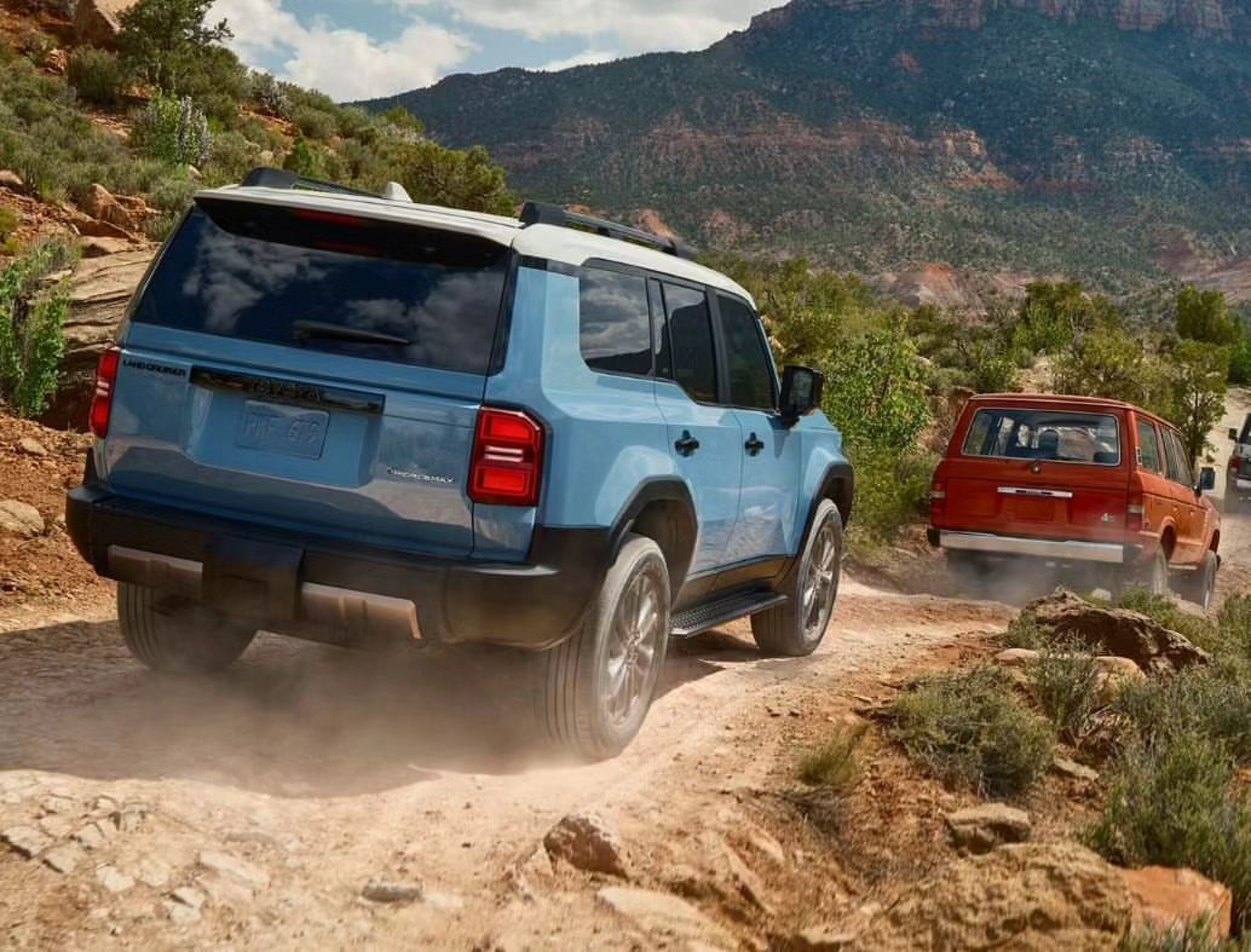
Not due to land until next year, first impressions are positive, with a bold, sharp and evocative design striking the right chord with a brace of increasingly emboldened buyers.
Based on the same ladder-frame platform that underpins the hugely popular 300 Series LandCruiser, the Prado will back up its boxy visage with proven diesel powertrain tech, mixed in with fuel-saving hybrid technology.
But the new Prado has been a long time coming, and even within Toyota’s camp, a challenger has risen through the ranks, offering Aussies a genuine alternative when it comes to 4×4 wagons. Does the Toyota Fortuner have anything up its high-riding sleeve for the new Prado?
Get up to speed on the new Prado
The stories below will give you a guide to everything we learned about the new Prado when it was unveiled. All fresh stories published since then will be found on our Toyota Prado model page here.
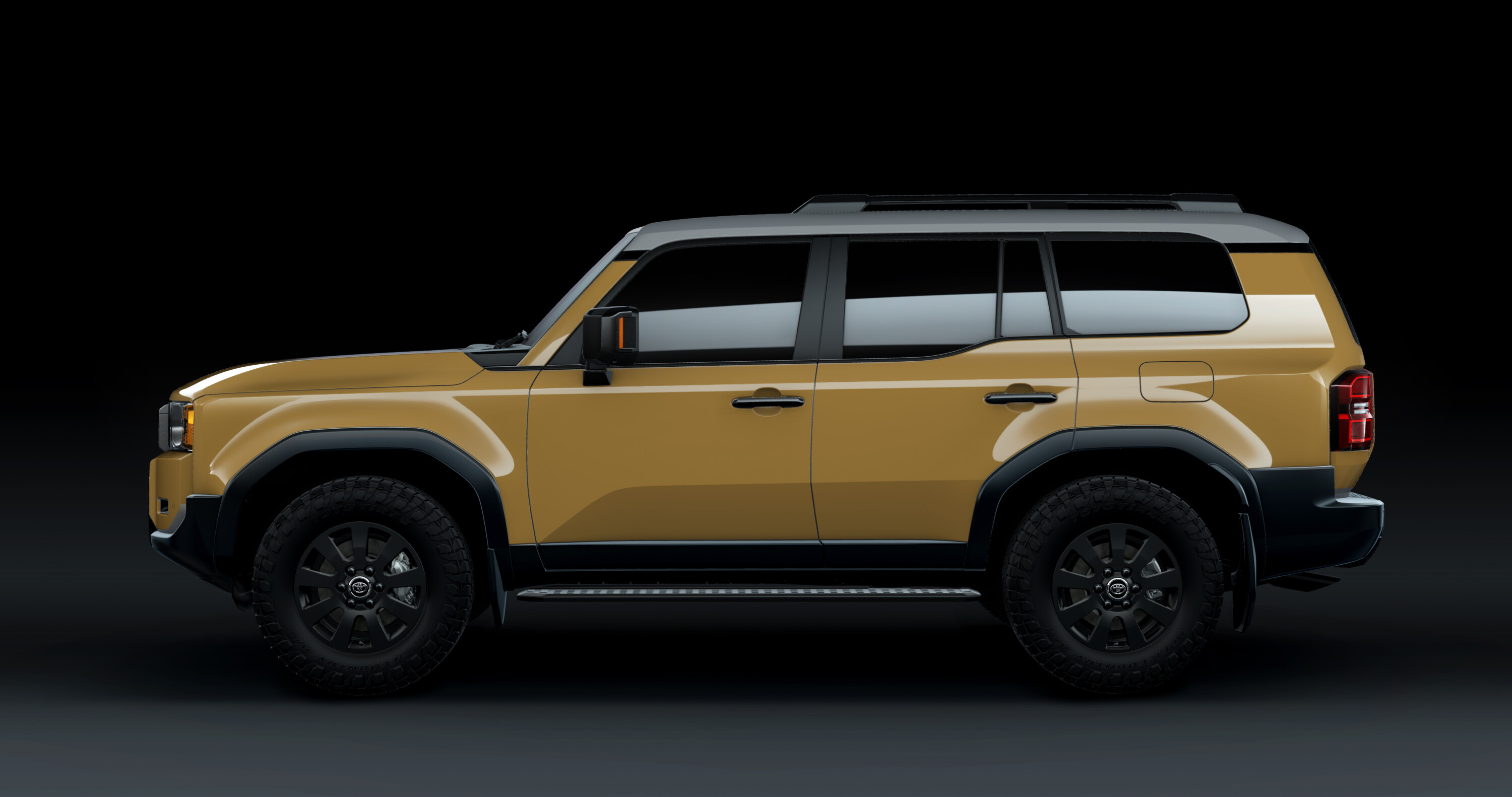
Measuring 4925mm long, 1980mm wide and 1870mm tall, the new Prado is 100mm longer, 95mm wider and 20mm taller than the outgoing Prado.
When it comes to wheelbase measurements, the new Prado’s TNGA-F platform measures 2850mm between the wheels; it’s the same as the current LandCruiser L300 [ /features/how-australia-shaped-the-toyota-landcruiser] and 60mm longer than its predecessor.
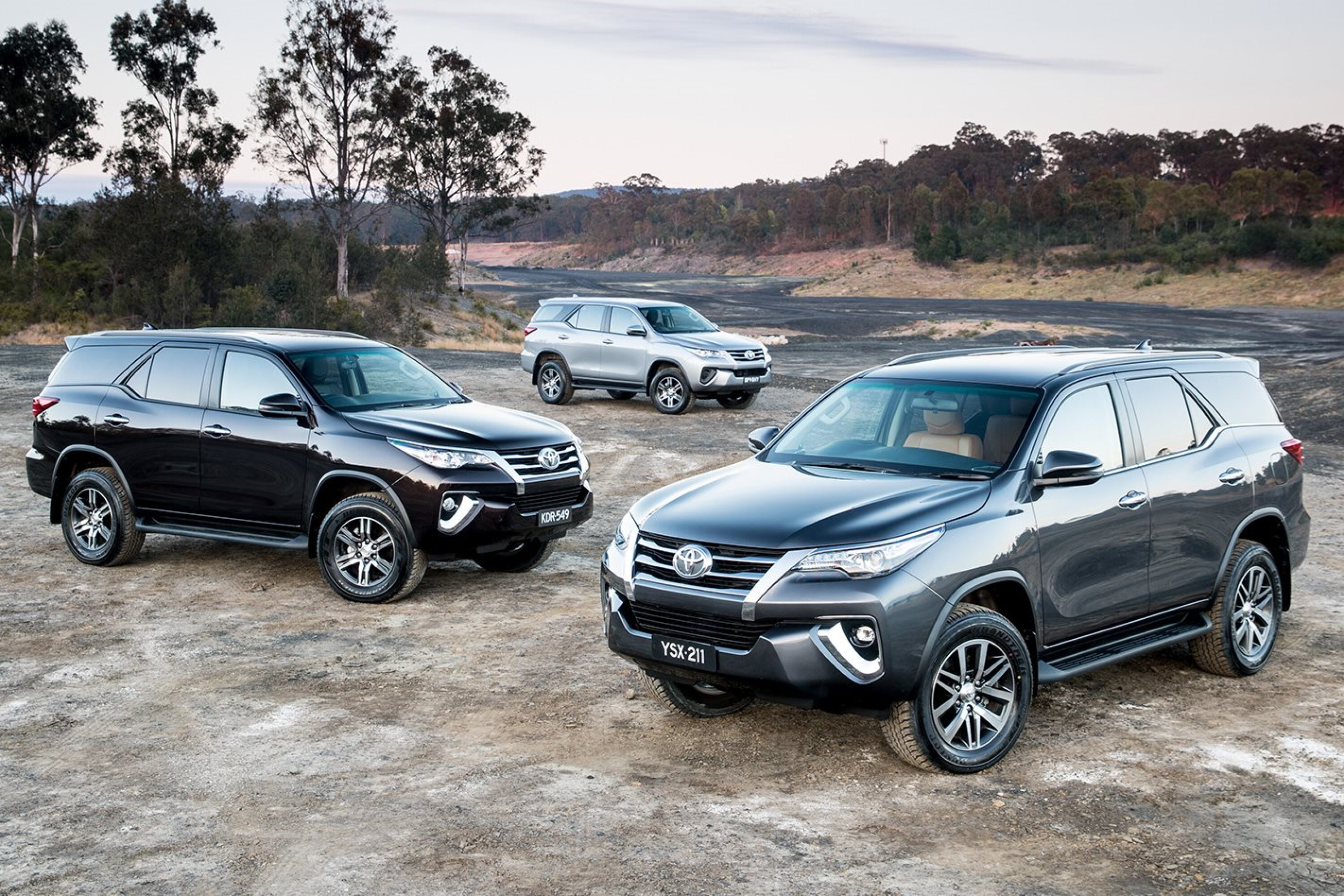
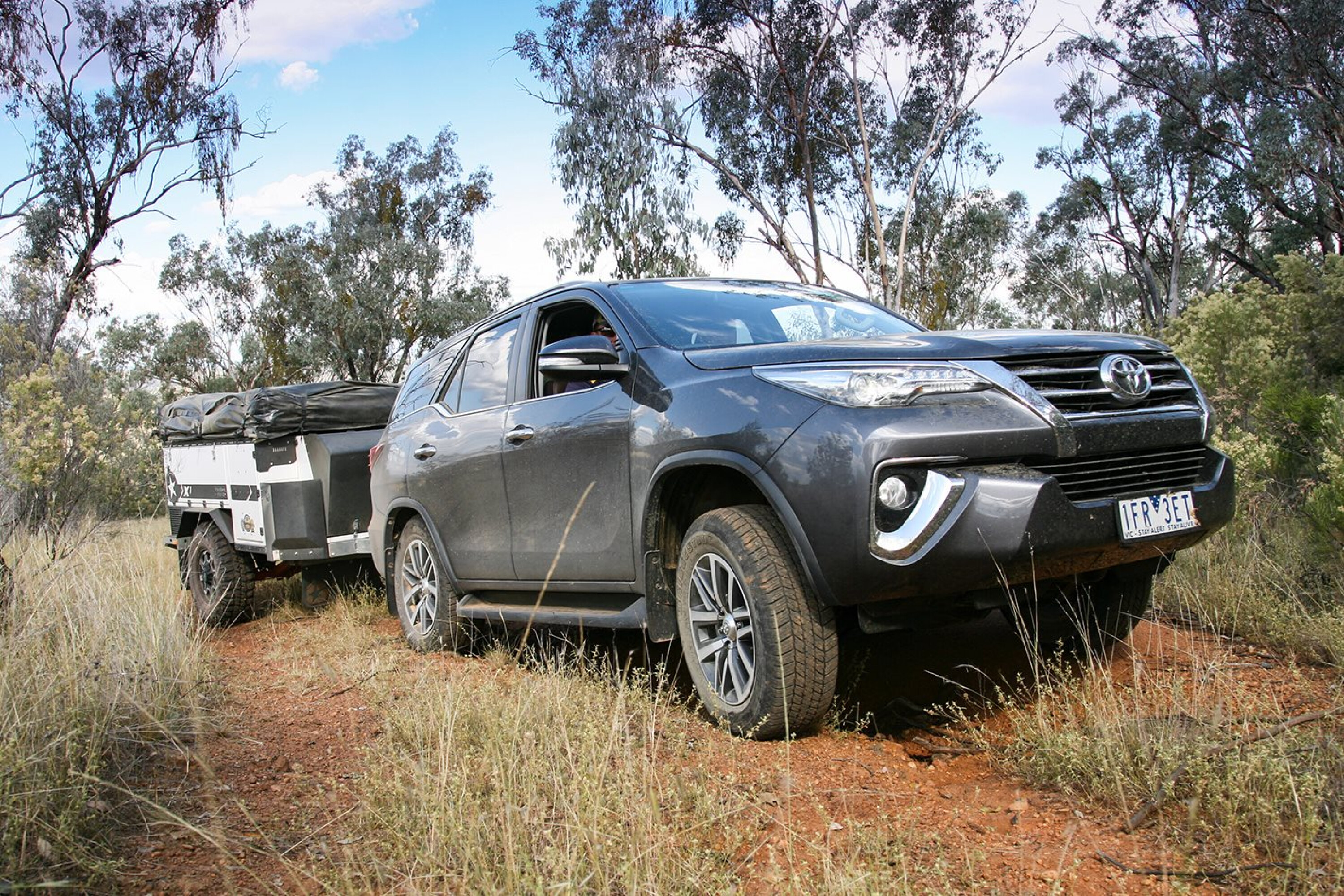
At 4795mm long, 1855mm wide and 1835mm high, and with a wheelbase figure of 2745mm, the Fortuner is smaller all-round, despite still offering three rows of accommodation.
2
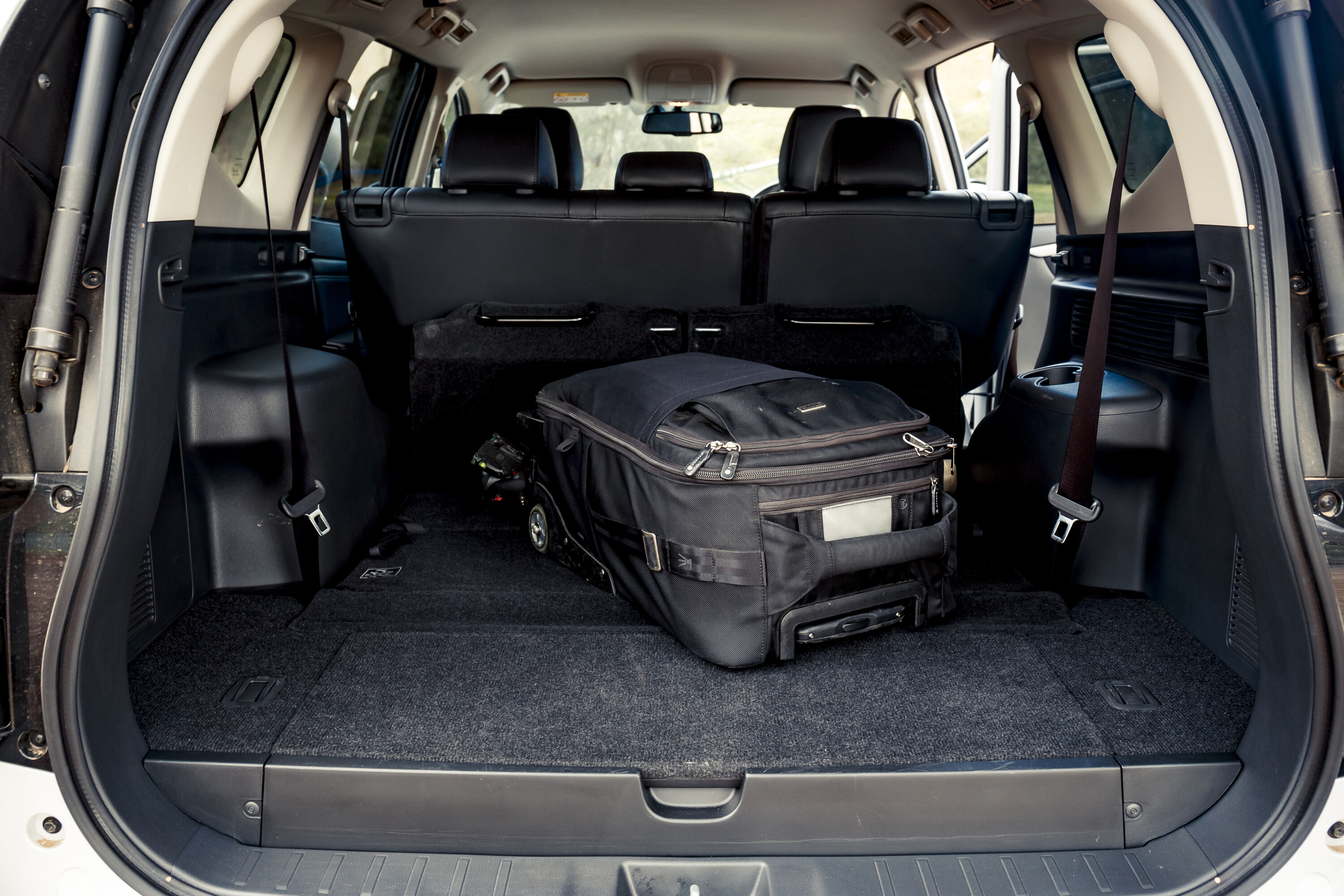
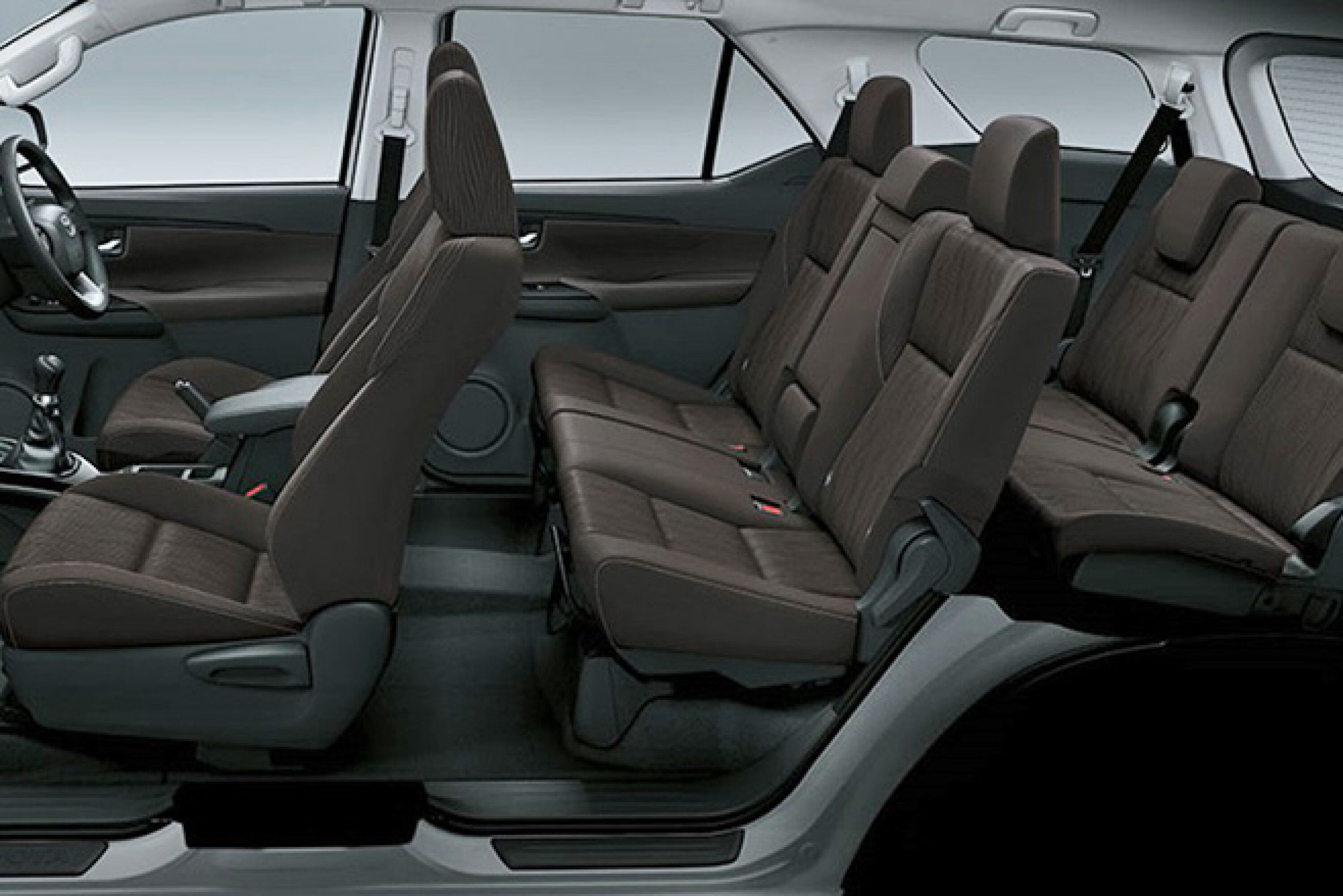
With the third row seats folded flat, sliding the second row forward increases boot space from 654 litres to a cavernous 716 litres in the Fortuner when the third row of seats are stashed.
Details like the boot space capacity of the new Prado have yet to be released, but given its bigger dimensions in all directions, it’s likely to have a greater capacity to lug cargo.
Given that it’s being dubbed the LandCruiser 250 in overseas markets, and that it’s based upon the same chassis as the L300, the new Prado was always going to present with a formidable set of off-road chops.
The Prado runs high-mount double-wishbone front suspension and a four-link rigid axle with lateral control arms at the rear.
It will have a full-time all-wheel drive system with a low-range transfer case and a locking centre differential, as well as an electronic locking rear differential and front a sway-bar disconnect system.
1
Unlike the hydraulically actuated KDSS, the new system allows stabiliser-bar disconnection on demand via a button in the cabin. This should make for excellent wheel articulation without sacrificing roadholding.
Electric power steering replaces the hydraulic system to increase steering feel, too.
Based on the HiLux, the Fortuner’s formidable off-road prowess comes via a simpler set of specs, including a low-range option for its six-speed auto and a locking rear diff, combined with 216mm ground clearance. It can switch between two- and four-wheel-drive, as well.
1
The Fortuner scored an upgrade to its braked towing capacity in 2021 and can now tow 3100kg worth of braked trailer.
Towing capacity for the new 2024 Toyota Prado is yet to be confirmed, but US specs suggest that the Prado is likely to be offered with 3500kg braked towing capacity for the first time ever, which marks an increase of 500kg over the current car.
The Fortuner scored an upgrade to its braked towing capacity in 2021 and can now tow 3100kg worth of braked trailer.
Similarly, gross combined mass figures for the new Prado aren’t available, which of course would reveal its potential payload capability.
1
It’s a fair bet, however, that the new Prado will weigh a fair bit more than the current car, which comes in at a claimed 2350kg kerb weight, giving it a 640kg payload.
Expect a similar payload figure for the new car, despite an expected 150-200kg jump in weight.
By comparison, the Fortuner is a relatively svelte 2175kg unladen, with a 2800kg GVM and 5550kg GCM, with a payload of 625kg.
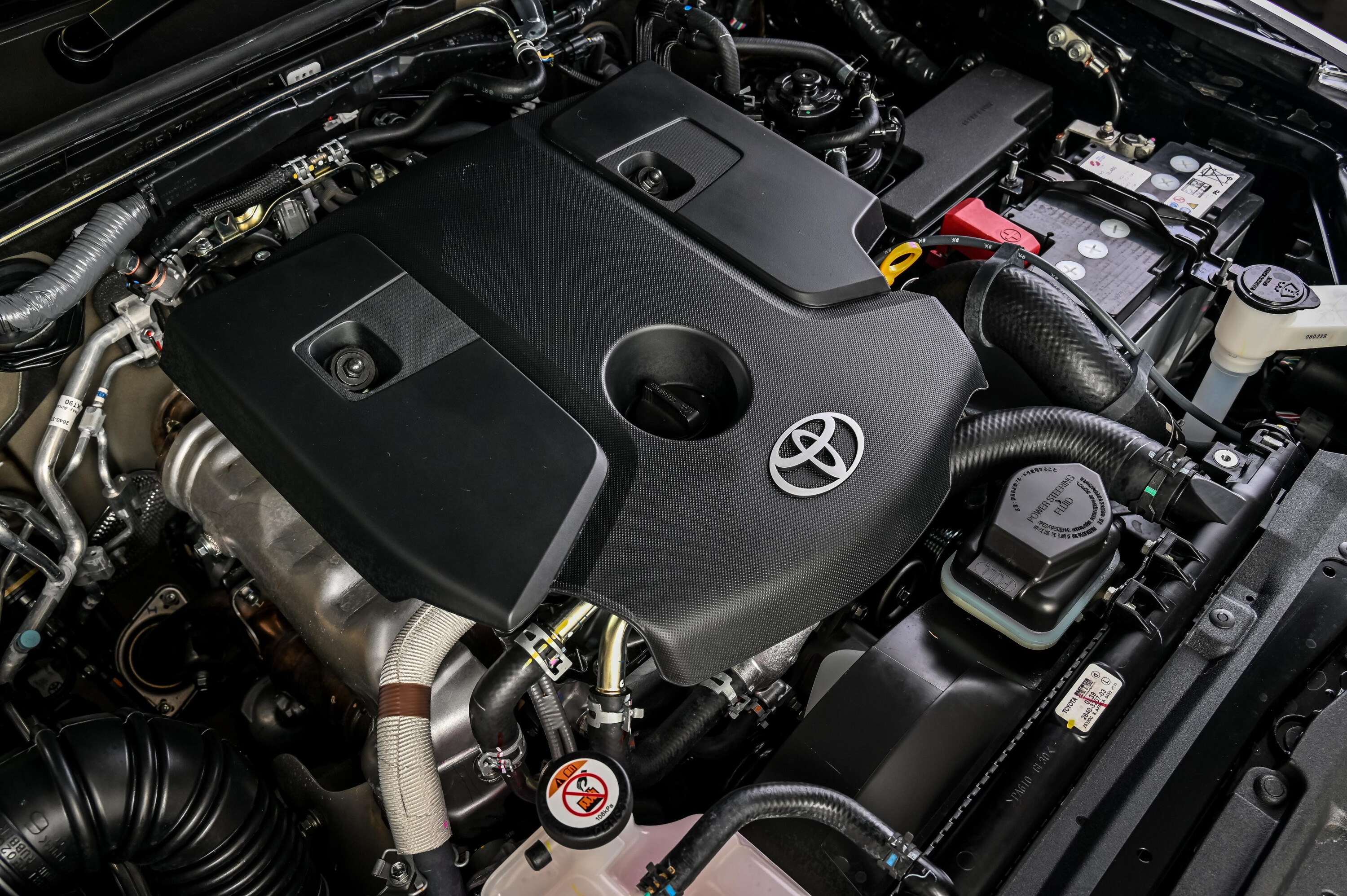
For the 2024 Toyota Prado, mild hybrid assistance will be added to Toyota’s familiar 150kW/500Nm 2.8-litre four-cylinder diesel motor, with a small electric motor mounted between the motor and new eight-speed gearbox supplemented by a 48-volt battery and a stop/start system to net an estimated 10 per cent fuel saving.
There is one engine available for the Fortuner; the aforementioned 150kW/500Nm 2.8-litre turbo-diesel. Only available with a six-speed automatic gearbox, it consumes 8.6 litres/100km on the official test (city and country combined) – which is about average for this sort of SUV.
In the real world you can expect a Fortuner to average about 11 litres/100km over a range of driving conditions, with consumption approaching 9.0 litres/100km in easy highway cruising.
One spec that many prospective buyers will be awaiting is the fuel tank capacity of the new Toyota Prado.
If, as is predicted, the Prado’s full-size spare wheel moves from the tailgate to the underside of the rear bumper, it’ll likely mean the end of the Prado’s 63-litre sub-tank option – and the demise of its 150-litre fuel capacity.
If this indeed the case, it would be doing well to match the Fortuner, which boasts an 80-litre fuel tank for a range that should theoretically exceed 1000km.
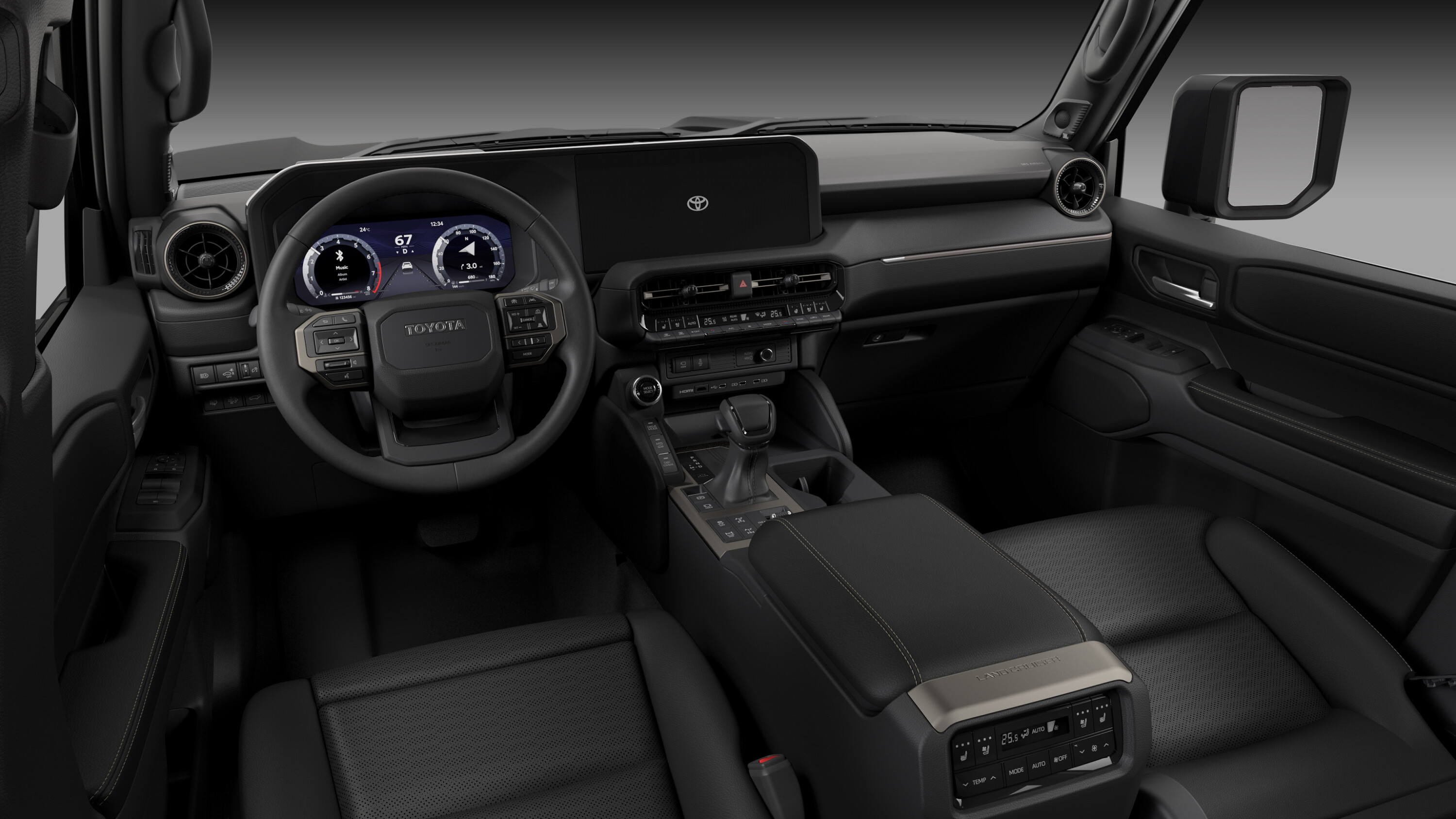
Toyota has gone all in on the new Prado, presenting a sharp, rugged and confident interior that’s not overly dominated by a massive screen up front.
Though the Prado will likely adopt a digital dash across the range, traditional analogue controls still feature strongly, with more than a nod to the LandCruiser’s storied past in the bulky, squared-off steering wheel with its prominent type-written badge.
In fact, the explosion of buttons across the dash and centre console is prolific by modern standards. Not only are all the climate controls easily accessible, drive modes can be accessed by both button and dial, while the overseas model pictured even sports an HDMI port along with a brace of USB-C outlets.
2
The extra width of the new Prado is evident in the huge centre bin and console layout, while a traditional gear selector is retained.
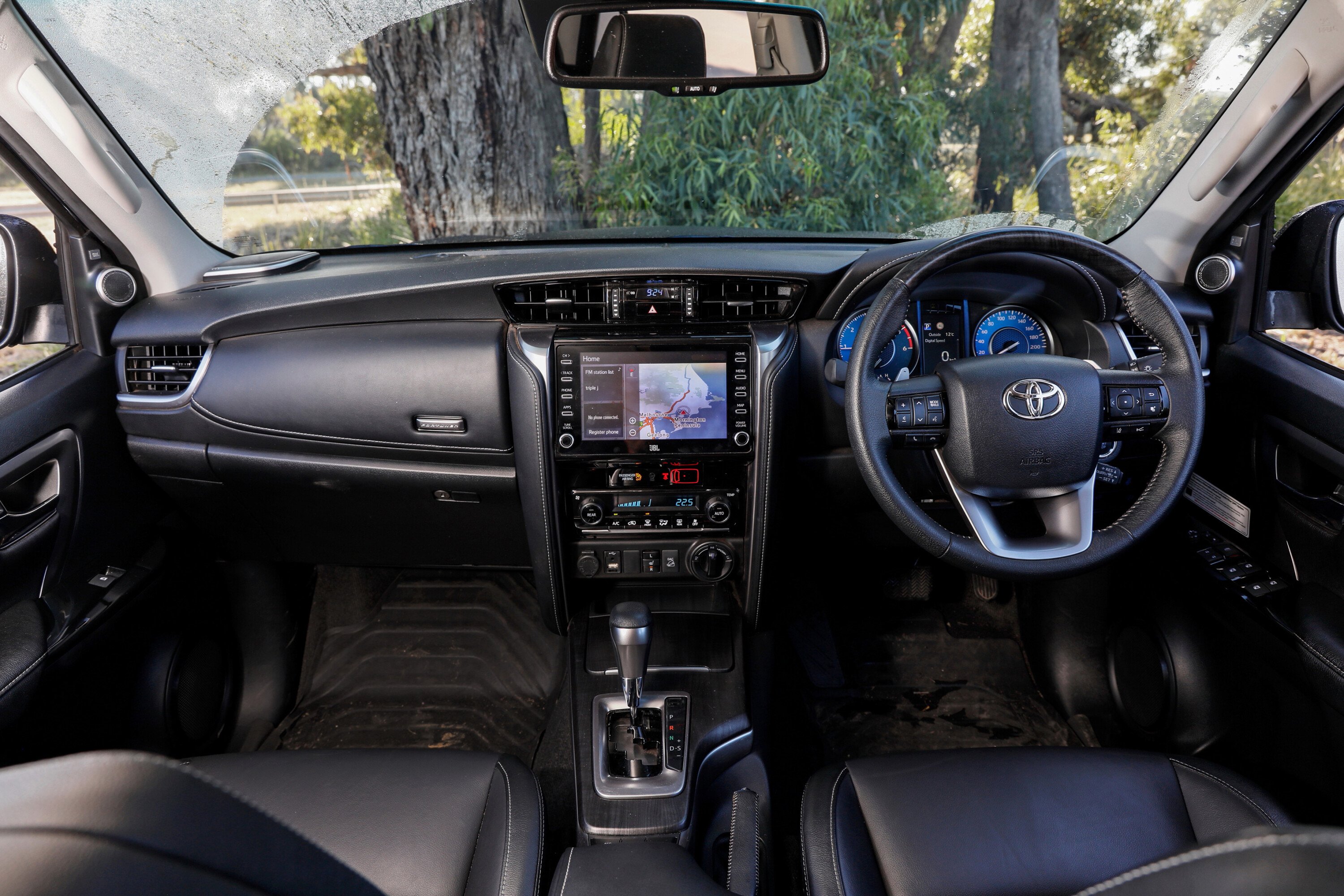
By comparison, the Fortuner’s cabin is roomy, comfortable, and impressively quiet, thanks to soundproofing that isolates a lot of the tyre and road noise. And while the interior finish feels more commercial vehicle than premium passenger car, most of the hard plastics are suitably durable.
A second row of seats that slides forward and back boosts interior flexibility: second-row passengers can maximise their leg room or can add leg room for people riding in the third row.
1
Even the third row of seats is roomy and comfortable, with enough space for occasional adult use on short to medium journeys.
The Fortuner is getting a little long in the tooth, though, and the analogue dials, old-school infotainment system and the plethora of curved edges stamp its time card pretty convincingly.
Given its previous spec and its positioning in the Toyotas SUV range, the Prado is likely to offer seven seats as standard fitment, matching the layout of the Fortuner.
Prices for the 2024 Toyota Prado are yet to be confirmed, but it’s likely that there will be an increase across the board given the expected rise in equipment levels and the addition of a hybridised powertrain.
Currently, the smaller, simpler Fortuner undercuts the Prado right across the range, even though the latter is an older vehicle at heart. When comparing like with like, the Fortuner GX is priced at $58,556 driveaway, compared with the Prado GX at $68,066 driveaway.
Expect Toyota to largely mirror the current four-strong Prado variant mix, though it’s reasonable to expect that a sporty GR will feature within the range at some stage in the model’s lifecycle.
Prices will definitely come under pressure, as well.
Though specs haven’t been revealed for Australia, the 2024 Toyota Prado is likely to be available only in diesel hybrid form, despite the presence of petrol-powered hybrid drivetrains in the Toyota family. This will instantly add a minimum of $2500 to $3000 to the current price.
As well, the Prado is likely to present with an organically increased MSRP, given its move to a new platform, the addition of new tech and the general state of the automotive world.
How much will the 2024 Toyota Prado cost? We expect to hear more about final specs and pricing later in 2023, ahead of its launch in the first quarter of 2024.
The stories below will give you a guide to everything we learned about the new Prado when it was unveiled. All fresh stories published since then will be found on our Toyota Prado model page here.