
Projecta has released its all-new IDC25X Intelli-Charge DC-DC charger, which has been designed to work harder in tougher conditions while providing the best possible care for your battery.
You no longer need to worry about extreme heat or charge current drop-off, as the IDC25X has been extensively tested in Australia’s extreme conditions, with results showing that the unit won’t derate in hot conditions. The IDC25X has been designed to operate in temperatures as high as 90 degrees Celsius, meaning under-bonnet fitment won’t be a problem.
The unit will provide a full 25A of charge up to 75 degrees Celsius. A thermal epoxy resin works as a heat sink to draw heat away from the electronics to the outer casing, helping maintain a consistent charge output of 25A. Also, with intelligent charging, the IDC25X knows the temperature of the battery and adapts the charging conditions for optimum efficiency.
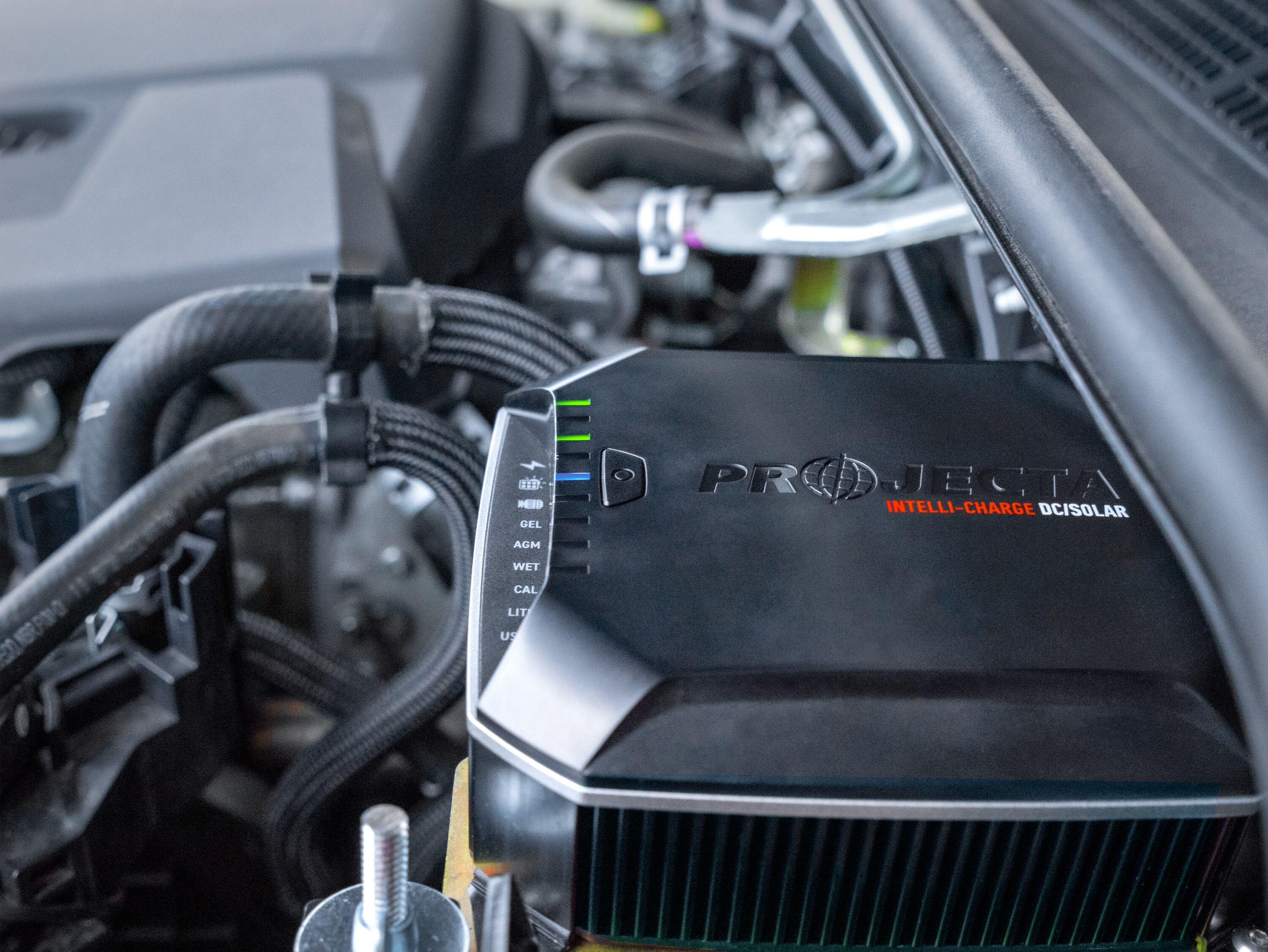
“When it comes to providing the best care for your battery, the IDC25X stands head and shoulders above the rest. With its three- and five-stage charging and automatic temperature compensation, it ensures your battery receives the most precise and optimised charge, regardless of climate fluctuations,” said Dale McBride, Projecta Marketing Manager.
“Say farewell to manual tweaking,” added McBride. “This charger’s advanced technology takes care of it all. Its voltage drop compensation guarantees that every ounce of power reaches your battery, no matter where you install it, offering peace of mind and maximising battery life.”
Rated IP68 and IP69K, the IDC25X will remain dry no matter where it is installed, including the engine bay. The units are vibration- and waterproof-tested in the harshest conditions, which will instil complete confidence in the IDC25X as you tackle the Australian Outback in your 4WD.
The IDC25X is extremely durable and provides a resilient solution for multi-DC-to-DC charging. No matter what your setup looks like, your battery is being charged in the best possible way. The unit is compatible with lithium, AGM, GEL, WET, or CALCIUM batteries, and it offers Automatic Temperature Compensation to further protect valuable batteries.
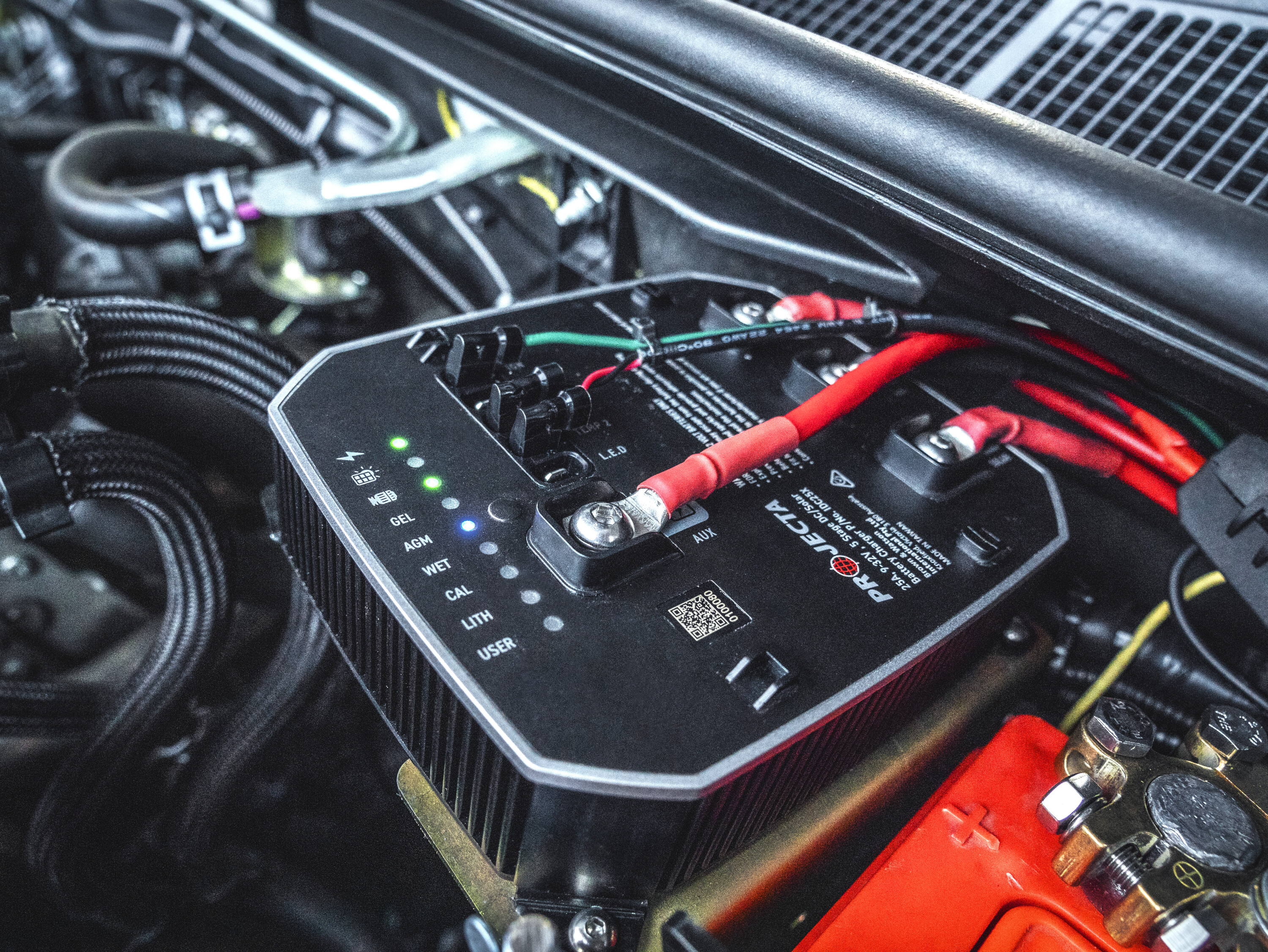
The IDC25X also includes a built-in MPPT solar controller that prioritises solar charging as default and automatically adjusts to the alternator using INTELLI-CHARGE if there’s insufficient sunlight available, while reducing power draw from the vehicle’s electrical system.
A proprietary algorithm maximises solar efficiency even when there’s less sunlight – when compared to the earlier IDC25, the IDC25X is notably more efficient in harnessing solar power. The unit also accommodates solar inputs of up to 360W.
Users will be able to monitor the performance and functions of the IDC25X via the ‘Intellix-IQ’ smart display and app (coming soon), which will allow users to monitor the condition of the battery, charge status and custom charge profiles on the go. Firmware upgrades will be available via Bluetooth, allowing users to introduce new charging profiles from next-gen batteries, improve MPPT efficiency and utilise the Lithium Wake Up mode that is also coming soon.
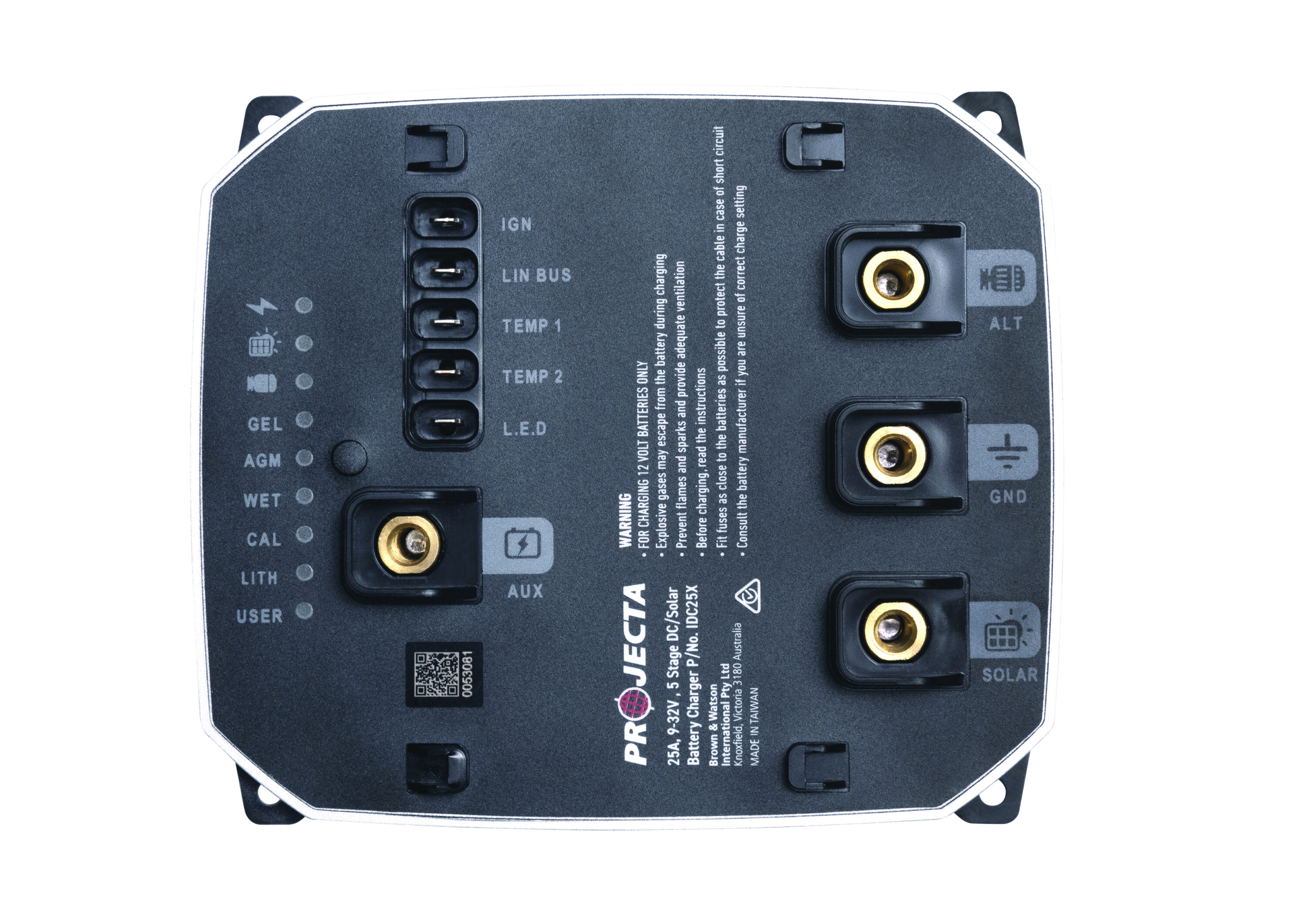
“Experience the IDC25X – a charger that embodies innovation, endurance and convenience, revolutionising the DC-to-DC charger landscape,” said McBride. “Projecta’s dedicated team has meticulously designed the installation process, ensuring it surpasses its predecessor, the IDC25, in ease and simplicity.
“Embrace a secure and reliable nut and bolt termination method, eliminating cumbersome connections. And with included lugs, terminal, and heat shrink, achieving a neat and tidy installation that conceals everything under the cover becomes a breeze.”
Pricing
Projecta provides a five-year warranty on the IDC25X, and it is available nationwide from leading 4WD, caravan, camping and marine outlets for a recommended retail price of $595.
We’re not here to answer the great debate of alloy versus steel, rather we aim to simply outline some of the available options to add some bling, change size or toughen up your HiLux.
There’s a seemingly endless supply of custom wheels available for the Toyota HiLux, ranging from sleek and stylish to rugged and aggressive. So, it doesn’t matter which side of the great debate you sit, there are plenty of options to suit your requirements.
- What it is: Replacement wheels.
- Why you need it: The majority of new 4x4s these days comes with large wheels and low or medium profile tyres. The HiLux is no exception, with 17- or 18-inch wheels. While these look great and perform great on-road, head off-road and you will likely want a little more tyre wrapped around that wheel. The simplest way to do this is drop a wheel size to allow a tyre with a taller sidewall to be fitted without increasing the overall tyre diameter; or perhaps you need a different offset to run the tyres of your choice. There are many reasons to swap out wheels when building an off-roader.
- Buying tips: The HiLux comes with a common six-stud pattern with 139.7mm PCD (often written 6×139.7) and a centre bore/hub bore of 78.1mm. Also ensure the offset is within legal limits, so no more than a change of 50mm – 25mm per side. You’ll also need to check the load rating matches or exceeds that of the standard wheels.
JUMP AHEAD
| Material | Load rating | Available sizes | |
|---|---|---|---|
| ROH Wheels | Alloy or steel | Up to 1500kg | 17-20-inch |
| Method Race Wheels | Alloy | Up to 1200kg | 17-18-inch |
| Speedy Wheels | Alloy or steel | Up to 1200kg | 17-20-inch |
ROH Wheels
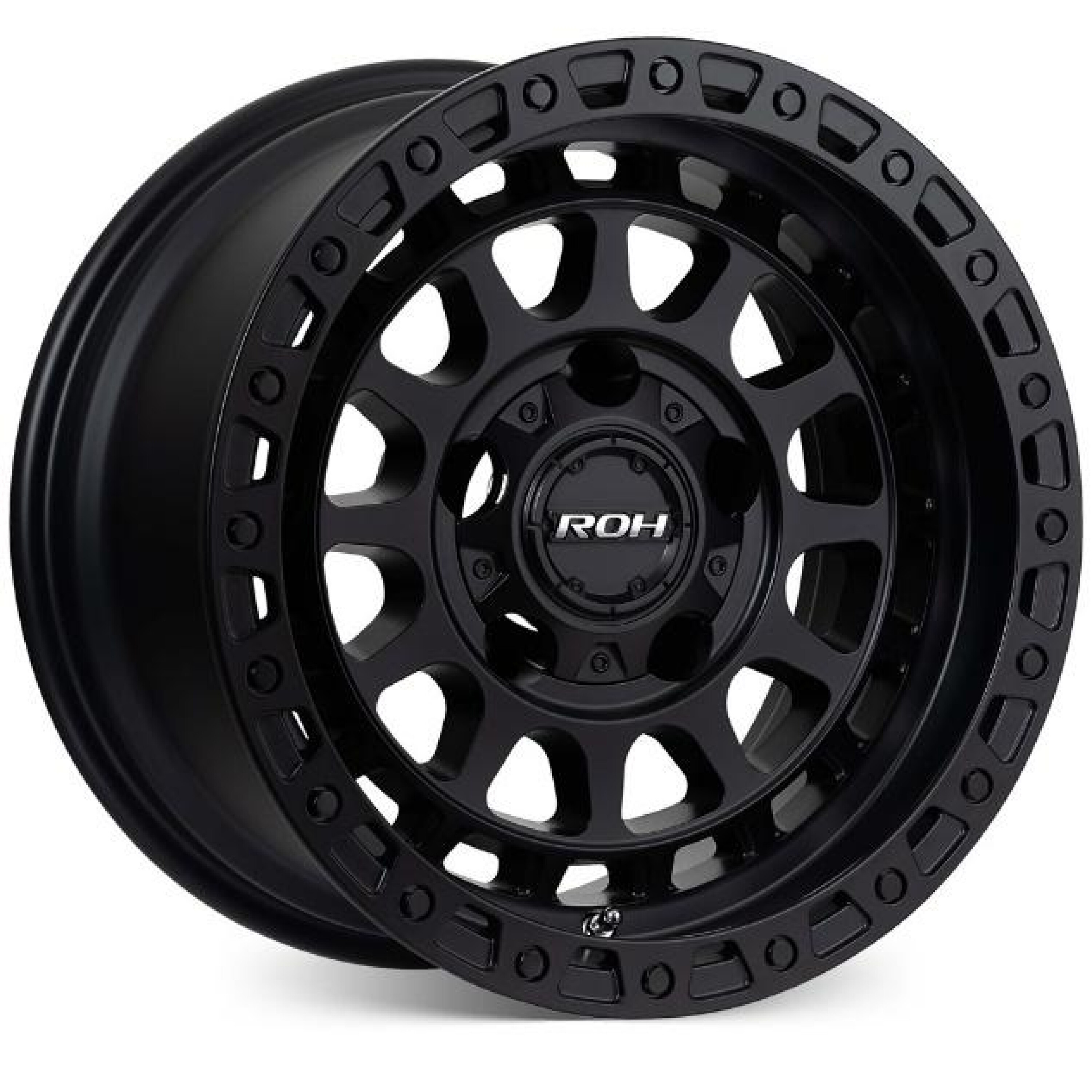
All ROH off-road 4×4 wheels come with the ROH lifetime structural warranty and feature ROH’s “Easycleans Baked Enamel” paint finish for superior salt spray performance and anti-weathering durability.
Specifications
- Material: Alloy
- Load Rating: Up to 1500kg
- Available sizes: 17-20-inch
Pros
- Load rating suitable for GVM upgrade
- Multiple colours and styles available including full-machined
- Matte-black Baked Enamel finish provides superior salt spray performance
Cons
- The fake beadlock look isnu2019t for everyone
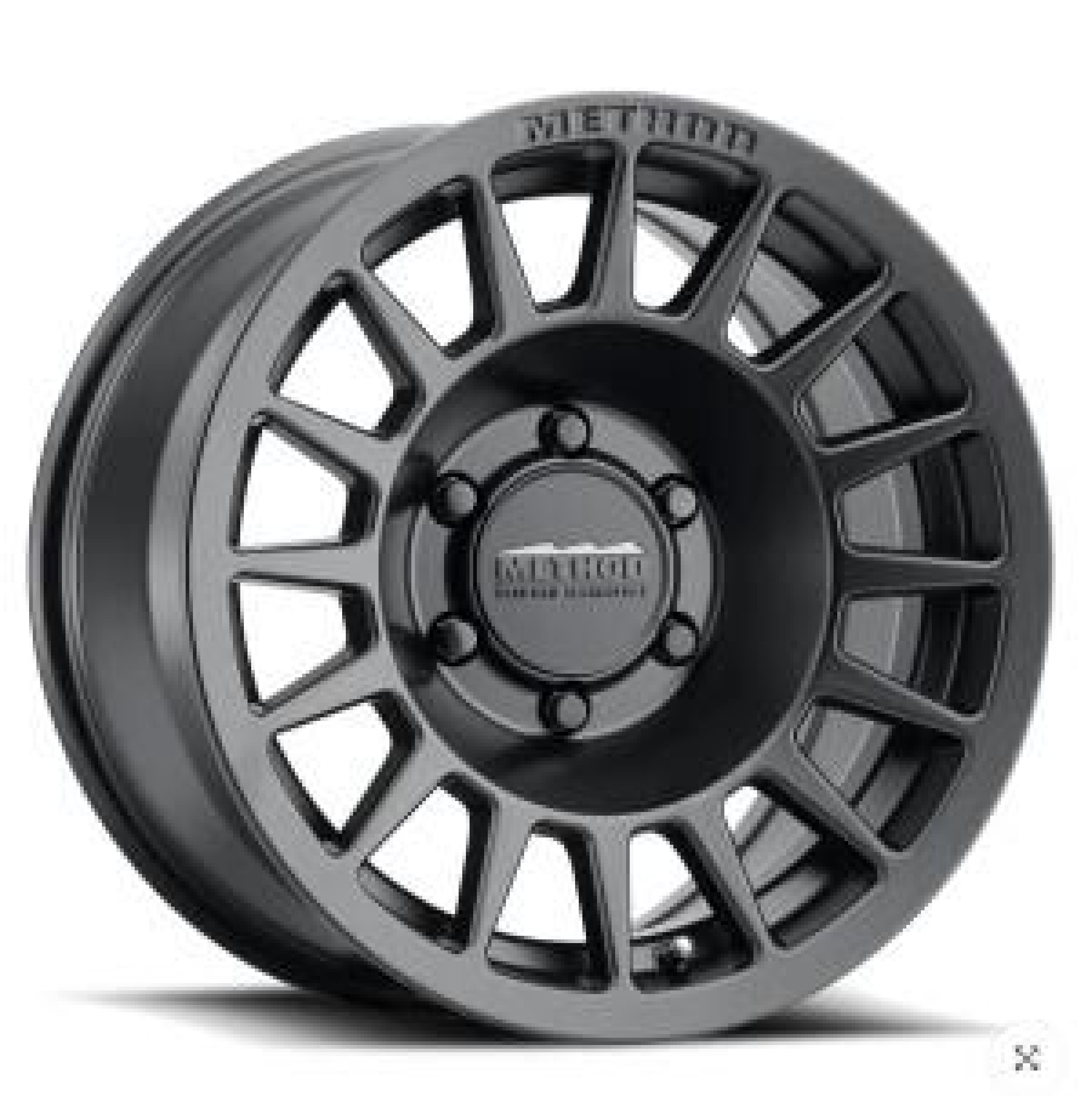
Method Race Wheels: 700 Series trail wheels
Featuring bead-grip technology, these wheels engage with the tyre-bead seat for increased grip while running lower air pressures. An aggressive safety hump on inner and outer bead seat further stabilises tyre and prevents de-beading.
Specifications
- Material: 356 cast aluminium with T6 heat treatment
- Load Rating: Up to 1200kg
- Available sizes: 17-18-inch
Pros
- Patented bead-restraint technology designed to restrain aired-down tyres
- Multiple colours and styles
- Reinforced inner lip taken from race wheel design
Cons
- Blingy brand stamping not for everyone
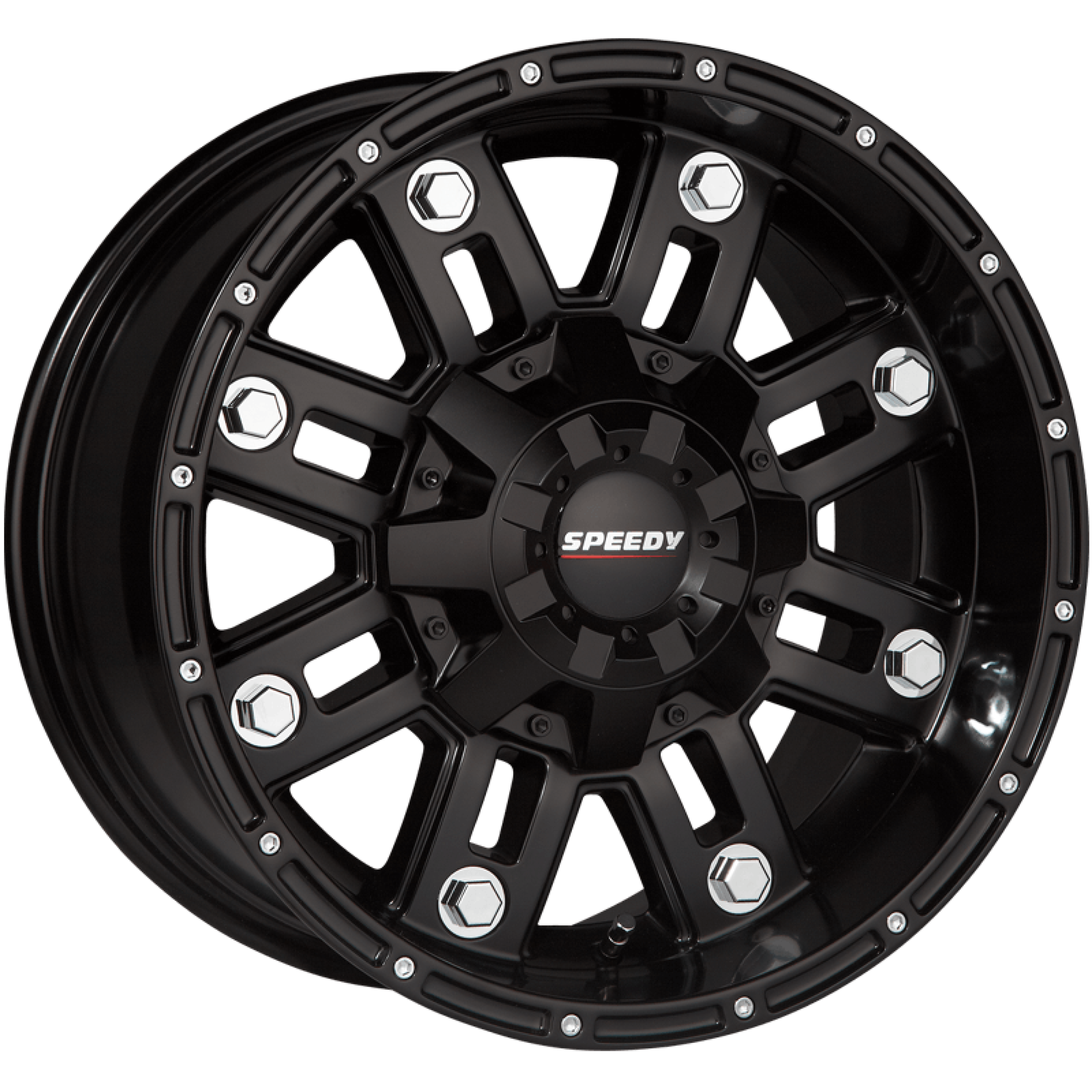
Speedy Wheels
With multiple sizes and styles, Speedy are sure to have a wheel that suits your HiLux and the driving you plan to do in it.
Specifications
- Material: Aluminium alloy or steel
- Load Rating: Up to 1200kg
- Available sizes: 17-20-inch
Pros
- Custom machining available
- Massive selection of styles and sizes
Cons
- Massive selection, so good luck narrowing down your preferences
How we review products
4X4 Australia has been reviewing four-wheel drive vehicles and aftermarket products for more than 40 years.
When looking for the best accessories for your make and model of 4WD, there are some things essential to making sure you have the best off-roading experience.
When we compare products, here are some of the things we consider:
- Warranty
- Build quality
- Value for money
- Time and ease to set-up/install
- Weight
- Fit and finish
- How well it gets the job done
- What materials they’re made from
- Corrosion/UV resistance
- Coatings
- Compatibility with other accessories
- Compliance with ADRs and vehicle safety systems
- Country of manufacture
- Load ratings, to determine what’s the best product across each price point.
Disclosure: When you buy through our links, we may earn a commission. We also include products that we do not earn a commission from.
IFS vehicles are fantastic things in terms of comfort and handling, but they do have an Achilles’ heel.
When the suspension is compressed, the vulnerable underbody components like oil pans and gearboxes get closer to the ground (and potential day-ruining rocks) than you might like. The HiLux comes with some factory protection under these components, but it’s good for one whack and it’s done.
If you’re using your HiLux off-road regularly then it’s only a matter of time until the factory protection is toast and you will need to upgrade to something a little stronger. That’s where aftermarket underbody protection – otherwise referred to as bash plates – comes in.
- What it is: Armour for the underside of your vehicle.
- Why you need it: You may run over rocks, sticks and other objects which can damage the vulnerable parts beneath your vehicle and, in the worst case, stop your trip in its tracks.
- Buying tips: Have a think about underbody protection before you commit to a bull bar, as compatibility is the key. Other accessories such as long-range tanks may impact the ability to install underbody protection, so it’s worth looking at an integrated approach. Also known as Under Vehicle Protection (UVP) and Under Vehicle Armour (UVA).
JUMP AHEAD
| Material | Thickness | Weight | |
|---|---|---|---|
| ARB | Mild steel | 3mm | 30kg |
| Custom Offroad | Stainless steel | 3mm or 4mm | 24-34kg |
| Brown Davis | Mild steel | 3mm | 35kg |
| Bushskinz | Alloy | 6mm | 20kg |
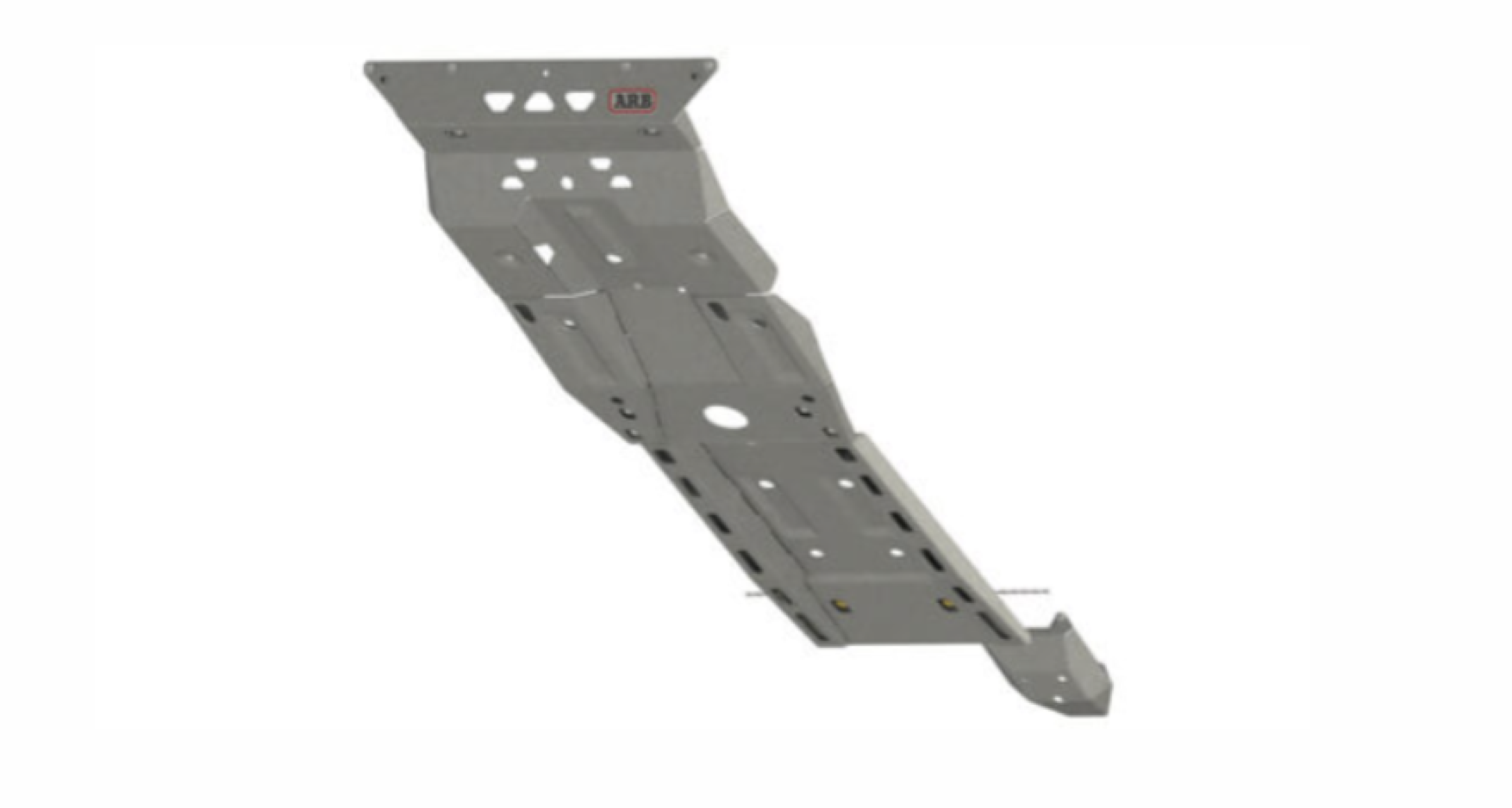
ARB underbody protection
ARB underbody plates are manufactured from laser-cut, pressed and folded 3mm steel for superior strength, and then zinc-plated for longevity.
Specifications
- Material: Mild steel, zinc-coated
- Thickness: 3mm
- Approximate weight: 30kg
Pros
- Compatible with ARB bull bars for protection from bull bar to transfer case
- Recessed mounting bolts to prevent damage and allow easy removal for servicing
- Pressed and folded steel for extra strength
Cons
- Nil
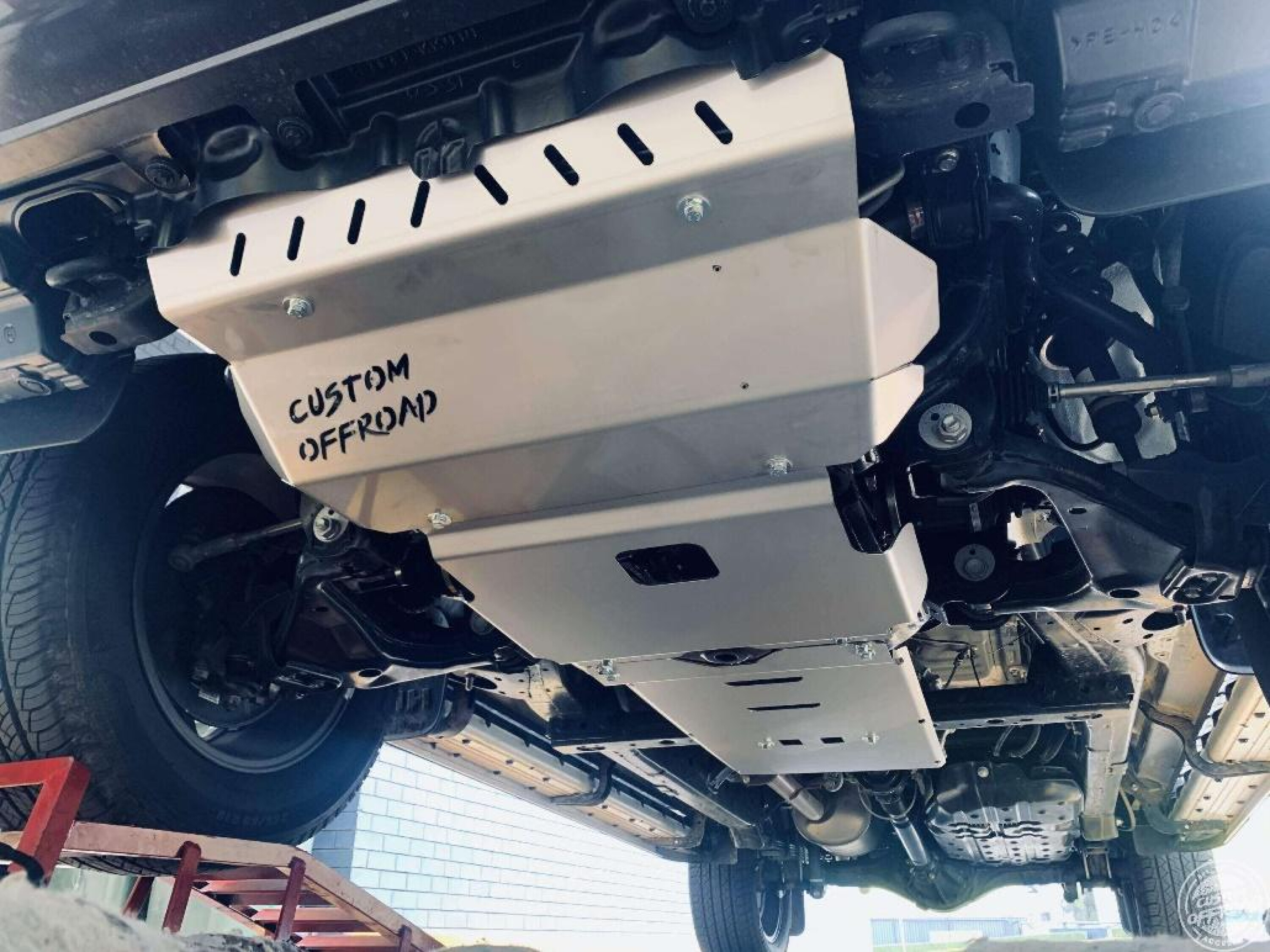
Custom Offroad bash plate combos
Available in 3mm and 4mm stainless steel, these Custom Offroad bash plates are great for general four-wheel driving and will last years and give piece of mind.
Specifications
- Material: Stainless-steel
- Thickness: 3mm at 24kg and 4mm at 34kg
- Approximate weight: 24kg to 34kg
Pros
- Stainless-steel, no rust issues
- Aussie-made by an Australian-owned company
- Fits all bullbars where the factory plates fit
Cons
- Bolt heads not recessed
- Only confirmed to fit up to 2022 u2013 awaiting confirmation of 2023 fitment
Brown Davis under-vehicle protection
With more than 40 years of off-road experience and a solid understanding of what is encountered when off-road, Brown Davis has every base of design covered to ensure you have the best chance of battling the outback and winning every time.
The Brown Davis range of under-vehicle guards will protect your vehicle and give you confidence to travel into the unknown without fear.
Specifications
- Material: Mild steel, powder-coated
- Thickness: 3mm
- Approximate weight: 35kg
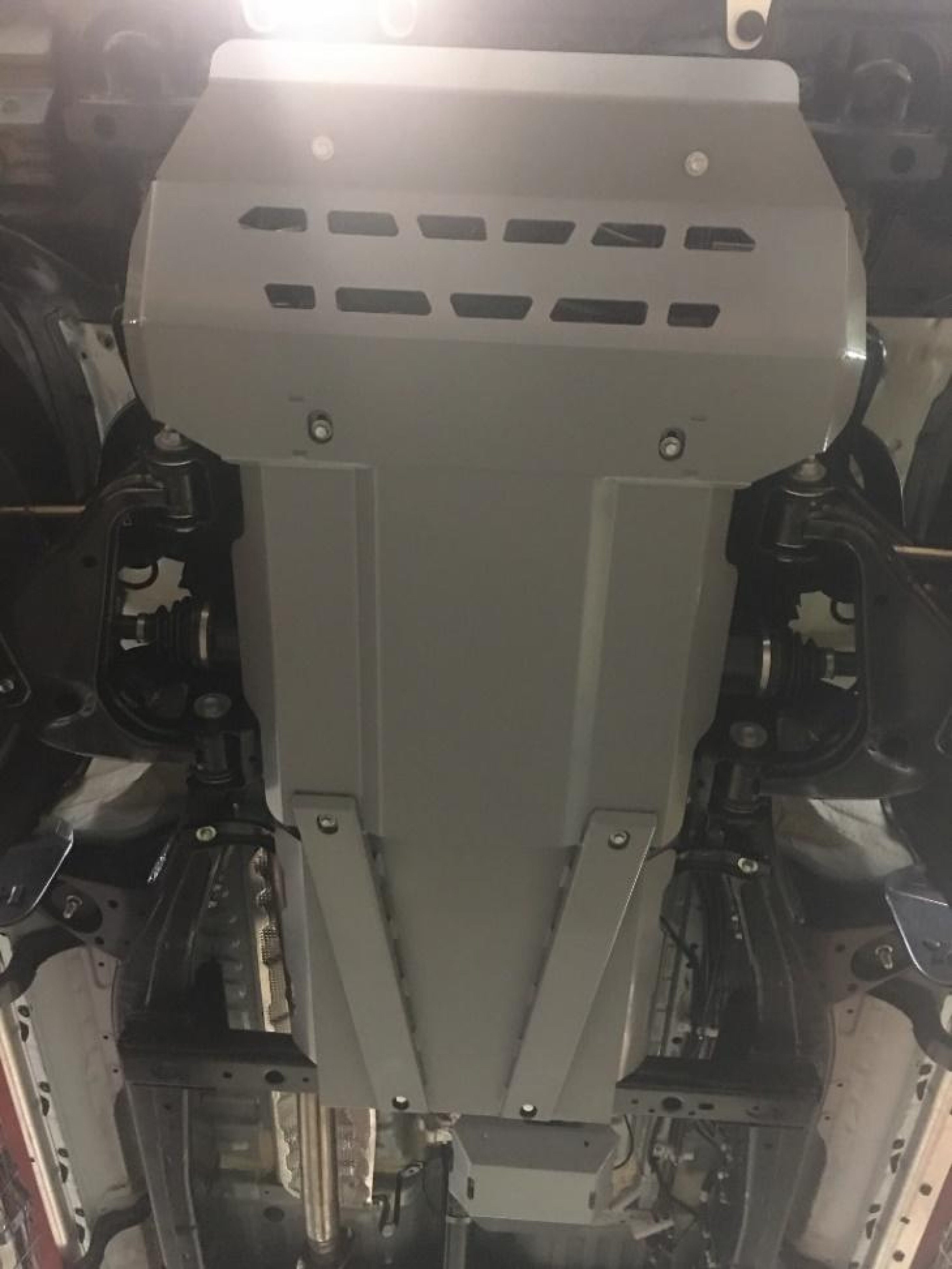
Pros
- Recessed bolt heads
- Easy removal for servicing
- Talk to Brown Davis about compatibility if you have one of its long range tanks
Cons
- Heavy compared to other 3mm options
Bushskinz under-vehicle protection
Made from 6mm 5052 H32 grade aluminium, these Bushskinz bash plates offer steel-like strength without the weight.
Specifications
- Material: Alloy
- Thickness: 6mm
- Approximate weight: 20kg
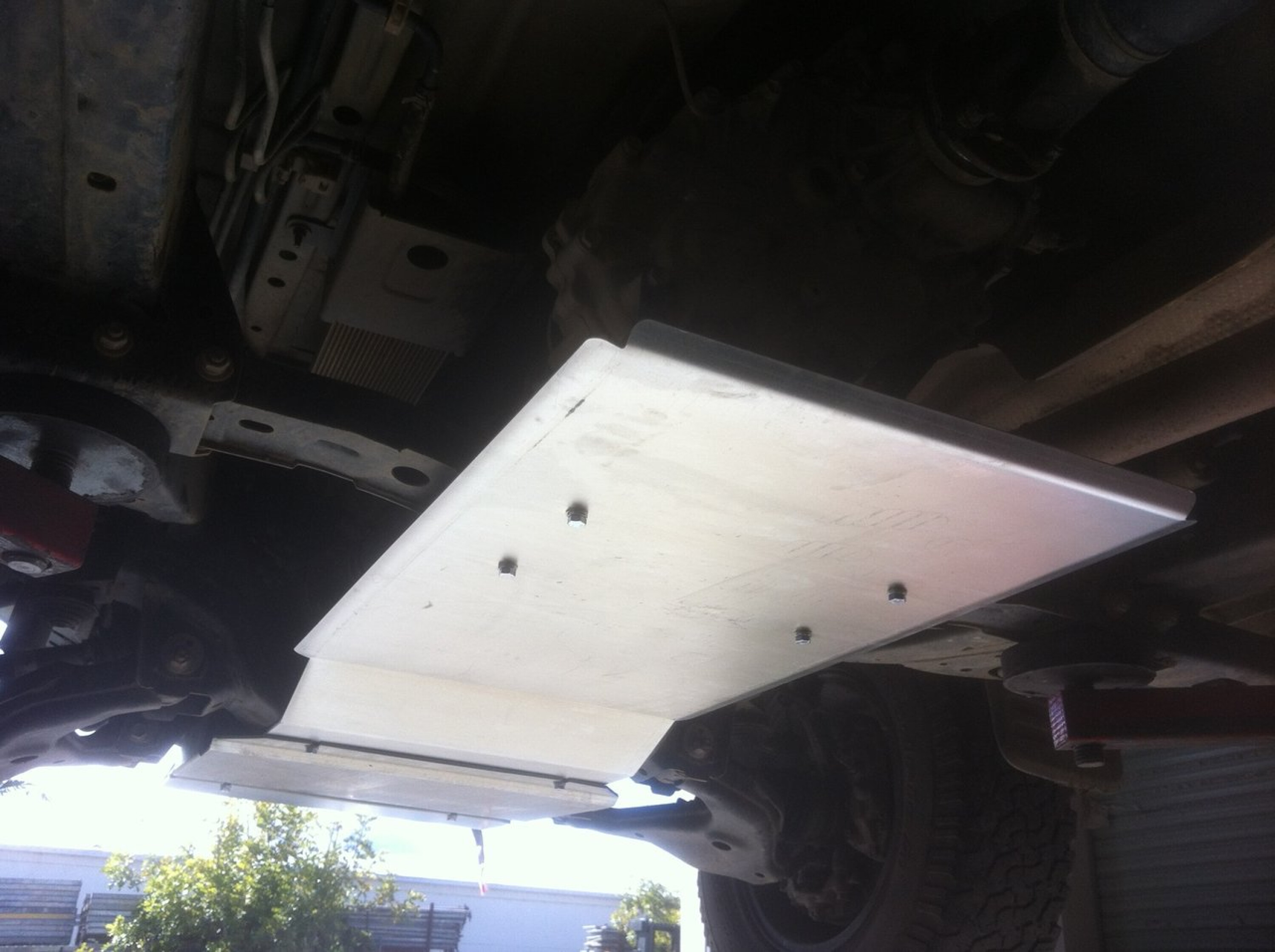
Pros
- Similar strength to 3mm steel with less weight
- Will not rust like steel
- Confirmed compatibility with various bull bars and recovery points
Cons
- Little pricier than some others
How we review products
4X4 Australia has been reviewing four-wheel drive vehicles and aftermarket products for more than 40 years.
When looking for the best accessories for your make and model of 4WD, there are some things essential to making sure you have the best off-roading experience.
When we compare products, here are some of the things we consider:
- Warranty
- Build quality
- Value for money
- Time and ease to set-up/install
- Weight
- Fit and finish
- How well it gets the job done
- What materials they’re made from
- Corrosion/UV resistance
- Coatings
- Compatibility with other accessories
- Compliance with ADRs and vehicle safety systems
- Country of manufacture
- Load ratings, to determine what’s the best product across each price point.
Disclosure: When you buy through our links, we may earn a commission. We also include products that we do not earn a commission from.
The previous WK2 generation of the Jeep Grand Cherokee was the best-selling model ever for the iconic brand in Australia due to a number of factors.
It was stylish, it had a spacious and well-equipped interior, it offered decent off-road ability when equipped with the Quadra-Drive 4×4 system and height-adjustable suspension, there was a choice of V6 and V8 petrol engines as well as an excellent V6 diesel option, it carried a 3500kg towing rating and, compared to the popular Toyota LandCruiser and Nissan Patrol options, it was more affordable and more compact.
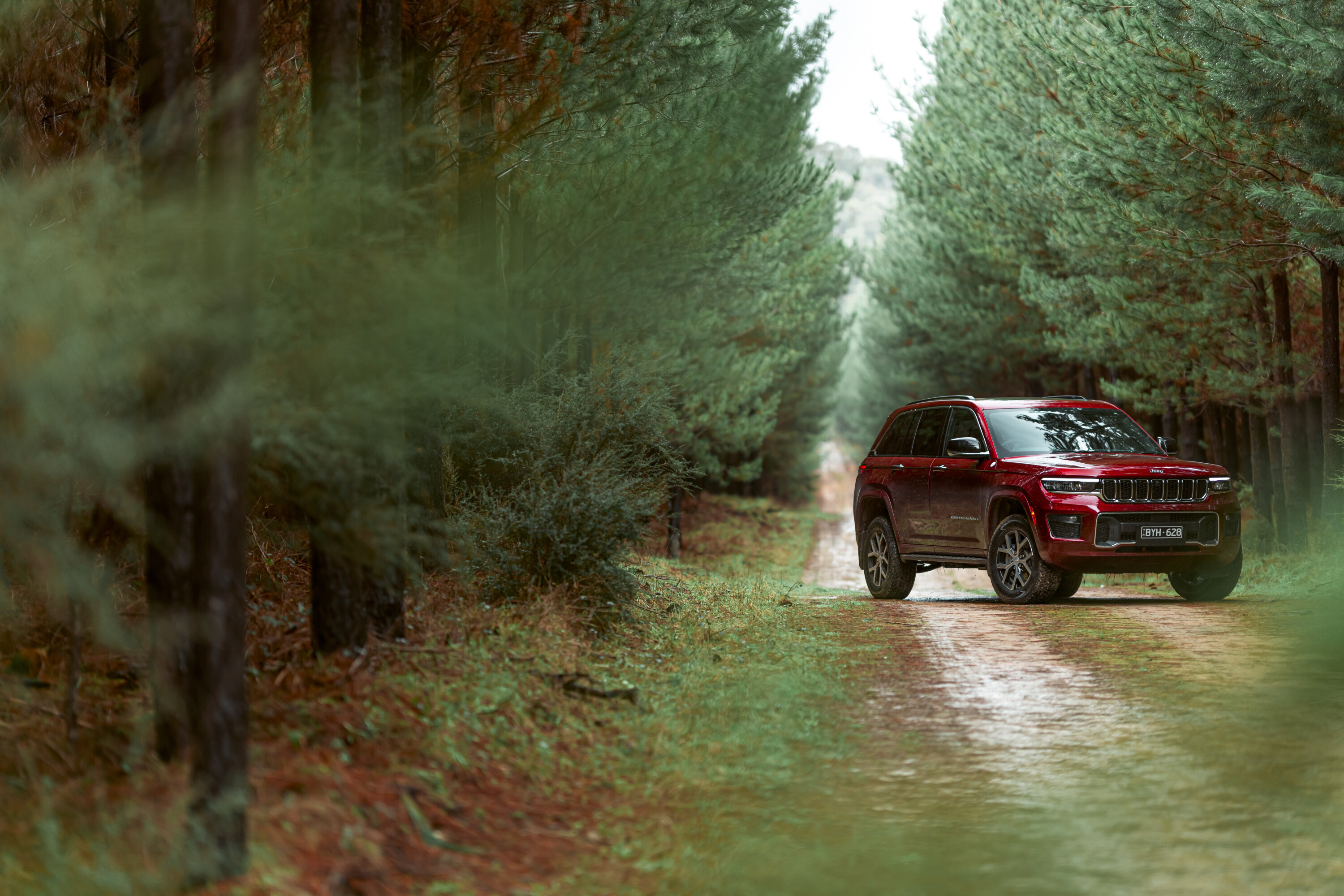
That last point of size was especially important as the WK2 found favour with the caravanning set – which continues to this day – who were usually empty-nesters who travelled two-up and loved that towing capacity.
So we were very interested to see how the new WL Grand Cherokee would go when it arrived as a very different vehicle. First arriving as the seven-seat Grand Cherokee L in 2022, the five-seat version only reached Australia earlier this year.
Jeep has gone for more of a well-equipped luxury design for the WL in lieu of off-road prowess and towing ability, and not all models get a dual-range transfer case and height adjustable suspension.
JUMP AHEAD
- What it gets
- Safety
- Powertrain
- On-road performance
- Off-road performance
- Off-road specs
- Ownership
- Verdict
- Specs
What it gets
The example tested here is an Overland model equipped with the optional Off-Road Group package which adds a heavier duty 9-inch rear axle (up from 7.7-inch standard), underbody skid plates and protection, and drops the tyre size down to a more practical and comfortable 265/60R18 all-terrain.
A Trail Rated badge tells you that this is the off-road spec Grand and the Off-Road Group package adds $2750 to the $98,450 base price of the Overland.
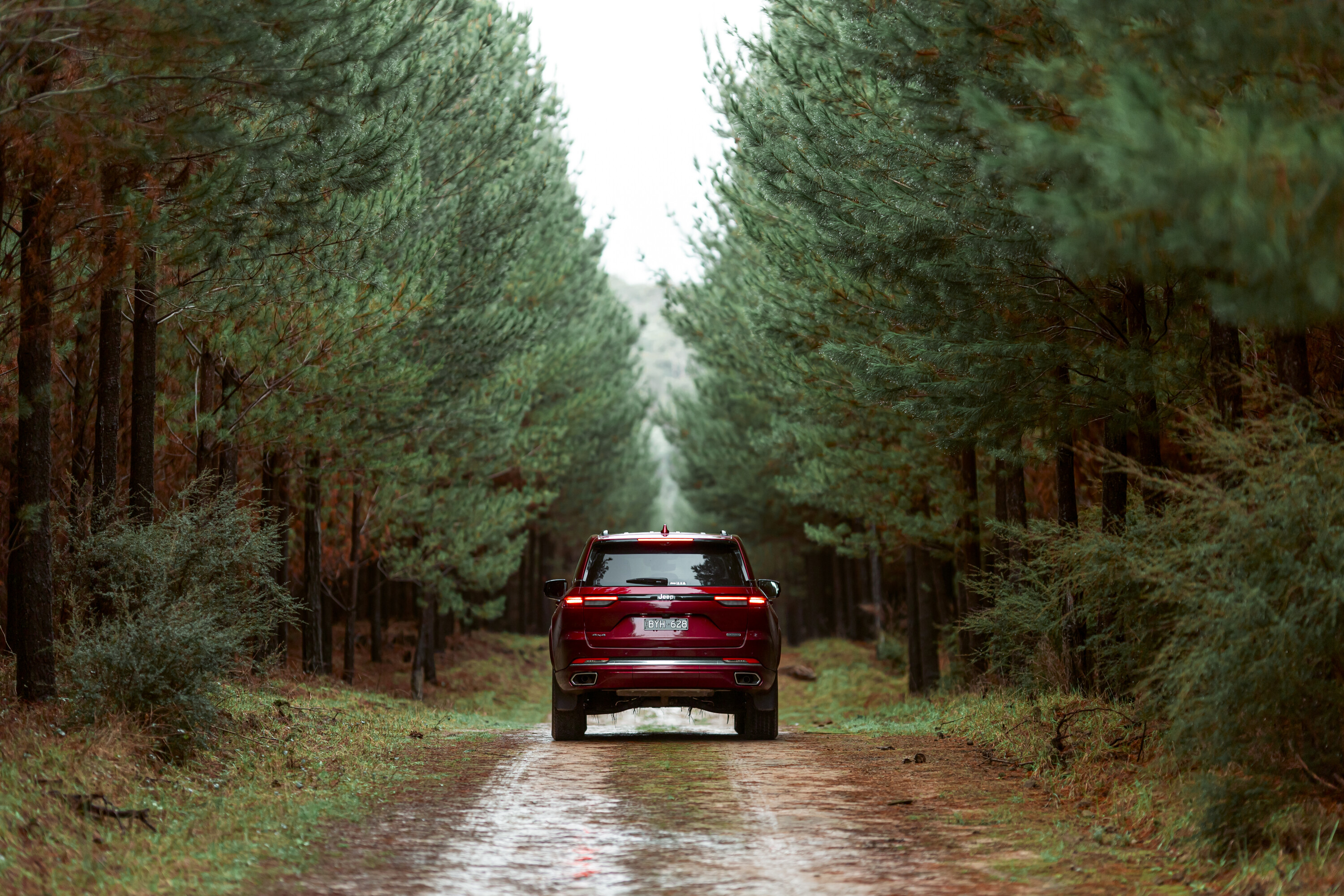
This test vehicle also featured the Luxury Technology Group, which adds ventilated second-row outboard seats, power adjustment and massage features on the driver and passenger front seats, window shades for the second row seats, a digital rearview mirror, four-zone climate control, and a wireless phone charging pad for a further $4500.
Finally, premium paint adds another $1750 to the price, bringing the total up to $112,050 plus on road costs.
That’s a fair whack for a Jeep Grand Cherokee but once you’re inside it you can see and feel the premium features that add up to this price. Nappa leather seats, a 10.5-inch A/V screen with wireless Apple Carplay and Android Auto, LED interior lighting, a huge dual-pane sunroof, and a nine-speaker Alpine sound system are all among the standard Overland features.
Safety
The WL Grand Cherokee is safer than ever before with standard kit including Active Emergency Braking and pedestrian/cyclist detection, rear cross traffic detection, blind-spot monitoring, lane departure warning with active lane keeping, advanced brake assist, front and rear parking sensors and cameras, and TPMS.
Jeep took a bit of a hit in the recent ANCAP test results where the five-door petrol models were only given a four-star rating, while the Grand Cherokee L and 4x4e variants received a full five stars.
The discrepancy was due to the performance of the seat belts in the rear seats of the five-seater and in regards to this Jeep says “modifying the rear outboard passenger seat belts for future productions is something it is actively considering”, while pointing out that the vehicle meets all current seatbelt design and safety requirements.
All these standard features contribute to an interior that is a very nice and spacious cabin to ride in. Jeep has certainly nailed it with the upmarket premium feel of the WL Grand Cherokee. The cabin is wider and more airy than the previous model and behind the back seat there’s a cavernous 1067 litres of stowage space.
Powertrain
Until very recently, the WL Grand was only available with one powertrain but the $130,000 plug-in hybrid 4x4e variant has now added a second choice.
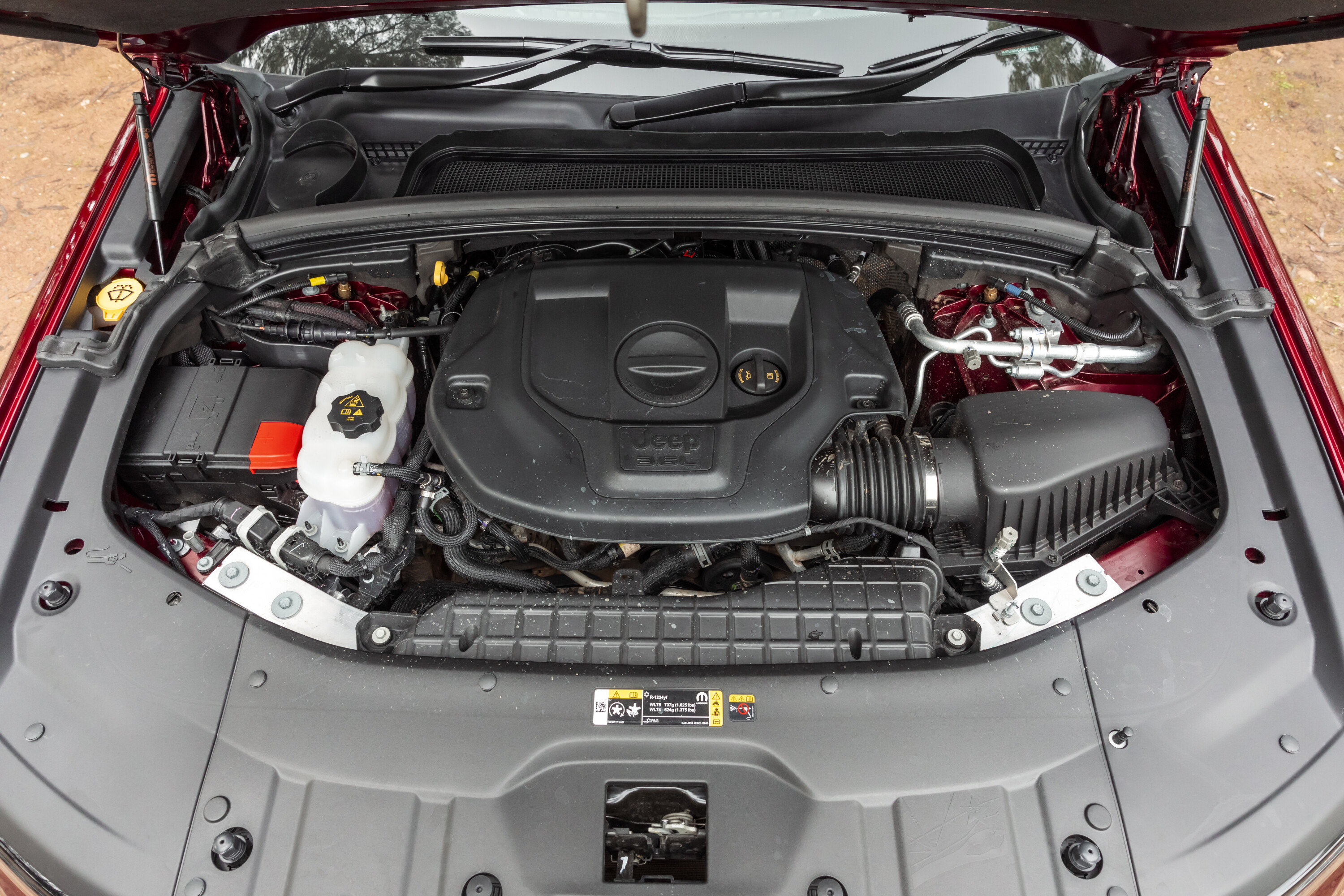
All other variants get the 3.6-litre V6 petrol engine backed by a ZF eight-speed automatic transmission. This engine might be getting long in the tooth but with 210kW and 344Nm on tap it gets along surprisingly well considering the size and equipment in the Jeep.
While the engine’s performance is adequate for the WL Grand, where it does let the overall package down is in refinement, which doesn’t match up with the premium feel of the vehicle. The V6 is harsh when you put your foot down and it likes a drink when you do as well. Over our week of testing it used 14.3L/100km while the official combined figure is 9.9L/100km.
The feel of the engine is somewhat overshadowed on some sealed-road surfaces where the NVH (Noise, Vibration, Harshness) levels are extremely poor, bordering on unacceptable. We noted this in our drive of the Grand Cherokee L last year but that vehicle rode on 21-inch wheels with lower profile tyres, so we had hoped the problem wouldn’t be as evident riding on 18s with more tyre sidewall.
The suspension does a superb job of managing the Jeep over all sorts of terrain and roads
One thing that might be responsible for this NVH transmission to the cabin is the fact that the front suspension is mated directly to the engine and the harshness of the road surface is being transmitted directly through the front tyres, suspension links and engine mounts to the vehicle body. This on-road NVH lets down what would otherwise be a highly polished performance and ride quality.
The suspension does a superb job of managing the Jeep over all sorts of terrain and roads. It is well planted on twisting mountain roads, and balanced on the highway. Raise the Quadra-Lift air suspension to give up to 276mm of ground clearance when off road and the Overland becomes an accomplished go anywhere wagon.
On-road performance
The Grand Cherokee has always been a superb grand touring wagon and the WL takes that tradition and exemplifies it. The full independent suspension delivers dynamic handling while the V6/eight-speed powertrain delivers just enough performance for spirited driving.
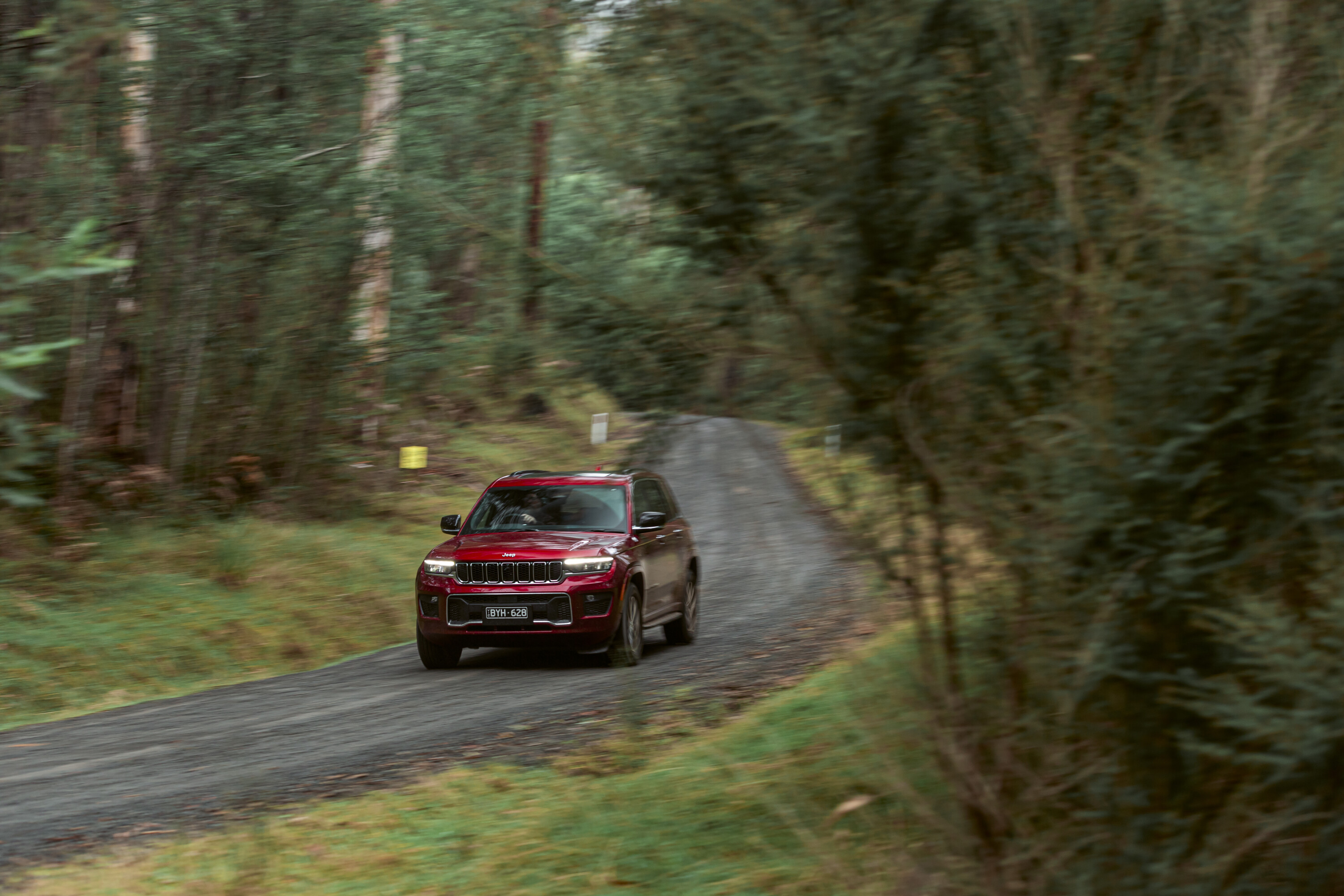
The sumptuously appointed interior and large glasshouse make the Grand Cherokee a comfortable place to tour in with an excellent view of the great outdoors rolling on by. There’s just that NVH to tarnish the performance but it’s certainly worth sampling.
The Grand Cherokee is a more dynamic on-road tourer than most other off-road capable, 4×4 wagons of its size. Certainly better in the twisties than a Toyota Prado or a Ford Everest, and a challenger for a Land Rover Defender if not the Discovery.
Off-road performance
While the Jeep might be able to better the aforementioned competitors on road, it wouldn’t compete so when the going gets rough.
While the Quadra-Lift suspension allows for plenty of ground clearance and the Quadra-Trac 2 transfer case gives drivers low-range gearing, the WL isn’t as polished off road as those other wagons, or even the previous Grand Cherokees.
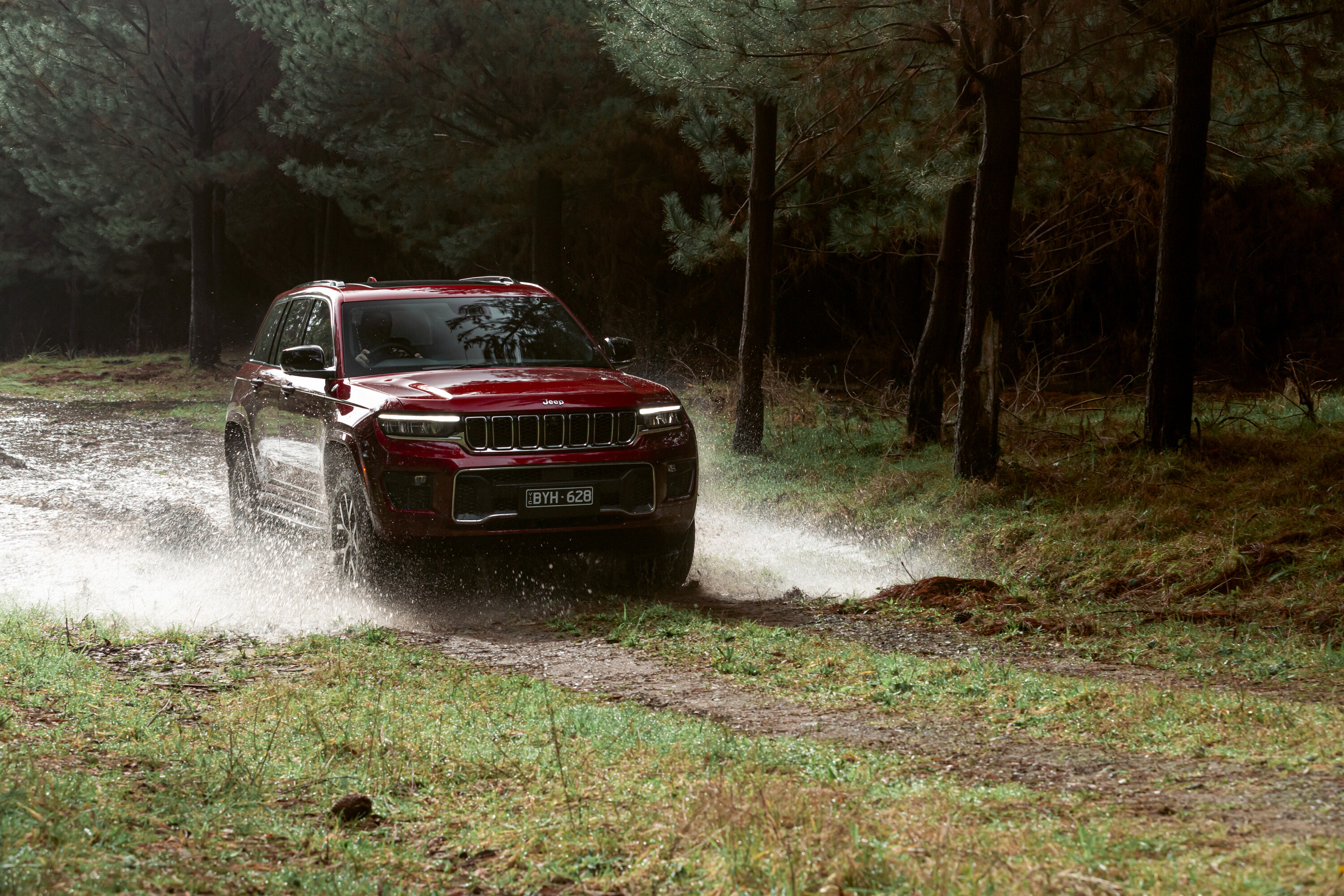
Jeep no longer includes locking differentials in the Grand with Quadra-Trac 2 like it used to offer with Quadra-Drive. While this system will get adventurers over most terrain, it’s not as capable as others, while only the Land Rovers can outdo the Jeep for a premium feel and ride.
Interestingly, Jeep did previously offer a Trailhawk version of the regular WL Grand in the USA but for 2023 this most off-roadable variant has now been made exclusive to the 4x4e powertrain, and it’s not yet offered in Australia.
Off-road specs
| Departure angle | 28.4u00b0 |
|---|---|
| Rampover angle | 24.0u00b0 |
| Approach angle | 30.1u00b0 |
| Wading depth | 610mm @ max height |
| Ground clearance | 276mm @ max height |
Ownership
A good thing about a naturally aspirated petrol engine like the Jeep’s Pentastar V6 is that it’s a relatively simple engine and as such should be reasonably reliable and affordable to service and maintain.
The service intervals for the Grand Cherokee come around every 12 months or 12,000km, and capped-price servicing lists them at $399 a pop for the first five services.
That capped-price servicing comes as part of the brand’s ‘Jeep Wave Commitment’ which gets you the capped servicing, five-year/100,000km warranty and lifetime roadside assistance, providing you keep to the regular service schedule at your Jeep dealer.
Verdict
If you were to drive your WH2 Grand Cherokee into your local dealer looking to trade up to the latest model to do a similar job to your current model you might be in for a rude shock.
For a start, you’re not going to be able to buy one with a diesel or a V8 engine; nor will it tow your three-tonne-plus caravan; and it’s going to cost you a fair bit more to get a similar model spec for spec.
The WL Grand Cherokee is better equipped both in standard features and safety, its cabin is more spacious and has a more luxurious feel than before
On the plus side, the WL Grand Cherokee is better equipped both in standard features and safety, its cabin is more spacious and has a more luxurious feel than before, and you now have the option of a seven-seat model and/or the 4x4e PHEV powertrain.
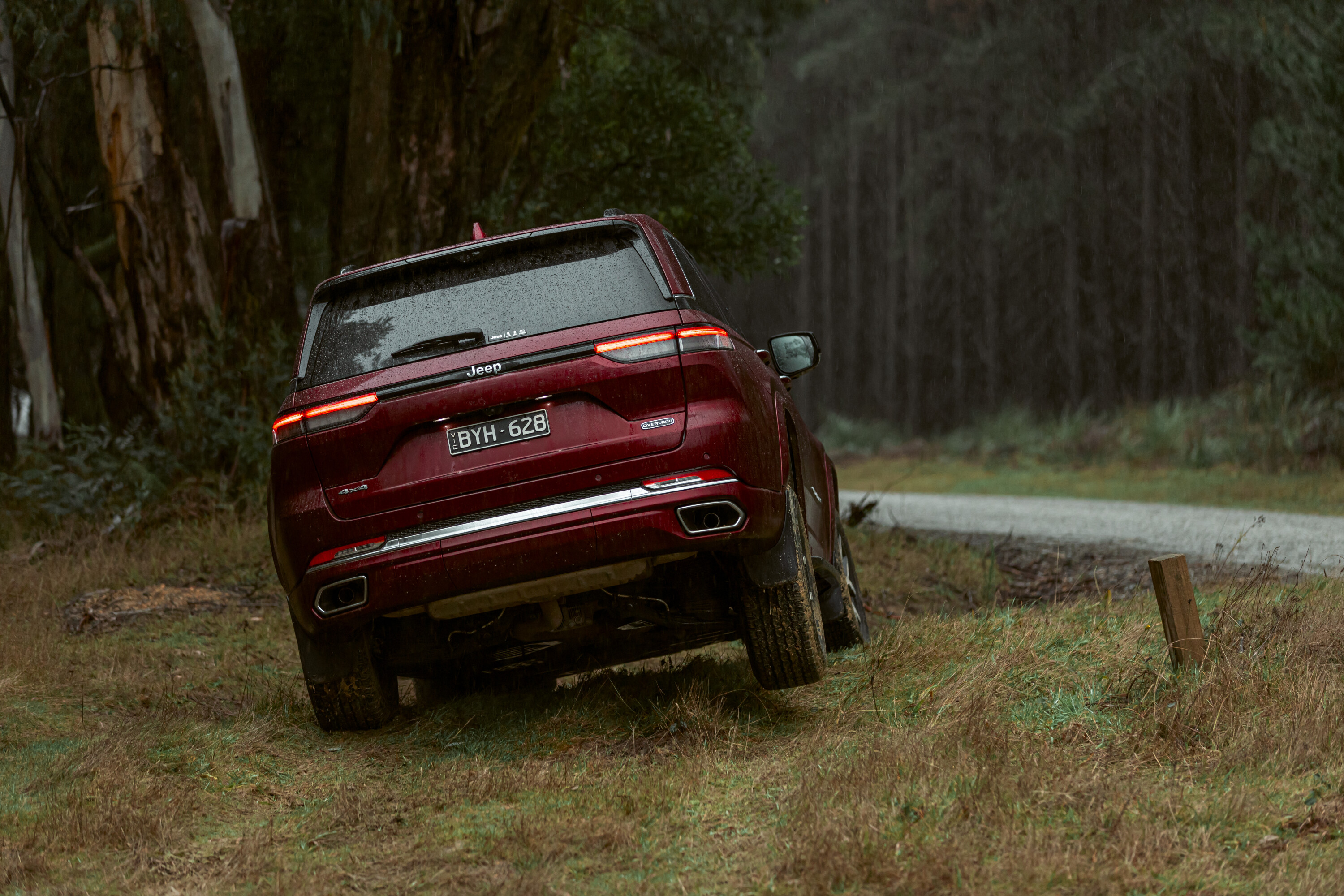
While some of those negatives might be deal-breakers that send buyers looking elsewhere, the positives should be enough to bring a whole new group of buyers to the historic nameplate. The WL Grand Cherokee is a nice car to drive on road and bush tracks but is let down by NVH levels from both the chassis and engine that don’t live up to what the superb cabin deserves.
There are other vehicles that do the light-duty all-wheel drive SUV job well, and other 4x4s that deliver better performance in the off-road and towing disciplines. Think about the large soft-roaders from Volkswagen Group, Kia, Mazda and Hyundai for the former, and Toyota LandCruiser, Ford Everest, Nissan Patrol and Land Rover Defender for the more heavy-duty options.
While the WL brings a step up in its premium feel and equipment, it also sees a step up in price that will encourage buyers to look to broader options in that price range.
2023 Jeep Grand Cherokee Overland specs
| Price | $98,450 + ORC and options |
|---|---|
| Engine | V6 petrol |
| Capacity | 3604cc |
| Max power | 210kW @ 6400rpm |
| Max torque | 344Nm @ 4000rpm |
| Gearbox | 8-speed automatic |
| 4×4 system | On-demand dual-range 4×4 |
| Crawl ratio | 44.2:1 |
| Construction | 5-door wagon on monocoque platform |
| Front suspension | Height-adjustable independent with A-arms and struts with air springs |
| Rear suspension | Height-adjustable independent with 5-link location and air springs |
| Tyre spec | 265/60R18 all terrains |
| Tare weight | 2166kg |
| GVM | 2744kg |
| GCM | 5557kg |
| Payload | 698kg |
| Towing capacity | 2813kg |
| Seating capacity | 5 |
| Fuel tank capacity | 87L |
| ADR fuel consumption* | 9.9L/100km |
| On-test fuel consumption | 14.3L/100km |
*Australian Design Rule ‘Combined-Cycle’ claim
Parking my Prado under the carport is a real challenge, even after chopping the front fascia out with a grinder and reciprocal saw.
One side of the carport was still lower than the other, and my wife wasn’t happy about me parking in the middle of the carport, leaving her to park her car out in the weather.
With a 50mm suspension lift and a rooftop tent mounted to load bars on a Tracklander backbone, the Prado was a smidge under 2.2m tall. Then I mounted some load bars to the lid of the tent, installed a TRED mounting baseplate and 115mm threaded mounting pins to carry four TRED Pro recovery boards, and overall height grew to 2.3m.
This was a nightmare when it came to accessing underground carparks or negotiating fast-food drive-throughs, let alone squeezing under the carport. I once tried to enter an underground carpark with a clearance of 2.3m but ended up destroying two of the plastic TRED securing nuts, as they sat just 2mm above the top of the threaded mounting pin. Thankfully the pins weren’t damaged.
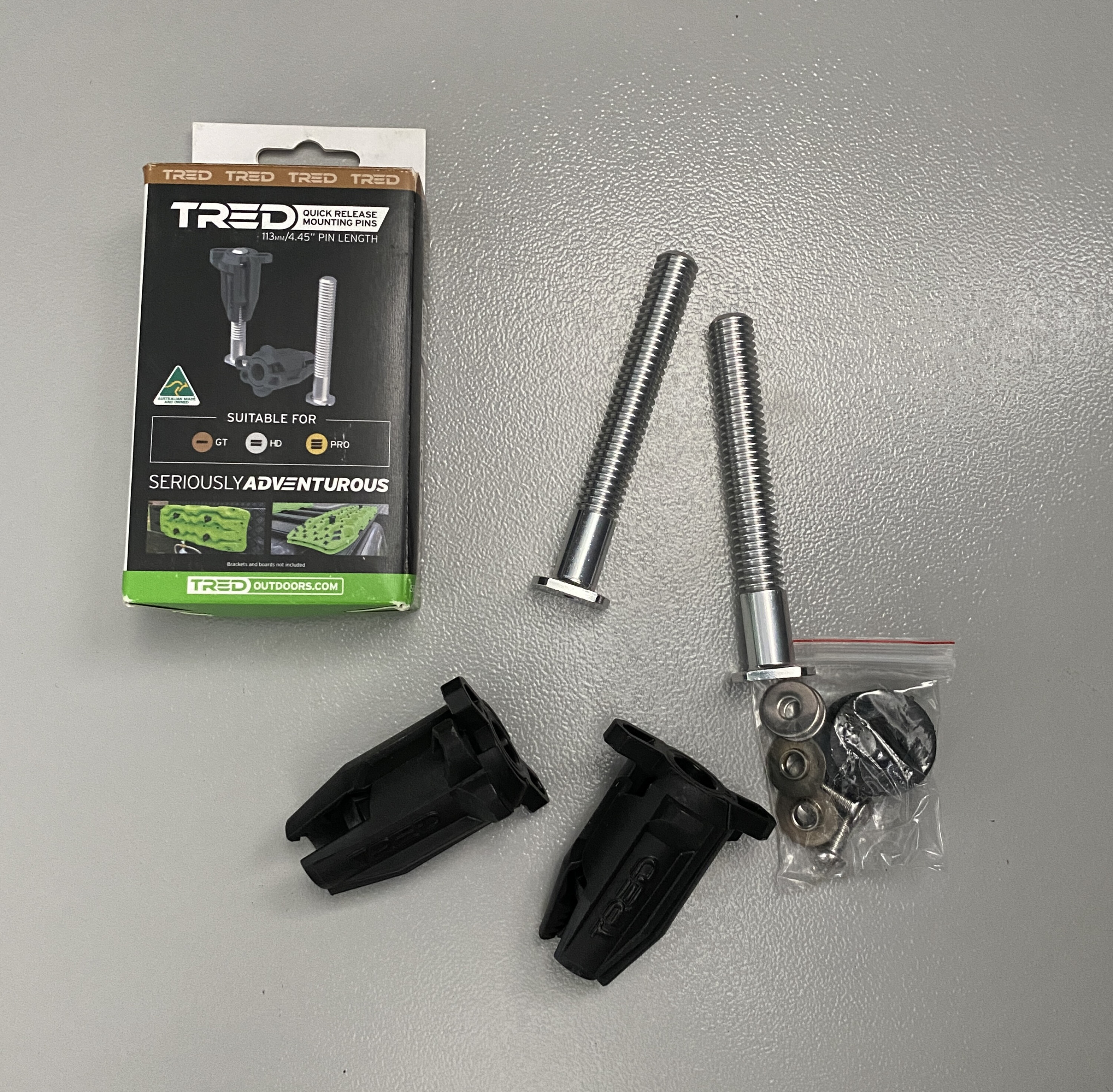
Recently TRED Outdoors released 113mm Quick Release Mounting Pins with a new style of securing nut called the TRED Quick Release Ratchet Handle. While the name is long, this new product significantly reduces the height of TRED mounts. Keen to try them out, I jumped online and had two pairs heading my way pronto.
The first thing I noticed was that the ratchet handle is much shorter than the original plastic securing nut, by 25mm, down from 90mm to 65mm. By also taking 2mm off the height with the 113mm mounting pin, I was looking at lowering the Prado’s height by around 25mm.
Now, I can hear you asking, why do I need to carry four recovery boards? If you carry two the clearance will be improved even more, but as I travel solo, having four TRED Pros is a benefit in self-recovery situations, and I also use them to level the Prado when I get to camp.
The TRED 113mm Quick Release Mounting Pins come in pairs with all the gear you need to install them on the mounting plates and they retail for $49.95. You can also purchase the Quick Release Ratchet Handles separately for $20 each if you already have a set of Quick Release pins. The unique design will mount up to four TRED GT, HD or PRO model recovery boards, or two of the TRED 800/1100 model recovery boards. They also work with other brands of recovery boards.
Latest Gear Guides

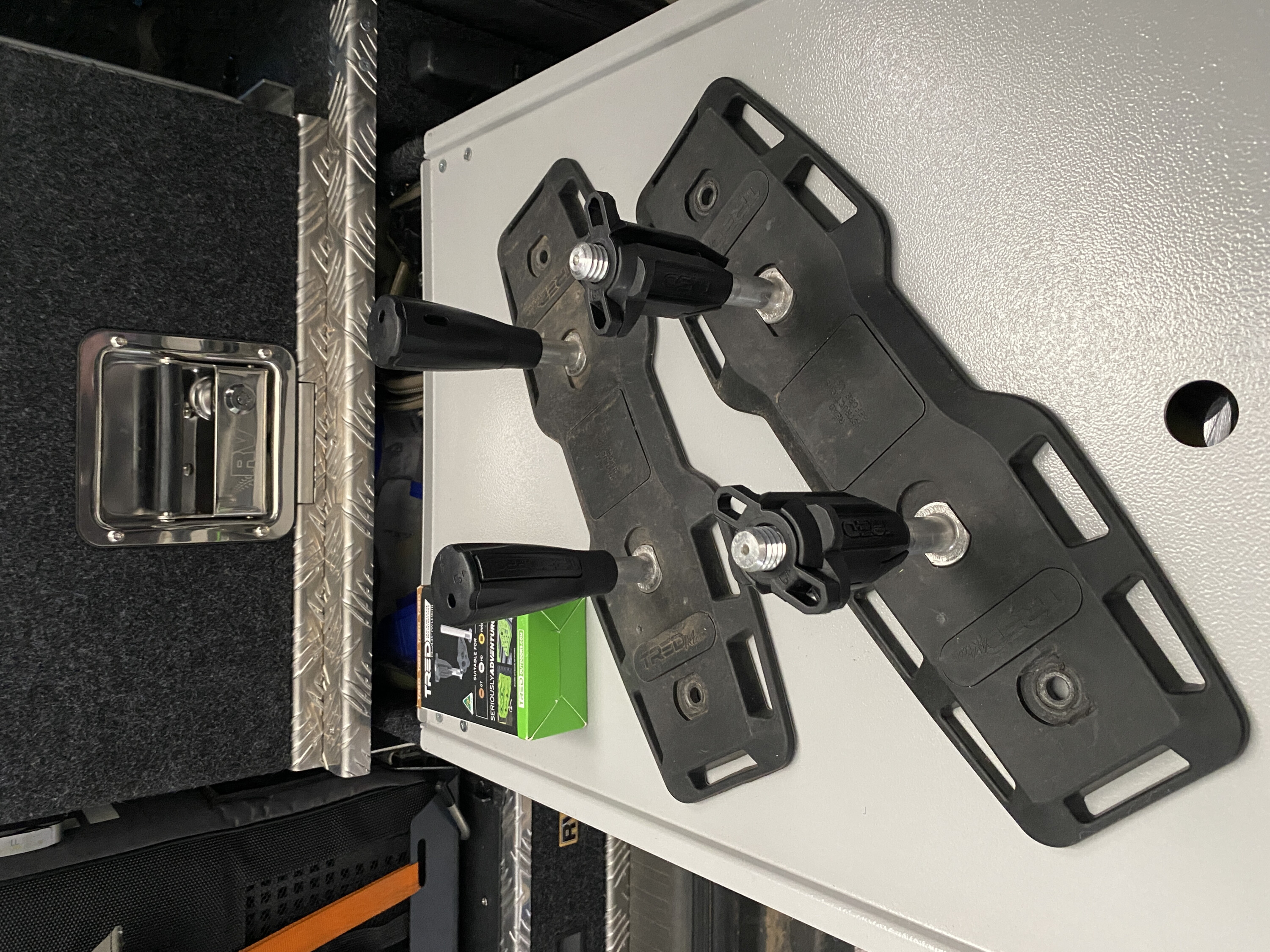
The TRED 113mm Quick Release Mounting Pins have taken the hassle out of accessing the recovery boards and I can now get to them quickly and easily while keeping them secured safely on the Prado. The ratchet handles are manufactured from reinforced nylon and are lockable with a padlock to secure your recovery boards. TRED recommends using a 30mm padlock with a 5mm shackle.
One thing I have noticed, especially when it is cold, is that it can be challenging to disengage the Quick Release Ratchet Handle with icy fingers. I haven’t tried this with muddy fingers, but I expect it could be tough as well. This could also be caused by my inability to open things with my ageing fingers, and/or the newness of the handles.
Overall, I’m enjoying the improvement in clearance, even by a mere 25mm, which means I can now access places that have a height restriction of 2.3m… and park under the carport at home while leaving space for my wife’s car.
RRP $49.95
Have you ever driven through the bush at dusk or dawn and been greeted with scores of suicidal wildlife? Without some protection up front, it will put a quick stop to your trip.
In addition, a quality bull bar will improve your approach angle for off-road driving. Investing in a high-quality bull bar is a smart choice to protect your HiLux and to ensure safety while driving.
With so many options, styles and sizes available, it’s important to do your research and choose a bull bar that meets your specific needs and preferences.
- What it is: Often a big lump of steel out the front of your HiLux that is vital to anyone who travels country roads regularly, or anyone who needs somewhere to mount accessories.
- Why you need it: Frontal protection to guard vital bits of your HiLux including the radiator and headlights, as well as house essential aftermarket gear like spotlights, winches and antennae.
- Buying tips: Before you add close to 100kg to the front of your 4×4, ensure the bull bar you’re looking at will meet your requirements and is suitable for your specific vehicle. Ensure it is airbag-compatible and includes all the required tabs and holes for the accessories you want to mount. Some come with recovery points and some have hoops around the headlights for extra protection. Also consider that the extra weight will certainly require a suspension upgrade.
Here are four products we recommend. Theyu2019re intended as a starting point, to give you an idea of whatu2019s available.
JUMP AHEAD
| Construction | Winch-compatible | Recovery points | |
|---|---|---|---|
| ARB Summit | Steel 60.3mm tube | Yes | No |
| Ironman Commercial Deluxe | Steel 50mm tube | Yes | No |
| TJM Outback | Steel 63mm tube | Yes | Yes |
| EFS Xcape | Steel hoopless | Yes | No |
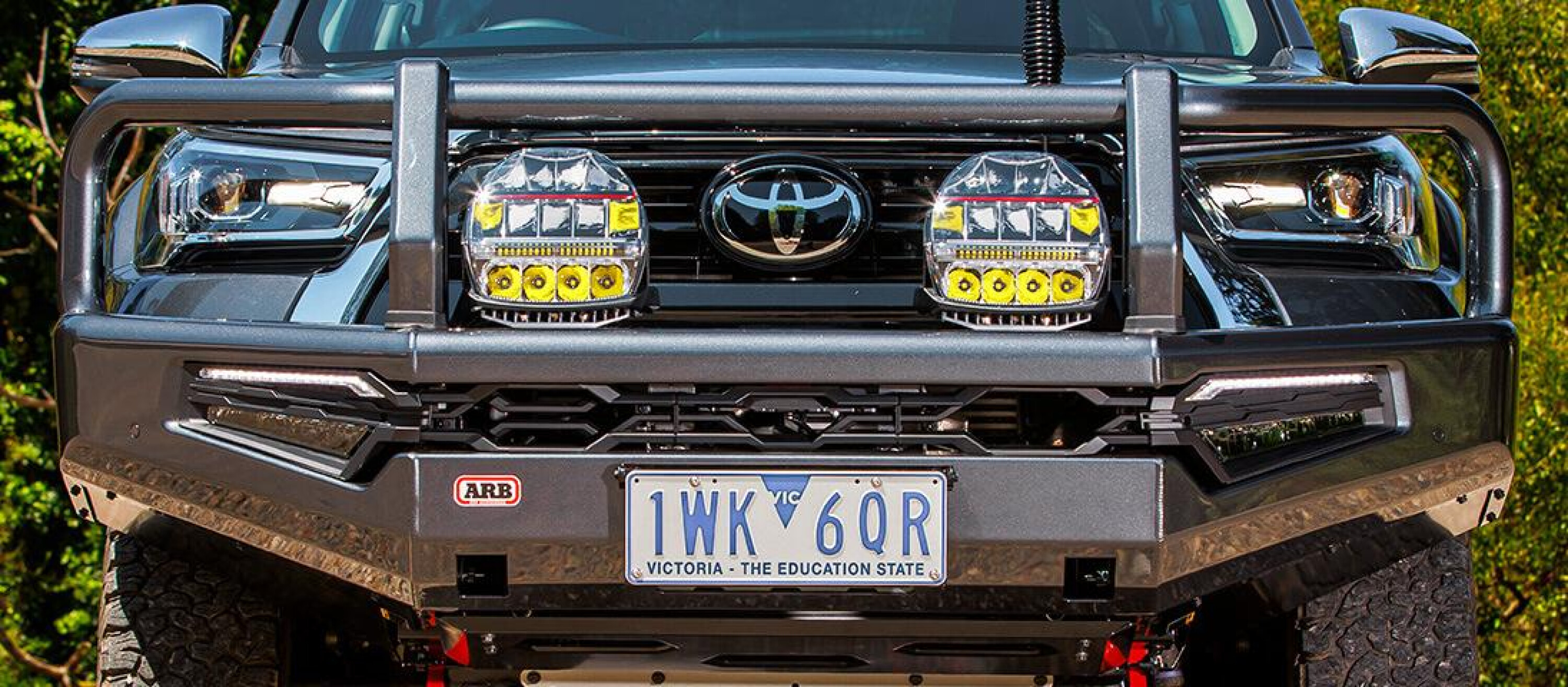
ARB Summit steel bull bar
The state-of-the-art Summit MKII bull bar takes key components of its flagship namesake and kicks it up a notch with an ultra-modern design that’s constructed to turn heads.
Summit MKII has eliminated front buffers and now features robot welds on the front face of the bar, to highlight ARB’s excellence in sheetmetal fabrication.
Fog light design has been significantly updated to include a plug-and-play indicator/clearance light/DRL and fog light within one complete unit, for an integrated approach and to incorporate these requirements on modern vehicles.
Specifications
- Materials: Steel with 60.3mm tube (87kg)
- Winch-compatible: Yes
- Recovery points: No
Pros
- Compatible with 360u00b0 camera
- All the mounts and tabs you could ever need
- That classic bull bar design
Cons
- Lack of recovery points
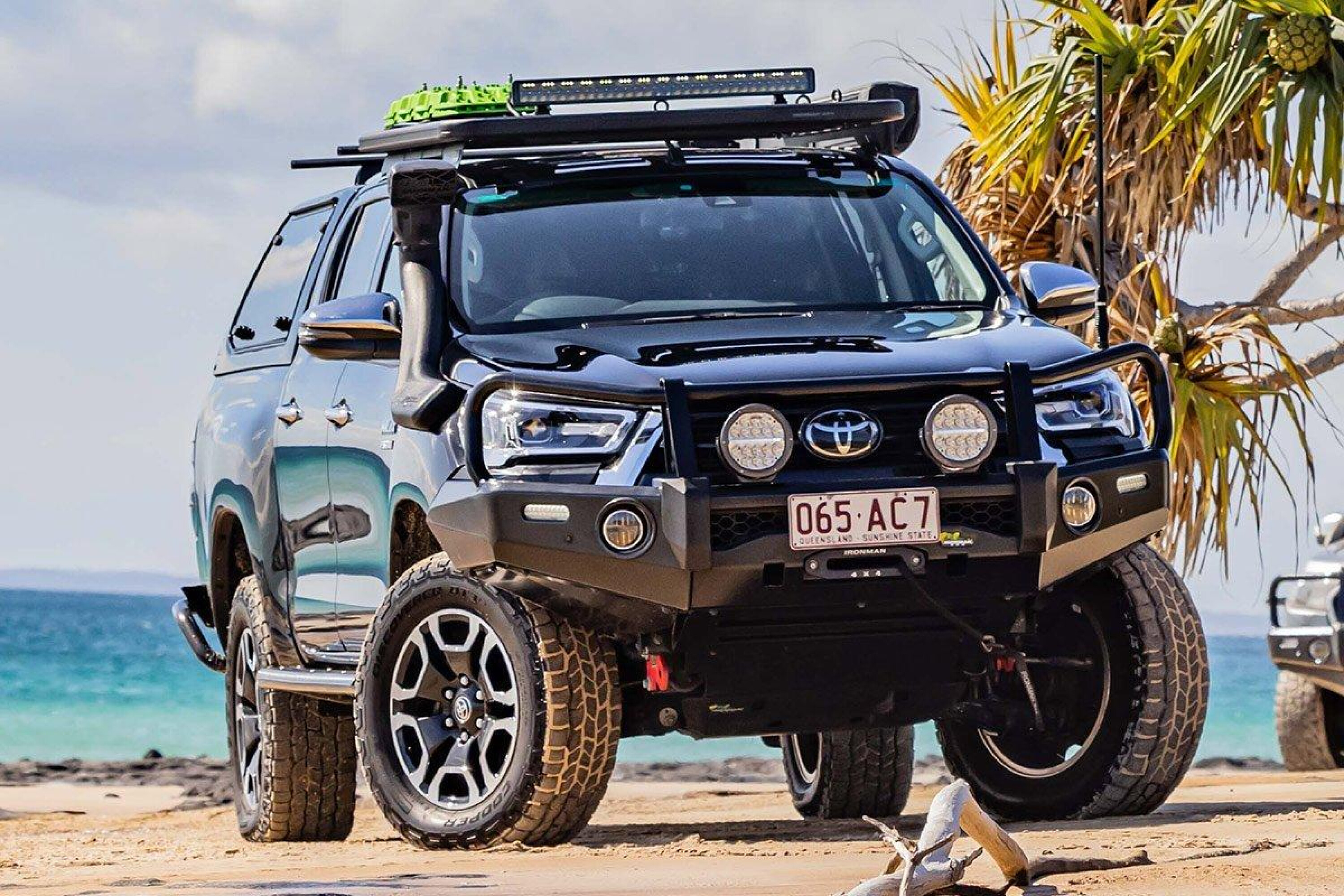
Ironman Commercial Deluxe steel bull bar
Not only does an Ironman 4×4 bull bar increase your protection and provide a mounting platform for other accessories, but it’s also great to look at. Ironman 4×4 bull bars are constructed from the highest quality SPHC oil-and-pickled steel.
Specifications
- Materials: Steel with 50mm tube (87kg)
- Winch-compatible: Yes, up to 12,000lb
- Recovery points: No
Pros
- Able to fit a 12,000lb winch, which should pull your HiLux up a tree
- Two high-lift jack points
- Colour-coding available
Cons
- Lack of integrated recovery points
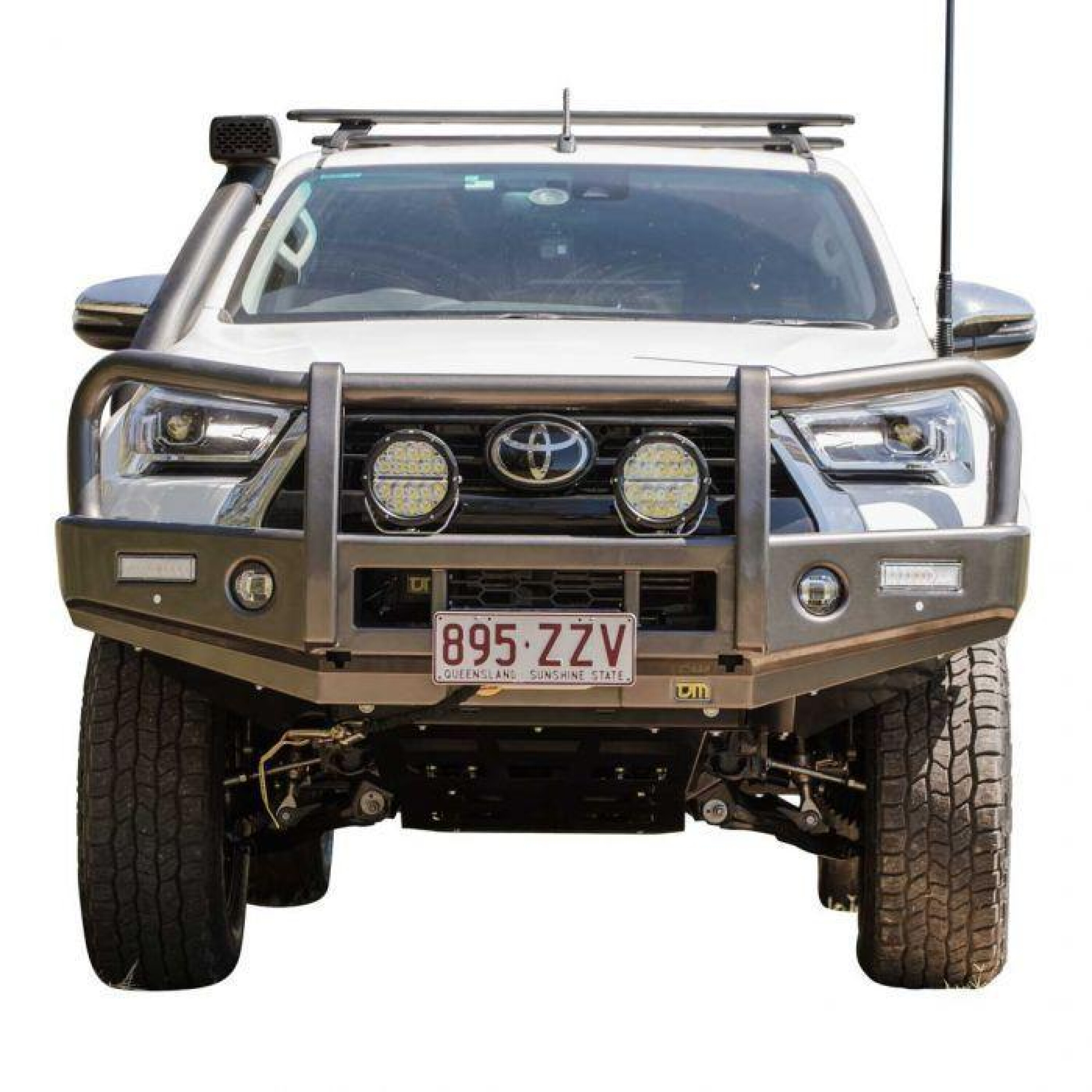
TJM Outback bull bar
All-new cato straps and 63mm outer pipework provides added strength, damage deflection and headlight protection, while its multi-fold channel has been strategically pressed and CNC-folded to maximise impact strength. The TJM Outback bull bar includes 8000kg rated recovery points.
Specifications
- Materials: Steel with 63mm tube
- Winch-compatible: Yes
- Recovery points: Yes
Pros
- 8000kg rated recovery points included
- All the mounts and tabs you could ever need
- Provision for forward-facing camera
Cons
- Winch cradle only rated to 9500lb
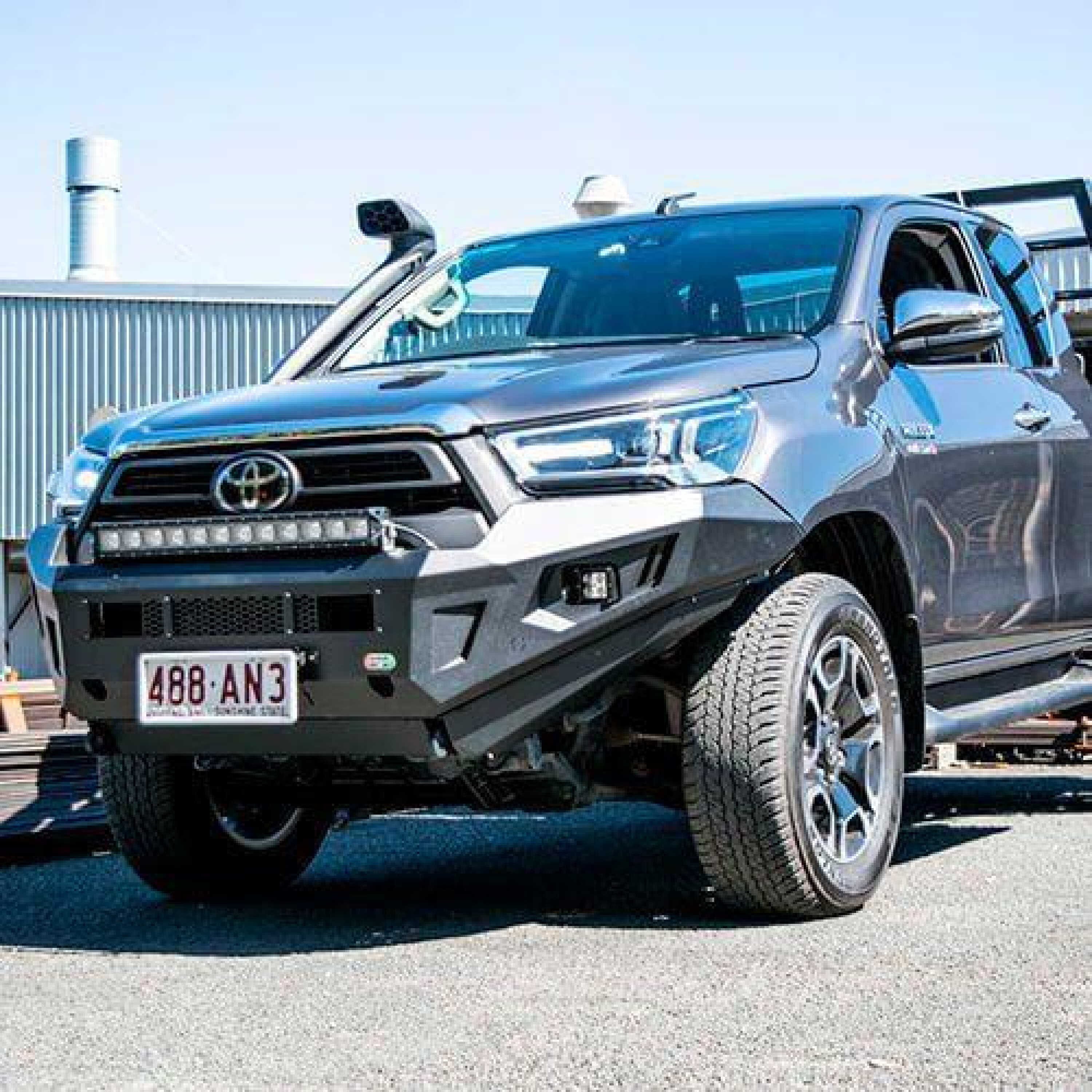
EFS Xcape bull bar
A low profile, bumper replacement-style bull bar, the Xcape bar is winch-ready and features LED lights, robot welds, improved approach angle for off-roading, and appealing design for city drivers.
Specifications
- Materials: Steel bumper replacement, no hoops (87kg)
- Winch-compatible: Yes
- Recovery points: No
Pros
- Sleek bumper replacement design
- Excellent approach angle and clearance
- Suits those less worried about animal strikes and more concerned with off-road clearance
Cons
- Lack of recovery points
- Limited mounting points for accessories
How we review products
4X4 Australia has been reviewing four-wheel drive vehicles and aftermarket products for more than 40 years.
When looking for the best accessories for your make and model of 4WD, there are some things essential to making sure you have the best off-roading experience.
When we compare products, here are some of the things we consider:
- Warranty
- Build quality
- Value for money
- Time and ease to set-up/install
- Weight
- Fit and finish
- How well it gets the job done
- What materials they’re made from
- Corrosion/UV resistance
- Coatings
- Compatibility with other accessories
- Compliance with ADRs and vehicle safety systems
- Country of manufacture
- Load ratings, to determine what’s the best product across each price point.
We also consider user reviews and our own experience with these products to make sure our recommendations are for the best on the market.
Disclosure: When you buy through our links, we may earn a commission. We also include products that we do not earn a commission from.
These flares and mudflaps by Mick Tighe 4×4 Outdoor are designed to provide a seamless 35mm offset to suit the new VX, GX, GXL, Sahara, and GR Sport Toyota LandCruiser 300 Series models.
Whether your vehicle is stock, chopped, or you’re looking to legally upsize your tyre size, the OTA “300” Flares & Mudflaps kit could be a solution to suit your needs.
Designed and manufactured in Australia, these flares and mudflaps provide an aftermarket solution that effortlessly enhances your car’s aesthetic, functionality and build capabilities.
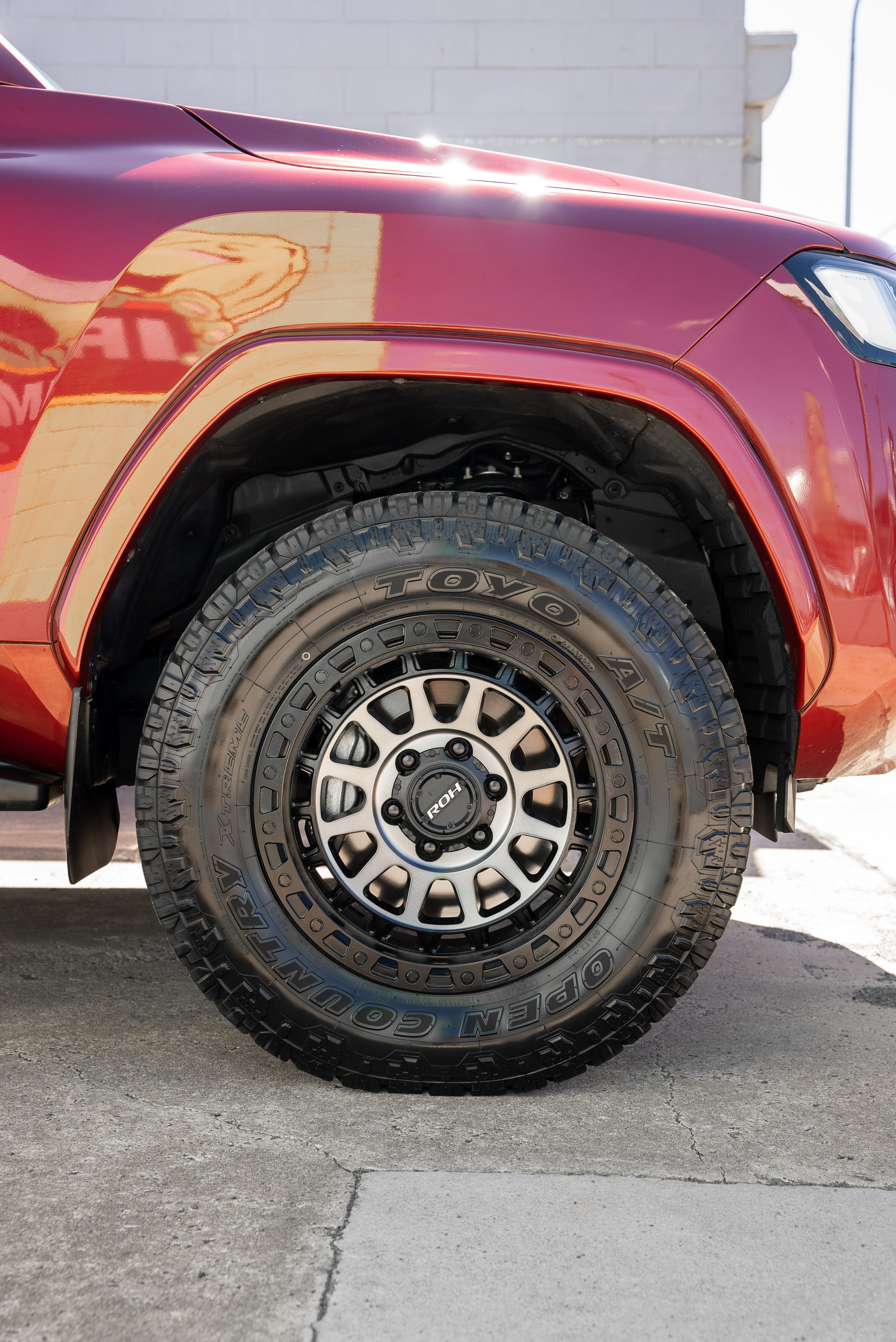
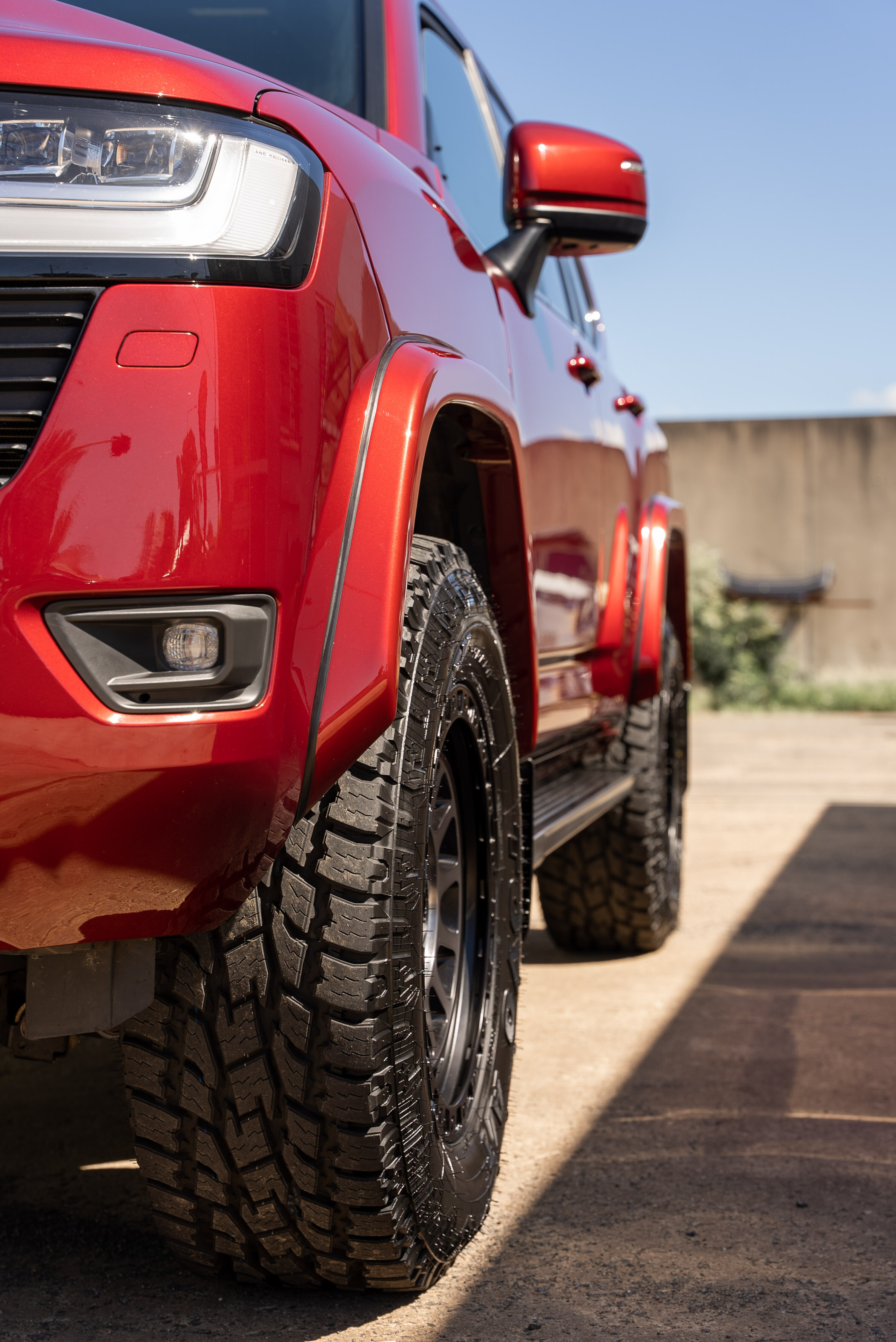
Both the flares and mudflaps were designed in unison, providing further protection without sacrificing aesthetic appeal.
The flares are ABS plastic, a tough, durable, weather-resistant material that comes in a smooth black, easy-to-paint finish with a high-quality aesthetic. The mudflaps are made of UHMWPE for impact-, abrasion- and shock-resistance, non-corrosiveness, UV stability, and long-lasting durability.
It’s finished in a smooth black that blends with the 300 Series’ existing accents.
Pricing
- Dual-Cab Conversion (front only): $1175
- Standard (front and rear): $2349
Key Points
- SSM approval for newest LC76 and LC79 models
- Higher GVM and safety equipment on 2023 models
- More ground clearance and wider wheel track
- 2024 four-cylinder models expected to run the same conversion
They might be hard to find in Toyota dealers right now, but the demand for LandCruiser 70 Series models continues unabated, just as the need to equip them for ultimate off-road adventures continues to burn.
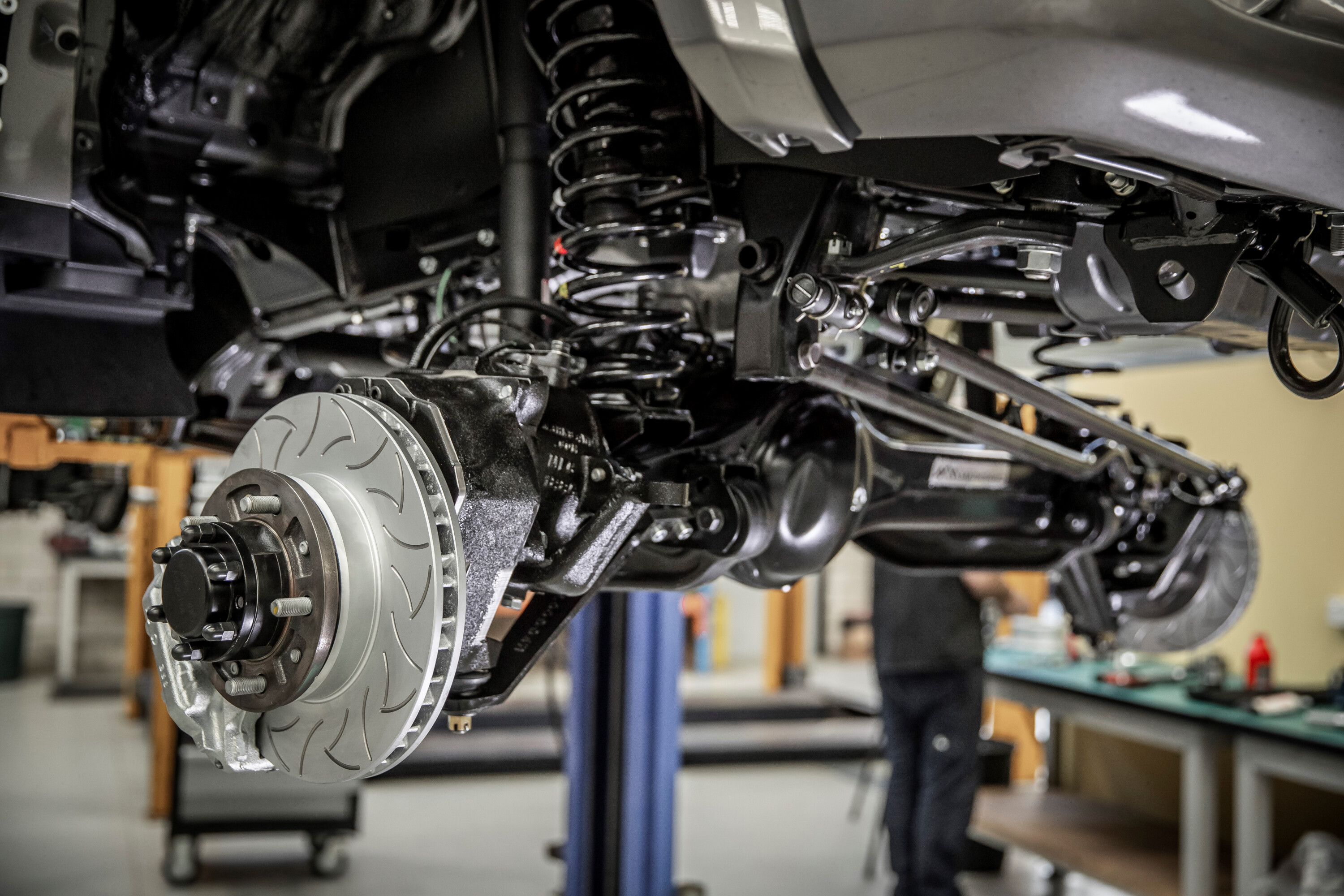
One of the best mods for any LandCruiser is the inclusion of portal axles, and these are now available for the latest updated models.
The 2023-model 70 Series Cruiser brought fresh safety equipment and a higher GMV capacity that came as a result of shifting the near-40 year-old design into a different vehicle category rather than just giving owners a higher payload.
From late-2022 builds the 70 was given a GVM of more than 3500kg, which moved it from the light to the medium goods vehicle category. This allows the Cruiser to avoid other safety features that became compulsory for light vehicles and would have been difficult to introduce into the 70 Series range.
New safety kit that was introduced at the same time included pre-collision system incorporating autonomous emergency braking (AEB) with pedestrian and cyclist detection.
The higher GVM and new technology meant the existing Second Stage Manufacturing (SSM) approval held by Marks 4WD for its portal axles was no longer applicable and a new SSM approval needed to be applied for.
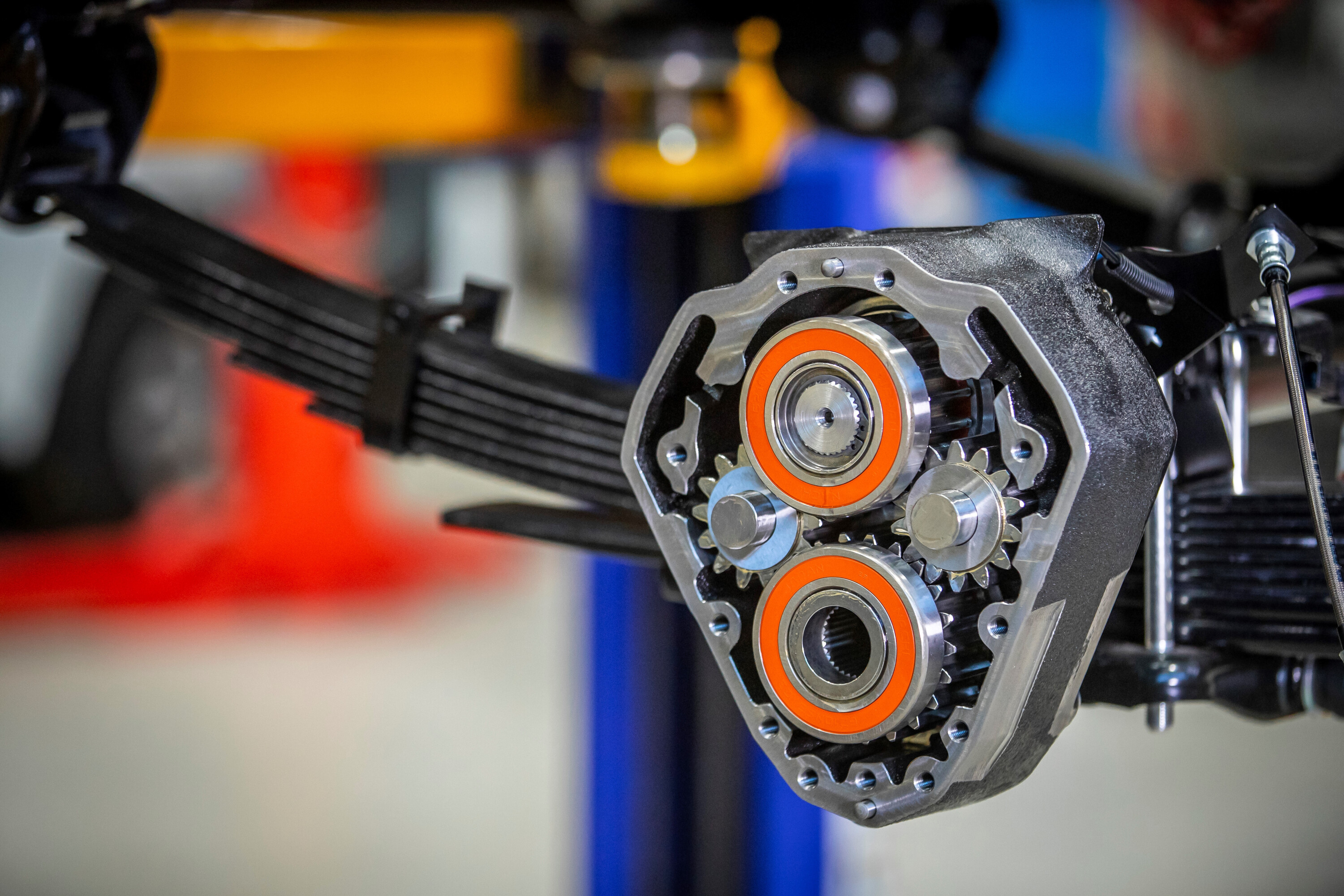
To attain this SSM approval Marks 4WD had to purchase new 2023 vehicles, install its portal axles and handbrake kit to them, and put them through a series of tests under the ROVER Road Vehicle Regulator guidelines. The tests included loading the vehicle to more than 4000kg and performing brake tests, brake fade tests and noise tests, to ensure the vehicles still meet existing ADR standards.
The new Cruiser passed the tests and Marks now hold SSM approvals for fitting its portals to the LC76 wagon and LC79 in both single- and double-cab ute variants. Approval for the LC78 Troop Carrier will have to wait until they can get a new vehicle to be tested.
The team is also awaiting the arrival of the 2024 2.8-litre automatic transmission 70 Series models to ensure the portals kit fits without any changes, but they don’t foresee any problems there.
SSM approval means the fitting of the portal axles and ancillary accessories must be done to the vehicle prior to it being registered – and it is approved in all states of Australia. The kits cannot be approved post-rego, even with engineering certification.
The advantages of the portal axle conversion are many, but none more so than the additional 150mm of ground clearance under the differentials without any suspension modifications. This gives you the benefits of increased ground clearance without the negative effects of raised or modified suspension.
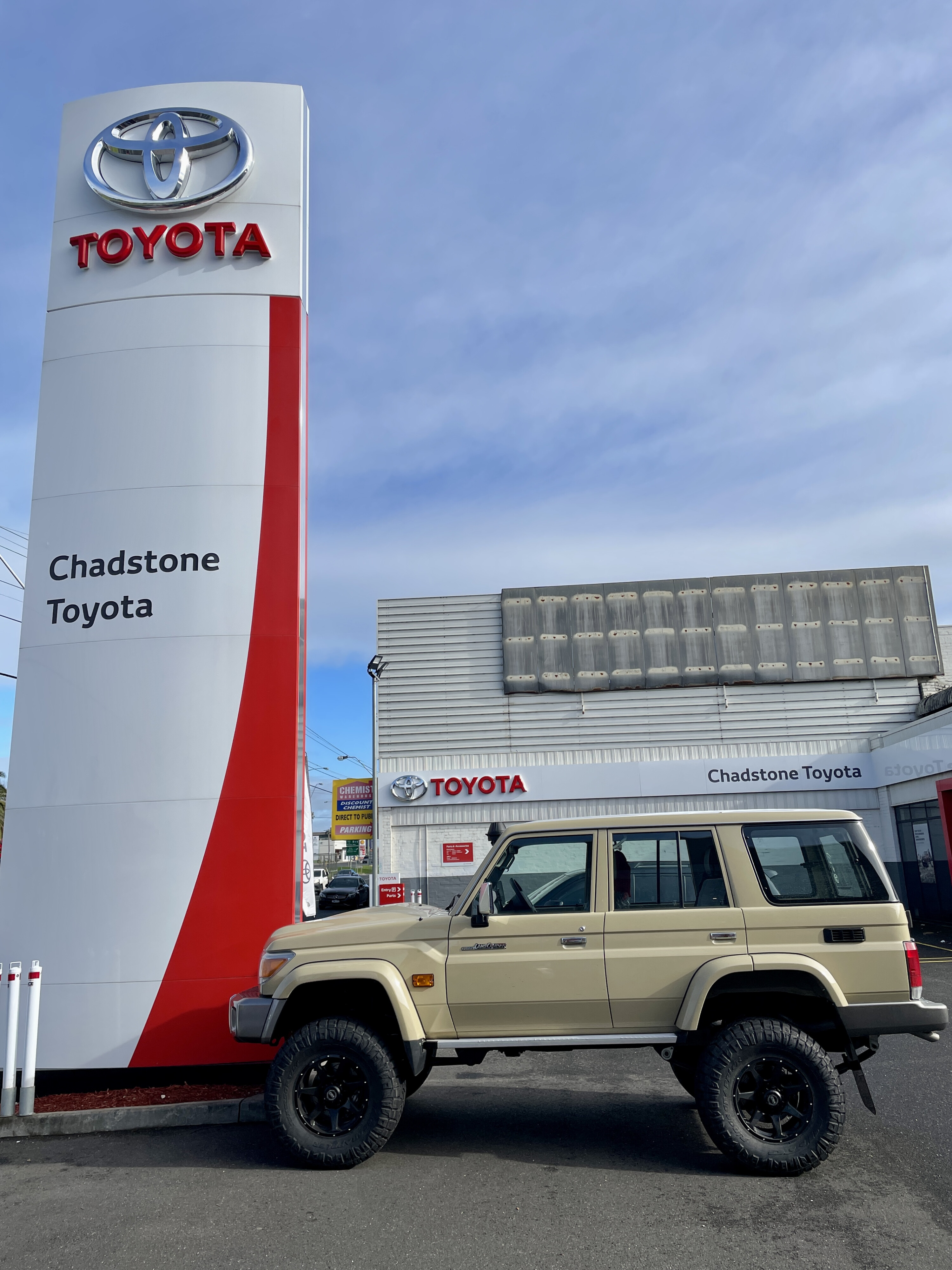
The conversion also widens the wheel track by 80mm while correcting the variance between front and rear axle track to give the 70 a wider stance and better stability both on- and off-road. The conversion is designed on and approved to run on 35-inch tyres, and this is the approved tyre size for the conversion.
Fitting Marks 4WD portal axles is a big step in creating the perfect 70 Series LandCruiser, and we all know there are countless other modifications that can be made to improve the Toyota workhorse. But fitting portals as a first step creates the foundation on which to build your ultimate LandCruiser. Now if we could just get Toyota to ramp up 70 Series production again.
For more details on the Marks 4WD portal axles conversion and other great products for your four-wheel drive, take a look at the website at www.marks4wd.com
What I’m really hanging out for is exactly the same thing that everybody’s asking the question about, and that is a load-carrying, trailer-towing, remote area off-road capable HiLux 4×4 with zero tailpipe emissions. What a vehicle that would be – and it’s possible.”
That’s Sean Hanley, Toyota Australia VP sales, marketing and franchise operations, talking about his ideal electric vehicle at Toyota’s 2023 new-vehicle showcase headlined by the 250 Series Prado and an electric HiLux ute concept called the Revo BEV.
“As you’d expect, with a Hilux from Thailand, [the Revo] concept for you is a short-range, city-focused focused BEV. It’s two-wheel drive with a battery that’s probably similar in capacity to the BZ4x”, said Hanley.
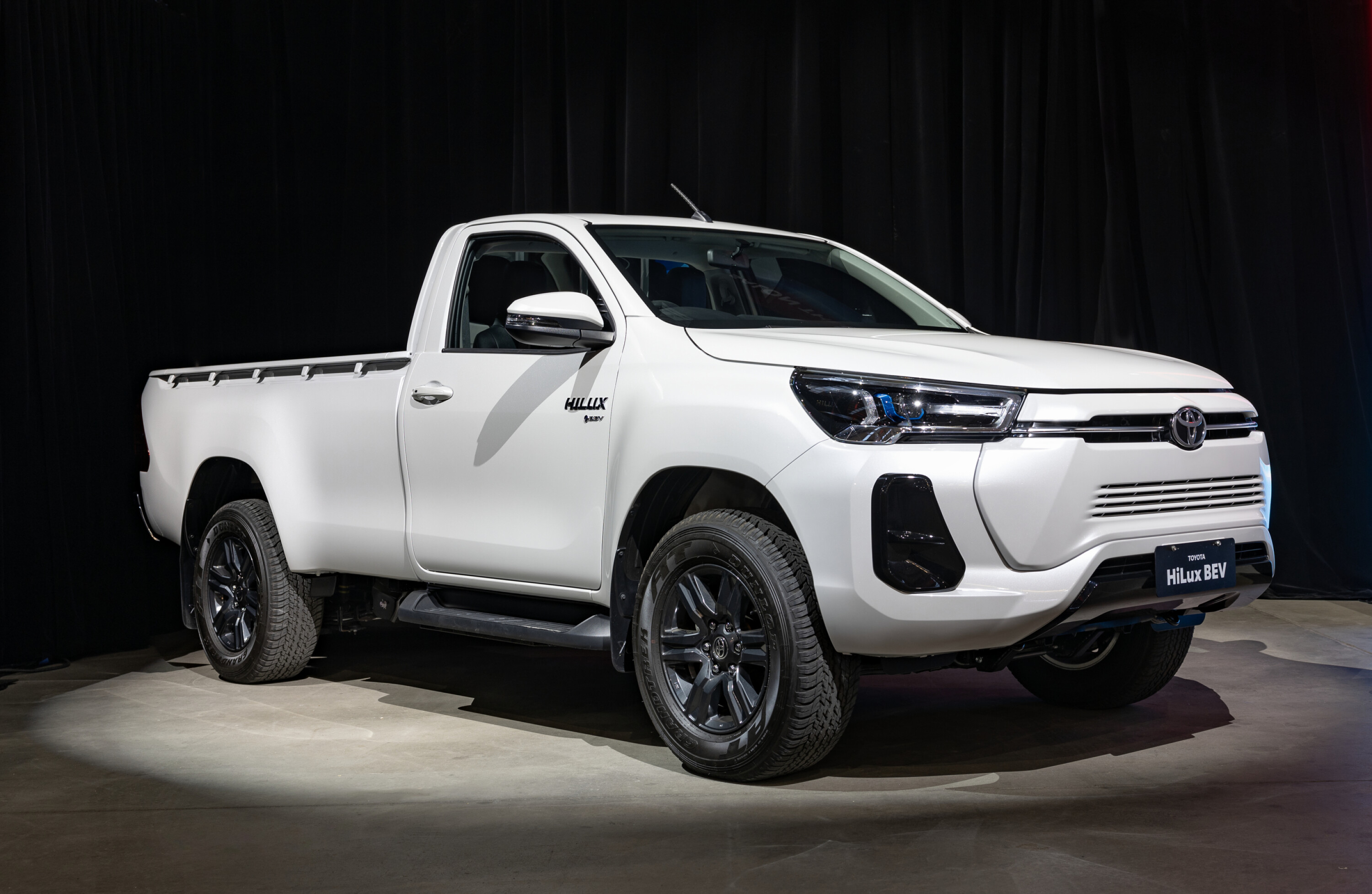
Although Toyota hasn’t detailed the Revo’s range and power stats just yet, it’s safe to assume that it isn’t designed to tow a caravan across the Australian outback.
“Rest assured, Toyota is working on it”, says Hanley, “a breakthrough work on solid-state batteries may come to the fore. And maybe, just maybe there’s another solution. Perhaps this is where hydrogen fuel cells could come into their own.”
A hydrogen-powered Toyota HiLux is already in development in the UK, but advancements in solid-state batteries could prove even more useful than bulky hydrogen for a true electric HiLux.
With significantly greater energy density than liquid cathode lithium-ion batteries common today, solid-state batteries promise greater driving range but that’s just the beginning. They should also be less susceptible to damage, and provide faster charging – MG claims its solid state battery pack will get from 10-80 per cent in just 10 minutes.
“This is where it’s very interesting because right now, we don’t have that [technology] clearly, we don’t have it. But in Australia, you’ve gotta get there otherwise who’s going to buy these cars?” said Hanley.
“Honestly, who’s gonna buy a vehicle to go off-road with, tow with, and have 800km [driving range] if it’s going to be $100,000 and doesn’t do half?” he added rather passionately.
When prompted for a minimum acceptable range, Hanley didn’t name a number but said: “You certainly want it up there, I mean, people don’t want to compromise.
“Charging infrastructure won’t be an issue for Toyota because we’ll have it everywhere. And I think that that’s going to expand naturally anyway around the place…I don’t experience any range anxiety [in my Lexus RZ], because I ABC – Always Be Charging.
“What I am saying is, [that example is] a different scenario to if you’re going to be towing a big caravan and you want to go from Melbourne to North Queensland. And then you might decide to go from North Queensland across to Broome – that’s a totally different world for that customer”, Hanley pointed out.
For reference, in a Motor Trend [↗] tow test the gold standard electric ute, the Ford F-150 Lightning, dropped from its 500km range rating to just 161km when towing a 3278kg camper. And that’s from a huge 131kWh battery.
October: Toyota EPU ute concept revealed
Toyota is getting serious about booting up an electric ute, although this one is of a unibody design.
August: HiLux Revo concept revealed
“It looks good enough to be a production car but it’s most definitely a concept”, said Sean Hanley, Sean Hanley, Toyota Australia VP sales, marketing and franchise operations of the HiLux Revo concept on display.
Snapshot
- Electric HiLux concept foreshadows production model
- Has technology Toyota is keeping under wraps for now
- No concrete specs, but it’s rear-drive and Thai-market focused
First shown in December 2022, the electric HiLux Revo concept made its way to Melbourne (via a Fremantle Port) as an example of how Toyota plans to reach zero emissions by 2050.
“A masterpiece of technology and a clear demonstration of how advanced we are in relation to BEVs. What I can’t tell you, is when, or even if this car will make it to Australia as a production model”, said Hanley.
“What I can tell you is that we are optimistic, and we’ll definitely pursue the opportunity to bring such a vehicle to our market in the future, should it become available. So much so that our local evaluation engineers have already been putting this very vehicle through its paces – and they’re impressed.”
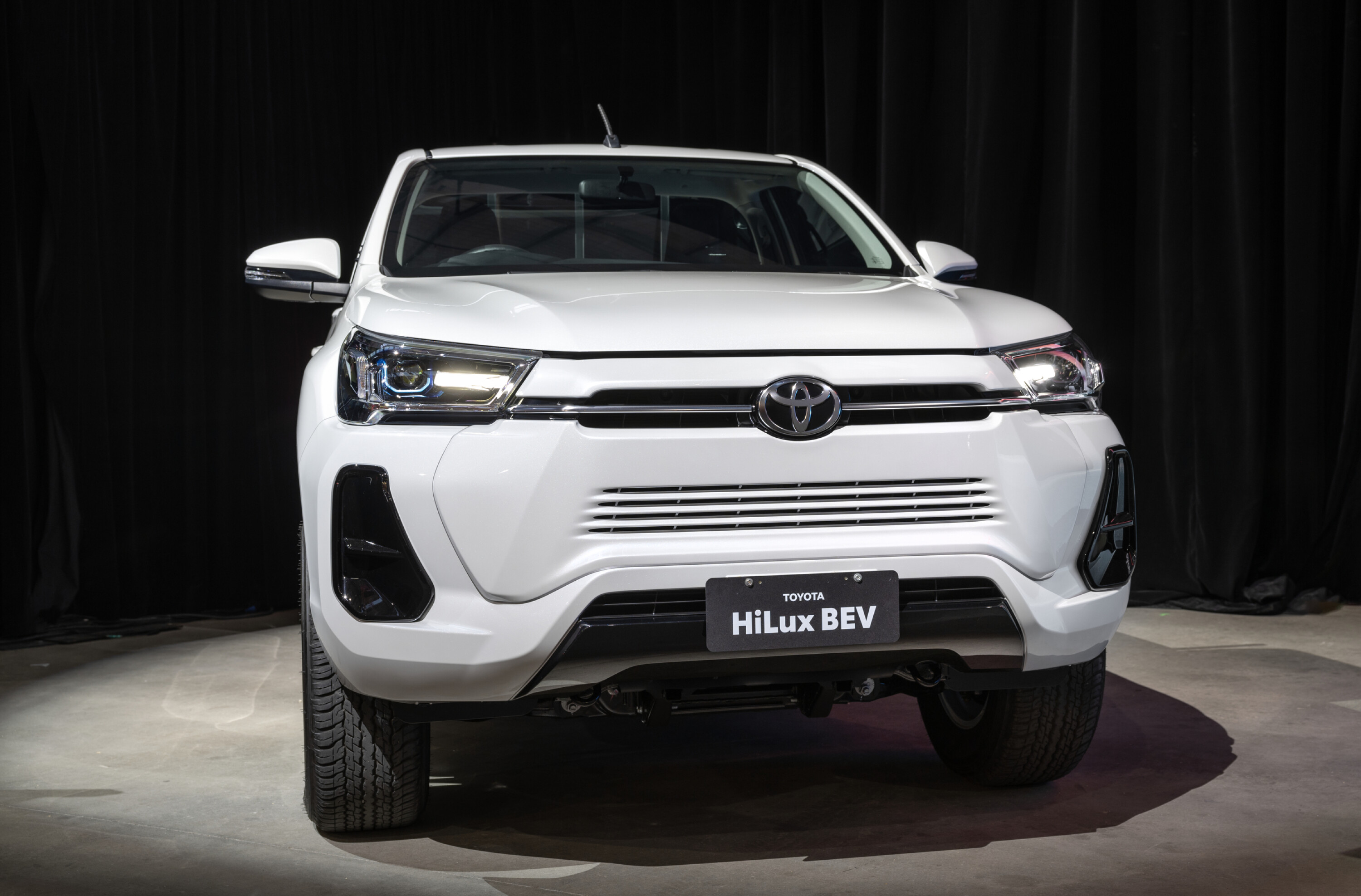
It didn’t take long for Hanley to admit the electric HiLux Revo’s shortcomings for Australia.
“As you’d expect, with a Hilux from Thailand, this concept for you is a short-range, city-focused focused BEV. It’s two-wheel drive with a battery that’s probably similar in capacity to the BZ4x.
“There’s a swag of Toyota-owned technology under the skin that we’re not ready to reveal today”, added Hanely.
“Given the enormous challenges we face in electrifying commercial vehicles, it seems to make sense that we start with an electric vehicle for the on-road market. In fact, I can imagine the day perhaps a few years from now, when such a vehicle could help transform the E-mobility landscape in many countries.”
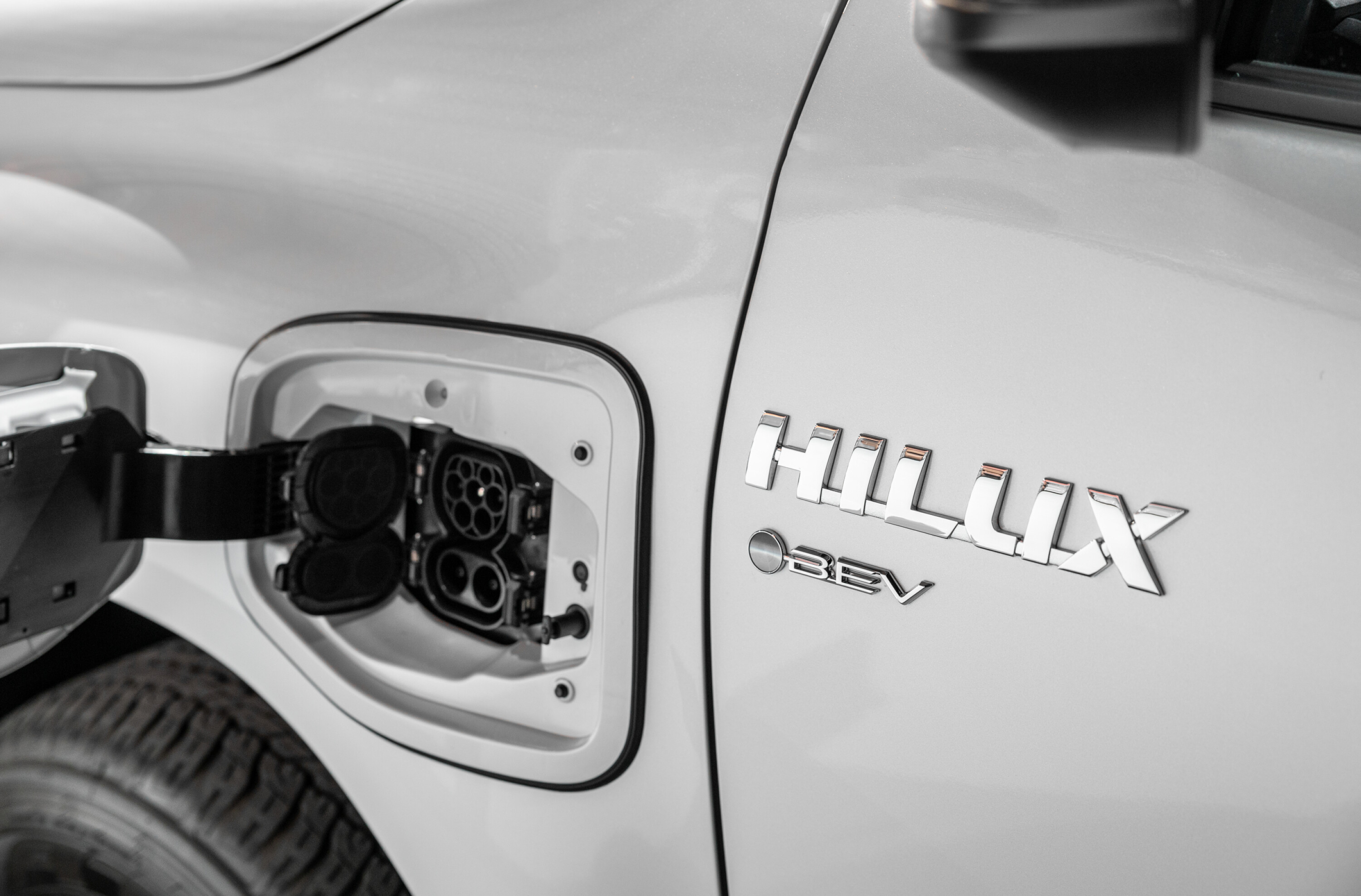
With its short range and city focus, the eventual production version of the HiLux Revo concept is likely to be snapped up by mining and other fleets looking to lower their carbon footprints – the same outfits buying the $93K LDV eT60.
“Of course, what I’m really hanging out for is exactly the same thing that everybody’s asking the question about, and that is a load-carrying trailer-towing remote area off-road HiLux 4×4 with zero tailpipe emissions. What a vehicle that would be – and it’s possible,” said Hanley.
“Honestly, who’s gonna buy a vehicle to go off-road with, tow with, and have 800km [driving range] if it’s going to be $100,000 and doesn’t do half?” He added.
The Revo is definitely a vehicle for business and not the private lifestyle buyer. A future solid-state battery HiLux, or FCEV-powered ute, could be a long-term solution.
Our original story, below, continues unchanged
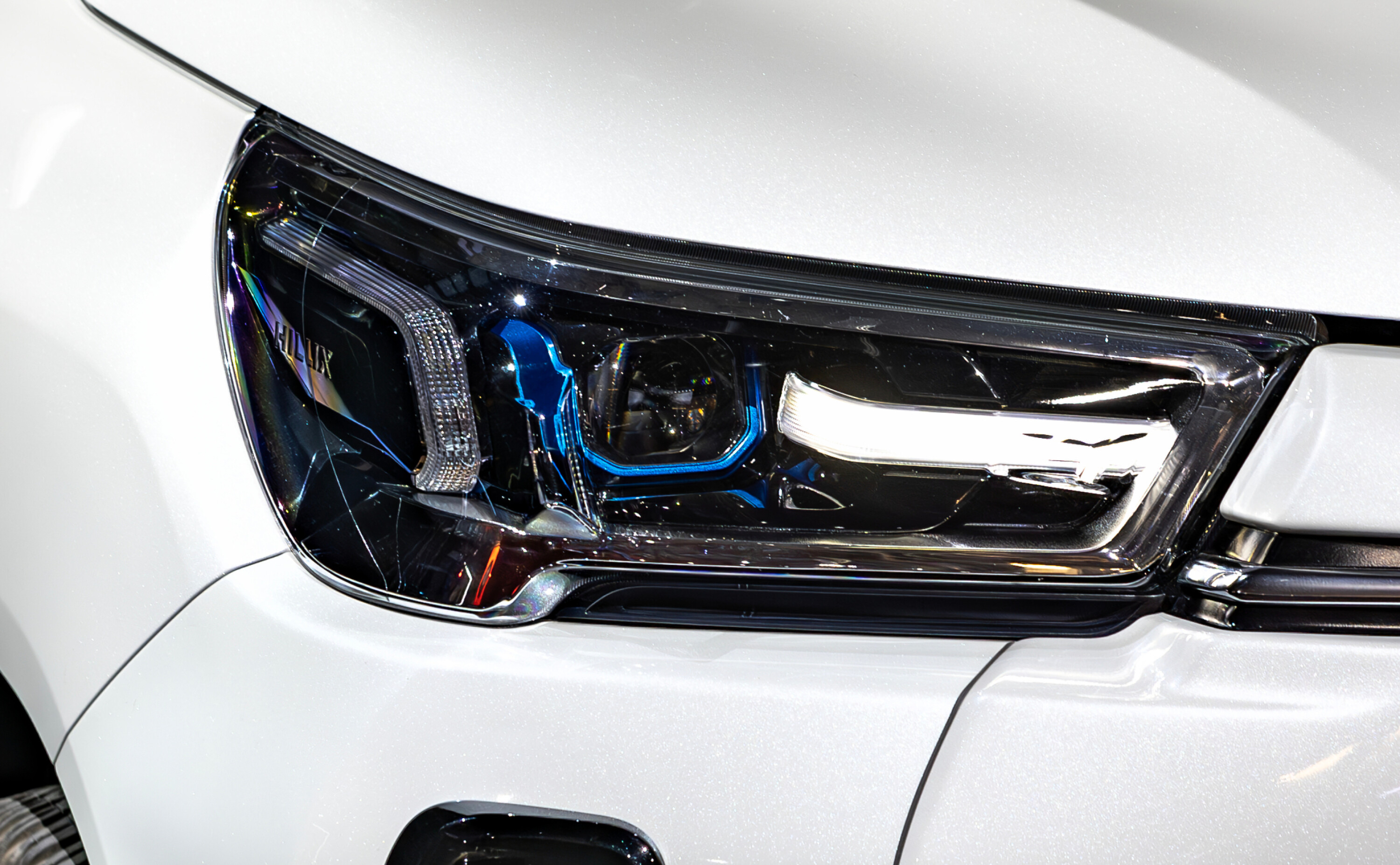
August 14: HiLux Revo spied at Freemantle port
It’s no secret that Toyota is interested in electrifying the HiLux ute – Australia’s best-selling vehicle.
Snapshot
- Electric HiLux concept spied in Fremantle
- Concept to showcase the future of mining industry vehicles
- Expected to pop up at various conferences and events in Oz
Another HiLux update is on the way next year with the addition of mild-hybrid boost, but with massive mining fleets needing to cut emissions rapidly, Toyota needs to catch up on the clean-up with a mass-production electric ute.
Spotted at a port in Fremantle, Western Australia, the HiLux pictured is a single cab ‘Revo’ concept. With its grille blanked out and a CCS2 charging port where the diesel filler would be, this is a battery-electric pick-up.
Akio Toyoda unveiled the concept in December 2022 as a look at the future of commercial utes.
There’s no word on range, charging speed, or pricing on the new vehicle, but it’s certainly aimed more at the commercial buyer than the private.
4X4 Australia understands it’s here for internal review. Relevant mining-centric events, including the Advancing Net Zero Mining Conference held on August 29-30 in WA, may have given Toyota extra incentive to drum up interest from relevant buyers.
Currently, there is only one factory-made battery-electric ute available in Australia – the unbelievably expensive LDV eT60. The Chinese-made ute has a captive brand-new market, and Toyota will be looking to eat into this space with an electric HiLux.
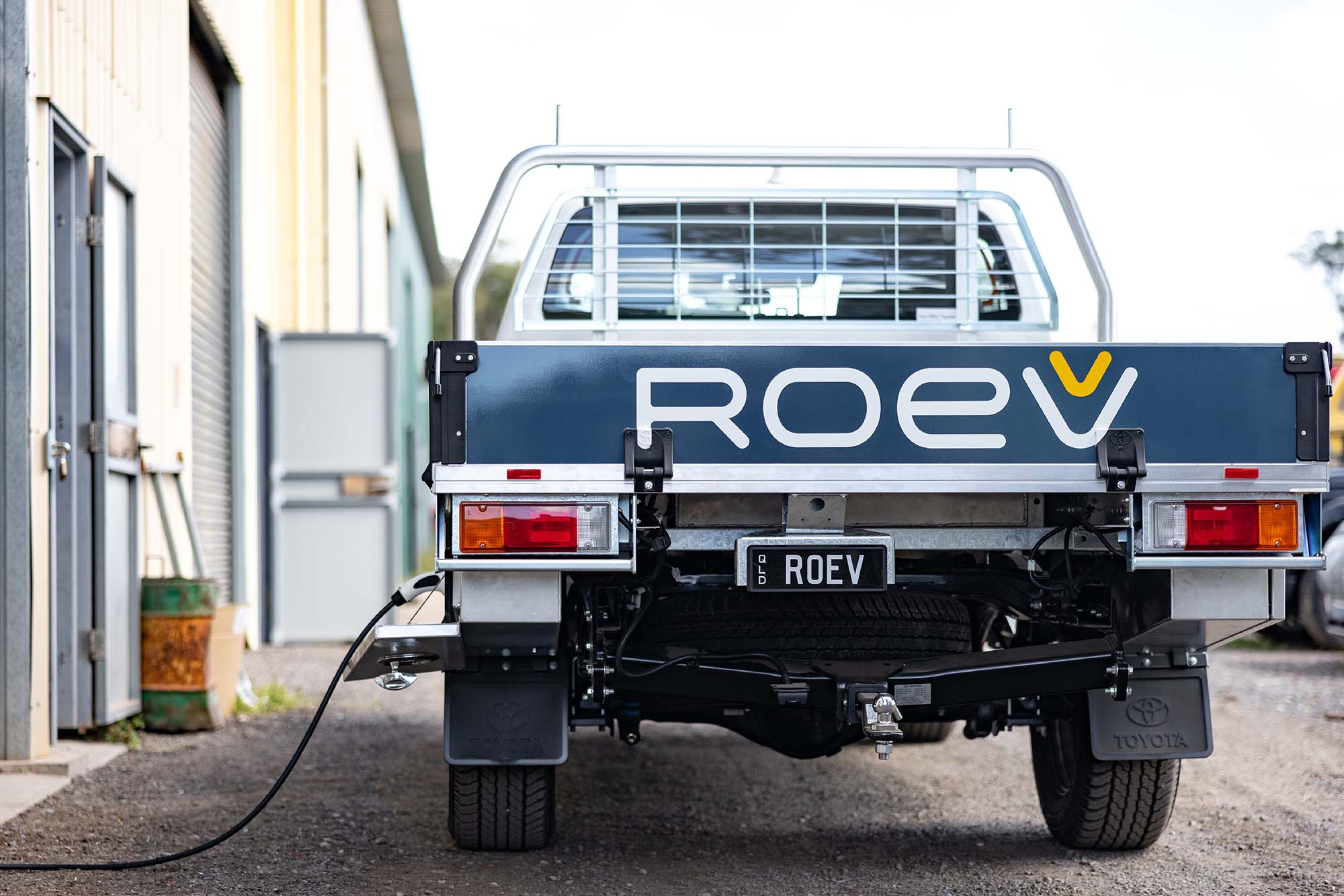
Whether an electric HiLux will come about in a similar way to the LDV T60 in the ute’s current form to satisfy industry customers, or whether Toyota will wait for the next-gen HiLux in 2025 is yet to be confirmed.
There are also outfits converting existing diesel-powered Toyota HiLux and Ford Ranger utes to electric vehicles, and they’re finding success with mining customers.
One such company is ROEV, and a conversion that brings about 360km driving range from a 96kWh battery pack costs $53,990 to $57,990 plus the base vehicle – so about $90K all in when using a new HiLux 4×2 Hi-Rider as a starting point.
Toyota has also been trialling in-house EV-converted 70 Series single-cab utes since around 2021 for mining applications. Expect more information on the electric HiLux Revo concept shortly as it continues on a tour around Australia.