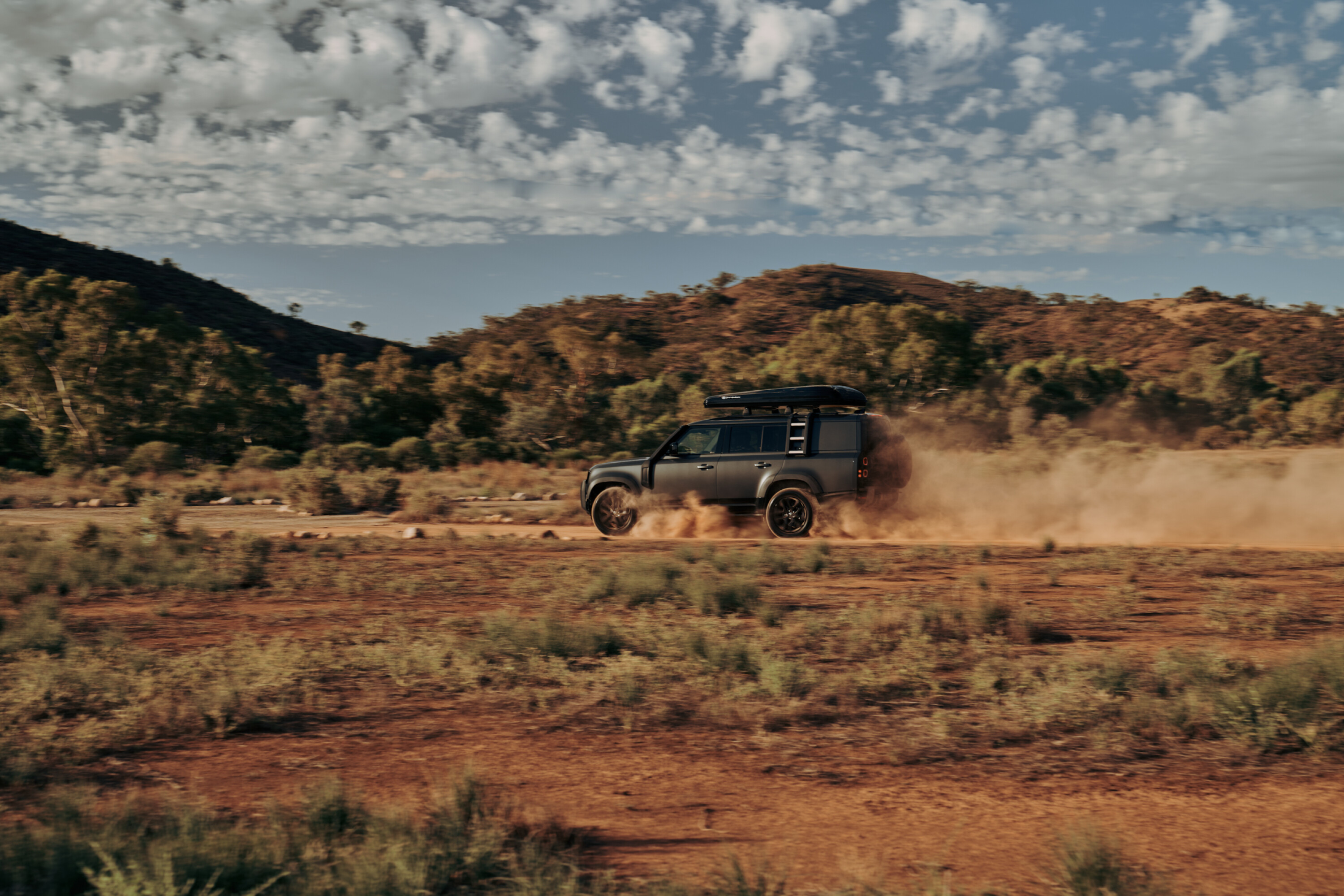
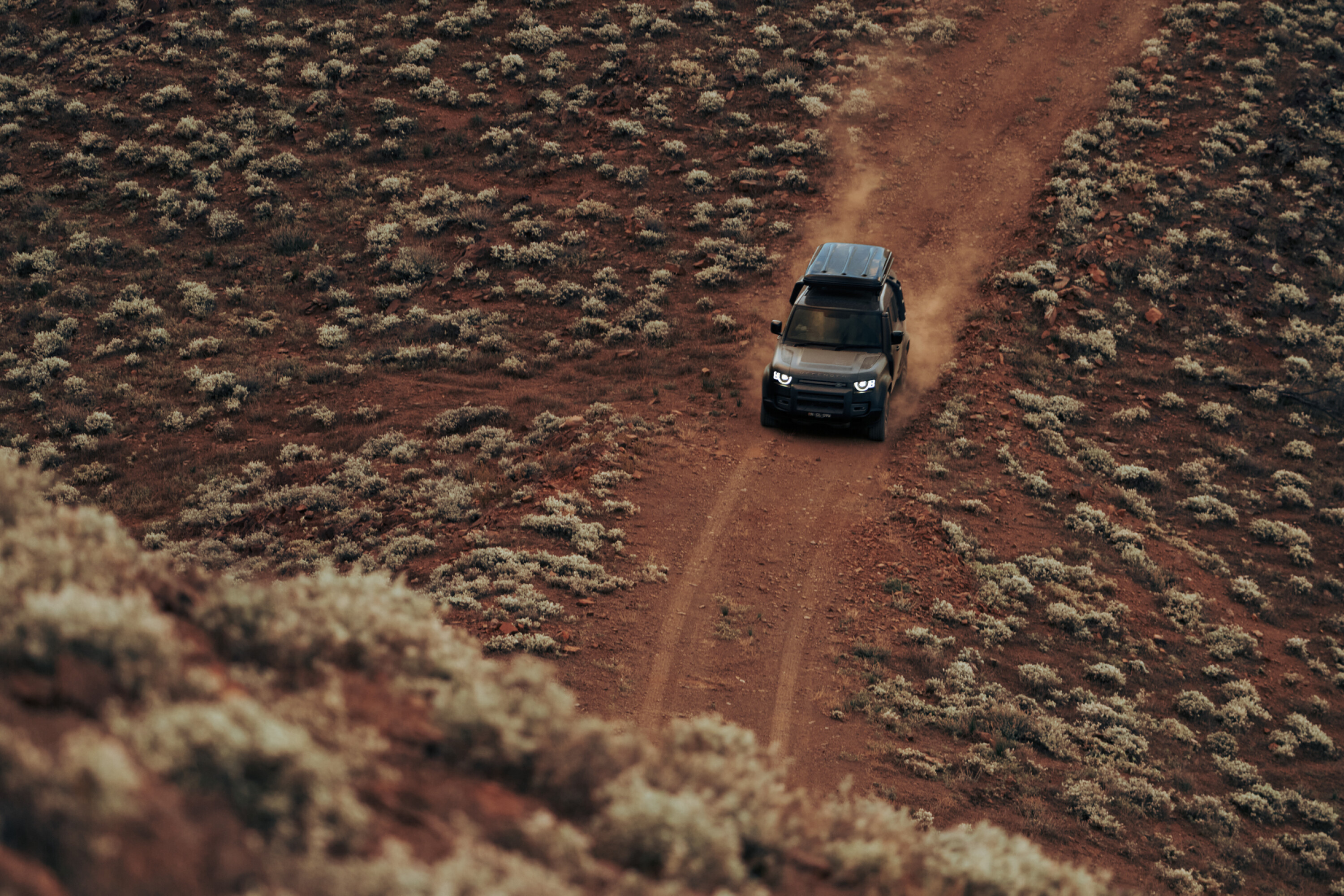
A convoy of Defenders will journey to the edge of the Ikara-Flinders Ranges, as part of the Defender Experience.
The event will be hosted for the first time at Arkaba, a well-known private wildlife conservancy and homestead in the Australian Outback located about five hours’ drive north of Adelaide in South Australia.
The homestead within the unique wildlife sanctuary is surrounded by approximately 65,000 acres of bushland consisting of deep craters, dusty trails and off-road challenges, providing the perfect backdrop and terrain to test the mettle of the Land Rover Defender.
2
Land Rover hosts “Experience Drives” all around the world, to provide owners of the British vehicles an opportunity to learn the car’s capabilities, learn new skills, and instil confidence to explore beyond the black stump.
The Defender Experience is one such event. Tickets aren’t cheap at $5500 per couple, but that not only includes the driving component of the experience, but three nights’ accommodation – at the historic Arkaba homestead, as well as a Defender Rooftop Tent Experience and a night spent under the stars.
Experts will also be on-hand to guide attendees to the area’s stunning attractions, as well as educate on wildlife, sustainability projects, geology and geography of the Flinders Ranges, a breath-taking destination that should be on every 4x4er’s bucket list.
2
Leading the charge at the Defender Experience Arkaba is the Land Rover Defender 130 Outbound, priced at a fraction under $140K. The five-seat, adventure-focused off-roader is luxe on wheels, with plenty of interior space fused with competent off-road nous. Its inline-six 3.0-litre petrol engine generates 294kW and 550Nm and is mated to an eight-speed automatic transmission.
Bookings are now open for the April 2025 Defender Experience, and with the 2024 programme selling out in a few days, best get in quickly to secure your spot.
The four-day 2025 Defender Experience Arkaba will run from April 2-5, 2025. Tickets are priced at $5500 per couple, which includes access to a Defender vehicle. We asked Land Rover if punters could bring their own vehicles to the event, and we were told that the 2025 programme pricing is with the vehicles included, but they will be looking at options to expand the 2025 programme.
Keep an eye on the Defender Experience page below for more info.
There’s no doubt we four-wheel drivers want bang for buck when choosing parts for our rigs.
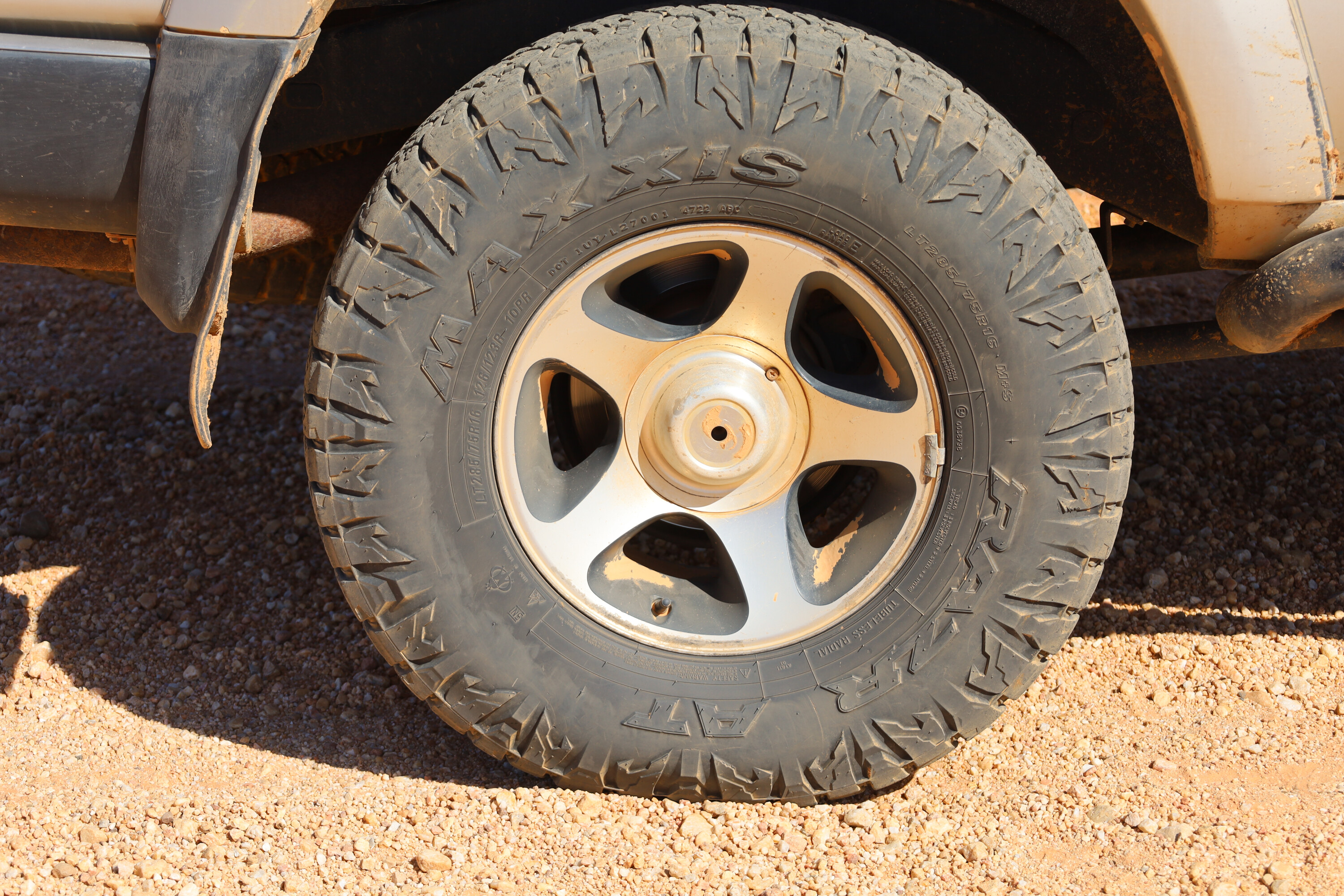
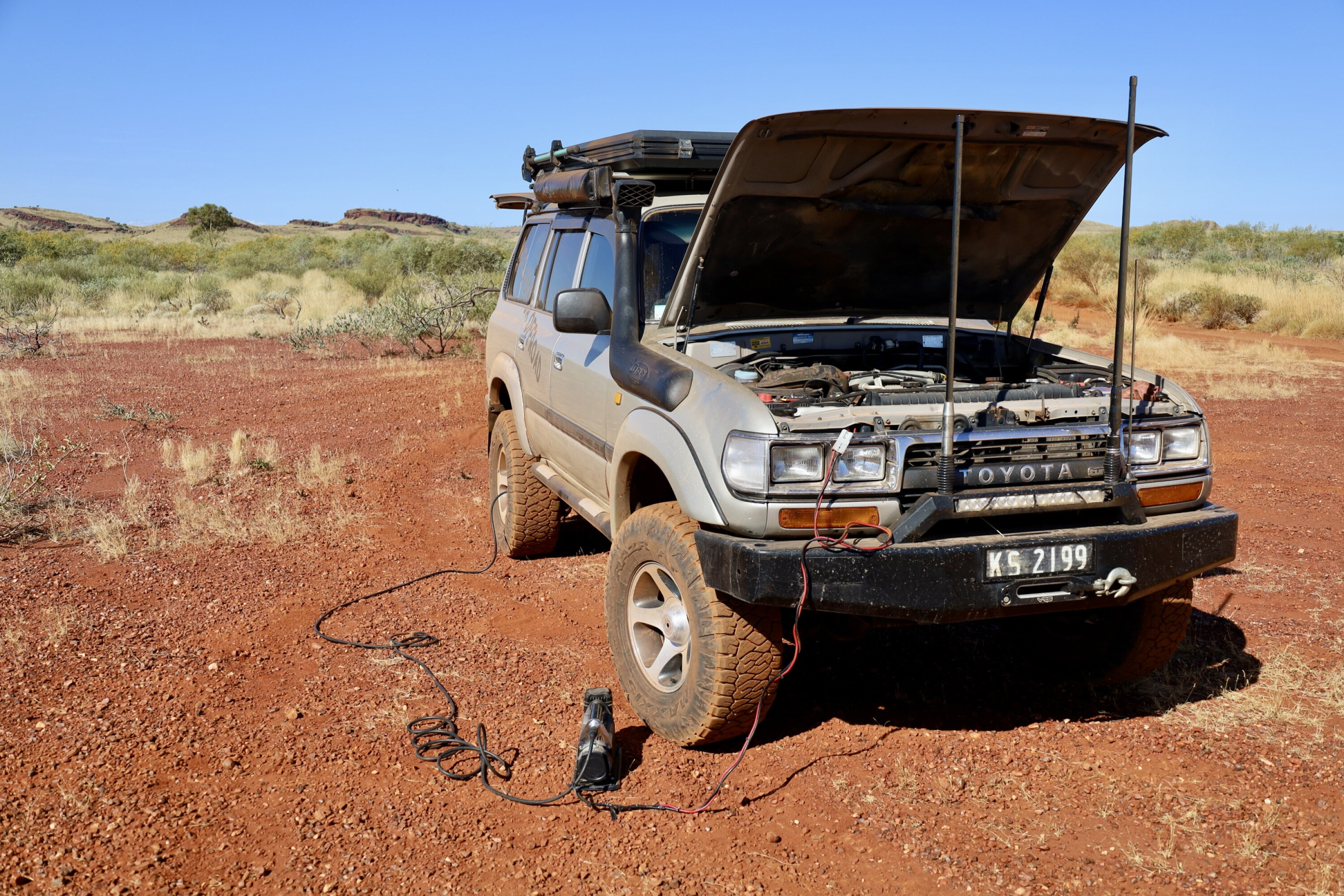
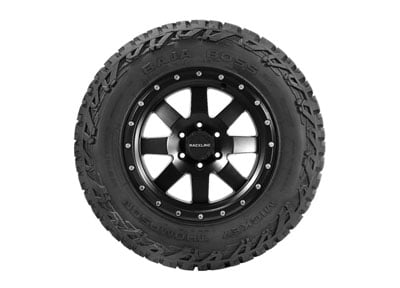
Tyres are definitely one of the most expensive modifications we can make, and as they are a disposable item we want them to last. On my jaunt into Western Australia last year, I chose the Maxxis RAZR AT after talking to several other off-roaders who had used them.
1
While these days I try to stay out of gloopy mud, these aggressive all-terrain tyres certainly showed their worth in slippery off-road terrain. Maxxis says the AT tyres were developed through involvement in off-road racing. They feature a dual-cord casing and aggressive sidewall tread, and a new off-road compound. What does all this mean? In my experience the RAZR is one of the best tyres I have ever run.
I run 285/75R16 tyres on the Cruiser and in this size the Maxxis RAZR AT has an E load rating which comes with a 10-ply rating, making it super strong in the tread and more importantly the sidewall construction. Backed up with the 126/123R nominated speed and load rating, these tyres are super tough for our conditions.
1
With such a heavily built tyre, I found I had to drop pressures down a bit more than other tyres I’ve tested to improve ride quality, and yet on the road they are relatively quiet and work well in both wet and dry conditions.
After an exhausting 50,000km in the west covering some of the hottest bitumen roads, conquering massive sand dunes, driving iconic tracks across remote parts of WA, exploring rough and unforgiving terrain, and everything else in-between, the ATs never once let me down. No Gibb River Road punctures, no Pilbara tyre staking, just nothing.
But quality comes at a price – I paid $365 each for these tyres a year ago, and prices will vary depending on location and size. But the Maxxis RAZR ATs were better than I expected, and looking at the wear so far I expect to get a long life out of them.
Get your 4×4 in the next issue of 4X4 Australia magazine by sending a photo or two to our Facebook page. We’ll also publish it online! Here are six reader-submitted rides from March 2024.
Nissan NP300 Navara
1
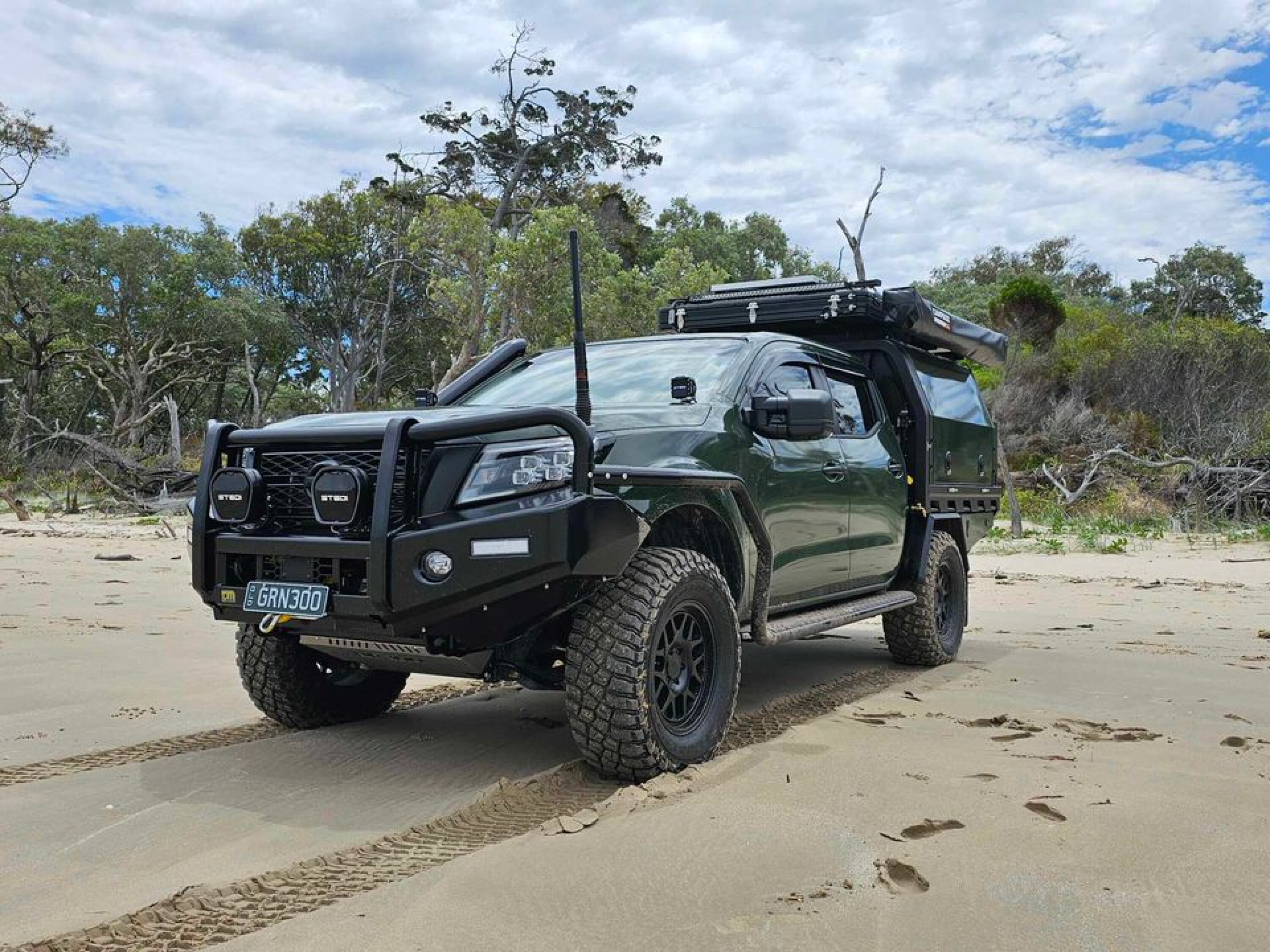
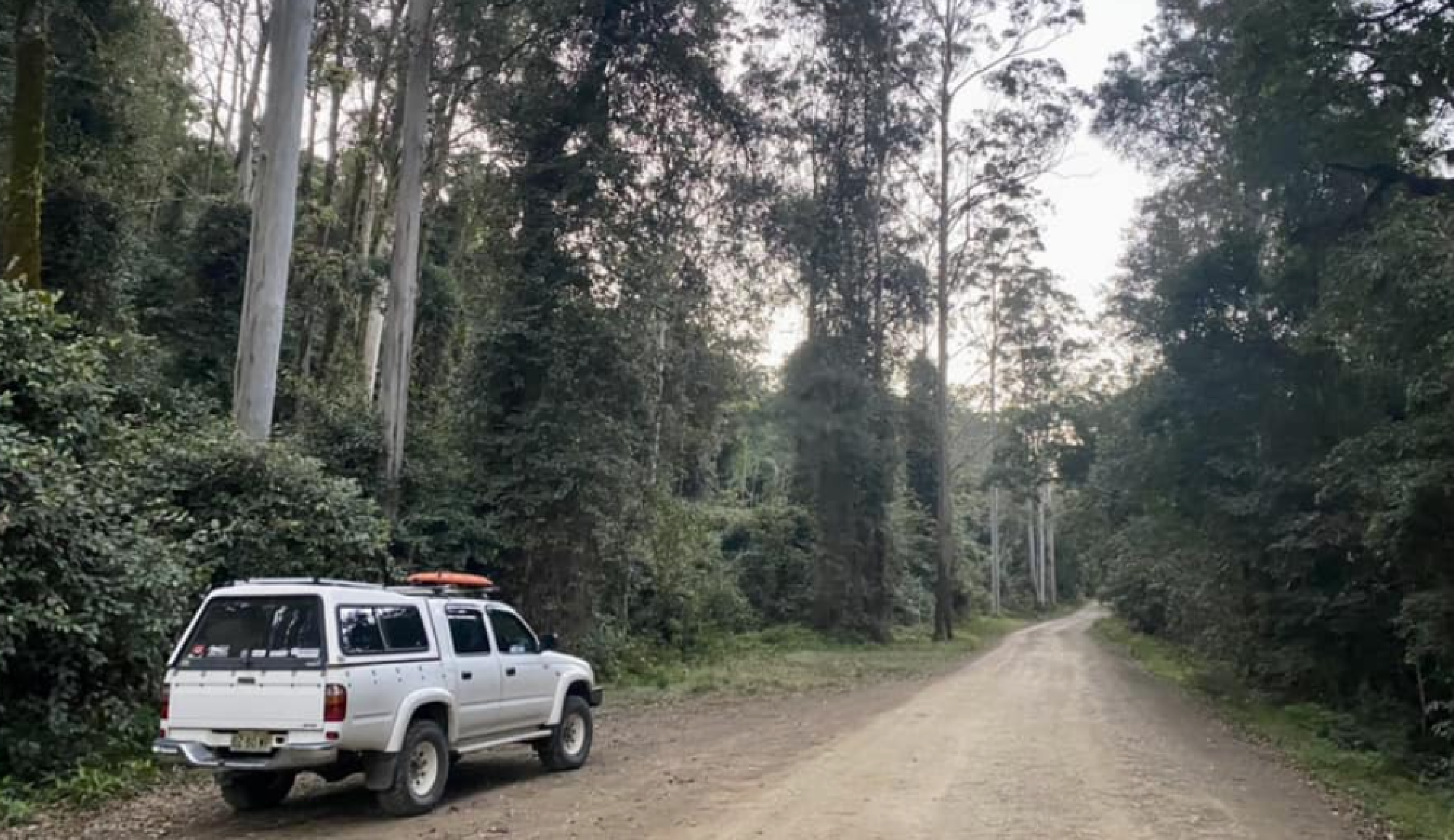
I have a Navara that’s in the final weeks of a three-month build, after 12 months of planning. It has a MITS Alloy tray and canopy; TJM bar work all around; KMC Bully rims with KM3 285/70R17 tyres; Dobinson lift with airbags; Stedi and Lightforce lighting; CRG Fab intercooler, exhaust and intake pipes, with a Fabulous Fabrications airbox and snorkel; long-range tank; lithium starter battery; CampBoss 270° awning and shower tent; and a Darche rooftop tent. It’s used for work and play with a 10-week trip in the planning – Max Hill
Mitsubishi Pajero iO
1
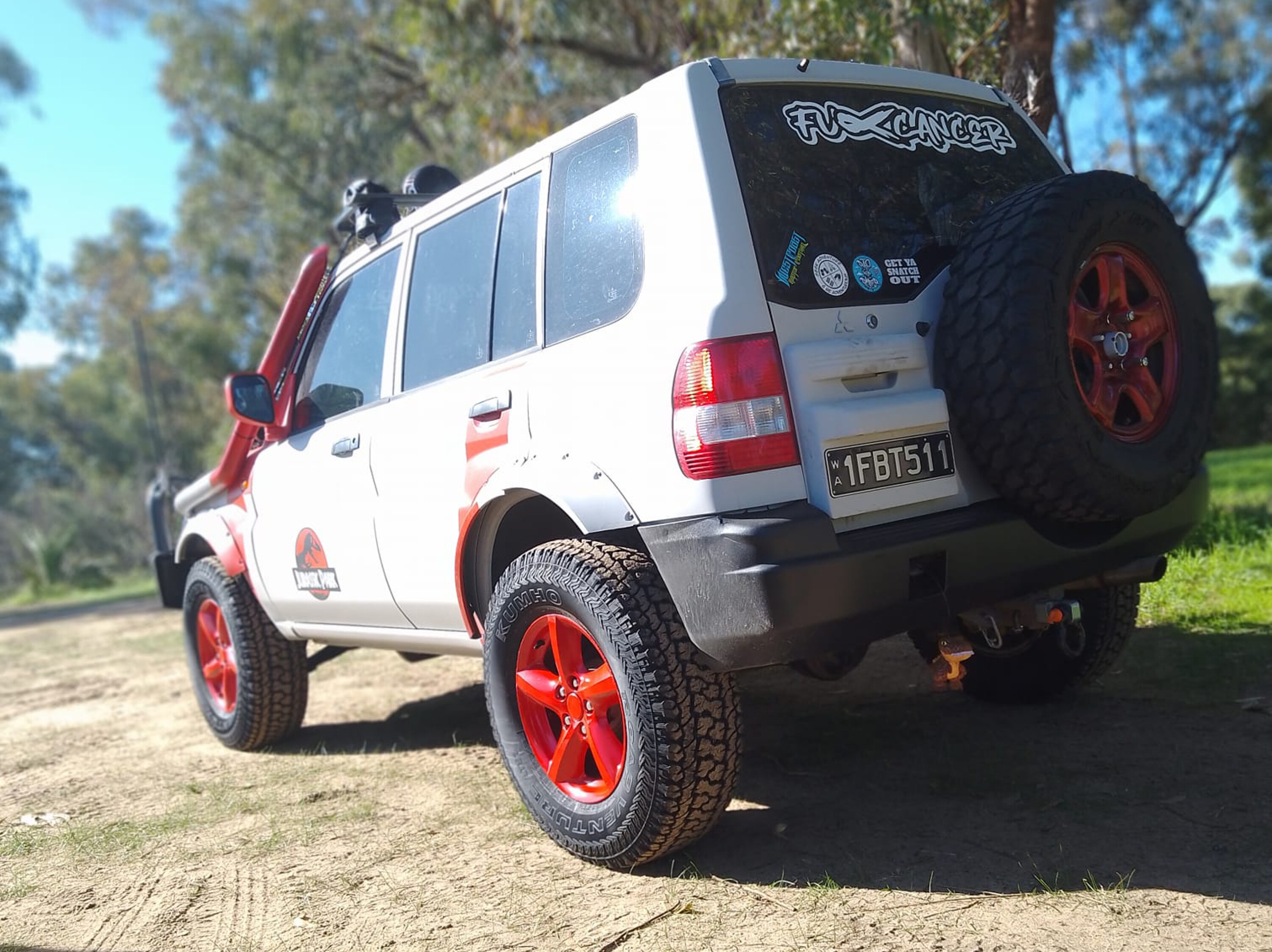
It is a Pajero iO with a 4G93, but I have a DOHC 4G93t waiting to go in. I also started out with a stock iO and couldn’t get a lift kit, so I built one and it has X-Trail rear struts in front with two-inch springs, HiLux LN106 rear shocks, Mazda Astina rear springs with 80 Series spacer, VR panhard rod, and I had to fit 35mm spacers to run the 265/70R16 Kumho AT51s with Falcon 16-inch alloys. The paint job was done in memory of my three-year-old who I lost to cancer. I’ve also made a custom snorkel and box, cut up an Isuzu D-Max front bar, and made a new rear-wheel carrier to accommodate the big tyre in the back. I have a fridge, a Weber, a little oven, and even a fold-down table. There’s probably more I’ve missed, but it’s been built to take my son’s and my dad’s ashes 1800km one-way to the Pilbara, to lay them to rest – Beau Mutten
2006 Jeep TJ Wrangler
1
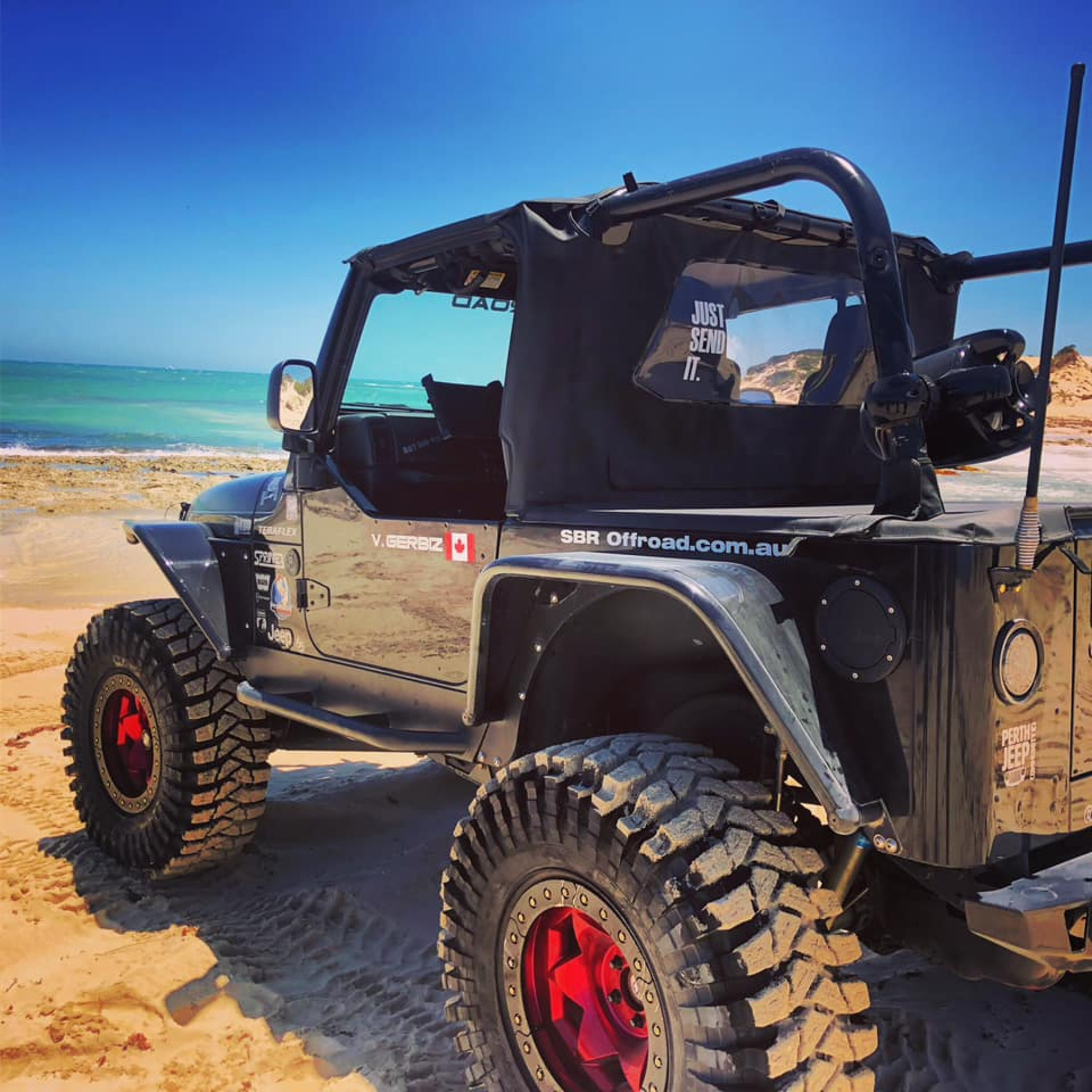
Mods include a supercharged 4.0L AMC; long-arm suspension; 4.56:1 ratios; eLockers front and rear; Warn 8274; removable steel flares; PRP Seats; anti-rock swaybars; RCV Performance axles; Trailgear beadlocks; and 37-inch Treps. The best places it has been include Lancelin, Wilbinga, Harvey, Brunswick, Collie, Balingup, Warpole and Denmark – Damian Ferguson
Isuzu D-MAX LS-U
1
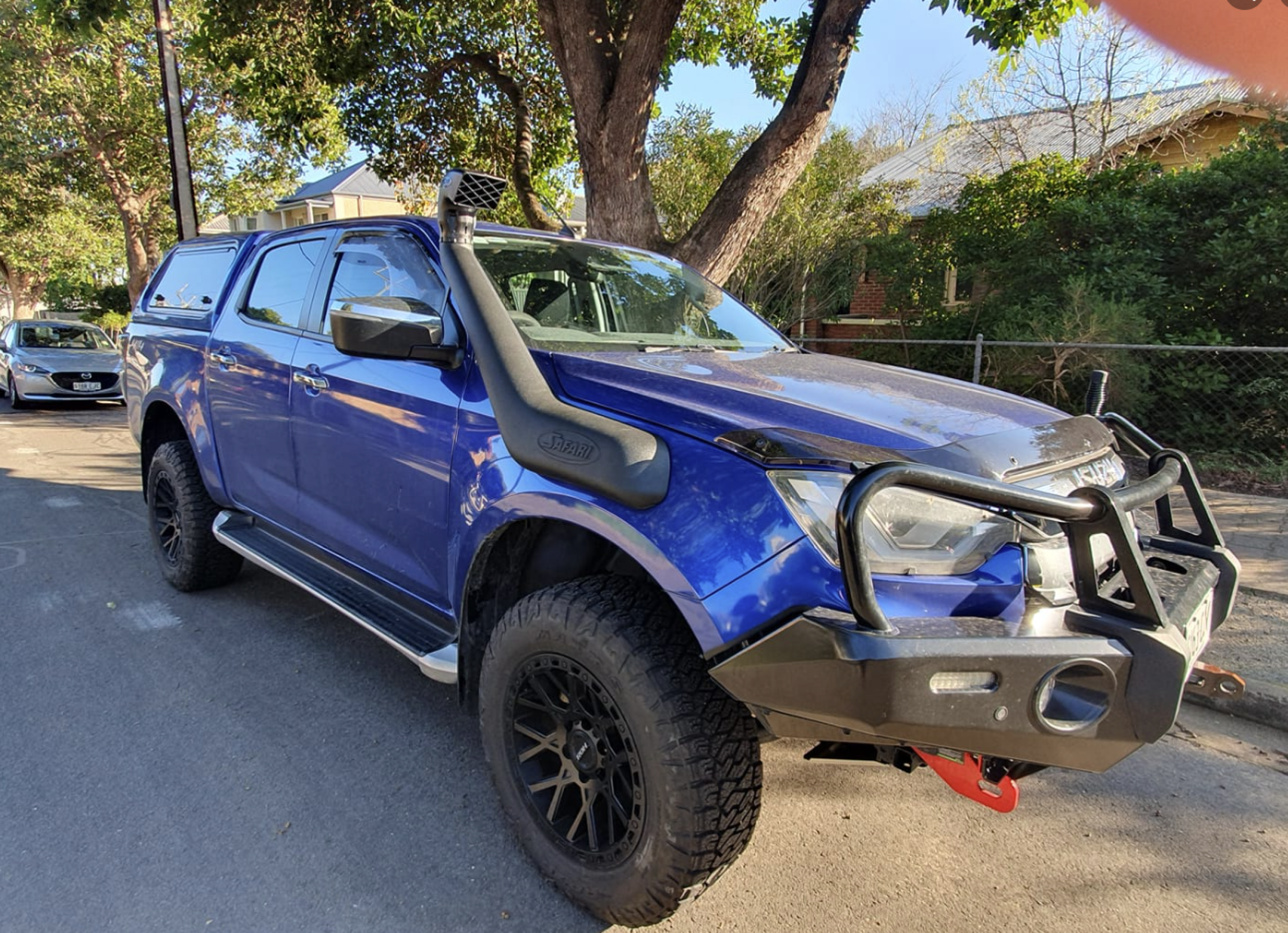
It’s a crew-cab with a two-inch lift and some of the accessories fitted include a Runva winch; Maxxis AT812 all-terrain tyres; Safari snorkel; Ironman recovery points; Custom Offroad underbody protection; and a two-inch Tough Dog suspension upgrade. It has been to Goolwa Beach, Eagle View 4×4 Track and Deep Creek National Park, all in SA – Terry May
2002 Toyota HiLux
1
It’s an SR5 with a 1KZ TE 3.0-litre turbo-diesel motor. The modifications I have added since ownership include steel bar; XTM spotlights; KingOne winch; Uniden UHF; 31-inch Hankook MT2 tyres; straight-through exhaust; and 140amp AGM dual-battery system with a solar controller for solar input and ABR Sidewinder isolator from the alternator. It also has additional lighting wired up in the canopy; single rear drawer with a fridge slide; 60-litre myCOOLMAN; Dune 2.5m awning (270° to come soon); HD Prorack roof racks with custom Maxtrax mounting system; and a two-inch Fulcrum lift kit about two weeks away. The best places I have taken it would have to be Fraser Island, and into the heart of both the Barringtons and Watagans. I’m planning a trip across to SA that will include Robe to Beachport, Great Ocean Road, Victorian High Country, Kosciuszko and the NSW south coast – Jack MacPherson
2013 Holden RG Colorado
1
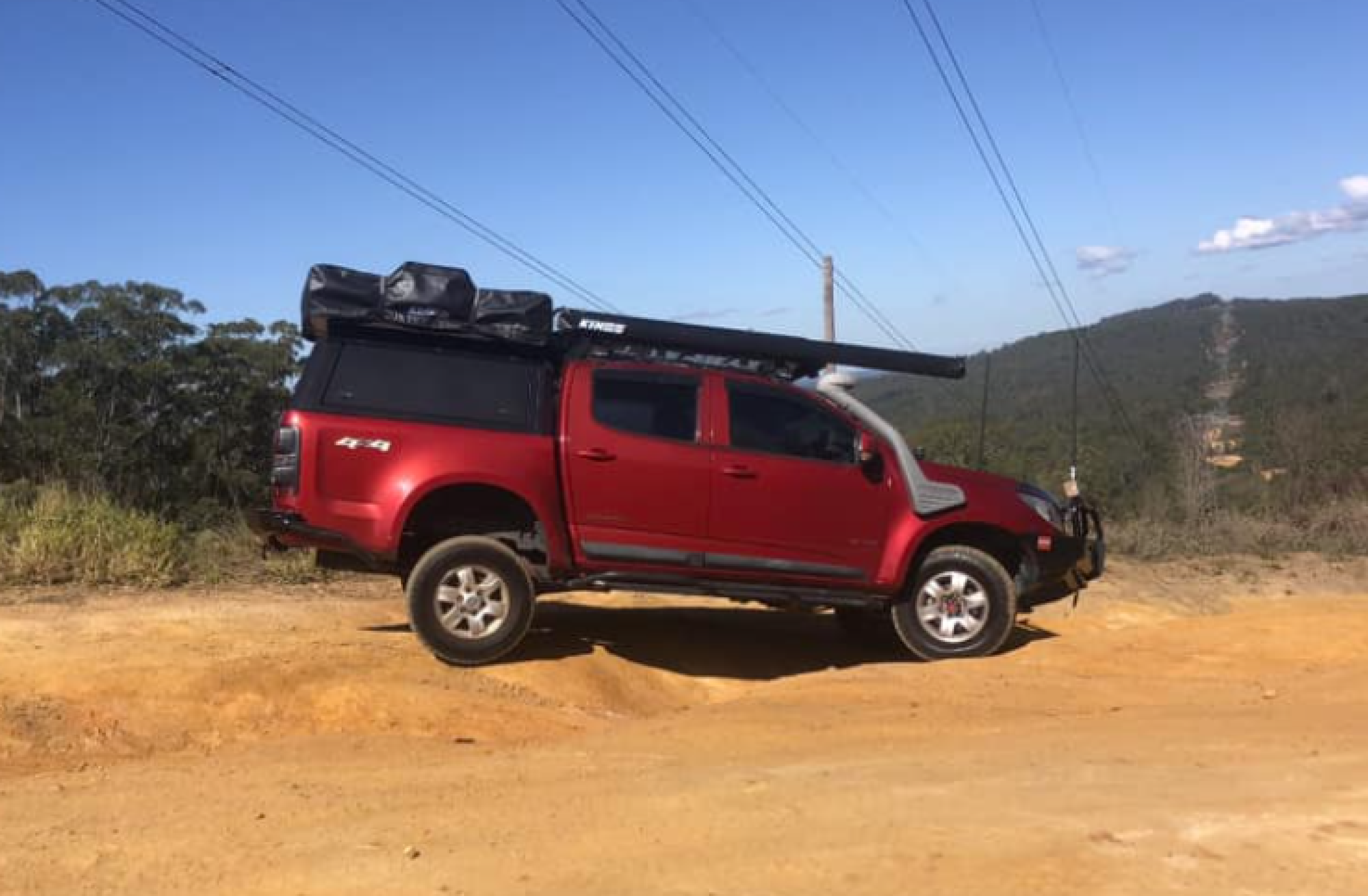
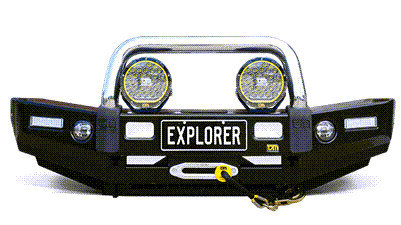
Mods include an Ironman bullbar; 12,000lb Ironman winch; two-inch Outback Armour constant load springs (600kg in the rear for towing); rear Ironman bar; JTW Sliders; two GME UHFs; Drivetech 4×4 free-wheeling hubs; Kings light bar and spotlights at the front; 3/4 length Kings roof rack; two spotlights underneath front rack; and a 120W solar panel on a slide-out under the rack. Also up top is a Kings 270° free-standing awning; Kings rooftop tent; Kings 2x3m side awning; and canopy and roof rack from Kelly 4WD Accessories. Other mods include a 70-litre Evakool fridge and freezer; Ironman drawer; 12v Travel Buddy; 1500W inverter; Thunder battery box for dual system and 135amp AGM battery; dual-sensing smart-start battery isolator; and a 12v air compressor – Darryl Spendelove
Just 90 minutes from Melbourne, the Central Victorian town of Castlemaine oozes gold rush era history wherever you look. There’s also plenty of fun to be had camping and exploring the many 4×4 tracks that criss-cross the nearby state forests.
In the 1850s, when the wider Castlemaine area was collectively known as Forest Creek, gold discovered here fuelled the start of Victoria’s historic gold rush.
Forest Creek was one of the richest shallow alluvial goldfields in the world and, along with the surrounding area, was responsible for producing some of the largest nuggets ever unearthed, including the world’s largest, the Welcome Stranger, which was found just 30mm beneath the earth at the base of a tree.
1
Since 1851 the area has produced over 1500 tons of gold (about $1.5b in today’s money) although that is likely a gross underestimate given poor record keeping and undisclosed finds.
Geological estimates suggest that only 11 per cent of the available gold has been extracted – which is no doubt why fossickers still comb the old diggings. Early in 2023 one lucky soul turned up a 2.6kg nugget estimated to be worth $240,000.
1
Easy drive
While the major forest roads and tracks in the area don’t strictly require four-wheel drive in dry conditions, there are numerous minor tracks to challenge 4×4 enthusiasts.
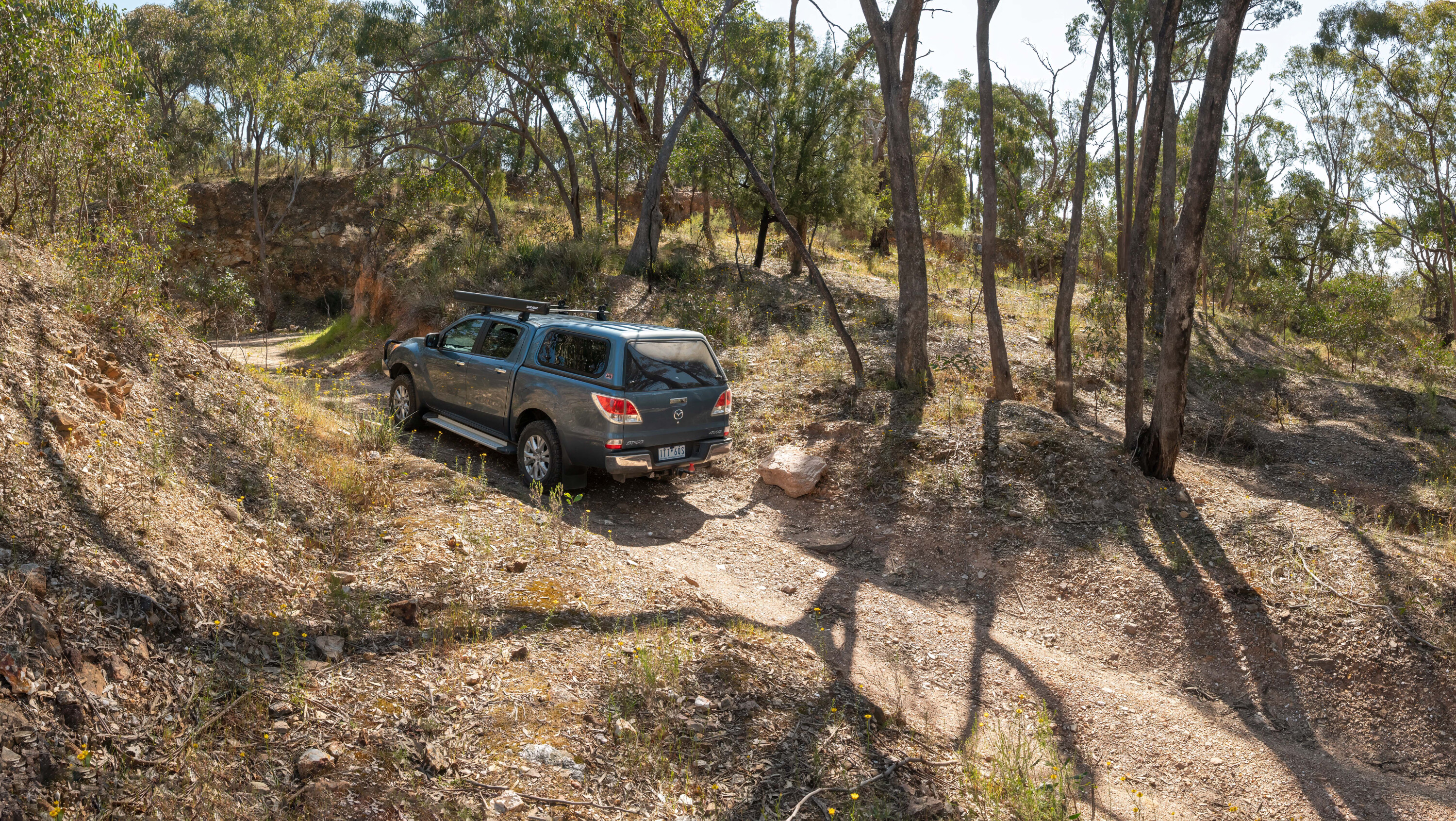
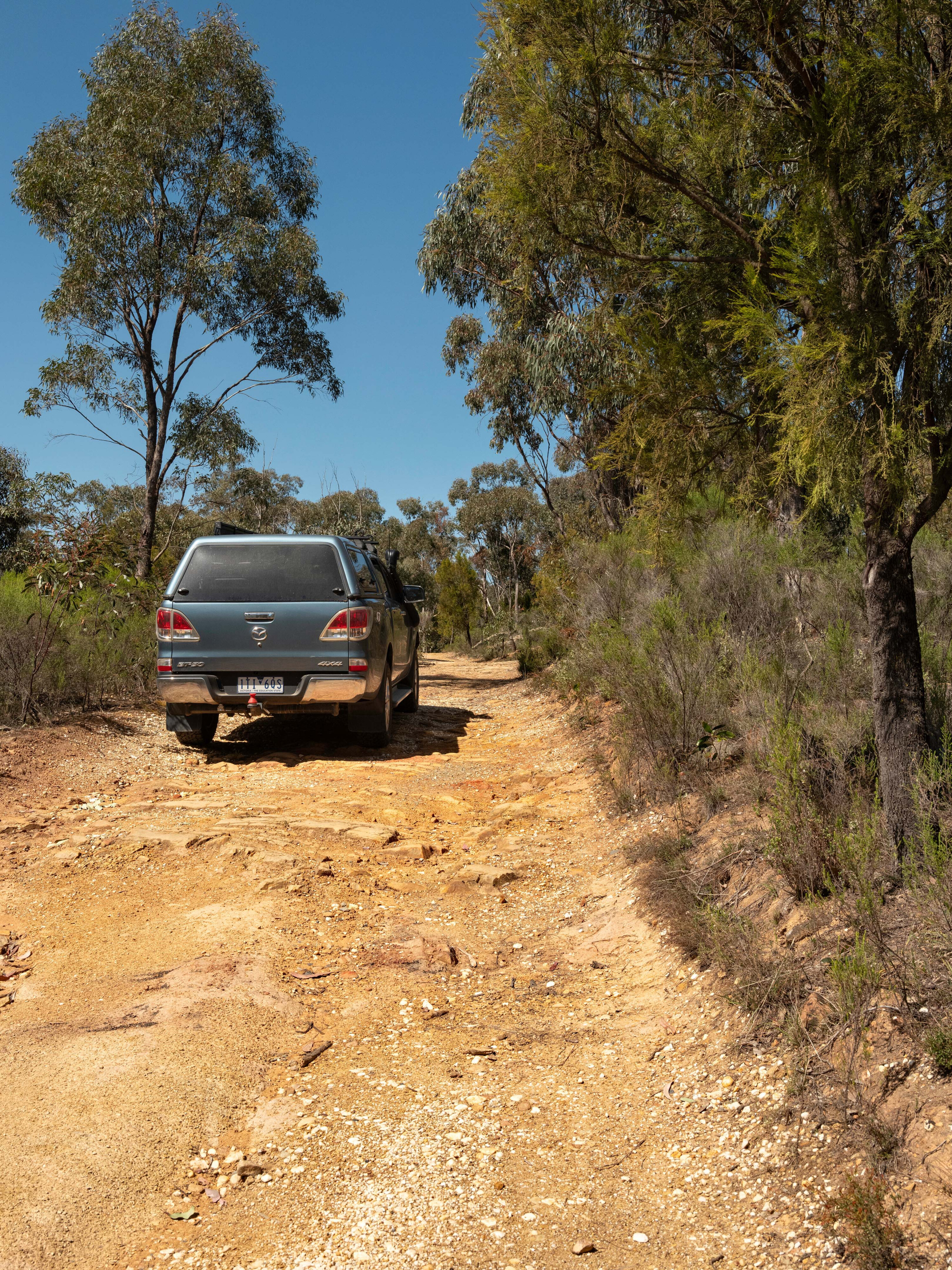
Victoria’s Department of Environment, Land Water & Planning (DELWP) promotes a four-hour, 100km 4×4 drive in the Wombat State Forest, starting in the east from near Gisborne and finishing near Daylesford. When we checked out this drive it was largely on good gravel roads that had just been graded, so the emphasis was more on drive than four-wheel drive. That said, the trip passes through some great forest scenery and incorporates the rough, narrow and definitely 4×4 Rat Hole Track that runs past the site of an old mine.
Anyone wanting the full 4×4 experience would need to spend time exploring the myriad forest tracks, but if just looking for a pleasant day drive on your way to explore the attractions of the old gold diggings, the Wombat SF is a good place to start.
1
Near the drive’s western exit onto the Ballan Daylesford Road, the Werribee River picnic area with its tables and firepits offers a quiet rest stop.
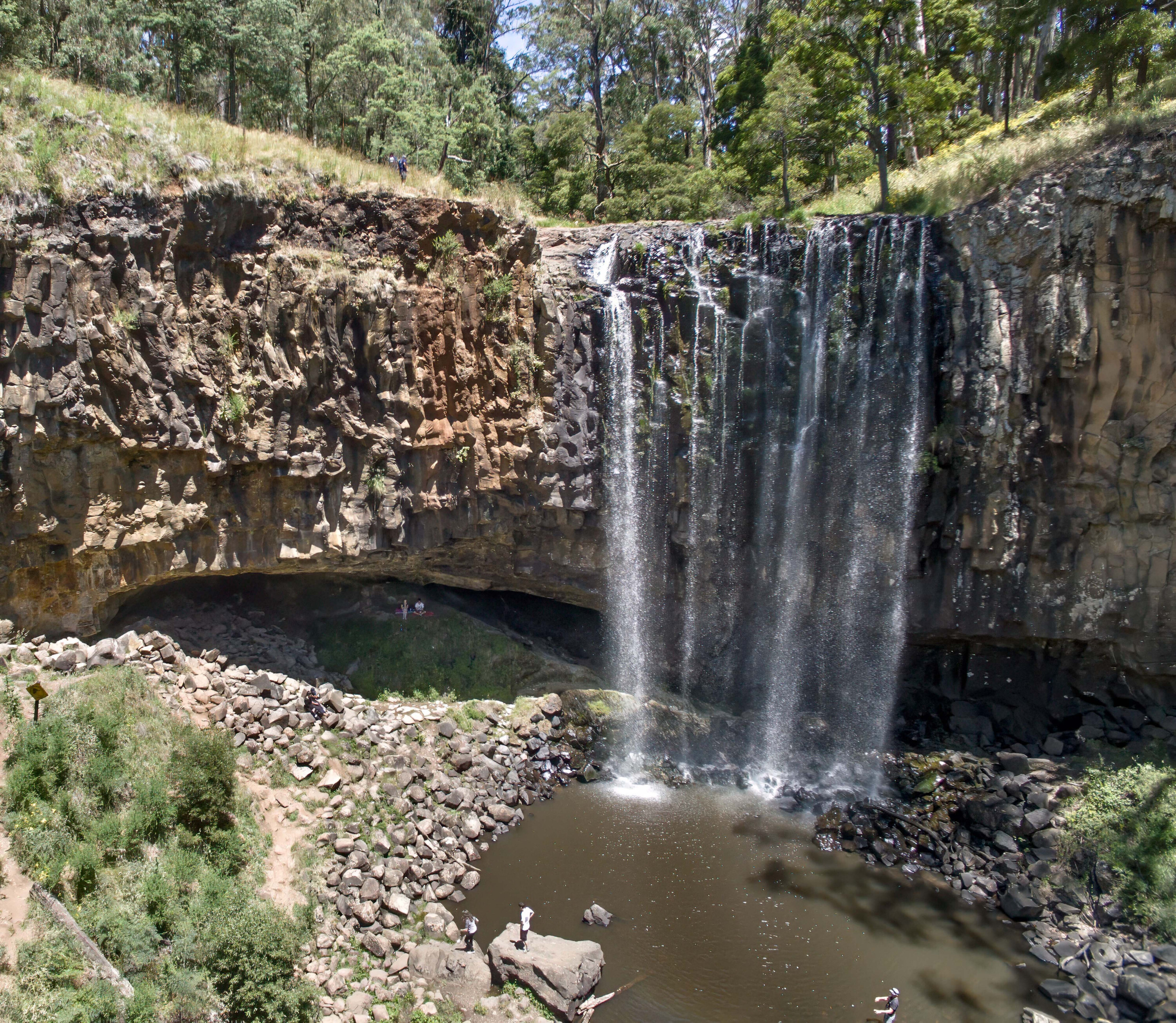
Near Daylesford you can stretch your legs at Sailors Falls. These are best seen after rain as they can be a no-show at dry times of the year, but otherwise make sure to take your camera as the picturesque waterfall plunges 20m into rock pools at the base of a deep fern-lined gully. If there has been rain recently, nearby Trentham Falls and Loddon Falls (where the latter drops dramatically over a wall of basalt columns) are also worth adding to your itinerary.
For the Bear Grylls enthusiasts who like to camp out under the stars and enjoy a burnt snag with a beer or three around the campfire, free camping opportunities in the state forests around Castlemaine are endless. Those who don’t revel in sleeping under canvas after a day touring the tracks might consider swapping the snag (and the swag) for something more upmarket, such as a pub meal and live music in Castlemaine.
2
Once thriving towns
From the Wombat SF, Castlemaine is 30 minutes further north and can be reached by the Midland Highway or via Vaughan Springs, using secondary roads and tracks in and around the 7500ha Castlemaine Diggings National Heritage Park.
Vaughan Springs, spawned in the 1850s gold rush, at one point boasted a population of 40,000. Many were Chinese, working in the mines as well as planting market gardens. While the intervening 170 years has seen the town’s population fall to double digits, and most signs of early settlement erased, the town’s shady picnic area on the banks of the Loddon River remains an attractive place to take a break.
While here, make sure to visit the Chinese cemetery and sample some water from the mineral springs. And, for the more energetic, a footbridge over the river is part of the 210km Goldfields Track that takes walkers and mountain bikers from Ballarat to Bendigo.
1
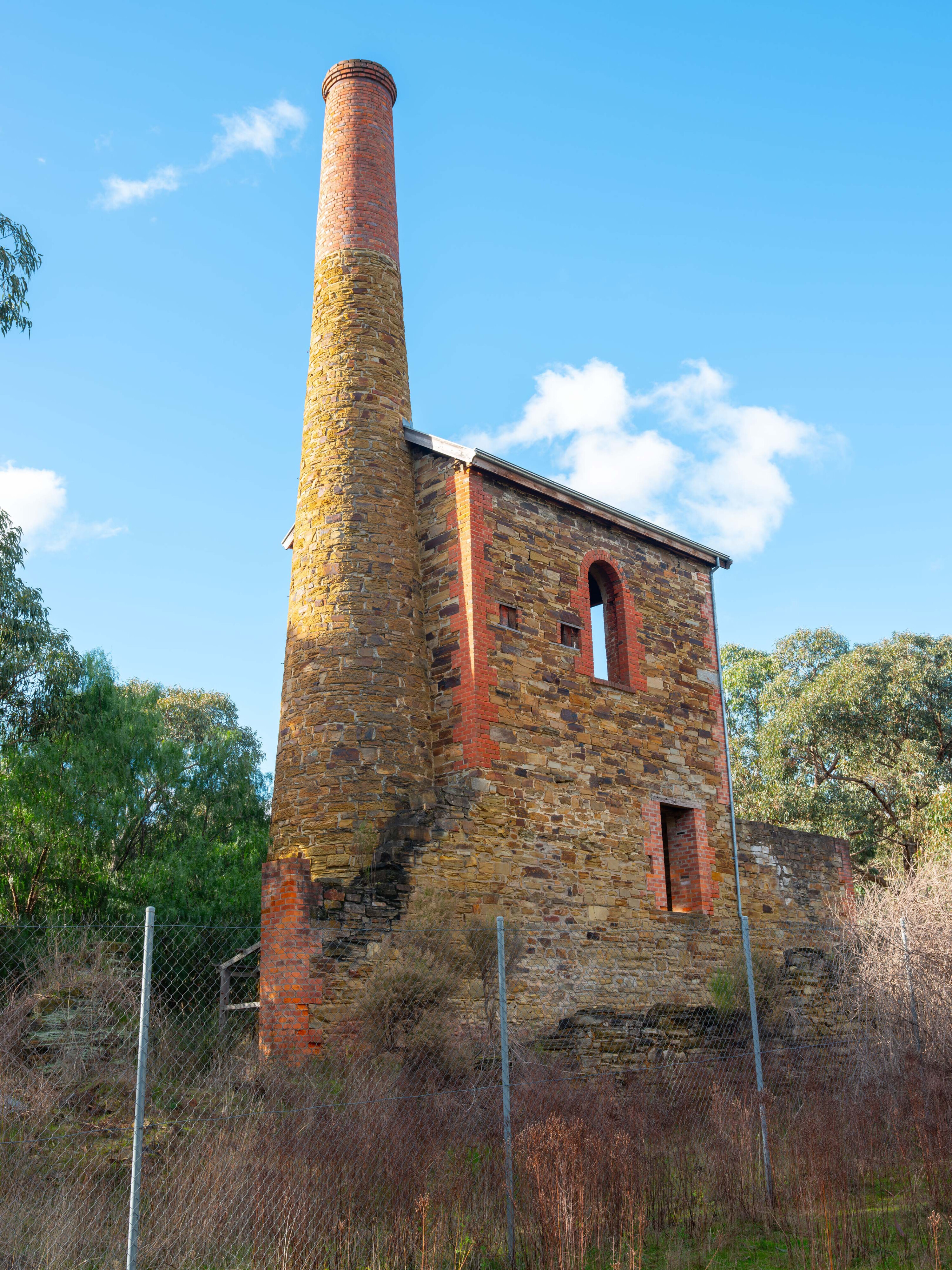
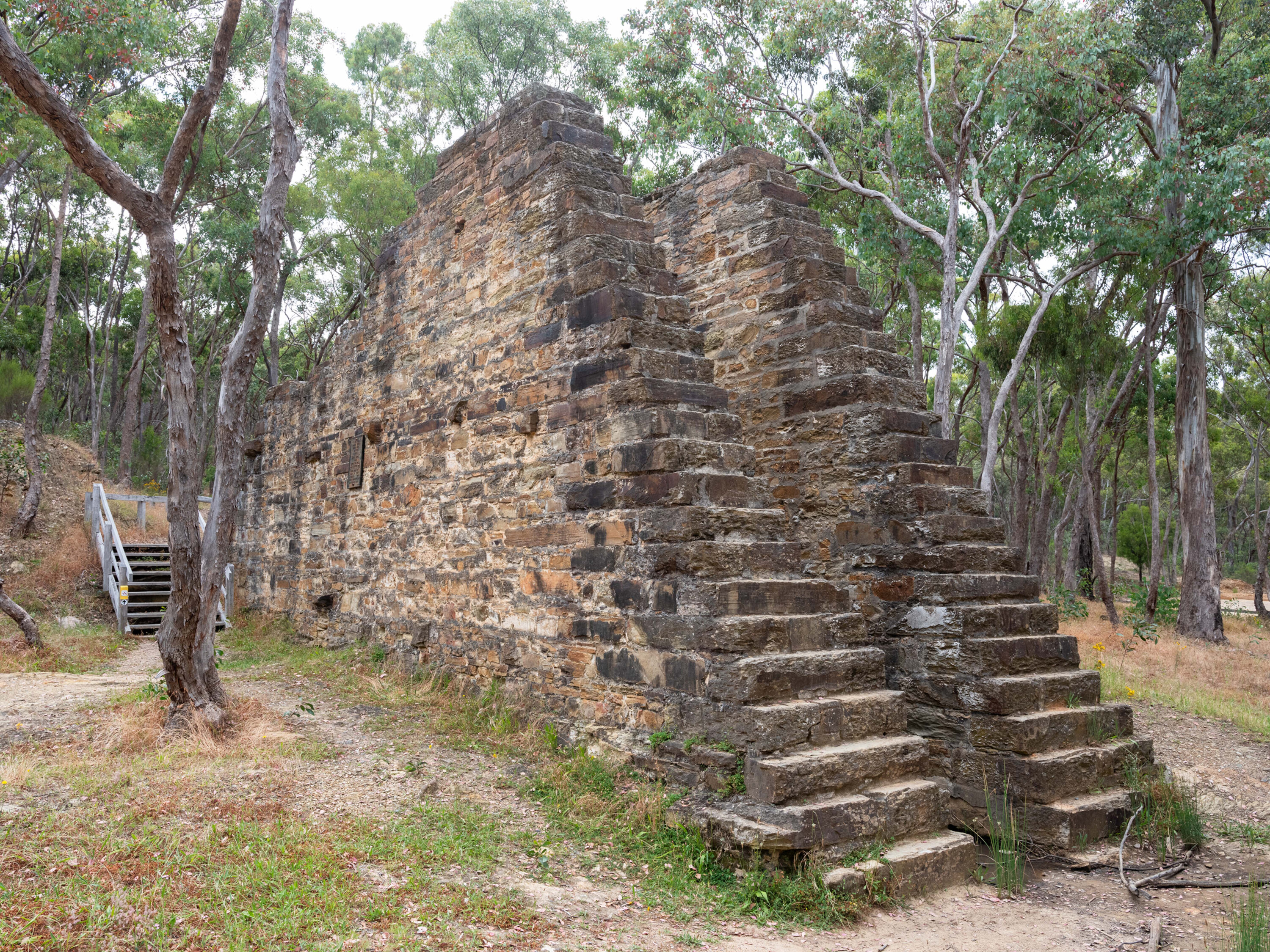
Nearby Fryerstown is another old gold mining settlement where the imposing ruins of the 1865 Duke of Cornwall mine engine house can be seen alongside the main road to Chewton.
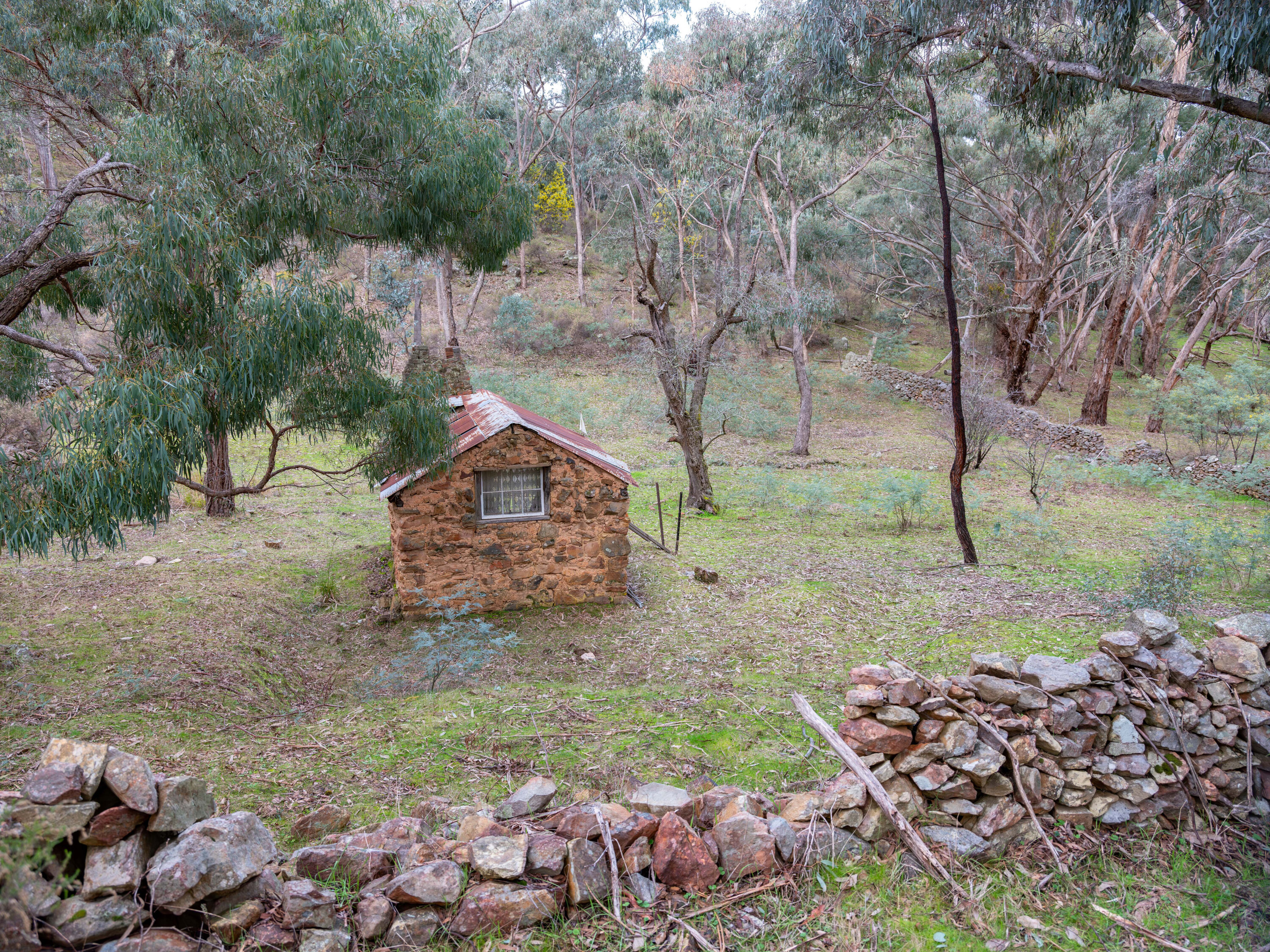
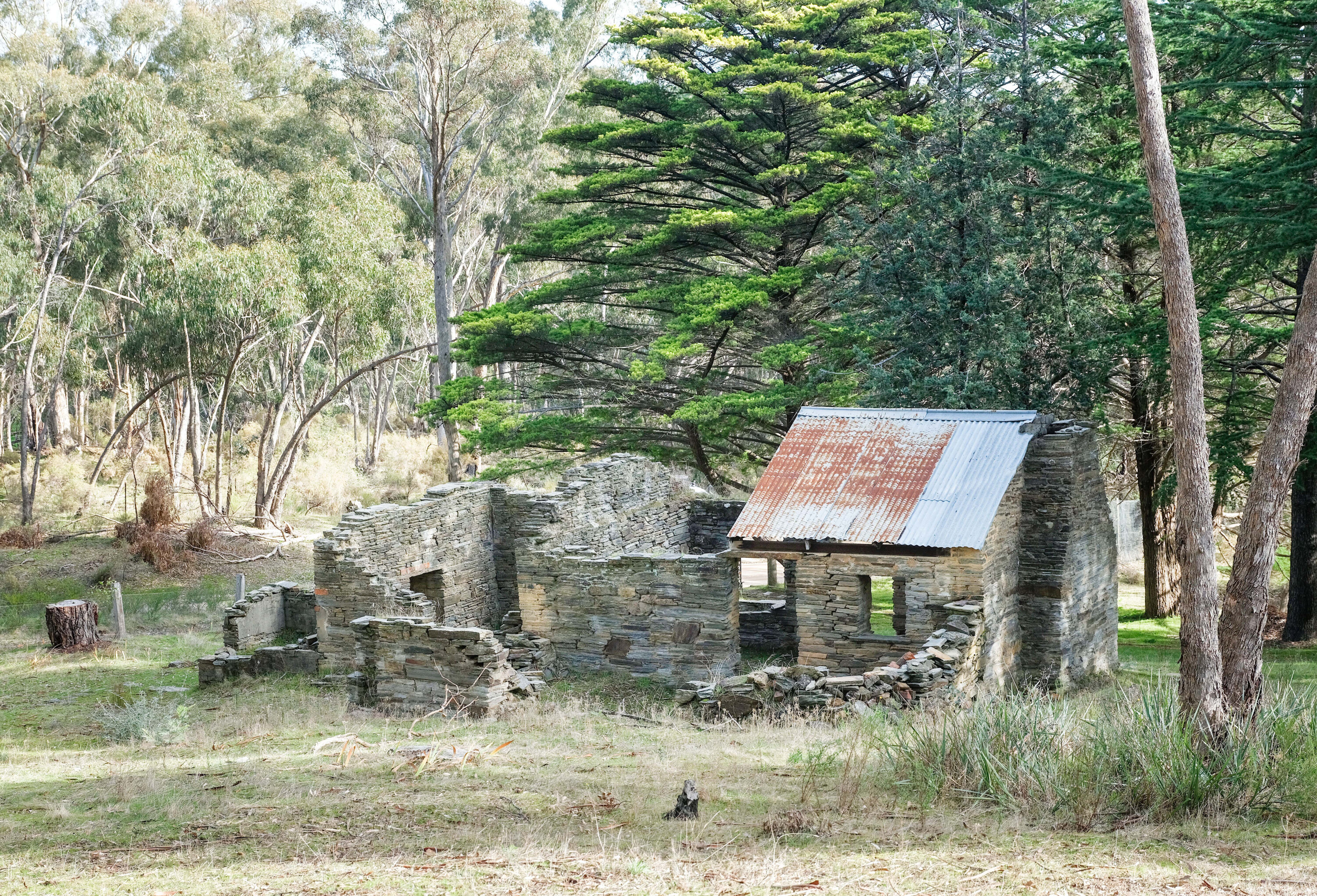
For those into a short walk, turn into Crocodile Reservoir Road and stop at the siding 50m or so from the corner. Follow the (poorly) marked foot track across Golden Gully (yet another rich goldfield) for a few hundred metres to find a small hut sitting in a clearing bounded by a stone wall.
Dating from the mid-1800s this quaint shepherd’s hut, despite showing the ravages of time, is remarkably intact, even down to an old bed frame.
1
The track from the hut continues north through what was Herons Reef for about 2km, passing numerous signs of old mining activity until reaching the Fryerstown Chewton Road.
You might want to keep your eyes on the ground as you walk – you never know your luck. Herons Reef produced the largest nugget (28kg) ever found on the Forest Creek diggings.
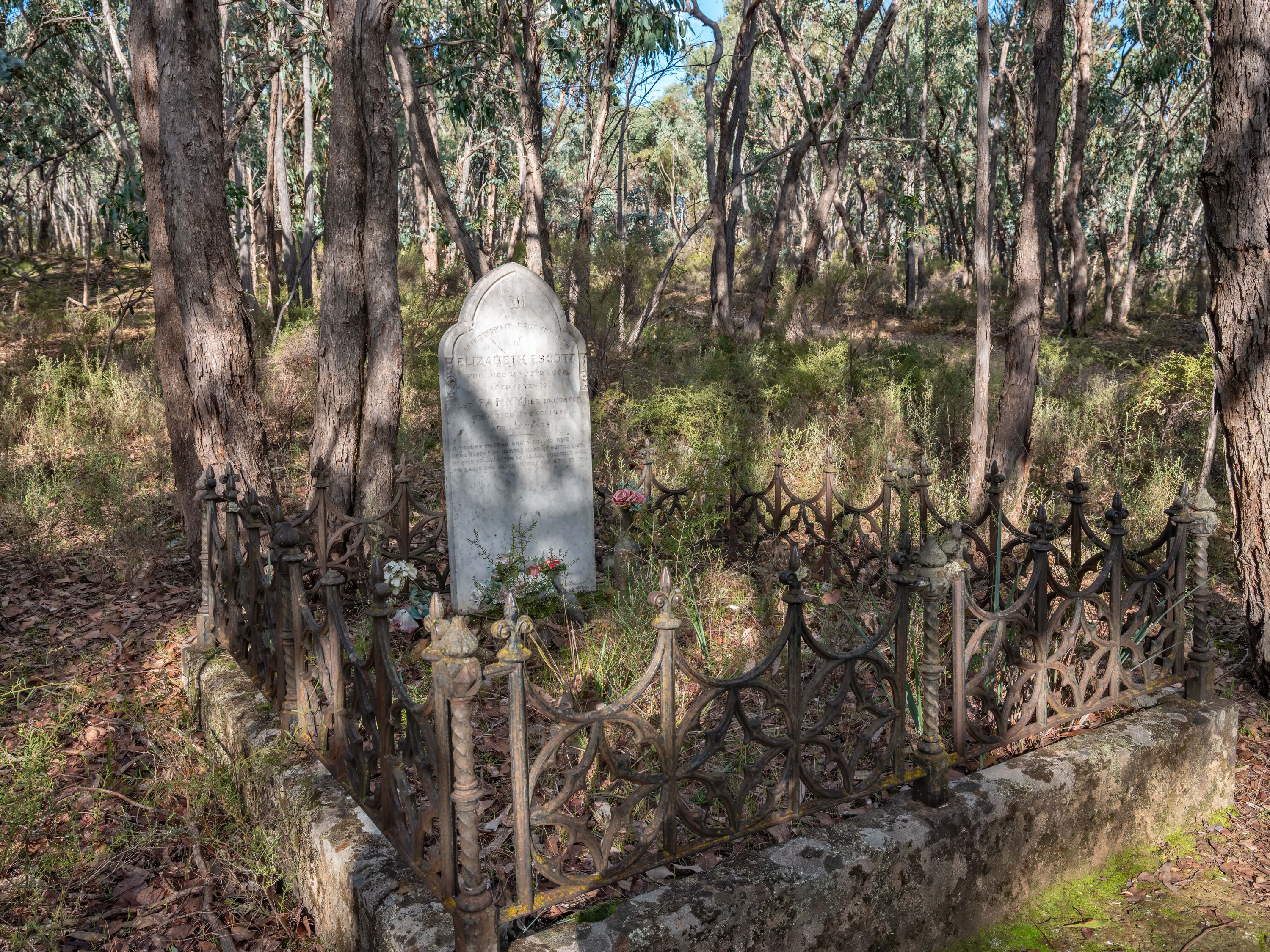
A little further along the Chewton road a short detour up Evenmore Track brings you to a remote grave site. The goldfields attracted some female diggers, including Elizabeth Escott who left England with her 11 children after her husband died. Life on the diggings was hard and Elizabeth and two of her daughters are buried in this lonely grave after passing away in 1855.
1
A changed landscape
It is difficult to visualise how this now densely forested area was once a potholed, treeless landscape where almost every square metre of ground had been turned over in search of the precious metal.
The strange names borne by many of the tracks and gullies were often based on people who lived and worked there, like Dirty Dick, or notable events, like Murdering Flats, Deadman’s Gully etc. Many were named for their success or otherwise, such as Poverty Hill or Nuggety Flat. In some cases, such as Poverty Gully, a rich strike might be given a name that would hopefully deter other prospectors.
Off Jacobs Track, just north of the Escott Grave, is Eureka Reef. Originally a huge outcrop of white quartz some 20m wide and as high as the treetops, the reef produced 175kg of gold over seven years from 1855. As the early miners followed the reef they left behind the long narrow gully that snakes over the hillside.
1
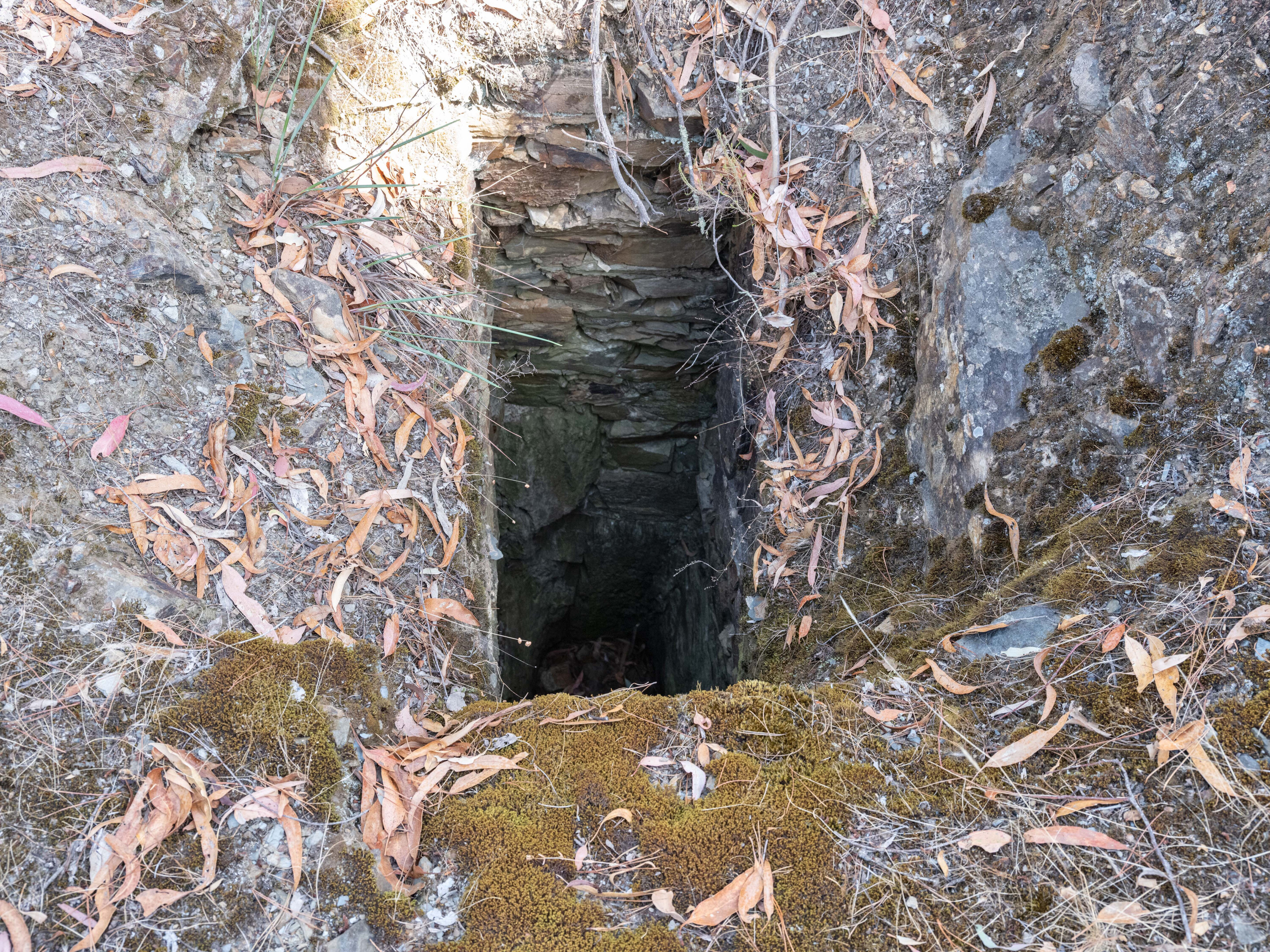
A 150m deep mine subsequently operated here until the 1950s. Its main shaft near the carpark is capped by a concrete slab with a small central hole; you can drop a stone down and listen for it to hit bottom.
It can be a bit unsettling to realise the (relatively) thin layer of concrete is the only thing between you and eternity.
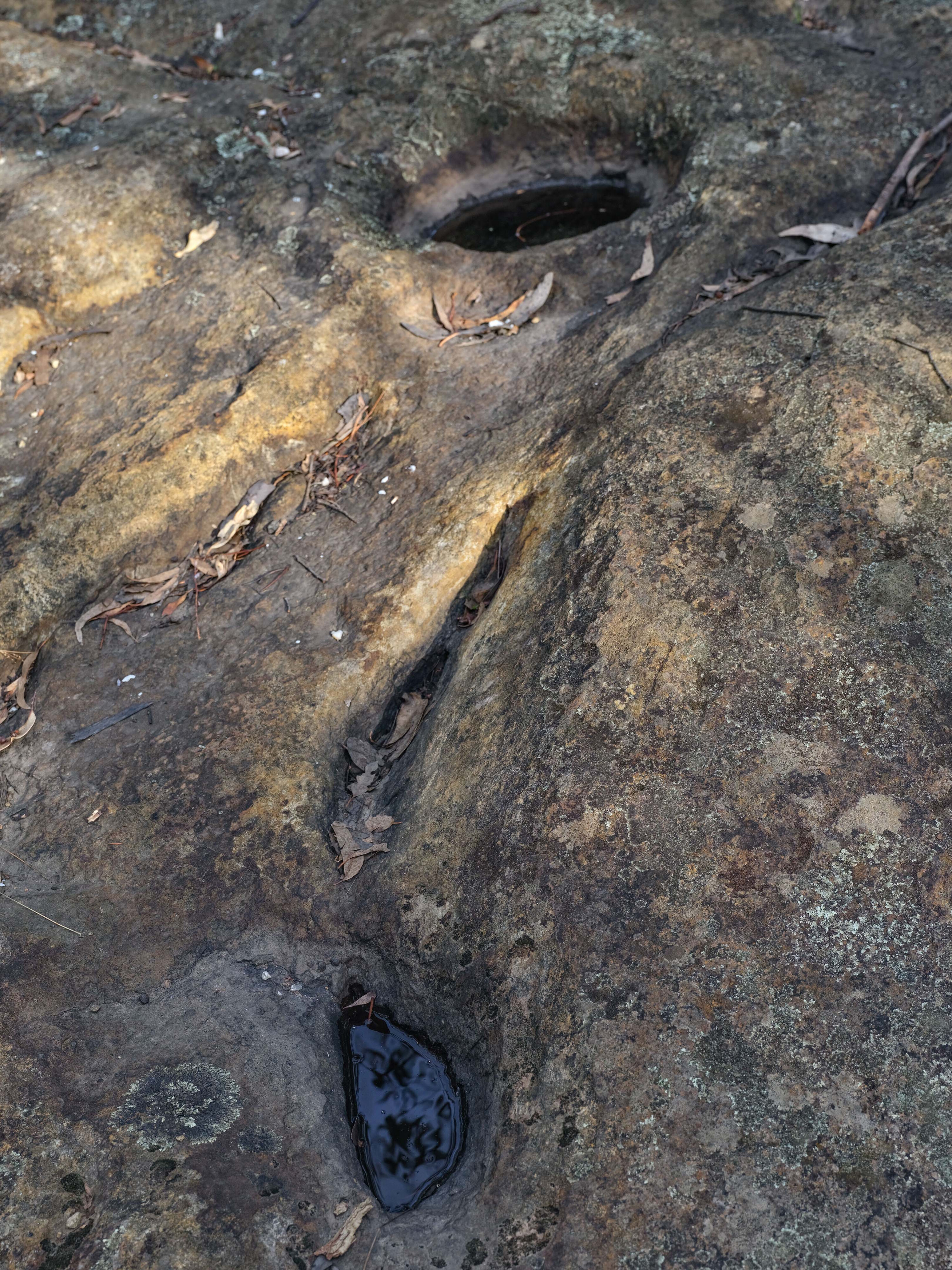
The reef has a 2km walking track with a guide that can be downloaded from the internet. Along the walk, as well as remnants of mining activities there is a reminder of earlier aboriginal connections to this land in the form of rock pools made to trap and hold rainwater.
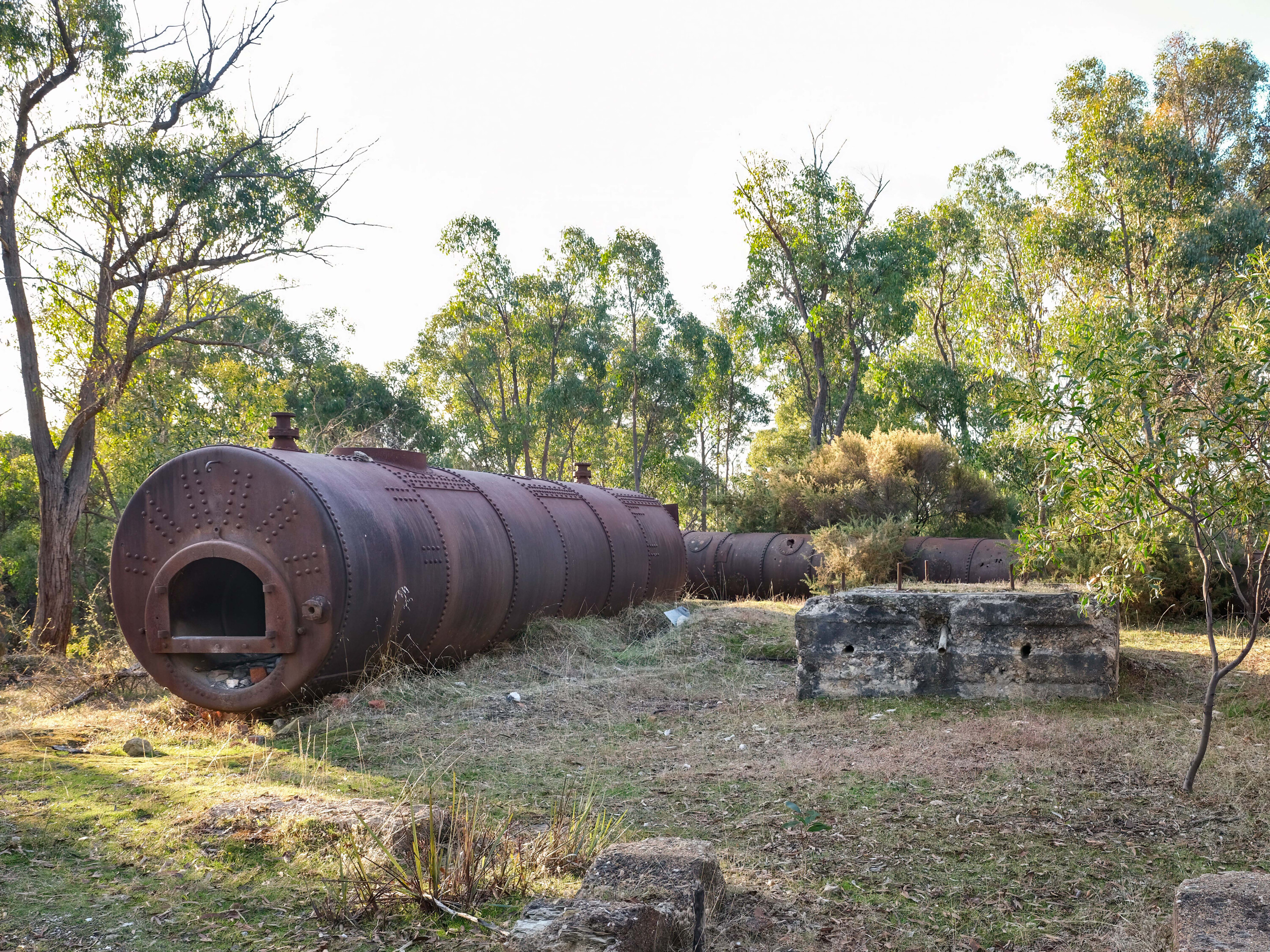
A scenic route from Eureka Reef to Castlemaine is via the 4×4 Poverty Gully Track, which passes numerous signs of old mining activity including an old boiler hidden amongst the bushes on a hilltop.
1
Resting Place
Accidents and a lack of clean water were a common source of death on the goldfields with many victims being young children. The children’s cemetery at Pennyweight Flat near Chewton is the resting place of some 200 children who died in just six years between 1851 and 1857.
It earned its name because it was said you would need to work the ground all day to find just a pennyweight (1.5g) of gold. Being one of the few places not mined for this reason, the site was chosen as a cemetery because the graves were less likely to be desecrated.
Given the close proximity to the diggings and the rocky ground preventing graves being much more than a mound of rocks, the stench from the cemetery led to its closure. Despite its macabre history, a walk around the cemetery today is a poignant experience.
1
Few could afford headstones and many graves had nothing more than a child’s name roughly chiselled into a flat rock set upright in the ground.
The Wattle Gully mine at Chewton operated from 1853 to around 2010 and produced 1300kg of gold (about $130m in today’s money). In the 1930s drilling below the shallow mines of the prior century indicated a large gold deposit, but when a shaft was sunk nothing was found.
Investigations showed the shaft was in the wrong location because the drill had been deflected off course by a hard layer of rock, and when they dug to the correct location, there was the gold. Had the drill not been accidentally deflected it is likely the deposit would never have been found.
1
A colourful town
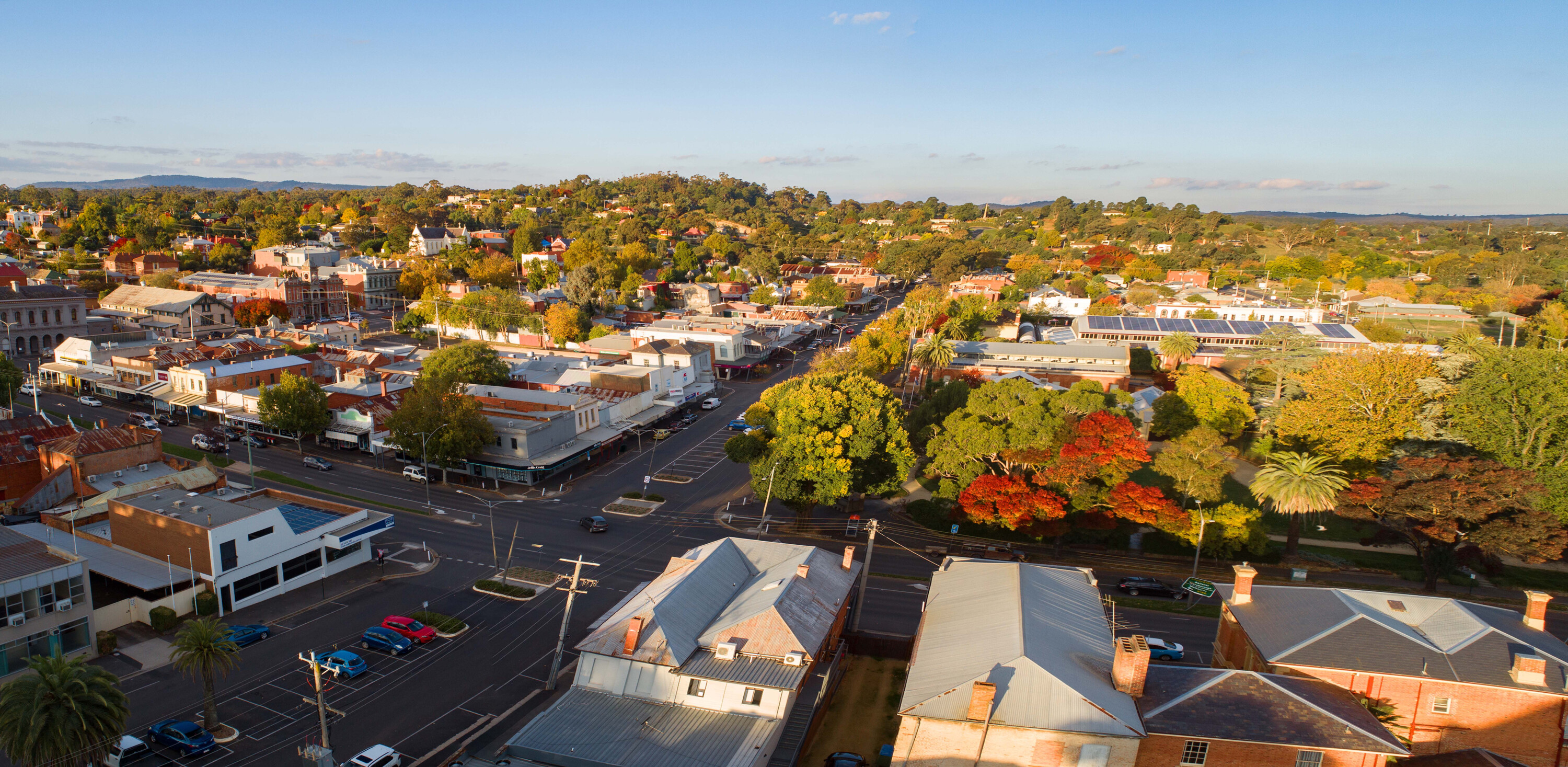
Castlemaine is anecdotally considered God’s Waiting Room for many retired Melbournians who have cashed in their city homes for a more relaxed country lifestyle – an argument supported by a sea of greying hair that predominates in the town’s streets.
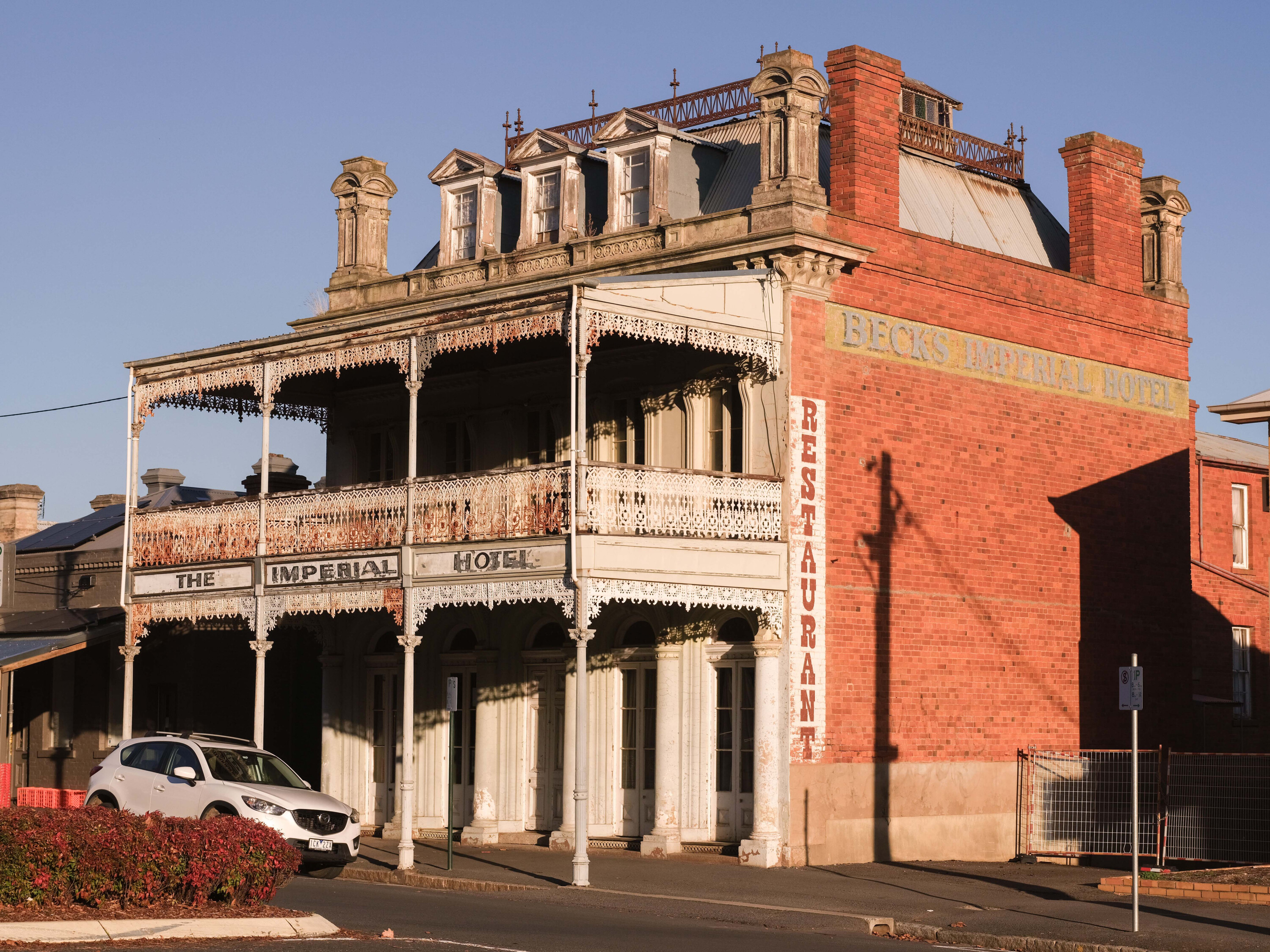
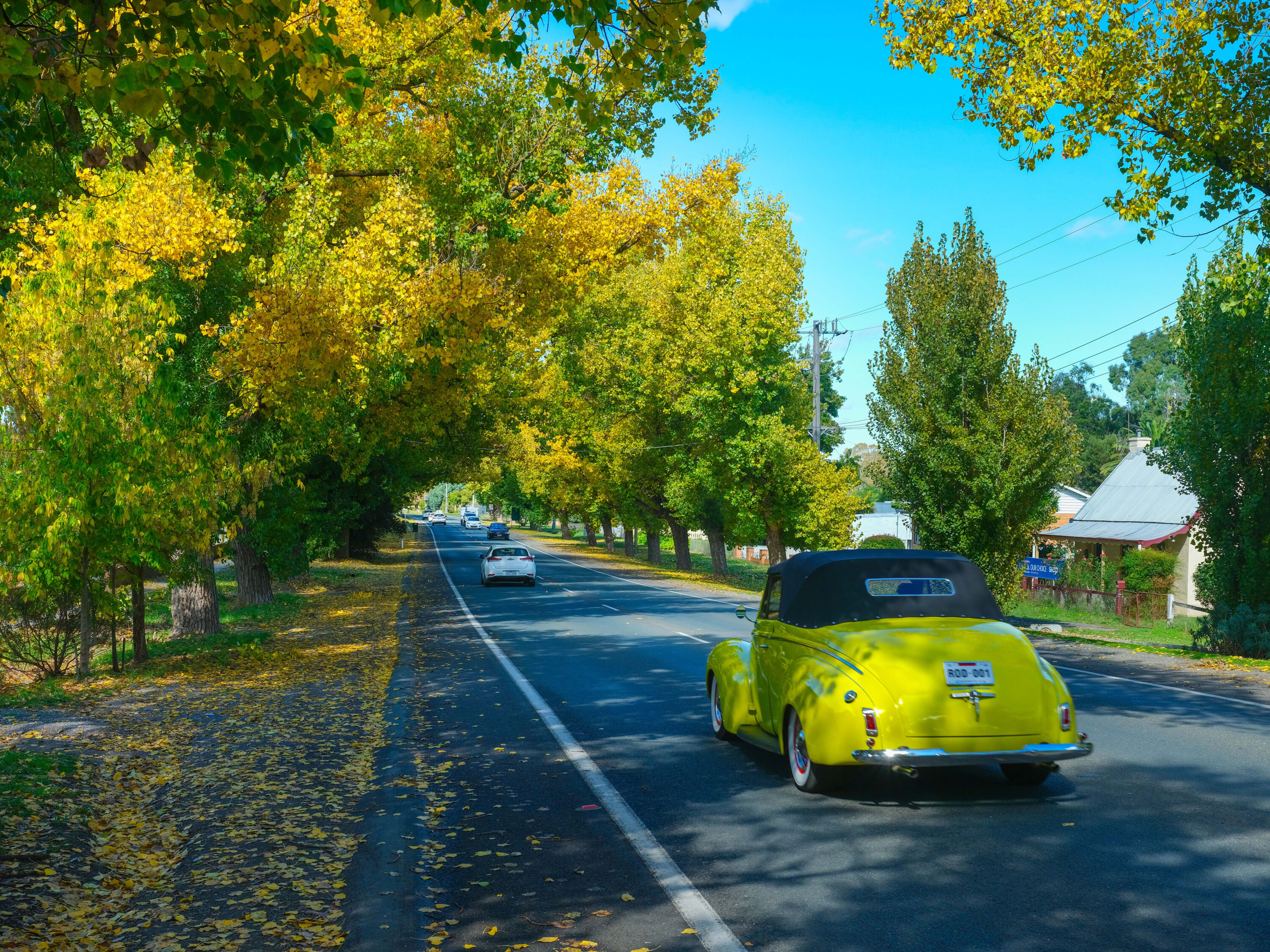
Wherever you look there are charming historic buildings dating from the gold rush era and as the early settlers planted many European trees to remind them of home, the town is a kaleidoscope of colour in Autumn.
There is an active art scene with a number of venues offering live music from a range of genres. At the local theatre, which dates from the 1850s, you can watch the big screen from comfy settees.
1
Finding a meal isn’t a problem given a good range of hotels, cafes and takeaways, or for something more upmarket try Wild or the Bar Midland restaurants.
The Railway Hotel and Bridge Hotel are popular watering holes, as is the Red Hill Hotel in Chewton. The latter’s cellar has been used as a lockup, morgue and for gold storage at various times.
If you do drop into the Red Hill Hotel for an ale, be sure to wander down the road to see the transportable police lockup used during the goldrush.
1
Gold diggers
Men from all walks of life came from Melbourne and Adelaide to try their luck – so many in fact that the cities became short of labour and the government feared economic collapse.
It has been said that most of the male population of Adelaide set out for the goldfields when their discovery was announced, and by 1852 (when Melbourne only had a population of 77,000) some 50,000 people were seeking their fortunes at Forest Creek.
Some of the stories from the gold rush seem too good to be true. In a short 10 years the goldfields around Castlemaine yielded roughly 100 tons of bullion worth a staggering $10b today. One short gully at Golden Point yielded a ton of gold. In nearby Chewton an 8.5kg nugget was found while another prospector dug a hole a few feet deep to find 17kg of gold ($1.6m today).
1
Then there is the story of two young men without any experience who came to the area to start digging in an abandoned claim and almost immediately find a 30kg nugget.
Showing just how fickle the luck of the diggers was, the nugget showed score marks where the mine’s previous occupant had hit it with his pick but missed uncovering it.
4×4 tracks run north from Chewton past the foundations of the Garfield waterwheel, originally a huge wooden wheel 22m in diameter and 2m wide with 220 buckets that ran a 15 head crushing battery. Working 24 hours a day, six days a week, the noise from the battery could be heard as far away as Castlemaine.
1
Water to power the wheel was brought by many kilometres of open channels from the Explorer Reservoir on the Coliban River.
Follow the maze of tracks north from the waterwheel and you will pass Quartz Hill where sheets of pure gold were famously peeled from the rock, rolled up and sold by the square foot.
A deep cutting across the hill marks where the miners followed the reef. Walk around and you will see signs of more recent fossicking and narrow tunnels driven into the side of the old cutting.
1
Back on the blacktop
The tracks eventually exit onto the bitumen near Explorers Dam and the ruins of the Welsh Village. The latter requires a modest uphill walk from the carpark and it is worth reading the early history which explains the purpose of the numerous ruins of stone buildings.
Given these ruins are 170 years old it is remarkable that a fruit tree and a large rosemary bush still survive today – although they may very well be the progeny of earlier plants. As the name suggests, the miners were largely Welsh and brought with them their drywall stonemason skills, an example of which can be seen in a large retaining wall next to the walking track.
There are other interesting things to see and do in Castlemaine, such as take a trip on the twice weekly historic steam train trip to and from Maldon, or check out The Mill complex which hosts stalls of bric-a-brac as well as a restaurant and bar with live music.
1
Farmer and artist markets run regularly in the centre of town and the historic market building displays the work of local artists.
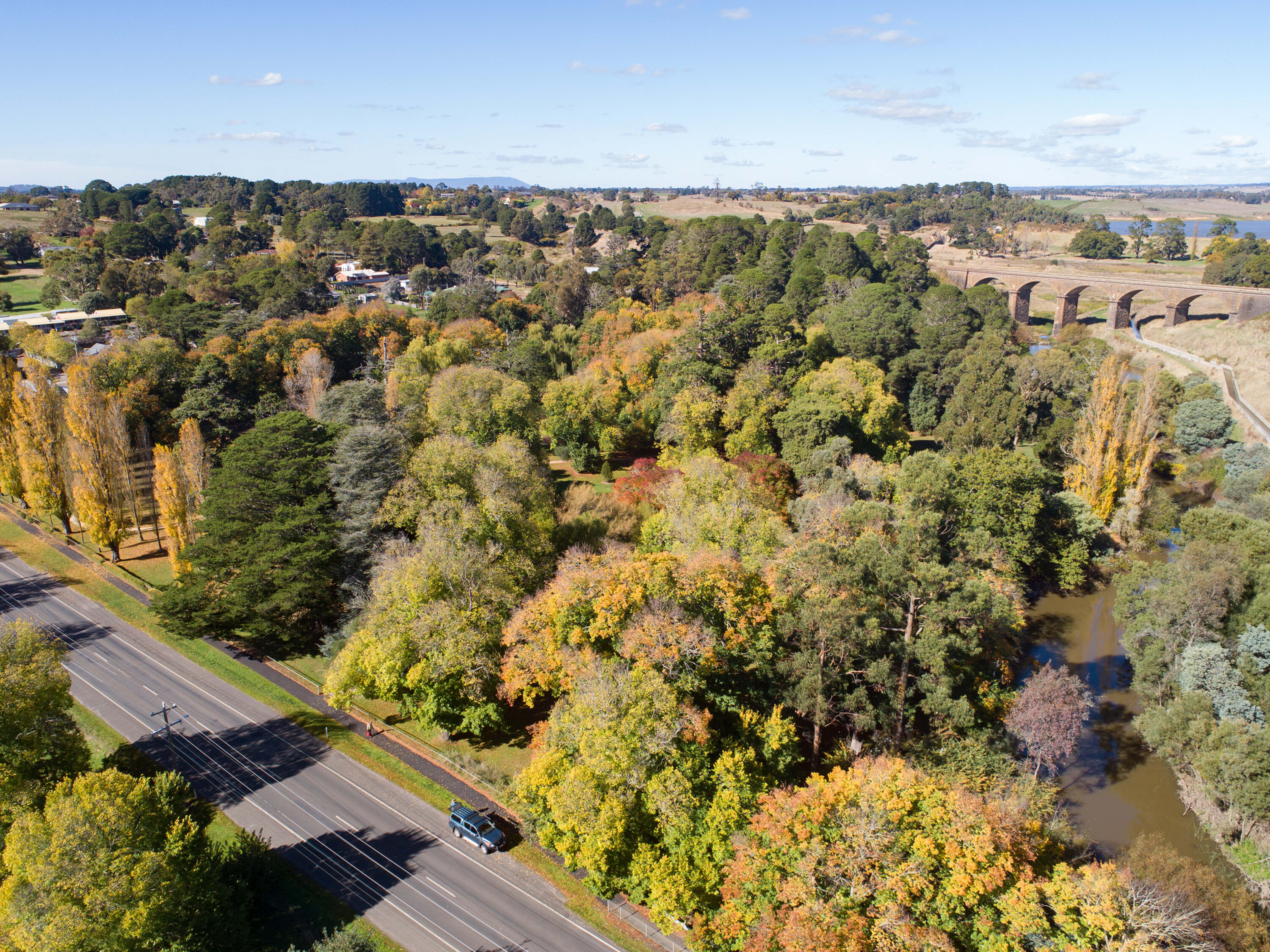
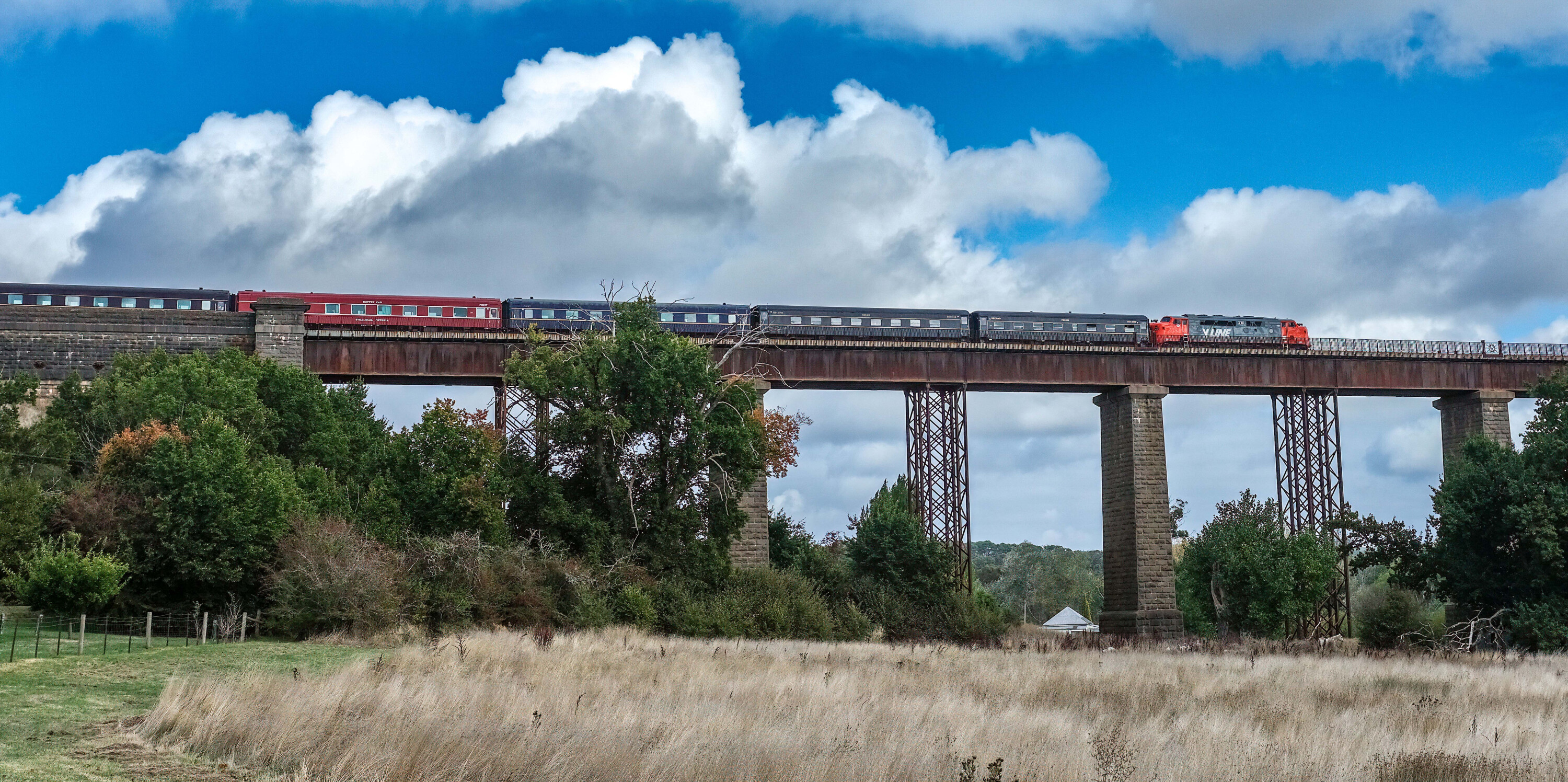
The old gaol overlooking the town is also another piece of history not to miss. Pay a visit to the village of Malmsbury with its botanic gardens and rail viaduct over the Coliban River. Still the largest masonry bridge in Victoria, it was also Australia’s longest when constructed. While there be sure to see the impressive 250m long and 36m high 1860s viaduct at nearby Taradale.
For the petrol heads, Castlemaine claims to be the street rod capital of Australia and wonderfully restored vehicles dating from the early 1900s to more recent muscle cars are a regular sight tooling the town’s streets.
While the Castlemaine Gold Digging’s 4×4 tracks might not rank up there with those of the High Country, they will introduce you to some amazing relics of Australia’s gold rush era, and when not behind the wheel, the area has many other attractions to interest the whole family.
Fact file
Where:
Castlemaine and the nearby Diggings National Heritage Park are approximately 120km north-west of Melbourne.
What to do and see:
The options are endless: test yourself against the many 4×4 tracks that criss-cross the forest; camp out and enjoy the natural beauty of the area; visit the old mining ruins that dot the area; catch the historical Castlemaine to Maldon steam train; sample the offerings of the pubs and cafes in Castlemaine, including live music; and if all else fails, hire a gold detector and try your luck.
Contacts
For current information contact the Castlemaine Visitor Information Centre – Ph 1800 171 888.
Finding the right camp table is one of the most challenging decisions to make and I’d need more fingers to count the number of tables I’ve used over the years, most of them rubbish.
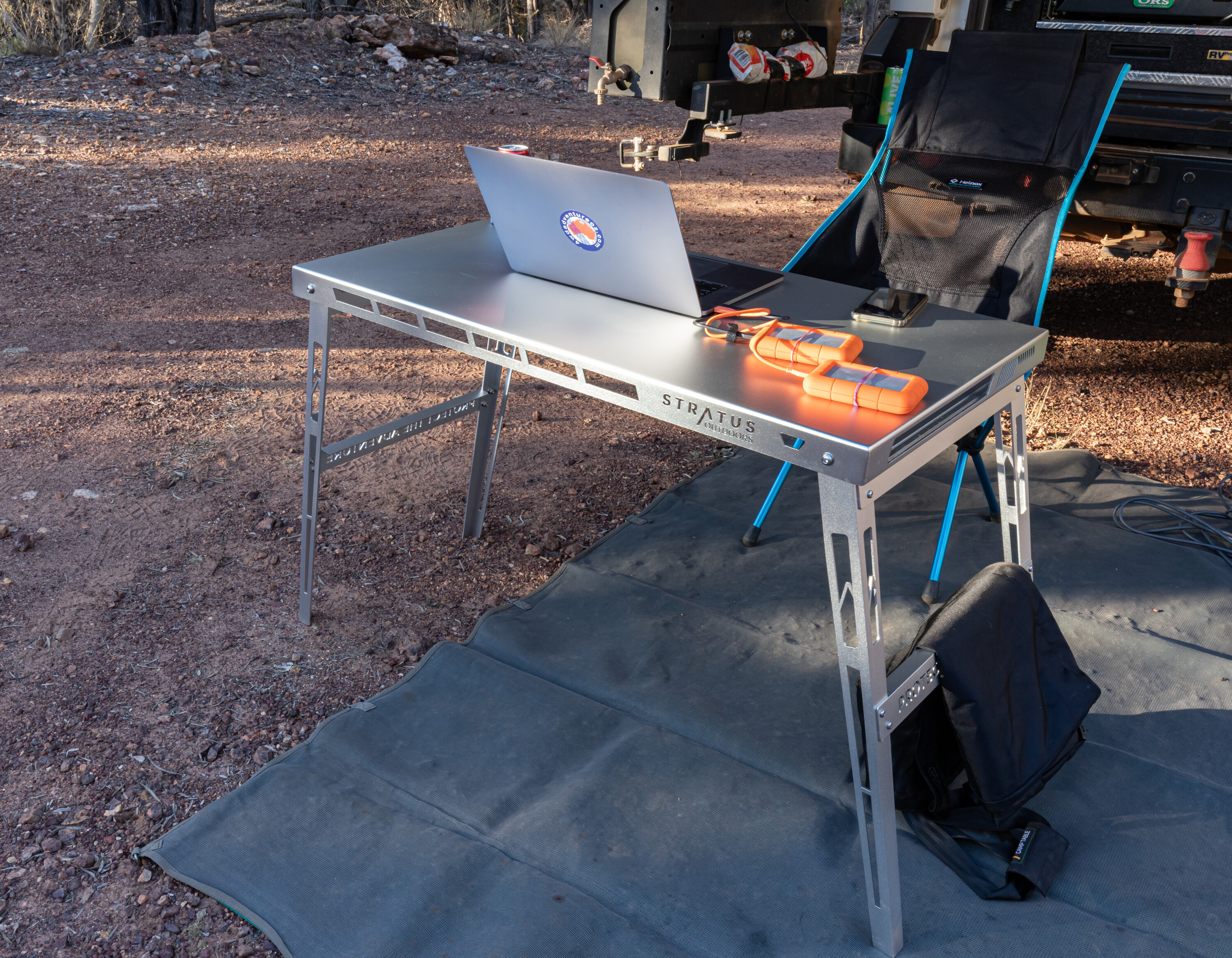
The perfect camp table, in my opinion, must be lightweight, heavy-duty, easy to transport and have multiple uses. The Derek from Stratus Outdoors is all that, and is by far the best camp table I’ve ever used.
The Derek is certainly light, the 3mm brushed aluminium table weighing a mere 7kg, making it the lightest one-piece table on the market, with competitors such as the Front Runner Pro Stainless Steel Camp Table coming in at 11.82kg, and the Alu-Cab Alu-Table at around 7.5kg.
1
Being a one-piece table, the Derek has a larger footprint than multiple-piece camp tables, which may make it more difficult to store, but I have carried it on the load bars of my rooftop tent for over 20,000km, removing it at every campsite with a minimum of fuss, and setting it up within seconds. The one thing that you do need to be aware of is the pinch points when folding or unfolding the legs, the consequences of not doing so could be bloody.
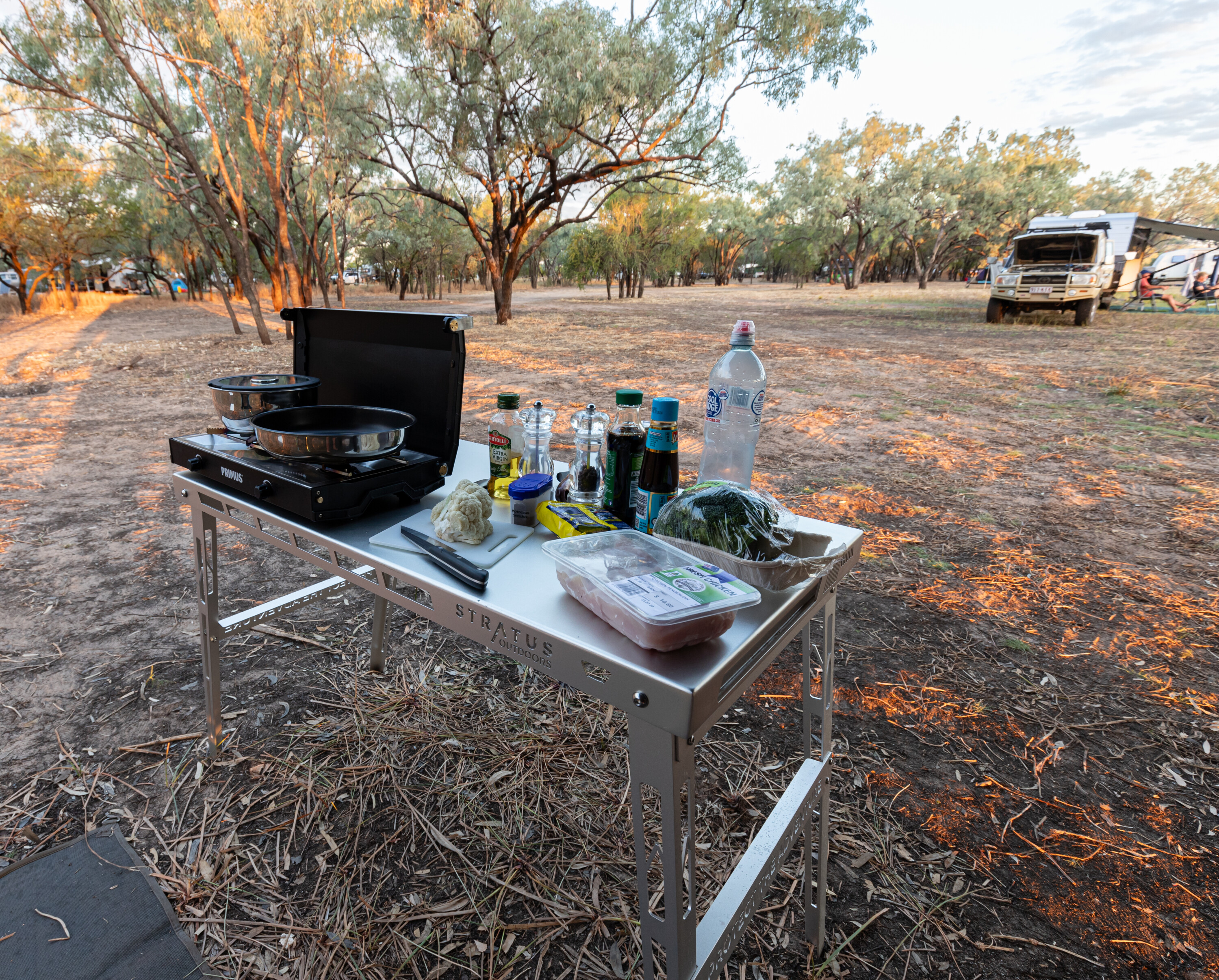
Once out of its bag, it is just a matter of unfolding the legs to their full extension and the Derek is ready to use. When set up, the table is 1010mm long, 550mm wide and 715mm high, which means it is a good height when sitting in a camp chair, and I found that my elbows weren’t perpendicular to my shoulders like when using taller tables.
What impresses me is the diversity of the Derek, whether set the table up for preparing and cooking a meal, or as a desk, or as a workspace where you can lay out tools when fixing something – it is brilliant.
1
The best thing though, is being able to place a hot pan straight off the stove directly onto the table without having to worry about leaving a mark or damaging the tabletop. It is the same when using a propane stove; I had no fear of causing any damage. This is a problem faced with most camp tables, especially the plastic-topped ones; direct heat is the weakest point. And thanks to being made of aluminium, even sitting in the roaring sun in Purnululu National Park, the Derek didn’t heat up as much as a stainless steel camp table would have.
The Derek has other features that make it unique, like tea towel holders and bottle openers, and being made from brushed aluminium with stainless steel fixings, it will never rust. I was keen to try it out as a fish-filleting table in Arnhem Land, but being the fisherman I am, the opportunity never arose.
While it is perfectly safe to cut food directly on the tabletop, I decided that I would always use a cutting board when preparing meals as I didn’t want to blunt my expensive knives.
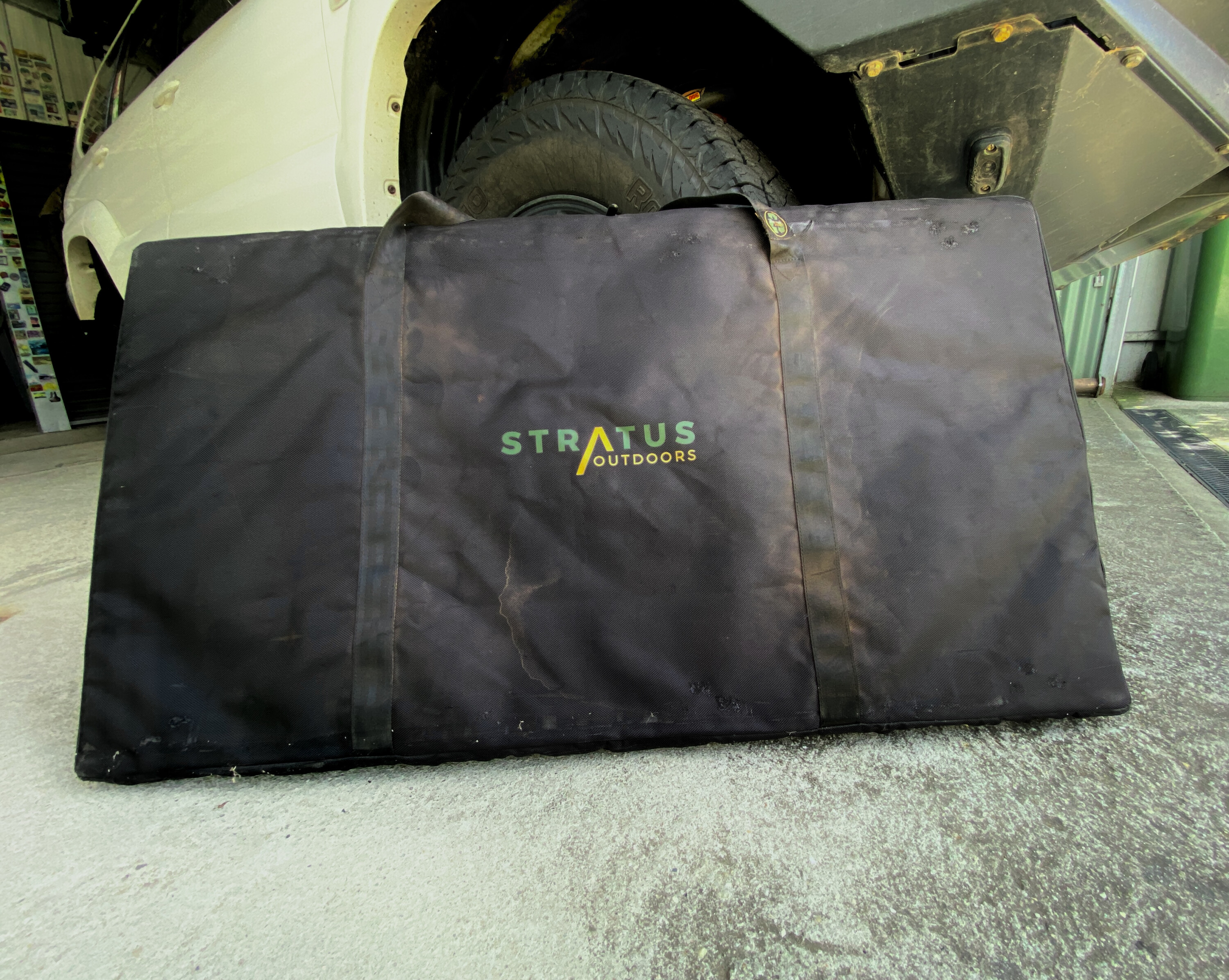
The RPET canvas fabric carry bag is made using 43 recycled plastic bottles, and it is as tough as they come, and on test it protected the table from tree branches, especially on the Nyangumarta Highway. Being strapped to the roof bars with a fly tent on top, using Front Runner Stratchits, there was minimal wear on the bag.
1
When it came to cleaning the Derek, I found that a damp microfibre cloth was the best option as it would pick up all the dust, food scraps and oil splatter with ease. It is amazing how much dust is in the air when you are camping, something you forget about until you wipe down a table. After being set up for five days on the Cobourg Peninsula in Arnhem Land, I decided to give it a quick spray with fresh water to give it a decent clean, and it didn’t take long to dry in the hot sun.
Why do I rate the Derek so highly? When I think of all those roll-up aluminium tables with the wonky legs and spilled food and drinks stuck between the slats, or the fold-up plastic-top tables or the lightweight fold-up material tables, none have the versatility or strength of The Derek.
The ease of setup and the space to prepare food and cook in one place made life simple for me on the road, and that is what camping should be: simple.
The Northern Territory has some amazing and diverse protected areas, ranging from rich wetlands to dry savannah and deserts.
Of course, one of these areas is Australia’s largest national park, Kakadu, but not far from here is the much smaller but equally as significant Litchfield NP.
Just over an hour’s drive from Darwin, Litchfield NP is one of the most popular parks in the NT’s north, attracting more than 260,000 visitors a year, and is an integral part of the Territory’s network of conservation areas. Covering just 1500km², Litchfield contains a diverse range of plants and animals with some only found within its borders.
1
History lesson
Local Aboriginal tribes have lived in the area for thousands of years and unlike other parks, their cultural sites are not open to the general public.
It was in 1864 when explorer Fredrick Litchfield headed an expedition through this area that the park was named after him. On this trip, they found gold in the nearby Finniss River and over the next few years, a mini gold rush boomed in the Top End.
Litchfield is a day visit for many travelling in 2WD cars, with easy access to waterfalls and stunning views from the plateau lookouts, but to see the real hidden gems here you’ll need a 4×4 vehicle. These days there are two sealed roads into Litchfield so most visitors can do a loop around and continue back to Darwin or continue on their journey south.
1
The drive from Darwin heads off the Cox Peninsula Road from the north, and the road in from Batchelor comes off the Stuart Highway to the east.
The road in from the north (Litchfield Park Road) traverses huge tropical floodplains and it is often closed in the wet season. As you near the park, large sandstone plateaus begin to appear, and paperbark and monsoon forests line the road with stunning cycads and pandanas palms scattered through the bush and along creek lines.
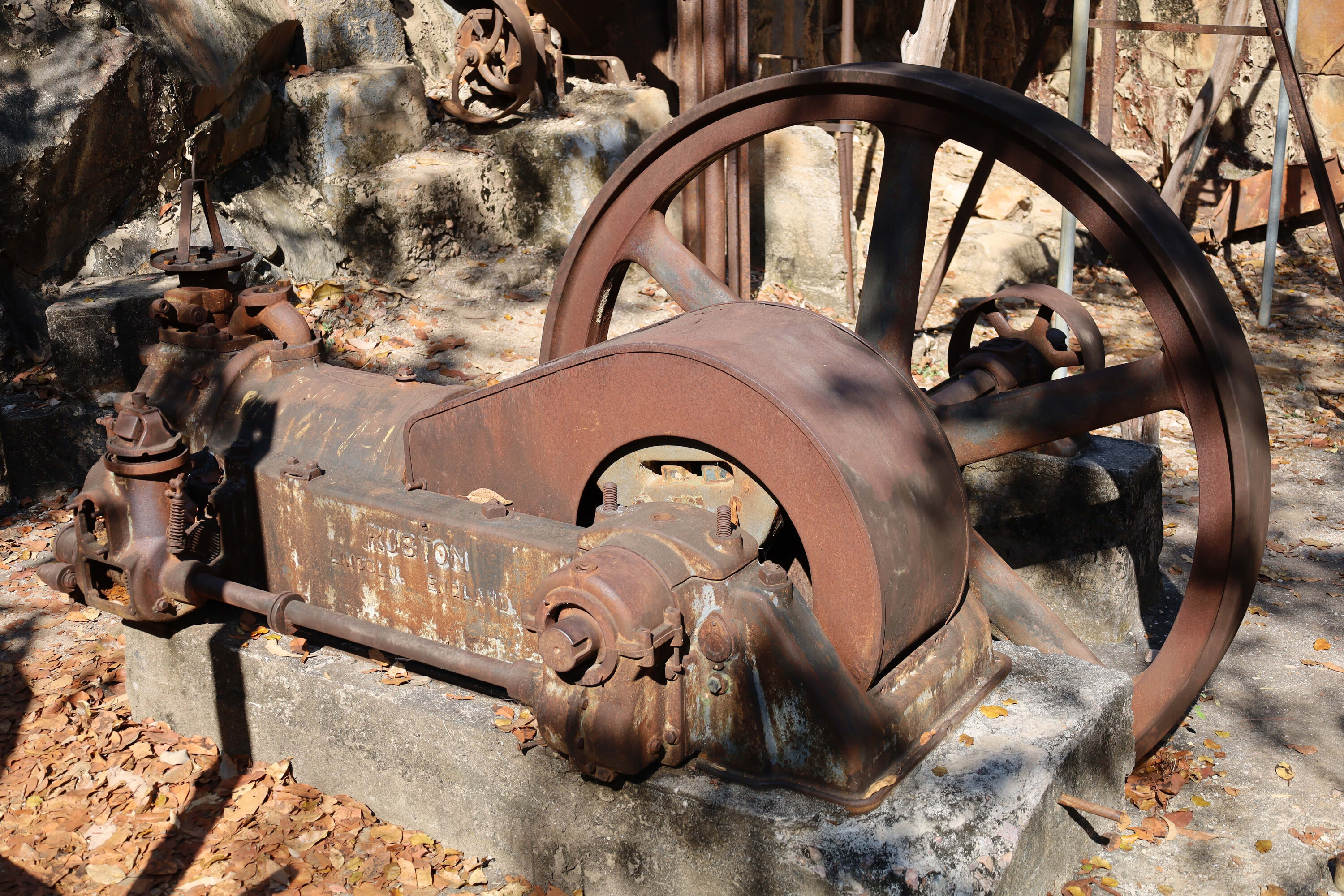
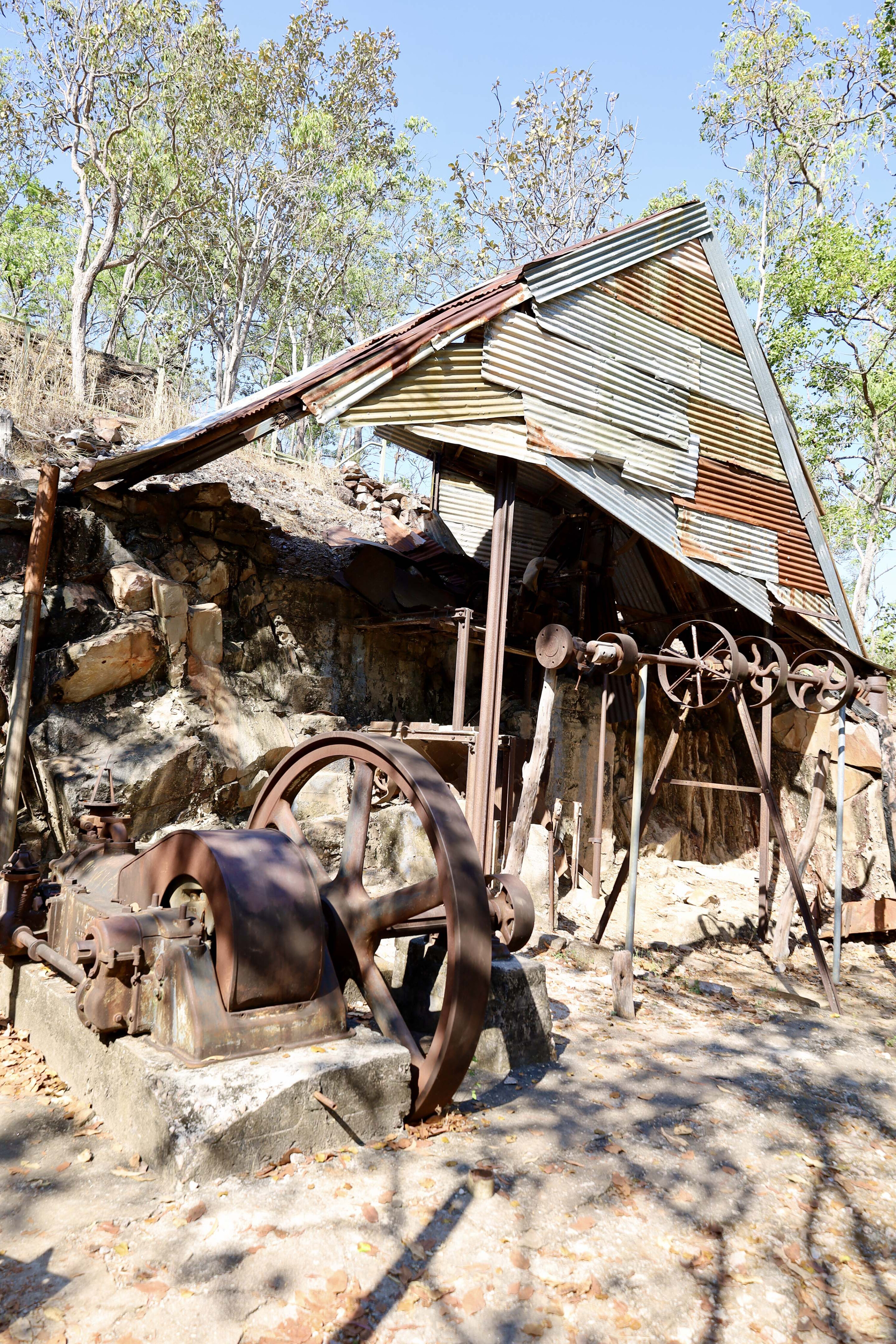
The first port of call from here is the old Bamboo Creek Tin mine just a few kilometres off the main road. Tin was discovered here in 1906 and was worked on and off for the next 50 years. Local Aboriginal people were employed by the mine and some were married to the Europeans.
1
Over the years of operations around 46 tons of tin was extracted manually and another 250kg of tanalite was found. Tantalite was generally used with alloy to increase the hardness of the metal.
The mine was eventually abandoned in 1954 when it was no longer viable to work the tin. Today there’s a short walking loop around the working shed, stamper, past the water tanks and up to the mine itself. Information boards along the way give an insight into the labour-intensive process that went on here.
Apparently, the Bamboo Creek Tin Mine was the first in the area that sustained genuine contact between the Aboriginal people and the Europeans. Prior to this, cultural conflicts and a lack of understanding between the two led to conflict, with retaliation for many wrong doings as both parties had different laws, beliefs and understandings.
1
Walking and swimming
After visiting the mine the next stops are Walker Creek and the Cascades. Both have day areas and swimming is allowed.
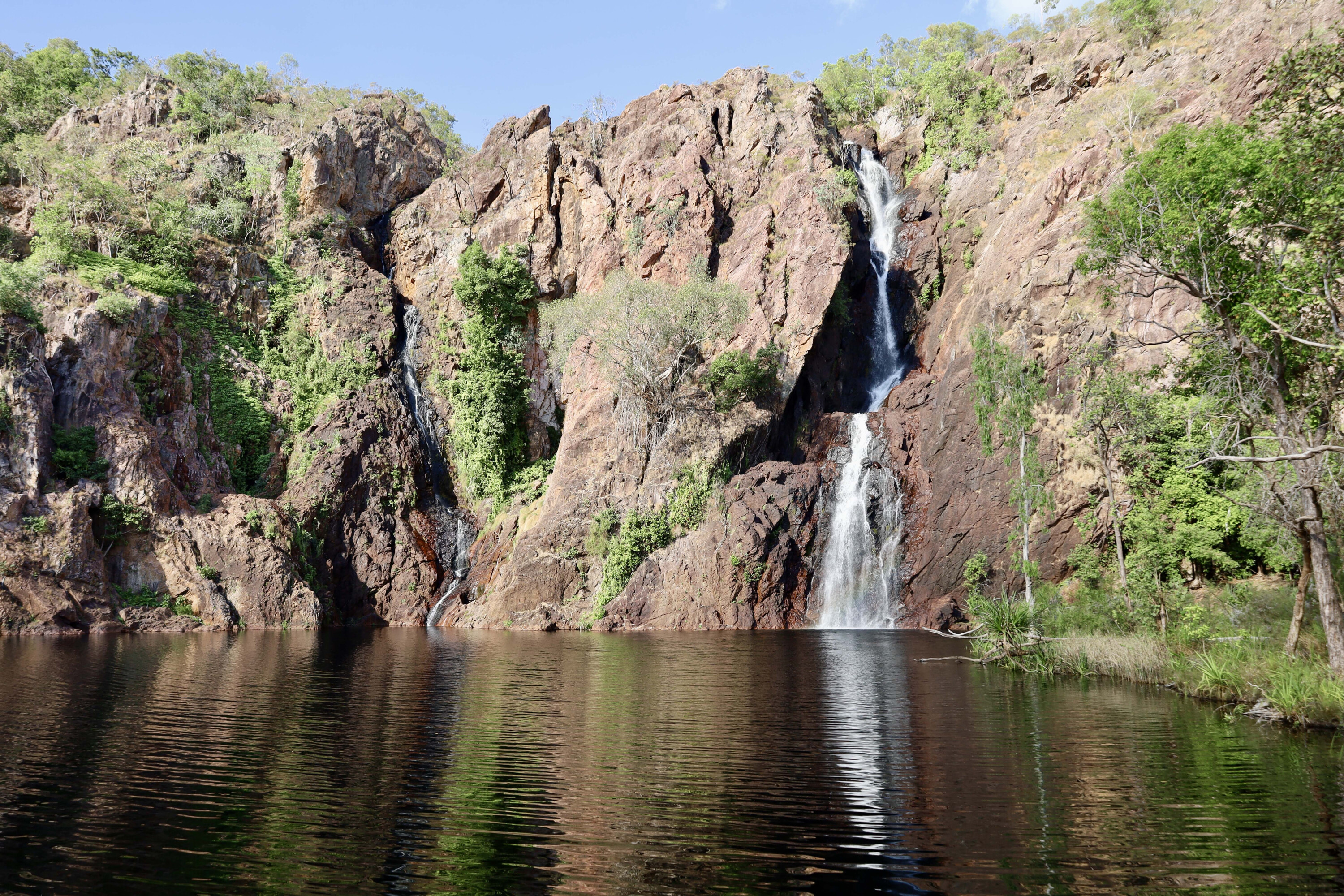
Wangi Falls is like the hub of Litchfield NP, and is where Parks NT has set up a fabulous campground that is the perfect place to set up base to explore the outer reaches of the park. Wangi Falls has two falls that plunge over the rock face into a deep pool, and occasionally it is closed if conditions are considered too dangerous.
Litchfield is known for its many walking tracks; there are nearly 100km of tracks to explore, ranging from short hour-long walks to difficult treks over many days. Some of the walks start at Wangi Falls.
1
The loop road continues around past Tjaetaba Falls where a walking track follows Greenant Creek to the base of waterfalls where you can cool off in the lower pool.
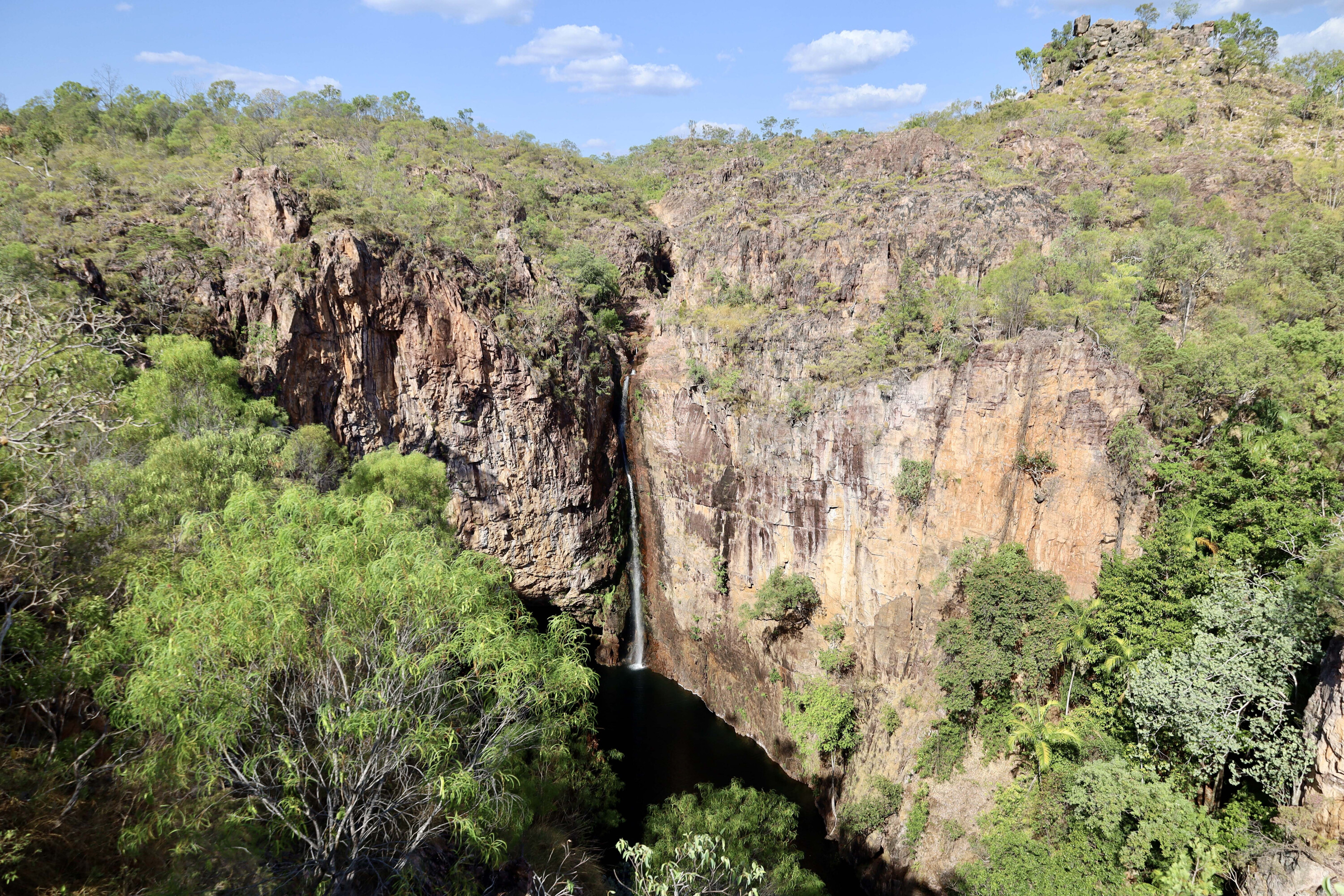
Further on the stunning Tolmer Falls is a must-do, where a short walk to the lookout platforms gives you a full view of the falls and across the vast savannah woodlands of Litchfield. There are caves near the falls in which rare protected orange leaf-nosed bats are found, so swimming in the gorge is not permitted.
The popular Florence Falls are next. The dramatic falls can be accessed via a long, steep walk to the base where you can soak in the water and swim under the falls. The other option is to follow Shady creek to Buley Rockhole for a day in the fresh water. There are campgrounds here but they get busy.
1
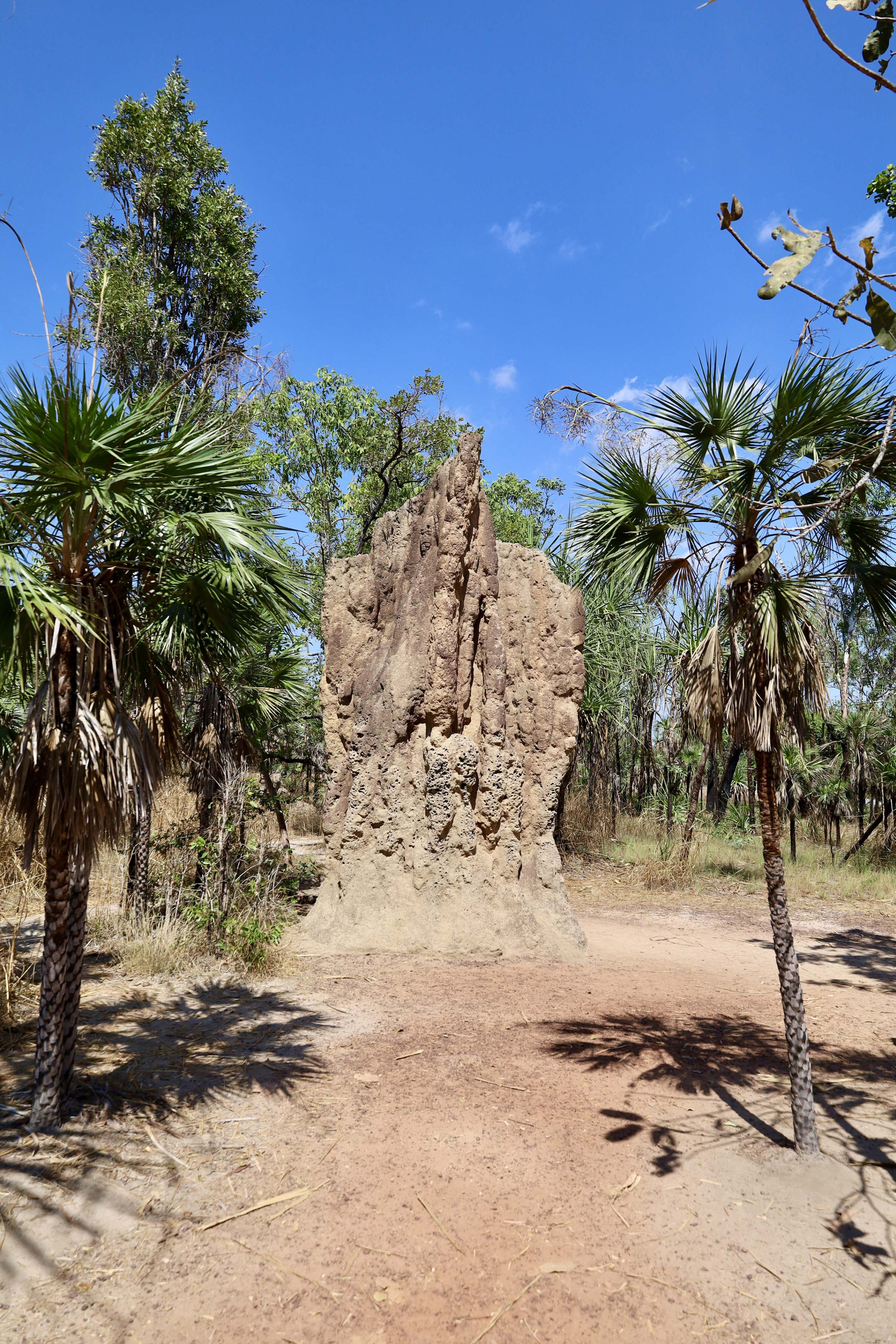
The last port of call along the loop road is the series of termite mounds that rise dramatically out of the floodplain.
These grey wedge-shaped mounds are up to three metres tall with a north-south aspect to repel the heat away in the hot days of the north. There are two boardwalks here; one highlights a 50-year-old cathedral mound with castle-like points on the top, and the other boardwalk leads you out through a shelter where where you can read about these mysterious mounds before you scope the dozens of them along the floodplain that seem to go forever… and all built by a tiny 5mm long termite!
From here the road heads out to Batchelor and over the Tabletop Range where the views across remote parts of the park can be enjoyed.
1
The lost city
Apart from doing the 2WD Litchfield loop, there are a couple of drives where a 4×4 vehicle is a must for those wanting to explore the outer reaches and full beauty of Litchfield NP.
The Lost City Track is one of these; it is not a serious 4×4 track but it is narrow, rough and dusty for most of the 14km drive in.
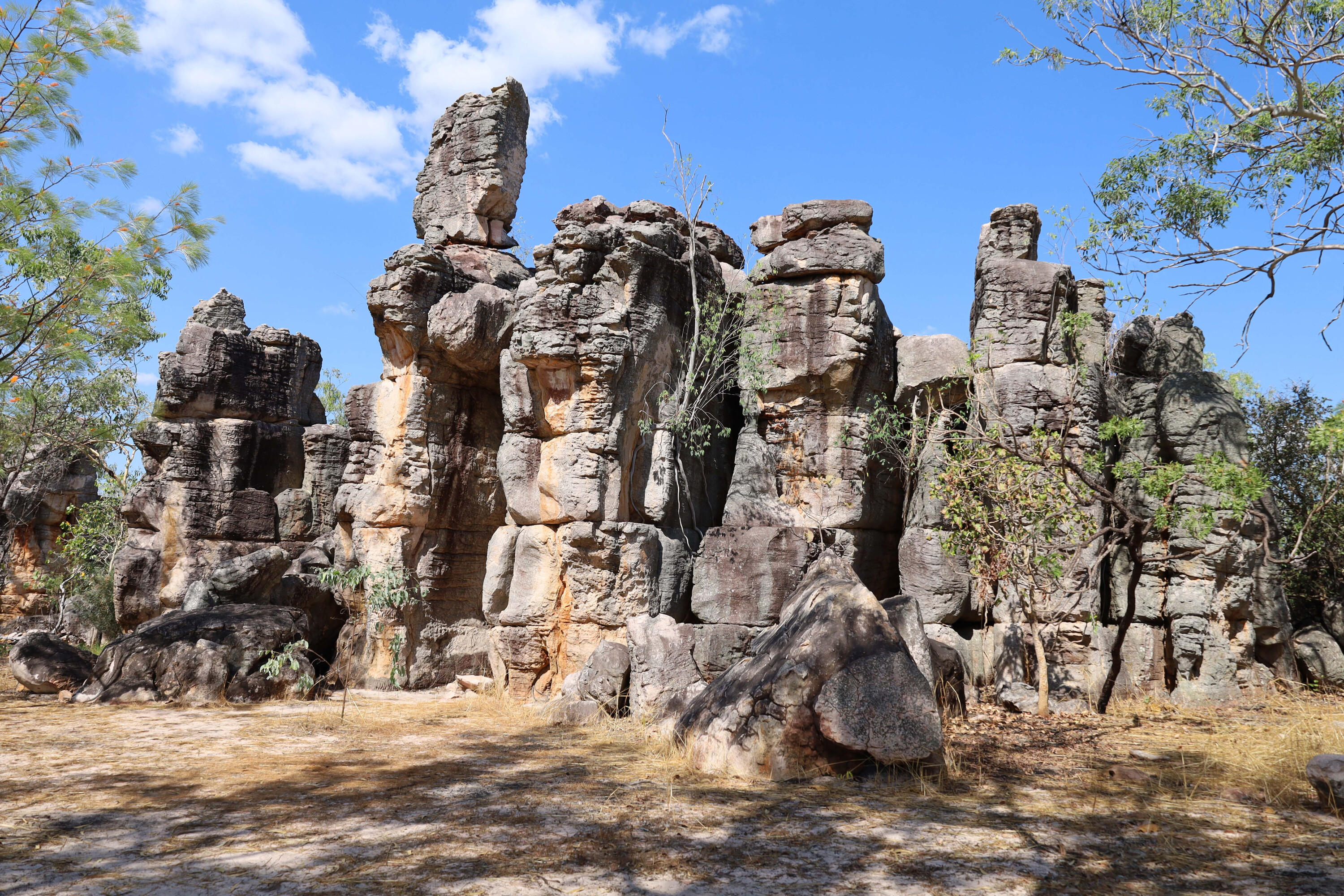
The Lost City is a natural rock formation where huge pillars of eroded sandstone stand up to 20m tall. Part of the Tabletop Range, these pillars have been weathered over millions of years. The track to the Lost City is on the Batchelor end of the loop road and is well signposted.
1
The Reynolds River Track
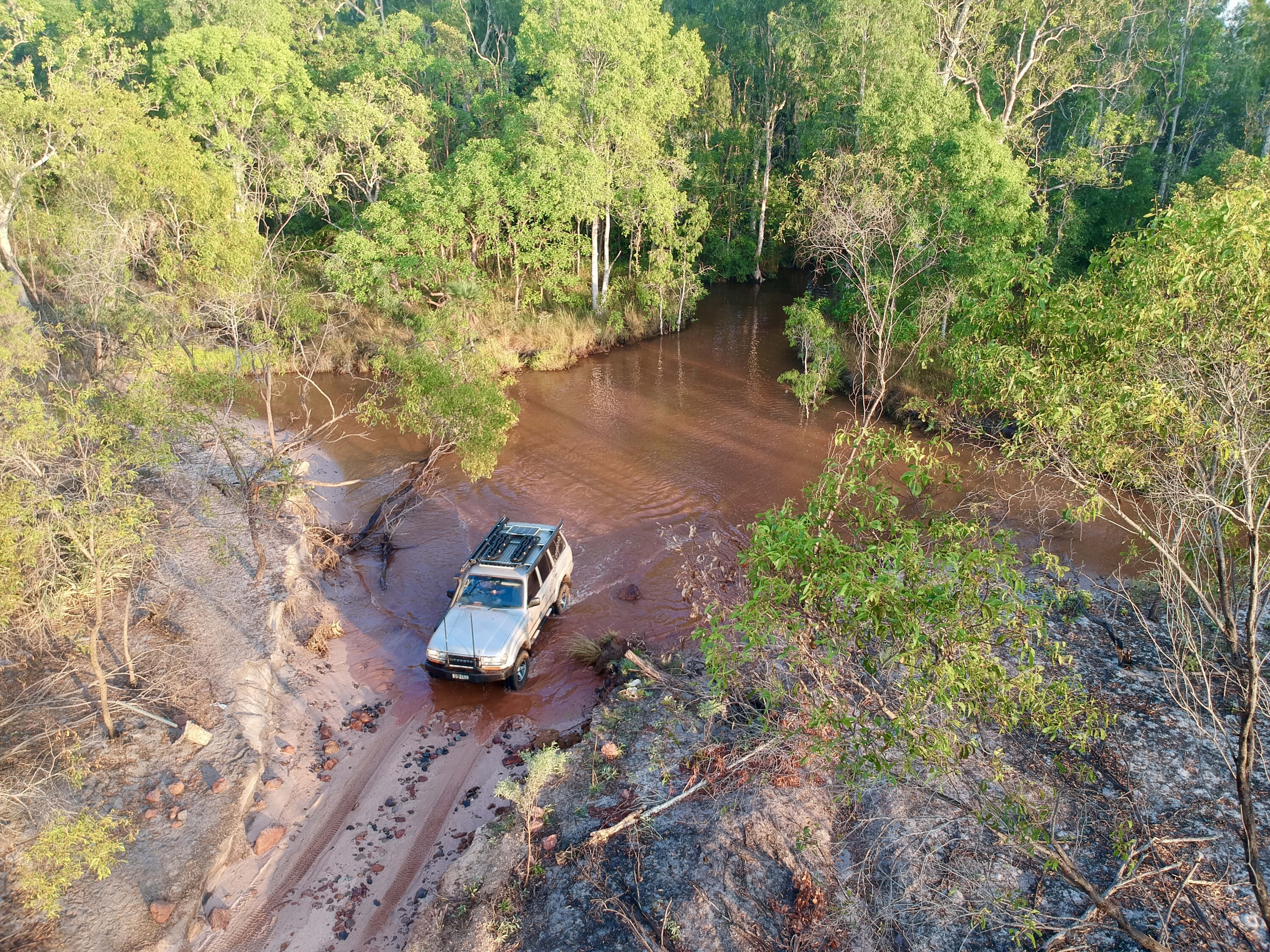
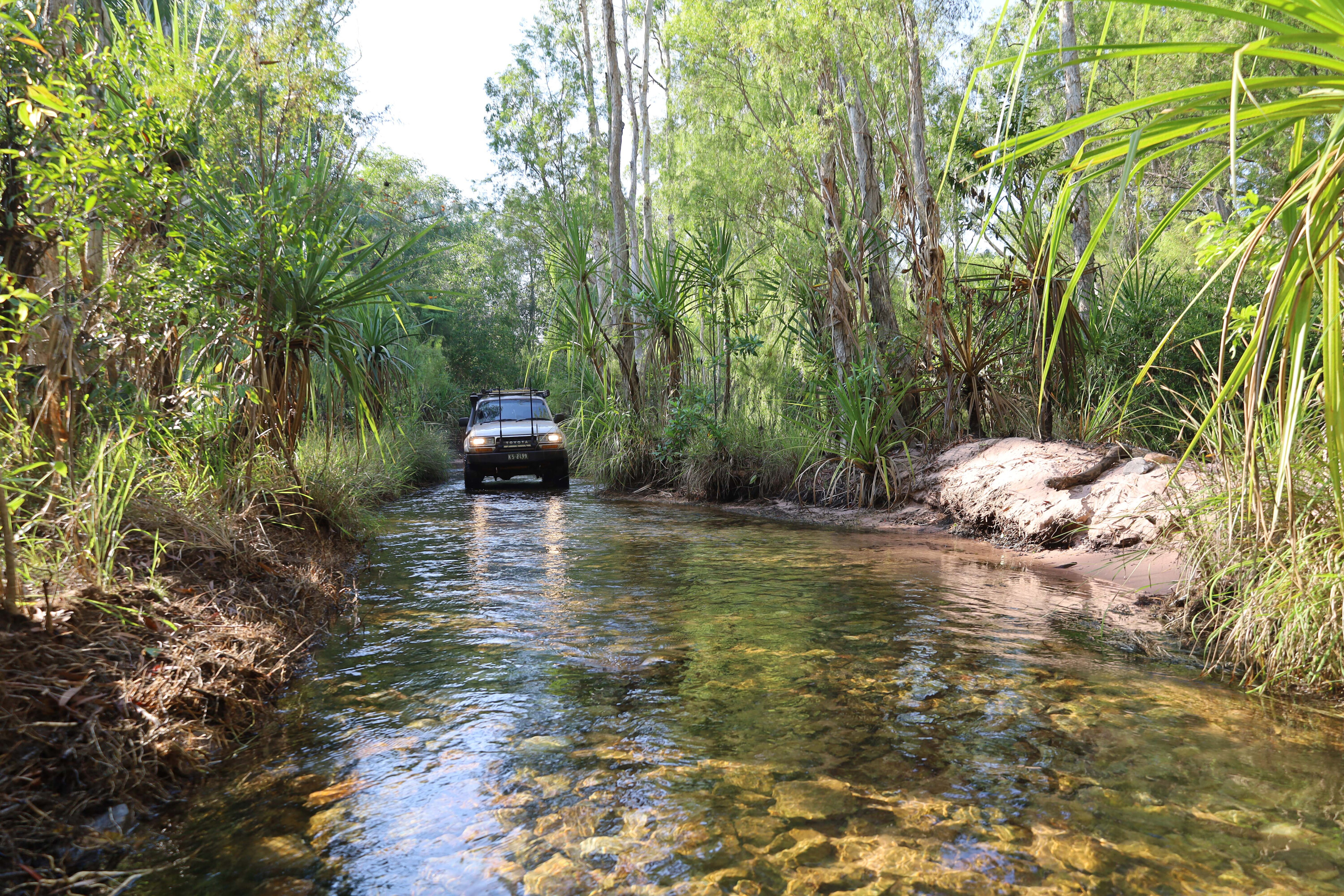
The Reynolds River Track is on the southern end of the park and it provides access to more of what Litchfield NP is all about, plus it gets you away from the hoards of scantily clad backpackers. It’s a 44km-long 4×4-only track and while not difficult, you will need to engage four-wheel drive for the several river crossings.
Open only during the dry season, and only after the river levels drop below 800mm, it’s a fun track with five different river crossings over the Reynolds River system. Rangers occasionally close the track when they feel it necessary, whether due to weather, or for maintenance or pest control.
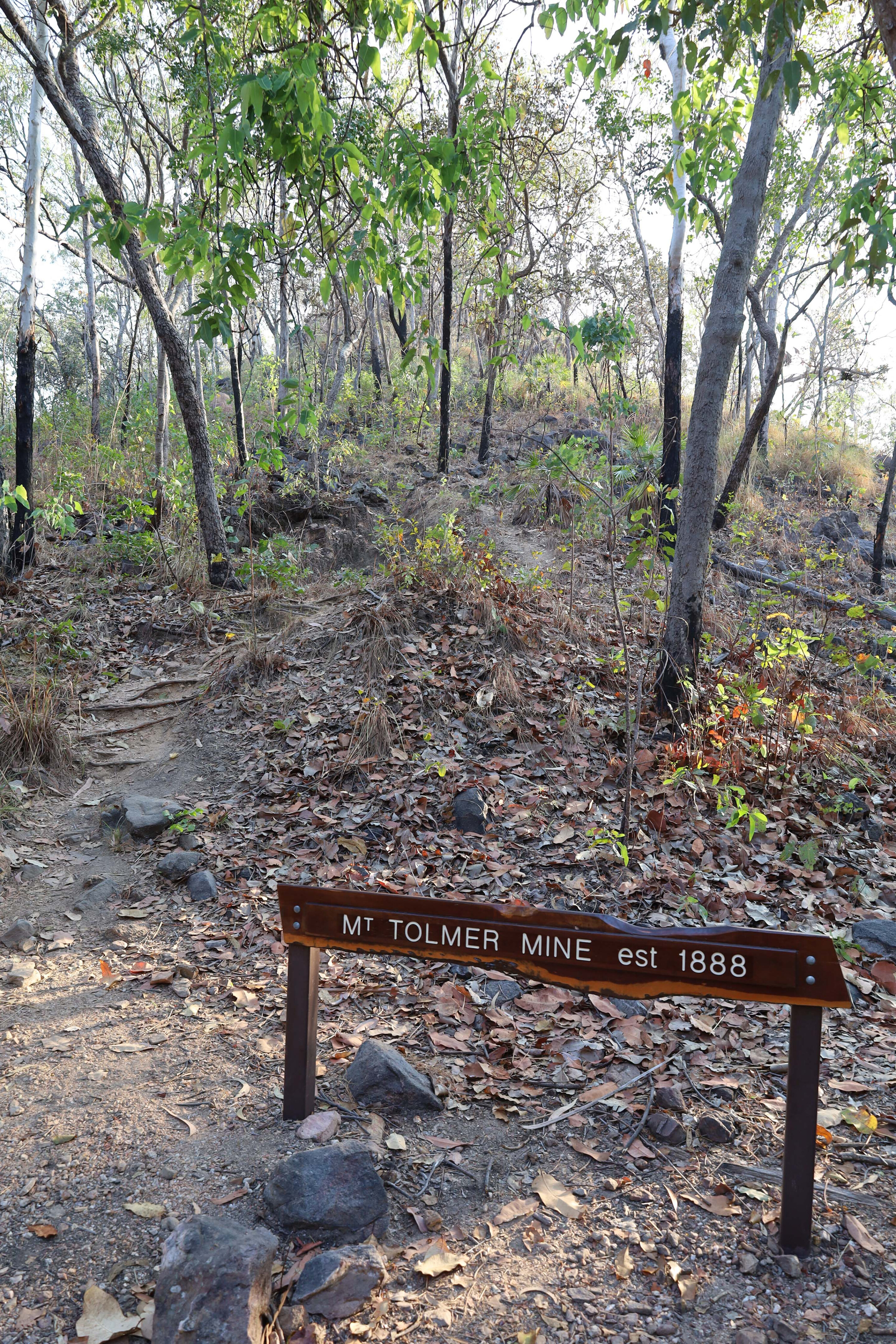
Highlights along the track include a detour into the old Blyth Homestead and Mount Tolmer Mine. At the old homestead you can see how the Sargent family lived and survived out here in this harsh environment. Originally owned by the Chinese, this pastoral lease was sold to the Sargent family in 1924 and they continued to work the land and mine the mountain for tin.
1
The homestead has plenty of relics from back in the day on display, plus the family has left an amazing book of their history that dates back to 1924. It’s hard to believe that they had nearly 14,000 head of cattle here.
There is a record of when Dick Sargent was repairing the cattle yards and nearly took his heal off near his ankle using an adze (old school axe type). The family rode through the night to help him, crossing croc-infested flooded rivers trying to save him, but he eventually passed away with his father by his side in hospital.
Further on you’ll find Tjaynera Falls, commonly called Sandy Creek, where there’s camping and day-visitor parking. It’s a 1.5km walk to the tiered falls and there’s a low risk of crocs here too. Next along the track is a diversion into Surprise Creek and falls. Again a two-tiered drop into deep pools, and there’s also a small campsite here.
1
The track continues across huge floodplains and savannah lands where some of the best termite mounds can be seen. Most are magnetic mounds but there are also the impressive cathedral mounds mixed in.
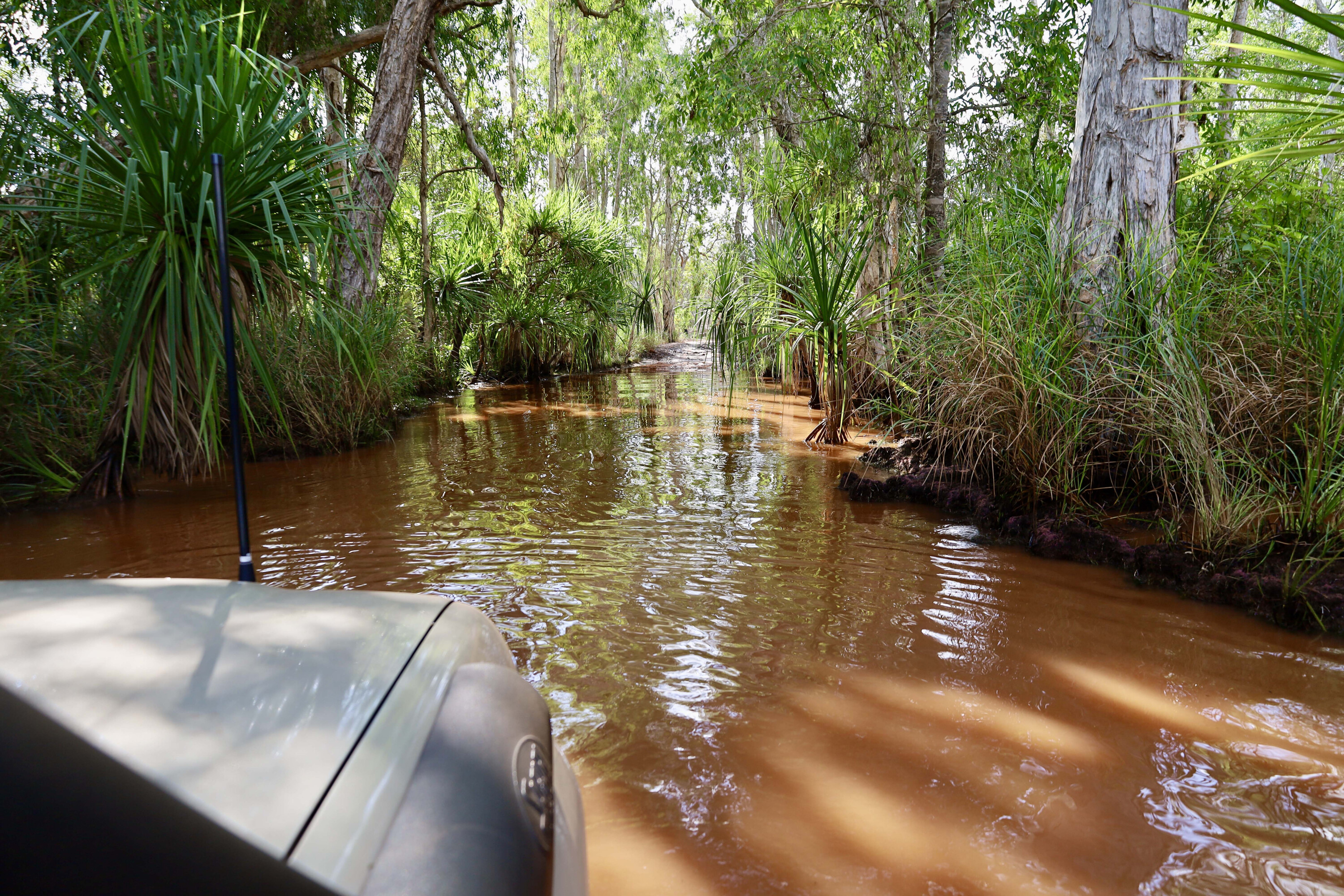
The Reynolds River Track starts to run parallel with the Reynolds River at the far south end of the park, where I found that after the last flooding there were plenty of sandy and dusty patches along the way, but they didn’t cause any issues.
The several river crossings along the track have a rocky base, and they are inspected and maintained by the local rangers to ensure access through the park is maintained. A couple of the crossings have steep entry and exit points but nothing too hard.
1
At the end of the track, depending on where your camp is or where you’re heading, it’s about an hour’s drive to the Adelaide River township and a loop drive back to the park.
Even though it’s only 44km long, the Reynolds River Track takes a minimum four hours to explore, swim and enjoy the drive.
Would I do Litchfield again? Absolutely! With its rich and diverse flora and fauna, stunning scenery, good central camping and a little four-wheel driving thrown in, it’s a must-do when in the NT.
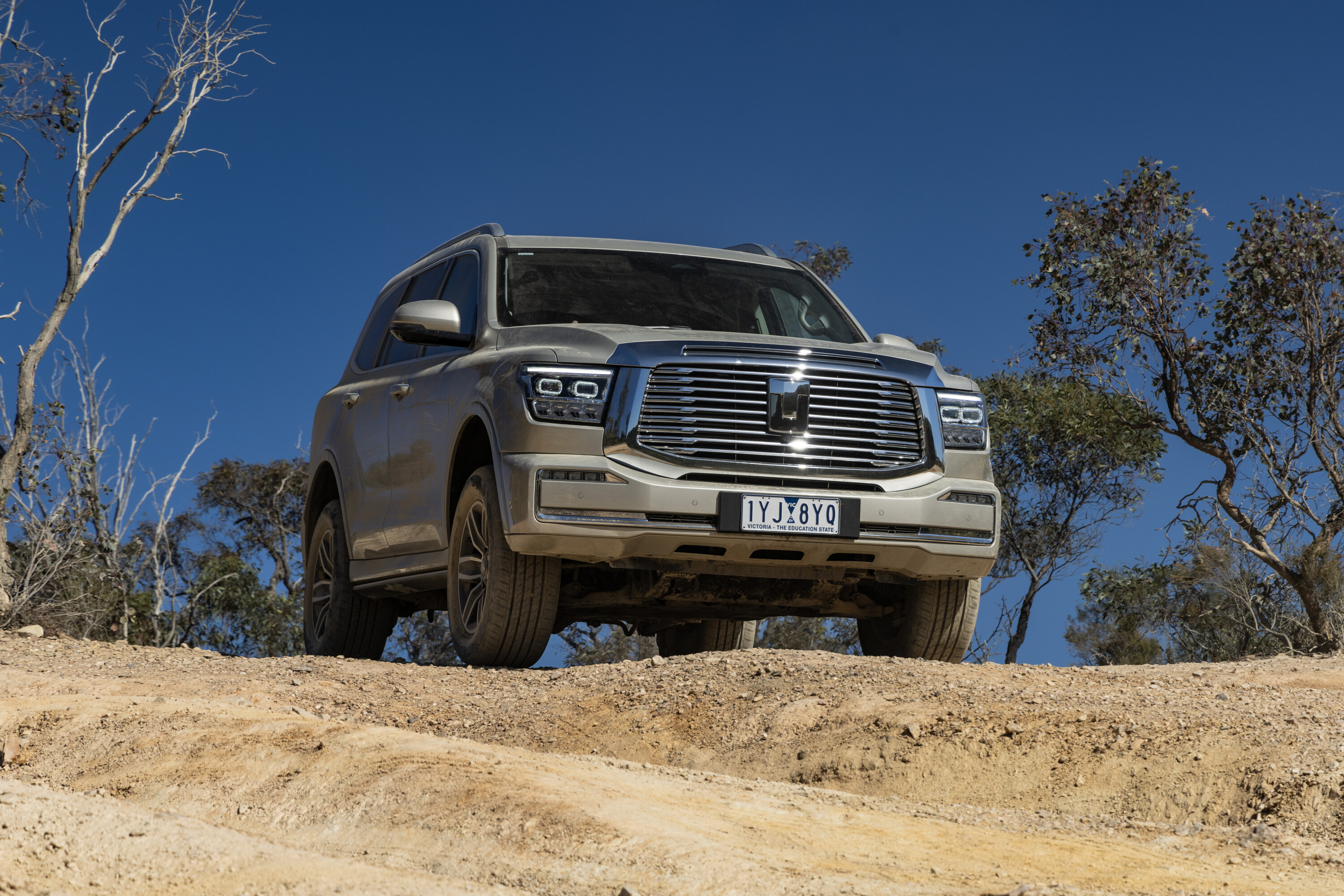
GWM, the brand formerly known as Great Wall, has launched a serious assault on the large 4×4 wagon segment with its three-row, seven-seat, body-on-frame Tank 500.
Set to go head-to-head with the likes of Ford Everest, Toyota Prado and Isuzu MU-X, the Tank 500 is a large SUV measuring 5078mm in length and 1934mm wide. To a lesser extent, some might even see it as an alternative to the LandCruiser 300 and Nissan Patrol.
In comparison, the soon to be superseded, segment-leading Prado J150 is 4930 x 1885mm, while the challenging Ford Everest comes in at 4914 x 2207mm. So the Tank is a big wagon and you feel it when you climb into its extensively appointed cabin.
The Tank 500 is available in two grades: the Tank 500 Lux, which is $66,490 drive-away; and the Tank 500 Ultra, which is $73,990 drive-away.
Both of the three-row, seven-seat models are powered by a 2.0-litre turbocharged petrol engine hybrid powertrain that produces a combined 255kW and 642Nm with a claimed combined fuel consumption of 8.5L/100km.
1
Standard equipment in the Tank 500 Lux includes auto-levelling LED headlights; 18-inch alloy wheels; a powered sunroof; faux leather interior trim with heating and eight-way power adjustment on the driver’s seat and four-way power adjustment on the front passenger’s seat; 14.6-inch infotainment touchscreen with 360° view monitor and clear chassis view; 12.3-inch digital gauge cluster; wireless CarPlay and Android phone mirroring; and an eight-speaker audio system.
Step up to the Ultra and it adds a panoramic sunroof; power-deploying side steps; head-up driver’s display; black Nappa leather-accented interior trim; 64-colour ambient interior lighting; heated steering wheel; ventilated and massaging front seats with memory and six-way power adjustment for the front passenger seat; second-row outer seats are ventilated and feature window shades; power-folding third-row seats; 12-speaker Premium Infinity audio system; active cabin noise-cancelling; and a soft-touch closing tailgate.
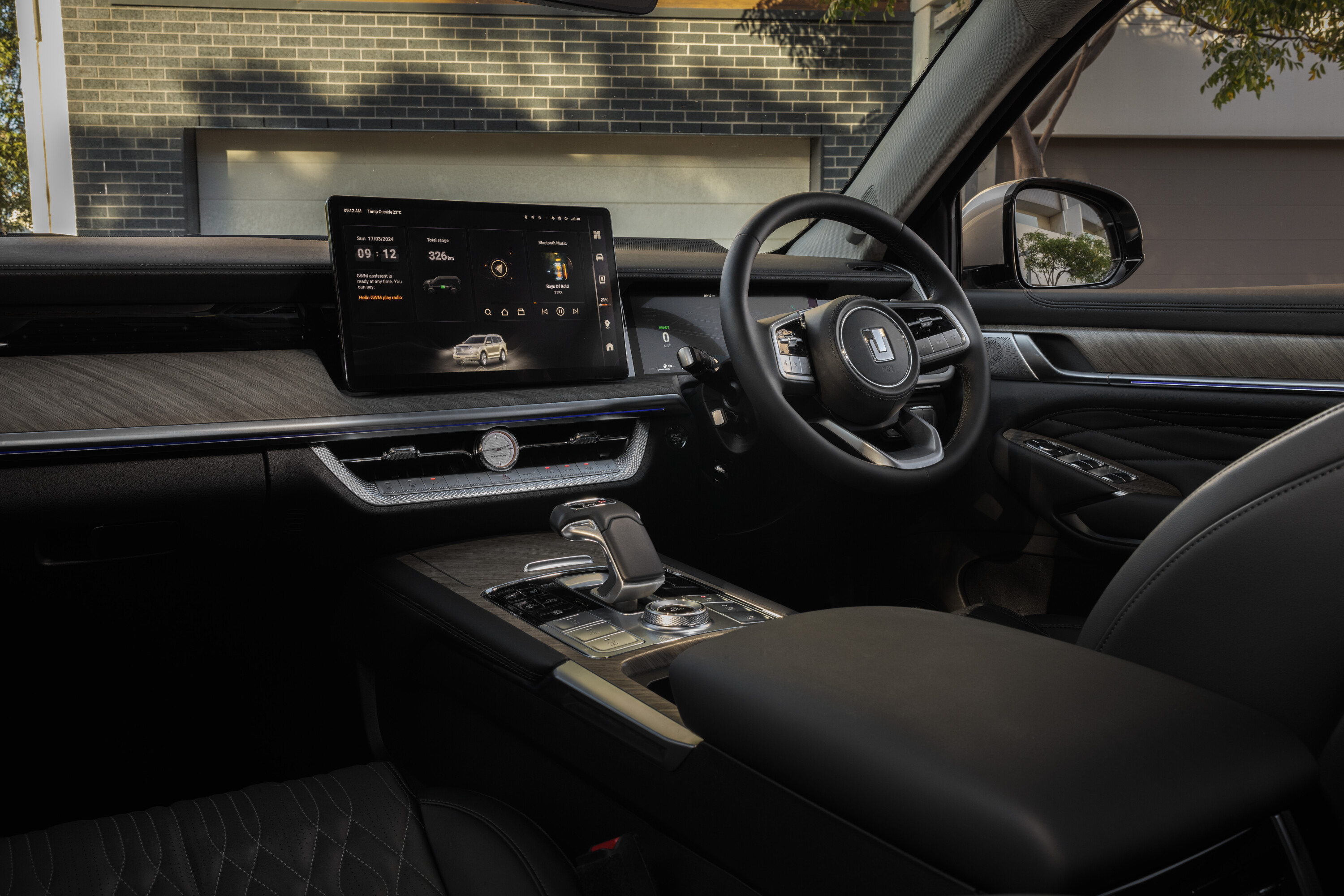
Our drive was in an Ultra variant, and the cabin feels well-appointed and the layout is relatively easy to use.
A lot of the HVAC controls are on the screen, but some of them are doubled up with real buttons below the screen – these are silver and aren’t always easy to read when on the move. It’s the same for the finish on the plethora of buttons on the steering wheel.
We say it is relatively easy to use but it took two of us several minutes to find the buttons to adjust cabin temperature. Despite the many buttons on the dash and on the screen, tactile dials for regularly used functions like cabin temperature and audio volume are missing, which requires the driver to take their eyes off the road to find the control. The steering wheel isn’t any better, with more buttons than this typewriter.
1
The Tank 500 hasn’t been tested to achieve an ANCAP safety rating, but GWM’s internal testing predicts it will achieve a five-star rating when tested. Standard safety kit includes AEB; TPMS; front, side centre and curtain airbags; EPS; ETC forward collision; lane departure warnings; and all the other ADAS features required to gain that top level rating.
One so-called safety feature is the driver monitor, which we found to be more of a frustration than anything else as it was constantly barking out warnings and advice worse than a nagging passenger. If this is what new car tech has come to, then you can count me out as I found it unbearable. GWM is not alone in this annoying technology.
Likewise, the lane keeping was also annoying when driving on gravel roads without side marker lines, constantly spruiking warnings and occasionally making wild steering adjustments.
At odds with most of its large 4×4 wagon competitors, the Tank 500 only comes with a petrol/hybrid powertrain, and before you scoff at the idea of a 2.0-litre petrol engine, the 648Nm should make you think again.
The turbocharged petrol engine produces 180kW and 380Nm on its own, but when boosted by the 78kW/269Nm of the electric motor, it more than makes up for any deficit to its diesel-fuelled competition.
The hybrid system is seamless and something the driver doesn’t need to consider. It has a few modes to suit the driving you do including a Sport mode, which cuts back on the off-throttle power regeneration. In Normal/Eco mode you really feel the deceleration of system-regenerating energy.
1
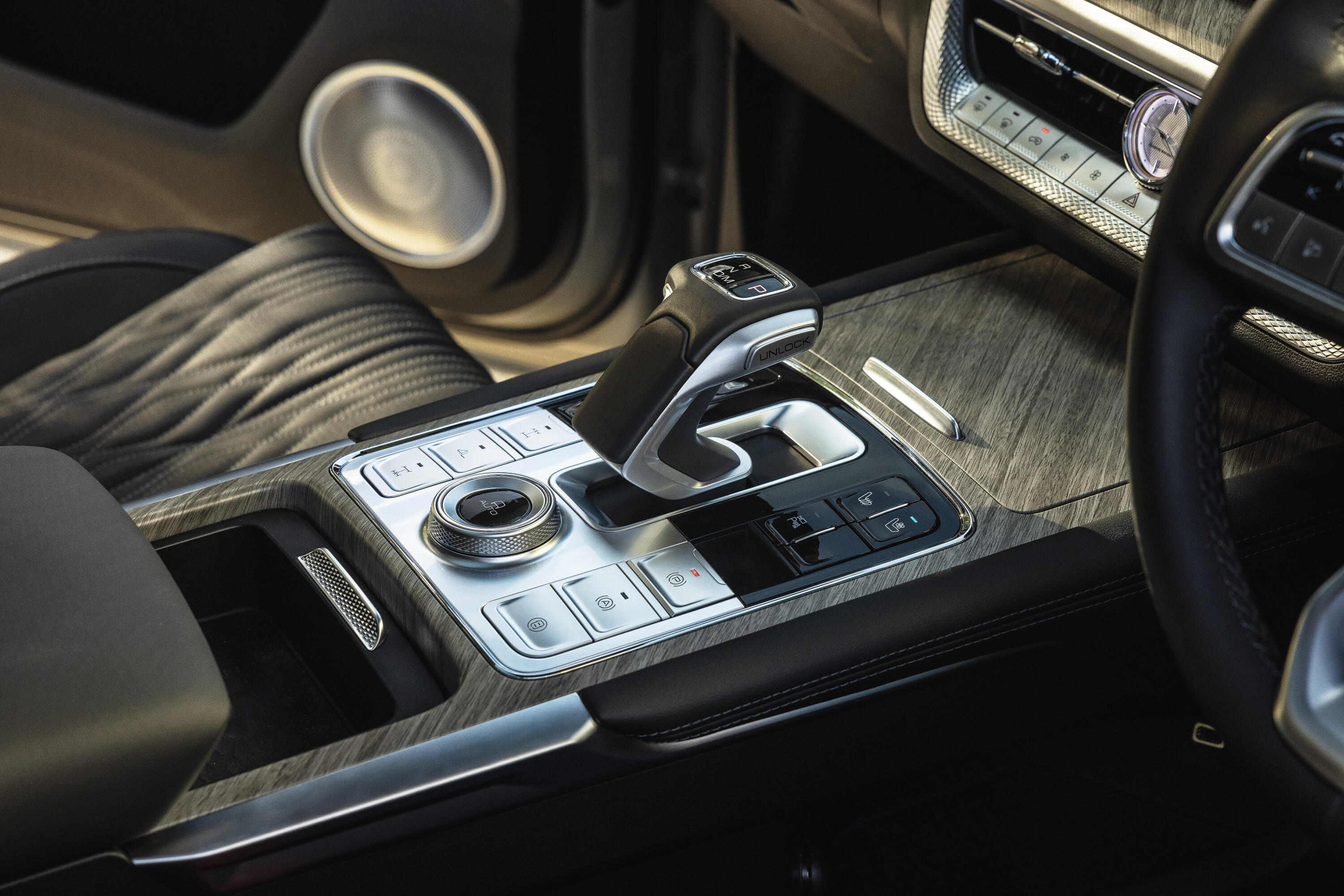
The engine is backed by a nine-speed automatic transmission, with the electric motor housed up front with the torque converter. An electronic gear shifter sits in the console and shift paddles are mounted behind the steering wheel.
Four-wheel drive comes via a BorgWarner full-time, dual-range transfer case, while a rear differential lock is standard on both models – the Ultra adds a front locker as well. The LandCruiser GR Sport and 70 Series range are the only other large 4×4 wagons to offer front and rear lockers as standard kit. so it’s impressive to see it in the Tank 500. Off-road performance is bolstered by the usual ETC, but the Tank also has crawl control and tank-turn functions, again features only found elsewhere on the LandCruiser.
1
Driving modes for both on- and off-road use include settings for Eco, Normal, Sports, Snow, Sand, Rock, Mud, Auto and Expert. The Expert modes allow you to tailor the settings of the throttle control, steering feel, transmission and other parameters to your own specific tastes.
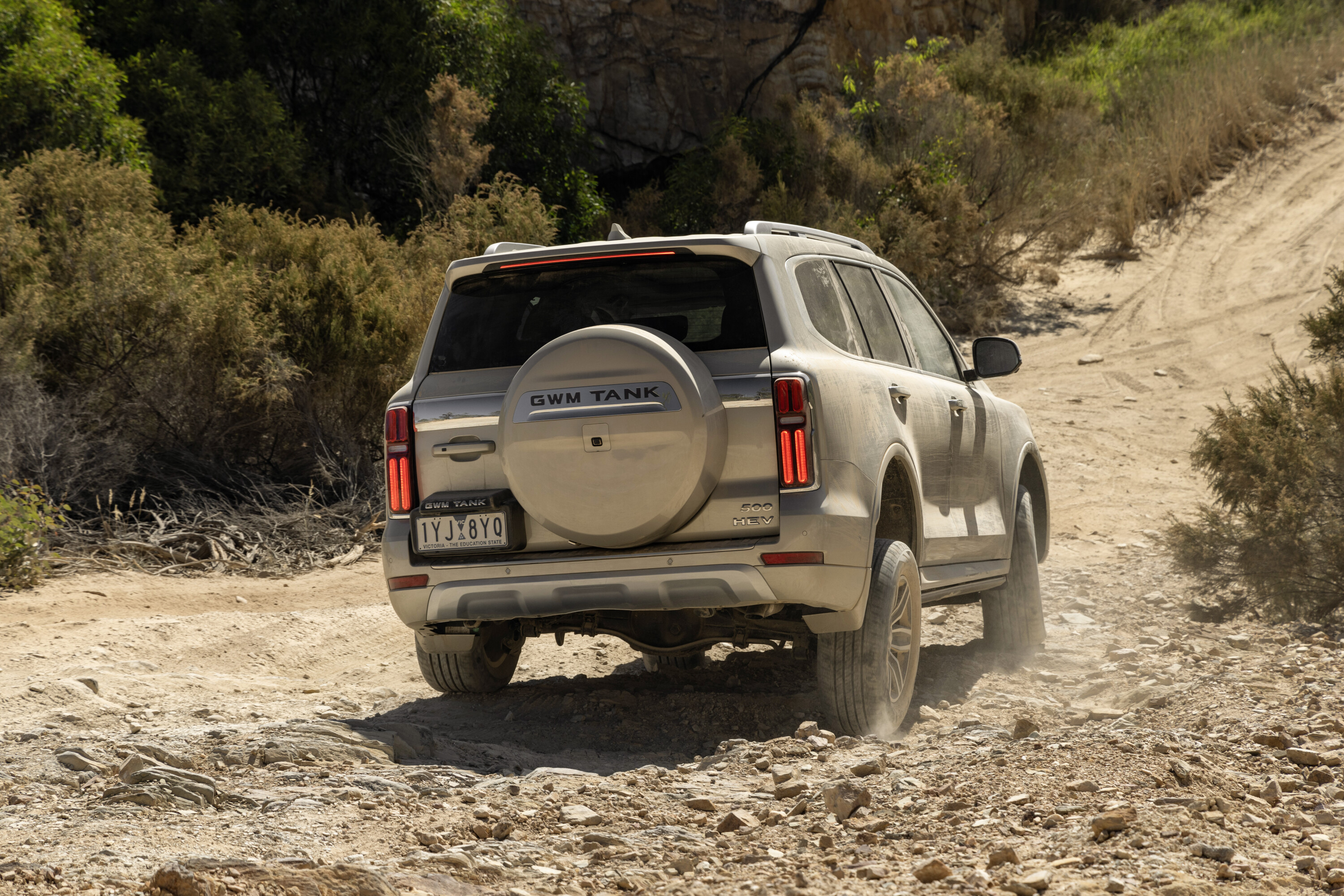
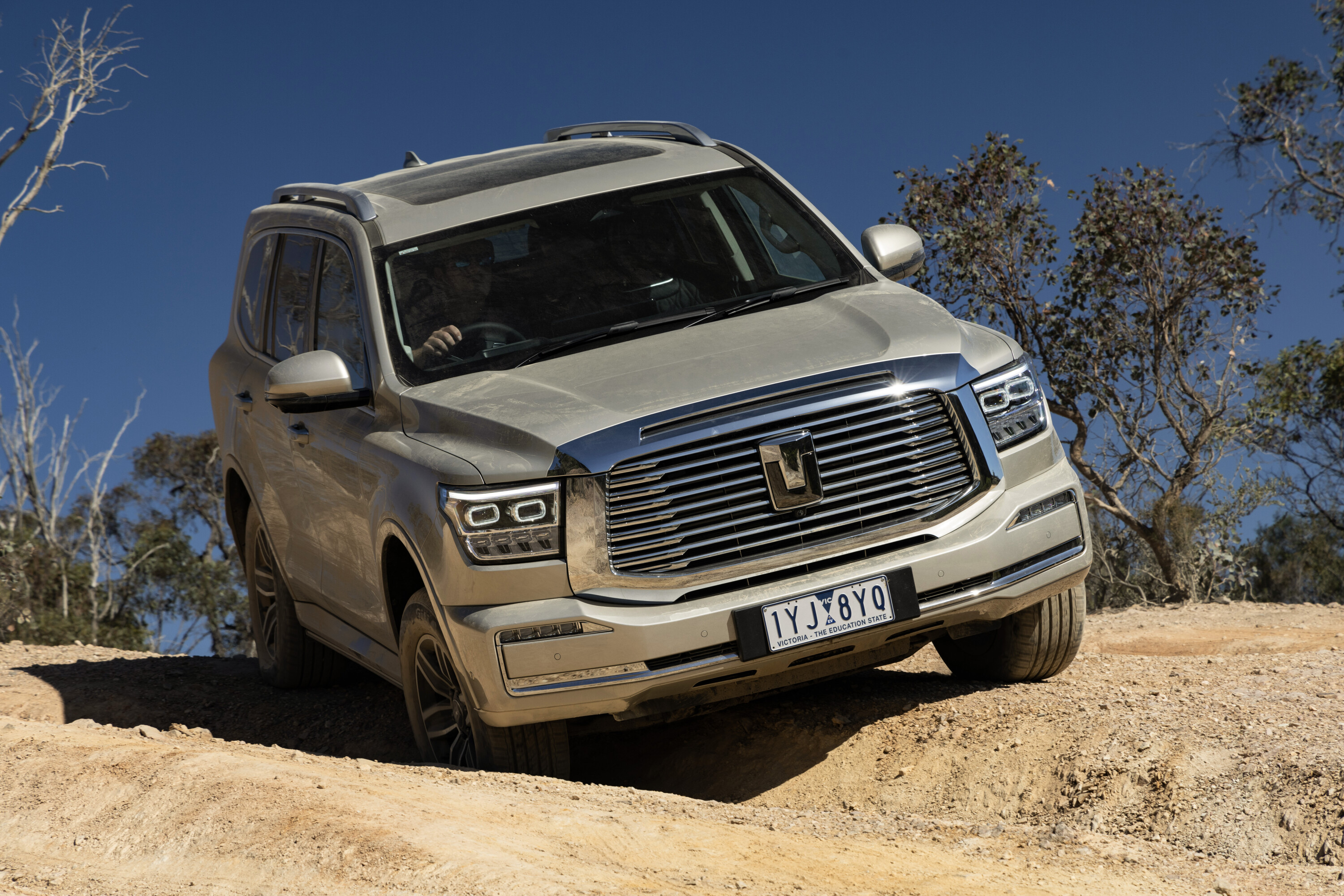
The off-road component of the launch drive included rutted and rocky climbs that would have been a test for any standard modern 4WD, and the Tank 500 conquered them impressively without needing to engage the lockers or anything other than the ETC. In fact, we left it in the Auto drive mode and it got on with the job with relative ease.
Off-road specs
Approach angle
30u00b0
Ramp-over angle
22.5u00b0
Departure angle
24u00b0
Ground clearance
224mm
Wading depth
800mm
On sealed roads the Tank 500 delivers a level of refinement that none of its diesel-fuelled rivals can come near, especially not the four-cylinder diesel-powered vehicles. The performance of the combined hybrid powertrain would also be a revelation to anyone used to diesels – it feels more like a Nissan Patrol when you put your boot down, but without the Patrol’s heavenly V8 engine roar.
The suspension is firm and can get a bit flustered over small bumps and corrugations, but it controls larger holes and bumps much better and allows minimal body roll when cornering. Its low-speed compliance works better than the higher speed treatment of smaller bumps in the road.
Just because it’s a hybrid vehicle loaded with tech and features doesn’t mean the Tank 500 is light duty. It uses a traditional body-on-ladder-frame chassis design and has a useful 790kg payload and 3000kg towing capacity. While the towing might not be up to the 3500kg max many of its rivals offer, it’s still plenty.
The GWM Tank 500 might not be everyone’s cup of tea, but there’s no denying it offers a lot of features, space, comfort and ability for the price, giving buyers access to luxury that would cost a lot more in the top specification of its rivals.
Where it falls short is in the calibration of some of the key systems such as steering feel and autonomous steering, suspension refinement, and some of the switchgear and controls that are not as simple as they should be. The Tank brand is still emerging and we’re sure it will improve these shortcomings in future updates and new models.
The smaller Tank 300 is already proving to be popular with buyers, as it delivers genuine capability to buyers who might otherwise not be able to afford such a new car. The Tank 500 continues along this path but in a bigger, more feature-laden segment that is a favourite with Australian families.
Volkswagen has announced it is about to begin real-world testing of an ‘accessories concept’ called the ‘RooBadge’ designed to reduced road collisions with Australia’s national emblem.
Apparently not an April Fool’s Day joke, RooBadge is an integrated speaker built into the Volkswagen badge in what the car maker says is “the world’s first scientifically proven kangaroo deterrent”.
Volkswagen says it has worked with the University of Melbourne as well as the WIRES animal rescue organisation over the past three years in the development the RooBadge.
1
Kangaroos, according to WIRES, are involved in 90 per cent of vehicle road collisions involving wildlife at a significant human and financial cost.
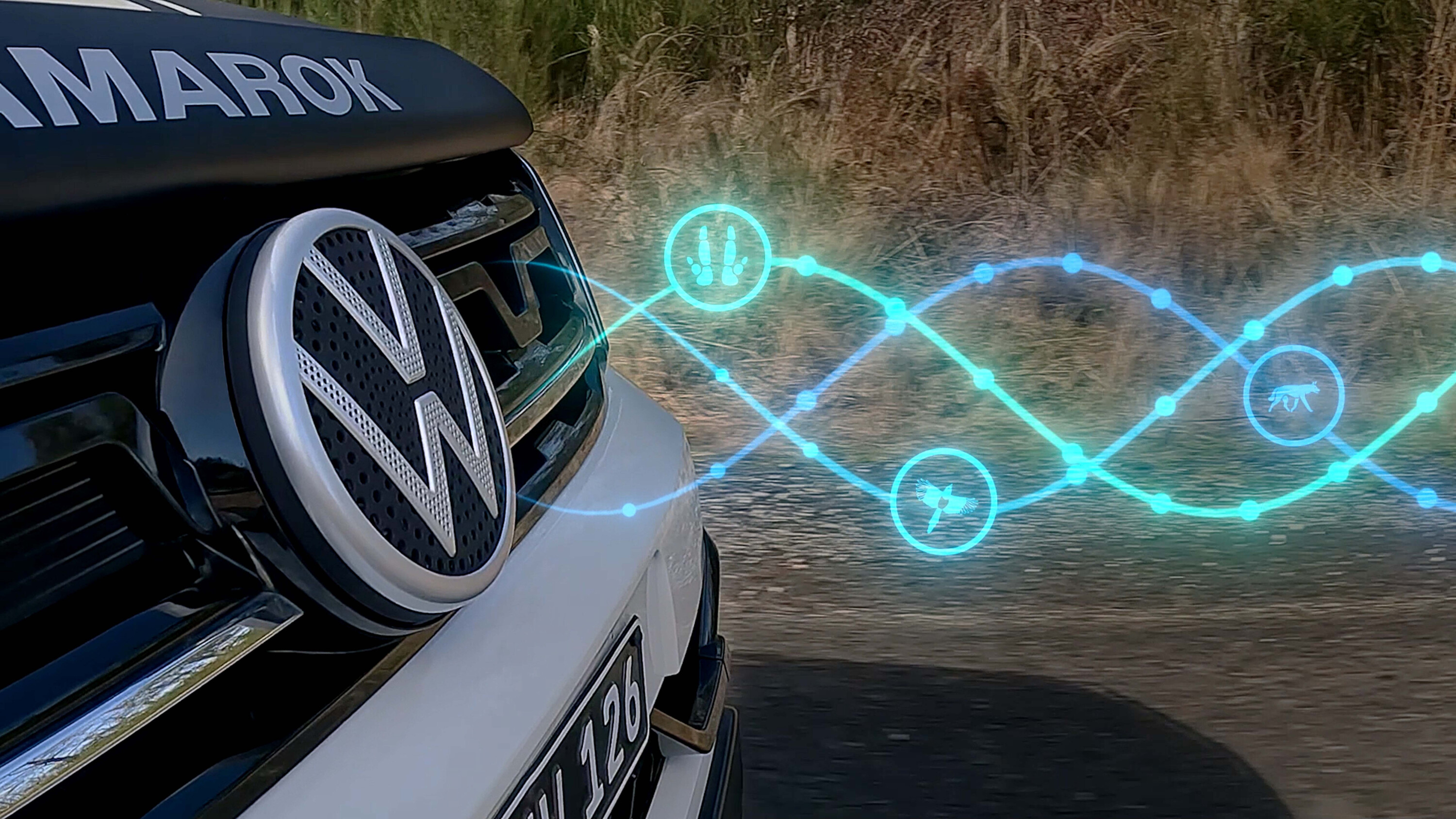
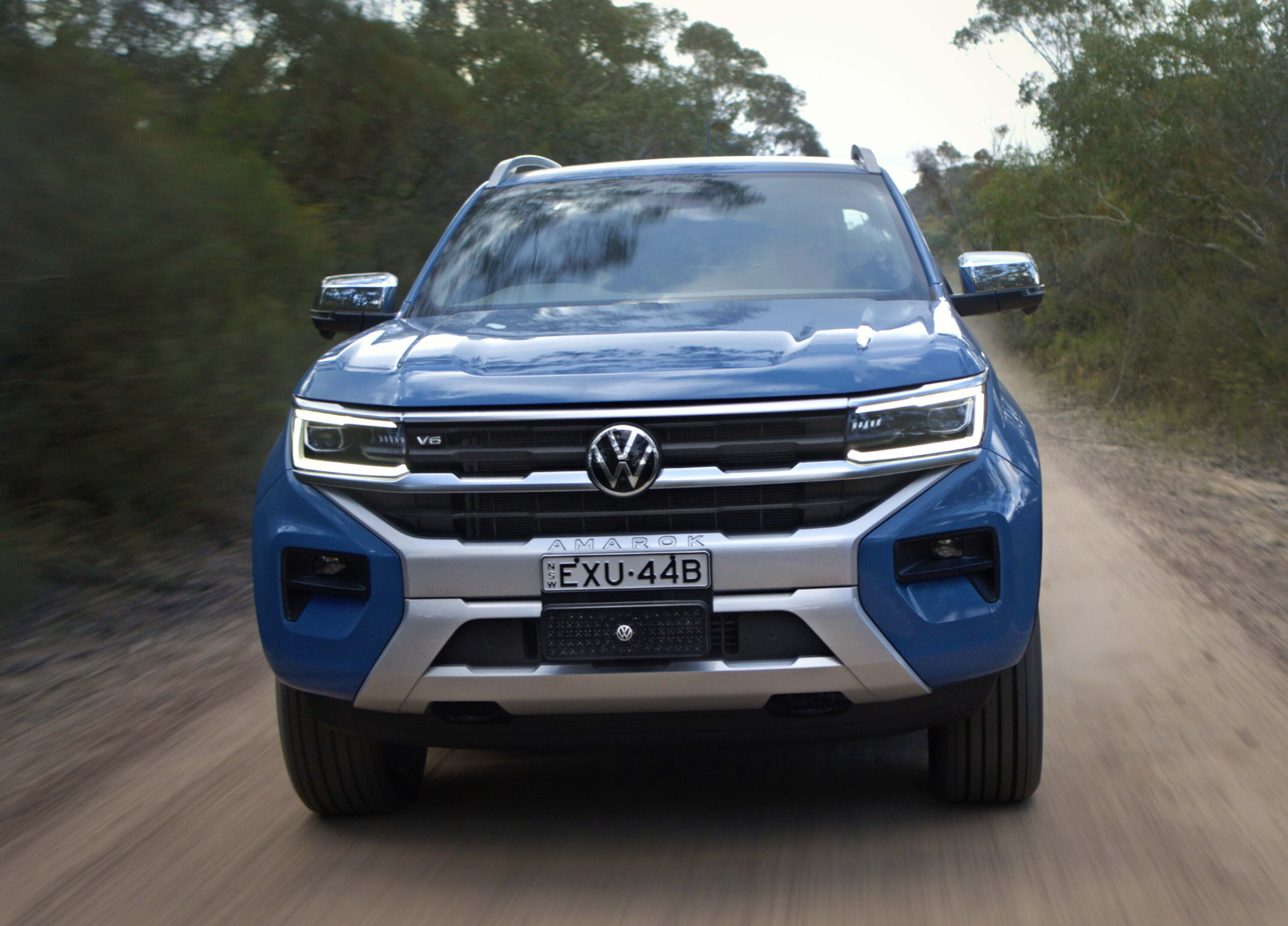
The RooBadge – integrated into a unique Volkswagen roundel on the front of an Amarok dual-cab ute in the press material – provides “a protective audio shield” to signify danger to nearby kangaroos.
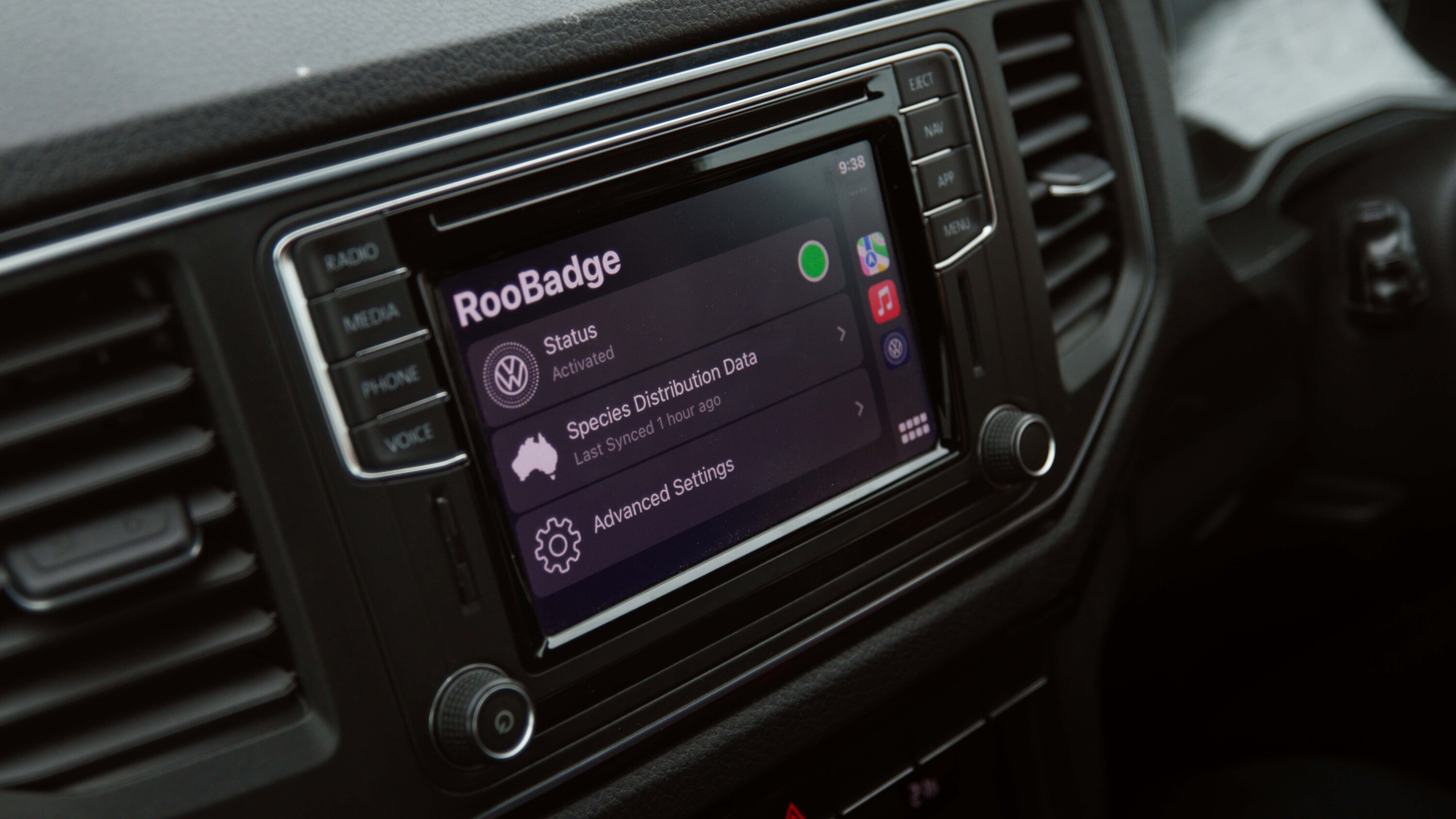
It connects to an in-car app to combine GPS (Global Positioning System) and kangaroo distribution data to emit a ‘focussed beam’ from the 17cm diameter RooBadge unit as a ‘unique audio deterrent’ localised for the species of kangaroo in the area.
“We’re working on sounds that will be meaningful to Eastern Grey Kangaroos – things like dingo calls, alarm calls made by birds, and the alarm thumps that kangaroos make to warn each other,” said Associate Professor Graeme Colson from the University of Melbourne.
1
“We need sufficient data to show that we’ve got an effect. We want a stimulus that is meaningful to the kangaroos, that will stay with them, that will respond [to] time and time again in a particular way.”
While there’s no indication of what the RooBadge may cost customers, or timing of when it may be introduced, the green light has been given by the University of Melbourne’s ethics committee for Stage Four of the program – real-world testing involving control vehicles and wild kangaroos – to commence.
“[RooBadge does] something no kangaroo deterrent has been able to do before,” said Associate Professor Graeme Coulson.
1
The Volkswagen RooBadge is not the first system to use such an audio beam to deter kangaroos, with aftermarket products such as the ShuRoo – introduced in 1986 – already on sale.
A 2022 University of Melbourne report published by Coulson and Dr Helena Bender concluded: “Rather than retro-fitting an ill-conceived device like the ShuRoo, an integrated, inter-disciplinary approach is needed to resolve the pervasive problem of macropod-vehicle collisions.”
The RooBadge technology may have applications overseas as well, according to Bender.
1
“What’s interesting about deer relative to kangaroos is they’re very similar in body size, head size and ear size. What we find with kangaroos has application for deer as well.”
Kangaroos have posed significant problems on Australian roads, with remedies including the popular ‘Roo Bar’ bull-bar designs from major car makers – as well as the world’s first kangaroo crash-test dummy introduced by Holden in 1994, dubbed ‘Robo Roo’.
WIRES spokesperson John Grant said: “Kangaroo collisions are increasing every year and with more motorists on the roads over the Easter holiday period we are expecting a spike in rescue calls for injured adults and displaced joeys.”
The April 2024 issue of 4X4 Australia is out now and en-route to subscribers around the country, with the magazine headlined by the release of one of Australia’s favourite utes.
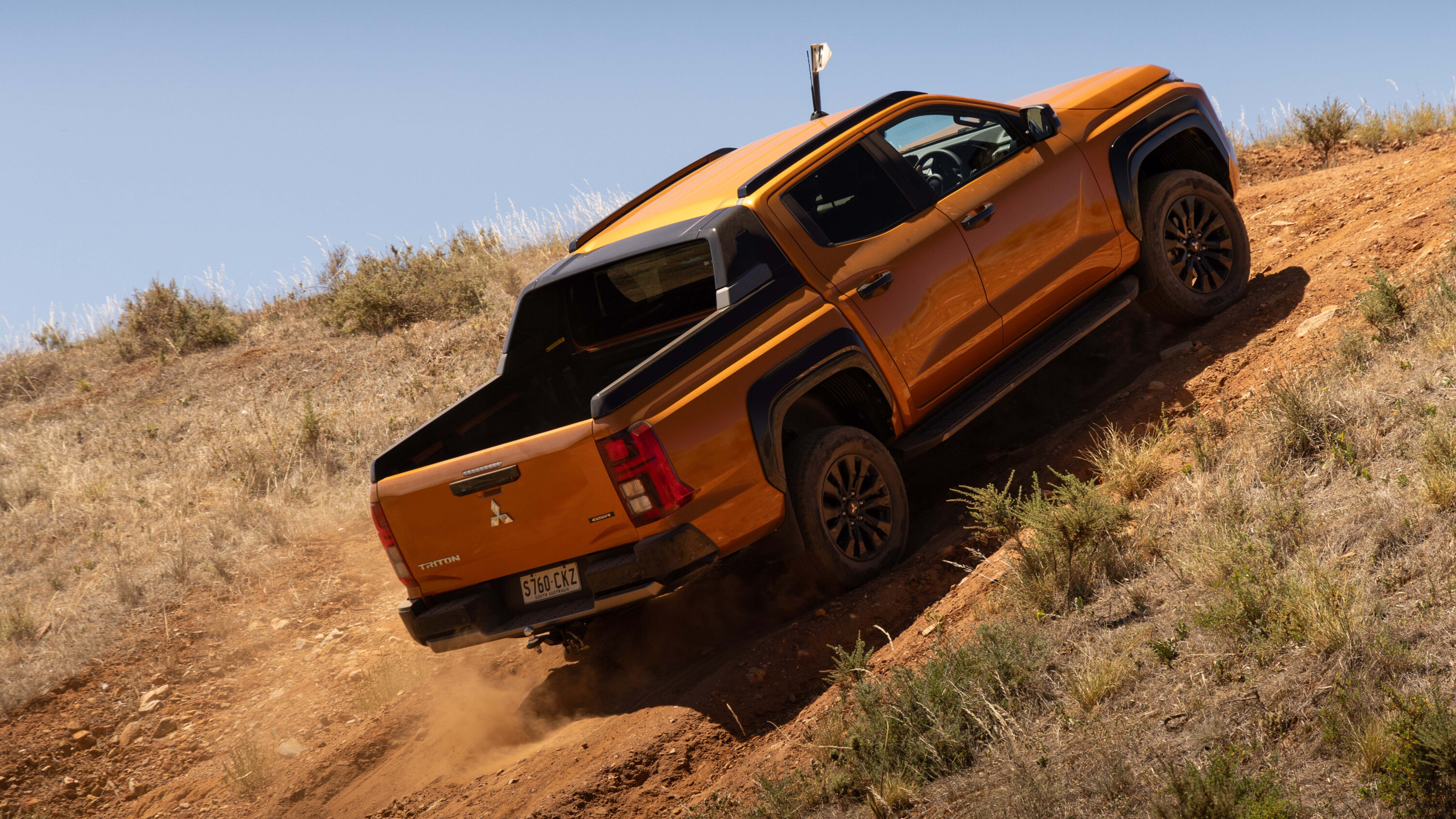
We attended the Australian launch of the sixth-gen Mitsubishi Triton, a vehicle that has been in the works since 2017. Has that lengthy gestation period resulted in a better vehicle? It’s bigger, bolder and has more kit as standard, so the early prognosis is a big, fat “yes”. However, its price has risen as a result and it now sits alongside rivals such as the Ranger and HiLux. Let’s dig deeper to find out whether it can compete with these heavy hitters.
1
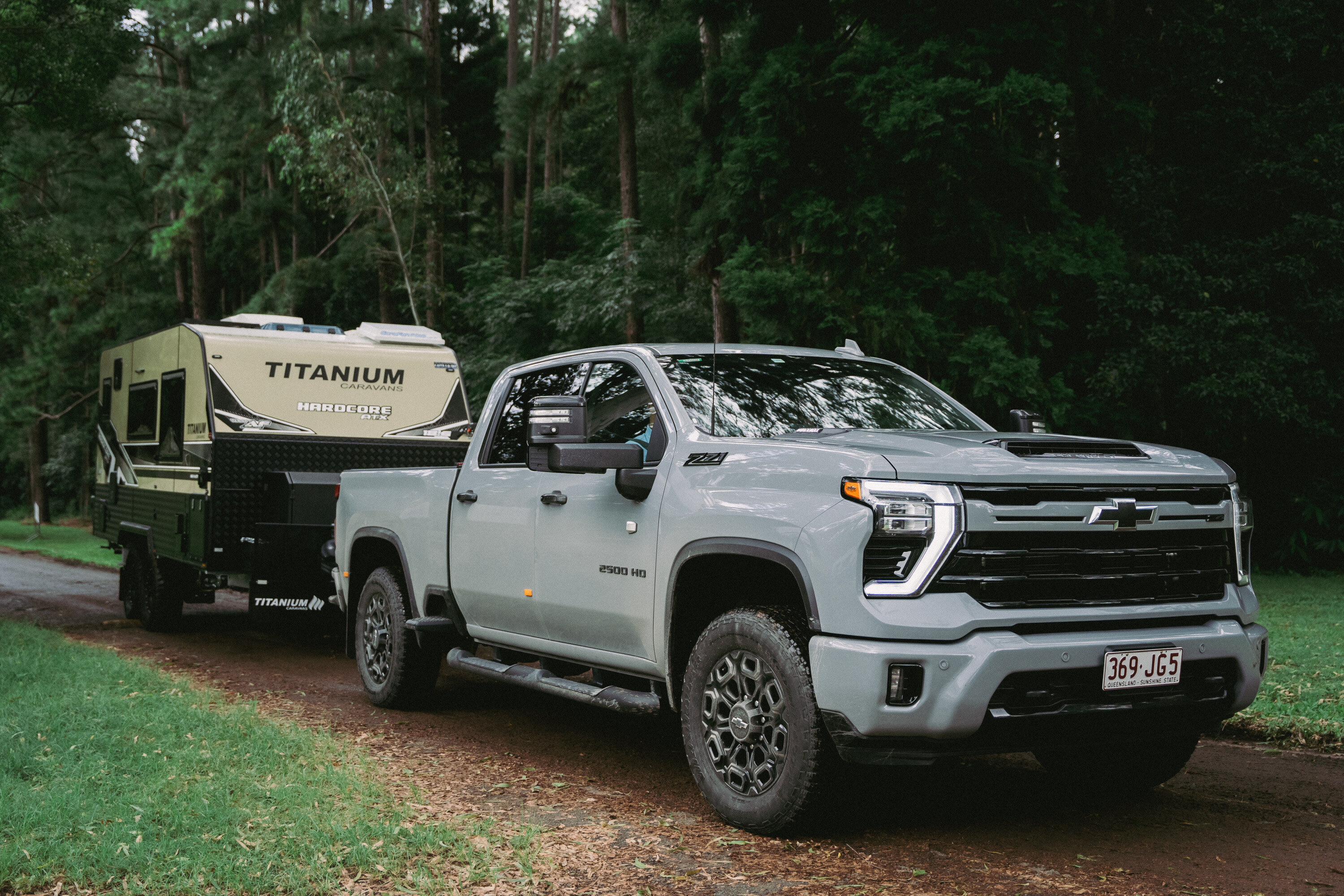
Speaking of heavy hitters, nothing hits heavier than a Chevrolet Silverado 2500, and we spent some time in the 1322Nm 6.6-litre V8 beast. With an asking price of $163,000, you won’t see many on the road – but those that are will be towing a load with ease.
1
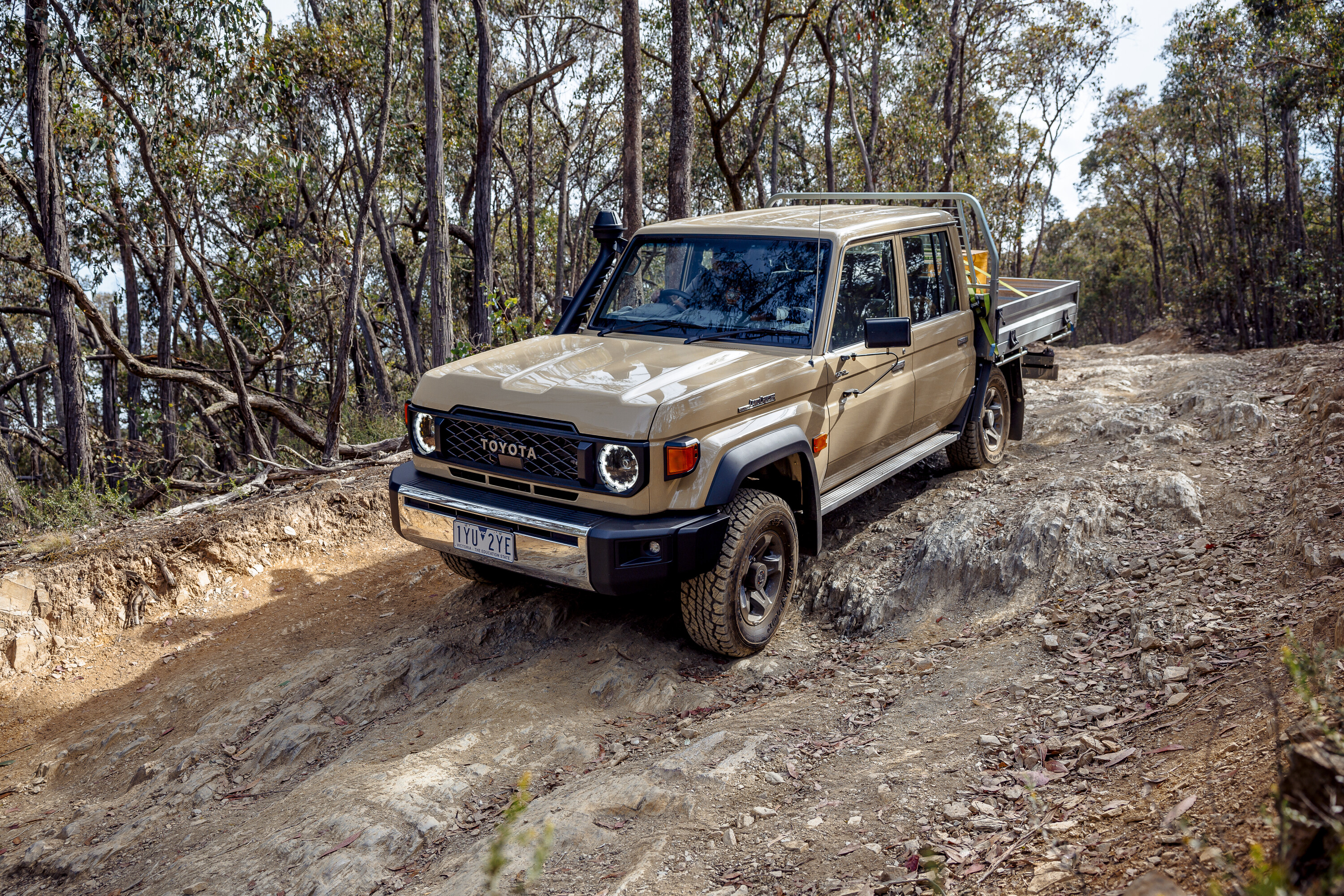
Plus, Matt takes a 2.8-litre four-cylinder 79 Series GXL double-cab to the bush, to see if the updated model with its new powertrain remains an excellent off-roader and work rig. As Matt put it, “Getting into a 70 Series is like pulling on a pair of favourite old work boots, and even though this 2024 updated model brings plenty of changes, the familiarity is still there”.
1
We’ve managed to squeeze two stellar custom builds into this issue: a single-cab 2014 Toyota HiLux modified to be a serious remote-area two-person tourer; and a 2023 Ford F-150 Tremor boasting a 5.0-litre Coyote V8 transplant!
1
At the workshop, our Tradie Triton build has been powered with a Projecta 12V DC power management board and 2000W inverter; while a set of KMC Impact wheels inside Maxxis RAZR rubber has been added to the Everest project car.
1
On the travel front, we put Karlamilyi National Park into our GPS and explore the area’s vivid scenery and rich history by following the Rudall River. Plus, we tackle the famous Bridle Track in NSW, which consists of tracks both experts and beginners can enjoy.
Infiniti has lifted the covers off its QX80, a luxurious SUV that will share componentry with the highly anticipated next-gen Nissan “Y63” Patrol when it eventually arrives.
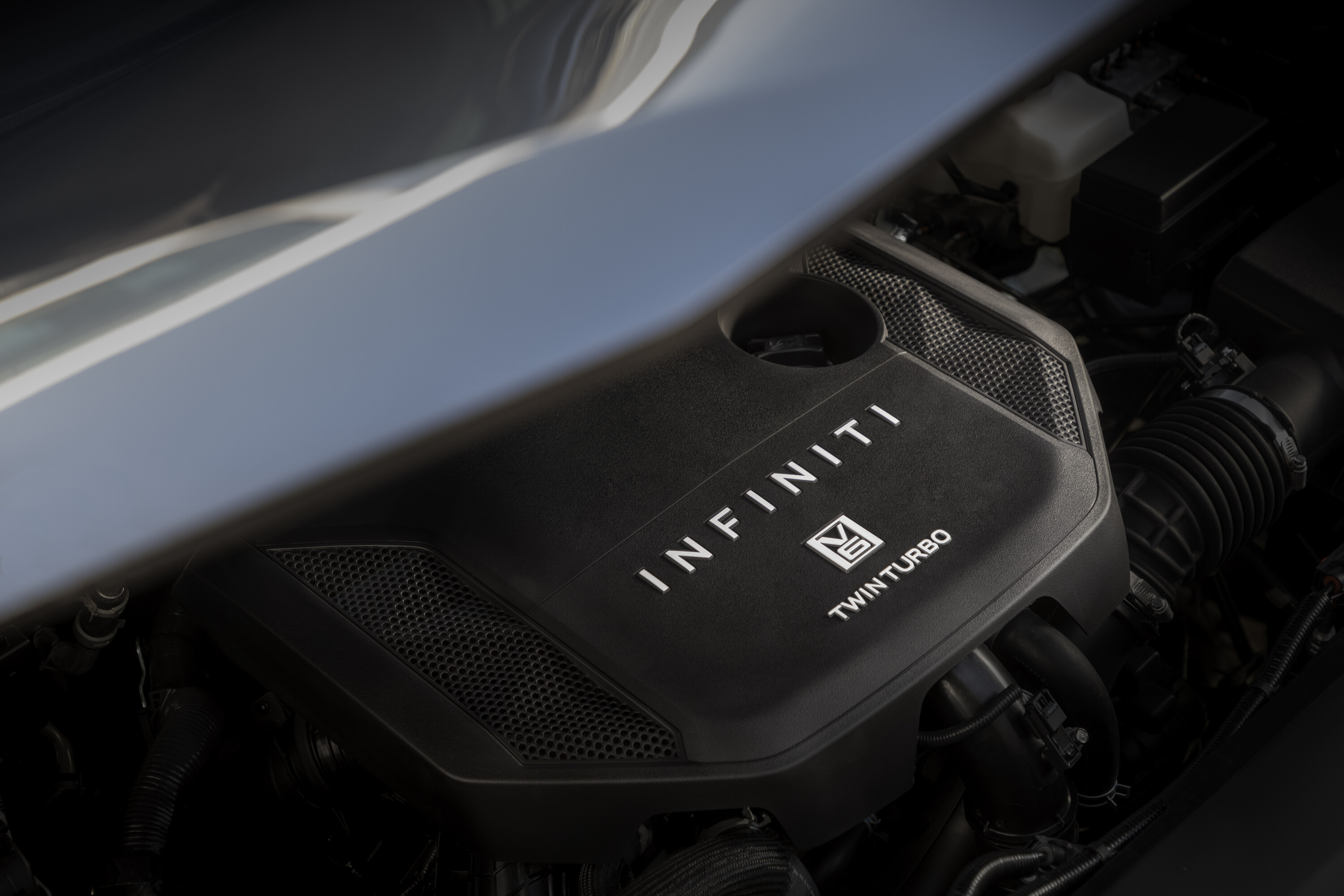
The QX80 – not slated for release in Australia – will utilise a 3.5-litre twin-turbo V6 petrol engine capable of delivering up to 336kW and 698Nm, verifying earlier reports that indicated the Patrol would ditch its naturally aspirated 5.6-litre V8 and replace it with a twin-turbo petrol V6. The V6 is mated to a nine-speed automatic transmission, two more ratios than the Patrol’s current seven-speed auto.
1
These outputs of 336kW and 698Nm represent an increase of 38kW and 138Nm on the current Y62’s V8 (298kW and 560Nm). For comparison’s sake, the 3.3-litre V6 turbo-diesel that powers the 300 Series LandCruiser generates 227kW and 700Nm.
The four-model QX80 line-up consists of Pure, Luxe, Sensory and Autograph variants, with the lower-spec models equipped with either rear-wheel drive or Infiniti All-mode 4WD. Top-tier Sensory and Autograph variants will feature standard 4WD, and all models will have Standard, Eco, Sport, Snow, Tow and Personal driving modes. Refining the ride of the burly SUV is the option of Electronic Air Suspension and Dynamic Digital Suspension, with the air suspension lowering the vehicle by 1.2 inches at speed.
What you get
Pure
Luxe (all Pure features plus)
Sensory (all Luxe features plus)
Autograph (all Sensory features plus)
VR35DDTT engine with 9-speed automatic transmission
Dynamic Digital Suspension
Semi-aniline leather-appointed seating for first and second rows
The premium styling of the vehicle is headlined by the newest iteration of Infiniti’s double-arch grille – “inspired by the organic shapes of a bamboo forest, the grille shape hints at a powerful, commanding driving experience,” Infinity says. A full-width display of LED lights illuminates the rear.
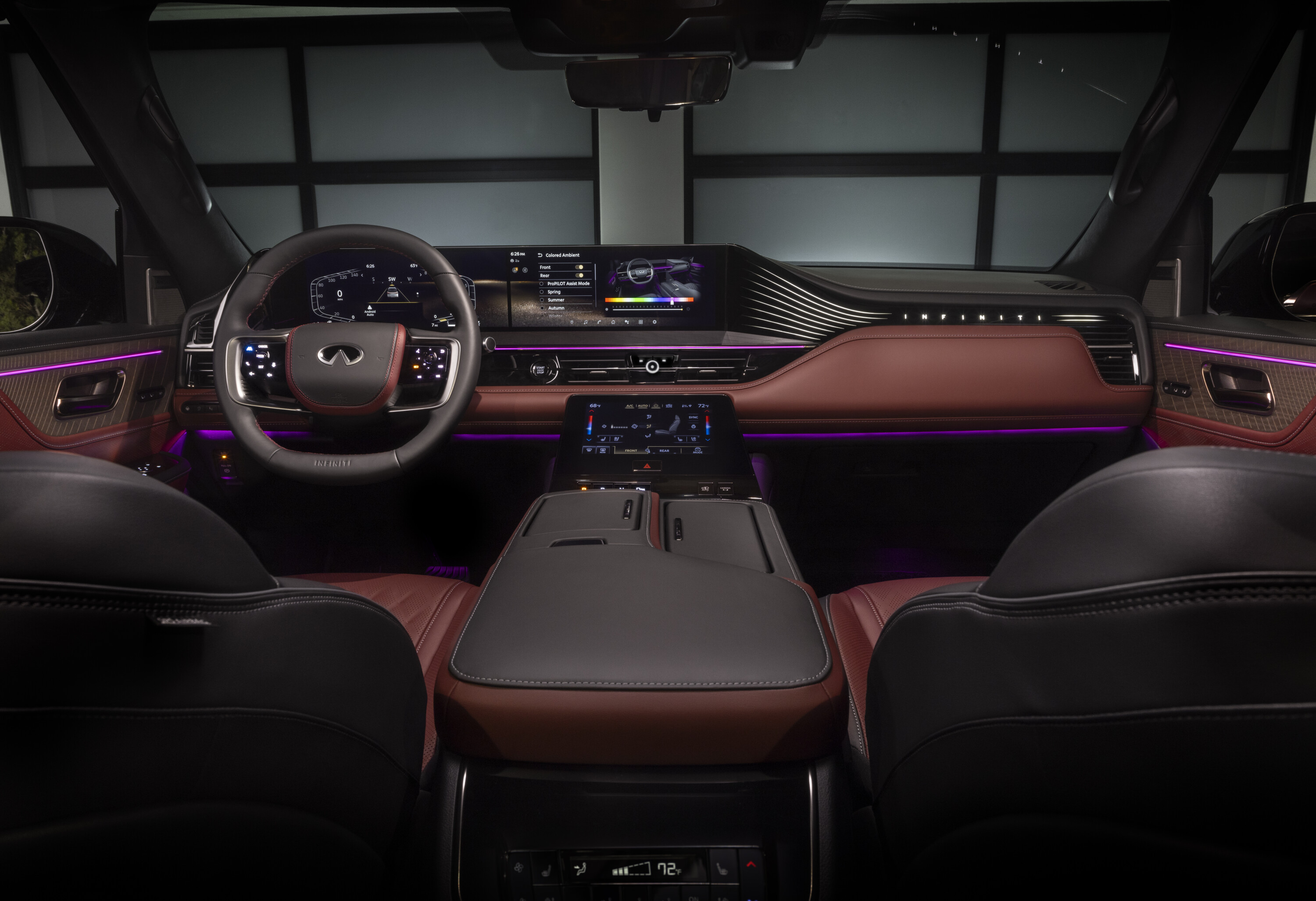
Important interior changes include the addition of a 14.3-inch digital instrument cluster and a 14.3-inch infotainment touchscreen, which are positioned side-by-side. Positioned below this is a 9.0-inch screen for climate controls, heated and ventilated seat functions and drive mode selection. Google is built into the centre console, and the top-of-the-line Autograph includes a cool box in the centre console. These changes, while unconfirmed, could be mirrored with the next-gen Patrol.
Luggage space has also increased from the outgoing QX80, with cargo room up 18 per cent behind the second-row seats up and 30 per cent behind the third-row seats.
The QX80 will officially debut at the 2024 New York International Auto Show, and it will arrive in US dealerships toward the end of the US summer (August-September). Pricing for the QX80 starts at AU$125,000 (US$82,450) for the rear-wheel drive Pure, and tops out at AU$167,650 (US$110,595) for the Autograph.