
Committed to a sustainable future, BLUETTI provides affordable green energy storage solutions for both indoor and outdoor use. Through initiatives like the LAAF (Lighting An African Family) program, BLUETTI has empowered over 100,000 African families in off-grid regions. With a dedication to innovation and addressing customer needs, BLUETTI has established itself as a trusted industry leader across more than 100 countries worldwide.
The End of Financial Year (EOFY) season is almost here, and it’s the perfect time to score unbeatable deals on your favourite tech gadgets.
This year, BLUETTI, a global leader in the clean energy industry, is offering exceptional discounts of up to 37 per cent on portable power stations, solar generator bundles, and large home batteries from June 1 to June 30. Whether you love outdoor adventures, want to save on energy costs, or need reliable backup power, BLUETTI has you covered.
Stay prepared and powered up with BLUETTI
As temperatures drop, our energy demands rise. Heating systems work overtime, leading to higher electricity bills and increased stress on the power grid. Now is the ideal time to upgrade your energy system with BLUETTI’s dependable and eco-friendly solutions, ensuring you stay warm and your devices remain powered without breaking the bank.
BLUETTI EOFY sale top picks: AC180 and AC200L power stations
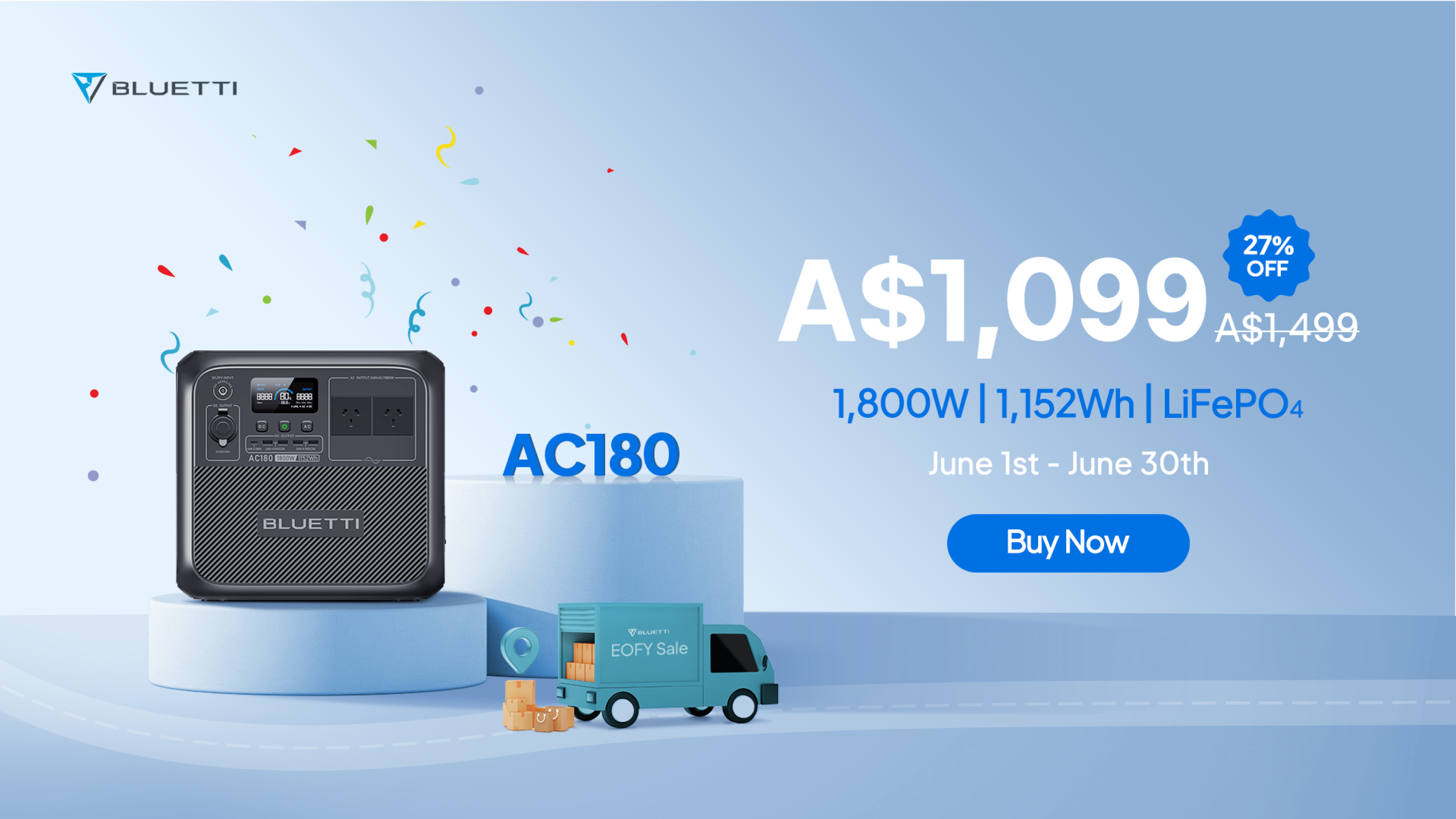
BLUETTI AC180: Aussies go-to for portable power
Now $1099 (was $1499)
The BLUETTI AC180 is one of the top-selling products on BLUETTI’s Australian website, and for good reason. This power station perfectly balances power and portability, delivering 1800 watts from a lightweight 16kg build.
It’s perfect for camping trips or as a reliable backup during blackouts, capable of powering household items like fridges, freezers, TVs, microwaves, induction cooktops, and even hair dryers. Pair the AC180 with BLUETTI’s folding PV200 solar panels for a max 500W solar input, and you can recharge it in about three hours, having an endless supply of renewable energy wherever you go.
1
BLUETTI AC200L: Expandable capacity for every need
Now $2399 (was $2799)
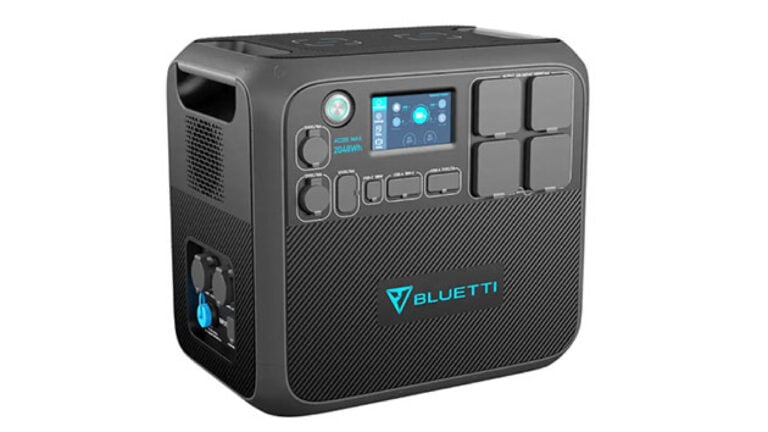
Power shortages can ruin outdoor adventures or disrupt work at home. The BLUETTI AC200L portable generator, with its massive 2048Wh capacity and powerful 2400W output, ensures you have reliable power for your home, camper, workshop, and beyond. It can run a 150W fridge for up to 11 hours on a single charge and features 10 output ports to power all your needs.
If you demand more power for your off-grid lifestyle or outage protection, expand its capacity with expansion batteries like the B230, B210, or B300. By connecting two B300s, you get an impressive 8,192Wh of power – enough to keep your devices running for days. The classic AC200P also supports capacity expansion with B230 or B300, but at a more affordable cost.
For those preferring an all-in-one setup for home use, the EP500Pro offers 5120Wh capacity and 3,000W output, with the convenience of mobility thanks to its four-wheel design.
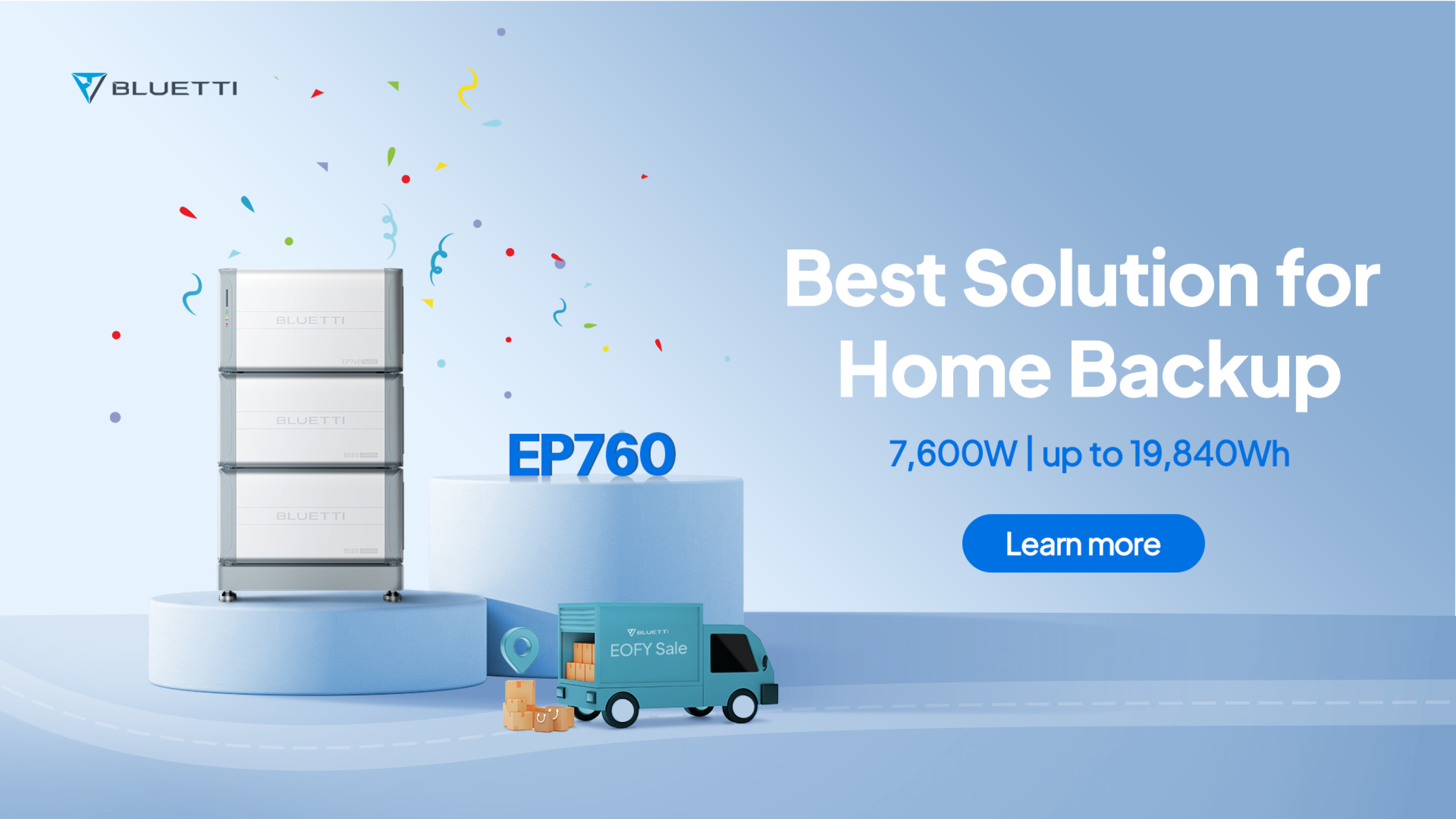
BLUETTI EP760 Battery System: CEC-certified home energy solution
Beyond portable power, BLUETTI provides comprehensive home energy solutions like the EP760. Certified by the Clean Energy Council (CEC), the EP760 meets Australia’s stringent safety and technical standards, ensuring you’re investing in a reliable product.
The EP760, paired with several B500 batteries, offers a customisable battery setup for any home. It can intake 9000W of solar power and store it for use anytime, reducing household energy costs. As electricity prices climb and extreme weather events frequent, having a clean energy storage system can significantly cut your bills and provide peace of mind during outages.
1
About BLUETTI
This EOFY, take advantage of BLUETTI’s incredible up to 37 per cent discount and invest in top-tier clean energy products.
Plus, you can get more from BLUETTI! Join BLUETTI’s lucky draw wheel, participate in social media giveaways, or simply subscribe to BLUETTI’s newsletter for generous gifts.
Get your 4×4 published online and in the next issue of 4X4 Australia magazine, by sending a photo to our Facebook page. Here are five rigs sent to us in May 2024.
1
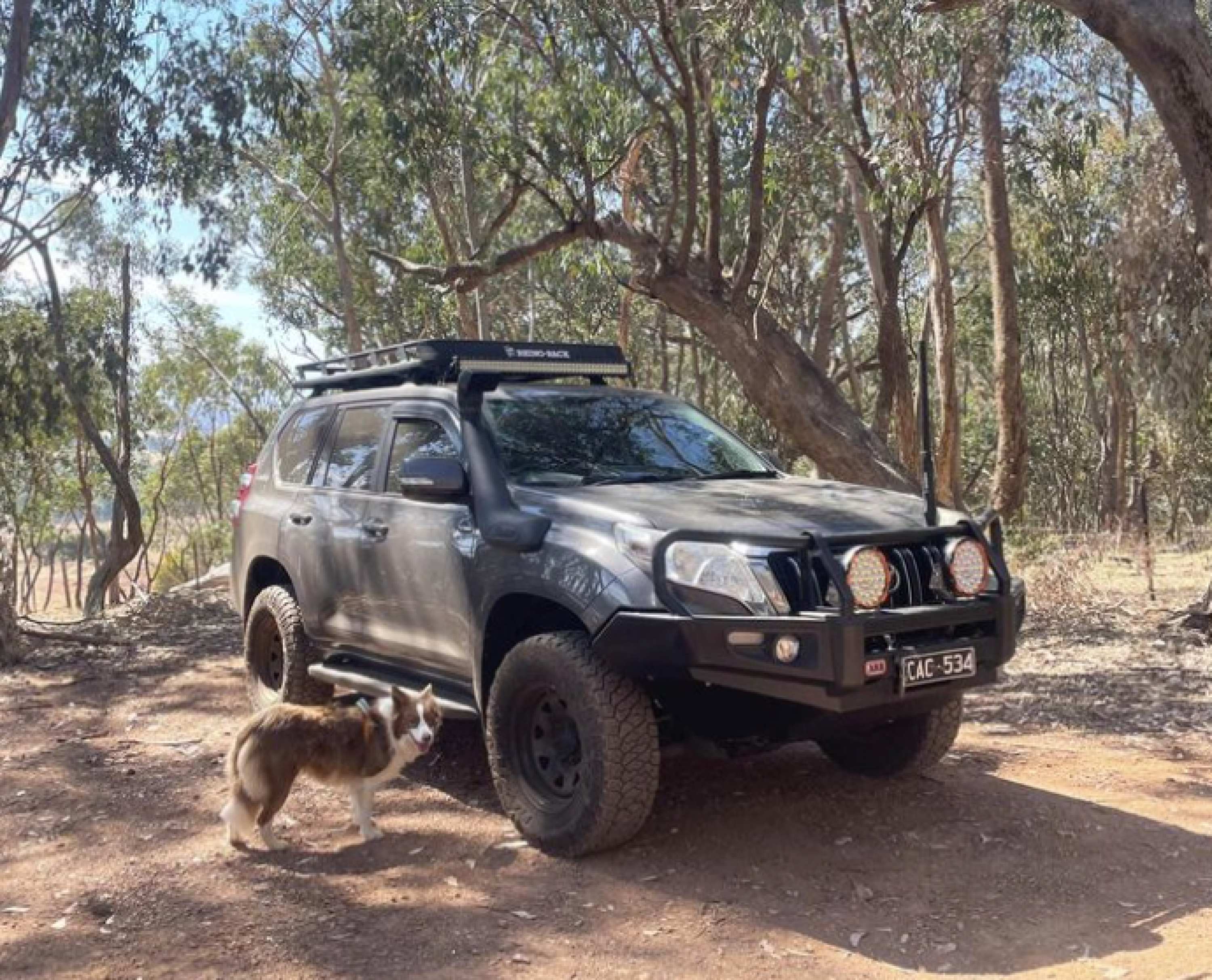
2015 Toyota Prado 150
1
I only recently purchased the vehicle and have only been as far as Mount Buffalo, Victoria, but I’m planning a trip from Melbourne to Perth at the end of the year, so slowly gearing up for that. A few more upgrades and we should be ready. It currently has an ARB bullbar; Stedi light bar and spot lights; Tough Dog lift kit; Ultimate9 EVC throttle control; and Maxxis RAZR A/T tyres – Will Karas
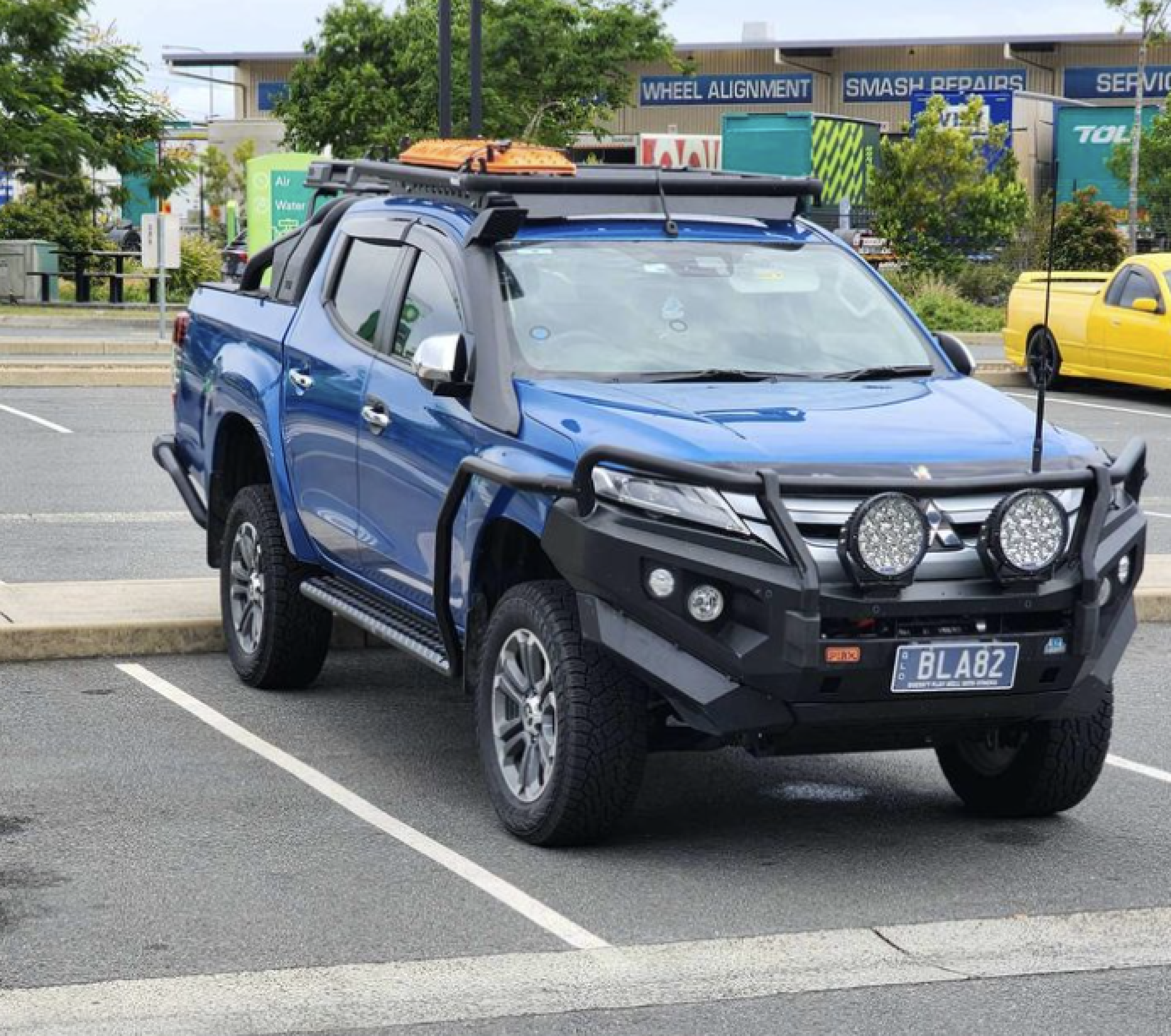
2021 Mitsubishi Triton
1
Mods include a PIAK Elite front bar, rear bar and sidesteps/brush rails; Kings nine-inch spotties and underbody lighting; Wedgetail roof platform; Ironman 4×4 two-inch lift and GVM upgrade; Kuluin Mufflers 3.5-inch DPF back exhaust; Rhino lining to the rear tub; GME UHF; and a Kenwood head unit upgrade with speakers and 10-inch underseat sub – Ben Anderson
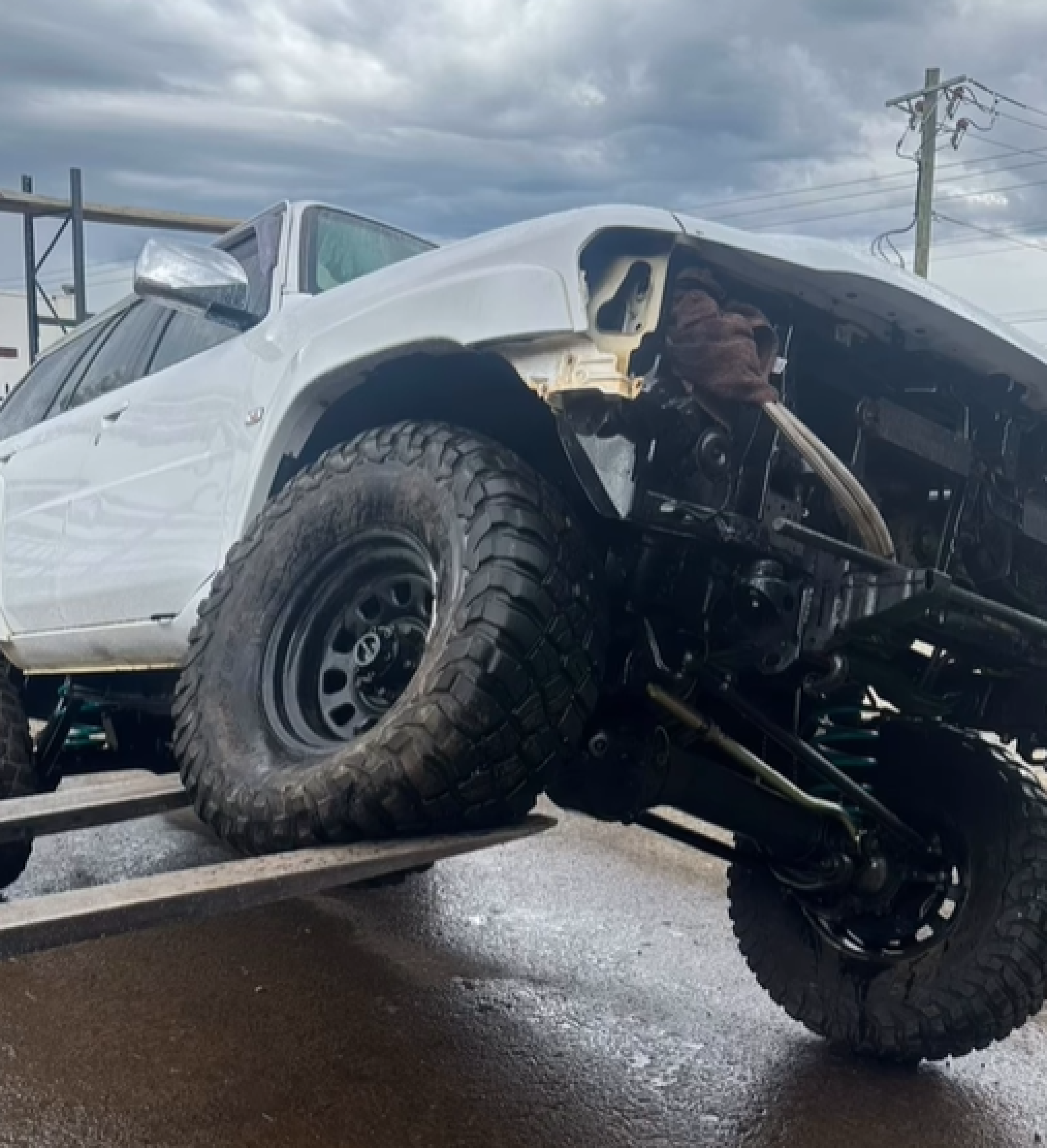
2005 Nissan GU Patrol
1
I’m currently building a 2005 Series 4 GU Patrol super tourer with all the goodies, and I will have it finished within 10 to 12 weeks. Mods include Dobinson remote res shocks and springs; heavy duty arms all around; all braided lines; rear tower braces; Emuwing gullwings; 35-inch tyres; custom bar work built by myself; four-inch snorkel and airbox combo; roof rack with 270-degree Darche awning; LRA long-range tank; 24v lithium battery system; 12v dual battery system; and plenty more! – Michael Thompson
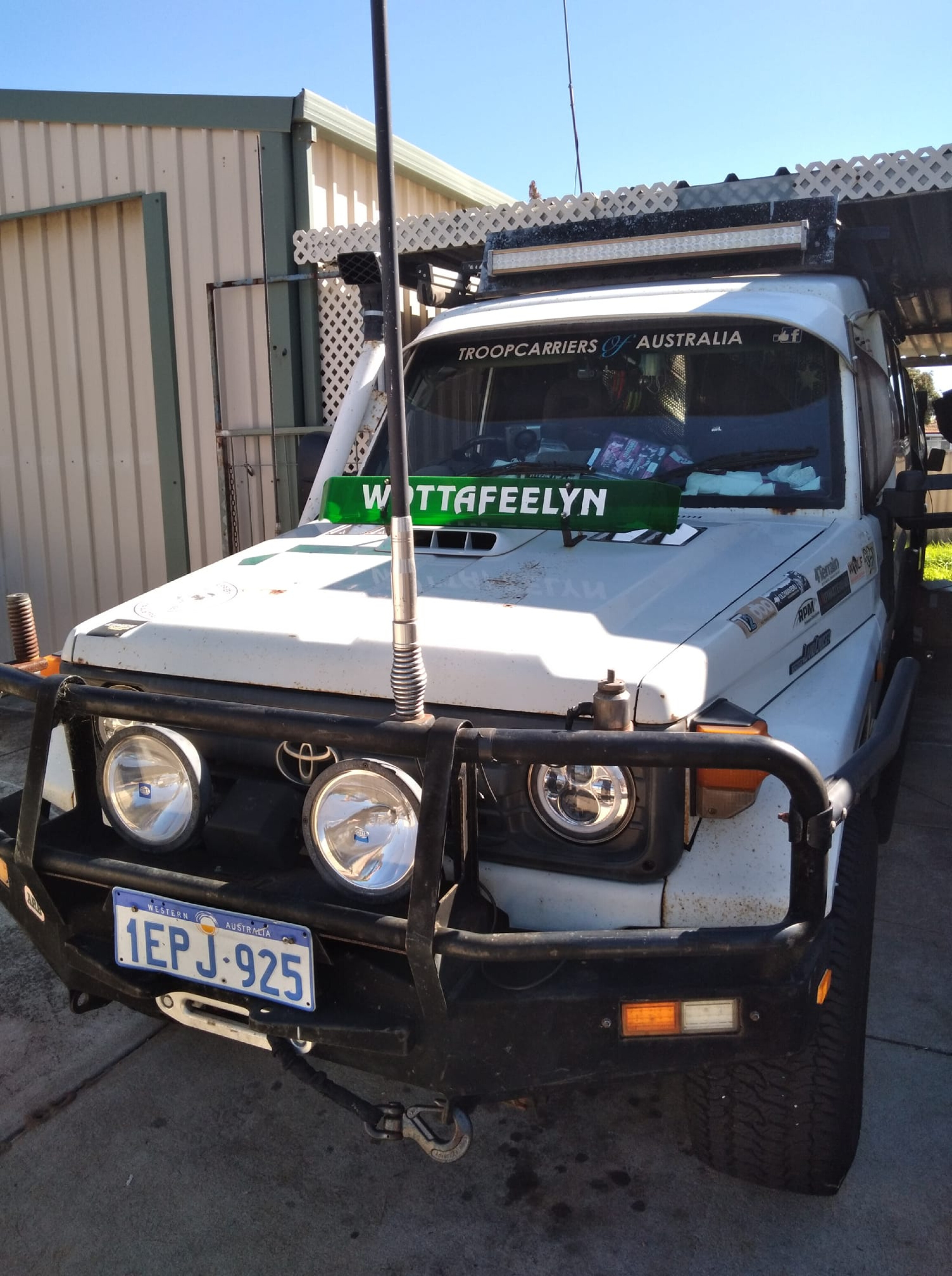
Toyota LandCruiser TroopCarrier
1
This Troopy has travelled 1,200,000km and is still going today, and it has been the best 4×4 I have ever owned! – Chris Dorr
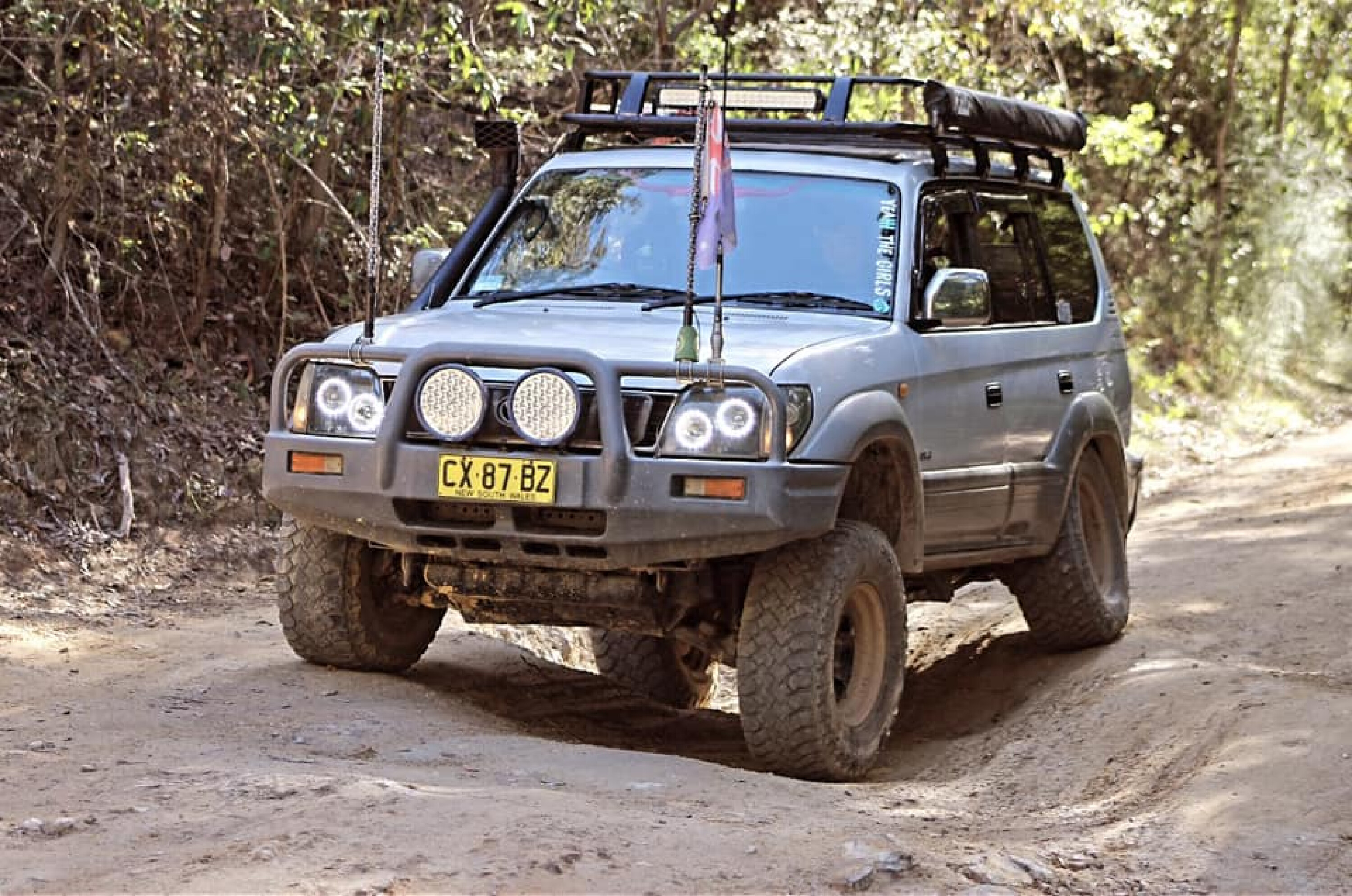
1993 Toyota LandCruiser Prado VX Grande
1
She is sitting on a constant two-inch lift that sits around three inches tall. She is equipped with a roof rack; side awning; high-lift jack; rear drawer setup; snorkel and diff breathers; an RGB light bar; and whips with LED halo headlights. One of my favourite memories is when I took the wrong line and got bogged to my door steps, and my 4×4 ended up a different colour covered in mud. It wasn’t fun to clean off! – Emma-Lee Cole
Latest Gear Guides
With the federal government shutting down the 3G network very shortly, many who venture out of the major cities are wondering whether mobile coverage blackspots will grow.
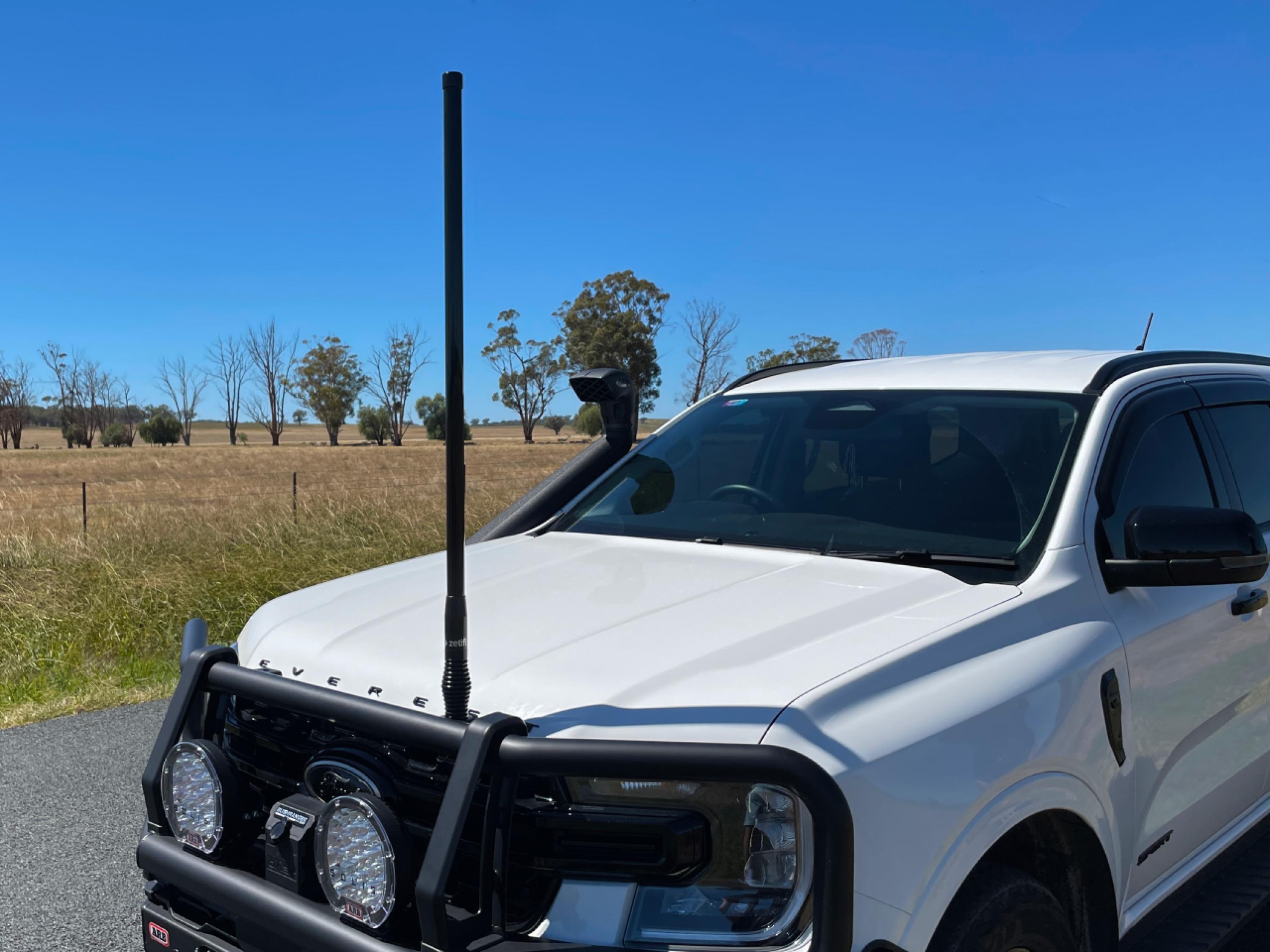
Thankfully Wagga Wagga-based connectivity company Zetifi has launched the world’s first location-aware smart antennas, revolutionising a product segment stifled by innovation for decades.
This patent-pending invention transforms traditional passive vehicle antennas into active self-optimising devices that are set to play a big role in improving phone coverage, a high priority for people in rural areas as they prepare for the closure of the Telstra 3G network on June 30.
2
“The 3G shutdown has been on the radar for years and it’s something we need to take seriously,” said Dan Winson, Zetifi CEO. “There are a lot of people who will need to upgrade their cellular boosters and antennas to make them work with 4G and 5G.
“From the day we started talking to regional and rural communities about connectivity, the thing we heard most often is they just want their phones to work. There are hundreds of thousands of vehicles in Australia with cellular boosters and our smart antennas provide a better experience for people using them.”
Terrain makes a difference when it comes to antenna performance. The flat radiation pattern of a high gain antenna is ideal in open country but is less suited to hilly areas where the wider beamwidth of a low gain antenna is more effective. With traditional antennas, you have to compromise on performance or deal with the inconvenience of swapping antenna whips as you move from flat to hilly country.
2
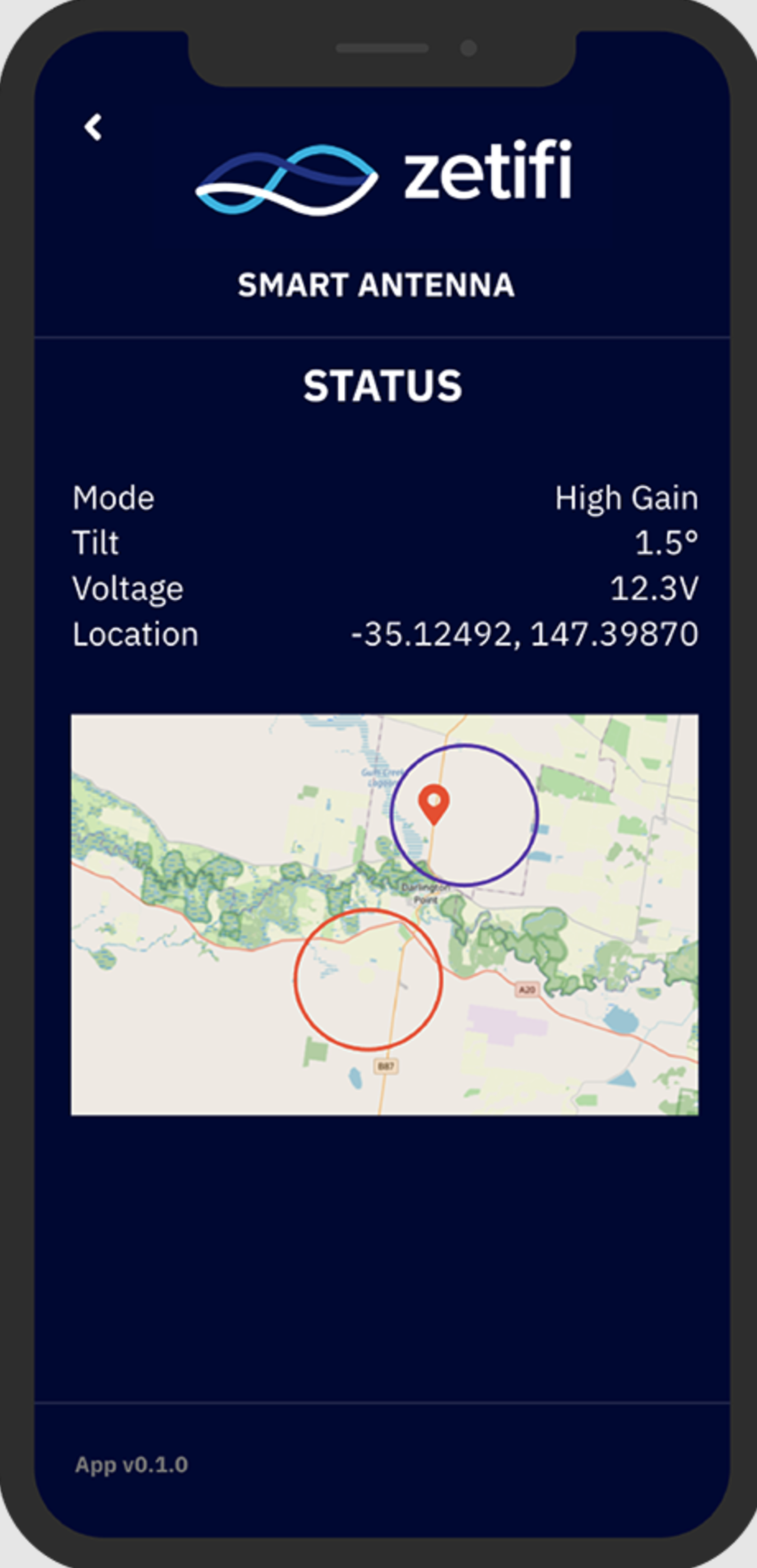
Zetifi’s revolutionary smart antennas are the first vehicle antennas engineered with an integrated GPS and gyroscope detect antenna, reconfigurable antenna element, and data processor, allowing them to adapt to the surrounding terrain by automatically switching between high and low gain modes.
An accompanying phone app that connects to the smart antenna via Bluetooth is used to load terrain maps to the antenna’s onboard processor and also allows users to select between automatic switching or manual selection of high or low gain mode.
Pricing
Designed and manufactured in Wagga, Zetifi’s Smart Antennas are available now from $549.
GWM’s flagship Cannon Alpha ute has only just arrived in Australia, but already the Chinese brand is looking to add to the local line-up with a high-performance plug-in on the cards.
If given the green light, the Alpha PHEV will join the initial diesel and mild hybrid petrol versions taking the family to three options and, as it could beat Ford’s Ranger plug-in to the punch, gain another first for the brand.
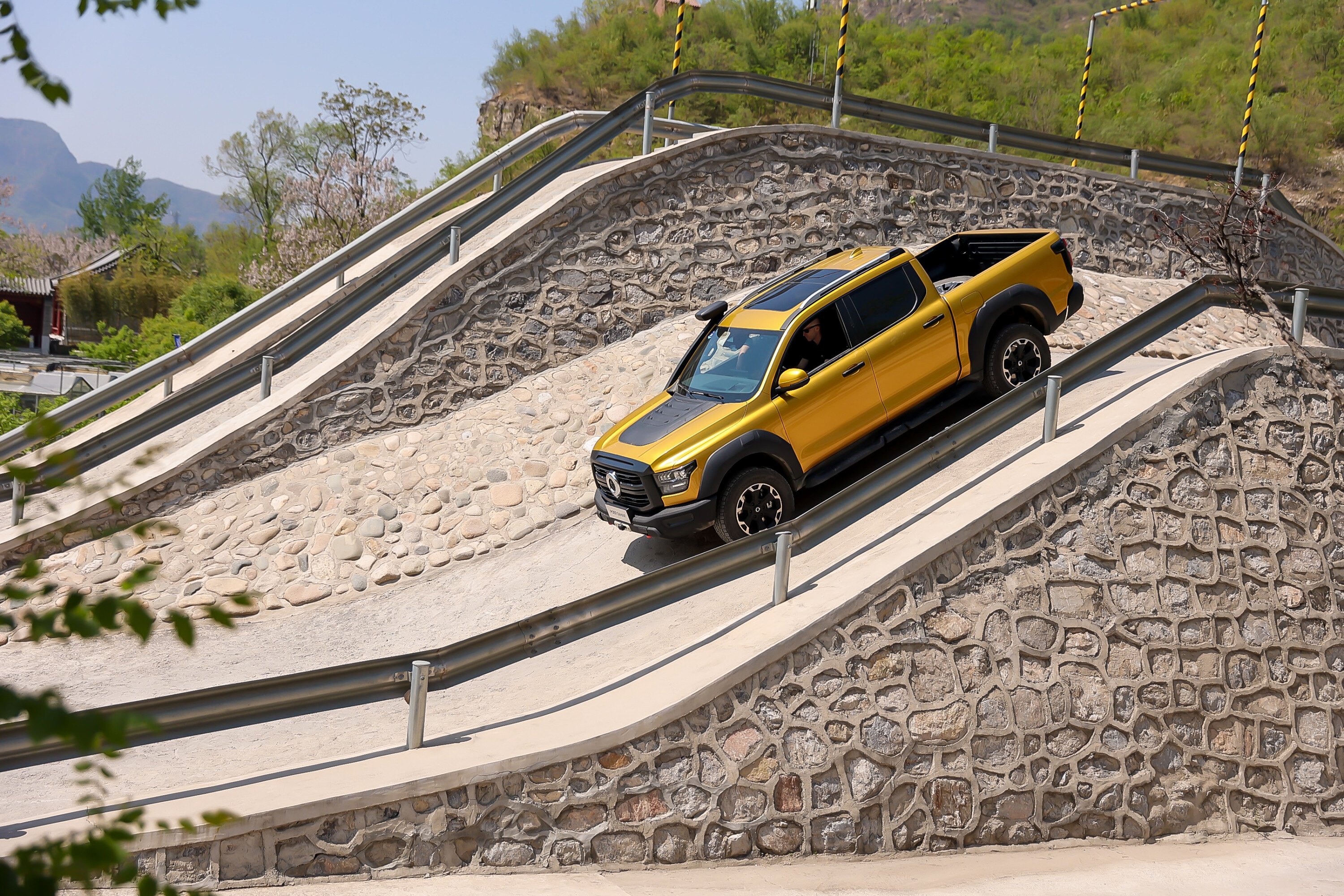
We were offered a chance to drive a pair of as-yet unconfirmed Alpha variants at GWM’s impressive proving ground in China to see if either might complement the Cannon line-up Down Under.
2
V6
In China and other selected markets, GWM offers a version of the Alpha powered by the company’s mighty twin-turbo V6 petrol engine, posing potentially the only powertrain that could take the shine off Ford’s largely unchallenged Raptor.
With the same capacity than the Raptor and 3.0 litres, the GWM engine produces 260kW and 500Nm, and despite a hefty mass to haul, the most potent Alpha’s performance is impressive, albeit not quite enough to match the Raptor’s 292kW/583Nm.
There’s a little more lag than expected stepping off the line but once the brace of turbos have spooled and the transmission understands what the right toe wants, the Cannon leaps forward with great force.
Straight line speed is just one product but we suspect the variant would make a stoic towing companion calling on the readily available torque and a transmission that’s been calibrated to strike a good balance of both loaded and unladen work.
2
Aside from its notable performance, the V6 version we sampled also showcased a more playful colour scheme and design.
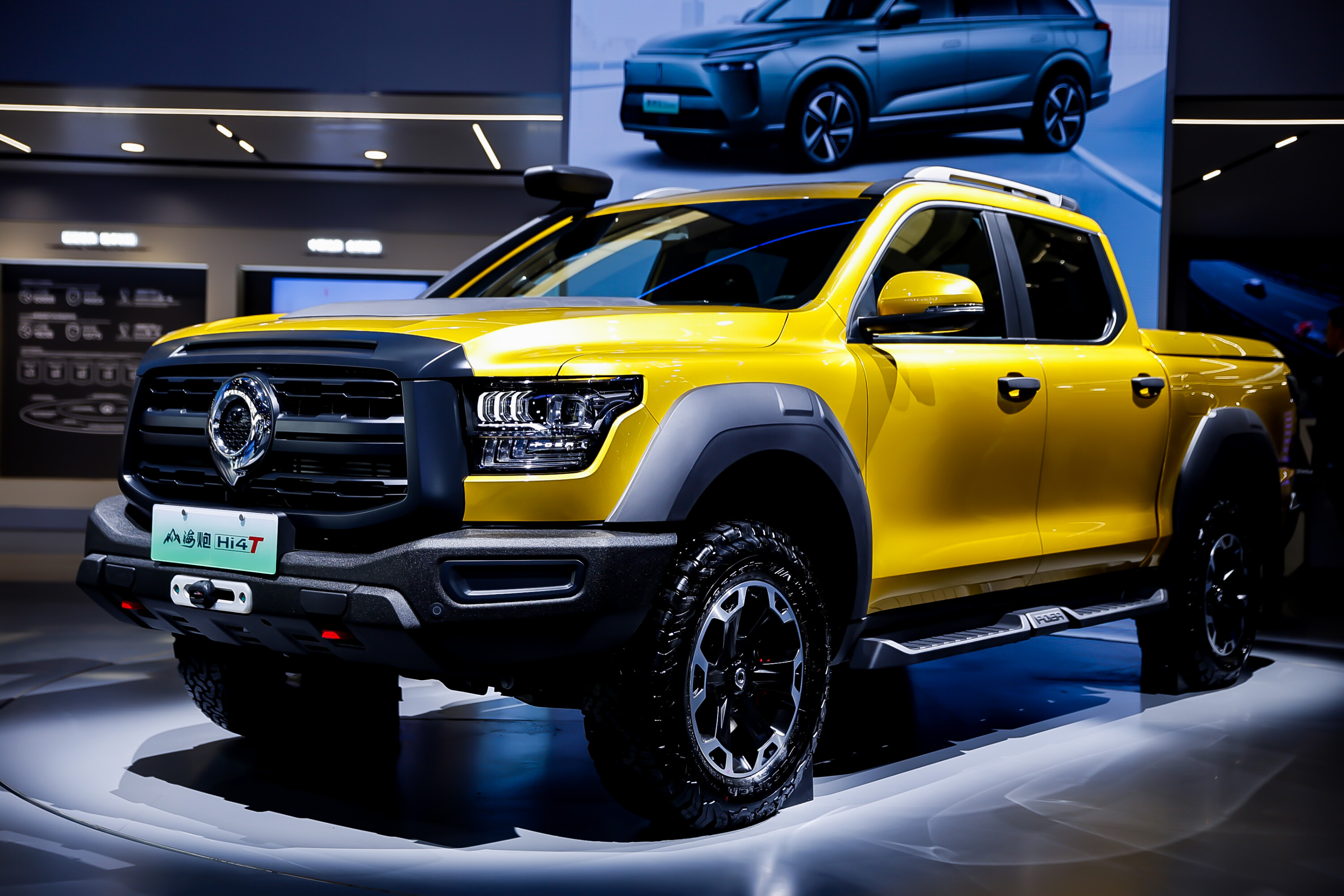
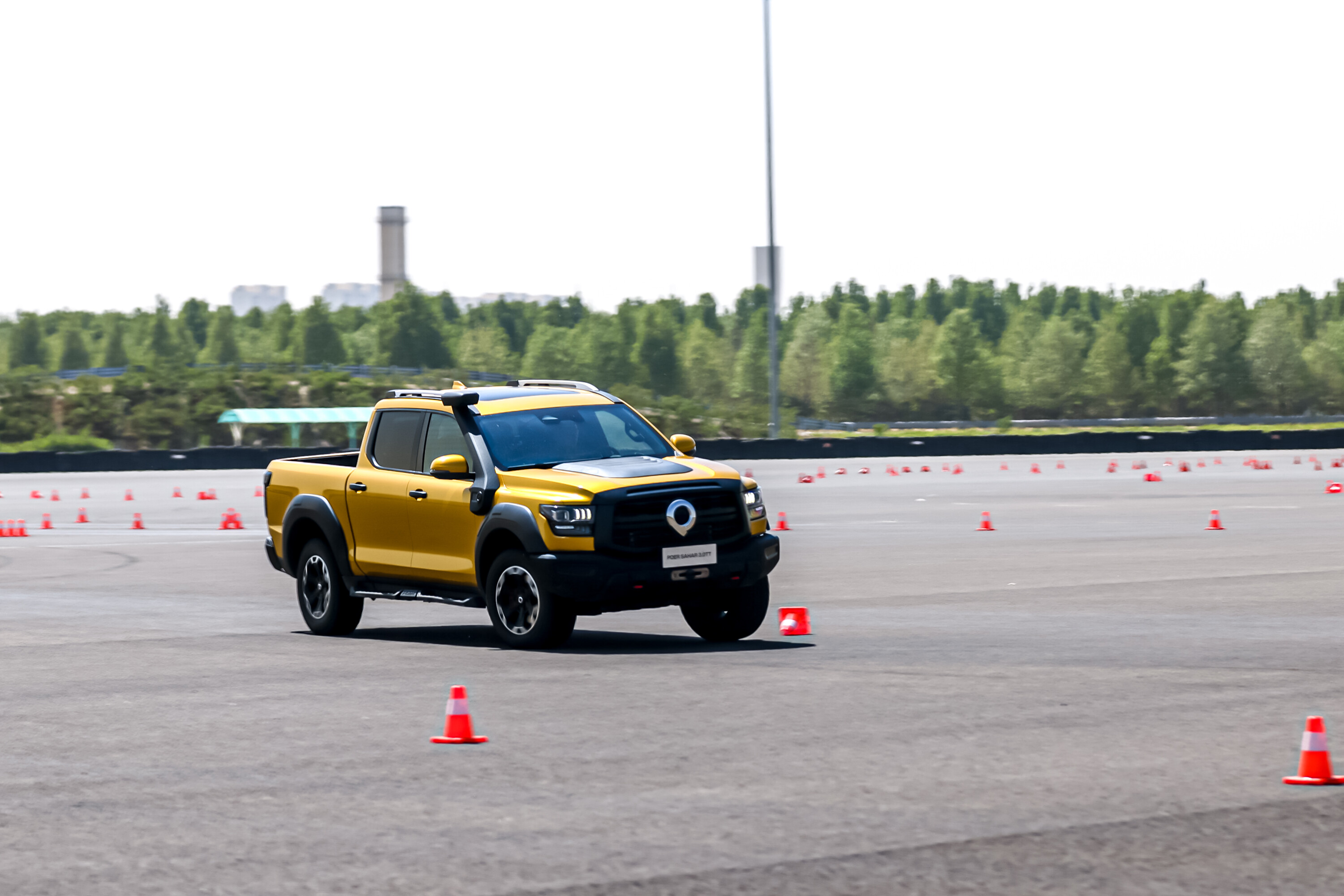
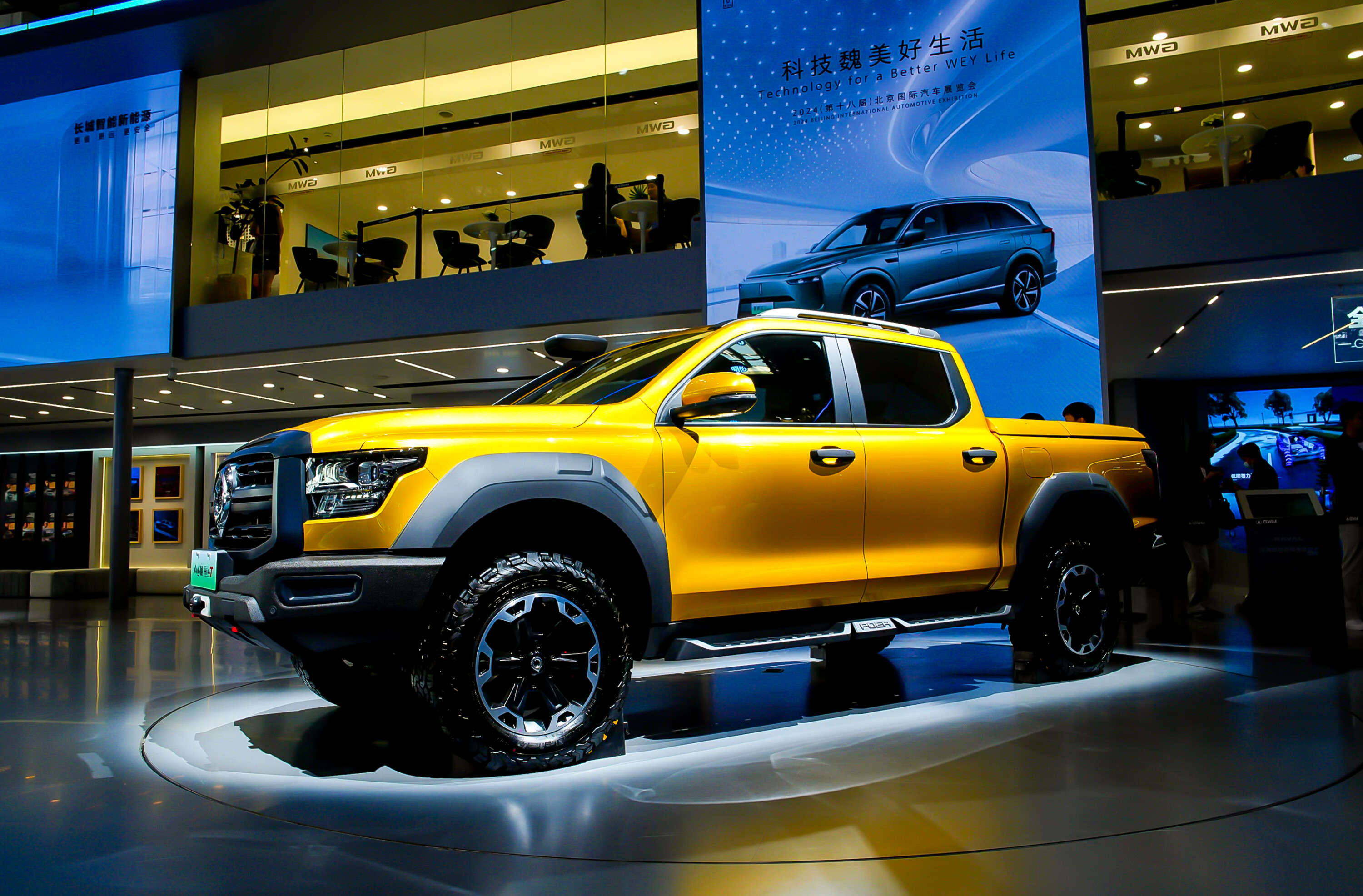
While the versions coming to Australia are thought to be in a range of more conservative tones, GWM rolled out a version of the Alpha dressed up in bright metallic turmeric golden paint with contrasting pumpkin flesh yellow and black interior.
On the outside it also gets a number of embellishments to set apart from lesser variants such as a plastic bonnet bulge, similar treatment for the tailgate, and extra cooling vents in the grille.
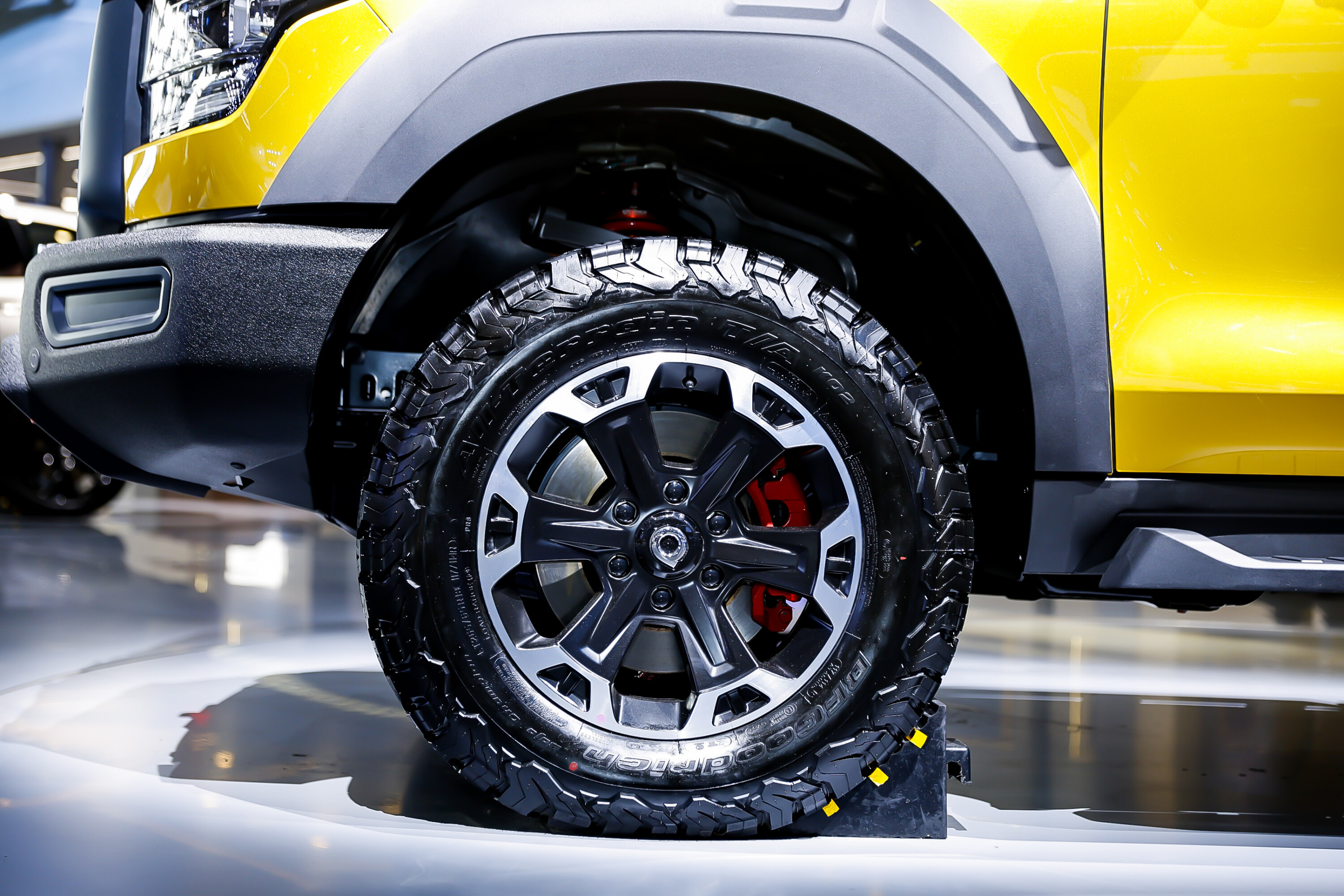
Our test version had also been treated to a few optional extras to complete the flagship look such as bull bar with subtly integrated winch, snorkel, and chunky sidesteps that double as rock racks.
2
We’re certain a version tailored for Australia would find a strong audience especially given the demand for both high-power utes as well as modified and toughened off-road rigs.
Unfortunately the official word at this stage is that the V6 turbo version won’t be coming to Australia. According to the company, as the various manufacturers look to reduce carbon emissions through engine downsizing, a big turbo petrol is not a good look or fit.
However, there is one option that might offer a happy medium.
2
Hi4-T 2.4T PHEV
GWM has become the first brand to introduce a hybrid ute with the Cannon Alpha Ultra arriving this month, but it’s already considering giving the Ford Ranger PHEV a rival with a 2.4-litre petrol plug in version on the cards.
Like the freshly arrived hybrid, the PHEV version the Alpha PHEV is larger than a Ford Ranger but smaller than an F-150, for example, but has a turbocharged 2.4-litre petrol four-cylinder under its big bonnet along with a small battery to feed two electric motors.
With the combustion and electric units working in unison, the 2.4 is a little laggy from a standing start but a short wait is followed by excellent acceleration.
2
Once rolling, the power is abundant and the Alpha has surprising reserves with very good torque characteristics.
Like the other Alpha variants, the steering is light but responsive and although the ride is overly firm and a little crashing over lumps and imperfections, the handling is reasonably good for one of the largest dual-cabs on the market.
Another advantage in addition to plug-in hybrid efficiency is the associated noise vibration and harshness (NVH) benefits. The cabin of the PHEV is unusually quiet for a ute and it’s unusual to spend time in a dual-cab without the clatter of a diesel engine.
On the contrary, the Alpha PHEV has a satisfying note when forced to work hard, and a smooth quietness when given an easier time.
2
Like the V6, we suspect the decent electric torque paired with tractable petrol power would provide the basis for a competent towing vehicle.
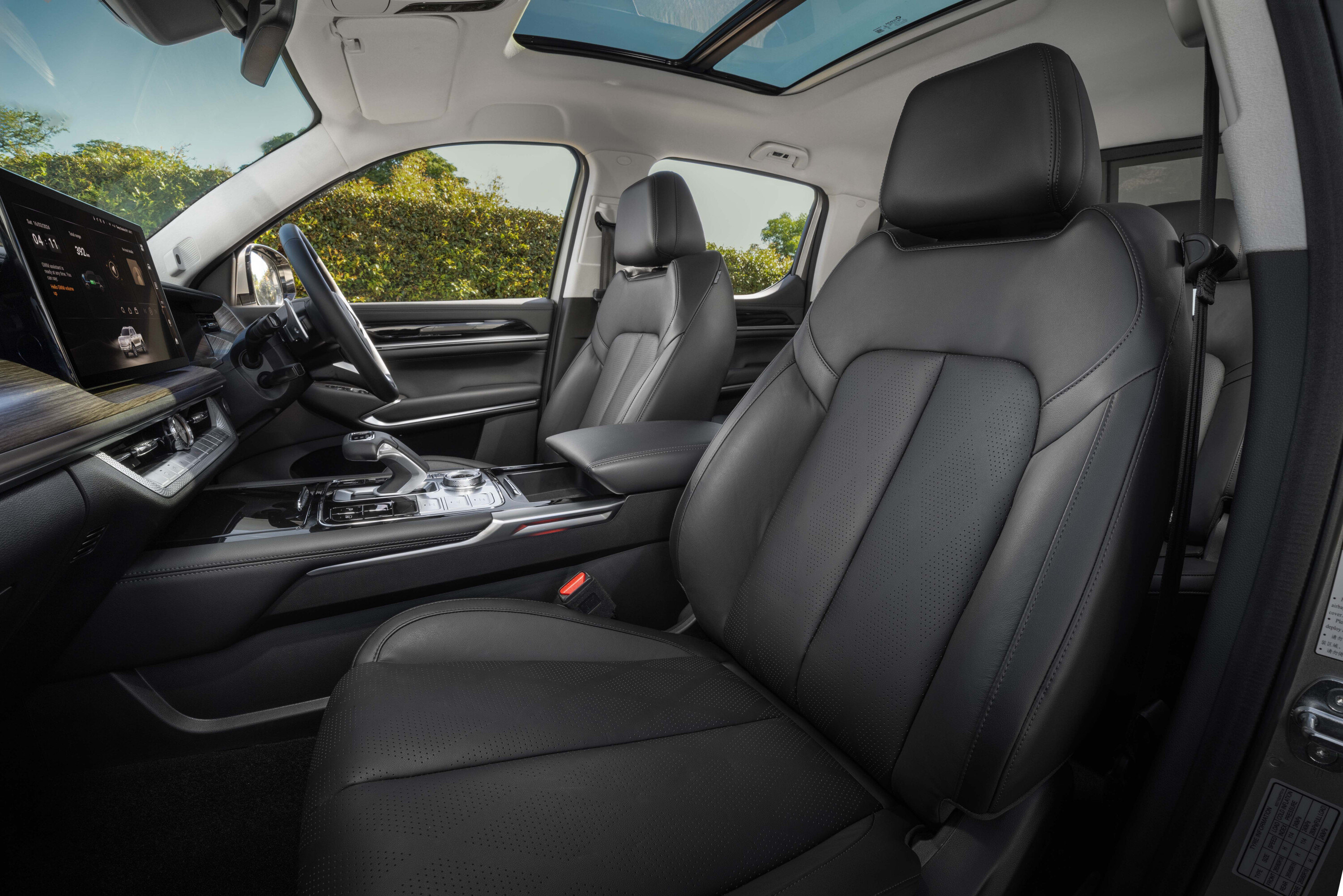
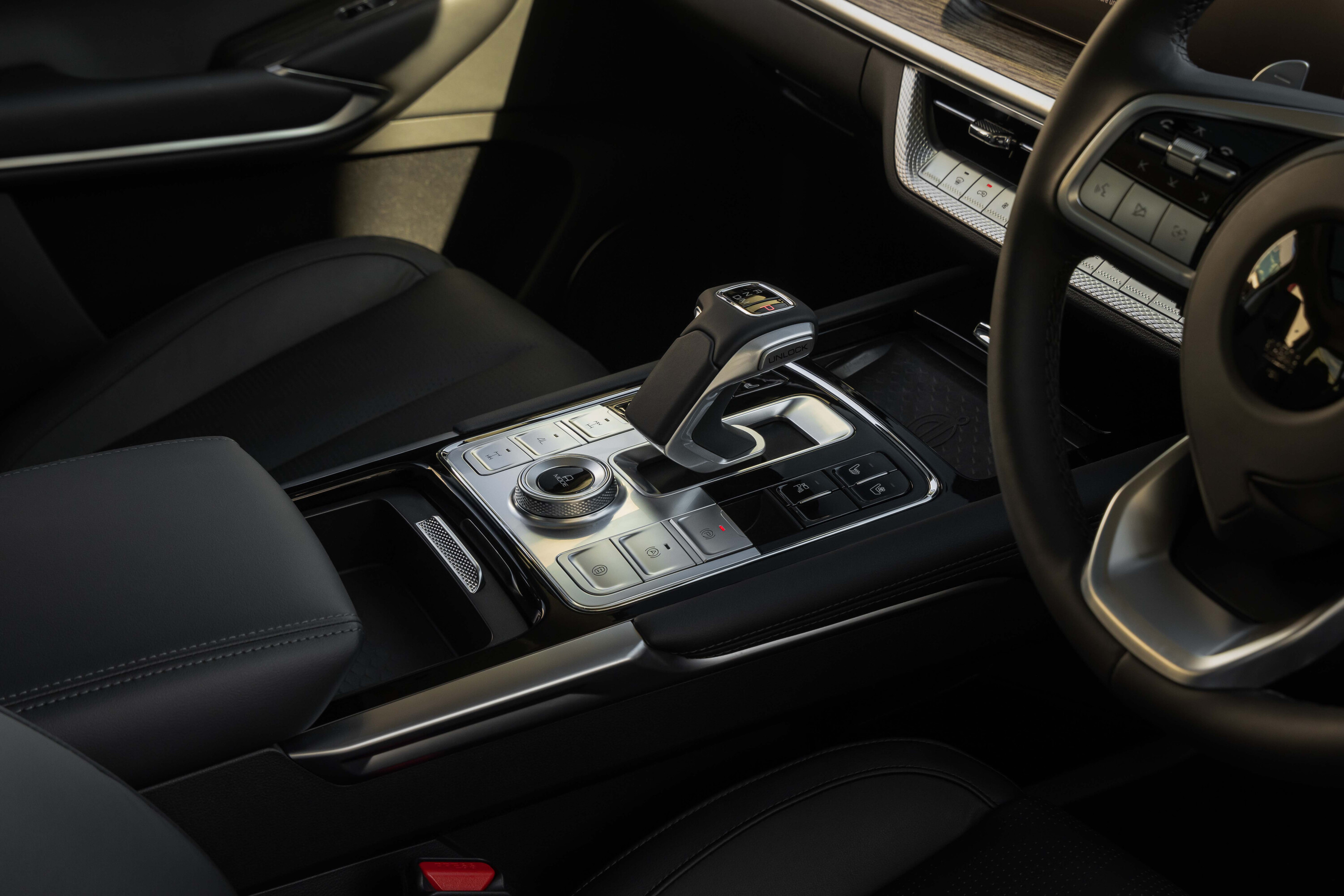
The interior also shares the same blend of decent materials and likeable design of the rest of the Alpha range along with good ergonomics.
We didn’t have enough time to get fully acquainted with the various information and entertainment features, but if the version that’s arrived in Australia is anything to go by, you get a lot for your money.
2
Features such as wireless device charging and heated seats for the second row passengers are almost unique in the market and will no doubt boost the model’s appeal in Australia if given the green light.
For now though, the 2.4 remains on the wish list for local showrooms if not confirmed at the time of writing.
That said, GWM has ambitious growth plans in Australia with a busy launch schedule planned over the next few years and, in addition to the confirmed future models, the Tank 700, Tank 400, Haval H9 and Ora Sport are all under consideration for introduction.
MORE
Everything GWM
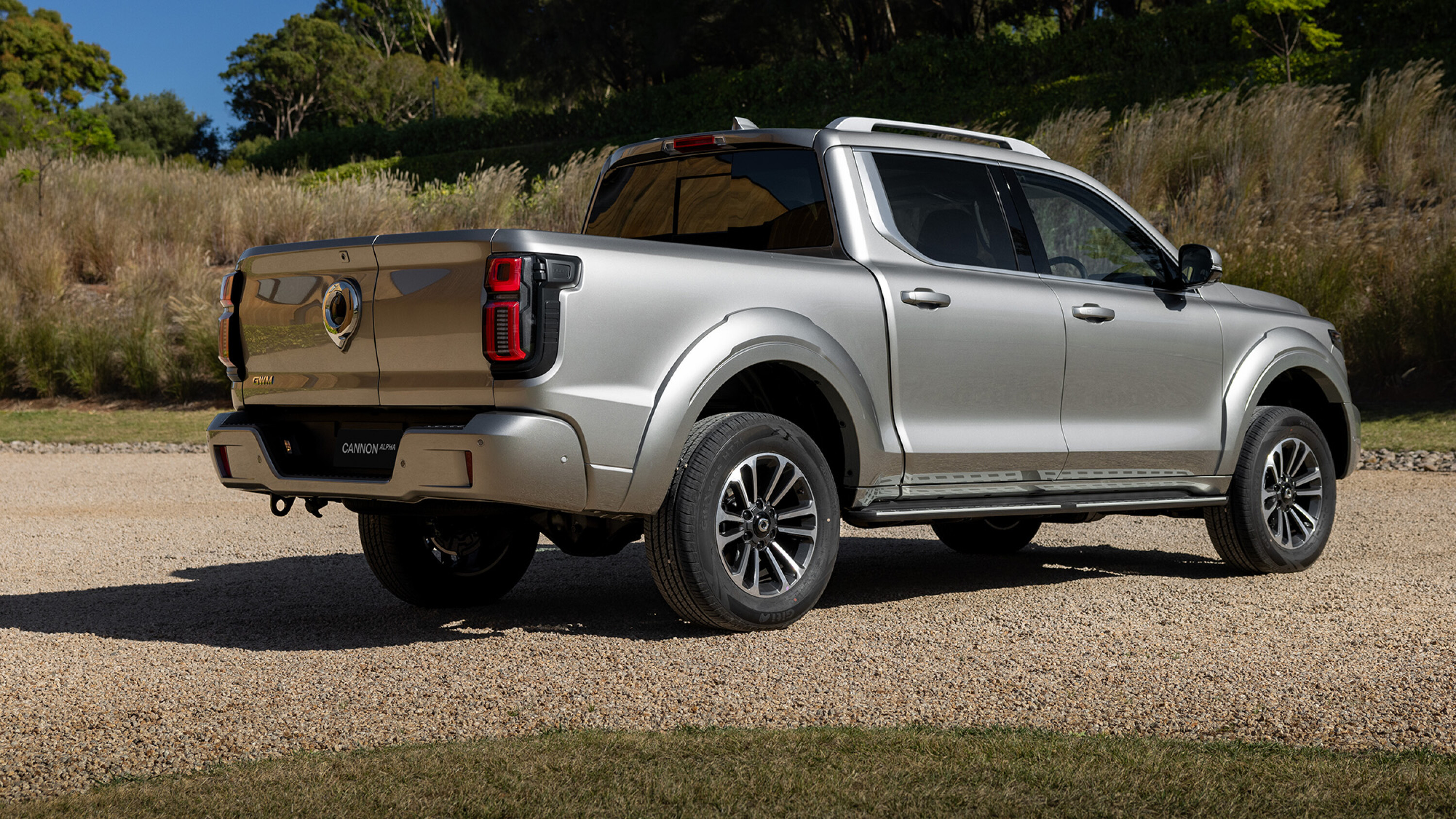
GWM (Great Wall Motors) has doubled down on the success of its Cannon ute by introducing a bigger version known as the Cannon Alpha.
More than just a spec-loaded Cannon, the Alpha is a physically bigger vehicle and the first hybrid ute to hit the Australian market – excluding the 48V HiLux, which even Toyota doesn’t call a hybrid.
The Cannon Alpha measures in at 5445mm long (35mm longer than Cannon Ute), 1991mm wide (57mm wider) and is 1924mm high (38mm taller). The wheelbase of 3350mm is longer than that of a Cannon Ute by 120mm.
With the popularity of full-size American pick-ups growing in Australia, the Cannon Alpha bridges the gap between the mid- and full-size utes. The best-selling ute in this class – the Ford Ranger – does well because of its large cabin, so any extra space will be appreciated by buyers who don’t want to go as big as a full-size truck.
The Cannon Alpha hybrid is powered by a turbocharged 2.0-litre petrol engine and an electric motor that is located within the transmission bell-housing with the torque converter. Combined, they deliver an output of 255kW and 648Nm. This is the same powertrain that was recently launched in the Tank 500 4×4 wagon and, as in the Tank, its backed by a nine-speed automatic transmission and full-time, dual-range four-wheel drive.
1
The base-model Cannon Alpha is motivated by a more conventional 2.4-litre turbo-diesel engine making 135kW and 480Nm, and it is backed by the same nine-speed automatic and four-wheel drive system. The Alpha’s off-road chops are bolstered by front and rear locking diffs.
While the hybrid petrol powertrain is definitely the better performer of the two and much smoother, any benefits to fuel economy are only found around town. In official ADR testing the hybrid is rated at 8.9 litres of petrol per 100km to the diesel’s 10.2 litres per 100km, while on the combined cycle the diesel betters the hybrid returning 8.9L/100km compared to 9.8L/100km.
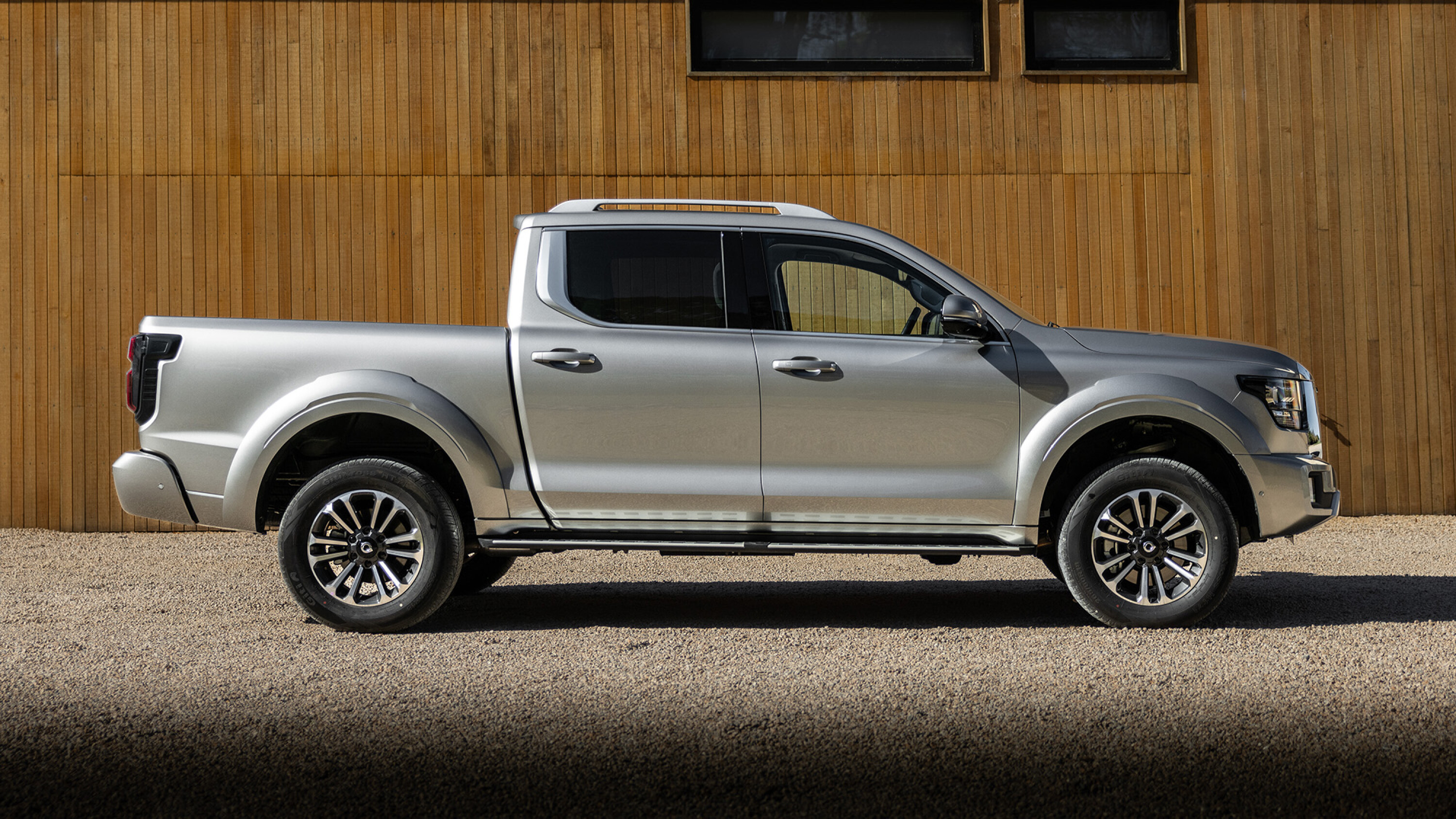
We didn’t get to test its off-road abilities as the drive was on-road only, but we were impressed with the Alpha from the time we stepped inside its spacious cabin. The extra room for driver and passengers is certainly appreciated, and it feels more like a Ranger, Amarok or new Triton in terms of space.
1
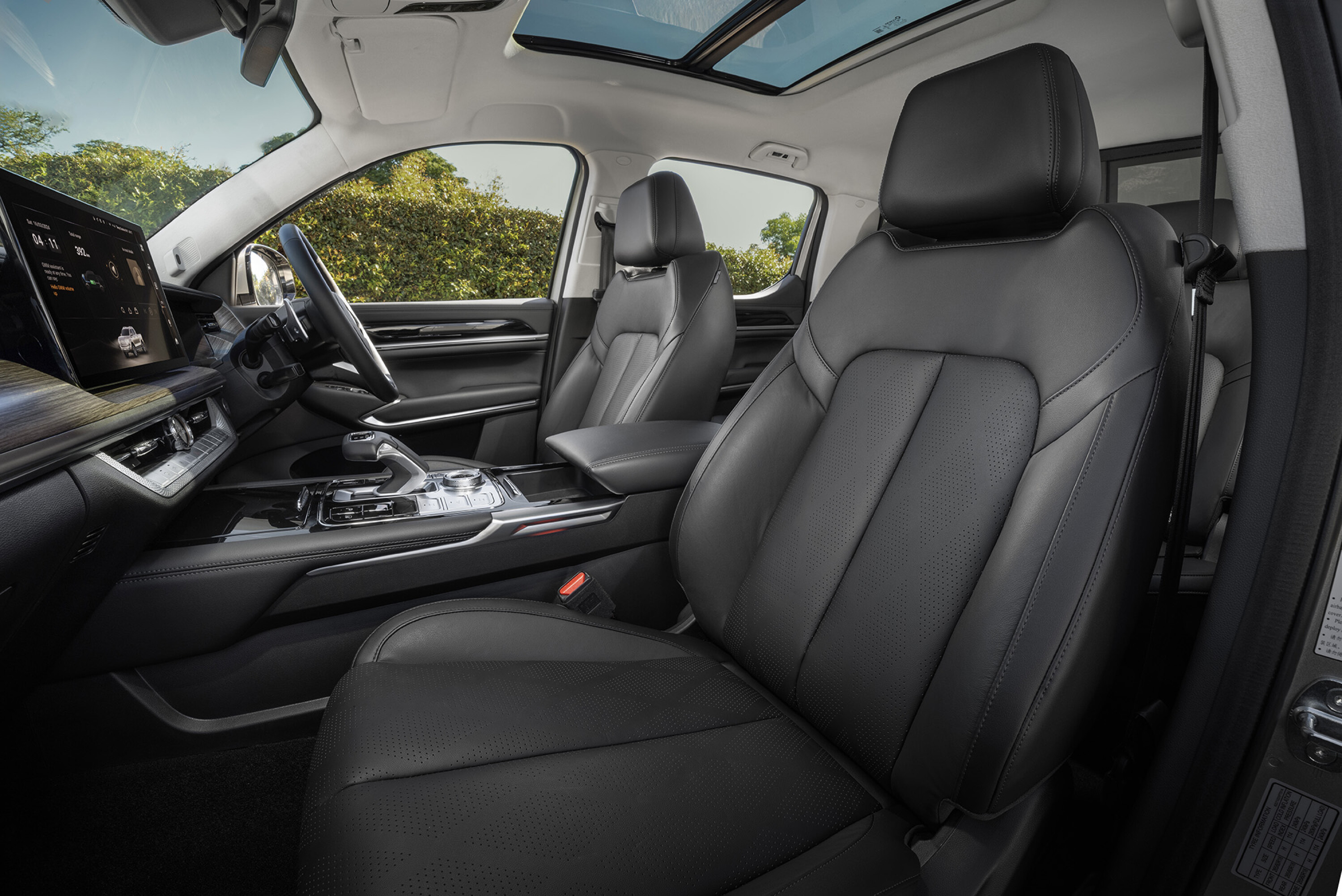
Being the top-spec model, the Alpha hybrid is well-appointed, with Nappa leather-covered seats that are ventilated, heated and have a massage function; a 14.6-inch infotainment screen; and a 10-speaker sound system. It carries over the high-end look and feel of the Tank 500, which it shares a lot of kit with.
Unsurprisingly with 648Nm under the pedal, the unladen hybrid ute displayed plenty of get up and go when you put your foot down. It gives a top-end diesel-like punch in the back without any of the rumble and clatter of a diesel engine, which adds to the high-end feel of the car. The Alpha hybrid has three drive modes – Normal, Eco and Sport – and we found Sport mode to be nicest, as it reduces the regenerative braking every time you back off the accelerator pedal. In Normal and Eco modes, the re-gen is quite aggressive and would take a bit of getting used to.
1
Standard safety kit includes AEB; TPMS; front, side centre and curtain airbags; EPS; ETC forward collision and lane departure warnings; and all the other ADAS features required to gain a five-star safety rating. This includes a driver monitor which we found to be more of a frustration than anything else, as it was constantly beeping and nagging the driver to pay more attention while driving; so much so that it could be a deal-breaker for some potential buyers.
Despite its plush, feature-laden cabin, the Alpha Ultra Hybrid still feels like a ute, with the suspension being a bit jittery on country roads and easily unsettled across broken terrain. We expect it would feel better with some load in the tray or full of passengers. A credit to GWM is that it has fitted 18-inch wheels with sensible tyres to the top-spec Ultra grade, while some manufacturers would be tempted to go to 20 inches or bigger. All three variants of the Cannon Alpha come with a TPMS.
2
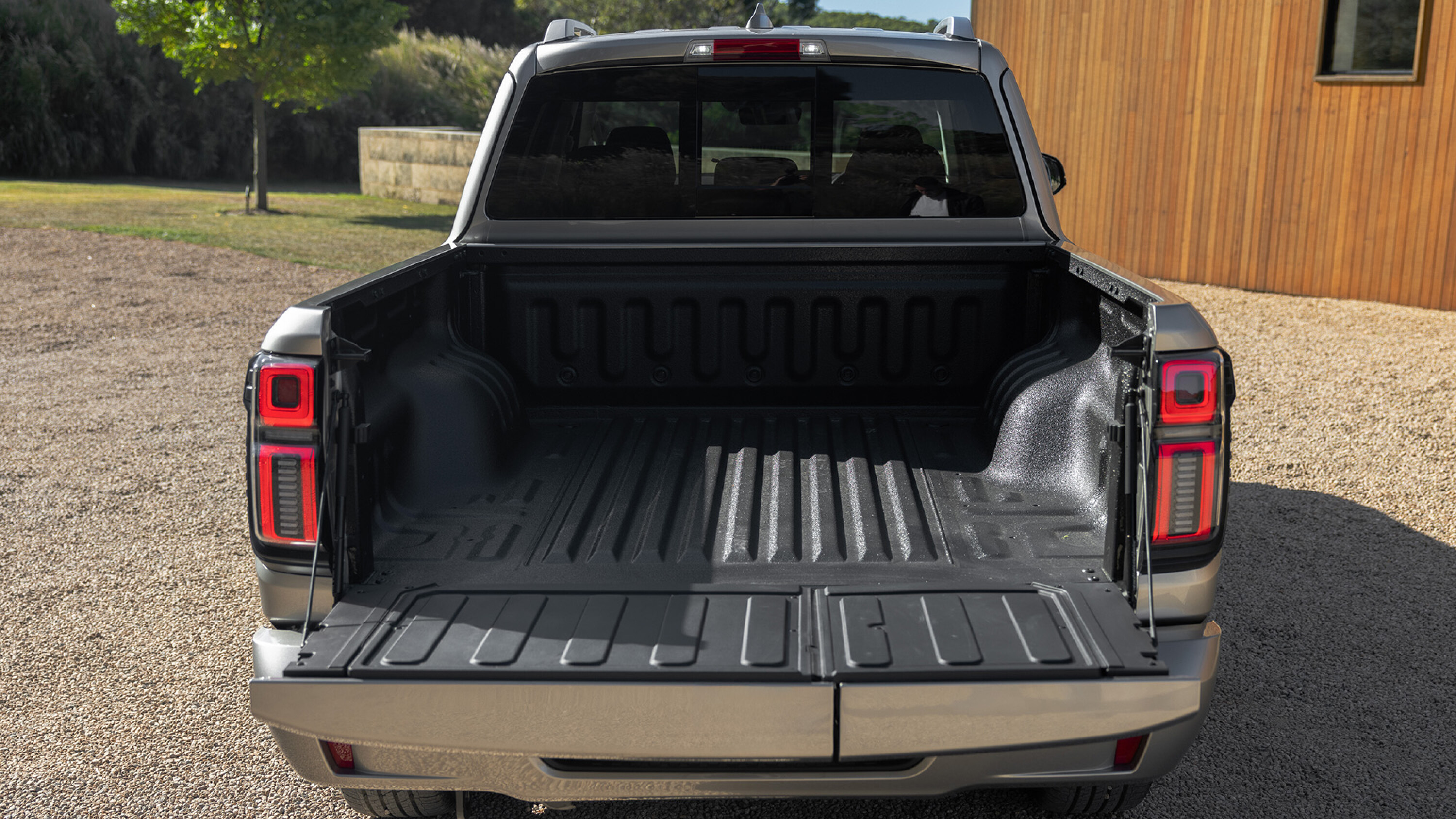
Speaking of loads, the Alpha hybrid has 735kg payload and is rated to pull a 3500kg trailer. For comparison, the non-hybrid diesel Alpha Ultra only adds another 35kg to the payload. The Ultra hybrid has an interesting tailgate on its load bed, similar to what RAM offers on its 1500 in the USA. As well as folding down to open in the regular way a ute bed does, it has a vertical split about a third of the way across that swings open. A novel idea, but I can’t imagine a use for it.
The Cannon Alpha Ultra hybrid delivers an interesting mix of features and luxury with the functionality of a larger than average mid-size ute. Being the first hybrid ute in its class will appeal to many, and the hybrid’s petrol engine is quiet and punchy but it’s no more efficient than a diesel once you get out of the open road.
We’d like to see the hybrid available in lower grade models at a more affordable price, where it might be more appealing to suburban tradesmen.
Specs
| GWM Cannon Alpha Ultra Hybrid | |
|---|---|
| Price | $64,990 drive away |
| Engine | Petrol-electric hybrid |
| Capacity | 1998cc |
| Max power | 225kW @ 5500-6000rpmu00a0 |
| Max torque | 648Nm @ 1700-4000rpm |
| Transmission | 9-speed automatic |
| 4×4 system | On-demand, dual-range 4×4 |
| Construction | 4-door ute on ladder-frame chassis |
| Front suspension | Double wishbone, coil IFS |
| Rear suspension | Live axle with leafs |
| Tyres | 265/60 R18 |
| Weight | 2575kg (kerb) |
| GVM | 3310kg |
| GCM | 6555kg |
| Towing capacity | 3500kg |
| Payload | 735kg |
| Seats | 5 |
| Fuel tank | 80L |
| ADR fuel consumption | 9.8L/100km combined |
| Approach angle | 28.5u00b0 |
| Rampover angle | 19u00b0 |
| Departure angle | 23u00b0 |
| Ground clearance | 224mm |
| Wading depth | 800mm |
MORE
Everything GWM
It’s here: Australian details for the all-new 2024 Toyota Prado have been confirmed ahead of its arrival in local showrooms later this year.
Toyota Australia has confirmed the latest LandCruiser Prado will be priced between $72,500 before on-road costs for the entry-level GX and $99,990 for the top-of-the-range Kakadu, with price rises between $9670 and $12,432 across the line-up.
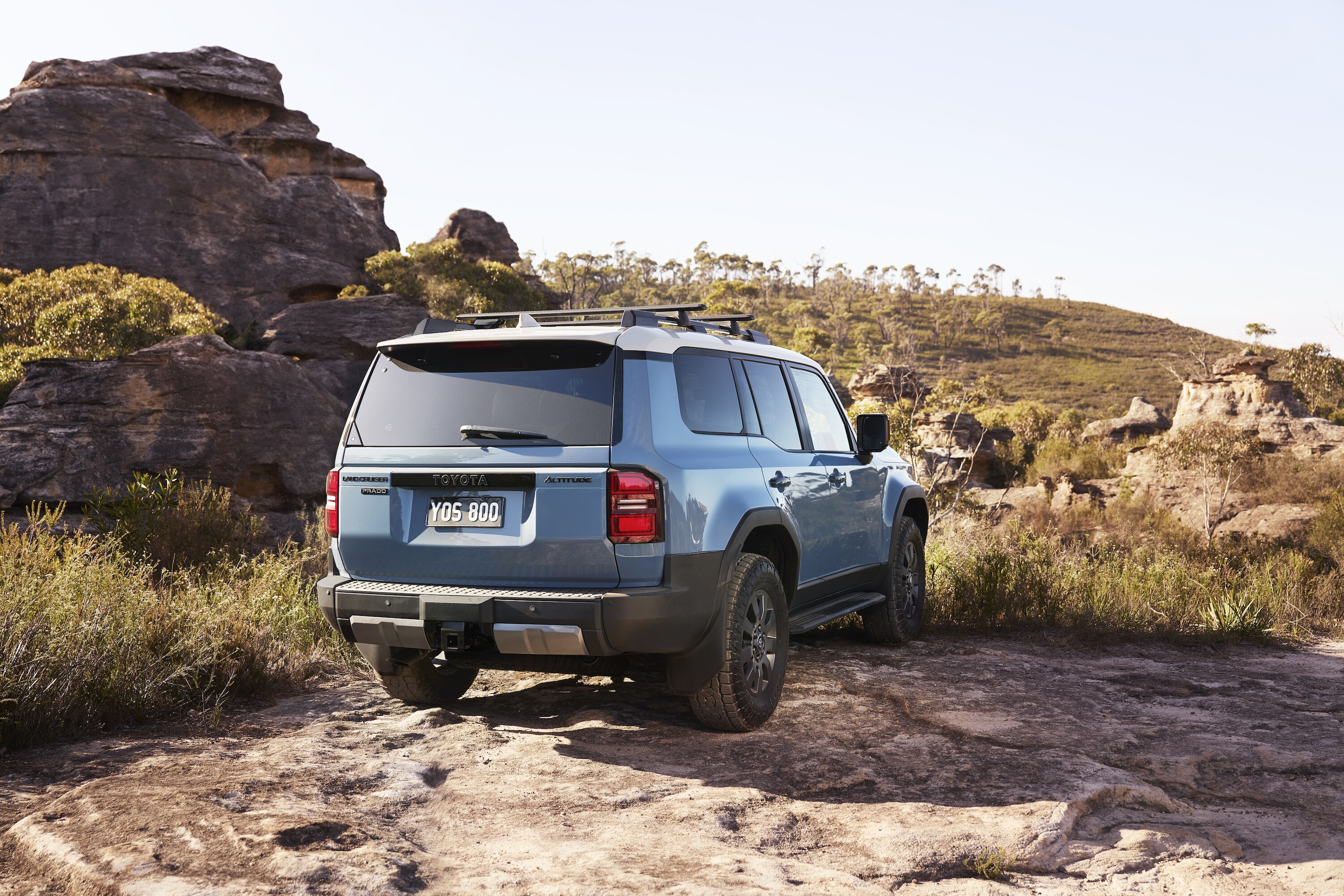
As detailed in February, the Prado will be offered in a new off-road-focused Altitude variant, which will slot between the familiar VX and Kakadu flagship grades.
1
It will also continue to be offered in GX and GXL variants, with five seats for the GX and seven seats for all other models.
All variants of the 2024 Toyota Prado continue to be powered by a 2.8-litre four-cylinder turbo-diesel producing 150kW and 500Nm.
However, it is now matched to an eight-speed torque-converter automatic transmission – up from six speeds – and the same fuel-saving 48-volt system available in the HiLux ute.
1
Under the skin, all models offer a full-time all-wheel-drive system with a lockable torque-sensing Torsen centre differential and low-range gearing. Electric power steering is also added.
Toyota Australia has officially announced the new Prado will offer a 3.5-tonne braked towing capacity, matching the latest Ford Everest and Isuzu MU-X. This is also level with its full-size LandCruiser 300 sibling.
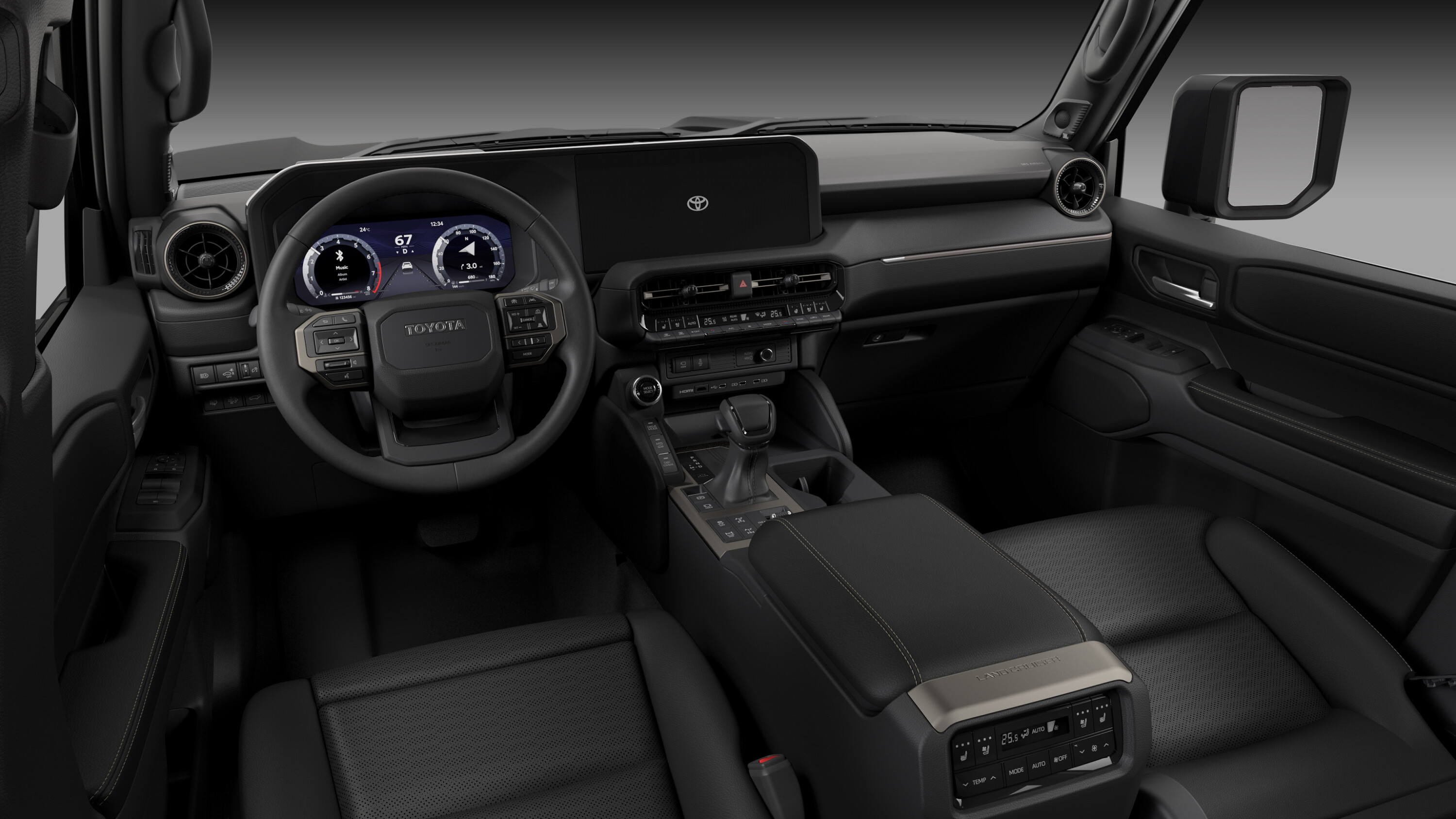
New features across the LandCruiser Prado line-up include a larger 12.3-inch infotainment system, a 7- or 12.3-inch instrument cluster display (up from 4.2-inch), wireless Apple CarPlay and Android Auto, Toyota Connected Services, a 360-degree camera system, front and rear parking sensors, USB-C ports, a 220-volt power outlet, and standard climate control.
1
A full specification list for each Prado variant is available below.
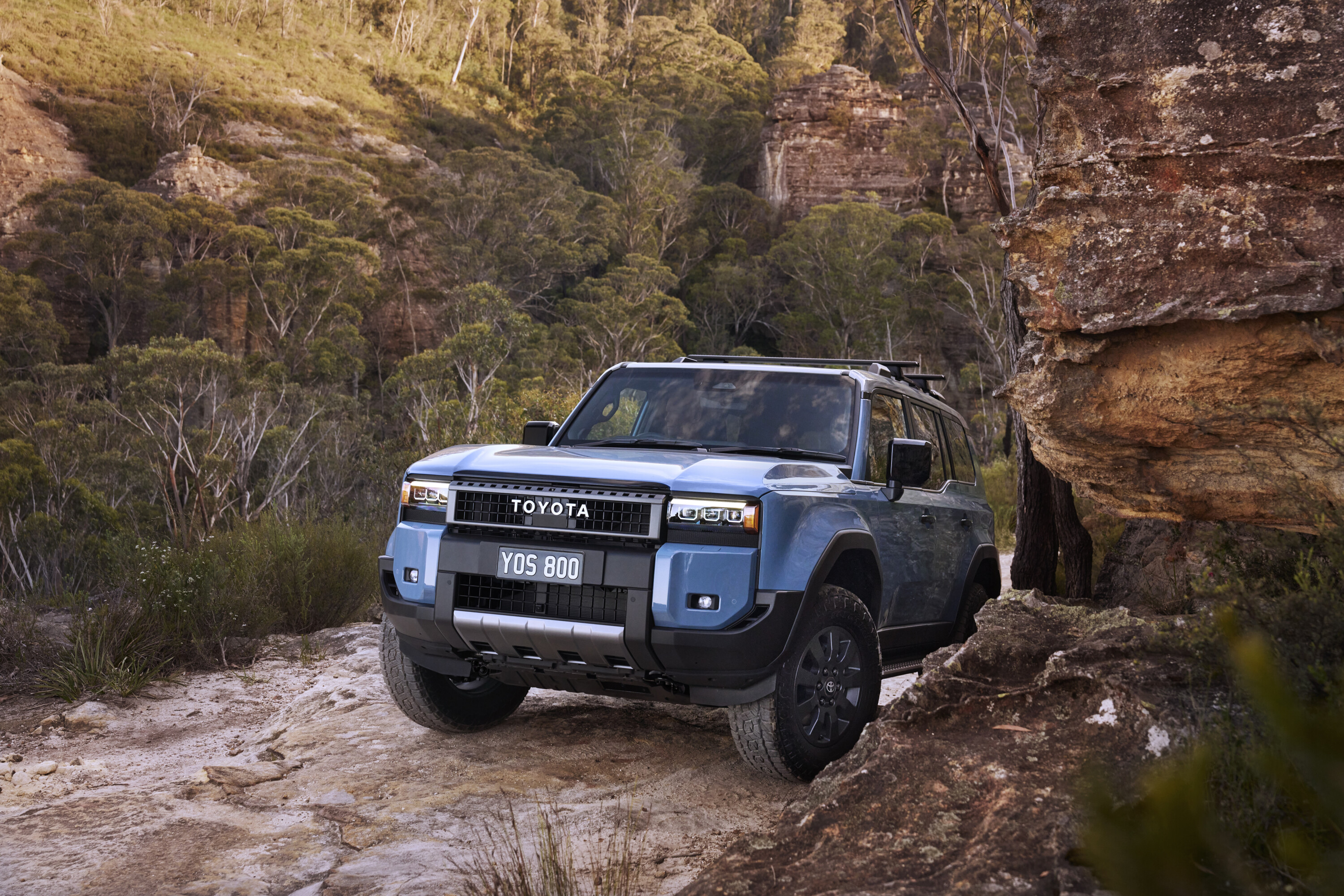
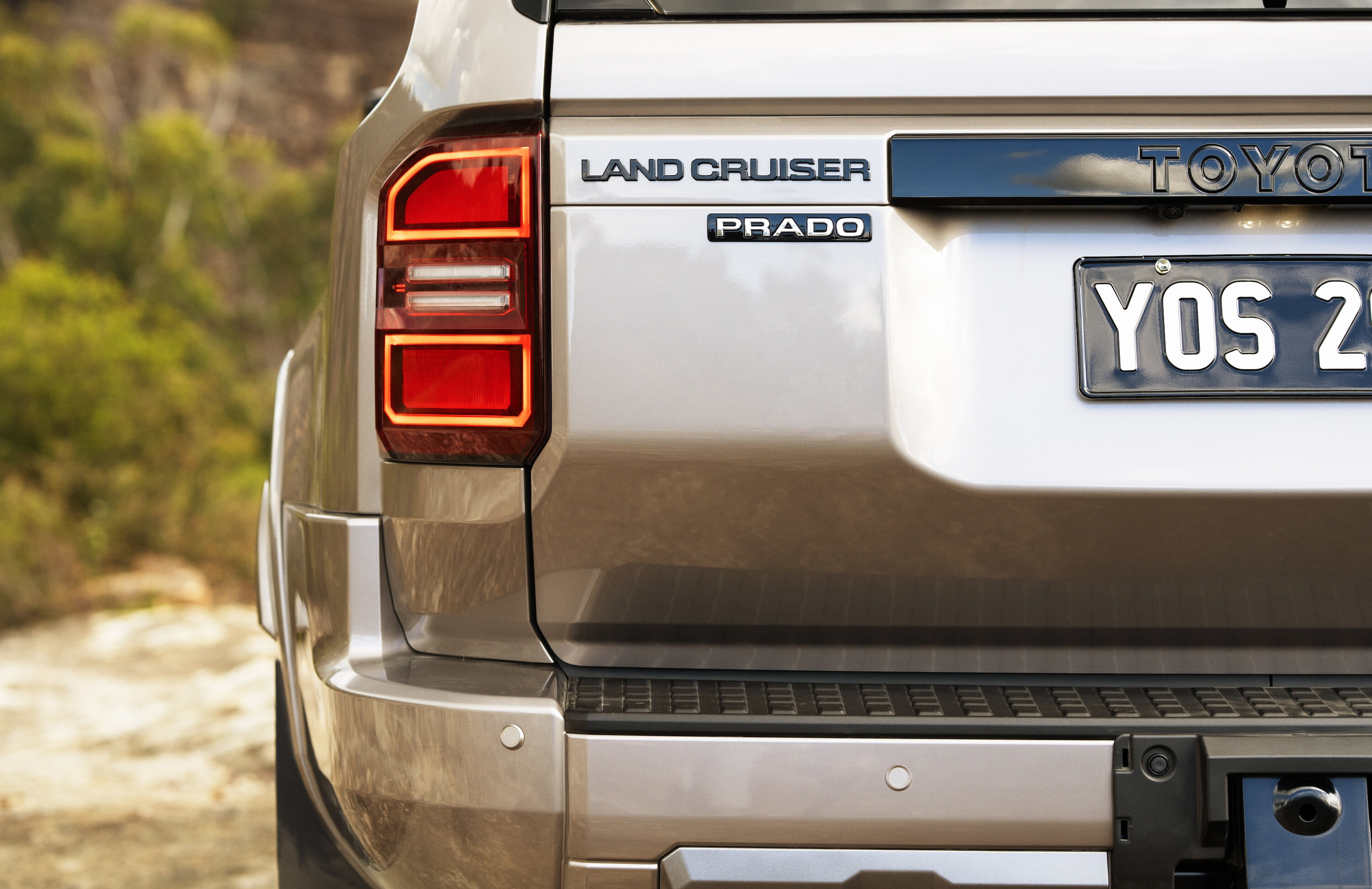
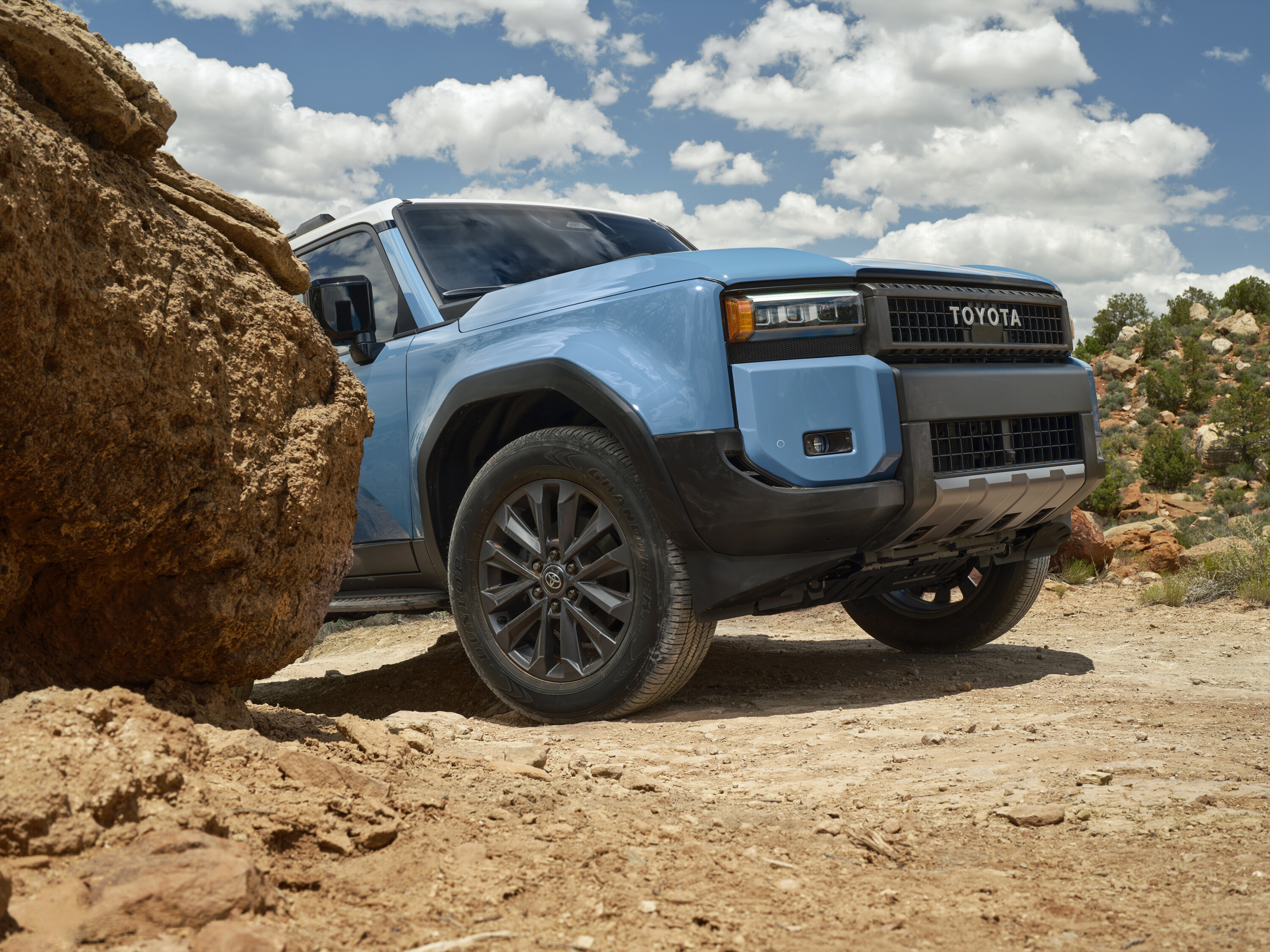
Up to eight exterior colours will be offered for the new Prado, including two Altitude-exclusive finishes: Tanami Taupe and Ningaloo Blue. Certain colours will be available with a two-tone white roof for the Altitude.
As before, the Prado has six-month/10,000-kilometre service intervals, though it’s now by 10 capped-price services – up to the first five years or 100,000 kilometres, whichever occurs first – with prices to be announced closer to launch.
The 2024 Toyota LandCruiser Prado is due in Australian showrooms later this year. Order books will open between July and September.
1
2024 Toyota LandCruiser Prado pricing
| Model | Pricing | Change |
|---|---|---|
| GX | $72,500 | up $9670 |
| GXL | $79,990 | up $10,640u00a0 |
| VX | $87,400 | up $10,552 |
| Altitude | $92,700 | new |
| Kakadu | $99,990 | up $12,432 |
| Prices exclude on-road costs.u00a0 | ||
1
2024 Toyota LandCruiser Prado features
| 2024 Toyota Prado GX features | |
|---|---|
| Five seats | Manual tailgate with glass hatch |
| 18-inch dark grey alloy wheels | Six-way manual driveru2019s seat |
| LED headlights and daytime running lamps | 7-inch semi-digital instrument cluster |
| Power-folding body-coloured side mirrors | Dual-zone climate control |
| Darkened front and rear bumpers | All-weather rubber floor mats |
| 220-volt rear power outlet | 12.3-inch widescreen infotainment system |
| Wireless Apple CarPlay and Android Auto | Built-in connected satellite navigation |
| DAB+ digital radio | 10-speaker audio system |
| Toyota Connected Services | Front and rear parking sensors |
| 360-degree camera system | Trailer sway control |
| Pre-wiring harness for tow hitch | Four USB-C ports |
2024 Toyota Prado GXL features
| In addition to GX | |
|---|---|
| Seven seats | Synthetic leather upholstery |
| Roof rails | Heated and ventilated front seats |
| Rear privacy glass | Eight-way power-adjustable driveru2019s seat |
| Silver front and rear bumper trim | Leather-accented steering wheel and gear shifter |
| Electric tailgate | Auto-dimming rear-view mirror |
| Rear climate control | Wireless phone charger |
| Six USB-C ports | |
2024 Toyota Prado VX features
| In addition to GXL | |
|---|---|
| 20-inch dark metallic alloy wheels | Leather upholstery |
| Body-coloured front and rear bumpers | Driveru2019s seat power lumbar support and memory |
| Over-fender moulding and rear guard trim | Four-way power-adjustable passenger seat |
| Bi-LED headlamps with dynamic auto-levelling | Power-adjustable driveru2019s seat |
| Adaptive high-beam | Carpet floor mats |
| Refrigerated console box | Tyre pressure monitoring |
| 12.3-inch digital instrument cluster | 14-speaker JBL audio system |
| Adaptive variable suspension | Five selectable drive modesu00a0 |
| Multi-terrain select | Multi-terrain monitor |
2024 Toyota Prado Altitude features
| In addition to VX | |
|---|---|
| 18-inch matte grey alloy wheels | Moon roof |
| Toyo Open Country all-terrain tyres | Optional two-tone colours |
| Rear locking differential | Digital rear-view mirror |
| Stabliser disconnect mechanism (replaces adaptive variable suspension) | Heated steering wheel |
| Black door handles and tailgate garnish | Head-up display |
| Black over-fender mouldingu00a0 | Five seats (down from seven) |
2024 Toyota Prado Kakadu features
| In addition to VX | |
|---|---|
| Panoramic moon roof | Adjustable driveru2019s seat thigh support |
| Illuminated side steps | Digital rear-view mirror |
| Heated and ventilated rear seats | Head-up display |
| Heated steering wheel | Rear torque-sensing limited-slip differential |
MORE
Everything Toyota
Toyota has revealed the all-new 2024 LandCruiser Prado 250 Series. Let’s investigate what’s changed from its predecessor.
JUMP AHEAD
The new Prado arrives 14 years after the popular 4X4 SUV’s last generational change, so logic goes it must be in for some big changes.
For those who own a current ‘150 series’ Prado, or are considering buying one, is it worth holding off your purchase until the new model lands in Australia in mid-2024? Let’s take a look at the key changes that the 2024 LandCruiser Prado will bring.
Get up to speed on the new Prado
The stories below will give you a guide to everything we learned about the new Prado when it was unveiled. All fresh stories published since then will be found on our Toyota Prado model page here.
2024 Toyota Prado coverage
- 2024 TOYOTA PRADO REVEALED
- Spec battle: New Prado v LandCruiser 300 Series
- Spec battle: New Prado v ‘old’ Prado
- Spec battle: New Prado v new Lexus GX
- Spec battle: New Prado v Fortuner
- Spec battle: New Prado v Ford Everest
- 2024 Toyota Prado: Everything we know
- What is the towing capacity of the new Prado?
- New Prado: What YOU think so far!
- BONUS: New 70 Series facelift revealed
- A 2025 Prado ute? Yes please!
- ALL PRADO NEWS & REVIEWS
- 2024 TOYOTA PRADO REVEALED
- Spec battle: New Prado v LandCruiser 300 Series
- Spec battle: New Prado v ‘old’ Prado
- Spec battle: New Prado v new Lexus GX
- Spec battle: New Prado v Fortuner
- Spec battle: New Prado v Ford Everest
- 2024 Toyota Prado: Everything we know
- What is the towing capacity of the new Prado?
- New Prado: What YOU think so far!
- BONUS: New 70 Series facelift revealed
- A 2025 Prado ute? Yes please!
- ALL PRADO NEWS & REVIEWS
The current version of that Prado has rationalised its range down, deleting manual transmission grades and petrol-engined offerings.
The line-up, however, remains the same with four equipment grades: GX, GXL, VX, and the range-topping Kakadu. All are powered by a 2.8-litre turbo-diesel four-cylinder.
3
Dimensions
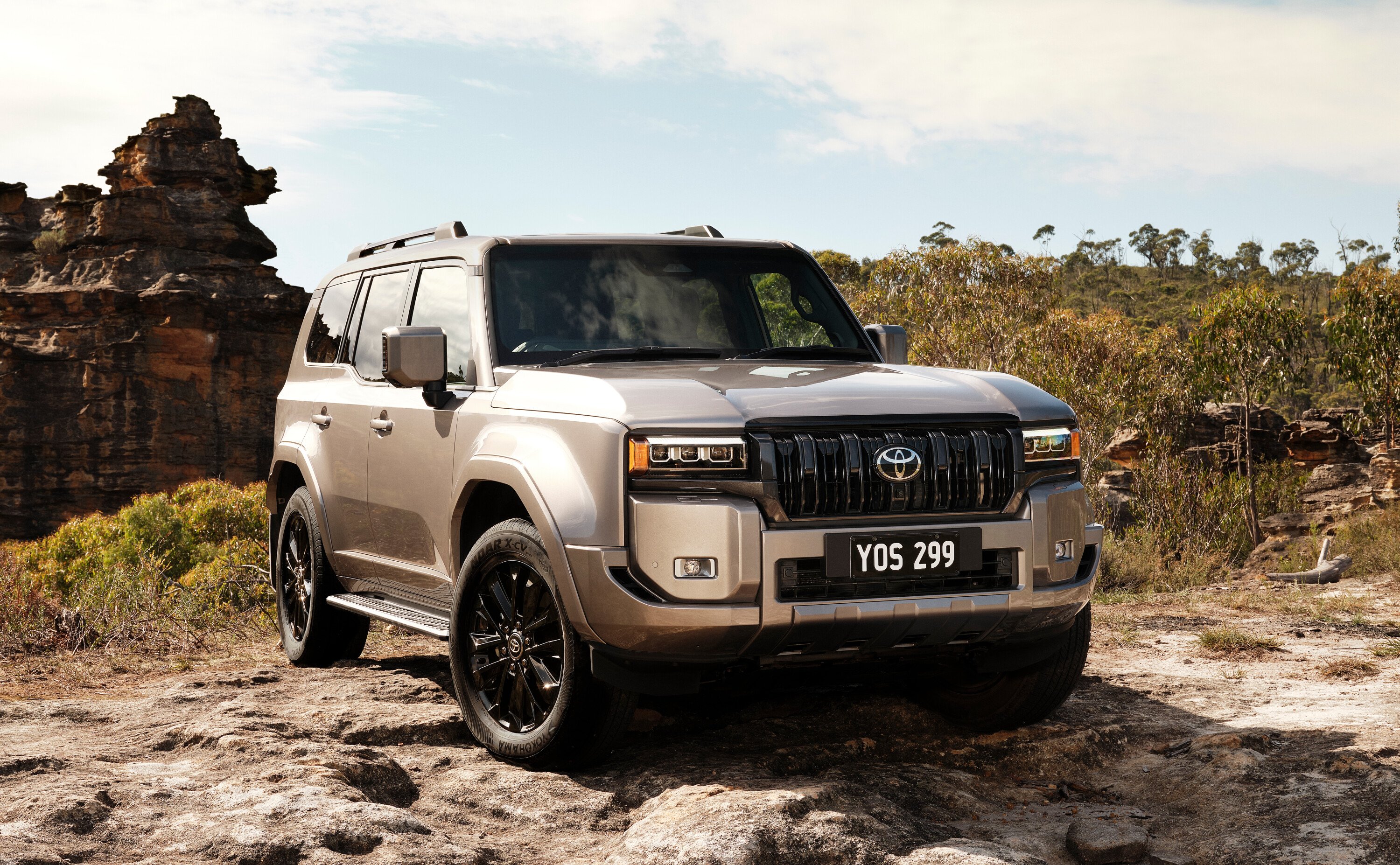
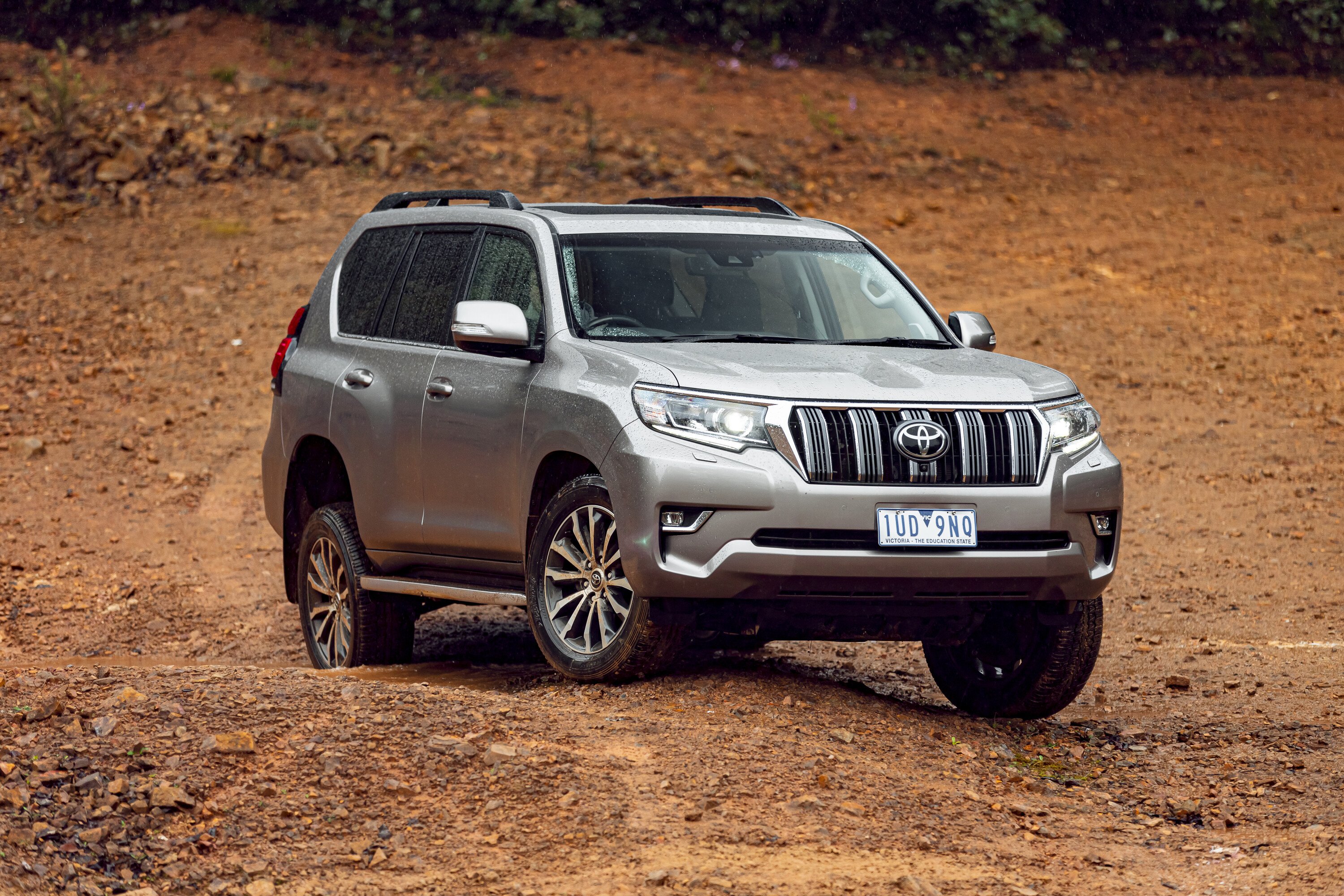
In its new form, the ‘250’ Prado has marginally increased in size from its predecessor. Sharing the same TNGA-F platform as the 300 Series LandCruiser, it adopts that off-roader’s 2850mm wheelbase – 60mm up on the 150 Series.
The new Prado (when compared to the flat tailgate option) is 100mm longer than the old car, and 95mm wider though its roof is 20mm closer to the ground.
The size changes are small – just like the differences between the 200 and 300 Series – with the new Prado getting a slightly shallower departure angle of 22 degrees, and one extra millimetre (according to USA specs) of ground clearance.
| Dimension | Landcruiser Prado 250 Series | LandCruiser Prado 150 Series |
|---|---|---|
| Length | 4925mm | 4995/4825mm (flat tailgate) |
| Width | 1980mm | 1885mm |
| Height | 1870mm | 1850mm |
| Wheelbase | 2850mm | 2790mm |
| Ground clearance | 221mm | 220mm |
| Approach/breakover/departure angles | 31/22u00ba | 30.4/23.5u00ba |
Get up to speed on the new Prado
The stories below will give you a guide to everything we learned about the new Prado when it was unveiled. All fresh stories published since then will be found on our Toyota Prado model page here.
2024 Toyota Prado coverage
- 2024 TOYOTA PRADO REVEALED
- Spec battle: New Prado v LandCruiser 300 Series
- Spec battle: New Prado v Old Prado
- Spec battle: New Prado v new Ford Everest
- 2024 Toyota Prado: Everything we know
- What is the towing capacity of the new Prado?
- New Prado: What YOU think so far!
- BONUS: New 70 Series facelift revealed
- A 2025 Prado ute? Yes please!
- ALL PRADO NEWS & REVIEWS
1
- 2024 TOYOTA PRADO REVEALED
- Spec battle: New Prado v LandCruiser 300 Series
- Spec battle: New Prado v Old Prado
- Spec battle: New Prado v new Ford Everest
- 2024 Toyota Prado: Everything we know
- What is the towing capacity of the new Prado?
- New Prado: What YOU think so far!
- BONUS: New 70 Series facelift revealed
- A 2025 Prado ute? Yes please!
- ALL PRADO NEWS & REVIEWS
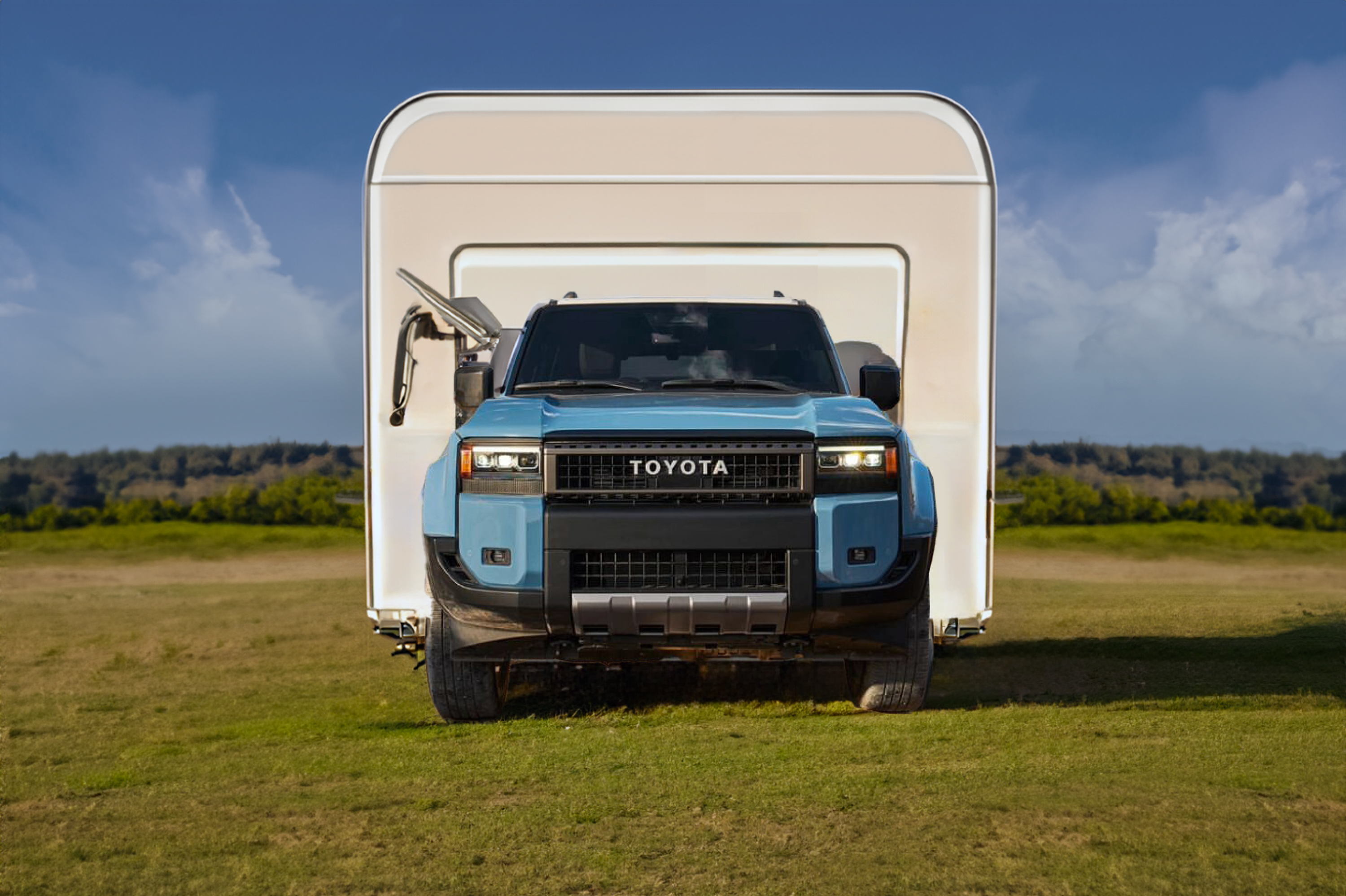
Toyota promises “dramatically improved off-road performance”, due to a 50 per cent increase in frame rigidity, projected to enhance the Prado’s overall stiffness by 30 per cent compared to the 150 series. These improvements bode well for ride comfort and handling.
Additionally, the Prado comes equipped with a new ‘stabiliser disconnect mechanism’ (SDM), a first for Toyota. It’s a switch-operated feature that allows drivers to disable the front sway bar, offering optimal roll resistance on the road, and increased axle articulation off-road.
1
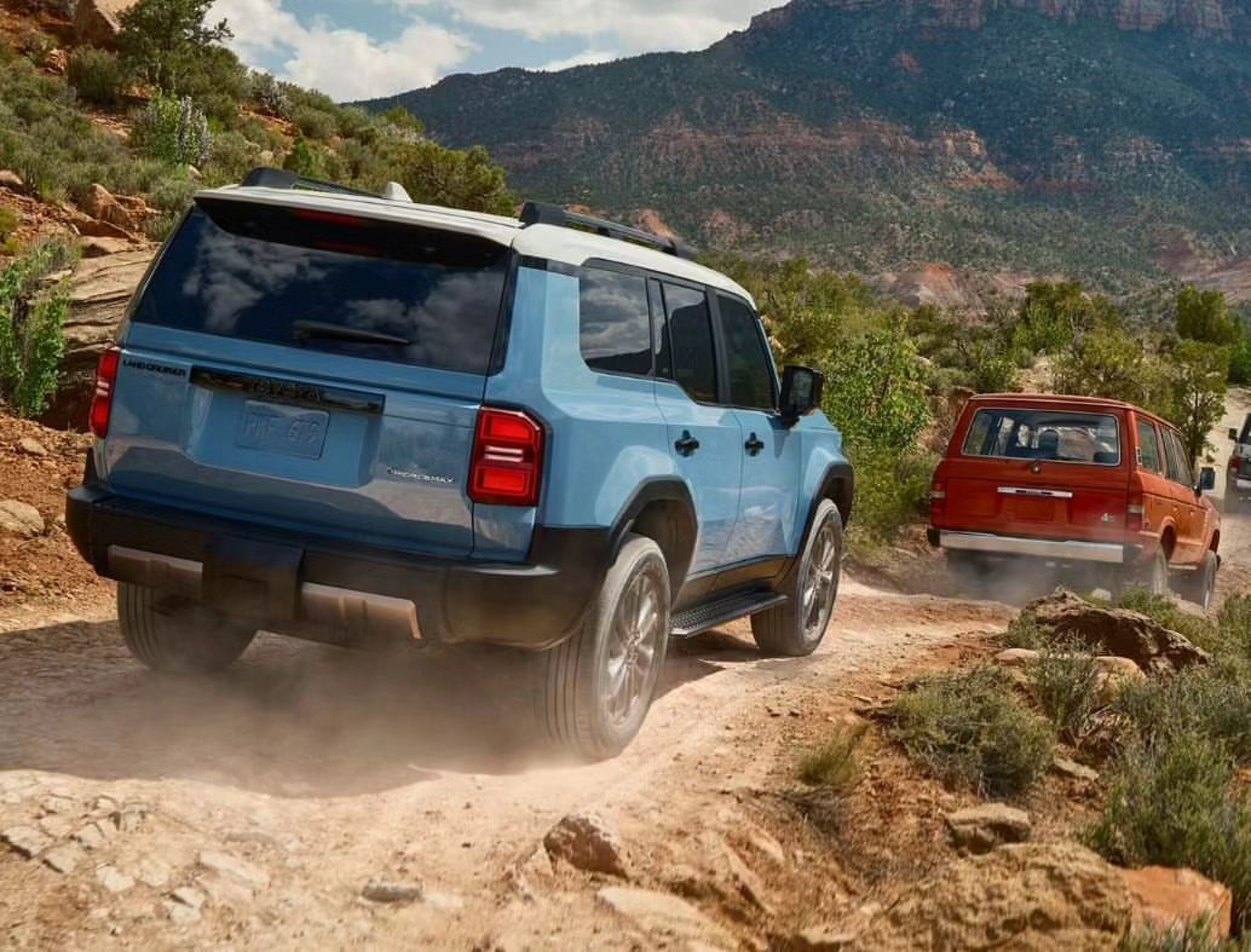
In Europe, the new Prado will have a 2.8-litre turbo diesel engine that can tow “up to 3500kg”.
The Prado for our market will use the same drivetrain, with a 48-volt mild-hybrid system.
In 2018, the 150 Series Prado had its braked towing capacity increased from from 2500kg to 3000kg for all automatic models. This enhancement brought it in line with the towing capacity of major competitors at the time.
With major players today such as the Ford Everest holding a 3500kg rating, the Prado will need to come close in order to remain competitive for buyers who require the capability.
1
Engines
The new Prado will feature the familiar ‘1GD’ 2.8-litre turbo diesel engine, configured this time around as a 48-volt mild-hybrid. The same diesel engine will also be found under the hood of future Toyota HiLux variants.
Paired with an eight-speed automatic transmission (previously six) it will produce 150kW of power and 500Nm of torque and promises improved fuel economy and quieter start-up noise.
| Specifications | Landcruiser Prado 250 Series | LandCruiser Prado 150 Series |
|---|---|---|
| Engine | 2.8L turbo-diesel four-cyl mild-hybrid | 2.8L turbo-diesel four-cyl |
| Transmission | 8spd automatic | 6spd automatic |
| Power | 150kW | 150kW |
| Torque | 500Nm | 500Nm |
| Claimed fuel use | TBC | 7.9L/100km |
| Kerb Weight | TBC | 2350kg |
| Payload | TBC | 640kg |
| Towing Capacity (braked) | 3500kg* | 3000kg |
*based on European specifications
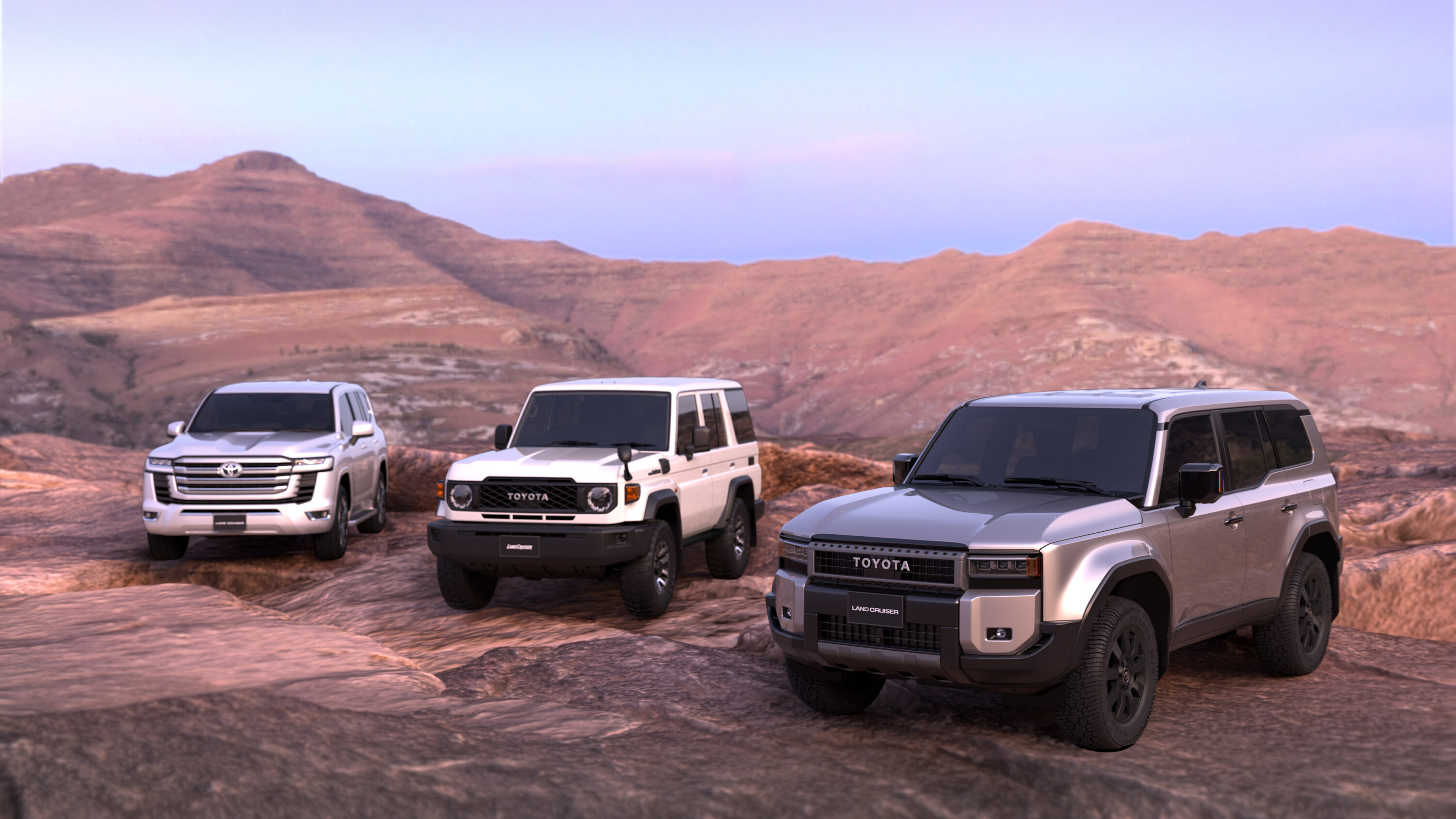
1
Interior design
An awful lot of work has gone into bringing the Prado’s cabin into the modern day.
Following in the footsteps of its platform and silhouette twin, the Lexus GX, the Prado’s cabin and dash are a combination of sleek and rugged.
Two 12.3-inch multimedia screens have been adopted for the instrument cluster and the multimedia screen has grown from its outdated 9.0-inch size.
2
2024 Toyota Prado pricing
Toyota has confirmed price rises of up to $12,500 from the outgoing model.
The new LandCruiser Prado will range in price from $72,500 (excluding on-road costs) for the entry-level GX model to $99,990 for the top-tier Kakadu model. The price increases across the lineup vary between $9,670 and $12,432.
| 2024 Toyota LandCruiser Prado pricing | ||
| GX | $72,500 | up $9670 |
| GXL | $79,990 | up $10,640 |
| VX | $87,400 | up $10,552 |
| Altitude | $92,700 | new |
| Kakadu | $99,990 | up $12,432 |
| Prices exclude on-road costs. | ||
⬆️ Back to top
MORE
Everything Toyota
Get up to speed on the new Prado
The stories below will give you a guide to everything we learned about the new Prado when it was unveiled. All fresh stories published since then will be found on our Toyota Prado model page here.
2024 Toyota Prado coverage
- 2024 TOYOTA PRADO REVEALED
- Spec battle: New Prado v LandCruiser 300 Series
- Spec battle: New Prado v ‘old’ Prado
- Spec battle: New Prado v new Lexus GX
- Spec battle: New Prado v Fortuner
- Spec battle: New Prado v Ford Everest
- 2024 Toyota Prado: Everything we know
- What is the towing capacity of the new Prado?
- New Prado: What YOU think so far!
- BONUS: New 70 Series facelift revealed
- A 2025 Prado ute? Yes please!
- ALL PRADO NEWS & REVIEWS
- 2024 TOYOTA PRADO REVEALED
- Spec battle: New Prado v LandCruiser 300 Series
- Spec battle: New Prado v ‘old’ Prado
- Spec battle: New Prado v new Lexus GX
- Spec battle: New Prado v Fortuner
- Spec battle: New Prado v Ford Everest
- 2024 Toyota Prado: Everything we know
- What is the towing capacity of the new Prado?
- New Prado: What YOU think so far!
- BONUS: New 70 Series facelift revealed
- A 2025 Prado ute? Yes please!
- ALL PRADO NEWS & REVIEWS
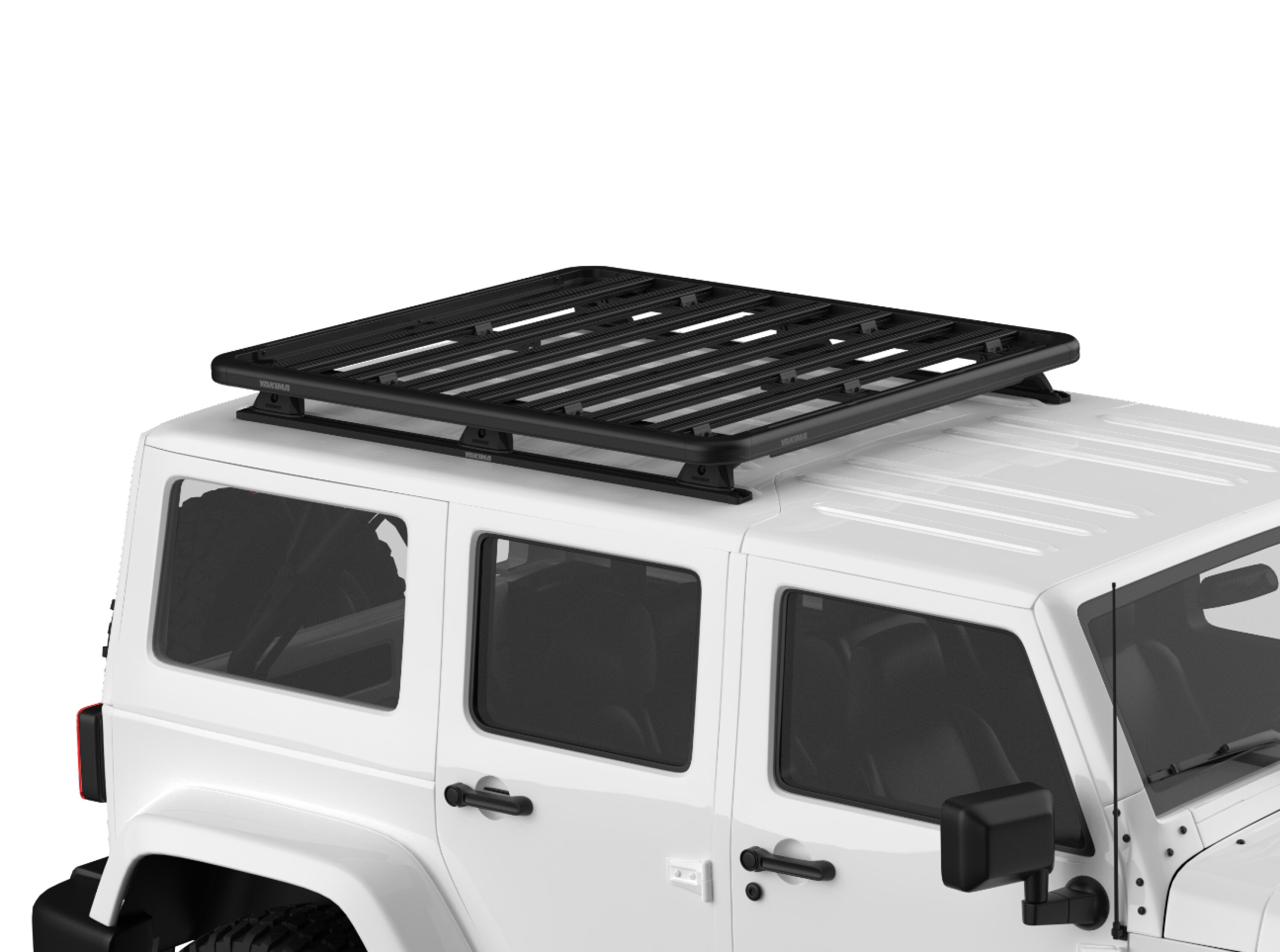
Yakima has announced the release of the RibCage, a high-capacity track system for four-door JK and JL Jeep Wrangler hardtops models that greatly increases off-road carrying capacities.
The heavy-duty rooftop track system provides several mounting options, while the rugged internal support structure ensures the roof is safe for long-term use carrying heavy loads such as rooftop tents, recovery gear and a wide array of other off-road accessories. The internal supports attach to the roll cage, safeguarding lateral stability for maximum strength which means RibCage users can more safely manage heavy loads without fear of cracking the roof.
4
There are two RibCage models: the JL 4DR, which is compatible with the 2018-current Jeep Wrangler JL 4dr Hardtop; and the RibCage JK 4DR, which is compatible with the 2007-2017 Jeep Wrangler JK 4dr Hardtop.
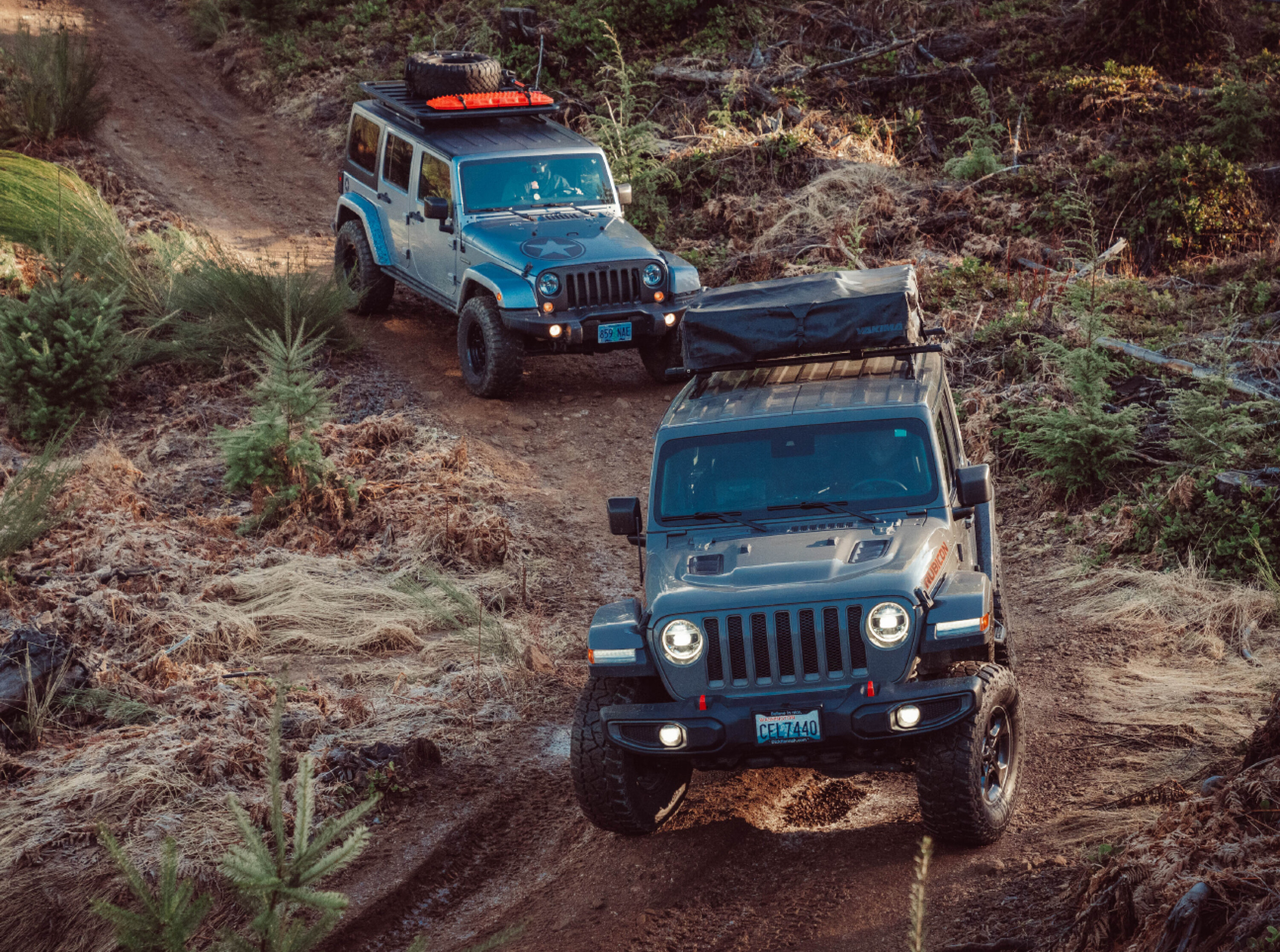
Both RibCage models are permanent hardtop installations and are identical except for the specific components that mount to the Wrangler’s internal supports. RibCage is compatible with traditional Yakima legs and crossbars, or the Yakima LockNLoad platform rack systems.
The system is off-road rated up to 150kg for dynamic loads and up to 374kg for static loads. The RibCage’s parts do not interfere with passenger or cargo space, and users can remove the ‘freedom panels’ with the system installed. The hardtop is still easily removable by unbolting the internal supports.
1
“We listened to Jeep owners who were seeking a product that’s made specifically for demanding off-road use,” said Todd Scott, category manager at Yakima. “RibCage raises the bar of capacity way above the competition, and our rigorous in-lab and real-world testing methods back that up. It’s an ideal pairing of low-profile utilitarian track and robust internal supports that we know Jeep owners have been looking for.”
The RibCage weighs 5.6kg, and the 122cm HD track sections allow for two or three crossbar setups or the Yakima LockNLoad platform, each of which are sold separately of the RibCage system.
Pricing
The RibCage JL and JK retails for $879 (AU) or $999 (NZ) and are available through Yakima retailers. Complete the setup with the SkyRise rooftop tent, RoadShower portable shower, MajorShady 270 awning, or other Yakima accessories.
Points ignition is the automotive equivalent of Latin – so outdated nobody out there can understand them, and there’s no bloody reason to have them around anyway.
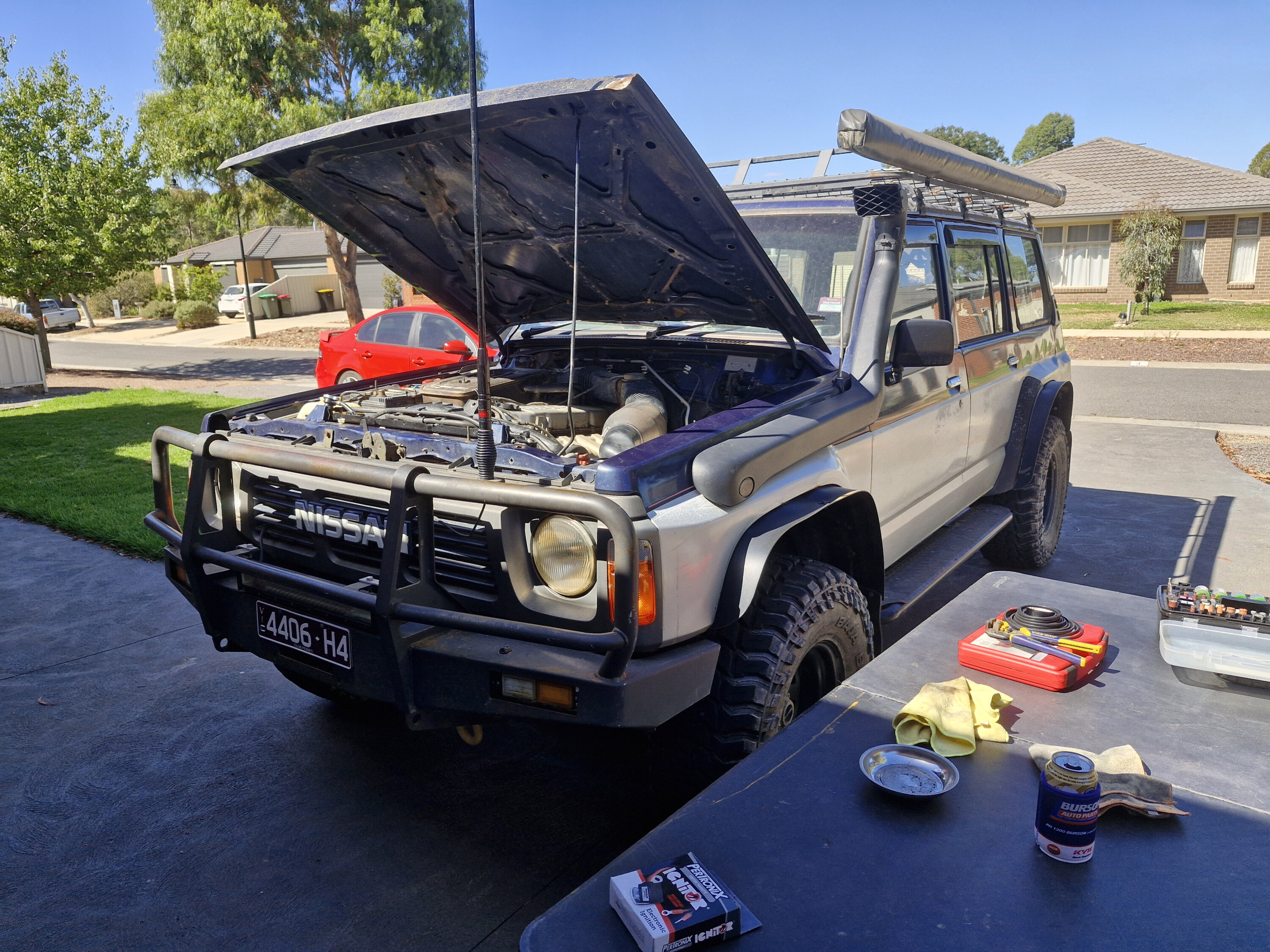
Unfortunately, Nissan didn’t get that memo with the GQ Patrol. My ’88 wagon and its carby TB42 was slung with points from the factory, and it has been the only major downfall of this rig. If I had a dollar for the amount of times I’ve jumped on the UHF mid-track to ask for a ‘spark break’ because the points had stalled out on me, I’d be able to afford a new set of points.
5
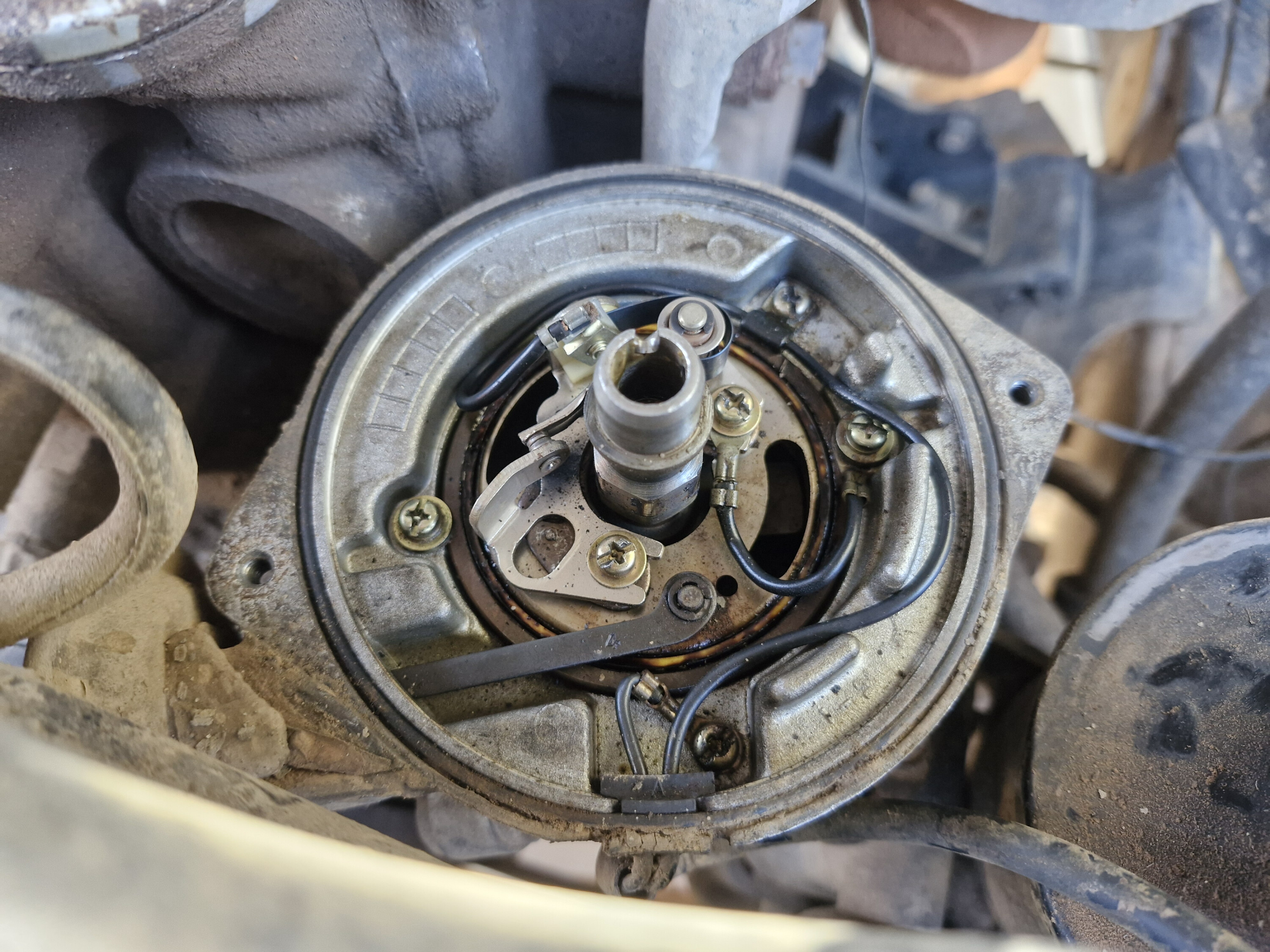
Luckily, an electronic ignition conversion is pretty easy for these petrol Patrols. Pertronix makes a universal kit that fits the Patrol distributor with some minor modifications, which I sourced from Patrolapart for $295. There isn’t much in the kit, just the electronic ignitor, a few ring terminals and that’s about it.
Nissan put the TB42 dizzy in a pretty good spot, and there’s plenty of instructional videos online showing the fitment process. In short, you’ll need to remove the cap, rotor button, dust cover and the points. If you have a 1762 kit like mine, you’ll need to grind down the shaft of the distributor a few millimetres to fit the magnetic excitor for the Pertronix. That can be done with a basic die grinder. Re-use the rubber grommet for the wiring in the side of the dizzy, and then reassemble.
1
Wiring is easy, but for the TB42 you will need to extend it slightly. Connect the black negative wire from the Pertronix to the negative on the coil, and the red positive to the positive (white) wire on the ballast resistor, and that’s it. Easy peasy!
Hit the key, and you should have life. I noticed the difference straight away, with no more rough running, and the tacho had stopped jumping around (a common sign of an ignition fault). I took it for a quick drive around the corner to my mate’s house, and the engine ran super smooth compared to how it ran with the points. For the first time ever I could take off from an intersection with the air-con on (yes, it actually works in my ol’ GQ) without stalling and making a melon of myself.
Once I got to my mate’s, we checked the timing and found it was sitting at 20 degrees before top dead centre (TDC). Nissan recommends it to be more around 10 degrees before TDC, so we set it there and she was purring.
For the sake of around $300 and a few hours work, it’s a no brainer for anyone still running points in an old petrol rig. Now, to hit the tracks!
Pricing: $295
The Nissan Patrol and Toyota LandCruiser have been the heavyweight champions of the four-wheel drive wagon market for generations, and the battle still rages on today.
Sure, there were once Land Rovers, Jeeps, Mitsubishis and few others in the mix, but these two big Japanese wagons have dominated the Australian market for more than 50 years. While the latest offerings from Nissan and Toyota continue to duke it out, the way the two brands go about specifying their wagons has never been more different.
1
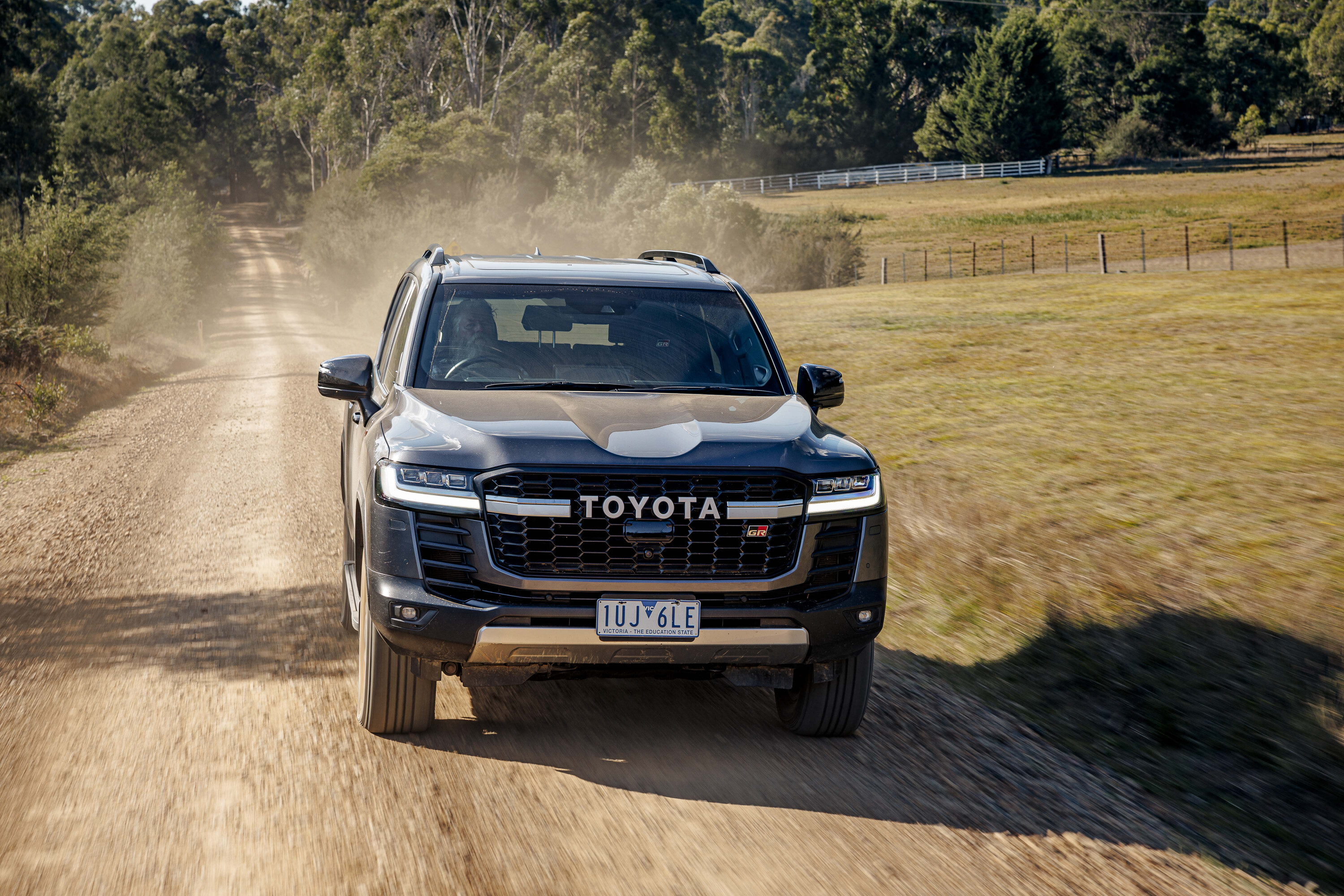
The Y62 Patrol and the 300 Series LandCruiser are both large four-door wagons designed to carry up to seven or eight passengers and their gear, over all roads and any terrain that their owners choose to point them at. But for the latest iterations the respective manufacturers have each gone about the design of their vehicles in vastly different ways to achieve the same goal.
The Y62 Patrol is now 14 years old and is expected to be replaced by a new model within the next 18 months, but in some ways it is a more modern style of vehicle than the LandCruiser 300 which is just three years old.
1
Nissan created quite the furore when it announced its Y62 Patrol would forgo its decades of live axles and diesel engines in favour of fully independent suspension and a petrol engine. The LandCruiser 300 retains its live-axle rear and carries over its IFS design from the previous 200 Series, while Toyota Australia dropped the option of a petrol engine in favour of its all-new V6 turbocharged-diesel mill; the first time we’ve seen a V6 engine in a LandCruiser in Australia.
Regardless of fuel type and suspension layout, the systems in each of the wagons represent up-to-the-minute tech and innovation, all designed to make these the best off-road tourers you can buy.
Let’s take a closer look at the most off-road focused thoroughbreds from each stable.
JUMP AHEAD
Nissan Patrol Warrior
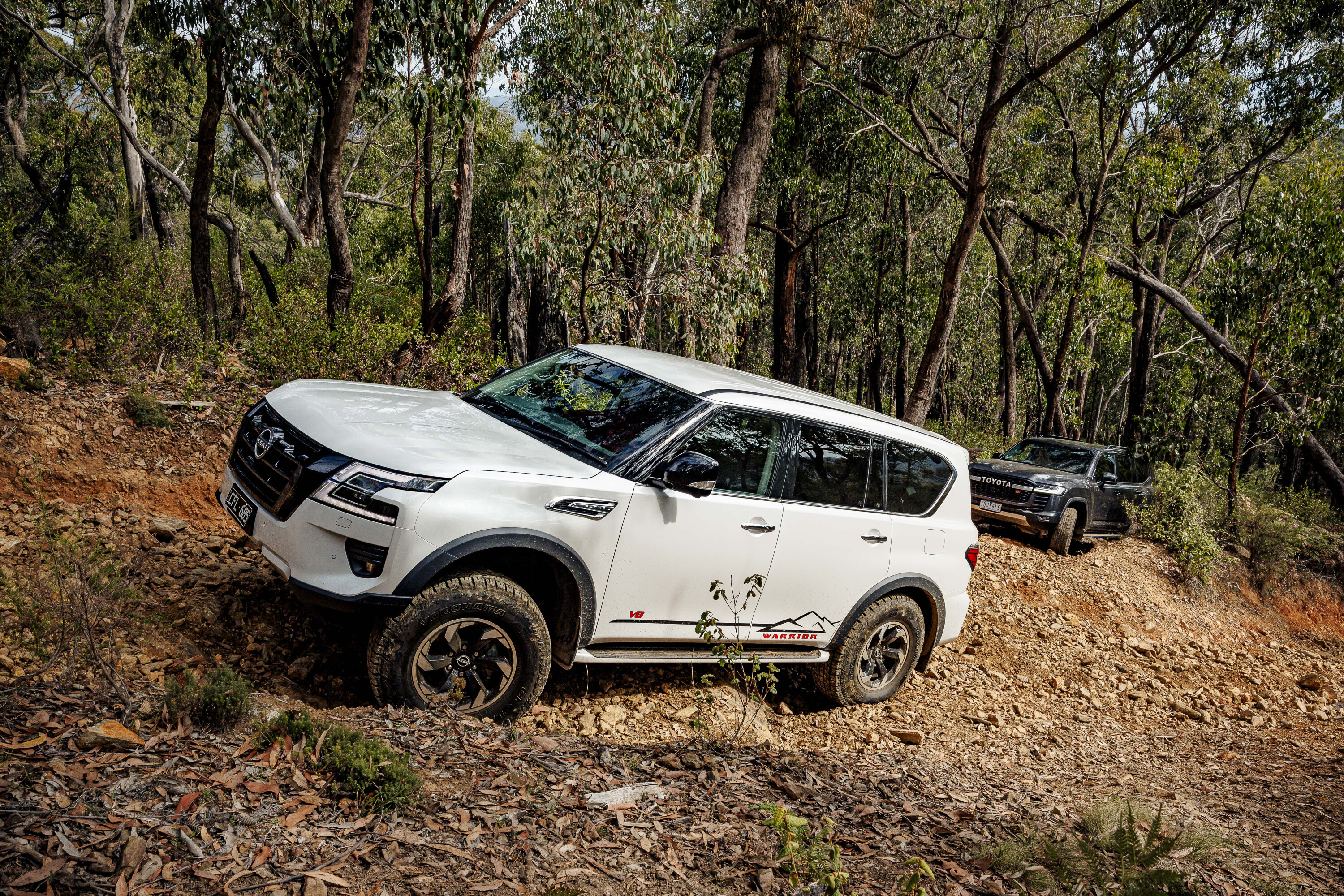
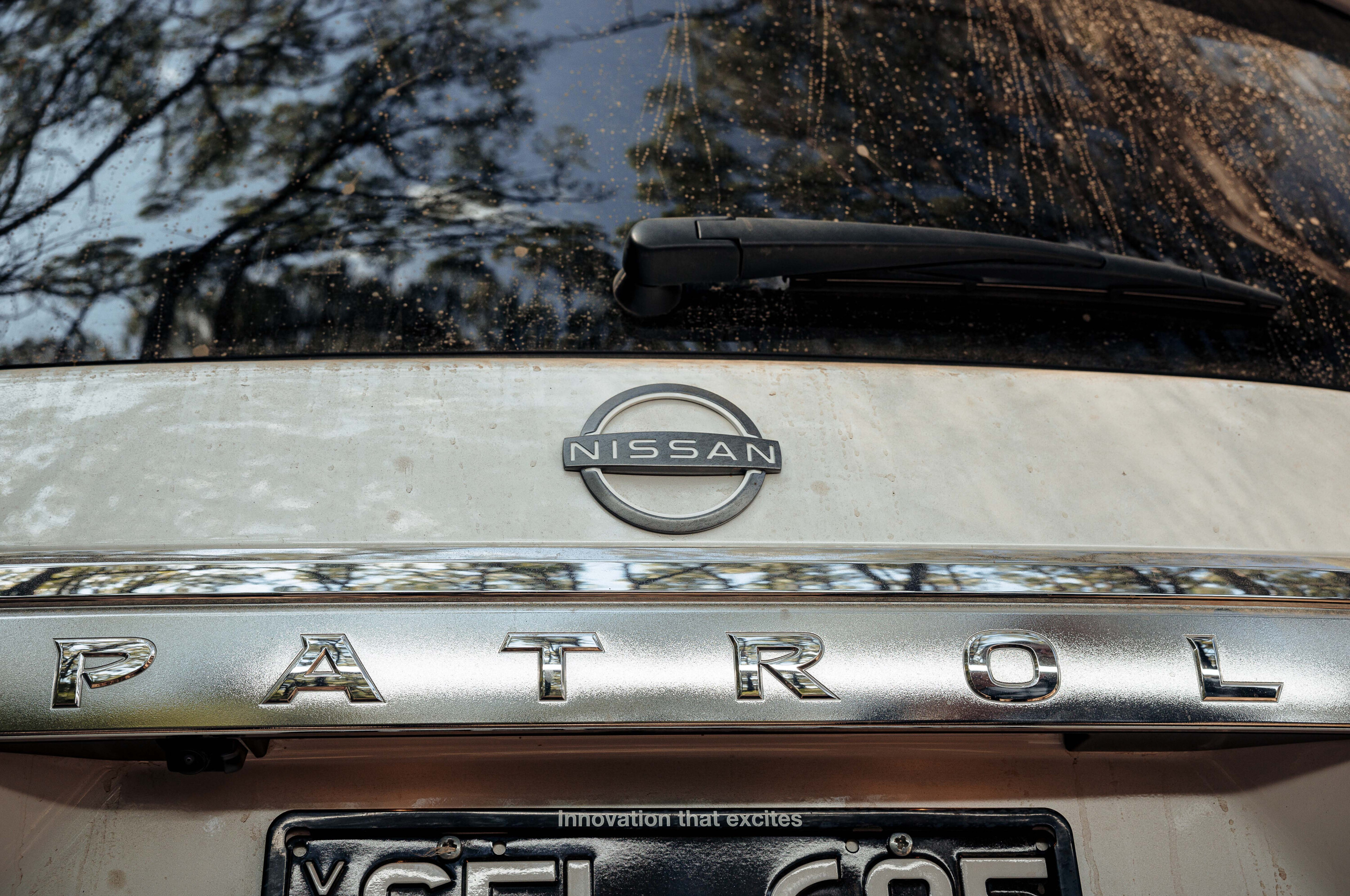
As the Y62 gracefully ages, Nissan has teamed up with local vehicle re-engineering firm Premcar to build a better Patrol.
Bigger all-terrain tyres, tougher body protection, a bi-modal exhaust system and added refinement to the interior are the key extras to come from the Premcar re-birthing process to make the Patrol a better vehicle to drive in all conditions. All of this equipment is tested and installed to better than OEM standard with Nissan’s seal of approval. Starting with the lower grade Patrol Ti, the Warrior-specific suspension raises the vehicle 29mm over the standard height.
1
A further 21mm in height comes from the 295/70R18 Yokohama all-terrain tyres fitted to make the Warrior 50mm higher-riding than the original vehicle.
The Patrol Warrior retains the vehicle’s original and excellent hydraulic body motion control (HBMC) system and, unlike most aftermarket suspension changes, Premcar was able to recalibrate the HBMC to suit the taller ride height and changed ride and handling characteristics. This was done by re-valving the HBMC’s control units. Even with the extra ground clearance afforded by the higher ride, Premcar still elected to fit a 2mm steel bash plate under the front end of the Warrior.
1
Roar power
Premcar left Nissan’s 298kW and 560Nm 5.6-litre V8 engine alone, but gave it a new set of vocal cords via a bi-modal exhaust system that redirects the waste gases out a side-exiting exhaust tip under heavy throttle application. Under lighter throttle the exhaust still runs out the back through a full set of mufflers, but floor the gas pedal or slip the transmission shifter across to the sport mode and you unleash the bellowing V8 symphony.
Nissan’s VK56 V8 is one of the sweetest engines around. Its aural output matches its performance to make punting the Warrior along any road pure joy. However, as much as those that have experienced its pleasure will sing its praises, the large 4×4 market in Australia remains diesel-fuelled and this is reflected in the massive difference in sales between the current Patrol and LandCruiser.
1
Interior
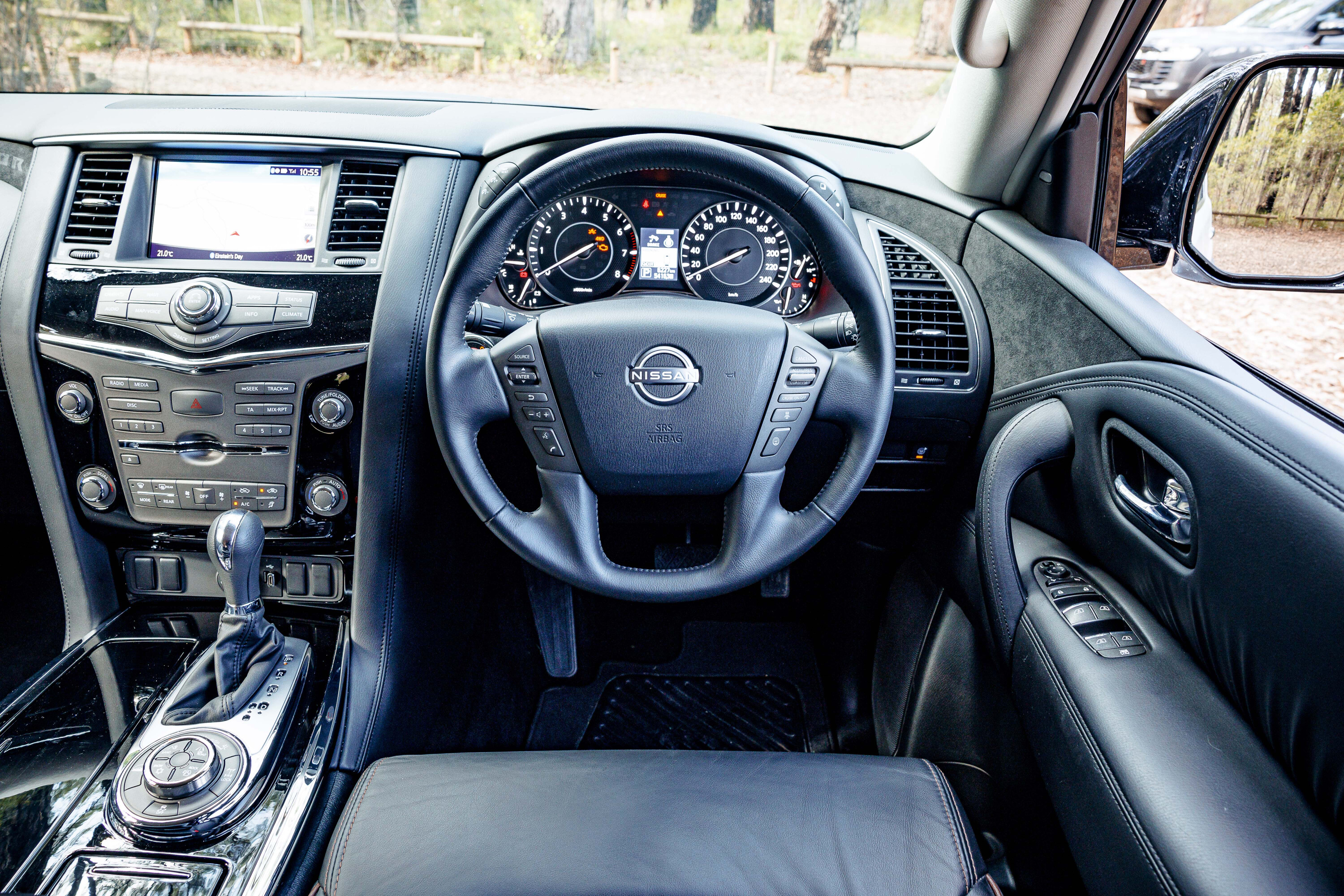
The Ti spec Patrol comes well equipped with eight seats; 10-way power adjustable driver seat; eight-way front passenger seat; 60/40 split-fold second-row seating with manual recline and fold function and centre armrest; leather-accented seats and steering wheel; climate control air-conditioning with second row controls; cruise control; 12V power outlets in the front, centre console, second row and rear luggage areas; USB in the front console; inbuilt satellite navigation on eight-inch touchscreen; traffic monitoring system; and audio system with CD/DVD, AM/FM radio, MP3 and USB/iPod+ connectivity, with Bluetooth audio streaming
Around the same time of our test, Nissan changed the dash of the Patrol range to include a new audio system with in-built HEMA maps, Apple CarPlay and Android Auto, but our test vehicle was the pre-update model. Part of the update includes blacking out the chintzy woodgrain trim the Y62 has always had, but the Warrior package already does that, as well as adding custom suede accented trims.
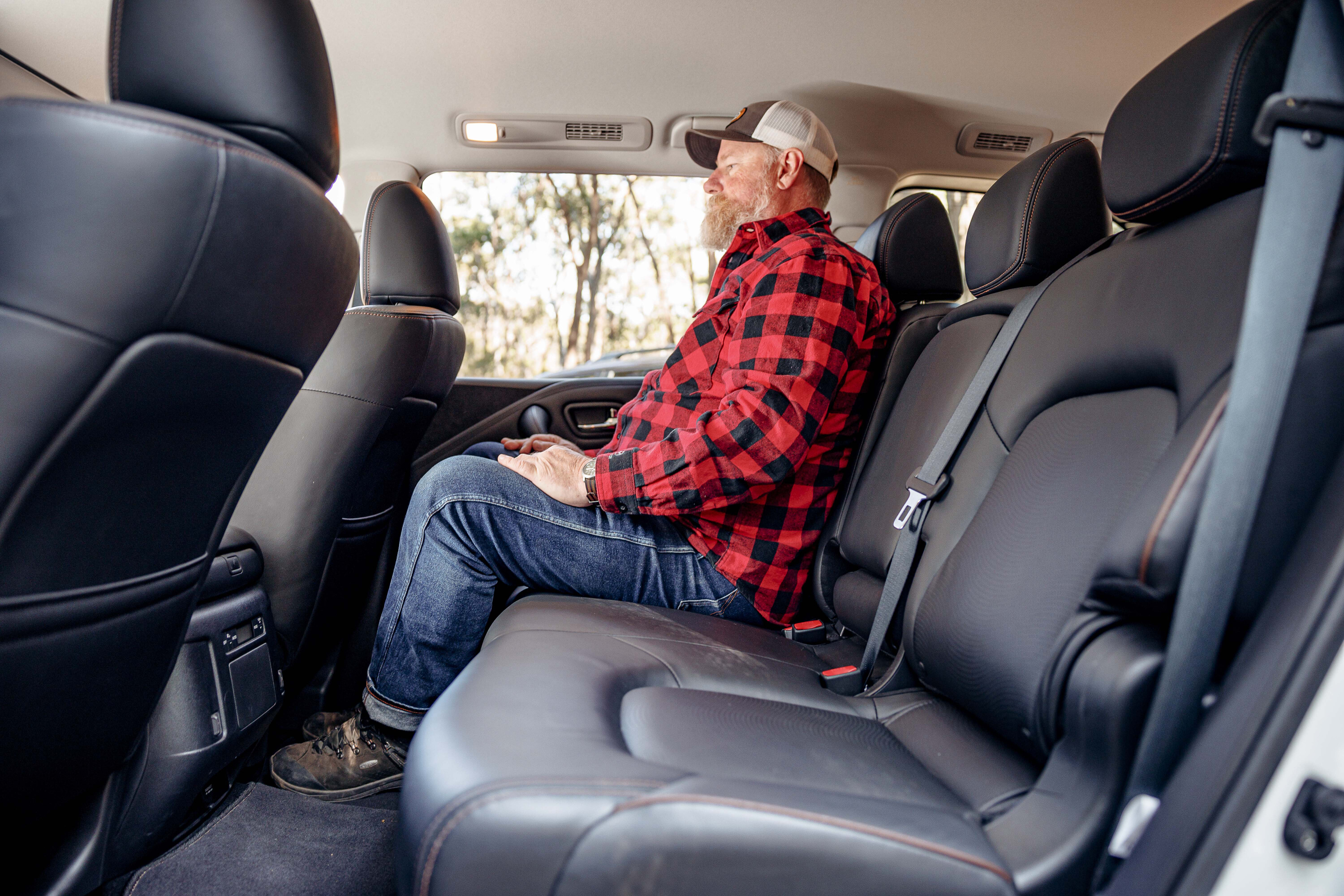
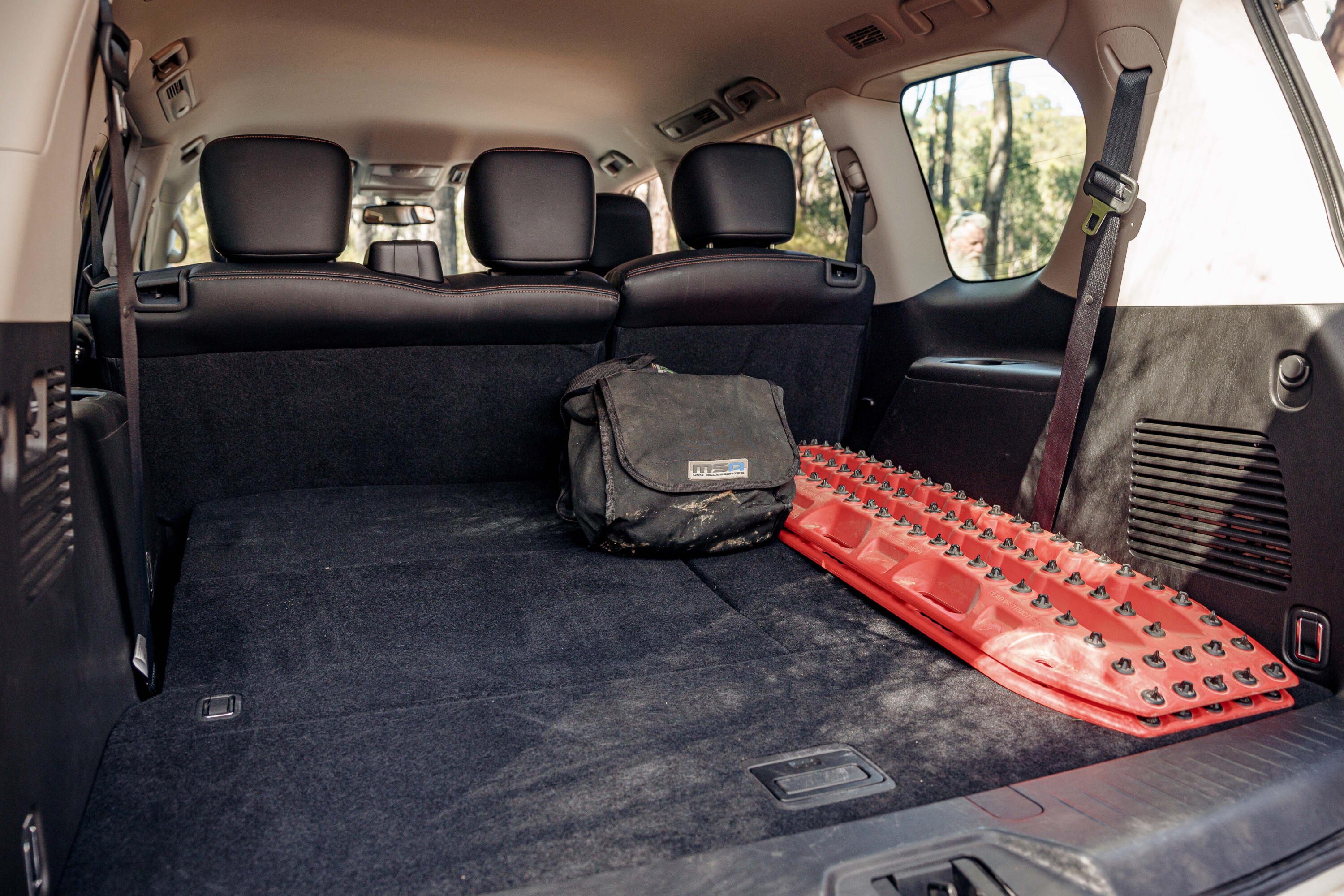
The Patrol Warrior’s cabin has a more old-school 4×4 feel than the LandCruiser 300. You sit higher and more upright in it, which is not a criticism and, in fact, our drivers preferred it. It’s also more spacious than the LC300, with plenty of extra cargo space behind the seats.
1
Safety
The Warrior retains all of the Patrol’s safety systems including including front and rear parking sensors; Vehicle Dynamic Control including electronic traction control; ABS with electronic brake force distribution; driver and passenger front and side airbags; curtain airbags to all three rows of seats; Emergency Braking; Forward Collision Warning; Lane Departure Warning and Intervention; Blind Spot Warning and Intervention; Rear Cross Traffic Alert; and a Tyre Pressure Monitoring System. The updated dash in the 2024 model loses the 360° camera of the previous model.
1
Toyota LandCruiser GR Sport
The GR Sport is the most off-road focused model in the LC300 range, but it’s not the top-of-the-range model.
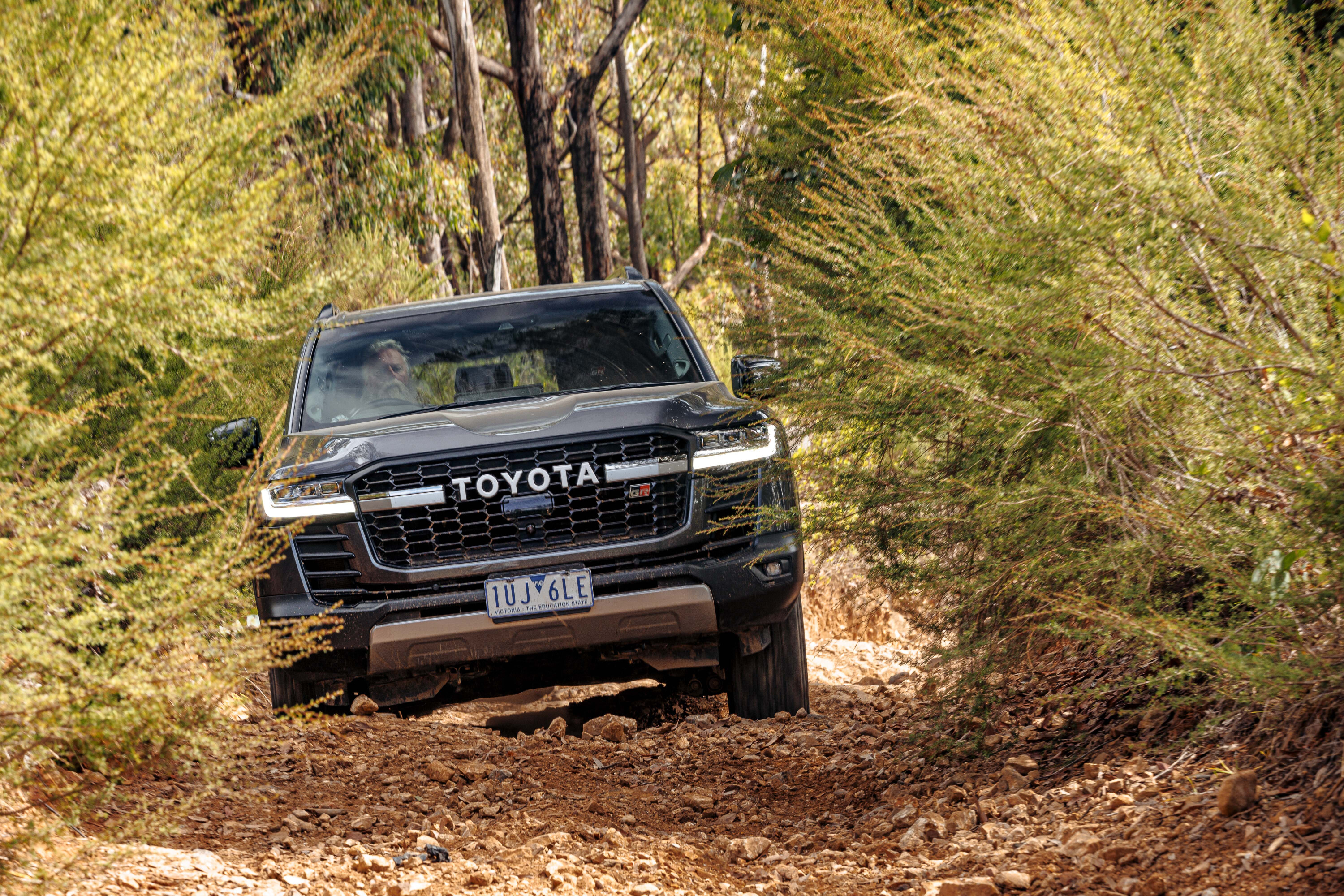
However, it is the only model to offer front and rear locking diffs and e-KDSS suspension, which are key to its off-road chops. It also has a bespoke front-end design with the brand name spelt out across the grille.
A key difference between the Patrol and the Cruiser comes in the engine, with the LC300’s 3.3 litre twin turbo V6 diesel engine making 227kW and 700Nm. It’s a thoroughly modern diesel engine that is smooth and sprightly even if it doesn’t offer the aural delights of the Nissan’s petrol V8. The F33A-FTV engine is backed by a seamless 10-speed automatic transmission and a full-time, dual-range transfer case.
The GR Sport also gets some clever tech added to its off-road arsenal; as well as the aforementioned KDSS, there’s crawl control, multiple terrain modes, variable dampers, and even a tank-turn function. But it’s the excellent ETC, front and rear lockers and the KDSS that make it the better off-roader of these two wagons.
1
Inside
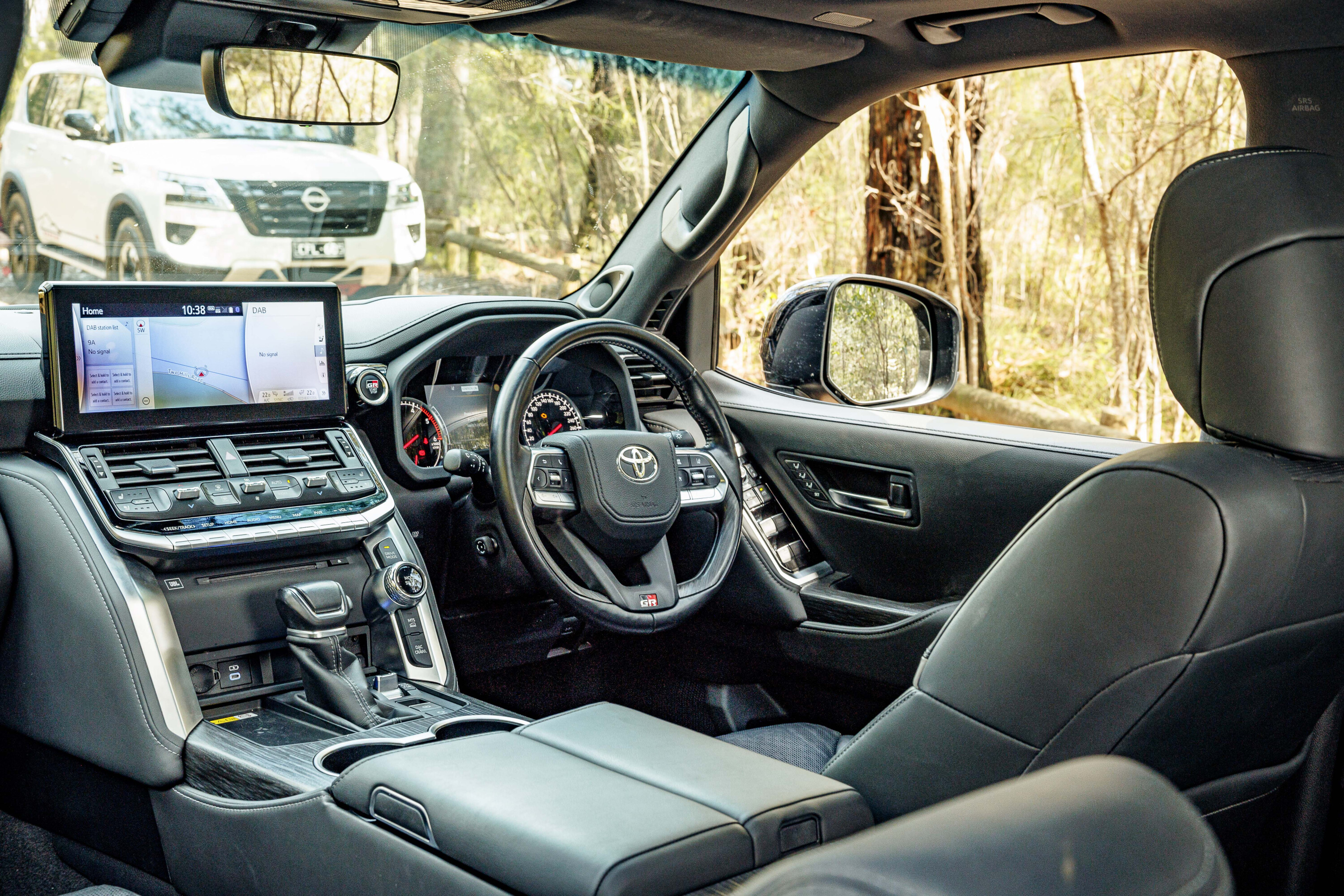
Another huge difference between the Cruiser and Patrol tested here is that the GR Sport only comes with five seats across two rows. This is done to give it a higher payload than it otherwise would have if third-row seats were fitted. The front and rear seats are true luxury items with heating and cooling included on the front power adjustable leather units.
There’s also a power sunroof, a large configurable touchscreen with Apple CarPlay and Android Auto, head-up speed display, wireless phone charging, and a drink chiller in the console. You sit lower in the Toyota’s seats than you do in the Patrol, and the Cruiser has a more upmarket feel all-round.
1
Safety
The LC300’s extensive list of safety kit includes the usual ETC, ESP, AEB and ABS, but also adds a pre-collision safety (PCS) system with vehicle and pedestrian detection, as well as oncoming vehicles and cyclists emergency steering assist.
Also part of the package are lane-centring, lane assist, lane departure alert, rear cross-traffic alert, blind spot monitor, front and rear parking sensors and camera, and 10 airbags. The LandCruiser’s level of safety equipment is another thing that reminds you that this is a vehicle that is a decade newer than the Patrol.
1
Off track
As the hero models from the respective manufacturers we were keen to test their off-road chops to see how they compare.
When the GR Sport was first launched we pointed one up a steep rocky piece of track in Toolangi State Forest we thought might challenge it, and we were very impressed by its capability. We thought it only fair to take one back there with the Warrior for this test.
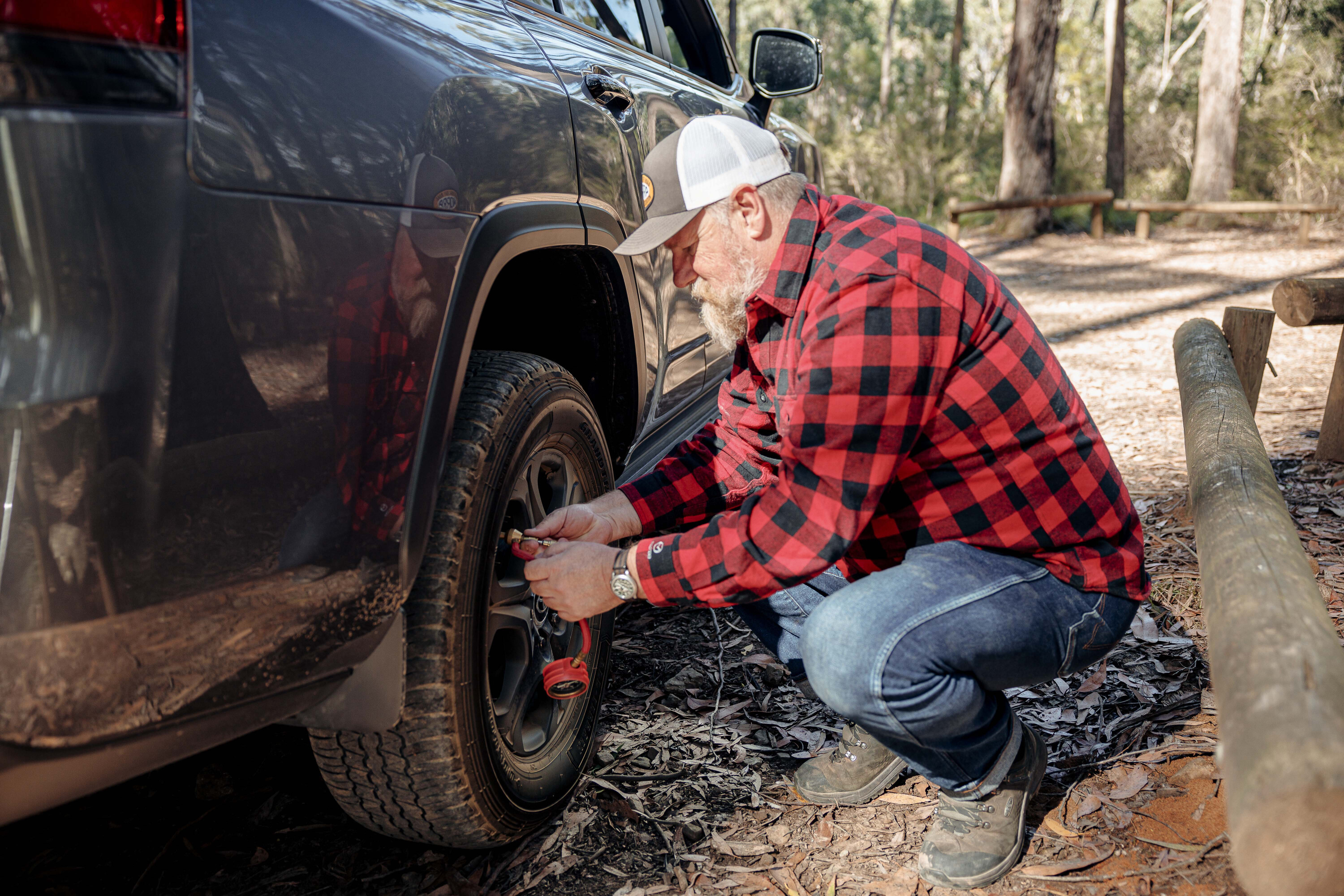
Having driven the GR Sport up there myself last time, I took the lead in the Warrior this time and initial attempts at the climb were worryingly not Warrior-like. After dropping tyre pressures and selecting low range in both vehicles we started on the less-challenging section of track, but the Patrol’s ETC struggled on the loose rocks and rubble. Toyota’s ETC calibration is the best in the business and had no trouble driving up.
1
We put this down to the Nissan being more than a decade older and the chassis electronics showing their age and not reacting as quickly and smoothly as the Toyota’s.
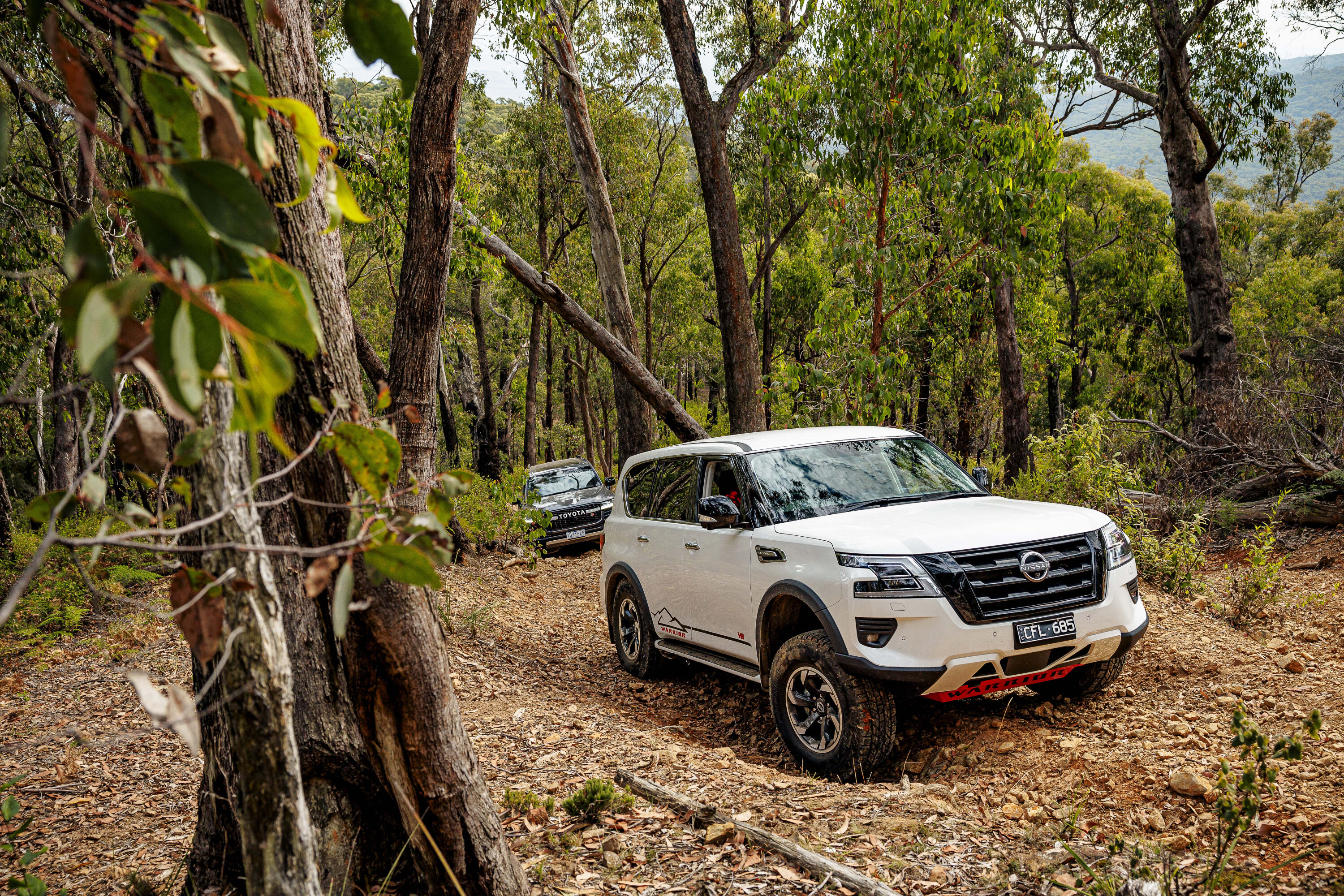
We were getting nowhere attempting to engage the rear differential lock in the Patrol, with the light on the dash flashing and the tyres scrabbling for traction. Even after reversing back down the hill and trying several times, we couldn’t get the RDL to engage. It wasn’t until we had turned around and were back on the flat road – and were thinking we’d have to abandon the challenge – that the RDL finally engaged.
Once the diff lock was engaged the Warrior climbed back up the loose-rock slope much easier, as we expected it should; it was never going to get up there without the RDL. When the diff lock is engaged, the Patrol keeps its ETC active across the front axle to get the best performance from the front wheels. There is no front diff lock in the Patrol Warrior.
1
The GR Sport is equipped with both front and rear locking differentials, but it didn’t need either of them to climb this first piece of track. Toyota’s superior electronic traction control managed wheel slip so the big Cruiser could crawl up the grade. The more compliant e-KDSS enabled rear live axle in the LandCruiser also helped the cause, giving the back wheels their best chance to push the car onwards and upwards without needing the lockers or the crawl control system, which we also found to work well.
So it continued for the hour-long climb up the track, with the V8 Patrol bellowing, spinning its tyres, lifting front wheels and scrabbling its way up while the Cruiser made much lighter work of the task. When washed-out ruts crossed the track and a few rock steps posed a challenge, Dave engaged the Cruiser’s rear diff lock and the GR Sport made it look easy.
1
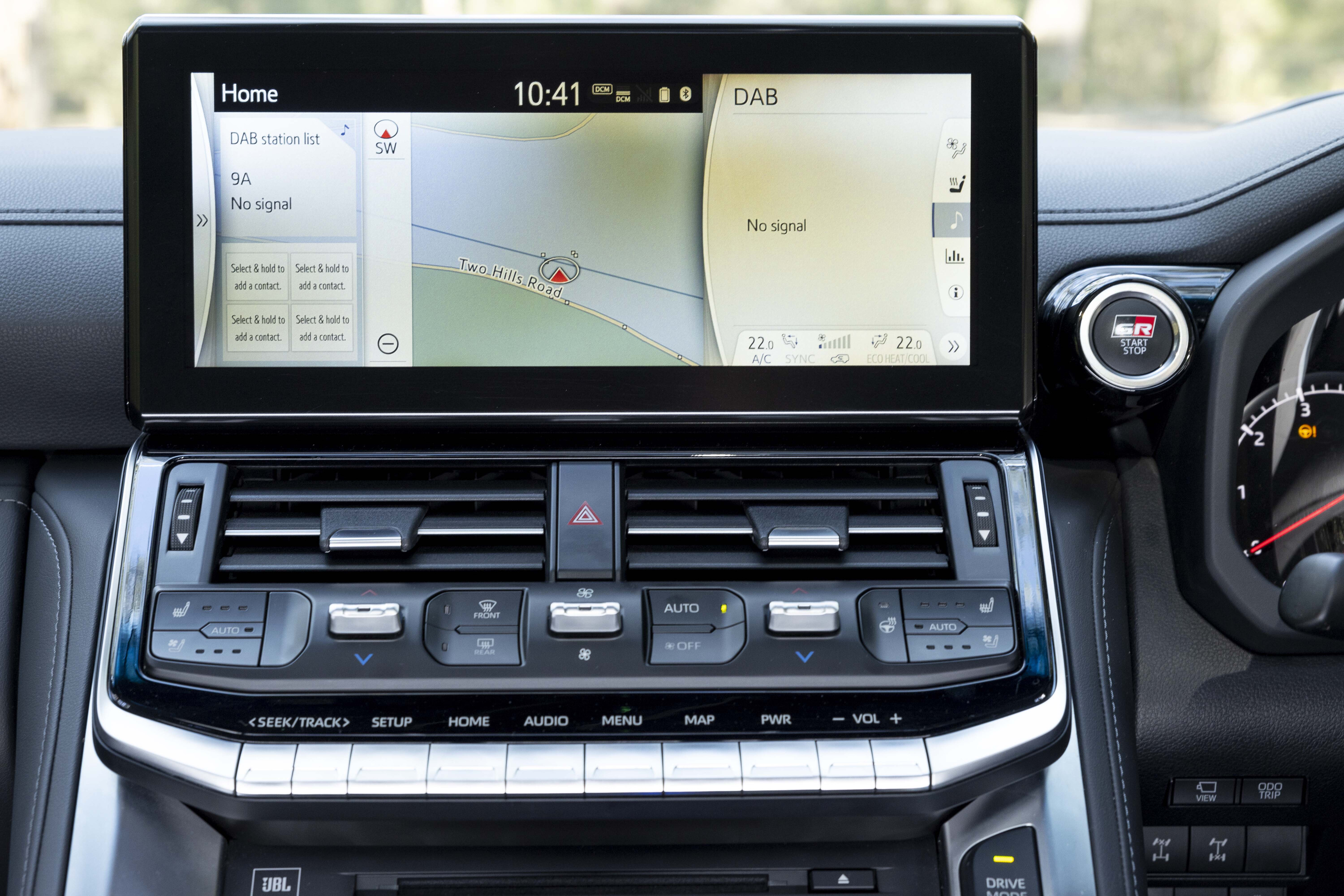
A frustrating thing about the LC300’s cabin is that the buttons for the centre and front and rear diff locks are in different positions, seemingly as though one of them was an afterthought. A better design would have all the off-road controls grouped together within easy reach and view of the driver.
Again, we put the difference between the way the two wagons climbed the hill down to the older electronics in the Nissan compared to the newer, standard-setting systems in the Toyota. Fit an aftermarket locking front differential to the Patrol and it would help it get the job done, but we dare say it still wouldn’t do it as smoothly and easily as the Cruiser.
1
On road
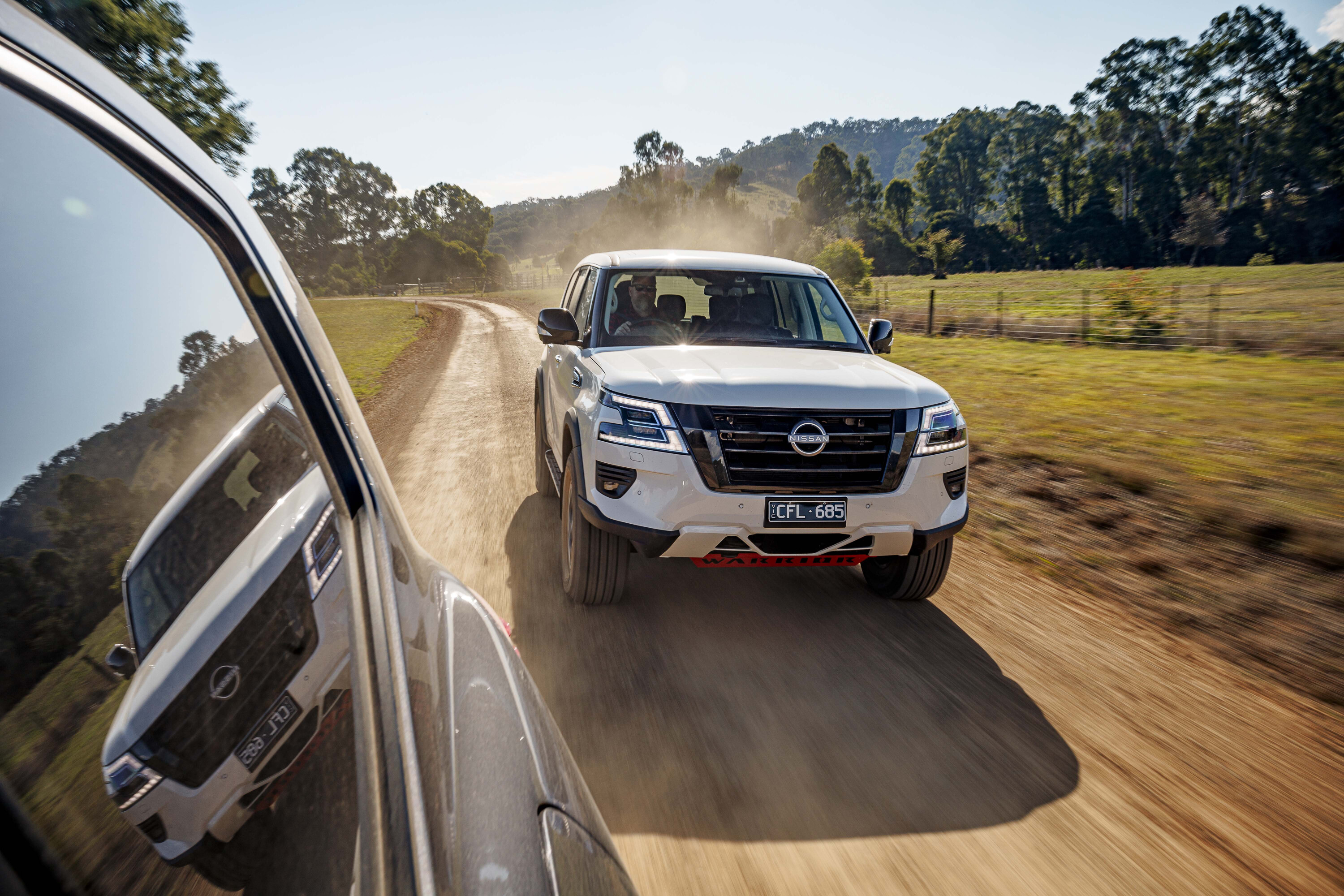
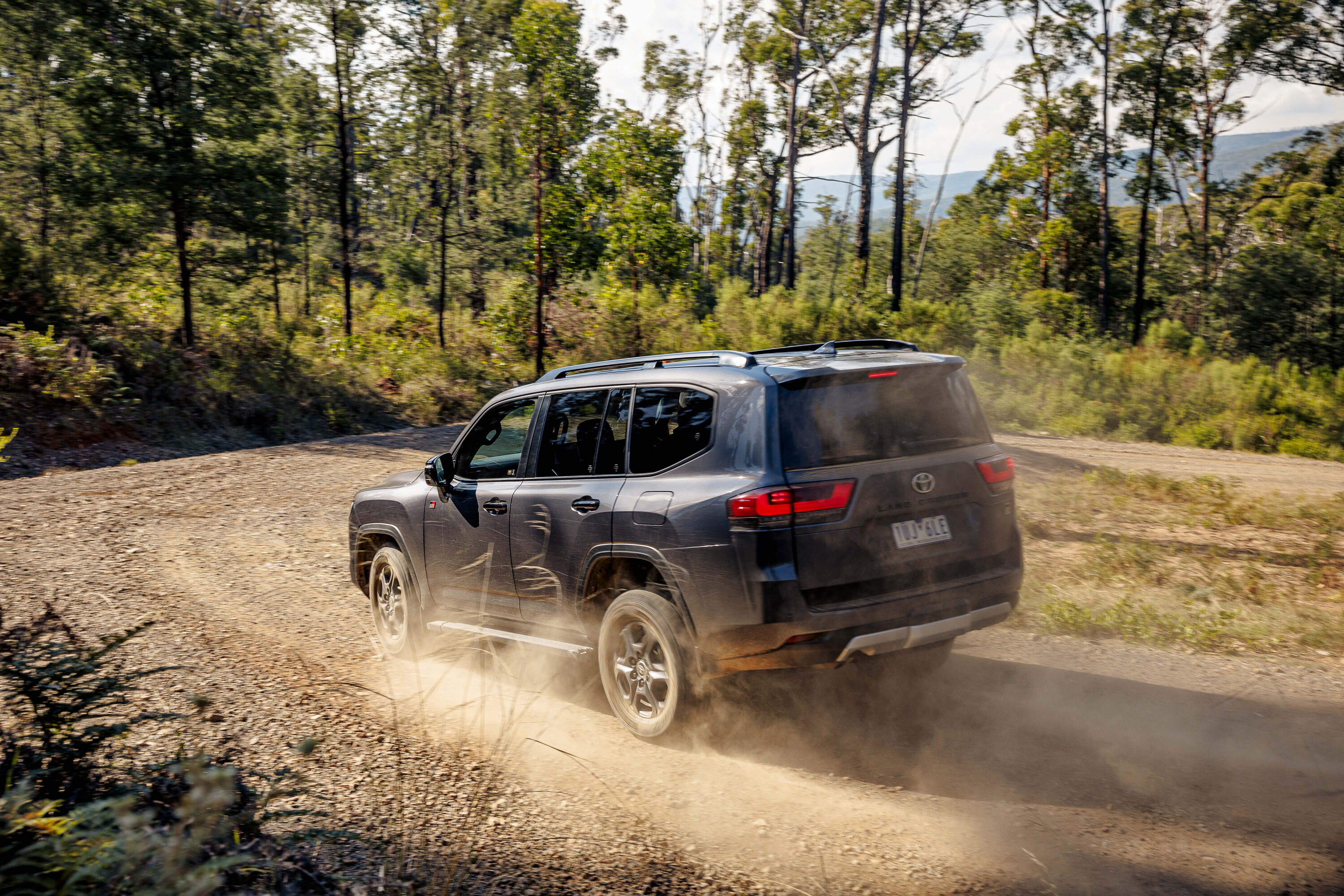
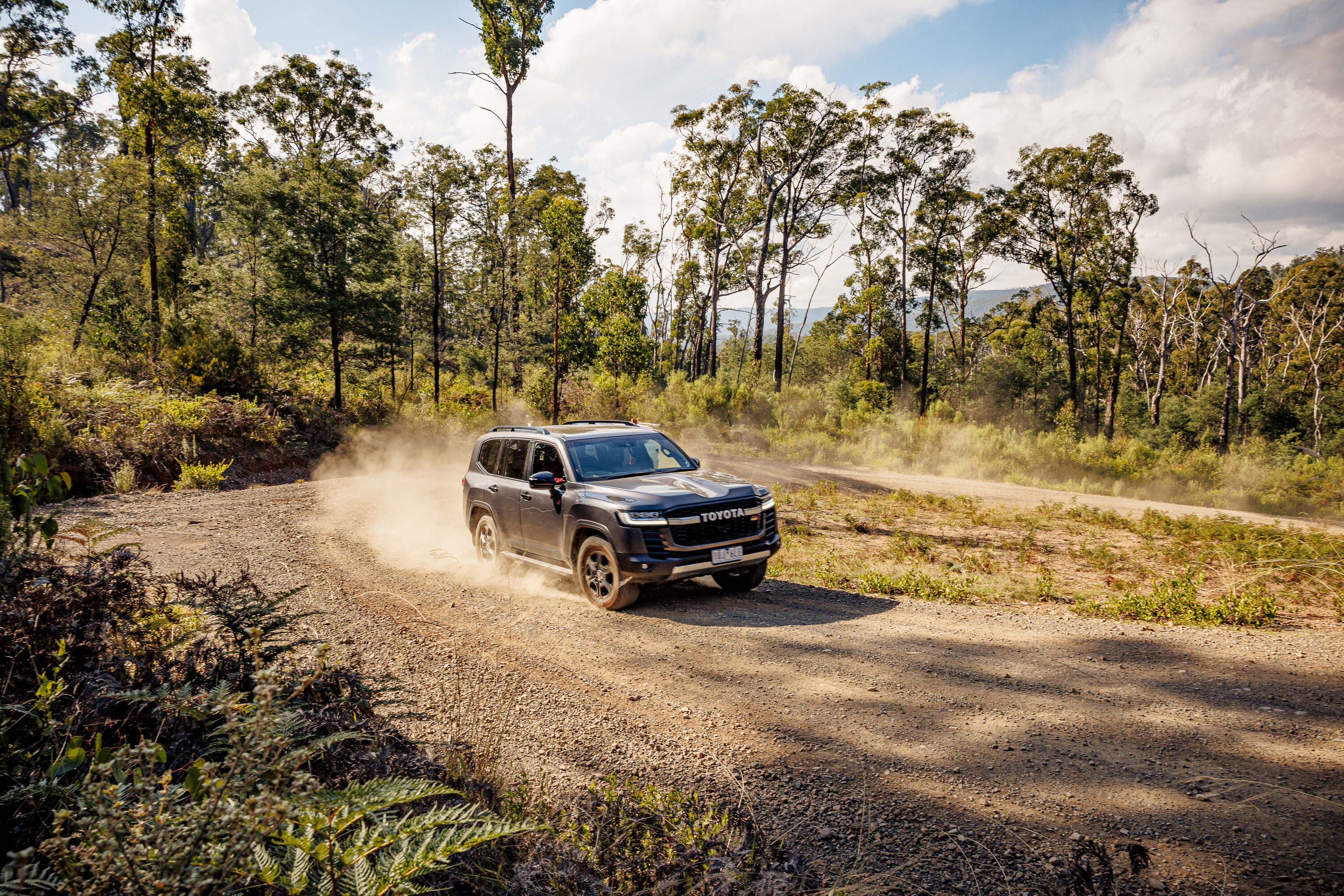
The Patrol Warrior really gets its own back on the Cruiser on road, both sealed surfaces and gravel tracks. Its fully independent configuration with the HBMC system does an excellent job in controlling the mass of the Nissan on twisting roads, and it is less fussed by imperfections in the surface than the rear live axle under the Cruiser.
In comparison, the LandCruiser pitches and wallows like a small boat on a rough sea, and it takes a bit of getting used to when you first get in it. Once acclimatised, the GR Sport is a great vehicle to drive over any road, but it’s not as dynamic as the Patrol.
1
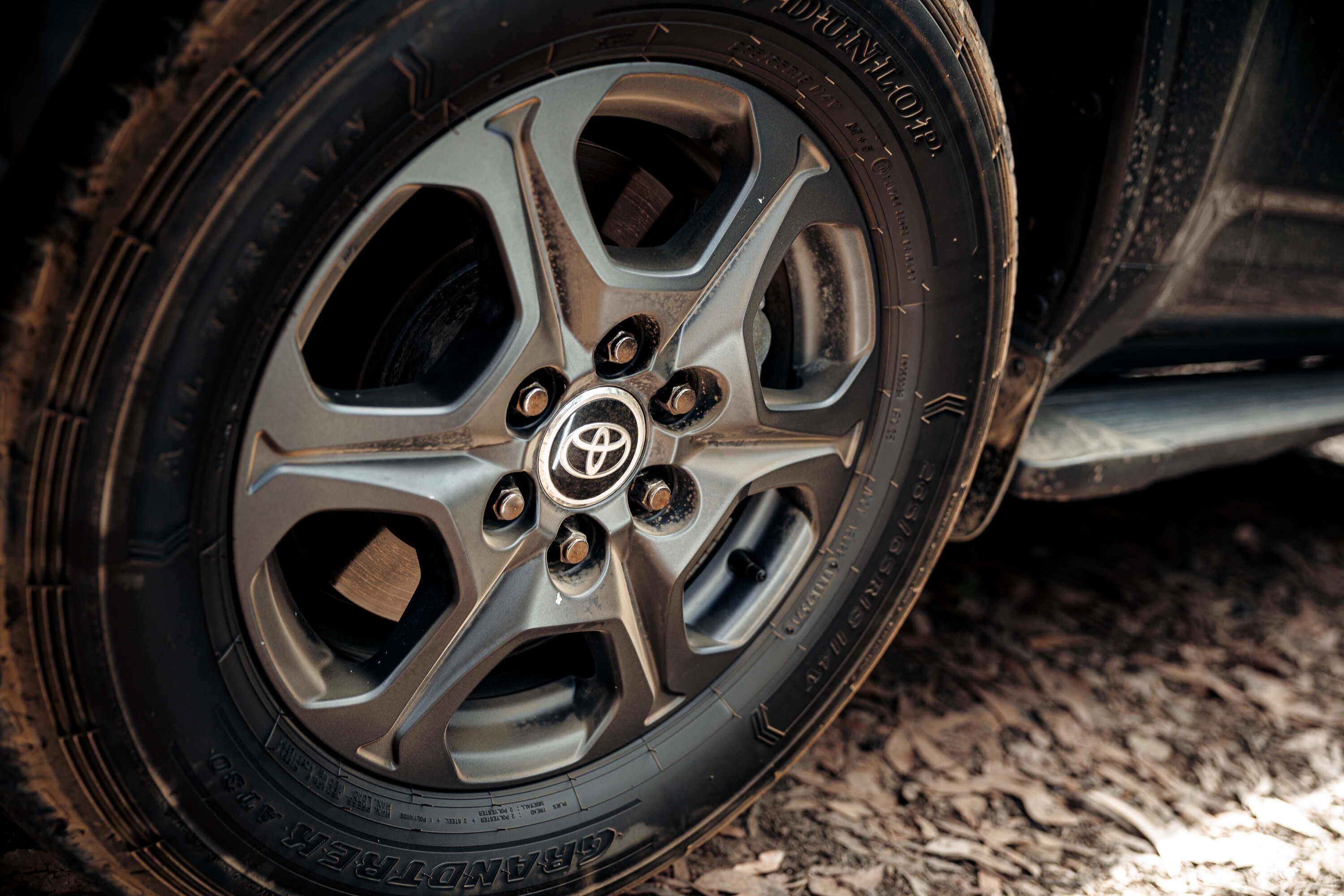
The taller tyres of the Warrior-spec Patrol move around more on sealed mountain roads than the rubber on a standard Patrol, so you pay a price for the added ride height and more durable rubber. The GR Sport offers no such concessions to off-road-suitable tyres, sticking with the standard LC300’s road-biased tyres. This is just another way these two off-road titans get on with the job in different ways.
1
Verdict
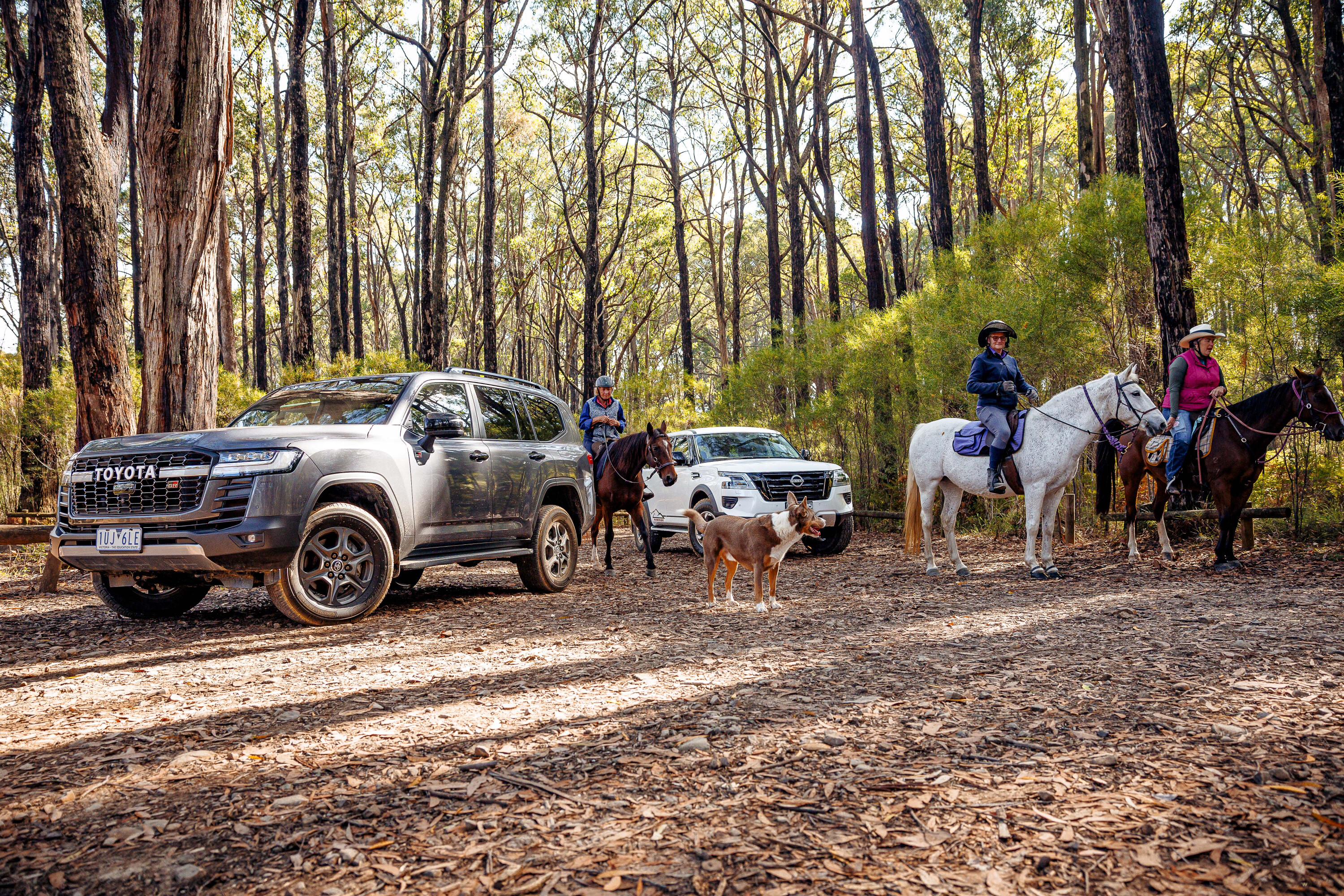
It’s amazing that two nameplates that have been around for more than 50 years vying for the attention of the same off-road family buyers can go about achieving this goal in such different ways.
They each do the job very well, but the differences between them are stark, and depending on what you need out of a family 4×4 wagon will be the deciding factor regarding which one is the right choice for you. We mentioned earlier the preference of Australian buyers for diesel-fuelled 4×4 vehicles and this will continue to separate these two vehicles in the eyes of buyers; if you want an oiler then it’s the Cruiser for you.
The next big factor is price, and with close to $45k separating them it gives the buyer plenty to think about. That 45 grand would buy a lot of petrol for your V8 Patrol… and add that aftermarket front locker to improve its off road ability.
1
The Land Cruiser GR-Sport is the better off-roader out of the box, and it is a more modern and more refined vehicle, but it’s also very complex and even with fewer seats it has a lower payload and GCM than the Patrol… despite its lower kerb weight.
There’s a lot to be said for the older and simpler design of the Patrol Warrior that will appeal to the off-road adventurer, and it’s these factors that would sway us toward the Warrior in this battle. It may not be as plush as the LandCruiser but it still gets the job done, and feels comfortable doing it. It would be a harder decision if the two were the same price or even closer in price but, as it stands, the cost saving of going with the Nissan will take you on a lot of awesome adventures.
Alternatively, should you wait for the turbocharged petrol V6-powered Patrol in 2025, to see what it will bring to the table?
Specs
| Patrol Warrior | LandCruiser GR Sport | |
|---|---|---|
| Price | $101,160 +ORC | $145,876 +ORC |
| Engine | DI petrol V8 | Turbocharged V6 diesel |
| Capacity | 5552cc | 3346cc |
| Max power | 298kW @ 5800rpm | 227kW @ 4000rpm |
| Max torque | 560Nm @ 4000rpm | 700Nm @ 1600-2600rpm |
| Transmission | 7-speed automatic | 10-speed auto |
| 4×4 system | 2WD, on-demand AWD and dual range locked 4×4 | Full-time, dual range, locking front, centre and rear diffs |
| Crawl ratio | 43.96:1 | 42.62:1 |
| Construction | 5-door wagon on a separate chassisu00a0 | 5-door wagon on a separate chassis |
| Front suspension | IFS with coil springs and HBMC | Double wishbone IFS with coil springs. E-KDSS and variable shocks |
| Rear suspension | IRS with coil springs and HBMC | Live axle on links and coil springs. E-KDSS and variable shocks |
| Tyres | 295/70R18 on alloys | 265/65R18 on alloys |
| Weight | 2884kg | 2630kg |
| GVM | 3620kg | 3280kg |
| GCM | 7000kg | 6750kg |
| Towing capacity | 3500kg | 3500kg |
| Payload | 736kg | 650kg |
| Seats | 8 | 5 |
| Fuel tank | 140L | 110L |
| ADR fuel Consumption | 14.4L/100km | 8.9L/100km |
| Approach angle | 40u00b0 | 32u00b0 |
| Departure angle | 23.3u00b0 | 25u00b0 |
| Ground clearance | 323mm | 235mm |
MORE
Everything Toyota