Advice


Gallery 1
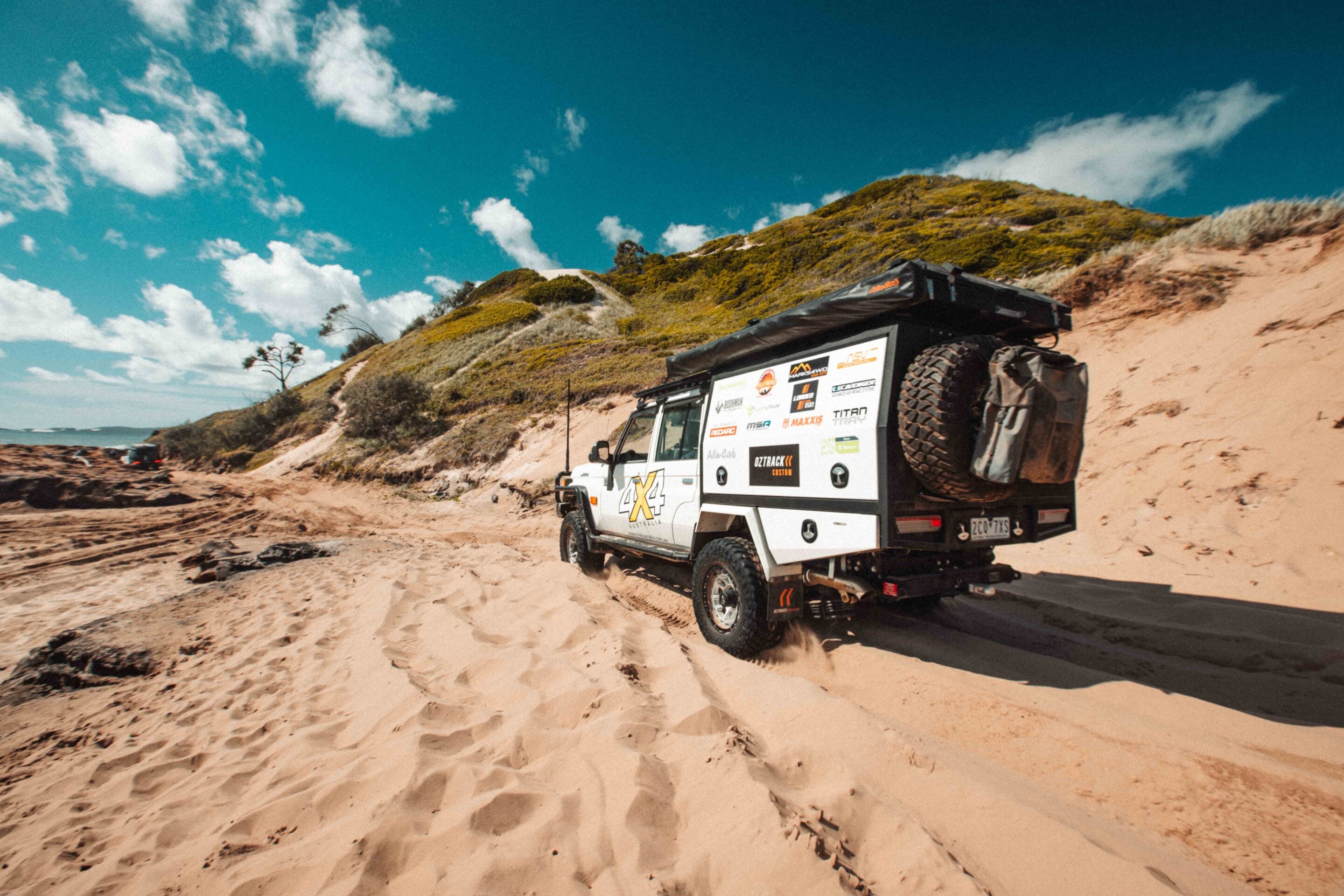
Hitting the beaches of the South-East Queensland, carving up the Simpson Desert, or threading your way along a remote coastal track, driving on soft sand is one of the most rewarding and humbling experiences a 4×4 can offer.
Get it right and you’ll be grinning from ear to ear. Get it wrong and you’ll be digging out your tyres along with your pride. Sand driving demands respect, preparation, and a bit of know-how. Here are the five main things you need to get right before you hit the tracks.
JUMP AHEAD
- Tyre pressure if everything
- Watch the waterline
- Know your clearance
- Pack recovery gear and know how to use it
- Respect the environment and everyone in it
- FAQs
1. Tyre pressure is everything
This is the single most important thing you can do before you hit the sand, and yet it’s still the step that catches out more drivers than any other.
When you air down, your tyre’s footprint increases dramatically. Instead of a small, firm contact patch fighting against the surface, you get a longer, flatter profile that floats across the sand rather than digging into it.
As a general rule, drop to somewhere between 16 and 25psi for beach driving, but treat that as a starting point rather than gospel. A heavily loaded LandCruiser towing a camper trailer will behave differently to a stock Jimny, so adjust accordingly and don’t be afraid to go lower if you’re struggling. Soft, fine beach sand will typically need lower pressures than the coarser, firmer stuff you’ll find further inland.
Once you’re back on the blacktop, get those pressures back up before you hit highway speeds or you’ll be chewing through rubber and killing your fuel economy. Carry a quality compressor and a reliable pressure gauge. Mean Mother and Ironman 4×4 both make solid portable compressor setups worth keeping in the kit.
2. Watch the waterline
Saltwater and 4x4s have a complicated relationship, and not a good one.
Salt is relentlessly corrosive, working its way into brake components, diff housings, chassis rails and electrical connections long after you’ve left the beach. Give the water’s edge a wide berth where you can and stick to the drier sand above the tide line. More importantly, keep a constant eye on the tide itself. What looks like a wide, forgiving run of hard-packed sand at low tide can turn into a narrow, wheel-sucking bog within an hour when the water comes back in.
Check the tide charts before you head out, know which direction it’s moving, and always have an exit plan. Getting cut off by the tide is not a story you want to be telling, especially when your recovery kit is locked in a rig that’s now surrounded by knee-deep saltwater.
If you do cop a splash, get home and give the whole underbody a thorough rinse with fresh water as soon as you can. Don’t leave it until the weekend.
3. Know your clearance
Sand is deceptive.
It looks smooth and manageable right up until the moment your chassis is resting on a crest and all four wheels are spinning in the air.
Dunes, crests, and soft-sided tracks all present real risks of high-centring your rig, where the undercarriage makes contact with the ground before the tyres do, effectively beaching you. Before you head to K’gari, the Tip Track, or anywhere else that demands serious sand driving, know exactly how much ground clearance your wagon is running. If it’s not enough, think seriously about a suspension lift and some quality aftermarket protection.
Approach crests with momentum but not recklessness, and if you’re unsure what’s on the other side, get out and walk it first. Two minutes on foot can save you two hours of digging.
1
4. Pack recovery gear and know how to use it
Spend enough time driving on sand and you will get bogged. It’s not a question of if, it’s when.
The difference between a minor inconvenience and a full-blown ordeal comes down to what you’ve got in the back of the ute and whether you know how to use it properly. Every sand-going 4×4 should be carrying a solid set of traction boards. Maxtrax are the benchmark for a reason, but Terrain Tamer also stock quality recovery gear worth a look.
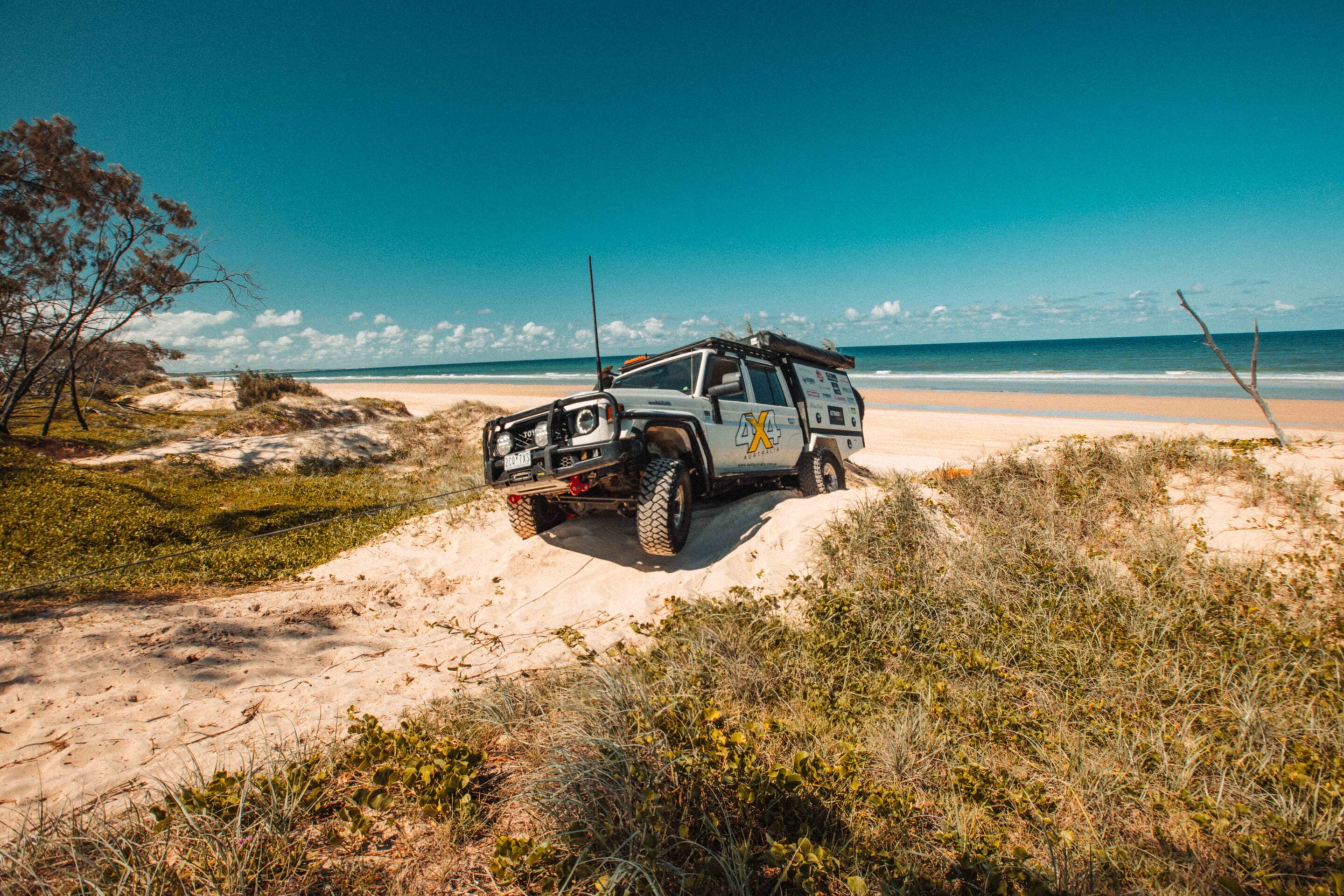
Pack a long-handled shovel for digging out around the tyres and under the chassis, and a hi-lift jack for getting a bogged wheel clear so you can pack boards underneath. If you’re running a winch, good. Warn and Runva both make reliable units that have proven themselves in the field. But sand offers very little to anchor off, so a ground anchor or a deadman setup using your spare tyre buried deep is worth knowing how to rig.
Better still, travel with at least one other vehicle whenever the country allows it. A snatch strap between two rigs and someone who knows what they’re doing will get you out of almost anything. Practice your recovery before you need it in anger.
5. Respect the environment and everyone in it
Beach and desert environments are fragile, and they don’t recover quickly from people doing the wrong thing.
A few seconds of wheel-spinning stupidity can leave marks that last far longer than your trip, and the cumulative damage from vehicles doing the wrong thing has already cost 4×4 owners access to plenty of tracks that previous generations took for granted.
Drive at a sensible, controlled speed. Not because the rangers are watching, but because high speed on soft, unpredictable sand is how rollovers happen and how ecosystems get wrecked. Stick to designated vehicle areas, stay well clear of nesting sites and vegetation lines, and follow local access rules to the letter. Checking access conditions before you leave through your state’s national parks authority takes five minutes and can save a wasted trip or a hefty fine.
And when you pack up and head home, take everything with you. Every piece of rubbish, every stake, every scrap of packaging. The tracks you love exist because people before you treated them with respect. Return the favour.
FAQs
Q: What tyre pressure should I run on sand?
A: Most 4x4s will need to drop to between 16 and 25psi for sand driving. Heavier, more loaded vehicles generally need to go lower. Always re-inflate to normal highway pressures before returning to sealed roads.
Q: Can I drive my 4×4 through saltwater?
A: It’s best avoided where possible. Salt accelerates corrosion in brake components, diff housings, and chassis rails. If you do get wet, rinse the underbody thoroughly with fresh water as soon as possible.
Q: What recovery gear do I need for beach driving?
A: At minimum: traction boards, a long-handled shovel, and a hi-lift jack. A winch and ground anchor add serious capability if you’re heading somewhere remote. Always travel with at least one other vehicle if the country allows it.
Q: What are the best destinations in Australia for beach driving?
A: K’gari (formerly Fraser Island) is the most iconic, with hundreds of kilometres of beach tracks, freshwater lakes, and coloured sand cliffs. Stockton Beach in New South Wales offers big dunes and hard-packed runs close to Newcastle.
In Western Australia, Steep Point and the Coral Coast are worth the effort. The Coorong in South Australia is flat, fast, and seriously remote once you get further in. Wherever you go, check access permits, tide charts, and local conditions before you leave.
Q: What are the best destinations in Australia for sand dune driving?
A: The Simpson Desert is the benchmark, with more than a thousand parallel dunes and Big Red just outside Birdsville as the headline act. The Strzelecki Desert offers a similar challenge with less traffic. The dunes around Lancelin in Western Australia are a popular training ground for newer drivers, close to Perth and forgiving enough to build confidence.
Further north, Broome and the Gibb River Road corridor offer genuine remote-area dune driving. Wherever you’re headed: air down before you hit the dunes, know your escape route off every crest, and never tackle big dune country solo.
Follow 4X4 Australia on Google
Get more 4x4 news, reviews and gear stories from 4X4 Australia in your Google feeds.

We recommend
-
 Advice
How to drive a 4x4 on sand: Beach, dunes and recovery basics
Beach driving looks simple, but sand can quickly bog a 4x4 or leave you exposed to changing tides
-
 Advice
Top 5 essential items for safe 4x4 desert travel
Australia’s deserts are beautiful but brutal and unforgiving. Head into these remote regions without the right gear and your adventure can turn sour