Advice

Gallery 1
Modern independently sprung 4x4s have come a long way, and that sophistication cuts both ways when you start modifying them.
Today’s IFS platforms deliver genuine refinement and off-road capability out of the box, but they rely on tight suspension geometry, electronics, and factory-calibrated alignment ranges to do it. Lift one without correcting the geometry and you will quickly understand why upper control arms have become a core part of many properly engineered setups.
Older live-axle rigs could shrug off relatively rough suspension changes in different ways. Modern IFS platforms are not as forgiving in terms of alignment sensitivity. The geometry window is narrower in many cases, the components are more interdependent, and the consequences of getting it wrong, including accelerated wear, alignment limits, and compromised handling, can arrive sooner than most owners expect.
JUMP AHEAD
- Why upper control arms matter
- Legal requirements and compliance in Australia
- Engineering quality and market variability
- What to look for in a modern upper control arm
- Additional components and related modifications
- Off-road performance
- Bottom line
Why upper control arms matter
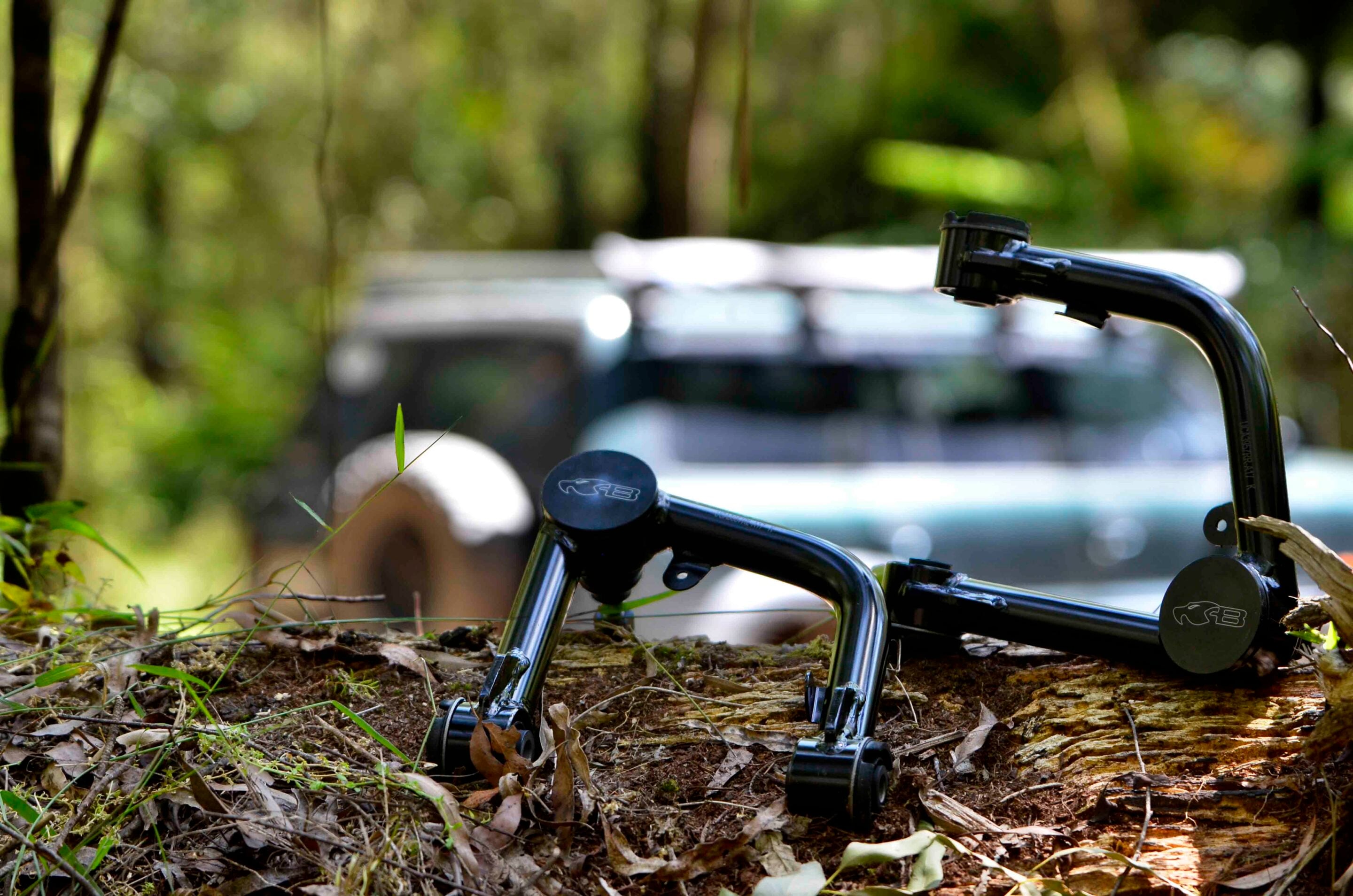
Independent front suspension uses upper and lower control arms to manage wheel movement, camber and caster across the suspension travel arc.
When you lift the vehicle, those arms sit at a different angle to what the factory designed. The wheel no longer behaves the same way under load and during articulation. The first thing to suffer is alignment. Camber and caster can shift outside factory specifications, and on many newer platforms the factory adjustment range is already tight. A moderate lift can push alignment toward the edge of what is correctable using standard points, or beyond it in some cases.
Ball joint operating angle is the second issue. As the upper arm drops away from its designed position, the ball joint sits at a more extreme angle at ride height. Available down travel can reduce. Wear may increase depending on use. Binding at full droop becomes a potential concern in some setups.
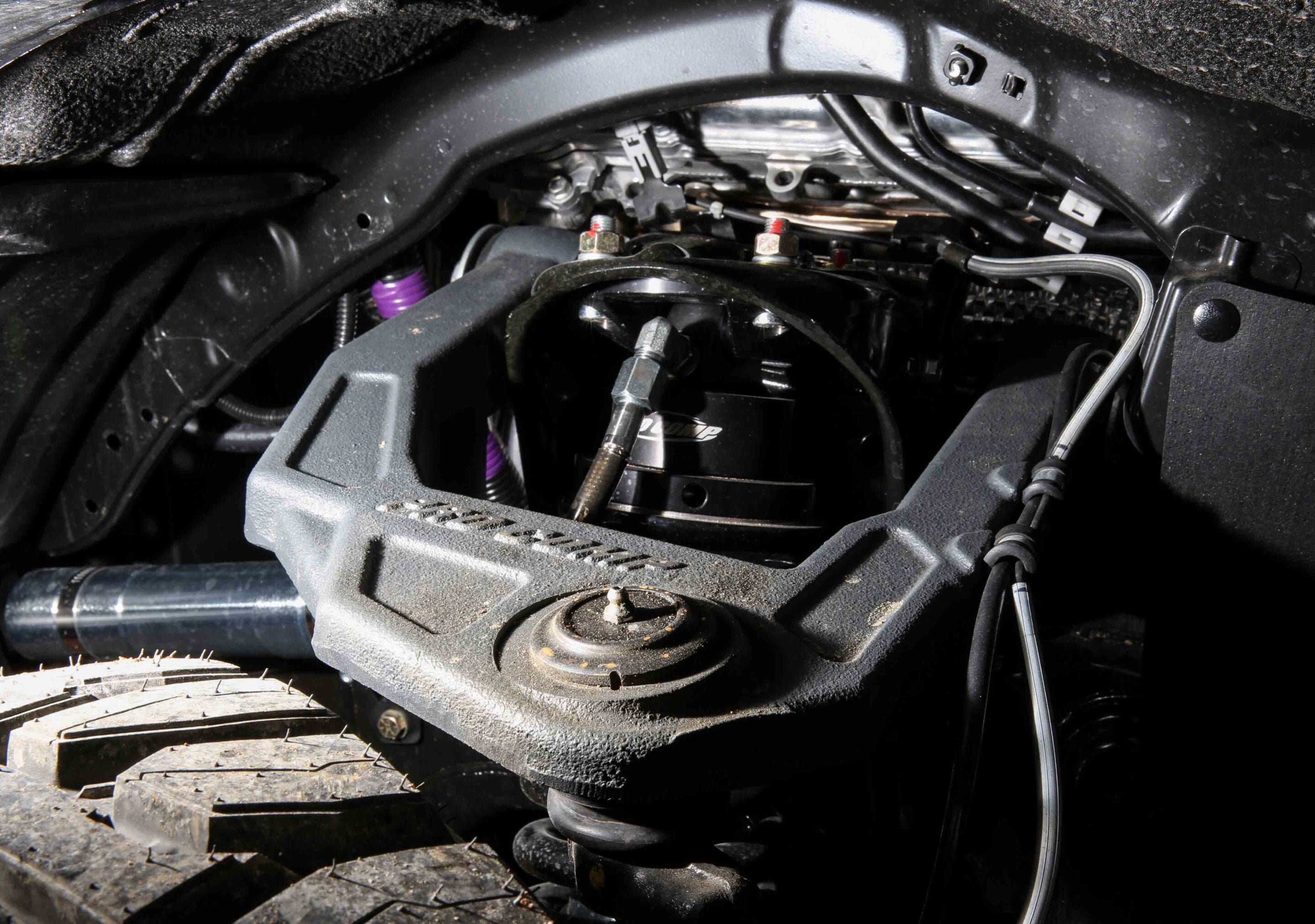
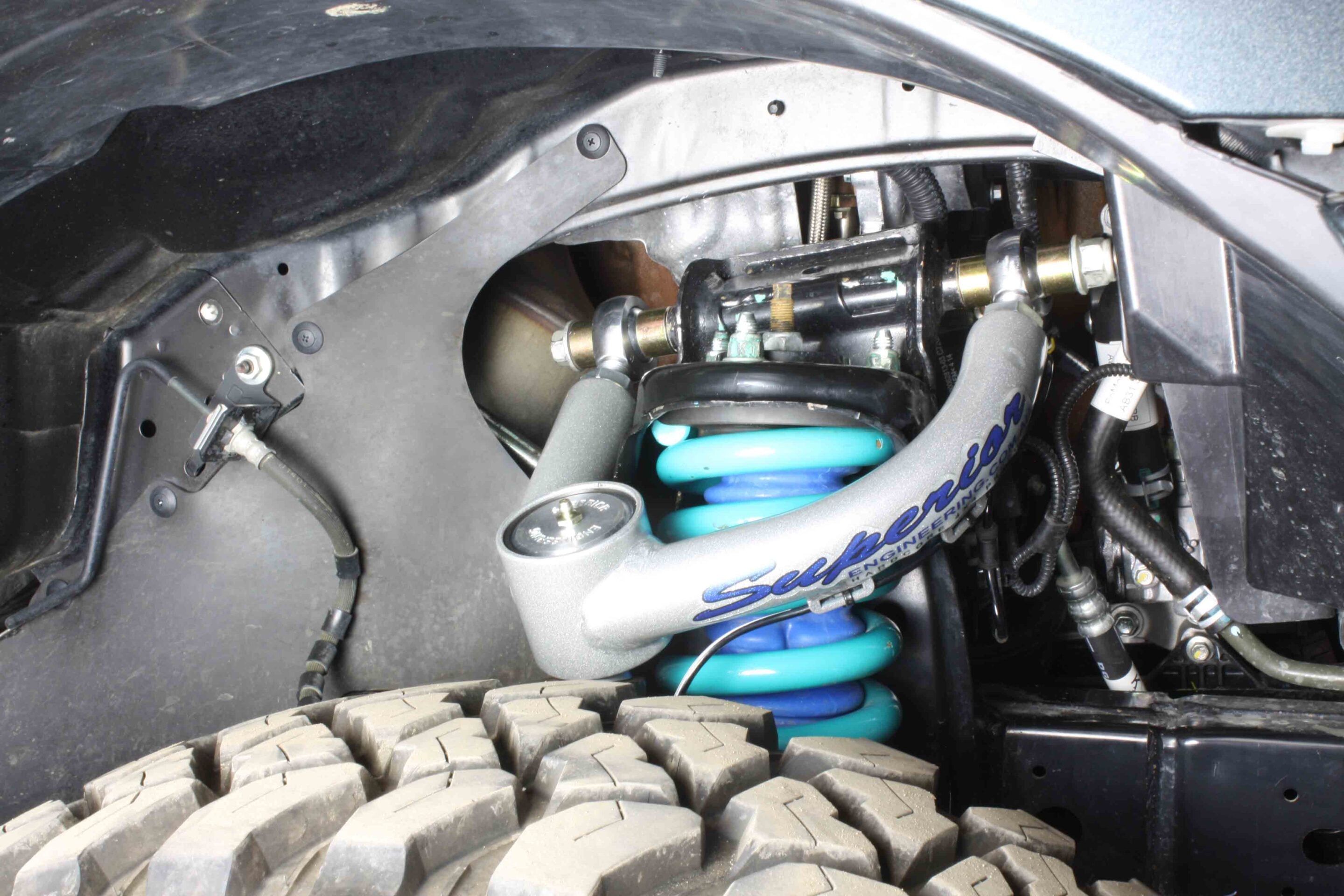
Aftermarket upper control arms from the likes of Superior Engineering are engineered to restore correct geometry at the new ride height. That means corrected ball joint positioning, revised arm angles, and in many cases improved clearance around struts and tyres. As one suspension engineer puts it: most IFS platforms have a relatively narrow alignment window from the factory, so once you lift the vehicle, you are consuming that adjustment range to bring geometry back into spec, not gaining more of it.
1
A misconception that has followed older suspension advice around for years is that lifts simply consume a fixed amount of alignment adjustment per 25mm of height. Modern platforms have moved past that neat formula.
Some newer dual-cab and SUV platforms now include revised factory arm geometry or broader alignment tolerance than earlier designs. Others remain more tightly constrained, particularly where ride quality and tyre wear were the priority at the factory. What has not changed is the fundamental relationship: as ride height increases, caster and camber shift, and the factory adjustment range must compensate. Once it is exhausted, aftermarket correction may be required to restore proper geometry.
Legal requirements and compliance in Australia
Suspension compliance in Australia has become more structured and more consistently enforced. Aftermarket upper control arms are generally treated as replacement components when they meet or exceed OEM standards, but that classification is not a blanket road-legal guarantee in every scenario.
To be compliant, aftermarket arms must be demonstrably equivalent or superior to factory components in strength, geometry, and durability. Manufacturer testing, engineering validation, and documentation aligned with current Australian Design Rules and VSB14 guidance all support that case.
In practice, the full modification package determines whether additional certification is required. A single component swap with solid manufacturer documentation may pass inspection, but combined changes including suspension lifts, track widening, and larger tyres can trigger engineering certification requirements. State rules vary. Worth knowing before you commit.
Importantly, correct documentation does not guarantee correct application. A compliant part fitted outside its tested application range, or combined with incompatible modifications, can become non-compliant.
1
Engineering quality and market variability
One of the more significant changes in the 4×4 aftermarket over the past decade has been the rise of product replication and inconsistent quality control in imported components.
On paper, many products look similar. The difference often comes down to material quality, ball joint specification, bush composition, and fatigue testing, much of which is not visible in a product photo.
Reputable manufacturers like Superior Engineering invest in finite element analysis, real-world load testing, and long-term durability validation. Not because compliance requires it, but because steering stability and component life under modern tyre sizes and touring loads depend on it. Lower quality copies continue to circulate, sometimes mimicking branding or compliance markings without the underlying testing. Supplier reputation and traceable documentation matter more than they used to.
15
What to look for in a modern upper control arm
Choosing upper control arms in 2026 is less about generic lift correction and more about platform-specific engineering. The right arm for a current-generation Hilux is not the right arm for a Ranger or a Prado, and broad model-family compatibility claims deserve scrutiny.
Key considerations include: correct ball joint articulation range for your specific lift height; compatibility with factory struts and aftermarket coilovers; clearance for larger tyres under full compression and droop; material specification suited to your load and use case, including towing or long-distance touring; verified compliance documentation aligned with Australian standards; and suitability for your specific chassis generation rather than a broader model family.
Well-designed arms should not require modification to spindles, reaming, or additional spacers to achieve correct geometry. If they do, that is worth questioning before fitment.
Additional components and related modifications
Upper control arms are part of a broader geometry correction system, not a standalone fix. Depending on platform and lift height, a moderate lift on an IFS vehicle may also benefit from differential drop kits to reduce CV angle stress, and steering correction components where geometry changes affect steering feel or bump steer.
The direction most quality suspension manufacturers are heading is integrated kits: arm geometry, strut length, and driveline angles engineered as a complete system rather than piecemeal components. Ball joint spacers and extended studs are increasingly out of favour, replaced by properly re-engineered control arm geometry that achieves correction without adding leverage stress to factory mounting points.
Off-road performance
Correctly engineered upper control arms do more than restore alignment. They directly influence usable suspension travel and tyre contact on uneven terrain.
When a vehicle is lifted without geometry correction, the upper ball joint can reach its articulation limit earlier in droop, reducing down travel and causing an inside wheel to lift prematurely in cross-axle situations.
Revised control arm geometry restores ball joint operating range closer to factory intent at the new ride height. The suspension cycles more freely, maintaining tyre contact longer and improving stability on broken ground. Clearance improvements around strut towers and tyre sidewalls reduce interference at full compression, particularly with 35-inch all-terrain or mud-terrain rubber on board. Pair that with quality struts from Superior Engineering and you have a setup that gets on with the job across the Vic High Country or the corrugations of the Gibb River Road without drama.
The result is not simply a taller vehicle. It is a suspension system that continues to function within its designed operating envelope at the new height, on the Vic High Country, the Gibb River Road, or wherever you are taking it.
The bottom line
Upper control arms have shifted from a niche correction component to a standard part of many properly engineered suspension lifts on modern 4x4s.
As platforms become more geometry-sensitive and compliance frameworks tighten, the case for doing this properly only gets stronger. Match the arms to the vehicle, the lift height, and the intended use, and you protect the alignment, the components, and the handling characteristics the vehicle was built to deliver. Get it wrong and you will be chasing problems for the life of the build.
Follow 4X4 Australia on Google
Get more 4x4 news, reviews and gear stories from 4X4 Australia in your Google feeds.