Advice

Gallery 1
Hydrogen-powered cars use electricity to drive their wheels, but instead of storing all that energy in a large battery, they generate electricity onboard using hydrogen.
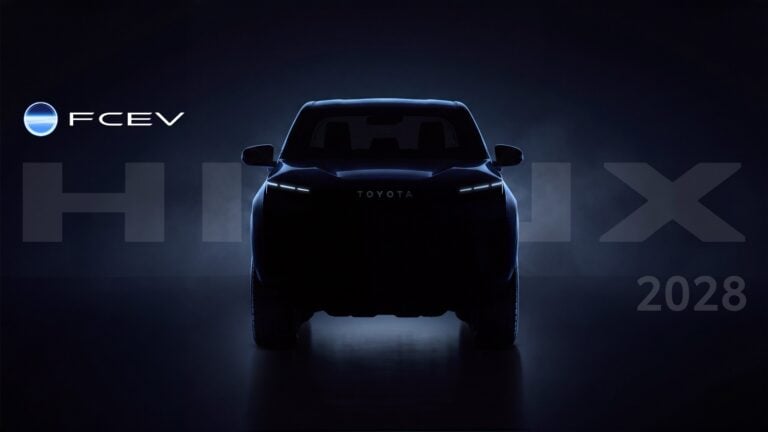
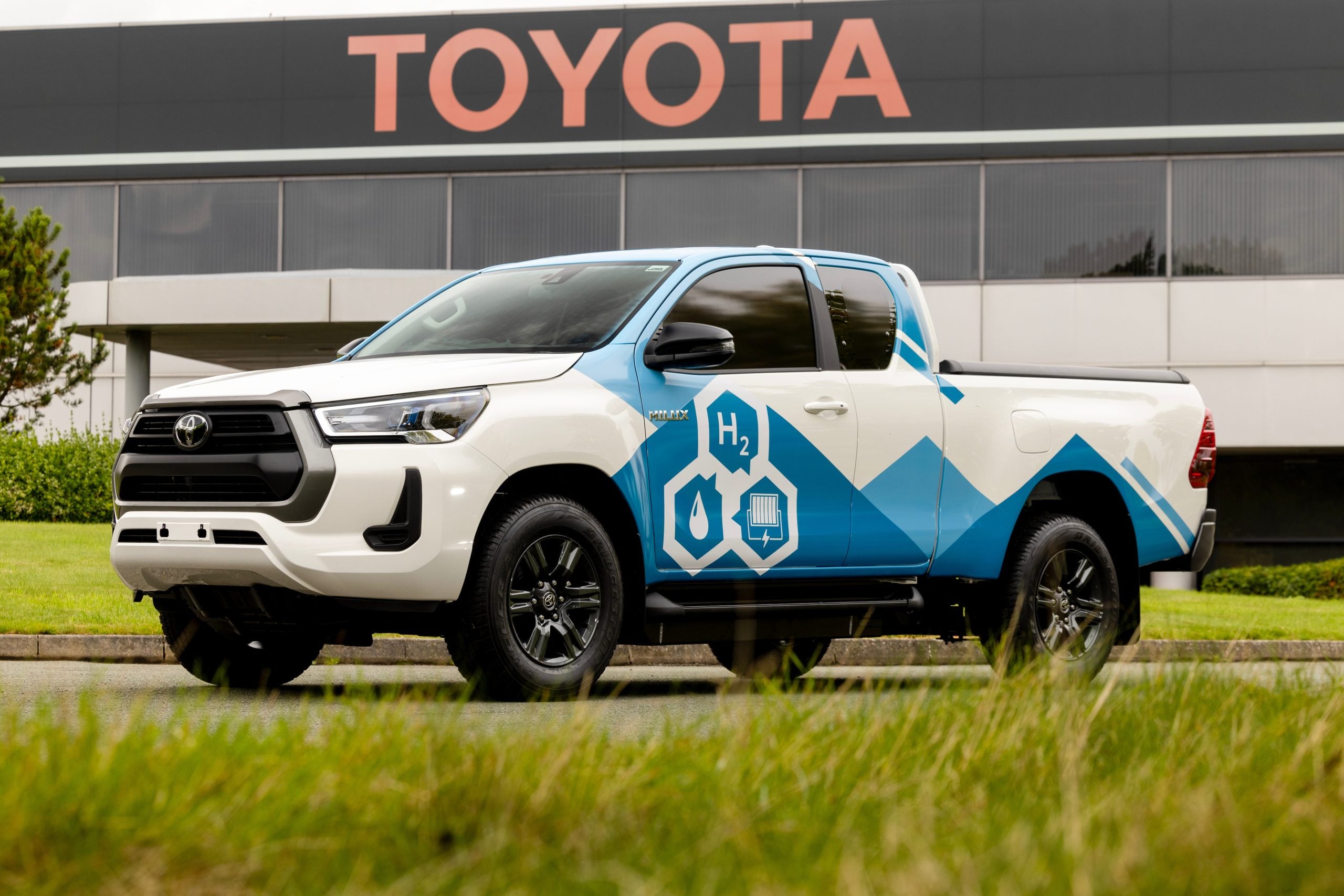
A hydrogen fuel-cell electric vehicle (FCEV) is therefore an electric vehicle, but its energy source and refuelling process are different from a battery electric vehicle (BEV). With Toyota confirming production of its hydrogen fuel-cell HiLux for 2028, the technology is set to become another powertrain option for the familiar ute, alongside its existing petrol, diesel, hybrid and battery-electric versions.
How does a hydrogen fuel-cell car work?
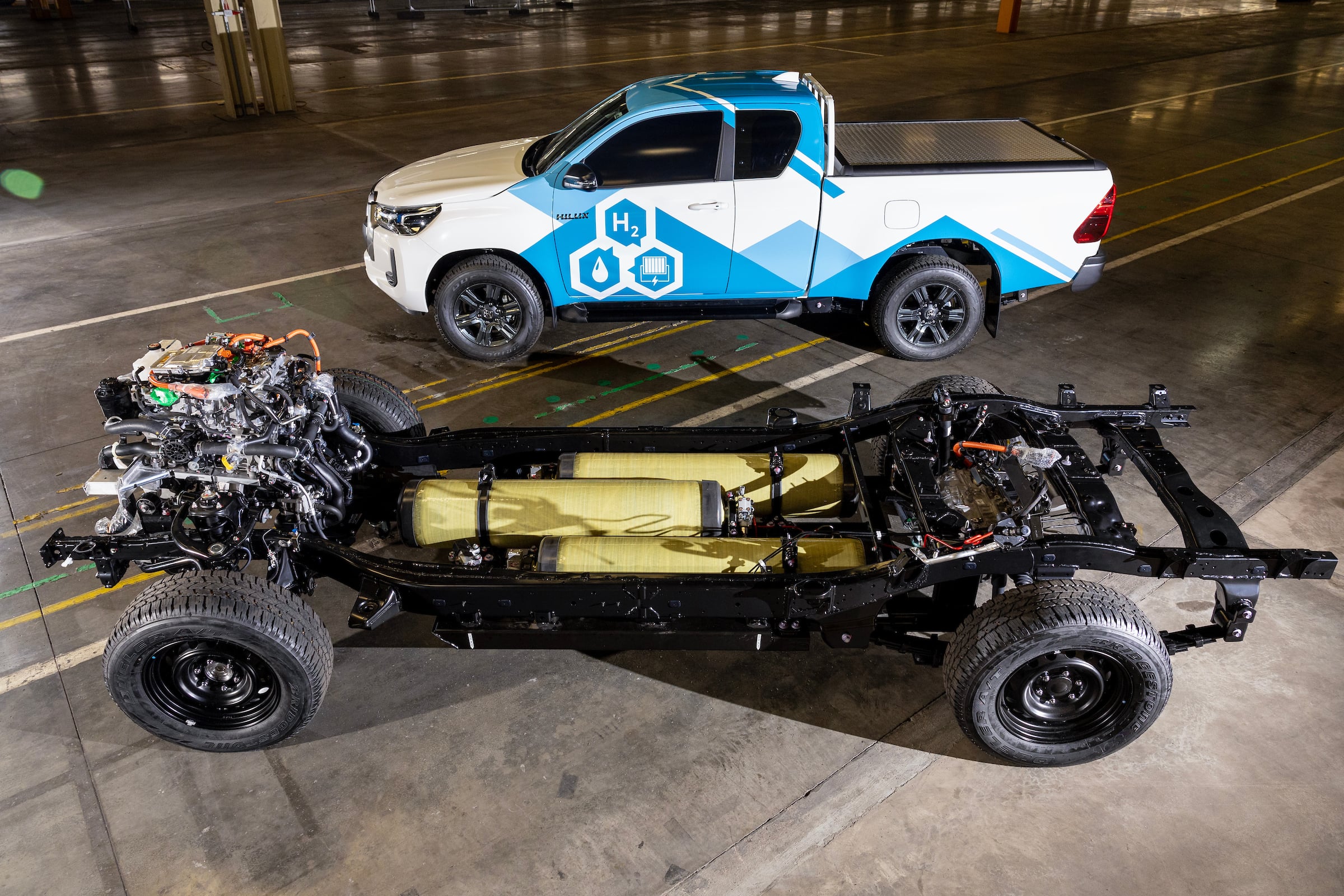
An FCEV stores compressed hydrogen in high-pressure tanks, typically mounted within the vehicle’s structure. When the vehicle is running, hydrogen is fed from the tanks into the fuel-cell stack, while oxygen is drawn from the surrounding air.
Inside the fuel-cell stack, hydrogen is separated into protons and electrons. The protons pass through a special membrane, while the electrons are forced through an external electrical circuit. That flow of electrons creates the electricity used to power the vehicle’s electric motor.
The protons then combine with oxygen and the returning electrons on the other side of the membrane, producing water and heat. There is no combustion involved, so the fuel-cell system doesn’t burn hydrogen in the way a petrol or diesel internal-combustion engine burns fuel.
The electricity generated by the fuel cell can be used to drive the electric motor, while a battery provides additional power when required and captures energy during regenerative braking. Under hard acceleration, for example, the battery can supplement the fuel cell, while energy recovered during deceleration can be stored for later use.
The electric motor then drives the wheels in much the same way as it does in a BEV. In the hydrogen HiLux, the key difference from the battery-electric version is where the vehicle gets its electricity: the BEV stores electricity in a large battery, while the FCEV generates it onboard from hydrogen.
1
Is hydrogen safe?
Hydrogen is highly flammable, so FCEVs such as the hydrogen HiLux use specially designed high-pressure tanks, fuel systems and safety controls.
The tanks are engineered and tested to withstand the pressures involved, while sensors and shut-off systems can isolate the hydrogen supply if a problem is detected.
Hydrogen is also lighter than air, meaning it rises and disperses quickly if released rather than pooling around the vehicle. As with any vehicle, safety depends on the vehicle’s design, maintenance and compliance with applicable safety standards.
Hydrogen vs petrol and diesel
A petrol or diesel vehicle uses an internal-combustion engine to burn fuel and produce mechanical power. An FCEV uses a different type of powertrain, with a fuel-cell system converting hydrogen into electricity that powers an electric motor.
That means the hydrogen HiLux will have electric drive rather than a conventional petrol or diesel internal-combustion engine. The fuel-cell reaction produces water, with no CO₂ or other combustion emissions from the vehicle’s tailpipe. However, the overall emissions associated with hydrogen depend on how the hydrogen is produced.
Hydrogen vs BEV and PHEV
A BEV stores its energy in a large rechargeable battery and is charged from an external electricity supply. An FCEV instead stores hydrogen and generates electricity onboard, so it is normally refuelled with hydrogen rather than plugged in to replenish its main energy source.
A PHEV combines a rechargeable battery and electric motor with a petrol or diesel internal-combustion engine, whereas an FCEV uses a fuel-cell system and electric motor instead of a conventional combustion engine. In simple terms, a BEV stores electricity in a large battery, a PHEV combines battery power with an ICE, and an FCEV uses hydrogen to generate electricity onboard.
Toyota’s hydrogen HiLux therefore shares its electric drive characteristics with the HiLux BEV, but carries its energy in hydrogen rather than relying primarily on a large battery.
How is a hydrogen car refuelled?
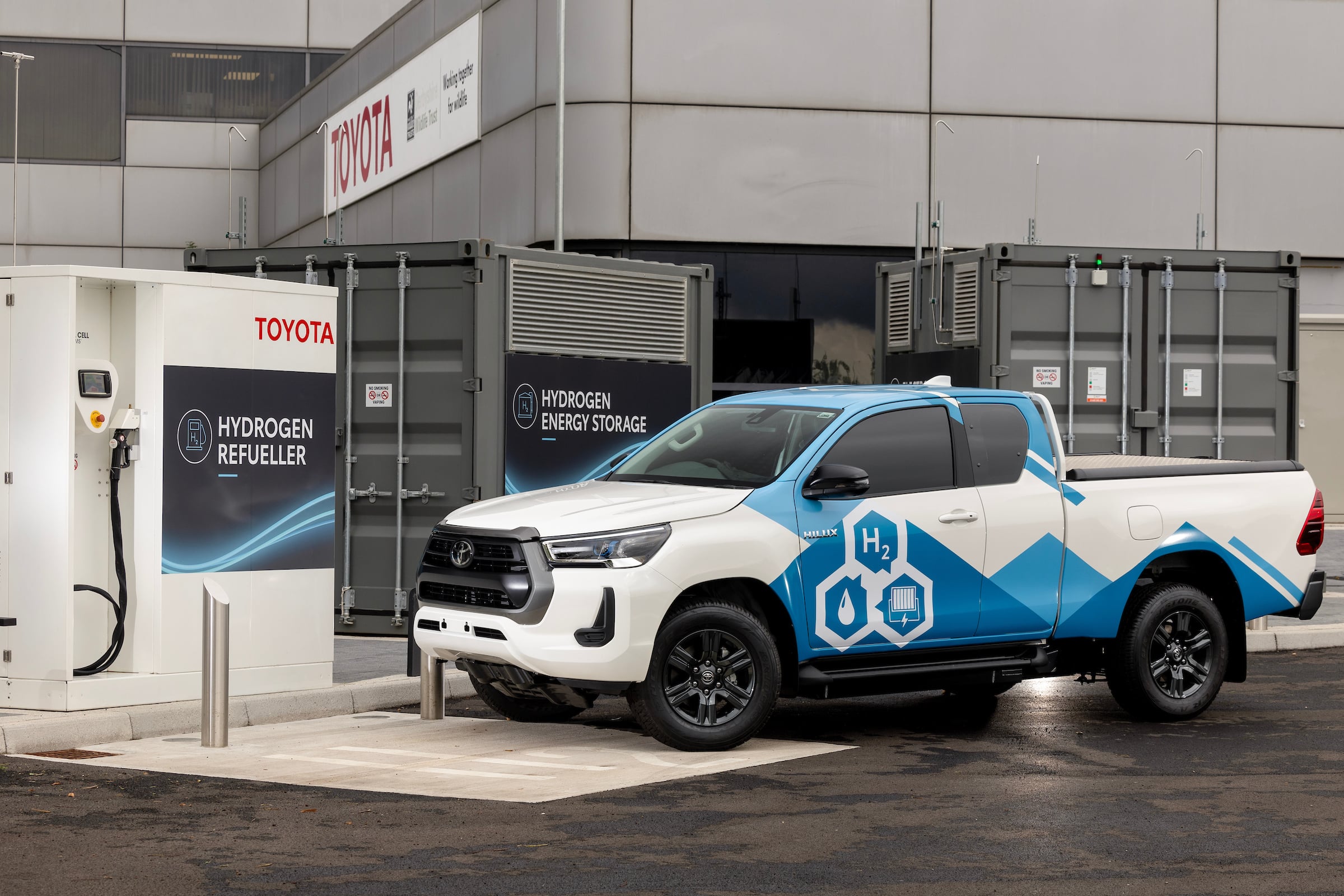
Instead of plugging into a charger, the driver connects a hydrogen refuelling nozzle to the vehicle.
Compressed hydrogen is transferred into the vehicle’s tanks and used by the fuel-cell system to generate electricity. This makes the process more like conventional refuelling than charging an EV. For the hydrogen HiLux, this means replenishing its energy supply at a hydrogen station rather than connecting it to an EV charger, although hydrogen refuelling infrastructure is currently far less widespread.
Toyota is targeting more than 400km of WLTP driving range for the production hydrogen HiLux, with the vehicle also targeting up to 2500kg of towing capacity.
1
Why use hydrogen?
Hydrogen offers electric propulsion without relying primarily on a large traction battery.
That makes it a technology manufacturers are considering for applications where range, payload, towing and refuelling time are important. For a ute such as the HiLux, those factors are particularly relevant. Hydrogen has high energy content by mass, making it a potential option for applications where carrying a large amount of stored energy without a very large battery is important. However, hydrogen requires high-pressure tanks because it has relatively low energy density by volume.
The trade-off is the need for dedicated hydrogen production, transport and refuelling infrastructure, with the environmental benefits also depending on how the hydrogen is produced.
Toyota’s hydrogen HiLux is confirmed for production in 2028 and will use the company’s third-generation hydrogen fuel-cell technology.
Hydrogen car FAQs
Do hydrogen cars have an engine?
A hydrogen fuel-cell vehicle doesn’t have a conventional petrol or diesel internal-combustion engine. Instead, it uses a fuel-cell system to generate electricity, which powers an electric motor that drives the wheels. In that sense, it has a different powertrain rather than simply a different type of internal-combustion engine.
Do hydrogen cars need to be charged?
No, not in the same way as a BEV. An FCEV is normally refuelled with compressed hydrogen, which is stored in onboard tanks and converted into electricity as the vehicle drives.
What comes out of a hydrogen car’s exhaust?
The fuel-cell reaction produces water, so there are no direct CO₂ emissions from the vehicle’s tailpipe. However, the overall emissions associated with hydrogen depend on how the hydrogen is produced.
How far can a hydrogen car travel?
Range varies between vehicles, but Toyota is targeting more than 400km of WLTP range for its hydrogen-powered Hilux. Actual range will depend on factors including driving conditions, load, speed and towing.
Is hydrogen better than a battery electric vehicle?
The two technologies have different strengths and requirements rather than one being universally better. A BEV stores electricity in a large battery, while an FCEV generates electricity onboard from hydrogen, so the choice depends on factors such as vehicle use, range, payload, refuelling or charging requirements and available infrastructure.
Hydrogen pros and cons
Pros
- Electric drive: Delivers electric-motor drive without relying on a large traction battery
- Fast refuelling: Hydrogen can be refuelled rather than requiring a lengthy battery recharge
- Long-distance potential: High energy density makes hydrogen relevant to longer-range and heavier vehicles
Cons
- Limited infrastructure: Hydrogen refuelling stations are far less widespread than fuel stations and EV chargers
- Hydrogen production: Environmental benefits depend heavily on how the hydrogen is produced
- Storage and complexity: High-pressure hydrogen tanks and fuel-cell systems add cost and engineering complexity
Follow 4X4 Australia on Google
Get more 4x4 news, reviews and gear stories from 4X4 Australia in your Google feeds.