Advice

Gallery 1
My first terrifying taste of night driving in the outback took place back in 1995 just after I waved goodbye to a few mates at Broken Hill airport.
It was late in the afternoon as I pointed the Daihatsu Rocky I was driving towards Cobar, only 470km to the east, and I wondered why then-4X4 Australia Editor Ron Moon, and then-Tri-State Safari owner Mick McCulkin had both strongly advised me to instead spend the night in town, and then head off in the morning. I soon found out why…
As I watched the sun dip below the horizon in the Rocky’s rear-view mirror, I had no idea of the terror that lay ahead. Sure, I had seen a few kangaroos in the first 50 clicks or so out of Broken Hill, but they mostly seemed content to sit on either side of the road. But as the deepening red sky darkened, the ’roos became much more active … and far more numerous.
I started counting how many I could spot and, at their peak, I reckon there could have been as many as 20 or more ’roos between each guide post on each side of the road … and several of them thought the shafts of golden light coming from the Rocky’s spotties were an invitation to hop across the road and reach nirvana.
To avoid an impact with Skip, I had to drop my speed significantly, first from 100km/h down to 90 then 80 … and eventually as low as 60 clicks. The problem now was that the countless semis shifting freight throughout the night would come thundering past me at a dollar-ten.
I tried to drop in behind one of these semis, thinking that it would protect me from the kangaroo onslaught, but the remains of one ’roo were simply flicked up by its wheels and smeared over the Rocky’s windscreen, the wiper motor struggling to clear the bloody mess. It was like a horror movie.
Eventually I made it to my hotel in Cobar near midnight, relieved but tired. Lesson learnt: if possible, avoid driving at night in the outback.
JUMP AHEAD
- Avoid, if you can
- Trip planning
- Lighting upgrades
- Frontal protection
- Driving techniques
- Fatigue
- FAQs
- Tips and pitfalls
1
Why night driving in Australia is sometimes unavoidable
But Australia is a big country with vast distances that can’t always be covered between sunrise and sunset, especially in the shorter months which coincide with the 4WD touring season.
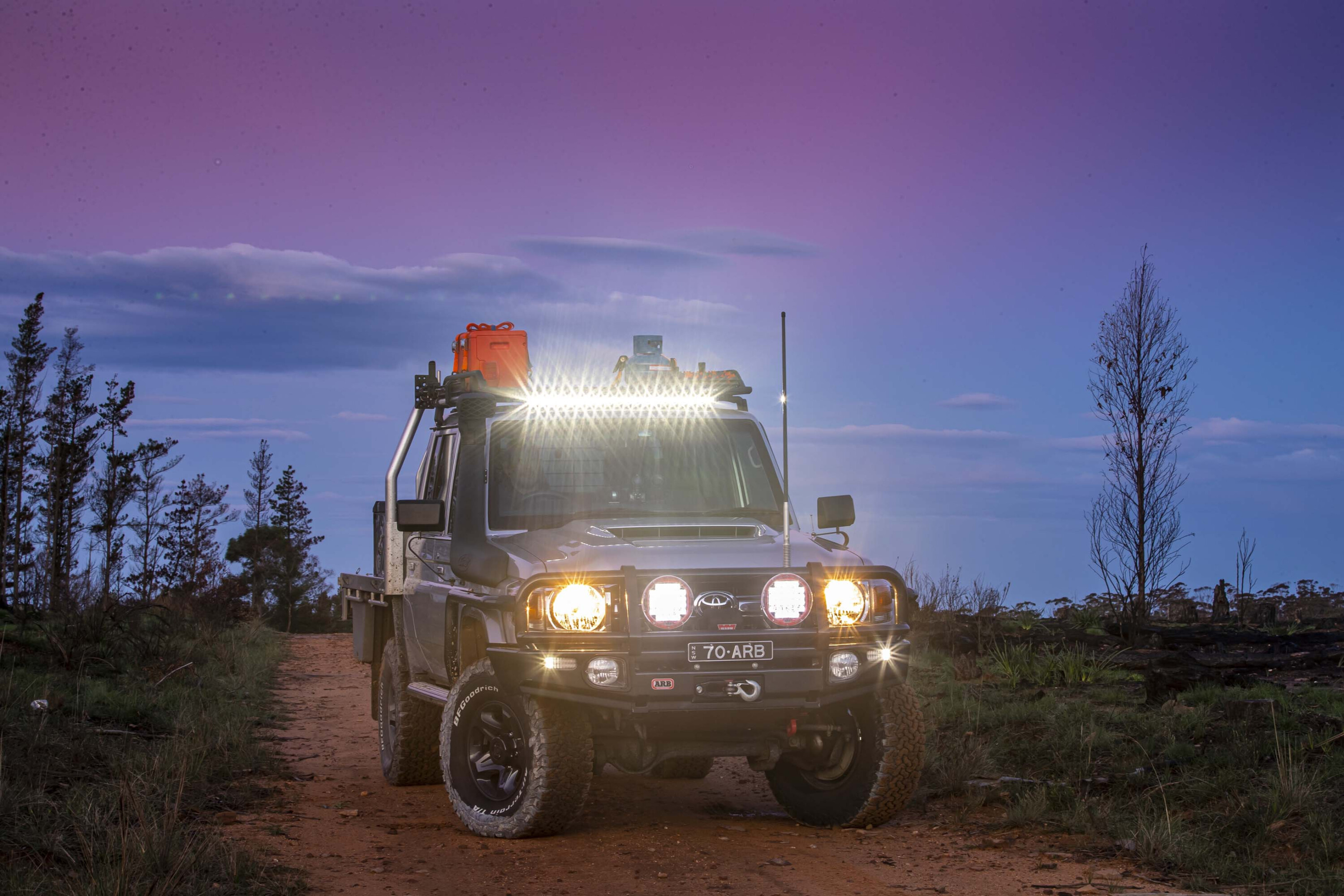
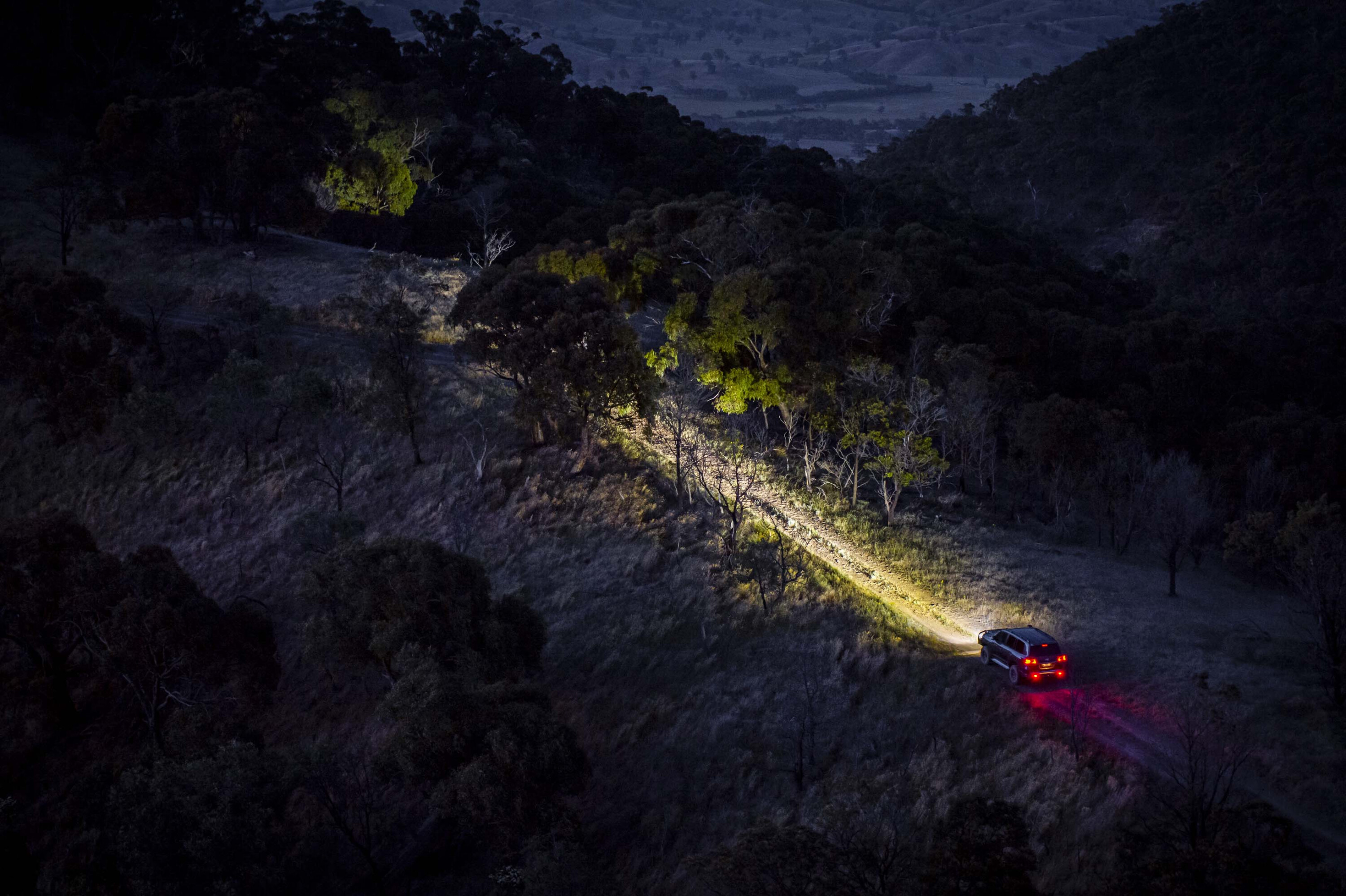
As a result, sooner or later we all find ourselves driving at night on country and outback roads … roads that are often swarming with wildlife and wandering stock that can be difficult to spot until it’s too late, especially if you’re relying on your vehicle’s standard lighting system to pierce through the dark.
And if you don’t have decent frontal protection on your vehicle, you could end up stranded in the middle of nowhere in the middle of the night.
1
Trip planning for 4×4 night driving
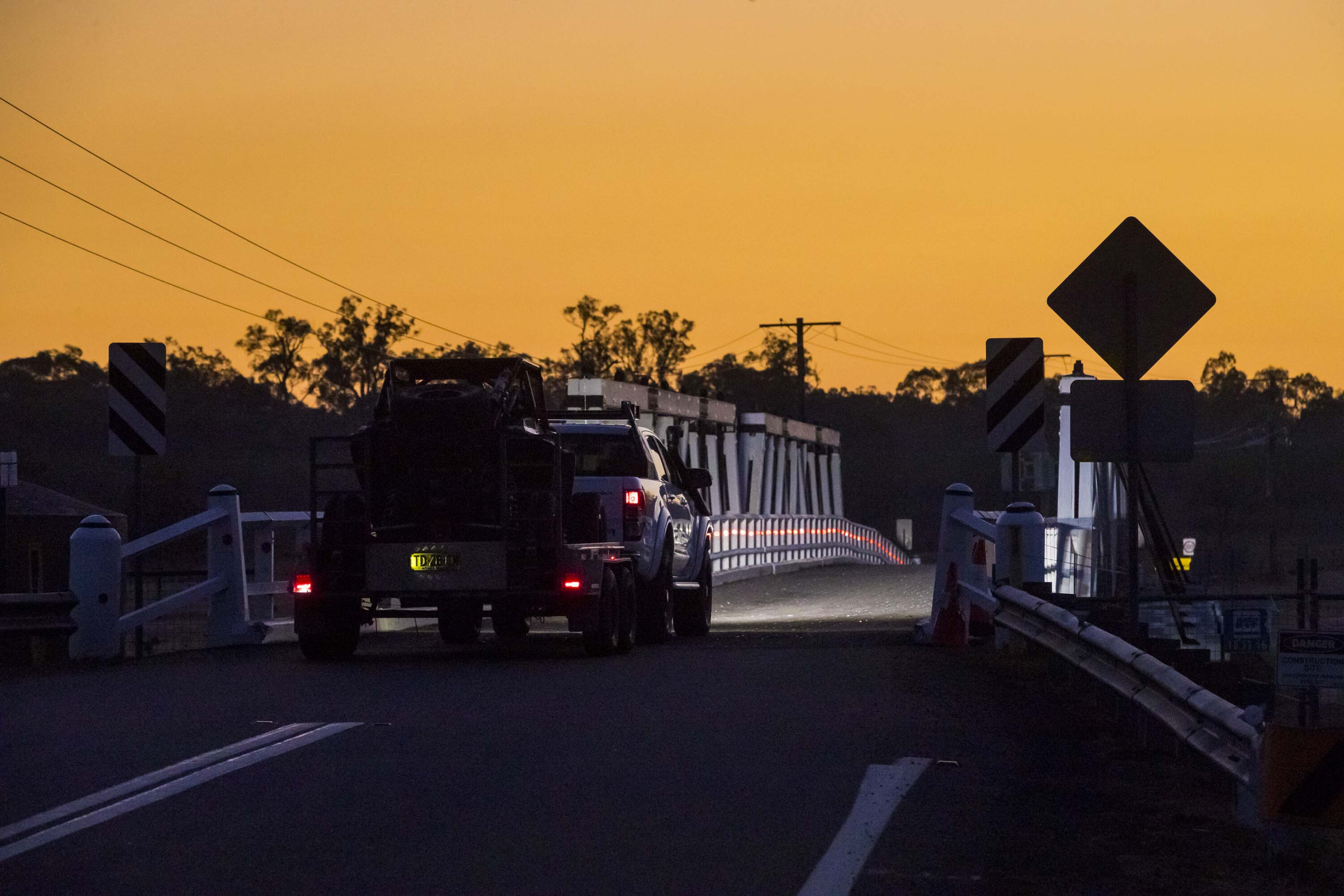
The best way to avoid night driving altogether is through proper and thorough trip planning.
When you’re planning a journey, check out the distances involved between stops, look at the conditions you are likely to encounter and how they will affect your average speed, and calculate what time you will need to depart point A to reach point B before nightfall, or preferably before dusk when the wildlife becomes more active and difficult to spot.
On any 4WD trip, you should expect the unexpected. A flat tyre, for example, can add at least 30 minutes to a trip, or if you become stuck off-road, it may take several hours to conduct a successful vehicle recovery, so make sure you build some flexibility into your schedule for unplanned events.
Of course, depending on the length of the delay, there may be no way you can make it to your intended overnight stop before nightfall, so you must either be willing to drive at night, or to set up camp somewhere until morning — and if conditions become too dangerous, pulling up early is often the safest option.
Of course, on day trips you might not be equipped to spend the night on the side of the road, but you should always carry at least some food and water in your vehicle, as well as a blanket or sleeping bag. As Lord Baden Powell used to say, be prepared. In remote areas, it’s also worth considering long-range communication such as a satellite phone or emergency beacon, as UHF radios have limited range.
Lighting upgrades for night driving
On those occasions when you have no choice but to drive at night, you’ll want to make sure you can see where you are going and, even in this day and age of modern LED lighting, the standard headlights on many vehicles are woefully inadequate for driving on country and outback roads once the sun has dropped below the horizon.
There are several options when it comes to improving the lighting on your vehicle, including replacement wiring looms, upgraded headlight bulbs/LEDs and, of course, the fitment of driving lights and light bars.
For those who drive an older vehicle, replacement of the standard 55W halogen globes with higher-output globes can significantly improve lighting performance, especially when combined with an upgraded wiring loom with thicker wiring and better components to minimise voltage drop.
Some modern vehicles run poor halogen lights too; the standard headlights on my 2020 Ford Ranger XLS Sport, for example, are simply terrible, so a bulb upgrade is a simple fix. Swapping out the standard bulbs with LED replacements is another alternative, but overall light output will still be limited by the reflectors and lens optics of the standard headlights.
Another alternative, and available for several vehicle models whether old or new, is to replace the OE halogen headlights altogether with LED headlight units. But make sure the lights are ADR approved, and preferably from a reputable manufacturer; there are many cheap units on the market with poor optics that could result in less light output than the original headlights.
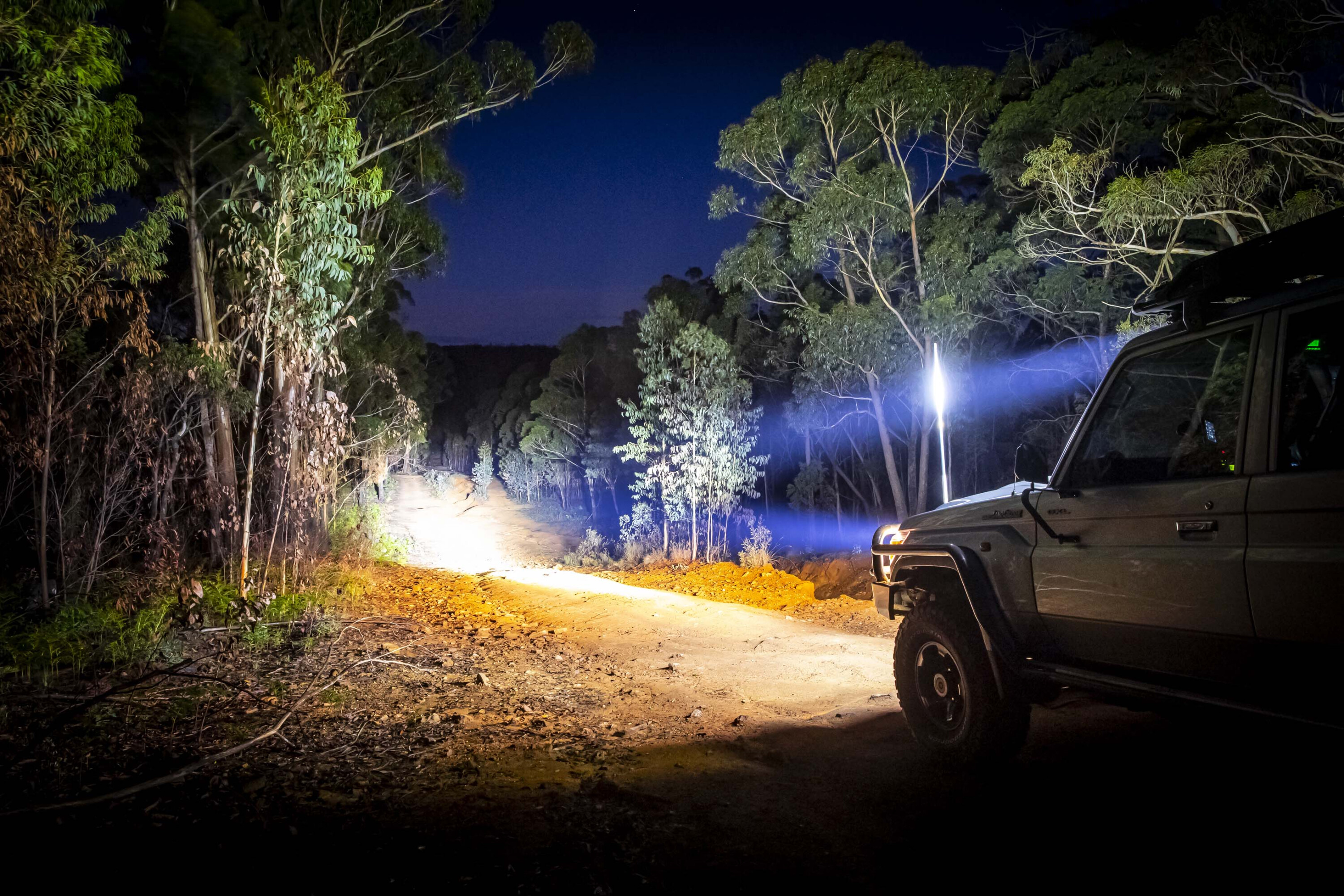
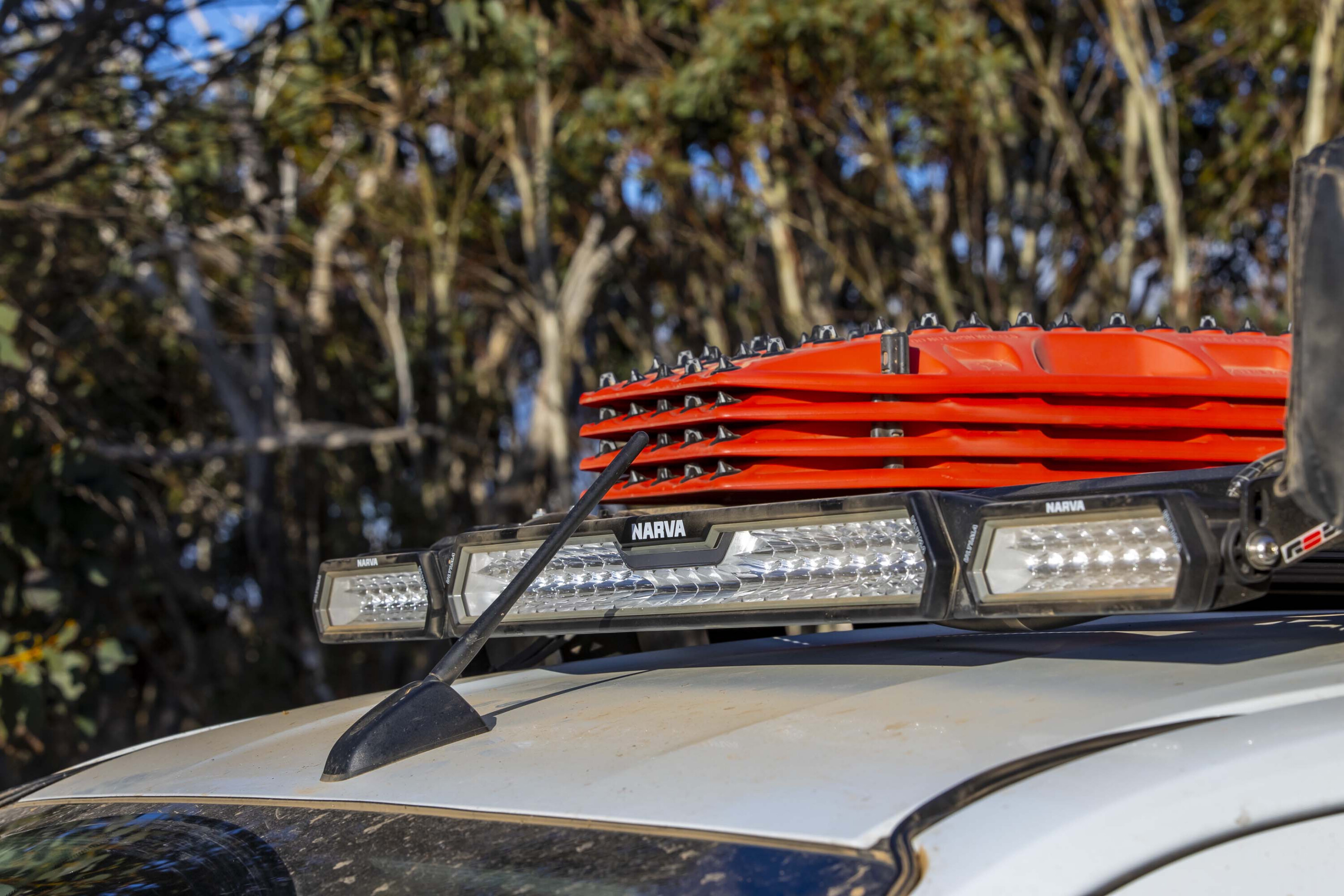
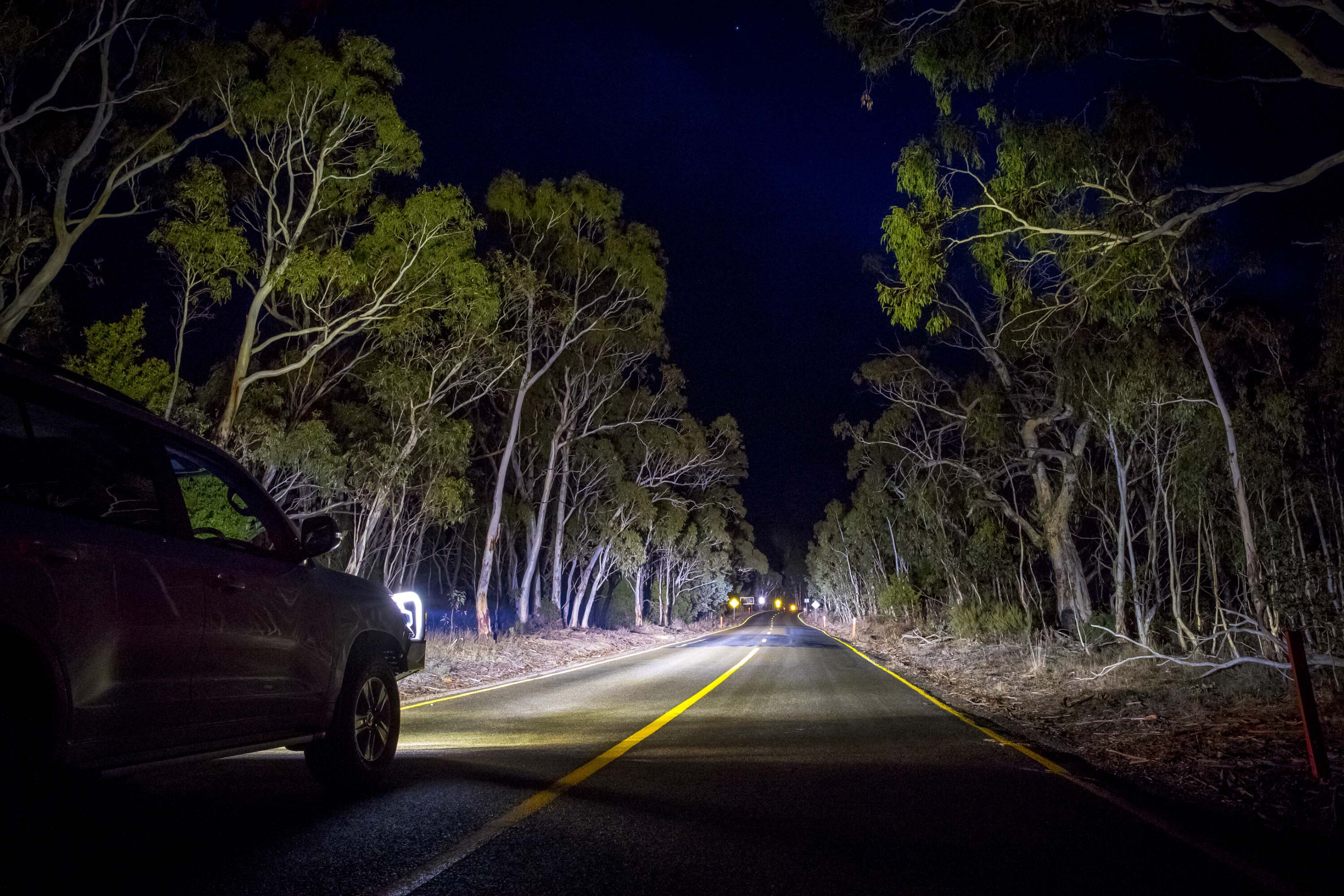
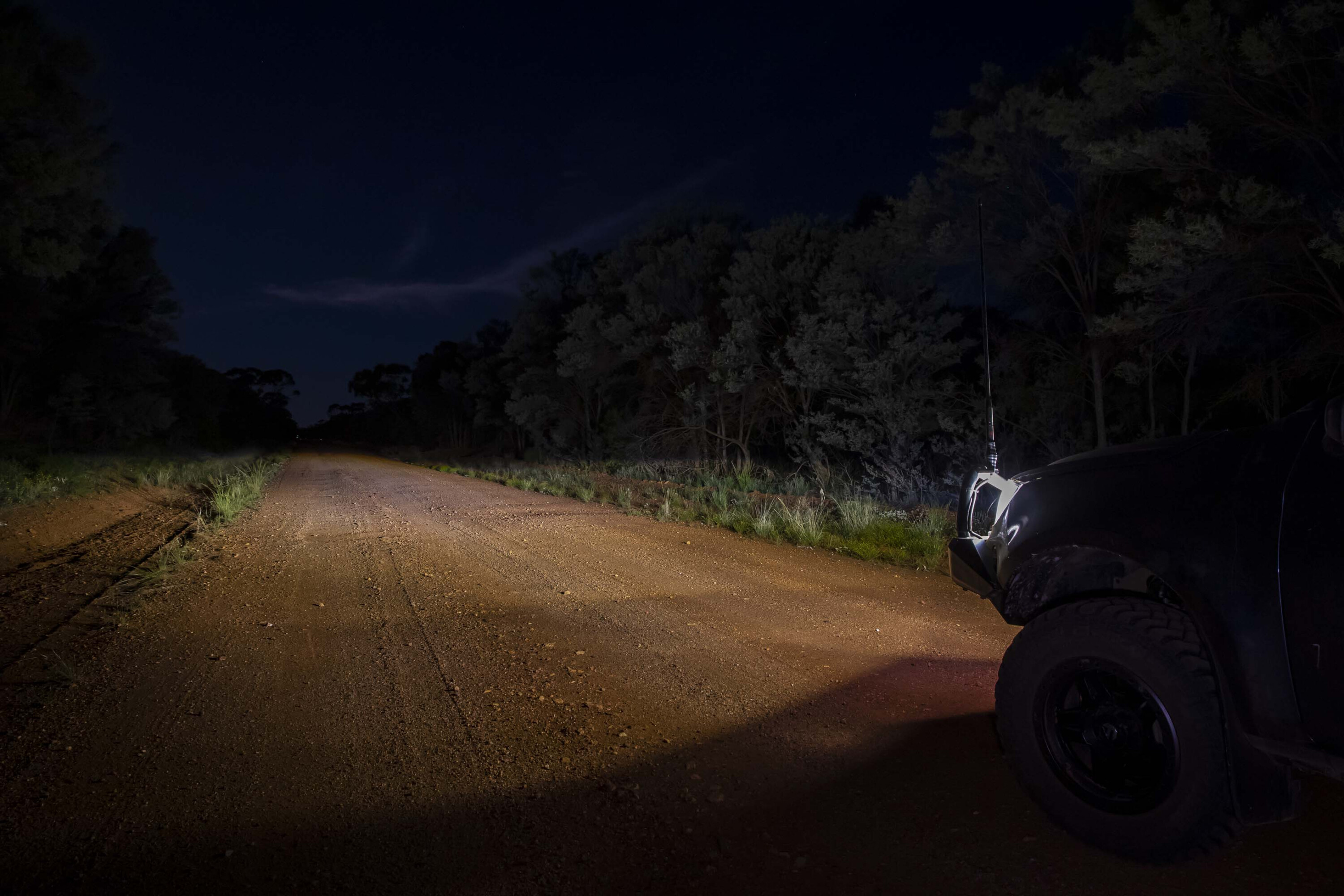
When it comes to driving lights and light bars, these days it’s LED all the way thanks to low power consumption combined with good light output. Once again, not all driving lights and light bars are created equal, so make sure you do your homework and opt for quality items that will stand the test of time. Most driving lights and light bars are available with either spot beams or spread beams, or a combination of both, and which light pattern you opt for will depend on the type of night-time driving you’re likely to be doing.
Spot beams are best suited to the kind of open country you’re likely to encounter in the outback, where you want to be able to see as far down the road as possible, whereas spread beams are better suited to closed-in country, with twisty roads and lots of vegetation, for example, where lighting up the distance is not as important as lighting up the middle- and near-distance, and to the sides of the road.
1
Most four-wheel drivers will encounter varying terrain depending on where they are travelling, which is when a spot/spread beam combination comes in handy. With driving lights, you could fit one spot beam and one spread beam, while some light bars have spot beams down in the centre and spread beams off to the sides. Another option is to fit a couple of spot beam driving lights and a spread beam light bar.
Most LED driving lights and light bars are built pretty well these days, with strong housings and tough polycarbonate lenses, and they need to be in order to handle the tough conditions they are likely to encounter hanging out the front of your 4WD, with stones and rocks flicked up by other vehicles, the occasional knock from bird strikes, whacks from branches when driving off-road, and constant vibrations dished out by rough and corrugated roads.
Also look for lights with strong and easily adjustable mounting systems, and always mount them to a sturdy point on your vehicle, such as the flat upper surface of a bullbar so they don’t vibrate and get knocked out of alignment. Make sure any auxiliary lighting is wired to operate with high beam and complies with local regulations, and keep your headlights and windscreen clean, as dirt, dust and bug splatter can significantly reduce light output and visibility at night.
1
Frontal protection for outback driving
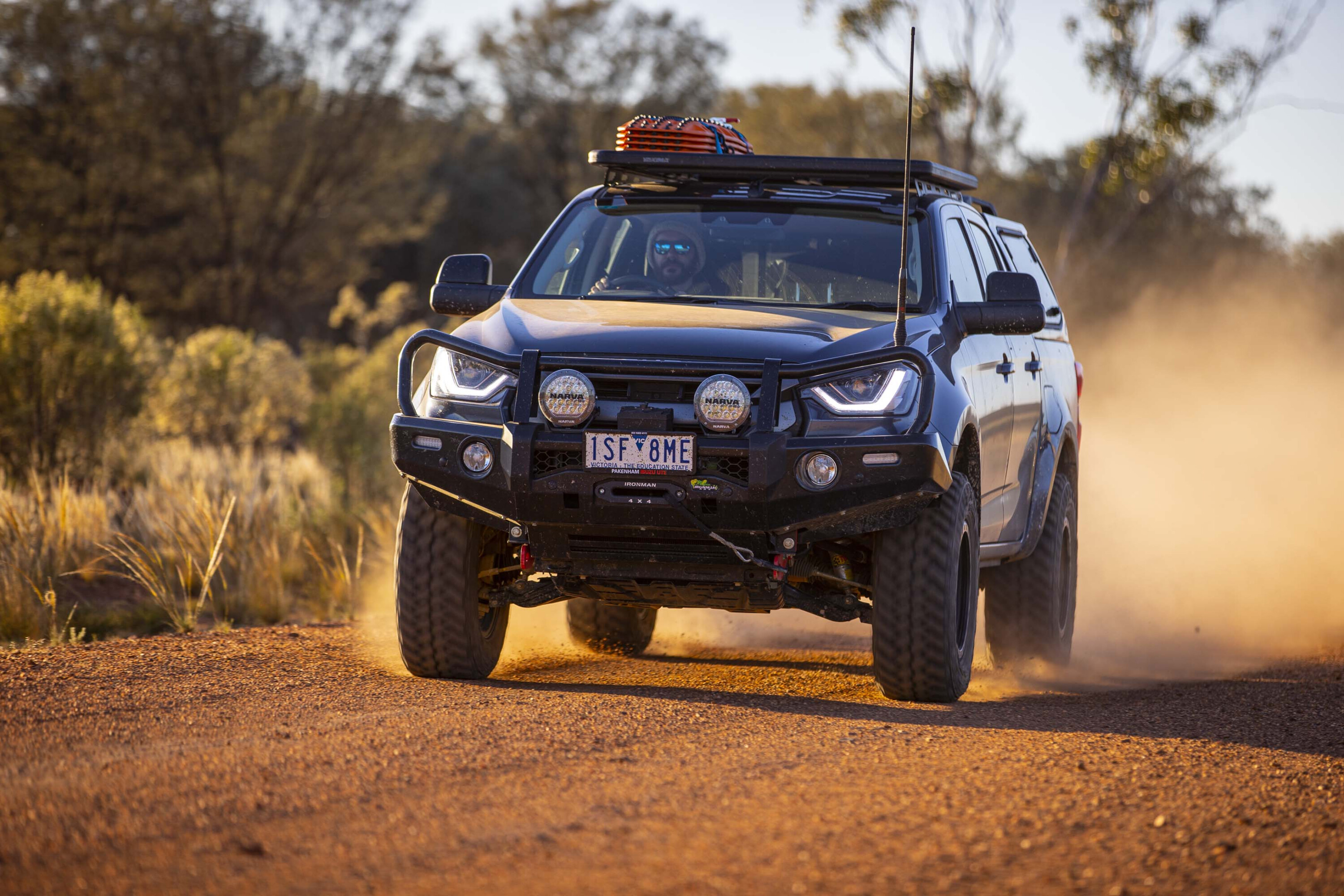
Speaking of bullbars, if any night driving is on the cards, you really need to have one fitted to your vehicle.
An animal strike on an unprotected vehicle can cause all sorts of damage, destroying the cooling system, breaking the headlights and even bending steering components, leaving the vehicle and its occupants stranded, and potentially in a life-threatening situation if driving in a remote area.
Most bullbars are manufactured from steel or aluminium, and there are even some plastic models on the market. A well-designed and built steel bullbar will offer the best protection, but there is a weight penalty. And while aluminium bars are generally not as strong as steel ones, they are lighter, which has benefits in terms of less wear and tear on vehicle components (suspension and tyres, for example), less of an effect on vehicle handling and less of an impact on vehicle performance and fuel economy.
No matter what material you opt for, ensure the bullbar protects the front-end of your vehicle as much as possible, including the cooling system and the headlights. Most bullbar manufacturers also produce compatible under-vehicle protection systems, designed to protect vulnerable mechanical components such as those related to the suspension and steering systems.
1
Night driving techniques
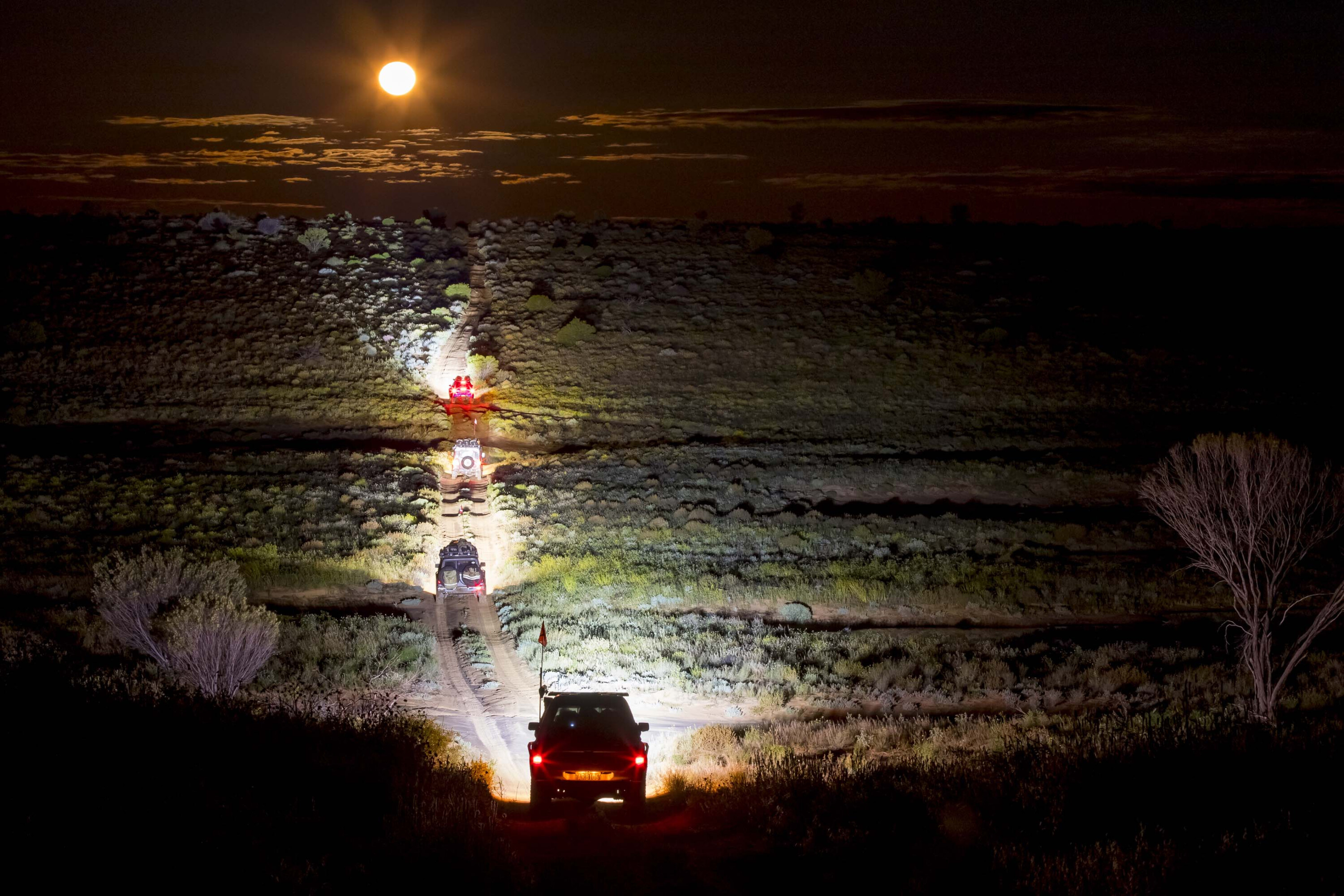
Even if you have equipped your vehicle with the best possible lighting system, and ample frontal protection, you still need to be super-attentive when driving at night to protect both you and your vehicle, as well as any wildlife and roaming stock.
On open roads, you want to look as far ahead as your lighting will permit, but also be wary of what is in the middle- and near-distance. Most animal strikes will come as a surprise, with kangaroos, for example, hopping out of the scrub on the side of the road right in front of you, not giving you enough chance to take evasive action.
For this reason, it’s important to adjust your speed to suit conditions; if it’s dark and there are a lot of animals about, you really need to slow down to give yourself the best chance of avoiding an impact. On dirt roads, remember that braking distances can increase and vehicle control is affected by tyre pressures, so drive accordingly.
1
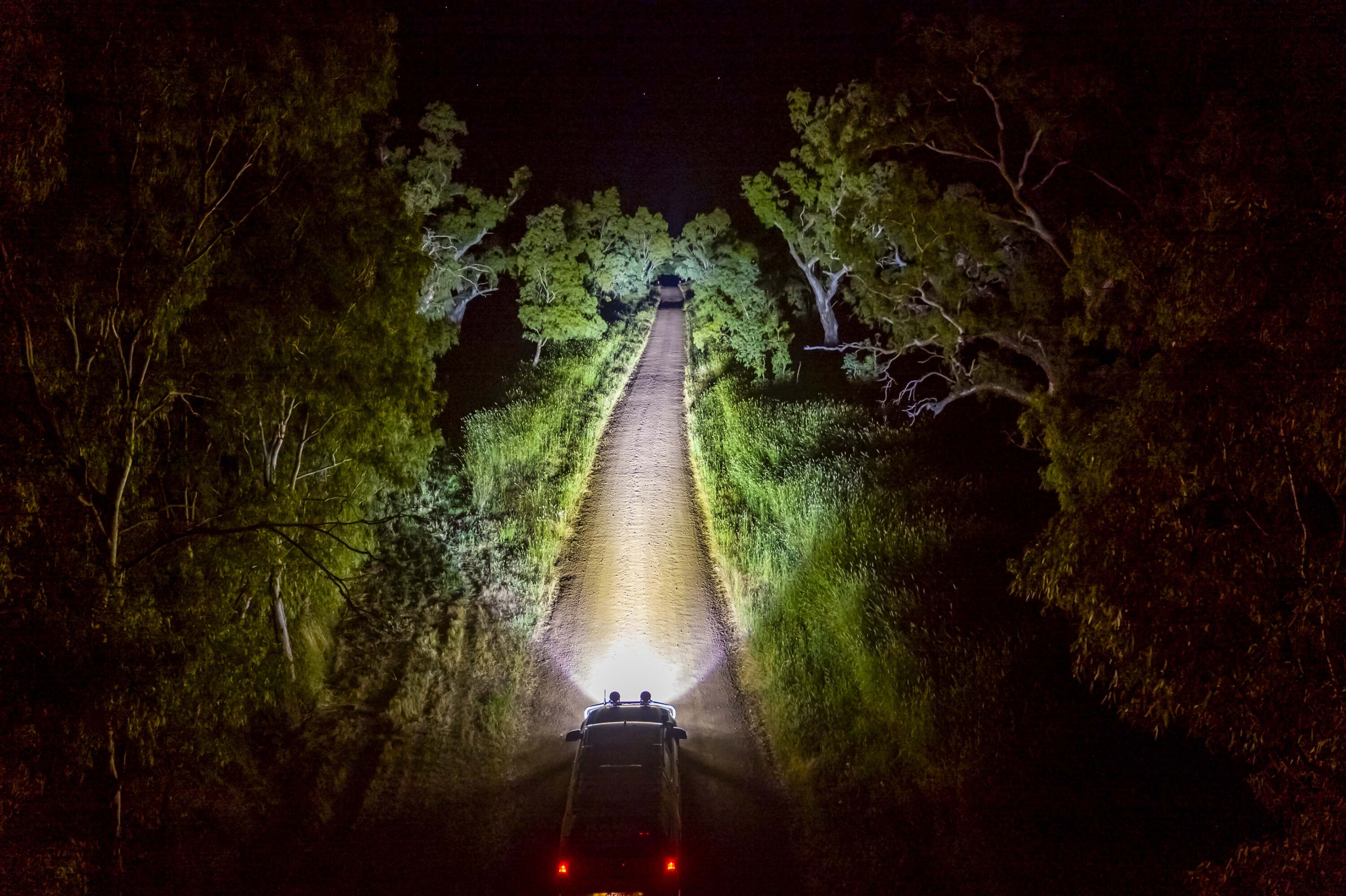
Wildlife can hop out of the darkness just about anywhere, but there are some places where animals are more likely to be lurking than others, such as at creek crossings or where there is decent-sized foliage near the sides of the roads. When you happen upon these scenarios, back off a little and always expect the unexpected.
Knowing when and how to best use your vehicle’s lighting system will make it easier to see where you are driving. You probably won’t want to use a pair of spot beams when driving in closed-in terrain with lots of foliage about, for example, as bright, focused points of light shining into the bush just ahead of you can be distracting.
This is when a combination of spot driving lights and a spread-beam light bar can come in handy, as you could switch off the driving lights and rely solely on the spread beam, which would be much better suited to this scenario, then, when the terrain opens again, switch the spot beams back on.
1
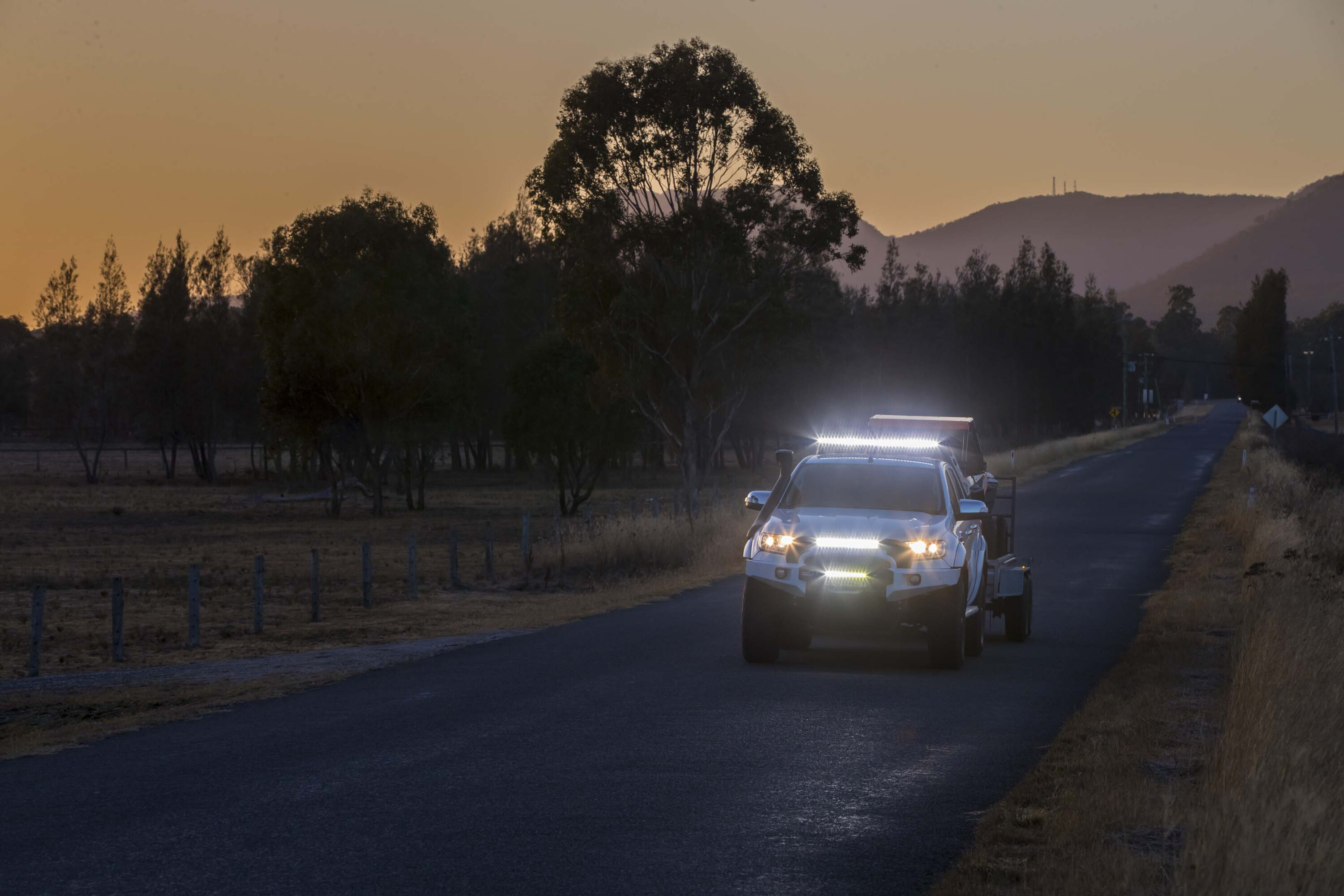
Powerful spot beams can also be problematic on highways where there are a lot of reflective road signs about; as the road signs are lit up they can distract you and make it difficult to see what is on the road right in front of you, so you might need to dip them. Some driving lights offer light-output adjustment, so you can still have some of the benefit of improved light output without the blinding reflections off road signs.
Dust can also be a major hazard at night, especially when following other vehicles on dirt roads. In heavy dust, bright lights can reflect back and reduce visibility, so it can be better to drop back or dim your lights.
Always remember to dip your high-beam and/or driving lights for oncoming traffic. Try to anticipate when oncoming vehicles are likely to see your lights, and dip to low-beam beforehand so the oncoming driver isn’t blinded by all those banks of bright LEDs.
If you’re cresting a small hill, or driving around a bend, you should be able to see an oncoming vehicle’s light beams before you see the lights, so you will know when to dip your lights. Also dip when following other vehicles; we all know how difficult it can be to focus on the road ahead when you have the high-beam lights of a following vehicle shining in your eyes from your rear-view mirrors.
1
Don’t stare at the headlights of oncoming vehicles, instead look to where you want to go, on your side of the road. We’re prone to steering towards what we look at, so if you’re looking at an oncoming vehicle you might drive into it! This is called target-fixation, and it’s real, so avoid it.
When travelling in a group, maintain safe spacing between vehicles and use a UHF radio to communicate hazards, oncoming traffic or wildlife on the road. When driving at night on twisting roads, anticipate what may be around the corner, whether that be an unexpected animal, a downed tree, an oncoming vehicle or whatever. Again, adjust your speed to suit conditions.
The TFT screens and instrument panels in many modern vehicles can also be distracting and if set too bright, they can make it difficult to see the road ahead at night. While most screens and instrument panels have auto-dimming night modes, sometimes it’s better to switch them off completely. Likewise, make sure your rear-view mirrors are angled so that the light from vehicles behind you is not shining in your eyes.
1
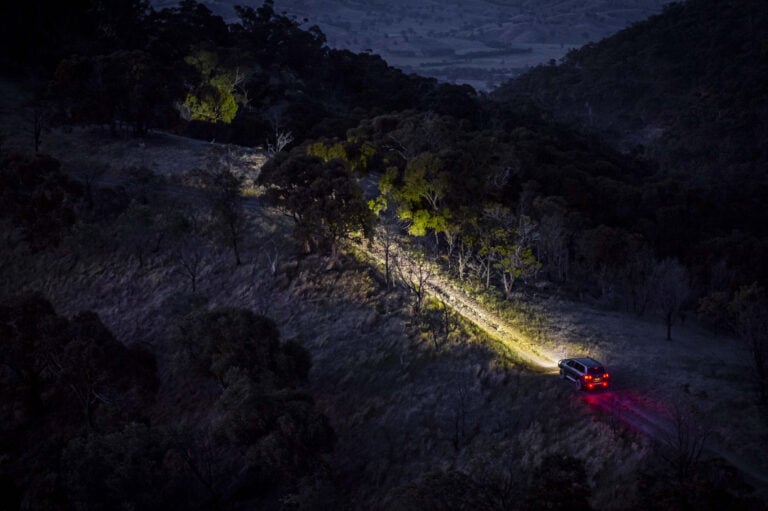
If you find yourself in a situation where you’re driving off road at night – and yes, some people actually like doing this, whereas I reckon once the sun is down you’re better off sitting around the campfire with a chilled article – you will need to have as much light flooding the immediate vicinity as possible.
Equipping your vehicle with under-vehicle lighting is one way to achieve this, or you could make sure your spotter has a powerful torch to help guide you safely over obstacles. You should also have a reliable way to communicate with your spotter, such as a UHF radio, as you might find it difficult to see hand signals at night.
Tired eyes and fatigue
I’ll leave the last word on night driving to 4X4 Australia Editor Matt Raudonikis who, when I pitched this story to him, offered this sage advice: “Don’t fall asleep when driving.”
If you’ve been driving all day and you find yourself still driving at night, there is a fair chance you’ll be tired, so make sure you keep hydrated and eat healthy foods.
No matter how tempting, try to avoid food and beverages with high sugar and caffeine content; while sugary treats and buckets full of coffee may give you a short burst of energy and attentiveness, when the effects wear off you’ll feel more tired than you did before, making it difficult to focus on the task at hand, which is to safely reach your destination without damaging you, your vehicle, other road users, and wildlife and stock.
Remember, plan your trip, equip your vehicle with the right gear, stay focused, and drive to the conditions.
1
FAQs: 4×4 night driving in Australia
Q: Is it safe to drive at night in the outback?
A: It can be done safely, but risks increase due to wildlife, wandering stock and reduced visibility. Planning ahead and driving to the conditions are critical.
Q: What lighting is best for 4×4 night driving?
A: LED driving lights and light bars offer strong performance. A mix of spot and spread beams works best for varying terrain.
Q: Do I really need a bullbar for night driving?
A: If you’re travelling in rural or outback areas, a bullbar can prevent serious damage from animal strikes and help keep you mobile.
Q: How fast should you drive at night on country roads?
A: Always adjust your speed to suit visibility and conditions. If wildlife is present, slowing down significantly is often the safest option.
Q: What are the biggest dangers when driving at night?
A: Wildlife strikes, driver fatigue, limited visibility, dust, and unexpected hazards like stock or debris on the road.
Q: How can I reduce fatigue when driving at night?
A: Stay hydrated, eat well, take regular breaks and stop if you feel tired. Don’t rely on caffeine or sugar to push through fatigue.
Q: What should I carry in case I get stuck at night?
A: At a minimum: water, food, warm gear, basic recovery gear and emergency communication so you can safely wait until morning if needed.
Tips and pitfalls
Tips
- Upgrade your vehicle’s lighting system
- Fit frontal and under-vehicle protection
- Plan your trip to avoid night driving where possible
- Expect the unexpected
- Dip lights early for oncoming vehicles
Pitfalls
- Drive at night when tired
- Drive too fast for the terrain and the conditions
- Use spot beams in closed-in terrain
- Stare at oncoming lights (target fixation)
- Skimp on quality lighting or protection equipment
Follow 4X4 Australia on Google
Get more 4x4 news, reviews and gear stories from 4X4 Australia in your Google feeds.

We recommend
-
 Advice
Dusk remains the most dangerous time for wildlife collisions – here’s how to stay safe
New data from AAMI confirms dusk as the peak danger period for wildlife collisions on regional roads
-
 Advice
10 essential 4x4 touring mistakes to avoid
Common touring mistakes that can turn a great 4x4 trip into an expensive or dangerous exercise