4x4 Comparisons



Gallery 1
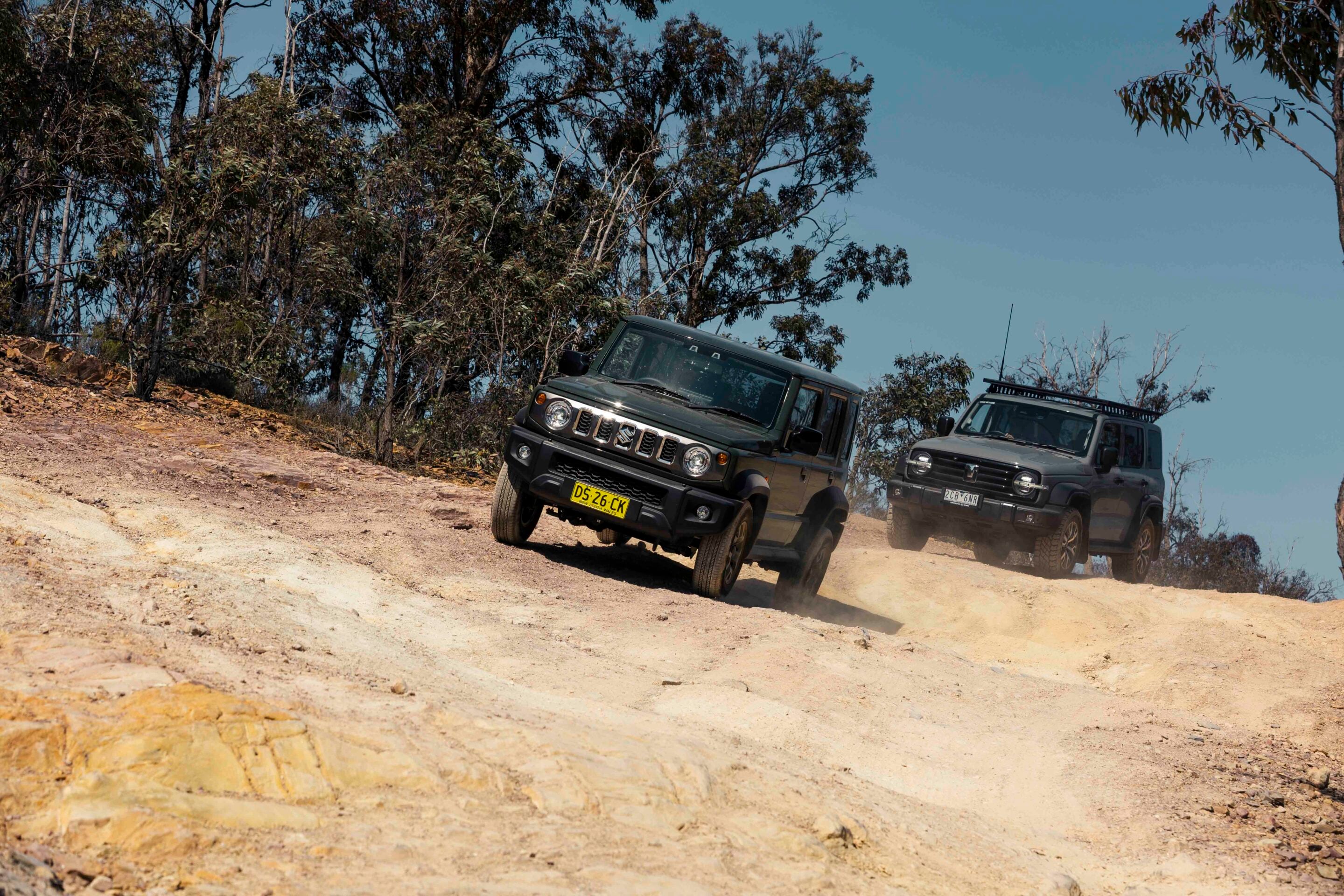
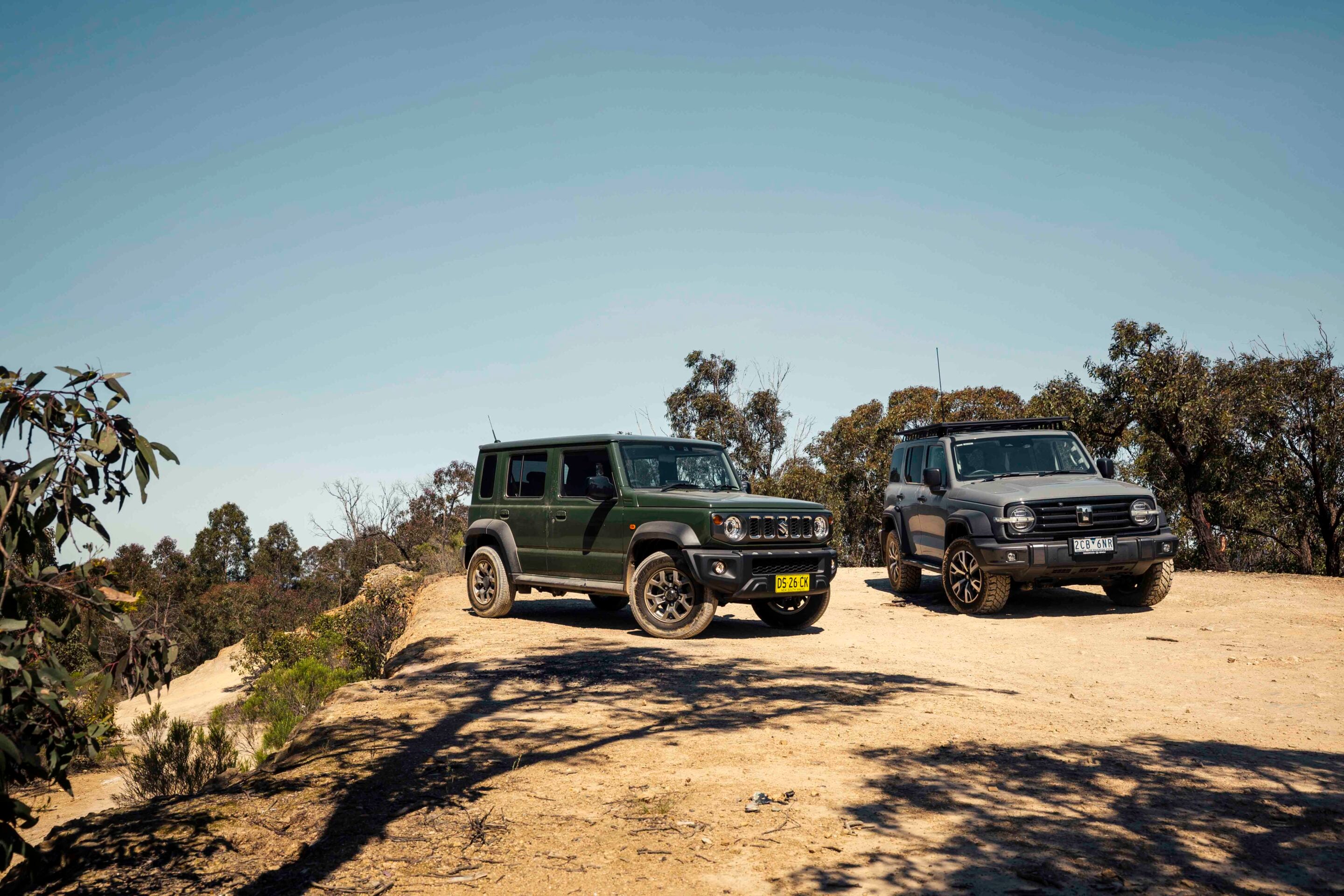
Park a Suzuki Jimny XL next to a GWM Tank 300 and it’s hard to believe they’re rivals.
The Jimny looks like a toy beside a rig that could pass for a Prado. Yet both have a ladder-frame chassis and proper low range, and they’re the cheapest new wagons in Australia that I could get my hands on. About $9500 separates these two. The question is what that money buys.
Jimny pros
- Compact dimensions and excellent manoeuvrability
- Lightweight, simple mechanical package
- Huge aftermarket and passionate owner community
Jimny cons
- Just 345kg payload and 1300kg towing capacity
- No mechanical diff locks
- Noisy, underpowered and less comfortable on-road
Tank 300 pros
- Strong 2.4-litre turbo-diesel with 480Nm
- Front and rear locking differentials and impressive off-road capability
- Comfortable, well-equipped cabin with five-star ANCAP rating
Tank 300 cons
- Larger dimensions make tight tracks harder to navigate
- Heavy 2280kg kerb weight
- Less settled suspension when pushed hard over rough terrain
JUMP AHEAD
- Price and value
- Equipment
- On-road comfort and daily driving
- Safety
- Off-road performance
- What $9500 buys
- Ownership and community
- Verdict
- Specs compared
Jimny XL vs Tank 300: Price and value
Buying an affordable, genuinely capable four-wheel drive has always meant accepting compromises. The question is which compromises you can live with.
At $40,490 drive-away, the Jimny XL isn’t exactly cheap for such a small, basic vehicle. But it’s also one of the few remaining ways to buy a brand-new, low-range four-wheel drive without spending considerably more money. Then there’s the Tank 300 Ultra Diesel at $49,990 drive-away.
For another $9500, GWM is offering something that looks, feels and is equipped like a vehicle from an entirely different price bracket. And that presents Suzuki with a fairly uncomfortable question: just how much are buyers prepared to sacrifice for the Jimny’s compact dimensions, simplicity and character?
We’re not expecting the Jimny to match the Tank in every discipline. But when the price difference is relatively modest, its advantages need to amount to more than simply being small and likeable. That’s what we’re here to find out.
1
Equipment
The GWM Tank 300 Ultra Diesel is an extraordinary amount of four-wheel drive for the money.
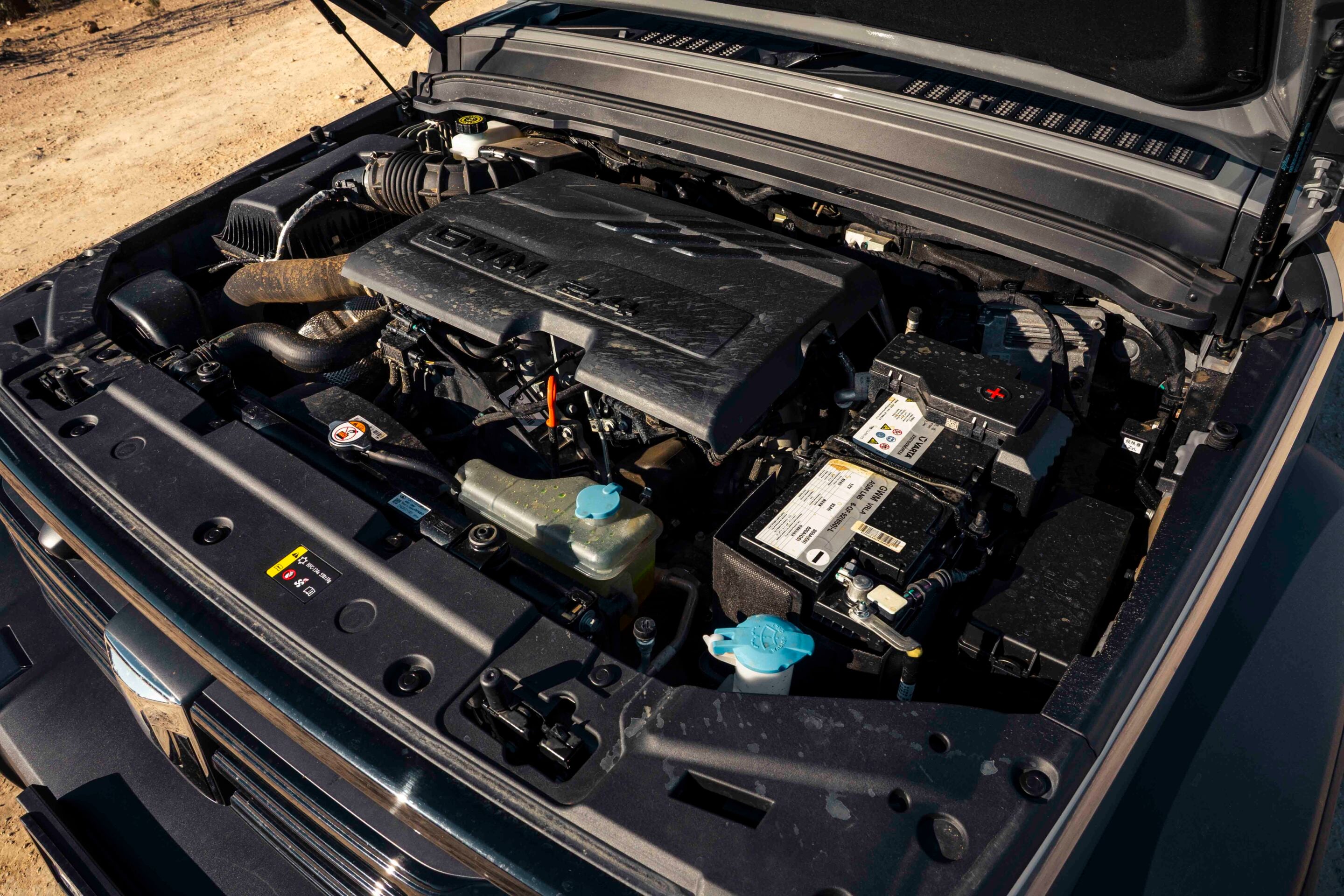
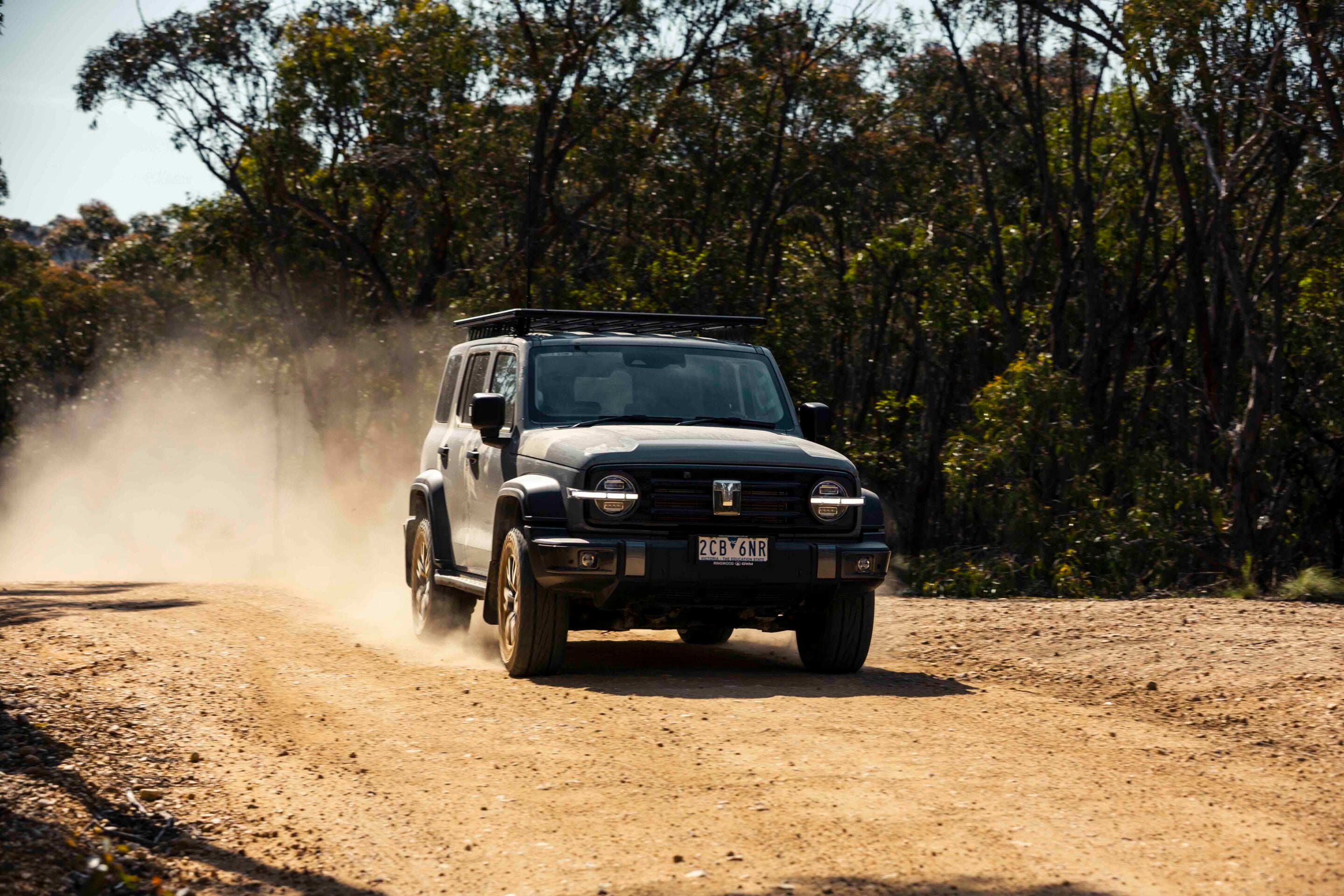
Its 2.4-litre turbo-diesel produces 135kW and 480Nm, driving through a nine-speed automatic. There’s a ladder-frame chassis, double-wishbone independent front suspension, a coil-sprung live rear axle, low-range gearing and front and rear locking differentials. Multiple terrain modes and electronic traction aids complete a fairly serious off-road package.
It’s a substantial rig, too. At 4760mm long, 1930mm wide and 1903mm tall, with a 2750mm wheelbase, it weighs 2280kg. GVM is 2880kg, leaving a 600kg payload, while braked towing capacity is 3000kg. Ground clearance is a respectable 224mm.
For context, the Jimny XL is 795mm shorter, 285mm narrower and 178mm lower. Its wheelbase is just 2590mm, and at 1200kg, it weighs a remarkable 1080kg less than the Tank. That difference in mass and footprint is enormous, particularly when you’re negotiating tight tracks or trying to maintain composure over rough ground.
1
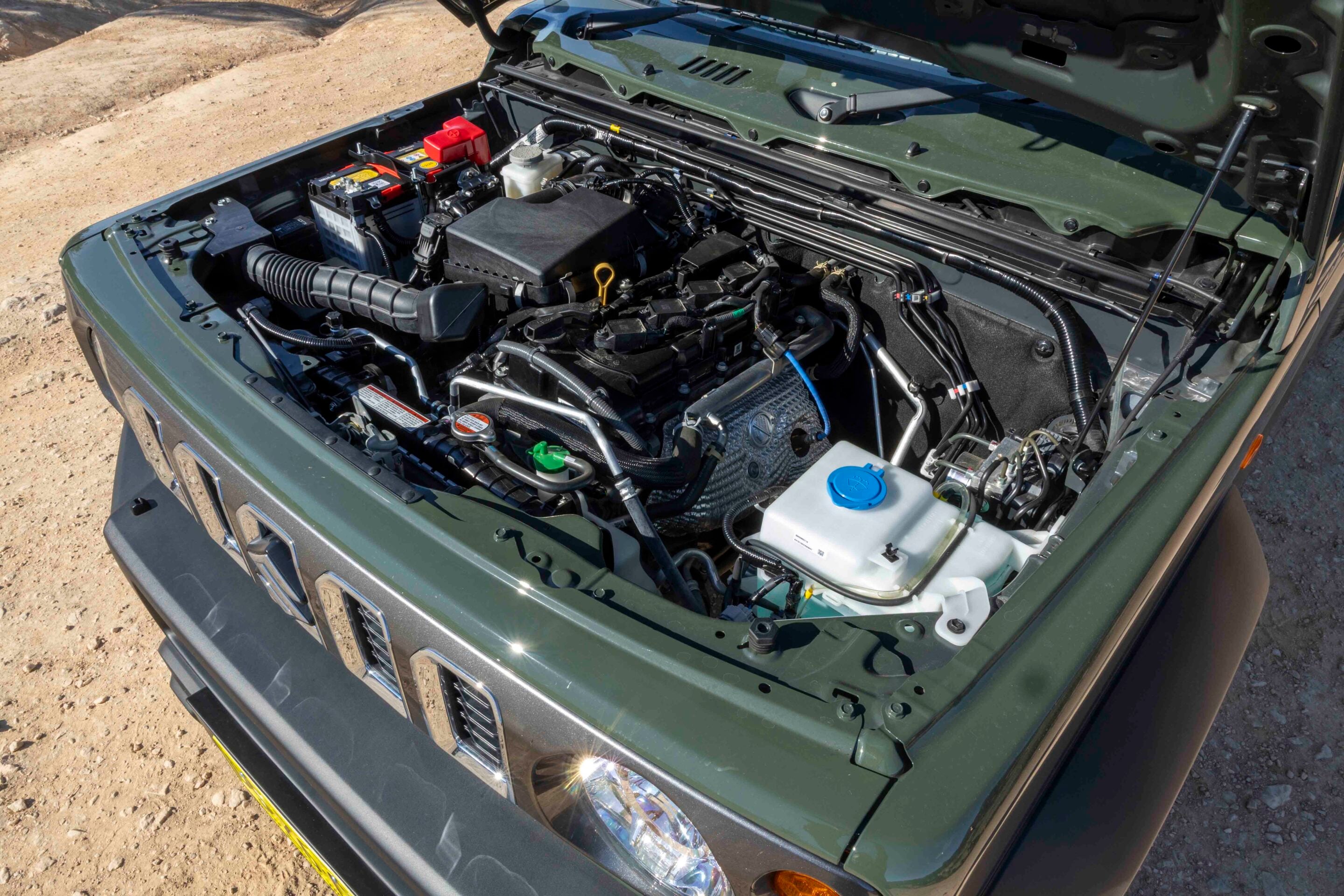
The Suzuki’s mechanical package is decidedly old-school. Its 1.5-litre naturally aspirated petrol four-cylinder produces 75kW and 130Nm, driving through a four-speed automatic. Live axles sit at both ends, located by three-link suspension with coil springs, while a manually operated transfer case selects between 2H, 4H and 4L.
There’s no selectable differential lock at either end, although Suzuki’s brake-based traction control helps manage wheelspin. The Jimny’s simplicity comes with some fairly serious compromises. Its 1545kg GVM leaves just 345kg of payload, and its braked towing capacity is 1300kg. Ground clearance is 210mm.
The Tank’s mechanical advantages are substantial, but GWM hasn’t stopped there. Twin 12.3-inch displays, heated and ventilated seats, high-definition surround-view cameras and an extensive equipment list give it the sort of specification we’d ordinarily associate with a considerably more expensive wagon.
The Jimny traces its philosophy back through Suzuki’s SJ413 and earlier lightweight four-wheel drives. It’s a formula built around compact dimensions, low weight and mechanical simplicity. GWM has taken almost the opposite approach, giving buyers more power, more space, more capability and more equipment. The question is how those very different engineering decisions translate once you’re behind the wheel.
1
On-road comfort and daily driving
If the specification sheets suggest the Tank is the more comfortable proposition, the first few kilometres confirm it.
There’s a reassuring solidity to the GWM that I wasn’t necessarily expecting at this price. Close a door and you get a satisfying thud. The cabin is beautifully insulated from road and wind noise, and even over rough surfaces there’s remarkably little in the way of rattles or squeaks. It feels genuinely well built, rather than simply dressed up with expensive-looking materials.
The diesel is another highlight. With 480Nm available, the Tank has no trouble getting its considerable mass moving, while the nine-speed automatic keeps things relaxed at highway speeds. It’s quiet, comfortable and the sort of rig I’d happily point towards the horizon for an 800km day.
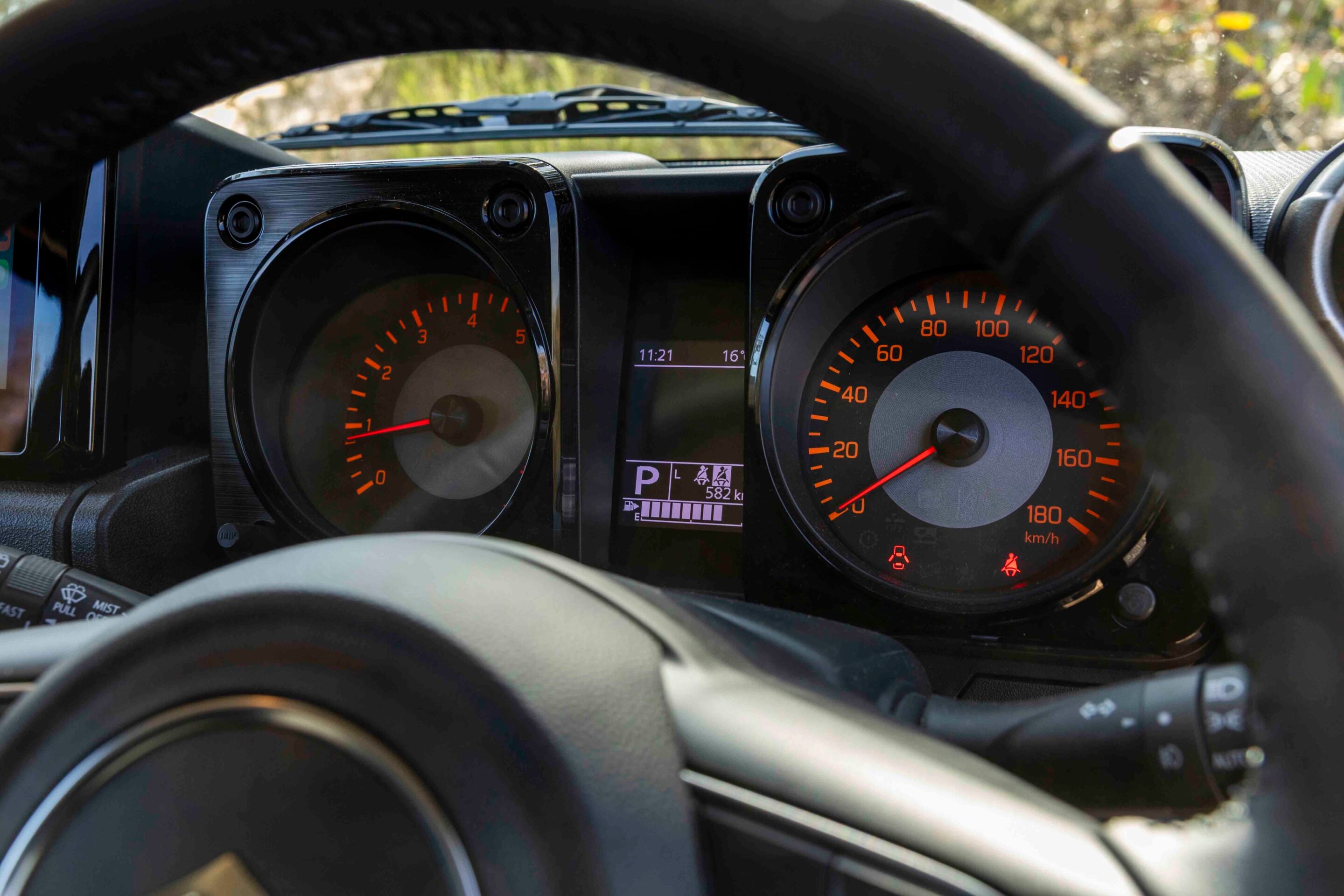
The Jimny requires a rather different mindset. Its little petrol engine has a sewing-machine quality to it, working hard and revving enthusiastically to make progress. The four-speed automatic doesn’t have enough ratios to disguise the lack of torque, and at 110km/h the wind and mechanical noise are constant companions. Overtaking takes planning.
1
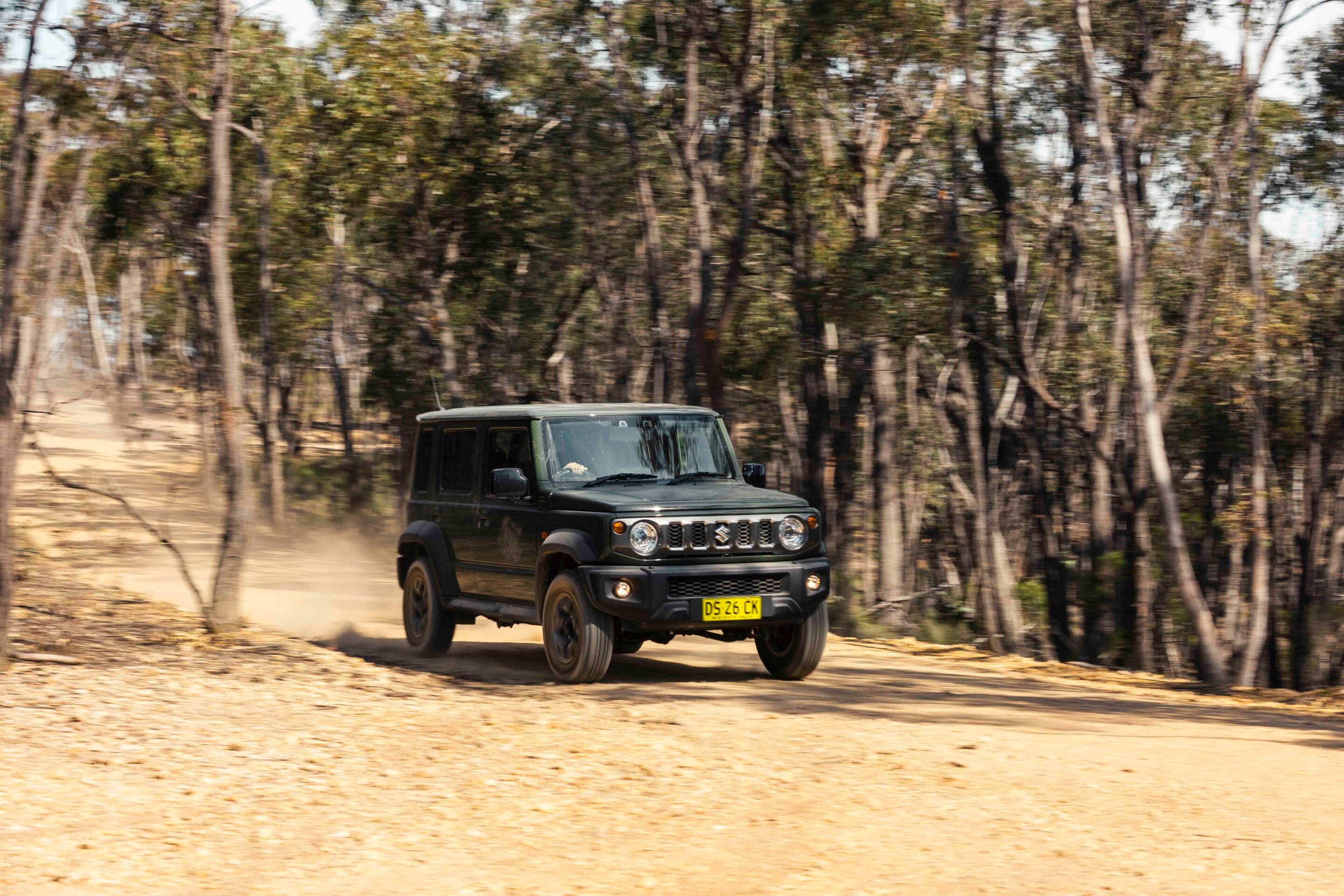
Ergonomically, it’s basic. There’s precious little elbow support, and the driving position isn’t particularly adjustable, although I found the seats more tolerable than their appearance suggests. What I genuinely love is the visibility. The upright glasshouse and compact dimensions make placing the Jimny on the road or track wonderfully easy.
There’s also a practical distinction no amount of charm can erase: the Jimny XL has four seats to the Tank’s five. If this is your only vehicle and you regularly carry family or friends, that’s worth thinking about before the test drive.
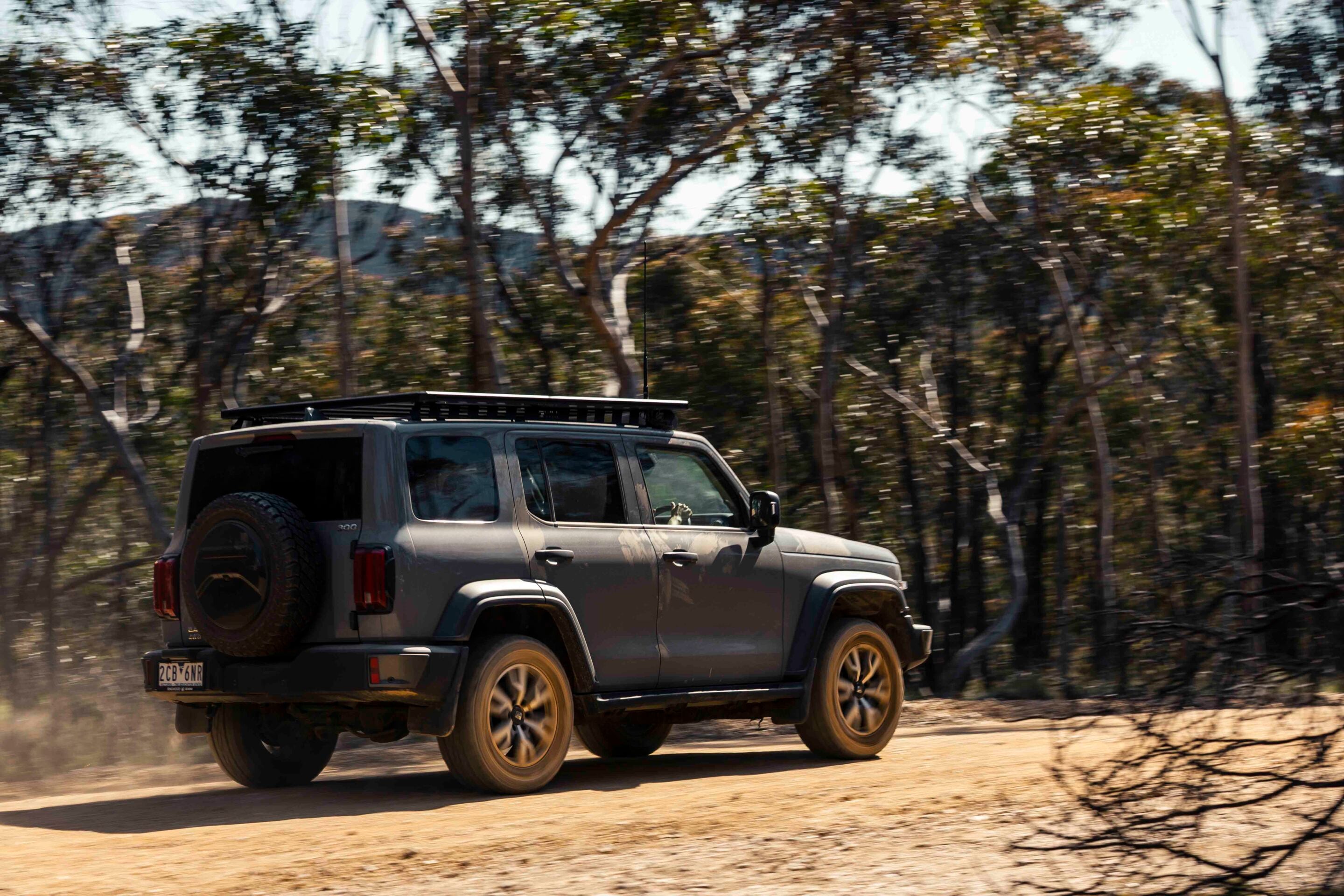
On gravel, the differences become more pronounced. The Jimny’s narrow footprint lets you thread between potholes and pick lines that simply aren’t available to larger wagons. But its short wheelbase, light weight and live front axle make it flighty over corrugations and larger undulations. There’s not enough mass or suspension sophistication to settle things down, and maintaining momentum becomes hard work.
1
The Tank’s independent front suspension does a much better job of absorbing those impacts, while its longer wheelbase and greater mass contribute to a considerably more settled ride. You can carry substantially more speed across rough gravel without feeling like you’re constantly correcting the vehicle. It’s not perfect. Push harder and the damping can become a little unsettled, while its weight makes itself known through tighter corners. I’ve driven Prados and Everests with more sophisticated suspension control, but the Tank is still a very competent gravel-road wagon.
One important qualification: our Tank wore aftermarket Cooper tyres rather than its factory road-biased rubber. They would likely have helped on loose surfaces, so we weren’t comparing both vehicles on standard tyres.
Neither vehicle is a sports car, nor should we judge them as such. But even on winding roads, where you might expect the lightweight Jimny to be the more entertaining choice, I preferred the Tank. And after a long day behind the wheel, there wasn’t much doubt which keys I’d reach for again.
1
Safety compared
Here’s another fairly compelling reason to buy the Tank.
It earned a five-star ANCAP safety rating, while the Jimny XL hasn’t been independently rated. The three-door Jimny managed just three stars back in 2018, although that result shouldn’t automatically be treated as a rating for the longer, five-door XL. The Tank’s seven airbags, including a centre airbag, and more comprehensive active safety equipment make a convincing case.
The Jimny isn’t devoid of safety technology. It has six airbags, autonomous emergency braking and, in automatic form, adaptive cruise control. But its safety credentials are considerably less convincing. And this matters beyond the star ratings. If you’re carrying passengers, regularly travelling at highway speeds or buying your only family car, safety deserves serious consideration.
1
Off-road performance
There’s a lot to be said for a small, lightweight four-wheel drive, particularly when the tracks get tight. And around Lerderderg State Forest, the Jimny reminded us why Suzuki’s little off-roader has such a loyal following.
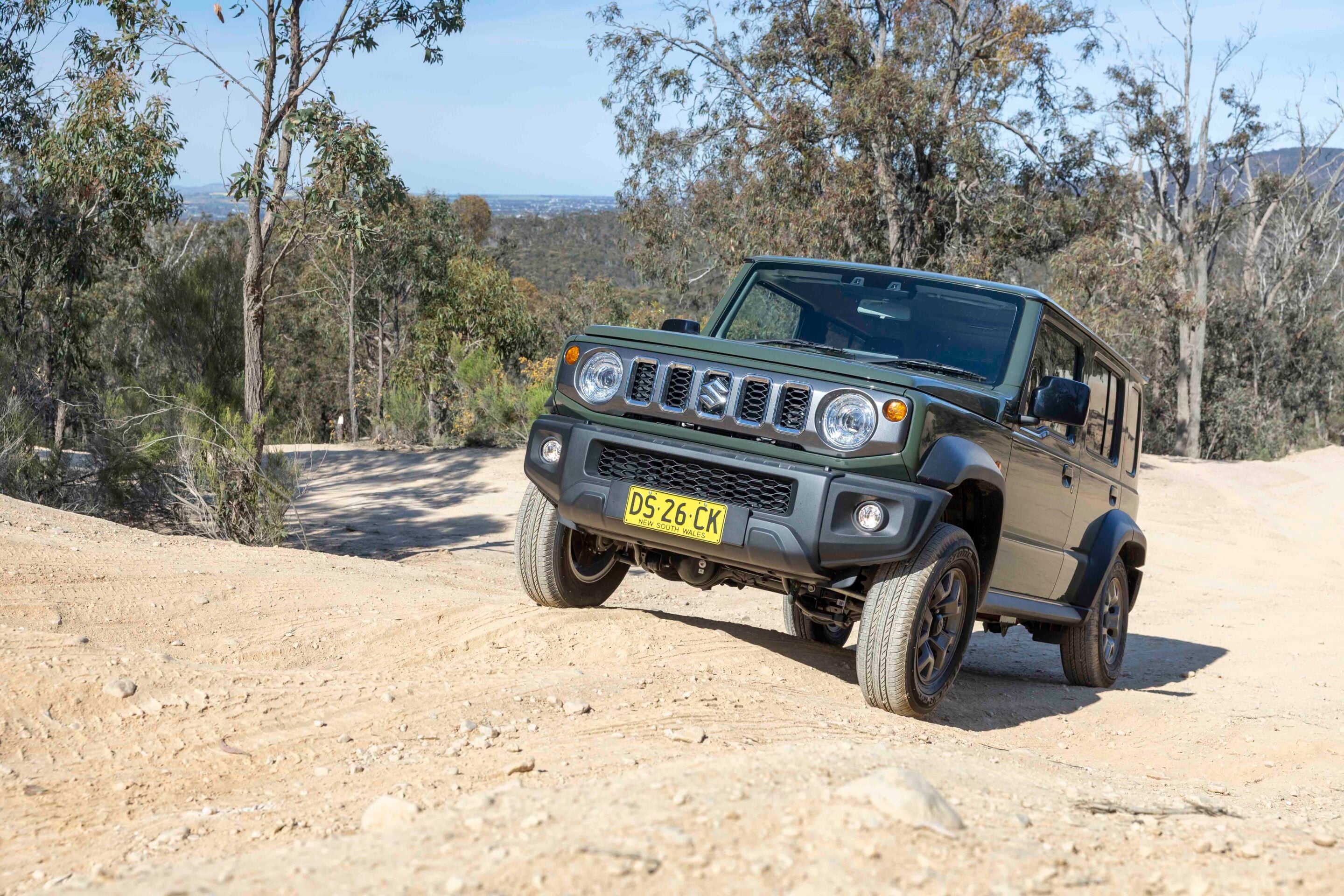
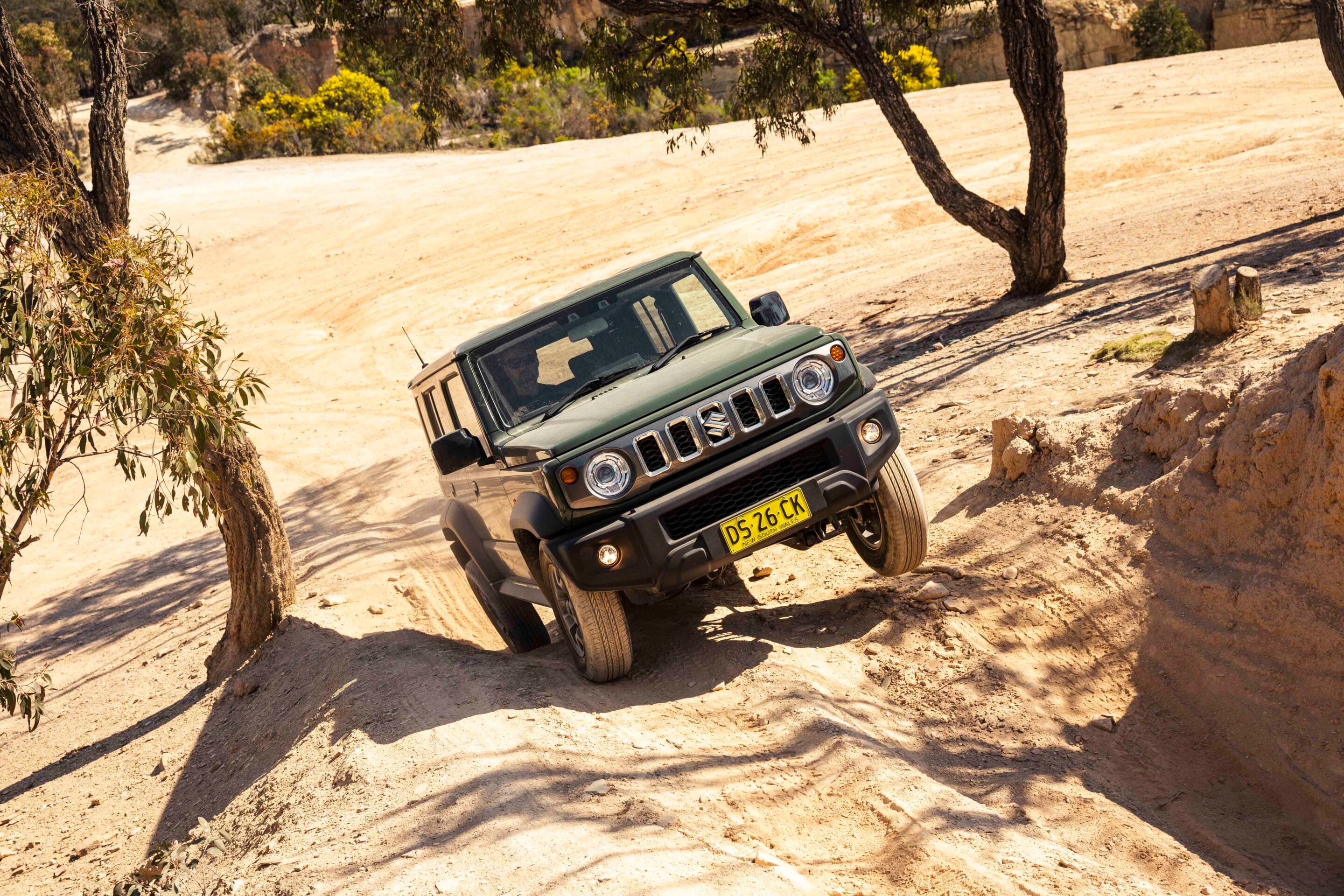
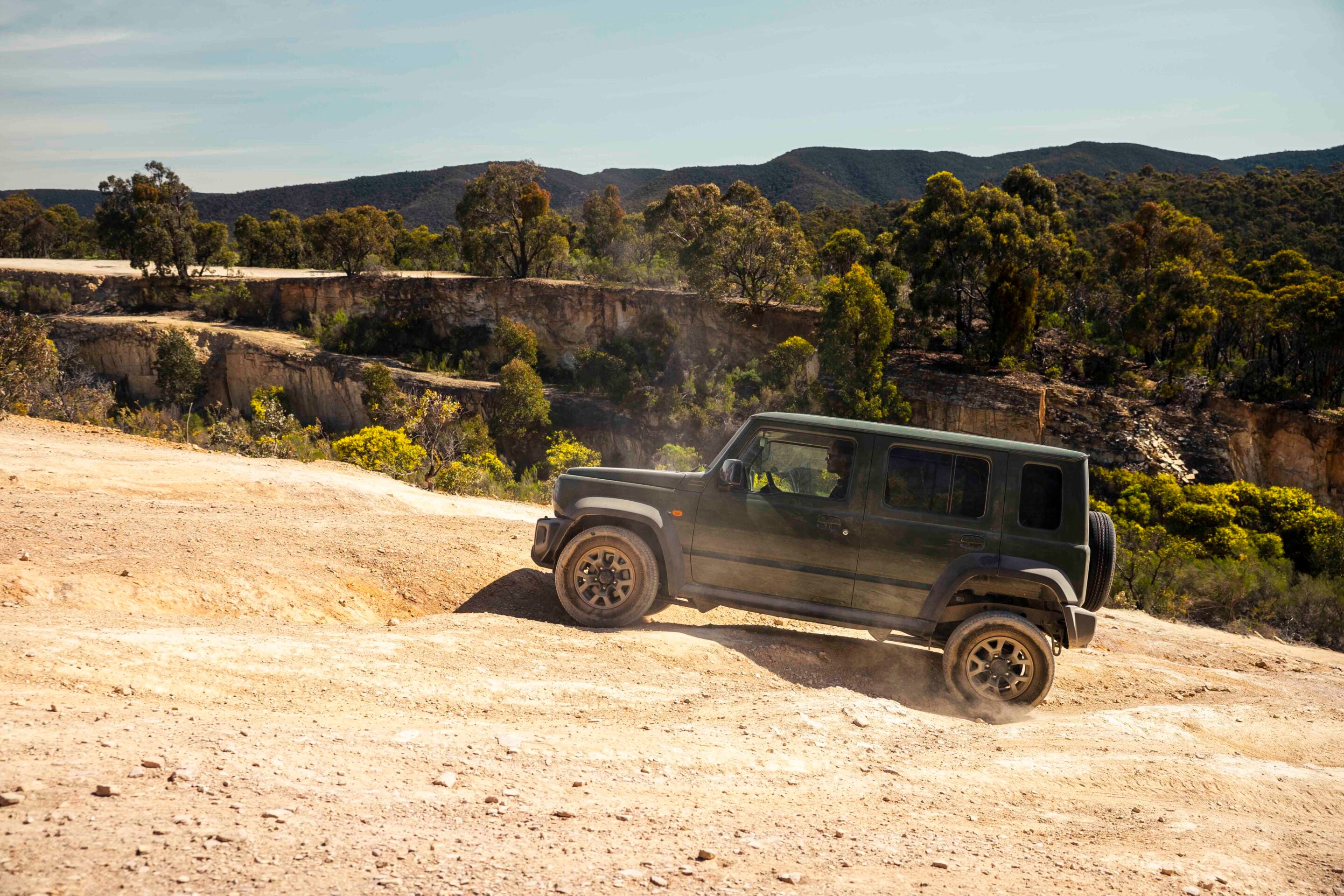
On loose, rocky climbs, it was terrific. Its narrow track made picking a line easy, the excellent visibility helped place the wheels precisely, and with all four tyres finding purchase, it climbed like a crab. At barely more than half the Tank’s weight, it doesn’t need enormous reserves of torque to keep moving.
The live axles also have their advantages. Unlike the Tank’s independent front suspension, the Jimny’s front axle maintains a consistent relationship between its wheels as the suspension moves. But that doesn’t automatically mean better articulation, and without mechanical diff locks, the Suzuki relies on brake-based traction control when wheels lose contact with the ground.
Our infamous wombat holes exposed that limitation, along with something rather more fundamental: geometry. The short wheelbase and narrow track that make the Jimny so manoeuvrable can work against it when deep, alternating holes demand stability and carefully controlled wheel placement.
1
After several failed attempts, I returned for one last crack, carrying considerably more momentum than I was comfortable with. The Jimny eventually scrambled through, pirouetting on a rear wheel and feeling perilously close to tipping over. The camera crew thought it might, too. Frankly, I wouldn’t recommend repeating it.
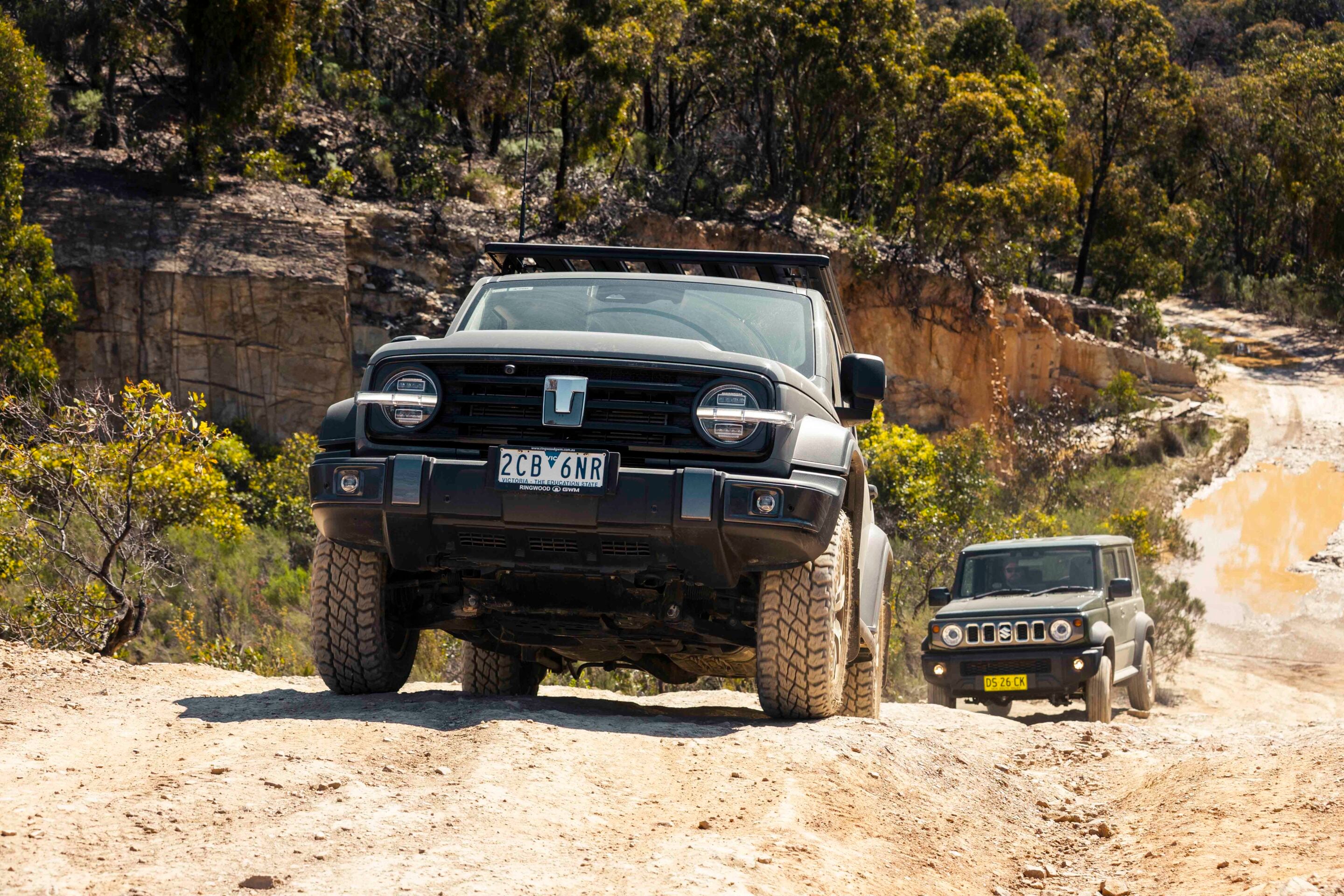
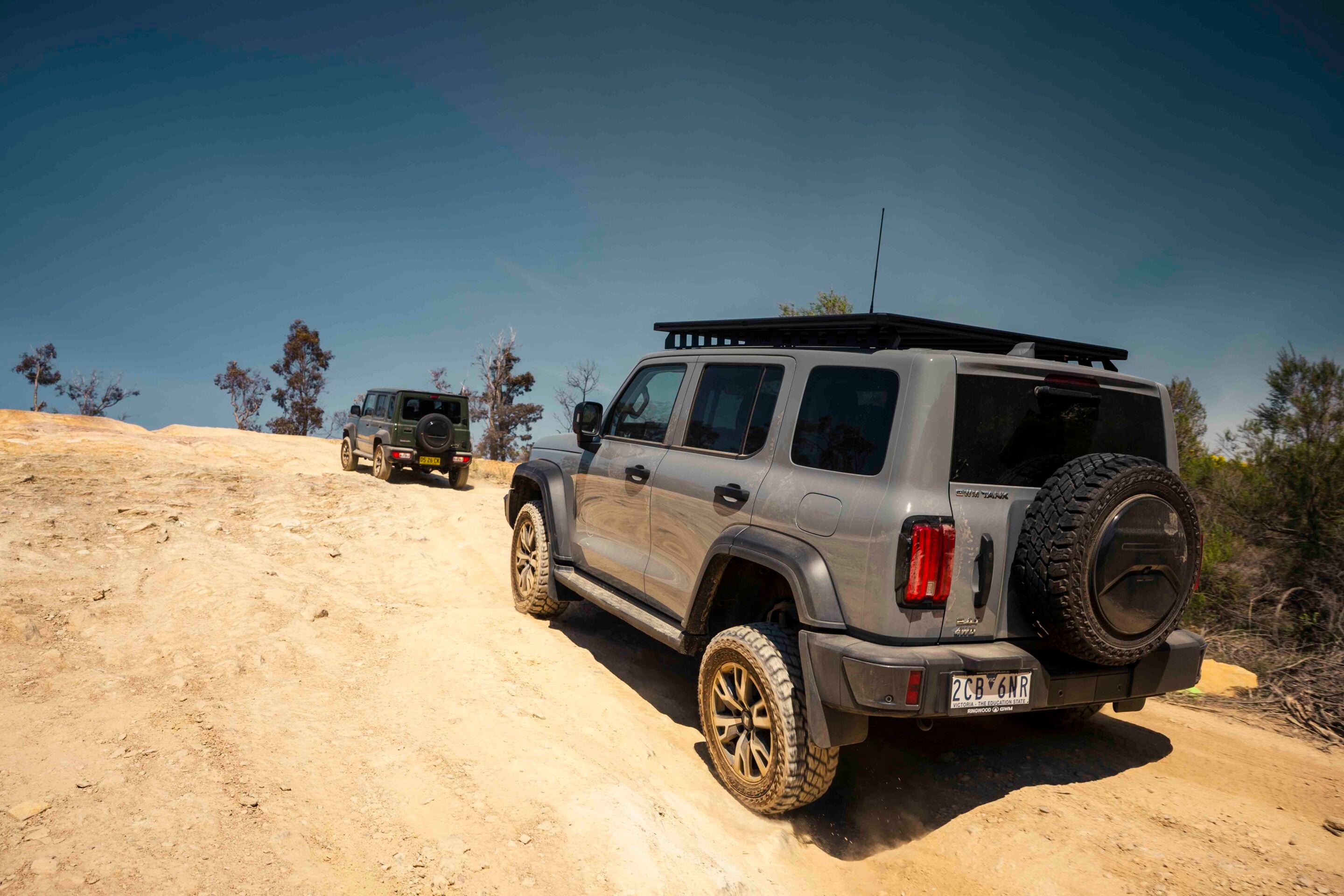
The Tank made far easier work of the same obstacle. With both differential locks engaged, it could maintain drive even when articulation ran out. Its wider track and longer wheelbase also gave it a more stable platform across the holes, allowing me to concentrate on placing the wheels rather than worrying quite so much about where the vehicle might end up.
There are qualifications. Our Tank wore aftermarket Cooper tyres, which likely helped traction, and it still needed some momentum. Its suspension articulation and electronic traction control aren’t class-leading, particularly compared with the likes of a Prado. Nevertheless, the difference was convincing.
The Jimny remains an exceptionally capable little rig when the terrain suits its dimensions. But our testing demonstrated that light weight and a short wheelbase aren’t universal advantages. Sometimes the bigger, heavier vehicle, particularly one with proper differential locks, simply has the better tools for the job.
1
What $9500 buys
After feeling the Jimny struggle through those wombat holes, I couldn’t help wondering what I’d do with the $9500 saved by buying one instead of the Tank.
First stop would be Ironman 4×4 for its 2000kg GVM upgrade. At around $4000 fitted, it addresses one of the Jimny’s biggest weaknesses: payload. Subtract the standard 1200kg kerb weight from that upgraded GVM and you get a theoretical 800kg, but that’s not the finished vehicle’s actual payload. The upgrade hardware itself adds weight, as will the accessories we’re about to bolt on. We’d need to weigh the completed Jimny before claiming a usable payload figure.
Next would be around $2500 for five decent all-terrain tyres and appropriately rated wheels. Another $2500 buys lightweight frontal protection, leaving around $500 for a UHF, lighting or a contribution towards a roof rack. And suddenly, we’ve spent our $9500.
1
Would it make the Jimny a better four-wheel drive? Absolutely. Better tyres would improve traction, while the upgraded suspension should help its composure on rough tracks. The additional payload would also make it a considerably more practical proposition for touring, particularly once passengers and camping equipment are aboard.
But would it have made those wombat holes any less intimidating? I’m not convinced. We’ve potentially raised the centre of gravity, and although the suspension has changed, we haven’t fundamentally altered the Jimny’s short wheelbase or narrow track. Nor does a lift automatically deliver greater articulation. The same awkward wheel placement and rollover concerns could still be there.
What we’d have, though, is a more useful, better-equipped little touring rig that looks pretty cool doing it. And that’s where the Jimny starts making a different kind of sense.
1
Ownership and community
There’s something about the Jimny that goes well beyond what it’s capable of doing.
Suzuki has been building little four-wheel drives for more than half a century, and from the early LJ and SJ models through to today’s Jimny, they’ve developed a following that few manufacturers could hope to replicate. I get the appeal. Having grown up building rigs to tackle New Zealand’s pine forests, I appreciate a simple, boxy four-wheel drive that looks ready for an adventure even when it’s parked outside the supermarket.
But I reckon the real attraction is what happens after you buy one. Jimny owners make these little rigs their own. Some build serious off-road machines, others concentrate on touring or simply getting the look right. And there’s nothing wrong with that. Our cars are often reflections of who we are, and the Jimny wears its owner’s personality particularly well. There’s a community that comes with it, too. Clubs, organised trips, online groups and even those little waves between owners passing on the road. You’re buying into something bigger than the vehicle itself.
But Suzuki doesn’t have this territory entirely to itself. I’m seeing that same enthusiasm building around the Tank. Owners are modifying them, heading bush together and developing their own community. The aftermarket is growing, and these aren’t simply vehicles being bought for their impressive equipment lists.
Suzuki has spent generations building its following. GWM is only getting started, but the Tank is already becoming more than an affordable way into four-wheel driving.
1
Final verdict
There’s no point pretending this was a close contest. The Tank 300 is the better four-wheel drive, and by a considerable margin.
It’s quieter, more comfortable, substantially more powerful and better equipped. It carries more, tows more than twice as much and, when we pointed both rigs at some genuinely challenging terrain, made considerably easier work of it. Throw in its five-star ANCAP rating and that additional $9500 looks like money very well spent.
But would I criticise someone for buying the Jimny? Not for a second. It’s light, simple and wonderfully charming, with a personality few modern four-wheel drives can match. There’s an enormous aftermarket, a passionate community and something deeply satisfying about making one your own. Those things matter, even if they don’t make it the more capable vehicle.
The Tank wins on paper, on the road and in the dirt. But buying a four-wheel drive has never been entirely about the numbers. Sometimes it’s about the rig that makes you smile every time you walk up to it.
1
Specs
| Specification | Suzuki Jimny XL Auto | GWM Tank 300 Ultra Diesel |
|---|---|---|
| Price (drive-away) | $40,490 | $49,990 |
| Engine | Inline 4-cylinder naturally-aspirated petrol | Inline 4-cylinder turbo-diesel |
| Capacity | 1462cc | 2370cc |
| Max power | 75kW at 6000rpm | 135kW at 3500rpm |
| Max torque | 130Nm at 4000rpm | 480Nm from 1500-2500rpm |
| Transmission | 4-speed automatic | 9-speed automatic |
| 4×4 system | Part-time 4×4, low range, brake-based TC | Part-time 4×4, low range, front and rear diff locks |
| Crawl ratio | 31.64:1 | 54.5:1 |
| Construction | 5-door wagon body on separate chassis | 5-door wagon body on separate chassis |
| Front suspension | Live axle, coil springs | Independent, double wishbones, coli springs |
| Rear suspension | Live axle, coil springs | Live axle, coil springs |
| Tyres | 195/80 R15 | 265/60 R18 |
| Kerb weight | 1200kg | 2280kg |
| GVM | 1545kg | 2880kg |
| Payload | 345kg | 600kg |
| Towing capacity | 1300kg | 3000kg |
| GCM | N/a | 5580kg |
| Seating capacity | 4 | 5 |
| Fuel capacity | 40L | 75L |
| Length | 3965mm | 4760mm |
| Width | 1645mm | 1930mm |
| Height | 1725mm | 1903mm |
| Wheelbase | 2590mm | 2750mm |
| Ground clearance | 210mm | 224mm |
| ADR combined fuel consumption | 6.9L/100km | 7.8L/100km |
| ANCAP | unrated | 5 stars (2022) |
Follow 4X4 Australia on Google
Get more 4x4 news, reviews and gear stories from 4X4 Australia in your Google feeds.

We recommend
-
 4x4 Comparisons
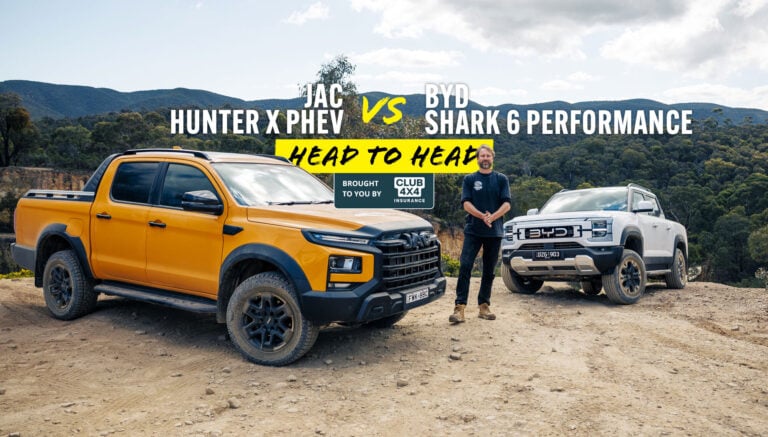
JAC Hunter X vs BYD Shark 6 Performance: Is the Shark worth $8000 more?
The JAC Hunter X undercuts the BYD Shark 6 Performance by more than $8000 and brings more traditional 4x4 hardware. But is value enough to topple Australia's PHEV ute benchmark?
-
 4x4 Comparisons
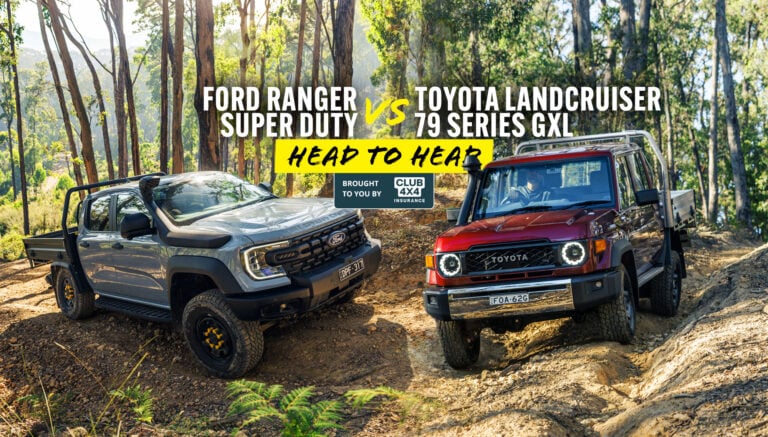
Ford Ranger Super Duty vs Toyota LandCruiser 79: Can Ford topple the ultimate work ute?
Has Ford's new Ranger Super Duty got what it takes to knock the iconic LandCruiser 79 off the top of the mountain?
-
 4x4 Comparisons
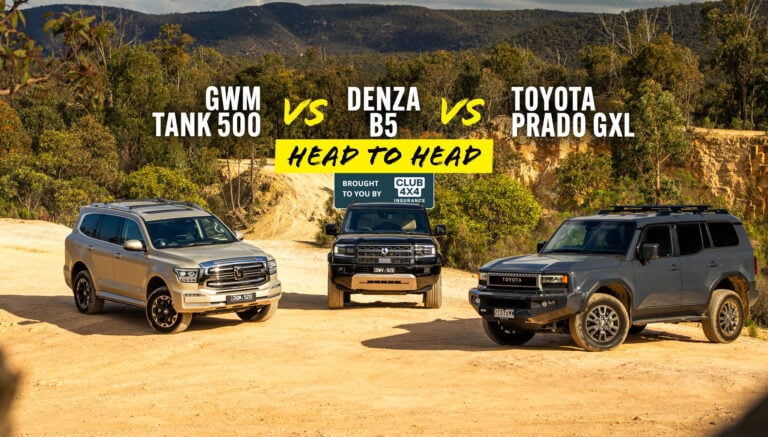
Toyota Prado GXL vs Denza B5 vs GWM Tank 500: Has China finally built a Prado rival?
Three $80K 4WD wagons, three very different approaches and one brutal test. Can the Chinese challengers knock the Prado off its throne?