Reviews


Gallery 1
Things we like
- Huge performance gains over the diesel LC300
- Smooth, quiet and refined power delivery
- Genuine off-road capability with 3500kg towing capacity
Not so much
- Hybrid battery raises the cargo floor slightly
- Only available in high-grade five-seat variants
- Sahara ZX lacks some of the GR Sport’s off-road hardware
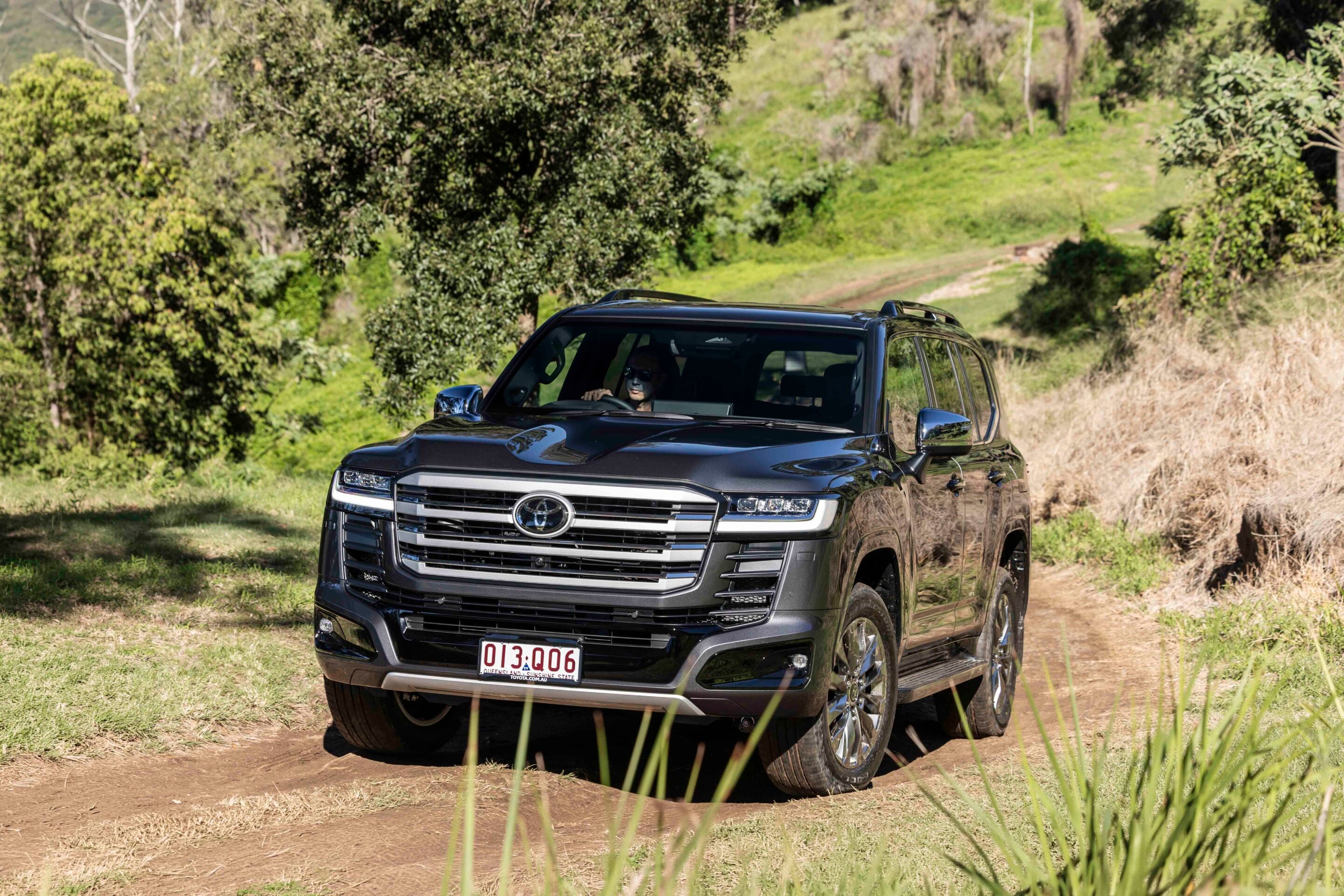
In an era when hybrid powertrains are more popular than ever but really do little, if anything, to improve the off-road touring performance of a 4×4 vehicle, it’s a huge relief to drive a hybrid that puts a smile on my face.
While most hybrids are all about saving the planet, kissing endangered frogs and chasing rainbow unicorns, Toyota has used the technology for good rather than evil and given us a LandCruiser with real-world performance.
Toyota has turned the tech around and is calling the system it has applied to the LandCruiser 300 Performance Hybrid. This is nothing new, as we’ve seen it in performance and sports cars, but this is the first time we’ve seen it in a LandCruiser.
JUMP AHEAD
Powertrain and performance
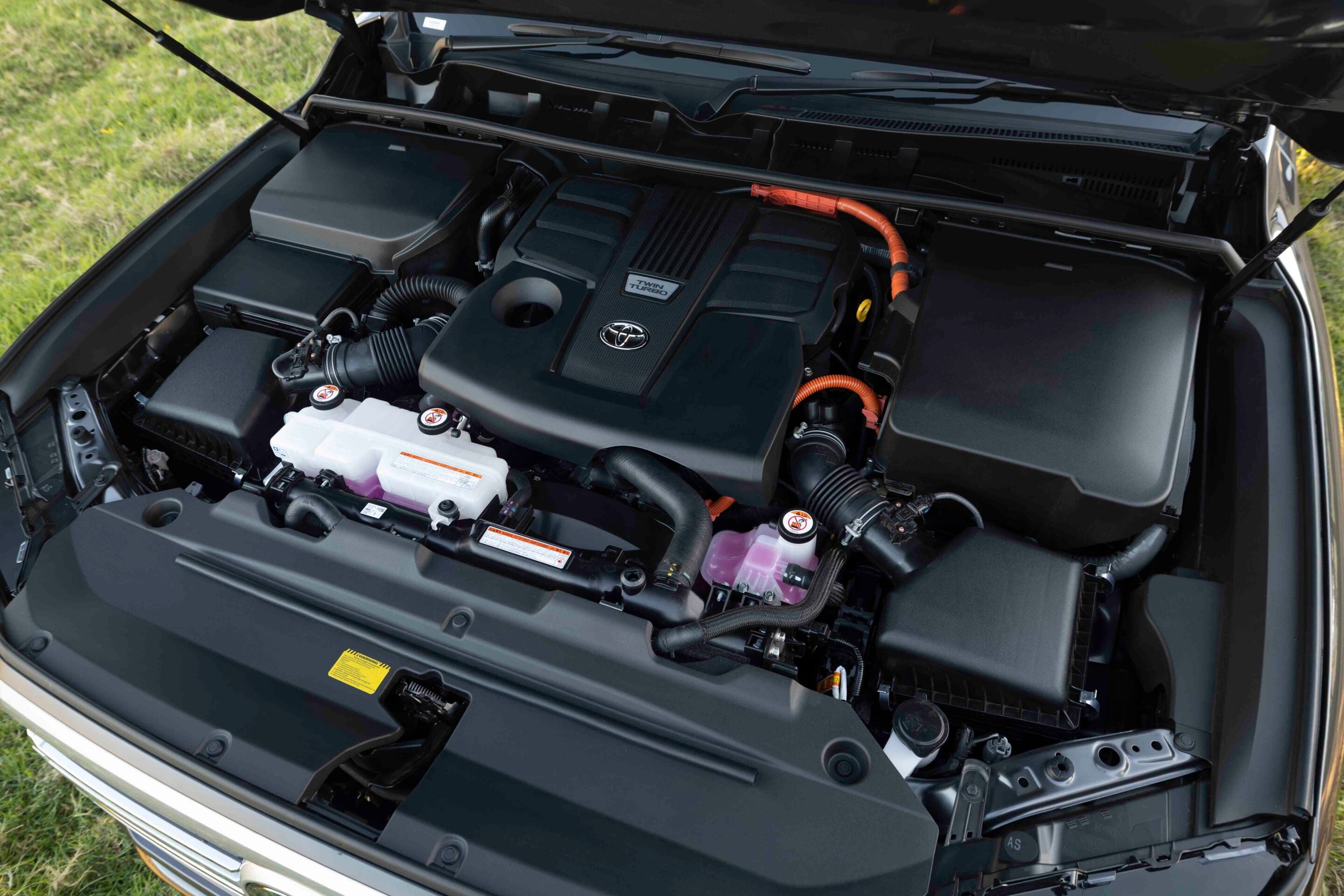
While the turbocharged V6 diesel engine will remain the mainstay powertrain for the LandCruiser, the company has taken the hybrid petrol V6 engine from the Tundra pick-up and slotted it between the front chassis rails of the 300 Series.
It shouldn’t have taken too much engineering, as the LC300 and Tundra both ride on the TNGA-F chassis platform and are both backed by the 10-speed automatic transmission.
The twin-turbocharged 3.5-litre V6 one-motor hybrid system generates claimed combined outputs of 341kW and 790Nm to deliver a level of performance the LandCruiser has never seen in its storied history. The last time a petrol engine was offered in the LandCruiser in Australia was in the 200 Series, and it was discontinued due to poor sales compared to the uptake of diesel-fuelled models. The combination of petrol engine and hybrid power means you get the performance with relative efficiency. Both grades of the Performance Hybrid LC300 have a combined fuel consumption figure of 10L/100km.
1
The hybrid system uses an air-cooled 6.5Ah, 288V nickel-metal hydride battery that is installed in a waterproof tray beneath the rear luggage space. For this reason, the Performance Hybrid powertrain is only offered in five-seat versions of the LC300 and only in the high-end grades. The placement of the battery does raise the floor height in the cargo area a smidge, but it’s not enough to be a real negative.
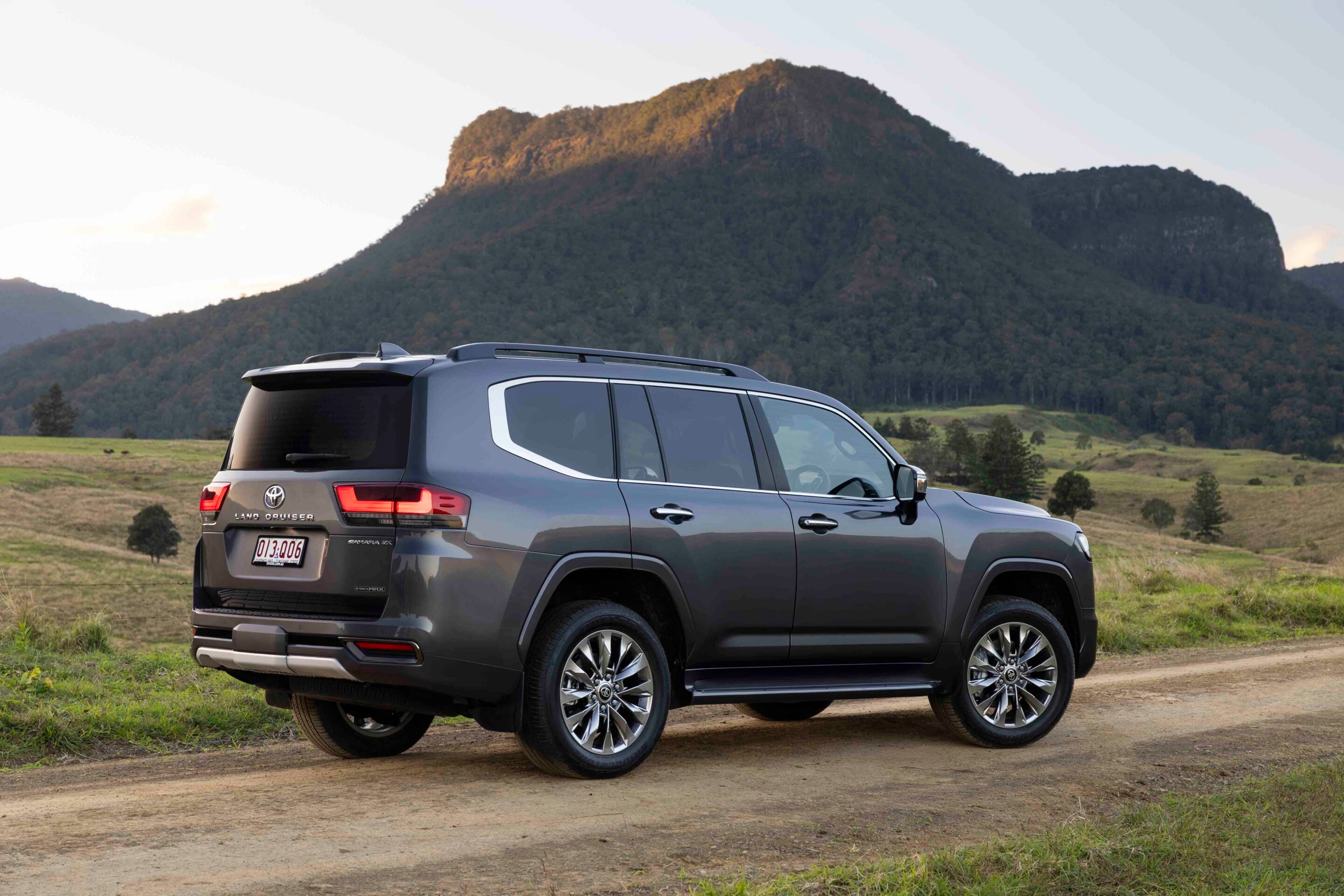
Performance-wise, the Sahara ZX grade is claimed to cover the zero-to-100km/h dash in 6.5 seconds, while the GR Sport variant adds a tenth of a second to the sprint – not bad for a big 4×4 wagon with genuine off-road capability and 3500kg towing capacity.
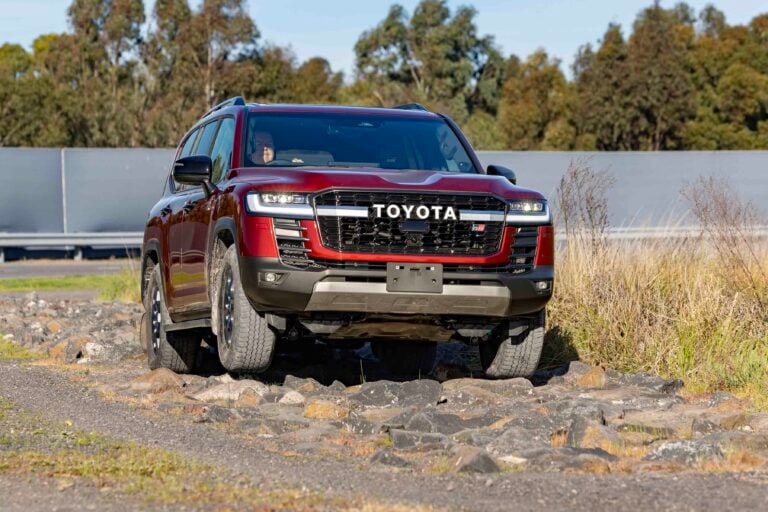
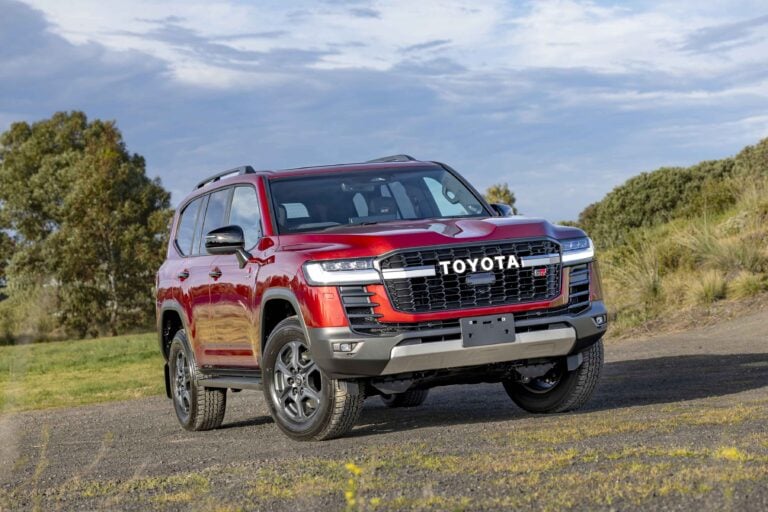
The petrol-hybrid powertrain is only offered in these two high grades of LC300. While they are essentially the same vehicles, the GR Sport remains the off-road king of the range, with its 18-inch wheels and all-terrain tyres, front and rear locking differentials, and KDSS suspension system helping it conquer most terrain.
The Sahara ZX, on the other hand, has a Torsen rear diff and no selectable diff locks, no KDSS, and rides on 20-inch alloys. It’s more about luxe inclusions than ultimate off-road capability. Horses for courses, but they each have plenty of horsepower available under the driver’s right foot.
1
On-road and off-road driving impressions
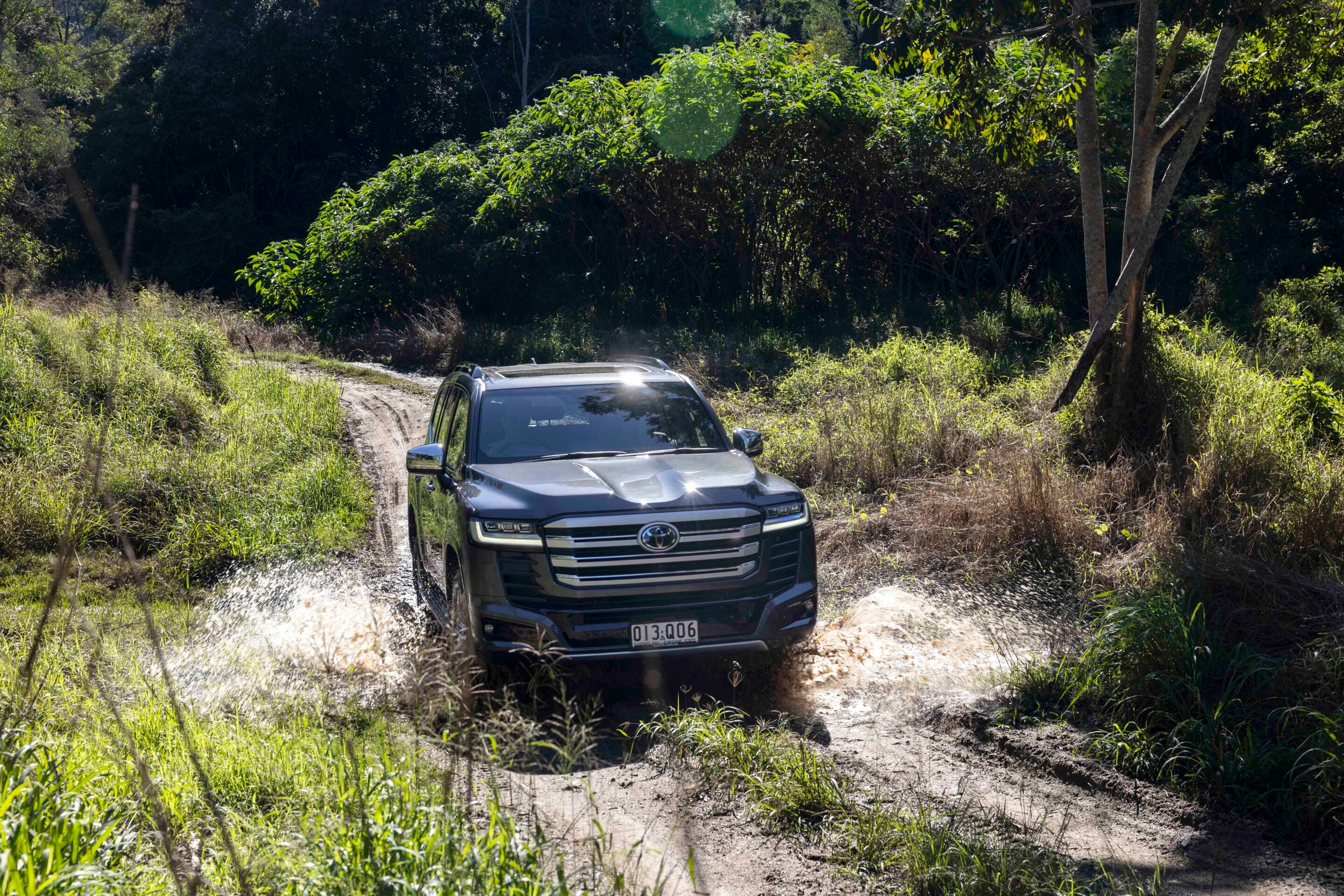
Our drive was in the Sahara ZX, and the off-road section was pretty tame, with the Cruiser conquering it without raising a sweat.
There was no need for traction aids or for using the Multi-Terrain Select system. We look forward to getting some time on the tracks with the GR Sport Performance Hybrid. More interesting was its performance on the open road, where the drivetrain delivered smooth and quiet highway cruising and a shove in the back any time you put your foot down to overtake or pull out of a side road.
This is a true performance 4×4. A diesel LandCruiser 300 is no slouch, but the petrol hybrid will leave it for dead and do it with better efficiency and a lot more smoothness. The powertrain feels quicker in the LandCruiser than I recall it being in the Tundra, and the fit and finish of the LC interior is worlds ahead of that in the American-made pick-up truck.
15
Final verdict
While Australia has always been predominantly a diesel-fuelled 4×4 segment, the petrol-fuelled Performance Hybrid LC300 is a welcome addition to the range for those wanting some extra get-up-and-go, improved NVH and lower fuel consumption. It also promises a compelling duel once the turbocharged petrol V6-powered Y63 Patrol arrives later this year.
Specs
| Grade | GR Sport (Sahara ZX differences in brackets) |
|---|---|
| Price | $156,060 + ORC ($156,810 + ORC) |
| Engine | Twin-turbo petrol V6 with single-motor hybrid system |
| Capacity | 3445cc |
| Max power | 341kW |
| Max torque | 790Nm |
| Transmission | 10-speed automatic |
| 4×4 system | Full-time, dual-range |
| Crawl ratio | N/A |
| Construction | Five-door wagon on ladder-frame chassis |
| Front suspension | Double wishbones with coils and E-KDSS (double wishbones with coils) |
| Rear suspension | Live axle on links and coils with E-KDSS (live axle on links and coils) |
| Wheels & tyres | 18×7.5J alloys, 265/65R18 (20x8J alloys, 265/55R20) |
| Weight | 2715kg kerb |
| GVM | 3380kg |
| GCM | 6750kg |
| Towing capacity | 3500kg |
| Payload | 665kg |
| Seats | 5 |
| Fuel tank | 98L |
| ADR fuel consumption | 10L/100km |
| On-test fuel consumption | N/A |
| Approach angle | 31 (24) |
| Departure angle | 24 |
| Ground clearance | 231mm |
Things we like
- Huge performance gains over the diesel LC300
- Smooth, quiet and refined power delivery
- Genuine off-road capability with 3500kg towing capacity
Not so much
- Hybrid battery raises the cargo floor slightly
- Only available in high-grade five-seat variants
- Sahara ZX lacks some of the GR Sport’s off-road hardware
Follow 4X4 Australia on Google
Get more 4x4 news, reviews and gear stories from 4X4 Australia in your Google feeds.

We recommend
-
 Reviews
Pre-production drive: 2026 Toyota LandCruiser 300 Performance Hybrid
The Performance Hybrid is set to go on sale in 2026. We took a pre-production version for a quick drive
-
 News
News300 Series Hybrid: Most powerful LandCruiser ever priced from $156K
Toyota has priced its hybrid LandCruiser 300 Series ahead of a mid-year launch