Reviews



Gallery 1
8.5
/10
Score
Things we like
- 750Nm hybrid powertrain delivers strong performance
- Genuine off-road hardware
- Excellent value with premium features and equipment
Not so much
- Heavy PHEV system adds 460kg and impacts payload
- No full-time 4x4 mode in the transfer case
- Aftermarket support is currently limited
The GWM Tank 300 has been a welcome addition to the few off-road-capable compact 4×4 wagons available on the market today.
Not only is it capable straight out of the box, but it’s customisable and available in a wide range of grades and variants, starting from as little as $49,990 drive-away for the base petrol model.
Sure, there’s the cult-favourite Suzuki Jimny in the mix, but it’s spartan, basic, not as capable and can cost around $40K. There’s also the Mahindra Scorpio, which again is not as off-road capable and costs around the same as the base-model Tank in its only variant.
The Tank 300 is a right-sized, capable off-road 4×4 wagon with a wide range of models, from that $49K entry-level model up to the new range-topping PHEV, which lists at $59,990 drive-away. That’s the model we have on test here.
JUMP AHEAD
What does the Tank 300 PHEV come with?
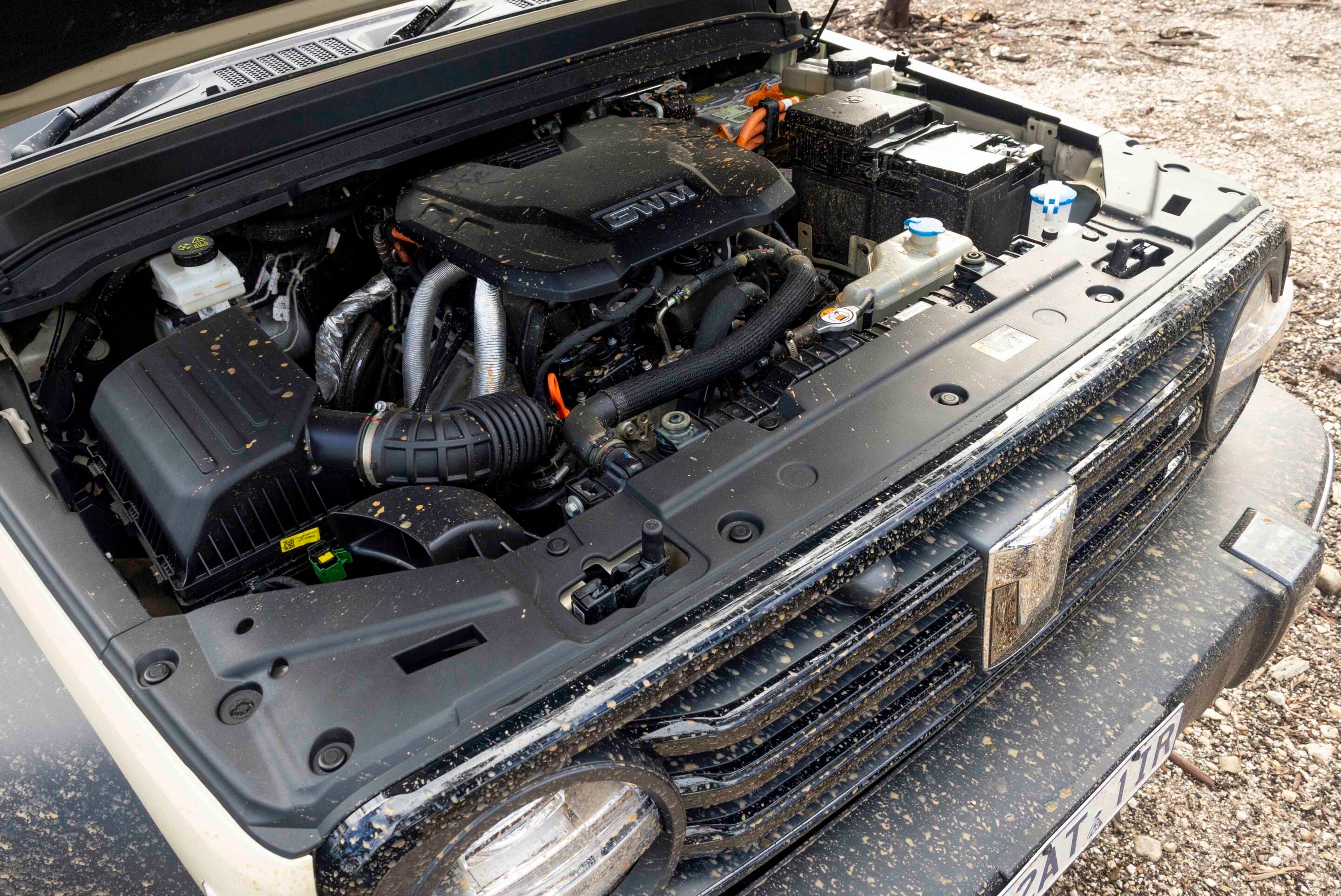
The top-of-the-range Tank 300 takes the Hi4-T plug-in hybrid powertrain from the bigger Tank 500 and Cannon Alpha models, and slots it into the smaller sibling.
The Tank 300 is a five-door, body-on-frame wagon with a proper dual-range transfer case and a rear diff lock standard, or front and rear lockers in upper grades such as the PHEV we are driving.
The Tank 300 is bigger than a five-door Jimny, but isn’t as big as a Prado, Everest or MU-X. For mine, the 300 sits in a size sweet spot for small families or two-up tourers, with a decent back seat and rear cargo space. To my eye, it’s every bit as good looking as the little Suzuki, plus it has added practicality and luxury.
1
The base engine is a 2.0-litre turbocharged petrol four-cylinder, and there’s also a 2.4-litre turbo-diesel and the top-of-the-range plug-in hybrid turbocharged petrol powertrain, with a combined 750Nm on tap and a claimed 955km touring range (NEDC combined rating).
That 750Nm in a relatively small wagon like the 300 is really something. It pushes you back in the seat and feels more like a performance vehicle, but there is no hiding the weight of the PHEV system, which makes it akin to a midsize diesel 4×4 ute in mass.
The hybrid drive system adds 460kg to the weight of the equivalent non-hybrid Tank 300 Ultra. Interestingly, GWM gives the PHEV a higher GVM than other models in the range, and it needs it to maintain its handy payload.
How capable is the GWM Tank 300 PHEV on- and off-road?
The Tank 300 PHEV is a sweet little thing to drive around town. Its boxy shape and relatively small size make it easy to park and negotiate traffic, while the PHEV drivetrain gives it plenty of poke.
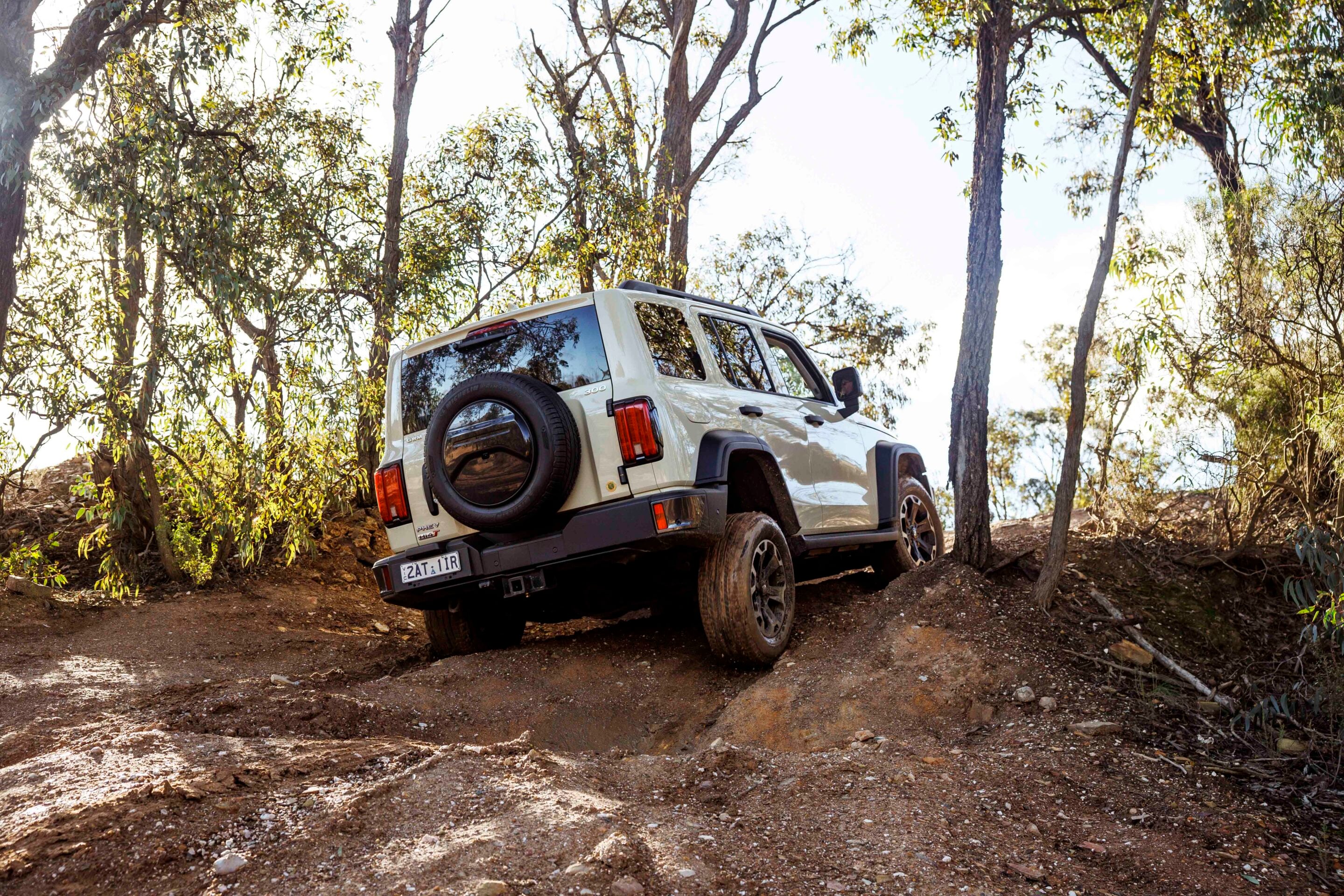
The surround-view cameras and relatively upright windscreen help with manoeuvrability in town and in the bush. On bush tracks, the suspension does a commendable job. There’s room for improvement, but it’s nothing to fret about and could be fixed with a set of quality shocks under it.
The suspension doesn’t offer massive wheel travel, but with front and rear lockers engaged, it doesn’t really matter. The Tank 300 PHEV feels like it could climb over anything it has the clearance to get over, and the team at GWM took one to Beer O’Clock Hill to successfully prove the point.
1
One real disappointment with the Tank 300 is the lack of a full-time 4×4 mode in the transfer case. It would have been handy to have it when driving on dirt tracks, and it also would have helped manage wheelspin on wet roads.
Aftermarket gear for the Tank is limited, but there are workshops already specialising in outfitting GWM models and this will only grow with the Tank’s popularity.
While driving the Tank 300 PHEV around town for a week in city traffic, it cruised around mainly on EV power and the petrol engine rarely cut in, only making itself known when I floored the accelerator. As the week went on and the charge level in the battery dropped, the combustion engine cut in more often. Luckily, the petrol engine is smooth and quiet, and never truly makes a fuss.
Charging the 37.1kWh battery from 30 to 80 per cent is claimed to take around 24 minutes on a 50kW DC charger.
| Off-Road Specifications | GWM Tank 300 PHEV |
|---|---|
| Approach Angle | 32 |
| Rampover Angle | 22 |
| Departure Angle | 33 |
| Ground Clearance | 222mm |
Verdict
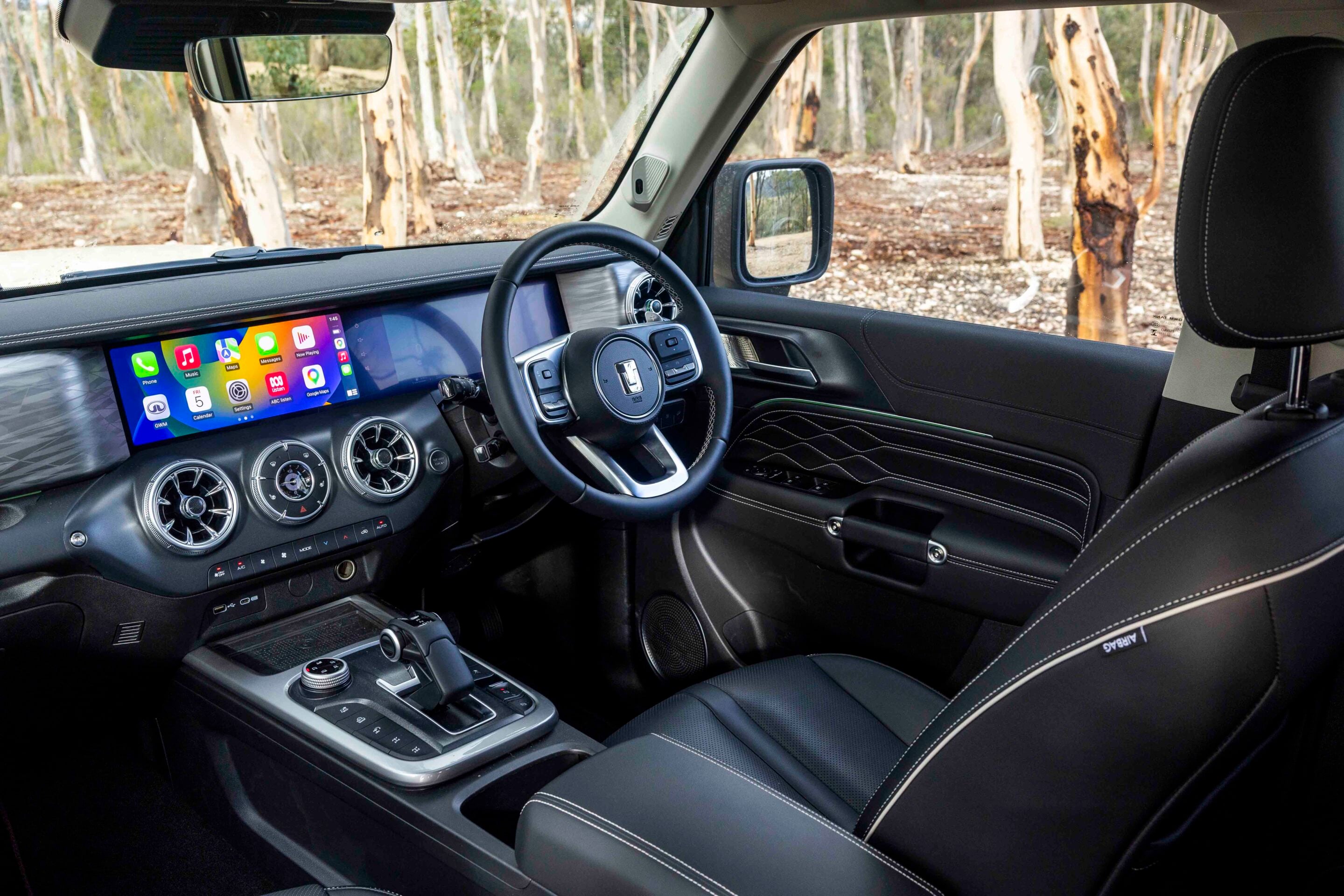
As the top of the Tank 300 range, the Ultra grade is well specced inside with heated, cooled and massaging front seats, leather trim, a premium sound system, massive sunroof and 12.3-inch multimedia and driver-information screens.
When you look at the level of equipment inside the Tank 300 PHEV, the off-road hardware and capability, and the fuel-saving benefits and performance of the hybrid drivetrain, the $60K price of the vehicle really looks sweet. That’s still more than $10K less than the price of a base-model Prado GX, and it has a lot more equipment in it.
Throw in the seven-year, unlimited-kilometre warranty and capped-price servicing, and the deal just gets sweeter.
35
Specs
| Specification | GWM Tank 300 PHEV |
|---|---|
| Price | From $59,990 drive-away |
| Engine | Turbocharged petrol engine with electric motor |
| Max Power | 120kW (electric motor); 180kW @ 5500-6000rpm (petrol); 300kW combined |
| Max Torque | 400Nm (electric motor); 380Nm @ 1700-4000rpm (petrol); 750Nm combined |
| Transmission | 9-speed automatic |
| 4×4 System | Part-time dual-range 4×4 |
| Construction | 5-door wagon on ladder-frame chassis |
| Front Suspension | Independent front suspension with wishbones and coil springs |
| Rear Suspension | Live axle with links and coil springs |
| Tyres | 265/65R18 alloy wheels |
| Kerb Weight | 2615kg |
| GVM | 3225kg |
| Payload | 610kg |
| Towing Capacity | 3000kg (braked) |
| GCM | 6261kg |
| Seating | 5 |
| Fuel Tank | 70L |
| ADR Fuel Consumption | 0.9L/100km (combined); 8.3L/100km (battery low charge) |
8.5
/10
Score
Things we like
- 750Nm hybrid powertrain delivers strong performance
- Genuine off-road hardware
- Excellent value with premium features and equipment
Not so much
- Heavy PHEV system adds 460kg and impacts payload
- No full-time 4x4 mode in the transfer case
- Aftermarket support is currently limited
Follow 4X4 Australia on Google
Get more 4x4 news, reviews and gear stories from 4X4 Australia in your Google feeds.

We recommend
-
 News
NewsAustralia’s PHEV 4x4 line-up: What’s available now and what’s coming soon
Australia’s PHEV 4x4 market is set to expand, with plug-in utes and SUVs on sale now and more models on the way
-
 News
NewsGWM returns to Taklimakan Rally with three-model Tank assault
GWM fields three TANK-badged factory entries across nearly 8000km of brutal terrain
-
 News
NewsGWM Tank 300 and 500 Hi4-T PHEVs conquer Beer O’Clock Hill
GWM’s electrified Tank 300 and Tank 500 Hi4-T PHEVs have successfully climbed Beer O’Clock Hill in full production spec