4x4 Comparisons


Gallery 1
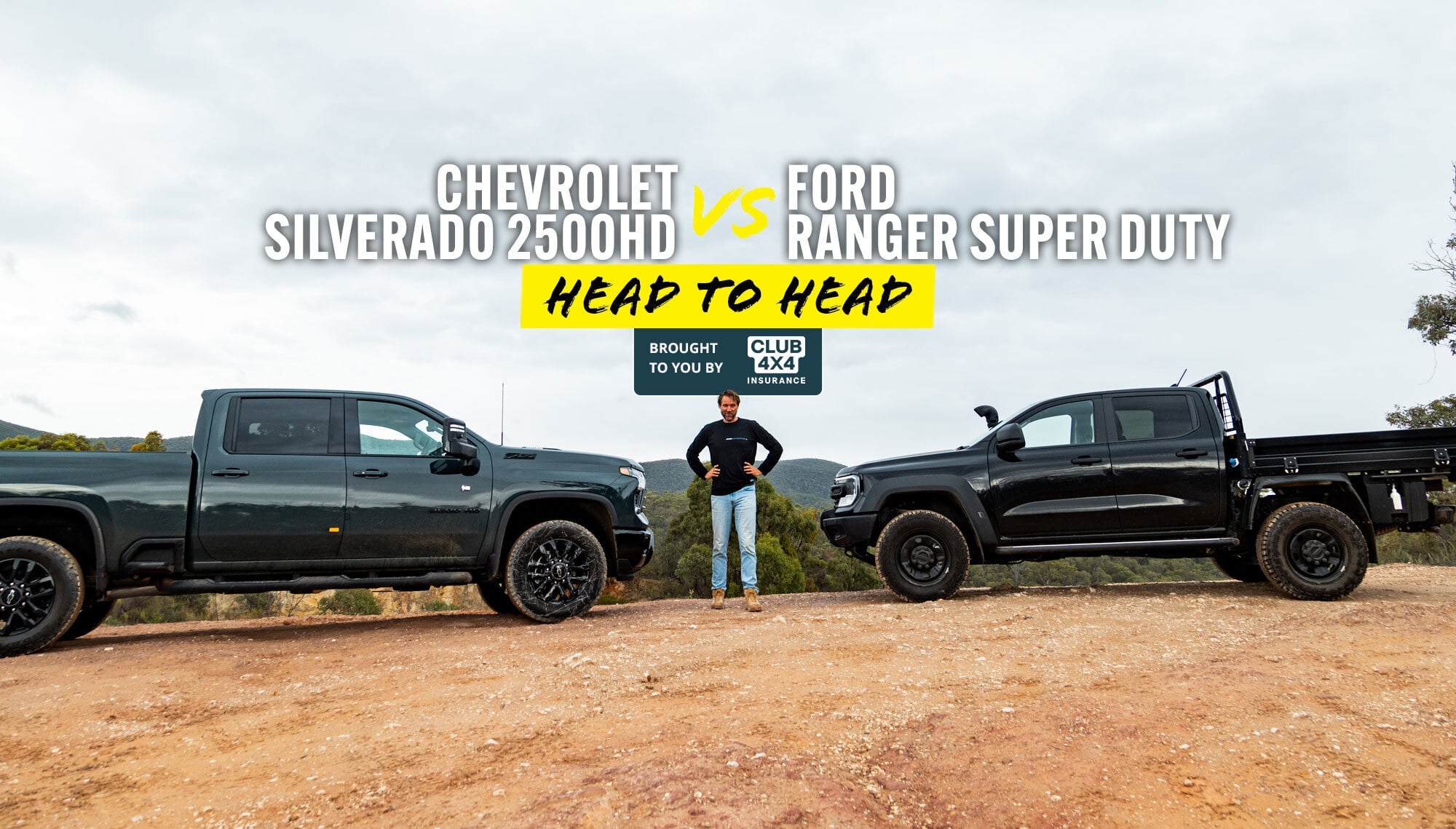
The Ranger Super Duty promises something we haven’t really seen before: Genuine heavy-duty capability from a midsize platform.
With towing, payload and GCM figures pushing well beyond the traditional ute segment, it’s designed to close the gap between dual-cabs and light trucks. To understand what that actually means in the real world, we’ve lined it up against one of the few vehicles in Australia that already operates in that space – a full-size American heavy-duty pick-up.
JUMP AHEAD
- Why are we comparing them?
- Real-world towing test
- Chevrolet Silverado 2500HD
- Ford Ranger Super Duty
- Real-world comparison
- Verdict
- Specs
Why we are comparing them?
On paper, the Ranger Super Duty sits in a class of its own.
Its numbers edge into territory typically reserved for imported American trucks, not locally developed utes. While vehicles like the LandCruiser are often drawn into the conversation, they serve a different purpose – built for touring rather than sustained load and towing work.
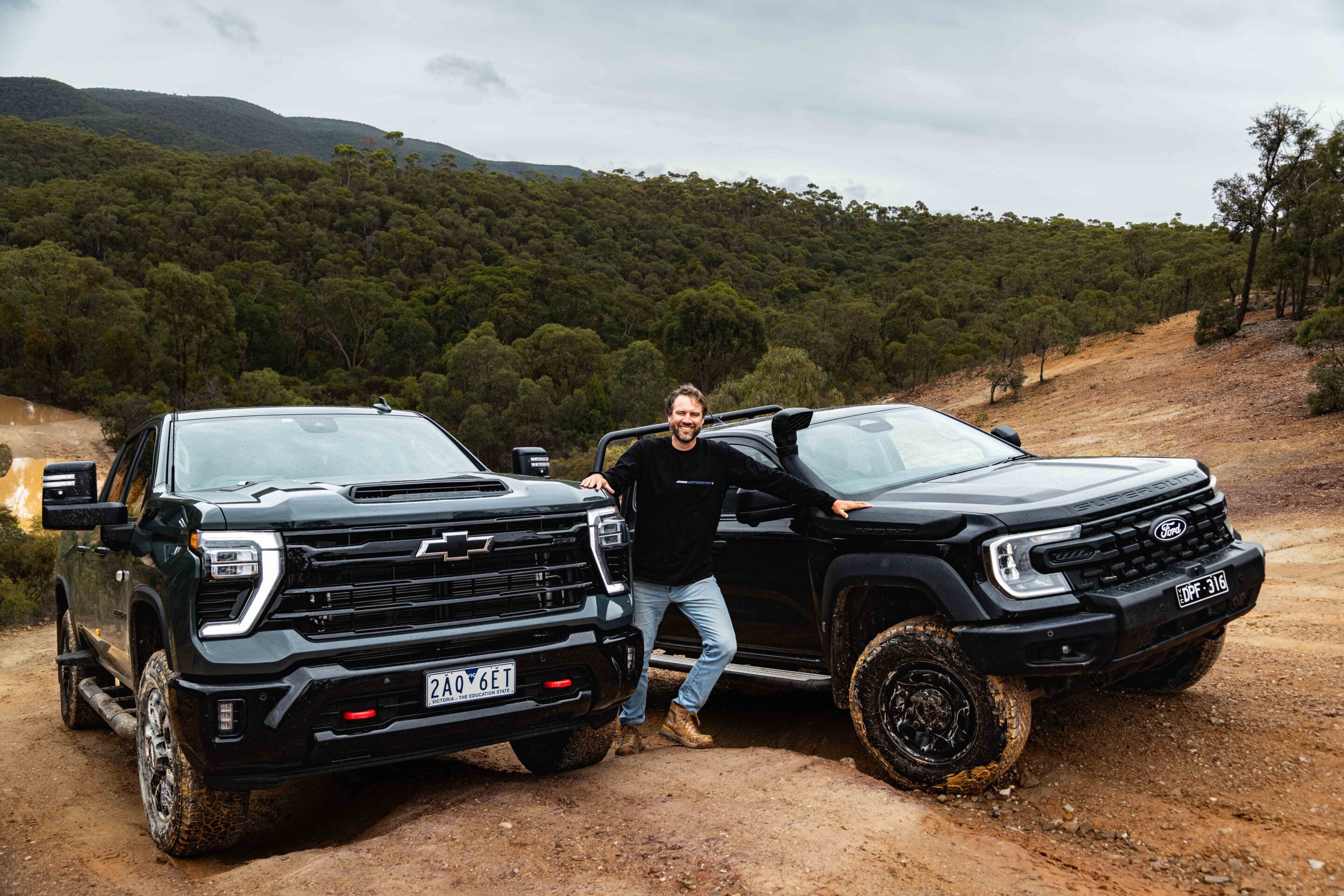
So instead of comparing the Ranger to another ute, we’ve taken a different approach. We’ve paired it with a Chevrolet Silverado 2500HD – a purpose-built heavy-duty pick-up – to give proper context to those headline figures.
At first glance, it’s an unusual match. One is a compact, work-focused platform engineered for versatility and accessibility. The other is a large, long-distance towing tool built around outright capacity. But that contrast is exactly the point. Because while these two overlap on paper, the reality is they approach the same job in very different ways – something that becomes clear the moment you start using them.
1
Real-world towing test
When Ford revealed the Ranger Super Duty in 2025, it immediately grabbed attention.
Not because it was another Ranger variant, but because of the headline figures attached to it. Payload, towing and GCM numbers that push well beyond what we’ve come to expect from a dual-cab. Naturally, that raises the question: do those numbers translate into real-world capability?
To find out, we put both vehicles to work: a 3250kg tare caravan on the back for on-road towing, followed by a run into Lerderderg State Forest to test traction, clearance and low-range performance.
The Silverado 2500HD has long been the benchmark for this kind of work – a platform built to tow big loads over long distances with ease. The Ranger Super Duty takes a different approach, packaging serious capacity into a smaller, more usable and far more accessible form. Price only reinforces that divide. The Ranger Super Duty dual-cab with a factory tray lands around $110,000 driveaway, while the Silverado 2500HD LTZ Premium sits closer to $190,000.
So while the numbers might suggest these two belong in the same conversation, the real question isn’t which one is better. It’s whether they’re even trying to do the same job in the first place.
Chevrolet Silverado 2500HD
Heavy-duty capability
If you didn’t already know the details, you only really need to understand one thing: the Silverado 2500HD is one of the most capable tow vehicles you can buy in Australia.
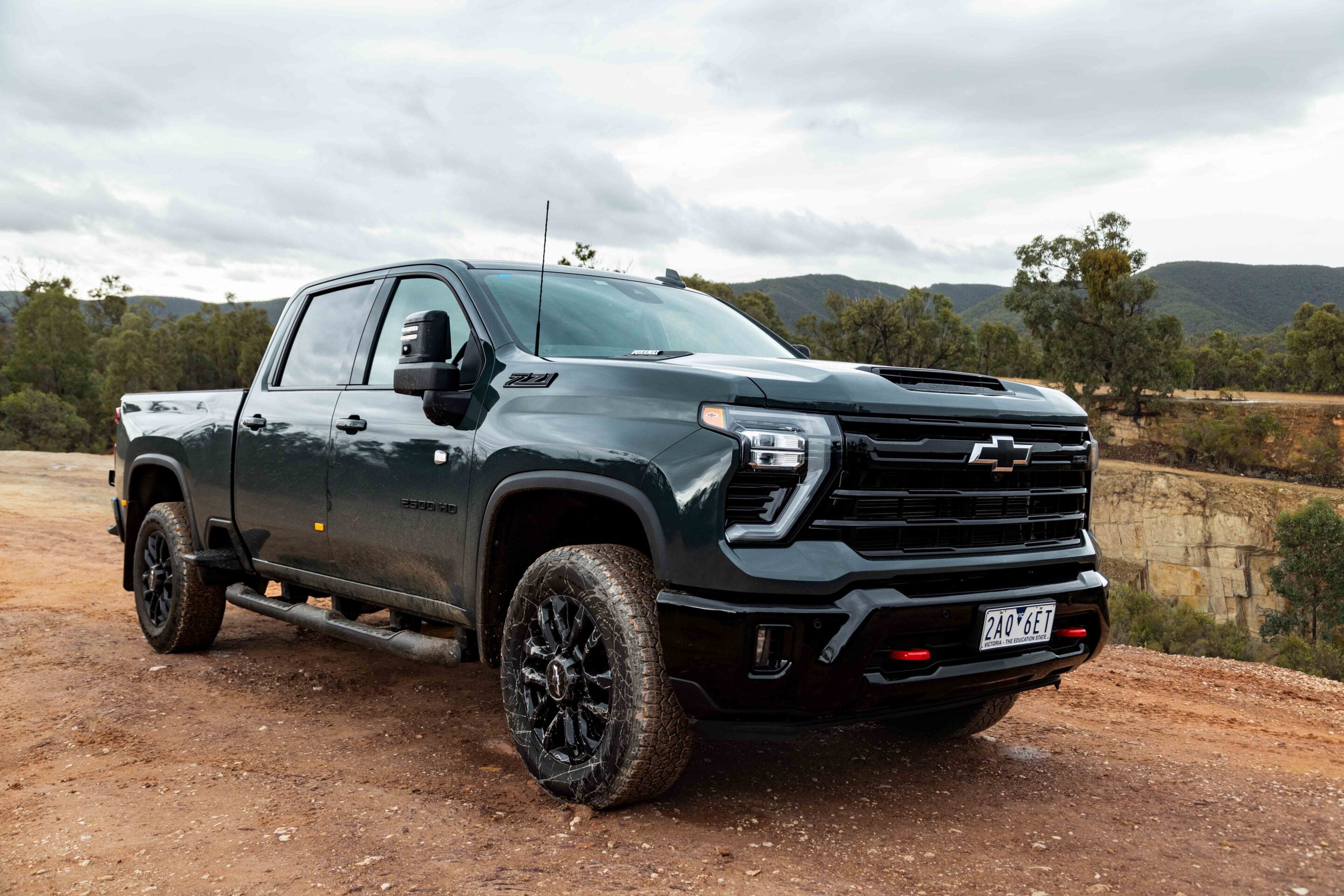
It sits above the 1500 LTZ and ZR2, which share a similar footprint but run a lighter-duty platform with significantly lower payload and towing capacity. The 2500HD is built on a proper heavy-duty frame designed to haul serious weight. In Australia, it arrives exclusively in LTZ Premium trim at around $190,000 driveaway, placing it directly against other American heavy-duty imports such as the Ram 2500 and 3500.
1
The drivetrain defines the vehicle: a 6.6-litre Duramax turbo-diesel V8 paired with a 10-speed Allison automatic and two-speed transfer case, engineered for sustained load rather than just headline numbers. But here’s the reality behind it. Out of the box, the Silverado is delivered with a GVM of 4495kg, just under the car licence limit. With a kerb weight around 3.7 tonnes, payload sits at roughly 700–750kg – tight for something of this size.
To unlock its real capability, you need to step up to NB2 light-truck registration, lifting GVM to around 5148kg and adding roughly 650kg of payload. That’s where ownership changes. You’ll need a light-truck licence, you’re subject to zero BAC, registration costs increase and there’s an annual inspection requirement. It’s not prohibitive, but it shifts the vehicle firmly into light-truck territory rather than large-ute territory.
Externally, the MY25 update is subtle, with minor front-end revisions and blacked-out badging. It remains big, upright and imposing, with real presence on the road.
Interior space and comfort
Inside is where the Silverado leans into its size advantage.
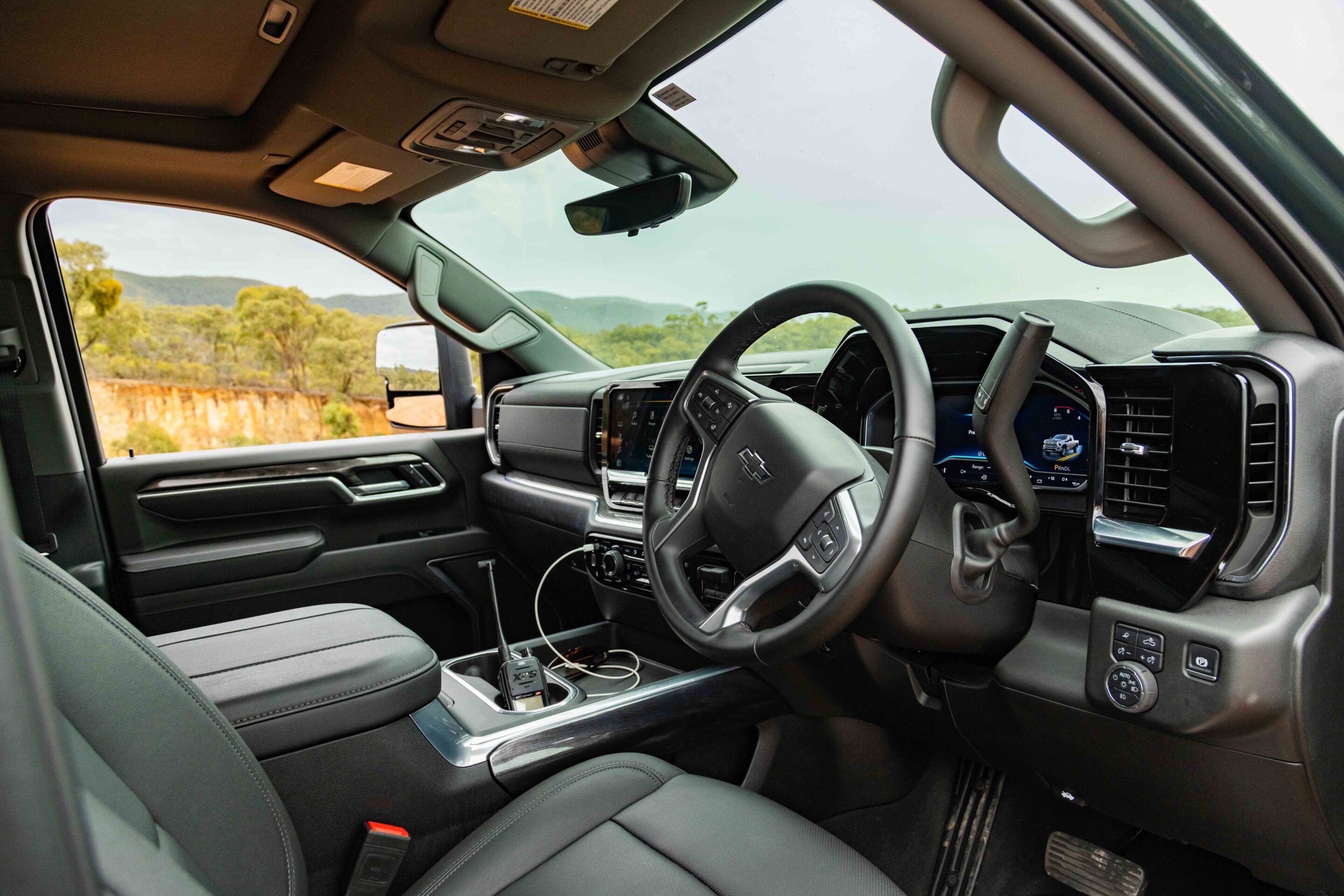
The cabin is enormous. Five adults fit comfortably, the rear floor is completely flat and there’s simply more space here than in anything else on the market short of a van. For long-distance work, that matters.
The MY25 update brings a larger infotainment screen and digital instrument cluster. Both are easy to use, though the interface already feels slightly behind newer US offerings.
Cabin quality has improved, with tighter fit and fewer rattles than older conversions, but it’s still not quite at the level of a factory right-hand-drive vehicle. That’s the reality of the remanufacturing process – it’s very good, but not perfect.
1
Safety and towing tech
What matters here is how the Silverado manages towing.
Adaptive cruise control adjusts following distance based on trailer weight, which is genuinely useful when hauling big loads. The camera system is another highlight. Multiple views around the vehicle, plus a digital rear-view mirror that can take a feed from a trailer-mounted camera, make a real difference to visibility when towing.
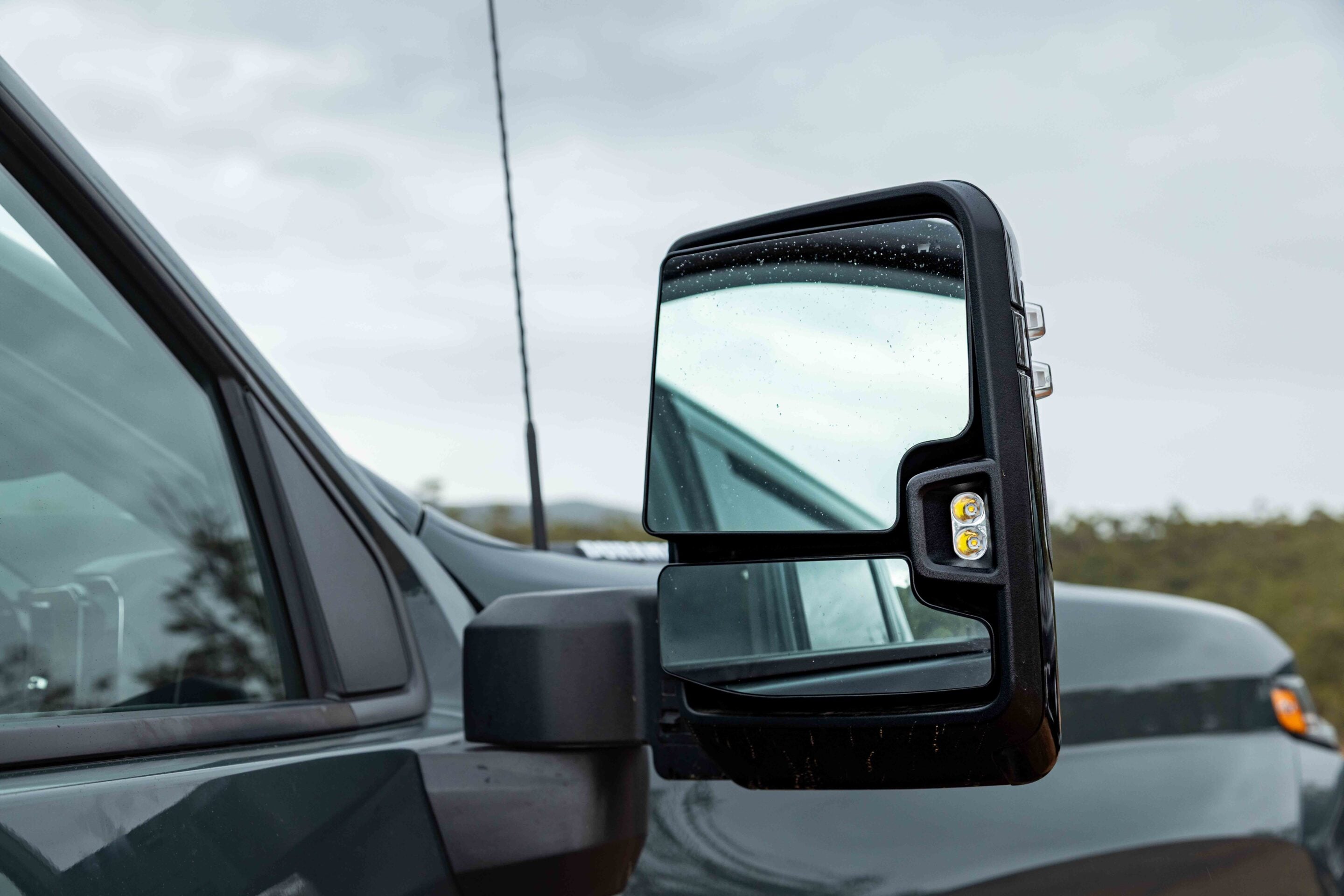
Add in the power-extending towing mirrors and managing both the vehicle and a trailer becomes far easier than you’d expect.
1
On-road performance
On the road, the Silverado is all about effortlessness.
The Duramax V8 delivers performance that feels almost excessive. Even at 3.7 tonnes, it accelerates with ease and, when towing, it barely feels like it’s working. The Allison 10-speed is smooth and well sorted, and the overall driving experience is far more refined than you’d expect from something this large.
Where it falls short is in ride control. The front end carries a lot of weight, and over Australian roads it can feel underdamped, particularly at speed – something many owners address with aftermarket suspension.
And then there’s the size. In open or rural environments, it makes sense. In tighter areas, it quickly becomes a liability. Parking, narrow streets and urban driving all require planning – this is not a vehicle that shrinks around you.
Off-road capability
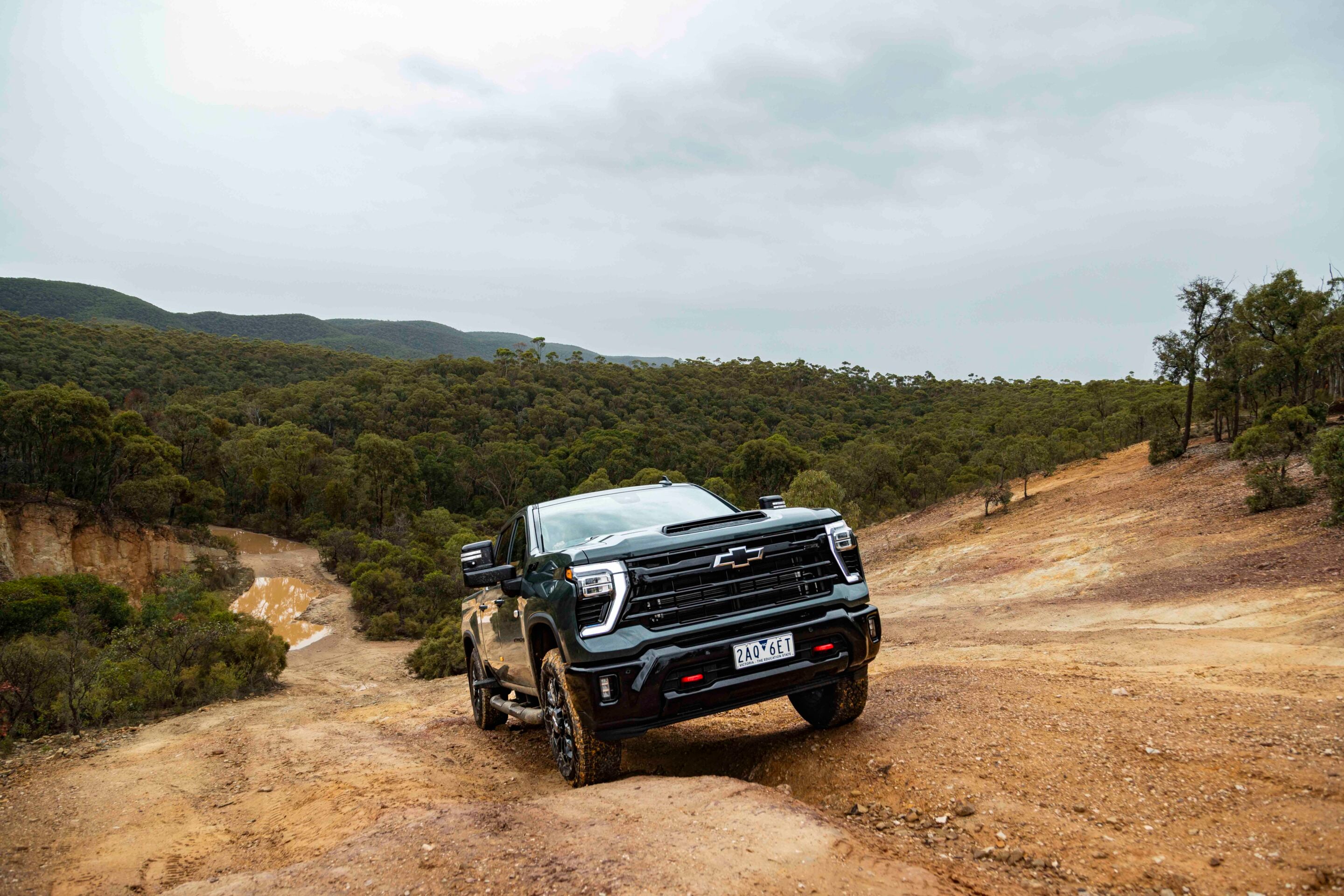
Off road, the Silverado is capable, but not convincing.
It has the hardware – low range, traction control and an automatic locking rear differential – and it will push through basic terrain without issue. But it’s not designed for tight or technical work. Clearance is limited under the belly, articulation is modest and its sheer size restricts where you can realistically take it.
Where it works best is in open environments – dirt roads, paddocks and low-traction surfaces such as boat ramps – where stability and mass are advantages rather than limitations. It can be built into a serious off-road platform, but in factory form, that’s not its focus.
| Silverado 2500 off-road specs | |
|---|---|
| Approach angle | 28.5 |
| Ramp-over angle | 19 |
| Departure angle | 23.6 |
| Ground clearance | 251mm |
Fuel consumption
Fuel use matters, particularly at the moment.
Towing a 3250kg caravan, expect consumption in the high teens in L/100km, with some variation depending on setup. Larger tyres and modifications can push that into the 20s. Unladen, it improves to around 9-12L/100km on the highway and 12-15L/100km in urban driving. With a 136L tank, that gives a realistic range of 700-800km towing and more than 1000km unhitched.
10
Ford Ranger Super Duty
Heavy-duty design and drivetrain
The Ranger Super Duty sits outside the normal Ranger line-up. It’s not about luxury or performance – it’s built for work. Carry more, tow more and do it consistently.
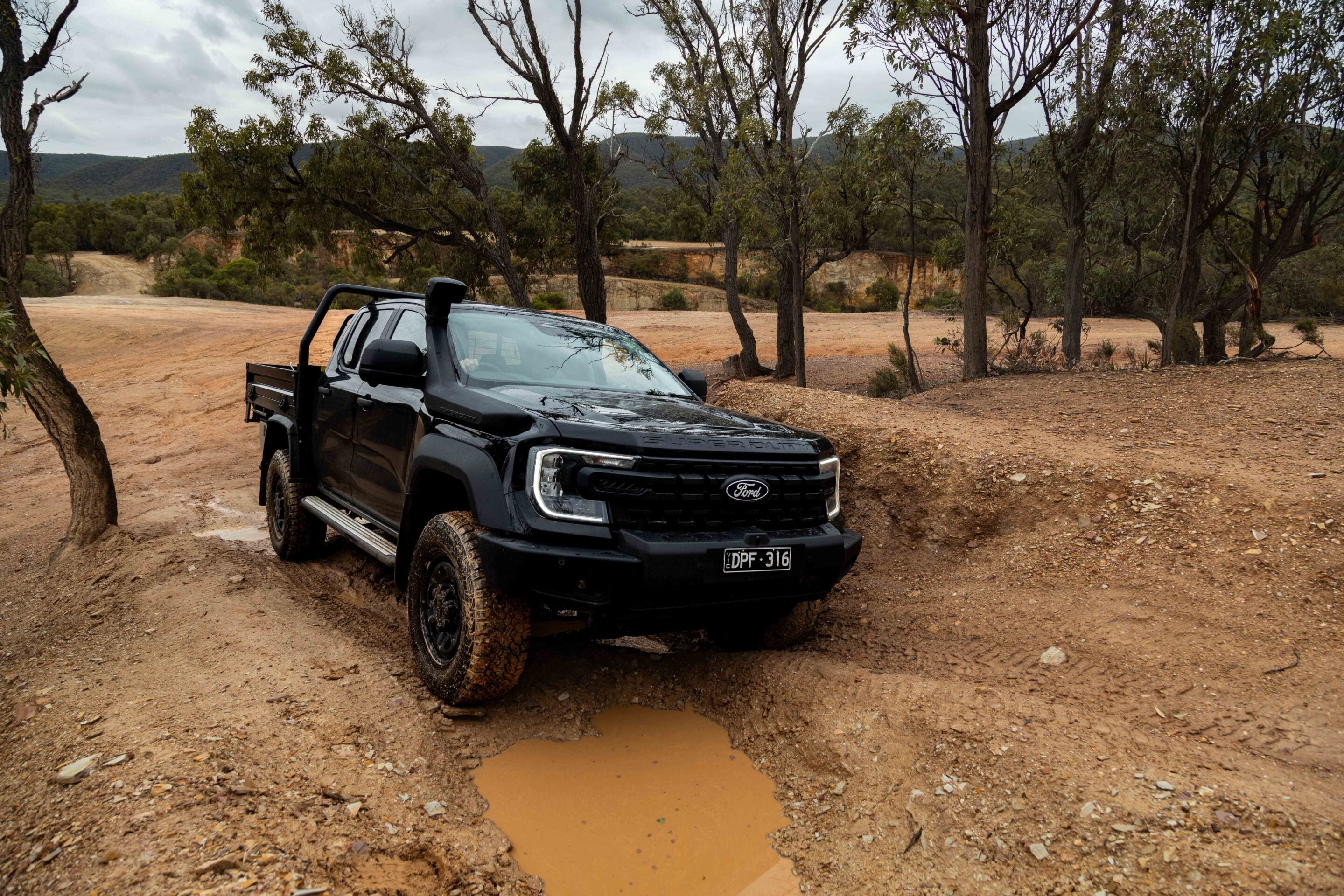
At around $110,000 driveaway for a dual-cab with a factory-painted tray, it sits at the top of the range, even above Raptor and Platinum. But unlike those vehicles, it’s chasing capability, not comfort. Mechanically, that’s clear. The 3.0-litre V6 turbo-diesel has been recalibrated for heavy-duty use. Power is down on other V6 Rangers, but torque holds at 600Nm, delivered in a flatter, more usable curve. It doesn’t feel quick, but it feels right for the job.
Underneath is where it separates itself. The transfer case is a billet unit, the front differential – complete with locker – is derived from the Bronco Raptor, and the rear differential comes from the Transit range. These are durability-focused components, chosen to handle sustained load rather than outright performance.
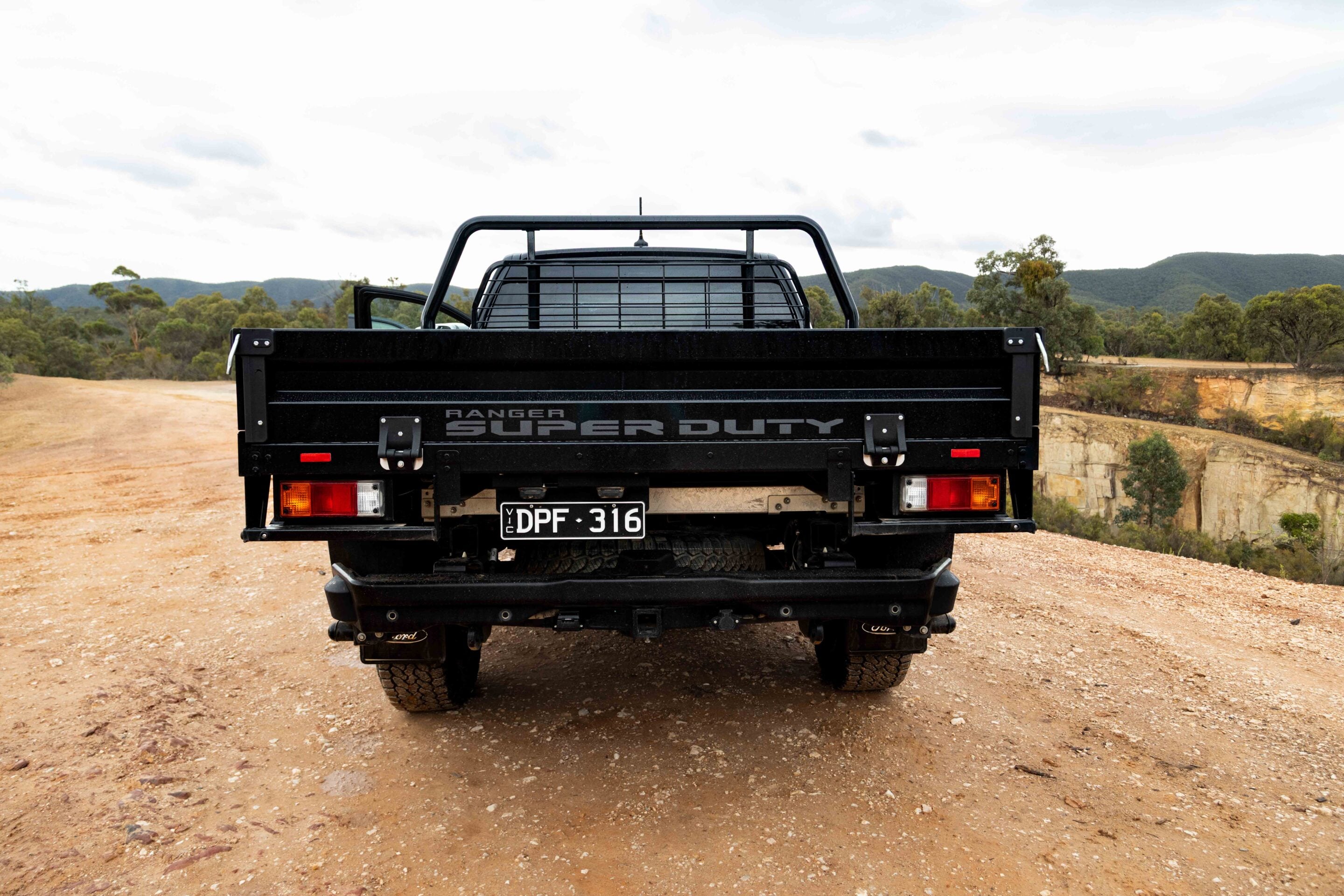
The track is wider than a standard Ranger, giving it a more planted stance and allowing for larger tyres – General Grabber AT3 all-terrains from the factory. Visually, it has presence. The wide stance, raised intake and Super Duty bonnet stamping give it a purposeful, industrial look.
1
Cabin and usability
Inside, the Super Duty reflects its brief.
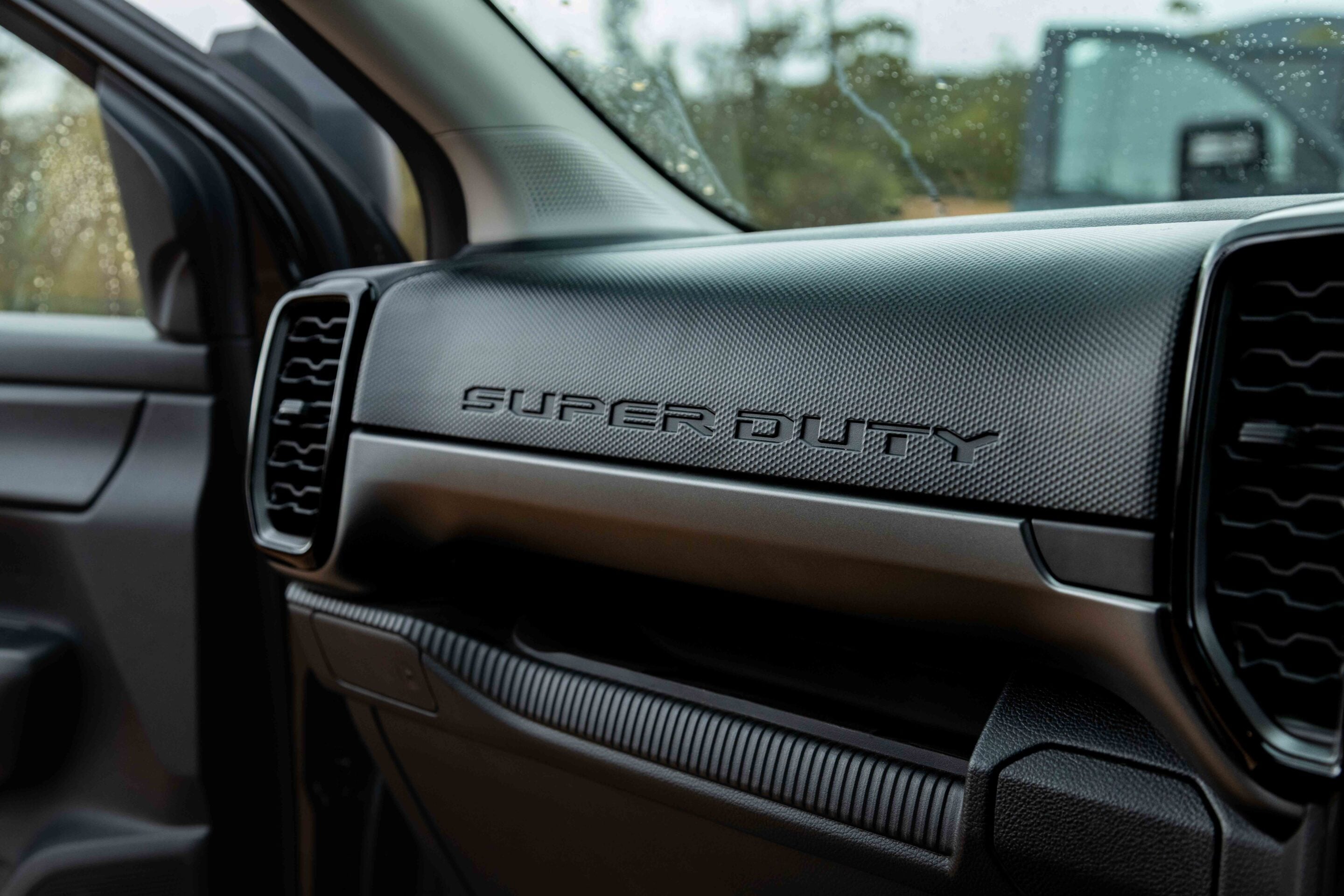
This is not a luxury Ranger. It’s a durable, work-focused cabin designed for people getting in and out all day, not polishing leather on the weekend. The infotainment screen is large and familiar, and while it doesn’t get the full digital setup of higher-spec models, everything is clear and easy to use. There’s nothing complicated here – it just works.
The seats are cloth, and that suits the vehicle. For long-distance driving, cloth remains comfortable and practical, avoiding the heat and stickiness of leather or vinyl. The seats themselves are supportive, and the driving position is excellent.
Storage and practicality are solid, with plenty of usable space and charging points throughout. More importantly, the build quality is strong. Ford has been improving in this area for years, and it shows – everything feels tight, with no obvious squeaks or rattles.
1
Load and safety systems
Safety is a key part of the Super Duty’s appeal, particularly for fleet and commercial buyers.
It carries the expected suite of driver-assistance systems, but more importantly adds tools that directly manage load and towing risk. The onboard scales system allows drivers to monitor payload in real time, helping ensure the vehicle isn’t overloaded before setting off. Smart Hitch estimates towball download, giving immediate feedback when hitching and helping get load distribution right.
Compared to more traditional heavy-duty wagons, the Ranger offers a more complete safety package, particularly for commercial use.
On-road behaviour
On road, the Super Duty is better than it has any right to be.
The General Grabber AT3 tyres trade a small amount of grip and refinement for versatility, but they suit the vehicle’s purpose. This is a work platform expected to operate across mixed conditions, not a highway-focused ute.
The engine feels different to other V6 Rangers. There’s less urgency when overtaking and it doesn’t have the same punch at higher speeds, but the torque delivery is strong and consistent. It builds speed steadily rather than aggressively, which suits its heavy-duty calibration.
Ride quality is the standout. For a vehicle with this level of payload capacity, it performs remarkably well unladen. It’s not as plush as a Platinum or Wildtrak, but it’s far more composed than expected, and settles further again with a load on board. The wider track helps here too, giving it a more stable and confident feel at speed. Refinement is solid. There’s some intake and turbo noise from the raised intake, but overall it remains quiet and comfortable.
Crucially, it’s easy to live with. It’s still a large vehicle, but nowhere near the scale of a full-size truck, with good visibility and a footprint that works in everyday environments.
1
Off-road capability
Off road is where the Super Duty really delivers.
It runs a proper dual-range transfer case, locking front and rear differentials and a suite of terrain modes designed to manage traction across different surfaces. In practice, many drivers will default to low range and use the lockers manually, but the systems are well calibrated and effective.
The standout feature is Trail Control. It acts as off-road cruise control, managing wheel speed and traction more precisely than most drivers can with the throttle. On steep or loose climbs, it allows the vehicle to find grip and maintain momentum without excessive wheelspin. Tyre performance is solid. The Grabber AT3s aren’t the most aggressive option, but they provide consistent grip across a wide range of conditions.
Suspension performance is impressive given the vehicle’s load focus, though it remains an IFS platform. Articulation is good rather than exceptional, but ground clearance is strong and overall capability is high. Features such as Trail Turn Assist further improve usability on tight tracks, effectively reducing the turning circle when used correctly. Put simply, this is one of the most capable independent-front-suspension utes currently on sale.
| Ford Ranger Super Duty off-road specs | |
|---|---|
| Approach angle | 36.1 |
| Ramp-over angle | 26.3 |
| Departure angle | 28.6 |
| Ground clearance | 295mm |
| Wading depth | 850mm |
Towing and fuel use
Towing performance is strong, but not effortless.
With the 3250kg tare Wonderland caravan attached, you’re aware of the load. It builds speed steadily and requires more planning when overtaking, but remains stable and predictable.
Tow/haul mode is effective and worth using, holding gears longer and improving engine braking. Fuel consumption reflects the workload. Expect low-to-high teens in L/100km when towing. Unladen, it settles into 10-12L/100km on the highway, with urban driving in the low-to-mid teens. A larger fuel tank than standard Rangers improves range for long-distance touring.
8
Real-world comparison
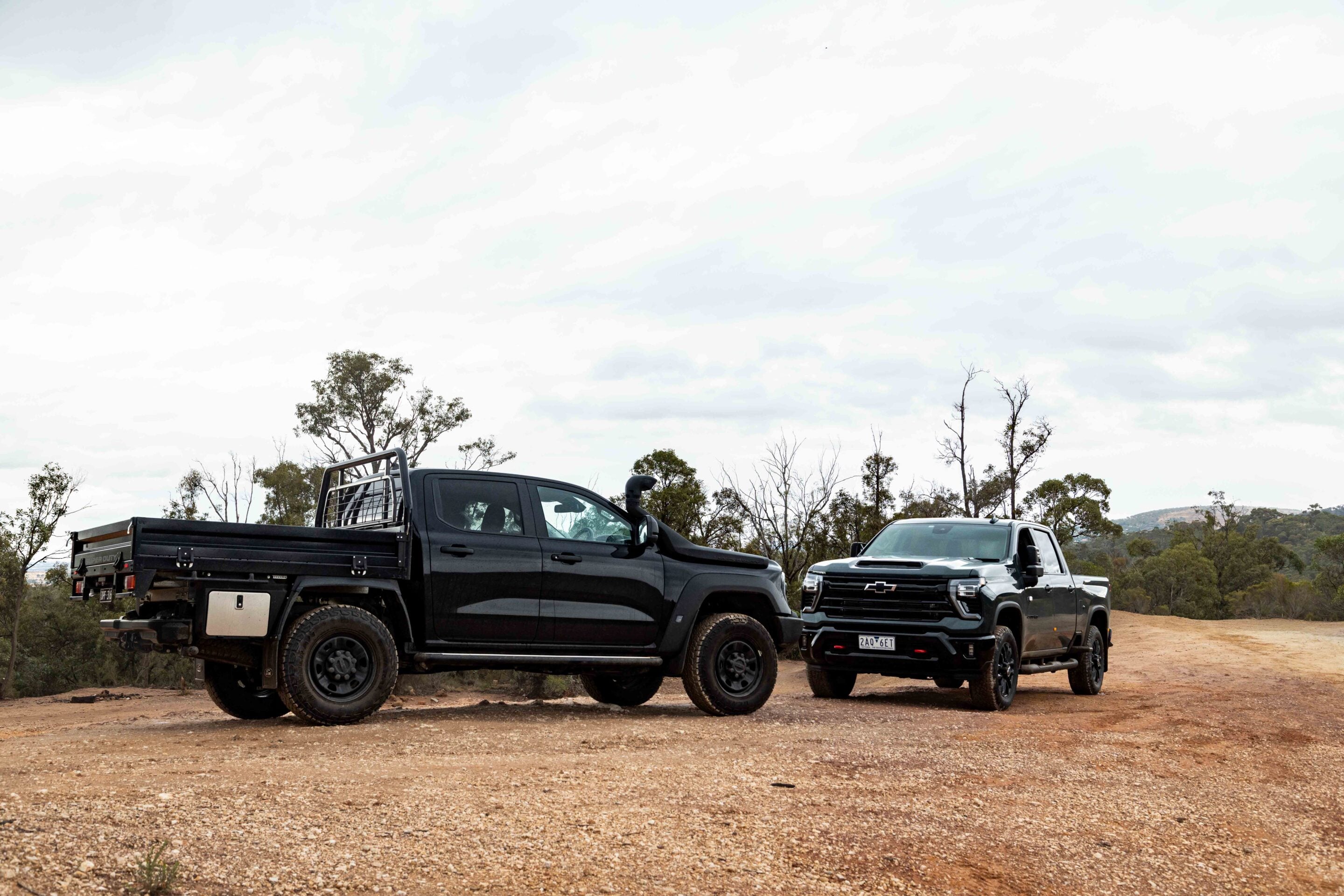
We tested both vehicles the way owners actually use them – towing a 3250kg Wonderland caravan on road and heading off road into Lerderderg State Forest to assess traction, clearance and low-range performance.
On the road, the difference is immediate. The Silverado 2500HD feels effortless. With or without a trailer, it carries weight without strain, and the experience is more long-distance tourer than work vehicle. Hitch up a heavy van and it simply gets on with it.
The Ranger Super Duty, by contrast, feels like what it is – a heavy-duty ute. It tows confidently and remains stable, but you’re more aware of the load. It builds speed steadily and requires more planning, but still gets the job done comfortably.
Off road, the roles reverse. The Silverado is capable, but its size, clearance and limited articulation quickly become constraints. It’s better suited to open terrain – dirt roads, paddocks and low-traction surfaces – than tight or technical tracks.
The Ranger Super Duty thrives here. With locking front and rear differentials, low range and well-calibrated traction systems, it’s one of the most capable IFS utes on sale. Systems such as Trail Control make steep climbs easier to manage, and its size remains workable on tighter tracks.
Ultimately, both vehicles nail their intended purpose. The Silverado is unmatched for long-distance towing and comfort, but comes with compromises in size, price and ownership complexity. The Ranger Super Duty is easier to live with, highly capable off-road and delivers serious load and towing capability in a more usable package.
1
Final verdict
On paper, this looks like a head-to-head. In reality, it isn’t.
Yes, the Ranger Super Duty and Silverado 2500HD overlap in the numbers – GCM, towing capacity and payload – but spend any real time with them and it becomes clear they’re solving the same problem in completely different ways.
If your job is covering distance, with or without a heavy trailer, the Silverado is unbeatable. It tows with an effortlessness that nothing else on sale here can match, and does it with a level of comfort and refinement that makes long days behind the wheel genuinely easy. Unlock its full capability through NB2 registration and it becomes an incredibly serious tool – albeit one that comes with cost, size and ownership compromises.
The Ranger Super Duty takes a different path, and arguably the more relevant one for Australia. It delivers genuine heavy-duty capability in a package that’s easier to live with, easier to run and far more capable off road. For agricultural, industrial and fleet use, it’s hard to argue there’s a better ute on sale right now.
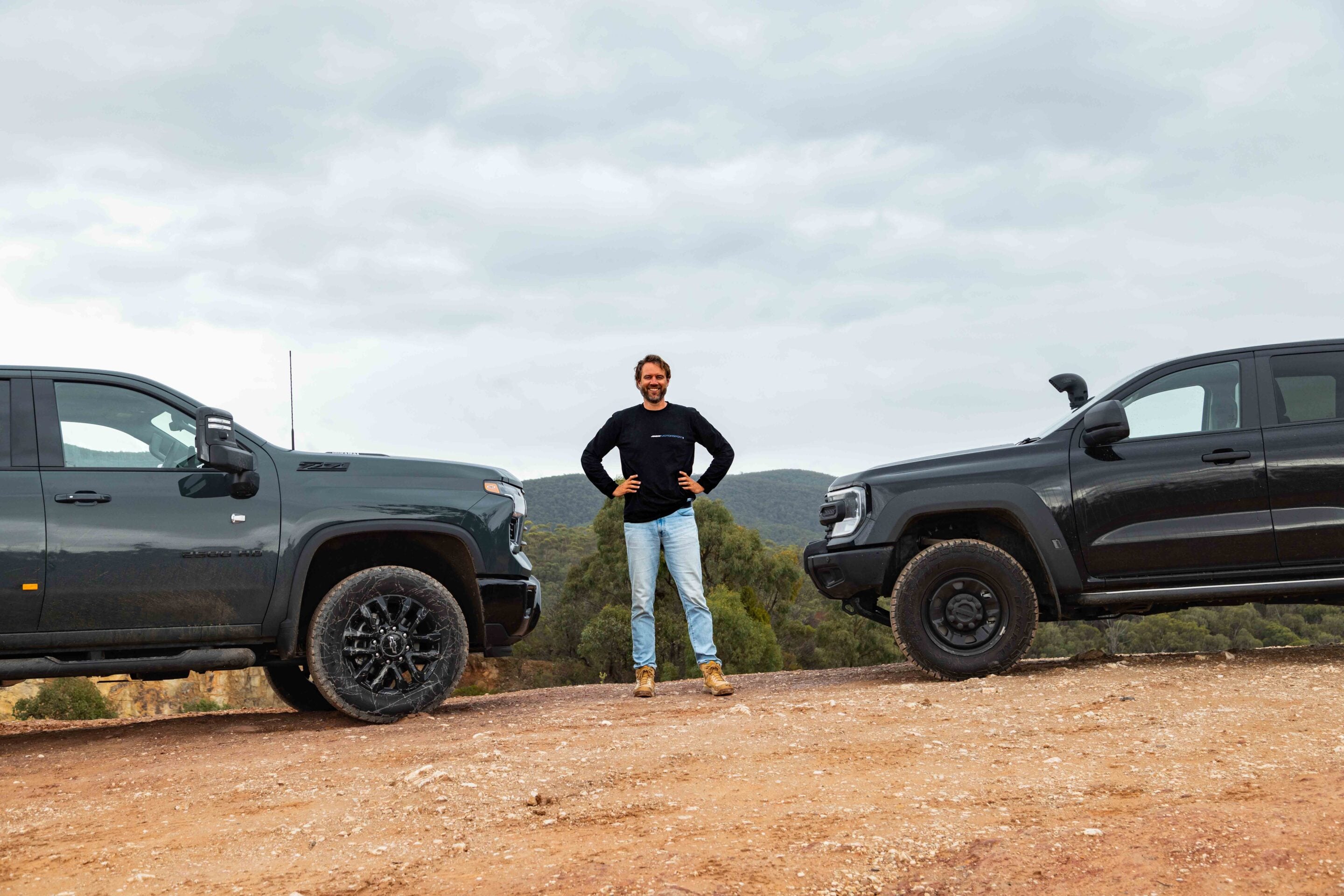
So which wins? It depends entirely on your use case. If you need a long-distance towing platform, it’s the Silverado. If you need a do-it-all workhorse that can go anywhere, it’s the Ranger. Truth is, if you had the space and the need, you’d own both.
1
Specs
| Spec | Ford Ranger Super Duty Double Cab with Tray | Chevrolet Silverado 2500HD LTZ Premium |
|---|---|---|
| Price | $110,000 drive away | $190,000 drive away |
| Engine | V6 turbo-diesel | V8 turbo-diesel |
| Capacity | 2993cc | 6599cc |
| Max Power | 154kW @ 3250rpm | 350kW @ 2800rpm |
| Max Torque | 600Nm @ 1750–2250rpm | 1322Nm @ 1600rpm |
| Transmission | 10-speed automatic | 10-speed automatic |
| 4×4 System | Full-time 4×4 with high and low range | Part-time 4×4 with high and low range |
| Construction | 4-door cabin and tray on separate chassis | 4-door cabin and tub on separate chassis |
| Front Suspension | IFS with coil springs | IFS with torsion bars |
| Rear Suspension | Live axle with leaf springs | Live axle with leaf springs |
| Tyres | LT275/70R18 General Grabber AT3 on steel wheels | Goodyear Wrangler TrailRunner AT on 20-inch alloy wheels |
| Kerb Weight | 3075kg (with tray, est.) | 3762kg |
| GVM | 4500kg | 4495kg NB1 / 5148kg NB2 |
| Payload | 1425kg (with 400kg tray) | 733kg NB1 / 1386kg NB2 |
| Towing Capacity | 4500kg | 4500kg |
| GCM | 8000kg | 12,474kg |
| Seating | 5 | 5 |
| Fuel Tank | 130L | 136L |
| Fuel Consumption | 10-12L/100km unladen; mid-to-high teens when towing | 9-12L/100km unladen; high teens when towing |
Follow 4X4 Australia on Google
Get more 4x4 news, reviews and gear stories from 4X4 Australia in your Google feeds.

We recommend
-
 4x4 Comparisons
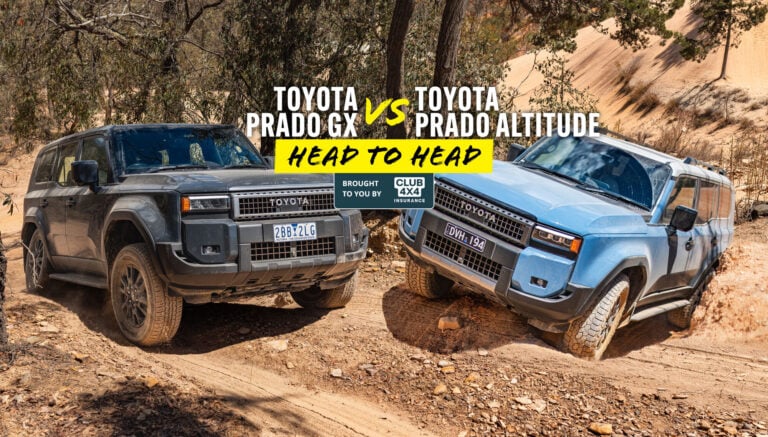
Prado GX vs Altitude: Is the flagship worth the extra money?
Is the Prado Altitude worth the premium, or does the GX make more sense as a smarter base for building a proper 4x4?
-
 4x4 Comparisons
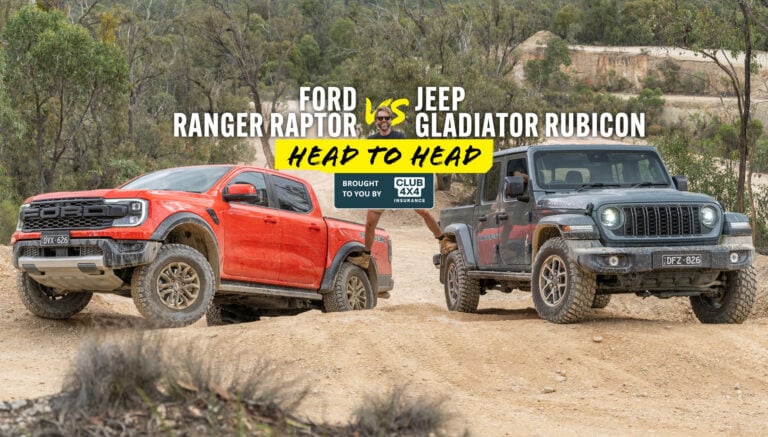
Sensible is boring: Ford Ranger Raptor vs Jeep Gladiator Rubicon
Forget sensible. The Ranger Raptor and Gladiator Rubicon take wildly different paths to the same end, and neither cares much for the traditional ute brief. Brought to you by Club 4x4 Insurance.
-
 4x4 Comparisons
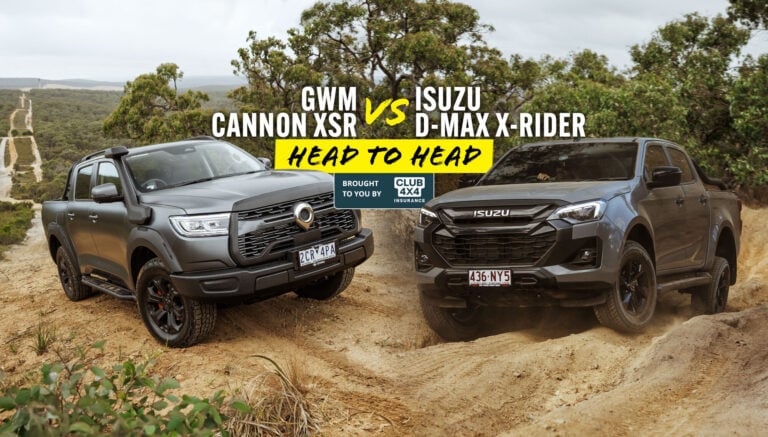
New 2.2L D-MAX X-Rider vs GWM Cannon XSR: Is budget really better?
Chinese challenger takes on an established player in a head-to-head battle brought to you by Club 4x4 Insurance