
With most of the heavy stuff like wheels, tyres, canopy and drawers fitted to our 2019 HiLux, the stock-standard, 200,000km-old springs and shocks were starting to show their age.
As with any suspension upgrade, the first step is to stop and have a good hard think about how the vehicle is used. It’s not a tow pig, nor is it going to be used to haul several tonnes of concreting gear on the reg. We need something that’s great off-road and can handle the occasional camper trailer, boat and load of touring gear. There’s also a lot of blacktop between destinations, so it has to drive nicely on the road as well.
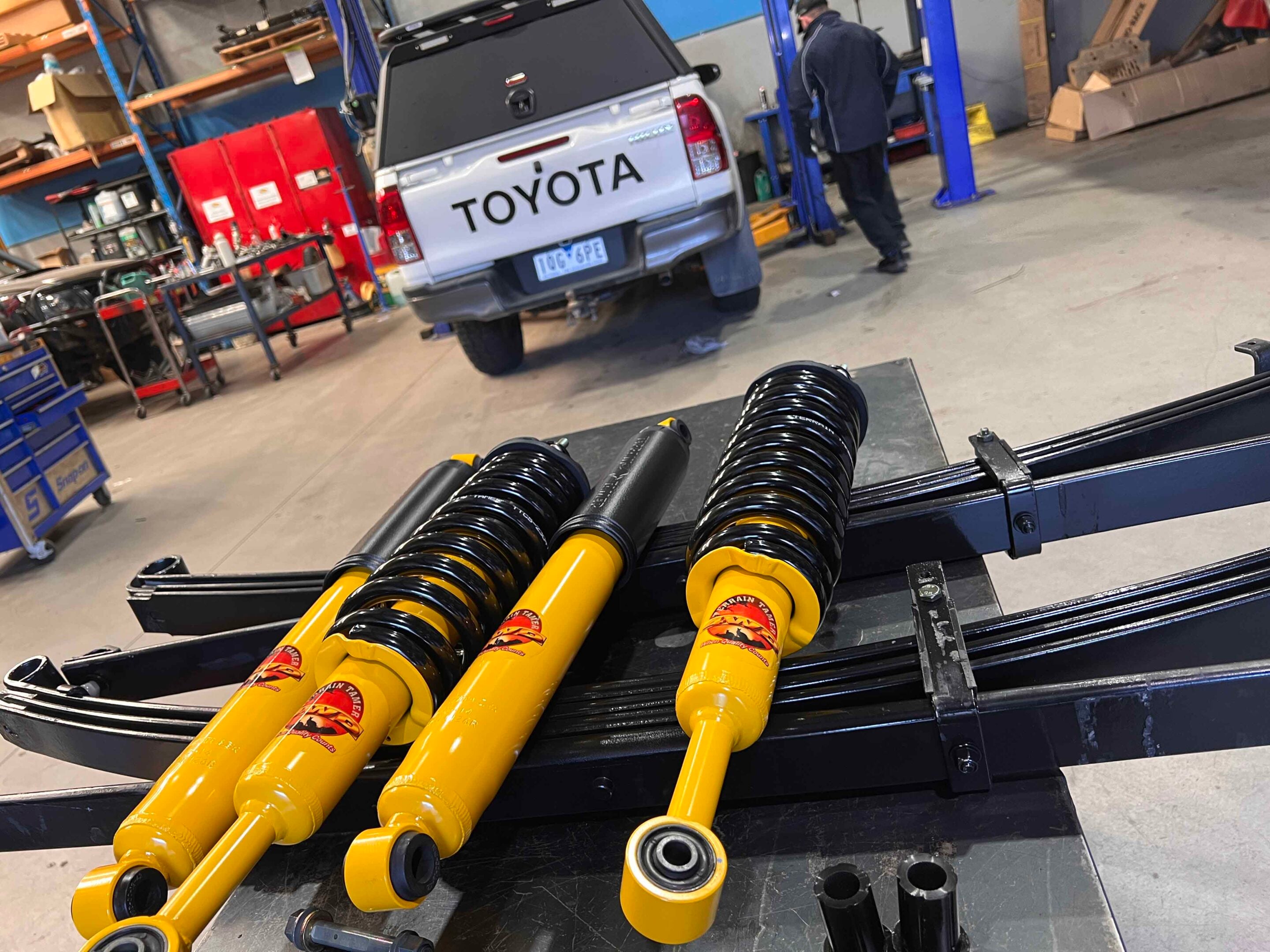
Armed with our list of wants, we hit up our mates at Terrain Tamer and asked them to recommend a kit. They didn’t hesitate. A nanosecond later, they came back to us with their parabolic rear leaf springs, TGS shocks all round and their Smart Coils for the front end. The springs were rated to suit the ARB bull bar and winch as well as the Ironman 4×4 drawers and Bossco canopy out back, plus a little extra for when we’re loaded up.
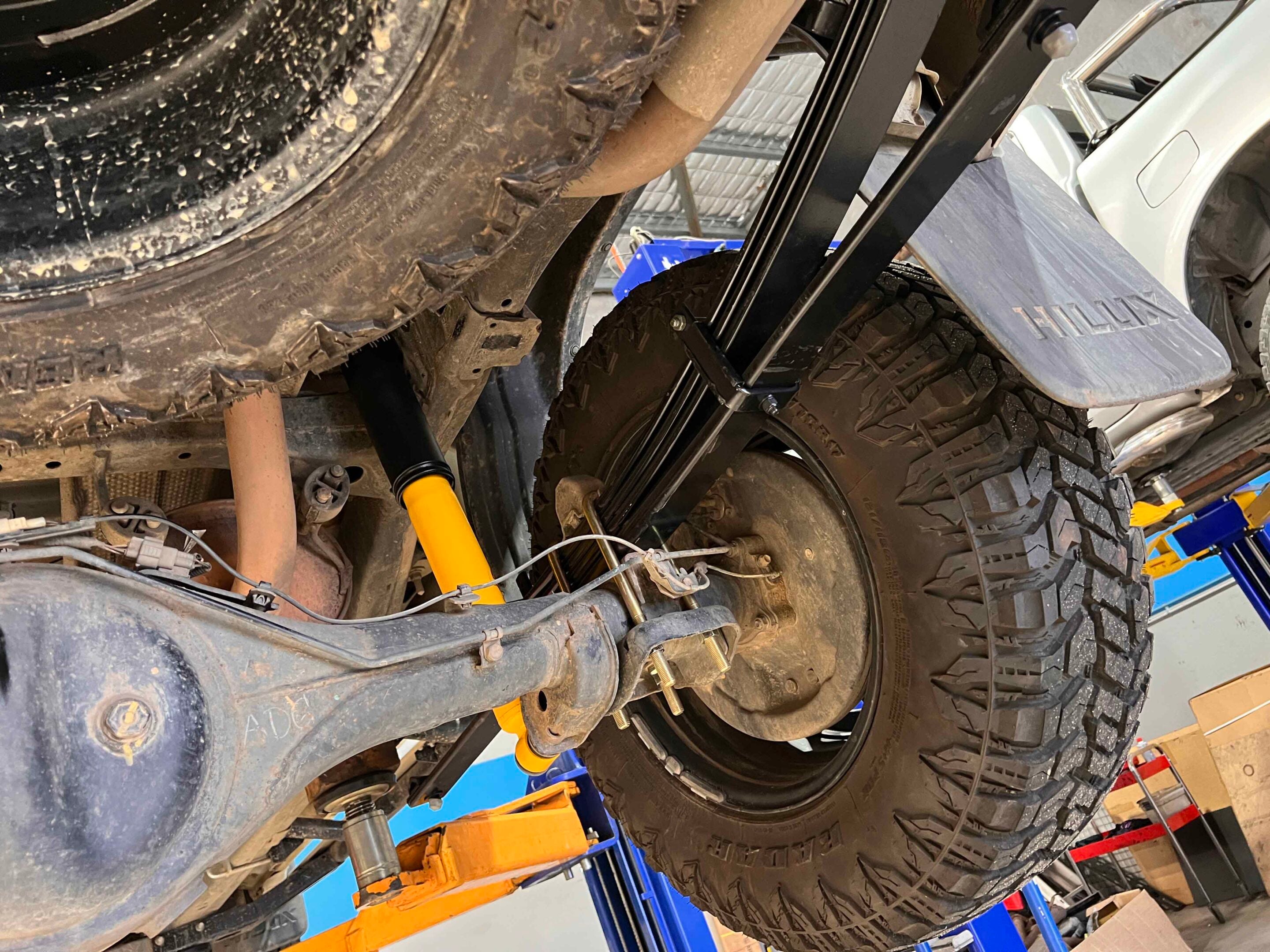
That’s the beauty of the rear parabolics. We’ve written about them on these pages plenty of times, but the short version is that the tapered-leaf design in each of the spring packs allows a high degree of deflection (flex and comfort) during the first part of the travel. The springs then firm up as more load is applied and the thicker part of each leaf is engaged. It’s what dietitians refer to as having your cake and eating it too.
The 40mm TGS shocks are also well established as the bee’s knees, and the Aussie-made, tapered-wire Smart Coils reduce suspension rebound, body roll during cornering and wear and tear on the suspension and steering components. All up, we’re expecting big things from this package. Stay tuned to find out how it goes.
Before installing the suspension
Just a quick note for the players at home: this is a specialist install. If you’re not confident, don’t have a good working knowledge of suspension or lack a solid range of tools, then it’s definitely worth the money to get the pros on the case for you.
Trent, the mechanic in these images, has done hundreds of these and makes it look simple. While we’re not trying to talk you out of saving a few bucks, your suspension is not the best place to learn how to play righty-tighty, lefty-loosey. Nor is this intended to be a cheat sheet for throwing a lift in your HiLux. It’s more of a behind-the-scenes look at what goes into a professional install. Just so we’re all on the same page.
Fitting the Terrain Tamer suspension
Firstly, get the wheels off the ground and the vehicle supported.
Starting at the rear and working on one side at a time, place an extra support under the side of the diff you’re working on. Whip the shock bolts off and relocate the old shockies to the nearest waste receptacle. Undo the front bolt of the leaf pack. This bolt will not slide all the way out of the spring mount because the fuel tank is in the way. Given we’re replacing the whole show, it’ll get the angle grinder treatment so it can be removed without having to unbolt the tank.
Then, undo the upper and lower bolts at the shackle end. Note that these bolts were cracked with a breaker bar before we got the power ratchet onto them. It’s the little things that set a professional job apart. Undo the auto-headlight adjusters, which is a must when replacing leaf springs.
With those out of the way, yeet the U-bolts and nuts into the scrap bin, then get a mate to help manhandle the leaf pack anywhere but onto your foot (they’re heavy and hurt). Now we can start installing the Terrain Tamer gear. Start by greasing up the shackle and slotting it into position.
From there, slot the new parabolic spring into place on the perch and throw the U-bolts over the top. The kit comes with everything you’ll need. Fit the front bolt and the inner side of the shackle, throw on the U-bolt plate, get the shock on and nip it all up. Note that the bolts do not get fully torqued at this point. That happens on the ground, when the vehicle’s weight is on the suspension. Wash, rinse, repeat on the other side, then let’s move on to the front end.
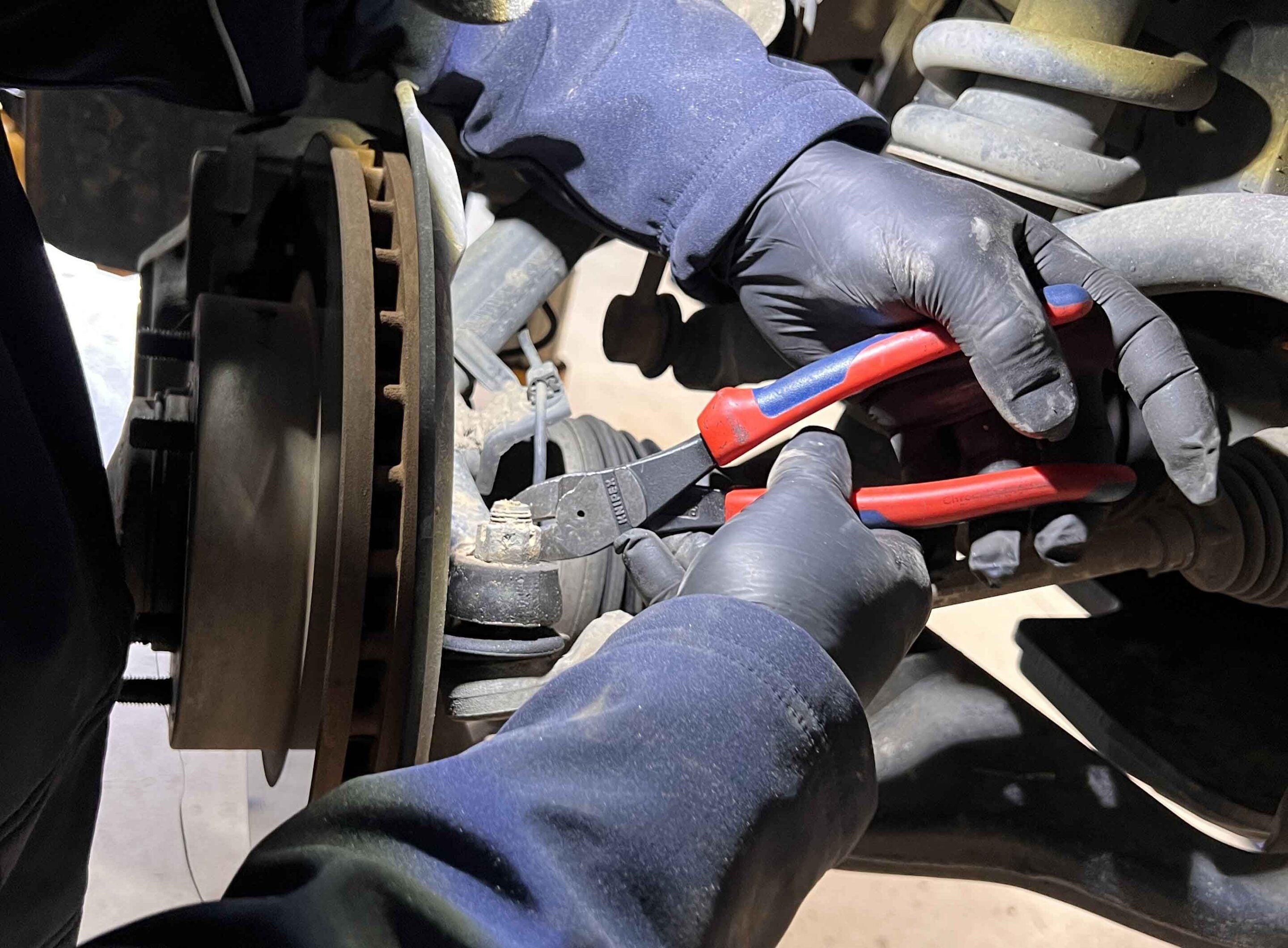
Remove the front wheels and the rock guards on the lower control arms, then undo the swaybar mounts to allow a bit of free play. Next, remove the cotter pins from the steering arm and swaybar links to allow the hub to move clear of the strut. Some percussive maintenance (hits with a hammer) may be required to pop the arms out of their tapered mounts.
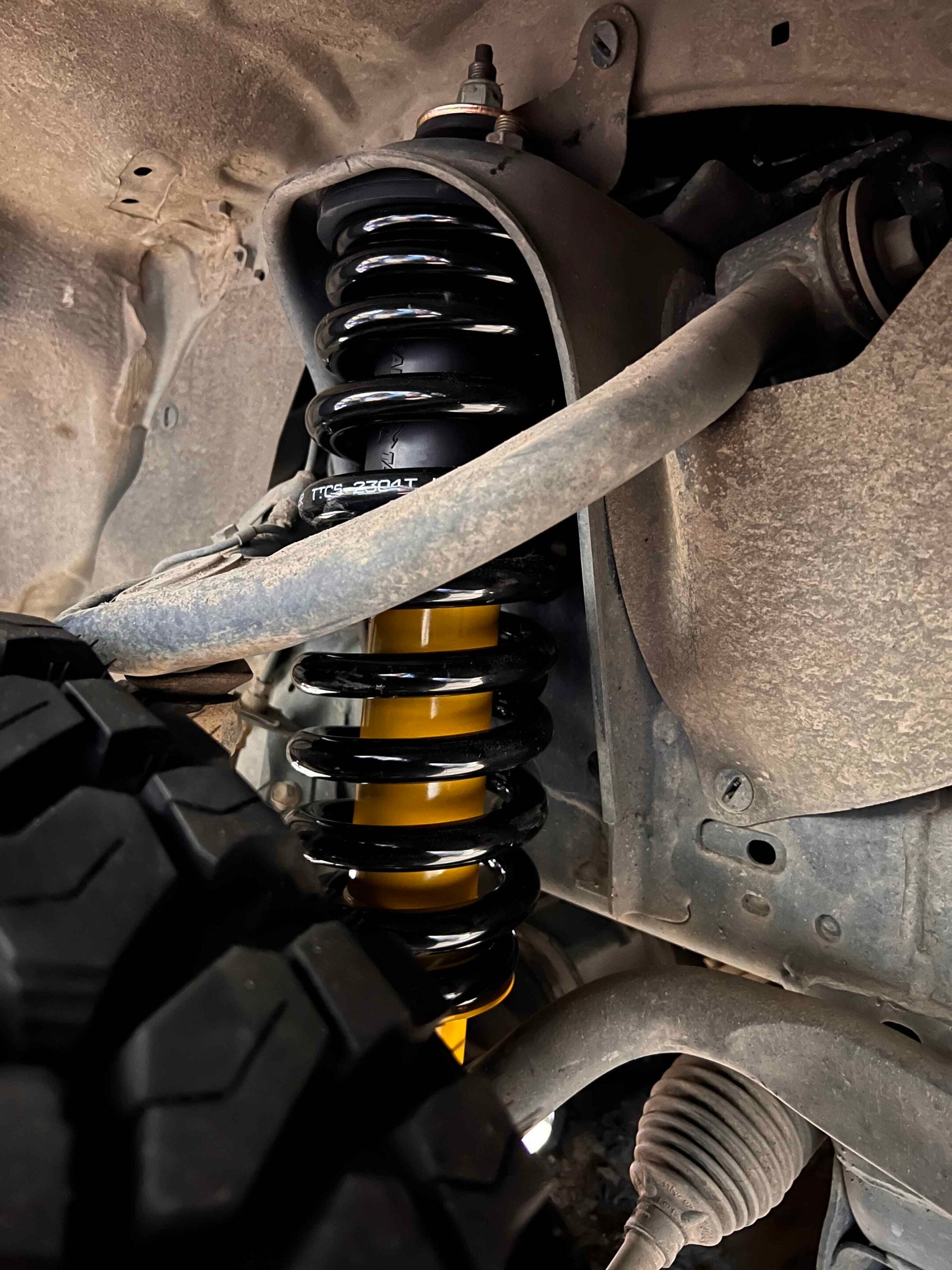
With the tie-rod and swaybar blowing in the breeze, you can now undo the top and bottom strut bolts, along with the lower-control-arm-to-hub bolts (these will require Loctite upon reinstallation). You can now remove the strut and, if you’re like us, leave it sitting in the corner of your shed for the next decade. Slide the new strut in and reverse the last few steps.
Finally, reinstall the rock guards and let the vehicle down onto the ground. Torque up all the bolts to spec, then sit back and enjoy your new ride height.
Thanks to T&G Autos in Richmond, NSW for their help with this article.
What’s in the kit?
- Parabolic leaf springs: 400-700kg constant load, 50mm lift
- Expanded Body Shocks: suited to 40mm lift
- Front coils: 50-100kg raised, 40mm lift
- Greasable pins and shackles
- TT Pro synthetic bushes
How much does it cost?
- RRP: $3048.55 (↗)
The Ford Ranger has reclaimed the title of Australia’s best-selling 4×4 vehicle, outselling the Toyota HiLux in September after the Toyota held the crown for the previous two months.
The Ranger recorded 4824 4×4 sales in September 2026, compared with 3975 for the HiLux. Adding 4×2 sales to the mix, the Ranger was also Australia’s best-selling vehicle overall for the month, with 5062 sales compared with 4455 for the HiLux.
The Ranger and HiLux topped a broader top 10 that included a mix of internal-combustion, plug-in hybrid, hybrid and battery-electric models. The Toyota RAV4 ranked third overall on 4624 sales, followed by the BYD Sealion 7 (2687), Chery Tiggo 4 Pro (2059), GWM Haval Jolion (2018), Geely EX5 (2008), Toyota Prado (2006), Isuzu D-MAX (1866) and MG ZS (1805). In the PU/CC 4×4 segment, the Ranger and HiLux were followed by the BYD Shark (1492 sales), Isuzu D-MAX (1393) and Mitsubishi Triton (1016).
Further down the ute sales charts, the Kia Tasman again struggled to find traction on the Australian market, recording just 336 sales for the month. The Nissan Navara was only slightly ahead on 338 sales, while the Volkswagen Amarok managed 244. The Mazda BT-50 fared better but still recorded just 606 sales.
At the more budget-focused end of the market, the GWM Cannon and Cannon Alpha combined for 788 sales, followed by the LDV T60 (375) and LDV Terron9 (239). The Foton Tunland V7/V9 recorded 126 sales, ahead of the MG U9 (119), KGM Musso/Musso XLV (75) and JAC T9 (58).
Among the larger premium pick-ups, the Chevrolet Silverado and Silverado HD combined for 293 sales, ahead of the Ram 1500 (145), Ford F-150 (128) and Toyota Tundra (104).
The Toyota Prado continued to lead the 4×4 SUV market in September with 2006 sales, while the Ford Everest recorded 1713. The Toyota LandCruiser 300 Series outsold the Nissan Patrol, with 854 sales compared with 544, while the Isuzu MU-X recorded 830. The GWM Tank 300 and Tank 500 recorded 411 and 183 sales respectively.
Despite this, the Everest remains the best-selling SUV on the year-to-date charts, with 16,203 sales, ahead of the Prado on 15,665, the MU-X on 10,556 sales, and the 300 Series on 9787 sales.
*The sales figures in this article are based on VFACTS data, which does not include Tesla sales results. As a result, the rankings and EV figures reflect VFACTS-reported sales only and do not represent the entire Australian new-vehicle market.
LCV market continues to slide
The wider LCV market was significantly weaker than a year ago, with 20,627 sales recorded in September compared with 23,762 in September 2025, a 13.2 per cent decline.
That drop was offset by 6.3 per cent growth in passenger vehicle sales and 6.1 per cent growth in SUV sales across the broader market. The downturn in LCV sales is also evident across the year, with 184,328 LCVs sold to the end of September compared with 208,710 at the same point last year, down 11.7 per cent.
The PU/CC 4×4 market has performed similarly, with September sales falling 13.1 per cent year-on-year from 18,472 to 16,045. Year-to-date sales are down 13.6 per cent, with 140,410 4×4 utes sold compared with 162,457 during the same period in 2025.
In saying that, Australia’s new-vehicle market recorded 102,924 sales in September 2026, up 0.9 per cent compared with the same month last year. The headline growth was modest, but the fuel mix is changing quickly, with electrified vehicles accounting for an increasingly large share of the market.
Battery-electric vehicles accounted for 24.2 per cent of all new-vehicle sales in September, more than double their 11.3 per cent share in September 2025. Plug-in hybrid sales rose 122.7 per cent year-on-year, while conventional hybrid sales increased by 20.7 per cent.
That growth came as petrol sales fell 36.2 per cent and diesel sales declined 18.4 per cent compared with September 2025. Across the first nine months of 2026, BEVs account for 18.9 per cent of the total new-vehicle market, compared with 8.1 per cent at the same point in 2025.
“Australian motorists are embracing a broader range of powertrains, following greater model choice offered by manufacturers and growing competition,” said Dianne O’Hara, Acting Chief Executive. “The changes seen throughout this year are continuing. Many consumers are making practical decisions and selecting from the range of available technologies that best meet their needs.”
September sales included 26,018 petrol vehicles, 25,173 diesel vehicles and 20,433 BEVs. With EV sales now within striking distance of the two traditional fuel types, it may only be a matter of time before battery-electric vehicles overtake petrol or diesel in a monthly result. As mentioned, Tesla sales are not included in the VFACTS report, so the reported BEV figures do not represent every electric vehicle sold in Australia.
The shift is also showing up in the LCV market. Year to date, diesel LCV sales are down 12.2 per cent and petrol is down 38.8 per cent, while electric LCV sales have increased 299.5 per cent. Hybrid LCV sales are up 19.2 per cent and PHEV sales have increased 10.7 per cent.
| 4×4 sales: September 2026 | |
|---|---|
| 1: Ford Ranger | 4,824 |
| 2: Toyota HiLux | 3,975 |
| 3: Toyota Prado | 2,006 |
| 4: Ford Everest | 1,713 |
| 5: BYD Shark | 1,492 |
| 6: Isuzu D-MAX | 1,393 |
| 7: Mitsubishi Triton | 1,016 |
| 8: Toyota LC300 | 854 |
| 9: Isuzu MU-X | 830 |
| 10: GWM Cannon/Cannon Alpha | 788 |
| 4×4 sales: Year-to-date | |
|---|---|
| 1: Ford Ranger | 35,744 |
| 2: Toyota HiLux | 32,238 |
| 3: Ford Everest | 16,203 |
| 4: Toyota Prado | 15,665 |
| 5: BYD Shark | 13,586 |
| 6: Isuzu D-MAX | 13,340 |
| 7: Mitsubishi Triton | 11,821 |
| 8: Isuzu MU-X | 10,556 |
| 9: Toyota LC300 | 9,787 |
| 10: GWM Cannon/Cannon Alpha | 8,001 |
Like many things, sharing your adventures when you’re out four-wheel driving is better than doing it on your own.
So whether you’re four-wheeling with mates, touring with your local 4×4 club or are part of an organised tagalong group, whenever you travel in company with other vehicles, all drivers should agree on and stick to a set of rules to ensure everyone stays safe and no one gets lost. These rules are commonly referred to as convoy procedure.
Having set rules when you head out bush might sound a bit draconian, but if the convoy is just a rabble of travellers without any organisation – or the ability to communicate with each other – some in the group could soon become hopelessly lost. The other advantage of adhering to proper convoy procedure is that all travellers can be alerted to potential hazards along the route.
Not only will following a few simple convoy rules ensure all convoy participants safely find their way to the intended destination, it will also minimise stress and ensure everyone has a good time while out on the tracks … and isn’t that what four-wheel driving is all about?
Establish clear communications
Once everyone has met up for the start of a trip, it’s important to get everyone together for a briefing to go through proper convoy procedure.
First up, a trip leader needs to be assigned, and this person needs to be an experienced four-wheel driver who knows what they are doing and where they’re going. A trip leader who doesn’t know where they’re going can lead the whole convoy into precarious situations, or even become lost.
With the leader assigned, their first job is to, in turn, assign a tail-end Charlie, who should also be an experienced four-wheel driver. Both the trip leader and tail-end Charlie should have high-quality UHF radios so they can communicate clearly with each other.
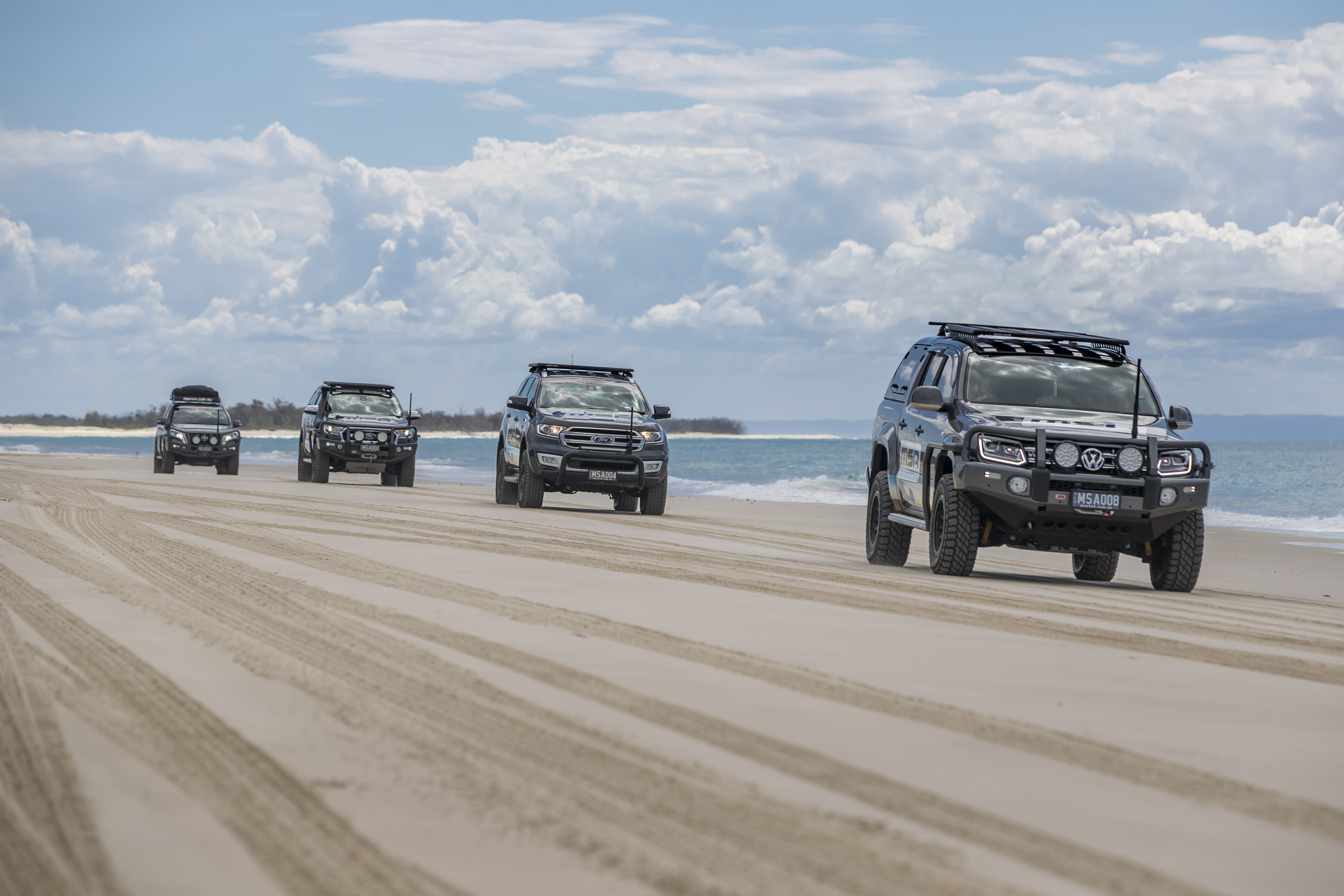
Depending on how many vehicles there are in your group and the conditions encountered, it’s entirely possible the convoy might spread out beyond reliable radio range between the leader and tail-end Charlie, so it will be up to other drivers in the convoy to relay messages up and down the line.
Once it has been confirmed that everyone has a UHF radio, a channel needs to be agreed upon. Make sure the convoy uses a channel other than UHF channels 5 and 35, which are reserved for emergency communications, and ensure that everyone knows what channel will be used for the trip.
Before setting off, the trip leader should ask for a radio check; the second vehicle should respond, followed by the third and so on down the line until the tail-end Charlie has responded. The leader will then know that everyone has a working radio and is on the right channel.
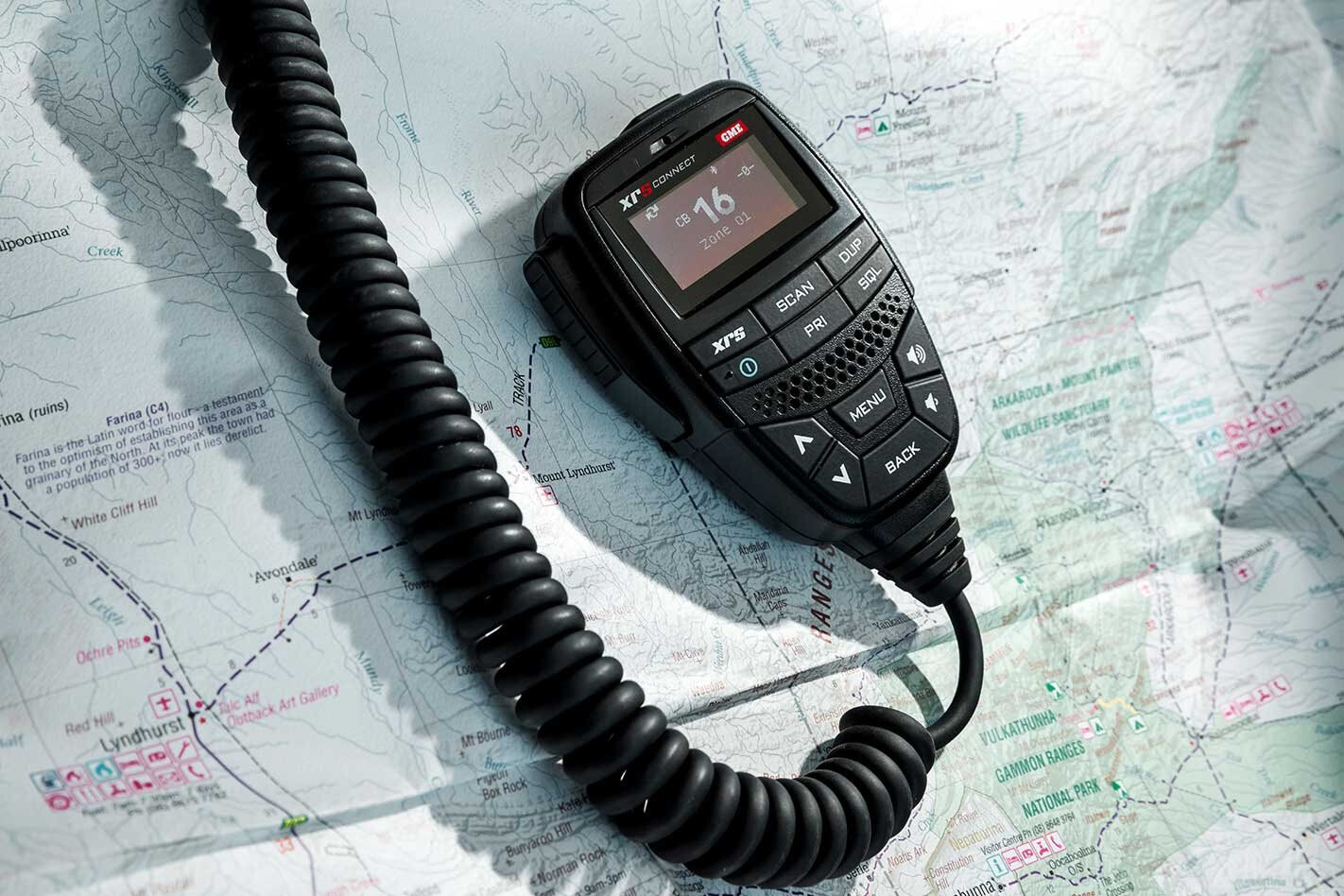
While general chit-chat on the UHF can be hugely entertaining, it should be kept to a minimum so that more important messages can be communicated between vehicles in the convoy, such as whether there are oncoming vehicles or other hazards to look out for, like terrain anomalies, wildlife or unfenced livestock.
As with the radio check, information regarding such hazards should be passed down the line. In the case of oncoming vehicles, pass on as much useful information as possible, such as the number and type of vehicles that are coming. In the case of large oncoming trucks, it might be a good idea for the leader to pull the convoy over in a safe spot to let big trucks pass.
Speaking of safe spots, when the trip leader wants to pull the convoy over, they should make sure there’s enough space for all the vehicles in the convoy to safely get off the road or, if driving on a track, that there is enough space for other vehicles to drive past.
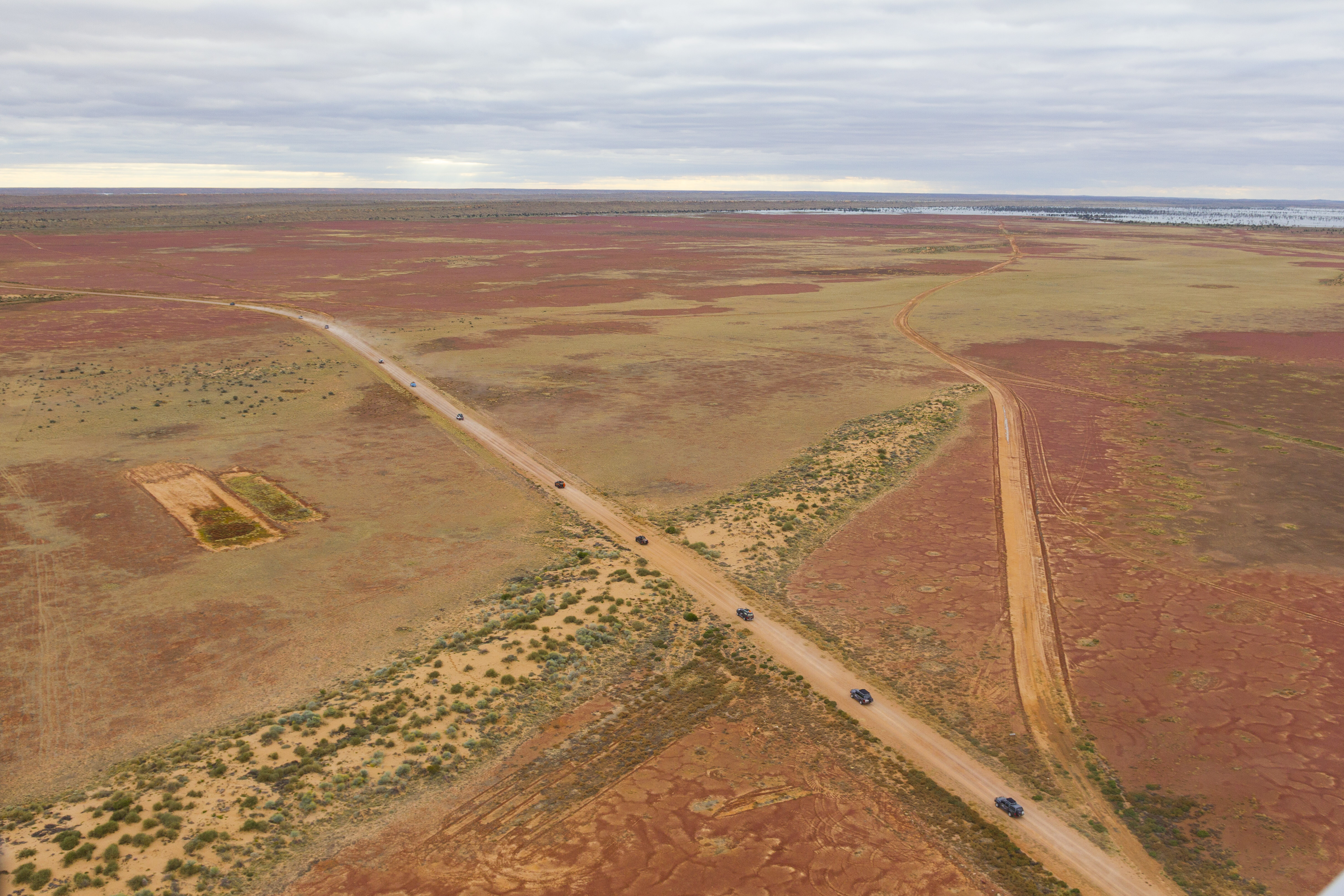
As well as hazards, the trip leader should use the UHF to communicate navigation information, such as when a left or a right turn is coming up. In addition to communicating this information via UHF, each vehicle also needs to physically ‘mark’ each turn by pulling up in a safe spot where possible, with the appropriate indicator on, and waiting there until the following vehicle signals it has spotted the marked turn, either by a call on the UHF or a flash of the high beam.
If every vehicle in the convoy marks every turn, then the convoy should always stay together. Having said that, sometimes distracted drivers can still miss turns, so if you’re marking a turn and you see the following vehicle just drive on by, get on the UHF quick smart and let them know they missed the turn.
Assuming all vehicles have successfully made the turn, the tail-end Charlie should acknowledge this on the UHF and other vehicles should relay that information up the line to the trip leader. If you do become separated from the convoy, stop and contact the trip leader rather than continuing on an unknown route.
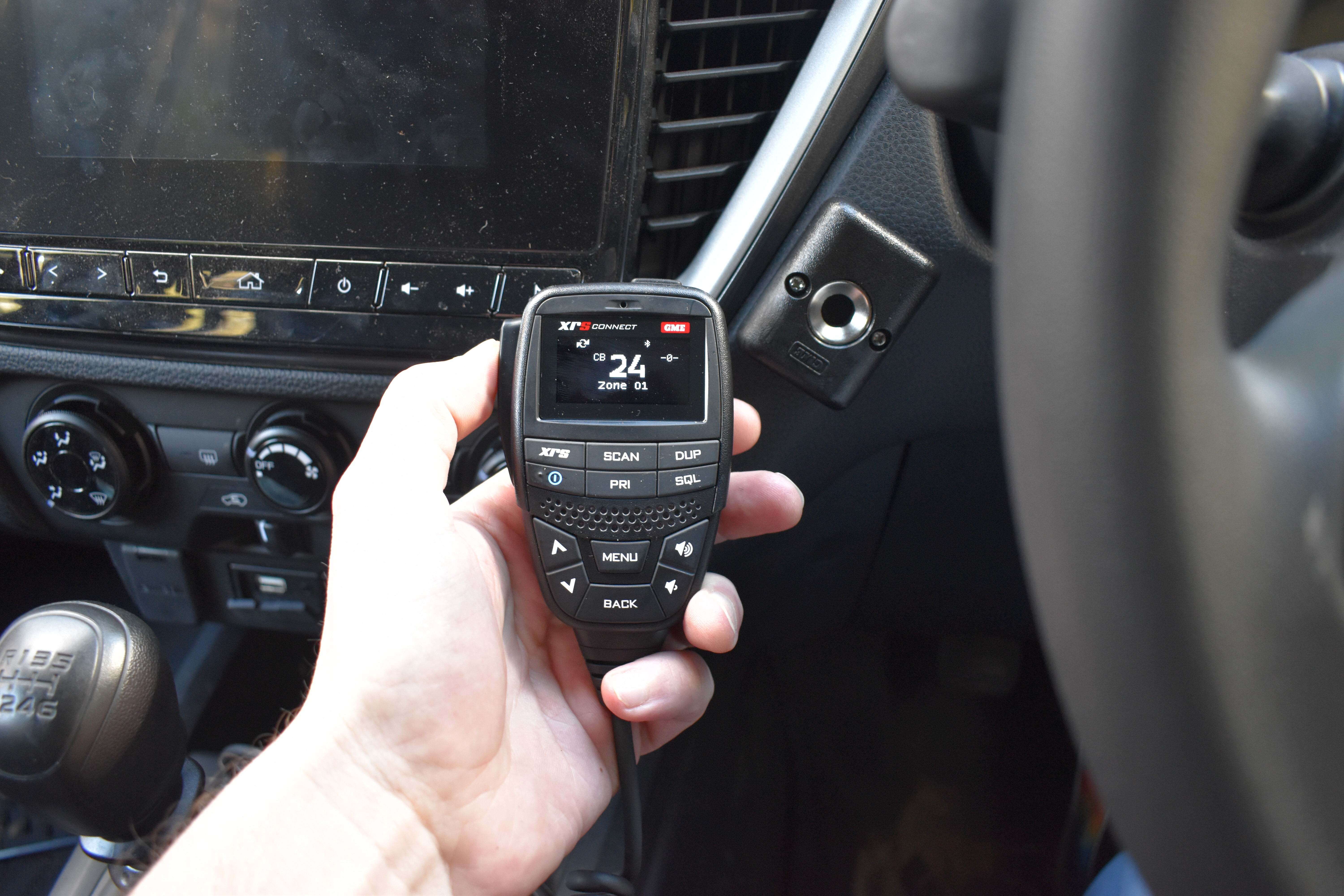
If a vehicle becomes stuck or breaks down, the convoy should stop in a safe location and the trip leader should coordinate the next steps over the UHF.
Other things the trip leader should communicate to the group include providing a general overview of the plan for the day. Important information to share with the convoy includes the expected overall distance to be travelled and expected trip duration, fuel requirements, the location of rest stops and what facilities will be available (food, water, fuel, toilets etc.) en route, and what conditions can be expected.
Drivers should also know the planned route and destination rather than relying solely on the vehicle in front. The trip leader should also allow the convoy plenty of time at rest stops to check or adjust tyre pressures to suit varying terrain. For remote trips outside mobile coverage, consider carrying a satellite communicator or personal locator beacon rather than relying solely on UHF radio.
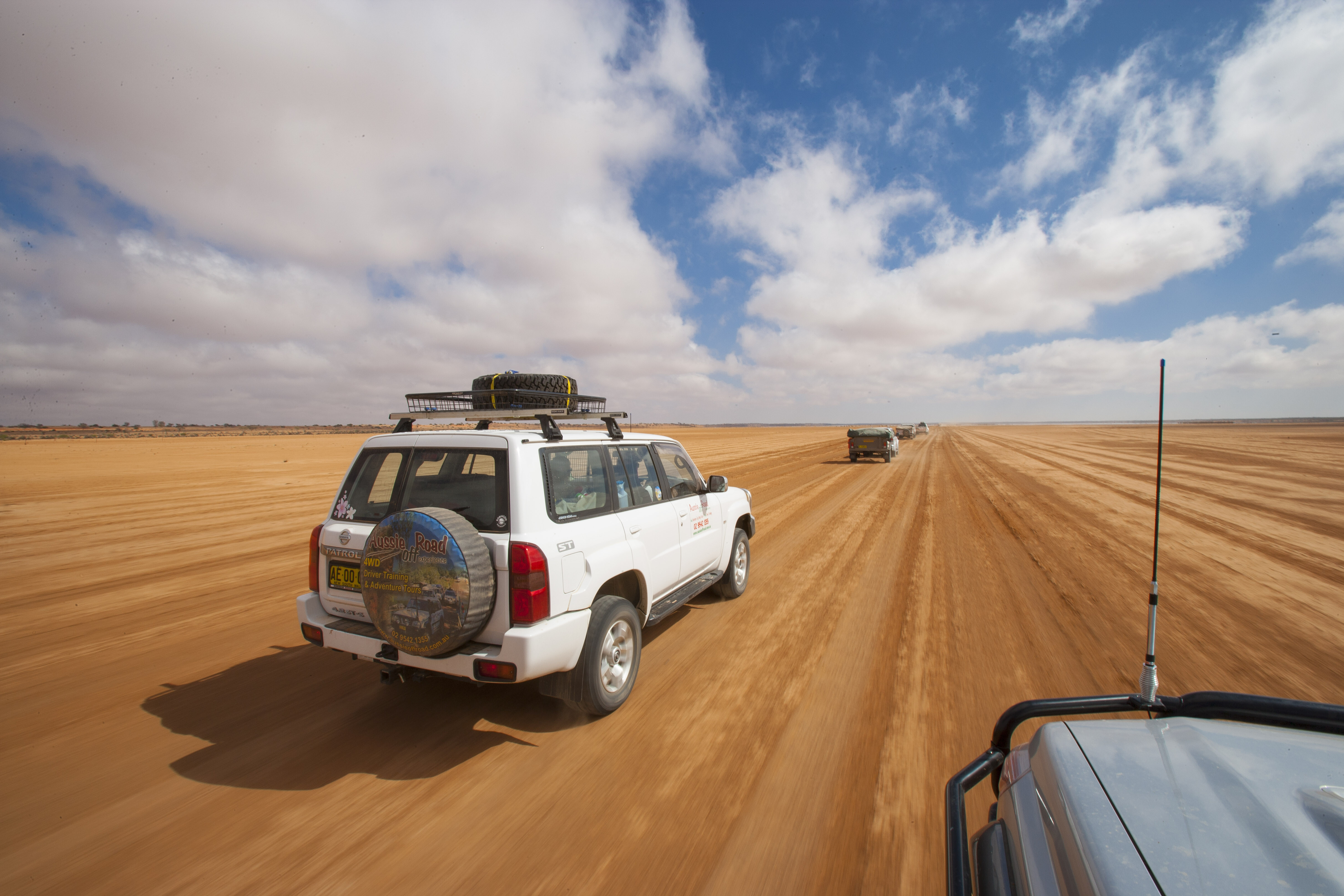
Maintain safe spacing
When you’re travelling in a convoy, all vehicles should maintain a safe distance from each other, and this distance will vary depending on vehicle speed and road/track conditions.
When driving on sealed roads, you might feel that another driver is too close to you, or that a following driver has dropped back so far you can’t see them anymore. If they’re too close, politely tell them you feel uncomfortable with the gap between your vehicles and ask them to drop back a tad; if they’re too far back, advise the trip leader that they might need to slow the convoy to allow the vehicles to bunch up a bit.
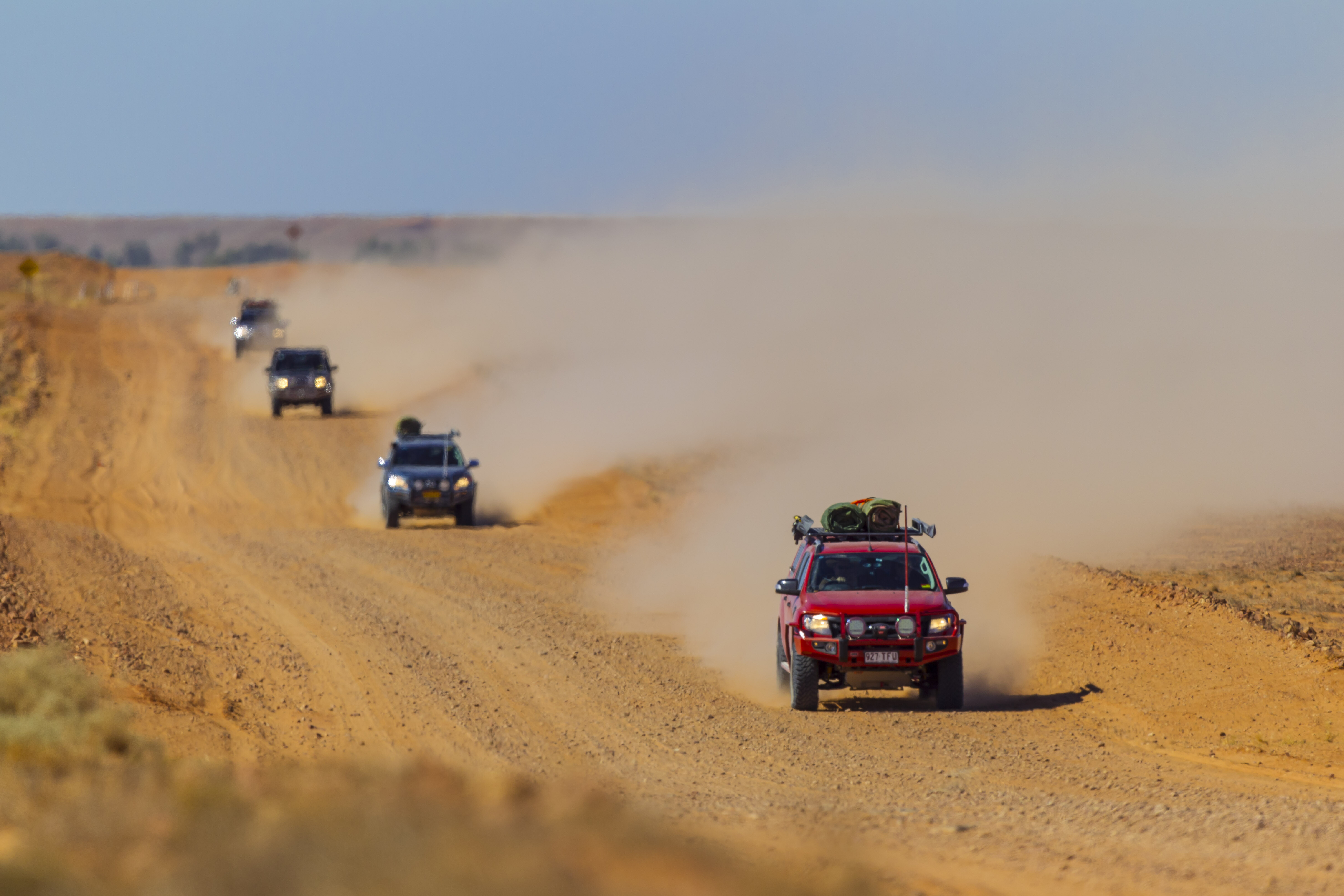
On gravel roads, there is plenty of incentive to keep a decent gap between vehicles. In dusty conditions, you should always leave enough space between you and the vehicle in front to maintain a clear view of what is ahead.
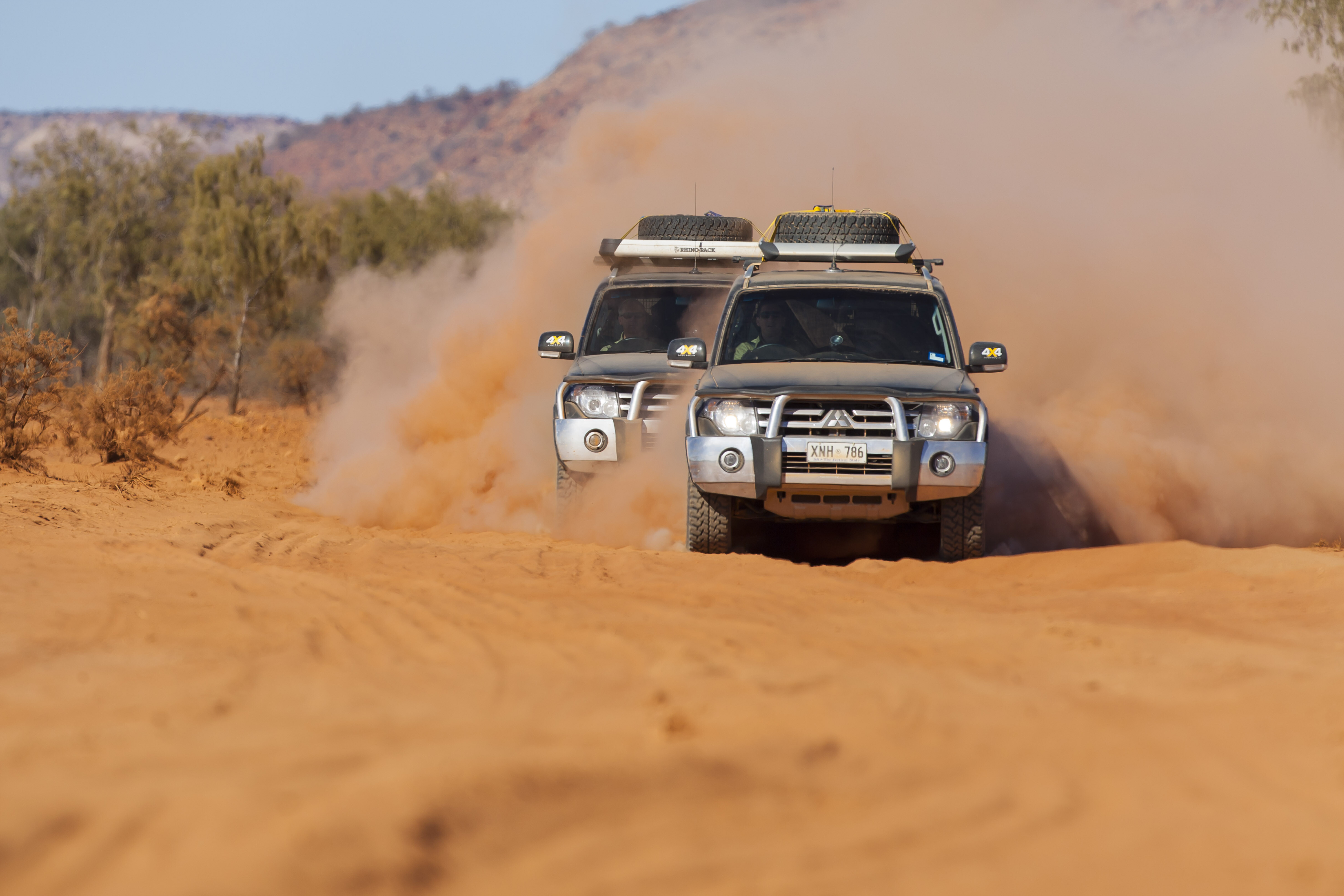
Driving in the dust cloud of the vehicle in front can be dangerous because you won’t be able to see where you are going, and you won’t be able to spot hazards. In addition, driving in dust clouds is no good for your vehicle as the dust can get sucked into the engine’s airbox and clog the air filter, decreasing engine performance and increasing fuel consumption.
If the convoy catches up to a slower vehicle that is generating a large dust cloud, it could be a good time to pull up in a safe spot and put the billy on rather than everyone trying to overtake with limited visibility.
Likewise, if there is an oncoming vehicle that is generating a large dust cloud, it’s often wise to pull over and stop if there is space to do so, to let that oncoming vehicle pass. The trip leader must always clearly communicate the intention to pull over.
Approach off-road obstacles and water crossings safely
When tackling off-road terrain, each vehicle in a convoy should wait for the preceding vehicle to clear an obstacle before setting off themselves.
On steep and slippery hills, for example, make sure the vehicle ahead has successfully climbed gnarly sections before having a go yourself; if they don’t make it, they might need to back up to have another go, and they won’t want your vehicle filling their mirrors when they are trying to reverse down a slimy track.
When tackling water crossings, ensure the vehicle ahead of you has safely made it across to the other side … and has successfully exited the water before proceeding yourself. If they haven’t completely made it out, they might be blocking the only exit point, in which case you could find yourself stuck in the drink with nowhere to go.
Regroup at rest stops
It is important for the convoy leader to factor in enough rest stops for the convoy. In addition to giving everyone a break, pulling up for a rest stop is a good way to regroup a spaced-out convoy.
Allow enough time at rest stops for the last few vehicles to have a decent break; even if the trip leader has been waiting around for 10 minutes, they shouldn’t head off again as soon as the tail-end Charlie rolls up, as they’ll be looking forward to a break too.
With a spaced-out convoy, the trip leader and tail-end Charlie may not have communicated directly with each other for some time, and rest stops present the perfect opportunity for them to get together and have a chat.
They can discuss how things are progressing, if the convoy speed is appropriate, if anyone is not communicating effectively or if some drivers need reminders on procedural issues; and if any problems need addressing, these can be sorted out in private rather than over the air where the whole group can listen in.
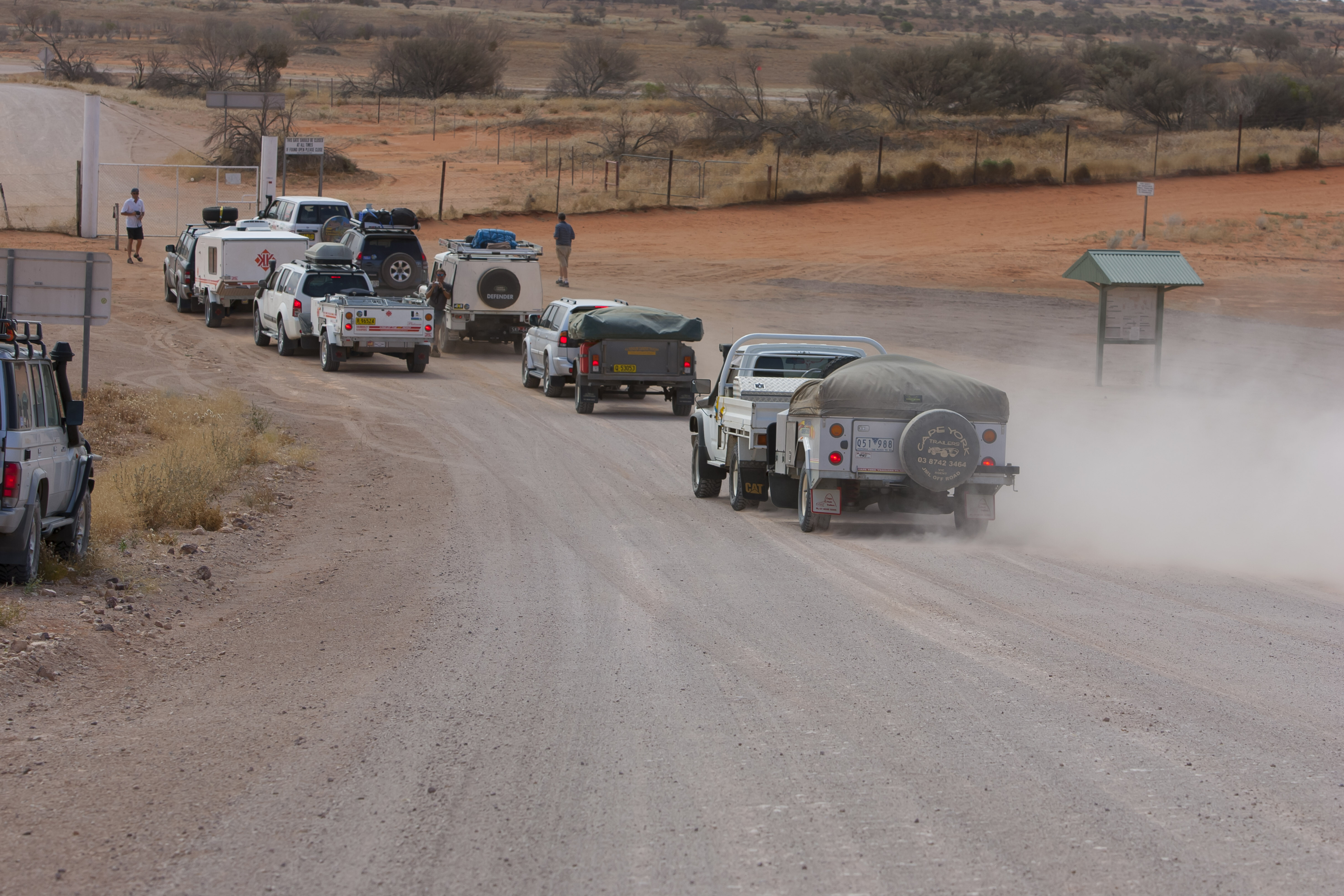
Use a second UHF radio when required
On occasion, you might be driving through areas where there are road works, or industry such as logging is in operation. There will usually be signage advising which UHF channel is being used in the area.
Rather than your whole convoy switching UHF channels, if your convoy leader has access to two UHF radios, they can switch one to the channel for the area and then relay any relevant information via the convoy’s channel. That second radio might be a handheld that is usually used for off-road spotting or for use when doing other activities around the campsite.
Follow procedures and have fun
Discussing procedures and rules doesn’t really promote a fun vibe.
However, when it comes to travelling in convoys, if everyone sticks to the program there’s a far greater chance of having a fun trip. On the flipside, if convoy participants don’t follow procedures and rules, people can get lost and hurt … and that certainly isn’t any fun.
Apply a little focus whenever you’re driving in a convoy and it will soon become second nature, ensuring you always have fun and safe trips, whether that’s with old mates or newfound friends.
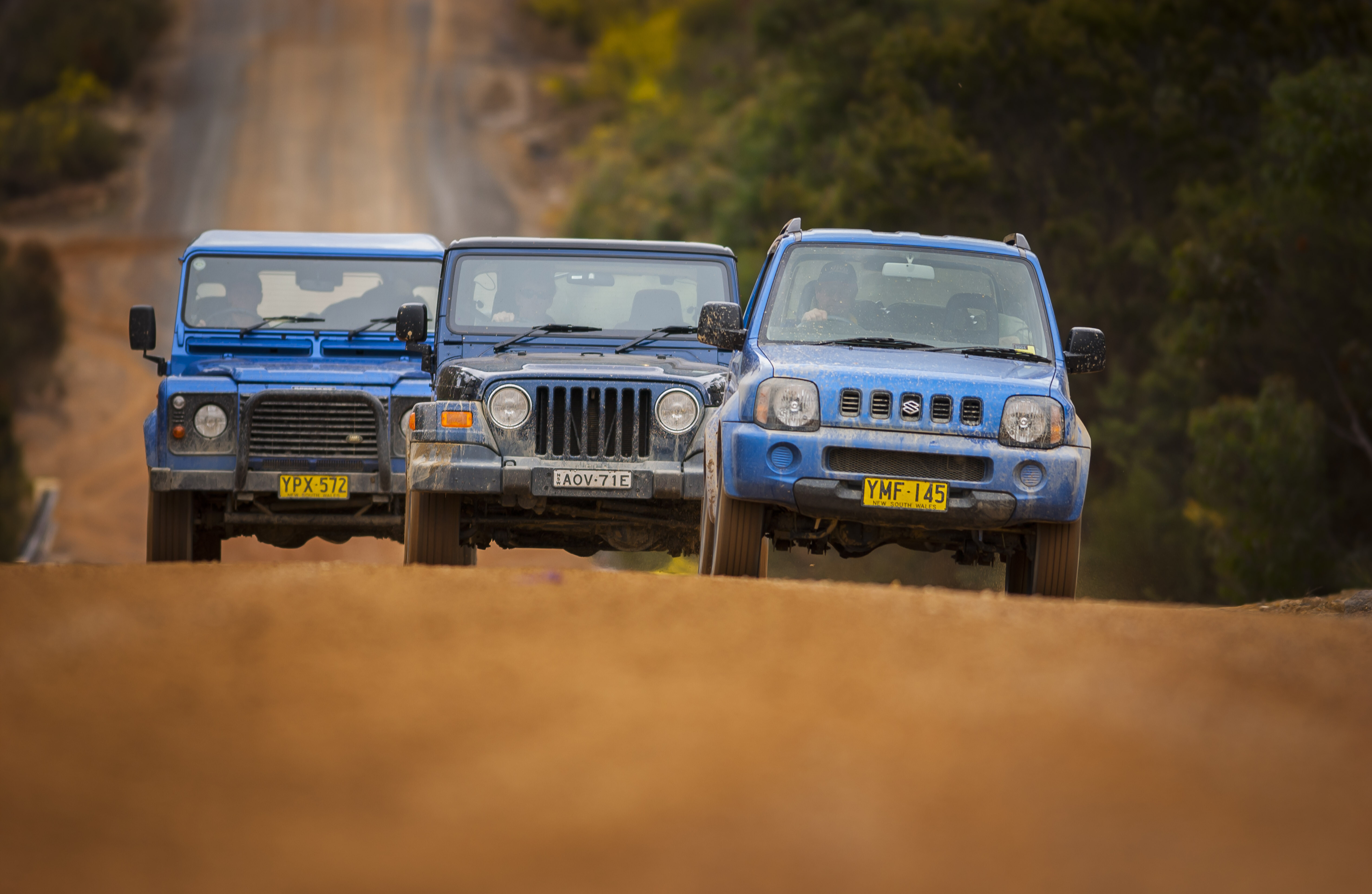
4WD convoy rules to remember
What to do
- Choose an experienced and capable trip leader and tail-end Charlie
- Make sure your UHF is working and on the right channel
- Always mark turns and ensure the following vehicle sees you
- Call out hazards and oncoming traffic on the UHF
- Make sure there is plenty of safe space for all vehicles to pull over
What not to do
- Drive in the dust cloud of preceding vehicles
- Drive too close to vehicles in front of you
- Attempt an off-road obstacle until the vehicle ahead is out of the way
- Block the radio channel with chit-chat for hours on end
- Forget to turn on your headlights when driving on dirt
Convoy FAQs
What communications do you need when four-wheel driving in a convoy?
A UHF radio is the main communication method for a convoy, allowing drivers to communicate hazards, navigation information and other important messages. For remote trips outside mobile coverage, consider carrying a satellite communicator or personal locator beacon rather than relying solely on UHF radio.
Who should lead a 4WD convoy?
The trip leader should be an experienced four-wheel driver who knows the route and understands the conditions expected on the trip. The convoy should also have an experienced tail-end Charlie responsible for the last vehicle.
What UHF channel should a 4WD convoy use?
The convoy should agree on a UHF channel before setting off. UHF channels 5 and 35 are reserved for emergency communications, so the convoy should use another channel. Every vehicle should perform a radio check before departure.
Why do 4WDs need to mark every turn in a convoy?
Each vehicle should mark every turn so the following vehicle knows which way the convoy has gone. The vehicle marking the turn should wait in a safe spot until the following vehicle confirms it has seen the turn.
What should you do if you get separated from a 4WD convoy?
If you become separated from the convoy, stop and contact the trip leader on the UHF rather than continuing along an unknown route. Convoy communication and turn-marking procedures are designed to minimise the chance of this happening.
American Expedition Vehicles (↗) has a reputation of creating some of the finest touring and off-road vehicles in the USA and now they will be readily available in Australia through Queensland’s Tough Trucks (↗). Australia wide.
Originally created by Dave Harriton and focusing in Jeep vehicles, AEV worked its way in to the wider Chrysler/Stellantis range of vehicles often building bespoke show vehicles for the brands to display at events like the SEMA Show and Motor shows around the USA. Among them was AEV Brute pick-up which was a single-cab Jeep Wrangler-based pick up that they sold until Jeep introduced its own Gladiator model. It’s no coincidence that the Gladiator looks a lot like a double-cab AEV Brute.
These days, with its manufacturing based in the heartland of the US auto industry in Michigan, AEV produces bespoke components and complete special vehicles for all of the Big Three manufacturers, including Ram, General Motors and Ford, and its range is always expanding to deliver the products people want.
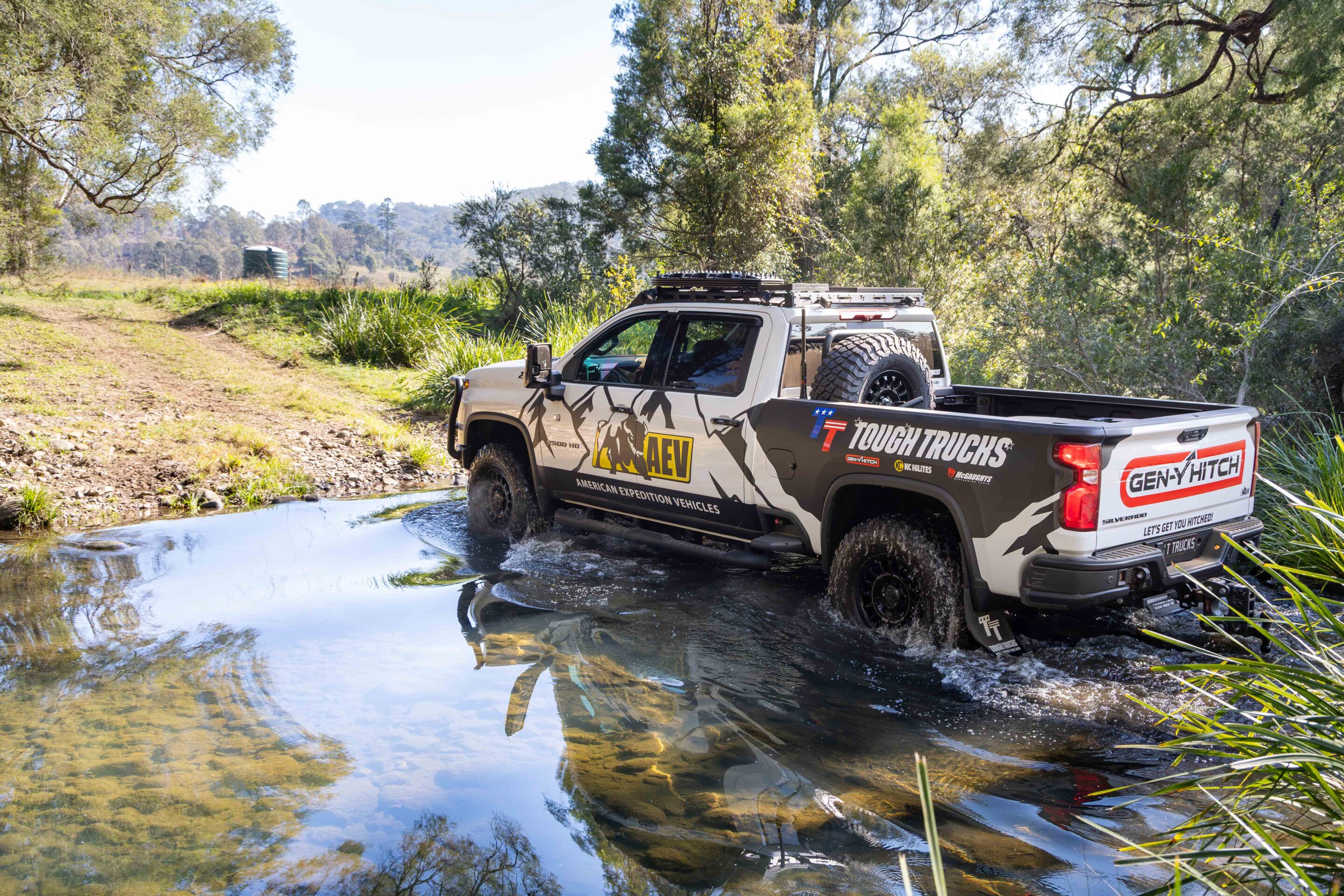
While some companies have imported and sold AEV Jeep products in Australia, Tough Trucks (↗) is the first to offer complete, turnkey new American pick-up trucks with AEV conversions here. Tough Trucks is the exclusive distributor of AEV’s GM truck products (Chevrolet and GMC), but can also offer Ram and Ford AEV solutions.
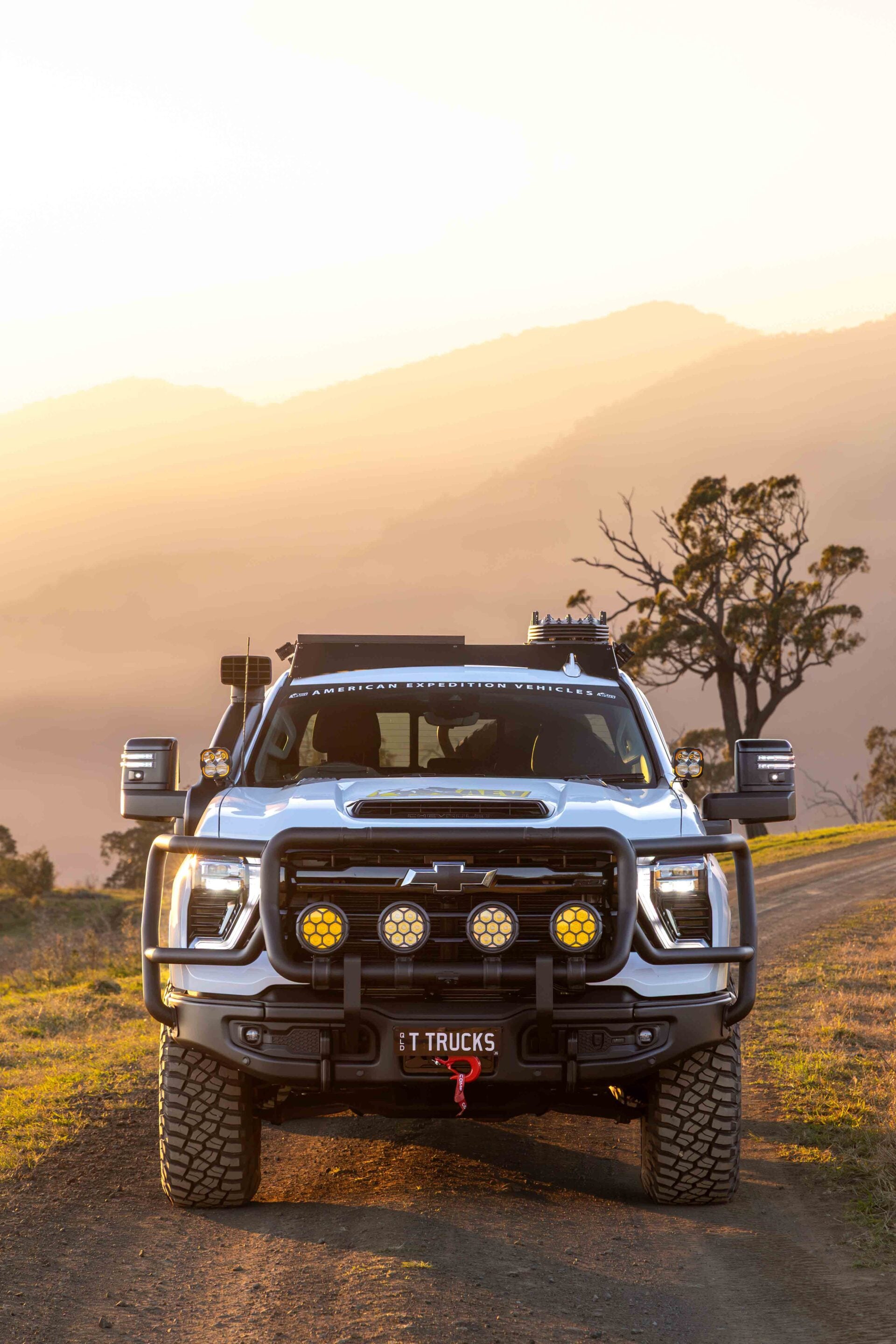
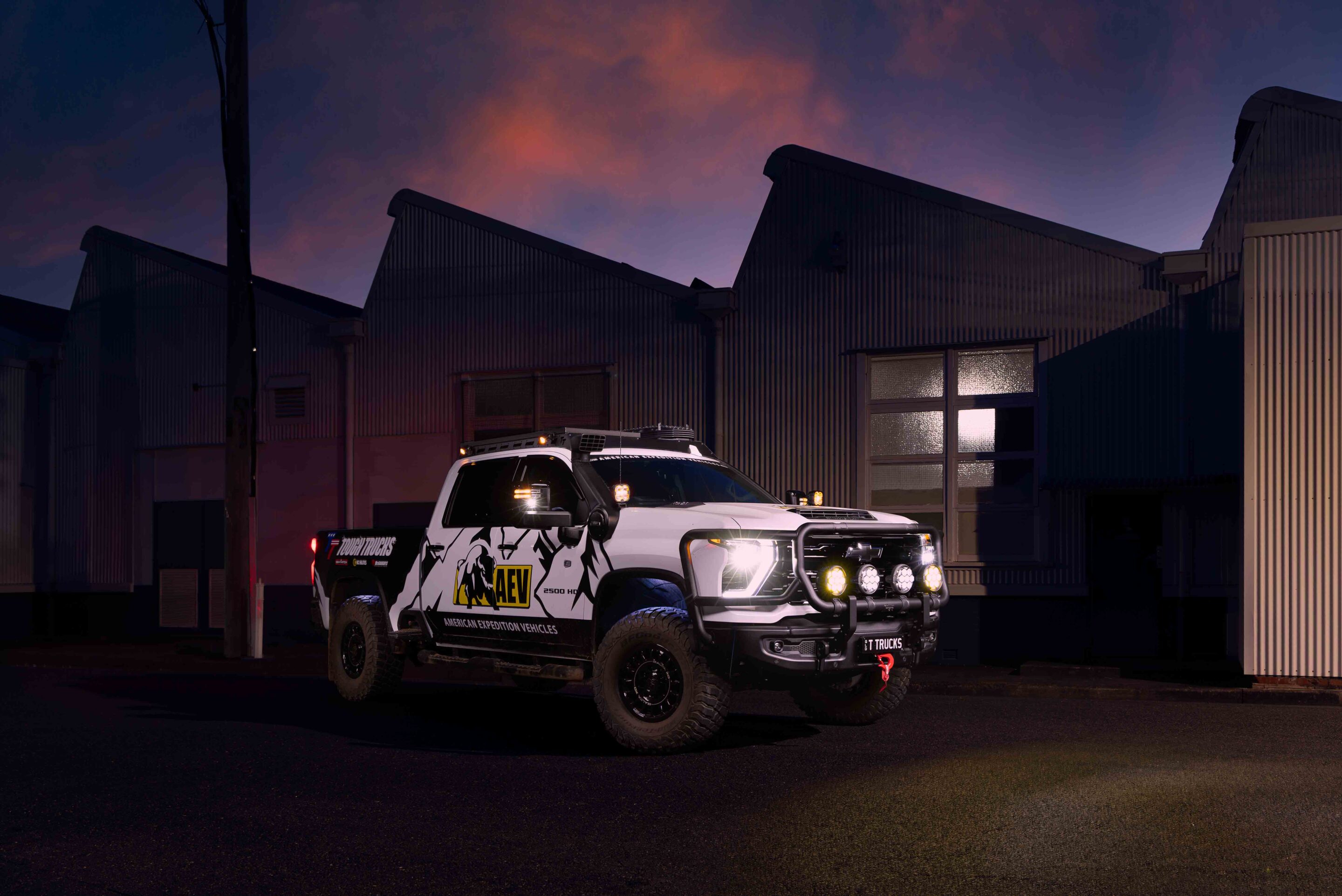
With the availability of Chevrolet and Ram trucks through official manufacturer dealers in Australia, and Ford F-250 Super Duty models via importers like Performax, the proposition of getting into an AEV-enhanced truck has never been better. On our recent visit to Tough Trucks’ Gold Coast facility, this AEV Silverado 2500 was sitting in the driveway while an AEV Ram 2500 Prospector was nearing completion in the workshop.
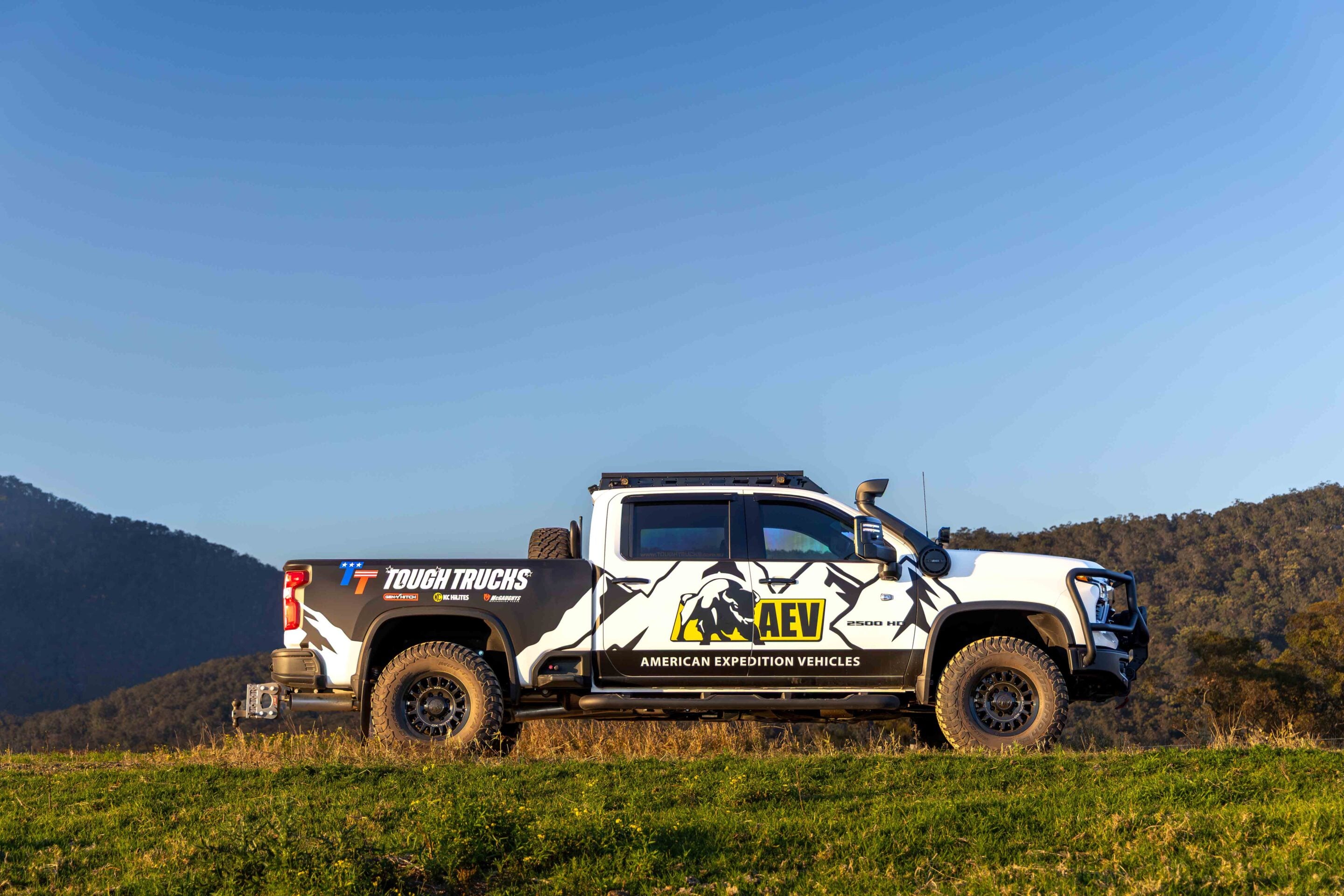
Building an AEV Silverado 2500
The Silverado was the first such truck to receive the AEV conversion from Tough Trucks.
The modifications centre around a suspension system that allows larger tyres to be fitted without resorting to an extra-tall suspension setup, keeping a relatively low centre of gravity. The Silverado rides on 37-inch BFG muddies fitted to AEV ‘Salta XD’ alloy wheels, while the Ram Prospector is on 40s!
While you can buy an AEV ZR2 Bison straight off the lot at your Chevrolet dealer in the USA, to get the equivalent here you need to have it assembled by the team at Tough Trucks. GMSV doesn’t even offer the ZR2 variant here, so you need to start with the regular Silverado 2500 LTZ model.
The key components you miss with the LTZ spec are the ZR2’s Multimatic spool-valve dampers. These shock absorbers have been tuned for high-speed desert travel and they do an excellent job on a road-going ZR2. Tough Trucks sorts this out by fitting the Multimatic dampers to the 2500 LTZ front and rear. AEV also offers its bespoke Bilstein suspension, as used in the AEV ZR2 Bison, and this will also be offered by Tough Trucks in Australia. But the fact that the Stock Class Silverados racing in the USA do so well with the Multimatics speaks wonders for their capability, and that’s what you’ll find under this truck.
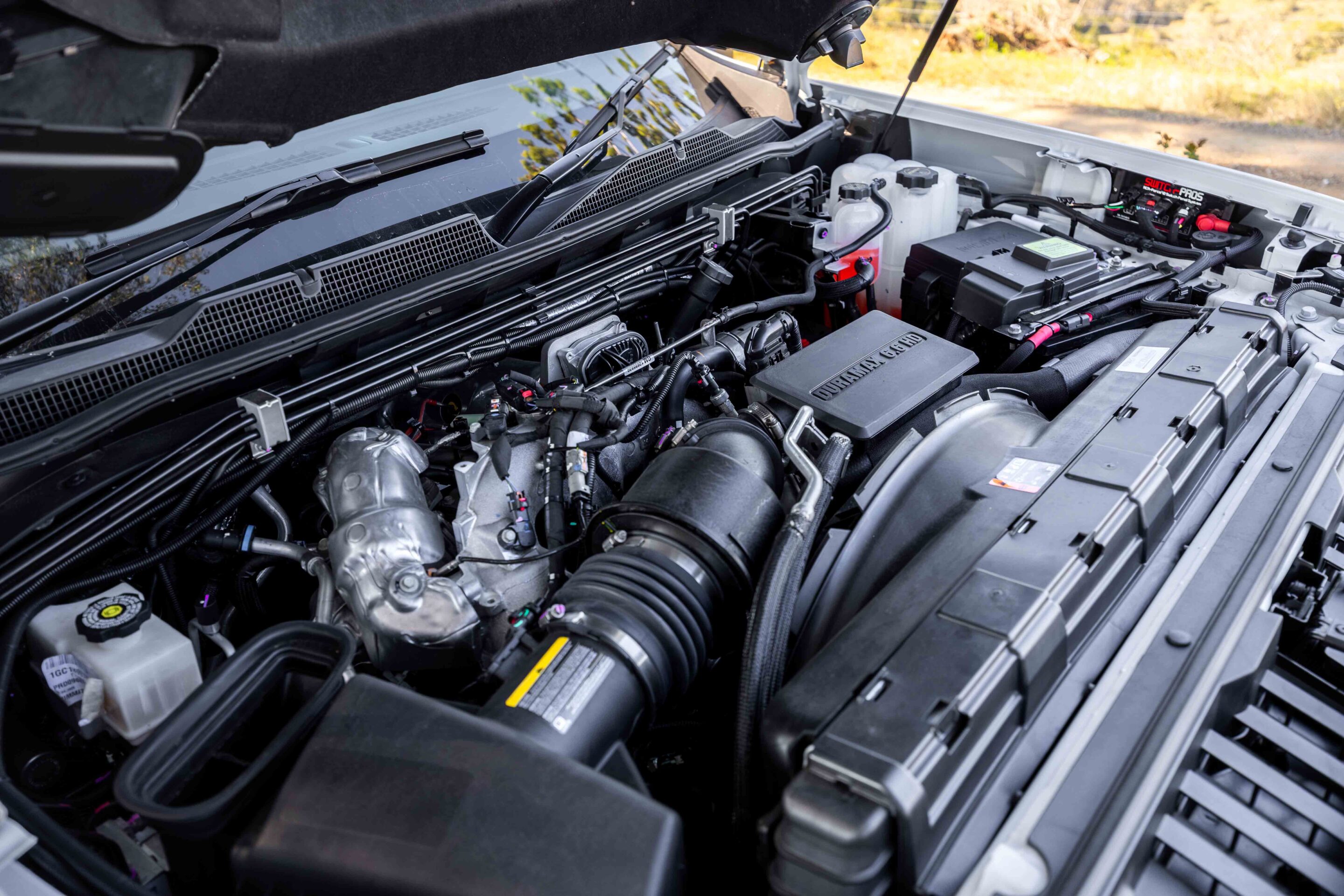
The key to tucking the 37-inch tyres under the Silverado 2500 is the AEV tyre-clearance kit, which includes replacement inner wheelarch plastic panels and the metal brackets needed to mount them out of the way to prevent the tyres rubbing at full steering lock and/or articulation. AEV uses its experience from working directly with the OEMs to match the plastic material to what Chevrolet fits for a factory finish. Also under the Silverado you’ll find AEV protection plates for the bottom of the huge radiator, the IFS, transmission and transfer case, while the rear differential wears an AEV cover.
The front bumper and brush guard are more AEV products, with a winch-mount kit carrying a ComeUp 12.5 electric winch, as well as an AEV LED driving-light kit. The bumper is a two-piece configuration that is available with just the lower section and winch mount, while the upper brush guard is optional. The lights on the bar are AEV’s 7000 Series LED lamps with optional grille guards fitted.
One of Tough Trucks’ other brands is KC HiLiTES, so there’s a plethora of its lights on this truck, including FLEX ERA roof-rack lights, pillar-mounted ditch lights and lights in the rear bumper.
Touring and towing kit
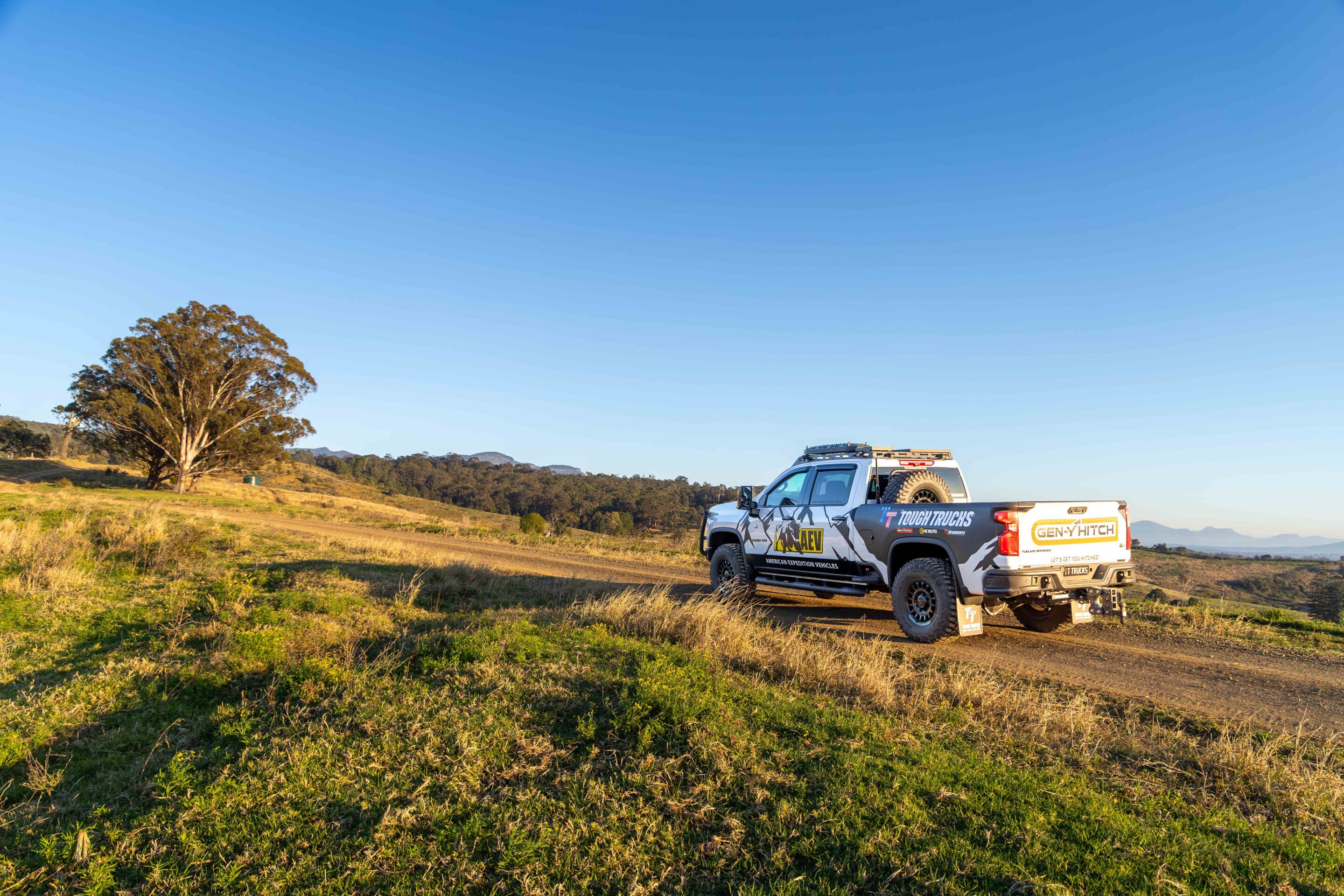
Other non-AEV accessories on this truck include the Tough Trucks accessory roof rack, with a Starlink Mini on a Gorilla Mount, solar panel and MAXTRAX mounted there.
An ARB Brushless twin air compressor feeds the rear airbags, as well as outlets on either side of the truck for tyre inflation. The airbag kit is controlled by the LogiQ system, while a Switch-Pros Force 12 programmable switch panel controls the electrical accessories. A pair of Trail’d 52-litre Boondocker water tanks and a pump sit under the spare-wheel cavity, while an AEV vertical mount carries the spare wheel in the tray alongside a Real Trucks swing-out storage compartment.
Powering the accessories is a Victron auxiliary 12-volt setup concealed under the back seat. It includes a DC-DC charger, input from the Enerdrive solar panel on the roof rack, a lithium battery and an inverter, with power outlets conveniently placed for easy use.
Another of the brands Tough Trucks imports is GEN-Y Hitch, so of course the Silverado has one. It’s the 4500kg Adjustable 5-inch Torsion Suspension Hitch, which can take a 50mm or 70mm ball depending on your load and vehicle rating. The Silverado 2500 HD can be rated as either NB2 or NB1 category. The GEN-Y hitch can also be supplied with a tongue to accept a DO35 or DO45 tow coupling.
On the road
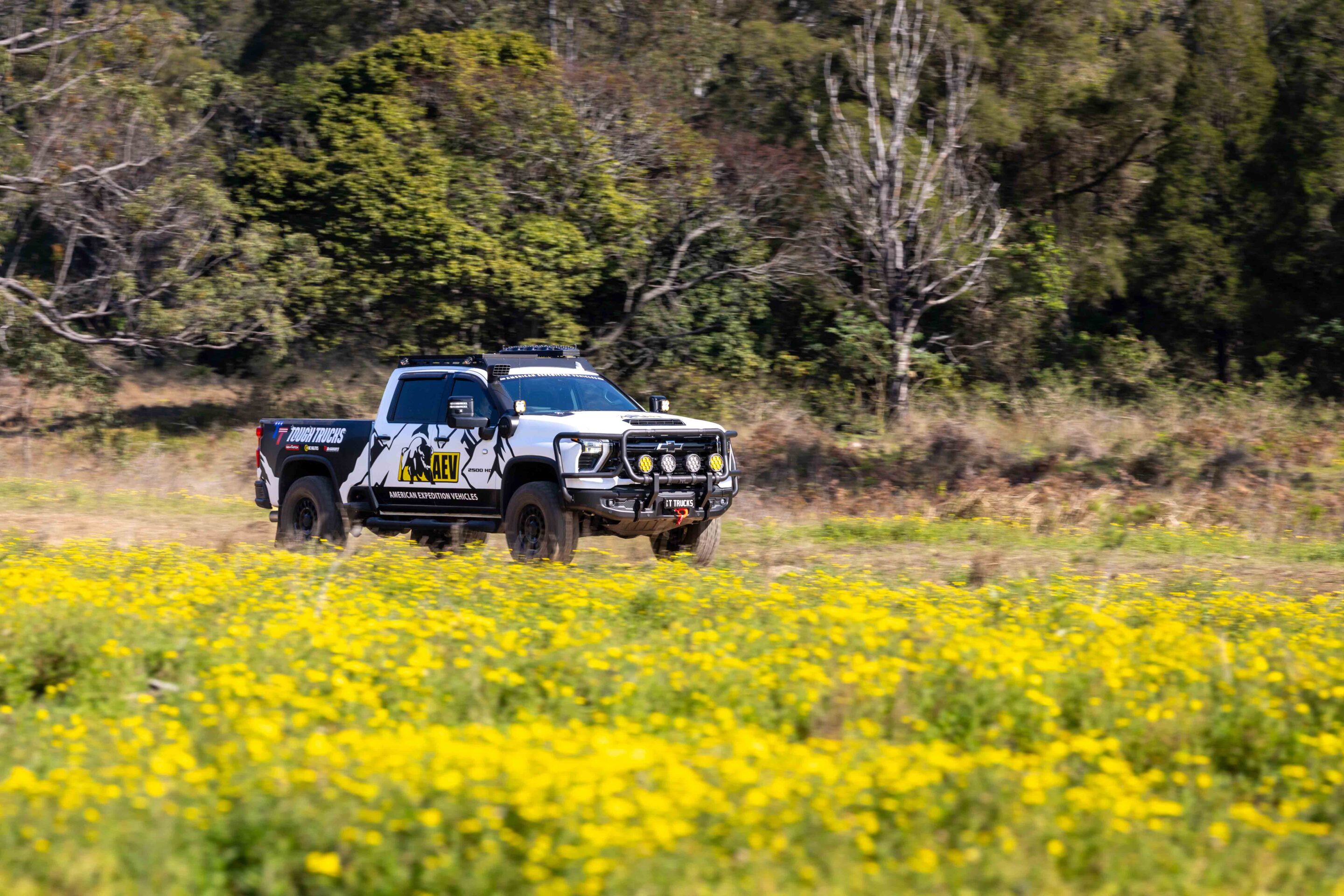
We did get a drive of the Tough Trucks AEV-converted Chevrolet, albeit on-road only.
Aside from the hum of the BFG muddies, it feels like an OEM truck with all the comfort and compliance of a new vehicle. We’re guessing it would deliver a whole new level of off-road performance, but that drive will have to wait for another day.
Tough Trucks has built relationships with GMSV, Ram Trucks, Ford Super Duty importers and their dealers in Australia to gain ready access to new vehicles, and plans to have ready-built, turnkey new AEV trucks in stock and ready to go to new owners. It doesn’t matter where your US truck brand alliances sit, AEV has the products and engineering to improve performance on- and off-road, as well as for towing and touring. Combine this expertise with Tough Trucks’ extensive range of products and dealers around the country to complete your build, and you can see why it has become Australia’s one-stop US truck shop.
Speaking of getting around the country, Tough Trucks is now an official sponsor of the National Rodeo Co. (↗) and will have trucks on display at rodeos around Australia, so you can check them out when the rodeo comes to town.
FAQs
Can I buy an AEV-converted Silverado 2500 in Australia?
Yes. Tough Trucks is offering complete, turnkey new American pick-up trucks with AEV conversions in Australia, including Chevrolet and GMC products.
Which Silverado 2500 does the AEV conversion start with?
Because GMSV doesn’t offer the ZR2 variant in Australia, the AEV-converted truck starts with the regular Silverado 2500 LTZ model.
What suspension does the Silverado use?
This Silverado uses Multimatic spool-valve dampers front and rear. Tough Trucks will also offer AEV’s bespoke Bilstein suspension, as used in the AEV ZR2 Bison.
What towing equipment is fitted?
The Silverado has a GEN-Y Hitch 4500kg Adjustable 5-inch Torsion Suspension Hitch, which can take a 50mm or 70mm ball depending on the load and vehicle rating. The Silverado 2500 HD can be rated as either NB2 or NB1 category.
Can Tough Trucks build other AEV US trucks?
Yes. Tough Trucks is the exclusive distributor of AEV’s GM truck products, covering Chevrolet and GMC, and can also offer Ram and Ford AEV solutions. It has relationships with GMSV, Ram Trucks, Ford Super Duty importers and their dealers in Australia.
Build equipment
- AEV 37-inch tyre-clearance kit
- AEV ‘Salta XD’ alloy wheels
- AEV front bumper, brush guard and winch-mount kit
- AEV LED driving-light kit with 7000 Series LED lamps and grille guards
- AEV radiator, IFS, transmission and transfer-case protection plates, plus rear differential cover
- AEV suspension system with Multimatic spool-valve dampers front and rear
- AEV vertical spare-wheel mount and Real Trucks swing-out storage compartment
- ARB Brushless twin air compressor, rear airbags, LogiQ control system and tyre-inflation outlets
- ComeUp 12.5 electric winch
- Enerdrive solar-panel input
- GEN-Y hitch
- KC HiLiTES FLEX ERA roof-rack lights, pillar-mounted ditch lights and rear bumper lights
- Starlink Mini on a Gorilla Mount, solar panel and MAXTRAX
- Switch-Pros Force 12 programmable switch panel
- Tough Trucks accessory roof rack
- Trail’d 52-litre Boondocker water tanks and pump (two)
- Victron auxiliary 12-volt system with DC-DC charger, lithium battery, inverter and power outlets
- 37-inch BFGoodrich mud-terrain tyres
There are plenty of places to stop along the Stuart Highway. There are far fewer that make you want to stay.
At first glance, the Lazy Lizard Tavern (↗) in Pine Creek might look like another Territory pub servicing travellers moving between Darwin, Katherine and Kakadu. Spend a little time here, however, and it quickly becomes clear there’s much more going on.
Part pub, part caravan park, part traveller hub and home to one of the most surprising vehicle collections in the Northern Territory, the Lazy Lizard has evolved into a destination in its own right.
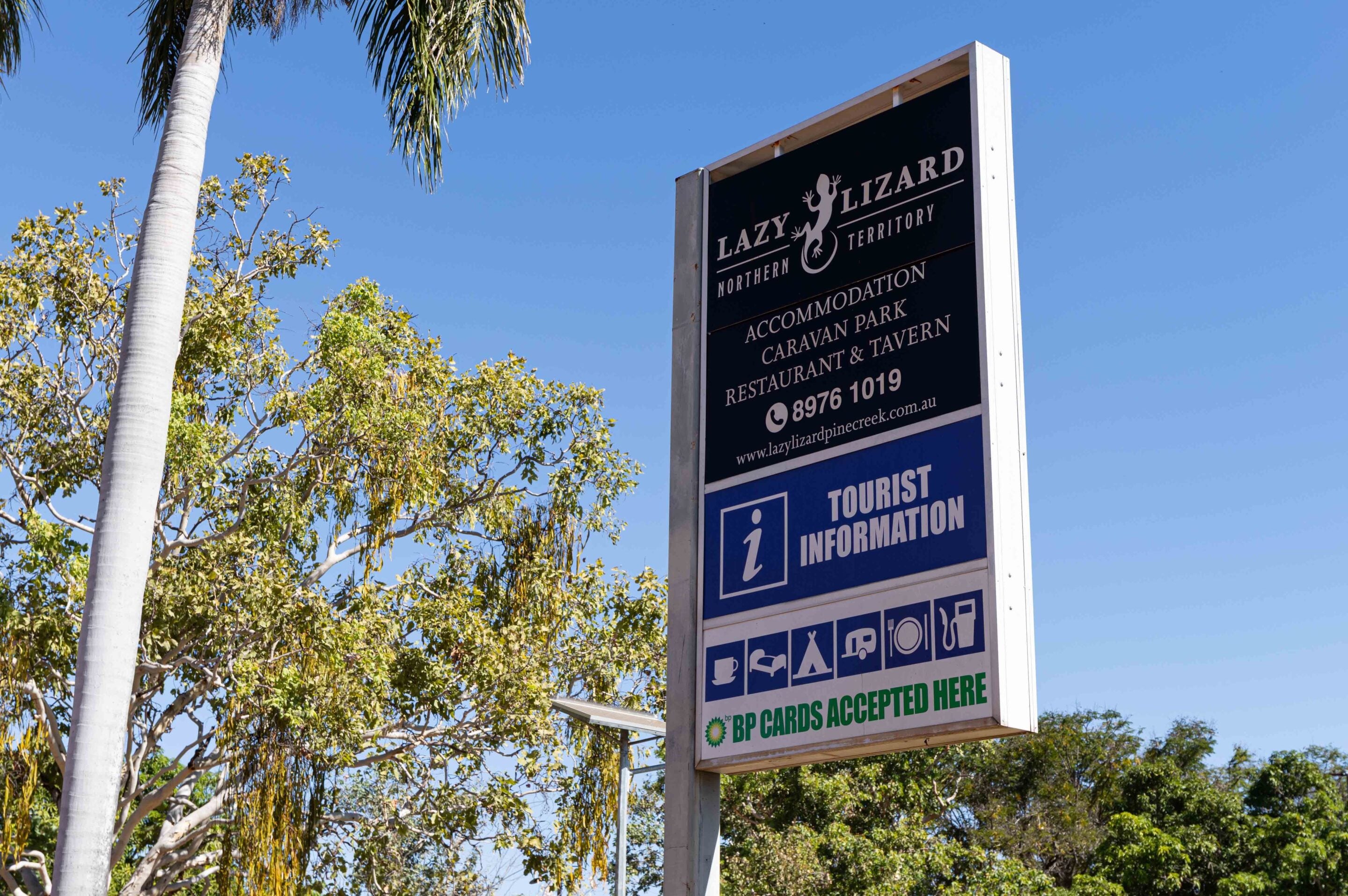
A Top End oasis on the Stuart Highway
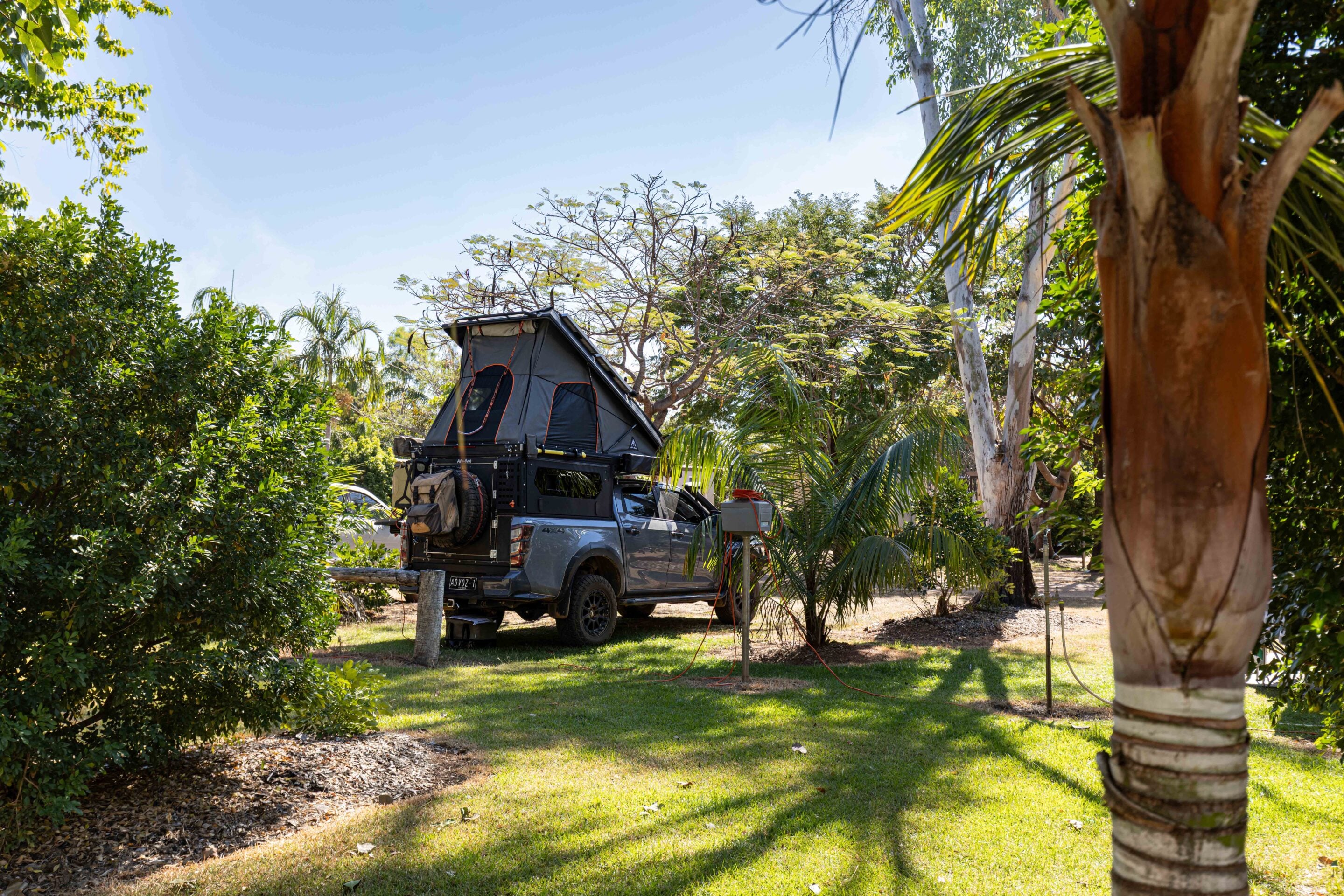
The contrast is immediate. One moment you’re cruising the Stuart Highway, the next you’re pulling into green lawns, shady palms and a meticulously maintained complex that feels worlds away from the surrounding bush.
“Everyone says it’s like an oasis,” says manager Jasmyn. “They come in off the highway and everything around is dry. Then they get here and there’s green grass, a beautiful ablution block, the tavern, cold beer and the pool. Everyone just goes, ‘Wow, what a little oasis.’” It’s hard to argue.
The adjoining caravan park is one of the most impressive in the region, with lush grassy sites, excellent facilities and the sort of attention to detail that keeps travellers returning year after year. Add a BP service station and grocery store, and visitors can fuel up, stock the pantry, cool off in the pool and settle in for the night without leaving the property.
According to Jasmyn, the venue’s success comes down to the dedication of owners Graham and Sharon: “They put their heart and soul into it,” she says. “There’s a lot of love that goes into this place.”
Cold beer, pizza and a pool
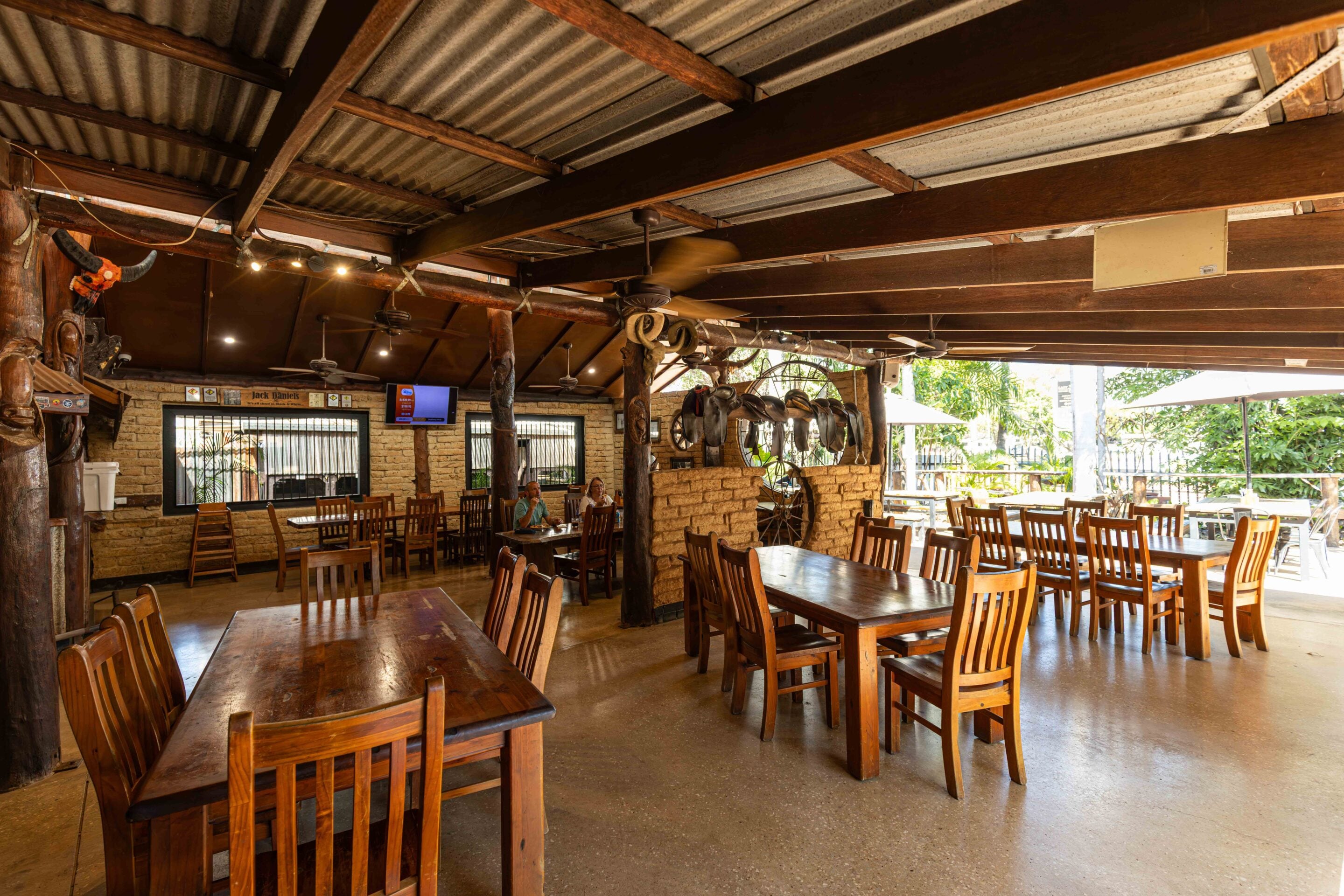
The tavern itself delivers everything you’d hope to find in a classic Northern Territory pub. Crocodile skulls, buffalo horns and saddles decorate the walls, while corrugated iron and beautifully carved timber posts provide plenty of character.
The open-air design allows patrons to move freely between indoor and outdoor areas, creating a relaxed atmosphere perfectly suited to the Top End climate. Large timber tables encourage travellers to settle in and swap stories from the road, while ceiling fans work overtime to keep the air moving through the venue.
Outside, tables shaded by umbrellas overlook a swimming pool surrounded by palms, creating a tropical setting that’s a far cry from the typical highway stop. Throw in a pair of pool tables and a jukebox, and it’s easy to understand why many visitors decide to stay for another round.
Behind the bar during my visit were Great Northern Super Crisp, Carlton Dry and the venue’s own Lazy Lizard Lager, while a range of House Nine wines ensured there was something for every taste.

Food is a major drawcard, led by an extensive pizza menu that has become a favourite among travellers staying in the adjoining caravan park. Classic options like Margherita, Pepperoni and Hawaiian sit alongside loaded creations such as the BBQ Carnivore, stacked with buffalo sausage, ham, pepperoni, bacon and Italian sausage. Seafood lovers are catered for with a Marinara, while the Supreme brings together a little of everything.
The standout remains the NT Special, with buffalo sausage, baby spinach, Spanish onion and Danish feta on a Napoli base. It’s a distinctly Territory twist that fits the setting perfectly.
Beyond the pizzas, the kitchen delivers a straightforward range of pub favourites built for travellers with big appetites. Burgers include a Buffalo Burger with mango chutney, beer-battered barramundi, a chicken burger with sriracha coleslaw and a hearty steak sandwich stacked with the lot.
Traditional mains cover Territory staples such as beer-battered barramundi, chicken schnitzel, chicken parmigiana, buffalo sausages with mash and a 300g porterhouse cooked to order. All mains come with chips and salad or vegetables, plus a range of classic sauces.
Pasta dishes, simple salads, kids’ meals and familiar desserts round out a menu designed for comfort rather than complexity. It’s the kind of food that works just as well after a swim as it does after a long stretch on the Stuart Highway.
Inside The Shed’s classic vehicle collection
While the tavern remains the social heart of the operation, the Lazy Lizard’s biggest surprise sits just beyond the bar.
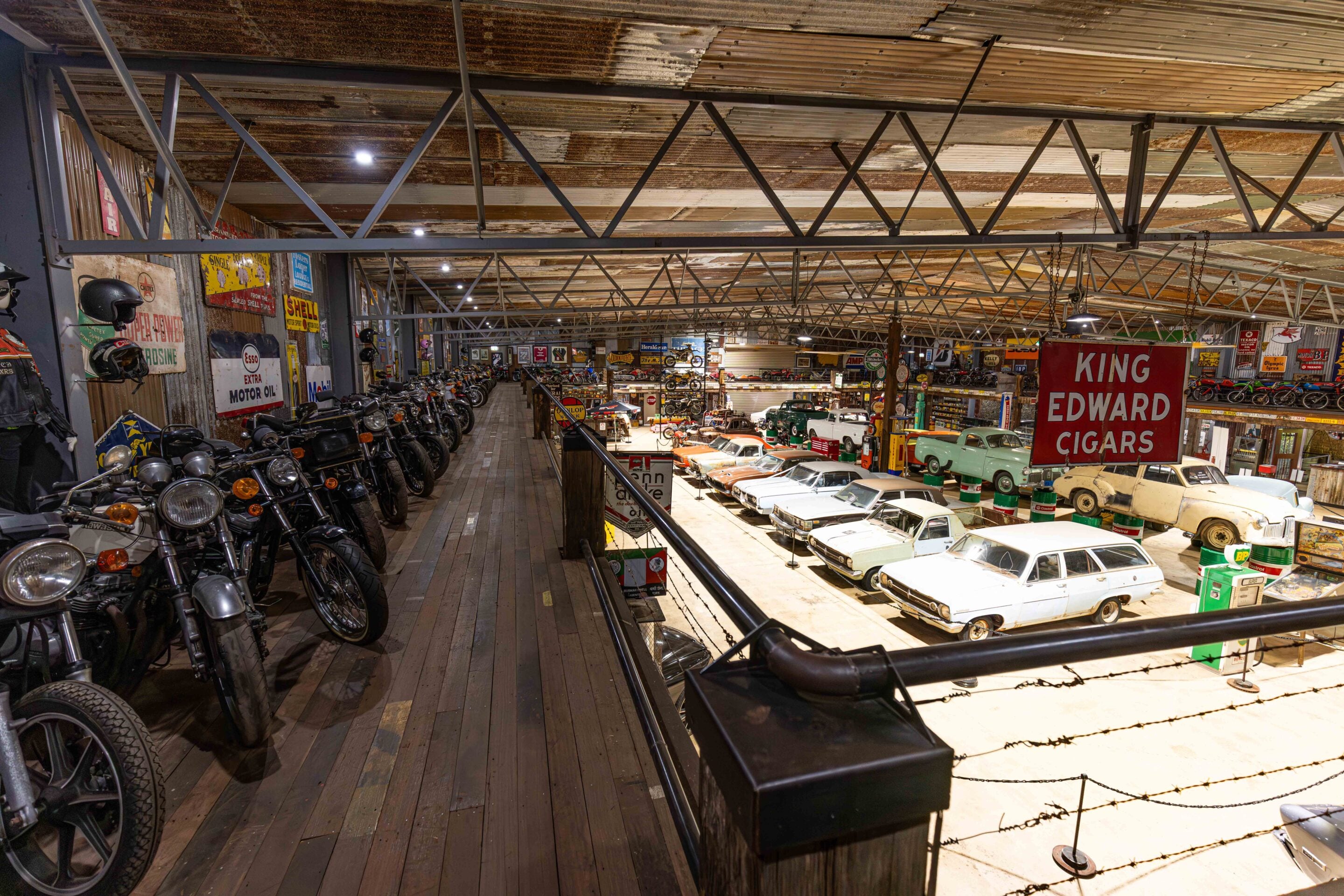
Opened to the public on June 29, 2024, The Shed houses Graham’s private collection of classic vehicles and motorcycles, assembled over approximately 25 years from across Australia and the United States. For a $5 donation, visitors gain access to a remarkable collection of automotive history. Generations of Holdens occupy the floor space, while an impressive array of motorcycles lines the mezzanine level overhead.
The collection isn’t simply about preserving old vehicles. Every dollar raised through admissions is donated to Melanoma Institute Australia (↗), a cause that carries deep personal significance.
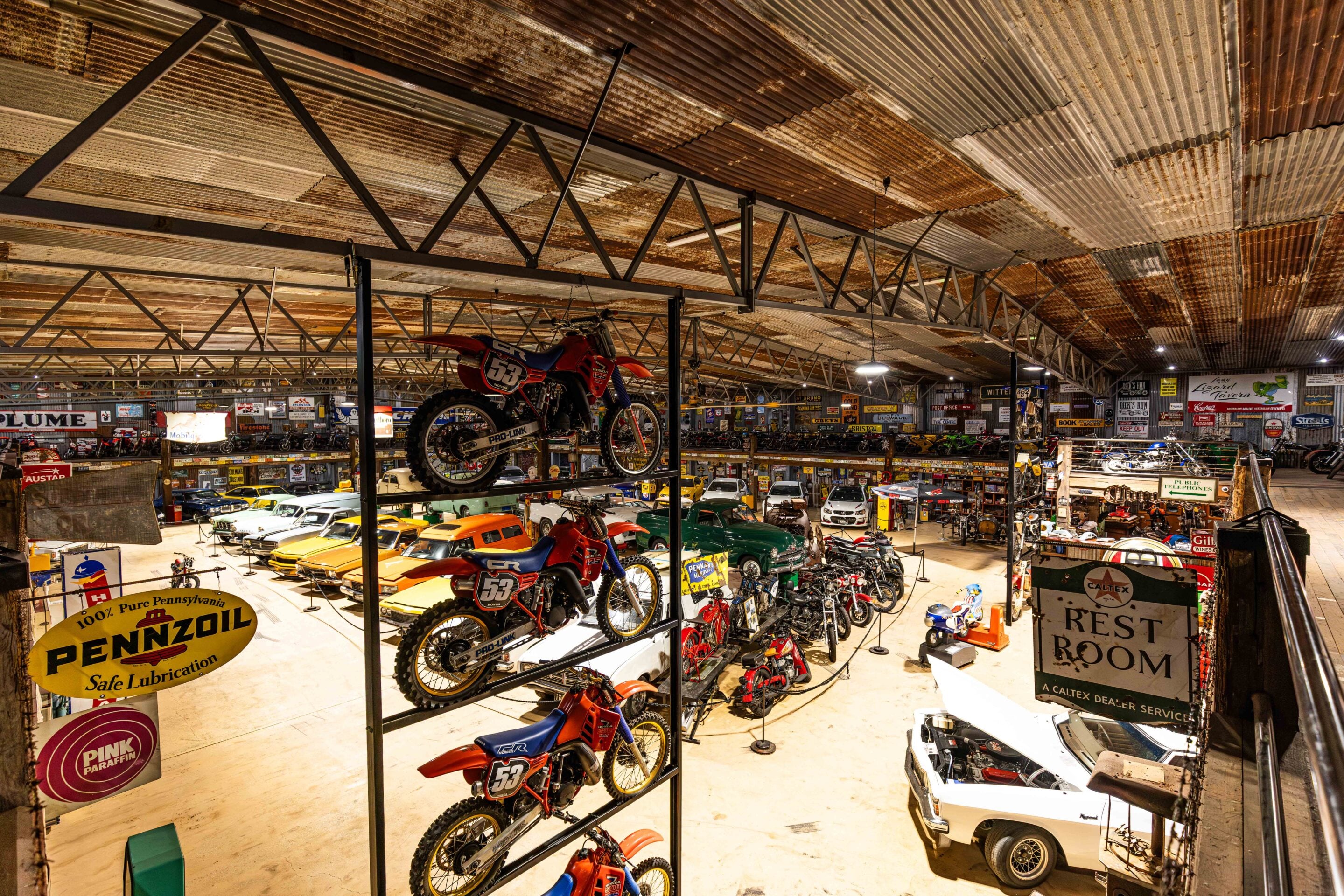
“Graham’s sister passed away from melanoma,” explains Jasmyn. “She always knew about the dream and saw the cars and bikes but never got to see The Shed finished. Graham wanted to do something to give back and make people aware.”
The response from visitors has been overwhelming. In its first year alone, The Shed raised more than $30,000 for melanoma research and awareness, with travellers from across Australia contributing to the cause while enjoying one of the Territory’s most unique attractions. What makes the collection particularly impressive is that almost every vehicle remains roadworthy. All but five of the cars can still be driven, while a specialist panel beater and painter based in New South Wales handles the restoration work.
Even the building itself tells a story. Massive pistons salvaged from the Katherine Power House stand at the base of the staircase, while timber sourced from an old bridge in New South Wales has been incorporated throughout the structure. Ask about the value of the collection and you’ll get a simple answer: it’s not for sale. Nothing inside carries a price tag, and that’s exactly how the owner wants it.
Why Pine Creek is worth the stop
For Pine Creek, attractions like The Shed provide a new reason for travellers to stop.
The town was once a thriving mining centre during the gold rush era, attracting prospectors and families chasing their fortunes. While those boom days have long passed, Pine Creek continues to reinvent itself as a destination for modern travellers exploring the Top End.
If visitors only have a day in town, Jasmyn says The Shed should be at the top of the list: “You can’t really go past it,” she says. “There’s nothing like it.” She also recommends taking time to explore Pine Creek’s railway history and heading to the Mine Lookout, where sunset views serve as a reminder of the town’s rich past.
Back at the Lazy Lizard (↗), however, it’s easy to understand why many travellers never make it much further than the tavern, pool and caravan park. Whether it’s the welcoming atmosphere, the quality facilities, the cold beer or the chance to wander through one of Australia’s most remarkable private vehicle collections, the Lazy Lizard offers something increasingly rare on today’s highways: a reason to slow down.
In an age when many roadside stops feel interchangeable, the Lazy Lizard has created something genuinely memorable. It’s part pub, part traveller hub and part community project, built on passion, hard work and a commitment to giving visitors a place they’ll want to return to. Judging by the number of familiar faces rolling back through the gates each year, it’s a formula that’s working.
Lazy Lizard Tavern FAQs
Where is Lazy Lizard Tavern?
Lazy Lizard Tavern (↗) is at 299 Millar Terrace, Pine Creek, Northern Territory. You can contact the tavern on (08) 8976 1019 or [email protected].
What accommodation is available at Lazy Lizard Tavern?
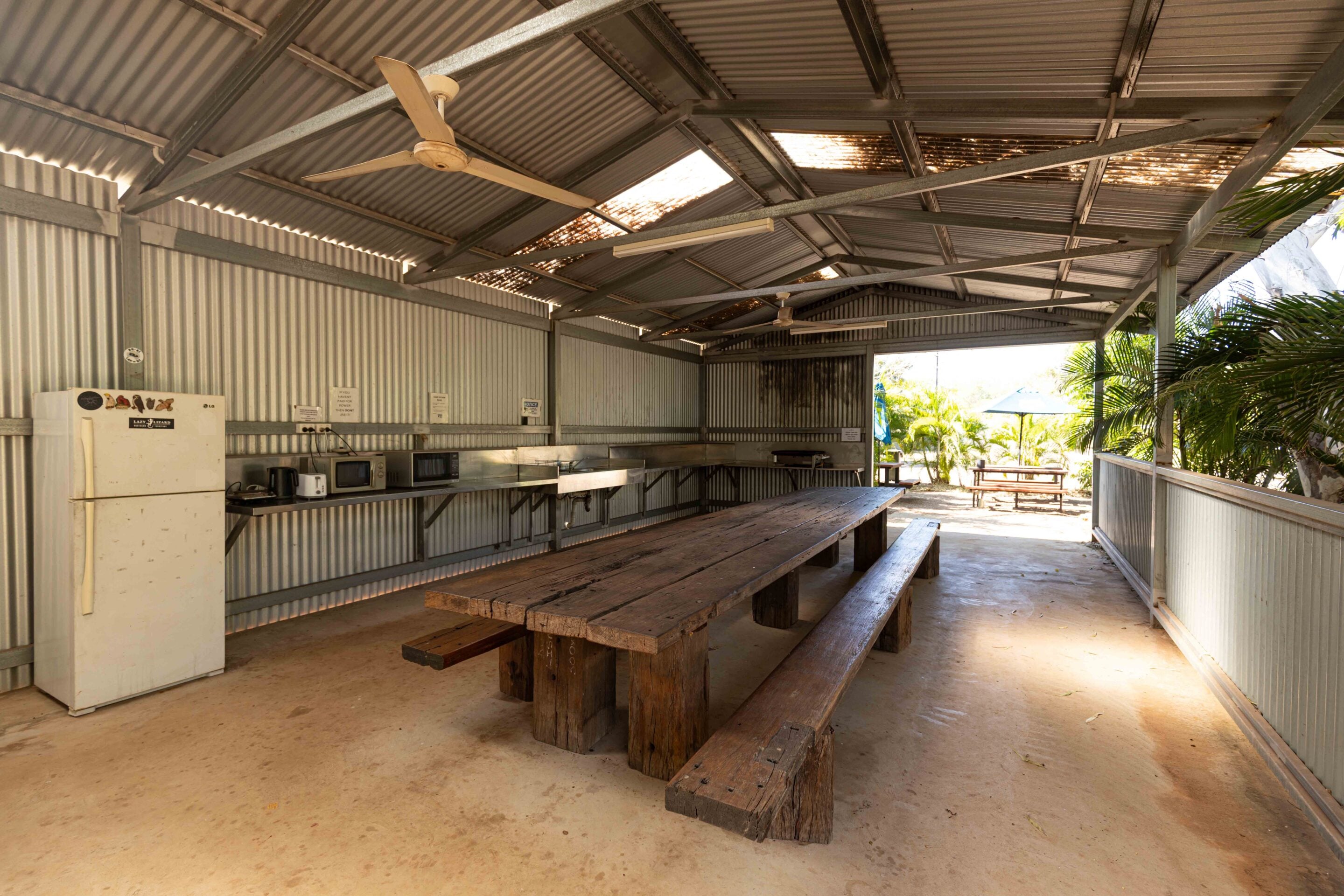
The Lazy Lizard has a large caravan park with powered and unpowered sites, grassed campsites and cabins. Modern, well-maintained amenities and a swimming pool make it popular with caravanners, grey nomads and 4×4 travellers.
What beers are on tap at Lazy Lizard Tavern?
The tavern has Great Northern Super Crisp, Carlton Dry and Lazy Lizard Lager on tap.
What food is available at Lazy Lizard Tavern?
The menu includes an extensive range of pizzas and classic pub meals. Standouts include the NT Special, with buffalo sausage, baby spinach, Spanish onion and Danish feta, and the BBQ Carnivore, loaded with buffalo sausage, bacon, pepperoni, ham and Italian sausage.
What is The Shed at Lazy Lizard Tavern?
The Shed is home to Graham’s private collection of classic vehicles and motorcycles, including generations of Holdens. Entry costs $5, with all admission proceeds donated to Melanoma Institute Australia. The collection raised more than $30,000 in its first year.
What else is there to do around Pine Creek?
The Mine Lookout is worth visiting around sunset, while the Pine Creek Railway Precinct offers a glimpse into the town’s railway history. Back at the Lazy Lizard, there’s a tropical poolside setting, caravan park, tavern, BP fuel station and grocery store.
Why should you stop at Lazy Lizard Tavern?
It’s more than a roadside fuel stop, with accommodation, food, a swimming pool and facilities for travellers all in one place. The Shed adds another reason to pull over, with a classic vehicle collection unlike anything else on the Stuart Highway.
Chery has confirmed Australian specs for its new diesel-electric Stockman ute, ahead of its local arrival.
The Stockman will use a 2.5-litre turbo-diesel Super Hybrid powertrain, with the diesel engine producing 140kW and 450Nm. The system combines this with a 34kWh lithium iron phosphate (LFP) battery to produce 350kW and 800Nm of combined power and torque.
Chery confirms all-wheel drive, up to 96km of electric driving range on the WLTP test cycle, an 80-litre fuel tank and towing capacities of 3495kg braked and 750kg unbraked.
Off-road hardware includes front, centre and rear differential locks, while ground clearance is quoted at more than 247mm. The Stockman also gets all-terrain tyres, double-wishbone front suspension and leaf springs at the rear.
The ute measures 5450mm long, 2010mm wide and 1890mm high, with a 3250mm wheelbase. The cargo tub measures 1560mm long, 1560mm wide and 500mm high.
Inside, there is a 10.25-inch digital instrument cluster, 15.6-inch infotainment touchscreen and 14-speaker audio system. Chery also says a comprehensive suite of Advanced Driver Assistance Systems will be offered.
Indicative specifications add more detail
Chery Australia also supplied an additional specification sheet covering more details of the Stockman’s powertrain, four-wheel-drive system, chassis, towing and dimensions.
These figures are indicative only and may change before the Stockman reaches the Australian market. The confirmed engine outputs and core specifications above are not part of this indicative section.
The indicative sheet lists a Dedicated Hybrid Transmission (4DHT), with the 34kWh battery positioned beneath the cargo tub. It also details 4H, 4L and Intelligent 4WD modes, along with Snow, Mud, Sand and Rock terrain modes.
Eco, Normal and Sport drive modes are listed alongside EV and HEV energy modes, while Turn Assist, Crawl Control and Expert mode are also included.
The indicative figures include a 350kg maximum towball download, 2735kg kerb mass, 3500kg GVM and 6500kg GCM. Electronic power steering, front and rear disc brakes and an electronic parking brake with Auto Hold are also listed.
The indicative sheet gives the Stockman a 1930mm height, 30-degree approach angle and 25-degree departure angle. It lists a 505mm-deep tub, with 1220mm between the wheel arches.
The sheet also specifies 17-inch alloy wheels, 285/70 R17 all-terrain tyres and a full-size alloy spare.
Chery Stockman specifications
| Specification | Stockman |
|---|---|
| Powertrain | 2.5-litre Turbo Diesel Super Hybrid (Diesel PHEV) |
| Engine power | 140kW |
| Engine torque | 450Nm |
| Battery | 34kWh LFP |
| Combined power | 350kW |
| Combined torque | 800Nm |
| Drive | All-wheel drive |
| Electric driving range | Up to 96km (WLTP) |
| Braked towing capacity | 3495kg |
| Unbraked towing capacity | 750kg |
| Off-road capability | Front, centre and rear differential locks |
| Fuel tank | 80 litres |
| Ground clearance | >247mm |
| Suspension | Double wishbone front / leaf spring rear |
| Tyres | All-terrain |
| Dimensions (L x W x H) | 5450 x 2010 x 1890mm |
| Wheelbase | 3250mm |
| Cargo tub (L x W x H) | 1560 x 1560 x 500mm |
| Instrument cluster | 10.25-inch LCD |
| Infotainment screen | 15.6-inch LCD touchscreen |
| Audio | 14-speaker system |
| Indicative specifications | |
|---|---|
| Transmission | Dedicated Hybrid Transmission (4DHT) |
| Battery position | Under cargo tub |
| Maximum towball download | 350kg |
| Kerb mass | 2735kg |
| GVM | 3500kg |
| GCM | 6500kg |
| Height | 1930mm |
| Approach angle | 30 |
| Departure angle | 25 |
| Tub width between wheel arches | 1220mm |
| Tub depth | 505mm |
| Wheels | 17-inch alloy |
| Tyres | 285/70 R17 A/T |
| Spare wheel | Full-size alloy |
| 4WD modes | 4H / 4L / Intelligent 4WD |
| Drive modes | Eco / Normal / Sport |
| Terrain modes | Snow / Mud / Sand / Rock |
| Energy modes | EV / HEV |
| Extra modes | Turn Assist / Crawl Control / Expert |
| Steering | Electronic power steering |
| Brakes | Front and rear disc |
| Parking brake | EPB with Auto Hold |
Suzuki is bringing the Jimny Heritage back to Australia, with another 300 three-door examples now available.
Unlike the original 300 vehicles released in 2023, this latest batch is available exclusively with an automatic transmission, taking the total Heritage production run to 600 vehicles. The new examples will be numbered from 301 to 600.
“The first 300 Jimny 3-Door Heritage manuals sold out in just five hours, which showed us just how much our customers love this special limited piece of history,” said Michael Pachota, Suzuki Australia General Manager. “Now, for the first time, Jimny 3-Door Heritage is finally available with an automatic transmission, giving even more customers the opportunity to own one.
“But this is it. These 300 individually numbered vehicles, from 301 to 600, will be the final Jimny 3-Door Heritage limited edition models sold in Australia.”
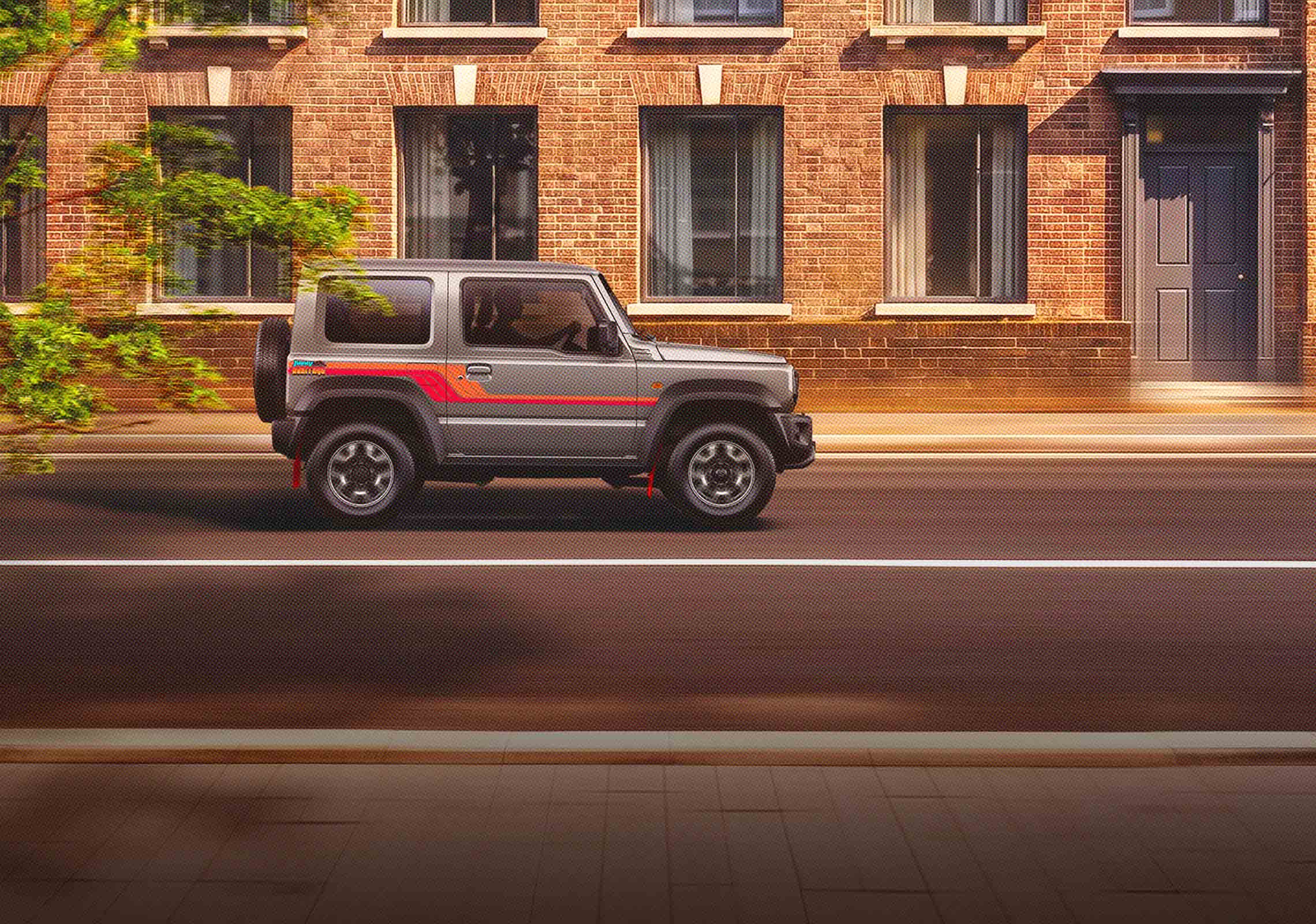
Based on the Jimny GLX automatic, the Heritage adds red front and rear mud flaps, Heritage decals, a cargo tray, limited-build badge and an exclusive Jimny Heritage pack. The Jimny Heritage is priced from $42,490 drive-away, which is $1500 more than the standard Jimny automatic. Metallic paint costs extra, with Superior White, Medium Grey and Jungle Green available.
The Jimny Heritage utilises the familiar 1.5-litre four-cylinder petrol engine, producing 75kW and 130Nm and driving all four wheels through a four-speed automatic transmission. Its part-time 4WD system with selectable 2H, 4H and 4L modes.
Pre-orders are available now through participating Suzuki Australia dealers, with customers expected to scoop up the 300 examples very quickly.
Jimny Heritage adds
- Red front mud flaps
- Red rear mud flaps
- Jimny Heritage cargo tray
- Heritage decals
- Limited-build badge
- Exclusive Jimny Heritage pack
Plenty of people assume any antenna bolted to the bull bar will do the job once they venture into remote country.
It’s an easy assumption to make, until the phone drops out the moment the nearest tower disappears behind a range. When you’re travelling beyond reliable coverage, the antenna is doing more work than most people realise.
A phone’s antenna is small, and it can be boxed in by metal, glass, wiring, roof racks and canopies, not exactly an ideal environment for picking up a signal. An external antenna moves the receiving element out of that environment and into a much better position. On the fringe of coverage, a few extra decibels can be the difference between a usable connection and nothing at all. However, not all external antennas are created equal.
More gain isn’t always better
Increasing antenna gain reshapes the signal pattern rather than simply amplifying it.
A high-gain collinear antenna concentrates its performance toward the horizon, which suits flat country where the tower sits at roughly the same elevation. In hilly or mountainous terrain, though, that flatter pattern can work against you if the signal is coming from well above or below the vehicle.
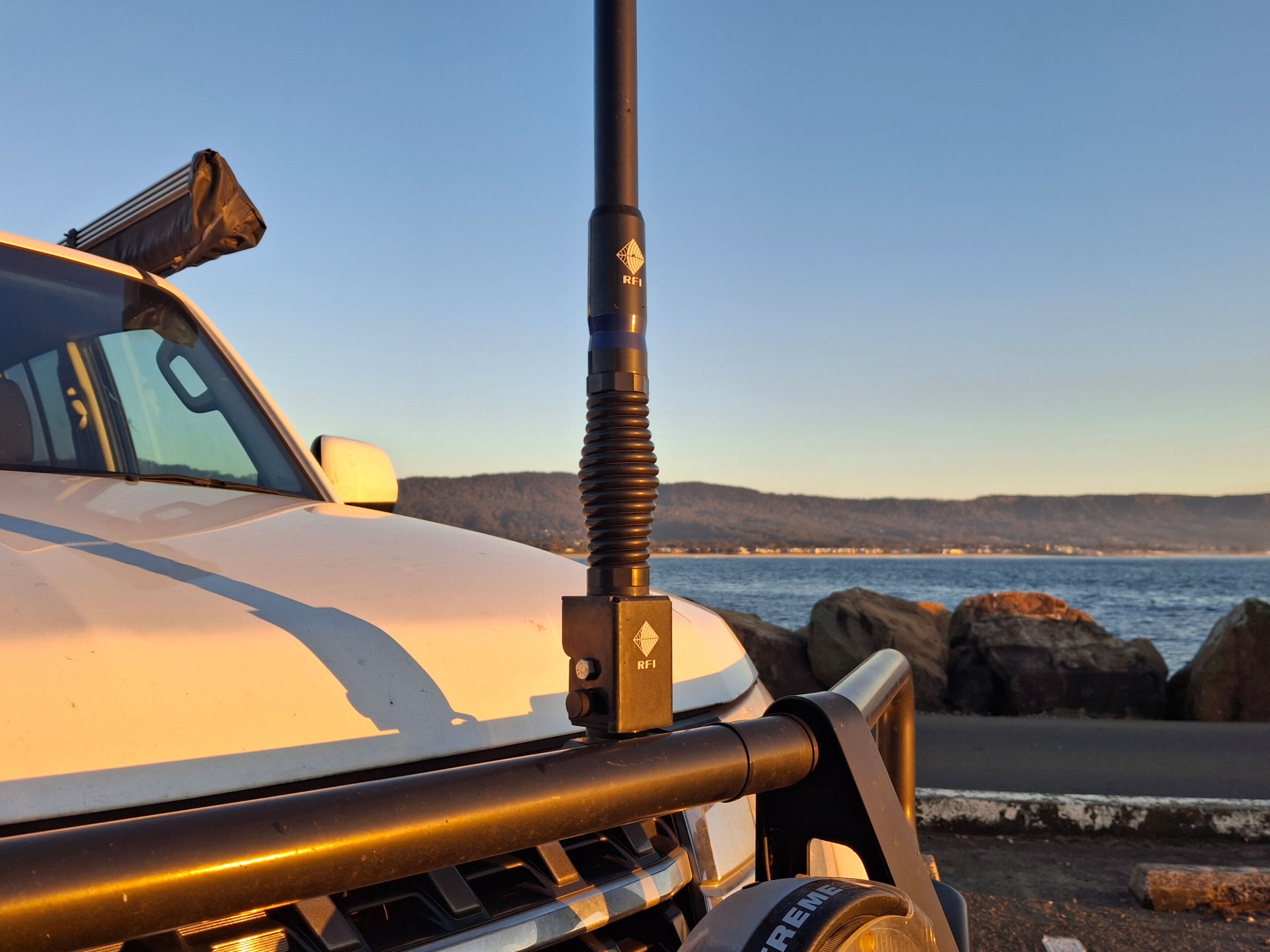
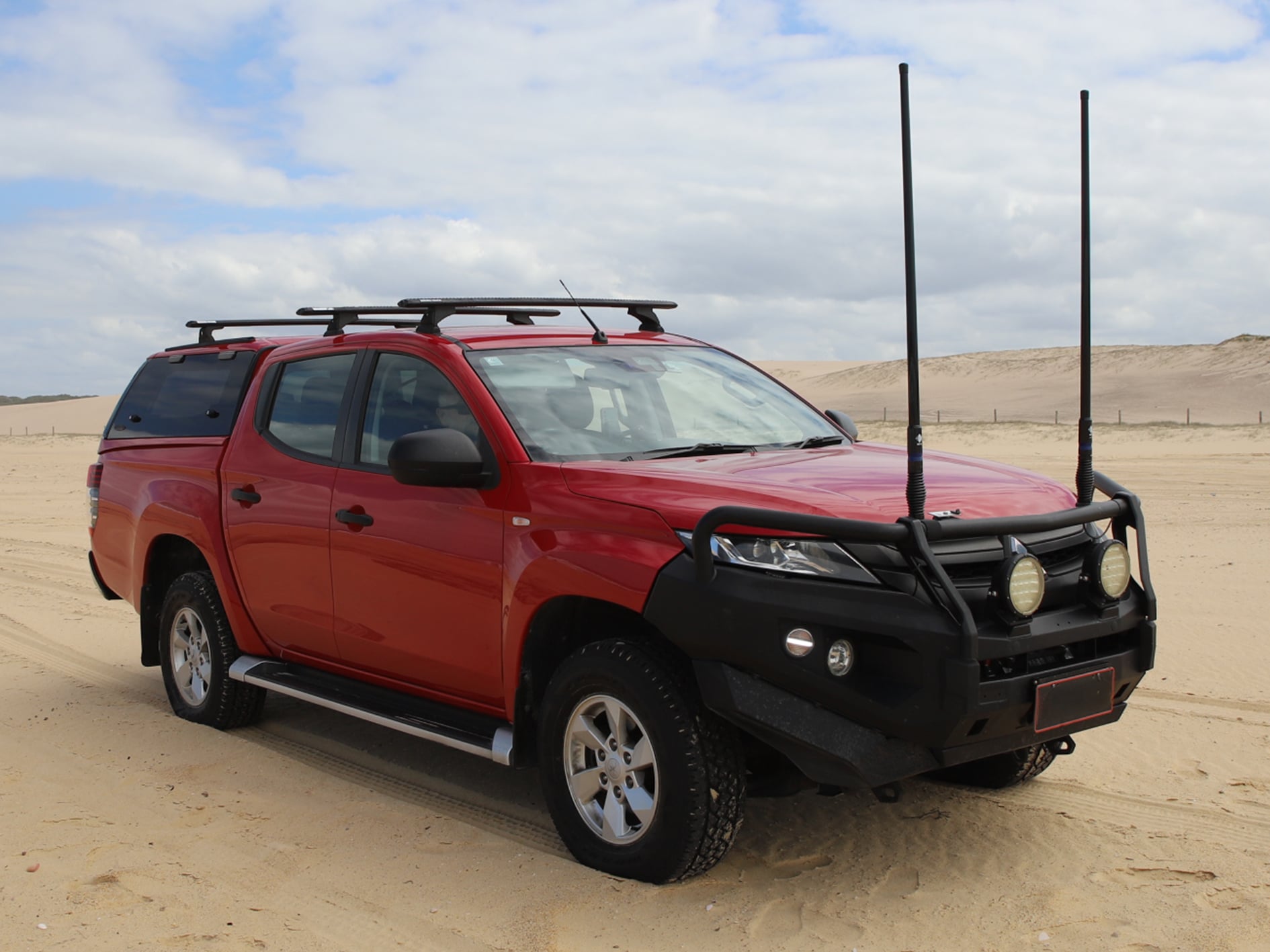
This is where RFI’s CDX-TREME range (↗) comes in. The line-up includes a 600mm 4.5dBi antenna and a longer 1200mm 7.5dBi option, both spanning 698MHz to 3800MHz across multiple bands. The 4.5dBi and 7.5dBi figures apply at 698-960MHz, with gain varying across the higher-frequency bands, including 3400-3800MHz. Neither is inherently better; they simply distribute gain differently depending on the terrain.
Build quality matters too, given the vibration, corrugations and temperature swings involved in remote touring. The CDX-TREME (↗) uses an integrated spring assembly and locking whip, with a removable whip useful for scrub or restricted-height situations. RFI’s Meander-based collinear design is intended to maintain a consistent radiation pattern as conditions change.
Antenna selection is only part of the equation. Where and how it’s mounted can have just as much impact.
Don’t just bolt it anywhere
Mounting position is just as important as the antenna itself.
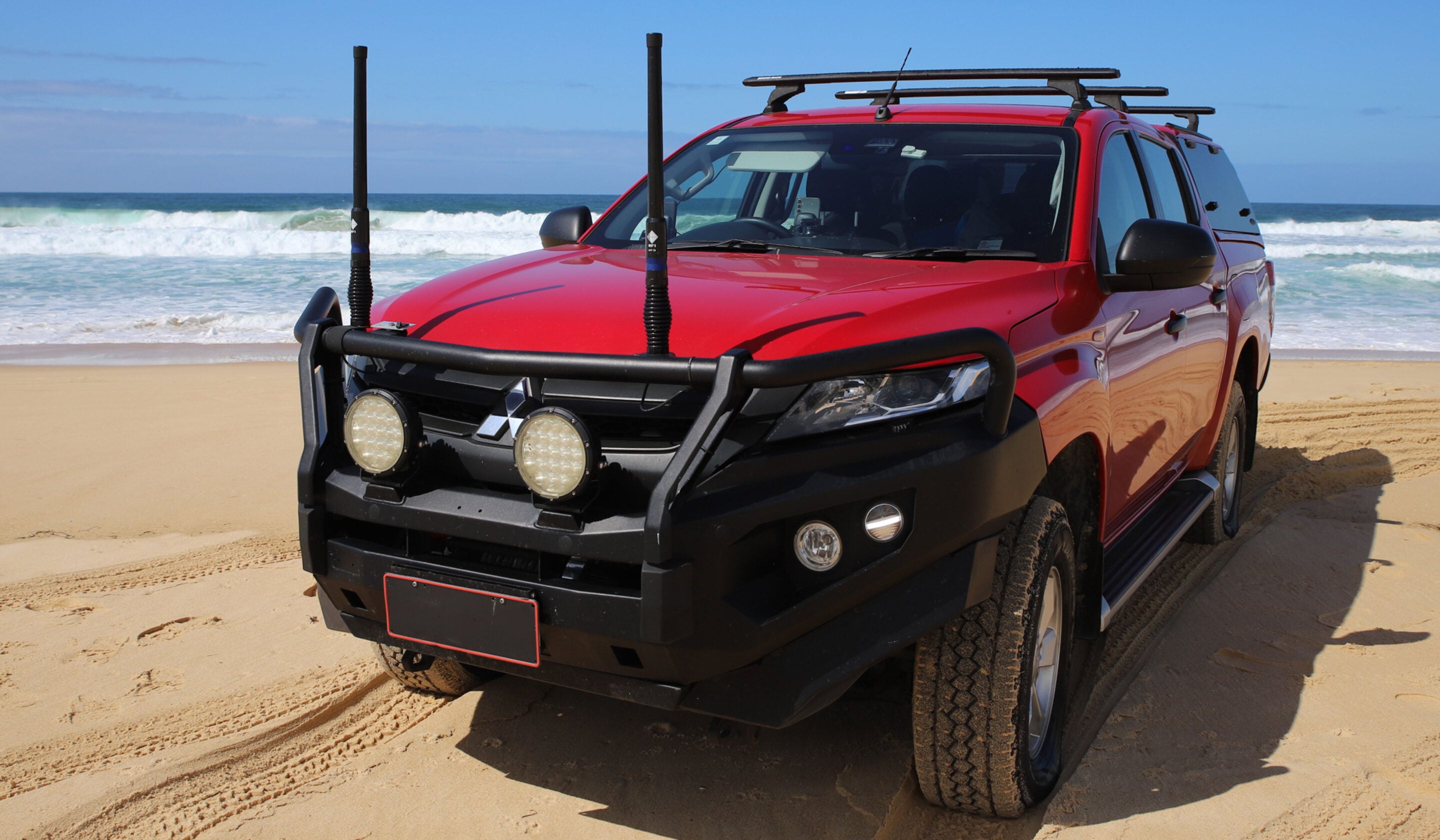
It should sit as high as practical, with a clear view around it, rather than tucked behind a roof rack or pillar. Keeping antennas separated also reduces interference. RFI recommends at least 600mm between its cellular antenna and another antenna.
For most touring 4WDs, the bull bar is the practical mounting point, and a folding bracket allows the antenna to be lowered for garages, car parks or low branches without removing the whole assembly. The cable run deserves attention too, since coaxial cable has real losses at higher frequencies. Keeping the run short and using appropriate low-loss cable matters. And that’s where the antenna becomes part of a bigger communications setup.
It’s all about the setup
No antenna alone will get you through the Simpson Desert. It feeds a modem, router or repeater, and it’s a separate system entirely from a UHF CB, which operates on its own short-range radio band. Once you’re genuinely out of mobile range, satellite communications take over.
Getting the antenna, mount and cable right gives everything downstream the best possible starting point when it matters most.
If there’s one thing that murders 4WDs quicker than just about anything this side of a land mine, it’s corrugations.
Those pesky little undulations can rattle your rig into an early grave quicker than bad driving, lack of maintenance and even rust. Just ask anyone who’s done the Peninsula Developmental Road (PDR) at the start of the dry before the grader has gone through or travelled the western edge of the Simmo after a bad storm. Corrugations are a killer.
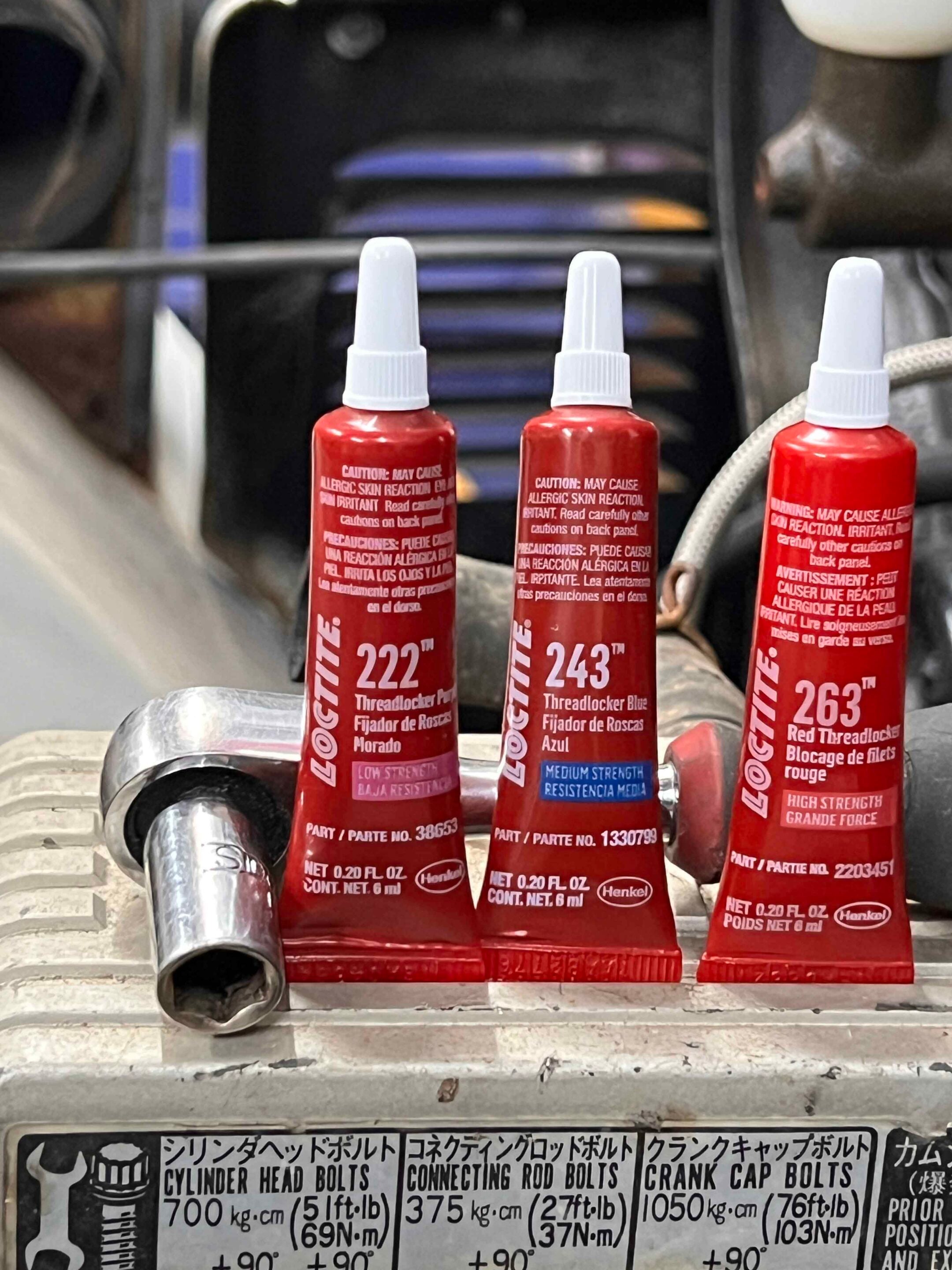
However, with a little prep work and a tube of Loctite (↗), you can pretty much negate the effects of corrugations completely. We’re not suggesting you can attack them at warp speed at road pressures, but it sure is nice knowing your awning is going to arrive with you to your next campsite.
Areas prone to vibration damage
A nut and bolt work together as a fastener system, using a clamping force to hold parts in place.
When corrugation-induced vibrations are introduced, that mechanical bond can slowly work its way loose and before you know it you take a corner at speed and watch as your roof rack boomerangs into a boab tree. So checking your rig ahead of a trip is a no-brainer. Here are a few common areas where nuts and bolts are notorious for wiggling loose.
- Roof racks: Vibrations are introduced to the chassis through the tyres and suspension, working their way up through the body and eventually the kinetic energy is dissipated out via the roof. But not before the bolts holding your rack in place have been well and truly rattled.
- Bull bars: Front bars are some of the most common things to work their way loose, especially if they’ve been used during an animal strike or even tweaked on an off-road obstacle.
- Awnings: Same as racks, awnings are mounted up high and are prone to vibration-induced bolt-loosening. Hardly the thing you want to find out at speed or when a strong gust of wind rips through your campsite.
- Battery trays: Having a place to mount your auxiliary battery is great. Until you realise it’s come loose and has been allowing your battery to bounce around and created the perfect set of circumstances for a vehicle fire. No thanks.
- Canopies: Ute canopies are one of the last things we check before leaving. Once they’re on they’re on, right? You would be amazed how many people arrive at camp after a long drive, take a lean up against their ute and are quite surprised when the canopy leans with them.
- Drawers: Drawers commonly contain a lot of weight, which can introduce a bunch of extra inertia on the retaining bolts during vibrations. Ignore them at your peril. Well, maybe not “peril” exactly, but it’s still not fun trying to re-line up an overloaded set of drawers with their mounts. Don’t ask how we know.
- Leaf springs: The nuts that secure the u-bolts which attach the springs to the diff hosing are one of the more common fault locations, especially if you’ve had some fresh suspension installed before your trip. Checking them regularly on any trip is cheap insurance.
What Loctite does
Thread-locking compounds such as Loctite (↗) are anaerobic adhesives.
This means that when their liquid form is added to the tiny gaps between threads, the lack of air activates the compound, and it turns into a solid plastic. This not only locks the nut and bolt in place but also prevents it from rattling loose under even extreme vibrations.
Locking the threads isn’t the only benefit. The compound also fills the tiny gaps between the threads, helping seal them from water, mud and other contaminants that can lead to corrosion. That’s particularly useful on a 4WD, where fasteners regularly cop a dose of moisture, dirt and everything else the bush can throw at them.
By helping keep corrosion out of the threaded connection, Loctite can also make future disassembly easier when something needs to be serviced or removed. That’s a handy bonus for anyone who does their own maintenance
When applied to nuts or bolts in an area of high vibration, such as the ones above, Loctite maintains the desired clamp load by holding the applied torque value and prevents them from coming loose, avoiding damage to either the accessory, the vehicle or both.
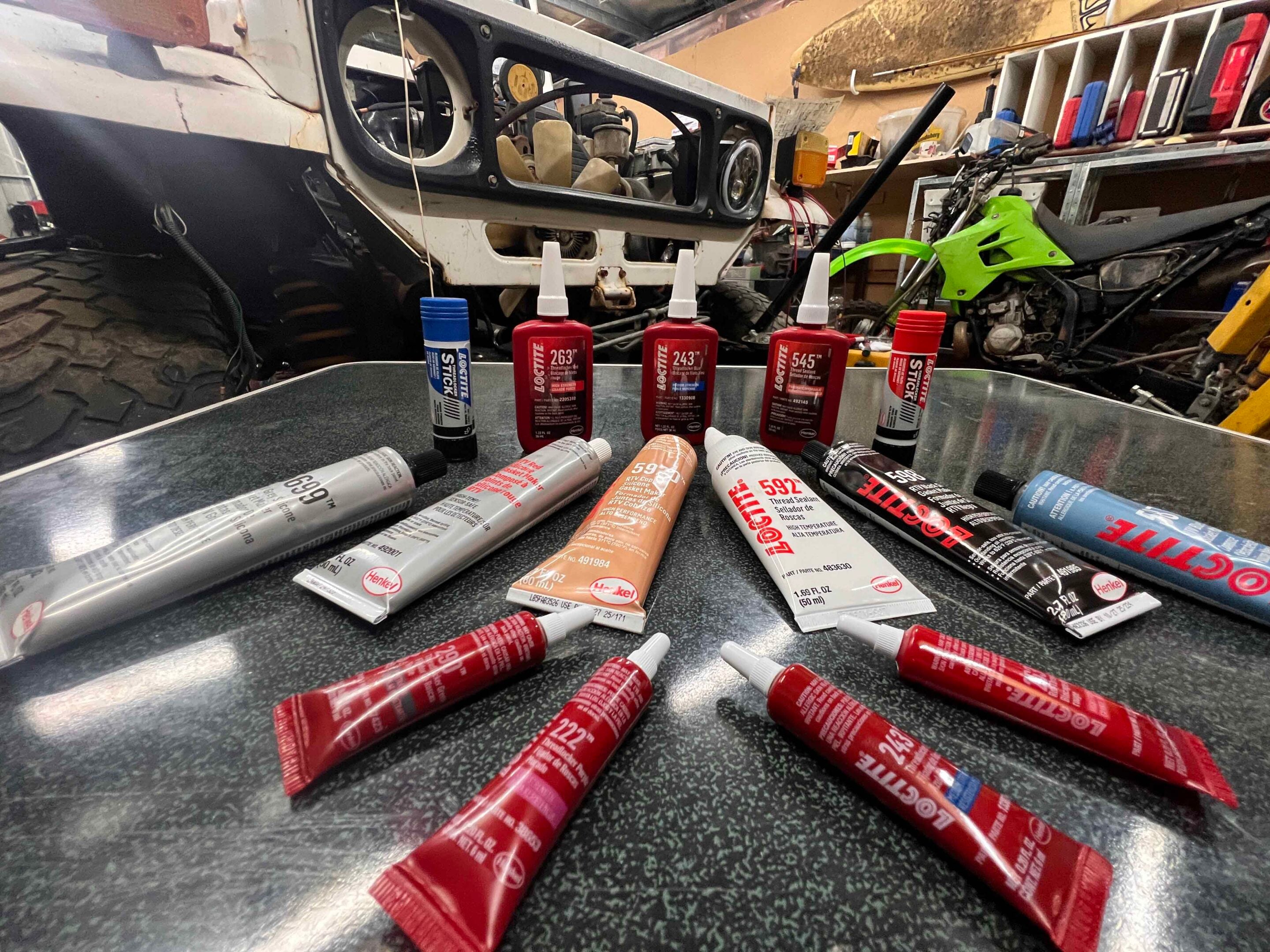
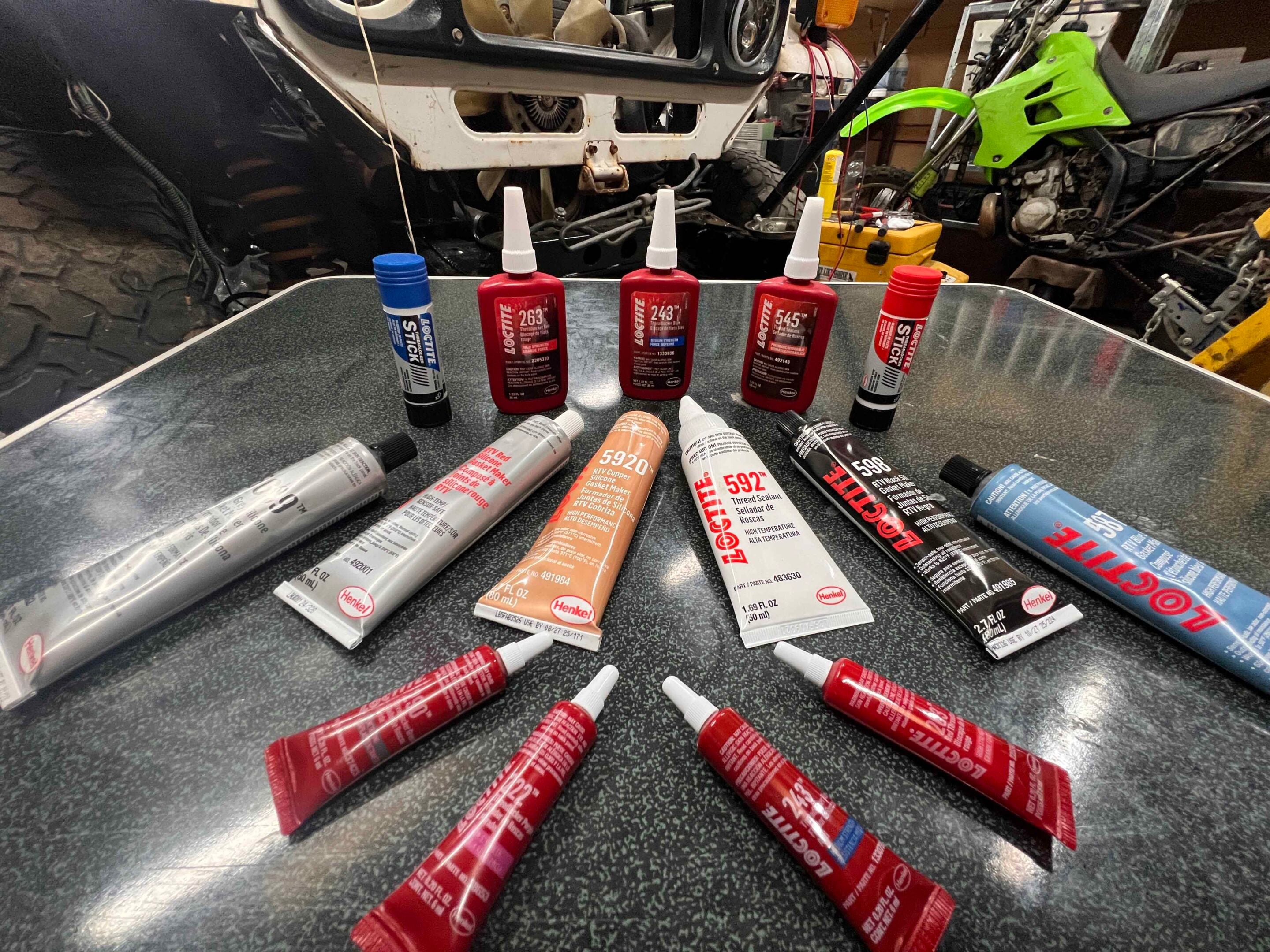
If the bond needs to be undone down the track for any reason, a lot will depend on the locking compound you have used. Blue Loctite, which is the most widely used and go-to for most 4×4-based applications, will simply turn to dust when a large amount of torque is applied, such as by a ratchet or rattle gun. If red Loctite was used, some heat may be needed to slightly soften the compound so the nut can be undone. The red heavy-duty locking compound is more for nuts and bolts that are never to be expected to be loosened again, such as on bull bars, battery trays or suspension components.
What else does Loctite do?
Fun fact: Loctite is not just about thread locking.
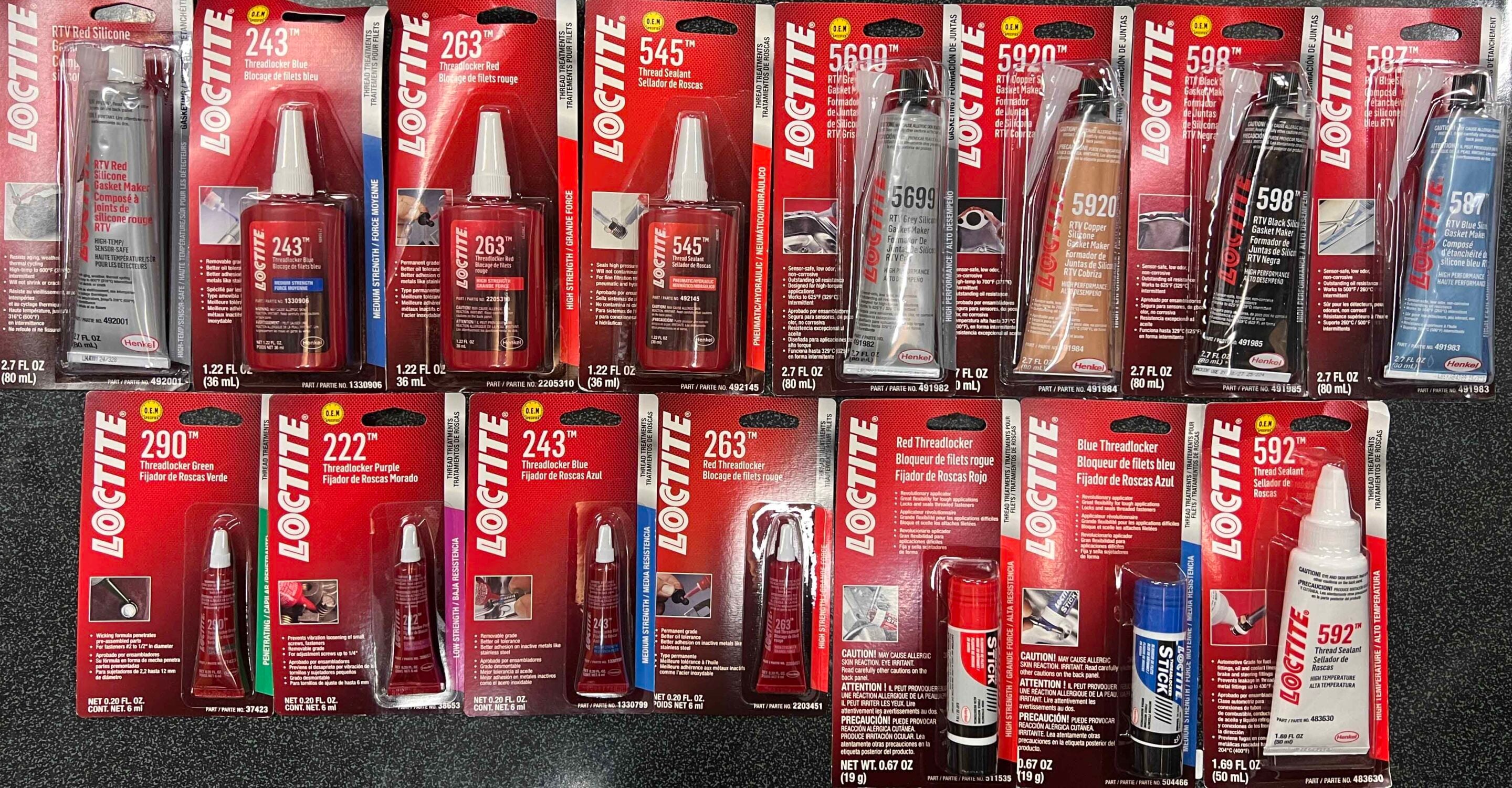
They also do a range of RTV silicones and gasket makers, which as you’d expect, are of the highest quality. Such products are fantastic to have on hand during servicing and maintenance of your rig and have about a billion uses when fixing or installing things.
They can be used as insulation, adhesive, sealant and, as the name spells out, for gaskets when you can’t get a genuine replacement because this job you started six hours ago was only meant to take 20 minutes and now all the shops are closed.
Practical examples
Sooner or later, when you head bush you’re going to experience a breakdown or mechanical failure. It’s the price of entry. However, we’ve been on countless trips where it’s been painfully obvious that a bit of prior prep could have minimised the risk, and eventual outcome.
The first that springs to mind is a rooftop tent that came loose on a run down the back of Robe in SA. The owner had taken the tent off his rack between trips and quickly bolted it back on the night before leaving. Luckily he noticed it bouncing around in the breeze and pulled up before too much damage could happen. A couple drops of blue Loctite on the mounting bolt threads and a couple of nuts borrowed from an inner guard mount and the crisis was averted. He reported a few months later that the tent was still snugly mounted without a drama.
The second is a steering arm coming loose from an old LandCruiser. This actually isn’t that uncommon; they’re known for shaking themselves apart. Luckily the nuts and cone washers were found not too far from where the steering stopped playing the game. A little red Loctite later and they were torqued to spec. The owner reported they were still holding tight after a few hard wheeling trips. Unfortunately, the other side also let go the following trip. They received the same treatment and six months later they’re both still sitting pretty.
Just goes to show, with the right pre-emptive maintenance and having the correct tools on hand you can avoid a lot or fix what you can’t.
Chery Stockman reservations are now open in Australia ahead of the ute’s official sales launch, with customer deliveries commencing from February 1, 2027.
And Chery has sprinkled a little extra into the deal to entice early adopters, with customers who make an online reservation from October 1, 2026, until official sales commence set to receive a $2000 Bunnings gift card and three years (or 45,000km) of complimentary scheduled servicing.
“Opening reservations for the Stockman marks an important milestone for Chery in Australia,” said Lucas Harris, Chief Operating Officer, Chery Australia. “We’ve had a phenomenal response to the Stockman since the first announcement, and the reservation program gives customers the opportunity to secure their place ahead of the official sales launch, while also receiving a valuable pre-launch offer.”
As we previously reported, the Stockman is set to launch with a 2.5-litre turbo-diesel plug-in hybrid powertrain producing a claimed 350kW and 800Nm. It will offer up to 100km of electric-only range on the NEDC test cycle, with claimed fuel consumption of 2.0L/100km and a 3500kg braked towing capacity.
The Stockman will get four-wheel drive, all-terrain tyres, triple differential locks, crawl control and tight-turn assist, along with 247mm of ground clearance. It measures 5450mm long, 2010mm wide and 1890mm tall, with a 3250mm wheelbase and a 1560mm x 1560mm cargo tub.
Suspension comprises double wishbones up front and leaf springs at the rear, with Chery previously confirming that the suspension and driver assistance systems will be locally tuned for Australian models by Premcar.
Inside, the Stockman will feature leather upholstery, heated and ventilated front seats, wireless charging, dual-zone climate control and premium audio. A petrol-powered variant is also due to join the range later in 2027.
“The Stockman represents another significant step in the expansion of the Chery brand in Australia, and we look forward to sharing more details with customers as we move closer to its official launch,” Harris said.
Australian pricing, model grades and final specifications are yet to be confirmed, with more details due closer to the ute’s arrival in Australian showrooms.
Frequently asked questions
When will the Chery Stockman arrive in Australia?
Customer deliveries are scheduled to commence from 1 February 2027.
What engine does the Chery Stockman have?
The Stockman will launch with a 2.5-litre turbo-diesel plug-in hybrid powertrain producing a claimed 350kW and 800Nm.
How much can the Chery Stockman tow?
The Stockman has a claimed 3500kg braked towing capacity and 750kg unbraked towing capacity.
What off-road equipment does the Stockman have?
It will feature four-wheel drive, all-terrain tyres, triple differential locks, crawl control, tight-turn assist and 247mm of ground clearance.
How much will the Chery Stockman cost?
Australian pricing has not yet been confirmed, with Chery set to announce pricing, model grades and final specifications closer to its local arrival.