News

Gallery 1
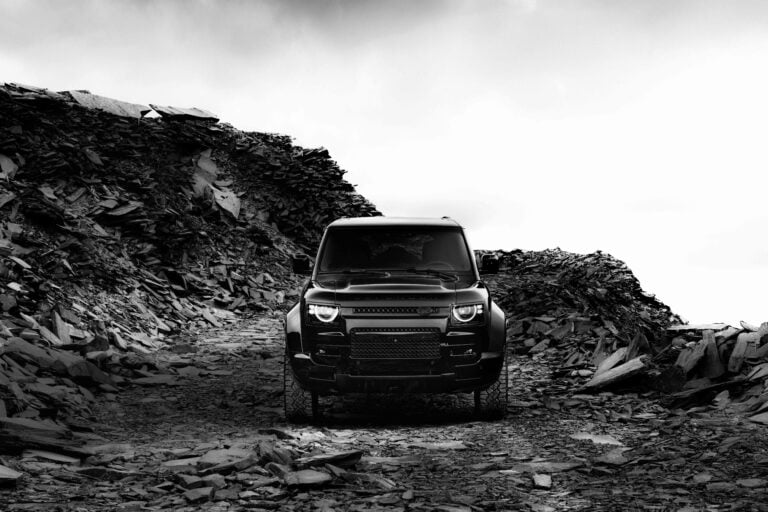
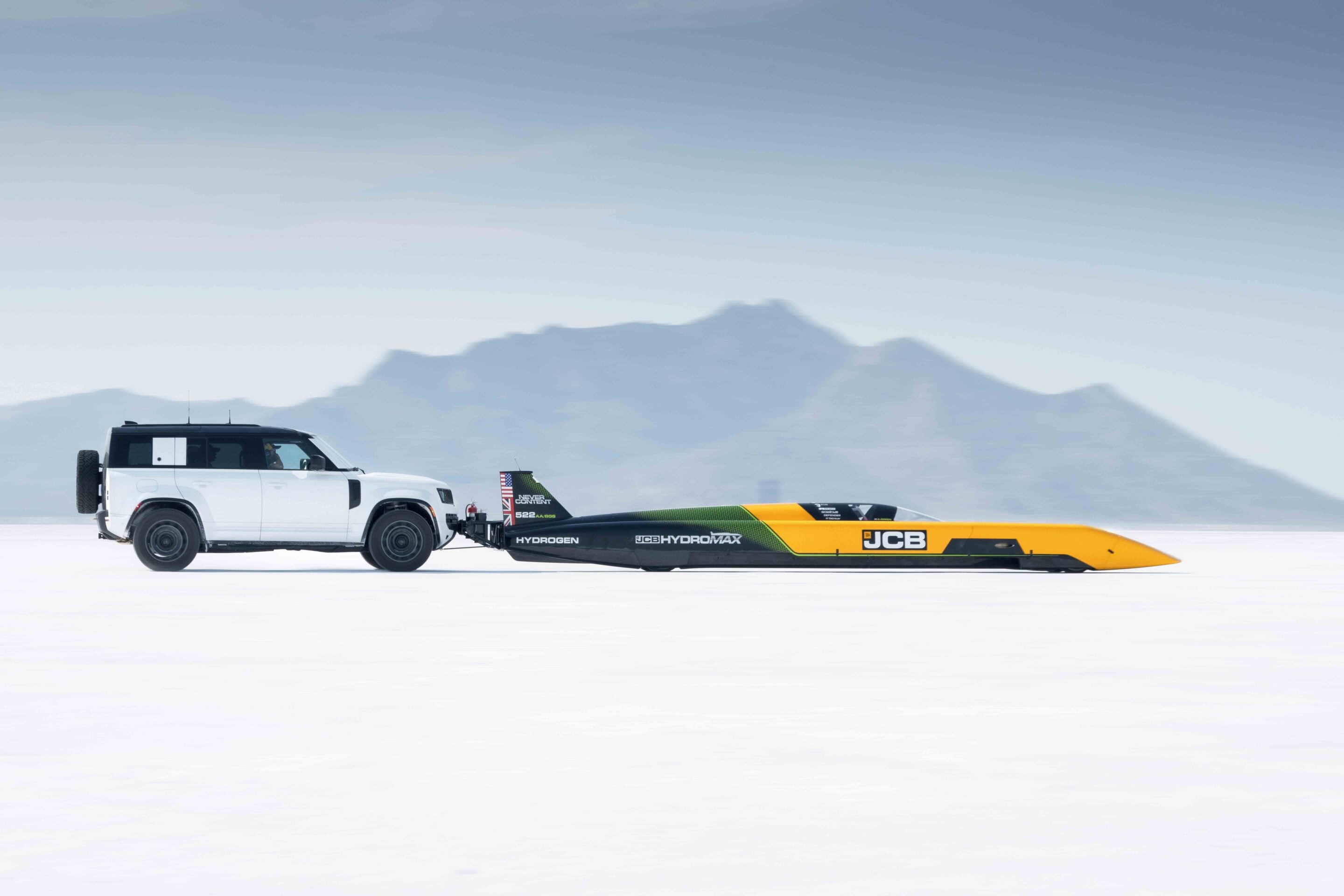
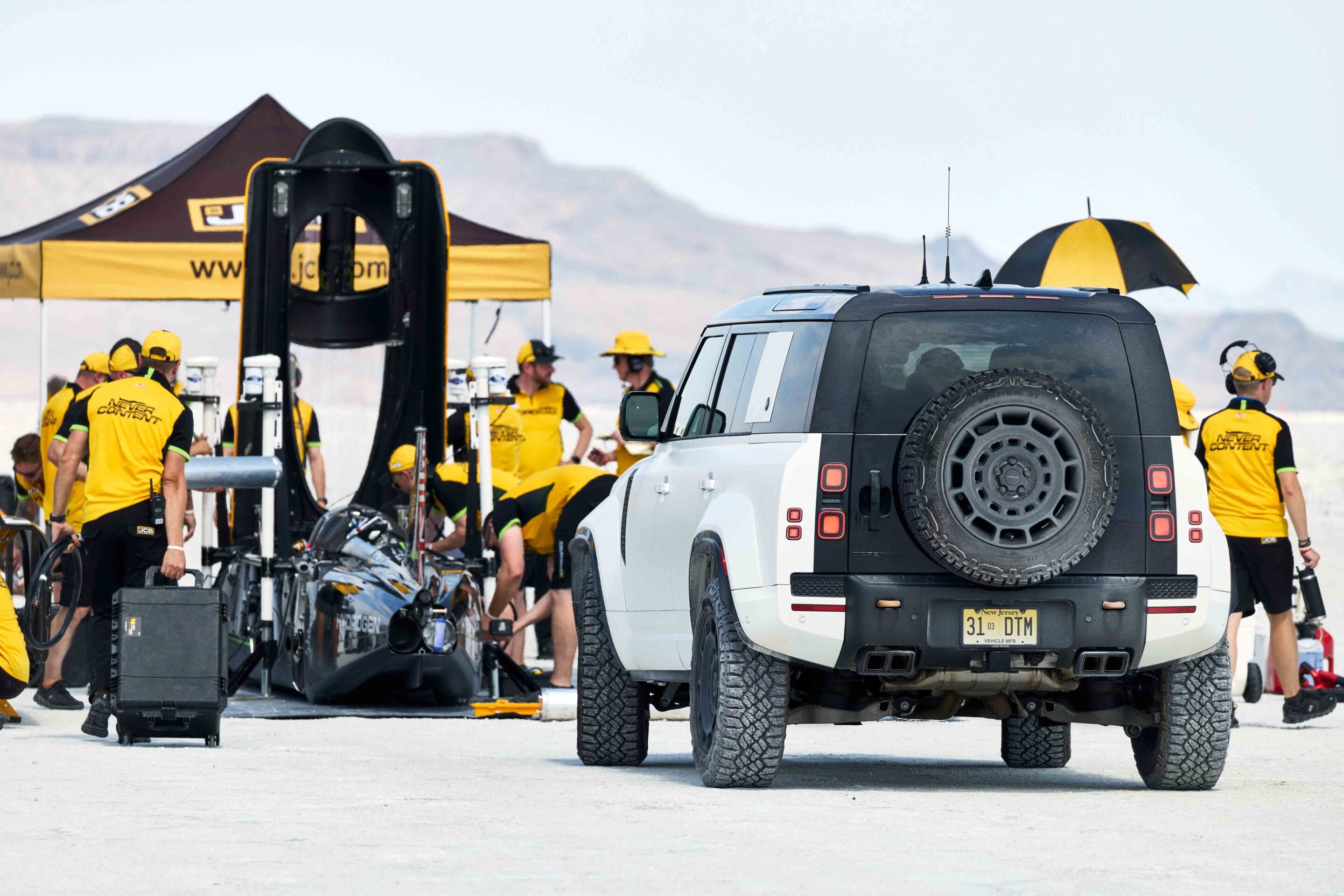
A 467kW (635PS) Defender OCTA has played a vital role in helping JCB set a new land speed record with its hydrogen-powered Hydromax at Utah’s Bonneville Salt Flats.
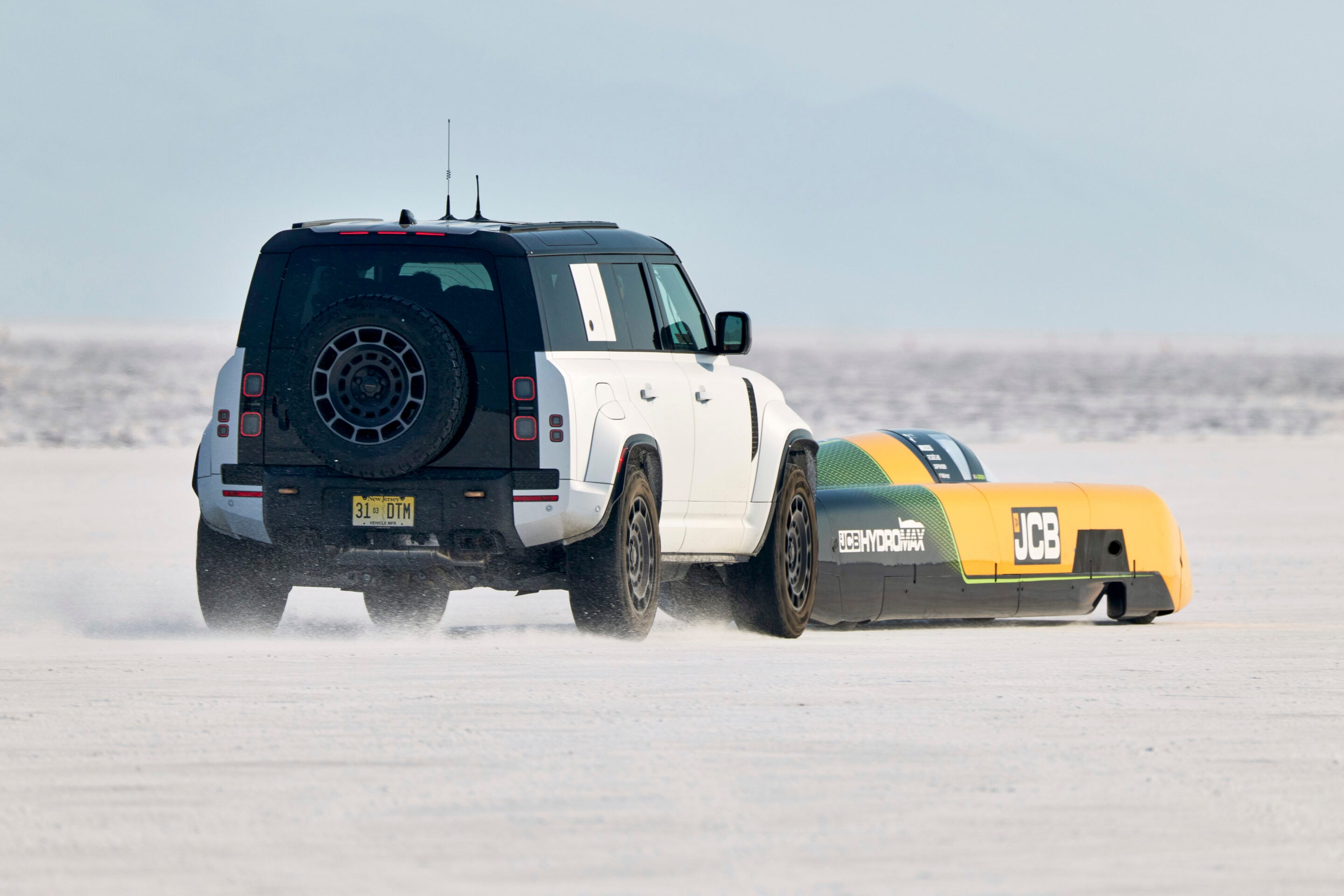
A bespoke push plate fitted to the front of the Defender allowed it to move the 2550kg JCB Hydromax from a standstill at the start of each record run. The Hydromax’s gearing was designed for high-speed record setting, with event regulations allowing it to receive a push start for a maximum distance of 300m before accelerating under its own power.
The OCTA’s integrated, crash-tested winch mount provided the basis for the push plate, while additional fixing points were added, including a brace bar connected to the Defender’s front recovery point. The winch mount’s deformable crumple zone was also disabled for the application. The completed setup was tested at speeds well above those required by the JCB team to ensure it could handle the job.
1
“Defender OCTA was the natural choice as a push vehicle. In traditional circuit racing, you’re racing against time but when setting land speed records we’re racing against distance – and the quicker we can get up to speed, the safer it is and the better performance we can have. It has also been a fantastic opportunity to combine the talents of two British engineering giants.
“We’re operating on a surface that is incredibly loose, in an environment where the effective altitude rises as the temperature increases through the day, which can be a challenge for naturally aspirated engines. That makes the combination of Defender OCTA’s all-wheel drive capability and twin-turbo V8 performance perfect for the task,” said Lee Harper, Chief Engineer, JCB Hydromax.
The Defender had to push the Hydromax from a standstill to 60mph (97km/h) within 300m, at an effective altitude density equivalent to up to 2244m above sea level. The OCTA’s twin-turbo V8 and 48V mild-hybrid system provided the throttle response and sprint performance needed for the job.
1
The OCTA’s 6D Dynamics suspension was also important. Its hydraulically interlinked, continuously variable semi-active dampers help control body roll and pitch under hard acceleration, helping maintain the push plate angle as the Defender accelerated with the Hydromax behind it.
Ian Johnson, Engineering Delivery Director, JLR said: “Maintaining a level attitude while accelerating hard was important to avoid unsettling the JCB Hydromax. With so much additional weight attached to the front, we wondered if we would need to ballast Defender OCTA to meet the challenge, but in testing its 6D Dynamics suspension kept everything level without adding any additional weight – while Defender OCTA’s performance meant we could easily reach the target speed well within the 300m distance allowed by the regulations.”
The OCTA’s all-terrain capability came into play again after each run. Once the Hydromax had completed its run, the Defender could head across the salt flats to reach it for the return run, with the two vehicles sometimes ending up miles from the original push position.
The JCB Hydromax ultimately reached 406.320mph (654km/h), setting a Southern California Timing Association Speed Record and an FIA world hydrogen land speed record. The vehicle was driven by world land speed record holder Andy Green OBE.
Follow 4X4 Australia on Google
Get more 4x4 news, reviews and gear stories from 4X4 Australia in your Google feeds.