Gear

Gallery 1
Modern touring setups rely heavily on 12V power. Fridges, camp lighting, device charging and camera gear all need electricity and nobody wants to flatten their starting battery in the middle of a remote trip.
That’s where solar panels and solar blankets for 4WDs come into play. Combined with a dual-battery system, solar allows your auxiliary battery to keep charging while you’re camped, meaning you can stay off-grid longer without running the engine.
Here’s how 4WD solar systems work, what gear you’ll need and how to set one up for touring 👇
Why solar is ideal for 4WD touring
Solar panels convert sunlight into usable power that feeds directly into your auxiliary battery.
For touring setups, the biggest advantage is simple: your battery keeps charging while you’re parked. That means you can run gear like:
- 12V fridges
- LED camp lighting
- phones and camera batteries
- GPS and communication gear
Without needing to idle the vehicle or drive every day just to keep your batteries alive. For longer remote trips, solar becomes one of the most useful upgrades you can add to a touring setup.
The basic gear you need for a 4WD solar setup
Most touring vehicles use a fairly simple system made up of four key components.
- Solar panel or solar blanket: Panels or solar blankets collect energy from the sun.
- Auxiliary battery: Usually part of a dual-battery system that powers accessories without draining the starter battery.
- Solar regulator: Controls the flow of energy into the battery to prevent overcharging. MPPT regulators are the most efficient option.
- Cables and connectors: Many touring setups use Anderson plugs, which make connecting solar panels quick and reliable.
Many systems also include a battery monitor, which helps track power usage and remaining battery capacity.
Solar blankets vs Solar panels
When choosing solar for a 4WD, most travellers choose between solar panels or solar blankets.
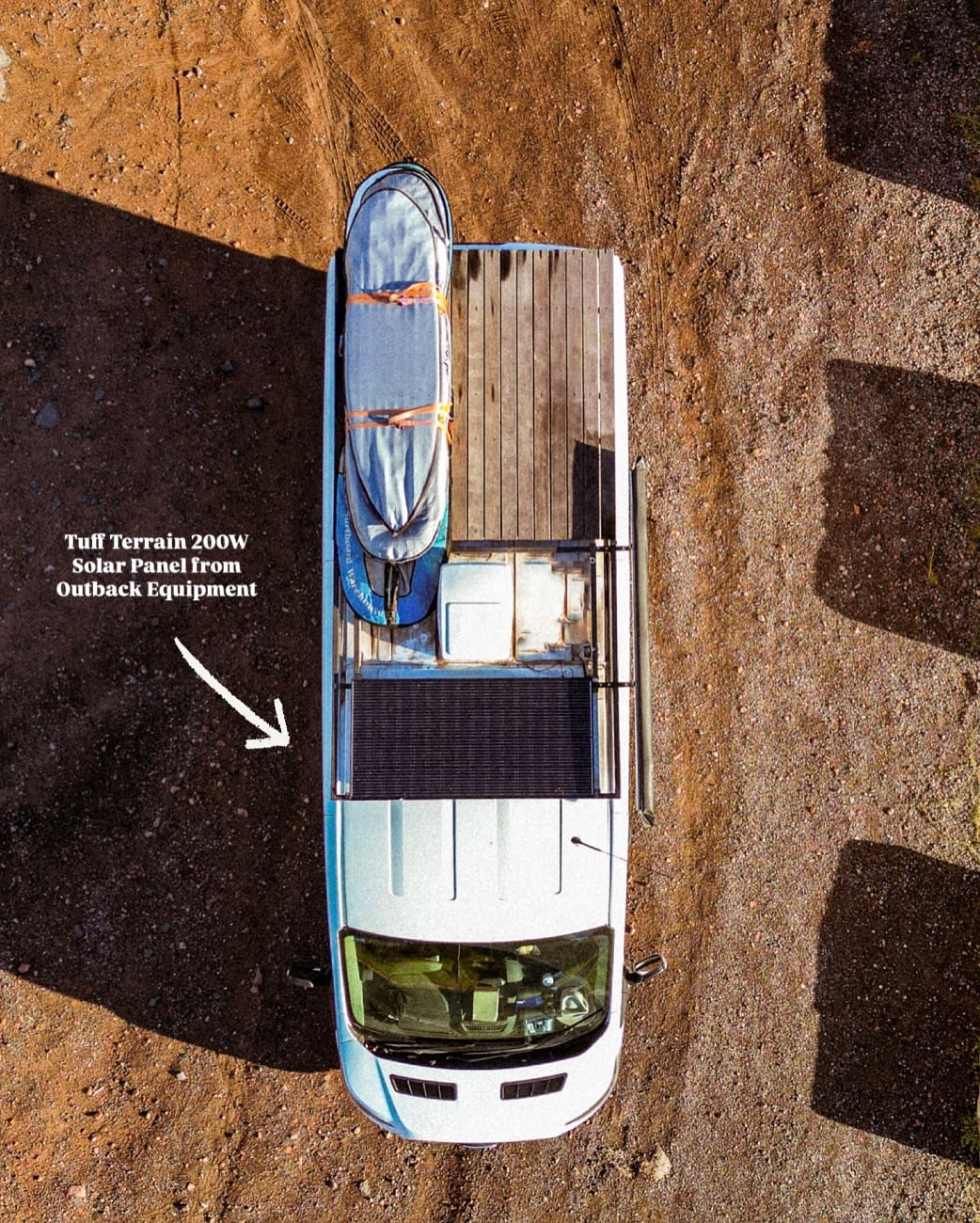
Panels are popular because they’re durable and efficient. Solar blankets use flexible solar cells that fit into a compact bag, and they’re particularly popular with touring setups where storage space is limited. Outback Equipment has a large range of solar blankets and panels, including Tuff Terrain, Hardkorr, Voltech, Sphere and Companion. Browse range HERE.
Solar panel pros
- Strong aluminium frame
- High efficiency
- Easy to angle toward the sun
Solar panel cons
- Bulkier to store
- Slightly heavier
Solar blanket pros
- Lightweight and compact
- Easy to pack in drawers or behind seats
- Large surface area
Solar blanket cons
- Less durable than rigid panels
- Must be laid flat on the ground
How much solar do you need for a 4WD setup?
Your solar setup should be matched to how much power your gear uses each day. Typical touring gear consumption looks something like this:
| Appliance | Approx. usage |
|---|---|
| 12V fridge | 1-3 amps/hour |
| LED camp lights | 0.5 amps |
| Phone charging | 1 amp |
| Laptop or camera charging | 3-5 amps |
A typical touring setup will use 40-70Ah per day. A 200W solar panel or solar blanket can usually produce around 50-70Ah per day in good sunlight, which is enough to keep most setups running. Travellers running larger fridges, inverters or extra accessories may choose 300W or more of solar capacity.
How to set up solar at camp
Solar systems are quick to deploy once you arrive at camp. A typical setup looks like this:
- Park the vehicle in shade if possible.
- Place the solar panel or solar blanket in direct sunlight.
- Connect the panel to your battery system using the Anderson plug.
- Adjust the angle of the panel during the day if needed.
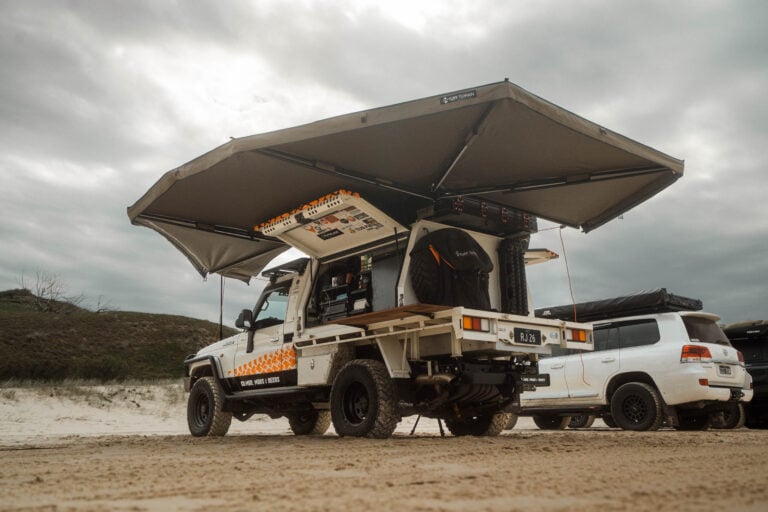
Because the solar panel sits away from the vehicle, you can keep your 4WD parked in shade while the panel stays in full sun.
1
Why a good solar regulator matters
The solar regulator is responsible for managing the power coming from your panels.
Most modern touring setups use MPPT regulators, which are significantly more efficient than older PWM designs. They allow solar panels to produce better charging performance — particularly during cloudy conditions or early morning and late afternoon sunlight. Many solar kits come with a regulator pre-installed, making them easier to connect straight to your battery system.
A simple upgrade that extends your time off-grid
For touring vehicles running fridges, lighting and electronics, solar quickly becomes one of the most useful upgrades you can add.
Solar panels and solar blankets allow your 4WD to generate power anywhere you camp, helping keep batteries topped up without relying on the vehicle’s alternator. With the right setup, your solar system quietly charges your battery throughout the day — letting you stay off-grid longer while keeping all the essentials powered.
Follow 4X4 Australia on Google
Get more 4x4 news, reviews and gear stories from 4X4 Australia in your Google feeds.