While the Ford Ranger and Toyota Hilux continue to be the stars of the 4×4 ute class, there are plenty of other brands in the mix, all of them wanting bit of that action that is so hot right now.
This opens up a diverse range of products at varying price points for buyers to choose from and frankly, the buyer has plenty to look at. There should be a 4×4 ute on the market today to suit every buyers’ application and budget.
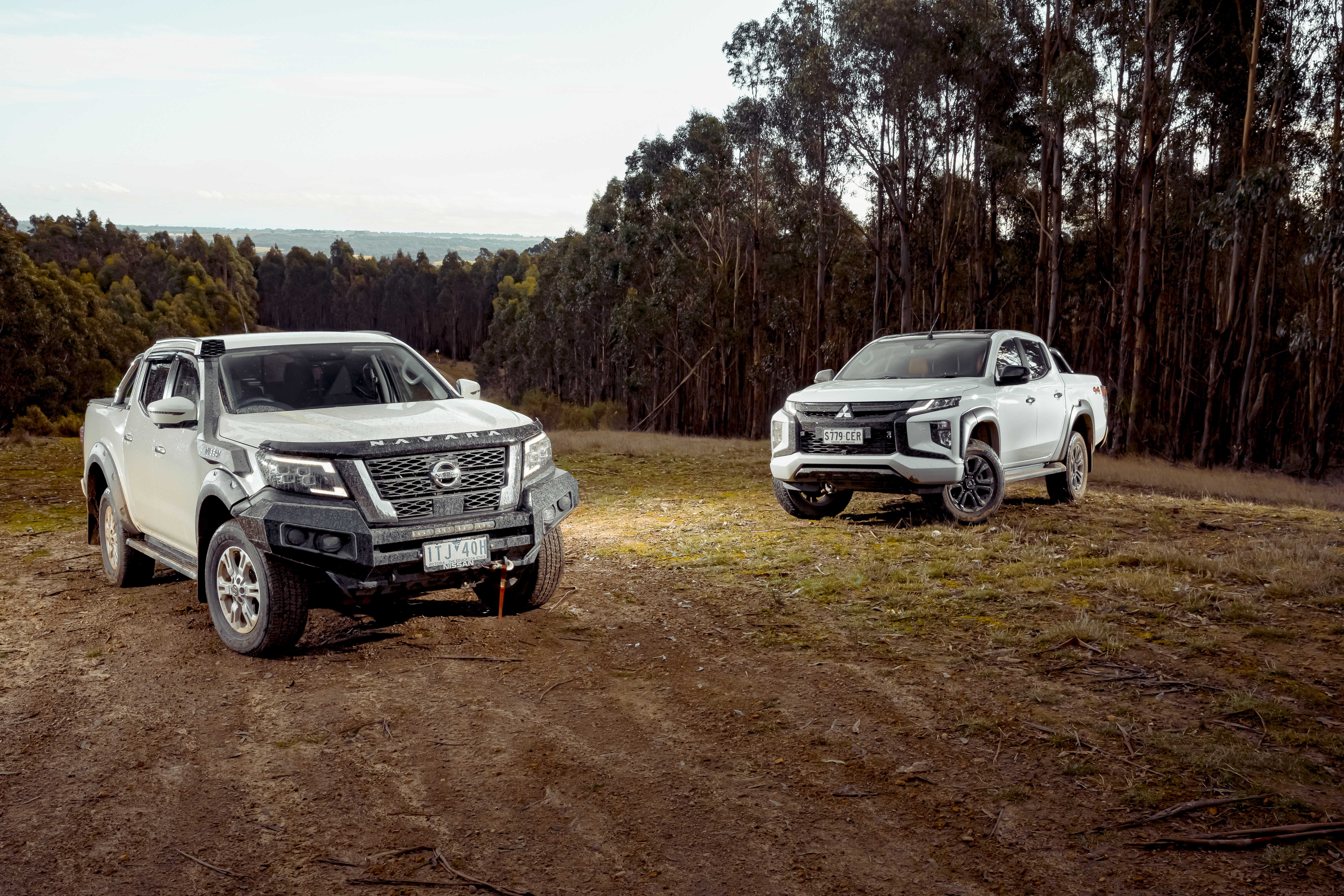
Two of the long-time players in the category are the Mitsubishi Triton and Nissan Navara, and with the Navara receiving a recent facelift and equipment upgrade and a Triton in the car park, we figured we should take them out for a look at which works the best.
NISSAN NAVARA ST
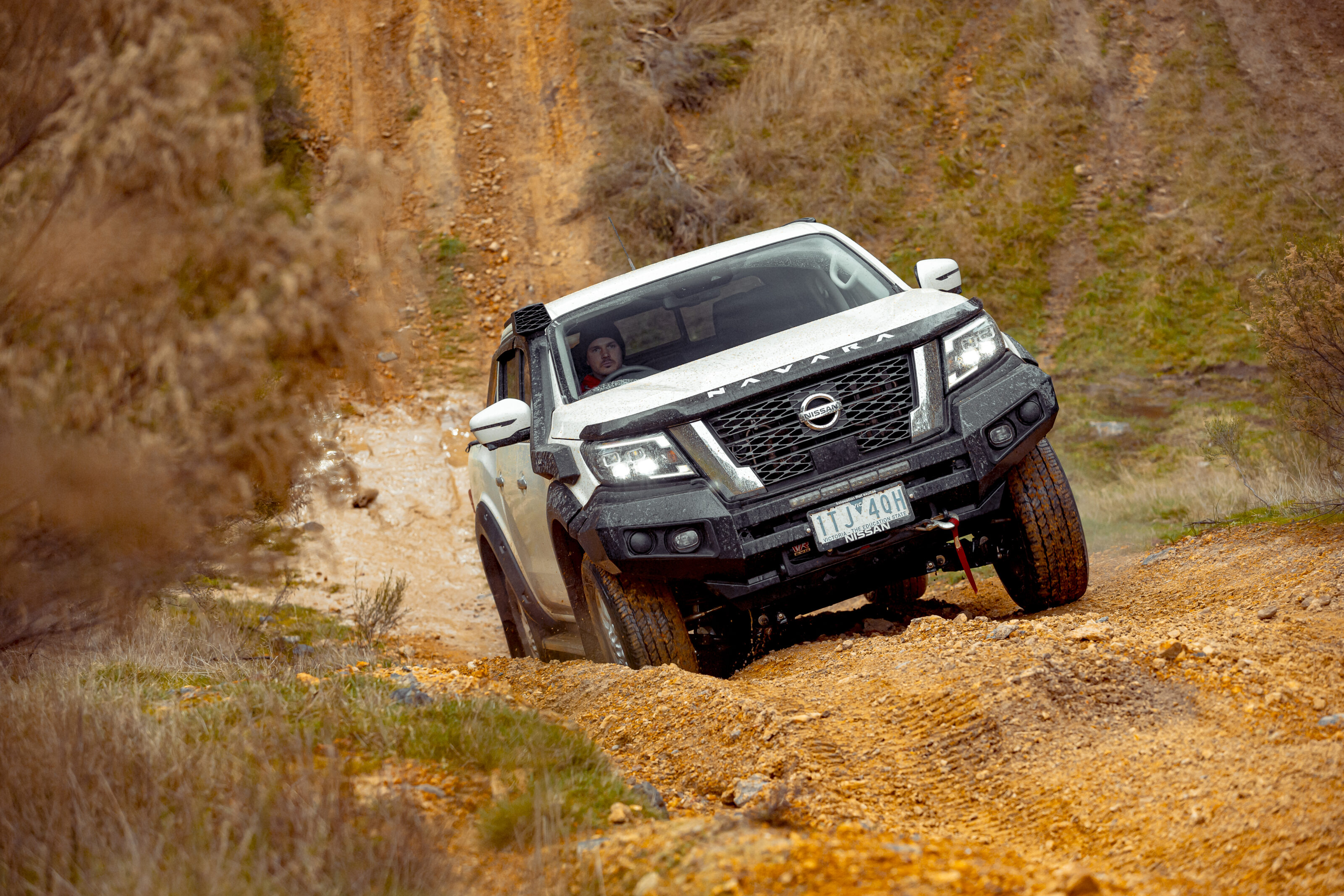
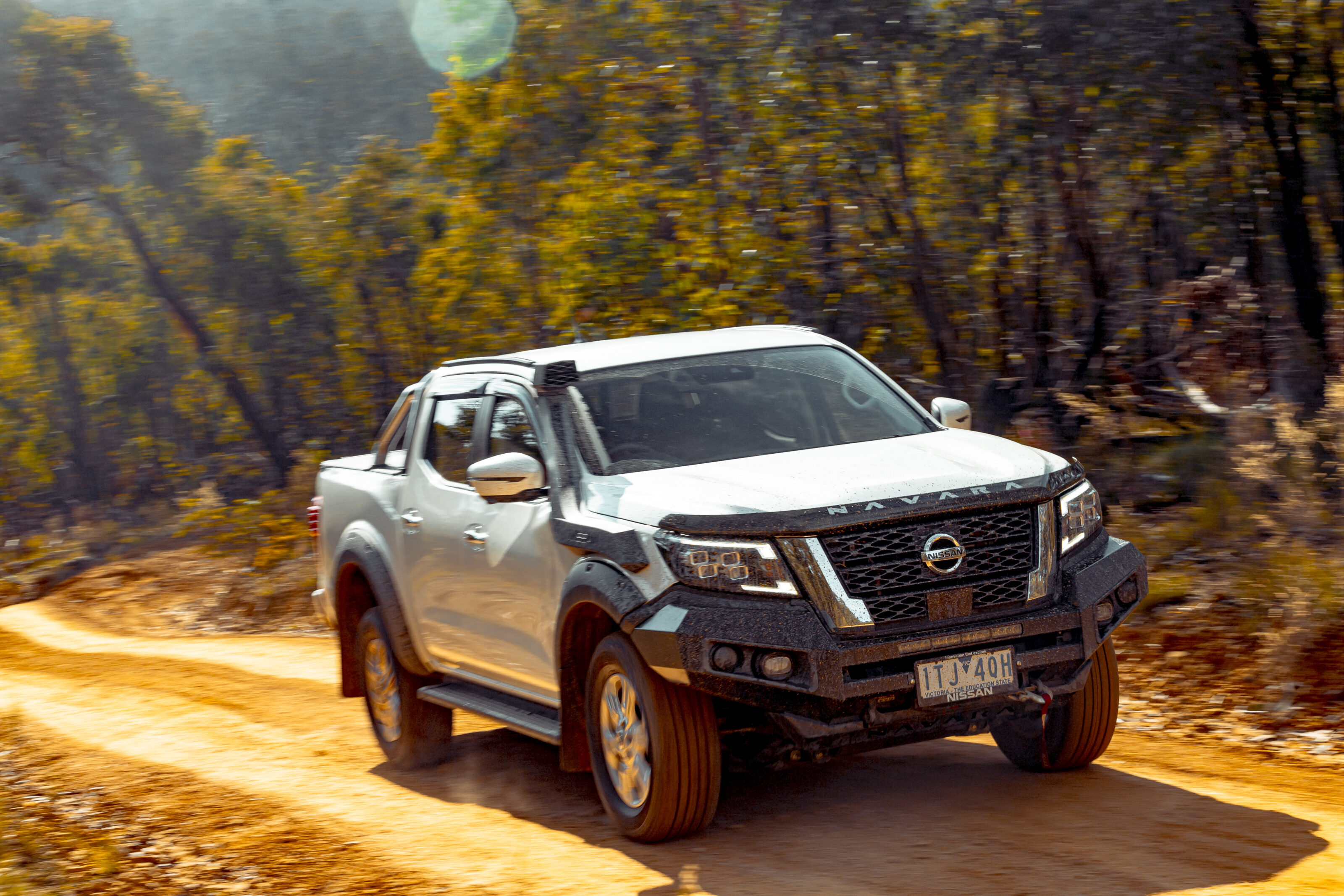
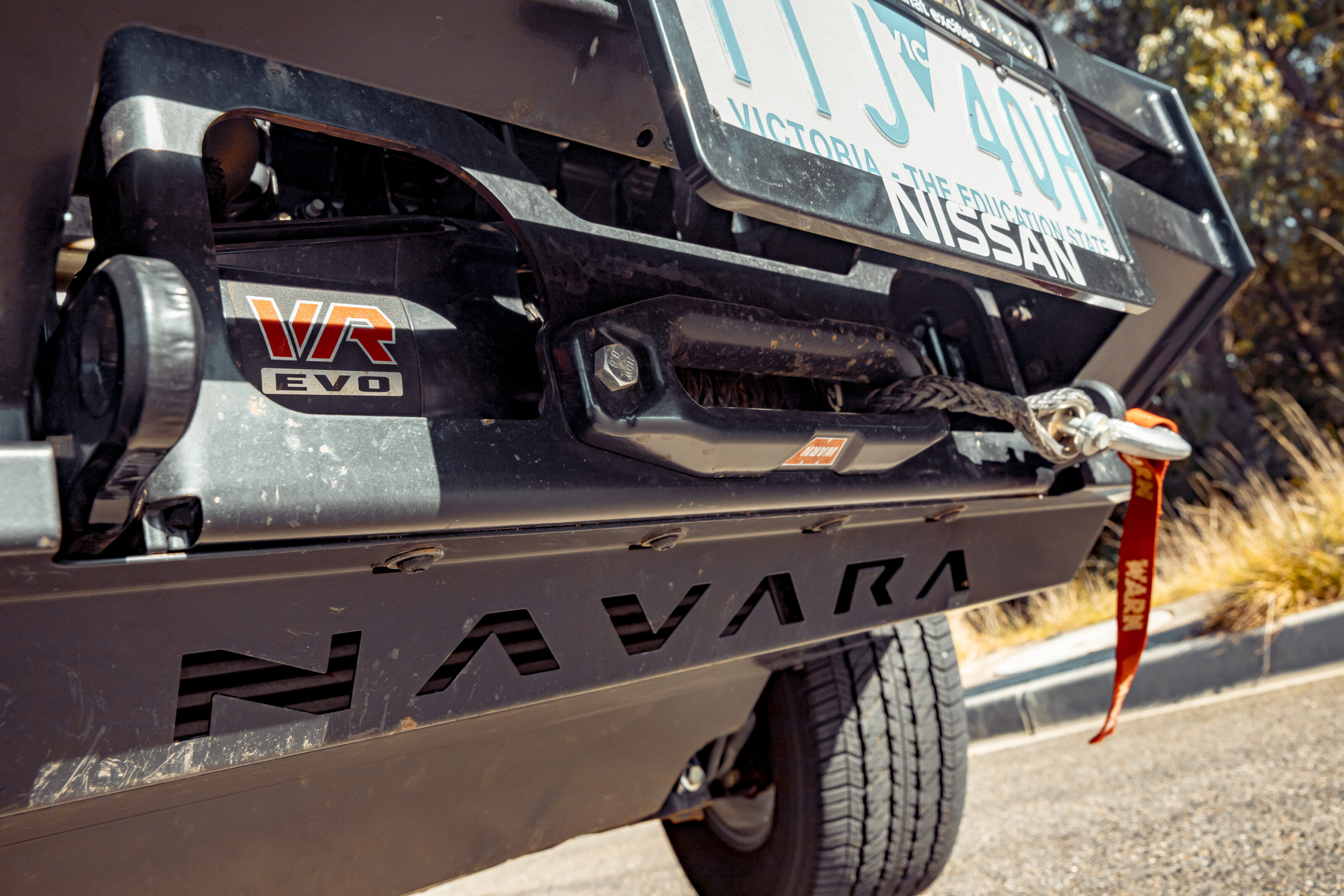
The Navara we have here is the ST variant; the second up the scale in a four-model double-cab line-up. It came to us loaded with optional accessories such as an air intake snorkel, loopless steel bumper, Warn VR winch and fender flares.
All these factory goodies add a hefty $11,573.14 to the ST’s $54,790 MSRP. Include another $650 for premium paint and you’re looking at $67,003.14 before on-road costs. Or, to put it another way, very nearly enough to buy Nissan’s new PRO-4X Warrior.
POWERTRAIN & PERFORMANCE
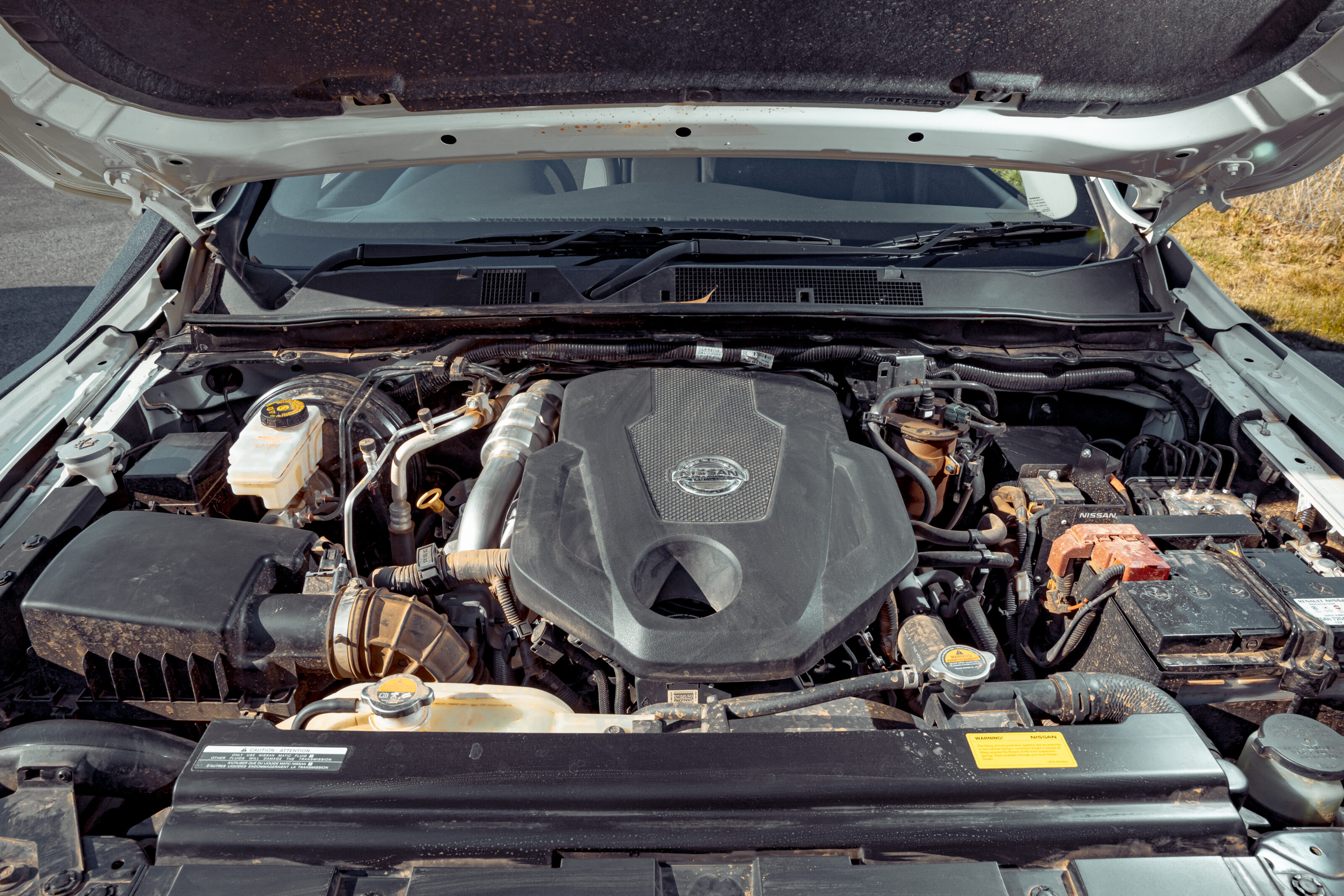
Nissan carried over its 2.3-litre, 4-cylinder diesel engine for the facelifted Navara and this ST spec 4×4 gets the bi-turbo set-up that makes 140kW of power and 450Nm of torque which are middle-of-the-road figures for cars in this class.
Despite the modest numbers, the 2.3 gets along sprightly with linear power delivery through the range of throttle applications, working well with the 7-speed auto to keep things moving along. The engine is smooth and responsive when asked for more and it does so with a minimum of engine noise.
A minor gripe with the auto transmission is one that applies to other Nissan 4x4s as well; the conservative calibration of the manual selection never lets the driver shift down a gear when he or she wants to. When driving off road in low range, you need to come to a complete standstill before the transmission allows you to select first gear before a descent when you expect to be able to make the selection at a crawling pace.
ON ROAD RIDE & HANDLING
It’s no secret that Nissan has had a few goes at fiddling with the Navara’s suspension set-up, but it remains softer than most of its rivals. This doesn’t do it many favours when towing or over large undulations where it can continually kiss the bump stops at speed, but it does make for a more comfortable ride.
Unlike the Triton, there isn’t the ability to run the Navara in all-wheel drive with a centre diff, but traction is impressive on slippery surfaces in rear-wheel drive. The steering is nicely weighted, lighter than the Mitsubishi’s, and the 2.3-litre engine is smoother and more refined, particularly as it approaches its 4500rpm redline, 500rpm more than the Triton.
It feels impressive, but figures from our recent dual-cab mega test reveal the Triton and Navara – albeit slightly different variants – are virtually identical in terms of acceleration (11.36 vs 11.32sec) and you notice that while the Nissan’s engine is smooth, it doesn’t really have a lot of grunt.
OFF ROAD
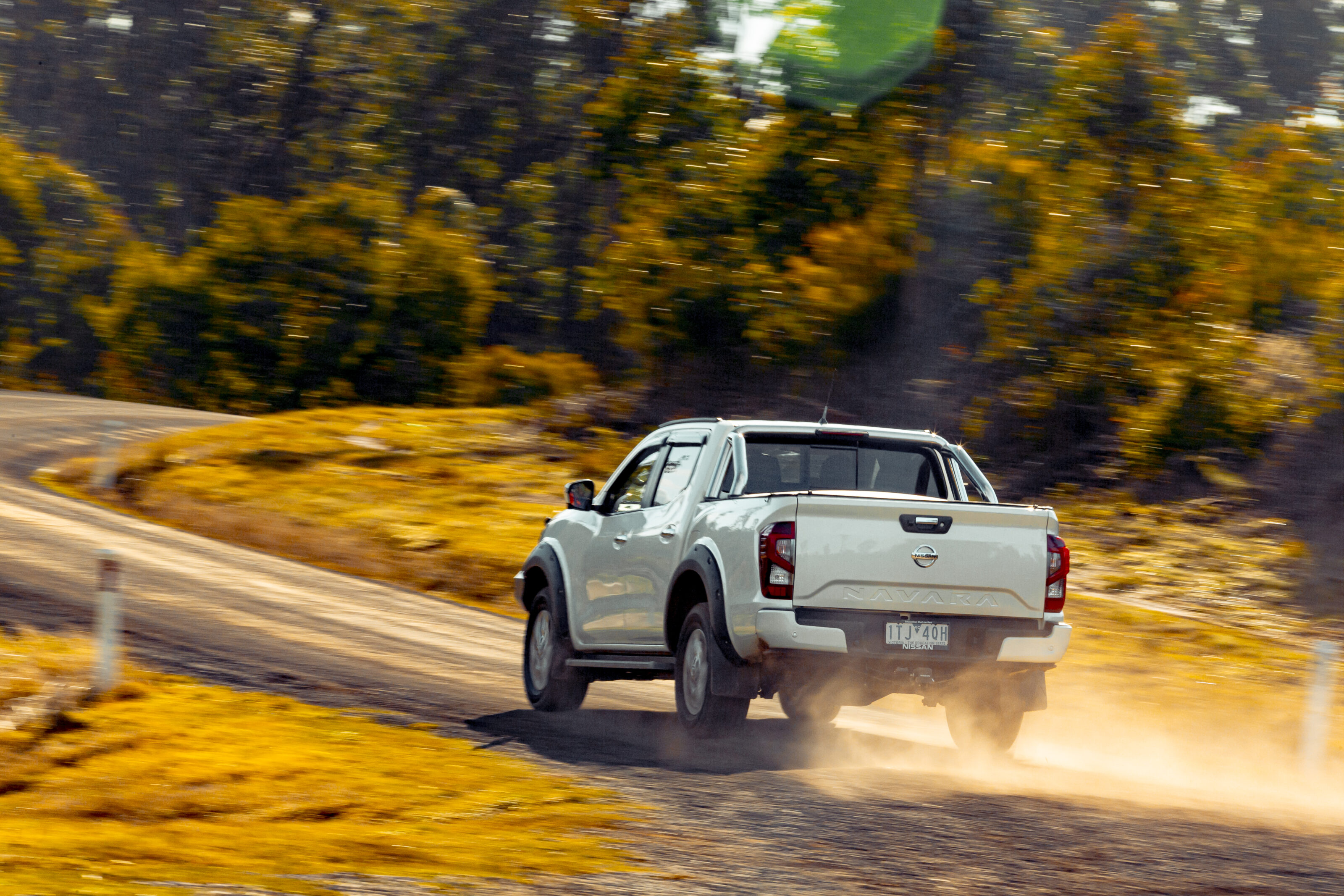
With its multi-link coil-spring rear suspension, the Navara offers a slightly more supple ride over rough ground than most 4×4 utes which are leaf sprung in the rear; the Triton included. That supple ride is appreciated in the cabin and with rear wheel travel, although that’s still not great by aftermarket standards.
Where the suspension falls short is when things get really bumpy as its soft ride doesn’t control the weight so well, and this is with no load in the car. The Navara’s front bump stops are never going to fail from lack of use if you regularly drive one of these off road as they get a good workout. This vehicle also has Nissan’s HD front springs fitted to account for the weight of the winch and bumper, but they still struggled. Further uprated springs and shocks would be recommended for any Navara set to carry a load or fitted with heavy accessories.
In the slower, low-range terrain, the supple suspension helped with wheel articulation keeping the rubber on the track and the electronic traction control acts swiftly to keep you going. There’s a rear differential lock for when the going gets tougher and you need maximum traction from the back axle.
The steel front bumper improves ground clearance there, but the lightweight side-steps aren’t up to a beating and one came adrift after scraping as we crested a hump. With Nissan designing all its bar work and kit locally, hopefully it will see fit to create some proper sliders to protect the flanks of the Nav. Even the Warrior retains the standard steps, but at least they will be more protected thanks to the added ride height.
Among its factory accessories this Navara wears an intake snorkel which should deliver cleaner air to the engine and give a bit of added security when crossing waterways. It doesn’t however change the factory 600mm wading depth. The Warn VR winch is also a great inclusion for self-recovery security when out and about.
The steering does feel a bit dull when on road and no better off road but the relatively tight turning circle of the Navara works well on tight tracks, something that can’t be said for all the cars in this class.
CABIN & ACCOMMODATION
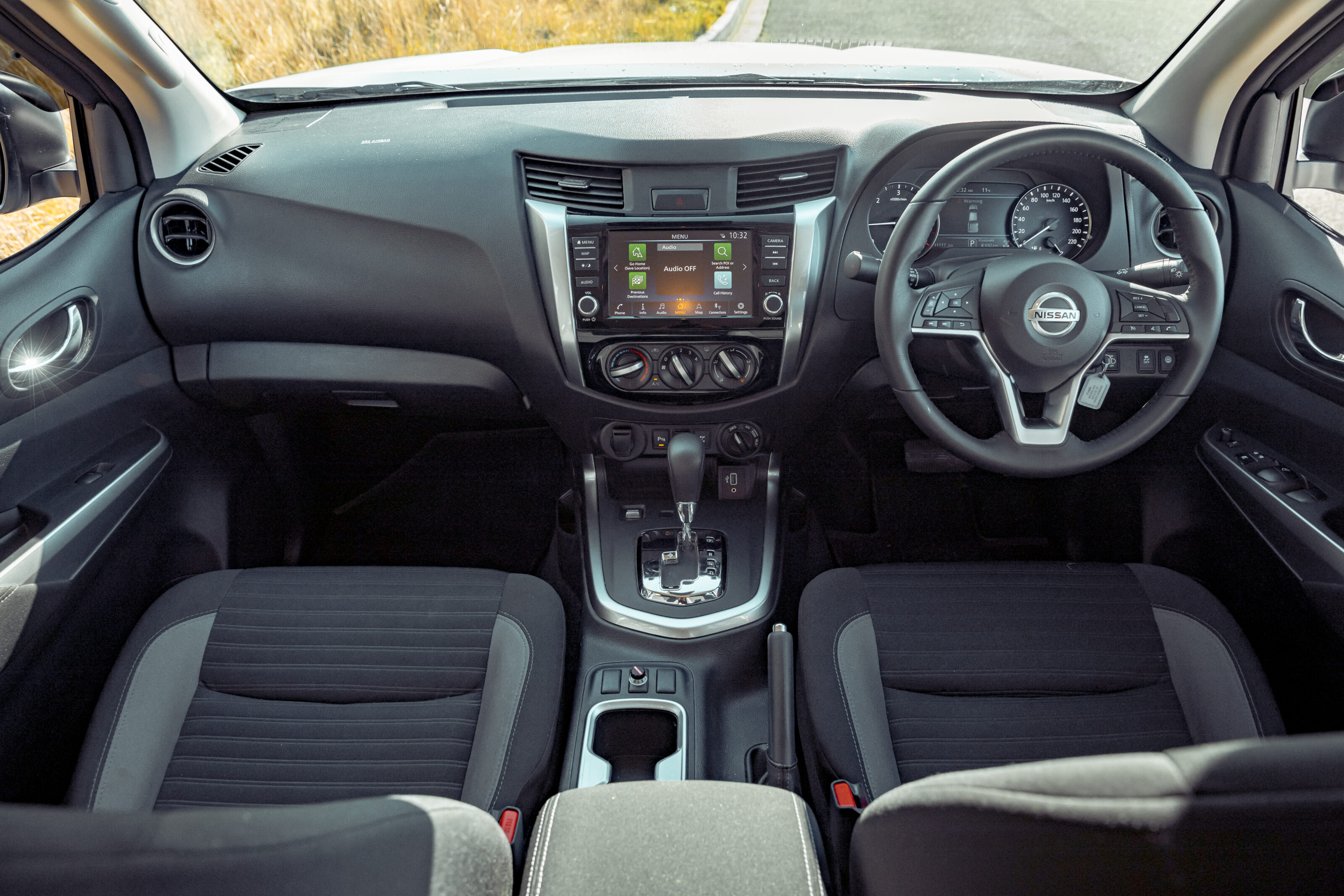
One aspect of the Nissan’s interior that immediately jumps out is its steering wheel. It might sound strange, but the Navara’s small, simple wheel could be from the 370Z sports car or similar. While it lacks the paddle shifters of the Mitsubishi, it makes a surprisingly large difference to how the Navara feels.
I personally prefer the design and layout of the Navara’s cabin, with its larger 8.0-inch touchscreen flanked by physical buttons, simple rotary dials, circular side air vents and the way the dash moulds into the doors – your taste may differ.
There’s no arguing it’s not as well-equipped, with cloth-trimmed, manually-adjustable seats, manual air-conditioning and no keyless entry, though there’s still smartphone mirroring, native sat-nav, DAB radio and plenty of charging options, including two 12V outlets, three USB-A and one USB-C ports.
Matching the Triton’s spec list is certainly doable, but you’ll need to step up to the ST-X variant. Rear space is tight, which could be an issue for larger adults or car seats, though both have a pair of ISOFIX child seat anchorage and top tethers.
SAFETY
The Navara’s safety gear is up to date, with forward collision braking, lane departure warning and intervention, blind-spot warning and intervention, rear cross-traffic alert, around-view monitor, auto wipers and lights, and trailer sway control.
A total of seven airbags includes front, side seat, curtain and driver’s knee, while there’s a rear-view camera and parking sensors, but no front sensors.
Like the Triton, the Navara’s safety aids are generally unobtrusive in their operation, though one pretty much unavoidable consequence of these systems on off-road vehicles is that mud, dirt or water can obscure the cameras.
PRACTICALITIES
Nissan increased the payload on the 2021 Navaras so they all have at least 1-tonne capacity. For the ST 4×4 it comes in at 1097kg, but that’s without the heavy accessories such as the steel bumper and winch fitted and they will eat into that payload a bit. Towing capacity is the industry standard 3500kg.
The cargo tub in this car has a bed liner for protection and makes do with four, low mounted tie-down points for securing a load.
The factory accessories add to the practicality of any 4×4 ute, improving both durability and capability, and we’re happy that Nissan is designing and offering its own range of factory-supported parts.
MITSUBISHI TRITON GSR
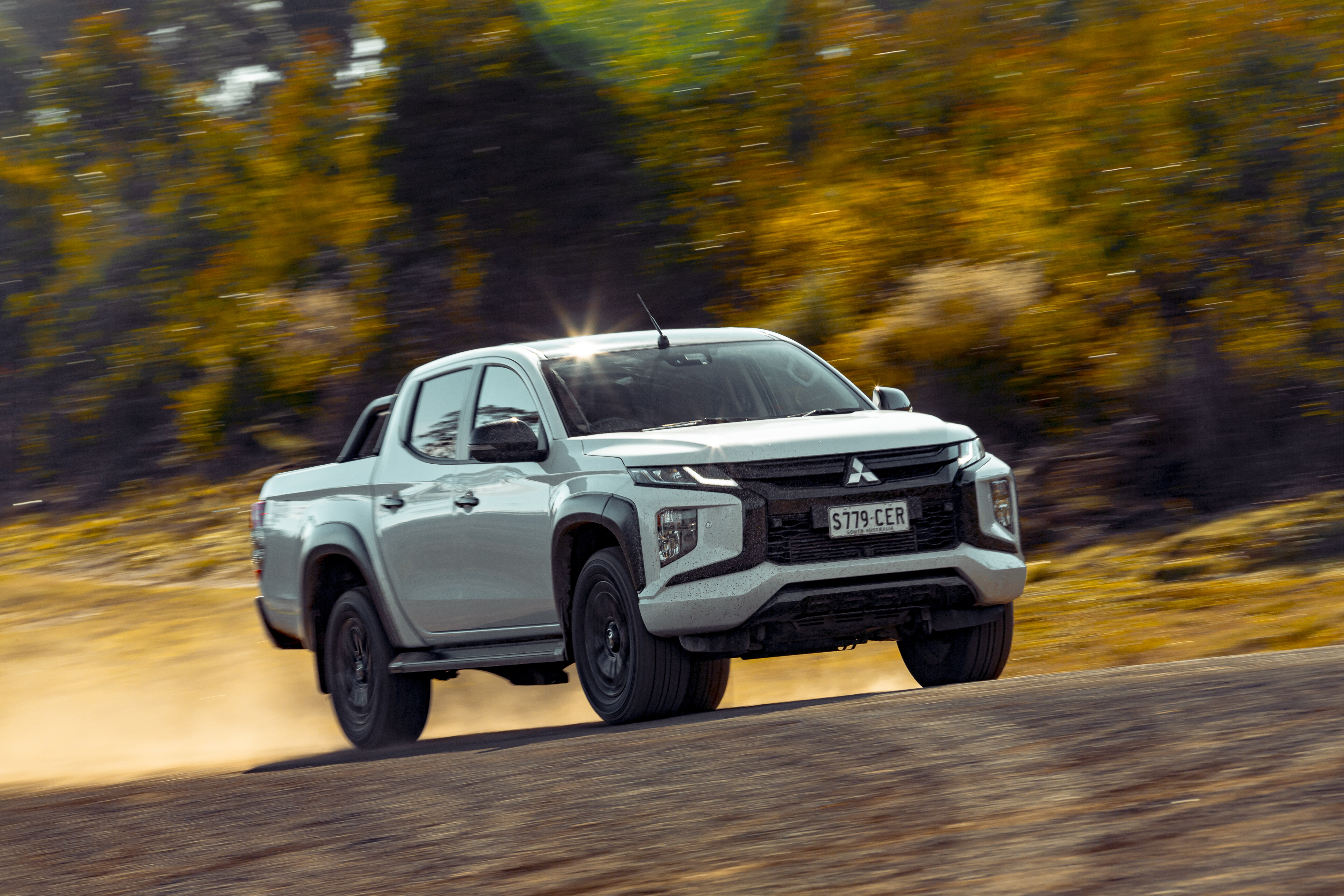
The Triton GSR sits at the top of Mitsubishi’s four-model range so equipment-wise, it’s already ahead of the Navara ST. It now includes a roll-top tonneau for $57,240 driveaway so it’s fairly evenly priced with the big Nissan (sans options).
The Triton has always been a great value-for-money package and its sharp pricing and regular ‘specials’ keep it near the top of the 4×4-ute category sales, traditionally sitting in third place behind Ranger and Hilux.
The Triton is one of the smaller utes in the category and many buyers who don’t want the big-car feel and inconvenience of the larger utes are drawn to this trait. While smaller in size, it really doesn’t give away much in terms of performance and capacity.
POWERTRAIN & PERFORMANCE
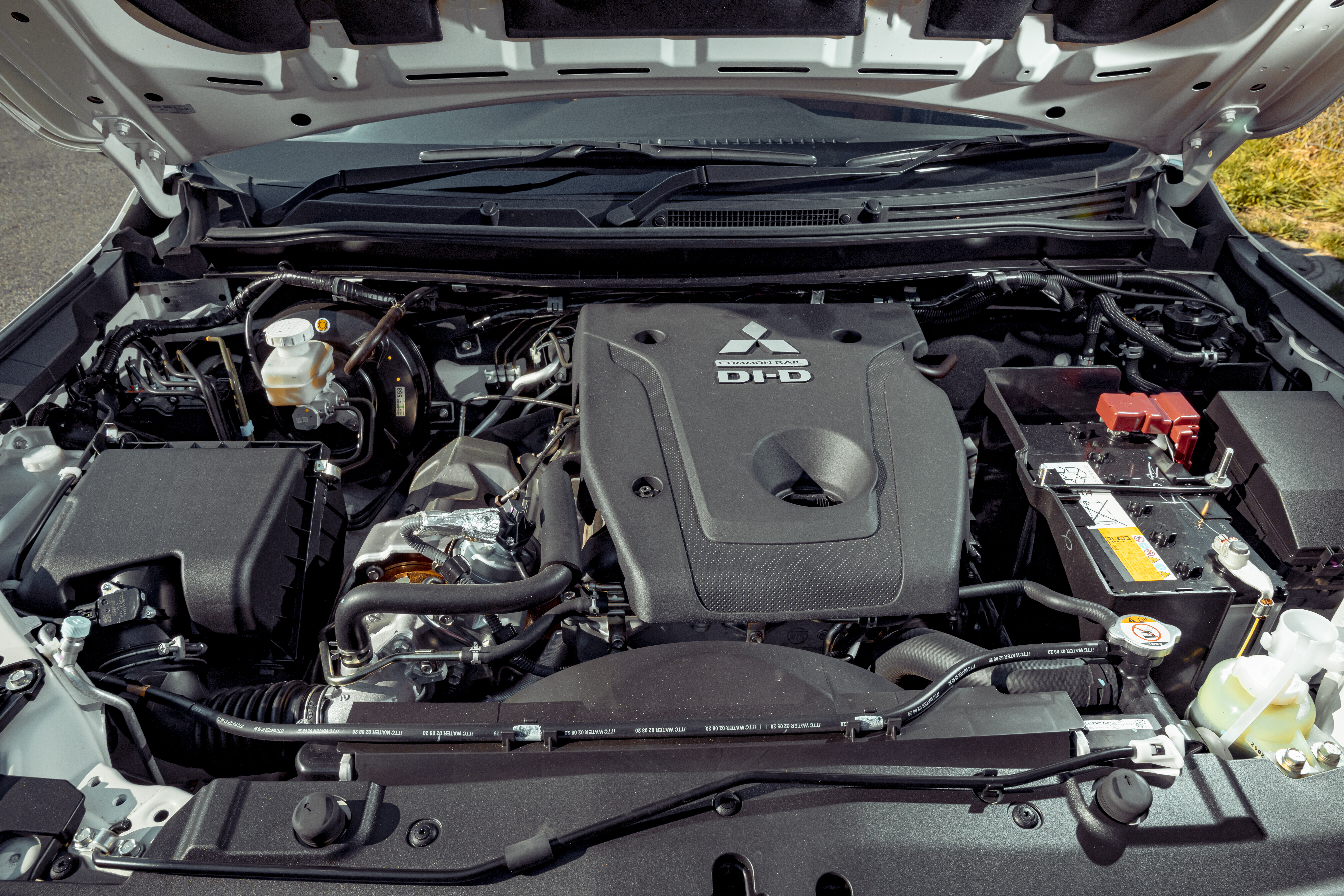
The Triton’s 2.4-litre, single turbocharger equipped diesel engine makes 133kW of power and 430Nm of torque, so it does lack behind many of the bigger and newer engines in the class. But this deficiency doesn’t seem to affect it too much when you put your foot down as the lighter weight of the Mitsubishi accounts for any slack. The weight also helps with fuel economy as the Triton quotes 8.6L/100km on the combined scale compared with the Navara’s more frugal 7.3L/100km claim.
The engine is backed by a six-speed automatic transmission which is unremarkable for all the right reasons – it gives the driver nothing to complain about. While some may think that paddle-style gear shifters behind the steering wheel are purely for boy racers and have no place in a 4×4 ute, they do come in handy off road when you want to tap back a few ratios as you approach a descent.
As the top of the range Triton, the GSR gets Mitsubishi’s Super Select transfer case which gives the operator the choice of 2WD, full-time 4WD, locked 4WD high range, and locked 4WD low range. The addition of full-time 4WD is handy on varied road surfaces or wet roads as it saves the driver from having to switch between two- and four-wheel drive and this feature makes the Triton unique in the segment.
ON-ROAD RIDE & PERFORMANCE
On first impressions the Triton feels quite agricultural with weighty steering, a busy ride, soft brakes and a noisy engine, particularly at higher rpm, but with acclimatisation some positives also begin to make themselves known.
The engine has a relatively narrow powerband, but there’s a nice hit of low-end torque that provides decent response. Including the Pajero Sport’s eight-speed auto would probably improve its outright performance but the current six-speed is unobtrusive – the option is there to use the large shift paddles, but it works fine of its own accord.
Roadholding and steering accuracy are adequate without approaching the fluency of the Ranger or Amarok, the relatively stiff suspension providing fairly tight body control. Mitsubishi’s Super Select 4WD system does allow the Triton to operate in all-wheel drive without the need to have a locked centre diff, which can be handy on wet or slippery tarmac roads.
OFF ROAD
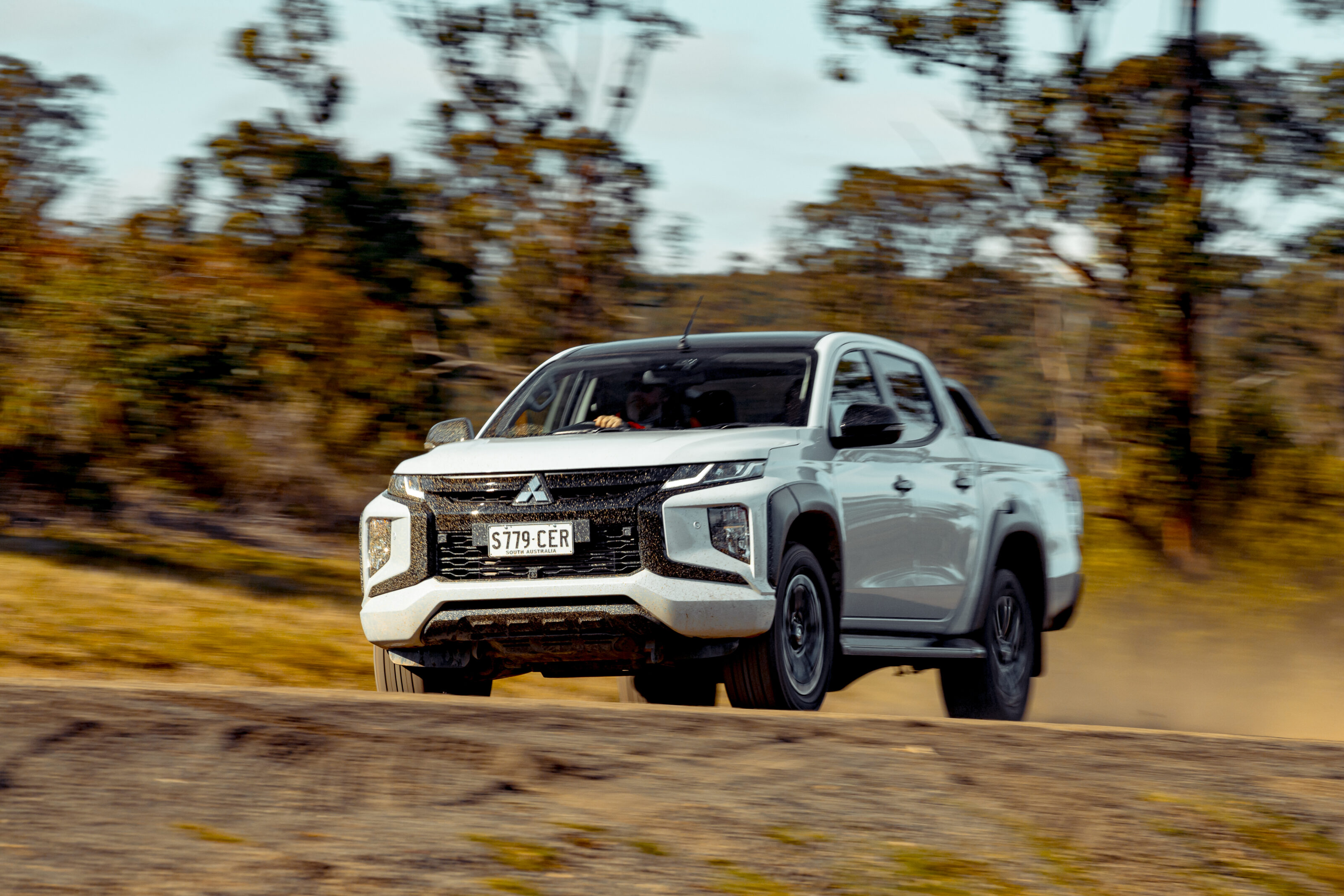
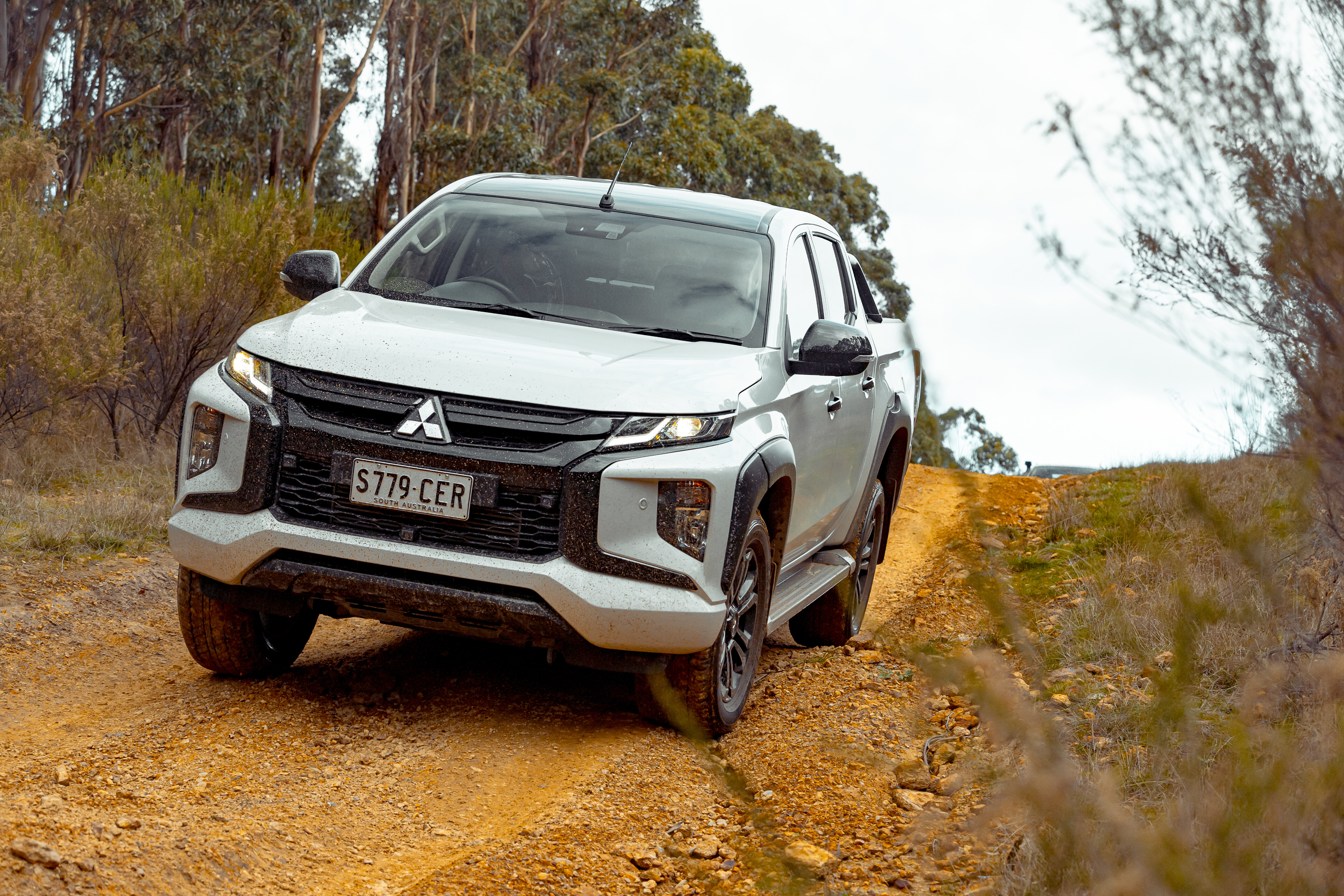
With its smaller overall size, shorter wheelbase and firm suspension, the Triton feels quite nimble on the track, especially when compared to the Navara. The Triton’s firmer suspension does a far better job of absorbing bumps than the Navara’s and it wasn’t hitting its bump stops over the same terrain the Navara was, while the steering feels sharper and more direct. Nor did it bottom out between the axles as the Navara did, saving its side-steps.
Low range offers adequate reduction and allowed us to crawl over deeply rutted tracks; while the rear differential lock is there is needed, although it wasn’t on this drive. The ETC is relatively responsive and was all that was required on this track. It stays engaged on the front wheels even when the rear diff lock is activated.
There’s also an off-road terrain selector that optimises the various electronic chassis controls to suit the selected terrain, although we failed to feel any difference when switching between them.
CABIN AND ACCOMMODATION
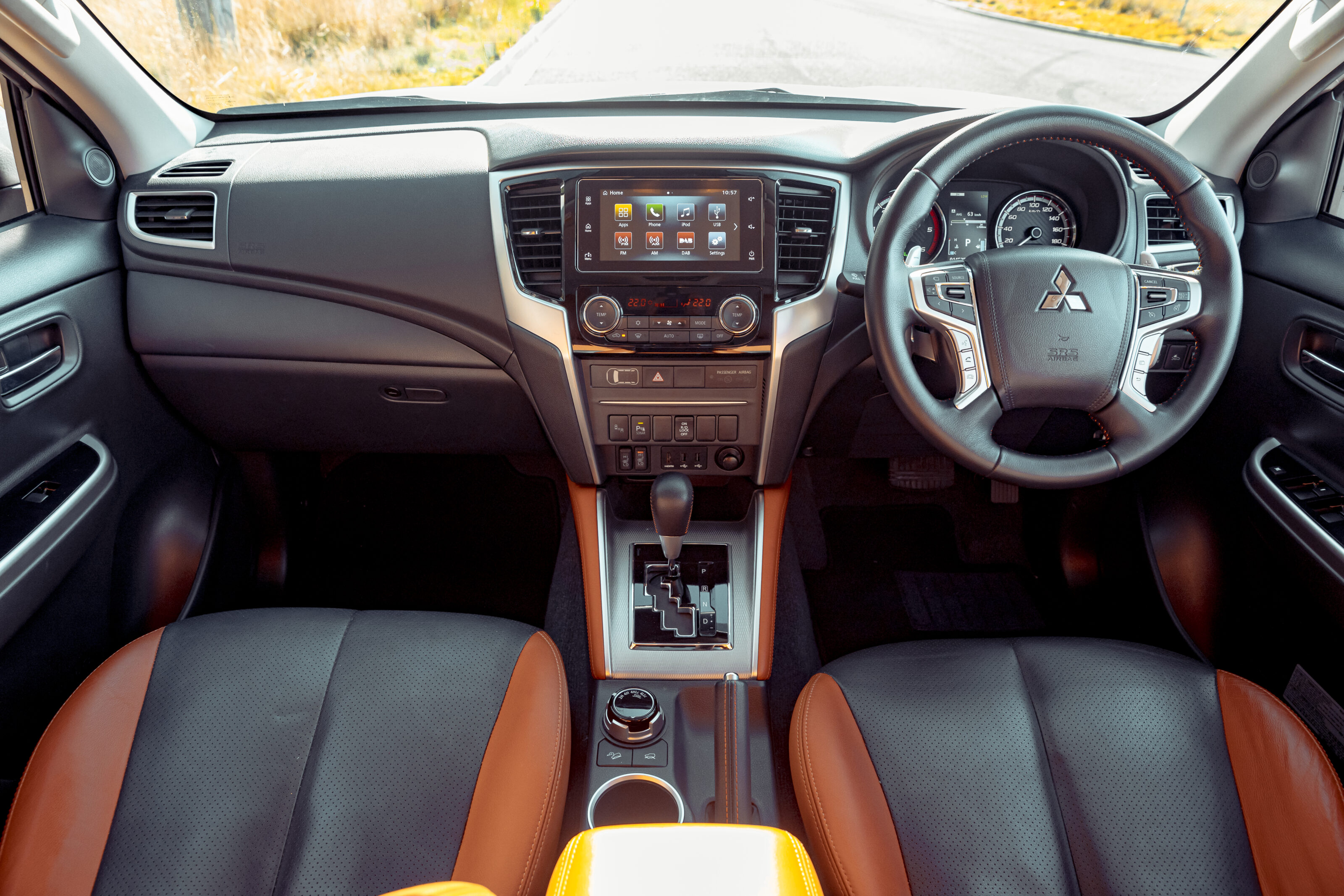
The GSR attempts to justify its position as the pinnacle of the Triton range by including leather seats, though the unusual caramel colouring perhaps limits their appeal. The fronts are heated (with high and low settings) though, and the driver’s is electrically adjustable.
It’s not a particularly flashy interior in terms of its design or materials but it has plenty of kit, including a 7.0-inch infotainment touchscreen with smartphone mirroring, DAB radio, a pair of USB-A inputs, an HDMI input and 12V socket up front.
Rear passengers aren’t forgotten with roof-mounted vents feeding air from the dual-zone climate control with separate fan speed, a pair of USB-A inputs, another 12V outlet, reading lights, a pair of cupholders in the fold-down centre armrest, large door bins and a small cubby hole in the back of the centre console.
The rear bench is a little short on under-thigh support but is otherwise comfy and spacious enough, while folding forward to reveal the tyre-changing equipment. Up front, the seats are well-bolstered albeit set a little higher than ideal, but with the steering wheel adjustable for rake and reach, a comfortable driving position should be able to be found.
SAFETY
As the flagship Triton the GSR is fitted with Mitsubishi’s full suite of passive and active safety systems. There’s front, front-side and curtain airbags for driver and passenger as well as one for the driver’s knee.
Parking sensors front and rear and a rear-view camera reduce the excuses for hitting anything and once on the move, you have forward collision mitigation with pedestrian detection, lane-departure and blind-spot warning, lane change assist, rear cross-traffic alert, auto lights and wipers, and trailer stability assist.
Crucially, these systems are also well-calibrated, with less of the phantom intervention than you get in some other utes and cars. Unique to the GSR in the Triton range is the Multi-Around Monitor, which uses the car’s cameras to provide a 360-degree bird’s eye view, reveal blind spots and prevent low-speed collisions using the ‘misacceleration mitigation system’. Basically, it stops you hitting something if you accidentally hit the accelerator.
PRACTICALITIES
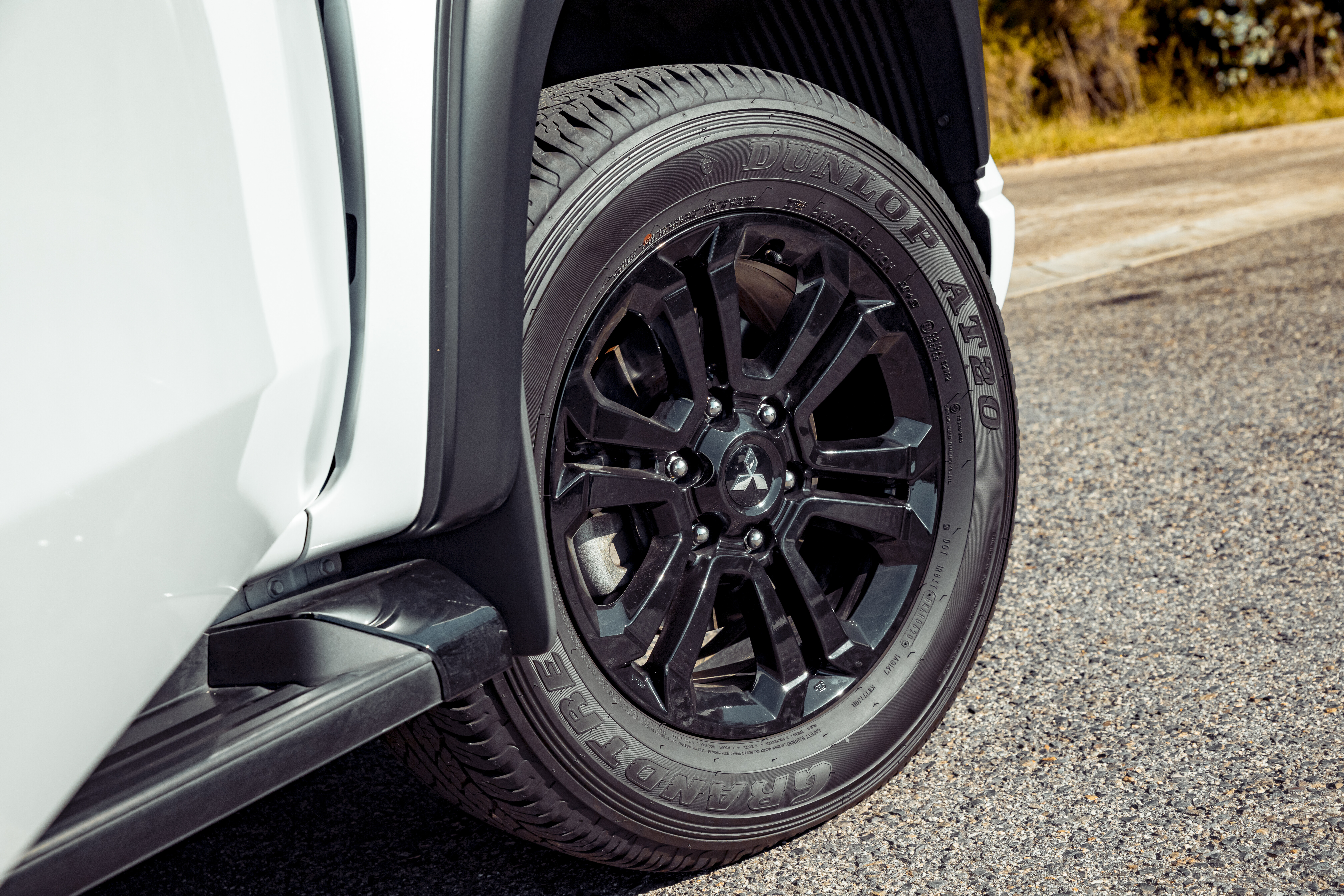
With its smaller size and shorter wheelbase the Triton gives away a bit to its bigger competitors in terms of towing and load capacity. The maximum towing is rated at 3100kg and payload for the GSR is 901kg. With its lower kerb weight and handy GCM, the Triton does stack up relatively well when you do the sums before hooking up a trailer.
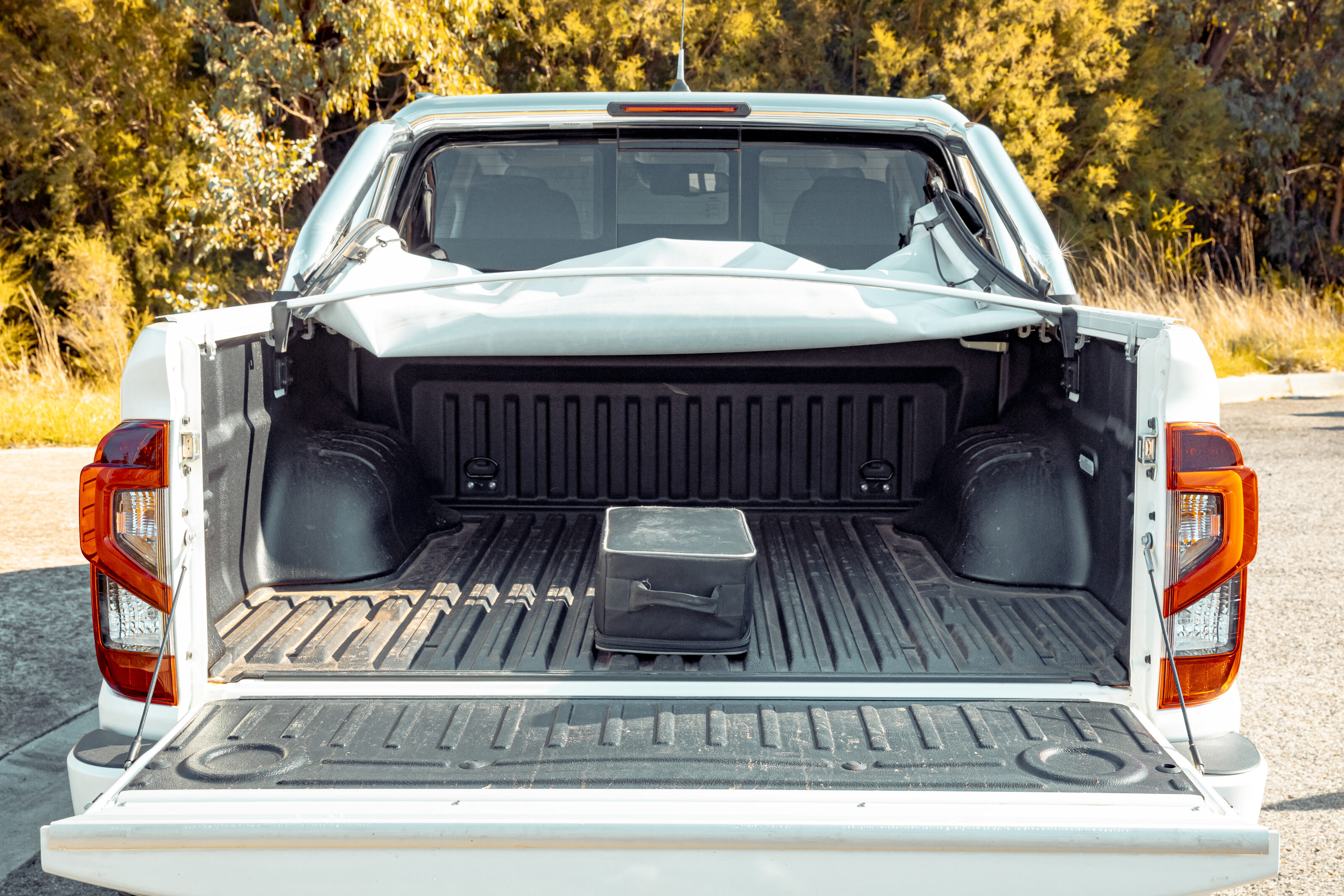
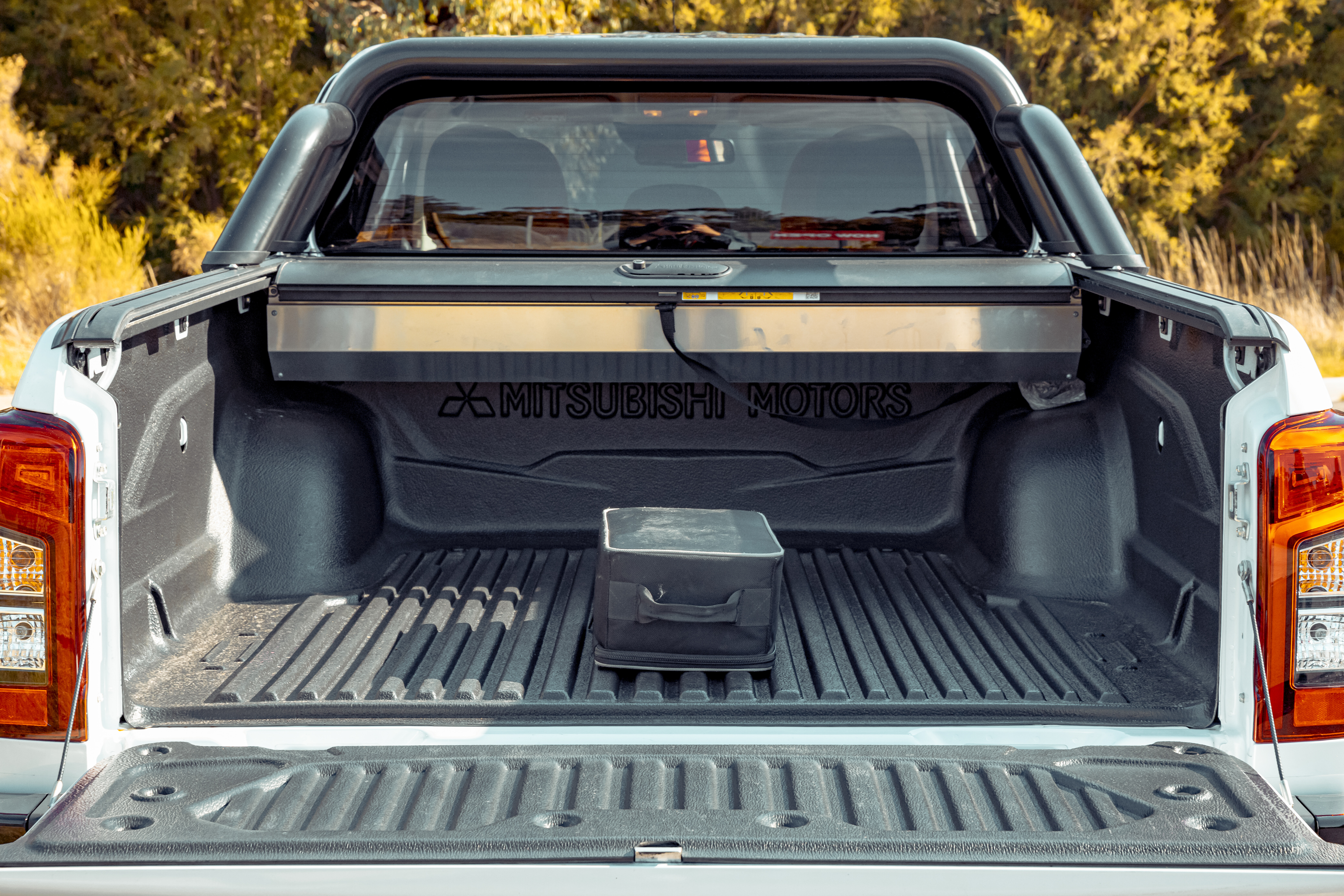
The cargo tub is a bit smaller than most others in the class, including the Navara, and the shorter wheelbase put most of the cargo space behind the rear axle so its load distribution is less than ideal. The GSR’s tub does have a protective liner and there are six tie-down points.
The roller hard tonneau cover that is standard on the GSR is great for protecting the contents of the tub from the weather, dust and prying eyes, although it does eat in the usable space at the front of the tub.
Mitsubishi Australia does offer a range of factory accessories for the Triton and the model is well-supported by the aftermarket allowing owners to build it to their needs.
SUMMARY
On first appearance, you might think that comparing the Navara ST against the top-billing Triton GSR would be an unfair fight but when you see how close they are on price, it changes the equation.
To that end, the Triton wins in terms of the level of equipment and features, and the way it drives both on and off road. Look at them side by side and you start to see why the Triton is a popular value-for-money equation. It’s also appealing for its smaller and more maneuverable size, providing you don’t need the space of a bigger ute.
If you do need that bigger cabin and load space of the Navara, then it’s the only choice of this duo. The 400kg difference in towing capacity is in reality negligible, as towing anything heavier than 3000kg in any of these 1-tonne double-cab utes is really not something you’ll want to do on a regular basis; they don’t take too kindly to that sort of treatment.
The 100kg up in payload for the Navara is more of a plus as you really want all the payload you can get in these vehicles, especially if you are going to start accessorising them with bullbars, winch, roof racks and canopy; all that extra weight soon eats up your payload.
For mine, the added equipment, drivability and overall package of the Triton GSR makes it the winner here. It has the capacity to handle most of what most buyers will want from a double-cab ute, has all the features of a top-of-the-range model and represents great bang for your bucks.
SECOND OPINION
If your use-case is primarily on road or light duties, then I’d be tempted by the Navara for its softer ride and smoother engine, though a step up to the ST-X or PRO-4X would be in order to fill some missing specification gaps.
Otherwise, the Triton is the clear winner, especially when talking buck-for-buck. But while value is key to its appeal, the Mitsubishi does everything well enough – admittedly, without really having any standout qualities – to make it an appealing package.
A quick word though, if you can live without a few of the GSR’s trinkets the Triton GLS is a very similar offering for around $9K less!
Snapshot
- New model on sale August 2
- Upgraded across three-variant range
- Price hikes up to $7500 for top spec LS-T
Isuzu Ute Australia (IUA) has revealed its second generation MU-X wagon, which goes on sale in Australia from August 2.
The pretty much all-new wagon arrives in a three-model line-up that mirrors the previous generation with both 4×2 and 4×4 drivetrains, but adds significant safety technology in line with the D-MAX ute that arrived late in 2020.
The three-tier range starts with the 4×2 LS-M model at $47,900, followed by the LS-U and top of the range LS-T which tops out at $65,900 for the 4×4 model. All variants are available in two- and four-wheel drive platforms.
Those prices are markedly up on the previous MU-X which you could get into for $42,900 (LS-M 4×2), while an LS-T 4×4 could be had for $56,400. All of those prices are plus on-road costs.
IUA is offering the new MU-X LS-T 4×4 at a $63,990 drive-away price as an introductory offer.

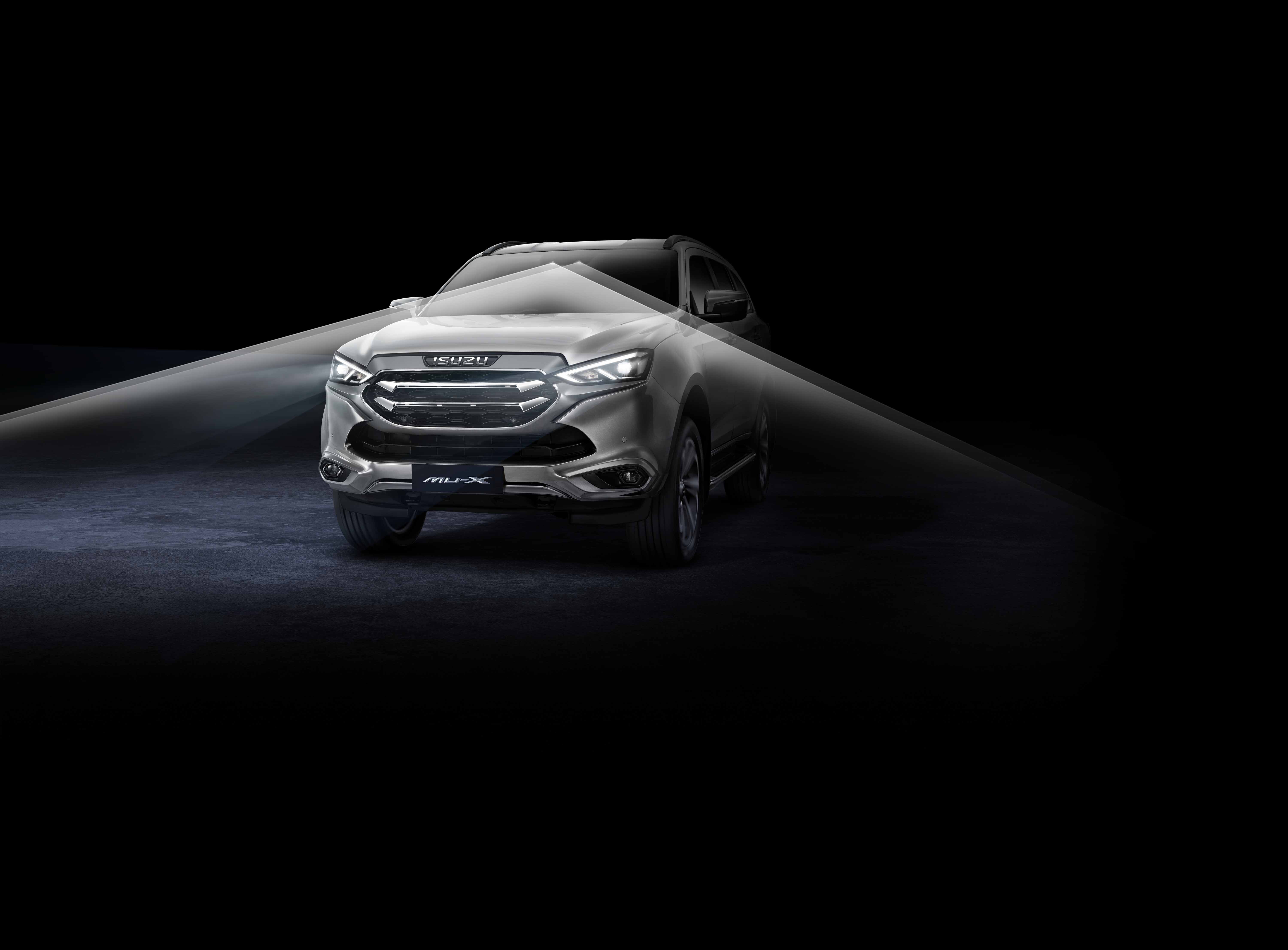
The 2022 MU-X gets a new five-door, three-row body on a revised chassis using the same live rear axle and IFS all-coil suspension. Power comes from the latest version of Isuzu’s 4JJ3 3.0-litre four-cylinder engine. It now produces 140kW of power and 450Nm of torque in line with the same engine in the current D-MAX ute.
The only transmission option is the Aisin six-speed automatic and this is backed up by a part-time, dual-range four-wheel drive with a locking rear differential. The MU-X is no longer offered in Australia with a manual gearbox.
Significantly the new MU-X gets the full IDAS safety suite as appears in the D-MAX. Included in this are autonomous emergency braking, lane departure warning and prevention, rear cross-traffic alert, post-collision braking, turn assist, lane keeping assist, automatic cruise control, traffic sign recognition and forward collision warning.

The full suite of IDAS features are standard on all new MU-X models, however tyre pressure monitoring, another important safety feature, is only available on LS-T variants. We see this as an oversight by IUA as many of the other safety systems rely on the tyre’s contact with the track and can only operate as they should with correct pressure in the tyres.
All new MU-Xs get the same powertrain, a rear diff lock, ‘Tough Terrain mode’ button for off road use, three-row seating for seven occupants, air-con vents for all three rows of seats with separate controls for the second row, full ADAS systems, auto-on LED headlights, 3500kg towing capacity, an electrically activated parking brake, electrically assisted power steering, Apple and Android connectivity and alloy wheels.
The LS-U adds over the base LS-M, a leather covered steering wheel and gear shifter, auto keyless entry, dual-zone climate control, a 9-inch touchscreen over the 7-inch in the LS-M, power lumbar support for the driver’s seat, chrome door handles and radiator grille, LED fog lights, side-steps, roof rails, privacy glass, a power operating tailgate, and 18-inch alloys over the LS-M’s 17s.

The top-spec LS-T adds 20-inch alloy wheels, tyre pressure monitoring system, leather accented interior trims, power adjustment and heating on the front seats. LED interior lighting, remote engine starting via the key fob and an auto dimming rear-view mirror.
The mid-spec LS-U appears to be the best value-for-money package when looking at the spec levels, and we expect this will become the more popular option with buyers, especially once the introductory drive-away pricing on the LS-T model expires.
The MU-X continues to compete in that mid-size 4WD wagon market among the other models that offer genuine off-road ability as opposed to soft-roader SUVs. These include the Ford Everest, Toyota Fortuner, Mitsubishi Pajero Sport and the class leader – in terms of sales – Toyota Prado.
Comparing the $59,990 MU-X LS-U 4×4 with the popular mid-spec variants from each of those, you’re looking at $60,890 for the Everest Trend; $60,490 for a Pajero Sport GLS; $54,350 for a Fortuner GLX and $66,540 for a Prado GXL, which is almost in a class of its own in price and size. The curveball is a SsangYong Rexton Ultimate which at $55,990 drive away is certainly one not to overlook.
With the launch of the new MU-X and the new D-MAX seven-months ago, Isuzu Ute Australia has stepped up its range in both equipment levels and price, and in some aspects the Isuzu vehicles lead their respective class. How well the buyer adapts to this from a brand which always sold on having a more affordable and dependable product remains to be seen but if the sales of the 2021 D-MAX are any indication, IUA is on the right track.
The new MU-X will be in Isuzu showrooms on August 2.
2022 ISUZU MU-X PRICING (+ORC)
Snapshot
- Stronger CV joints and driveline (with factory rear locker)
- Increased safety
- A multitude of changes
It’s almost a little overwhelming looking at the spec sheet for the new 2022 Isuzu MU-X, so much has changed over the previous model.
There are three trim levels available in the line-up, starting with the base LS-M, the mid spec LS-U and the top-of-the-line LS-T. The chassis and body are new, the engine is also new for the MU-X, but is the same 3.0L 4JJ3-TCX found in the current model D-MAX with 140kW and 450Nm of torque. The suspension has been redesigned front and rear, and (drum roll please) the MU-X finally has a rear differential lock as standard across the 4×4 range.
Let’s dive in deep, and take a look at everything we know about the new 2022 Isuzu MU-X; including an increase in pricing, which we’ll touch on later.
INSIDE
It’s safe to say, that the majority of potential MU-X owners, will either be using this vehicle for towing or carting family members around. Or both. Being a 7-seat family wagon, practicality needs to be at the forefront for the vehicle to be successful.
Thankfully, what we are seeing is a nice, flat cargo area (when the third-row seats are folded flat). Effort has been put in to the seating useability according to Isuzu, with easier access to the third row of seating.
The interior has been completely redesigned, with many styling cues taken from the current D-MAX. There are now more cupholders than airbags in the MU-X, 12 cupholders to eight airbags. All models in the line-up receive air-con vents and controls across all rows, however only the higher spec LS-U and LS-T receive dual-zone climate control.
The LS-T is also the only model to receive quilted leather accents on seating, as well as heated front seats. LS-U model scores adjustable lumbar support, though. Another feature only found on the highest spec LS-T, is remote engine start.
Touchscreen wise, the LS-M spec scores a 7-inch display, while the two upper levels receive a massive 9-inch screen. All models offer Apple CarPlay and Android Auto, as you’d expect. The LS-M misses out on a powered tailgate ─ if this is a feature you’d like, you’re going to need to spec up to the LS-U or LS-T model.
TOWING AND LOAD CAPACITY

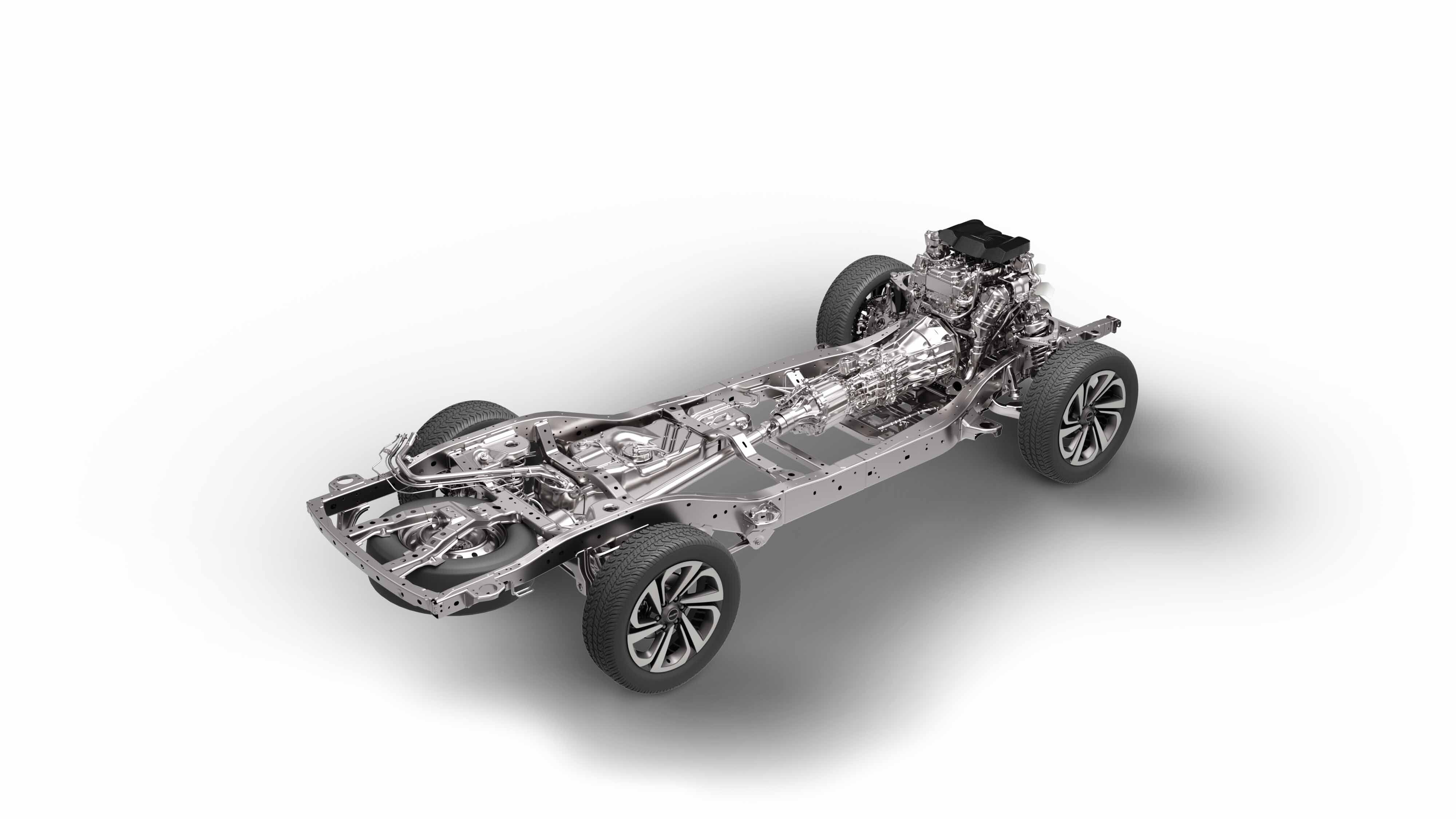
A 3500kg towing capacity is now standard across the MU-X range, as well as an increase in load carrying capacity. This has been achieved by designing a new chassis, that Isuzu says is crafted from high-tensile steel, has chassis rails that are 14 per cent wider and 34 per cent taller and with increases of longitudinal and torsional rigidity. It’s stronger, basically.
The body has an additional 157 spot welds found throughout, which Isuzu also tells us results in a body that is 10 per cent stiffer than the outgoing model.
With a lighter yet stiffer chassis, and a revised suspension tune, this 2022 MU-X has increased axle loads front and rear, with 100kg and 50kg increases respectively. Payload limits will depend on which model takes your fancy. The lighter base model LS-M can carry 665kg, the mid-sped LS-U 645kg and the top-of-the-line LS-T 625kg. Across the 4×4 line-up, the MU-X has a GVM of 2800kg and a GCM of 5900kg.
SERVICING COSTS
Isuzu are recommending 15,000km service intervals or every 12 months (whichever comes first):
15K service costs: $389 30K service costs: $409 45K service costs: $609 75K service costs: $299 90K service costs: $749 105K service costs: $409
This brings the total for Isuzu capped-price servicing to $3373 over the first 105,000km of ownership.
SAFETY TECH
Get ready for an onslaught of acronyms, the 2022 Isuzu MU-X is loaded with integrated safety technology under the banner of Intelligent Driver Assistance System (IDAS).
Autonomous Emergency Braking (AEB) AEB with Turn Assist Post-Collision Braking Forward Collision Warning (FCW) Misacceleration Mitigation (MAM) Adaptive Cruise Control (ACC) Traffic Sign Recognition (TSR) Intelligent Speed Limiter (ISL) Manual Speed Limiter Lane Departure Warning (LDW) Lane Departure Prevention (LDP) Lane Keep Assist System (LKAS) Emergency Lane Keeping (ELK) Driver Attention Assist Blind Spot Monitoring (BSM) Rear Cross Traffic Alert (RCTA) Anti-Lock Braking System (ABS) Electronic Brake Force Distribution (EBD) Electronic Stability Control (ESC) Emergency Brake Assist (EBA) Traction Control System (TCS) Hill Start Assist (HSA) Hill Decent Control (HDC) Trailer Sway Control (TSC) Roll Over Mitigation (ROM) Reversing Cameras with Dynamic Guidelines Rear Parking Sensors Front Parking Sensors (LS-U and LS-T models) LED rear Combination tail-lights Automatic Bi-LED headlights with auto-levelling LED Daytime Running Lights (DRL) Automatic High-Beam (AHB) Automatic Windshield Wipers Crash Door Unlock ISOFIX compatible anchor points across two seats, with three top-tether points Push Button Start with Smart Entry and Start (LS-M Push Button Start only) Welcome Light (LS-U and LS-T) Walk Away Door Lock (LS-U and LS-T) Remote Engine Start (LS-T) Automatic-Electronic Park Brake (EPB) with Auto Hold Function. Tyre Pressure Monitoring System (TPMS) (LS-T only) Auto-Dimming rear view mirror (LS-T)

ON-ROAD FEATURES
We’ll talk more about suspension in the off-road section of this article, but it’s safe to say there have been some significant improvements on paper, such as thicker sway bars and geometry revisions.
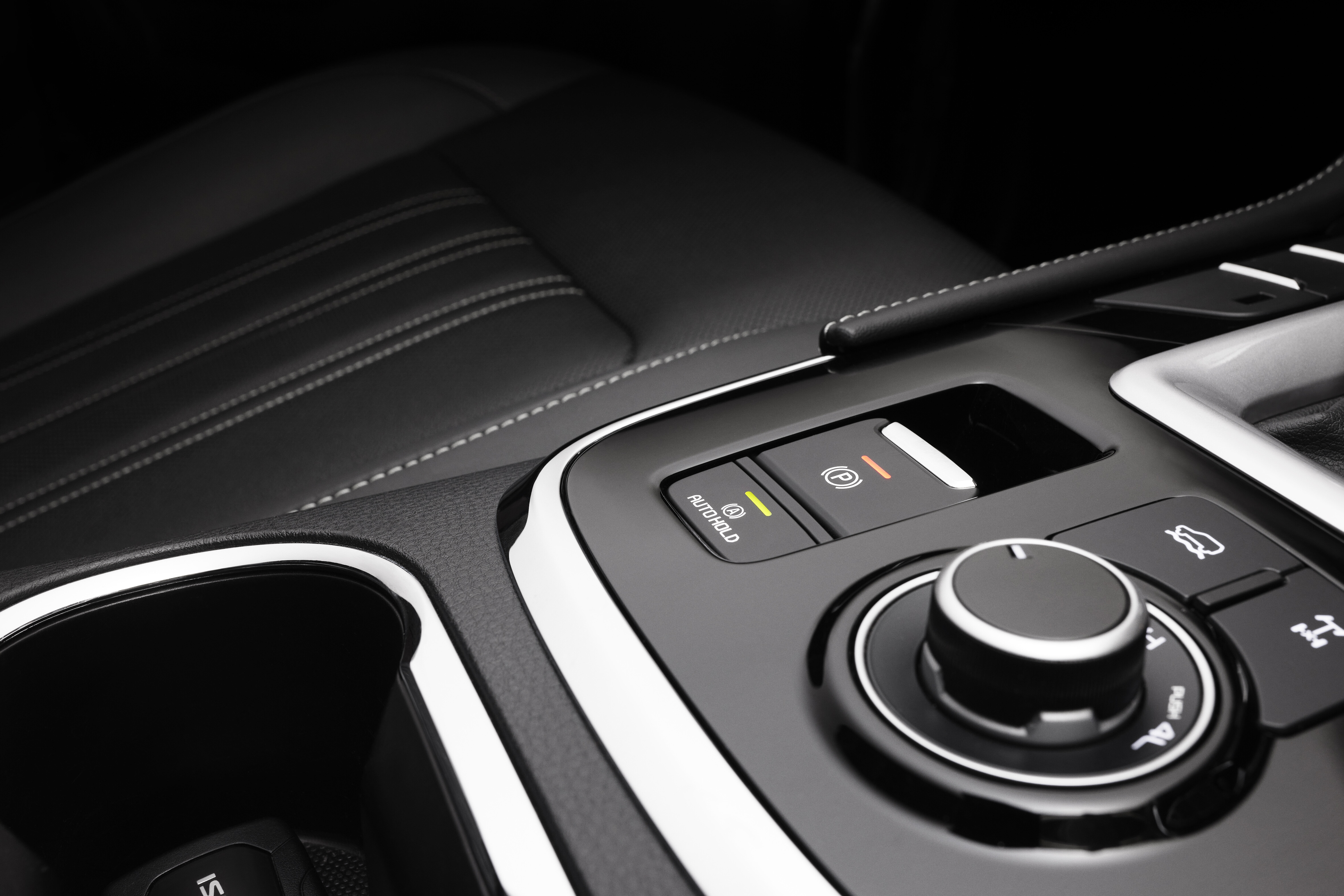
Another point worth mentioning, is an overhaul of the MU-X’s brakes. First of all, the handbrake is now electronically operated and features an Auto Hold function. While this is a sign of the times, we can’t help but mourn the manually controlled handbrake for its simplicity in a 4WD. Oh well …
Larger (20mm bigger on the front) and more powerful disc brakes can be found on all four corners. Just what you want to see on a family tow vehicle. An increase in clamping pressure is also reported, so this shouldn’t be a slouch when it comes to slowing down.
Electronic steering now replaces the hydraulically-controlled type found in the old MU-X. This will help slightly with emissions; however, Isuzu tells us this is also a more reliable system. We’ll report back after our first drive to see if they got it right. We are sad to announce that the MU-X will not be available with a manual gearbox, the only choice on offer is a 6-speed Aisin automatic gearbox. Another sign of the times.
Also, it’s worth mentioning you can no longer get 16-inch wheels on an MU-X. The smallest wheel offered is a 17-inch on the LS-M because of the larger brakes now fitted. The LS-U sees 18-inch wheels, and the LS-T 20-inch wheels.
OFF-ROAD FEATURES
When it comes to off-road focused additions, there are a fair few key points to take a look at. Namely, the inclusion of a factory fitted electromagnetic rear-differential lock across the 4×4 range. There’s also a neat little button, called Rough Terrain Mode, which Isuzu tells us is an off-road specific calibration of their traction-control system, designed to be more aggressive at slowing spinning wheels, and sending drive to the wheels with traction. We’ll be testing this out soon.
In terms of off-road angles, approach, ramp-over and departure angles have been improved over the previous model, too. Wading depth has also been increased to 800mm, with a revised airbox design, that will be simple-as-pie to add a snorkel (raised air intake) to.
Suspension revisions are plentiful, with tuning to suit Australian conditions a priority according to Isuzu. Starting with front-end geometry tweaks made to the IFS system, including a new high-mount upper control arm and a thicker sway bar. Apparently, the wider span upright arms help to maintain camber and castor angles and geometry composure allowing for a wider contact patch on the road when cornering. The front spring rate has been increased, for a firmer ride and increased load carrying capacity.
In the rear-end, the 5-link coil-sprung suspension has been totally redesigned, with the aim of allowing more suspension travel, as well as better load carrying abilities. Spring rates have been increased in the rear, to assist with load carrying. A 23mm sway bar offers a 36.6 per cent greater span than the old one, to further prevent body roll.
One point worth mentioning to my fellow off-roaders, is the entire driveline in this model has seen significant strength upgrades. The CV joints are now stronger and thicker, the front shaft is also stronger. Isuzu is now using a one-piece carbon steel tail shaft in the rear measuring 108mm in diameter, claimed to be 13.6 per cent thicker.
Sealed maintenance-free wheel bearings have also been used on the front end, meaning they won’t need to be pulled apart every 40,000km and regreased; saving consumers money come service time. Just be aware, that these whole units will need to be replaced when the time comes, rather than just repacking them with grease.
Isuzu has also put in attention to the transfer case, with a nice low-range reduction ratio of 2.482:1. Internally, the output shaft is now 15.3 per cent thicker, and they are telling us 4×4 engagement is quicker and easier than the previous generation. The 4WD high-range can be engaged at speeds of up to 100km/h, however low-range will need to be selected at a standstill with the auto gearbox (no manual available) in neutral.
Underbody protection has been improved, with a combination of 1.5mm thick steel and 5mm thick poly-composite protection plates to protect vital components. An 80L polyurethane fuel tank is also now standard, which is a welcome addition for long-distance tourers.
PRICING
With stock and supply shortages wreaking havoc worldwide, we are curious to see how the roll-out of the new MU-X is handled. What we have been told though, is the official on-sale date is August 2, 2021, and dealerships should have the 2022 MU-X towards the end of July.
So, while you are getting many more standard inclusions with the 2022 Isuzu MU-X, you certainly will be paying for the privilege compared to the previous generation:
LS-M 4X4 with Automatic Transmission: $53,900 (Before ORC) LS-U 4X4 with Automatic Transmission: $59,900 (Before ORC) LS-T 4X4 with Automatic Transmission: $65,900 (Before ORC)
*As a side note, Isuzu is offering pricing of $63,990 drive-away for the LS-T model during the initial introductory period.
Snapshot
- One-make rally series to run in 2022
- 12 identical Defender 90s to compete over seven rounds
- Defender Challenge to spawn range of accessories for Defender
Drew Bowler built his brand of rally vehicles through the late ’80s, ’90s and 2000s using a range of Land Rover-based vehicles that competed in the UK and on the global stage in top-tier events such as the Dakar and Baja Rallies. Some of the most memorable Bowler vehicles included the Defender-derived Bowler Bobcat and Bulldog.
That was until Andy Bowler’s passing in 2016, and shortly afterwards the Bowler company was acquired by JLR to work closer with the manufacturer.
The latest result of the closer ties will see the new Land Rover Defender 90 modified for rallying in its own, single-make series to be conducted in the UK in 2022.
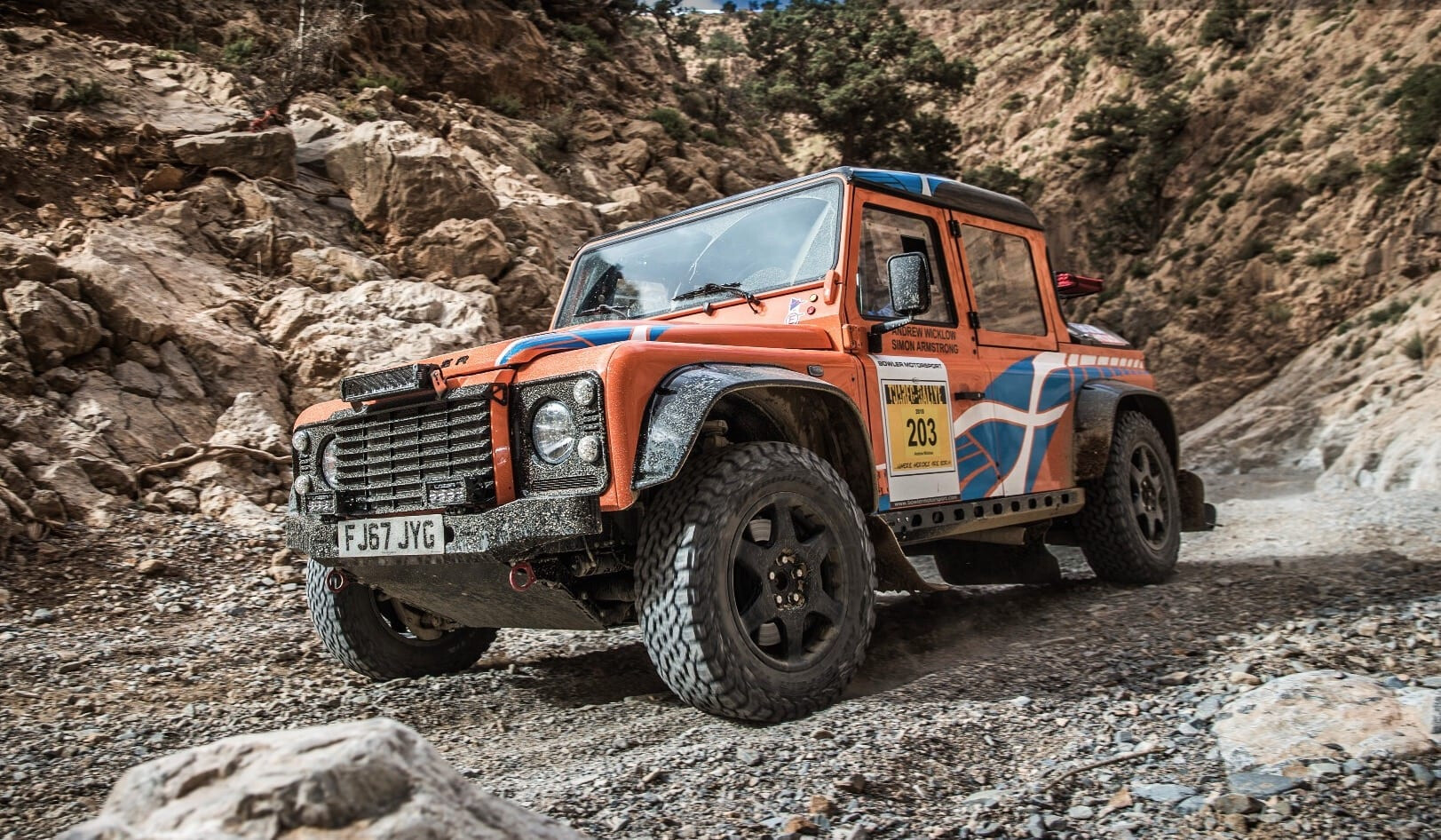
The Defenders will be stripped of all their road-going features for competition and fitted with safety items such as a full FIA-spec roll cage, racing seats and harnesses, and a fire-suppression system. Underneath, the suspension subframes have been modified and braced for increased strength and to accept Fox shock absorbers that have been specifically developed for the cars. The rally suspension sees the Challenge Defenders riding 25mm higher than a standard coil-sprung vehicle.
All the rally Defenders will be powered by the 2.0-litre turbocharged petrol four-cylinder engine backed by the standard eight-speed automatic transmission, which gets steering column-mounted shift paddles for the drivers. Rally-spec 18-inch wheels will be standard across the cars.
“The development of the new Bowler Defender Challenge rally car perfectly illustrates the mutual benefits of Bowler joining Jaguar Land Rover Special Vehicle Operations, said Michael van der Sande, Managing Director, Jaguar Land Rover Special Vehicle Operations.
“Our technical support married to Bowler’s legendary rally expertise has turned the extraordinarily capable Defender into a purposeful competition machine. The Bowler Defender Challenge will prove the Defender’s durability through some of the toughest conditions, while providing an exciting and accessible entry point into all-terrain motorsport for a new generation of Bowler and Land Rover customers.”
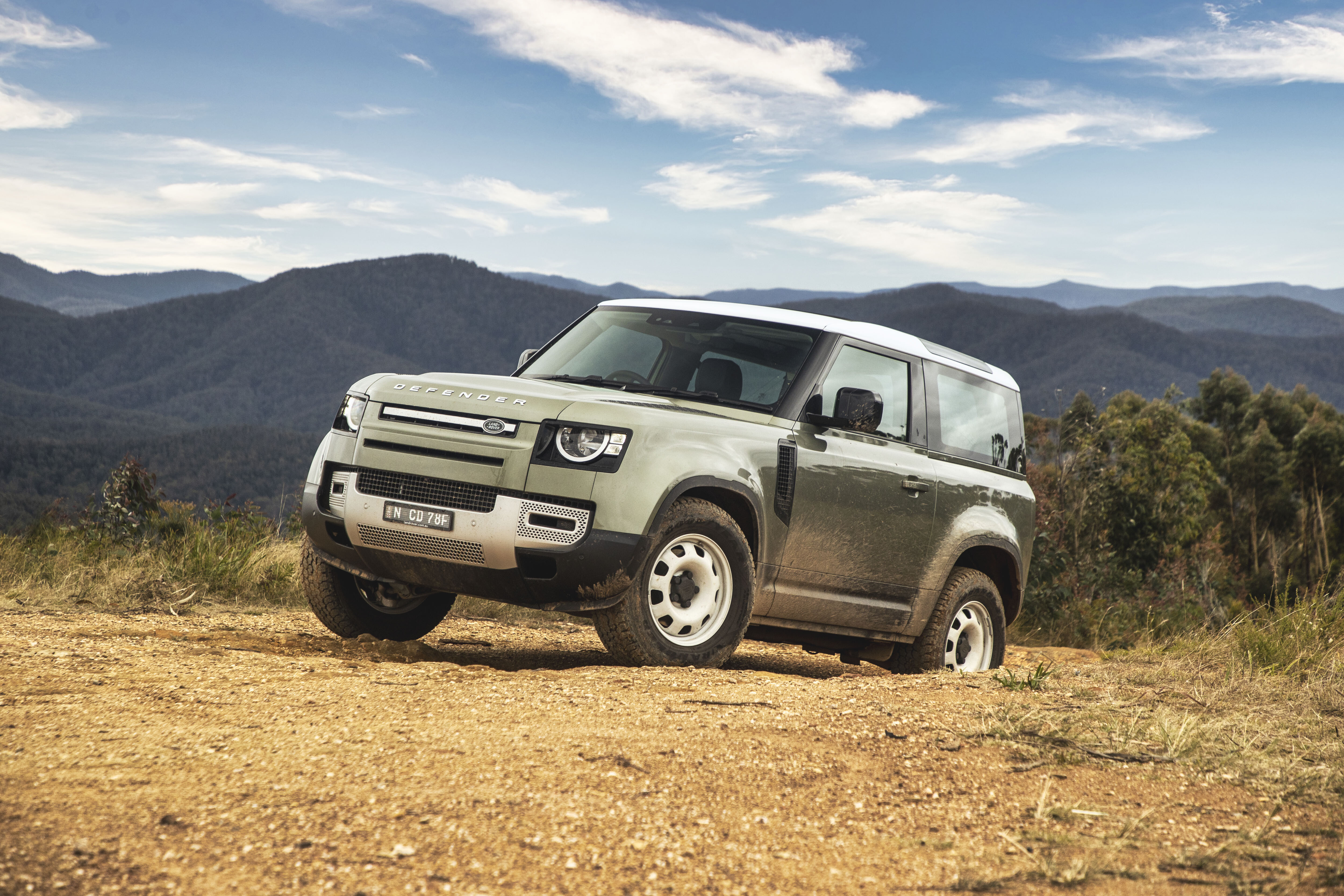
The Bowler Defender Challenge will run over seven rounds, all in the UK, with dates and locations to be announced later in the year. There are 12 entries available for the one-make series, with each team competing in identical Bowler-prepared Defenders.
For those with limited experience or none, Bowler can offer training and support to gain the necessary licence before moving directly to the series.
Entry into the Challenge will set competitors back around £99,500 which includes a Bowler-prepared Defender Challenge car, entry into the 2022 series, and event support. Options include training, series logistics and vehicle support at all rounds.
While it might be a hoot to race a rally-prepared Defender against other like-minded people, the boon for regular Land Rover owners is that the Challenge will spawn a range of accessories that will be available further down the track.
The old adage that racing improves the breed rings true and having access to factory-approved, Bowler-developed parts for your Defender will be a good thing.
The August 2021 issue of 4X4 Australia magazine is officially on sale, so head to your nearest outlet and grab yourself a copy.
Oozing with 4×4 goodness, the August issue is packed with quality off-road content. None more impressive than the chopped and stretched 79 Series build found on the cover. The Queensland-built LandCruiser has quite a unique backstory and an extensive list of modifications.

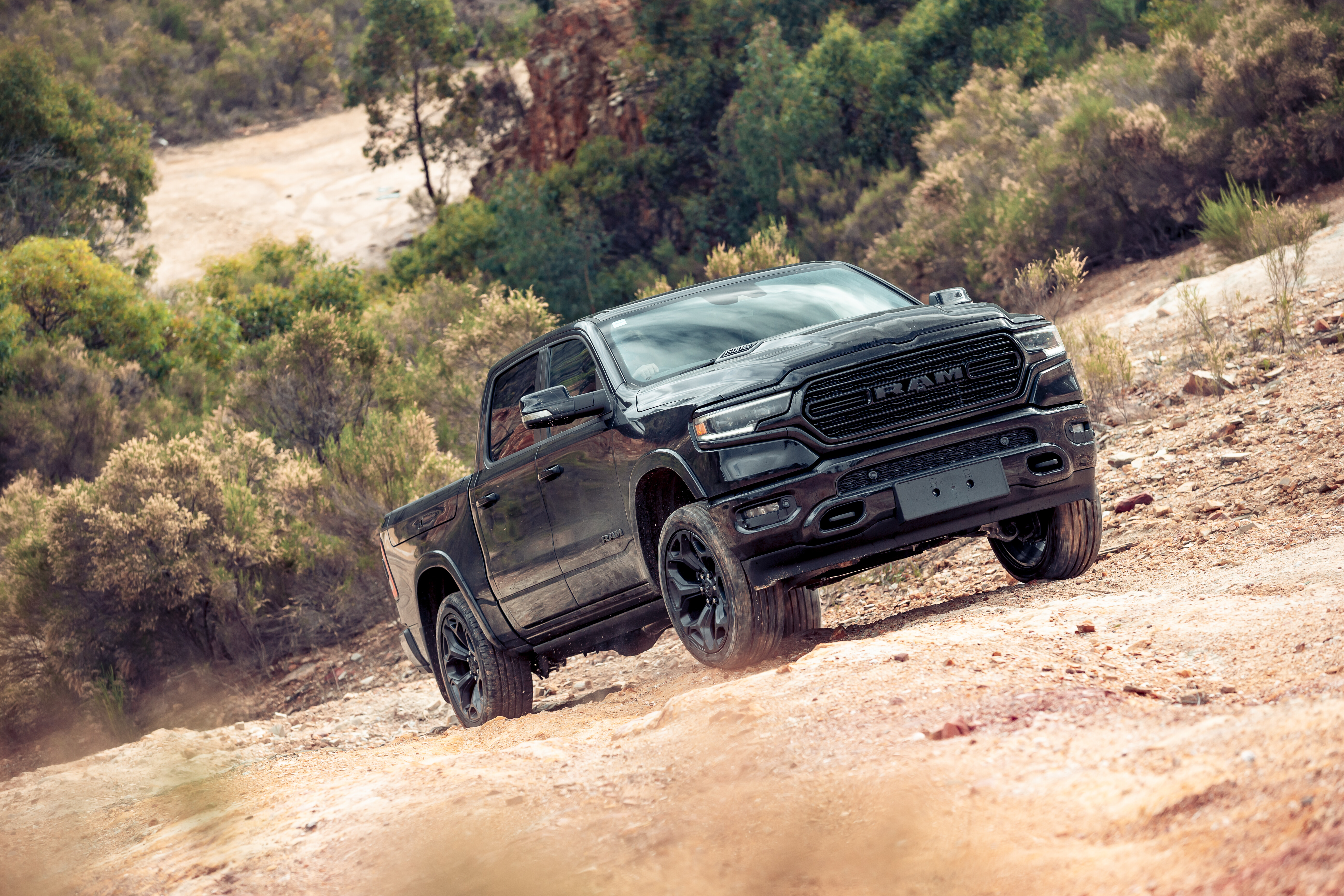
On the new metal front, we venture to loose gravel to fang a range of fourbies: the all-new 2021 RAM 1500 Limited, the Walkinshaw-fettled VW Amarok W580, and a factory-accessorised 2021 Navara ST. Plus, our USA guru Chris Collard drives the upcoming Jeep Grand Cherokee L in the States.
In the long-term shed, we bid adieu to the SsangYong Musso XLV Ultimate after 12 months, Dan Everett’s Everest Sport heads to the rocks with a camper trailer in tow, and Kian gets his GQ Patrol ready for its first off-road foray.
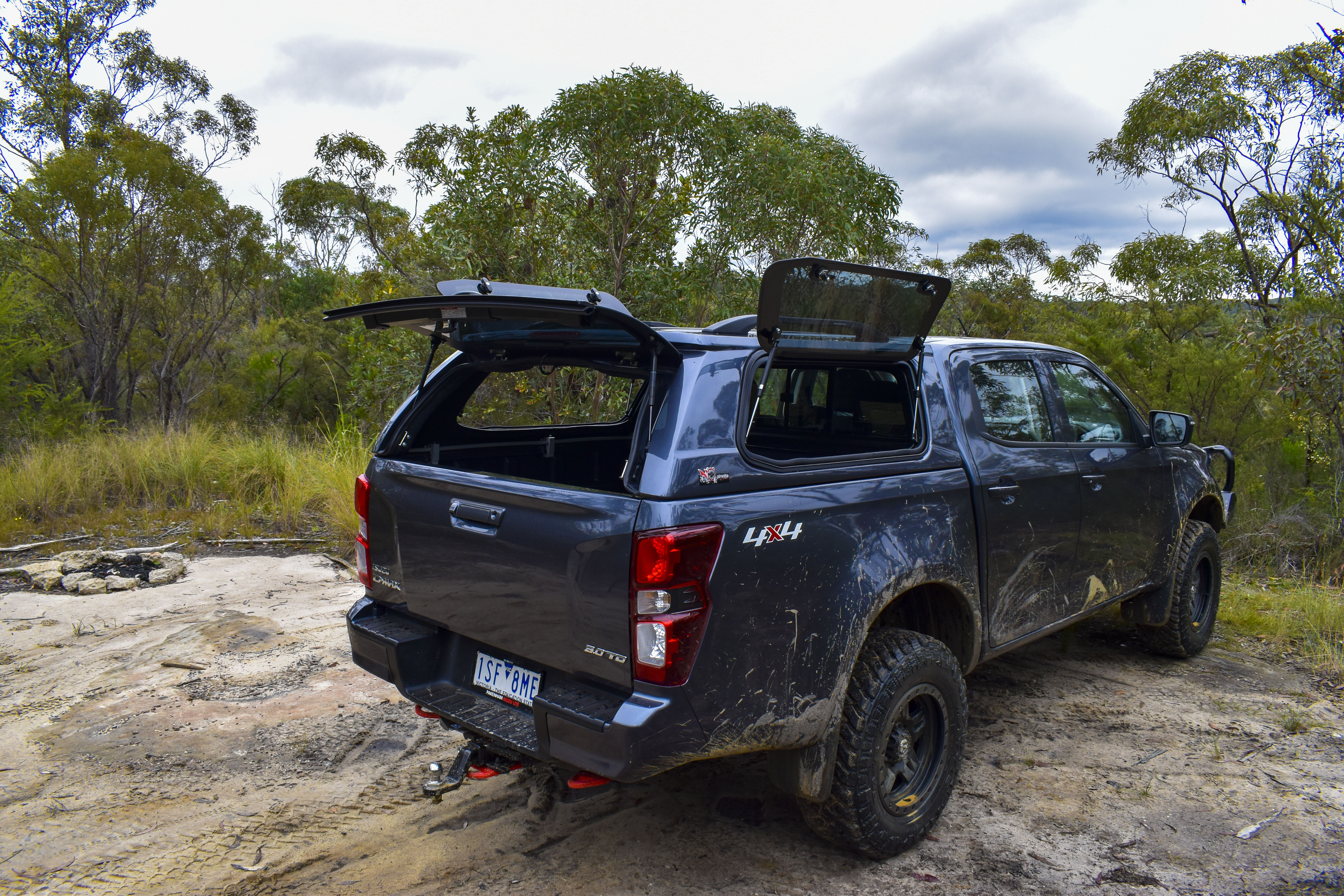
We test a suite of new aftermarket gear including a GME XRS-330C UHF, a set of Mickey Thompson Baja Boss muddies, and a Lifestyle Campers Reconn R2 Elite camper trailer. Plus, Evan installs a Piranha Off-Road fibreglass canopy to the 4X4 Australia D-MAX.
Ron Moon never stops exploring, and this month he travels beyond Omeo to the wild mountains of the Vic High Country. We’ve also included travel yarns to both Mungo National Park in NSW and the Western Explorer Highway in Tasmania.
The August 2021 issue of 4X4 Australia is in stores now!
WHAT ELSE IS THERE?
– ARB Eldee Easter Festival in photos – New products on the market – Your embarrassing 4×4 moment – Readers’ Rigs – Monthly columns – 4×4 news and more
Snapshot
- LC300 wears an alloy bullbar
- Tow testing in Australia
- On sale in Q4 this year
Toyota is expected to launch its all-new 300 Series LandCruiser in the coming months, and official photos showing the production vehicle have been released from overseas. So it’s no secret what the big Cruiser looks like.
This is the first time we’ve seen images of one driving in Australia, as this matte-black wrapped vehicle was snapped on the streets of Melbourne recently.
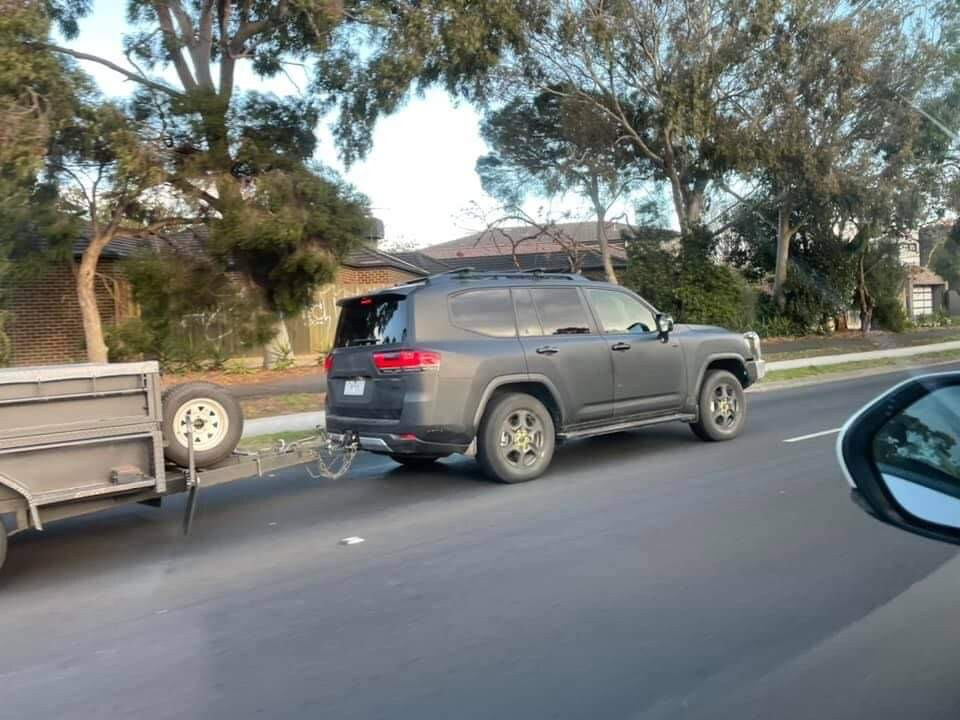
Australia is one of the prime countries where Toyota does its research and development of its four-wheel drive vehicles, such as the LandCruiser, Prado and Hilux, and we expect this is a pre-production 300 Series.
Toyota has done a pretty good job of keeping its development vehicles under wraps until now, but as the release date grows nearer and the official images are in the public domain, it is obviously letting its guard down.
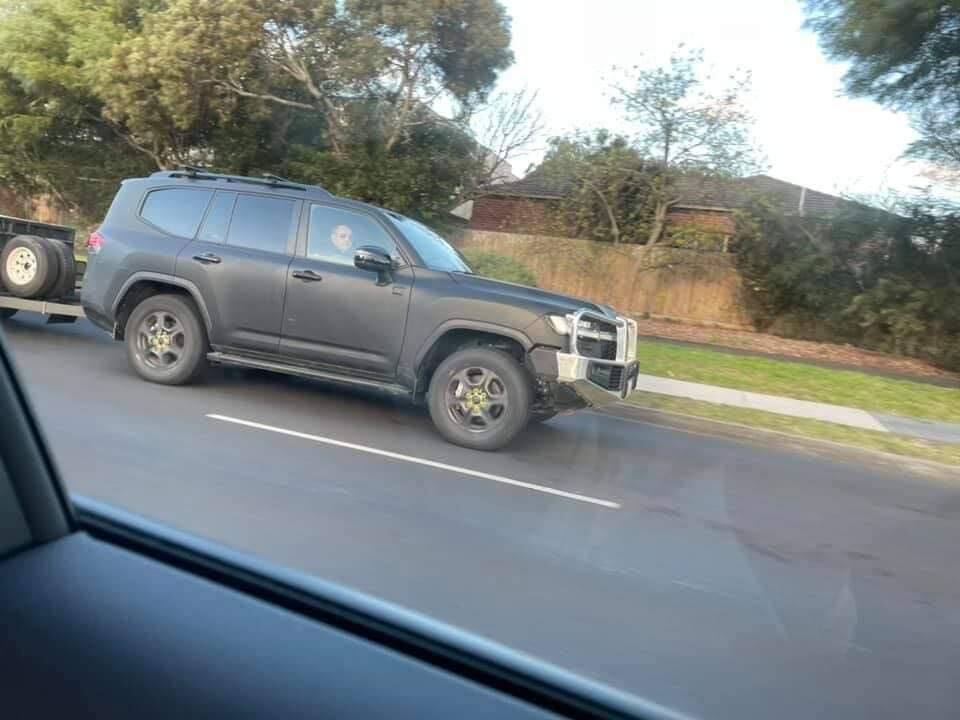
We don’t get a full look at the trailer the Cruiser is towing here, but you can expect Toyota’s engineers would have been testing the new 300 under all sorts of conditions with heavy loads in tow. The current LandCruiser 200 Series has a 3500kg towing capacity and the 300 Series will have to have at least the same.
The 300’s 700Nm, 3.3-litre twin-turbo V6 diesel engine and 10-speed automatic transmission would have all been tested at full payload and weight on steep grades and off-road, to ensure it is up to the task ahead of it.
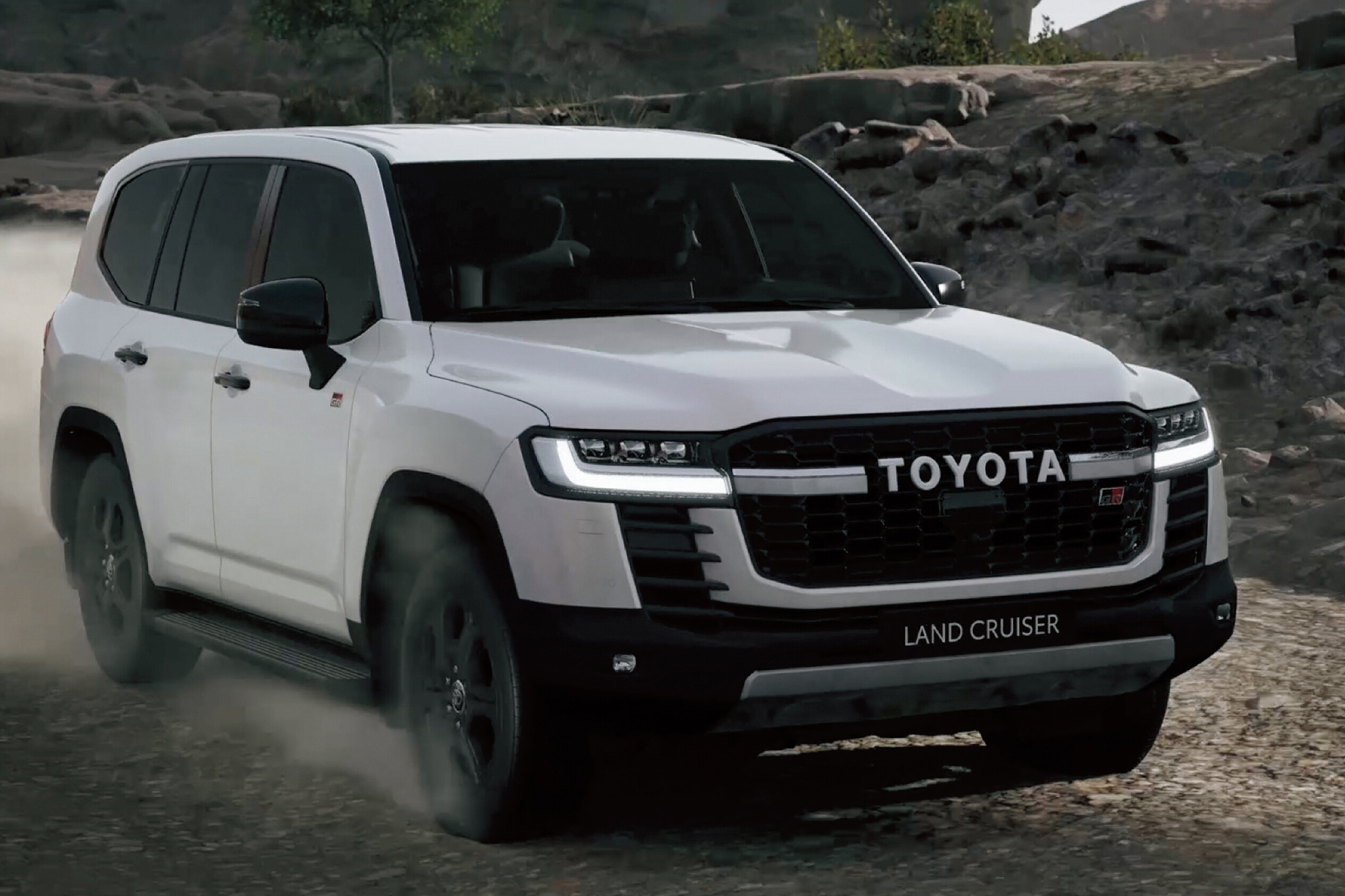
What’s also interesting about this vehicle is that it is fitted with an alloy bullbar and we expect that this will be a genuine Toyota accessories item. The tow bar would also be specifically developed locally for Australian conditions, as the LandCruiser is a favourite vehicle for those who tow.
We’re expecting more news on the local line-up and pricing of the 300 Series LandCruiser in the coming month, with sales to start in October or November.
Snapshot
- More than 238,000 units sold in Australia
- 60 years since the G60 landed locally
The iconic Nissan Patrol celebrates its 70th anniversary this year, with 2021 marking 70 years since the arrival of the 4W-Series.
Sold exclusively in Japan from 1951, the first-gen 4W60 ─ which adopted the Patrol nameplate in 1958 in 4W65 guise ─ utilised a 3.7-litre in-line six that produced just 56kW. It ran a part-time 4WD transmission and a four-speed manual transmission.
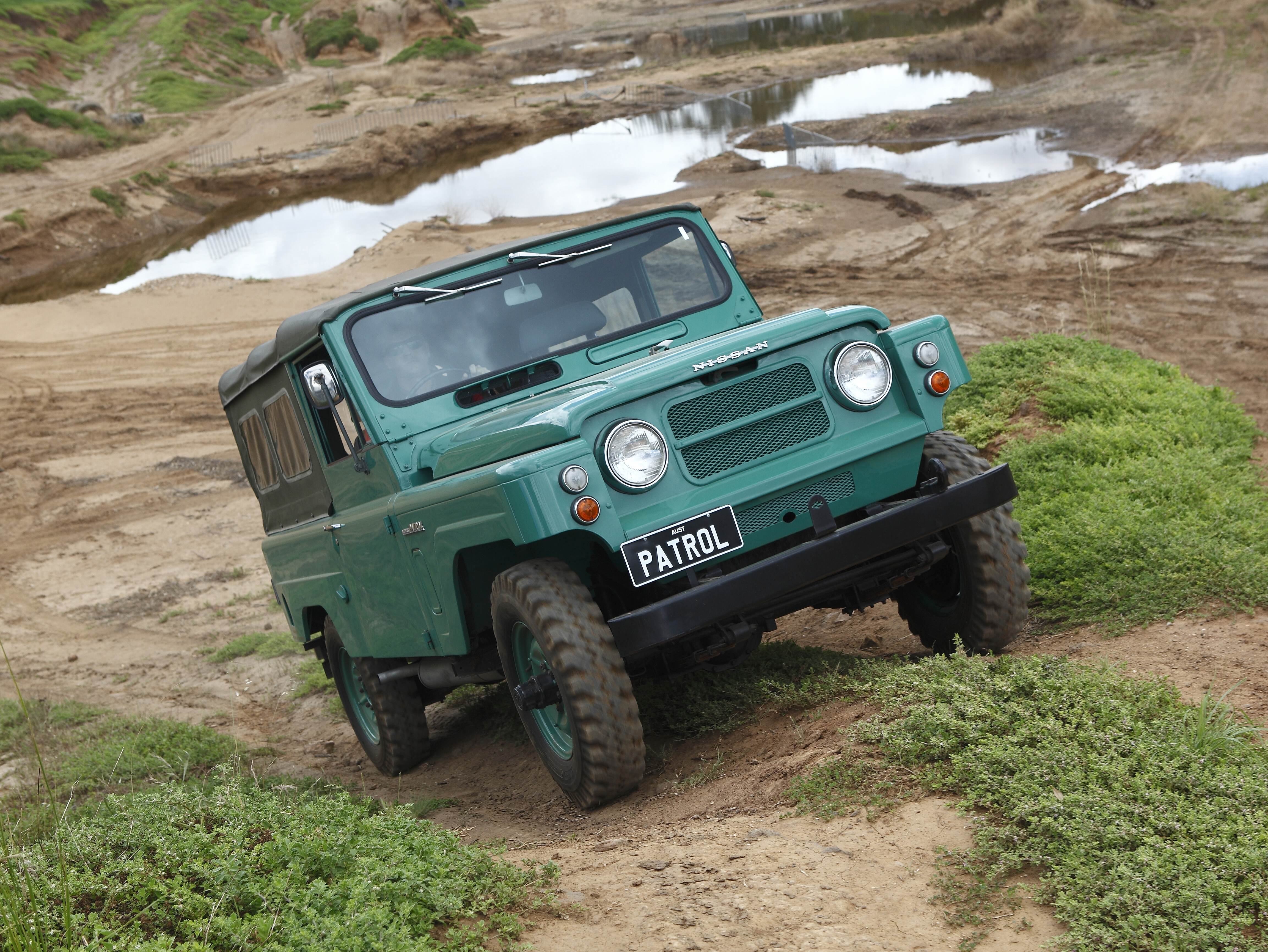
Australia had to wait 10 years before the first Patrol landed locally in 1961, with the second-gen G60 ─ known widely as the Datsun Patrol ─ offered in soft-top, wagon and cab-chassis body styles.
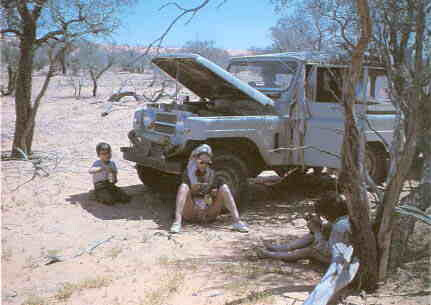
A crowning achievement of the G60 occurred in September 1962, when the Sprigg family ─ Reg, Griselda and children Marg and Doug ─ became the first to cross the Simpson Desert in a motor vehicle. The 12-day, dune-bashing journey followed a route from Andado Station in the NT to Birdsville in Queensland ─ now known as the well-trodden French Line.
The Datsun G60 Patrol featured a 92kW 4.0-litre in-line six and remained largely unchanged for the next 19 years, before the arrival of the famous MQ Patrol in 1980.
At launch, the MQ was available with either a 2.8-litre petrol or 3.3-litre diesel six-cylinder engine, and it was the first Patrol to utilise an automatic transmission ─ a three-speed unit available in the top-spec Deluxe Wagon. Four years later the MQ adopted a turbo-diesel option, an SD33T six-cylinder good for 81kW and 255Nm.
Nissan pulled the wraps off its coil-sprung GQ Patrol in 1987, which was offered with all-new 4.2-litre petrol or diesel six-cylinder engines mated to either five-speed manual or four-speed automatic transmissions. A 3.0-litre petrol six was added in 1990, followed by a 2.8-litre turbo diesel in 1995.
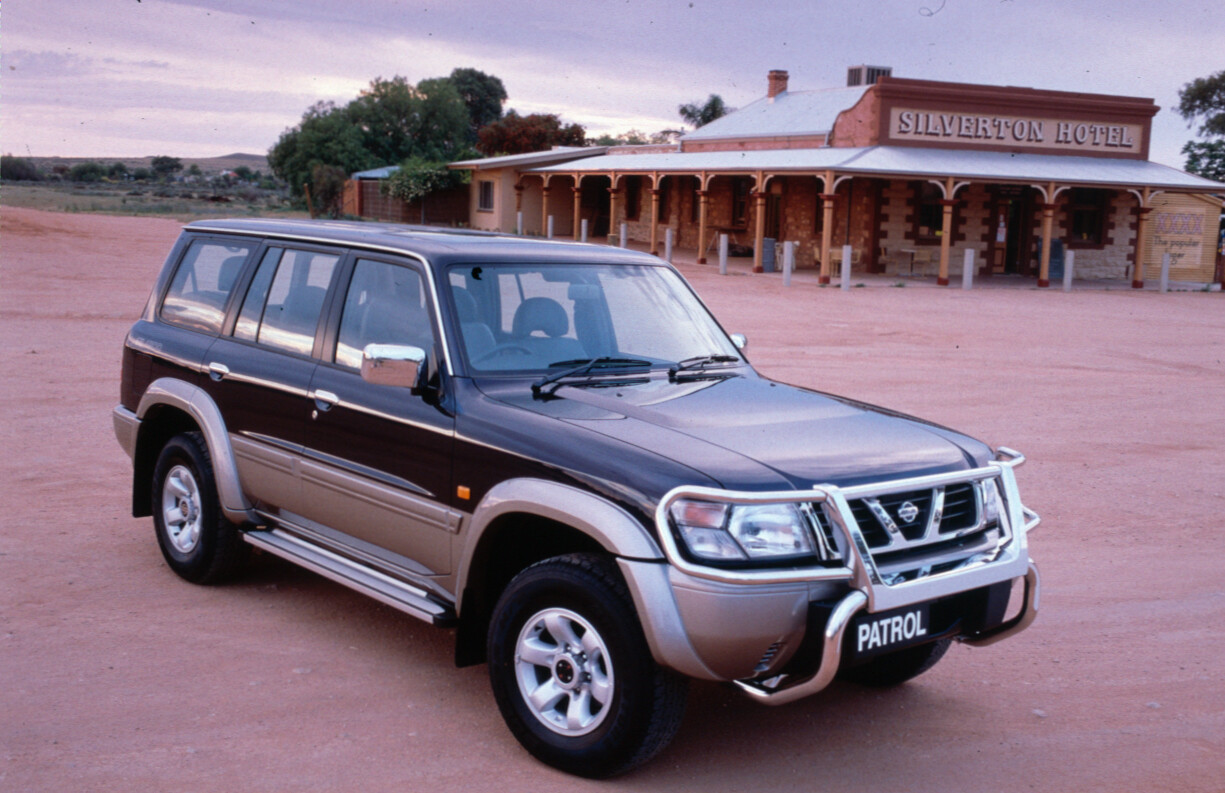
The fifth-gen GU Patrol arrived in 1997, sporting radical updates to suspension, chassis and driveline components. Originally available with a refined 2.8-litre turbo-diesel six or a 4.2-litre naturally-aspirated six, a turbo-charged six arrived in 1999, a ZD30 3.0-litre turbo four in 2000, and a 185Kw-420Nm 4.8-litre petrol six in 2001.
The GU was hugely popular with Australian buyers, with Nissan selling more than 10,000 units per year between 1998 and 2000, making Australia the largest market in the world for the Patrol.
Nissan changed gears in 2014 with the arrival of the tech-savvy Y62, available exclusively with a 5.6-litre petrol V8. Unlike previous iterations of the Patrol, a heavy emphasis was placed on the Y62’s on-road performance ─ highlighted of course, by its fully-independent suspension set-up with Hydraulic Body Motion Control. The Y62 was updated in 2020 with a fresh look and the addition of vital modern safety technology.
In its 60 years on the Australian market, Nissan has shifted more than 238,000 Patrols.
“The Patrol has been an integral part in the success of Nissan here in Australia and, over the same time, has opened many new pathways for Australians to explore this rugged country thanks to its renowned off-road abilities and dependability,” said Adam Paterson, Managing Director of Nissan Motor Company Australia.
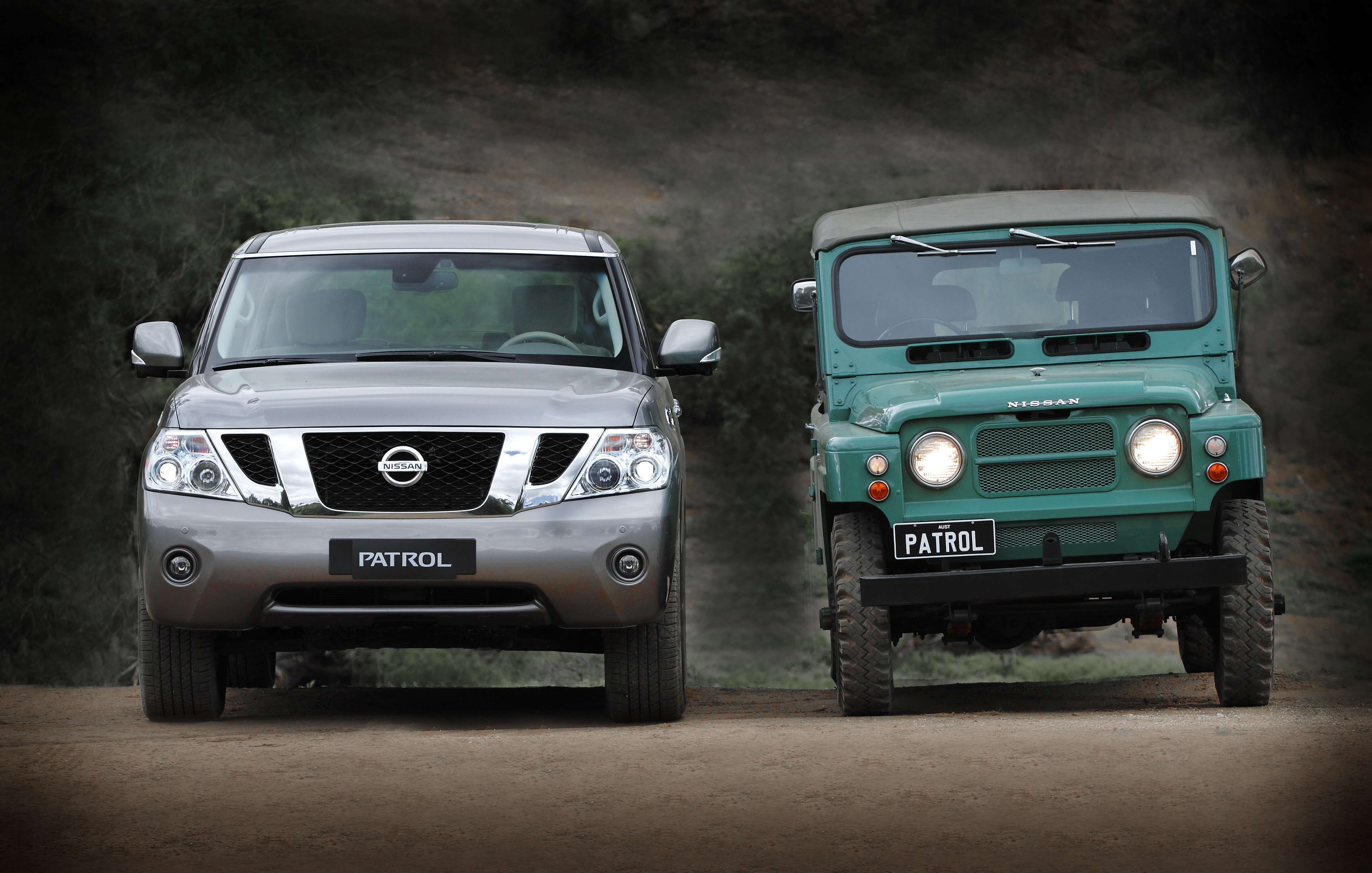
Interestingly, Toyota is marking 70 Years of the LandCruiser this year, although the name was never used until 1953. Like Nissan/Datsun, Toyota was building Jeep-like 4×4 vehicles in Japan in the post-war era and its BJ became the LandCruiser just before Jeep filed a trademark on its name. Nissan soon followed suit and named its vehicle the Patrol.
Further coincidence is that the vehicle they are both copying, the Willys Jeep, celebrates its 80th in 2021. There can be only one original.
Snapshot
- Amarok W580X to launch in April 2022
- No price confirmed as yet
- Lift kit and off-road specific tune to feature in tweaked ‘Rok
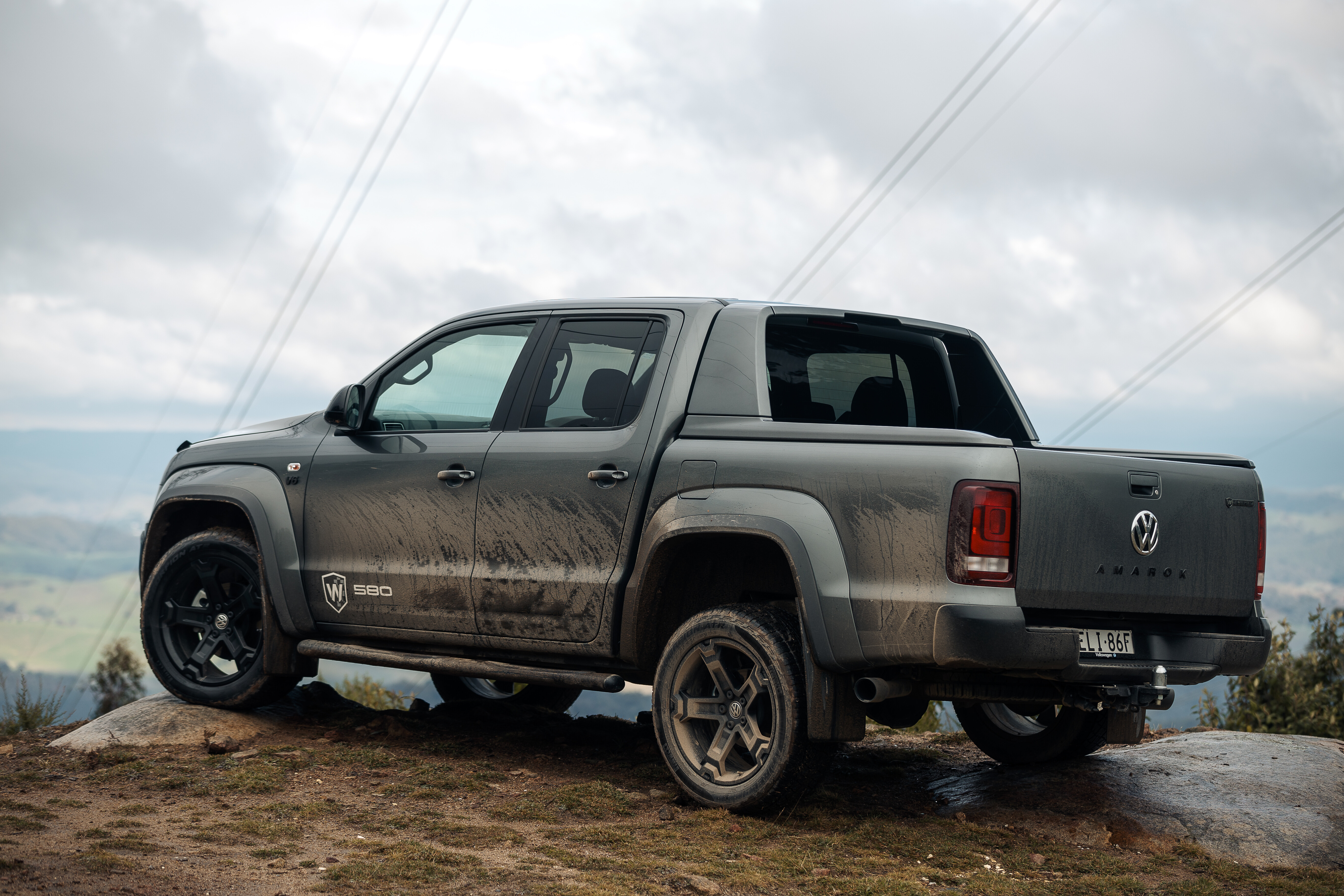
Volkswagen has officially revealed its off-road-ready Amarok W580X, with the mud-slinging variant to be available in showrooms from April 2022.
Unlike the previous collaboration with top-level tuners Walkinshaw Performance – for the road-oriented W580 and W580S, released earlier in 2021 – VW’s W580X has been sharpened specifically for off-road duties.
To this end, Walkinshaw will equip the W580X with a suspension lift and off-road tune utilising MTV twin-tube dampers; custom bash plates; and rock sliders. The W-Series off-roader will also feature Seikel underbody protection and breathers; rubber mats; an LED light bar; and wheel arch extensions.
VW Amarok W580X standard kit
- 18″ forged alloy wheels
- AT tyres
- Wheel arch extensions
- Front suspension lift and off-road tune (MTV twin tube damper)
- Rear suspension off-road tune (MTV twin tube damper)
- Rubber mats
- New front upper grille design
- Front bumper inserts (fog lamp surrounds) with LED fog lamps
- Art velour seat trim with Walkinshaw branding
- Heated front seats
- Bi-xenon headlamps with LED daytime running lights
- Dual zone Climatronic air conditioning
- Multi-function steering wheel with paddle shifters
- Black exterior mirror housing and rear bumper
- Discover media navigation audio with App-connect
- Tyre pressure monitoring system
- Custom bash plate
- Custom rock sliders
- LED light bar with integrated switch
- Seikel underbody protection and breathers
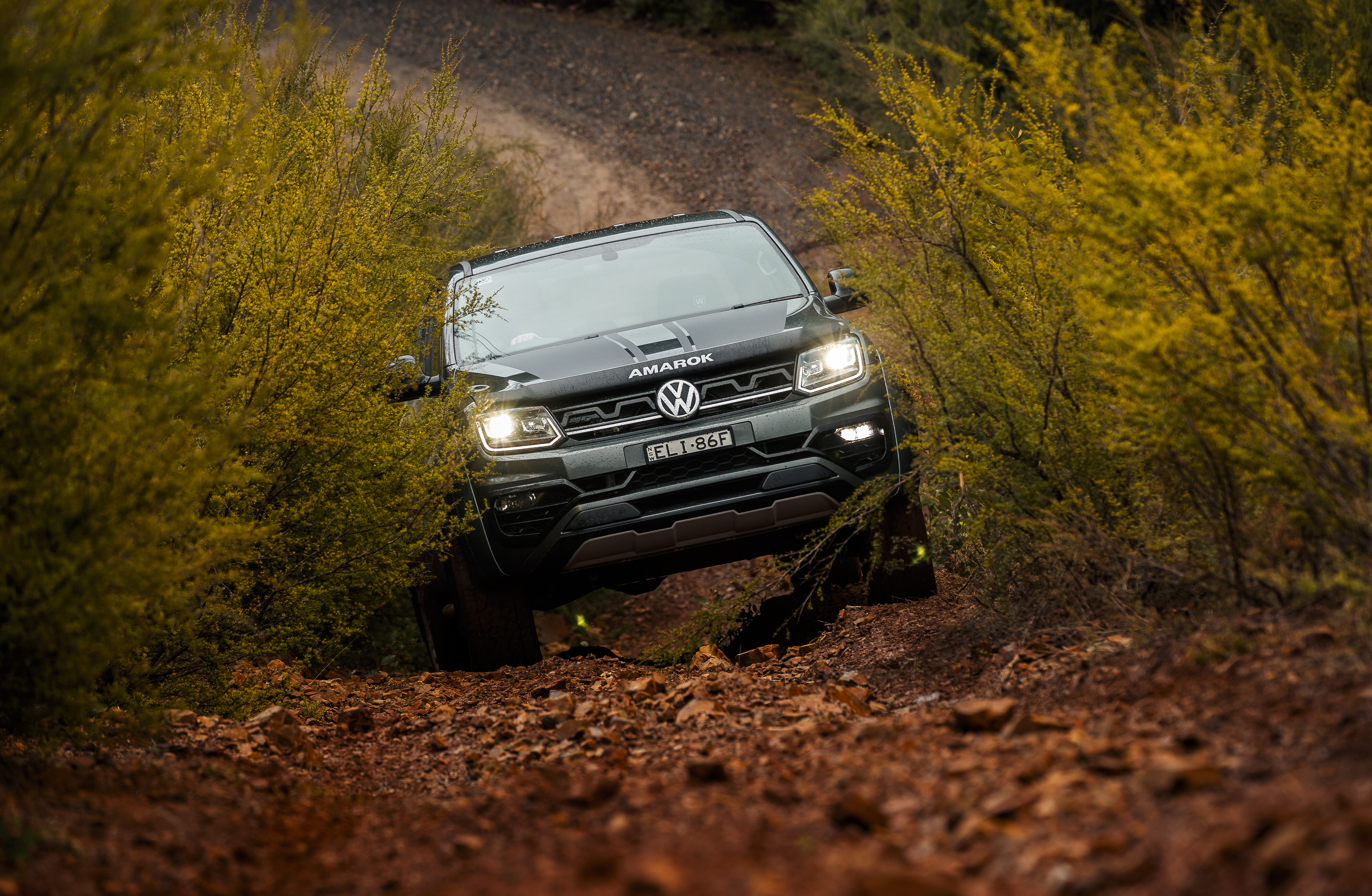
Much like the W580 and W580S, the W580X is powered by the Amarok’s proven 190kW/580Nm V6 turbo-diesel engine which runs through an eight-speed ZF auto transmission.
“The first W-Series was a chance to offer something no-one else in the market could do – a powerful, dynamic ute which was as comfortable on highways as it was on Alpine passes,” said Nick Reid, national marketing and product manager, and Amarok W-Series lead.
“With the new W580X, our W-Series off-road Amarok, we can lean in to another aspect of the Amarok’s platform. We know the Amarok is among the best off-roaders around in standard form, but with Walkinshaw giving it a unique tune, we’ll be able to offer something unbeatable to Australian customers,” he added.
The W580X is expected to be offered in limited numbers. Official pricing and detailed specification will be revealed closer to the vehicle’s launch in April 2022.
For me, a 4×4 is a tool – a tool to find solitude, peace and to immerse myself in Mother Nature. In fact, I actually call my rig ‘the freedom machine’ because that is exactly what it offers me, freedom. I often find myself in places that do not require low-range or technical driving, and I’m fine with that; although, there is plenty of satisfaction to be had driving difficult and challenging tracks.
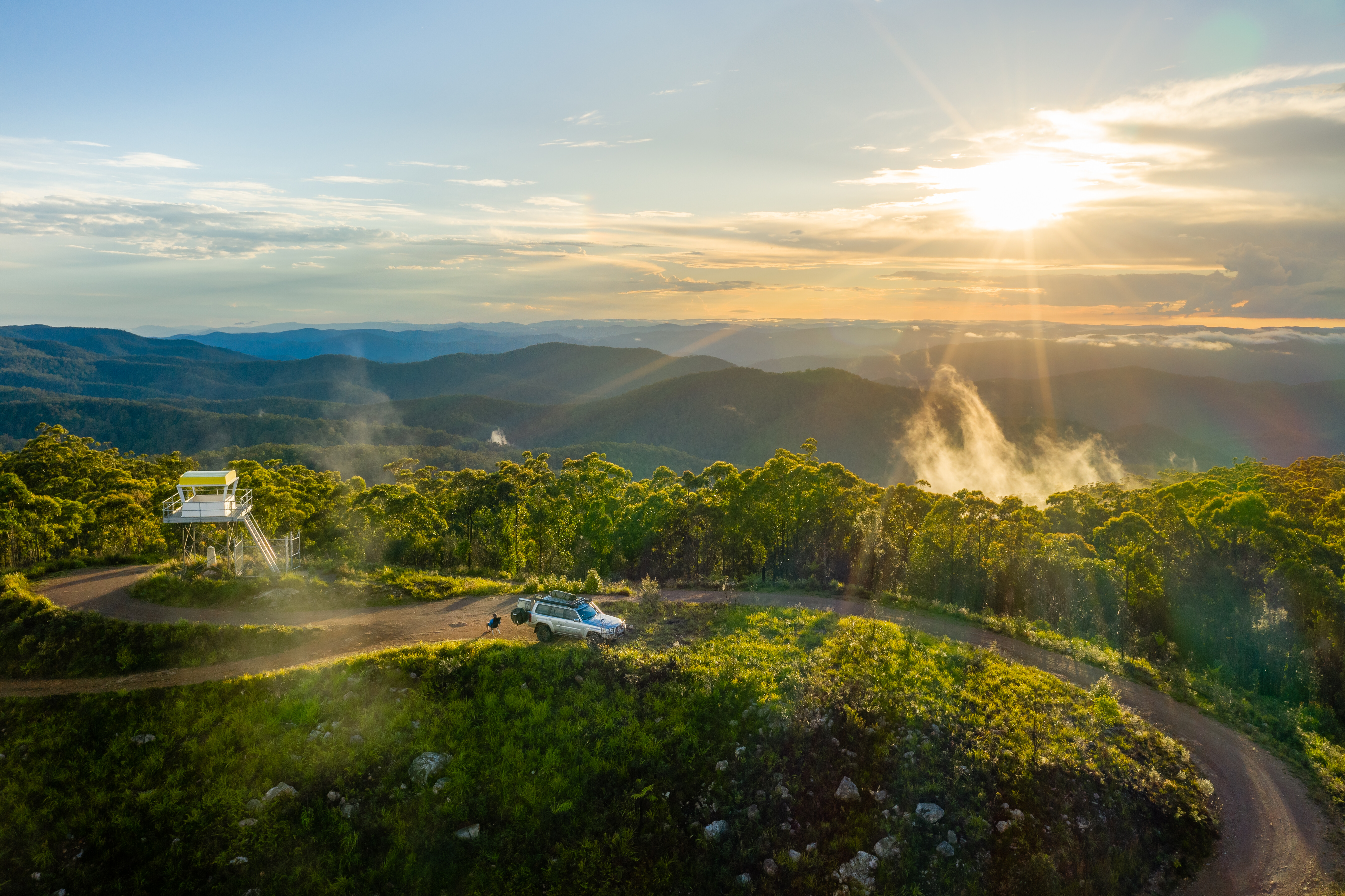
One such place I have started to visit regularly are the mountains north of Gloucester in NSW. For the most part it’s easy driving but there are slippery and steep challenges to be found, if you explore the overgrown and less-travelled tracks.
The one thing it has in spades is natural beauty. Dirt roads cut through this heavily forested green landscape taking in creek crossings, waterfalls, sub-tropical rainforest, tall-timbered ridgelines and stunning elevated viewpoints. From the coastal hinterland through to 1000m-plus peaks, you are rewarded with scenic diversity. It is incredibly beautiful and nearly always quiet, and it is not well-known at all.
CHASING STORMS
On this trip I was travelling in the height of summer, on a mission. These mountains cop some ferocious storms; I had witnessed many in the past and a look at the forecast had me excited in anticipation of capturing nature’s fury on camera.
This region was about to be belted with large storms. It was the perfect excuse to get away again and, believe me, I can get pretty creative when it comes to making excuses to jump in to my 4×4. Equally important was a desire to share a different 4×4 experience with you.
The fact you are reading this means you are as passionate about 4WDing as me, but I wanted to connect with you on a different level. I decided to share my passion for photography by simply enveloping myself in nature, and one of my favourite things to photograph is stormy weather. It is what often drives me to travel.
I was driving toward Gloucester and the sky was filled with tall, convective towers of cloud
For whatever reason you travel (and that may change trip to trip) I’d like you to take a moment and embrace it. It is incredibly easy to become disconnected with our own values. We are bombarded with content and the experiences of others and forget how to value our own.
Well, the prediction models were looking accurate. I was driving toward Gloucester and the sky was filled with tall, convective towers of cloud … it would be on soon.
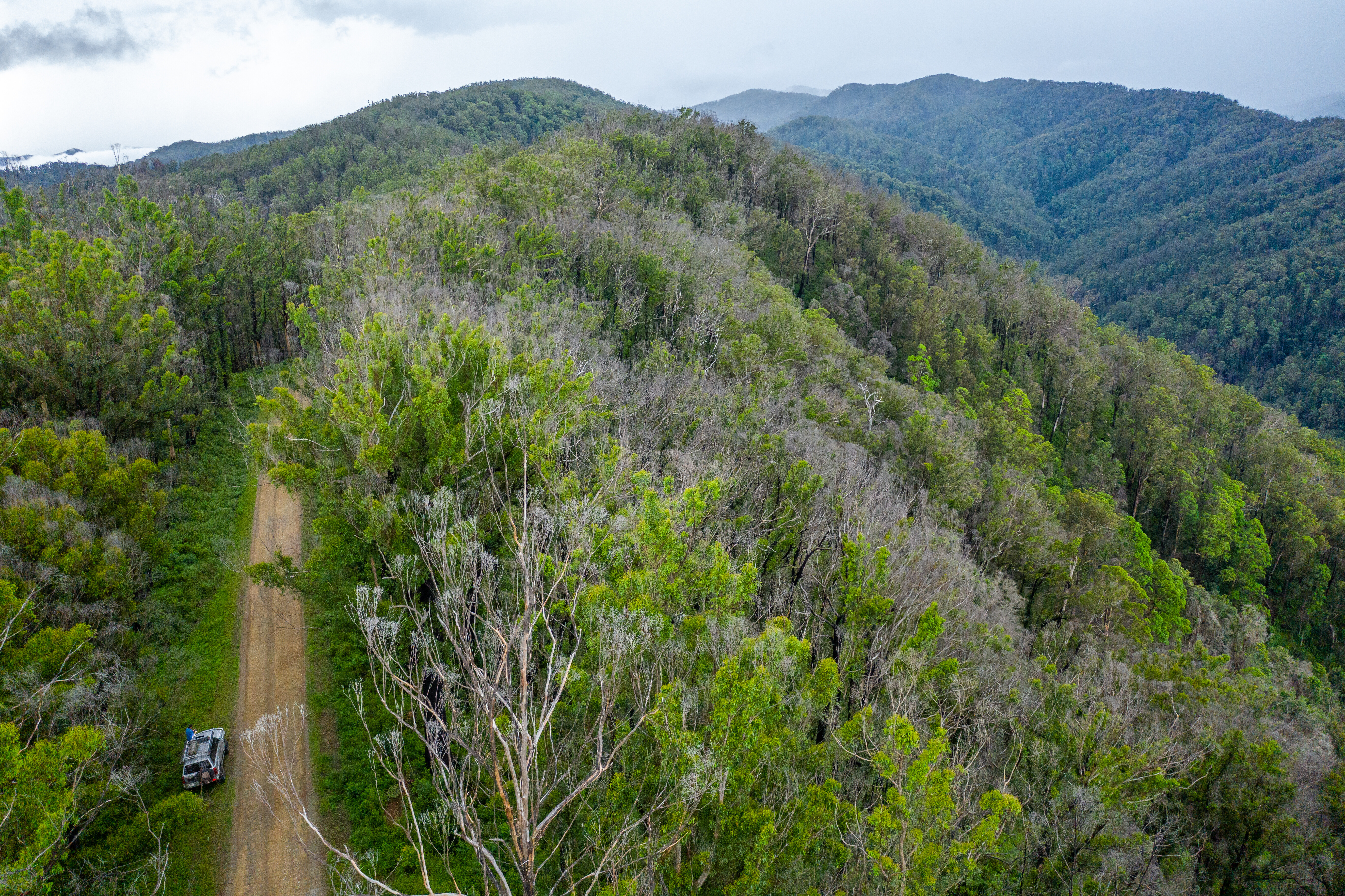
After a quick shop and refuel I was only 10 minutes in to the dirt when the first storm cell approached from the north. I threw caution to the wind (literally) and decided to send up the drone to capture the rapidly approaching storm with a pretty evil-looking gust front. I knew from experience that as the front hits it would bring powerful winds and rain, potentially carrying the drone away, never to be seen again.
Seeing it from the air was even more impressive than seeing it from the ground and I managed to safely land just in time. I was already feeling happy and excited, and the next few days promised even better storm conditions.
DINGO TOPS

The next few hours were happily spent in driving rain as I made my way to my first camp, Dingo Tops rest area (within Tapin Tops National Park). It is a beautifully lush and green site with good amenities; although, it is also accessible by car so is not as remote as the other areas I had in mind.
From here it is easy to branch out in many directions to take in waterfalls, tough tracks or views. I had the place to myself and by now the stormy skies resembled a mess of low-level showers, so it was an early night, ready for tomorrow’s action.
I spent a good while in the early morning chatting to a local ranger about the impact of the devastating fires of Christmas 2019. A sad conversation, but it was clear to see that regrowth was strong. This summer was relatively wet and cool, a stark contrast to last year’s dry inferno.

I had a few elevated spots in mind to observe the afternoon’s storm build-up. I set up the rooftop tent and chilled out in the shade with 360-degree views at Blue Knob and, to be honest, it was a really nice way to pass the day – reading and running some time lapses on the GoPro.
By mid-afternoon I had witnessed the development of two very impressive distant storms. But within the period of an hour the overhead sky had also transformed, the cauliflower-looking towers above were merging rapidly and good, dark bases evolved.
Soon my immediately surrounding atmosphere was absolutely alive and dynamic. I realised at this point that I could be absolutely belted, as what I thought was a dark band of narrow inflow was actually a storm base overhead.
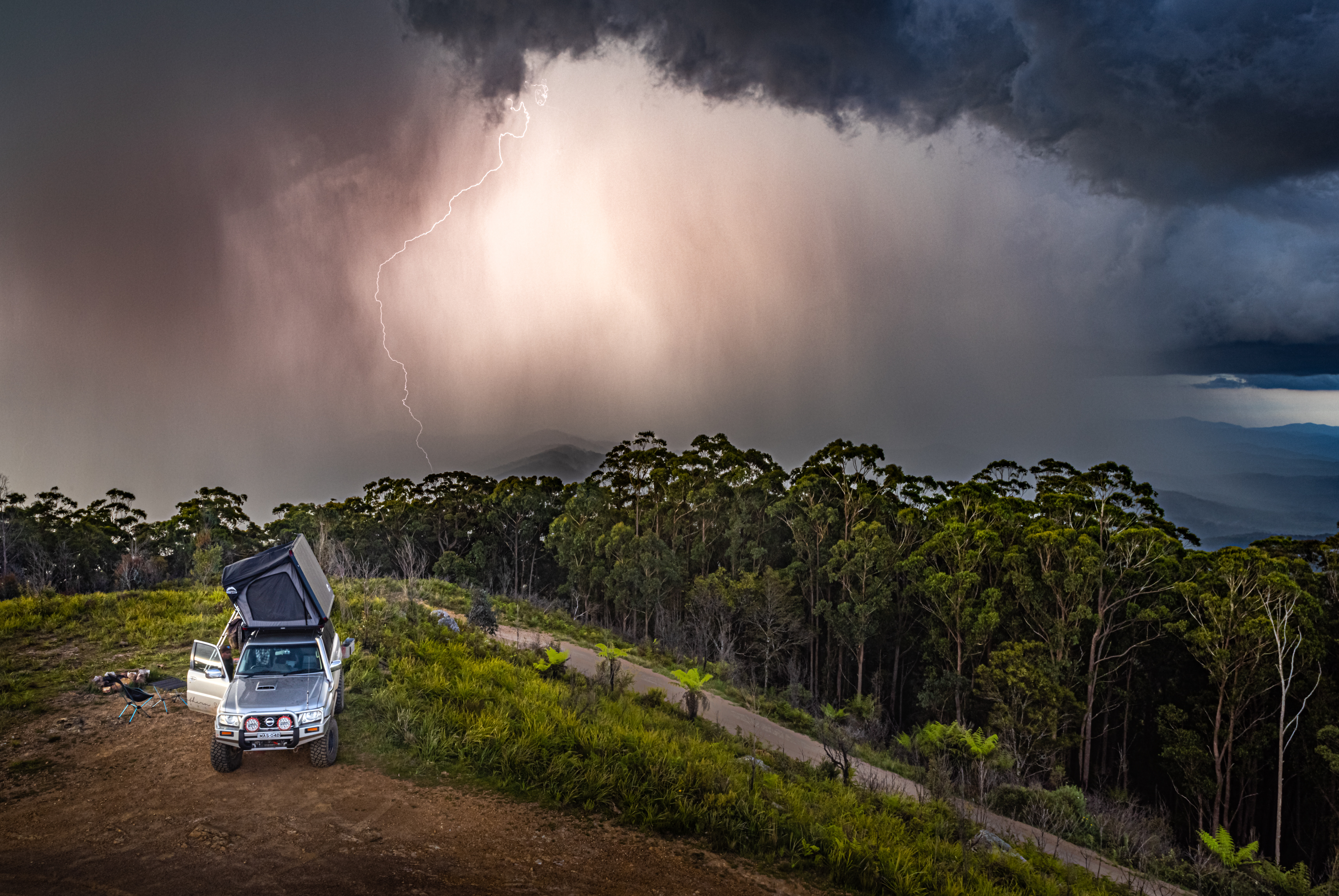
There were some mild overhead rumbles, then boom! A bolt landed within 100m of me, a clear-air bolt that threw well-out from the storm tower. I was kind of expecting that possibility, but it caught me completely off guard and I jumped at the flash and instant crack. I was in the danger zone of this rapidly building beast. But I knew this would quickly pass.
Thankfully driving winds took this monster away, and I was in the perfect position. I spent the next few hours shooting this and two other beast storms. There were several close bolts and I managed to score a photo of one not too far away. Incredibly I stayed dry the whole time; had I been just a kilometre away, I would have been drenched at least three times. It was an incredible day of storms, which sadly didn’t continue into the night – the atmosphere was completely gutted in a few hours.
The next few days I spent travelling the area, including a night at the lovely Maxwells Flat camp area and Ellenborough Falls. Yes, there were more storms, but not as impressive as those on the second day.
It was one of the best trips I have done in recent times, it was real food for my soul. I have travelled all over Australia and really enjoyed it, but sometimes all it takes is that short little trip close to home to replenish yourself.
TRAVEL PLANNER
Tapin Tops National Park can be accessed year-round. The driving is easy but keep an eye out for logging trucks, particularly on the main roads. There are several camp areas in the park: Dingo Tops has sheltered barbecue areas, long-drop toilets and campfire rings; Maxwells Flat is basic bush camping but does have two long-drop toilets, and it runs alongside a lovely clear-water creek with plenty of birdlife.
There are plenty of attractions to explore in the closely neighbouring parks including falls, creeks and campgrounds of varied amenities.
TOP FIVE PLACES TO VISIT
- Dingo Tops Camp Area
- Ellenborough Falls
- Blue Knob Lookout
- Rowleys Rock Lookout
- Maxwells Flat Camp Area
What can be more rewarding than taking the 4×4 you’ve built with your own skills, and blasting it all over the outback? In the case of Joel Fowler and this 2014 Hilux SR, that blasting is conducted at high speed and regularly off the ground.
Joel originally started his 4×4 life with a single-cab N70 Hilux, which he duly modified and enjoyed for more than six years before reverting it to stock and trading in on a rally-inspired 2014 WRX hatch. Combining the ability to conduct spirited driving and all-wheel drive proved the little hatchback a winner in Joel’s eyes: “It was probably the best car I ever have had, but you just couldn’t do much in it.”
Missing the beach and bush driving had Joel scanning the classifieds only six months later for another Hilux. “It had to be exactly what I was looking for, but this time it had to be auto, and maybe a TRD if I could find one,” he explained.

The aim being to build an off-road rig in a pre-runner style capable of maintaining high speeds across the rutted and frequently washed-out Kalgoorlie dirt roads which Joel calls home. A short time later Joel spotted this untouched 2014 Tidal Blue SR example sitting in a car yard. So the Rex was swapped over and Joel was back in a Hilux again.
With Joel being the talented metal fabricator (Fowler Fabrication) that he is, you could borrow money to bet that his new whip wouldn’t stay standard for long. “It was bone stock, so I dropped by the workshop on the way home from the dealer and chopped the exhaust off. Just to make it sound a little better.” That exhaust now exits racer-style just below the right rear door, now upgraded to a three-inch diameter with a J-pipe/resonator and hotdog.

UNDER CARRIAGE
That took care of the aurals, but 4×4 looks matter and a more aggressive stance was needed for the high-flying antics Joel had in store for the Hilux. A set of D-Hole steel rims where chosen for strength, before being wrapped in 285/70R17 Sailun Terramax ATs. The -22mm offset pushing the ensemble an extra 52mm wider on each side than standard and, according to Joel, gives a much more stable ride at speed. Keeping those tyres off the ‘guards and bodywork was paramount, with Joel lifting the body and tub two inches before setting about building the suspension to suit.
Just bolting on a set of steelies and tyres isn’t going to get you sailing over rampant undulations, Joel instead building something with longer than standard suspension travel and much more damping control. Starting with the front, a pair of Dobinson MRA remote-reservoir struts with 2-inch taller coils were installed. These allow for the adjustment of both slow- and high-speed compression control, making suspension tuning a far easier task.

When it came time for the rear suspension Joel went to the next level after experiencing some failures with his first Hilux. “I went with a kit which was a basic off-the-shelf bolt-on,” he tells us, because, “It was probably too hard, as the eyes of the shocks were breaking off and the seals were blowing out. The overall ride was just way too hard.”
To remedy those failures with this build Joel upgraded to a Profender 10-inch triple bypass shock set-up in a custom shock cage that also houses the remote reservoirs. The length of these shocks required holes to be cut in the tub floor and the cage mounted inside the tub itself. This does nothing for the sealing of the tub inside the canopy, however the benefit being it allows a far greater range of movement from the currently standard leaf packs.
Keeping in mind Joel’s intention was to be able to jump his ’Lux regularly, a pair of four-inch hydro bumps were installed along the outside chassis rails, providing a far better form of bump stop when slowing down the almost maxxed-out compression travel when coming back to earth.

ENGINE MODS
While the majority of owners would go for the most power they can afford, Joel has made the engine modifications more in line with his own philosophy. “Your car’s useless if you can’t get the power to the ground,” he says. “If you go out bush and you want to go fast, having all the power in the world means nothing. I tell everyone, sort the suspension out properly and you will go faster.”

With those wise words in mind the engine mods were kept modest, delivering a safe raised boost level via a Stage 2 ProCharge GTX turbo. A generic front-mounted intercooler found its way behind the Bmesh grille, with the pipework taken care of by Joel himself.
Connected to his own four-inch snorkel, a custom air box was next, with a cone filter element complete with clear Perspex cover and lobster-back joins on the curved four-inch turbo intake pipe. Combined with an ECU remap, the turbo now funnels 23psi in to the stock engine. While Kalgoorlie is currently devoid of a dyno, Joel estimates the power to be in the 190hp-550Nm range.
CABIN RENO

Once the suspension and power were working together, Joel turned his attention to making the interior more fit for purpose. Anyone who has taken a standard Hilux for an extended journey would agree the standard pews tend to turn into cement slabs after a short amount of time. Remedying this, a pair of leather and suede-covered Toyota 86 GTS buckets were chosen, with the standard seat rails modified to suit.
Keeping his passenger entertained is a Kenwood 919 head unit pumping vibes to Kenwood Stage Sound six-inch speakers and eight-inch sub/amp combo. Letting his mates know where he’s gone after leaving them behind is a GME TX3100 radio and stubby antenna.
Making space for a fridge and some recovery gear saw the rear seat deleted and a false floor installed, hiding an ARB compressor complete with external power switch and hose connection. As a lucky charm, a Chuck Norris DVD and a mate’s holed Hilux piston is kept in the rear firewall’s storage bag at all times.
Hopefully with the undefeatable power of big Chuck, those currently stock pistons will stand up to all the pounding the turbo and trails serve up to them. Rounding out the rear end, an ARB fibreglass canopy houses three XTM drawer sets bolted down alongside a pair of MaxTrax recovery boards.
If the stance and colour wasn’t enough to get him noticed, Joel took to the bonnet and fitted an FG Falcon bulge. Complementing the new look are a pair of 60mm Utemart flares, along with some aggressive trimming of the standard front bar. The absence of a steel bullbar keeps the front end light, increasing the ability to leave terra firma. Rounding out the front are a pair of halo headlights, a 22-inch light bar and a Stedi 50-inch curved light bar up high.
Keeping in mind his rig gets taken anywhere and everywhere, Joel would like to thank Regan Carter for keeping it looking top notch, and James Hitchcock from Hitchcock Engineering and Powder Coating (Broadwood, WA) for his assistance. Seeing the way Joel has adapted his Hilux using his own fabrication skills to get it doing exactly what he set out to achieve, only bodes well for what he has planned for the future. We can’t wait to see where that takes him.