
There’s never been more of an interest in getting out from the confines of the city and leading a simpler life. It’s a romantic concept that has inspired people for countless generations. Australian folklore talks of the vibrant experience of the outdoors. We’re raised on tales of dry riverbeds, magpies warbling as the sun sets and the crackling of a campfire with your feet planted firmly in the dry red earth. It’s as much a part of our national identity as any bridge or sport.
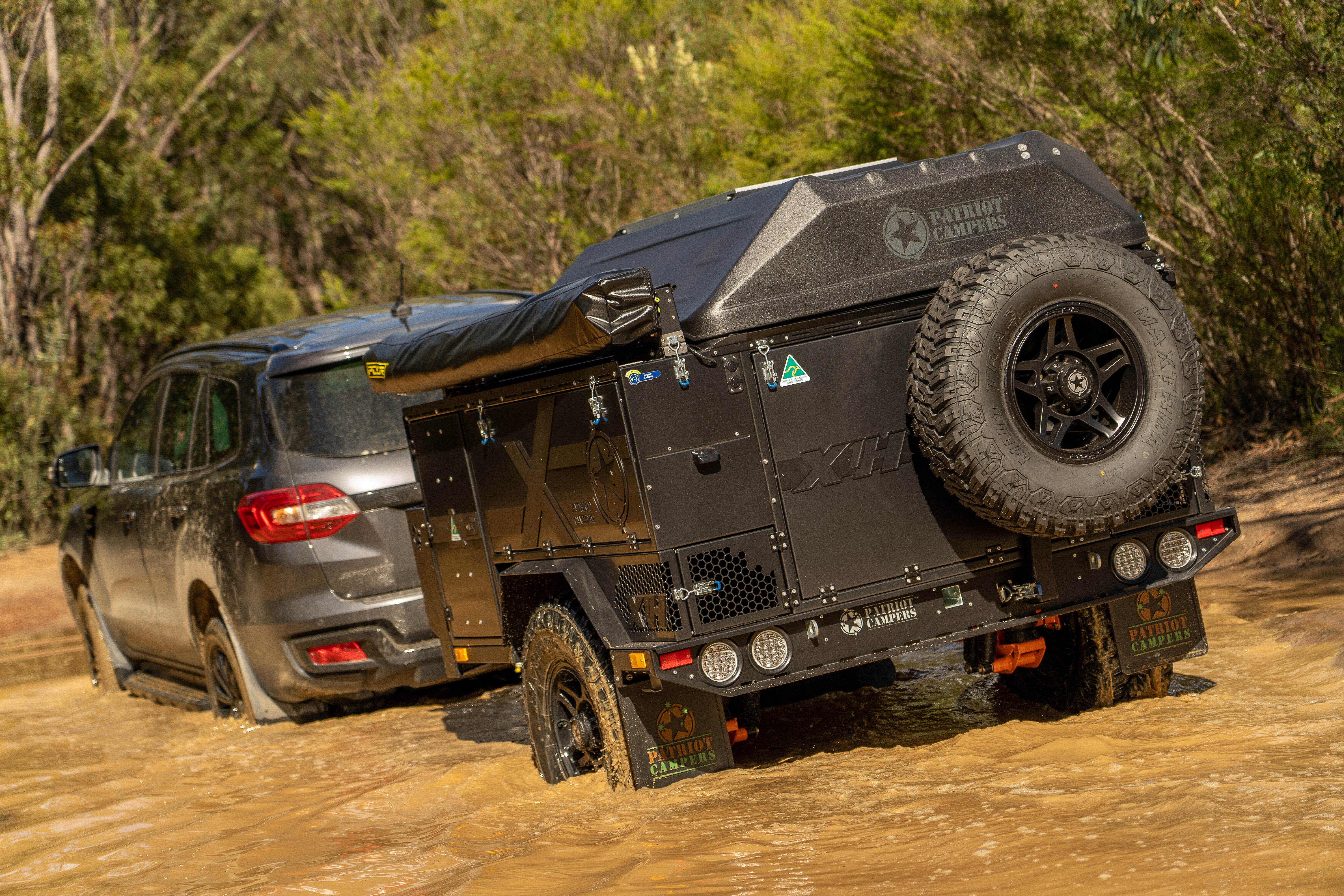
It should come as no surprise then that, in a tidal wave of people wanting to simplify, Patriot Campers’ unique designs have never been more popular. A camping trailer rather than a camper trailer, the Patriot range aims to get people out connecting with the outdoors rather than walling them up inside the double-glazed windows of a caravan. The X1-H is the latest in its line-up of compact camper trailers, designed to go anywhere – towed behind anything – and enhance the camping experience rather than insulating you from it. We recently had the opportunity to hook it to the towbar of our Ford Everest and attempt to find both their limits when it comes to off-road capability. Here’s what we found.
FROM THE GROUND UP
Patriot Campers isn’t known for cutting corners, and there’s no greater example of this than its Rigilite chassis. From the ground up the X1-H is designed to not only be extremely durable, but practical off-road and as light as possible.
Pieced together with a combination of galvanised steel and aluminium, the Rigilite chassis uses clever engineering to add rigidity rather than throwing bulk material into the equation like many campers do. Rather than a traditional set of rails with cross members, the frame is a series of cross braces and a combination of box section and C section where possible. In short, it’s designed the same way vehicles are, not box trailers.
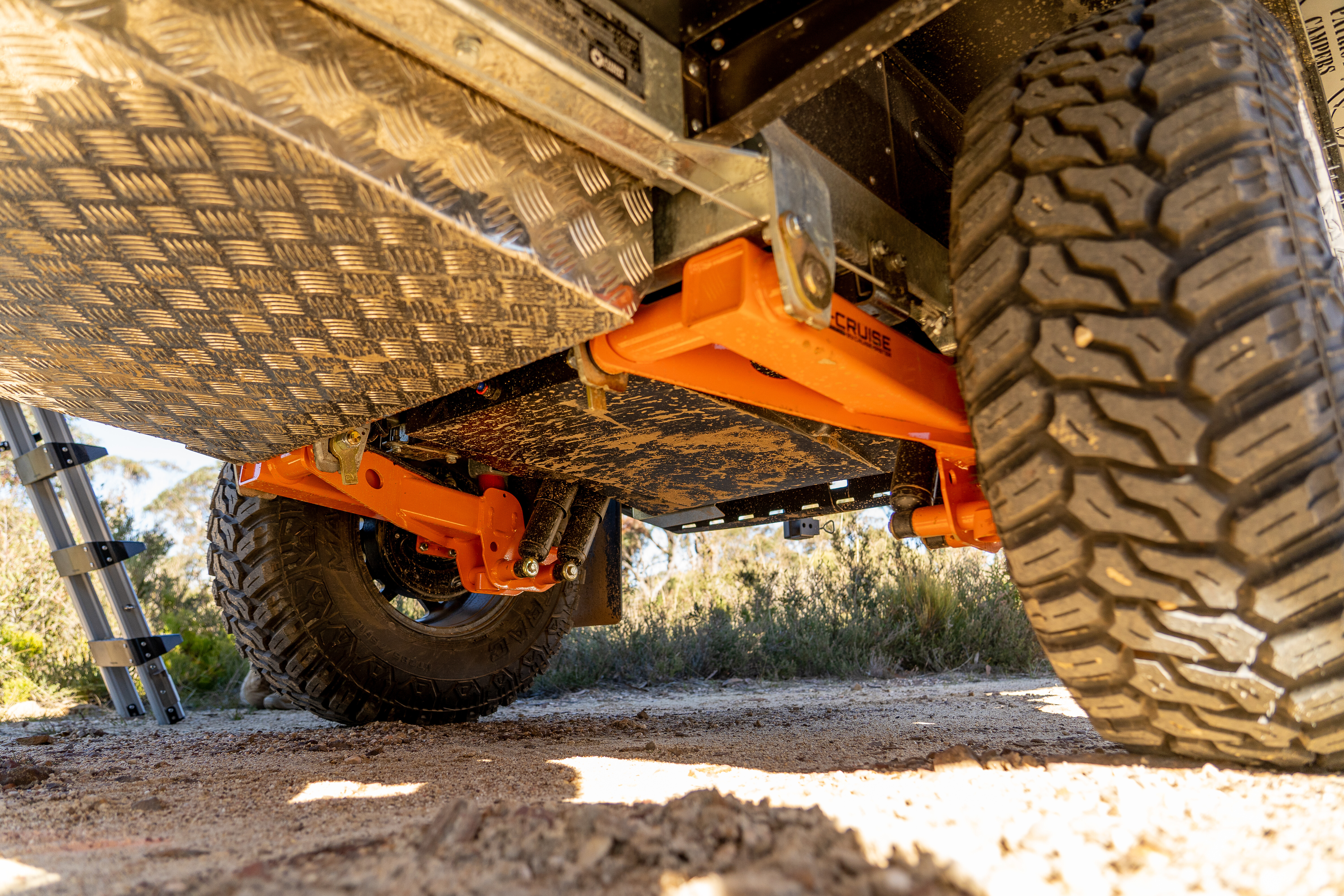
Moving underneath, Patriot Campers worked with the team from Cruisemaster Suspension to design the X-Cruise suspension specifically to reduce unsprung weight. The result is an independent suspension set-up that outperforms almost all other options on the market. Twin shock absorbers help fight shock fade in corrugations and add redundancy should one fail, while the twin A-arm design gives ample ground clearance through the ruts or rough country.
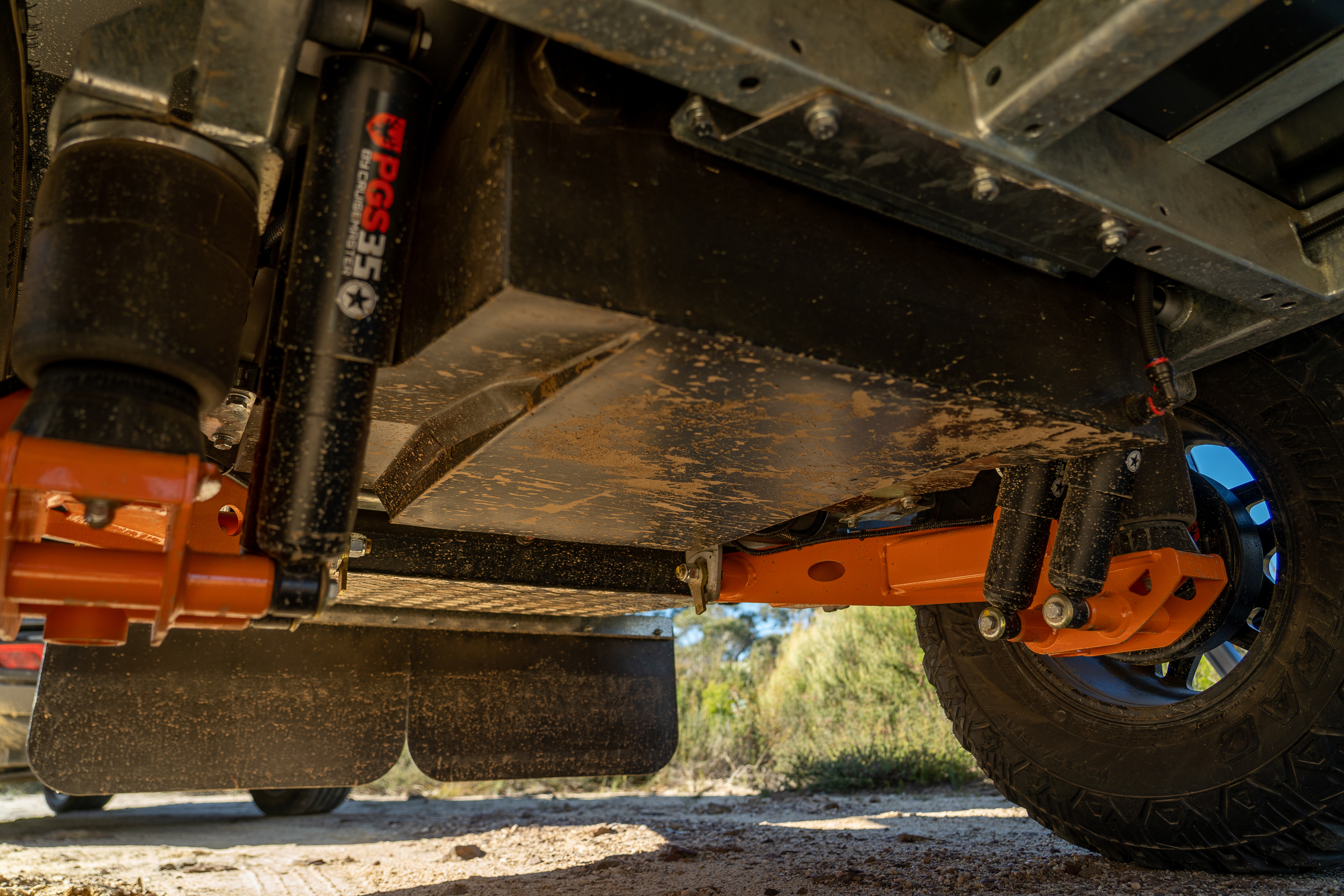
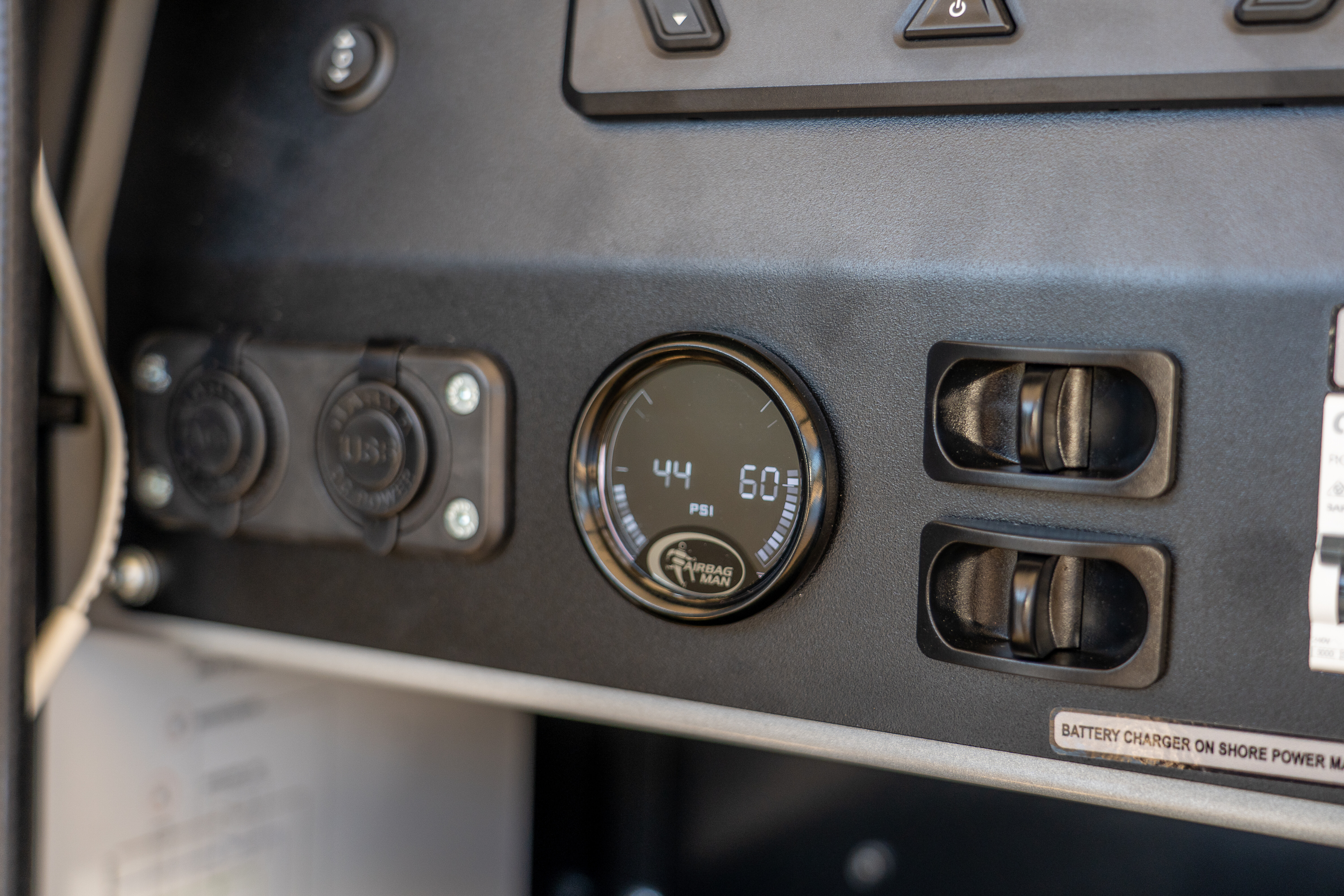
Our test model was optioned with the Tech Pack that stepped the suspension up to a full air-ride arrangement. It means you can raise or lower the camper with the flick of a switch, to clear obstacles or level the bed when camping in uneven terrain.Up front, a DO35 hitch provides an easy and positive locking mechanism, so you’ll know once it’s connected, it’s staying connected. The design also allows for full 360-degree rotation, allowing the camper to follow no matter how difficult the terrain is and without putting undue load into the camper’s frame, popping a tow ball off, or loading up the tow-tug’s suspension.The whole lot rides on PCOR 16-inch alloy wheels and 33-inch mud tyres.
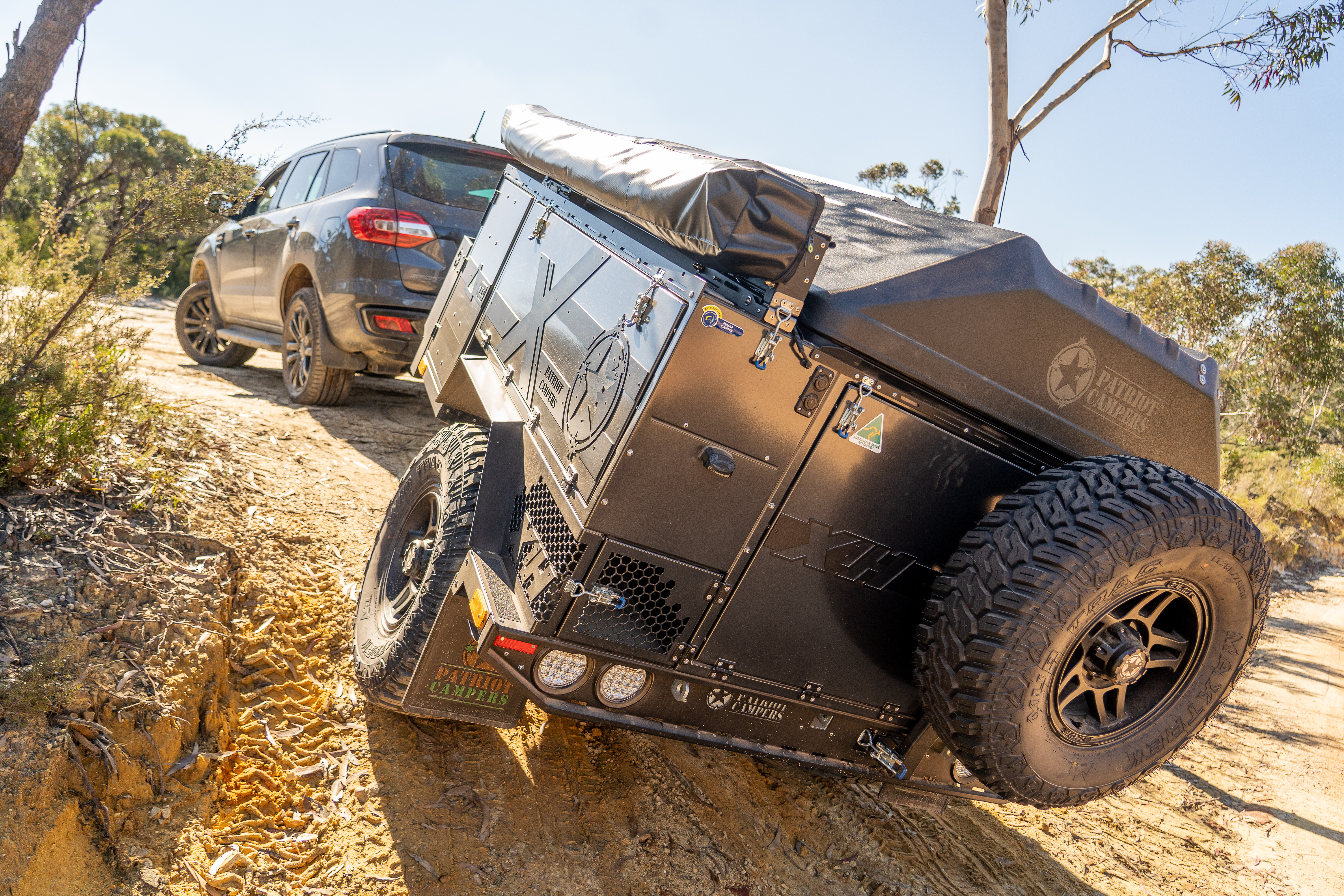
Dragging it behind the Everest and it was abundantly clear that anywhere we’d be confident taking the wagon, the Patriot would have no dramas following. It did catch us out briefly on a series of double rock steps, but that finger can be squarely pointed at highway tyres, the same combination with mud or even all-terrain tyres would have seen us climb effortlessly.
INSIDE THE BOX
Moving up in to the bulk of the camper’s body and it’s abundantly clear Patriot’s flare for intelligent industrial design has been put to good use again. The X1 range is nearing 10 years in development and it’s easy to see in the details.
The bulk construction of the body itself is constructed out of folded aluminium sheeting in its South East Queensland manufacturing facilities. The lightweight material up top helps keep the centre of gravity down low, making the X1-H incredibly stable in off-camber situations.
Fit and finish on the various compartments is impeccable as always, with neat panel gaps and doors latching tight without any rattles that can lead to fatigue failures. The doors pull in tight on automotive seals, which further aids in this process.
The seals are only part of the efforts to reduce dust ingress on outback journeys. The X1-H features a filtered positive-pressure system, ensuring any gaps that may occur will have clean air pushing out of them, rather than dusty air pushing into them. It’s the little things, you know?
Patriot has kept the overall footprint of the camper’s main box as compact as possible. It does leave the X1-H with a very matter-of-fact, no-frills styling, but it is perfect for the serious off-road conditions it’s designed to excel at. If you’re ducking and weaving through High Country switchbacks or NSW ghost gums, you’d be hard-pressed to find a more appropriate camper.
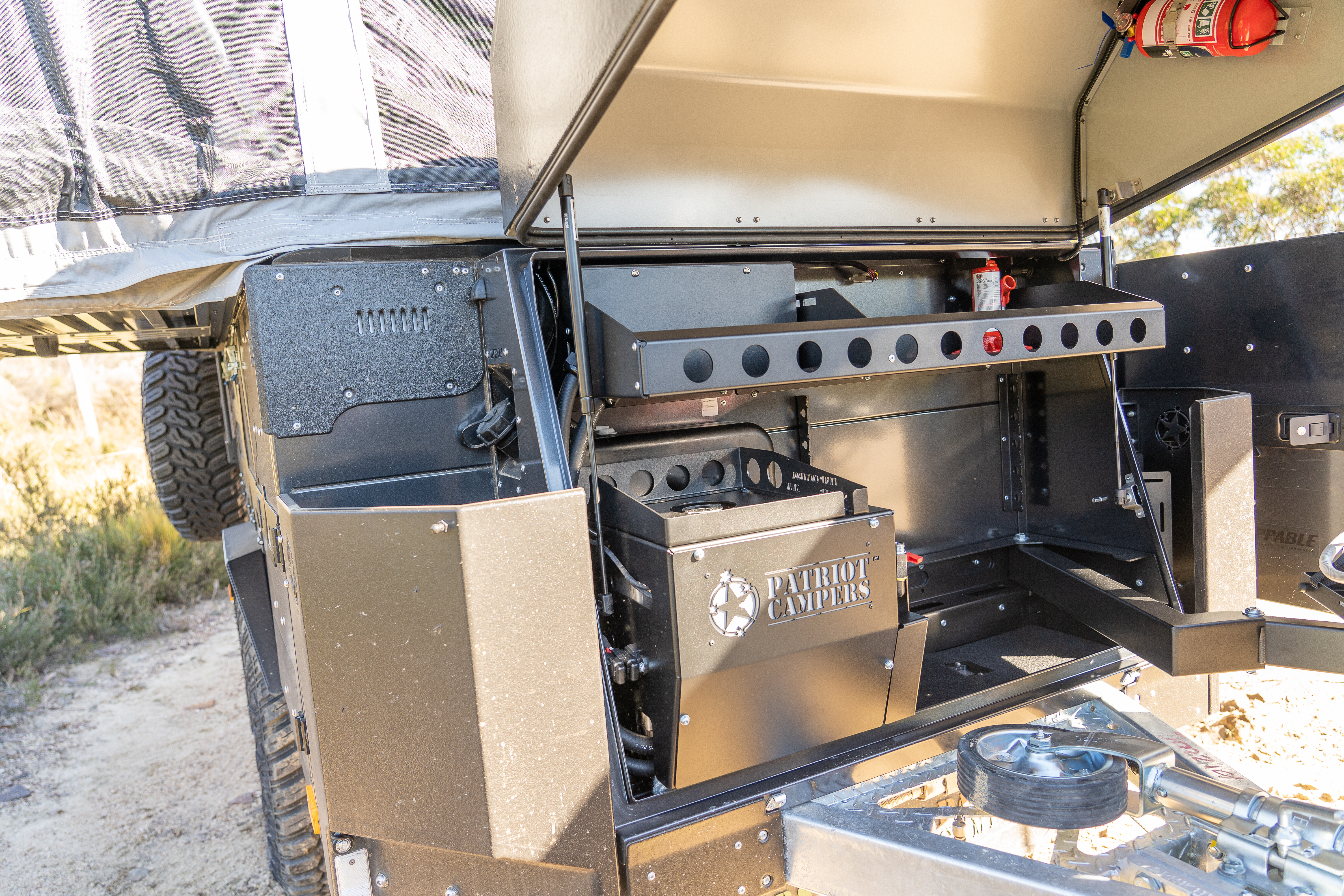
Beachgoers in South East Queensland will appreciate the full corrosion-resistant paint scheme that’ll keep the camper looking tip-top even after years of beach-work. The front storage box receives a different coating, with Rhino-lining helping absorb the impact of ant stones thrown up from the camper, while the box’s face is angled downwards to stop stones bouncing up and into your back window.
ON THE INSIDE
As nice as the Patriot X1-H is to look at and tow, how easy it is to use is ultimately the defining factor for calling it a win or not. The H in X1-H is a nod towards the ‘Hexocore’ hard-shell rooftop tent that separates this model from others in the X1 line-up.
Setting up the bedding area in the X1-H is one of the simplest in the market, thanks to a few unique designs around the tent. Flick open a handful of over-centre latches and grab out the wireless key fob, and the tent starts opening itself up with a tap of a button. They’ve used a wireless fob rather than buttons in the camper, so you can pack up the camper and tuck in any loose canvas as a one-person exercise. Experienced camper-trailer users will understand.
The lid of the tent tilts up on an angle, providing an insulated hard top over the head of the bed. Once the tent lid is up, the tent folds out in to what could best be described as an awning, enclosing the bed area with a covered standing area as well. If you’re bringing the family or setting up for a longer stay an enclosed room can be zipped on quickly, with a second kids’ room zipping on again with a single pole.
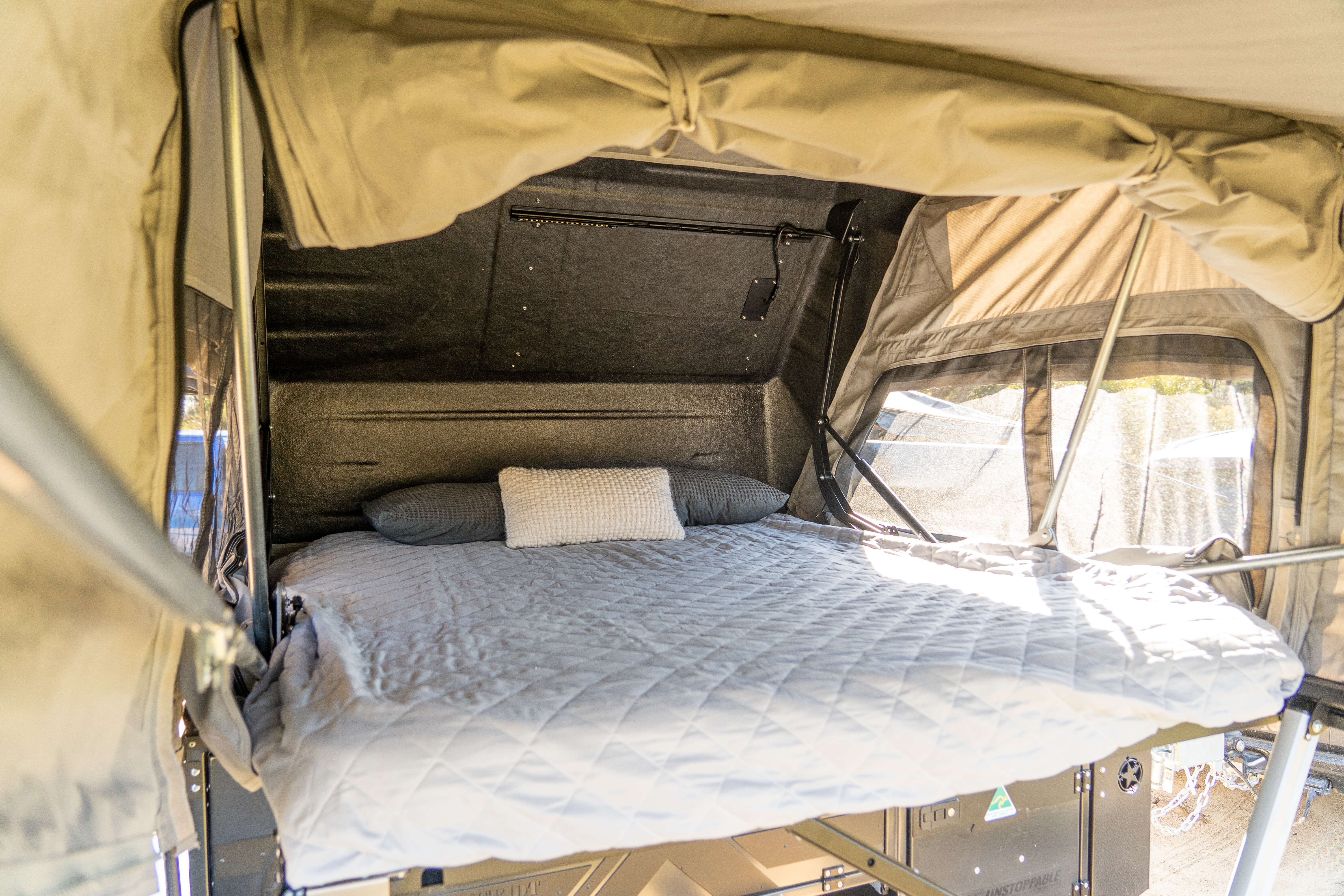
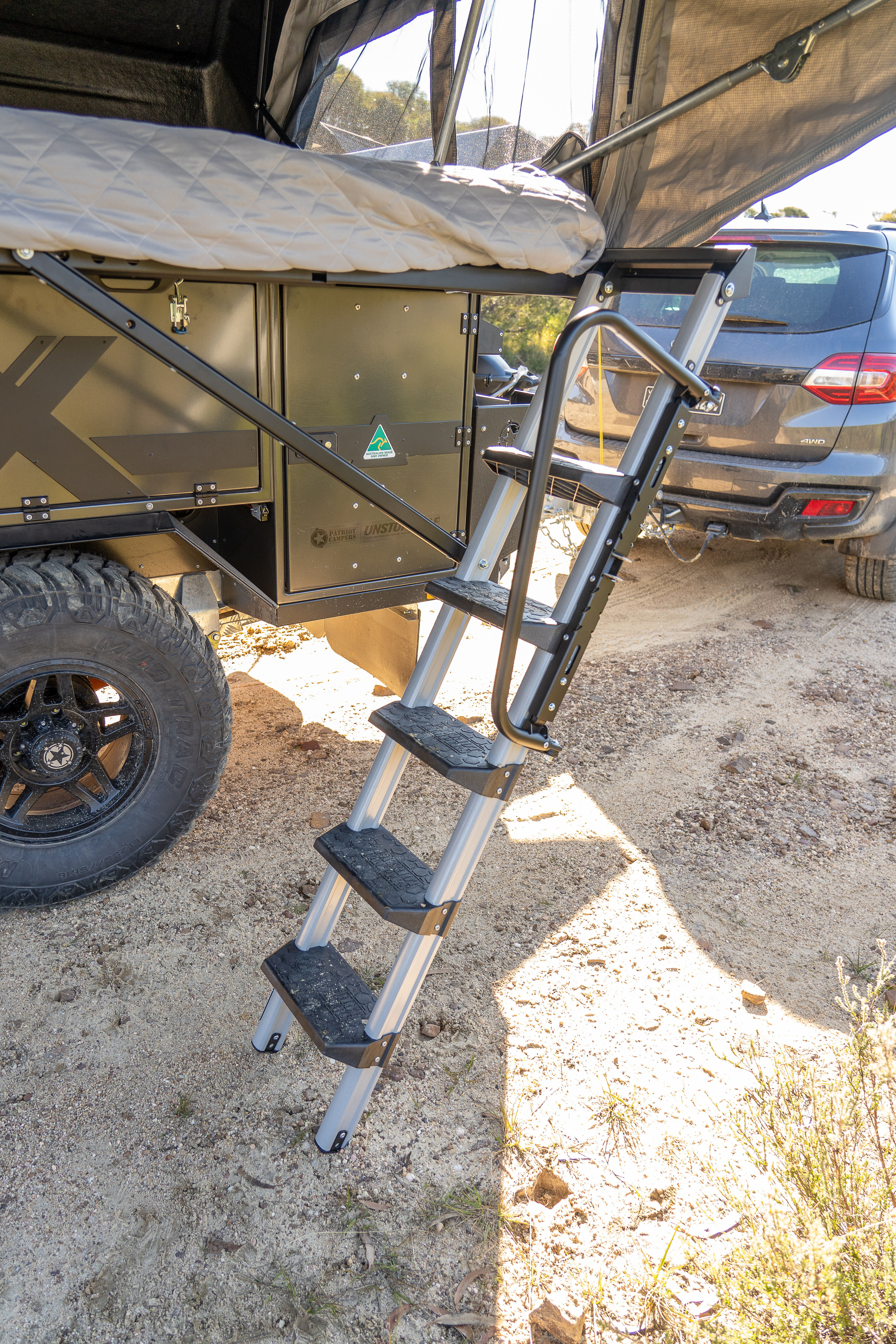
Back to the bed and it’s a large pocket-spring mattress that folds out into the new available space. A positive-locking base gives a sturdy platform that feels just as solid as any bed on the market. In typical Patriot style, they’ve gone above and beyond again, instead of a ladder up into the bed they’ve designed a mini-staircase complete with a handrail that locks into place.
The stairs are narrow but the handrail does make it an easy affair to get into bed. There’s USB charging points throughout internally with LED lighting. An optional diesel tent heater is a worthy consideration if you spend much time camping during winter.
OUTDOOR LIVIN’
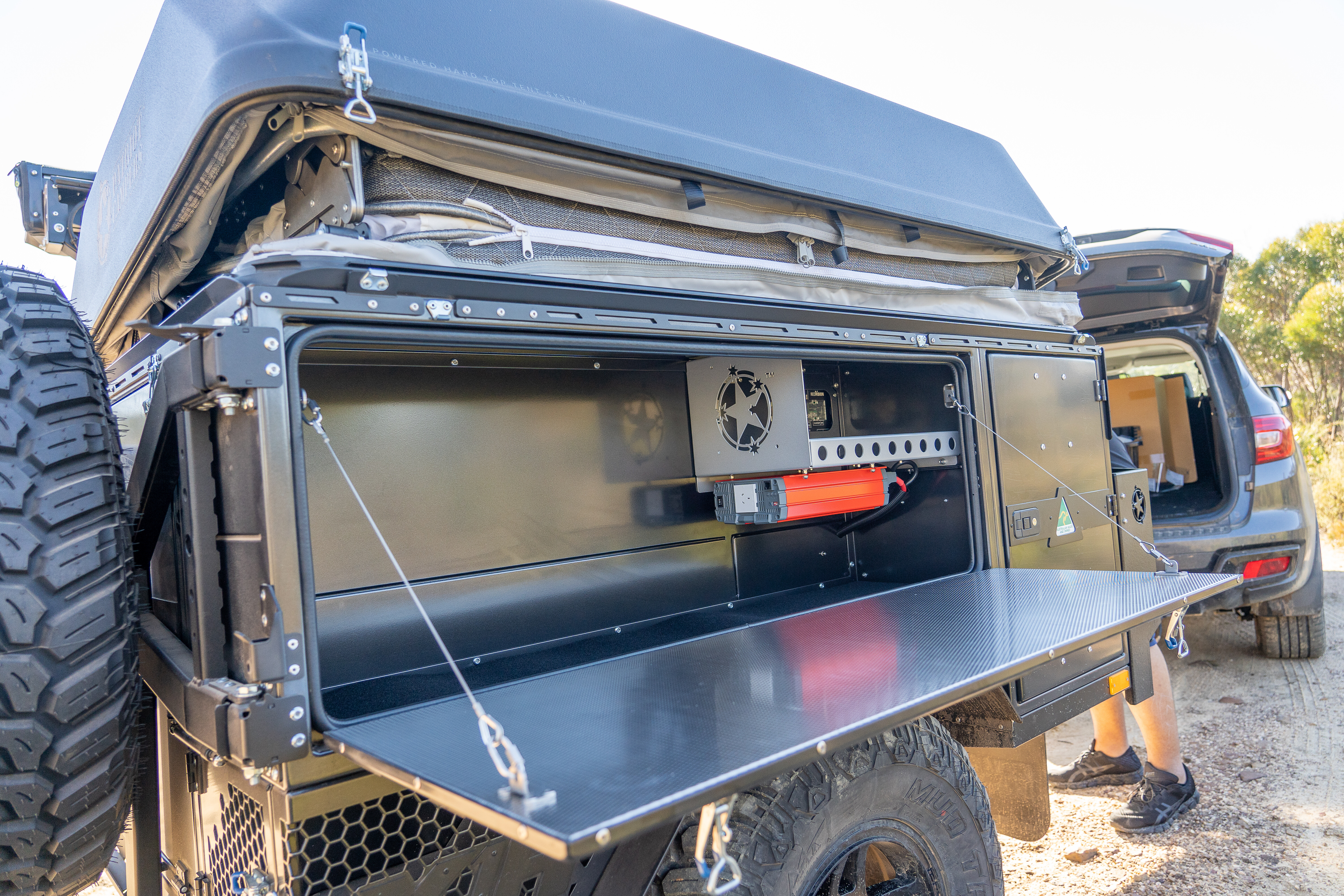
First thing you’ll notice with the X1-H is the inside really is designed as a place to sleep, not a place to live. The design actively encourages you to sit outside with your feet in the sand, some good music, and plenty of food.Along the left flank of the camper, a large hatch pops down revealing a small kitchenette complete with everything you need for a serious camp feed. The hatch folds down into a prep area, while the space behind houses a pull-out gas cooker and grill, various pantry options and shelving space.
Behind the door to your left, a pull-out fridge-slide comes out that’ll accommodate most standard 12V fridges around the 60L mark. Underneath, a sink slides out with hot and cold running water from either a gas system or the optional diesel upgrade. The cooker and sink both need to be connected when you’re setting up, but considering the time saved with the tent, it’s hardly worth a mention.
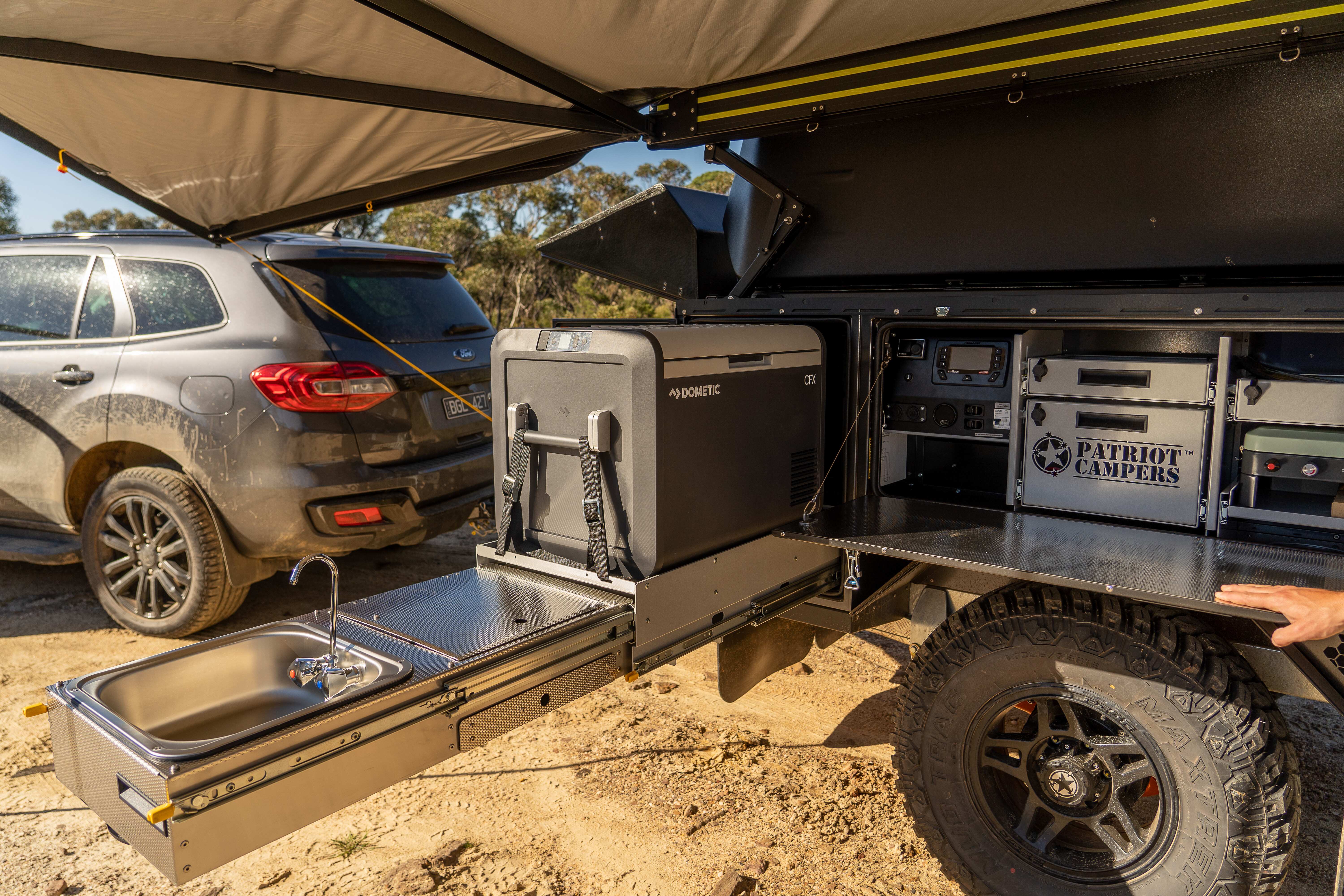
One thing eagle-eyed readers will spot is the Redarc RedVision system. It’s connected to the on-board battery system and controls everything from the lighting to the inverter and monitors the water tank. It’s flanked by a pair of Airbag Man controls that allow you to fine-tune the X1-H’s ride height or to level off the bed. These are options in the appropriately named ‘Tech Pack’ but really make a difference to the overall usability of the camper.The whole area is covered under a PCOR 270-degree awning mounted on clever easy-lift brackets. As the camper’s packed height is only around shoulder height, the brackets allow the awning to quickly and securely lift up above head height.Up front, our storage box was filled with the optional diesel heater, as well as a swing-out barbecue carrier and Weber Mini Q as part of the ‘Essentials Pack’.
Along the driver’s side of the camper, there’s storage perfect for clothing bags or camp chairs, while a rear hatch behind the spare wheel carrier is prime for bulky storage.
SURVIVE THE APOCALYPSE
While the X1-H’s footprint may be compact and the camping simple, Patriot has gone to great lengths to ensure it’ll do you for the long haul if you’re heading off for the big lap. The heart of the system is a huge 300amp/h of AGM batteries deep within the camper; and they’re kept low to further aid with centre of gravity.
A Redarc Manager 30 system ensures they’ll stay topped up either through the vehicles Anderson plug, the included 130W solar panel up top, or the AC input. It sends power back out through the RedVision system as well as a 1000W Redarc invertor. The RedVision system also controls the on-board water pump that taps into 155L of drinking water mounted underneath.
WHO SHOULD BUY ONE?
If you can’t look down an overgrown track without wondering where it goes. If you daydream about being camped up on the west coast of Cape York with your feet in the sand. If you’ve just about had it with your day job and don’t want to be constrained by deadlines or “you can’t take that camper there”, then the X1-H might be the perfect camper for you.
It’s an all-out experiment in remote camping honed into a polished product with years of revision, and it shows with every inch. From the sub 1000kg tare weight to the impressive approach and departure angles, it’s clearly built to make camping as easy as possible as long as it doesn’t hinder off-road ability.
SPECIAL THANKS
Thanks to the team at Off Grid Outfitters in Sydney’s west for making these models available for review and helping us have a solid understanding of the products. Ph: (02) 4648 4181 W: OffGridOutfitters.com.au
PATRIOT CAMPERS X1-H SPECS
| STYLEu00a0 | Compact |
|---|---|
| BODYu00a0 | Aluminium |
| BODY SIZEu00a0 | 3.3m L x 1.85m W x 1.9m (tow height) |
| LENGTHu00a0 | 3750mm (Coupling to tail-lights) |
| KERB WEIGHT | 995kgu00a0 |
| ATM | 1600kgu00a0 |
| SUSPENSION | Independent trailer arm w/ twin shocks; airbags optional |
| BRAKES | 10-inch electric drums |
| COUPLINGu00a0 | Cruisemaster DO35 |
| CHASSIS/DRAWBARu00a0 | Patriot Campers Rigilite frame |
| WHEELS/TYRESu00a0 | 16-inch PCOR alloy / 33-inch MT |
| GAS HOLDERu00a0 | 1 x 4.5kg |
| WATERu00a0 | 155L poly tanks |
| COOKTOPu00a0 | Twin-burner gas stove & grill |
| KITCHENu00a0 | External recessed |
| BATTERYu00a0 | 2 x 150amp/h plus 130W solar panel |
| PRICED FROM | $55,990 |
Snapshot
- Mercedes-Benz adds government-only W464 to G-Wagen line-up with 50 per cent more torque
- Rumours of a new G-Professional model
- Professional Line added as rugged exterior option pack for civilian G400d
The 2022 Mercedes-Benz G-Class is going back to its roots, with two different lines of the iconic model helping to distance the four-wheel-drive from its luxury image.
Mercedes-Benz has launched the new W464 series, which is a variant of the G-Class currently only available to government agencies and militaries “for rescue and special operations”.
Though the G-Wagen used by the Australian Defence Force – codenamed W461 – will continue to be manufactured, the company says the new W464 G350d offers greater on- and off-road capability, and delivers more power from a 3.0-litre turbo-diesel straight-six.
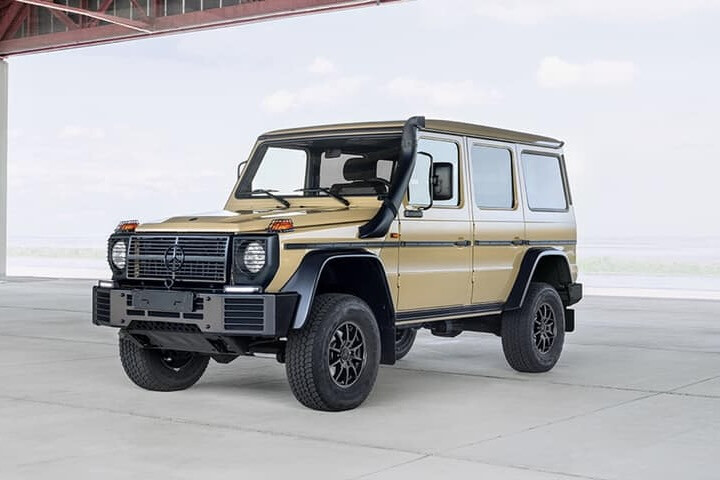
While the W461 gets a 135kW/400Nm 3.0-litre turbo-diesel V6 and five-speed auto, the new W464 uses an eight-speed automatic transmission and produces 183kW and 600Nm from its inline-six – a power boost of 35 per cent and a torque increase of 50 per cent.
Mercedes-Benz says the new mil-spec G350d also offers; a fuel economy improvement of around six to eight per cent, an increased payload capacity, a 24-volt electrical system, and more modern features such as LED headlights and daytime-running lights – while retaining its live axles.
Despite the bump over the V6-powered G-Wagen, its performance doesn’t quite match the 2.9-litre twin-turbo diesel straight-six found in the current G400d, outputting 243kW and 700Nm.
An Ineos Grenadier competitor?
The German car company has not hinted at whether a new W464 G350d will be offered to the wider public in the future, but it’s perhaps telling the new military model was unveiled in the same week initial pricing for the BMW-powered Ineos Grenadier was announced.
However, more telling is information posted to a G-Class group on Facebook, suggesting there is a civilian version of the W464 on the way – complete with comfort seats and a digital radio.
A number of prototypes have been spotted throughout Europe in previous months, confirmed to be using the W464 chassis, but devoid of crucial NATO-specified features.
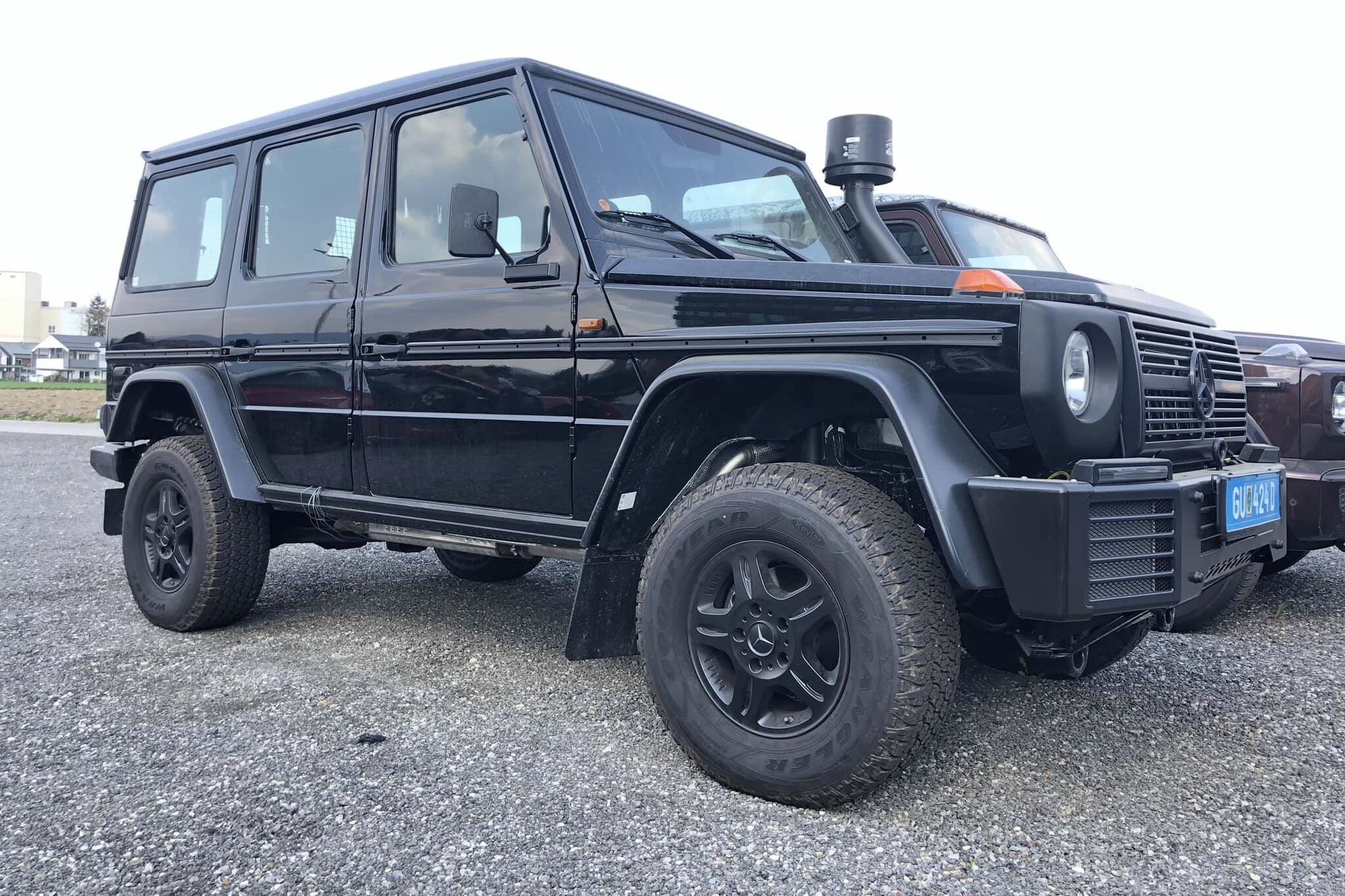
One company insider said the civilian model will be offered in Europe with the 2.9-litre shared with the G400d due to emissions laws – though if the model was offered in Australia, our lax regulations could open up the possibility of the 3.0-litre straight-six being fitted.
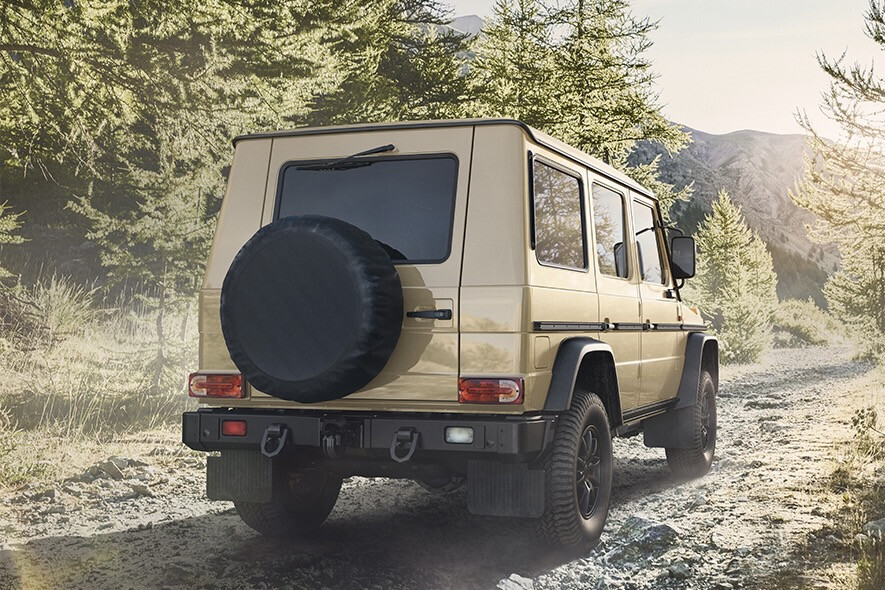
It’s unclear whether the vehicle – pictured here wearing number plates from the Graz district of Austria – is a prototype for the military version, or if the black Mercedes is being tested for the wider market, potentially being badged as a new ‘Professional’ variant.
Before the last G-Professional model was discontinued by Mercedes-Benz Australia, designed as a workhorse to compete with the likes of the Toyota LandCruiser 70 Series, the W461 G300 CDI Wagon was available from $109,900 before on-road costs.
Professional Line
Civilians haven’t been completely forgotten about, however, with Mercedes-Benz this week introducing a new ‘Professional Line’ package for the G400d.
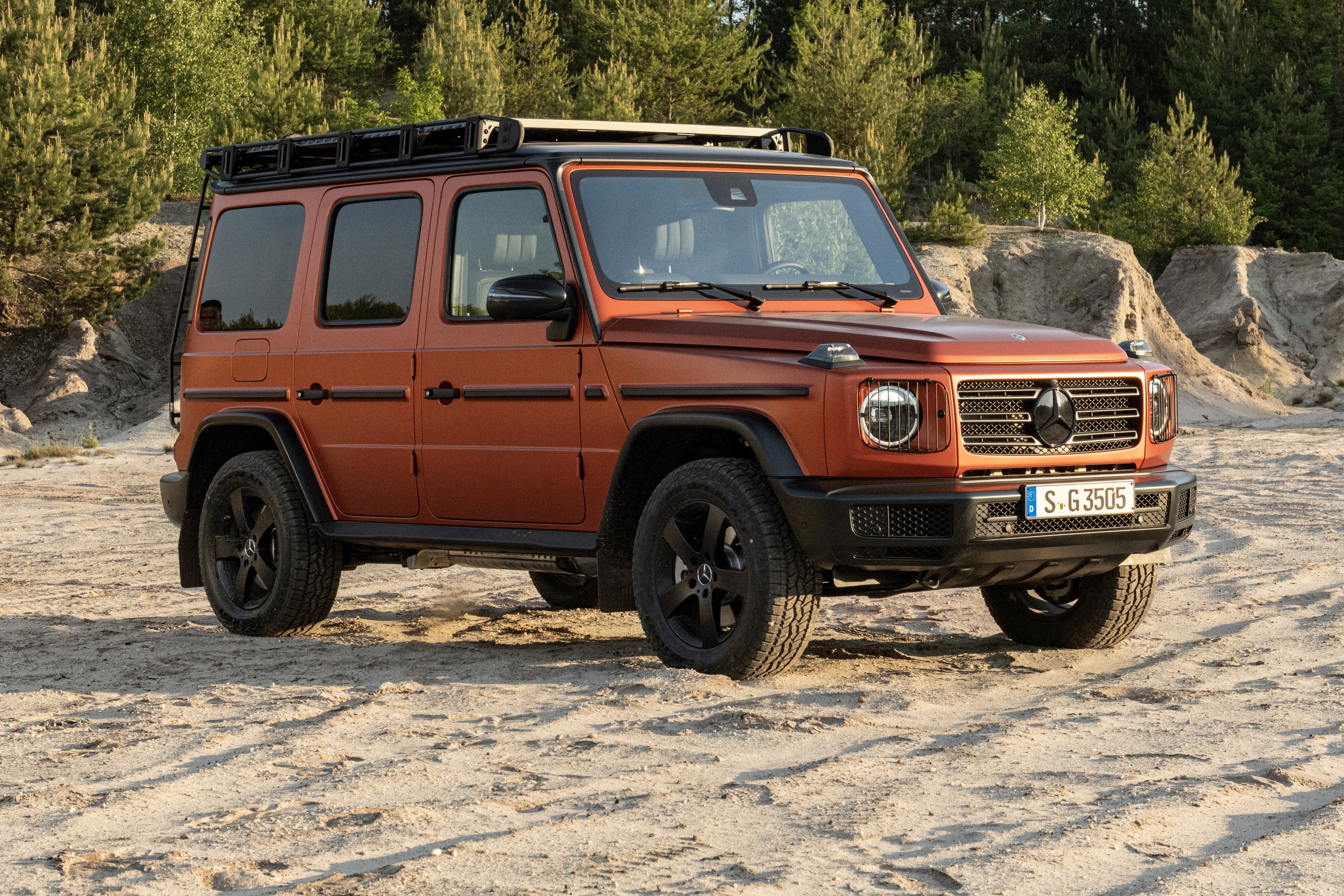
Unlike the G300 CDI Professional, the new Professional Line provides the current W463 G400d with a more suitable exterior set-up for off-road use.
Those who option the Professional Line Package gain; stone grilles for the headlights, mud flaps, a roof rack with ladder, spare wheel carrier, and smaller 18-inch wheels with all-terrain tyres.
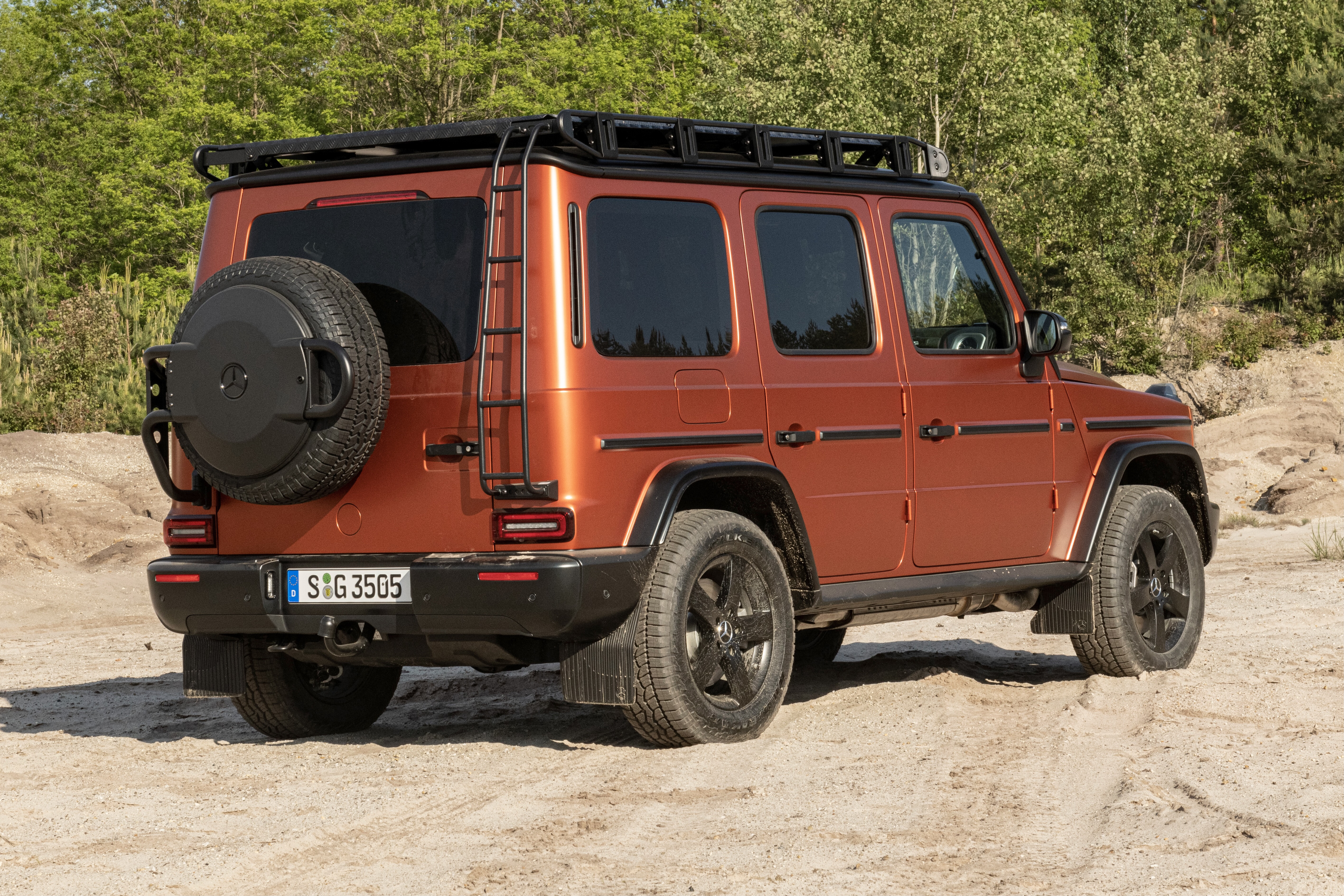
Ten paint colours can be chosen, along with a matte Night Package with contrast trim for the roof, wheel arches, and bumpers.
There’s no word yet on whether the pack will be made available in Australia, with a spokesperson for Mercedes-Benz telling 4X4 Australia: “We’re in the process of evaluating the new Professional Line Exterior Package for our market.”
Would you like to see a civilian version of the W464 G-Wagen go on sale? Let us know in the comments section below.
Am I the only person who hates it when cars tell me what to do?
Really, we’re supposed to be controlling the machines, not having them nag at us and ruin a pastime that used to be a pleasure.
I was recently driving a new Toyota and it was repeatedly nagging at me to ‘observe all traffic regulations’. When driving through the suburbs the nag would tell me when I was ‘approaching a school zone’, followed by, ‘you are now in a school zone’ and finally, ‘you have left a school zone’.
Drive any more than a few kilometres through Melbourne’s suburbs and you’ll inevitably pass through multiple school zones, and at every one the pleasant music I had chosen to listen to was interrupted by this incessant nagging. To make it worse, this was on a Sunday when the school zones weren’t in force! I couldn’t wait to get out of the car.
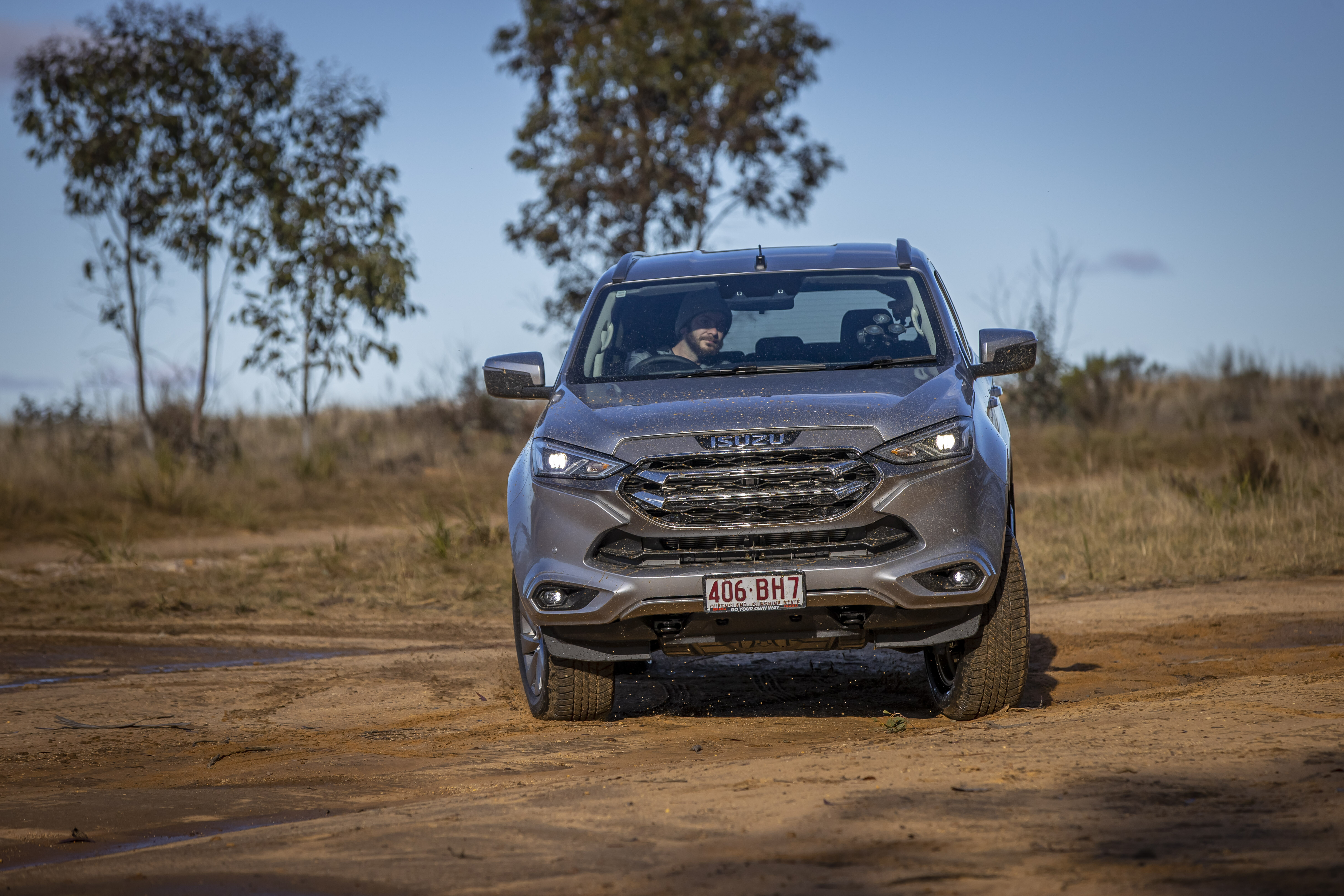
I picked up a new Isuzu the other day and, while electronic safety systems on new cars are a good idea, they need to be calibrated correctly. The MU-X bleeps lane-guidance warnings constantly on freeways, where other cars with similar systems don’t.
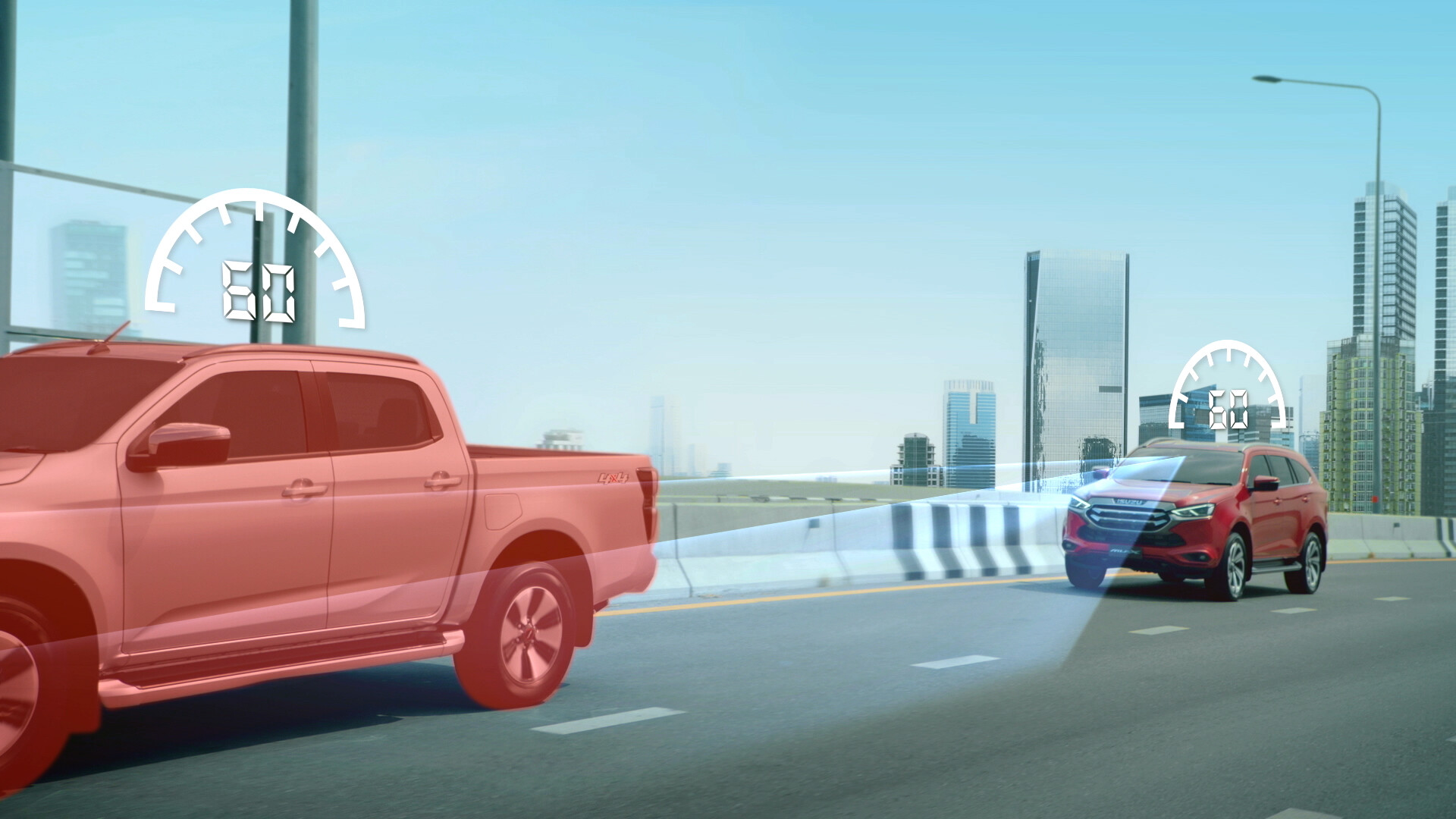
Then there was an instance where every time I slowed down to a certain speed, the front parking sensors went nuts; continuing to do so when stopped with nothing in front of the car. This drove me wild for a while, then it stopped and hasn’t done it since. But another drive ruined by a nagging car.
While I don’t like being told what to do by a machine, I’m happy to listen to a living expert tell me the best way to do things. Never stop learning, as they say.
Building a 4×4 is fraught with perils. From newcomers not knowing what they’re trying to achieve, or seasoned veterans knowing what outcome they want but not knowing the best way to get there.
People have wasted tens of thousands of dollars building their dream set-up on the wrong vehicle, or replacing gear they’ve already bought when they find it doesn’t quite fit into what the end result became.
Queensland-based Rambler Vehicles has set about making the process easier and more cost-effective with turnkey solutions, and if the demo LC200 is anything to go by, they sure know what they’re doing.
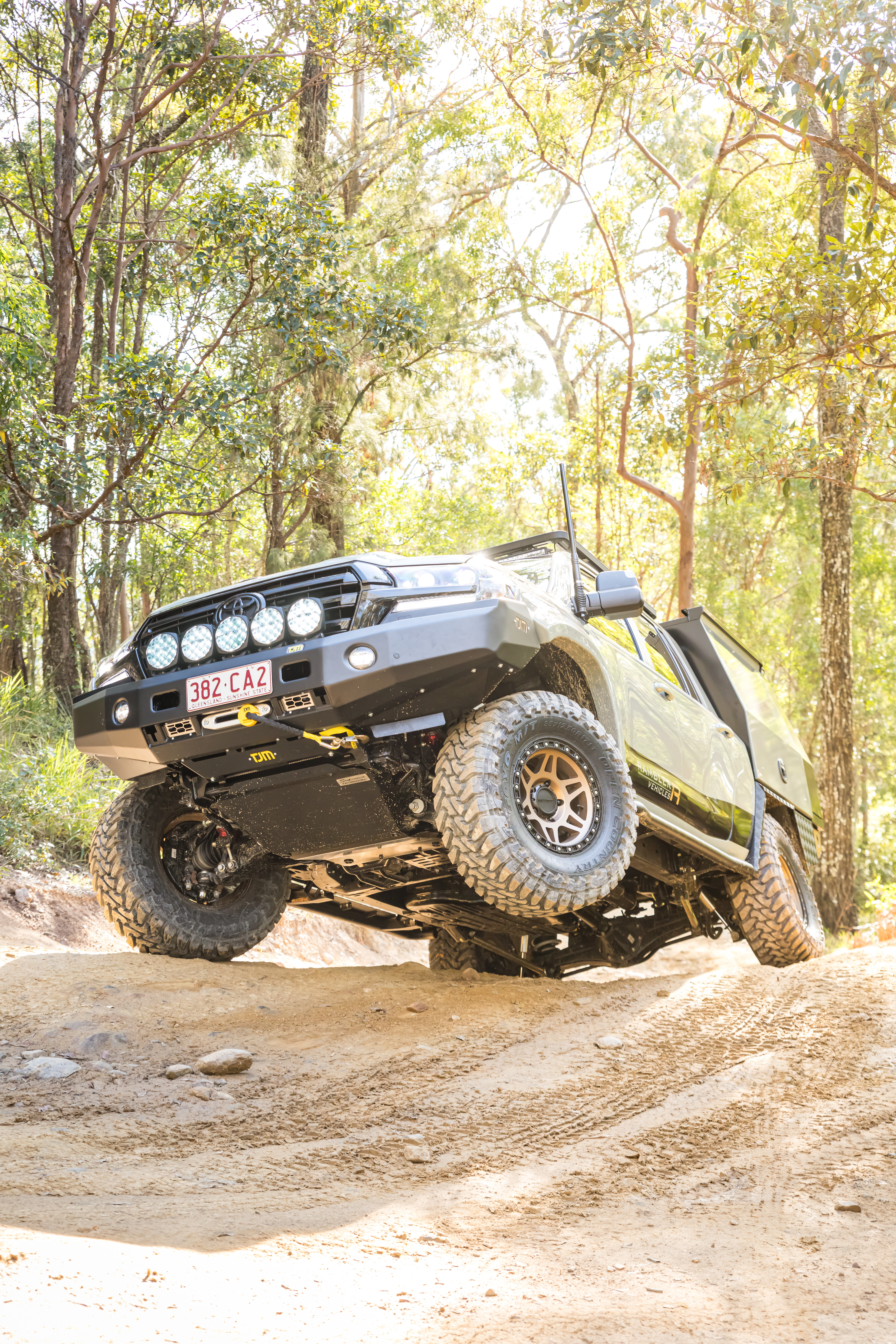
Starting off with a stunning black 2021 GXL LC200, the team at Rambler set about designing a fitting send-off to the 200 Series Cruiser, and showing off what they can do with no restraints in the process.First cab off the rank, so to speak, was taking the Cruiser to ASG Vehicle Solutions to chop the body in half. A dual-cab conversion offering all the comfort and ride quality of the big wagon, with the camping practicality of the booming dual-cab market.
ASG expertly stitched the cabs sheet metal back together for a factory look, then climbed underneath and did it all over again with the chassis. The end result is a 350mm stretched wheelbase that has ample room for a touring set-up, and feels far more planted in steep terrain and towing.
SUPERIOR LIFT
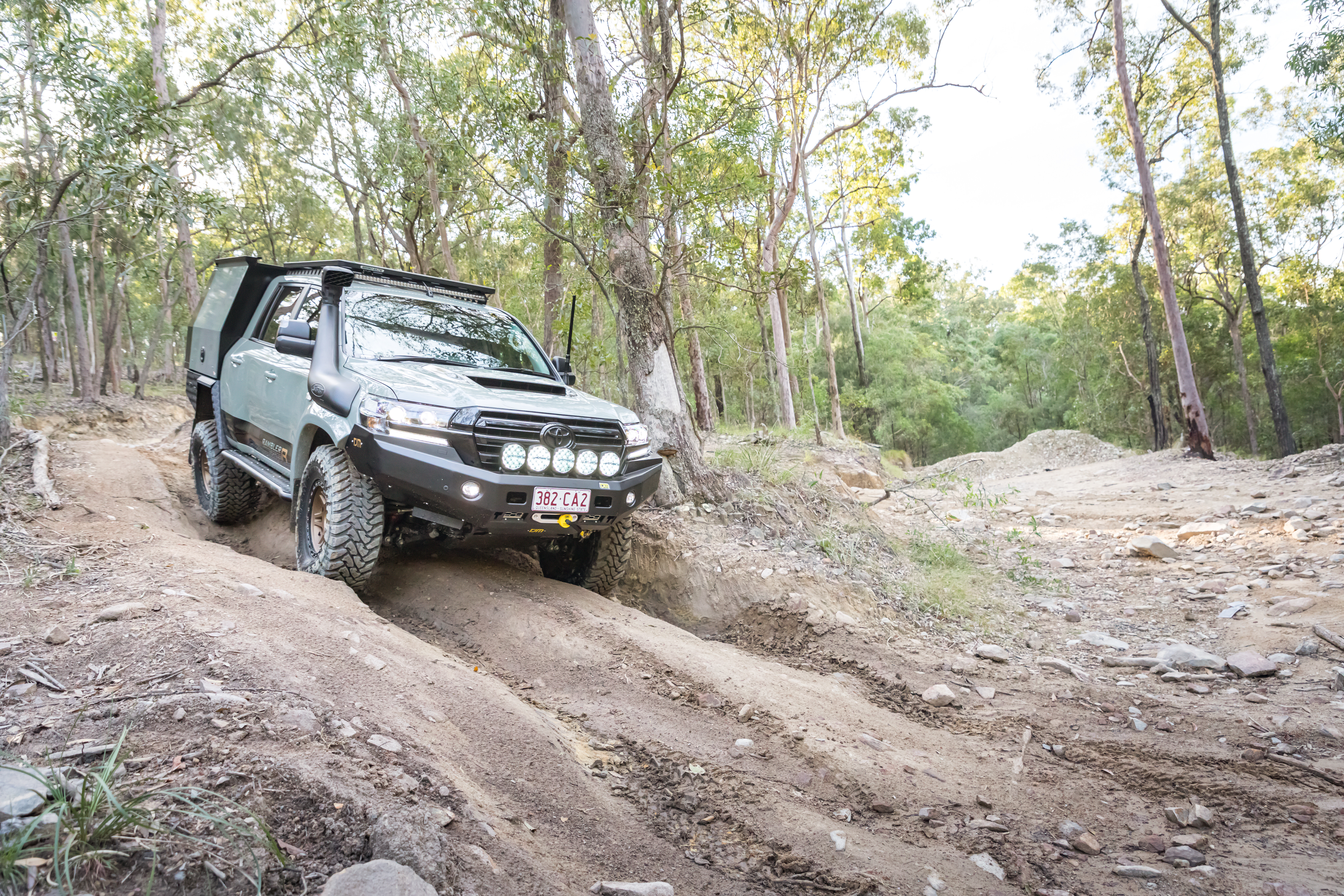
Before the 200 was registered, Rambler spec’ed up the suspension with a full 4-inch lift second-stage manufacturing set-up from Superior Engineering. The kit is hands down one of the most extensive on the market and painstakingly upgrades multiple components to help increase the 200’s maximum gross vehicle mass.
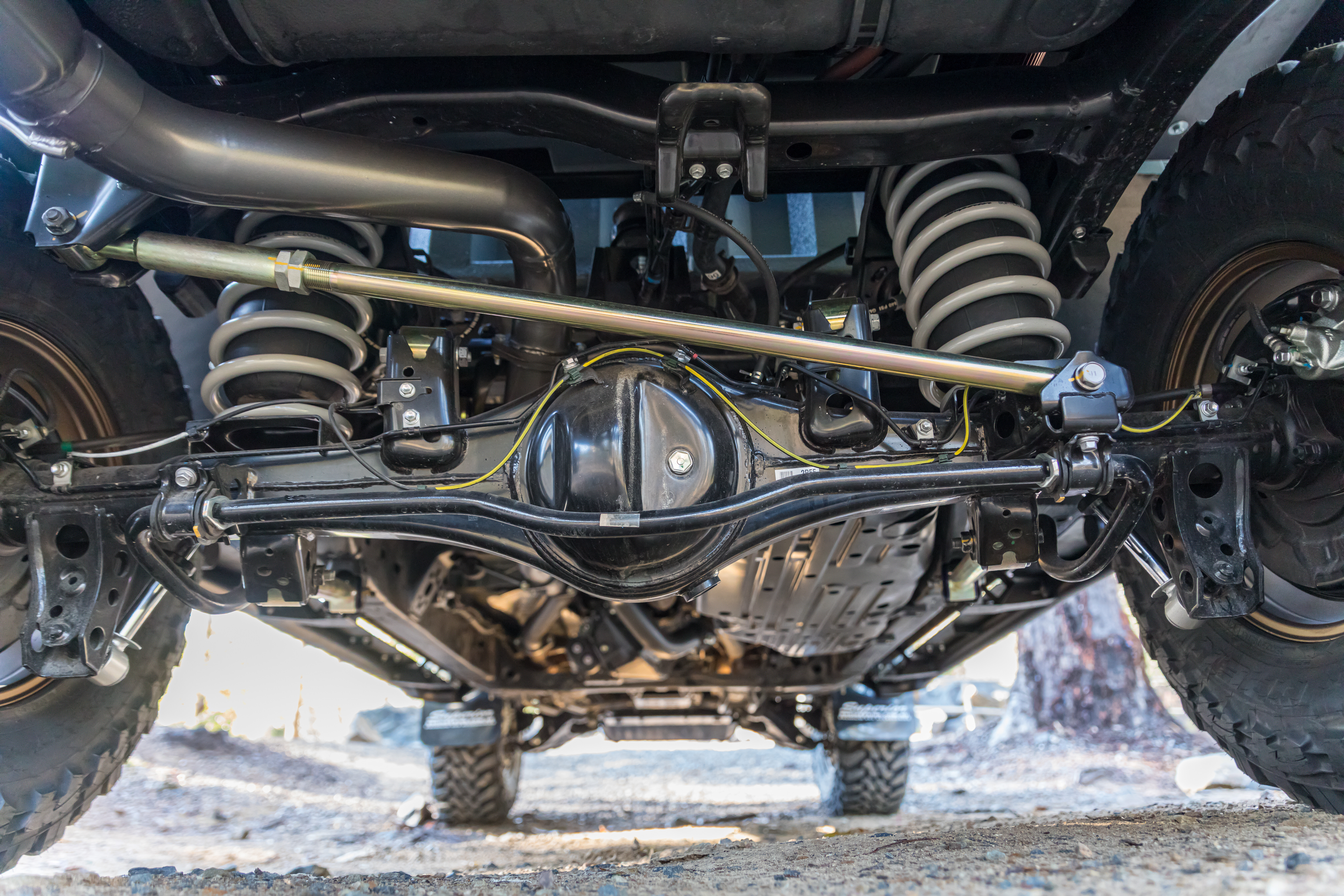
Up front, the kit uses 4-inch taller coil springs on optional 2.5-inch body Superior Engineering remote reservoir struts. They’re matched with billet upper control arms to dial caster and camber back in after the lift. The front diff has also been lowered 50mm as part of the kit to help flatten the CV joint angles.Up the back, a matching kit has been fitted with a few extra additions: 4-inch taller Superior coils sit on the live axle, with 2.5-inch remote res shocks reining them in. Superior upper and lower control arms dial the pinion angle back in, with a healthy strength upgrade in the process. A Superior Panhard rod recentres the rear diff, while longer brake lines and a sway bar relocation let the Cruiser make the most of its new travel.
As part of the legality process, the kit also included larger side indicators, wheel-arch flares and a speedo correction module to suit larger tyres. A helper airbag set-up from Polyair was also installed to help with varying load requirements. Rambler’s made the most of the new-found real estate in the guards by fitting a set of 35-inch Toyo Tyres Open Country MTs wrapped around Method Race Wheels 312s.To ensure the Cruiser would have enough get up and go once the additional weight was added, Rambler loaded into the ECU one of its custom tunes, with fresh air being sucked in through a Safari Armax snorkel, and spent gases pushed out the rear through a full stainless-steel exhaust system from Legendex.
CUSTOM CANOPY
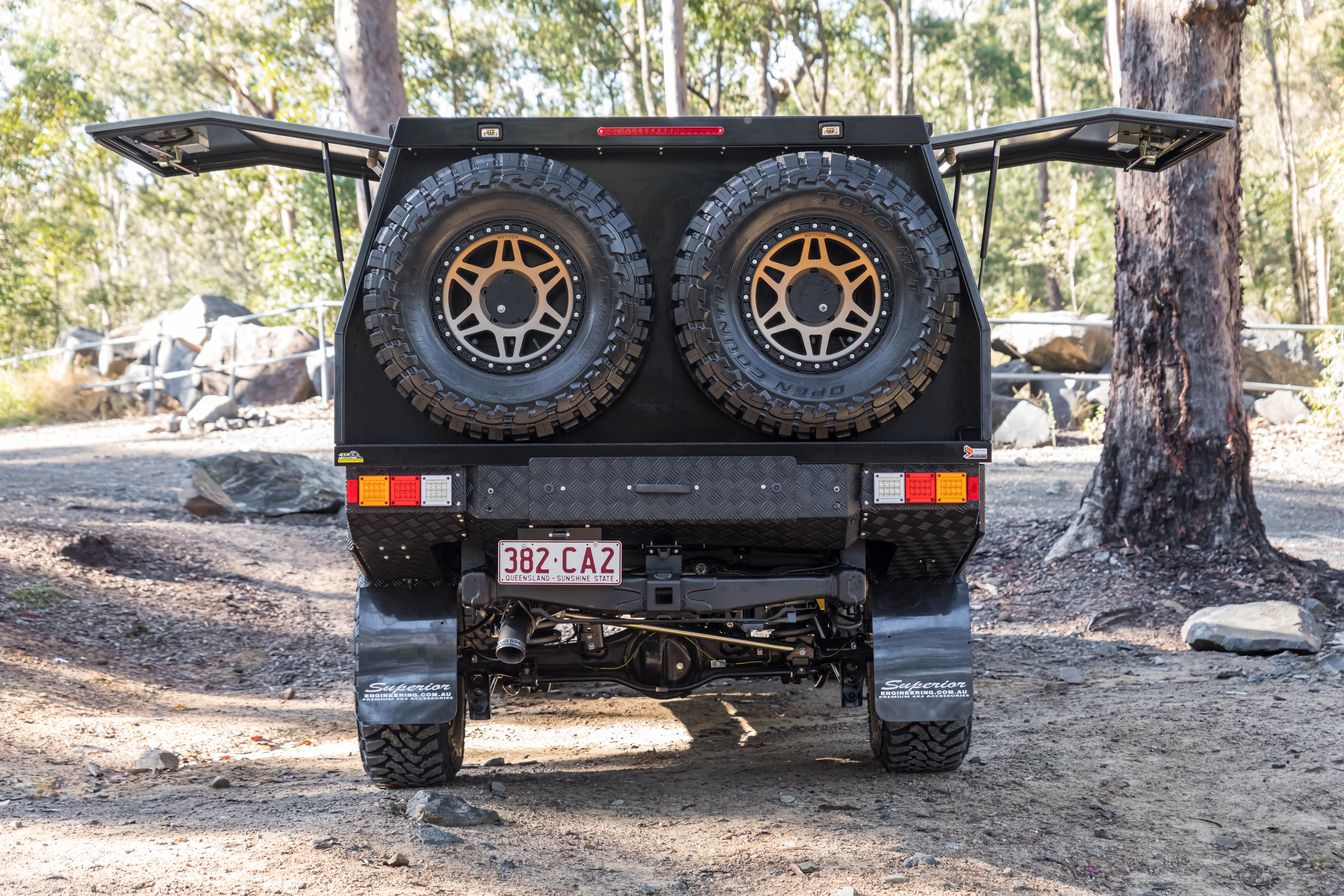
Moving to the back of the now dual-cab Cruiser and there’s an extensive touring set-up in the form of a ‘Midi’ canopy from Spinifex Manufacturing. The 3/4 canopy design aims to provide maximum storage space without having the twin 35-inch spare hanging out the back. Custom built from aluminium and with a 300mm covered rear deck for the tyres, the Midi canopy has an extensive touring set-up packed into a compact package.
On the passenger flank there’s a 130L upright Bushmans fridge and full pull-out pantry. The slide-out section also features a Road Chef oven up top and a 2000W induction cooktop on its own slide. Hiding behind the fridge, there’s a huge 200amp/h lithium power set-up using quality Enerdrive gear. The Simarine unit controls all the functions of the canopy including monitoring water levels in the 70L tank, while a 2000W invertor powers 240V power points spread throughout the canopy. On the driver’s flank, a custom storage system from RV Storage Solutions is built to Rambler specs. Rather than a typical trundle tray, sliding out the back of the canopy is a pull-out sink with running water.
Back out on the outside the Cruiser is sporting a full custom paint job. The ‘Urban Khaki’ colour was lifted straight from the Toyota paint chart and is most known for the USA Tundra. It’s protected up front with a TJM Venturer bar armouring up the front end. Hidden inside is a matching TJM 12,000lb winch wrapped in synthetic rope, while five Lightforce Venom driving lights sit proudly atop the steel bar.
Moving towards the back and Rambler has fitted up matching TJM side-steps, and then extended them to suit the stretch. The bar work is all powder-coated in a rich Manix black. Up top, a Rhino-Rack backbone system houses a modified flat rack with a slimline LED light bar filling the gaps.
SPORTS INTERIOR
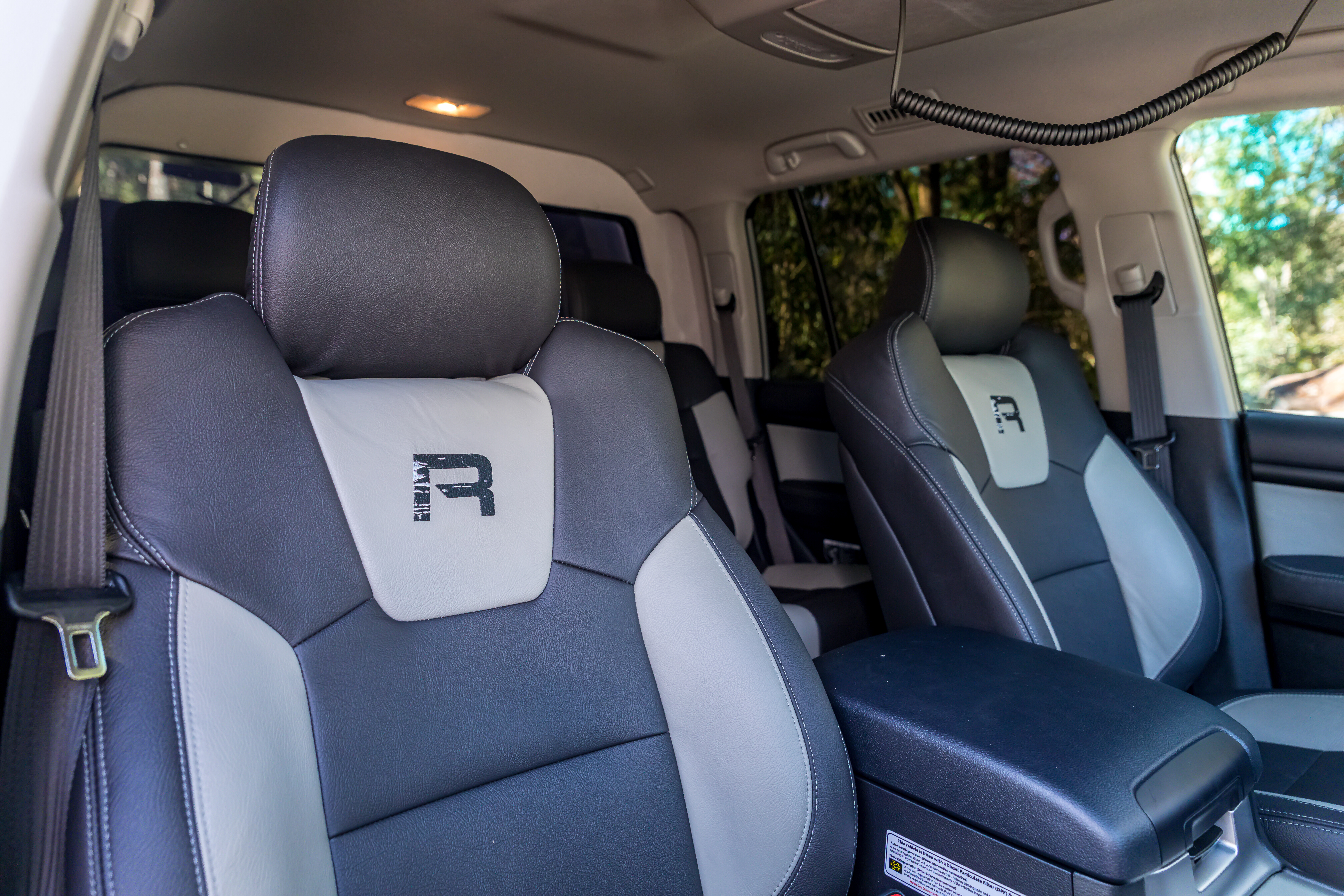
Moving inside and it becomes all too obvious the extent Rambler goes to make tits builds a step above the rest. It’s decked head to toe in what Rambler dubs as its ‘sports’ interior, a full custom retrim in Napa leather with black and artichoke leather matching the exterior paint scheme.
The seats have been heavily rebolstered to give a far more sporty feel to them and extra support when off road. There’s an Alpine 9-inch stereo taking pride of place in the dash and it feeds into a full R Spec speaker set-up with a matching amp. Comms are taken care of with an Icom UHF sitting in an Outback roof console, and the aerial is tucked in tight to the body on a custom Rambler door bracket.Speaking to the team at Rambler and it’s clear how much passion they have for things working together seamlessly, and the vehicle they’ve built to showcase their work is clear proof of it. Each individual component carefully selected and considered to how it’ll affect the end goal and how well it’ll all work together. With the 200 Series platform wrapping up, it’s a fitting send-off to one of the most popular 4x4s of all time and will be right at home parked up in a 4×4 show, or a remote beach campsite.
TWO-STEP
You’ve probably heard the term ‘second-stage manufacturer’ by now and if you’re not a walking dictionary you may have scratched your head at first. It’s a relatively recent term that’s popped in to use as more and more manufacturers are finding ways to work-in the system.
Essentially, it’s a legal framework that allows a vehicle to have a second round of manufacturing going into it. Think things like bulk fleets of motorhomes for rental companies based on popular van platforms and you’re on the right track. The 4×4 aftermarket has managed to utilise this system to essentially do the same thing, but instead of turning vans into motorhomes, they’re doing road oriented 4x4s into something far more capable.
The catch is, the work and certification needs to be done before the vehicle is first registered, but if using a kit like Superior Engineering’s SSM suspension kits as far as the government is concerned, your new LC200 was always lifted 4-inch with remote res shocks and an upgraded GVM.
Snapshot
- 4xe plug-in hybrid will have 40km electric-only driving range
- Petrol V6 and V8 to remain in range
- Seven variants over previous four
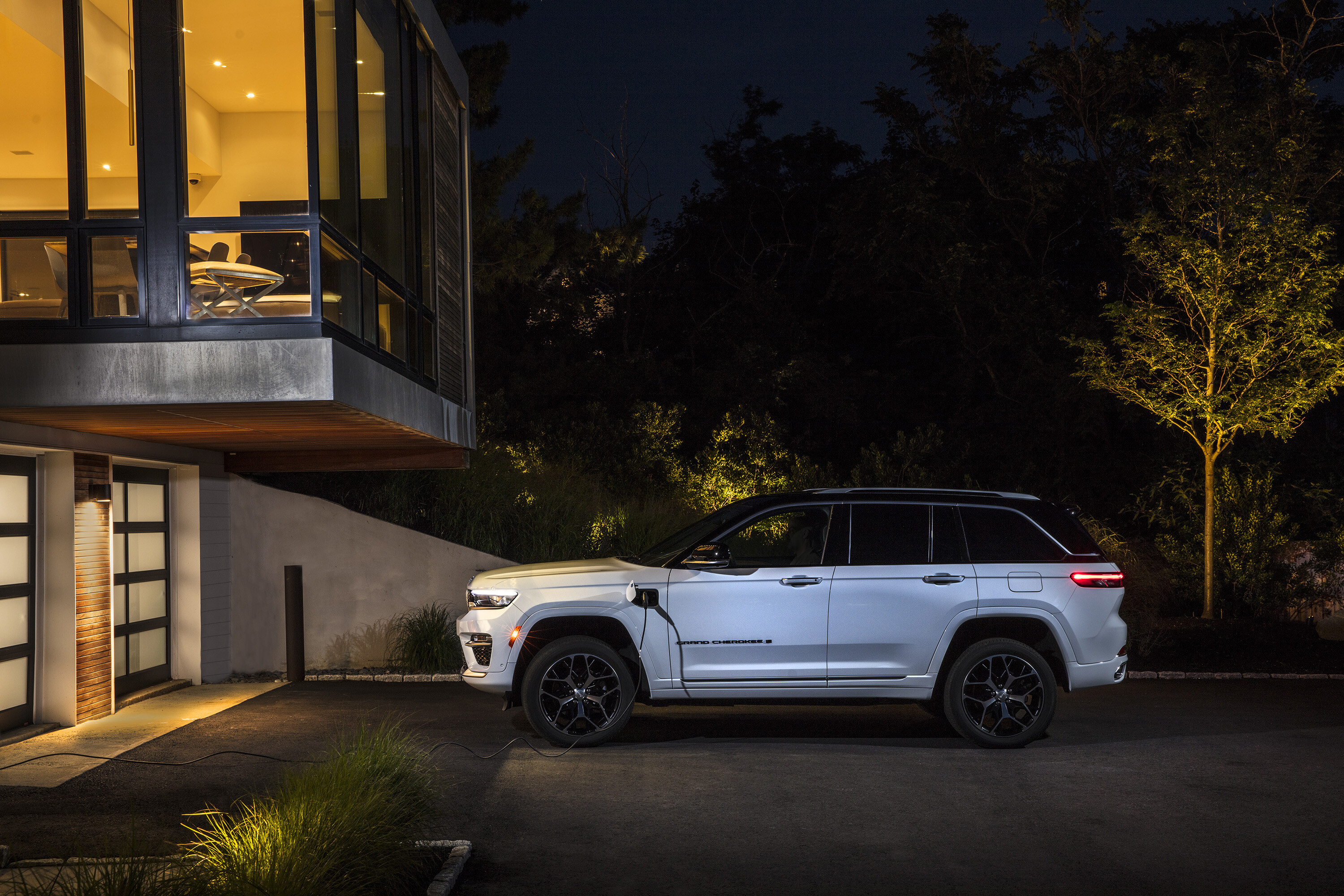
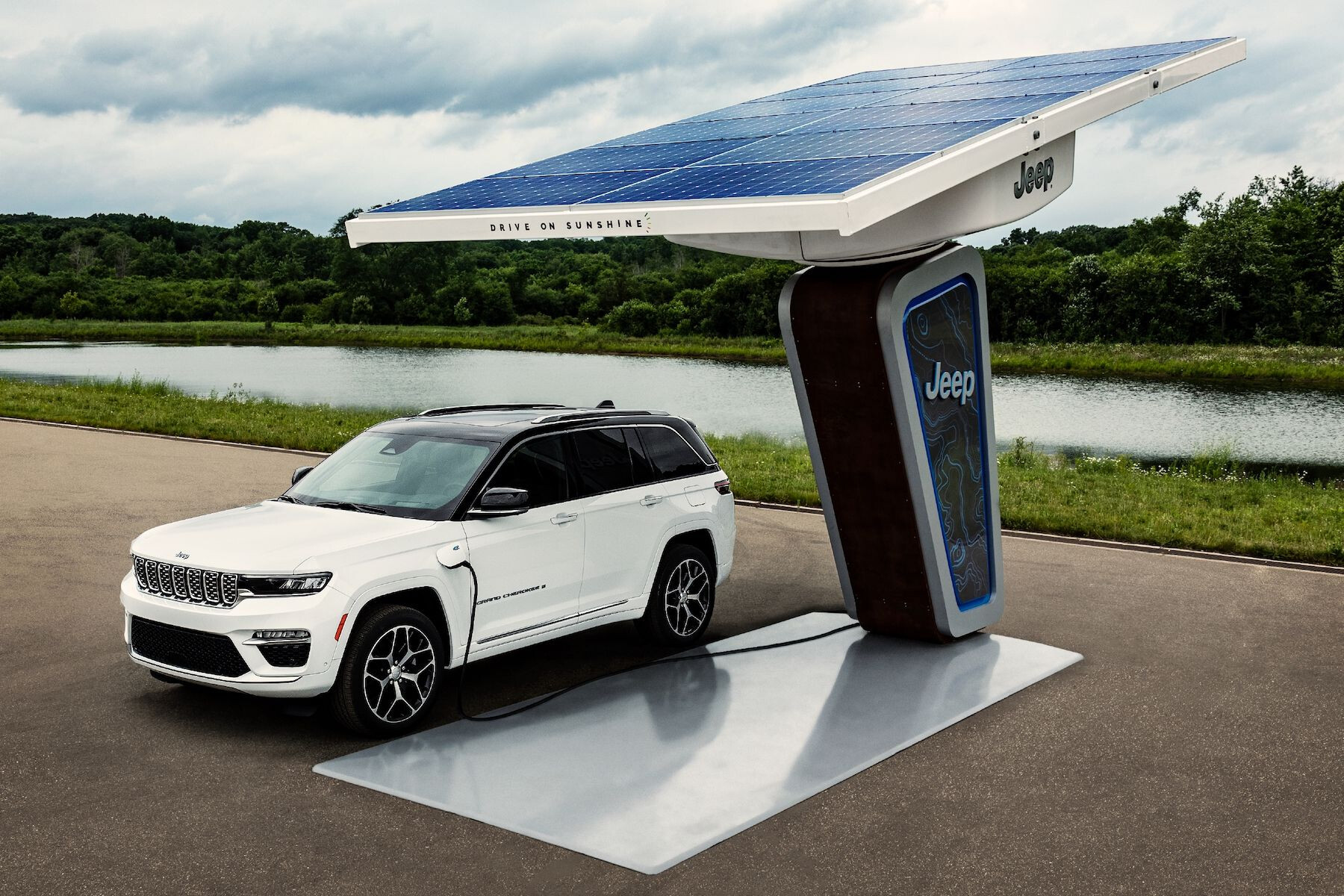
Jeep has officially revealed its new 2022 Grand Cherokee five-seater – detailing what we can expect to come from the model’s first ever plug-in hybrid variant.
The fifth-generation Grand Cherokee’s range has expanded from just four variants to seven – retaining both the 3.6-litre Pentastar V6 and 5.7-litre V8, as well as introducing a 2.0-litre turbocharged inline-4 engine for the electrified powertrain option.
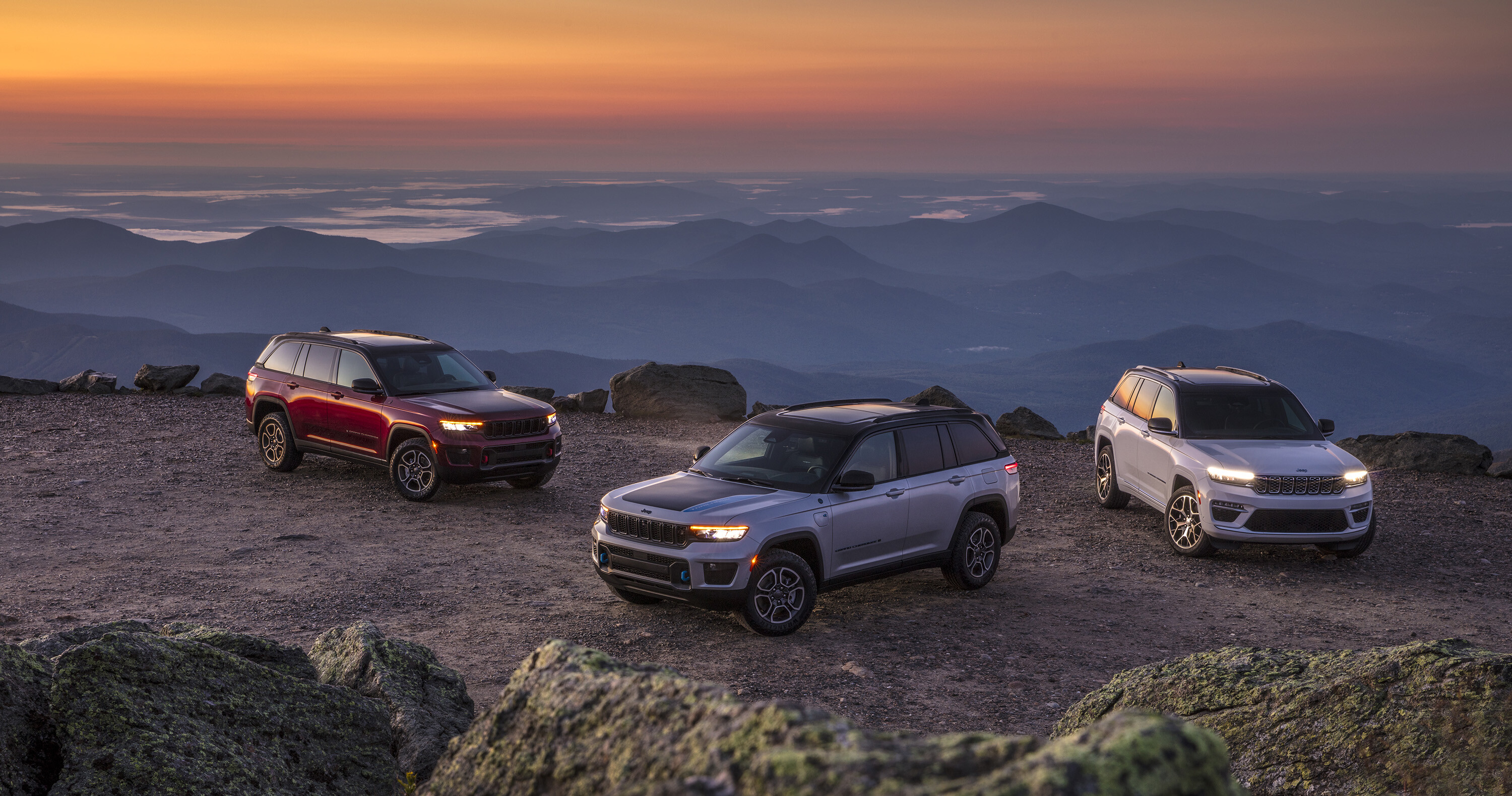
The new Grand Cherokee line-up now consists of Laredo, Altitude, Limited, Overland, Trailhawk, Summit and Summit Reserve trims.
Standard on all models is the well-known V6 (which produces 213kW/347Nm), while the Aussie-favoured V8 (which makes 259kW/520Nm) is available on Overland, Trailhawk, Summit and Summit Reserve.
UPDATE, May 12 2022: The new Jeep Grand Cherokee L is now in Australia, and we’ve driven it. Read and watch our review at the link below.
The story to here
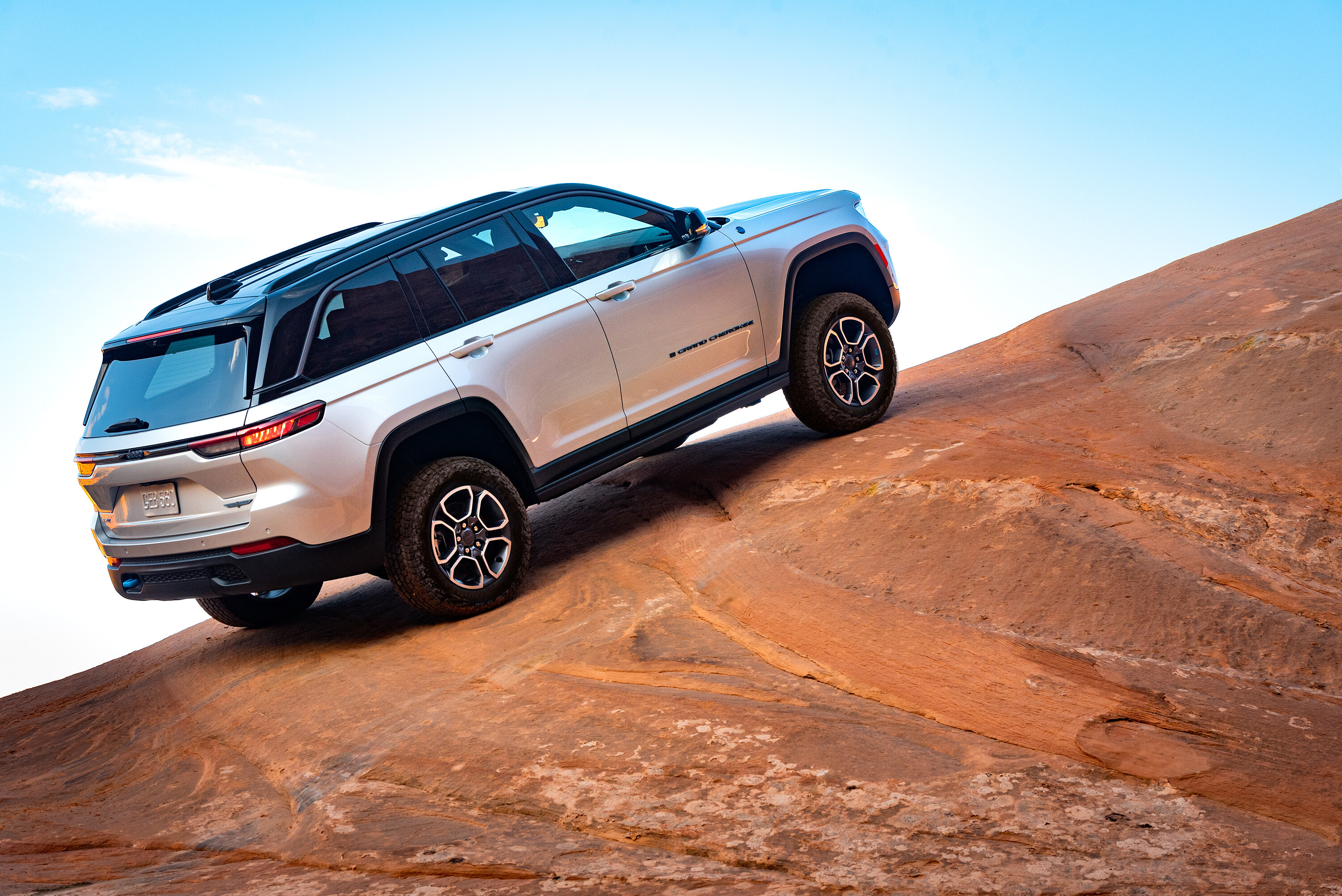
The 2.0-litre turbo in the 4xe will be coupled with two electric motors and an eight-speed automatic, and will be available on the Limited, Trailhawk, Overland, Summit and Summit Reserve variants.
The 2022 model brings with it a new exterior and interior design, as well as improved safety, technology and off-roading performance, according to the brand.
“The Jeep Grand Cherokee is our global flagship and will be leading the Jeep brand into a new era of premium refinement, innovative technology, advanced 4×4 capability and electrification,” said Christian Meunier, Jeep Brand Chief Executive Officer.
“With a perfect balance of on-road dynamics, 4×4 capability and 4xe performance, the all-new 2022 Jeep Grand Cherokee is the most technologically advanced, luxurious and 4×4-capable Grand Cherokee ever.”
Arriving in Jeep dealerships in the US in late 2021, the hybrid variant will follow early next year. Australia can expect it to arrive later in 2022.
Grand Cherokee 4xe
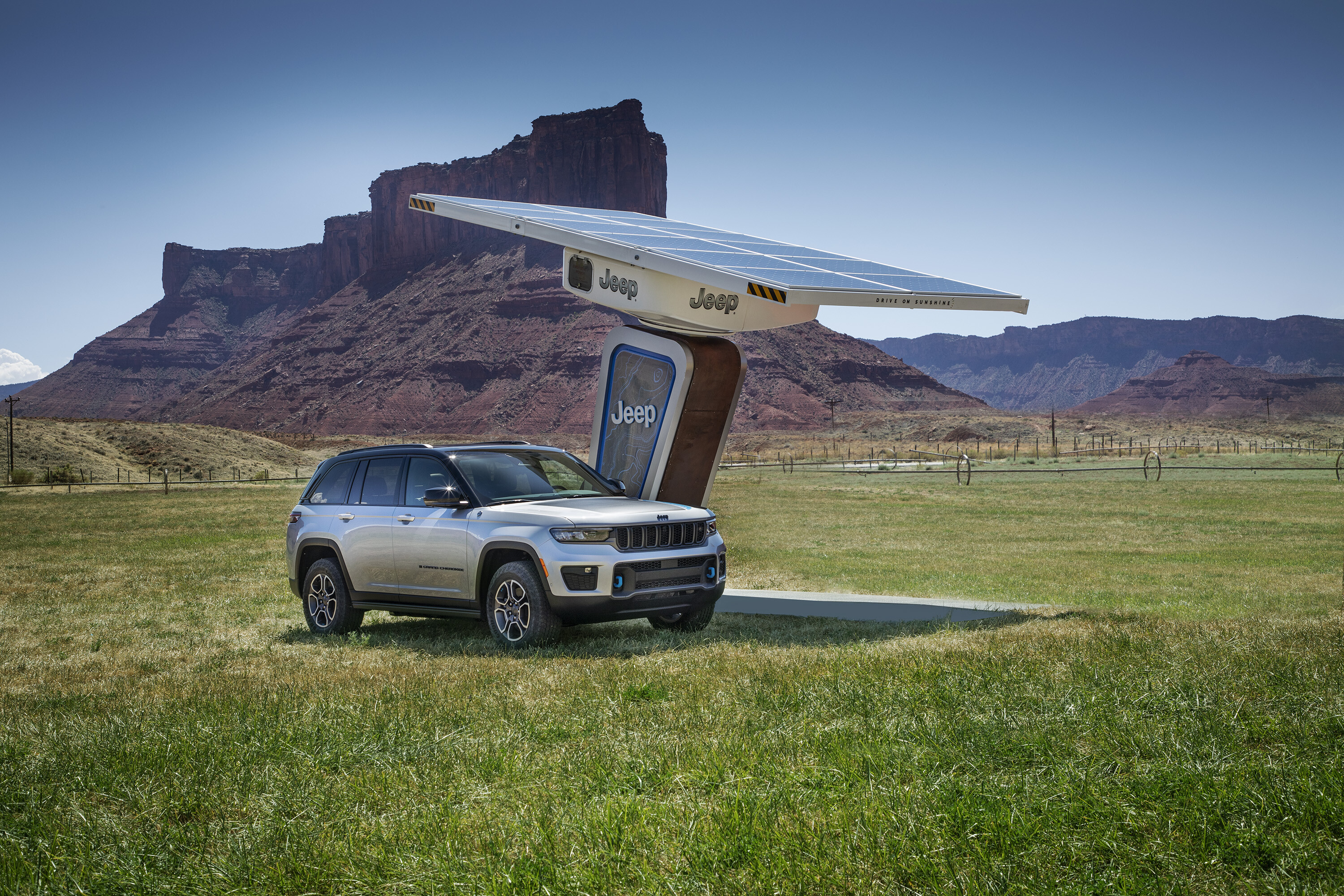
For the first time, as previously reported by 4×4 Australia, the model will come with 4xe plug-in hybrid technology – with the variant already confirmed for Australia next year.
It’s capable of pumping out 280kW of power and 637Nm of torque overall. Using the same 2-litre, four-cylinder petrol hybrid unit as the current Wrangler 4xe, a 17kWh battery pack is also mounted underneath the vehicle floor and facilitates an electric-only driving range of up to 40km. Combined, a total driving distance of more than 708km will be possible.
The fuel-efficient I-4 engine is part of Stellantis’s Global Medium Engine family. The high-tech, direct-injection engine uses a twin-scroll, low-inertia turbocharger mounted directly to the cylinder head.
Efficiency is enhanced via the use of electric power steering and an electrically driven air-conditioning compressor, removing those loads from the engine.
The conventional alternator is also replaced with a high-voltage, liquid-cooled motor-generator connected to the engine crankshaft pulley via a belt. The unit helps to save fuel, aid the start-stop operation and generate electricity for the battery pack.
A larger high-voltage motor-generator is mounted in the transmission, replacing the torque converter. Two clutches manage power and torque from the e-motor and engine.
A clutch is mounted between the engine and the motor. When the system operates in electric-only mode this clutch is open so there is no mechanical linkage between the engine and the e-motor.
When the clutch is closed, combined torque from the 2.0-litre engine and the e-motor flow through the automatic transmission. A variable clutch mounted behind the e-motor manages engagement with the transmission to improve drivability and efficiency.
Three driving modes will be available on the hybridised version – hybrid, electric and eSave.
The first blends torque from the electric motor and petrol engine, while the second operates on zero-emission electric power only until the battery reaches the minimum charge or the driver requests more torque. The final option prioritises the engine, saving the battery charge for later use.
Off-road features
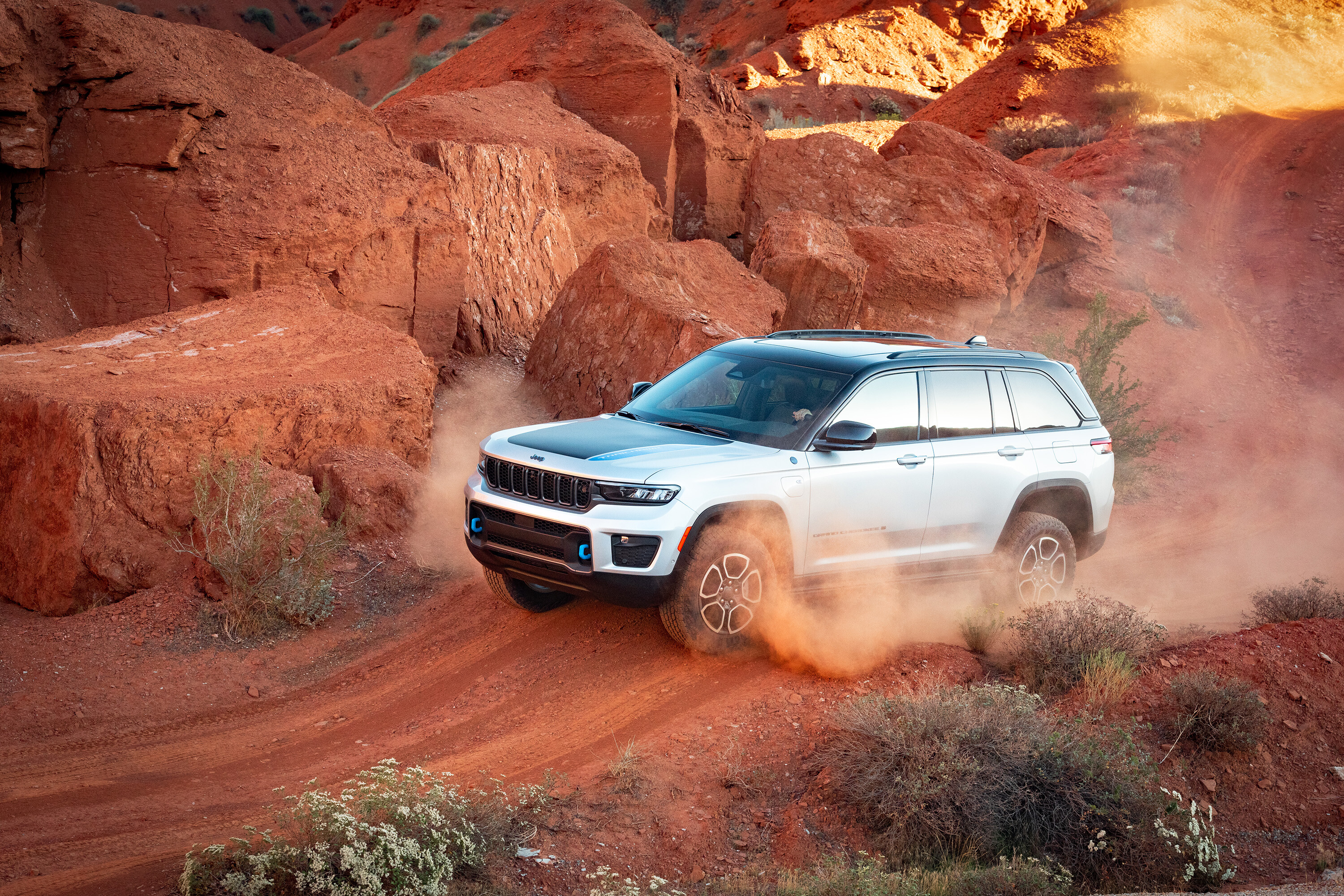
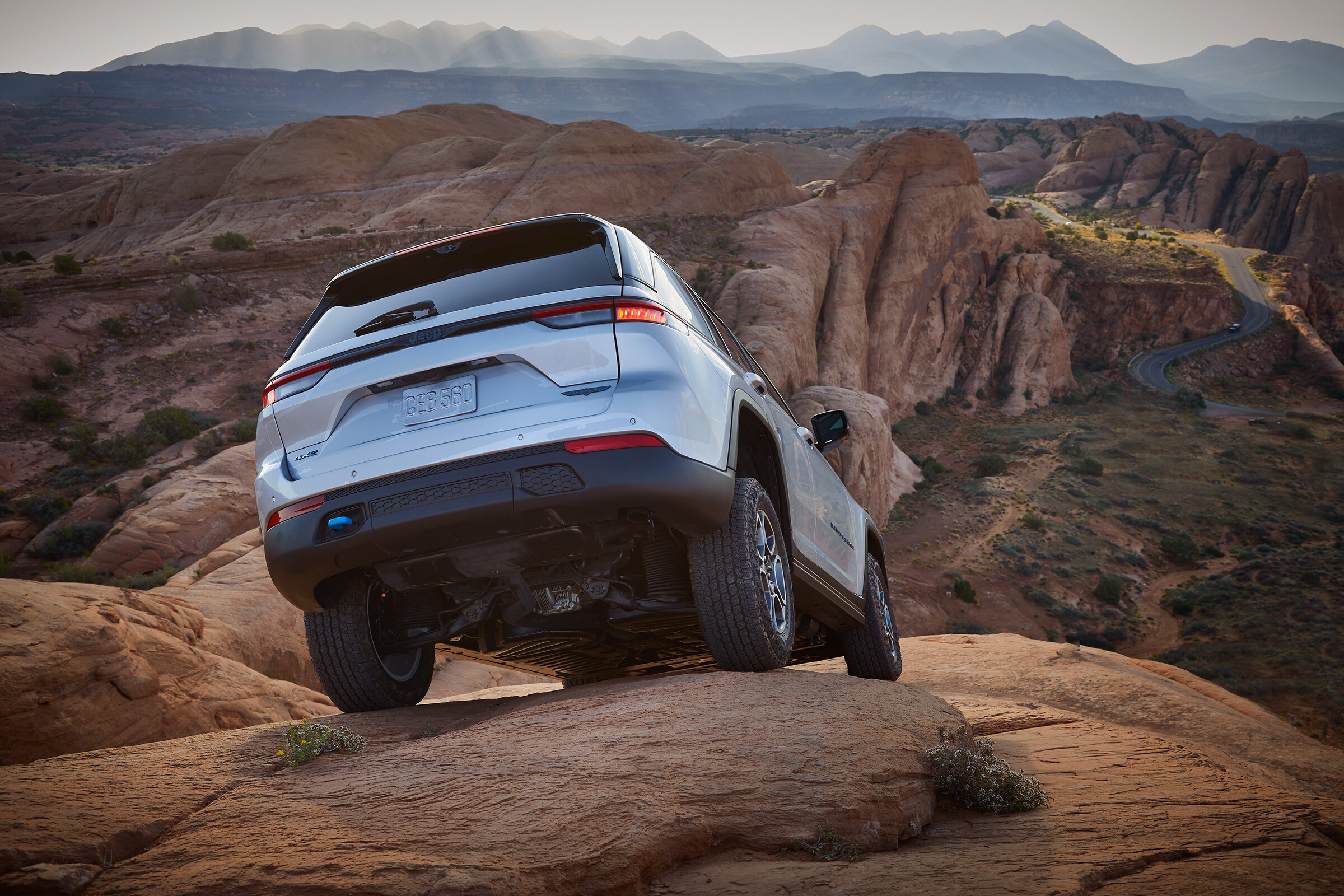
Three separate 4×4 systems – Quadra-Trac I, Quadra-Trac II and Quadra-Drive II – claim to give the new Grand Cherokee unrivalled capability, while the Quadra-Lift air suspension with electronic semi-active damping is a USP in its class, delivering up to 11.3 inches of ground clearance and 24 inches of water fording.
Similarly, the sway-bar disconnect function delivers improved articulation and traction over rocks and rough terrain, and marks the Grand Cherokee out with another exclusive feature in its class in the US.
In terms of towing capacities, a maximum of 3,265kg can be hauled with the available 5.7-litre V8 engine.
Design
Although we’ve already seen the Grand Cherokee’s exterior earlier this year when the covers were taken off for the first time at Stellantis’s EV Day in July, on Thursday the carmaker detailed the new design inside and out.
The all-new Grand Cherokee’s slim, sculpted exterior delivers more modern and updated premium appearance, with the brand calling it “the most luxurious Grand Cherokee ever”.
A lowered, tapered roof improves the vehicle’s aerodynamic performance and efficiency without sacrificing cargo space and utility, while the lowered beltline and expansive glass allow more light into the cabin and increase outward visibility.
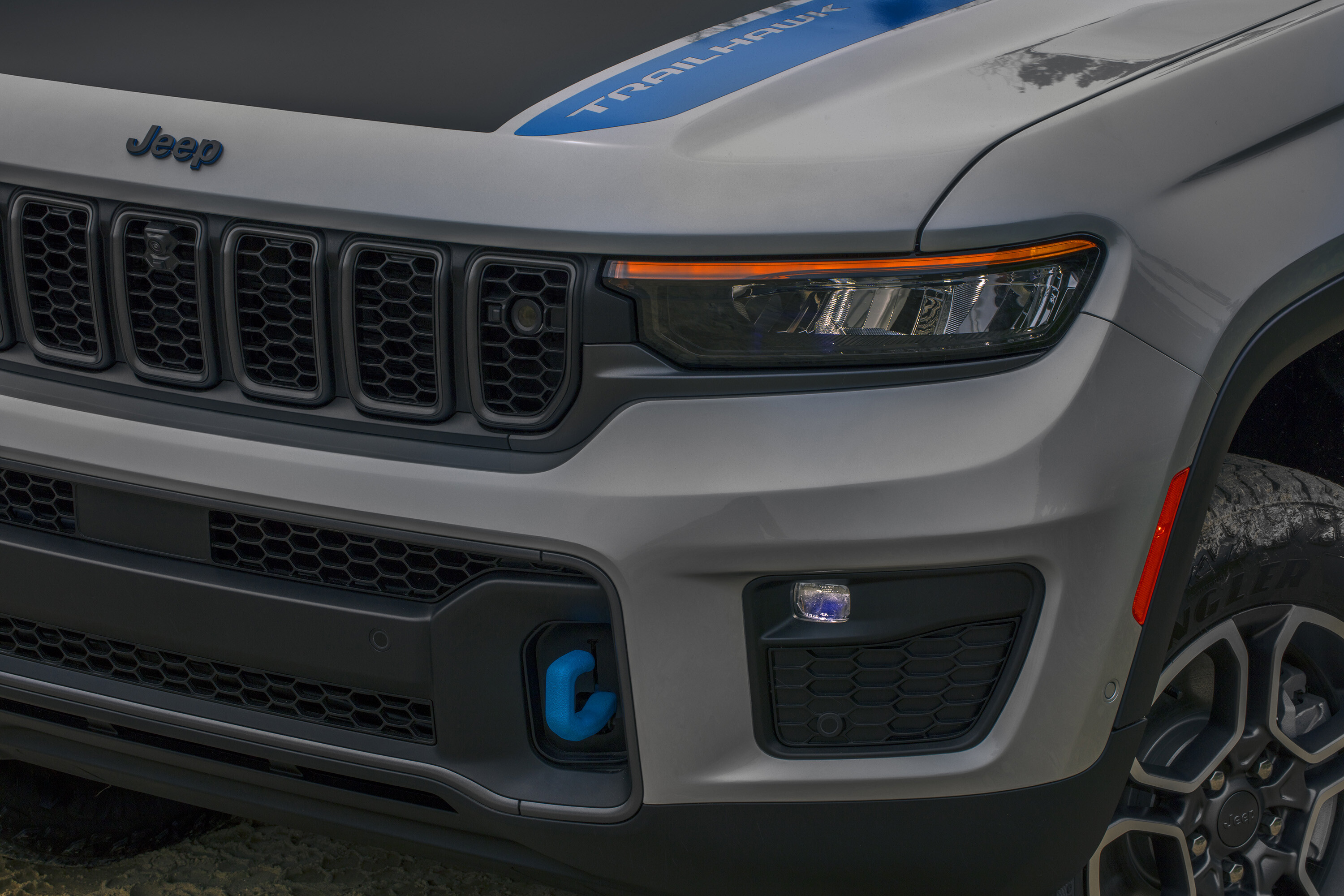
A wider and larger iconic seven-slot grille and new front fascia conceals a long-range radar and other advanced technology features. An elongated, level-set hood and bold headfirst stance “deliver visual strength” and the aerodynamic body style allows for design flexibility.
New active grille shutters, front wheel spats, air curtains, hood aero flick, lowered roof line (10mm decrease) and rear vertical-pillar spoilers improve on-road performance and fuel efficiency.
A gloss black roof is available for the first time on the Overland models and comes standard on Trailhawk, Summit and Summit Reserve.
A widened track (36mm / 1.4-inch increase) is said to provide superior handling and make it nimbler. There are eight wheel options with signature Jeep geometry and up to 21-inch diameter wheels offered for the first time.
The Jeep Grand Cherokee’s luxurious, next-generation interior too has evolved to include handcrafted materials and more modern amenities.
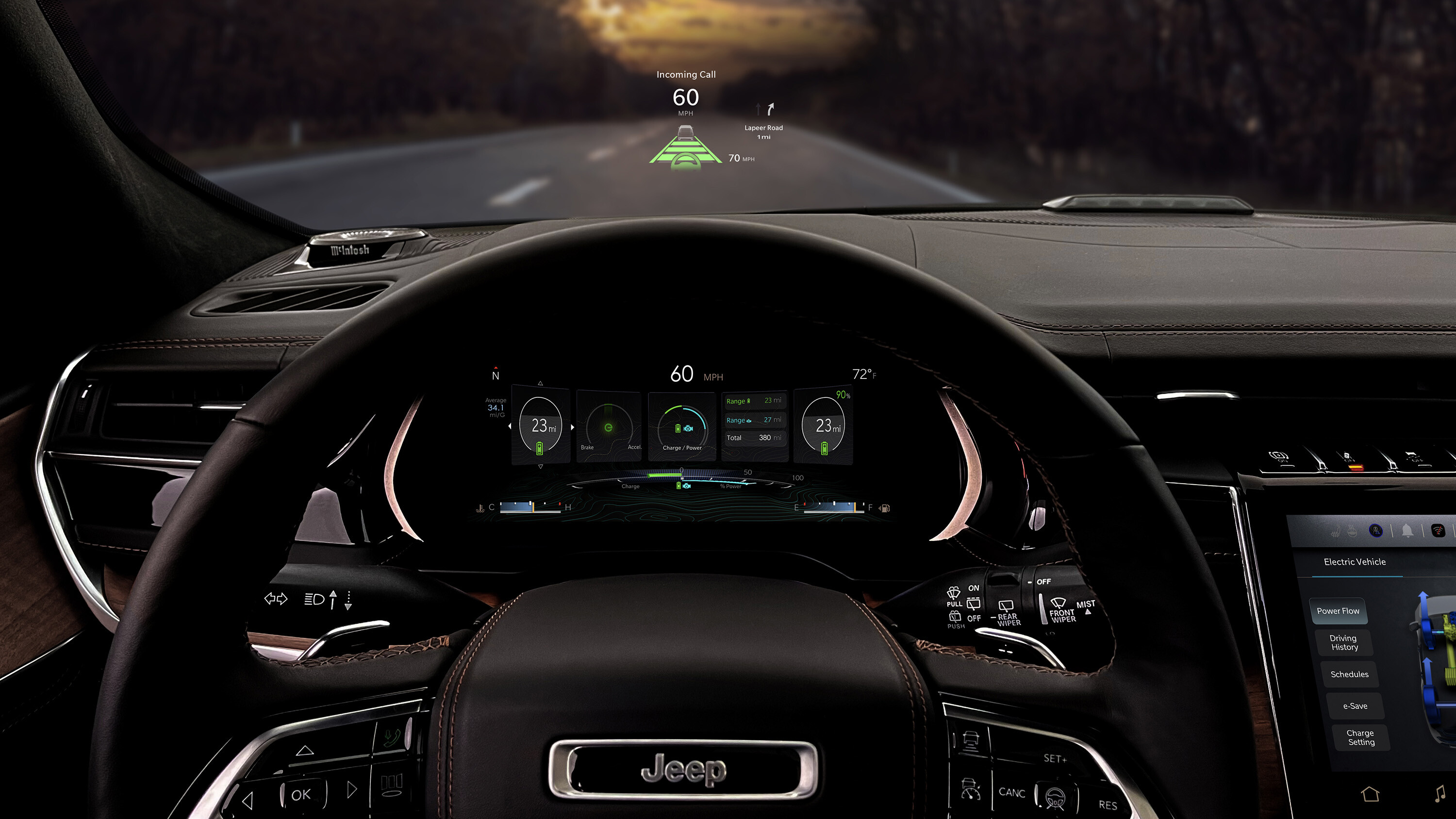
The front panel features new slim HVAC vents, a realigned centre stack for greater driver accessibility and 10.1-inch digital screens (digital cluster and touchscreen radio), as well as segment-first available 10.25-inch front passenger interactive display and a new high-definition rear-seat entertainment system with FireTV built in.
The all-new Jeep seating architecture features a length-adjustable cushion for the front row passengers. The new 16- way adjustable front seats have power lumbar and memory, while higher specification versions offer new front driver and passenger seat back massage. Heated/vented seats are available in first two rows, with three-level configurable controls.
The centre console layout now has updated switches and more storage space in the front bin, which can hold two wireless devices and a wireless charger.
A full-suite of customisable LED lighting with daytime/nighttime settings is standard on all trim levels for the first time on the Grand Cherokee, while ambient lighting with a five-colour selection is available on Overland, Summit and Summit Reserve models.
Safety
The 2022 Jeep Grand Cherokee now boasts more than 110 advanced safety and security features, including innovative applications of technologies said to “refine the connection between driver, vehicle and the road”.
Standard safety features across the line-up include:
| Full-speed collision warning with active braking and pedestrian/cyclist detection rear cross path detection |
| Adaptive cruise control with stop and go |
| Active lane management |
| LaneSense lane departure warning, with lane keep assist advanced brake assist |
| Blind-spot monitoring |
| ParkView rear back-up camera |
| ParkSense rear park assist sensors with stop |
| Switch-activated electric park brake |
| Tyre-pressure monitoring. |
Additional available safety features include:
| New night vision camera with pedestrian and animal detection |
| New intersection collision assist |
| New drowsy driver detection system |
| Parallel and perpendicular park assist and new traffic sign recognition |
| New 360-degree surround-view camera system with front and rear washers |
| New active driving assist, hands-on-wheel and eyes-on-road automated driving is also available. |
Technology
The new fifth-generation Grand Cherokee has the most available technology features in its history, according to Jeep.
The suite of features available includes:
| Uconnect 5 u2013 the most advanced Uconnect system u2013 offers up to three 10.1-inch and two 10.25-inch digital displays in the cabin |
| A segment-exclusive front passenger screen offers co-pilot assistance with navigation, camera viewing and visual entertainment |
| Wireless Apple CarPlay and Android Auto |
| New digital rearview mirror |
| New full-colour, 10-inch (25.4 cm) windshield Head-up Display (HUD) |
| New wireless charging pad in front centre console |
| Greater connectivity with two bluetooth-enabled phones paired simultaneously Enhanced Amazon Alexa virtual assistant functionality |
| All-new Uconnect mobile app |
| SiriusXM 360L platform with personalised stations powered by Pandora |
| TomTom navigation with predictive search, natural speech and live traffic updates maps over-the-air updates |
| 4G LTE Wi-Fi hotspot to connect up to eight devices. |
Amazon Fire TV is also available for the 2022 Jeep Grand Cherokee, allowing passengers to stream videos, play games, listen to music, get information and watch downloaded content – all while on the road. This includes:
| Connecting Fire TV through in-vehicle 4G Wi-Fi hotspot or mobile device hotspot |
| Watching downloaded Prime Video content without connectivity while on the road with 16 GB of included built-in storage for each rear display (9 GB of user available storage per rear display) |
| Watching content individually on each rear display or mirror across both displays to view together |
| Fire TV connects to Uconnect 5 so rear seat passengers can adjust individual climate settings and see destination ETA |
| Front seat controls: Monitor content or apps used in the rear seats, select favourites to quickly start a movie on the rear displays, or you can pause or stop the content for family chats |
| Includes two voice remotes with Alexa. Just press and ask Alexa to easily find, launch and control content. Check sports scores, play music or see your live camera feeds (compatible smart home device required and sold separately). |
A new McIntosh audio system is also available and features 19 custom-designed speakers (including a 10-inch subwoofer), 950 watts of power and a 17-channel amplifier. The Jeep brand is currently the only automotive manufacturer in the world to carry a McIntosh sound system.
Under the skin is an all-new, purpose-built unibody architecture – which is based on a platform shared with the Alfa Romeo Stelvio – which improves vehicle performance, safety and reliability, while significantly reducing vehicle weight, noise, vibration and harshness in this fifth generation.
The flexibility of the new platform allows for two different wheelbases and lengths, as well as electrification, and has already been put to the test at extreme locations all over the world, including at the formidable Rubicon Trail in which the 4xe made the gruelling ascent on electric power alone.
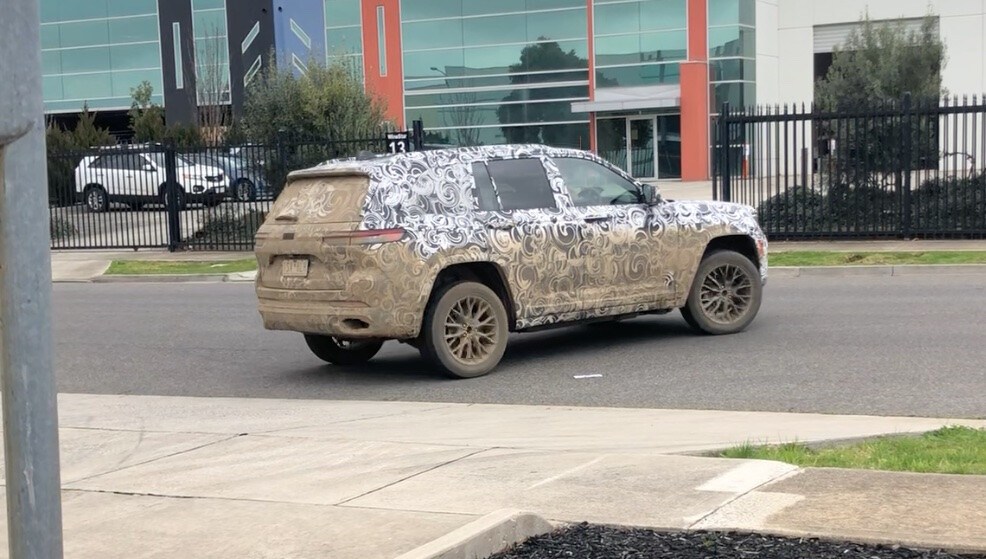
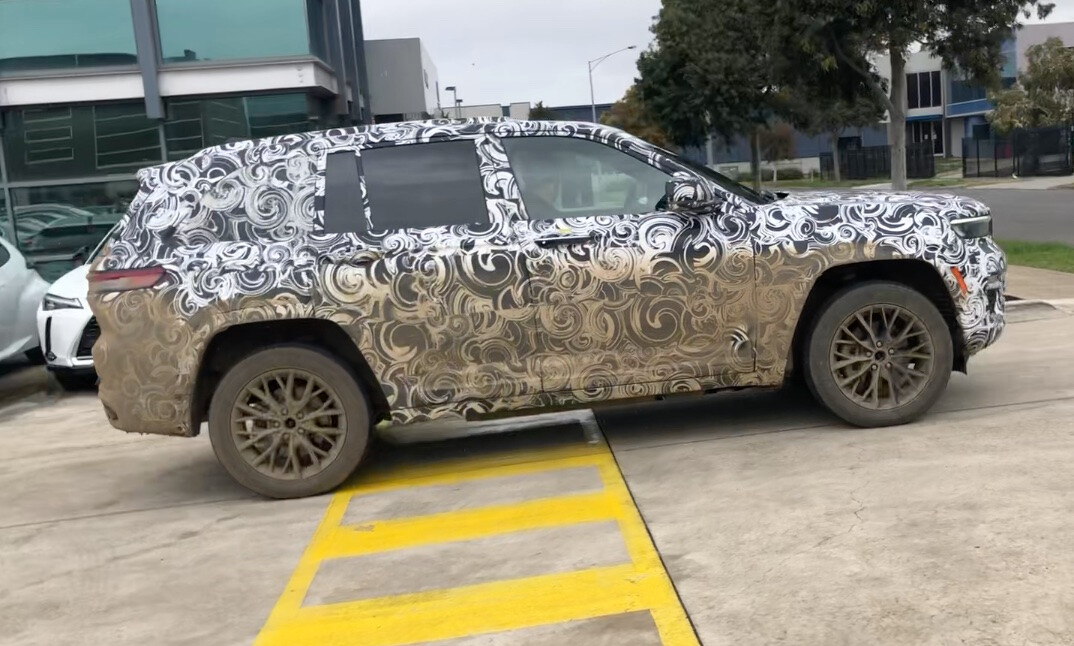
Locally, a camouflaged prototype of the new Jeep Grand Cherokee was also spied testing in Melbourne last month.
Earlier this year, Meunier told sister publication WhichCar the local testing was being used to investigate the Grand Cherokee’s suitability for towing – admitting that this capability will be crucial in cracking the Australian market.
The Grand Cherokee’s seven-seat long-wheelbase twin, the L, has already been launched in America with a 3200kg towing rating.
The L will launch in Australia around the fourth quarter of this year, lockdown permitting.
Globally, it’s sold with a pair of engines including a 5.7-litre Hemi V8 and 3.6-litre V6. Diesel power has been dropped for this generation.
Earlier this year, as part of parent company Stellantis’s EV Day, the company revealed it will offer at least one fully-electric model in each of its SUV segments and 70 per cent of its global sales will be of electrified vehicles by 2025.
But Jeep has confirmed its V8s are not dead yet, despite recently announcing big electric vehicle plans for the future – with the Aussie favourite expected to be gradually phased out.
Speaking at a roundtable event for the India and Asia Pacific region in July, Meunier gave the V8 a stay of execution from being axed in favour of electric power, saying “it will happen, but not yet”.
“We want to keep producing the V8 for as long as we can, especially while there is a market demand for it, but at the same time electrification gives us the opportunity to get even more performance in a better way.
“I’m convinced we’re going to do well with Grand Cherokee 4xe in Australia, it’s going to be an alternative. It’s going to be a way also for Jeep to differentiate and to show that we’re really advanced on technology,” Jeep CEO Christian Meunier recently told us.
“The capability off-road is outstanding, people are going to love it, I have no doubt.”
British company Ineos is embarking on a mammoth task – introducing a brand-new car into the Australian market, and in a segment which demands absolute reliability.
The 2022 Ineos Grenadier may well be the de facto successor to the original Land Rover Defender, but the freshman brand is rolling out a strategy to attract a wider audience – and it isn’t following the typical new-car handbook.
As engineers complete a total of 1.8 million test kilometres with prototypes around the globe – including here in Australia – the company says it’s created a proper off-roader as an antidote to the softening of other four-wheel-drive models on the market.
“We will offer some versions that will go up in the range with nicer interiors for example – for those that want more comfort – but what’s not on the cards for us is going down this direction of ‘SUV’,” Ineos Australia sales and marketing manager Justin Hocevar told 4X4 Australia.
“We will remain a utility vehicle brand.”
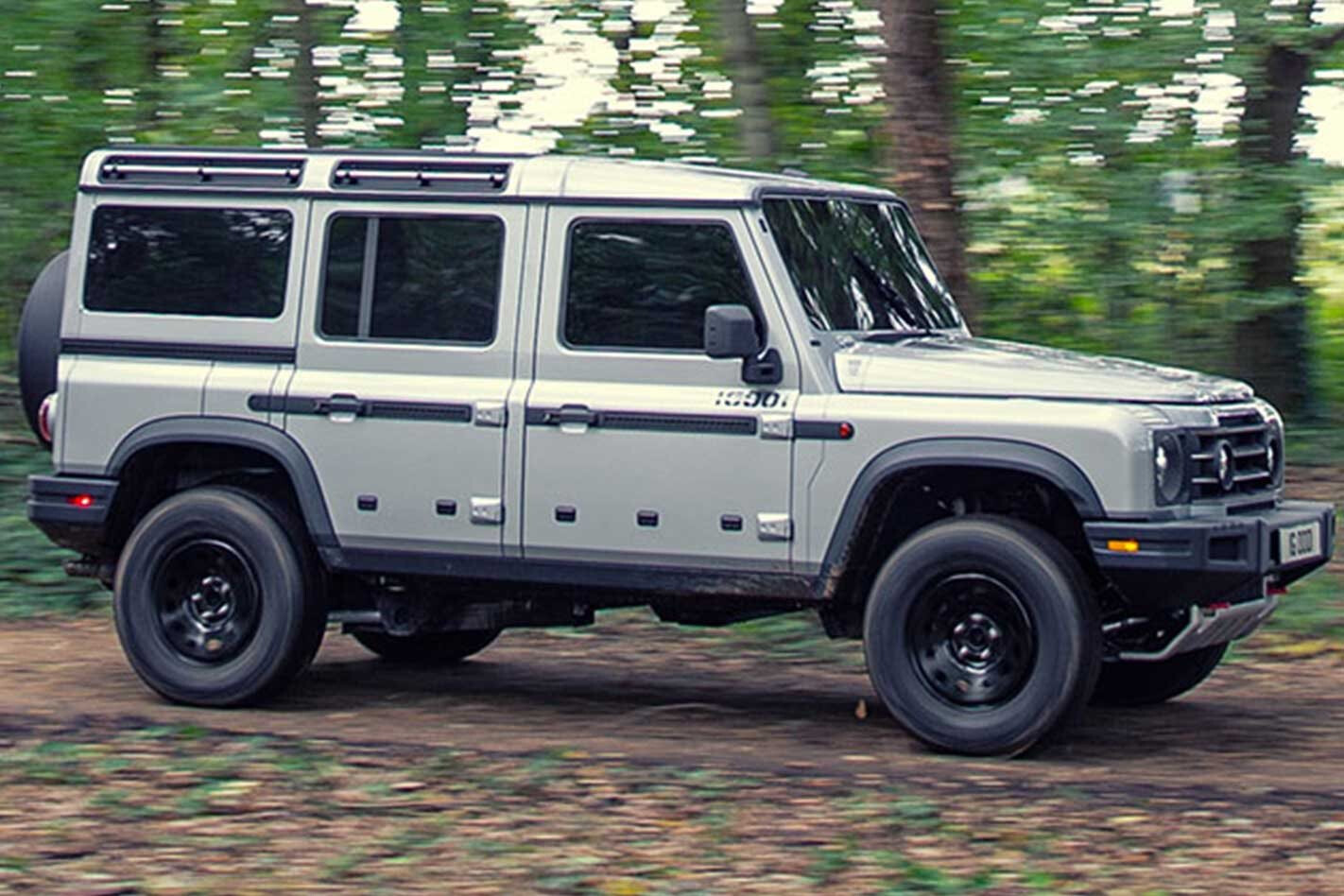
Priced from $84,500 before on-road costs, Ineos will kick off the Grenadier with a two-seater commercial van. Toyota LandCruiser Troopcarrier buyers and grey nomads are firmly in its sights, and it is doing all it can to build trust with its customer base.
Along with a strong online presence, Ineos says it will have 16 agents in major cities in Australia, as well as providing a five-year/unlimited-kilometre warranty and five-year roadside assist package. Buyers will also be able to pick up a five-year service plan for fixed-price maintenance.
To give those in regional areas a first-hand look at the new Grenadier range, the company is also planning to attend field days across the country.
Backing it all up will be 34 hand-picked Bosch Service Centres providing servicing and repairs.
“About 30 per cent of [our agents] are not traditional automotive dealers,” Hocevar told 4X4 Australia.
“We’re really looking for those types of business partners that have got a close relationship with their customers, and ideally have already got a 4X4-oriented business.”

Like the Grenadier, Ineos has taken a “clean-sheet” approach to building its aftermarket support software, creating a program which provides a ‘bouncing ball’ step-by-step tutorial to repairing its vehicles – coupled with 3D animations.
The program also integrates; parts catalogues, inventory tracking, parts ordering, invoicing, as well as the digital repair manual, to help make life as easy as possible for mechanics and parts interpreters to support Ineos customers.
But unlike most car manufacturers, Ineos says it has an open-source approach, and will be happy to supply the software to both owners and workshops – helping to ensure vehicles are repaired correctly, even in remote areas.
Along with developing and testing its own bolt-on parts for the Grenadier, Ineos is providing computer-aided design (CAD) files to four-wheel-drive accessories companies as well as providing access to prototype vehicles to help build a foundation of aftermarket products.
While reservations will open mid-October and orders are expected to begin in March 2022, the Ineos Grenadier is slated for a fourth quarter launch next year.
Snapshot
- On sale in Australia in Q4 2022
- Priced from $84,500
- Prototype testing here now
Australians will be able to place an order for an INEOS Grenadier from October 2021, with deliveries of the all-new 4×4 wagon set to occur late in 2022.
The five-door Grenadier wagon will be offered initially, with prices starting from $84,500. A four-door double-cab pick-up will follow in a few years’ time.
The Grenadier is the first vehicle from INEOS Automotive, a name you might recognise as a sponsor of the British America’s Cup yachting squad, Mercedes F1 Racing team and British road cycling teams, but primarily it is a huge chemical production company.
INEOS owner Jim Ratcliffe recognised the need for a traditional, off-road-capable four-wheel drive utility vehicle after Land Rover announced it was planning to stop making the classic Land Rover Defender. When LR refused to sell Ratcliffe the rights to continue to manufacture and sell the Defender, he decided to build his own.
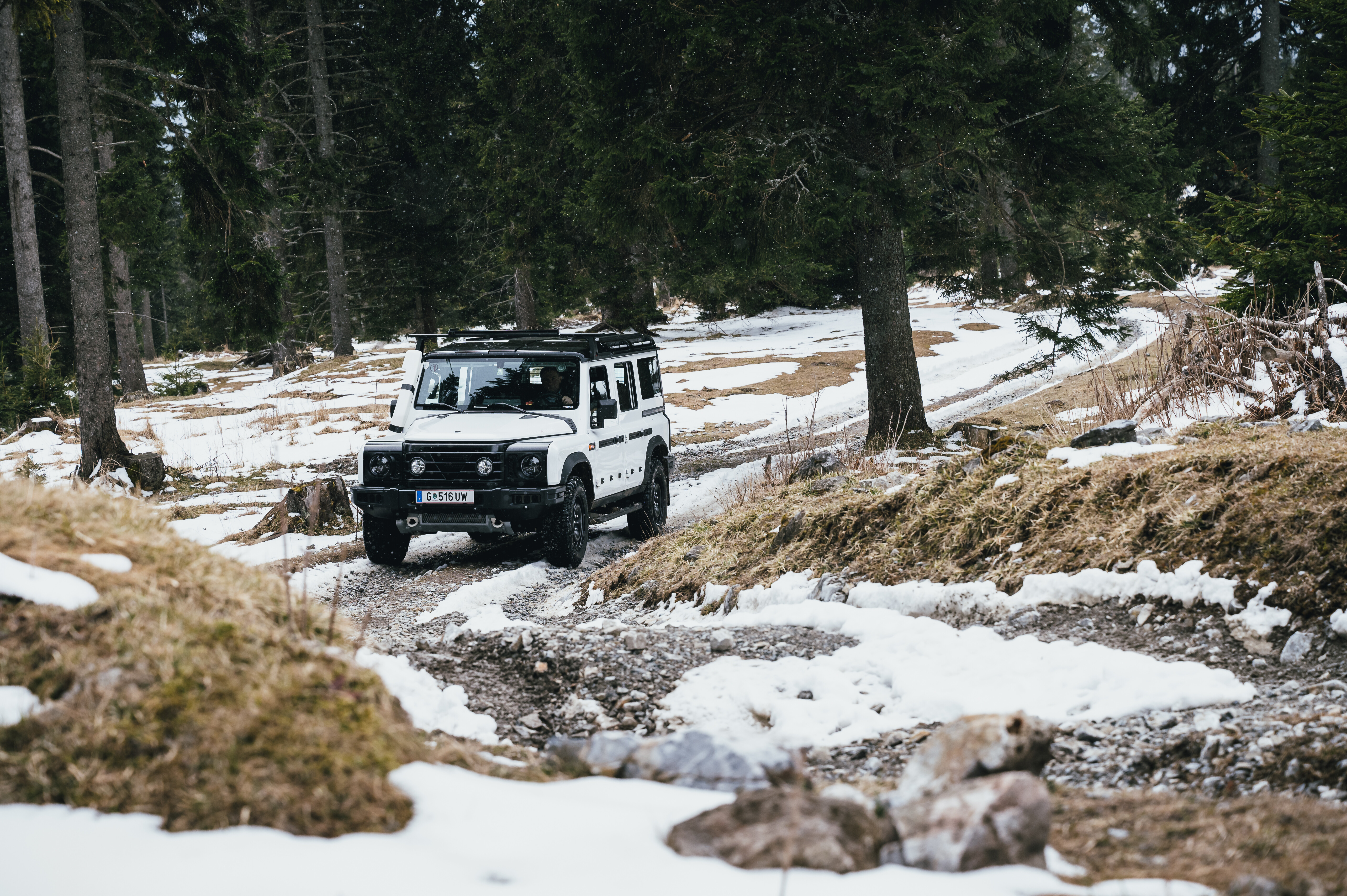
The result is the Grenadier, named after the pub where the idea for it was conceived. Right now there is fleet of Grenadier 2B prototypes putting in test miles around the world in preparation for the production vehicle. INEOS is planning to log more than 1.8 million test kilometres before it signs off on the production car and begins manufacturing in Germany.
One of those 2B prototypes landed in Australia last week, where it will soon embark on local testing – initially at a private test facility and then out to the wilds of the outback and beyond. That vehicle will also be shown to a select group of ‘Hand Raisers’ who have shown interest in the vehicle from the outset, to gain feedback on how they see it fitting in to the Australian market.
INEOS clearly sees its Grenadier appealing to a range of users including recreational travellers, four-wheel drivers, government and NGO departments, emergency services, and farming and industrial operators – much like the classic Land Rover had for 70 years.
The entry-level model starts at $84,500 and gets you a two-seat ‘commercial’ wagon. The range will go up to include four- and five-seat models, some with premium Recaro seating, front and rear differential locks and a range of accessories to tailor the vehicle to the owner’s requirements.
INEOS Automotive Australia is in the process of establishing its headquarters in Melbourne under the guidance of long-time automotive industry manager Justin Hocevar.

Hocevar outlined to 4X4 Australia the brand’s plans for wide-spread network of Grenadier ‘agents’ in Australia and New Zealand, mainly along the highly populated east coast but also in regional areas plus some service-only agents in regional areas.
These agents will work alongside an online system of configuring your Grenadier in the approach to purchase. INEOS will partner with Bosch Automotive to supply service in some areas to reassure owners they will be able to maintain their vehicles no matter where their adventures take them.
The Grenadier will come with a five-year/unlimited kilometre warranty in Australia and New Zealand, along with a five-year service plan to lock in ownership costs.
Aside from announcing the starting price, not much else was revealed about the car and the range, other than diesel and petrol variants will be priced the same with no price penalty applied to diesel vehicles.
“Let’s build a world-class 4×4 with the best component suppliers, but also let’s support it in the best possible way,” said Hocevar of the strategy.
The Grenadier uses a choice of petrol or diesel six-cylinder engines, both supplied by BMW and backed by ZF automatic transmissions. A full-time dual-range transfer case gives four-wheel drive, while the live axles come from Italian manufacturer Carraro and can be equipped with locking differentials.

INEOS saw from the outset that owners of such vehicles will want and need to fit accessories to their cars and has had an open-source approach to working with accessory companies. It will offer its own range of accessories for the Grenadier, but is also working with aftermarket accessory companies to ensure there are products to meet everyone’s needs.
Hocevar confirmed the company is speaking with some Australian aftermarket brands about products, some which will augment INEOS’s own accessories.
An indicator of how important INEOS sees the integration of accessories is that the Grenadier comes pre-wired to accept a range of products such as driving lights, power winch, roof lights for emergency vehicles, solar charging, dual batteries, and towing equipment.
Speaking of towing, the Grenadier wagon will have a 3500kg towing capacity and 7000kg GCM.
“The Grenadier is going to be a part of the storybook of people’s lives, the adventures they go on and the things they do,” said Justin Hocevar of the vehicle.
In an age of overly complex SUVs and off-road pretenders, we see the Grenadier as the most exciting new vehicle to come to market in decades. Let’s hope it lives up to expectations.
A handful of classic 4x4s are currently under the hammer at Grays Australia, but you’ll need to be quick as the gavel slams the auction shut at 8.30pm (AEST) tonight.
Unfortunately, test drives are off-limits and COVID-19 has forced many punters to buy sight unseen. Still, there’s many a bargain to be had.
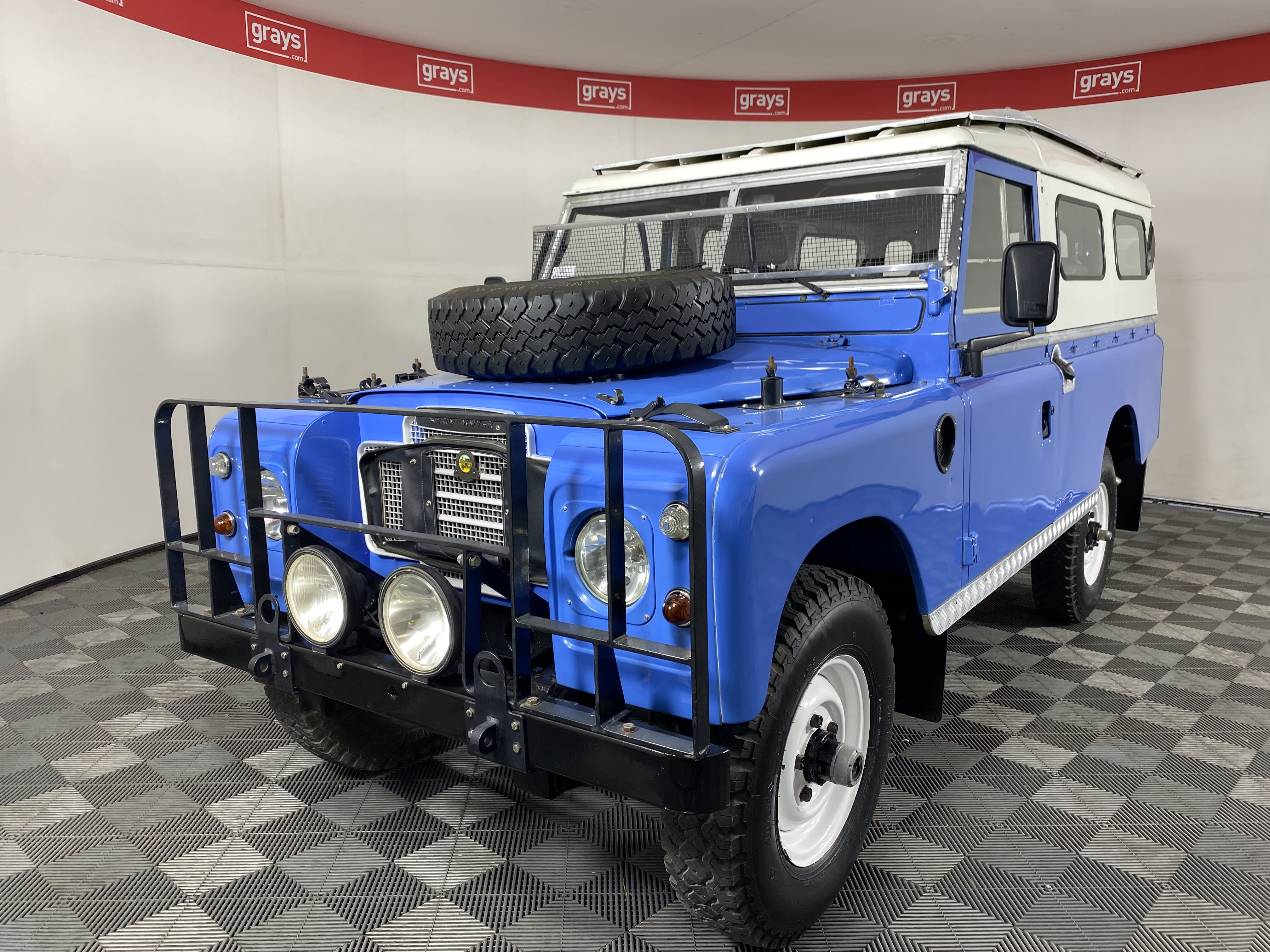
Fancy a 1978 Land Rover Series 3? This manual has 21,072km on the clock and is said to be in “good” condition, with a few marks, dents and scratches. It comes without plates and is located in Pinkenba, Queensland. Full info here.
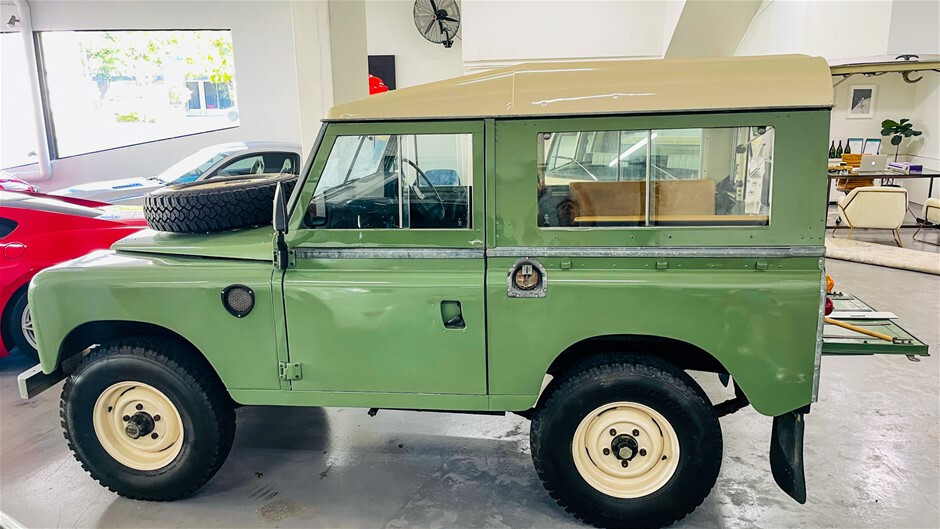
Grays also hosts another Series 3 Landie, this one a 1973 manual variant. With 14,855 miles on the odometer, it is listed with an owner’s manual and service history. The seven-seater is also listed to be in “good” condition. Located in Fortitude Valley, Brisbane. Full info here.
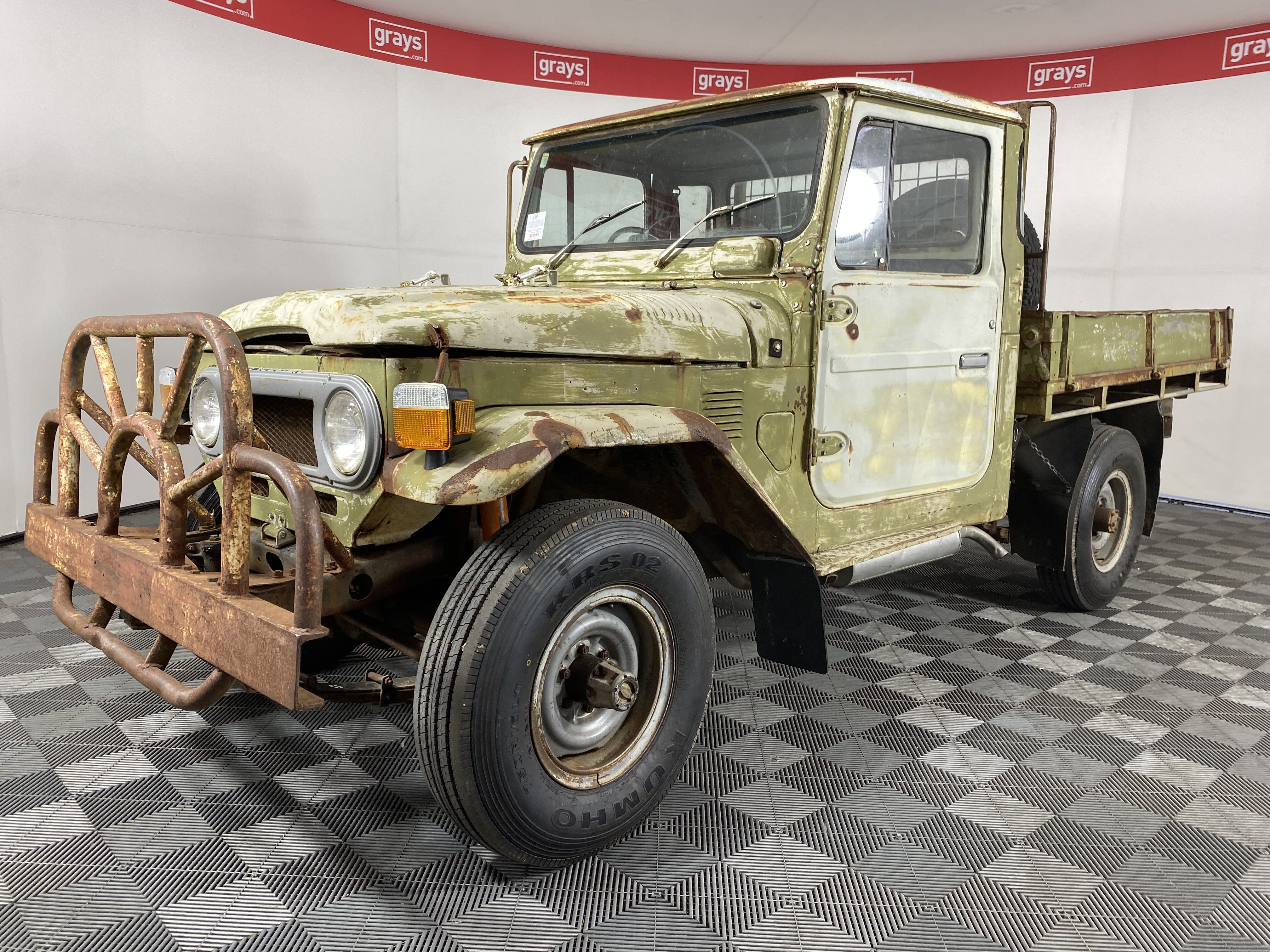
Also listed is a 1978 Toyota LandCruiser HJ45. The diesel-powered ute is listed as being in “fair” to “poor” condition, with the owner commenting that the patina is untouched. There are marks, dents and scratches, with evidence of corrosion and a diesel leak. Still, the engine turns over and it is listed with 12,450km under its belt. It could be a bargain for the right buyer. Full details here.
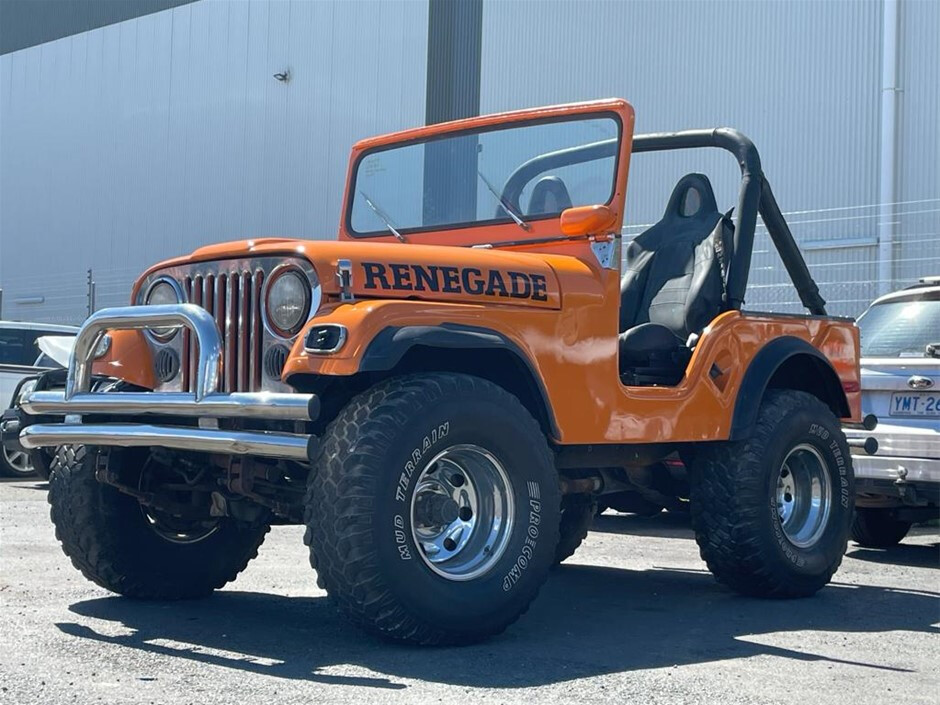
Finally, a 1974 Jeep CJ5 Renegade with a 308 V8 engine that is said to have been in storage for several years. It has 42,075 miles on the odometer. The vehicle requires some work to get it back in working order ─ and it is missing its keys ─ but it is said to be in good condition. Info here.
All auctions close at 8.30pm AEST
Ever since its launch, punters have said they love the first generation of Ford’s Ranger Raptor but asked the question: “How good would this be with a V8 in it?”
After all, only milk and orange juice come in two litres, right? The standard 500Nm diesel engine is no dog, but a performance 4×4 ute needs a performance engine.
If you believe the rumours, Ford Australia has toyed with the idea of shoehorning a V8 into its halo 4×4 ute, and there was at least one prototype vehicle getting around the Melbourne sheds of the then factory-supported tuning house FPV/Premcar, but the V8 project was stillborn. Until now, that is!
Killa Kustom Kables & Conversions
If the factory won’t build it, then it becomes a challenge for clever Aussie hot rodders. In this case it was Steven Kidley at Queensland’s Killa Kustom Kables & Conversions who jumped on the task.
You might remember Killa Kustom for its Killarado LS V8 Holden Colorado conversion we featured a few years back. The business has been plugging away with those conversions into Colorado utes and Trailblazer wagons with installers now in several states, but the demise of Holden has meant diminishing supply of those vehicles wanting conversions. And the challenge of a V8 Raptor was just too big to ignore for Steve.
“There was a lot of social media interest around rumours that Ford was building a V8 Raptor Ranger,” says Steve. “We saw that and when Ford said they weren’t going to do it, we put things in motion.”
The conversion includes a brand-new Ford 5.0-litre crate engine installed using all new and specifically engineered parts; a PWR cooling system; a new air-conditioning system with all new hard lines; full electronics integration; full exhaust system; and full compliance.

The build begins
Steve kicked the project off by securing a written-off Ranger Raptor and yanking the blown-up four-cylinder diesel engine out of it before getting out the measuring tape.
The big challenge of fitting Ford’s Coyote 5.0-litre V8 engine to anything that wasn’t made to accept it is that this is a double-overhead-camshaft engine, so it is very tall and wide compared to GM’s pushrod LS engine which sits easily in most vehicles. “It’s very tight on width,” says Steve, “and very tight around sump clearance.”
To sit the V8 engine as low as possible in the engine bay and between the unmolested strut towers, a cast aluminium sump was designed and made, and custom mounts are used to fix the engine to the factory engine posts. The new sump increases the oil capacity of the engine, so there are extra benefits there.

Even then the exhaust headers had to be meticulously designed and fabricated using 1-7/8-inch primaries to a dual three-inch system, finishing in a single 3.5-inch outlet. Once the final design was made and ready, the exhaust system was HPC-coated.
Other custom-made parts include the billet transmission adapter, a billet thermostat housing, custom-moulded hoses, a ‘neck’ to mount the engine intake to the factory Raptor air filter housing, and, as Steve says, “dozens of smaller brackets and lines.”
A written-off Mustang GT provided the donor engine for the prototype Raptor8, but the production vehicles get the new crate engine.
That is a Ford Performance Coyote crate engine that puts out 345kW at 7000rpm and 570Nm of torque at 4600rpm. It’s pretty much a replacement engine for the Mustang GT, so in reality it could be serviced by any Ford dealer. It might surprise the technician though when he opens the bonnet to see the V8 nestled in the Raptor.

The Raptor retains its 10-speed automatic transmission, but it is upgraded with Mustang V8 internals and the rest of the drivetrain remains standard.
“Most complex part was the electrics and making sure everything works and stays fully ADR compliant,” says Steve. “This includes the stability control, autonomous braking, and other factory systems.”
Even the Raptor’s Multi Terrain System which calibrates the engine, transmission and chassis electrics to suit conditions and driving style remains operative, and the MTS’s Baja Mode takes on a whole new feel and sound with V8 power.

Suspension set-up
The best part of a standard Ranger Raptor is its bespoke Ford Performance/Fox suspension package that works so well.
It remains relatively untouched, with the V8 engine near identical to the diesel in weight. Steve only added some spacers to the front struts to raise the ride height and balance out the car’s stance. Speaking of stance, the Raptor8 stands prouder than a stocker on a set of 305/60R18 M/T Baja Boss tyres wrapped around Boss Fink alloy wheels.

These conceal a big brake upgrade from Pedders and this kit is an option for customers getting the conversion to consider. You’ll want the extra stopping power to rein in the newfound performance and let’s face it, the standard Ranger brakes have never been much chop. Styling wise, Killa has added a front bar, underbody protection and sailplane/sports bar all from Hamer 4×4 and tucked a Stedi light bar into the grille of this vehicle, which is the first of the production models.
“It drives unreal!” says Steve of the Raptor8. “Unlike the diesel where you have to hold your foot to the floor all the time, the V8 just does everything effortlessly. There’s always power on tap.”
Getting your 4×4 out of a stuck situation can be a time-consuming affair, especially when you’re travelling solo, but when you’re travelling with other vehicles, a quick snatch recovery can have you on the move again in a matter of minutes … so long as you’re carrying the right gear and you know what you’re doing.If you don’t know what you’re doing, snatch recoveries can be fraught with danger, but armed with some knowledge and the right equipment, it doesn’t have to be that way. After all, using one vehicle to pull another vehicle out of a stuck situation is about as straightforward as it gets when it comes to vehicle recovery.Here’s what you need to know …
Firstly, you’ll need an appropriate vehicle recovery strap, a method to safely attach the strap to both vehicles, and a way for the drivers of both the recovering vehicle and the stuck vehicle to communicate with each other.
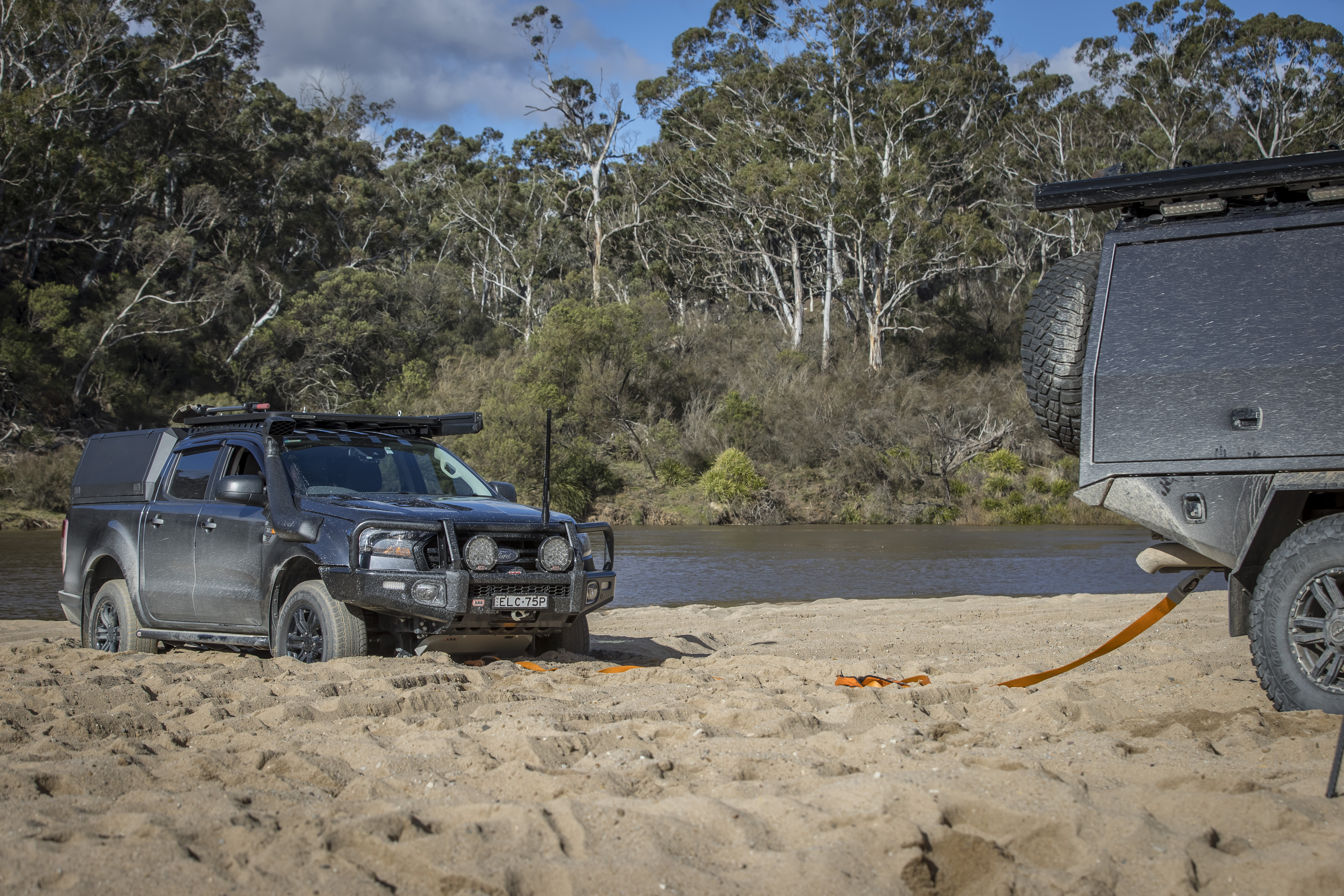
The two types of vehicle recovery straps, commonly called snatch straps or kinetic recovery ropes, look very different to each other, but they are essentially designed to perform the same task.
Just to confuse things however, snatch straps look a bit like tow straps and kinetic recovery ropes look a bit like tow ropes, but it’s important to note that vehicle recovery straps and tow straps/ropes are not designed to perform the same functions, and they are not interchangeable.Tow straps/ropes are designed to tow free-moving vehicles; they are not designed to recover vehicles that are stuck, although they can still be handy in a variety of off-road situations, such as helping to pull a vehicle up a steep hill or over an obstacle. But tow straps/ropes simply aren’t suited to pulling out a vehicle that’s bogged to its axles in mud or sand.
To avoid confusion, it is now mandatory for vehicle recovery straps to be clearly labelled. This is not always the case with tow straps and tow ropes.
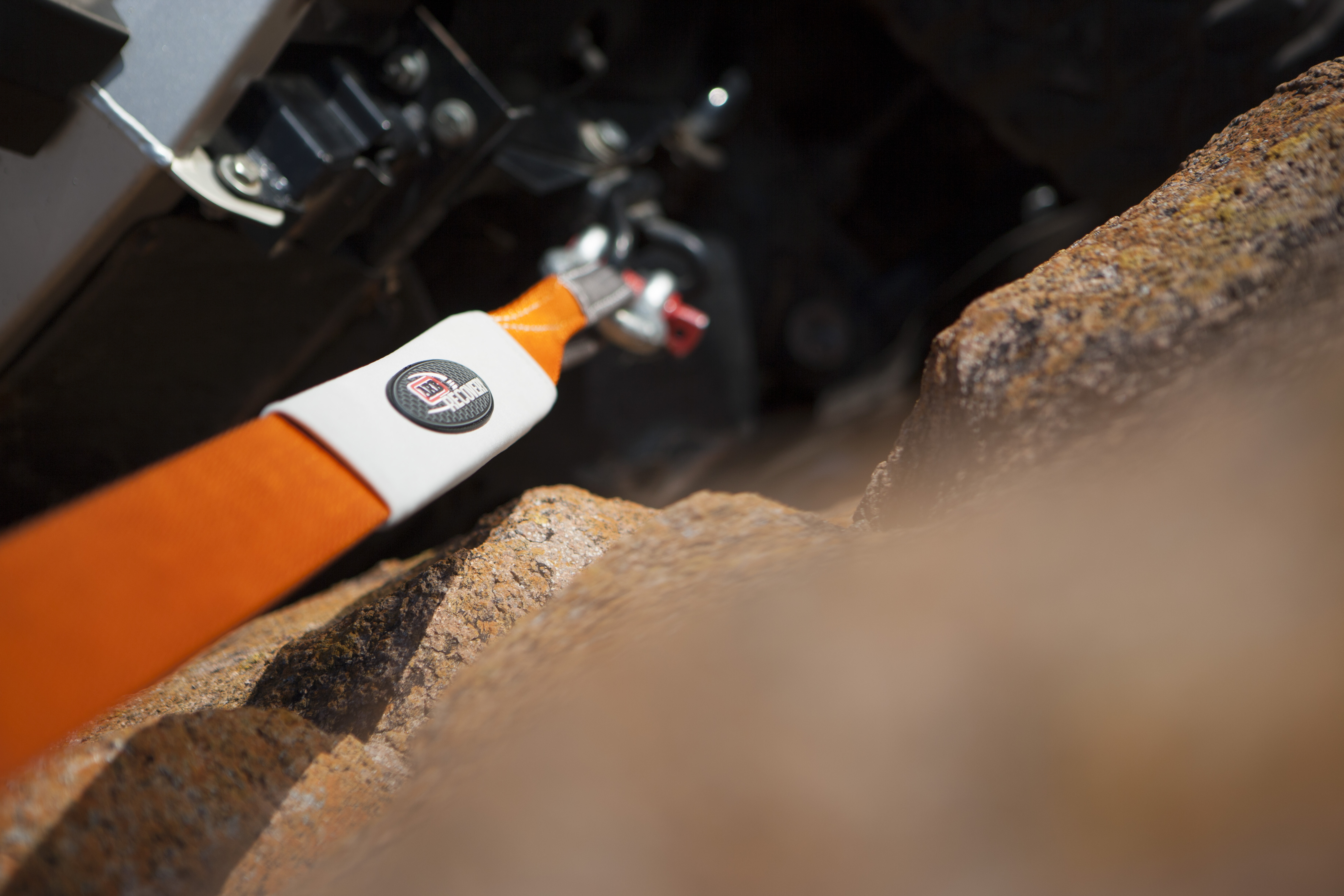
Another way to make the distinction is that tow straps/ropes are often fitted with hooks or shackles at each end for easy vehicle attachment, while vehicle recovery straps are never fitted with hooks or shackles, but instead have a loop at each end for vehicle attachment.
So how do they function differently? A tow strap/rope is not designed to stretch but a vehicle recovery strap is … and quite a lot; in the case of a snatch strap by around 20 per cent and of a kinetic recovery rope by around 30 per cent.
Snatch straps are made from flat nylon webbing and are most commonly available in six, nine and 12m lengths, and are between 60 and 100mm wide depending on the minimum breaking strength. For recreational four-wheel drive use, nine-metre straps with a minimum breaking strength rating of between 8000 and 11,000kg are common. When choosing the right snatch strap for the job, the minimum breaking strength should be between two- to three-times the Gross Vehicle Mass (GVM) of the lightest of the two vehicles involved in the recovery operation.
Snatch straps typically have reinforced eyes (or loops) at each end to allow fitment of shackles for vehicle attachment.Like snatch straps, kinetic recovery ropes are also manufactured from nylon, but in the form of a double-braided rope. The inner nylon core is the stretchy component, and this is protected by a braided nylon outer layer.
Kinetic recovery ropes also have eyes at each end, but they are spliced together rather than stitched. Some also feature a polyurethane (PU) coating on the eyes to minimise the occurrence of wear at this point where the rope is attached to the vehicle, either directly or by using a rated shackle.
HOW DOES A RECOVERY STRAP WORK?
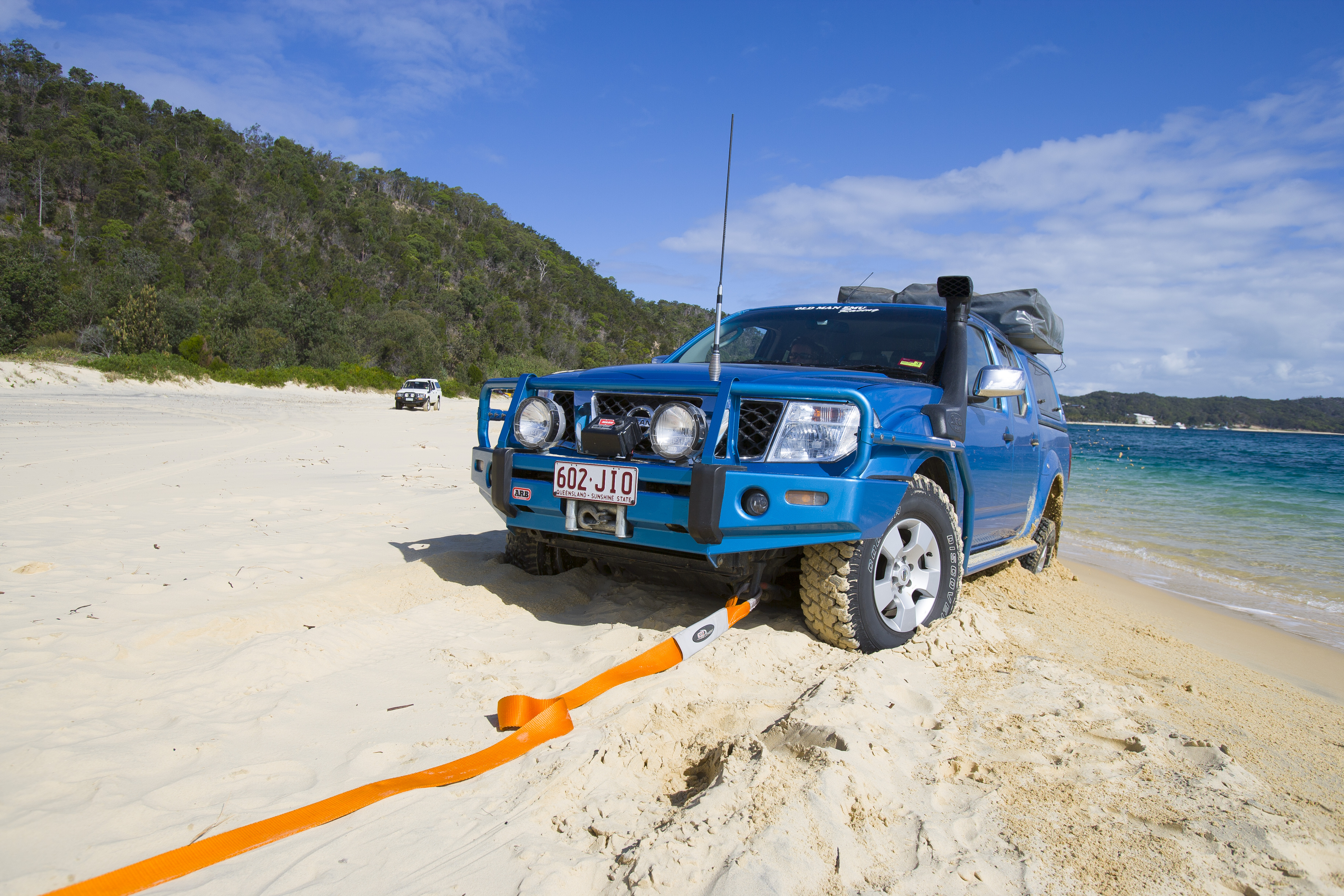
A vehicle recovery strap essentially acts like a big elastic band. Once attached to both vehicles, the recovery vehicle gets a run up and pulls on the strap, which stretches by about 20 to 30 per cent before it contracts. The stored kinetic energy in the strap is hopefully enough to ‘snatch’ the stuck vehicle out of its situation.
A snatch recovery can only be performed if there’s enough space available for the recovery vehicle to get a good run-up, and if the recovery can be performed by pulling the stuck vehicle forwards or backwards, not to the sides. If a snatch strap recovery does not suit the scenario, another recovery method will have to be employed, whether by simply using a shovel, a set of recovery tracks or a winch.
VEHICLE ATTACHMENT
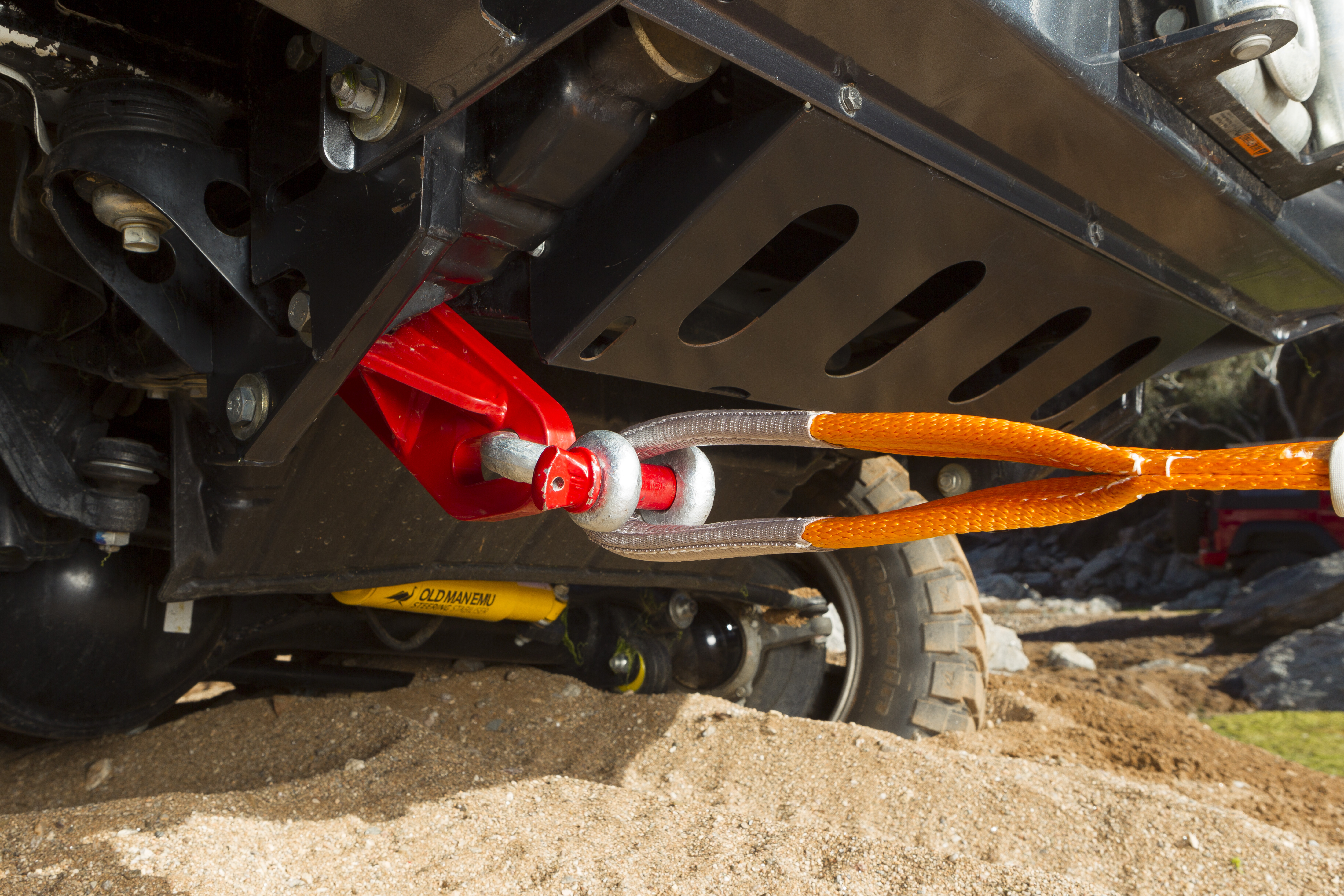
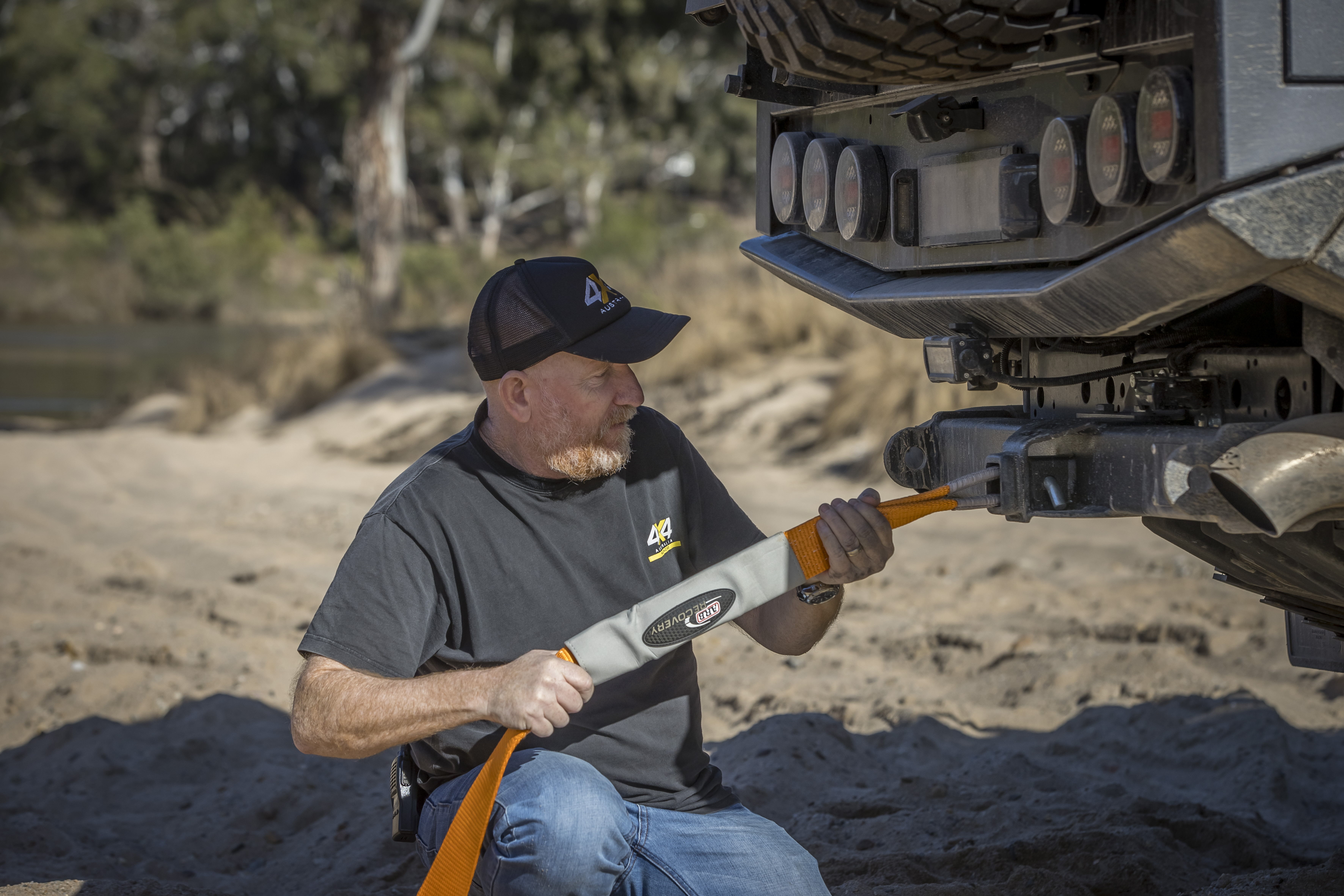
Vehicle recovery straps should only be attached to a vehicle at rated recovery points, and these are not to be confused with vehicle tie-down points or shipping points, which are made from mild steel and will more than likely fail in a vehicle recovery situation. Likewise, never attach a vehicle recovery strap to a vehicle by looping it over a tow ball, as the tow ball could fail and become a lethal missile.If your vehicle is not equipped with factory rated recovery points, you can source aftermarket recovery points through various reputable 4×4 outlets, and these are affixed to your vehicle’s chassis with high-tensile bolts so you can perform safe snatch recoveries.
The eyes of a recovery strap can be attached to a vehicle’s rated recovery points by using rated bow shackles or soft shackles, the latter preferable in the event of an equipment failure.In the case of steel shackles, a stamped 3.25-tonne bow shackle is a high enough load rating for most snatch recoveries, and this size shackle is compatible with most of the rated recovery points fitted to recreational 4x4s.As well as being safer than steel shackles, soft shackles are lighter, more compact and they float, so if you drop it in a creek or at the beach you’ll likely be able to retrieve it. They are made from special synthetic ropes and feature a big knot at one end and a loop at the other; just feed one end through the eye of the recovery strap and the vehicle’s rated recovery point then feeds the knot through the loop.If a vehicle is fitted with two rated recovery points at the front, a bridle strap should be used to help spread the load evenly across the chassis of the vehicle. The pin of a square tow hitch can be used to connect a recovery strap at the rear of a vehicle, but bear in mind that in extreme circumstances the pin can bend and become difficult to remove; a better bet is to slide out the tow hitch and replace it with a dedicated recovery hitch to which a shackle (steel or soft) can be attached.
WHEN TO PERFORM A SNATCH RECOVERY
A snatch recovery should only be performed when you can safely get the recovery vehicle in range of the stuck vehicle. There is a method to connect two or more snatch straps together by looping them through each other, but never, ever try to joint two straps using a steel shackle.It’s also important to note that snatch recoveries should only be performed where there is enough space available to pull the stuck vehicle forwards or backwards; never to the sides. If there’s not enough space, or you can’t pull forwards or backwards, you’ll have to implement a different recovery method.
CLEAR COMMUNICATIONS
The only people involved in a snatch recovery should be the driver of the recovery vehicle and the driver of the stuck vehicle; bystanders should stand well clear of the recovery operation and preferably off to the sides.
The drivers should discuss how the operation will proceed and how they will communicate with each other. The best method of communication is via UHF radio. Before attempting the recovery, they should discuss their countdown procedure, how far they will pull the stuck vehicle, and how they will signal when to stop.
4WD TRAINING
The best way to learn how to safely perform any kind of vehicle recovery is by attending a nationally recognised training course, either operated by a private company or through an accredited 4×4 club.
STEP-BY-STEP GUIDE
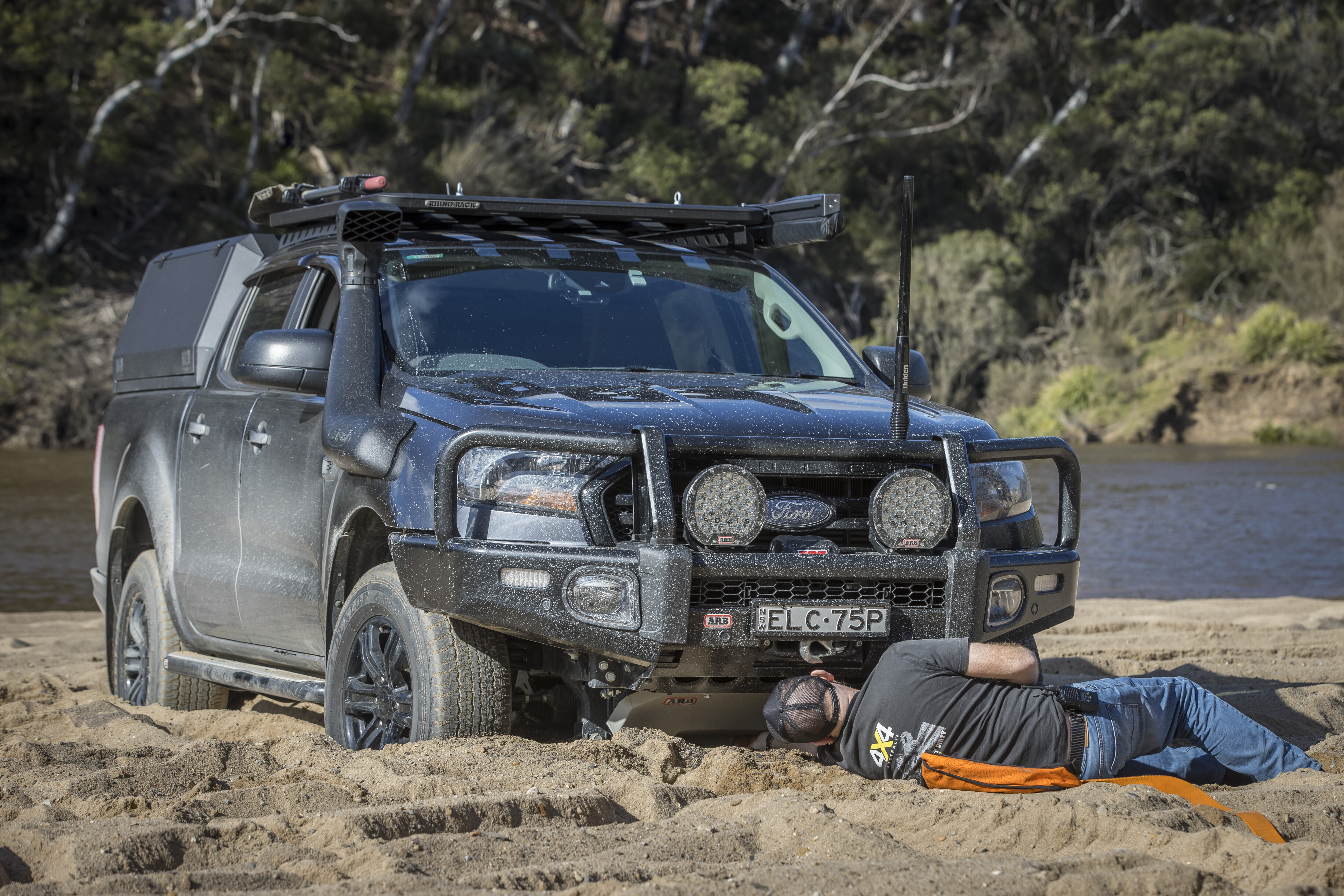
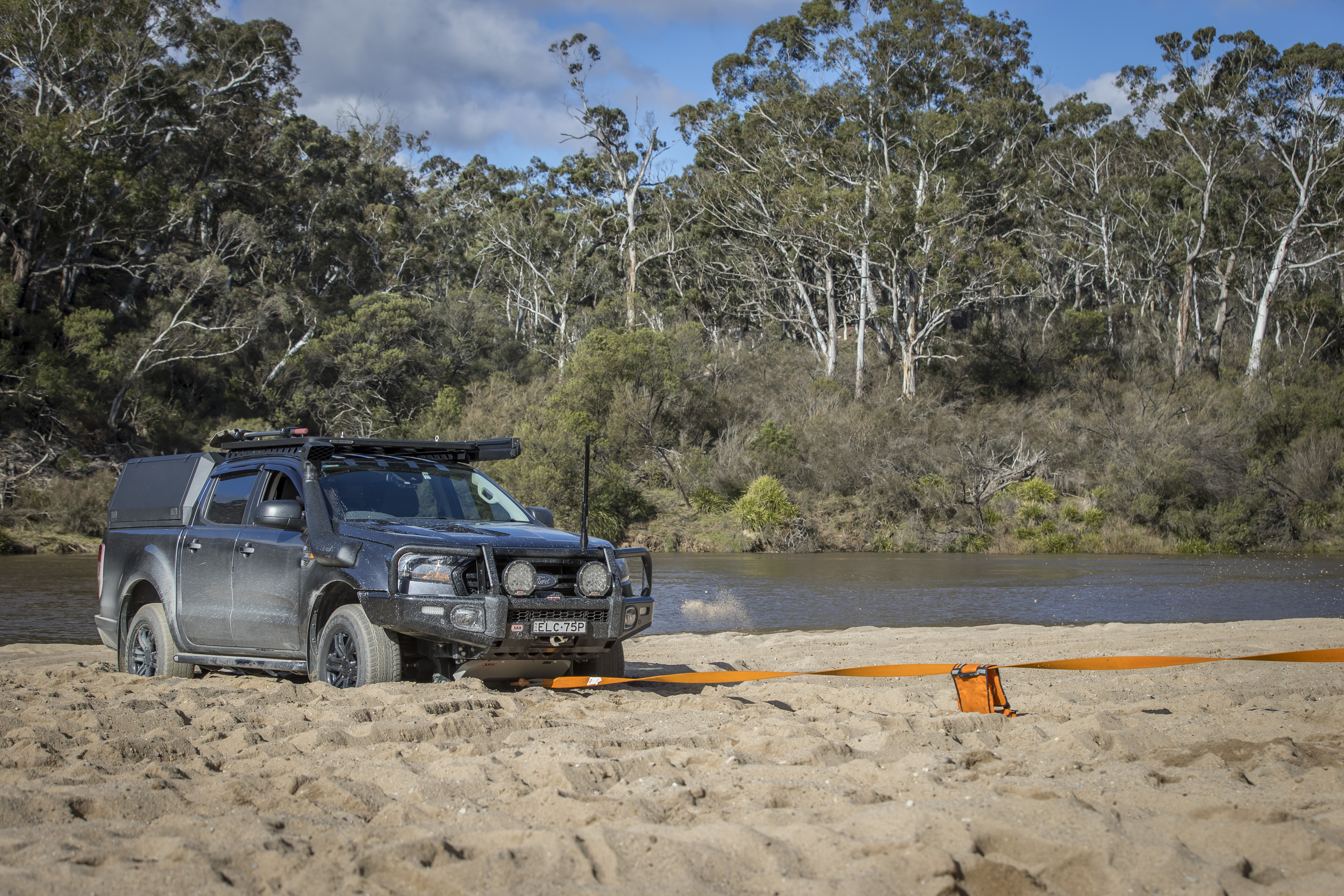
1. Line up the recovery vehicle in as straight a line as possible with the stuck vehicle. 2. If well and truly bogged in sand or mud, it will help to clear around the stuck vehicle with a shovel, including in front of the wheels and under the vehicle. 3. Unfurl the recovery strap and connect it to the rated recovery points on both vehicles using rated shackles, ensuring there is enough slack in the strap for the recovery vehicle to build up some momentum before the strap is pulled taut. 4. Place a weighted damper over the recovery strap in case there is an equipment failure. If the strap breaks this will hopefully prevent it from firing into one of the vehicles. 5. Both drivers should discuss the procedure, ensure they can clearly communicate with each other and make sure there are no bystanders. 6. Ensure both vehicles are in low range and that handbrakes are off. Second low is often ideal for snatch recoveries. 7. When everything is set, the driver of the recovery vehicle should signal ‘go’ and then build up some momentum. As the recovery strap tightens, the driver of the stuck vehicle should also start to accelerate. 8. If all goes well, and the stuck vehicle starts to move, keep both vehicles driving forwards until the stuck vehicle is on safe ground, without driving over the strap. 9. If a second attempt is required, try the above process with a bit more momentum, but don’t go too fast or you could break a strap or damage a vehicle. 10. Once on safe ground, communicate the intention to stop, and do so. Remove the strap, shake it out if dirty and pack away. Don’t forget the shackles.
LABELLING LAWS
Vehicle recovery straps must be clearly labelled with the name of the Australian manufacturer, importer, distributor or supplier; the batch code or serial number; the minimum breaking strength, a recommendation that the minimum breaking strength of the strap should be between two and three times the vehicle’s GVM; and advice that the strap must be suited to the GVM of the lighter of the two vehicles used in the recovery process.
In addition, the packaging needs to be clearly marked, and the vehicle recovery strap needs to be supplied with instructions for use.
For full details on labelling, click here.
DO
1. Always check strap for labelling 2. Always check condition of strap 3. Only attach to rated recovery points 4. Use a bridle strap where appropriate 5. Have a clear communication system
DON’T
1. Never attach strap/rope to a tow ball 2. Never join two straps with a steel shackle 3. Don’t step over a tensioned strap/rope 4. Don’t let bystanders near the recovery operation 5. Don’t use worn/damaged straps/ropes or shackles