
- Mount Stirling
- Billy Goat Bluff Track
- Craig’s Hut
- The Dargo Hotel
- Blue Rag
Black Friday is here, and BLUETTI, a leader in the portable power industry, is offering great discounts of up to $5000 on portable solar generators and home back-up solutions starting November 20. Check out these exceptional deals and save big.
Power up off-grid living
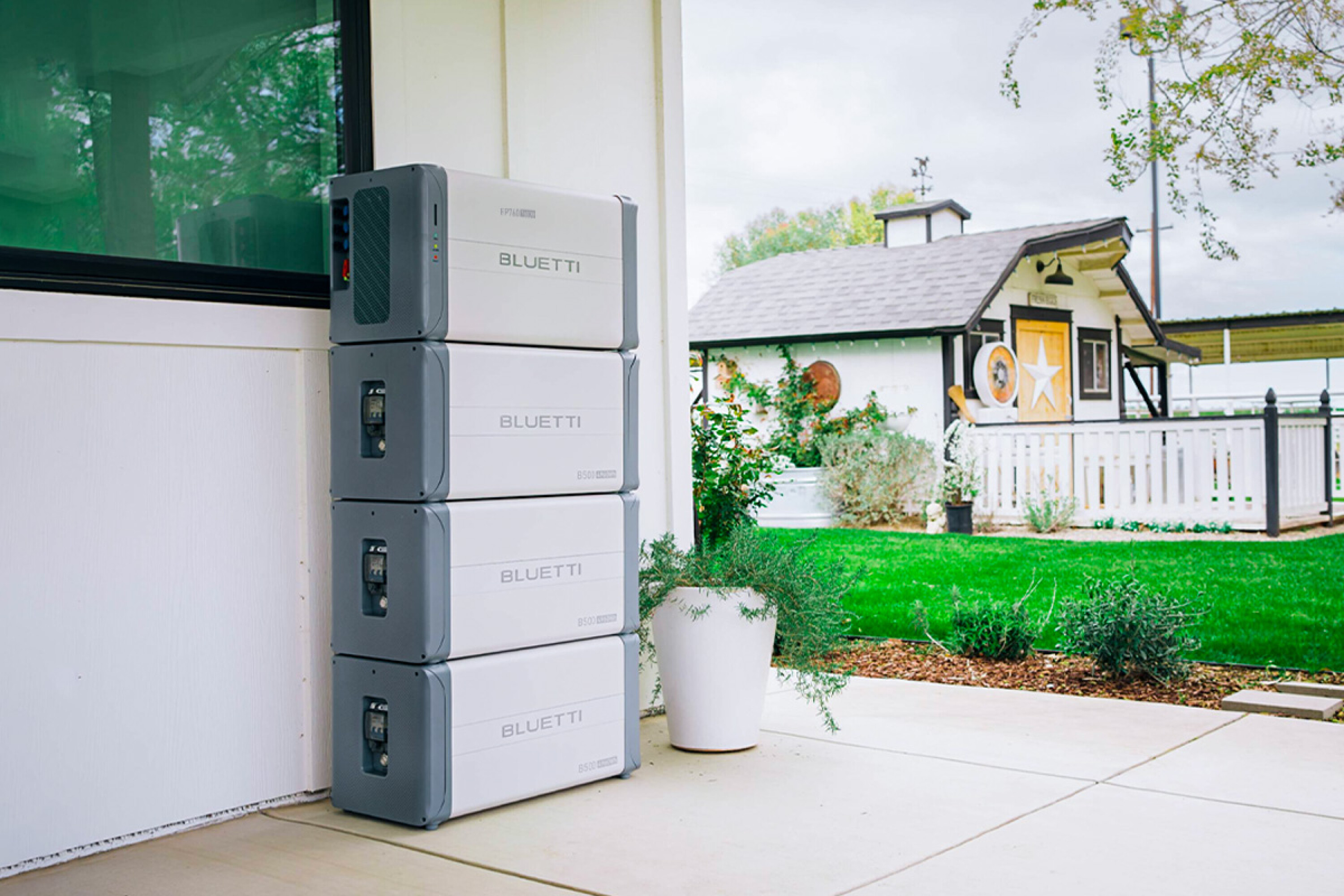
EP760+2*B500
Black Friday limited offer: $9999, including delivery cost. In addition to providing back-up power during a power outage, the BLUETTI EP760 can help you save money every day. With a flexible capacity of up to 19.8kWh, the EP760 battery system can store as much as cheap grid electricity during the day, or excess solar energy if you have solar panels, to power your home at night when electricity is typically pricey. If your solar panels produce more energy than you need, you can sell it back to the grid for some credit. What about a warranty? BLUETTI stands behind you for 10 years.
1
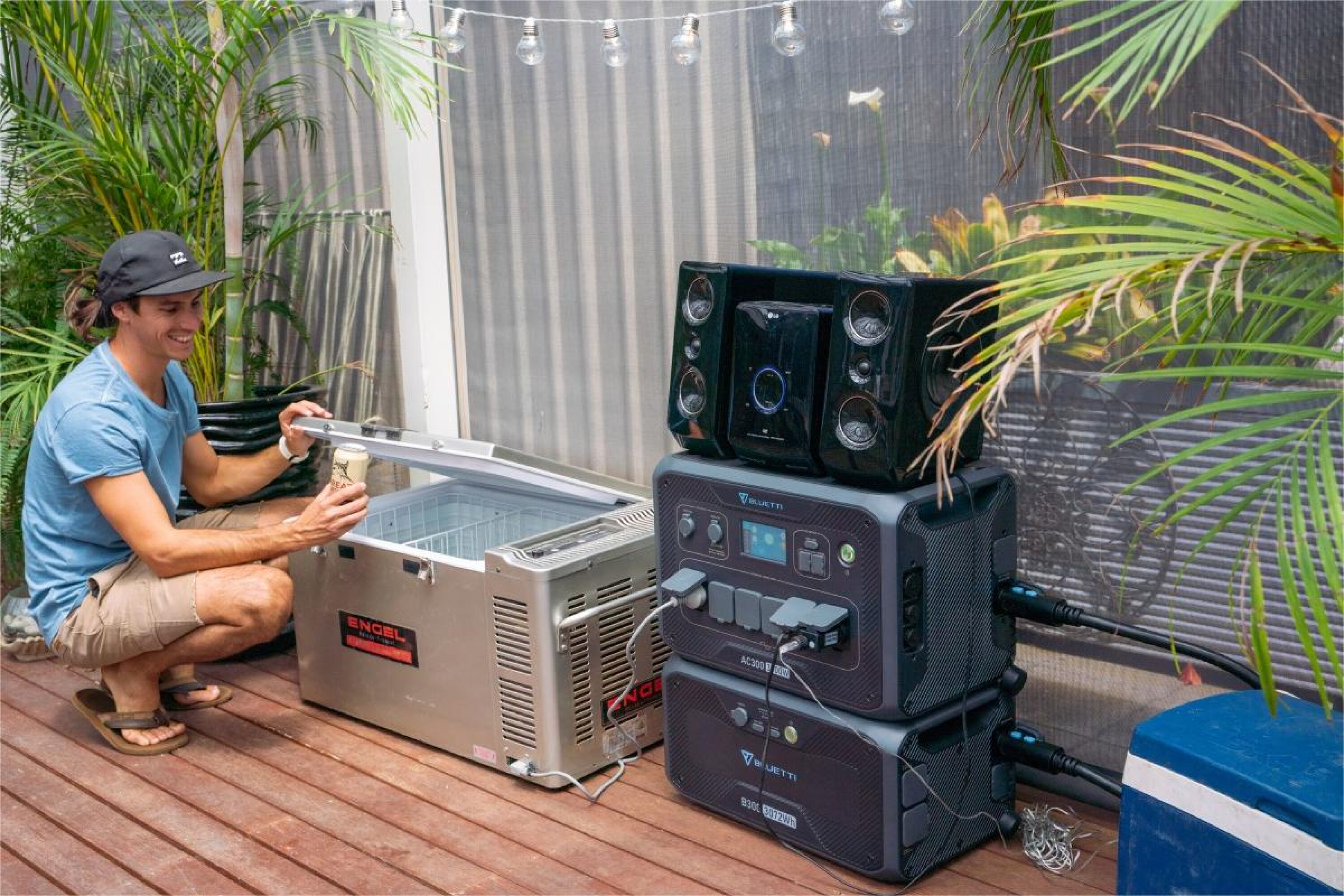
AC300+B300
Black Friday deal price: $4199 Retail price: $4990, with a free 350W PV350 solar panel (reg. $1299) Looking for a power source for home and outdoor use? The AC300+B300 system has you covered. In case of a power interruption, it switches over in just 20 milliseconds and powers essential loads, such as refrigerators, flawlessly. As it’s modular, you have a scalable capacity of up to 12,288Wh. Plus, its compact size makes it easy to move around and power your fieldwork, gardening, road trips, and more. Plug it into solar panels to charge at 2400W, providing a constant power supply for you on the go.
1
AC500+B300S
Black Friday deal price: $5999, with a free PV350W solar panel (reg. $1399) The 5000W AC500 system can run nearly anything in your house, from a home theater system to a coffee maker. A basic 3072Wh AC500+B300S set can power an 800W refrigerator for three hours or an electric blanket for 21 hours. Featuring an expandable capacity capped at 18,432Wh, a responsive UPS, and up to 3000W of solar charging capability, this system is the ideal off-grid power source for your home or remote cabin.
Power indoors and out
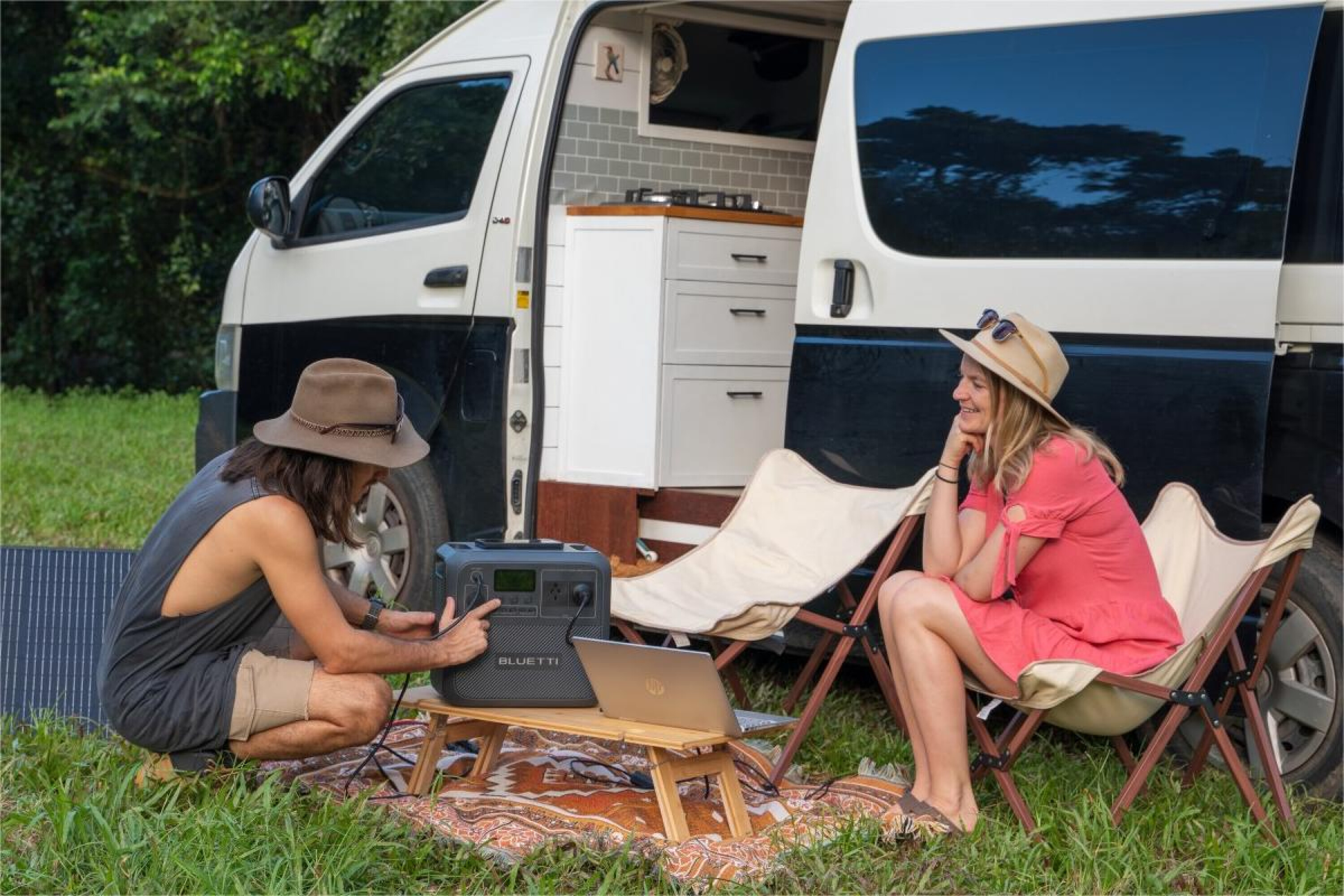
AC180 + AC180P
AC180: Was $1499, Now $1199 (save $300) AC180P+MP200: Was $2698, Now $2398 (save $300) The AC180 and its offline version AC180P weigh only 16kg and 17kg respectively. Delivering 1800W (2700W in powerlifting mode), they can handle devices like dryers and kettles. With responsive UPS features, they seamlessly switch to backup power in 20ms during outages. The AC180 holds 1152Wh, while the AC180P boasts 1440Wh of power. Control is a breeze – AC180 via Bluetooth on the BLUETTI app, and AC180P through both Bluetooth and WiFi. Simplify your power, wherever you are.
1
Pack light, explore further
EB3A+PV120
Black Friday deal: Was $1089, Now $829 (save $260) Weighing just 4.6kg, the EB3A is designed for outdoor adventurers like you. It offers an impressive 600W of continuous output to power your car fridge, lights, laptops, and more on the road. Simple to operate, the BLUETTI app makes it easy to monitor.
EB70+MP200
Black Friday deal: Was $1878, Now $1448 (save $430) The EB70 is compact and powerful for camping, fieldwork, and emergency backup. Despite its size, it surprisingly packs lots of power, providing you with 1000W running power that can charge various devices, from full-size kitchen fridges to laptops when you go off-grid. Hook it up with solar panels and it gives you a stable power supply wherever you go.
BLUETTI Black Friday Bonuses
Besides these incredible discounts, BLUETTI’s Black Friday sale includes exciting perks such as special BLUETTI Lifestyle gifts for purchases over specific thresholds; earning five times BLUETTI Bucks for orders placed between November 20 and December 3; exclusive markdowns for BLUETTI members; and an additional 5 per cent reduction for referring friends.
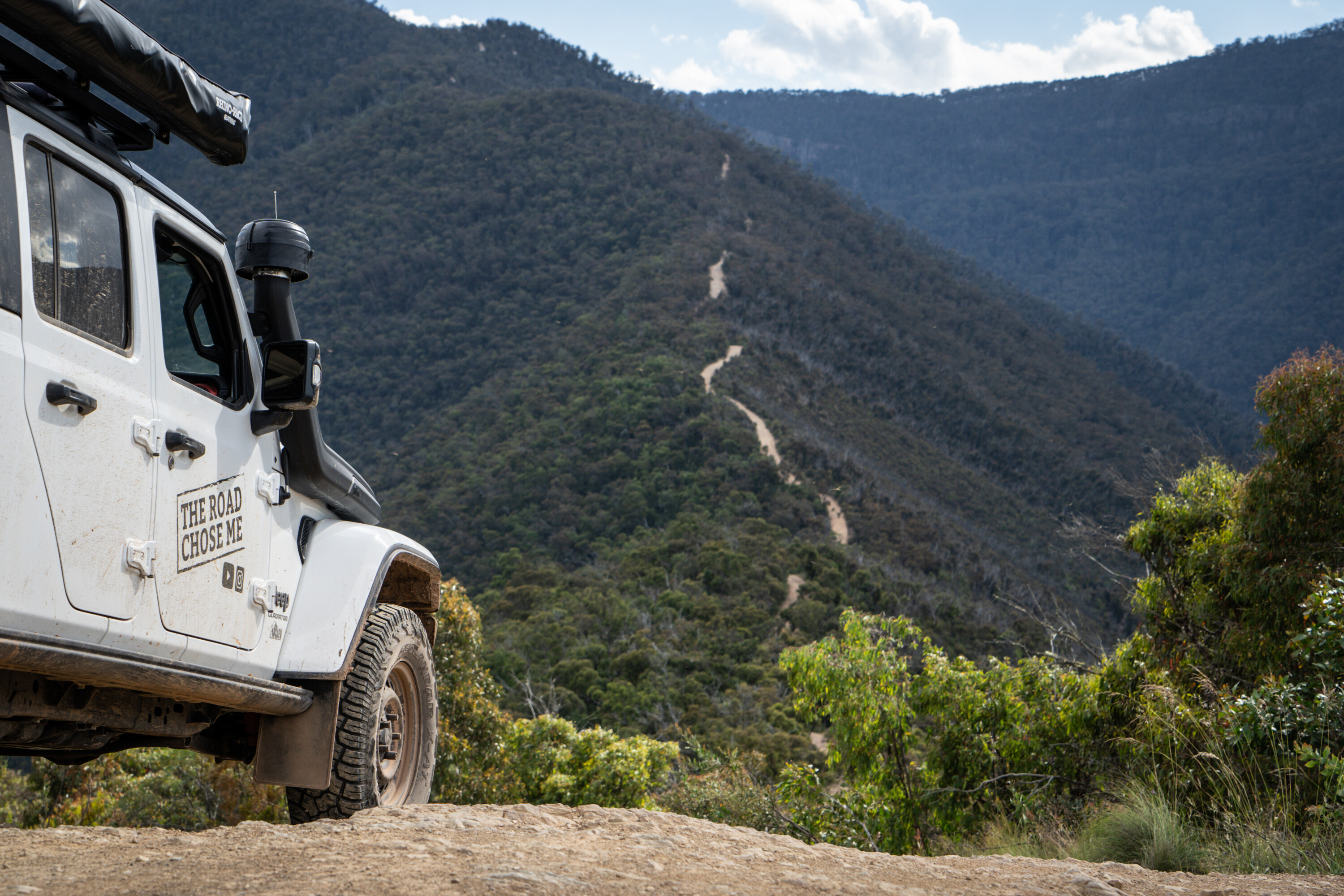
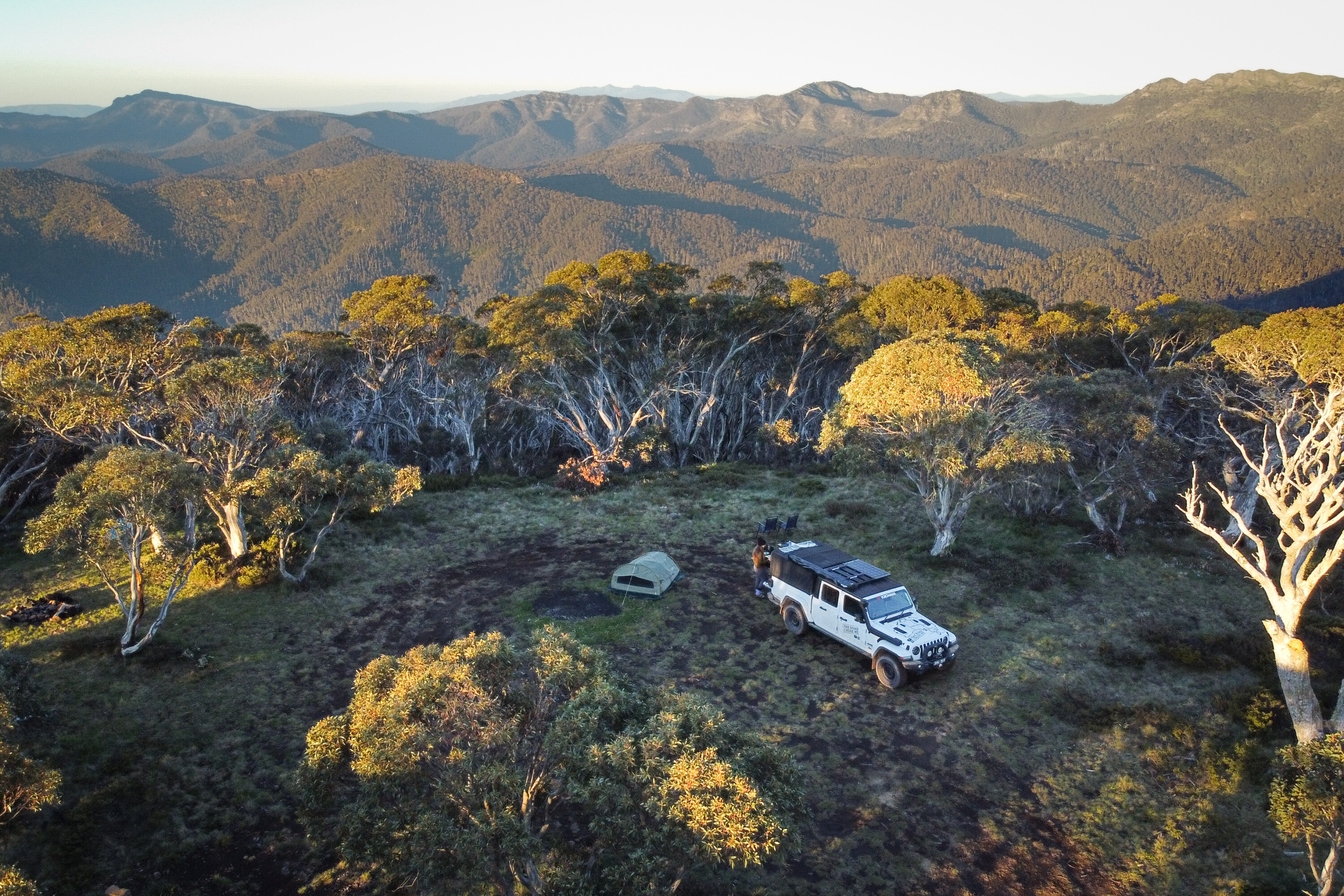
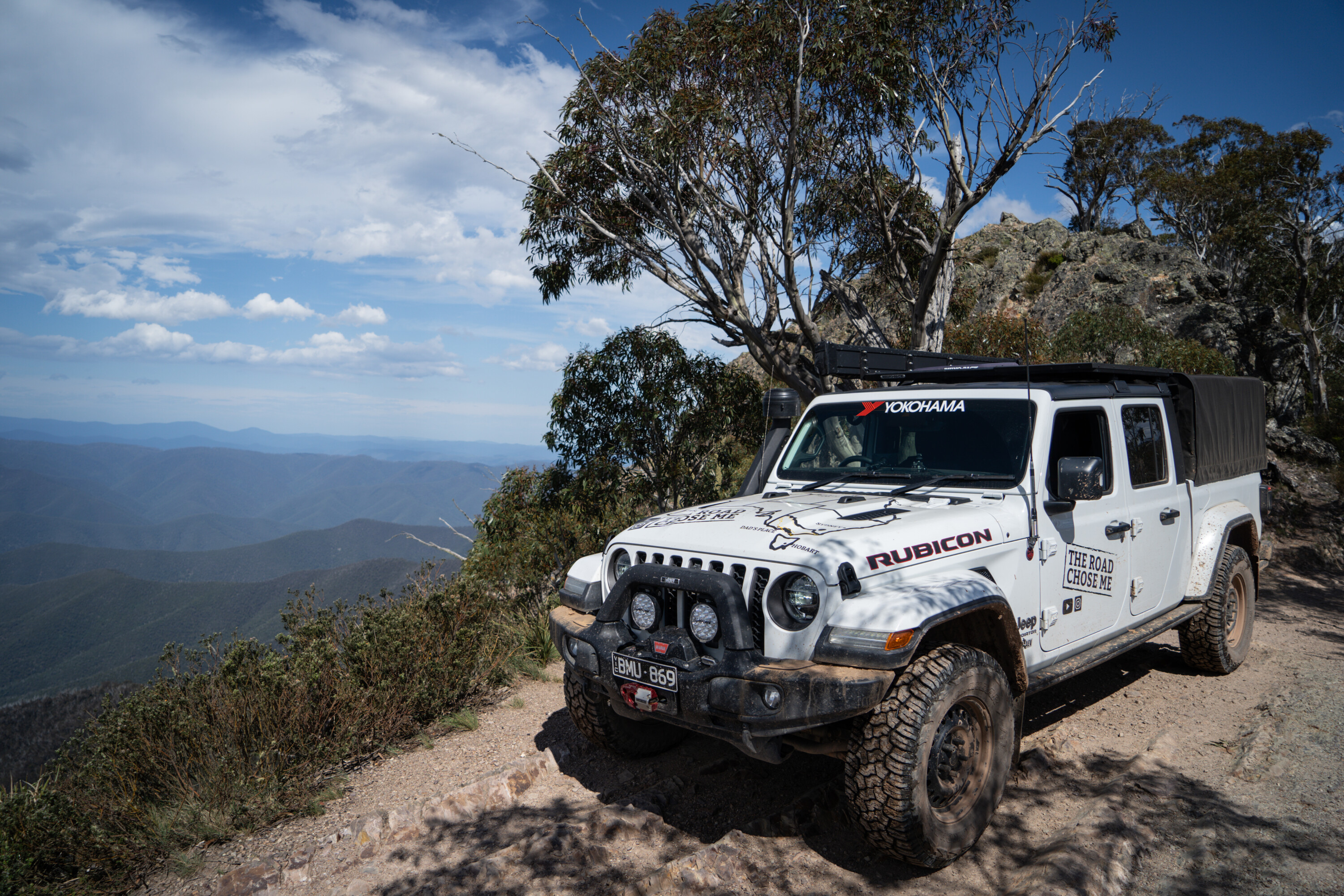
After building up a Jeep Gladiator for a lap of Australia, it was time to hit the hills for a shakedown run to make sure everything was in order and ready for the great escape.
What better place to do this than the Victorian High Country, where there are some of the steepest and most challenging tracks in Australia, as well as some of the most spectacular country. Here are our Top 5 High Country takeouts that you simply shouldn’t miss on a trip to the mountains.
1
Mount Sterling
At 1749 meters, Mount Sterling isn’t setting any world records for the tallest mountain, though we’ve been told repeatedly the views from the top are absolutely stunning, and anyway, driving to the top of a mountain seems like the perfect first challenge to cut our teeth in the mighty High Country.
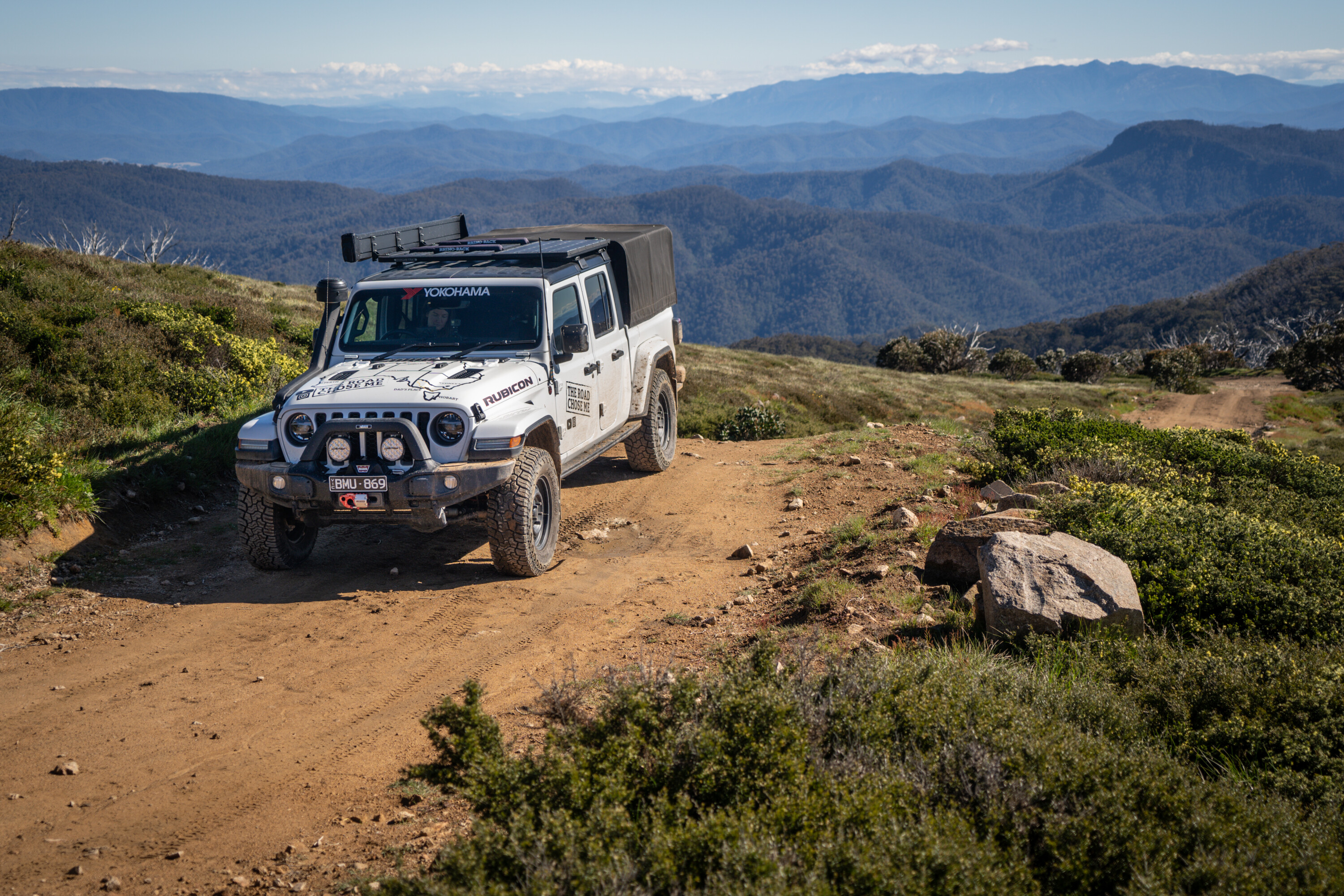
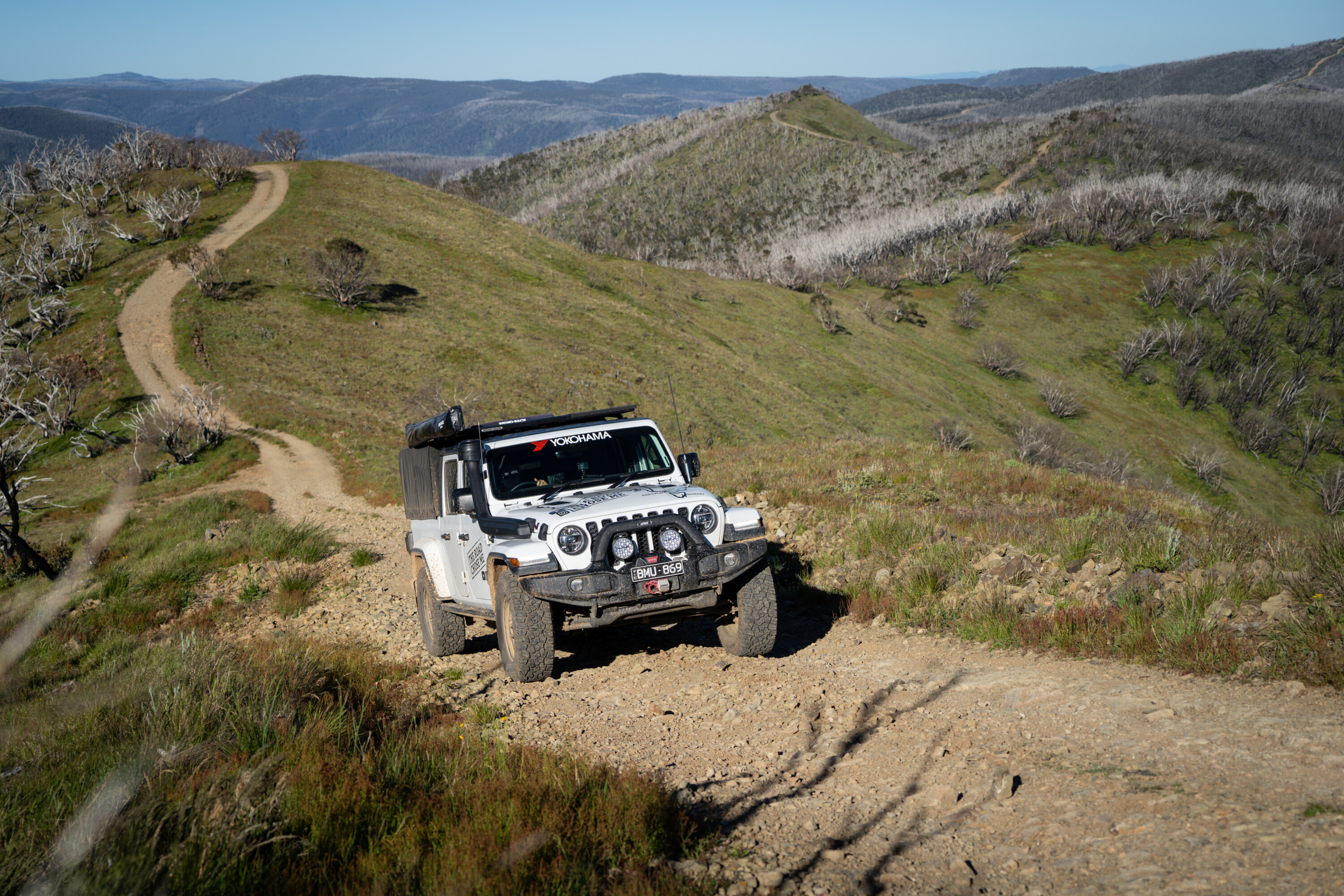
The narrow summit track climbs steeply over dirt, gravel and loose rock, and it doesn’t take long to experience first-hand the much talked about Achilles heel of the Gladiator, the break-over angle.
While straddling an endless series of short and steep erosion moundsthat have been built into the track, the belly of the Gladiator smashes and scrapes on their peaks numerous times.
1
The extra long wheelbase is great for storing a huge amount of gear, but of course that ability comes with a downside: the front and rear wheels are so far apart that each short and tall hump scrapes the underside of the vehicle while the tyres lose traction with the ground on either side.
I never once scraped the belly of my previous Jeeps while driving across four continents, and now with the brand new Gladiator it happens 10 times in five minutes. A series of endless shipping delays defined the build of this Gladiator, and unfortunately the much-needed suspension upgrade did not arrive from the US before this shakedown run. Suddenly I wish it had.
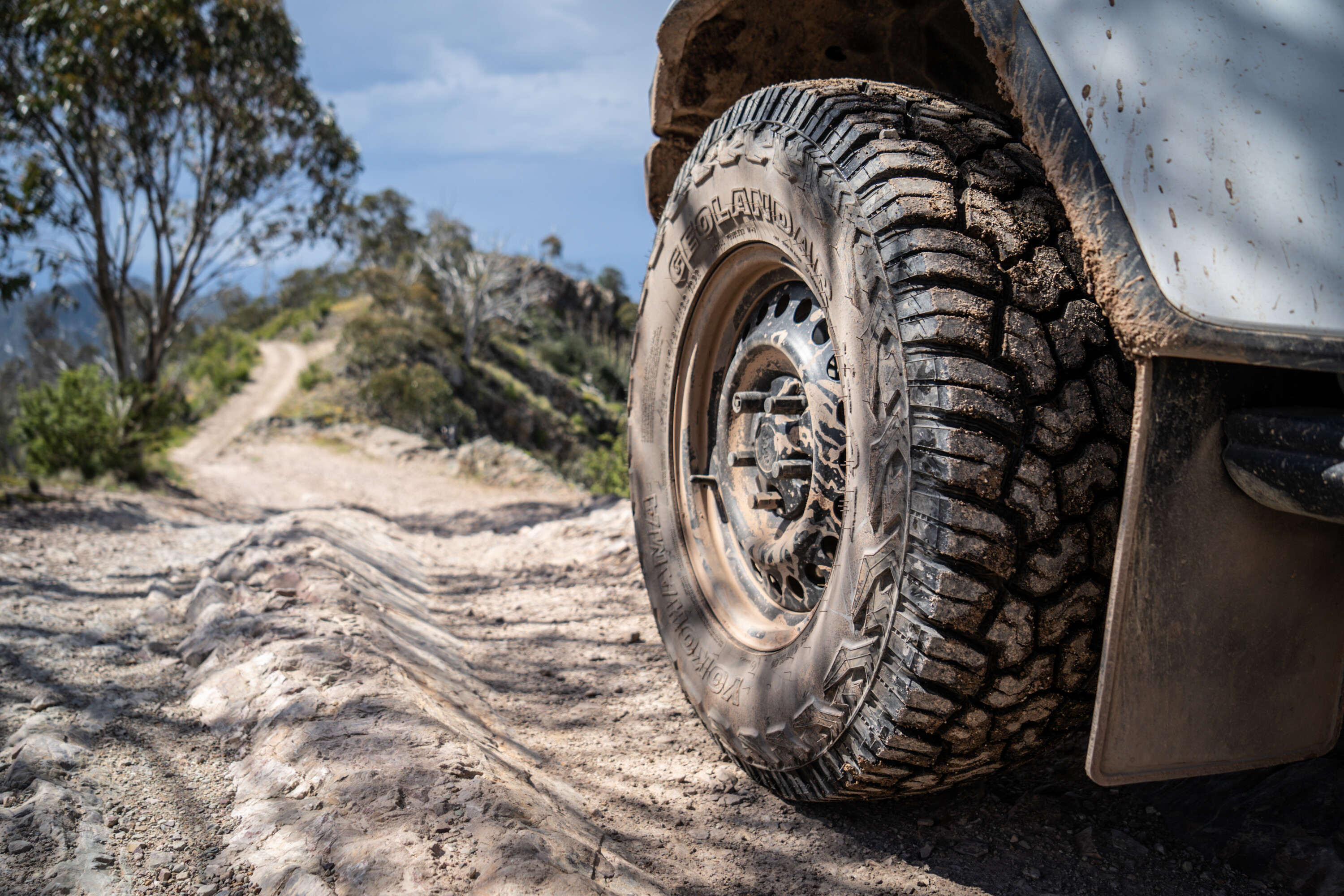
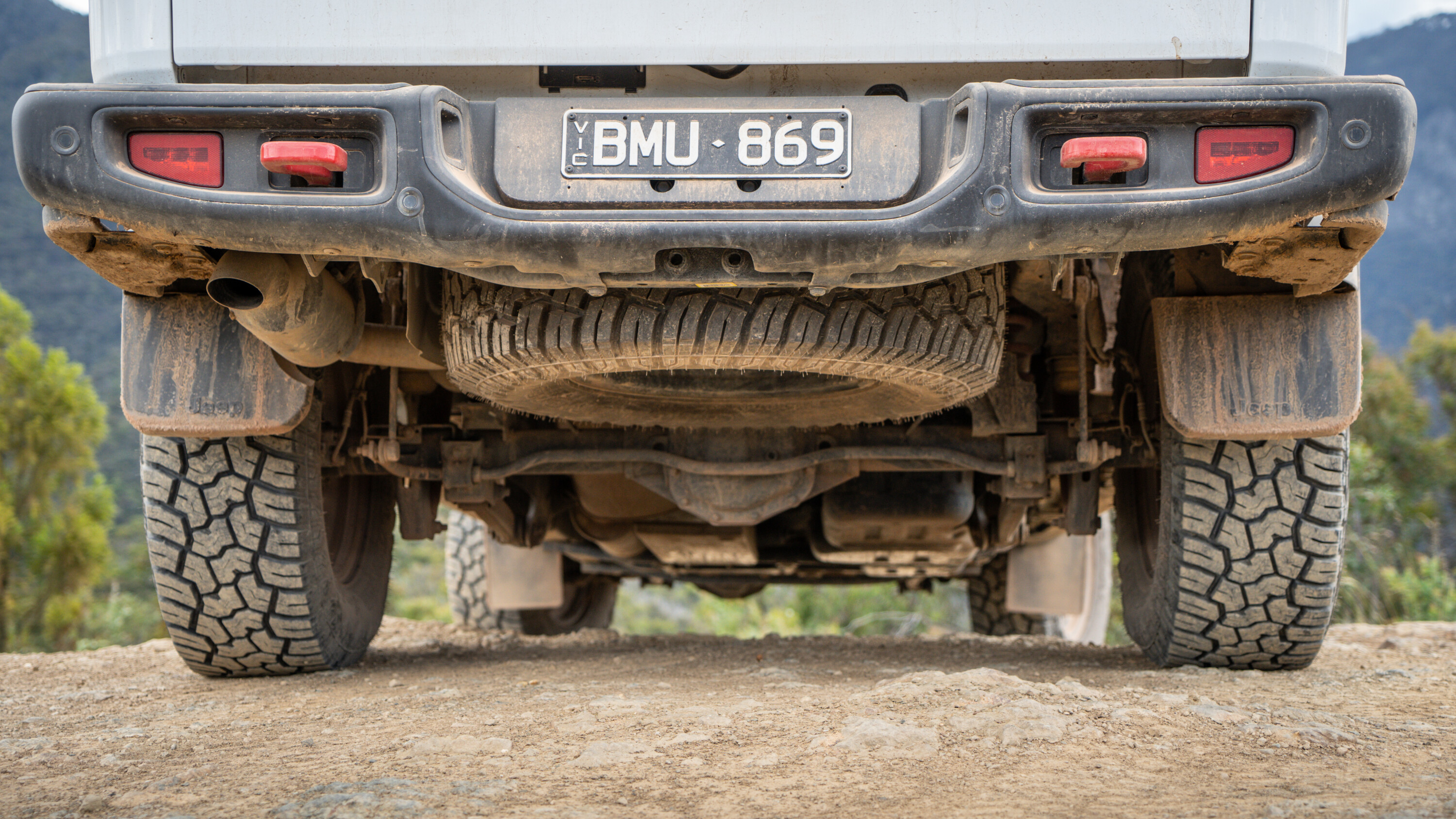
I try to console myself each time I hear and feel the belly scraping over another rise – this is a Rubicon after all, and the underside is entirely covered with steel bash plates designed for exactly this kind of use and abuse.
1
All in good time, another 50mm of added ground clearance will soon put an end to this problem, or at least alleviate it to some degree.
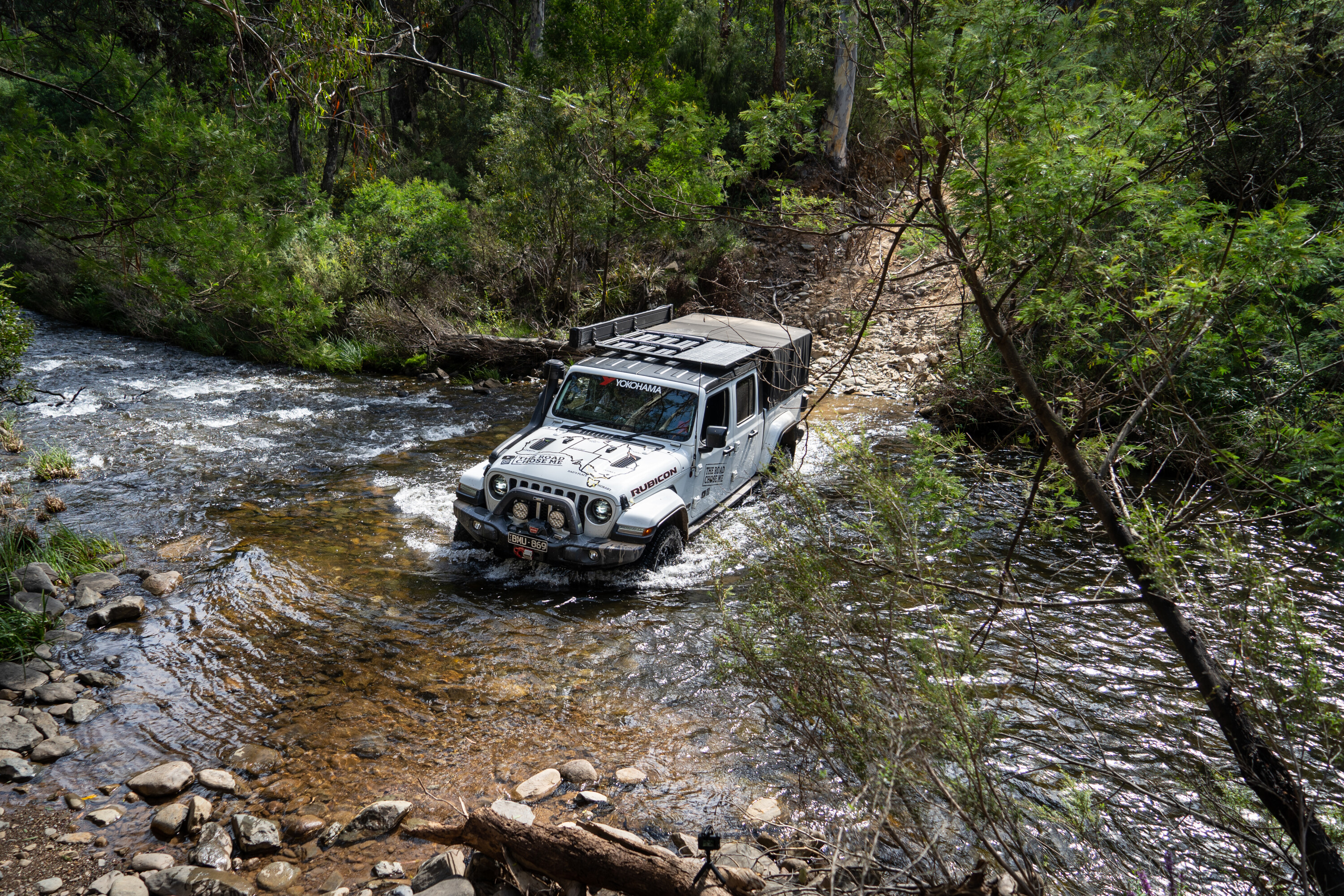
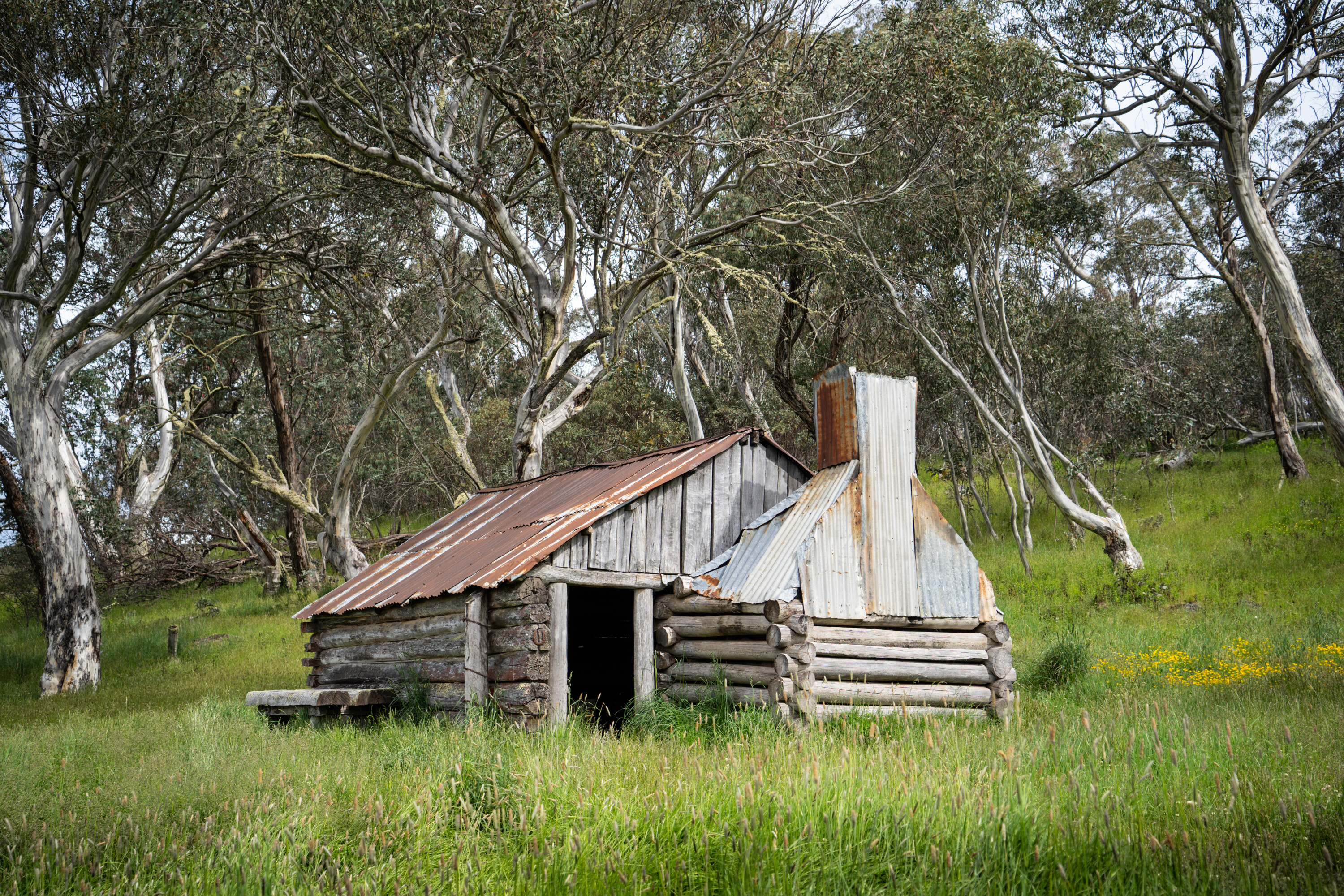
Ground clearance aside, exploring the High Country is every bit as stunning as I dreamed it would be. We have lunch at the iconic Craig’s Hut of The Man from Snowy River fame, before moving onto King Basin Road, which is basically a series of small river crossings.
This track provides the perfect opportunity to train Katie as a stunt driver. She’s never driven a big 4×4 like this before, so I have her carefully pick her way across each stream while I run back and forth with cameras to document our trip.
Katie does an excellent job putting the Gladiator through its paces, slowly wading into each crossing before climbing up and out of the slippery mud and rock banks.
1
Billy Goat Bluff
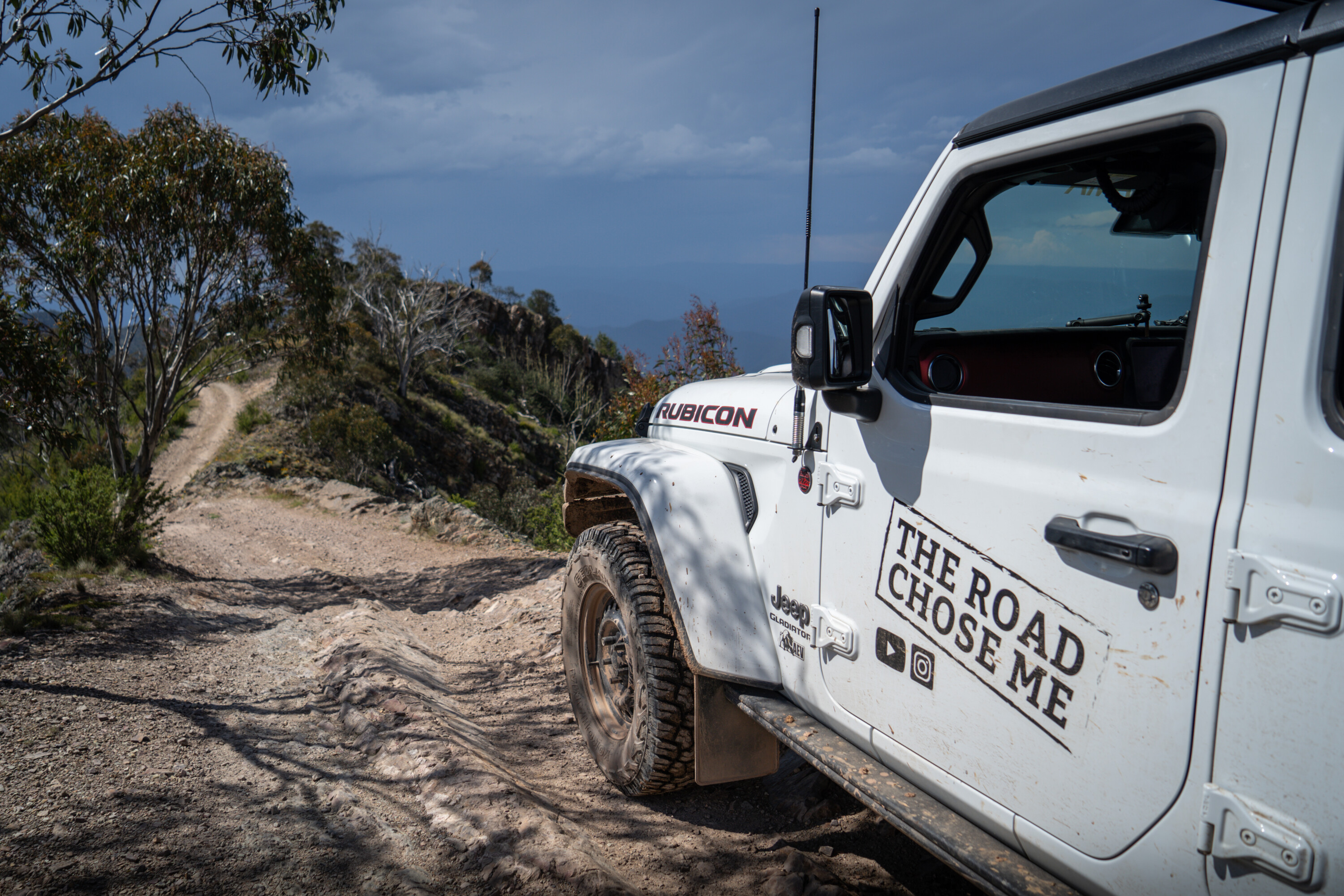
No visit to the High Country would be complete without tackling the infamous Billy Goat Bluff Track, famous for having extremely steep cliff edges on both sides.
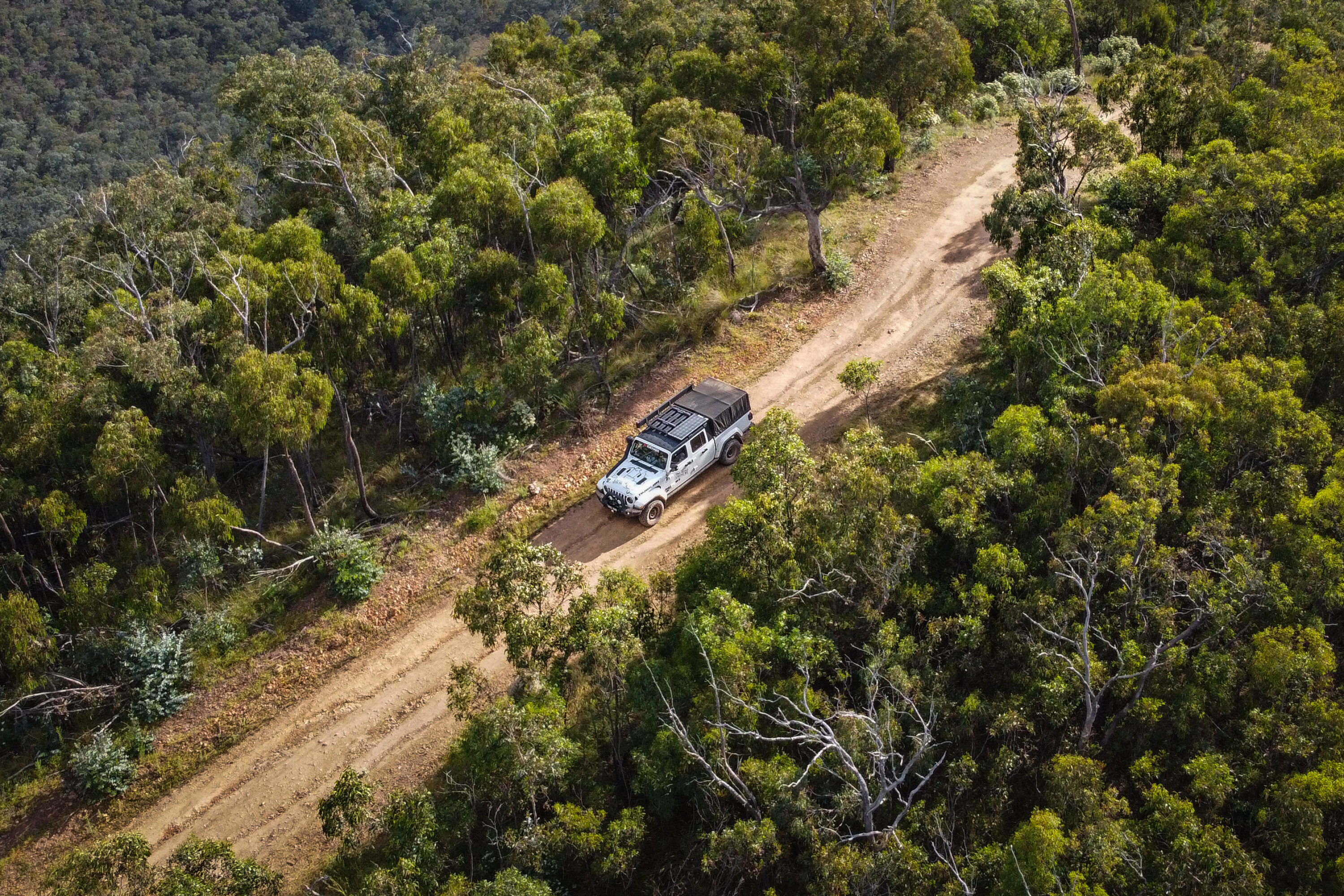
Descending from the mountain top to the valley bottom, the track drops a thousand metres in just 10 klicks. It quickly becomes clear that whoever built this track didn’t care for standard road grades or regulations and, as far as I can tell, they just rolled a dozer directly down the rocky ridge line, come what may.
After a very brief section in thick trees we quickly find ourselves descending the knife-edge of a steep and rocky ridge, using low range to hold back the Gladiator’s sizeable bulk. It becomes apparent this track is not for those who suffer from vertigo, or who don’t trust their brakes.
1
We tackle Billy Goat going down, which is clearly the easier and more straightforward option. Driving down also has the advantage of spectacular views out to the surrounding mountains.
Aside from a couple of ground-clearance issues, the Gladiator doesn’t break a sweat, and I’m confident it would easily climb the trail too, though maybe with a little wheel slip here and there in the loose rock.
I’m happy we don’t encounter any vehicles climbing the narrow track– opportunities to pass are few and far between, and I the prospect of reversing for hundreds of metres isn’t exactly inviting.
1
The Dargo Hotel
A longstanding tradition when exploring the Victorian High Country is a visit to the Dargo Hotel for dinner and cold drinks.
This iconic watering hole is a must visit for any four-wheel driver, and I couldn’t help noticing the shocked looks as I parked the shiny Gladiator in amongst a long lineup of well-worn Hiluxes, Patrols and LandCruisers, all sporting multiple CB antennas and oversize mudflaps, and a couple with bull horns on their bonnets.
Inside the pub the sheer number of trinkets plastered on the walls and the ceiling boggles the mind, and the 4×4 wall of shame soon catches my attention.
1
Photos snapped over the years show all manner of destroyed and abandoned vehicles including rollovers and those lost to the numerous river crossings in the area.
It’s a sober reminder of the consequences of poor decision making, and I’m happy to have a visual guide of what not to do in these mountains.
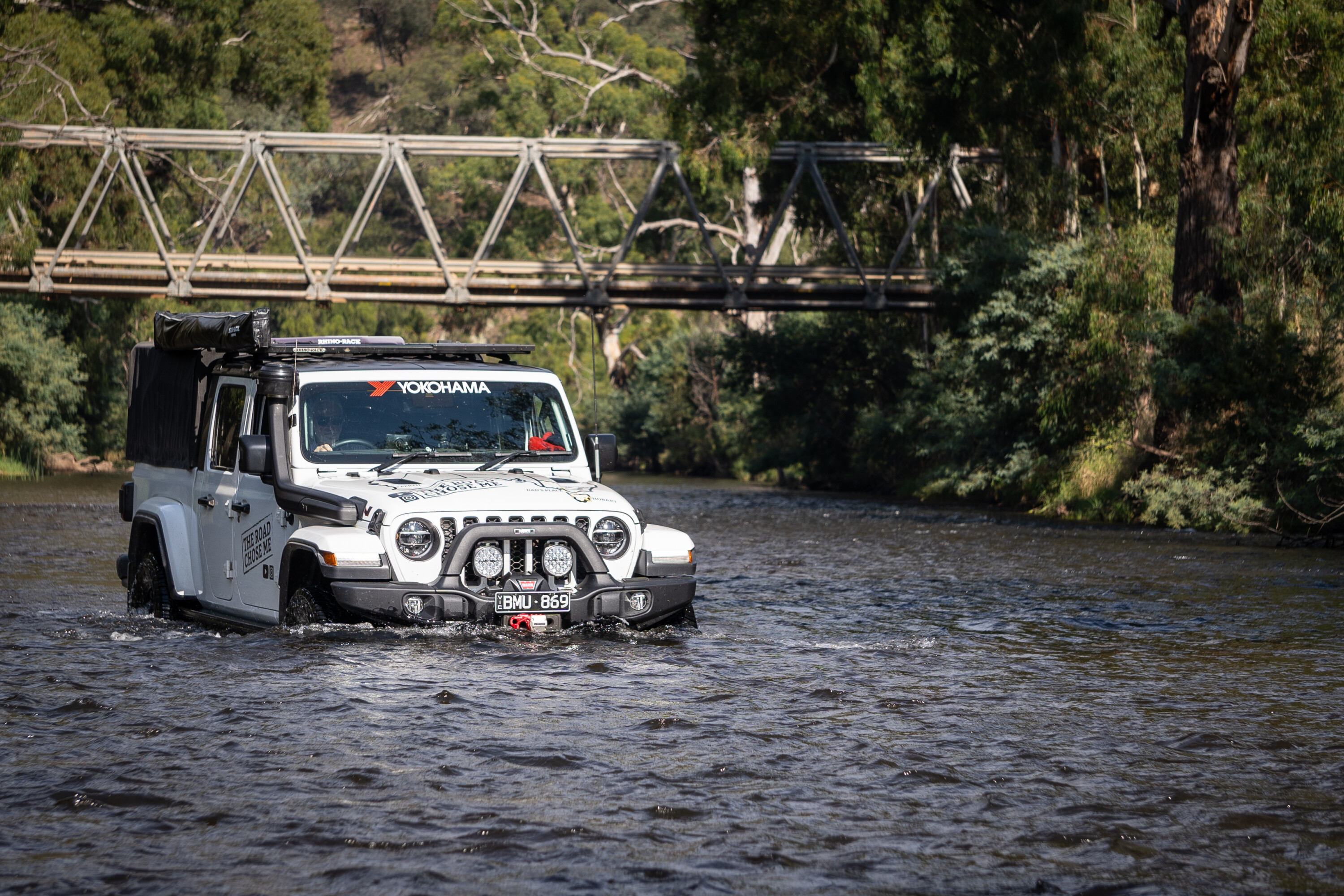
When my chicken parma arrives I’m convinced Dargo breeds Australia’s biggest chickens, which is absolutely not a complaint from me. As you might expect for a remote Aussie pub, the beer is cold and plentiful, and doesn’t stop flowing until the wee hours. Camping in the grass field out the back means it’s only a short stroll down to our swag on the riverbank.
1
Visitor in the night
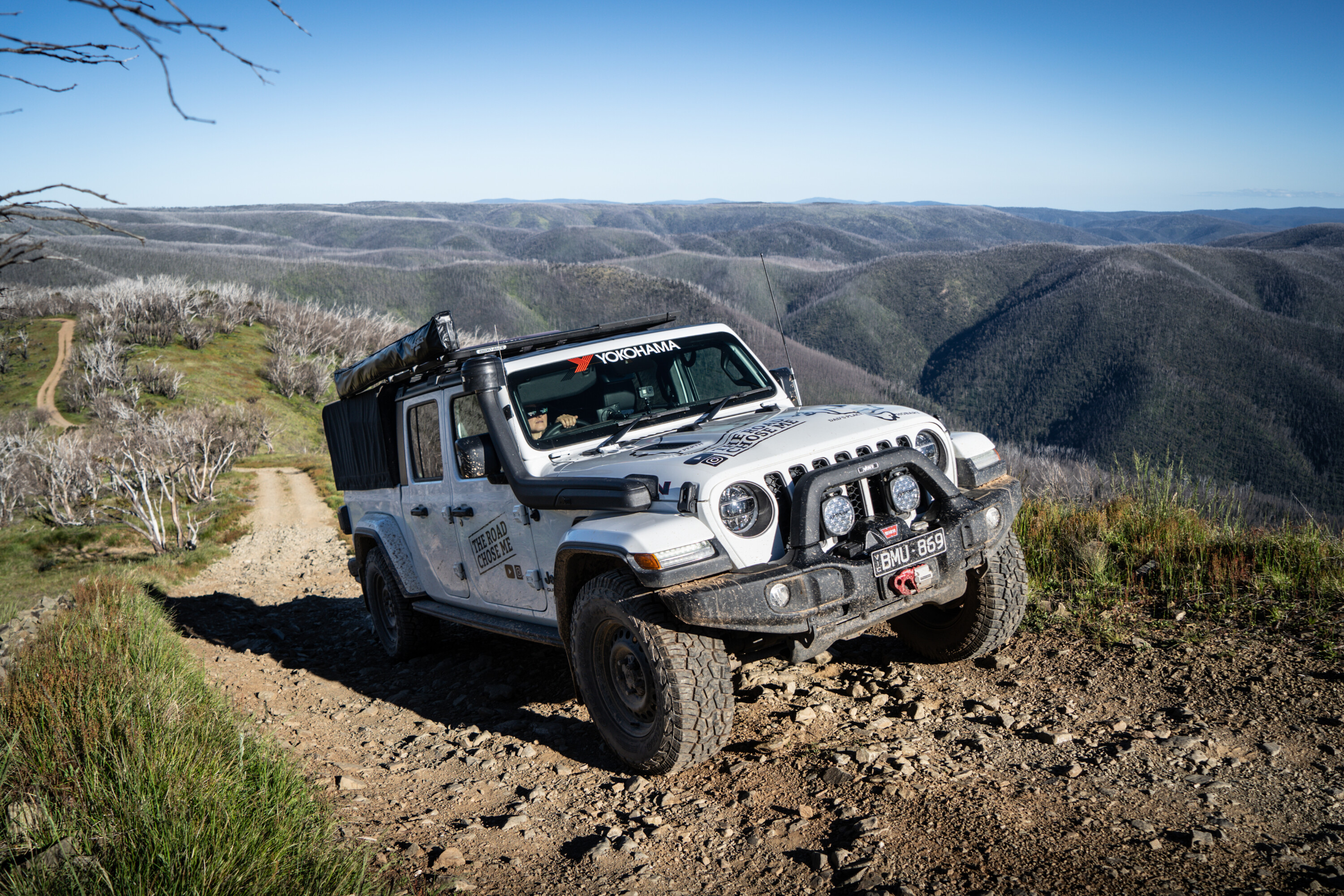
For our final track we move north on the Great Alpine Road to take on the iconic Blue Rag Range Track.
This track also climbs a narrow and rocky ridgeline well up into the alpine country, and from the top we can easily see nearby Mount Hotham, as well as Mount Sterling far in the distance. Once again the views are spectacular, and we find it difficult to tear ourselves away until late in the afternoon.
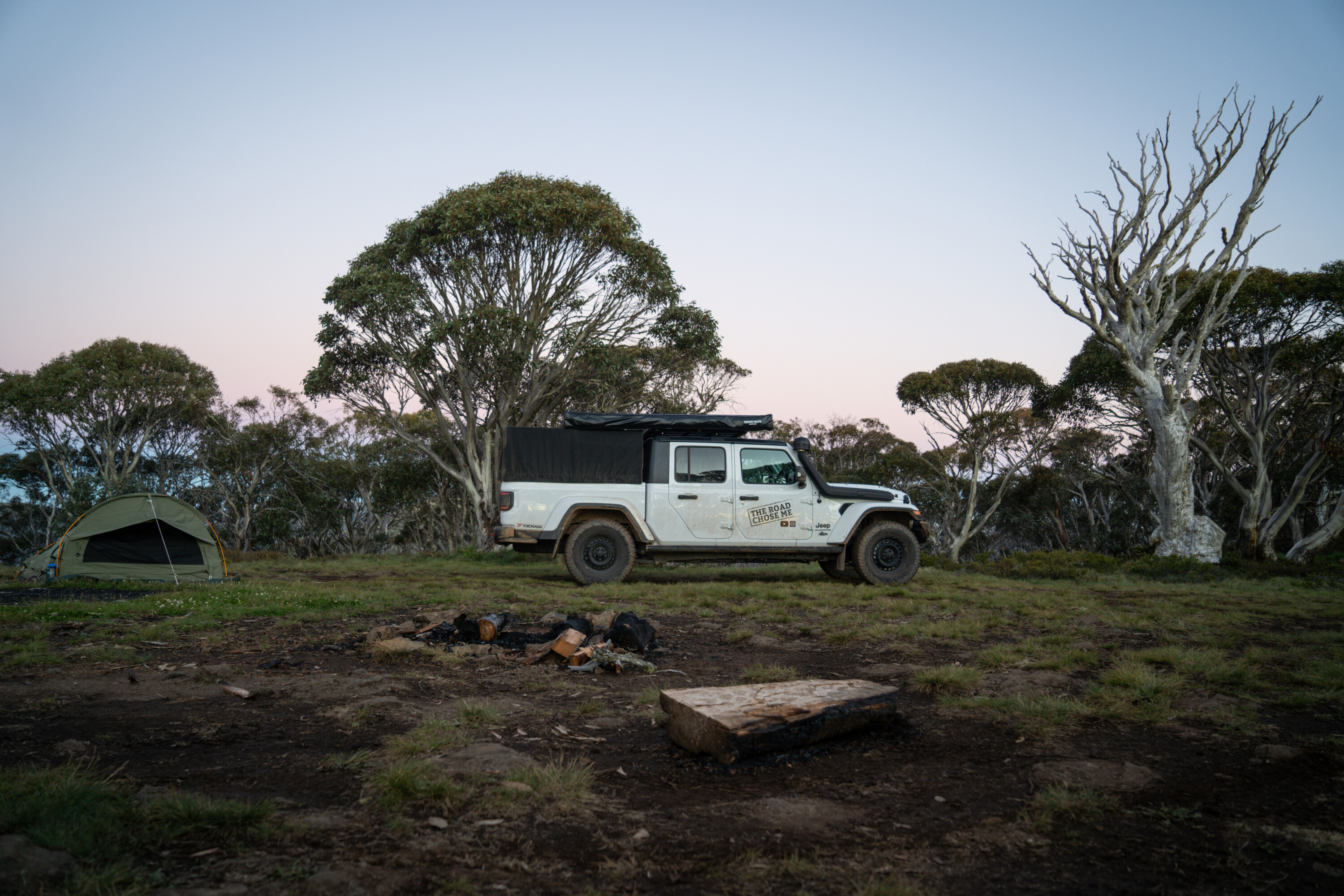
The sun has well and truly set by the time we near the end of the trail, so we decide to call it a night on the side of the track. It’s pitch black by the time we crawl into the swag, and just after our heads hit the pillow we hear the strangest animal noise I have ever heard in the wilderness.
1
At first I think it’s an injured cow, but after hearing it over and over I think maybe it’s wild dog howling at the now full moon.
The sound is eerie and makes it difficult to fall asleep, though thankfully it stops after a couple of hours and we’re able to drift off.
In the morning we wind down into the picturesque mountain town of Bright to research our nocturnal camp visitor.
I’m shocked to learn of the endangered alpine dingo, and a quick google confirms the sound we heard was in fact a dingo howling at the moon, something I wasn’t expecting to cross paths with before we venture much further north.
1
Shakedown Success
Starting from scratch on a new touring vehicle has been an exciting and challenging process.
I built so many little features and creature comforts into my old Wrangler I had actually forgotten I would need to make those same improvements on a new vehicle. I’ve never owned a ute before, and it’s taken a long time to wrap my head around the feeling that the cab and the bed are essentially two separate vehicles.
I can’t reach gear stored in the bed from the driver’s seat, forcing me to re-think how and where I pack each piece of equipment. Without a doubt, storage has been the biggest challenge so far for me, which is ironic given how much there is.
1
All the major systems performed flawlessly, and overall I’m happy with how the individual pieces have come together to create a functional and capable house on wheels.
The solar panel, charge controller and lithium battery power everything with ease, cooking meals on the spacious kitchen is a pleasure, and sleeping under the stars in the swag puts a smile on my facefor its sheer simplicity.With a much-need suspension upgrade on the horizon I’m confident the Gladiator will be ready to take on the challenges that lie ahead of us as we explore far and wide right around Australia.
You can follow Dan’s ongoing adventures on YouTube and Instagram @TheRoadChoseMe
1
The Button Man
You never know who you’re going to meet while having adventures in the wilderness, and while I often look forward to meeting the strangest of people, I should be careful what I wish for.
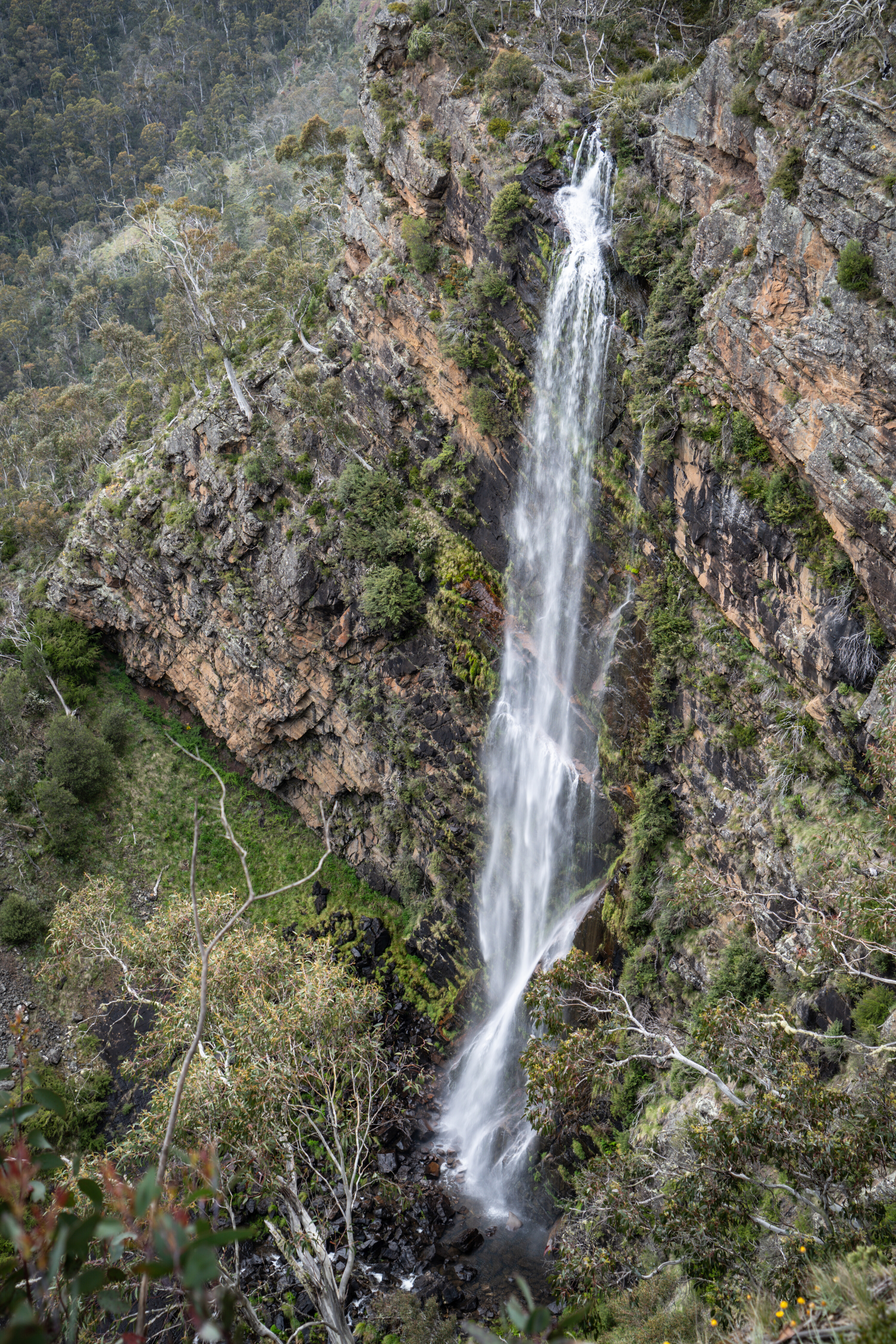
Late in the afternoon while crawling along the rocky Bluff Track, climbing a narrow ridge with commanding views of distant peaks, I’m starting to look for a suitable place to make camp when I hear a rattly diesel engine coming our way.
It’s the first vehicle we’ve seen since breakfast, and it just happens to be at a wider spot in the trail where I pull to the side to wait.
In due course an extremely beat up 60 Series LandCruiser rumbles around the corner, trailing a plume of black smoke. I can’t help but notice the rusty Cruiser is virtually riding on the bump stops, which is probably explained by the severely overloaded roof rack, and crammed-to-the-brim back seat and cargo area.
1
The bloke driving rumbles to a stop, and I’m struck by his appearance. Tall and thin with long wispy grey hair, his eyes beaming with mischief.
He must be in his late 60s, though he looks ready to climb a mountain at a moment’s notice. I can’t help but notice his enormous stretched out earlobes sporting jewelry like I’ve never seen before.
We chat back and forward for five minutes, and it quickly becomes clear this fellow has been in the bush for a long time by himself. On this topic, I’m not one to judge, and I’ve even been known to turn into a wild man of the wilderness myself from time to time.
1
I’m not surprised in the least when he mentions he’s been out for four or five months. When he starts talking about the recent snowfall I realise he doesn’t care much for dates and times – the last snowstorm up here was seven weeks ago.
He explains that due to unforeseen circumstances he was held up and forced to stay in the area longer than planned, but doesn’t elaborate on that. He doesn’t seem upset in the least, and we bid each other a cheery farewell before moving off in opposite directions.
He’s obviously a bit quirky, and likely hasn’t spent much time around people lately, but that’s no crime, and to be honest I’m a bit jealous he can just spend four or five months alone in the mountains.
1
I didn’t know it at the time, but we just met the infamous Button Man, who two days prior was the prime suspect in a double murder committed just a stone’s throw away.
A couple of days later we met a young couple who filled us in with all the details. The Button Man has been living in these mountains for decades, living off deer he hunts with spears he makes himself. From the deer bones he makes buttons and intricate jewelry, including the huge items stretching out his ears.
This guy is actually a local legend, though I have to wonder if some of the stories we’re told are overblown urban legends.
1
One tale has him sneaking into campsites to take photos of sleeping people with their own cameras. Obviously they get quite the fright when they discover the unexpected photos.
The police have recently discovered two bodies nearby, and short on leads they immediately investigate the “crazy guy” living wild in the mountains. A SWAT team paid him a visit by helicopter to detain and question him, though they came up with nothing and turned him loose only a day or two before we met.
Of course, he had nothing to do with it.
Top 5
- Mount Stirling
- Billy Goat Bluff Track
- Craig’s Hut
- The Dargo Hotel
- Blue Rag
Full-size American pick-up trucks are becoming much more prevalent on Australian bush tracks, as third-party remanufacturers bring more models to Australia with factory backing.
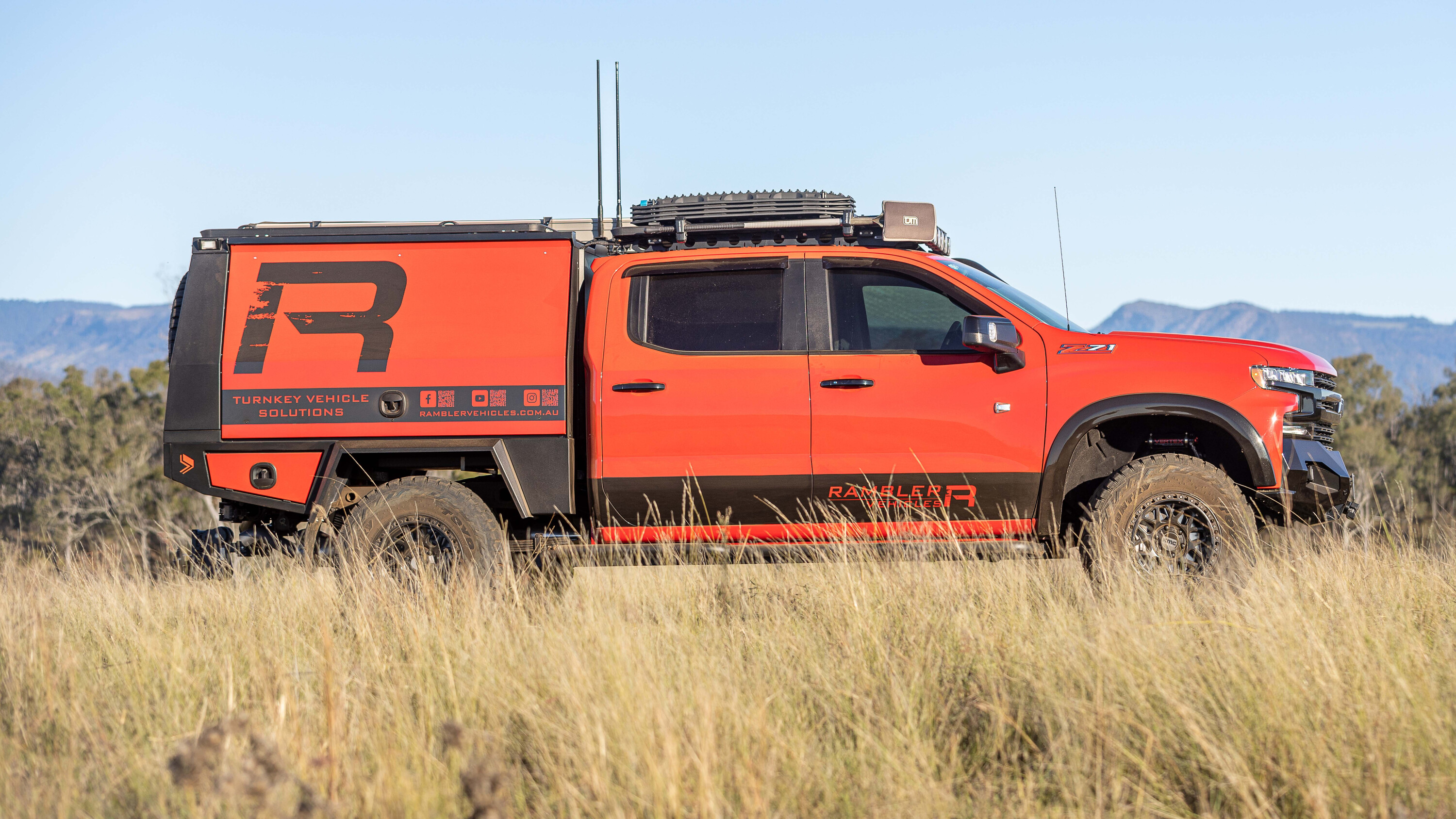
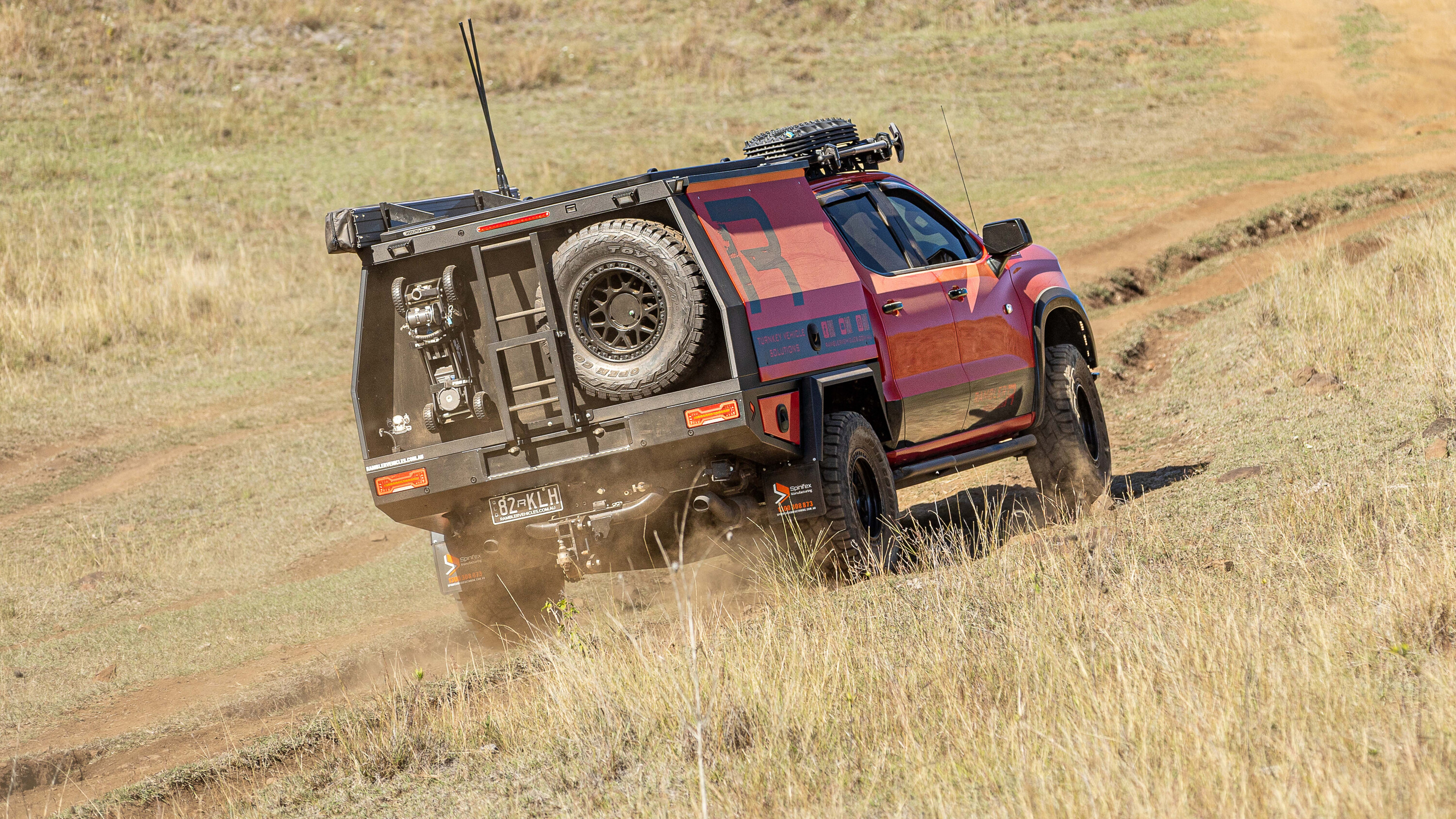
Rambler has seen this growth as well and caters to those wanting a US-built truck. A Chevrolet Silverado Trail Boss was recently given the Rambler treatment to rectify the deficiencies of the standard truck.
You can no longer get the Trail Boss model in Australia, which is unfortunate, as it was the most affordable in the line-up and, as we said at the time, the best model in the local range. At $105,000 it represented a better buy than the more luxurious LTZ, and now you’ll need closer to $120k to get into a Silverado LTZ from GMSV, and more again for the ZR2.
1
The Silverado 1500 is already a big rig and its 3745mm standard wheelbase ensures it’s a comfortable and stable tourer able to carry big loads over long distances.
Where the Silverado 1500 falls short is in its standard GVM but Rambler has fixed this for its Chev builds.
The standard GVM is 3210kg leaving just a 752kg payload for the LT Trail Boss; hardly enough for a full-on touring setup with all the fruit. And if you were to put a full weight 4500kg trailer on the back with around 450kg on the tow ball you’re not left with much GVM at all.
1
Rambler’s fix was to team up with Touring Solutions Australia to develop a suitable GVM and GCM upgrade kit, and they have succeeded with this vehicle now approved with a GVM of 4499kg, and a GCM of 8999kg.
That’s right, the Silverado, even in standard trim, can tow up to 4500kg when using a 70mm tow ball or other suitably rated hitch. Full-size American pickup trucks really are the kings when it comes to towing and this upgrade allows owners to make the most of what’s on offer.
To achieve the higher GVM a heavier duty suspension package was developed for the 1500 using a kit from Rough Country. Featuring Rough Country’s premium Vertex 2.5-inch adjustable remote reservoir shocks, struts and upper control arms at the front, with a rear leaf pack from EFS and airbags for load management, the new suspension was enough to get the rating up to what Rambler wanted.
1
After driving it we reckon the company has nailed it with the suspension package, as the Chev rides and handles like you’d never expect of an American truck. The springs more than manage the weight while shocks do a stellar job of controlling it all.
Driving it around a farm property in Queensland’s Scenic Rim region, the Chev feels soft and compliant in its suspension but it is always controlled and well managed. This makes it comfortable and capable on rougher tracks.
Where it really excels is on more open tracks where you can open up the performance on offer from that 6.2-litre V8 and have some fun. The suspension package really comes into its own when you push it on the tracks as well, controlling the size and mass very well allowing you to enjoy the drive.
1
There’s a lot to like about the V8 and 10-speed auto driveline in the Chev. It might suck petrol instead of diesel but with 623Nm of torque in standard trim it’s never wanting for grunt, and 313kW of power is nothing to be sneezed at either.
Speaking of petrol, the Chev likes a bit of it so there’s a 185-litre Brown Davis fuel tank tucked underneath, where you’ll also find a full Manta exhaust system that sounds beautiful, and never annoying like that on the 79.
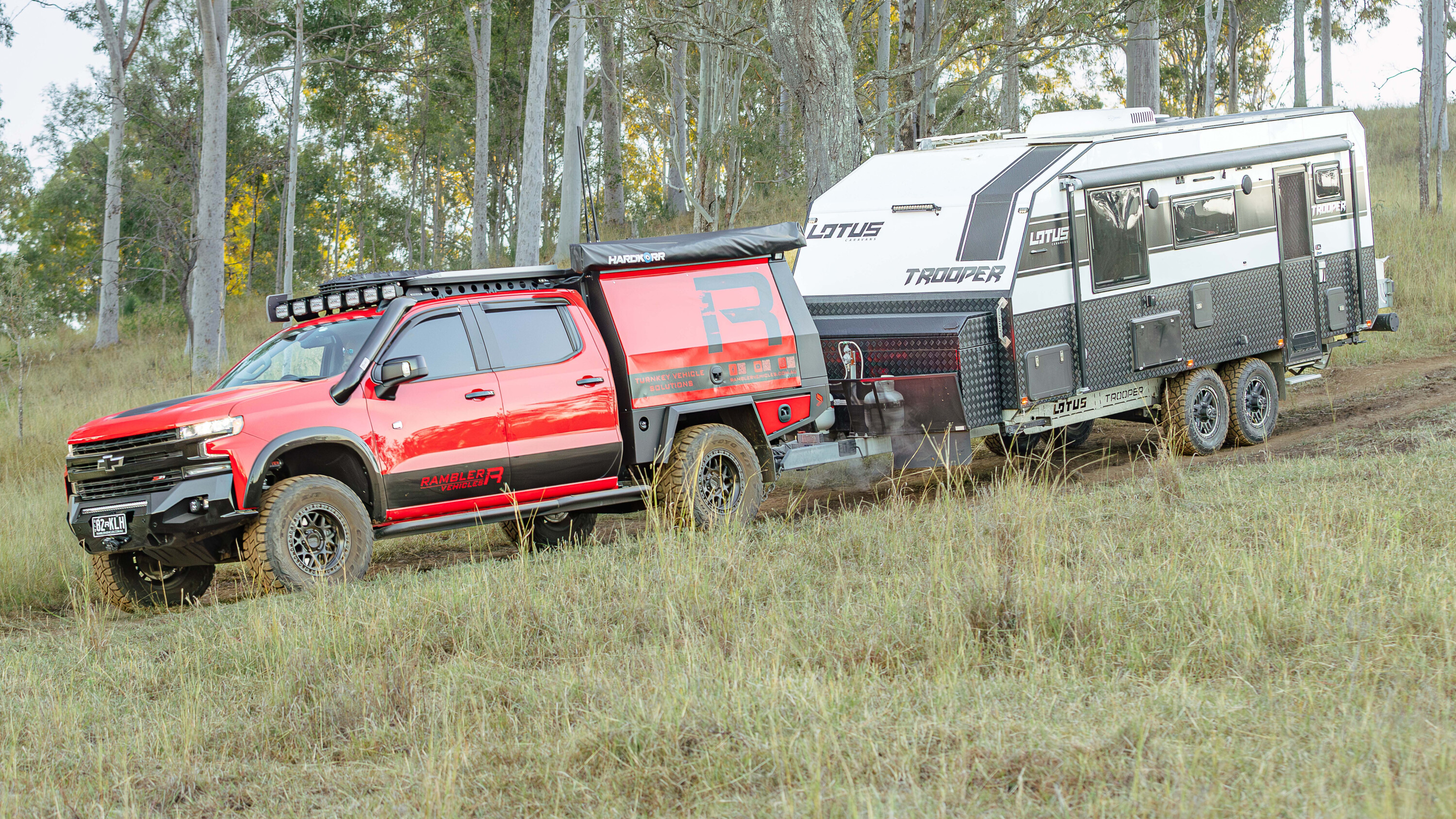
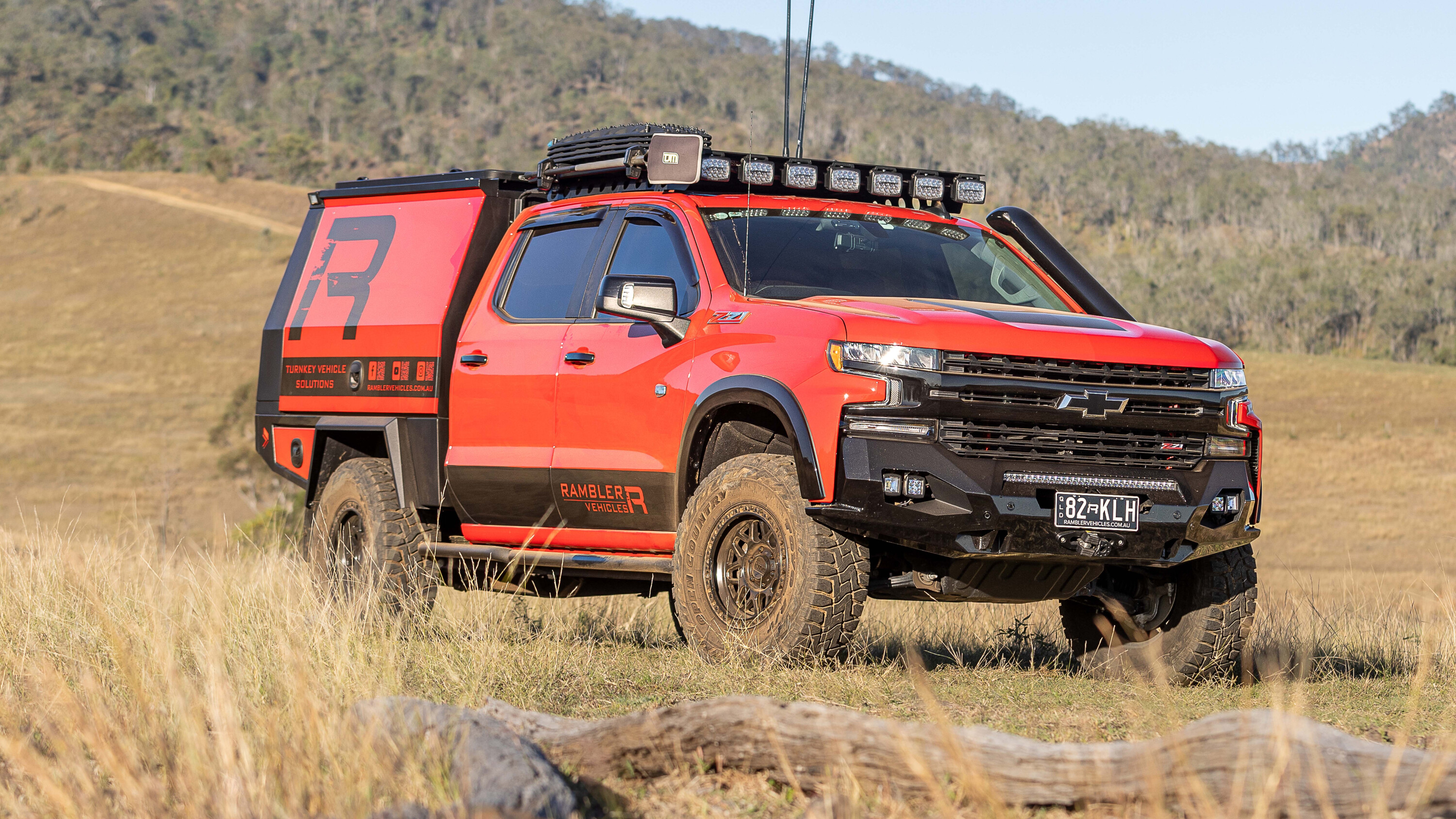
This Silverado belongs to Kris from Rambler, so with the suspension and GVM requirements sorted out he was able to set the Chev up just the way he likes it, and for towing his van.
1
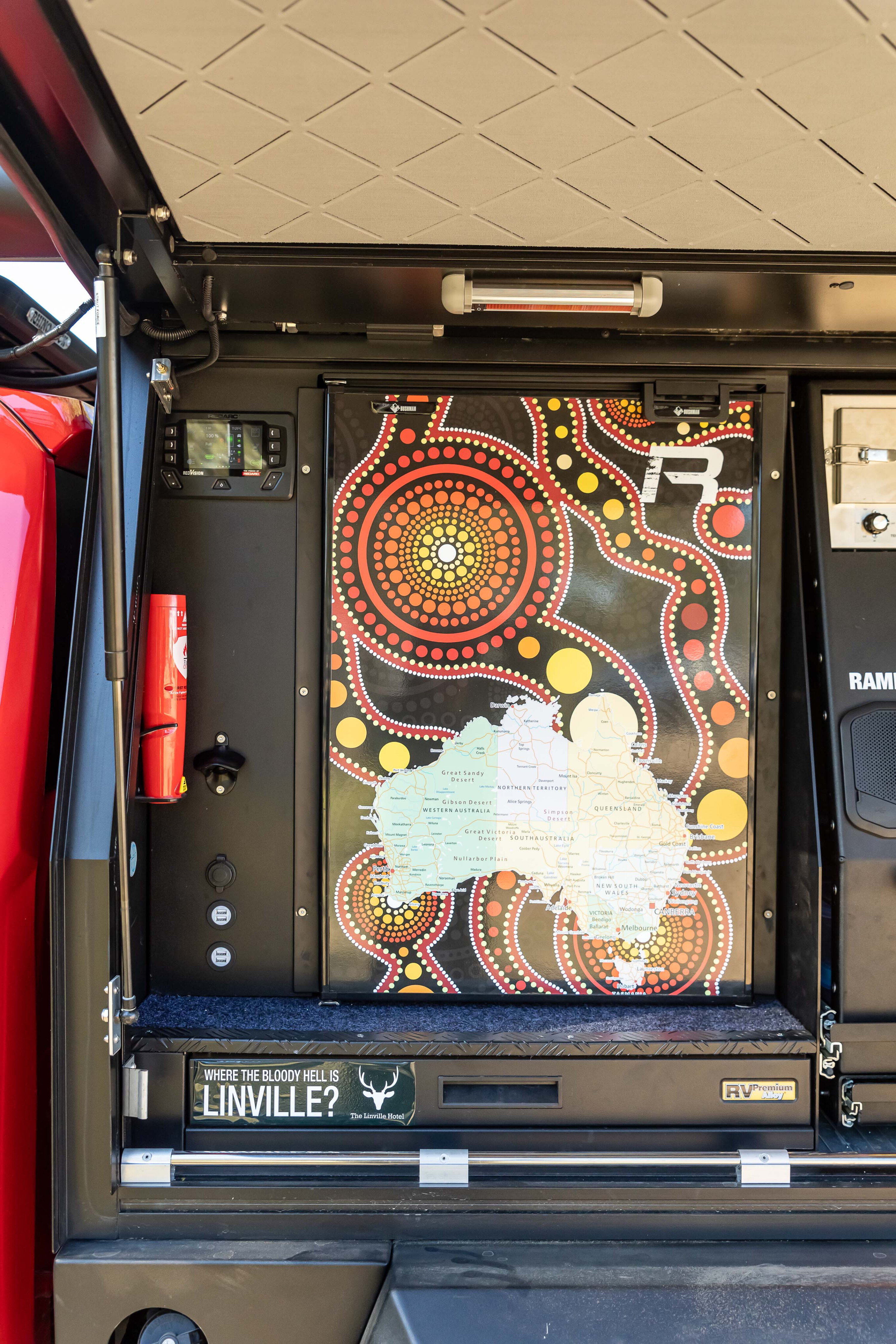
There’s a Spinifex Manufacturing Midi Canopy and underside storage boxes on the back, and inside you’ll find a Bushman 130L fridge and a comprehensive 12-volt system featuring Redarc Redvision products and a 240Ah lithium battery.
Also in the canopy is a full Spinifex slide-out pantry with a sink, oven, induction cooktop, 70-litre water tank, coffee machine and sound system on one side, and RV Storage drawers on the other side, with plenty of open space for storage.
A Rhino-Rack Pioneer Platform on the canopy mounts an awning while on the back wall there’s the spare wheel and a Pro Eagle trolley jack mounted out of the way, while still being easy to access when needed.
1
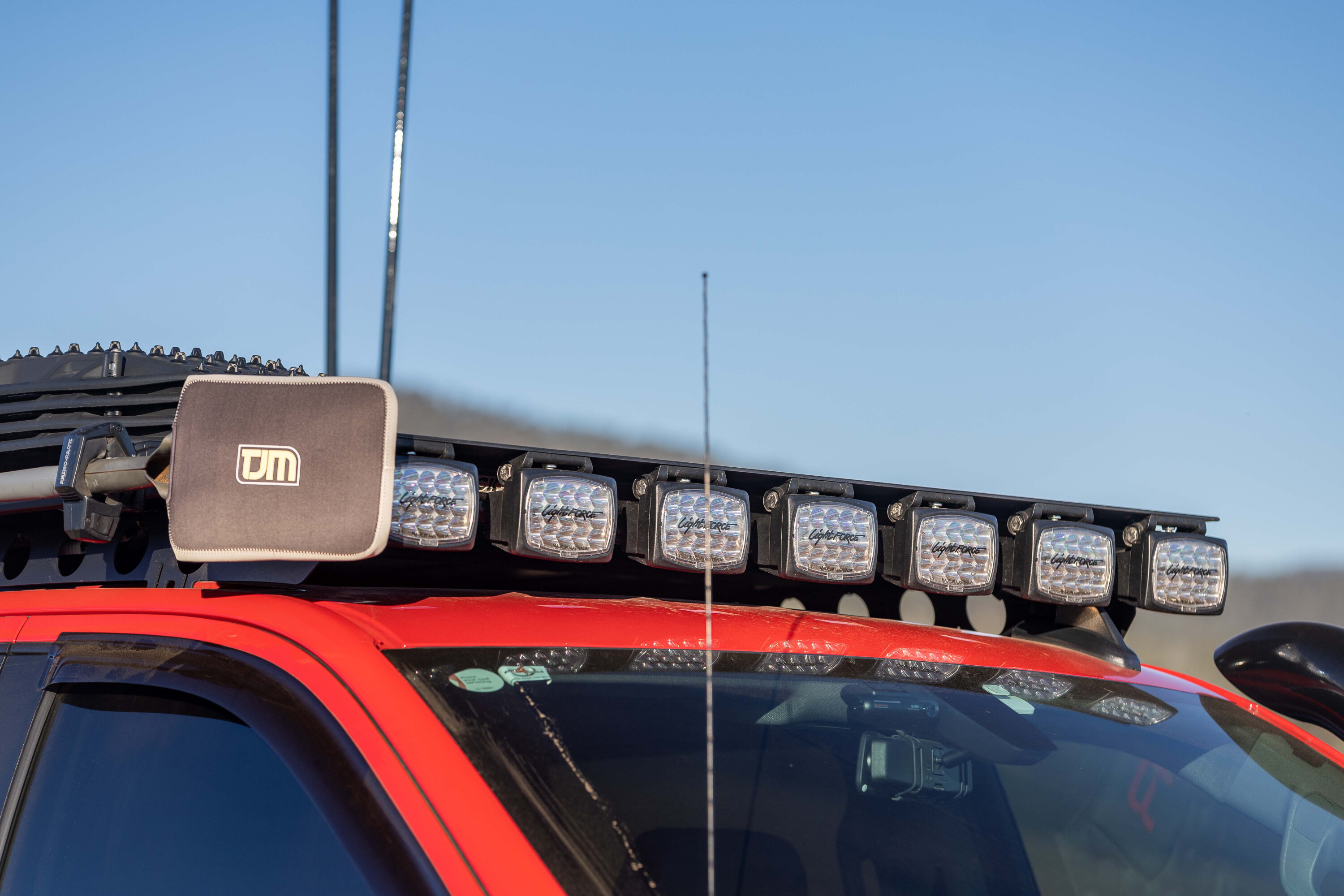
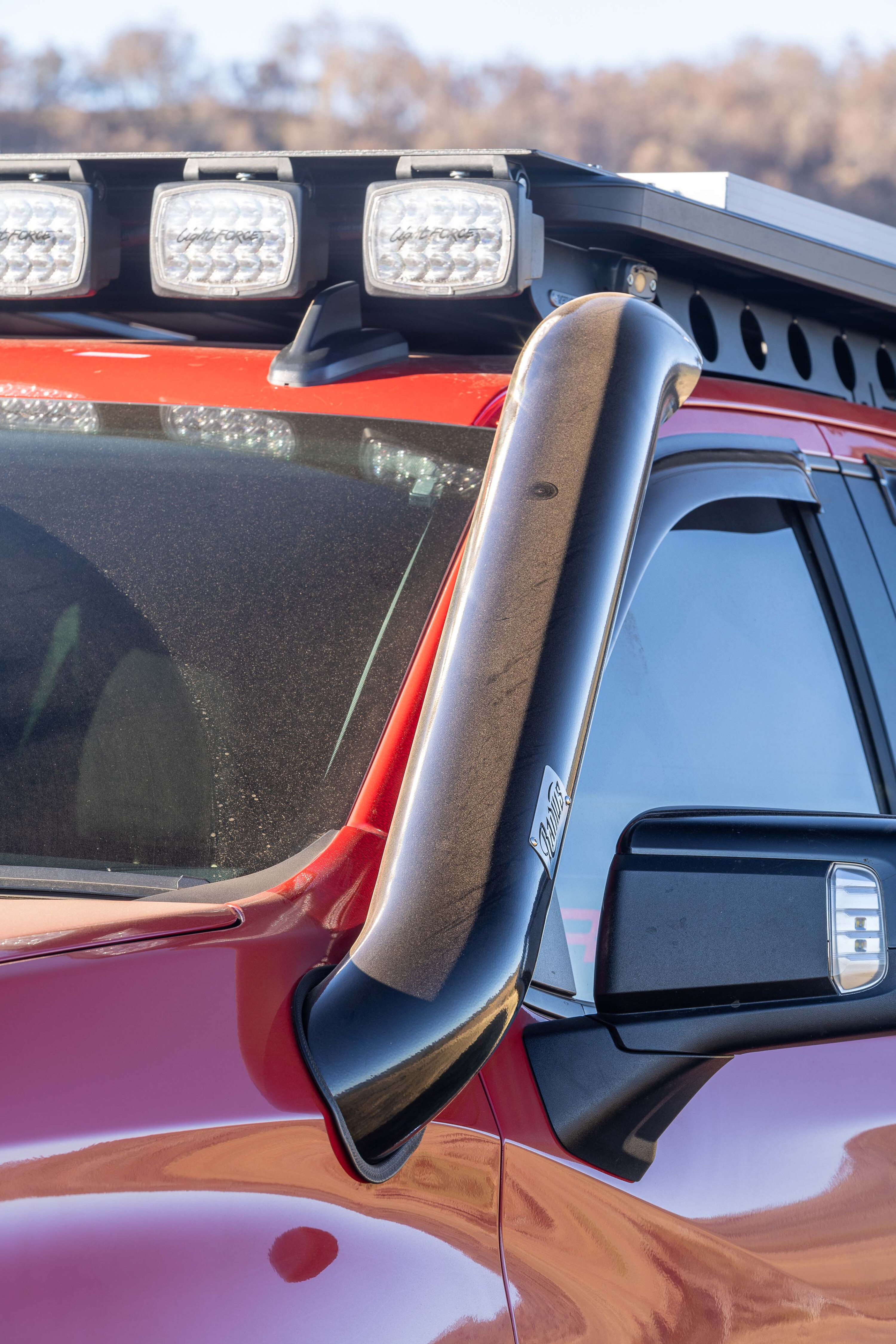
Another Pioneer Platform holds a solar panel, a shovel and some MAXTRAX atop the cabin, with six Lightforce Striker lights across the front.
There’s a quartet of Rok lights mounted in the Fab Fours front bar as well as a 20-inch Viper lightbar. Kris obviously likes his Australian-made Lightforce gear!
As the Silverado is Kris’s personal car, and is set up to tow his caravan, it was no surprise that it did it so well when we hooked a 3.5-tonne van up behind it. Effortless performance from the V8 engine and 10-speed transmission, exemplary behaviour from the cleverly developed suspension package, and big comfy seats make this a top tow rig.
1
The Silverado is beast in every regard and if you’re going to be travelling with the family on board, you can’t beat a full-size truck for interior space, comfort and features; trust us, your kids riding in the back with thank you.
The modifications to this Silverado, including the all important GVM/GCM increase, allow it to be built up to a formidable on- and off-road tourer. There’s a lot to love about the big red Chev!
While GMSV has changed the Silverado 1500 line-up it offers in Australia, with the Trail Boss gone and the ZR2 joining the LTZ model, the Rambler/Touring Solutions Australia GVM/GCM upgrade package remains applicable to the 2023-24 models.
If you were considering Silverado 1500 for your next touring and towing rig, but were put off by the poor factory weight ratings, give Kris a holler and have a yarn about the Rambler solution. You won’t regret it!
Heavy hauler
With the Rambler Vehicles GVM upgrade, the Chevrolet Silverado Trail Boss’s GVM is increased from 3210kg to 4499kg, while GCM is a stonking 8999kg, giving access to the vehicle’s full 4500kg braked towing capacity.
MORE
Everything Chevrolet
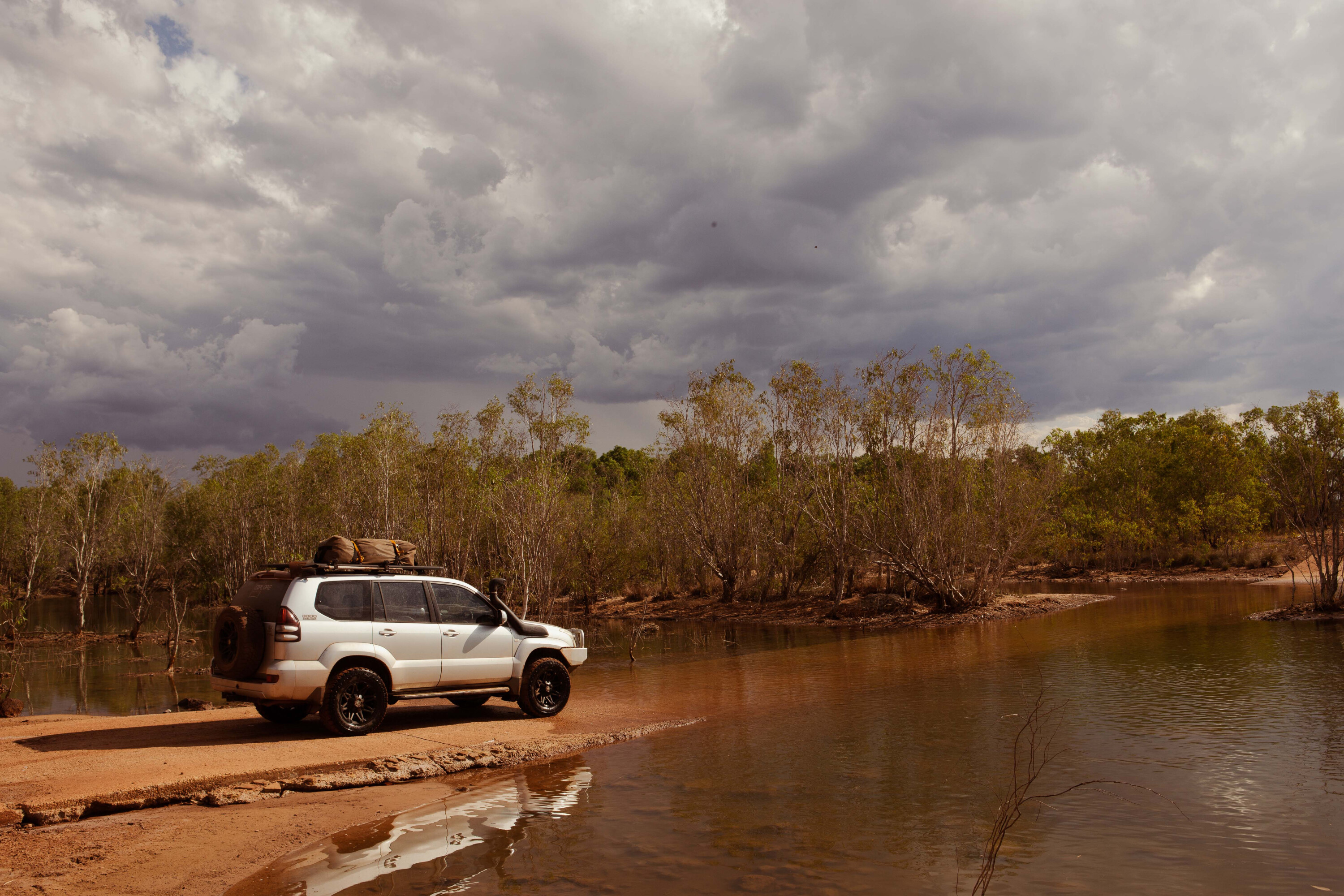
The distant thunder rolled on as I found a flat site high on the southern bank of the Roper River; the bush campsite within earshot of the fresh rainwater, now gently flooding the old causeway.
Overland explorers have been crossing the river at this natural rock bar for nearly 180 years, most famously Ludwig Leichhardt in 1845 (Roper was one of Leichhardt’s crew) on his epic journey from Brisbane to Port Essington, and Augustus Gregory a decade later in 1856, from Victoria River to Brisbane.
By morning, the gentle rain had cooled the late dry season temperature, and the morning air was calm and heavy. Freshwater crocs combed the causeway for their morning meal.
1
The nearby Yurlhbunji Bridge (opened in February 2018) now virtually flood-proofs the new Roper River crossing on the road east to Ngukurr.
I had stopped by Gregory’s Tree a day earlier and 800km to the west, having just left the Kimberley amidst a two-inch downpour and on my way home to Brisbane. I was on a similar-length journey to Gregory and Leichhardt, but nowhere near as epic.
I came this way for some respite from the blacktop monotony and hoped to catch a fish or two before the pending wet season closed the road.
A few hundred metres up from the crossing and adjacent to Leichhardt’s marker is the old Roper Bar Police Station which operated here in various forms for over 100 years from 1885 to 1990.
1
Things moved quickly in the early 1870s with the drive to connect this vast country with the construction of an Overland Telegraph Line
The Coast Track, as it was later named, followed sections of the original indigenous trading route parallel to the coast and soon became a significant stock route, and the station played a key role in keeping this trading route secure.
Things moved quickly in the early 1870s with the drive to connect this vast country with the construction of an Overland Telegraph Line, and Port Roper was established to support this effort.
Whilst the project was soon abandoned in favour of the Central Australia and Cape York lines, the trickle of trade soon became a flood. By the end of 1885, drovers had led more than 200,000 cattle from Queensland into the Top End and Kimberley.
1
Natural protection
Protecting over 9000 sq km of wild river floodplain, estuary and range country, Limmen National Park is in the western Gulf of Carpentaria between Roper Bar and Borroloola.
Nathan River Road is the only access in and out of the park and is subject to seasonal closure during the wet season (November to March). The park is very remote and now that Roper Bar store is closed there is no fuel or supplies available for more than 550km between Mataranka and Cape Crawford.
However Limmen NP is still relatively new, having been gazetted in 2012, and the campgrounds have modern facilities that cater to all types of campers.
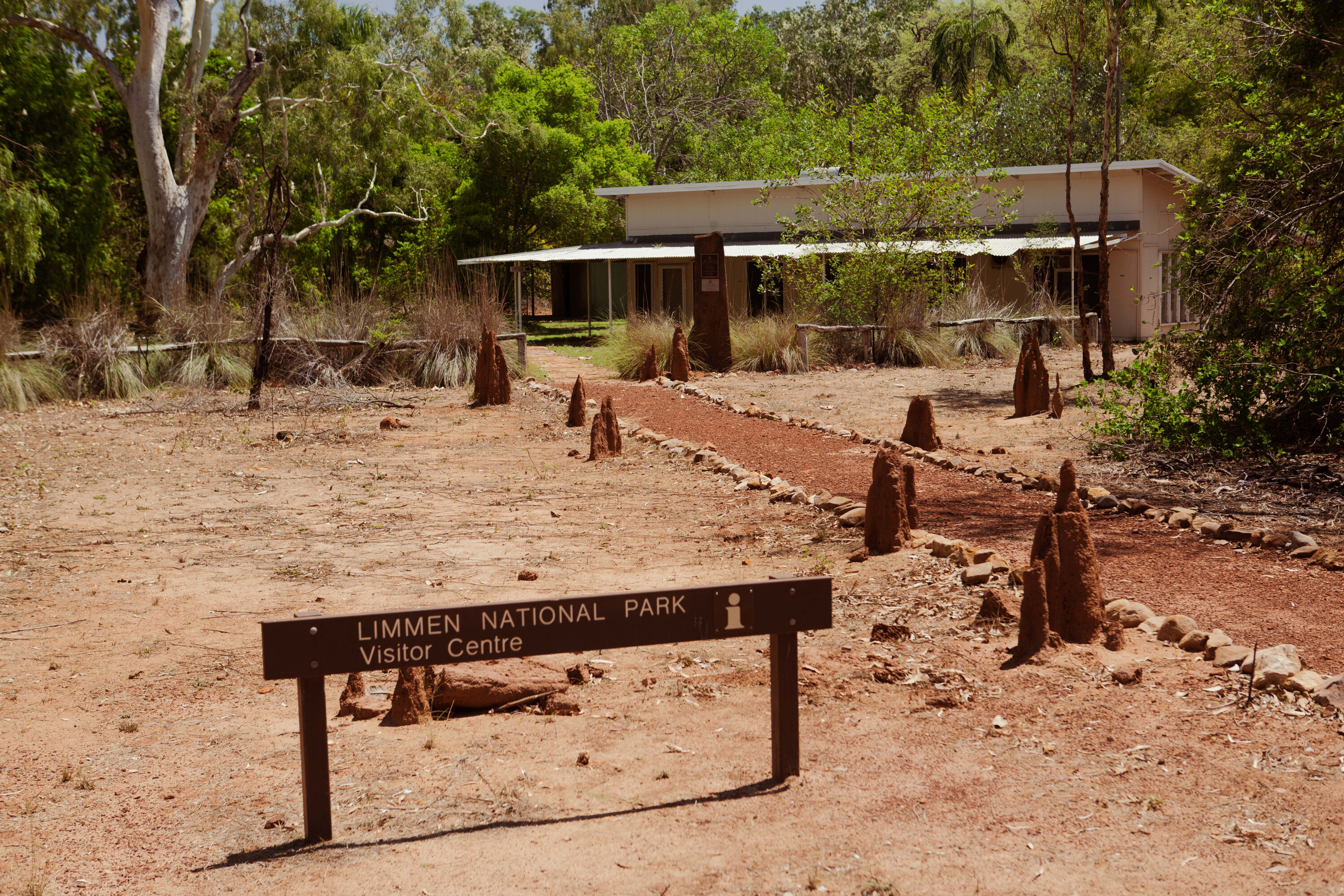
Clear information boards throughout the park detail campground layouts, and natural and cultural history, while the information centre at the Nathan River Ranger station has a comprehensive summary of everything you need or may want to know about the park.
1
The national park and adjacent marine park are managed with the support of several indigenous owner groups but the region will take decades to recover from the impacts of a century of grazing, recent mining and a host of feral pests.
Sadly, most of the mammals seen in the park are either feral or a legacy of the former cattle stations (or both).
These include wild horses, cattle, water buffalo, pigs, dogs and cats, as well as the smaller but more populous cane toads and European honeybees. At least the bees seem somewhat useful, but the rest in my view should be open to seasonal hunting.
1
Fishing the wild rivers
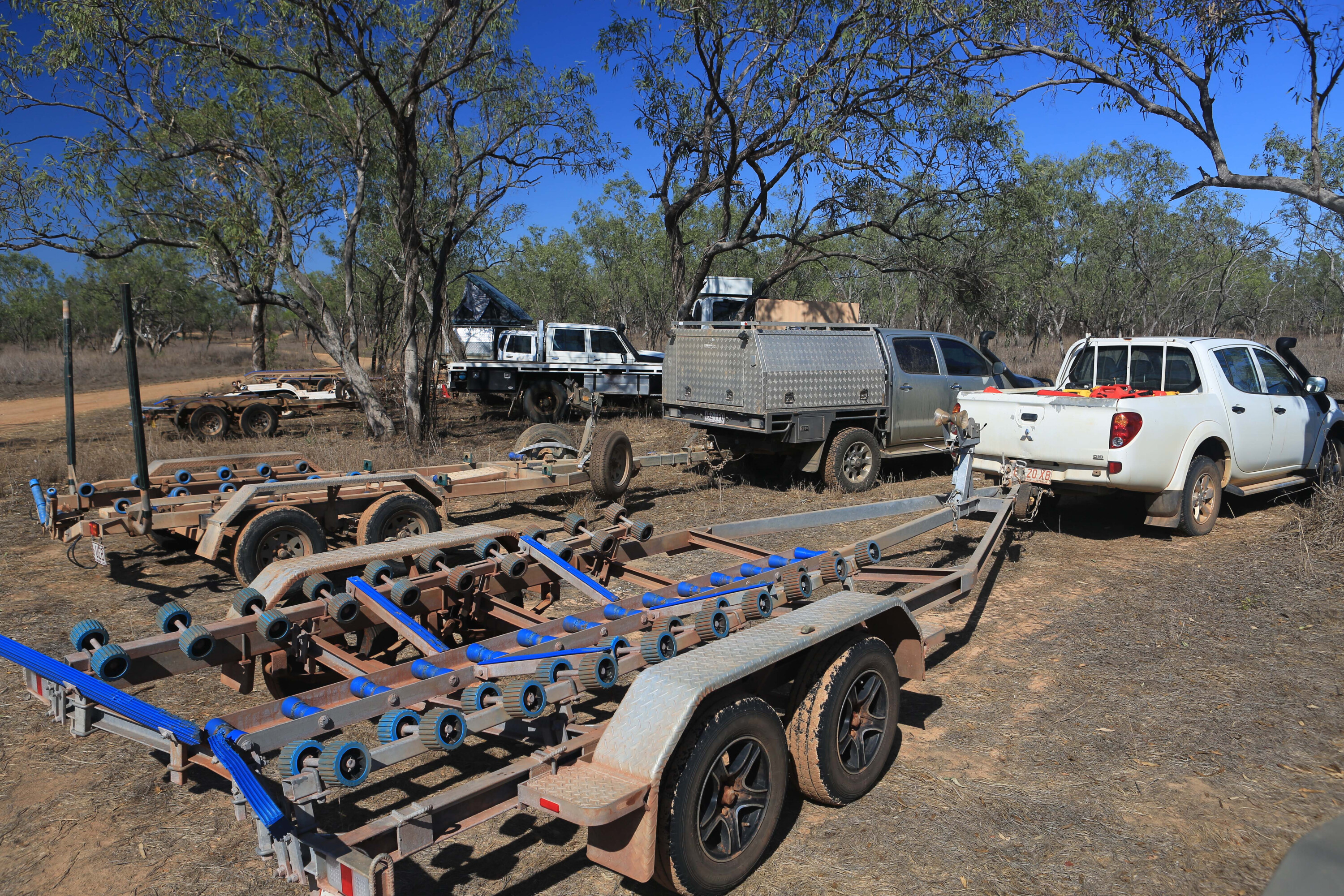
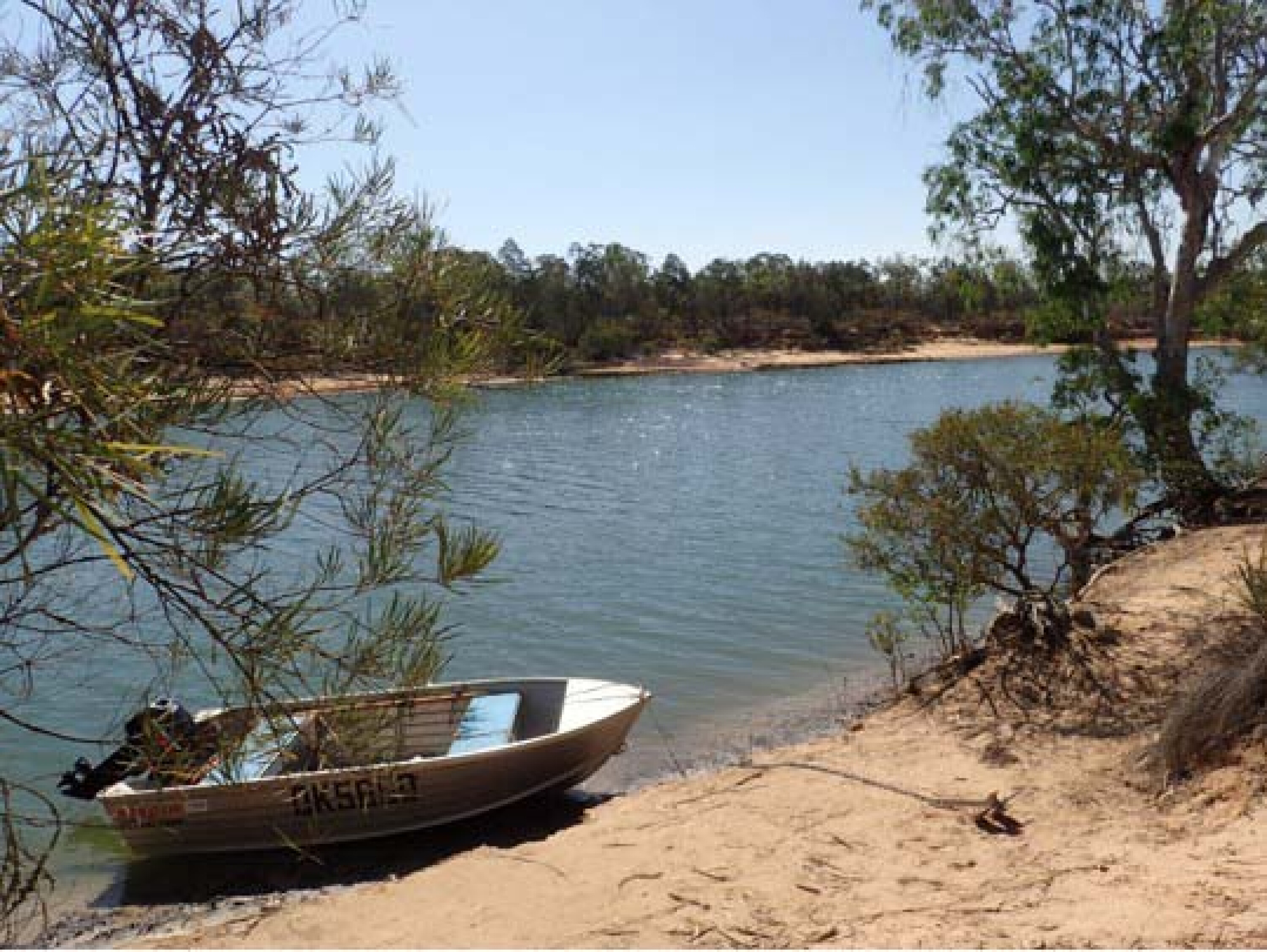
There are hundreds of kilometres of slow-flowing, winding, mangrove-lined and nutrient-rich rivers and estuaries to explore and fish, but you’ll need a boat with a decent trailer that can handle the rough and dusty roads.
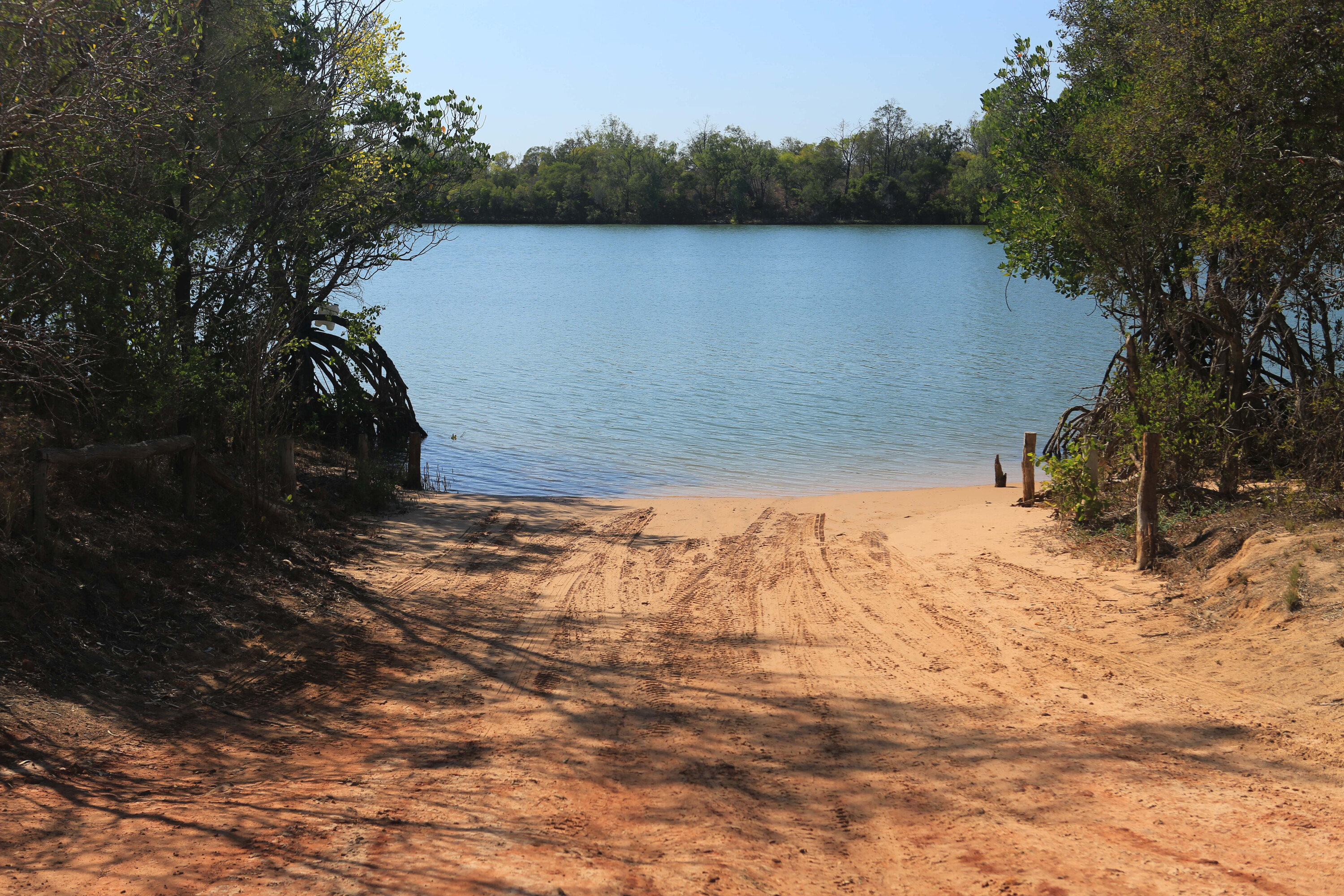
The three main access ramps on the Roper River are at Roper Bar, Munbililla (Tomato Island) campsite and 80km downstream at Port Roper.
Fishing from the banks is both limited and risky with plenty of saltwater crocodiles lurking in the murky shallows. Limmen Bight Fishing Camp provides easy access to the Limmen Bight River with many boats leaving at first light to head down to the open river mouth and beyond.
1
There are low-cost campsites with basic facilities and you can buy unleaded fuel here.
Again, be mindful of just how remote you are and self-sufficient you’ll need to be. Take plenty of fuel, water, emergency food, as well as offline topo maps, an EPIRB and all the right safety gear. There’s no volunteer coastguard out here to rescue you.
1
Best campsites
With a boat ramp to the Roper River and green grass throughout the dry season, the pick of the campsites is Munbililla (Tomato Island).
It has a day use area with electric barbecues, drinking water, a large toilet block, boat trailer parking and a wide selection of campsite options including for groups and trailers.
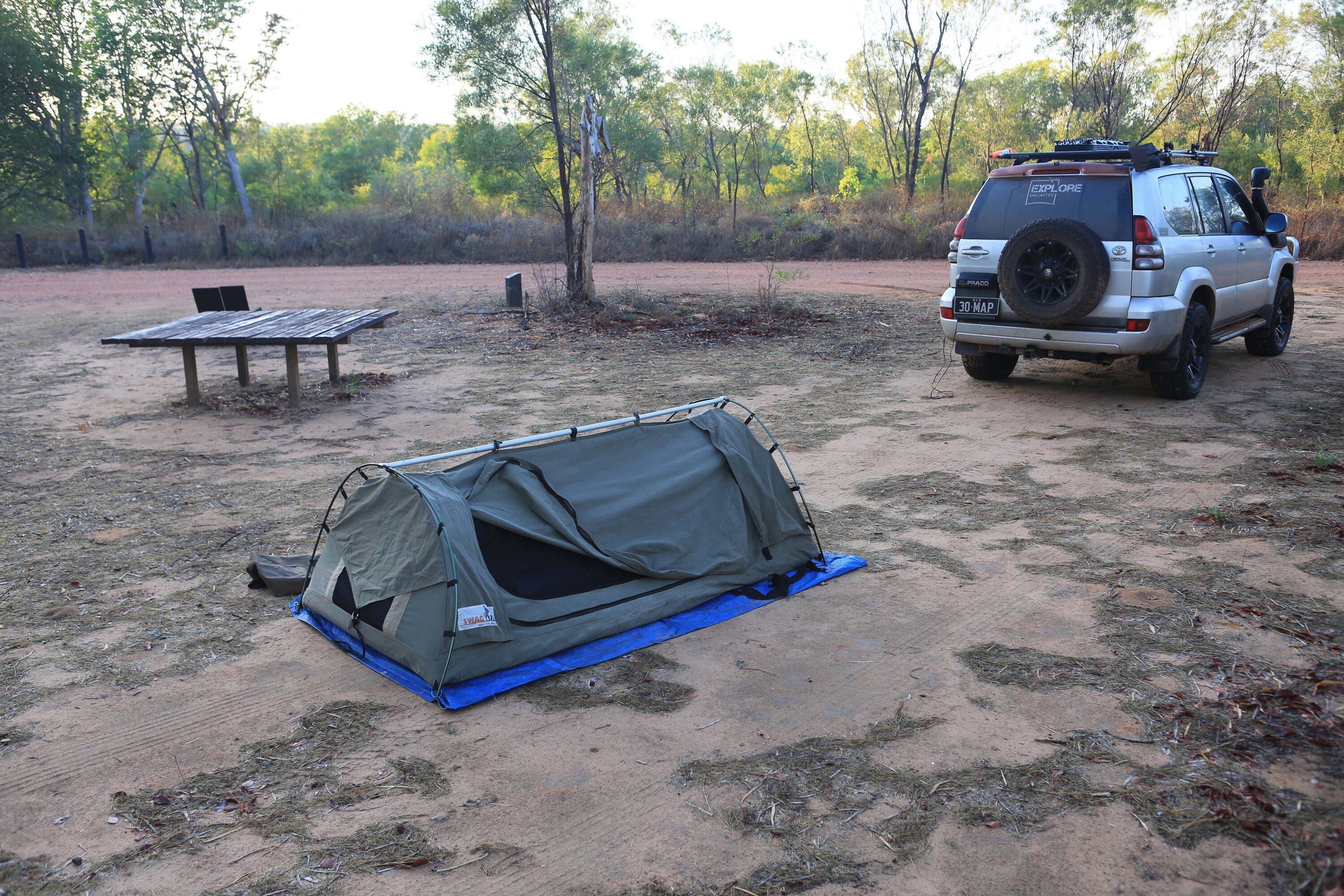
Mountain Creek and Didi Baba camping areas are spacious with large trailer sites, and with only five to seven sites in each are private enough for a multi-night stay.
1
Further south, the Towns River campsite has only four sites, but is just near the boat ramp, so is perfect for vehicles with a rooftop tent and small boat trailer.
Butterfly Falls and Southern Lost City campsites are better suited to a one- to two-night stay for those wanting to enjoy the swimming (April to July) or explore the area.
Campsites are cheap but must be booked online.
1
Explore the Lost Cities
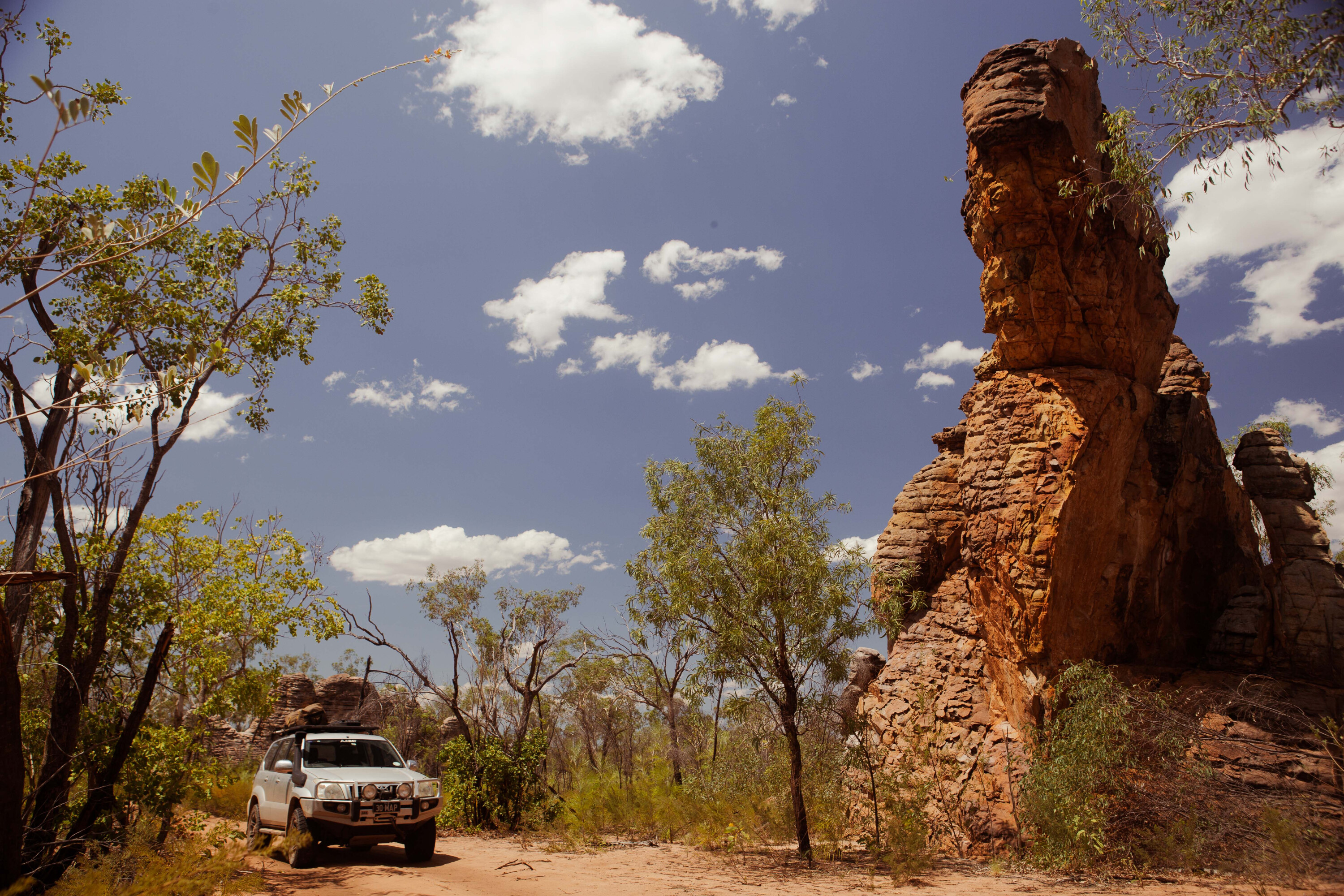
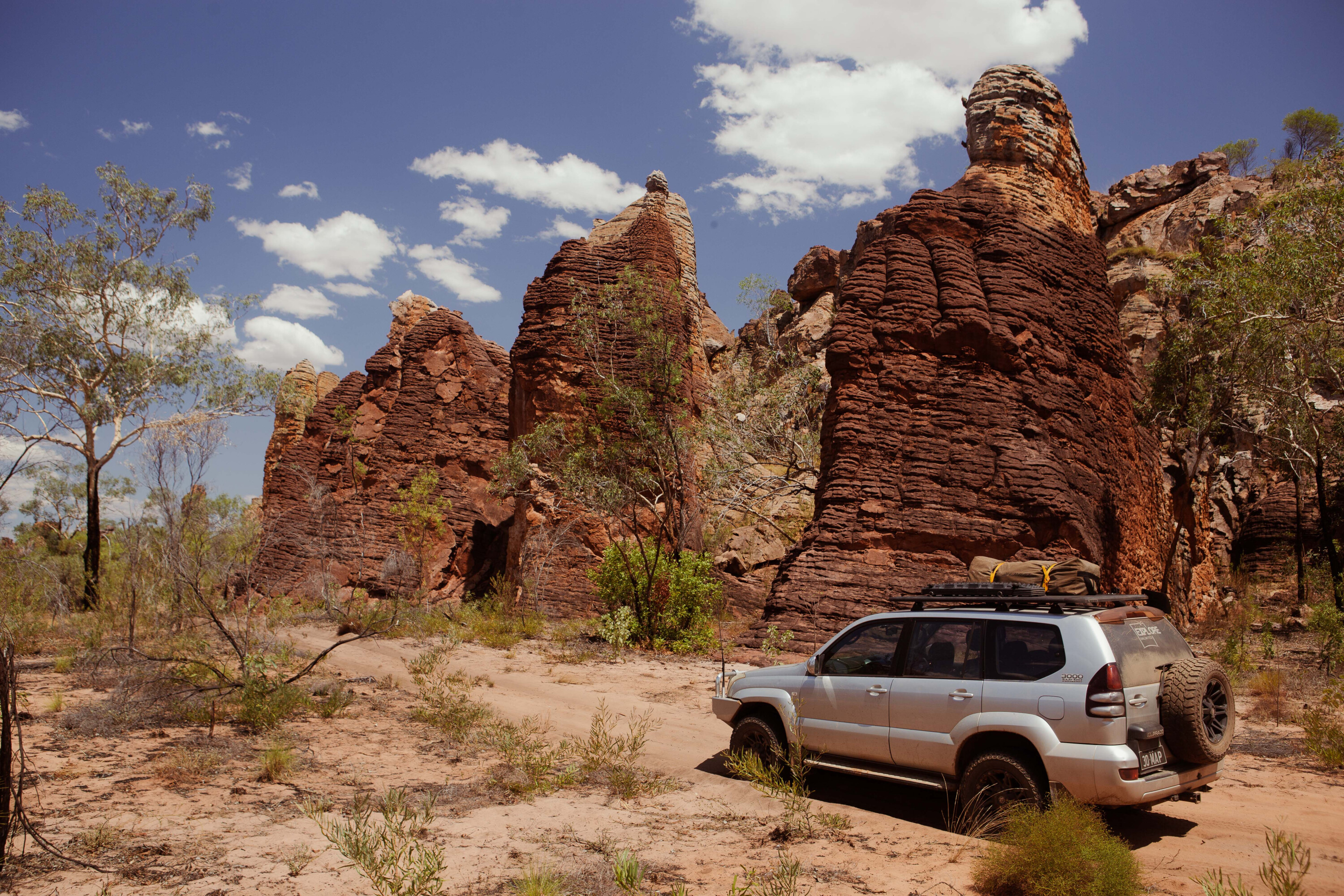
The best 4×4 adventure in the park is the 62km return trip to the Western Lost City.
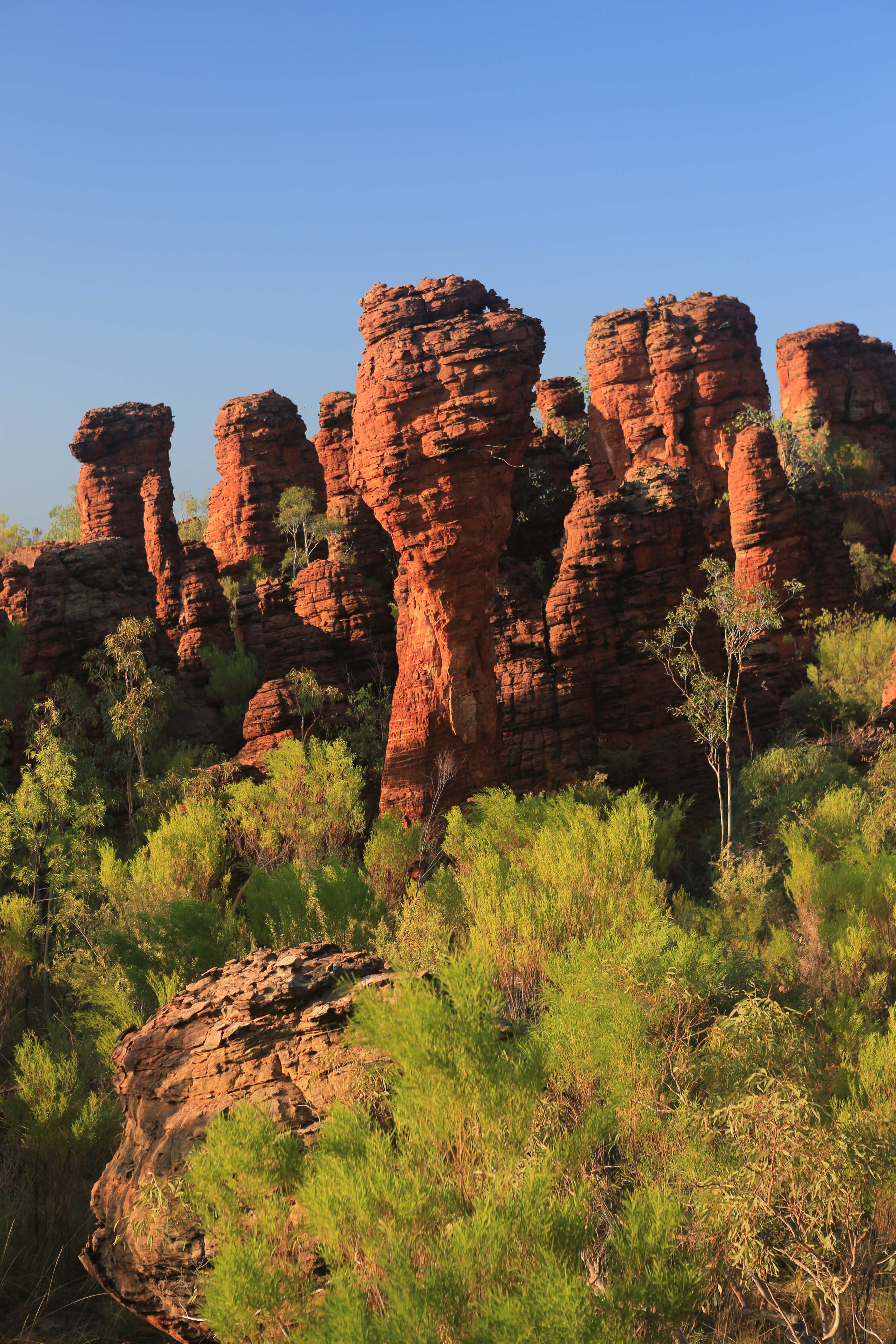
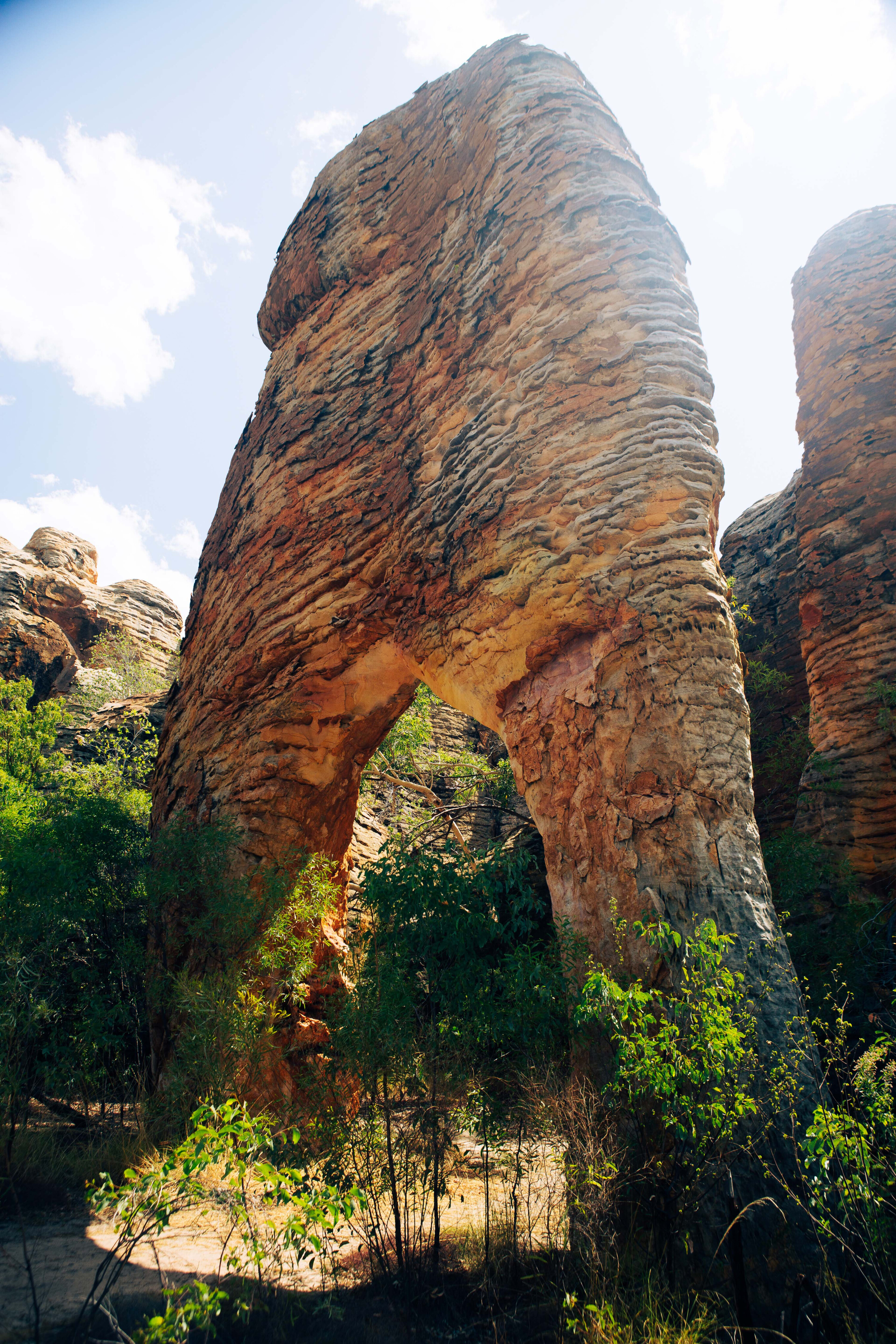
The narrow bush track wanders through the open forest of the Limmen Bight River floodplain before passing through a narrow gap in a siliceous ridge. Beyond here, there’s a sense of anticipation as the vegetation thickens and you eagerly search for the Lost City through the trees.
Then suddenly, the towering blood-stained sentinels arrest your progress. “Halt! Who goes there?” you hear them call as you search for more stone-armoured warriors in the shadows of this ancient fortress. Some balance giant boulders aloft, ready to hurl them down with lethal fury.
1
It’s a privilege to drive through this natural sandstone city, the trail ending at a magnificent arch, which stands as the doorway to an inner sanctum.
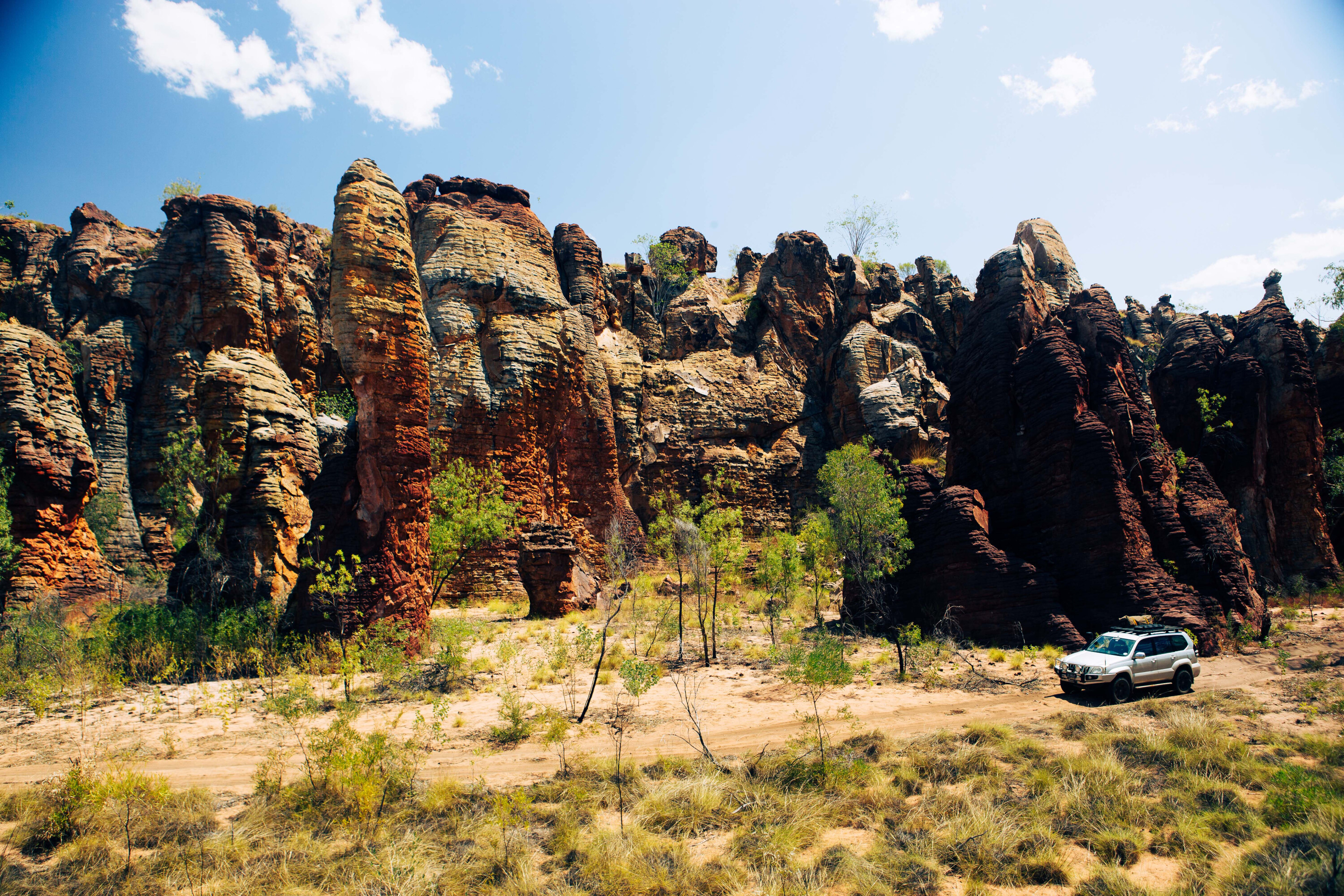
These ‘lost cities’ are sandstone remnants of the Arnhem Land Plateau, found in several places throughout the park and usually trend in a north-south direction.
The narrow track is not overly technical but low range may be needed in some soft sandy sections. Allow four to five hours return, and you’ll need a key code for the gate from the information centre at the Nathan River Ranger Station.
1
I’d recommend the afternoon for the best light and photography.
Further south a 2.5km meander amongst the towers of the Southern Lost City is a special way to start the day, with a third lost city to the west visible from the outlook, midway.
The walk starts and ends at the adjacent campsite and ducks and weaves its way through the sandstone monuments, guided by blue markers.
1
Lorella Springs Wilderness Park
With a million acres to explore, it’s a real shame that the spectacular family-owned Lorella Springs wilderness sanctuary has not been open to the general public in 2023, and seems unlikely at this stage to reopen in 2024.
For the time being, it is only open to visitors who are part of pre-booked tour groups.
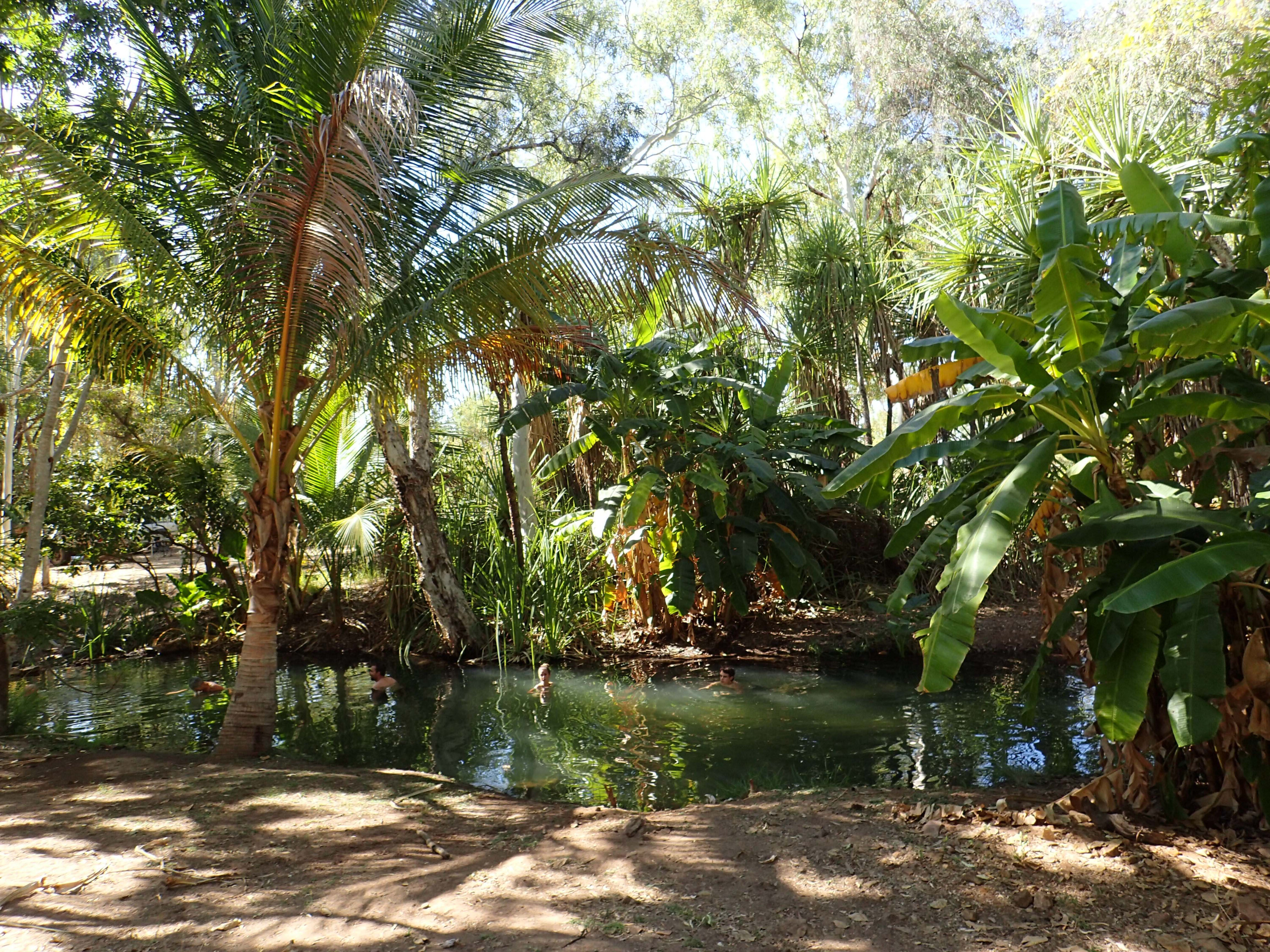
When open, the homestead at Lorella Springs featured a licensed bush bar and pet-friendly campground set against the backdrop of the Tawallah Range. There are hot showers, heaps of space and shade, plus a natural thermal spring for a refreshing swim.
1
The bush bar is usually a hub of social activities including feeding the freshwater croc, star-lit meals and cold beer. Basic cabin accommodation was also available for those who booked well ahead.
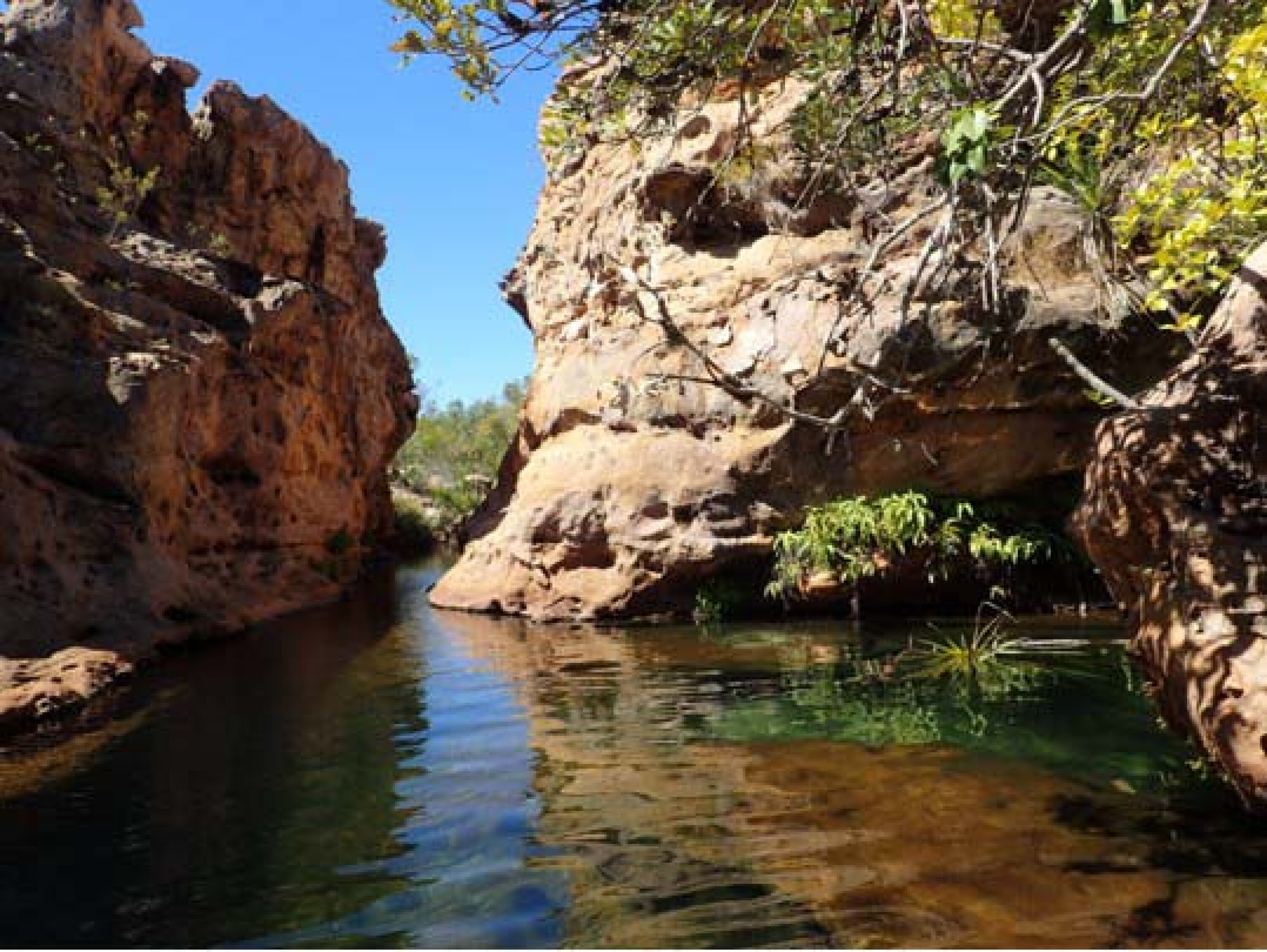
There are more than a dozen gorges, thermal springs and secluded waterholes here. The pick of the swimming holes are Nudie Springs, Teardrop Falls, Nanny’s Retreat and the deep clear waters of Helicopter Falls. The access tracks can be rough, rocky, and sandy so only take a trailer if it and your tow vehicle are up for the challenge.
Further east, you could explore the magnificent range country and lookout at Walker’s Rock and there is some wonderful riverside camping along Rosie Creek – but no swimming here as the creek is home to several saltwater crocs.
1
There’s some great fishing and crabbing amongst the many coastal tributaries but it’s wild and remote and there’s no fresh water, fuel or help, but plenty of big crocs, sharks and sandflies.
Up-river the numerous rock bars can be fatal for your outboard on a low tide so best to travel with a mate in a second boat, or at least take a backup motor.
The rewards are rich for the well-prepared with all the tropical favourites including queenfish, barra, mangrove jack, cod, trevally and the ever-tasty mud crabs, but with a tag-and-release policy it’s all about the fun.
1
Lorella Springs was always closed during the wet season, from October to March, but in the dry season it was a must-visit destination for those travelling through this area.
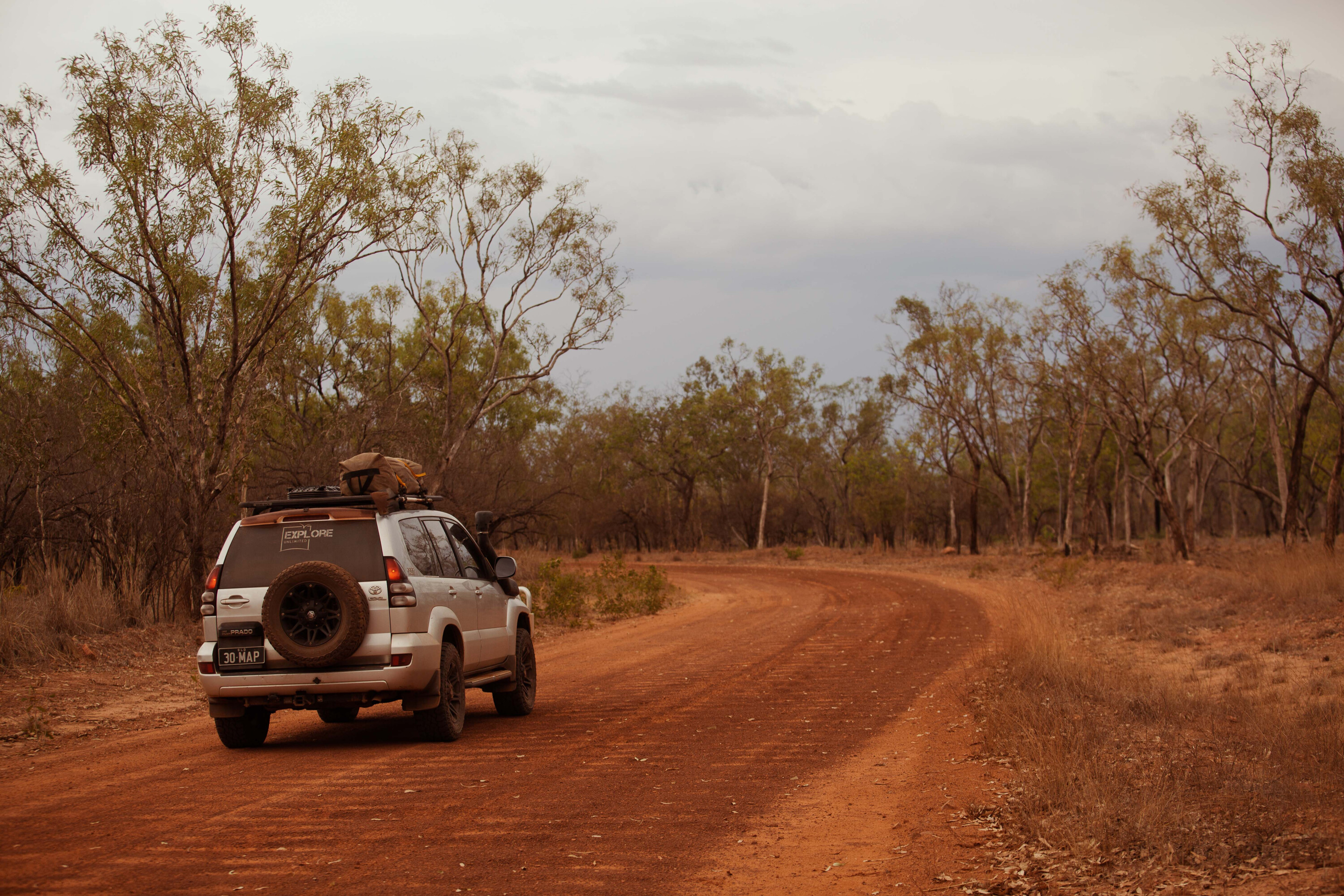
Hopefully it will reopen to the general public soon, and in due course we have been assured an announcement on the wilderness park’s future will be made on the Lorella Springs Facebook page. Keep an eye out…
1
It’s a long drive between drinks
Whether your thirst is for water, beer or fuel it’s a long way between ‘drinks’. At best it is 550km between Borroloola and Mataranka but allowing for side trips plan for 700-800km without a resupply of fuel, water, or food.
There is water available at the Nathan River Ranger Station but only take what you need. Roper Bar store looks to be closed indefinitely so the only reliable option is Lorella Springs Station between April and September.
Like any gulf road, the access road can get very dusty and corrugated, especially later in the dry season. The park is closed for much of the wet season and there’s little or no mobile phone reception.
Contacts
NT Parks Pass
Website: nt.gov.au/parks/park-pass [↗]
Limmen NP
Phone: 08 8973 8888
Website: nt.gov.au/parks/find-a-park/limmen-national-park [↗]
Lorella Springs
Phone: (08) 8975 9917
Website: www.lorellasprings.com.au [↗]
Facebook: www.facebook.com/lorellaspringsstation [↗]
What are the odds of finding a stray pushrod in the middle of the desert? Pretty thin, right? And the odds of it laying in such a position to pierce a hole in your tyre?
Well, you probably have a better shot at finding a Bitcoin in your backyard, but there we were pulling the offending metal shaft from my mate’s tread block. Back then (the late 80s) we didn’t carry tyre plugs or patches, so we swapped in his spare and continued… now spareless.
1
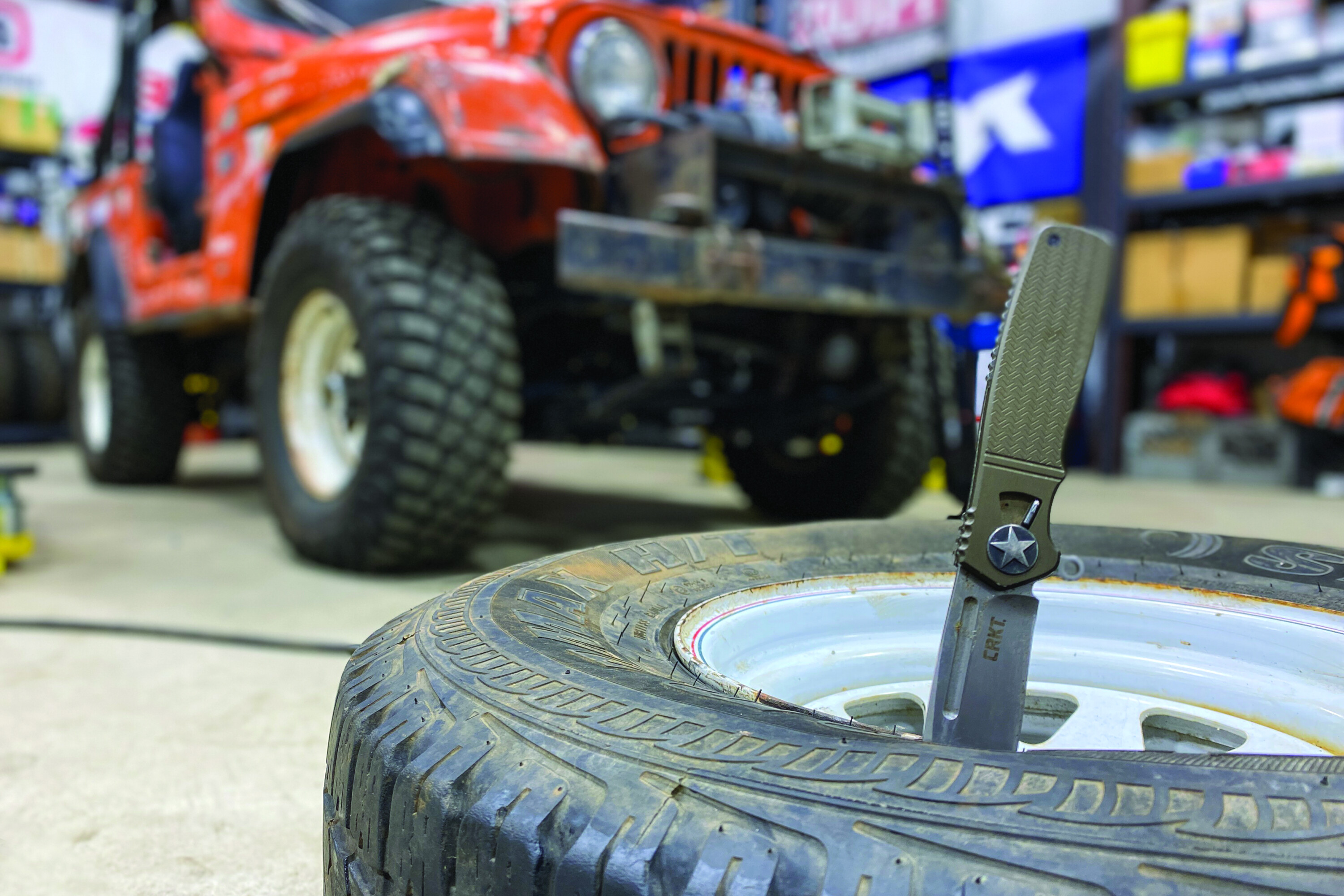
But times they are a changin’, and with the tools now available to repair a tyre in the field, running spareless should be a thing of the past.
This month we review a few high-quality tyre repair kits, then dive into everything from simply plugging a nail hole to performing major surgery.
1
The Gear
In 1964, Alec W. Niconchuk developed the first self-vulcanising tyre-repair system.
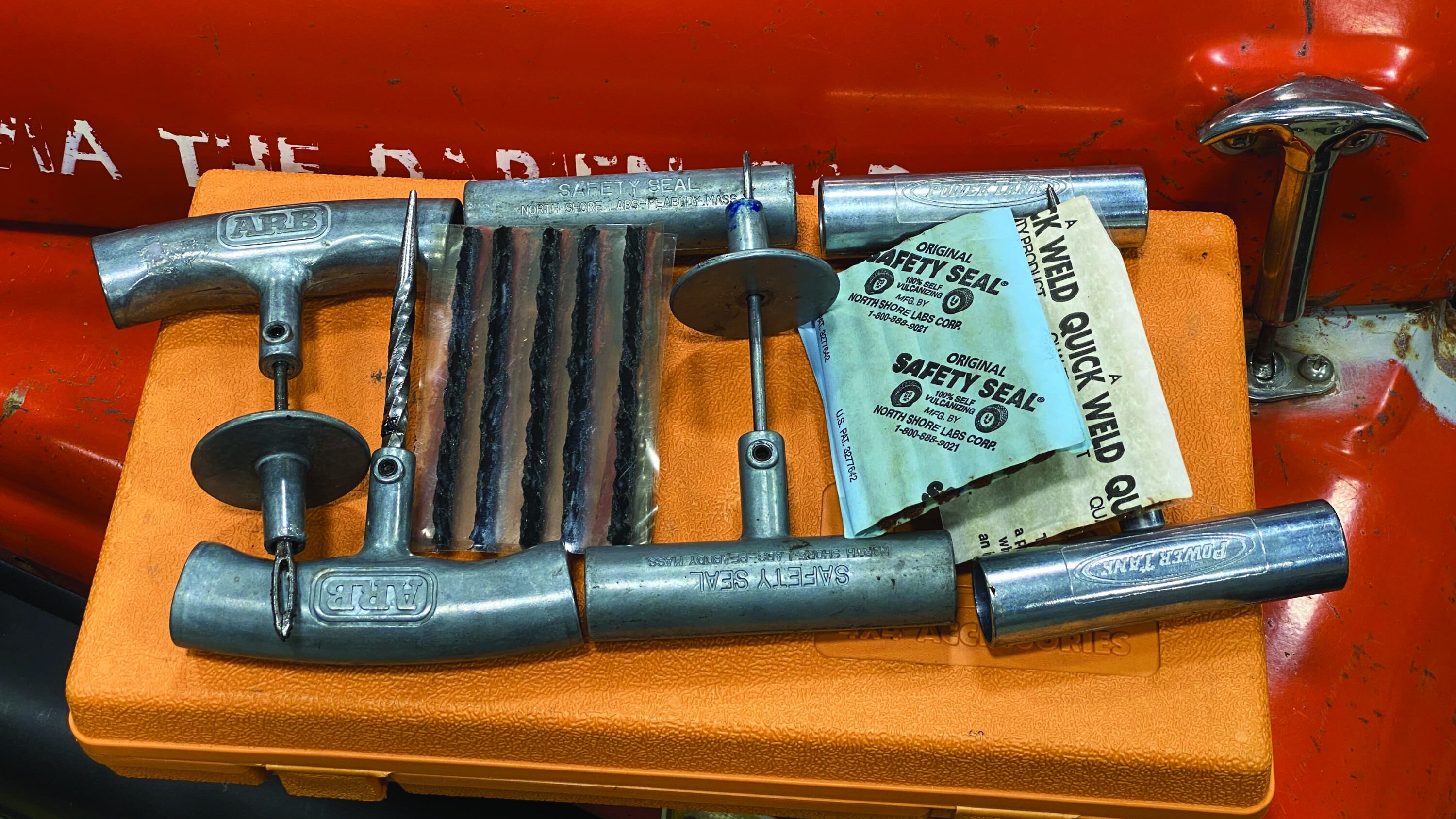
His company was called Safety Seal, and his plug method became the model for which countless others have emulated. While there are many companies boasting a better or cheaper mousetrap, I would strongly avoid the el cheapo $10 units found at discount stores, as you may spend more coin at the ER when the plastic handle breaks and you shish kebab your hand.
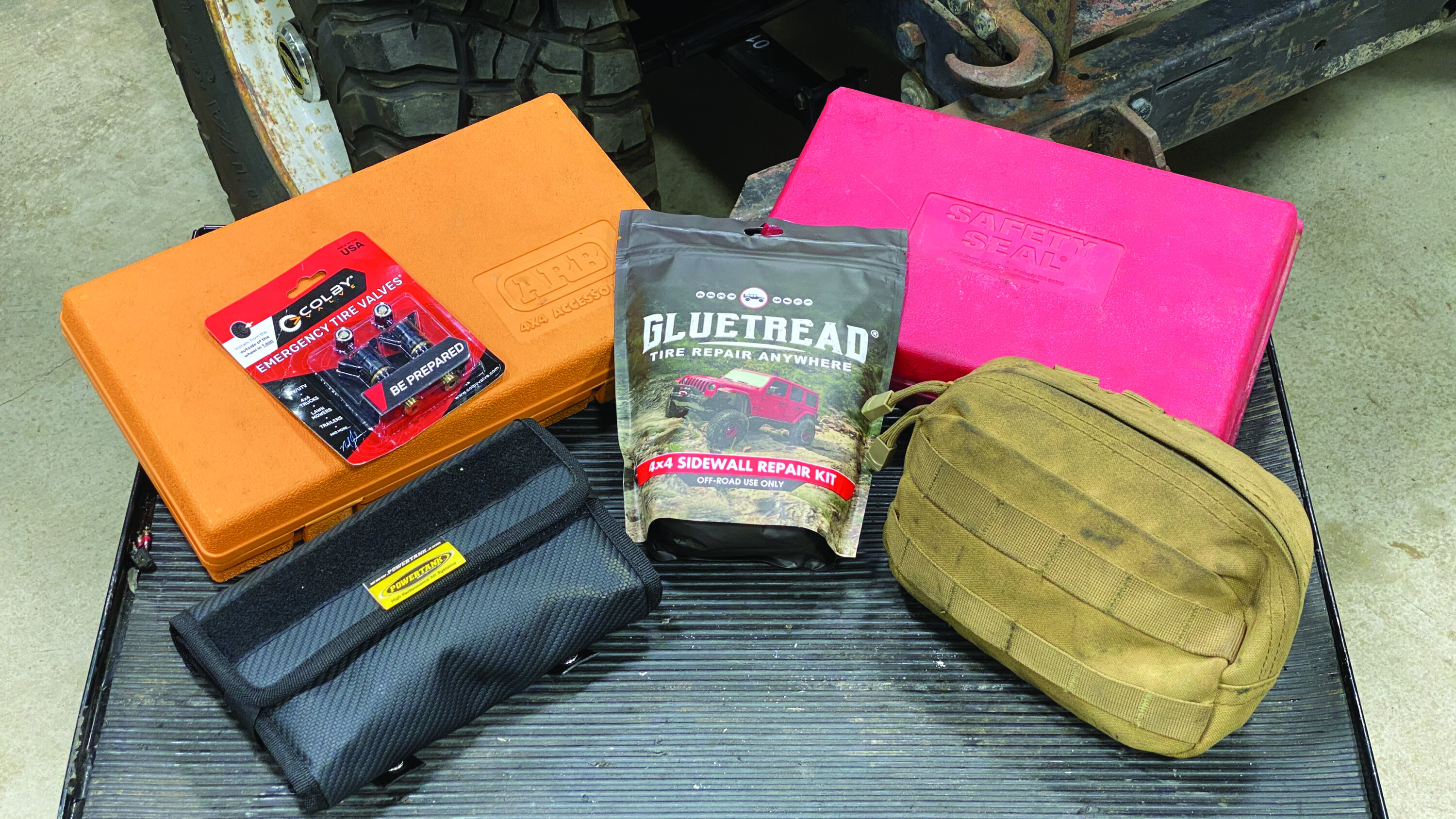
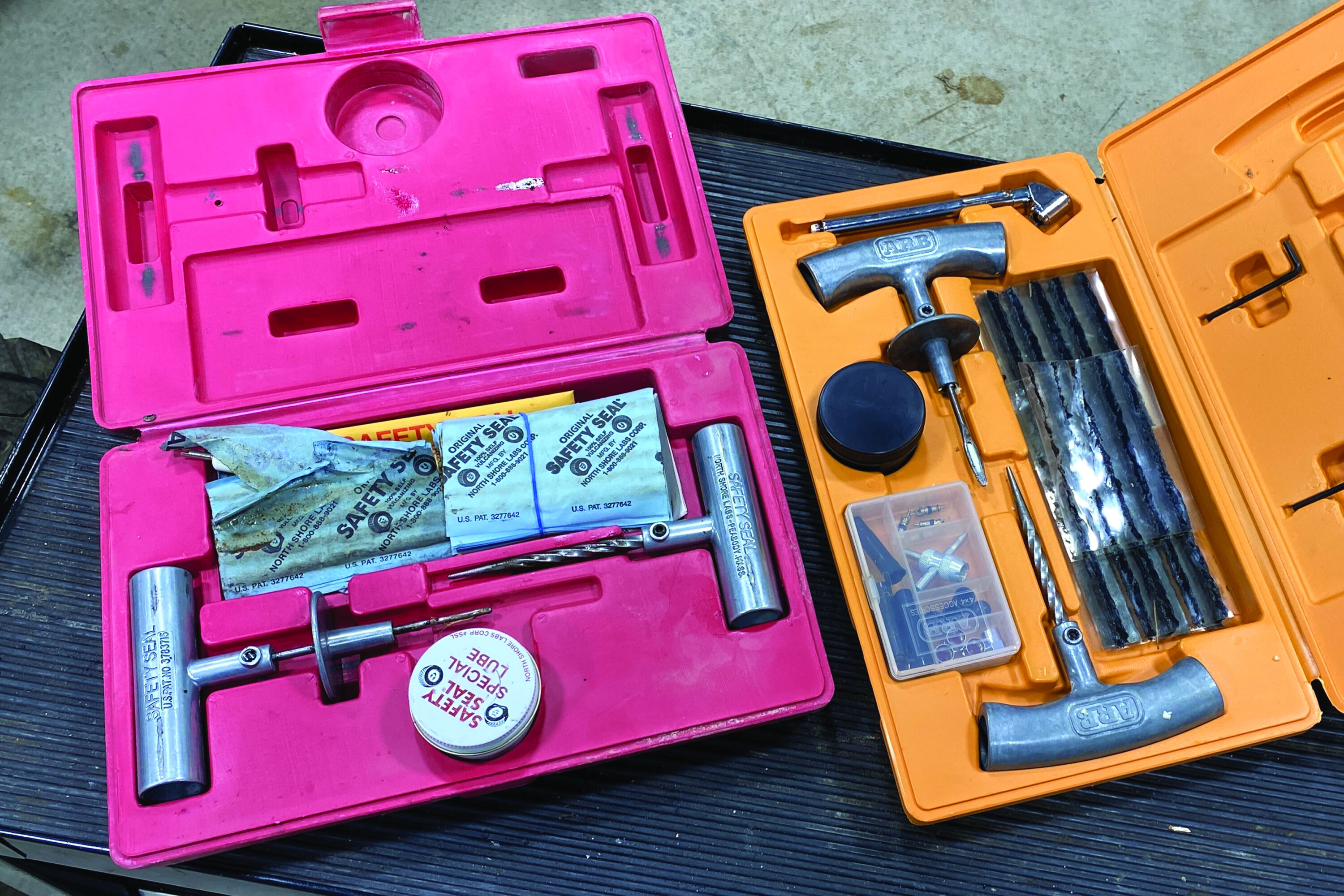
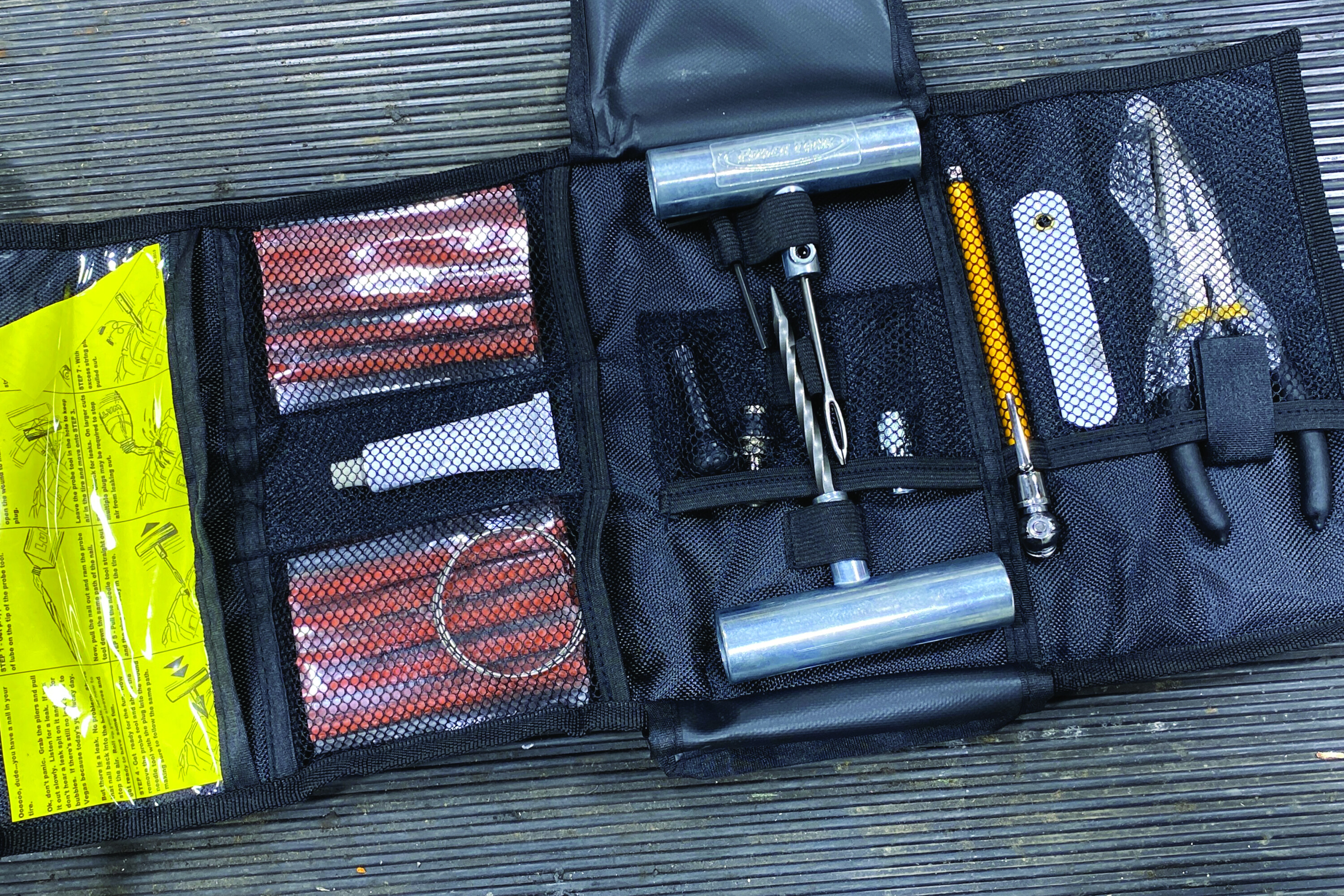
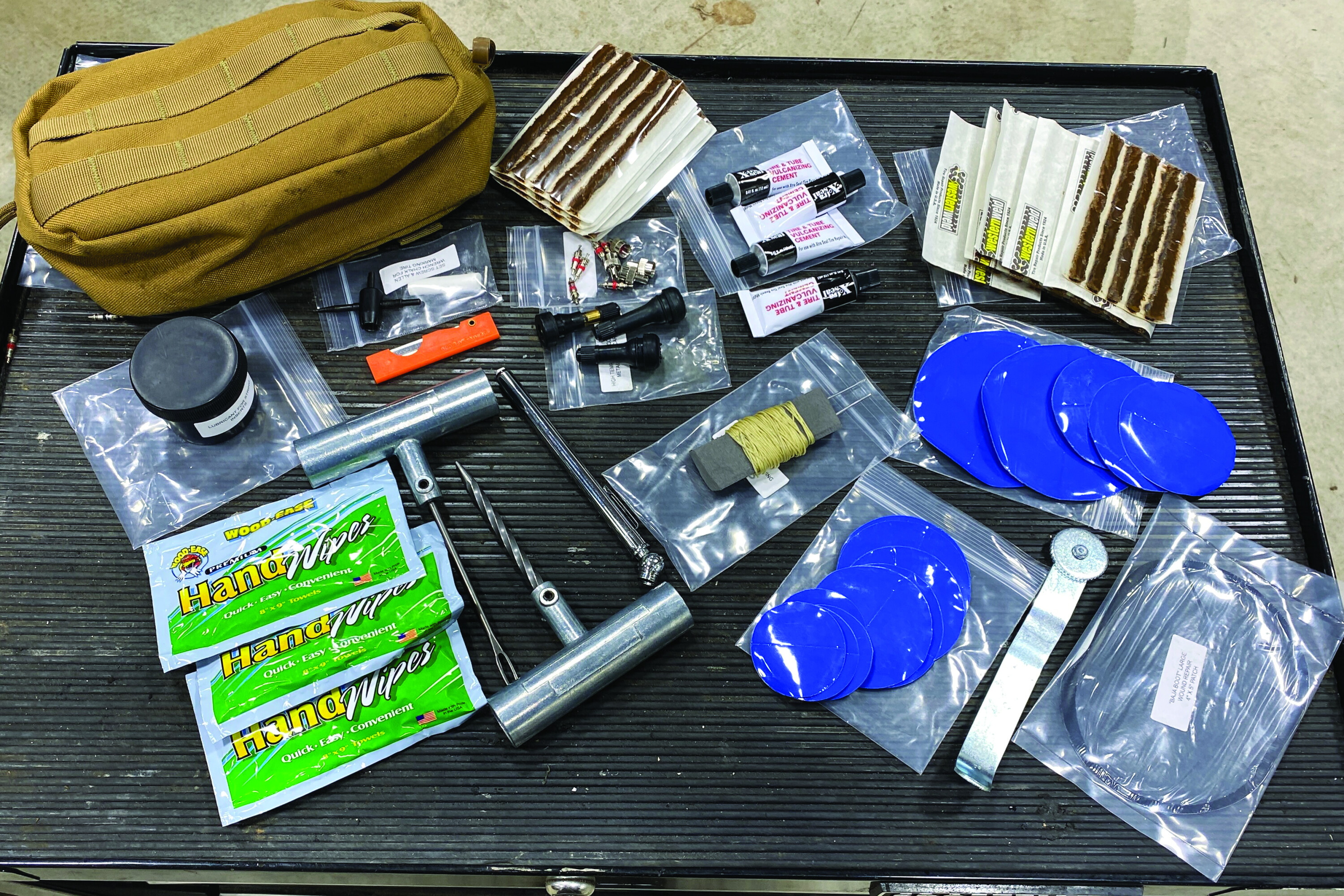
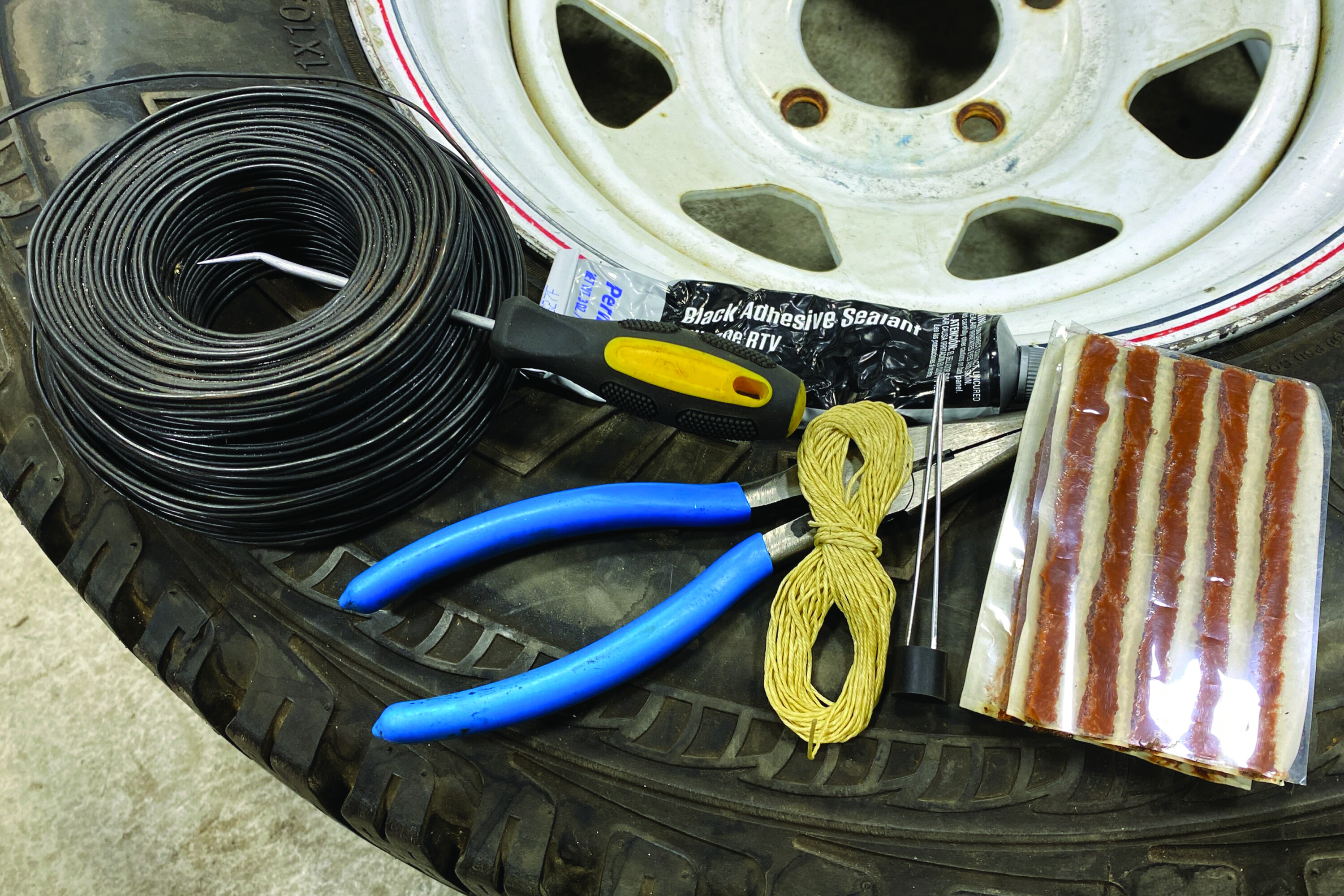
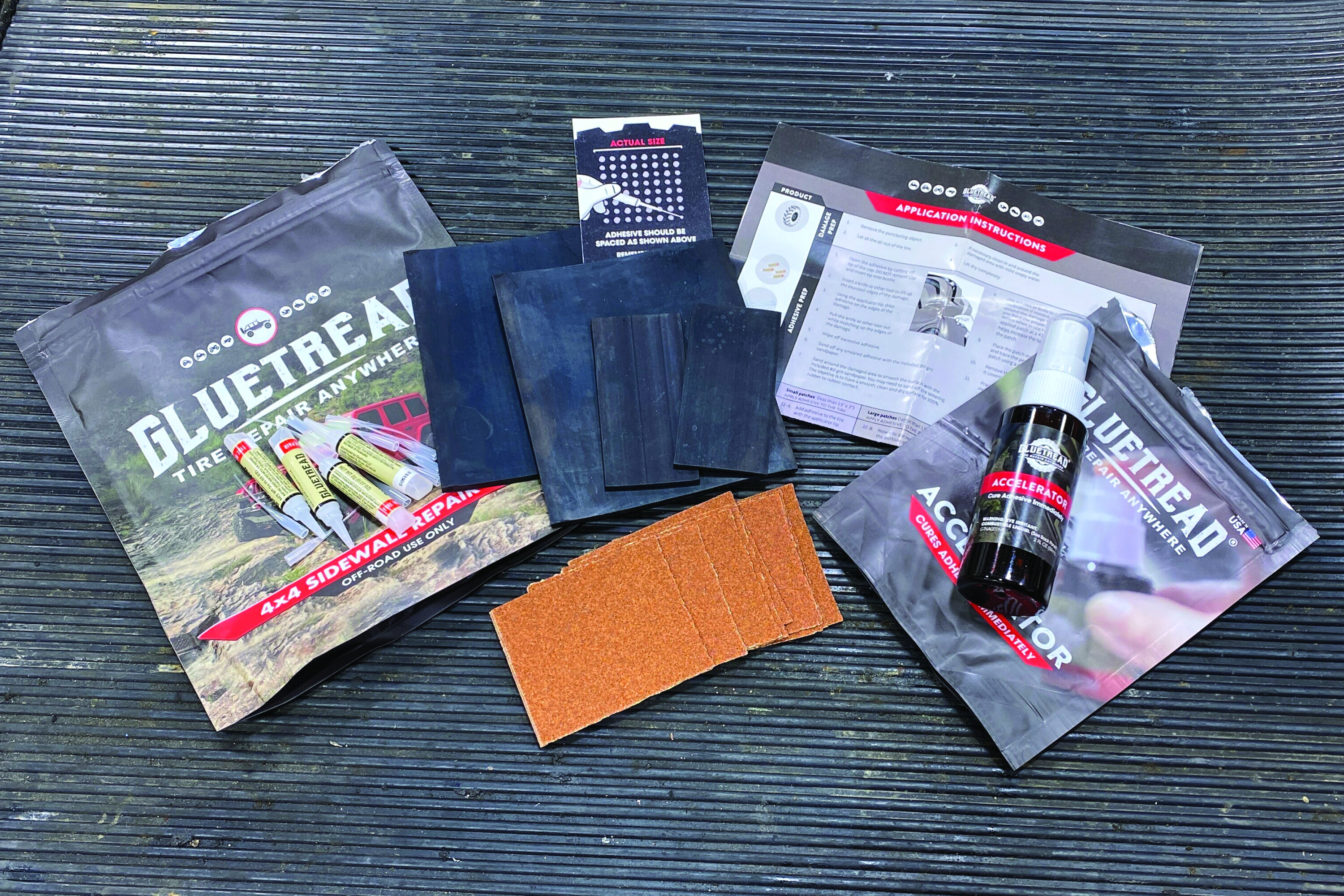
The kits I carry (for my multiple rigs) are from ARB, Power Tank, Extreme Outback Products and Safety Seal. GlueTread is the new kid on the block, and is now included in my tyre repair kit. Let’s take a look.
Safety Seal and ARB
1
Power Tank
1
Extreme Outback Products
1
TIP: Repairing a tyre is serious business. Don’t cheap out with discount store tools.
1
The Plug
Plugging a tyre is the simplest of trail repairs and can usually be done without removing the wheel.
If you notice a low tyre and don’t hear a hiss, first ensure that the valve core is not leaking. Put a little saliva on your finger, lightly place it on the opening, and look for bubbling.
Also look for any debris that might be jammed between the bead and the wheel. If the cause is a nail, you’ll need to roll the vehicle until the offending object is accessible.
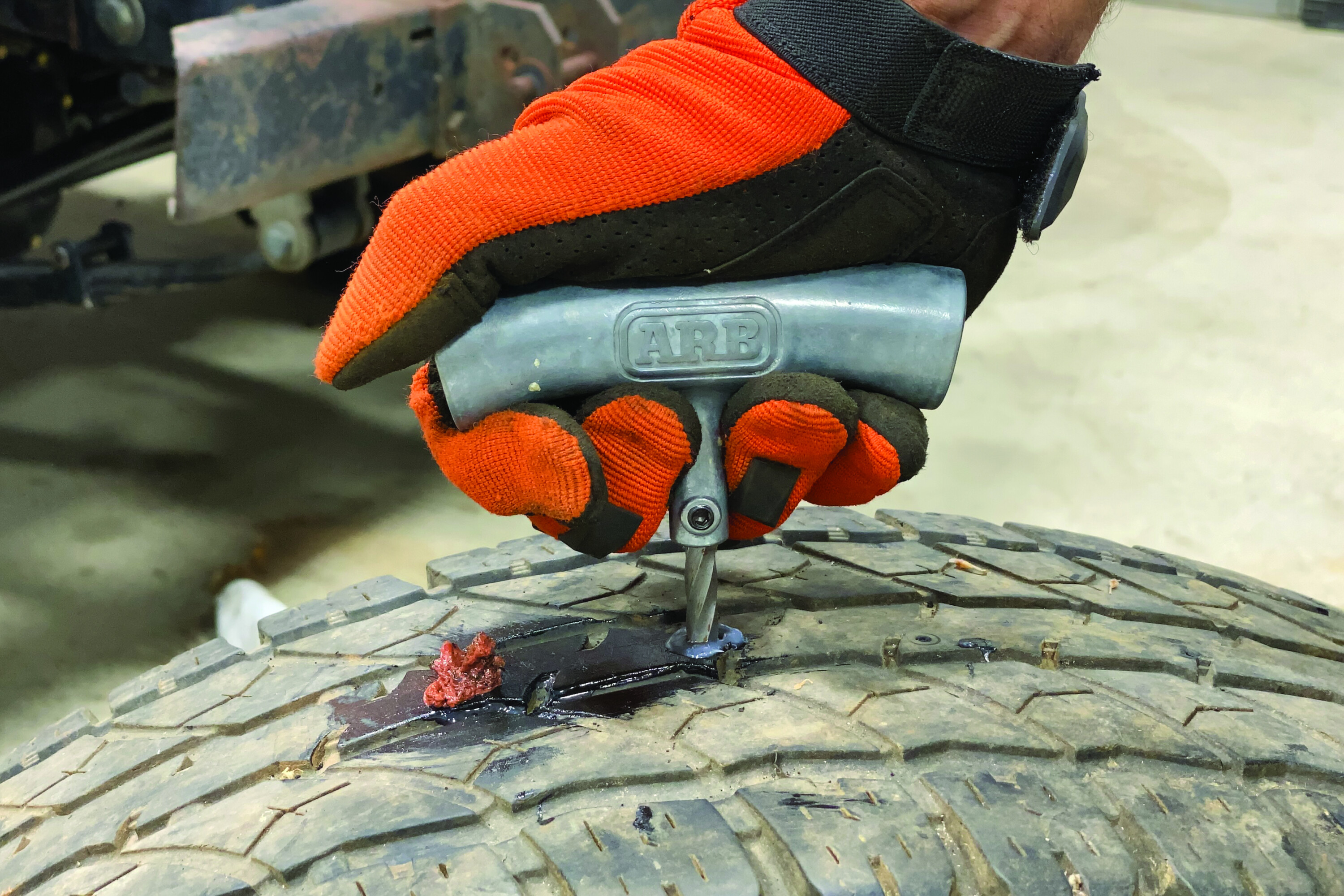
1
TIP: Make sure to insert the reamer on the same angle as the offending object entered the tyre.
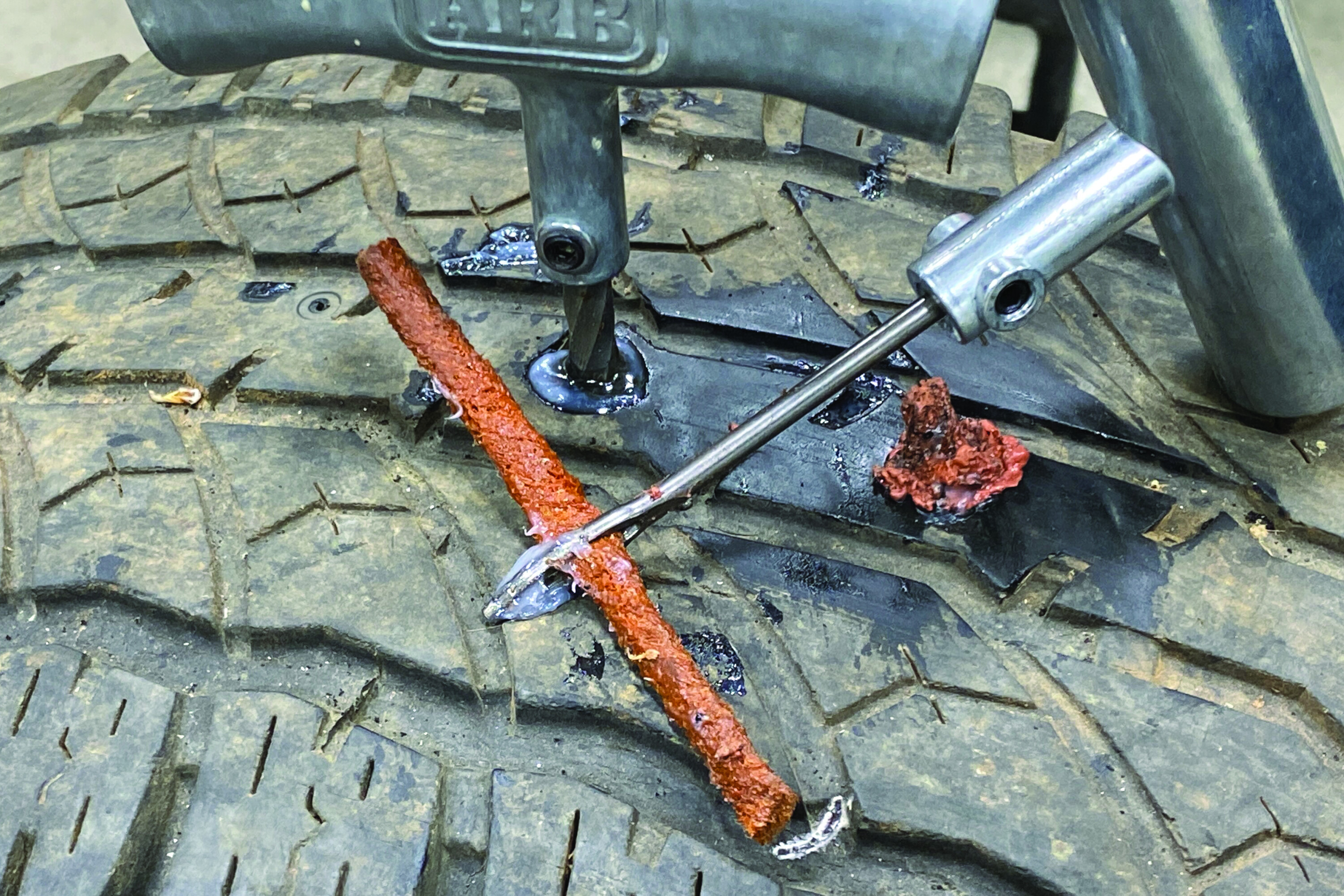
1
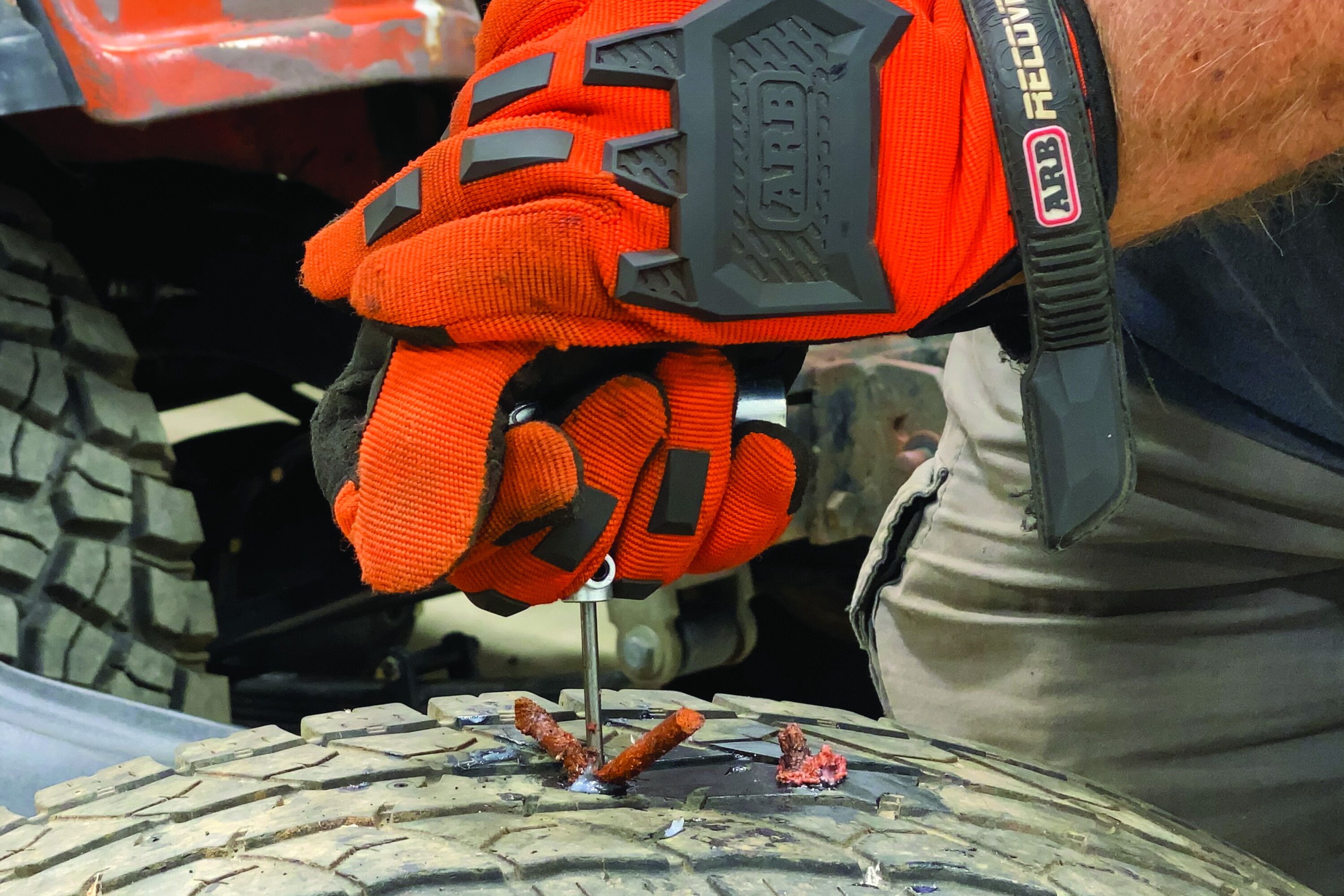
1
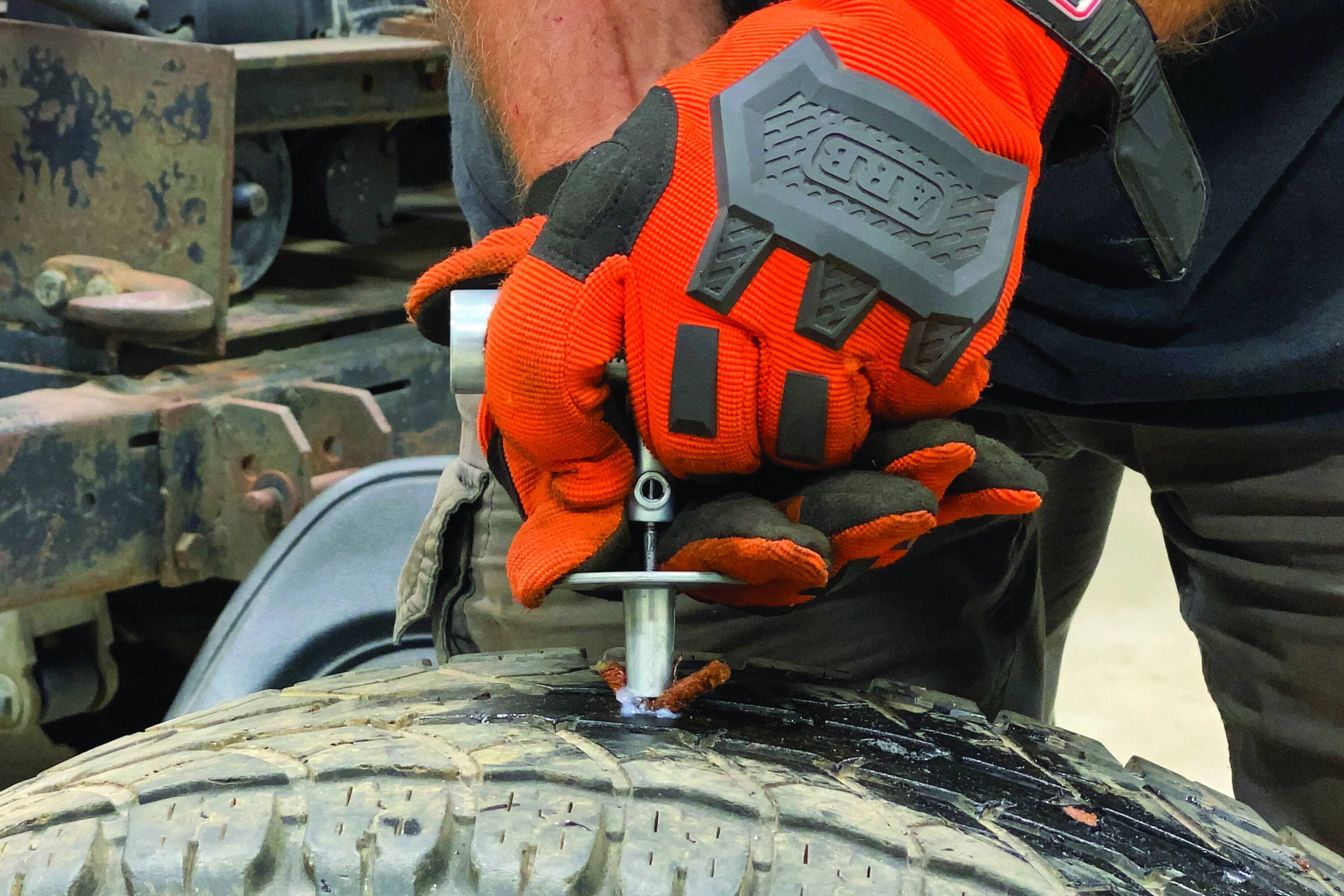
1
TIP: After any tyre repair, pour water over it to check for leaks (bubbling).
1
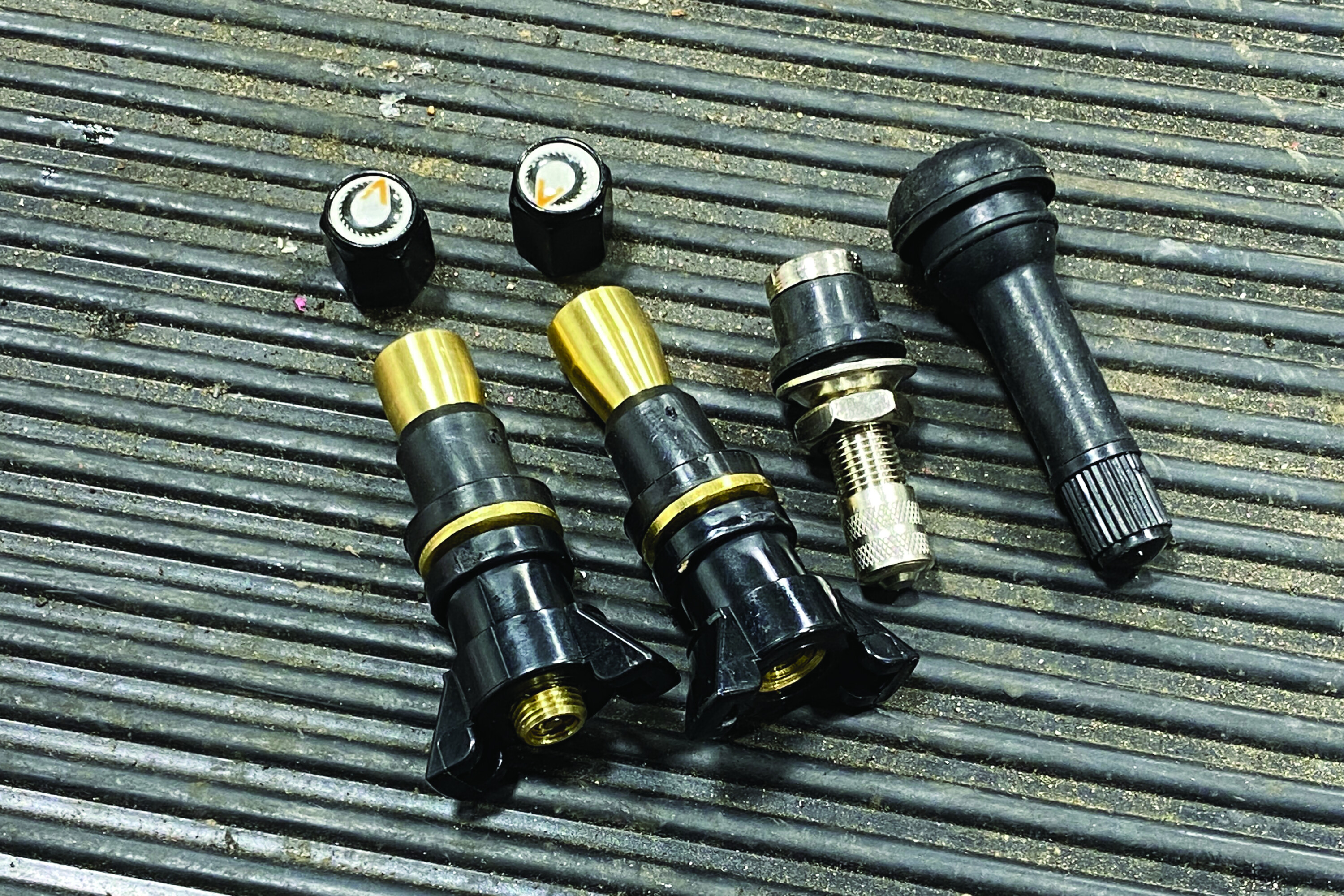
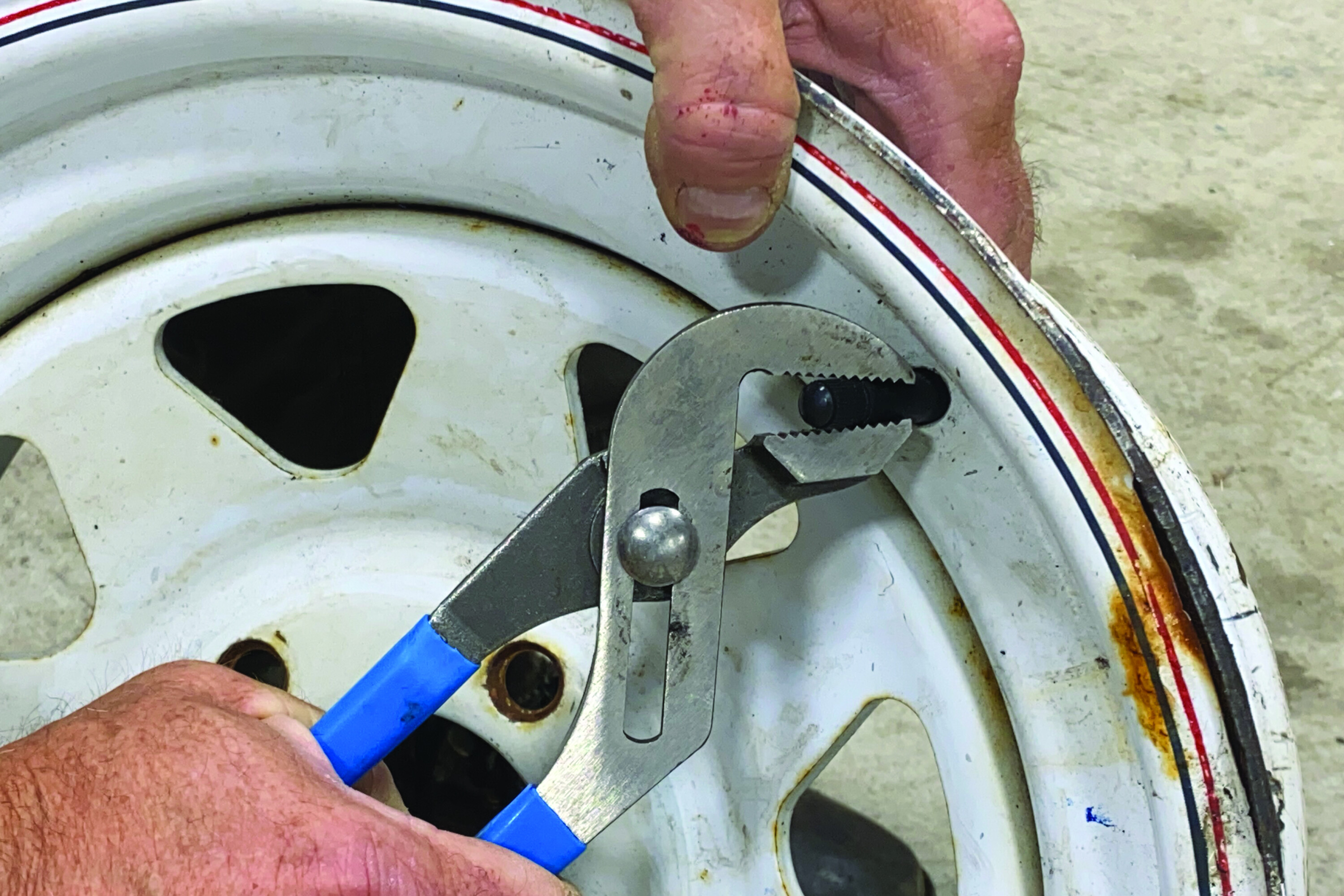
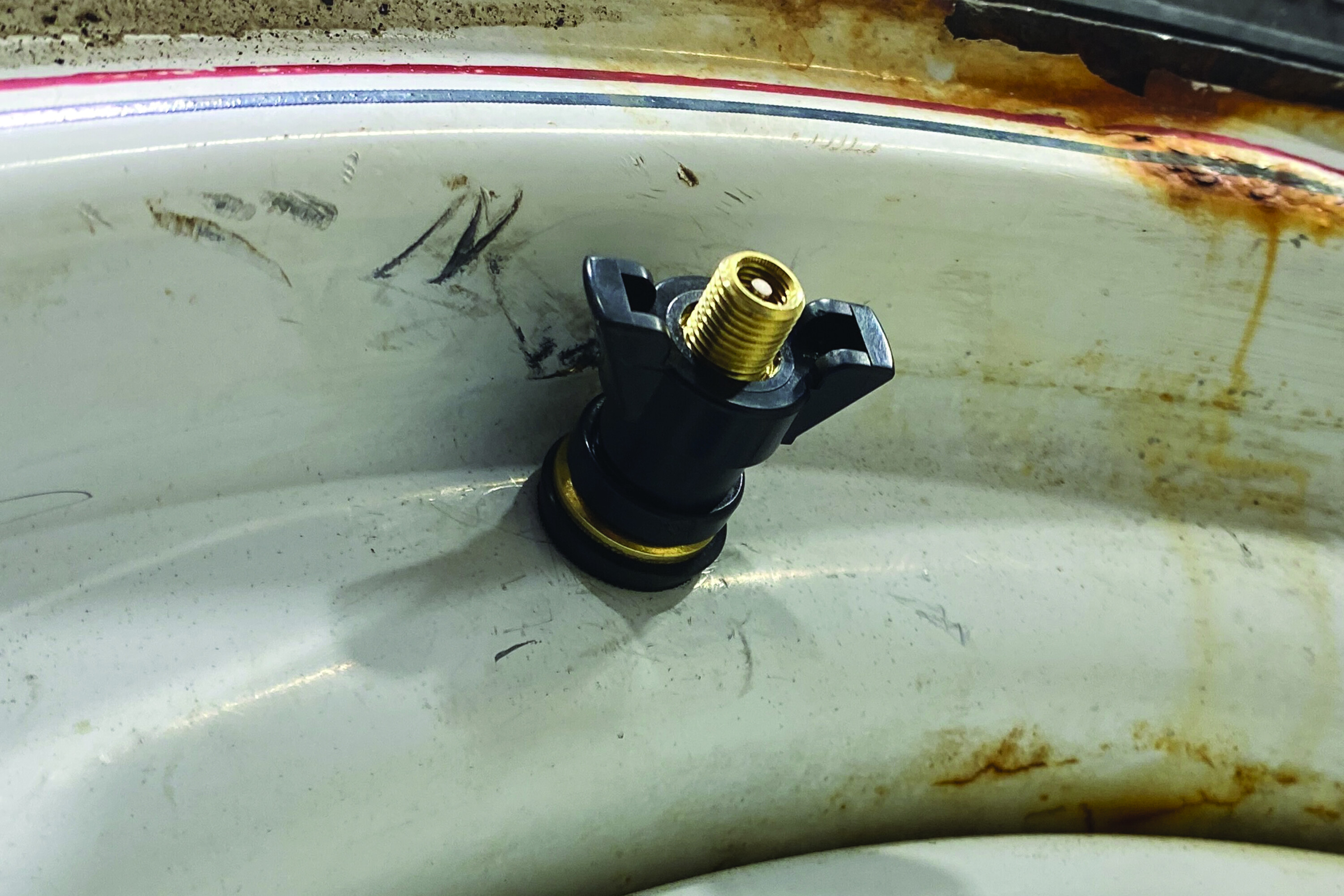
Valve Stem Woes
1
1
1
The R & R
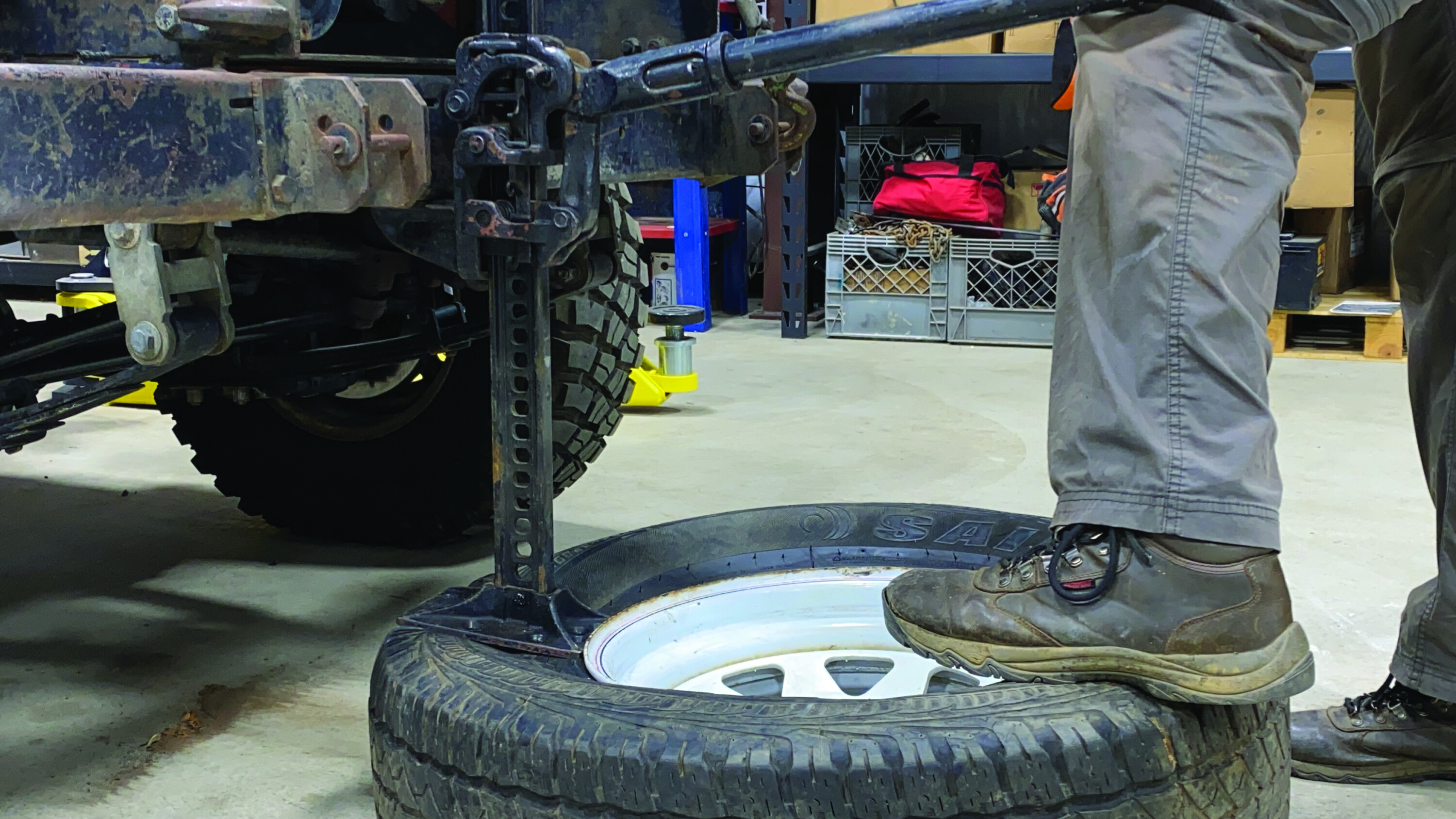
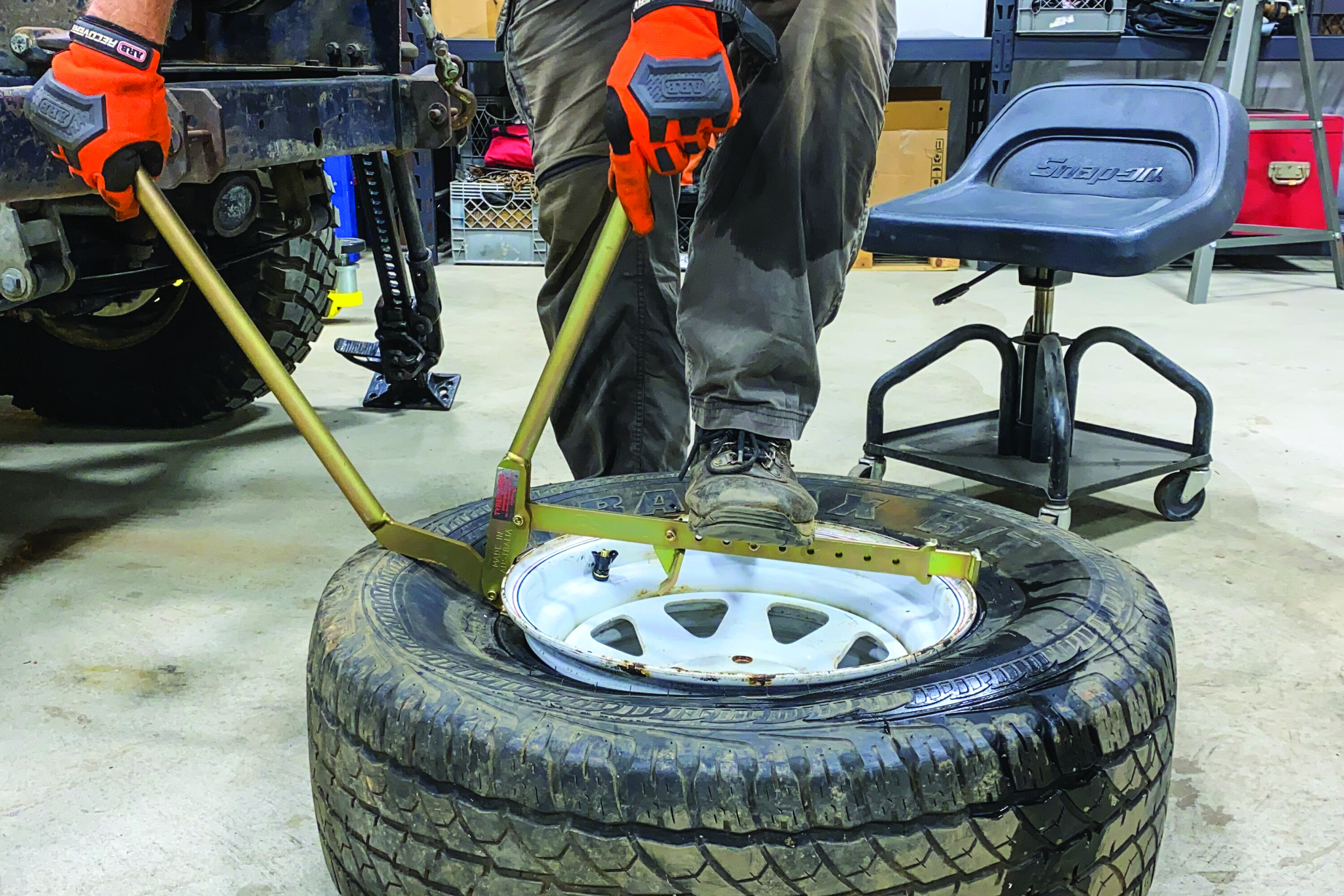
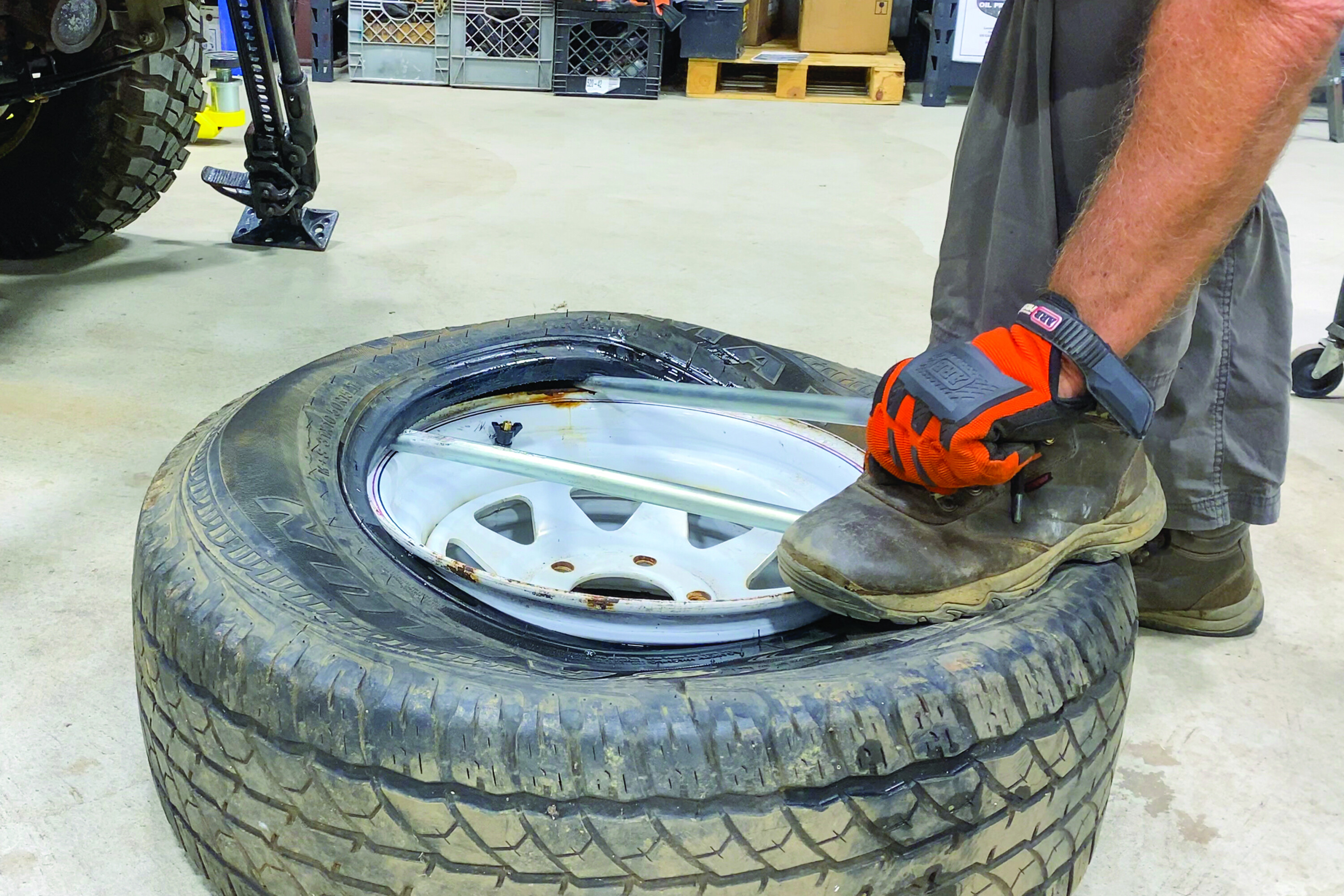
That broken stem or a puncture that requires more than plugs to fix will necessitate dismounting the tyre from the rim.
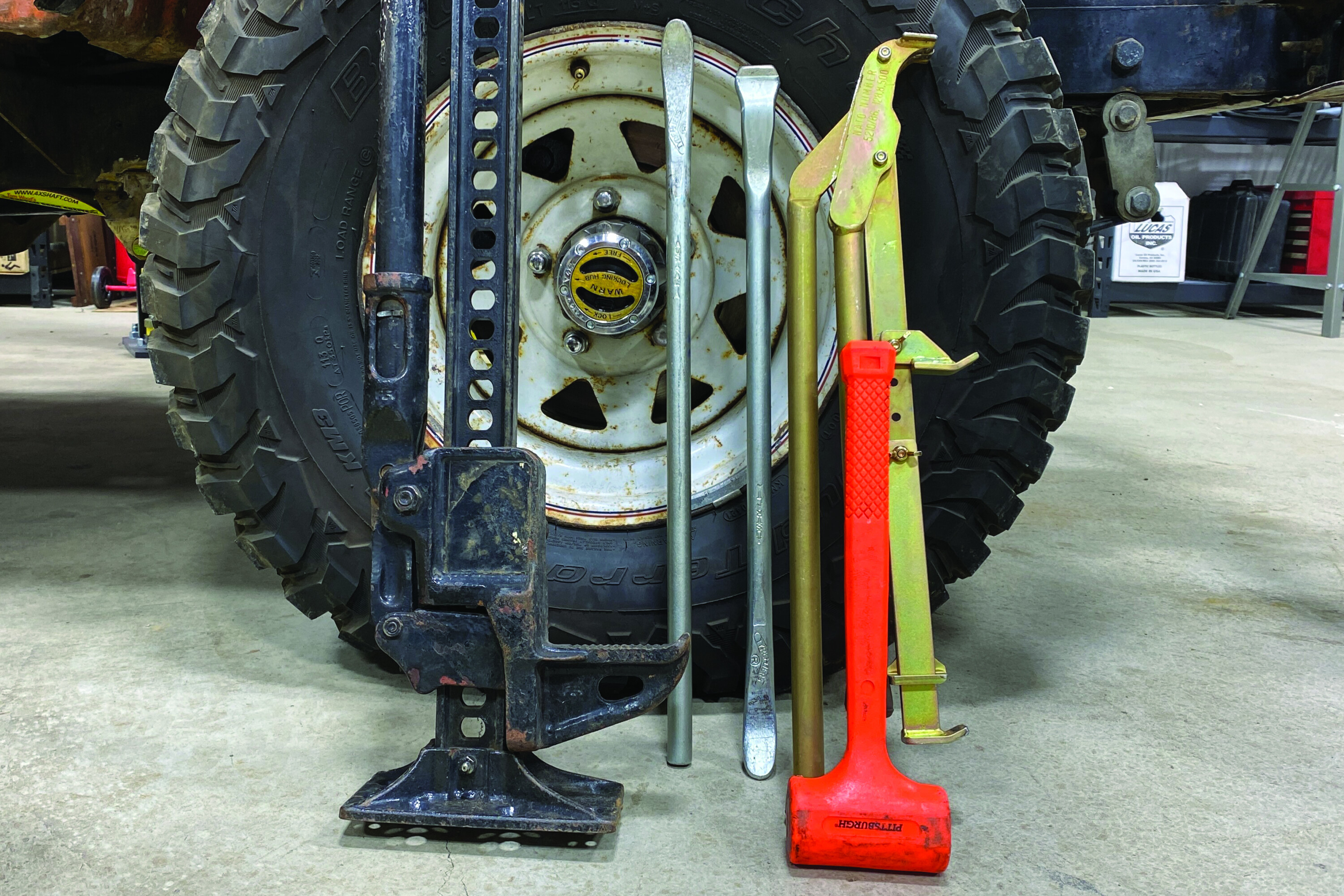
Tools needed are a set of Tyrepliers or a Hi-Lift jack, and tyre irons, also called tyre spoons. You can get by with just the spoons and a Hi-Lift jack, but Tyrepliers makes the job much easier. Before you start, be sure the tyre is fully deflated and put a chalk mark on the tyre where the valve stem is.
Matching these marks when remounting will help to keep it semi-balanced. Also, have a squirt bottle of water or Campsuds on-hand to keep tyre/bead contact surfaces lubricated.
1
1
1
TIP: Lubricating the tyre/bead interface with soapy water will make dismounting and mounting much easier.
1
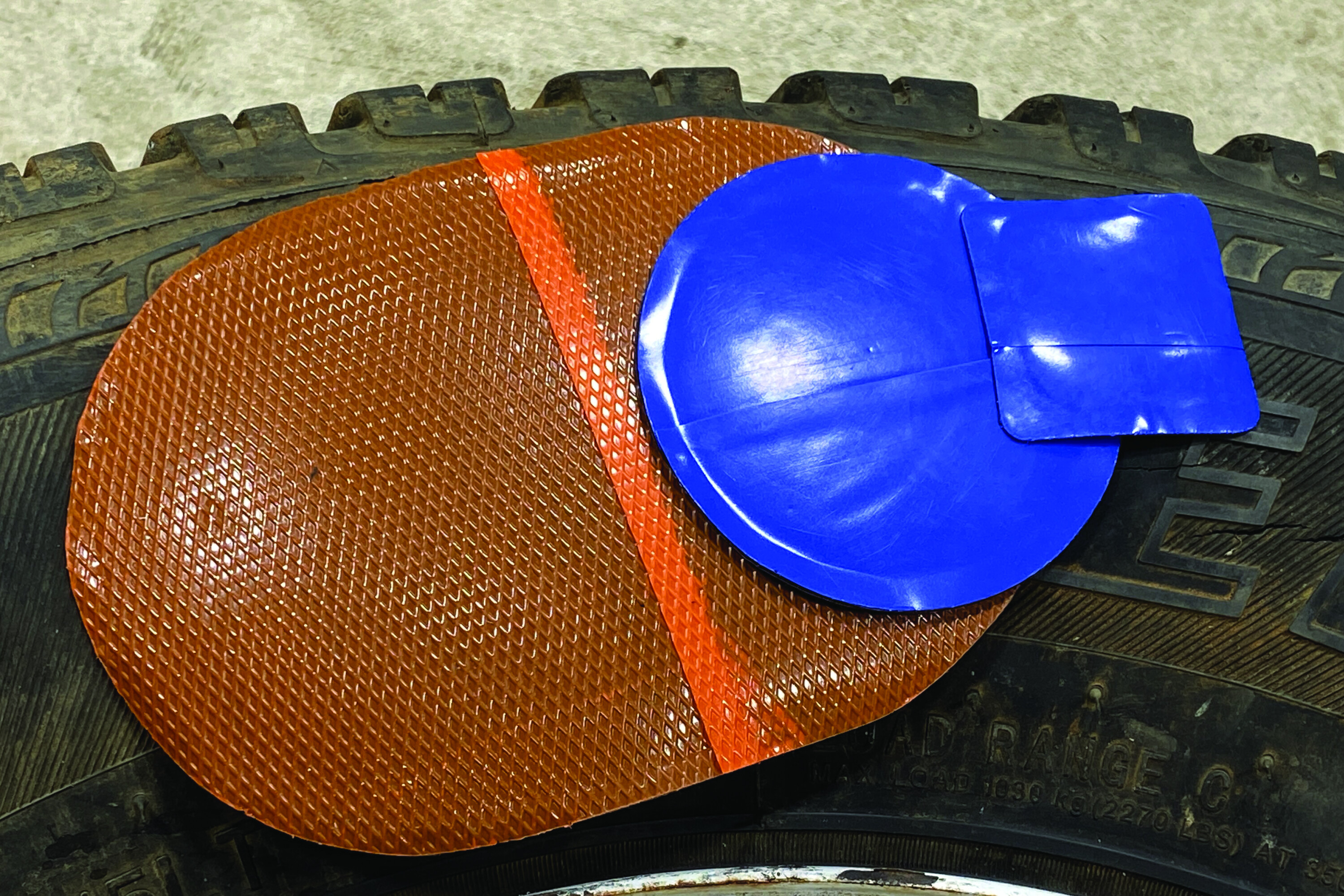
We Don’t Need No Stinking Patches?
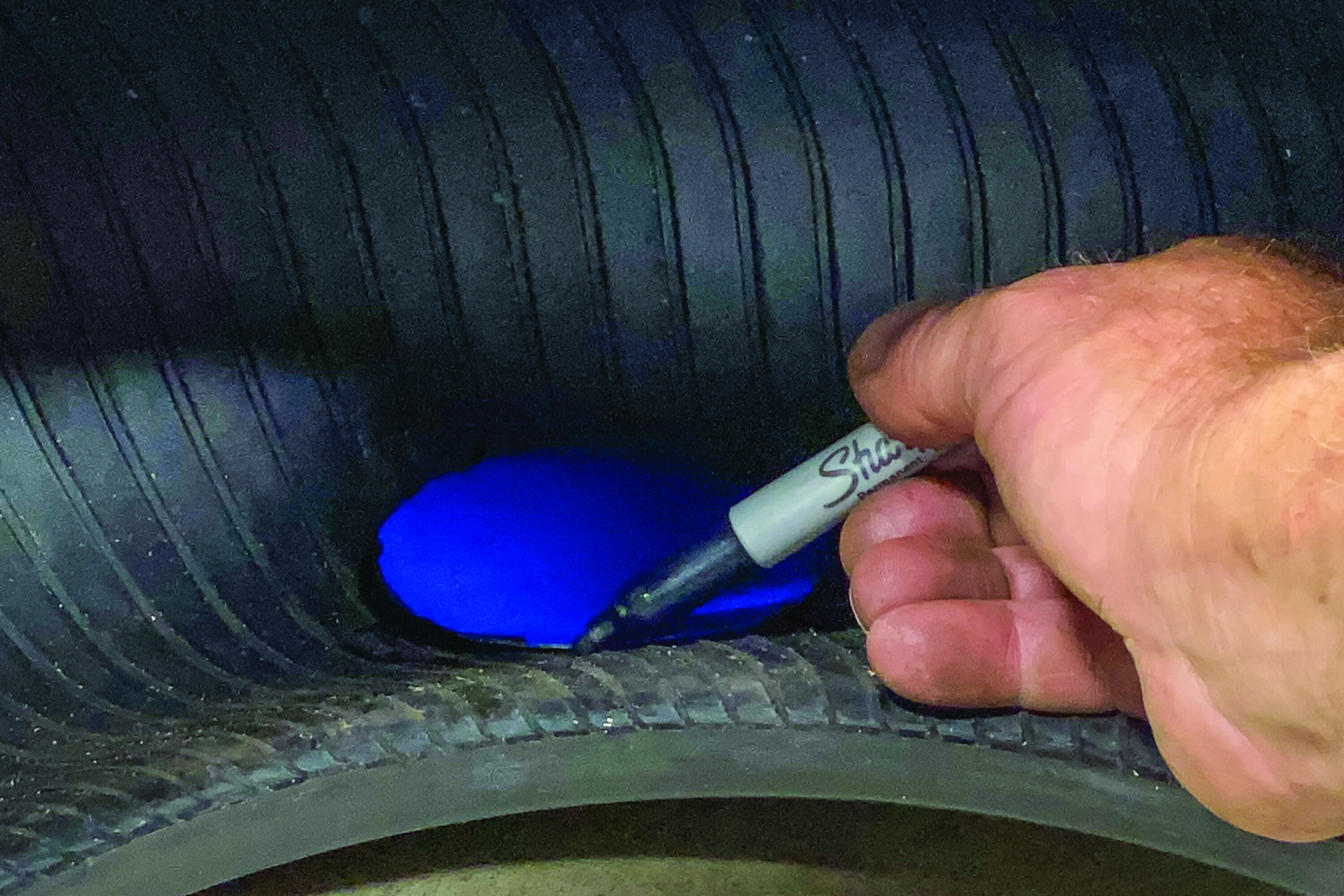
1
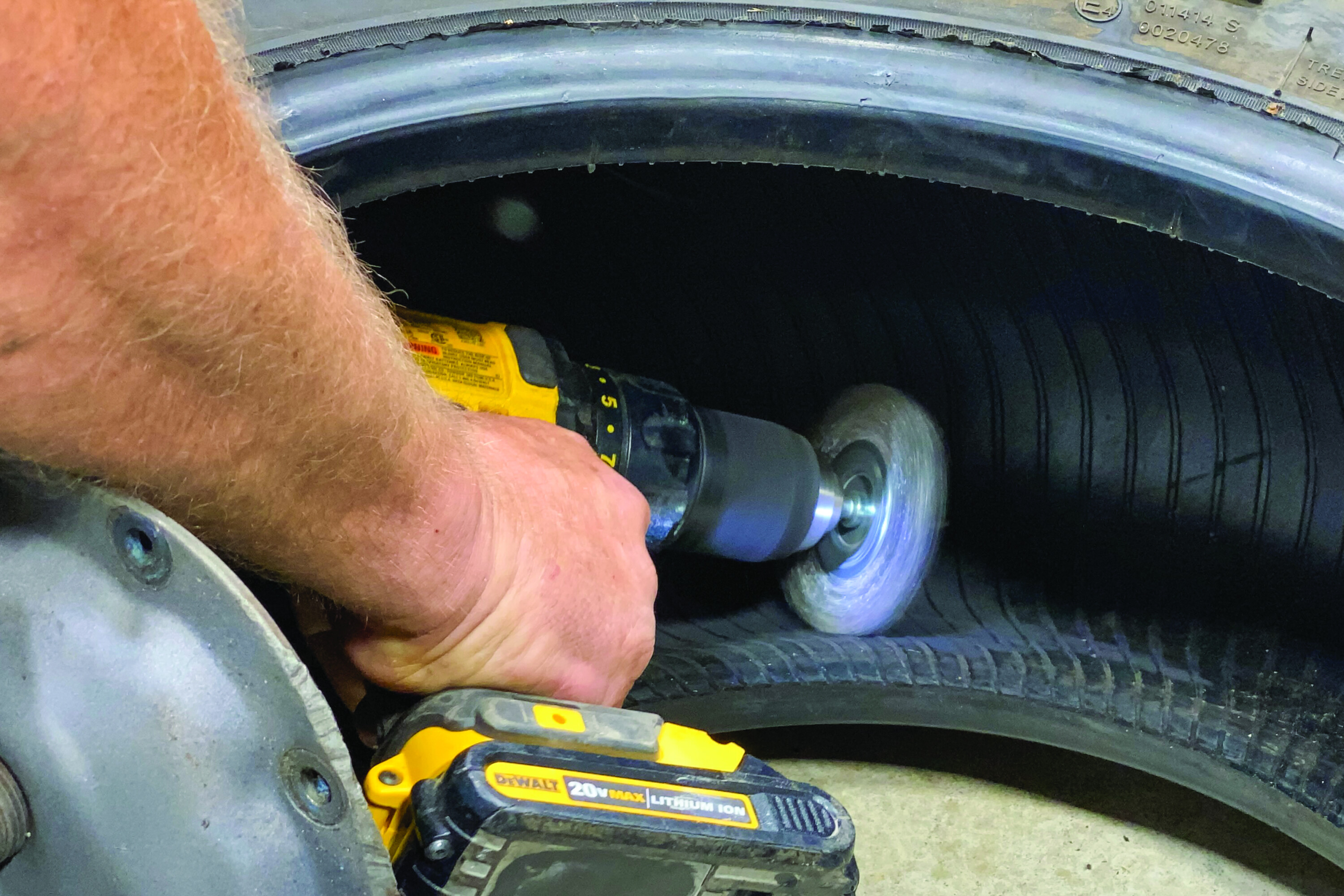
1
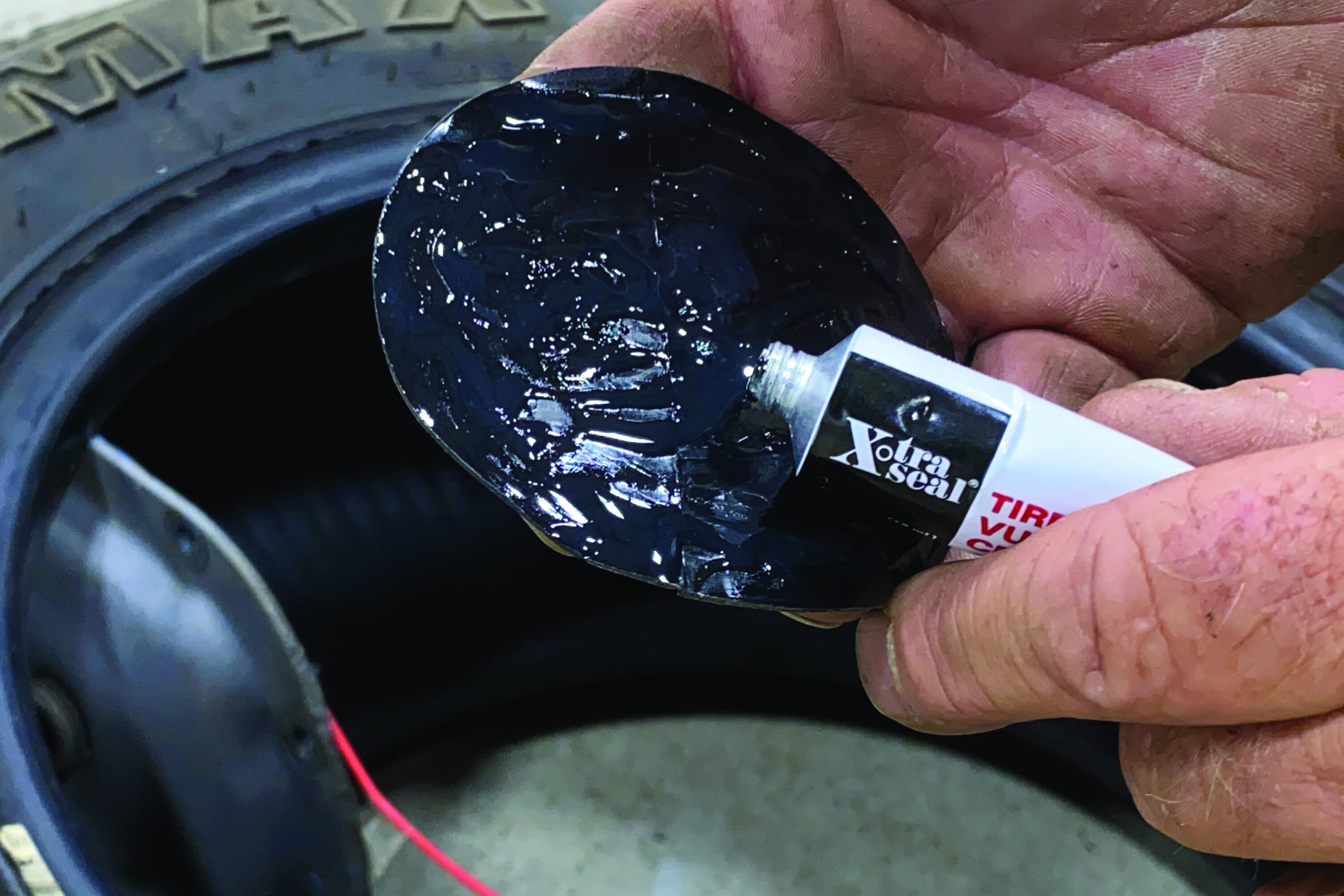
1
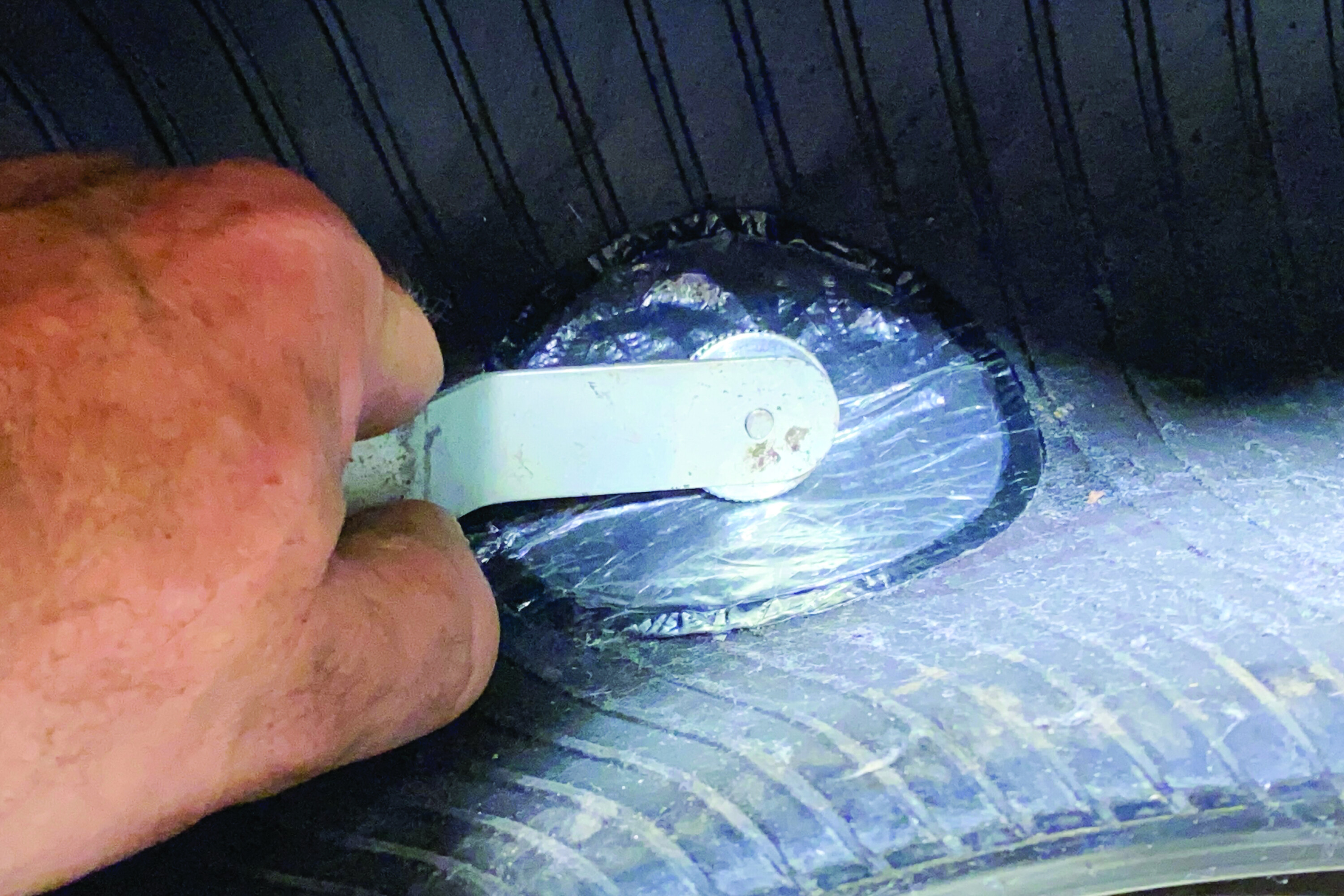
1
TIP: Be sure to fully remove membrane from patch area prior to applying a patch.
1
Life Support
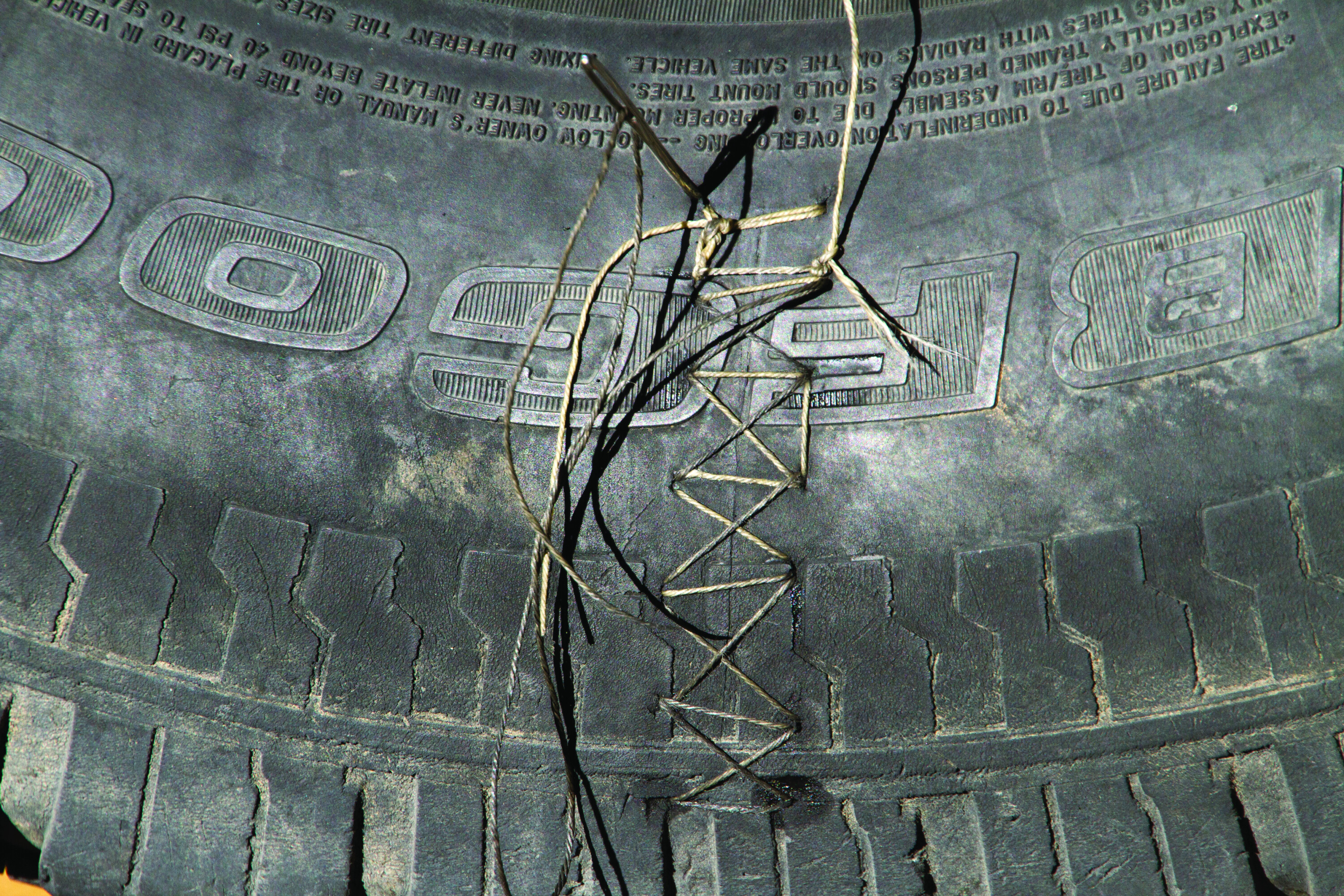
If welding with batteries is the Holy Grail of backcountry repairs, stitching a torn sidewall is a close second.
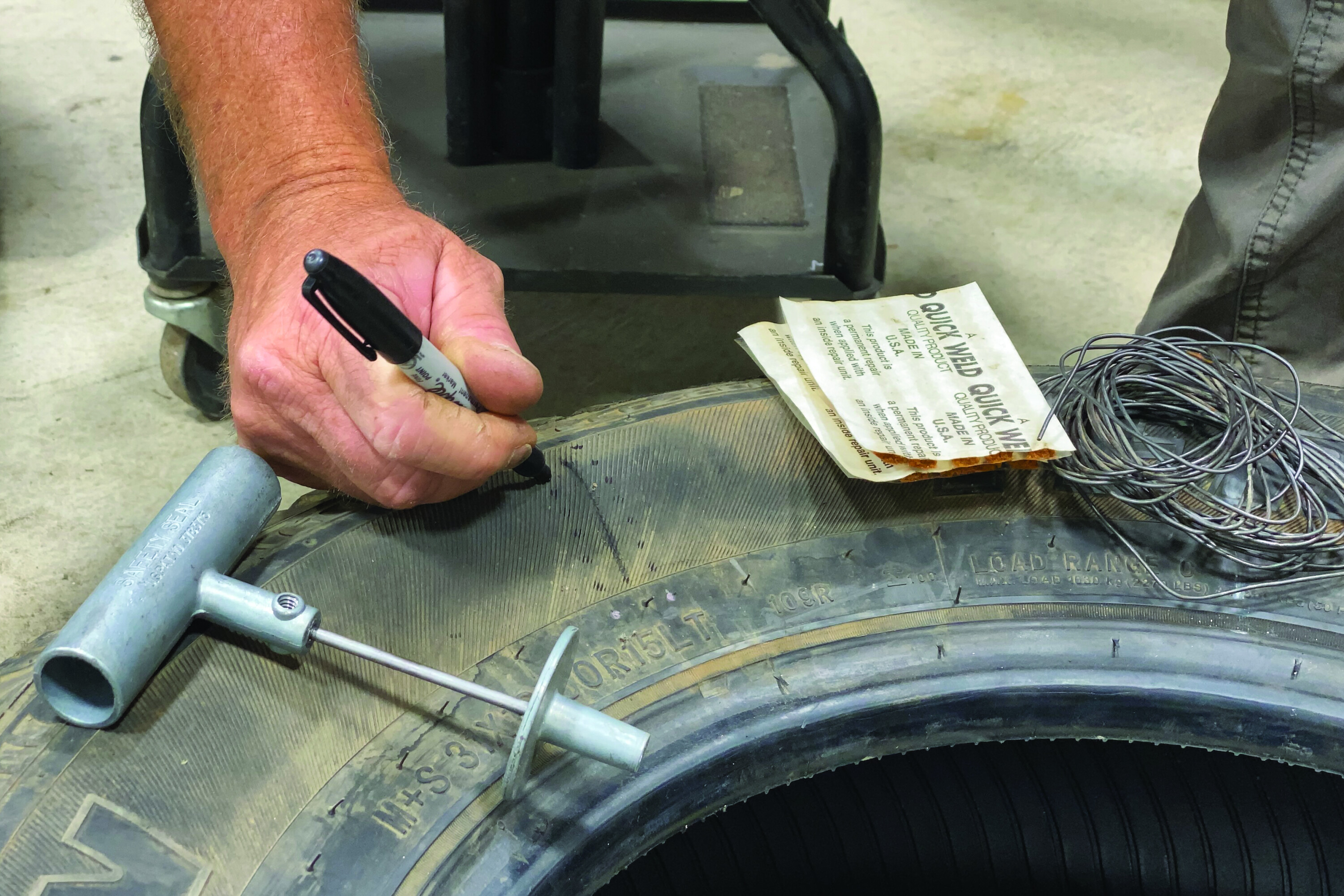
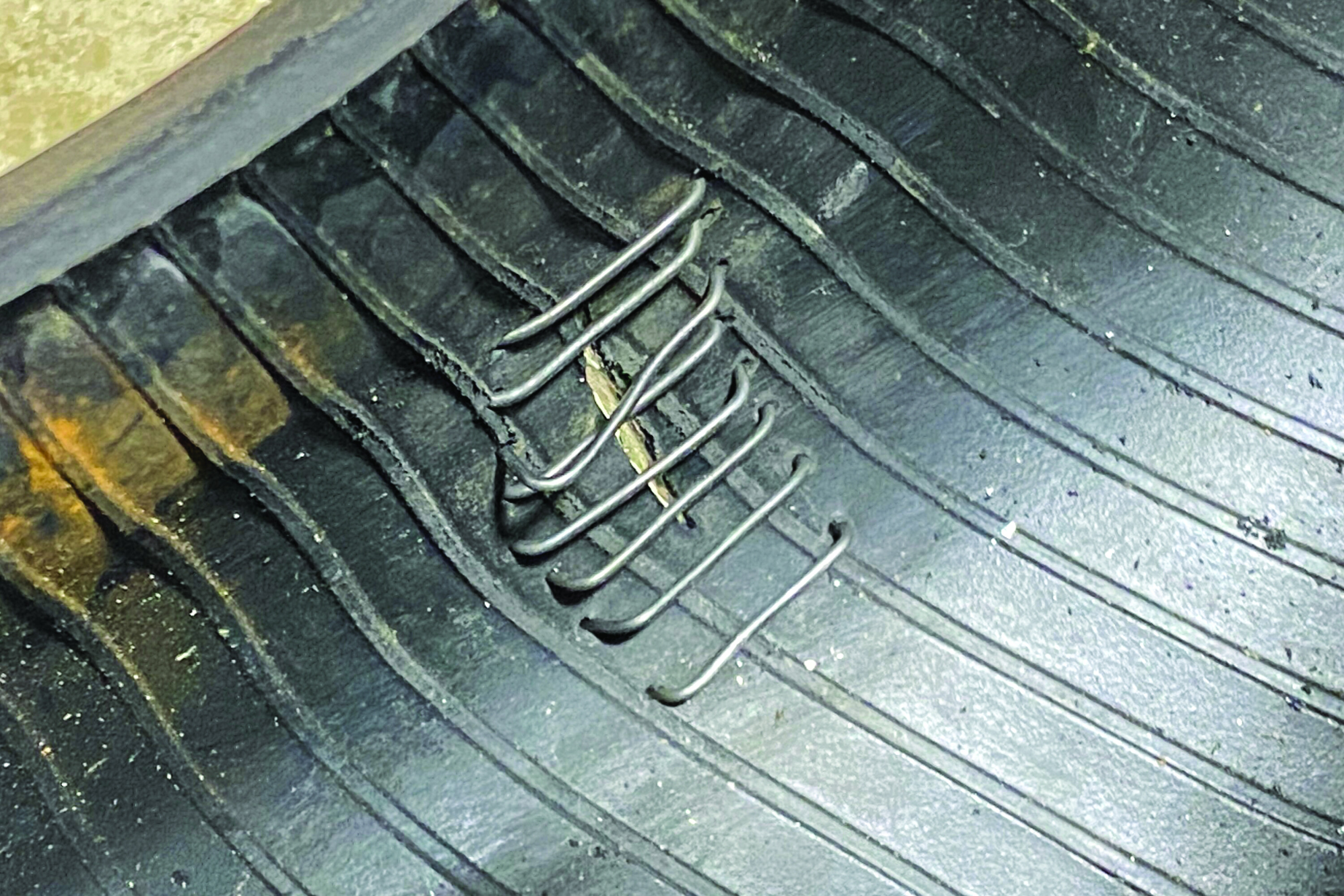
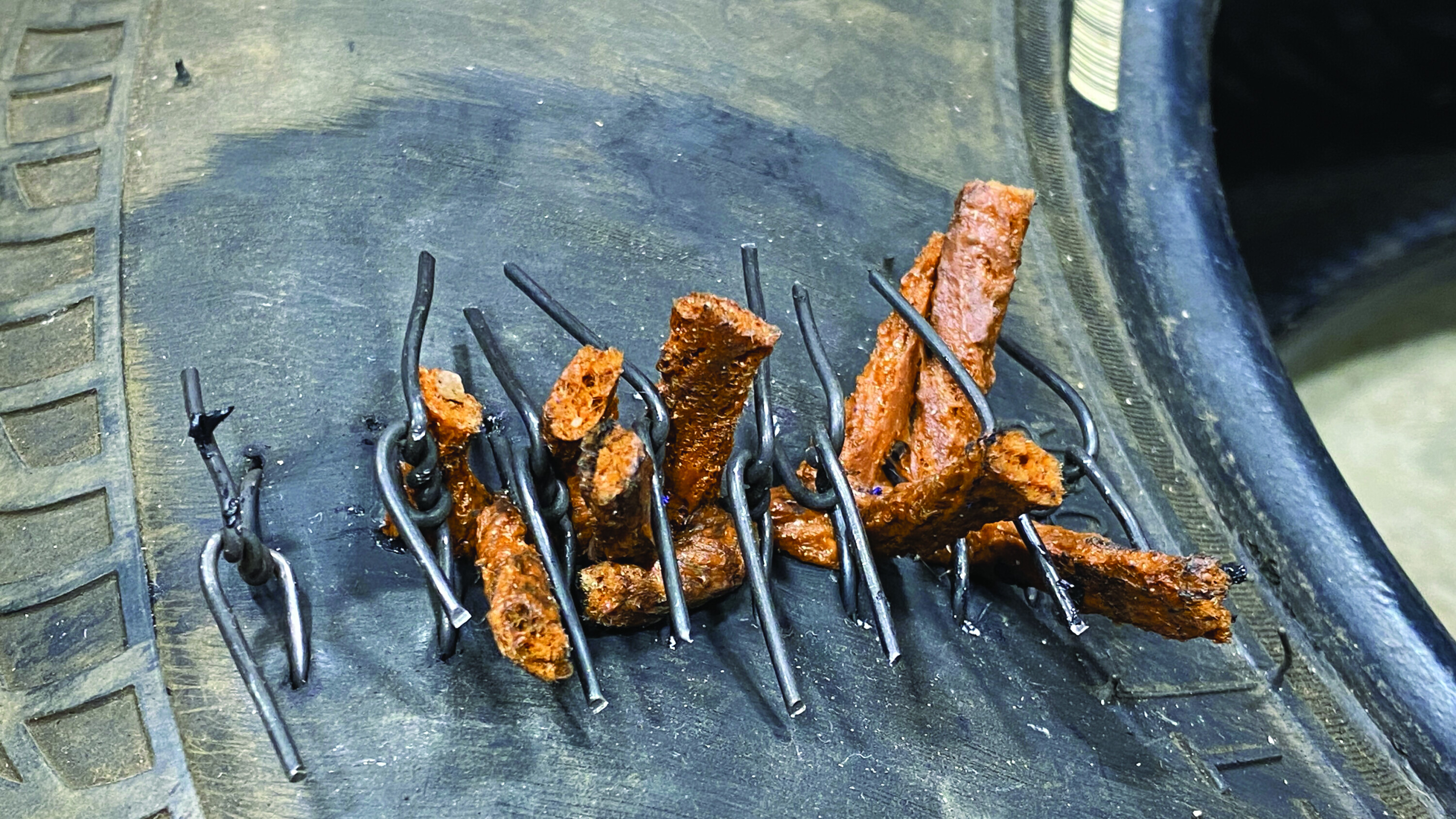
The Extreme Outback and Power Tank kits come with thread and stainless-steel wire respectively, but surgery can be accomplished with bailing wire, plugs and silicon. For this exercise we cut a 75mm slice in the sidewall, and the repair process is akin to suturing a laceration in the skin… but with a little less finesse.
1
3
2
1
Whichever method you use (wire or thread) sidewall flex can be detrimental to this repair.
Reinflated to the point that flex under a load is limited, but not the point that the repair area bulges too much (pressure will depend on tyre, wheel diameter, vehicle weight, etc.).
So it holds air under a load (it will probably have slow leaks), great, now swap it out for your spare. This Frankenstein fix will not be pretty, but at least you will have a usable spare if things go pear-shaped… again.
If you must use the repaired tyre, avoid rubbing it against rocks, tree branches or anything.
TIP: Shoulder and sidewall repairs are not permitted for vehicles driven on public roads.
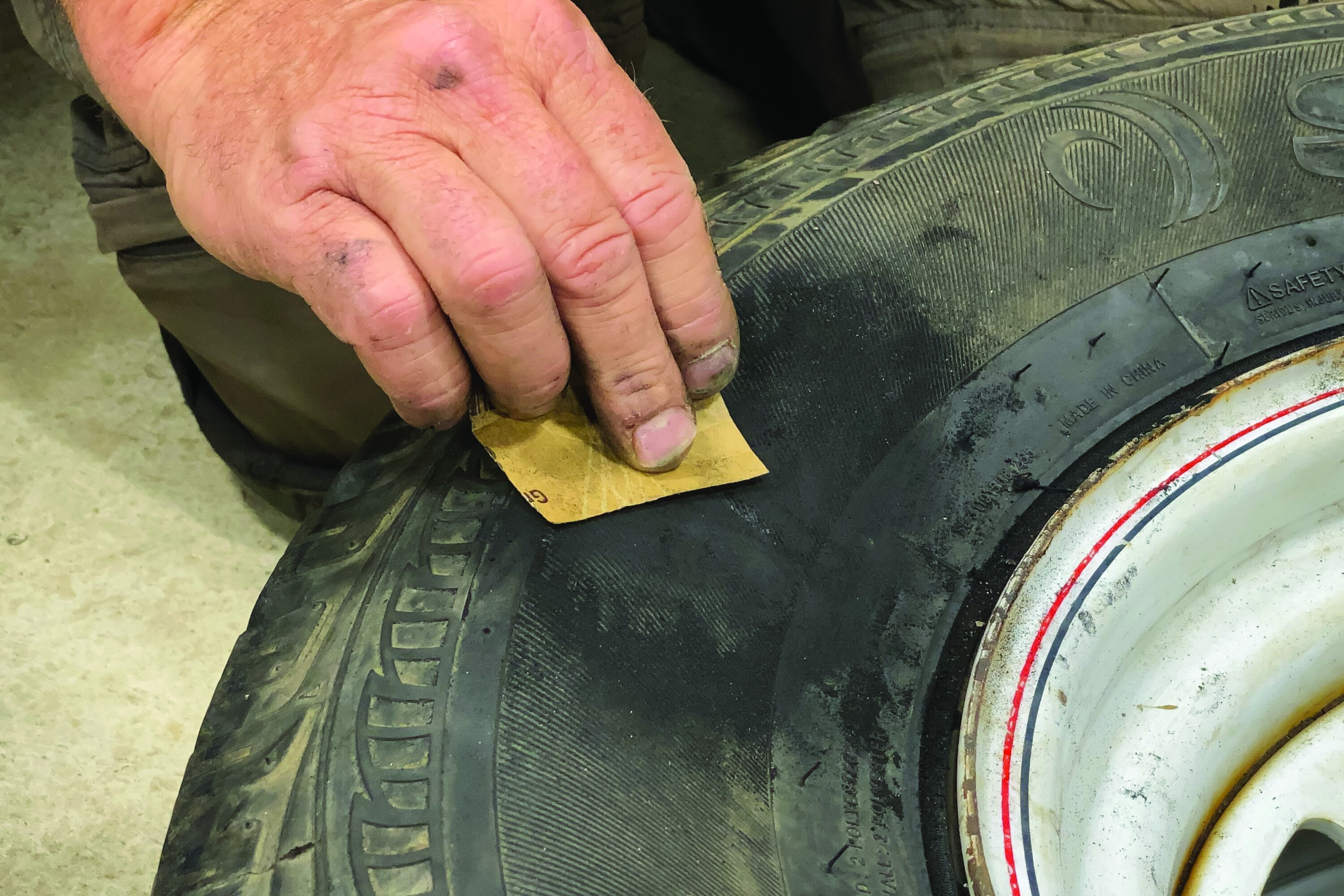
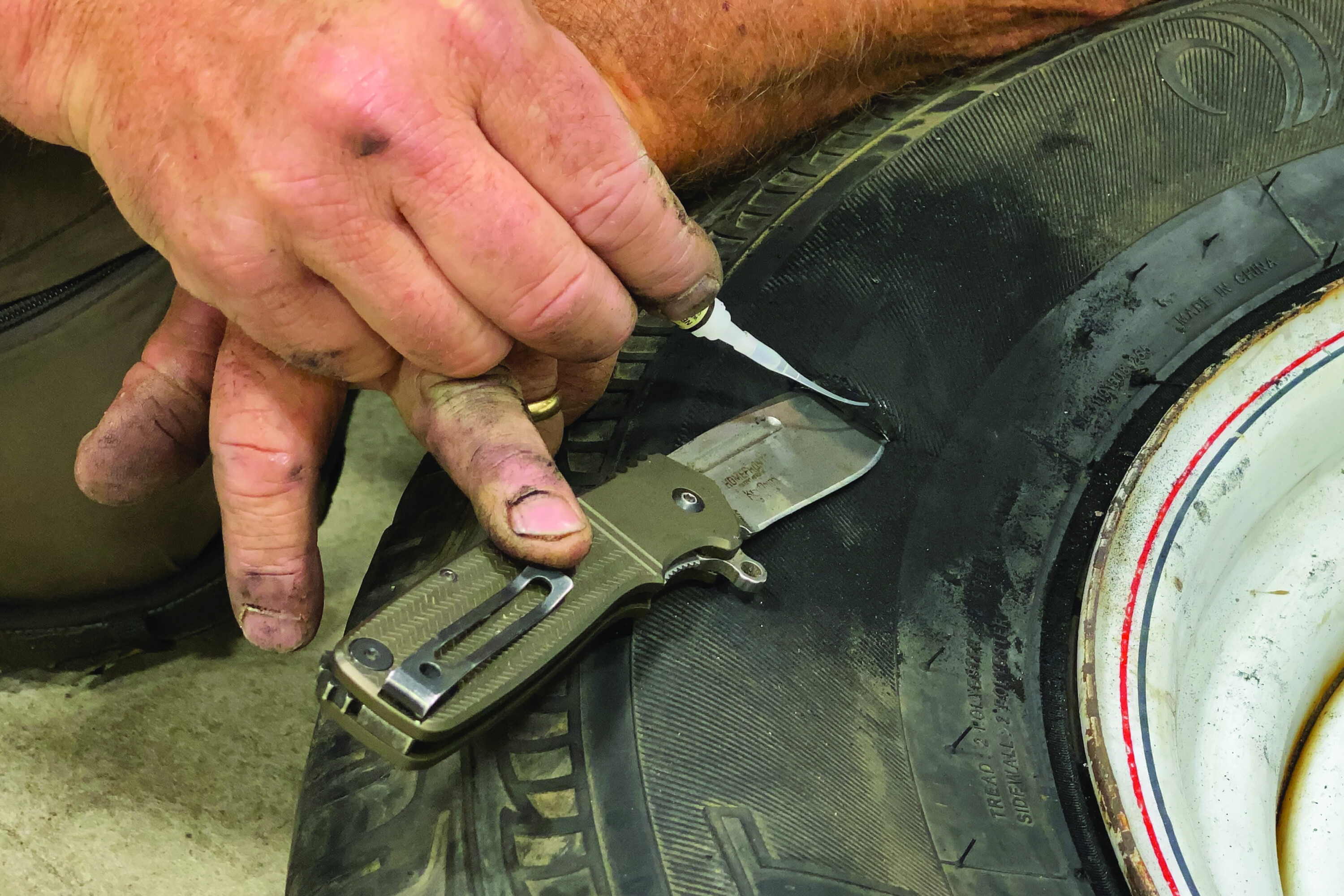
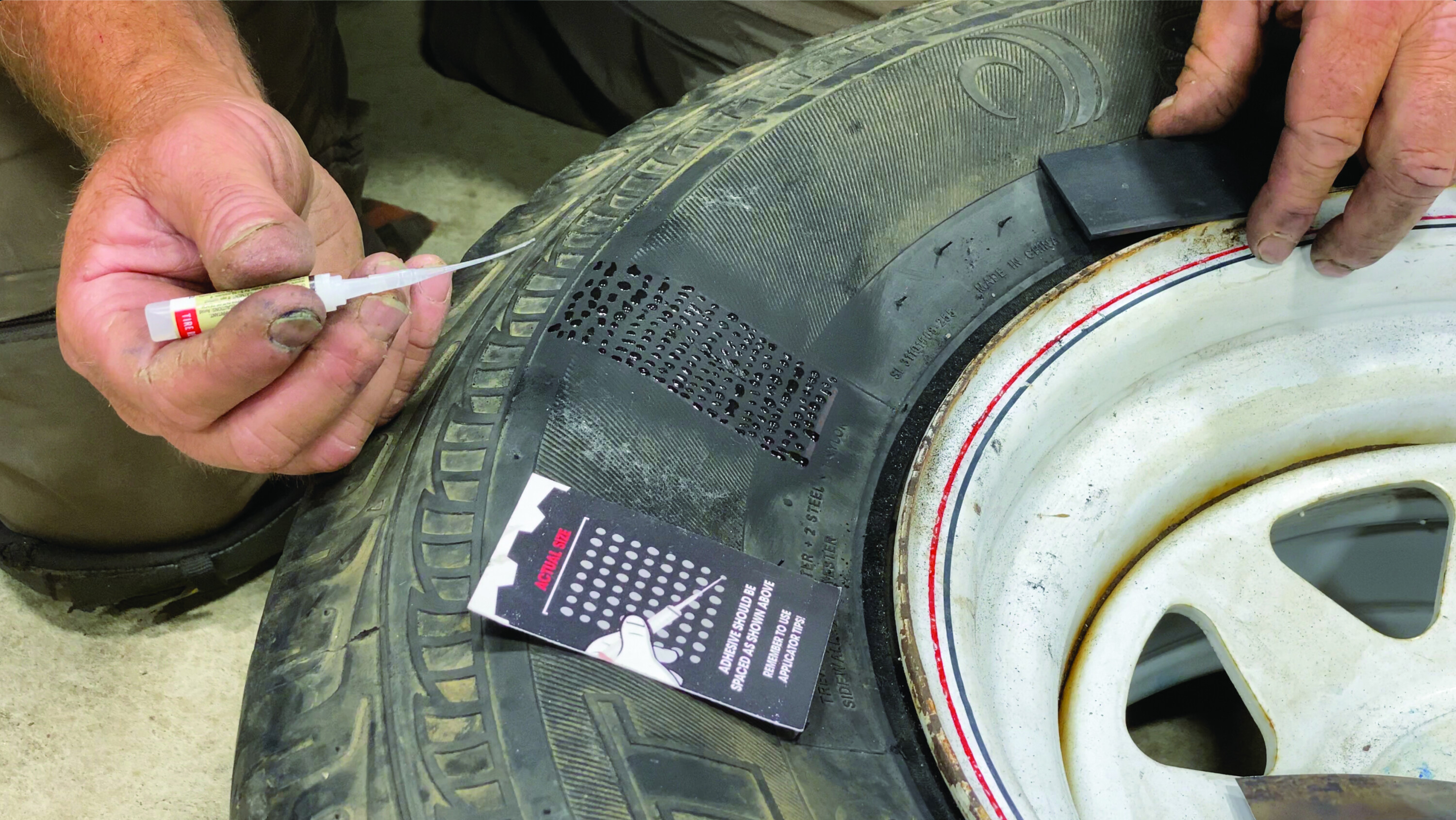
Super Glue?
1
1
1
1
Practice makes perfect
Next time you head bush, make sure you are prepared for the most common of all track fixes.
I suggest getting the gear, grab an old tyre from behind the shed, punch a few holes in it and practice. You may never run into a renegade pushrod in the middle of the desert, but if one bushwhacks one of your tyres, at least you’ll know what to do.
Resources
Extreme Outback Products: www.extremeoutbackproducts.com [↗]
Safety Seal: www.safetyseal.com [↗]
ARB: www.arb.com.au [↗]
Power Tank: www.powertank.com [↗]
Hi-Lift: www.hi-lift.com [↗]
GlueTread: www.gluetread.com [↗]
The legal disclosure
In the name of safety (and to keep the attorneys happy), all of the repairs shown here are temporary fixes – just enough to get you out of strife. Once you’re out of the bush and back in civilisation, have a qualified tyre shop determine if your repaired tyre is toast or roadworthy. Failed brakes, steering and tyres can kill a fella… don’t take chances.
It was a chance discovery and one I was surprised by; while Porcupine Gorge is well-known to many four-wheeling adventurers, its Pyramid camping area is usually very busy, so for those after some solitude in this part of Far North Queensland, setting up camp at Blackbraes National Park, just 120km north of Hughenden, can be a much better option.
Busy Porcupine
The vast Porcupine Gorge itself is only 74km north of Hughenden and it runs through dry savannah country for its 27km length.
Formed over 200 million years ago it has been eroded by the waters of Porcupine Creek, an important tributary of Queensland’s longest river, the Flinders. The creek is an important life-giver, providing a permanent water source for wildlife.
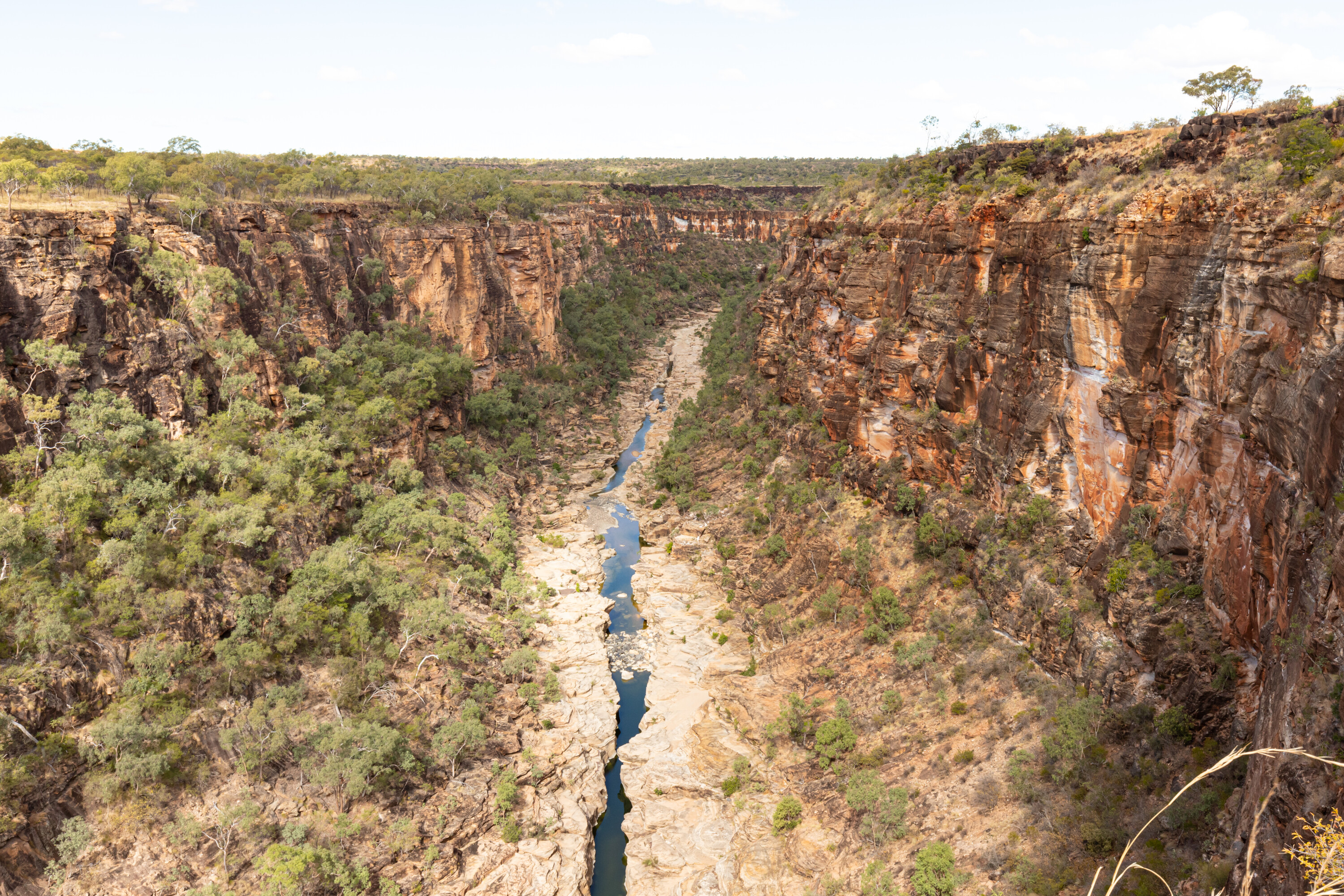
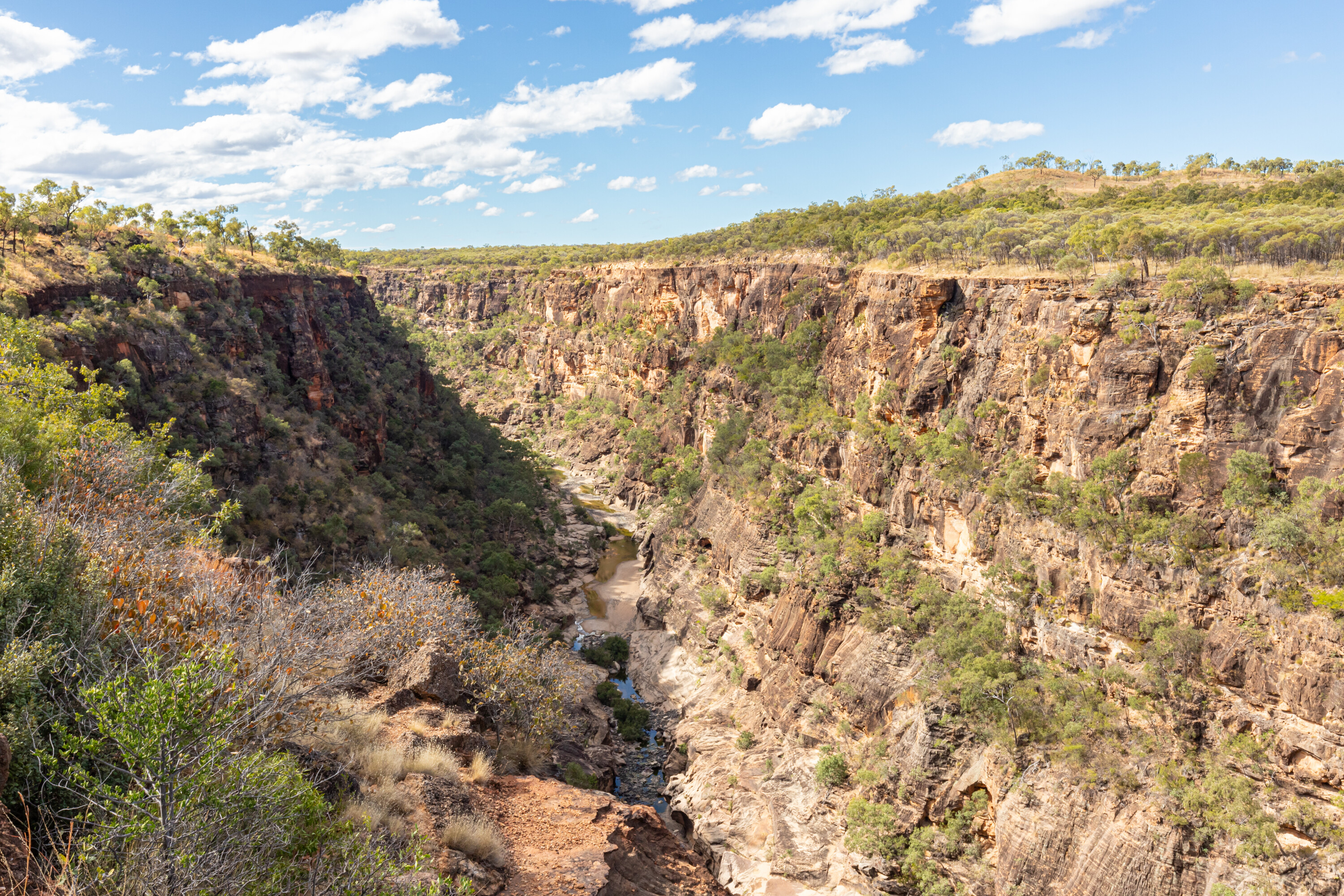
The Porcupine Gorge lookout offers impressive views of the sandstone and basalt cliffs both upstream and downstream, as well as the creek 120m below. You can easily see the different layers of sedimentary rocks in the gorge walls, where geologists say two separate river systems deposited the dull-brown Blantyre Sandstone about 170 million years ago, and the red-brown Gilbert River Formation about 145 to 120 million years ago.
1
The white Wallumbilla Formation was deposited from a shallow sea about 115 to 110 million years ago upon which the current lookout sits.
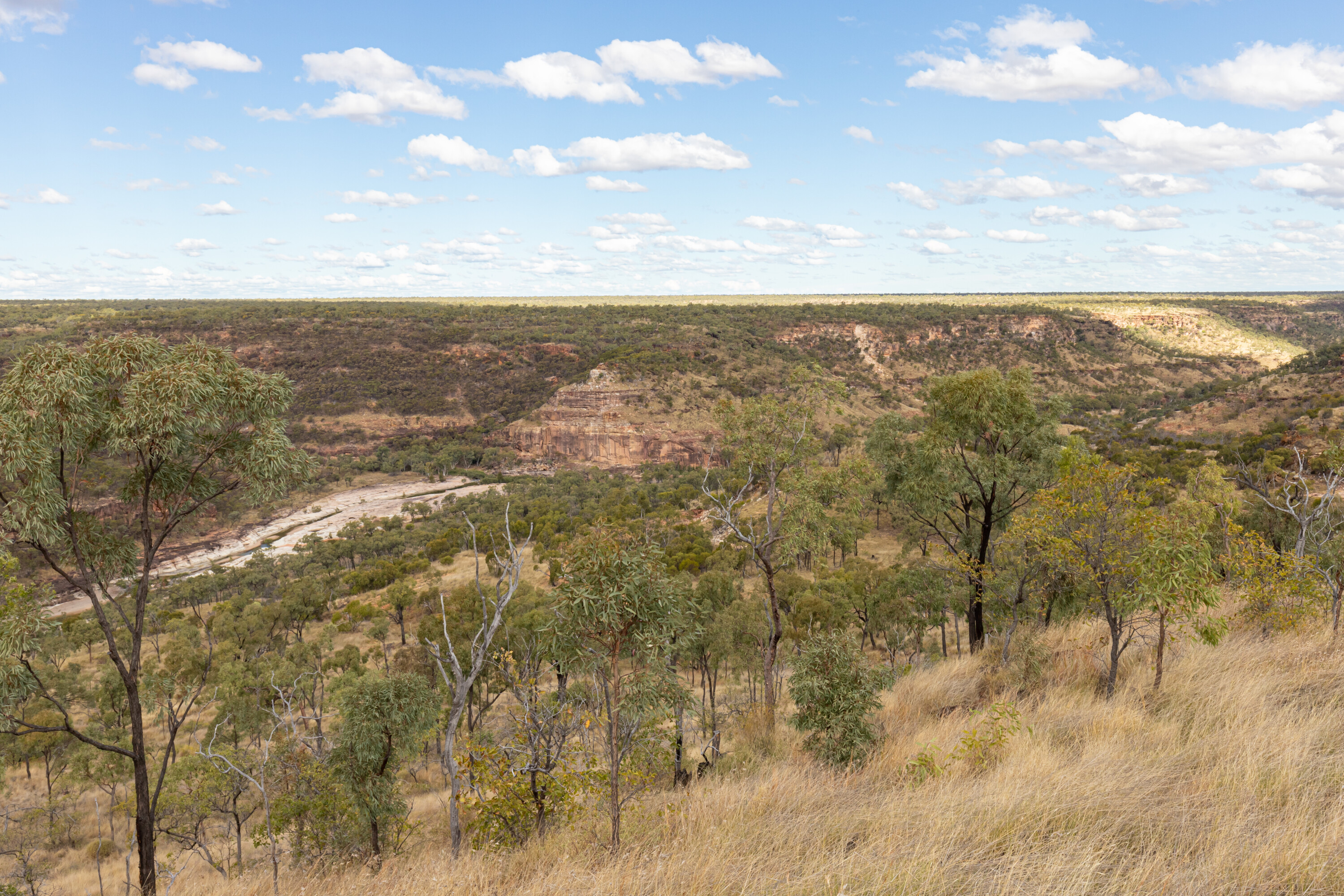
The Pyramid camping area is situated 11km north of the lookout via the Gregory Development Road. There are several dispersed campsites to choose from and the camping area is also the starting point for the 2.4km return Pyramid walking track.
The track is steep with unstable surfaces and a moderate level of fitness is recommended to complete the walk. I’ll use the excuse that it was too late in the day for me to tackle the 1.5 hour walk, but a lack of fitness is probably the real reason.
1
The campground was busy while we were there, with lots of chatter and laughter filling the air, matched by the whistling kite and squawking galahs.
The smell of smoke wafted through my camp throughout the night, and that is one of the disadvantages of my setup; I can’t carry wood, and I do love cooking on a campfire.
I had a rufous bettong visit me while I was cleaning up after dinner; these curious and cheeky marsupials are nocturnal creatures that rest during the day in small caves or amongst grass tussocks.
1
Off to Blackbraes
The next morning, the drive to reach Blackbraes NPk was a quick one.
The previous day the ‘QLD Traffic’ website, and a sign placed in the middle of the road, suggested the northern section of the Kennedy Development Road was closed, but when I phoned the Flinders Discovery Centre in Hughenden, I was assured the road was now open, albeit to take care due to roadworks.
The section of roadworks in question was a detour along the side of the road construction with a speed limit of 60km. That wasn’t a problem for me, nor for any of the caravanners who were travelling this section of the Kennedy Development Road up to Undara Lava Caves.
1
Rather than join them, I turned left at the park sign and crossed the cattle grid before entering Blackbraes.
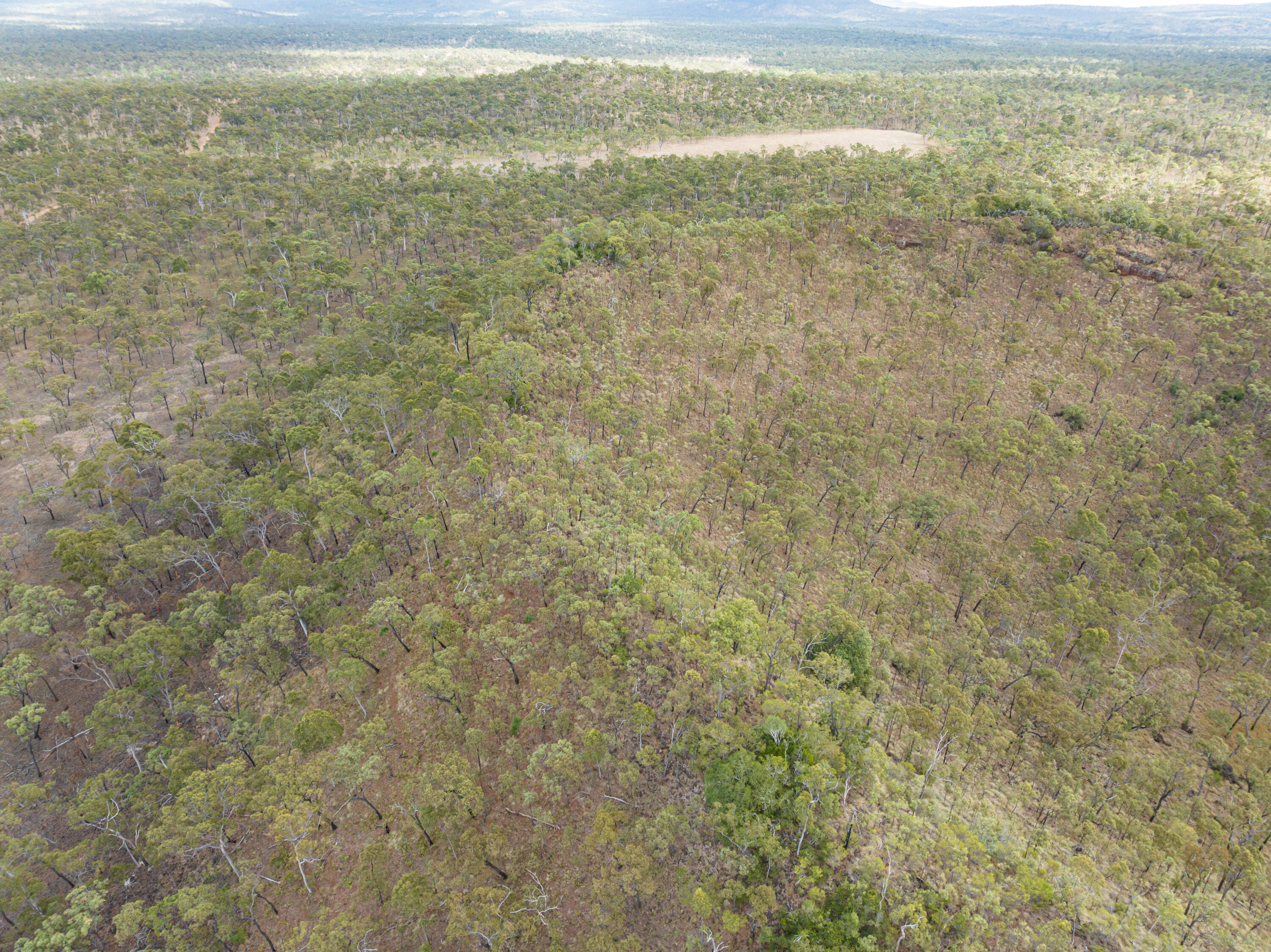
This national park was gazetted in 1998 and it overlaps two bioregions, the Einasleigh Uplands and Gulf Plains, and features undulating hills and ranges that surround basalt outcrops, black soil plains and seasonal swamps. Situated at an elevation of more than 850m, the park enjoys a wetter and cooler climate than the surrounding country.
The first point of interest is a short 1km drive up a track to the Blackbraes Lookout that offers views across the basalt plains that are covered tall Mitchell grass and ironbark woodlands.
1
The lookout faces to the east and it would be a great place to watch the sunrise.
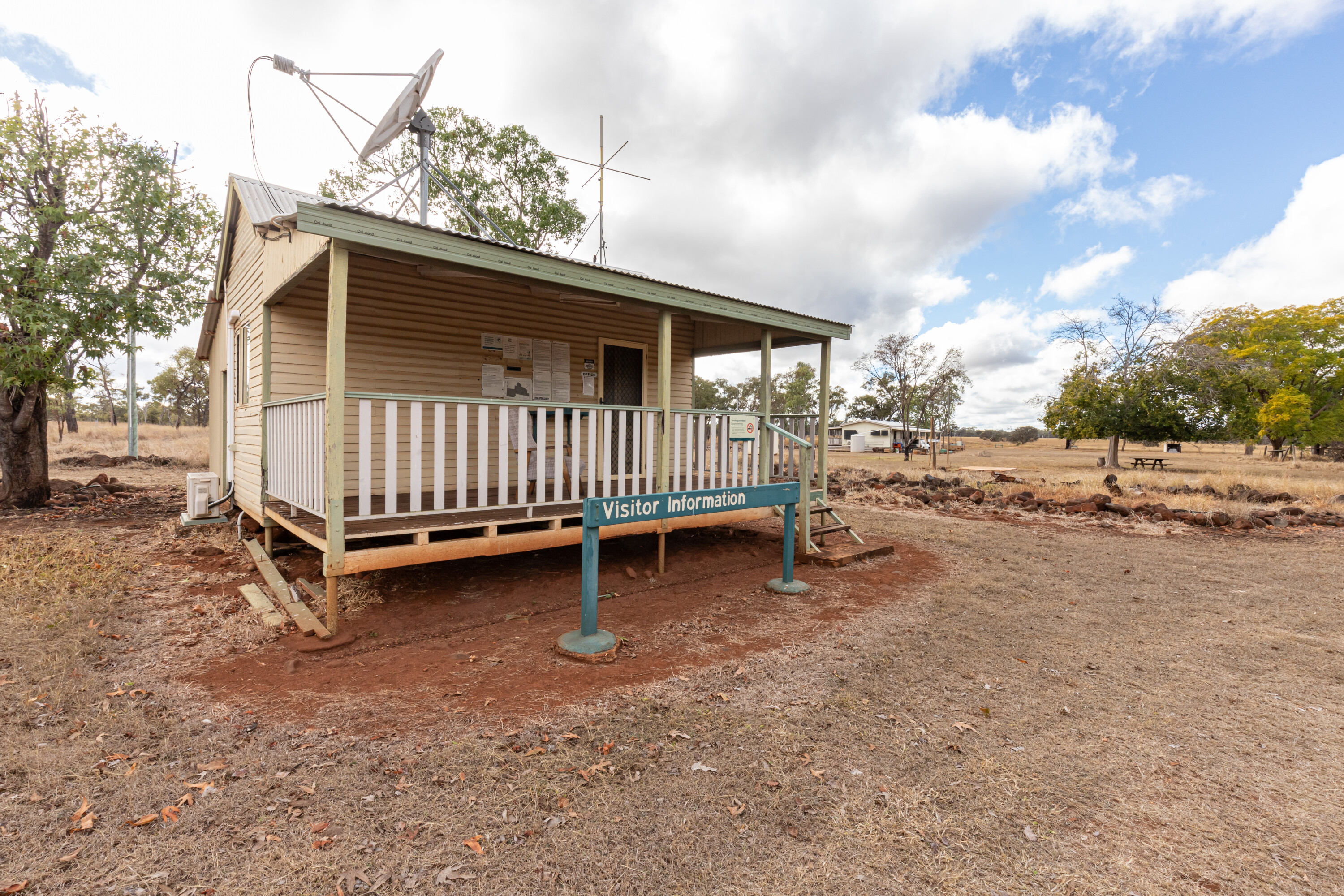
From here it is 4km further on to the rangers station on Dulthara Road, where I had a quick chat with one of the resident rangers.
Having only been on site for a couple of weeks, he couldn’t offer me much of an insight into the park, but it concerned me that he said that he’d like to close a couple of sections within the park down, without offering any reason.
1
Camping serenity
Emu Swamp Campground is a 17.5km drive from the ranger station. The speed limit in the park is 40km/h and there are plenty of speed humps to help regulate your speed.
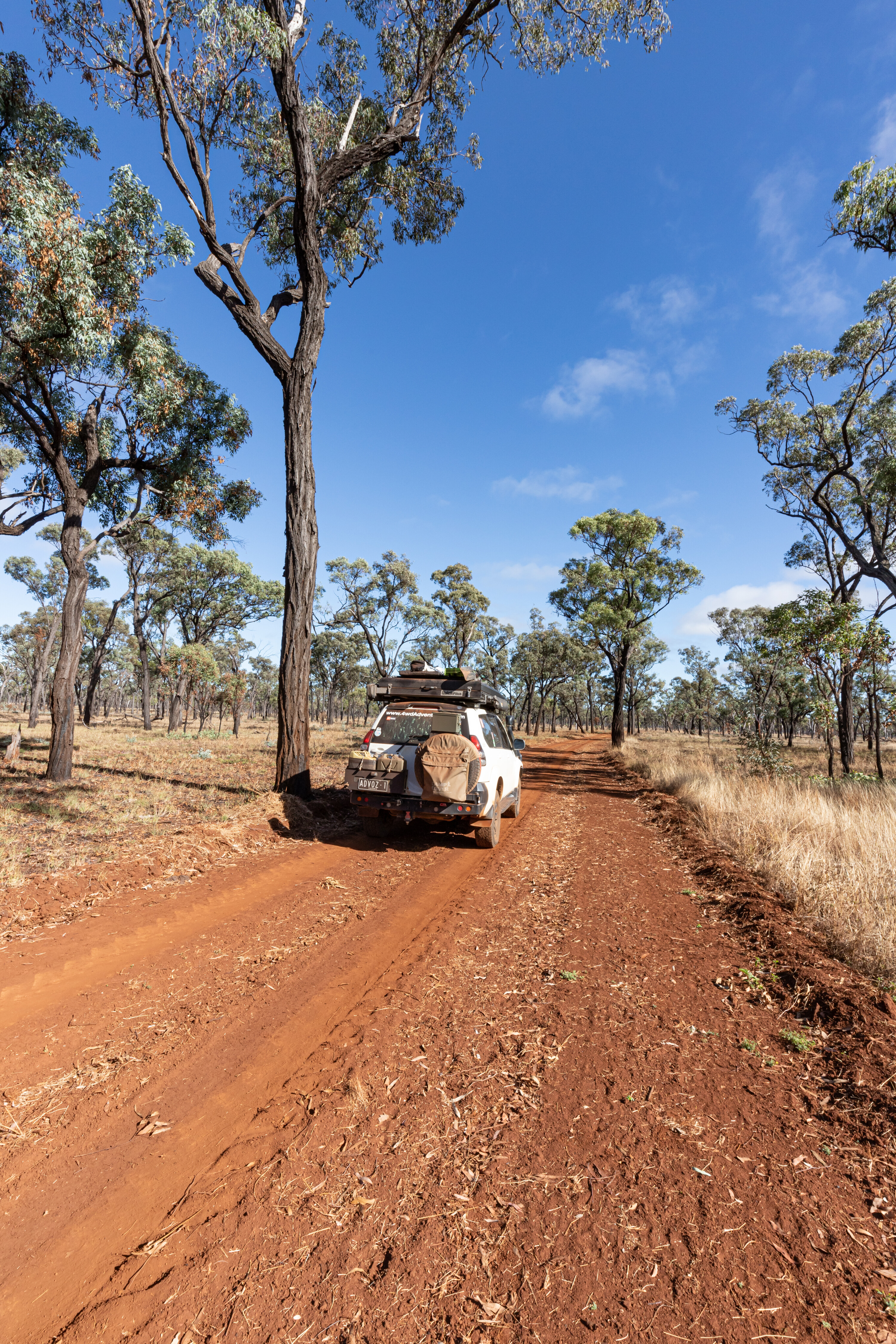
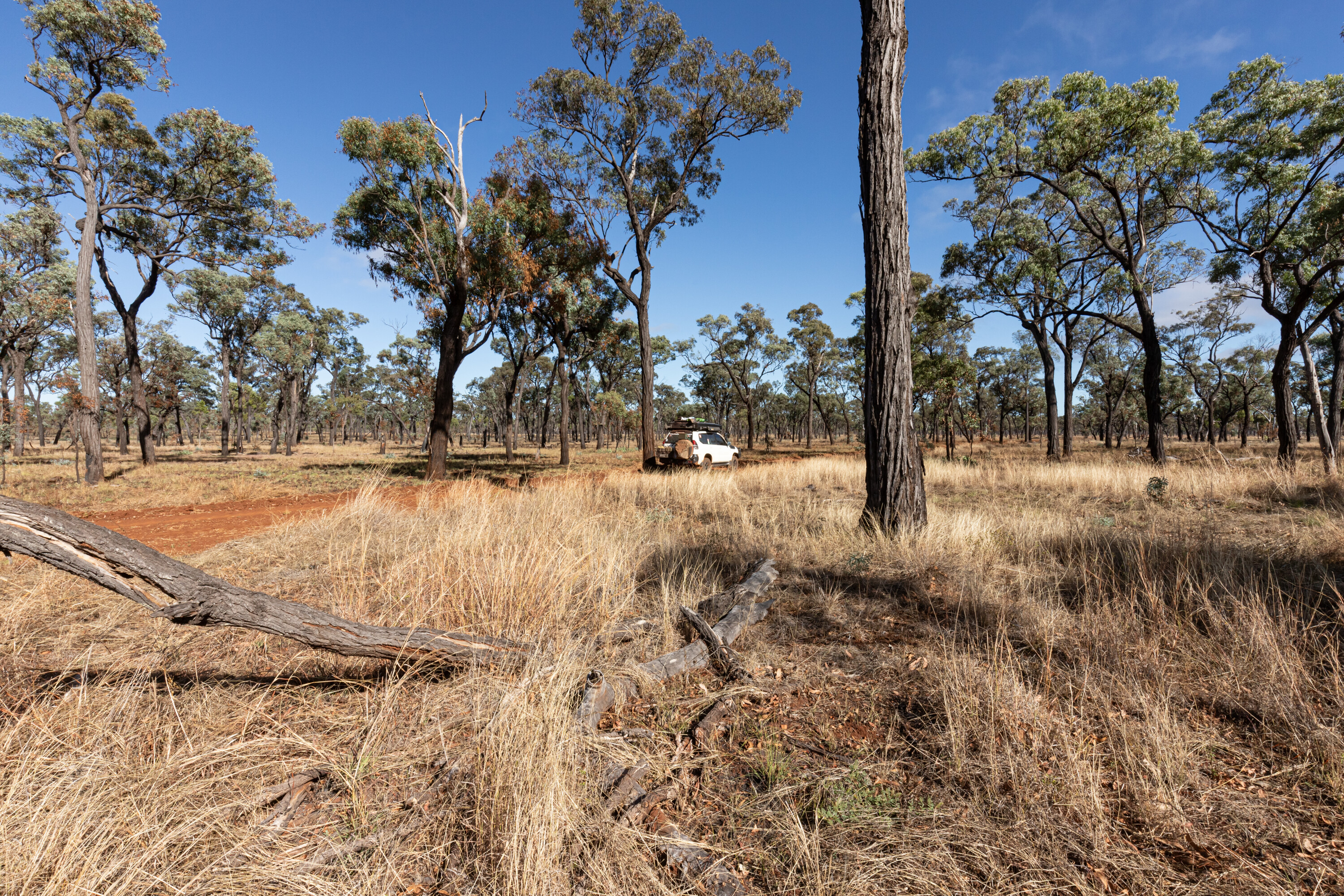
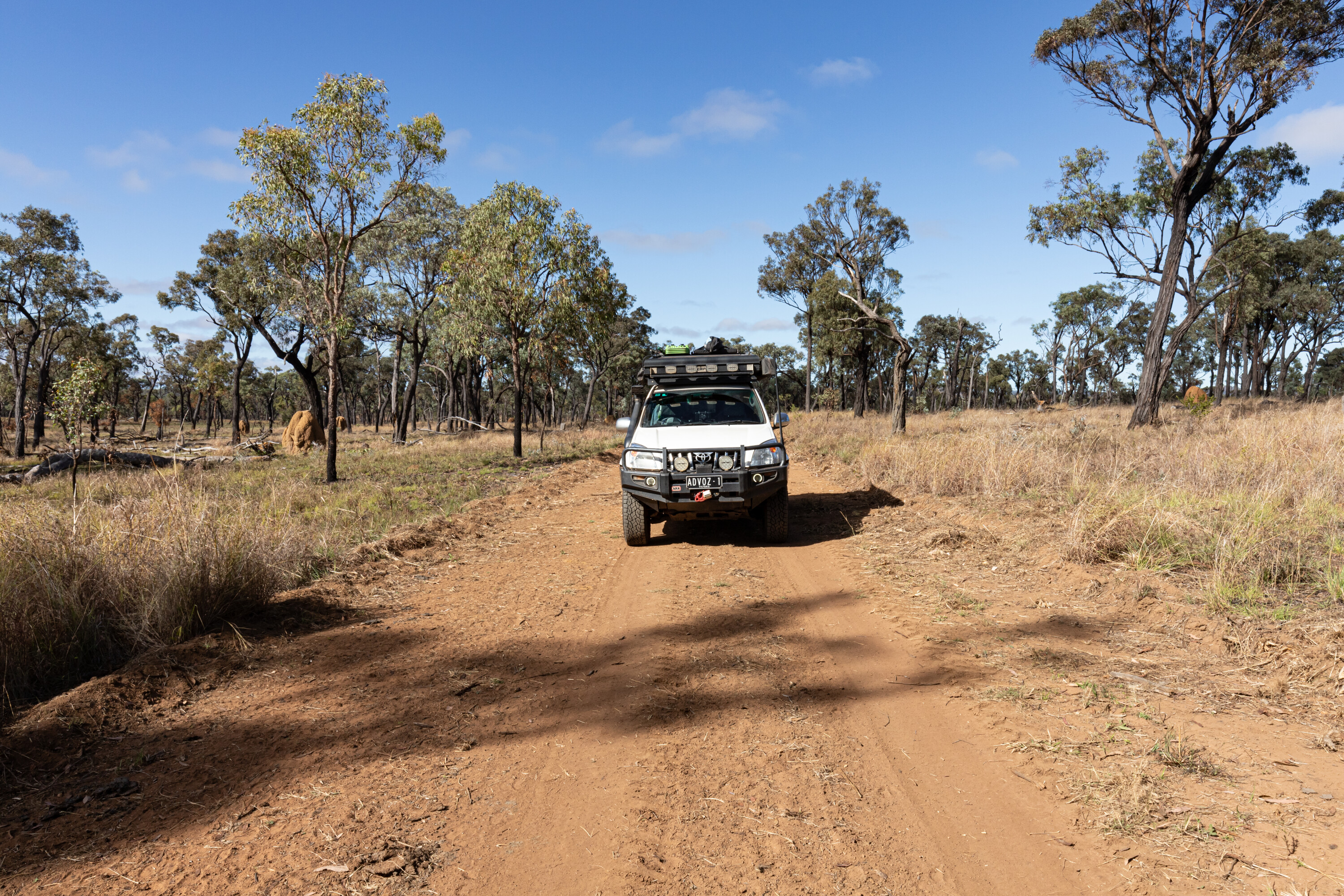
There is so much to enjoy as you drive through the woodlands and past the basalt rocks and large termite mounds that 40km/h might be too fast; it is a beautiful drive.
Rogue cattle roam the park as evidenced by the hoofprints and patties they leave on the track. With plenty of feed about it’s unsurprising that they’d want to be here. Piles of black volcanic rocks appear along various sections of the drive to the campground, and I’m not sure how these came to be.
1
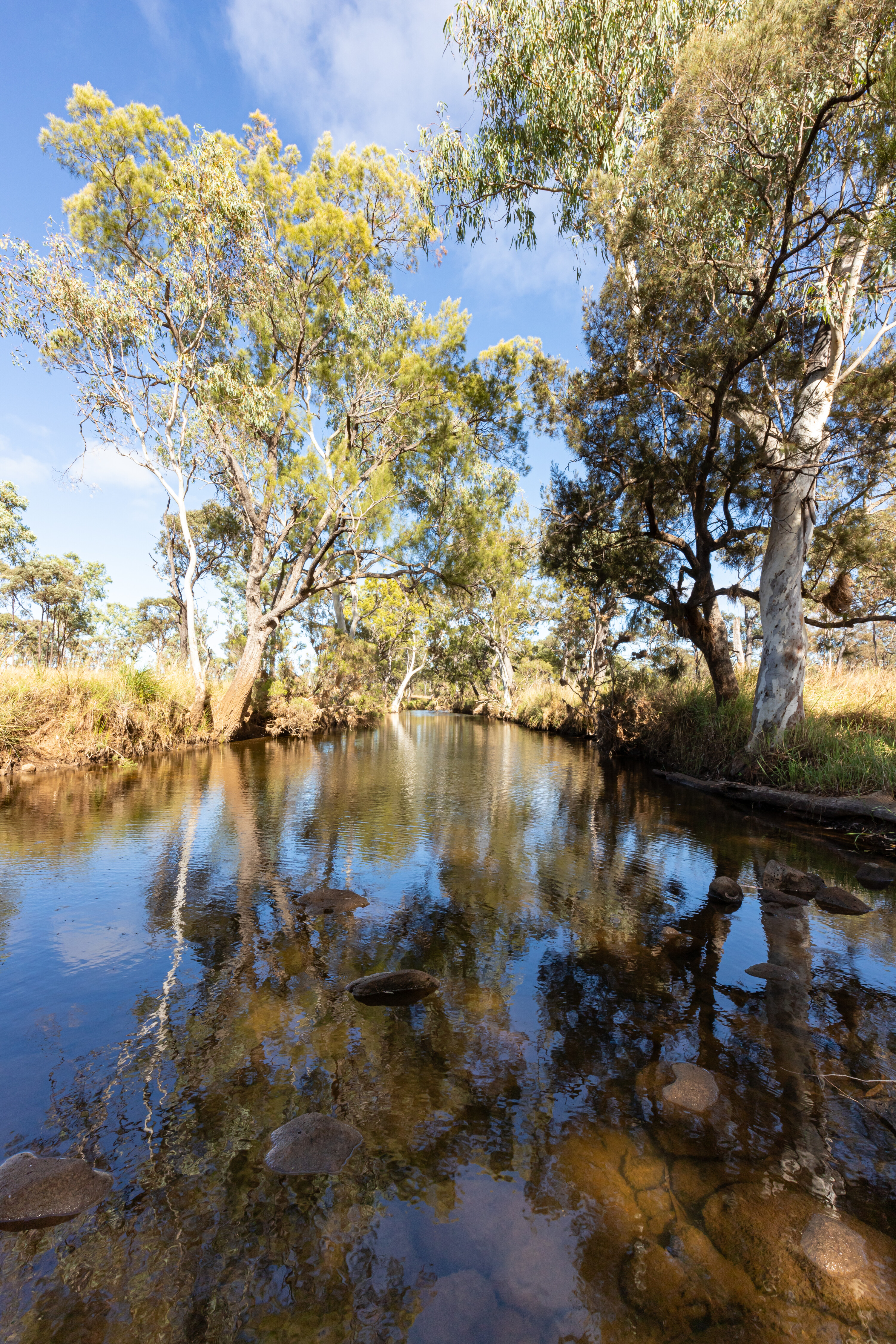
When I reached the Copperfield River there was still water in it, and the exit of the crossing was washed out, so slow going was the order of the day.
There are certainly some tall termite mounds out amongst the ironbark woodlands. It would be nice to get out and check them out more closely but the thought of being bitten by a snake while being so remote and on my own had me deciding it wasn’t worth the risk.
One of the recommendations for entering the park is that you carry a satphone or personal locator beacon because it is extremely remote and there’s no guarantee that a Ranger will be on hand; it’s always better to be safe than sorry, that’s for sure.
1
Plenty to see
There is plenty of evidence of pastoralism throughout Blackbraes, with old fence lines and water tanks to be seen throughout the park.
At 52,000ha this would have been a small cattle station before becoming a national park. Keep an eye out for western grey kangaroos and spectacled hare-wallabies as you pass by the grasslands and rocky outcrops.
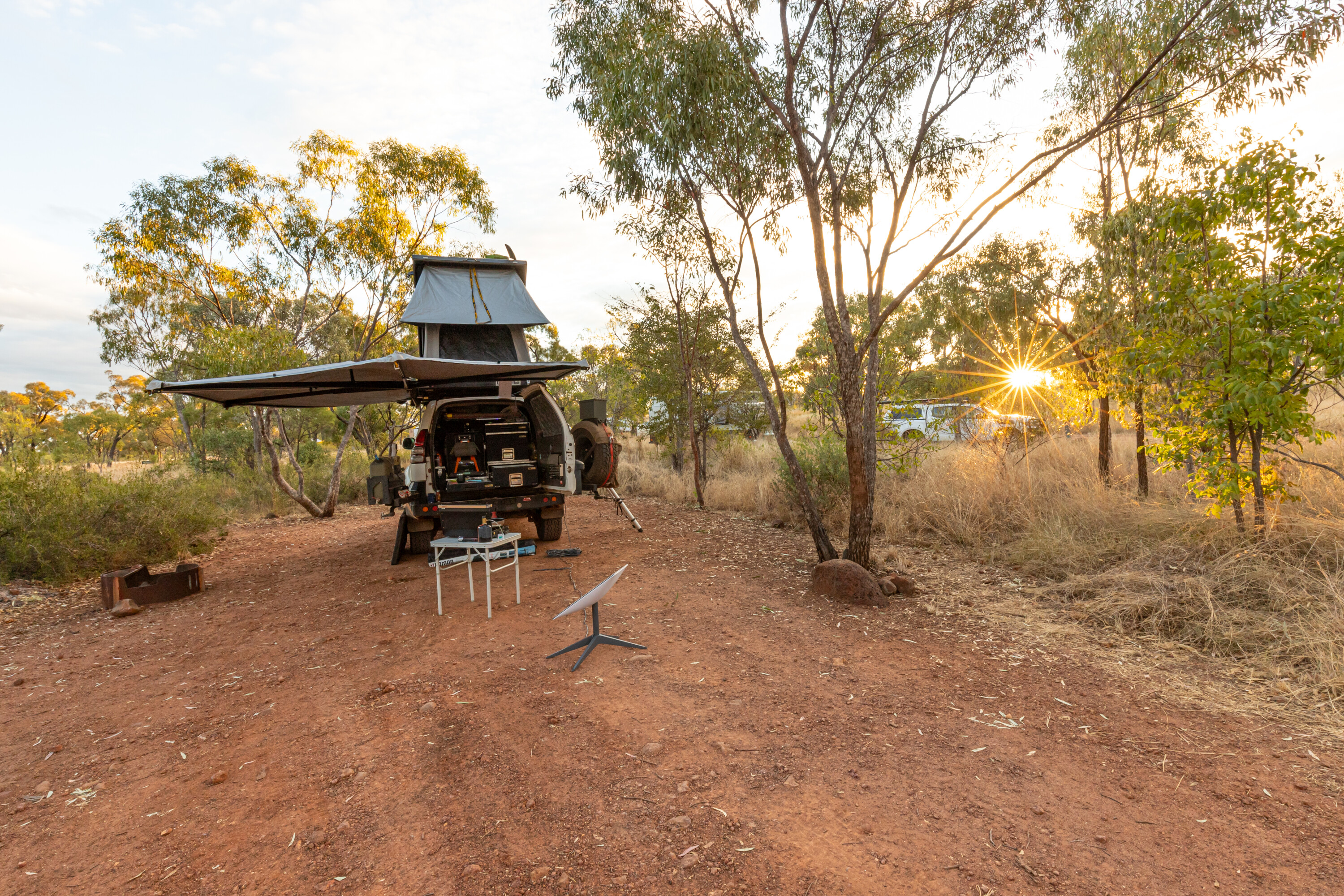
At the Emu Swamp Bore, the track takes a hard right and heads directly to the campground that is located 1.4km from the turnoff. This bush campground is nothing more than a section of an old paddock that has been slashed so you can make camp for day or two. There are no facilities at all, so take out what you bring and tread lightly.
1
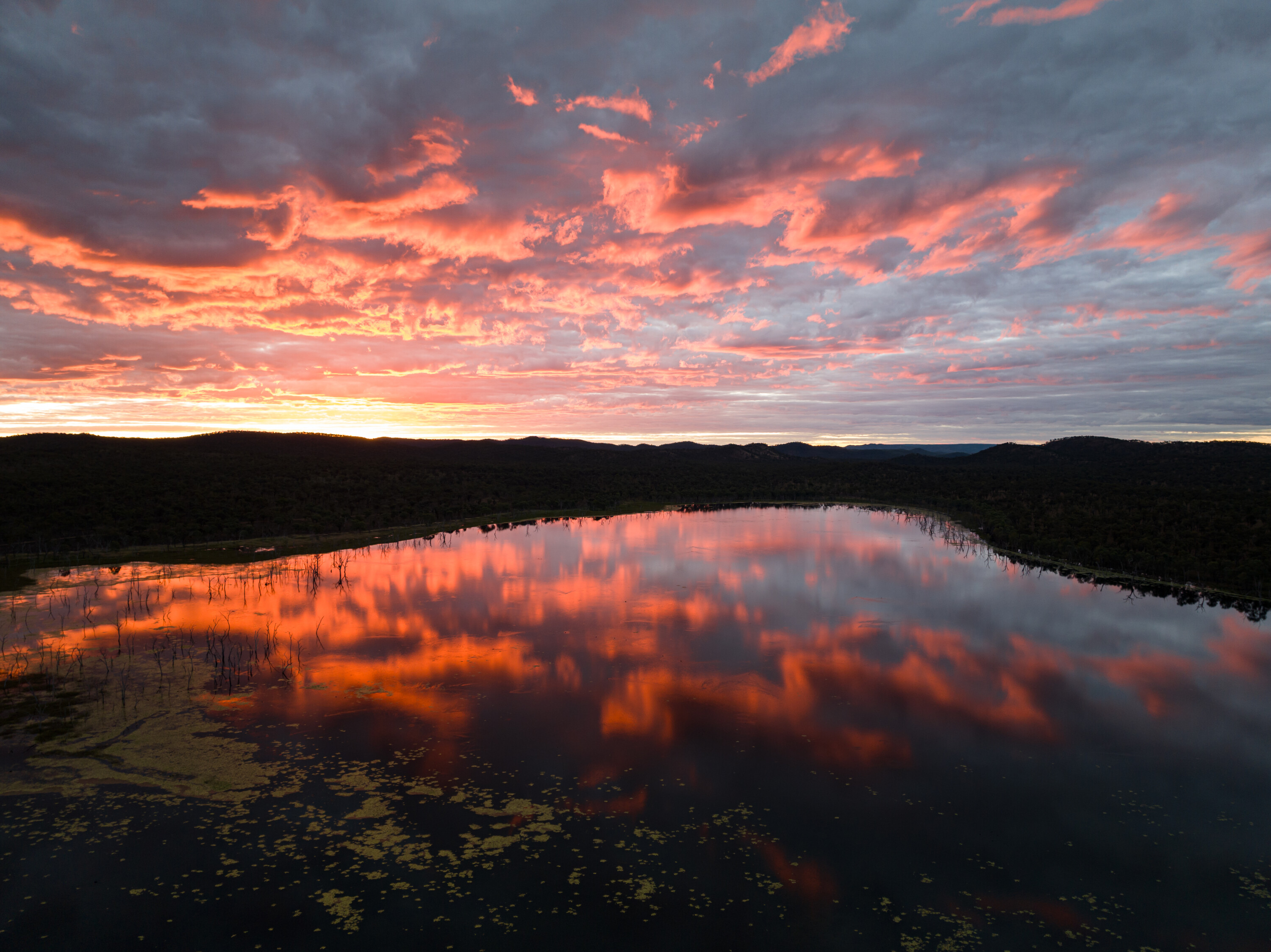
A short walk from the camping area is Emu Swamp, which looks like a creek has been dammed to create this large body of water.
There is a track that circumnavigates the lake but driving it is not permitted. If you have a mountain bike though, that is a different story. Expect to see swans, a variety of ducks, egrets, herons and other water birds seeking refuge in the reeds and searching for food below the water.
Sending the drone up at sunset produced some epic images; it was just magic. Another thing I enjoyed about camping at Emu Swamp was the serenity – besides the bird calls, it was very peaceful, and I had one of the best night’s sleep I’d enjoyed in ages.
1
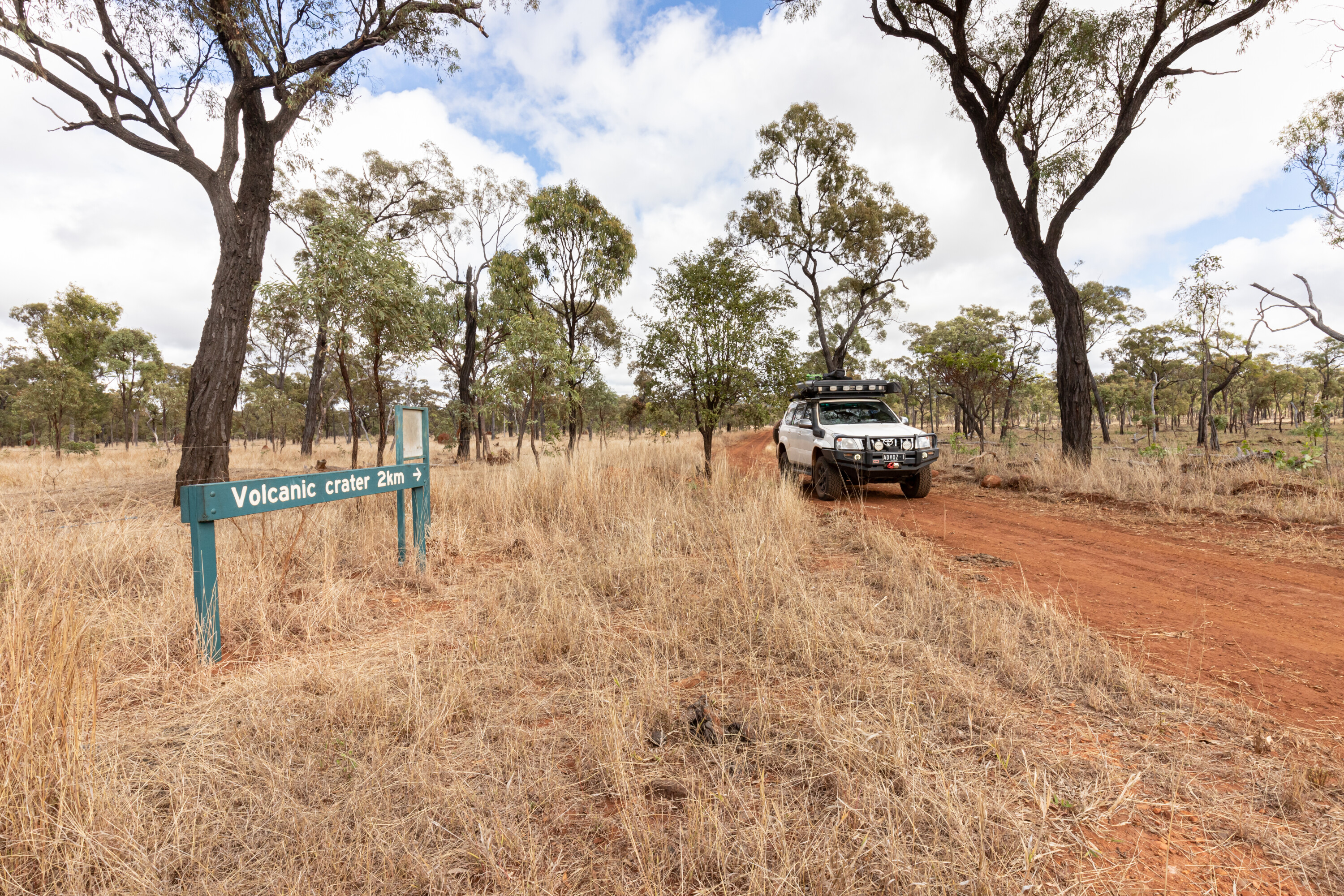
Looking on my Hema HX2, I noticed a track that I thought might lead to a volcanic crater.
After packing up camp, I headed back out on the Emu Swamp track to the junction with Dulthara Road, spotting a big black bullock on the way. Turning right, I followed this road to the western border of the park, and along the fenceline was a signed track that led to another less-travelled track to the right.
Following the wheel tracks, I ended up almost at the lip of the extinct volcano. The scrub is fairly thick through here making it difficult to determine the size of the crater, so I sent up the drone enabling me to see where one edge of the crater had collapsed during an eruption, thus explaining how the piles of rhyolite came to be scattered around the park.
1
Moonstone fossicking
Retracing my route, I ended up back at the rangers station before reaching the Kennedy Development Road.
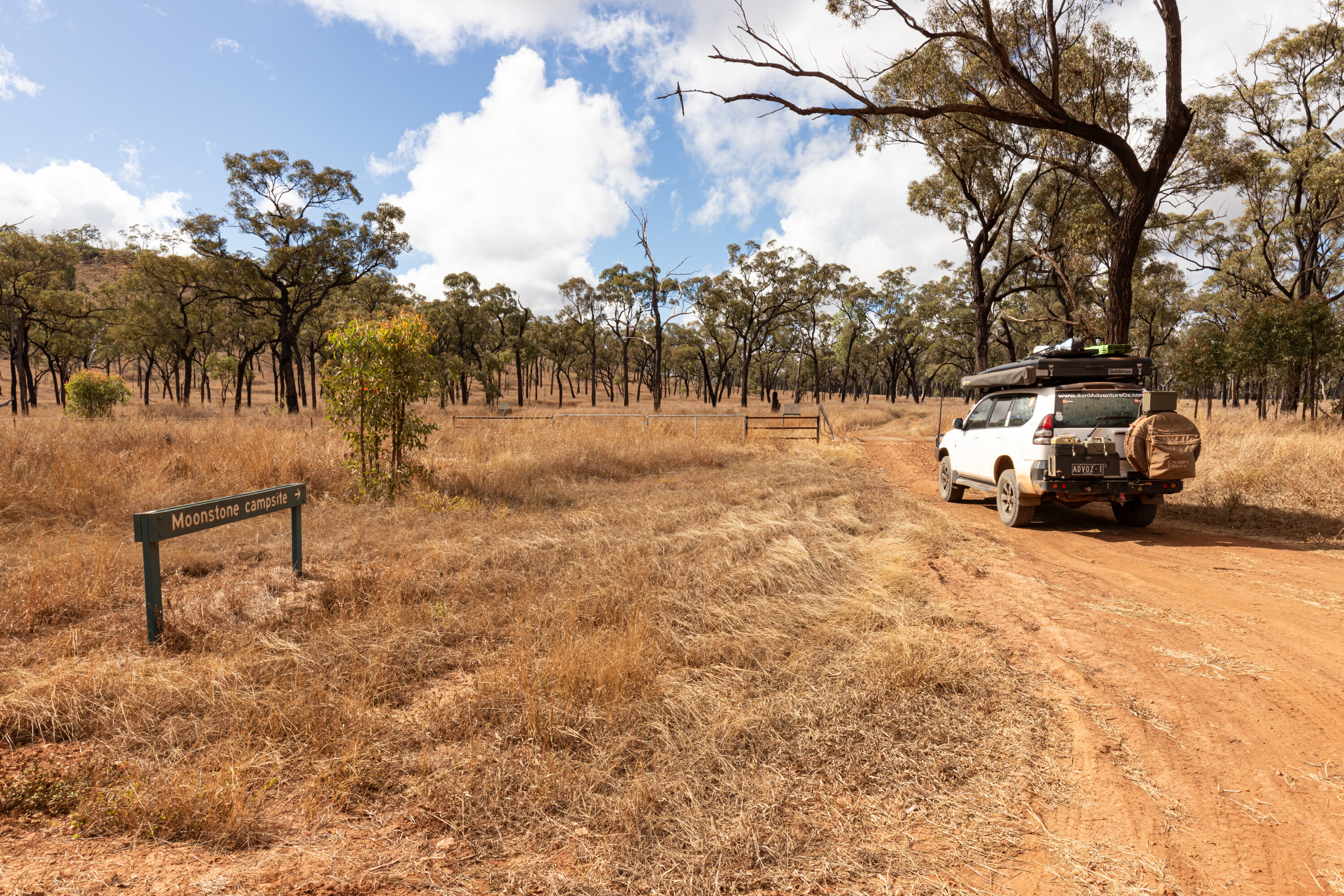
Heading north, access to the Moonstone Hill Resources Reserve and camping area is well signposted. Still part of Blackbraes, this reserve is an old volcanic vent that is popular for fossicking gem-quality feldspar, known as moonstone.
Moonstone radiates a silvery-white to blue colour when viewed in the correct light. If you want to look for some, Moonstone Hill is a general-permission fossicking area and a licence is required to fossick in the reserve.
1
There is a large campsite close to the reserve entrance and a couple of smaller ones on the side of the hill.
For a small national park, I was pleasantly surprised by how enjoyable it was to visit, and how much there was to see and do at Blackbraes. And being the sole traveller in the park, the camping experience was exceptional.
Sure, the slashed grass at the camping area could have been a bit shorter, and a pit toilet less challenging, but the basic camping facilities only added to the experience.
1
And for those heading further north to the Undara Volcanic NP, Blackbraes is also a good camping option.
If you’re heading to Porcupine Gorge or travelling anywhere near Hughenden, and you love a bit of solitude, make sure you add Blackbraes National Park to your bucket list.
Travel planner
REGION: Far North Queensland
NEAREST TOWN: Blackbraes NP is 170km north of Hughenden and 95km south of Lynd Junction with access via the Kennedy Development Road.
WHEN TO GO: The cooler months from April to September are the best times to visit, but access can be closed after rain.
CAMPING FEES: Camping fees are currently $7.25 per person per night and $29 per family per night. Camping must be pre-booked and paid online via the Queensland National Parks website [↗] before entering the park.
CAMPING: There are two camping areas within the park:
- Emu Swamp: 4WD access only, suitable for tents and camper trailers
- Moonstone Hill: 4WD access, suitable for tents, camper trailers and caravans
WHAT TO TAKE:<\/strong> Fuel or gas stove for cooking, first aid kit, firewood, food and water, PLB or satellite phone, sun protection and insect repellent, rubbish bags, shovel to bury toilet waste.
DIFFICULTY: The roads within the park are well maintained but a 4WD vehicle is recommended to enjoy the best bits.
ROADS: Check out the ‘QLD Queensland’ website [↗] for road conditions and closures.
Five must-dos
- Explore Porcupine Gorge
- Camp at Emu Swamp
- Check out the volcanic crater
- Watch the sun set over Emu Swamp
- Check out the views from the lookout
- Explore Porcupine Gorge
- Camp at Emu Swamp
- Check out the volcanic crater
- Watch the sun set over Emu Swamp
- Check out the views from the lookout
With the flagship Toyota HiLux GR Sport now on the market, it makes sense to think The Big T might revisit the GR Sport variant of its its ute-based Fortuner SUV.
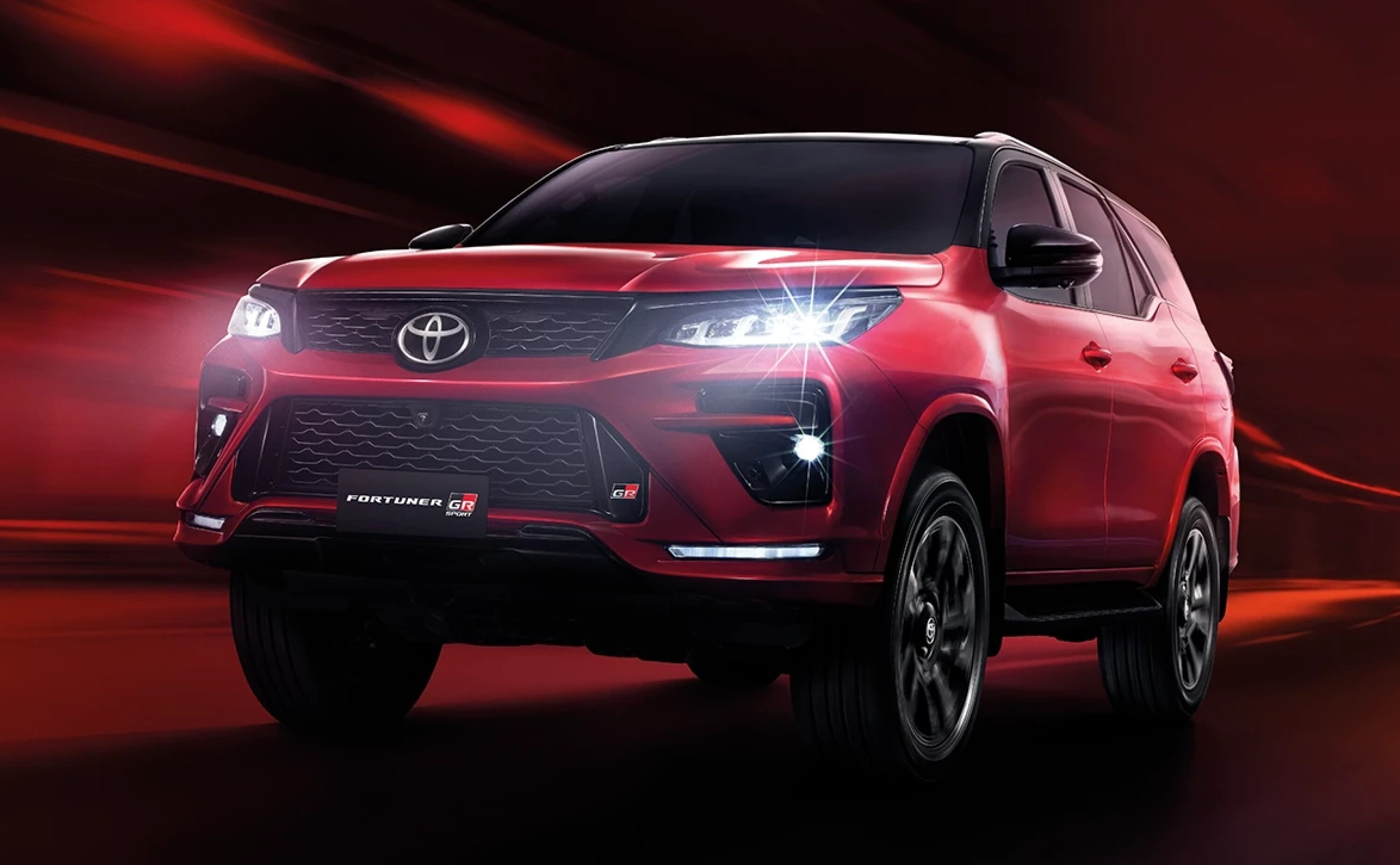
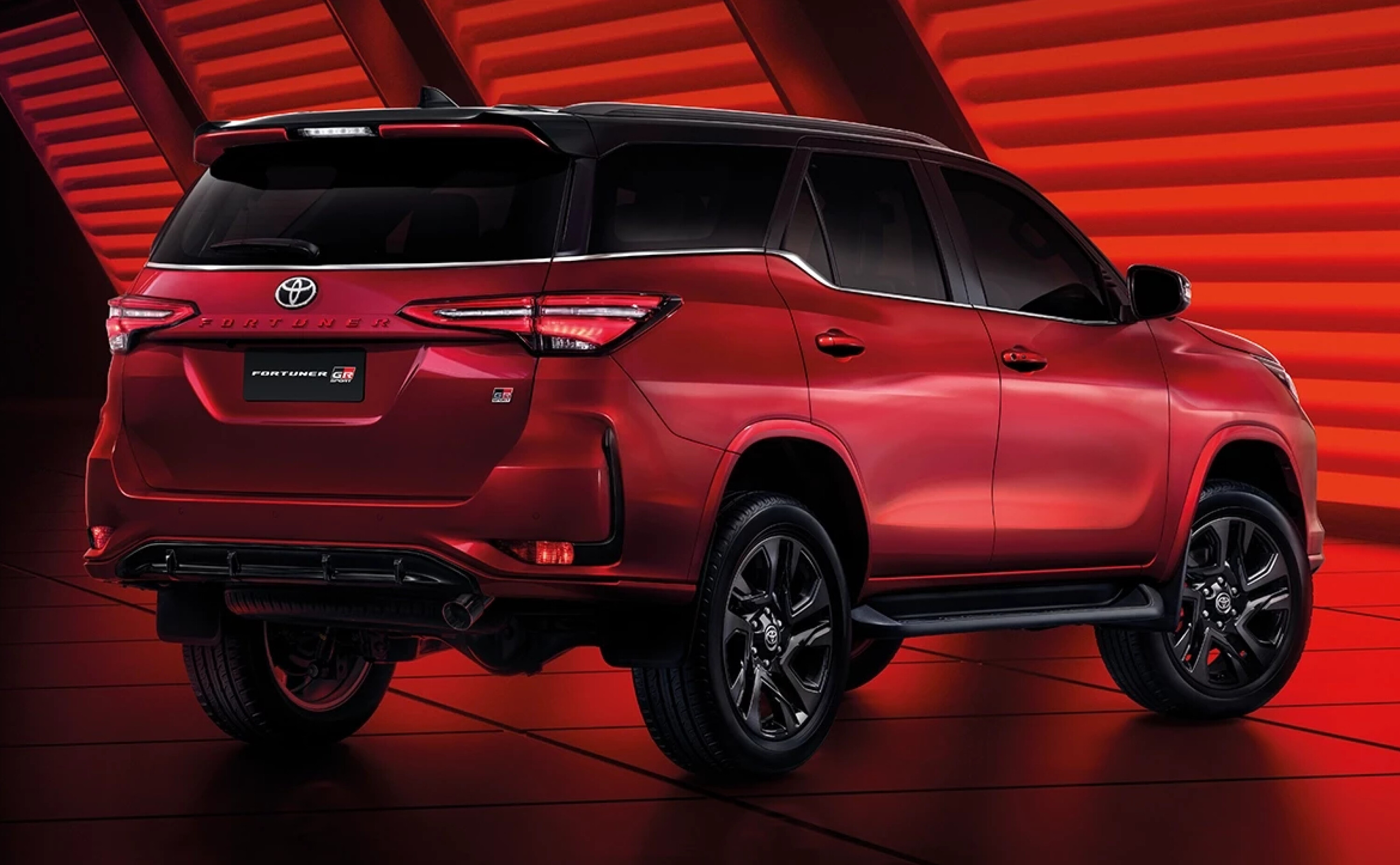
Revealed in 2021 (jump to the bottom of this story), the current Fortuner GR Sport wears a fairly modest styling kit, but it does feature the same 165kW and 550Nm tune that stars in the HiLux GR Sport (up from 150kW/500Nm).
However, unlike the top-dog HiLux, the flagship Fortuner isn’t offered in Australia, where the line-up stops at the $66,755 Crusade.
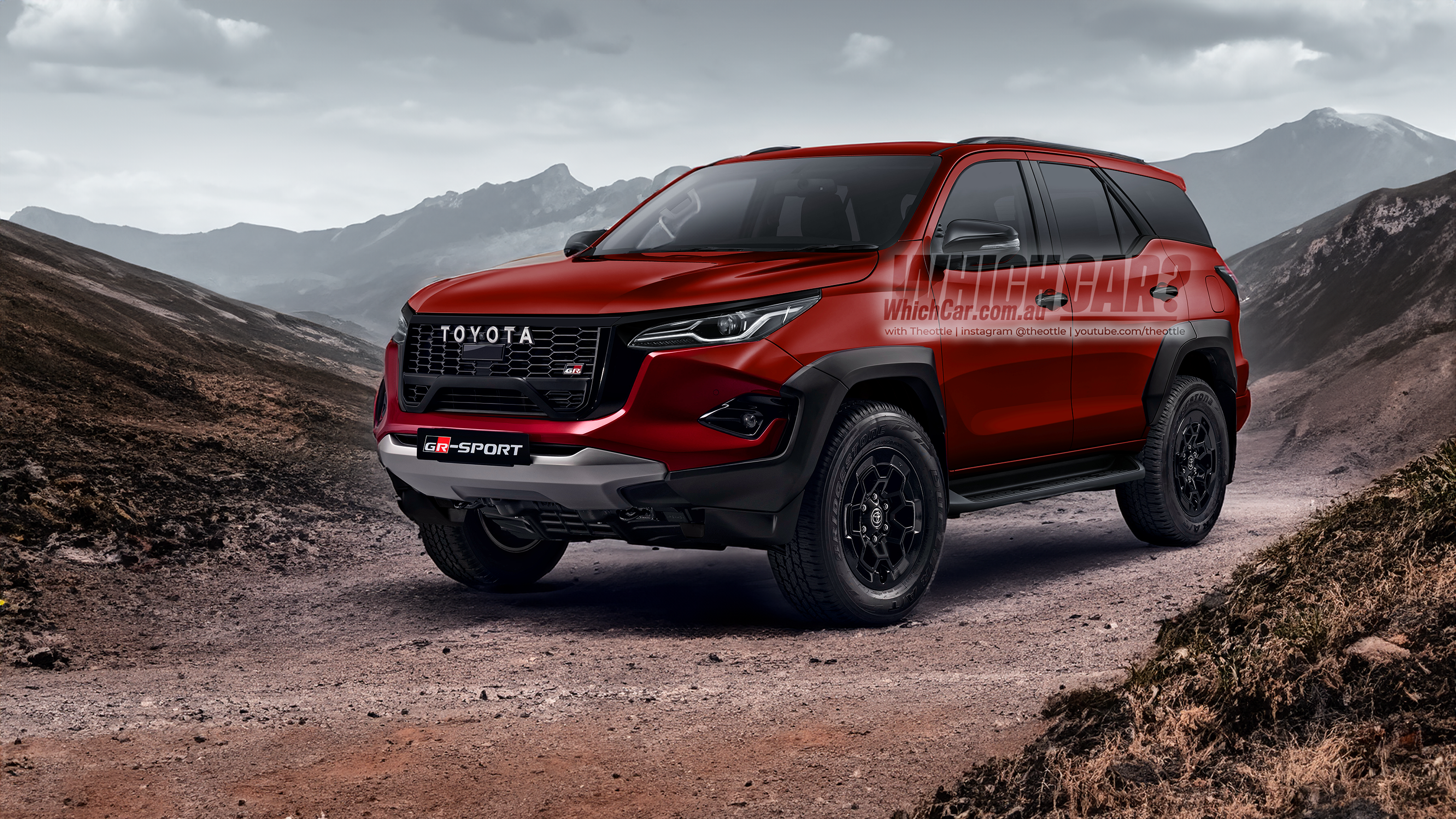
It’s easy to think Toyota could bring a refreshed Fortuner GR Sport to Australia, wearing a more aggressive look inspired by the widened and sportier HiLux GR Sport.
And considering the HiLux GR Sport is really only specced and priced to take on the Ford Ranger Wildtrak rather than the muscly Ranger Raptor, a Fortuner GR Sport could be conveniently aimed at the newly launched Ford Everest Wildtrak SUV.
1
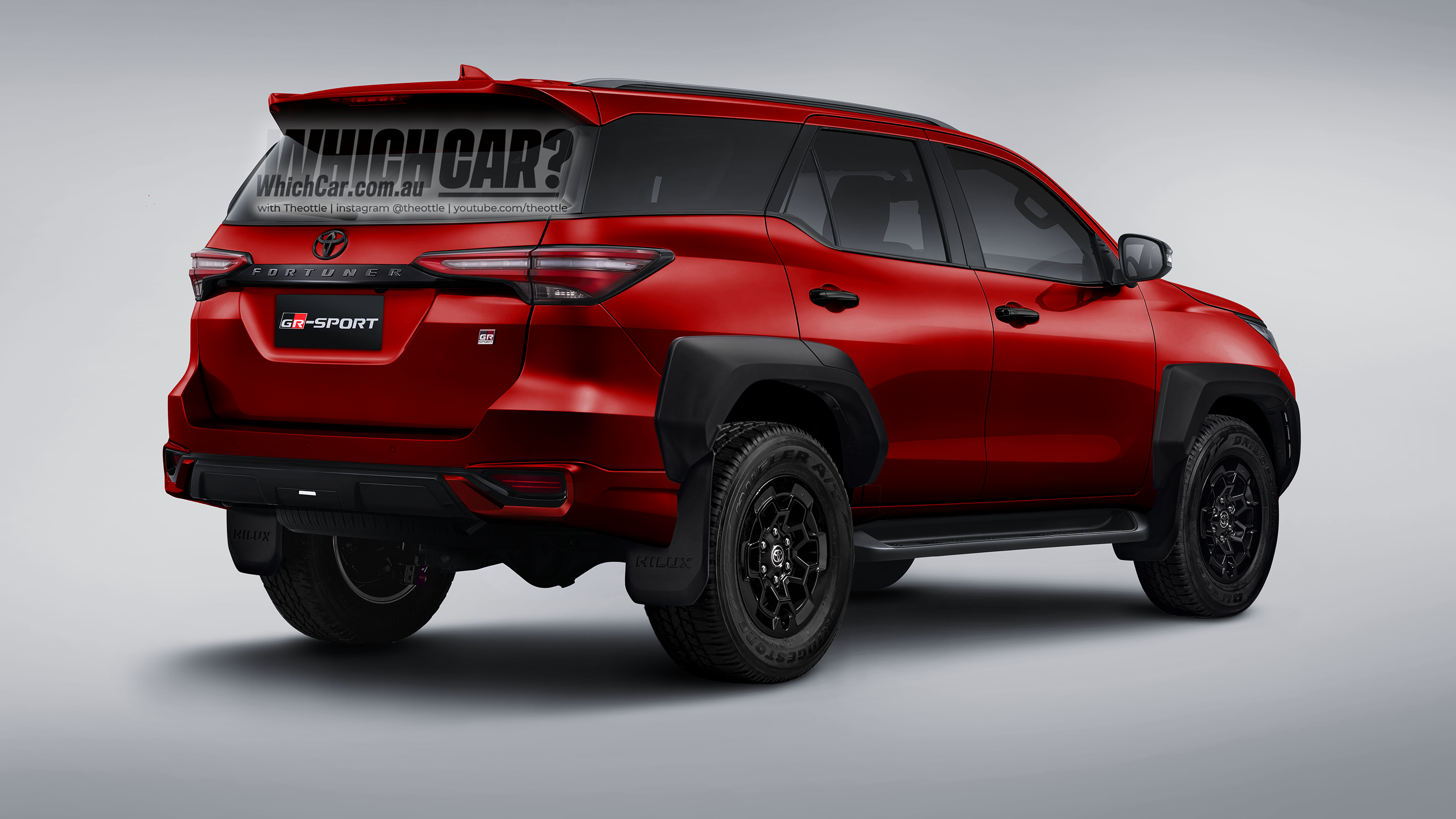
To that end, our mate Theottle has rendered the Fortuner GR Sport with a facelifted design that brings a version of the HiLux GR Sport’s grille, front bar, rear bar, wheel-arch flares and new wheels at each corner.
What do you think of the look? The Fortuner has never been a market favourite in Oz – although it has its share of diehard fans – but could this more powerful and tougher-looking GR Sport find a home in Australia?
Tell us in the comments!
1
Watch Theottle render the Fortuner GR Sport
Below: The current Fortuner GR Sport, revealed in 2021 for Thailand
1
1
MORE
Everything Toyota
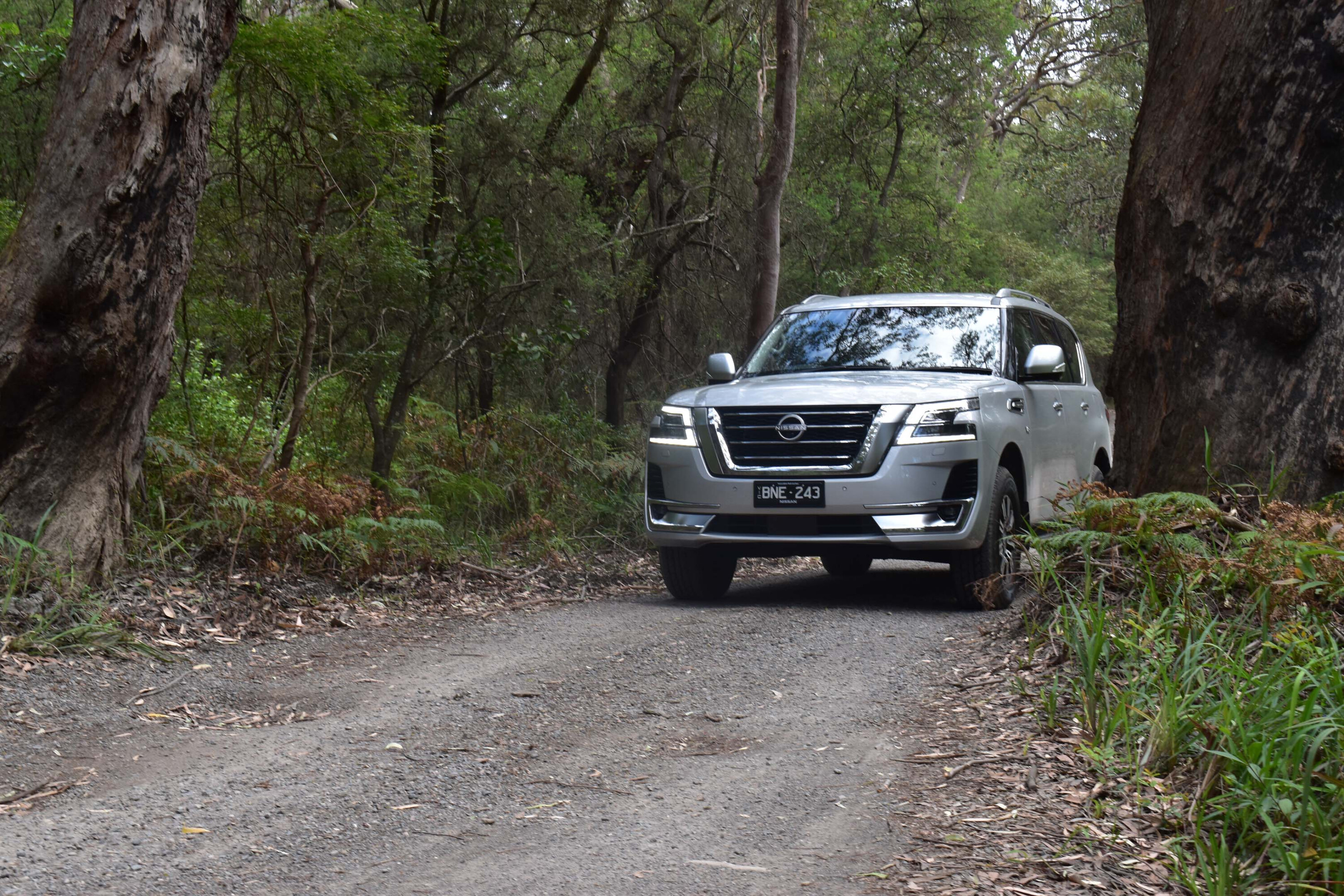
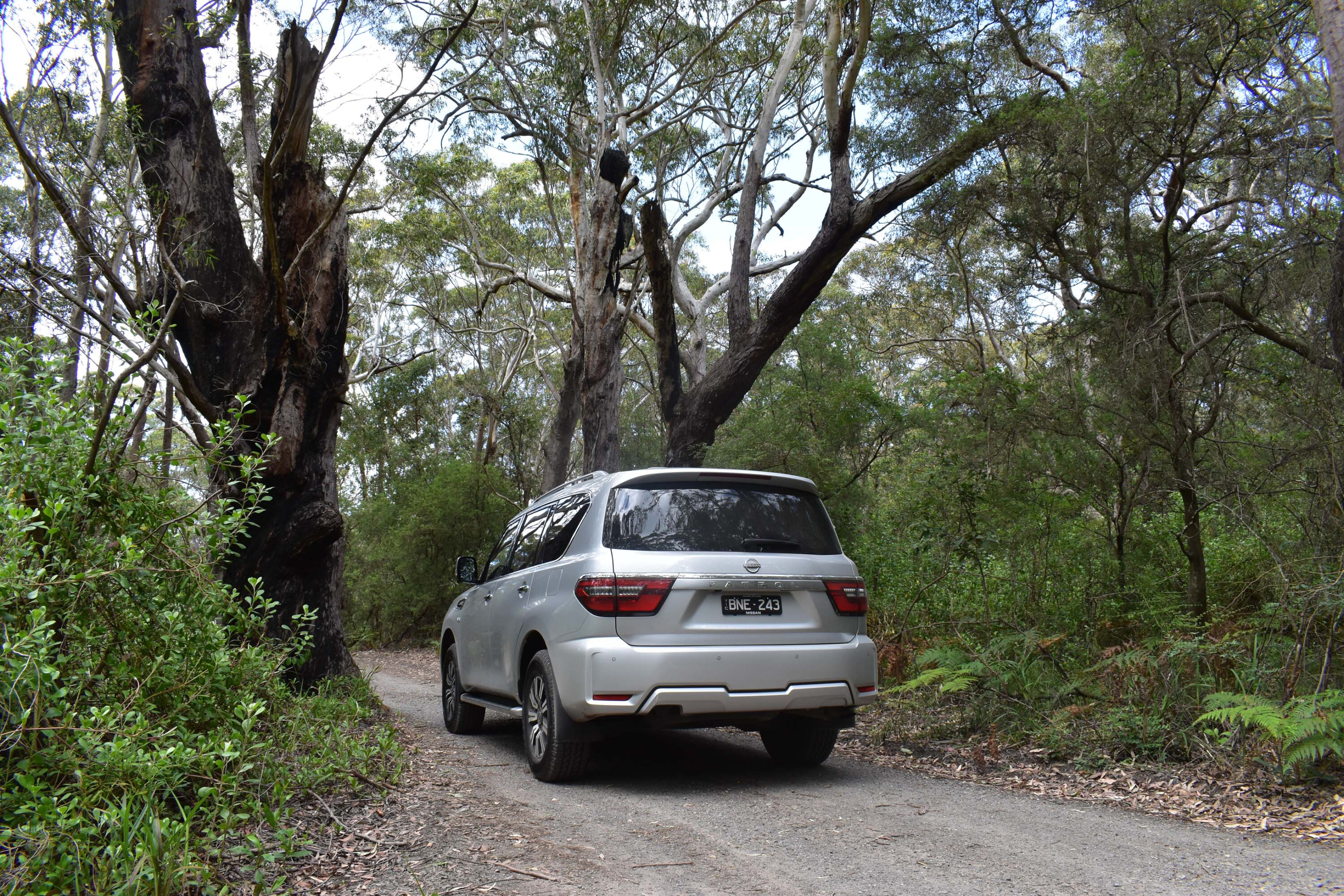
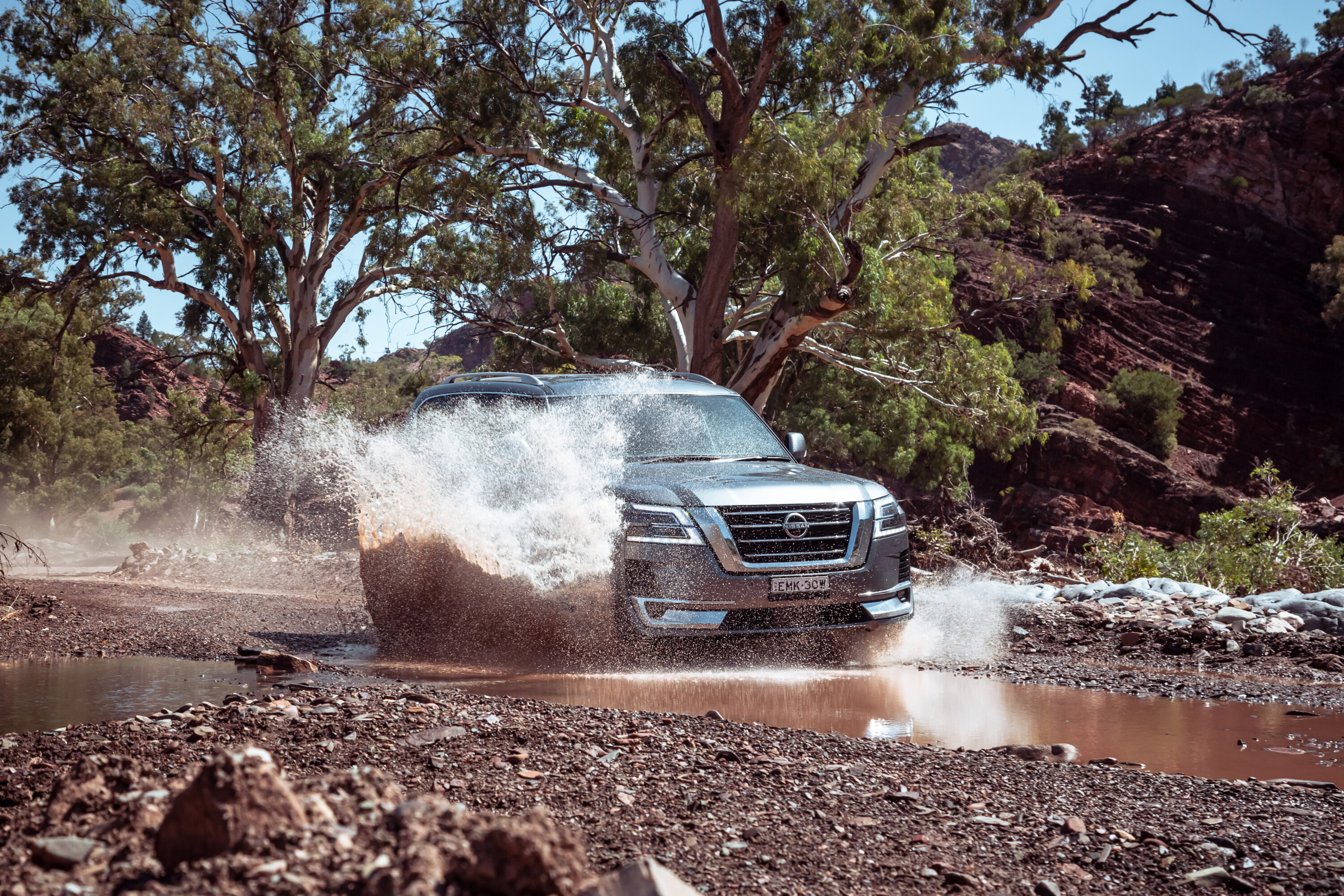
The Nissan Patrol is widely recognised for its combination of rugged luxury and a striking presence, seamlessly merging high-end features, strong performance, and an unmistakable stance that clearly says ‘off-road ready’.
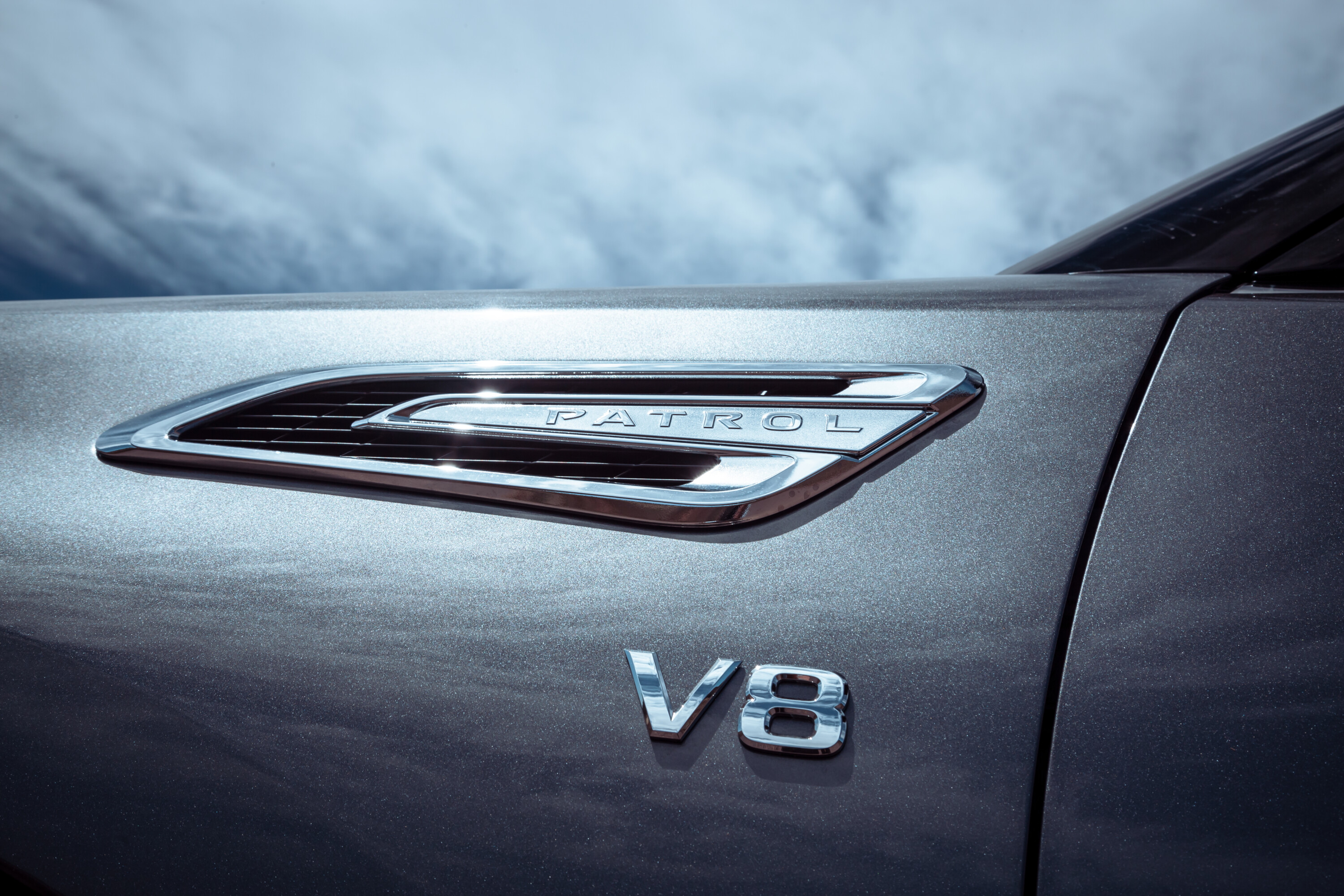
Additionally, it stands as one of the few remaining V8 SUVs, a distinction not just limited to SUVs but across almost all vehicle categories.
In a segment where both size and luxury are key, the question remains: does the Patrol Ti continue to uphold its legendary status?
1
Pricing and features
Pricing for the entry level Patrol Ti is $84,900 before on-road costs are added.
Available in a single petrol option, the 5.6L naturally aspirated V8 motor produces 298kW of power and 560Nm of torque. Braked towing capacity is 3500kg, which is equivalent to direct competition.
1
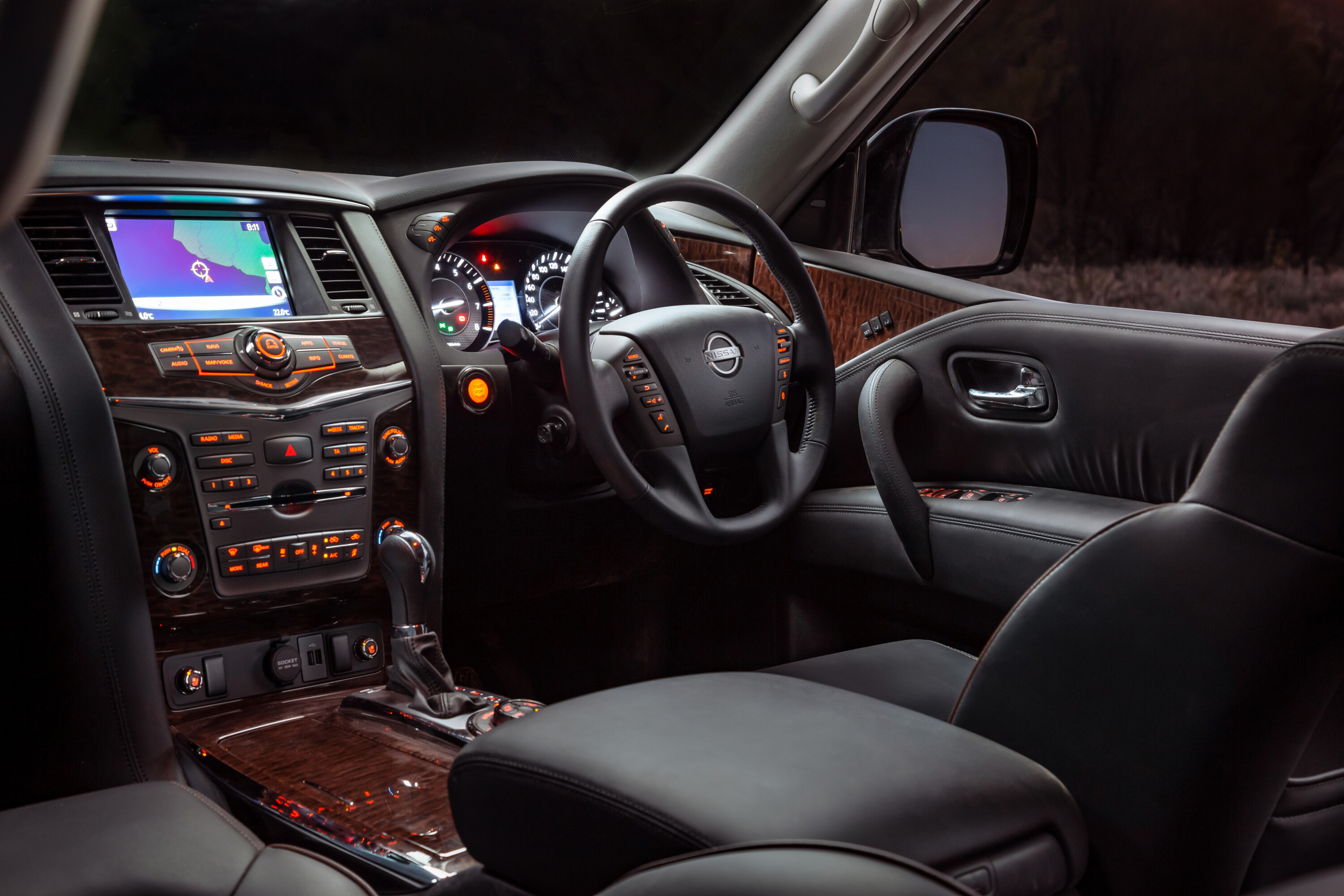
The Patrol packs in plenty of standard equipment. For context, in other Nissan models like the X-trail, the variant is often higher up in the range and a very well-equipped option. So pricing and features for the Ti is consistent for a more premium grade.
Additions like the rear privacy glass, power adjustable and leather accented seats are proof of the premium nature of the vehicle range.
| 2024 Nissan Patrol Ti features | |
|---|---|
| 18- inch alloy wheels | Intelligent 4WD shift switchwith mode select |
| 6-speaker audio system | Leather accented seat trim |
| 8-inch infotainment screen | Leather accented steering wheel and shift lever |
| 8-way power adjustable front seat | LED healights, DRLs, fog lights and rear lights |
| Adaptive cruise control | Rear Cross Traffic Alert (RCTA) |
| Automatic headlights | Rear privacy glass |
| Blind spot monitors | Smart entry and push button start |
| Eight seats | Tyre Pressure Monitoring System (TPMS) |
| Front and rear parking sensors | |
1
Investing the extra cash – about $13,000– into the Nissan Patrol Ti-L model adds extra features like an intelligent rear-view monitor, entertainment screens for the second-row seats and a driver’s seat memory function with two settings that also remember the positions of your side mirrors and steering column.
1
Safety
The Patrol currently lacks an official ANCAP safety rating. However, Nissan has equipped it with a wide array of standard safety features. Considering the Patrol’s platform has been around for a while, maintaining a solid level of specification is essential.
1
Inside the cabin, the Patrol offers dual front and front side airbags, as well as curtain airbags that extend across all three rows of seating.
Key safety features in the Nissan Patrol Ti-L model encompass blind-spot monitoring, parking sensors at both the front and rear, autonomous emergency braking, rear cross-traffic alert, lane departure alert, and radar cruise control.
Key rivals
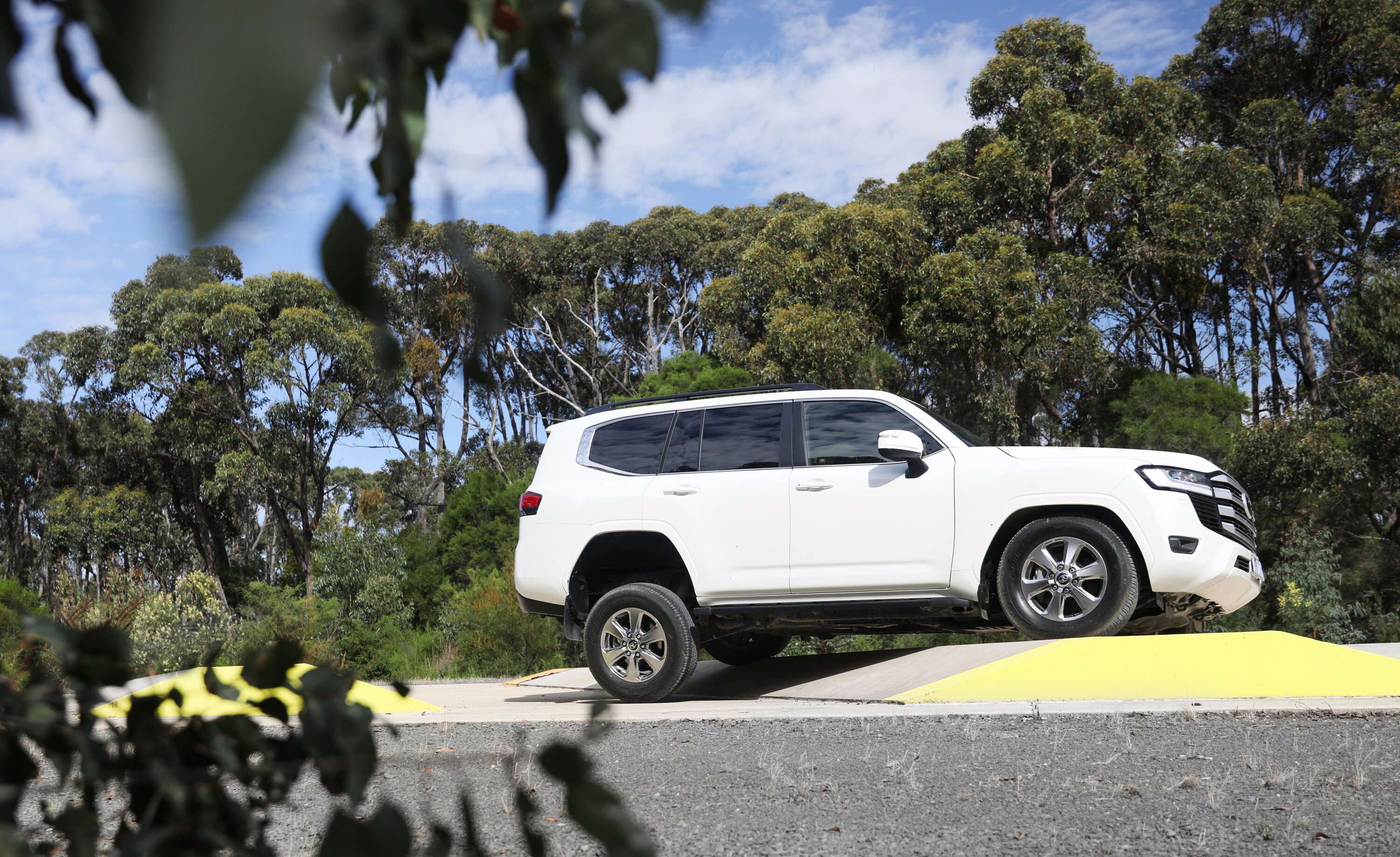
Although most V8 engines have fallen off the local map, there are quite a few options for large off-roading SUVs:
1
Should I put it on my shortlist?
The 2024 Nissan Patrol Ti emerges as an excellent option for anyone in the market for a large SUV that offers a mix of off-road prowess, luxury and comfort.
It stands out with its potent performance, roomy interior, and modern features, appealing both to families and adventure-seekers, and it’s more affordably priced compared to major competitors like the 300 series with equivalent features.
For those who don’t mind a more old-school interior design and aren’t overly concerned about the higher fuel consumption associated with its V8 engine, the Nissan Patrol remains a strong contender for off-road enthusiasts.
MORE
Everything Nissan
In a world where dual-cab utes are the most popular vehicle on the road, the problem facing every four-wheel driver is as clear as the tracks they tread.
How do you truly stand out in a crowd when everyone seems to be following the same script: a dual cab ute with a canopy? Some opt for the quirky and unconventional 4x4s, vintage rigs that turn heads at the expense of practicality.
Others choose a path paved with accessories, turning their rigs into off-road armouries equipped with every gadget conceivable, but that quickly becomes a rich man’s game on who can afford the most lithium.
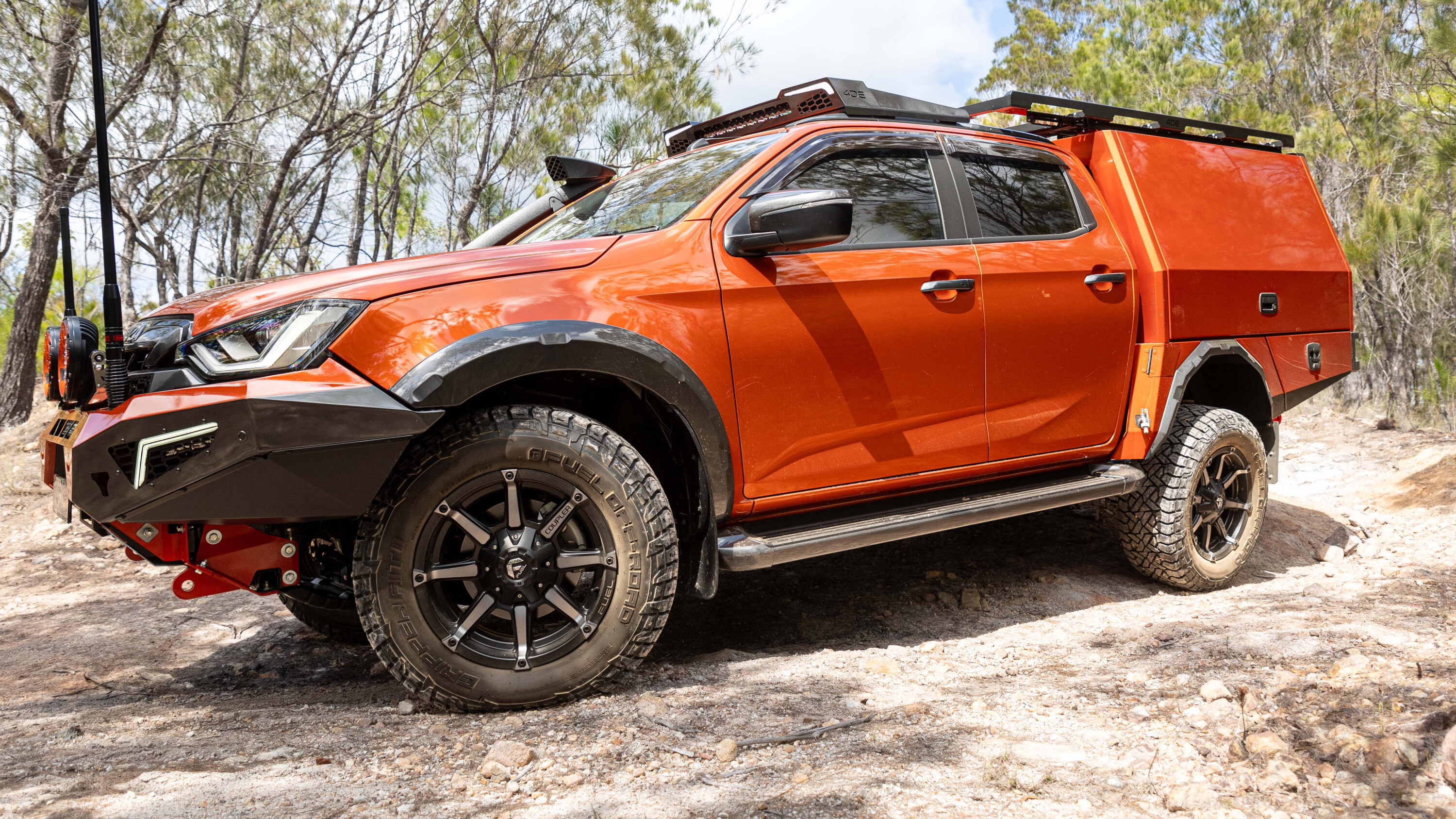
Then there’s the road less travelled, the one taken by Russel Jensen, the owner of the Volcanic Amber D-Max we’re about to delve into.
1
Instead of drowning in a sea of accessories, Russel embarked on a journey of meticulous craftsmanship and unwavering attention to detail.
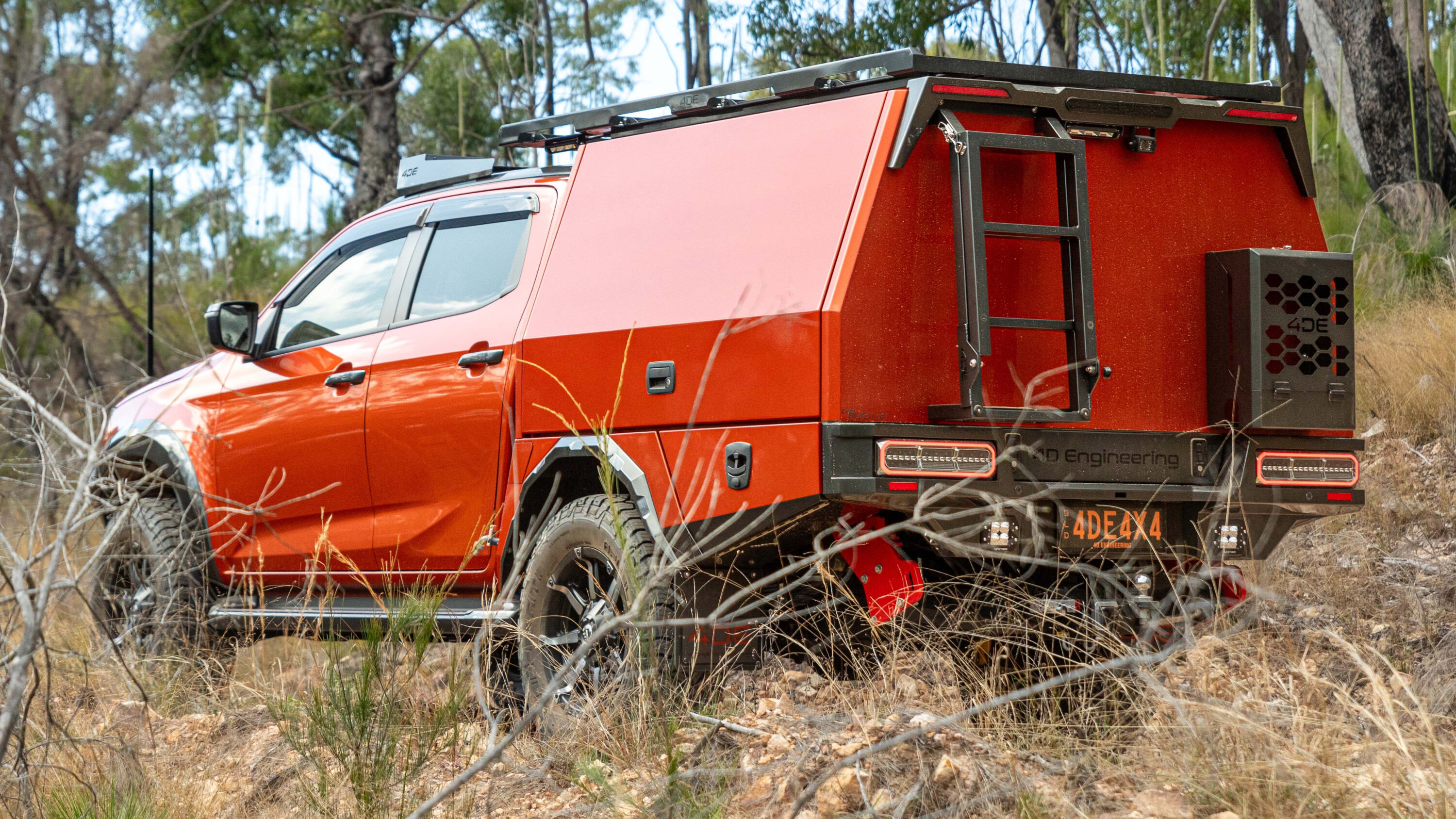
This Isuzu isn’t just another dual-cab ute with a canopy; it’s a canvas, a showcase for Russel’s business 4D Engineering which builds trick custom canopies. And we’ve gotta say, the D-Max is doing one hell of a job. So, fasten your seatbelts, because we’re taking a deep dive into a 4×4 that doesn’t scream for attention but commands it through sheer refinement.
One where every nut, every bolt, and every lick of paint has been carefully considered. It’s a story that transcends the noise and chaos, proving that sometimes, it’s the subtle nuances that make the boldest statements.
1
Whether you’re building a Lada Niva on a Unimog chassis or the latest and greatest dual cab ute, the attitude all comes down to the altitude.
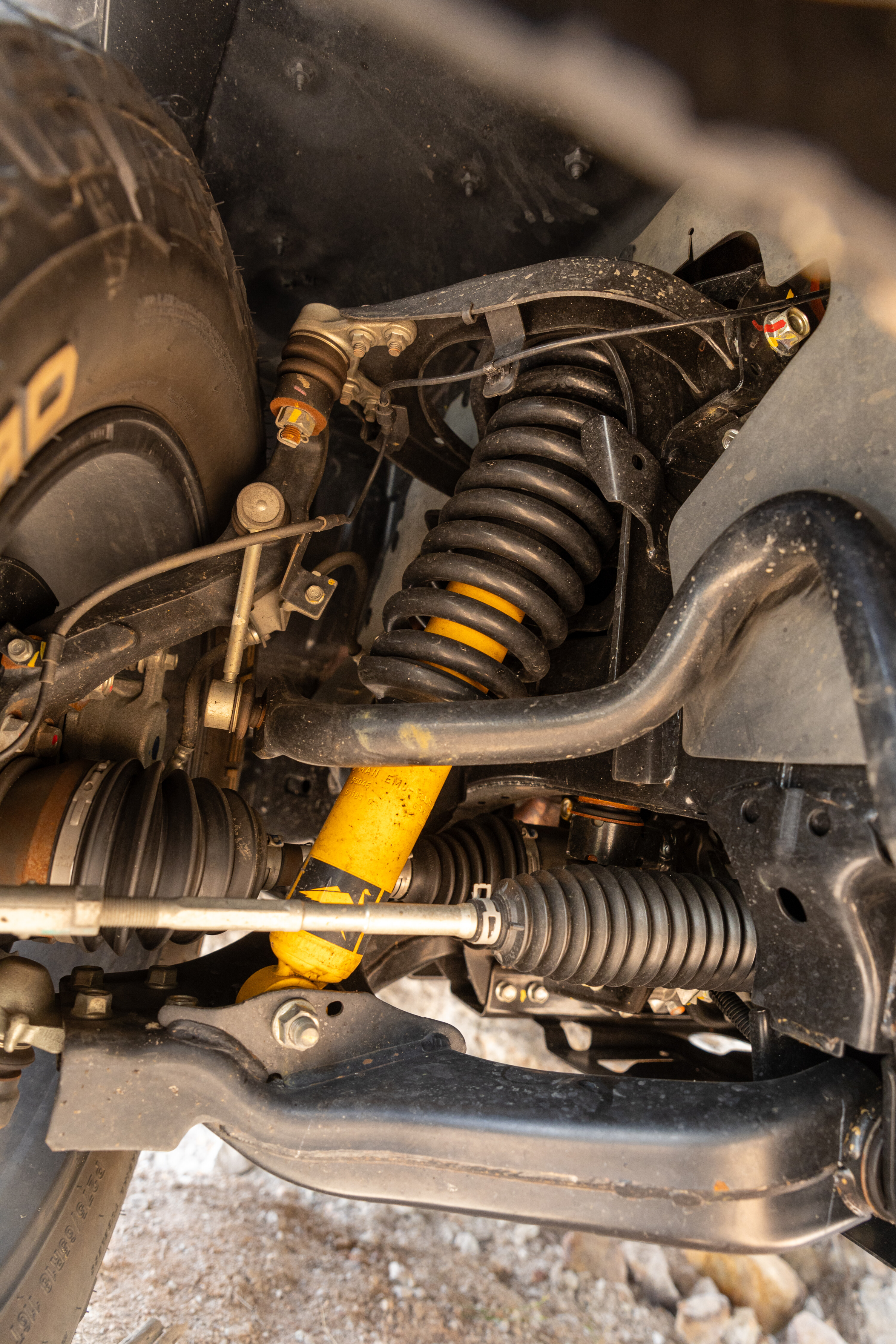
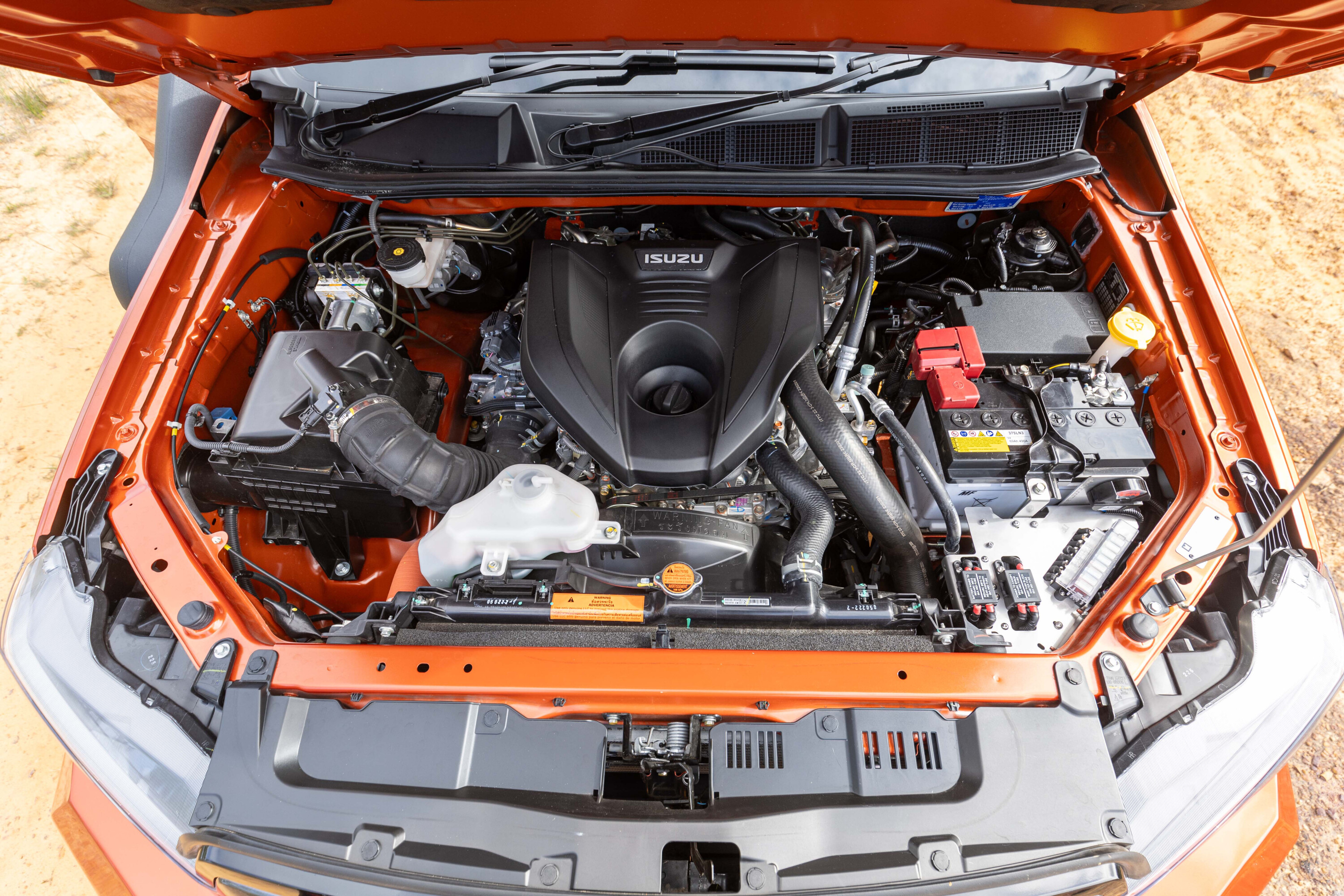
Russel’s D-Max is no different. Look past that striking orange paintwork and the 4D Engineering rig rides two inches closer to the clouds thanks to a suspension lift on all four corners from the smart folks over at ARB.
The Old Man Emu Nitrocharger struts up front give the ride height increase. The twin-tube nitrogen-charged design a tried-and-tested robust platform for going the distance.
In the back a set of Old Man Emu constant rate leaf springs bump the ride height up, with matching Nitrocharger shocks keeping it in check. Combined, the package doesn’t just provide a lift, but an increase in legal maximum Gross Vehicle Mass, up from 3100kg to 3500kg.
1
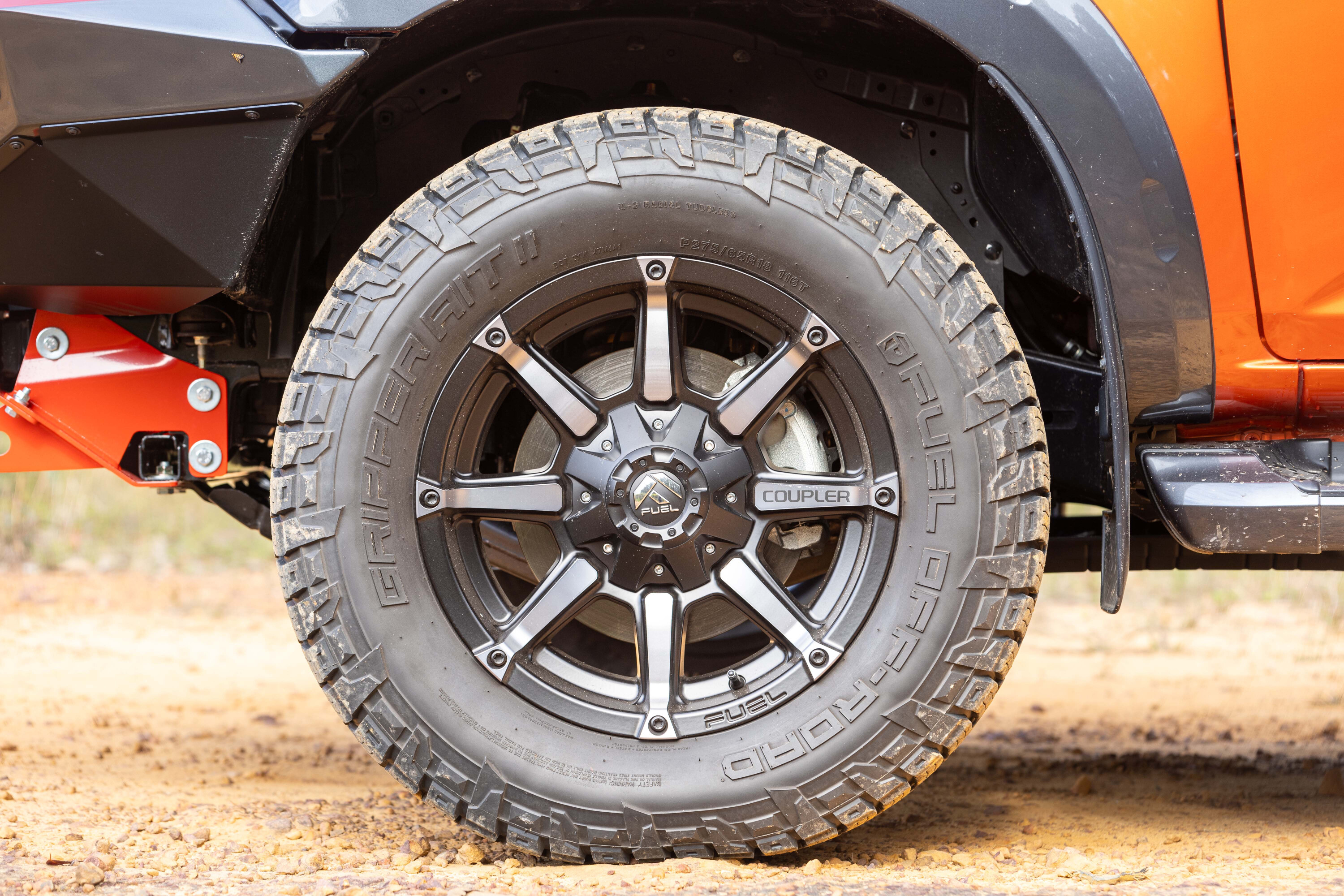
But what really catches the eye are those striking Fuel Coupler 18 x 9 alloy wheels.
They’re paired with Fuel’s Grappler A/T II 275/65R18 all-terrain tyre, the setup guaranteeing exceptional grip on the trails, rock-solid stability on the highways, and unparalleled style wherever it roams. Not bad for step one, eh?
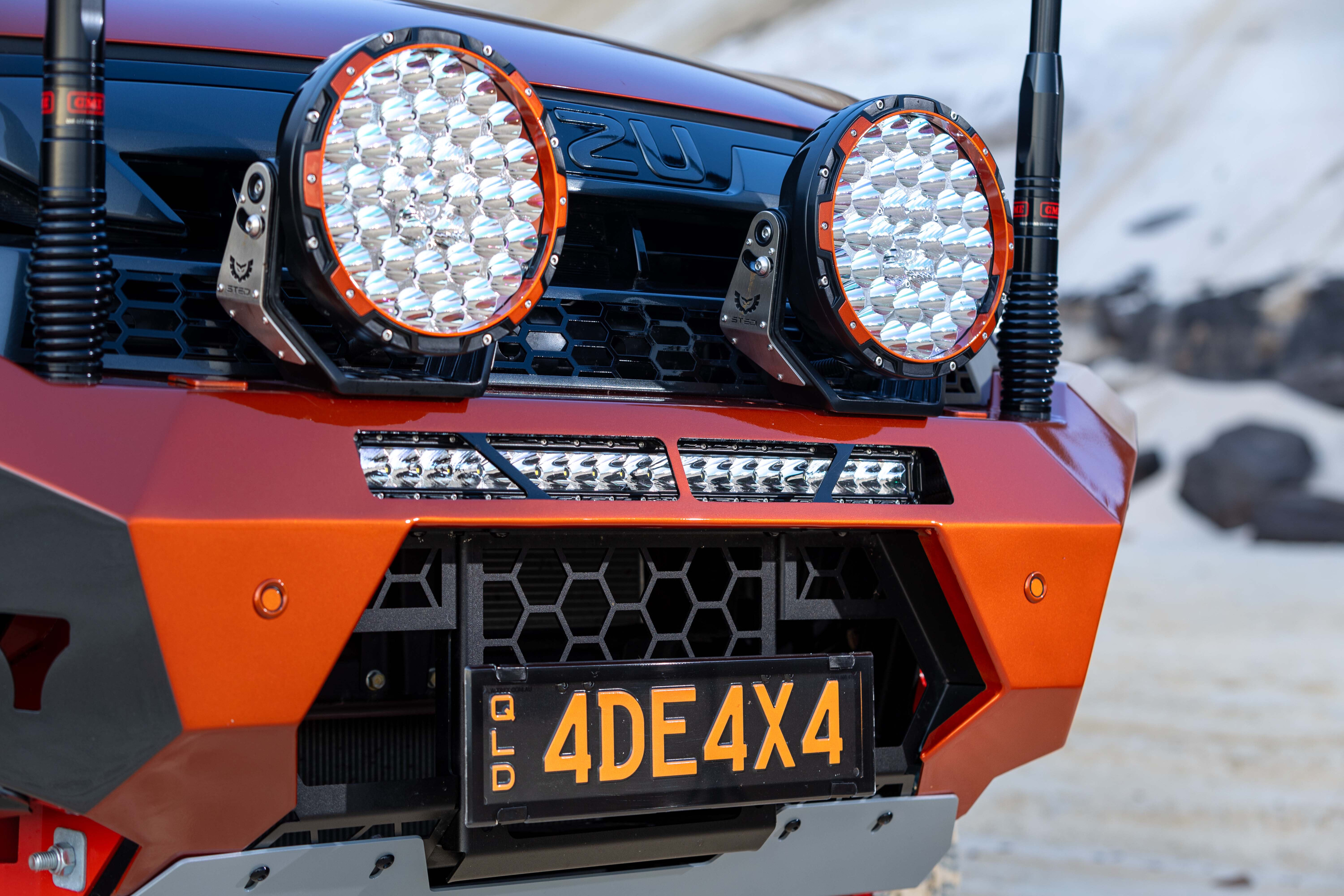
Russel’s kept capitalising on the serious increase in attitude with a serious increase in armour, too. The tip of the spear is none other than the Aussie-designed and built Offroad Animal Predator front bar, although it’s been modified far beyond recognition.
4D Engineering is responsible for the flash… well, flashers. The side fog lights have been binned and custom housings now hold a set of custom daytime running lights and sequential indicators. Match that with the unique paint job and the bar has a look like no other.
1
It’s jam-packed full of LED tech too; twin Stedi X-Pro 9-inch lights sit atop the bar, the outer rings colour-coded to the D-Max, a Stedi 21.5-inch LED light bar also got slotted into the integrated mount inside the bar.
The lights are flanked either side by GME whips: an AT4705BA cellular antenna feeds into the Cel-Fi unit for boosted phone reception on the go, and an AE4704B UHF antenna feeds into the XRS UHF for trackside comms. Can we get a radio check?
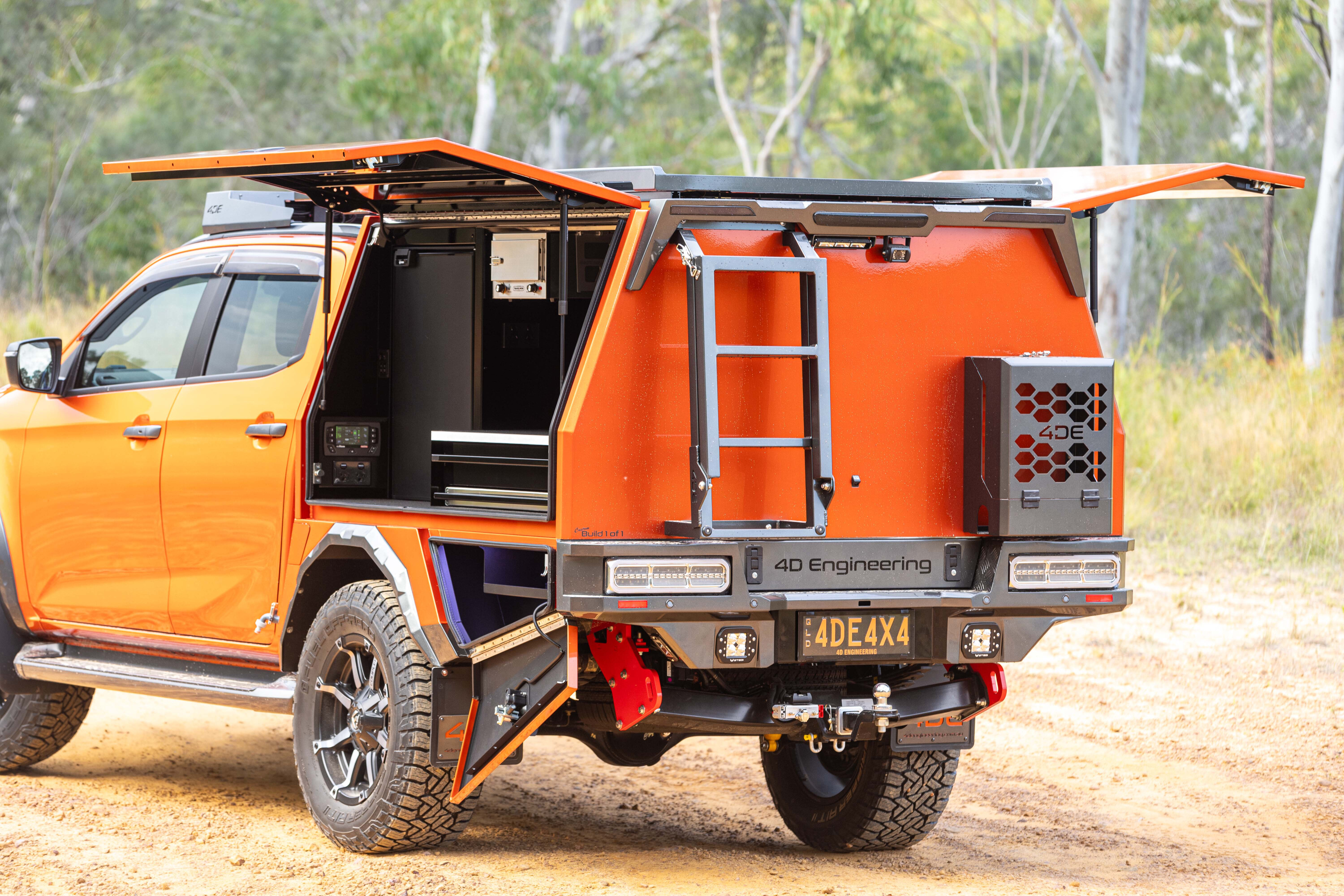
Move along the flank to the canopy and this is where 4D Engineering really starts to shine. Handbuilt in sunny Queensland from marine-grade aluminium, the lightweight offering works just as good as it looks, and thanks to the slick colour-coding melds seamlessly with the vehicle’s exterior. It’s a symphony of design, a testament to the builder’s unwavering commitment to perfection.
1
That idea is evident in the custom mudguards mimicking the OE flares up front and the fact 4D Engineering has tied the lift-up doors into the D-Max’s central locking system.
If you’ve ever needed to individually lock every single canopy door just to run into the shops you’d know why that’s such a win.
Additional storage has been spec’d up with internal drawers in the main body, underbody rear toolboxes with shelves, underbody rear drawers, a roof rack up top, and a lockable jerry can holder for good measure. Oh, and don’t forget the lockable fold-down rear ladder for rooftop access.
1
Moving to the inside Russel’s tried to make the D-Max camping friendly without looking cluttered, a juggling act he’s absolutely nailed.
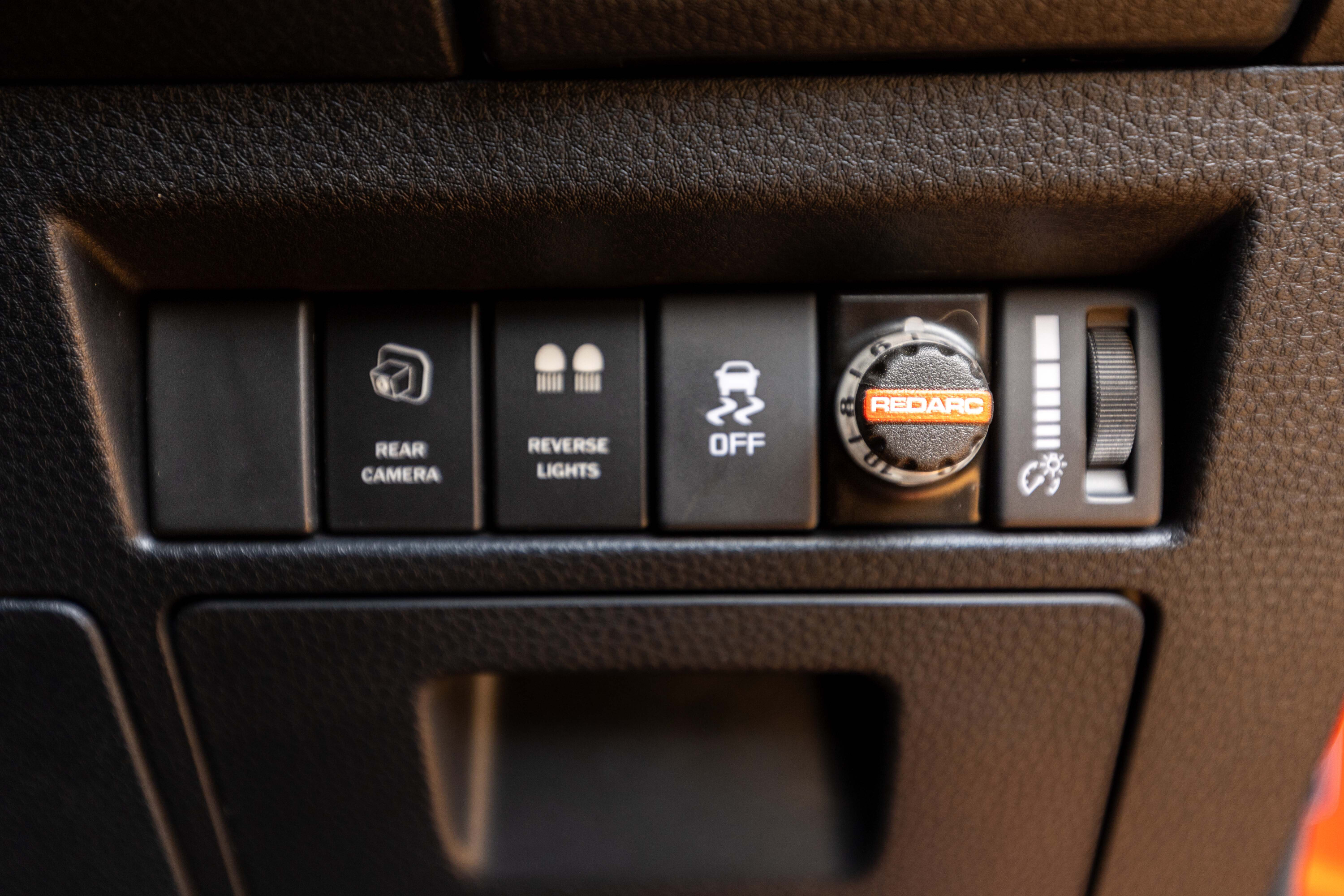
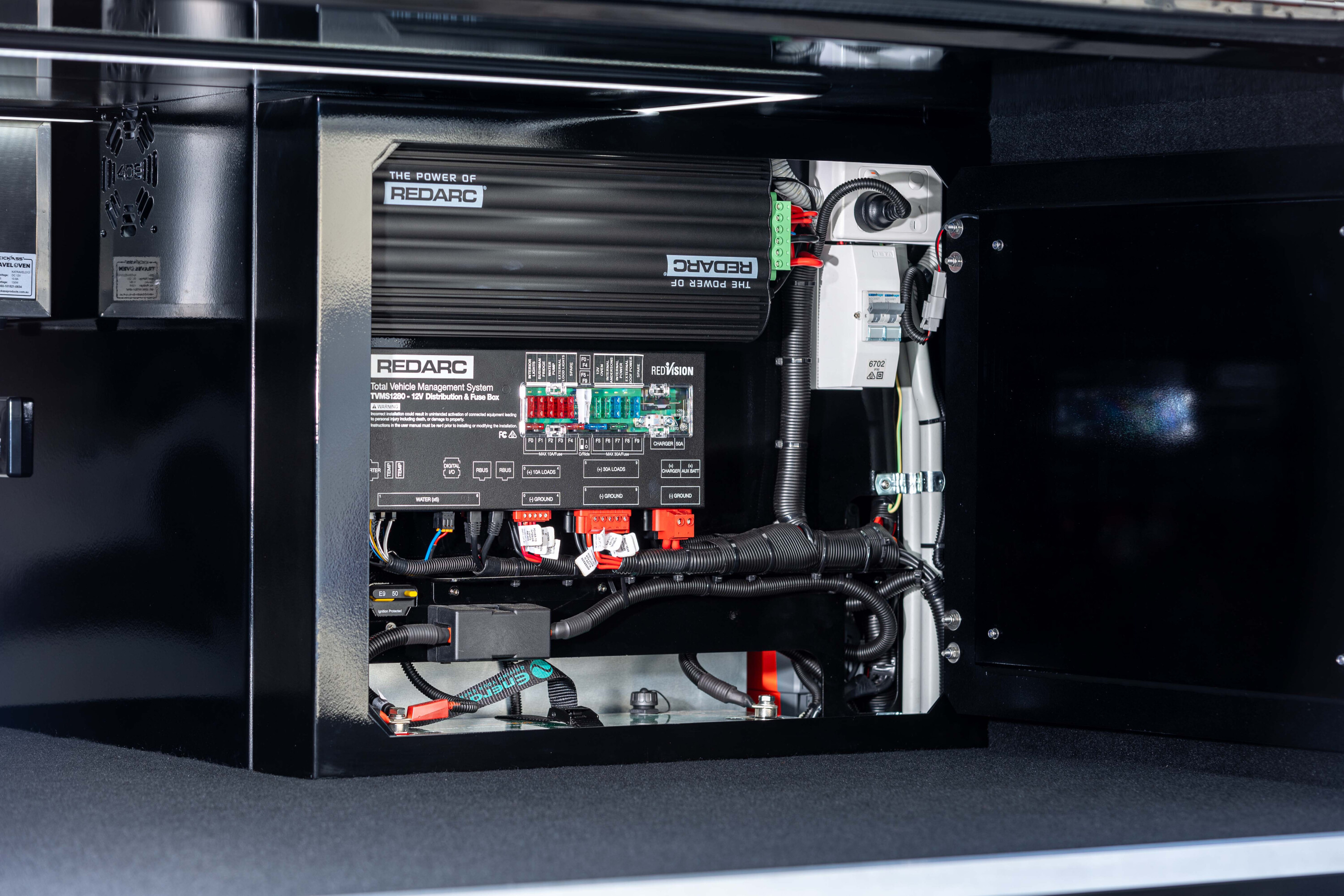
Powering the heart of the beast is none other than the Redarc Total Vehicle Management System paired with the company’s battery management system and Red Vision display.
If that sounds like a mouthful, the short version is the Redarc kit will monitor the Enerdrive 200Ah lithium battery, handle all of the controls for the various lighting inside and outside the canopy, run the Redarc 2000W inverter, and handle charge whether it’s from the Isuzu’s alternator, the three 100W solar panels on the roof, or mains power.
1
Oh, and it’ll do it all with Bluetooth control through an app on Russel’s phone. Simples.
All great stuff, but it’s what you can do with it that we care about. That battery system keeps a Bushman DC130-X upright fridge running for an uninterrupted supply of adult beverages around the campfire.
If you’re feeling a bit of a health kick coming on there’s a 60L stainless water tank built into the canopy, the Redarc system dolling out pressurised water to multiple outlets and monitoring levels in the tank too.
On the camp cooking front, a dual-top induction cooker, 12V travel oven, and large stainless-steel slide-out table turn the D-Max into a gourmet kitchen on wheels.
1
While the spec-sheet is impressive it’s also abundantly clear that Russel’s D-Max is a statement on quality and smooth integration rather than just throwing things at the wall.
Every single aspect from the colour-coded rings on the driving lights to the high-definition reverse camera on the rear has all been painstakingly planned to give a smooth experience with seamless integration.
It’s the kind of rig that might not immediately steal the spotlight in a sea of flashy attention-seekers, but take a moment to examine it, and it’ll pique your interest all day.
1
Under pressure
Remember the old days when you’d fill your diesel tank up and you’d have to wait for the foam to settle, breaking down back into a liquid? It was the high-speed diesel rushing in causing aeration at fault. Your shock absorbers have a similar issue, with far worse consequences than having to wait a minute. Your shocks work by forcing a series of valves attached to a piston through oil.
The fewer holes, and the thicker the oil, the more resistive to movement the shock (i.e. stiffer). As that piston pumps through the oil repeatedly, like on corrugations, the oil can heat up and aerate, turning to foam and offering little resistance to the piston and valves. No good.
Adding pressurised nitrogen into the shock effectively pushes down on the oil, stopping it from expanding from oil to foam. It’s a similar principle to having a radiator cap. At ambient air pressure water will turn from water to steam at 100°C. Under just 32psi of pressure that same water won’t boil until 124°C.
If you could add 200psi of pressure it’d take a huge 200°C to boil the water. The more pressure the oil is under, the more ability it has to cope with heat and corrugations. Sometimes a little bit of pressure is a good thing.
MORE
Everything Isuzu Ute
Sitting at my desk, with a view I’m lucky to have, mind you, I couldn’t shake the desire for fresh scenery. That’s what prompted a last-minute trip to the Northern Territory, swapping window for windscreen.
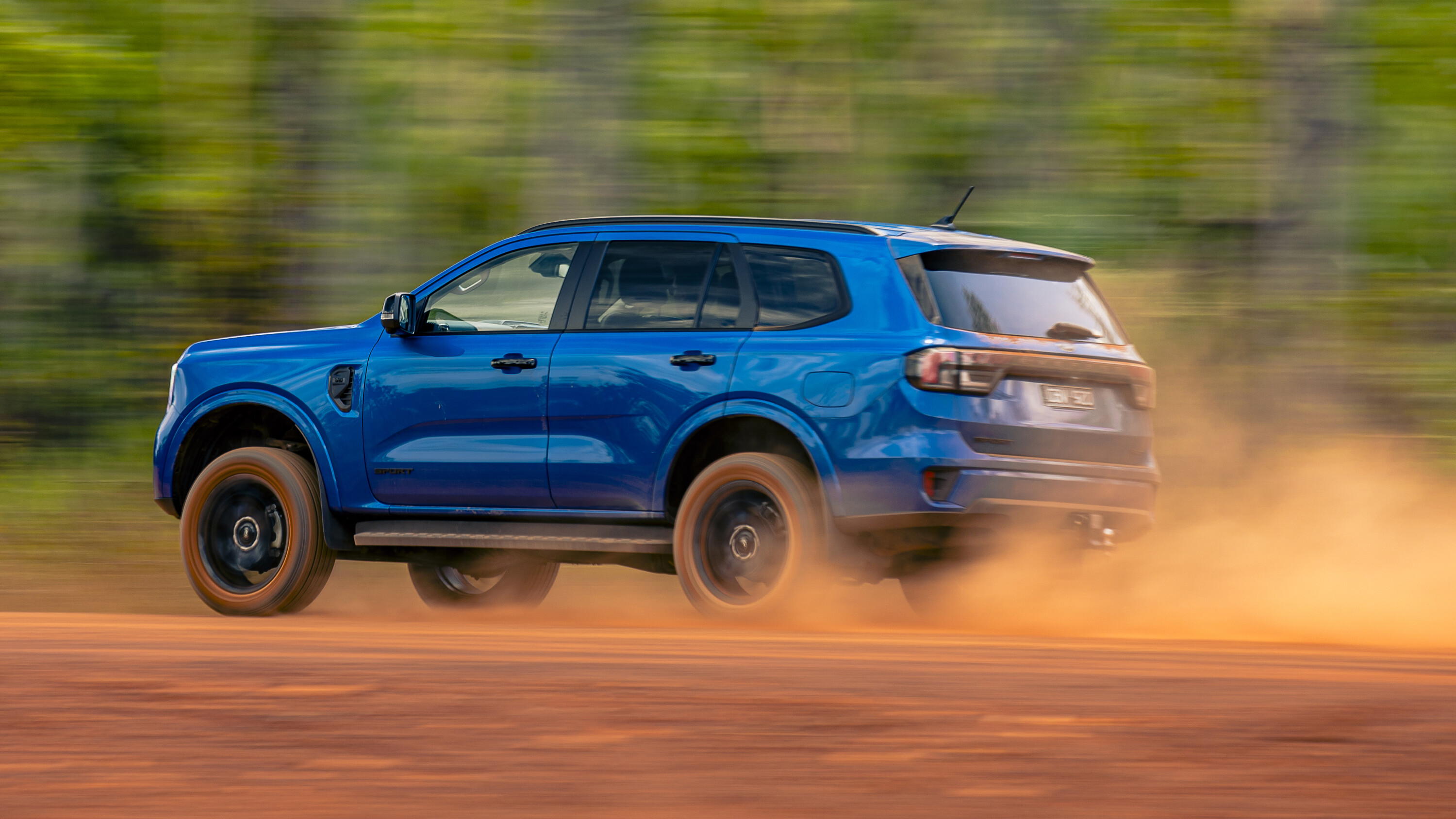
A quick call to the friendly folks at Ford Australia landed me a schmick new Everest Sport, which would be perfect for a trip like this – a mix of on- and off-road adventuring in comfort and style.
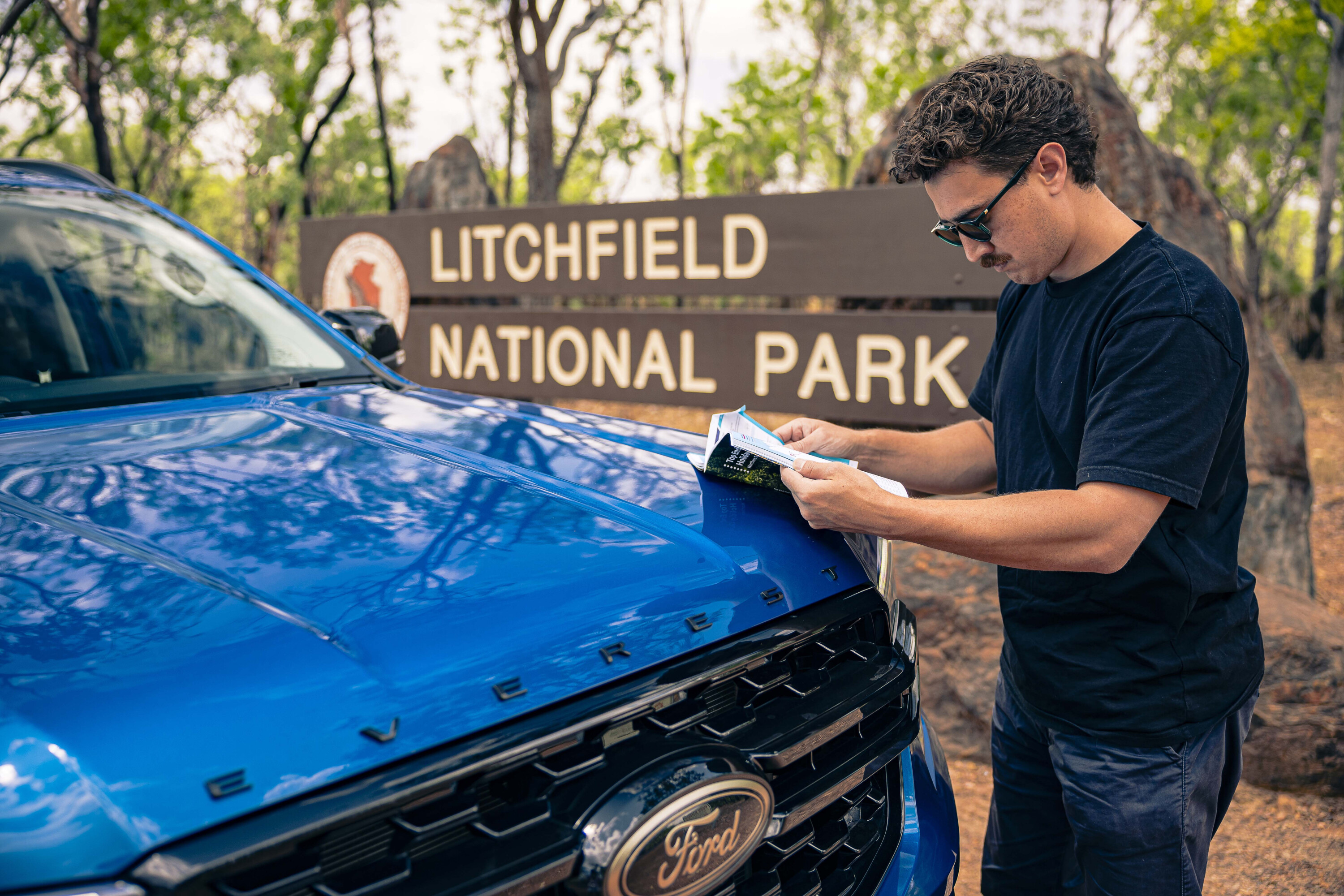
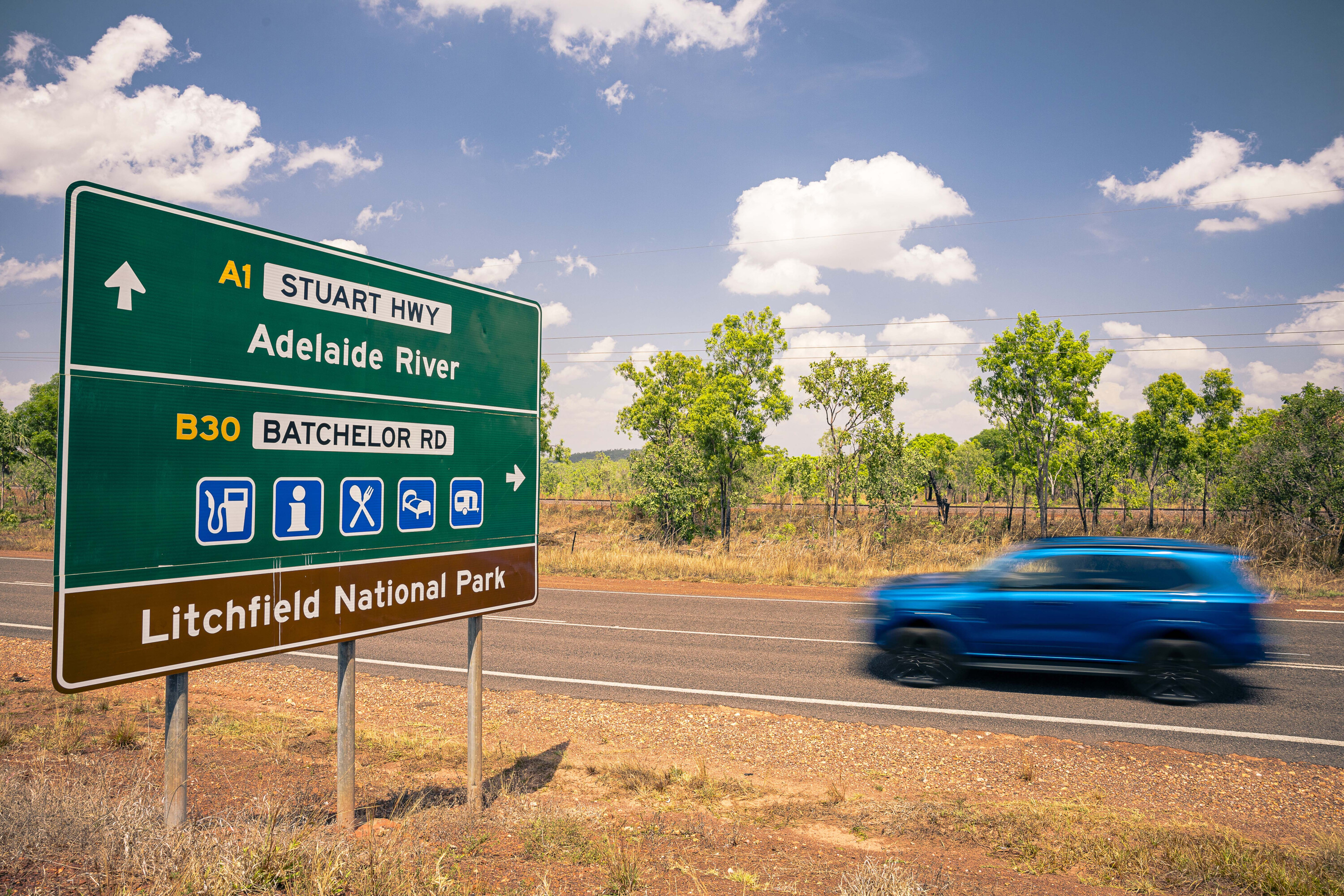
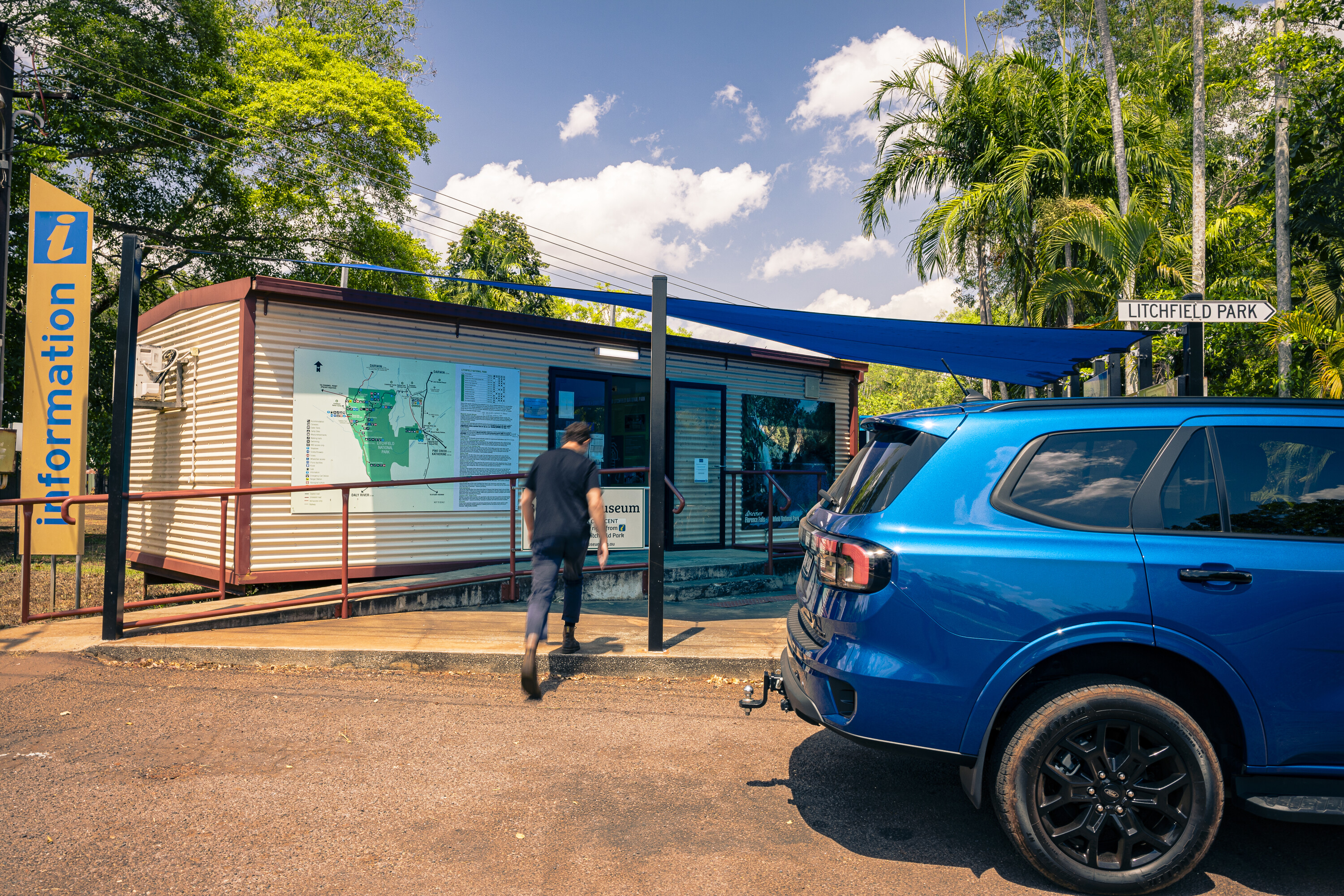
I had days, not weeks, to plan this trip so in the name of expediency I opted to head from Darwin to Litchfield National Park. Litchfield is smaller, simpler yet in my opinion just as epic as the more popular Kakadu National Park.
1
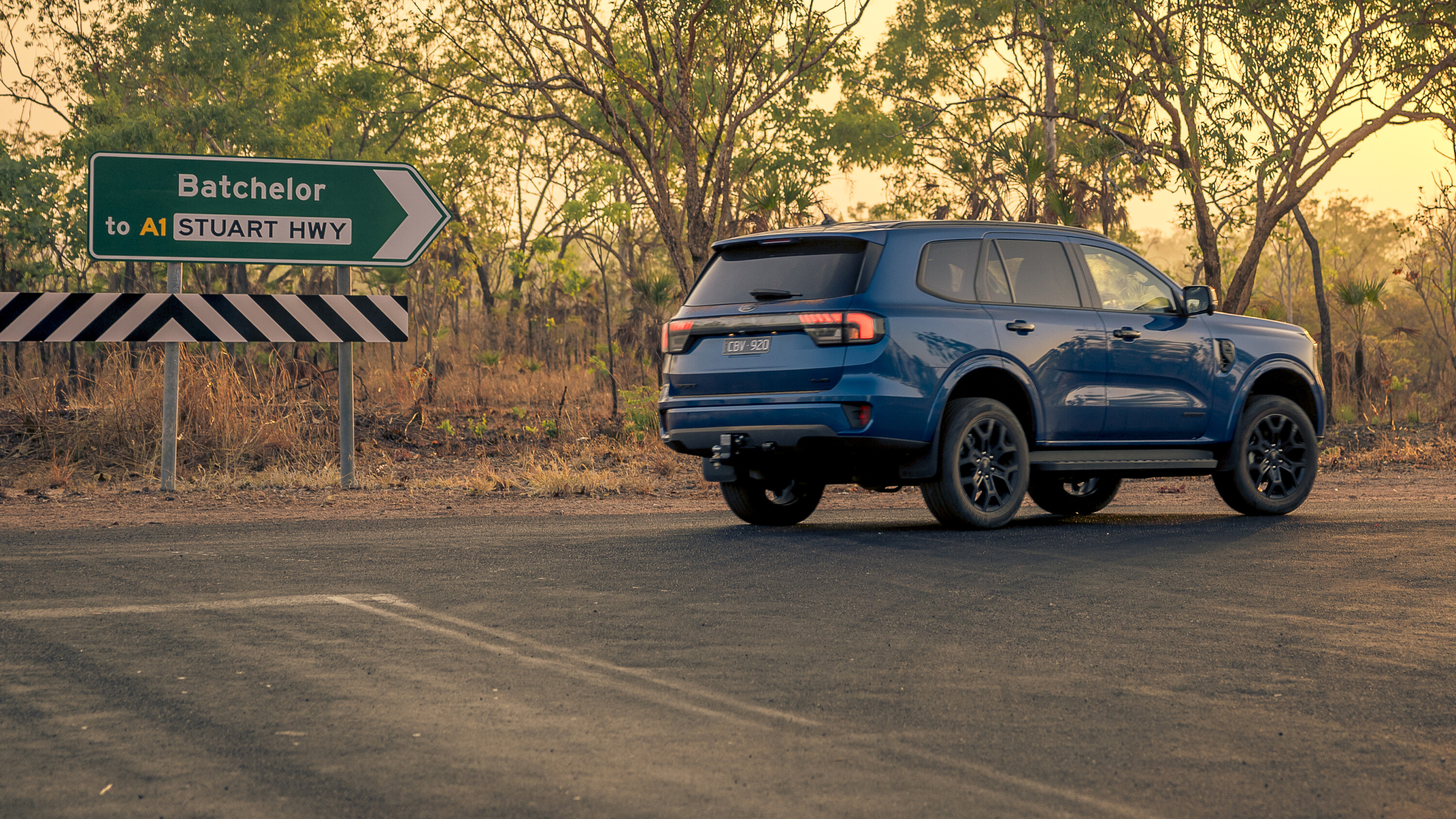
Driving about 120km south-west of Darwin and into Batchelor, a small town that borders the national park, the landscape becomes even more arid
I picked up the Everest Sport from the legends at Hidden Valley Ford in Berrimah, with a boot full of the latest ARB recovery gear, and hit the road. The striking Blue Lightning colour is my favourite of the various Everest paint options, feeling especially suited to Litchfield with its many sapphire-hued swimming holes.
Driving about 120km south-west of Darwin and into Batchelor, a small town that borders the national park, the landscape becomes even more arid, signs of life disappear and it all starts feeling like the ‘middle of nowhere’. That’s what I wanted to feel – so we’re on here.
Batchelor is an interesting town, as if it is deserted during the long, hot days. But by 3pm the one pub – attached to the iconic Litchfield Outback Resort – starts filling with thirsty locals and tourist types as the town comes back to life.
1
If you’re passing through, the Litchfield Outback Resort is an absolute must, ideally for an overnight stay but at the very least a pub feed and cold schooner. The hot, sticky weather up here somehow makes every beer feel ‘well earnt’, too.
Chatting to the resort owner and his father, the outback destination has seen some big names through the doors. Mentions of the Packers and other big hitters gave me the impression that if the walls could talk, they’d have plenty to tell.
The roller shutters came down, signalling that it was time for the thirsty locals to call their lift home, but I stayed up to chat with the owner a little longer – in the name of ‘research’. After shooing the last of the stragglers away, he poured an ‘on the house’ beer and leant in close to ask an unusual question.
2
“Ever seen a dingo, mate?” he said. “Not up close,” I responded, already knowing where this was heading.
Next minute, there’s a ‘half-dingo-half-mongrel’ stray cutting laps of the pub. The resort owner apparently found it as a pup and raised the wild dog alongside his Rhodesian Ridgeback – both very friendly but no doubt fierce when they need to be. Guarding the only pub in a remote town is no small task, but I think these two dogs are up to the task.
The next morning, day one of my Litchfield adventure, I had a chat to a few locals over breakfast. “Don’t walk through any of the water crossings,” one local 4×4 enthusiast told me, hinting at the likelihood of crocs lurking beneath the surface.
1
A common line from locals up here is, “I wouldn’t swim in there” when asking about a body of water. I heard it from park rangers, farmers, and if that dingo knew how to talk I’m sure he’d say the same. The crocs own the waterways up here.
Litchfield is a 1500-square-kilometre ancient landscape shaped by water, and much of the park’s charm lies in its picturesque swimming holes – most situated under cascading waterfalls.
However, for those who prefer staying dry – fairly impossible in or out of the water given how hot it was – there is also plenty to do outside of swimming.
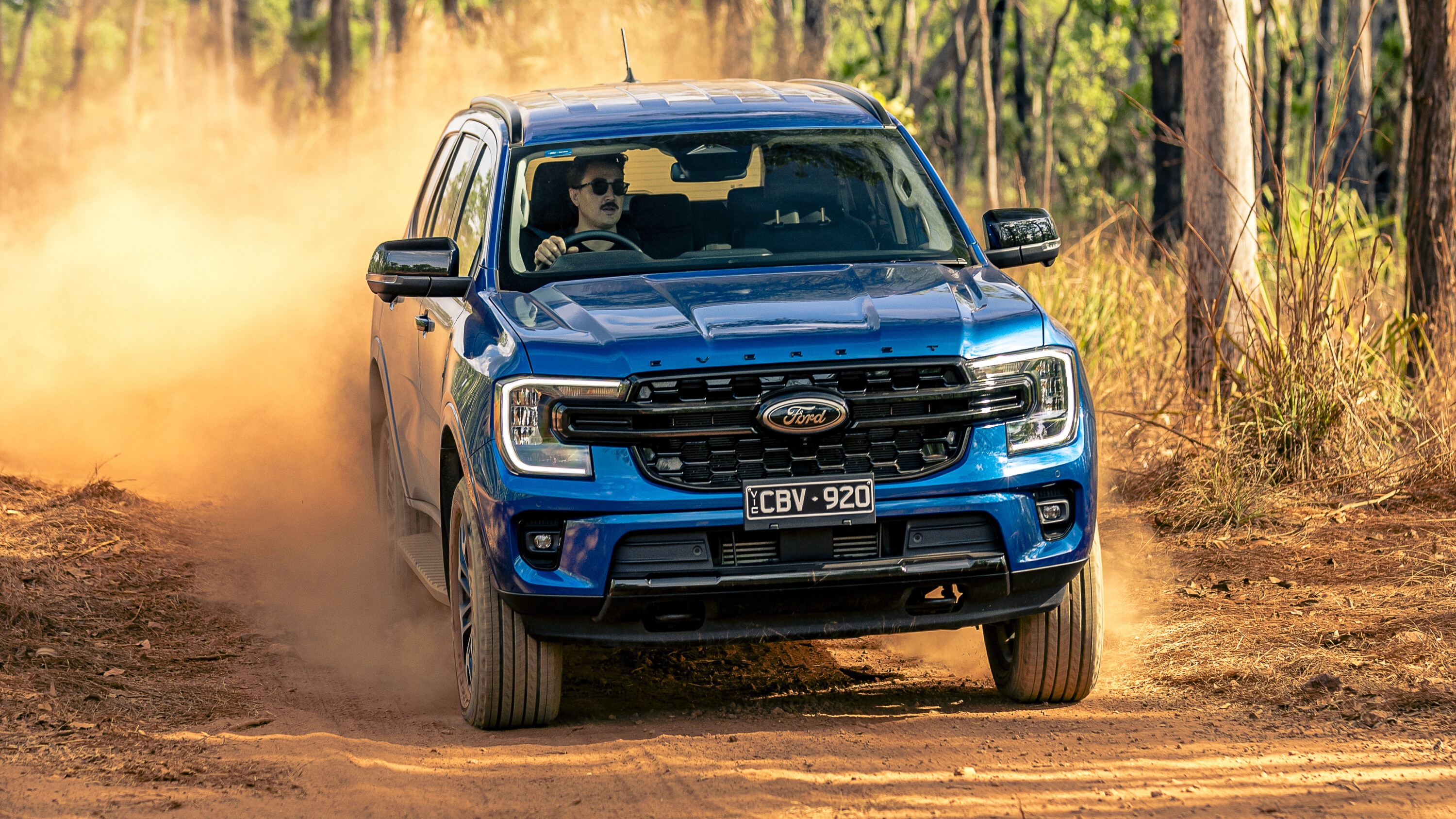
Following the natural order of attractions along the ring road, which snakes through the park offering incredible scenery, made sense and I was in no rush whatsoever. The Everest munched miles with ease, its turbo V6 producing a more-than-adequate 184kW/600Nm through a ten-speed gearbox that has really grown on me, but it was begging to be let loose off road.
1
I thoroughly enjoyed the stark contrast of the rich, red soil against the ashy, back-burnt trees and shrubs at this time of year, as the emerging generation of flora litters the landscape with vivid green signs of life.
If there was ever a visual representation of the circle of life, it was Litchfield in Spring. As one life ends, another begins, out here – similar across plants, people, and even planets, I thought as the solo traveller monologue played on in my head.
The Koongurrukun, Mak Mak Marranunggu, Werat and Warray Aboriginal people have lived throughout this area for millenia, and it is said their ancestral spirits formed the breathtaking landscape, plants and animals here. You definitely feel it, out here, and nowhere more so than my next stop.
1
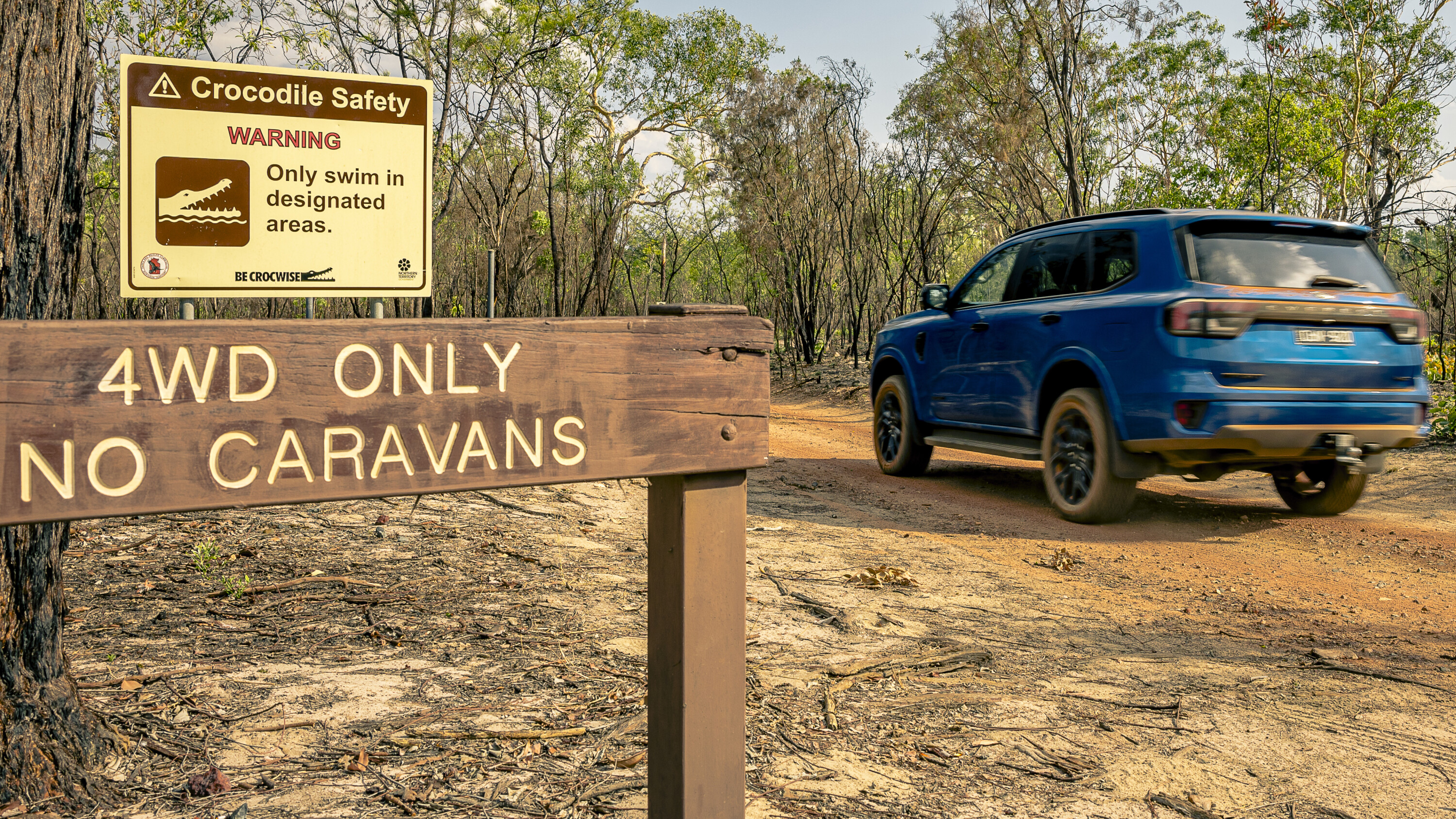
I pulled up for a bite to eat and (canned) coffee at the Lost City, a stunning off-road detour, via the tabletop swamp – more like a desert at this time of year.
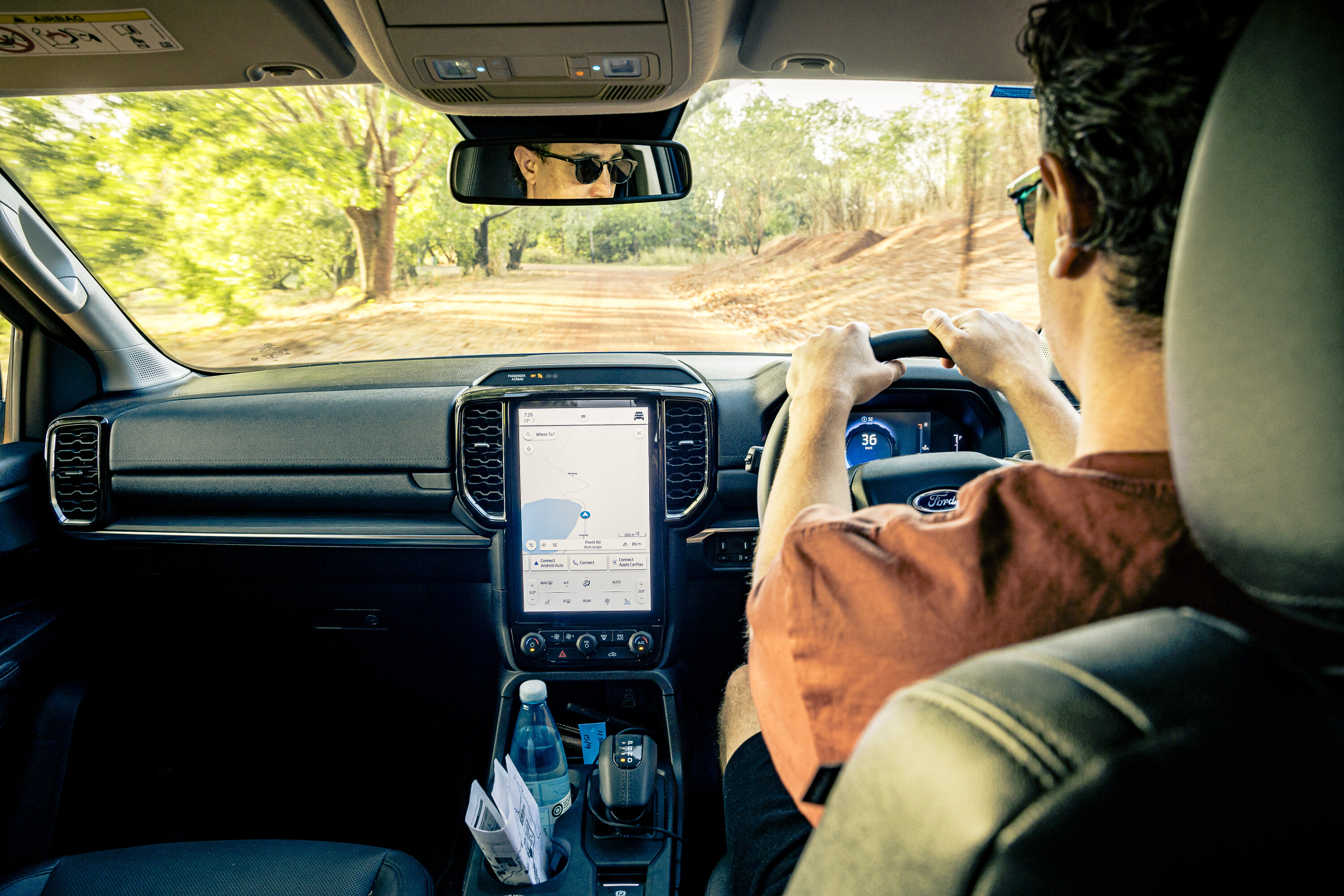
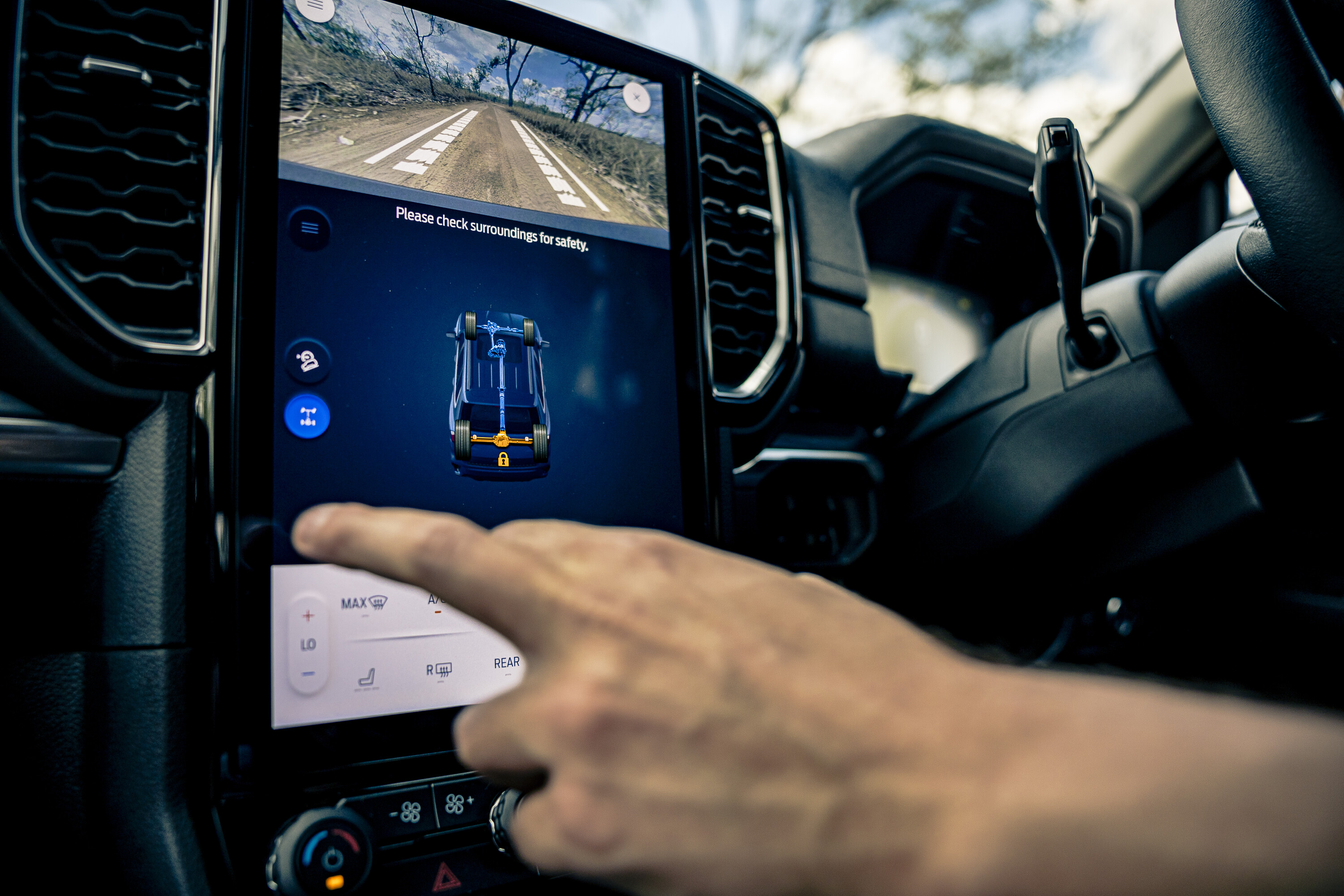
Engaging four-wheel-drive is easy in the Everest, done via the press of a button, and an outer-ring on the 4×4 dial allows you to choose from Normal, Eco, Tow/Haul, Slippery, Mud & Ruts, and Sand drive modes.
I actually left the system in 4A – the automatic mode – for the majority of off-road driving because it does such a good job of making adjustments. More time to take in the scenery, I figured, and less time thinking about drive modes.
1
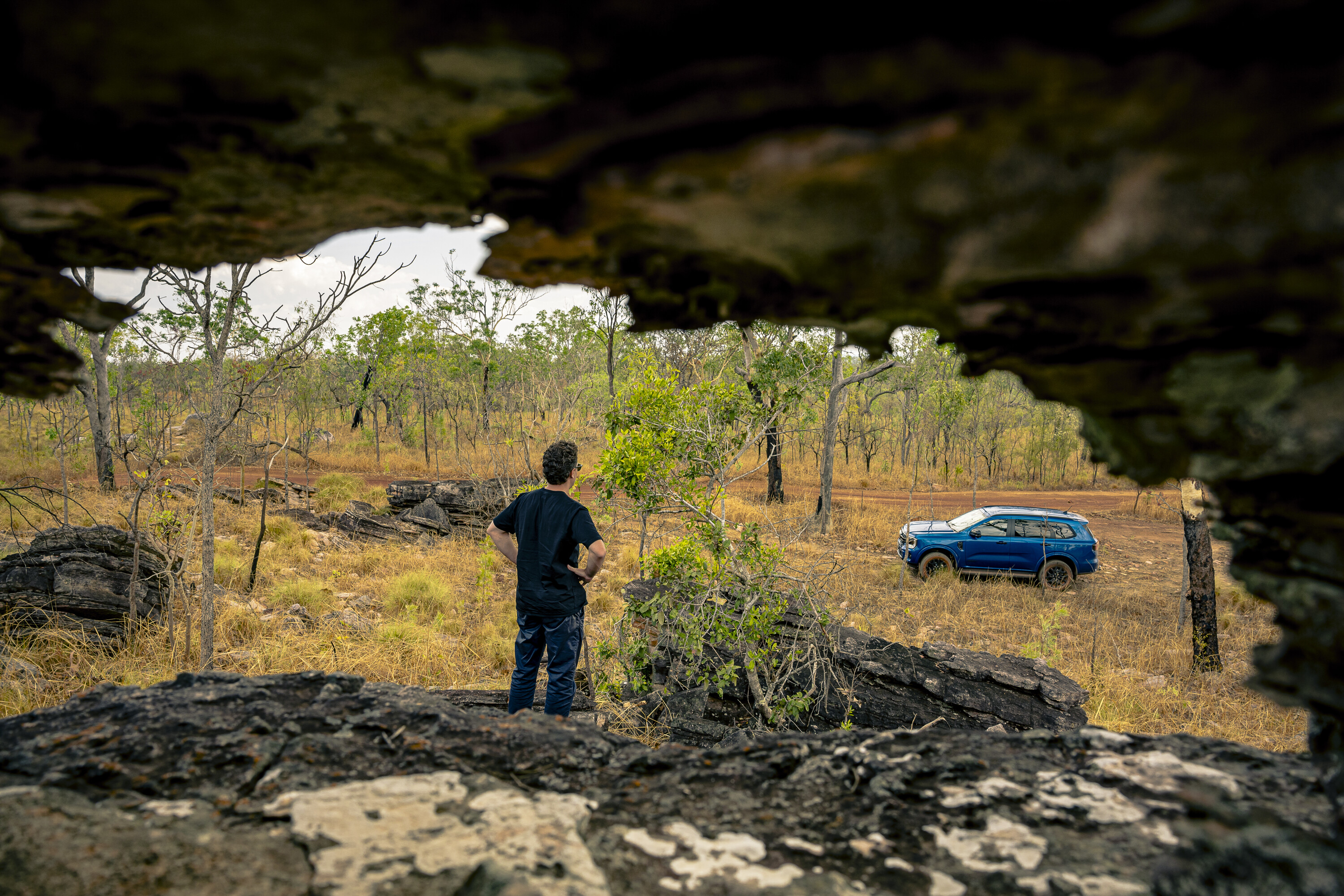
Once on foot and in the thick of it, the Lost City resembles just that – a city-like-scape of stone structures that have stood here for thousands of years.
They’ve seen more than you or I ever will, which gives the tall sandstone structures a wise, distinguished energy. They really do feel as though they’re watching you.
Before I knew it, the sun was gone and I’d lost hours exploring the Lost City and then a couple of the nearby waterfalls, all involving a decent amount of walking. Take plenty of water if you’re heading into Litchfield, because you’ll need it – losing what feels like a litre of sweat every time you set foot out of an air-conditioned car.
1
There is a certain energy throughout Litchfield National Park, which I couldn’t quite put my finger on. I discussed this with a few locals later that night, who agreed some sections of the park had a ‘bigger than you’ feeling about them.
I’d seen a large, grey buffalo earlier in the day and, while he was alone, I figured he had friends nearby. Buffalo are not native to the Northern Territory, so they’re likely bandits that escaped one of the nearby farms many moons ago.
Sure enough, driving out of the National park after dark, a road that consistently felt longer on the way out than it did heading in, I had to hit the brakes fairly abruptly after seeing three or four of the bitumen-coloured buffalo crossing the road.
1
Thankfully the Everest would have taken over with its full suite of safety tech, but I’m glad it didn’t come to that.
No matter how careful you are, in remote areas where wildlife poses an unpredictable danger, onboard safety systems provide a level of assurance I’d rather not live without.
After slowing down to let the shady-looking buffalo cross, animals ‘on the run’, Siri gave me a hand calling the Litchfield Resort to make sure they’d still be serving dinner.
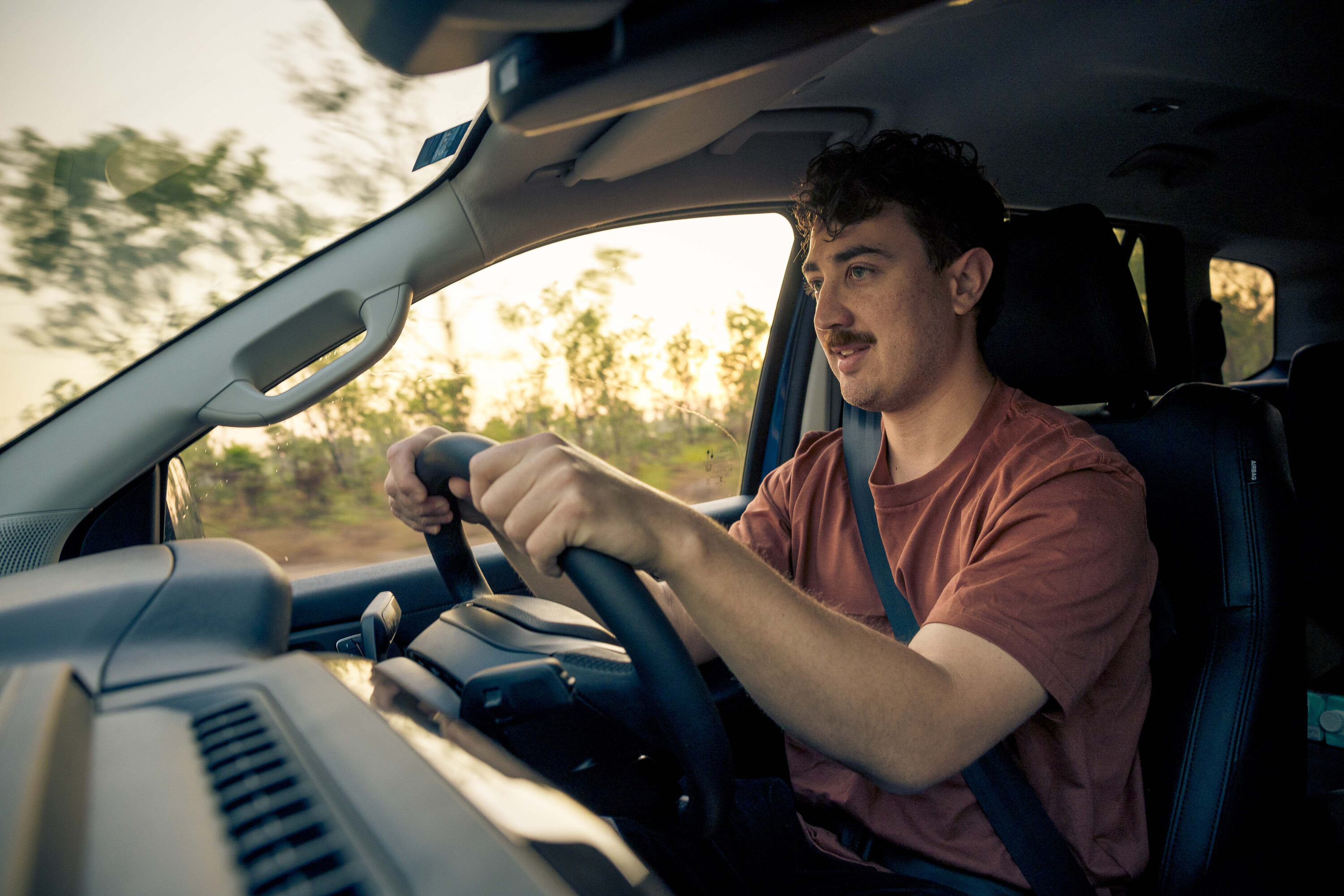
Apple CarPlay is, in my opinion, a must-have on long, solo road trips. Without a passenger to help change music, make a call or add a stop in the GPS, a good infotainment system is a real luxury and the Everest delivers with a massive 12-inch screen and all the functionality I could want or need.
1
I’d called the resort because I was worried the kitchen would be closed.
In a place this rural, kitchens often close by 8pm (ask me how I know) and the thought of a muesli bar for dinner after such a long day was cause for concern. I was met with a chirpy voice on the other end, a backpacker I presumed, based on the British accent, who told me quite matter-of-factly, “you’ve got 15 minutes because the chef is in a good mood, but after that I can’t help you.”
The GPS said it would take about 15 minutes to reach town – beauty. The locally-caught Barra was about a million times better than a muesli bar and the serving size was bloody generous, too. No points for guessing what it was washed down with.
1
“That things pretty flash, is that yours mate?” said the owner of the resort, who was peering out at the Everest with a few locals or, in pub speak, ‘regulars’.
They thought it looked pretty impressive and, after showing them some of the tech inside, they couldn’t believe it retails for less than the most popular 4×4 model in these parts (cough, cough) at less than $70,000 for the one I was rolling around in.
Day two was all about testing – scientifically, of course – the various swimming spots around Litchfield, but first I wanted to have a quick crack at the gnarliest 4×4 trail on offer – Reynolds Track.
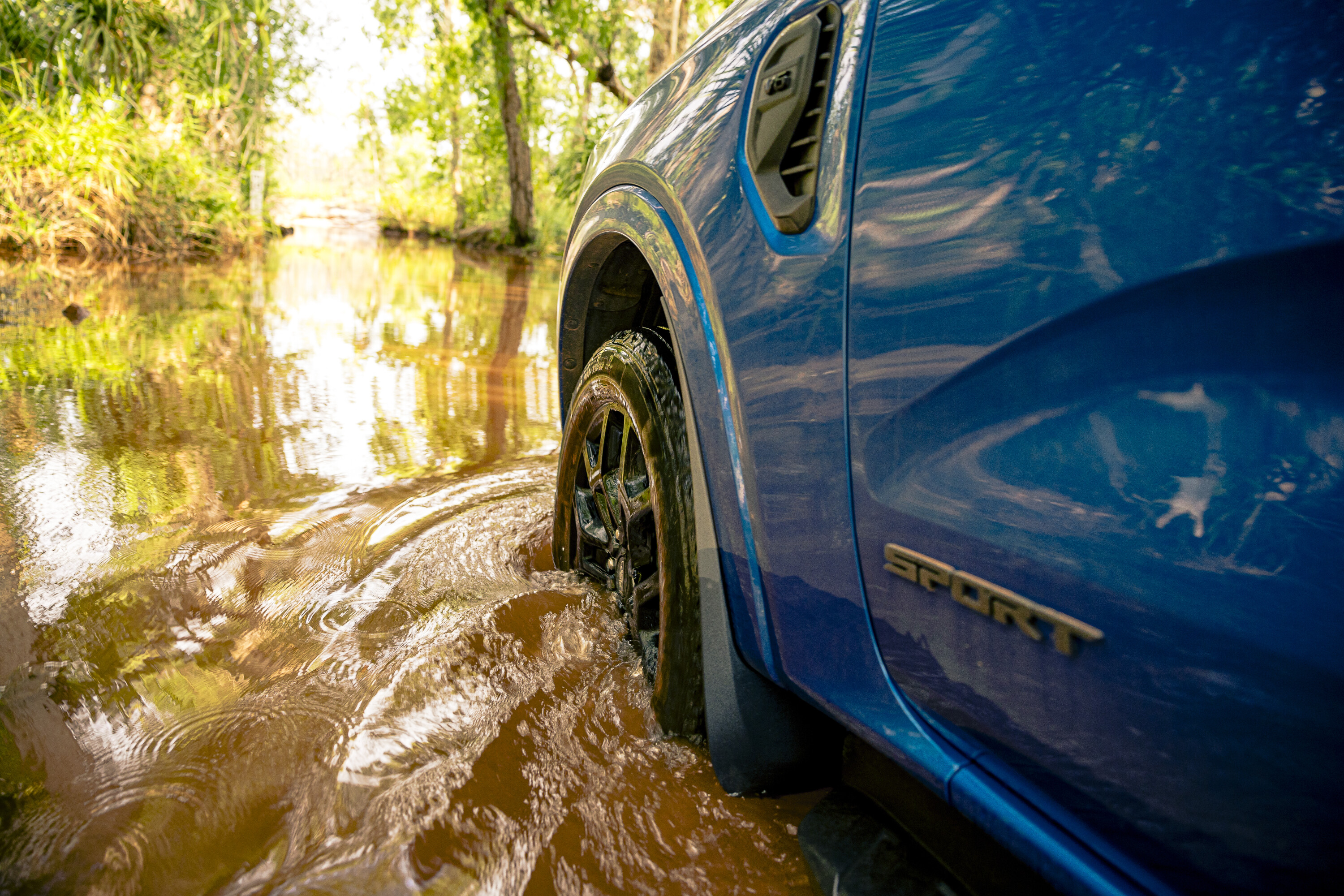
1
I couldn’t shake the fear of crocs whenever I encountered water here in the NT – even puddles put me on edge. I’d watched too many videos about how they lurk inches below the surface, watching you through murky water, ready to gnaw at whatever dangles closest.
This fear was no greater than when we entered Reynolds Track. The off-road trail kicks off with a fairly long, 50-metre-or-so water crossing that’s only around 500-600mm deep but murky as hell.
The issue was that while the wading depth on the Everest is a respectable 800mm, I could feel the crossing getting deeper after already passing the 600mm ‘deepest point’ marker – perhaps due to the soft ground being dug out by other off-roaders.
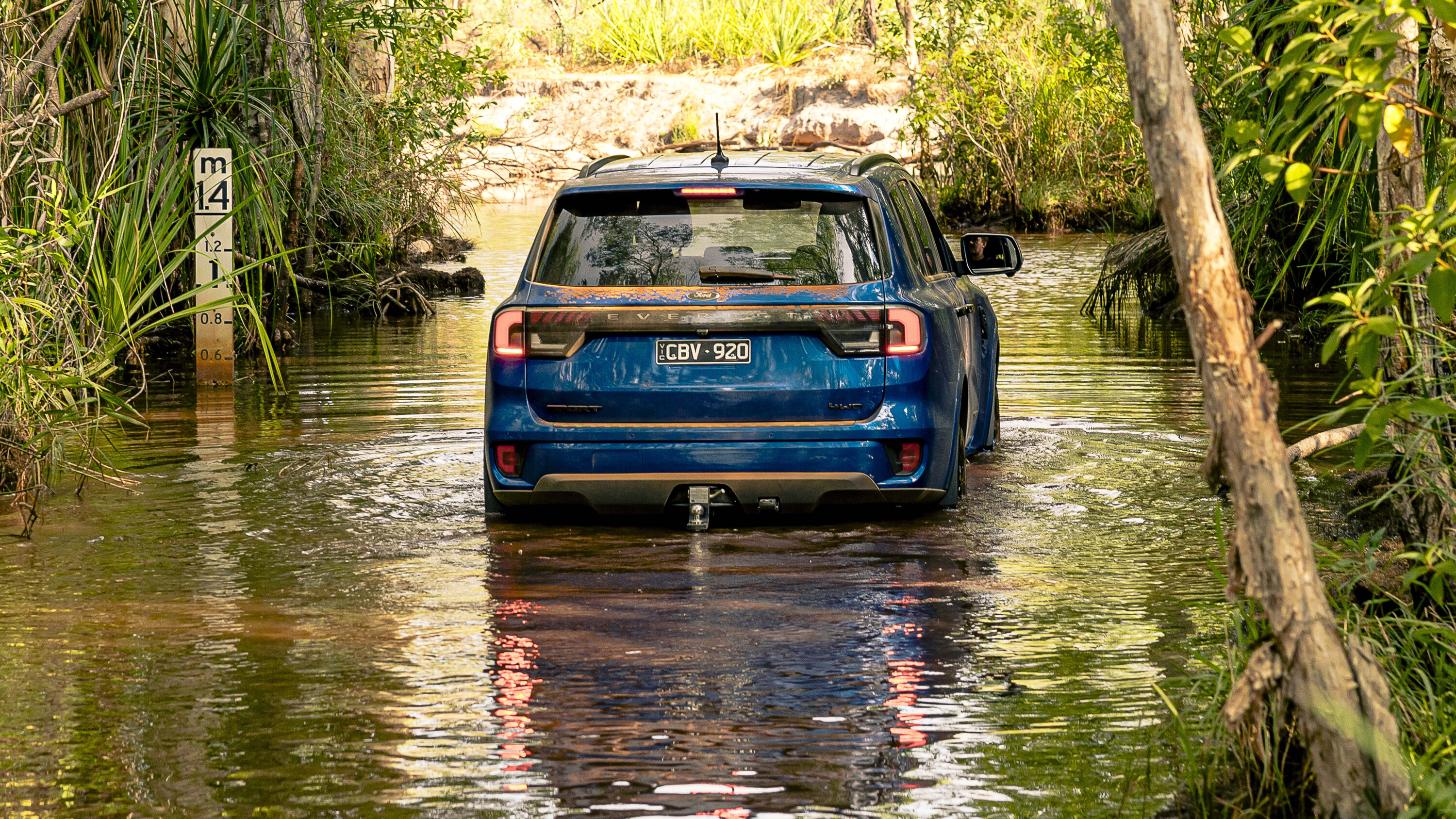
1
I couldn’t walk the trail, as I would normally do in Queensland, Victoria or New South Wales, because the muddy water was home to opportunistic crocs. I kept going, slowly assessing any change in depth.
“Yeah, they’re definitely in there mate,” the park ranger told me when I queried this particular crossing earlier that morning, talking about crocodiles of course.
After getting through, the deepest point being around 700mm, and unaware of how deep the next few crossings would be, I decided to turn back. Best not to risk it in a car that isn’t mine, and the only real downside to turning back was the heckling I’d receive from locals that evening.
1
Now, onto the swimming (or lounging around in crystal-clear water holes) that I spoke about, in non-croc infested water.
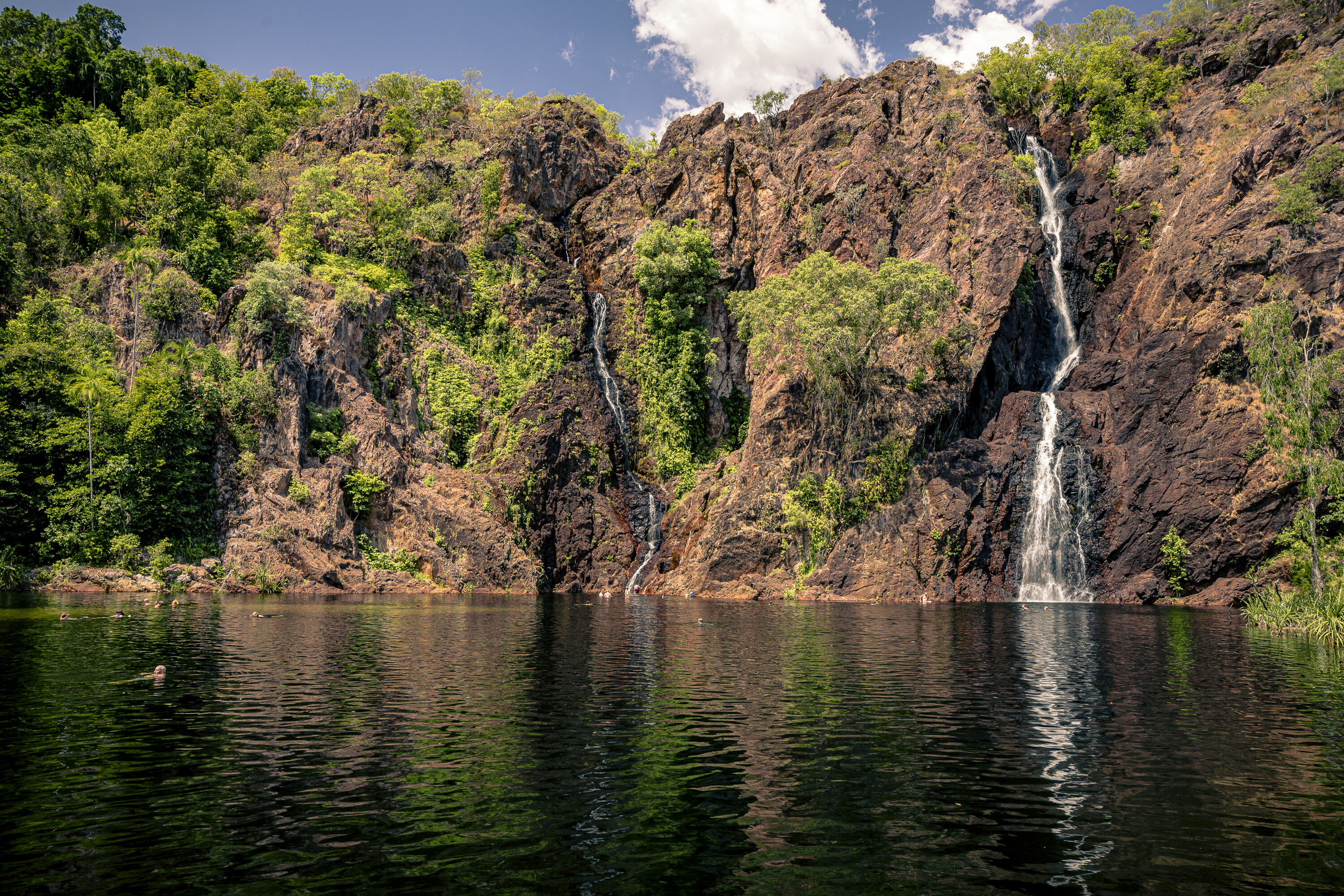
After taking a dip at the usual culprits – Florence Falls, Buleys, and the truly insane Wangi Falls – I’d been told about some hidden creek spots in the Central Valley Escarpment I wanted to suss out.
The Central Valley only opened a couple of years ago, offering paid-permit-only camping and access to some pretty incredible tracks between May and November, but you do need to pick up a key in Palmerston or Katherine because it’s gated.
1
I only wanted to get in to explore, but after taking a look around I wish I’d packed the swag.
All three of the campsites on offer were well looked after, picturesque and suitably secluded. The fact they were gated meant limited traffic, too, keeping numbers down at swimming holes and on bush walks.
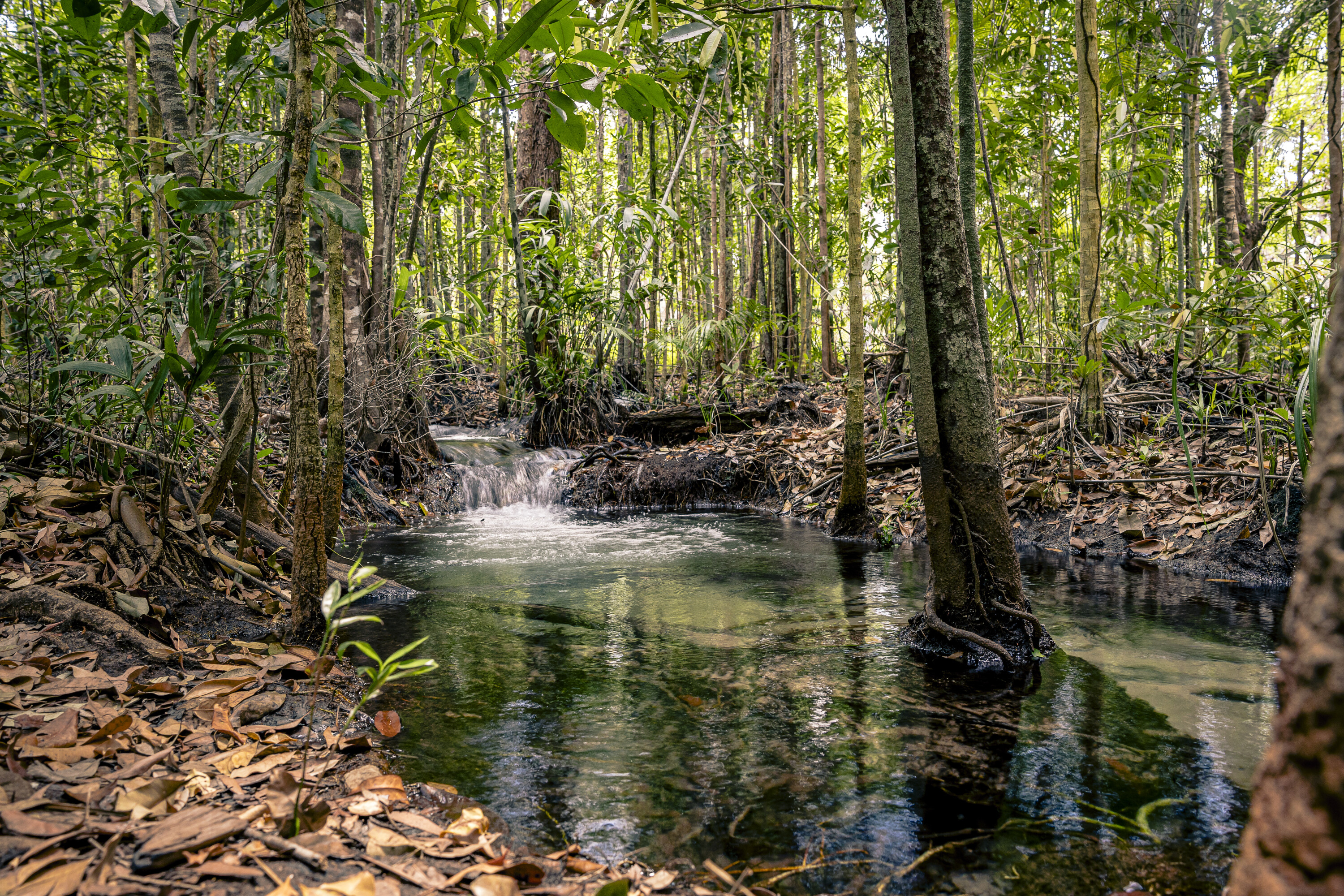
The small rock pools within Central Valley were absolutely stunning, with the clearest water I saw on the entire trip. Of course, the croc risk was slightly higher in these creeks, which didn’t help with my reptile paranoia, but with water this clear you’d see a scaley friend coming from a mile away.
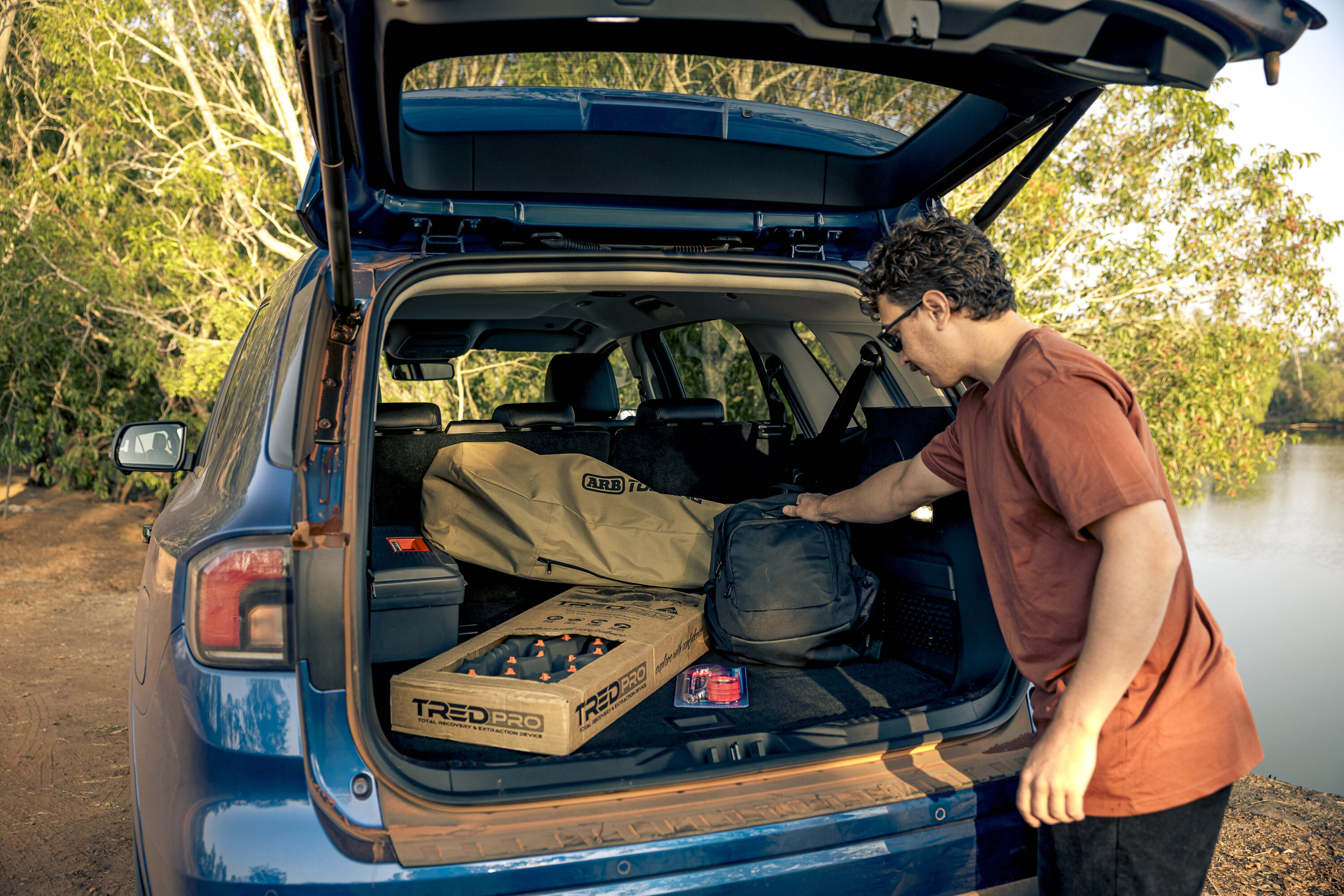
2
The tracks heading in are challenging, but not difficult, and can be done in high-range 4×4. I crawled around in low-range, but only because I was in no rush and it meant I could take in more scenery.
On rocky, low-speed terrain the Everest soaks up bumps, better than a vehicle with 20-inch wheels ought to, keeping my bad back in check. Worth noting is that it is equally plush over heavily-corrugated dirt roads, of which there are plenty up here, even eating a few potholes for breakfast when I couldn’t safely avoid them.
After a few freshwater dips, some four-wheel driving, and a disappointing canned-tuna lunch, it was time to start heading back out of Litchfield and onto Darwin.
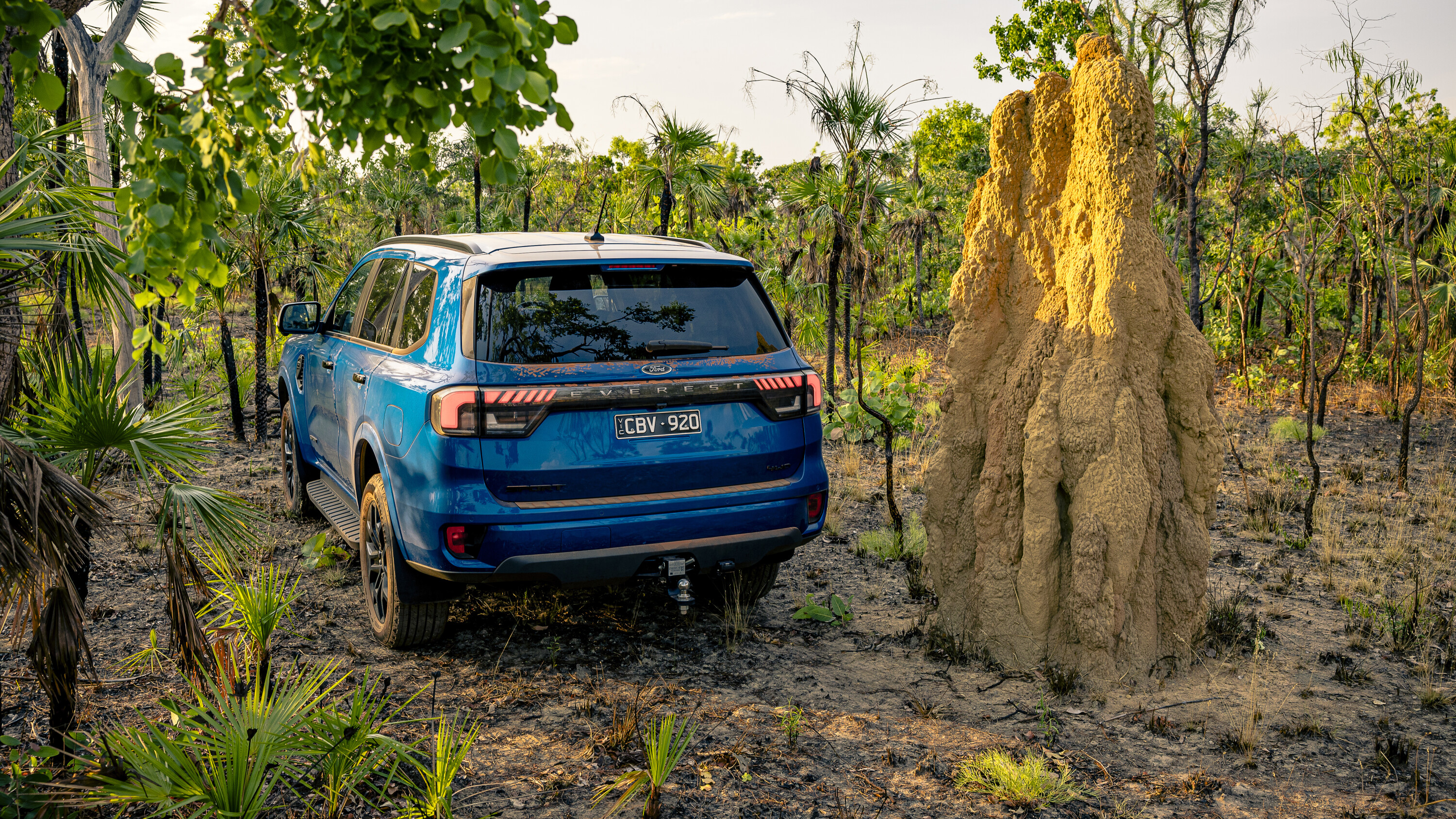
1
I stopped briefly at the Magnetic Mounds on the way out, gawking at the up-to-four-metres-high termite mounds – alien-like as they litter the fire-ravaged landscape as far as the eye can see, seemingly unharmed.
Just like that, my Litchfield adventure was over. It was time to head back to civilisation, but with a renewed love for the outdoors and a stronger than ever belief that the best view in outback Australia is often through a windscreen.
Looking out of my hotel room back in Darwin, I could see the Everest in the parking lot below. Visually, it’s a vehicle I liked the moment I saw it. But in terms of everything else, I couldn’t be happier with where it took me and how it did so – rugged and capable but also luxurious enough to please even the fussiest of occupants. Ford Australia really nailed this one.
For information on the Ford Everest range and features please visit here [↗].
MORE
Everything Ford