A good swag is an adventurer’s best friend; steady enough to handle the elements and ready to provide a good night’s sleep.
We’ve compiled the best swags in Australia in 2024 to help you choose one to be your camping companion. When purchasing a swag it is best to consider who will be using it and where you plan to camp. This will help you choose a swag that is the right size, comfortable and durable enough to handle whatever conditions you throw at it.
To help you choose, we’ve also included a buyers’ guide, along with our top choices for the Best Swag in Australia 2024.
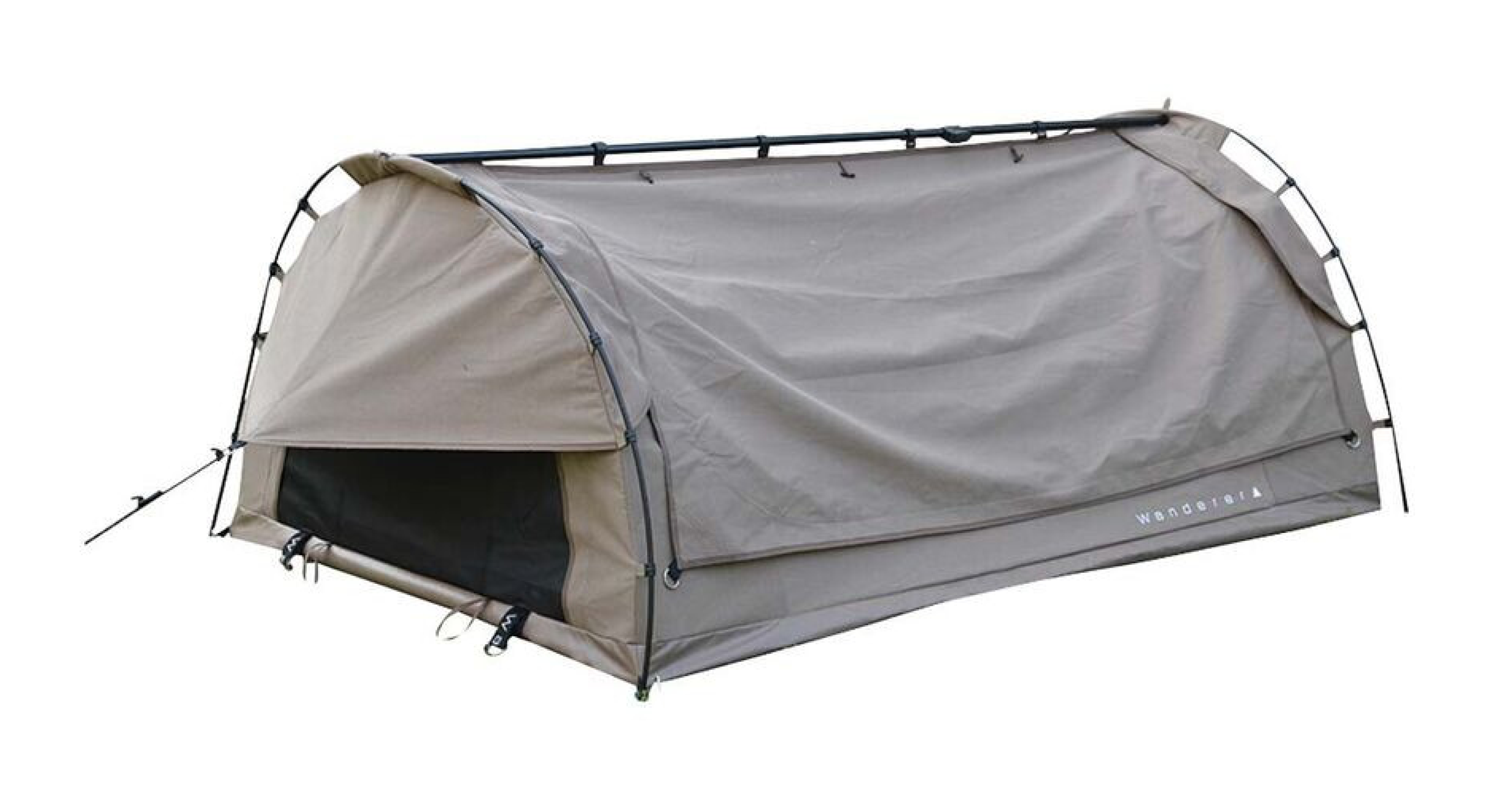
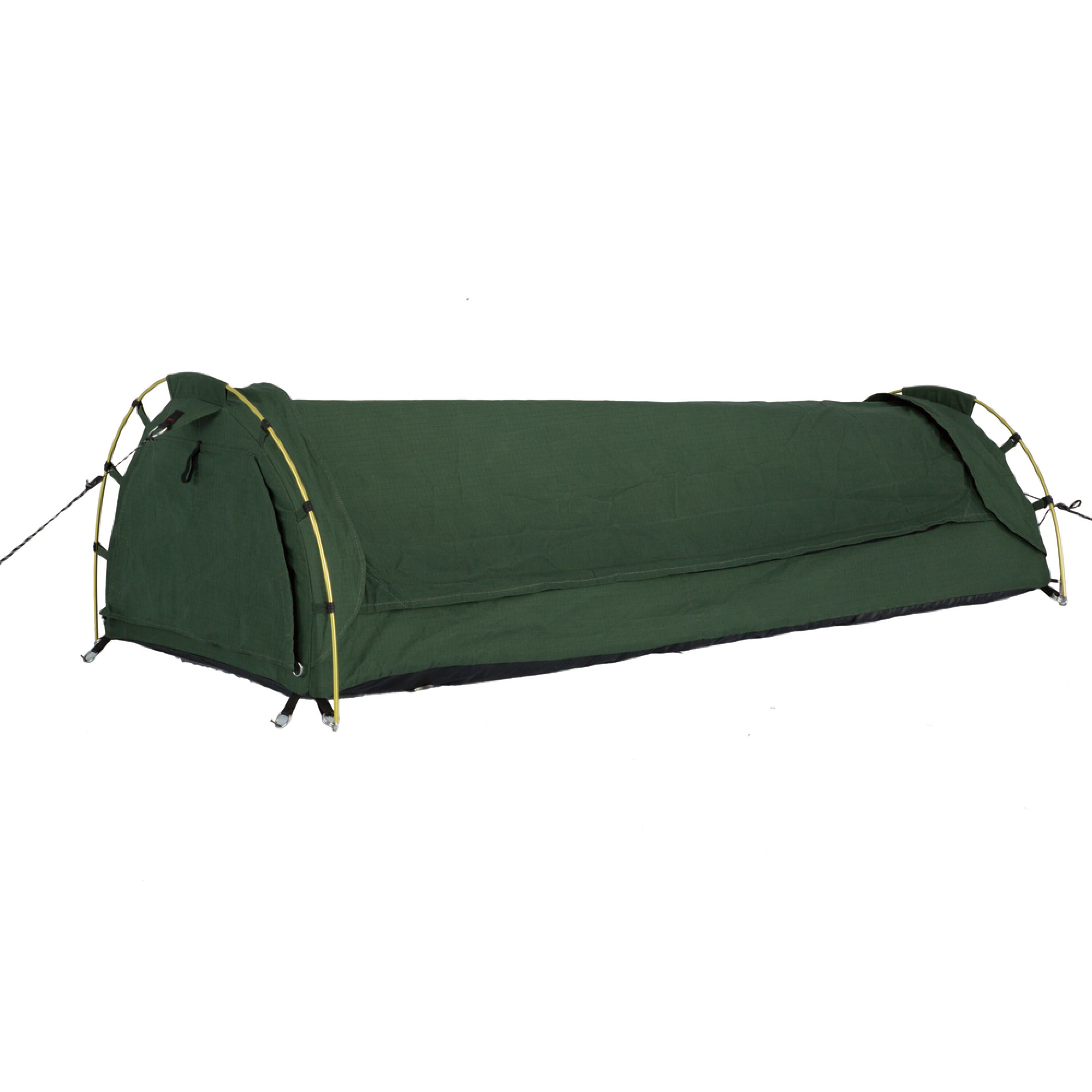
Wanderer’s Contour swags are designed with the toughest of conditions in mind. However, they are versatile to use in all seasons, making them a great investment which will last you for many camping adventures to come.
The Contour swags come in single and double sizes, each made from a 450gsm canvas and 500gsm PVC floor. This built-in durability will keep you warm and dry in any conditions, without the need to purchase any other accessories.
1
The 7cm mattress will give you a comfortable night’s sleep and the No-See-Um mesh across four sides allows you to open up and gaze at the stars on warmer nights. Plus, it will keep the bugs out.
While a heavy-duty fabric is used for the swag, the alloy dome poles keep the overall weight down. There is a top spreader bar for stability and to make it easier to adjust the tension and keep the sides from sagging. The multiple entry points will make access easy, particularly for the double swag.
If you are planning on using your swag in varying weather conditions, Wanderer’s Contour range provides the necessary protection without an over-the-top price tag.
Specifications
Material
450gsm ripstop polycotton canvas
Floor
500gsm PVC
Size
210cm L x 85cm W x 68cm H (single); 215cm L x 140cm W x 83cm H (double)
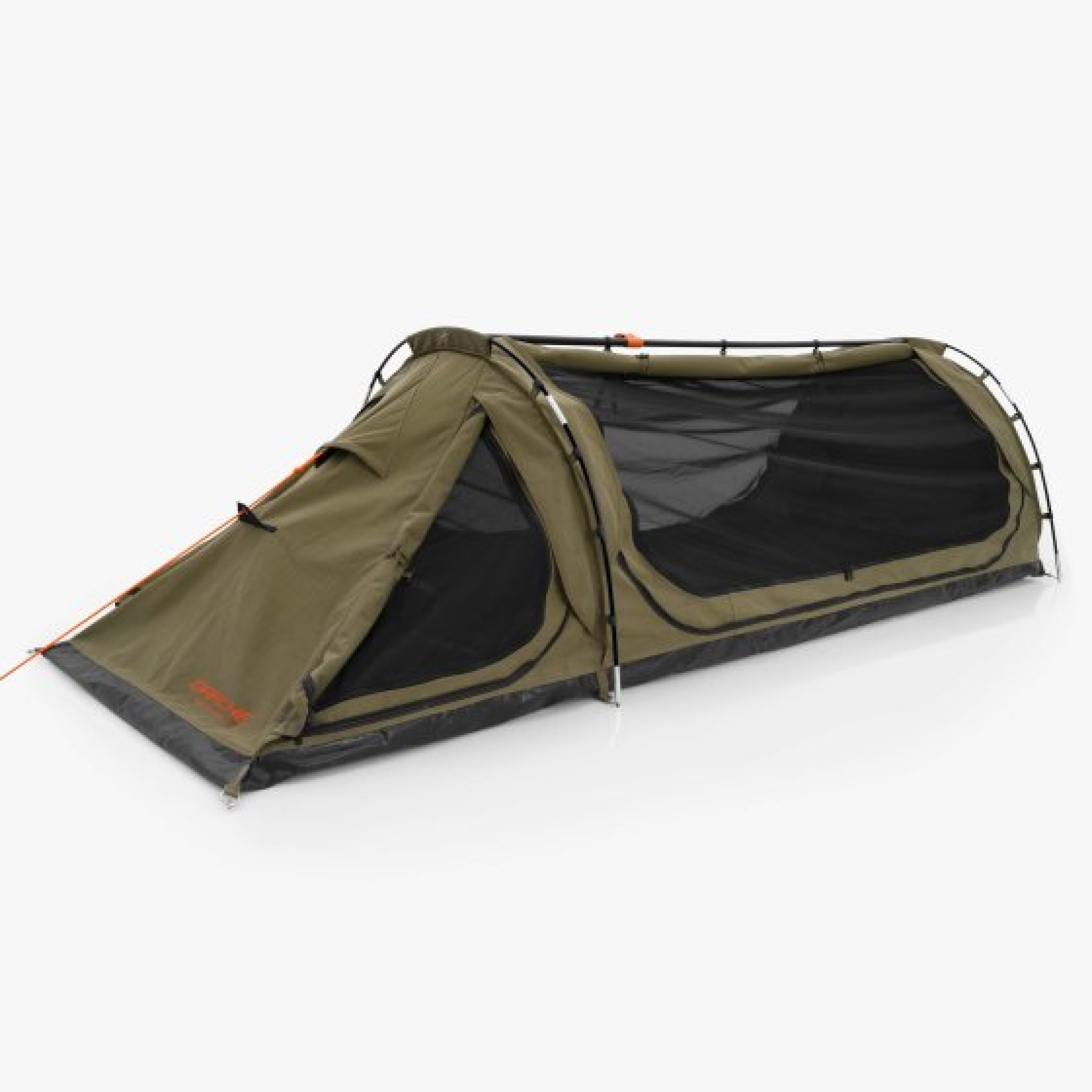
Darche has created a durable, versatile, easy-to-use swag range in its Dusk to Dawn + collection.
These swags are built to last and will keep you warm and dry in even the toughest of conditions. There are three separate sizes to choose from: 90cm, 110cm or 140cm wide. Each is easy to set up – with two composite poles and a trigger-lock ridge pole for stability. Inside is a 7cm thick foam mattress with a removable cover.
1
The Dusk to Dawn + range has been upgraded to include a front vestibule for gear storage. It has full-length canvas storm flaps – which you can open up in good weather or close off to stay dry and warm. The mesh panels provide excellent ventilation while keeping insects out.
These swags are at the higher end of the price range, however, for the quality – and with a three-year warranty – the Dusk to Dawn + range is a worthy investment.
Specifications
Material
420gsm ripstop polycotton canvas
Floor
600gsm PVC
Size
300cm L x 90cm W x 81cm H (900); 300cm L x 110cm W x 81cm H (1100); 300cm L x 140cm W x 81cm H (1400)
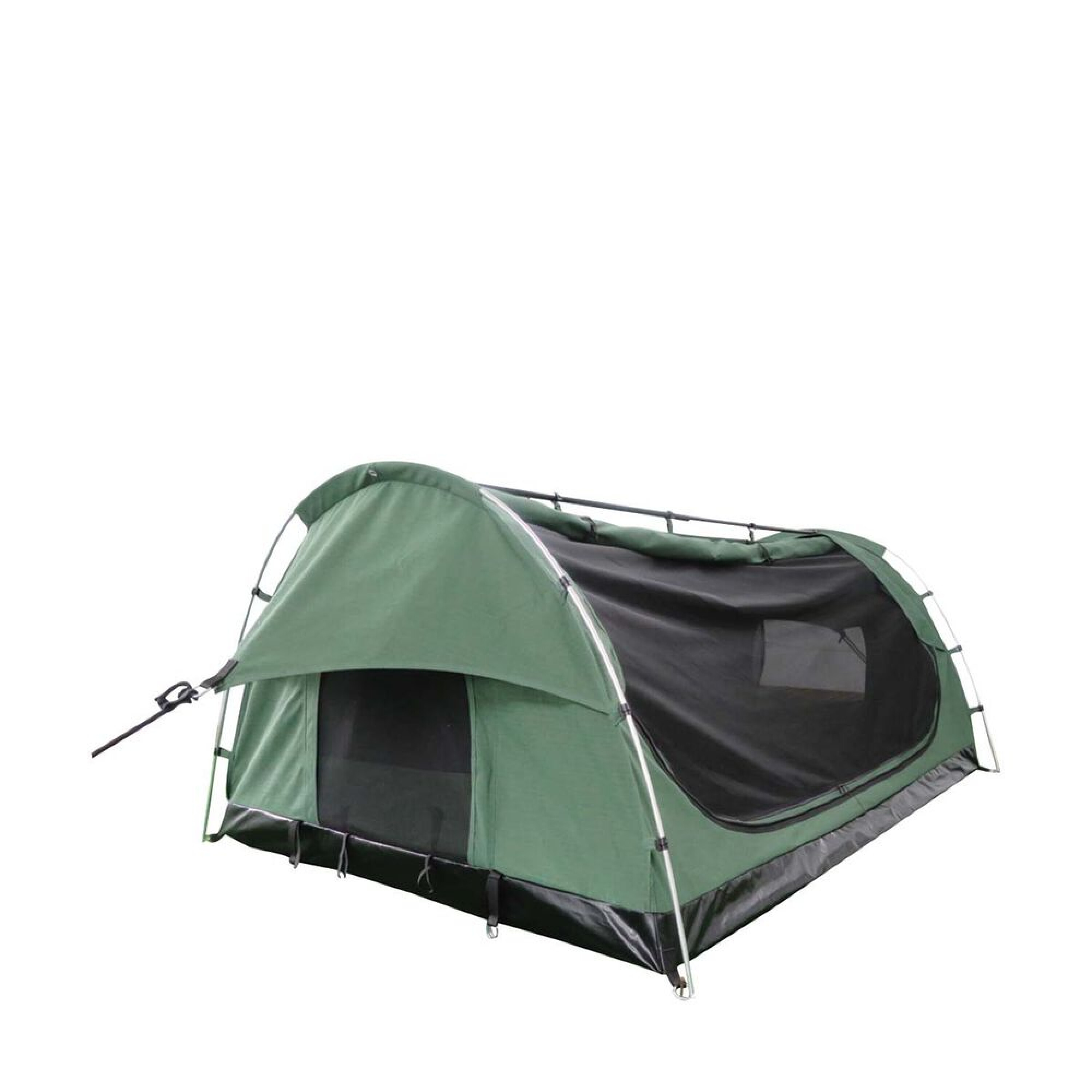
For a versatile swag that won’t cost an arm and a leg, XTM’s 4×4 range fits the bill. The Double and Single swags are durable, easy to set up and spacious enough to fit one or two people comfortably.
1
The swag has lightweight alloy poles that are easy to erect. Plus, the expandable spreader bar lets you get the right tension and prevents the sides from sagging. The large mesh-covered sides provide good ventilation.
For the lower price, you are only getting a 5cm thick mattress so you may consider using an extra mattress on top. Or for kids, this could be the perfect addition when they are ready to sleep on their own.
Specifications
Material
400gsm ripstop polycotton canvas
Floor
450gsm PVC
Size
215cm L x 90cm W x 65cm H (single); 215cm L x 140cm W x 83cm H (double)
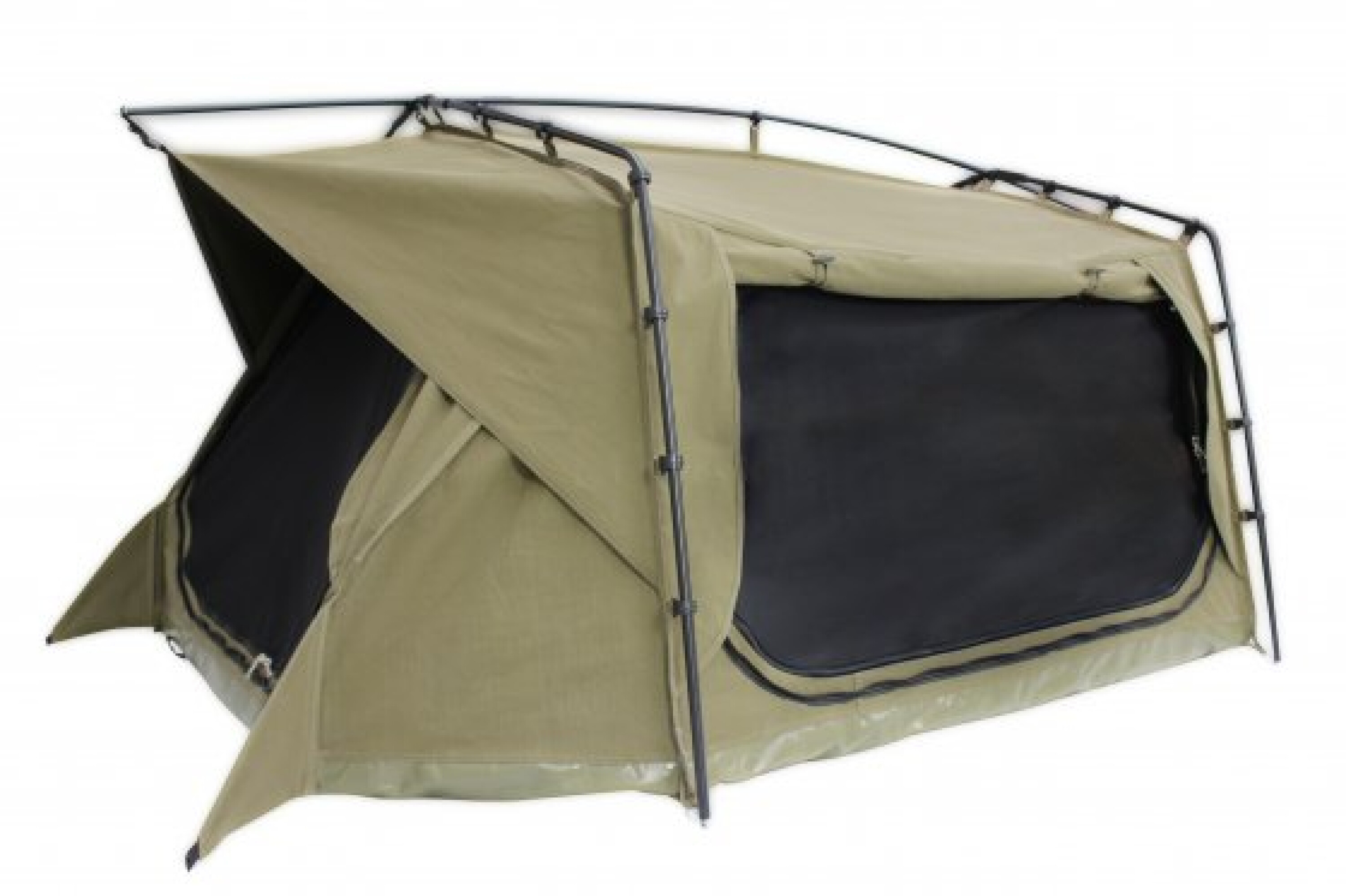
The Nebula 1550 by Darche provides the space of a tent with the comfort and durability of a swag. Built for two people and best for car touring – this swag has all the features for a hassle-free camping adventure in any conditions.
1
If you’re after more space in your swag, you’ll appreciate the larger dimensions of this double swag by Darche. The one-metre roof height means it’s possible to sit up and easier to change your clothes inside. Keep in mind however, the extra spaciousness equates to extra weight.
The Nebula 1550 has access on all four sides and mesh covered walls to give you great ventilation. For a higher price point you are getting more swag and all the great features and durability that can be expected in a Darche product.
If hitting the road on two wheels is more your style, the OZtrail Biker Expedition is a great single-swag option. It will provide durability and comfort without compromising on being lightweight and packing down small.
1
The Biker Expedition swag has full zip-top entry, making it easy to get in and out. The No-See-Um mesh top allows for good ventilation and keeps the bugs out. Two domed, end poles make it quick and easy to set up, with a maximum height of 55cm.
The swag comes with a 5cm thick mattress and a carry bag with durable Double D rings on the straps. It packs down to a small size for easy portability and is versatile enough to be used for other camping adventures as well.
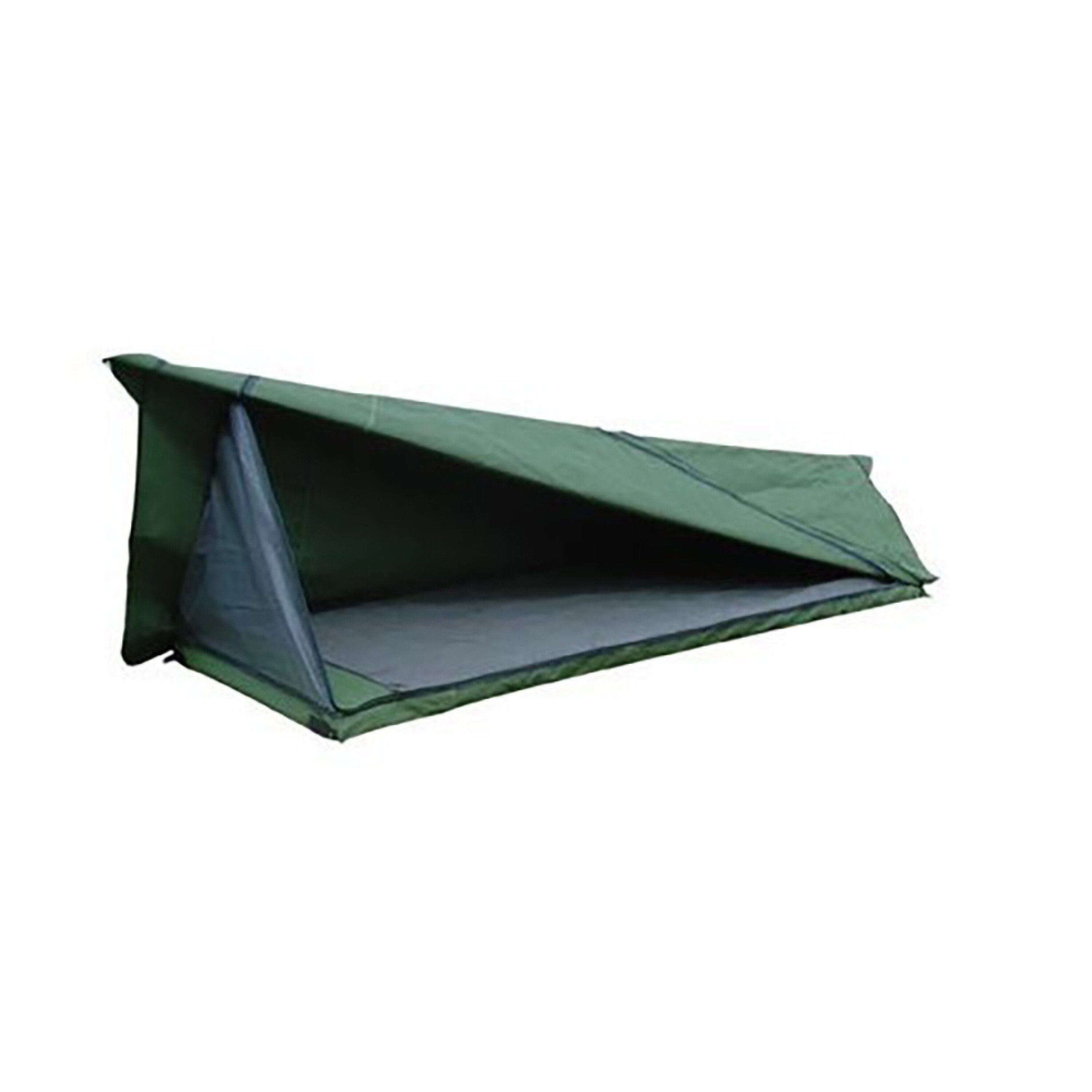
The Bushman Deluxe is a traditional apex swag that is lightweight, pole free and made in Australia. It comes in four sizes and would be a great biker swag or perfect for any campers wanting to minimise weight.
1
The Bushman Deluxe swags have a spacious design and extended head flap to keep you dry in all conditions. The zips run the entire length of the swag giving easy access. The design allows for multiple configurations to provide extra ventilation or sun protection as needed.
The mattress is 7cm thick with a removable cover and is also made in Australia. The latest models come with a handy carry bag that will fit not only the swag and mattress, but sleeping bags and pillows as well.
Specifications
Material
14oz water and rot-proof canvas
Floor
14oz water and rot-proof canvas
Size
200cm L x 71cm W x 70cm H (Single); 214cm L x 85cm W x 70cm H (King Single); 214cm L x 116cm W x 70cm H (Double); 214cm L x 150cm W x 70cm H (Queen)
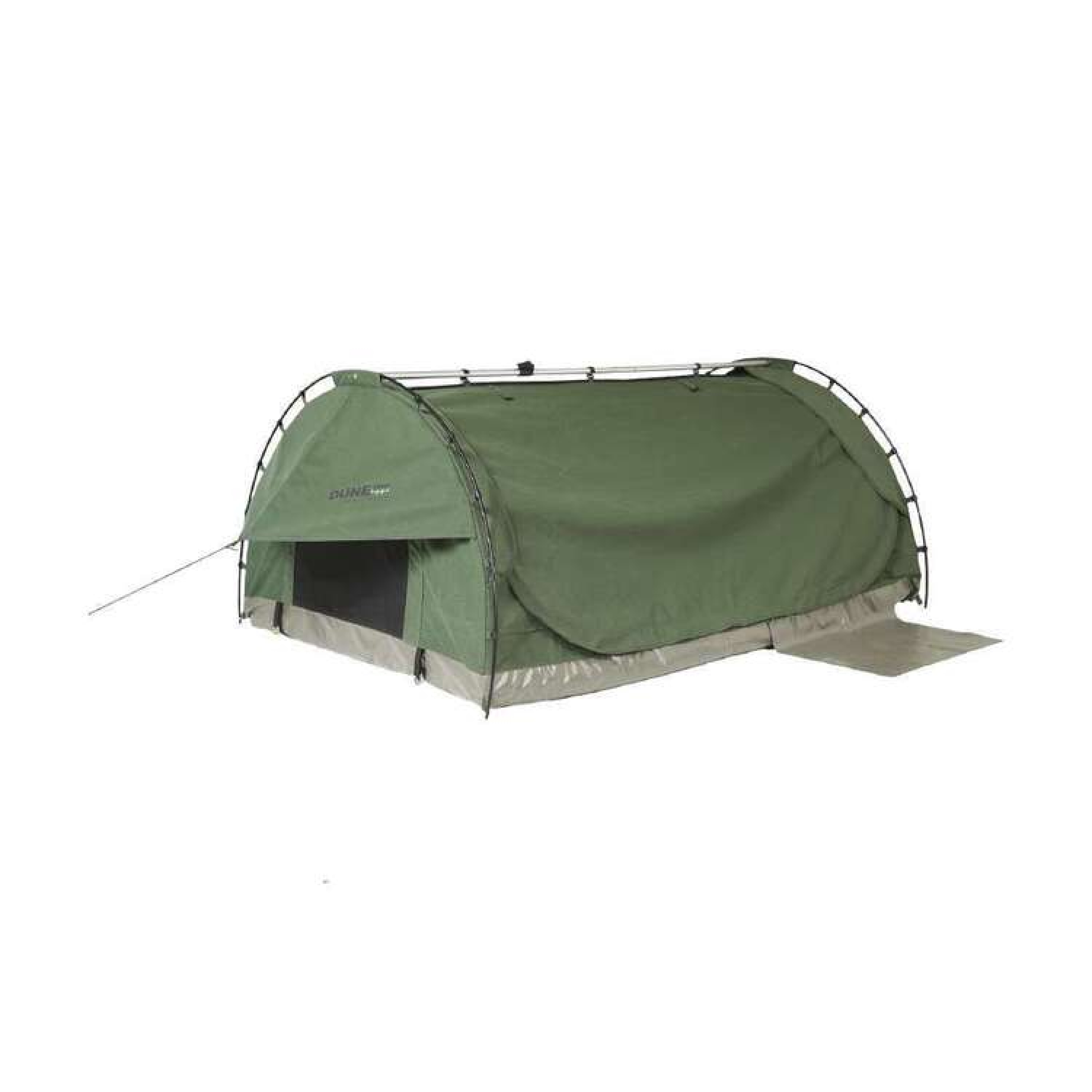
Dune 4WD’s King Titan Deluxe is a durable, spacious, double swag that is also well priced. Its one-metre headspace provides extra comfort that will be appreciated by taller campers.
1
It includes a 7cm thick mattress for a comfortable sleep, plus a removable cover to make cleaning easy. The heavy-duty canvas and PVC floor will provide protection from the elements, while large mesh windows allow for ventilation in the warmer months.
For the price, the King Titan deluxe is a winner due to its generous size. It will comfortably sleep two adults, and stand up to the elements as a good swag should.
Swags come in different shapes and sizes – but a few things remain constant. They are designed to be easy to set up, durable and comfortable to sleep in. Here’s a breakdown of what to look for in all of these measures when choosing a swag to suit you.
Ease of set up and pack down
Swags are designed to be set up quickly and easily. The mattresses are already inside so you can roll it out, erect it and it’s ready to go. When it comes time to pack down, remove any poles, pegs or guy ropes, roll it up and use the straps to secure it. Durable carry bags or straps with Double D rings can make a big difference to the durability and portability of your swag when packed down.
Durability
Durability is a key element with swags. They are designed to withstand the toughest of elements. To check the durability of your swag, look for the types of materials used in both the swag and the flooring.
Material
Most swags are made from ripstop polycotton canvas. This is a tough fabric which will withstand wind and rain, and keep your warmth inside the swag. This canvas is rated by weight – the heavier the canvas, the more durable it will be. However, keep in mind, this adds to the overall swag weight as well. In addition, all canvas swags will require seasoning before use. You can read more about how to season your swag below.
Flooring
For flooring, PVC is the most common material used. A bucket floor made from heavy-duty PVC will protect the bottom of the swag and the mattress from stones or sticks underneath. It will also stop water seeping in from the ground. For swags that have a canvas floor, it can be a good idea to place a tarp or ground sheet underneath.
Comfort
For a comfortable night’s sleep you should check the quality of the mattress and the overall swag size. It’s also good to check the ventilation quality and ease of access as this will make for a more comfortable camping experience.
Mattresses
Most swags will have a 5 or 7cm mattress included in them. While it’s not attached to the swag, the mattress is designed to remain inside, both when it’s in use and packed away. Mattresses that have a removable cover will be easier to clean. Thicker mattresses can make the pack-down process a little harder, as they are not so easy to roll up. If the thickness is not comfortable enough for you, you can always add an extra layer, such as a foam or inflatable camping mattress.
Size
Whether you are after a single or double swag, it is always good to check the dimensions. There are no standard sizes for swags in Australia so different manufacturers will have different ‘single’ and ‘double’ swags. When checking the width and length of the swag, consider who will be sleeping in it – and if you will want to store any gear inside. Swags with a vestibule can be a great way to have extra storage space.
Height
Also consider the height of the swag. Swags are not designed to be spacious like tents, as they are built for sleeping only. However, a little extra head height will make it more comfortable, particularly for taller campers. Check if you will be able to sit upright in the swag and consider if you plan to be changing your clothes whilst inside as well.
Ventilation
Swags are made of very durable materials to withstand rain and wind, however this means they can heat up very quickly on warmer days and retain that heat through the night. If you are planning to use your swag in all seasons, you should ensure there is plenty of ventilation. Look for large mesh panels across all sides and ensure the mesh is of the right quality to prevent insects from getting inside.
Access points
Particularly if you are purchasing a swag for two people to use, make sure there are multiple access points. This way you’ll avoid having to climb over each other every time you enter and exit the swag. It can also be handy for getting gear in and out of the swag when needed.
Quality Zippers
Quality zippers will stand the test of time and also stand up to the elements. On a swag that is designed to be durable and long lasting, you’ll want to ensure the zippers meet this requirement as well.
Internal pockets
Internal pockets in a swag can be useful for storing valuables such as keys and phones. Some swags also feature boot pockets to keep your muddy shoes clear of the sleeping area.
How to season your swag
Swags made from canvas will require the canvas to be seasoned before use. Most swags will come with instructions on how to do this properly. It requires wetting the canvas multiple times and allowing it to dry out completely in between.
This allows the fibres of the canvas to expand and contact, sealing any tiny holes in the seams that were made during manufacture. It is essential to ensure your swag is completely waterproof. Factor this in to your purchase, as you’ll need to allow time to complete the seasoning process before you take it out on your first trip.
How we review products
4X4 Australia has been reviewing four-wheel drive vehicles, aftermarket products and camping gear for more than 40 years. When looking for the best swags in Australia there are some things that are essential to ensure you sleep soundly under the stars.
When we compared each of the swags in the list with hundreds out there we looked at the size, weight, durability and price. We also searched for additional features that make these swags stand out from the rest.
We looked at hundreds of user reviews and drew on our own experience sleeping in swags to make sure our recommendations are for the best on the market.
Disclosure: When you buy through our links, we may earn a commission. We also include products that we do not earn a commission from.
We’ve all heard the story of someone’s mate who had their 4×4 cut in two when some unscrupulous swine ran the winch cable back over the car, hooked it to the towbar and powered the winch to crush the roof. But has anyone ever seen it happen, or is it just one of those tales you hear around the campfire?
We enlisted the crew at Sherpa 4×4 to help us prove whether or not this was actually possible. Can a 12-volt winch crush a 4×4? Sherpa fitted one of its Steed 17,000lb 12-volt winches to the front of a sacrificial, old Rodeo and welded a custom mount to the back to set up the destruction.
The Sherpa Steed 17,000 is a far bigger winch than anyone would sanely fit to a Holden Rodeo, but we were going to put it to the test. With its genuine Albright solenoids, gearbox-mounted brake and heavy duty steel cable we knew the Steed would be up to the job.
*Originally published March 14, 2017
Pretty much everyone agrees the next-gen Ranger is a good thing right out of the box.
A nice torquey turbo-deezy, comfy suspension and enough modcons and buttons to keep any teenaged video-game connoisseur occupied for hours on end. They go hard as work utes too, able to fit a pallet in the tray and with a healthy GVM and tow rating, they’re ideal for getting to the jobsite and back home again in style and comfort.
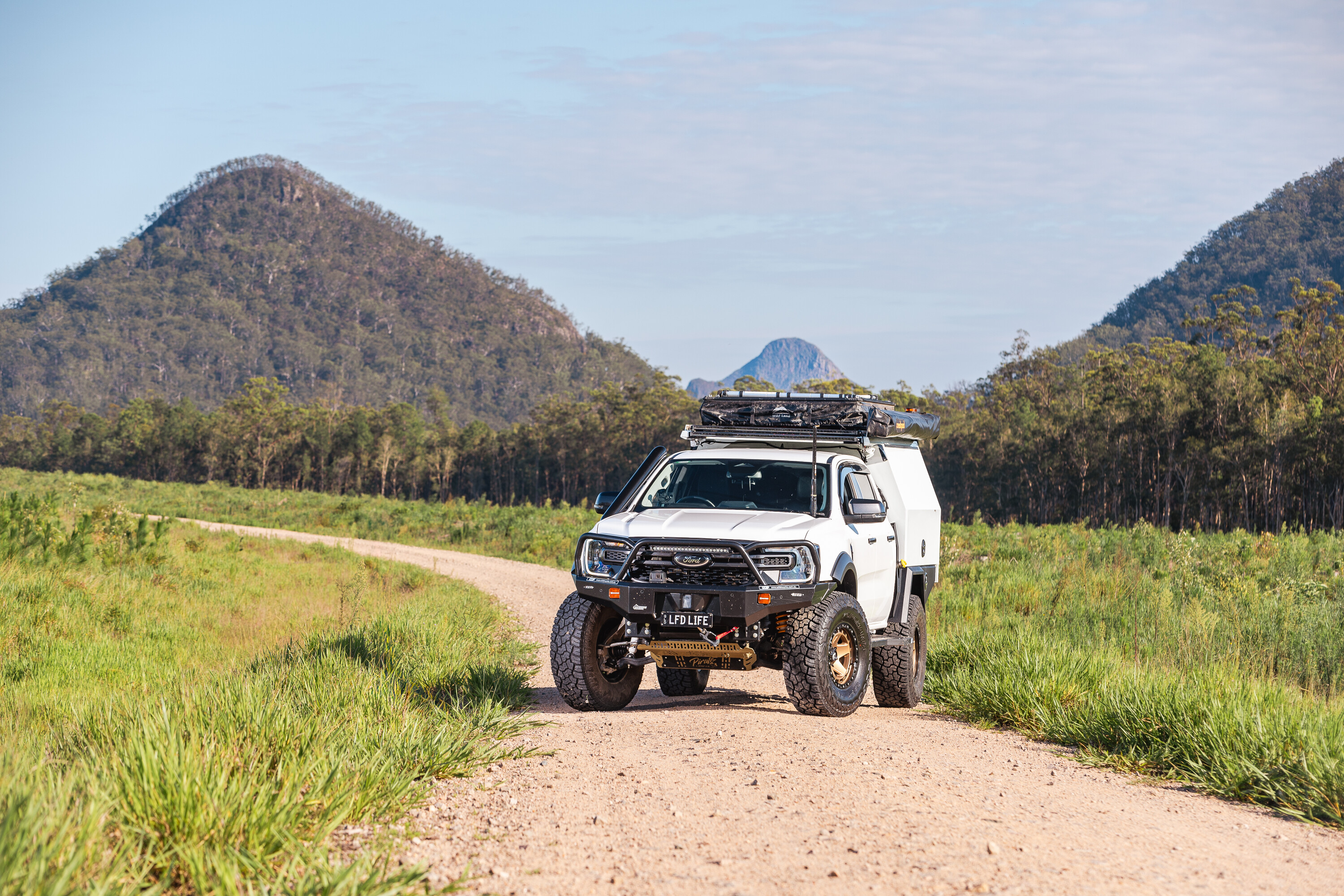
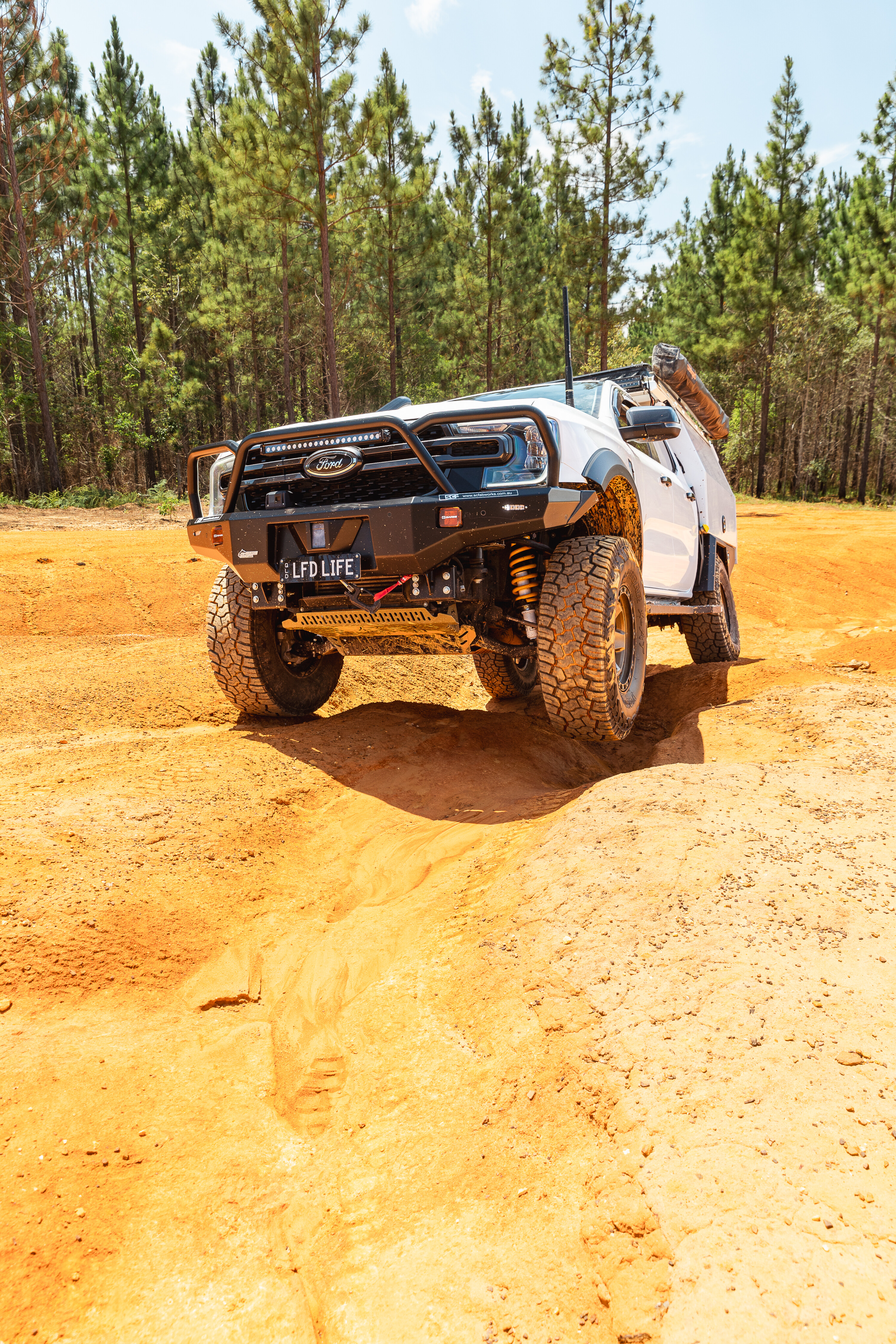
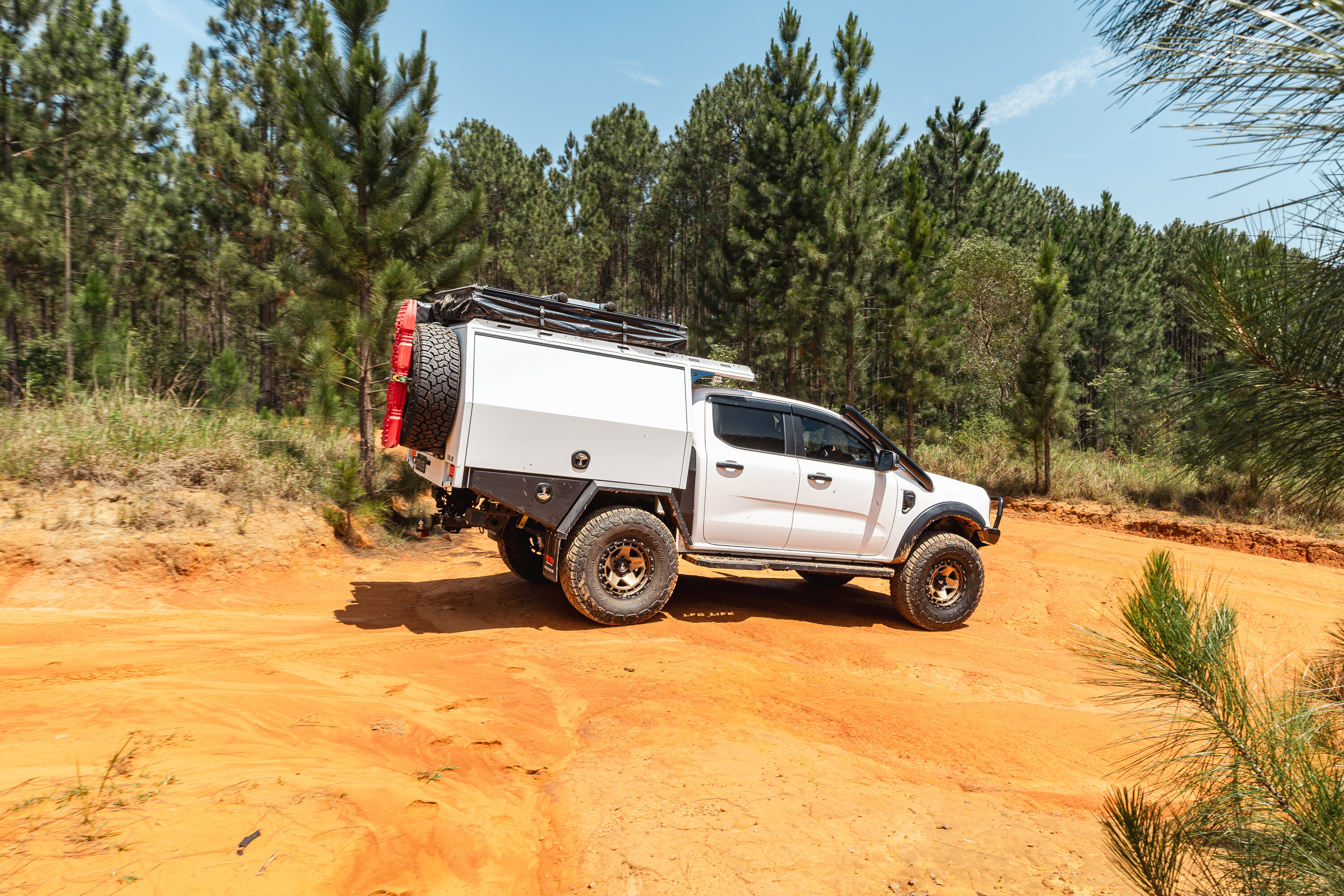
Oh, and they’re not too shabby off the blacktop either. At least, that’s what Mark Sinfield, the owner of this weapon, reckons. Mark’s a builder, so he needed something to cart his work gear around without fuss, but he’s also one of us, so he needed a rig that’d comfortably take him to far-flung destinations without a hiccup too.
1
Having owned a fair few modified 4X4s in the past, he wanted to build something special out of his brand new bus yet didn’t just want to head to his local 4X4 major supply-chain and hand them a blank cheque. He was after something that would stand out in a crowd, something one-off, something to embody the ‘lifted life’.
What he ended up with… well, let’s just say there aren’t too many next-gen Rangers getting around on 37-inch rubber. As you’d expect, however, getting here wasn’t all plain sailing.
Fitting 37-inch tyres
The first big hurdle Mark came up against was the internet experts who told him it couldn’t be done. He even had a few professional shops tell him fitting big rubber on the Ranger was “impossible”.
Luckily, Mark isn’t the type of bloke who listens to the haters and is surrounded by mates who like to party hard off-road, so he set out to find the right companies to help him fulfil his vision.
1
First stop was PSR in Yatala, who set him up with a 50mm body lift. It’s been one of the few mods that went in without a hitch, and gave enough clearance, along with a cheapo suspension lift, for 33-inch rubber to be comfortably fitted to aftermarket KMC rims… all within two weeks of buying the rig, no less.
From there Mark decided to skip the whole “let’s put 35s on” phase and go straight for some serious rubber. The 37×12.50R17 Yokohama X-ATs were mounted up to a set of bronze Lenso M79 alloys and bolted in place in the front yard. Of course, it wasn’t quite that easy.
The front bar needed the entire fog-light section removed with a grinder and dremel (and has since been replaced with a prototype PSR Ambush Bar), but the structural sections of the body were all left alone. There you have it folks. You can fit 37s on your next-gen Ranger, no matter what the “experts” say.
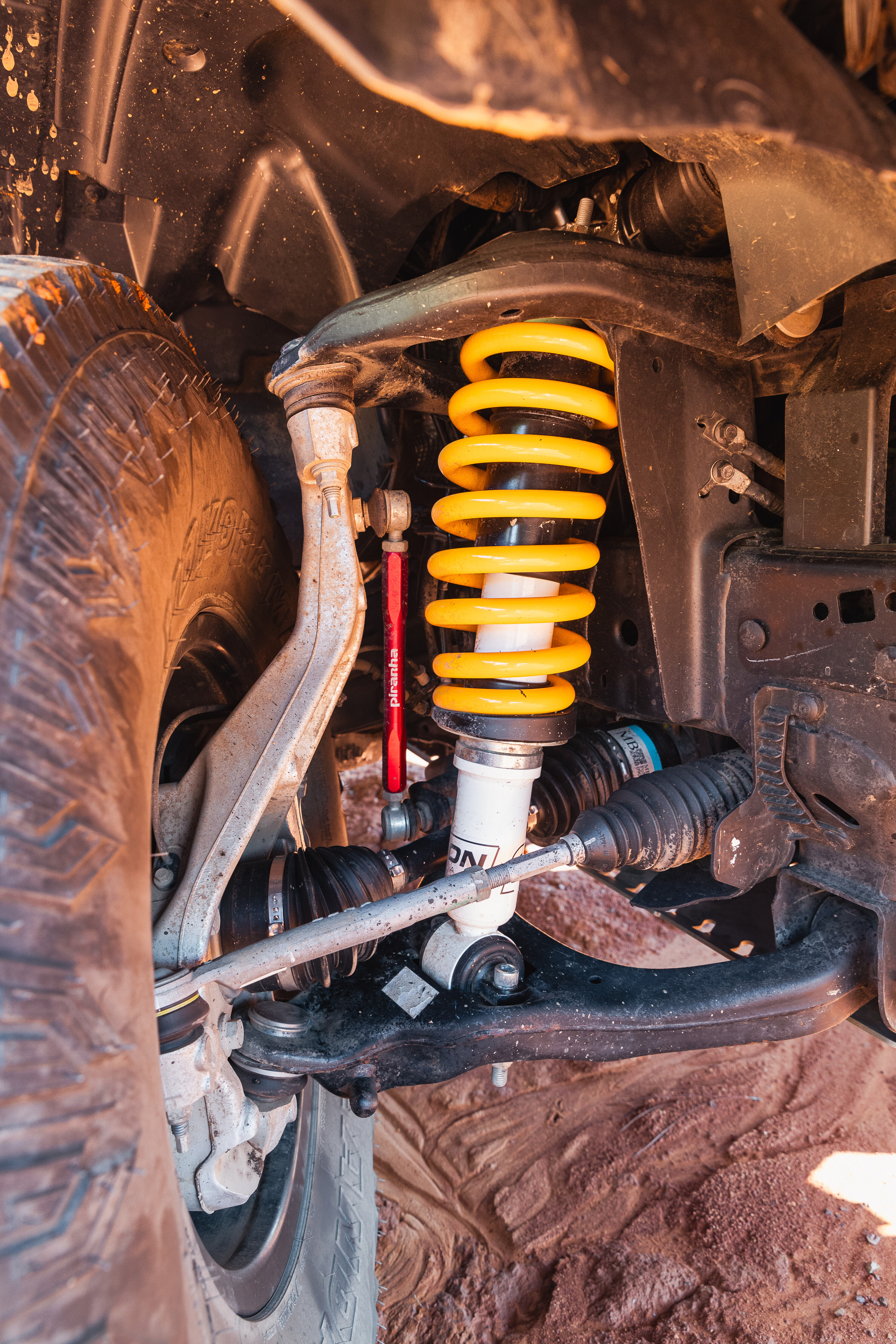
With the tyres in place, the suspension was lacking, so Mark got in touch with Carbon Offroad, who sent him out a set of prototype 2-4-inch raised adjustable coilovers along with a set of twin-tube rear shocks and 600kg leaf springs to handle Mark’s tools and work trailer without sagging like an elderly sumo wrestler.
With the lift, ride and off-road abilities sorted, it was time to turn the attention to the other areas of the Ranger.
Penny Industries canopy
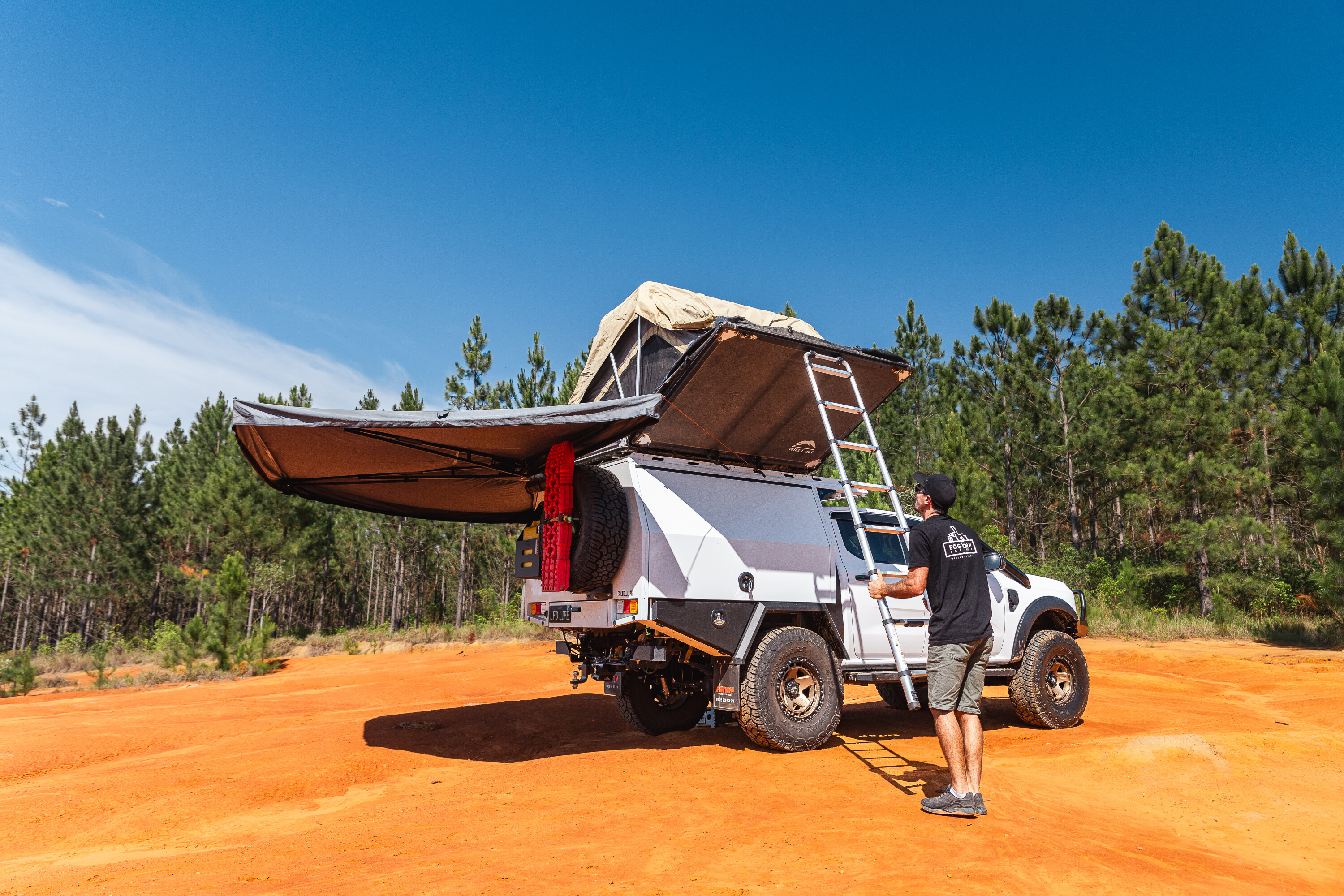
With the standard tub gone, Penny Industries knocked up a one-off chassis-mount canopy that stores the tools or camping gear, depending on what part of the week it is.
On the outside is the spare 37, a jerry can holder, recovery board mounts, a rear trundle drawer, Crashpad Crash Cover 270 awning, and a Drifta Stockton rooftopper that handles accommodation duties when Mark is hundreds of clicks from the nearest Airbnb.
1
Inside there’s a 130L Bushman upright that’s protected from inadvertent projectiles by a cage, a twin drawer setup, a second fridge slide over on the driver’s side for tools, and the electrical switch panel that controls the output from the 100A/h Enerdrive slimline lithium that’s topped up at camp by a roof mounted 100W solar panel.
A 60-litre poly water tank is also mounted beneath the canopy, making this pretty much a liveable off-grid set-up for a fair chunk of time.
Final touch
The last 10 per cent takes 90 per cent of the effort, right?
Well, it does for most of us, but given Mark has turned this rig into a hell of a tourer and low-range weapon in under a year, he’s clearly not the type of person who sits on his hands.
The Ranger is protected out front by the aforementioned PSR Ambush steel bar that houses a Carbon Tank 12,000lb electric rope-spooler, which had only been on the market a couple of weeks at the time of writing. Meanwhile, the wider rims and tyres are covered by 45mm wider Utemart flares which have so far kept the road pirates from taking too much notice. The body is kept straight thanks to steel SCF rocksliders, which Mark had further customised with a laser-cut-out of his Instagram handle, LFD_LIFE (lifted life).
1
Feeding the 3.0L V6 turbo-diesel (which will be tuned as soon as tunes become available – at last check the boffins at CrdTech were about 95 per cent there) is a Meredith Metalworks 4-inch short-entry snorkel, which compliments the modern styling of the Ranger nicely, while the lighting duties are taken care of thanks to Base6 LEDs that Mark hooked up through OzLED.
All up, Mark is pretty happy with his Next-Gen, but he did stress that modifying a brand-new vehicle is not without its pitfalls, especially given he didn’t want to go for a cookie-cutter off-the-shelf build.
With a little perseverance, some strong words directed at the CANBUS system, and involving companies willing to work towards a common goal, he’s pulled off a rig that’s the holy trifecta of off-road driving: comfortable, capable and camp-out-of-able.
Is it ever really finished?
You didn’t really think Mark was done did you? Don’t be silly, he’s got a lot more up his sleeve for his Ranger. He’s keen on a 450mm chassis extension, some big power mods and is currently having Penny Industries fab him up a custom toy-hauler as we speak… so yeah, we’ll leave it there before our heads start spinning.
1
Fitting big tyres on a new vehicle
Suspension
On modern vehicles with IFS, you’re pretty limited to how high you can lift your rig to fit big rubber. However, for a 3-4-inch lift the rules are generally to add longer coils and shocks (duh) and a diff drop that’ll keep your half-shaft angles within spec. This won’t necessarily gain you any wheel travel (in fact, it won’t at all) but will provide tyre clearance
Body lift
You can gain another 50-70mm under the guards through a body lift, which may also necessitate mods to the CANBUS system and a steering shaft extension. You’ll also have to make sure your bar work will still fit without looking goofy.
Get the grinder out
Even after all that, you may still need to trim things like inner guards, body mounts and bar work – Mark had to completely remove the foglights from his stock front bar to gain clearance for his 37s.
Be realistic
Not everyone has the time, energy and resources to get big rubber onto their vehicle. While the looks are great, everything is a compromise, and the increased wear and tear on steering and suspension components, fuel use, and amount of mods needed, and the fact that driver skill will always outweigh bigger rubber in 99.9 per cent of off-road scenarios, can easily make it a diminishing-returns exercise.
With that said, if it’s what you want then going into it with eyes wide open is essential. Another alternative that will swallow up a whole lot less time and probably less money would be to buy a dedicated wheeling bus and a car trailer, and keep your daily on 33s or below.
Thanks
Mark had a long list of folks to thank for their help during this build, most of whom we’ve already mentioned, but one bloke who he specifically wanted to shout out is Kyle from Repco in Kawana on the Sunny Coast. On ya mate!
Western Australia’s Gibson Desert mightn’t be the biggest desert in Australia, but it still measures in at just over 155,000 square kilometres in size – making it the fifth largest behind the Great Victoria, Great Sandy, Tanami and the Simpson.
1
The Gibson is bordered to the north by the Great Sandy Desert and to the south by the Great Victoria Desert, and a 4×4 trip to this arid region requires serious preparation and an equally serious 4×4 vehicle. The area is remote, and isolation is all but guaranteed. However, with those perks comes extra caution, as you’ll need to be entirely self-sufficient and prepared for the worst. That means packing competent recovery gear, plenty of water and working communications.
The world-famous Canning Stock Route passes through the Gibson (as well as the Great Sandy and Tanami deserts) and you can read all about the revered CSR in this feature. However, while the CSR may steal the headlines, the Gibson contains other compelling 4×4 tracks.
1
A lesser-known yet equally difficult route within the Gibson is the Talawana Track, which itself intersects with the Canning Stock Route. The 596km-long Talawana Track – the majority of it built by Len Beadell and co. – leaves the Gary Highway at Windy Corner and runs west to Marble Bar Road. The track is extremely remote and you’ll have plenty of time to spend getting to know the many spinifex that dot the horizon.
For a more ‘straightforward’ drive, take the corrugated Gunbarrel Highway, a track of more than 1300km of vertebrae-destroying bumps. A Gunbarrel run can be paired with trips to the Tanami, the CSR, or a trip to the West MacDonnells. The Highway, built between 1955-58, runs from Carnegie in WA to Victory Downs just over the border in the NT.
As with all tracks and destinations on this list, low range and high clearance are required.
We simply couldn’t have a list of essential desert expeditions without shining the spotlight on the Canning Stock Route (CSR).
The CSR is an essential desert trip, with the route crossing three deserts – the Gibson, Great Sandy and Tanami – in its entirety. Anyone who has travelled this route will tell you it’s not for the fainthearted, and it constantly comes up in campfire conversations when discussing Australia’s toughest tracks.
1
The brutal, almost-1800km slog, comprises of treacherous ruts and hundreds of sand dunes, making the CSR one of Australia’s – if not the world’s – most demanding tracks. The route strikes through the heart of WA’s huge outback, running from Wiluna in the south all the way up to Halls Creek in the north, and we’d put aside a few weeks for this adventure.
A calling card of the CSR is to follow the wells that connect the track and once watered the stock travelling the route back in the day – its origins dating back to 1910. The track can be reached via Tanami Road from the Bililuna turnoff.
1
With tracks of this magnitude and difficulty we’d recommend travelling with a convoy – one other buddy at a minimum – or joining up with one of the many tour parties that cater for this area. Yes, it’s difficult, but the well-earned beers upon completing the CSR will taste even better.
A CSR permit is required to travel between Wells 5 to 51 and can be acquired online. Remember, though, proceed with caution: the rugged, unyielding track has a reputation for killing 4WDs. So get your 4×4 checked and ticked off before you leave, ensure your suspension is in tip-top shape, have plenty of spares and supplies, and pack the air compressor.
The CSR is a remote desert experience recommended for experienced travellers only.
The Strzelecki Track strikes right through the heart of South Australia’s Strzelecki Desert, and while it mightn’t be the most challenging or demanding outback track, it leads to a number of intersecting tracks and nearby attractions to explore.
Experienced 4×4 scribes often describe the Strzelecki Track as a great introduction to remote-area touring; for those a bit wet behind the ears when it comes to loading the fourbie for long stints off the blacktop. If a Simpson Desert expedition seems daunting, then the Strzelecki is great preparation to build up one’s confidence. Still, you’ll need to be self-sufficient, have adequate recovery kit, and be packing up-to-date, working equipment and communications.
1
A recommended starting point to tackle the Strzelecki is at Leigh Creek in the south, a former mining town with a dwindling population. From Leigh Creek, the route will pass through the Vulkathunha-Gammon National Park and parts of the Flinders Ranges (Arkaroola, as mentioned in ‘Flinders Ranges and Beyond’, is also nearby and well-signposted), before joining the Strzelecki Track near Mount Hopeless.
The Strzelecki Track itself, pioneered back in 1871 by a cattle thief named Harry Redford, is quite well-maintained and mostly unsealed, with the 475km outback track linking Innamincka to Lyndhurst. The surrounding desert views for the majority of the track remain largely unchanged, with hardy vegetation stretching to the horizon.
Worthwhile detours include a stopover for a pint at Cameron Corner, via the Merty Merty Track; a sticky beak at the Moomba processing plant; the outskirts of the Lake Eyre basin; and the Montecollina Bore (and the nearby Strzelecki Crossing). Before too long you’ll arrive at Innamincka, well-known for the historically significant Burke and Wills Dig Tree.
1
Put aside a couple of days for a Strzelecki adventure, but remember it gets very hot during summer and it can be impassable after heavy rain. Rain also makes the tracks slippery and closed with flash flooding known to occur in the area.
Fuel can be picked up at Lyndhurst, Leigh Creek, Innamincka, Arkaroola and Cameron Corner. However, as with any desert trip, be prepared and self-reliant, with spare fuel, spare water, recovery gear and working comms.
Special-access permits are required to travel in the area, and a Desert Parks Pass is required to camp in the Innamincka Reserve.
A route that lives somewhat in the shadow of the famous CSR is the Anne Beadell Highway, which is notably shorter but considerably less popular for 4×4 tourers – a reason why it’s arguably even more remote than the revered CSR.
Dominated by claypans and salt lakes to corrugations and sand dunes, Anne Beadell remains largely untouched, in turn increasing the track’s degree of difficulty.
1
Like other tracks on this list, the Anne Beadell Highway was surveyed and built by Len Beadell, and the track was named after Len’s wife Anne. The Highway, listed at some 1324km in length, strikes through WA’s massive Great Victoria Desert, from Laverton in WA to Coober Pedy in SA.
If undertaking an Anne Beadell expedition, expect remoteness, with tourers often returning from their trips without encountering a single soul. You’ll need to be entirely self-sufficient. In fact, there are very long distances between fuel stops so you’ll need to pack extra fuel, water and supplies.
1
The extreme remoteness of the track means it should be left to steerers adept at desert travel, in low-range vehicles with uprated suspension and a couple of spares. The area is also sparingly signposted, so a good GPS system and even paper maps will prove invaluable.
Permits are required to travel through aboriginal and government-restricted areas, and they can be acquired by visiting www.ilkurlka.org.au
The Flinders Ranges officially begin about 500km north of Adelaide, making it a five-hour jaunt on bitumen or an hour in the air.
Those familiar with the region will know that the Flinders isn’t solely known for desert country, with the area’s mountains also lush with forests, vegetation and wildlife. However, going north into the Ranges – and farther north again – you’ll enter real desert territory, with soft sand tracks and a barren, remote landscape leading to the horizon in every direction.
1
In 2019, our 4X4 Adventure Series team tackled the Flinders Ranges from south to north, beginning near the southern edge at Mount Remarkable and heading north via the Bendleby Ranges, Quorn (and its famous Pichi Richi Railway), the Willochra Plains, the Skytrek Track at Willow Springs, Brachina Gorges, Wilpena Pound, Beltana, Moro Gorge, Gammon Ranges and Chambers Gorge. If you can follow that route, you’ll be well-rewarded.
The semi-arid Wilpena Pound, in particular, is a must-visit outback spot that’s very popular with international tourists who long for a taste of outback Australiana.
1
Arkaroola is another recommended spot in this northern Flinders Ranges region, with the dry outback location luring many pundits each year. A bucket-list destination within the Flinders Ranges is to climb the Ridgetop Track in the Arkaroola Wilderness Sanctuary to Sillers Lookout. The dry track leads to some of the best outback views in the country. You’ll need to join a tour for the opportunity, though.
From the Flinders Ranges, tourers can continue their journeys north to the Simpson Desert, with roads leading to Maree, Coober Pedy or past Arkaroola to the Strzelecki Track.
For a truly epic desert experience, a trip down the Gary Junction Road through Western Australia’s Great Sandy Desert is unmissable. And, like many other desert tracks in the region, this too was built by Len Beadell and his crew, back in 1960.
Heading in an easterly direction from Marble Bar, an old mining town with prominence as “the hottest town in Australia”, following the Gary Junction Road is around a 1400km journey to Alice Springs. The trip from Marble Bar to Alice Springs strikes through the heart of the Great Sandy.
1
Fuel and limited supplies can be picked up from various spots along the way including at Punmu; Kunawarritji; Kiwirrkurra; Kintore; and Papunya. The latter open 24 hours a day, while the longest fuel stop between drinks – 400km – is between Marble Bar and Punmu.
Gary Junction Road is unlike many other remote tracks in the region in that it is – for the most part – a well-formed dirt road, despite corrugations and soft sand in sections. For that, a low-range 4×4 is essential.
Haasts Bluff and Mt Liebig are but two highlights of the track, with the communities of Papunya, Kintore and Kiwirrkurra all serviced by the road.
1
Another route in the Great Sandy is to follow the Nyangumarta Highway (formerly known as the Kidson Track) to 80 Mile Beach, located north of Port Hedland. The route was once blazed in the pursuit of oil, but has since been abandoned. It’s remote and hard work, but you’ll be well-rewarded upon completion.
To travel the full length of the Gary Junction Road you’ll need a permit from the Central Lands Council in the NT and the Dept of Aboriginal Affairs in WA. Both are available online and are easily applied for and generally quickly issued.
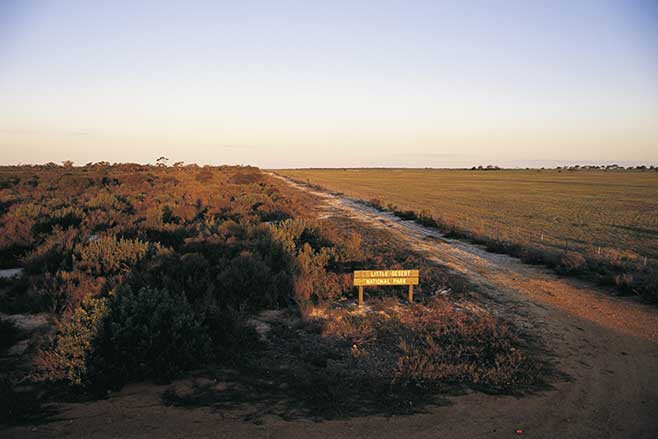
There’s an ‘outback’ in Victoria and it’s only a four-hour drive from Melbourne. Yep, the 1326 square-kilometre Little Desert National Park is Victoria’s own slice of outback Australia!
The park is located not far from the township of Dimboola, and is bordered by the Wimmera River and the SA/Vic border to the west. The tracks consist of a heady mixture of sandy desert terrain, lined with a mix of mallee country vegetation and river red gums.
1
Of the 600km of 4×4 tracks within the park, some of the point-of-interests include Dahlenburgs Mill, Jungkum, Salt Lake, Mallee, McCabes Hut, Broughtons-Sambells, Lawloit (for views of and from Sister Hills), Jacobs and Mt Moffat. There are six campgrounds within the park to unwind for a night or two, including the Kiata, Ackle Bend and Horseshoe Bend campgrounds. Fees vary, so be sure to check before you go.
The tracks aren’t regarded as overly difficult, so they should pose no issues for experienced four-wheel drivers – however, the tracks in the park’s western section are considered to be rated as more difficult. The park also provides access to a great deal of bushwalking tracks, and a vast collection of flora and fauna. The tracks are subject to seasonal closures, and can also be closed due to the weather.
1
While it mightn’t be as epic as a Simpson trip, it’s a great way to dip the toes in if it’s your first foray into desert expeditions. A great recommendation before tackling the more serious tracks in the wild west, whether it be for one night or many.
Australia’s most popular desert for 4x4ers looking to escape civilisation for a quintessential outback experience, the Simpson Desert is riddled with famous tracks.
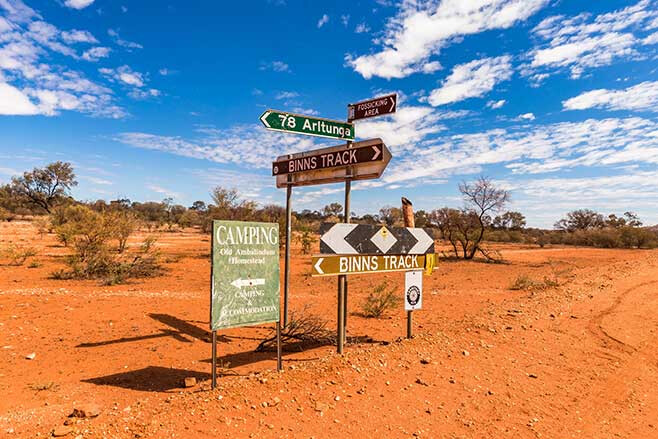
Binns Track (starting at Mount Dare in SA), the Madigan Line, the QAA Line, the Old Andado Track, and the Hay River Track all lie within the Simpson’s boundaries.
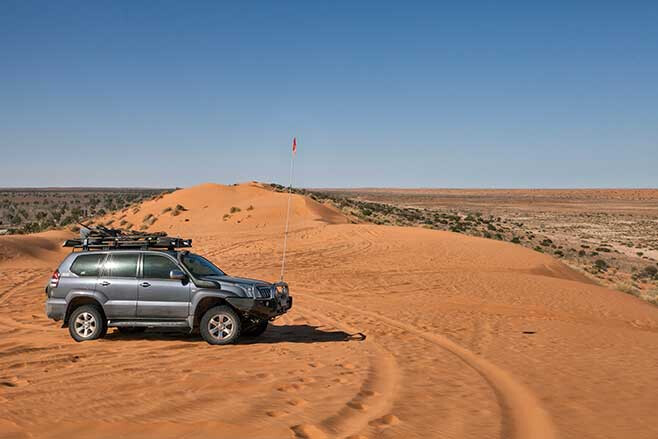
The Simpson Desert is the fourth largest desert in Australia and one of its claims to fame is that it features the longest parallel dunes in the world, with some dunes said to be an incredible 200km in length. The most famous dune in the Simpson is Big Red, on the outskirts of Birdsville in outback Queensland, which stands 40 metres tall.
1
The southern end of the Simpson Desert begins in northern South Australia, near Lake Eyre and north of the Flinders Ranges. In its entirety, the desert measures a whopping 170,000 square kilometres and spans across the NT, South Australia and Queensland.
There are a number of popular routes to take for a quintessential Simpson adventure. One such track is Binns, which begins at Mount Dare in South Australia and then runs north into the NT where Old Andado Road leads to Alice Springs.
The Madigan Line begins north of Old Andado Station, striking east into Queensland before meeting up with the QAA Line. The QAA Line then leads from the junction of the K1 Line near Poeppel Corner, all the way to Big Red near Birdsville.
1
Both the Oodnadatta and Birdsville Tracks begin at the small outback town of Marree in SA, with the Birdsville Tracks heading northeast to Birdsville, and the 405km-long Oodnadatta track following the Old Ghan Railway.
There are also numerous National Parks and iconic landmarks within the Simpson Desert, with the Parks subject to seasonal closures during the summer months. A Desert Parks Pass permit is required to travel via a number of tracks through the Simpson Desert.
Due to the Simpson’s popularity, most of the tracks aren’t as isolated as some others on this list (CSR, Anne Beadell etc.), but it’s still remote, difficult touring; so a well-prepped vehicle is essential.
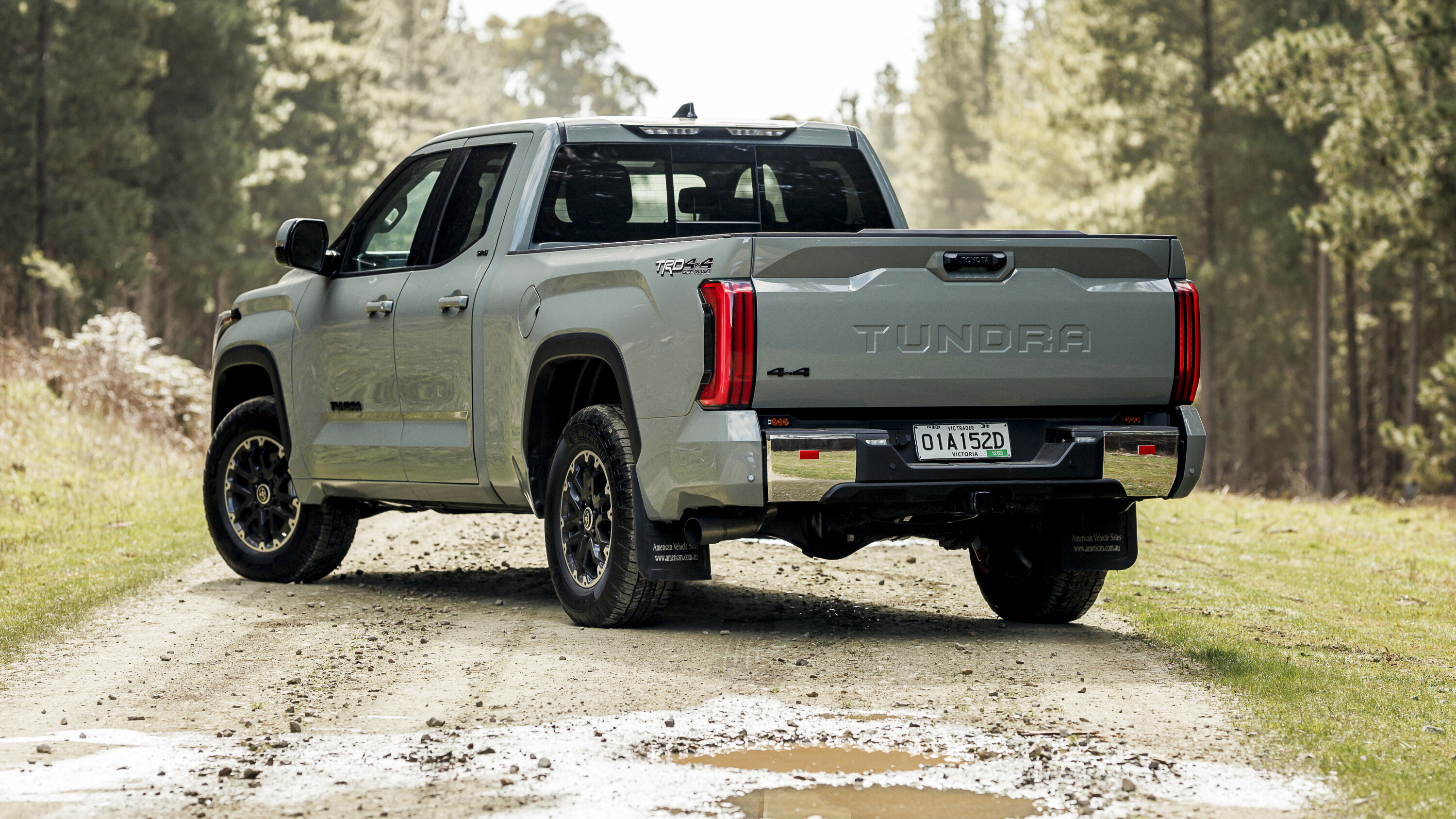
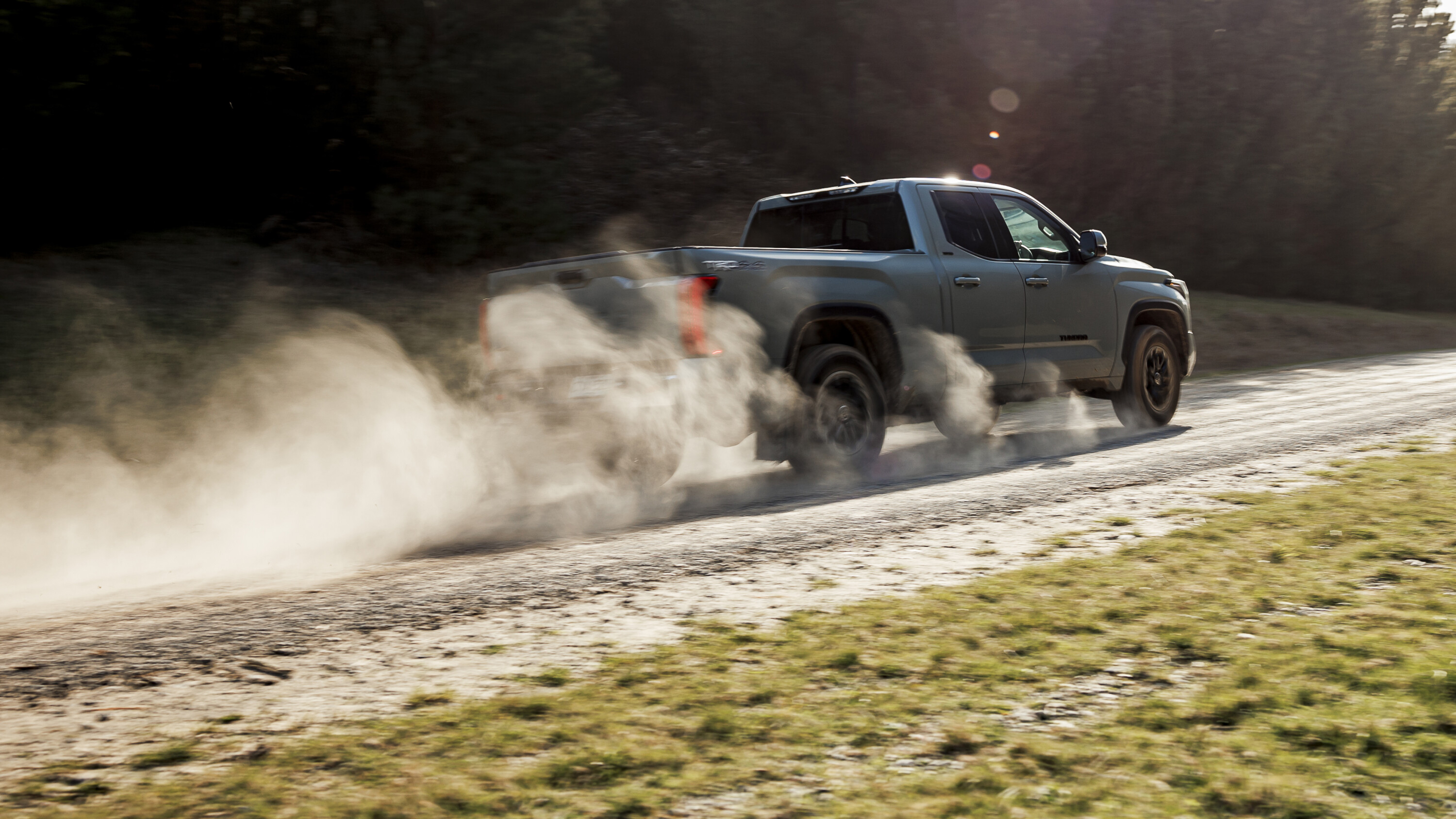
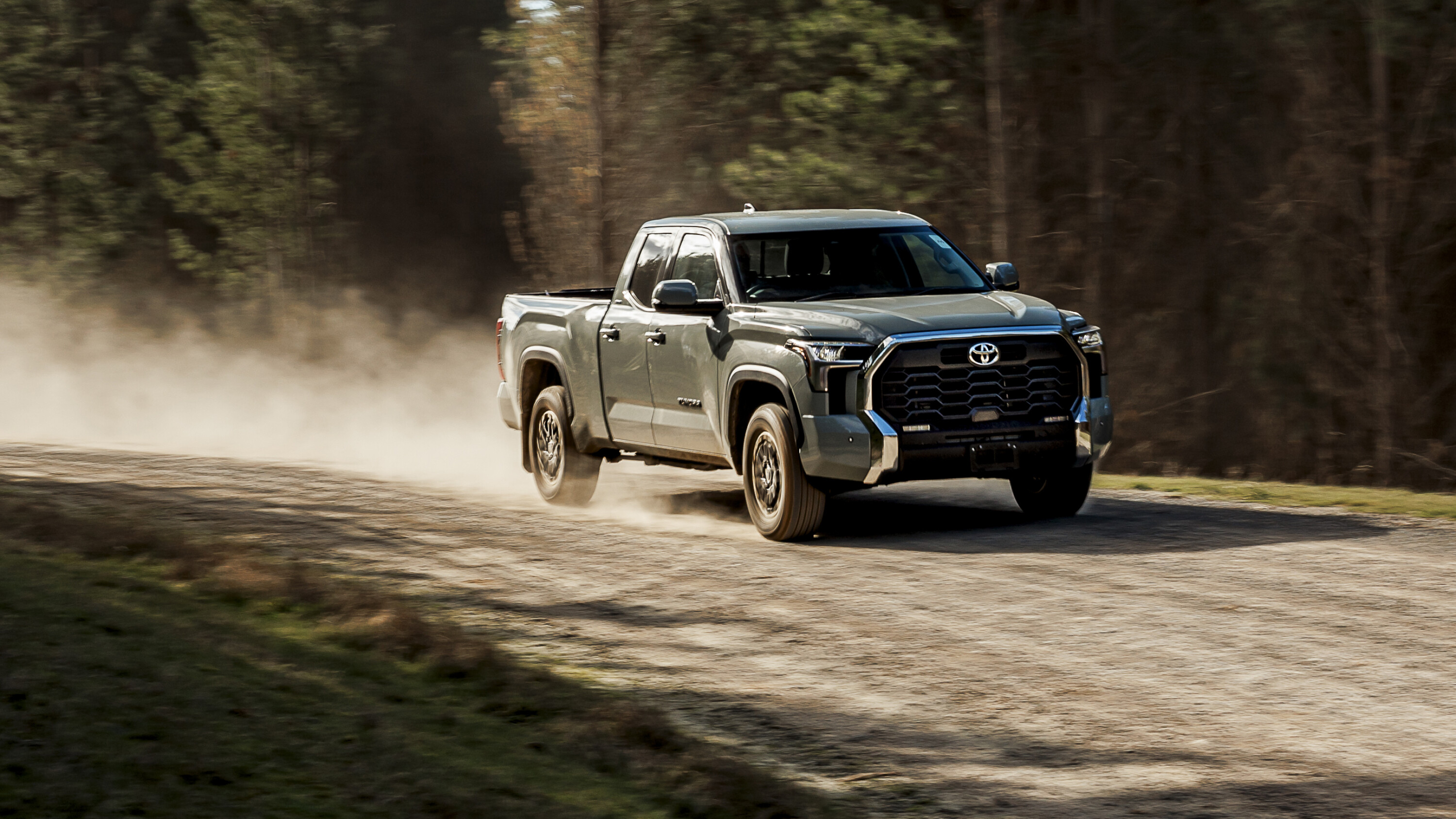
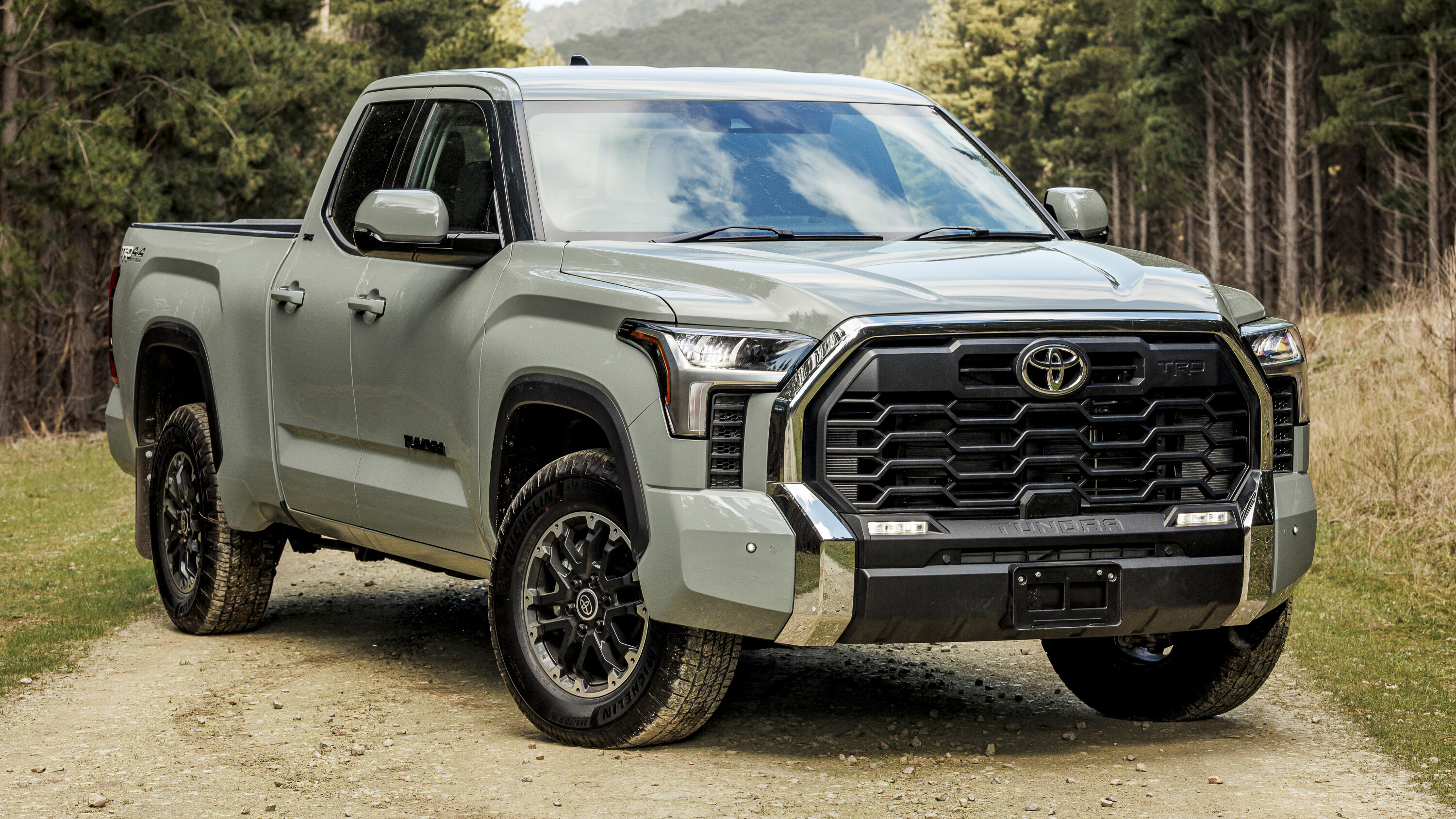
“Volume won’t be a problem with this car based on our sales planning,” says Sean Hanley, Toyota’s Australian boss as he looks across to the right-hand drive Tundra pick-up, the culmination of a five year project.
Toyota calls this ute their ‘premium towing machine’ and it’s not hard to see why. With a rated towing capacity of 4.5 tonnes, it picks up where LandCruiser 300 and HiLux have left off.
There’s been a long validation process and 280 customers and 20 Toyota internal staff are in the process of a year long trial, so this is yet to be a signed off program.
1
When asked if he’s confident that the right-hand engineering, in partnership with Walkinshaw, will be up to scratch, he smiles confidently, leans in and says, “We’re certainly not doing this not to launch the car,” he chuckles.
It’s a project that has been made easier by the wealth of componentry shared with the LC300. The crucial ‘run, stop, turn’ items that would be hugely costly to re-homologate are virtually a straight swap.
That’s not to say that the project has been easy. Both Toyota Japan and Toyota USA needed to be convinced of the viability of the project first. Then there’s the small matter of the statement of technical ability.
Naturally, should the Tundra project prove a success, the gateway would appear to be open for Toyota Australia to become a hub for right-hook re-engineering with export potential, but Hanley won’t be drawn on that one. “There’s no export plan at this point, but who knows for the future? We always look at opportunities,” he says.
1
Ray Munday is the engineer in charge of the project or, to use his official title, Senior Manager – Vehicle Evaluation and Regulations. He throws some more light on the development story.
“In 2017 we undertook a genchi-genbutsu (go to the source) tour,” he says. Toyota invited Japanese staff to speak to ex-Toyota customers in Australia, ex-customers who no longer felt served by Toyota for their towing requirements. “It wasn’t always glamorous. We did a tour of caravan parks, which was a bit of a novelty for the Japanese because they don’t really have them at home.”
It was clear that there was an opportunity for Toyota to serve a market for those towing large horse floats, race cars, construction equipment, farming gear and big boats. The priority was simple: maximum towing capacity. It also needed to offer space, comfort and a long driving range.
1
The focus was firmly on-road driving. That’s why the Tundra sports a five-link coil-sprung rear end rather than the heavy duty leafs as seen on most other dual cabs.
Yes, you lose a little in the weight it can carry in the bed, but Toyota claims the gains in comfort and control more than offset this for the target market. Lateral location is particularly good with the coil-sprung rear, which builds confidence when towing something large.
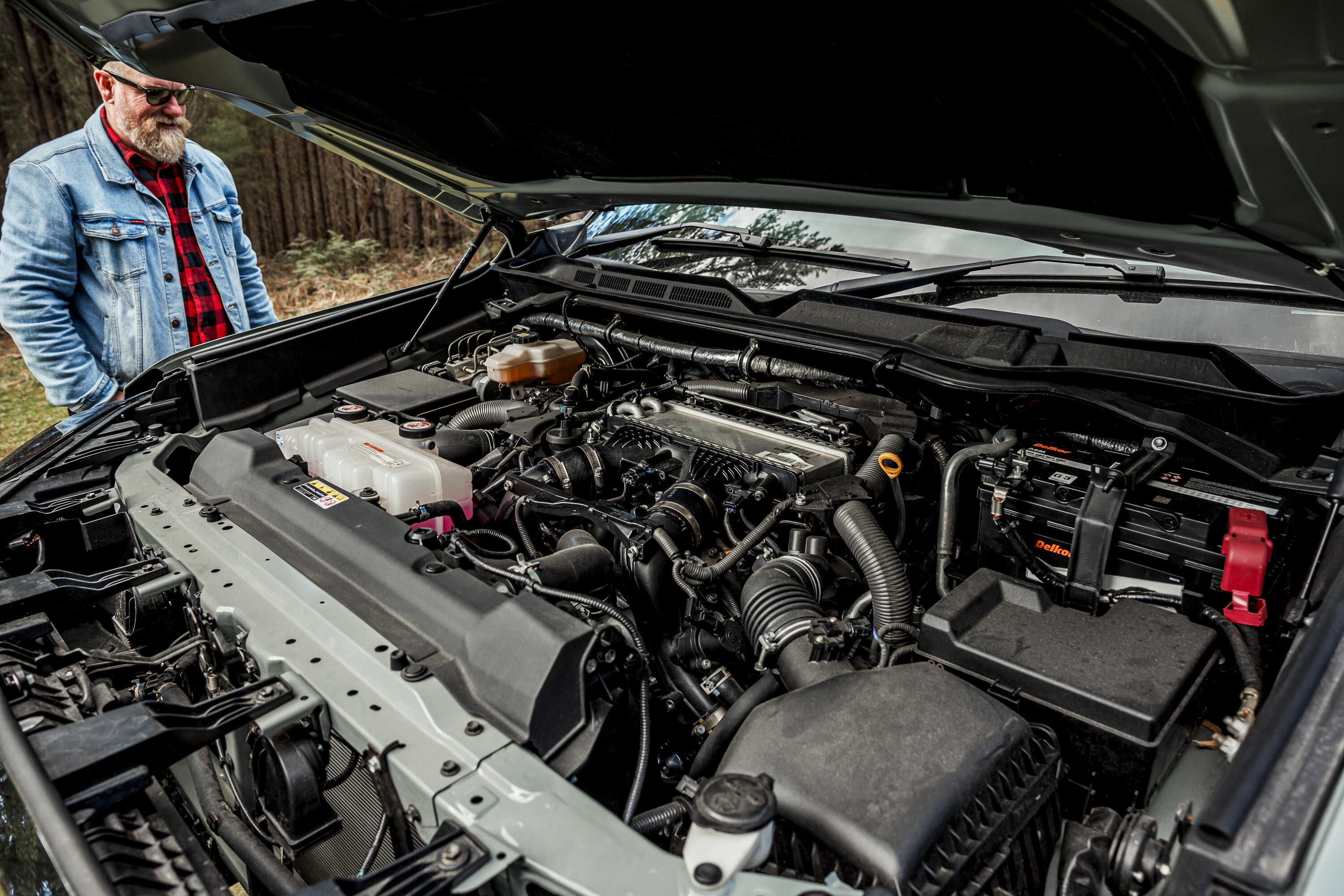
Likewise, the 3.4-litre (3445cc – don’t let them bilk you by calling it a 3.5) i-FORCE MAX petrol V6 features a motor-generator that adds 36kW and 140Nm. The electric boost isn’t for economy; it’s for sheer grunt. With a system power output of 326kW and 790Nm, the Tundra could tow an errant tectonic plate back into line.
1
We hitched up a horse float filled with concrete in order to max out the towing capacity of the Tundra and it still pulled cleanly and relatively effortlessly.
That’s the joy of the instant torque of the electric motor. Without it, the V6 would probably be straining somewhat to overcome that inertia, but assistance of that permanent magnet synchronous motor is key to smoothing the inputs and reducing strain on the transmission.
At this point it’s worth pointing out that our drive of the Tundra was entirely confined to its Australian home base, the AARC proving ground in Victoria, so there are still some questions that remain unanswered – by us at least – about how it works on road here.
1
A 50mm tow ball is supplied as standard, which is good up to 3.5-tonnes. Beyond that, you’ll need a heavier duty 70mm ball if you want to drag the full 4.5-tonne quota.
Bear in mind that when towing at maximum capacity, a couple of people and their luggage is about as much as you can legally house on board without busting through maximum payload limits. The Gross Combined Mass of the Tundra is rated at 7825kg and its kerb weight is listed at 2778kg.
It can operate in EV mode to 30km/h and features a 288-volt Ni-Mh battery under the rear seats while the motor-generator sits in the bell housing of the 10-speed auto.
1
A tow/haul mode changes gearbox shift points, electric power steering feel, throttle mapping, alters the drop-down front spoiler, detects a trailer and optimises safety systems like blind spot monitoring. The transmission also has dedicated Eco, Normal and Sport modes.
Overall refinement is good, and the electrically-assisted steering is a little relaxed about the straight-ahead which, given its likely intended function, is perhaps no bad thing. The electronic brake controller for the trailer works extremely well, pulling the trailer back into line cleanly if you’ve done something to upset the balance.
The four-pot front brakes of the Tundra are appropriately meaty, clamping onto 354mm vented discs. At the back there’s a single-piston floating caliper that gets to work on a 335mm vented rotor.
1
Despite the fact that the Tundra is fitted with a dual-range 4WD system and a limited slip differential, this is no off-road hero.
When asked how good it was off-road, a Toyota employee made a comment which could be very loosely translated as ‘about as good as would be expected of a vehicle with 21-degree departure angle and road-biased tyres’.
Nevertheless, the big Toyota is admirably stiff in terms of chassis torsion for such a long wheelbase vehicle. There’s very little in the way of scuttle deformation, even when bumping up oblique kerbs. The four-wheel drive system is also capable of shifting on the fly at up to 80km/h between 2WD and 4WD although you will, predictably, need to come to a halt in order to engage low ratio.
1
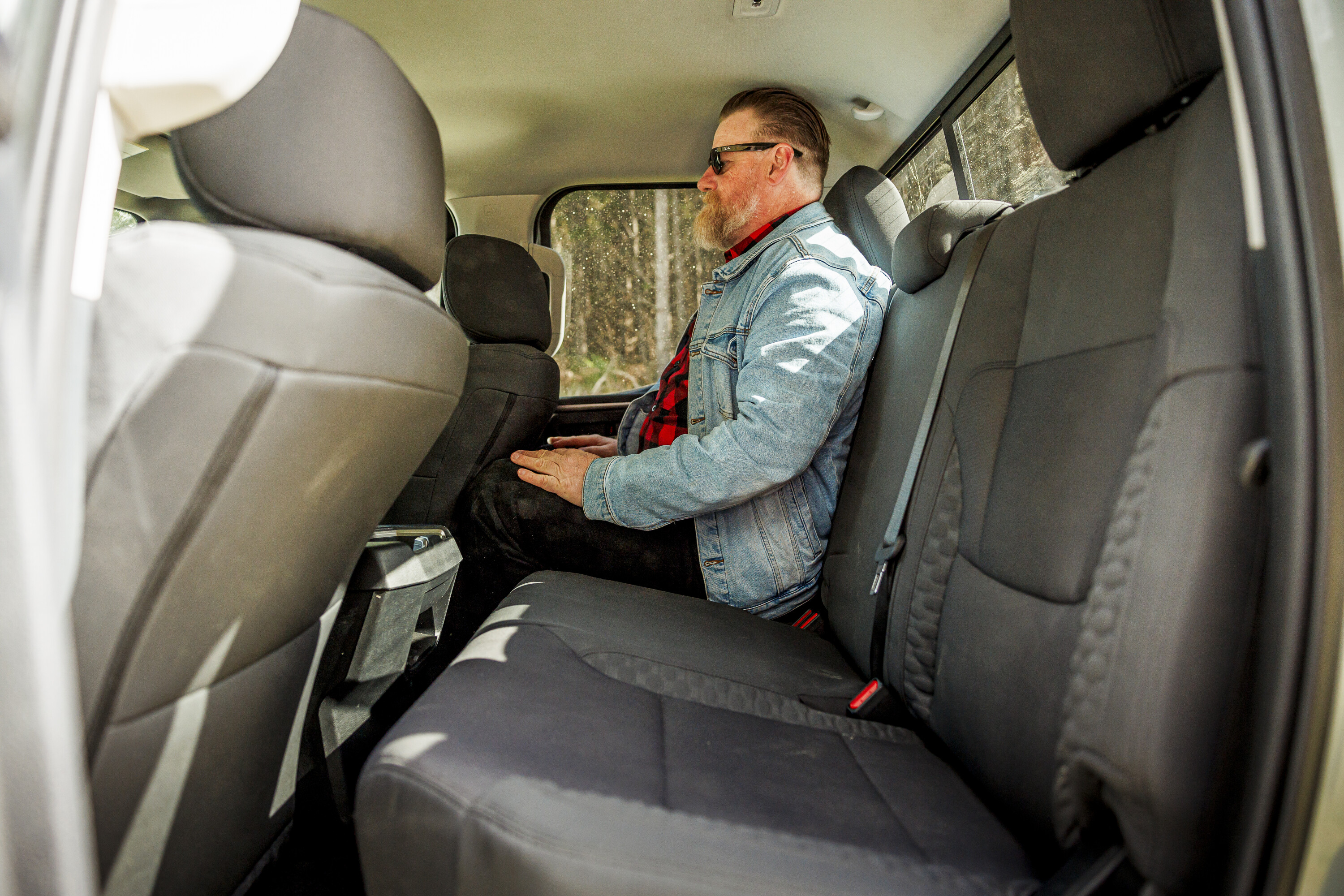
With a 122-litre fuel tank, the Tundra’s equipped for distance and the cabin is comfortable enough to easily cope with big road trips. Even in the back, there’s a huge amount of rear legroom. So much so, that you almost miss a rear bench that could recline a few degrees to take advantage of it.
Cabin quality? That’s one area that could do with a little bit of additional polish, with the storage bin lids feeling pretty basic. At the estimated price point of the Tundra, that could be a little better. It feels resolute and no-nonsense but not the leather-swathed luxe of some top-end utes.
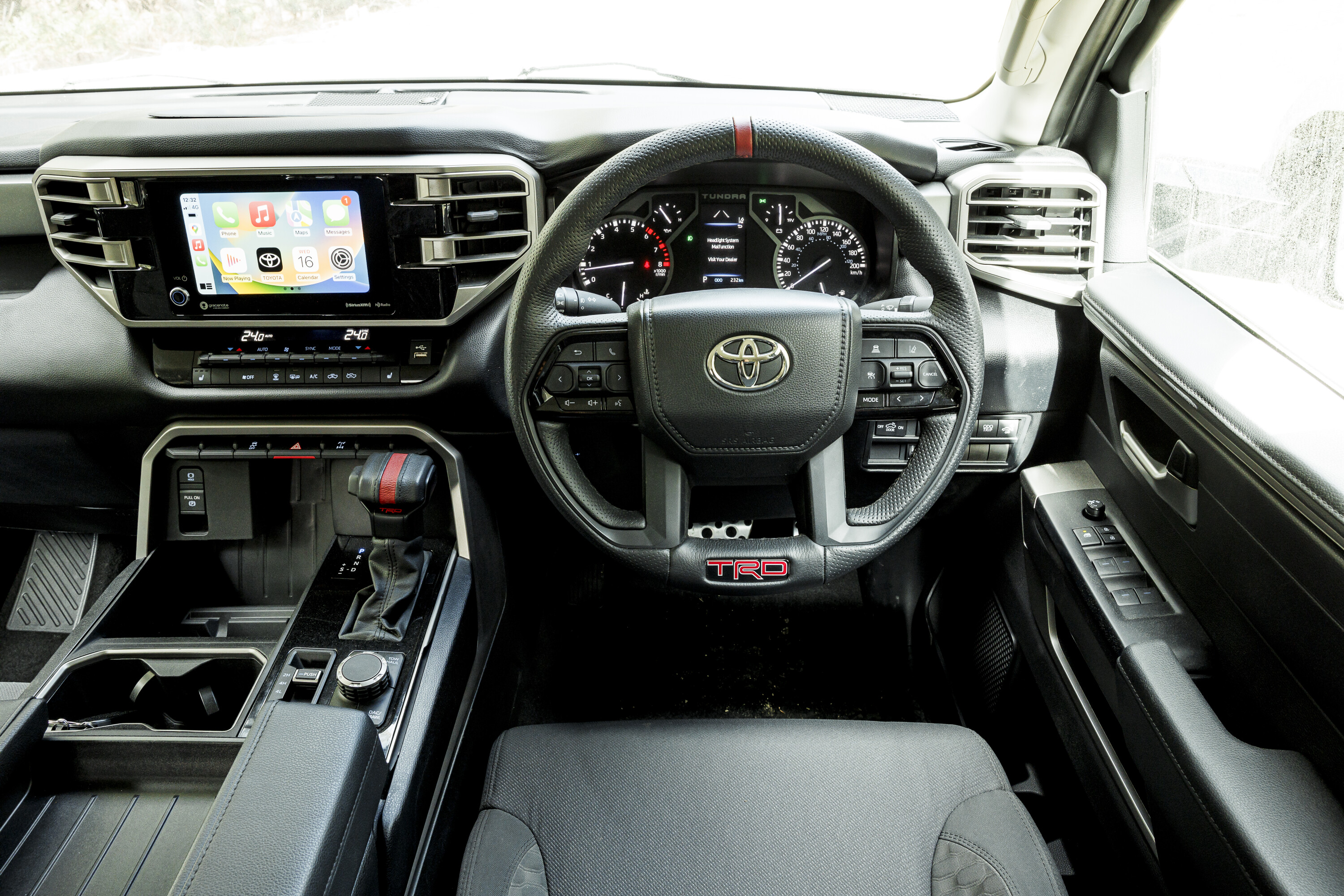
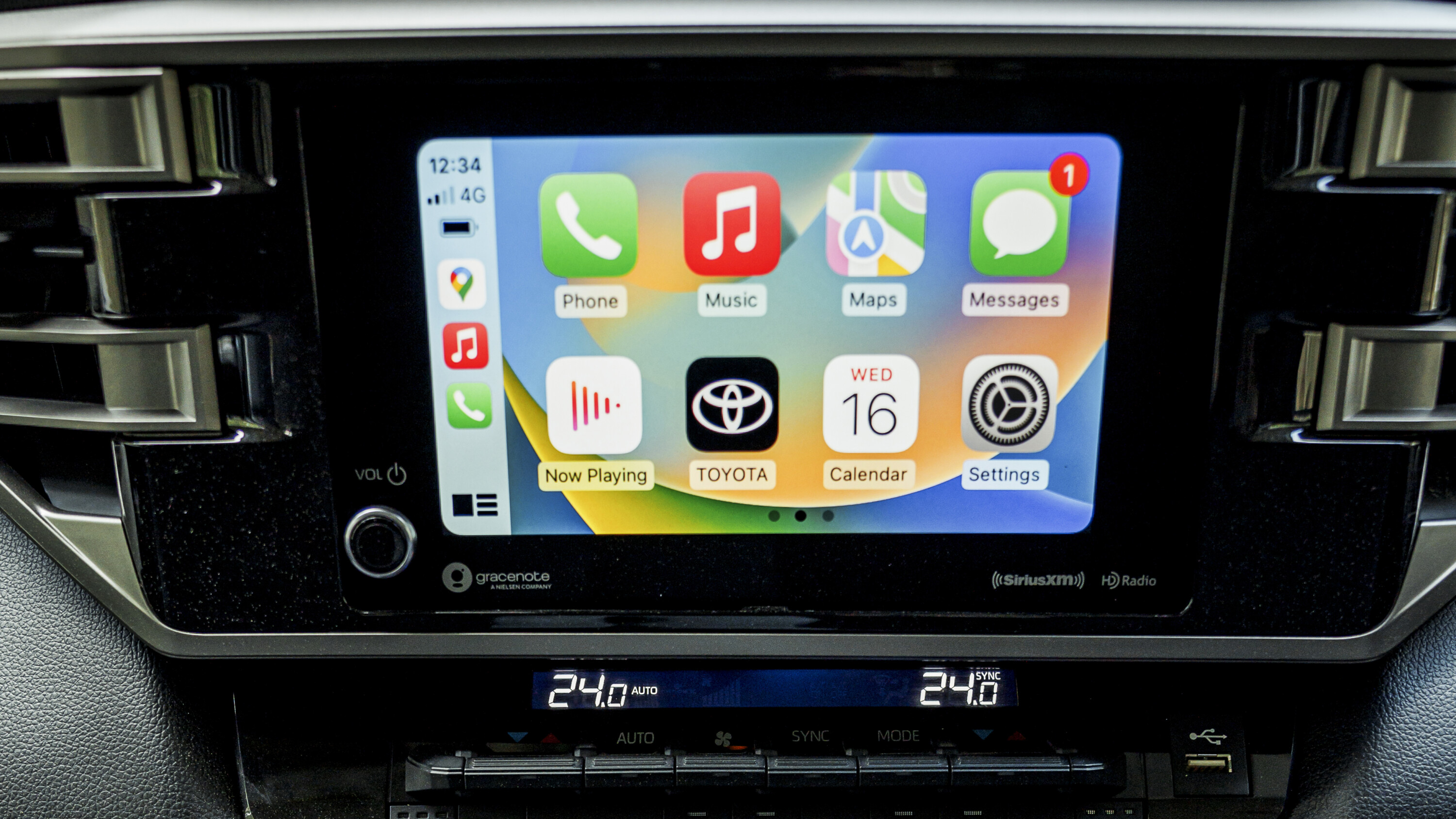
You do get black pleather upholstery, heated and vented front seats with 8-way electric adjustment, a 12.3-inch digital instrument cluster, wireless Apple CarPlay (but wired Android Auto), a 12-speaker JBL stereo, a 14.0-inch central touchscreen, five USB ports and a 12v accessory socket, dual zone climate control with vents in the rear and a 60/40 split rear seat.
1
The cushion can fold up, creating an additional dry storage area for bulky items while still retaining some vestige of rear passenger accommodation.
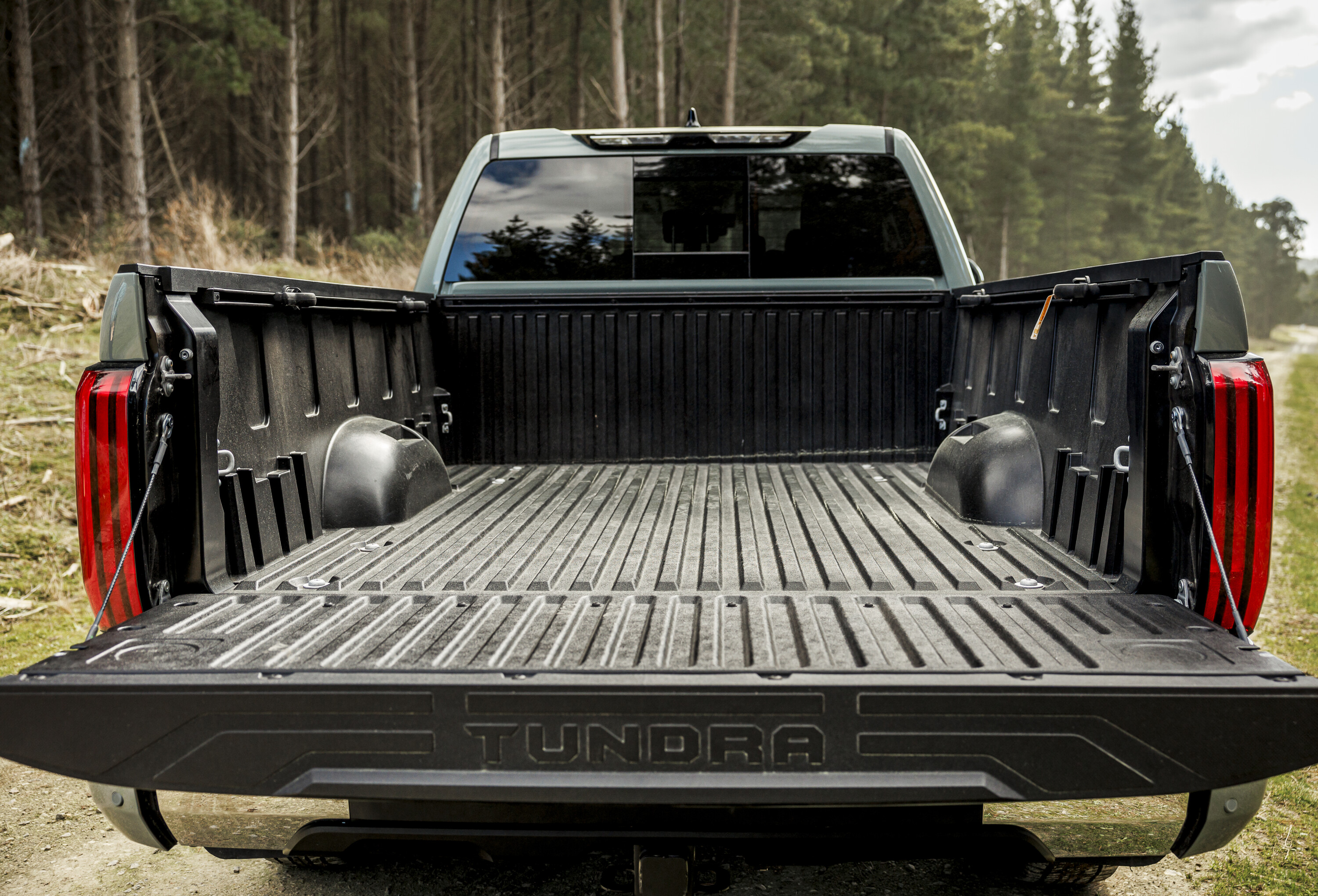
The tub features side and back rails and moveable tie-down points as well as a manual trifold tonneau cover. Toyota claims that it a full accessory package including bull bars is in the works but more on that at a later date.
As well as switching the steering wheel from left to right, the Tundra required ADR-compliant headlamps, license plate mount, and mirror angles. The steering rack and exhaust heat shield all had to be changed, along with the wiper system, the dash panel, the brake pedal and mounting points (from LC300).
The wiring harness, brake master cylinder, HVAC blower motor, IP wire harness, seatbelts, multimedia, tail lamps, trailer plug, and mudguards all needed to be re-engineered. Even the floor mats were all-new custom designs, made in Australia.
1
Toyota needs to convince itself of the quality of the re-engineering work
Thousands of kilometres of back-to-back testing at the AARC proving ground in Victoria and on-road between Altona and Darwin while towing a 4.5-tonne trailer have convinced Toyota that it’s onto a good thing with the Tundra, a vehicle that, no matter what detractors will say about giant utes, seems a good fit for the more wide open parts of Australia.
There are still a number of blanks that remain to be filled before we can deliver a decisive verdict on the Aussie-spec Tundra, price being the key component.
Toyota needs to convince itself of the quality of the re-engineering work, but make no mistake, if Toyota Australia can get this one right, it not only boosts the prestige of the Aussie outpost in Toyota’s global ecosystem, but potentially opens the doors to other projects and, logically, other right-hand drive export markets. So there’s a lot riding on it. At this juncture, the impressions are cautiously promising.
While the Tundra badge may be new to Australia, it’s been a solid fixture in the US since the turn of the century and this model is the third-gen XK70 variant, launched over there in 2022.
Prior to that there was the XK30/40 (model years 2000-2006) and the XK50 (MY 2007-2021). The Tundra was never officially sold in Japan. Despite that there’s a cult following for this ‘forbidden fruit’ in Japan with a Tundra Owners Club for left-hand drive imports.
Double wishbones, coil springs, dampers, anti-roll bar (front) Multi-links, coil springs, dampers, anti-roll bar (r)
Steering
Electric rack-and-pinion
Tyres
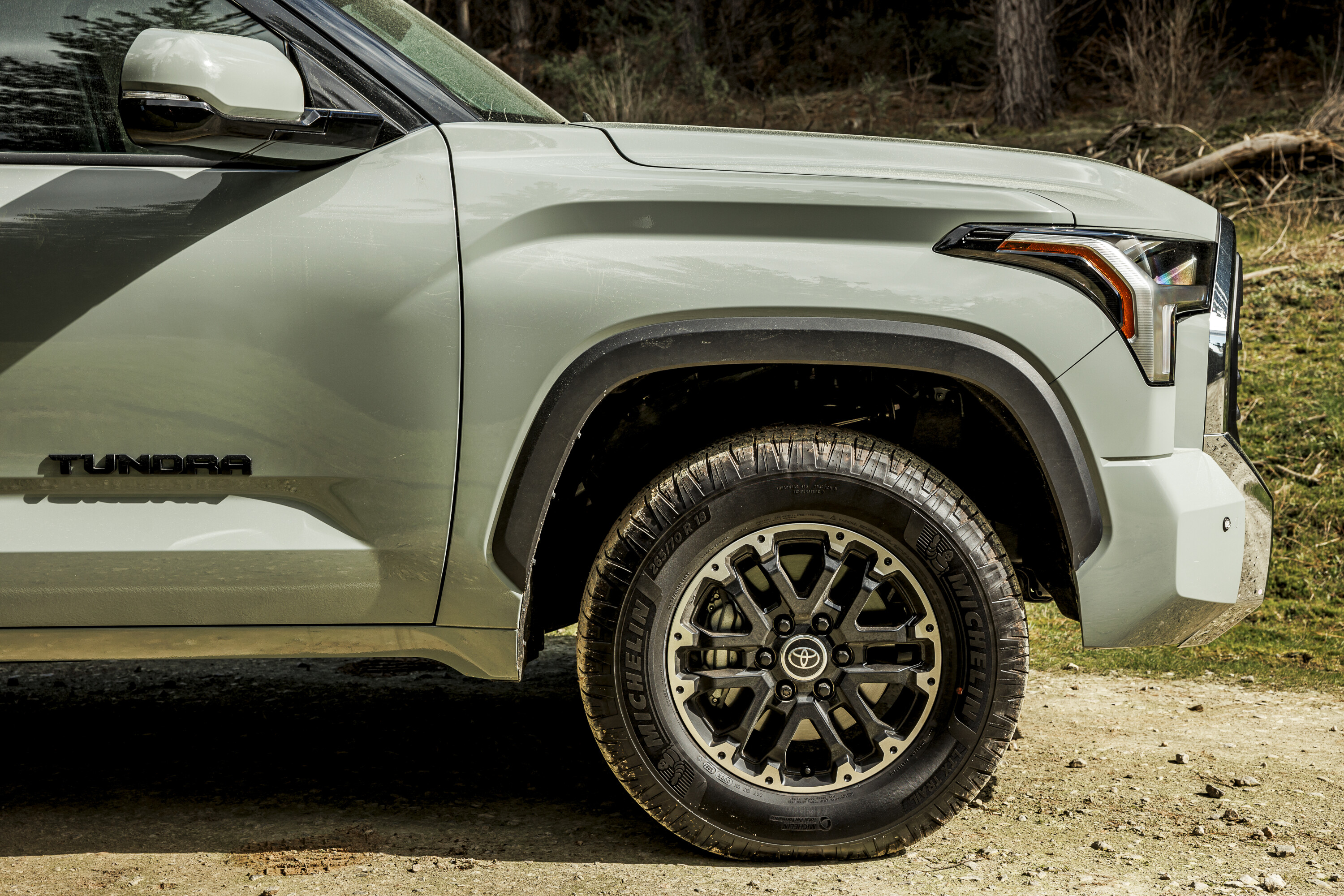
Bridgestone Dueler H/T 265/60 R20 (f/r)
Price
c.$150K (est.)
Snapshot
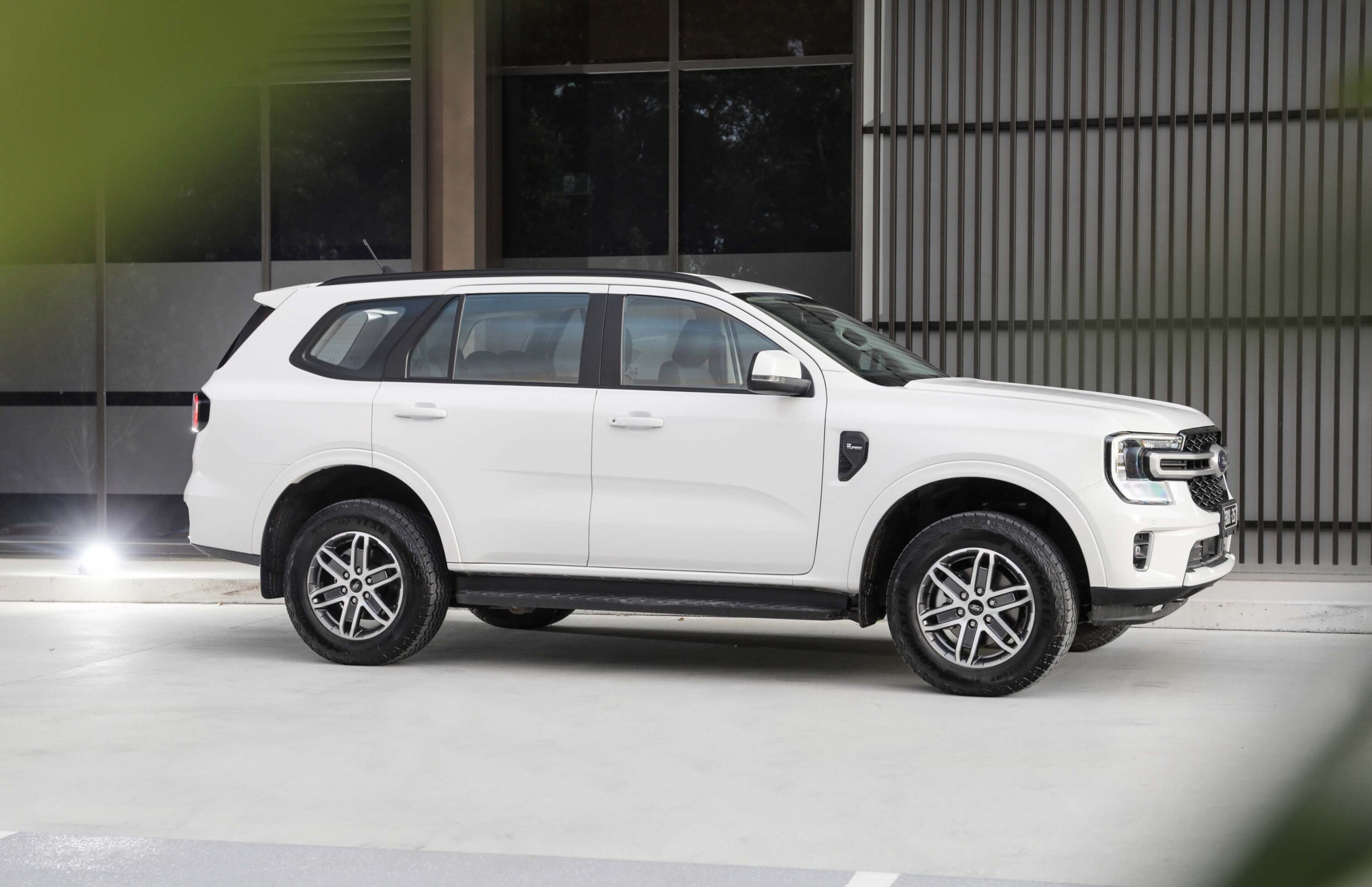
2024.5 Ford Everest: Full Australian details
Pro Trailer Back-Up Assist added as option for Trend, Sport and Platinum
Trend RWD variant dropped from line-up
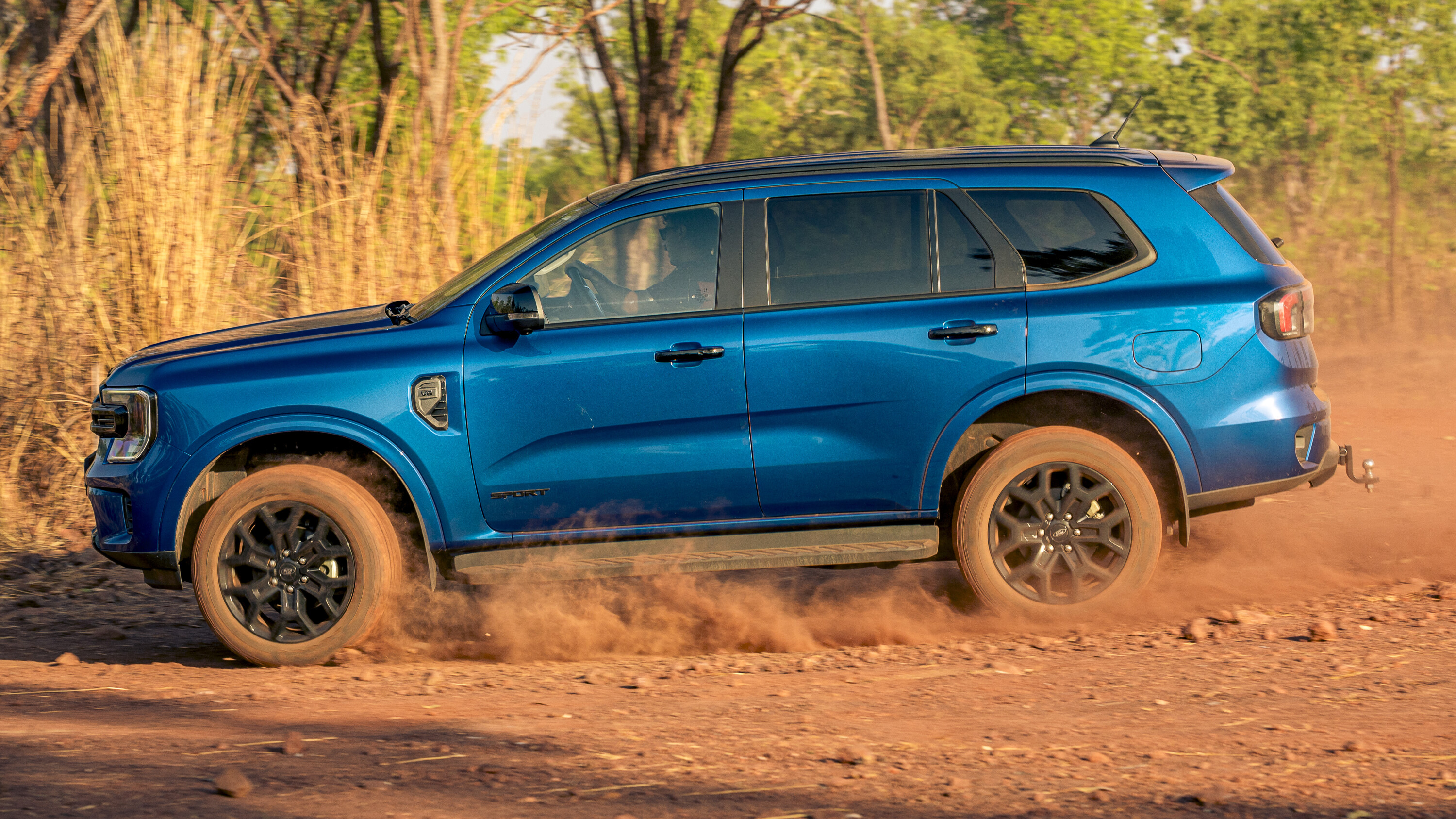
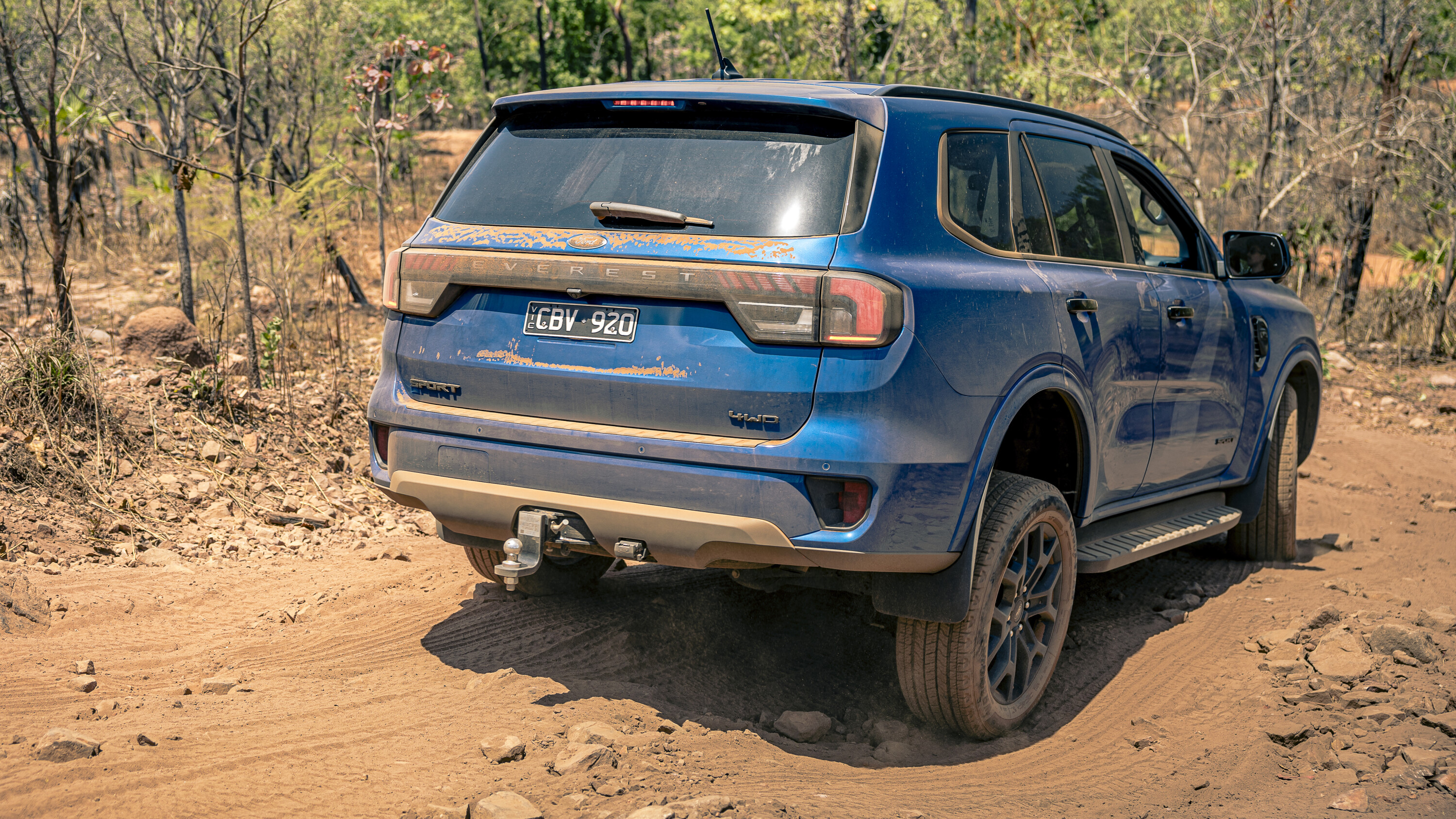
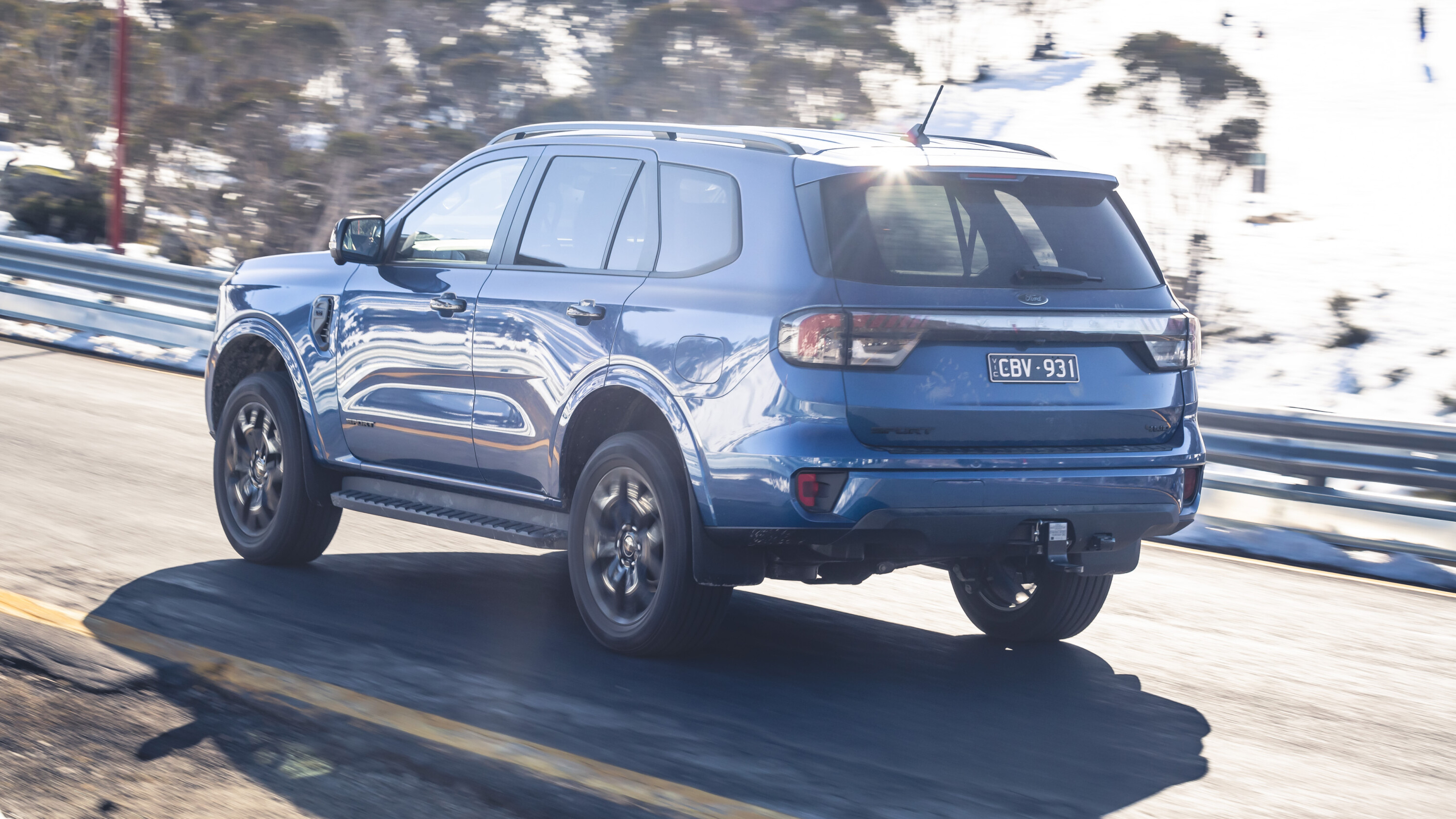
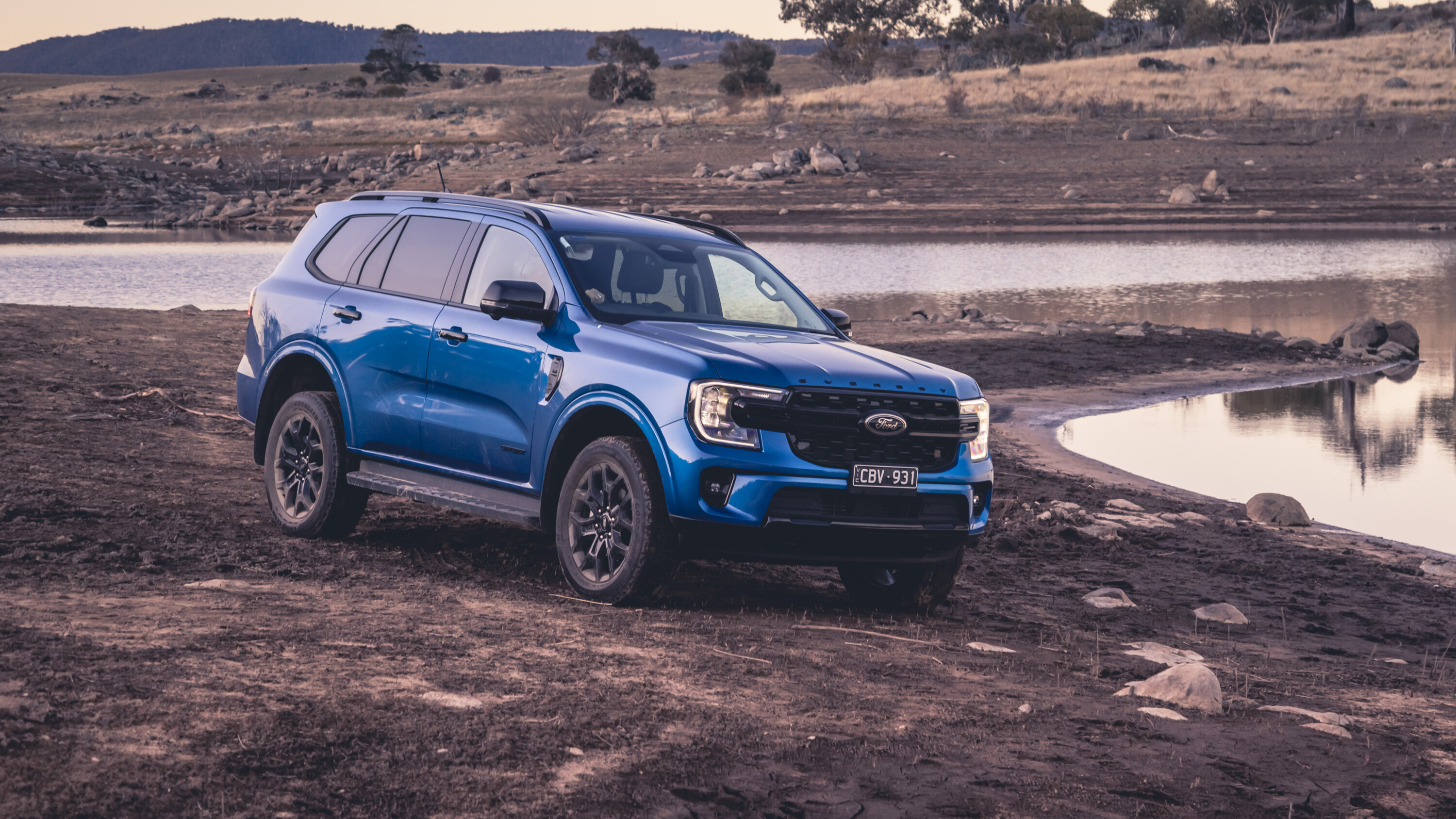
The 2024.5 Ford Everest off-road SUV is set to receive various upgrades and a smaller range of models.
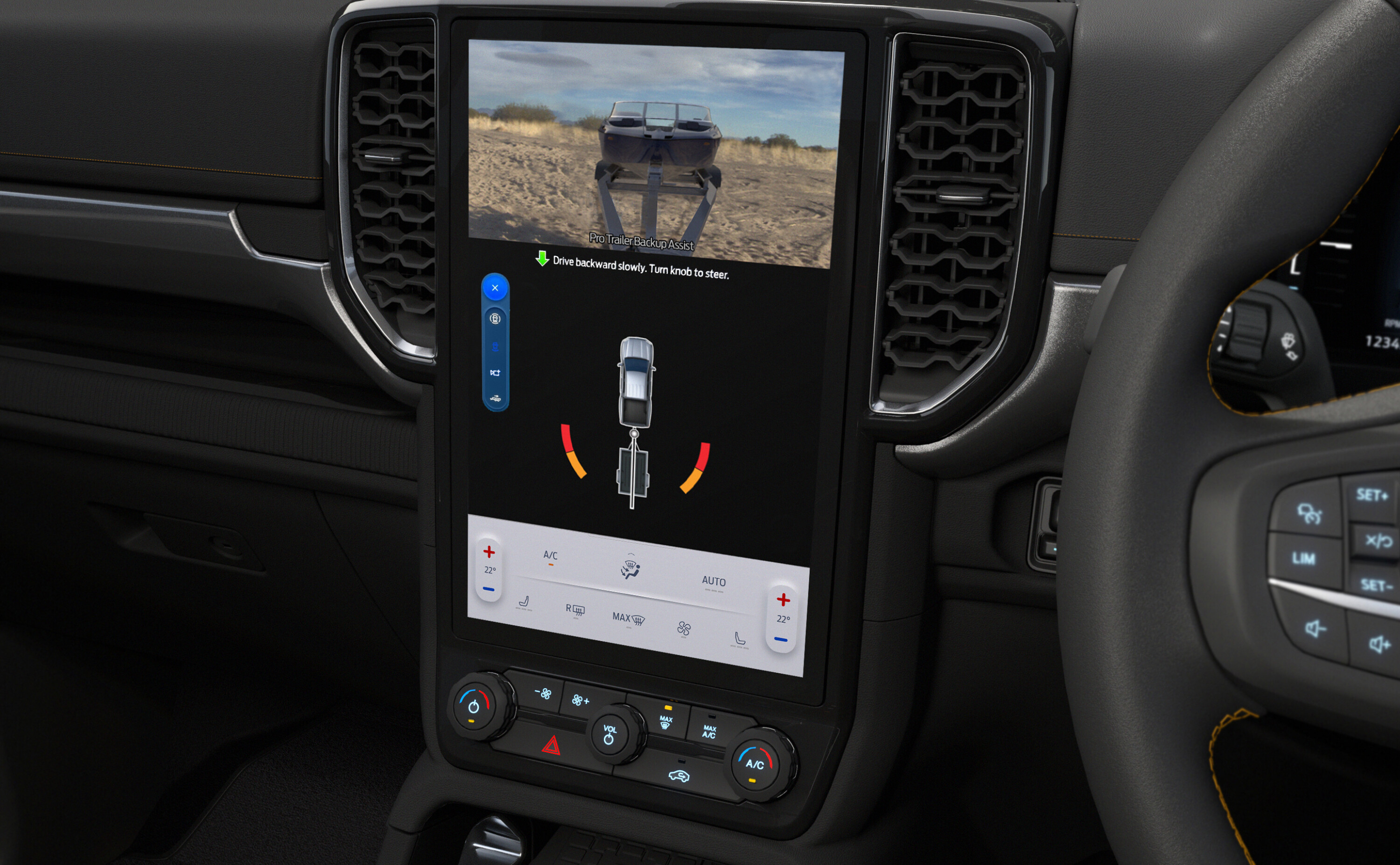
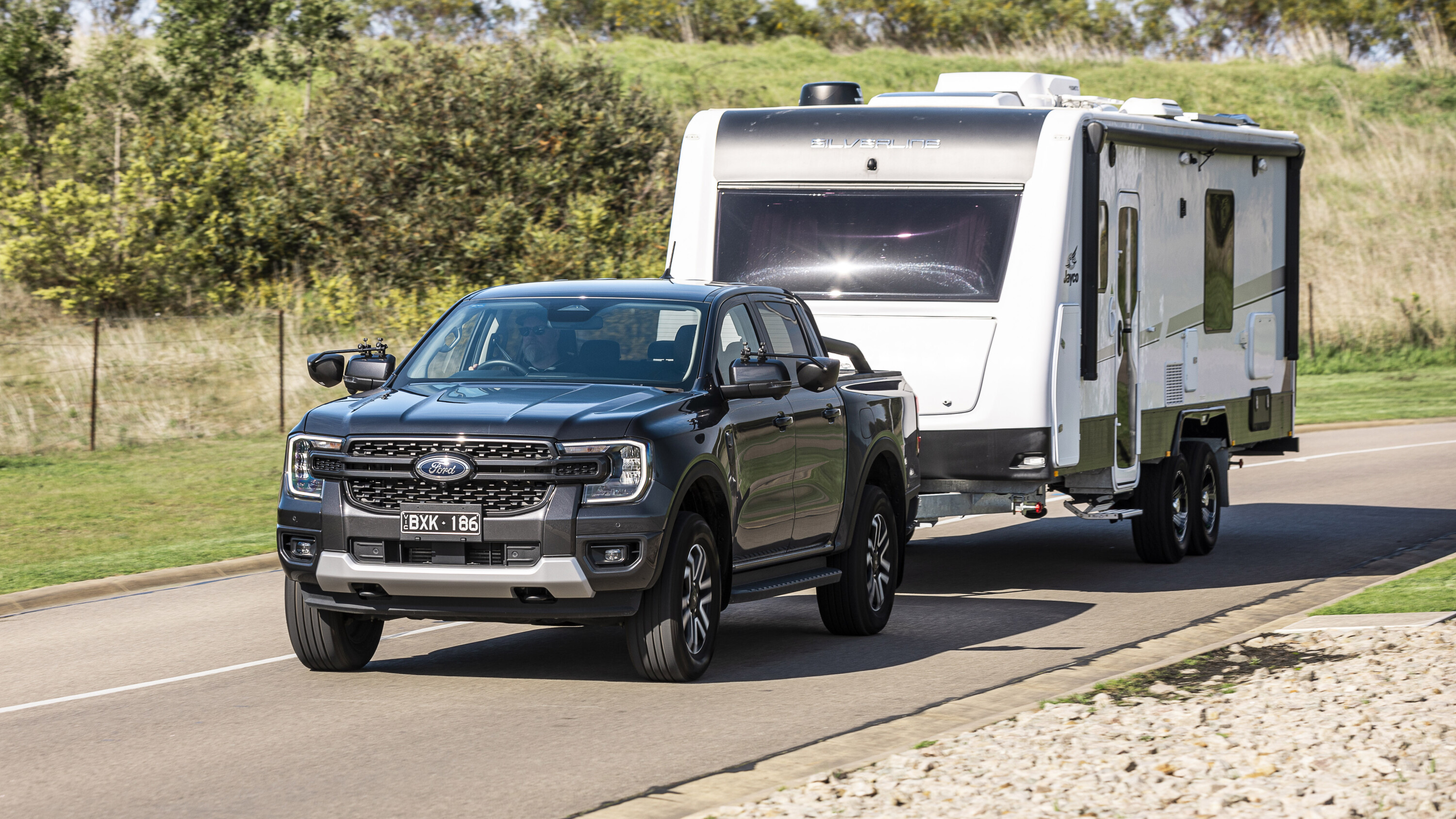
The new Pro Trailer Back-Up Assist is the main addition, which is borrowed from the full-size F-150 – and also coming to the related Ranger ute.
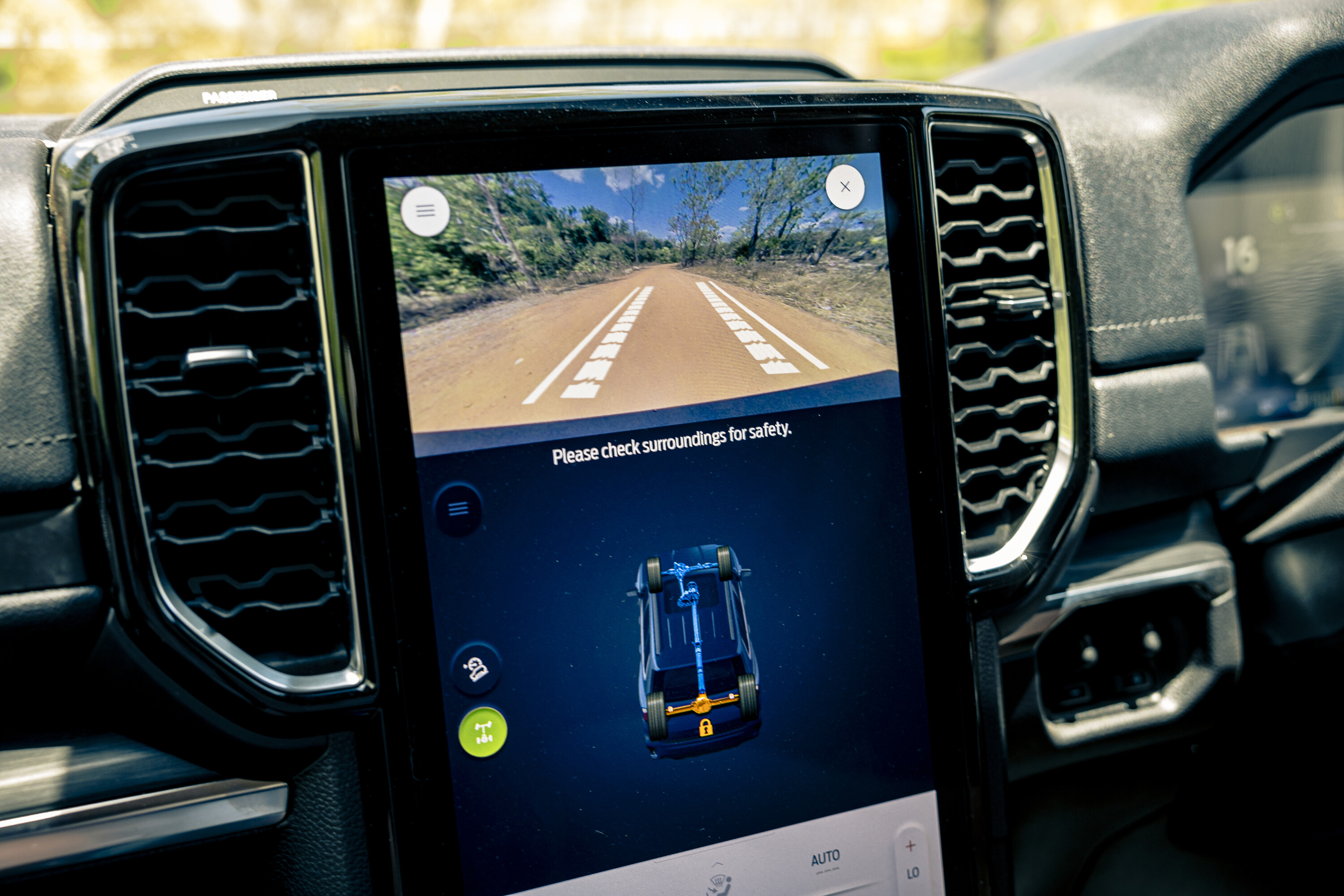
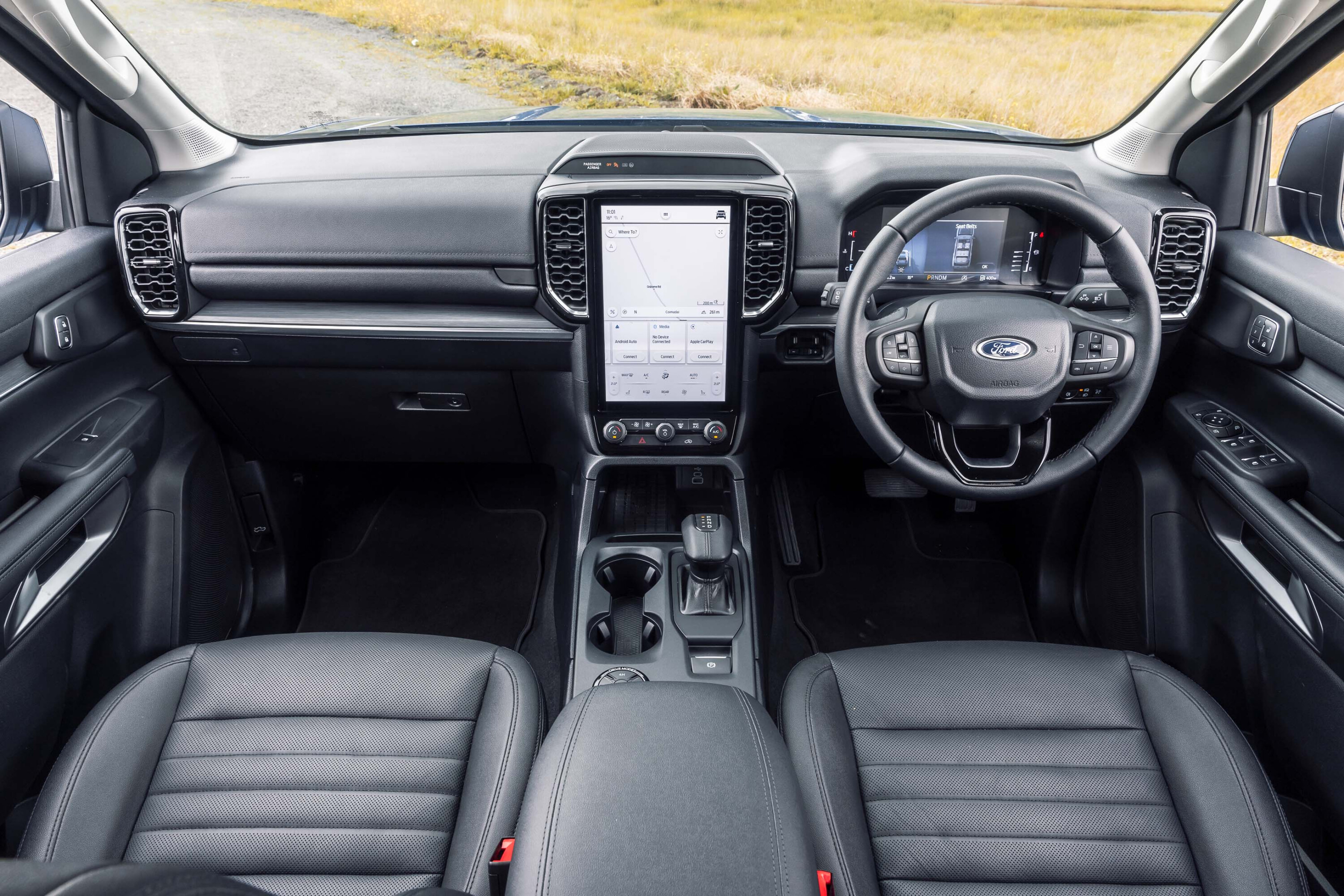
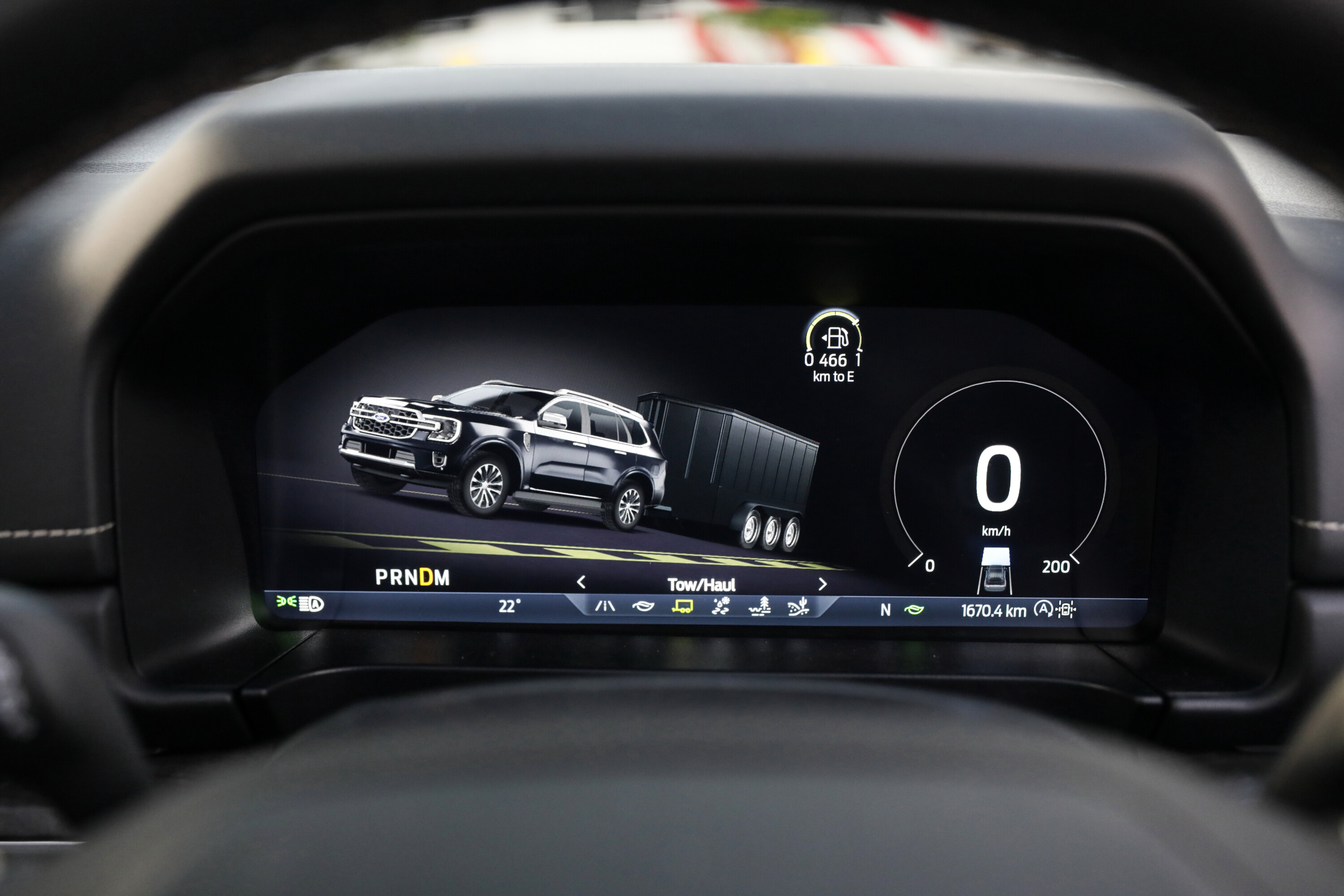
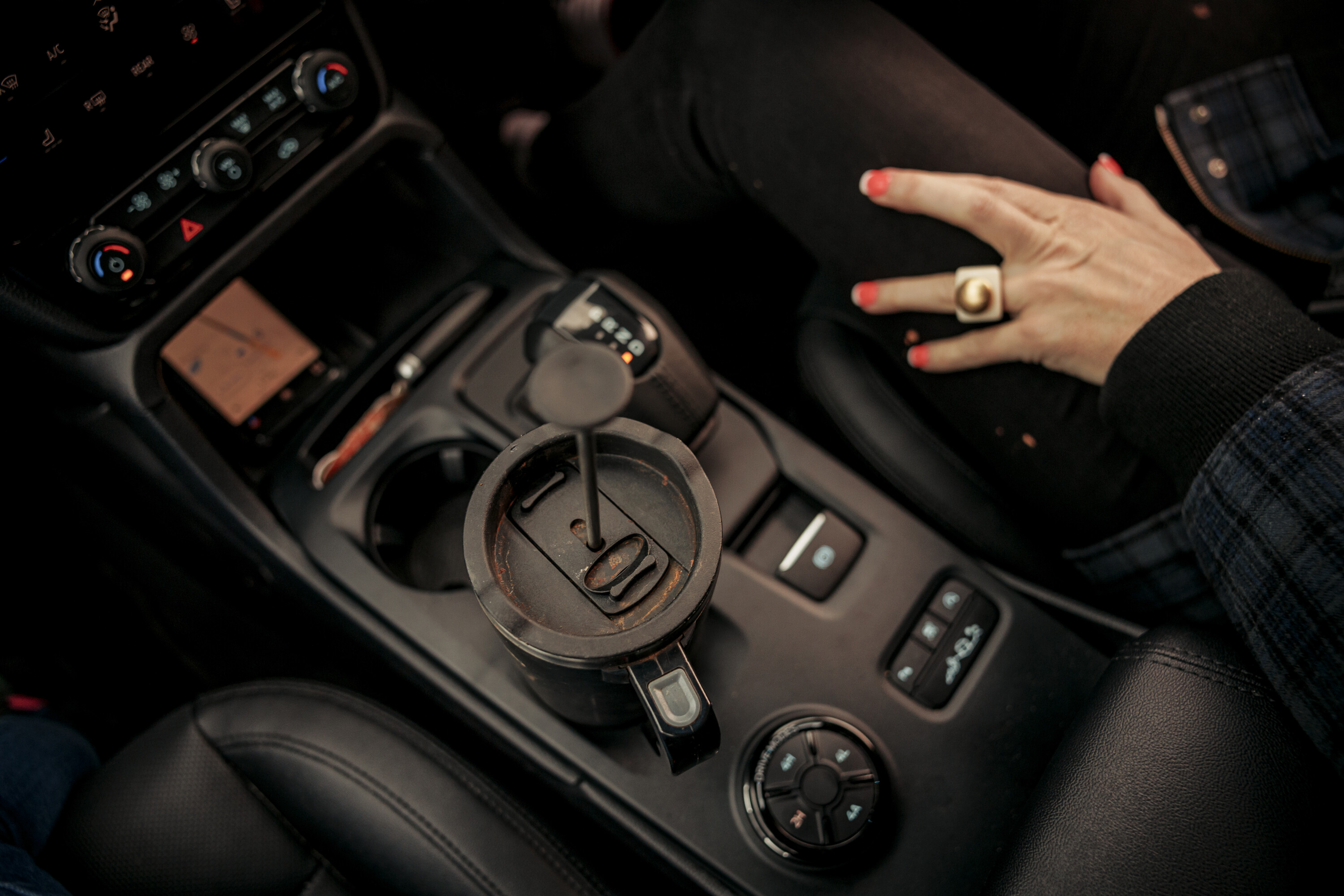
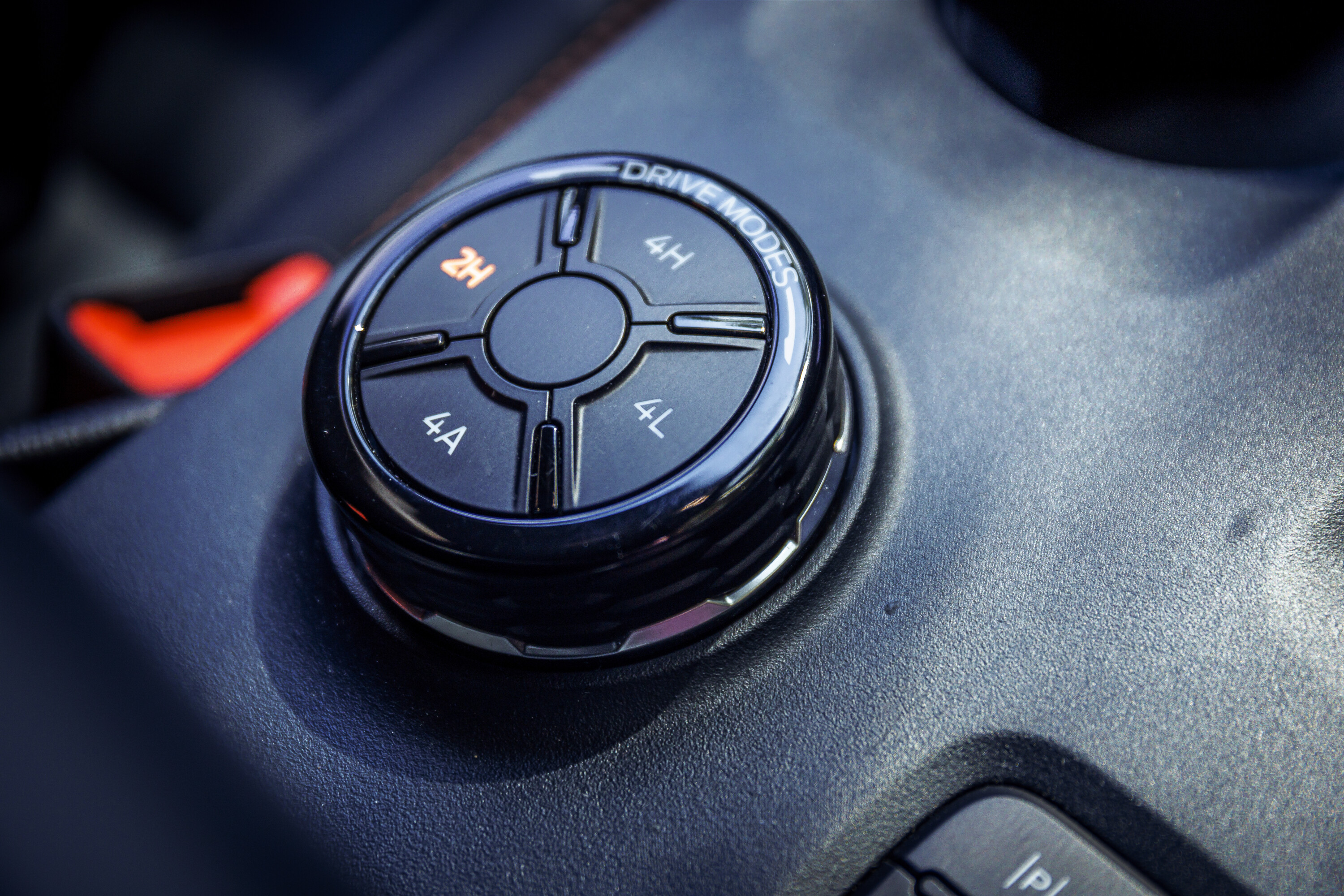
This feature enables drivers to manoeuvre their trailers using the outer ring of the drive mode selector on the centre console. The steering wheel turns automatically to direct the trailer as the driver turns the dial, so they don’t need to touch the wheel during the manoeuvre.
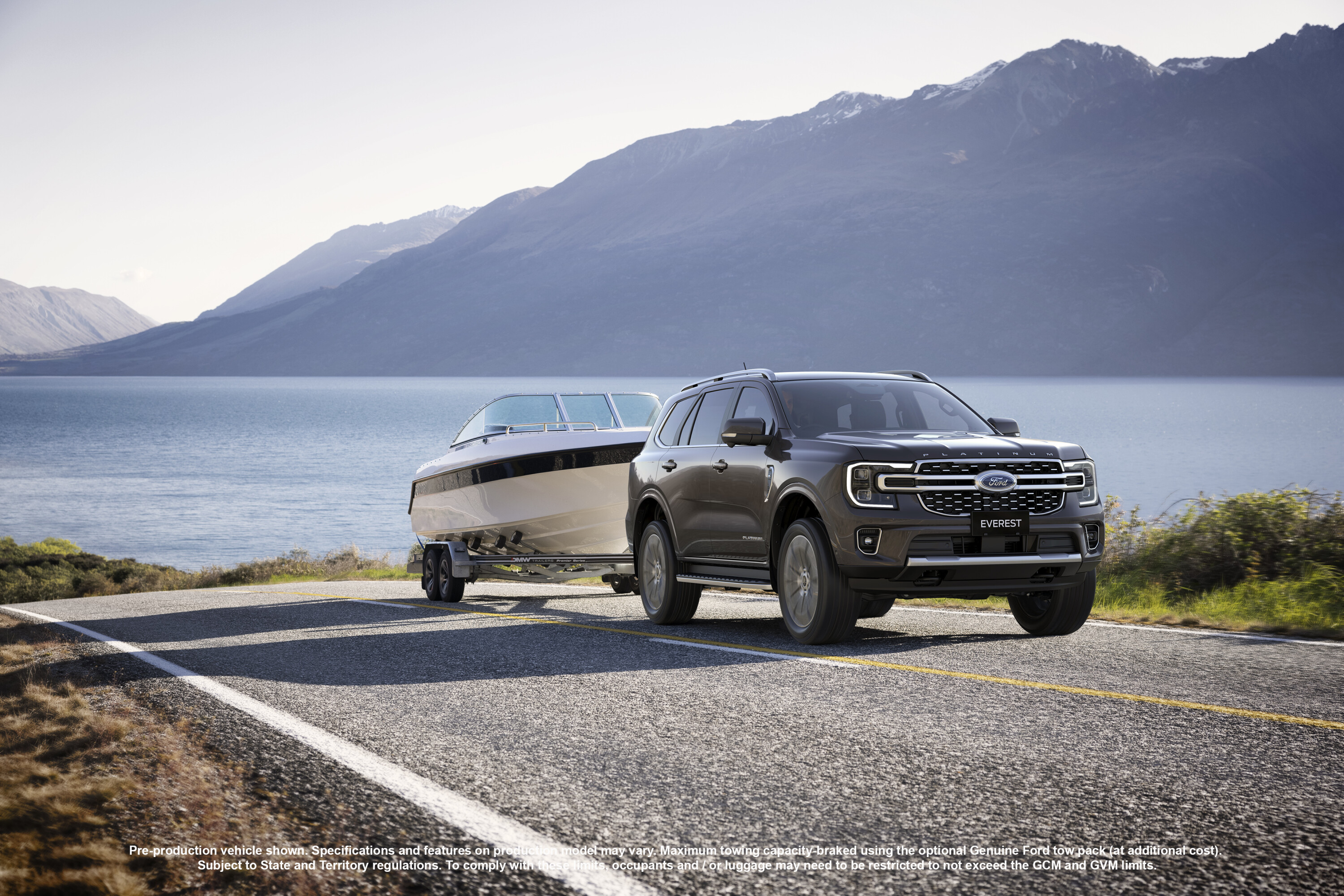
The Pro Trailer Back-Up Assist feature will be optional for the Everest Trend and Sport as part of the Touring Pack. The Platinum model is now available with a new Pro Towing Pack that includes the Pro Trailer Back-Up Assist feature, along with a tow bar and an integrated brake controller.
1
Other updates include standard zone lighting and black stand-off roof rails for the mid-spec Trend and Sport variants.
The Trend two-wheel-drive variant has been removed from the Everest line-up, while the limited-run Wildtrak special edition variant will not be offered for model-year 2024.5.
While Ford has not raised prices for the updated Everest, all variants previously saw price increases between $500 to $2490 applied from January 1, 2024.
The Everest now starts from $53,990 before on-road costs for the Ambiente 4×2, rising to $79,490 plus on-roads for the Platinum V6 4×4.
The Ford Everest, which was crowned the 2023 Wheels Car of the Year, was the nation’s second-best-selling large SUV in 2023, with 15,071 sales, beating the Isuzu MU-X (14,139). However, it was unable to overtake the popular Toyota LandCruiser Prado (20,710).
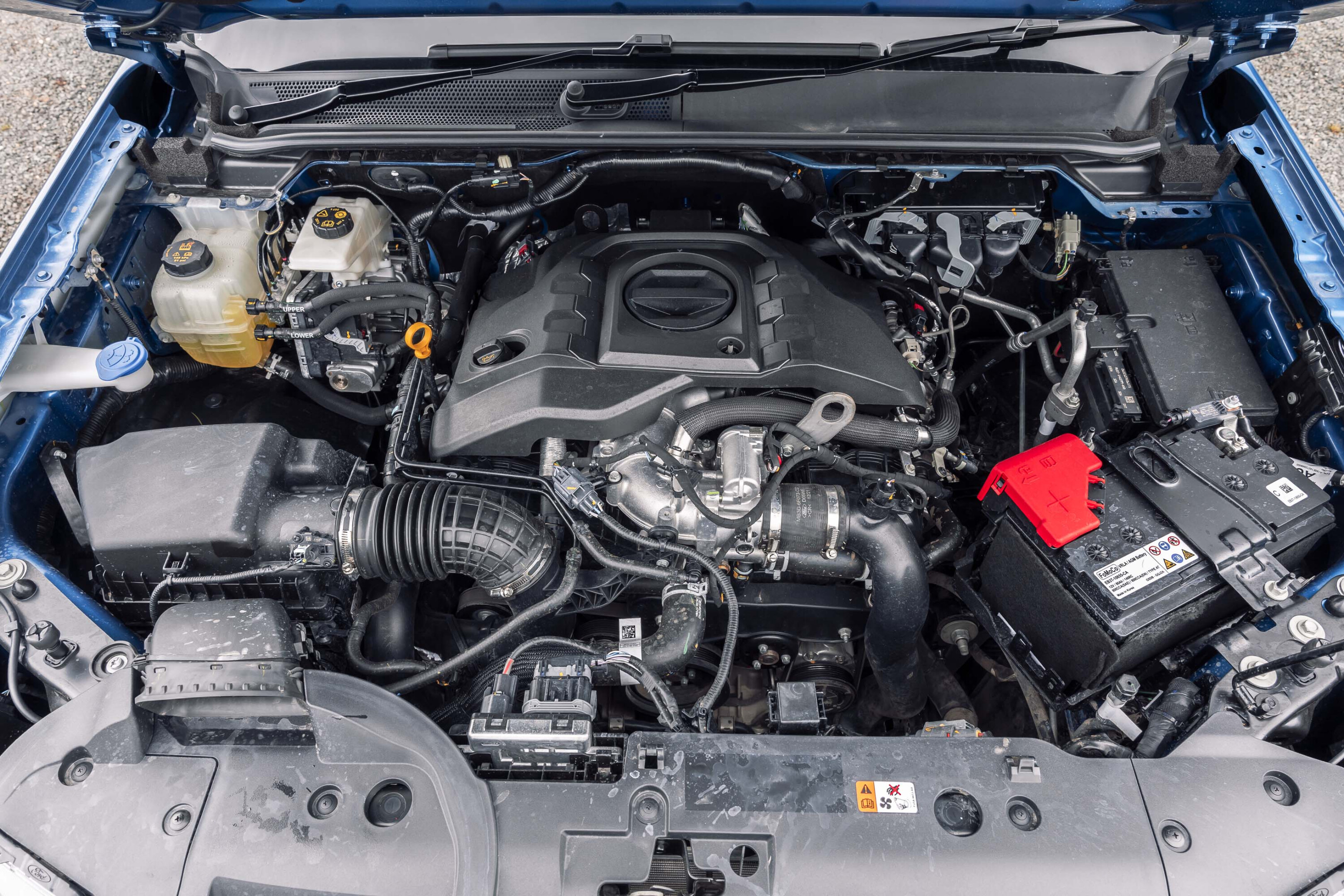
The Ford Everest is available with a four-cylinder diesel engine or a 3.0-litre turbo-diesel V6.
As standard, Everest Ambiente, Trend and Sport variants are fitted with Ford’s 2.0-litre bi-turbo diesel four-cylinder engine, which 154kW and 500Nm.
It is matched to a 10-speed torque-converter automatic transmission, with two- or four-wheel-drive depending on the model.
Standard for Sport and Platinum four-wheel-drive models is a 3.0-litre single-turbo diesel V6 powertrain pushing out 184kW and 600Nm, also mated to a 10-speed automatic.
All Everests have a 3.5-tonne braked maximum towing capacity.
The Ford Everest is covered by a five-star rating from ANCAP, based on testing conducted in 2022.
It scored 86 per cent for adult occupant protection, 93 per cent for child occupant protection, 74 per cent for vulnerable road users, and 86 per cent for safety assist.
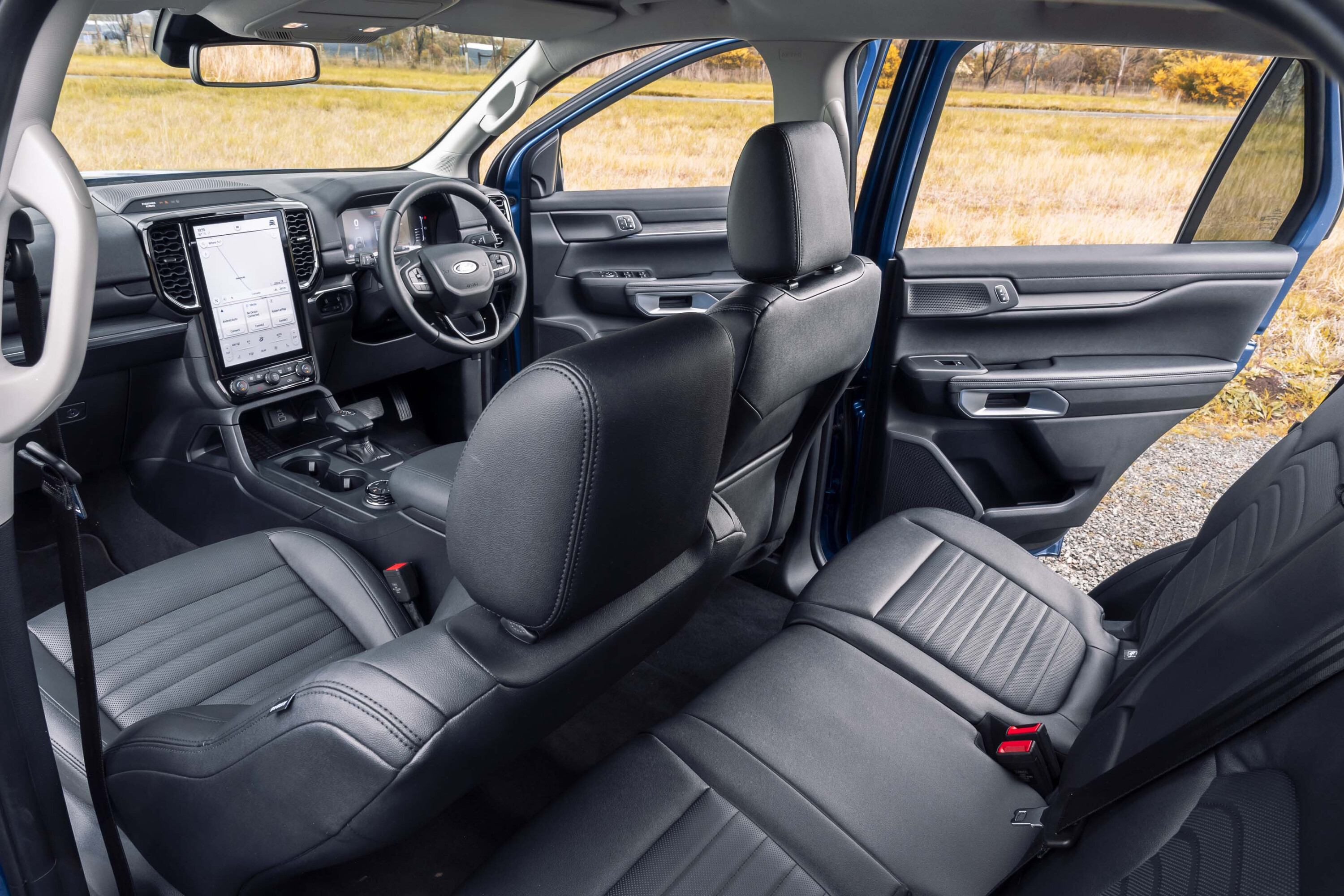
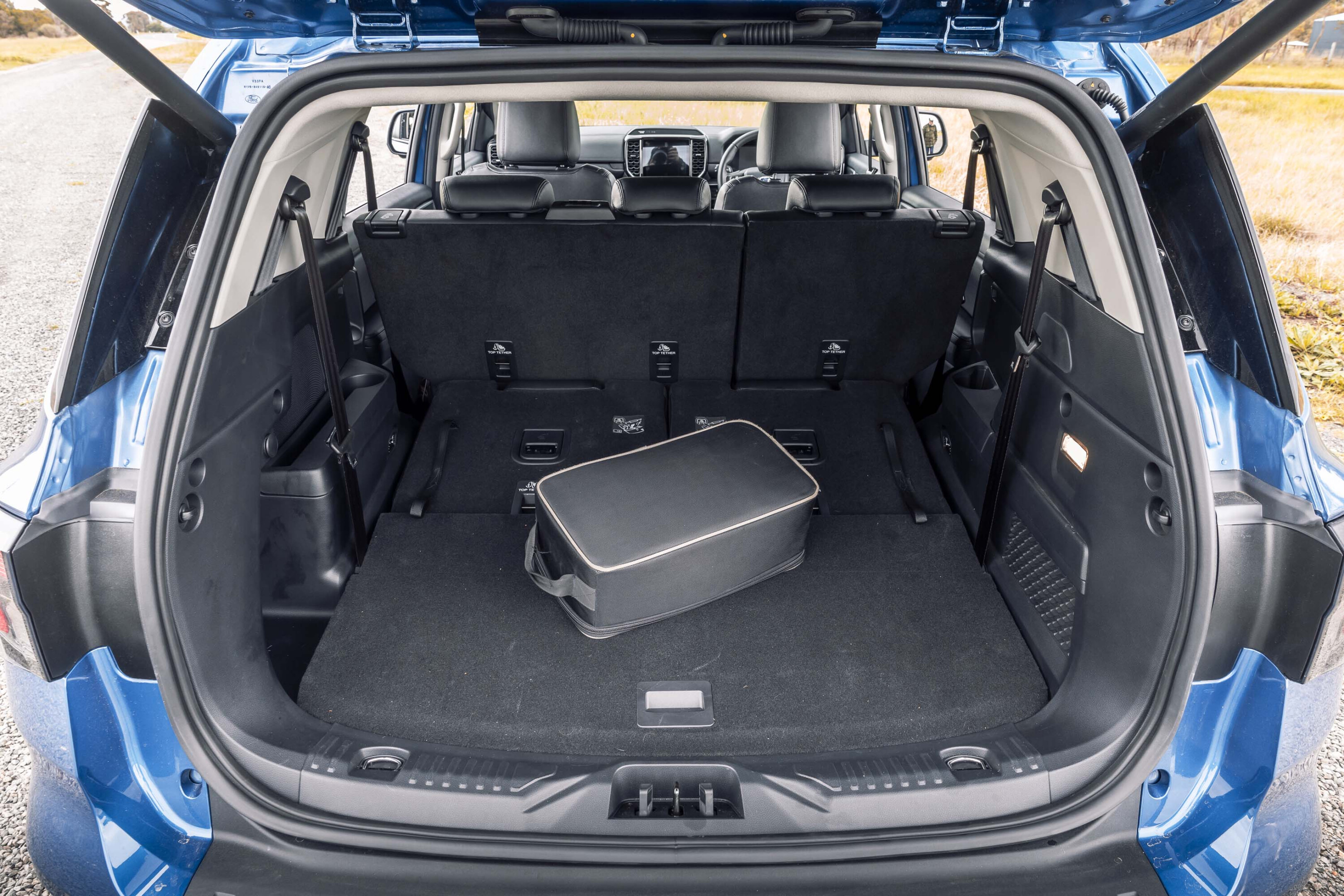
The Ford Everest has an 898-litre boot capacity with the third-row down, expanding to 1823L with the second-row folded. With all seats in use, it has a 239-litre capacity.
The Everest is covered by Ford’s five-year/unlimited-kilometre warranty, along with 12 months of roadside assistance.
This program can be extended for up to seven years through annual servicing at a Ford dealership.
Servicing is required every 12 months or 15,000 kilometres, whichever occurs first, with the first five services priced at $329 under Ford’s capped-price program.
Pro Trailer Back-Up Assist for Wildtrak, Platinum & Raptor, optional for XLT & Sport
Some options dropped from line-up, including XLS 4×2 pick-up
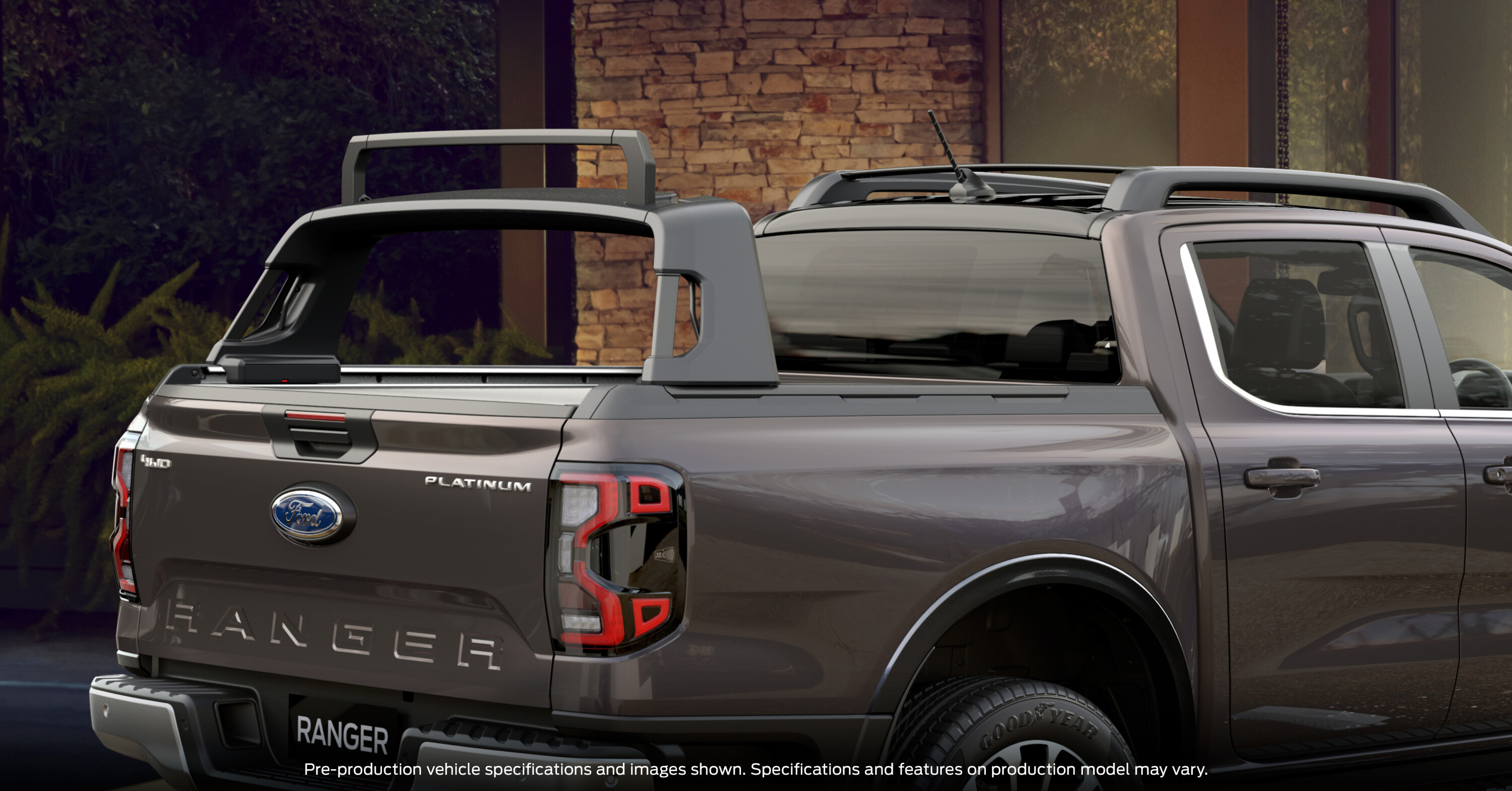
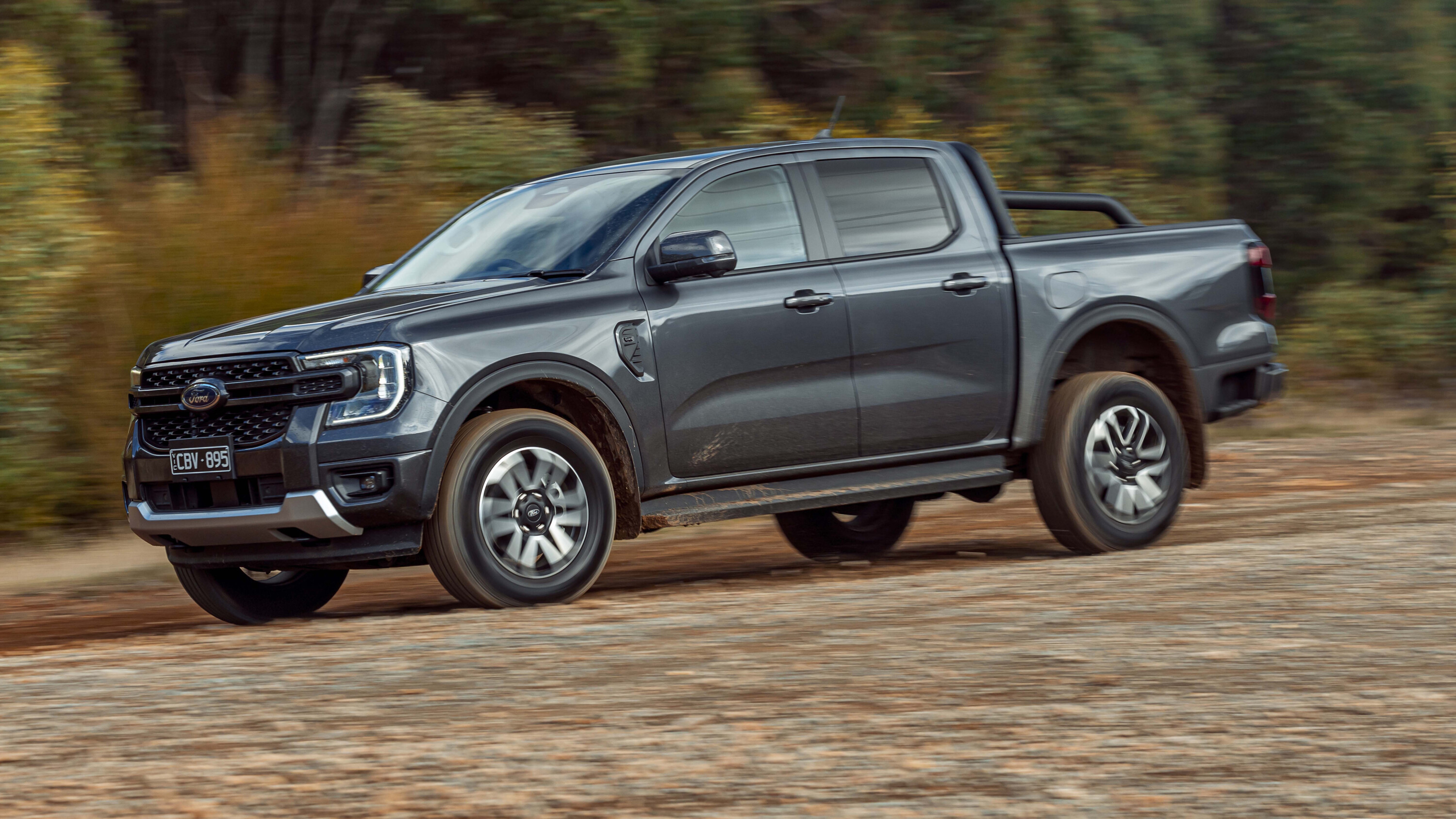
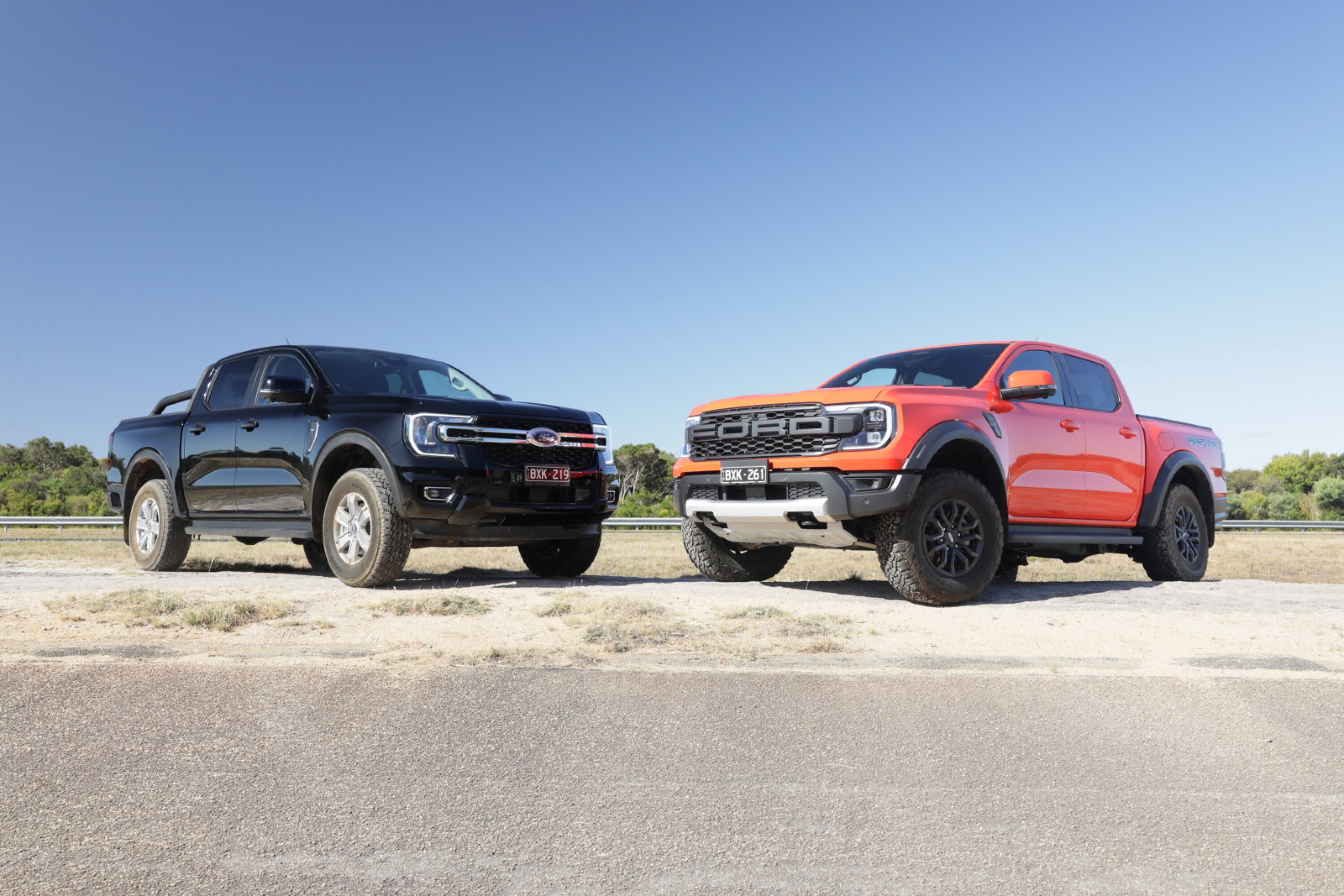
The 2024.5 Ford Ranger ute has been announced with several upgrades and a smaller range of models.
The Pro Trailer Back-Up Assist is one of the main new features, borrowed from the full-size F-150 – and also coming to the related Everest off-road SUV.
This feature will be standard on Ranger Wildtrak, Platinum and Raptor models, allowing drivers to manoeuvre their trailers using the outer ring of the drive mode selector on the centre console.
1
The steering wheel turns automatically to direct the trailer as the driver turns the dial, so they don’t need to touch the wheel during the manoeuvre.
Other updates include heavy-duty suspension for the entry-level Ranger XL workhorse model, which adds thicker rear springs, as well as new front and rear dampers tuned for heavier loads.
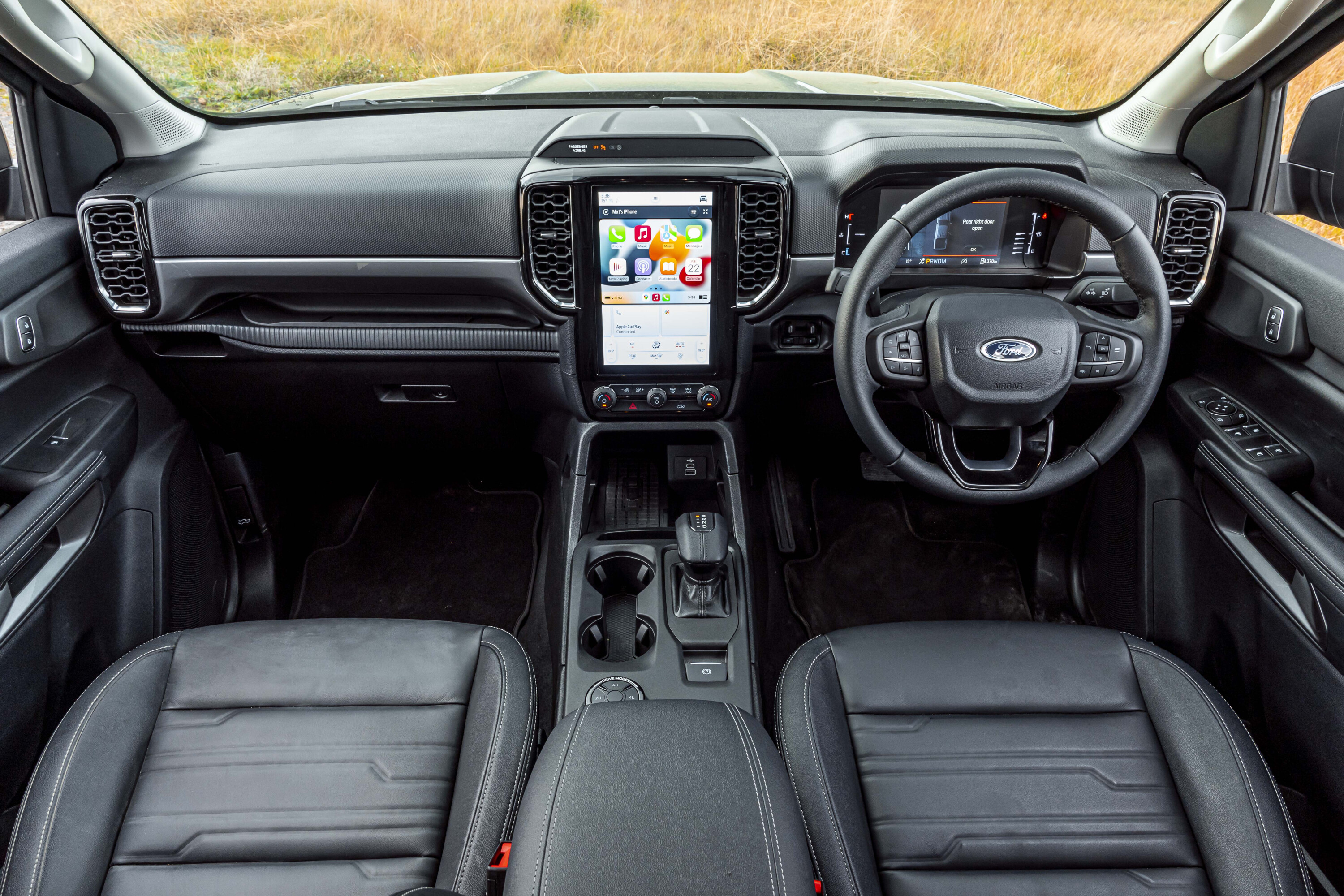
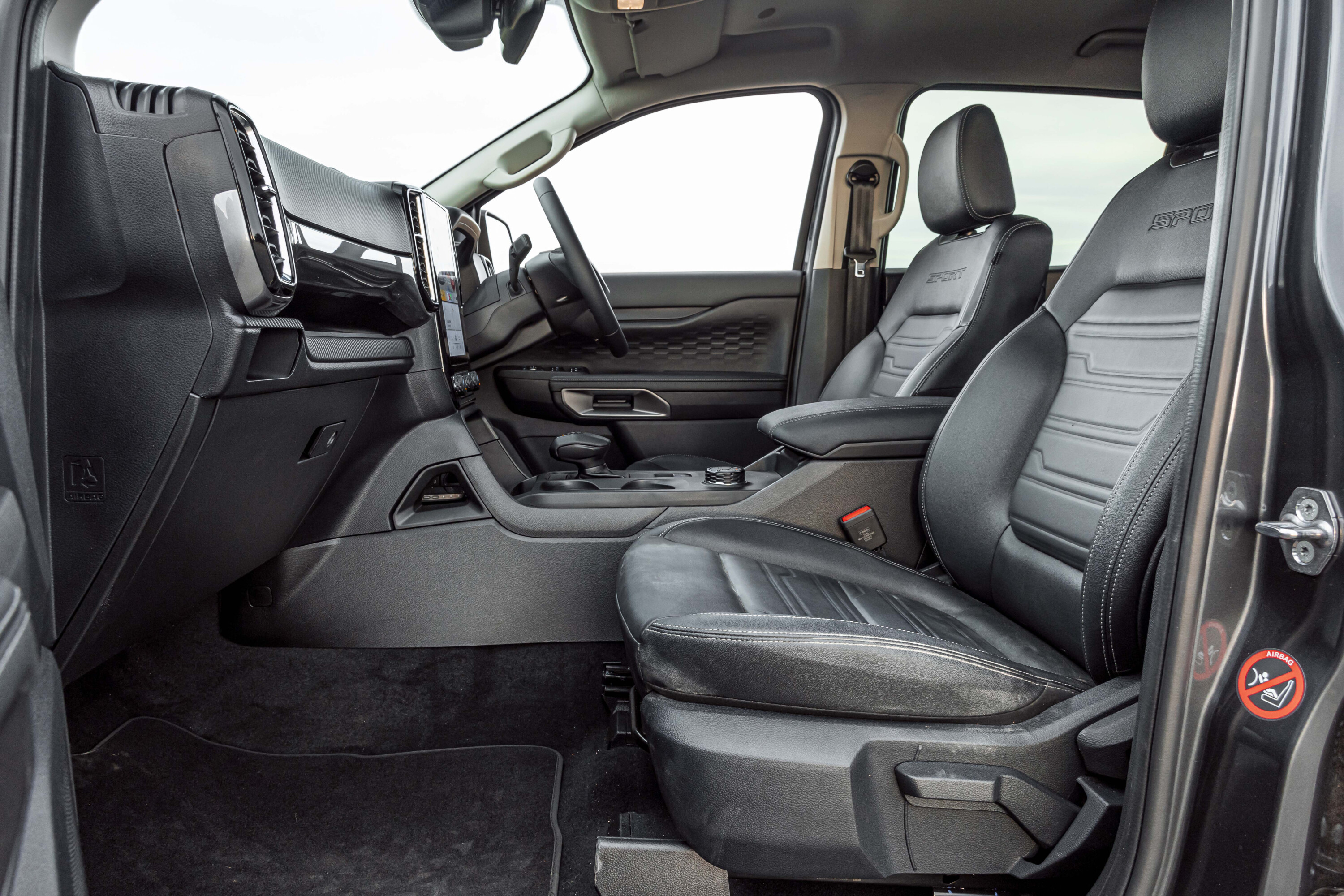
The mid-spec Ranger XLS is now only available in 4×4, with equipment from the previously optional Tech and Towing packages now standard. This includes a tow bar, keyless entry and push-button start, dual-zone climate control with rear seat air vents, connected satellite navigation, and DAB+ digital radio.
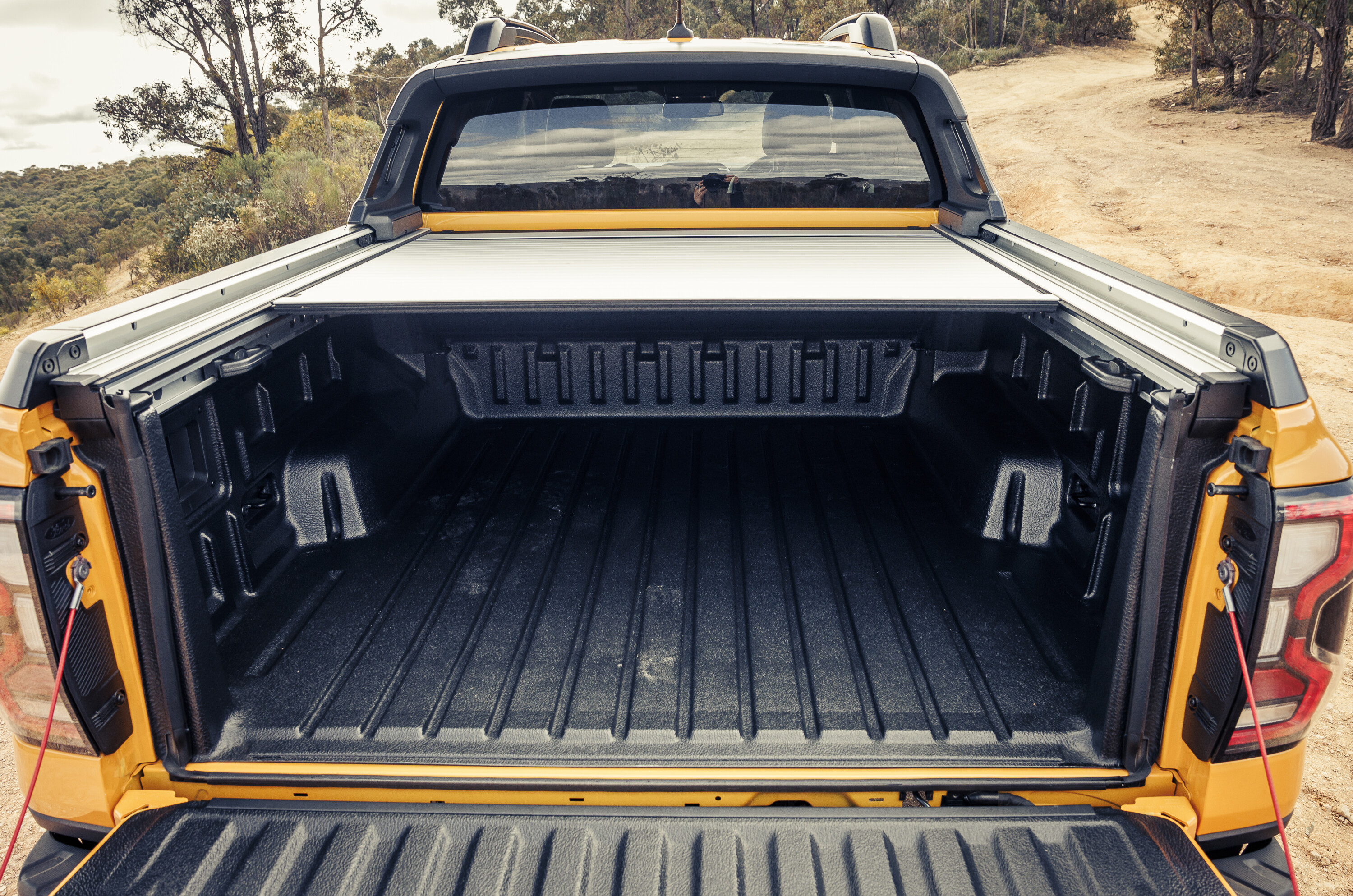
Additionally, the Flexible Rack System, first introduced with the Platinum luxury variant in 2023, is now available as a cost option for Sport and Wildtrak, replacing the standard Sports Bar and Load Box Access Points for Sport or Sailplane and Box Rails for Wildtrak.
1
Some models have been dropped from the 2024.5 Ranger line-up, including the XL bi-turbo dual-cab cab-chassis 4×2, XL bi-turbo super-cab pick-up 4×2, XLS bi-turbo dual-cab pick-up 4×2, and the limited-run Wildtrak X special edition.
While Ford has not raised prices for the updated Ranger, except the XLS, all variants previously saw price increases between $500 to $1200 applied from January 1, 2024.
The XLS variant is $1950 dearer than before, but now includes the Towing and Tech packs, which previously retailed for $1700 and $750, respectively.
The Ford Ranger was the top-selling car in Australia’s new-car market for 2023, surpassing its rival, the Toyota HiLux, which had been the nation’s top-selling vehicle from 2016 to 2022.
The Ford Ranger is available with two four-cylinder diesel engines, a 3.0-litre turbo-diesel V6, and a 3.0-litre twin-turbo petrol mill.
The entry-level option is the 2.0-litre single-turbo four-cylinder diesel, which produces 125kW and 405Nm. It is matched with a six-speed automatic transmission and is available in two- or four-wheel drive, depending on the configuration.
Excluding the Platinum and Raptor flagships, the entire range is available with a 2.0-litre bi-turbo four-cylinder, which pushes outputs to 154kW and 500Nm. It is mated to a 10-speed automatic transmission with two- or four-wheel drive options, depending on the variant.
1
The popular 3.0-litre turbo-diesel V6 – optional for XLT, Sport and Wildtrak and standard for Platinum – produces 184kW and 600Nm, with a full-time four-wheel drive system and a 10-speed automatic transmission.
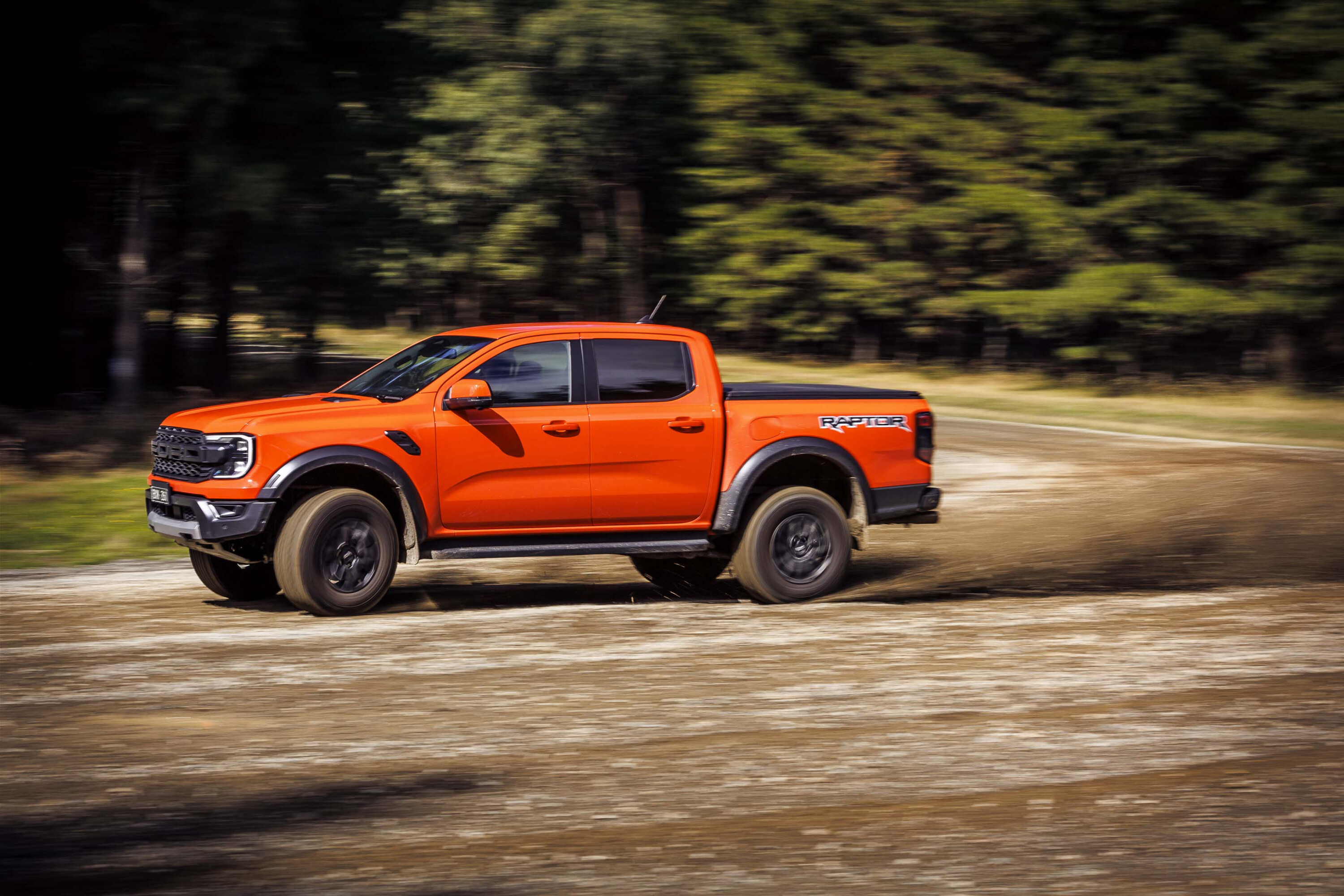
The Ranger Raptor is exclusively fitted with a 3.0-litre twin-turbo petrol V6 engine, which produces 292kW and 583Nm. As with the diesel V6, it is matched with a 10-speed automatic transmission and a full-time four-wheel drive system.
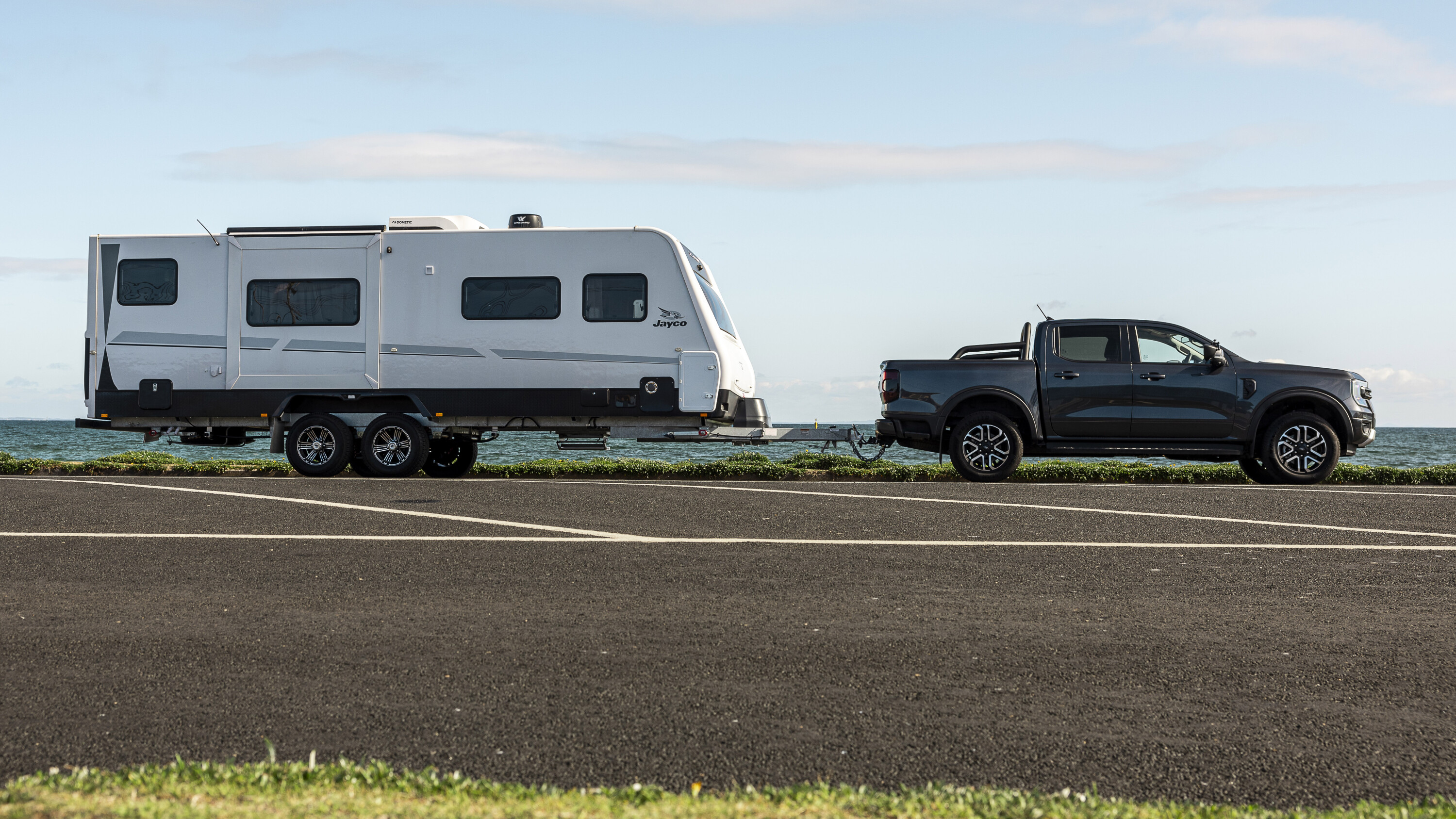
While the standard Ranger range has a 3500-kilogram braked towing capacity, the Raptor is limited to 2500kg.
The Ford Ranger is covered by a five-star ANCAP safety rating, based on testing conducted in 2022. This score applies to all variants, except the Raptor.
It received a score of 84 per cent for adult occupant protection, 93 per cent for child occupant protection, 74 per cent for vulnerable road user protection, and 83 per cent for safety assist.
Nine airbags (dual front, side, curtain, driver and front passenger knee, and front-centre) are fitted across the range.
The Ranger is covered by Ford’s five-year/unlimited-kilometre warranty, along with 12 months of roadside assistance.
This program can be extended for up to seven years through annual servicing at a Ford dealership.
Servicing is required every 12 months or 15,000 kilometres, whichever occurs first, with the first five services priced at $329 under Ford’s capped-price program.
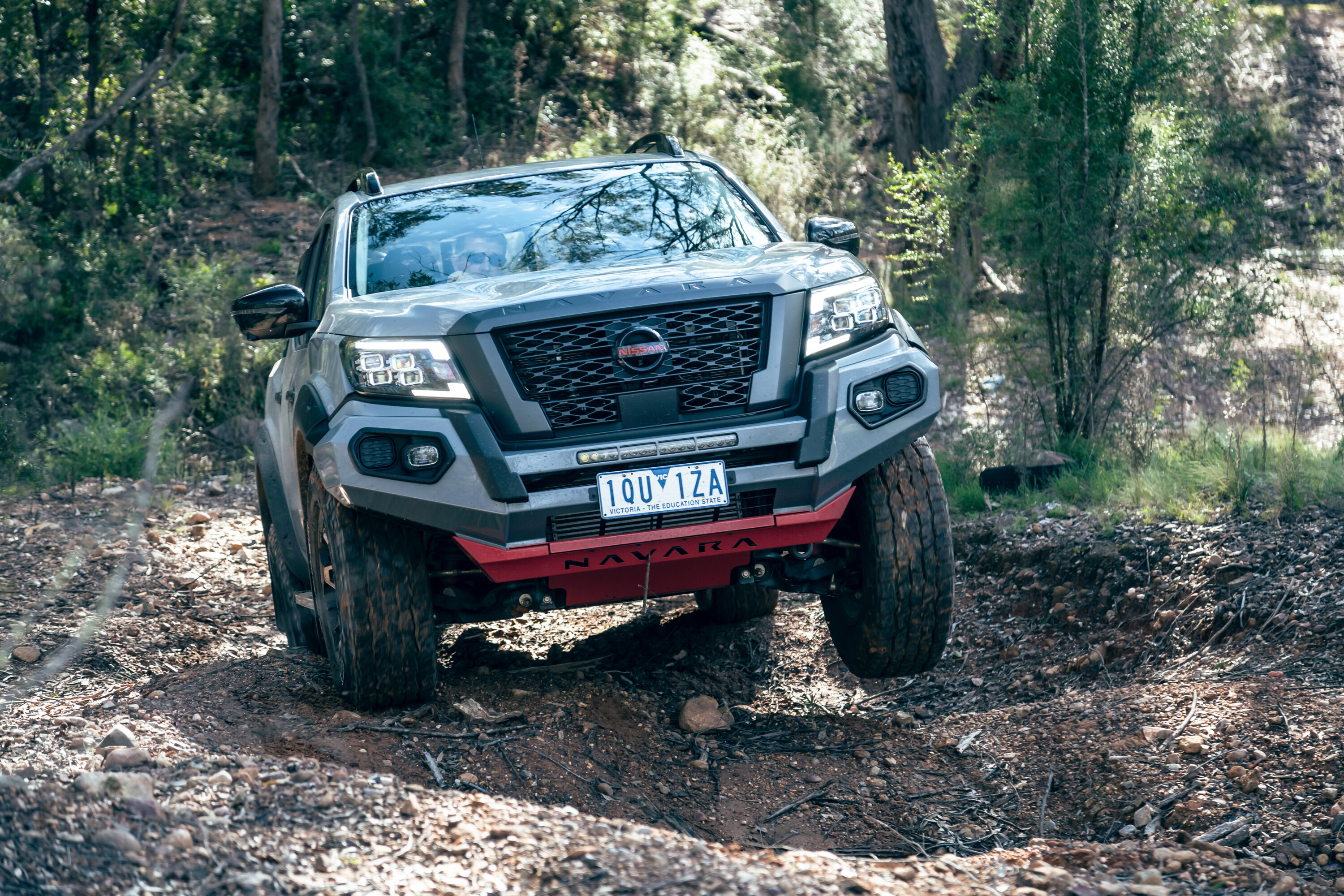
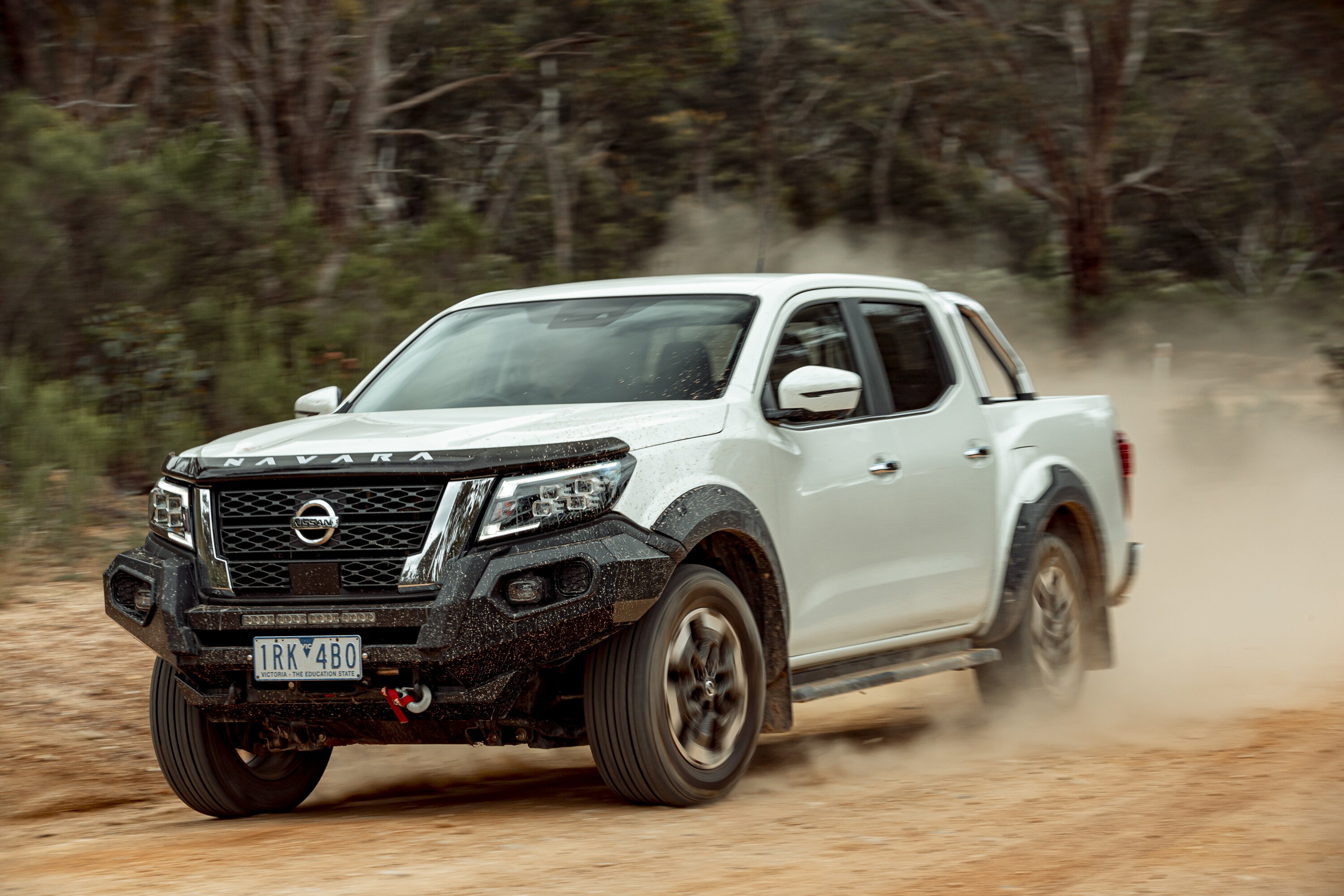
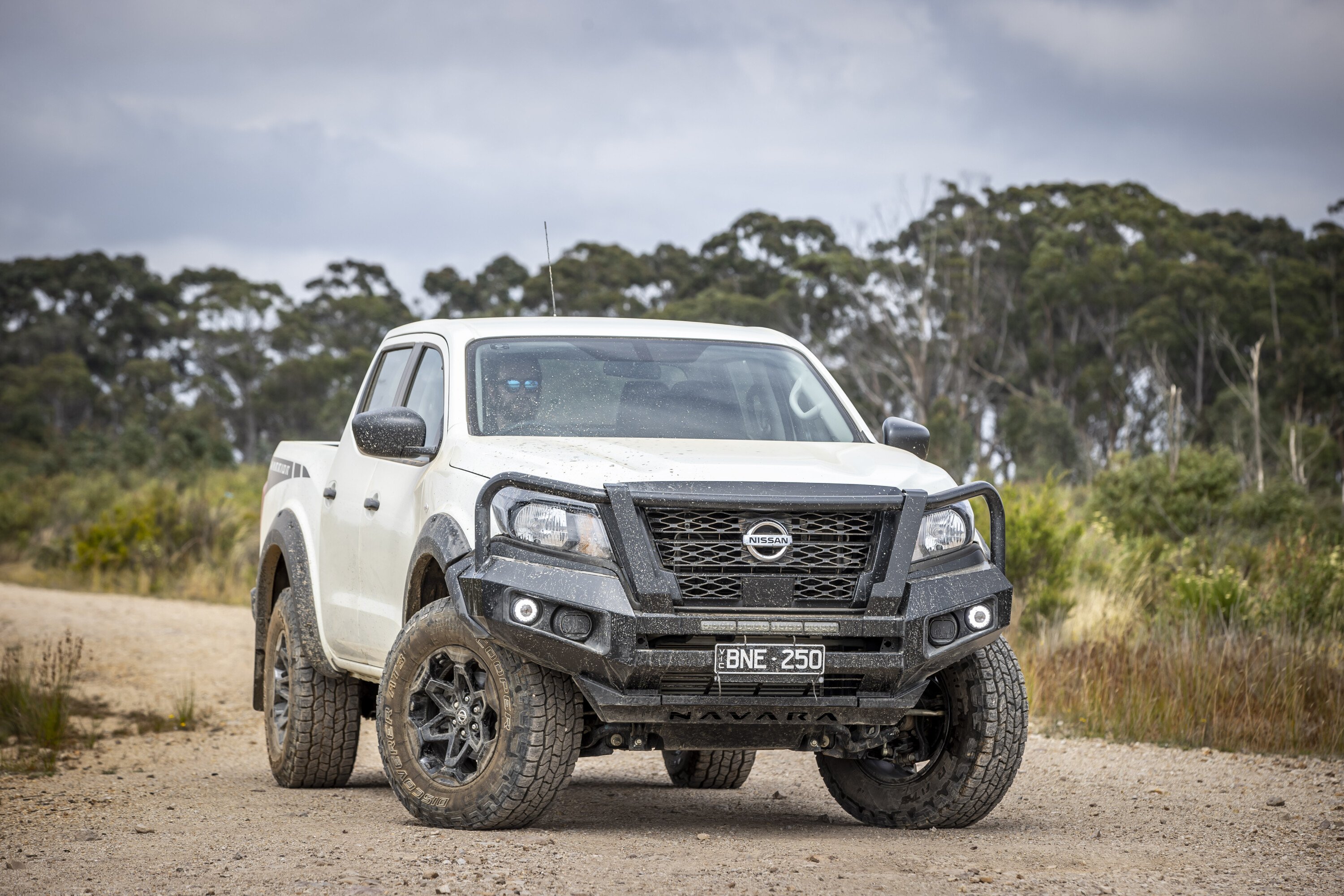
The Nissan Navara is a mid-size ute that offers good performance and fuel efficiency and, with the most recent update, improved payload capacity and towing stability.
Launched in 2014, this NP300 generation Nissan ute replaced two generations of Navara that ended up running concurrently, the previous D40 model that lived on for a decade and the even older D22 workhorse.
What body styles are available for the Nissan Navara?
The Navara is classed as a light commercial vehicle and drives either its rear wheels only (4×2 models) or all four wheels as a dual-range, part-time (4×4) drivetrain.
The cab-chassis models allow buyers to fit the tray or rear body of their choice, including designs tailor-made for specific applications.
1
Single-cab models arrive only in this form, but King cab and dual cab variants are offered as a cab chassis or with a ute pick-up body, depending on the model.
While single-cab models only have room for two passengers, King cab versions add two small extra rear ‘jump seats’ accessed through shorter, rear-hinged back doors and can seat a total of four occupants. Dual-cab models have larger, more conventional rear doors and can seat up to five people.
What features are standard in every Nissan Navara?
The features listed below are standard in the entry-level SL dual cab model and will appear in higher-grade models, unless replaced by more premium equivalent features.
2024 Nissan Navara standard features
Colour eight-inch touchscreen, two 12v auxiliary sockets and four USB input sockets (of which three are USB-A and one is USB-C).
A six-speed manual transmission (or optional seven-speed automatic, depending on model).
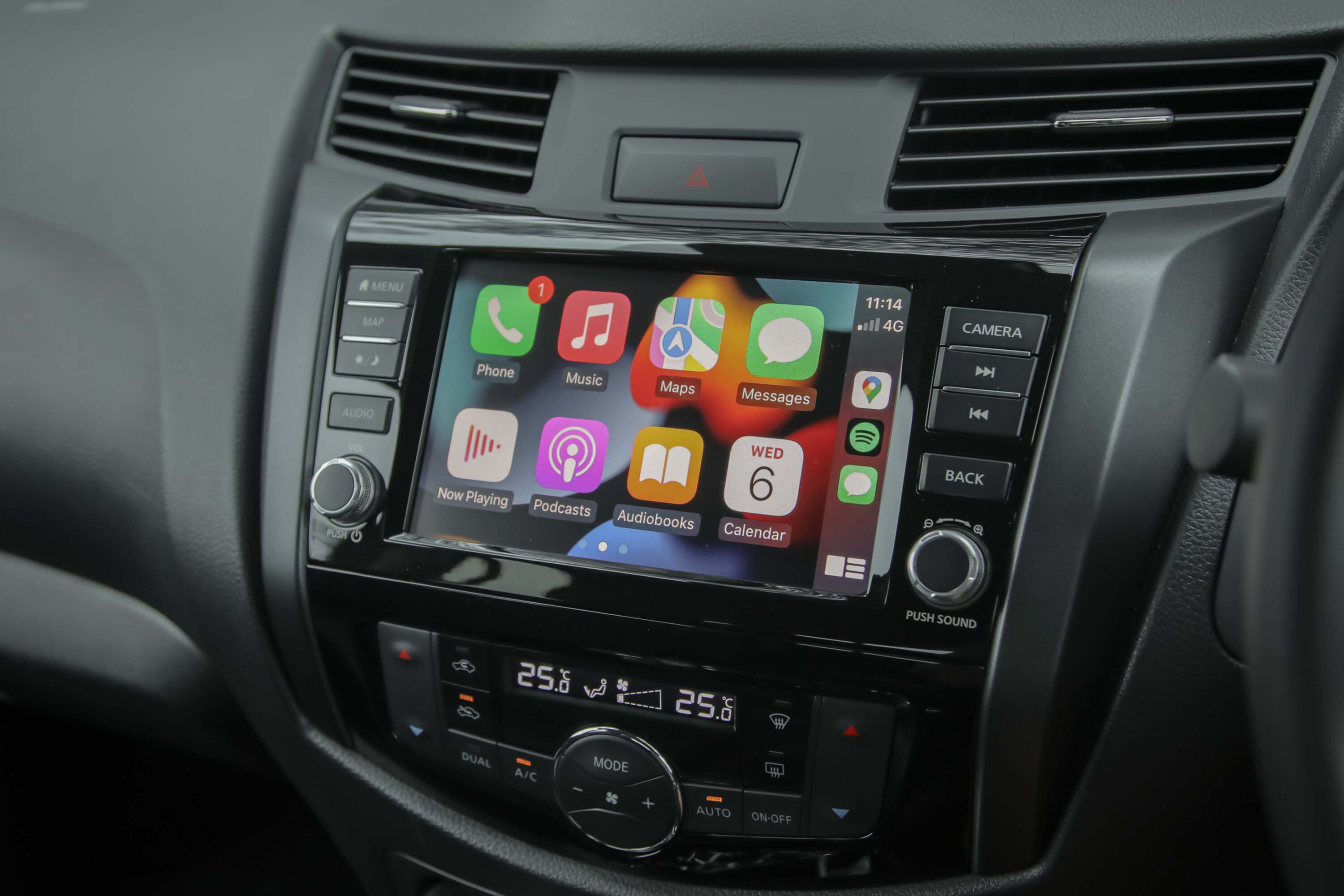
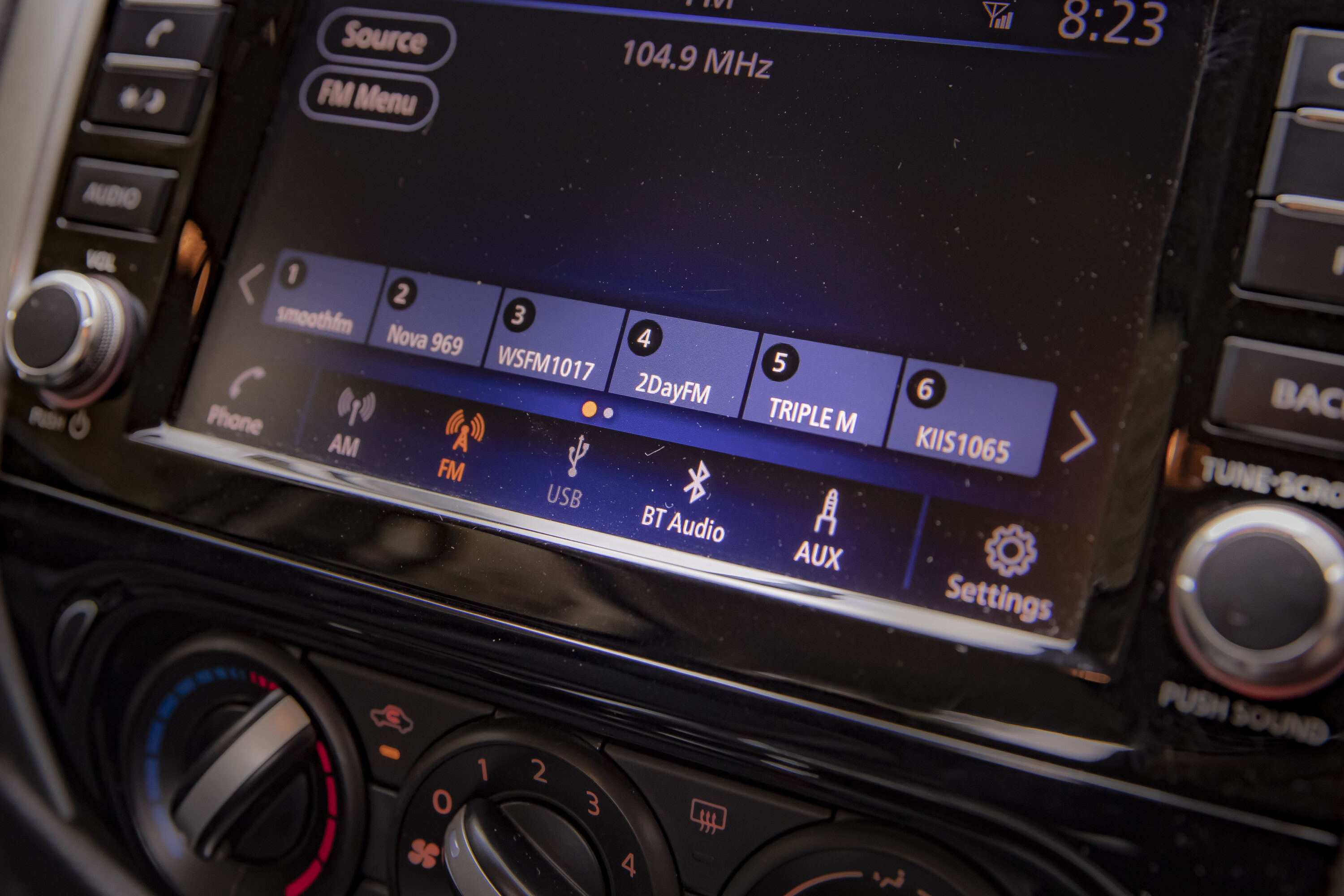
Bluetooth connectivity for phone calls and audio streaming, Android Auto and Apple CarPlay (wired only), which lets you display smartphone apps on the touchscreen and control them from there (or by voice). Radio includes AM/FM bands.
A trip computer that presents fuel use and distance information.
Reversing camera (pick-up models only).
A digital speedometer.
Sound system with at least six speakers.
Wheels (17-inch) made from steel, and a full-size steel spare wheel.
Single-zone climate control.
Hill-assist control, which operates the brakes automatically to make take-offs on hills easier.
Smart Keyless entry that doesn’t require you remove your keyfob from your pocket or bag to lock or unlock the vehicle.
Downhill brake control, which can regulate speed automatically on steep downslopes when driving off-road (4×4 models only).
Driver seat height adjustment.
Trailer Sway Control, which senses trailer sway and applies the vehicleu2019s brakes to reduce such sway.
Vinyl floor covering.
Seven airbags: two directly in front of the driver and front passenger; one alongside each front occupant to protect the upper body; a curtain airbag on each side protecting the heads of occupants, and a driver knee airbag.
Cruise control.
Electronic stability control, which can help the driver to control a skidding car. All new cars must have this feature.
Halogen daytime running lights and headlights.
Locking rear differential which ensures the rear wheels turn at similar speeds to improve traction and handling (4×4 models only).
Auto-on headlights.
Maximum towing capacity of 3500kg (braked), with a towball download maximum of 350kg (unbraked towing capacity is 750kg).
Active safety features including autonomous emergency braking, forward collision warning, driver fatigue warning, and brake assist.
Even the most popular Navara body variant, the dual cab, has a complex array of equipment and spec levels available.
The entry-level dual cab is the SL pick-up 4×2 manual, with the 2.3L 120kW/403Nm four-cylinder single turbo-diesel engine and six-speed manual gearbox. The same specification in 4×4 brings increased power and torque from a twin-turbo 140kW/450Nm version of the 2.3L diesel engine.
ST specification offers only the 140kW and 450Nm 2.3L twin turbo-diesel engine with a six-speed auto only in 4×2 and with a six-speed manual (with six-speed auto option) in 4×4.
1
There is a big specification and equipment level jump with the Nissan Navara ST dual cab over the base SL dual cab, as you’ll see in the equipment list below.
As well as the bigger-output twin-turbo 2.3L engine becoming standard, headline equipment upgrades include extra active safety technology and, in 4×4 models, you also get an off-road monitor in ST grade and above, as well as hill descent control for all 4×4 model grades.
2
The ST also brings:
2024 Nissan Navara ST features
Leather steering wheel and gearshift
Lane keeping assist
Floor carpeting
Blind-spot monitor and intervention system
Driver and passenger sun visor vanity mirrors
Rear cross-traffic alert
Chrome grille and door handles
Privacy glass
Turn signals incorporated in body-colour side mirror shells
LED headlights with auto high beam
Heated side mirrors
Front LED foglights
Stainless steel sports bar
LED tail lights
Body colour rear bumper
LED daytime running lights, to make you more visible to other traffic
Black side steps
Rain-sensing wipers
Rear power sliding window
Automatic dimming rear-view mirror
Reverse parking sensors
Rear parking sensors to augment the rear camera
Lane departure warning
More sporty-looking 17-inch alloy wheels
1
Paying more again for a Navara ST-X gets you those features plus:
As part of ANCAP protocol revisions, the Navara’s five-star ANCAP rating from 2015 has expired, and therefore ANCAP considers the Navara from January 2023 as ‘unrated’.
The Navara is not without expected safety features, although unlike some competitors you don’t get the full safety suite from the base model. In the entry-level Navara SL, you get autonomous emergency braking (AEB), forward collision warning (FCW), brake assist and driver attention alert, at the least.
How comfortable and practical is the Nissan Navara?
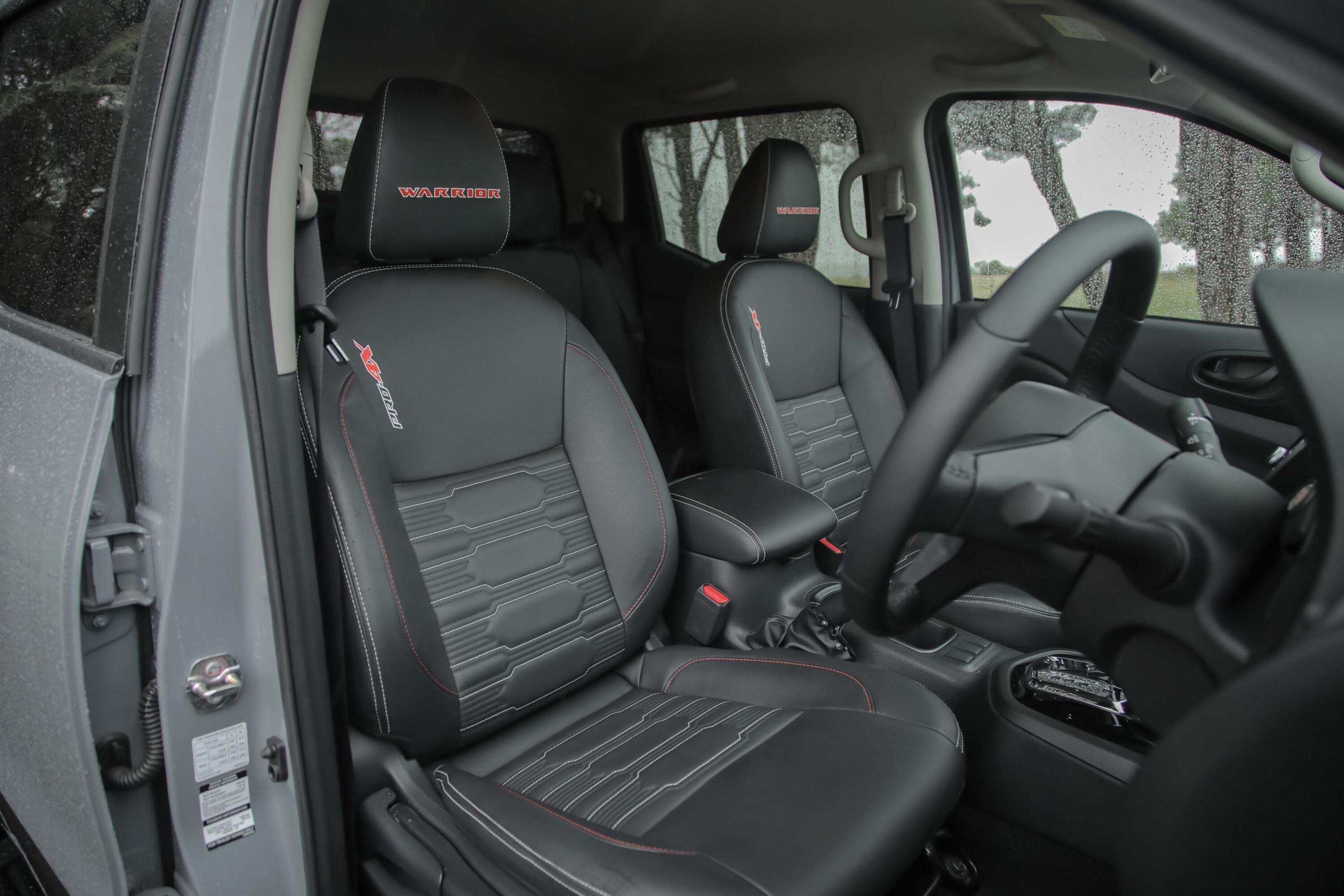
The front seats are a bit soft at first but seem supportive enough for a road trip.
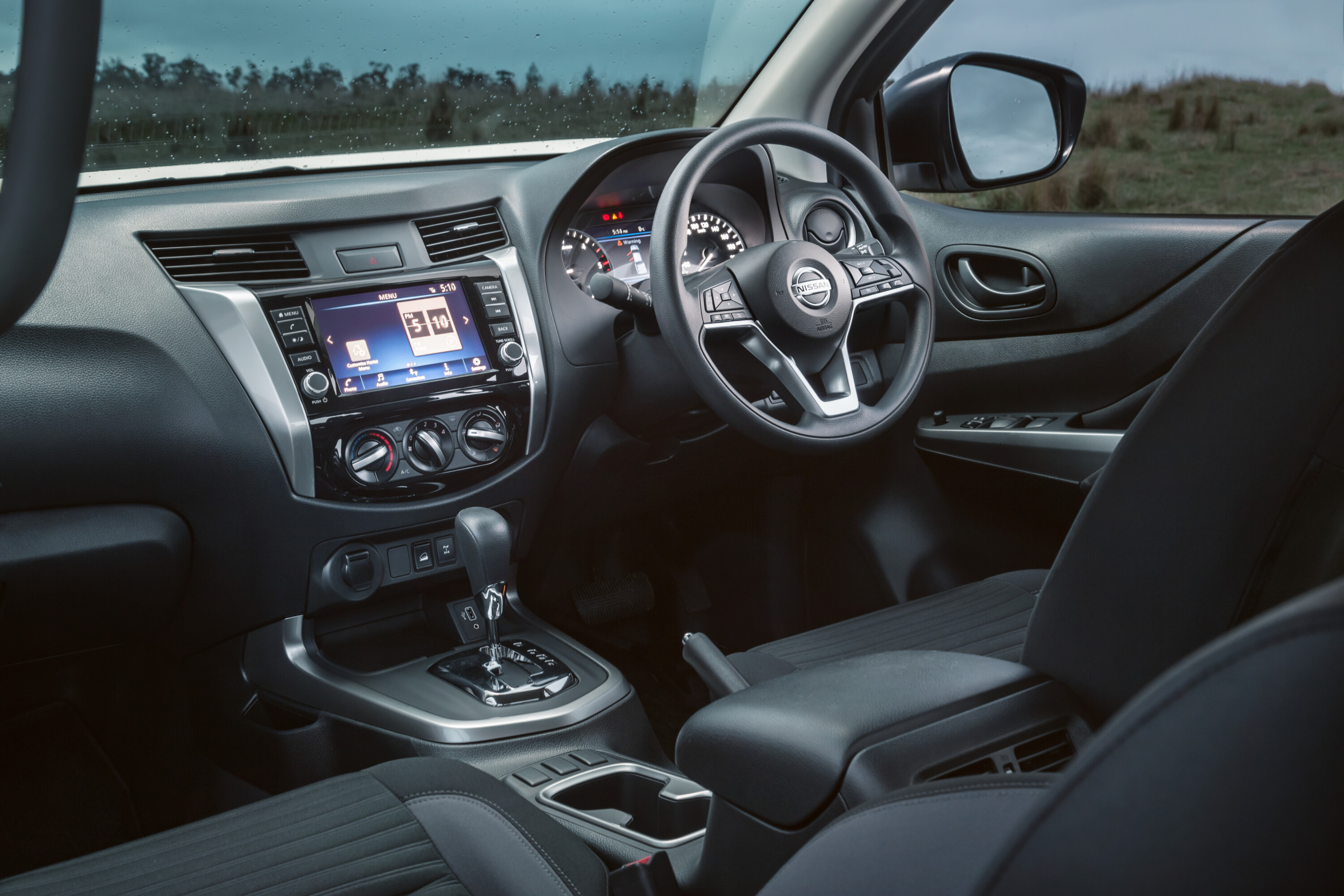
However, the steering wheel seems too small and feels like it’s out of a hatchback. All the switchgear is pretty old but perfectly functional and the cabin is well-made and well laid-out.
The centre armrest has a usefully sized bin housing USB-A and USB-C connectors. You also get two cup holders in the front and bottle holders in the doors.
1
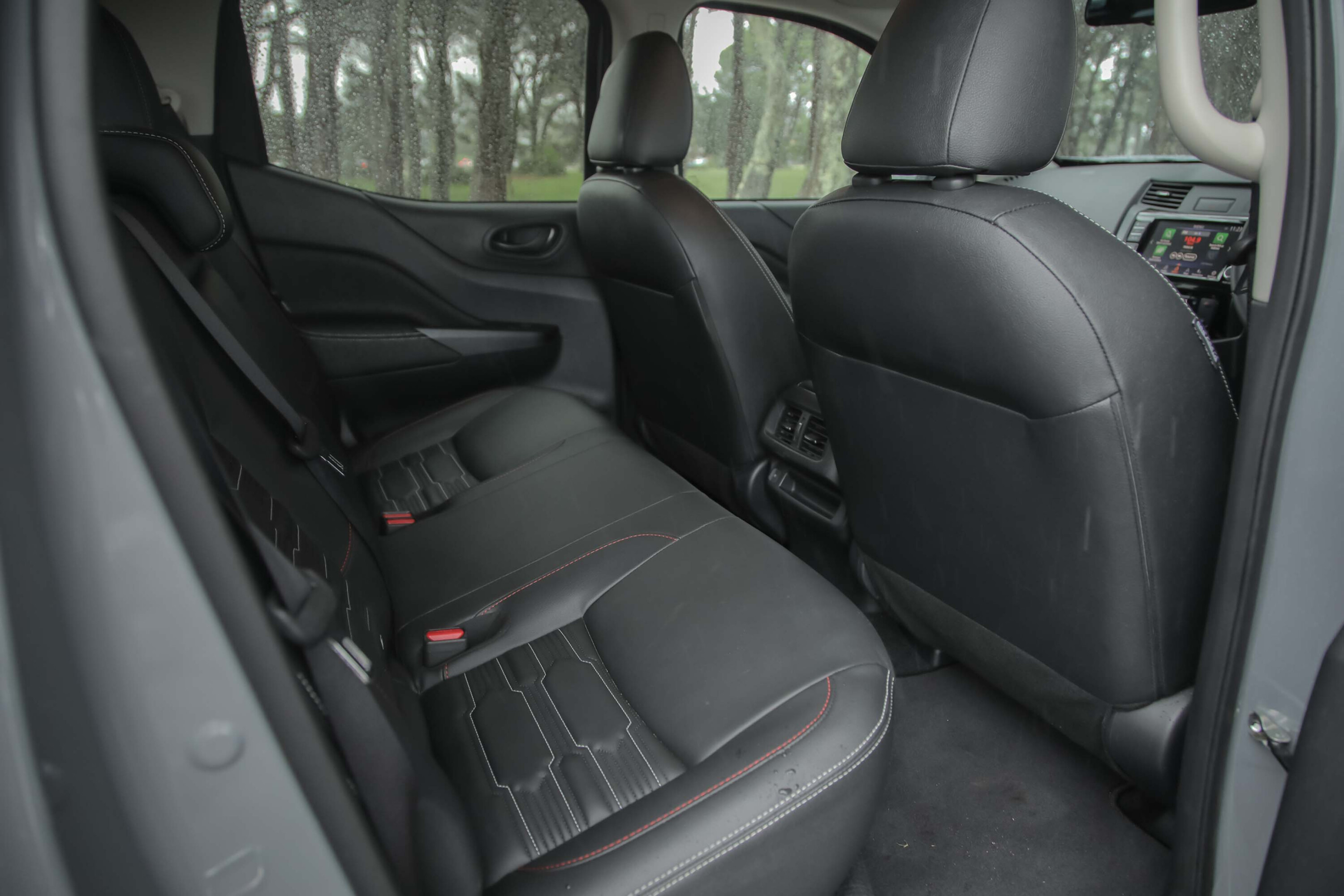
Rear accommodation is hardly palatial and entry is tricky with the narrow doors, but it’s a dual-cab ute so that’s to be expected.
Leg and knee room is adequate for up to six-footers and there’s a bonus of very dark tinting (from ST and up) plus that trademark electrically operated opening section in the rear window.
You even get rear air vents – way too many proper passenger cars still don’t get those. There is also a single USB charger.
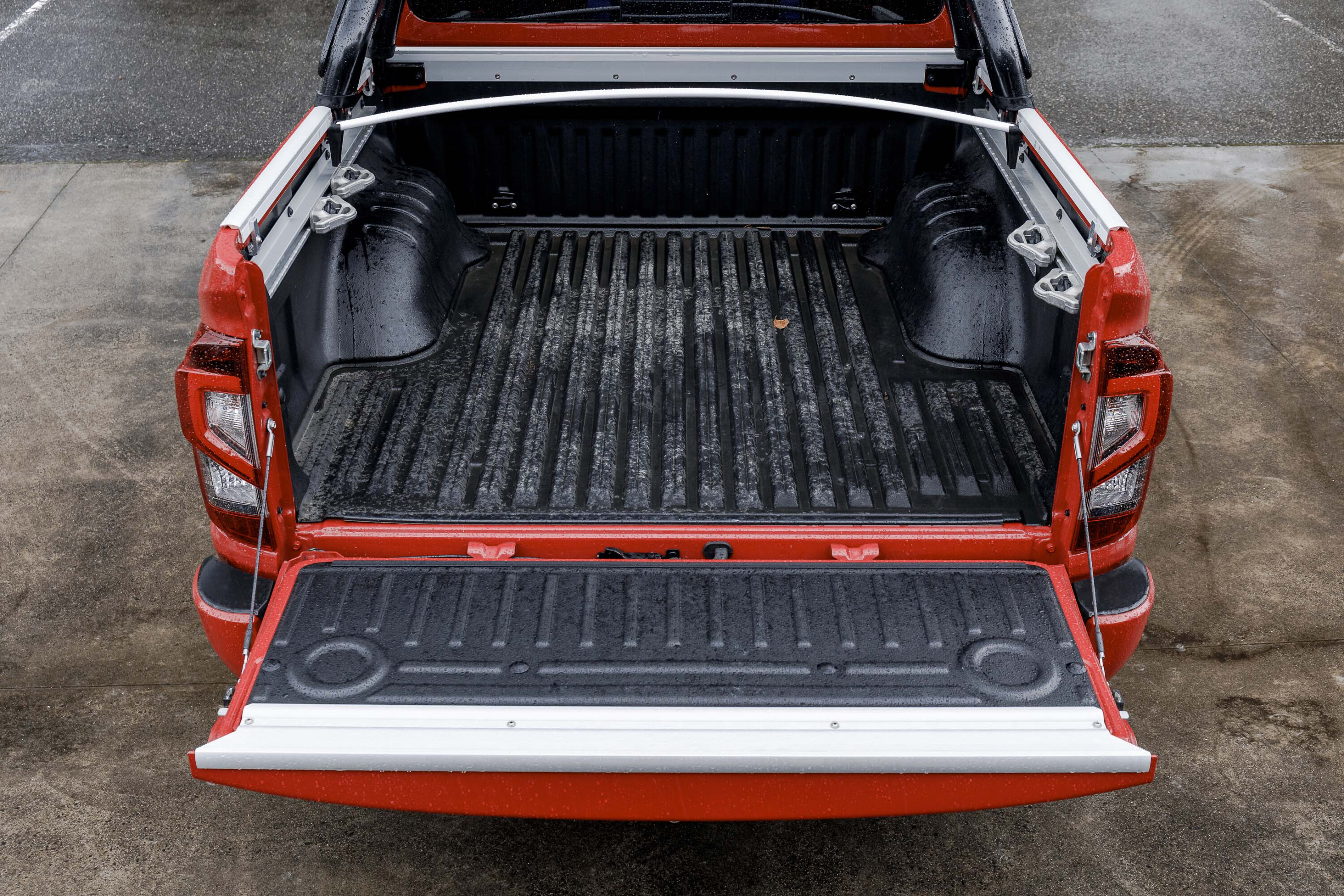
In the tray area, there’s a drop-in tub liner and sliding upper tie-down points from ST-X (King cab) or Pro-4X (dual cab) grade up and four looped tie-down points.
Dual-cab pick-ups have a very usable tray with 1509mm floor length, 1560mm floor width 1134mm of space between the wheel arches and 470mm tray height.
Meanwhile, the King cab measures the same in the tray except for its 1851mm floor length. Pick-up bodies also feature a torsion-bar-style tailgate assist that makes opening or closing the tailgate a one-handed affair.
The single cab chassis has multiple tray options, so Nissan doesn’t list tray dimensions there.
Up to a point, yes. The Nissan Navara is about middle of the ute field for dynamics, performance, and refinement.
The Nissan Navara is chiefly let down by boomy interior refinement and a lacklustre steering calibration that manages to be too heavy and sluggish at slower speeds and too vague and light at highway speeds.
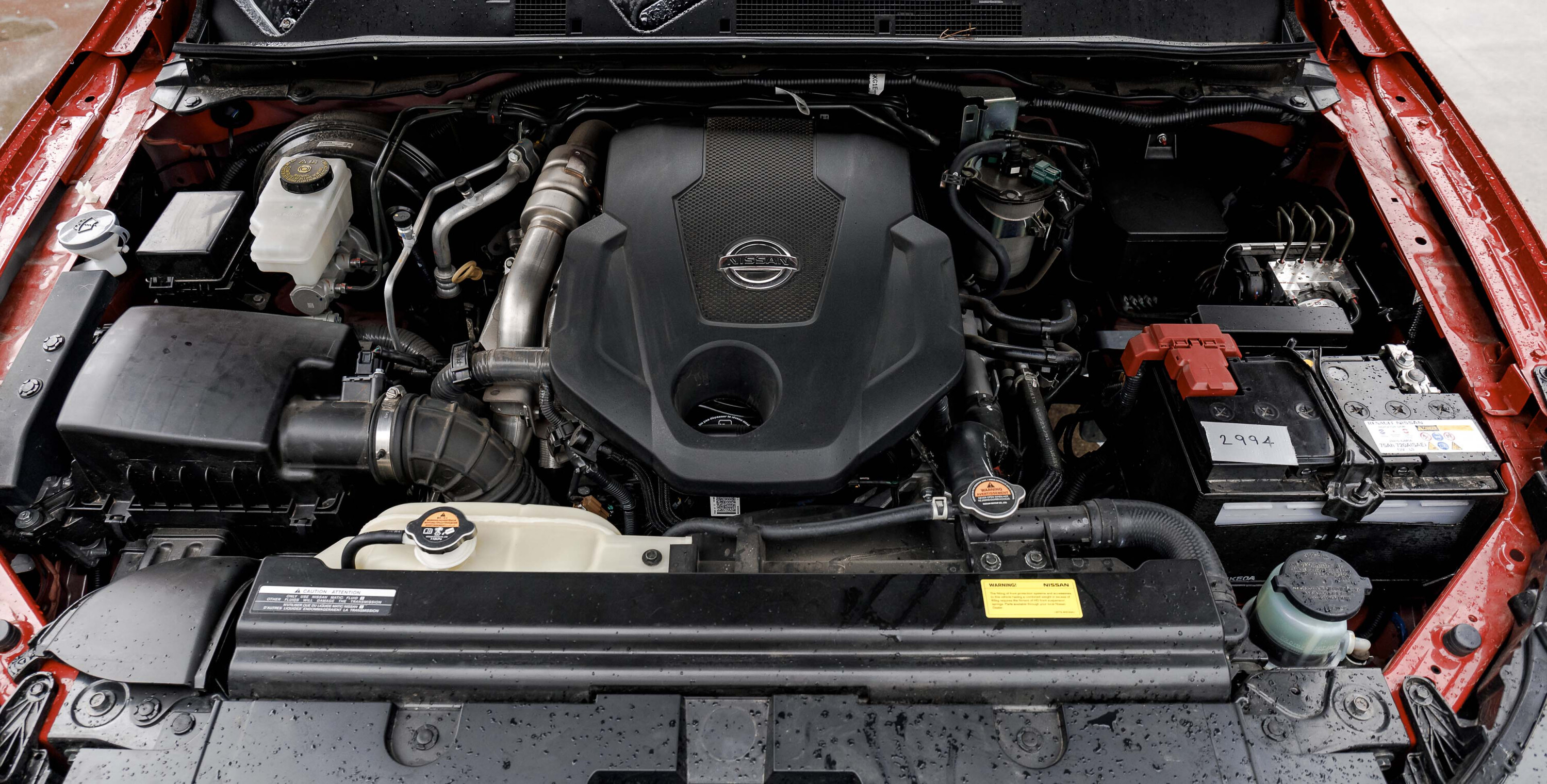
However, the Navara is redeemed by a strong engine that will spin all the way to 5500rpm without any noticeable tapering of power at the top end. This imbues the dual cab with a muscular feel and nature that is matched by the Nissan’s roadholding capabilities on loose surfaces.
The 2.3-litre single turbo-diesel engine with manual transmission in the 4×2 dual cab uses the least fuel, at 7.2 litres/100km on the official combined-cycle test (city and country combined).
Although the single-turbo model is the efficiency leader, it is only available in one model grade (SL) in two body types (single cab-chassis and dual-cab pick-up) in one drivetrain – 4×2 with manual transmission.
Most buyers are choosing the more powerful twin-turbo 2.3-litre diesel, which has a still-decent official combined-cycle figure of 7.5L/100km (manual 4×4) or 8.1L/100km (automatic 4×4).
The Nissan Navara has a maximum braked towing capacity of 3500kg (350kg maximum tow ball mass) across all models.
Payload capacity ranges from 1004kg on the Pro-4X automatic to 1146kg on the SL dual cab 4×2.
1
How long is the warranty and what are the Nissan Navara’s servicing costs?
All Nissan Navaras receive a five-year/unlimited-kilometre warranty, with complimentary roadside assist for the same five-year period.
Servicing intervals are set at 12 months or 20,000km – whichever comes first. Prices for automatic variants start at a fraction over $500 for the first service and max out at $782 on the sixth. Servicing costs for manual models are marginally higher.
Which version of the Nissan Navara does 4X4 Australia recommend?
The sweet spot in the Nissan Navara range is the ST trim level, ideally in dual cab 4×4 automatic form.
At this trim level, it is as good as it gets for safety and infotainment features, as none of the higher-spec models get much if anything better in these terms.
1
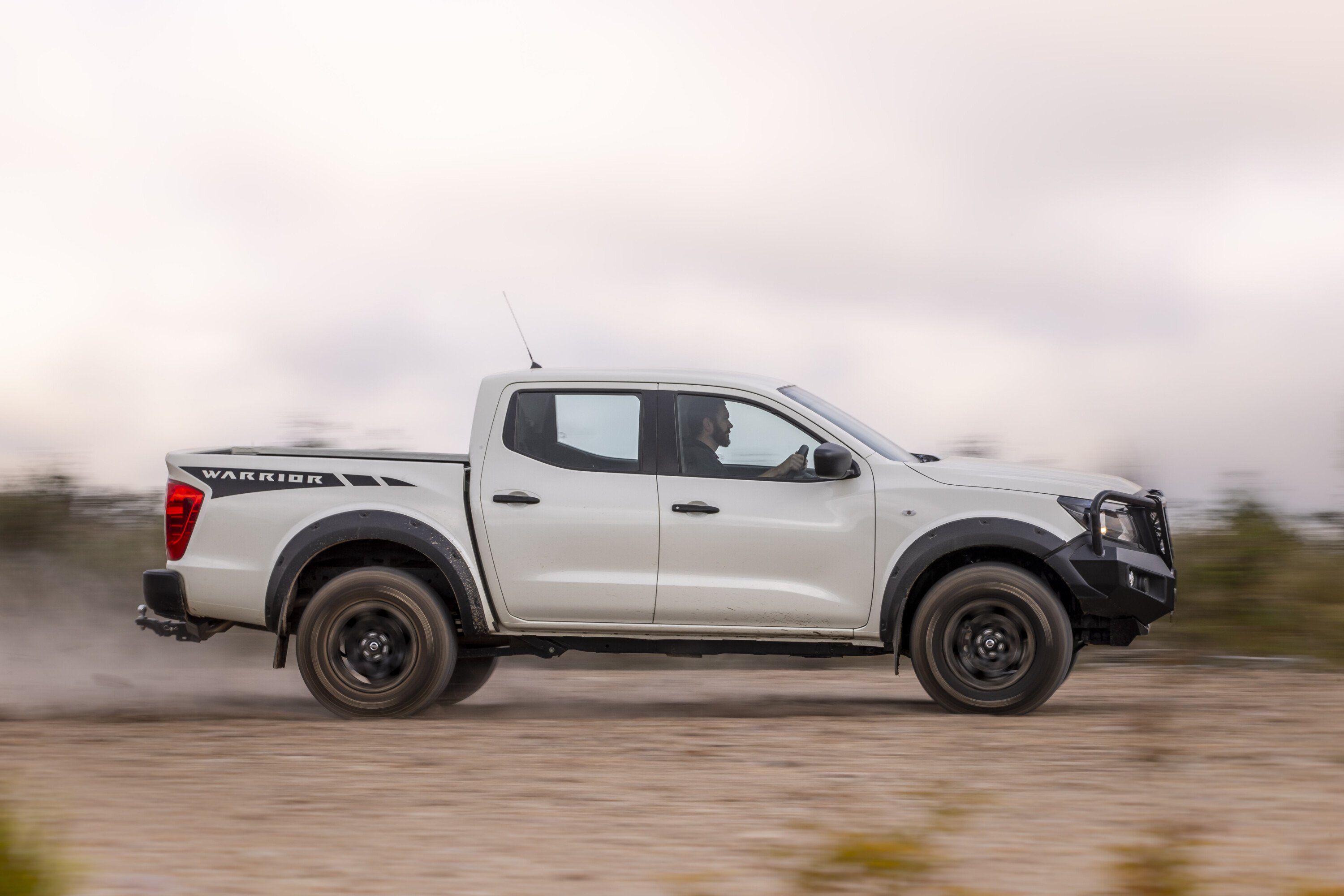
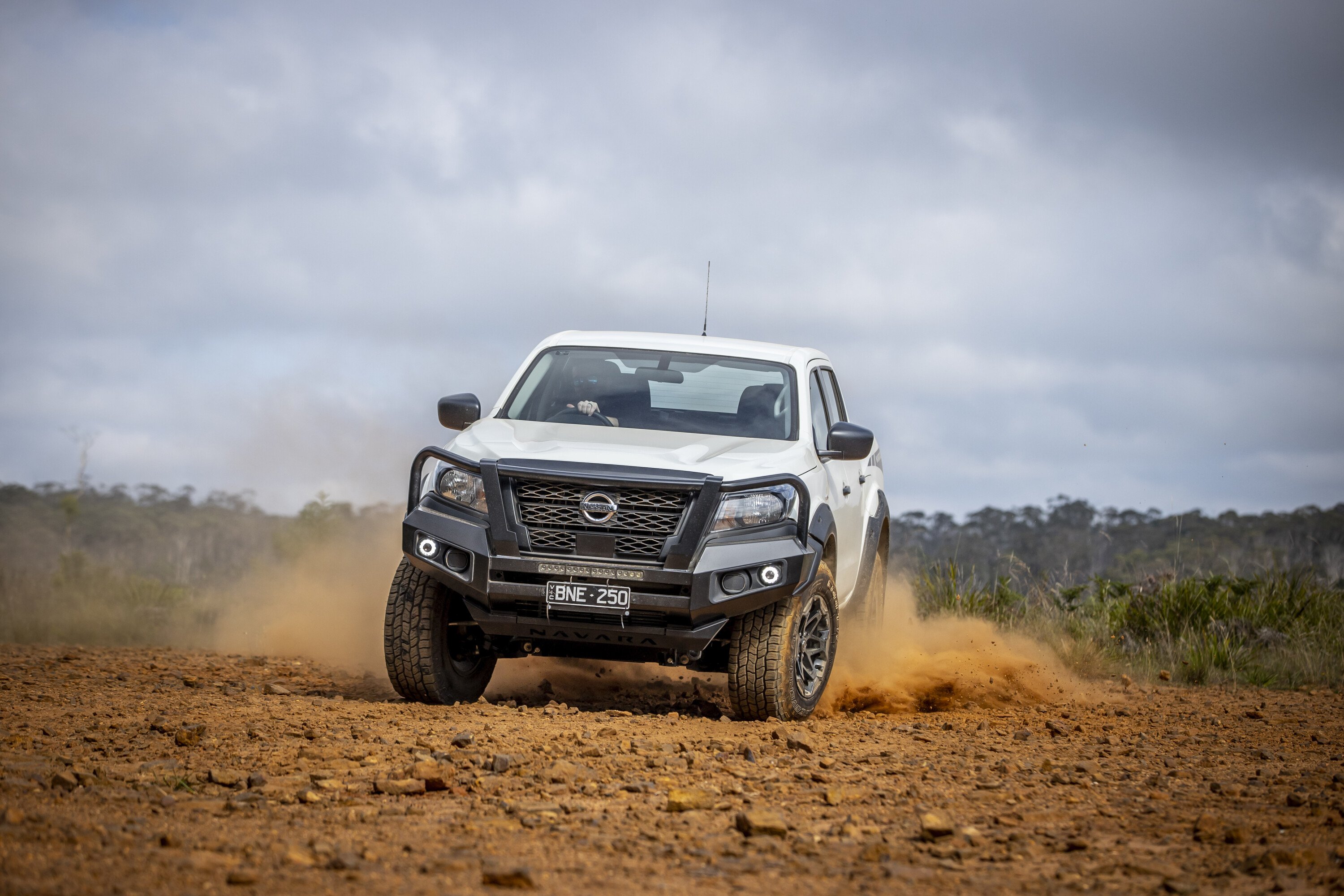
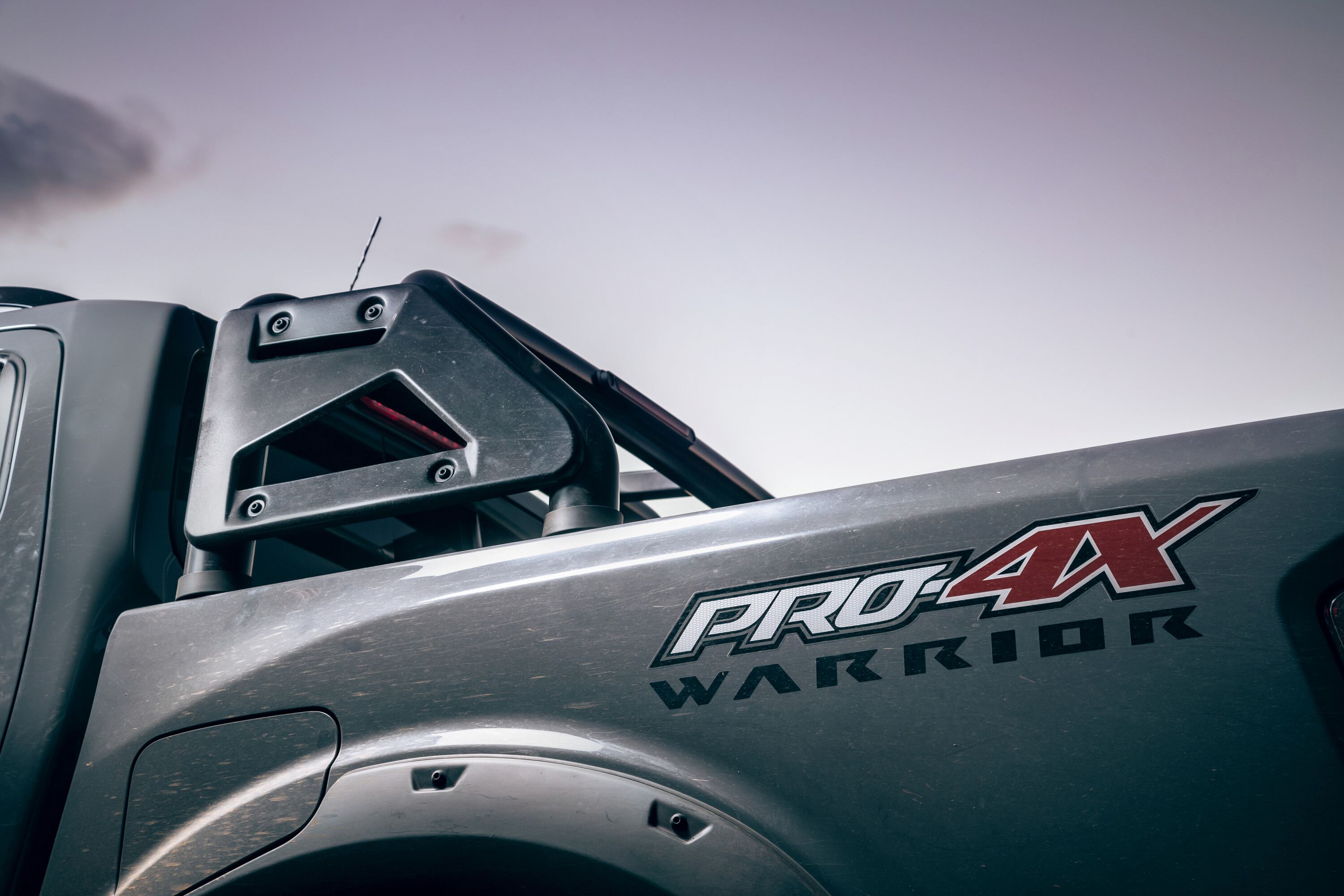
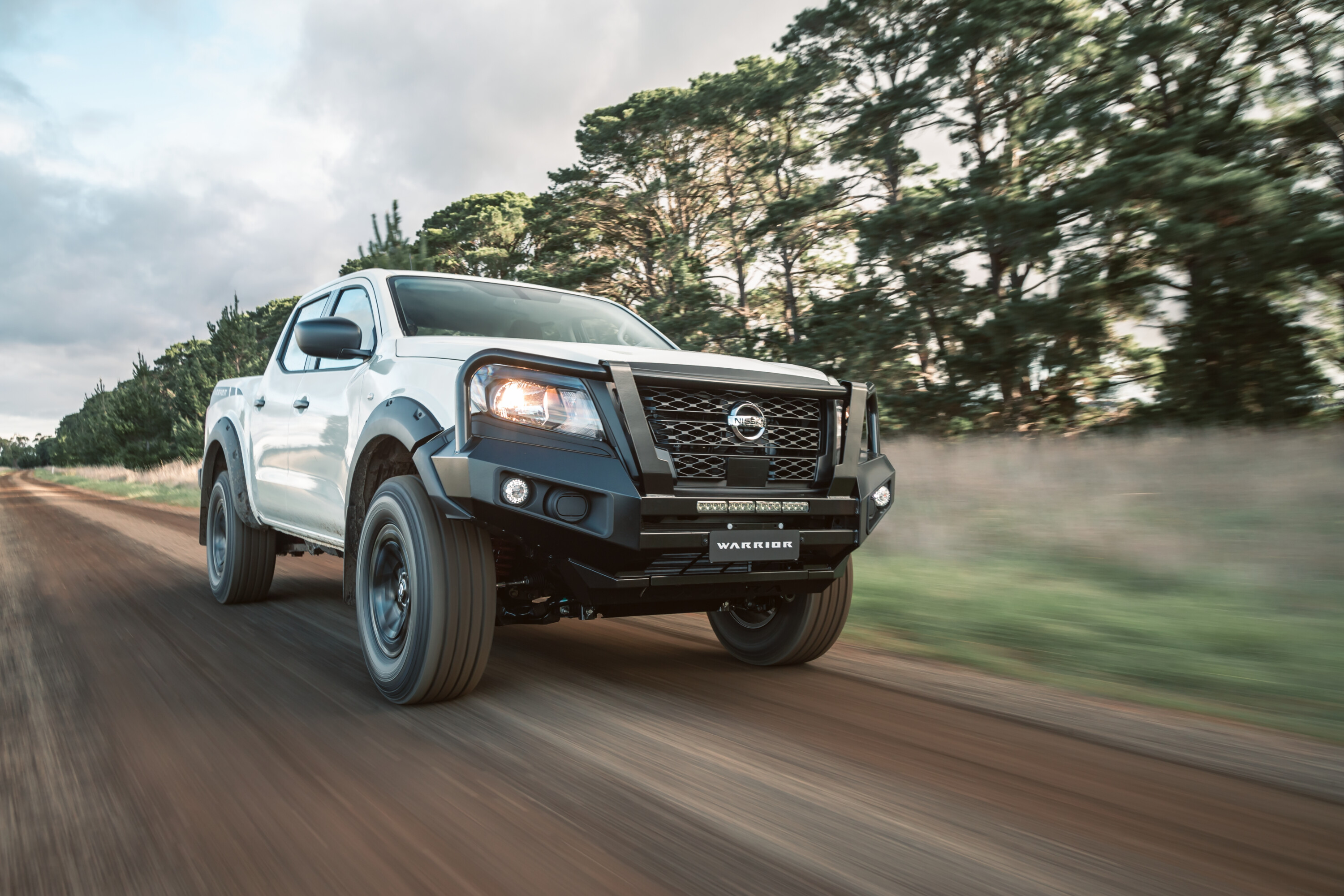
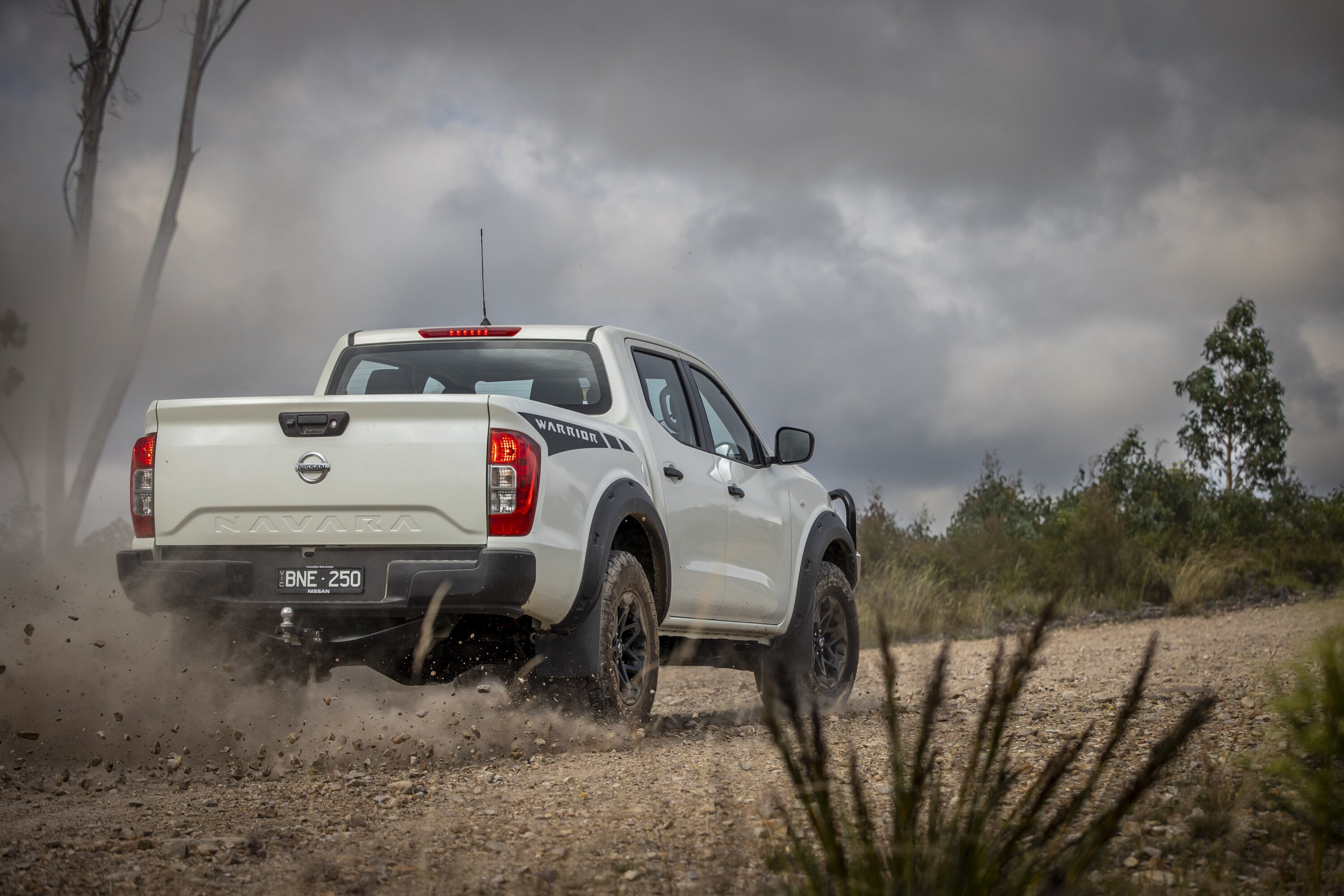
There is a certain appeal in the SL Warrior grade, as it blends standard off-road gear for a not-too-excessive price, while for about $70K (plus on-road costs), a top-shelf Pro-4X Warrior auto is getting steep.
It ticks most of the right boxes for off-road gear but draws into stark relief the lack of active safety and infotainment sophistication in this price bracket. The all-new 2025 model can’t come soon enough.
It’s been a few months between updates on our Ranger, as it’s been sitting around doing not much for a while.
We had a few highway trips with it up to Sydney and back for the two 4×4 shows up there in 2023, as well as getting our Tough Dog suspension fitted at its headquarters.
We did have a small problem with it prior to one of those runs when the guys from Street Machine magazine were using it to tow one of their race cars and dropped it back, reporting an oil leak. There had been stories of similar leaks from owners on Ranger forums, and checking under the turbocharger confirmed it was indeed that known problem: a leak from the oil return line on the turbocharger.
With the drive up the Hume locked in we wanted it sorted out, and the team at Chadstone Ford did a great job for us, replacing the offending oil line, gaskets and associated hardware, in quick time to get us on the highway. Of course, this was all done under warranty, no questions asked.
The Ranger cruises nice on the highway, but it does like a drink. With the added weight of accessories, raised ride height, bigger and heavier mud terrain tyres, gear on the roof rack and the canopy poking into the wind, the Ford returns 15.5L/100km on the highway run, resulting in less than 500km from an 80-litre tank of diesel. I haven’t kept full fuel figures on the car as the highway usage scared me enough!
We had a photo shoot with Offroad Images planned and decided to head up to the mountains a couple of days early to make the most of the preceding weekend.
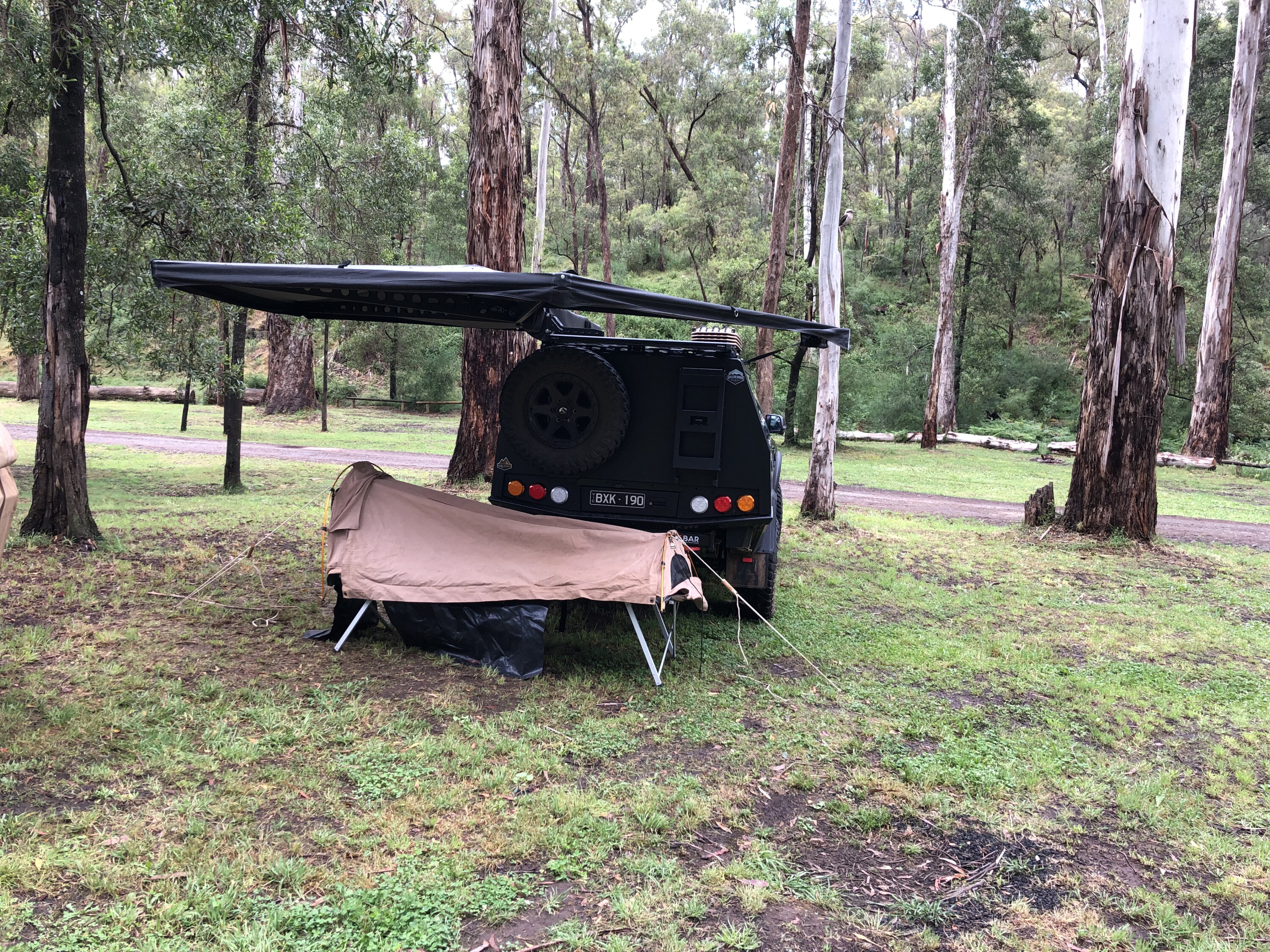
It was great to use the Ranger as it was intended; that is for travelling and camping out of, even if the weather turned bad and killed our hopes of getting the shoot done.
Living out of the canopy also gave me a great appreciation of how functional it is for this kind of use, with the Dometic fridge easy to access on the MSA Powerslide, 12-volt power supplied by the Projecta Intelli-Grid system, and the convenience and functionality of the Trig Point kitchen/pantry. It makes carrying all that extra weight around worthwhile.
A facelifted Toyota HiLux is coming: here’s what we know
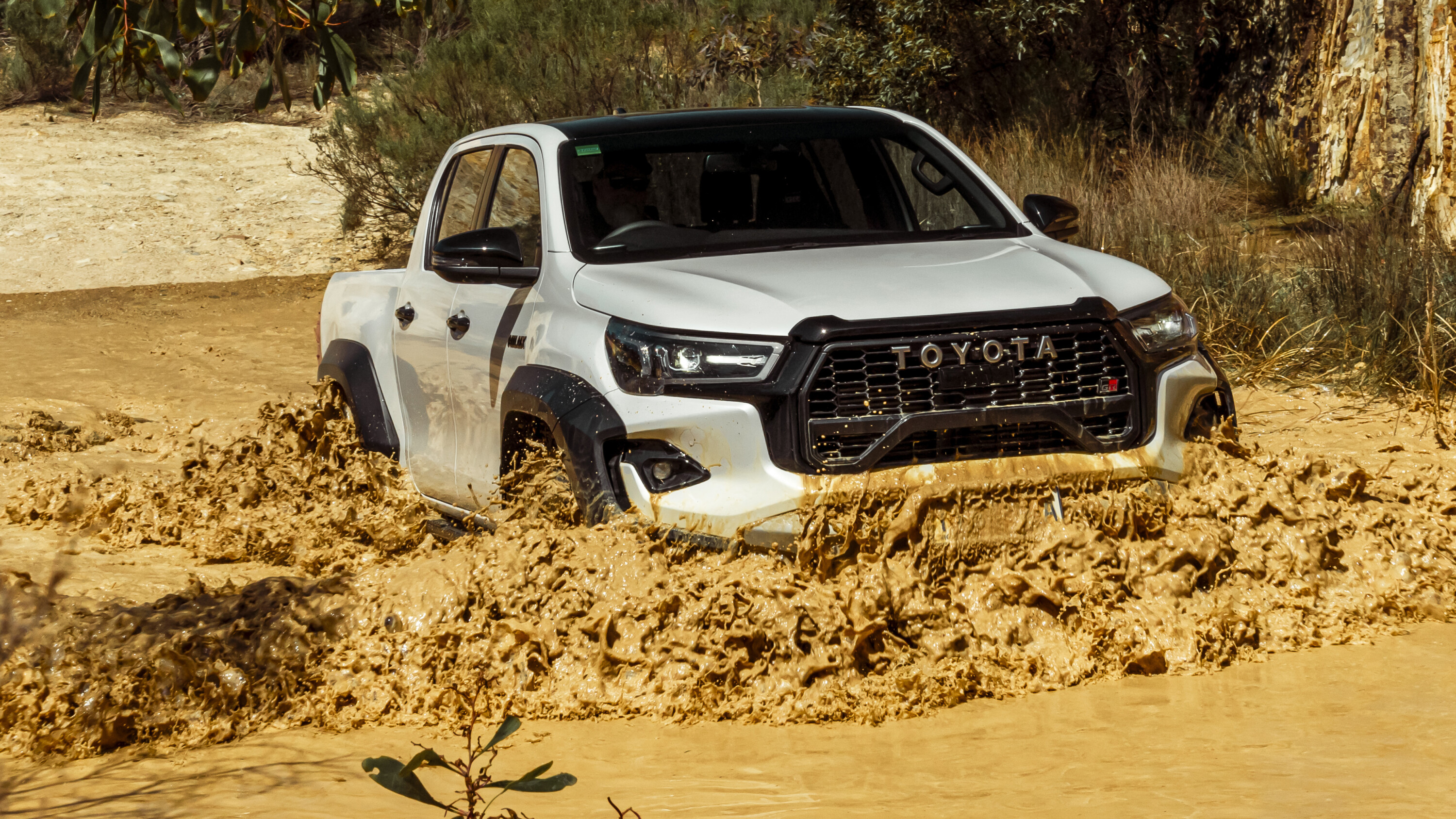
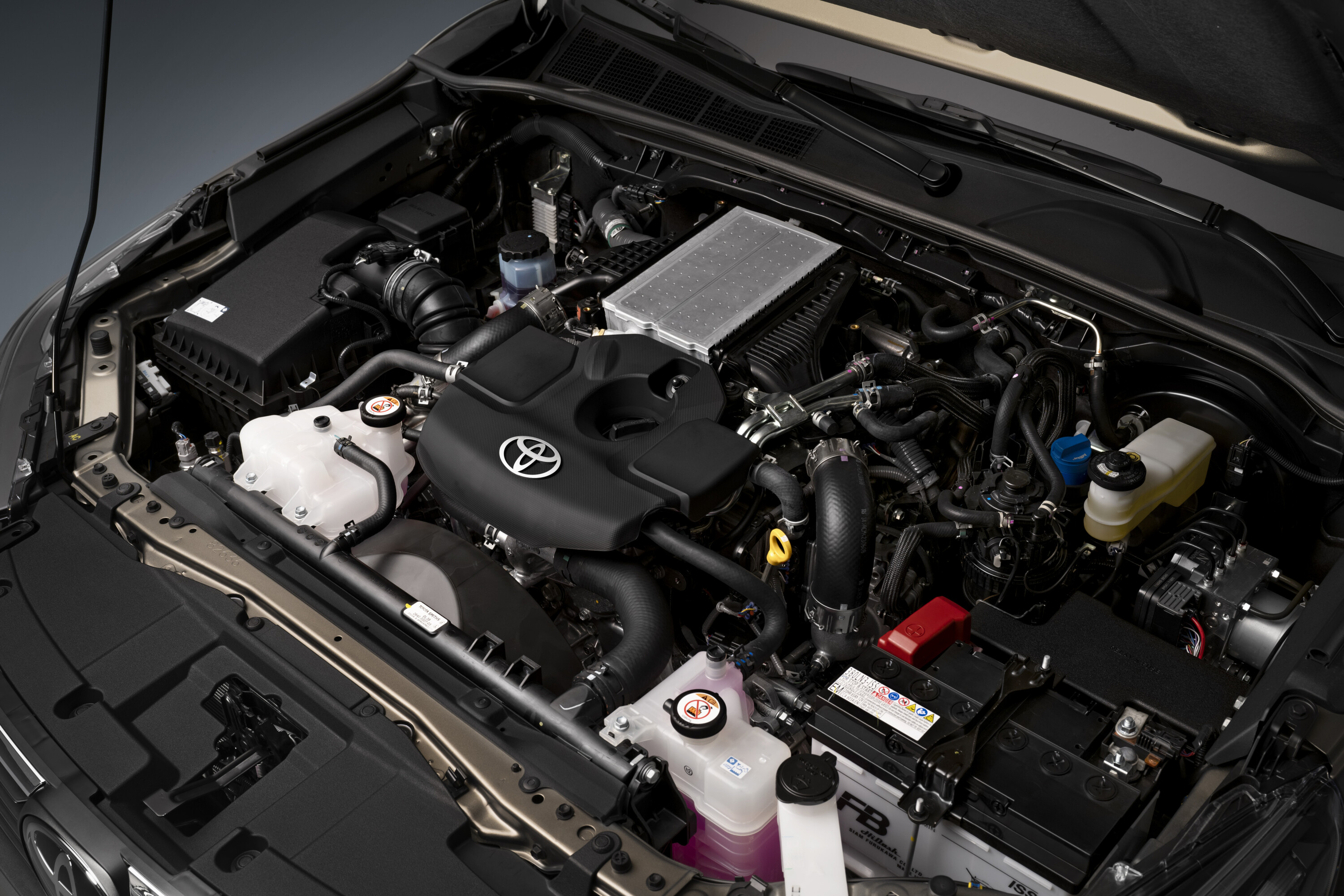
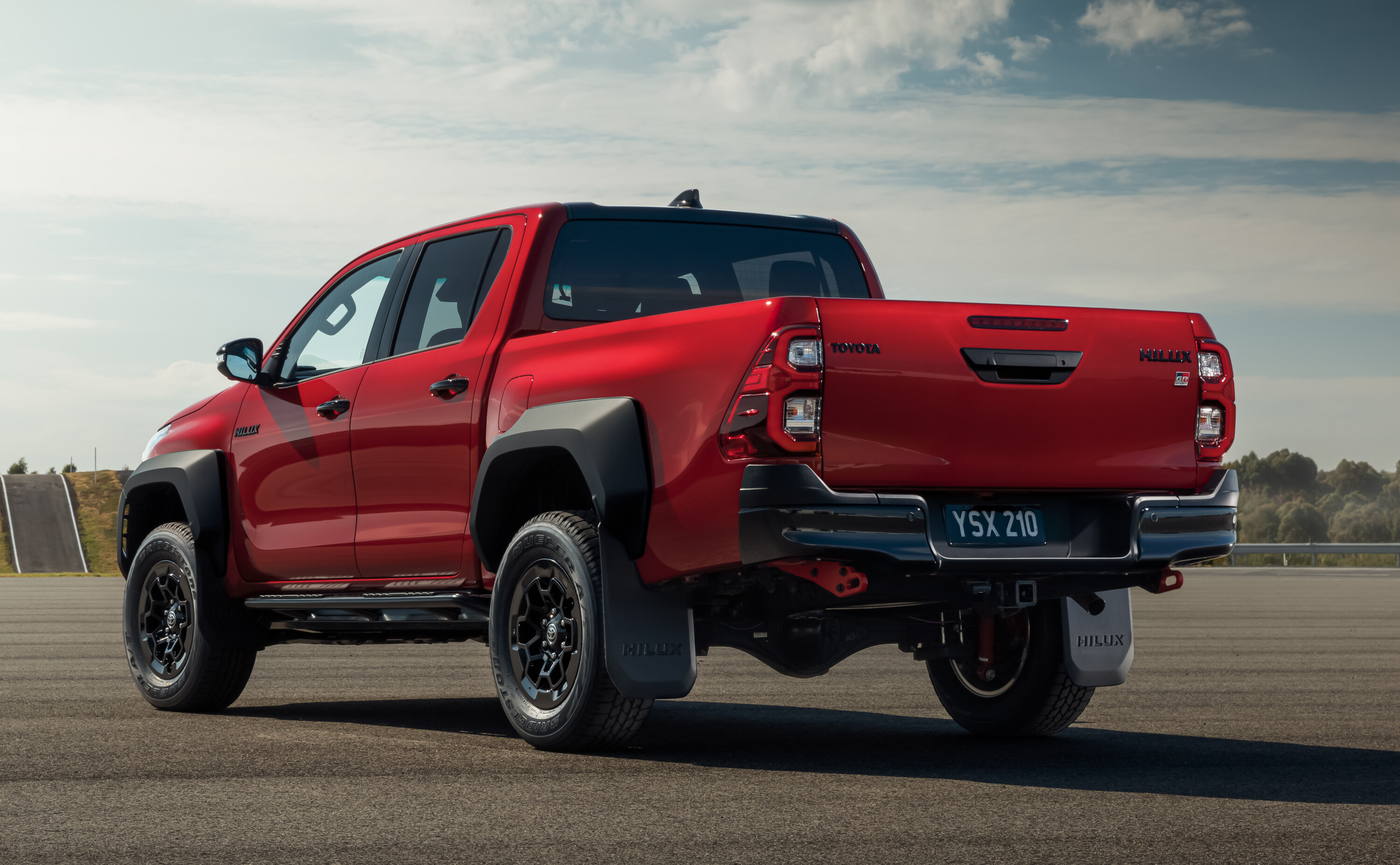
An updated version of the Toyota HiLux — including the first examples with 48-volt mild-hybrid powertrains — will arrive in Australia within “two or three months” as the popular dual-cab ute gears up for yet another facelift.
Wheels has learned the first examples of the updated HiLux, which will feature revised styling, additional equipment and price rises on some variants, are already on their way to Australia and that customer deliveries could commence as early as March.
1
The new 48-volt mild-hybrid powertrain, known internally at dealerships as “new tech change”, will be offered on the SR, SR5 and Rogue 4X4 model grades and cost around $1000 more than their pre-facelift equivalents.
Versions of the new HiLux powered by the 48-volt powertrain won’t carry a hybrid badge as the new tech doesn’t deliver the same kind of fuel savings as Toyota’s existing petrol-hybrid tech used on models like the RAV4 and Camry.
Buyers can expect the 48-volt tech to reduce their fuel bills by around 10 percent from 8.4L/100km to 7.6L, however, and to benefit from improved drivability and an uplift in refinement thanks to less noise and vibration intrusion.
1
Adding the 48-volt tech is just part of a series of changes set to be made throughout the 2024 HiLux range.
Toyota has made a habit of regularly updating the HiLux, with this latest facelift the sixth running change introduced to the popular dual-cab in the last three years.
“The arrival of the 48-volt battery will be the third major update for HiLux since October last year,” said Toyota’s vice president of sales and Marketing Sean Hanley in September last year. “And we have at least one more HiLux surprise in store for next year.”
It’s likely this facelift is the ‘surprise’ Hanley was referring to – click here to read all of his quotes – however Toyota is yet to make an official statement about the updated HiLux or to reveal any images.
Without any official picture it’s unclear just how different the updated HiLux will look, although Wheels understands the updated styling — which will focus on the headlights and grille — is more of a minor cosmetic tweak than a wholesale change.
One facelifted model that is set to look markedly different is the popular SR5. Drive has unearthed further details about the updated HiLux and reports the SR5 will gain a ‘blacked out’ exterior with dark detailing around the grille, headlights, mirror caps and sports bar.
Drive also reports the facelifted HiLux will gain the fitment of front and rear parking sensors on some variants, as well as the addition of a wireless charging pad and rear USB ports. We’ll update this story as more details come to light regarding updates for specific variants.
Prices will also be tweaked across the 2024 HiLux range, with some variants set to remain unchanged while others will increase by between $300-$1000.
It’s likely this 2024 update will be the last change made to the current Toyota HiLux as an all-new model is due to arrive in 2025.
1
It’s understood the all-new HiLux, which will ride on Toyota’s latest TNGA-F ladder-frame platform, will be noticeably taller, longer and wider than the current ute.