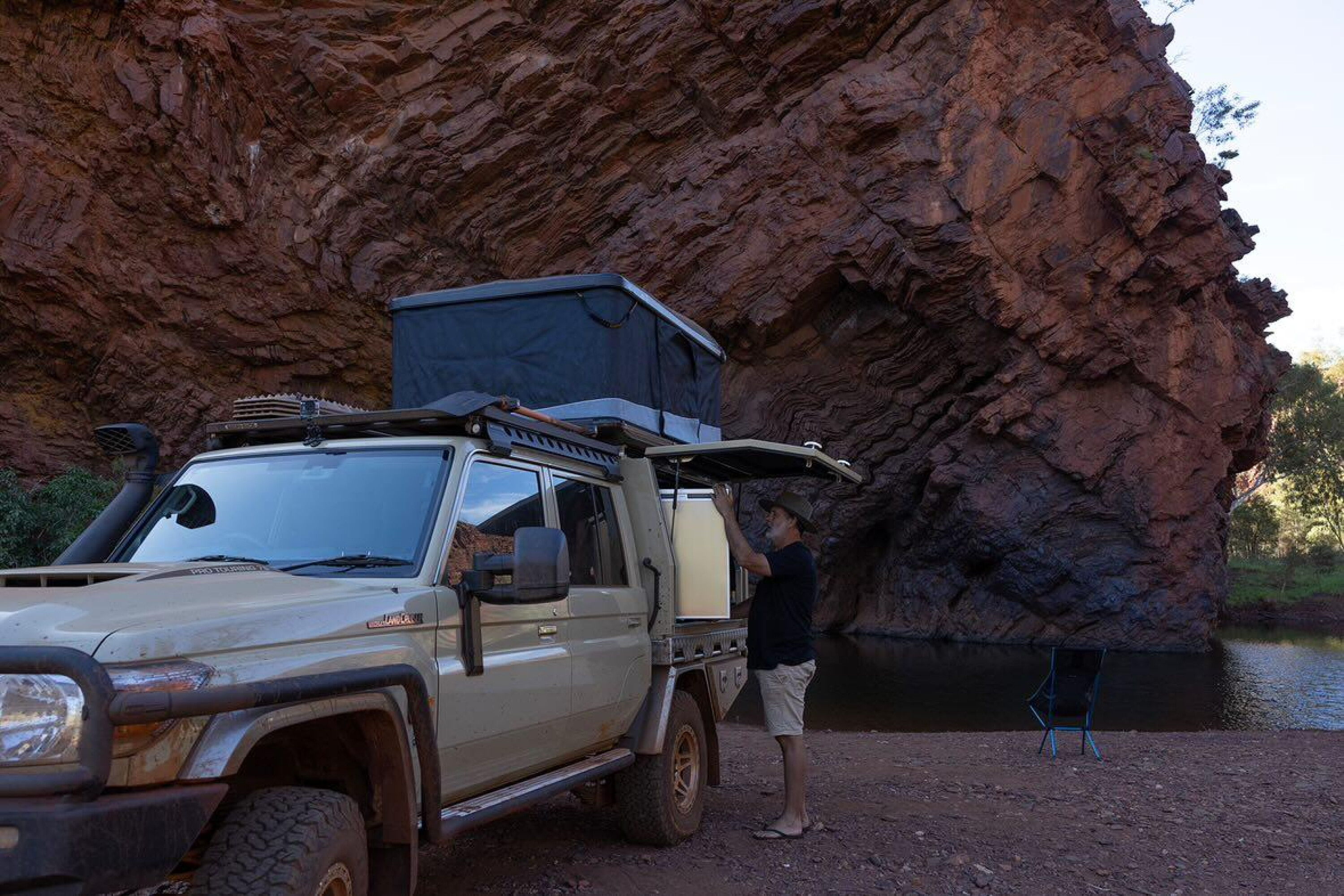
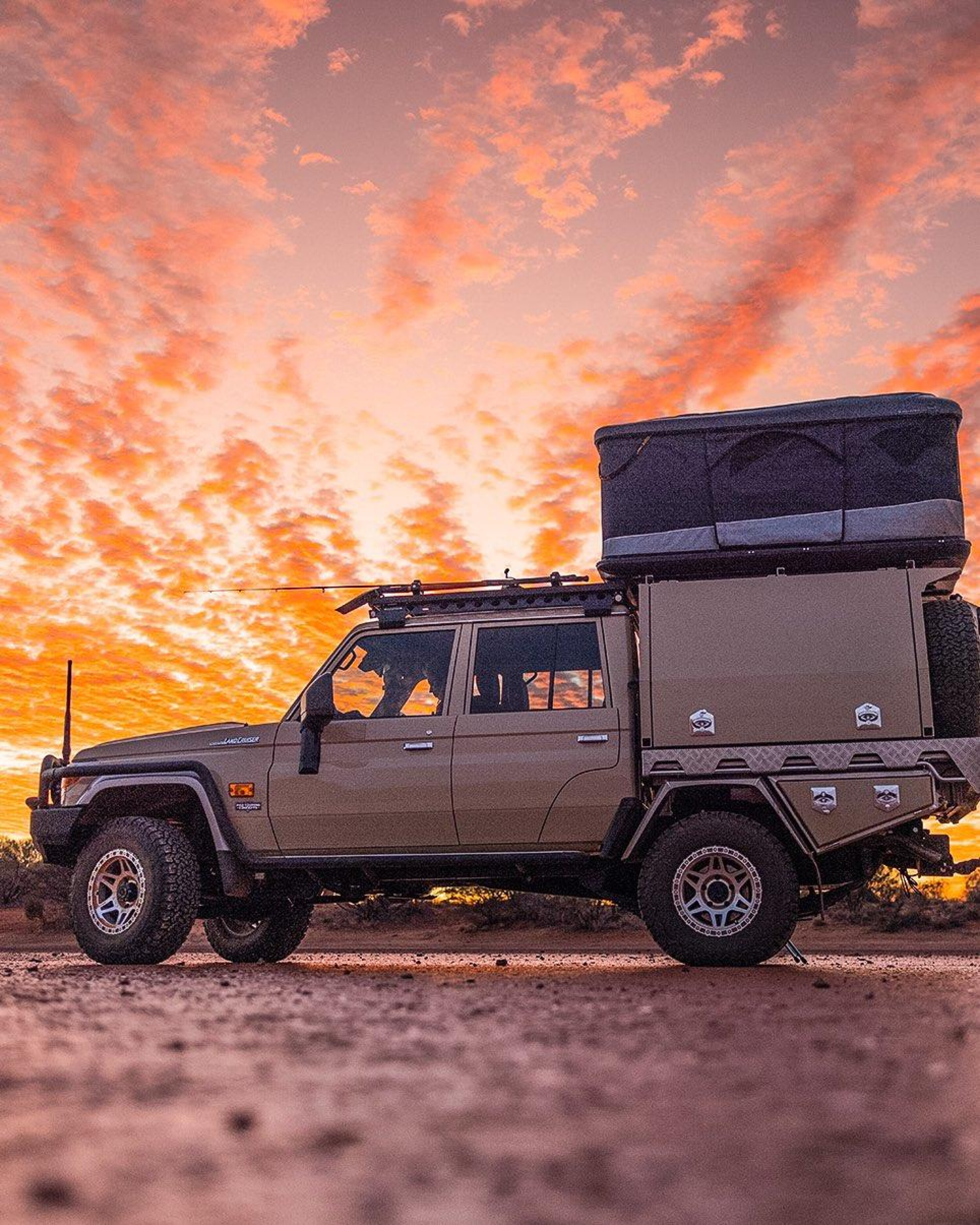
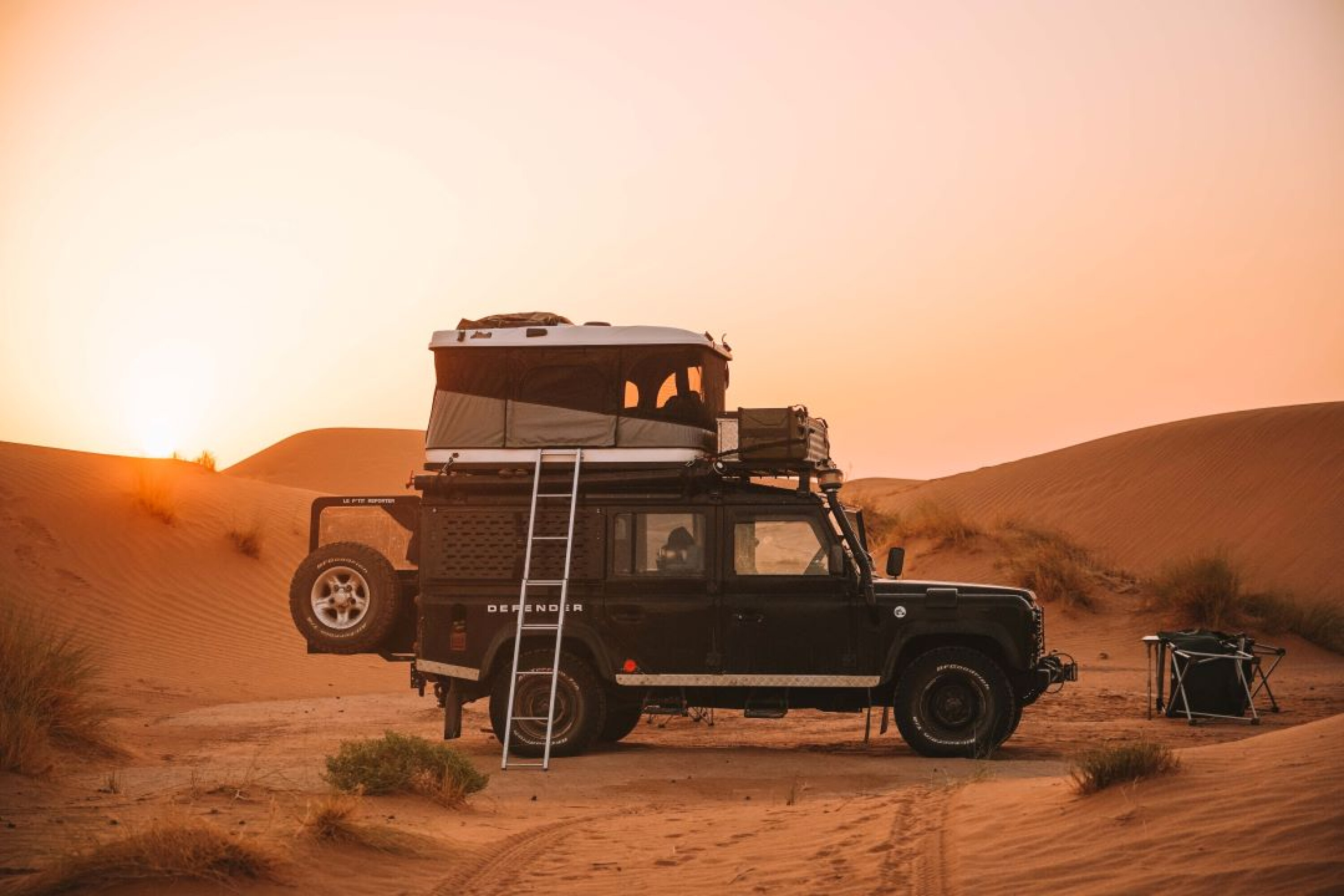
Spending some time in croc country and want a little bit of extra security, then a rooftop tent has you covered.
The technology of rooftop tents has come a long way in recent years. There are still basic fold-out set-ups available, but now there are all kinds of variations of hard- and soft-shell tents. From straight pop-tops to clamshells, setting up and packing up a has never been quicker or easier.
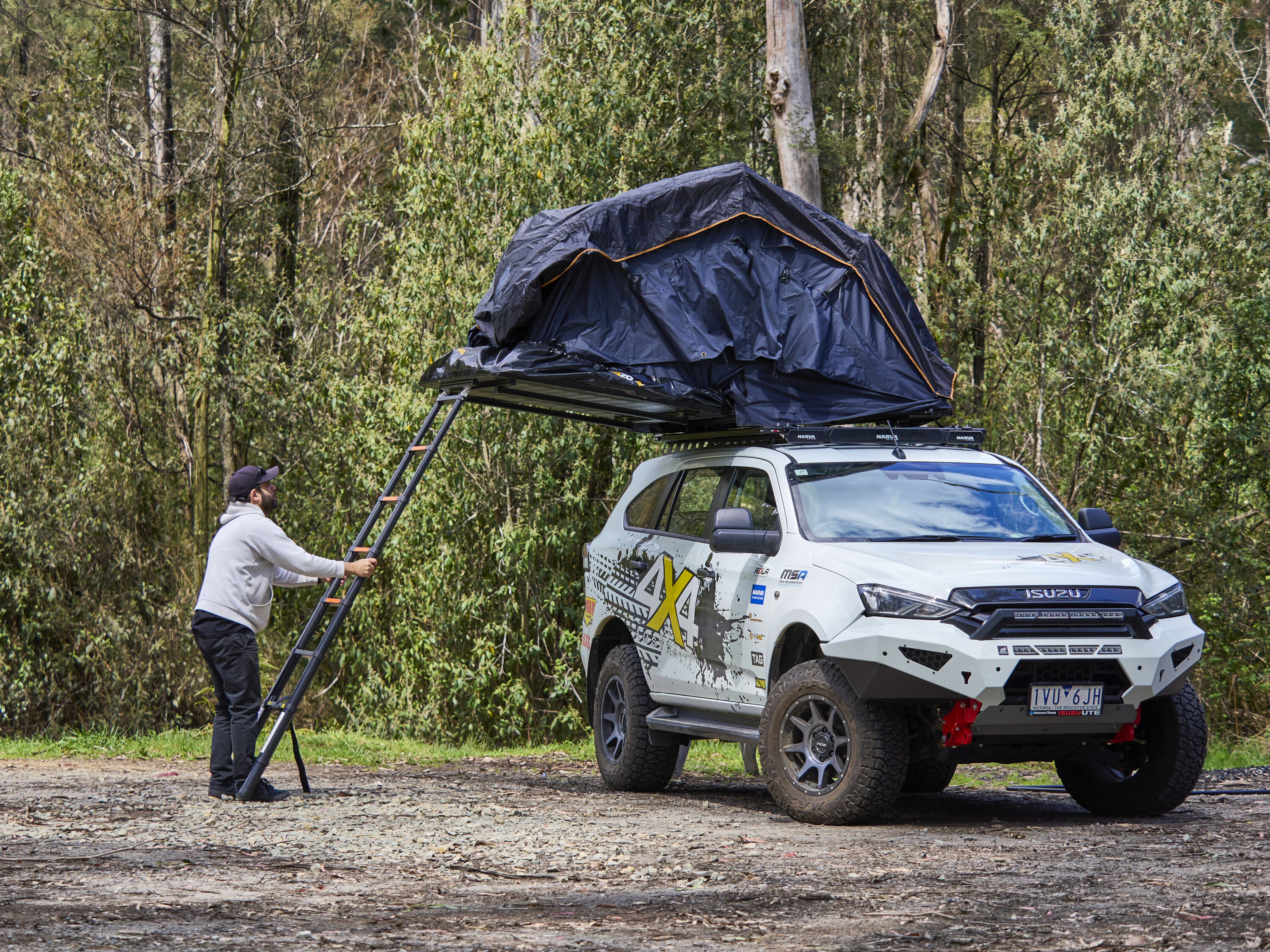
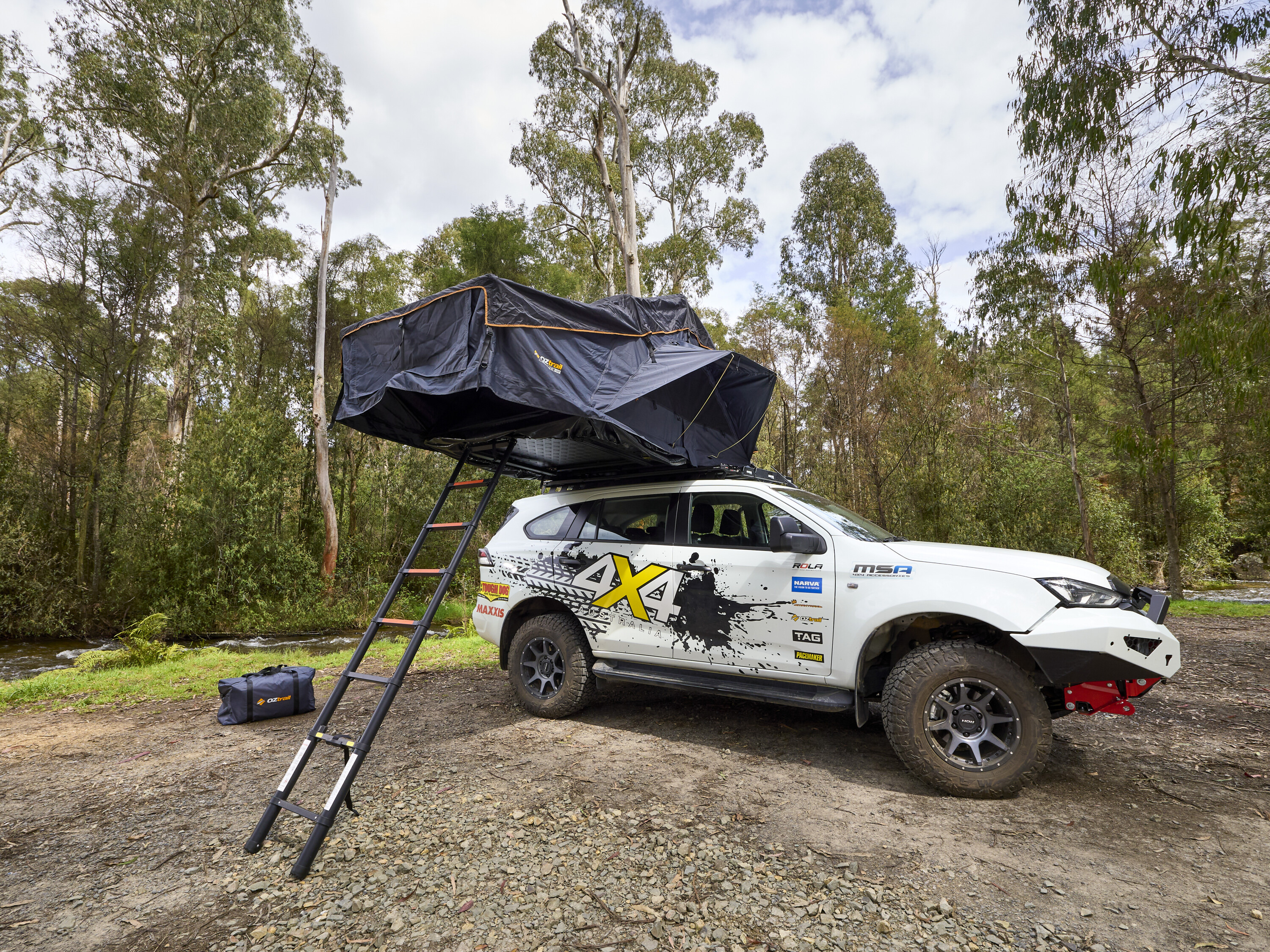
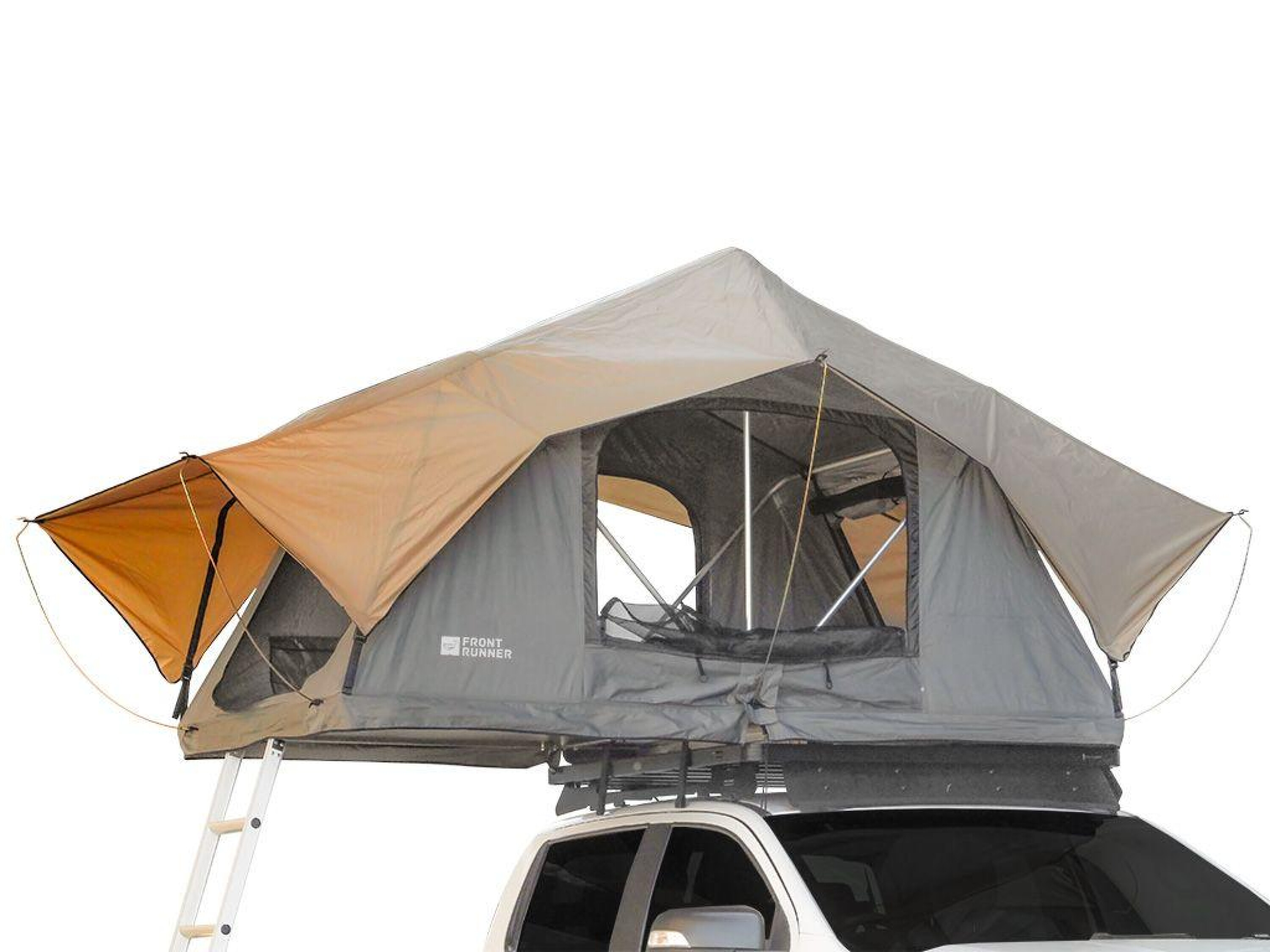
Soft-shell tents typically consist of a small, hard base the canvas tent is mounted to. The tent usually features a frame of poles and folds out to double the floor size of its mounted footprint. These types are the cheapest available and are typically lighter than hard-shell varieties. An example of a soft-shell rooftop tent is OZtrail Birdsville 1400 rooftop tent. Find out more about it here.
1
Hard-shell tents usually consist of a metal case with a top and bottom half that are linked together with canvas walls. The original generation typically included the entire top half lifting evenly to create essentially a box with a metal roof and floor and canvas walls. The newer generation are called ‘clamshell’ and are hinged at one end so the roof raises from one side only. An example of a hard-shell rooftop tent is James Baroud’s Odyssey. Find out more about it here.
1
Setting up a soft-shell rooftop tent is around a five-minute proposition, while it’ll take around one minute for a hard-shell tent. Pack-up times have a similar difference: around 10 minutes for a soft-shell versus around two minutes for a hard-shell. Soft-shell rooftop tents require around half the roof footprint of their hard-shell alternatives. There’s no doubt hard-shell tents are quicker and easier to set up and pack up.
One of the biggest differences between hard- and soft-shell rooftop tents is cost. So, for that reason, we have split them into two categories.
The Birdsville 1400 rooftop tent is a hybrid design blending hard- and soft-shell features. The RTT weighs 71.5kg (excluding ladder) and fits within the weight limits of many vehicles.
The tent boasts heavy-duty 280gsm ripstop polycotton canvas construction, a 210D seam-sealed ripstop polyoxford fly, and multiple fly tension poles for windows. An optional annex is available for extra space. Tent seams show quality workmanship, and tie-down straps keep it stable in windy conditions. With doors and windows closed, the tent offers a pitch-black interior for late risers.
1
The spacious interior accommodates two adults comfortably and features SkyMesh panels on the ceiling for stargazing. LED lighting strips, powered by OZtrail’s Lumos tech, offer interior illumination, and storage pockets provide convenient storage options. The tent’s 60mm memory foam mattress with a luxe-comfort flannel cover ensures a comfortable night’s sleep, supported by an anti-condensation mat for airflow. Overall, the Birdsville 1400 RTT is an appealing choice for campers seeking comfort and ample storage for extended camping trips.
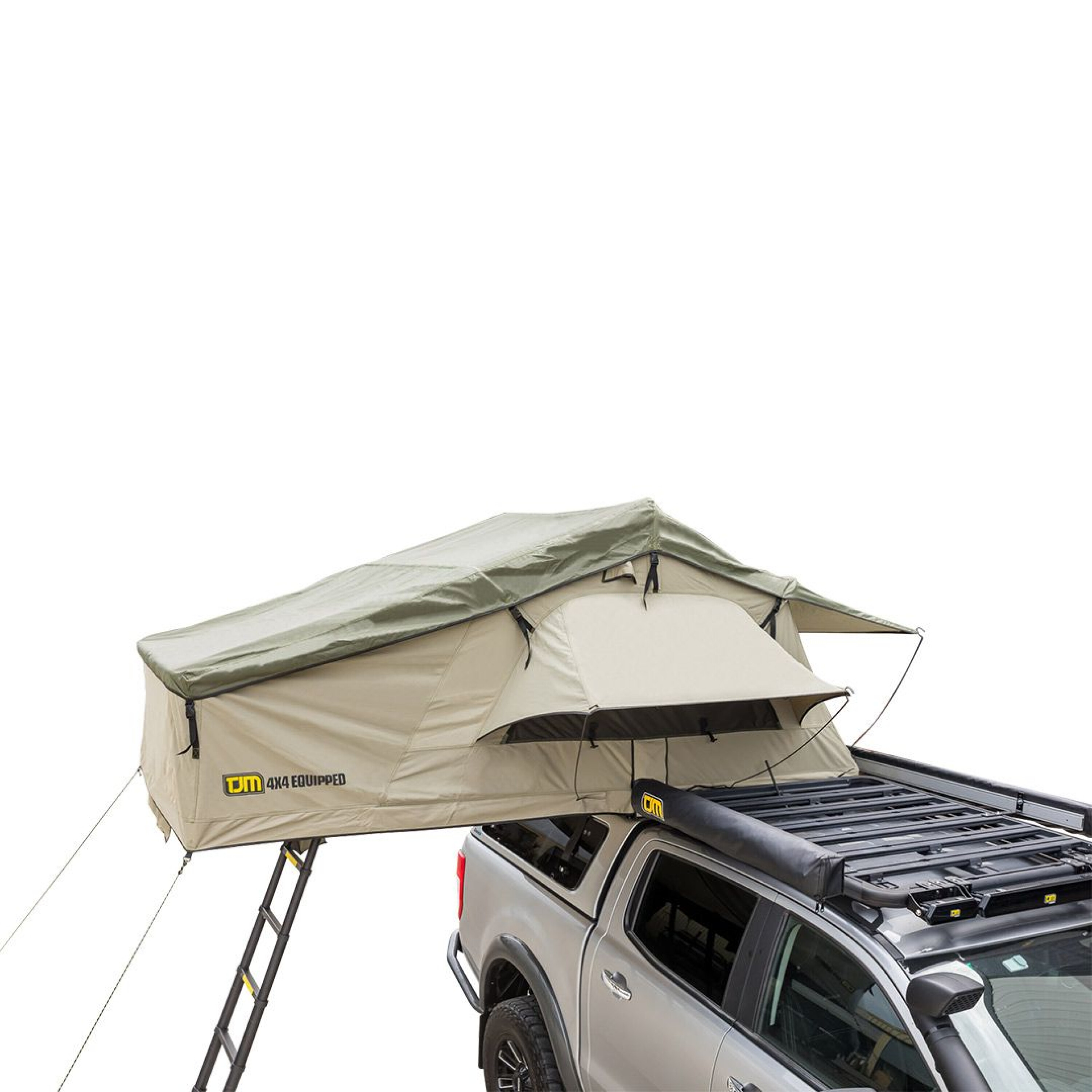
The TJM soft shell rooftop tent is a spacious camping tent that can comfortably accommodate up to three people. It is made from durable, waterproof and UV-resistant materials to ensure long-lasting use in various weather conditions.
The tent comes with a 75mm high-density foam mattress that offers a comfortable sleeping surface, and a removable and washable cover for easy maintenance. The tent features large windows with zippered mesh screens that provide excellent ventilation and protection from insects.
1
It has a retractable ladder that allows easy access to the tent and a fully enclosed annexe that offers additional living and storage space. The annexe comes with a removable floor, making it easy to clean and maintain. The tent can be easily installed on most roof racks with its universal mounting system, taking only a few minutes to set up or pack down.
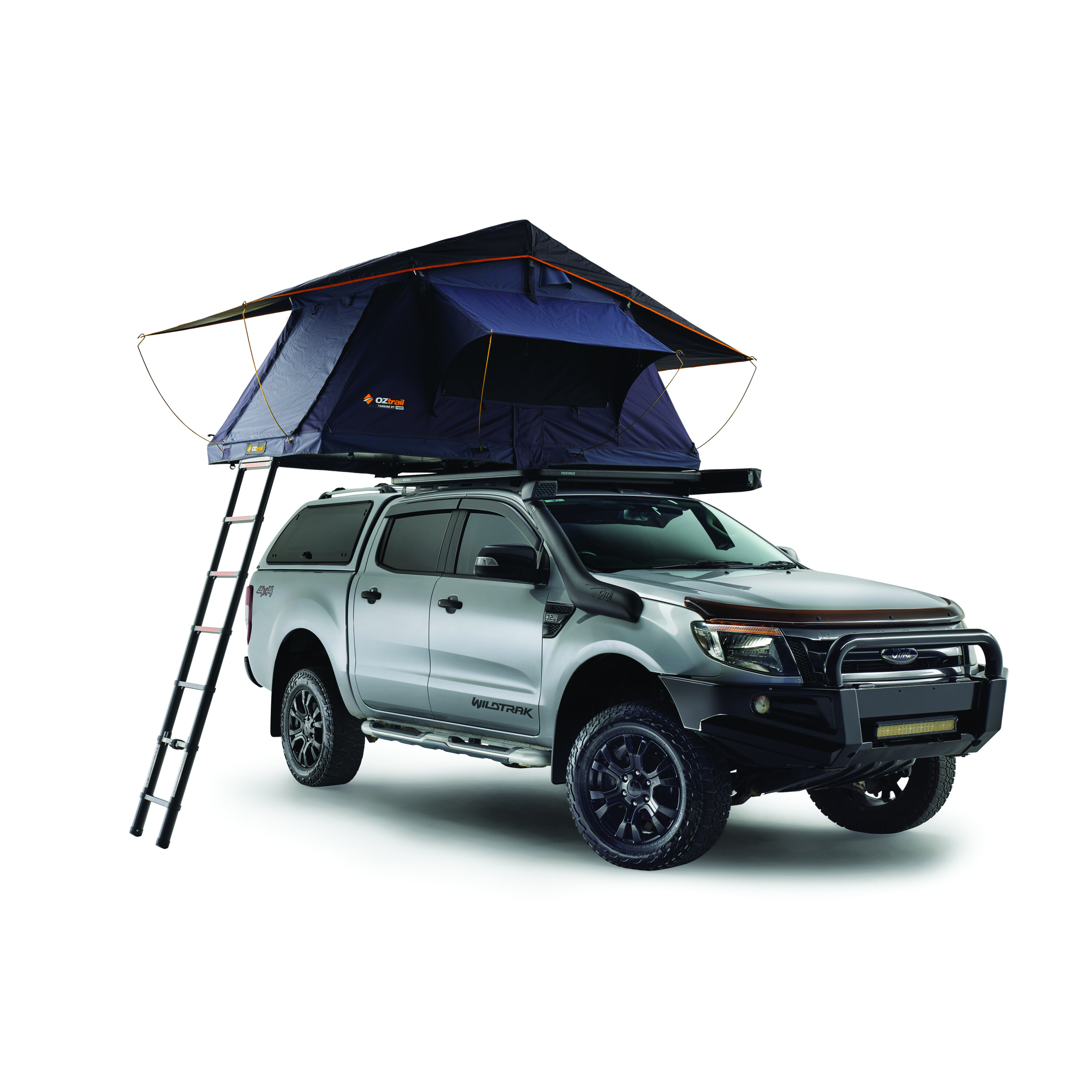
The Tarkine is the entry-level rooftop tent in the OZtrail Overlander range, and the only one made in a pure soft-shell construction.
1
It is lightweight and its size means it’s suitable for smaller 4x4s and SUVs. It weighs 59kg when set-up (inc. ladder) and measures 2.4m x 1.43m x 1.3m when open (1.43m x 1.23m x 0.31m when closed).
A comfortable 60mm high-density foam mattress is included, and it utilises a 280gsm Ripstop polycotton canvas and 210D polyoxford flysheet, so it’ll protect occupants from both heat and rain. It also includes an LED lighting strip and a SkyMesh roof panel to enable campers to gaze at the stars while they drift off to sleep.
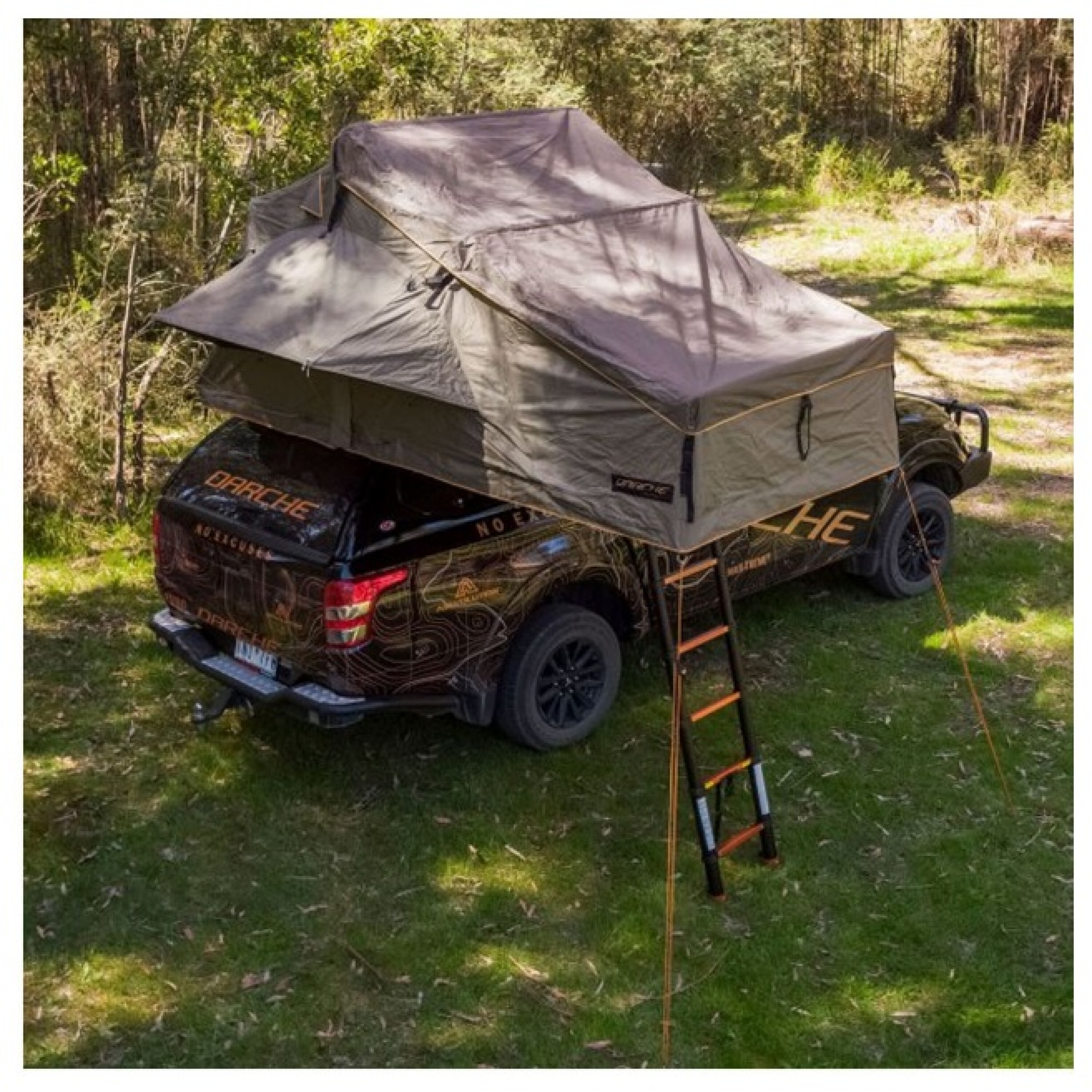
Boasting premium 320gsm Ripstop polycotton canvas, seam sealing and a removable polyester fly, the Darche Panorama is ready for just about any conditions.
1
The fly provides window covers to allow that all-important airflow, even in rainy conditions. But if clear skies are around, rip off that fly and enjoy starry-night views from the zippered sky window.
One of the biggest negatives about soft-shell tents is a wet pack up. Folding all that wet canvas straight on to your bed means that the next night is likely to be less than pleasant. This is where another huge advantage of that 210D Ripstop polyester fly comes in. Whip off the wet fly in the morning and pack up a relatively dry tent.
Sleeping area
240cm (L) x 140cm (W) x 125cm (H)
Folded size
121.5cm (L) x 143.5 (W) x 29 (H)
Weight
63.6kg
Mattress
50mm foam
Warranty
Three years
Pros
Under 65kg makes this tent suitable for almost any 4×4
Only 29cm-thick packed is class leading
Quality build
Cons
The price
Mattress may not be suitable for larger humans
The price for the class-leading thickness is bedding must be removed to pack up
One of the smaller and definitely lightest tent in this class, coming in at only 43kg, this is the tent for those with limited roof-rating capacity – calling all zuke owners.
1
The main tent is constructed of 260g polycotton Ripstop canvas and the fly is 400d polyester Oxford fabric. The fly doesn’t cover the entire tent but does provide good roof coverage and small awnings over windows and doors.
Purchase the optional quick-release mounting kit and this tent is ideal for those that remove the tent during the week and put it back on for the weekend. If you want to leave the tent on full-time, then don’t be too worried about wind drag because at 33cm thick, it’s one of the thinner tents in this class. The downside of this is you will need to remove bedding to pack it up.
Sleeping area
243.8cm (L) x 129.5cm (W) x 116.8cm (H)
Folded size
133.3cm (L) x 124.5cm (W) x 33cm (H)
Weight
43kg
Mattress
60mm foam
Warranty
Two years
Pros
The lightest tent in this class
Value buy
Really suits either tub or roof mounting on a dual-cab ute
Cons
Limited to 2m mounting height without a ladder extension
Ladder channels can become sticky and the mechanism to lock the ladder is fiddly
The fly design means you need access to all sides to put the tent up
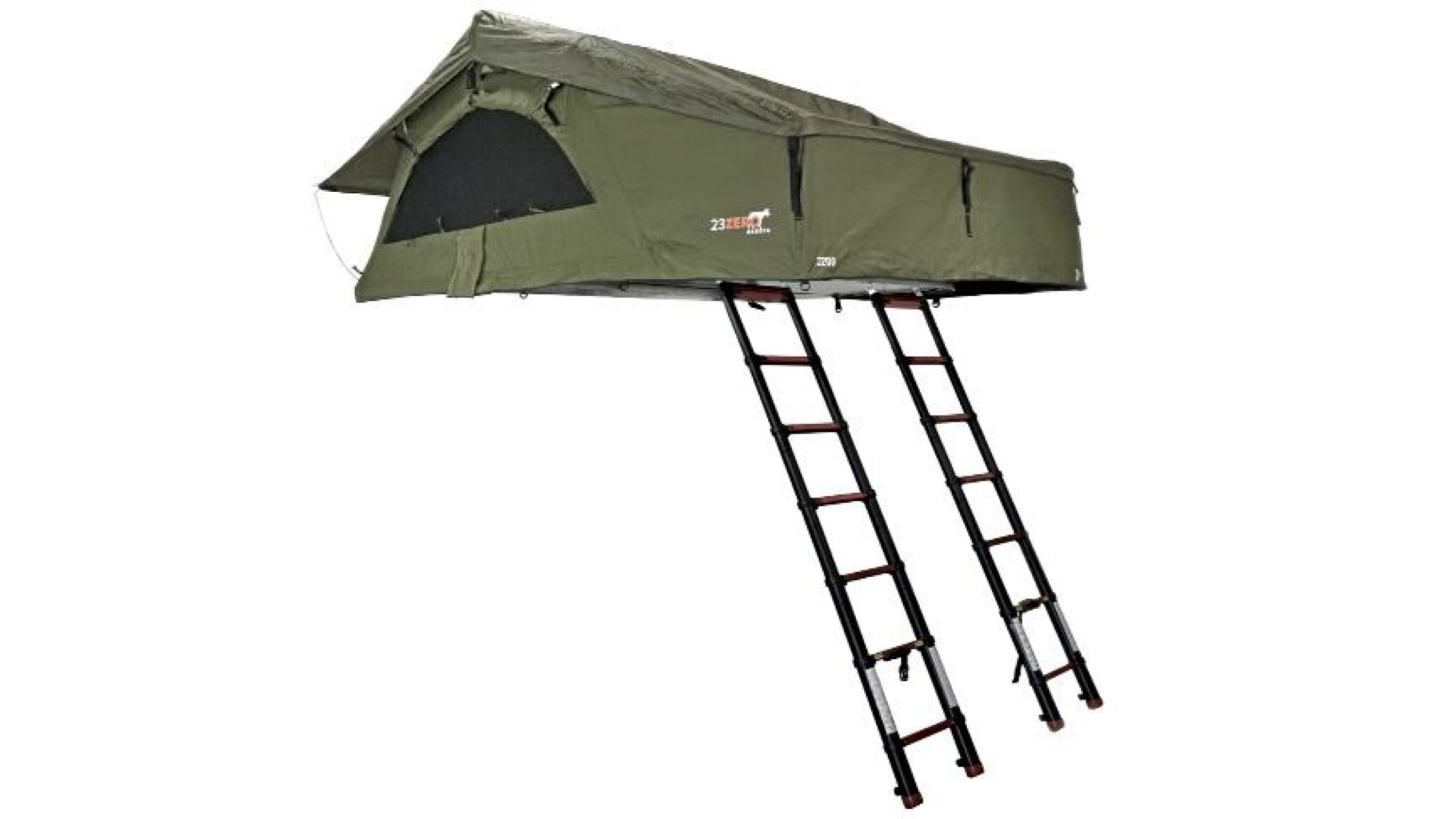
The big difference with this rooftop tent is that it’s, well, big. At 2200mm wide there’s almost an extra metre of space compared to competitors in this class. More than this, the tent has two ladders and can be split with an internal wall.
1
If you have a young family and thought that rooftop tents were for couples only, the 23Zero is here to enlighten you. This tent is rated to sleep 5, but realistically 2 adults and 2 small kids is feasible. As a result of its size, this tent is heavy (87kg), so will only suit certain vehicles and set-ups.
With features including Light Suppression Technology (LST), 280gsm polycotton and a 210d polyester fly, this tent is ready to keep everything out. The LST is a dark coating on the inner walls of the tent to keep it darker in the mornings and cooler on warm days. The frame has 25mm aluminium poles that pivot on a stainless-steel yoke. 23Zero claims its tents do not need seasoning due to the pre-shrunk canvas and seam sealing.
Sleeping area
240cm (L) x 220cm (W) x 120cm (H)
Folded size
125cm (L) x 225 (W) x 33cm (H)
Weight
87kg
Mattress
65mm foam
Warranty
Two years
Pros
One of the very few suitable for a family
The dual ladders and internal wall mean this genuinely acts as two tents would
Huge side windows for airflow and views
Cons
The price u2013 itu2019s good value for what is almost two tents, but it’s still a fair outlay
Weight
The price of a good-size entry awning is that you will need to duck when sitting at the top of the ladder
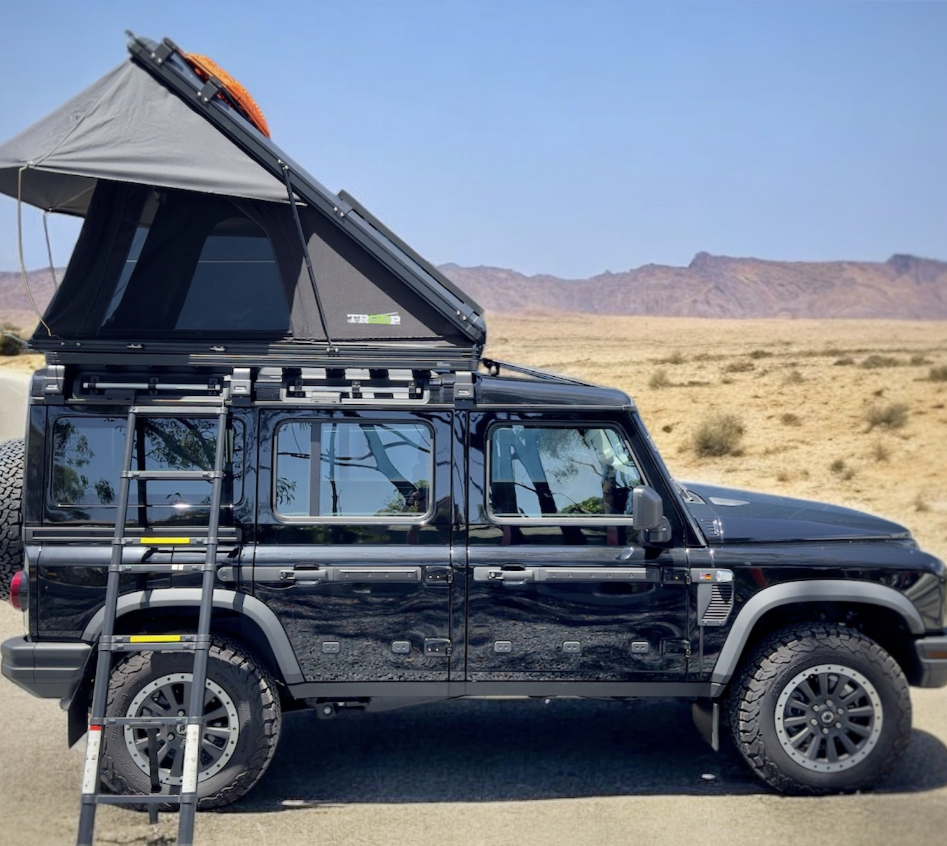
The TROOP hardshell rooftop tent is a compact, lightweight unit designed to fit cars, 4×4s and trailers.
It features a durable waterproof canvas body, built-in mini awning, and quick gas-strut assisted setup for fast deployment and pack-down. The tent has openings on three sides with fly screens, a memory foam mattress with anti-condensation underlay, and internal storage solutions including LED lighting and a clear tablet pocket.
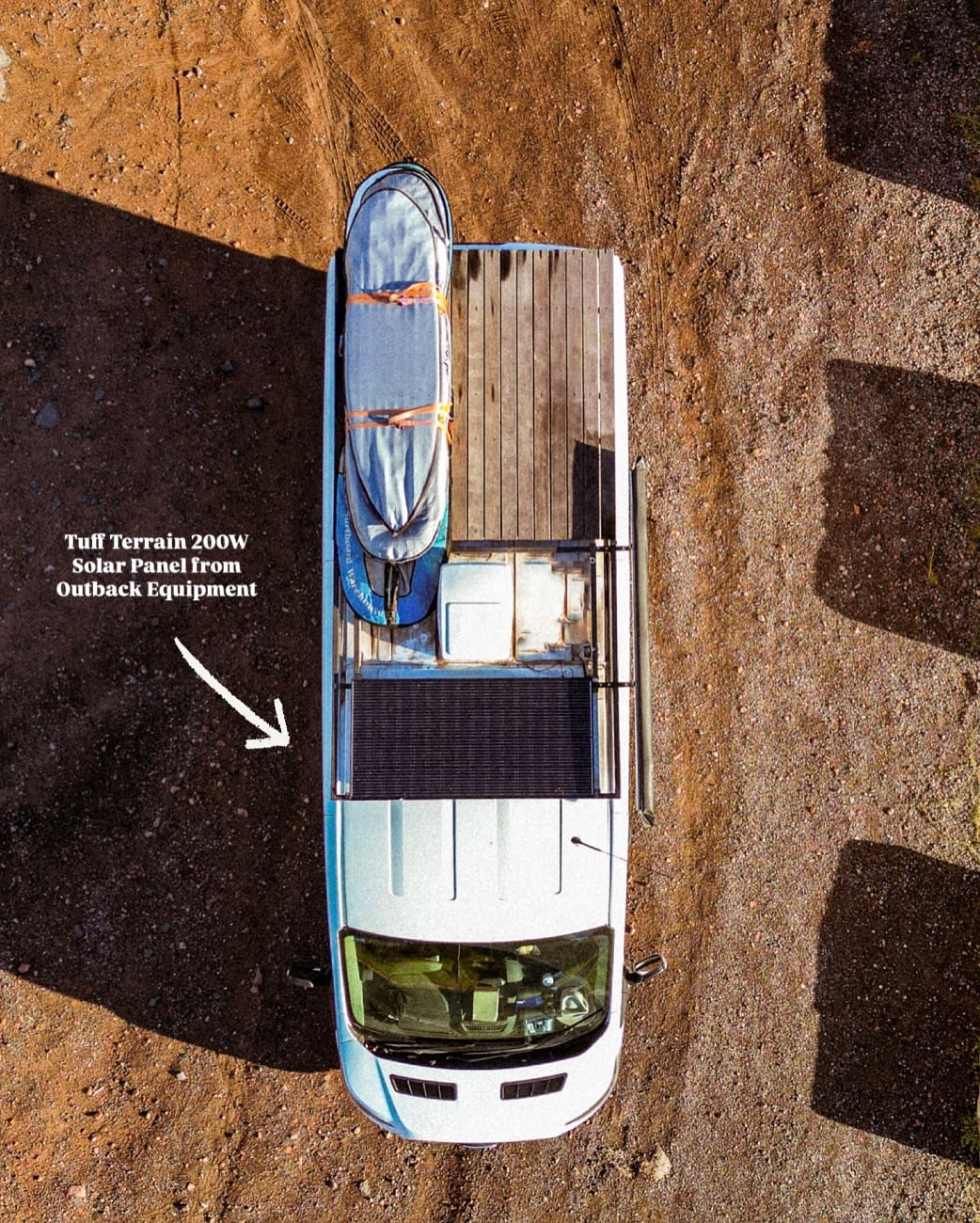
A telescopic ladder and external storage bags are included. The package comes with a 200W solar panel, roof rack rails (30kg capacity), and internal 12V/USB outlets. Tent weight is 70kg, with overall dimensions of 2100 × 1300 × 180mm.
1
Sleeping area (L x W x H)
2100 x 1300mm (height not specified)
Folded size (L x W x H)
2100 x 1300 x 180mm (plus 60 mm if roof rails fitted)
Weight
Tent: 70kg; Solar panel: 12kg
Mattress
Memory foam with anti-condensation underlay
Warranty
Manufacturer warranty (details TBC)
Pros
Quick gas-strut setup and pack-down, ready in seconds
Lightweight and low-profile
Includes solar panel, roof rails, LED lighting, and internal storage
The Odyssey is a premium rooftop tent designed for outdoor enthusiasts seeking comfort and convenience.
This spacious and durable tent is constructed with high-quality materials to withstand various weather conditions. The Odyssey features a durable ABS plastic hull that ensures both lightweight portability and enhanced durability. Its aerodynamic design minimises wind resistance during travel. The tent opens and closes effortlessly with gas strut-assisted mechanisms, allowing for quick setup and takedown.
1
Inside there is a comfortable mattress that accommodates two adults and one child. The mattress is made from high-density foam for optimal comfort and support. The tent is well-ventilated with large windows offering full 360-degree views. The Odyssey features an integrated solar-powered ventilation system, which circulates air even when the tent is closed, keeping the interior fresh and reducing condensation.
For added convenience, the tent comes equipped with built-in storage pockets and a shoe bag, allowing campers to keep their belongings organised. The tent’s entrance has an extendable canopy that provides shelter and protection from the elements. Plus, they now have the option of roof racks on the tent’s hull, a first for the brand.
The Odyssey is designed for easy installation on various vehicle types and roof racks, ensuring compatibility with most off-road adventures. Its rugged construction and reliable hardware make it suitable for both weekend getaways and long-term expeditions.
The beauty of James Baroud’s Evasion Evolution rooftop tent is that once you pull the handbrake at a campsite for the night, you can be set-up in seconds.
All the user has to do is release the catches, and gas struts automatically raise the upper hull to expand the tent space. Pack-down is just as easy, as elasticised seams draw the fabric sides into the hull when the upper hull is lowered by hand.
1
The hard-shell tent is waterproof and wind-tested to 120km/h, and its compact size when set-up means it’ll have minimal impact when touring on-road. The upper and lower hulls feature three layers of reinforced fibreglass with a sleek gelcoat finish. Two built-in aluminium rails and six mounting brackets are included, so it can be easily attached to roof racks.
Once set-up, all openings and doors are completely screened against insects, and a 65mm high-density foam mattress is provided for cosy siestas. A folding ladder with telescopic legs makes entry and exit an easy affair, and a ventilation fan, silent and automatic in its operation, keeps the air fresh.
The canvas is a patented James Baroud design, which encompasses six spray layers of aluminium-impregnated canvas that is heat-reflective and insulating, as well as waterproof. The fabric used is a high-quality double-stitched aluminised polyester, while a tear-resistant mesh keeps mozzies at bay. The clever design provides 360-degree views.
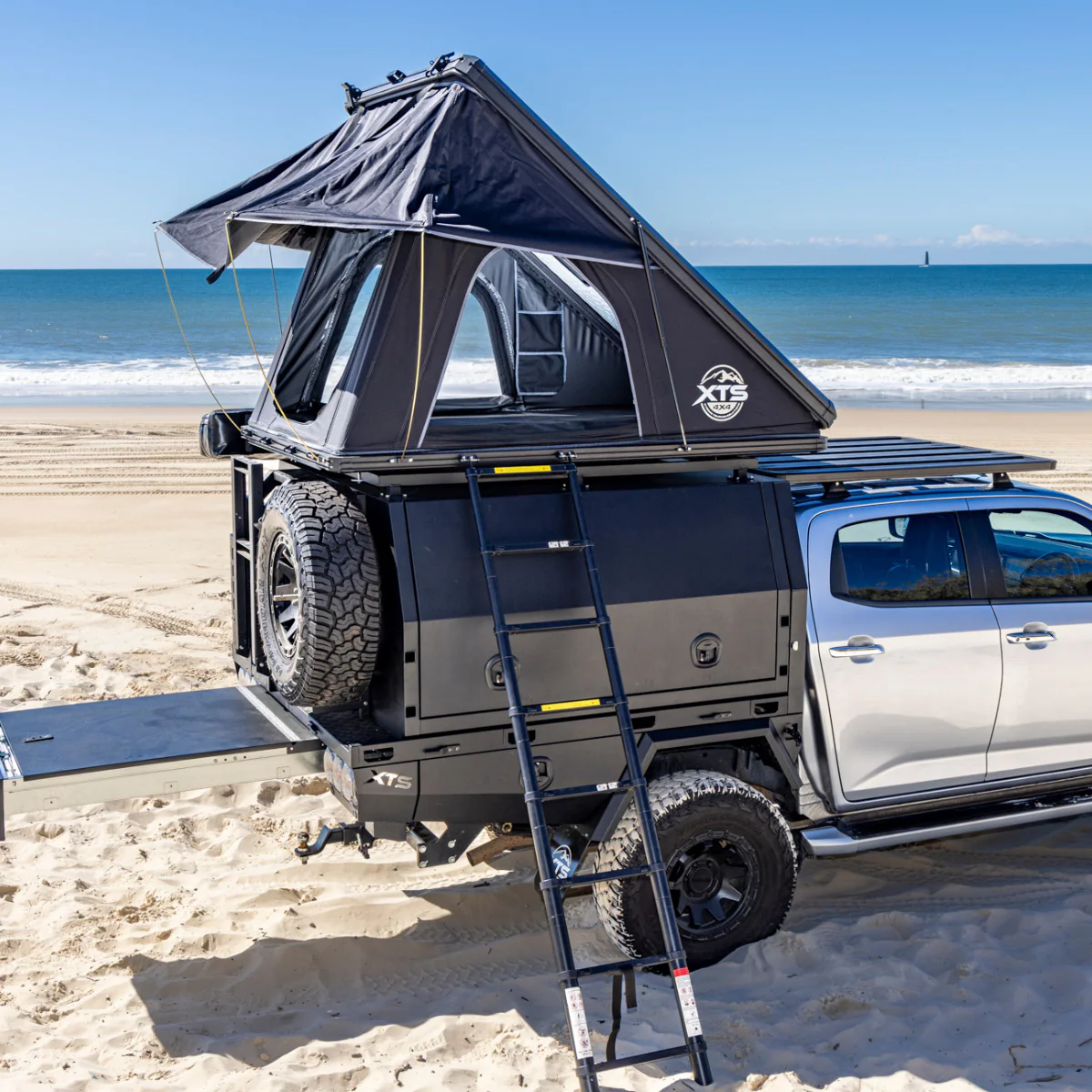
The XTS 4×4 roof-top tent is designed for outdoor enthusiasts looking to remain comfortable during off-road pursuits.
Made from premium-grade 320gsm waterproof canvas, the tent provides all-weather protection and 50+ UV-resistance. The tent is available in two sizes – 1.31m and 1.45m – with both providing ample space for two people. It features a robust aluminium outer case for durability and built-in LED lighting.
The tent also offers optional upgrades including a 200W/216W solar panel kit and an XTS roof rack. Weighing between 65-71kg depending on the model, it is a practical solution for camping and adventure trips.
1
Sleeping area
131cm (W) and 145cm (W)
Folded size
211cm (L) x 131cm (W) x 18cm (H) and 211cm (L) x 145cm (W) x 18cm (H)
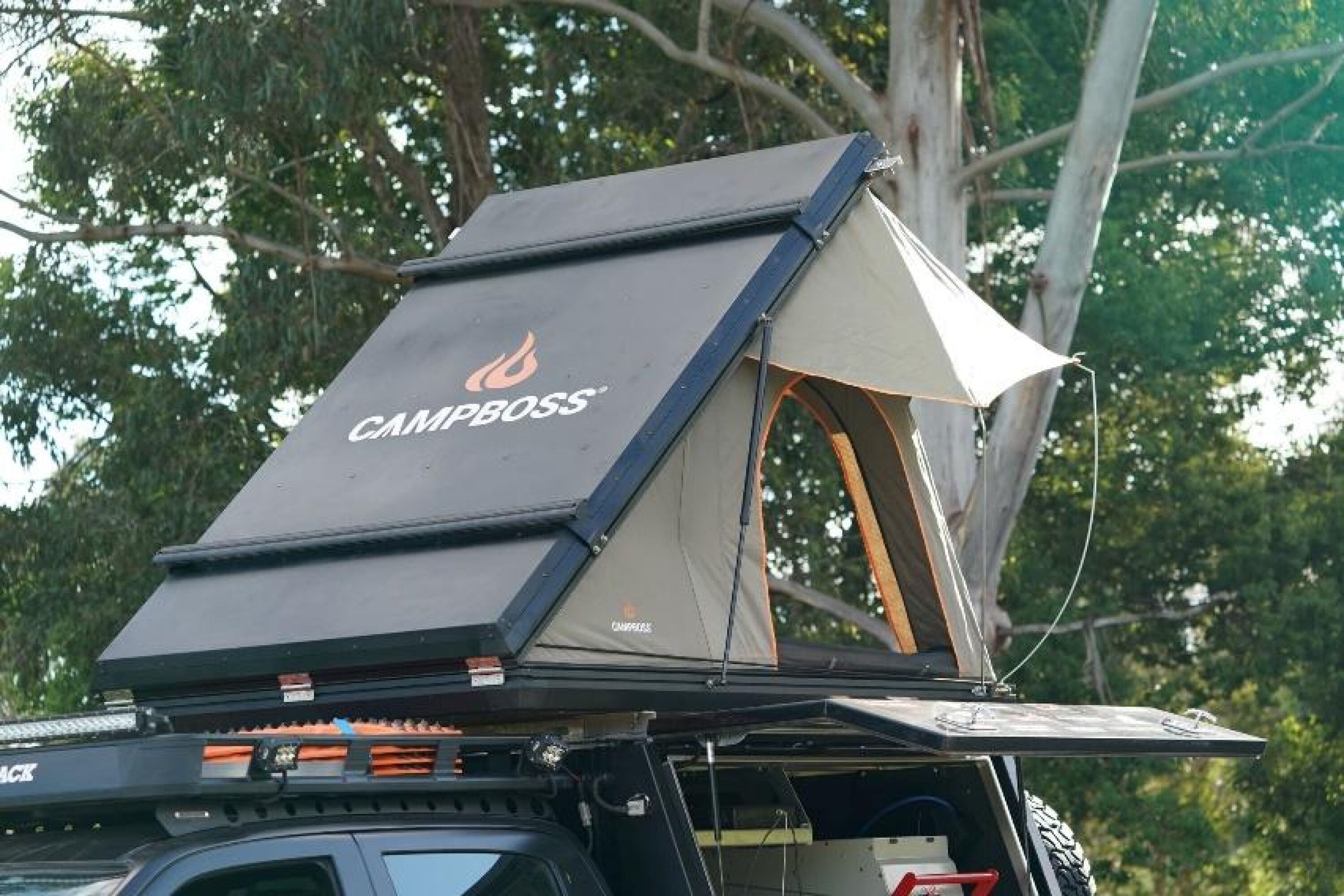
One of the big issues with metal shelled rooftops tents is condensation – cold metal and hot-water vapour in the form of your breath equals condensation.
Campboss has tackled this with a 20mm anti-condensation mat under the mattress and a carpet lined roof. So that will help keep things dry on the inside and 280gsm polycotton Ripstop canvas should stop water from the outside getting in.
1
This tent is ideal for lifted vehicles with a 2.6m-long ladder. The shell is aluminium to keep weight down and has been constructed in sections to allow replacement of sections in the event they are damaged. It’s got clever inclusions like USB charging outlets, LED strip lights and a clear pocket hanging from the roof for a tablet/iPad for those rainy-day movies.
The awning fly extends around the sides and front to allow open windows even when it rains. The tent is thick when closed, but this does mean you can leave your bedding in when closing.
Sleeping area
240cm (L) x 140cm (W) x 125cm (H)
Folded size
233cm (L) x 148cm (W) x 22cm (H)
Weight
83kg
Mattress
60mm foam
Warranty
N/A
Pros
Foam-filled honeycomb aluminium shell for insulation
Carpet on the roof and anti-condensation mat to reduce condensation issues common among metal hard-shell tents
Handy roof racks included
Cons
Warranty details are scarce
The 22cm thickness is one of the worst in this class, but does mean bedding can be left in
Basic foam mattress that relies on the condensation mat underneath for added comfort
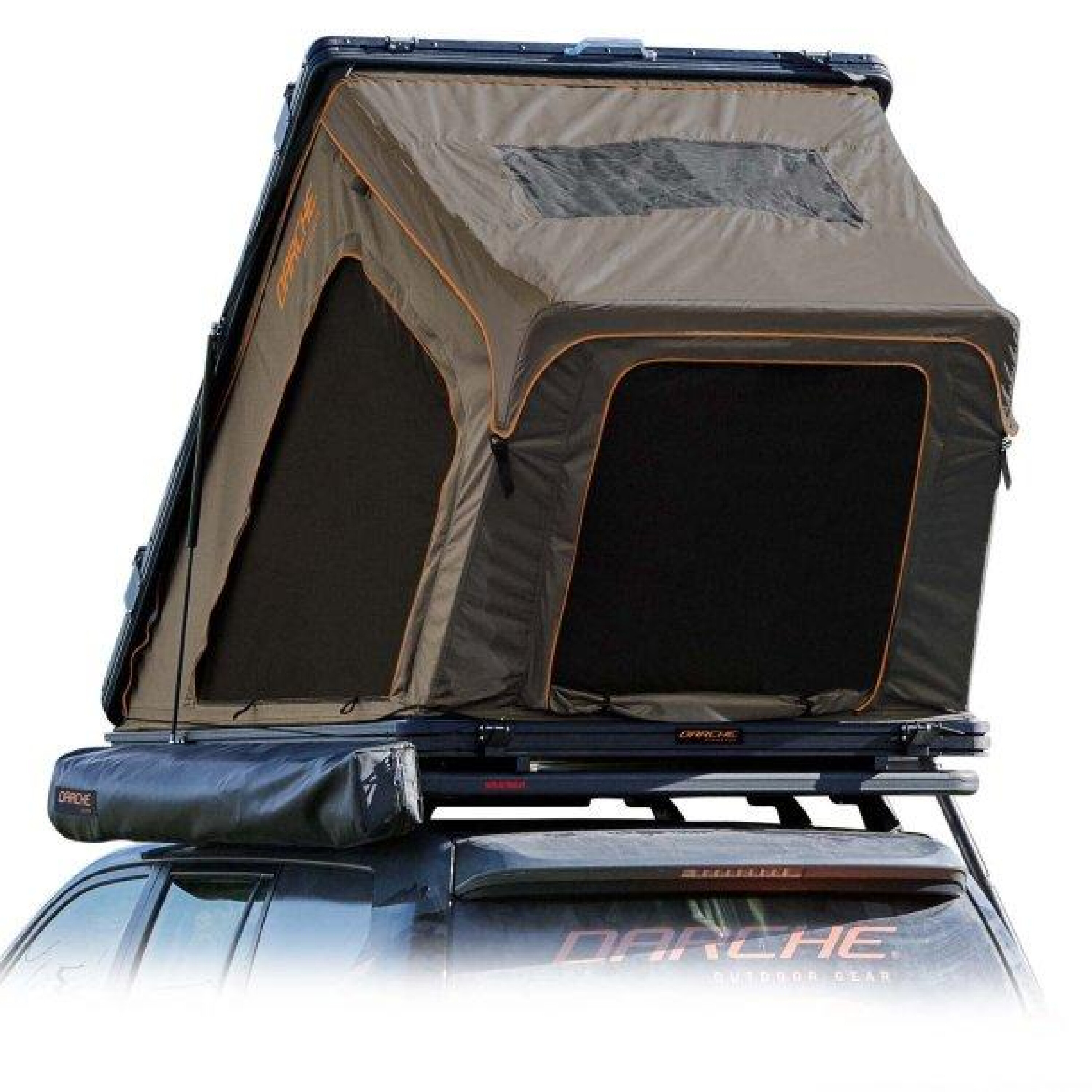
This one is all about the windows. The Darche Ridgeback has taken some cues from the Panorama range and includes massive side and rear windows plus a rooftop window.
1
The design is a little different to others in this category. Rather than a straight section of canvas joining the top and bottom of the tent at the rear, with an awning over the entry, this tent makes that awning space into internal space. This means sitting up inside is a lot more user friendly, as that rear wall slopes outwards rather than inwards and as a result, the inside of the tent will feel bigger.
The result of this design is no fly cover over windows meaning they need to stay closed in rain. To help condensation in this scenario, Darche has included a 10mm anti-condensation mat. The unique Ridgeback design of the shell is claimed to be more aerodynamic than competitors, which is super handy given that diesel is now priced per kidney rather than in dollars.
Sleeping area
200cm (L) x 130cm (W) x 144cm (H)
Folded size
216cm (L) x 136cm (W) x 21.5cm (H)
Weight
85kg
Mattress
55mm foam
Warranty
Three years
Pros
Those windows u2013 the ideal fine-weather tent
Aerodynamic design
Extra room inside
Cons
Not the best wet-weather set-up
Thinnest mattress in this class
Maximum mounting height of 2.2m is limiting for lifted vehicles
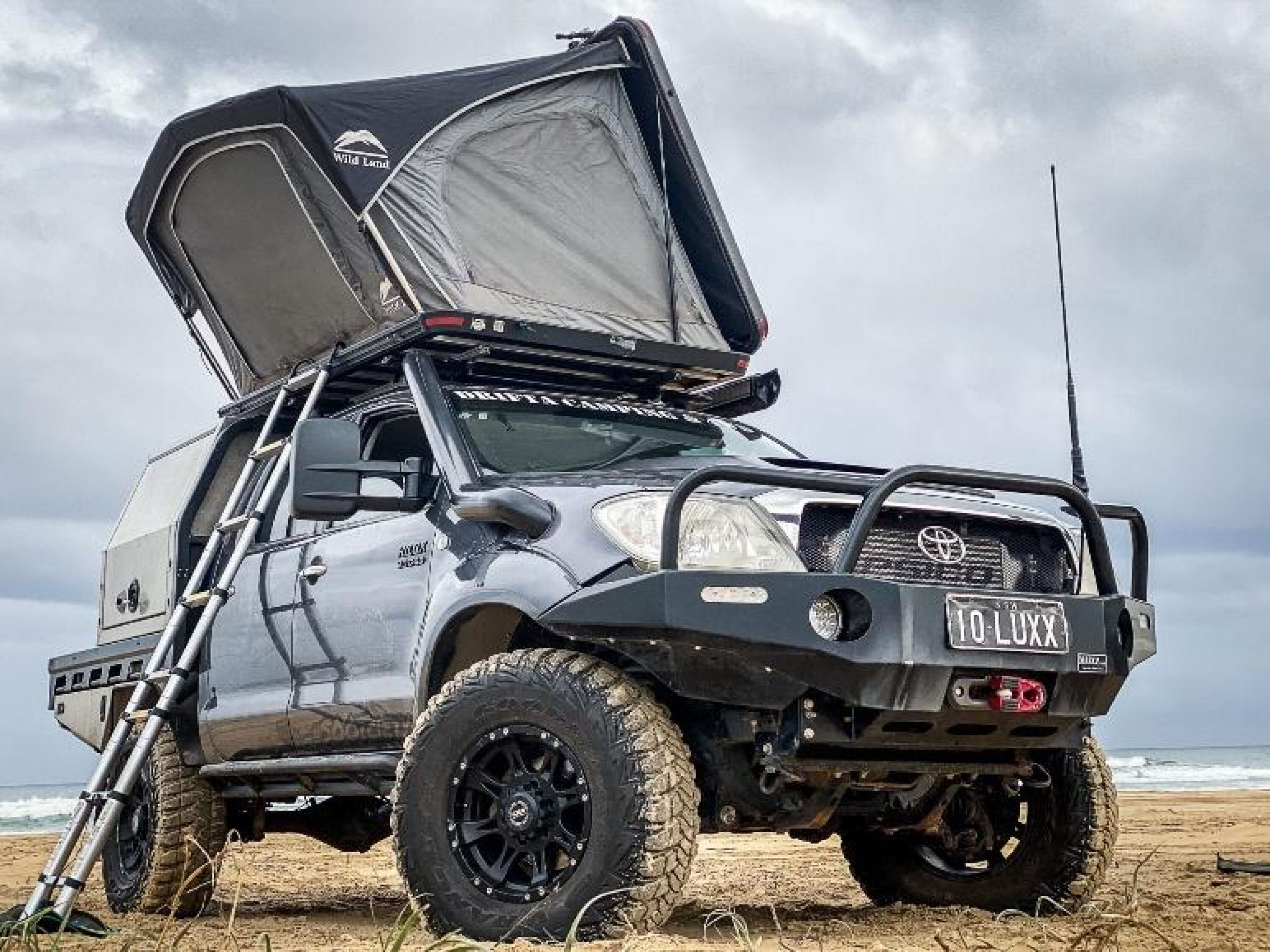
One for those who prefer side entry. This tent is hinged along the edge rather than the short edge, meaning it’s the only one set-up for side entry as a priority.
1
This tent comes with handy inclusions like roof racks, LED lighting and USB points inside the tent. At 56kg, it’s far and away the lightest tent in this class. Drifta achieves this by having a floor that consists of rails rather than a solid floor. It might seem a little unusual at first but does work well with the supplied ‘solid base’ mattress.
At only 16cm thick, this is also the thinnest tent in this class. Fantastic news for aerodynamics and the suffering hip pocket. The downside is that all bedding needs to be removed to close the tent. The tent comes with included roof racks and an internal LED light. The fly design allows airflow for those warmer nights and also means the main portion of canvas stays dry in a wet pack up.
Sleeping area
205cm (L) x 120cm (W) x 125cm (H)
Folded size
220cm (L) x 130cm (W) x 16cm (H)
Weight
56kg
Mattress
70mm foam
Warranty
Two years
Pros
The lightest tent in this class
Only 16cm thick packed is class leading
One of the cheapest in this class, representing great value
Cons
The floor design has questionable heat retention
Lack of cover over windows for rainy weather
The price for the class-leading thickness is that bedding must be removed to pack up
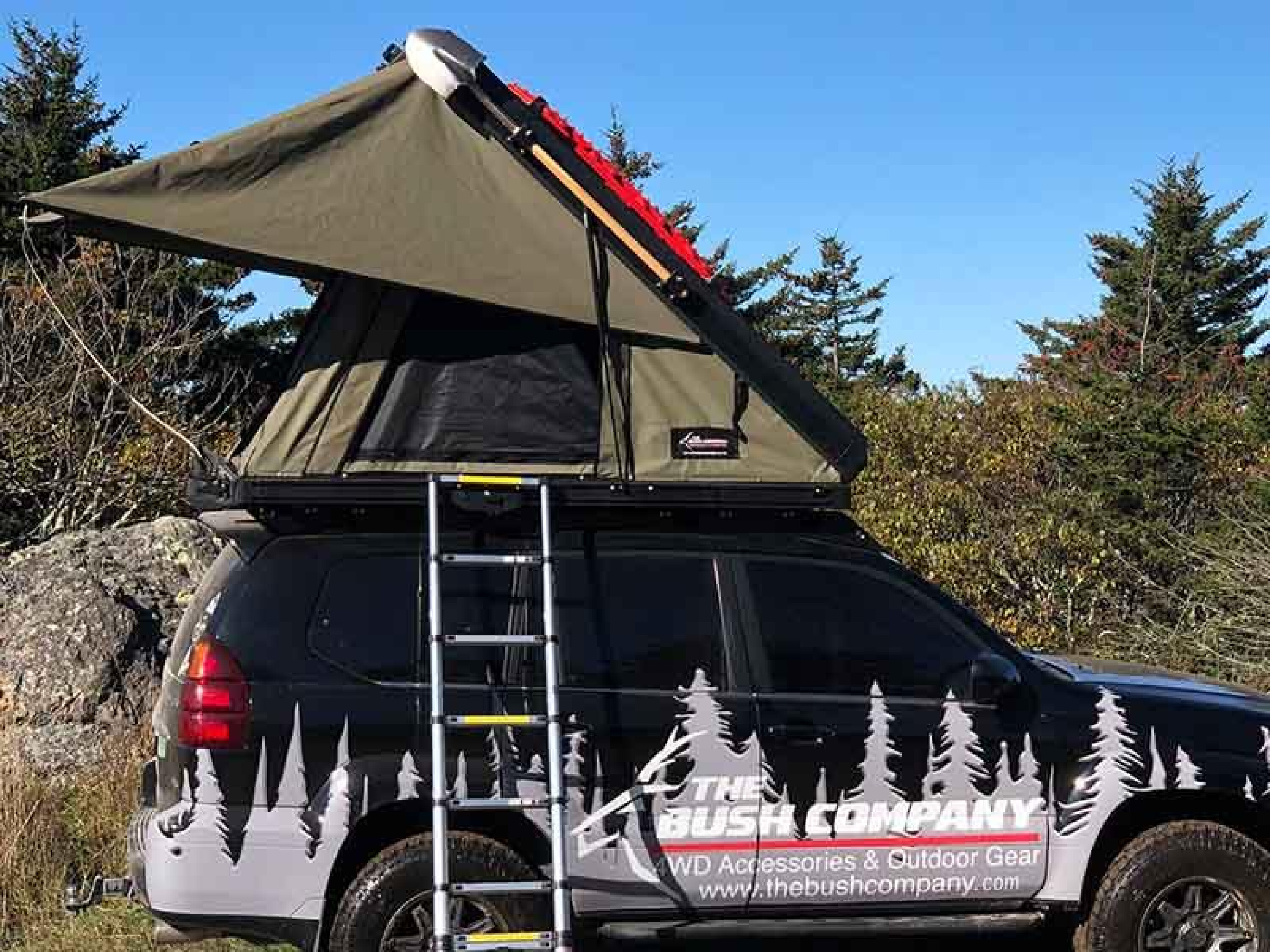
Straight out of the land where rooftop tents were originated: South Africa. The biggest and best awning in this class provides excellent coverage over both side and the rear window/entry.
1
This is a premium rooftop tent and is priced accordingly. With the biggest open height in class at 1.7m, the smaller humans among us would be able to stand in this tent, which is a very rare capability for a hard-shell rooftop tent. The tent comes prewired with a 50amp Anderson plug that when plugged into your vehicle provides USB and cigarette outlets plus LED lighting. The mattress is 80mm thick and includes two layers of foam: a high density layer, and a softer, comfort layer.
Another with a 2.6m ladder, meaning it’s well-suited to lifted vehicles. If cold climates are where you spend your camping, the dual-layer 310 polyester Ripstop acrylic infused mould and mildew resistant canvas should provide plenty of insulation and the steep angle of the roof/shell when open means it’s well suited to snow.
Sleeping area
213cm (L) x 128cm (W) x 170cm (H)
Folded size
225cm (L) x 140cm (W) x 17.5cm (H)
Weight
99kg
Mattress
80mm double layer foam
Warranty
Two years
Pros
Excellent awning means dry entry/exit
Additional air vent/window above the entry door
Quality build u2013 straight out of South Africa when people camp near lions
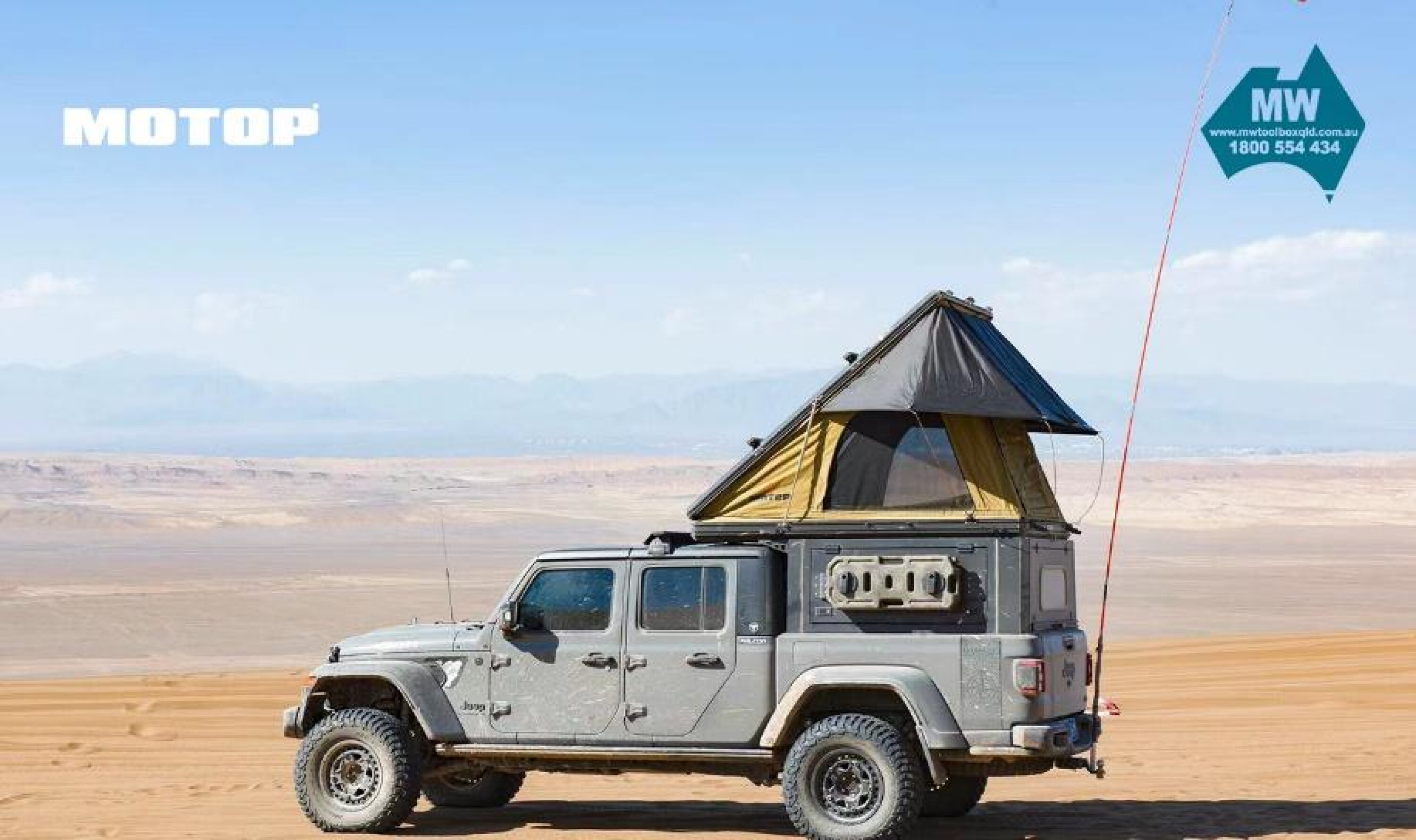
This rooftop tent sits in the middle of the class in terms of price but does offer a few high-end features.
The tent features a three-sided fly that covers all three windows and entry doors, and includes internal power for USB charging and lighting. The first few generations of the Motop tents came with a bunch of issues, including condensation and leaks, but it appears Motop has listened to its customers and gradually improved the design with each update.
1
Now at version 5, these issues are all but gone with revised tent-to-shell connections, new anti-condensation mat and roof lining/insulation. This tent comes in a slimline version and a ‘plus’ version. The slimline version is one of the thinnest in this class at only 16cm, with the obvious aerodynamic advantage and the disadvantage of limited space for bedding.
Motop has addressed this too, by providing a self-inflating mattress standard with the tent that both provides extra comfort over foam and allows some bedding to be stored in the tent when the mattress is deflated.
Sleeping area
217cm (L) x 120cm (W) x 145cm (H)
Folded size
225cm (L) x 143cm (W) x 16cm (H)
Weight
75kg
Mattress
60mm self-inflating
Warranty
One year
Pros
Relatively light for this category at only 75kg
Only 16cm thick is near top of class
Self-inflating mattress as standard
Cons
Only one-year warranty
Some reports that condensation issues may not have been fully resolved
No roof racks and other mounting accessories included
Sleeping in a canvas bag on the ground in lion country is like meat in a sausage roll.
So, what if we put the tent on top of the vehicle? Nice idea, but difficult to peg down, right? Instead, let’s design a tent that is specifically designed to be bolted on to a roof.
The early generations of rooftop tents were pretty basic, but in the last 20 years or so, the design and technology has come along in leaps and bounds. Soft-shell tents are the older of the currently available designs and still work really well.
Set up takes around 5 minutes and pack up usually around 10 minutes. That’s pretty good for a tent but it’s not going to compete with a swag or a fast touring tent. This is where hard-shell tents came in. Originally, these were designed with a top and bottom joined by canvas and the top simply lifted to create a flat roof. This design has been mostly phased out these days in favour of clamshell tents. These are hard-shell tents with a top and bottom that is hinged along one edge, meaning rather than the entire roof lifting up, only one side lifts to create a triangle tent.
These clamshell tents are a genuine competitor with the humble swag in terms of set up and pack up times. In fact, they’re probably even quicker than the fancy swags with poles that are on offer these days.
Value for money
A rooftop tent can cost from similar to a touring tent all the way up to camper trailer money. Entry-level tents are typically more cumbersome and slower to set up and pack up. Higher-end tents include internal power, quality build and awnings that allow open windows in rain.
Value for money really comes down to how you will use your rooftop tent. If you’re going to spend 6 months a year living on the road and sleeping in a rooftop tent, then we would thoroughly recommend splurging on a top-of-the-range tent and even then, probably upgrading the mattress. But if you’re only camping a week at Christmas and a long weekend at Easter, you’re probably going to want something a little more economical.
Beware the cheap price though. Not all rooftop tents are equal and you really do get what you pay for. There are cheap no-name options out there and they may well work, but in the same way a $20 festival tent will give you somewhere to sleep for a night. You wouldn’t take that same tent on a trip through the Simpson Desert and expect it to do the job.
A well-known and respected brand with a solid warranty and after-sales support should be highly valued when considering your purchase.
Weight
Vehicle roof load limits and roof rack load limits vary wildly from manufacturer to manufacturer, and even between models. It’s so important to keep within those limits. Failure to do so not only results in broken racks and ruined trips, but it can also be downright dangerous. In our remote area travels, we’ve come across plenty of vehicles on their sides with a big, heavy rooftop tent still attached to the roof. For this reason, knowing these limits and purchasing a tent that fits within those limits is vital.
Your average dual-cab ute will have a roof load rating of around 80kg. Add a roof rack that weighs say 10kg and you’ve only got 70kg capacity left. Add a 65kg rooftop tent and some bedding and you’re maxed out. A full sized wagon might have a roof load rating of around 100kg.
The soft-shell options in this buyers’ guide vary from 43kg to 87kg meaning the heavier options won’t suit a dual-cab ute but the remainder of soft-shell options will suit most mounting methods on most vehicles. The hard-shell options vary from 56kg to 99kg. The only realistic option for the heavier tents in this category is tray mounting of some type, such as heavy-duty ladder racks or heavy-duty canopies.
Weight not only dictates the type of tent that will suit your set-up, but also which specific tent would best suit your vehicle.
Speed of set up and pack up
Most soft-shell tents can be set up within around 5 minutes. It’s basically a case of remove the cover, fold out the tent, erect any internal poles and peg down your guide ropes. Pack up takes a little longer, mostly due to trying to squeeze all the canvas back between the base and top plates, and get the cover on and zipped up. You will often see people packing up a soft-shell tent climbing all over the roof to reach that zipper.
A hard-shell rooftop tent can be set up in as little as 90 seconds and generally packed up in a few minutes. With the clamshell design, it’s typically release a couple of latches, push the roof up and erect any fly poles or internal poles.
Now every camp set-up takes time so is the hard-shell’s increase in speed worth it for the extra money? Well speaking from personal experience, we can say 100 per cent yes. With our photographers, their nights often go something like this. Go chasing a sunset, roll into camp at around 7 to 8pm, pop the tent and have a few hours sleep; wake up and pack up to go chasing a Milky Way image; back to bed around 2am (pop the tent again) before packing up at 4am to go chase a sunrise. On a night like that, the difference between 90 seconds to 5 minutes to set up is, well … night and day.
Now understand we are a fair way out there and the average punter isn’t going to set up and pack up 3 times in a night, but if you’re doing it every day on a long trip that extra speed becomes so valuable.
Functionality/Features
Now in dry weather a rooftop tent is basically a way to carry a mattress around easily. That’s a pretty basic function. But when the weather turns and the tent becomes your only shelter, you’re going to love features like awnings that allow open windows, USB charging, clear pockets to hang your iPad/tablet and watch a movie.
As you could imagine, the cheaper soft-shell tents often lack a lot of premium features, as do the lower-end hard-shell tents (did we say you get what you pay for yet?). Again, you need to have a think about what you will be using the tent for here. Only ever camp on weekend boys’ trips? You’re probably not going to find yourself watching an iPad in the tent. Doing the big lap? The ability to escape to a movie on the iPad is likely to be highly valued.
How to avoid being ripped off
As mentioned previously, there’s plenty of no-name options out there that might seem like good value until something goes wrong and you can’t get parts and after-sales support is just a pipedream. Cheap fixings, mounts and canvas will ruin a trip when things go wrong. A leaky tent or one that won’t close properly will quickly get frustrating.
Look to reputable manufacturers with a good warranty to avoid these issues. Be sure to check the warranty fine print before pressing go on a purchase, as some manufacturers will cover the frame for a period and the canvas for a different period.
4X4 Australia has been reviewing four-wheel drive vehicles, aftermarket products and camping gear for more than 40 years. When looking for the best swags in Australia there are some things that are essential to ensure you sleep soundly under the stars.
When we compared each of the swags in the list with hundreds out there we looked at the size, weight, durability and price. We also searched for additional features that make these swags stand out from the rest.
We looked at hundreds of user reviews and drew on our own experience sleeping in swags to make sure our recommendations are for the best on the market.
Disclosure: When you buy through our links, we may earn a commission. We also include products that we do not earn a commission from.
It’s often a somewhat strained conversation as campers and fellow four-wheel drivers get together and, over a beer or two, begin discussing the merits and disadvantages of solar panels compared to generators.
“I hate bloody noisy generators,” is often heard, while those on the other side of the fence reckon, “Solar panels are a bloody pain to use.”
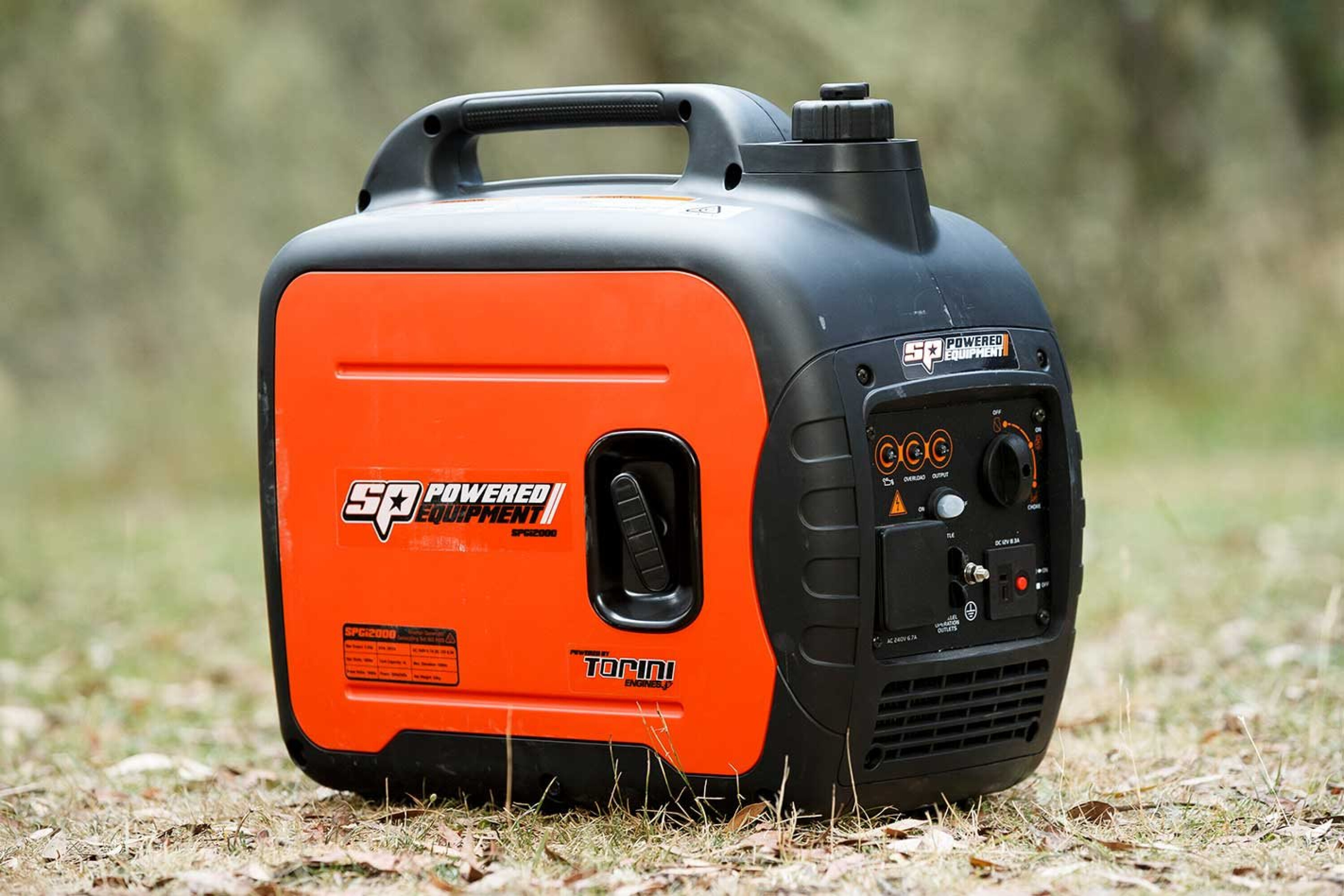
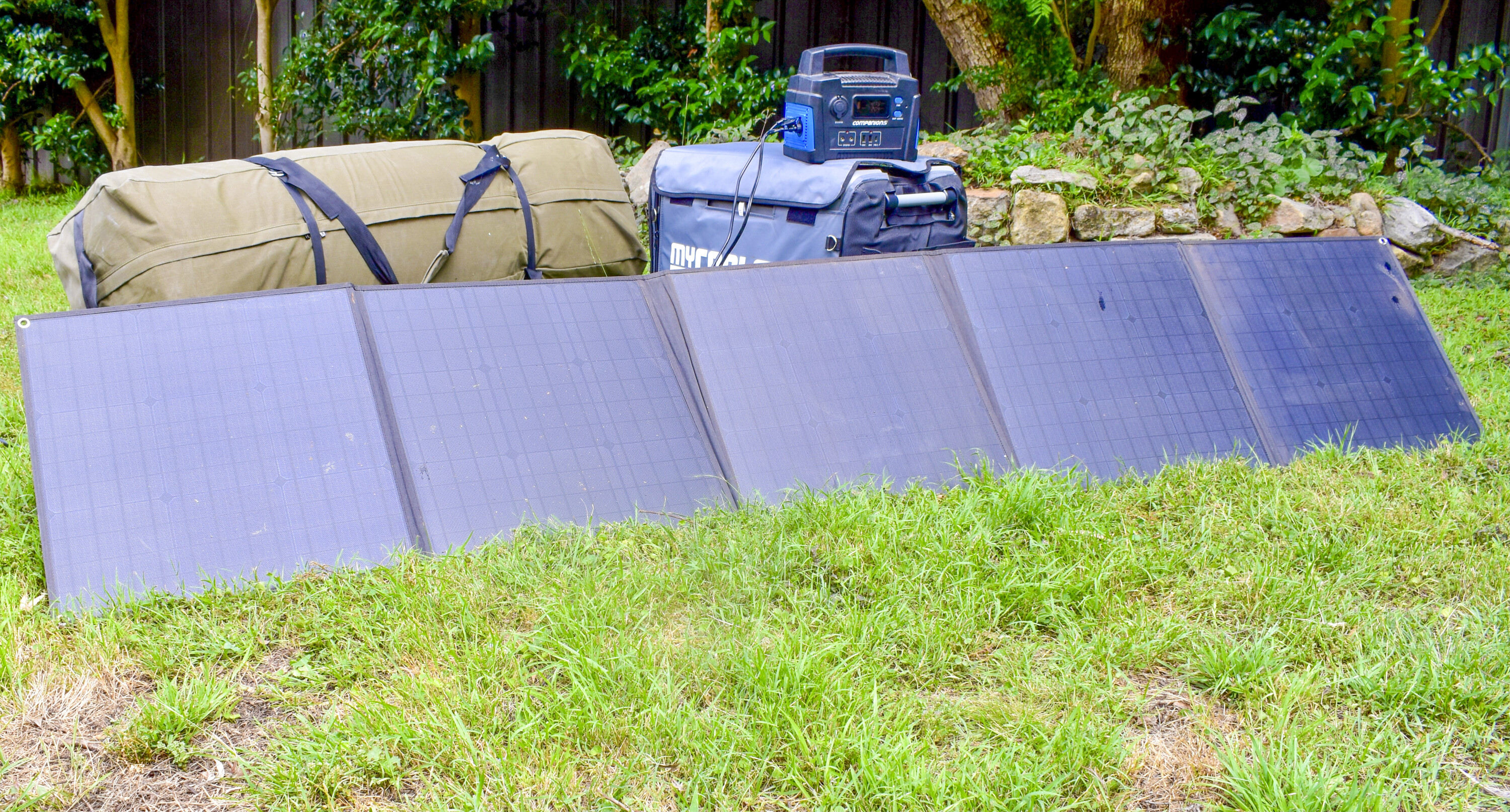
On many trips I carry and use both. My camper has a 180W solid solar panel on the roof, and I always carry a folding solar panel as well. Backing those panels up, I have a couple of full sine-wave inverters: an 1800W in the Patrol and another smaller one in the camper. Then, on the trips where we’ll be staying camped in the one spot for a while, or need a lot of 240V AC power, I throw in my Honda generator.
On a trip to the Ningaloo Coast, I was glad I had both. For the 23 days we camped on the beach, the sun only shone occasionally; it pelted rain for two days and drizzled for a few more. Over a few days, all we had was very overcast skies where we didn’t see the sun at all.
It was pretty warm to boot, as you’d expect in the north-west of Western Australia. Our two fridges were sucking a bit of power and, while there were other power drains, it’s the fridges that suck the most from the batteries.
Needless to say, the solar panels weren’t producing much, and over the course of a few weeks we resorted to running the generator for a few hours each day just to keep the batteries at a level where the fridges could run, the meat and fish remain frozen, the salad crisp and the beer cold.
1
It doesn’t take much for a solar panel to produce way less than what it is rated to produce. A cloudy sky, a shadow falling across the panel, or just the panel not pointing directly at the sun will see a significant decrease in the amount of power being produced. They are some of the reasons I’m not a great lover of a panel on the roof of a camper. Still, having to shift a mobile panel every few hours is also a bit of a pain.
I wasn’t the only one having to shuffle the panels around and resort to a generator. Nearly every camp spread along the coast had their generators running for at least a few hours each day, just to keep their fridges and freezers cold.
Of course, generators also have drawbacks. You have to carry fuel for them, and every now and again they need a bit of a service; although, with my trusty Honda that is just an oil change (300ml) and a check of the air-cleaner element.
1
As far as noise is concerned, today’s generators are pretty darn quiet and run on eco-mode – and they are quieter again – as that’s all that’s really needed to keep batteries charged.
I don’t take too much notice of people who complain about generators these days. Sure, I use the solar panels as the first go-to, but if I need more power, especially 240V AC power, I’ll run the generator without hesitation. Still, I won’t run it at night when any noise carries and people are looking for peace and solitude, and even I get a bit grumpy when somebody runs their generator until late in the night.
Perhaps I should be more forgiving, or maybe others who use a generator should be more considerate!
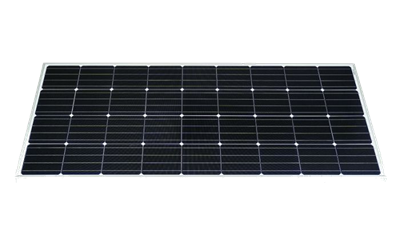
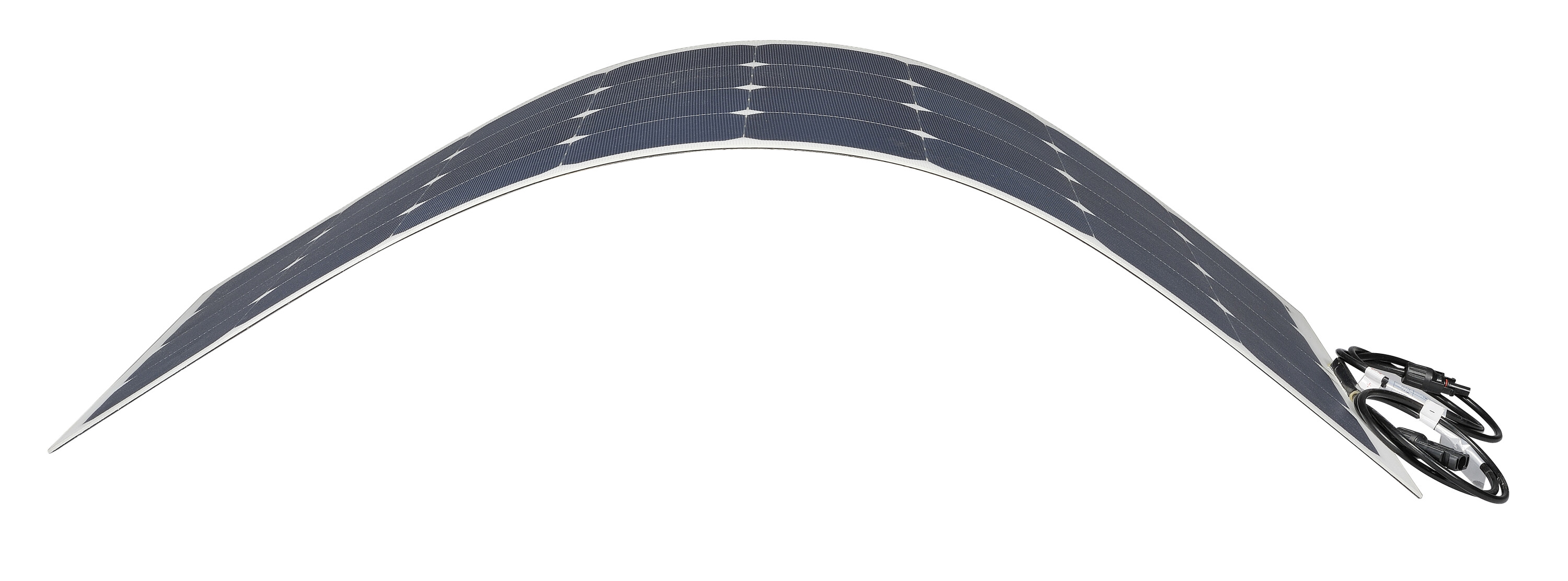
Projecta has unveiled a functional new range of semi-flexible solar panels, offering increased versatility for a range of outdoor adventure activities where it’s crucial to travel light and compact.
The new 12V Semi-Flexible Solar Panels are available in two models, a 12V 100W (SPF100-MC4) unit which is perfect to service small and medium appliances, and a larger 12V 180W variant (SPF180-MC4) which is ideal for charging the battery banks servicing multiple or large appliances.
Both models feature high-efficiency monocrystalline solar cells that more effectively convert sunlight to power, allowing the panels to remain compact at 1035mm x 520mm x 3mm for the SPF100-MC4 and 1520mm x 680mm x 3mm for the SPF180-MC4 while still providing strong output.
Another key benefit of the panels is the 400mm maximum bending radius, which makes them suitable for mounting to a greater range of surfaces, for added versatility whether fitting to the caravan, boat, motorhome, four-wheel drive, or other vehicle.
“The new semi-flexible solar panels from Projecta are designed for easy mounting on surfaces that have a slight contour or curve, providing owners of campervans, caravans and motorhomes, greater fitment options,” said Projecta’s senior brand manager, James Pearson.
“And with their inherently tough engineering and design, owners can also be confident of long-lasting performance in our demanding local conditions, as well as super-efficient power generation thanks to the monocrystalline technology.”
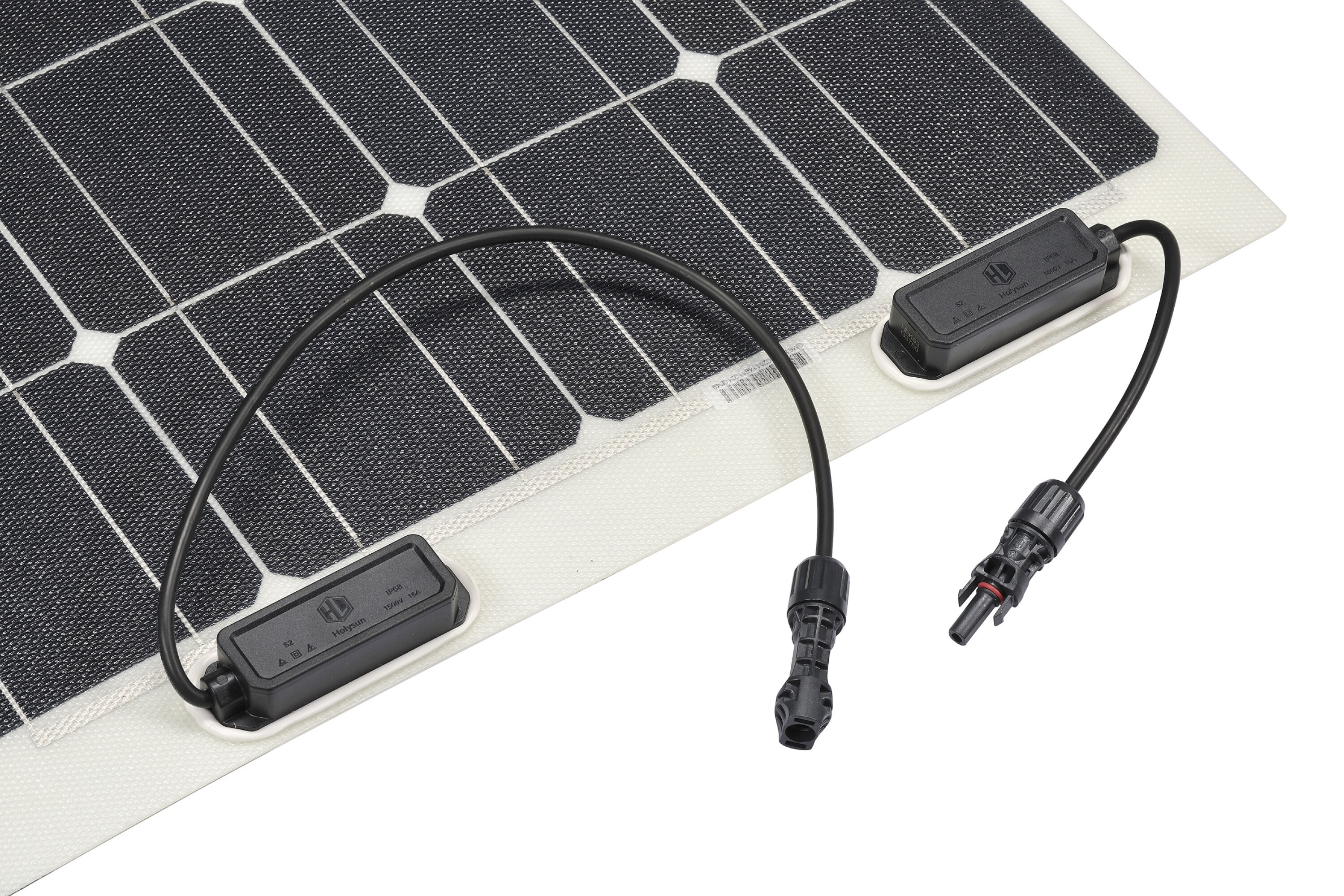
For users requiring a more permanent installation, the panels come with a durable rubber adhesive backing, allowing owners to mount them firmly and securely – when installed correctly, the panels should stay in place for over 20 years. The panels are lightweight, 2kg and 3.5kg respectively, which also makes them easy to handle when fitting, while barely adding to the weight of the vehicle. For ease of use, the range is pre-fitted with MC4-type connectors.
The Semi-Flexible Solar Panel range is designed to complement Projecta’s popular range of DC chargers, solar controllers and lithium batteries, and help provide a complete off-the-grid solution on the road.
Warranty and pricing
The range is backed by a five-year warranty for at least 80-per-cent output and a two-year warranty for materials and workmanship.
The Semi-Flexible Solar Panel range is available from leading caravanning, camping and four-wheel-drive outlets nationwide for recommended retail prices of $770 (SPF100-MC4) and $1144 (SPF180-MC4).
Here it is: The 2025 Kia Tasman ute has been spied in production form for the first time.
South Korean content creator Woopa TV[↗] spotted a camouflaged example of the brand’s vital new ute in a parking space.
While previous development mules of the Kia Tasman – named after the sea between Australia and New Zealand – were modified versions of the body-on-frame Mohave large SUV with a tray, this is the first time we’ve seen the Tasman with a production look.
It appears to follow a similar design to the latest EV9, Sorento, Carnival, Picanto and the US-market Telluride with vertical headlights and a wide grille.
Inside, expect the Tasman to receive a similar look to Kia’s latest models with a ‘panoramic curved’ display for the instrument cluster and infotainment system.
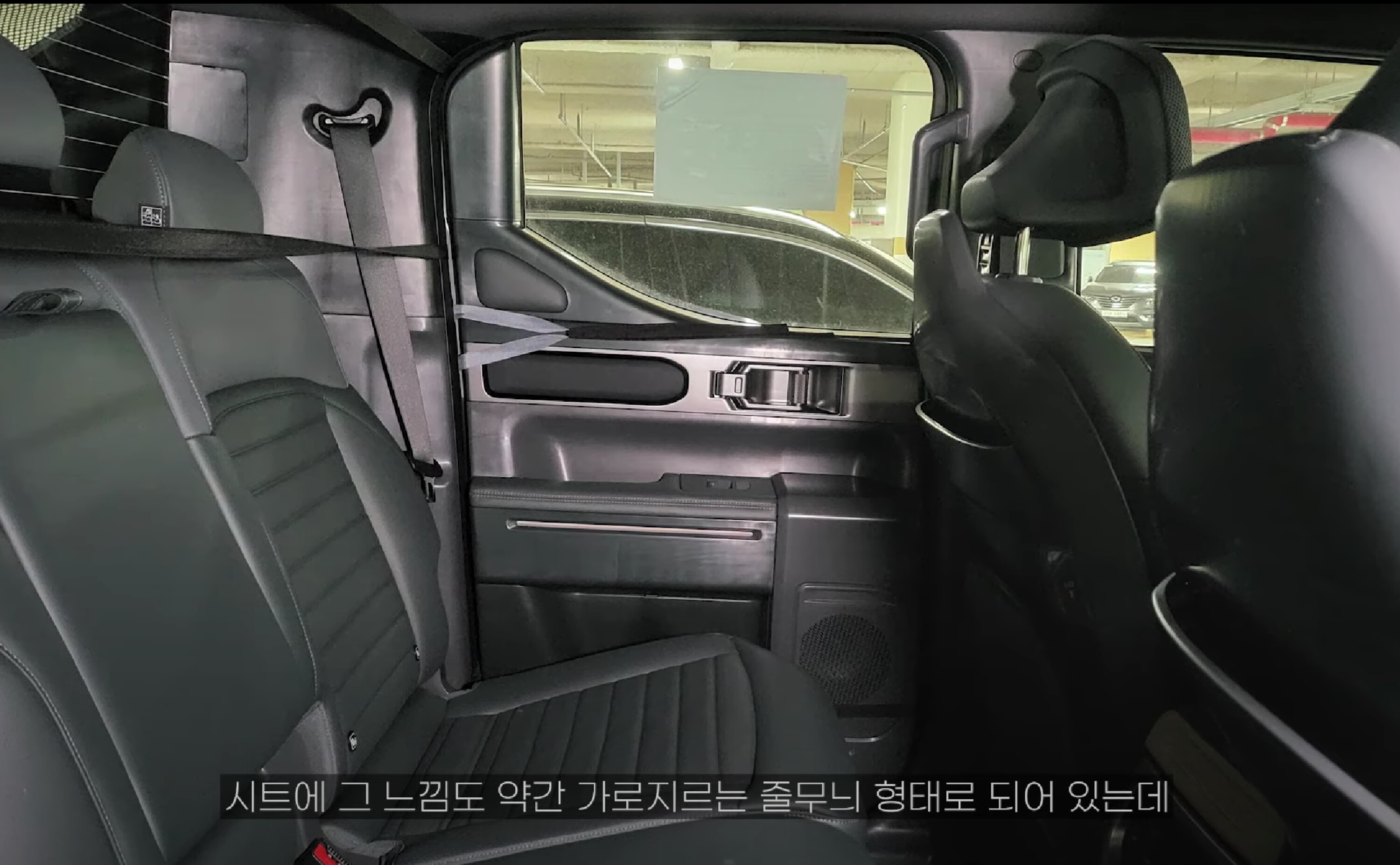
Visible components in the camouflaged vehicle include a traditional gear shifter, a selector for two-wheel-drive, manual four-wheel-drive, automatic four-wheel-drive and low-range, another control that appears to adjust the drive modes, and an engine start/stop button on the centre console. It also has mesh front headrests similar to the EV9 electric SUV.
The Tasman will feature a built-in step within the rear bumper to access the tub, like the Ford Ranger.
Due to launch in Australia in 2025, the Tasman – based on a newly developed body-on-frame platform with leaf-spring rear suspension – will compete against the popular Ford Ranger, Toyota HiLux and Isuzu D-Max with a sales target of around 20,000 units annually.
“We said at the beginning that, with where we are taking the brand and where we’ve developed the dealer network, we think we could capture 10 per cent of that LCV market,” said Kia Australia chief executive officer Damien Meredith.
Adding around 20,000 cars to its bottom line would push Kia into contention as the second-biggest car brand in Australia, overtaking Mazda, Ford and Hyundai.
While the Tasman will also be sold in the Middle East and South Africa, Australia has played a dominant role in forming the base specifications of the new ute range.
3
“A substantial amount,” says Kia Australia’s GM of product planning, Roland Rivero, when asked how much input Australia will have.
“A lot of work’s being done to, as much as possible, influence the development to suit our market. Australia’s position is being seen as a very important one.”
The 2025 Kia Tasman is expected to debut by the end of this year ahead of its Australian launch sometime next year.
It’s not surprising that as 4×4 suspension systems are developed to provide improved performance on long-haul trips that it becomes more complicated for those wishing to modify them for better off-road performance.
You may have heard the term ‘diff drop’ before, and this modification is gaining in popularity as a must-have to ensure your 4×4 goes the distance, but there’s still a lot of confusion about what it actually is, what it does and whether you need it. After all, isn’t decreasing ground clearance a bad thing in an off-road vehicle?
By the end of this yarn you’ll be able to decide for yourself if your 4×4 needs a diff drop, but, more importantly, you’ll have a solid understanding of the inner workings of your vehicle’s driveline.
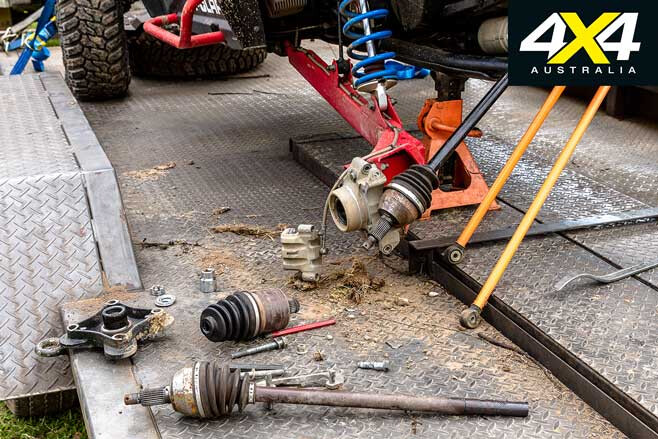
Before we get stuck into how to save your CV joints, it’s important to take a step back and look at what a CV joint actually does, to gain an understanding of the stresses placed on them.
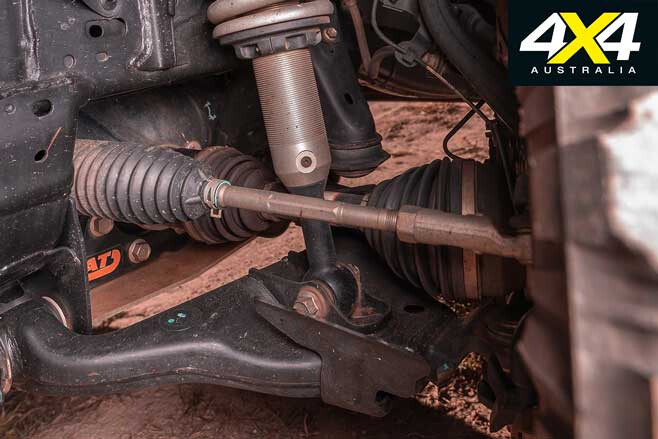
Unless you’re travelling the country in a prototype Tesla 4×4, your engine is a long way away from the wheels it needs to drive. There’s a transfer case and transmission thrown into the mix as well, but the whole lot is joined together by shafts, gears and, in some cases, chains. The problem is none of those things are particularly good at turning corners, or allowing any movement at all, actually.
1
For a good few thousand years we’ve been using different variations of a universal joint to do just that; essentially two hinges at 90 degrees to each other. The specifics are a little more complicated but the idea is all that matters for now. In a straight line the rotation is perfect, but as the angle becomes greater the rotation of the joint causes a sort of pulsing as the hinges fight against each other.
A CV (Constant Velocity) joint aims to fix that pulsing to give smoother drive and a bigger range of operation before the whole lot binds. There’s a variety of ways CV joints can achieve this, but the most common arrangement is a combination of a Tripod joint and a Rzeppa joint.
1
The first is three large bearings that go into a matching cup with grooves; their angle of operation isn’t real crash hot, but they’re there to allow the axle to ‘plunge’ in and out as the suspension cycles.
The Rzeppa joint is typically found on the wheel side of an axle and is a series of ball bearings inside a cage attached to the driveshaft, with a large cage with matching grooves allowing the angular movement. They allow more angle than a Tripod joint but, as they’re constructed of smaller components, these are typically where you’ll find a failure.
As great as CV joints are, they have their limitations; and unless we all start converting our 4x4s to hydraulic drive, anything we replace CV joints with is going to have similar limitations.
As they run metal on metal, CV joints require lubrication, typically moly grease held in place with a rubber boot. If the boot snags a stick or rubs a hole the grease can spray out causing premature wear, but that’s more of an issue for long-distance travellers or road-going vehicles.
1
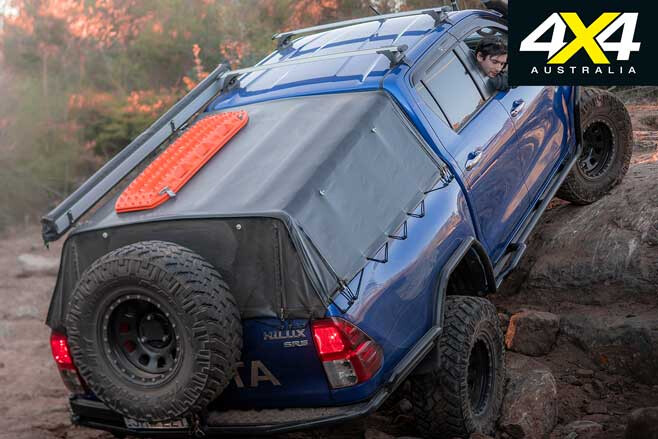
Those 4x4s driven in off-road anger will typically suffer CV joint failure through shock loading, but there are a few modifications that will make those failures more likely. Binding a CV joint is when the joint is pushed past its maximum working angle and it physically locks up.
Steering stops and suspension bump stops somewhat limit this from happening, but having a wheel at full droop and full steering angle will make it susceptible to binding issues. Larger tyres and heavier loads can also amplify the effects of shock loading.
Contrary to popular belief, CV joints aren’t just an issue on IFS 4x4s; live-axle rigs will typically have them on steering axles to allow the front wheels to pivot.
Live-axle CV joints are typically smaller and weaker than IFS offerings, but as they’re operating on a smaller angle and only in one direction they tend to hold up better.
1
The issue with an IFS is the vertical distance between the diff centre and the front hubs. As the diff centre is physically bolted to the chassis there are already huge angles to contend with to get drive down through the suspension and to the front wheels. Lifting the suspension not only increases that angle, it also starts pushing the suspension geometry and the CV joints to their limitations.
A diff drop works by modifying the mounting points of the diff and physically lowering it away from the chassis. As the suspension isn’t affected the end result is less angle of operation in the CV joints as the diff and hubs are closer in alignment again. It’s a relatively simple principal that can easily counter some of the negative effects of lifting your 4×4.
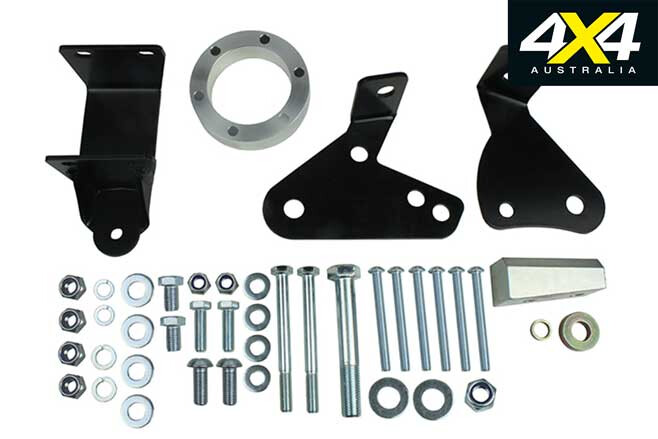
There are a variety of diff-drop kits on the market and the right one for you isn’t necessarily the most expensive, but will depend on what your vehicle needs and what type of driving you do with it. They can typically be grouped into two categories.
Spacer Drop
These are exactly as the name implies; a simple spacer that goes between the existing mount and the frame. They’re simple so are reasonably cost effective, but they can’t always do the job correctly depending on how the diff is mounted. If they’re only able to be used at one end they can physically roll the front diff in its mounts, putting the front driveshaft on an angle. If it’s from a competent supplier it’s safe to assume it’s not an issue in your specific type of 4×4, but eBay jobs are a gamble.
1
Bracket Drop
These are far more extensive than a simple spacer and typically bear a price accordingly, but they’re also typically superior in a few different ways. Firstly, in most cases, they’ll be physically stronger than the stock mounts, beefing up the diff housing in the process and reducing flex under load. Secondly, they’re typically more comprehensive so can correct all angles. Again, if sourced from a reputable supplier it’s a safe assumption it will do the job, whereas cheap offerings could be the bargain of the year or a disaster waiting to happen.
In some vehicles, bracket drops can require cutting of the original mounts which will require certification to be legal, so this should be taken into consideration.
Of course, there’s no such thing as a free lunch and lowering your diff centre does come with some drawbacks; although, it’s up to you to decide if they’re something that’ll actually affect you.
The first is you’re not actually changing how much angle the CV joints can tolerate, you’re just changing where they’re happy. Dropping the diff centre 50mm means you can now let your suspension safely droop another 50mm, but also means you’ll lose 50mm in compression. If you’re running a trophy truck in the Finke Desert Race this may concern you, but for us mortals it won’t be an issue as the factory suspension geometry won’t cycle that far.
1
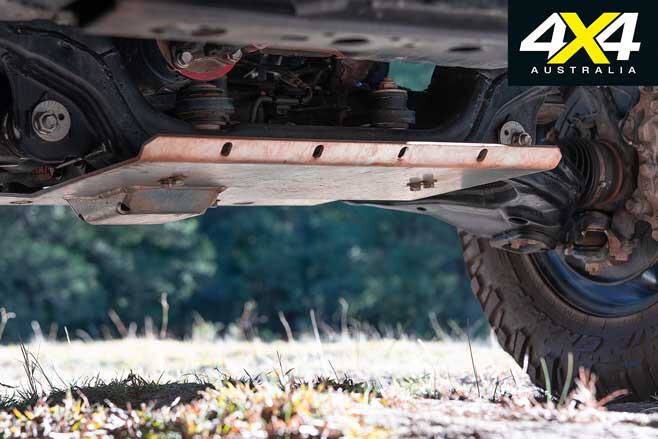
You’ll need to factor in either a new or modified bash plate as the change in diff position will most likely foul the diff housing on this.
The other concern is ground clearance. By physically lowering the diff centre 40mm, it’s now 40mm closer to the ground. That doesn’t mean you’ll lose 40mm of clearance, though. The diff centre itself normally not only sits above the bash plate but also above the stock cross-members, sometimes by a good 30mm. By the time you run a modified bash plate the loss in ground clearance can be as little as 20 to 30mm.
While diff drops are fantastic, they won’t resolve every issue that can arise from a suspension lift.
If you’re lifting your 4×4 to the point where a diff drop is required, chances are you’re not only driving difficult tracks but will also require additional modifications to make things work smoothly.
1
Replacement of upper control arms is something we’ve covered and is a near must-have for any IFS lift over 50mm. If you’re still breaking CV joints there are other things to consider. The first is modified bump stops to limit suspension travel in either direction. Aftermarket CV joints are also available from companies like Longfield and RCV, and these use stronger materials that allow for increased working angles.
Finally, upgraded diff mounts may be worth considering. If the stock mounts aren’t strong enough and allow the diff to flex, it can increase the operating angle of the CV causing it to bind or overextend.
Yes. If you have an independent 4×4 that’s lifted two inches or more, then the positives far outweigh any negatives.
You’ll gain an increase in driveline strength, more confidence in your drivetrain in difficult terrain, and all for an insignificant loss in ground clearance. Considering an installed price is similar to a set of OEM CVs, a diff drop will pay for itself the first time it saves your backside.
You have just purchased the four-wheel drive you have been dreaming about.
Now you can head to a 4WD shop and load up your rig with all the accessories that will help you in the adventures that lie ahead. Then it’s time to hook up the caravan and leave the hustle and bustle of your previous life behind, without a care in the world.
Or perhaps you’re a tradie with a life’s worth of tools in the back of the dual-cab ute, a rig that doubles as your young family’s adventure machine on weekends. But are you compromising your family’s safety by using an overloaded vehicle?
It’s all too easy to overload your rig with accessories and gear that, if an accident happens, may cause your insurance company to leave you high and dry and deny your claim.
In the words of bushcraft and survival expert Mors Kochanski: “The more you know, the less you carry.”
Prior to taking your new ride on its first big jaunt, it has become customary to head to a 4WD accessory shop and throw the whole cattle dog (and your credit card) at your new machine.
When selecting the necessary bullbar/winch combination, or which rear drawer set-up to install, does the weight of the accessories enter the decision-making process? It certainly should. For the same reasons Formula 1 racecar engineers consider weight and – perhaps more crucially – the placement of that weight, you should consider how the extra weight you’re placing on the vehicle affects overall weight and, importantly, whether it alters the 4×4’s handling.
To get the case study underway, we have chosen two popular 4x4s – Toyota’s 200 Series Land Cruiser and Mazda’s BT-50 (both MY16) – and added typical touring 4WD accessories. Let’s see how they stack up.
LC200 vs BT-50
MODEL
LAND CRUISER 200
BT-50
Kerb weight
2740kg
2118kg
GVM
3350kg
3200kg
GCM
6850kg
6000kg
Towing capacity
350/3500kg
350/3500kg
Front axle load
1630kg
1480kg
Rear axle load
1950kg
1850kg
Loaded with accessories
EQUIPMENT
LAND CRUISER 200
BT-50
Bullbar/lights/winch
100kg
100kg
Roof rack
50kg
40kg
Canopy
N/A
80kg
Hi-Lift/shovel
20kg
20kg
Rear bar dual carrier
80kg
80kg
Rear drawers
40kg
50kg
Fridge/slide
80kg
80kg
Long-range tank
60kg
50kg
Additional fuel
135kg
70kg
Accessory battery
30kg
30kg
Additional wheel
15kg
15kg
LT tyres
55kg
5.5kg
TOTAL ACCESSORIES
665kg
670kg
Kerb weight
2740kg
2118kg
GCM
3405kg
3200kg
GVM
3350kg
-41.2kg
LOAD CAPACITY
+55kg
-412kg
As you can see in the tables above, the LandCruiser is already overweight before you even start to pack the essential items like bacon and beer, or even passengers.
It is important not to underestimate how much extra stuff weighs. Extra weight is your enemy, and any way you can reduce the load (regardless of the GVM upgrade) the better. You will improve fuel economy, reduce maintenance loads, and give the vehicle and its occupants a fighting chance to better enjoy this great country.
For instance, if you go on two trips and something doesn’t get used, get rid of it – unless the piece of equipment is safety-related, such as a first-aid kit or a fire extinguisher.
The next time you’re at a ten-pin bowling alley, grab a couple of the bowling balls – one for each hand – and spin around in a circle with your arms outstretched.
Then try the same thing with both bowling balls held close to your body. Not only will this provide a spectacle for onlookers, but you’ll now have a practical appreciation of the ‘moment of inertia’.
The further away the weight is from the axis of rotation, the harder it is to start and stop. It’s no different cornering in your accessorised 4WD, with most of the weight added to each end of your vehicle. Admittedly, a bullbar mounted between the front and back seats probably isn’t going to be of much use.
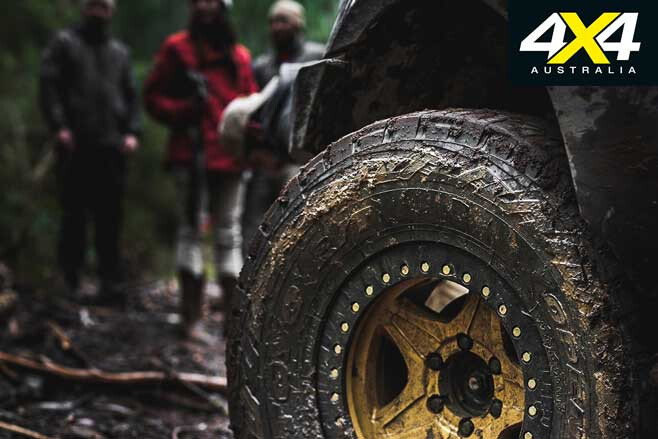
The same principle can be applied to 4WD LT (Light Truck) tyres. These tyres will not only be heavier in the sidewall construction, but also a lot thicker and heavier in the crown and shoulder. The added force required to accelerate and brake the additional weight will increase fuel consumption, brake pad and rotor wear, and decrease the service life of components such as wheel bearings.
Adding weight to each end of the vehicle will make a 4×4 pitch more under braking and acceleration, as well as amplify bodyroll. This can actually blow out your stopping distance under heavy braking, as the front brakes are being asked to handle more of the braking duties.
If you’re replacing one of the two tanks in your 4WD with a long-range tank, replace the tank located between the wheels first, as the added weight will have less effect on handling.
1
Don’t forget that increasing the height of the centre of gravity won’t help your on-road handling characteristics at all. It will increase bodyroll and extend stopping distances under heavy braking, due to pitching and the related load transfer to the front.
If you have the choice of a quality aluminium or a steel roof rack, the aluminium rack could save you up to 20kg, and when loading vehicles for extended outback touring, the roof rack isn’t the place for heavy items. I’ve seen more than 100 litres of fuel and spare tyres on roof racks. You certainly wouldn’t want to drive an off-camber track like that.
In most 4WDs, the majority of the added weight from accessories and load will be in the rear of the vehicle. In the case of the Toyota 200-series, there’s an additional 300kg with a full 180-litre long-range diesel tank, twin-wheel carrier and drawers! And that’s without a single can or bottle of your favourite tipple.
1
When a 4WD has additional weight bias to the rear, it will tend to oversteer. That’s when the rear tries to overtake the front, spinning you around. Most manufacturers design vehicles to be as neutral as possible, before understeering at the limit. Understeer is when the front runs wide, and all you have to do to get it back on line is get off the throttle a little. That’s a lot safer than trying to wrestle an overloaded tourer that looks like it has entered a drifting competition.
Another reason weight distribution is important is tyre load sensitivity. As the weight increases on a tyre, the co-efficient of friction starts to drop off. So, if the rear tyres are supporting more load, they will overload sooner than the front tyres when cornering (as the co-efficient of friction drops off). Before you know it, you’re looking at the same scenery through the windscreen that was in the rearview mirrors moments ago.
As well as an overall weight, vehicle manufacturers will specify an overall weight allowable for each axle. So even if your total weight is under the specified GVM, you may still be over the individual axle’s weight.
In the case of the LandCruiser 200, Toyota has specified a front axle load of 1630kg and a rear axle load of 1950kg, giving a total of 3580kg. This is 230kg over the Land Cruiser’s GVM of 3350kg, so it allows a little uneven loading of the axles without exceeding the GVM.
If you didn’t think it was complicated enough, there are further considerations when towing.
Again, we’ll use the Land Cruiser as an example. If you add the maximum braked towing weight (3500kg) and the GVM (3350kg) together you get 6850kg, which happens to be the GCM (Gross Combined Mass). So at GVM, you’re able to tow the 4WD’s full rating of 3500kg. However, that’s not always the case.
Now, let’s do the sums on the Mazda. Just like the Land Cruiser, it has a braked towing capacity of 3500kg. With a GVM of 3200kg, it gives you a total weight of 6700kg. This is 700kg in excess of the Mazda’s GCM of 6000kg. So you’ll need to strip weight out of the vehicle or tow something lighter.
The Tow Ball Mass (TBM) also affects rear and front axle loads and GVM. When you’re towing 3500kg, with either the Mazda or the Toyota, if your TBM is 350kg you can add that weight directly onto the 4WD’s GVM.
1
Moving onto axle loads: Imagine your 4WD as a seesaw – the bullbar is the far seat, the rear axle line is the pivot point, and the tow bar connection is the near seat. Placing a load on the near seat (tow bar) will pivot through the rear axle line and lift some of the weight off the front wheels. Using the Toyota as an example (wheelbase: 2850mm; overhang: 1300mm), let’s look at how much weight you’ll lift off the front of the car.
Additional rear axle load as a result of TBM = (overhang ÷ wheelbase) x TBM. So, in the case of the 200, with a TBM of 350kg you’ll experience a lifting force of 160kg on the front wheels and 510kg of rear axle load (350kg + 160kg). Now that’s a lot for any vehicle to carry.
For towing, it’s better to have a longer wheelbase with a shorter overhang. With less leverage, anything that disturbs the trailer will have less effect on the vehicle.
Before you give up and throw the keys in the bin, there is salvation in the form of a GVM upgrade.
In the case of the LandCruiser, you can install an upgrade that will lift the GVM from 3350kg to 3800kg, giving you a massive payload increase of 450kg. However, it’s not all beer and skittles. The GVM upgrade won’t affect the GCM. So in the case of the Land Cruiser, you’ll now only be able to tow a maximum of your GCM minus the GVM. In the case of the LC200 with a 3800kg GVM upgrade, that’s 3050kg (6850kg minus 3800kg) of towing capacity at the new upgraded GVM.
For new vehicles, it’s best to get your GVM upgrade installed before registration. The kit needs to be a “federal compliance kit” and, unfortunately for DIY types, a GVM upgrade kit needs to be fitted by an Approved Production Facility accredited by DOTARS.
Once the approved kit is fitted, and the compliance plate affixed to the vehicle along with a new tyre placard with revised axle capacities, you’ll be able to drive the car with its revised GVM. The GVM upgrade will be nationally recognised, so there won’t be any problems when it comes time to move the vehicle on.
1
For a 4WD that has already been registered, you’ll need to have the vehicle signed off by an engineer (at additional expense) once the kit is fitted. Your 4WD with GVM upgrade will now be able to be driven nationwide. However, as the GVM upgrade is complied at a state level, when it comes time to sell, the upgrade is only recognised in the state where it was complied. If sold interstate, the new owner will need to have the kit recomplied with that state’s road authority.
In the case of the 200, the kit will include new heavy-duty coil springs front and rear, new shocks front and rear, the revised compliance plate, tyre placard, and a KDSS valve adjustment warning decal (where KDSS is fitted).
Nearly all 4WDs could use a little more underbody clearance, so giving your pride and joy a couple of inches of suspension lift at the same time as the GVM upgrade kills two birds with one stone.
Bear in mind, the GVM upgrade won’t make your 4WD invincible. You’ll still need to distribute the load correctly and remember that jumping sand dunes in the middle of the Simpson Desert will bend your chassis just as easily with or without the upgrade.
Be mindful that the overall weight of your rig doesn’t exceed the 4WD’s GVM. Also try and keep the weight as low and as centrally located as possible – if you don’t want to throw handling out the window.
When towing, the tow ball mass will add to your GVM. The leverage created by the distance from the tow ball connection to the back axle will see increased rear axle loads above the tow ball mass and reduced loads on the front wheels that can affect braking and handling.
If you’re driving a wagon with a limited load capacity, a GVM upgrade could be in order. Just bear in mind this won’t increase the GCM and it could compromise the 4WD’s towing capacity.
As you have travelled this great sunburnt country, you’ve no doubt noticed the occasional weighbridge.
Their primary focus is heavy transport, but police and transport authorities have the ability to use this and portable equipment to check your rig for compliance.
There are no specific on-the-spot fines relating to overloaded 4WDs. However, a summons to appear before a magistrate could be imposed, where penalties include a $2000 fine or six months in jail.
Before we delve into the wonderful world of vehicle loading and how it affects legalities and a vehicle’s handling, it’s useful to understand the terms commonly used.
Tare weight
This is the vehicle’s weight with fluids, usually with only 10 litres of fuel in the tank.
Kerb weight
The weight of a rig when it’s ready to drive with full tank/s, an average driver of 68kg (they don’t frequent my souvlaki shop!) and 7kg of luggage. However, tare and kerb weight definitions differ from manufacturer to manufacturer.
GVM
Gross Vehicle Mass is the maximum allowable vehicle weight, including all occupants, accessories and luggage.
GCM
Gross Combination Mass is the total combined weight of your accessorised, fully loaded vehicle and anything you’re towing.
Axle loading
In addition to GVM, vehicles also have a maximum allowable load on both the front and rear axles.
ATM
Aggregate Trailer Mass is the maximum allowable weight of the trailer
you’re towing, as designated by the manufacturer.
TBM
Tow Ball Mass is the weight on the tow ball imposed by the trailer, usually around 10 per cent of the ATM. For a trailer weighing 3500kg, you’ll have a TBM of around 350kg.
Centre of gravity
An imaginary point in the vehicle where you could theoretically balance the whole car on one (very strong) finger.
Moment of inertia
When you’re turning around an axis, the further the weight is from the axis of rotation the harder it will be to start and stop.
Tyre slip angle
When turning, there is a difference in angle between where the wheel is pointing and where the vehicle is tracking, due to the flexibility of the tyre.
Tyre load sensitivity
Conventional pneumatic tyres don’t behave as your high school physics class might suggest. As the load increases, the co-efficient of friction decreases. The peak lateral (cornering) force increases as the vertical load on the tyre increases, but at a diminishing rate.
The extensive lineup of US-made NoCo 12V jump starters starts with the GB20 model and ranges through to the GB500+.
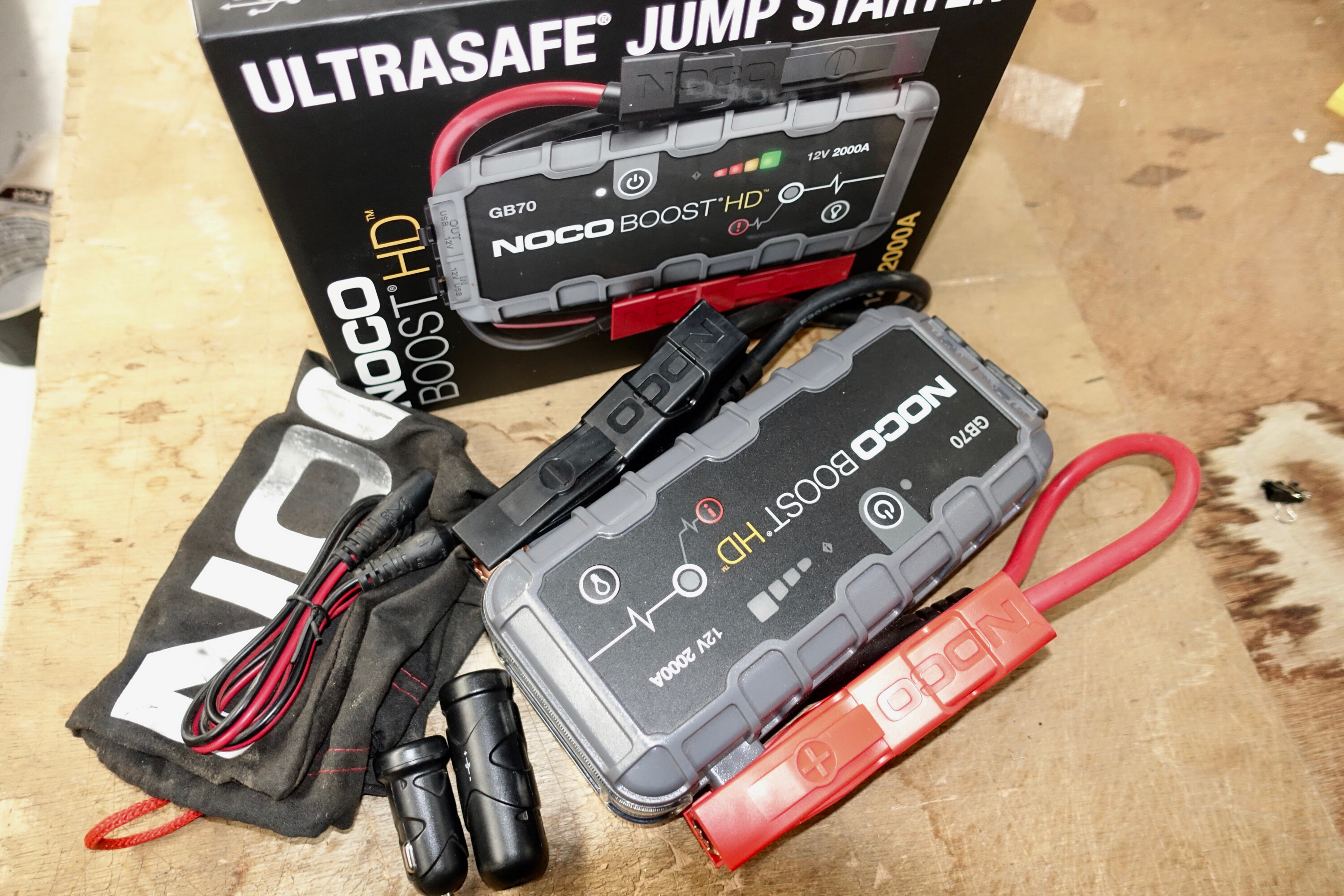
The GB70 model is the one I recently bought, and I reckon this one should just about cover every four-wheel drivers’ needs here in Australia.
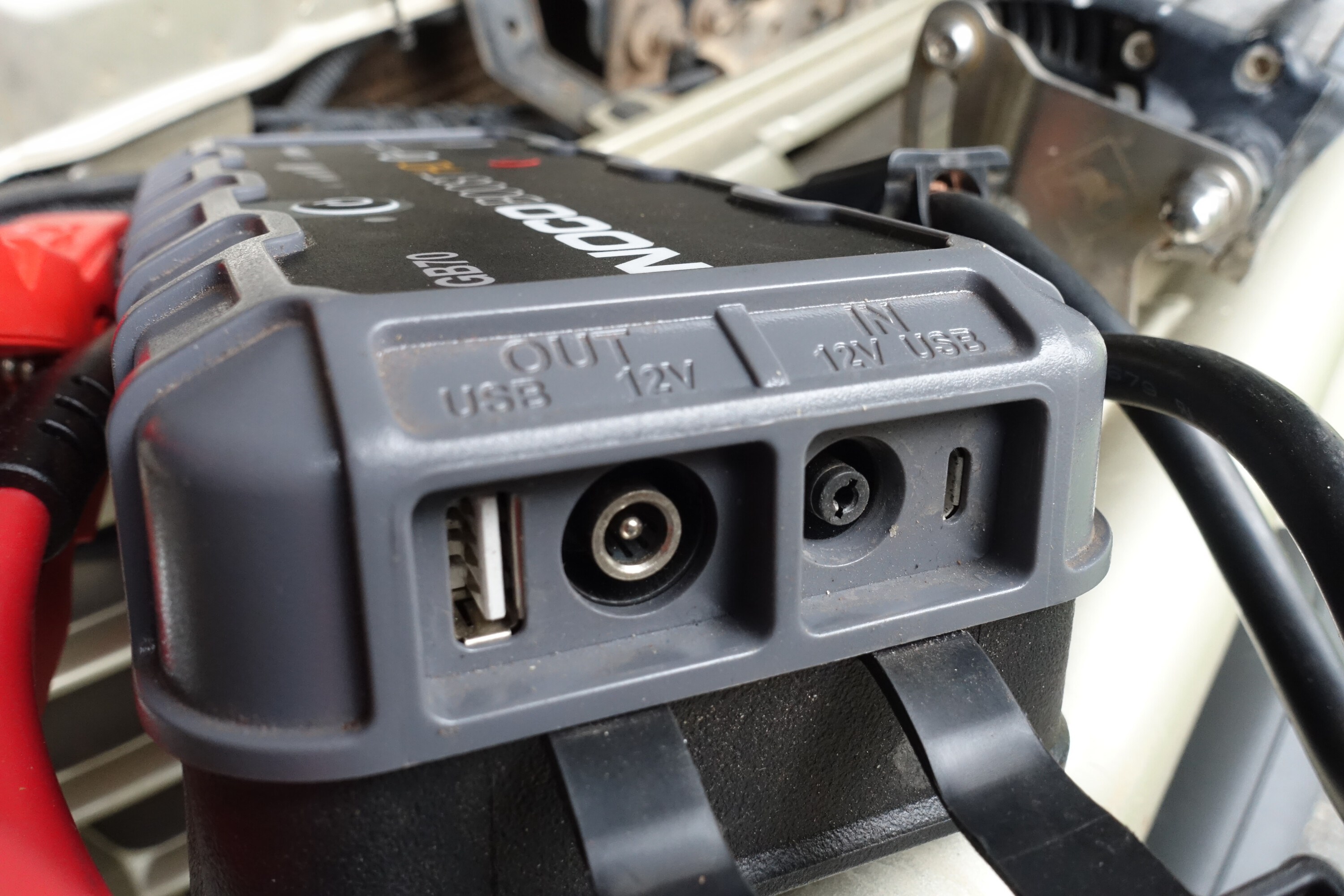
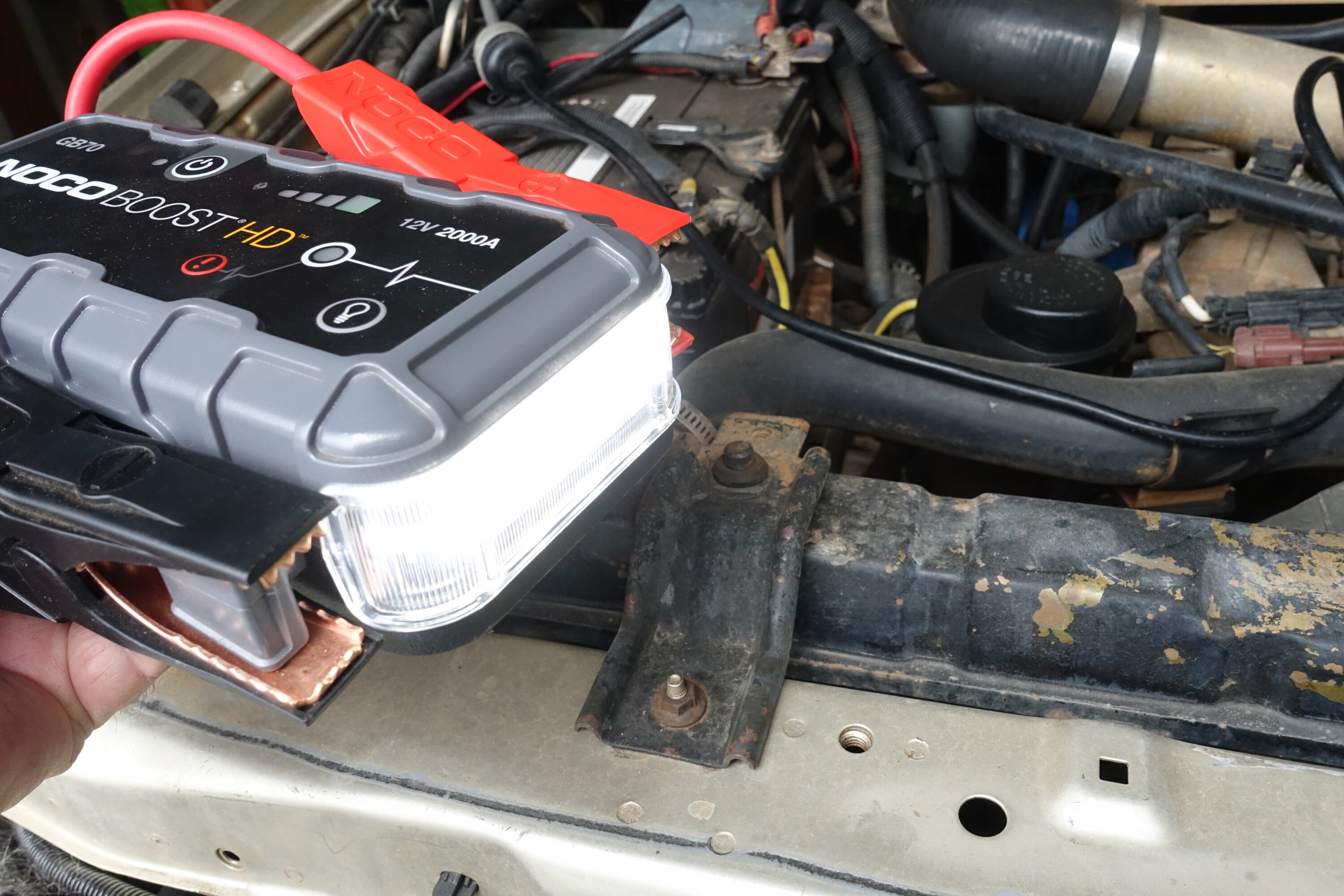
Powered by a 56-watt-hour lithium-ion battery, the GB70 is rated at 12 volts and is able to deliver up to 2000 amps, which is claimed to be good enough to start an 8.0L petrol engine or a 6.0L diesel donk. Weighing in at less than 2kg, it measures just 220mm x 152mm x 70mm, and includes a 400 lumen torch (with seven settings) at one end and 12V power and USB ports at the other end.
1
Charging time for the inbuilt battery is two to three hours from a 12V power supply or up to 28 hours using the USB port. NoCo claims when fully charged the battery can provide up to 40 jump starts. There’s inbuilt protection against reverse polarity, overcharging, overheating and from sparks.
The outlet ports can power a camp light or even an air compressor, with the output socket rated at 15 amps. Or you can charge your phone or GoPro camera or run other such devices via the USB connection which is rated at a maximum output of 2.1 amps. Leads and adaptors are provided with the GB70 to make all that happen.
As far as protection from the elements is concerned, the GB70 comes with an IP65 rating which means it is suitable for outdoor use and can withstand assault from dust and solids, and strong jets of water – but don’t drop it into the river beside your camp.
1
On the main panel there is an on/off button, a series of LEDs to show the charge status of the internal battery, a switch for the light, and a boost button and indicator light. This light illuminates when Boost is active and when the unit is connected properly to a flat battery.
However, if the flat battery has a voltage that is so low the GB70 can’t detect it, then the Boost button can be pushed to activate the unit and allow charging to begin.
We’ve been using this unit on and off for the last year or so. Once it was charged it sat in the back of the Patrol until called on to do its thing, which was to start a vehicle with a dead flat battery that hadn’t been started for some months. The GB70 indicated it was still fully charged but the 4.0L diesel donk took some effort to fire, and I had to leave the jump start unit connected for a minute or so and then use the boost button to achieve a satisfactory result.
1
I’d hazard a guess that if called upon to perform this more than once, at such times and current draw, the unit would not do anywhere near 40 jump starts.
One of the things we have used the GB70 for is to ‘shock’ a very flat battery, say an auxiliary battery in a vehicle or one in a camper, into accepting a charge from an alternator or battery monitoring and charging system, and for this it works a treat.
So how good is the GB70 and is it worth the money? First up, the leads are horribly short and you basically have to sit the unit on the battery for them to reach the terminals, which can make operating it a bit fiddly.
Secondly, jump starters like this are not as good as having another vehicle on hand to jump start a vehicle with a flat battery, but having a mate handy is not always possible, so having one of these units is a great backstop that can get you out of trouble.
As a bonus, it can be used to charge all those modern devices that we can’t seem to live or travel without. But, I still carry a set of jumper leads.
Ford Ranger buyers can now rely on better access to what the company says are the ute’s most popular Genuine accessories.
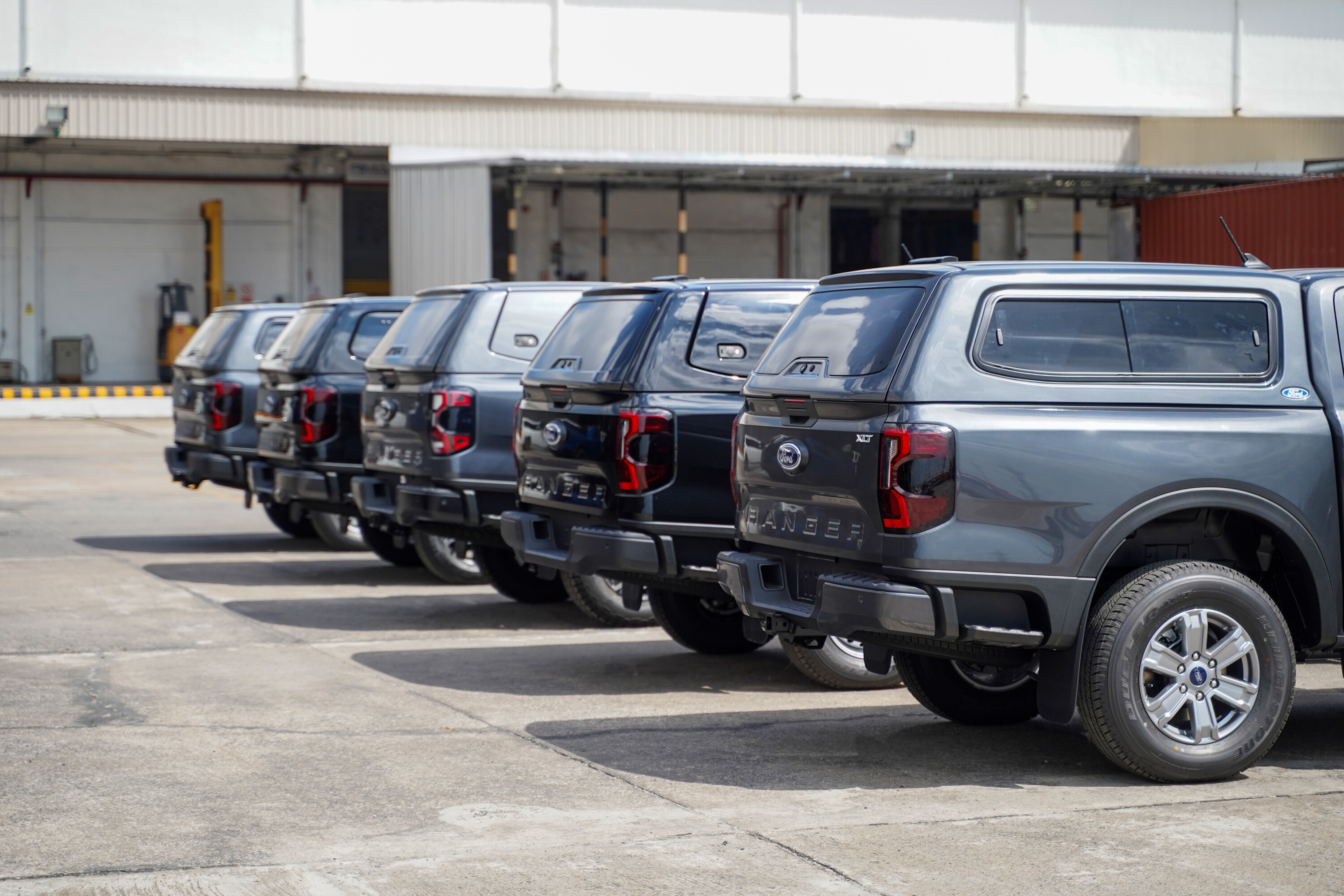
The opening of a new Ford Vehicle Personalisation Centre (VPC) in Thailand this week will speed up installation of two regular canopy options, a commercial canopy, and a manual roller shutter for those who want their Ford Genuine Accessories fitted before the vehicle even boards the ship for Australia.
“The VPC will complement the Ford Dealer Network by providing us the opportunity to offer customers a faster and seamless one-stop-shop solution for all their personalisation needs,” said Michael Karageorgiou, Ford’s global vehicle personalisation director.
“Customers can now order select accessories through a Ford dealer knowing that their vehicle will arrive in Australia with the accessories fitted and ready to go.”
? Speaking of accessorised Rangers, you should check out the ongoing build we’re working on.
The Ranger’s first VPC-installed accessory fittings are due to begin in March, with Australian delivery scheduled for May. They’ll arrive, of course, on the Grand Quest car carrier that Ford leased for three years from 2023, entirely for its own use.
Just like interest rates, it doesn’t seem like demand for the ever popular Toyota LandCruiser 300 Series is going to come down any time soon.
The latest version of Toyota’s iconic 4X4 SUV launched back in 2021 but despite this being its third year on sale, wait times can still stretch up to 24 months.
Most variants of the LC300 carry a delivery delay of between 12-24 months but the wait time on higher-spec five-seater models stretches beyond two years according to two Toyota dealers we spoke with in Sydney and Melbourne.
The usual caveat applies that if you aren’t bothered by spec or colour you can nab an LC300 much sooner, of course, but if you’d prefer your $100K+ off-roader tailored to suit your preferences, the reality is you’re staring down the barrel of a long wait.
But what if you need a family 4X4 sooner? The good news is the large off-road segment is thriving in Australia are there are many alternatives to choose from, some of which are far more affordable.
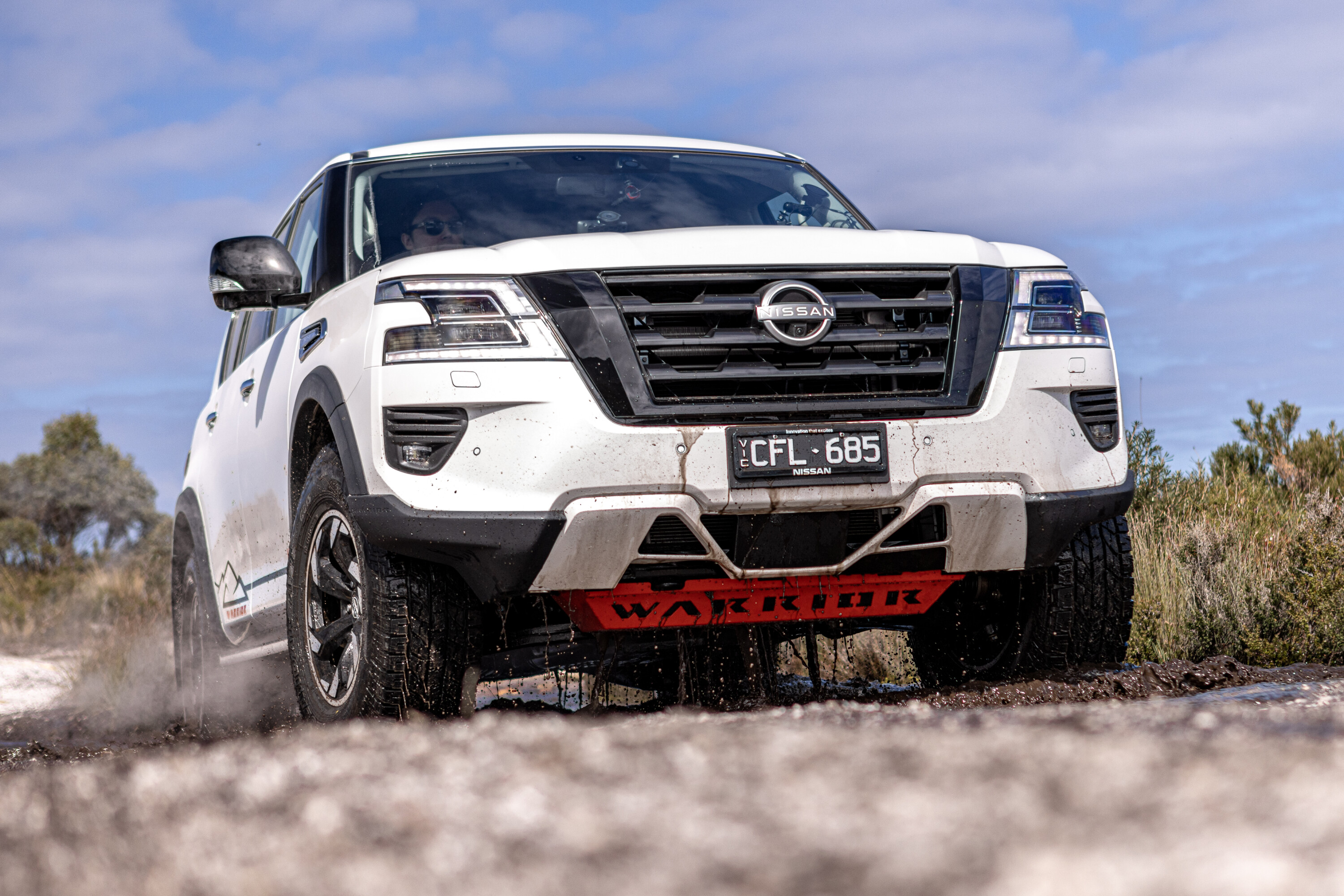
And their wait times are far more palatable. The Nissan Patrol, for example, has ample stock “in dealerships for immediate delivery”. So if you don’t want to wait, here are our recommendations for the best LandCruiser 300 Series alternatives…
Patrol vs LandCruiser is a rivalry for the ages and unlike Toyota, Nissan has stock of its venerable off-roader available.
A recent shipment of stock means the Patrol Ti and Ti-L are both available in dealerships for immediate delivery, while orders of the newer Patrol Warrior, will take around two months.
Powered by a thumping 5.6-litre V8 petrol, the Patrol might be older than the turbo V6 ’Cruiser but it’s just as capable off-road, matches the Toyota’s 3500kg braked towing capacity, and arguably has more character thanks to its eight cylinder engine.
Admittedly you will be buying an SUV that’s right at the end of its product cycle — an all new Nissan Patrol is expected to be revealed this year — but the flip side is you’ll also be scoring one with a proven track record for reliability. Information on any known issues and a whole host of aftermarket accessories are readily available, too.
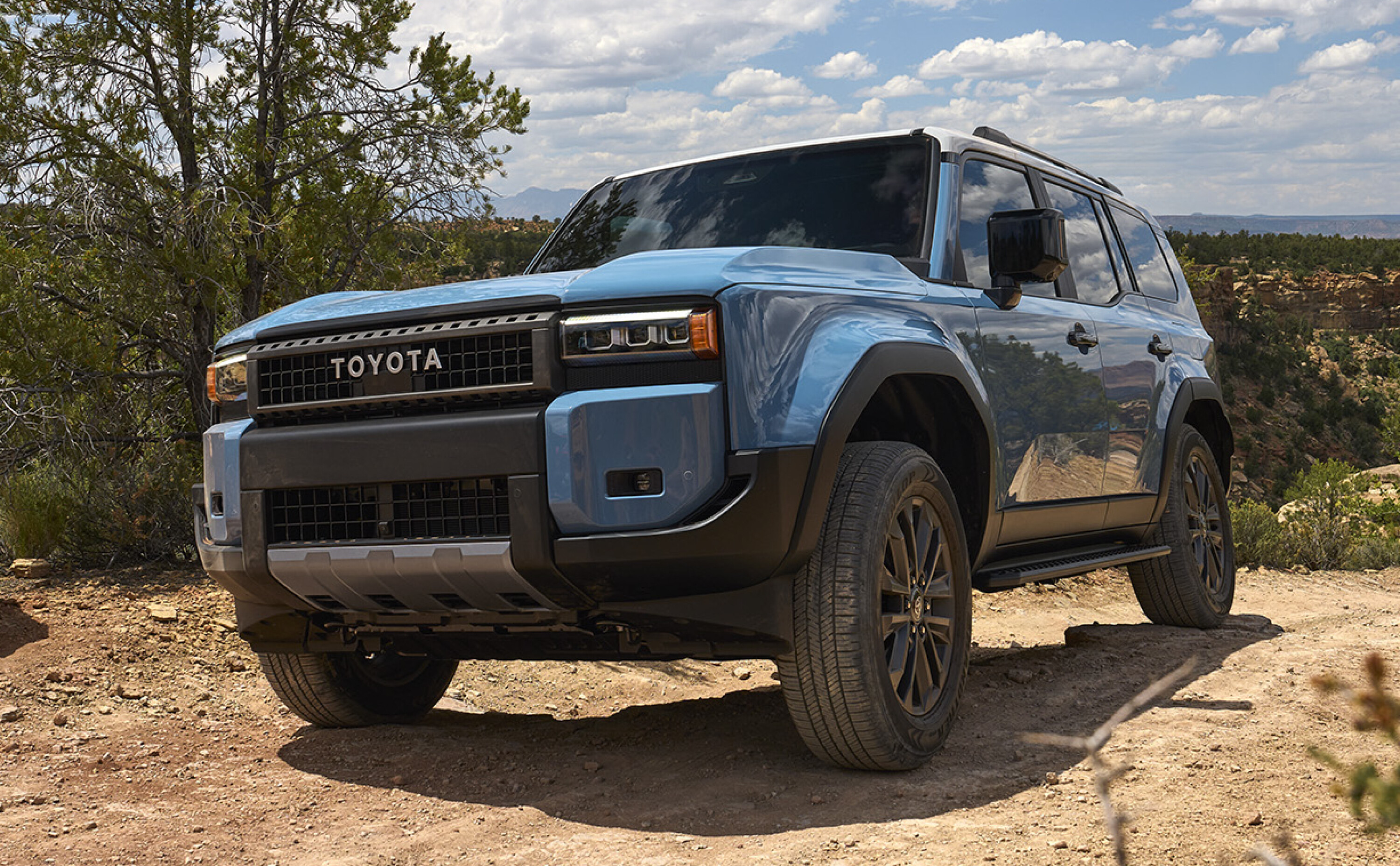
Really want a Toyota? The equally iconic Toyota Prado provides an interesting alternative, namely because you have two choices: buy a run-out example of the outgoing fourth-gen model, which has been on sale since 2009, or throw in an order for the boxier, soon-to-arrive J250 fifth-gen Prado.
Toyota is tipping the next-gen Prado will launch here in the middle of 2024, so if you place an order now there’s a chance you’ll get your car before a LandCruiser 300, although it’s a long shot.
Demand for the 2024 Toyota Prado is likely to be off the scale once Toyota eventually opens its order books, which should be sometime in the coming months.
Buying an existing Prado should be a smoother and faster process, however like the Nissan Patrol, it’s a much older vehicle than the LandCruiser 300 Series. The flip side is it’s a known product so the risk of any major issues should be minimal. You’ll also save a lot of cash compared with LC300 given Prado prices start at just over $60K before on-road costs.
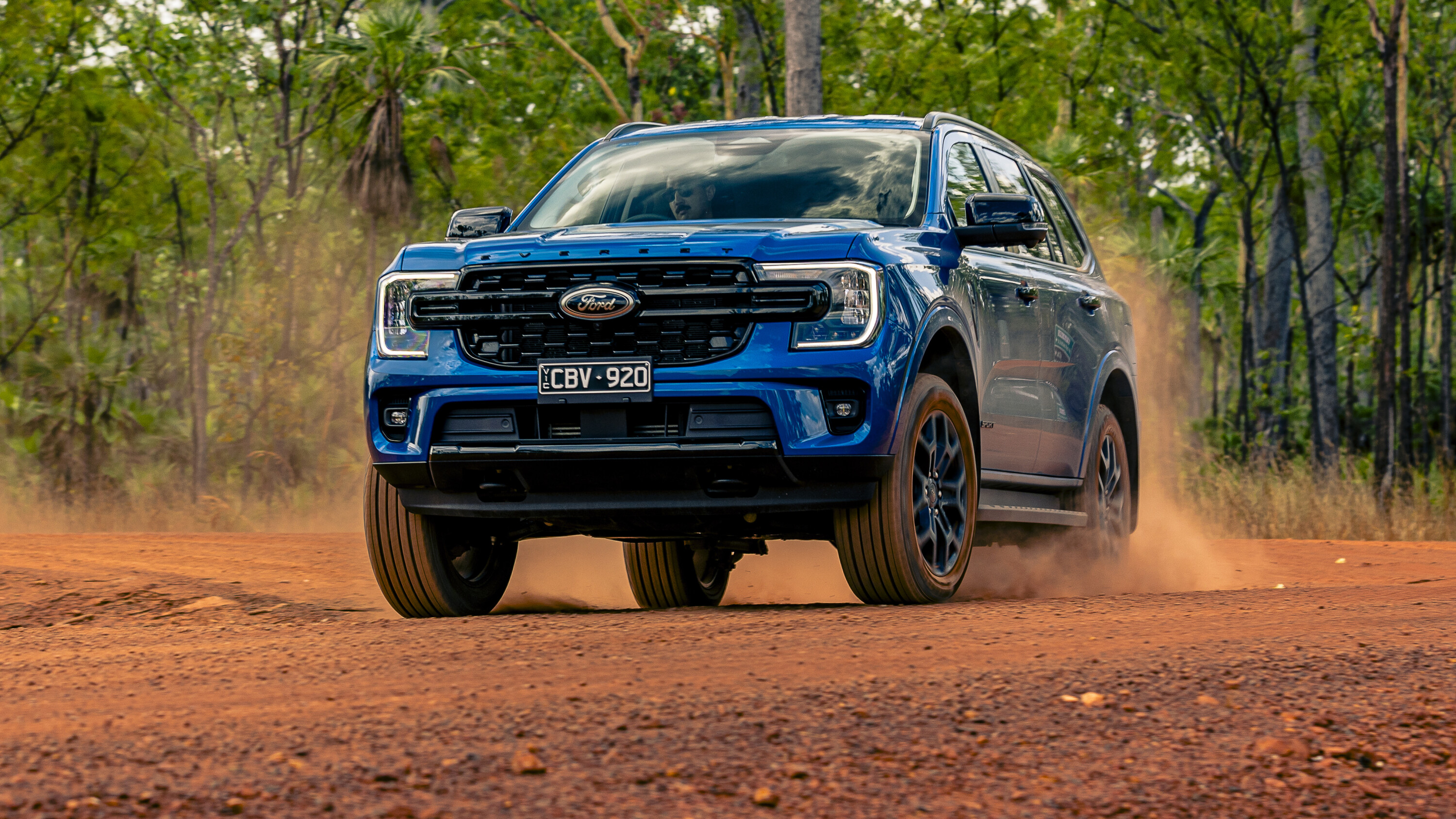
Updated with a new-generation model in 2022, the Aussie-developed Everest brought impressive gains in safety, on-road dynamics and off-road ability.
The redesigned cabin is also more luxurious and comfortable and brings a big tech upgrade courtesy of larger touchscreens and Ford’s latest SYNC4A infotainment system.
Everest is built on the same T6.2 platform as the popular Ford Ranger, meaning it’s reassuringly capable off-road and is available in both rear-wheel drive or all-wheel drive configurations.
Buyers have the choice of two engines: either a 154kW 2.0-litre bi-turbo diesel or a more powerful 3.0-litre V6 turbo diesel. New-gen Everest is far more accomplished to drive compared to its ute-based rivals like Toyota Fortuner and Isuzu MU-X and it carries a 3500kg braked towing capacity.
Prices start at around $55,000, making the Everest a more budget-friendly, if less polished and luxurious, alternative to LC300. Current stock levels are healthy for 4X2 models, but higher-spec 4X4 V6 variants carry a 12 month wait.
19
Land Rover Defender
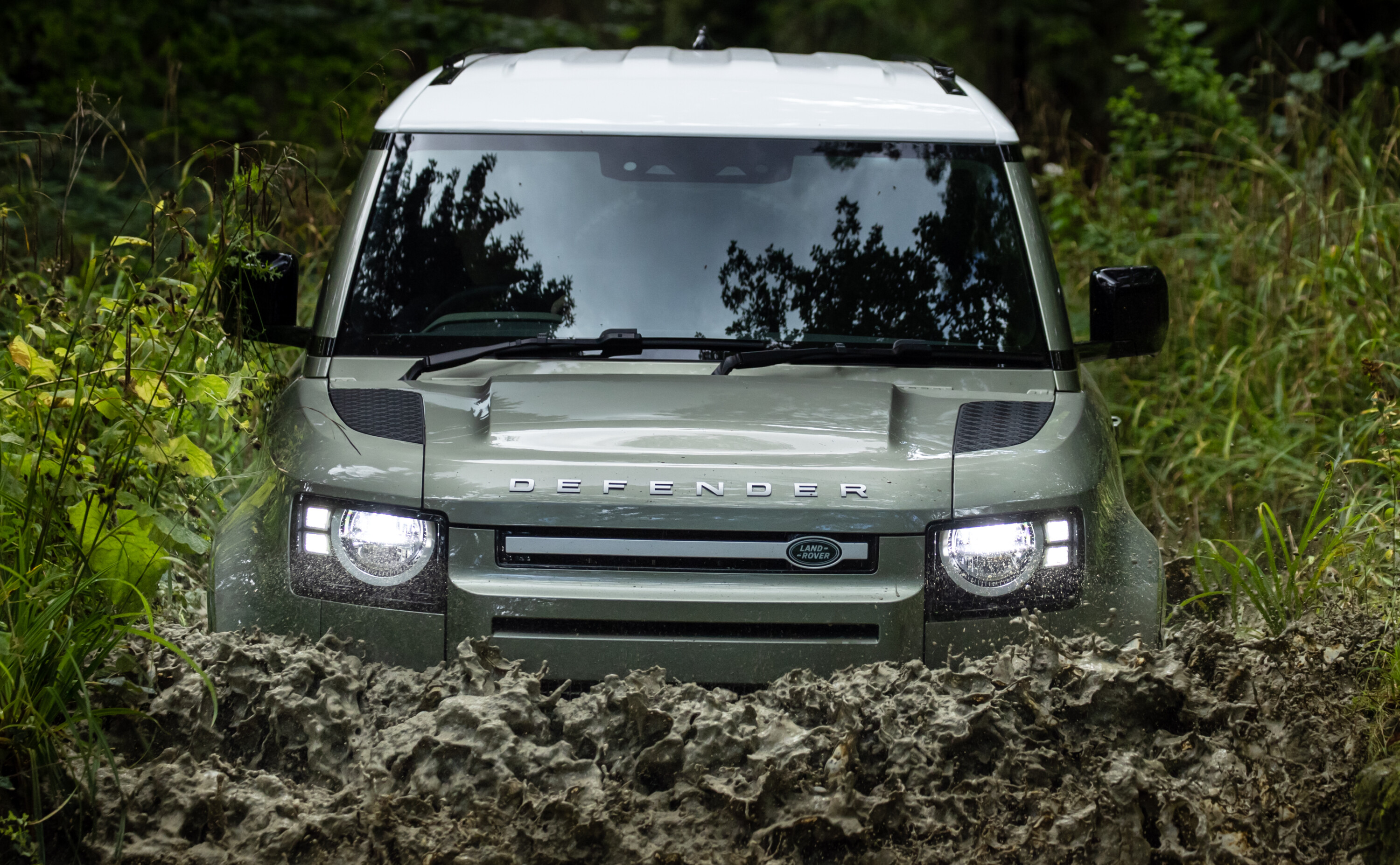
Another iconic nameplate in the world of family 4X4s, the Defender costs roughly the same money as a LandCruiser yet brings the choice of three different body styles: two-door 90, five-door 110 or the even longer five-door Defender 130.
It also has a broad engine line-up including a turbo four-cylinder petrol, two inline six-cylinder units (one petrol, one diesel) and a characterful 5.0-litre supercharged V8.
The current Defender launched in 2020 so it’s roughly the same age as LC300, and it’s far more stylish and resolved than previous Defenders. It also brings LR’s hard-won reputation for being excellent off-road and can tow up to 3500kg.
Chinese alternatives to keep an eye on
4
GWM Haval H9
The Haval H9 hasn’t been available in Australia since 2021 but that could soon change after an all-new, second-gen model was recently revealed in China.
Built on an updated ladder-frame chassis, the new-gen H9 is boxier and more luxurious than before and should significantly undercut the segment’s established contenders on price. The first-gen H9 started at $41,990 driveway.
GWM is yet to confirm whether the new H9 will come to Australia but it did say the big off-roader is “certainly on our radar”.
To learn more about the seven-seat H9, read our story below.
Tank 700
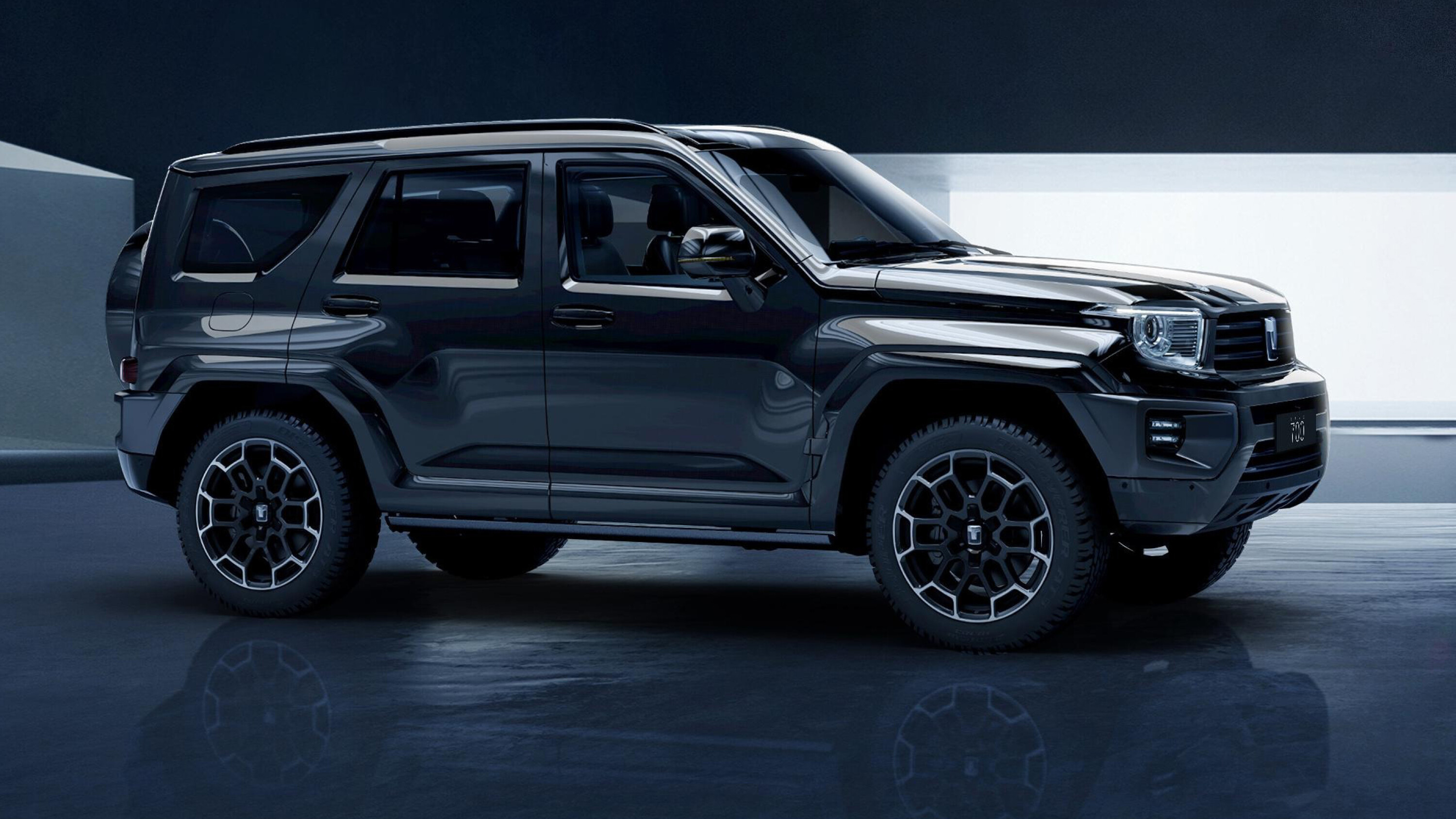
Another contender on GWM’s ‘maybe list’ for Australia is the Tank 700. The Tank brand is booming Down Under, with the Tank 500 set to join the existing mid-size Tank 300 in Aussie showrooms over the coming months. The Tank 700 is the brand’s biggest SUV and doesn’t only promise better value than rivals like the LC300 and Nissan Patrol but also more performance.
Built on GWM’s fresh Hi4-T platform, the five-seat Tank 700 is powered by a ‘P2 hybrid’ powertrain with 386kW and 850Nm. Blimey.
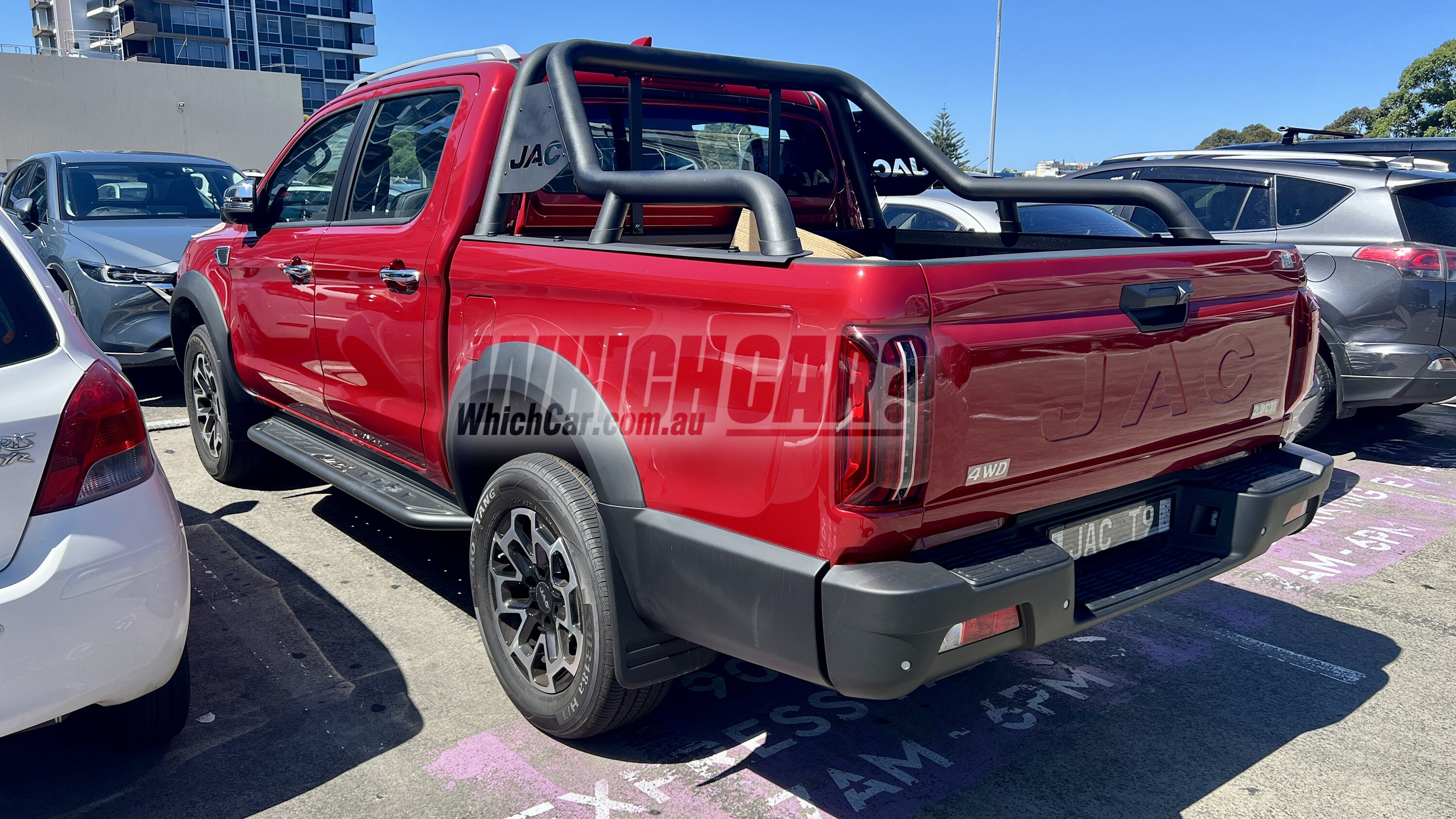
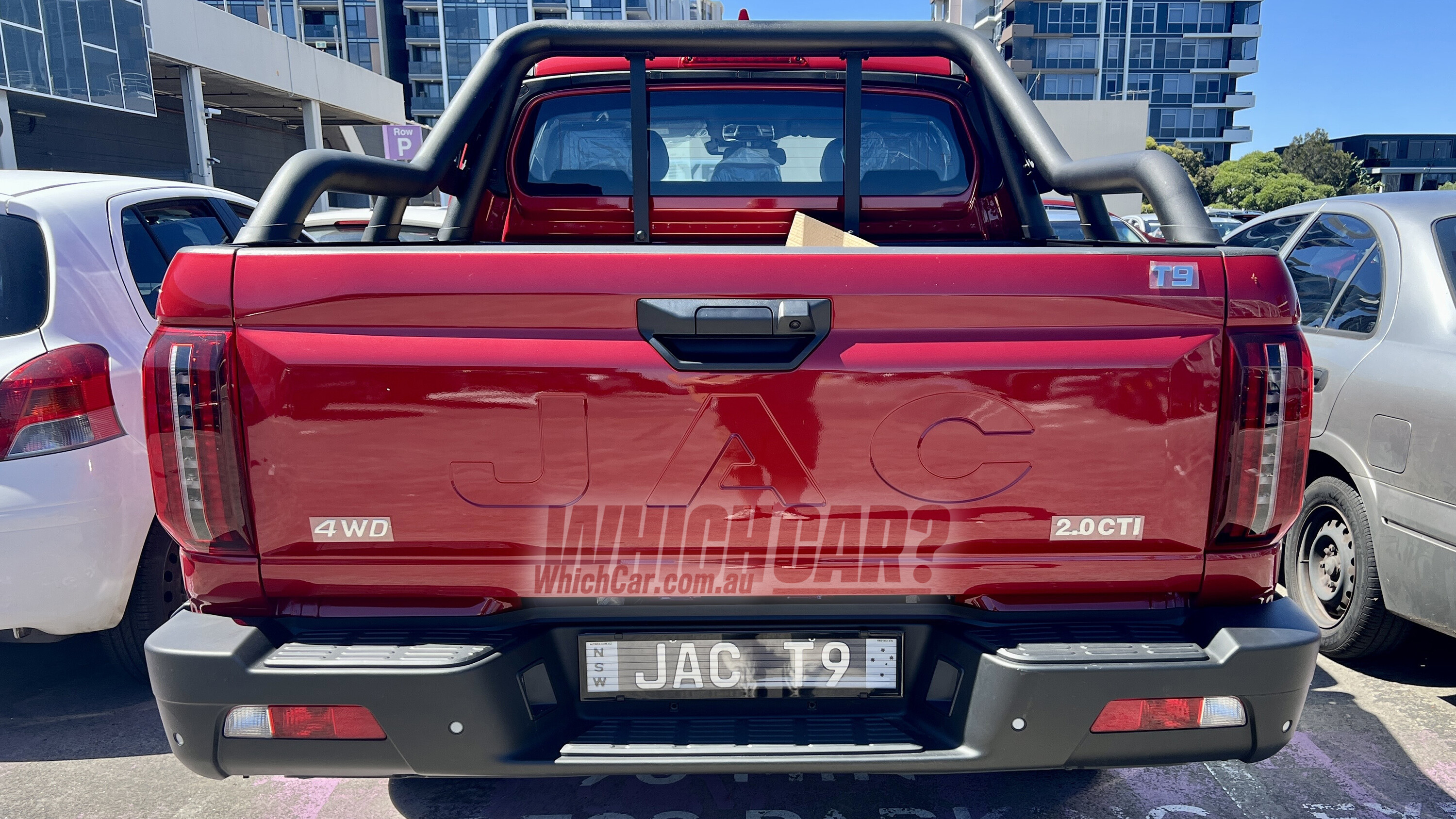
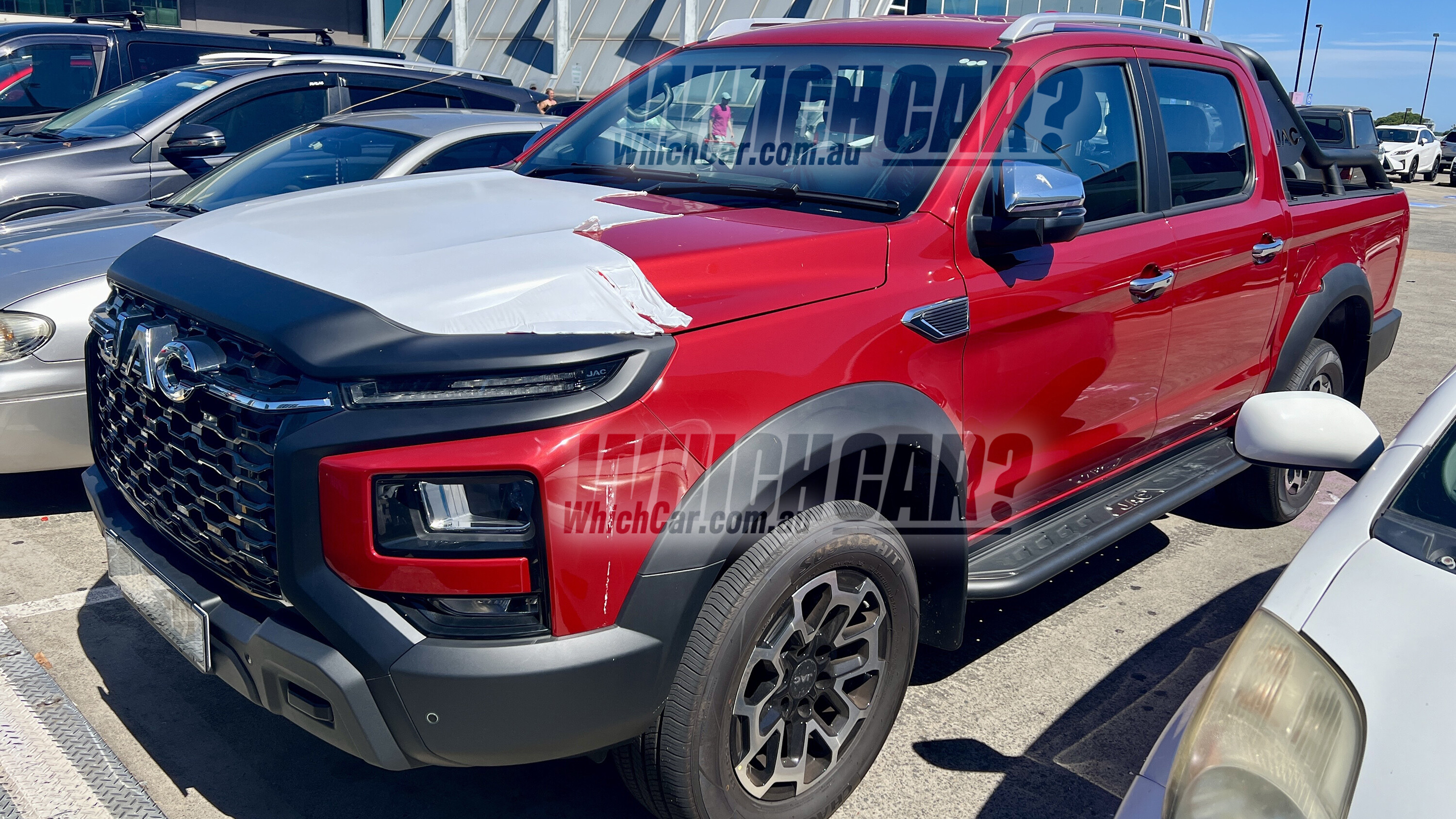
4×4 Australia has snapped the JAC T9 testing in Sydney ahead of the Chinese dual-cab ute’s launch in the coming weeks.
The T9 prototype ‘evaluation vehicle’, complete with eponymous rego plates, was spotted at Westfield Eastgardens during the weekend (though it’s unclear whether negotiating the big car park was part of actual testing!).
Local JAC importer BLK Auto is putting the diesel-powered T9 through its final stages of preparation for an ambitious assault on the intensely competitive ute segment.
1
A turbo diesel version will be available initially from launch, featuring a 2.0-litre four-cylinder engine producing 125kW (at 3600rpm) and 410Nm (between 1500 and 2500rpm) and teamed with a ZF eight-speed auto.
That compares favourably with other ‘challenger’ utes from Ssangyong and GWM, with the Musso and Cannon producing 133kW/420Nm and 120kW/400Nm, respectively. The LDV T60 produces 160kW and 500Nm thanks to a twin-turbo diesel.
The T9 will feature an electronic part-time 4WD system and comes with a 3500kg braked towing capacity to match the segment standard, and a payload max of exactly 1000kg.
BLK Auto has previously said pricing will be similar to its most direct rivals, with the GWM, LDV and Ssangyong utes starting from between $37K and $39K driveaway in equivalent auto form.
1
The fully electric T9 will arrive in the third quarter of 2024, 4×4 Australia has been told.
It’s only direct rival would be the steeply priced LDV eT60 that is targeted more at government and business fleets than private buyers, with a cost of $92,990.
1
The diesel 4WD T9 we spotted was the equivalent of what is a range-topping Super Lux trim grade in South Africa – which was the first right-hand-drive market to receive the ute, late last year.
Extra Super Lux features in that market include electric sunroof, electric folding mirrors, privacy glass, surround view camera, and roof rails.
Equipment for the Lux model is quite extensive and would be expected to be replicated for the Australian market.
A representative for JAC importers said T9 examples had also been imported for ANCAP crash testing. BLK Auto has said it expects the T9 to be awarded a maximum five-star rating.