ADVENTURE, Explore and Challenge are themes ingrained in the 4×4 world that’ve probably been punched out millions of times on these pages. And the young family you’re looking at now understand these words far more than most.
2020 CUSTOM 4X4OTY: Vote now for a chance to win!
While the Toyota LandCruiser may have started out as a bit of fun, it has led them down a path that has changed their lives forever. With little Ryder staring down impending kindergarten, Amie and Mitch have packed in their full-time gigs, sold everything that wouldn’t fit in the ’Cruiser, and are setting off into the sunset for one hell of an adventure. They don’t know where they’re going or when they’ll be back, and they’ve built the rig to do just that.
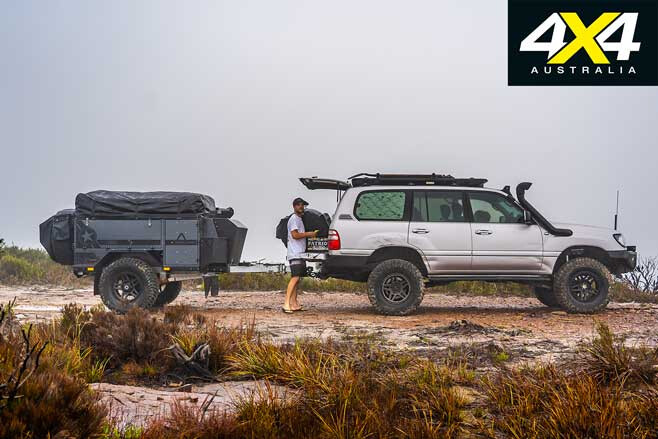
If you were to ever look for a serious long-term adventure rig, a 105 Series LandCruiser might just be the perfect choice. A knife’s edge between old-school reliability and new-school comfort, it balances live axles with ABS, a sturdy six-cylinder diesel with a modern interior that won’t rattle your ear drums loose on every corrugation, and rugged reliability with modern comforts.
There’s only one big problem, and it blows. While the 105 Series might have kept the old-school suspension of the 80 Series, it also kept the old-school engine options: the petrol-drinking 4.5-litre straight-six 1FZ and the gutless 4.2-litre naturally aspirated diesel 1HZ. If you wanted the turbo-huffing, god-among-men 1HD-FTE, you could find it in the softer IFS 100 Series.
The solution for Mitch and Amie was simple: yank the old 1HZ and slot in a factory turbo 1HD-FTE engine and get to work. Where the stock 1HZ was struggling to push out 120hp to the rear wheels, the new factory turbo motor now pushes out a huge 300hp and 850Nm to the rear treads. It has achieved that with a healthy dose of internal and external goodies.
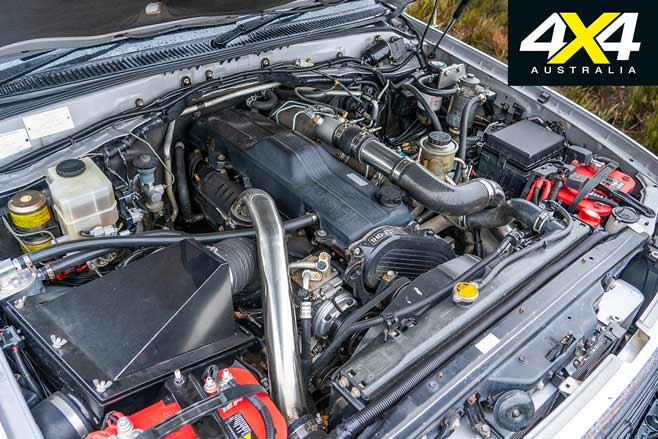
Starting with the four-inch Moonlight Fab snorkel, fresh air is sucked down through the custom air-box into a red-wheel GTurbo that compresses it to an eye-watering 30psi. From here it’s forced through a PDI front-mount intercooler and into the head.
Inside, ceramic-coated pistons cope with the added stress, before DPU injectors pump in 30 per cent more fuel than stock, all timed together perfectly with a DPU chip. An Xforce three-inch exhaust rounds out the package, with a H151 manual cog-swapper and 25 per cent reduction gears in the HF2A transfer case sending power to each end.
“I think the whole conversion all up probably owes me $30K,” Mitch tells us. Not bad at all for modern power and old-school reliability.
Underneath there’s beefed-up coil-sprung live axles at either end. Up front, the stock housing has been stuffed full of chromoly, with RCV axles and CVs providing a serious strength upgrade. King 2.5-inch remote reservoir shocks smooth out undulating terrain, with matching King progressive coil springs keeping it four inches higher than stock.
The OEM radius arms have been dropped off at the tip, with Comp Rods radius arms replacing them to correct the all-important caster and stop wandering steering, while also providing a significant strength upgrade.
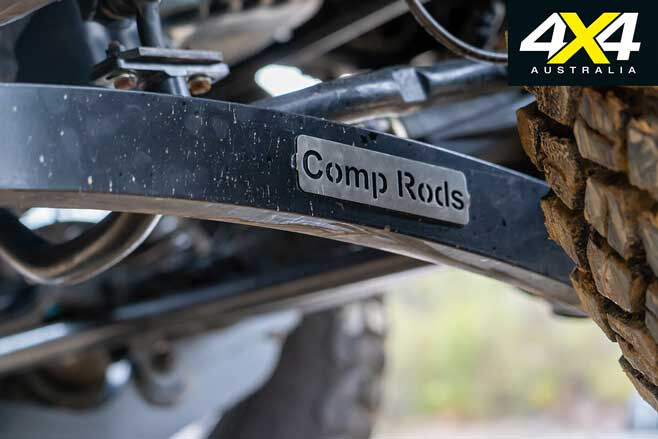
The drag link, tie rod and Panhard rod were also swapped out for stronger units, this time from Superior Engineering. In the rear, matching Superior Engineering stickers can be found on the upper and lower control arms as well as the rear Panhard rod. A second set of Kings progressive coils and King 2.5-inch remote reservoir shocks also got the nod. Both diffs have been fitted with Elockers from Aussie company Harrop Engineering.
DBA-slotted rotors are bolted to the end of each axle and provide upgraded stopping power, a must-have to get the big rig engineered and legal with the 35-inch BFGoodrich KM3 mud tyres. Braided stainless steel brake lines helped with pedal feel, too, and the whole lot resides around 17×9 -25 PCOR rims. They’re matched to the Patriot Campers X1 GT in tow, making for a simple setup with spare tyres and rims.
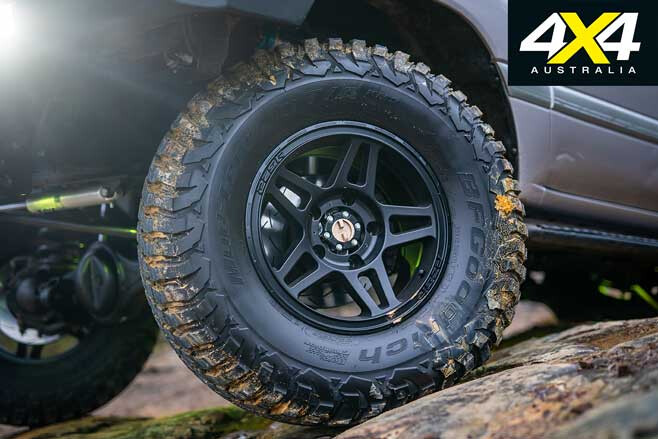
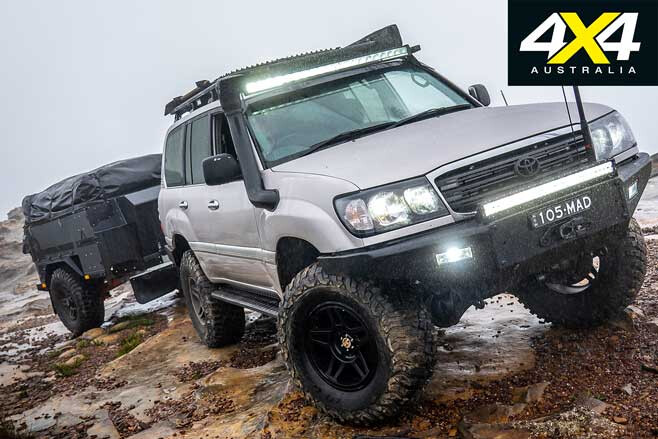
While the wheel and tyre combo were spec’d up for simplicity, when it came time to deck out the barwork Mitch went to town with welder and grinder in hand. Up front, starting with the guts of an Xrox bar, metal has been bent, shaped and hammered into place, with new wings giving a more modern look and housing the Stedi wing lights. The centre section has been subtly warmed over, too, and now houses a Drivetech 4×4 dual-speed winch and Stedi light bar.
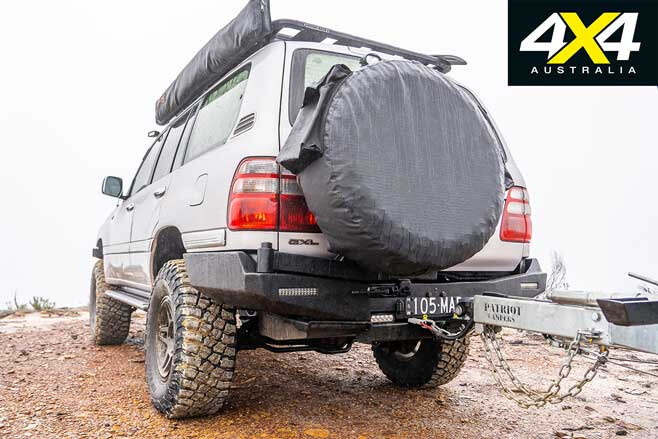
Moving down the flanks there are custom-built rock sliders below each sill panel, with a Rhino-Rack flat platform mirroring them above. It houses the Darche 180-degree awning as well as a second Stedi light bar and side lights. The rear has copped more plate steel, with a custom rear bar sitting high and tight against the body. With the stock 50-litre sub tank swapped out for a huge 180-litre unit, the stock spare had to be relocated up onto the rear bar.
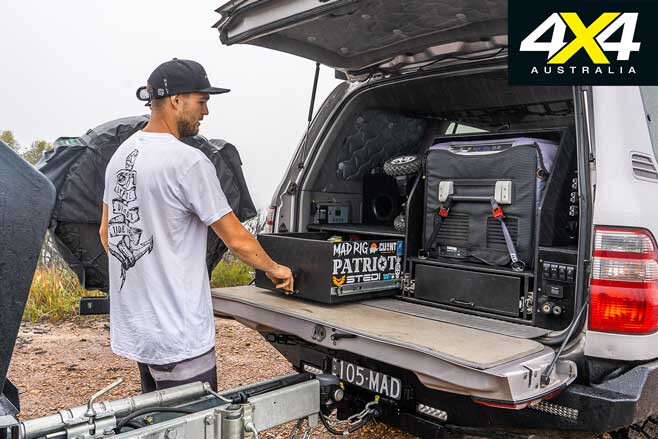
Swing open the tyre carrier and it’s clear just how purpose-built the ’Cruiser is. Home-brew storage drawers house the 75-litre dual-zone Waeco fridge, with an extensive Redarc triple battery setup running the 700W inverter, as well as the 4WD Evolution automatic tyre-inflation system. An extensive sound system looks the goods, but the GME XRS Connect unit and Redarc boost/EGT and dual battery monitors are the real workhorses of the interior.
The build sheet of the ’Cruiser might read like a who’s who of aftermarket goodies, but it has been carefully pieced together to do just one job: serve these three adventurers on the next leg of their life. Some folks might have a fancy back deck or a flash new TV, but Mitch, Amie and Ryder have traded all that in for an endless adventure.
Powerful Pottery
WHEN MOST people hear the term ‘ceramic’ their thoughts no doubt run to primary-school art classes but, for us, ceramic is a little more exciting. We mentioned previously the Cruiser’s engine is running ceramic-coated pistons, and there are a couple of pretty cool reasons why.
The first is reliability. Until they invent a 100 per cent efficient engine, you’re always going to lose some percentage of power potential into heat (studies have shown up to 2/3 of the fuel’s energy is wasted through excess heat).
Under load this heat can produce hot-spots in pistons, potentially cracking or melting them. Ceramic coating on pistons acts like a heat blanket, slowing down the heat transfer into the metal and oil beneath the coating.
The second is power. While we don’t know how much difference it’ll make on a dyno, by keeping more of that heat in the combustion chamber, and less of it in the engine’s metals, you’re getting a stronger burn and more bang for your buck.
Now that sounds like our kind of science!
With Coronavirus fears, plummeting global oil prices, and concerns of a looming economic recession, the Morrison government has announced a $17.6 billion economic stimulus package aimed at keeping small and medium-sized Australian businesses running.
Part of the proposed stimulus package includes $700 million being earmarked to increase the instant asset write-off threshold for businesses from $30,000 to $150,000 till the end of the 2019/2020 financial year on June 30th.

According to the Australian Tax Office, the instant asset write-off can be used to claim an immediate deduction for the purchase of new or second-hand assets for businesses, including motor vehicles.
This generous increase in the threshold will be a boon for small and medium business owners or independent contractors who are looking to replace or upgrade their work utes.
The usual rules for claiming deductions still apply as the instant asset write-off only applies to the “business portion of the expense”, so contact your registered tax agent to see if it is right for you.
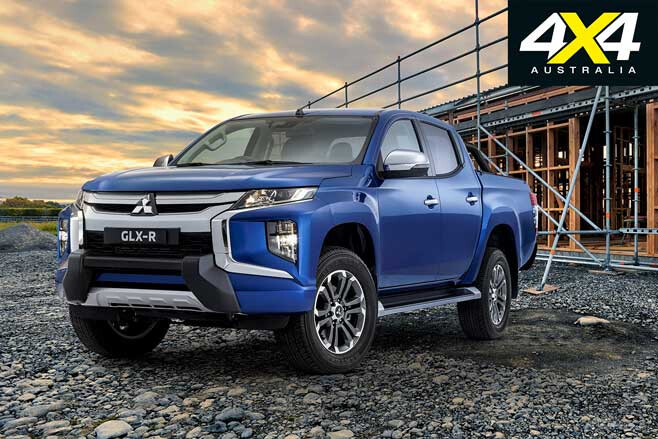
Not only that, the stimulus package also seeks to expand the threshold coverage to include businesses with a maximum aggregated annual turnover of $500 million, an increase from $50 million.
However a call to the ATO has revealed that the proposed increase in the threshold will require legislative changes before it is enacted, and the ATO will update its website accordingly as soon as it is confirmed.
The Morrison government says that these proposed changes are part of the stimulus package’s measures to support over 3.5 million businesses (over 99 per cent of Australian businesses) that employ more than 9.7 million employees.
The Readers’ Rigs feature in the February 2020 issue of 4X4 Australia features a several customised 4×4 wagons from our enthusiastic readers.
To get involved, post a pic and a description of your rig on our special site here or post it to our Facebook page and stand a chance to win an ARB High Output Air compressor valued at $335.
2017 TOYOTA PRADO GXL: STEVEN FOOT (4×4 Australia Readers’ Rigs Winner of the Month)
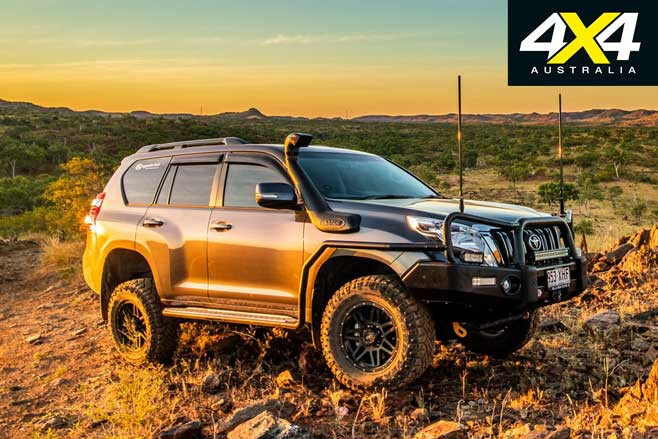
Kit added includes an Opposite Lock triple-loop bar; side rails and steps for protection; Safari snorkel; diesel pre-filter and catch can; two-inch Outback Armour lift with Goodyear Wrangler Duratracs in 265/70R17; Hard Korr 22-inch light bar; GME XRS UHF paired to an RFI antenna, and Cel-Fi Go to an RFI 4G antenna; Roadsafe recovery points up front; and a Domin8r X Winch.
Inside, I’ve added Drifta custom drawers and a 40L Evakool drawer fridge run by a 105amp/h Century battery and Intervolt DCC pro. She has taken us to plenty of great places and many more to come hopefully.
Favourite trip so far is to Uluru and the West MacDonnell Ranges.
1989 JEEP GRAND WAGONEER: TONY CASTELLANO
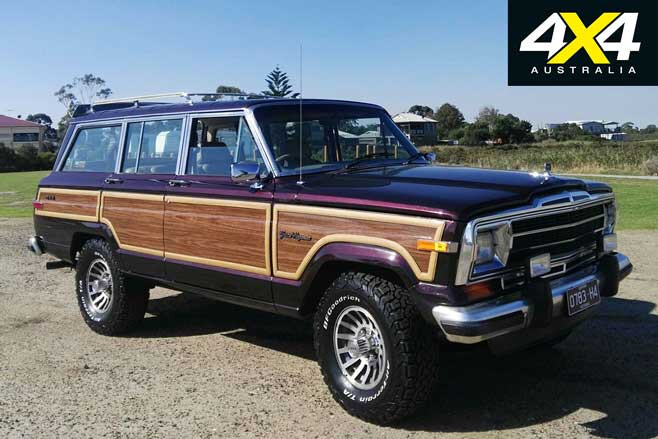
This is one of the original 26 imported and converted back in 1989. Patiently restored by dad and me. Horrible fuel consumption, a little unreliable and has the turning circle of cruise ship, but I wouldn’t have it any other way.
2018 MITSUBISHI MQ TRITON: CRAIG McCARDLE
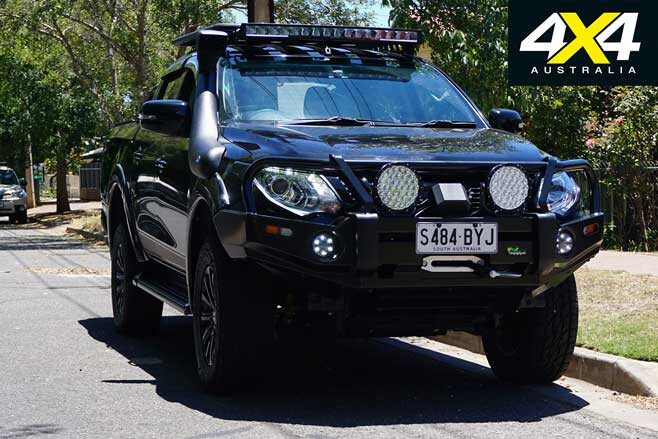
Blackline model with Stedi Type-X Pro driving lights and a 40-inch ST2K light bar; Ironman bullbar; Terrain Tamer Heavy Duty Suspension kit; two-inch suspension lift; dual-battery system with Redarc Isolator; Windbooster S3 Throttle Controller; Stedi fog lights with DRLs; GME XRS Connect; 370c UHF; Clarion subwoofer; rear-mounted 40-inch light bar with two LED work lights; and a 12,000lb winch.
2019 NISSAN Y62 PATROL Ti: GREG NOBLE
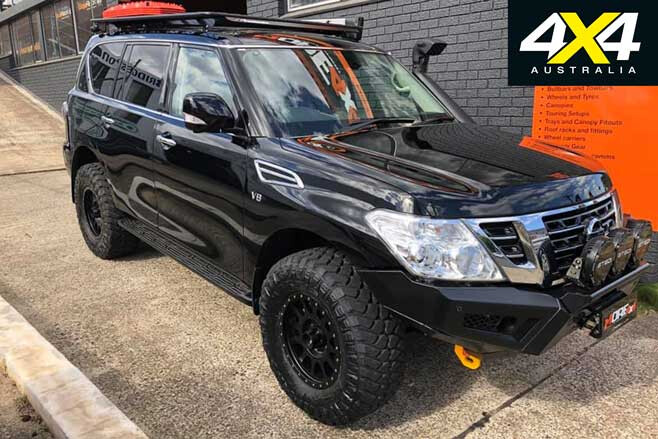
A two-inch lift; Safiery lithium battery; 1200W inverter; Stedi lights throughout; a myCOOLMAN 69-litre fridge/freezer; Darche 180 awning; Runva 11,000lb winch; Dash Predator front bar; Kaymar rear bar; RV aluminium drawer system; XForce exhaust; Apple CarPlay; Maxxis 35-inch MTs; and Method Racing wheels.
2016 FORD EVEREST: SCOTT WILLIAMSON
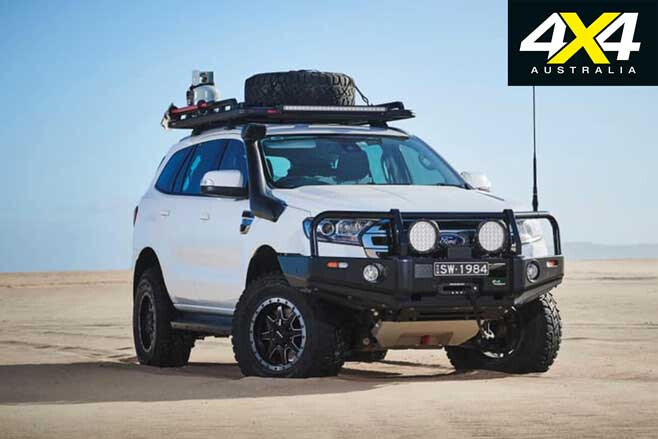
It has a Dobinson two-inch lift; Toyo RT 285/70R17s; ROH Beadlocks; Ironman bar and winch; ARB UVP and recovery point; SCF sliders (not in this pic); TJM snorkel; Yakima LockNLoad platform; Rhino awning; GME UHF; dual-battery system; CFF45 on custom slide; Kings spotties; and more.
TOYOTA 200 SERIES GXL SUPER TOURER: BRYCE PURDEN
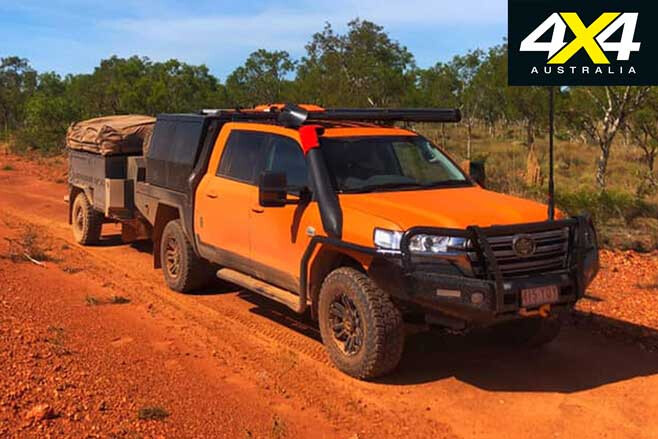
It’s wrapped in matte orange and has two boxes on the back. It also has a Redarc Manager30; ARB Air Lockers; Switch-Pros switch module; Mickey Thompson ATZs; ICOM HF radio; GME UHF; MSA 4×4 seat covers; 40-litre Engel; and an HX-1 GPS.
Jeep Australia has announced a new Capped Price Servicing Program for 2020, which covers the whole range of new Jeep models, including its range-topping V8-powered Jeep Grand Cherokee SRT and Trackhawk.
New Jeep models under the program will have a capped-price servicing cost from just $399 per service, for the first five services.
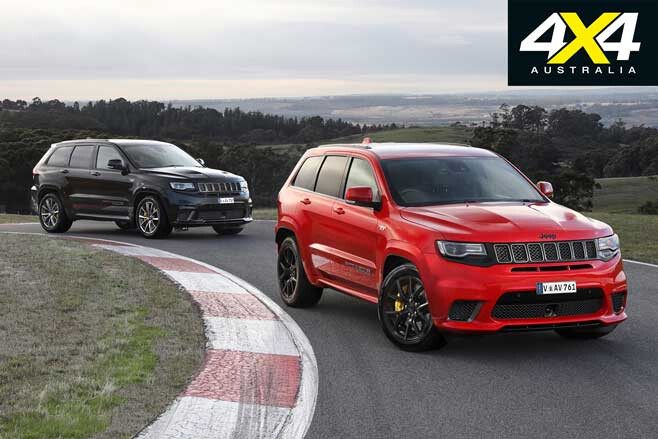
According to Kevin Flynn, Jeep Australia managing director, the program is a key progression for Jeep in delivering transparency and enhanced customer value.
“We have worked extremely hard to analyse and intricately understand the Capped Price Servicing models in the Australian market to build a compelling and competitive offer for our Jeep customers. This is a key element to enhance customer trust,” said Flynn.
“I believe a successful aftersales business is key to delivering an end to end customer experience for Jeep owners and we are committed to enhancing what we offer our customers in this regard, starting with the 2020 Capped Price Servicing program.”
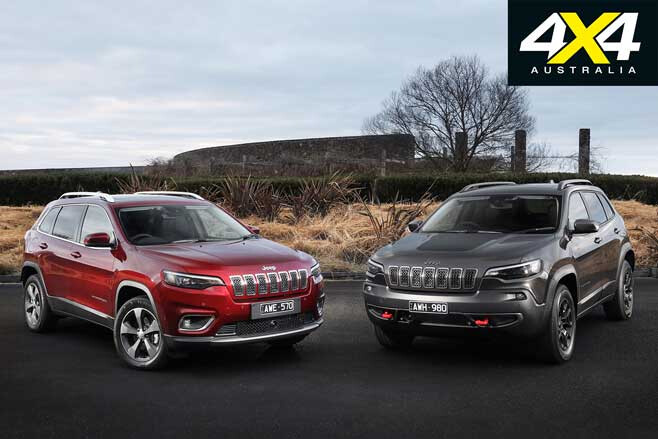
The Capped Price Servicing program follows news of Flynn’s bold strategy to improve Jeep’s poor reputation for aftermarket service in Australia.
Part of this strategy includes radical programs such as the creation of a quick-response team of ‘flying doctors’ technicians to troubleshoot problems at a dealer level, and a complete overhaul of the company’s spare parts catalogue and pricing.
When the new Land Rover Defender 110 is launched worldwide later in March it will be the first of a family of new SUVs to wear the iconic nameplate. The Defender 110 won’t arrive in Australia until August but it will be followed by the 3-door Defender 90 in October with the whole range of 110s and 90s expected to be on sale here by year’s end.
The arrival of the new Defender completes the implementation of the three pillars of Land Rover philosophy as announced back in 2013. The pillars are headed by the Range Rover group which includes the Range Rover, RR Sport, RR Velar and RR Evoque; followed by the Leisure group which comprises the Discovery and Discovery Sport; and the Dual Purpose group based on the new Defender L663 models.
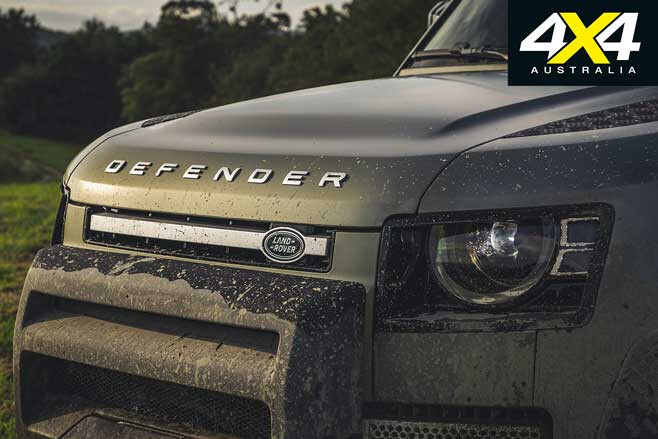
While these three groups cover the gamut of current Land Rover models there are a few holes in the line-up that still need to be filled. It was the intention of Land Rover’s Gerry McGovern that each the Range Rover, Discovery and Defender sub-brands would spawn their own family of models and while the luxury Range Rover brand comes closest to achieving that, the Defender and Discovery segments each have only two models each.
While some might argue that the Defender 90 is a compact SUV, missing from any of the three pillars of Land Rover is a true compact SUV with the smallest vehicles in the current range being the Range Rover Evoque and Discovery Sport cousins.
Compact SUVs are popular with buyers and Range Rover could do with a competitor to the BMX X2, Mercedes Benz GLA and Audi Q2 while the Discovery group would like to be selling against the likes of Mazda CX3, Subaru XV and even the sub-compact Jeep Renegade and the forthcoming Bronco Sport from Ford.
But could a sub-compact Land Rover SUV come under the Defender nameplate? The Renegade and Bronco Sport tiny tots both take on styling ques of their iconic off road bigger brothers and we’re led to believe that Land Rover is working on a new, shorter wheelbase derivative of its aluminium architecture to underpin new models for Range Rover and Defender.
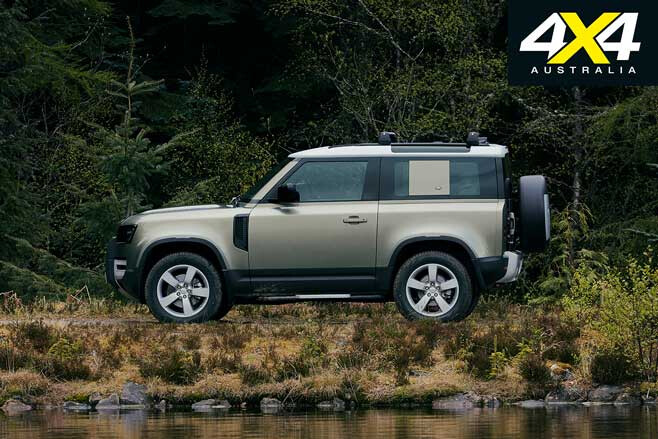
The die-hard Land Rover faithful might cringe at the thought of the Defender badge being applied to a light-duty compact SUV but stranger thigs have happened as vehicle manufacturers look to trade on the heritage of their famous nameplates.
A document leaked last year suggested that the Defender 110 and 90 models will be joined by a 130 wagon in 2021 or 2022, but when asked about the 130 at a recent Defender drive event, a spokesman said “you shouldn’t believe everything you read on the internet.” The document claimed that the 130 would ride on the same 3022mm wheelbase as the 110 but the sawn-off blunt rear end would be extended to create more overhang and give third row passengers extra space.
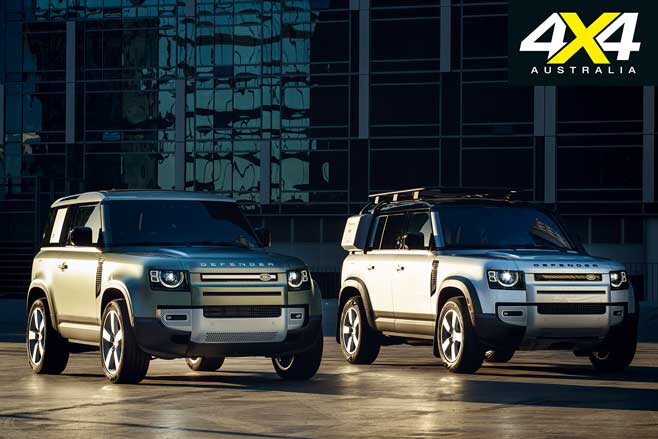
A soft-road Defender SUV seems more likely than a Defender pick up at this stage as sources inside JLR say there are currently no plans to produce a ute. The classic Land Rover and Defender ranges have almost always contained a pick-up within their ranks in 90, 110 and 130-inch wheelbase iterations. With the new Defender eschewing the traditional ladder-frame chassis design for a modern aluminium monocoque platform, crating an all-new ute would be a bigger and more expensive task although our spokesman admitted it wouldn’t be impossible to do.
When asked about the prospects of a new Defender ute the spokesman said there were no plans to enter the popular pick up segment at this point and cited the failure of the Mercedes Benz X-Class pick-up as an example of what could happen if a brand got it wrong. Mercedes Benz recently announced that it will discontinue the X-Class from May this year after less than three years on sale globally.
With Toyota LandCruiser FJ40 values rising in the United States, there seems to be a ready market for six-figure restoration jobs.
US-based Legacy Overland is one such specialist in restoring classic off-roaders, which made a splash with its meticulous rebuild of a 1981 FJ40 and the US$100,000 starting price it charges for the complete ‘frame-off’ rebuild.
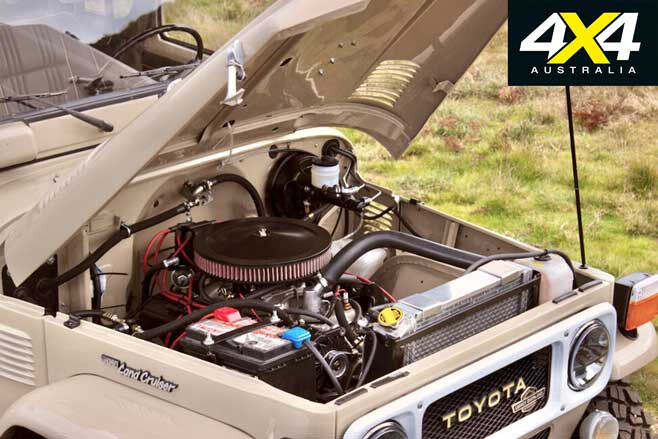
V8 the world
With a high price expectation set, it is no surprise that its latest build, based on a 1982 example, takes the engine-swap route with an “inconspicuously integrated” GM-sourced 5.7-litre V8 crate engine, complete with a Weber 600 CFM carb and Edelbrock 700R4 four-speed automatic gearbox.
Unfortunately, there is no mention of the V8’s final power outputs or the sort of noise it makes, though its creators are happy to harp on about the quality of its build.
Underneath its beautifully restored Desert Storm Tan body, Legacy Overland reworked its braking and suspension systems, installing new front and rear disc brakes, light load Old Man Emu leaf springs with improved suspension components, and Terrain Tamer gas shock absorbers.
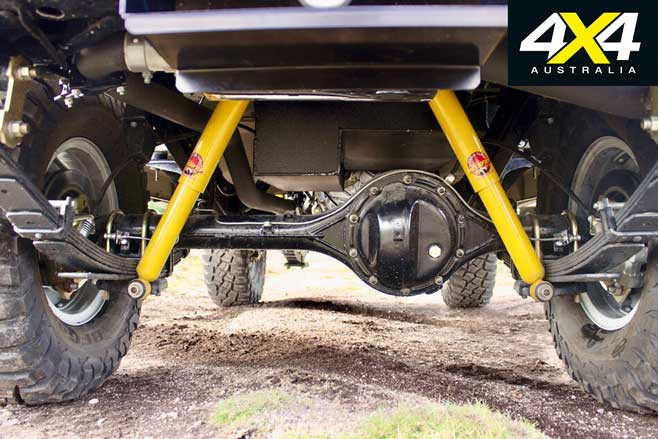
FJ40 with the works
Though Legacy Overland sprinkled this FJ40 with modern amenities, such as LED headlights, a rear LED utility light and a modern sound system with Bluetooth and digital radio, it retained plenty of retro touches.
The FJ40 still features classic OEM-style yellow fog lights, OEM steel wheels and a body-coloured jerry can, and is reupholstered in ‘black vegan’ leather interior with original bucket seats and rear foldable benches with lap belts.
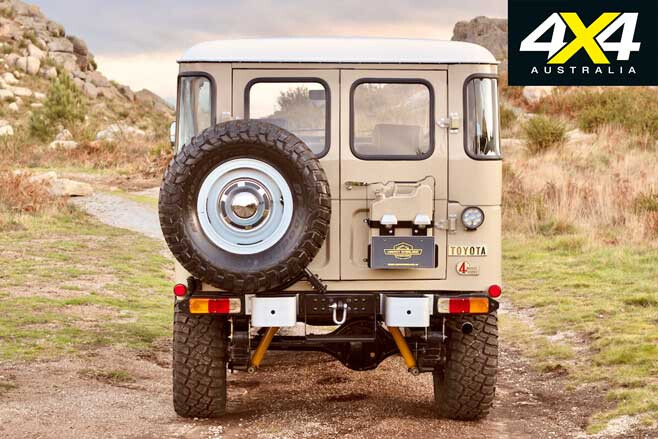
To ensure that it is able to stand the test of time and rigours of off-road driving, the underbody, undercarriage, doorsteps and floors are painted in something called Raptor paint for longevity and extra protection.
How much for a V8 FJ40?
No price is quoted for this V8-powered LandCruiser FJ40, but considering that some restoration specialists like The FJ Company are asking $270,000 for its handiwork and finding its order books being filled, it is likely that the asking price for a build of this scale isn’t cheap.
Are six-figure restoration works on LandCruiser FJ40s and Land Rover Defenders justified, or simply a sign of an overblown market? Let us know in the comments below.
When we did our LED driving light comparison test last year we were all surprised when the Night Hawks from Bushranger 4×4 Gear came up on top. Nothing against the Bushranger brand but these lights were a relative unknown up against some of the biggest brands in the country.
Fast forward to when we had the AFN bar fitted to our Ranger and we were keen to get a pair of Night Hawks on there to see how they perform in the real world. We were also very interested in Bushranger’s VLI wiring system which allows the driver to control the intensity of the lights via an adjustment dial with seven power settings. The VLI harness was not used in the original light comparison test.
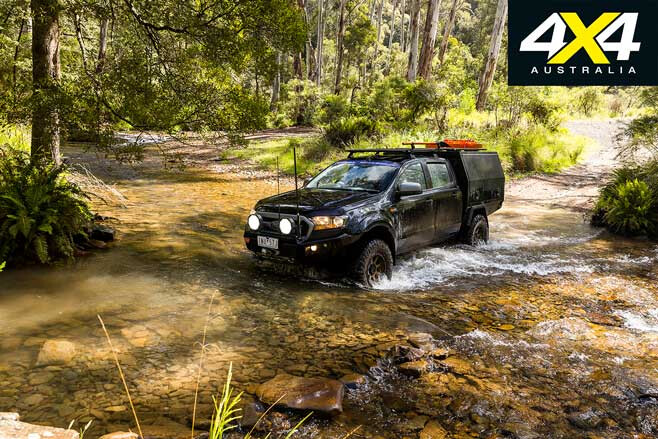
The VLI is an electronically switched harness that removes the need for any relays in the system, instead using transistors for switching. It provides a simple plug-and-play harness that automatically senses the vehicle polarity for positive or negatively switched high-beam circuits, removing the need for any rewiring that can otherwise be required for some vehicles.
The VLI harness comes with a dial, instead of a conventional switch, that offers seven different power settings for the lights. The system also has a soft-start fire-up so that it allows your eyes to adjust to the lights when you switch them on.
I have to admit that I thought the adjustable power setting for the lights would be a bit of a gimmick. I mean, doesn’t everybody want their lights at maximum brightness all of the time? To the contrary, I found having the adjustment to be very useful and found myself running the lights in lower power settings more often than expected.
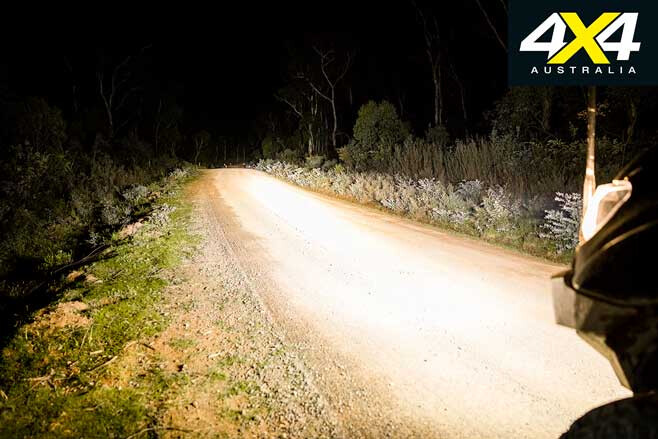
For example, modern LED and HID driving lights seem to be forever getting more powerful and in some situations, too powerful. I find that when driving on country roads that still have road signs on them, the reflection back at you from the signs is almost worse than an oncoming car.
This is worse on a winding mountain road where you still want the extra vision afforded by the lights, but there are more signs indicating curves, corners and turns. Setting the VLI dial in the third or fourth power setting on these roads reduces the glare blasting back to the driver off signs but still gives the advantage of better lighting.
Another time I found it better to reduce the power of the Night Hawks was on country roads where I was getting more than occasional oncoming traffic that required dipping the beams.
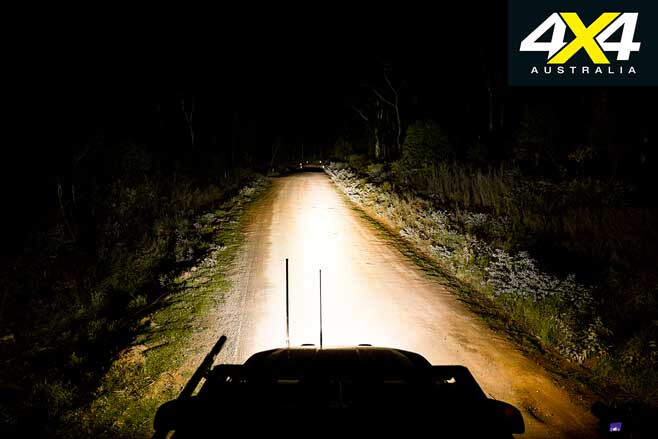
Even with the ‘soft start’ feature of the system, the difference between the light thrown by the Night Hawks and the admittedly poor standard Ford main beams is significant, leaving the driver in darkness for the few seconds it takes for your eyes to adjust to the lower light when dipping the beams. Running the Night Hawks in the lower power settings reduces this difference while again still giving improved vision ahead. And it’s easy to turn the VLI power-dial up when the oncoming traffic road conditions allow for it.
The Night Hawks pump out plenty of light. They are a nine-inch light utilising 37 Osram LEDs per light for a total of 175-watts each. They run a mild 5700K light temperature which makes them easier on the driver’s eyes, but still the variable output of the VLI makes it easier again.
The lights are constructed in a sturdy, finned aluminium housing that offers optimal cooling and the 4mm steel mounting bracket keeps them secure on your bumper and allows for sufficient adjustment.
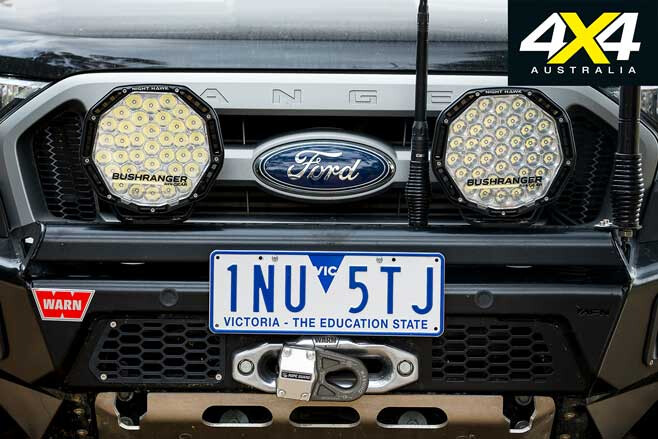
When used with the Bushranger VLI wiring harness, the installation is as easy as can be, with the only drawback being that the VLI power-dial is bigger than a regular switch and you need to find somewhere to mount it. We tucked it up under the HVAC controls where it was out of sight but still relatively easy for the driver to access with his or her left hand.
The Night Hawks come with a pair of polycarbonate protective covers that give you a choice of spread and spot beams. We played around with them and found we preferred to run without the covers on at all, as they did get a lot of dust in behind them and required daily cleaning to get the best performance out of the lights.
This problem isn’t limited to the Bushranger covers, but all covers on lights. That said, replacing a cracked plastic cover is a lot cheaper than replacing an expensive LED light should it get struck by a stone.
With their solid construction, excellent performance, innovative adjustable output and the simple plug-and-play VLI wiring system, we reckon the Bushranger Night Hawks were worthy winners of our comparison and certainly among the best LED lights available for your fourby.
RATED Available from: bushranger.com.au & ARB stores RRP: Lights $447.50 each; VLI harness $89 We Say: Powerful light with an innovative and simple system.
What you see here is an LDV D90 4×4 wagon, complete with low-range gearing, separate chassis and a live axle at the rear. A proper 4×4 if you like, at least with those attributes.
LDV is part of SAIC Motor, one of the four large state-owned carmakers in China. In 2018 SAIC sold more than 6.9 million vehicles, so no small fry.
Aside from the D90 4×4 wagon, LDV also sells the T60 4×4 dual-cab ute, one variant of which – the TrailRider – is tweaked locally by Walkinshaw Performance. LDV also offers single-cab T60 utes in both 4×4 and 4×2, as well as delivery/service vans and a people mover.
This D90, the Executive, is the only 4×4 variant in the D90 range (the others are RWD), and while you can think of it as a budget alternative to a Prado, there is one difference: at this stage it only comes with petrol power. But that doesn’t mean we won’t see a diesel down the track, given the 2.8-litre four-cylinder diesel from the T60 ute – built under licence from VM Motori and from the same engine family as the 2.8 diesel in Holden’s Colorado and Trailblazer – should slot straight in.
Powertrain & Performance
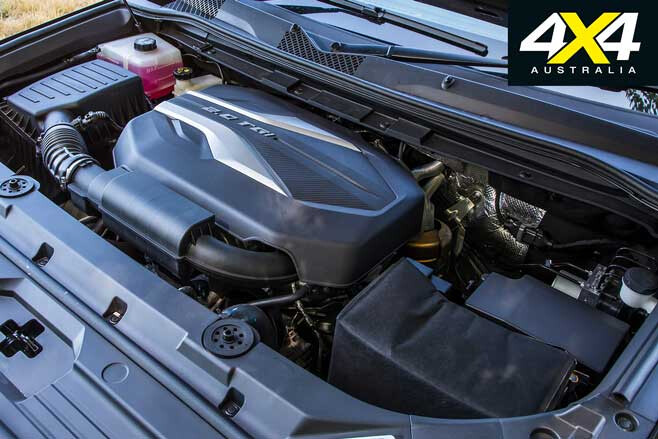
IN THE meantime, the petrol engine is in many ways already ahead of the game. Certainly it’s a more forward-thinking design than the last petrol engine to be seen in Prado, and perhaps more like the next-generation petrol engine yet to be seen in Prado, even if that will be a petrol-electric hybrid.
The engine in question is a relatively small capacity 2.0-litre four-cylinder, but with the help of a twin-scroll turbocharger, direct-injection, variable timing on both cams and otherwise modern twin-cam 16-valve and short-stroke architecture, it manages a healthy 165kW. Better still is the fact its max torque – 350Nm – is on tap by a relatively low 2500rpm and doesn’t start to drop off until 3500rpm. By way of comparison, the last petrol engine in the Prado (a 4.0-litre V6) produced 381Nm but had to rev all the way to 4400rpm to do so.
On the road the D90’s engine is relaxed and generally effortless in general driving and decently urgent when asked to give its all. The final-drive gearing is not overly tall (around 50km/h/1000rpm), which also helps with the general responsiveness. All the while it’s smooth and mostly refined; although, perhaps not as quiet as it could be.
For its part the six-speed automatic works reasonably well but is doughy in the standard ‘Auto’ mode in more demanding driving conditions, a problem thankfully solved by switching to the far sharper ‘Sport’ mode. These modes, as well as an even softer-responding ‘Eco’ mode, are on a dial on the centre console, which also has the various off-road modes.
On-Road Ride & Handling
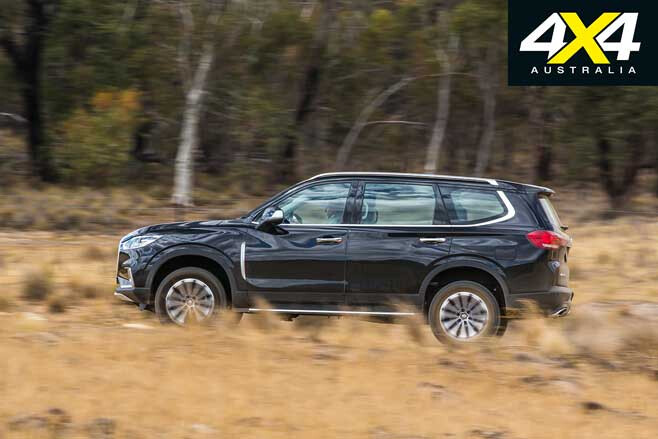
IF THE D90’s engine is a pleasant surprise, so too is its on-road handling and steering. It may not be the last word in dynamic excellence, but the steering is reasonably sharp on centre and offers a positive feel on turn-in, no doubt helped by the 19-inch wheels and the relatively low-profile Continental high-speed road tyres.
The suspension offers generally good control and a comfortable ride; although, it can be a bit sharp on bad roads at low speeds, perhaps also a result of the low-profile 255/55R19s. The good news is that 18s, or even 17s, and therefore taller tyres, can be fitted, as there’s no problem with the smaller wheels fouling the brakes.
Off-Road
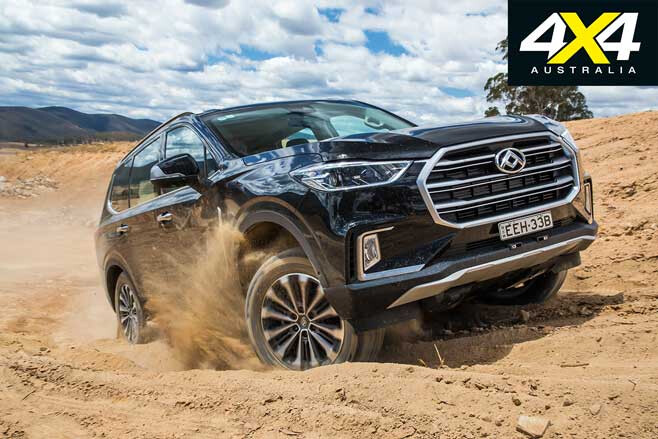
THE D90 has what’s called an ‘All-Terrain Four Wheel Drive System’ that has modes for ‘Snow’, ‘Mud’, ‘Sand’ and ‘Rock’. The ‘Snow’ mode uses auto proportioning of the ‘smart’ centre diff and works surprisingly well on gravel and unsealed roads. Land Rover, with its Terrain Response system, which pioneered this technology, combines ‘Grass-Gravel-Snow’ in one mode, so this is probably no surprise.
Selecting either the ‘Sand’ or ‘Mud’ modes feels to lock the centre diff, while selecting the ‘Rock’ mode additionally engages low range and is also the only way to engage low range, as there isn’t a separate low-range switch.
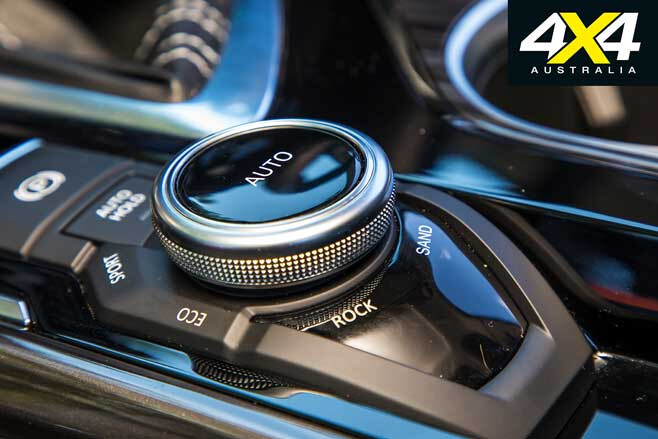
This probably needs a rethink to allow you to select either ‘Sand’ or ‘Mud’ and low range. You can, of course, always use the ‘Rock’ mode for heavy sand or mud conditions, and it seems to work okay, but going on our experience with Land Rover’s excellent Terrain Response system, powertrain and chassis electronics optimised for slow rock climbing aren’t ideal for sand or mud, and vice versa.
This oversight aside, the D90 is handy enough off-road thanks largely to good wheel travel, especially at the back. There’s also a driver-switched rear locker. More ground clearance would be handy, but even just getting rid of the 255/55R19s for a taller tyre and wheel package based on 17s or 18s would help. The engine air intake via the inner guard is a bonus, as is the solid front recovery hook hidden beneath a plastic panel. At the rear there’s a screw-in towing hook, so not what you ideally want for recovery but at least it looks solid enough.
Cabin, Accommodation & Safety
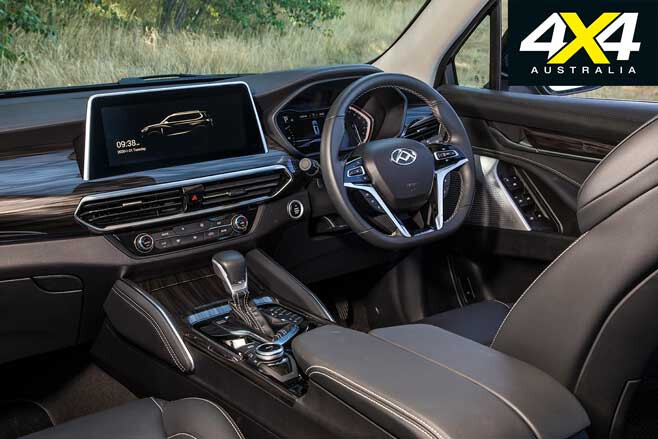
CLIMB into the D90’s cabin and you can’t help but be impressed by the space up front, in the middle row and in the third-row seats. With the third-row up there’s even some luggage space left, which is a real luxury indeed.
The driver’s seat is good without being great, but does come with electric lumber adjustment. The driver also benefits from tilt-and-reach steering wheel adjustment.
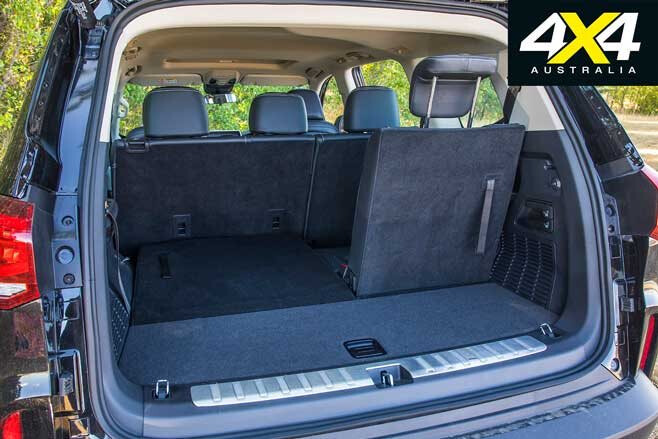
The second-row seat adjusts fore and aft, so you can tailor the second- and third-row legroom depending on the occupants; although, even with the second row right back the third-row legroom is still small-adult friendly. The second row can also be lowered via two levers in the rear cargo area, making it easier to load long objects from the rear of the car. A cargo net and cargo blind are also standard.
The fit and finish and the leather seat trim give very much an upmarket feel, but the presentation is quite busy, which won’t please everyone. Myriad dings, dongs and chimes for everything you turn on or off, or adjust, can also be annoying and is a pretty typical Chinese-car experience.
The D90 is loaded with safety kit (see ‘What you Get’ breakout) and when tested in 2017 gained five stars in the ANCAP test. The only issue here is the automatic (radar-controlled) cruise control is clunky and erratic in the way it applies the brakes, and it’s probably the single worst aspect of the entire car. And unfortunately there’s no manual cruise control fitted.
What you get
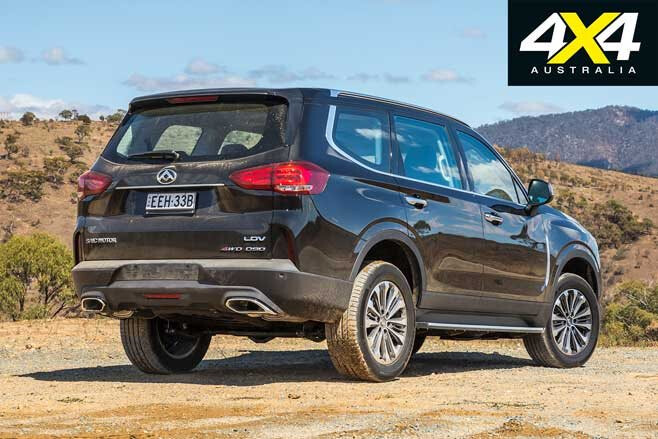
THE D90 4×4 only comes in one specification, the Executive, whose long list of safety kit is headed by autonomous emergency braking, lane-departure warning, blindspot monitoring, speed-zone sign recognition and tyre-pressure monitoring.
There’s also the usual – largely mandatory – electronic chassis-control systems. Luxury and convenience kit includes smart-key entry, leather, electric seat adjust for both driver and front passenger, three-zone climate control, a sunroof, an electric tailgate, rain-sensing wipers, and radar cruise control. An eight-speaker audio system, 12-inch touchscreen, smartphone connectivity and three USB ports are also included, as is a rear locker, 19-inch alloys, and LED headlights and DRLs.
Practicalities
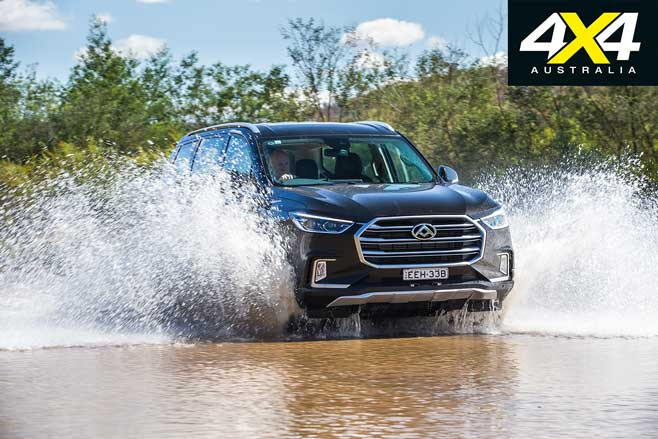
THE 630kg payload is respectable, but at 2000kg the tow rating is very modest. And while the spare tyre is full-size it doesn’t match the road wheels, being a steel wheel carrying a 245/65R17 tyre.
Being a turbocharged engine, standard grade (91RON) fuel probably won’t cut it and, while the owner’s book says 92 octane, it doesn’t specify which of the many octane standards used around the world that relates to. For safety’s sake we ran the D90 on 95 RON Premium, which worked without an issue. Test fuel use was 13.2L/100km, which isn’t bad at all given the D90 is a big and relatively heavy 4×4 wagon. Five-year/130,000km warranty and roadside assistance is reassuring, as is the 10-year ‘no rust’ warranty on the body.
4×4 Alternatives
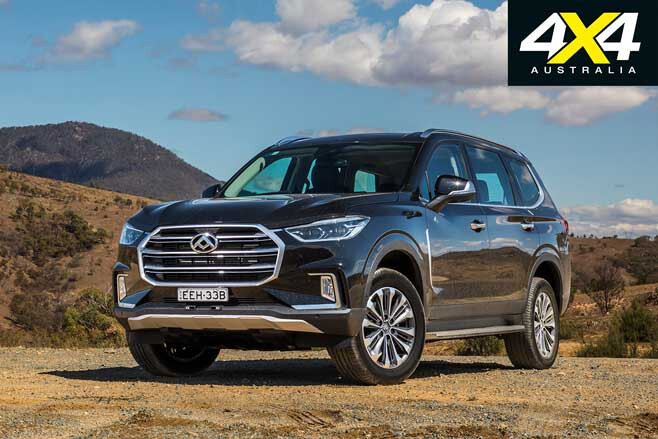
WHILE the D90 Executive sold in Australia comes with what’s called ‘All-Terrain Four Wheel Drive System’, or ATS, that has different modes for different terrain types, models sold elsewhere have one of two more basic 4×4 systems.
The simplest of these is a part-time system with electronic switching between 2 High, 4 High and 4 Low. Other models get an on-demand system with a ‘smart’ centre diff and electronic switching between 2 High, Auto, 4 High and 4 Low. Given the unideal mode options of the ATS system, this simpler system might be better.
Summing Up
AT $43,990 (or $41,790 for ABN title holders) driveaway, the D90 definitely offers value for money given that equates to a list price of less than $40K. For that you get heaps of kit, a big, well-finished cabin, respectable on-road performance and handling, and equally respectable off-road performance. It’s not perfect, but aside from the radar cruise control there’s nothing that deserves serious criticism.
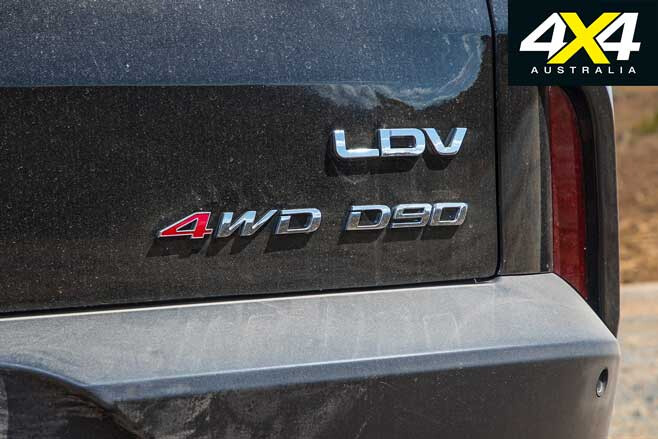
LDV D90 EXECUTIVE 4WD SPECS: Engine: 2.0-litre 4cyl turbo petrol Max Power: 165kW at 5300rpm Max Torque: 350Nm at 2500-3500rpm Gearbox: 6-speed automatic Crawl Ratio: 41.3:1 4×4 System: Dual range/on-demand Construction: Separate-chassis Front Suspension: Independent/coil springs Rear Suspension: Live axle/coil springs Wheel & Tyre: 255/55R19 111 V Kerb Weight: 2330kg GVM: 2960kg Payload: 630kg GCM: 4960kg Towball Capacity: 2000kg Departure angle: 25.0° Rampover angle: 20.0° Approach angle: 28.0° Wading depth: 550mm Ground clearance: 210mm Fuel Tank Capacity: 75 litres ADR Fuel Claim: 10.9L/100km Test Fuel Use: 13.2L/100km Test Fuel Range: 518km Price: $43,990 (driveaway)
I really can’t remember when I didn’t enjoy being in the bush and, as a kid with family from Bourke, I was always out bush camping, fishing and exploring. It came as no surprise to anyone that I ended up living in the outback for many years. I did grow up in Sydney, but my heart was always out west.
I remember my first 4×4 was a Land Rover Series IIA. This was 1974, and back then it was a legendary vehicle. It did however teach me a lot about fixing broken bits at an early stage. My next 4×4 was an early model SWB ’Cruiser, with three-speed gearbox.
It was a great unit, too, and luckily fuel was a lot cheaper back then. Thinking back to those times I reckon I’ve owned about 35 4x4s, from Suzukis to OKAs. My current vehicle is a Y61 Nissan Patrol Ti with a Chev 6.5L V8, fitted out with all the usual gear including diff locks. It’s an awesome vehicle, goes anywhere, cruises well and is pretty good on fuel.
I joined the NSW Police in the mid 1970s and spent a few years in the Mounted Police, but much of my time on Highway Patrol, mainly as a HWP cyclist (I love my motorbikes and currently have a Ducati). I eventually ended up as an instructor at the NSW Police Driver Training School, where I got my teeth into teaching others various skills behind the wheel of a good range of vehicles. This was my main introduction to the motor industry, having made many lasting relationships from my time there.
In January 1991, I transferred out to Broken Hill as what was called Traffic Commander, or OIC of HWP. The job had its challenges but was a unique position with a patrol area of 180,000km². With regular four-day patrols that took us from Cameron Corner to Mildura and close to Cobar in the east, I soon became familiar with just about every road and track in western NSW, and beyond.
When speaking to tourists on these patrols they usually asked me lots of touristy questions, so I came upon the idea of running a few tagalong tours out of Broken Hill. It was only ever meant to be a hobby, but the business grew fairly quickly and, combined with running 4×4 events such as new-model launches, it became apparent that after some 20 years as a cop it was time to move on and concentrate on my fledgling business, Tri State Safaris.
In the early days I was doing mostly camping trips to places like Tibooburra and Innamincka, with just me and a Troop Carrier. By the time we sold the business some 26 years later, we had a fleet of vehicles including 4×4 buses, a staff of nine, and were doing mostly fully accommodated tours for our passengers. Destinations included the Kimberley, Cape York and the Simpson Desert.
I am lucky to have such an amazing partner in life, my wife Joanne, who not only has lived in the Tanami Desert and Darwin for many years, but is a very capable four-wheel driver herself, and has a great marketing and business head too. We went on to win many awards at Tri State Safaris, including six Gold and three Silver Australian Tourism Awards, and were inducted into the Tourism Hall of Fame at both Regional and State levels.
In 1992, I established the Australian 4WD Academy, a Registered Training Organisation (RTO) that still keeps me busy today. We have many long-term clients who keep us busy for much of the year, despite the plan to retire after selling Tri State Safaris a few years ago.
Our experience in the outback and our company ethos of developing or building on existing skills, increasing participant confidence and awareness of vehicle capability, ensures continued work. I like to think we send people away from a course with some ‘class or finesse’ about their driving skills. I love teaching and get a huge amount of enjoyment and satisfaction from seeing people come away with big grins on their faces.
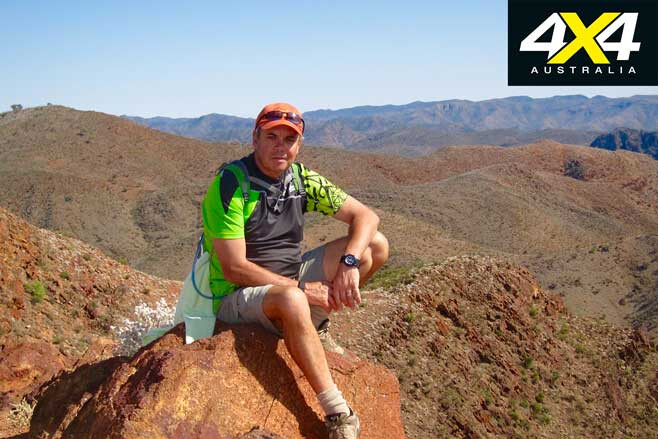
Meet the Expert Name: Mick McCulkin Role: Owner, Australian 4WD Academy Experience: More than 40 years four-wheel driving, as well as stints policing, tour leading and driver training.
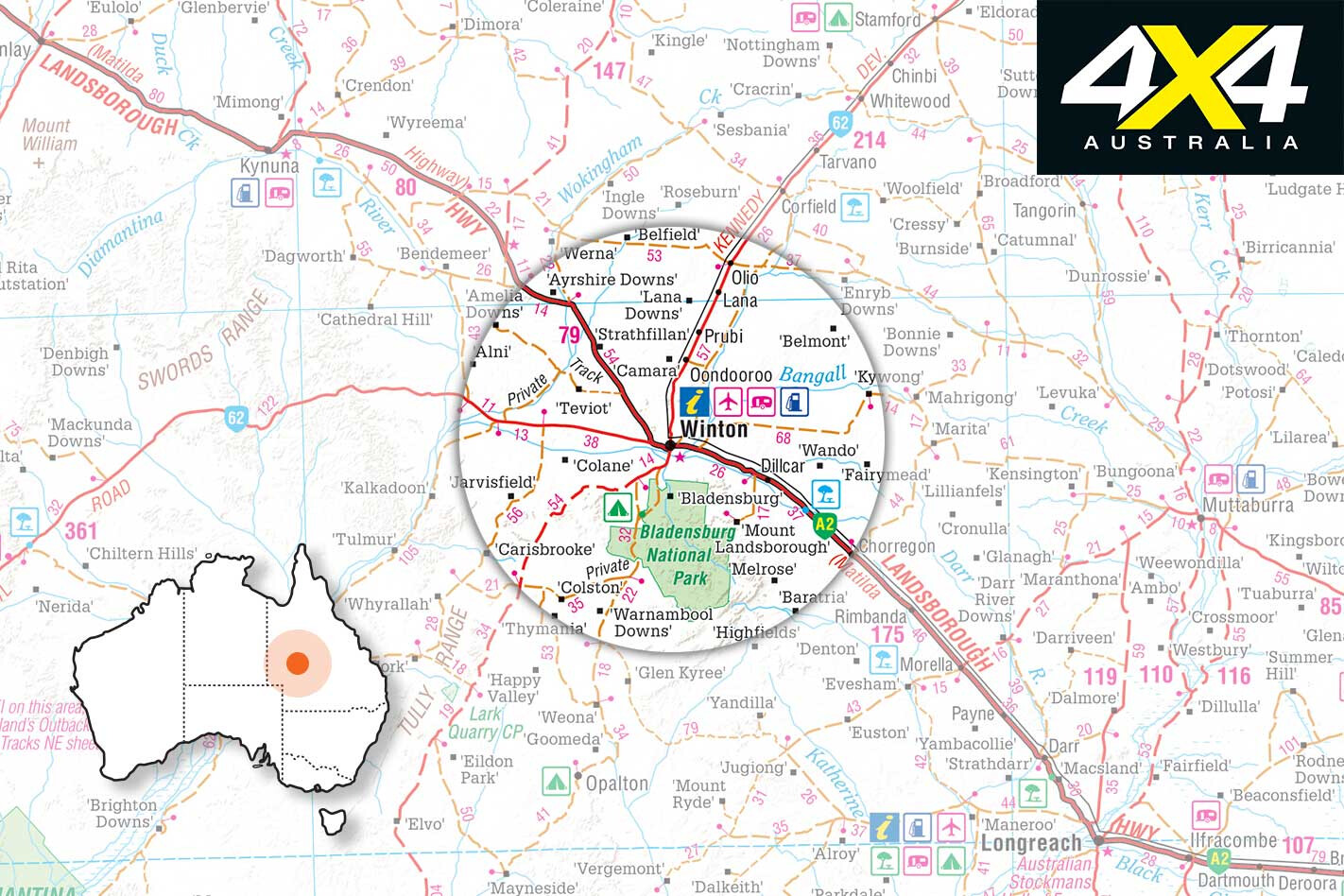
As part of our Outback Queensland odyssey we headed to Winton in far-western Queensland to check out part of the Dinosaur Trail that’s known around the world as the dinosaur capital of Australia. There are actually four parts to the trail; two are located in Winton, which is 1150km west of Brisbane, and the other two are farther north at Richmond and Hughenden.
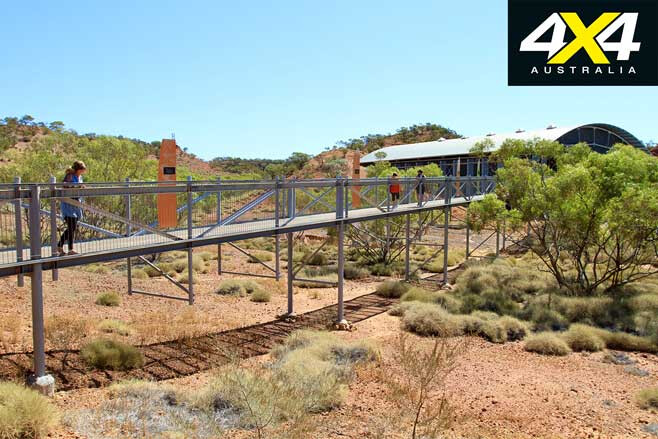
The Australian Age of Dinosaurs Museum is 25km south-east of Winton and has the largest display of Aussie dinosaur bones in the world, plus you can check out the lab where bones are cleaned for display. The other Winton spot is Lark Quarry, about 110km south-west, where you can see impressions of dinosaur footprints in mud from a stampede that occurred millions of years ago.
There’s plenty of fascinating history in the Winton shire and, unofficially, it is the gateway to far western Queensland and beyond. If you want to spend some time here to check out Winton on foot, there are a couple of caravan parks within walking distance of town, in which you’ll find a couple of cool old pubs that date back to 1895; Arno’s Wall, which is a huge manmade wall with quirky stuff cemented in it including the kitchen sink; the Waltzing Matilda Museum; various opal stores; and more.
Head 125km south of Winton and you’ll find the working opal fields and ‘town’ of Opalton, which is steeped in history and still offers the chance to find a little colour if you search in the right places. Being so remote, you’ll need to stock up at Winton as there is no phone service, no fuel (carry enough for a good 400km), no shops and, for the majority of this loop, no help of any kind.
The tar ends about 10km out of Winton and the rest of the drive to Opalton is on wide dirt roads. The countryside is flat, with the occasional jump or rise offering views for the next stint in what is a relentless journey over millions of corrugations. The scrub consists of low mulga trees with scatterings of silver-leafed ironbark across the plains, with stands of Mitchell grass covering the ground.
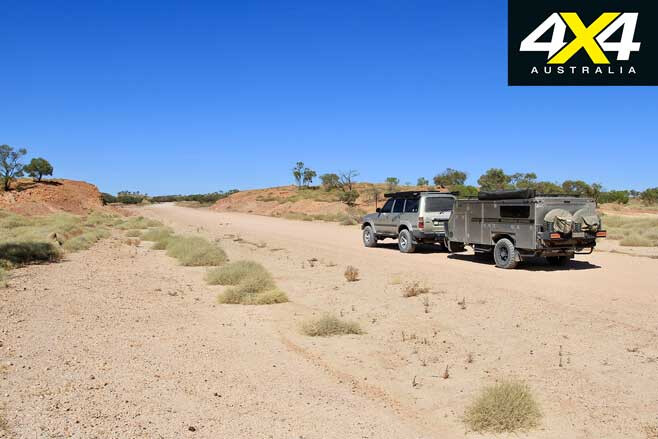
George Cragg found the first opal in the area back in 1888 and a few years later the first mine was sunk. At this time a piece almost three metres long was found here, shaped like a section of pipe. By 1900 there were more than 600 people living here and Opalton was known for the quality and quantity of its precious rock.
Today the town has dwindled to a handful of tough men and women who are still searching for ‘that’ payload. Opalton is also known for its boulder opal, which forms in an egg-like shape; over time minerals pass through this shape to form an opal colour on the inside.
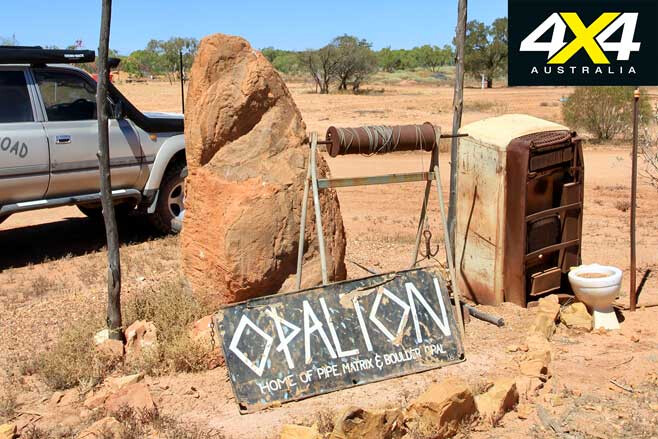
Other than a few shanty shacks and old relics here and there, Opalton doesn’t look like much these days, and that’s the way locals like it; hidden away and hard to find. Camping is at the Opalton bush camp, where for a measly $3 a night you can set up camp, use the bush kitchen and, if you light up the old donkey heater, enjoy a hot shower. We found that if there are a few campers around everybody pitches in to collect wood and take turns in lighting up the boiler.
Scratching around on other people’s property is normally deemed inappropriate around these areas, but most mornings a local will come down to the bush camping area to get a group together for a free tour around the old mines to show how they work, impart the history of the area, show off some old camps and take you to places where you can scratch around for opal.
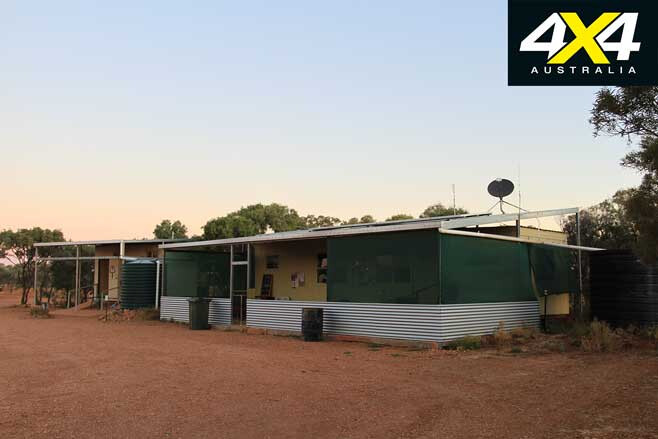
You’ll also see where the old town used to be situated, some unique buildings, and the areas in which the current miners are only allowed to use hand tools (no large-scale machinery). Today the ‘old town’ is just a few relics and signs that point out where things used to be, like the general store, the school, the butcher shop and the miners’ houses.
To get here today takes a good two hours of driving, but getting here 130 years ago must have been one hell of an adventure, walking into what would seem like the middle of nowhere. It’s a bloody harsh environment around Opalton, where months go by with no rainfall and summer temperatures often get towards the 50°C mark.
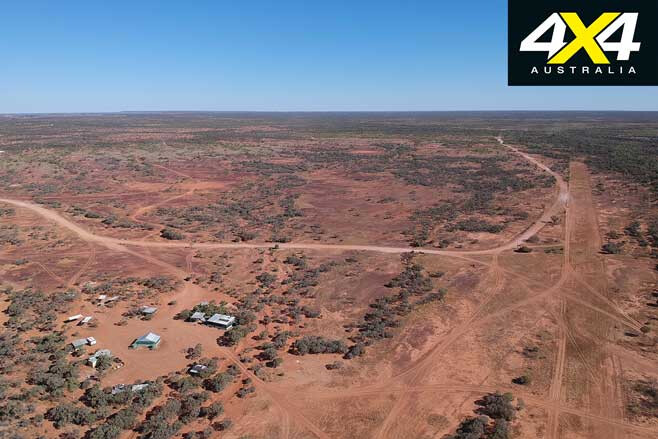
Once a week the town’s 25 or so residents gather at the bush camp for the weekly mail run and a general get-together, as most of the miners’ camps are scattered over 100km². It’s a close-knit community and, even though they might not catch up for more than a week, all the locals still seem to know what’s going on around the place.
The Queensland department of mines has set aside a few acres behind the camping area where anyone can noodle (look for rocks) or fossick. The best way is to take a spray bottle of water and spray the rocks to see if they produce any colour.
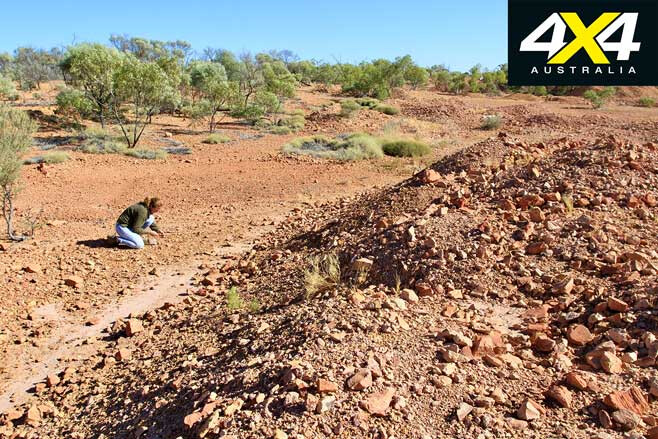
After spending a few days in town and wanting to check out the other highlights of the Dinosaur Trail we headed farther south towards Opalton Creek, which is the only spot in the area where the use of heavy-duty machinery is permitted in the hunt for opal. Here, huge bulldozers carve away at hills and take the tops off mountains looking for bucket-loads of colour, but this comes with high operating costs.
The road south is a prettier one than the road coming in to Opalton, with wide creek crossings and huge white gums lining the creek, along with what seems like millions of red and white termite mounds covering the remaining flat grounds. An hour south of Opalton along Opalton Road is Mayneside Station, where you can explore around the heritage-listed ruins. From here you can head north towards Winton; something like a big V road trip back up Jundah Road.
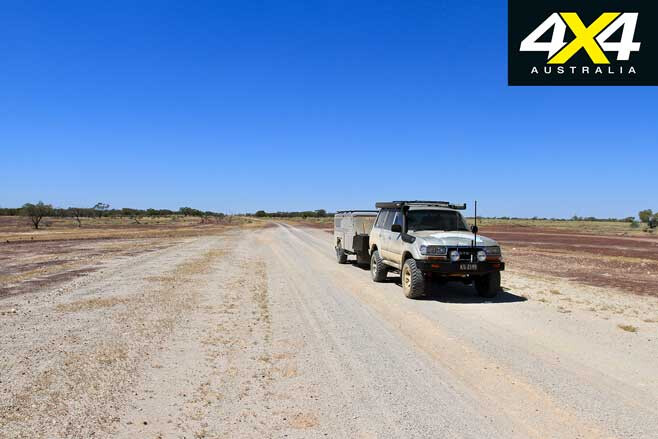
Here the surrounds change to dry and dusty open areas that have little or no vegetation, and livestock has been held here over the years. If you run a good quality GPS, keep an eye out for where you pass over the Tropic of Capricorn; there are no signs on the road, but it’s a bit of a quirky spot to stop for a quick snap.
For the next hours’ drive, Jundah Road remains flat and seems like another never-ending dirt road where the only colour around is red gibber rock under hardened mulga trees. Animal life out here is sporadic depending on the seasons, and we didn’t see any ’roos and only a few crows along the way.
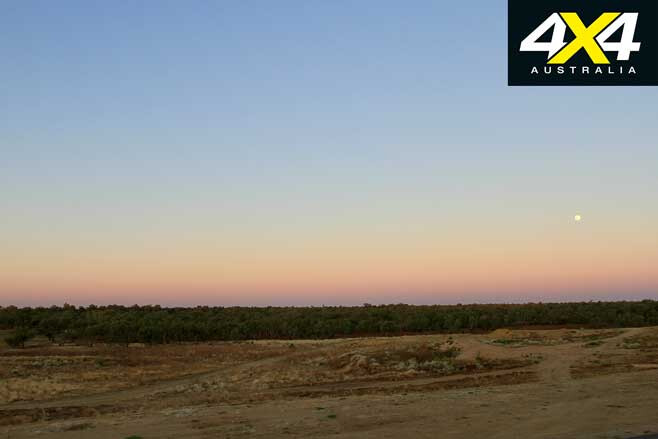
After a while you start to happen upon a few larger jump-up sections where moisture gathers and the landscape changes to taller trees and what seems like tall grasses including Mitchell grass, which is high in nutrition for livestock.
Lark Quarry Dinosaur Trackways is located on this higher ground and is only a few miles off the main road. This is one place that needs to be on your must-see list, as it’s the only place in Australia where evidence of a dinosaur stampede has been discovered. It’s a commercialised place where you can buy food, coffee and cheap souvenirs.
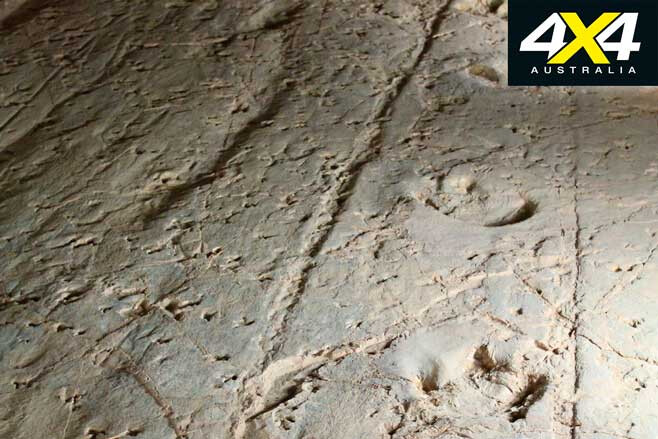
Once inside there’s a short video on how scientists think the stampede occurred, and then you’re taken inside a specially built shed where you can view the footprints in the dried mud. Volunteers run the show out here and share a wealth of information on this area and anything to do with the stampede. This is a great place for those with an interest in Australia’s prehistoric past, when mega-monsters walked the earth back in Gondwana times.
Heading out of Lark Quarry up to Winton involves another two hours of rough, undulating outback roads, where you’ll need to find your own comfortable speed after dropping some air from your tyres. The entire trip is doable with a camper trailer, but you’ll need to be prepared for a good 400km of outback roads that rarely see any maintenance.