
While many Cape York travellers rely on GPS for directions, it’s best and more accurate to plan long trips by studying proper maps of the region. The Hema Cape York Atlas & Guide book – or the Hema Cape York map – are both ideal. If you have one and want to avoid the PDR on the return route from the Tip – or the way north – there are alternate routes on the west and east sides of the PDR, most largely ignored by ‘Tick-off the Tip’ visitors.
When coming back from the Tip, one of the best East Coast routes can be taken by turning east on to the Port Stewart Road, 28km south of Coen. Consider visiting Indigenous-owned Silver Plains Station – if open to visitors. They had some great barra fishing and boar hunting there on my last visit a few years back, though it cost me a little.
While it’s named as a ‘port’, Port Stewart no longer functions as one. Previously it was used to unload mining equipment on the muddy foreshores of the Stewart River estuary, from where the machinery was dragged up the steep hills of the Great Dividing Range by horse and bullock teams to the Coen and Ebagoola goldmines beyond.
About 20km back from the boat ramp that now marks the Port, turn south along the coast to Lily Vale Station via the Running Creek track. It runs on private land and is subject to the whims of one owner because, at times, people have encountered locked gates. This was after he got pissed off by grubs leaving rubbish behind, illegal shooting and ignoring ‘no trespass’ signs. It only takes one mongrel to spoil it for all. Just remember that you are a guest in this country, treat it as such.
The Running Creek track terminates on the Musgrave-Lakelands Road. It’s not far to the roadhouse, as there’s no more fuel until you reach Cooktown if you plan to explore some of the most wonderful wilderness country on the lower Cape York Peninsula’s east coast.
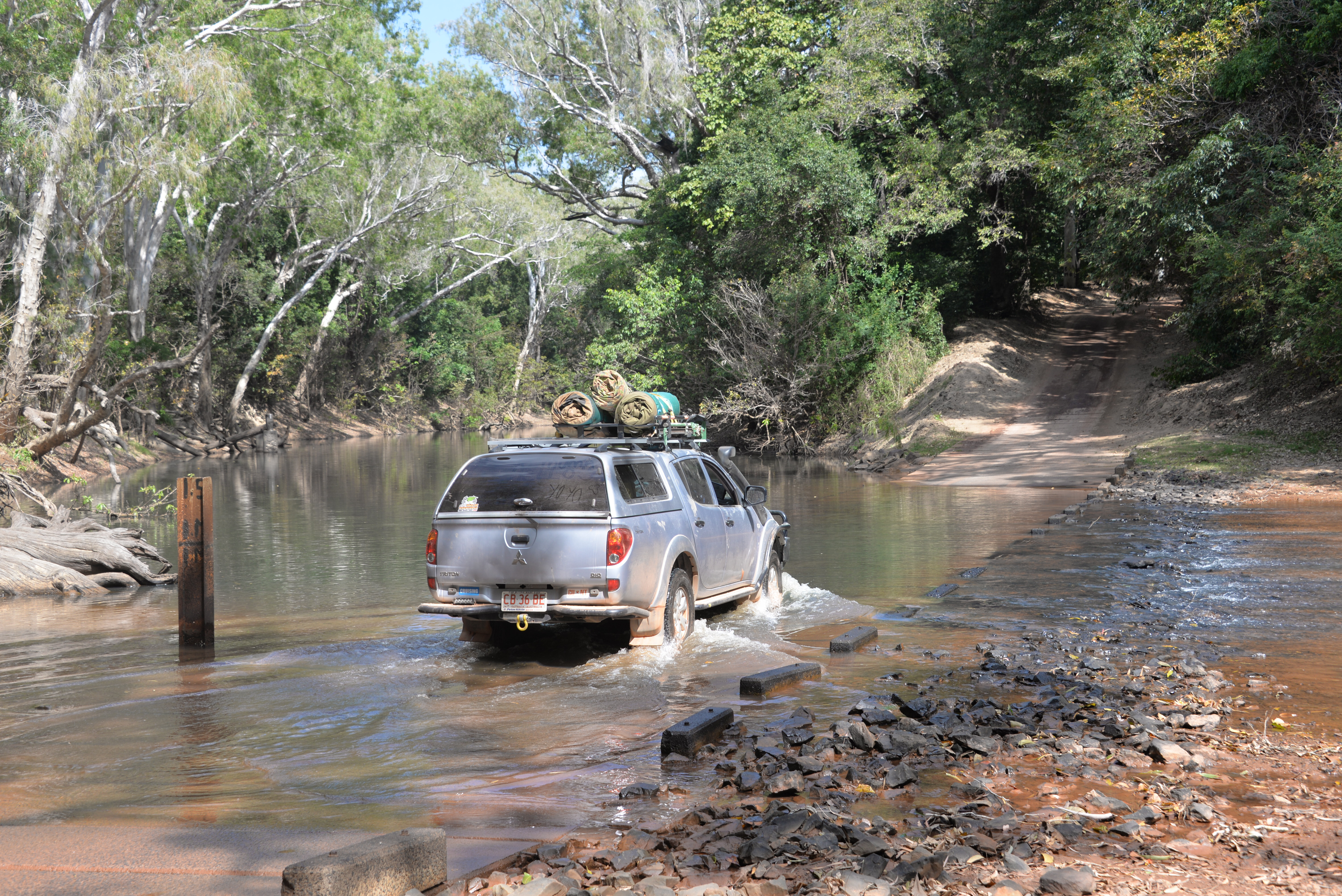
RINYIRRU NATIONAL PARK
You may also wish to spoil yourself for a night at the Lotus Bird Lodge, 24km past the Running Creek track junction. To the east is one of the country’s great national treasures; totalling some 537,000ha, Rinyirru is the second largest NP in the state after the Simpson Desert National Park (now Munga-Thirri National Park). Previously called Lakefield, Rinyirru is amazing, and with eight major rivers running in to the Laura basin – Annie, Morehead, Hann, North Kennedy, Bizant, Normanby, Deighton and the Laura – there are plenty of fishing opportunities to enjoy.
Just remember to book campsites in the park, most are located on fish-rich river and creek pools fringed with verdant tropical vegetation alive with the noise of myriad birds.
The park has a mosaic of flood plains, sandstone escarpments, hills, open monsoonal woodlands, termite cities and stands of the spectacular gebang (Corypha utan) palms, one of our tallest palm trees. It lives for about 50 years before it blooms, seeds and dies. The rivers and creeks shadowed by gallery forests, a type of monsoon rainforest.
The landscape is associated with many Aboriginal cultural sites and myths. Previously the traditional owners were employed on cattle stations – Laura, Bizant, Breeza Plains and Lakefield – which were purchased by the state and declared a park in 1978, 100 years after cattle was first introduced to the region. The traditional owners jointly manage Rinyirru with the QPWS under the CYPAL Agreement.
The park, like others on the Cape, rarely opens by June and often much later. The reason is so that the tracks are not damaged when still damp and that campsites have dried out – at least that is the park management excuse. I personally reckon it’s laziness, as in most years the wet and the flood run-off are well and truly over by May.
The park is endowed with numerous campsites that are well-patronised from the time Rinyirru first opens until the closure of the barramundi fishing season, from November 1 until January 1 on the east coast. Bag and size limits apply. Only the Hann River crossing and Kalpower campsites have toilets.
The fishing is excellent in all freshwater streams. Some streams stop running late in the dry, and anglers must share the water with freshwater and saltwater crocodiles. Canoes and ’yaks are not recommended following a fatal attack on a canoeist in the Normanby River a few years ago. Some campsites are located on tidal arms and many local anglers camp on the tidal flats of Marina Plains, where many issues remain with traditional owners and it’s largely open slather camping, with toilet and rubbish disposal a huge problem.
But the park isn’t all about fishing, many 4WD tracks terminate at remote waterholes, lily-covered billabongs, swamps, old cattle yards and more. Bird watching, bush walking and just relaxing with a coldie under a tree watching crocs basking below the camp, accompanied by birdsong, is hard to beat.
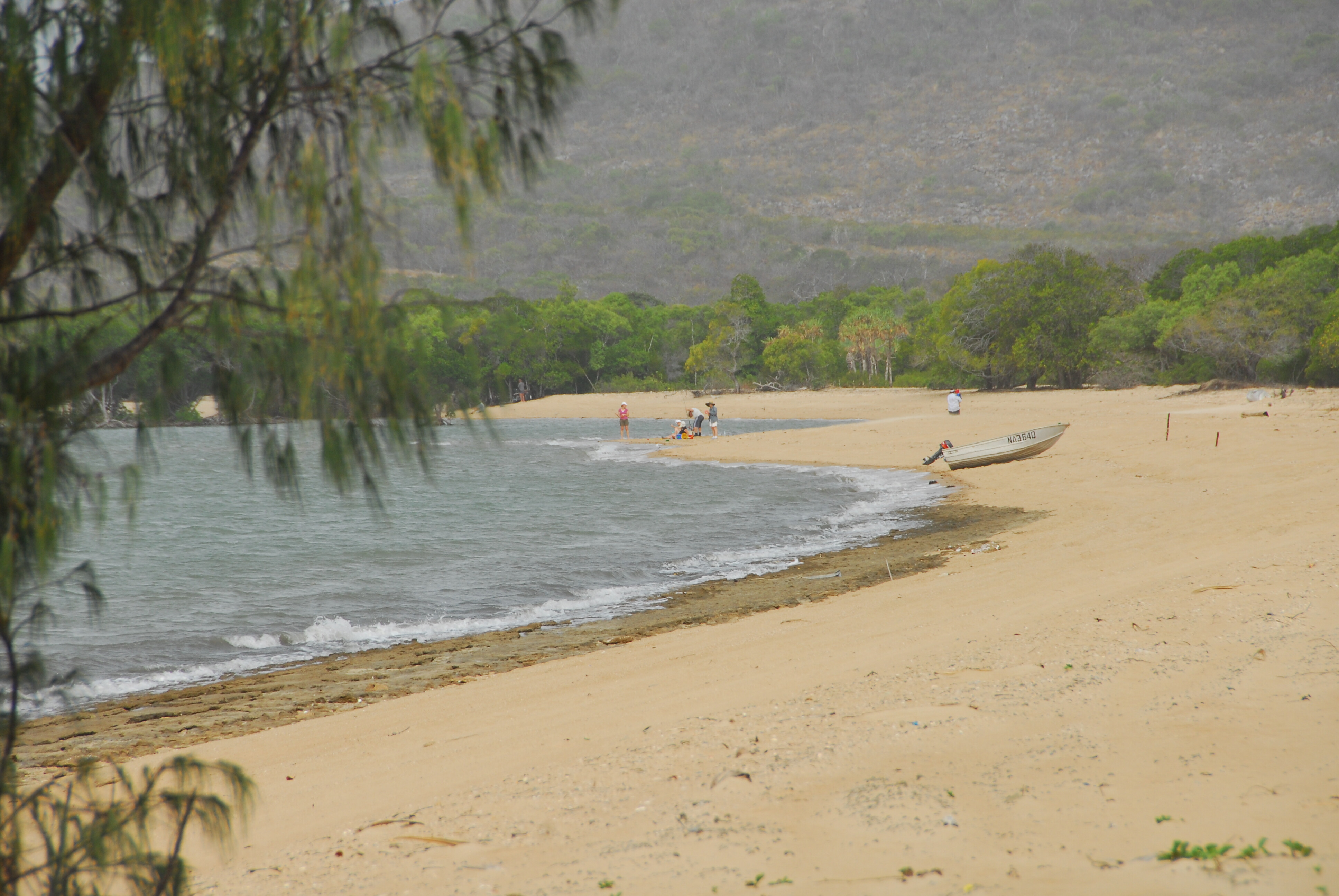
BEYOND RINYIRRU
Accessed from Kalpower Crossing and worth visiting is Bathurst Head on Bathurst Bay. The rocks on the Head have amazing barramundi fishing late in the season.
No netting is allowed in Princess Charlotte and Bathurst Bays, so the chance of catching your own dinner is high.
This is part of Kalpower Station, visit them for details, though the nearby park headquarters may also have information. The station is Aboriginal owned and permission is subject to the whims of the traditional owners, as is the cost. Nothing is ever clear-cut in this region, or farther south at the Cape Flattery dune fields, when it comes to traditional management. Sometimes it becomes all too hard and frustrating …
Head east after crossing the Normanby River on Kalpower Crossing to Cape Melville National Park and Ninian Bay, both have good camping and fishing. Turn north at the abandoned Wakooka Station and follow the signs to the remarkable Cape Melville National Park. En route, visit beautiful Ninian Bay for the night, a sheltered cove with a lovely beach and a large paperbark swamp behind it. On calm days, it’s possible to fish along the seashore to the south and north with an estuary boat. The bay is part of the Cape Melville National Park and connected to Rinyirru by the Jack River National Park, with Kalpower Station lodged between them.
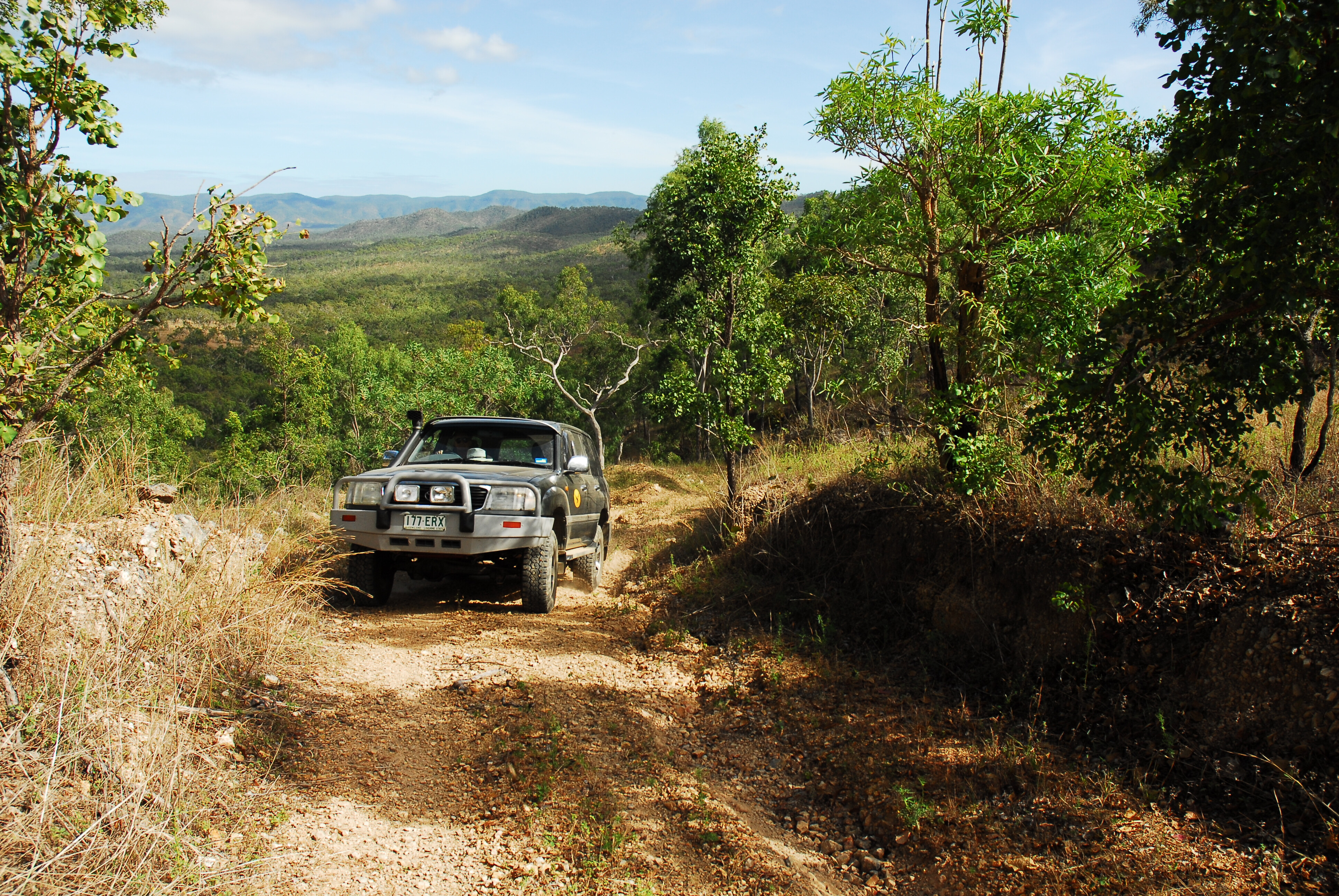
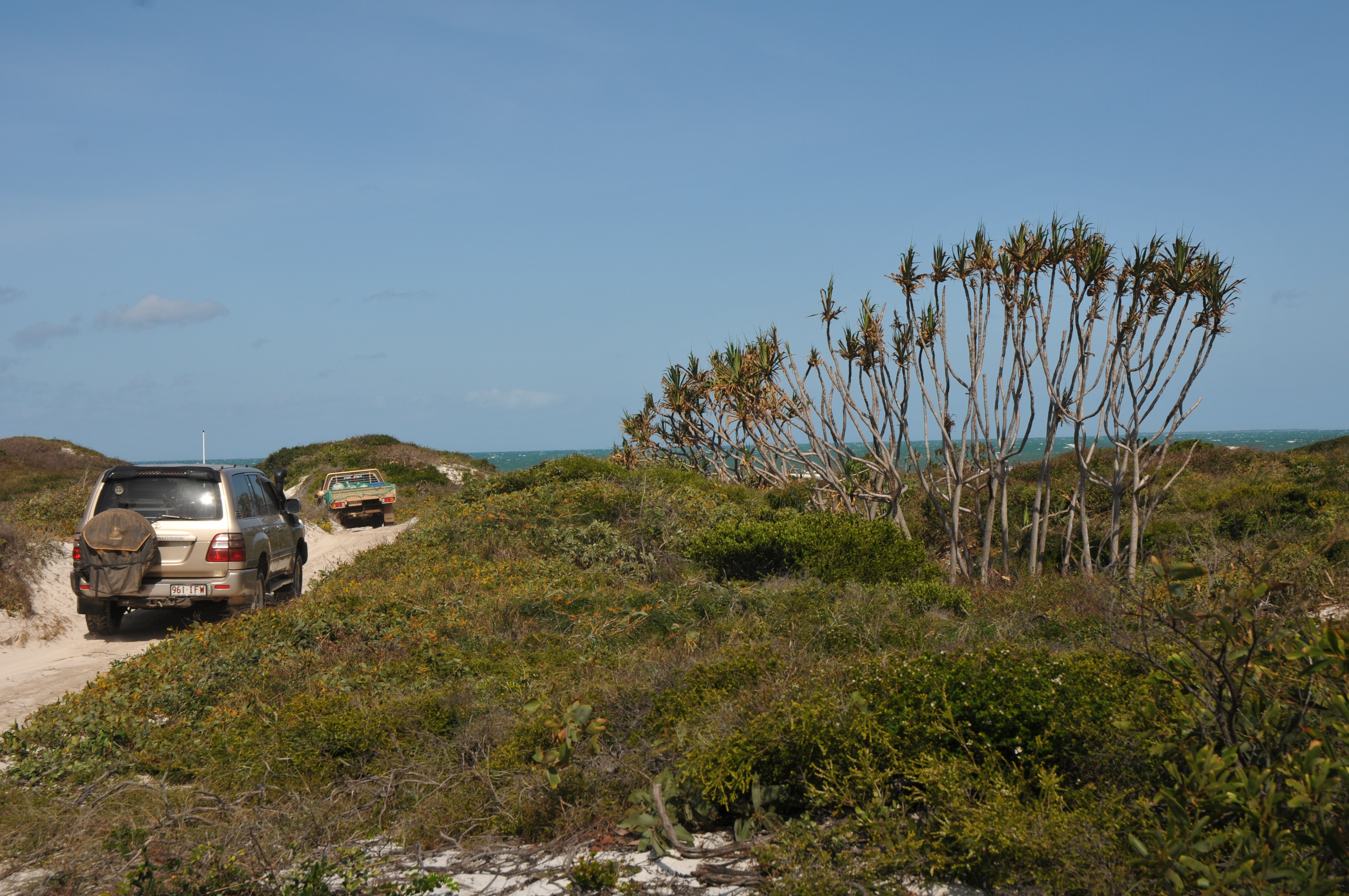
Once past Wakooka the track, or tracks, degrades, with corrugations, washouts and the odd tidal creek encounter. There are long stretches of sandy bits that will test the endurance of trailers, while deep washouts are problematic for many drivers. In some sandy sections several tracks run from the main one to unite farther on. The trick is to pick the right one to prevent yourself from being bogged. Just make sure the tyres are sufficiently aired down.
CAPE MELVILLE NATIONAL PARK
Past the Muck River, the track swings east toward the narrow beach and verdant monsoon rainforest fringe that separates it from the rolling boulder-strewn Melville Range. If you were in awe at the Black Mountains, south of Cooktown on the Mulligan Highway, you will be gobsmacked by the majestic size of the house-size boulders that make up both the Melville and Altanmoui Ranges that fringe Bathurst and sections of Princess Charlotte Bay to the west.
Unlike the black-coloured rocks of the Black Mountain range far to the south, the Melville rocks are light-coloured. This is due to the lack of algae, which finds the Black Mountain rocks more to its liking due the reliable rainfall of the wet tropics. The algae is the black that grows in the pores and surfaces of the rocks, but underneath they’re light-coloured.
THE STORM
Cape Melville has a sad history and an unwanted record. On the evening of March 4, 1899, on a Saturday, the pride of the Torres Strait pearling fleet is at shelter in Bathurst Bay (northwest of Princess Charlotte Bay) and adjacent areas as the ships’ barometers plunged to alarmingly low levels. A storm is coming.
Nervous captains head for shelter with fear in their hearts. There are low, subdued talks as divers gather on deck, watching night fall and an ominous black sky above the Coral Sea alive with lighting and tumultuous, continuous moaning thunder.
The ships batten down, 124 in all: 109 luggers, six cutters, eight schooners, and the lighthouse ship anchored off northwest Cape Melville. To the south six cutters are anchored behind the Howick Island group while the schooner Wanetta accompanied by 11 luggers, is north of Princess Charlotte Bay – and missed the storm.
Torrential rain and high winds buffet the ships as they ride at anchor, even the thunder is drowned out by noise from the wind, spray and hugged waves that slam in to the ships. Sometime between 3 and 5am a tidal wave estimated to be over 15m lifts the ships from their anchors, carries them ashore and smashes them in to the rocks of the stony range behind the beach.
The only ship to survive the carnage is the aptly named Crest of the Wave, but she has lost all of her 13 luggers. Her Captain, W. F. Porter notes that the “glass is still falling at 4.30am on Sunday morning.” Daylight brings a grey, rainy blustered sky with only the dismasted Crest of the Wave riding lonely and alone in the bay. The fleet is no more, the shore littered with ships, broken masts and a handful people walking about in a state of shock.
THE AFTERMATH
The ships near the Howick group were also sunk and the legend of a Murray Island man, Douglas Pitt, endures in the Torres Strait. In those days, most captains and divers had their wives and families with them. Pitt and another man, along with their wives, struck out for Cape Melville. The men and women carried their children on their backs, but all were dead when they reached the mainland.
Many Aborigines who were camped along the Cape Melville beach were also drowned. No one knows how many, but some estimates say more than 60 died; that, along with the 307 ship crew lost, makes the Bathurst Cyclone the most damaging in terms of life in our history. Only a handful of Europeans were among the dead, all the others were mostly Torres Strait Islanders and local Aborigines.
The first ship to arrive on the scene was a steamer, the Duke of Norfolk. Her master refused to take on natives and left people behind floundering in a rolling sea or marooned on islets and rocks. He continued to Brisbane and signalled the bad news to the signal man on Cooktown’s Grassy Hill, but the signal was partly lost due to bad weather and it was not until the ship reached Townsville on March 8 that the tragedy became known to authorities. Help was on its way, but it was mostly body recovery …
The event and its history are largely forgotten by modern travellers who only become aware of it when they come across a small memorial that reveals the night of terror all those years ago. It’s located at the western end of the Melville Range and between its western first outlier, about 100m from the beach.
CAMPING
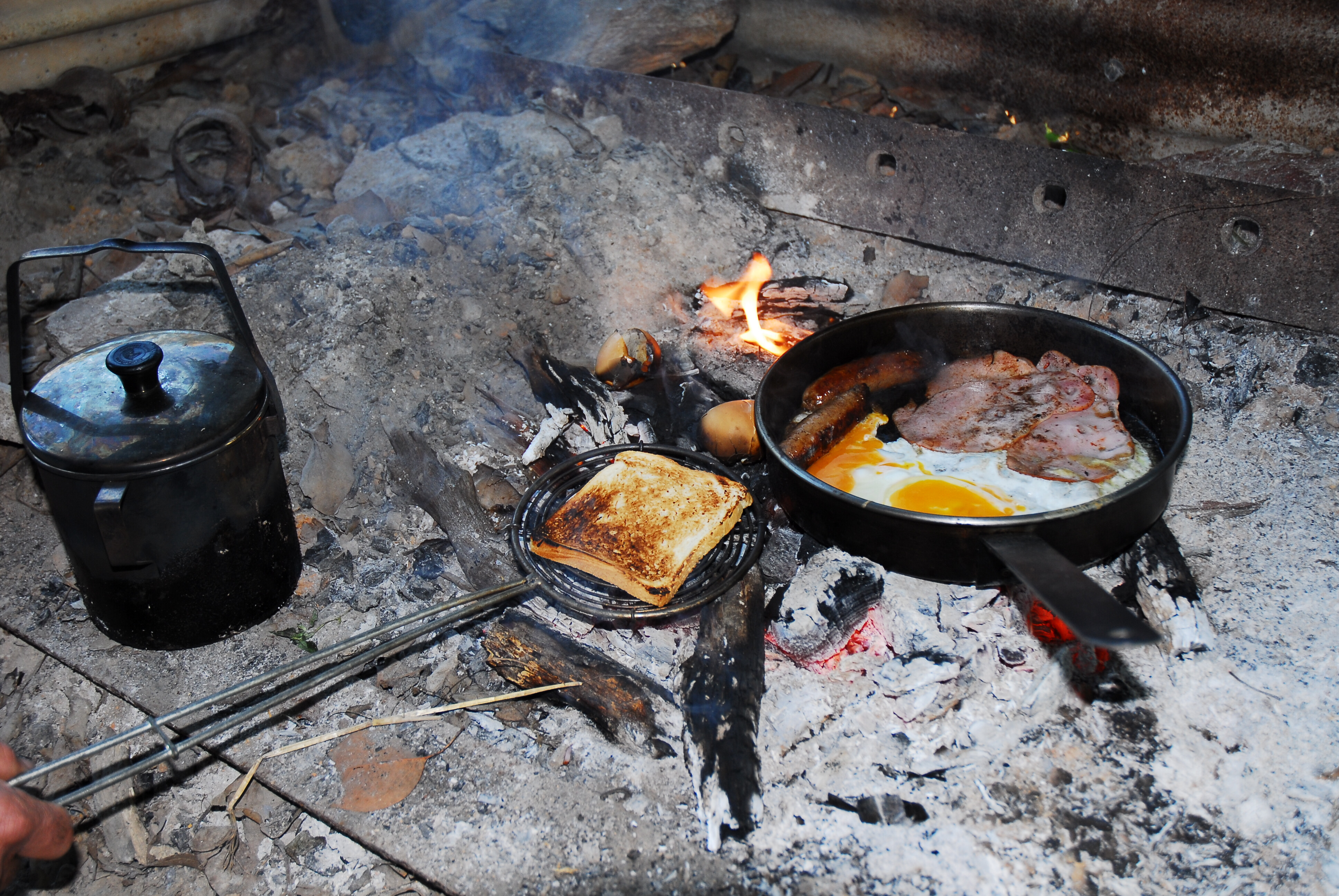
There are no organised campgrounds on the beach, just pick a spot under the shady fruit trees that fringe it and crap in the wood beyond. However, be aware that when the fruit is ripe, fruit bats and birds will crap all over your camp and vehicle – day and night – it’s called ‘revenge crapping’ up here …
The fishing can be great or bad, but that is fishing all over, even on the Cape. There is a freshwater creek and a spring located on the base of the boulders on the west side of the range. It’s crossed before you reach the beach. The water from the spring is soft and drinkable and invites some swimming.
Take a hike along the base of the rocks and you may find trochus and pearl shell, pieces of ship’s timber, rusty metal and more, all that remains of the ships that were smashed on to the rocks by a 15m tidal surge, the highest ever recorded in Australia.
Cape Melville National Park is remote, wild, beautiful and often dangerous, with a crocodile attack that injured two people occurring a few years back – but don’t let that stop you going there.
HEADING SOUTH
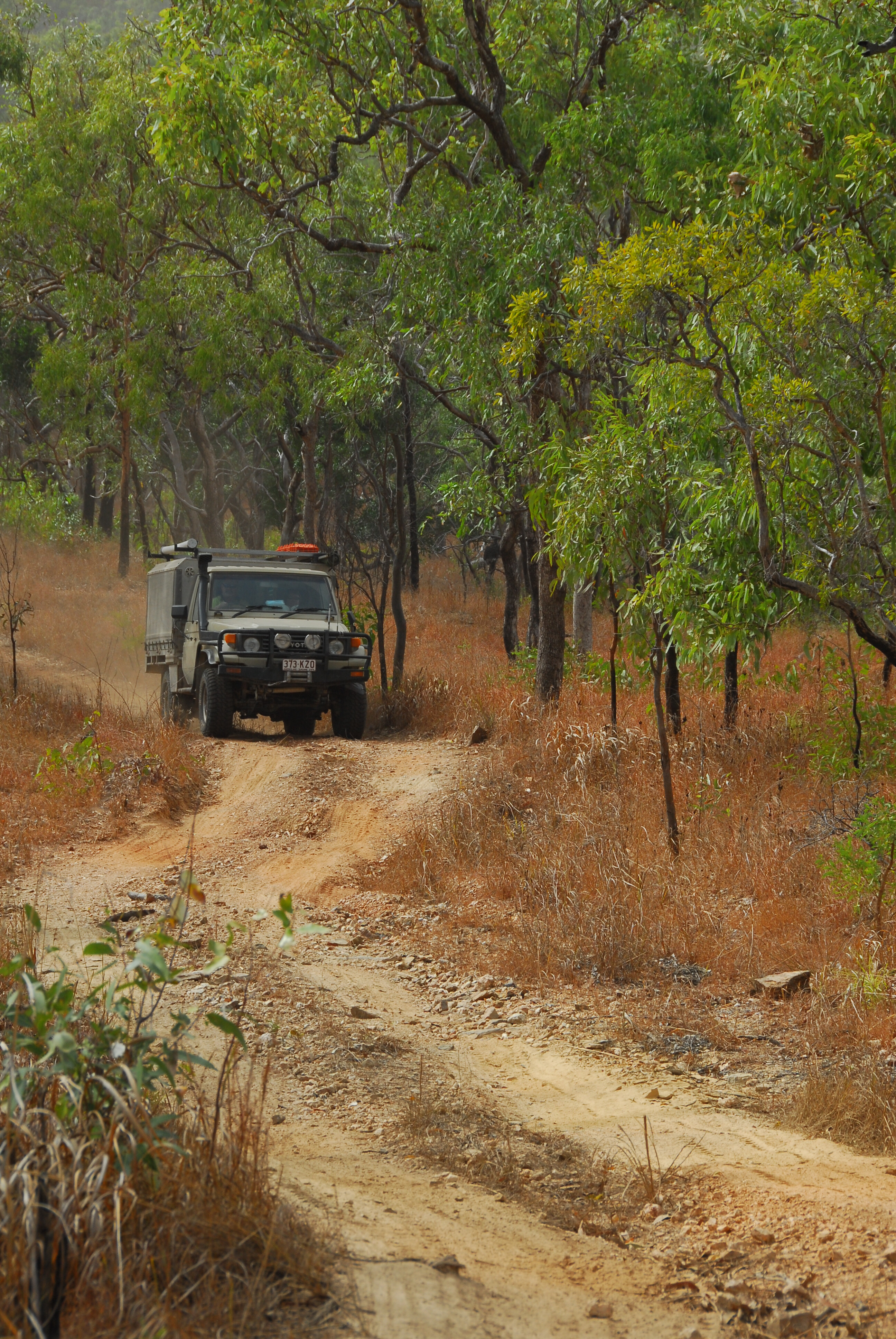
Head south from abandoned Wakooka Station junction on to the Starcke Track to Cooktown. The track is rough with stony ridges, washouts and sections of challenging deep bulldust. There are campsites on the mouth of the Starcke River and a boat ramp. Note that security is a problem here.
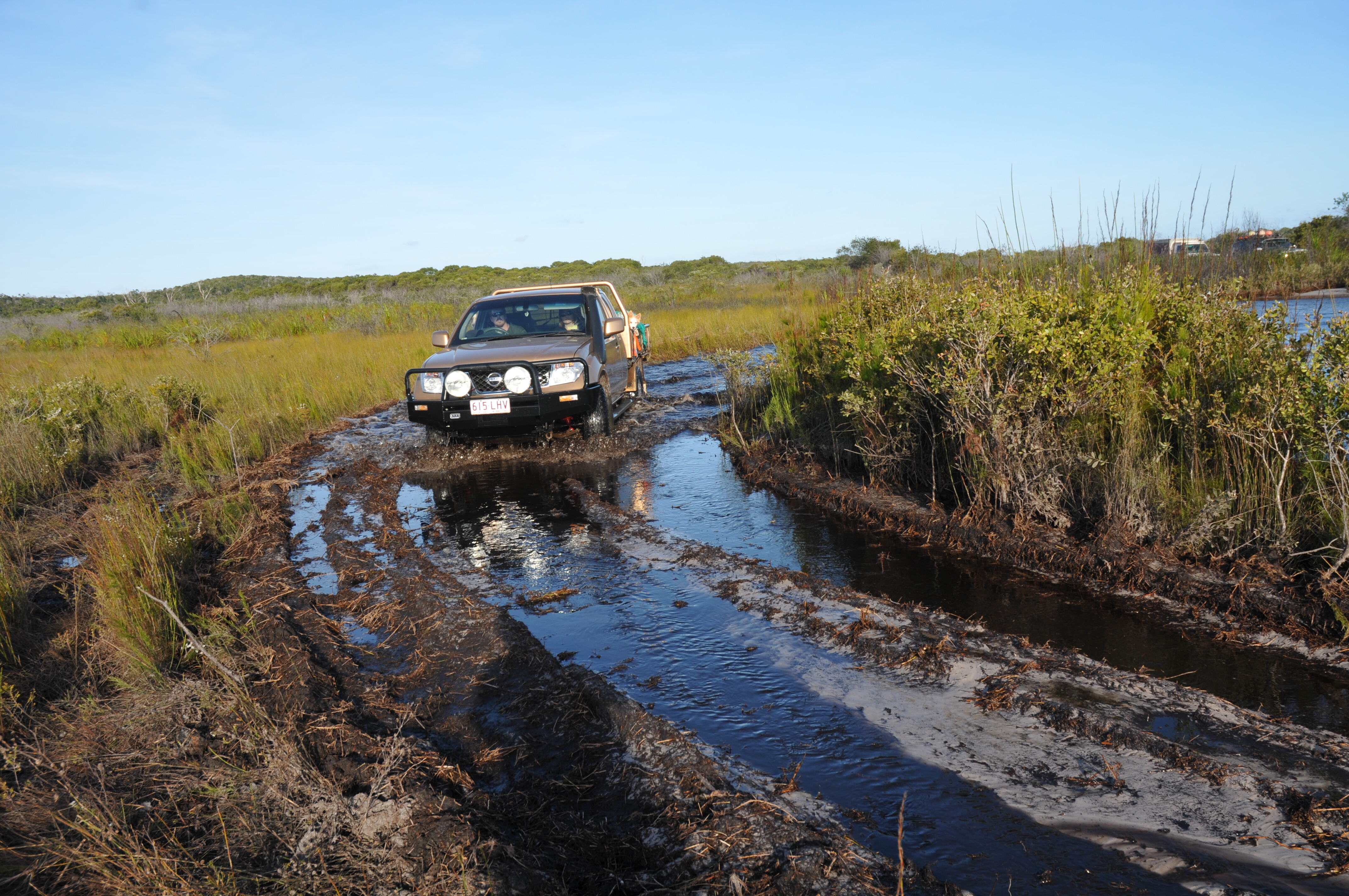
Farther south, visit the amazing Cape Flattery dune field and en route camp on wonderful Elim Beach at Hopevale. The unmarked turn-off is at the Mount Webb National Park, a few hundred metres south of the oil palm plantation. The track to the beach has swampy sections and deep creek crossings before it ascends on to the 15km-long beach. People camp at the mouth of the Morgan River and on sheltered Connie Beach on the north side of Cape Flattery. Make sure your vehicle fits in the conveyor tunnel or you may lose the hood rack. Visitors are not welcome at the sand mine site and workers village.
Enjoy the wonderful beach camping at Elim Beach, via Hopevale, before heading back to civilisation.
At Cooktown you have a choice of heading home on the Mulligan Highway via Mareeba, or turn east past the Black Mountain National Park – and is the northernmost border of the 9000km² Wet Tropics World Heritage Area that ranges all the way south to just north of Townsville. Don’t miss beautiful Bloomfield Beach and the mouth of the Bloomfield River at Ayton. Here you have a choice of exploring the western edge of the Daintree Rainforest, via the CREB Track, or the coastal section from the Bloomfield Track. If it’s raining, forget about the CREB track and let common sense prevail.
But forgive me, did I mention all those side-tracks that divert from the routes we have just explored? Oh well, you will just have to go back another time and do it again. Just another excuse to come back … ya hear!
HEADING NORTH
Of course, you can start your Cape York adventure from Cooktown and follow the scenic Starcke Track, via the Battle Camp Track, north to Port Stewart, via Melville and Rinyirru National Parks. Just remember there are no facilities or fuel on this route until you reach Coen, or by diverting to the Musgrave Roadhouse and missing the Running Creek Track. You may have to carry extra fuel if you don’t have a long-range tank.
An alternate route is via the Battlecamp Road to Rinyirru NP on the PDR, if you wish to avoid the Starcke Track and the Cape Melville region.
Note: these tracks and directions may be confusing and it’s recommended to read this along with a Hema Cape York map, where all the tracks’ information is crystal clear.
FOR decades Toyota’s LandCruiser has been the be-all-to-end-all off-road, the top dog, the king of the mountain and the go-to option for anyone who likes their beer cold and their dirt red. Looking back, it wasn’t hard to see why. Affordable, capable, rugged, reliable, comfortable, and endless other adjectives. The point is, if you wanted to drive tough tracks, camp on the beach with your mates, or set off for the big lap, the LandCruiser was the clear choice.
Over the last 10 years we’ve seen that drastically change, and it’s all thanks to Swiss Army knife builds like Blake’s oh so clean and twice as capable N70 Hilux. As LandCruisers got bigger, heavier and more expensive, the Hilux has stepped up and filled every role perfectly, and young blokes and blokettes all around the country are taking notice.
“I think they’re a great all-rounder,” Blake tells us. “I wanted something that could drive long distances comfortably, and tackle any tracks I wanted to take on.”

Like most young blokes’ rigs, Blake’s 2014 HiLux has been a slow evolution as ideas and funds slowly morph the build, but the current iteration is no doubt the most impressive. Starting from the ground up, Blake’s gun-metal grey ’Lux is now sitting a full five inches closer to the clouds with a combination of components and creative thinking. Up front, Radflo 2.0 diameter struts fill each wheel well, with Phat Bars blacked-out coils bumping their ride height up three inches over stock. The swaybar has been binned for more travel, and PSR upper control arms have been fitted to make the most of the available suspension travel. Blake’s also fitted a Phat Bars diff drop to give the OEM CV joints a fighting chance at life.
Moving back, Blake’s binned the Toyota leaf springs and swapped in a set from an RG Holden Colorado, their longer length matched with 190mm extended shackles from Phat Bars gives the ’Lux a taller rider height but, more importantly, a smoother ride and increased travel. A 50mm body lift from VMN rounds out the package.

Of course, all that ground clearance is good for nought without the ability to get traction to the ground and, in that regard, Blake’s held very little back. Each corner of the ’Lux now sports a set of aggressive Maxxis RAZR mud tyres weighing in at 305/70R17, or a hair under 34 inches tall in the old money. To fill the guards out perfectly and help keep rotating mass down, he’s wrapped them around lightweight American Racing ATX 202 alloy wheels with a -12 offset bumping out the track width slightly. Larger diameter DBA drilled and slotted rotors help reign in the extra rolling mass to ensure the big ’Lux pulls up quicker than a stock one. Up front, Blake’s ‘massaged’ the pinch welds on the firewall to ensure the tyres don’t foul on full bump, and he’s given the cab mounts a haircut while the plasma was fired up. In the rear, traction is never an issue thanks to an ARB Air Locker ensuring both mud tyres get equal drive.
As the ’Lux is Blake’s daily driver and beach-camping weapon, reliability was paramount, so under-bonnet modifications have been kept fairly minimal. Between the chassis rails lies Toyota’s near legendary 1KD engine, a 3.0 litre four-cylinder common-rail turbo-diesel capable of unreal performance with minimal modifications, and Blake’s unit is backed up by a five-speed automatic box for ease of use on- and off-road. It’s breathing far easier now with a three-inch mandrel-bent exhaust and high-flow catalytic converter picking up spent gases straight off the turbo and setting them free right before the rear diff; a Phat Bars snorkel ensuring the intake side flows just as freely.

The guys at G&L Performance wired up a HKS F-CON iD, a piggy back aftermarket engine control unit, before strapping it to the dyno and winding the wick up to 180hp and 550Nm at the rear wheels. Inside are twin pillar-mounted gauges helping keep an eye on boost levels as well as exhaust-gas temperatures, while a ScanGauge monitors everything from engine coolant temperatures to fuel consumption.
Moving to the outside and the solid foundation of performance and capability starts making for a seriously capable do-it-all platform. At the tip of the spear, so to speak, is a Muzzbar from SEQ Fabrication. The high-clearance bar not only improves approach angle, it also armours up the headlights and radiator support in the process. Tucked inside the bar is a 12,000lb winch, while Stedi Type-X lights in the main hoop light up country tracks with the power of 1000 suns, and are teamed up with a set of custom headlights for a little extra bling. Moving down the flanks and there’s a combination of off-the-shelf and custom again. Underneath is a full suite of under-body armour from Phat Bars covering everything from the radiator to transfer case in plate steel, while up on top a modified ARB platform rack has been tucked in tight to the body, trimmed down to minimise overhang and fitted up with a 130W solar panel feeding down into the Redarc dual-battery system.

Moving up the back and you’re face to face with an absolutely epic home-brew tray Blake’s pieced together. He’s used a combination of 2mm-thick steel box section for the frame and uprights, with 3mm alloy checker plate giving a flat deck for a floor. Underneath, colour-coded toolboxes from SEQ Fabrications give handy storage space while up on top of the uprights, a Motop rooftop tent gives him a quick and easy place to rest his head at night up out of the sand; optional roof racks give a home for surfboards on beach runs. Down below, a hard-mounted space case on the passenger side stores the electronics, light switches and spare parts. On the passenger side an ARB Elements fridge keeps the beer cold, and a slide-out kitchen next to it provides ample prep space for cooking up a campfire feast. Onboard air and a water tank and shower set-up complete the camping package.
With Blake’s full build coming in cheaper than you’d pay for a similar-year model LandCruiser, it’s not hard to see why the younger generations are flocking to the Hilux in droves. Comfortable, capable, infinitely customisable, and a ticket to endless adventure, the Hilux has well and truly earned the crown for the new go-to 4×4.

TAKE CONTROL
WHEN pushing an engine past the manufacturer’s performance levels, the aftermarket normally come face to face with a whole bunch of roadblocks. In some cases it’s mechanical: the turbo can’t push any harder, the injectors are at their limits, the crank will turn into a pretzel if you make it spin one RPM faster. Other times the drivetrain is capable of producing more power; it’s the electronics that are holding it back. This is where tuning comes in to play.
The approach to tuning the factory (or upgraded) set-up is largely limited by the factory ECU’s ability to be customised. In some cases they’re easy to tap in to and tune, other times they’re locked down harder than Fort Knox.
A ‘stand-alone’ engine management system replaces the entire factory computer, where as a ‘piggyback’ ECU works in conjunction with the factory computer. The right unit for you is a combination between your vehicle’s requirements and your tuner’s ability to safely use potential upgrades.
It would be a rare privilege for anyone to be among the first people outside of the manufacturer’s company to drive an all-new vehicle. But that’s just what a select group of Australian motoring journalists were when they gathered at the Australian Automotive Research Centre (AARC), near Anglesea in Victoria on a cold, wet day back in May.
Such is the importance of the Australian market to Japanese auto-giant Toyota when it comes to its four-wheel drive vehicles, that this small group of press were the first non-Toyota employees to drive one of its LandCruiser 300 Series prototypes. Rarefied ground indeed.
Toyota Australia engineers had been working on the 300 Series program for more than seven years up to this date, because back in Japan, they see Australia as the ‘Home of LandCruiser’ and the local terrain as the perfect ground for testing.
UPDATE, October 14 2021: The LC300 has now made its proper Australian debut, and you can read and watch our full first-drive review here.

CUSTOMER FEEDBACK
Before a spanner was turned to build a prototype, or a sketch drawn of what a new LandCruiser might look like, Toyota looked hard at what the new car needed to be. For this they went back to the customer and spoke to many existing LandCruiser owners in all parts of Australia to see why they owned a LandCruiser, how they used it, and what they might want from a new one.
“It’s all about the customer. What they do with it and where they drive it,” said TMCA Chief of Evaluation and testing, Ray Munday, as we gathered in a secretive shed that Toyota leases full-time at AARC.
What came from this research was that Australian LandCruiser owners wanted a diesel engine and they bought a Cruiser for its durability and comfort when driving over long distances.
The Chief Engineer for Land Cruiser, Takami Yokoo, said that when he participated in a ’round Australia durability drive of Toyota vehicles back in 2014, he found the 200 to be: “Much more tiring to drive than I expected. When driving on corrugated dirt roads or the seemingly endless Stuart Highway, you have to pay constant attention to how the car handles. It was my desire to resolve this that inspired manufacturing cars with the development team.”

The 200 Series was the benchmark for the new Cruiser, and any new Cruiser should be as capable as the last one. The chief engineer also mentioned the 80 Series as a ‘guidepost’ when developing the new car. The 80 is still regarded by many long-time LandCruiser owners as being the best of the breed.
Feedback from owners revealed they were happy with the size of the 200 Series and, as such, the 300 remains very similar in overall dimension. This came in handy when building prototypes of the new vehicle, as they were able to adapt a 200 Series body to the 300 chassis and drivetrain with limited modifications.
Such test ‘mules’ have been running in Australia for the past seven years and, while most of that development driving was conducted on private properties and facilities such as the AARC, there were times when they were needed to be driven on public roads. Footage shows a 200-bodied prototype travelling in what appears to be the Victorian High Country, where the public are driving by totally oblivious to what was beneath the 200 skin. Other testing locations included Australian deserts and tropical regions.

While Toyota has always had a few ‘favourite’ properties in Central Australia that it uses for R&D and testing, COVID-induced lockdowns and border closures made using them more difficult and pushed the engineers to find private properties they could use in rural Victoria.
A private test facility like the AARC is made for such classified testing and is used by many new-car manufacturers. On entry, you need to leave any phones, laptops or cameras at the gate and sign a non-disclosure agreement regarding anything you might see or drive within its grounds.
On this day, Toyota had the only 300 Series prototype in the country for us to drive, with a pair of 200s along for comparison. The prototype had shed most of its camouflage but was still covered in a matte-black vinyl wrap, so we were able to get a good look at what was to come. This was before the official images of the 300 were released; although, a litany of leaked images and spy photos left little to the imagination.

GENUINE ACCESSORIES
A few things that were of immediate interest before we drove the car were the alloy bullbar fitted with a Warn winch. The winch-compatible bar was a prototype and we confirmed the 300 will be available with the winch option in the Toyota Genuine Accessories bar. Another popular accessory on LandCruisers is a tow bar, and the 300 has the tow bar wiring already integrated into its wiring harness.
Toyota developed its range of Genuine Accessories alongside the development of the 300 Series itself, to have the best integration of them on the vehicle. This is opposed to creating them after the car was finished and making them fit.
The other interesting thing was the tyres fitted to the car. They look small and, in fact, are smaller than those used on the 200. Toyota has chosen to reduce the size of the standard tyre on LandCruisers to a 265/65-R18. That’s down from a 285/60-18, which won’t be popular with owners looking to legally fit larger tyres on their 300. Toyota worked with tyre companies to develop tyres specifically suited to the 300.

BEHIND THE WHEEL
Inside the prototype 300, parts of the dash were missing and the rear passenger footwells were full of data-logging equipment hooked up to a multitude of sensors via a nest of cables. It was explained that such prototypes are some of the most valuable cars on the planet, not simply for the fact that so many of the parts on them are handmade and fitted, but also the data they have attained from the many thousands of kilometres of testing.
Obvious were the new dashboard with its huge 12-inch screen, the stubby gear shifter for the 10-speed transmission, and the dials and switchgear for the multi-terrain selector which are easier to access than they were in the 200.
After a rock toss to determine who would be the first person outside of Toyota to drive the 300, we paired up and were sent out to the facility’s many and varied tracks. I didn’t win the honour but was sure to team up with the winner, so I would be next in line at the first driver swap.
There were four driving exercises set up for us to trial: loops around the high speed test track (both towing and not towing); a winding road course; a gravel road course; and finally a steep off-road hill climb. We sampled these both as passenger and driver, and with the two 200s for comparison. One of the 200s was a bone-stock Sahara, while the other was fitted with a bullbar and roof rack – a bit more like the 300 prototype.

ON TRACK
Sitting behind the wheel of the 300, it instantly feels bigger than the previous car. Switching between the two and the feeling becomes more obvious; although, it’s not so much bigger but you do sit lower in the 300, which gives the feeling of more space. Being relatively tall I always drop the seat to its lowest position. In an LC200 that has my eye level in the top third of the windscreen, while in the 300 my eyeline is more centred on the screen. With more space around your head, the cabin feels bigger.
Siting in the second-row seats and the lower position is also apparent, but leg room is about the same in the 200 and 300 vehicles. The cargo area of this vehicle had stuff in there, but it was evident the third row now folds flat into the floor rather than up to the sides as it did in the 200. We were unable to have a closer look at it.
Pulling out on to the high-speed loop and the familiarity with the 200 dissipates as there’s no rumble of a V8 diesel engine, but a smoother and more subdued tone from the 700Nm/227kW 3.3-litre V6 diesel. It feels more sprightly than the V8 as it seamlessly shifts through the ratios in the 10-speed auto to reach our 120km/h speed limit. That feeling is reinforced without having actual data once we get into the 200 for the same laps.
What is also evident is the feeling of lightness in the 300. Toyota says that the new car is up to 200kg lighter than the 200, thanks to the use of aluminium panels and other weight-saving methods. Toyota also moved the engine back in the chassis and dropped it lower to lower the centre of gravity. The 300 felt more nimble, especially over the front axle which steered more directly and precise in a simulated emergency lane change as we headed down the track’s back straight.
This improved stability should make the 300 safer, more dynamic and easier to drive on the open road.

TOWING
Next up we hooked an enclosed trailer behind the 300 that we were told was loaded to weigh 3000kg. Pulling out on to the same road loop you could certainly feel the weight there as expected. The engine produces a more guttural roar under load now, and the transmission works wonders to keep the V6 diesel in its peak torque range.
We were limited to 80km/h with this load and the new Cruiser made easy work of the task. It pulled, steered and stopped with the prowess you would expect anything towing such a weight to.
Same trailer behind a 200 and the engine lets out its sweet V8 grumble as it takes on the load. You feel the transmission shifts more harshly, with a wider space between its six ratios compared to the 10-speed 300. It makes harder work of it and requires a heavier foot on the accelerator and more inputs on the steering wheel to keep it tracking straight and through the long bends. The 200’s V8 engine might have a more relaxed gait than the busier V6, but, overall, the 300 is more relaxing to drive than the older wagon.

ROUGH ROADS
More relaxing is also how you would describe driving the 300 over rough and rutted roads when compared to the LC200. The new car retains the same coil-sprung independent front suspension (IFS) and coil live-axle rear end as the 200, but it is totally redesigned as fitted to the new TNGA chassis. Significantly, the trailing arms locating the rear axle are placed in a more parallel design in the new car, and this both helps control the movement of the rear end while also delivering more rear wheel travel when off-road.
The fresh suspension design is joined by a new version of the KDSS called E-KDSS. As the name suggests, it’s electronically controlled rather than the simple hydraulic KDSS system in the 200, and it can fully disconnect the front and rear sway bars to allow the individual wheel the most articulation when driving over large ruts and undulations. This helps keep the tyres in touch with the ground to improve traction.
The new chassis and suspension better controls the mass of the LC300 when travelling over both sealed and unsealed roads. It is no doubt helped by the reduced weight of the vehicle and the lower centre of mass, and the biggest difference is in the control of the rear end.
Yes, the rear will still step out over pot-holed and corrugated, low-friction surface roads, but not near as bad as a 200 does. Only the lighter unsprung weight of an independent suspension design would fix this, but that would restrict the articulation of the rear axle – and Toyota engineers wanted to improve this rather than compromise it. For this we should be thankful.
The improved levels of control and balance in the chassis make the LC300 easier to drive and more relaxed; as was Yokoo-san’s intention after his experiences driving in Australia.

OFF-ROAD
The off-road test was conducted on a hillside, where the marked course had us weaving up and down the slope. Unfortunately rain in the days before this had made the clay very slippery and limited the ability of the highway tyres fitted to the LandCruisers.
The engineers suggested we try out the hill descent control for the downhill. In the past, the Toyota HDC system had been noisy, jerky and off-putting, but the use of a larger accumulator in the system on the 300 has smoothed it out and made it bearable. It works well but is no replacement for good low range gearing and engine braking, both of which the LandCruiser has.
The turn-control system is also improved and we used that on the tight turn at the bottom of the hill. This system locks the inside rear wheel on tight turns to decrease the turn radius. It was helped here by the slippery surface.
A rutted hill climb is always the best test of a vehicle’s tractive ability and wheel travel, but the track deteriorated quickly as vehicles drove up it and broke through the crust, leaving a slippery slope underneath. The more cars that went up, and as the tyres clogged with mud, the worse it got, until it became impassable on the standard line.
But the 300 went up and showed its increased rear wheel travel and improved traction-control system worked very well. This car should be unstoppable with a decent set of tyres and its front and rear lockers engaged.

MORE TO COME
The test of the 300 we got on this day was only a teaser and, as honoured as we were to be a part of it, we’re still left yearning for more and looking forward to getting some more wheel time in the 300 over many dusty kilometres.
With news since detailing the new LandCruiser’s expanded six-variant model range, starting from the $89,990 GX through to the $138,790 Sahara ZX, we can’t wait to put the full line-up through its paces later this year.
The Nissan Patrol has reached 70 years in production, with the Japanese manufacturer celebrating six generations of the off-roader which first arrived locally in 1961.
Launching in 1951 as Nissan’s answer to the Willys Jeep, the Patrol has morphed over the years into the off-road focused wagon we now know. Gaining the comfort of coil springs in 1987 when the fourth-generation GQ was launched, it earned 4×4 Australia’s 4×4 of the Year award and making its way onto our list of top 10 4x4s.
While the GQ was the Patrol’s coming of age in the Australian market, the GU saw further success after its debut in 1997, winning the 1997, 2001 and 2002 4×4 of the Year awards before ultimately going out of production after 19 years in 2016.
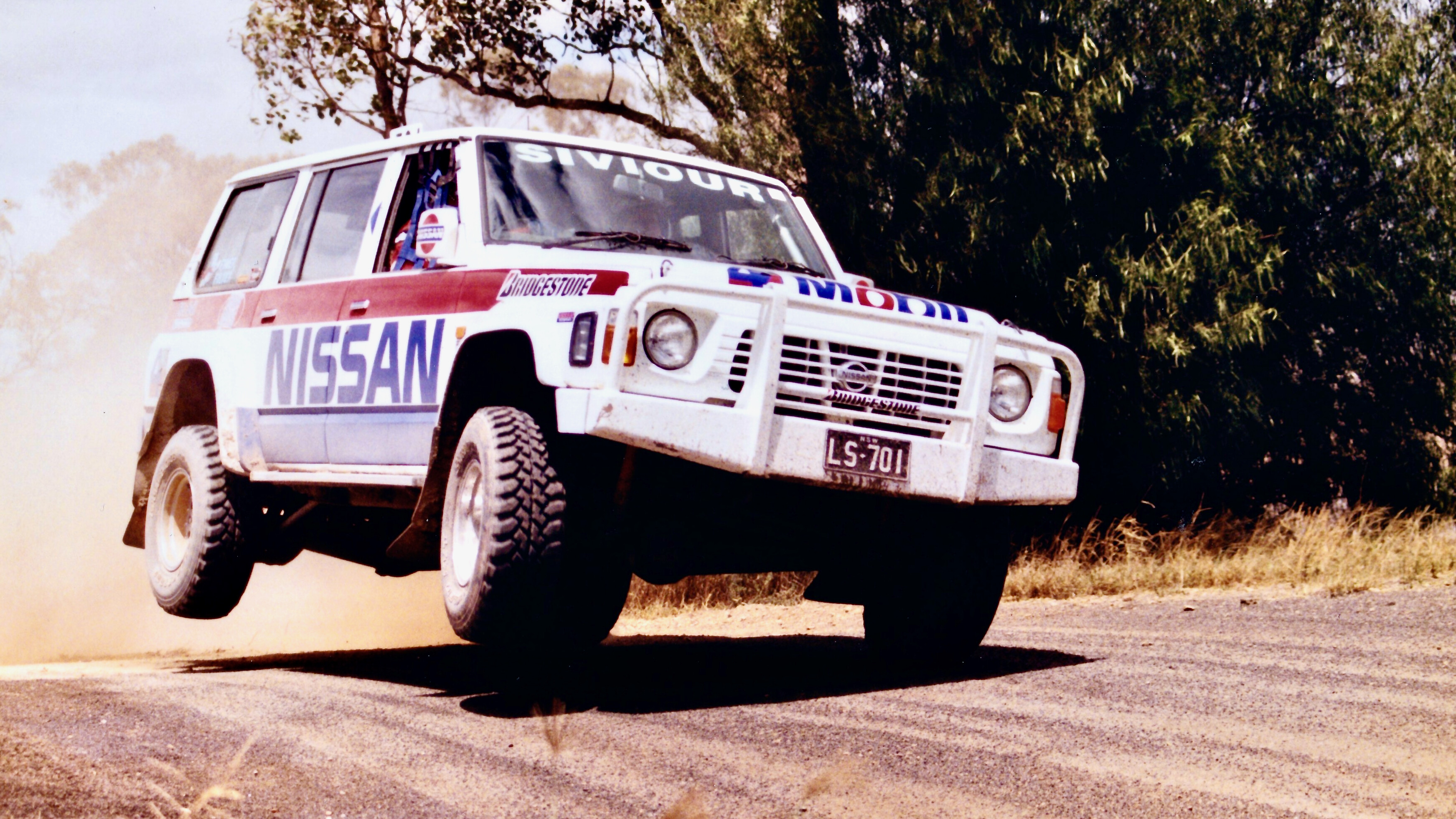
The Patrol’s on-road success and sales were partially driven by its achievements off-road in competition, winning the Australian Off-Road Championship 4WD Production class a record 14 times at the hands of Les Siviour – taking out the overall Championship title in 1987 aboard a Nissan-backed GQ.
Nissan Australia’s managing director Adam Paterson said the Patrol’s strengths off-road have been a key factor in its popularity with local customers.
“The Patrol is an automotive legend that has always been at the forefront of its segment, by breaking new ground in comfort and convenience while improving its rugged off-road capabilities and durability with every generation,” said Paterson.
“And, as we celebrate the off-roader’s landmark 70th anniversary in 2021, it is fantastic to look back at the collection of achievements and accolades that have recognised and rewarded the Patrol as being the best in its class.
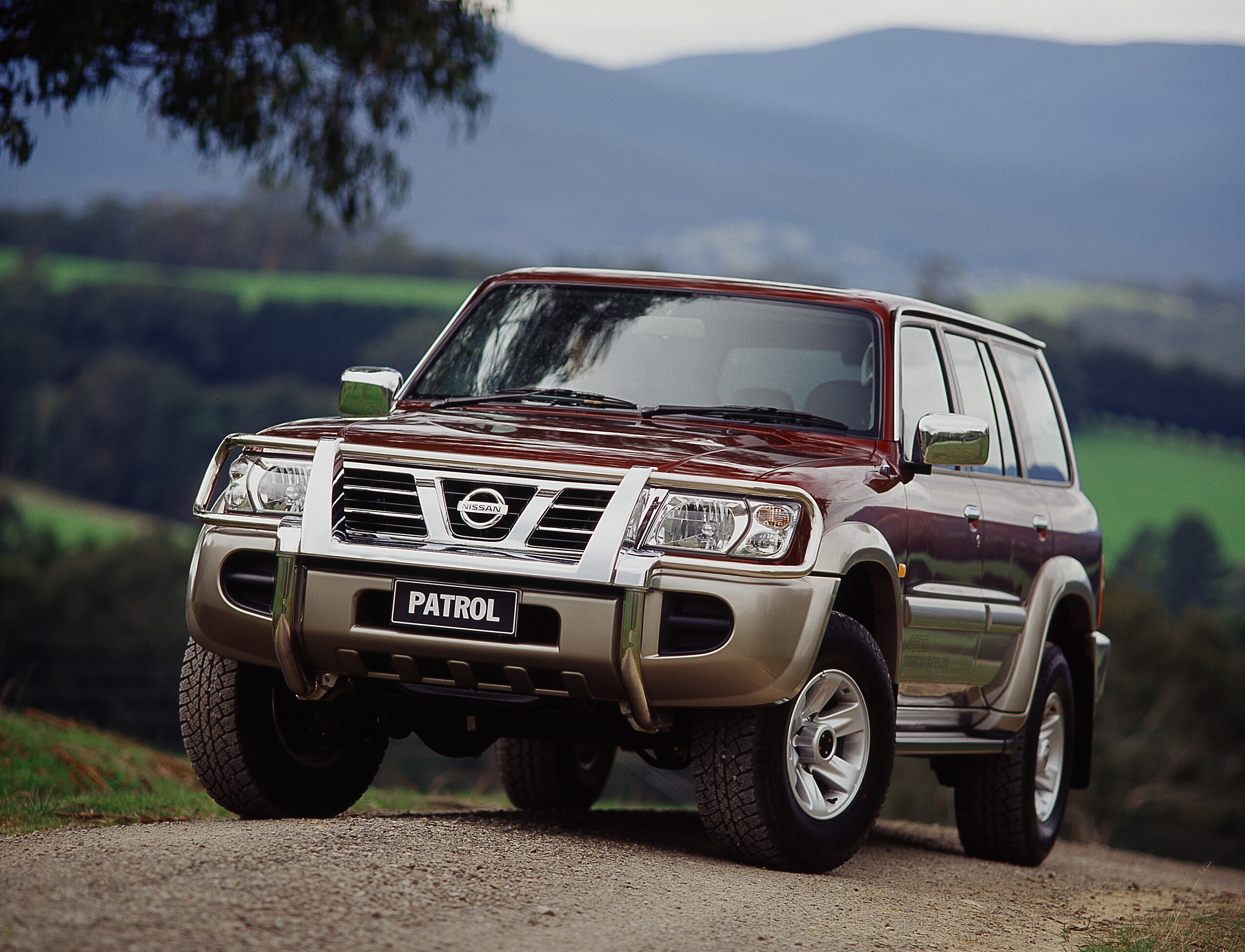
“That it is winning awards today proves that the evolution of the Patrol through the five generations sold in Australia since 1961 has continued to meet the demands of its passionate and loyal customer base, while attracting new off-road enthusiasts and adventurous families.”
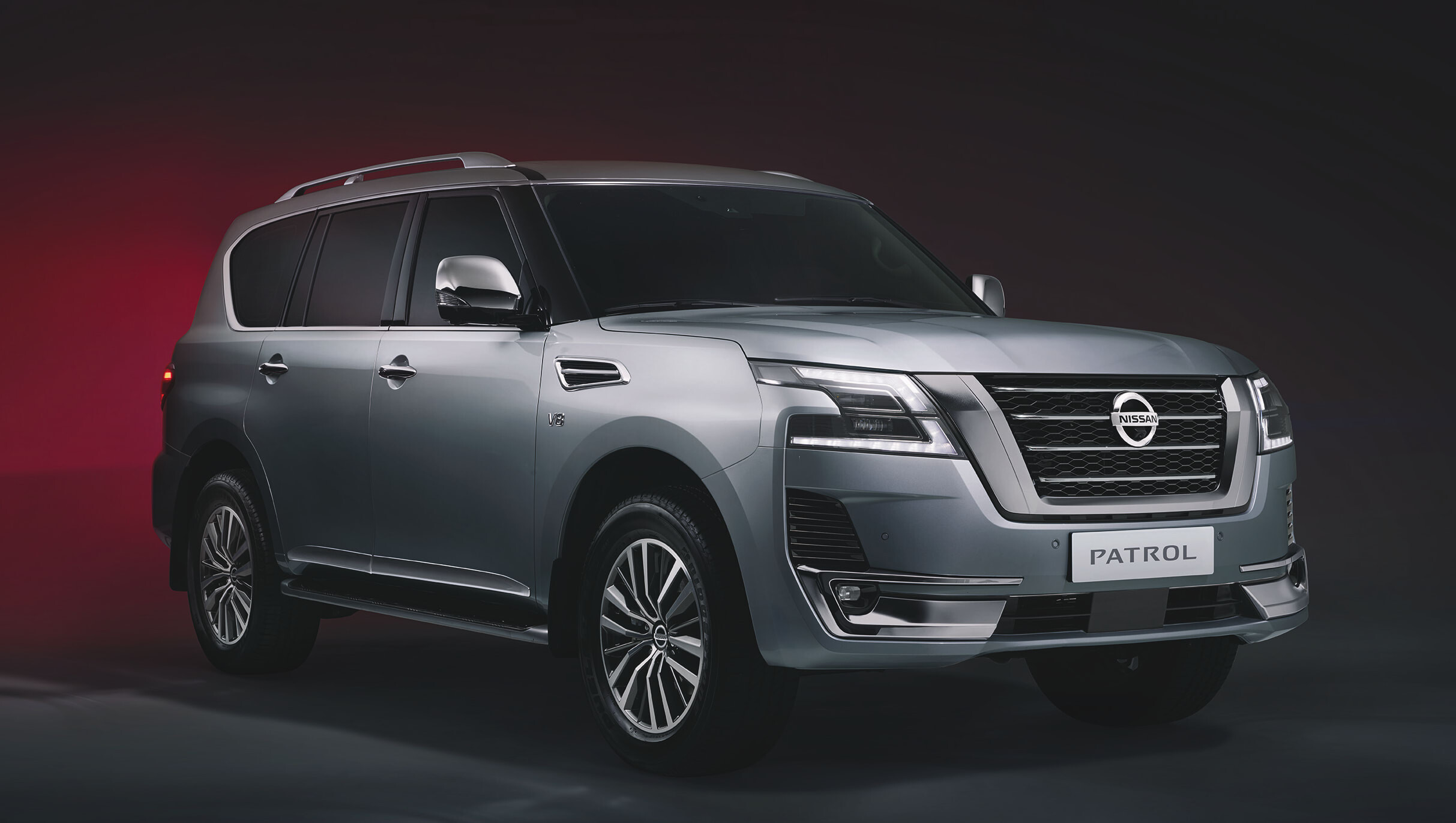
With the launch of the Y62 in 2010, Nissan switched to exclusively petrol power across the range, all examples now fitted with a 5.6-litre naturally aspirated V8 which develops 298kW and 560Nm in 2020-onwards update models.
Despite Patrol sales remaining consistent and recovering after a tough 2020 for the wider industry, it is trailing to the Toyota LandCruiser to the end of July 2021, having sold 1745 units year to date – while its Japanese rival has managed to sell 12,159 units, a factor in Nissan dropping out of the top 10 manufacturers last month.
To get your four-wheel drive in the magazine, post a photo of it to the 4X4 Australia Facebook page – or send us a DM – with a brief description. One readers’ rig is selected each month to win a Wurth under-bonnet LED valued at $249. Here are the July 2021 selections.
2017 HOLDEN COLORADO (prize winner)
It has had a bit done to it, but the list never ends. Kit includes a TJM bullbar; GME UHF; Ironhide Customs snorkel; Rhino Backbone; two-inch EFS XTR lift; Aeroflow transmission cooler with fan; pre-fuel filter; ProVent catch can; BRC six-port diff breather; Plazmaman intercooler hoses; Fabwitz Turbo pipe; STEDI light bar; Kings spotties; King Hurricane wheels; Nitto Ridge Grapplers; Bendix Ultimate 4WD brake upgrade kit; Lightforce fascia switch panel; canvas seat covers; 3D floor mats; REDARC gauges; PSICO airbox; Grunt 4×4 easy-down tailgate struts; and Grunt 4×4 tub seal kit – ANDREW CROWE
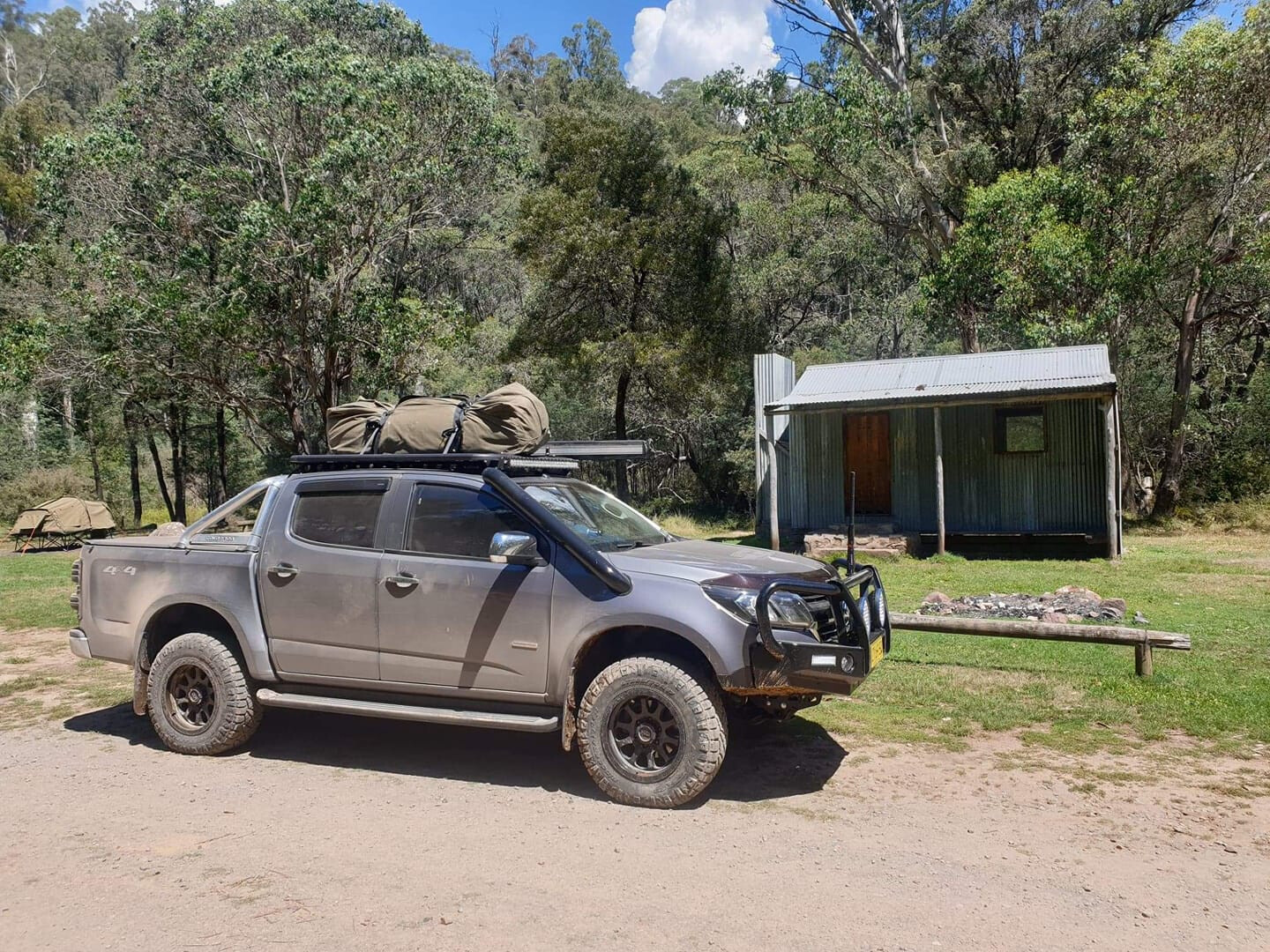
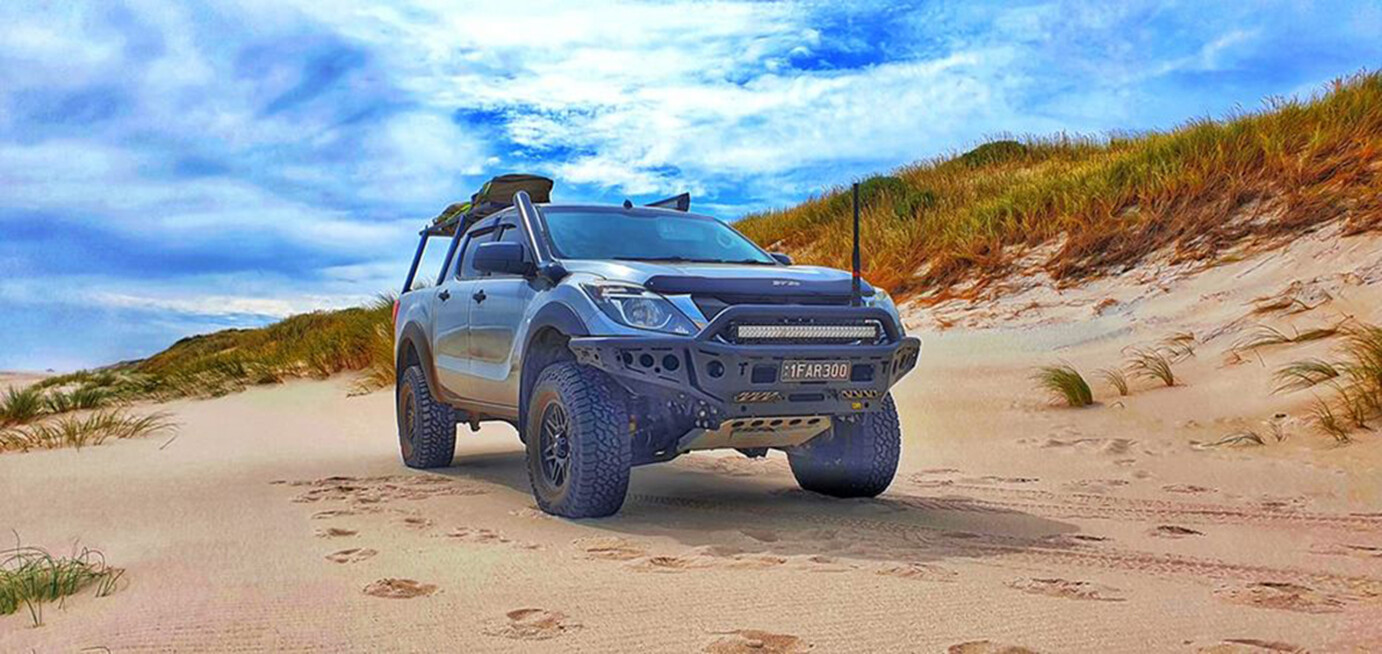
2017 MAZDA BT-50
Everything has been installed by myself, aside from the exhaust and tune. It was tuned by the legends down at Locked In Garage in Naval Base, Western Australia, and it now makes a reliable 180hp with 490Nm to 33s.
Updates include a TJM PX Ranger Chaser Bar (bumper cut to suit BT-50) with a 32-inch STEDI ST4k light bar; GMF4x4 rear bar with integrated dual eight-tonne recovery points; Axis Fabrication snorkel; Plazmaman intercooler and stainless-steel intercooler pipes; HPD catch can; Manta three-inch turbo-back exhaust with Hi Flow cat and resonator; 3.5-inch adjustable Bilstein coil-overs up front and three-inch rear EFS leafs with Bilstein shocks; 17-inch CSA Renegade alloys with 285 Falken Wildpeak AT3W tyres; custom rear tub rack made from scaff tube and powder-coated black; EGR flares in matte black; and a GME XRS-370 UHF – JD TADS
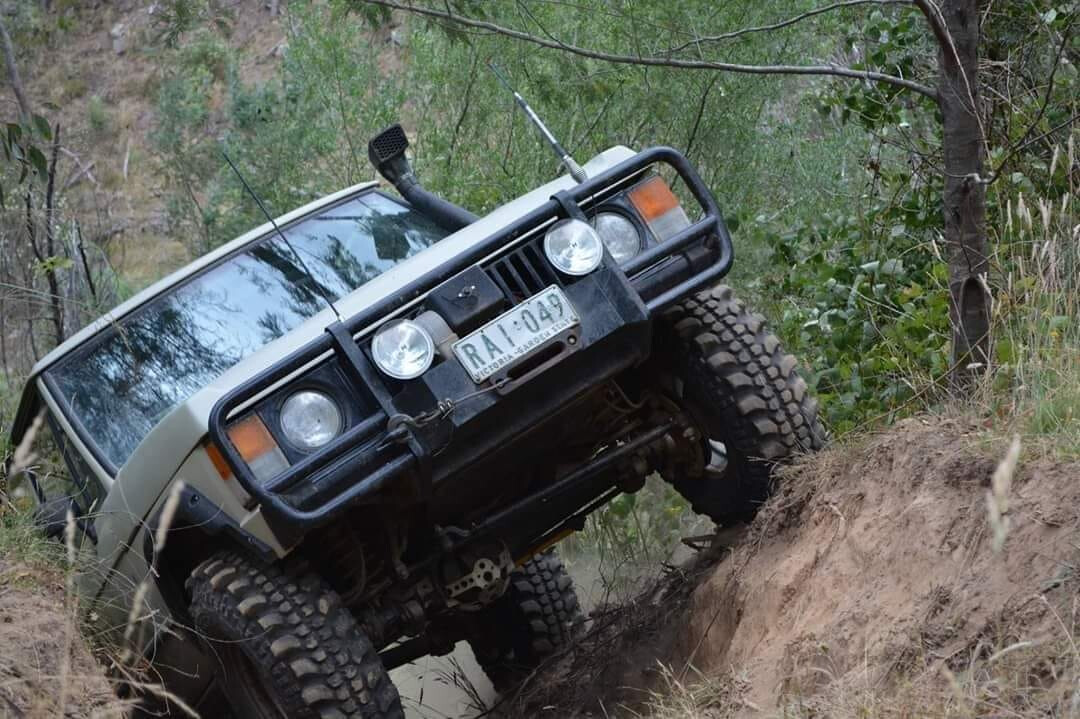
1979 RANGE ROVER
It’s the two-door with a 5.2-litre fuel-injected V8; front and rear air lockers with HD axles; long-travel shocks with two-inch suspension and two-inch body lift; custom-made rear and front bar with Warn high-mount winch; roll cage; SAAS front seats; and Simex Centipedes 35s on Easton Wheel Works rims with beadlocks. There are more mods to mention, but they are the basic – TRIAN ANDERSON
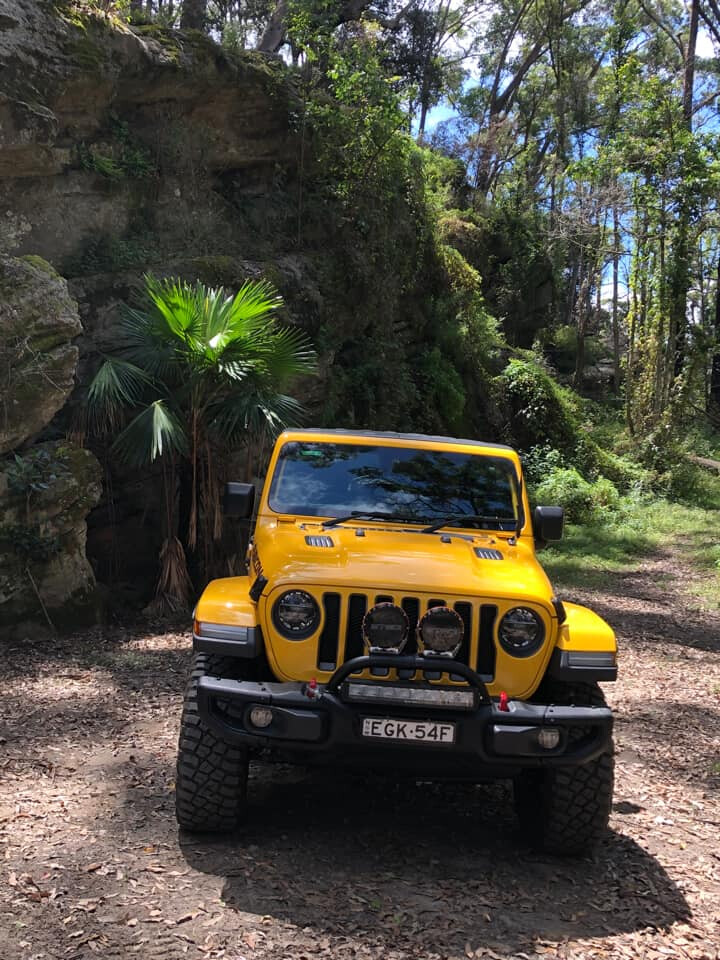
JEEP WRANGLER JL RUBICON
My mighty Wrangler Rubicon has had a 2.5-inch AEV lift, and it’s sitting on 33-inch KM3s. It has a Runva winch bolted firmly in the stock steel front bar, which is flanked by a pair of STEDI 7-inch spots and a 21-inch curved light bar – DAVID DOBINSON
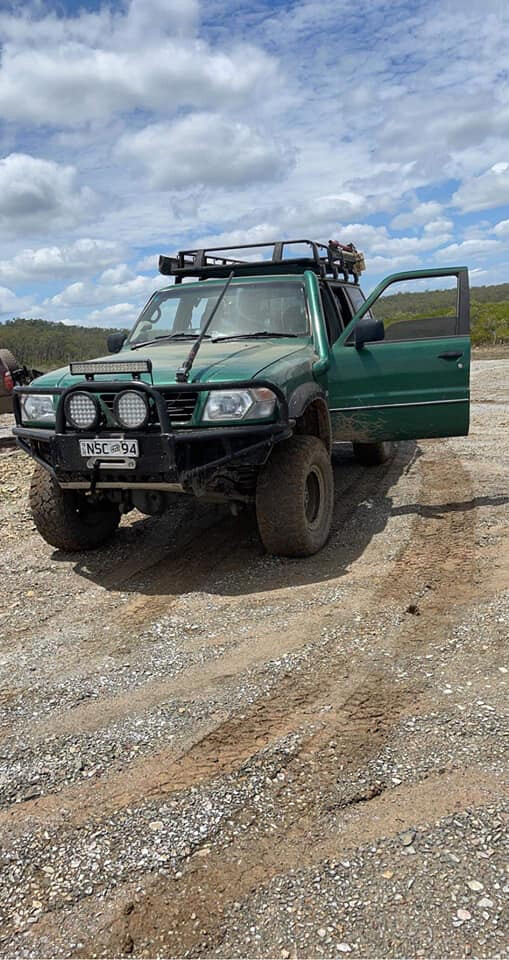
NISSAN GU PATROL
I have done a fair bit of stuff to this, as it was completely stock when I bought it. I have put a full Superior Engineering suspension lift under it, with all lower and upper control arms, Panhards and more. It also has a four-inch front and three-inch rear; 33-inch tyres; a custom rear bar and XROX front bar; stainless-steel snorkel and airbox; and rear drawers with an Engel fridge, dual-battery system, ARB air compressor and more – NICK CAHILL
TOYOTA LANDCRUISER 80 SERIES
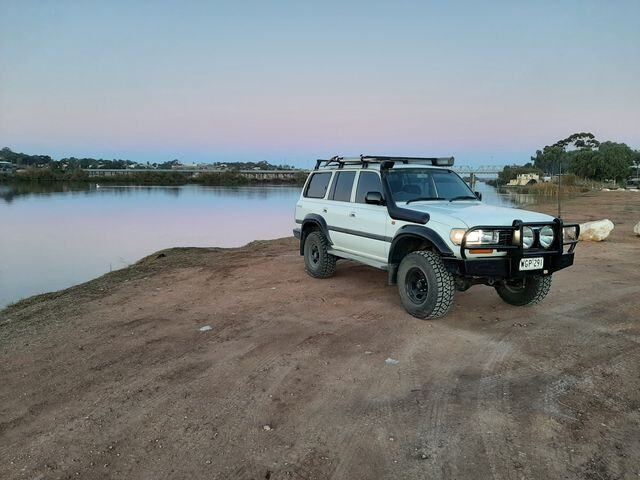
It’s the jack-of-all-trades for me and my family. It’s a 1FZ and runs a little EFS lift; 285/75R16 Kumho MT51s; and a full dual-battery system with solar. It really is a super-simple, well-proven set-up that gets us absolutely everywhere we want. Just proves you don’t need to dump half a mortgage on a 4WD to get out and enjoy yourself – NATHAN GODLEMAN
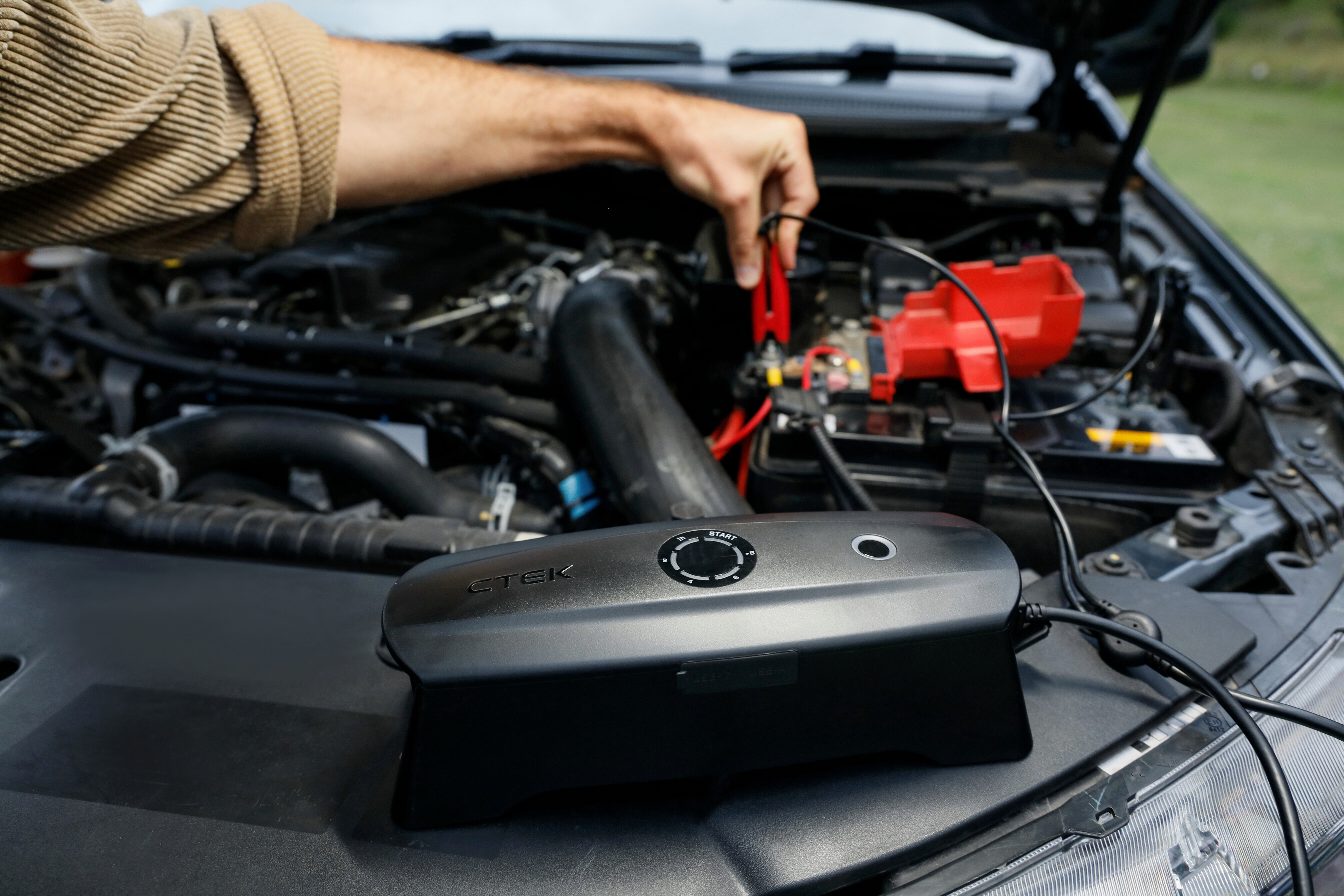
We’ve handpicked a selection of 4×4 products that’d make a great addition to any touring set-up.
C-TEK CS FREE
CTEK has launched a new portable battery charger in Australia, the CTEK CS FREE. The all-new battery charger and maintainer features Adaptive Boost technology, which allows the charger to get a flat battery going without the need to plug into mains power. The CS FREE features an internal lithium battery that takes less than an hour to fully charge through the unit’s fast USB-C input, and it can hold its charge for up to a year.
Another benefit of the unit is that it is capable of being used as a portable power pack to charge everyday technology such as laptops, cameras, smartphones and tablets. If mains power isn’t available, the CS FREE can then be completely recharged via the vehicle’s cigarette socket or by the solar panel charging kit.
It features both USB-C and USB-A outputs and can also be plugged into mains power and used as a maintenance charger. It comes with a two-year warranty.
RRP: $499 Website: www.ctek.com/au
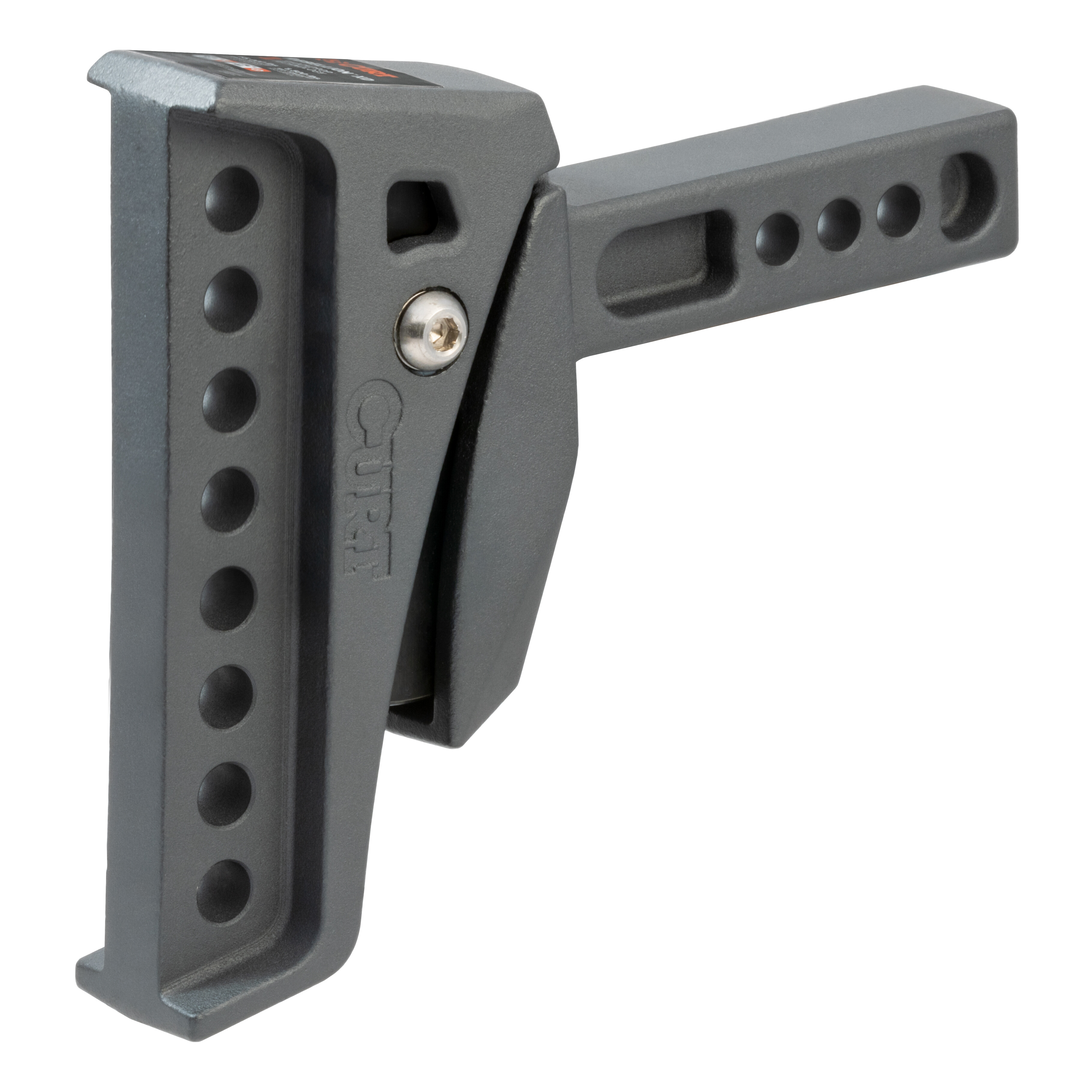
CURT REBELLION XD ADJUSTABLE BALL MOUNT
The Rebellion XD adjustable ball mount system is a leap forward in towing technology. It provides more control, confidence and a more comfortable ride, all while protecting your towing system from jerking, jarring, rattling and trailer sway.
The ball mount is constructed with ShockDrop technology. Built into the ball mount is a cushioned isolator that inserts between the receiver shank and vertical shank. The isolator provides dynamic, adaptive suspension of the coupling point to reduce jerking and jarring for a more comfortable towing experience.
Website: www.tagtowbars.com.au
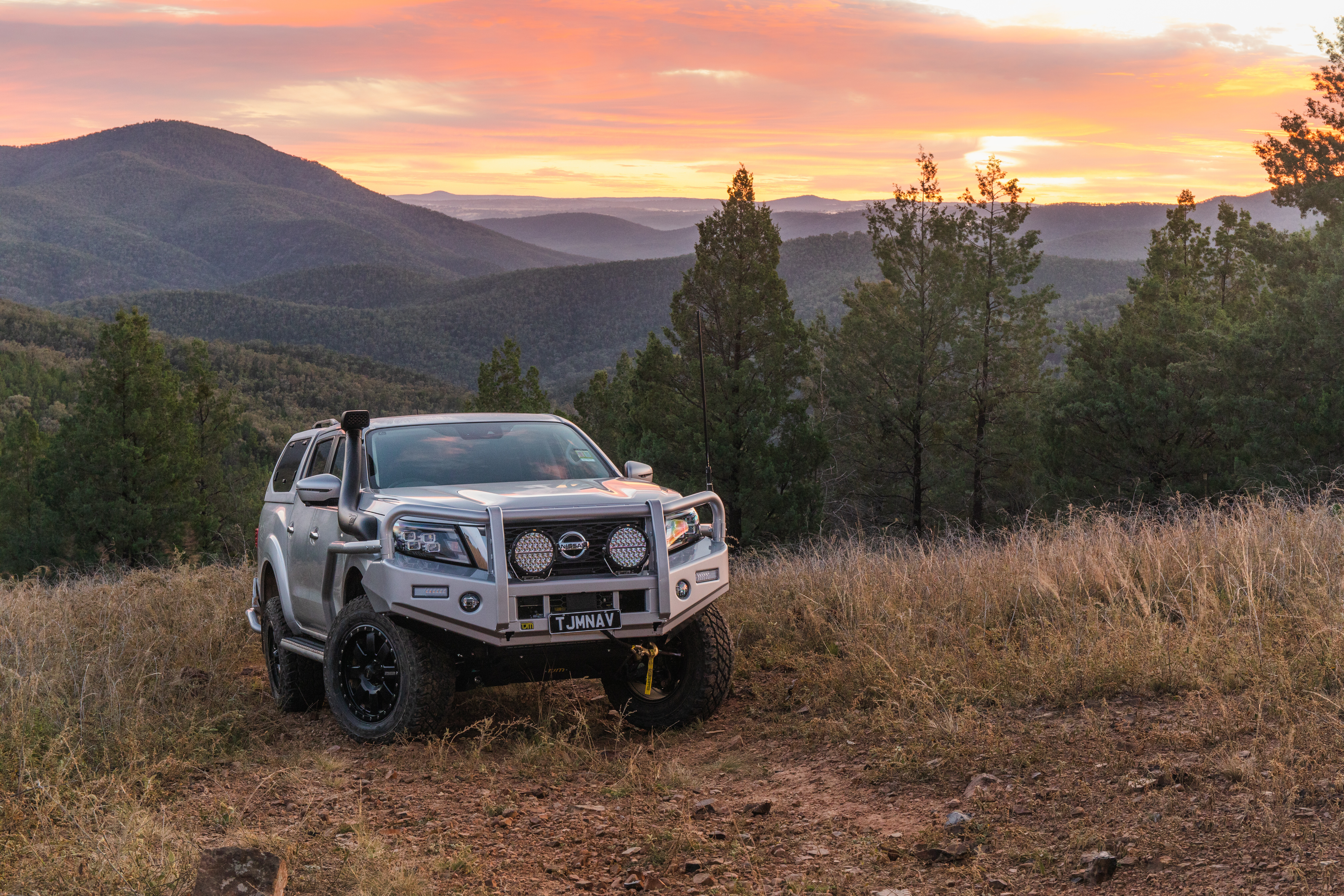
TJM ACCESSORISES NEW NAVARA
TJM has unveiled a range of products to suit the all-new Nissan Navara, with vehicle protection, suspension, snorkels and canopies now – or soon to be – available.
The TJM Outback bar features all-steel construction, 63mm-diameter tubing, all-new rolled cato straps and a multi-fold channel. The bar’s winch frame-mount system also allows TJM to include 8000kg rated recovery points as standard.
Navara owners can also add steel side bars, side steps, a suite of underbody guards, a TJM Airtec Snorkel, and an XGS suspension upgrade. A TJM Premium Canopy can now be fitted to the new Navara, while a TJM Rear Step Tow Bar will be available in September.
Website: www.tjm.com.au
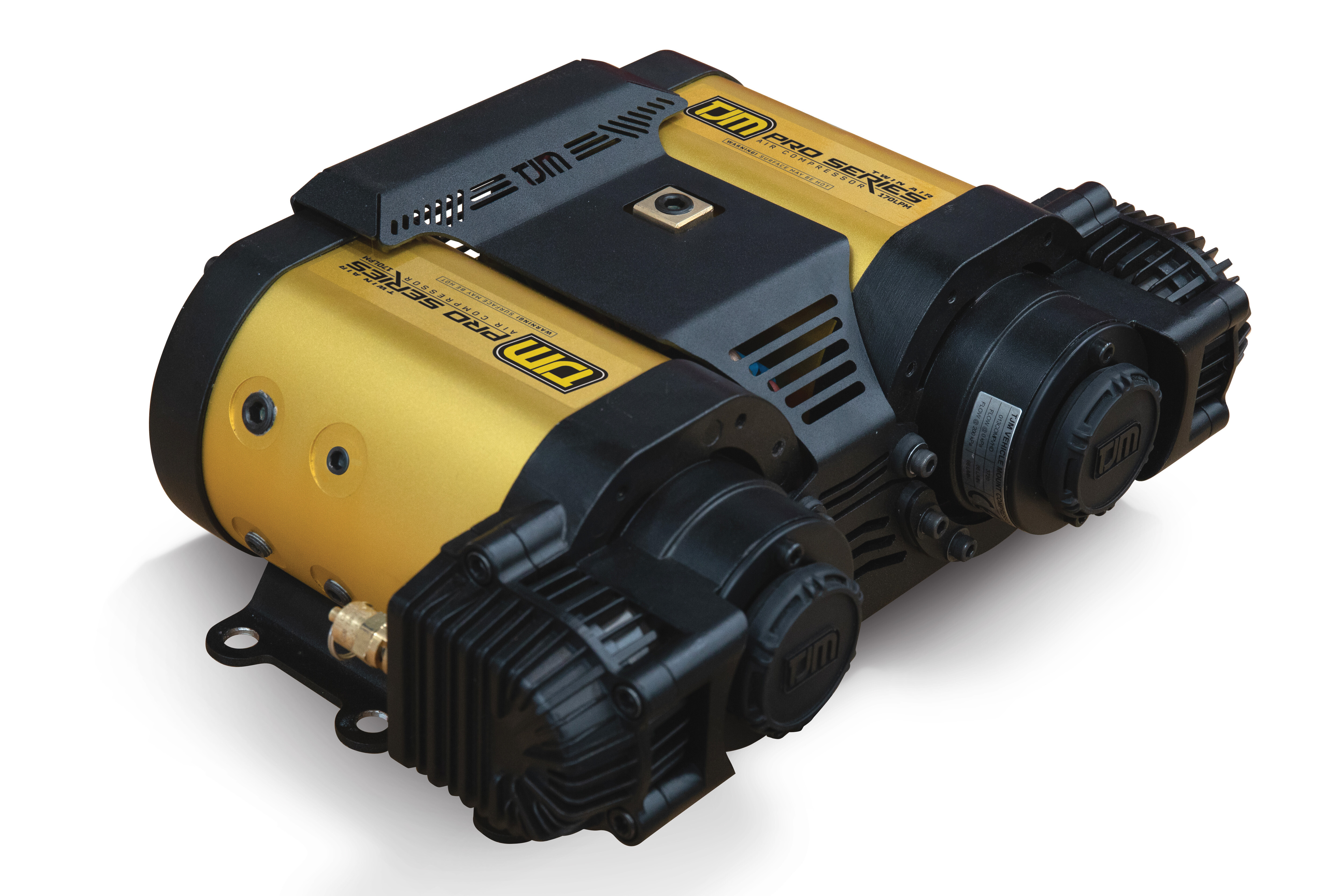
TJM HIGH-PERFORMANCE TWIN AIR COMPRESSOR
Stay ahead of the pack on your next 4×4 adventure with TJM’s all-new High Performance Twin Air Compressor.
Key to its value is the excellent flow rate of 170L/minute (2:30 single tyre inflation from 0 to 40psi for 285/75/R16). Another big tick is that its 100 per cent duty cycle ensures it can inflate continuously without fail.
The unit also has a patent-pending convection cooling system that “draws heat away from the motor and the 0.48L inbuilt air tank that – combined with its 48mm cylinder bore, oversized internals and Teflon-impregnated piston seal – ensures extended levels of high performance and longer lifespan of the compressor’s componentry”.
The unit can be mounted horizontally or vertically and is made utilising a combination of cast and extruded aluminium that’s been anodised.
RRP: $749 Website: www.tjm.com.au
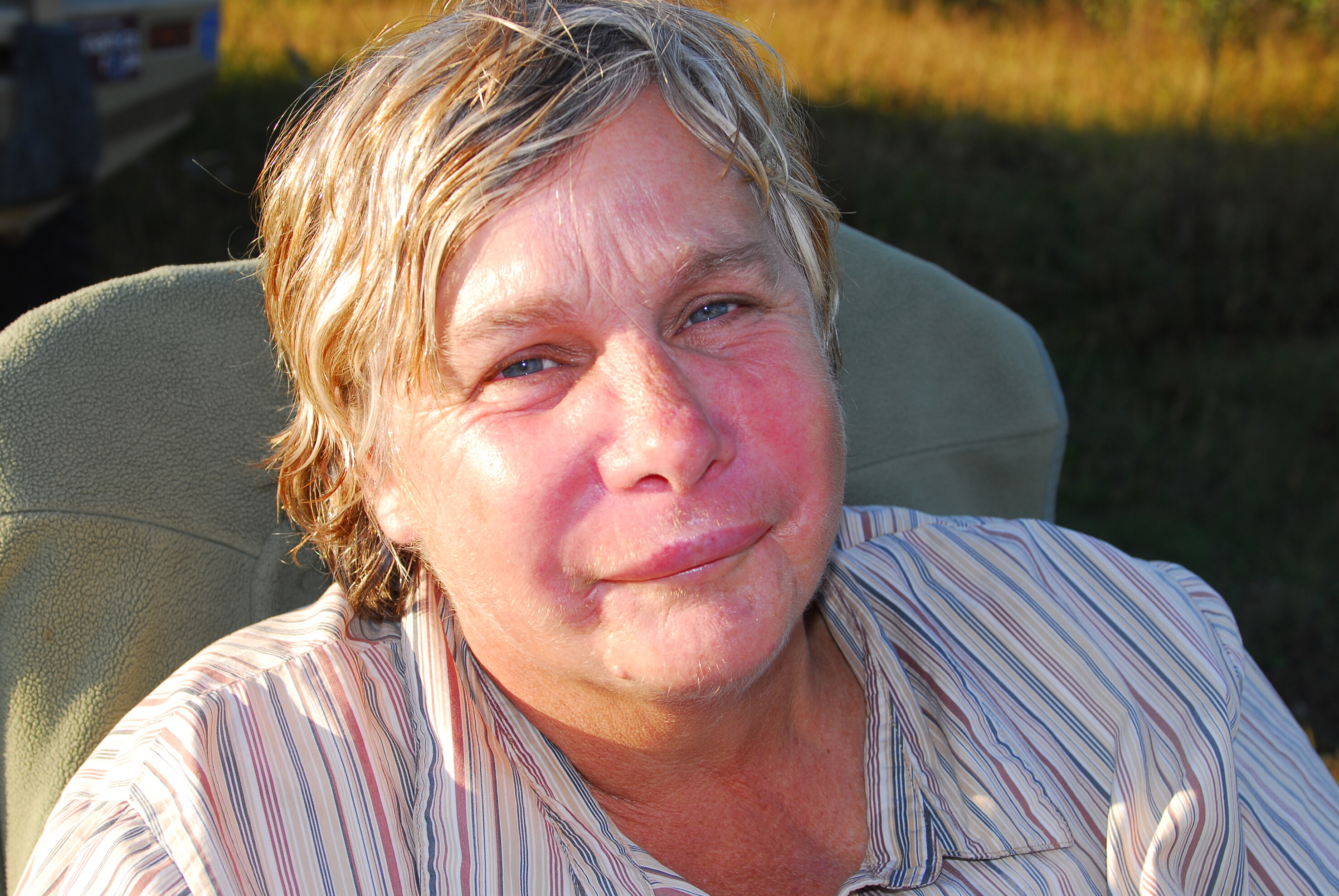
In a report released in March 2021 from the Australian Institute of Health and Welfare (AIHW) it was stated that 3500 Aussies were hospitalised in 2017-18 due to interaction with venomous plants and animals.
Bees accounted for 26 per cent of those hospitalisations, while 12 of the 19 deaths caused by bites and stings were also blamed on bees. It doesn’t come as a surprise to me, even though you rarely hear about bee-sting deaths in the media.
We had an encounter with a bee sting a few years back that was anything but pleasant. It was in remote Russia on our overland jaunt across that vast country when Viv was stung by a bee, which had settled in a gin and tonic she was enjoying camped in a sunny glen beside a lovely flowing stream. Stung on the lip, the reaction was quick and frightening with a dramatic skin reaction, swelling of the face and a weak and rapid pulse.
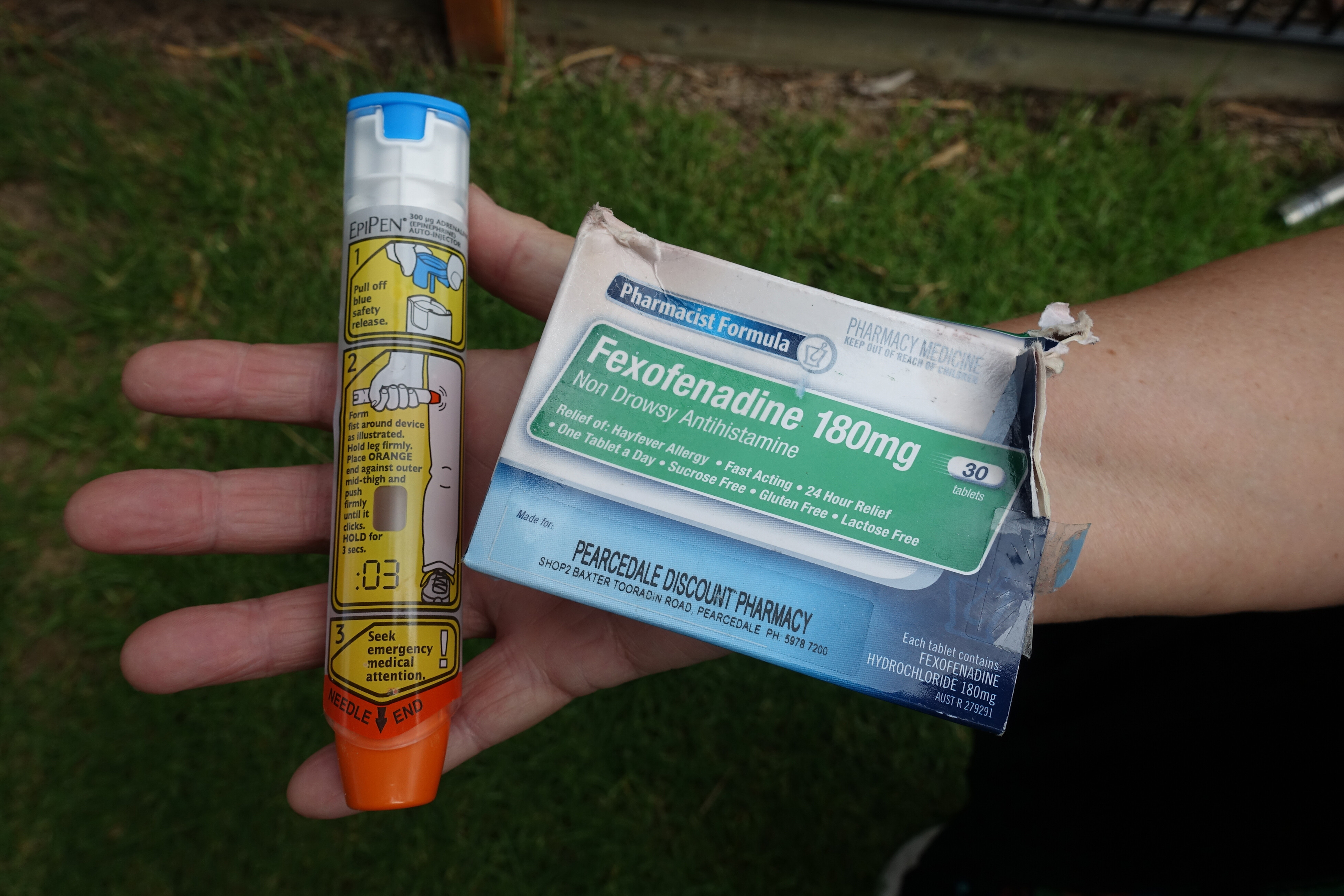
We immediately administered some antihistamine medicine, applied a wet, cool cloth to the face and stood by with an EpiPen in case the swelling started to move down to her throat and airways. Luckily it didn’t, but the swelling of the face lasted for weeks.
On the other hand, shark attacks are big news with each and every bite being recorded, even though in the 10 years up to 2018 more people were killed in Australia by bees and wasps – 27 all told, compared to shark fatalities that numbered 26.
Spider bites put 666 people in hospital during 2017-18, with nearly half of them caused by redbacks. White-tailed spiders and funnel-web spiders were the next in line as culprits. Interestingly, there were no deaths reported from spider bites, which is a good thing.
Snakes accounted for just over 600 hospitalisations and, while in more than a third of cases the snake couldn’t be identified, of those that could 215 were by brown snakes, 83 by black snakes and 65 by tiger snakes. Sadly, seven deaths were caused by snake bites that year.
Some 393 people were hospitalised due to marine animals and plants including box jellyfish, Irukandji jellyfish and blue-ringed octopus.
Interestingly, in the AIHW report, it was young and middle aged men (61 per cent in total) who were most likely to get bitten or stung; while people living, working and travelling in remote or very remote locations also topped the list.
So to be prepared, we now carry a range of antihistamines and an EpiPen, plus an extensive first-aid kit whenever we go bush, for its not only bees and wasps but ants – jumping jack ants are notoriously bad – for causing allergic reactions.
We also use a free phone app – Australian Bites and Stings: First Aid Guide to Australian Venomous Creatures. Make sure you get it, and a first-aid kit – you never know whose life it’ll save!
Following the launch of the 2022 LandCruiser 300 earlier this week, Toyota has marked the occasion by providing a glimpse of its early design sketches of the iconic four-wheel-drive.
With the final design of the LC300 a revolutionary step above its 200 Series predecessor, the sketches provide an interesting glimpse at the process involved in developing the newest LandCruiser.
A hexagon-inspired design is the focus of one proposal, with images showing a plan for a massive grille, split headlight design, square taillights, X-shaped wheels and four square roof mounts.
The design, captioned ‘[hexagon] for GEN-Y’ and ‘oh baby, you’re so HEXY-Y’, demonstrates a focus on the Generation Y demographic (those born in the 1980s and 1990s).
https://www.instagram.com/p/CSG6F6yM-mo/?utm_medium=copy_link
Another drawing shown by Toyota is the ‘World Runner’ – sporting a look more in line with the final 300 Series design, albeit with a futuristic focus.
Characterised by bolder angles at the front and rear, the World Runner features sleeker headlights and tail-lights, bulging wheel arches and side air vents in comparison to final product.
Other ideas shown by Toyota include an off-road focused model with a snorkel, tougher front and rear bumpers, and roof-mounted auxiliary lights.
The Toyota LandCruiser 300 Series is set to arrive in Australian showrooms in the fourth quarter of 2021, with pricing ranging from $89,990 before on-road costs for the base GX to $138,790 for the flagship Sahara ZX.
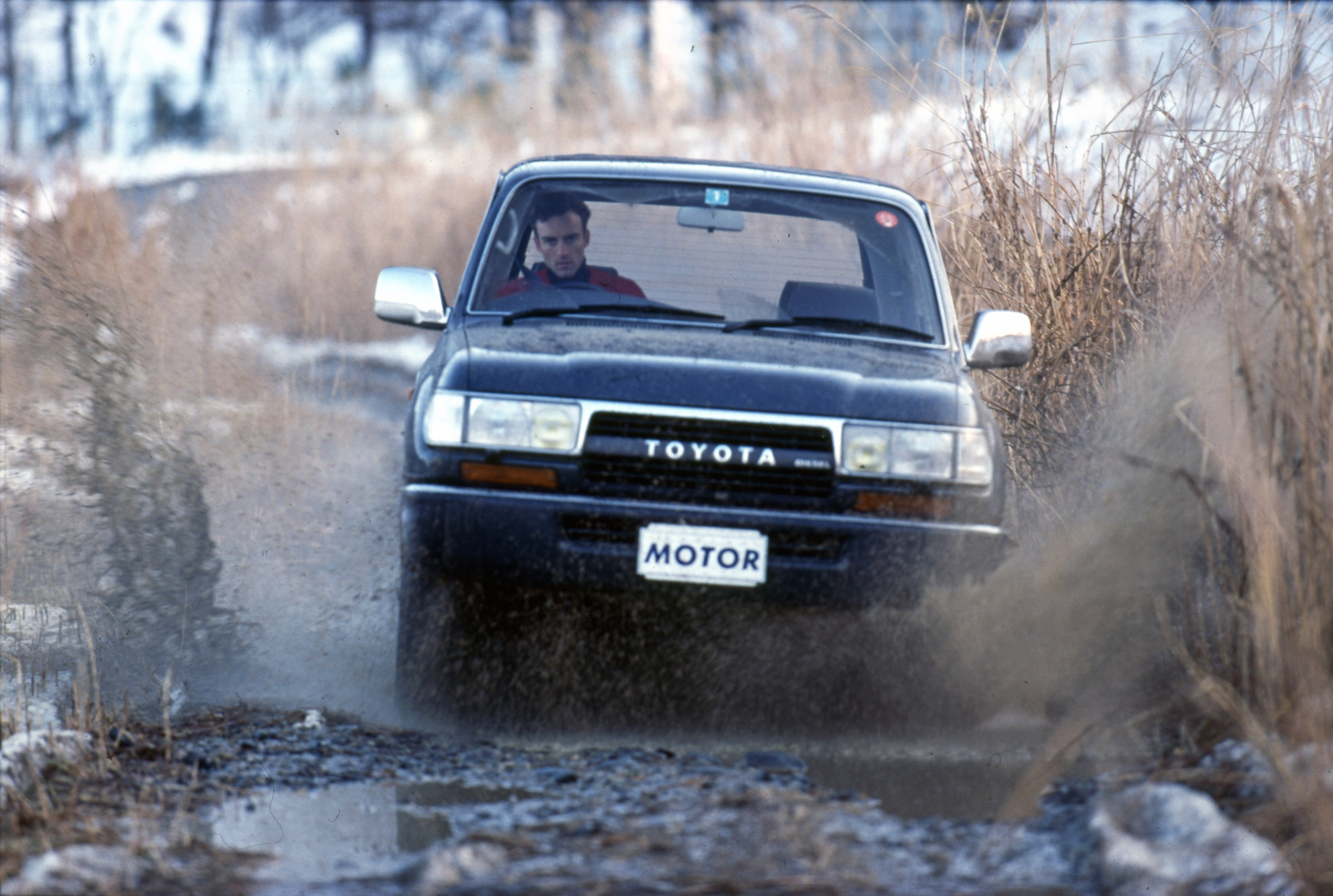
If you have watched Toyota’s official global presentation of its upcoming 300 Series LandCruiser you would know that special praise was directed at the LandCruiser 80 Series and its honoured and unique place in LandCruiser history.Toyota 300 Series chief engineer Takami Yokoo said that in designing and developing the 300, the engineering team “used the 80 as a guidepost”. He went on to say “even 30 years after it first appeared, it has the best rough-road performance of any LandCruiser”.
By ‘rough-road’ performance you can read ‘off-road’ performance and given the 100, and more so the 200, bought significant advances in off-road performance enhancing chassis and powertrain electronics, that’s a big call.
These electronic driver’s aids have culminated in off-road specific electronic traction control complete with driver-selectable terrain-specific programs, and so-called ‘Crawl Control’ where all the driver has to do is steer and the vehicle ‘smarts’ do the rest, even in the most difficult and demanding off-road situations.
LIVE AXLE BONUS
THE 80 had nothing like this of course, so what made it so good off road?
Chief engineer Yokoo didn’t elaborate in the 300’s presentation but most obviously, the 80 had a live axle up front where the 100 adopted independent front suspension, a feature carried over to the 200. The only exception here was the 105, which was effectively the mechanicals of the 80 carried over as a 100 Series model.
Independent front suspension bought on-road civility to the 100 and 200, but at the expense of the generous and off-road enhancing wheel travel offered by the 80’s front live axle, or more specifically the 80’s coil-sprung front live axle.
Building on this, the 80 had driver-switchable front and rear differential locks. These were standard on VX Sahara and optional on the GXL at the Series launch in 1990, but eventually worked their way down to the entry-level RV model. Front and rear lockers (and driver lockable centre diff on full-time 4×4 models) combined with long-travel coil-sprung live axle suspension front and rear proved to be a formidable combination.
If the 80 offered some sort of benchmark for the future (chief engineer Yokoo made special mention that the 300 shared the 80’s “golden-ratio wheelbase”, it also marked a significant departure from its predecessor, the 60 Series, in what turned out to be a critical turning point in LandCruiser history.
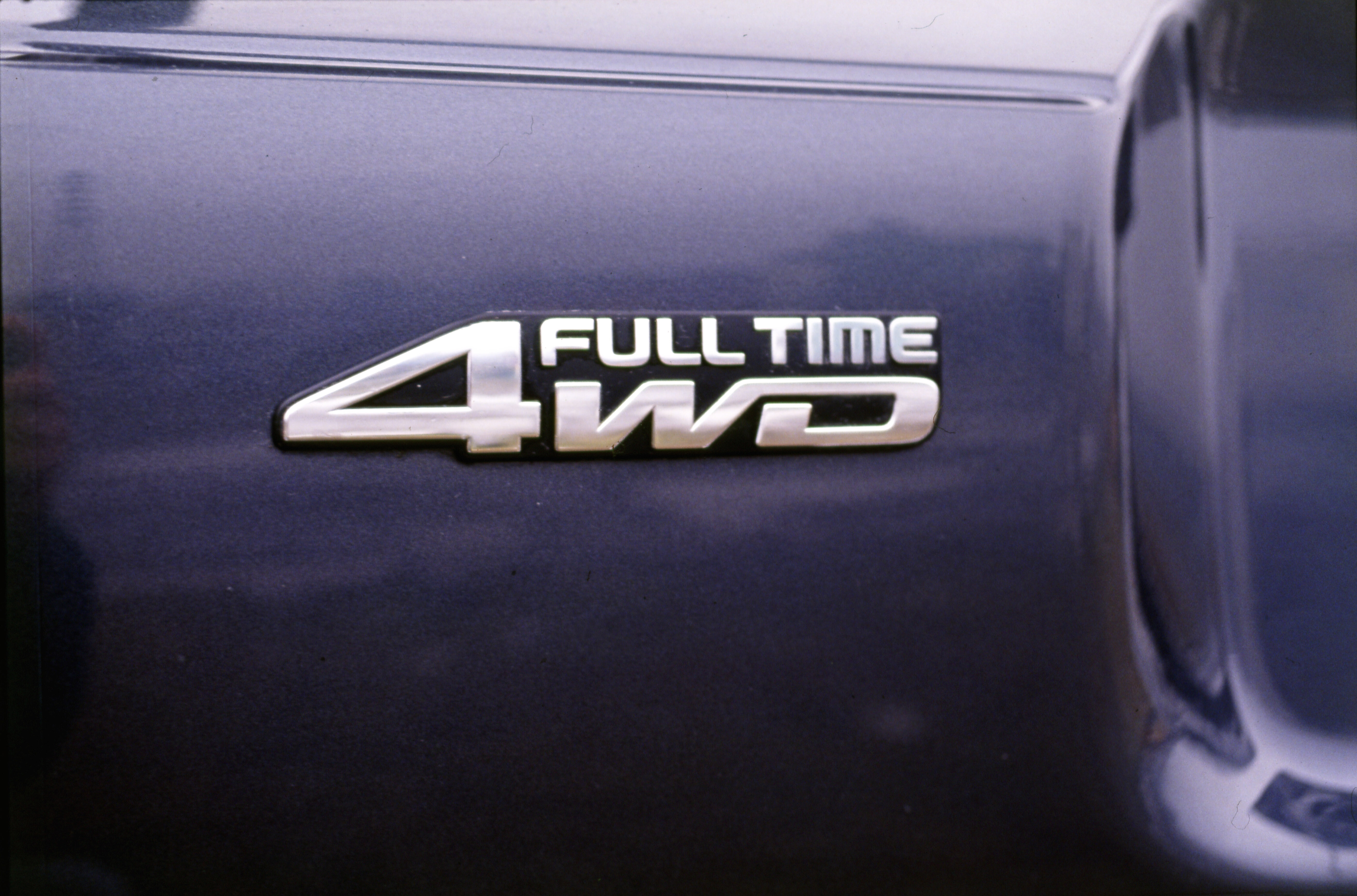
Where the 60 rode on leaf springs front and back and had part-time 4×4, the 80 introduced coil springs and full-time 4×4, which set the pattern for the LandCruiser’s future. And while the 55 Series is generally accepted as the first LandCruiser to be pitched at the private leisure market (effectively as a 4×4 station wagon) rather than at commercial (construction, farming, forestry, mining, etc.) markets, the 80 was the first LandCruiser to finally cut all ties with its working-class and original military roots.
FULL-TIME 4X4
THE change to coil springs from the 60’s leaf springs allowed the use of spring rates some 25 to 40 per cent (model dependant) lighter than the 60, which was critical in producing family-car comfort, while the introduction of full-time 4×4 meant a more user-friendly 4×4 system, again enhancing its family appeal and practicality.But things weren’t all rosy from the start. The 80 arrived in 1990 feeling a bit not quite finished. As one harsh critic wrote, quoting Shakespeare’s Richard III, “… sent before my time. Into this breathing world, scarce half made up.”
At the time, there was speculation that Toyota was caught off guard by the arrival of Nissan’s groundbreaking GQ Patrol in 1987. With its all-coil suspension, the GQ made Toyota’s 60 Series feel very agricultural and buyers right around the world weren’t slow in catching on.
There was much evidence to suggest the 80 was rushed to market before all the finer details were sorted. On bumpy and winding roads the handling was that unsettled it led to the much-publicised term the ‘LandCruiser Lurch’, an unfortunate combination of excessive body roll and rear bump-steer.
The ‘specifically developed’ 265/75R15s Dunlop Grandtreks on GXL and VX Sahara models also proved very damage prone and even lost out in on-road steering and handling to the old-school tall and skinny (7.5R16s) Dunlop Road Grippers fitted to the base-spec models.
Things got worse with lower rear-suspension damper mounts breaking off the rear axle housing, even on road-test vehicles supplied to the media, surging and idling problems of the 1HD-T engine and the poor shift quality of the manual gearbox.
The petrol engine, a pushrod straight six from the 60 Series, was also underpowered and thirsty in both its fuel-injected (3F-E) and carburettor (3F) iterations.
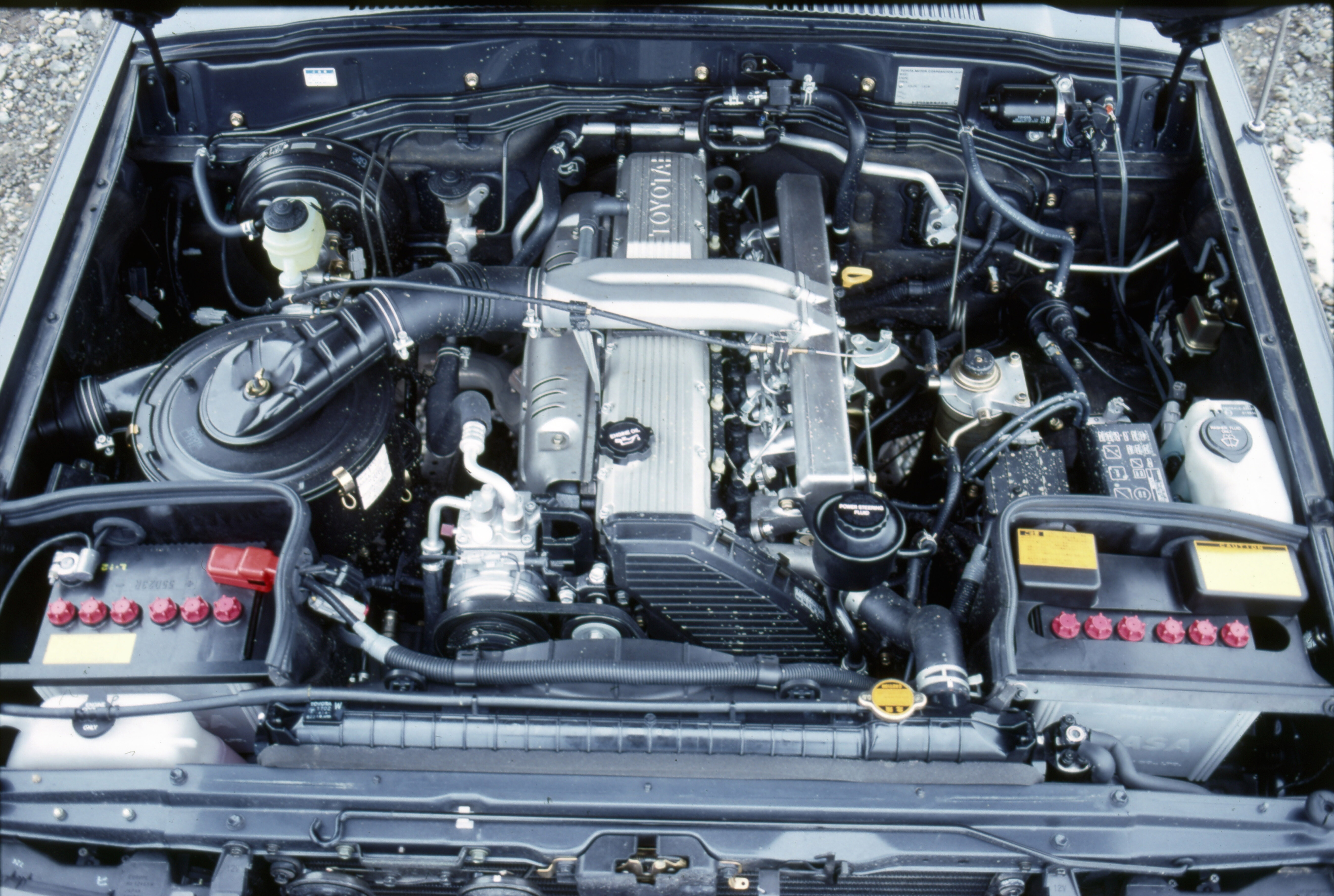
To Toyota’s credit, these issues were addressed within two years when a revised model with a new, thoroughly modern and powerful 4.5-litre twin-cam straight-six petrol engine arrived along with a new manual gearbox, newly calibrated suspension and a revised wheel and tyre package. Although it was only when the 1HD-FT replaced the 1HD-T in 1995 in the 80 that the turbo-diesel issues were finally laid to rest.
But after that somewhat rocky start, which seems now a mere hiccup, the 80’s reputation as a tough, go-anywhere and refreshingly simple 4×4 has only grown.
THE BEST EVER
A few years back, 4×4 Australia asked all of its regular writers to name the most significant 4x4s of all time and it was no surprise that the 80 Series drew plenty of praise.
Ron Moon, the longest-serving editor of 4X4 Australia and regular contributor to this day, reckons “the 80 Series was the best LandCruiser wagon ever built – they’ve gone downhill from that pinnacle! Ooh, the latest might be smoother, faster and more refined, but they are far less a real 4×4!”
Bush icon John Rooth (aka Roothy) was on the same wavelength when he said, “all LandCruisers are good, but the 80 Series is the best of the lot. Get a good one and play in the dirt forever!”
Perhaps the last word should be left to someone who owns what’s been described as the “most photographed 80 Series on the planet”, 4×4 travel photojournalist Kev Smith who said of his 80, “with 520,000km on the clock the old girl is so simple to work on, and if you service them every 5-10,000km they will go forever. Now while it’s no power house the 80 series is super reliable …”
80 SERIES TIMELINE
1990 The 80 Series arrives in Australia mid-year with a ten-model-strong line-up that spans $33K to $78K. The two base-spec Standard Vans have vertically split rear doors and use the 75 Series powertrains, so part-time 4×4, manual-only but with the choice of straight-six 4.0-litre petrol or 4.2-litre diesel engines.
The mid-spec GXL and top-spec Sahara VX bring full-time 4×4 and expand on the powertrain choice with a turbo-diesel engine and automatic gearboxes for all three engine options. The two diesel engines, the naturally aspirated 1HZ and the turbocharged 1HD-T are family siblings and both brand-new.
The turbo claims 115kW and 357Nm while the atmo is good for 94kW and 271Nm. The 4.0-litre pushrod petrol engine is essentially carried over from the 60 but gains electronic fuel injection (as the 3F-E) when mated to the automatic gearbox, which bumps it to 112kW and 290Nm from the carburetted (3F – mated to the manual) version’s 110kW and 284Nm.
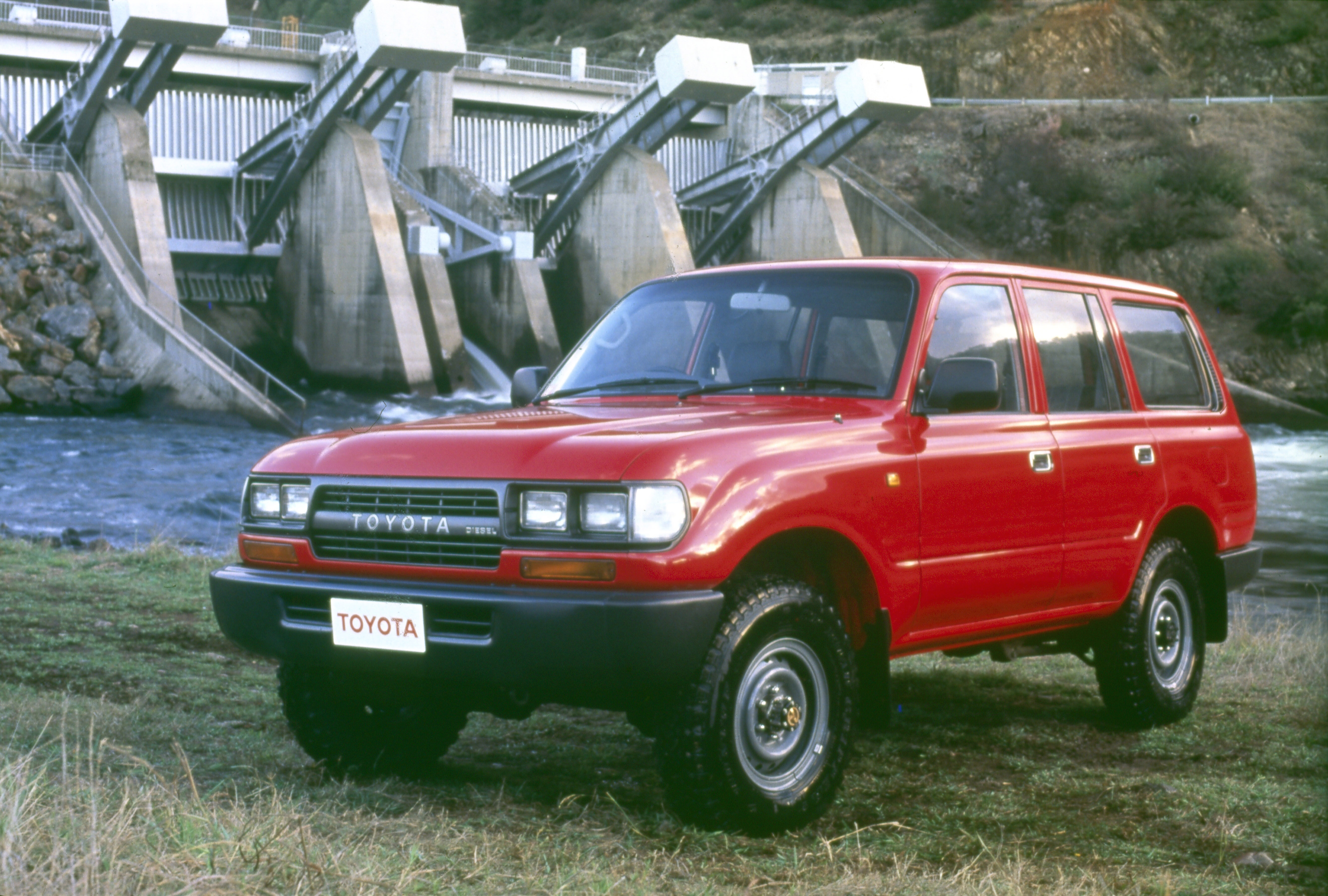
1992 Not before time the 3F and 3F-E engines are consigned to history as Toyota takes the wraps off its brand-new 4.5-litre straight-six petrol engine, the IFZ-FE. Complete with twin overhead cams and four valves per cylinder it makes a mighty 158kW and 373Nm and brings serious performance to the 80.
Toyota also introduces an RV spec 80 (only with the new petrol engine strangely) and drops the petrol Standard Van and the manual gearbox option from the Sahara VX. Across the range improvements include revised suspension (although with a lower rear ride height), a new manual gearbox, bigger brakes, and side-intrusion bars, while the Sahara VX gets anti-lock brakes and the option of a sat-nav system! Prices span from $40K to $87K.
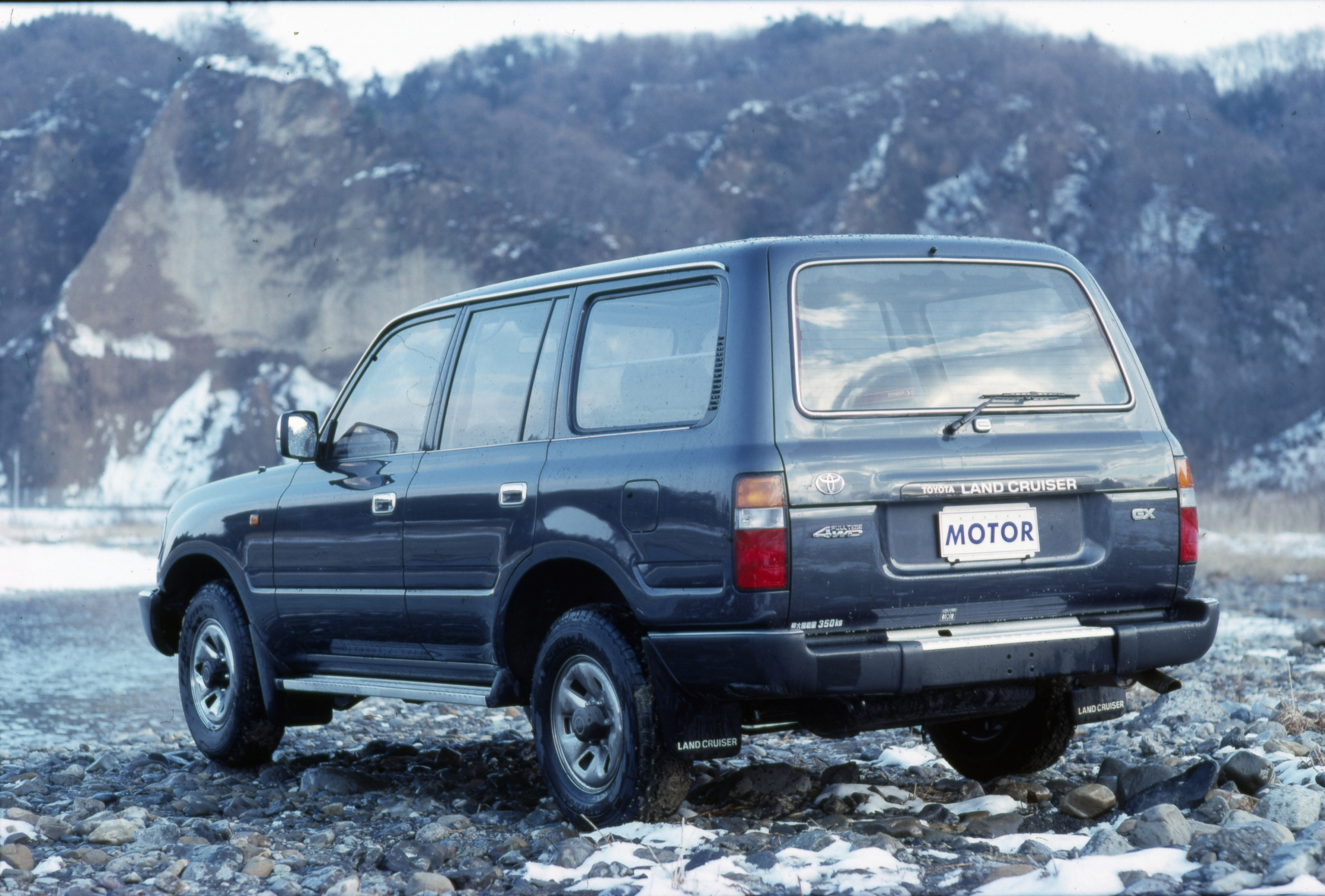
1995 With the imminent introduction of Euro 1 emissions standards, Toyota drops the 1HD-T turbo diesel in favour of the 1HD-FT. The new turbo diesel’s headline act is the adoption of four valves per cylinder (the F in the engine code) but in reality, the 1HD-FT is a from-the-engine-block-up revision of the IHD-T. It claims 125kW and 380Nm.
The updates also run to new front-end styling, a new dash, and new wheels and tyres. Prices now run from $49K (RV petrol manual) to a heady $112K (Sahara VX TD automatic) over the nine-model line-up.
COLLECTOR’S ITEM?
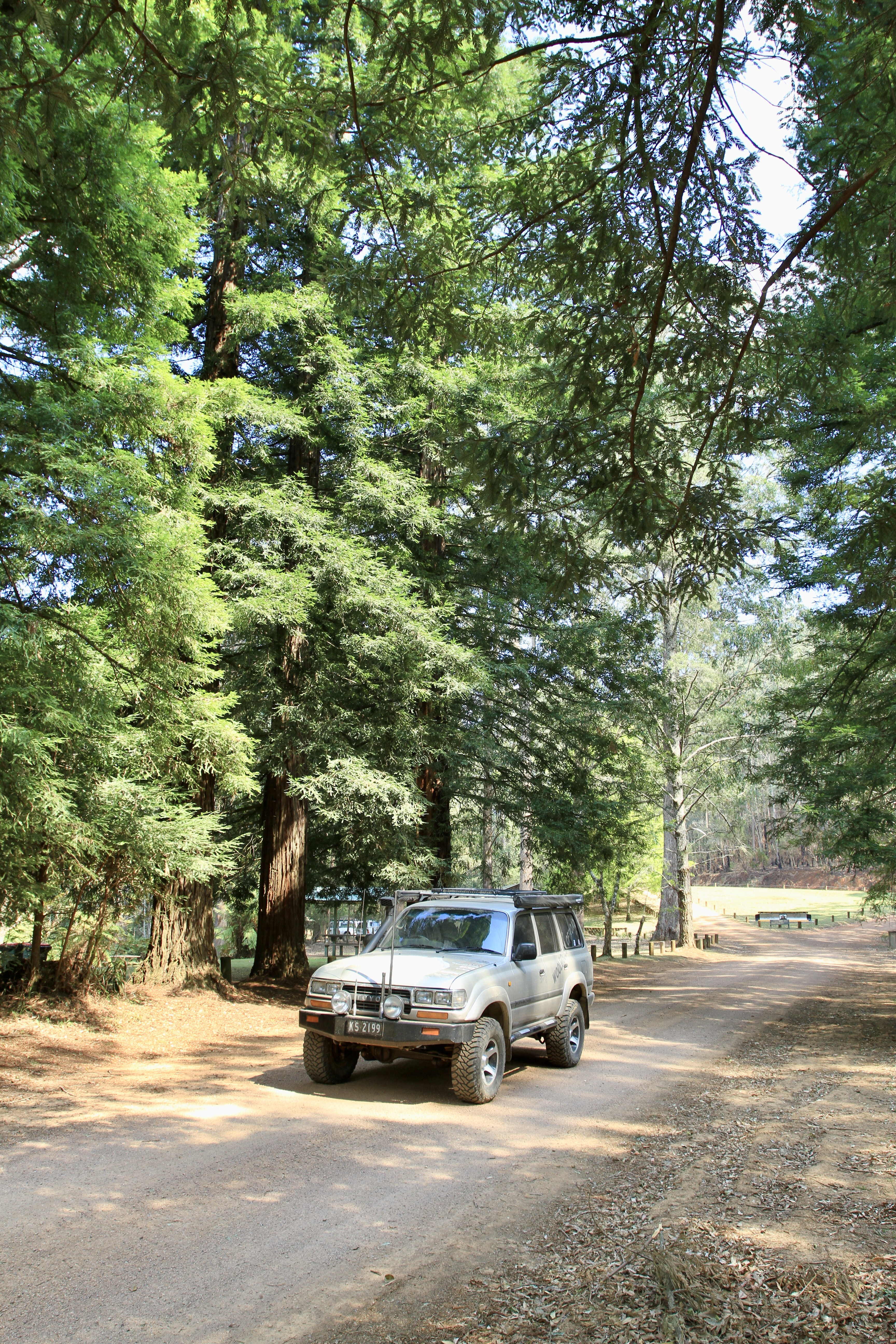
The 80 Series sold in huge numbers over its eight-year life span in Australia, but finding one second-hand now isn’t easy. Perhaps if you own an 80, you just want to keep a hold of it, as there are still plenty on the road it seems.
At the time of writing, a quick check on Australia’s biggest used-car sales website revealed just 36 examples of the 80 Series for sale nation-wide. The least expensive was a 1995 GLX 4.5-litre petrol auto with 360,000km on the clock at a seemingly bargain basement $8500. At the other end of the price range was a very tidy looking 1997 GXL turbo-diesel manual that had racked up 370,000km and was asking for $51,500. Ouch!
SPECS: 1990 80 SERIES (GXL DIESEL MANUAL)
| ENGINE | Straight-six SOHC diesel |
| CAPACITY | 4.2-litre |
| COMPRESSION RATIO | 22.7:1 |
| MAX POWER | 94kW at 4000rpm |
| MAX TORQUE | 271Nm at 2000rpm |
| GEARBOX | Five-speed manual |
| 4X4 SYSTEM | Dual-range full-time |
| CRAWL RATIO | 46.2:1 |
| CONSTRUCTION | Separate chassis |
| FRONT SUSPENSION | Live axle; coil springs |
| REAR SUSPENSION | Live axle; coil springs |
| FRONT BRAKES | 286mm discs |
| REAR BRAKES | 312mm discs |
| WHEELS | 15-inch steel |
| TYRES | 265/75R15 |
| WHEELBASE | 2850mm |
| GROUND CLEARANCE | 235mm |
| APPROACH ANGLE | 37u2070 |
| DEPARTURE ANGLE | 25u2070 |
| KERB WEIGHT | 2070kg |
| GVM | 2960kg |
| PAYLOAD | 890kg |
| TOWING CAPACITY | 2500kg |
| FUEL TANK | 145L |
| ARCHIVAL FUEL USE | 14.8L/100km |
The Isuzu MU-X has long been an endearing vehicle in the Australian 4WD landscape – simple, reliable and fairly affordable for larger families needing extra seats as well as those who enjoy towing small houses on wheels.
While some have described the MU-X as agricultural, with a loud diesel engine and few modern luxuries, there is an argument from the other camp that a simple four-wheel drive is a good four-wheel drive. Hence its popularity with families and nomads.
Well, we are now saying goodbye to an old friend and hello to an all-new generation of MU-X in 2021. And when I say all new, I really mean it. This vehicle has been redesigned from the chassis up, with every major component upgraded along the way. We’re talking more safety, more power, more off-road ability and a stronger driveline. And while that’s all well and good on paper, the big question is what is it actually like to drive?
We set out on a mixed loop of highway, urban, rural and off-road conditions to really put this mid-sped LS-U MU-X through its paces over the space of two weeks, and the verdict? C’mon now, I’m not going to give that away so early in the piece.
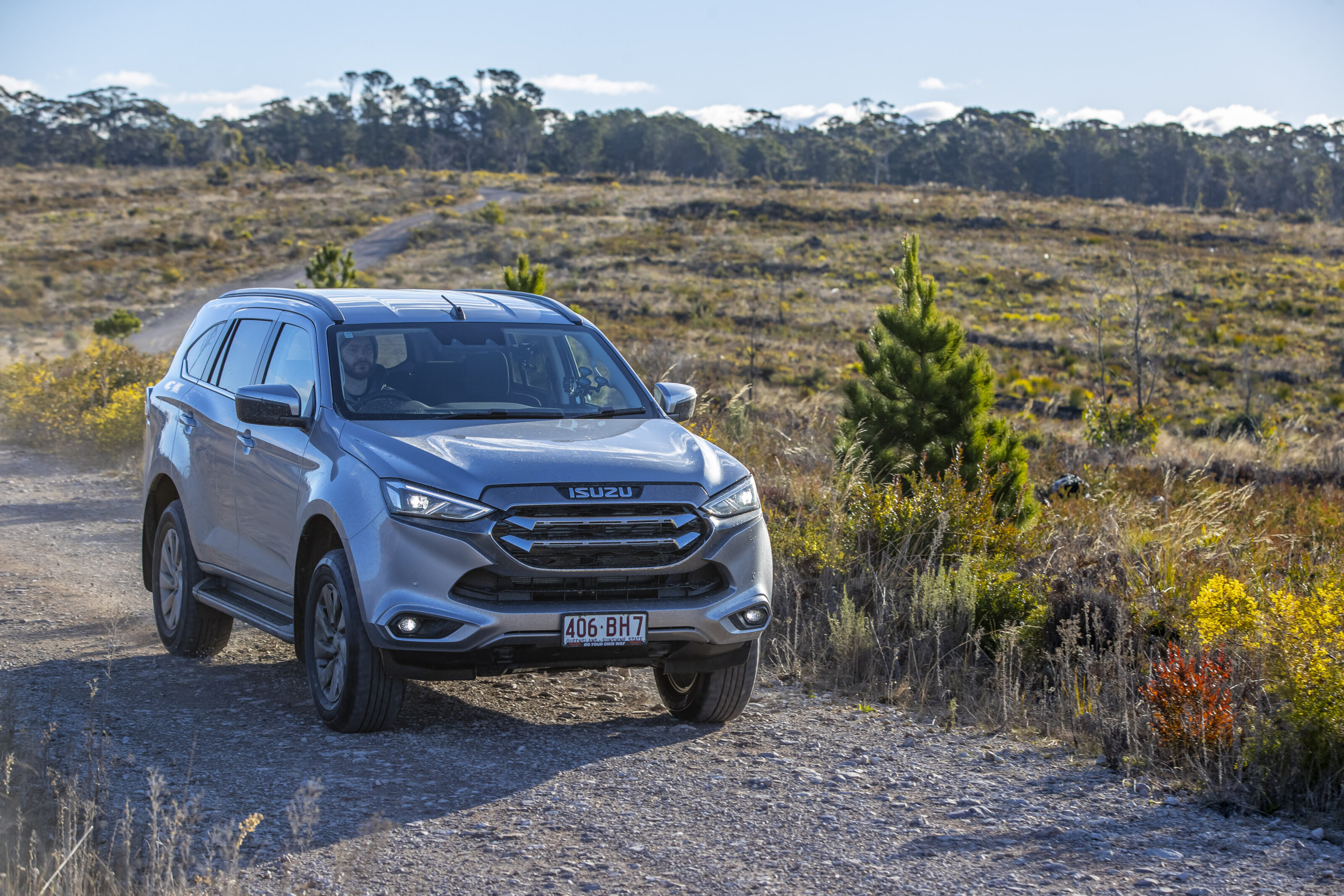
POWERTRAIN & PERFORMANCE
The powertrain in this 2021 model has been borrowed from the current model Isuzu D-MAX. And you won’t hear me complain about that. The 3.0L 4JJ3-TCX motor is revered around campsites for its strong work ethic and reliability. It pulls well too, despite only having 450Nm and 140kW to its name. Don’t get too bogged down with those numbers though, as the way this engine makes power is low-down and rock solid. It feels like it could tow a mountain up another mountain.
Something I was particularly interested in seeing mentioned on the initial press release was stronger drivetrain components, namely CV joints in this 2021 model. Always a good thing to see. A 15.3 per cent stronger transfer case output-shaft, larger one-piece tail shaft and a stronger front shaft, round out the driveline upgrades for this new MU-X.
Now only available with a six-Speed Aisin automatic gearbox, which I have no complaints with performance-wise. While a manual gearbox option would be good to see, I’m not sure it would be a popular choice with many. Strangely, I’m not wanting for more than six gears either; it’s well-suited to the motor and the way it makes power.
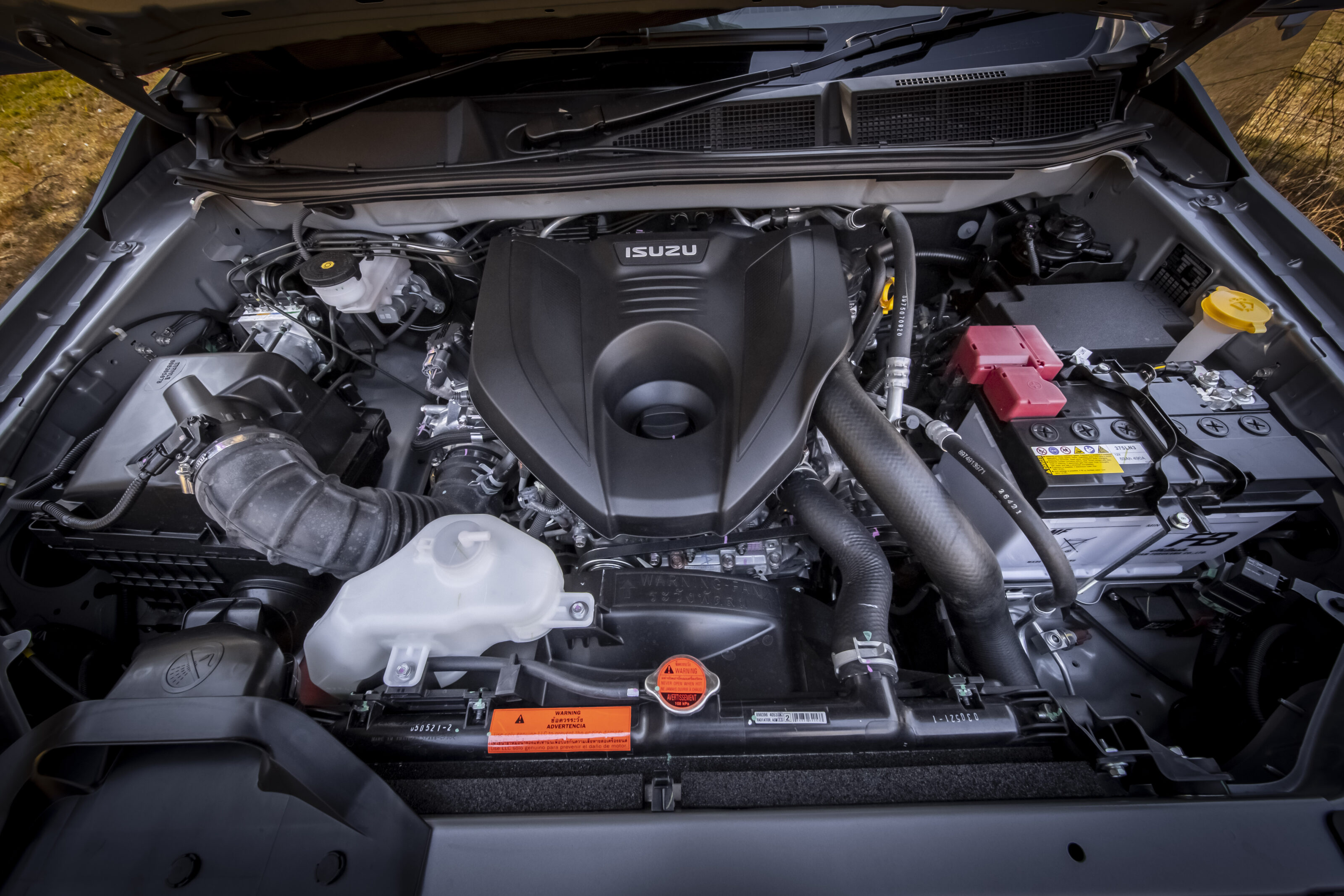
“It feels like it could tow a mountain up another mountain”
ON-ROAD RIDE & HANDLING
That new chassis and suspension package is a winner. While the previous MU-X felt a little floaty on-road, this 2021 LS-U Isuzu MU-X is planted and feels remarkably solid around corners. This is no doubt due to the suspension revisions, including geometry changes, a higher spring rate and thicker sway bars front and rear. Hit a speed bump with a little too much gusto and the car absorbs the shock … not your spine. They have dialled in the suspension package well, but I’m sure the aftermarket industry can make it even better again – a bit of lift would do wonders.
Electronically controlled power steering replaces the more traditional hydraulic system of old, and it’s well-weighted and responsive. Isuzu have done a great job there, as it can be a challenge to tune these high-tech steering systems to be light enough yet still offer positive feel when cornering.
So, while the old MU-X was criticised for being agricultural, I don’t think many people will be saying that about the 2021 model. Yes, there is still a bit of engine noise when you are hard on the loud pedal, but at idle and when cruising, this is a much more refined four-wheel drive in comparison.
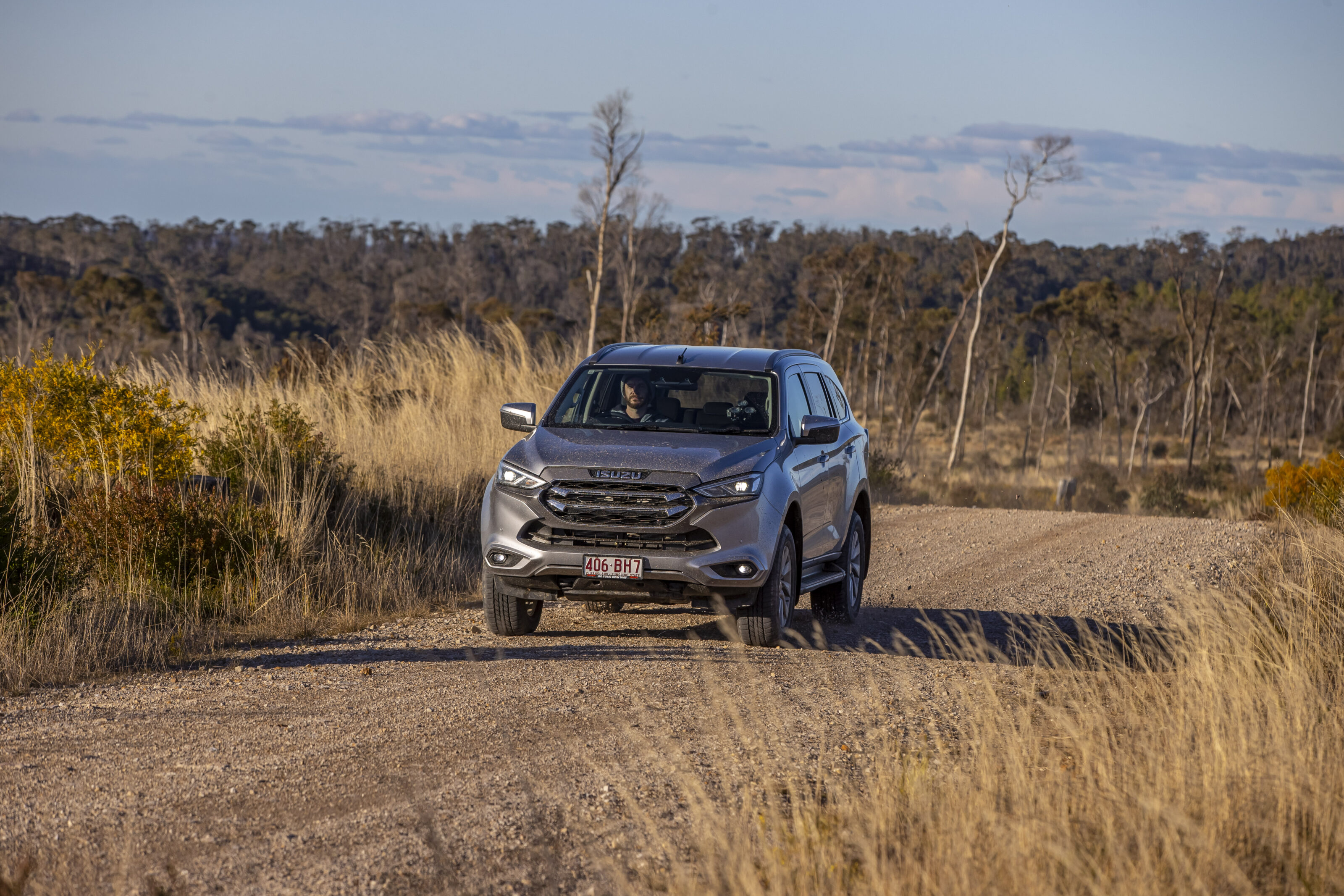
OFF ROAD
Finally, Isuzu has listened to feedback from media and owners and has fitted a rear differential lock as standard across the 4×4 range. It doesn’t end there though, as the 2021 Isuzu MU-X now has a selectable off-road mode called Rough Terrain, which improves the calibration of its traction-control system for off-road duties. It works, too – really well.
Without pressing the Rough Terrain mode button, when crossed up the MU-X was going nowhere fast. A simple touch of this magical button and the 2021 MU-X made forward progression, and rather easily I might point out. This is now a very capable four-wheel drive wagon, something that couldn’t be said about the old MU-X, without spending some money at your friendly local 4×4 accessory store having an aftermarket diff lock fitted.
Front and rear suspension has been revised for the 2021 model and, as mentioned, it rides really well on-road. The same can be said when off-road. Suspension travel on all four corners has also been improved over the previous generation. Combine this with solid low-range reduction gearing and all those new traction aids, you can take this MU-X pretty damn far off-road.
This is probably as good a time to mention the factory underbody protection plates, too; they are made up of a combination of 1.5mm thick steel and some 5mm thick poly-composite plates. This vehicle ticks many boxes for the off-road enthusiast.
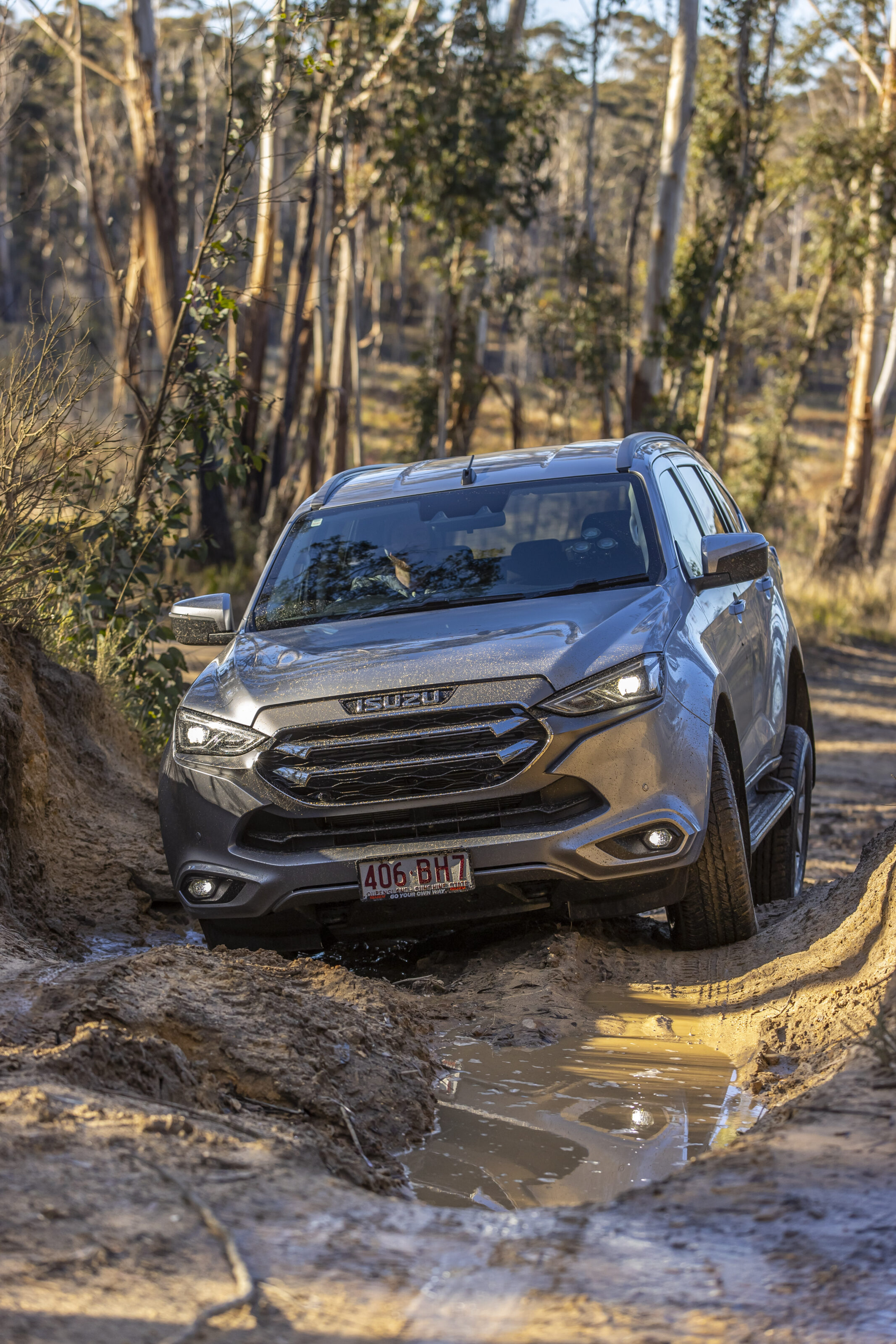
CABIN & ACCOMMODATION
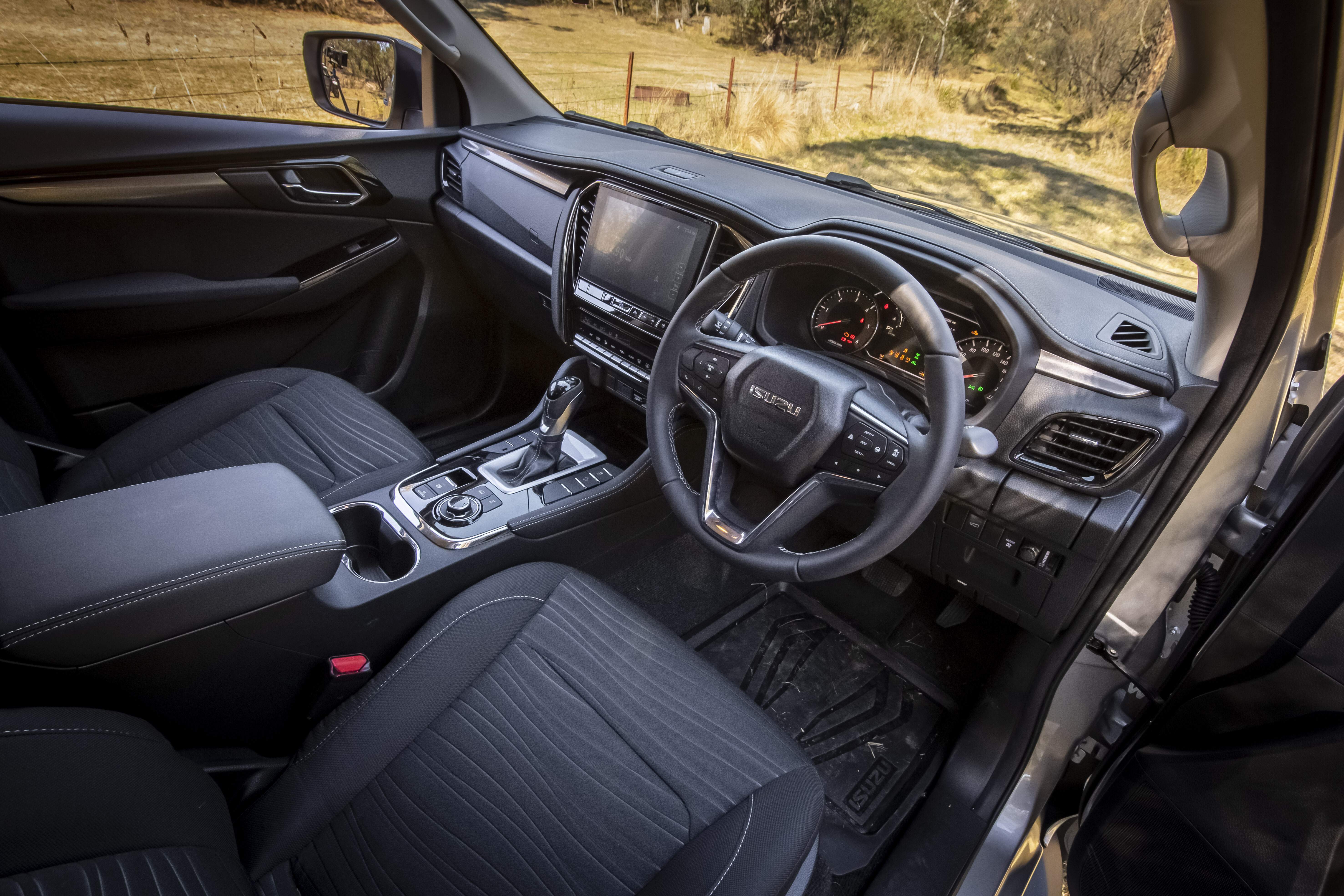
The first thing I noticed when opening the electronic-operated tailgate (standard on LS-U and LS-T models) was how, when the third-row seating is folded flat, it is really folded flat. This gives a great platform for storing fridges or camping gear, as well as prams and other associated bulky items.
The second thing I noticed was how low the tailgate sits when fully opened. Combined with the curved shape of said tailgate, if you are a taller person, you could find it a challenge to not bang your head on it when putting the shopping in the back. Our photographer found that out the hard way.
The front seats in this LS-U spec are supportive and comfortable. There’s even adjustable lumbar support in this LS-U spec, which my poor old back appreciated. They look great, too. As I’m not a fan of leather seats, this interior works for me personally. There’s a nine-inch infotainment screen, which is (as you’d expect) Apple CarPlay and Android Auto compatible. The system works well, but if you opt for the lower spec LS-M, you’ll land a smaller seven-inch unit.
In terms of second-row seating, there’s plenty of room and comfort to be found. One neat feature is the cup holder which is stored in the centre armrest. Fold the armrest down, and the cup holder slides out. Something that isn’t so neat is the lack of visibility out of the small rearmost side glass section in the boot area. The roof line, while more modern in its appearance thanks to its sloping lines, reduces the real-estate for glass. Not a deal breaker, but it’s certainly something you’ll notice if you’ve driven the previous MU-X.
Third-row seating, while comfortable enough, is really limited to smaller folk. I’m nearly two-metres tall, and my head was firmly pushed into the roof of the MU-X. Leg room was adequate, though. If you don’t need all seven seats, folding them back down was a simple and quick affair.
PRACTICALITIES
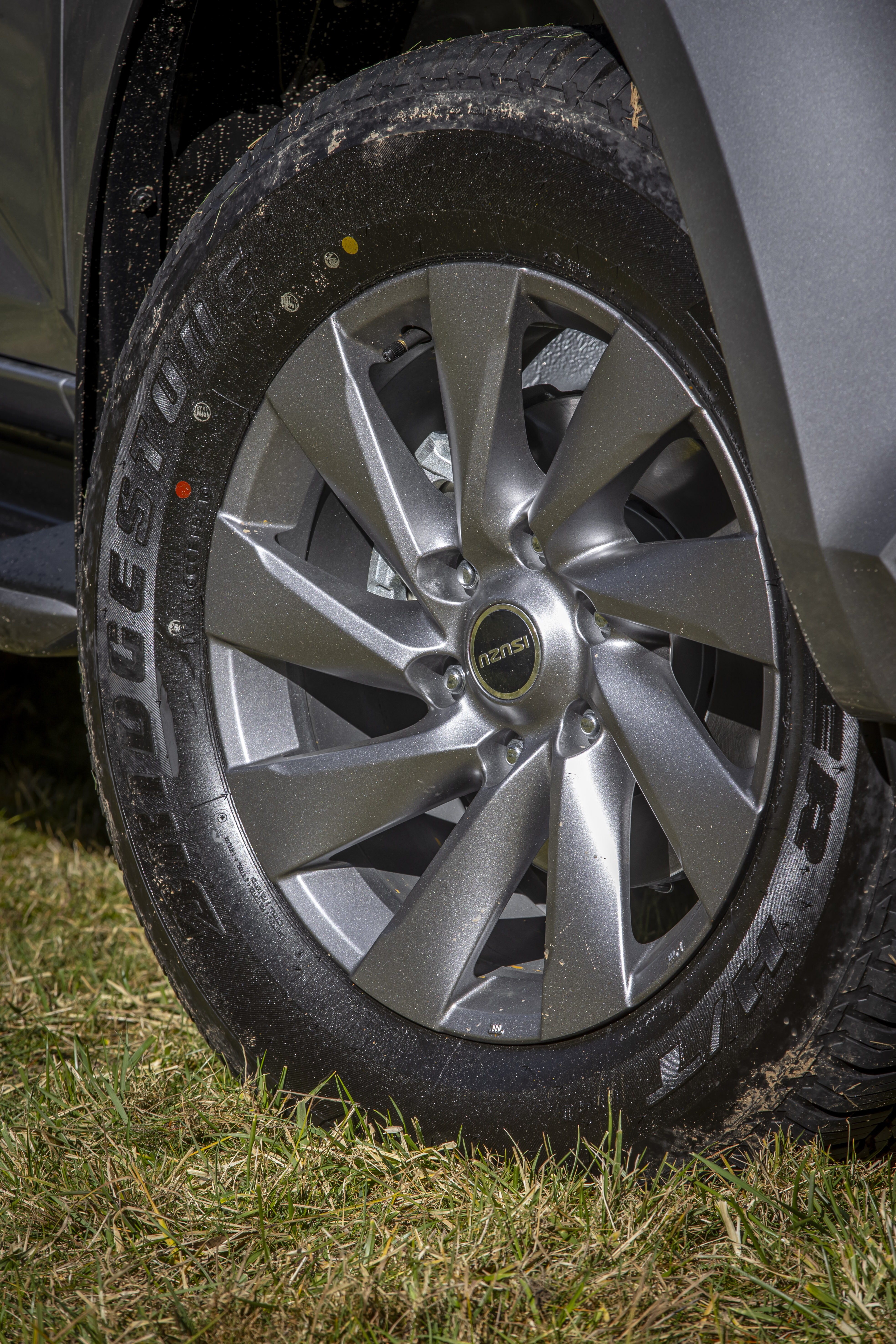
It is a shame to see 18-inch wheels on the LS-U and 20-inch wheels on the LS-T models, even though we know this is due to the upgraded brakes found on this 2021 model. The 17-inch wheels are my personal rim size of choice, as a good balance between on- and off-road handling. Thankfully, there are a wider range of all-terrain tyres available these days in 18- and 20-inch wheels. On the topic of brakes, there is also now an electronically controlled handbrake instead of a traditional manually operated unit.
Payload has been increased, thanks to the new stronger and lighter chassis and firmer spring rate in the suspension. This LS-U can carry 645kg, and the 3500-tonne towing capacity is standard across the range.
Speaking of range, the 2021 MU-X now has an 80L fuel tank. Sure, it’s not as good as say the Prado, but it is still an improvement. Considering how frugal that 3.0L turbo-diesel engine is, that should represent solid touring range. No doubt there will be larger aftermarket fuel tanks available in the very near future, too. Another improvement is a factory rating of 100kg load capacity for the roof, if you decide to fit roof racks.
All in all, this is a very easy vehicle to live with daily. Especially when considering how much safety technology has been incorporated into it, under Isuzu’s banner of IDAS (Intelligent Driver Assistance System). This showcases an absolute stonking amount of modern safety, which would have to be class leading (or very close to) in this wagon category.
SUMMARY
Yes, the new 2021 Isuzu MU-X is a better vehicle to drive in every way compared to the previous model. Yes, it is more expensive and more complex, but you are also getting so many more inclusions for your money. It’s now rather capable off-road thanks to the addition of the Rough Terrain traction-control mode and the rear differential lock across the 4×4 range. It is also a (much) more refined package on road compared to the MU-X of old. Special mention must go to the suspension tune in the 2021 MU-X, as it rides brilliantly on-road and in the rough stuff.
The 2021 Isuzu MU-X is safer and more practical for families. With a larger fuel tank and 100kg roof capacity, there’s plenty of good news for off-road tourers as well. We’re looking forward to driving the other models in the range, to work out where the sweet spot is when it comes to ownership. So far, I’m impressed.