
Snapshot
- Scored more than 80 per cent in three out of four categories
- Some D-Max results carry over to the SUV
- Adult occupant protection rated as MU-X’s strength
Isuzu’s 2022 MU-X has passed ANCAP’s safety test with flying colours, taking five out of five stars to give it the top rating alongside its D-Max utility sibling.
Based on the same platform as the recently-updated D-Max, a large amount of the MU-X’s scores were based on the ute’s previous results – although the seven-seat SUV did perform better in certain categories of the independent crash tests.
Starting with its best category, MU-X scored 87 per cent for adult occupant protection, with full marks given in the side impact, oblique pole and rescue/extraction tests. It only dropped the most amount of points (getting 4.63 out of eight) in the frontal offset impact, while every other segment was within 0.5 of a perfect score.
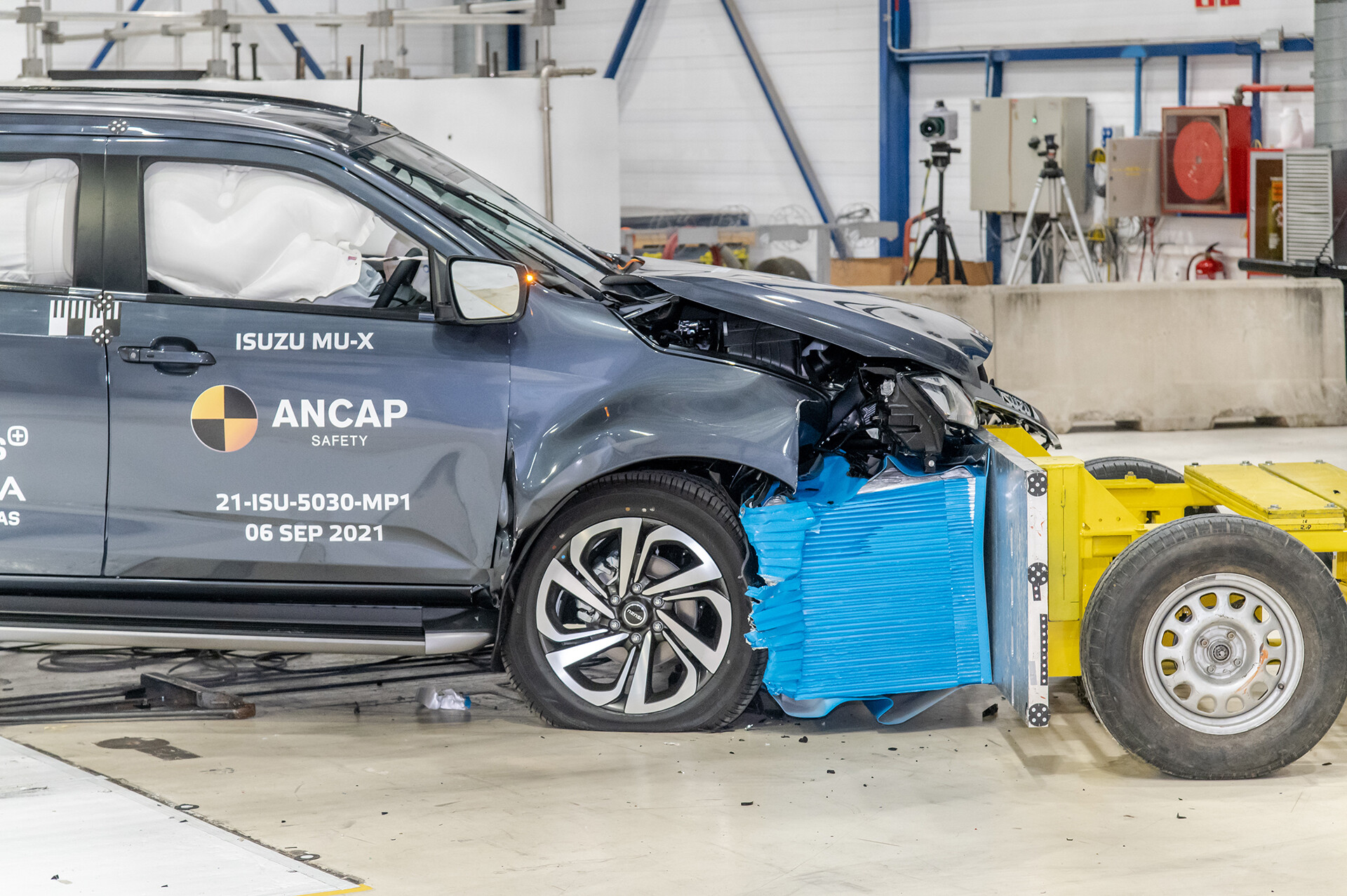
Child occupant protection in the second row also scored well, resulting in a total of 41.99 points from 48, giving it 85 per cent.
Full marks were awarded for the side dynamic test and restraint installation, although five out of 13 were dropped for on-board safety features.
Just one per cent behind was the MU-X’s score for its safety assist systems, its 84 per cent total coming from 13.49 out of 16 points available. Occupant status warnings were given perfect scores, although its junction assist features couldn’t quite make the grade – with 0.89 out of two points awarded.
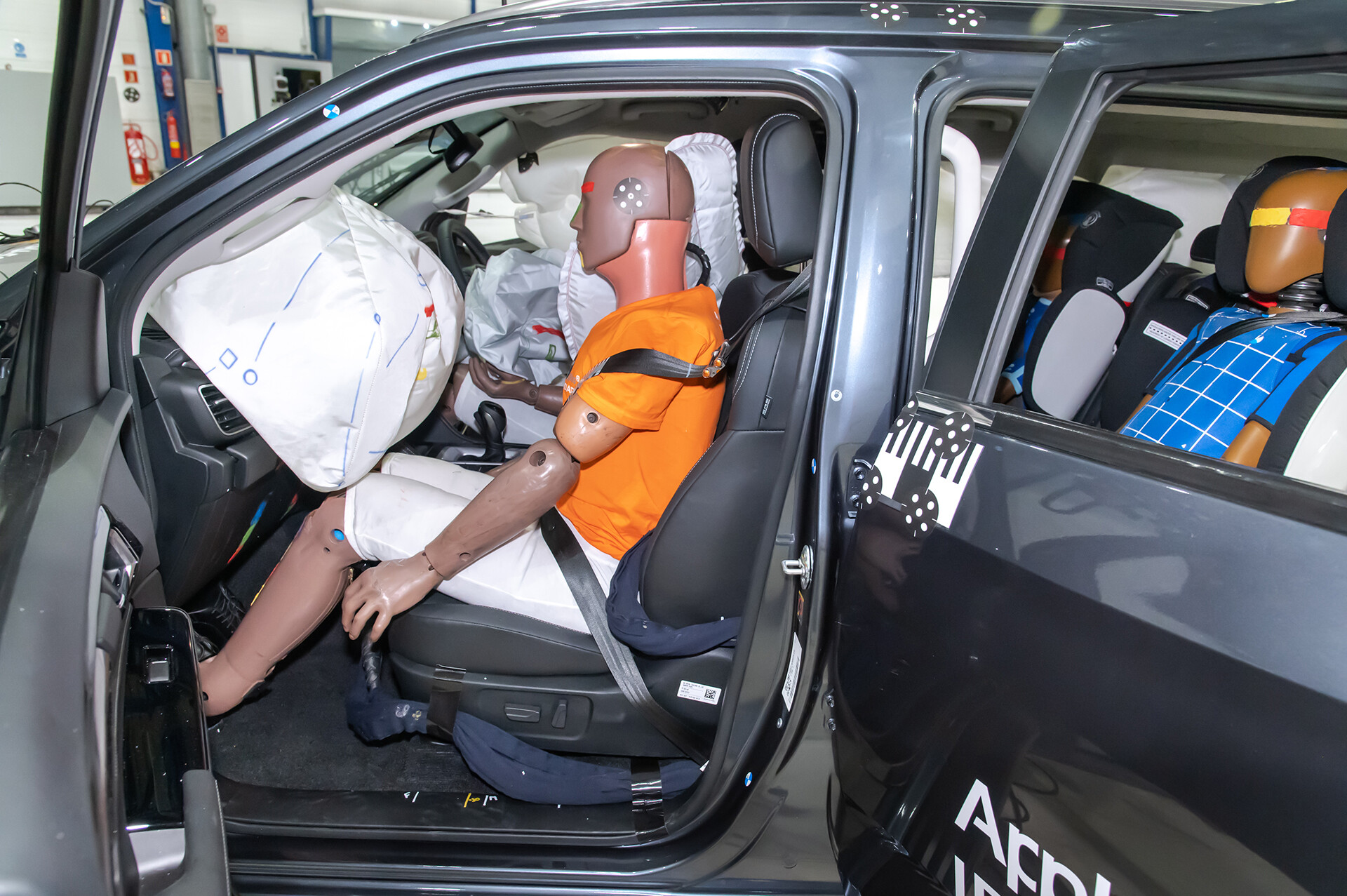
As is understandable for a high-riding SUV, the MU-X’s pedestrian protection wasn’t fantastic, nor was it horrific, as 37.63 points from 54 available gave it a total of 69 per cent.
Letting it down was the autonomous emergency braking (AEB) for pedestrians backover test (zero points scored), its AEB recognition of cyclists (3.89 out of nine) and head impacts – the latter of which saw the vehicle manage 17.78 points from 24 on offer.
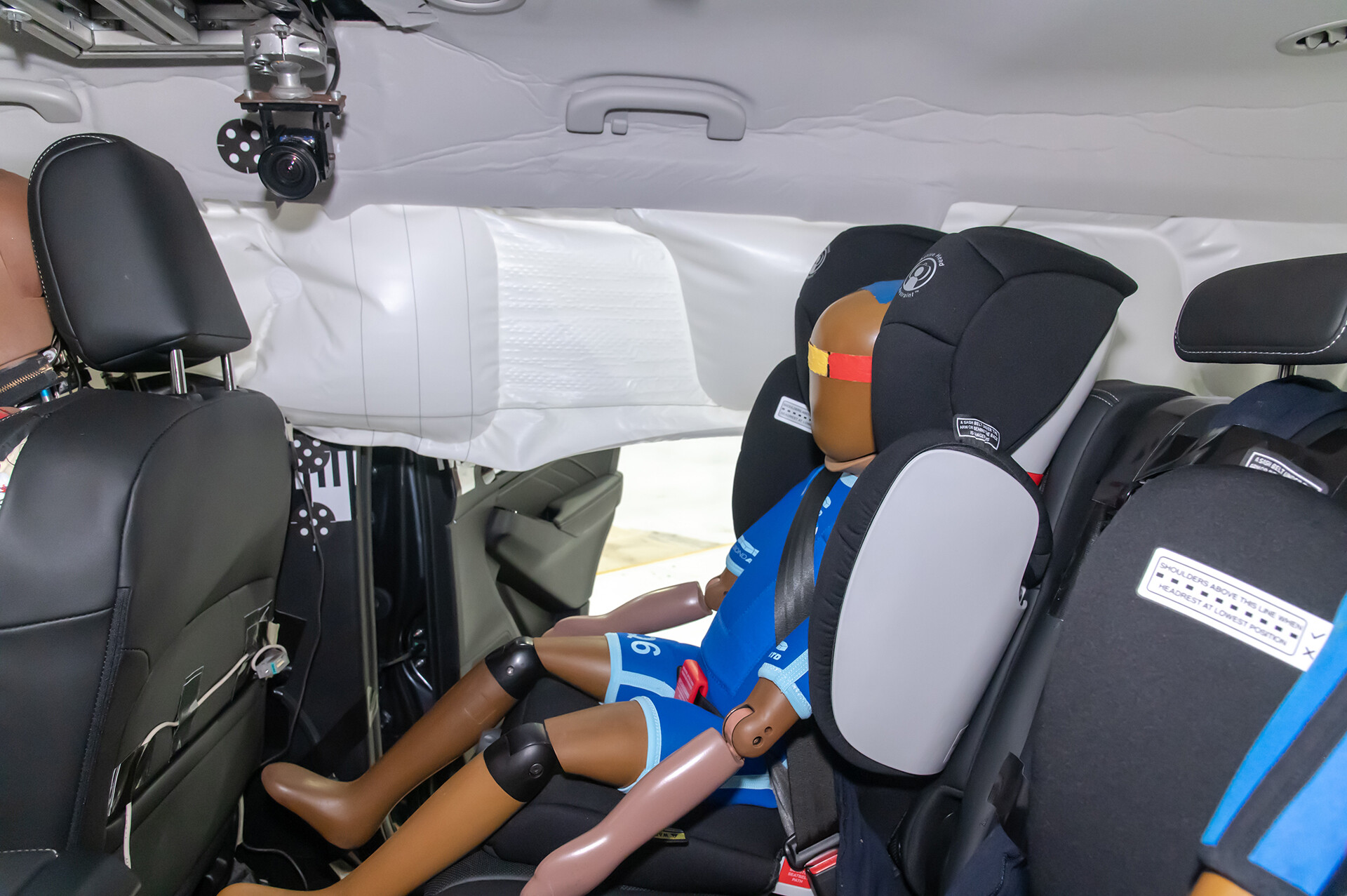
ANCAP CEO Carla Hoorweg said the MU-X presents itself as a strong, safe candidate for SUV buyers, thanks to the full suite of airbags for first and second row occupants.
“The MU-X takes advantage of the safety features already demonstrated in the D-Max, and it is pleasing to see this strong performance carried over into the Large SUV segment,” said Hoorweg.
“Safety is a must for those in the market for a seven-seat family vehicle, and the MU-X provides a safe choice for active families.”
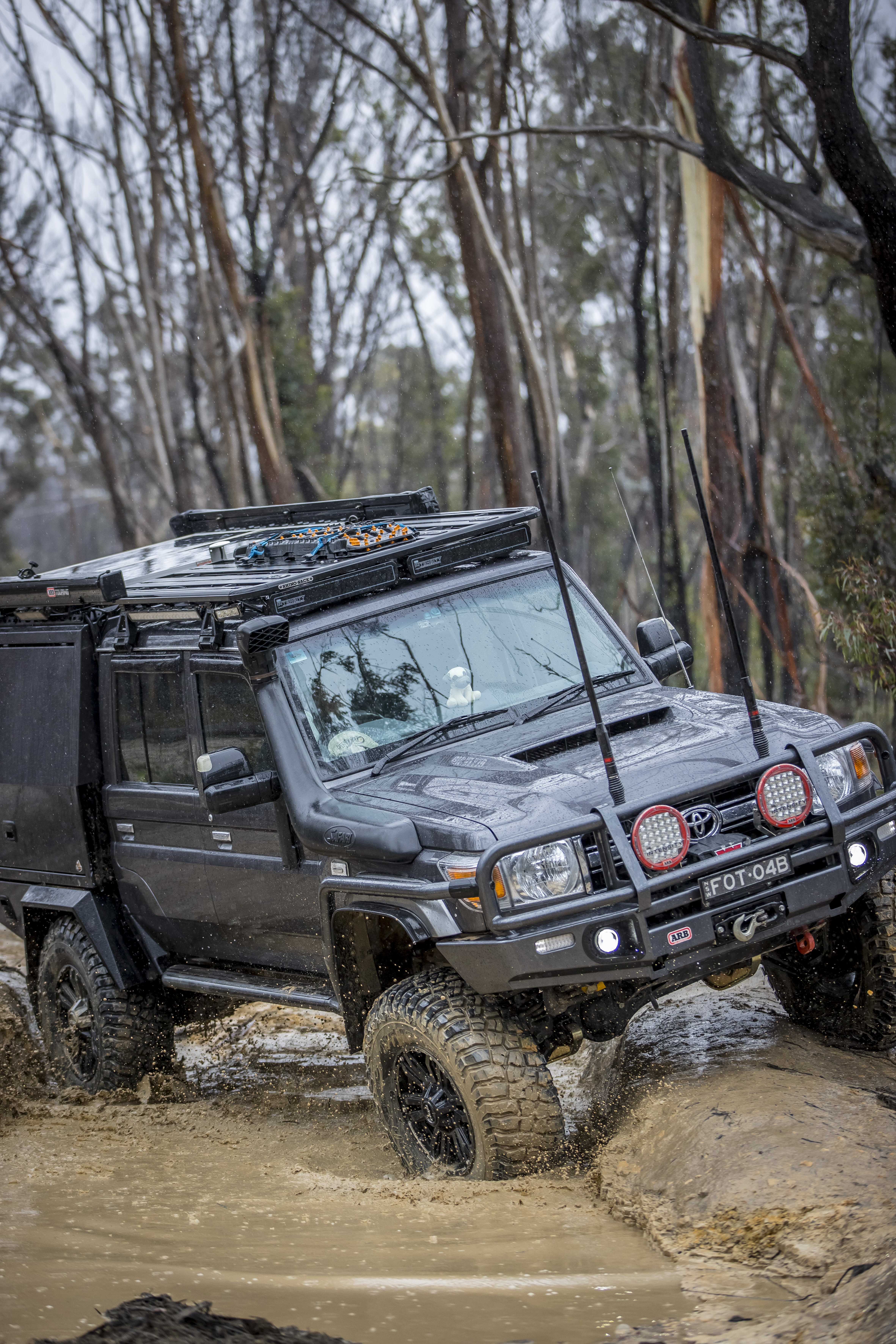
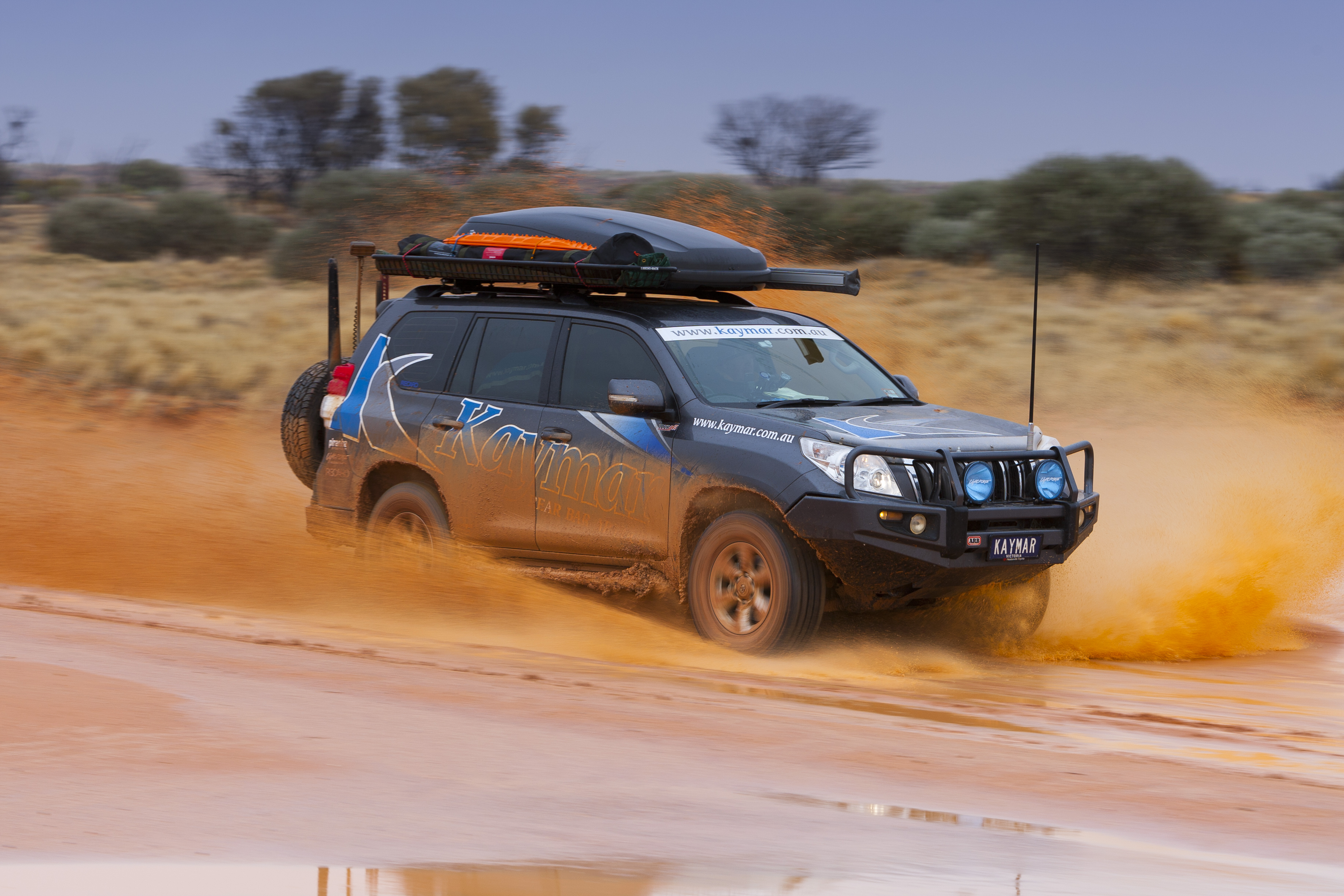
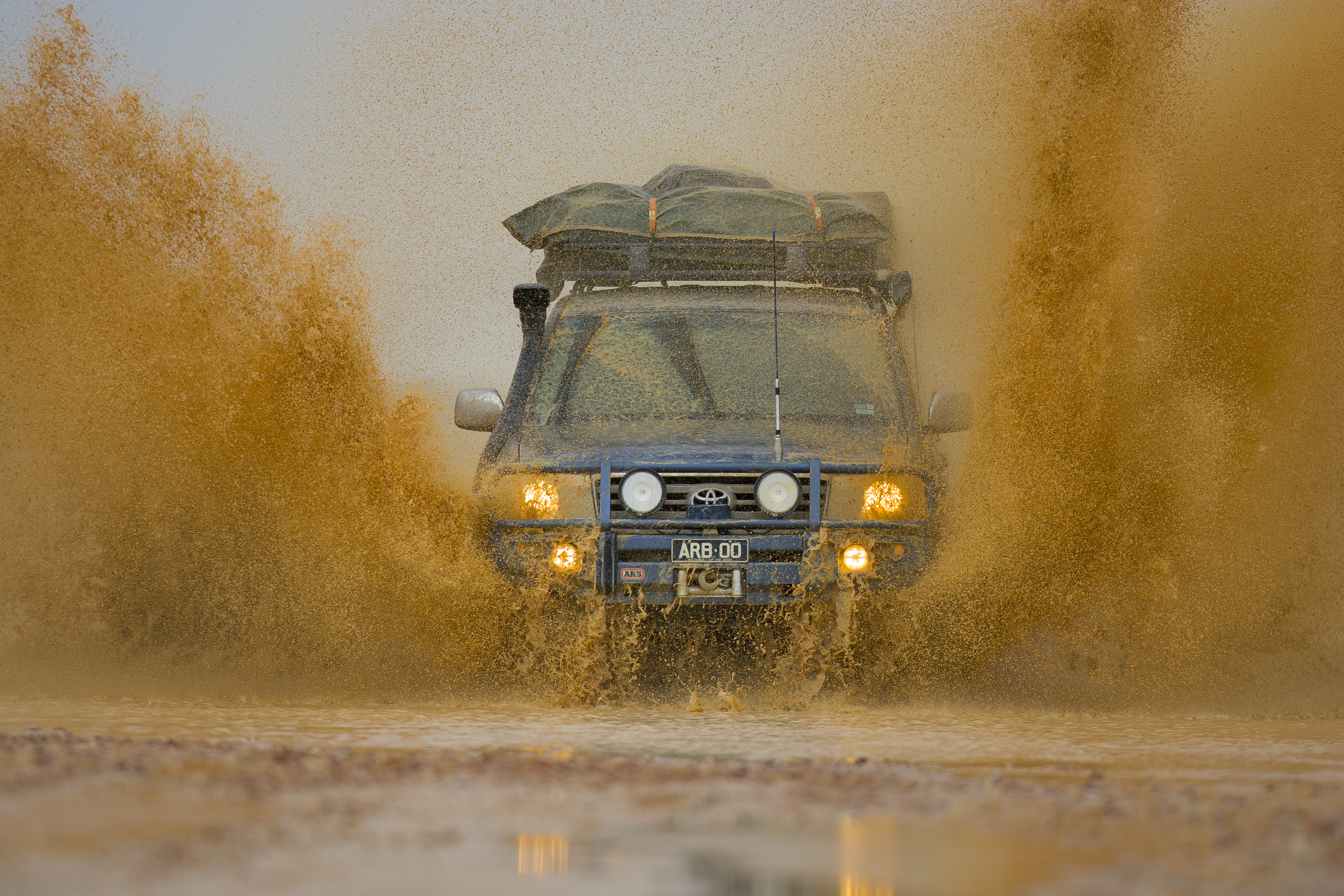
Mud wrestling might sound like fun but it’s always a safe option to try to avoid the sticky, gloopy stuff if you can. Why? Because mud is no good for your 4×4; it can be damaging to paintwork, to mechanical components and to your vehicle’s interior.
And it’s not just your vehicle that can cop damage when driving through mud; aggressive mud-terrain tyres spinning furiously while trying to gain purchase in mud can cause severe damage to roads and tracks, making it more difficult for following vehicles to get through, even after everything has dried up.
As well as vehicle and track damage, if things really don’t go to plan in mud, you could end up stuck … and getting out of sticky, gloopy mud can sometimes be extremely difficult.
So, the next time you’re driving along a track and you’re tempted to drive through a big mud hole, a better option would be to look for a way around it. Of course, sometimes there won’t be an alternative route, or you just might not be able to help yourself, in which case here’s what you’ll need to do …
PREP YOUR VEHICLE
Your 4×4’s tyres are critical when it comes to maintaining forward progress on any off-road surface, and mud is no exception. When it comes to driving in mud, aptly named mud-terrain tyres are the best choice. They have wide-open tread blocks that allow them to gain traction more easily in slippery mud, and they are also more able to clear mud when spinning than tyres with ‘tighter’ tread patterns that can trap and hold on to mud. Some mud-terrain tyres also have tread blocks that continue over the tread face and on to the sidewalls (sometimes called side-biters) for additional traction in the slippery stuff.
Mud-terrain tyres aren’t for everyone however, as there are several compromises compared to less-aggressive all-terrain or highway-terrain tyres. These include less on-road grip, increased on-road noise and faster tyre wear. If you’re not willing to accept these compromises, all-terrain tyres are the next best choice for mud driving, but even highway-terrain tyres can still work well in mud if the correct tyre pressures are set … but more on that later.
The next thing to consider for mud driving is your vehicle’s ground clearance. As mud is viscous, it gets pushed around by spinning tyres, often resulting in deep wheel tracks as vehicles pass through muddy sections. If your 4×4’s tyres fall into these deep wheel tracks, you can soon run out of ground clearance and find yourself ‘hung-up’ on the crown (the raised middle bit) of a road or track. Obviously, the more ground clearance you have, the less chance of getting stuck.
In most states and territories, you can legally increase your vehicle’s ground clearance by 75mm (three inches) by combining larger diameter tyres (+25mm) and a raised suspension system (+50mm).* You can go even further in some states/territories if you have engineering approval … or a vehicle that has been modified and registered by a second-stage manufacturer.
Other vehicle equipment that is beneficial for mud driving includes the fitment of front and rear differential locks, a quality snorkel and extended breathers for your vehicle’s differentials, gearbox and transfer case. You’ll also want to make sure your vehicle is equipped with rated recovery points front and rear, and that you are carrying appropriate recovery gear in case you get stuck.
*Check with your state authorities regarding the legalities of raising the height of your vehicle.
BEFORE YOU DIVE IN
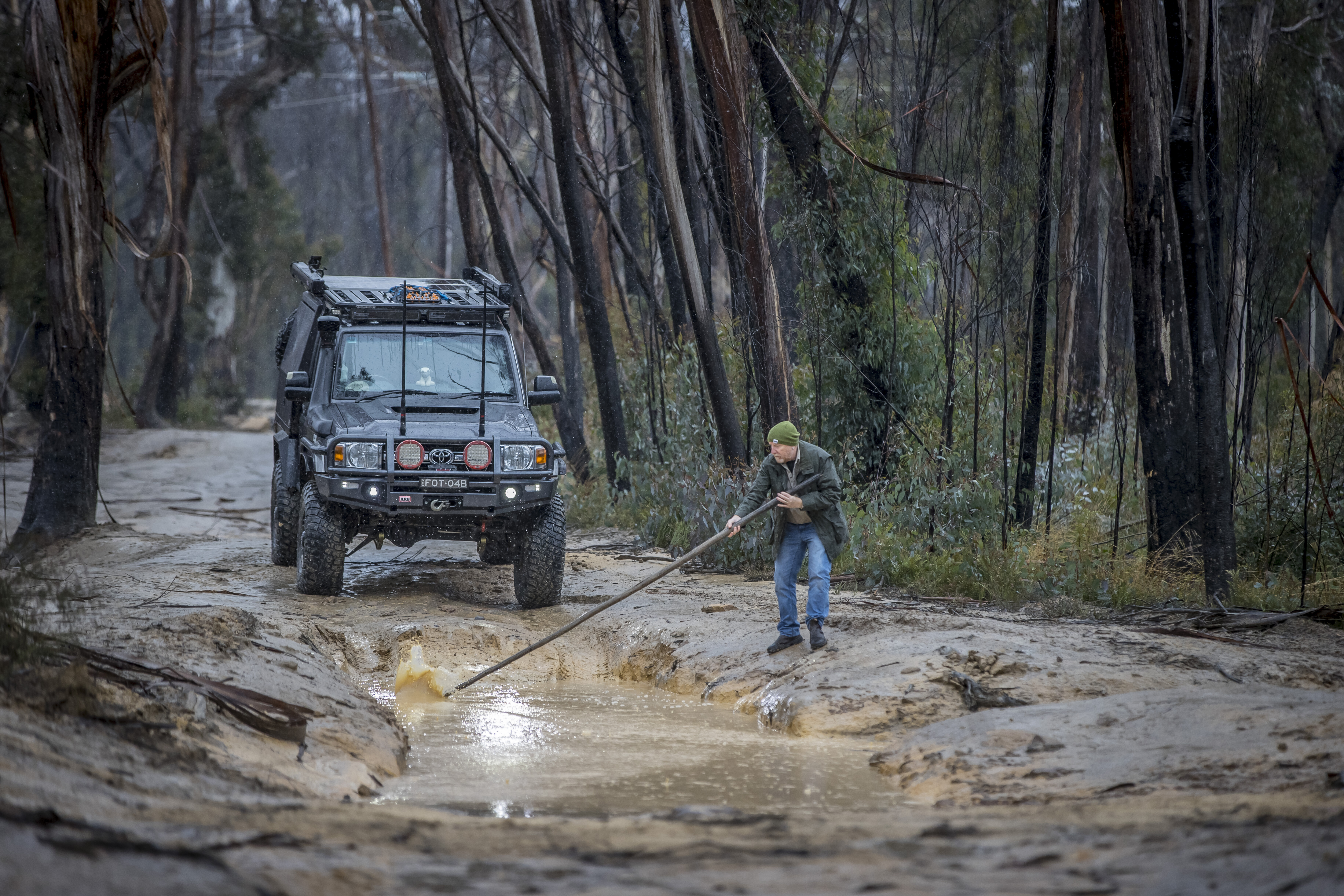
If you’re driving along a bush track and you’re confronted by a big mud hole, you’ll need to find out what’s lurking beneath the surface, and the best way to do this is with a big stick … unless of course, you don’t mind getting dirty and wading through it on foot. If you choose the latter option, make sure you’re wearing sturdy footwear.
With a stick, walk along each side of the mud hole, gauging the depth with your stick and feeling for the consistency of the base to see if it’s firm or sloppy goop. Also try to judge how high the crown is to make sure you have enough ground clearance to make it through, and poke the stick around to see if there are any obstacles such as large rocks, branches or even parts that may have broken off vehicles; you might need to build up some speed to get through a mud hole and the last thing you want to do is hit a hard, submerged object.
Also check to see if there are any rocks or tree roots protruding from the sides of the mud hole that could cause tyre damage.
A thorough check of a mud hole also gives your vehicle time to cool down. If you drop hot mechanical components straight into icy cold, muddy water, they will contract when cooled and try to suck the muck past worn seals on your gearbox, transfer case and diffs.
If you’re on an outback road and you happen across a muddy section, drop your speed enough so that you’ll have plenty of time to choose the best route through the mud, or around it; make the wrong decision and you could soon find yourself up to your axles in gooey, sticky vehicle-sucking mud.
Mud can even be problematic on sealed outback roads. If there’s been water about and you need to pull off to the side of the road to avoid oncoming vehicles, or you’re just pulling up for a cuppa, beware that it can still be boggy on the verges well after the rain has stopped.
In desert country, sticky mud will often be present just below the surface of seemingly hard, crusty saltpans, and if your tyres break through the top layer, you could soon find yourself stuck. If you can see tracks ahead of you, and they look like they exit out the other side, drive in these tracks if you think you’ll have enough ground clearance, as the base will have been compacted by the preceding vehicle(s).
GETTING SET
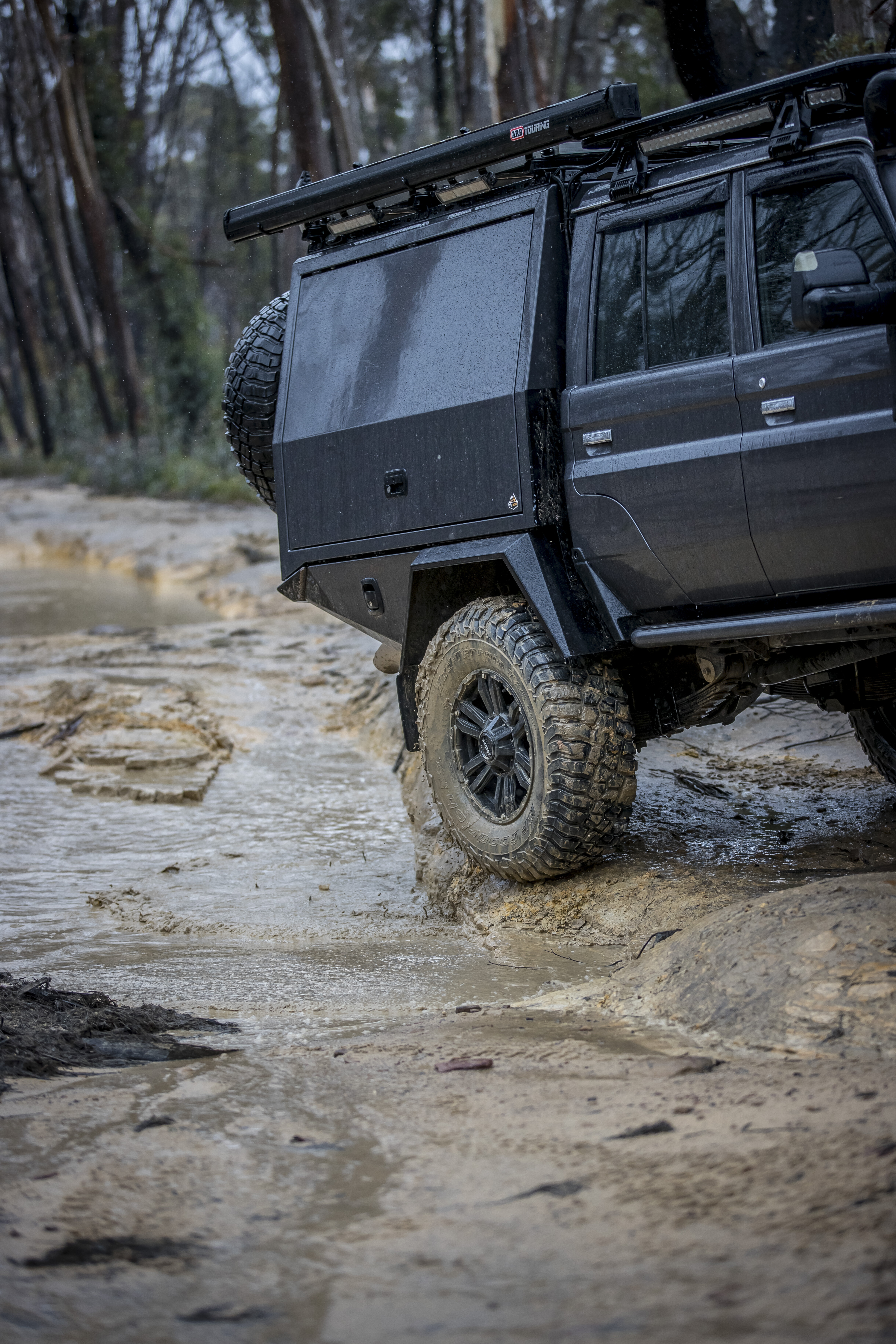
Like most off-road driving situations, your vehicle will perform at its best if you’re running the appropriate tyre pressures. Lowering the tyre pressures for mud driving extends the footprint of each tyre, and allows the tyres to conform to uneven surfaces, allowing them the best chance to gain purchase, especially when the mud has a soft base.
How low you drop tyre pressures depends on your vehicle and the load you are carrying, but if you normally run around 35psi on the road, for example, you should be able to safely go as low as 22psi for mud driving. Just bear in mind that when running low pressures there will be an increased risk of rolling a tyre off a rim, or overheating the tyres, so try not to make any sudden direction chances and don’t drive too fast.
There’s always the potential to get stuck in mud, so before you dive in, make sure you have an escape plan. If you’re travelling with other vehicles, have a snatch strap ready in case you need someone to help you out. If you’re travelling solo, make sure your shovel and recovery boards are easy to get to in case you need them, and if you have a winch, make sure your rigging (winch extension strap, tree-trunk protector, shackles, snatch blocks/rings etc.) is handy, and that you have something to winch off.
READY TO ROLL …
You’re now ready to tackle the mud, so lock your hubs if fitted, make sure your vehicle is in 4×4, lock the centre diff if fitted, and select the gear that you think will result in enough speed and momentum to get you through the muddy section. Low-range second or third is often a safe bet, but it will depend on your vehicle’s overall gearing and the mud you’re faced with; the key is to maintain enough speed to get you through to the other side, but not so much speed that you might damage your vehicle.
If you’re 4×4 has selectable drive modes, select the appropriate one for mud, which on many vehicles is labelled ‘mud and ruts’. This will tailor throttle response, automatic gear shifts and the behaviour of the traction-control system to suit the conditions. If you have diff locks on rear and/or front axles, lock them before driving into the mud, but be wary that locking your front diff will make it more difficult to steer the vehicle.
When driving through mud, keep engine revs up and try to avoid gear changes; in manual transmission vehicles, disengaging the clutch in mud can result in you losing momentum and quickly becoming stuck – you need to keep those wheels turning!
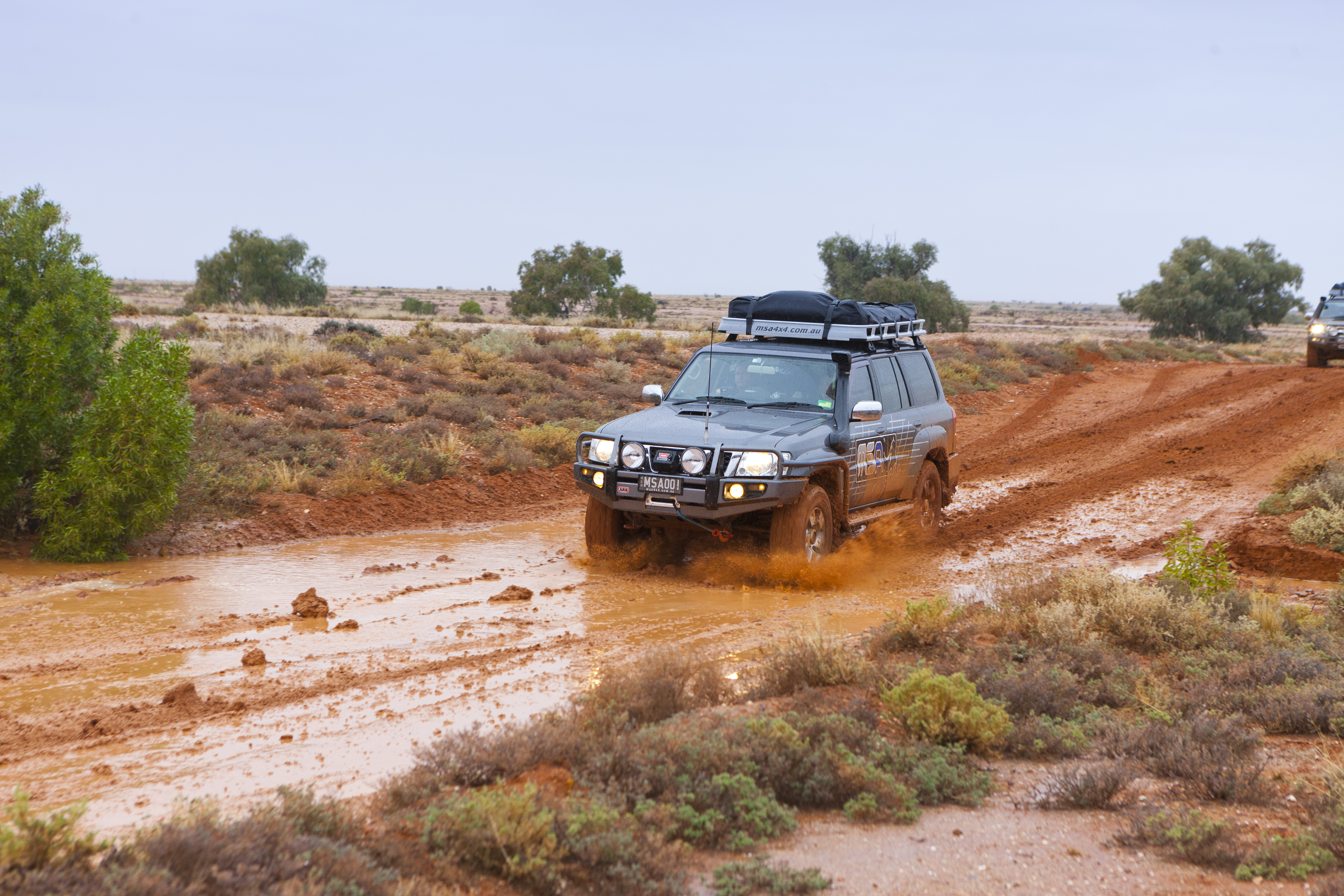
On the flipside, if you bury your wellie and your tyres start spinning furiously in mud, there’s a chance you could simply be digging yourself into the muck. If you start to lose traction, the trick is to find a happy medium between wheelspin and forward progress.
There is an upside to your wheels spinning, and that is the rotational forces will help to clear mud from the tread blocks so the tyres will have more chance of gaining purchase.
If you start losing momentum but the wheels are still spinning, another trick is to quickly turn the steering wheel back and forth. This action gives the front tyres a chance to bite into the sides of ruts, which with any luck will help to drag your vehicle through the mud. The side-biters on mud-terrain tyres assist when employing this technique. You might have to straddle wheel tracks if they look too deep, but take care not to slide into the tracks.
Mud driving in hilly terrain can be fraught with danger, especially on steep descents. In these conditions you’ll want to rely on your vehicle’s low-range gearing as much as possible to keep speed in check instead of the brake pedal. On older vehicles without ABS, if you jump on the brakes and the front wheels lock up you will lose steering control. If this happens, dropping into existing wheel tracks can help point you in the right direction. On vehicles equipped with ABS, relying on the brakes can result in excessive braking distances. Slow and steady is the best technique for muddy descents.
WHAT TO DO IF YOU GET STUCK
The first thing to do if you get stuck in the mud is to try and reverse out. Often the reason you become stuck is because mud builds up in front of the tyres, so if you can back up a bit and have another go with a bit more gusto you might just be able to make it out of your predicament.
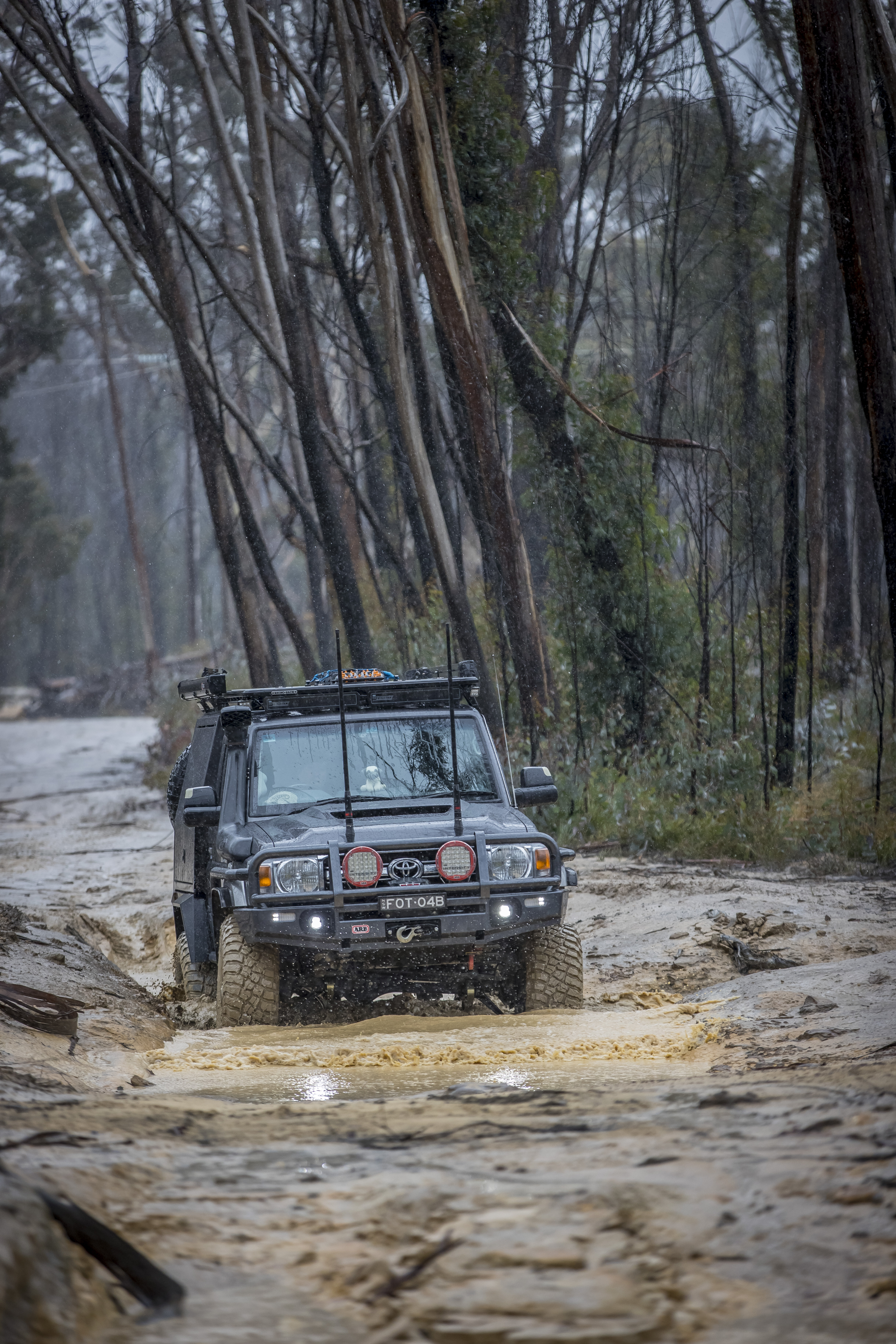
If you can’t move in either direction, chances are much mud has built up under your vehicle, so you’ll need to grab your shovel and start clearing the mud away. Start by shovelling away the mud on front of the tyres, and then underneath your rig. Now could also be a good time to use your recovery boards. Wedge them in front of the front tyres, select low-range first and try to gently drive on to the recovery tracks. Once up and on to the tracks, try to build up speed and maintain momentum until you’ve reached firmer ground. This can take several attempts.
If you’re fortunate enough to be travelling with other vehicles, a tug with a snatch strap or kinetic recovery rope is one of the fastest ways to recover a vehicle from mud, but make sure you know what you’re doing, and always follow proper safety procedures.
If you need to winch yourself out of the mud, make sure you find a solid anchor point and use a double-line pull if you’re really stuck. Before you start winching, clear away as much mud as possible from in front of the tyres and under the vehicle.
BACK ON DRY LAND
Once you’re out of the mud, have a good look over your vehicle to check for damage. When reinflating tyres, have a good look to make sure they are not damaged and check that mud hasn’t worked its way in-between the tyres and the wheels. Also have a good look inside the wheel rims to ensure there aren’t big clumps of mud in there that could throw them out of balance.
Make sure your mudflaps and wheel-arch flares are all in place and secured, and that the licence plates are still attached and not covered in mud. Also make sure your headlights, tail-lights and indicators are clean, as well as your windscreen, windows and mirrors.
Once you get home, clean your vehicle as soon as you can. The abrasive nature of dried out mud is no good for your vehicle’s paint, chrome or plastics. Give your rig a good clean underneath too, as mud can be hell on components such as clutches, wheel bearings and CV joints. Also have a good look in chassis rails for built-up mud that could result in corrosion issues down the track, and hose away any mud between the body and chassis, and around suspension components and fuel tanks.
Lift the bonnet and make sure the radiator, alternator and other components aren’t caked in mud. If they are, thoroughly clean them to prevent engine overheating or electrical failures.
If you’ve been driving in deep mud holes, you should also check the engine, gearbox and diff oils to make sure no contaminants have worked their way into these mechanical components.
As I said at the start of this guide, it’s always a good option to try to avoid mud rather than drive through it if you can …
DO
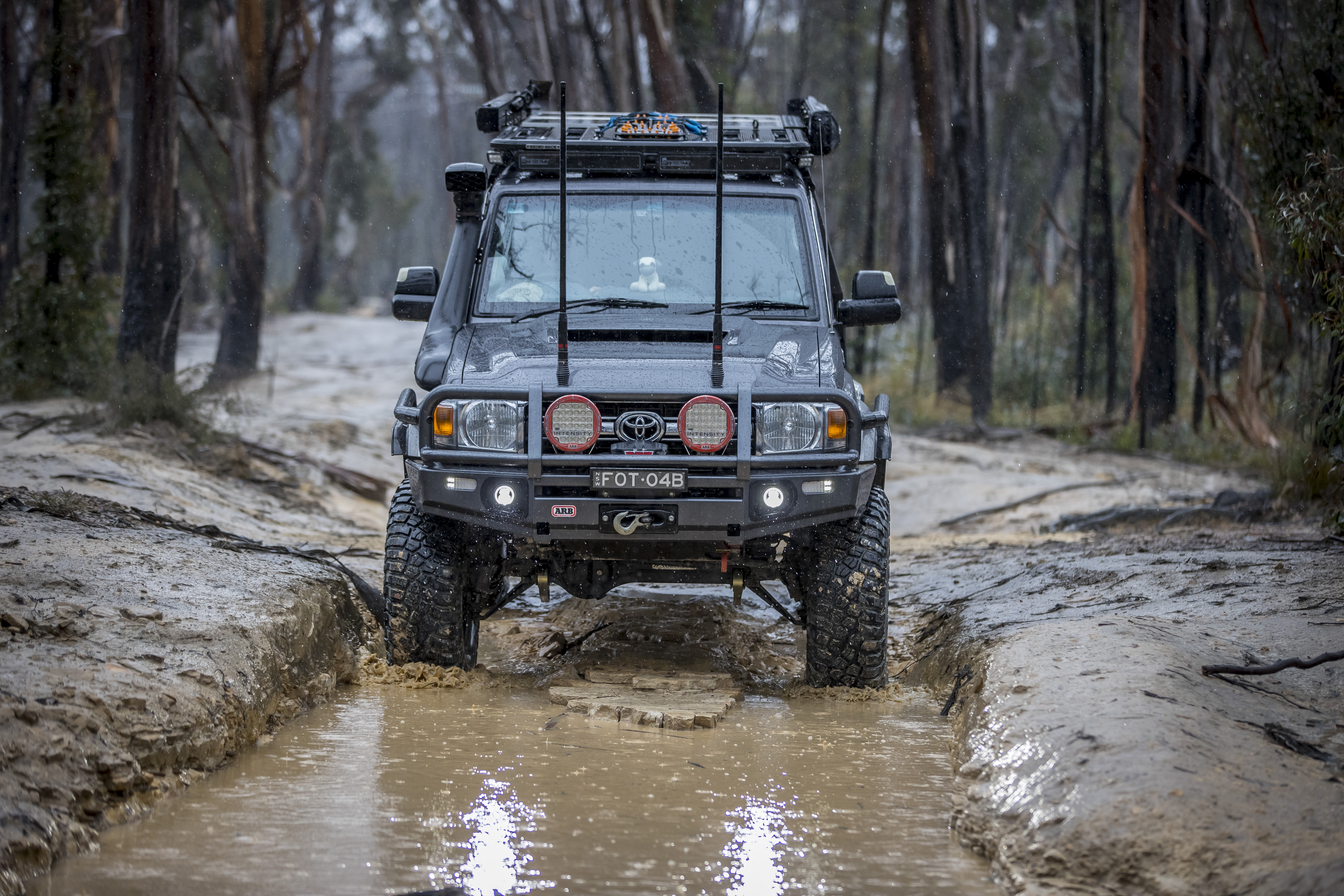
1. Try to avoid it if you can 2. Lower tyre pressures 3. Engage 4×4/select mud mode/lock hubs and diffs 4. Maintain momentum 5. Carry recovery gear and have a plan
DON’T
1. Drive in mud holes without checking depth first 2. Lose momentum by changing gears in deep mud 3. Brake too hard on steep, muddy descents 4. Pull off the road too far in flat country 5. Leave your 4×4 caked in mud
There will be a battery-powered successor to the Volkswagen Amarok in the coming years, a senior company figure has confirmed.
Volkswagen Group of America’s Chief Operating Officer Johan De Nysschen has revealed a VW-badged ute would eventually be offered as an electric vehicle (EV).
While the upcoming Amarok isn’t expected to see any kind of electrification in the foreseeable future, the executive confirmed a zero-emissions Volkswagen ute was in the pipeline.
“We will, in the fullness of time, switch 100 per cent from [internal-combustion engined] entries to EVs,” De Nysschen said in a statement issued to US publication Motor Trend.
“And as the VW Group looks at its global product portfolio, this means that successors to popular models such as Atlas and our Amarok truck, will eventually be electrified.”
While a spokesperson for Volkswagen Australia declined to comment on the possibility of an electric Amarok, it’s believed the statement is the first time an electric Volkswagen ute has been confirmed by a company representative.
The German carmaker has previously downplayed the possibility of the Amarok morphing into a battery-electric vehicle (BEV).
“It’s a difficult discussion, to have an Amarok or a similar car using BEV technology,” Volkswagen Group board member for electric mobility Thomas Ulbrich told Autoblog in August 2020.
“We are looking at what Rivian is doing, because normally it is difficult to believe that a car like the Amarok, for example, could be electrified. But, nevertheless, step by step our investigation and research makes us think it becomes more possible,” he said at the time.
“By making this technology more and more robust, an Amarok-type of car would be BEV.”
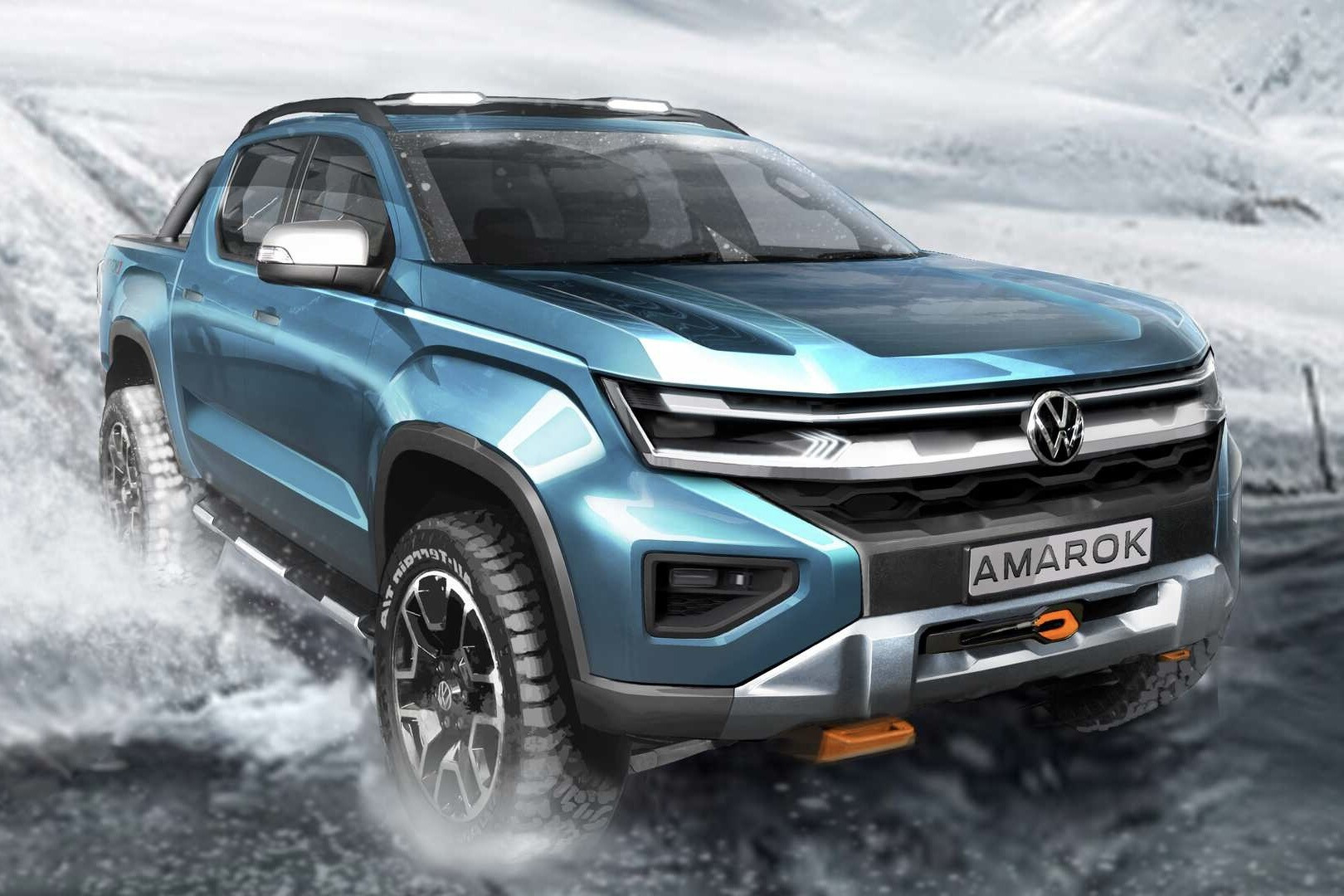
But with the 2023 Volkswagen Amarok being based on the next-generation Ford Ranger – and the two automotive giants joining forces to share commercial vehicle platforms – it’s likely the job of electrifying the Amarok is being left to Ford.
The Blue Oval is already pushing ahead with battery-powered versions of the Transit van and F-150 pick-up, and the company has a long-term partnership in place with electric carmaker Rivian.
Before an all-electric Volkswagen ute becomes a reality, it’s likely we’ll see a plug-in hybrid version of the Ranger and Amarok, given Ford has dropped hints regarding the likelihood of a zero-emissions-capable model line-up by 2023.
The International Harvester Scout may be making a comeback as an all-electric off-road brand, under a new plan reportedly being considered by Volkswagen Group management.
According to US publication Motor Trend, Volkswagen America COO Johan De Nysschen told media the company was considering reviving the Scout name, likely to compete with the Jeep Wrangler and Ford Bronco.
Before the Bronco was introduced in 2020, the Wrangler had arguably no direct competitors – but it appears carmakers have woken up to the popularity of smaller, square-bodied off-road vehicles.
The mere possibility of a Volkswagen-derived Scout is the result of a number of corporate acquisitions. In July 2021, Traton, Volkswagen Group’s truck division, merged with Navistar – which was created from the ashes of International Harvester when it went under in 1985, and which owns the rights to the Scout nameplate.
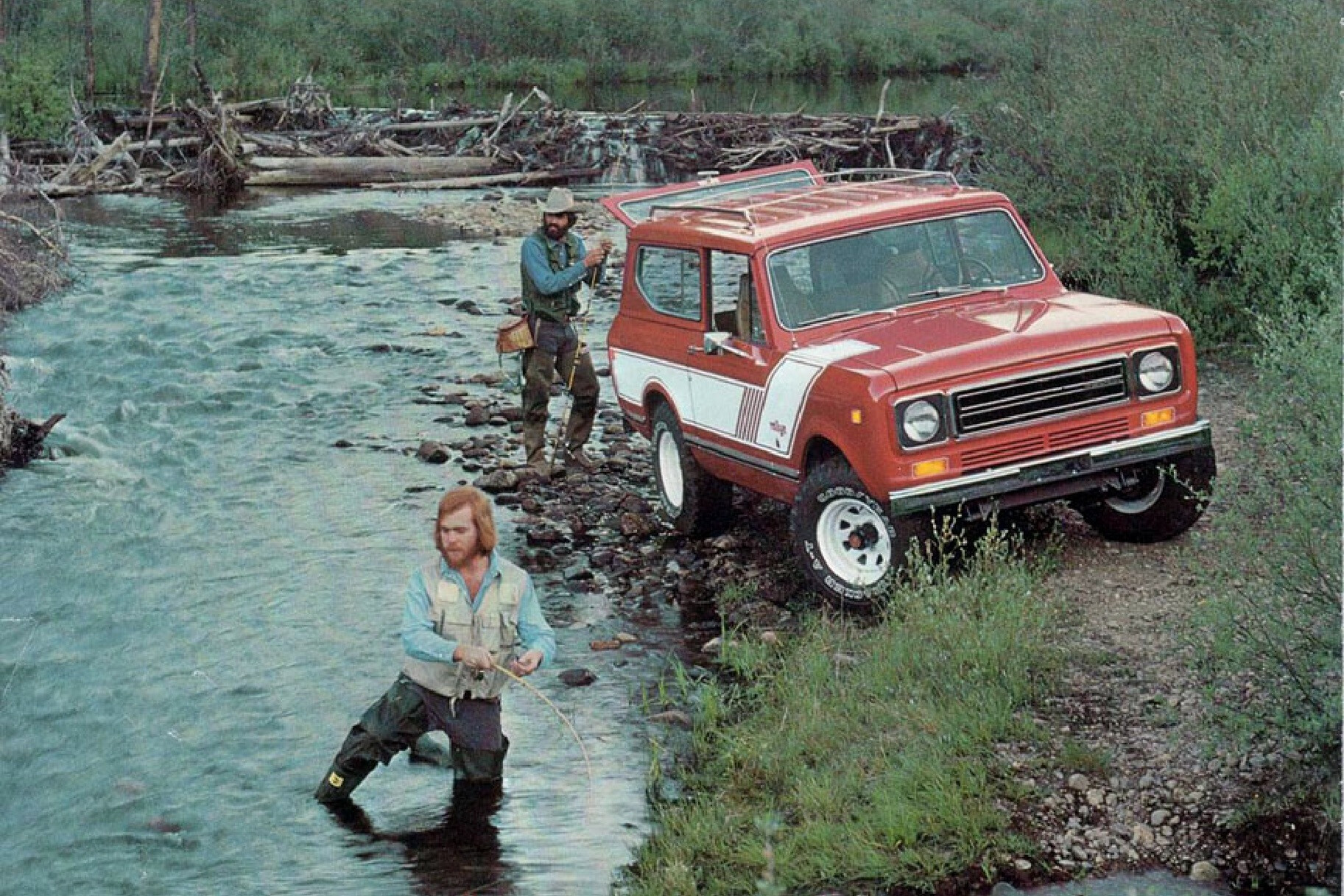
What isn’t clear is whether the International Harvester badge would be able to be used, with the brand having been bought by Case IH when the company was divided up – though it’s understood Case IH does not own naming rights for passenger vehicles.
International Harvester had a history of manufacturing commercial vehicles dating back to 1907, but the company was best known for the Scout, produced from 1961 to 1980 – predating the Ford Bronco by four years.
While the Scout name is a revival from the past, it seems Volkswagen is looking beyond the current crop of models to the future, envisioning the Scout as an electric vehicle – more akin to the upcoming Rivian R1S SUV, according to De Nysschen.
But the Scout isn’t the only battery-powered off-roader with proper heritage, with Mercedes-Benz showing off a fully-electric version of the G-Class earlier this month.
However, De Nysschen was quick to throw cold water on the idea, with the Volkswagen America boss issuing a statement after the story was originally published, which read: “The notion of launching a new product line under the Scout nameplate, is truly speculative and at this time, not reflective [of] any plans, real or imagined.”
A 1994 Toyota LandCruiser 80 Series has sold in the US for just shy of US$79,000 overnight – equating to almost AU$109,000.
Despite having nearly 230,000 kilometres on the clock, the LandCruiser is in particularly good condition, and attracted more than 68 bids from American Toyota enthusiasts on auction website Bring a Trailer.
The 80 Series features a 4.5-litre six-cylinder engine and four-speed automatic transmission, grey leather, Old Man Emu suspension, and an ARB bull bar.
At nearly AU$108,900, the vehicle sold for more than a range-topping LandCruiser Sahara did in 1994, enjoying a price tag of $96,580 in Australia when new. However, adjusted for inflation, the Sahara would cost around $180,500 in today’s money.
While it’s a good outcome for the seller, the US$78,777 didn’t come close to surpassing the top auction result for a LandCruiser 80 Series – which sold in June 2021 for US$136,000. In Australian dollars, the figure is nearly $190,000.
The news comes a month after a LandCruiser 60 Series sold at auction for US$134,400, or nearly AU$190,000 before a buyer’s premium was applied.
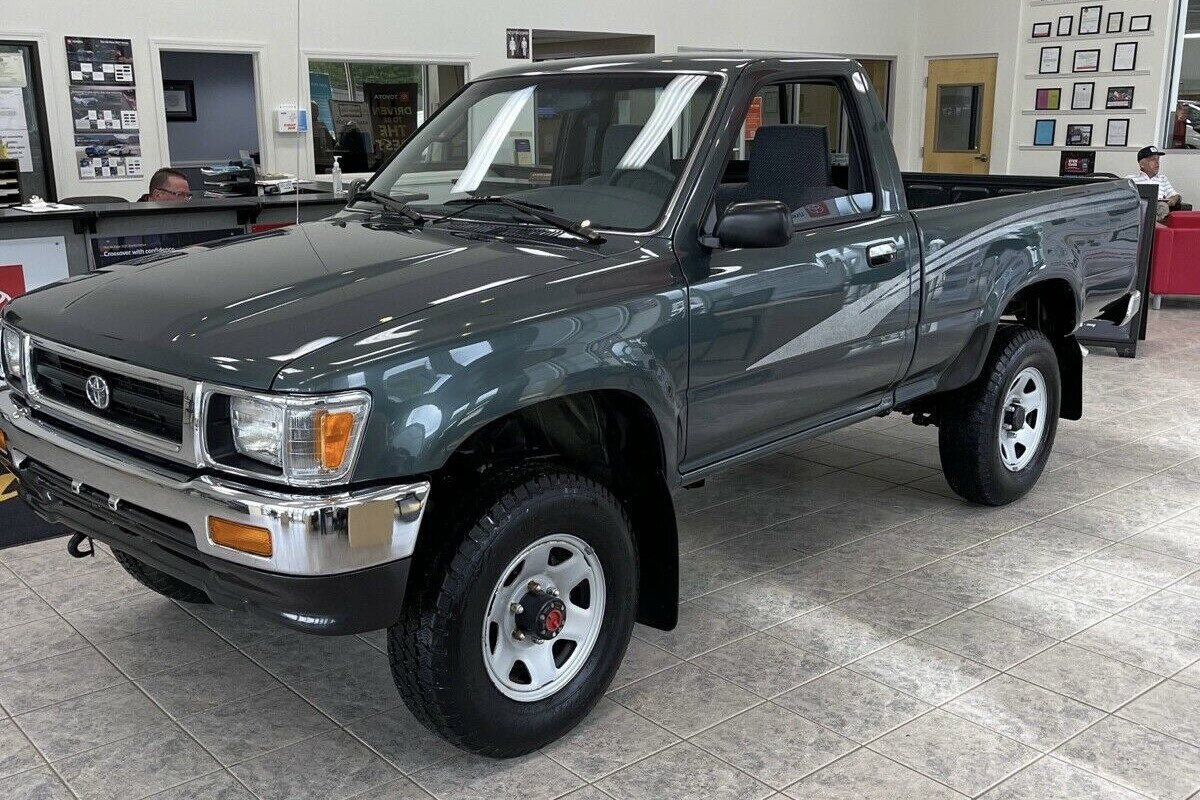
It seems Americans can’t get enough of older Toyota four-wheel-drives, with bidding for a single-cab 1994 Toyota HiLux (badged as a pick-up in the US) currently sitting at US$35,700 – or just shy of AU$50,000 at the time of writing.
The eBay listing says the ute travelled just 135km before the vehicle was parked in a barn and left unused.
Late in 2020 the Australian Government announced the deployment of Advanced Mobile Location (AML) technology for the Triple Zero Emergency Call Service.
AML is a technology built into the operating system of Apple and Android telephones – as long as you have the latest or near latest operating system – which will provide greater location accuracy to Triple Zero during an emergency call from a mobile telephone. It has the potential to save lives and improve outcomes for mobile callers in Australia, as it is doing in the countries in which it has already been deployed. You can find out more about AML here.
At this time however, AML does not work in Australia when a caller is ‘camped-on’ to another mobile network. Emergency camp-on, for those that have never heard the term before – like me, up until I researched this article – may occur when a caller is outside of their own mobile carrier’s network coverage, but is within the coverage of another mobile carrier. This allows a caller to make a Triple Zero call whenever in the range of a mobile network.
While callers who are camped-on another mobile network can still provide their location to Triple Zero and the relevant state Emergency Service organisation by using the Emergency+ app; this app now includes a ‘pin drop’ function, and also includes ‘what3words’ for location clarification.
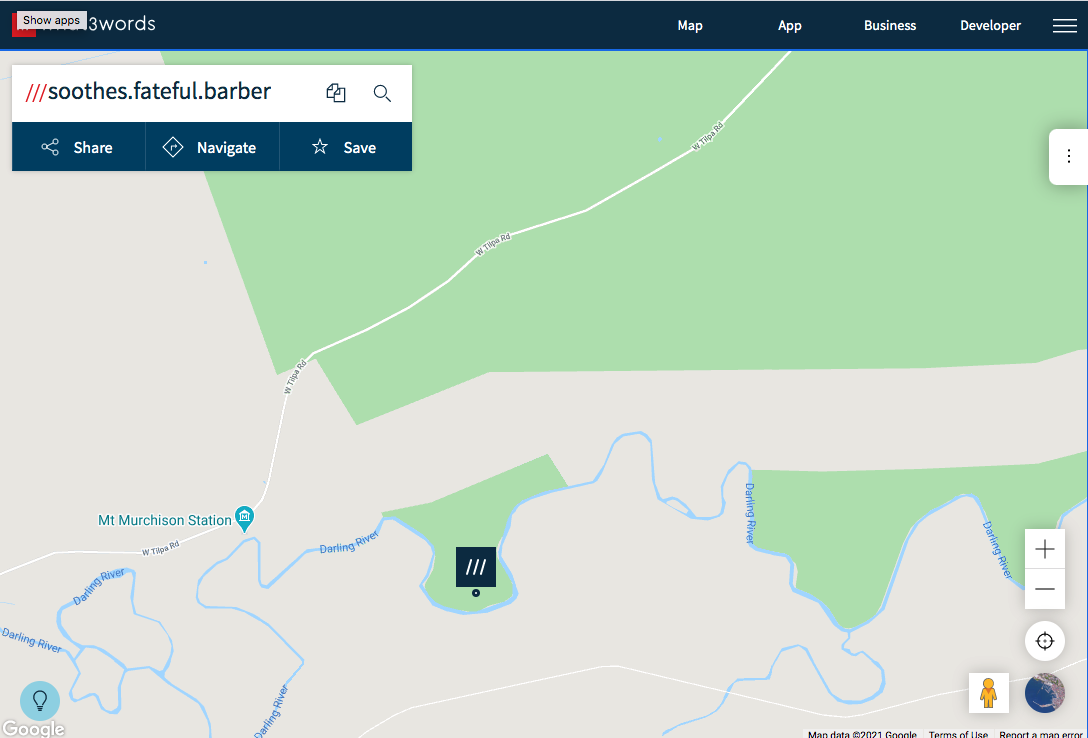
Importantly for four wheelers and others wandering the outback or remoter areas of Australia, is that calls made over a sat-phone, via a HF radio, a UHF repeater network or from a landline, also do not have the ability to generate an AML position and do not have a pin-drop function. Once again it is what3words which can come to the rescue.
So, what in the hell is what3words?
Well, many people have trouble wrestling with the idea of latitude and longitude and even more with degrees, minutes and seconds as far as describing a particular location on the planet is concerned. And in the last few years, emergency service providers here in Australia have been grappling with a quick and easy way for callers to provide them with an easy-to-understand way to accurately describe their location.
Now, what3words has divided the whole world into 3×3-metre squares, with each square having a unique, sometimes seemingly crazy, three-word address. For example, the three-word address for the junction of the road into the Mungeranie Hotel on the Birdsville Track is, ‘///participants.always.buzz’. Yep, it doesn’t make sense and nor do most of the addresses, but it doesn’t matter. Now, if you want to go to that road junction, you just call up those three words on the what3words app which will then show you the location and you can then navigate your way there.
“Give it a go, you may be surprised at how versatile it is!”
Already such leading guidebook publishers such as Lonely Planet are using what3words addresses for people to help find places of interest, restaurants, etc, while here in Australia, Hema Maps are now including what3words addresses in their guidebooks, etc.
And many navigation apps are compatible with what3words, meaning you can find a what3words address in the what3words app and then use it in your favourite navigation app, with just one tap. More info.
While what3words may not be the complete answer to your navigation woes or queries, it’s yet another tool in the navigator’s toolbox for finding your way across our vast continent or just finding your mate at the footy. Give it a go, you may be surprised at how versatile it is!
The European market could get its hands on the Ford Bronco ahead of Australia, with the manufacturer’s CEO hinting at talks to sell the 4×4 outside of North America.
Speaking to Auto Express, Ford boss Jim Farley said it would be up to the European division of the company to decide whether it wants the off-roader.
“I’m just waiting for these guys [Ford of Europe] to make up their mind,” said Farley.
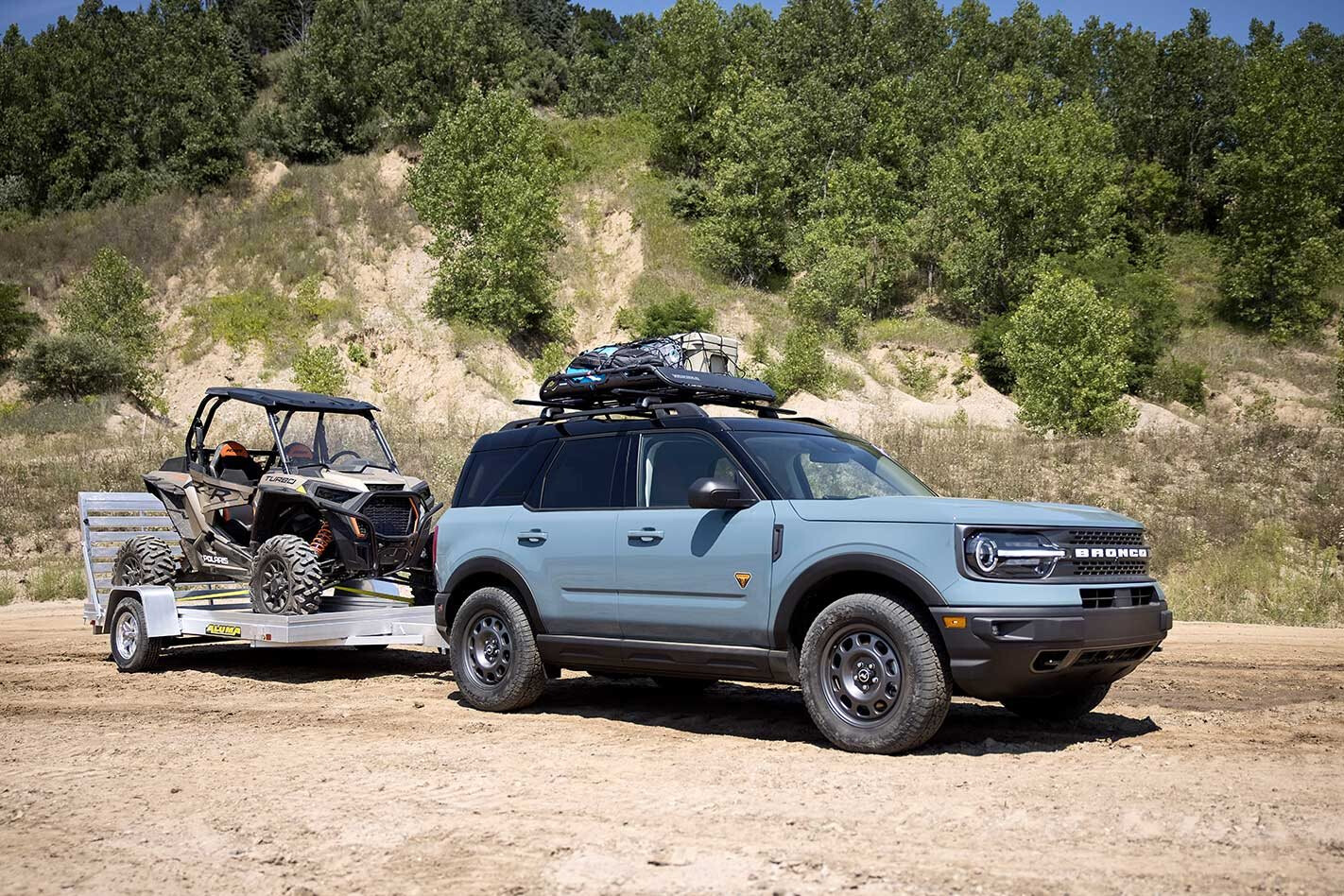
When asked if it would be viable in Europe, Farely compared the Bronco to Land Rover’s own iconic nameplate, which has recently been revived, saying: “Absolutely, it works. I see all these Defenders around – absolutely. I think it would work fine.”
Although Europe might be in the frame to get the Bronco, the UK market could miss out due to it being produced in left-hand drive only, focused for the North American market rather than Ford’s global operations.
This unfortunately means the Bronco will also remain out of reach for Australia, despite it being spied in mule form locally while under development, as well as riding on the T6 platform which was developed by Ford Australia for the Ranger and Everest.
The October 2021 issue of 4X4 Australia magazine is officially on shelves, so hurry to your nearest outlet and snag a copy before they sell out.
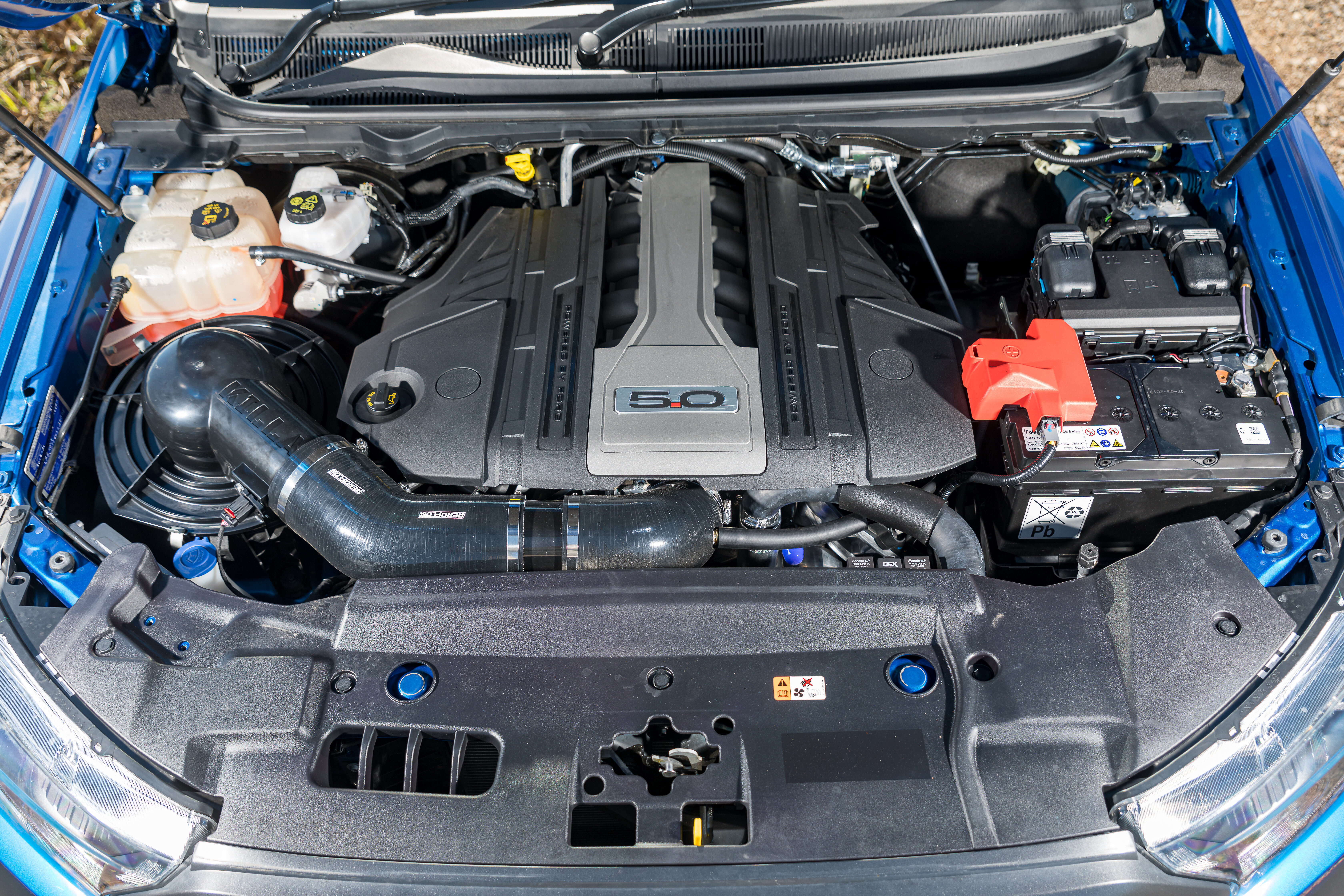
The massive issue is headlined by a V8 ute we all wanted but Ford never built. Instead, Queensland’s Killa Kustom Kables & Conversions – the crew who brought us the LS3-powered Colorado – jumped to the task to create the Raptor we’ve all craved, a beast running a Coyote 5.0-litre V8.
In further good news, the tuning house offers drive-in/drive-out V8 Raptor conversions with full compliance in Queensland and NSW, and the conversion can also be done on regular PX2 Rangers. How good is that?
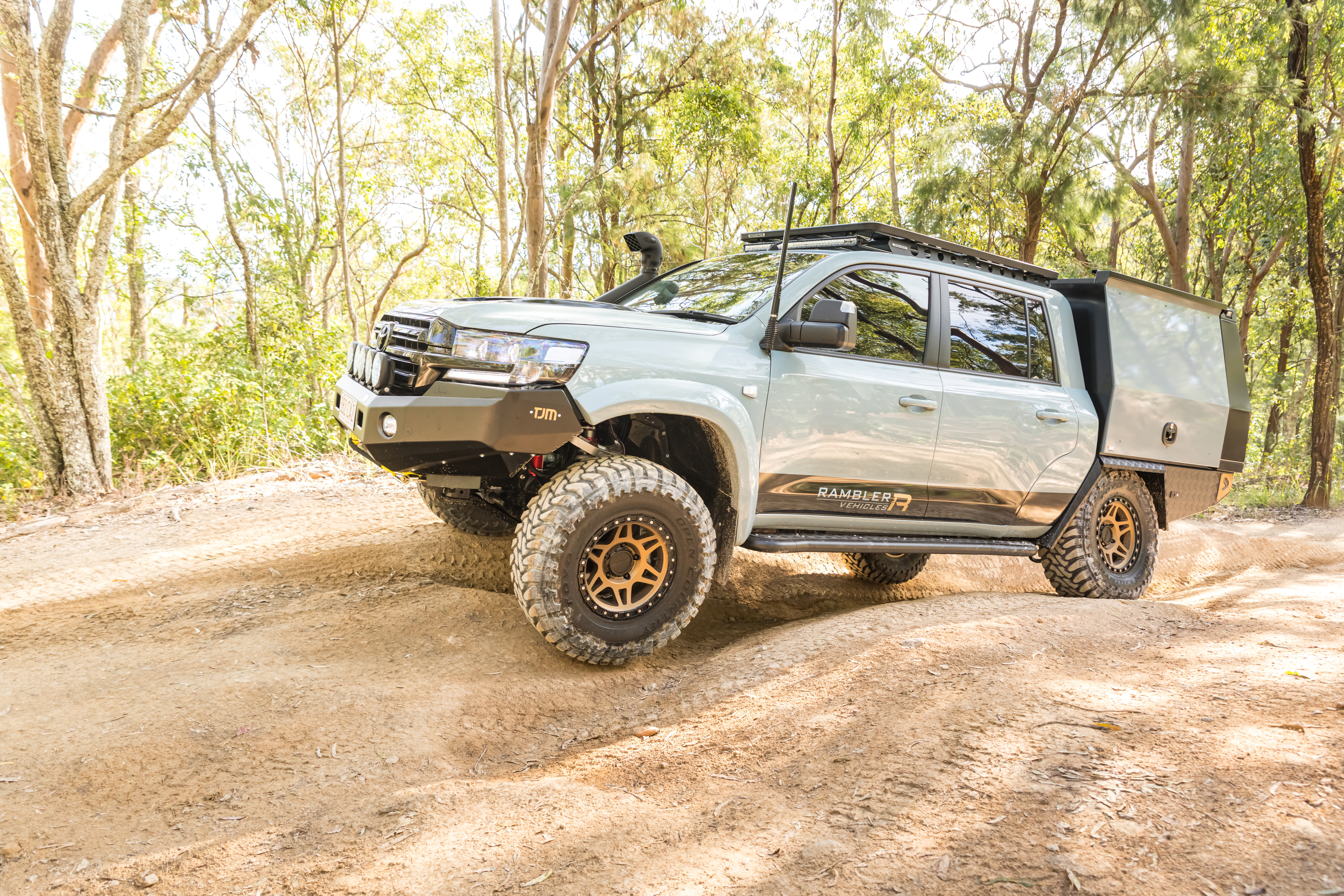
Another famous aftermarket business in Queensland is Rambler Vehicles, and we run the microscope over its turnkey 2021 GXL LC200 build. The chopped dual-cab conversion has state-of-the-art suspension, an extensive touring set-up and plenty of neat touches inside and out.
We also dirty the tyres of three unmodified vehicles this month: Suzuki’s JB74 Jimny, Land Rover’s Defender 90 D200 and Mercedes-Benz’s lavish G400d.
The year 2021 marks the 80th anniversary of Jeep, and we celebrate the iconic seven-slot grille’s milestone by rewinding back to where it all began and taking a journey through the brand’s 80-year history. Chris Collard delves into Jeep’s first eight decades and looks forward as the iconic brand prepares for the hurdles of the future.
Deano’s ongoing series of ‘How To’ guides continues this month, with the experienced off-roader explaining how to effectively use a snatch strap and ensure the recovery doesn’t end in disaster. Armed with the right tools, a snatch strap (or kinetic rope) recovery is a straightforward affair, but get it wrong and things can turn nasty very quickly.
WHAT ELSE IS THERE?
– Patriot Campers X1H camper trailer tested – D-MAX gets a dual-battery system – Moreton Island and Mary River NP explored – Monthly columns and product tests – Latest gear tested and heaps more!
The October 2021 issue of 4X4 Australia is available now.
A new electric adventure vehicle with a biodiesel-powered range-extender will reportedly enter production in early 2022, and is said to be capable of going 7000km in one blast.
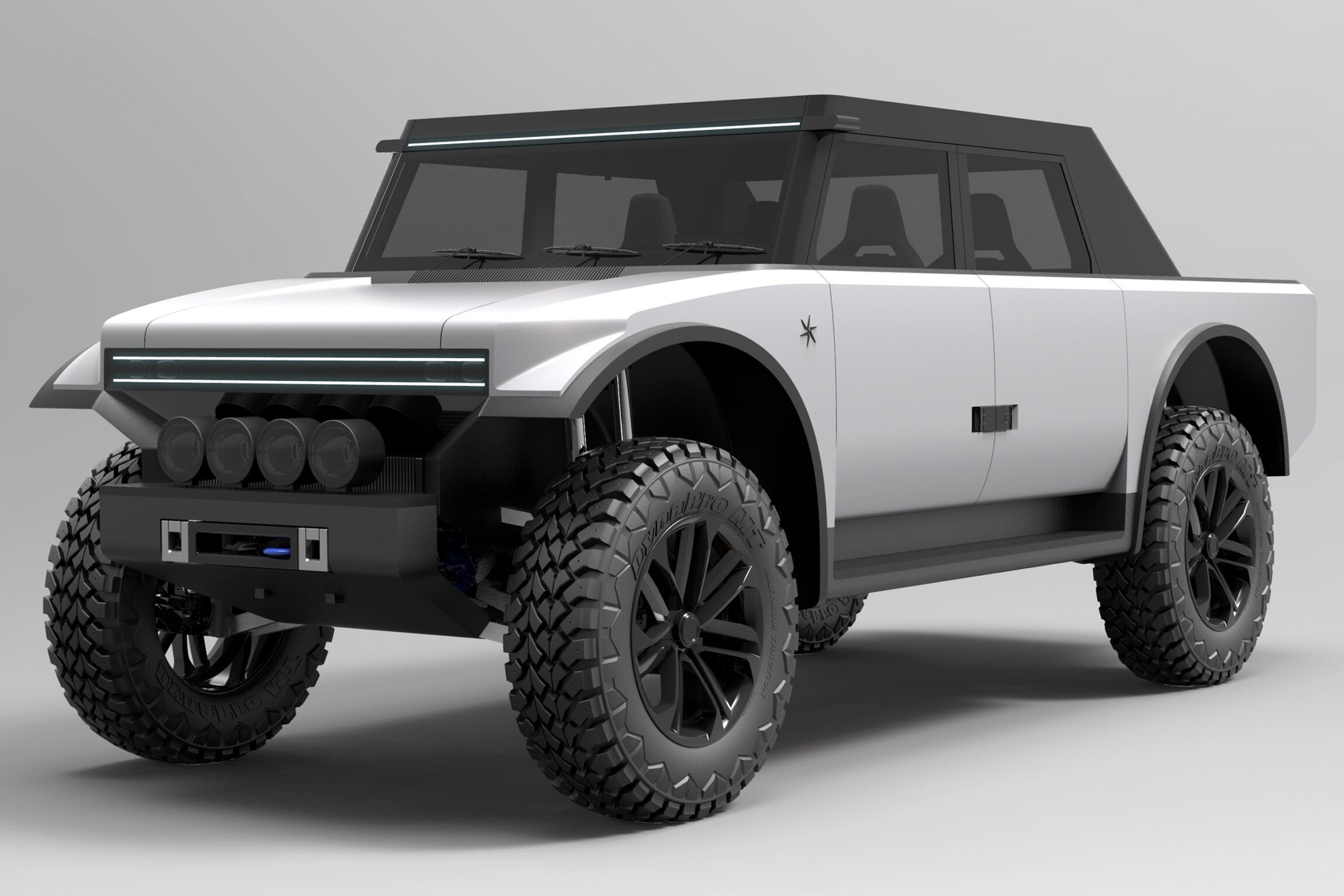
The 2022 Fering Pioneer is an off-road dual-cab ute, powered by an electric motor on each axle, and with an fuel-free driving range of 80km thanks to a 20kWh battery pack.
It’s the Pioneer’s 0.8-litre three-cylinder turbo-diesel range-extender engine – taken from a Smart car – which provides the claimed 7000km of driving range, when coupled with long-distance fuel tanks.
The range-extender is also biodiesel compatible – allowing the engine to run on fuel derived from sustainable sources such as vegetable oils, non-edible plant oils, or even algae.
Fering says even with the discharged batteries, the Pioneer will average around 5.6L/100km – meaning the four-wheel-drive would need a fuel tank capacity of nearly 400 litres to match its claim of 7000km driving range. For perspective, the Toyota LandCruiser 200 Series uses twin fuel tanks for a maximum capacity of 138 litres.
If true, the vehicle could theoretically complete a lap of Australia with only one top-up.
If the extreme driving range isn’t required, owners can swap the long-distance petrol tanks for water storage.
The range-extender can also be swapped out for a hydrogen fuel-cell or ethanol-powered engine, depending on where in the world the vehicle is needed.
The Fering Pioneer is the brainchild of Ben Scott-Geddes, an engineer who worked on the McLaren F1 under Gordon Murray – and who was more recently a director at Ferrari. Scott-Geddes wanted to offer a capable off-road vehicle for adventurers, explorers, and emergency services.
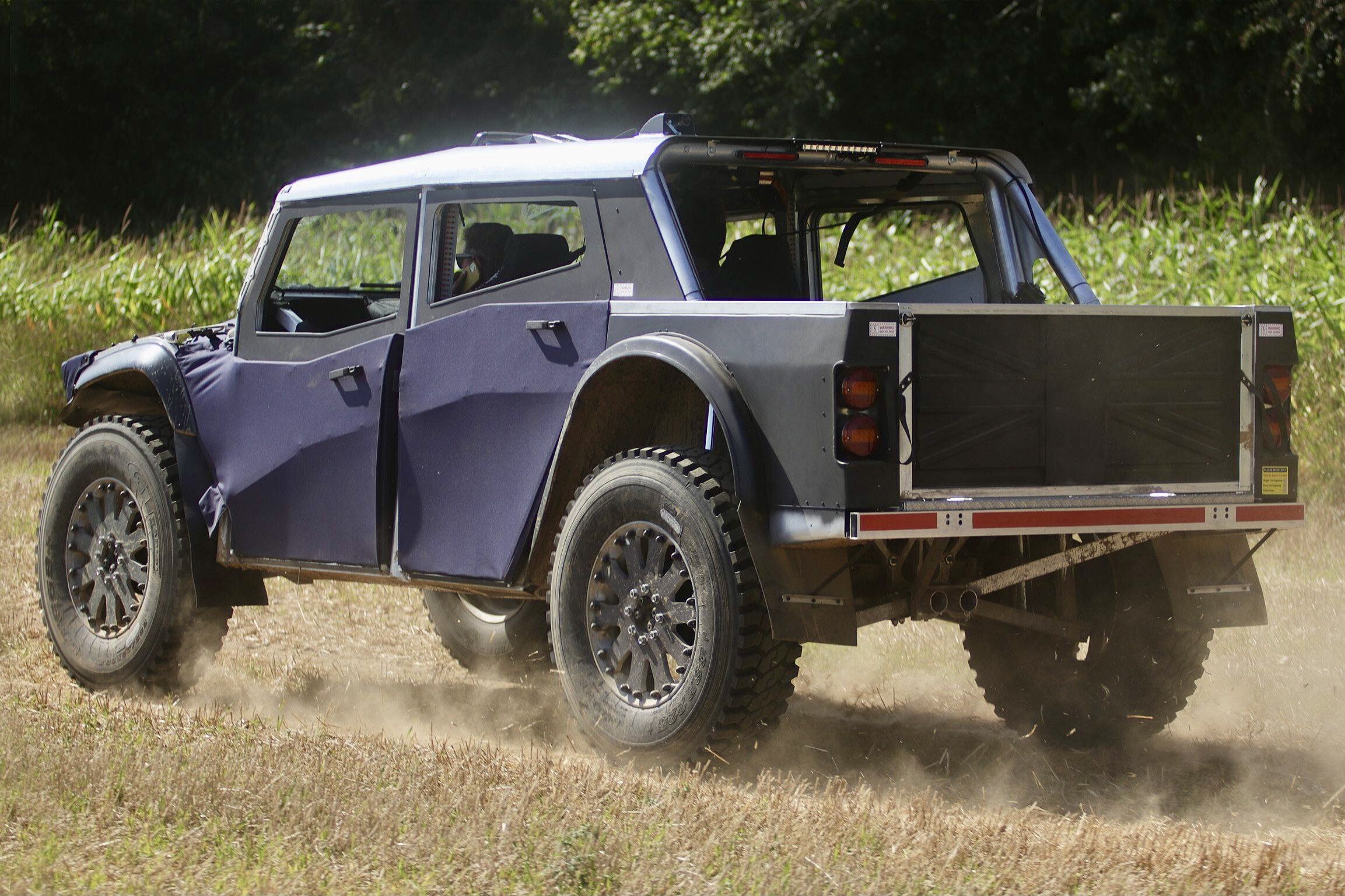
Despite the Pioneer’s Humvee-like appearance, the ute is around the same size as a Ford Transit commercial van. However, the vehicle has a ground clearance of 800mm and a wading depth of 1400mm – roughly double that of most four-wheel-drives.
Using an aluminium spaceframe with composite elements, and an exterior made from tough fabrics, weight has been kept to 1500kg – not much more than a small hatchback – while Fering claims the vehicle matches its weight with a payload capacity of 1500kg.
Though the company hasn’t addressed its current roadworthiness, it doesn’t appear as if the vehicle is designed for on-road use – but could find favour with search and rescue organisations and militaries.
The 2022 Fering Pioneer is expected to go into production in the first half of next year, with prices starting from roughly £150,000 (AU$283,500).
Part 1: X in the shed
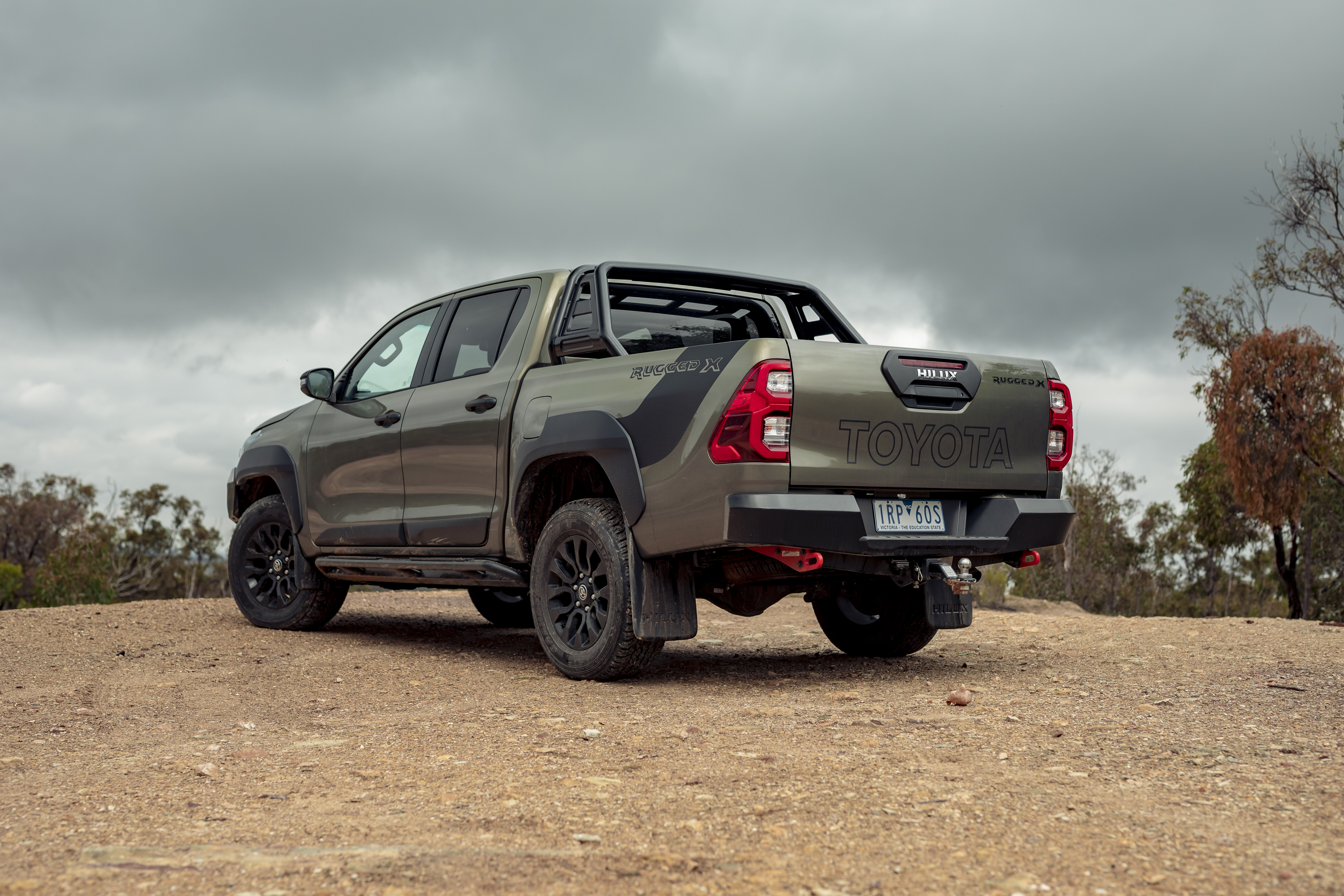
Not long after we were handed the keys to our long-term Rugged X – the top-of-the-line variant in the Hilux range – the suits at Vic Government HQ initiated another lockdown and we were restricted somewhat in our travels. Thankfully, we’d managed to squeeze in an off-road play at Werribee 4X4 Training & Proving Ground just before the latest round of restrictions came into play.
Priced at a smidge under $70,000 at $69,990, the Rugged X is around $10K more than the popular SR5 and SR5+ variants. For that extra coin though, punters are treated to a number of factory accessories that’ll come in handy when it’s time to tame hardcore off-road tracks.
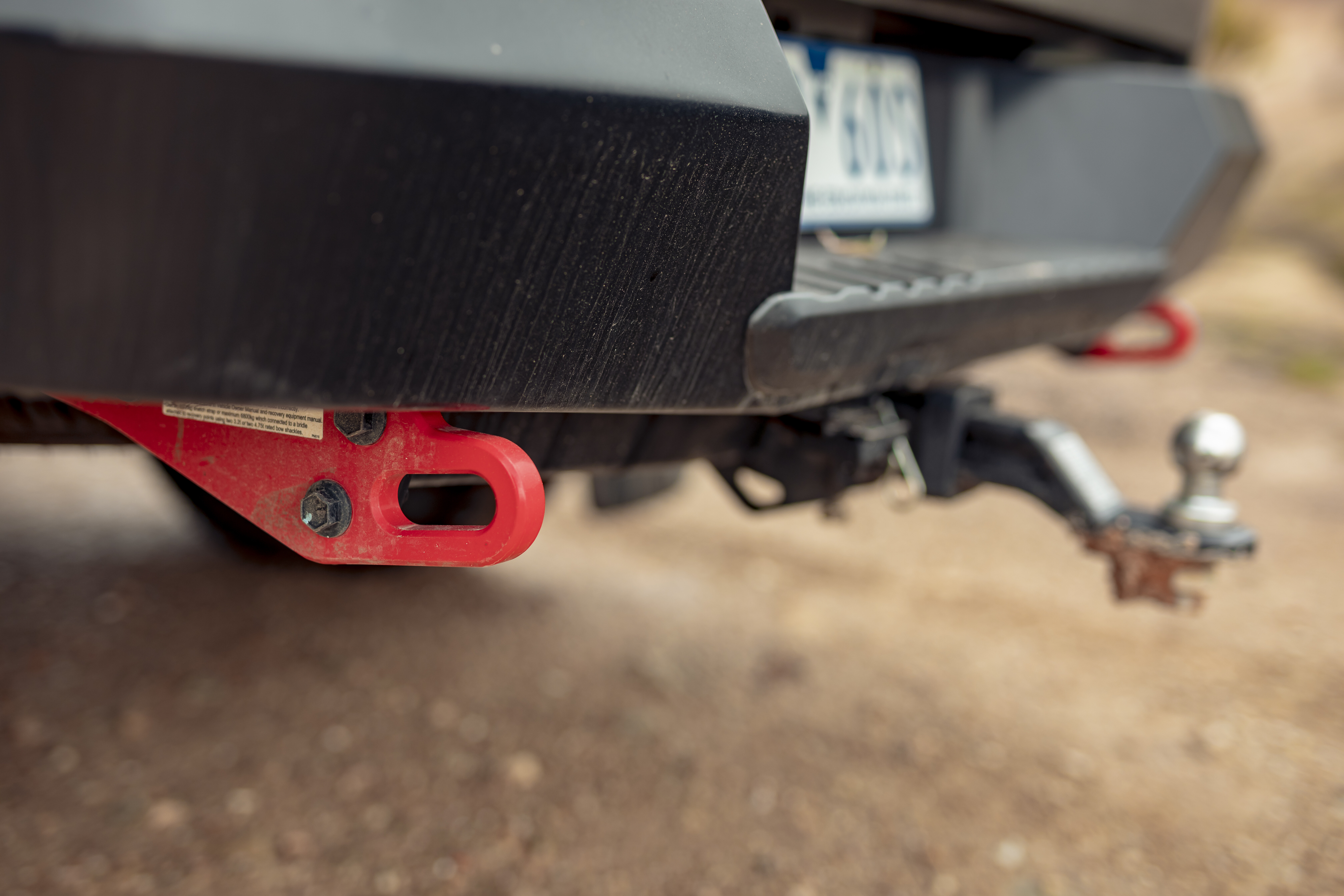
Locally designed and engineered, the Rugged X gets a steel bar with an inbuilt LED light bar, rock rails running down each flank, a steel rear bar with a step for easy tub access, an intake snorkel, uprated springs, and rated recovery points fore and aft.
Of course, the entire Hilux range received an update at the back end of 2020, with the vehicle receiving a few warranted changes. In Rugged X guise, the 2.8-litre turbo-diesel engine now generates 150kW and 500Nm, an increase of 20kW and 50Nm on the outgoing model. This has raised its towing capacity from 3200kg to 3500kg. The Rugged X variant is only available with a six-speed automatic transmission. No manual cog-swapper, unfortunately.
The cabin received a welcome makeover too, with Toyota adding a bigger and more intuitive eight-inch touchscreen as part of a cleaner looking dash and centre console. The touchscreen runs all modern technological niceties including Apple CarPlay, Android Auto and Toyota’s own myToyota app integration. And importantly for the 4×4 community, volume knobs make a welcome return. The Rugged X is also equipped with a JBL sound system, one of the better ones from the factory in the dual-cab market.The comfortable and supportive pews are draped with leather accents, as is the gear lever and steering wheel. For frosty mornings, the front pews are heated, and the driver gets eight-way power adjustability. Rear seat passengers aren’t as spoilt, with less leg room than some of the Hilux’s closest rivals. The tub has a plastic lining, four tie-down points, a sports bar properly anchored into the tub floor, and a soft-drop tailgate.
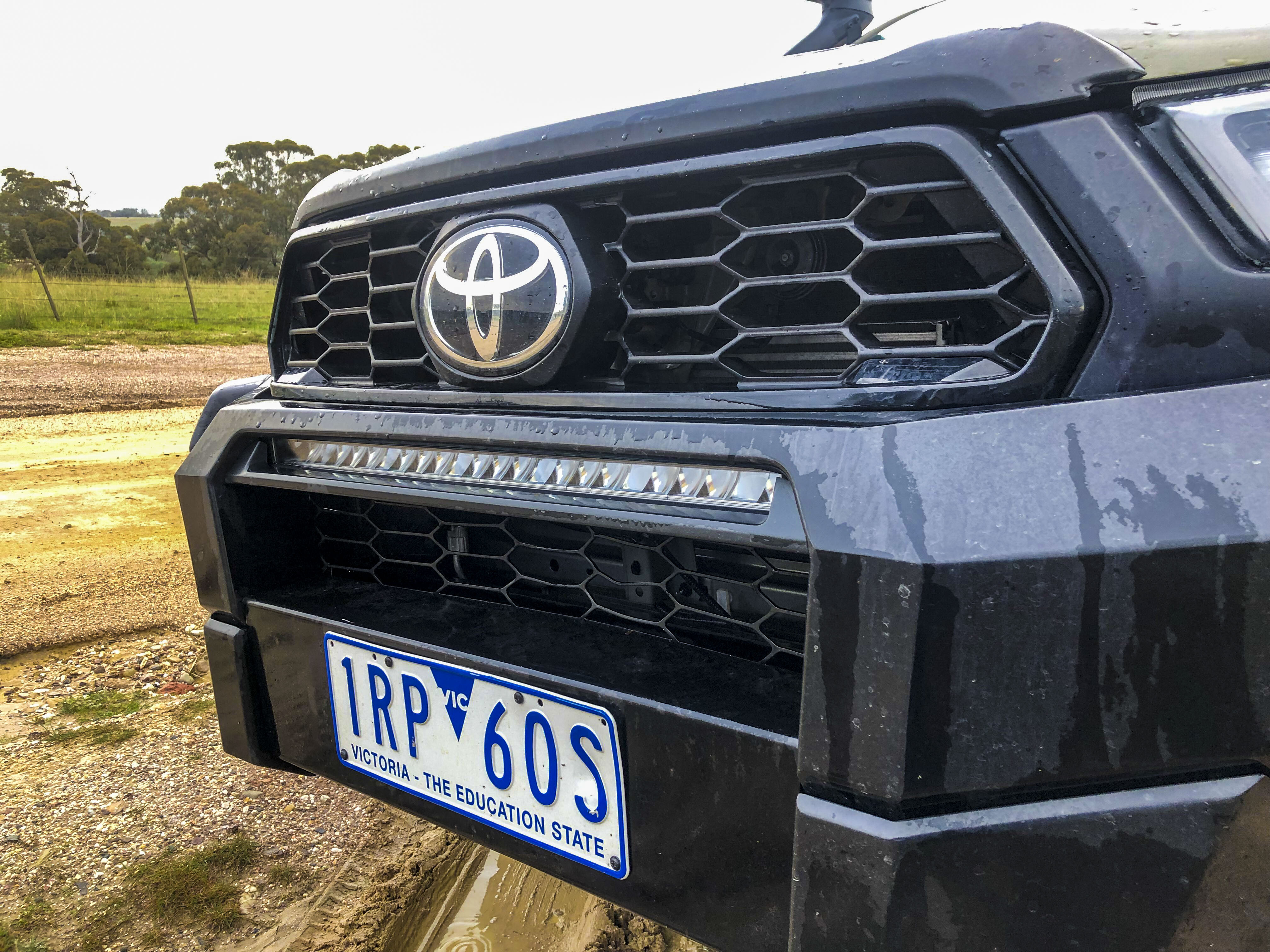
As part of the refresh, Toyota also gave the Rugged X a new-look grille. Engineered and designed in Australia, it features a wider mouth and was put through countless hours of local testing to ensure it provided optimal cooling, while not infringing on the advanced safety-system cameras.Not only is the Rugged X the most expensive vehicle Hilux variant, it’s also the heaviest, weighing in at 2316kg. When you include all of the accessories equipped to the Rugged X, its GVM of 3050kg is left with a payload of 734kg – something we’ll look more closely at during our time with it, to assess just how much weight can realistically be added.
Despite its heft, the Rugged X feels quite nimble and controlled on both open roads and in suburbia – on the test tracks at Werribee on our sole off-road venture, it didn’t put a foot wrong, feeling measured and composed through all technical obstacles. Still, the suspension set-up – albeit revised for 2020 – lends the vehicle to remain somewhat stiff on bitumen.
The traction-control system is first class, with simple activation of 4×4 and low range via the dial located within the centre console. It maintains a high level of safety too, receiving a five-star ANCAP safety rating back in 2019. Safety kit comprises of seven airbags, adaptive cruise control, lane-keep assist and AEB.
Much like the SR5, the Rugged X excels off road, and our brief time with it has proved it to be a comfortable and capable 4×4 with a well laid-out interior and competent driving dynamics.
But is it worth the extra coin over an SR5 that is a substantial amount for a handful of factory accessories? Only time will tell.
Part 2: A closer look
After awarding the SR5 Hilux our 4x4OTY gong for last year, we were keen to put some outback miles on one and the Rugged X arrived with the intention of heading up to the Finke Desert Race in it. COVID killed that idea so the X was limited to local runs in Victoria.
As far as 1-tonne utes go, the Rugged X is a very nice place to spend time behind the wheel. The added weight of the factory-fitted steel front and rear bumpers, side-steps and model-specific sports bar seem to soften up the ride of the Hilux which is often criticised for being to harsh when unladen. The suspension tweaks made to the 2020 Hiluxes went someway to fix that but the Rugged X feels better again.
The fact that those accessories are functional makes them all the better, with the front bar containing an LED lightbar which endows the X with what must be the best OE lighting package we’ve sampled. The tow points front and rear are rated and are a positive addition to any vehicle that heads off road and even the sports bar is functional.
Unlike most such bars, this one, developed by TMCA here in Melbourne, bolts to the floor of the cargo tub and not up on the rails. It’s a solid piece of kit that incorporates a headboard to which you can secure items or even mount a second spare wheel.
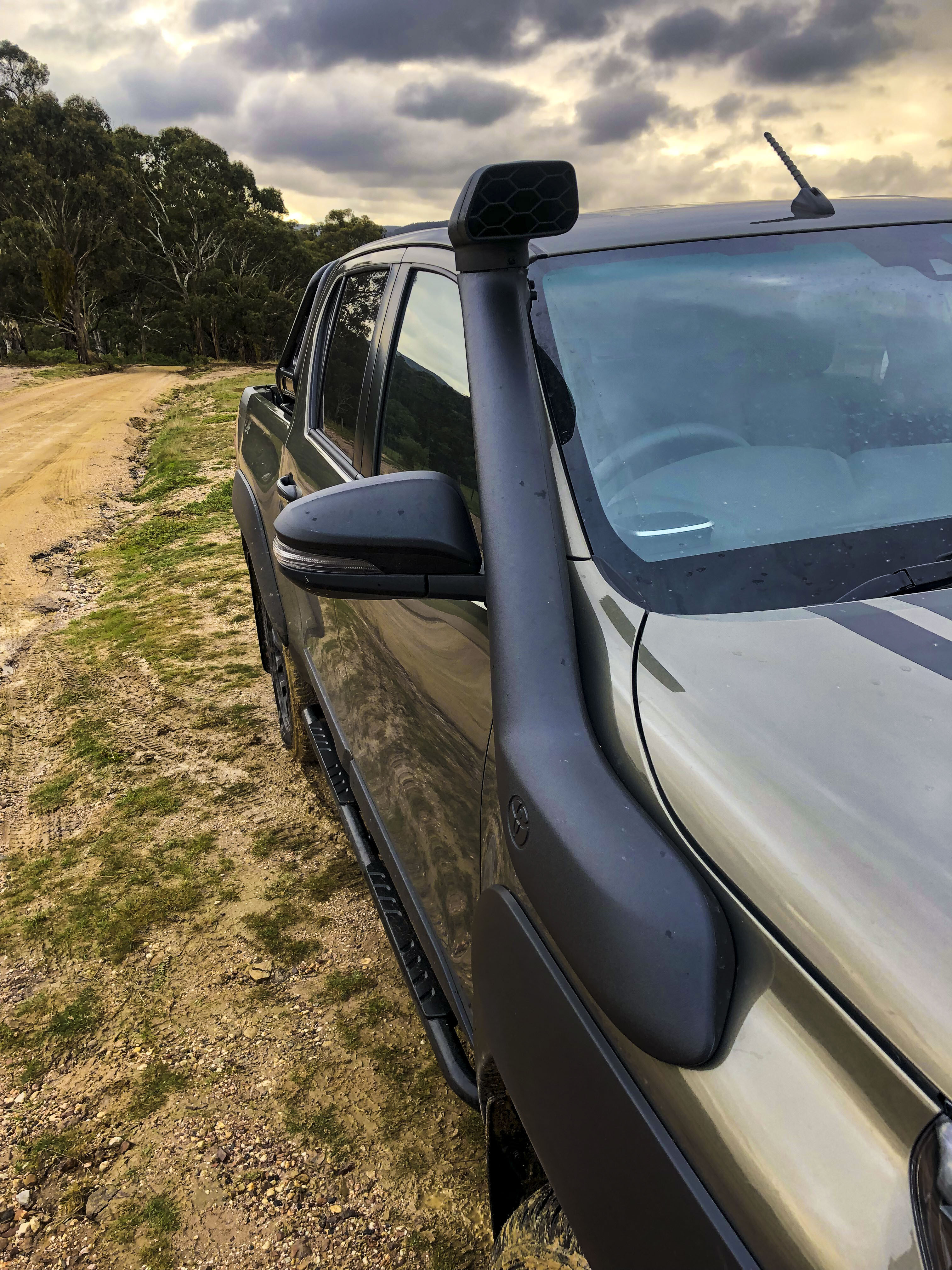
The Toyota air intake snorkel might not be the best looking one available, but it’s better than none at all. Having it fitted does not change the factory 700mm wading depth.
Inside the X we loved the heated leather seats and the JBL sound system. It’s nice to get into a ute where you can crank up the tunes and not have the speakers sounding like they are held in the doors with cable ties.
The new AV screen in the 2020-on Hiluxes is much better than the one it replaces. It’s bigger, clearer and includes a dial for the volume control. The factory sat-nav is bloody good too, plus you have the option of Apple and Android app connection to use the nav through them.
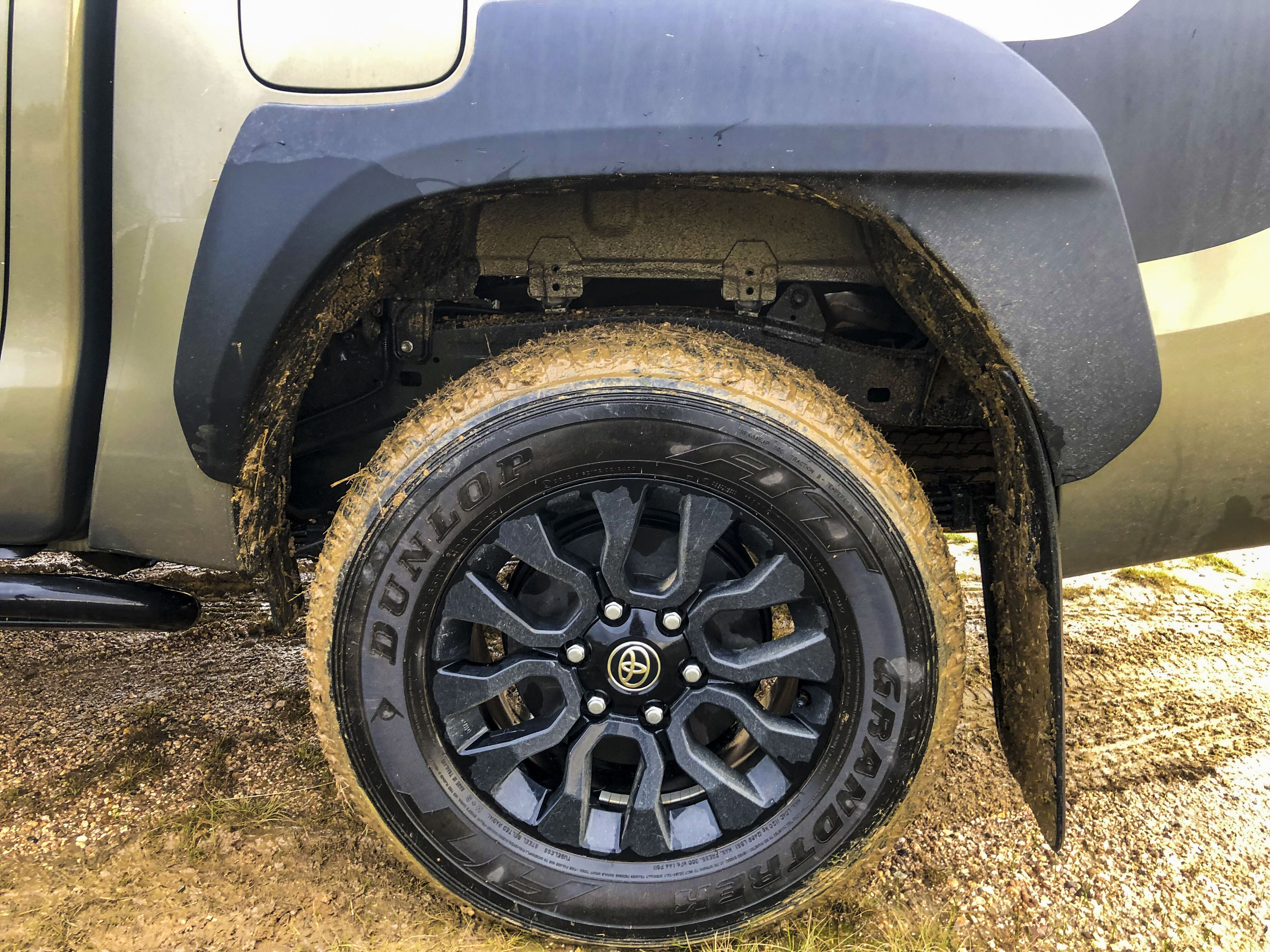
It’s great to get a new car from a manufacturer that already has many of the accessories fitted that you would normally have to get elsewhere. About the only thing Toyota hasn’t changed are the tyres, which are the first thing most buyers who want to head off the sealed road will change.
Tyre choice is very specific for most buyers so it’s probably fair enough that Toyota has left that up to the owner. The use of 17-inch wheels is ideal as it give buyers plenty of tyre choices.