Advice

Gallery 1
Just about every motorist has (or should have) an understanding of the importance of running the correct air pressures in their vehicle’s tyres for on-road driving, no matter what type of vehicle they drive.
The correct tyre pressures ensure optimum vehicle performance in terms of traction, grip, ride quality and fuel economy, as well as optimum tyre life in terms of tyre wear across the tread face, as well as sidewall longevity. Throw off-road driving into the mix and the importance of setting the correct tyre pressures is even greater. Adjusting air pressure to suit different terrain types will not only improve vehicle performance and ride quality, and prolong tyre life, but it will also minimise track damage.
While many four-wheel drivers are well-versed in the need to lower tyre pressures for sand driving, many don’t understand the benefits of lowering pressures for driving on other surfaces such as gravel roads and dirt tracks, or through mud and over rocks.
Before we go any further, it should be noted that the recommended pressures listed in this guide are just that, recommendations. It should also be noted that these recommendations are for vehicles fitted with Light Truck (LT) construction tyres, which have a stronger carcass, both across the tread face and in the sidewalls, than the Passenger Car (P) rated tyres that are often standard fitment on many new 4x4s. Also bear in mind that heavily laden vehicles will need to run higher air pressures in their tyres than lightly laden vehicles will.
JUMP AHEAD
- Road pressures
- Gravel and dirt roads
- Rocky terrain
- Mud terrain
- Sand terrain
- Remember to reinflate
- Required equipment
- Expert opinion
- Tips and traps
- FAQs
Road pressures
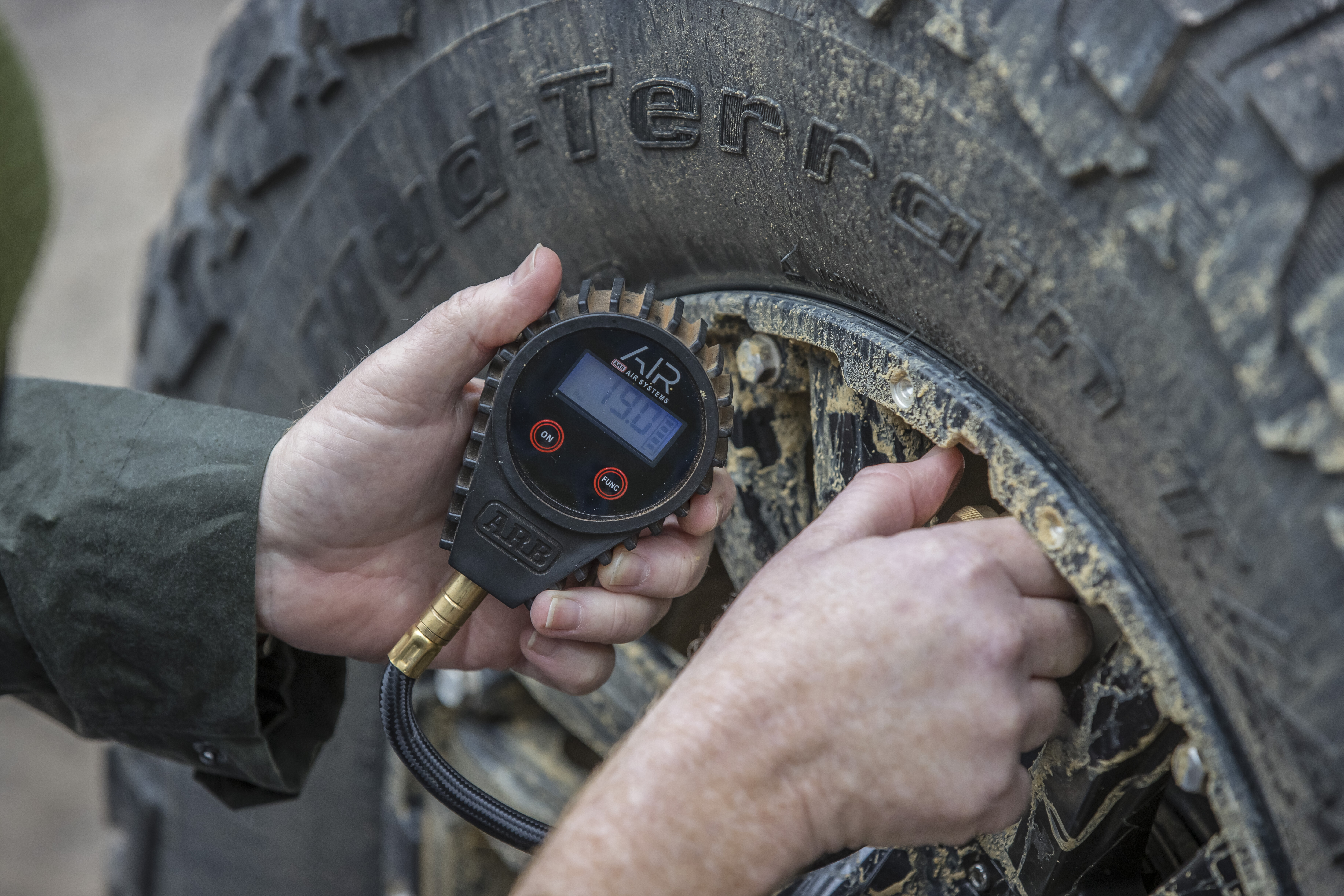
To figure out a start point when it comes to setting the correct tyre pressures for on-road driving, just look at your vehicle’s tyre placard.
But bear in mind that while the tyre placard will list different tyre pressure recommendations for different OE tyre sizes, you might have to adjust pressures to suit aftermarket LT tyres if fitted. The placard will also likely list higher pressures for when the vehicle is carrying a load, and this is an important consideration, especially for 4×4 utes that have high payload capacities.
If a vehicle is carrying a heavy load, it might be necessary to run higher pressures in the rear tyres than the front. Likewise, a vehicle equipped with a steel bullbar, a winch and driving lights will likely need higher tyre pressures up front than what is listed on the tyre placard.
1
Figuring out the ‘perfect’ on-road tyre pressures to suit your vehicle is often a case of trial and error, and it will depend on how you want your vehicle to behave on the road in terms of ride quality, steering response and handling.
It is important not to go too extreme when adjusting tyre pressures for on-road driving. Go too low and the tyres will flex a lot in the sidewalls and generate too much heat, which can result in tyre delamination, which is essentially where the tyre separates in to its various components. Go too high with pressures and ride quality will suffer through a lack of sidewall flex, and the tyres will also be more prone to punctures.
Pressures also have a big effect on tyre life; overinflated tyres will wear prematurely in the centre of the tread area, whereas underinflated tyres will wear more on the outside of the tread area. With the right inflation pressures, the tyres should wear evenly across the tread face, assuming the wheels are correctly aligned and balanced.
Gravel and dirt roads
Driving on gravel roads and dirt tracks is very different to driving on sealed roads, so it’s important to adjust tyre pressures to suit the conditions.
For smooth and well-graded gravel roads on which you can easily maintain highway speeds, you might be able to stick to your on-road tyre pressures, but the loose surface will mean you have reduced traction and grip, resulting in compromised cornering capability as well as extended braking distances. Lowering tyre pressures results in a longer tyre footprint for improved traction and grip, and more flexible sidewalls for better ride quality.
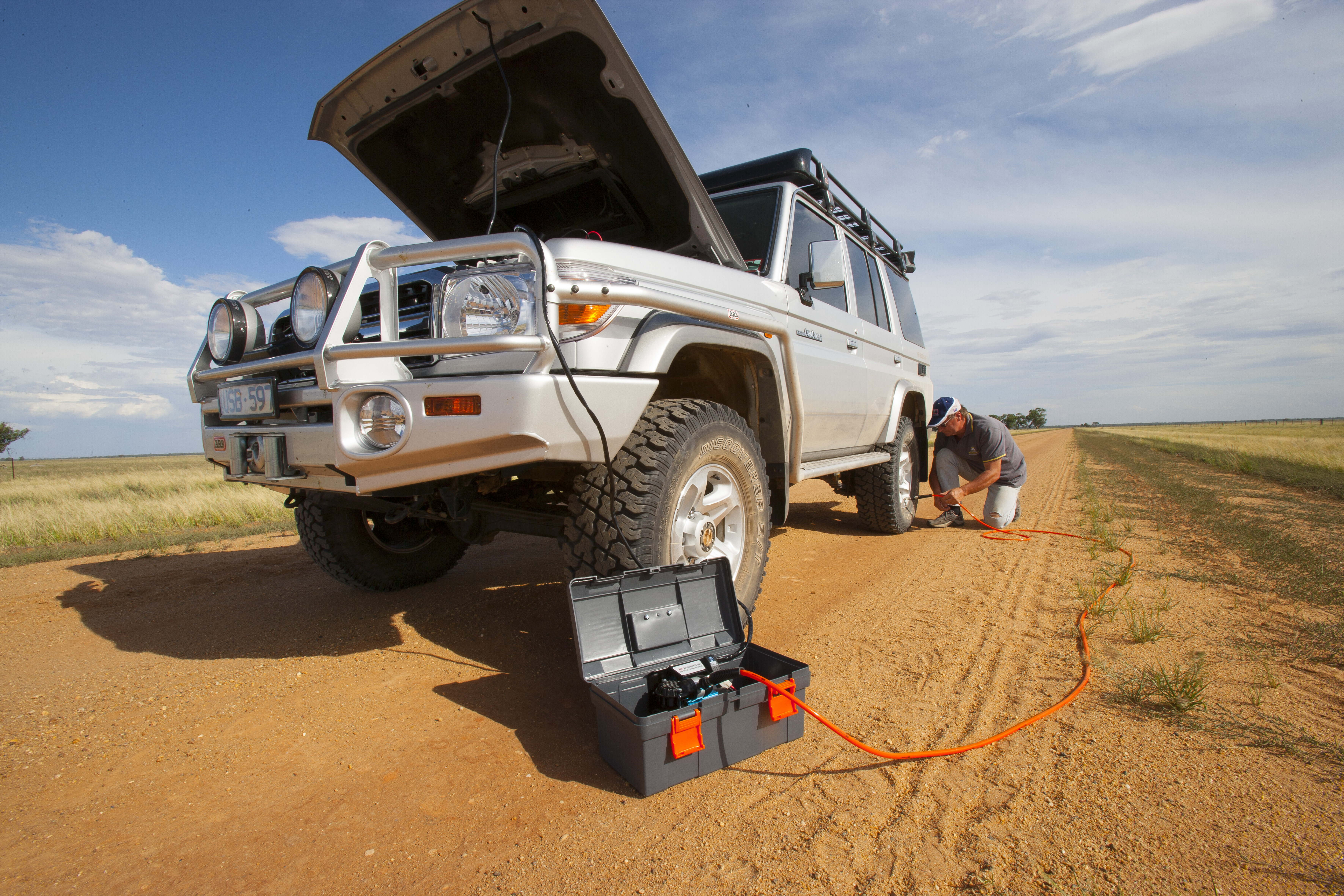
How much should you lower tyre pressures? As a general guide, if you run 35psi on the road you might want to go down to 30psi on smooth gravel roads. And if the road surface deteriorates, you can lower pressures further still. From experience, I’d suggest somewhere between 32psi to as low as 26psi is suitable for rough gravel roads, depending on the load you are carrying.
1
If for example, your on-road tyre pressures were at 38psi, drop to 32psi or so on rough gravel and see how the vehicle rides and handles. If you are running 35psi on the road, then maybe drop to around 26psi on rough gravel roads. You, your passengers and your vehicle will appreciate the many benefits of running lower tyre pressures on heavily corrugated roads.
The vastly improved ride quality you’ll experience by lowering tyre pressures is beneficial for the comfort of vehicle occupants and it makes driving less tiring. Lower pressures also minimise potential vehicle damage caused by incessant vibrations, and result in more grip, making the vehicle easier to drive. As well as offering better traction, grip and ride quality, lowering tyre pressures for gravel roads also reduces the risk of chipping across the tyre tread face, as the tyres are more flexible and therefore less prone to impacts from sharp stones and rocks.
Rocky terrain
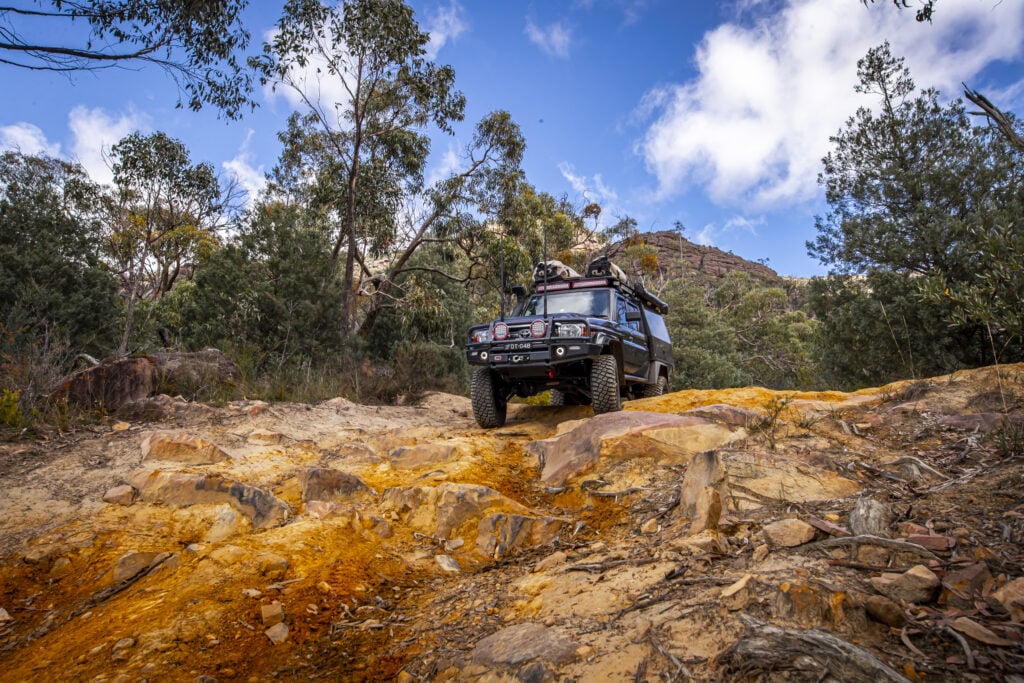
Reducing tyre pressures in rocky terrain allows the tyres to flex, which means they can better conform to uneven terrain, in turn improving traction and reducing the chance of tyre damage.
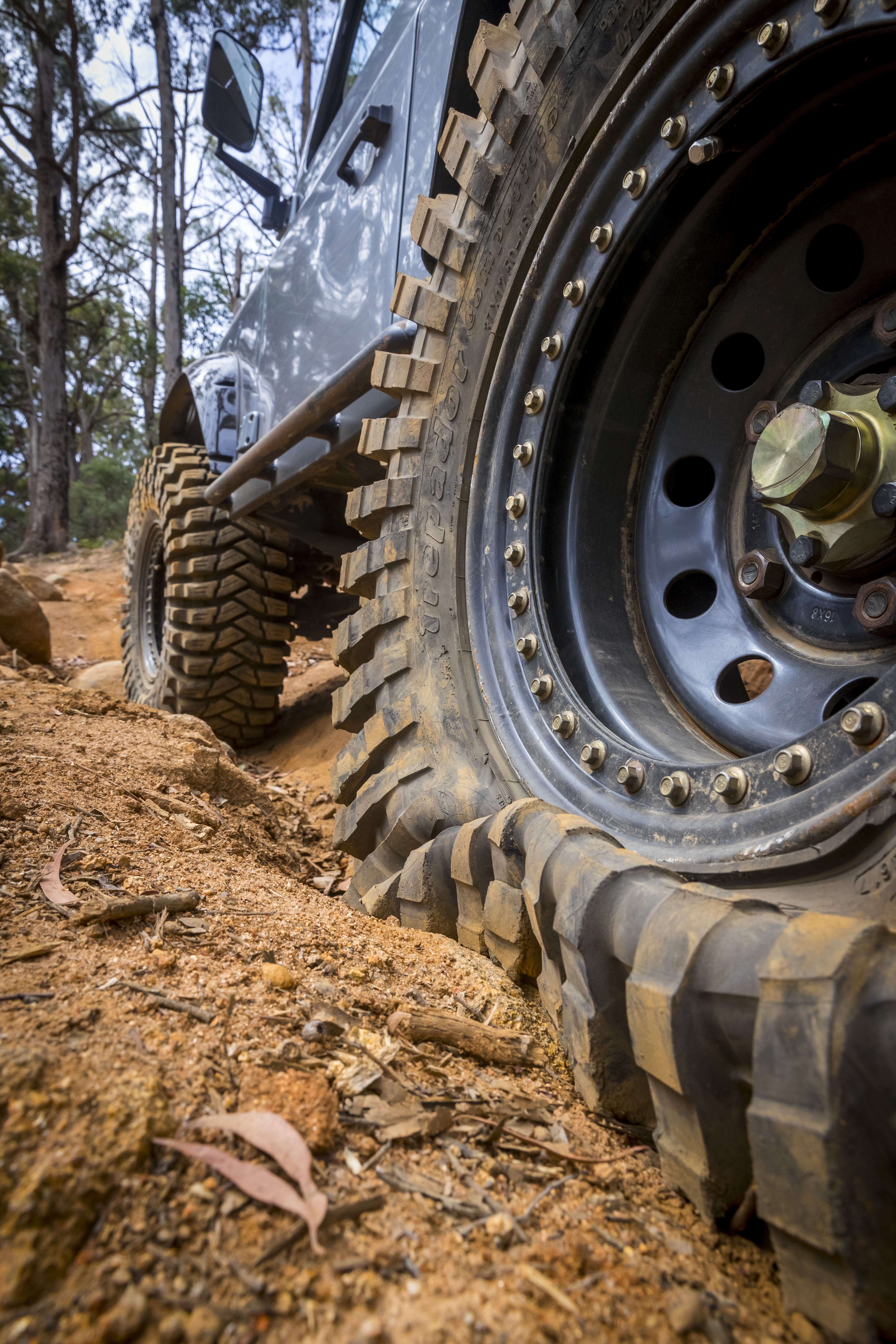
As mentioned, lower tyre pressures also result in a longer tyre footprint, which means better traction. If you’re crawling over rocky terrain in low range, you can lower tyre pressures quite a lot, as heat generation from high-speed driving will not be an issue. How low? If you run tough LT tyres, 22psi is a good starting point for rock crawling, but make sure your throttle and steering inputs are gentle and well-considered, because abrupt acceleration or steering inputs can result in the tyres slipping on their respective rims, which can lead to deflation, or the tyres coming off the rims altogether.
1
There is a downside to lowering tyre pressures in rocky terrain, and that is increased susceptibility to sidewall damage. As you lower pressures, the tyre sidewalls bag out, so make sure you keep an eye out for sharp rocks or protruding tree roots and the like in rocky terrain.When track conditions improve, remember to reinflate your tyres; as your speed picks up, so too will tyre temperatures, and therefore the risk of tyre damage.
Mud terrain
The right tyre pressures for mud driving depends on what type of mud you’re driving in.
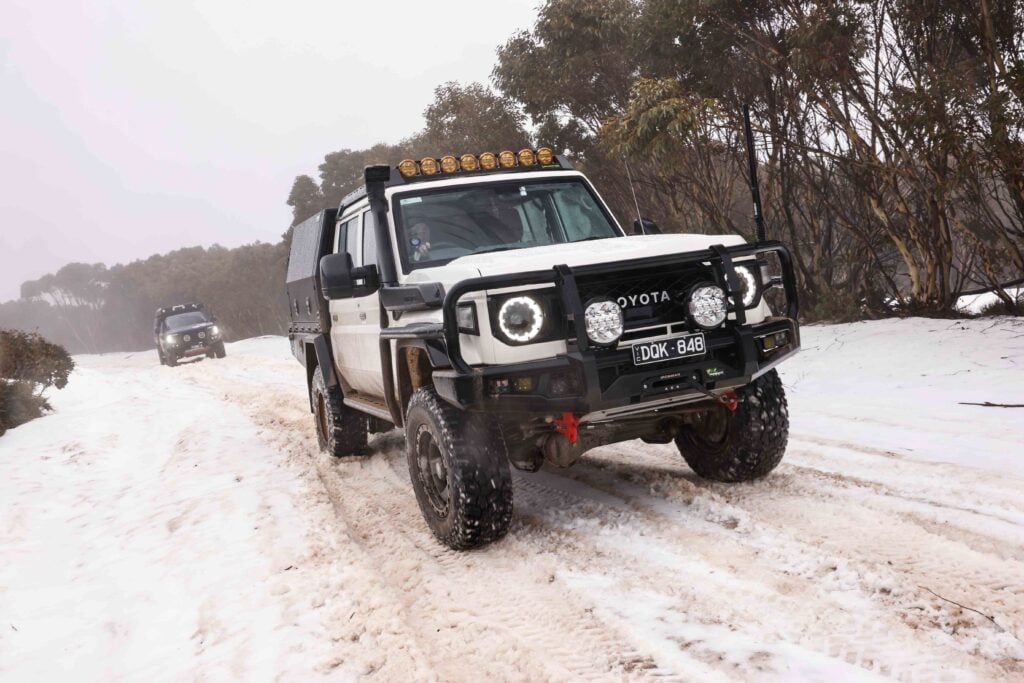
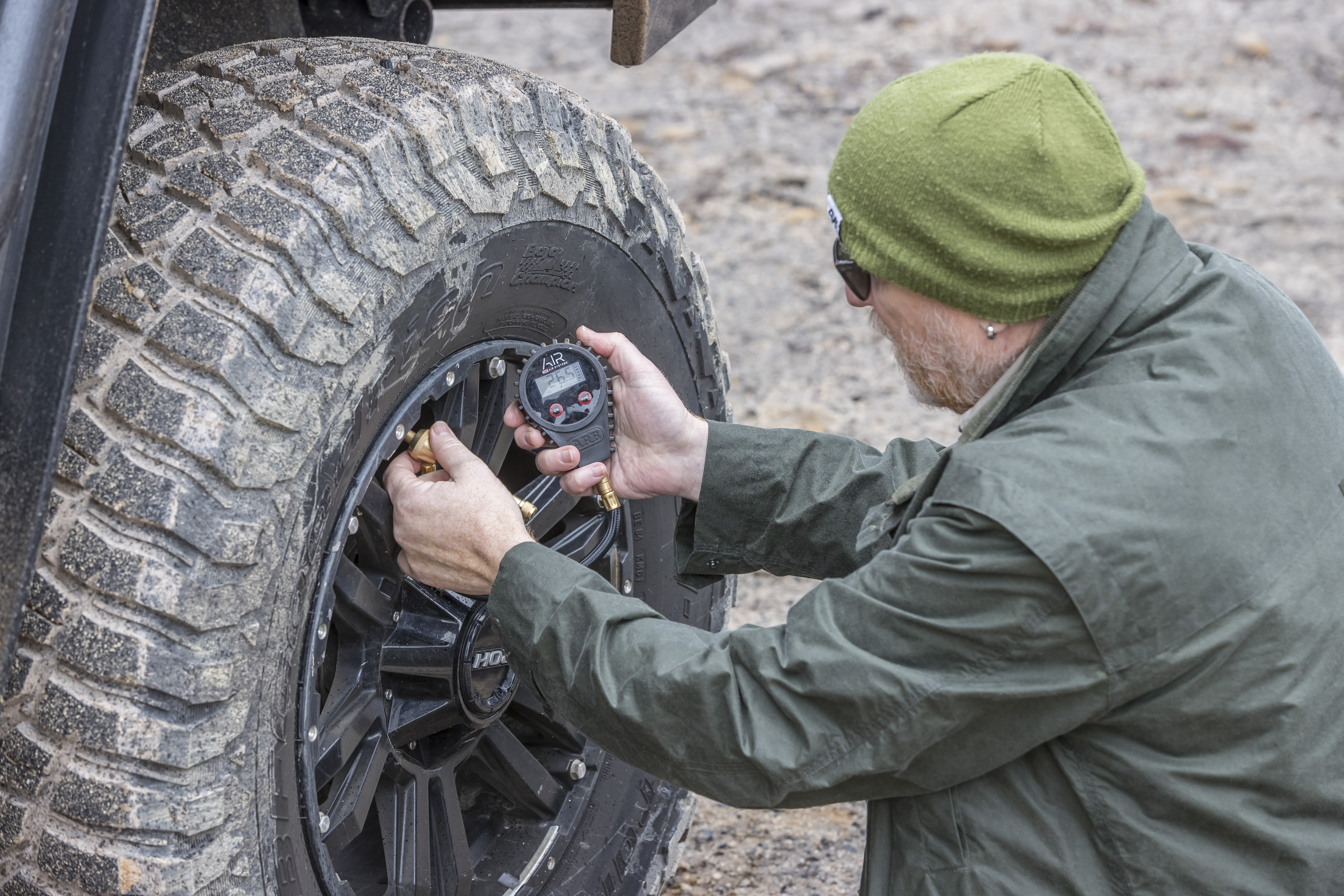
What type of mud?! Well, if the mud is slippery and slimy on the surface, but you can feel a firm base underneath, then gravel-road tyre pressures (26 to 30psi) will allow the tyres to cut through the top layer and hopefully gain purchase on the firm base. If the mud is deep and gooey, and you can’t feel a firm base at all, dropping tyre pressures to as low as 22psi will hopefully give them a chance of gaining purchase in the slop, thanks to the resulting longer tyre footprint.
1
As with rock driving, if you have lowered tyre pressures significantly to get through mud, don’t make sudden throttle or steering inputs, as the tyre could slip on the rim or mud could work its way in between the bead and the rim, resulting in rapid tyre deflation.With bead-locks fitted, ensuring the tyres cannot slip or peel off their respective rims, you can drop pressures even further for mud driving, but check the legality of such devices in your state or territory before going down this route.
Sand terrain
Lowering tyre pressures for sand driving seems to be the one everyone knows about, but how low should you go, and why?
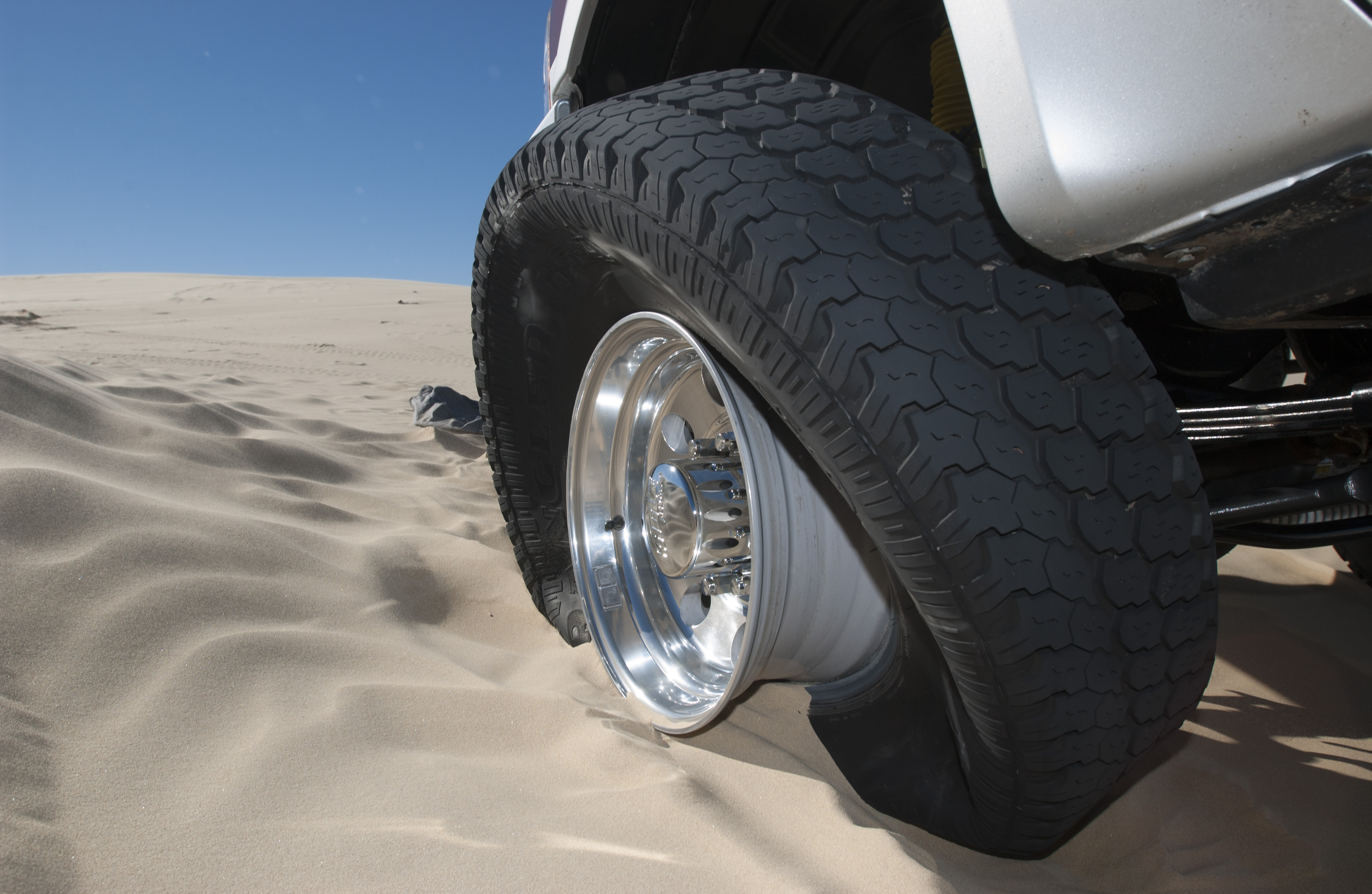
Let’s start with why. As already discussed, lowering tyre pressures increases the tyre footprint, and in sand this helps the tyres to float over the surface rather than dig in to it. So, how low should you go? In soft sand, you can safely drop tyre pressures to as low as 16psi without peeling them off their respective rims, so long as you don’t make sudden steering movements or corner at great speeds. And remember, don’t drive too fast on sand with low pressures as heat will quickly build up and cause tyre damage.
1
On harder-packed sand you might not have to lower pressures as much. You’ll figure it out as you go along by judging how easy or difficult it is to maintain forward progress; if it’s easy, don’t drop pressures too much, but if it feels like a hard slog, go lower.Dropping tyre pressures in sand not only reduces the chance of getting bogged, it also reduces the strain on your vehicle and it minimises the occurrence of track damage, so don’t be one of ‘those blokes’ who doesn’t feel the need to lower tyre pressures on sand.
Remember to reinflate
Make sure you reinflate your tyres to on-road pressures once you’re back on the blacktop.
While you’re pumping them up, have a good look over the tyres to see if there are any signs of damage, in which case you’ll have to repair or replace the tyre with a spare. Check the valve stems for leaks too, and make sure the dust caps are screwed back on once the tyres have been reinflated. If you only have a short distance of blacktop before you’ll be back on gravel again, you can maintain lower tyre pressures, but make sure you keep your speed down so your tyres don’t overheat.
Required gear
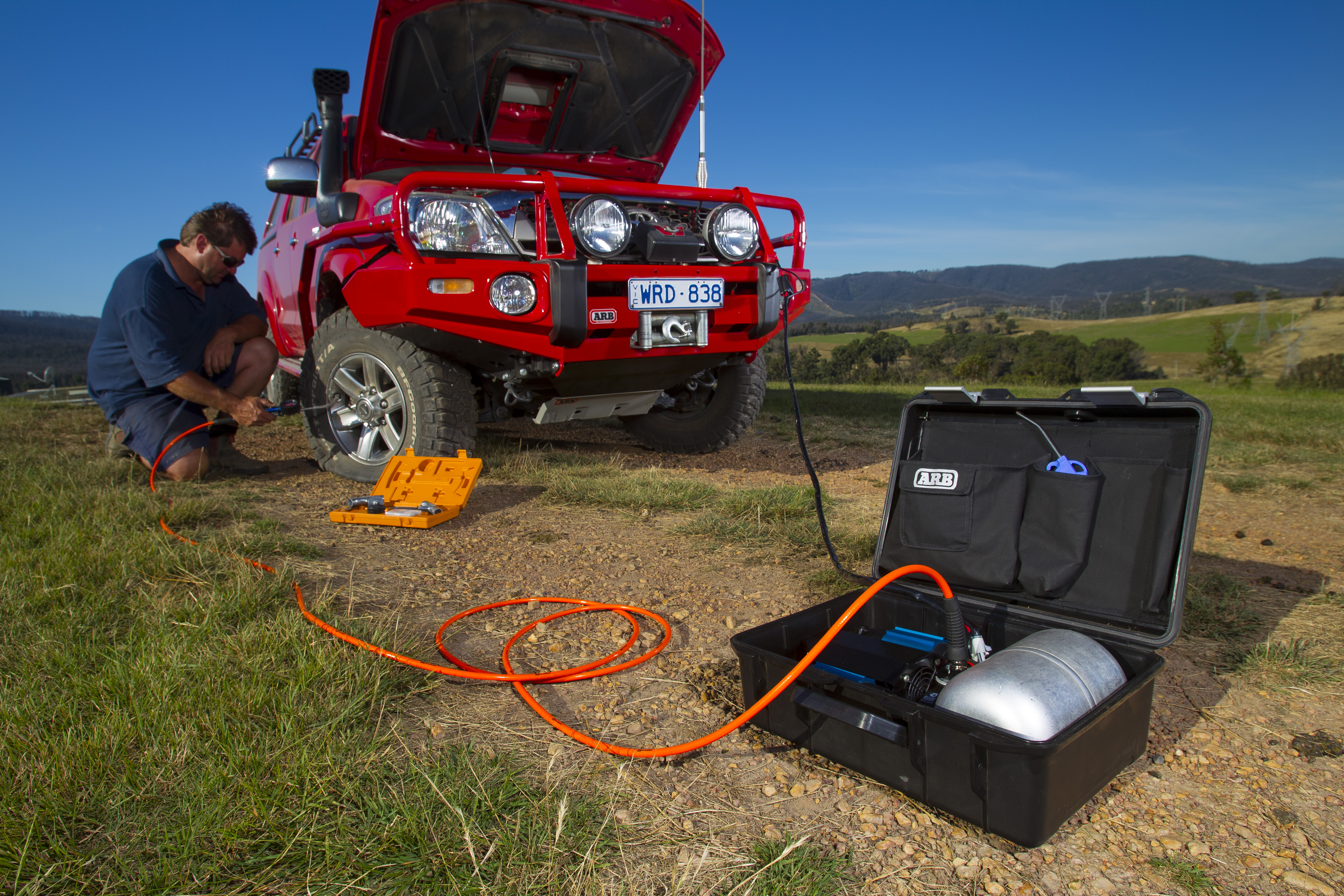
This is the gear you’ll need to regularly adjust tyre pressures to suit off-road terrain, and you should have in your kit in the case of tyre damage:
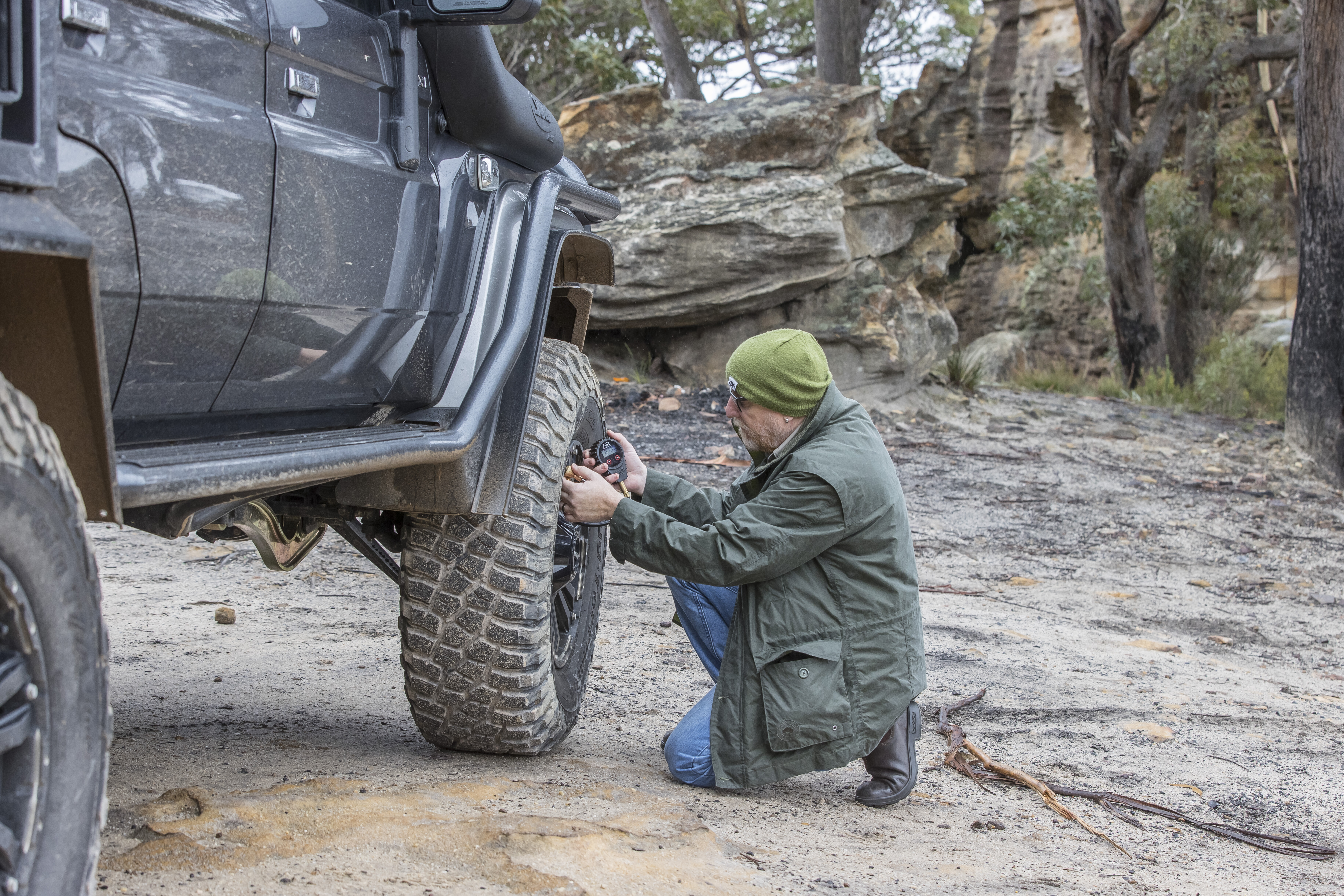
- Quality tyre pressure gauge
- Tyre deflator (or a stick if you’re in no rush)
- Reliable air compressor
- Tyre repair kit
- Spare tyre in good condition
- Functioning vehicle jack and wheel brace
- Tyre Pressure Monitoring System (TPMS)
5
Advice from a 4×4 expert
David Wilson has been a 4WD trainer since before Google was a thing. Here are his top five tips for managing tyre pressures:
- Start with your tyre placard: On bitumen, follow the tyre placard as your baseline. Most wagons and utes run 200–250 kPa (29–36 psi). Over-inflation wears tyres prematurely, increases puncture risk, and lengthens emergency braking distances.
- Follow the ‘20 per cent’ rule: On dirt roads, let out 20 per cent of the placard pressure and reduce speed by 20 per cent. This gives tyres flexibility to absorb bumps, reduces punctures, and improves comfort and braking.
- Keep adjusting down: As terrain gets rougher, gradually reduce pressure until traction and momentum return. Each reduction should be matched with a lower speed to avoid overheating tyres.
- Don’t go too low: Minimum pressure is 100 kPa (15 psi) except in emergencies. Below this, tyres can come off the rim, so steer, brake, and accelerate very carefully.
- Pump them back up: After off-road sections, restore tyres to the appropriate pressure for the surface. A fast air compressor and a reliable metal gauge make this quick and accurate.

1
Tips and traps
Tips
- Adjust pressures to suit terrain and vehicle load
- Fit LT tyres to your vehicle
- Regularly check tyres for damage
- Run a TPMS to warn of rapid deflation
- Remember to reinflate once back on the road
Traps
- Lower tyre pressures too much for conditions
- Drive too fast with lowered tyre pressures
- Make sudden throttle or steering inputs with low tyre pressures
- Leave your compressor and tyre repair kit at home
- Get lazy and forget to adjust tyre pressures
FAQs: Expert tips for off-roading
- How much should I air down my tyres?
The ideal pressure depends on wheel diameter, tyre aspect ratio, tyre type, vehicle weight, and terrain. Bigger wheels and low-profile tyres reduce sidewall height, limiting how much you can safely lower pressure. E-rated tyres are stiffer and better for heavier vehicles, while softer tyres work well for lighter rigs. Soft sand, snow, mud, and rocky trails all require different pressures.
Tip: Start with street pressure and gradually reduce it while monitoring tyre performance.
- Why is sidewall height important?
Lowering tyre pressure lets the tyre deform slightly, increasing the contact patch. On soft terrain like sand, snow, or mud, this improves floatation. On rocky trails, a softer tyre conforms to obstacles, giving better grip. Shorter sidewalls, which are common on large-diameter wheels, limit how low you can safely air down.
- What are the risks of airing down too much?
Lower tyre pressure increases the risk of losing a bead, damaging the tyre or rim, reduced ground clearance, and accidents or injury.
Tip: Air down slowly and in increments, especially on technical terrain.
- How do tyre types affect air-down performance?
Tyre load rating and construction matter. Choosing the right tyre type helps balance ride comfort, grip, and safety:- E-rated tyres: Stiffer sidewalls, higher weight capacity, better for heavier vehicles
- C-rated tyres: Softer, more flexible, better for lighter vehicles or technical off-road conditions
- What’s the best way to air down quickly?
A simple, low-cost method is to remove the valve core, which can drop a 35-inch tyre from 35 to 15 psi in under a minute. Always use a valve core tool and monitor pressure with a reliable low-pressure gauge. Carry extra valve cores and stems in case of loss or damage.
Tip: Reduce pressure incrementally to avoid sudden loss of control.
- How should I air up after off-roading?
Use a high-quality air compressor—electric or engine-driven—and check pressures with an accurate gauge. Multi-line inflation/deflation systems can make the process faster. Restoring tyre pressure after off-road sections ensures safety and prolongs tyre life.
- Are there any practical tips for testing pressures?
Experiment in a safe environment to find what works best for your vehicle and terrain. Reducing tyre pressure by around 50 % often improves ride quality and grip on soft terrain. Test tyres on obstacles to see how the sidewall deforms and handles at different pressures.
*This tyre pressure guide is not gospel. Always run recommended tyre pressures when driving on the road.
Follow 4X4 Australia on Google
Get more 4x4 news, reviews and gear stories from 4X4 Australia in your Google feeds.

We recommend
-
 Advice
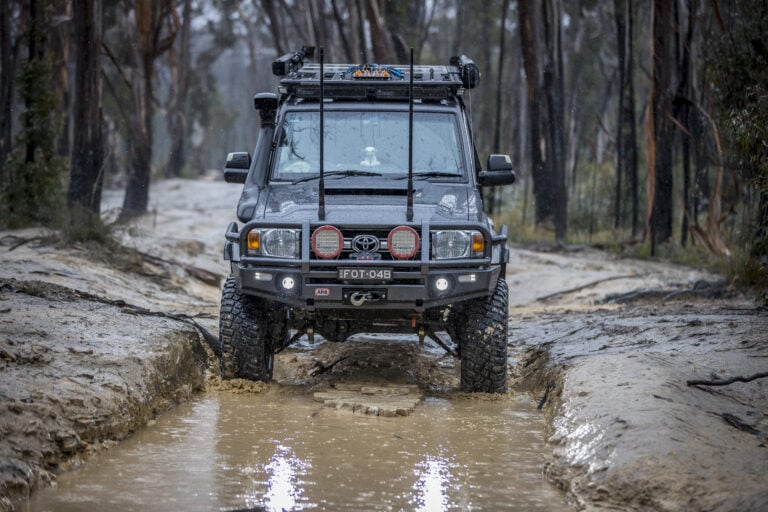
Off-roading in mud: How to stay in control and avoid getting bogged
Mud might look like harmless fun, but it’s one of the most unpredictable and damaging off-road conditions. Here’s how to handle it safely when you can’t avoid it
-
 Advice
How to drive on dirt roads: Essential 4WD tips
From tyre pressures and 4WD settings to handling dust, corrugations, bulldust and mud, here’s how to prepare your 4WD and drive safely on dirt roads
-
 Gear
GearHow To: Snatch recovery
We explain how to safely use a snatch strap or a kinetic recovery rope