
Buyers waiting to take delivery of an Ineos Grenadier 4×4 received good news today, with Ineos enthusiast pages reporting that the Grenadier will not have the Luxury Car Tax (LCT) applied to it when it goes on sale in Australia.
This will mean considerable savings on the drive-away price of the wagons.
The Grenadier base utility wagon will start from $84,500 before on-road costs, with prices to go up to $96,495 for the range-topping Fieldmaster station wagon.
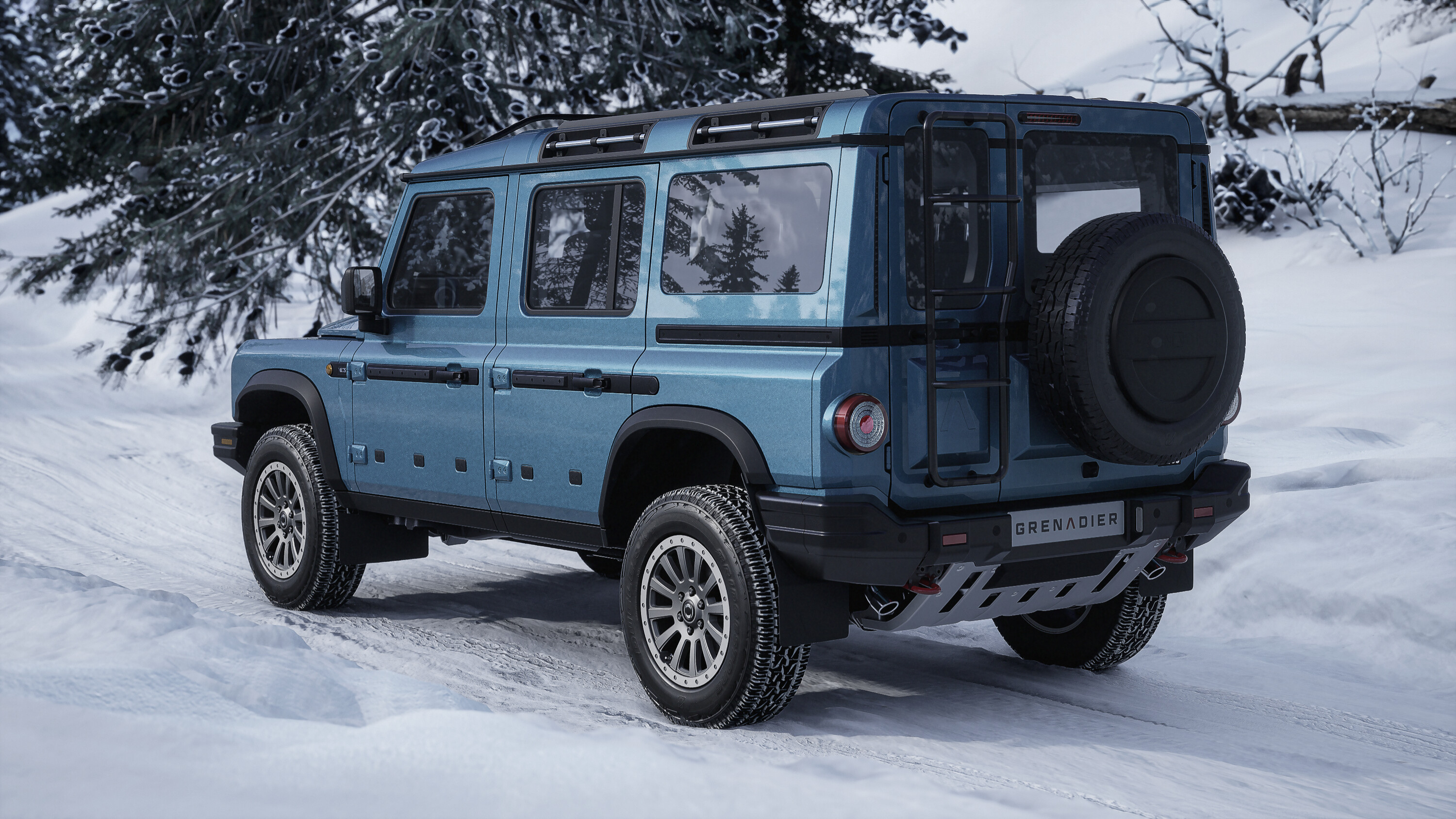
Buyers will save thousands of dollars on the cost of their Grenadier by not having to pay the LCT on what is essentially a commercial vehicle, and they shouldn’t have been hit with the unfair tax to start with.
The savings could amount to enough to take your new Grenadier on a serious outback adventure, to test its mettle.
The note sent to buyers waiting for their new rigs stated: “Ineos Automotive has been working with the Australian Tax Office (ATO) on a Private Ruling exempting the Grenadier from Luxury Car Tax (LCT).
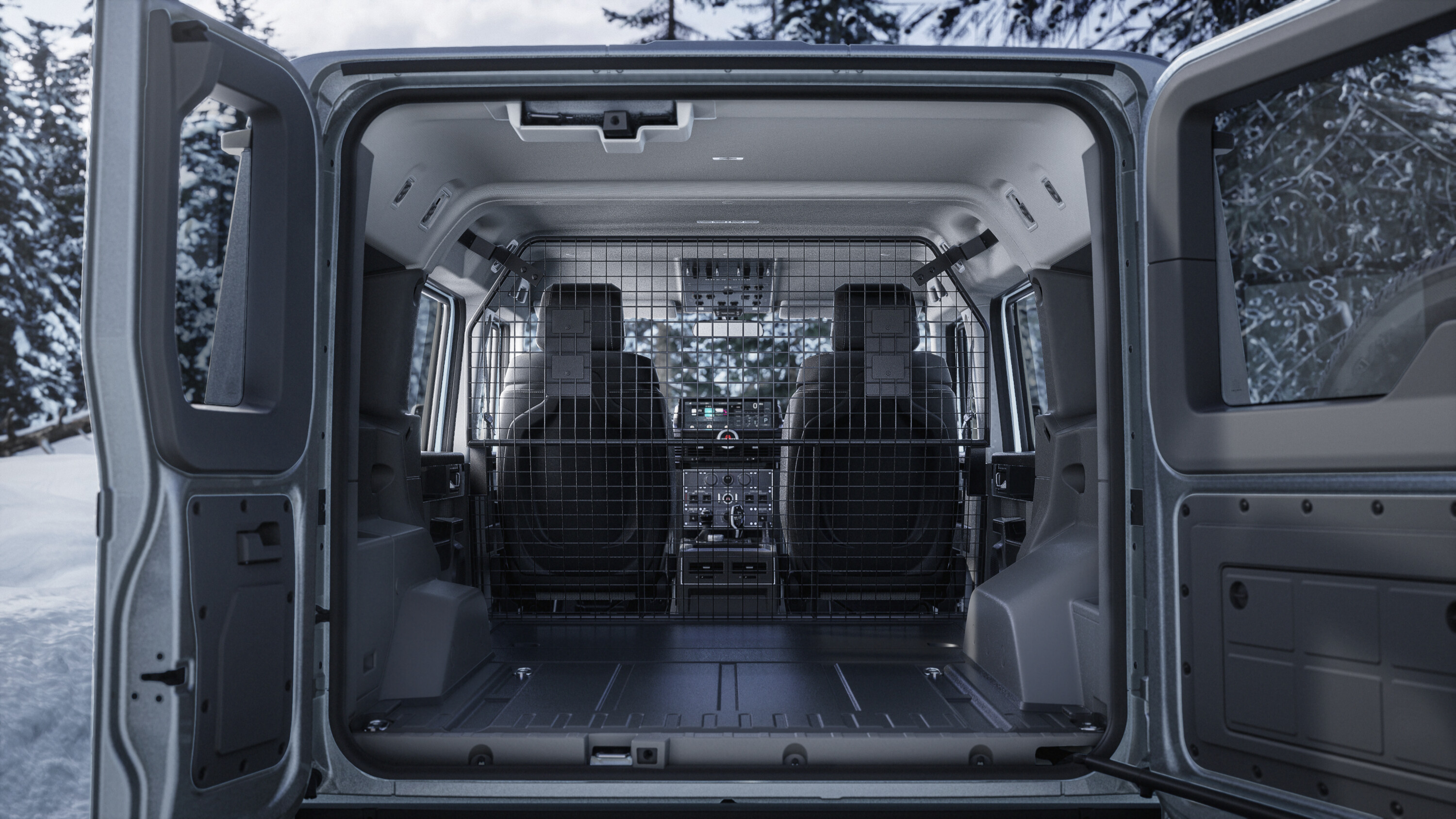
“The ATO has recognised that due to the Grenadier’s design, engineering and capability, it is not considered a Luxury Car for tax purposes and therefore all Wagon models, options and accessories are exempt from LCT.
“Our configurator has been updated to reflect this decision, so please explore the Grenadier’s latest drive-away pricing.”
Ineos Automotive is still saying customer deliveries of its rugged 4×4 will begin in the fourth quarter of this year.

Don’t let the rather subdued appearance of the Patrol cover car fool you, as the blown Y62 packs a serious punch – a 330kW-800Nm punch, in fact.
Whether the supercharged wagon ‘eats 200 Series LandCruisers’ – as the number plate suggests – is up for debate, but with its amped V8 and state-of-the-art electronics, it’d be right up there with the very best modified 200s in the country.
With the next-gen Ford Ranger lobbing this week – and the imminent launch of the 2023 Everest – we’ve included a write-up of a V6 diesel-powered Everest prototype we scored seat time in earlier this year. The drive day took place months before the vehicle was publicly revealed, but we were sworn to secrecy until now.

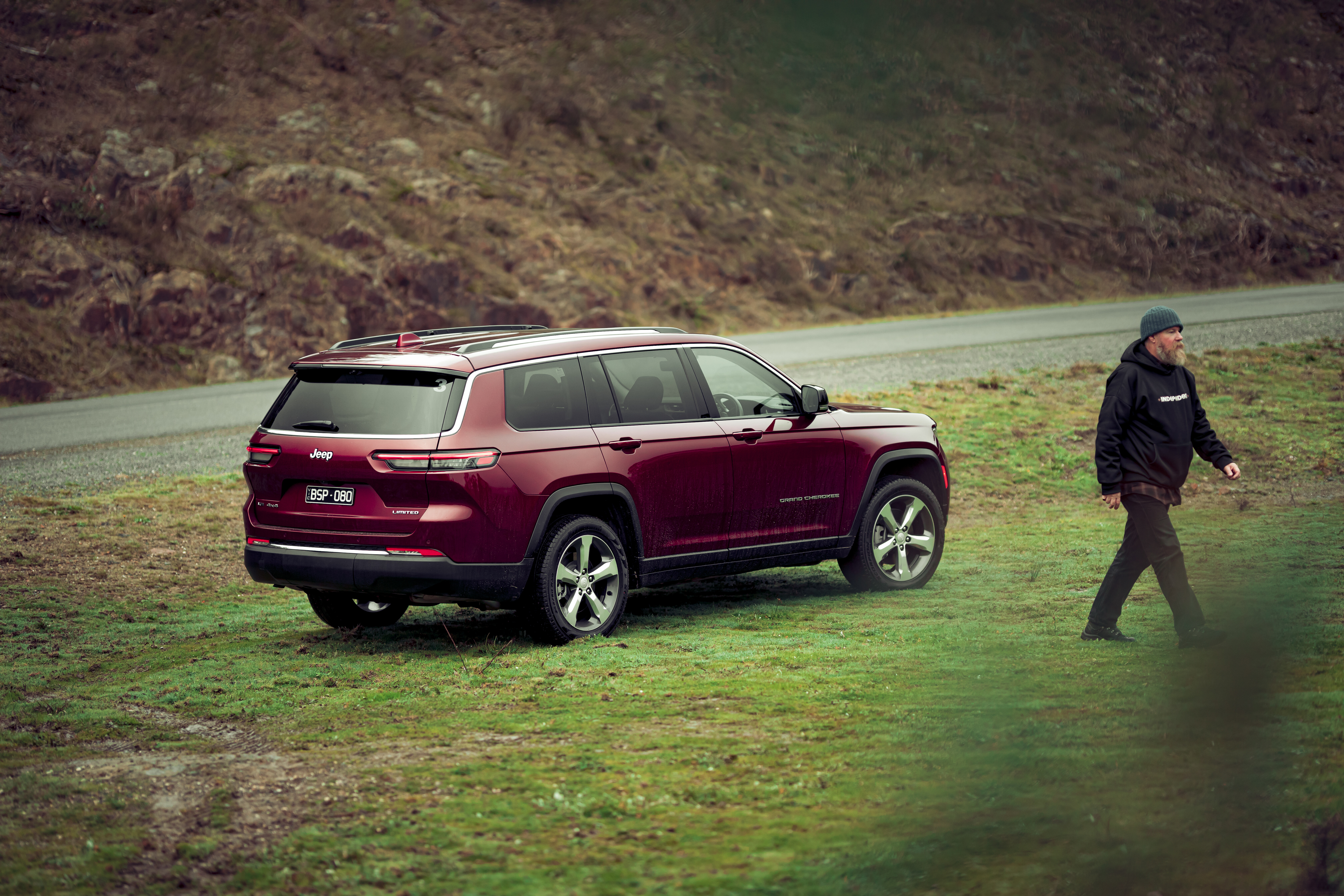
Matt secured a drive of the Jeep Grand Cherokee L Limited to discover whether it’s actually any better than the outgoing model. So is its high level of luxury at the expense of dirt-road competence? A week spent off road will put an answer to that.

It’s not often we feature ARIA award-winning artists on the pages of 4X4 Australia, but we made an exception when we laid eyes on Lee Kernaghan’s 79 Series LandCruiser ute. The Queensland-based musician has tailored his Cruiser to aid his family on off-road jaunts, and he has equipped quality aftermarket equipment to get them there.
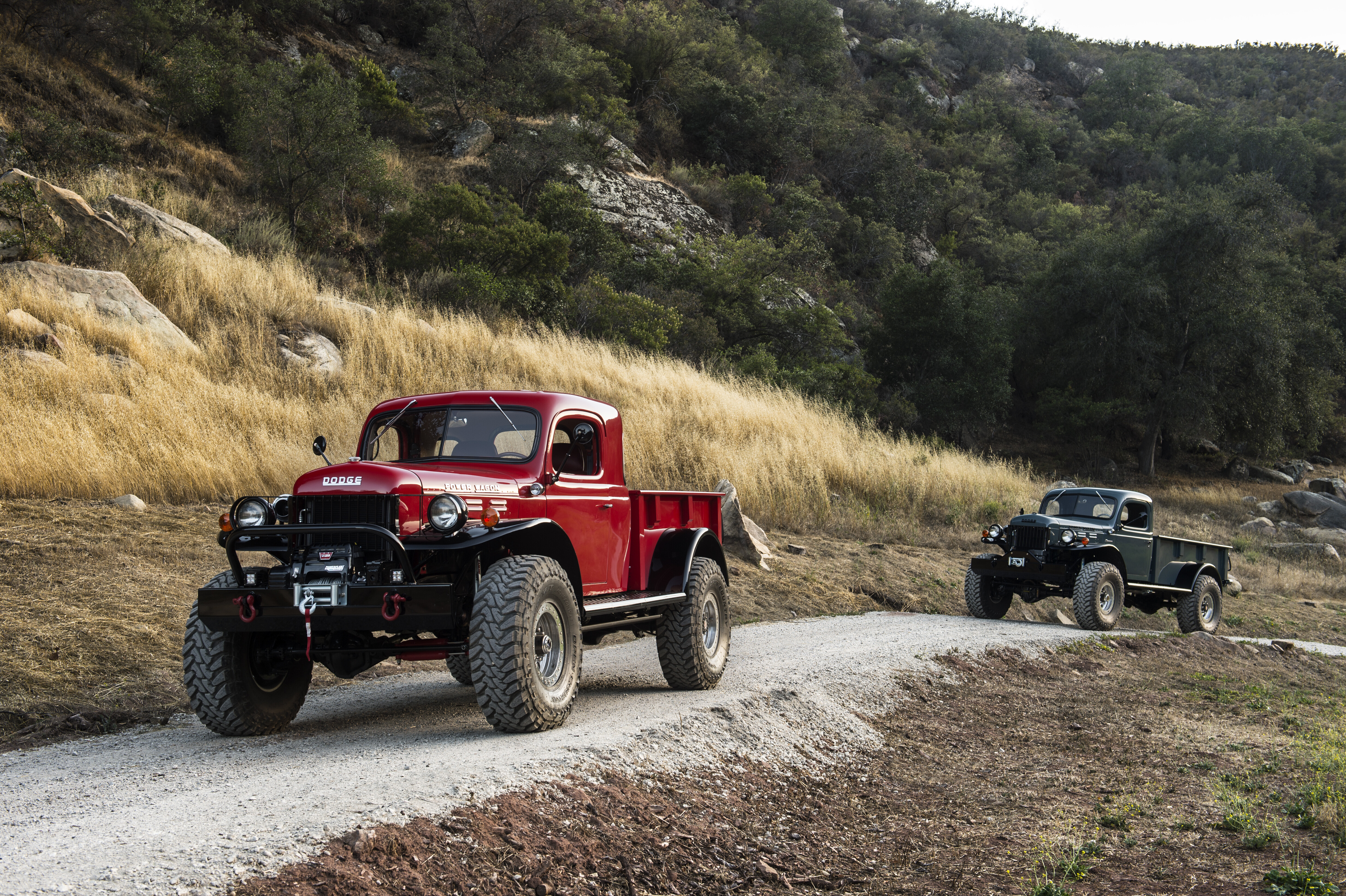
Deep pockets with a spare $200K to spend and a yearning for pristine classic 4x4s? Do yourself a favour and check out Legacy Classic Trucks in Wyoming, USA. We’ve taken a closer look at the company’s rather ostentatious restomodded vehicles, dubbed Power Wagons. Legacy restores and restomods a range of classic vehicles, but pickups are its specialty.
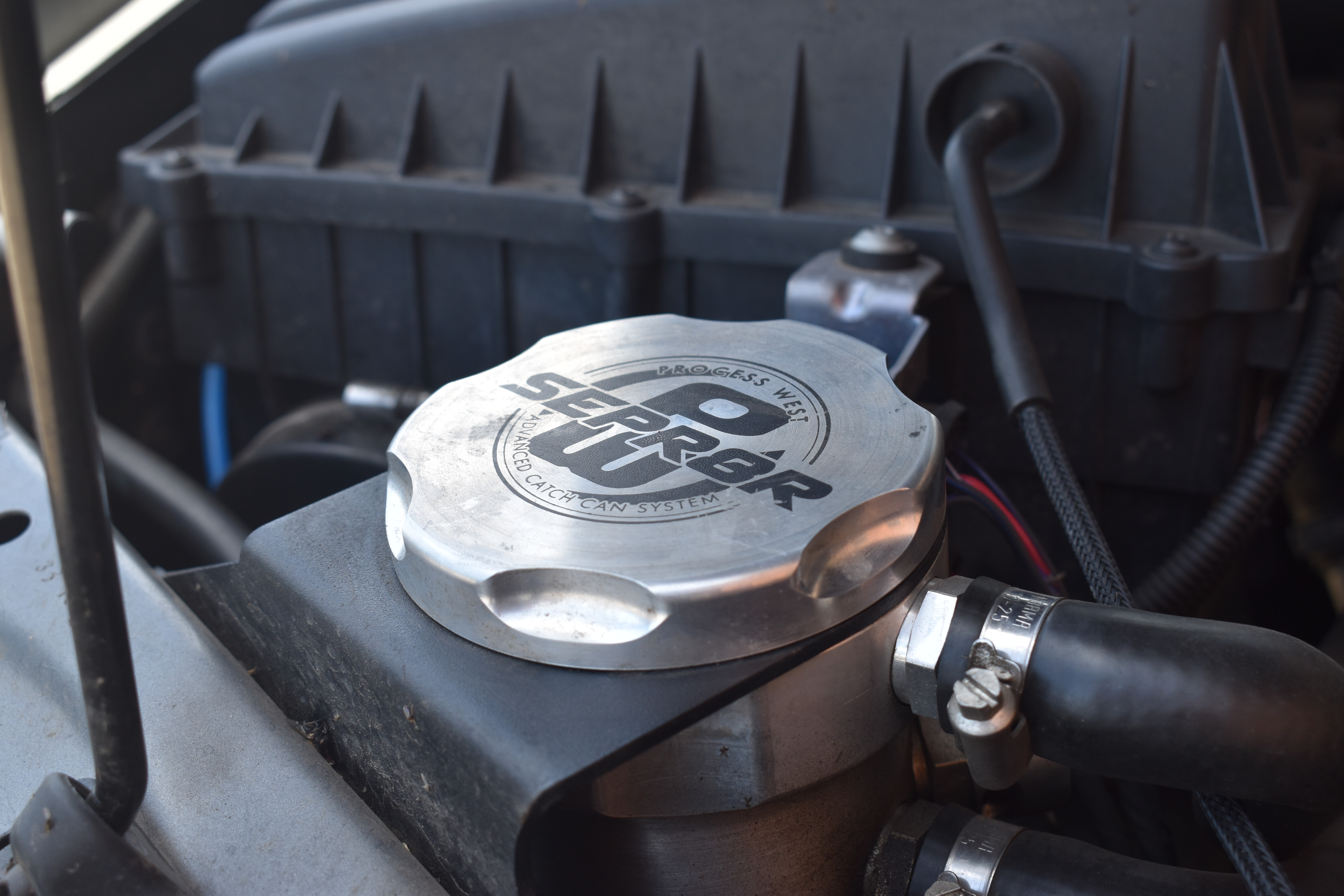
We chew the fat with two qualified mechanics, to better understand how to reliably and safely get more power from a turbo-diesel engine – from performance chips to dyno tunes and everything in between.
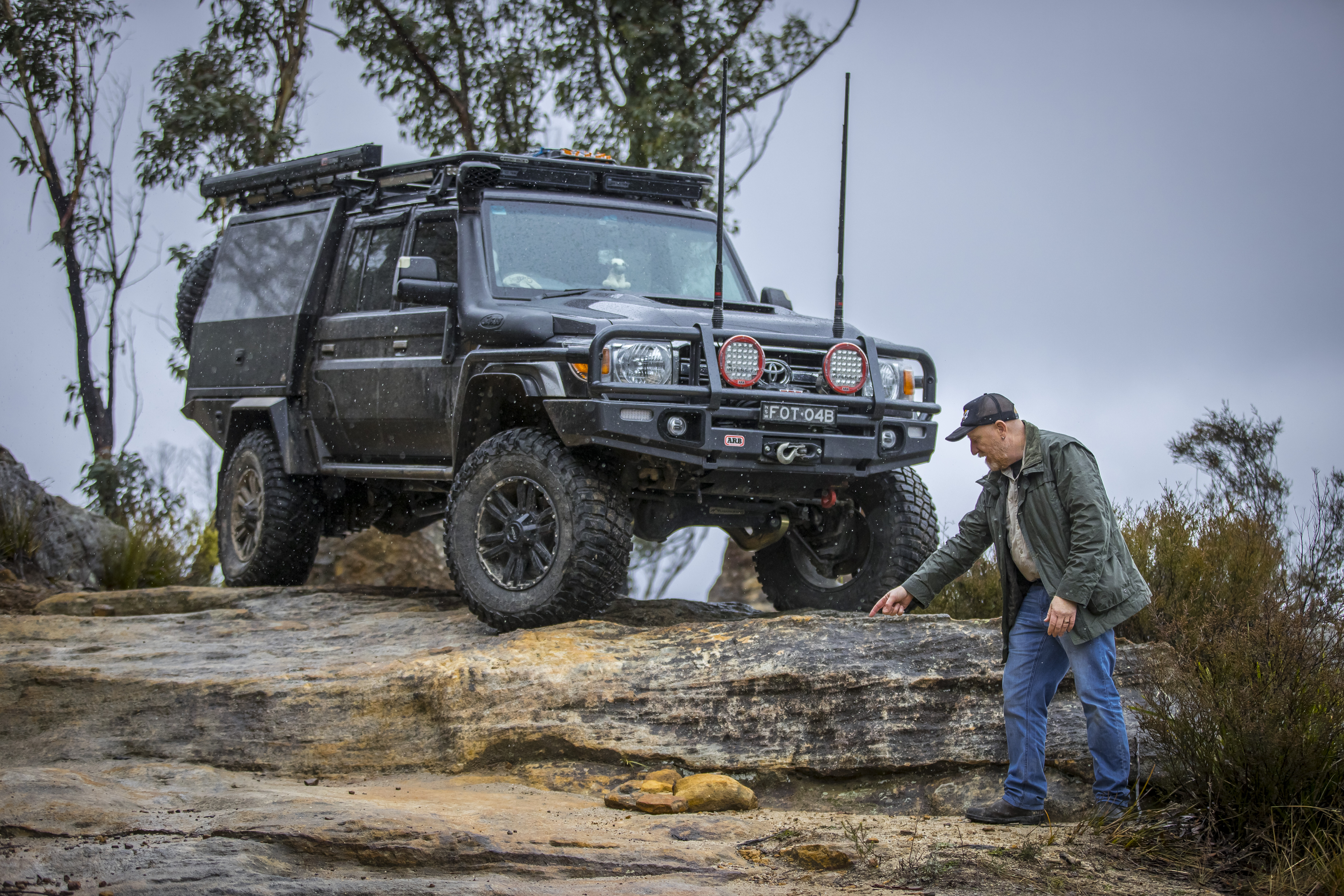
For those failed rock stars, now is your chance! In the latest instalment of the 4X4 Australia ‘how to off-road’ driving series, Deano outlines the best techniques to safely and successfully navigate a fourbie over rocky terrain. Suffice to say, tyres and tyre pressures will be at the crux of the article.
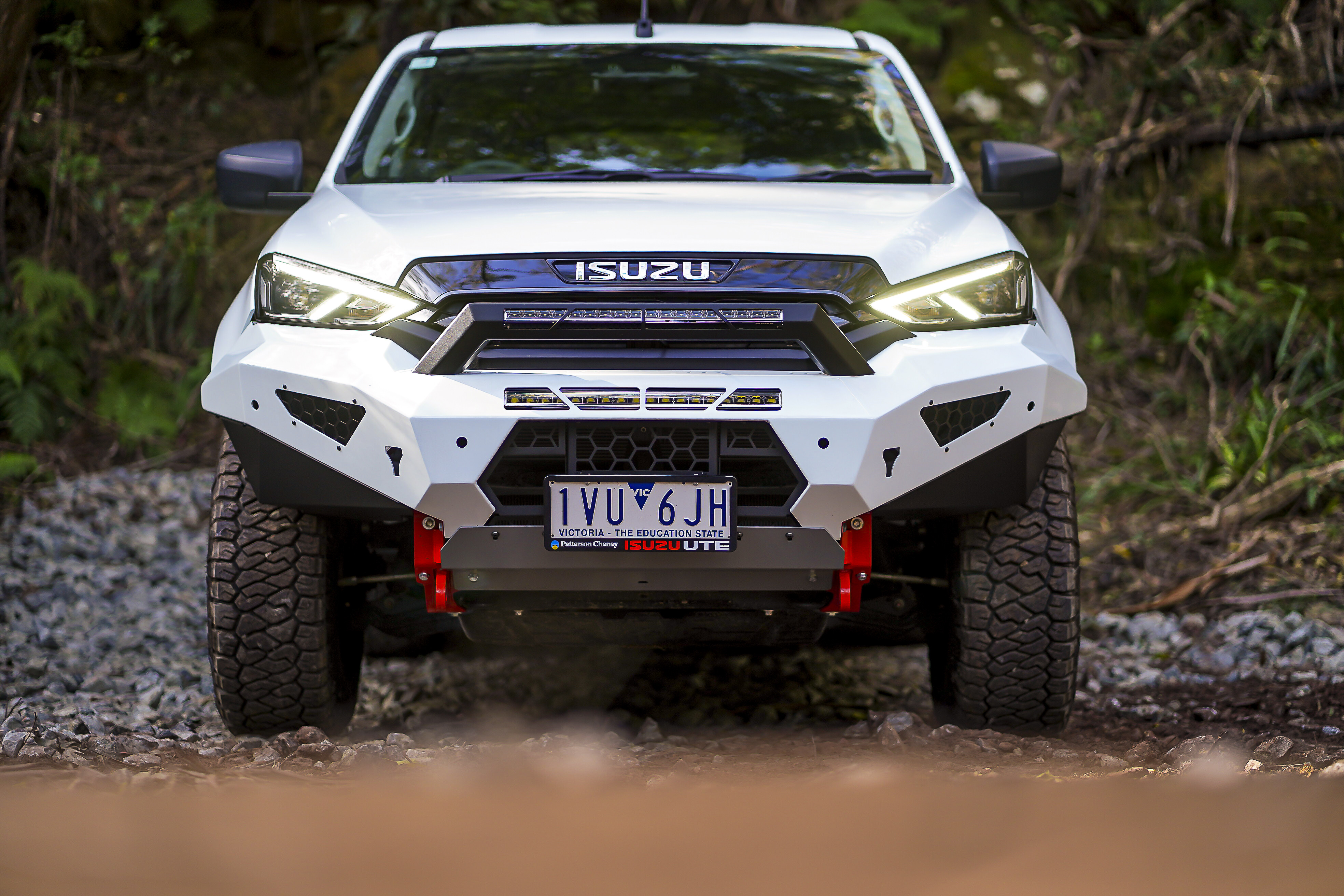
We amped up our Isuzu MU-X build this month by installing a durable and off-road-capable Century Batteries Dual Force+ N70 battery. Plus, an Offroad Animal Predator bar has transformed the wagon’s front end.
What else is there?
- Lightweight camp chairs tested
- Bendix Ultimate 4WD Brake Upgrade kit tested
- Kickass LED camp lights tested
- Mount Ive Station, South Australia
- Hobart to Cape Portland, Tasmania
- Readers’ rigs, new products, columns and more
The August 2022 issue of 4X4 Australia magazine is out now.
The engineering boffins at TJM 4×4 Accessories are working around the clock to bring to market its range of equipment for the just-released 2023 Ford Ranger.
With the Australian company recently revealing a couple of teaser shots on its website of a next-gen Ranger draped in TJM gear.
The images – more than likely computer-generated – show a Ranger wearing a hoopless steel bar with an integrated light bar.
“We are hard at work doing what we do best: designing and engineering a range of premium accessories to turn this highly-anticipated utility vehicle into an off-roading superweapon,” the website says.
TJM adds it will have a “fully-loaded suite of bull bars, side steps, rear bars, underbody protection, premium canopies and Airtec snorkels … [as well as] the newest line of XGS premium suspension kits.”
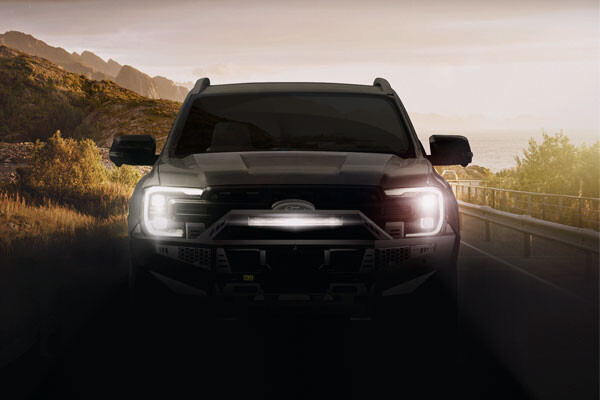
It’s unclear when these products will be revealed and released, but expect a smorgasbord of equipment from aftermarket companies to land on shelves in the coming months.
As revealed earlier this year, a partnership between Ford and ARB will allow owners to option up their vehicle from Ford dealerships with a suite of ARB accessories including bullbars, canopies, air lockers, suspension packages and underbody protection.
The Ford Ranger is officially on sale now, with 17,000 pre-orders currently being filled and arriving in driveways as we speak. Ford Australia says it intends to bring 10,000 Rangers to Australia over the next two months.
The P703 Ranger is available in XL, XLS, XLT, Sport and Wildtrak guise – with a Ranger Raptor on the horizon, to land in August. The 2.0-litre bi-turbo diesel with 10-speed auto is carried over from the previous model, while a 3.0-litre diesel V6 engine is all-new.
The cheapest 4×4 option is an XL single cab-chassis priced at $47,030 before on-road costs, with the range maxxing out at $70,190 plus ORC for the V6-powered Wildtrak.
Ford Australia has revealed local pricing for the all-new 2023 Ford Ranger line up, which starts at $35,930 before on-road costs – a $1040 jump over the outgoing model’s entry-level cost.
That price will get you the workmanlike Ranger XL 4×2 Single Cab with the 125kW/405Nm 2.0-litre single-turbo diesel with six-speed auto powertrain (2.0L SiT 6AT).
UPDATE, July 2022: New Ford Ranger review – it’s here at last
The new 2023 Ford Ranger is now on sale in Australia, and the local media launch has been run. The Wheels and 4×4 Australia teams have both driven the new Ranger, and you can find their stories at the links below.
UPDATE, September 12: The Ranger now has a five-star ANCAP rating. Story here.
Upgrade your Ranger
Story continues…
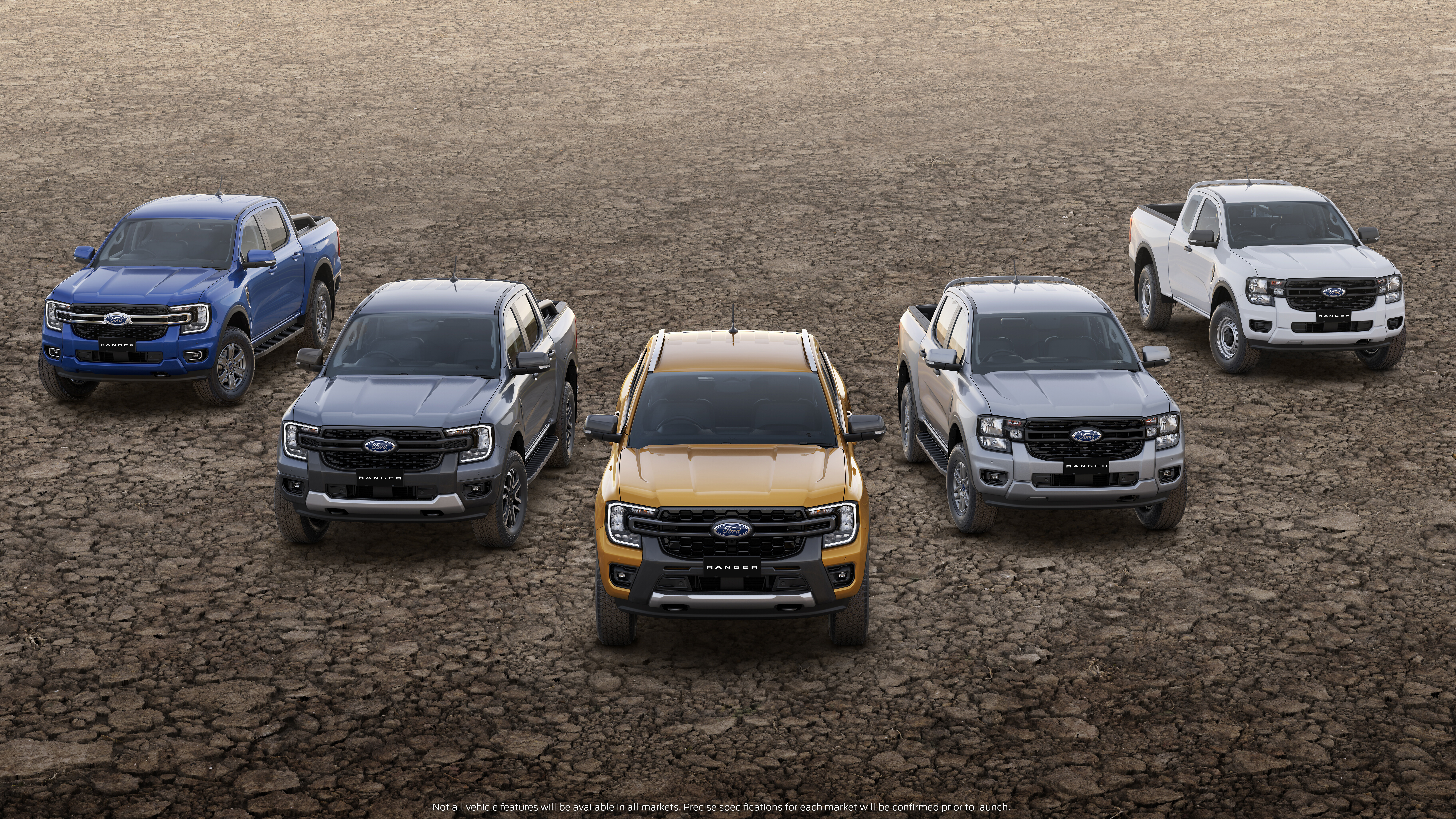
Snapshot
- 2022 Ford Ranger pricing starts at $35,930 before on-road costs
- XLT 4×4 prices remain unchanged
- Order now being taken with first arrivals slated for June 2022
If you want a 4×4 Ranger on a budget, the cheapest option is the XL 4×4 Single cab-chassis powered by the 154kW/500nM 2.0-litre bi-turbo diesel with 10-speed auto (2.0 BiT 10AT) priced at $47,030 before on-road costs – a $1740 premium over the current model.
Four-wheel-drive double-cab pick-up pricing begins at $49,930 before on-road costs for the XL 4×4 Double PU 2.0L SiT 6AT, or $53,430 plus on-road costs with the more highway-friendly bi-turbo.

The popular XLT double-cab pick-up and cab-chassis are available with 2.0 BiT 10AT, and a new 184kW/600Nm 3.0L V6 turbo-diesel engine that’s also coupled with the 10-speed auto (3.0L V6 10AT) for an additional $3000.
Ranger XLT 4×4 pricing remains unchanged from the current model and starts at $51,190 before on-road costs, with the 4×2 Hi-Rider pick up costing an extra $700.

The Ranger Sport 4×4 double cab returns with the same powertrains as XLT to bridge the gap between that and Wildtrak, with pricing starting at $63,690 plus on-roads.

The Wildtrak also has both powertrain options, with its $67,190 starting price jumping by $1100 before on-road costs.
The range-topping Ranger Raptor price tag has risen by about $6000 to $85,490 plus on-road costs with the extra coin bringing new punchy petrol powertrain consisting of a 3.0 litre V6 Twin-Turbo EcoBoost engine producing 292kW4 and 583Nm.

Ford dealers are now taking orders for the 2023 Ford Ranger, with vehicle arrivals scheduled to start from June, 2022.
See our 2023 Ford Ranger reveal story for information about specifications, features and powertrains.
The 2023 ‘next-gen’ Ford Ranger is finally here and cars are heading out of showrooms to owners who ordered their new utes months ago. Ford Australia says it has more than 17,000 pre-orders for the new Ranger and hopes to fulfil them with 20,000 vehicles arriving over July and August.
While we’d driven prototypes of the new P703 Ranger in the past, this was our first steer of the production models and here at the launch, we had time behind the wheels of several different 4×4 models.
The regular (non-Raptor) P703 Ranger is available in five model variants from XL to XLS, XLT, Sport and Wildtrak with prices starting from $35,930 through to $70,190 plus ORC. A new Ranger Raptor will arrive in August priced from $85,490.
Upgrade your Ranger
Ranger Wildtrak
Our series of drives on the launch started from the top of the range with the Wildtrak which is powered exclusively by the 3.0-litre diesel V6 engine. The ‘Lion’ V6 engine is new to the Ranger brand and puts out 184kW of power at 3250rpm and 600Nm of torque giving the Ford Ranger the most grunt in the four-wheel-drive ute class.
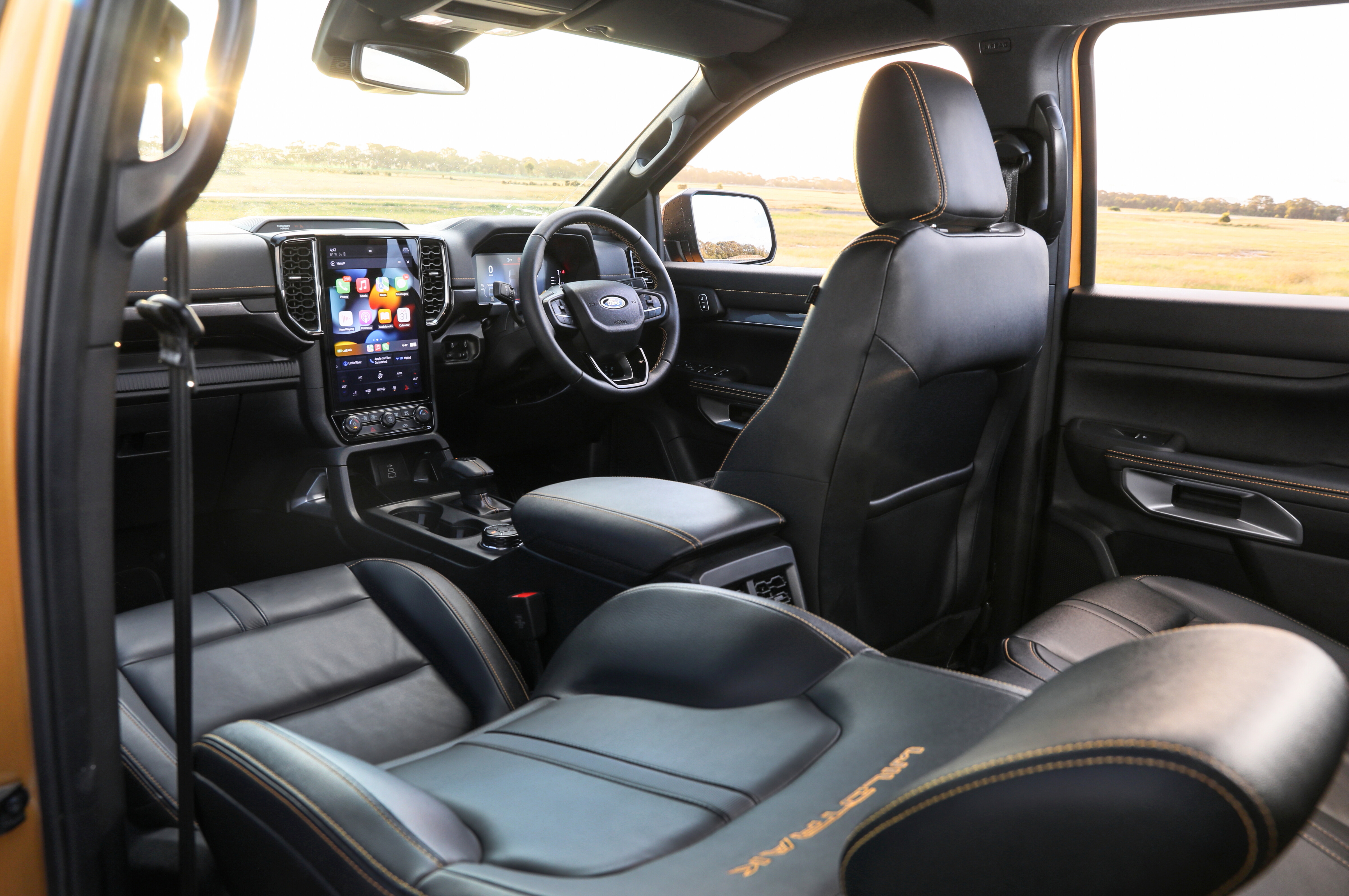
As in the past, the Wildtrak is more than just a dress-up pack and stepping in to the interior of the new model you are greeted with new design and shape powered leather seats and the 12-inch portrait layout infotainment screen. Lower models get a still sufficient 10-inch version of this screen.
Even though Ford has fitted these big new screens to the Rangers, the designers haven’t forgotten about functionality and have gifted us with individual dials for HVAC temperature adjustment and audio volume controls – thank you, Ford!
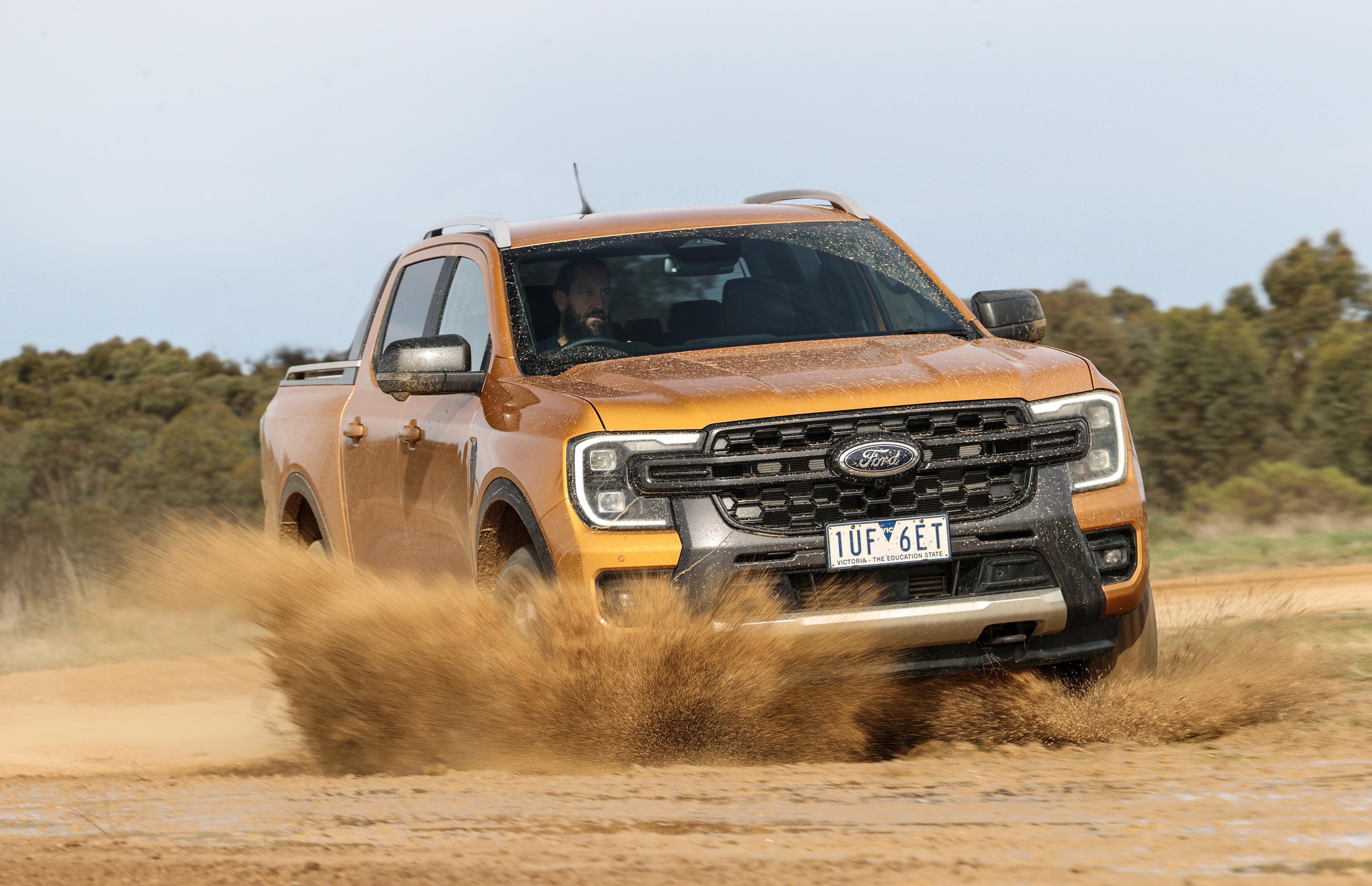
Another welcome addition is that the steering column on all variants is now adjustable for both height and reach allowing drivers of all sizes to get the best driving position. The ignition start/stop button is rightfully placed on the right-hand side of the steering columns, where an ignition key would normally go making it easy to find for drivers who might use more than just the one same model of car.
Press that start button and the V6 diesel fires to life with a low, smooth rumble.
The V6 engine is backed by an updated version of the 10-speed automatic transmission seen in the previous generation of Ranger. It now gets a new short-throw electronic gear shifter that is placed in a conventional position in the centre console. Buttons for manual gear selections once in Drive are on the right-hand side of the shifter where the driver’s thumb finds them.
Selecting Drive and heading through the suburbs, my first feeling was of how far the front corners of the car seem to be. The P703’s 500mm of extra wheelbase all sits between the driver and the front axle and the bonnet is bigger and longer. Thankfully, the front end of the Ranger is quite blunt so those somewhat distant front corners are visible where you need to see them.
On these low-speed suburban streets, the refinement of the V6 engine over anything an inline 4-cylinder engine could ever deliver, becomes evident. It continues as we merge on to the highway and are greeted with seamless mid-range torque as the Wildtrak accelerates up to speed.
The V6 diesel doesn’t make the Ranger a rocket ship by any means but the smooth, refined way it delivers its improved performance makes the drive experience far better than that of the bi-turbo 4-cylinder. The V6 should also trump the I4 when it comes to hauling a load, be it in the tray or on a trailer.
The Ranger Wildtrak is also available with the bi-turbo I4 diesel engine as are the Sport and XLT 4×4 models, and as in all of them it is $3000 less than the same car with the diesel V6.
Ranger Sport
The next rung down the Ranger ladder finds a new model that has been added to the range – the Ranger Sport, and again it’s available with the V6 or I4 diesel engines, both backed by the 10-speed automatic transmission and 4×4 only.
The Sport is distinguished by its all-black grille and model-specific alloy wheels and misses out on a few things from the Wildtrak like the cargo tub sports bar and powered roller cover, automatic parking, and the 12-inch centre touchscreen is replaced by the shorter 10-inch unit that retains all the same features.
The car we were in was powered by the V6 engine, so it starts at $66,690.
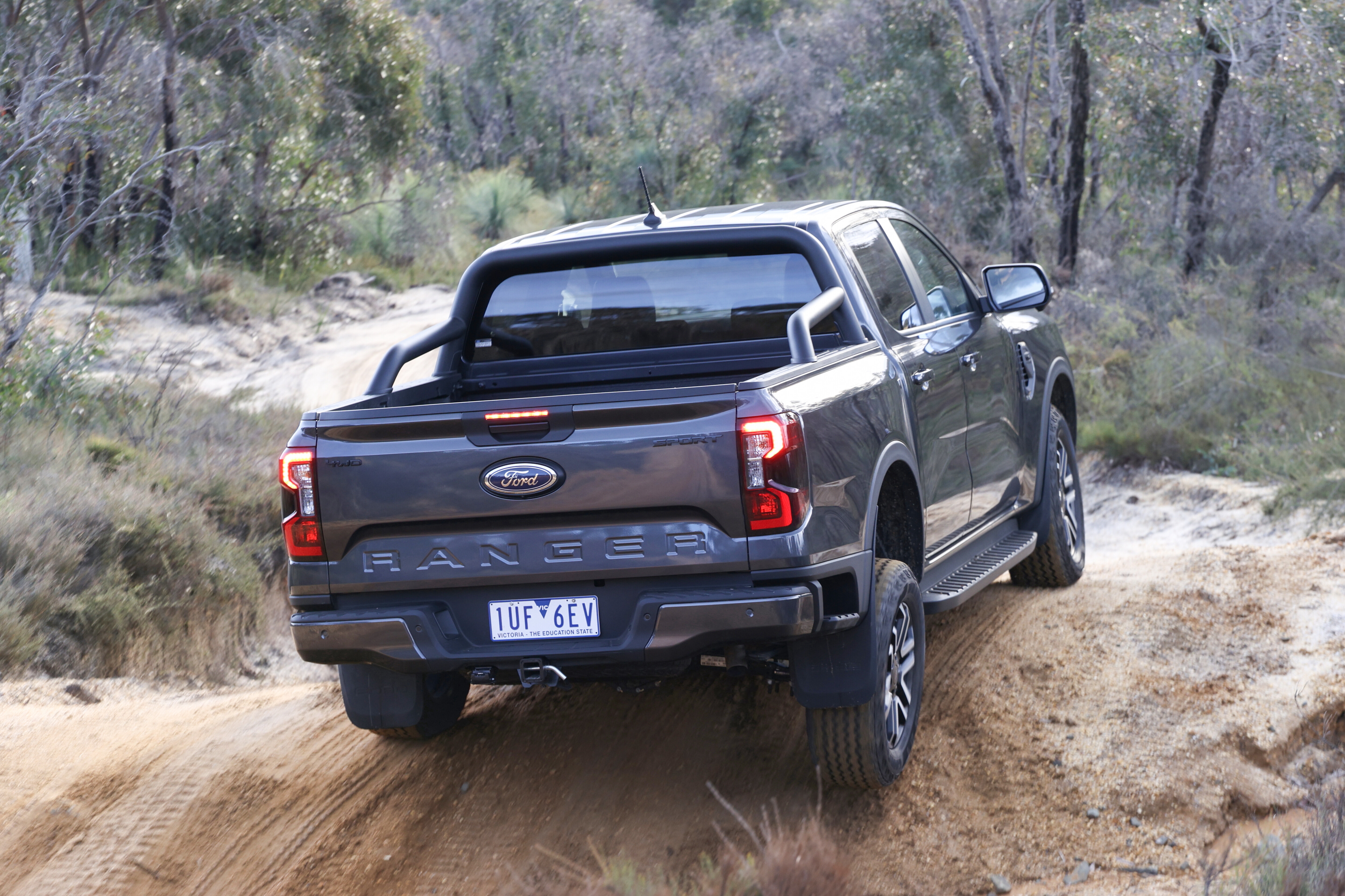
While the drive experience in the Sport was pretty much the same as that in the Wildtrak, sans the suburban bits, it gave us a good opportunity to experience the Ranger’s new full-time 4×4 system.
The full-time 4×4 system is standard on all V6 4×4 Rangers, including the petrol-fuelled V6 Ranger Raptor. The system offers drivers the choice of conventional two-wheel drive (rear wheels); 4×4 Auto; locked 4×4 high range; and locked 4×4 low range.
The benefit of 4×4 Auto is that it can be used on all roads including hard sealed surfaces where you couldn’t normally use 4×4 in a part-time system. This is specifically beneficial on roads that change from sealed to gravel, snow and ice covered roads or even wet roads, and is especially beneficial when towing a load and you need to maintain control.
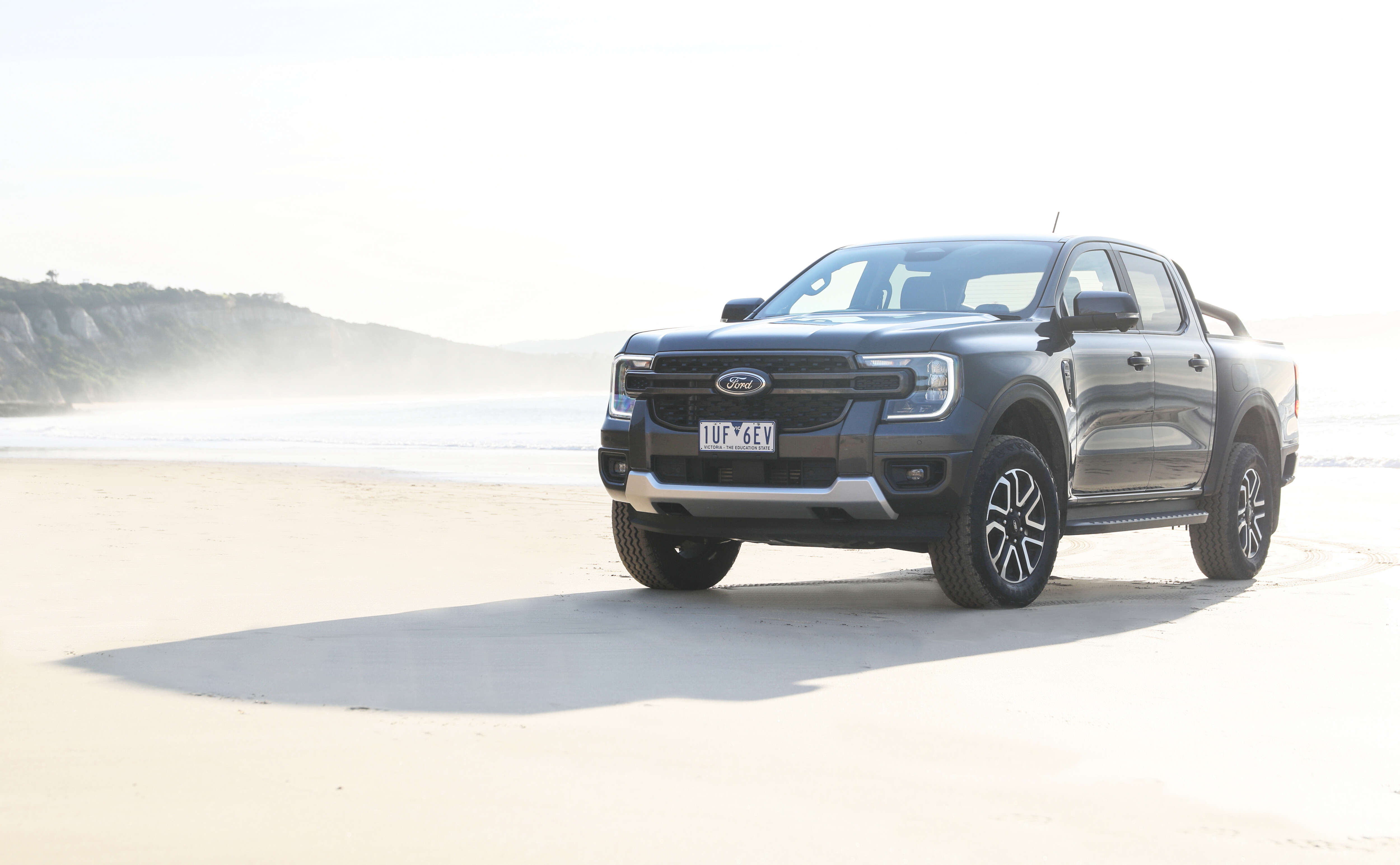
On this day, the weather turned to heavy rain on secondary roads and the superior road-holding ability of the full-time system was apparent on twisting corners and when accelerating away from a stop at intersections.
Only the Mitsubishi Triton and Volkswagen Amarok offer this tractive and safety advantage in the 4×4 ute category.
Ranger XLT
Next rig was a Ranger XLT, again powered by the V6 and 10-speed. The XLT has always been that mid-range model that is popular with buyers that don’t want all the bling but still appreciate a few features and luxuries. The almost perfect blend of workhorse and family adventure rig.
You really start to notice the features dropping out of the specification when you step from Sport to XLT. The seats are cloth with manual adjustment, the pad for wireless charging your phone is not there (wireless Apple and Android connections still standard), the off-road button is gone from the console as there is no off-road screen on the display (but it’s still a 10-inch size) and the alloy wheels drop down to 17s. Certainly no deal breakers in there.
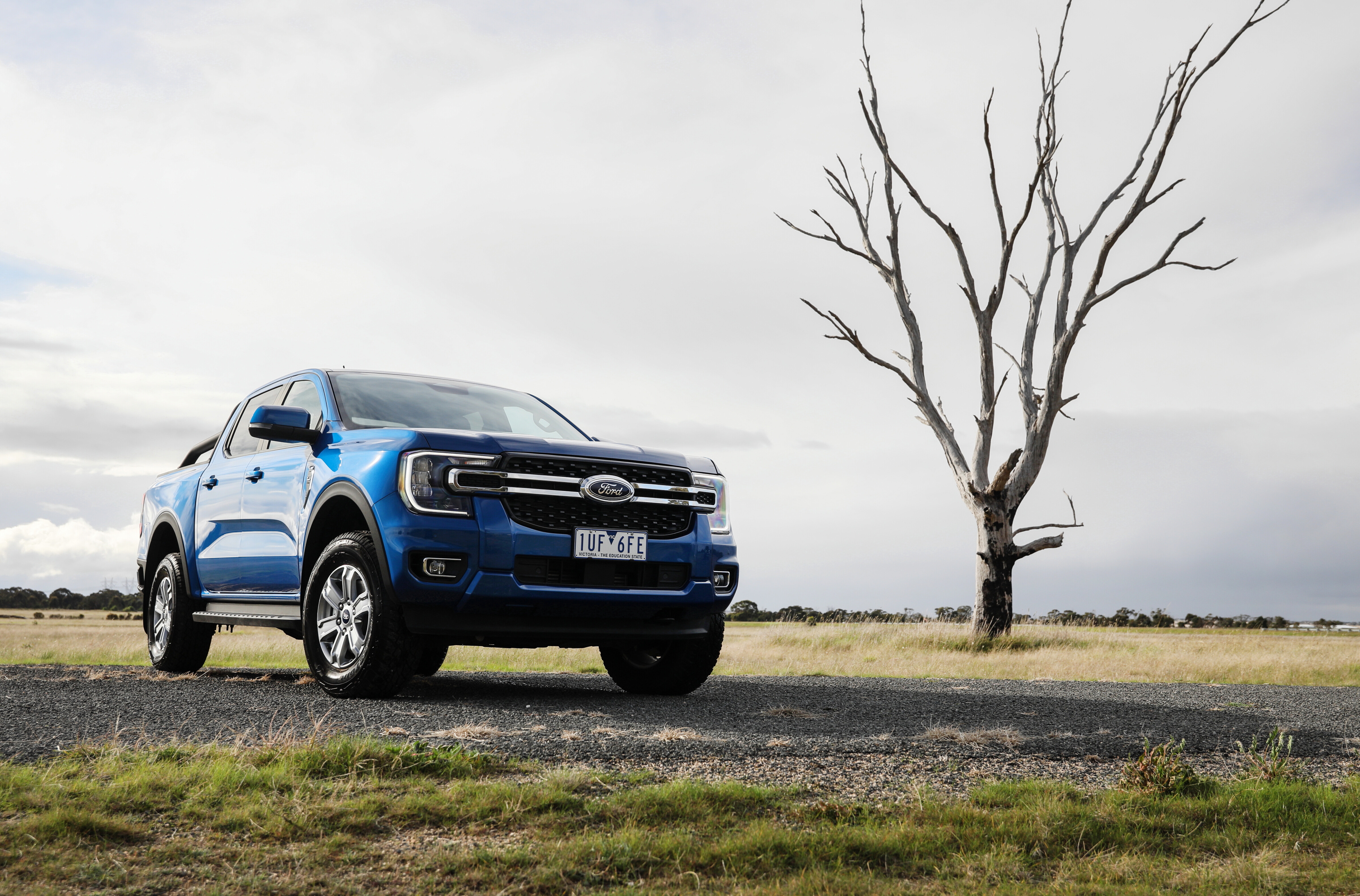
When you get in to the model with the bi-turbo engine you see the console changes back to one without the dial for off-road controls and the gear shifter reverts back to the one carried over from the previous generation.
The now familiar 2.0-litre I4 bi-turbo diesel engine still makes 154kW at 3750rpm and 500Nm from 1750 to 2000rpm and backed by the 10-speed automatic and part-time 4×4 in the Ranger.
Put your foot down in a P703 Ranger with the 4-cylinder and it still provides plenty of poke. In fact, we don’t think it would be giving too much away to the V6 in a zero to 100km/h sprint. The difference is the way it delivers its 500Nm of torque. The 4-pot makes all its grunt at the peak of its revs and it gets there quickly. It’s also quite raucous as most inline-four diesels are. It doesn’t matter how many balance shafts you put in them, an I4 will be inherently rough.
The V6 on the other hand delivers its grunt smoother right through the revs and it’s more refined in how it goes about it. This makes it more relaxing and pleasant to drive over any terrain or conditions.
We don’t like to rely on OBC readings for fuel consumption figures, but as we weren’t filling the cars on this drive that’s all we had. Using them as an indicator there wasn’t a lot of difference in fuel use between the V6 and I4 engines in the Rangers.
Official figures for the same XLT 4×4 with the I4 rate it at 7.2L/100km combined compared to 8.4L/100km for the V6 in the same car. On this drive the dashboards were indicating the I4 at 10.1L/100km and the V6 at 10.7L.
It will be interesting to see how they perform in measured tests in the real world but we’re thinking that the $3K extra for the V6 would be money well-spent.
A single turbocharger variant of the 2.0L diesel engine is offered in 4×2 and XL 4×4 model Rangers. It produces 125kW at 3500rpm and 405Nm from 1750 to 2500rpm and will be backed by the 6-speed automatic transmission carried over from the current generation Ranger. We didn’t get to sample this engine at this launch event.
Off-road
The off-road section of the test started at the Australia Automotive Research Centre (AARC) proving ground where there is a range of different tracks and terrain to test the various components of any car or truck. It had been raining so the clay-based tracks were wet; not ideal for any car on road tyres.
Steep gradients showed the benefits of downhill speed control – both forward and in reverse, and the usefulness of the forward-facing camera when you crest a bind hill.
A 40-per-cent-grade gravel hill tested out the electronic traction control and the effectiveness of the rear differential lock which is standard on all 4×4 Rangers. All these were done with ease as you would expect on a course set out by the manufacturer.
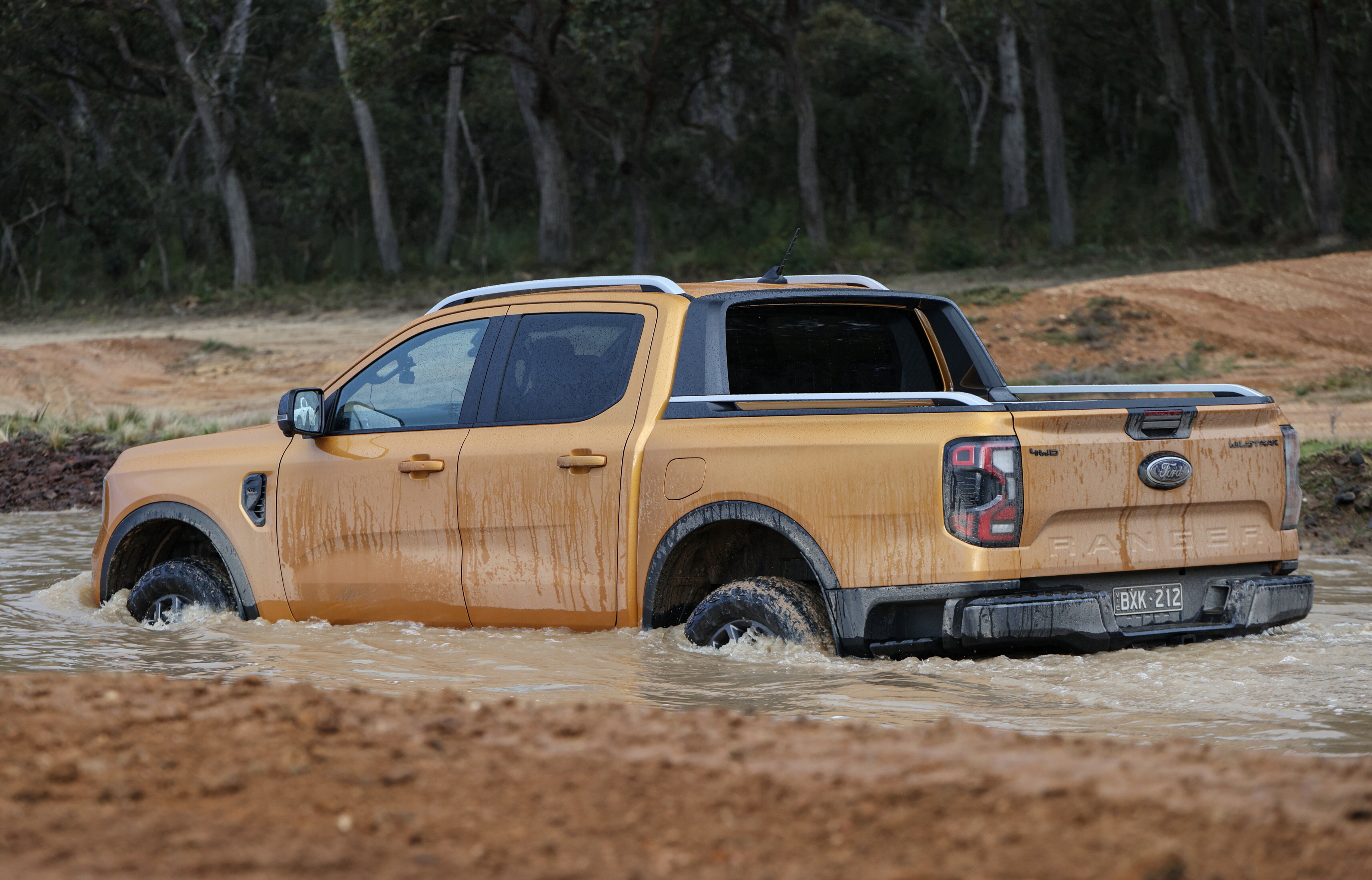
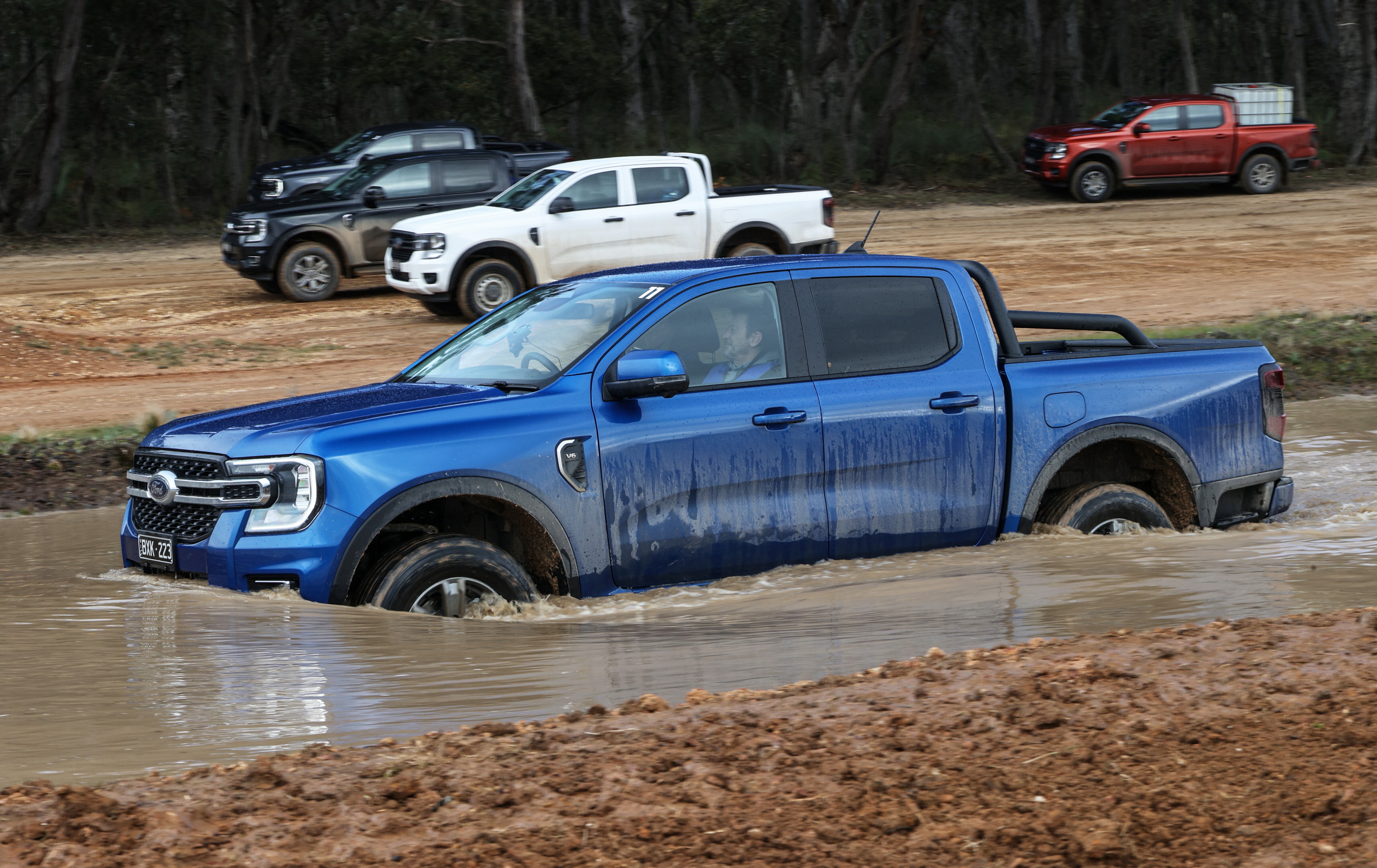
The conditions were a bit more testing once we reached the off-road arena where various humps, mounts, rocks, slopes and 600mm water bath showed the limits of the cars.
The clay here was extra slippery especially after more Rangers ran over it, requiring several attempts for some drivers as they struggled for grip. All in all the Rangers performed admirably considering the conditions.
Rangers now come with a Multi Terrain Selector which was previously only offered on the Raptor and Everest wagon. There are now up to seven modes in the system: Normal, Eco, Tow/Haul and Slippery for on-road use, with Mud/Ruts and Sand modes for off road. Ranger Raptor remains the only variant to turn the dial up to 11 with Baja mode and includes a Rock Crawl mode.
These modes select the optimal calibration for systems such as traction control, transmission shifting, stability control and accelerator response to suit the driving conditions.
Simply selecting the appropriate mode for the terrain you are faced with will make other transmission choices for you without having to push more buttons.
Selecting the Mud/Ruts mode for the track we were on automatically shifts the transfer case to low range. Locking the rear diff or selecting hill descent control can be done via console buttons or on the off-road screen.
A drive on forestry tracks in the Otway Ranges did prove more challenging as the tracks remained wet and slippery, and as the ascents grew steeper the road tyres showed their limits. It was no place for any car on road tyres and we did have to backtrack on a couple of occasions.
Loaded up
While we didn’t get to do any towing with the new Ranger on the launch, we did see a demonstration of the trailer lights checking function which, when activated, cycles through the lights so you can check the ones on your trailer are all working without outside assistance. A very clever function indeed.
New Rangers have a 3500kg towing capacity and depending on the model, come with towbars, wiring and electronic brake controllers.
We did have a chance to drive a V6 Ranger on the highway that had a pair of full 200-litre drums strapped in the tray equalling around 400kg of load. The load softens the ride in the ute, but not in a detrimental way. It was more comfortable while remaining composed, and the powertrain didn’t feel like it noticed the load at all.
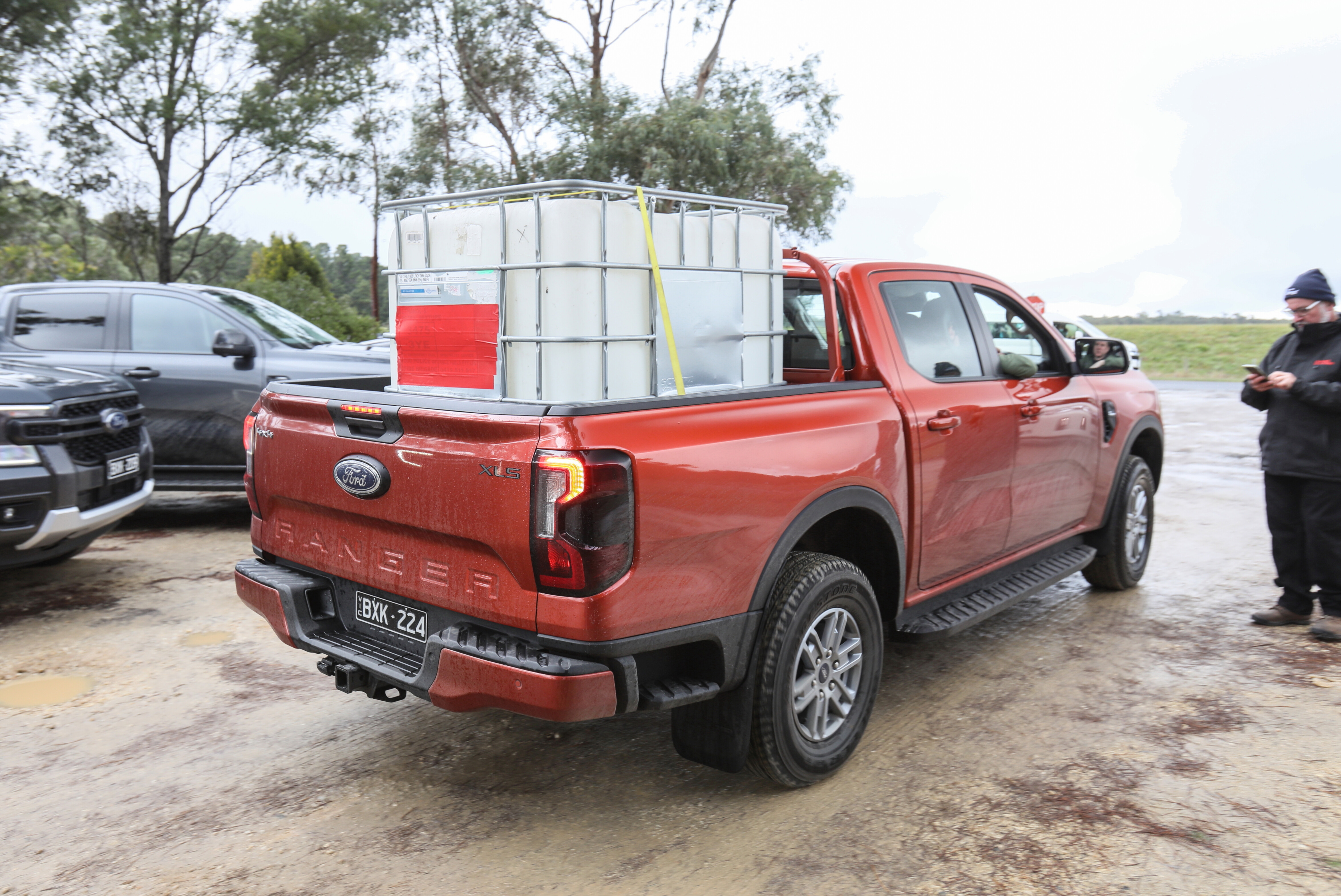
Initial feelings in the unladen Ranger were that the coil front/leaf rear suspension felt firm and you do expect that in a 1-tonne ute without any cargo on board. Yet it was never jittery or uncomfortable, always remaining composed and controlled.
On country backroads you can feel and appreciate the added stability of the back end, thanks in part to the 50mm wider wheel track (front and rear) plus Ford moving the shock absorbers outwards to the outside of the chassis rail where they can better control lateral movement. It all makes for better ride and handling which is less truck-like yet still able to carry a load.
2023 Ford Ranger V6 specs
| Body | 4-door, 5-seat dual-cab ute |
|---|---|
| Drive | all-wheel |
| Engine | 3.0-litre V6 turbodiesel |
| Transmission | 10-speed automatic |
| Power | 184kW @ 3250rpm |
| Torque | 600Nm @ 1750-2250rpm |
| Bore stroke (mm) | 84.0 x 90.0mm |
| Compression ratio | 16.0:1 |
| 0-100km/h | 9.5 sec (estimate) |
| Fuel consumption | 8.4L/100km (combined) |
| Weight | 2346kg |
| Suspension | MacPherson strut front/leaf spring rear |
| L/W/H | 5370mm/1918mm/1886mm (Wildtrak) |
| Wheelbase | 3270mm |
| Fuel tank | 80 litres |
| Brakes | 341mm ventilated discs, two-piston calipers (f) 332mm ventilated discs, single-piston caliper (r) |
| Tyres | 255/65 R18 Goodyear Wrangler Territory AT/S (Wildtrak) |
| Wheels | 18-inch alloy ( full-size spare) |
| Price | $66,690 + on-road costs |
| Wading depth | 800mm |
2023 Ford Ranger pricing
| Variant | Price | Change from previous model |
|---|---|---|
| XL 4×2 HR Single CC 2.0L SiT 6AT | $35,930 | $1,040 |
| XL 4×2 HR Super CC 2.0L SiT 6AT | $38,430 | $1,040 |
| XL 4×2 HR Double CC 2.0L SiT 6AT | $40,430 | $1,040 |
| XL 4×2 HR Double PU 2.0L SiT 6AT | $42,330 | $1,540 |
| XL 4×4 Single CC 2.0L BiT 10AT | $47,030 | $1,740 |
| XL 4×4 Super CC 2.0L BiT 10AT | $49,530 | $240 |
| XL 4×4 Super PU 2.0L BiT 10AT | $51,430 | $2,240 |
| XL 4×4 Double CC 2.0L SiT 6AT | $48,030 | $740 |
| XL 4×4 Double CC 2.0L BiT 10AT | $51,530 | $240 |
| XL 4×4 Double PU 2.0L SiT 6AT | $49,930 | $1,240 |
| XL 4×4 Double PU 2.0L BiT 10AT | $53,430 | $740 |
| u00a0 | u00a0 | |
| XLS 4×2 HR Double PU 2.0L BiT 10AT | $46,730 | N/A |
| XLS 4×4 Double PU 2.0L BiT 10AT | $54,330 | $1,840 |
| u00a0 | u00a0 | |
| XLT 4×2 HR Double PU 2.0L BiT 10AT | $53,990 | $700 |
| XLT 4×4 Super PU 2.0L BiT 10AT | $59,190 | $0 |
| XLT 4×4 Double PU 2.0L BiT 10AT | $61,190 | $0 |
| XLT 4×4 Double CC 3.0L V6 10AT | $62,290 | N/A |
| XLT 4×4 Double PU 3.0L V6 10AT | $64,190 | N/A |
| u00a0 | u00a0 | |
| Sport 4×4 Double PU 2.0L BiT 10AT | $63,690 | N/A |
| Sport 4×4 Double PU 3.0L V6 10AT | $66,690 | N/A |
| u00a0 | u00a0 | |
| Wildtrak 4×4 Double PU 2.0L BiT 10AT | $67,190 | $1,100 |
| Wildtrak 4×4 Double PU 3.0L V6 10AT | $70,190 | N/A |
| u00a0 | u00a0 | |
| Raptor 4×4 Double PU 3.0L V6 EcoBoost 10AT | $85,490 | N/A |
4X4 Australia's project builds
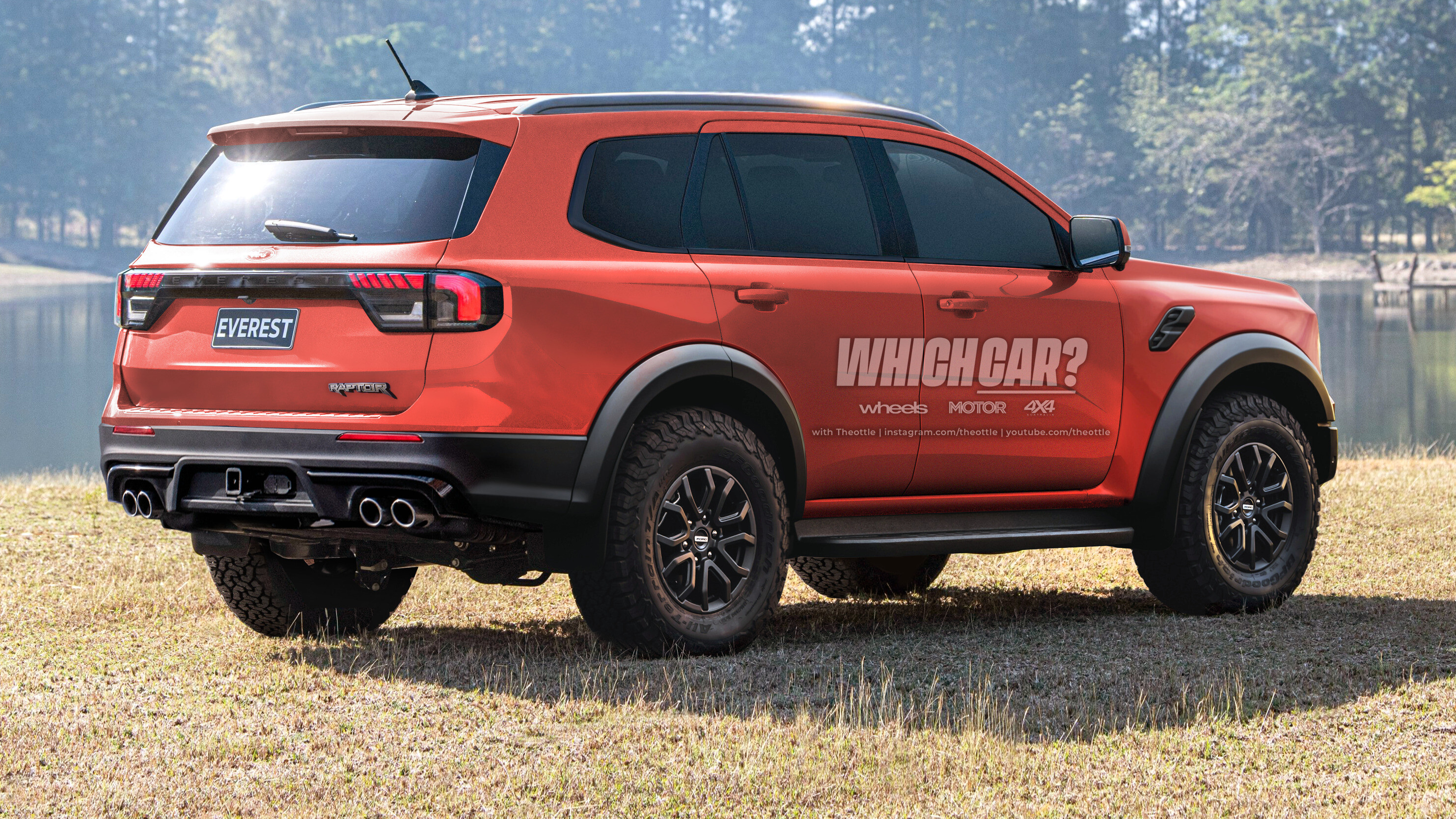
The Ford Everest Raptor exists.
It’s probably sitting in a darkened warehouse or on a backlot somewhere rather than winging its way to your local Ford dealer, but it’s intriguing to hear just how close this proof of concept got to becoming a production reality.
“Ultimately you can’t have everything,” sighs Anthony Hall, Vehicle Engineering Manager for the next-gen Ranger. “We had to make a decision on what projects were priorities, where you direct resource and it [the Everest Raptor] never got up.”
UPDATE, July 2022: New Ford Ranger review – it’s here at last
The new 2023 Ford Ranger is now on sale in Australia, and the local media launch has been run. The Wheels and 4×4 Australia teams have both driven the new Ranger, and you can find their stories at the links below.
Story continues…

“We did build one though and it was sensational,” he says, eyes widening. “I can tell you I’ve been airborne in an Everest Raptor. The Ford Performance guys in the US thought it was incredible.
“We took it out to the desert in California and even though it was a very rough dev[elopment] car, it was something else. At one point we took it up a rocky mountain face, probably about a 60 per cent gradient, and nobody thought it had a chance.
“There was something wrong with the car at the time. I seem to recall that the diff lock wasn’t working at that point, but it still crawled right up. Yes, it was more rock crawl than proper Raptor stuff – but nothing else made it up that slope. Nobody could believe it.”
Still, there were other reasons aside from those of pure budget allocation why the Everest Raptor never made it past this one engineering assessment vehicle.
“The SUV body meant that it was a harder vehicle to engineer than the Ranger Raptor. The rear door shutline was always a problem. That’s a particularly complex part of the vehicle body, so you can’t just blow it out into a wide box arch. As a result, the suspension never quite had the articulation of the Ranger.”
Most such prototypes then get crushed or repurposed for other engineering programs, but perhaps the engineers at Ford Performance in the US loved the thing so much that they couldn’t bring themselves to kill it.
“It’s still around somewhere,” says Hall grinning.
Never say never, eh?
UPDATE, January 2023: New HiLux GR Sport revealed
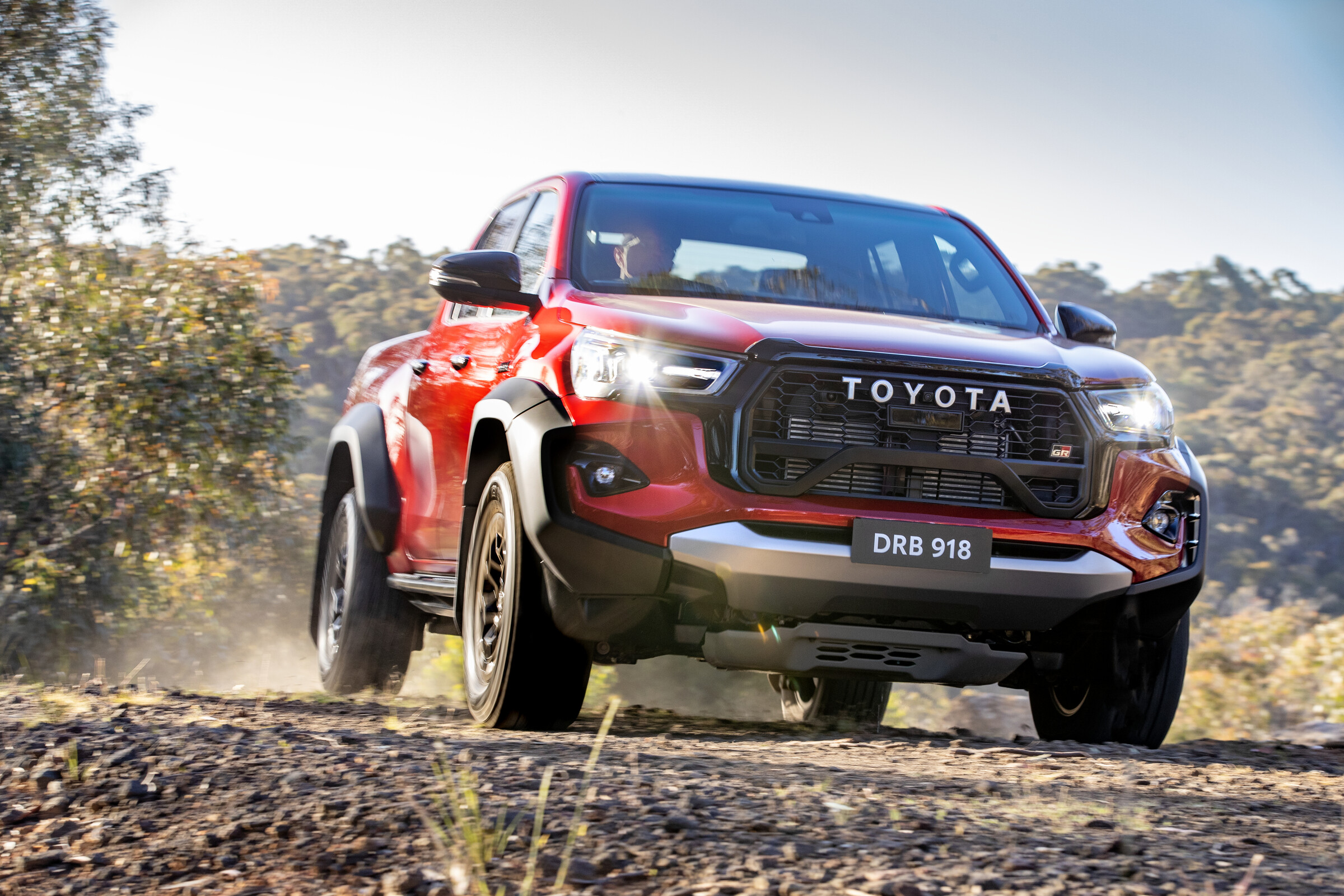
It’s no full-bottle high-powered GR HiLux, but the new 2023 HiLux GR Sport does get more power and torque than the regular model – making it a rival, of sorts, to the Navara Warrior and Ranger Raptor. In the meantime, we’ll keep hoping for a proper performance upgrade in future GR HiLux. Details below.
The story to here
Toyota Australia announced recently that its flagship HiLux Rugged X will be replaced by a new “apex off-road model” – but what could it be?
In detailing the updated 2023 HiLux earlier this month – including the new widebody Rogue – Toyota remained tight-lipped regarding the new variant.
“In a further upgrade to the HiLux range, Toyota plans to launch a new apex off-road variant, replacing the HiLux Rugged X. Details, including launch timing, will be announced in due course,” the company said.
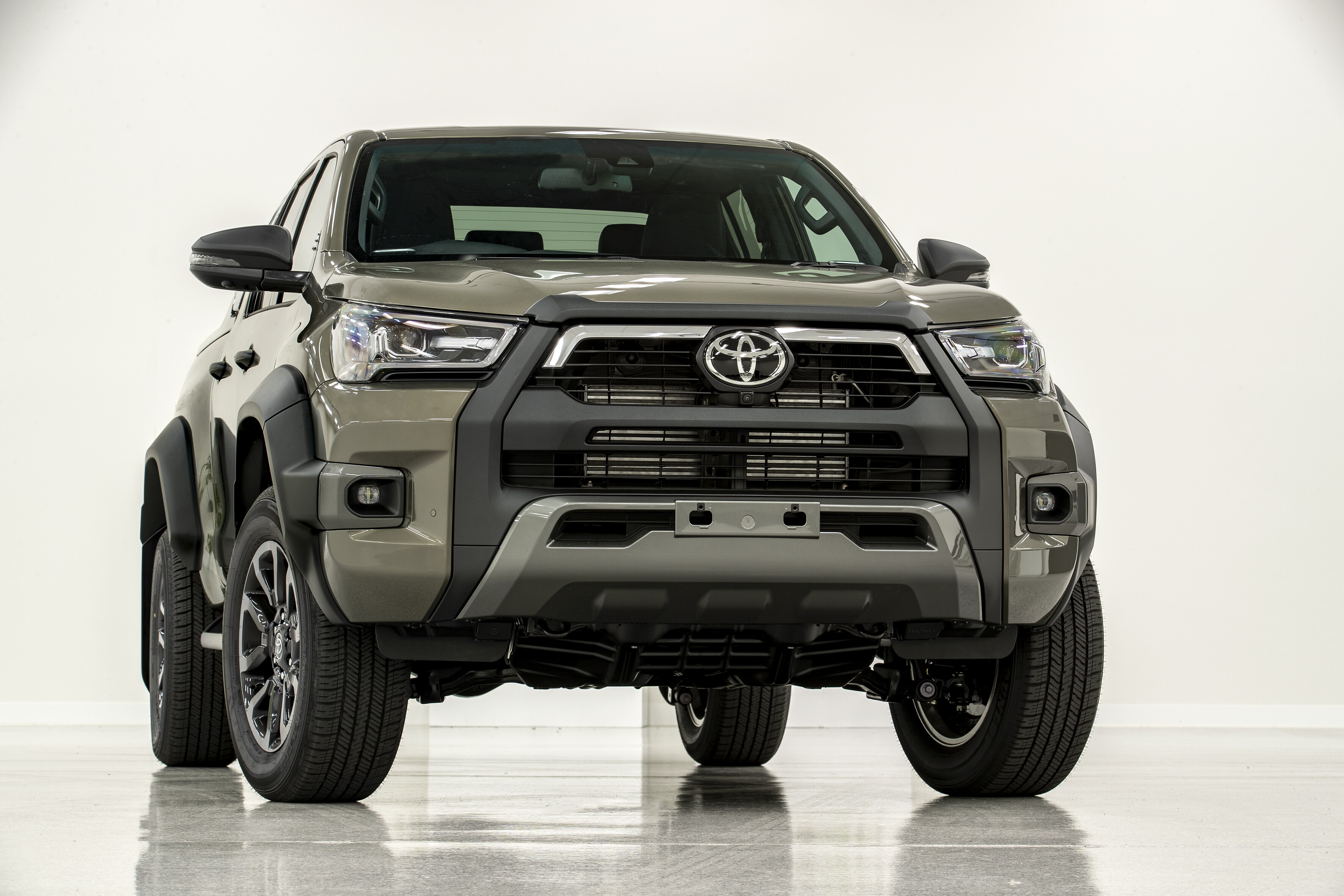
It is likely to be designed by Toyota Australia, with modifications made at its Melbourne Product Centre – as is the case for the current Rugged X and Rogue.
As part of the model-year 2023 upgrade, the HiLux Rogue gains a wider track, an updated suspension package, rear disc brakes, and styling enhancements.
These changes are expected to carry over to the Rugged X successor, whatever it may be called. (HiLux Apex does have a ring to it, though…)
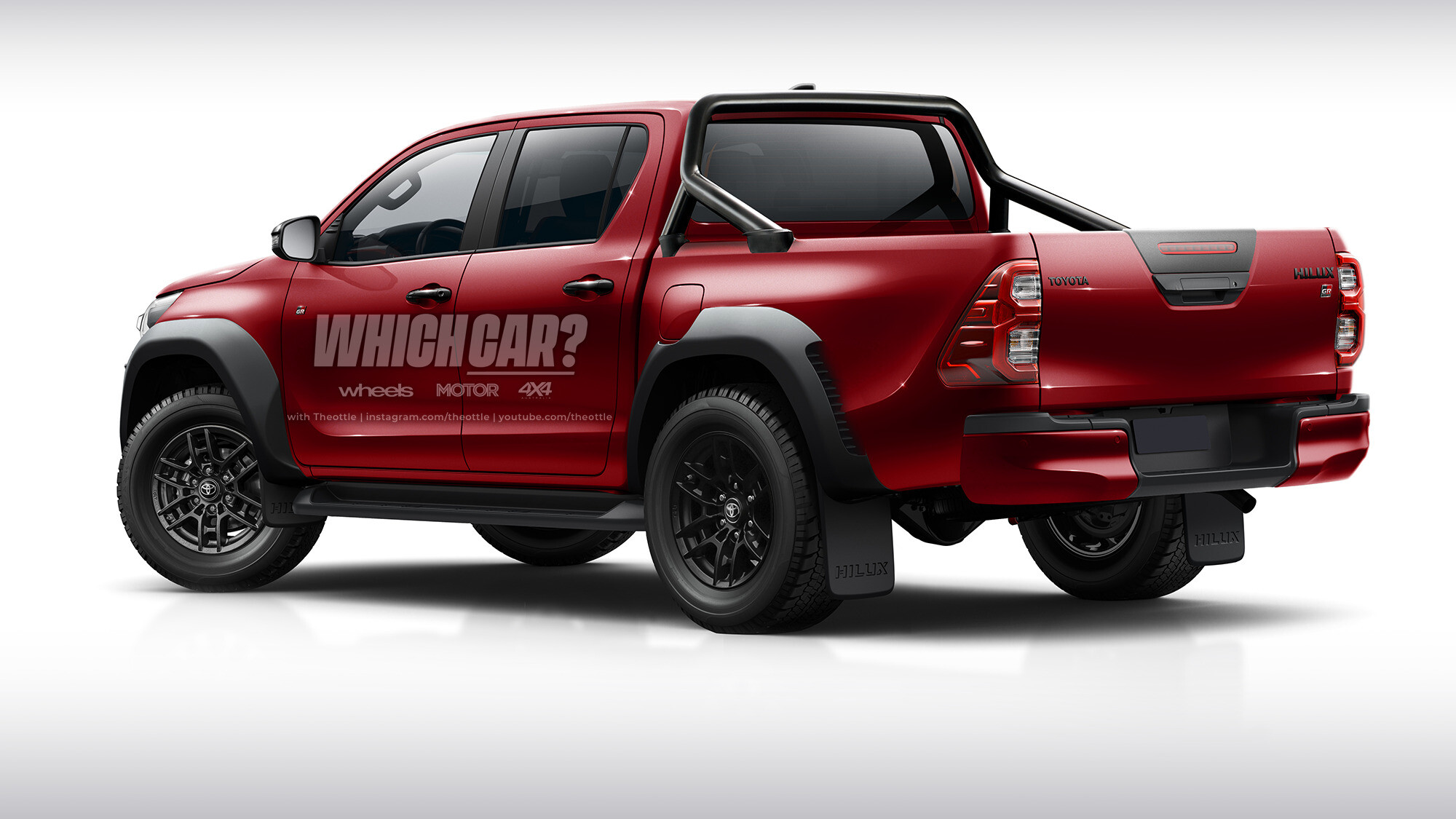
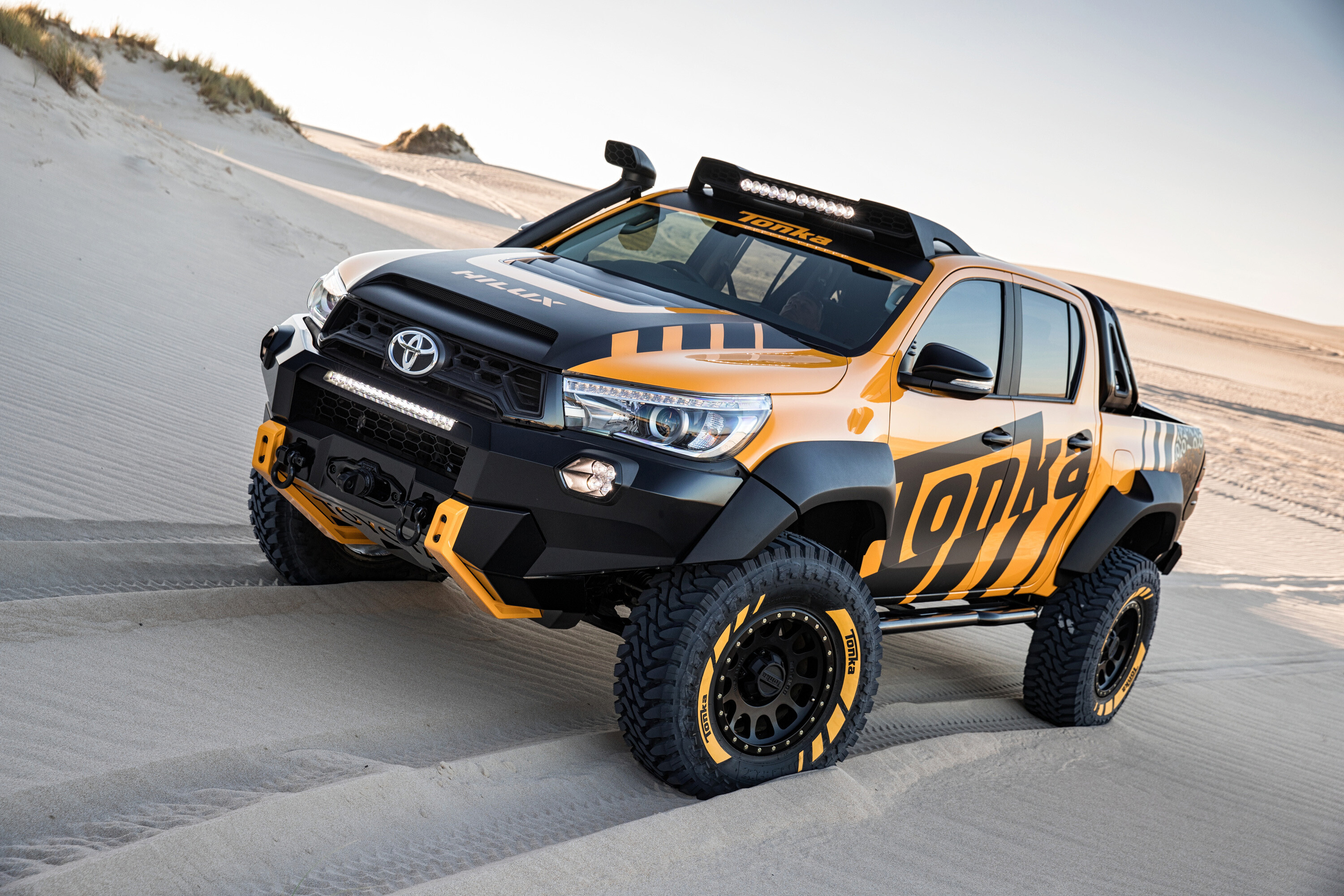
Although official details are thin, rendering artist Theottle has imagined the new off-road HiLux, taking inspiration from 2017’s Tonka concept and the current Rugged X, along with the HiLux GR Sport available overseas.
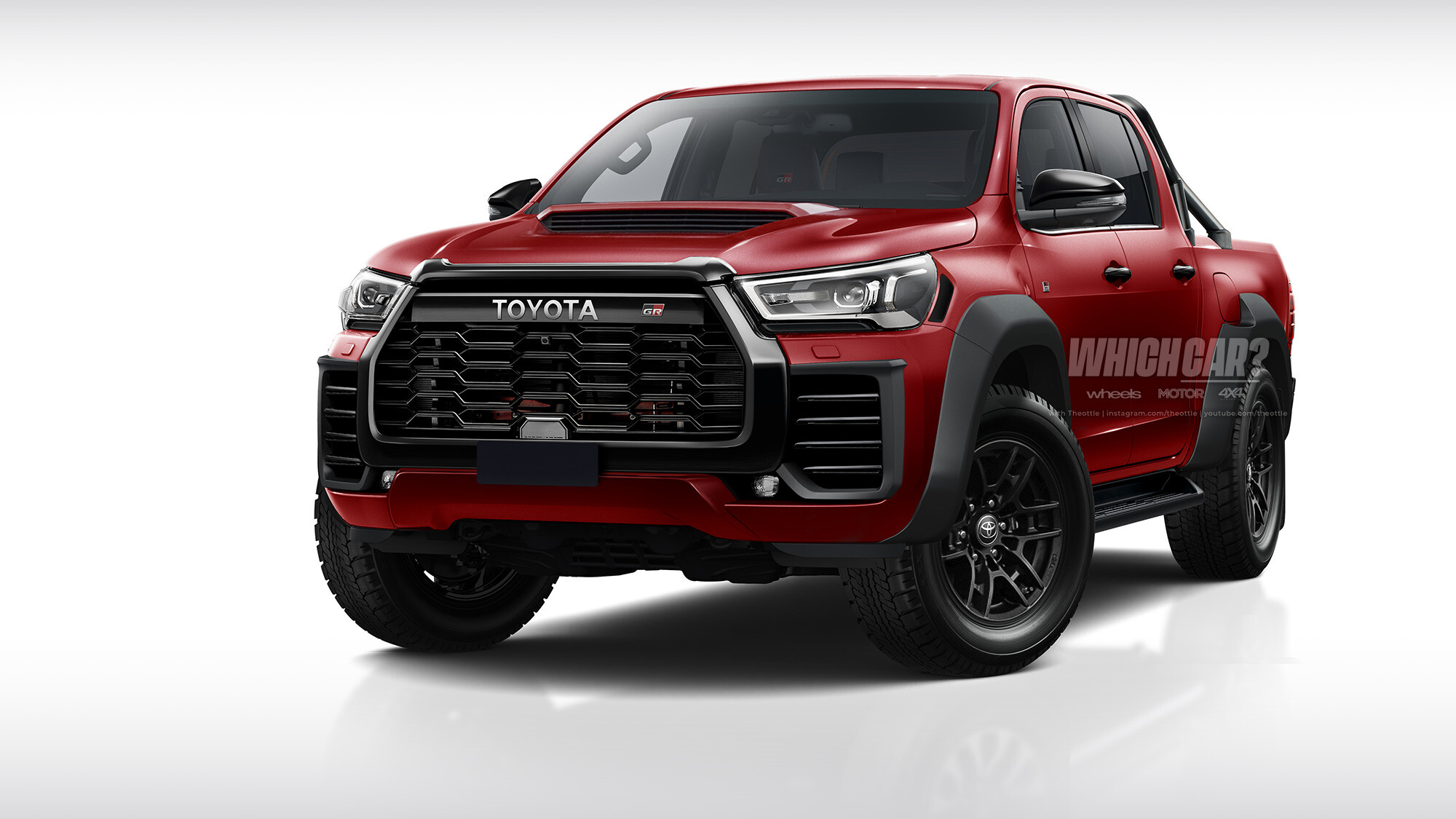
| It’s worth noting that while we’ve gone for a sporty GR look, Toyota’s “apex off-roader” might go with a more rugged steel front bar with winch readiness and underbody protection. |
While the new variant is unlikely to be quite as extreme, the HiLux Tonka concept – designed and developed locally – features a six-inch lift, 35-inch tyres, six-millimetre bash plating, and heavier-duty suspension.
One possibility is for Toyota Australia to take the HiLux GR Sport – available in four versions for Japan, Thailand, Europe and South Africa – as a base, with further off-road enhancements in Melbourne.
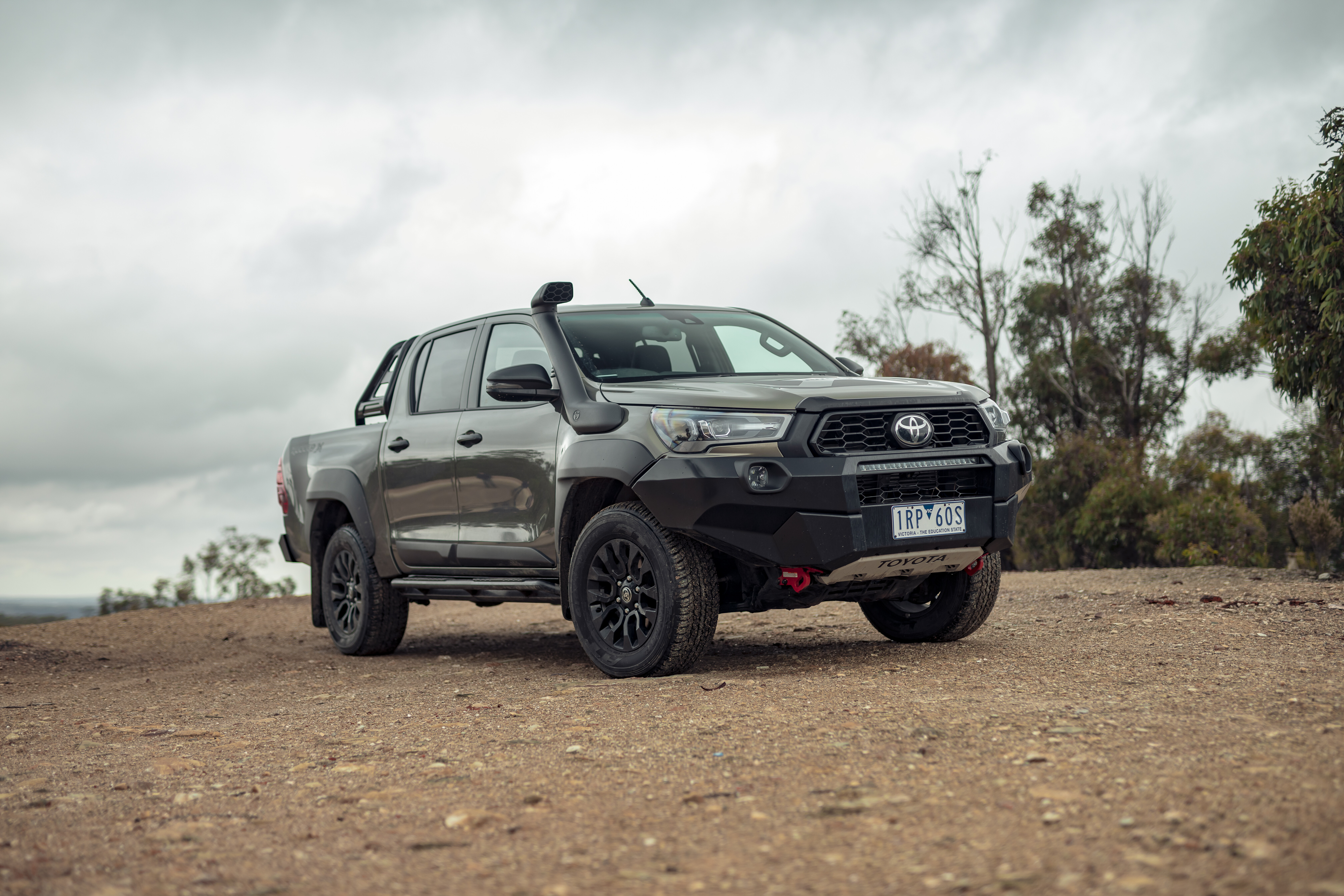
Existing modifications for the HiLux Rugged X include; a hoopless steel bull bar, bash plates, rock sliders, sports bars, heavy-duty recovery points, revised front springs, an LED light bar, and a snorkel.
The new apex variant will likely bring specialised off-road suspension, improved brakes, and possibly more power.
Don’t expect the 2.8-litre four-cylinder diesel engine to make way for a six-cylinder mill, though.
In South Africa, the HiLux GR Sport has 165kW of power and 550Nm of torque – up 15kW and 50Nm over the Australian-market HiLux.
This would rule out a more-powerful competitor to the Ford Ranger Raptor, which is designed for global markets, including the United States.
The new-generation Raptor features a 292kW/583Nm twin-turbocharged petrol V6 engine, a far cry from the 150kW and 500Nm outputs in the current HiLux.
Of the 17,000-plus pre-orders for the 2023 Ford Ranger launching this week, Ford Australia claims around 4000 are for the flagship Raptor set to begin arriving next month.
Toyota has sold more than 17,000 examples of the HiLux Rogue and Rugged X in Australia since launch in 2018, with both variants specific to Australia.
A stripped-back Rugged variant, based on the mid-spec SR, was also available until mid-2020, sporting a regular steel bull bar, standard tow kit, and a snorkel.
The brand is far from alone in selling locally-developed utes, with many competitors receiving a local touch to some extent.
For instance, the Ford Ranger and its new Volkswagen Amarok twin have substantial Australian influence, the Nissan Navara PRO-4X Warrior is re-engineered in Melbourne by Premcar, and Walkinshaw’s agreement with Volkswagen will continue for modified Amaroks.
Below: The current 2022 Toyota HiLux Rugged X
The name Coen got on the map early when Dutch navigator Jan Carstenszoon, the commodore of a Dutch expedition, named the Coen River in 1623.
He was in charge of two ships, the Pera and the Aernem, out of Batavia, Dutch East Indies. However, his ‘Coen River’ was south of Pera Head – between Thud Point and False Pera Head – north of the Archer River, which was named by Frank Jardine in 1865. The original Coen River is marked as Norman Creek on some maps.
The (South) Coen River was bestowed by latter-day explorers for reasons unknown. It came to light when a prospecting party of 15 men split in to three groups near the present township of Coen in September 1876.
One group, which included Robert Sefton, James Watson, John Russell, Sam Verge and a man called Goodenough, discovered gold on Lankelly Creek. They built a ‘fort’ as protection against the natives, but managed – between dodging the long spears – to take 60 ounces of gold to Cooktown in December. The men returned after the wet season and were back in Cooktown in December 1877, this time with 140 ounces.
It started a small rush, but the alluvial gold had petered out and the field was abandoned. Others persevered, and in 1887 the Wilson battery employed 40 men crushing ore from the surrounding ‘shows’. Other mines were also worked including the Great Northern, which in 1904 was labelled ‘the greatest mine in the State’. It was the mine that put Coen on the map as a township.
Mining towns have always had fluctuating fortunes and resultant populations, and Coen perhaps more than others. Several mines were about the town and farther afield on the Stewart River in the south and the Wenlock River to the north.
The arrival of the Overland Telegraph Line in 1884 placed Coen on the map as a telegraph station, while spasmodic gold-finds kept people searching – even today’s modern prospectors armed with metal detectors still find Coen gold.
Cattlemen with herds also arrived and Rokeby Station and others were founded. The influx of whites displaced the natives, some who found work at the mines and the stations. While much of their traditional lands have been returned, some 80 per cent of Coen’s population is indigenous who prefer to live in town.
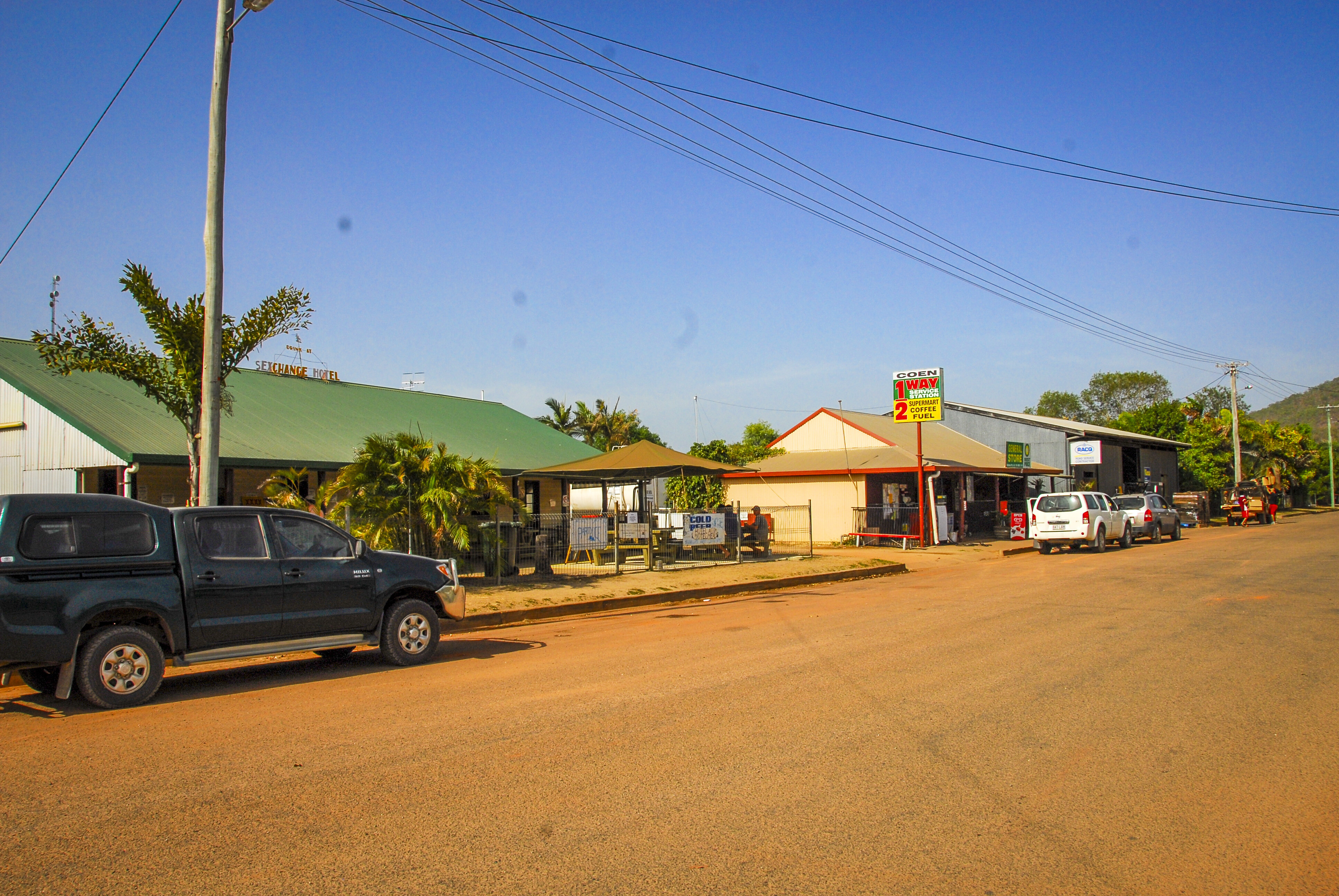
Coen has a police station; medical centre/hospital; two general stores that also sell fuel; RACQ garage; B&B; post office with CBA agency; EFTPOS facilities; internet service; hotel; a café; town and bush camping areas; national park office; airport; and the Information & Inspection Centre 28km north of the town.
Coen’s history and other memorabilia can be seen at the Cape York Heritage House – the former telegraph station – while interesting old mining equipment is stored next to the police station.
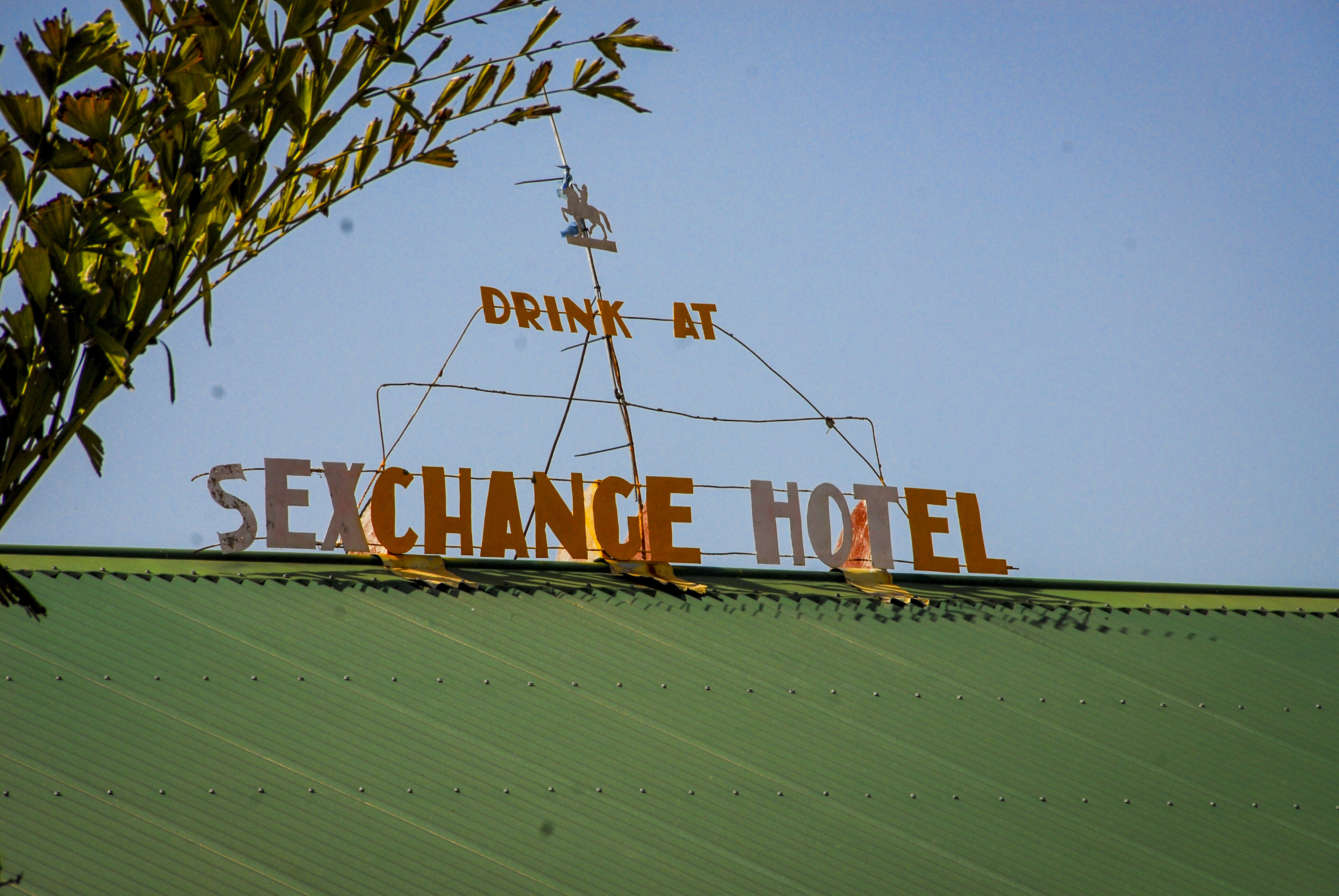
An essential stop in town includes having a drink at the (S)Exchange Hotel, which had the letter S added by a graffiti artist sometime back and is now widely known as such. Other highlights include self-guided walk, drive and cycle tracks; historic buildings; mine ruins; the local bird-rich dam; and the rest area site, which makes a stopover interesting.
You can also swim and camp 3km out of town at The Bend. The town is surrounded by high hills that provide a nice backdrop when compared to the monsoon woodlands of the Peninsula Developmental Road.
The name Coen may soon vanish from the maps as there is a move to have the town renamed to an Indigenous name, Moomba. The same is happening to other pioneering names as the whole of the Cape is being returned to its traditional owners, either by land rights claims or through direct purchase by the Queensland Government and gifted to them. Some 360 people live in Coen.
Port Stewart
The 63km Port Stewart turnoff is 28km south of Coen (or 80km north of Musgrave) on the PDR. It’s a scenic drive across the McIlwraith Range. The once very steep decline in to the Princess Charlotte Bay lowlands (24km from the PDR) has been tamed and a new and much safer road decline was completed in December 2009.
En route is the turnoff (20km) to Aboriginal-owned Silver Plains Station. The station has camping sites on the Massey River, a boat ramp and good fishing. Some boar hunting with a local guide is possible when available.
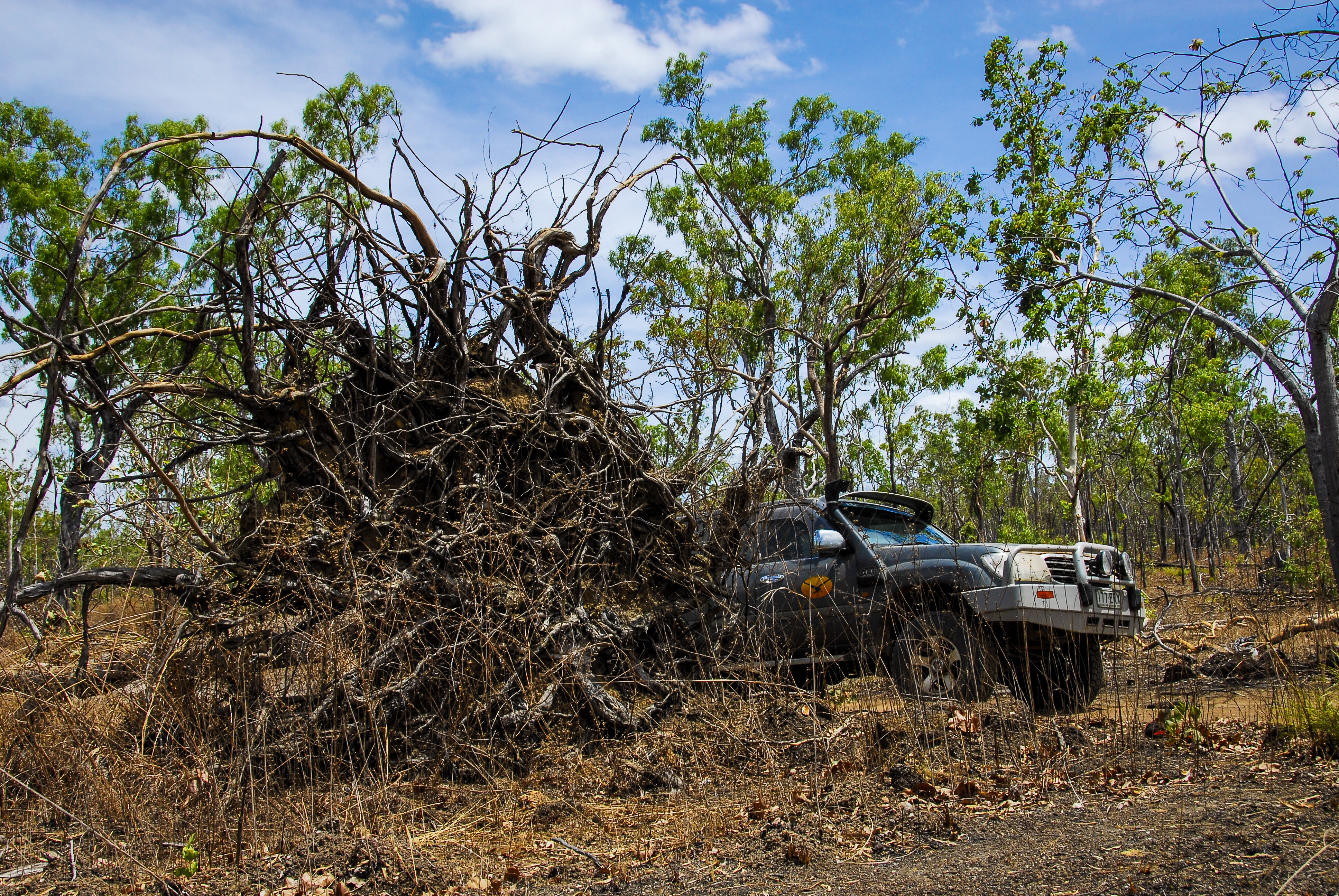
Be aware that things can change daily with access on Indigenous lands, and permissions can get cancelled at the whims of an elder, or death in a family.
Port Stewart, once the supply centre for its hinterland, only attracts anglers these days who take advantage of the fishing and mud crabbing in the Stewart River estuary and the Yellow Zone (recreational fishing only) strip that borders the coastline.
There are camping sites and boats for hire from one of the rural properties nearby. There is no freshwater available.
Oyala Thumotang National Park
Rokeby Station and Archer Bend Stations were settled in the 1880s and purchased by the Queensland Government for National Park purposes in 1977 and 1981 respectively.
They were amalgamated in 1994 under the names of the two Aboriginal tribes for the country – Mungkan on the western side and Kaanju to the east, and the park named Mungkan Kandju. However, the whims of traditional owners are ever changing, and the park is now called Oyala Thumotang. It is jointly managed by the traditional owners and the Queensland National Park Service.
The park headquarters is on the northern end of Coen – opposite the Telstra tower that lords over all. You can get dated details from the helpful staff if you plan to visit the peninsula’s fourth largest park, which at 4570km² is one of the least visited parks in Queensland. The eastern section of the park is part of the Kulla (McIlwraith) Range, and Mount Kroll at 488m dominates the range. The Coen River and several creeks rise in the range and run in the Archer River farther west.
Verdant monsoon rainforests cover the cool, moist heights of the McIlwraith Range to the east. Watercourses rising from the heights have fringing gallery rainforests that are important wildlife corridors, allowing animals to move in to the drier western regions. The scenic and biological values of these narrow stream lanes are of great interest, especially during fruiting season when myriad birds bring the rivers to life.
The eastern section of the park has many 4WD-only tracks that end at waterholes and old mines, while the main western entrance is about two kilometres north of the Information & Inspection Station. It’s a pretty drive through low woodland and scrub before crossing the Geikie Range, where sweeping vistas extend to the Coen River valley.
Oyala Thumotang National Park is arguably the best wilderness escape on the Peninsula
About two kilometres before the junction of Merapah and Rokeby is a turnoff that ends at the 10-Mile Junction on the Archer River and farther downstream at Old Archer Crossing. The park is well-signposted and there’s no chance of getting lost.
There are several billabongs en route, called lagoons on the peninsula – misnamed according to the dictionary, as a lagoon is a tidal-influenced body of saltwater, while a billabong is Australian slang for an oxbow lake which is filled by the overflow or by flooding of a freshwater stream. Along the track are Night Paddock, Langi, Bob’s and Twin Lagoons. The track runs through relatively flat monsoon woodlands and scrub.
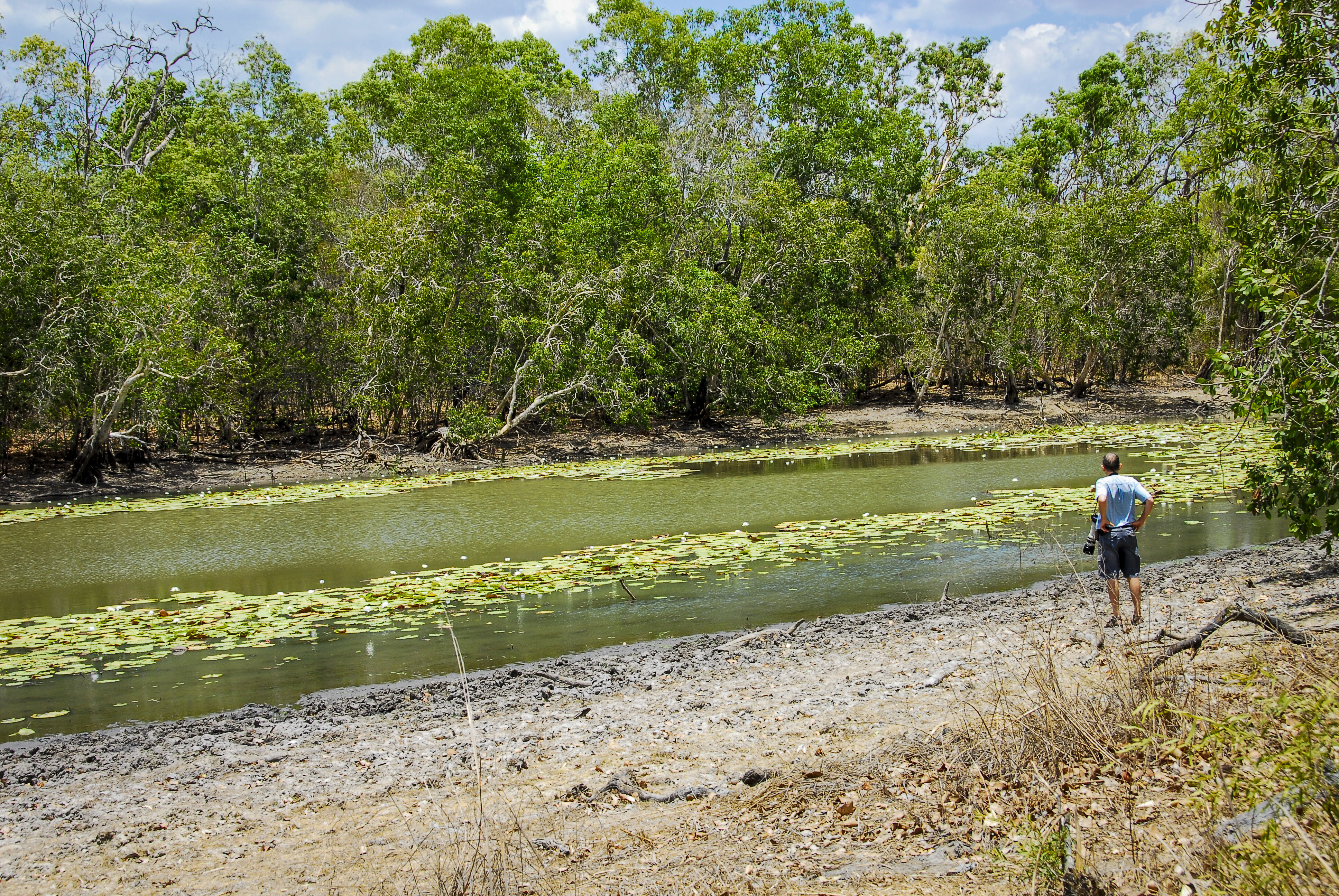
The country is predominantly dry, open monsoon woodland with seasonal wet melaleuca swamps and perennial billabongs scattered about in low areas. The shallow swamps are truly magical just after the wet season, when their surface is alight with colourful water lilies, interspersed by the bright red blooms of the freshwater mangrove.
Both 10-Mile Junction and Old Archer Crossing are great destinations, where you can camp under shady verdant monsoon gallery rainforest that fringes the river on both sides. It’s a haven for birds, where the morning chorus of myriad bird voices is like nowhere else.
Endemic birds like palm cockatoos, eclectus and red-cheeked parrots, Marshall’s fig parrots, magnificent riflebirds, trumpet manucode and others may be seen and heard along the beautiful river during the fruiting season from September. The billabongs are alive with waterfowl – ducks and geese, darters, cormorants, herons, egrets and jabirus – while woodland birds – honeyeaters, finches, doves, and pigeons – abound about the waterholes.
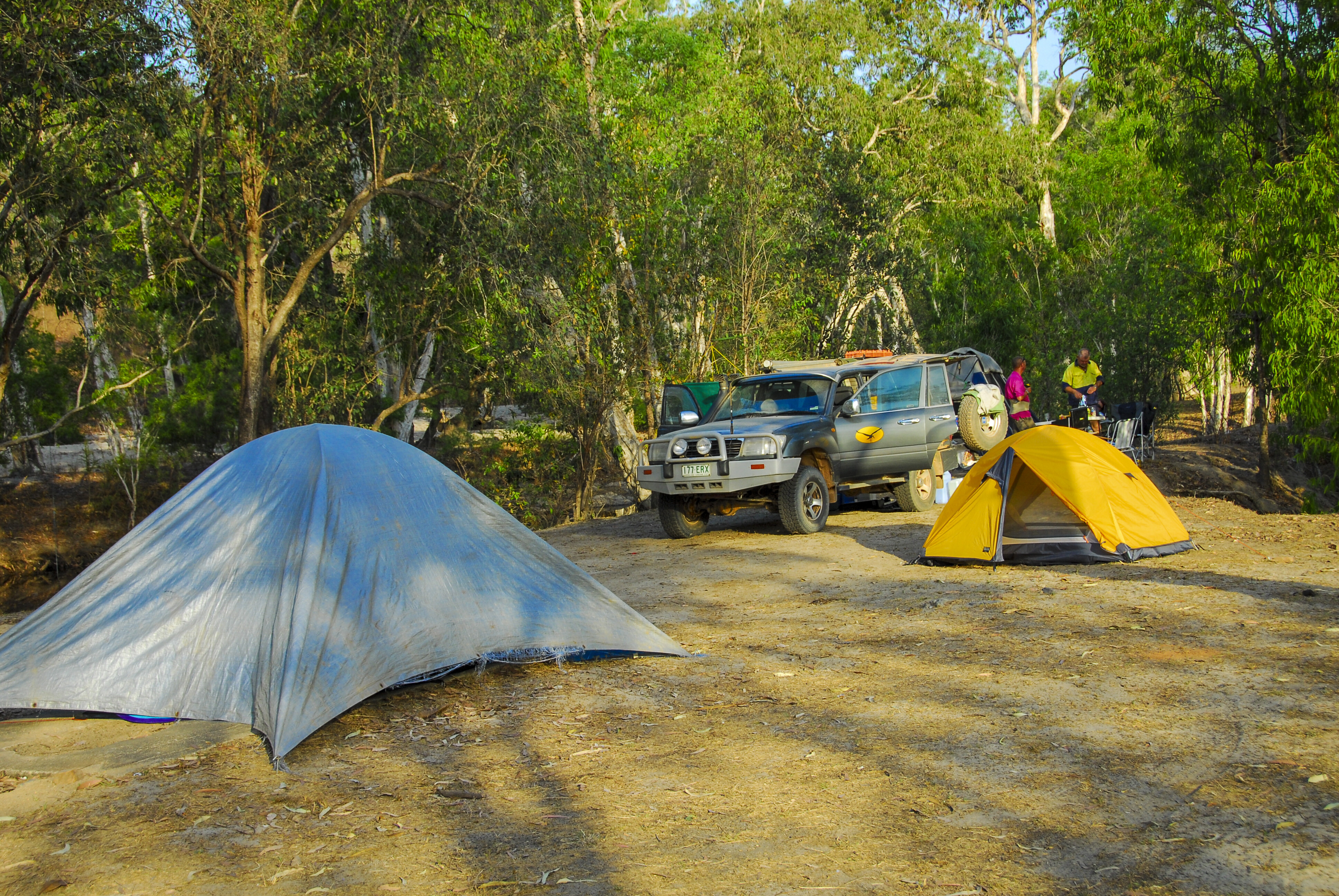
There are no organised campgrounds in the park – just find your own spot on one of the billabongs or along the river. There are also absolutely no facilities, so if you ever wanted to bush camp on your own on the Peninsula, this park has so far gone unnoticed by the annual invasion of dry-season visitors.
The fishing is excellent for sooty grunter and saratoga, while the big wet-season floods restock barramundi – and saltwater crocodiles – in to the park’s permanent billabongs and pools. Of course, if you are an angler you already know the best fishing is after the wet season when the park first opens.
Western sector
Follow the main Merapah Road, across the bottom end of the Rokeby airstrip, and take the marked turnoff to Vardon’s and Archer Bend camping areas. The route takes you in to the western segment of the park, which is separated by a grazing lease and stock route. The track ends on the banks of the verdant Archer River where two large permanent pools, Horsetailer and Governors Waterholes, have good fishing and bush camping.
En route are several sidetracks that end at swamps, billabongs and some Coen River waterholes. The Coen River has a better flow than the Archer, and there are many permanent pools that never dry. In line with the Archer, there is much gallery rainforest, though it is not as verdant.
The fishing for barramundi, saratoga, sooty grunter, cat and archer fish is excellent, and if you have a fishing rod you won’t get hungry here. Chong Swamp and Vardon’s Lagoon are swamp wetlands alive with birds, while other marked tracks end up at deep pools in the river and creeks. Both dry.
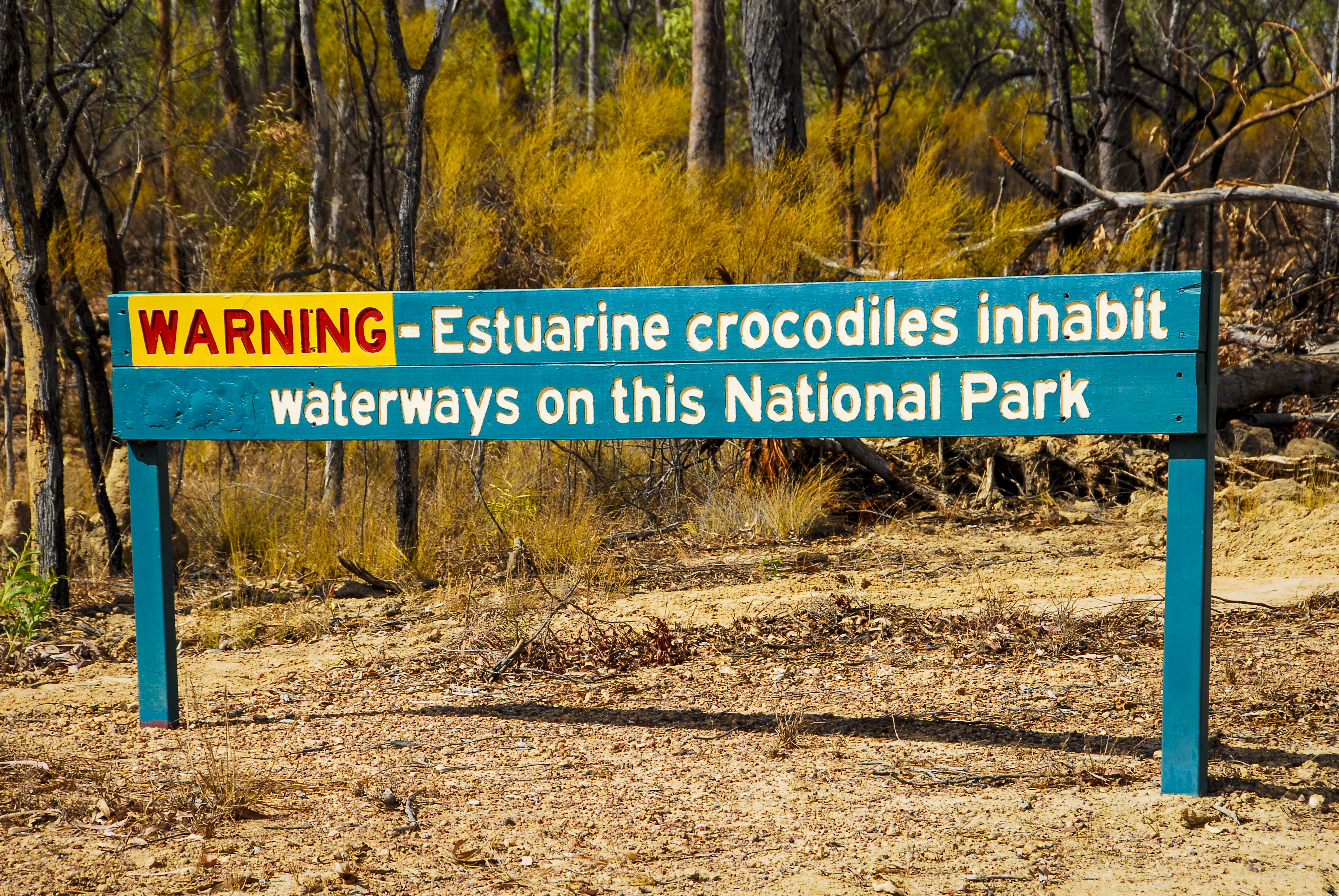
Most of the billabongs and the lower Archer River pools are suitable for tinnies, and the Coen can be fished from the banks as it is not very wide. Avoid using canoes and kayaks in the crocodile-infested Australian tropics, especially anywhere on the peninsula. A canoeist was killed by a five-metre crocodile in Rinyirru National Park some years ago. The park has a good population of both fresh and saltwater crocodiles, with the latter as much at home in freshwater as it is in salt.
If you want to avoid noisy crowds that plague most Peninsula camping grounds, then Oyala Thumotang National Park is arguably the best wilderness escape on the Peninsula. It may not be scenic or pretty, but as a pure wilderness getaway it’s a place where you can sit and look up at the stars, wake up to the dawn chorus of birds, or fish in tranquil waters where only the flapping of vociferous waterfowl disturbs.
The park is an essential stopover on any Cape York discovery trip, if you want to experience the wilderness or just need another reason to return to the Peninsula.
Top 5 things to see and do
01: Coen Information and Inspection Centre
Australia is free from many world-wide diseases, and with the tip of the Cape only a short boat ride to New Guinea some pests have arrived from there and become established. So, you can take fruit north, but you must dump it in bins at the quarantine station, 21km north of Coen, when returning south. While you don’t have to stop on the way north, do visit the Information Centre that is part of the complex and get a free Cape York Information Kit.
02: Bird-watching
Immerse yourself in an avian wonderland. Endemic birds include palm cockatoos, eclectus and red-cheeked parrots, Marshall’s fig parrots, magnificent riflebirds, trumpet manucode and others. The billabongs are alive with water ducks, geese, darters, cormorants, herons, egrets and jabirus; while in the woodlands are honeyeaters, finches, doves, pigeons and more.
03: Coen capers
Have a drink at the (S)Exchange Hotel, the letter S added by a graffiti artist sometime back. For getting around town try the self-guided walk, drive and cycle tracks; visit historic buildings, mine ruins, the local bird-rich dam, and the rest area site. You can swim and camp three kilometres out of town at The Bend.
04: Fish and boar
Like the Top End and Kimberley, Cape York rates as a top tropical fishing destination. Target species include barra, sooty grunter, saratoga, and mud crabs. Aboriginal-owned Silver Plains Station has campsites on the Massey River, a boat ramp and good fishing, while some boar hunting with a local guide is possible when available. Most of the billabongs and the lower Archer River pools are suitable for tinnies, while the Coen can be fished from the banks.
05: Ultimate getaway
Oyala Thumotang National Park at 4570km² is Cape York’s fourth largest NP, but the least visited. The eastern section includes the Kulla (McIlwraith) Range and 488m Mount Kroll, the Coen River and several creeks rise in the range that run in to the Archer River farther west. The park is well-worth the visit, particularly if you want to escape the maddening crowds found elsewhere.
Travel planner
Oyala Thumotang National Park Phone: (07) 4060 1137 Web: parks.des.qld.gov.au/parks/oyala-thumotang/camping
ACCOMMODATION
- Exchange Hotel (units and budget rooms) Phone: (07) 4060 1133
- Homestead Guesthouse (B&B) Phone: (07) 4060 1157
- Armbrust General Store (units and small campground in town) Phone: (07) 4060 1134
- The Bend Campground (2km north of town): Toilets only, free camping.
- Charlie’s Goldmine Campground (when operating): Past the refuse dump road.
- Silver Plains (check if operational): Call in and pay camp fees at homestead.
- Port Stewart (free campground): Located near the boat ramp.
For the past few months, Viv and I have been wandering the states of the contiguous USA.
In the process, we’ve been to the last few states we hadn’t visited before and have now travelled through and camped in 49 states of the United States – that is the ‘lower 48’ and Alaska, which sits on its own in the vastness of the very north-west of the North American continent.
As I write this we are back in ‘The West’, which is an area we love. Currently, we are in the Badlands National Park in South Dakota and there’s a small herd of bison (American buffalo) just outside the door. If there is a symbol of a wild America, then surely a bison amongst the buttes and spires of the Badlands would have to be it?
We started our latest American journey seven weeks ago, heading east out of LA and picking up our Dodge Ram 2500 and Four Wheel Camper in Arizona before pushing on to New Mexico, Texas and then Florida. As we headed up the east coast of America, trying to miss most of the crowded cities along the way, we took the opportunity to check out the Cape Hatteras National Seashore.
Here on a chain of sand islands off the North Carolina coast, amongst other historic events, the Wright Brothers became the first to take off and fly an engine-powered aircraft in December 1903.
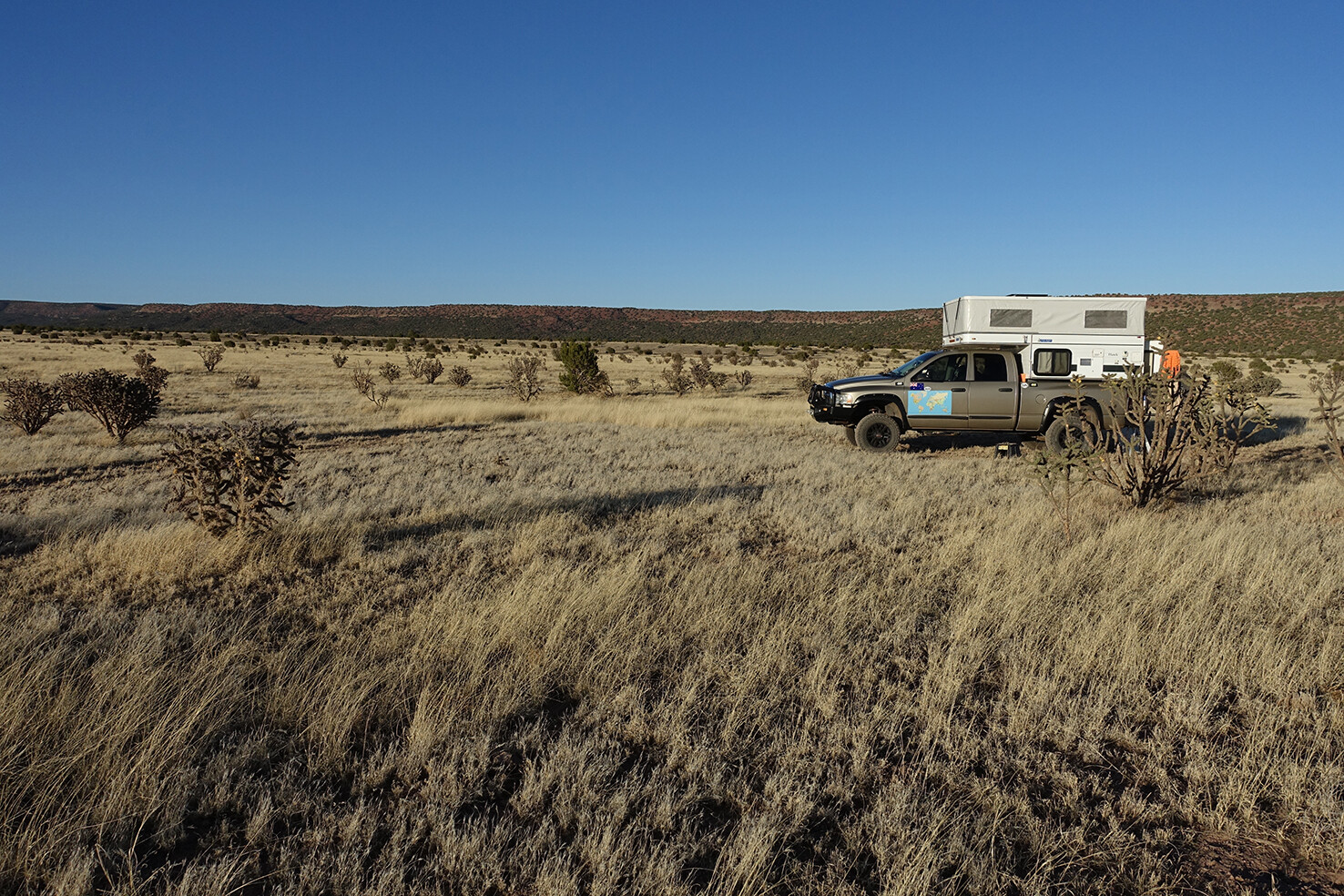
Those first flights were only a maximum of 500 metres or less, and the advancement since then was all the more stark as we had visited the Kennedy Space Centre a few days previously and watched one of Elon Musk’s SpaceX rockets launch and carry one of his satellites high in to orbit. What a difference a mere 120 years make!
Leaving the east coast behind, we headed for St Louis on the west bank of the mighty Mississippi River. Back in the 1800s, this city was where thousands of immigrants started to follow their dreams westward along such iconic routes as the Santa Fe, Mormon, California and Oregon Trails.
We followed their routes, but with none of the hardships or dramas. The biggest complications we faced were what back road to take and what state park or national forest to head for, so we could have a good camp for the night.
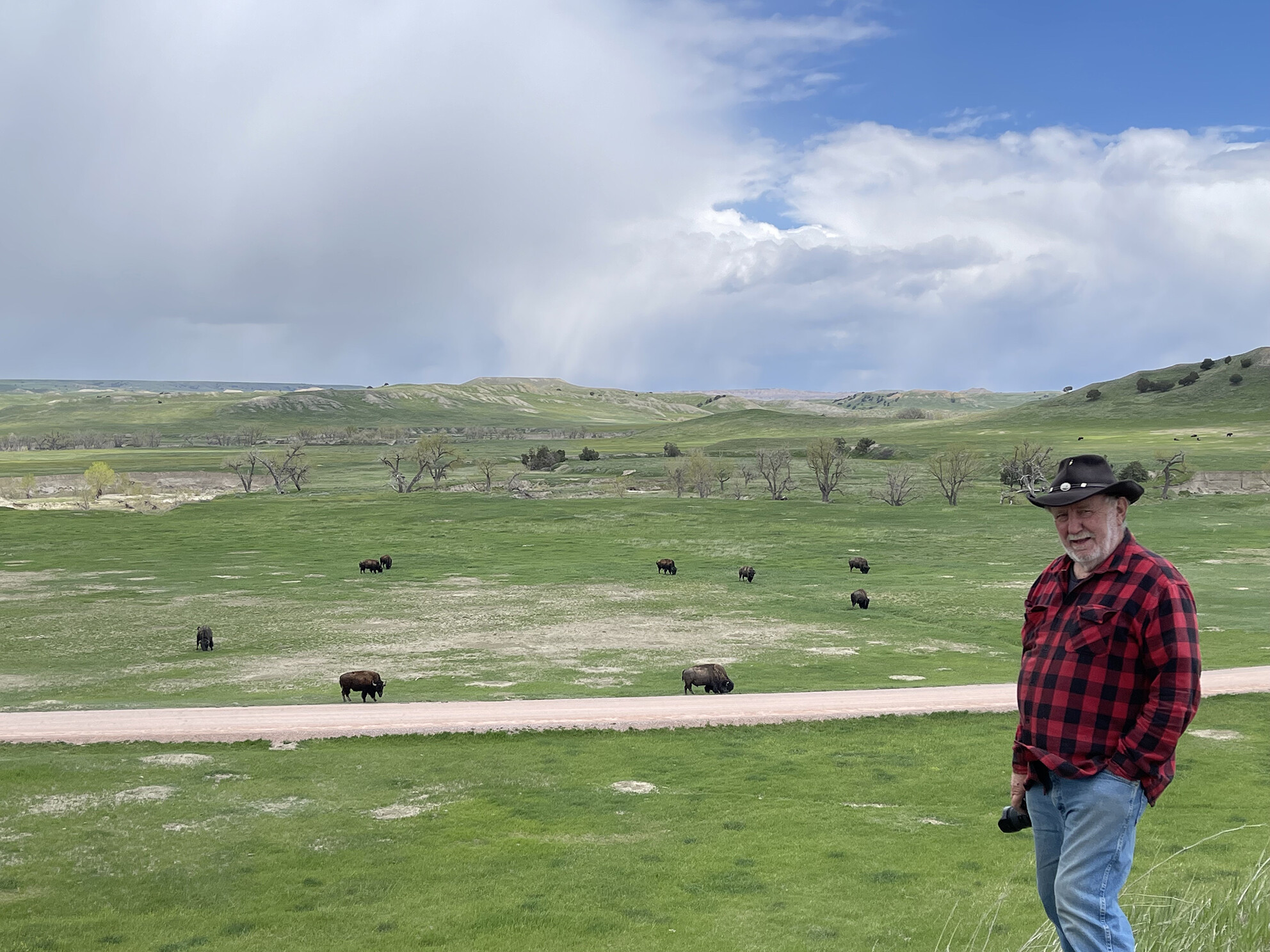
Over the next few weeks, we’ll head for northern California before heading down through fabulous Utah and Colorado back to Arizona, where we’ll put the rig in storage for another year.
Back in Australia after a long-haul flight over the Pacific, I’ll be picking up the Patrol from Outback 4WD in Bayswater, Victoria – where it’s been having a holiday while we’ve been away – and heading bush.
The first trip, just two weeks after arriving home, will be to help my son out on one of his tours (www.moontours.com.au) and head westward to Ceduna and then north through the desert country to hit the far north-west coast at Cape Keraudren. Hopefully the weather will be kind to us and the rain will stay away, and we’ll actually get to do the route we have planned to do.
Our travels in Australia are vastly different to what we do in the Americas, but the differences are part of the attraction and we couldn’t ask for anything better than spending time being lost in the States and following that up with time spent wandering our Outback.
If you ever get the chance, take the opportunity and savour the difference!
When we started planning the build of our Isuzu MU-X LS-M, we wanted something a bit different for the front end when compared to what we put on our most recent build – the Isuzu D-MAX.
While the D-MAX wore a full-size bullbar and winch package from Ironman 4×4, we knew we needed to watch the weight on the MU-X to keep it within GVM; so we went looking for a metal replacement front bumper, not a bullbar.
Enter the guys from Offroad Animal; a Melbourne company that designs and engineers its 4×4 accessories at its Mornington Peninsula facility and then has the finished products manufactured overseas. We’ve known these guys for years, always liked what they do and were only too happy to fit one of its Predator bumpers to our MU-X.
Why replace a bumper with something that doesn’t offer the protection of a bullbar? As I said, weight was an issue here, but replacing the standard plastic bumper with a metal one not only gives you a stronger bumper bar, but clever design also improves the approach angle of the Isuzu with the new bumper.
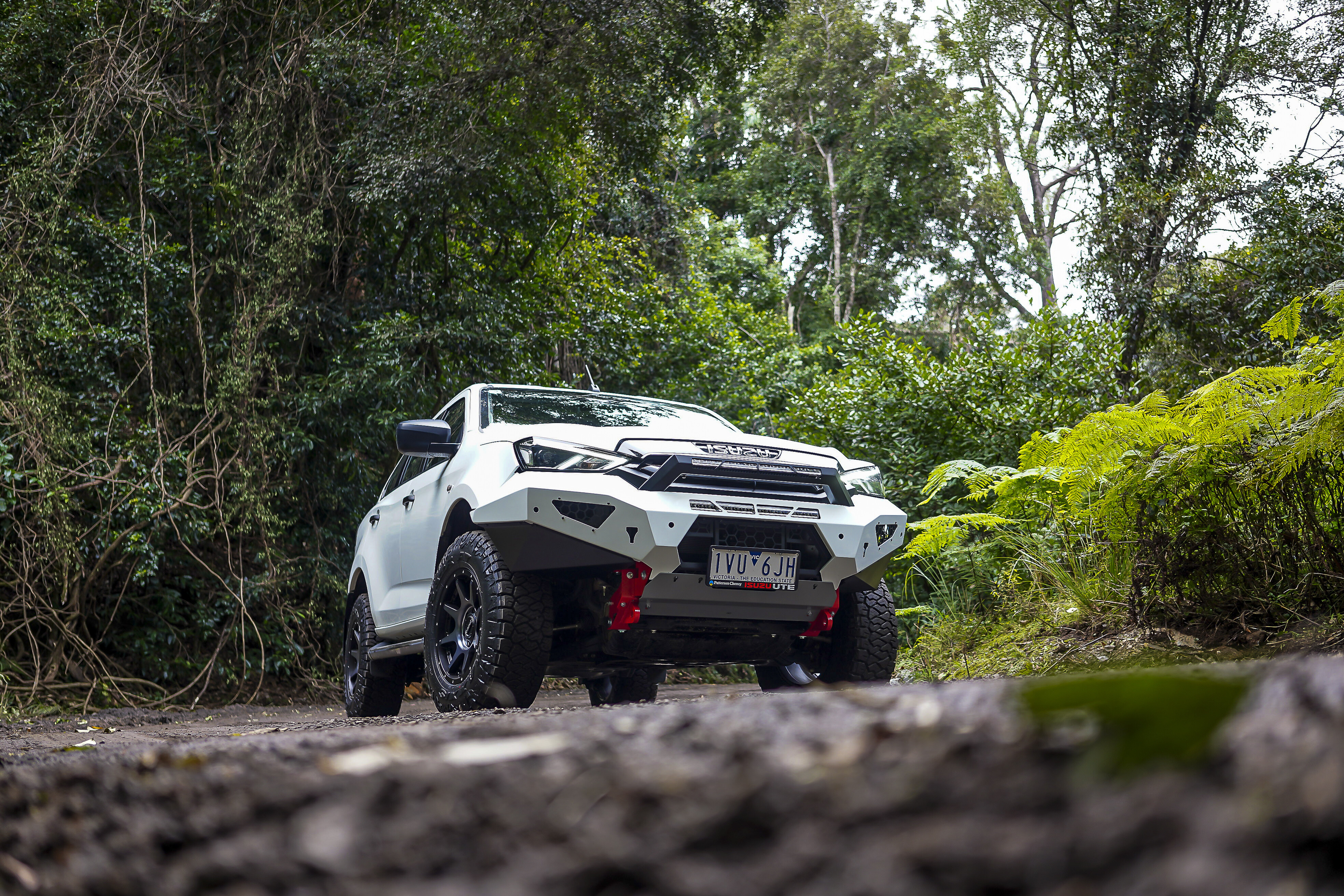
The Predator bar has mounting holes for auxiliary lighting and aerials when required, and it is also made to mount a 12-volt winch and most low-mount winch units will fit inside the bar.
The kit for the Predator bar even comes with a flip-up number plate mount to make access to any winch easier when using it.
The Predator bar is a welded steel one-piece unit which, in our opinion, is better than some of the screwed-together three-piece designs you see from other manufacturers due to the simplicity and strength of being a single unit.
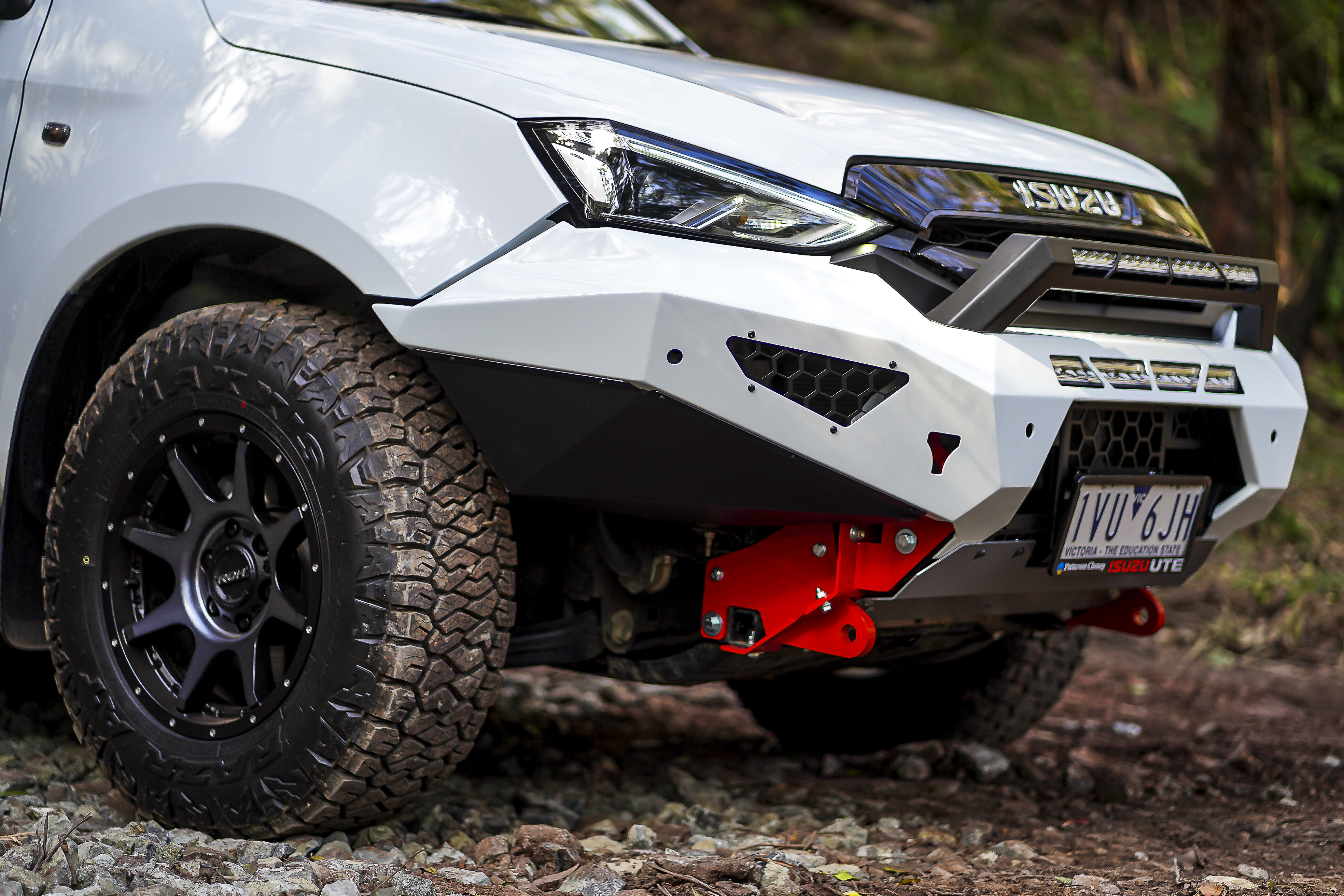
Other features of note with the Offroad Animal bar include the standard recovery points machined from 20mm-thick steel plate, slots in the bar to accept a high-lift jack, and provisions to mount the OE fog lights if your car has them as standard. Our MU-X, being an LS-M, did not. Same story with the front parking sensors; the new bumper has provisions for them but our car didn’t come with them.
The Predator bar is available with or without the top ‘Stealth hoop’ and has provisions for a pair of 22-inch LED light bars – one in the hoop and one inside the main channel of the bar. In standard form, the bars are powder-coated black after being zinc-plated for protection against corrosion.
Of course, the Predator bumper is compliant with all ADR standards and compatible with the Isuzu’s airbags and safety systems.
We chose to get ours with the top hoop and got a pair of 22-inch Explora light bars from Narva to go inside the bar before it was fitted. These will complement a bigger lighting package from Narva to come later in the build, so stay tuned for some exciting new products to come there.
We also had the main section of the bar colour-matched to the car but kept the top hoop black, where it sits in front of the LS-M’s black radiator grille. Not wanting any chrome on our vehicle, the black grille was one bonus when choosing the base model of the MU-X range.
When it came time to install the bar, we called on our mates at Ontrack Automotive at Ferntree Gully in Melbourne’s south-east. Phil and the team at Ontrack did plenty of work on the Ford Ranger we built a few years back, and going back further the Hilux we put together and gave away. So we were only too happy to entrust the MU-X to the guys there. It’s great to see a workshop that is run by a four-wheel driver, and with a small team that knows the needs of other 4WD enthusiasts and the best way to deliver it.
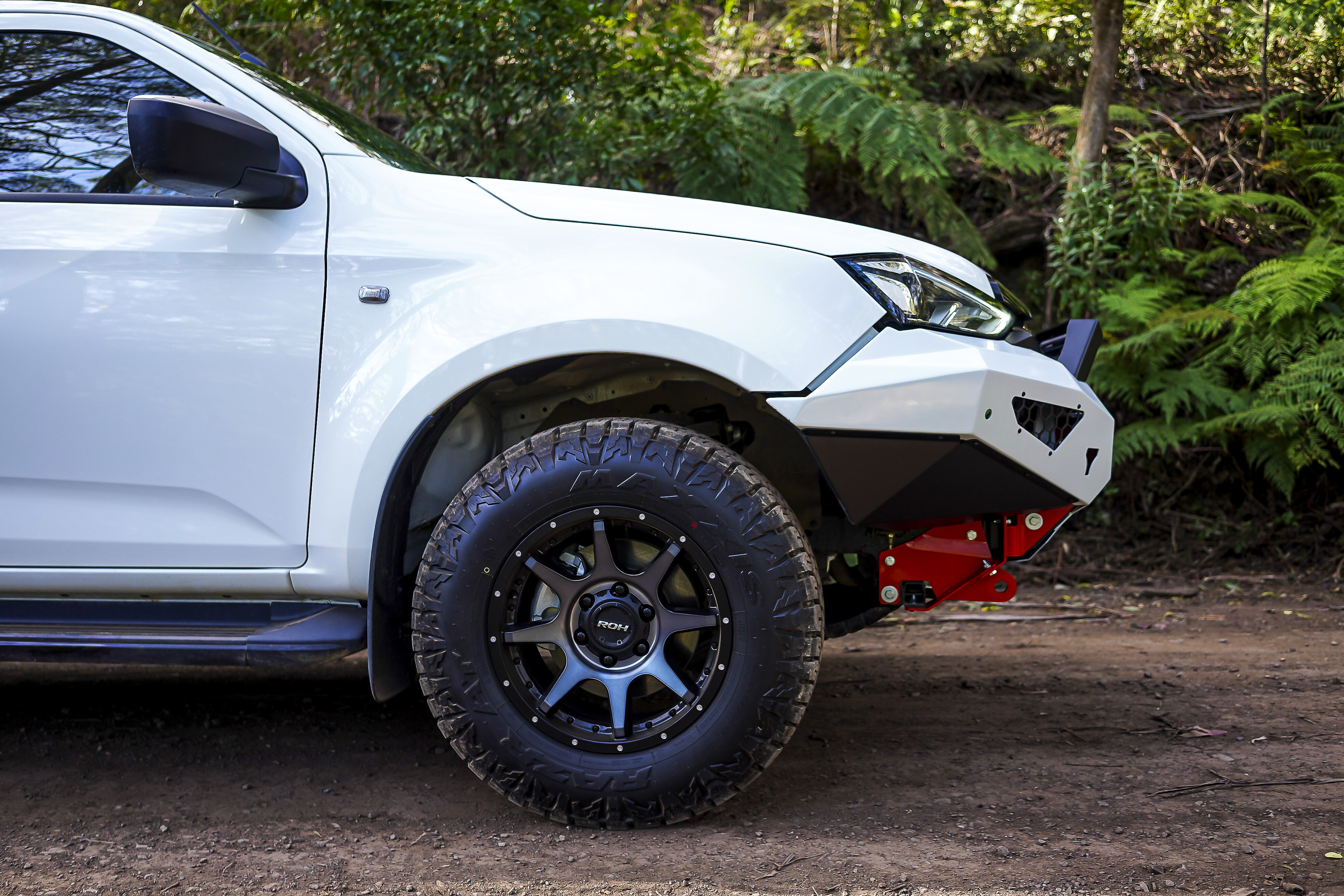
The guys said that fitting the Predator bar was a pretty straightforward job which took them around half a day to do, including fitting and wiring up the Narva light bars. The Predator bar is a full bumper replacement unit, so there’s no cutting and trimming the OE plastic bumper and reusing it. The bumper kit also includes upper and lower underbody protection that sit directly below the front of the bar.
Overall, we reckon the Offroad Animal Predator bar looks tough on the front of the MU-X. It’s aggressive without being over the top and blends in nicely with the colour-coding. More than anything, the Predator bar has the features we want in a replacement bumper that will improve the off-road performance of the MU-X, thanks to the improvement in approach angle. It also allows us to install more accessories if and when we choose to.
This is the first part of the MU-X build and we reckon it’s really going to come together well with the next installations.
Available from
W: www.offroadanimal.com.au W: www.ontrack4x4.com.au W: www.narva.com.au
Pricing
- Offroad Animal Predator bar: $2950 (plus colour-matching, Stealth Hoop, and fitting)
- Narva Explora 22-inch single-row light bar: $299 each
- Narva LED light wiring harness: $79