
UPDATE: Ford Ranger Raptor racer details further ahead of Baja 1000 debut
Ford has handed down more details on its Baja-bound Ranger Raptor racer. Get all the details at the link below.
Story continues
Snapshot
- Modified Raptor will take on Baja 1000 race
- Ford teamed up with Kelly Racing in local development
- Running as a testbed for Shellu2019s biofuel
After last week’s teaser, Ford has announced it will be competing in the SCORE Baja 1000 desert race with a modified new-gen Ranger Raptor ute running on Shell biofuel.
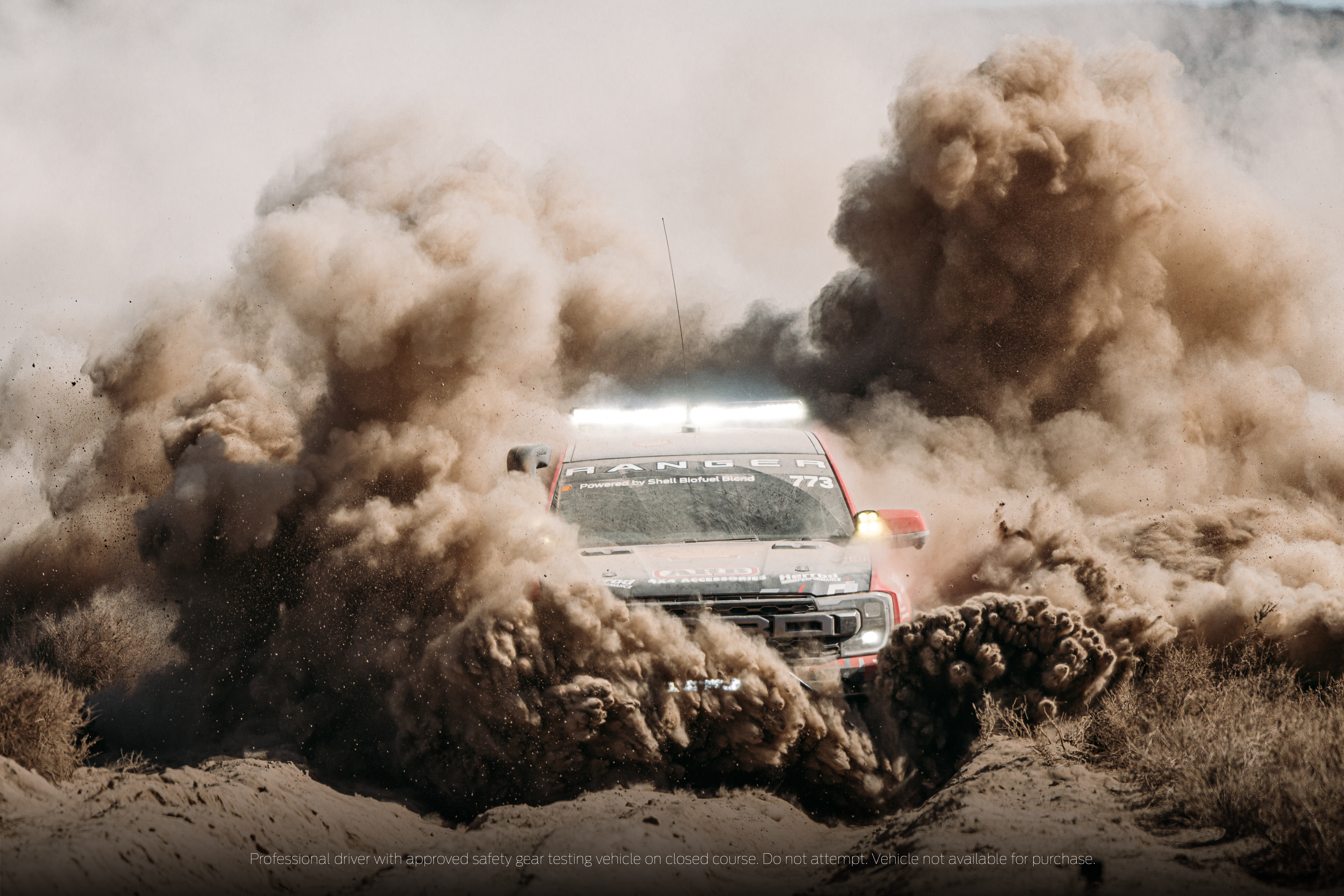
The Ranger Raptor in question – wearing familiar ARB and Herrod stickers – was built and developed in Australia by Kelly Racing, before heading for final evaluation in the US with Lovell Racing ahead of the November 18 race start.
The Baja Event in California is a point-to-point off-road race known as one of the toughest in the world – the perfect place to show off new a new vehicle in extreme conditions.
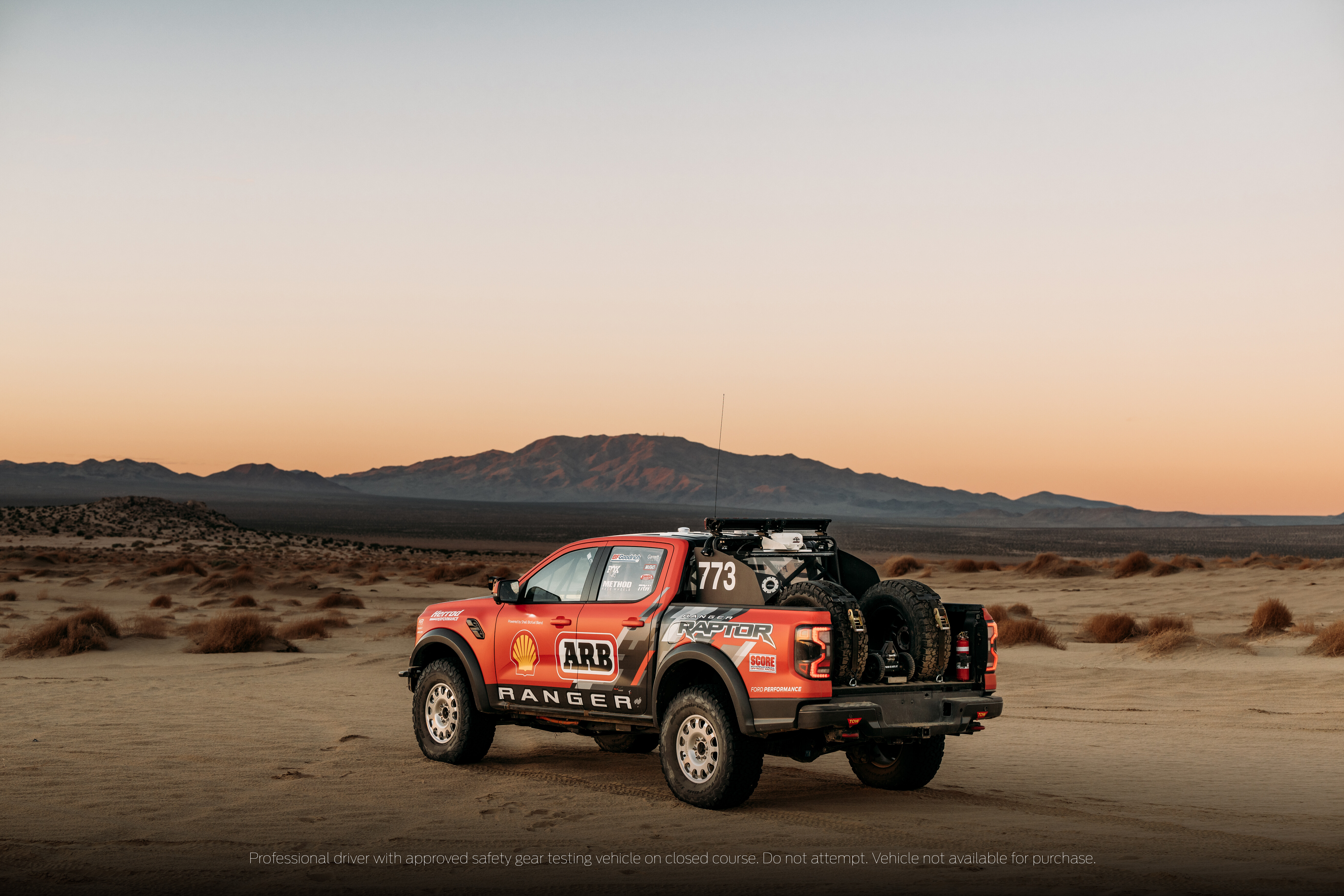
“By entering this event, we’re building on the hundreds of thousands of kilometres of development testing and pushing the Ranger Raptor to new extremes,” said Brian Novak, off-road motorsports supervisor at Ford Performance.
Ford did not disclose exact modifications made to the Ranger Raptor for Baja, but it will compete in the event’s ‘Stock class’, among a wide variety of classes and vehicles in the race.
Ford has raced in the Baja 1000 before, most recently in a standard F-150 Raptor that got on the podium in 2017. It’s also played a part in Bronco and Bronco R development, and is a race that the brand won overall back in 1969.
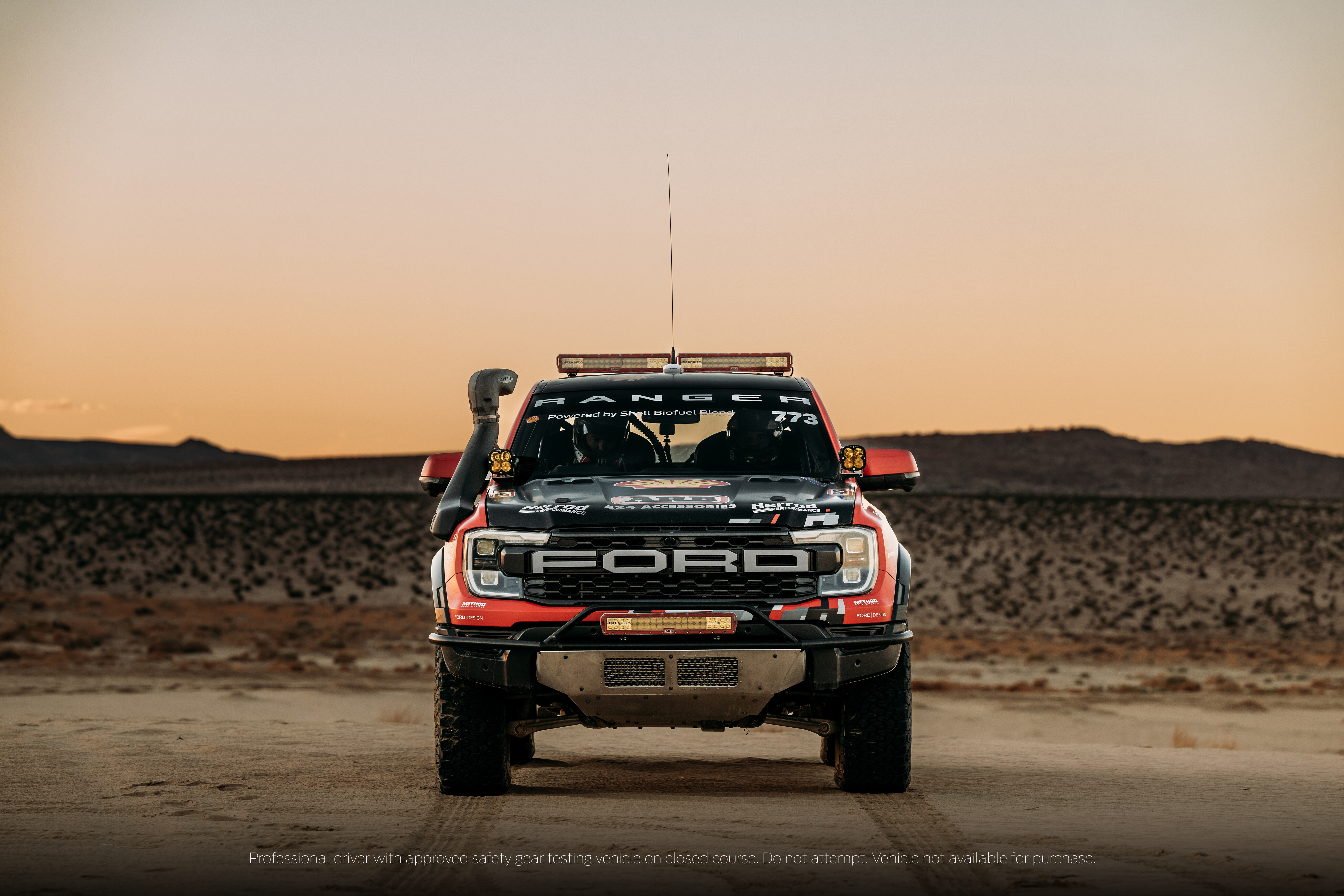
What mods have been made to the Raptor?
As described in SCORE’s Baja regulations, stock class permits only:
“Two or four-wheel drive trucks or SUVs. This is a stock production class and all components must remain stock except for modifications allowed within class rules.”
That means the suspension must remain entirely standard, so the Ranger Raptor will be running the same springs, dampers and geometry as the road cars. Tyres are allowed to increase in size, with two-inches of body chopping permitted for larger rubber.
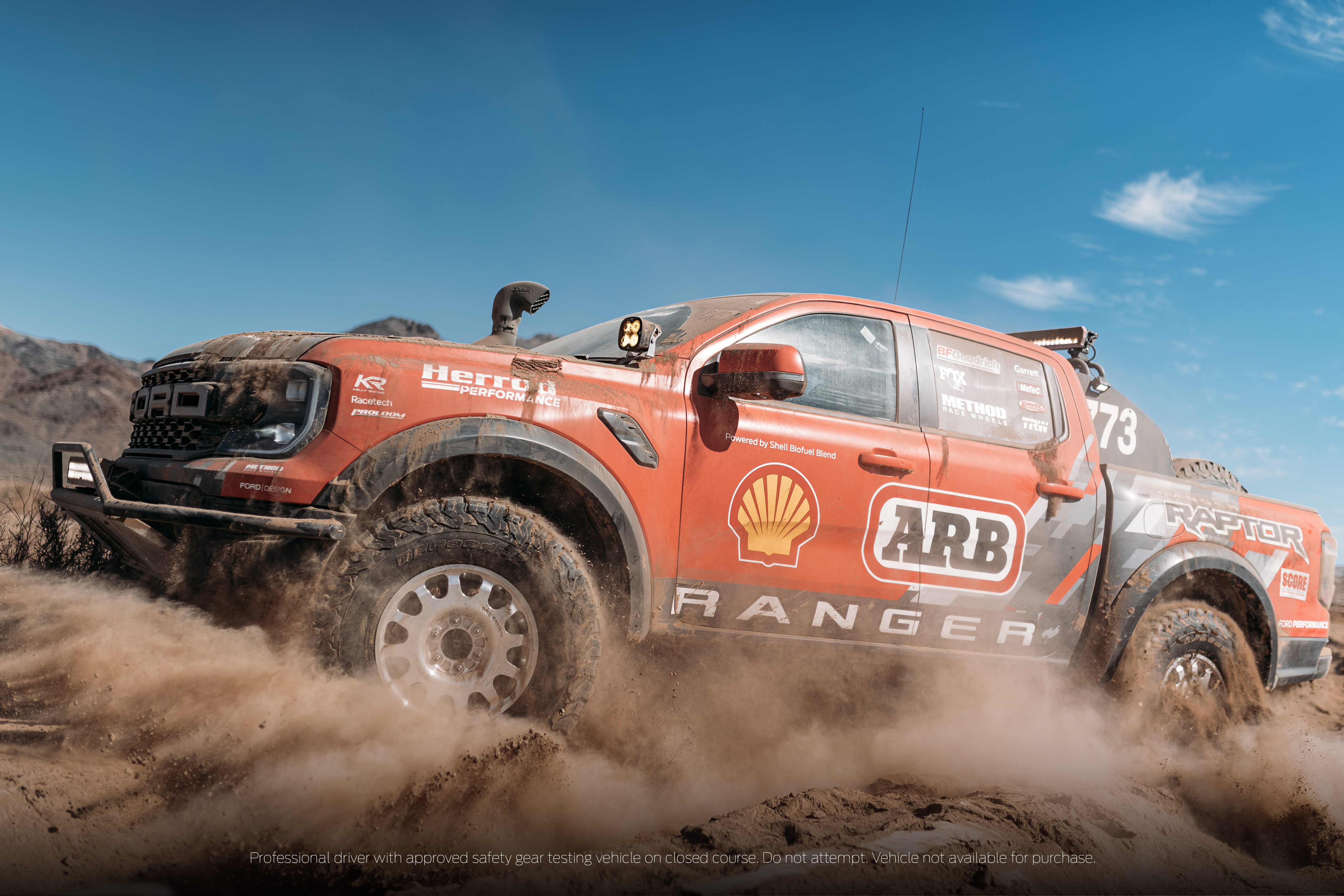
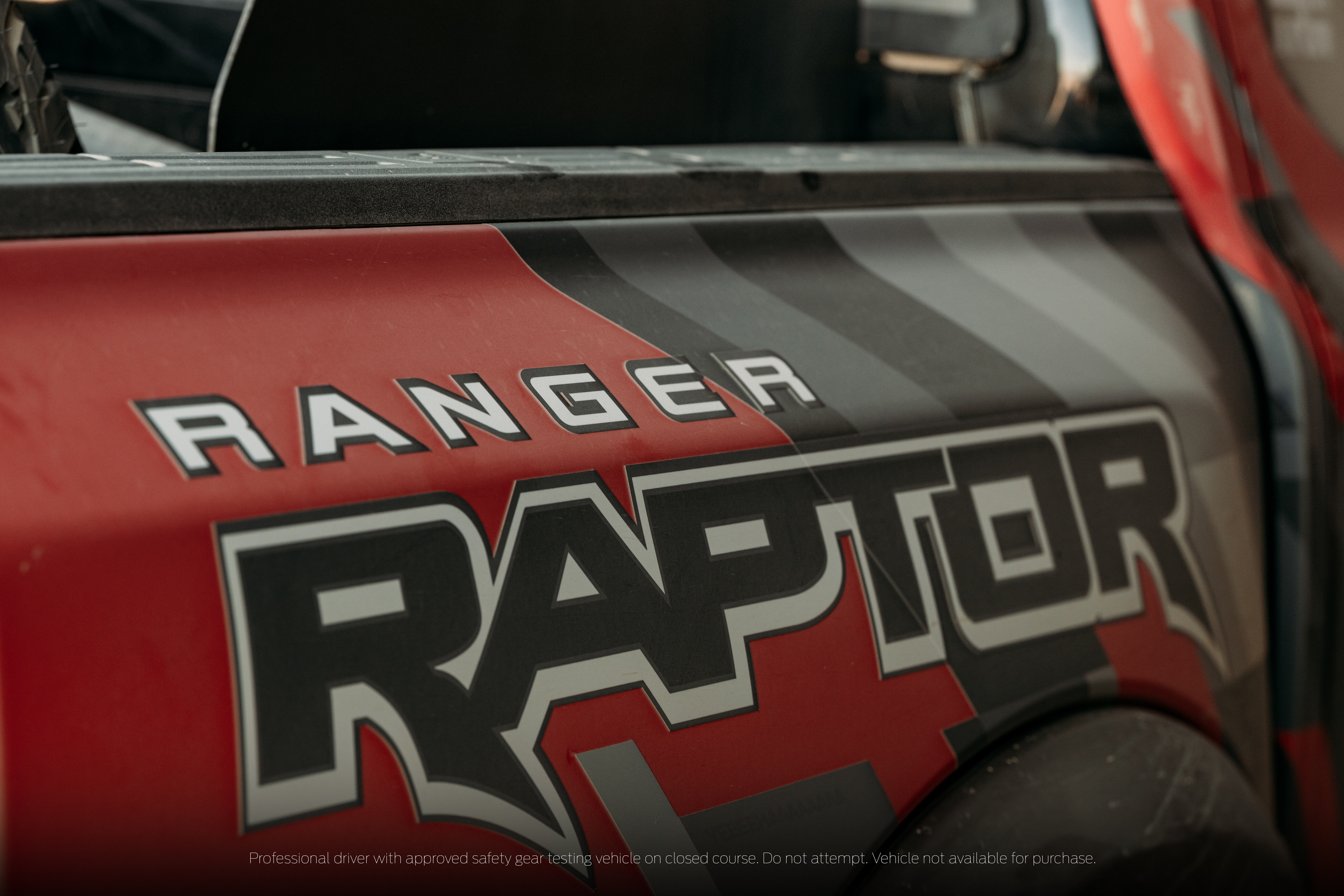
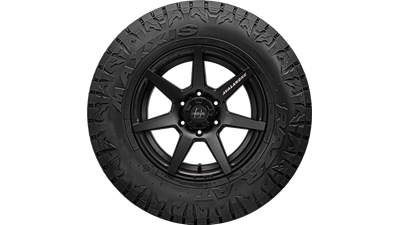
The Ranger Raptor headed to the Baja 1000 is running a set of competition wheels wrapped in BF Goodrich off-road rubber.
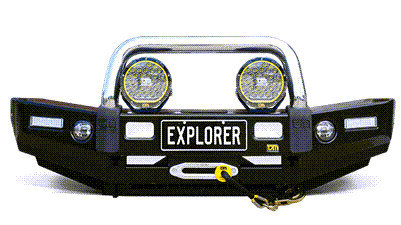
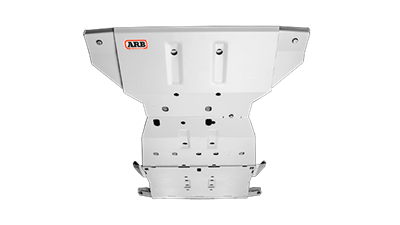
Parts for body strengthening may be added, and these are pretty obvious. The bull bar up front connect to a beefy bashplate to protect the Raptor’s underbody
Instead of a poser plastic sports bar, this Raptor scores a fabricated metal roll hoop with provisions to mount two additional spare wheels, with the tailgate deleted for easy access. The exterior mods are finished off with a snorkel and livery.
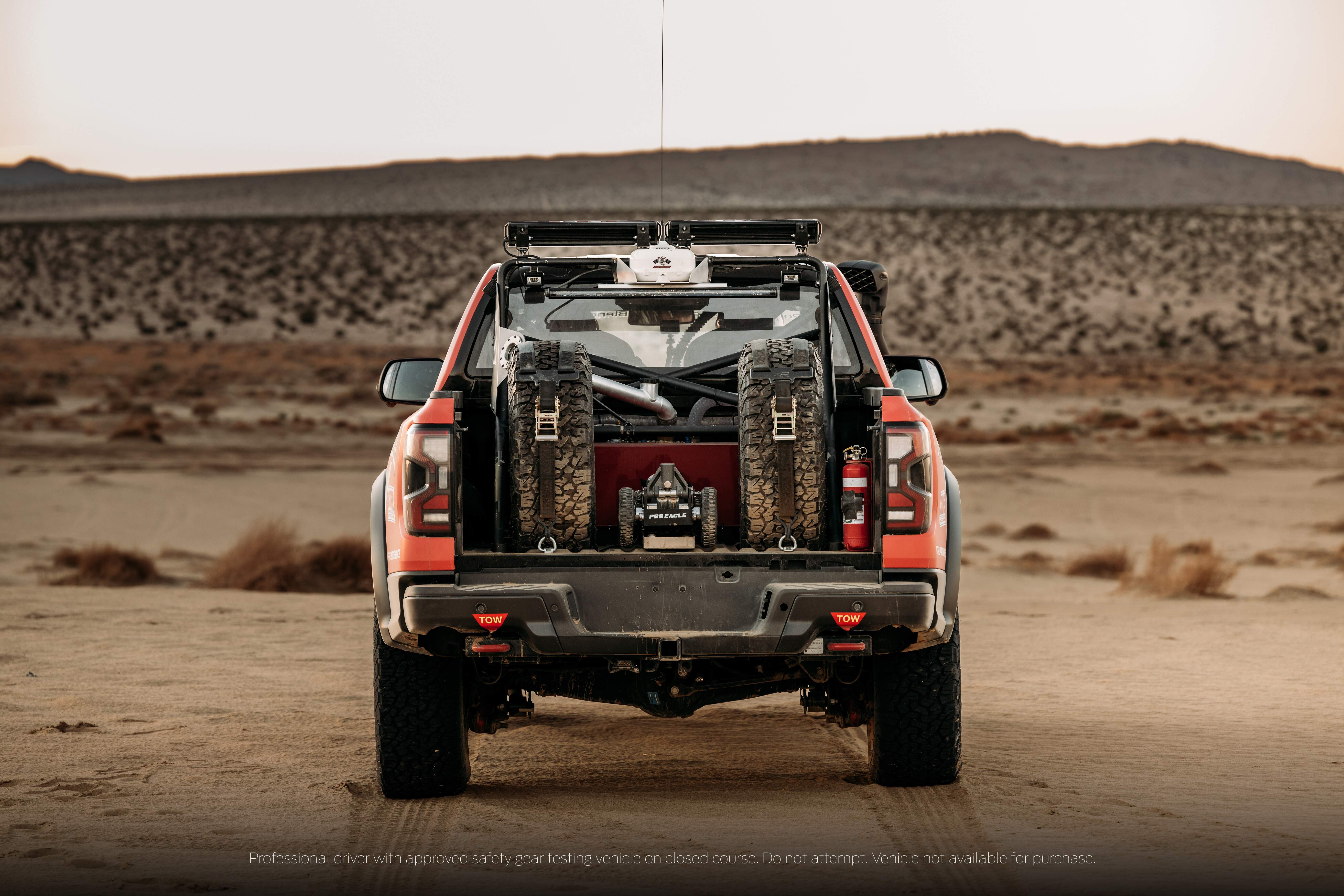
Given the ARB sponsorship, it’s likely Ford worked closely with the aftermarket manufacturer to develop the parts for the Raptor racer.
For the race, engine internals and tuning are open but head and block must be standard. Those who’ve been keeping up with Raptor developments will know the ute has a Baja mode built-in that opens the exhaust for a throaty note.
The car wears Herrod Performance stickers – an Aussie tuning house known for Mustang fettling.
When the Ranger Raptor starts rolling out in bigger numbers, there will almost certainly be demand for ECU tunes, turbo upgrades and exhausts pretty swiftly. It looks like home-grown Herrod will have a competition-proven headstart with the Raptor crowd.
Baja as a biofuel testbed
The other unique thing about this Raptor is the 292kW/583Nm 3.0-litre twin-turbo petrol V6 will run on a Shell biofuel blend.
Racing is the perfect testbed for this kind of technology. The Raptor’s fuel will be a mix of Ethanol and 30 per cent ‘bionaptha’, a synthetic fuel made using renewable energy.
The blend will still produce carbon from the tailpipe, but produced with zero-emissions tech rather than being drilled out of the ground is a cleaner result.
“Demonstrating low-carbon fuels in performance settings like the Baja 1000 can help bring biofuels and other clean energy technologies to scale more quickly, and help to make them more available and affordable for everyone,” global director of sustainability, compliance and homologation at Ford, Cynthia Williams, said.
Our original story, below, continues unchanged.
The story to here
October 29: Ranger Raptor mystery off-road-focused variant teased
Snapshot
- 2023 Ford Ranger Raptor off-road variant teased
- Looks set to feature LED spotlights and a sports bar
- New special edition model to be unveiled on November 1
The just-released 2023 Ford Ranger Raptor looks set to receive an off-road-focused special edition.
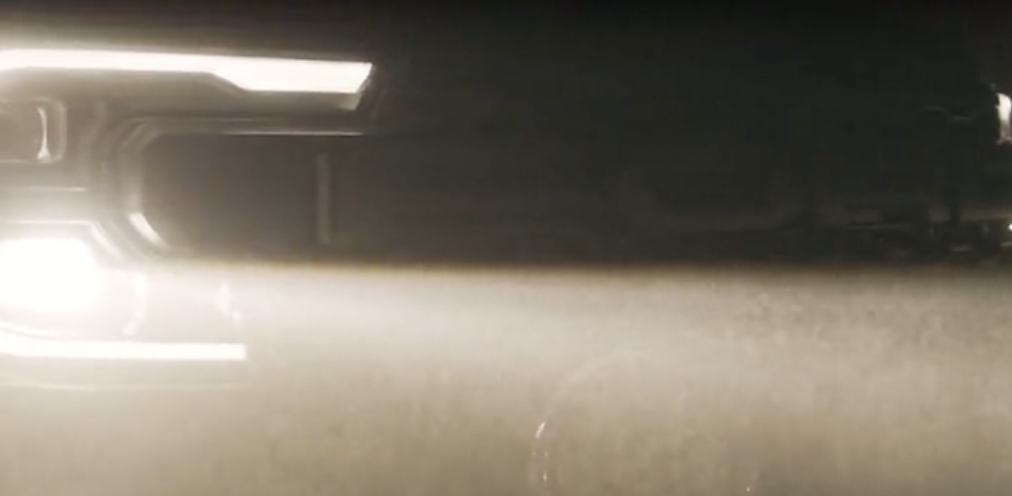
A new teaser co-published by Ford Australia and Ford Performance showcases a Ranger Raptor hidden by the darkness of night, with an LED lightbar mounted on what appears to be a sports bar.
A further video suggests it will also feature a pair of LED spotlights up front.
The engine note sounds familiar to the regular Ranger Raptor, which is powered by a 3.0-litre twin-turbocharged petrol V6 – replacing the previous 2.0-litre bi-turbo four-cylinder diesel.
It produces 292kW and 583Nm, and is matched with a 10-speed torque converter automatic transmission.
While other details remain under wraps, the new variant will be unveiled in just three days, on Tuesday, November 1.
As for a name, the previous-generation model featured a Raptor X variant, which included cosmetic changes such as bonnet stripes, red interior stitching, darkened trims and red front tow hooks.
Another possibility could be Ranger Raptor R, following in the footsteps of the larger F-150 Raptor R, or Raptor Baja Edition in a nod to its Baja drive mode and off-road capabilities.
Whatever the name, it won’t be long before we know all the details on the new variant, so stay tuned to 4X4 Australia on Tuesday for the latest news.
Modern 4x4s are a great thing, but what happens if you see a check engine light pop up when you are travelling remote?
Something super simple could have gone wrong, but without the ability to scan fault codes as well as clear them, how would you know what is wrong and how to fix it without calling an expensive tow truck?
At the most recent 4WD Of The Year awards, a vehicle I was testing went in to limp mode after some spirited acceleration/braking sequences. I tried turning it off, locking the doors, spinning around six times and clapping my hands, but none of that fixed the problem, nor did I know what the problem was.
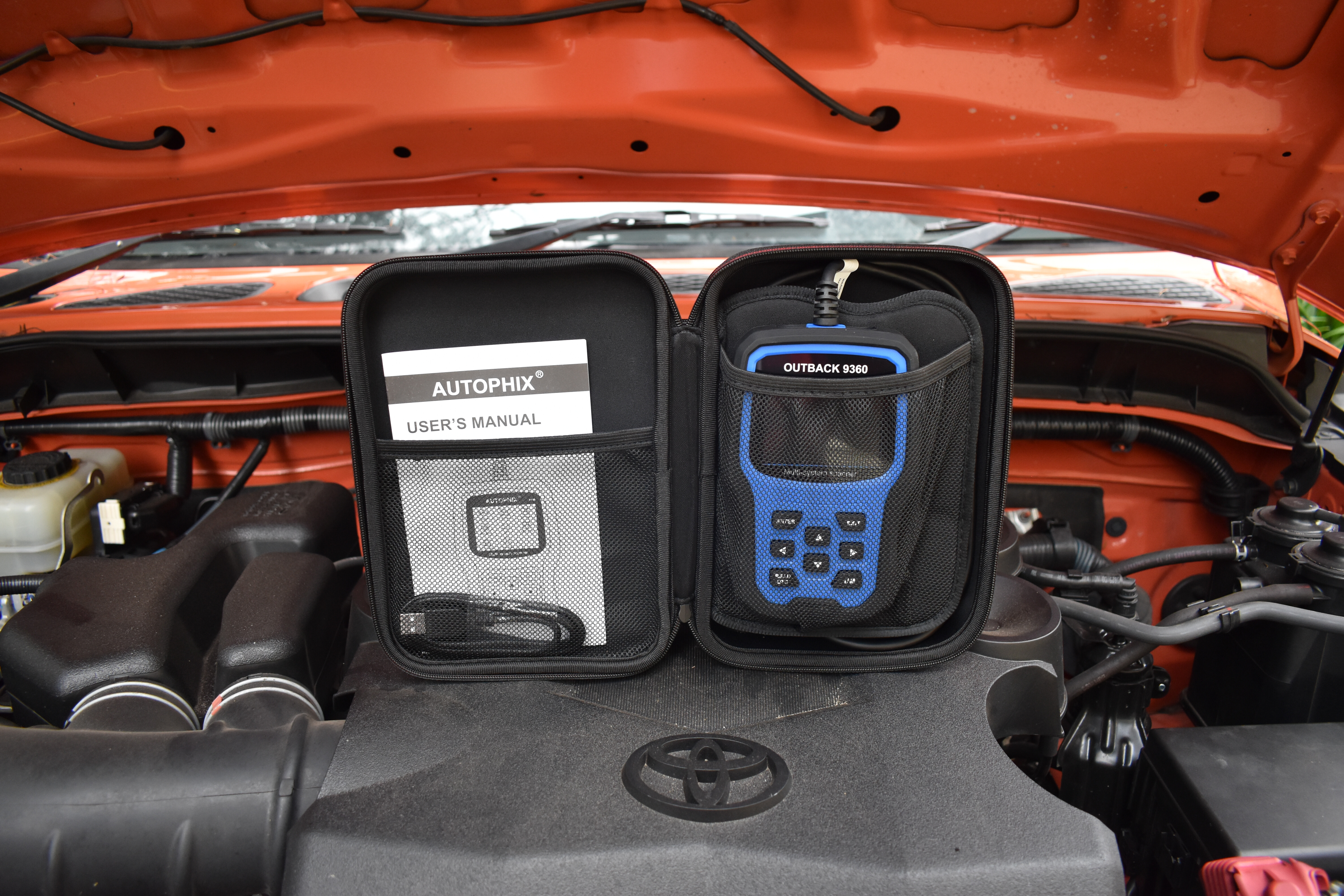
After limping the vehicle back to our gathering area, my mate and fellow judge for the event, Jason Lock, handed me his Autophix OBD Scanner, and assumed I knew how to use it. I did not. But that didn’t stop me fixing the issue, because the Autophix unit was so easy to use.
Plug it in to the OBD II port, turn on the ignition, and follow the prompts. Turns out the gearbox had freaked out (that’s the technical term), causing the vehicle to go in to limp mode. I cleared the fault code, and we were back in action literally a few minutes later.
That’s a terrific result, as I knew what the problem was and that it wasn’t a terminal issue. This event opened my eyes up to both the importance of having the ability to scan and clear codes, as well as how easy the Autophix gear is to use. I had to have one, just for peace of mind as it had proved to me it’s worth.
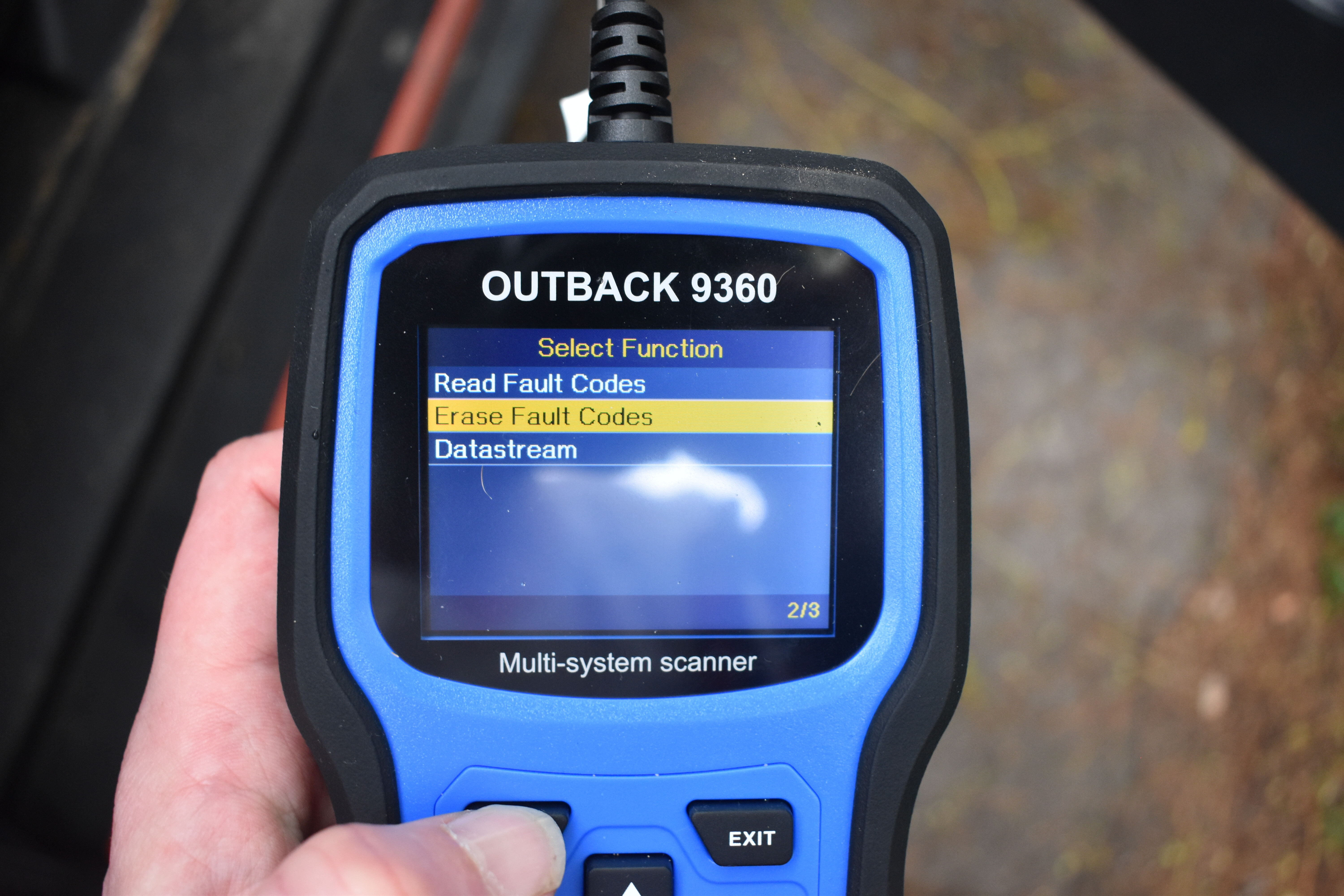
The Autophix team has just released this Toyota-specific unit, called the Outback 9360, which I was assured would work perfectly with the petrol FJ Cruiser, as well as my diesel N70 Hilux, so that’s what I went with.
It arrived quickly after ordering via the Autophix website, complete with a USB cable so you can track data along the way via your computer, in a nicely padded storage case which fits easily in the FJ’s tiny glovebox.
It also feels to be a quality bit of gear, the cabling is nice and thick, the supplied carry case is well-made with good zippers, and the instructions supplied are clear and easy to understand.
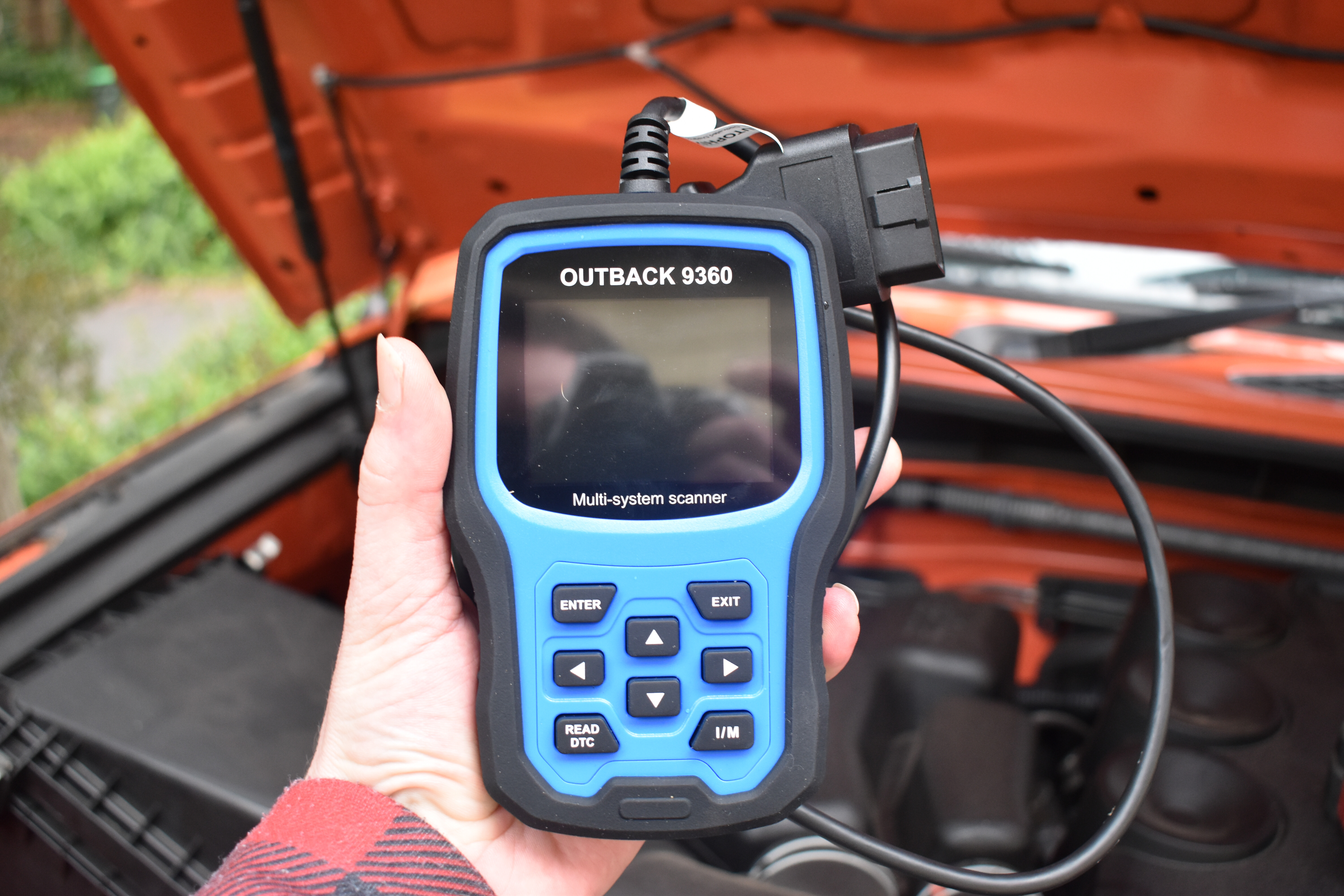
Naturally, that’s all well and good, but does it work? Yep, easy as pie. As soon as it arrived, I ran downstairs and plugged it in to my FJ Cruiser to see if everything was playing along nicely and have continued to experiment with it regularly.
“You hope to never need it, but the one time you do need it, it’s paid for itself”
Much to my surprise, I’ve had two fault codes which needed investigating. C1256 – Brake Accumulator Low Pressure, now that sounds serious. Then I thought about it, we had just upgraded the brakes on the FJ, and bled the system, which would have been the cause of the fault. I’ve been checking every week or so (because I can), and it hasn’t come back, thankfully.
The second code, popped up while taking images for this article, and was related to the airbag system. I’ll be monitoring that, as there were no lights on the dash to alert me to this potential issue – I wouldn’t have known about it if I didn’t have a diagnostic tool.
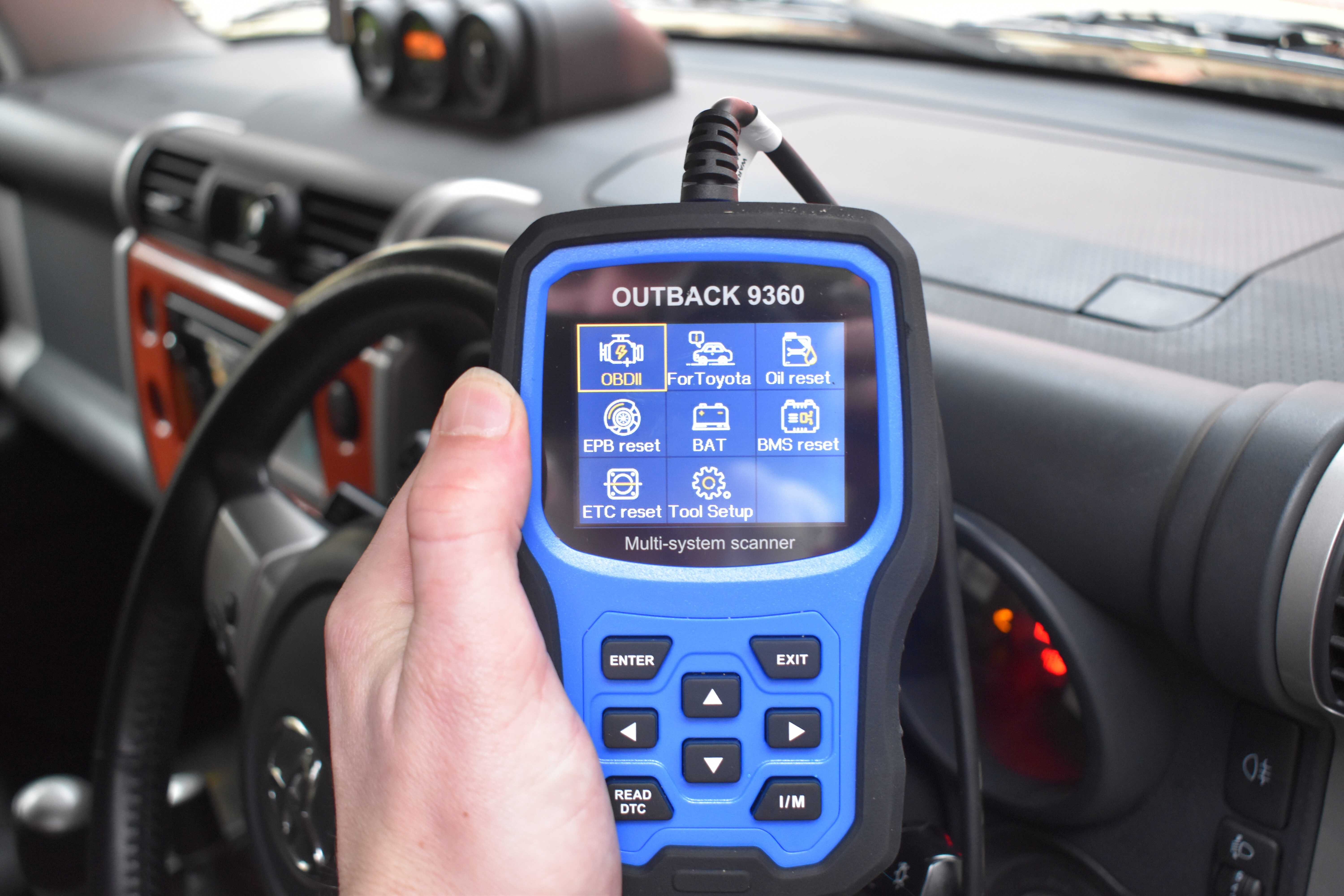
I’ve cleared it for now, and will check again in a week or so. It’s impressive to know I have the ability to keep an eye on what the FJ is doing anywhere I may roam, and a strong chance of being able to fix the problem, or even call ahead for parts once I’ve diagnosed the issue.
It’s also worth mentioning, that yes this particular item is a Toyota-specific diagnostics tool, but there are plenty of other Autophix options available to suit most makes and models on the Australian market. It’s a cheap insurance policy, much like a winch. You hope to never need it, but the one time you do need it, it’s paid for itself. The Autophix Outback 9360 will live in the glovebox
of my FJ Cruiser for as long as I own the vehicle, simple to use, takes up no space and at just under $340 it’s money well spent.
Available from: www.autophixaustralia.com.au RRP: $339.95
Finding the right tent to fit the whole family is no easy task. But family camping trips are where the best memories are made, so it’s worth choosing wisely. You’d rather look back and laugh at the stories told around the campfire than have to remember that time the tent leaked overnight and you had to pack up and go home.
With this in mind, we’ve reviewed the best family tents in Australia, from Darche, Outdoor Connection, OZtrail, Coleman, Wanderer, BlackWolf and Zempire. From inflatable and instant tents to reliable dome tents, with one of these in your camping kit, you’ll have no hesitation to get out and enjoy the great outdoors.
The best family tents should be spacious, light, and easy to set up and pack down. But there’s also a heap of features to look for in a good family tent, including durability, ventilation and multiple access points. To help you choose the right tent for your camping trips, we’ve put together a Buyers’ Guide along with reviews of the top family tents on the market.
| Tent | Type | Capacity | Floor Space | Height | Weight | Packed Size |
|---|---|---|---|---|---|---|
| Outdoor Connection Aria Elite 2 | Inflatable | 8 | 300 x 500cm | 205cm | 31.1kg | 81 x 38 x 38cm |
| OZtrail Fast Frame BlockOut | Instant | 10 | 600 x 220cm | 200cm | 33kg | 116 x 34 x 34cm |
| Wanderer Nightfall Dome | Dome | 10 | 610 x 250cm | 210cm | 16.5kg | Not specified |
| Zempire Airforce 1 V2 | Inflatable | 10 | 440 x 360cm | 210cm | 57.1kg | 125 x 59 x 50cm |
| Darche Kozi 6P | Instant | 6 | 300 x 480cm | 194cm | 17.1kg | 122 x 25 x 25cm |
| Coleman Instant Up Northstar Lighted Dark Room | Instant | 10 | 600 x 230cm | 190cm | 33.5kg | 125 x 30 x 30cm |
| BlackWolf Turbo Plus 300 | Instant | 8 | 480 x 300 cm | 210cm | 35kg | 145 x 38 x 40cm |
Outdoor Connection Aria Elite 2
Specifications
- Type: Inflatable
- Capacity: 8
- Floor space: 300 x 500cm
- Height: 205cm
- Weight: 31.1kg
- Packed size: 81 x 38 x 38cm
Things we like
| Not so much
|
- Type: Inflatable
- Capacity: 8
- Floor space: 300 x 500cm
- Height: 205cm
- Weight: 31.1kg
- Packed size: 81 x 38 x 38cm
Outdoor Connectionu2019s Aria Elite 2 is a two-room inflatable tent that is lightweight and quick to set up. It is designed by Aussie campers to be a simple, spacious home-away-from-home for the whole family. It also has a five-year warranty to give you peace of mind.
The selling point of this tent is, rightfully, the ease with which you can set it up. Thanks to the Air Poles, the tent can be erected in around 10 minutes. It comes with an outer fly that needs to be attached for your first use. From then on it can stay attached, so it’s one less step required each time you erect the tent. It also comes with a three-pole awning and the option to purchase side walls, if you want even more enclosed space.
The Aria Elite 2 has near-vertical walls giving you great internal space. The two rooms are separated by a sewn-in divider and the back room has an additional detachable hanging room divider. This makes the tent more versatile for the family and can be a good option for older kids who want their own space.
OZtrail Fast Frame BlockOut
Specifications
- Type: Instant
- Capacity: 10
- Floor space: 600 x 220cm
- Height: 200cm
- Weight: 33kg
- Packed size: 116 x 34 x 34cm
Things we like
| Not so much
|
- Type: Instant
- Capacity: 10
- Floor space: 600 x 220cm
- Height: 200cm
- Weight: 33kg
- Packed size: 116 x 34 x 34cm
OZtrailu2019s Fast Frame BlockOut is a three-room tent that is durable, heat resistant and dark inside u2013 all for a reasonable price. Our favourite part u2013 the BlockOut coating on the fly will keep the inside temperature cooler in summer and allow the whole family to sleep-in.
In addition to the BlockOut coating, this family tent by OZtrail has Fast Frame technology to make set up and pack down easy. While its capacity is for 10 people, we think this tent would sleep up to six people comfortably, with room for gear as well.
It has a tough Polyoxford floor that will handle any ground surface – and anything the kids throw at it. As a bonus, the three-hub frame system gives equal headspace in each of the three rooms. Plus, there is plenty of ventilation and a full side awning with removable wind breaks.
Wanderer Nightfall Dome
Specifications
- Type: Dome
- Capacity: 10
- Floor space: 610 x 250cm
- Height: 210cm
- Weight: 16.5kg
- Packed size: Not specified
Things we like
| Not so much
|
- Type: Dome
- Capacity: 10
- Floor space: 610 x 250cm
- Height: 210cm
- Weight: 16.5kg
- Packed size: Not specified
For a budget family tent that doesnu2019t compromise on floor space, we like Wandereru2019s Nightfall Dome. The three-room tent has blacked-out bedrooms, plus the second largest floor space of the tents weu2019ve reviewed u2013u00a0and yet it only weighs roughly half as much.
The Nightfall Dome is designed with two bedrooms and a living space in-between that could be used as a third bedroom for larger families. The two outer rooms are made with black polyester, which will keep the rooms darker during the day and allow you to sleep past sunrise. For a family of four to six, this is a spacious tent that will have plenty of room for camping gear inside and under the outdoor awning.
As well as being light, the Nightfall Dome also packs down small, making it easy to fit in the car for family camping trips. While dome tents are more complex to erect, if you do not camp often, or don’t mind spending more time setting up, we think this is great value
Zempire Airforce 1 V2
Specifications
- Type: Inflatable
- Capacity: 10
- Floor size: 440 x 360cm
- Height: 210cm
- Weight: 57.1kg
- Packed size: 125 x 59 x 50cm
Things we like
| Not so much
|
- Type: Inflatable
- Capacity: 10
- Floor size: 440 x 360cm
- Height: 210cm
- Weight: 57.1kg
- Packed size: 125 x 59 x 50cm
The Zempire Airforce 1 V2 is a mammoth of a tent, with great durability, that surprisingly can be erected in under five minutes. If you want to invest in a durable tent that will comfortably house the whole family, this could be the best option for you.
The Airforce 1 V2 has three separate living spaces – two rooms and one awning. The second room can be divided to create two separate sleeping spaces. This tent has 210cm of internal height at its centre and the largest floor space of all the tents we have reviewed. However, it is also the heaviest tent we have reviewed by far and will require two people to lift it.
There is one inflation point from which you can fully inflate the whole tent. Plus, the fly is already attached, saving you time in the set-up process. It also has multiple deflation points, ensuring you can pack down faster.
NOTE: The canvas will need to be seasoned before use to ensure it is waterproof. This means wetting it multiple times and letting it fully dry out in-between. This should be done before you leave for your first camping trip, so factor this in when buying.
Darche Kozi 6P
Specifications
- Type: Instant
- Capacity: 6
- Floor space: 300 x 480cm
- Height: 194cm
- Weight: 17.1kg
- Packed size: 122 x 25 x 25cm
Things we like
| Not so much
|
- Type: Instant
- Capacity: 6
- Floor space: 300 x 480cm
- Height: 194cm
- Weight: 17.1kg
- Packed size: 122 x 25 x 25cm
The Kozi 6P tent by Darche is easy to set up and has a host of great features that will make camping comfortable for everyone. For campers who like to travel light, this one-room tent is a great option.
It is smaller than the other tents we reviewed, but also lighter and therefore easier to lift and set up. The spacious sleeping area will comfortably fit a family of four, and the outdoor area can be closed fully to provide extra storage space. There’s also an option to purchase a tunnel which allows you to connect two of these Kozi 6P tents together – great if you have a larger crew.
Additional features include multiple access doors, large rear awning, internal pockets, gear loft and lantern hook. Ventilation-wise this tent is a winner – it has large mesh-covered windows and doors, plus a mesh roof that will keep the inside cool in the warmer months.
Coleman Instant Up Northstar Lighted Dark Room
Specifications
- Type: Instant
- Capacity: 10
- Floor space: 600 x 230cm
- Height: 190cm
- Weight: 33.5kg
- Packed size: 125 x 30 x 30cm
Things we like
| Not so much
|
- Type: Instant
- Capacity: 10
- Floor space: 600 x 230cm
- Height: 190cm
- Weight: 33.5kg
- Packed size: 125 x 30 x 30cm
Colemanu2019s Instant Up Northstar Lighted Dark Room tent is packed full of design features that will give your family a comfortable camping experience all-round. The 10-person capacity tent would comfortably sleep a family of six across three separate rooms.
The Dark Room technology on this tent blocks out 95 per cent of sunlight, keeping the interior dark during the day. For anyone who likes to sleep-in – or wishes their kids would sleep-in – this feature is priceless. This also works to keep the tent cooler during the day and, when paired with the good ventilation, makes this a great tent for summer camping.
Despite its size and durability, the Instant Up design of this tent makes it easy to set up and pack down. The latest feature to be added to this tent is the LED lighting that is built into the tent’s interior. It saves you having to hang lanterns in each of the rooms.
BlackWolf Turbo Plus 300
Specifications
- Type: Instant
- Capacity: 8
- Floor space: 480 x 300 cm
- Height: 210cm
- Weight: 35kg
- Packed size: 145 x 38 x 40cm
Things we like
| Not so much
|
- Type: Instant
- Capacity: 8
- Floor space: 480 x 300 cm
- Height: 210cm
- Weight: 35kg
- Packed size: 145 x 38 x 40cm
BlackWolfu2019s Turbo Plus 300 is a durable and fuss-free family tent. The one-bedroom tent will comfortably sleep a family of four, and with the optional panels for the awning you can create extra indoor space. It also comes with a three-year warranty.
The popular Turbo Tent range has had an upgrade – with extra features for better durability. It now has extra reinforcement in the roof poles, more durability in the flooring and extra protection in case of wet weather. Add this to the FastPitch design and you’ve got a great quality tent that will be easy to set up.
If your family enjoys all kinds of camping adventures and you want a versatile tent to match, the Turbo Plus 300 is a great option. We reckon it’ll stand up to the test in even the toughest Aussie conditions.
HOW WE REVIEW PRODUCTS
4X4 Australia has been reviewing four-wheel drive vehicles, aftermarket products and camping gear for more than 40 years. When looking for the best family tents in Australia, there are some things that are essential to make sure the whole family enjoys your camping adventures.
When we compared each of the tents in the list with hundreds out there, we looked at the size, weight, design, ease of set up and price. We also searched for additional features that make these tents stand out from the rest.
We looked at hundreds of user reviews and drew on our own experience camping in family tents to make sure our recommendations are for the best on the market.
Disclosure: When you buy through our links, we may earn a commission. We also include products that we do not earn a commission from.
BUYERS’ GUIDE TO TENTS
Types of family camping tents
There are a lot of different tents on the market, making choosing the best one for your family a tricky task. Here are the different types of camping tents that we’ve reviewed and their pros and cons when it comes to setting up and usability.
Inflatable tents
Inflatable tents are becoming increasingly popular due to their ease of set up. Replacing poles with air tubes, means you simply need to grab the hand pump in order to erect your tent. To make it even simpler, some family-sized tents can be inflated from just one point. If hand pumping isn’t for you, purchase an electric pump and you can grab a beer, sit back and relax as your tent inflates.
Instant tents
Pop-up tents have many different names – such as Fast Frame, Fast Pitch and Instant Up – thanks to different brands creating their own technology and trademarking it. But essentially the design is the same – the poles come already connected to the tent. This saves a lot of messing around and once you’ve done it a couple of times, you should be able to erect your tent in a matter of minutes. However, because of their design, instant tents are usually quite bulky when packed down.
Dome tents
Dome tents take longer to set up than inflatable and instant tents, but their selling point is that they are lighter and pack away smaller. If your car is already full to the roof with camping gear for the whole family, a dome tent can be a great space saver. They are also lighter on the wallet. If you only need a tent for a few camping trips per year, you can save a lot of money by buying a dome tent.
Size
When assessing tent sizes, the capacity is not necessarily the best indicator. If a tent capacity is for 10 people, it sleeps 10 people side by side on the floor. But it should comfortably sleep six people – depending on what camping mattresses you use and how much gear you have in the tent. In the absence of an industry standard for tent sizes, we recommend using the interior floor space as a guide.
We’ve also included the internal height for each tent we reviewed, as a tent with a high roof allows you to stand up and move around easier. Most family tents will have multiple rooms, some with extra room dividers. An outdoor awning is also good to have additional space with sun and rain protection.
Weight
If you need a large multi-room tent for your family, you are going to be looking at tents that weigh a lot. It’s an important factor for your overall car load – and for whoever is going to be lifting and carrying it to your campsite. Dome tents tend to be the lightest. At the heavier end of the scale are the inflatable tents built from extra durable materials and the instant tents which are quite bulky.
Design
The design features of a tent are important as you want your tent to be durable, easily accessible and versatile enough to use in all the conditions you’ll camp in.
Materials
Choosing a tent that is made from durable materials will not only protect your family from the elements, but allow you to use the tent for plenty of camping adventures before it needs to be replaced.
Access points
Having multiple entry points makes access easier for the whole family, and stops you climbing over each other to get in and out. Great for the midnight dash to the loo!
Ventilation
If you want to use your tent in warm conditions, good ventilation will be key to making sure everyone is comfortable sleeping at night. It will also prevent condensation forming on the walls of your tent overnight.
Ease of set up
When travelling with the whole family, having a tent that is easy to set up can make all the difference to starting your camping trip off right. The combination of complex pole systems, multiple awnings and kids who’ve been cooped up in the car for too long is enough to drive anyone mad. We recommend instant and inflatable tents as a great solution. However, if you only take one camping trip per year and stay for a few weeks at a time, you might find it more budget-friendly to get a dome tent.
Price
Price is a big factor in buying a family tent. You want your money’s worth so the tent will last for many years to come. The best thing to do is assess exactly what you need in a camping tent for the whole family – including the size, durability and features. Then purchase a family tent that meets your needs – from a reputable brand. Generally, if you buy from the cheaper end of the price range, or lesser known brands, you will compromise on quality, durability and warranty periods.
While the stock suspension on the current model MU-X rides pretty well with factory gear and is an improvement over the previous generation wagon, it just isn’t going to cut the mustard for what we need out of a four-wheel drive.
The MU-X sits a little low in stock trim, and while the aim of this build is to keep the vehicle as light as possible, we have added a bit of off-road gear that has added some weight.
The main additions include an Offroad Animal front bar and a drawer system from MSA in the back. These are probably the lightest examples of a front bar and drawer system on the market, hence why we chose them, but weight is weight at the end of the day.
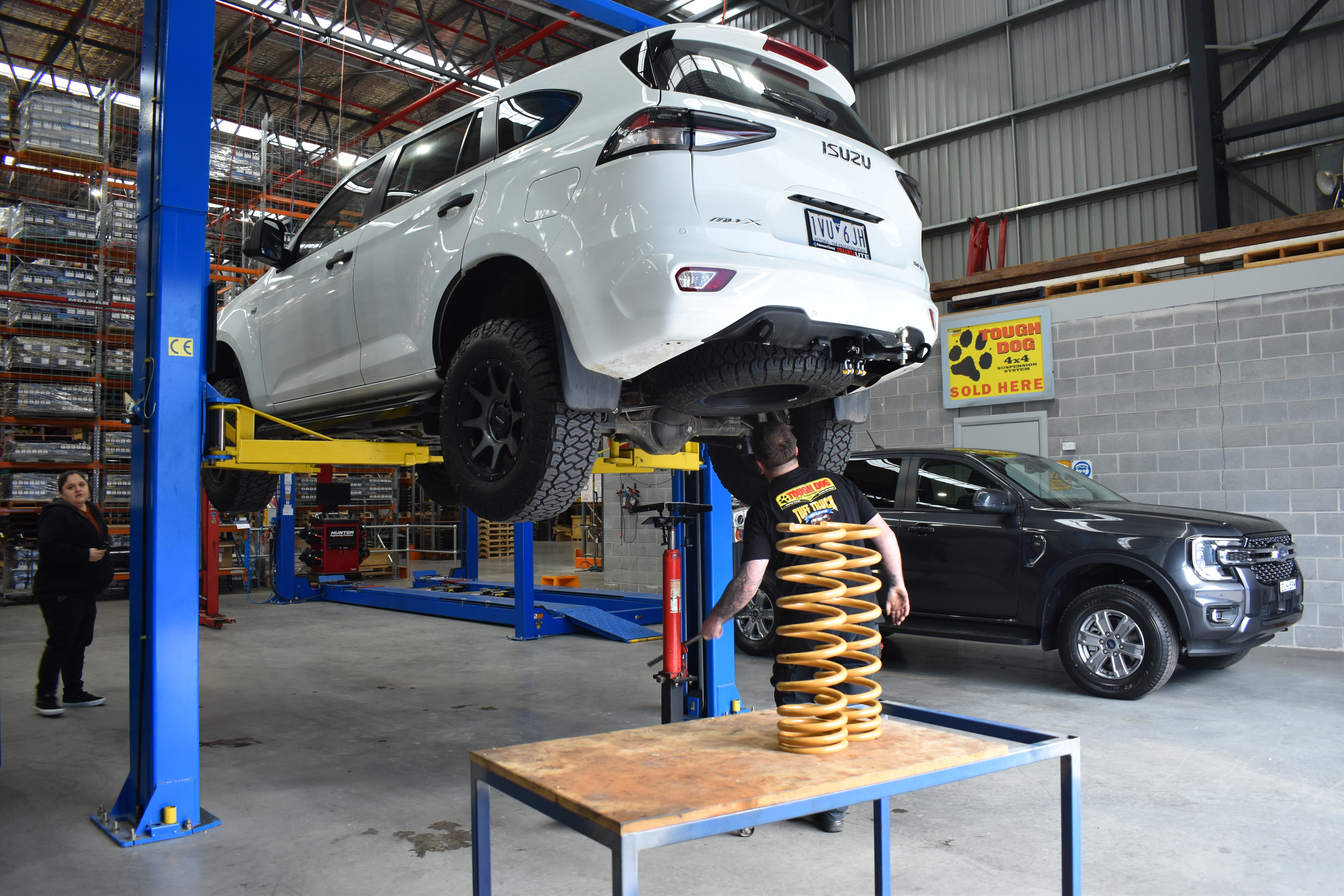
After a successful stint running Tough Dog suspension in our last project – the Isuzu D-MAX – we wanted to run Tough Dog’s suspension kit in the MU-X and see how it rode in an all-coil-sprung wagon, compared to the leaf-sprung rear D-MAX. I drove 25,000km in the D-MAX on Tough Dog gear and can report we didn’t have a single issue in that time.
We made a booking after going through what weight we were carrying and accessories we had added, and headed off to Tough Dog head office in Sydney’s Marsden Park for the installation and a wheel alignment.
The job took just a few hours to complete, including the time it took for photography and to answer a million questions from me. There’s nothing like spending time with experts in their field, picking their brains for technical information; thanks again Tough Dog team for making the time.
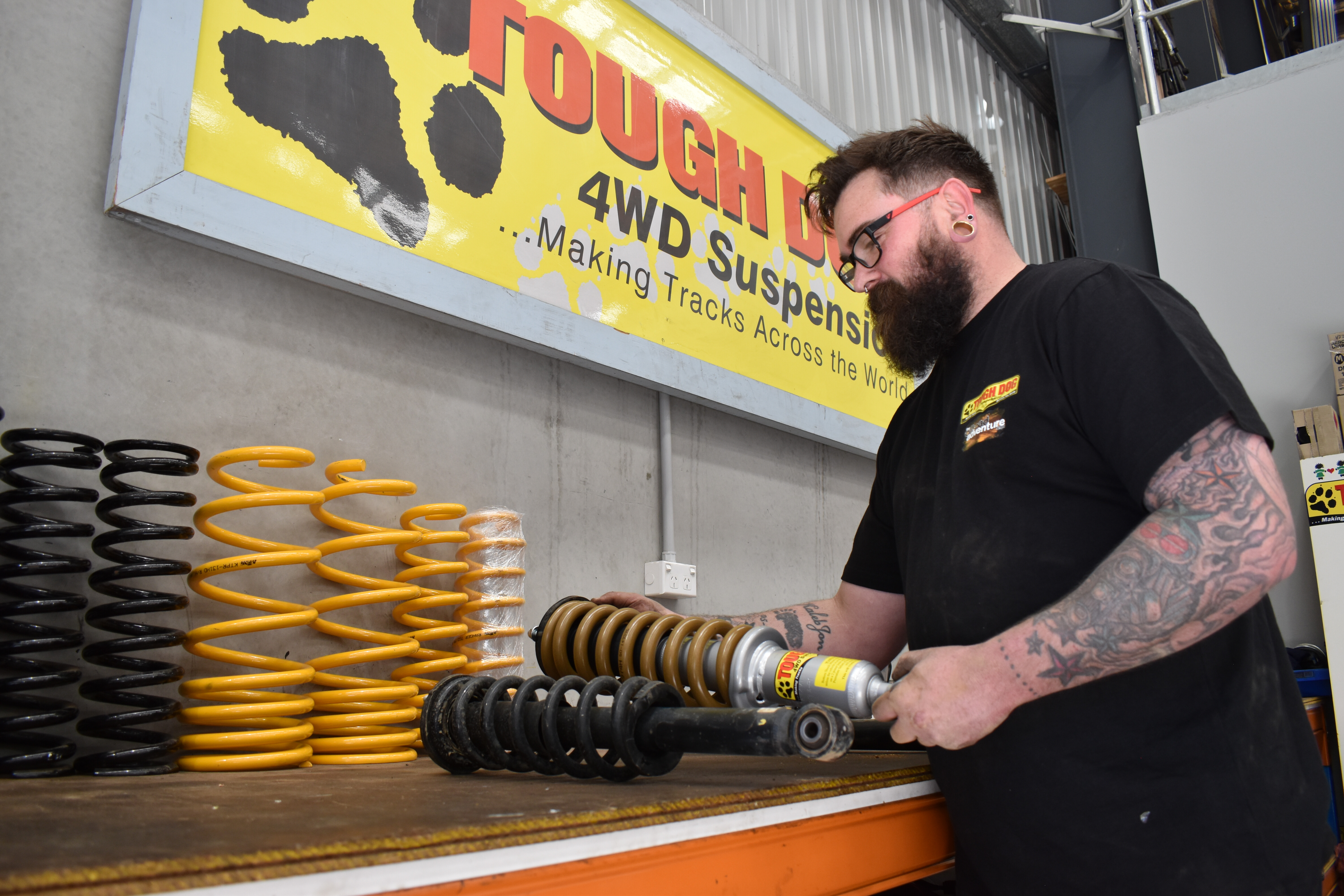
With this particular vehicle, we initially overestimated how much weight we would be carrying, resulting in choosing a suspension package that was over-sprung. A quick chat with Simon Vella from Tough Dog, and he had the vehicle back on the hoist to install springs front and rear, with a lower spring rate to better suit what we are actually carrying.
This is the benefit of working with a reputable company like Tough Dog. Not only were they happy to help us out and ensure we were rapt with the way the vehicle performs, they also had the product in stock, ready to go.
We now have a rear coil spring to suit a 0 to 300kg load which is bang on for our needs, and the front end is sprung to suit a vehicle with a light replacement bumper with no winch, not a more traditional and heavier bullbar with loops.
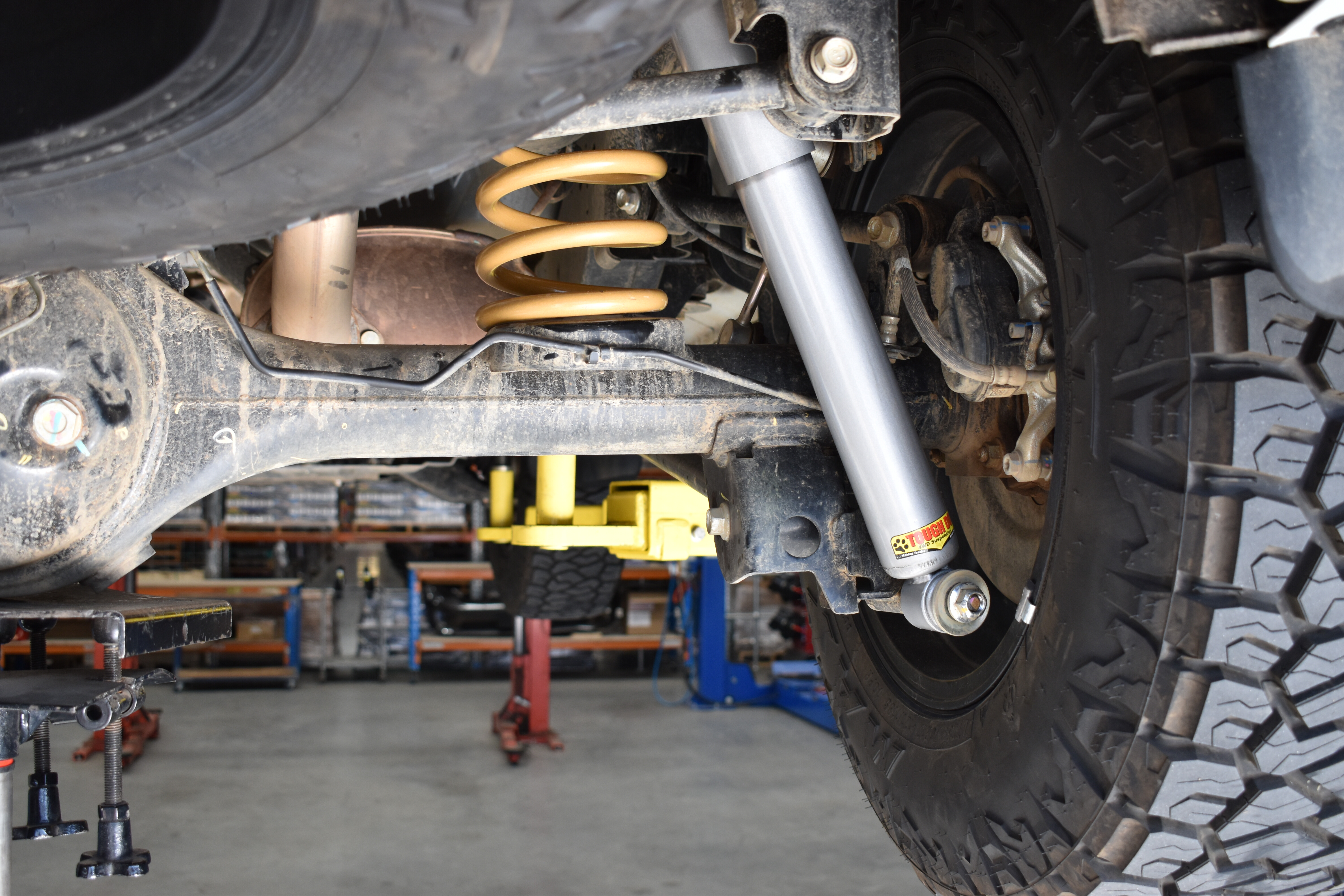
There is a real lesson to learn from this experience, as it absolutely pays to have a plan in place before you start modifying your vehicle. Put the weight on the vehicle first, have it weighed, and then start looking for suspension upgrades, so you have a vehicle that is sprung correctly to the weights and loads you will be carrying.
If in doubt, pick up the phone and pose the questions to the experts in this field. It will save you money, time and heartache getting the right advice to steer you in the right direction the first time around.
After driving the MU-X with the Tough Dog suspension fitted, and the correct springs selected and installed, the MU-X is performing well. We’ve gained around 40 to 45mm of height over stock, and clear the 265x70R17 Maxxis all-terrain tyres easily, without the need to remove mudflaps to make them fit.
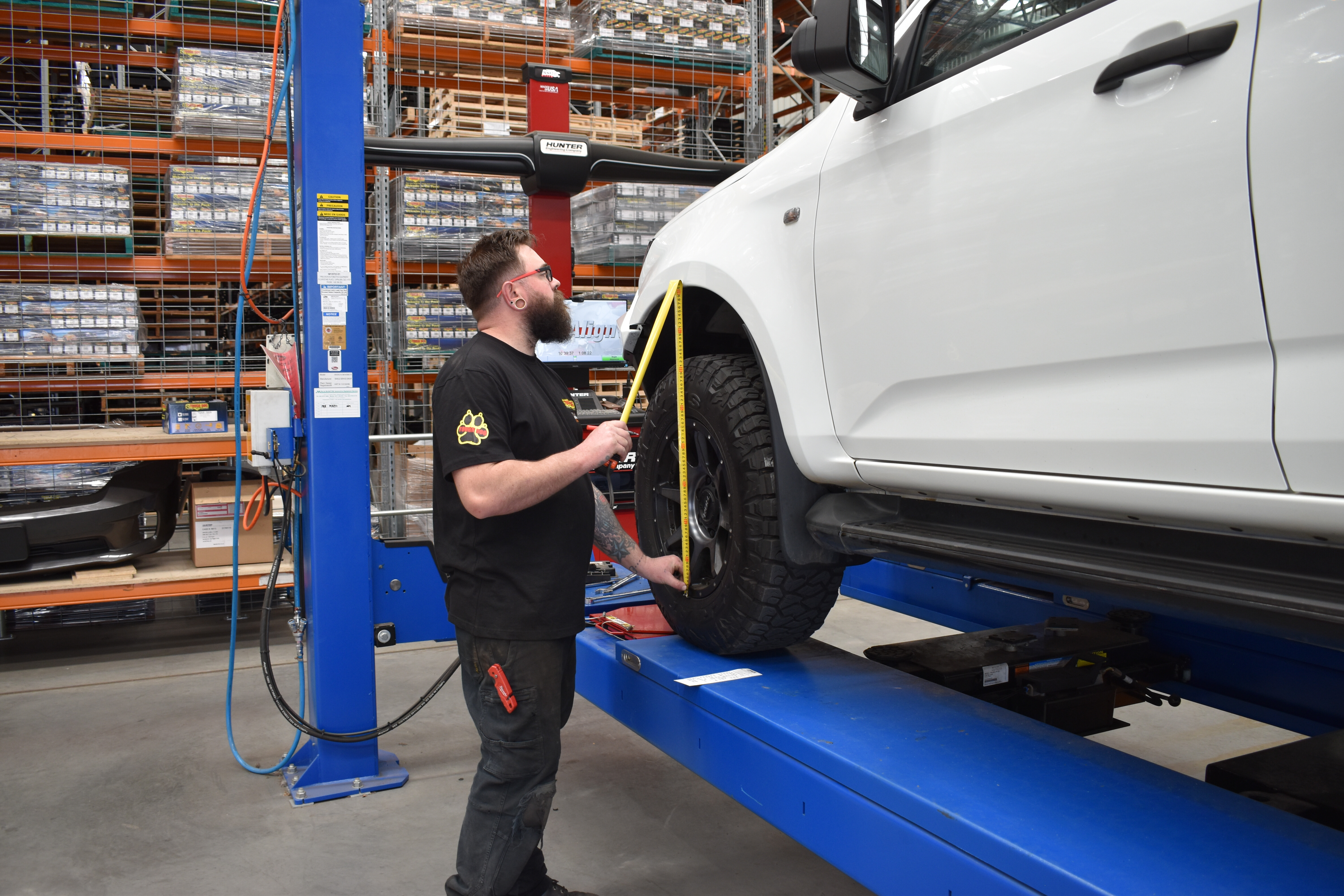
There’s also more wheel travel available thanks to longer shock absorbers, so the MU-X is not just a bit taller it’s genuinely more capable in the rough stuff.
All that’s left to do now is fill the tank up with diesel and get the MU-X dirty. We’re looking forward to putting the new suspension through its paces off-road, as well as continuing the build process of the MU-X now that it looks, handles and rides the way it should.
Pricing
Installation including wheel alignment will set you back around $750, but this will depend from workshop to workshop and what vehicle you have.
The Tough Dog suspension kit to suit a 2022 Isuzu MU-X costs $1542 supplied with unassembled front struts, or $1722 with pre-assembled struts. These prices will vary depending on what components you select, so it’s best to jump on the Tough Dog website and experiment.
For further information or to check out the range of 4WD suspensions from Tough Dog, log on to: www.toughdog.com.au
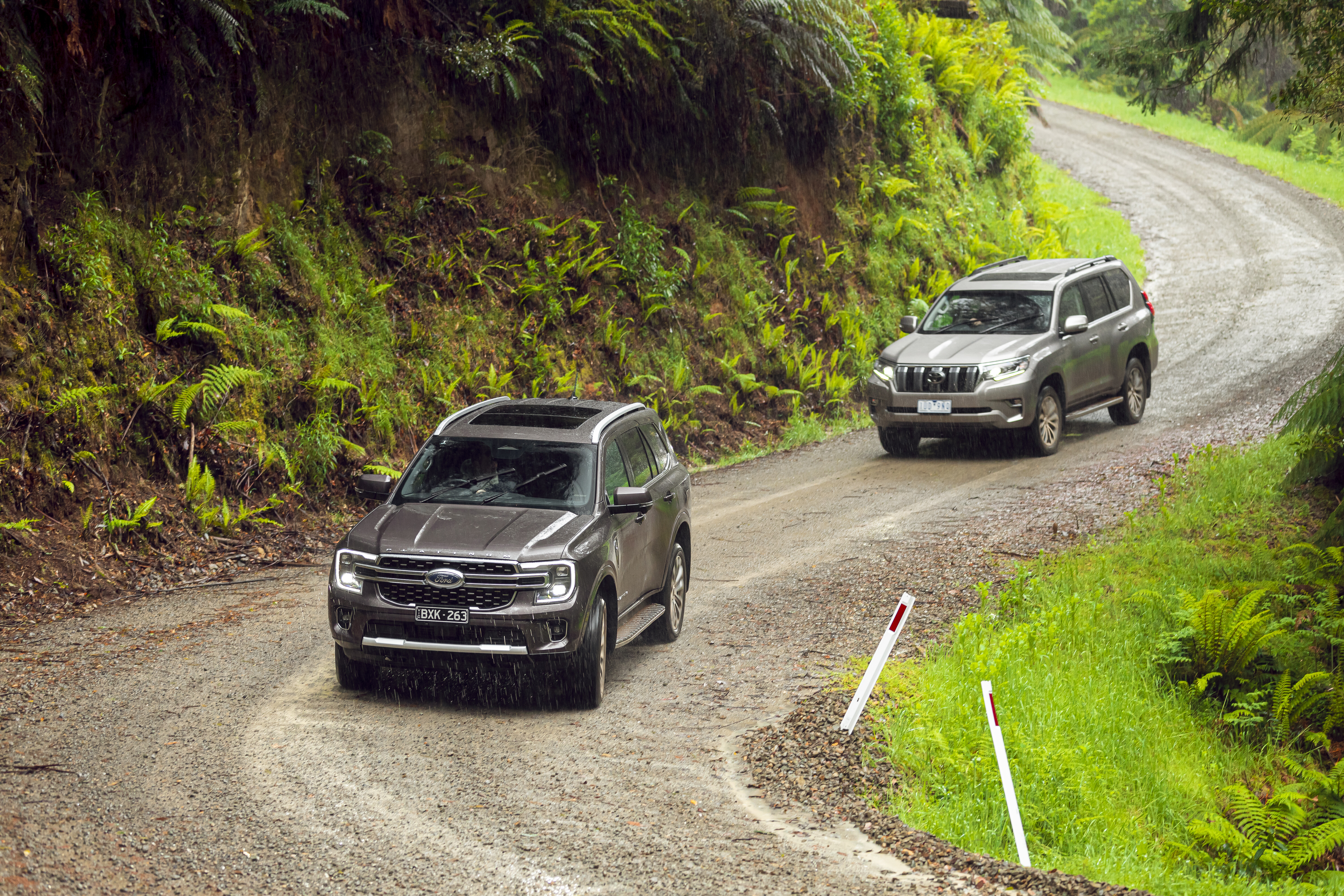
UPDATE, November 16: Ford Everest vs Toyota Prado
We’ve put the new-generation Ford Everest up against its most popular and obvious rival, the Toyota Prado. Get the full story at the link below.
Story continues
Snapshot
- Sport RWD added to Everest line-up
- Small price increases across range
- MY23.5 models to enter production in March 2023
The 2023 Ford Everest has had a rear-wheel-driven Sport variant added to its local line-up, priced at $62,790.
With production set to begin in March 2023, the Everest Sport RWD will be powered by Ford’s 154kW/500Nm 2.0L bi-turbo diesel powertrain, which is mated to a 10-speed automatic transmission. It joins the next-gen Everest Sport 4WD, which was released earlier in 2022 and is powered by a 3.0-litre V6 turbo-diesel.
With a price difference of $6800 between the Sport RWD and AWD, opting for drive to all four wheels remains a compelling proposition.
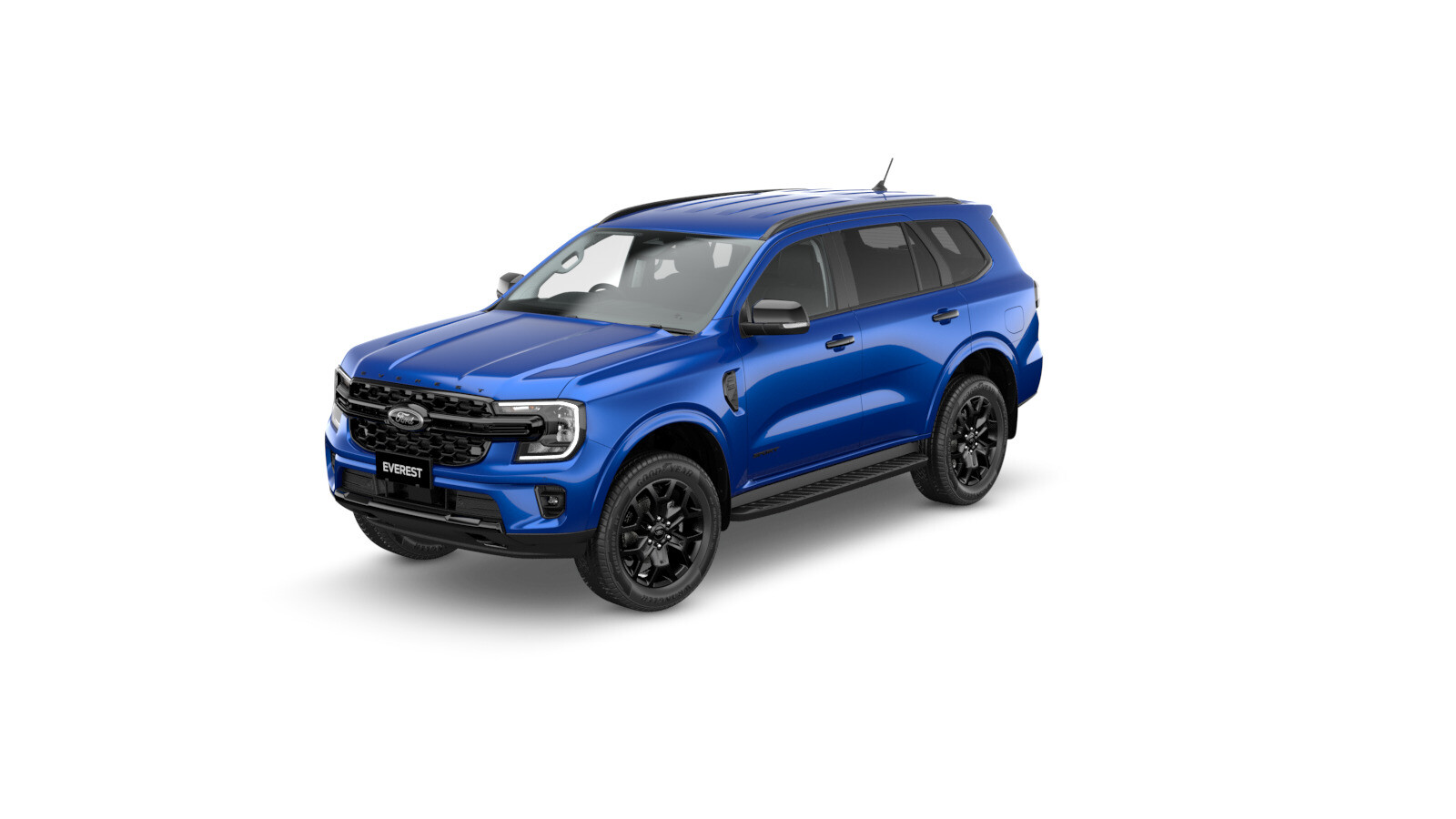
The Sport RWD now sits atop a 2WD line-up that already consists of the Ambiente ($52,290) and Trend ($60,590), with all RWD models utilising the 2.0-litre bi-turbo set-up. The Sport RWD retains its seven seats and 3500 kilogram towing capacity.
2023 Ford Everest Sport RWD features
| Black exterior finishes with black 20-inch alloy wheels |
| u2018Everestu2019 hood badge and Sport rear badge |
| Hands-free power liftgate |
| Leather-accented Sport-embossed front seats with heating/cooling |
| 10-way power driveru2019s seat with memory setting |
| 8-way power passenger seat |
| Sport-exclusive colour within Everest range: blue lightning |
“Everest Sport has proven to be a very popular model since we revealed the next-generation Everest range earlier this year,” said Andrew Birkic, President and CEO, Ford Australia.
“With the introduction of Everest Sport RWD we are offering our customers more choice, with a very stylish vehicle that can tow the boat and fit the family in safety and comfort.”
Ford has also announced a number of minor specification updates for the rest of the Everest range.

The range-topping Platinum will get steel underbody protection and a black painted roof as standard, while the Optional Touring Pack – available on Everest Trend 4WD and Sport 4WD models – will now include black stand-off roof rails, a 360-degree camera, zone lighting, a tow bar and an integrated trailer brake controller.
Production for MY23.5 models will begin in March, 2023. Until then, buyers can purchase MY23 variants at the current RRP pricing.
2023 Ford Everest pricing table
| Model | MY23 | MY23.5 | Change |
|---|---|---|---|
| Ambiente RWD 2.0L Bi-Turbo Diesel | $52,990 | $53,290 | 300 |
| Ambiente 4WD 2.0L Bi-Turbo Diesel | $57,990 | $58,290 | 300 |
| Trend RWD 2.0L Bi-Turbo Diesel | $60,290 | $60,590 | 300 |
| Sport RWD 2.0L Bi-Turbo Diesel | – | $62,790 | NEW |
| Trend 4WD 2.0L Bi-Turbo Diesel | $65,290 | $65,590 | 300 |
| Sport 4WD 3.0L V6 Turbo Diesel | $69,090 | $69,590 | 500 |
| Platinum 3.0L V6 Turbo Diesel | $76,881u02c6 | $77,530u02c6 | 649 |
2023 Ford Everest options pricing
| Options | MY23 | MY23.5 |
|---|---|---|
| 4WD Trend / Sport Touring Pack | $1950 | $2300 |
| Towing Pack | $1700 | $1700 |
| Trend Premium Seat Pack | $900 | $900 |
| Ambiente third row | $950 | $950 |
| 4WD Ambiente 18-inch wheel and A/T Tyre Pack | $1100 | $1100 |
| 4WD XLT A/T tyres | $500 | $500 |
| 4WD Sport 18-inch wheel and A/T Tyre Pack | NCO | NCO |
| Platinum 18-inch wheel and A/T Tyre Pack | NCO | NCO |
| Prestige paint | $675 | $700 |
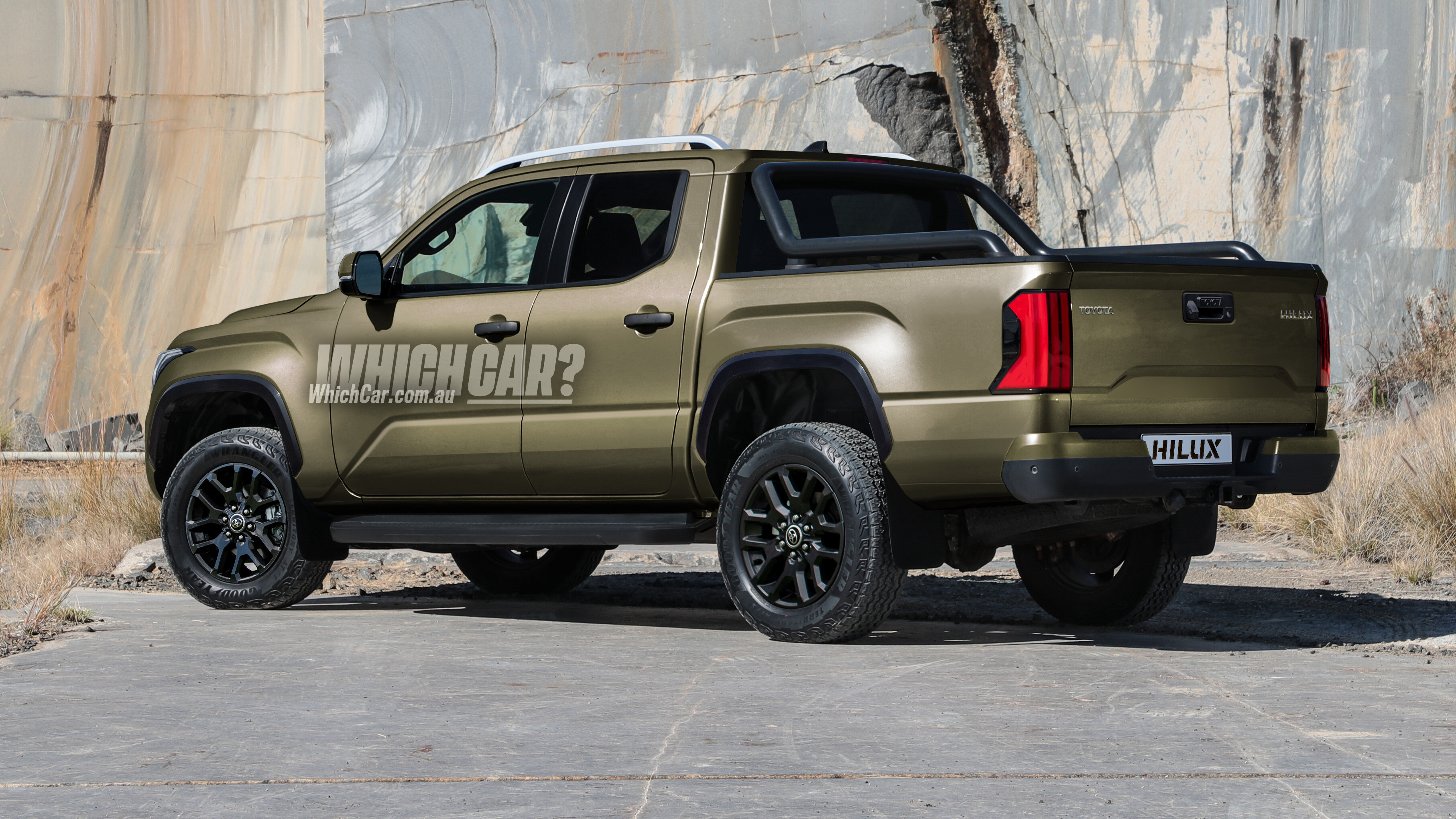
UPDATE, February 2023: New Tacoma-inspired HiLux imagined in new renderings
The next HiLux is rumoured to share its underpinnings with American pick-ups – and if it looks like this, it’ll be off to a good start. Full story and images at the link below.
Story continues…
November 21: 2023 HiLux Rogue driven
We’ve now had the chance to take the refreshed 2023 Toyota HiLux Rogue out for a proper off-road bash. Get Matt’s review at the link below, or continue reading here for pricing and specs details.
October 26: Fresh 2023 Toyota HiLux Rogue photos
We’ve added some better off-roading photos of the new wider-flared HiLux Rogue to this story, to give you a better idea of how it looks. Watch for our review to come in early November.
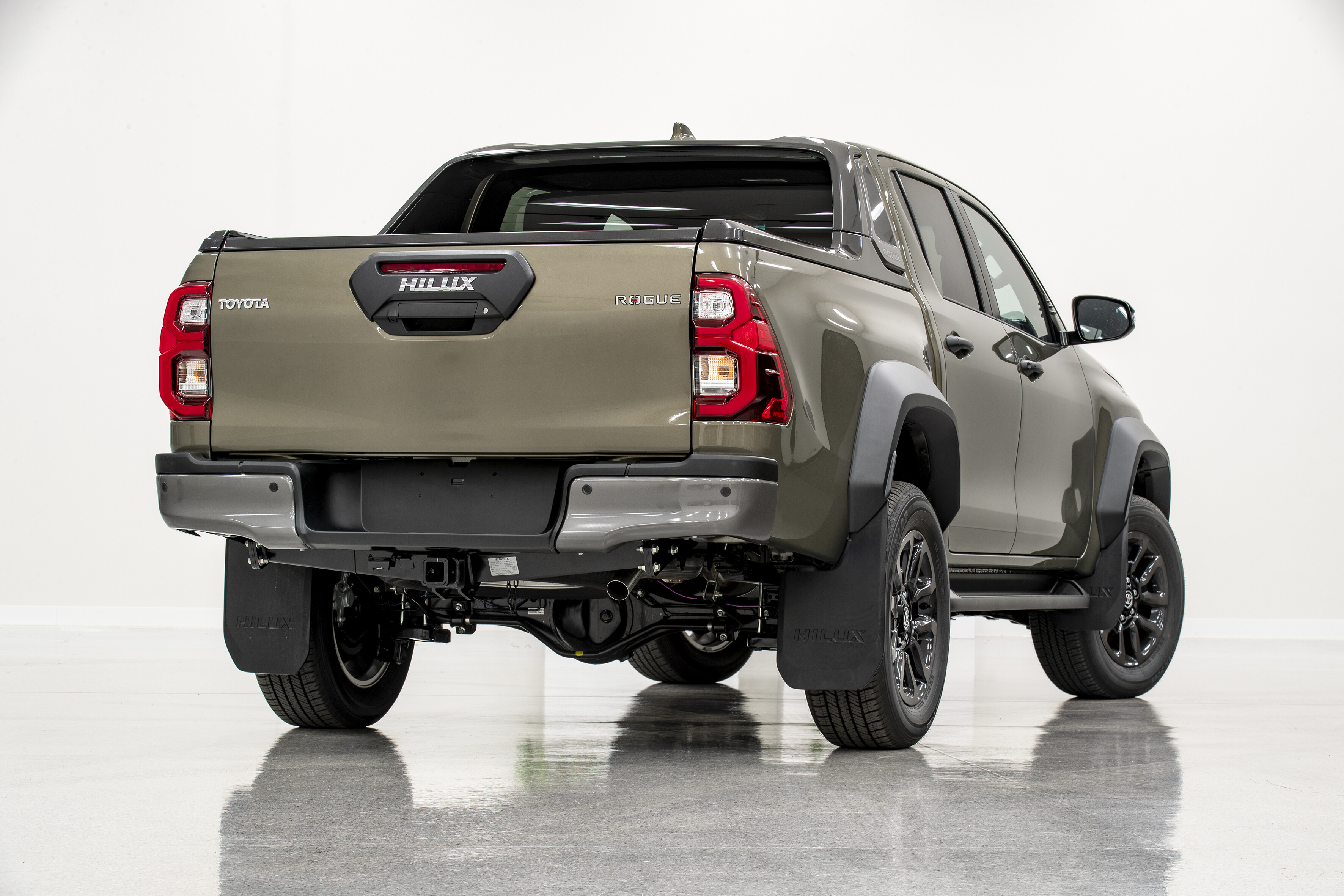
The updated 2023 Toyota HiLux Rogue is priced again from $70,200 before on-road costs, marking no increase over the MY22 model.
While you’re here, make sure you hit up our MY23 HiLux reviews at the links below, and our big 2022 Dual-Cab Ute Comparison: Daily Living Test.
The story to here: 2023 HiLux pricing announced
Snapshot
- 2023 Toyota HiLux Rogue gains wider body, no price change
- 360-degree camera, rear cross-traffic and blind-spot alert for SR5 dual-cab
- Updated model to arrive in October; flagship GR Sport coming H2 2023
JUMP AHEAD
September 6: The updated 2023 Toyota HiLux Rogue will arrive in local showrooms next month, with no change to pricing at $70,200 before on-road costs.
A full list of changes for the HiLux Rogue is available below, with highlights including; a front and rear track increase, rear disc brakes, updated suspension, a rear stabiliser bar, heated front seats with perforated leather upholstery, a panoramic view monitor and larger 18-inch alloy wheels.
Toyota Australia has confirmed buyers will be offered the choice of a six-speaker audio system for a $750 discount, bringing the Rogue below the $70,000 mark for a short period of time as a “temporary strategy to secure continued supply of HiLux Rogue for customers.”
Upgrade your Hilux
-
Bullbars
-
Underbody Protection
-
4X4 Tyres
-
Canopies
-
Roof Racks
-
Storage
As standard, the HiLux Rogue features a nine-speaker JBL-branded system, with audio units one of many components affected by the semiconductor shortage that continues to affect the entire automotive industry, leading to extended wait times.
There are nine paint colours available for the Rogue, which include: glacier white, frosted white, silver sky, graphite, eclipse black, nebula blue, feverish red, Saturn blue and oxide bronze.
Read our story below for a full run-down on the 2023 Toyota HiLux range, including pricing for mainstream variants, and the new flagship GR Sport model set to join the line-up in the second half of next year.
August 24: HiLux GR Sport grade added to lineup
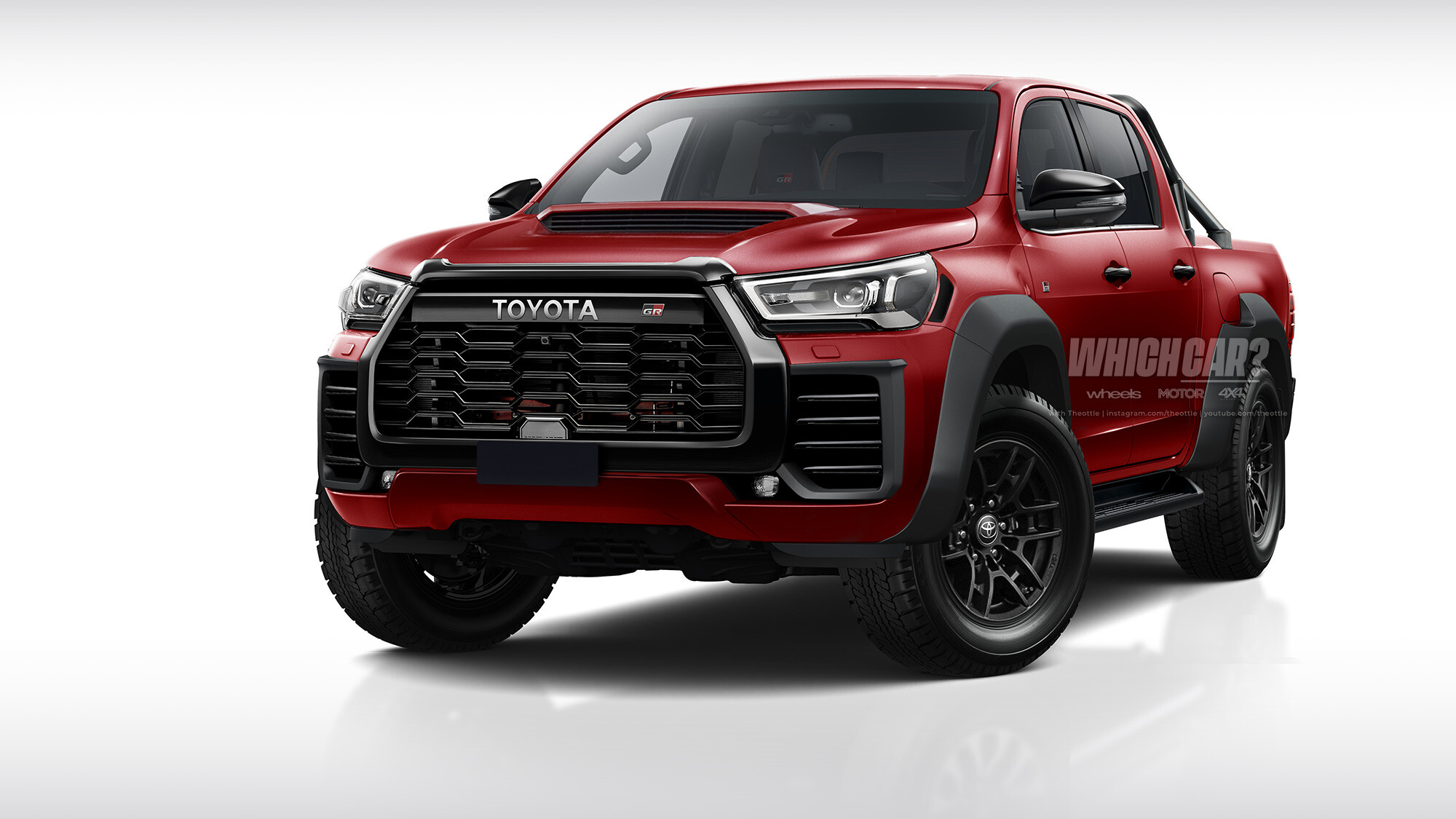
Toyota Australia has confirmed a new hardcore halo variant for the 2023 HiLux range, with the all-new off-road focused GR Sport set to be introduced in the second half of 2023.
Replacing the Rugged X as the flagship off-road vehicle of the HiLux range, Toyota says it will announce further details on the GR Sport closer to its local launch next year.
The GR Sport was revealed in Europe at the beginning of this year, and is already available in Japan, South Africa and Thailand too.
The most powerful version is the South African, which boasts outputs of 165kW/550Nm from its 2.8-litre four-cylinder diesel engine – up from the current 150kW/500Nm.
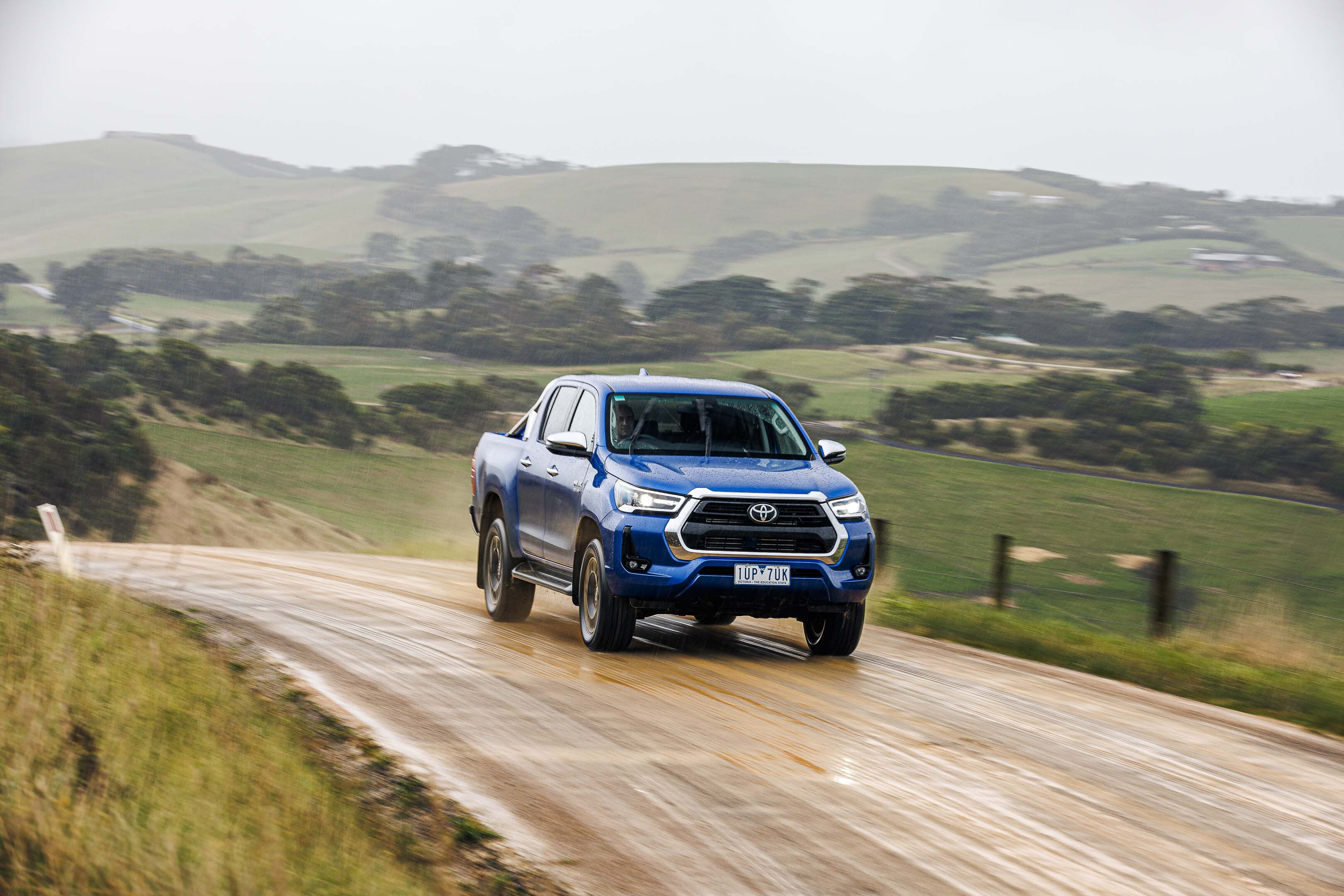
August 16: 2023 Toyota HiLux pricing confirmed
Toyota has confirmed pricing details for the updated 2023 Toyota HiLux, which is set for a fourth-quarter launch.
SR and SR5 extra-cab and dual-cab pricing has increased by $1250, while WorkMate and single-cab SR variants remain unchanged.
Meanwhile, manual versions of the WorkMate and SR Hi-Rider 2.8TD 4×2 double-cab have been deleted from the range for 2023.
The standard HiLux variants are on sale now, ahead of an October launch.
Our previous coverage, below, has been updated to reflect the latest information.
Toyota Australia has detailed updates to its best-selling HiLux ute for 2023, after the nameplate posted its highest monthly sales ever in June.
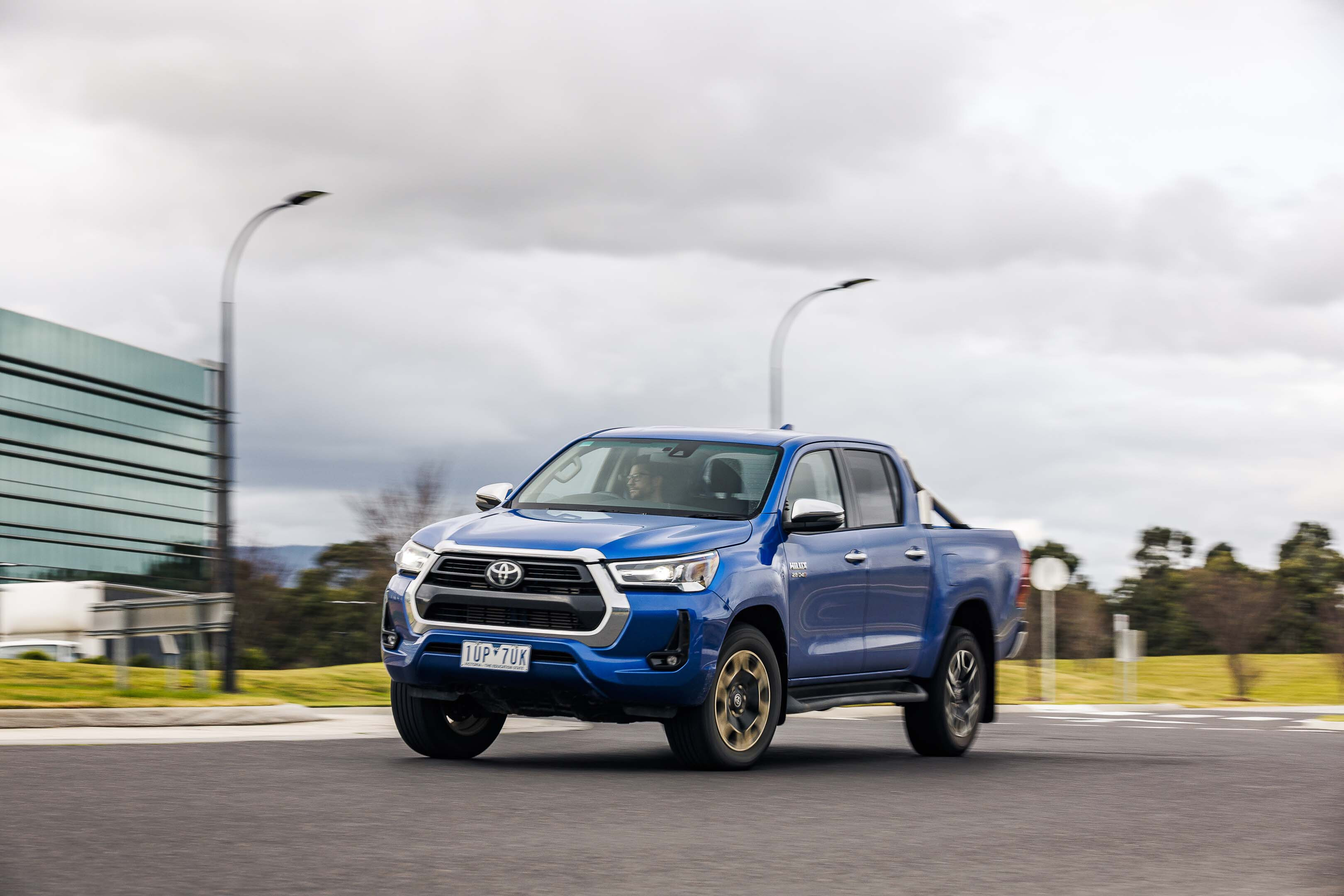
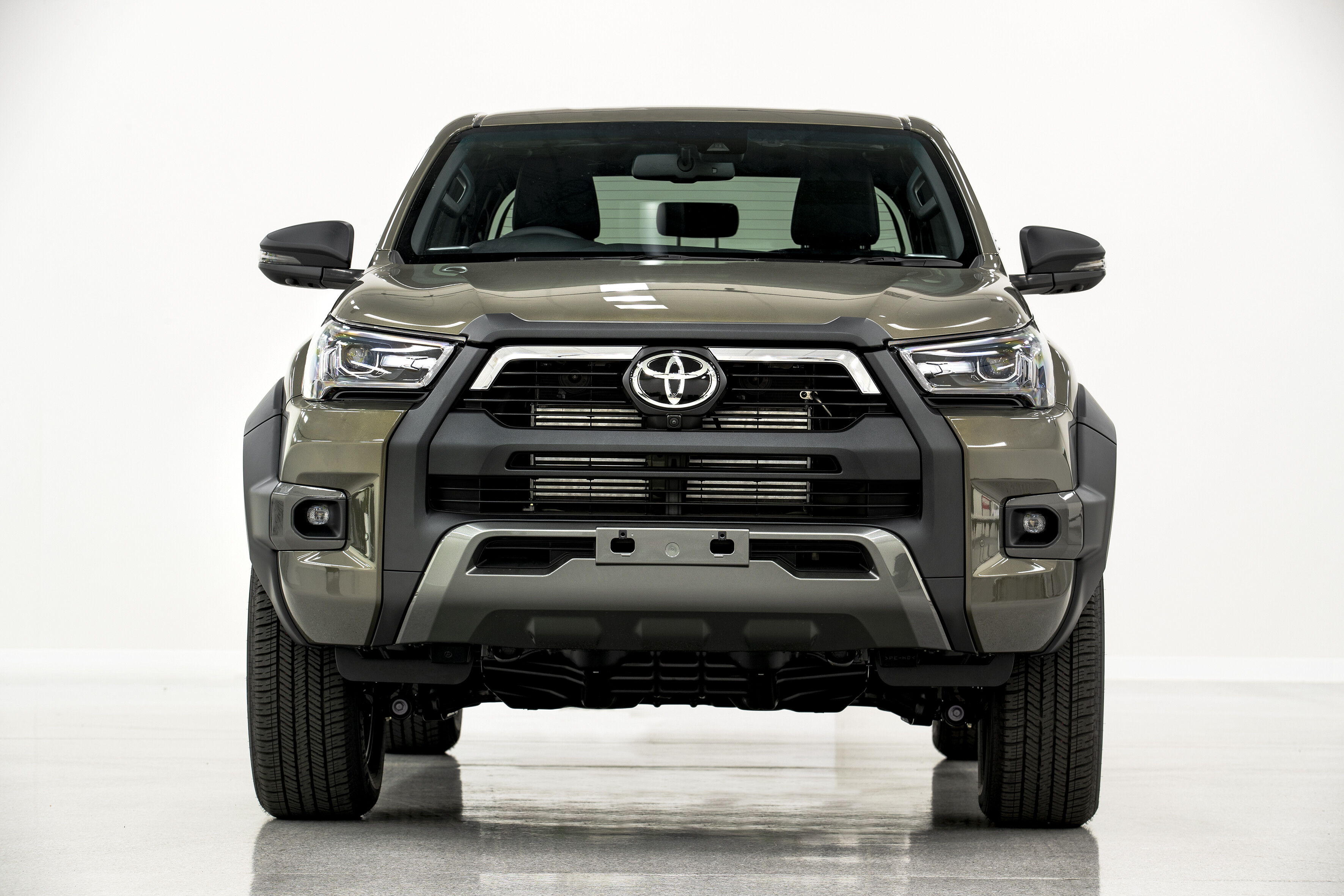
The 2023 Toyota HiLux will launch in Australia in the fourth quarter (October to December inclusive), with the range-topping Rogue receiving a wider body and a host of off-road enhancements.
A wider track and updated suspension package highlight the updated Rogue dual-cab, with an increased track of approximately 140 millimetres front and rear and a 20mm increase to ride height.
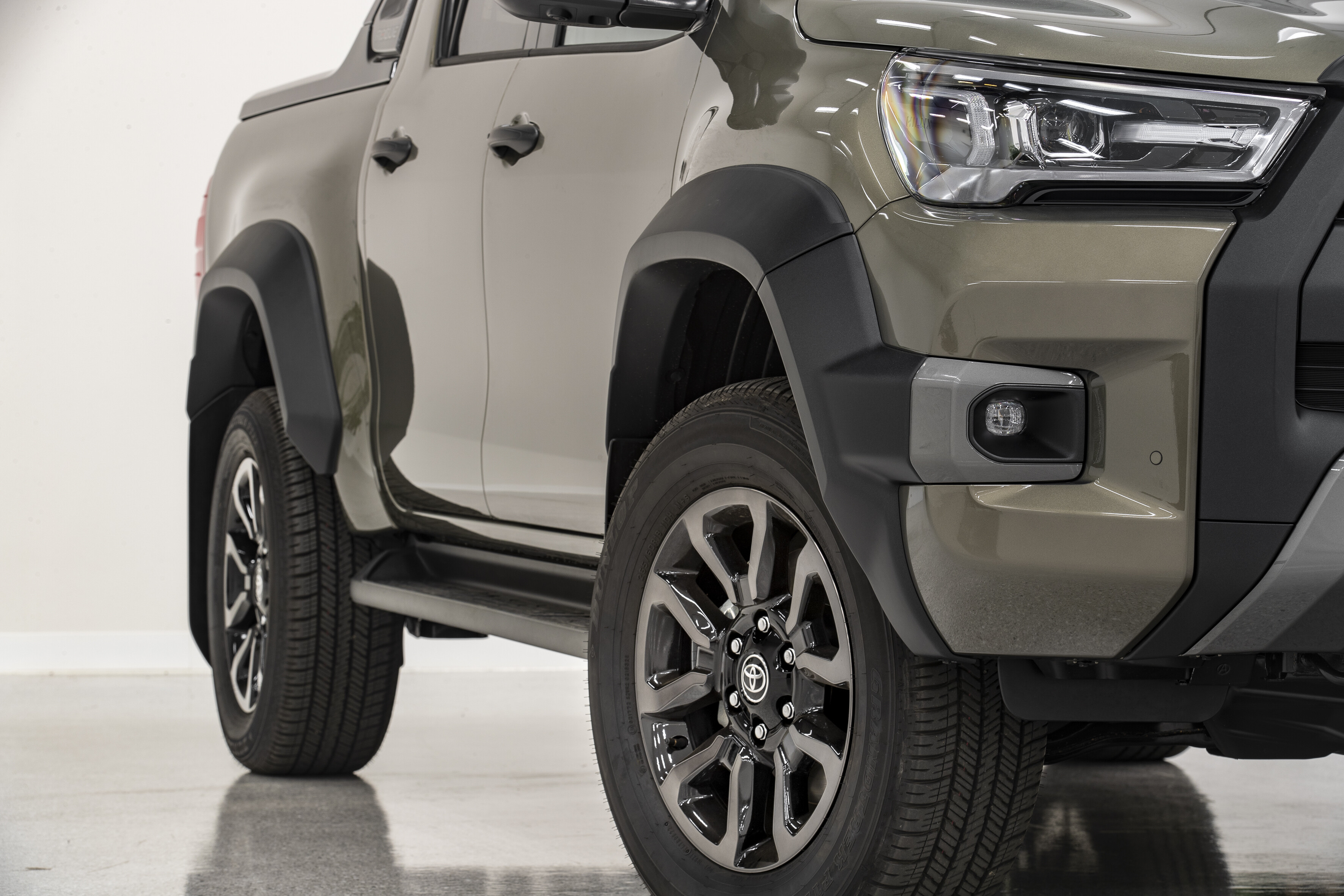
Toyota claims these enhancements will improve off-road ability and on-road performance.
To accommodate for the track increase, the suspension in the Rogue has been overhauled with extensions to the front arm and front stabiliser bar length.
Meanwhile, an adjusted shock absorber angle is said to have improved efficiency.
The rear of the Rogue is also modified, with the axle length extended, dampers moved closer to the wheels, and a rear stabiliser bar installed to ‘enhance cornering stability and ride comfort’.
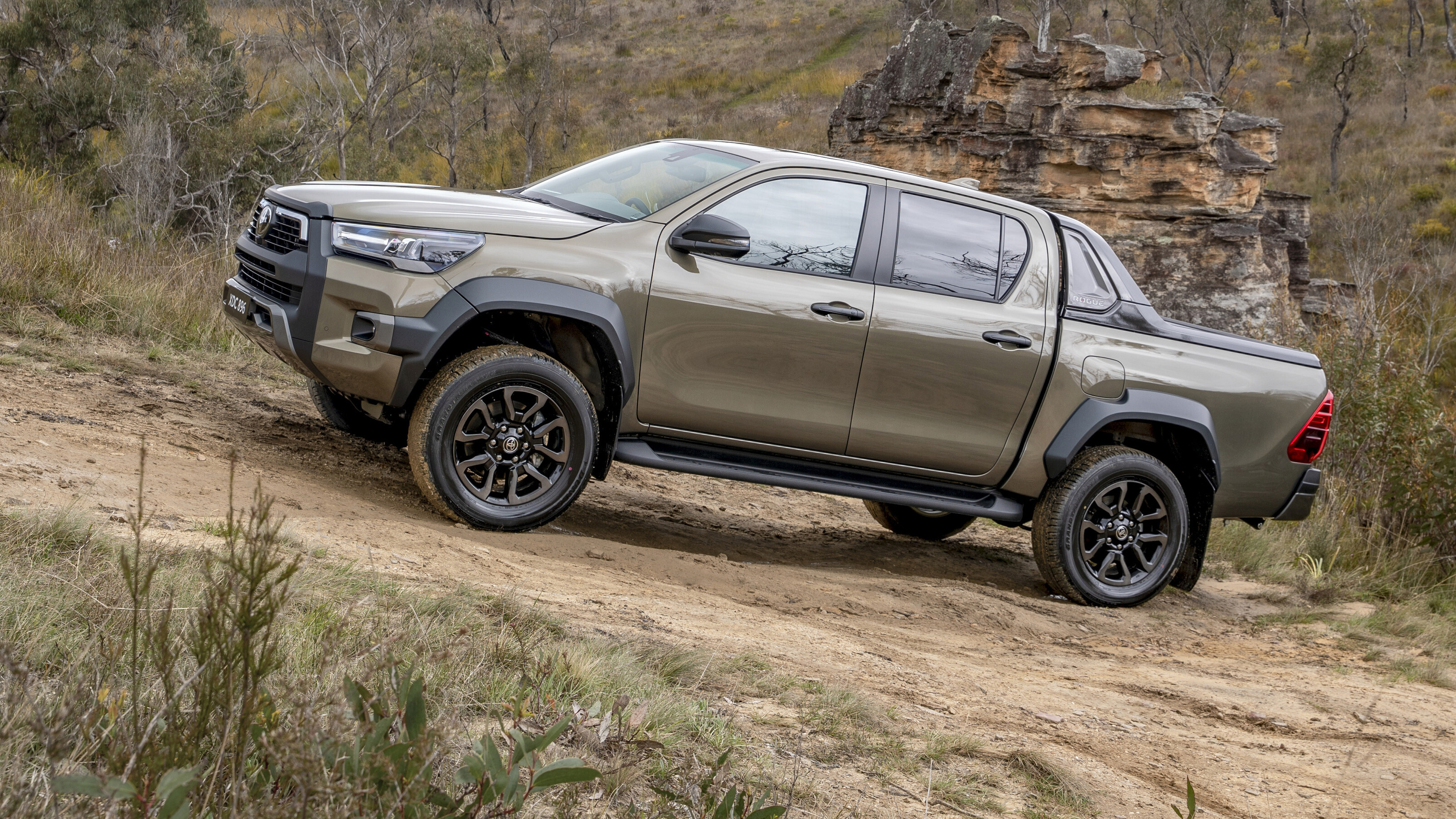
In addition, the suspension enhancements have enhanced roll rigidity by 20 per cent for a greater steering feel, particularly when cornering or changing lanes.
In a HiLux first, modern rear ventilated disc brakes will replace drum brakes – in line with the latest Ford Ranger and upcoming Volkswagen Amarok.
However, as with the Ranger, this change is limited to the top of the range, with the WorkMate, SR and SR5 to retain rear drum brakes, which date back to the beginning of the 20th century.
Other changes for the flagship Rogue include; 17-inch front disc brakes (one inch larger) and wider overfenders, mudguards and front body extension.
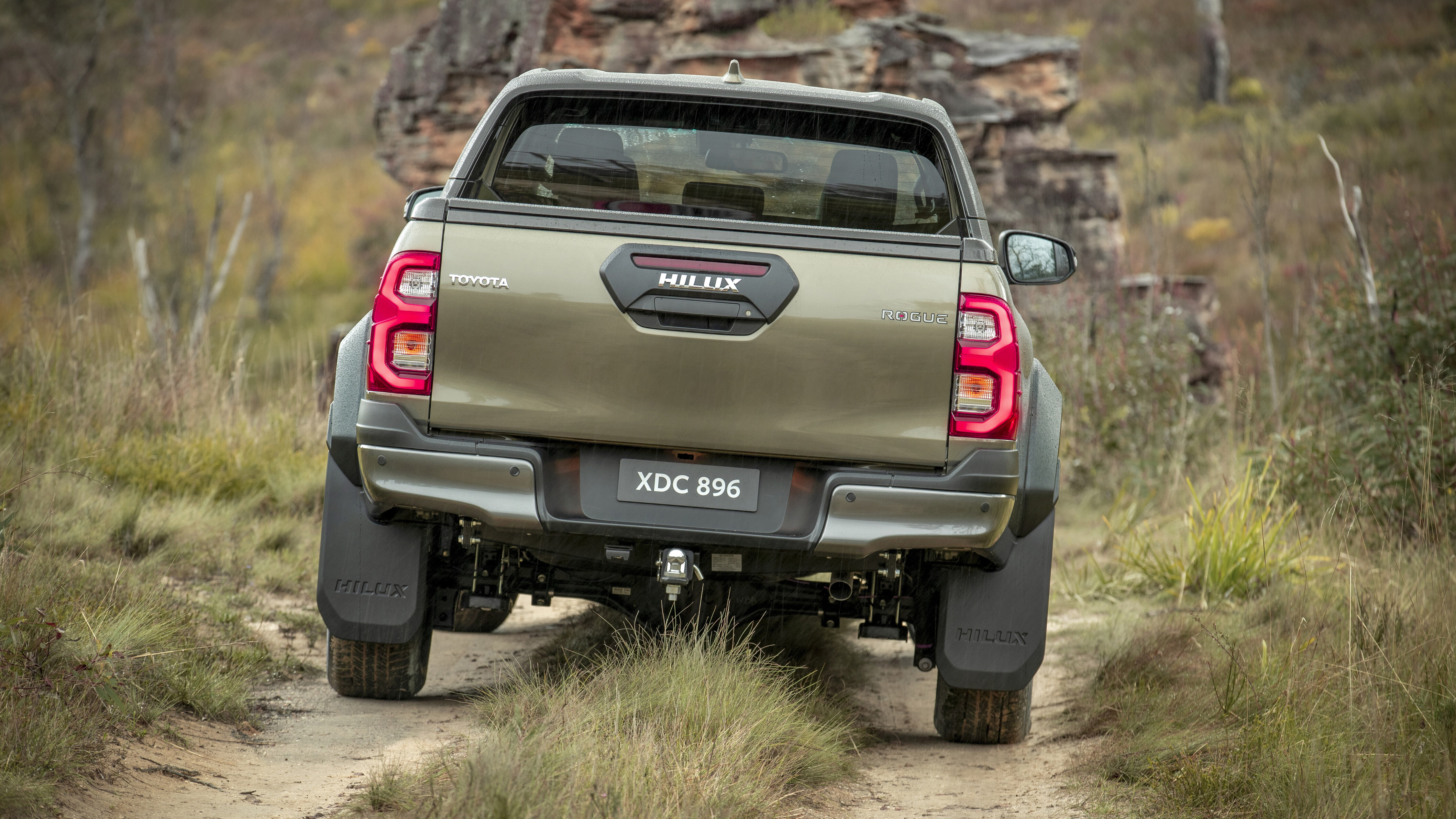
Toyota has recorded more than 17,000 sales of the locally-developed HiLux Rugged X and Rogue since 2018, with both vehicles developed to rival the Ford Ranger Raptor and Nissan Navara PRO-4X Warrior, amongst others.
However, the Japanese marque has confirmed the Rugged X is set to be discontinued for model-year 2023, with an as-yet-unnamed ‘apex’ off-road variant to take its place.
Further details for this model, including launch timing, will be announced in the coming months.
The brand has also fitted a blind-spot monitor and rear-cross traffic alert to the Rogue, joining the Isuzu D-Max and Mazda BT-50 – both of which include a radar sensor at the rear as standard across the range.
This change will extend to the SR5 dual-cab pick-up variant, which also gains a 360-degree camera and puddle lamps on the side mirrors, with the heating function deleted.
An anti-theft immobiliser, replacing a traditional steering column lock, is new for automatic SR5 and Rogue dual-cab pick-up grades.
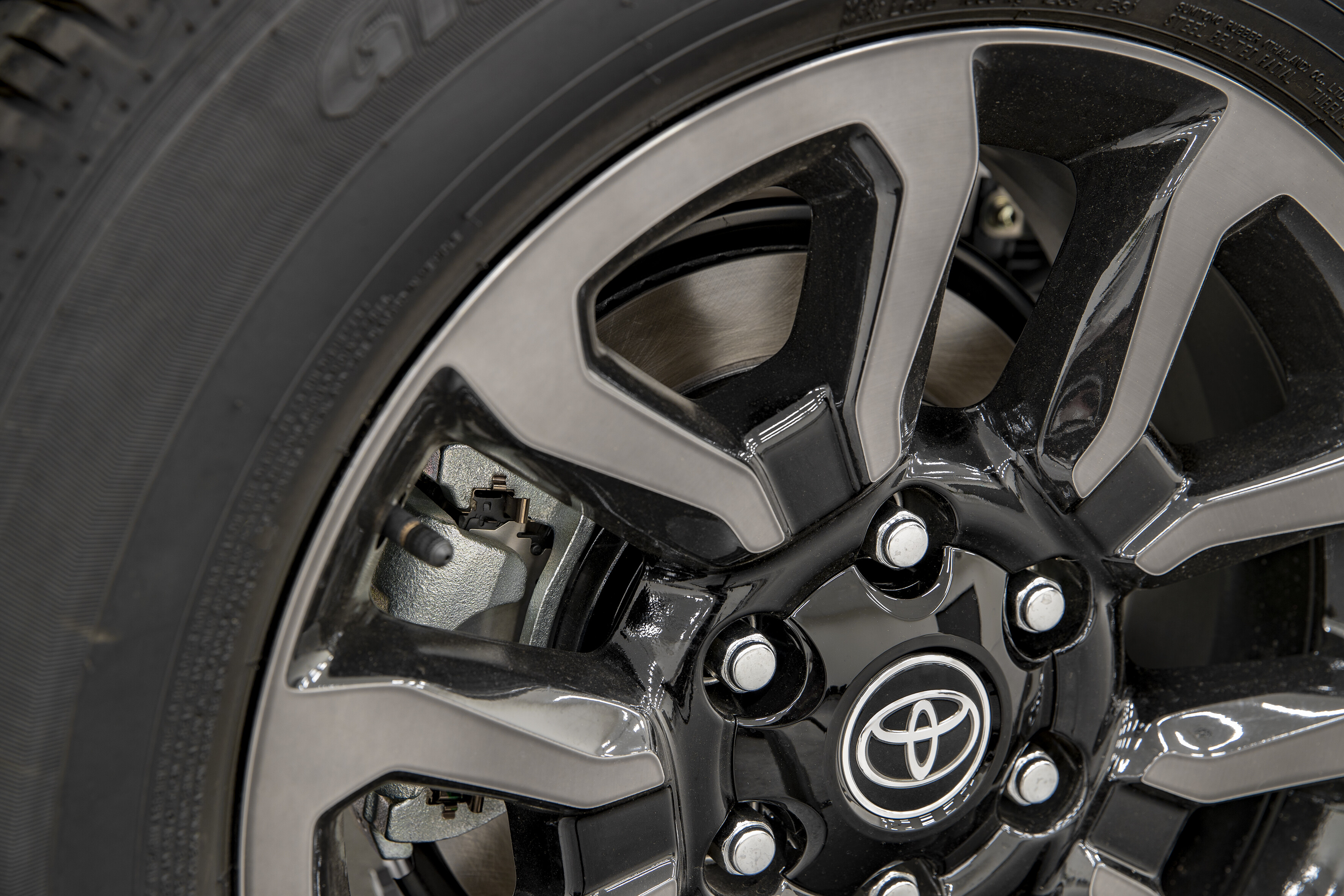
Meanwhile, the mid-spec SR will gain black 17-inch alloy wheels – replacing steel items – and body-coloured door handles, but only in extra-cab or dual-cab form.
Pricing has increased by $1250 for the updated SR and SR5 variants.
Single-cab versions – available in WorkMate and SR – retain the HiLux’s pre-facelift styling, with 16-inch steel wheels and a plastic front bumper.
When will the 2023 HiLux be on sale in Australia?
The updated 2023 Toyota HiLux range will launch in Australia in October.
It is shaping up to be a jam-packed second half of the year for Toyota Australia, with updates to the Yaris, Yaris Cross, Corolla, C-HR, RAV4, Camry, GR Supra, HiAce and, now, HiLux.
These updates will be joined by the Corolla Cross small SUV, and autonomous emergency braking and an increased GVM for the LandCruiser 70 Series.
Official 2023 Toyota HiLux Rogue specifications
| DIMENSIONS | |
|---|---|
| Length | 5320mm |
| Width | 2020mm |
| Height | 1870mm |
| Wheelbase | 3085mm |
| Front/rear tracks | 1670/1705mm |
| Front overhang | 982mm |
| Rear overhang | 1254mm |
| Angle of Approach | 31 degrees |
| Angle of Departure | 23 degrees |
| Kerb weight (max) | 2256kg |
| Payload (max) | 794kg |
| GVM | 3050kg |
| Ground clearance (unladen) | 265mm |
| Towing unbraked | 750kg |
| Towing braked | 3500kg |
| Fuel tank | 80 litres |
| CHASSIS | |
| Front suspension | Double wishbone with stabiliser bar |
| Rear suspension | Leaf spring with stabiliser bar |
| Steering gear | Rack and pinion |
| Power steering | Hydraulic, variable flow control pump |
| Turns lock-to-lock | 3.3 |
| Min. turning circle | 12.6 metres (tyre), 13.4 (body) |
| Brakes (front) | Ventilated disc: 338mm with fixed 4-cylinder calliper |
| Brakes (rear) | Ventilated disc: 312mm with floating 1 cylinder calliper |
| Wheels and tyres | Rogue 265/60 R18 alloy |
| ENGINE | |
| Type | 1GD-FTV turbo-diesel |
| Cylinders | 4-cyl, in-line |
| Valve mechanism | 16V DOHC chain drive |
| Charging system | Variable nozzle ball-bearing turbo with intercooler |
| Bore x Stroke | 92.0mm x 103.6mm |
| Displacement | 2755cm3 |
| Compression ratio | 15.6:1 |
| Fuel system | High-pressure common-rail |
| Cetane number | 48 or higher |
| Maximum power | 150kW @ 3000-3400rpm |
| Maximum torque | 500Nm @ 1600-2800rpm |
| FUEL ECONOMY AND CO2 EMISSIONS | |
| Combined: litres/100km | 8.4 |
| Extra Urban: litres/100km | 7.8 |
| Urban: litres/100km | 9.3 |
| Emissions Combined: grams/km | 220 |
| Emissions Extra Urban: grams/km | 206 |
| Emissions Urban: grams/km | 245 |
| TRANSMISSION | |
| Type | 6-speed electronically controlled automatic |
| Designation | AC60F |
| 1st | 3.6 |
| 2nd | 2.09 |
| 3rd | 1.488 |
| 4th | 1 |
| 5th | 0.687 |
| 6th | 0.58 |
| Reverse | 3.732 |
| Final Drive | 3.909 |
4X4 Australia’s project builds
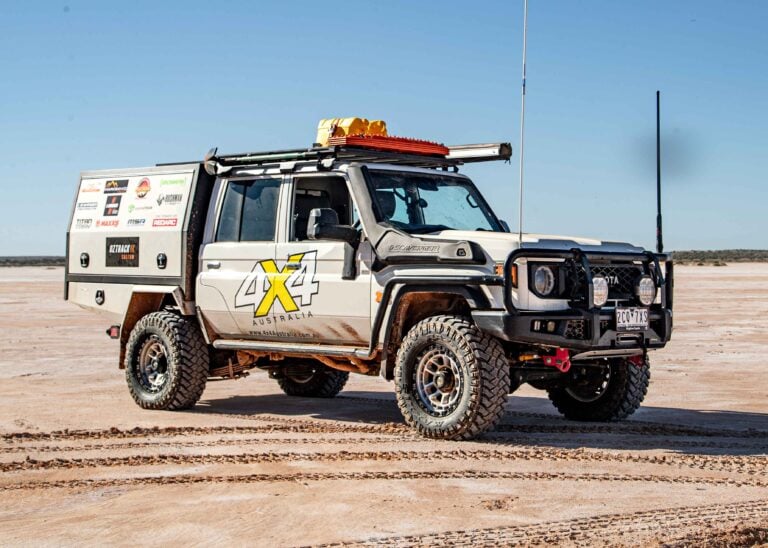
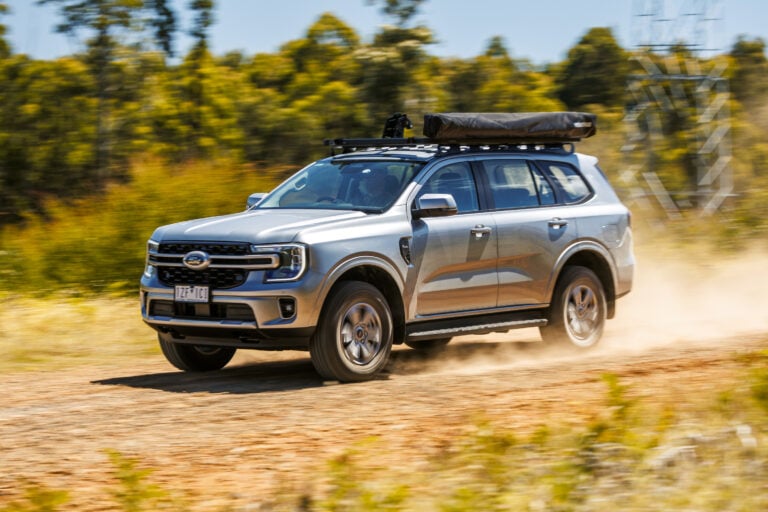
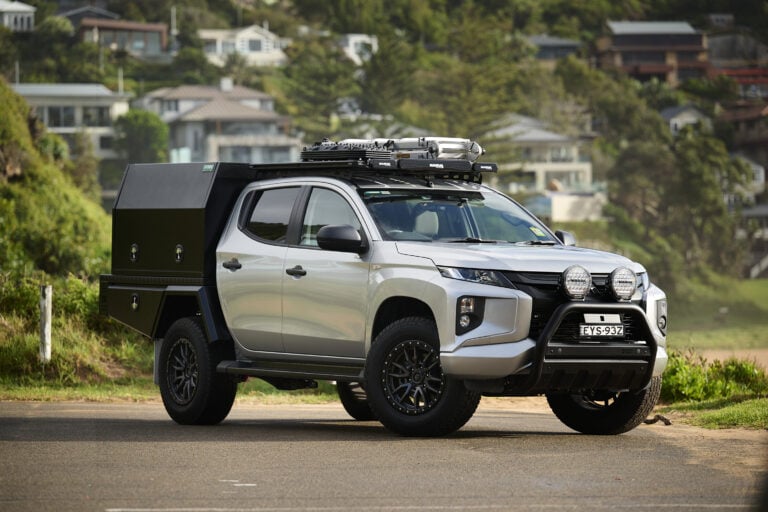
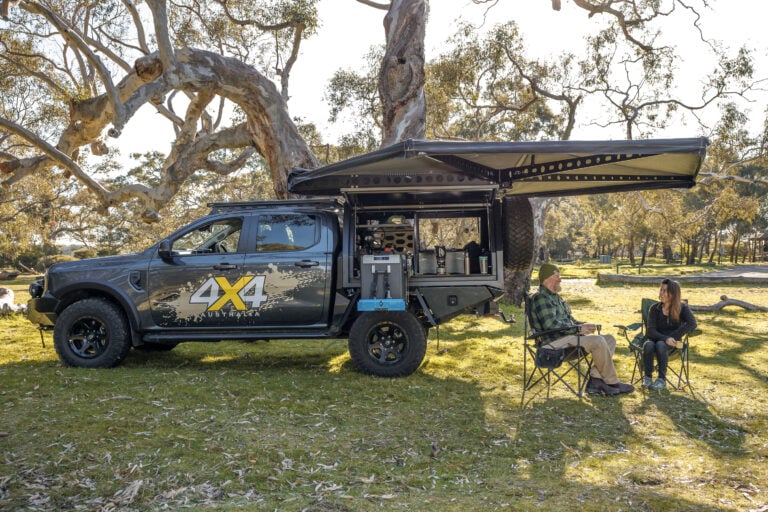
Land Rover Australia has consolidated its Defender 90 line-up for the MY23 range with just six variants available and only one of them being diesel fuelled – the D250 in S specification and we’re driving it here to reacquaint ourselves with the stubby Defender.
The D250 S starts at $95,590, but the test car is fitted with a few extras that take the price as tested up to $106,263 plus on-road costs. The extras include the Off Road Pack at $1021, the Air Suspension Pack at $1309, the Cold Climate Pack at $1481, a tow bar for $1342, and a few smaller comfort and convenience features.
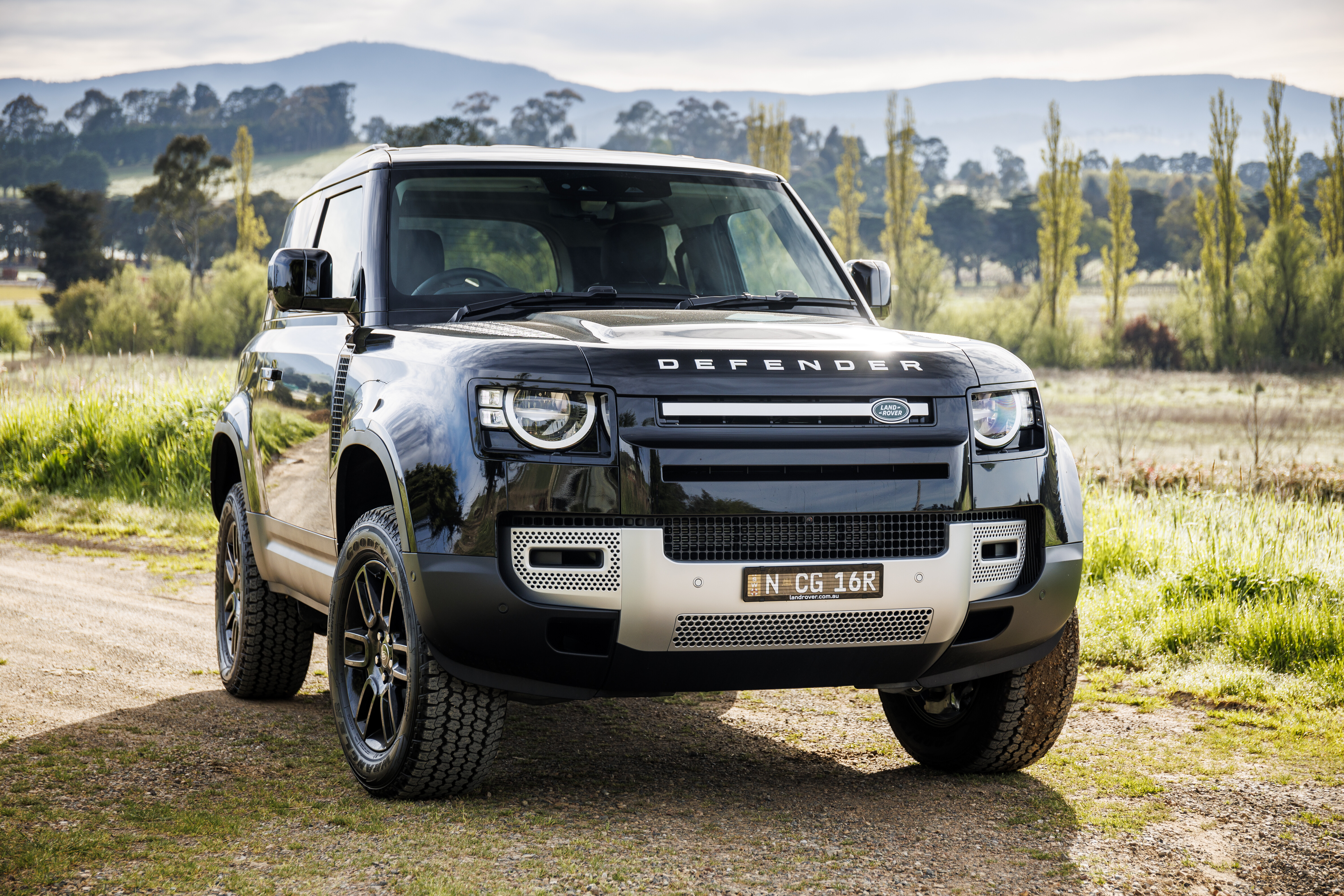
From those extras, we’d say the air suspension and the off-road packs are the only essentials for bush touring in Australia, although you could forego the Off Road Pack and simply option in the torque-vectoring, auto-locking rear differential for just $806 and you’d just be losing the black roof rails and 220V power socket in the cargo space.
Standard features on the D250 S include full-time 4×4 with a dual-range transfer case, coil-sprung suspension and the 3.0-litre, inline six-cylinder diesel engine backed by an eight-speed automatic transmission.
The list of standard safety features is long and includes dynamic stability control, electronic traction control, roll stability control, cornering brake control, hill descent control, adaptive cruise control, trailer sway control, rear traffic monitor, lane keep assist and warning, tyre pressure monitoring system, brake hold and emergency brake assist, anti-lock brakes and electronic brakeforce distribution.
Pricing
| Defender 90 P300 | $80,540 |
|---|---|
| Defender 90 S P300 | $88,470 |
| Defender 90 S D250 | $95,590 |
| Defender 90 Se P400 | $105,690 |
| Defender 90 X P400 | $145,700 |
| Defender 90 V8 P525 | $215,480 |
Powertrain
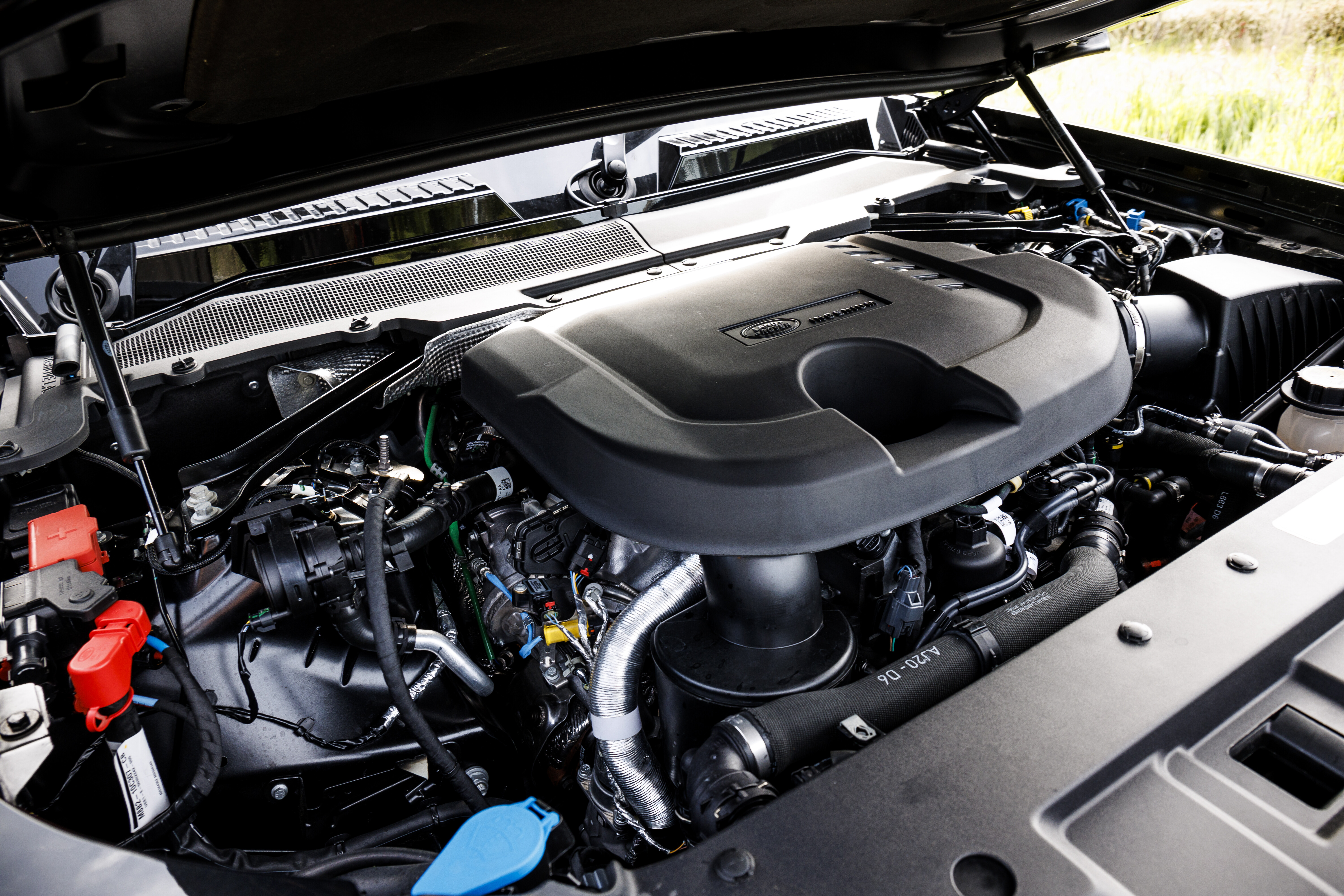
Land Rover’s ‘Ingenium’ inline-six engines are available in D250 and D300 specification across the brand’s portfolio, but only the D250 is offered in the 90. In this model, it makes 183kW of power and 570Nm of torque, plenty to punch the little Defender along at a sprightly clip on the highway or over backroads.
The twin-turbocharged diesel engine mates exceptionally well with the eight-speed transmission and well-controlled air suspension to deliver a rewarding driving experience when you want to push on, yet is equally relaxed when cruising.
Land Rover quotes the fuel usage for the D250 at 7.9L/100km combined, while we returned 9.7L/100 during our test.
The engine features what Land Rover calls a 48-volt mild hybrid system to keep its battery charged and aid the stop/start functionality, but it doesn’t propel the vehicle at all. The only indication that a driver has of its existence is the added deceleration felt when you lift off the throttle and the starter-generator is recharging the system.
Interior
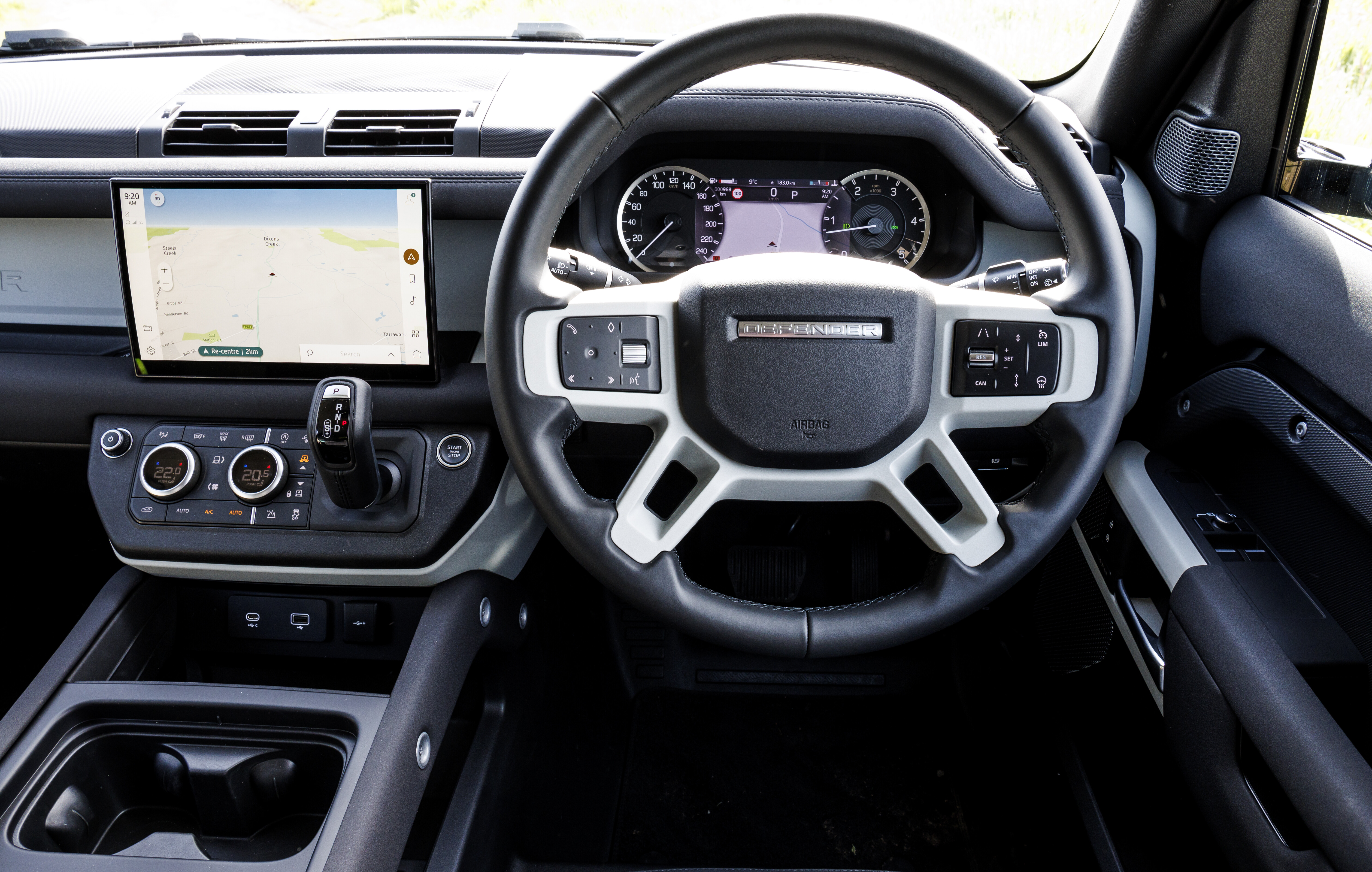
The 90 might be the shorty three-door version of the Defender range but it still offers seating for five and there’s a surprising amount of space for rear-seat passengers. The front doors are longer than those on the larger, five-door 110 Defender and the front seats tilt and slide forward to give access to the back.
It’s still an awkward squeeze for adults to clamber back there but once in the back seat, there’s plenty of legroom and headroom for two passengers. Three would be a bit of a pinch.
Standard equipment includes leather seats that are heated and partially power-adjustable in the front, a new bigger 11.4-inch touchscreen that includes satellite navigation and wireless Apple CarPlay and Android Auto, a wireless charger for compatible mobile phones, manual adjustment for height and reach on the steering column, dual-zone climate control, and USB as well as ciggie-type 12-volt power outlets. This car has optional three-zone climate control fitted, which adds rear HVAC controls to give back-seat passengers individual temperature management.
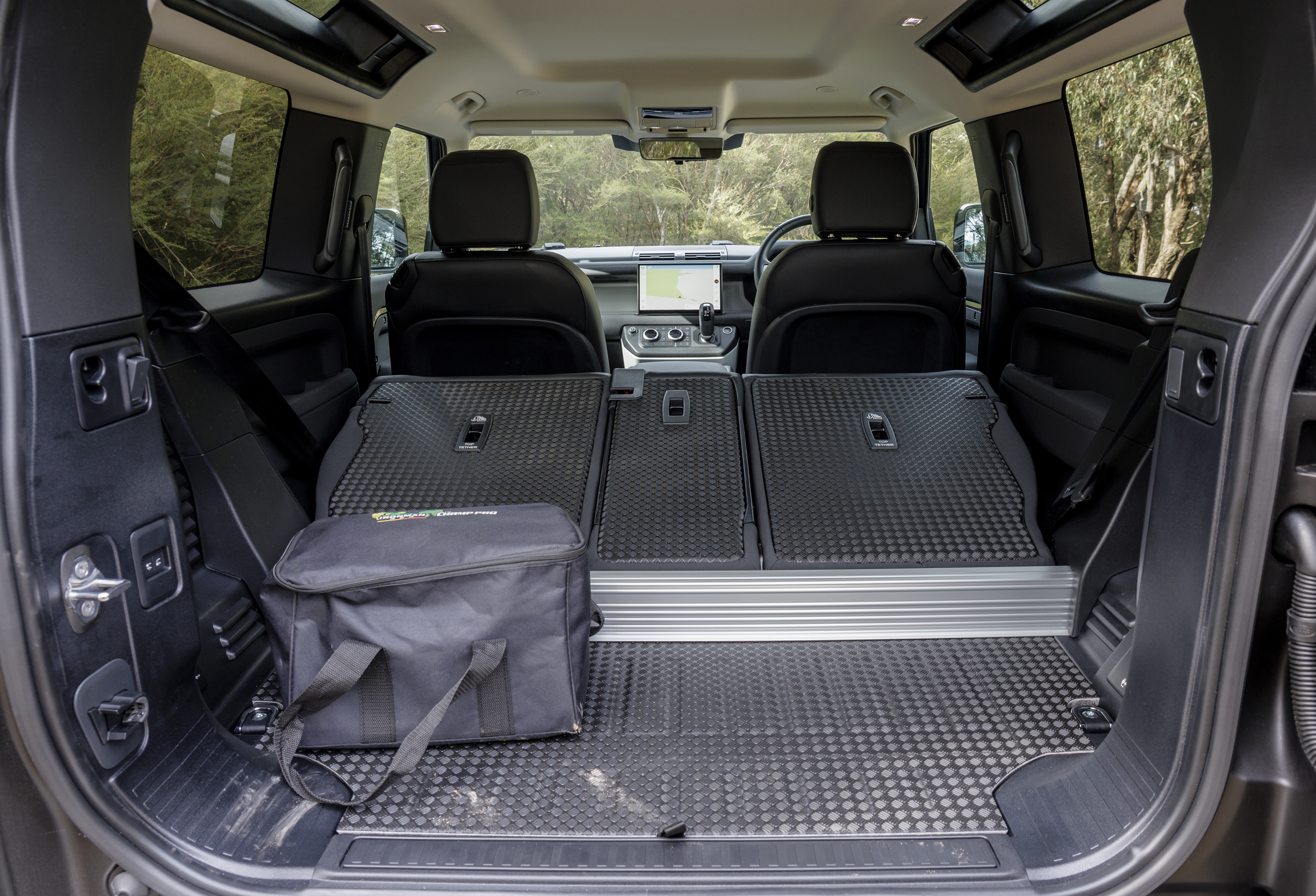
The downside of the abundant rear passenger space is a lack of space behind the back seat. It is small and the rear seats don’t fold flat to offer the most available space for cargo. There is a 12V power outlet (and the optional 220V power outlet) in the boot plus cargo tie-down points.
I feel that this rear seat is the biggest letdown of the Defender 90. Let’s face it, you wouldn’t buy the three-door model for a family vehicle and that rear seat would be used intermittently at most. What buyers of this Land Rover would better appreciate is space for their adventure gear, luggage, bicycles and so on, and the rear seat in this car really restricts that.
The commercial-grade Defender 90 Hardtop that is available in some markets does appear to have a flat rear floor with no rear seats but, along with the 110 Hardtop, it is still under consideration for Australia and yet to be confirmed.
Off-road
It wouldn’t be a Land Rover Defender if it didn’t have good off-road chops and while these new models don’t have the live axles of classic Landies, they don’t fall back when off-road and do it in a lot more comfort.
The low-range gearing is deep, providing ample control and drive when going up steep, rutted climbs and handy engine braking on descents. The independent suspension does pick up front wheels easily but the calibration of the electronic traction control is fast and responsive to get the drive to the wheels that can use it best. The electronic torque-vectoring rear differential helps here too.
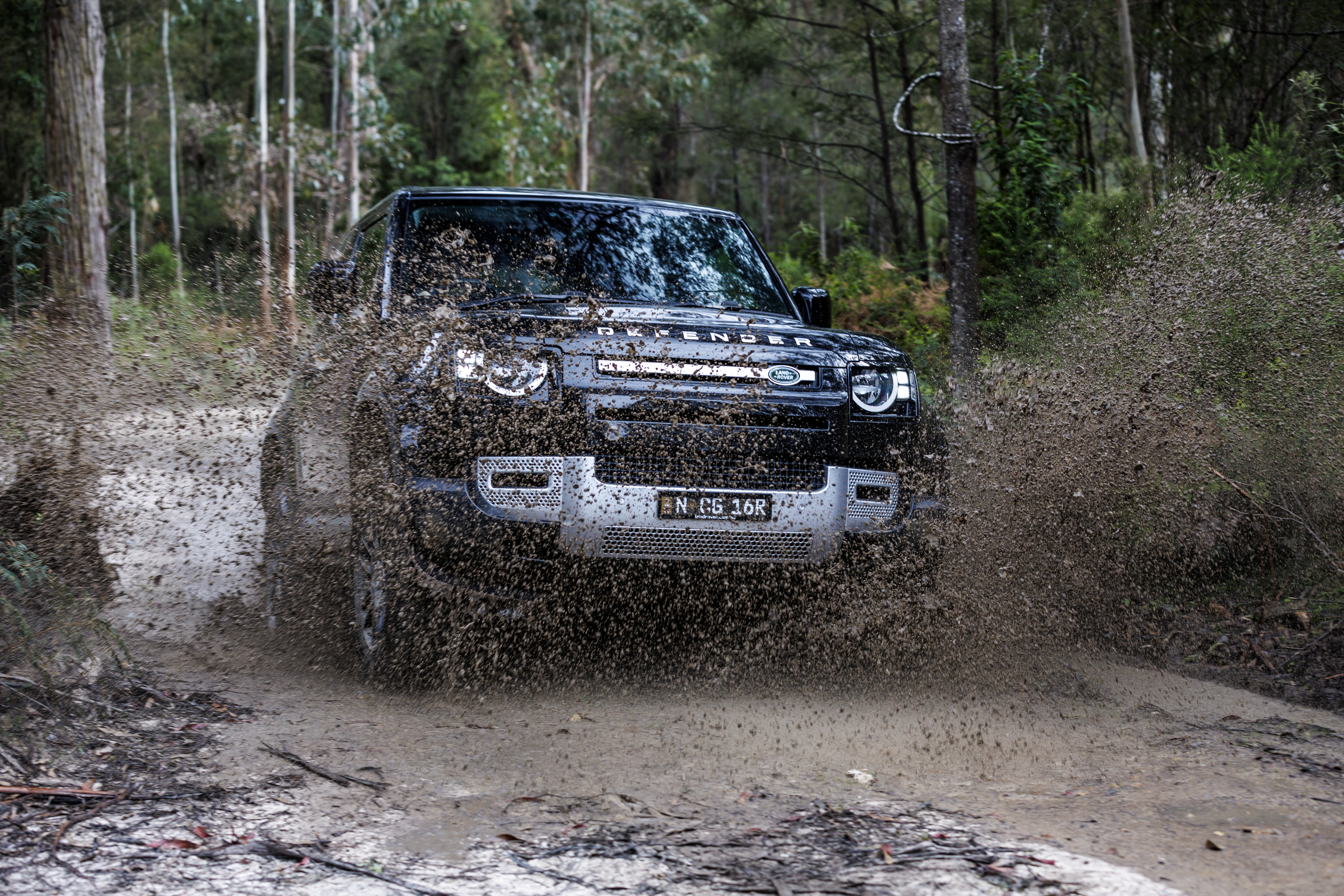
Land Rover’s All Terrain Progress Control is not standard on the S variant but you can add it as part of an optional package. This is like low-speed cruise control for off-road driving; its ability to get the car over gnarly terrain and soft sand is amazing.
Terrain Response is standard on the D250 S and it offers optimised chassis control systems for different road conditions such as sand, mud/ruts and snow. Terrain Response 2 and programmable Terrain Response are available within option packages.
Like all Land Rovers, visibility from the driver’s seat around the Defender 90 is excellent and the driver is aided by 360-degree cameras including a forward-facing camera.
Practicalities
While there is a huge list of factory options and packages for the Defender, the number of off-road accessories is limited. The models are not well-supported by the aftermarket either and choices for touring items like a bullbar are restricted.
But as the model gets older, the range on offer is expanding from global suppliers if you look hard enough. There’s certainly enough kit around to turn the 90 into a wicked little touring 4×4.
Sorting out the rear seat to maximise the cargo capacity is the real limit to the practicality of the little Landy. Replacing the rear seat with a flat floor would be the best solution.
The standard tyre size is 255/65 R19 but you can fit an 18-inch wheel to Defender S models. That should allow a decent 275/70 tyre to fit and be better for off-road use. You can fit 18-inch wheels to the D250 S in either alloy or steel as a no-cost option. There is a massive range of alloy wheel options offered on the Defender 90, right up to ludicrous 22-inch diameter rollers.
With the air suspension raised to its off-road height, you get plenty of ground clearance although the ride does become a bit choppy with it up there. Still, it’s not unbearable and I found myself driving it raised all the time.
The Defender has front and rear recovery points, although the front one is hidden behind a panel that you need to remove before heading off-road so you can access it if and when you need it.
VERDICT
The Defender 90 is a super cool-looking wagon and its smaller size – we couldn’t call it compact – makes it easier to fit in tight spots be they street parking in the suburbs or negotiating tight bush tracks.
The second-row seat is surprisingly usable but a bit awkward to access and not a space where you’d want to be putting passengers every day. The biggest gripe with the rear seat, and the car as a whole, is that it takes up a lot of room in a vehicle with limited space. For some users, myself included, that space would be better utilised for cargo or luggage and not passengers.
At around $100K, depending on what options you chose, the Defender is not a cheap car either and you’re not actually saving much when compared to the more practical Defender 110 five-door.
The bigger wagon might be still cool looking but nowhere near as stylish as the 90. How much are you prepared to sacrifice for style over substance?
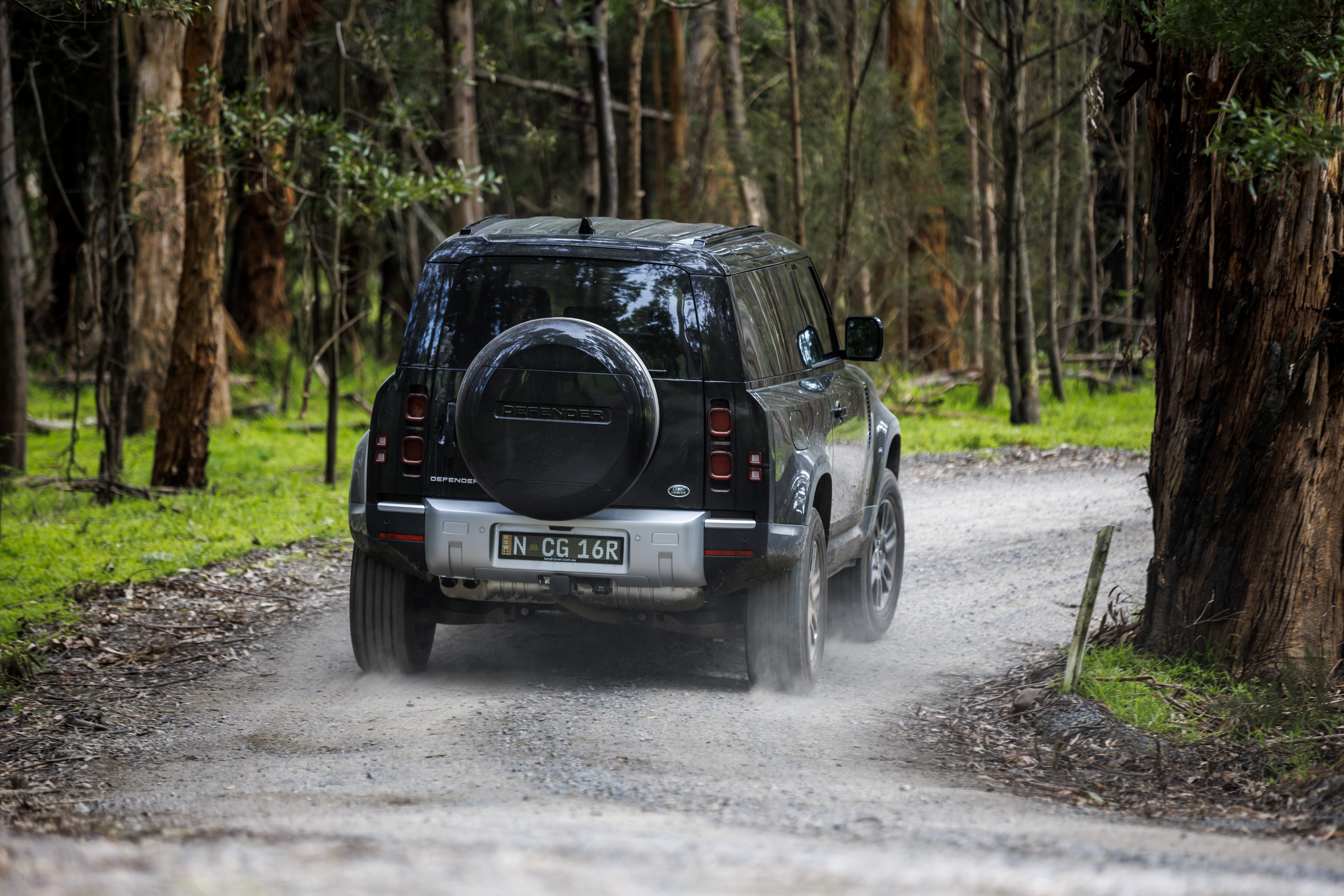
2022 Land Rover Defender 90 D250 S specs
| 4×4 System | full-time, dual-range |
|---|---|
| Crawl Ratio | 53.34:1 |
| Construction | 3-door monocoque wagon |
| Front Suspension | height-adjustable air |
| Rear Suspension | height-adjustable air |
| Tyres/Wheels | 255/65 R19 / alloy |
| Weight | 2303kg |
| GVM | 2970kg |
| GCM | 6470kg |
| Towing Capacity | 3500kg |
| Payload | 667kg |
| Seats | 5 |
| Fuel Tank | 89L |
| Fuel Consumption (ADR) | 7.9L/100km |
| Fuel Consumption (tested) | 9.7L/100km |
| Approach Angle | 37.5u00b0 |
| Rampover Angle | 30.7u00b0 |
| Departure Angle | 40.0u00b0 |
| Ground Clearance | 290mm (raised) |
| Wading Depth | 900mm (raised) |
Pricing
| Defender 90 P300 | $80,540 |
|---|---|
| Defender 90 S P300 | $88,470 |
| Defender 90 S D250 | $95,590 |
| Defender 90 Se P400 | $105,690 |
| Defender 90 X P400 | $145,700 |
| Defender 90 V8 P525 | $215,480 |
All prices before on-road costs
The Wheels take
Snapshot
- 2023 Isuzu D-Max pricing and features
- New-look alloy wheels, grille, and paint finishes
- Expanded availability for 1.9-litre turbo-diesel
Isuzu Ute Australia has detailed minor running changes for the D-Max ute for 2023.
The 2023 Isuzu D-Max will arrive in Australian showrooms from December 1, 2022, with pricing unchanged following adjustments earlier this year.
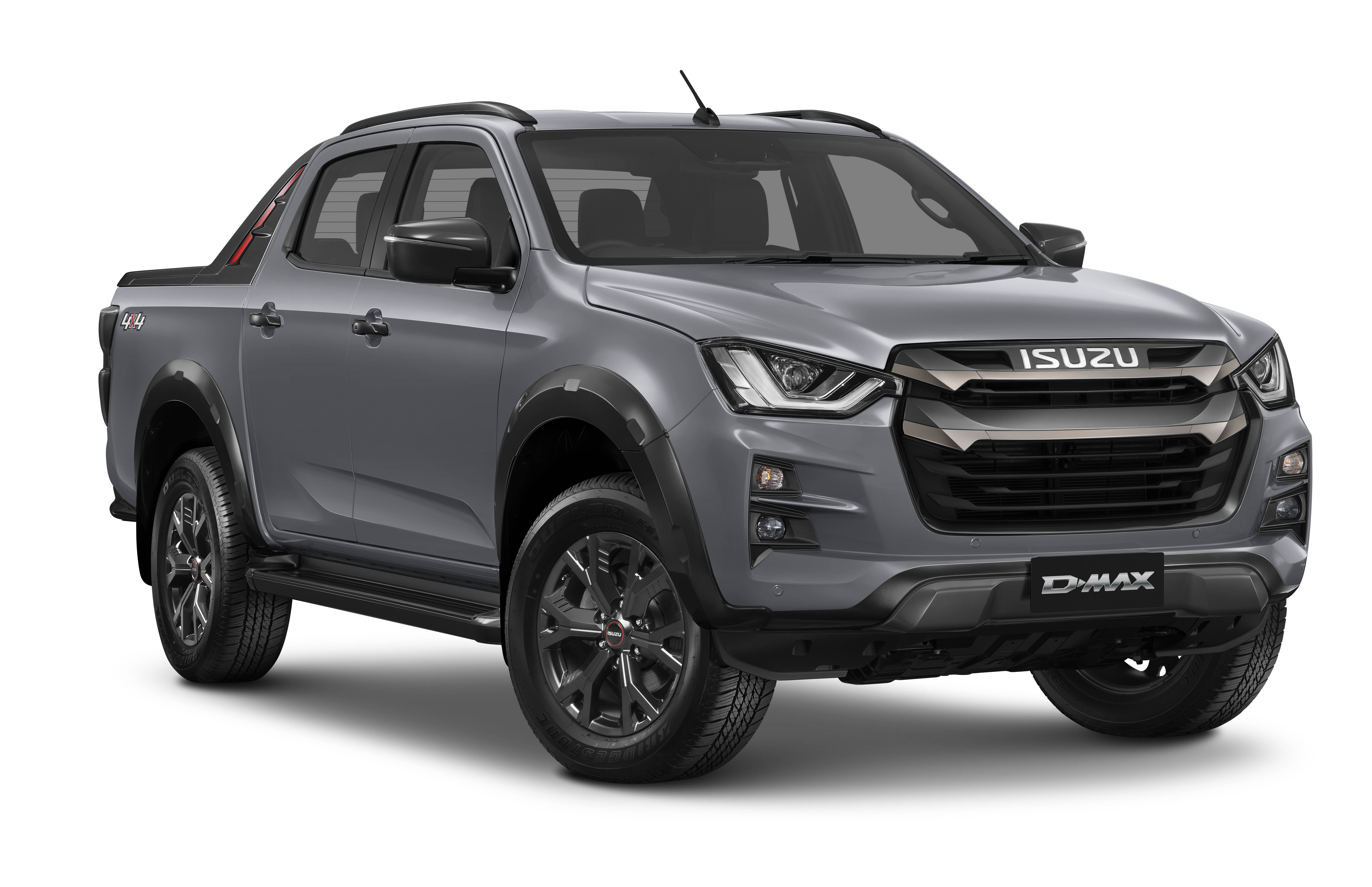
Headlining the changes is wider availability of the entry-level 1.9-litre turbo-diesel engine – introduced last year and now offered with three new dual-cab SX variants: a 1.9-litre 4×2 cab chassis and ute, and a 4×4 ute.
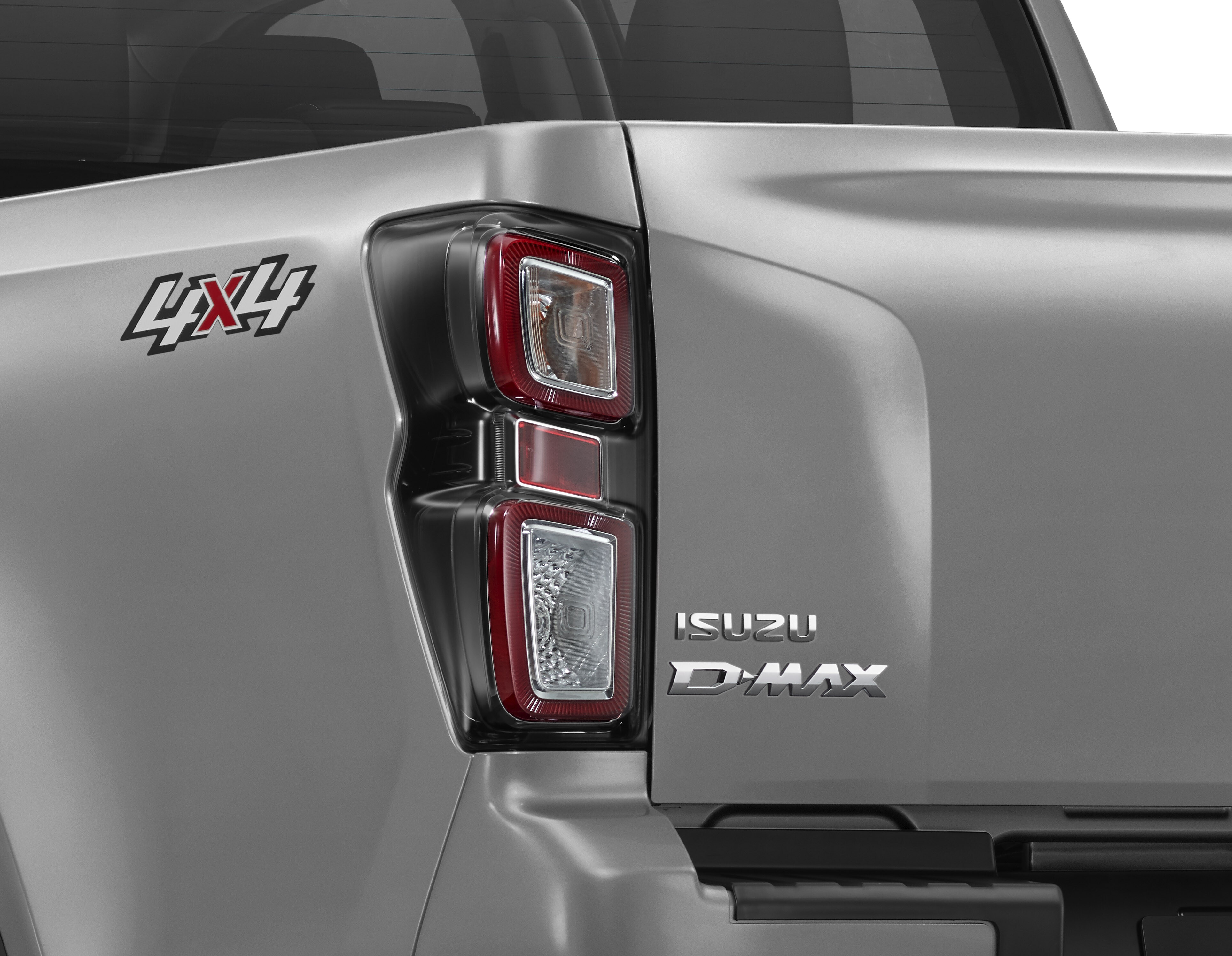
There’s also new-look alloy wheels, a redesigned grille, fresh trim and paint finishes, and a tailgate gas strut for tubbed ute models.
Another key update is the addition of auto-off blind-spot alert and rear-cross traffic alert when a towing connector/plug is detected – in contrast to the Ford Ranger’s trailer-ready system.
Upgrade your D-MAX
-
Bullbars
-
Underbody Protection
-
4X4 Tyres
-
Canopies
-
Roof Racks
-
Storage
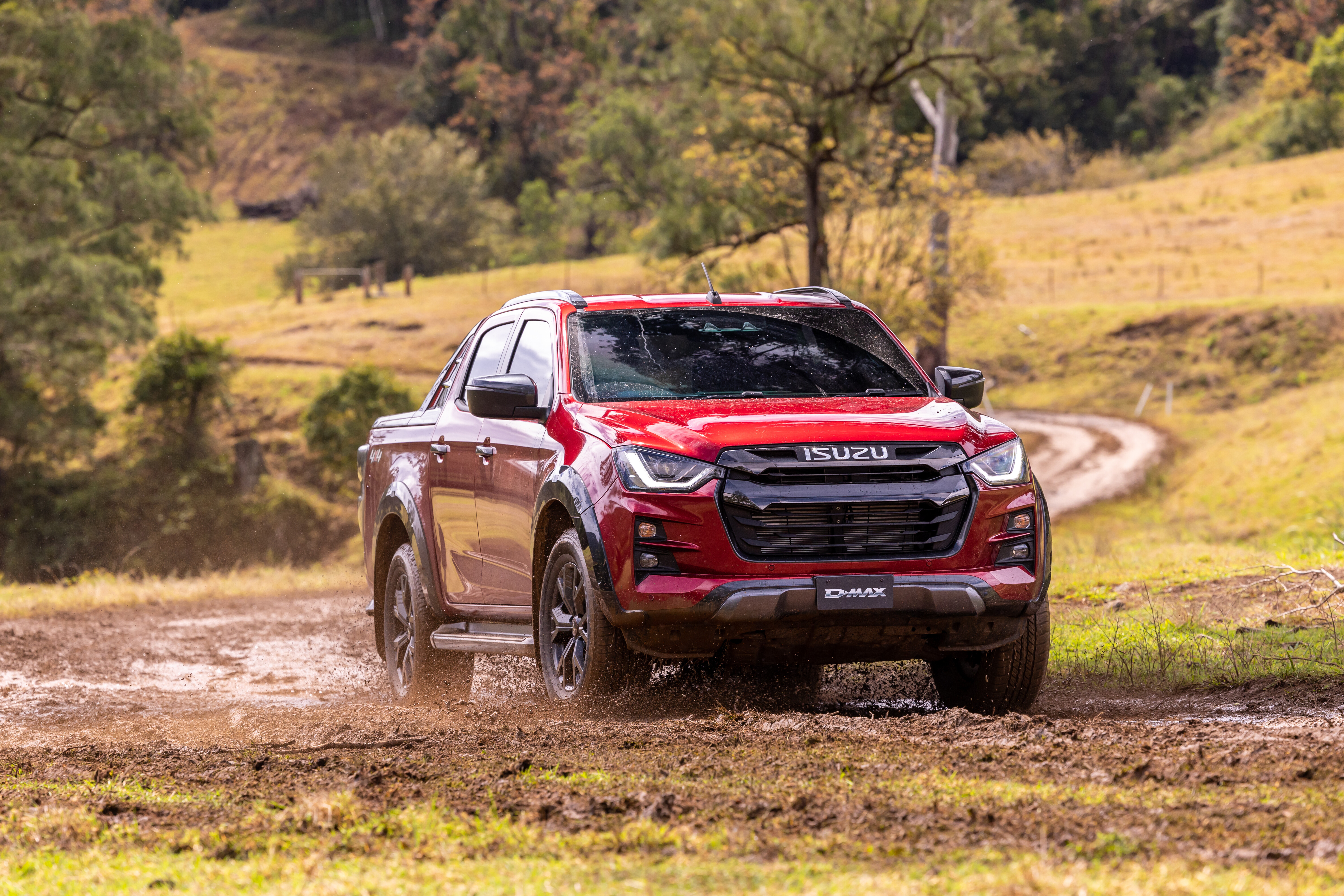
A spokesperson for Isuzu Ute Australia said a retrofit kit will be available for current D-Max owners, but will incur a cost for replacement parts and labour.
“Due to a difference internally between 21MY and 22MY, versus 23MY rear radar sensors, the Auto-off BSM and RCTA functionality cannot be added via a software update to 21MY and 22MY vehicles and will require the fitment of 23MY sensor hardware components, which will incur costs for replacement parts and labour,” they said.
“For more information on this process please speak with your local Isuzu UTE Dealer.”
Mazda Australia had “no new BT-50 related updates to communicate” for its platform-sharing ute.
JUMP AHEAD
- Pricing
- Features
- Colours
- Engine, drivetrain, and fuel economy
- Safety
- Dimensions
- Warranty and servicing
- Availability
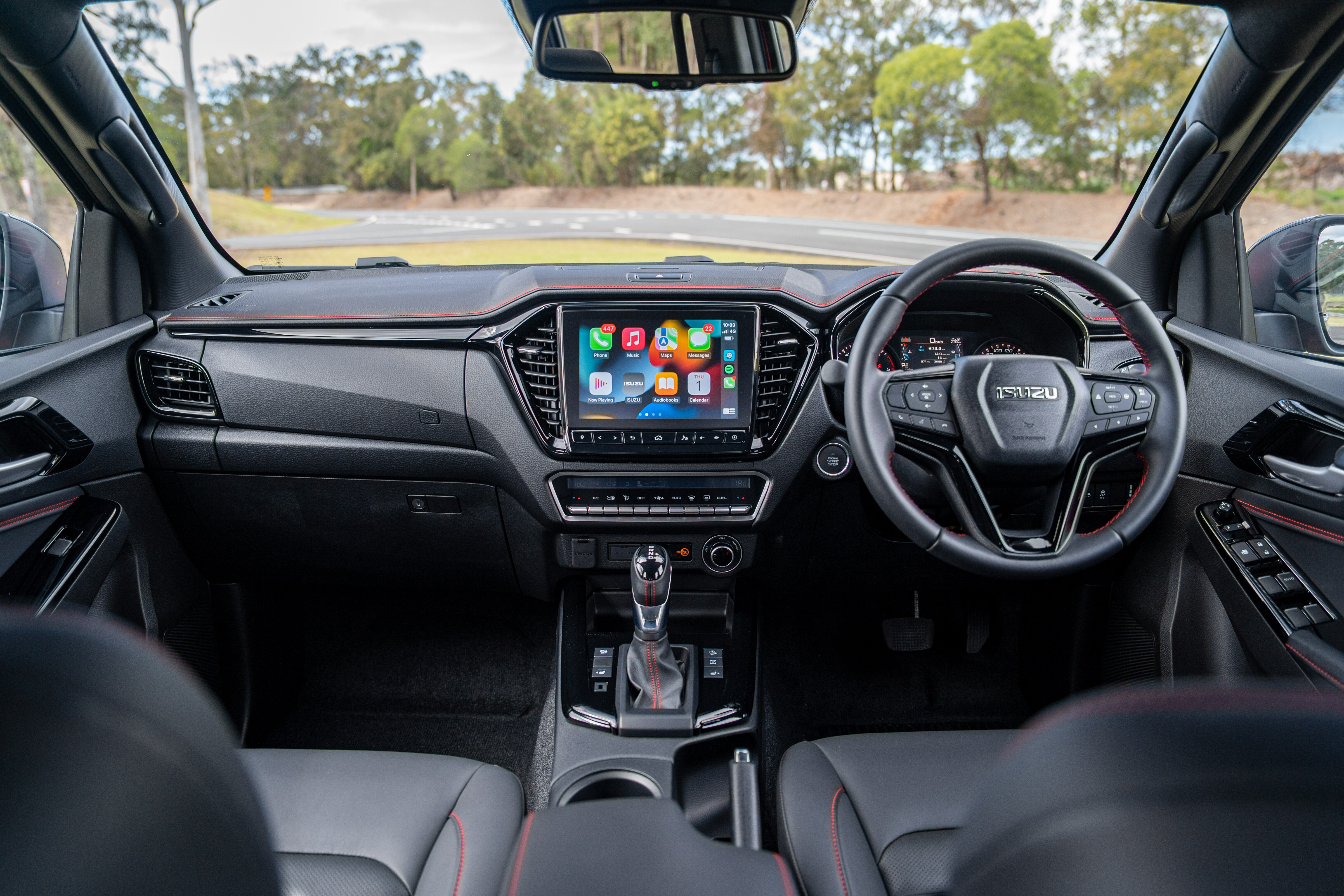
2023 Isuzu D-Max pricing
4X2
| Model | Transmission | Pricing |
|---|---|---|
| SX single cab cab-chassis 1.9L 4×2 | Manual | $32,200 ($31,990 drive-away) |
| SX single cab cab-chassis 1.9L 4×2 | Automatic | $34,200 |
| SX single cab cab-chassis 3.0L 4×2 | Manual | $34,200 |
| SX single cab cab-chassis 3.0L 4×2 | Automatic | $36,200 |
| SX space cab cab-chassis 3.0L 4×2 | Automatic | $39,700 |
| SX dual-cab cab-chassis 1.9L 4×4 | Automatic | $40,700 |
| SX dual-cab cab-chassis 3.0L 4×2 | Automatic | $42,700 |
| SX dual-cab ute 1.9L 4×2 (NEW) | Automatic | $42,200 |
| SX dual-cab ute 3.0L 4×2 | Automatic | $42,200 |
| LS-U dual-cab ute 3.0L 4×2 | Automatic | $53,000 |
4X4 CAB-CHASSIS
| SX single cab cab-chassis 3.0L 4×4 | Manual | $42,200 |
|---|---|---|
| SX single cab cab-chassis 3.0L 4×4 | Automatic | $44,200 |
| SX space cab cab-chassis 3.0L 4×4 | Manual | $45,700 |
| SX space cab cab-chassis 3.0L 4×4 | Automatic | $47,700 |
| SX dual-cab cab-chassis 3.0L 4×4 | Manual | $48,700 |
| SX dual-cab cab-chassis 3.0L 4×4 | Automatic | $50,700 |
| LS-M dual-cab cab-chassis 3.0L 4×4 | Automatic | $53,800 |
| LS-U dual-cab cab-chassis 3.0L 4×4 | Automatic | $59,200 |
4X4 DUAL-CAB UTE
| Standard Features |
|---|
| 17-inch steel wheels |
| 225/65R17 Dunlop all-terrain tyres |
| 7-inch infotainment system |
| Wireless Apple CarPlay |
| Wired Android Auto |
| DAB+ digital radio |
| Four speaker audio system |
| Front USB-A port |
| Second-row USB-A port (new, dual-cab only) |
| Halogen head and tail-lights |
| Urethane steering wheel, gear shifter, and handbrake |
| Vinyl flooring |
| Cloth upholstery |
| Manual air conditioning |
| Rear air vents (dual-cab only) |
| Tailgate gas strut (ute models, new) |
| Rain-sensing wipers |
| Redesigned black front grille |
| Rear differential lock (4×4 only). |
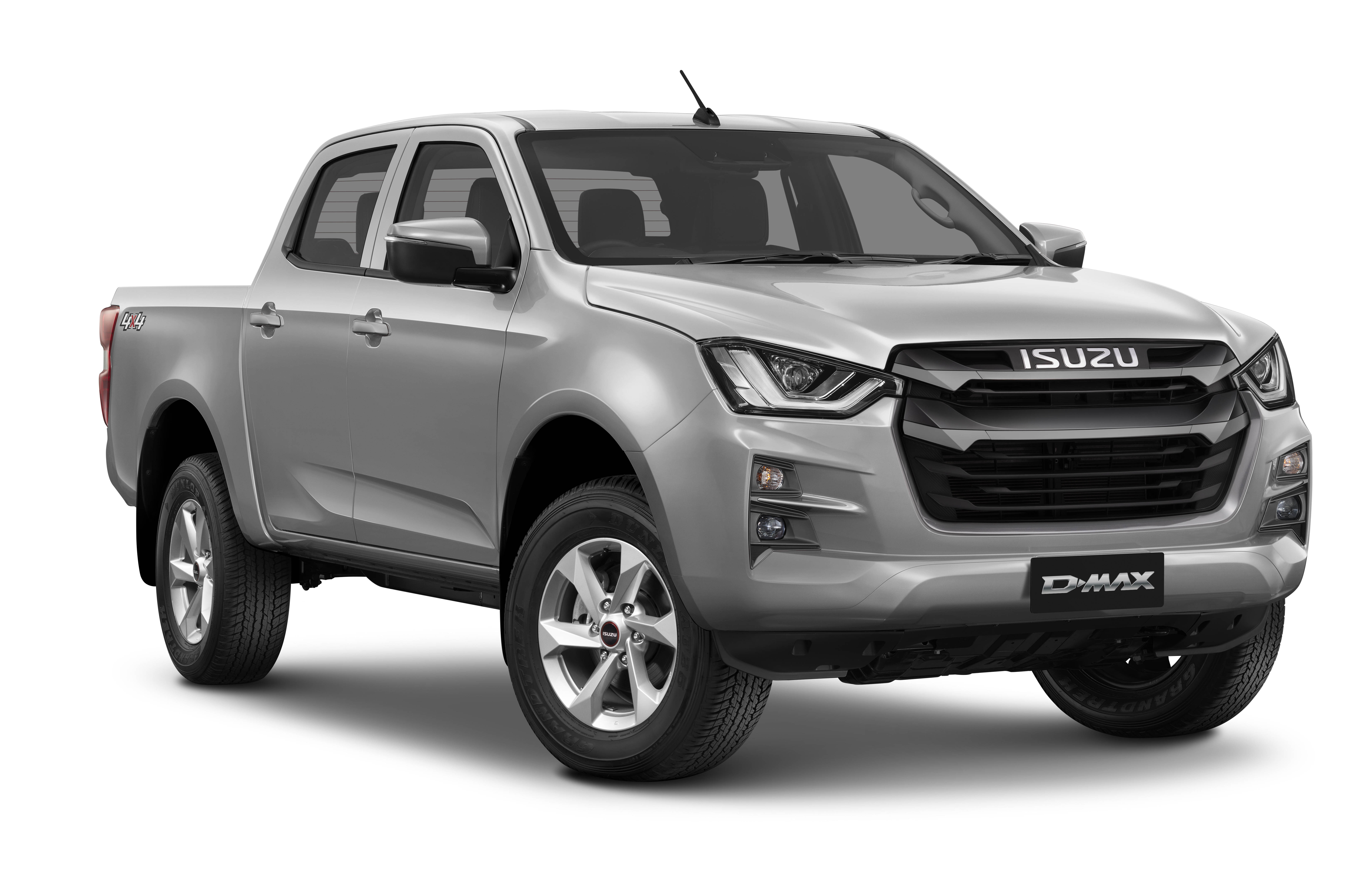
2023 Isuzu D-Max features
SX
| Standard Features |
|---|
| 17-inch steel wheels |
| 225/65R17 Dunlop all-terrain tyres |
| 7-inch infotainment system |
| Wireless Apple CarPlay |
| Wired Android Auto |
| DAB+ digital radio |
| Four speaker audio system |
| Front USB-A port |
| Second-row USB-A port (new, dual-cab only) |
| Halogen head and tail-lights |
| Urethane steering wheel, gear shifter, and handbrake |
| Vinyl flooring |
| Cloth upholstery |
| Manual air conditioning |
| Rear air vents (dual-cab only) |
| Tailgate gas strut (ute models, new) |
| Rain-sensing wipers |
| Redesigned black front grille |
| Rear differential lock (4×4 only). |
LS-M, in addition to SX
| Standard Features |
|---|
| 17-inch alloy wheels |
| High-grade cloth upholstery (new) |
| LED headlights with auto-levelling |
| LED daytime running lamps |
| LED fog lights (new look) |
| Rear parking sensors (ute models) |
| Body-coloured mirrors, door handles and tailgate handle |
| Heavy-duty rear leaf suspension. |
LS-U, in addition to LS-M
| Standard Features |
|---|
| 18-inch alloy wheels (new look) |
| 9-inch infotainment system |
| Satellite navigation |
| Eight-speaker audio system (double cab) |
| Six-speaker audio system (space cab) |
| Keyless entry and push-button start |
| Walk away door lock |
| Auto-dimming rear-view mirror |
| Power lumbar adjustment for driver seat |
| Leather-accented steering wheel, gear shifter, and handbrake |
| Soft-touch interior finishes |
| Driver and passenger vanity mirrors |
| Carpet flooring |
| Tow bar receiver |
| Tub liner (ute models) |
| Side steps |
| Chrome door handles, mirrors and tailgate handle |
| Heated door mirrors (new) |
| LED tail-lights (new look) |
| Chrome front grille (new look). |
LS-U+, in addition to LS-U
| Standard Features |
|---|
| Leather-accented upholstery with black stitching (new look) |
| Eight-way power adjustable driver seat |
| Heated front seats. |
X-Terrain, in addition to LS-U+
| Standard Features |
|---|
| 18-inch dark grey alloy wheels (new look) |
| Front parking sensors |
| Leather-accented upholstery with red stitching (new look) |
| Blacked-out instrument cluster with X-Terrain badging |
| Red and black interior accents |
| Remote engine start |
| Matte black roller tonneau cover |
| Dark grey sports bar |
| Dark grey front grille (new look) |
| Front and rear underbody spoilers. |
Colours
| Available Colours |
|---|
| Neptune blue (new) |
| Moonstone white (new; LS-U, LS-U+ and X-Terrain) |
| Granite grey (new; X-Terrain) |
| Mineral white |
| Basalt black |
| Obsidian grey |
| Mercury silver |
| Magnetic red (LS-U, LS-U+ and X-Terrain) |
| Volcanic amber (X-Terrain). |
Metallic paint incurs a $650 premium.
Engine, drivetrain and fuel economy
Under the bonnet, the Isuzu D-Max is available with two four-cylinder diesel engines.
The entry-level option is the 1.9-litre RZ4E, introduced in 2022, which produces 110kW and 350Nm. It is matched with a six-speed manual or automatic transmission.
Stepping up to the venerable 3.0-litre 4JJ3 turbo-diesel pushes outputs to 140kW and 450Nm, with identical gearbox options.
While the 3.0-litre D-Max has a 3500-kilogram braked towing capacity, the 1.9-litre model is limited to 2800kg (manual) or 3000kg (auto).
The combined fuel economy of the 3.0-litre sits between 7.7L and 8.0L/100km, depending on the variant, while the 1.9-litre is rated at 7.0L/100km.
Safety
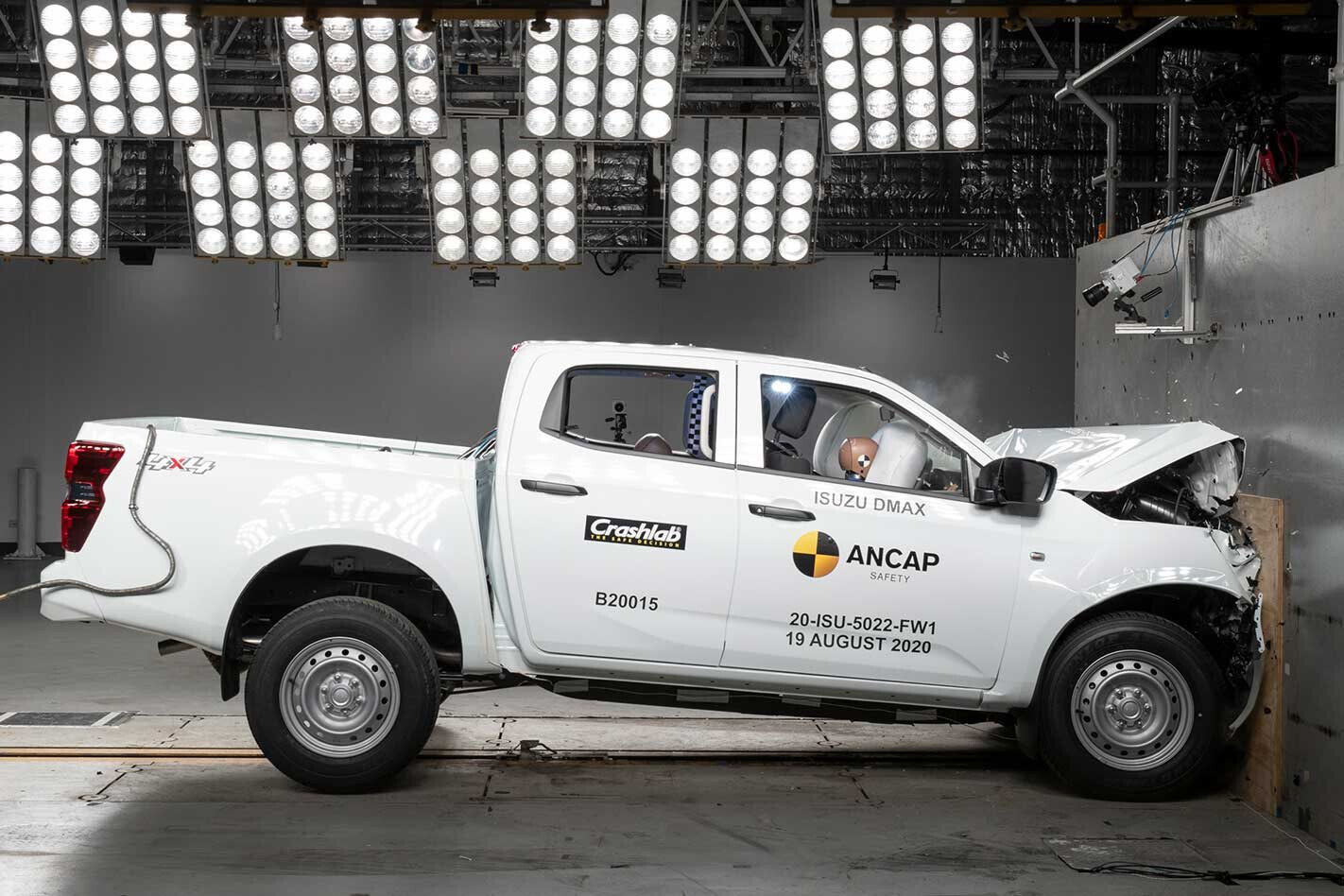
The Isuzu D-Max is covered by a five-star ANCAP safety rating, based on testing conducted in 2020.
It received a score of 83 per cent for adult occupant protection, 89 per cent for child occupant protection, 69 per cent for vulnerable road user protection, and 81 per cent for safety assist.
Eight airbags (dual front, side, curtain, driver’s knee and centre) are fitted across the range.
Each variant includes the following active safety equipment as standard:
| Safety Features |
|---|
| Autonomous emergency braking (vehicle, pedestrian, cyclist, junction) |
| Forward collision warning |
| Lane-keep assist* |
| Lane departure warning |
| Blind-spot alert |
| Rear cross-traffic alert |
| Trailer sway control |
| Traffic sign recognition |
| Adaptive cruise control* |
| Wrong-pedal acceleration warning* |
| High beam assist. |
* automatic models only
Warranty and servicing
As per the wider Isuzu Ute range, the D-Max is covered by the brand’s six-year/150,000-kilometre warranty.
Servicing for the D-Max is required every 12 months or 15,000 kilometres, whichever comes first.
Availability
The 2023 Isuzu D-Max range will arrive in Australian showrooms in December.
4X4 Australia’s project builds
Key Points
- LS-U and LS-T get Tyre Pressure Monitoring System
- Blind Spot Monitoring (BSM) and Rear Cross Traffic Alert (RCTA) to automatically disable
- Prices remain unchanged from MY22
Isuzu Ute Australia has refreshed its seven-seat MU-X range for 2023, with the updated models set to be in showrooms from December 1, 2022.
In good news for buyers, pricing for the MY23 MU-X remains unchanged.
Driven by customer feedback, the changes for 2023 are mainly cosmetic, but there are a few additions that will significantly benefit off-road tourers and 4x4ers.
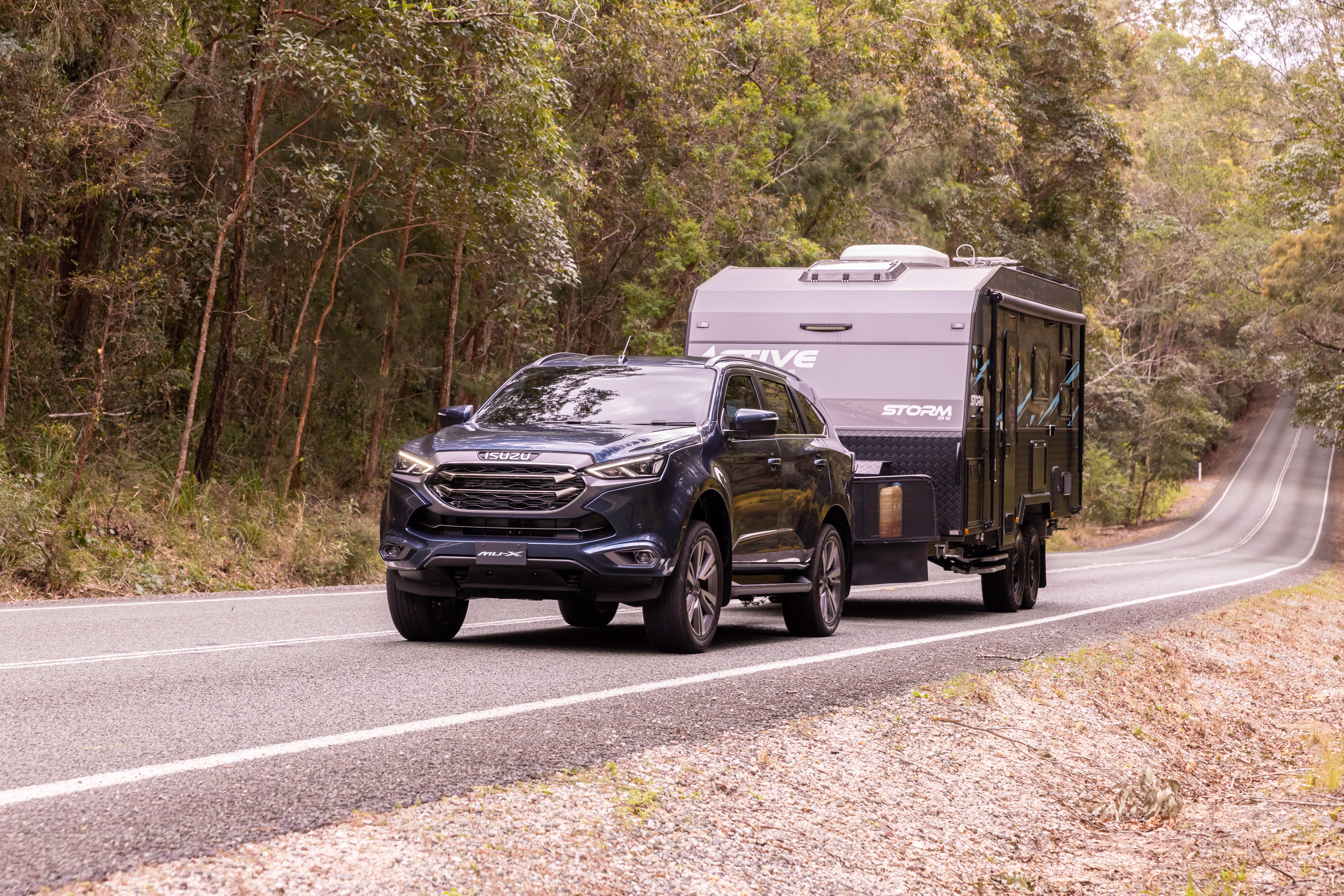
One of the most important improvements is that LS-U and LS-T models are both equipped with a new tyre pressure monitoring system (TPMS), providing the driver with valuable insight regarding tyre pressures. It’s an essential system that should be more widespread in new vehicles.
Another key change is that blind-spot monitoring (BSM) and rear cross-traffic alert (RCTA) will now automatically disable when a trailer is hitched behind the wagon and detected by the genuine trailer plug. Great news for those who tow.
The base-model LS-M will now be equipped with new wheels in the form of 17-inch silver alloys; while the top-spec LS-T will wear new 20-inch six spoke machined alloy wheels. Plus, LS-U and LS-T models have been upgraded with a hands-free tailgate.
The remaining changes are essentially cosmetic and can be found below.

The MU-X retains its part-time 4WD system, rear diff lock, Intelligent Driver Assistance System (IDAS), 3500 kilogram braked towing capacity, and it remains powered by the venerable 140kW/450Nm 3.0-litre turbo-diesel engine mated to a six-speed automatic transmission. Key reasons why it remains a top-selling vehicle for tourers.
Since the second-gen MU-X was released in 2021, more than 12,000 examples of the second-gen MU-X have been sold in Australia. So far in 2022, Isuzu has shifted a total of 7911 4×4 units, and it remains one of the best-selling 4×4 SUVs behind the ever-popular Prado. It also holds the mantle for best-selling ute-based SUV.
“These updates will only broaden its appeal and cement its place as one of the top-choices in the segment,” said Isuzu Ute Australia’s Managing Director, Hiroyasu Sato.
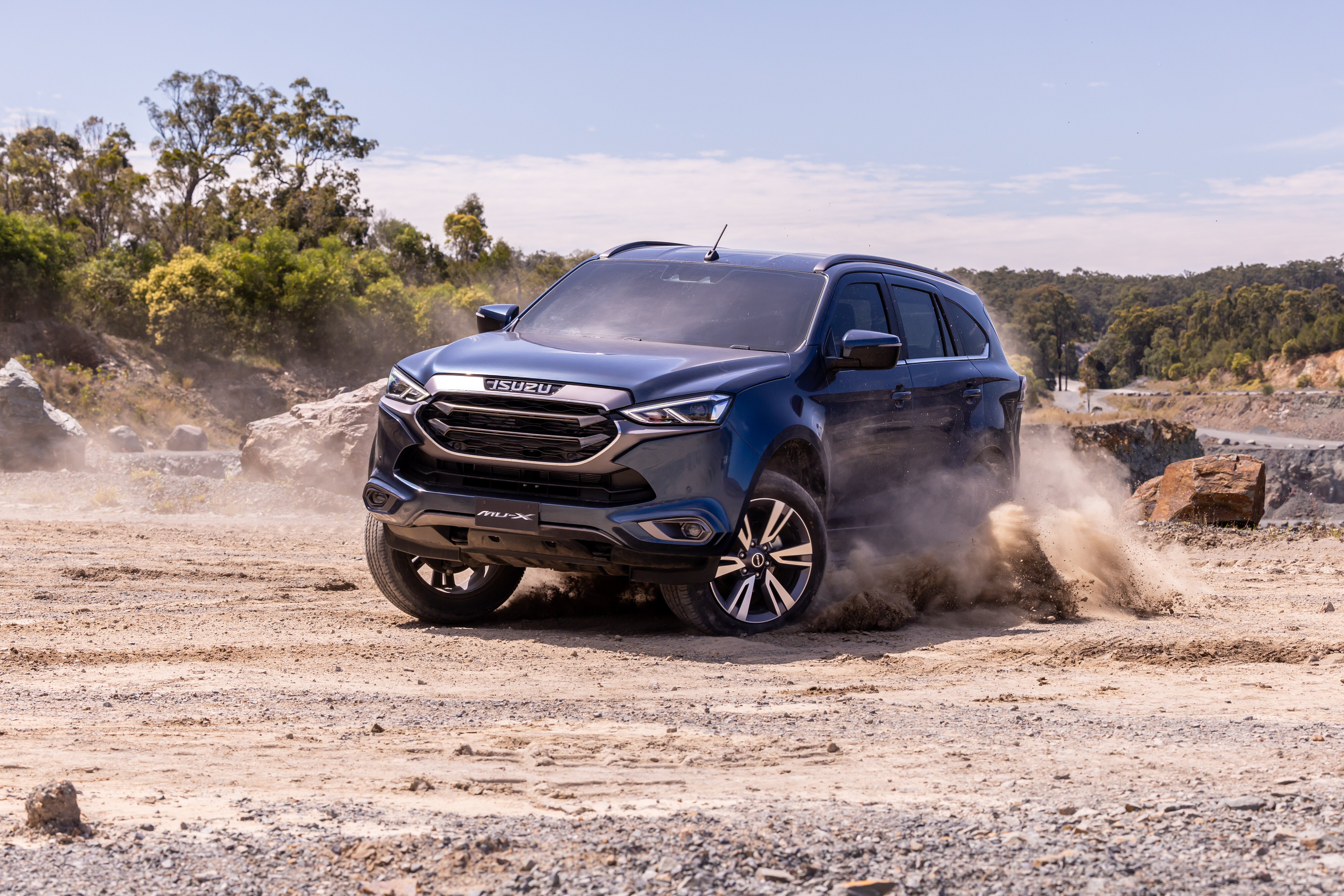
“Similar to the 2023 D-Max stablemate – with which it shares much of its DNA – these updates have been fuelled by customer feedback, adding more value and features to an already value-packed vehicle, without the need of a price increase.
“In a market where some manufacturers have removed features to meet delivery timeframes or increased pricing, we’ve worked closely with the factory to ensure we maintain the high-level of specification without compromise.”
2023 Isuzu MU-X pricing
| Variant | RRP |
|---|---|
| MU-X LS-M 4×2 | $48,900 |
| MU-X LS-U 4×2 | $55,400 |
| MU-X LS-T 4×2 | $61,400 |
| MU-X LS-M 4×4 | $54,900 |
| MU-X LS-U 4×4 | $61,400 |
| MU-X LS-T 4×4 | $67,400 |
MY23 LS-M updates
| Two-tone black grille |
| LED rear combination lights trimmed in dark grey metallic |
| New 17-inch six-spoke alloy wheels |
| BSM and RCTA auto-off when towing. |
MY23 LS-U updates
| Magnetite and black chrome grille |
| LED rear combination lights trimmed in dark grey metallic |
| Magnetite accents across exterior fog light trim, rear bumper, roof rails, and sidestep |
| Magnetite accents across interior dashboard and door trims |
| Tyre pressure monitoring system |
| Hands-free tailgate |
| BSM and RCTA auto-off when towing. |
MY23 LS-T updates
| Magnetite and black chrome grille |
| LED rear combination lights trimmed in dark grey metallic |
| Magnetite accents across exterior fog light trim, front bumper, rear bumper, roof rails, and sidesteps |
| Magnetite accents across interior dashboard and door trims |
| New 20-inch six-spoke machined alloy wheels with TPMS and hands-free tailgate |
| BSM and RCTA Auto-Off when towing. |
Types of Lockers
| Operation | Construction | Warranty | |
|---|---|---|---|
| Harrop Eaton ELocker | Electronically controlled selectable locker | CNC-precision machined w/ precision-forged and heat-treated gears | 12 months |
| TJM Pro Locker | Air operated selectable locker | High Grade SG Iron w/ larger pinion gears and longer crown wheel bolts | Limited 5-year warranty |
| ARB Air Locker | Air operated selectable locker | Two-piece design, forged gears | 5-year unlimited kilometre |
| Lokka auto locker | Automatic engaged lunchbox style locker | Heat treated steel alloy | 3-year international warranty |
| Detroit Locker | Automatic engaged full carrier replacement | Nodular iron w/ precision forged gears | One year |
| Spartan Locker | Automatic engaged lunchbox style locker | Heat treated 9310 steel | One year |
Harrop Eaton ELocker
Specifications
- Operation: Electronically controlled selectable locker
- Construction: CNC-precision machined w/ precision-forged and heat-treated gears
- Warranty: 12 months
Things we like
| Not so much
|
- Operation: Electronically controlled selectable locker
- Construction: CNC-precision machined w/ precision-forged and heat-treated gears
- Warranty: 12 months
“ELockers are a fairly simple design in terms of installation,” Harrop told 4X4 Australia. “There’s also the benefit of no air lines to run, or compressor to instal or purchase.”
The ELocker is designed and manufactured in Australia, with the unit CNC-precision machined and featuring precision-forged and heat-treated gears.
The internal gears from Eaton are specifically intended for heavy-duty application and provide improved strength and durability over standard-cut gears.
“The patented four-pinion electronic locker systems are then made in Australia and operate manually using an electromagnet powered by the vehicle’s battery,” Harrop added.
Another benefit of the ELocker is that it requires no external module, compressor or hoses; it’s simply click and forget.
This locking mechanism is trusted by OEMs globally – take the Chevy Colorado ZR2, for example, which features the technology in both the front and rear differentials, further validating the design’s credentials and durability
TJM Pro Locker
Specifications
- Operation: Air operated selectable locker
- Construction: High Grade SG Iron w/ larger pinion gears and longer crown wheel bolts
- Warranty: Limited 5-year warranty
Things we like
| Not so much
|
- Operation: Air operated selectable locker
- Construction: High Grade SG Iron w/ larger pinion gears and longer crown wheel bolts
- Warranty: Limited 5-year warranty
Utilising compressed air, when the locker is activated the internal selector ring will engage the lock ring.
Once the Pro Locker is engaged, it forms a solid link between the carrier and side gears. The differential is now locked and will deliver 50/50 drive to both wheels across an axle.
A uniquely designed actuator works like a motor piston. The fork sits on top of the selector ring guiding it across when engaging or disengaging. This hardened selector ring connects to the lock ring via four metal posts.
The hardened lock ring shares the forces internally and externally, increasing its locking strength.
ARB Air Locker
Specifications
- Operation: Air operated selectable locker
- Construction: Two-piece design, forged gears
- Warranty: 5-year unlimited kilometre
Things we like
| Not so much
|
- Operation: Air operated selectable locker
- Construction: Two-piece design, forged gears
- Warranty: 5-year unlimited kilometre
“The basis of the design is that compressed air is supplied from the on-board compressor, forcing an internal locking ring against the spider gears,” explained ARB’s Mark Berger.
The Air Locker has four spider gears, which are the components that allow the differential to direct the drive to either the left or right wheel.
“The locking rings lock the spider gears against the housing, which prevents differential action and therefore delivers drive equally to the left and right wheels on the axle,” he said.
“When the Air Locker is switched off, the air pressure is released and the internal gears are able to spin freely again allowing the differential to do its job.”
A significant benefit of an ARB Air Locker is that it can be engaged at any speed – unlike an ELocker – so drivers can flick them on the moment they need them, without stopping.
With more than 35 years of experience, ARB says it utilises in-house, highly automated CNC machines that excel at repeatedly producing tight tolerances and precision form that is scrutinised constantly through the aid of programmable robotic measurement.
Lokka auto locker
Specifications
- Operation: Automatic engaged lunchbox style locker
- Construction: Heat treated steel alloy
- Warranty: 3-year international warranty
Things we like
| Not so much
|
- Operation: Automatic engaged lunchbox style locker
- Construction: Heat treated steel alloy
- Warranty: 3-year international warranty
“Think of Lokka as an alternative set of planetary gears,” the company explains.
“When factory gears operate or move, so will the Lokka gears. The difference is, the Lokka gears start from a locked position, whereas normal gears are free-spinning.
“The Lokka mechanism allows a wheel to turn faster than the speed the differential is driving it (differential action), but never allows a wheel to turn slower than the rotational speed the differential and engine is turning it (traction).
“Thus a wheel cannot ever stop turning if the engine is driving it, but in a corner it can be forced to actually turn faster. Unlike a normal differential the engine can never drive one wheel faster than the other.”
Detroit Locker
Specifications
- Operation: Automatic engaged full carrier replacement
- Construction: Nodular iron w/ precision forged gears
- Warranty: One year
Things we like
| Not so much
|
- Operation: Automatic engaged full carrier replacement
- Construction: Nodular iron w/ precision forged gears
- Warranty: One year
The main difference between the Detroit and say the Lokka or Spartan auto-locker, is the fact the Detroit Locker is a full carrier replacement rather than a lunchbox design which replaces the factory differential side gears.
The advantage here is, the Detroit is stronger than a lunchbox style auto-locker and is also said to be much smoother in operation when driven on road. This depends on how well the diff is set up during installation however, so it’s best to consult someone with experience.
One main benefit of the Detroit Locker, is the fact it requires no input from the driver, it’s always working. This means you can’t forget to switch it on when you need it most.
On the flip side, being non-selectable means it will require you to alter your driving style when fitted to the rear differential when driving on road.
Things like driving in the rain, or approaching a roundabout can catch out unsuspecting drivers, but most end users report smooth operation once you learn how to drive them.
Spartan Locker
Specifications
- Operation: Automatic engaged lunchbox style locker
- Construction: Heat treated 9310 steel
- Warranty: One year
Things we like
| Not so much
|
- Operation: Automatic engaged lunchbox style locker
- Construction: Heat treated 9310 steel
- Warranty: One year
With a heat treated 9310 steel internal construction, Yukon, the manufacturer of Spartan Lockers says its product offers enhanced durability.
As the Spartan Locker is not a full carrier replacement, like the Lokka, the installation process is fairly straightforward for those with mechanical knowledge.
One of the main issues with lunchbox style auto-lockers, is breaking the internal pins when running big power or large tyres. Spartan Lockers feature oversized pins for additional strength, which are the largest on the market.
Yukon recommends the Spartan Locker for lighter vehicles with 35-inch tyres or smaller.
Diff locks in detail
What’s the diff?
If you have a penchant for perilous tracks that most of the population steers well clear of, then you’ll need to guarantee drive is delivered effectively to all four wheels. The only way to ensure this is with a pair of front and rear locking differentials.
When driving off road, a differential will always send power to the wheel with least resistance; so if a 4×4 loses traction (in the air, stuck in mud, etc.) the wheel with the least traction will spin ineffectively.
Locking the diffs prevents this by sending equal drive to both wheels on an axis, regardless of terrain or traction, so with front and rear diff lockers (either selectable or automatic) you’ll be able to crawl through most obstacles with little or no wheelspin.
“Lockers are a great investment, as they dramatically improve the vehicle’s capabilities by giving the owner the ability to lock or unlock the differentials as necessary and capture 100 per cent of the available torque and distribute it equally to both ends of the axle,” Harrop’s design engineer, Sebastian Civitarese, told us.
“This enables the driver to keep momentum when off road and safely navigate harsh terrain without losing traction. It’s equally beneficial for the average tourer or when towing on slippery surfaces like boat ramps.
“Ultimately, lockers mitigate the loss of traction,” he said.
Locked up
A common misconception by many 4WD pundits is that by shifting a vehicle into ‘4WD’, power will be sent to all four wheels at all times. However, in certain scenarios a standard vehicle with open differentials will only deliver drive to the easiest wheel to spin on any given axle, which will be the one in a mud hole or up in the air.
“A locker allows you to have full power to both wheels, even when one is off the ground,” said Terrain Tamer parts interpreter, Charlie Dunbar.
“So when that wheel lands, you have movement already, allowing you to gain traction and get out of a bad spot.”
ARB’s brand marketing manager, Mark Berger, added: “With a differential locker, you can lock the differential to stop it from spinning the left and right wheel of an axle independently of each other, forcing both wheels to spin at the same rate irrespective of which wheel has traction and which one doesn’t.”
Installing a set of diff lockers and being able to lock and unlock the diffs when required increases a vehicle’s off-road abilities exponentially, with 100 per cent of the available torque equally distributed to both ends of an axle.
As Justin Hettrick, TJM’s suspension and drivetrain product manager, explained, a diff locker provides instant traction: “The off-road ability of almost any 4×4 vehicle is doubled. A locker can be the device that makes you traverse terrain you never thought you would be able to.”
Centre Diff
A centre differential, as the name implies, is positioned – in all-wheel drive and constant 4WD models, like the popular LandCruiser 200 Series wagon – between the front and rear differential. Unlike front and rear differentials, though, a centre diff will split power 50/50 front to rear instead of side to side of each axle.
A centre diff lock is essential to ensure drive to both the front and rear axles; although, diff locks front and rear are still required to spread drive evenly from side to side.
“Vehicles with a centre diff (and no lockers) can deliver drive to any of the four wheels of the vehicle, but the power will still only be delivered to one wheel and it will still be the wheel with the least traction,” explained Berger.
Front and Rear?
Opting for either a front or rear locker ultimately depends on the type of vehicle and the equipment already installed.
For example, some vehicles have a limited-slip differential (LSD) from factory, and therefore it may be a wise decision to opt for a locker in the front and leave the rear unchanged.
For vehicles with open differentials, a rear locker is by far the more popular choice, as it’s more suitable to a diverse range of off-roading situations.
“If the vehicle only has open differentials, we typically recommend a rear which will be more effective when off-road hill climbing,” said Harrop’s Sebastian Civitarese.
“If the vehicle has a factory LSD in the rear, it is a much better solution to install an ELocker in the front and retain the LSD in the rear.”
According to Mark Berger, rear lockers will give you best bang for buck, as the rear suspension will flex more and keep in contact with the ground, keeping that all-important momentum going.
However, front lockers aren’t without their benefits, as Berger explained: “A front locker is perfect for climbing hills or pulling you through the last bit of a bog-hole or over a rock ledge.
“But front lockers can also restrict your steering ability when weight is over the front axle (i.e. flat ground and downhill), so you have to be careful when you use them.”
A third – and more effective – option is to instal lockers on both the front and rear differentials.
“Why can’t we just have both?” asked Berger. “A locker on one axle will improve your four-wheel drive from 50 per cent drive to 75 per cent drive, while installing lockers on both differentials will provide you with 100 per cent drive.”
Why use quality lockers?
Considering a locker is an essential tool for those chasing remote, hard-to-reach campsites, it’s essential not to ‘cheap out’ and get a sub-standard unit that’ll leave you wishing you forked out more coin on a reputable brand.
Surf the web and you’ll quickly find an abundance of products from dubious websites, but do your research and you’ll find that buying from a well-known, respected company makes a helluva lot more sense.
“A locker isn’t a component you want to skimp out on and settle for an inferior brand or quality,” said Sebastian Civitarese. “If something goes wrong out on the track, you have the potential to be left stranded.
“The cost of pulling a diff and repairing problems will quickly exceed the initial investment of purchasing a high-quality locker.”
Mark Berger couldn’t agree more: “At the end of the day, a locker is an important mechanical component of your vehicle’s driveline, and as such it would serve 4WD owners well to ensure they respect the vehicle which they rely on to safely and reliably get them where they are going and back.
“As a technical and mechanical component, removal and installation can be both costly and time consuming, so it is worth purchasing a product that is both more likely to last and be supported by the manufacturer and installer.
“Quality, proven manufacturers are held to high industry standards with thousands of customers’ expectations worldwide to look after; trust in them that they will support their product and their customers.”
As always, the trusted brands will offer multi-year warranties: TJM and ARB, for example, both offer five-year warranties for their respective Pro Locker and Air Locker, while Harrop and Terrain Tamer offer three years for the ELocker.
“Substandard lockers just aren’t made with the same high-quality materials, they haven’t undergone the same research, development and engineering, and haven’t had the same testing done to create a quality end product,” explained Charlie Dunbar.
“Breakage is so common in substandard lockers, and, of course, they can cause breakage to other parts.”
Selectable vs Automatic locker
Control is the main difference between a selectable and an automatic locker; you have control with a selectable locker and you don’t have control with an automatic locker.
Choosing when to lock and unlock the diffs is important, as it can alleviate the stress on a vehicle’s drivetrain components.
“With an automatic locker, the diffs are always locked until enough cornering force is applied to release the locking mechanism from the diff,” said Mark Berger.
“The design of many automatic lockers can become the culprit of interesting on-road behaviour, as they lock and unlock and can lead to unnecessary wear on the vehicle’s driveline and tyres.”
Limitations of LSD
It’s common for showroom-stock vehicles to have an open diff up front and a limited-slip diff at the rear. The job of a limited-slip differential is to direct power (or drive) away from the wheel with less traction and send it toward the opposite wheel on the same axle.
“LSDs have long been considered a great option in the rear of many 4WDs, but they do have their limitations,” said Berger.
“LSDs operate not too dissimilar to an automatic locker, where an amount of cornering force is required to release the resistance for the diff to spin freely and deliver drive to the wheel with the least traction.”
An LSD can never be 100 per cent locked and comes with limitations.
“LSDs by design are built from components such as clutch plates, which are prone to wear, and given they are being operated every time you drive the vehicle, the diff will progressively deteriorate in its functionality, becoming less and less effective,” added Berger.
Charlie Dunbar added: “An LSD can’t supply full power to the wheel that needs it, and will always give part of it to the wheel with no traction.”
Pros & Cons: Selectable Lockers
PROS
- Reduces wear on vehicle components
- Quieter operation
- Instant traction
- Can be turned on and off
- Compressed air on-board (with air lockers)
- Can lock one axle or both axles independently (when running front and rear lockers)
CONS
- More expensive
- Ongoing maintenance (air lines/wiring)
Pros & Cons: Automatic Lockers
PROS
- Driver doesn’t need to lock/unlock diff
- Cheaper alternative
- Purely mechanical (no air lines or wires)
CONS
- Driver has no control on lock options
- Noisier than selectable lockers
- Can affect vehicle’s drive characteristics
- Can increase wear on driveline components and tyres
- Harder to steer until point of disengagement