
My beloved FJ Cruiser is about to reach 100,000km.
Previous Covid lockdowns stalled any travel, and now I’ve got itchy feet, so I’m considering packing the swag and hitting the road for a long-overdue Aussie road trip. I have no shortage of enthusiastic partners in crime.
The FJ has been running on BFGoodrich tyres for the best part of 80,000km, and they have served me well. I’ve driven from Melbourne to Birdsville and back via the Gammon and Flinders Ranges. My service records show that they were at 30 percent tread during the last service.
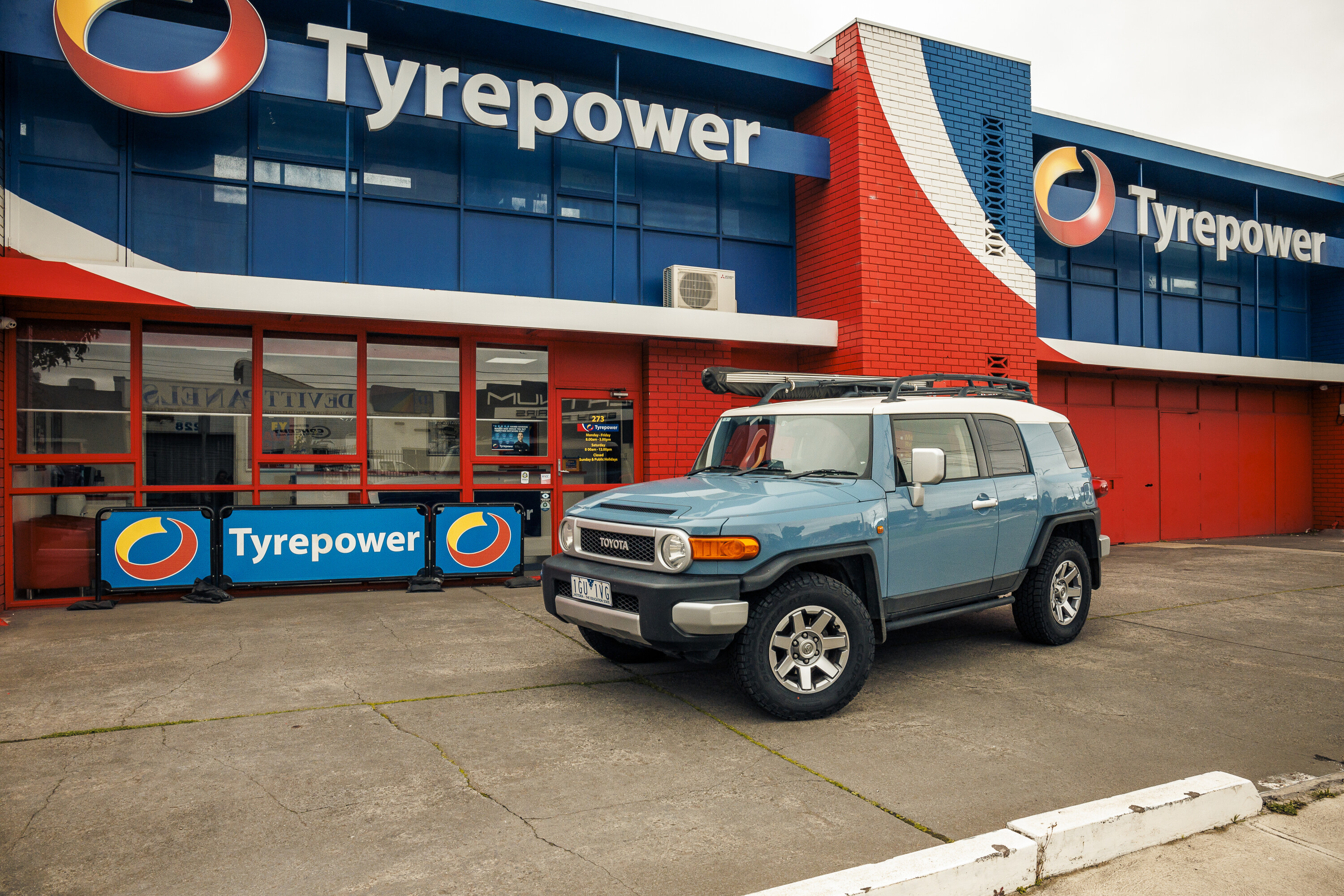
It was time to get a new set of tyres, and as there are so many options on the market, I went to my colleagues at 4X4 Australia for advice, and they recommended Cooper AT3 LTs as a good option.
The AT3 LT is classified as an All-Terrain Light Truck tyre, carrying a high load rating with excellent off-road traction and strength.
Realistically, as an automotive photographer, I mostly drive on blacktop roads when travelling to and from photo locations. About 80 percent of my driving is on bitumen, with the remaining 20 percent being off-road driving on predominantly gravel roads and occasionally shorter rocky trails and tracks during weekend trips.
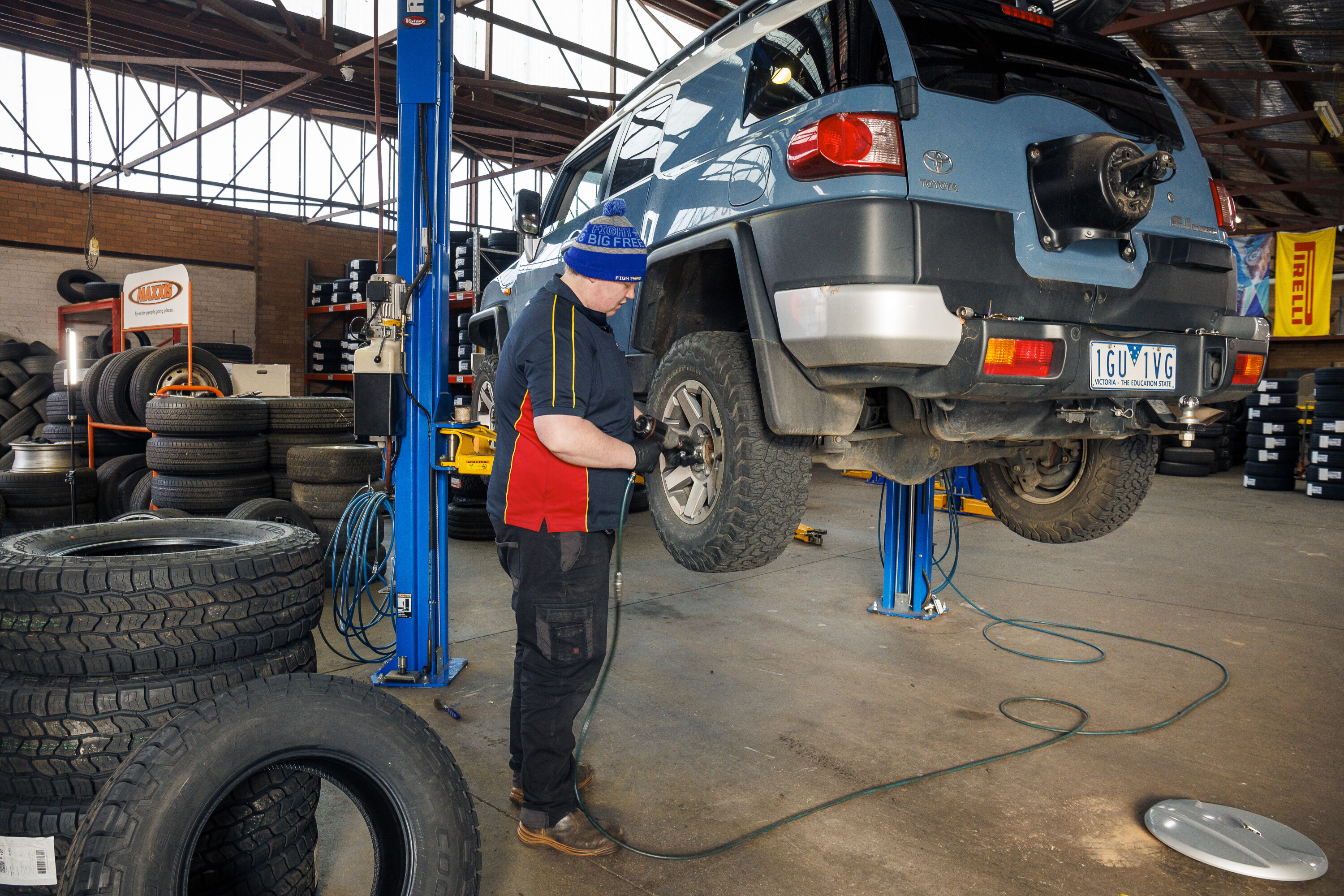
Enter the Cooper AT3 LT. Ray and his team at Tyre Power Reservoir said the AT3 LT is an excellent all-terrain tyre that offers good durability and reliability. It comes with an 80,000km warranty and in the size to suit my FJ Cruiser it has a recommended retail price of $440 including GST.
Upon visual inspection, the new tyres have vastly different treads compared to what I was used to. Ray stated that I’d notice they’ll be quieter on the bitumen due to the straighter tread pattern, which will likely also result in better fuel economy.
Ray assured me that the deep tread will ensure the tyres still offer decent off-road traction and resist tread damage, without compromising on-road performance. The scalloped shoulders are designed for maximum off-road traction. The FJ can feel a bit unstable on gravel at high speeds, so it’s important to adjust driving to the conditions on dirt roads. I’m keen to see how well the AT3s will perform on loose gravel.
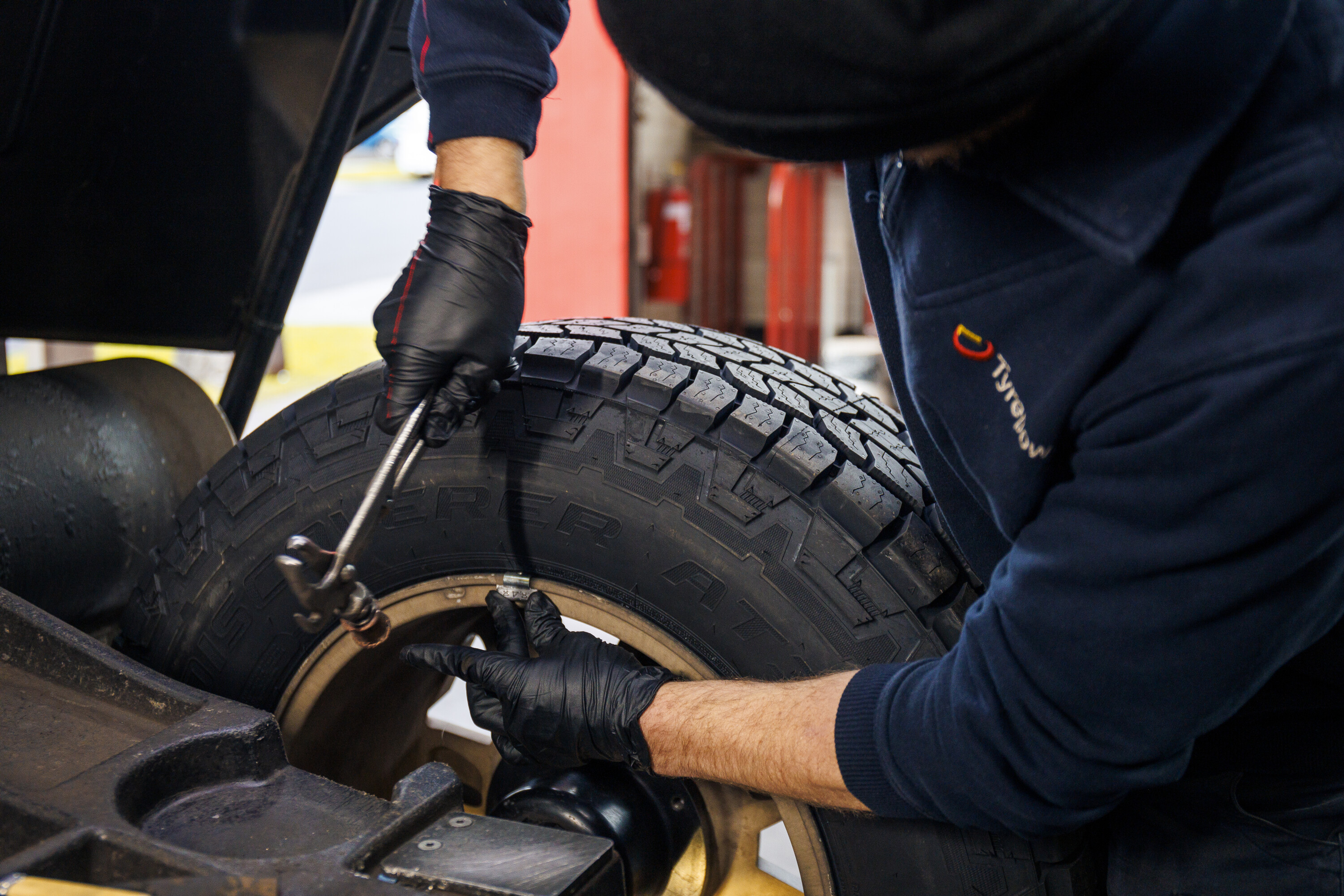
The Cooper AT3 LT features a silica compound to improve cut and chip resistance, and deep aqua-vac channels to enhance water evacuation. Full-depth micro-gauge sipes are present to provide better grip and handling throughout the tyre’s lifespan, and it will be interesting to see how they perform as they age.
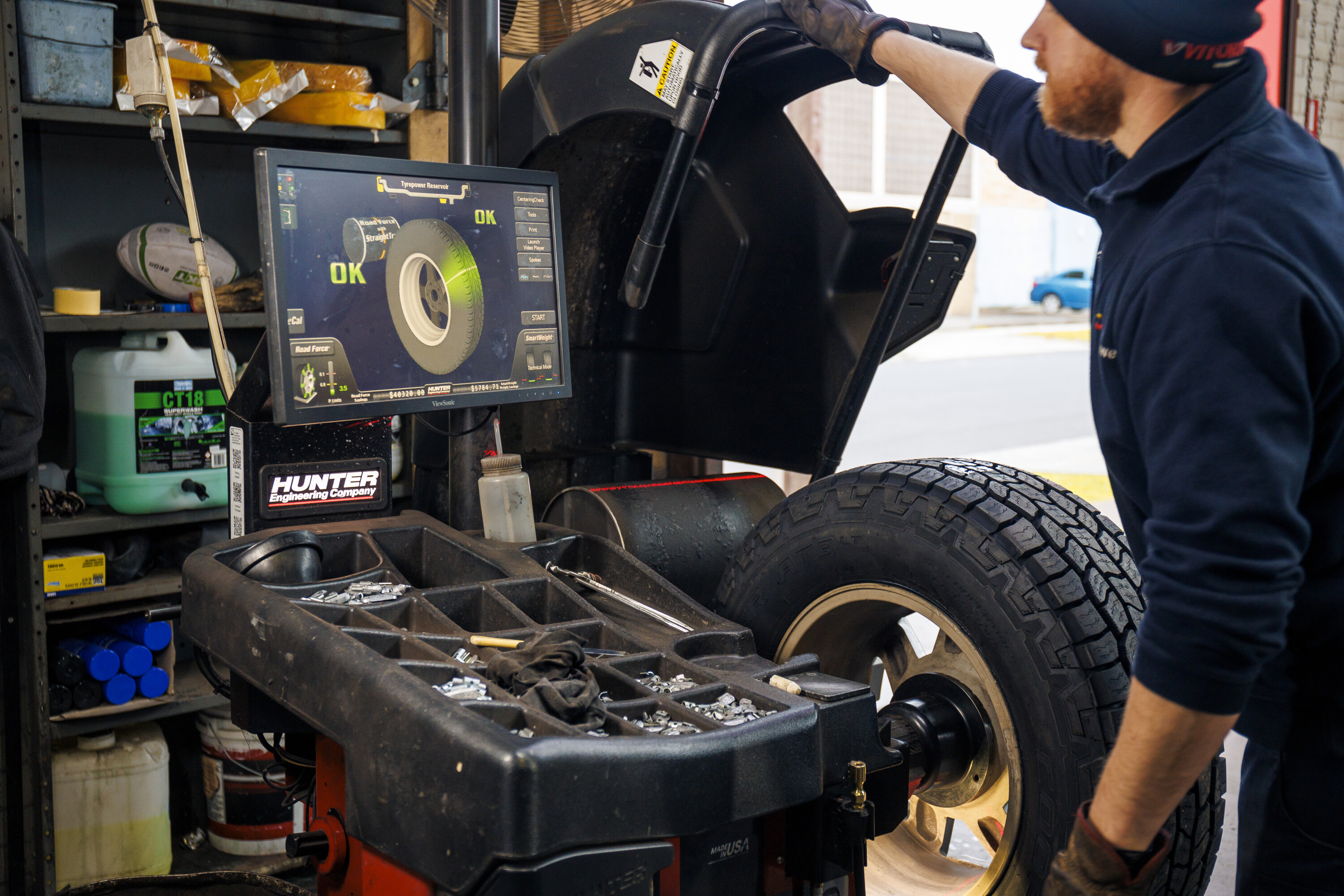
The team fitted the new tyres on the FJ’s standard rims. Each 265/70R17 tyre was inflated to 36psi and checked for both static and dynamic balance. One tyre needed to be spun on the rim to best match the high point of the tyre with the low point of the rim, but the balancing ensured there would be no vibrations once the tyres were installed back on the vehicle.
The team conducted a simple road test and then proceeded with the alignment, which required only minimal adjustment to the toe setting.
My initial impression is that there is a significant reduction in road noise on the blacktop, with the cabin now very quiet. I’m eager to see how the tread wears over time. I will ensure that the tyre rotation is done properly so I can effectively measure the longevity of the tyres.
I have some off-roading planned before my next report at 10,000km, so let the adventures begin.
RRP: $440 each
Ford’s much musclier new Ranger Raptor has been well-received by the Wheels team, and the market too. So, now it’s time to see what it’s like to live with.
To get a sense for its daily-driving value and its family friendliness, new dad Alex Inwood is spending a few months with the new hero truck.
JUMP AHEAD
- Welcome
- Update 1: Quiet, I’m moving over here!
- Update 2: Infotainment, 0-100km/h and emergency braking
- Update 3: Is the Raptor Australia’s best performance ute?
Welcome
Price as tested: $87,490 This month: 1207km @ 14.8L Total: 1207km @ 14.8L
Things we like so far
- Looks tougher than a super-max prison guard
- New V6 sounds great and feels muscular
- Cabin quality is top drawer. Decent room for a family, too
Not so much…
- No tray cover as standard
- Firmer ride takes some getting used to
- Already proving to be pretty thirsty, even driven sedately
It’s always a risk to revisit a car that has impressed you at a launch event.
The last time I drove the new-gen Ranger Raptor was in the desert, where I spent a brilliant day dropping it into deep pits, sliding it around on sandy dunes and launching it over jumps at vaguely ludicrous speeds.
It was huge fun and didn’t only demonstrate the benefits of giving the Raptor almost twice as much grunt as the original – courtesy of its new 3.0-litre twin-turbo V6 petrol engine – but showcased just how clever and capable its new adaptive Live Valve suspension was.
Looking to buy a vehicle that can sail through the air at 140km/h and land with the poise and grace of a jungle cat? Only a WRC car can do it better.
There was, however, a sense that we were playing to the Raptor’s strengths. Like lining up Steve Smith in the cricket nets and only throwing him half volleys outside off stump, or asking Steph Curry to only shoot from the free-throw line. Of course Ford’s fresh super ute was going to nail it out there.
Upgrade your Ranger
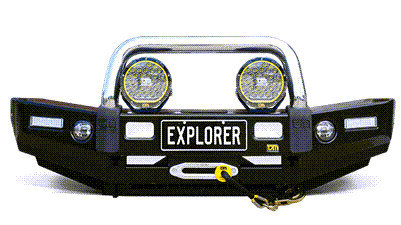
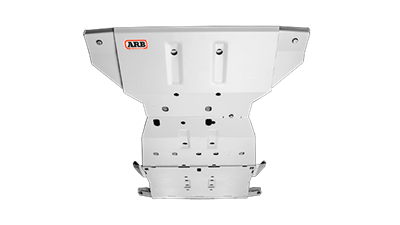
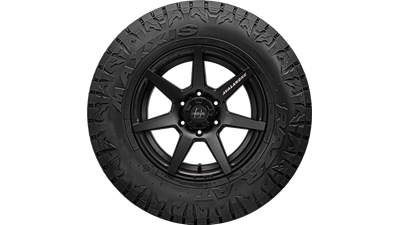
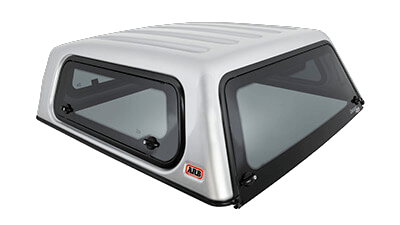
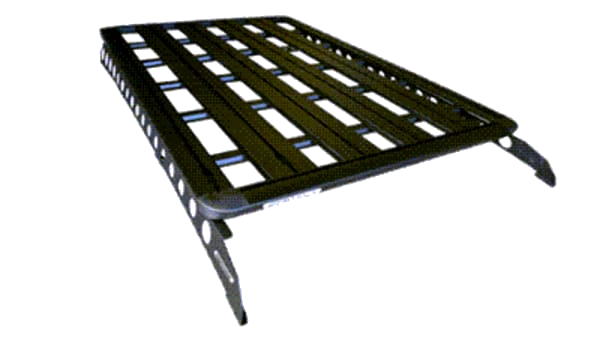
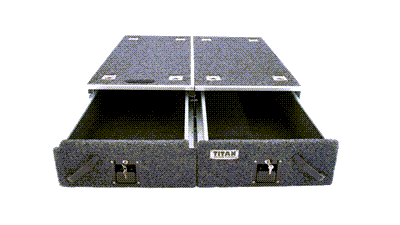
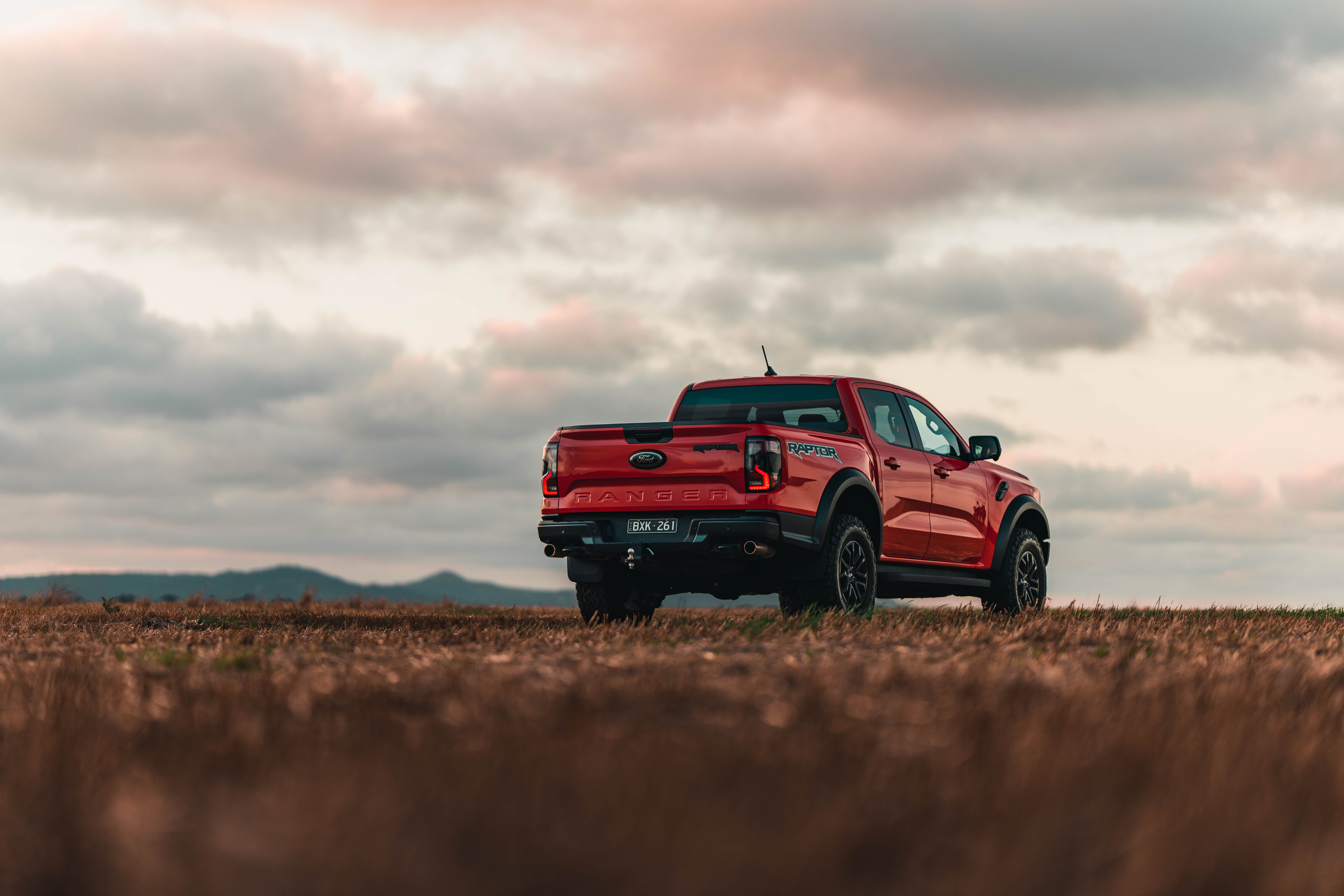
There was a sense that we were playing to the Raptor’s strengths. Like asking Steph Curry to only shoot from the free-throw line.
A tougher test, and arguably a more relevant one, is how the Raptor handles the daily grind. After all, let’s be real: how many Raptor owners will really schlep it to the middle of nowhere to drive their $100K dual-cab like a lunatic?
Some will, and if you own a Raptor, I implore you to do so – because it really is fantastic. But the reality is that most examples will spend the majority of their time in an urban environment, which is precisely why we wanted to add one to the Wheels long-term fleet.
I will admit to a certain degree of trepidation when it came time to collect BXK-261 from Ford’s Broadmeadows HQ. What if, without the added ingredients of sand and jumps, it doesn’t feel as special as it did all those months ago?

How would it fare in the cut-and-thrust of city traffic? Remember, this new Raptor isn’t only faster and more capable – it’s also considerably more focused.
The new shocks are firmer, the steering is heavier and the brake pedal more immediate – all of which is great at ten-tenths, but how about during a 40-minute delay on the Monash? Hm.
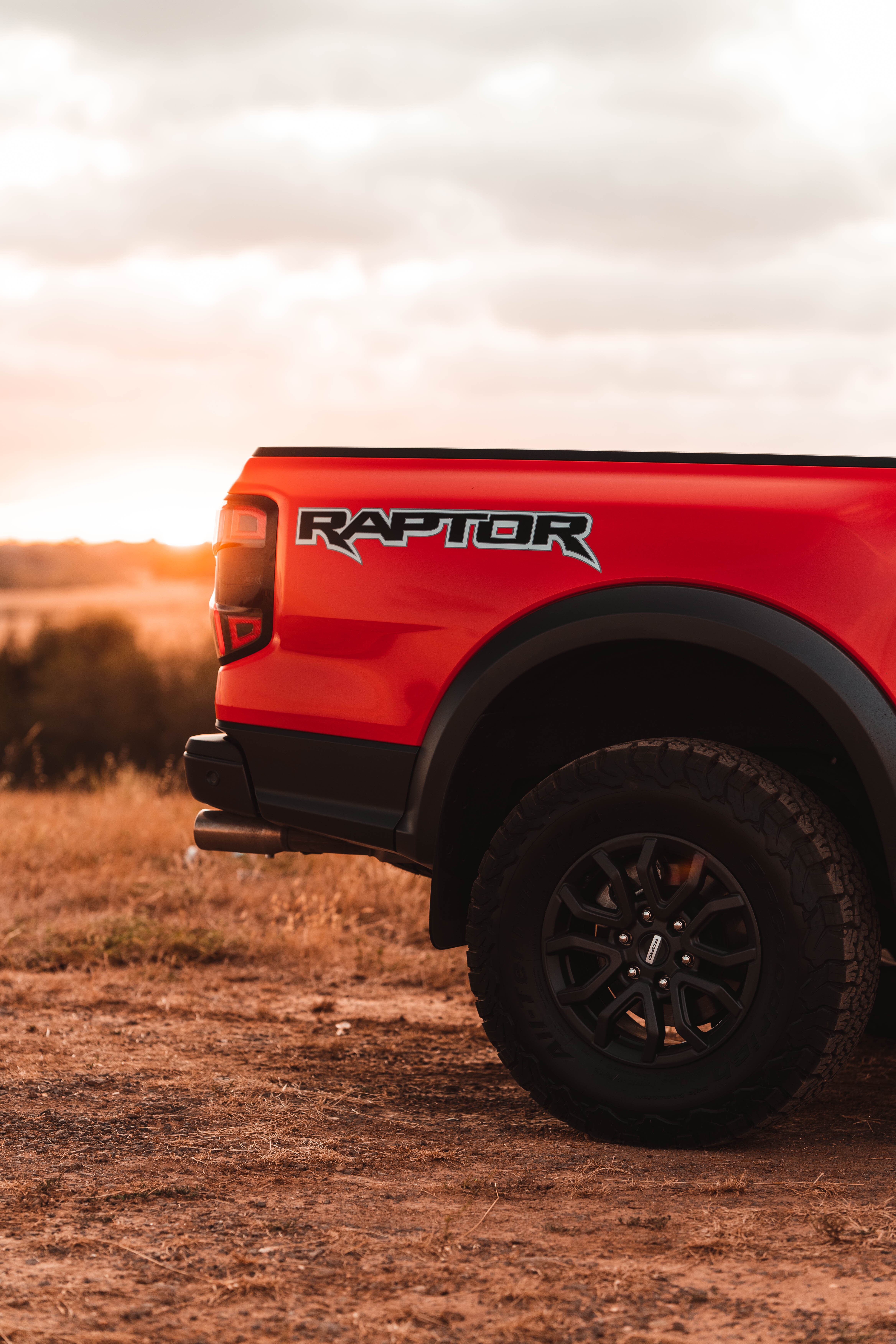
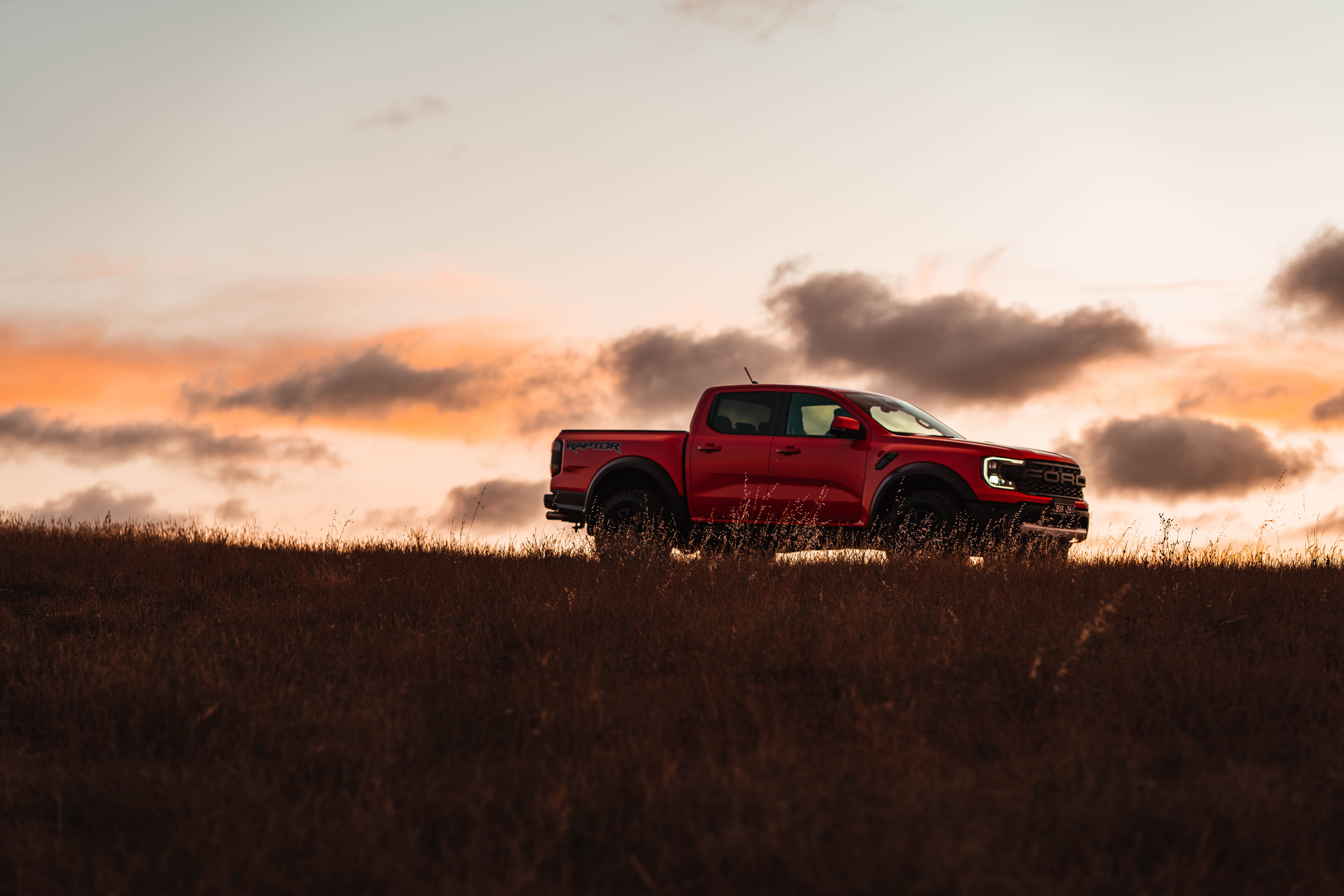
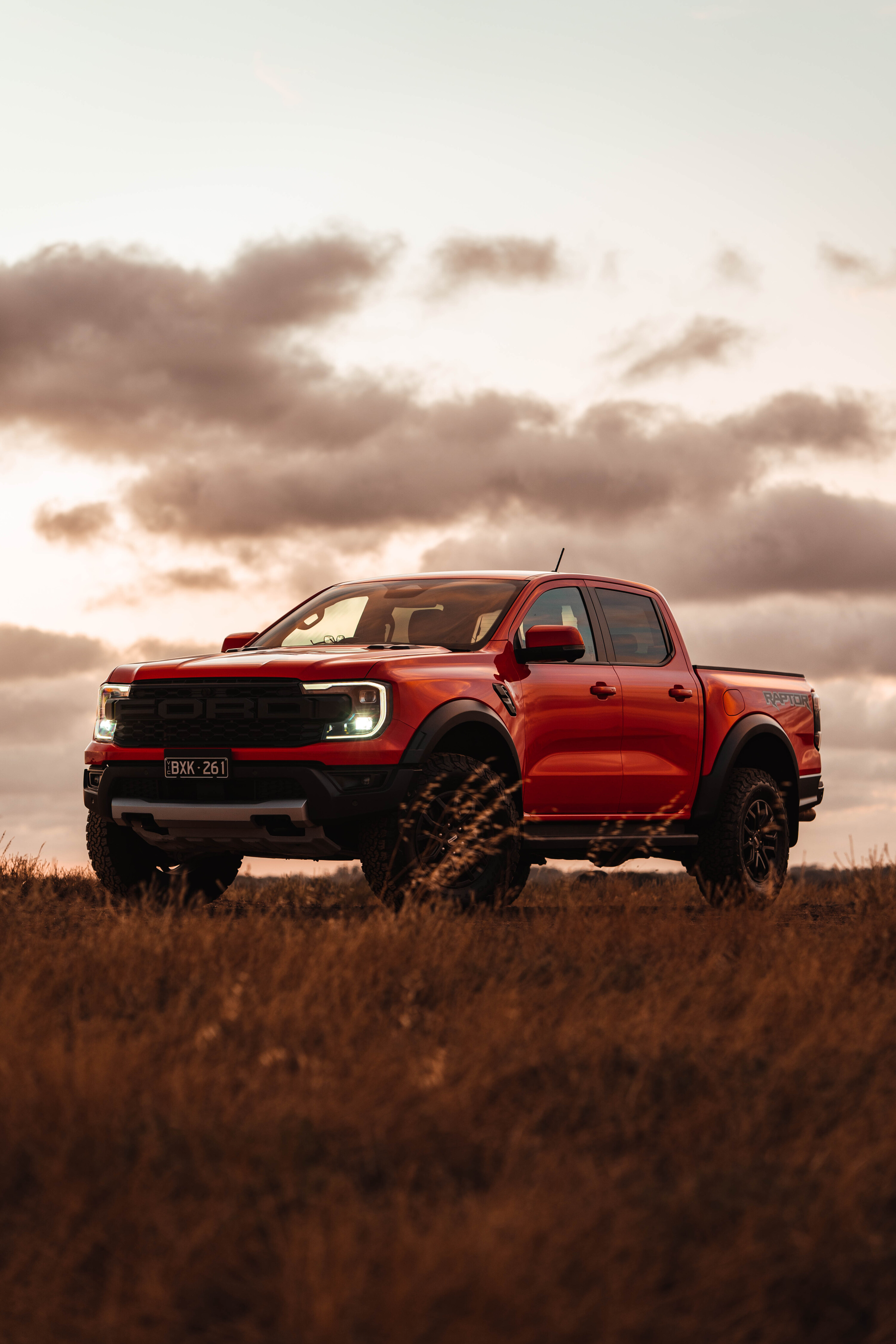
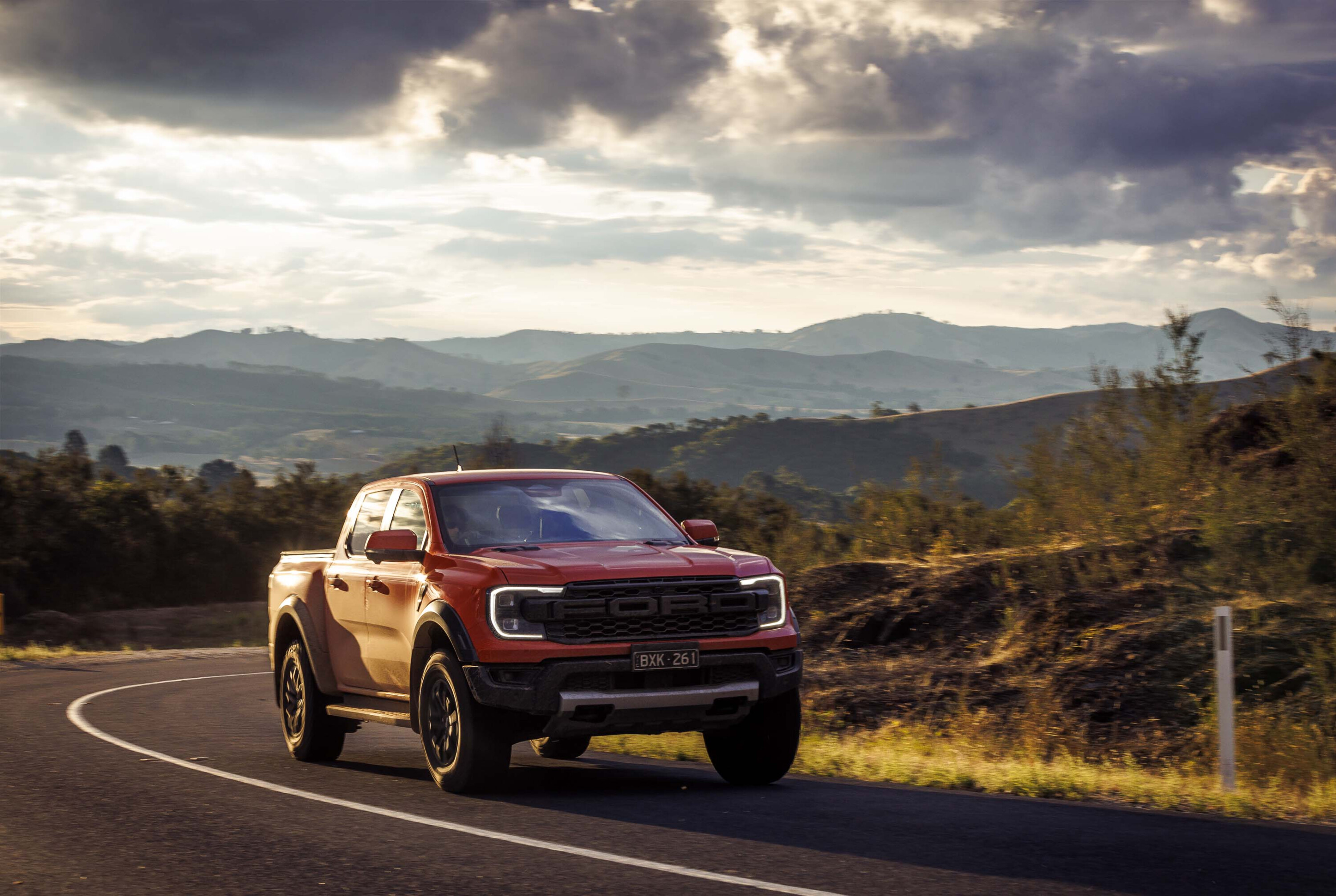
Okay let’s talk spec. ‘Our’ Raptor is about as standard as you can get, with the only added extra being its Code Orange paintwork, which commands a $700 premium. It’s a bold hue, but to my eyes it pairs nicely with the Raptor’s aggro styling. (Seven other colours are available and every finish except white commands the extra $700.)
You can go even louder, if you like, by optioning a decal pack that adds warpaint-like stickers to the bonnet and tailgate, but personally I prefer the simpler ‘Raptor’ lettering on the rear quarter panel.
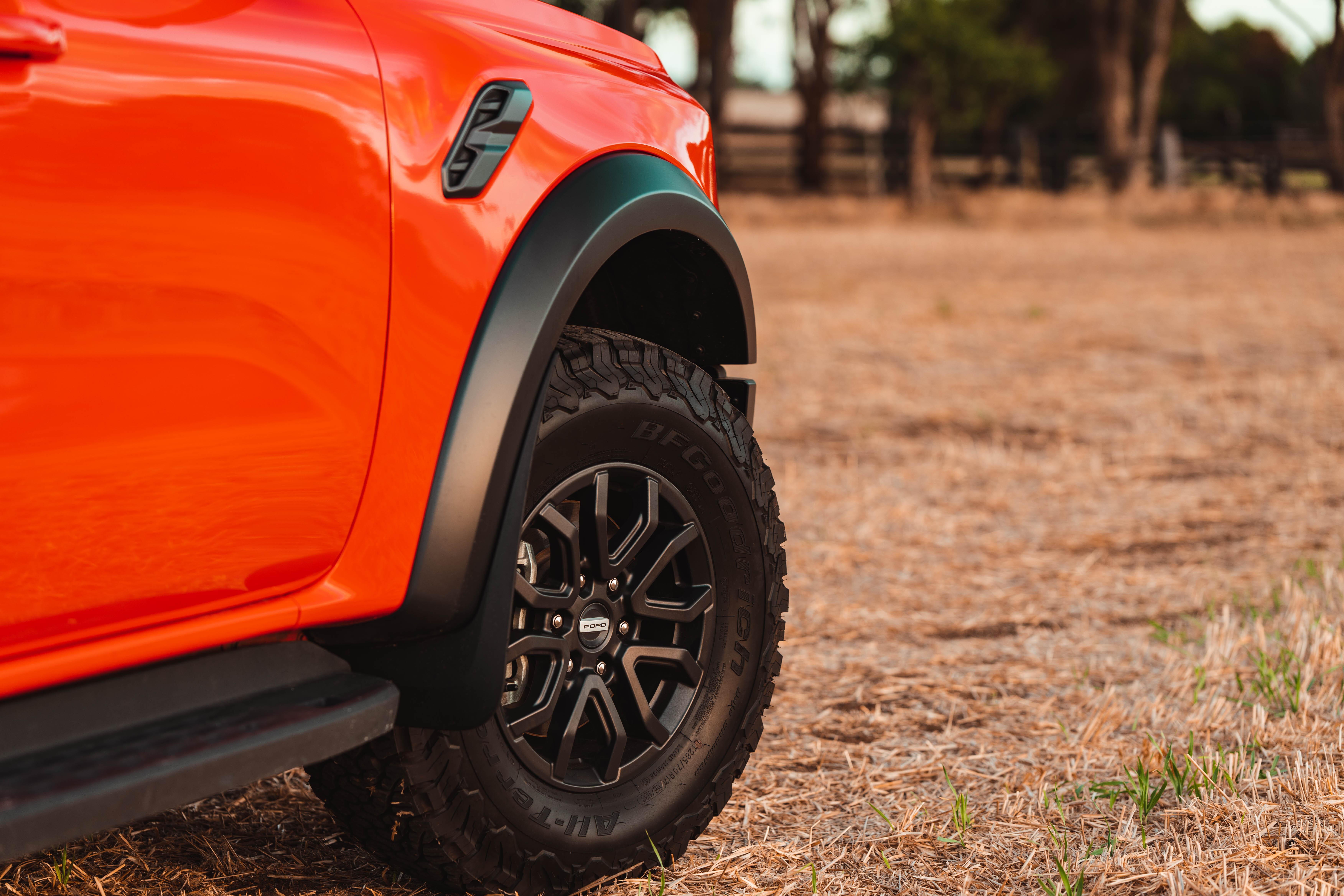
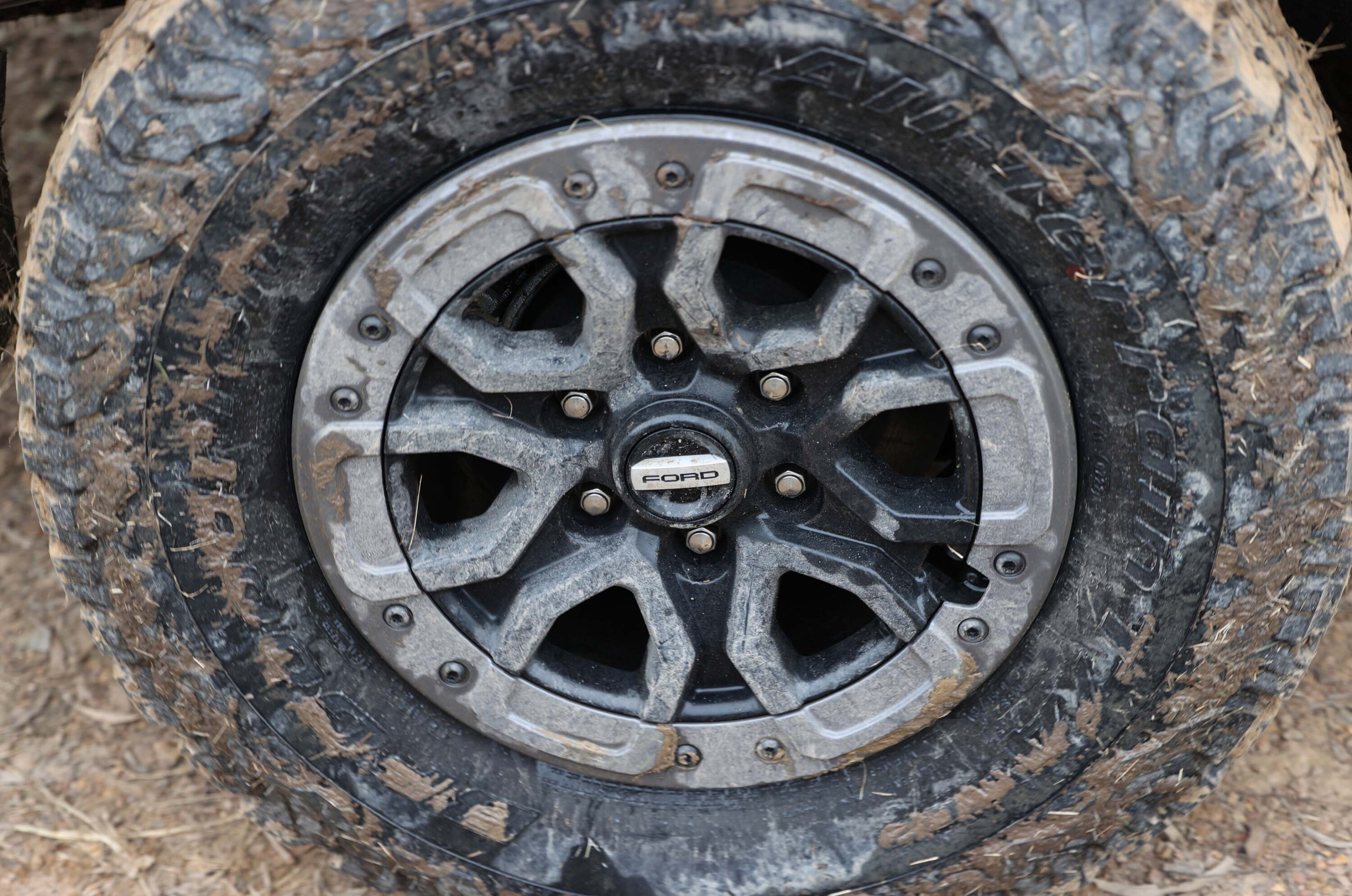
Another option missing from our Raptor are the heavy-duty beadlock wheels – but again, I’m happy that particular box wasn’t ticked.
The beadlocks cost $2000 extra and add about 16kg to the Raptor’s unsprung mass so I’d only suggest splurging on those if regular hardcore off-roading is your thing.
All up, our Raptor long-termer costs $87,490 before on-road costs. That’s a circa-$9000 price jump over the ute it replaces, but honestly, it still feels like great value. The exterior design is tougher (our particular spec oozes menace), and inside, the cabin strikes a great balance between a premium and hard-wearing feel.
The seating position is bang-on. There’s now reach and tilt adjustment for the steering wheel, and Raptors score a unique steering wheel design and heavily bolstered, leather-accented sports seats.
There’s loads of standard gear, too.
The portrait-style central touchscreen is large and user friendly, there’s a digital dial cluster, the seats are heated (a cooling function would be nice, though), and you score wireless Apple CarPlay and Android Auto plus a wireless charging pad.
We’ll dive deeper into the infotainment and connectivity next month, but, so far the system has been seamless, which is a notable difference to Andy’s temperamental experience with the same set-up in our recent long-term Everest. As for what’s missing in the Raptor? The only thing I’ve found myself looking for is a head-up display.
Build quality also feels of a high standard. One thing that was obvious on collecting our Raptor was that this particular ute has already lived an eventful life as part of Ford’s press fleet. The front bash plate is caved in on one side, there are long horizontal gouges down the right-side flank, and the leading edge of both rear wheels are peppered with stone chips.
There’s even a light smattering of fine red dust in some of the cabin’s nooks and crannies – but despite the telltale signs of hard use, all of the interior trim is still tightly screwed together and there’s not a rattle or buzz to be found.

So what about first impressions?
Well, as expected, the first few kays hammer home just how different this new Raptor is. The thing you notice immediately is the added tautness to the ride. The old Raptor used an earlier iteration of Fox’s Live Valve shocks, and the ride was so pillowy that it felt like the cabin was balanced on a gimbal.
This new ute is much more locked-down. You notice small bumps that the original ironed out, and there’s less compliance over bigger ones, but the trade-off is a big improvement in body control.
And while the new chassis set-up is appreciably more firm, don’t confuse that with being harsh or brittle. This is still a comfortable ute to drive everyday and feels a rung above a regular Ranger for ride quality.
The second thing that grabs your attention is just how big it feels on the road. Out in the great expanse of the desert, the Raptor felt big and butch, but in the tight confines of city traffic it is positively enormous.
It’s so wide that lane discipline is a high priority – slipping between two trucks across the Westgate Bridge is an experience akin to squeezing into an already crowded elevator. You sit so high, and the front end is now so bluff and aggressive, that it’s hard to shake the feeling that you’re unintentionally intimidating smaller cars. Still, familiarity will soon lead to confidence in terms of the size, and I will admit there’s a certain satisfaction to being one of the largest vehicles on the road.
Two other early observations: the air-con is properly cold, even on 22 degrees and with the fan speed set to one. We’re talking ‘Aussie Summer’ levels of icy relief here, which is great on a hot day but possibly a touch too cold when the sun isn’t blazing. The other observation is that, so far, the Raptor is performing admirably as a family truck.
One of our primary criticisms of this generation of Ranger is that its rear seat is on the squishy side for its class, but passenger room hasn’t been a problem for the new Inwood Clan. Our rear-facing baby seat fits easily (the kiddo loves the panoramic view out of the side and rear glass) and a fully grown adult can fit behind the driver without feeling overly compromised for knee room. That, too, we’ll cover in detail soon.
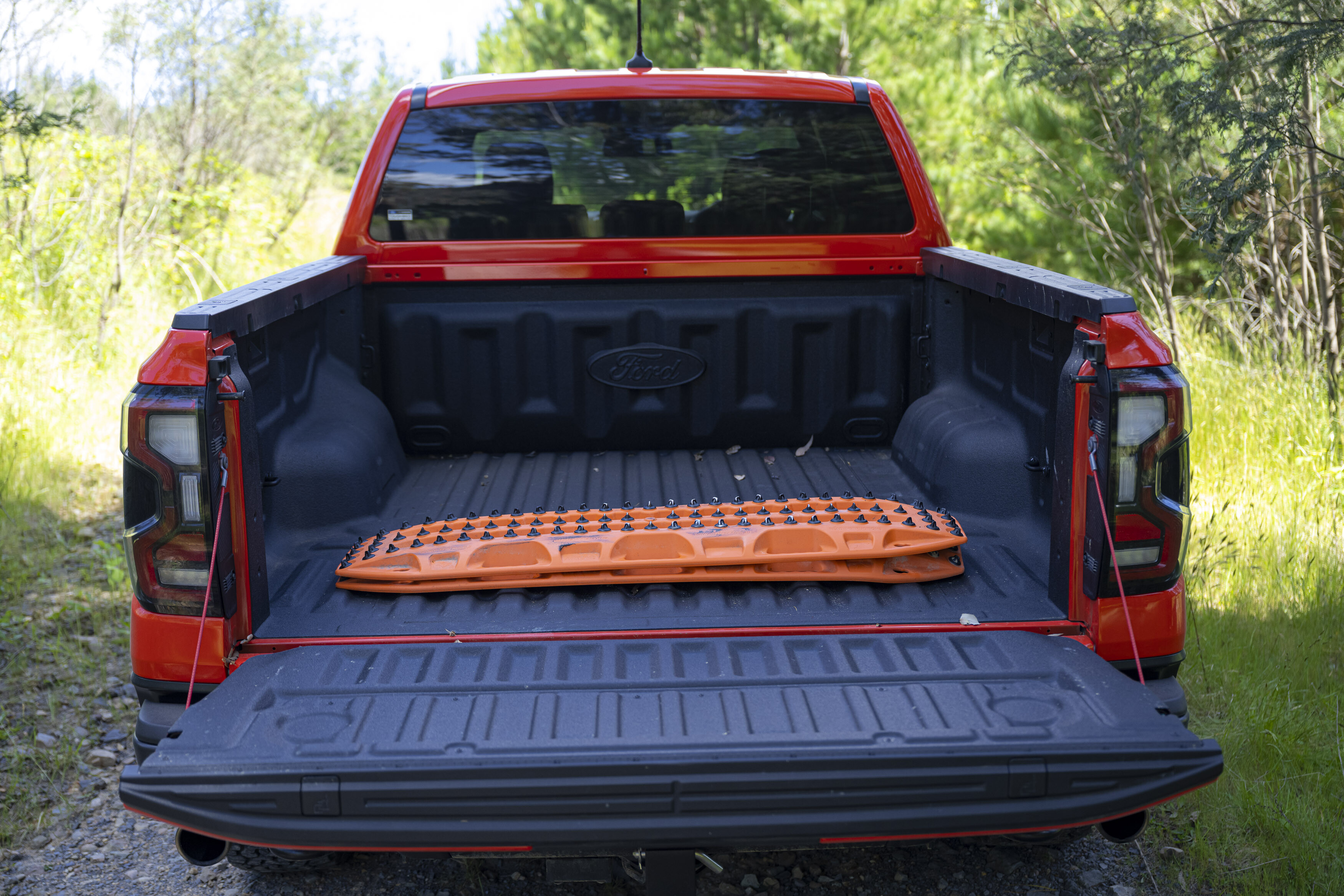
There is an issue, though: there’s nowhere to securely store our pram and other bags in the tray. Every Raptor is fitted with a spray-in tub liner, but there’s no tonneau or roller shutter as standard. Being able to lock up the tray is quickly proving to be a must-have, so we’ll report back on that one next month.
So I can breathe a sigh of relief – revisiting the Raptor hasn’t disappointed. Even in suburbia, it feels special and the cabin quality and extra grunt from the 292kW/583Nm V6 petrol, which makes the Raptor feel properly muscular, are early highlights. We have big plans for some family road-trips and off-road dashes, so stay tuned to see how it measures up for long-distance comfort, performance and, gulp, fuel economy.
Quiet, I’m moving over here!
Price as tested: $87,490 This month: 2863km @ 13.5L Total: 4070km @ 13.9L
Multiple personalities, new tonneau covers and DIY removals … this month sees the Raptor reveal a softer, utilitarian side.
In most cars, getting in, starting it up and driving off is a straightforward procedure. In a Ford Ranger Raptor, however, you have options to consider. How loud would you like your exhaust, for example? And how heavy should the steering be? Would you like Normal dampers, or perhaps Sport? And where would you like the power to go? All four wheels? Or just the back two?
Ford’s engineers are proud that their burly dual-cab can rival a noughties BMW M Car for drive mode configurability (there’s still only one setting for the gearbox mind you, not three like an F10 M5), but it only took me a few days to decide which of the Raptor’s settings suit me best.
My start up routine is as follows: Ignition on, drive mode to Sport, exhaust to Baja, traction control off and 2H for the four-wheel drive system. So noisy, rear-driven and a touch oversteery as ‘TC off’ gives you a decent amount of slip – especially in the wet on BF Goodrich all-terrains – before safely reining you back in if you get too excited.
Upgrade your Ranger
It’s a yobbish set-up, I’ll admit, but I do make one small concession: I switch the steering from Normal to Comfort. Ford has firmed up the Raptor’s steering considerably for this generation and I find the default setting a sniff too heavy and cumbersome in tight, inner-city traffic.
As you can imagine, however, driving a loud, bright orange dual-cab with the rear axle wriggling around every time you press the throttle isn’t the best look, so this month I’ve taken to exploring the Raptor’s more sensible side.
Keeping the four-wheel-drive system in 4-Auto, for example, instantly tames the tail-happy handling. And by leaving the drive mode in Normal, the powertrain loses its frenzied edge and settles into a more relaxed – though still muscular – state.
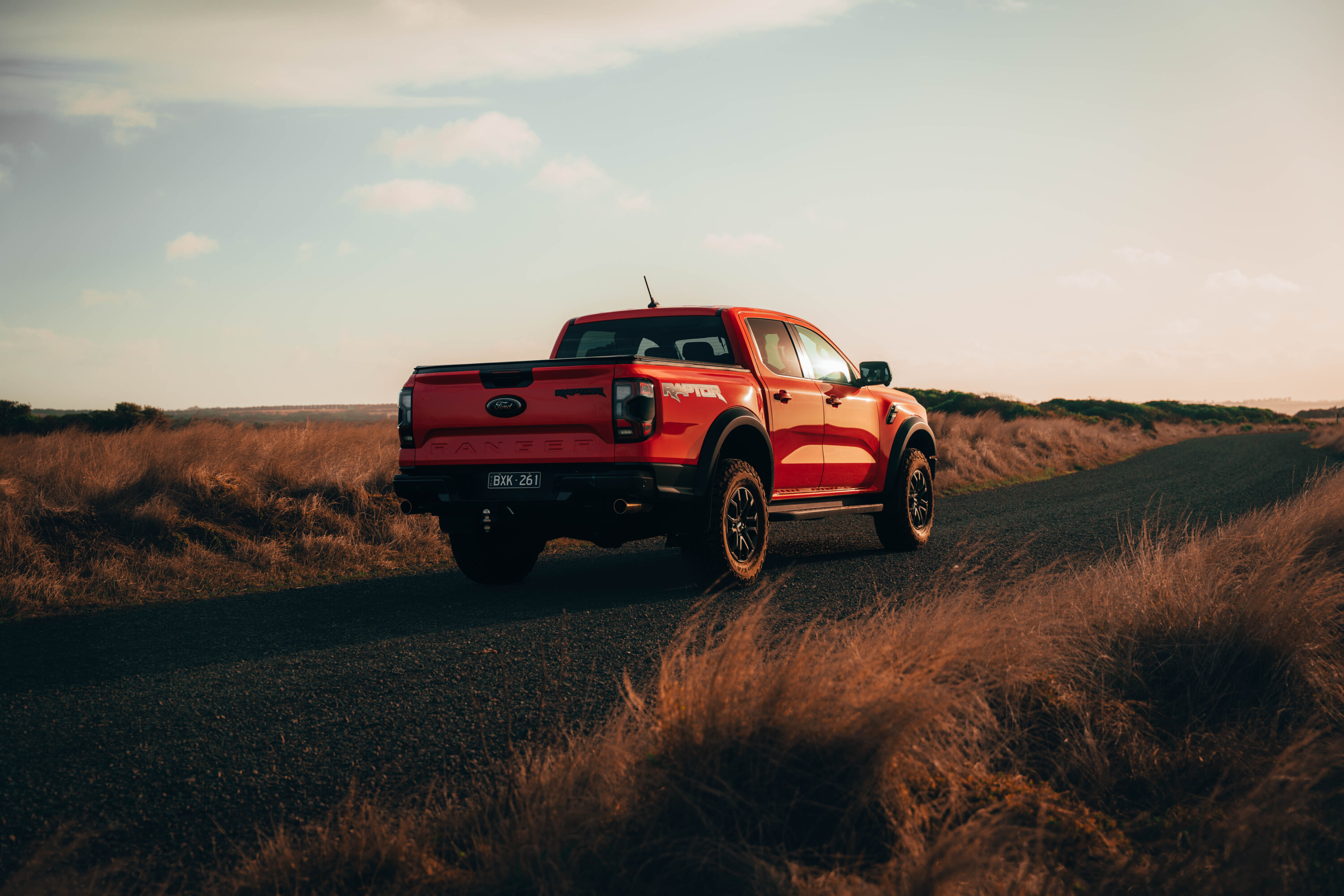
The ride also gains a noticeable degree of added comfort. Don’t buy into the notion that this generation of Raptor is now too stiff. Yes the wafty plushness (and floatiness) of the original Raptor is gone but there’s still decent compliance. And while you do notice smaller bumps that the old ute would iron out, the new version’s ride is beautifully controlled and never harsh or unpleasant.
Perhaps the biggest surprise, however, has been the Quiet mode for the exhaust. In Baja mode, with the valves open and the muffler bypassed, the Raptor sounds like a rowdy Alfa Romeo Stelvio Q that’s sculled a bottle of Limoncello. It’s not exactly a pretty noise but it’s purposeful, menacing and loud.
Quiet mode basically pulls the mic out at the wall socket. You still get a deep bark on a cold start but it quickly settles into a softer background hum, which I know my neighbours appreciate. And being able to silence the exhaust has been a godsend on longer drives with sleeping kids onboard.
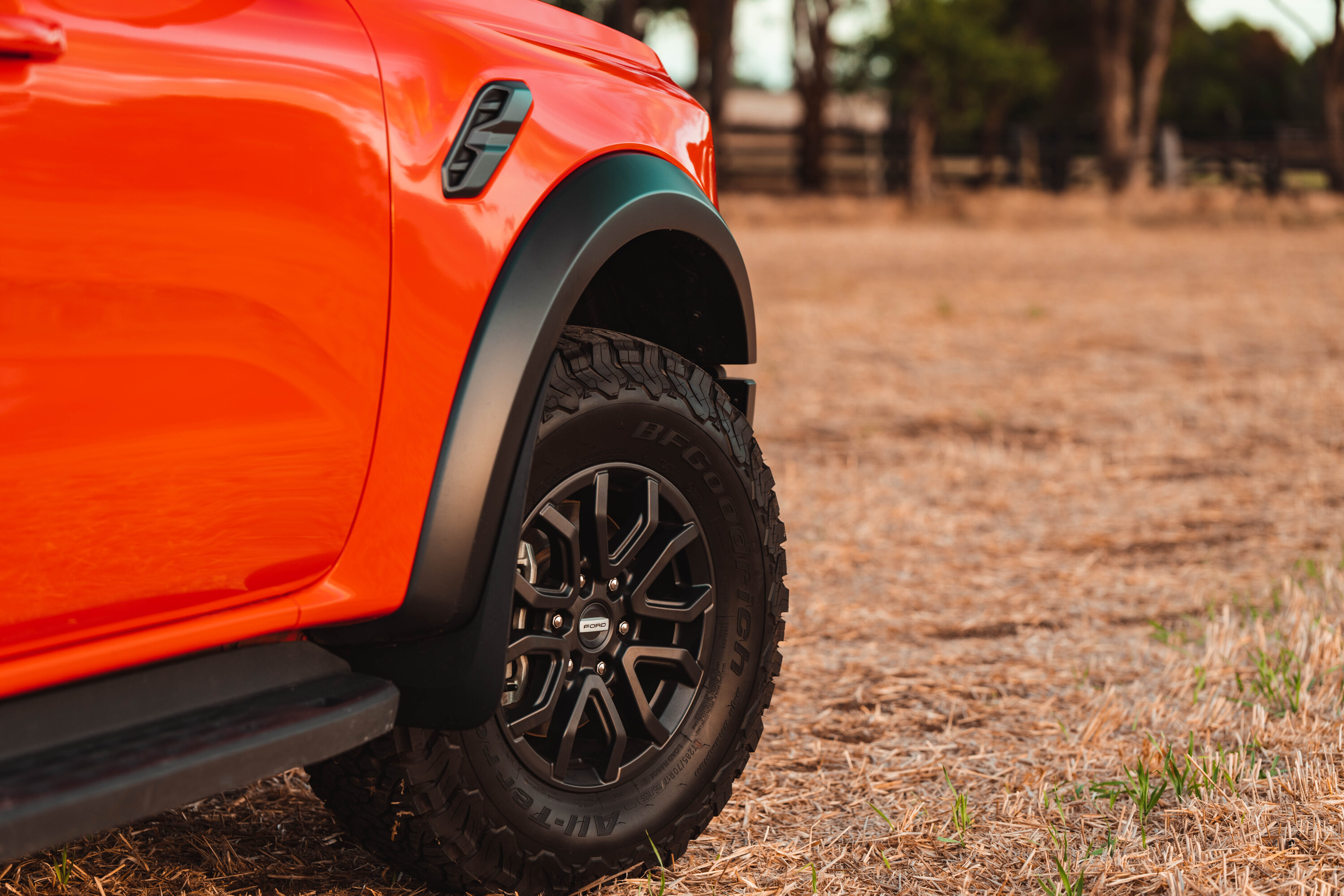
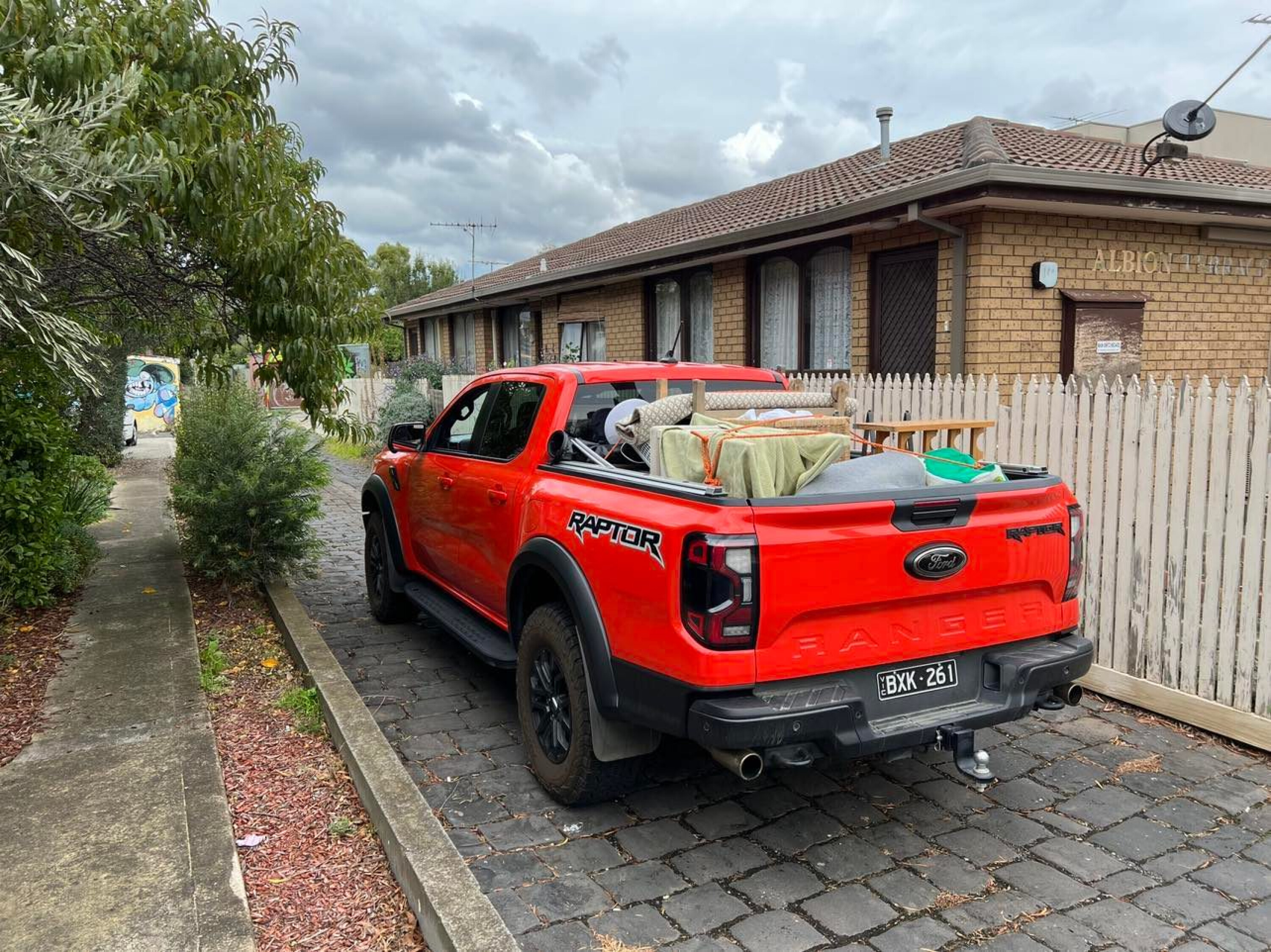
So it’s been a tamer and more approachable Raptor sitting on my driveway of late, which is perhaps why people have started asking for favours. “Hey mate, can you help me pick up a TV cabinet?” asked a neighbour. And then my sister demanded that I help her move house.
“Brilliant”, I thought, “time to test out the tray!”. Ford has increased the size of the load bay for this generation of Ranger (a 1200 x 800mm Euro pallet can now slot between the wheel arches) and the Raptor also scores a spray-in tub liner which provides a useful non-slip surface on which to chuck things.
There are six tie-down points, a power socket and a ruler on the top edge of the tailgate but there’s no escaping that the Raptor is missing features available on lesser models. The side step moulded into the rear bumper has been deleted, for example, and you miss out on the additional sliding tie-down points and powered roller shutter that’s standard fare on a Ranger Wildtrak.
Happily, getting a cover for the tray is a relatively inexpensive fix. A soft tonneau is available for $939 and it’s a must-have inclusion. Like most soft tonneau covers, it pulls tight by clipping under a lip that runs along the length of the tray but it also includes a metal latch alongside the tailgate edge.
This has two clips that slip into a metal groove on either side which allows the tray to be locked. It’s certainly not secure enough to leave tools in the tray (a sharp knife will still give thieves access) but it does mean you can leave items in there during the day relatively safely. The tonneau rolls up like a swag near the rear glass, too, so you can still ferry taller items around with no issue.
Another thing to consider is that the Raptor’s independent rear suspension means its tow rating falls to 2500kg rather than 3500kg and the payload falls by a few hundred kilos to 717kg.
One more minor annoyance is the fixed tie-down points, which can be tricky to reach once the tray is full and the Raptor’s extra ride height means hoisting heavy items like washing machines onto the tray is a touch tricky. Once locked and loaded, however, the Raptor was an admirable workhorse during the house move.
But that’s not to say this month has been niggle free. The transmission has developed an annoying habit of delivering jerky shifts, especially in the lower ratios and when parking. At first, I put it down to having the powertrain in Sport but even in Normal the ‘box can jolt and shudder.
It happens randomly, though I’ve noticed it’s been more frequent of late, so I’ll keep an eye on it.
Maybe a BMW-like setting for the ferocity of the gearbox shifts would be welcome after all…
Infotainment, 0-100km/h and emergency braking
Price as tested: $87,490 This month: 542km @ 11.4L Total: 4612km @ 12.3L
Three months into Raptor ownership so let’s grab a quick recap. So far we’ve established Ford’s second-gen Raptor is fun, capable, surprisingly comfortable on long journeys and, thanks to its smorgasbord of drive modes and settings for the exhaust and dampers, it’s also impressively configurable and adaptable.
Feel like letting your hair down with an obnoxiously loud sniff of oversteer? Simply press three buttons and exercise a decisive right foot. Want to pull your socks up and blend in with the sea of grey SUVs during school drop off? Quiet mode for the exhaust and Normal for the powertrain get you as close to incognito as a bright orange dual-cab is ever going to be.
It’s also proven to be genuinely useful at lugging things about thanks to its bigger tray which has come in handy during a house move. And while this isn’t the dual-cab to buy if you regularly tow heavy loads, its 2500kg braked towing capacity is still ample for a box trailer, small caravan or jet ski.
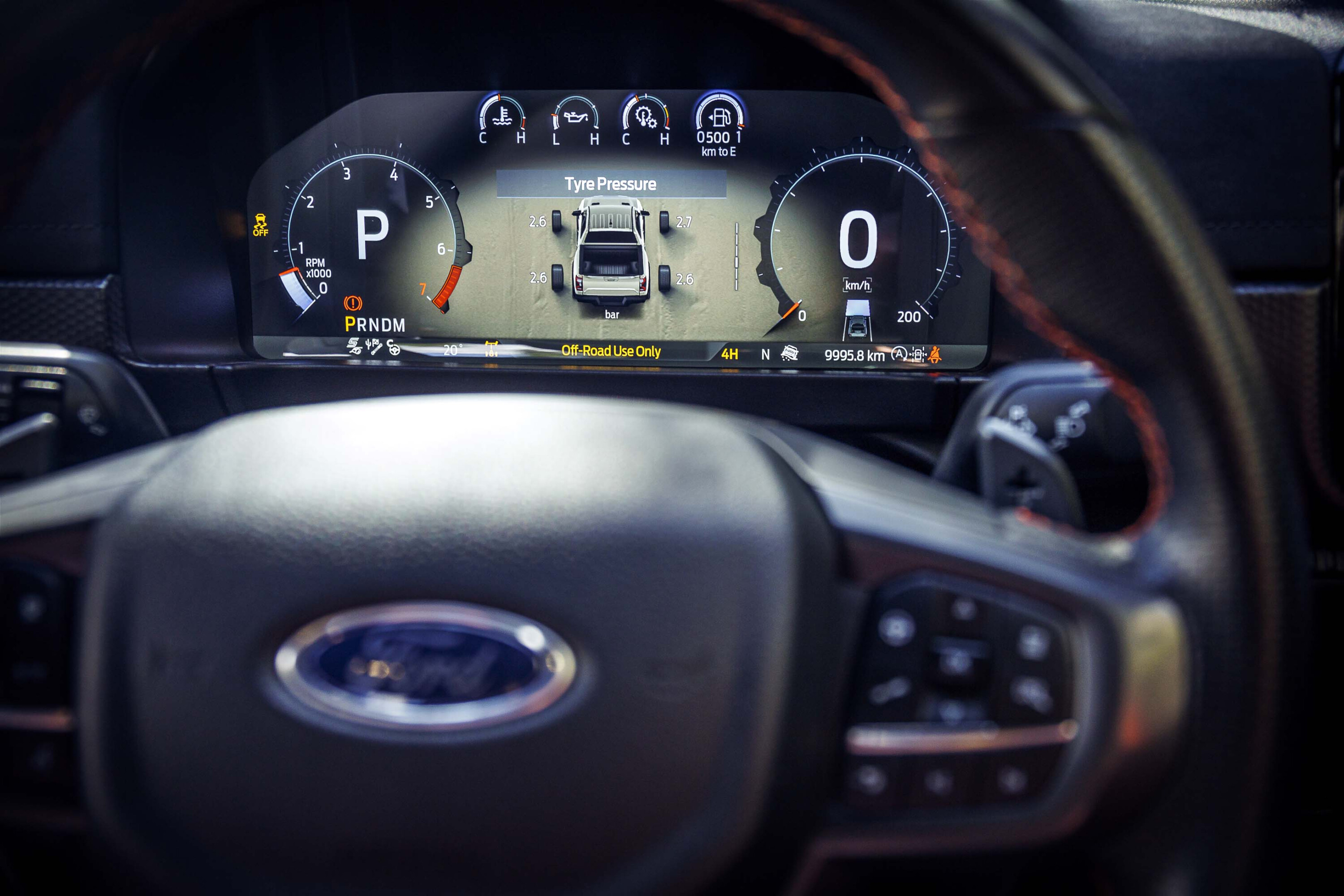
Fitting a lockable soft tonneau cover so we can throw bags and the pram in the tray has also been a boon and means that there’s now nary a situation the Raptor doesn’t excel in. One car to rule them all? Forget fast wagons, I’m starting to think a fast ute is just as fun and practical. Cheaper, too…
But there’s one frontier we haven’t explored in great depth just yet: the Raptor’s infotainment. This can be a touchy subject for some Raptor owners and we’ve spoken to many who are frustrated by patchy wireless CarPlay/Android Auto connections and a centre touchscreen that can be laggy and slow to respond.
We’ve encountered these issues ourselves in other Ford products running the same SYNC4A infotainment software as the Raptor but happily our particular ute has been problem free. Apple CarPlay works faultlessly, the wireless changing pad is conveniently placed so you can still see your phone’s screen and I reckon Ford has got the balance between a large centre touchscreen and actual physical buttons just right.
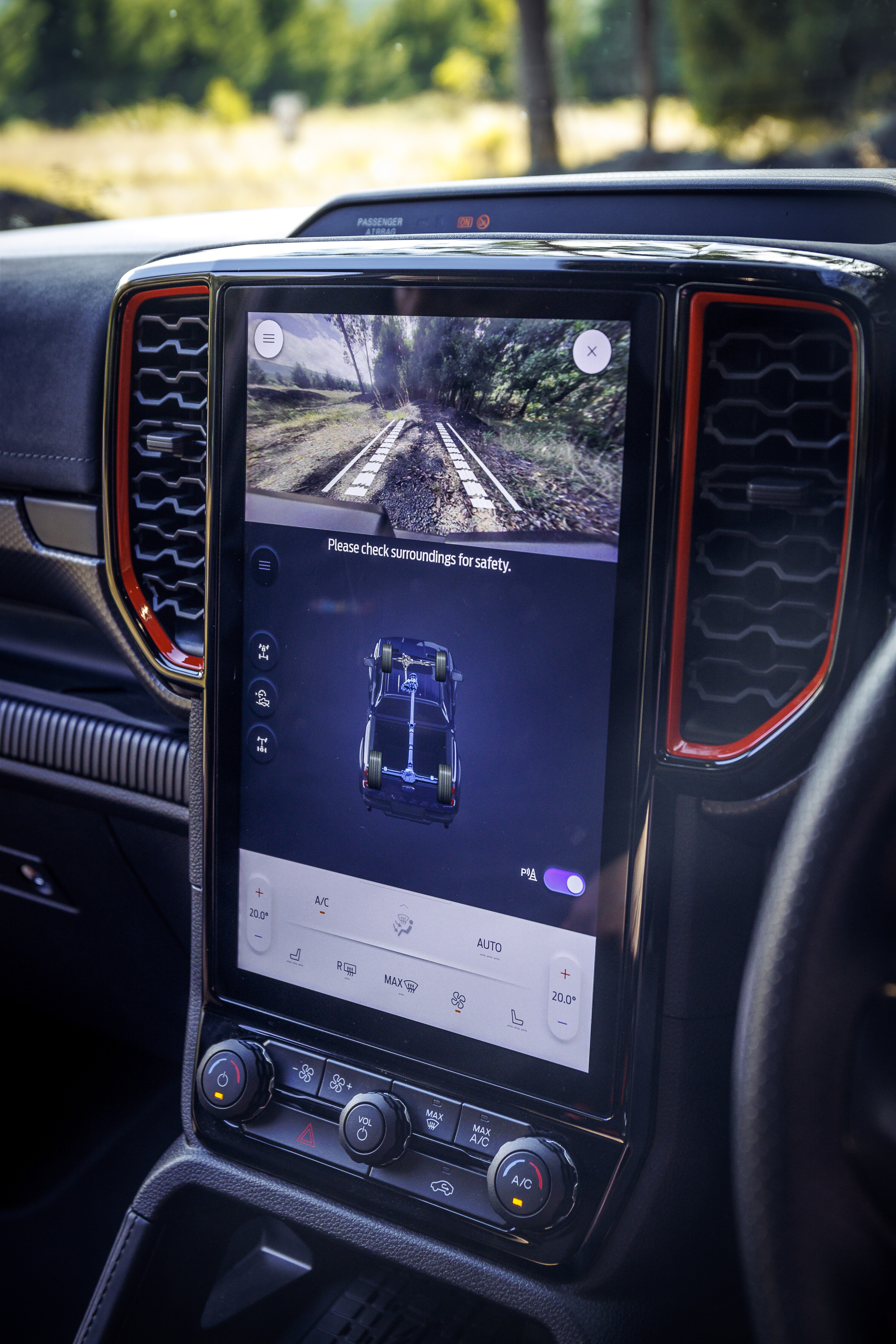
The result is a design that looks minimal, modern and techy (the vertical 12.0-inch touchscreen is brilliant) but it’s still ergonomically sound thanks to easy to reach buttons for frequently used functions like the air-con fan and temp controller.
It’s certainly easier to use than the same hardware in the new-gen Volkswagen Amarok which was co-developed with the Ranger but has buried more of its key functions within the touchscreen.
My only real gripe with the Raptor’s infotainment is that CarPlay can take a while to fire up and I’m often 100 metres or so from home before it eventually appears on the screen.
You can’t access the keyboard to input a destination in Google Maps on the move either. Once CarPlay is locked and loaded, though, the experience has been seamless. Good stereo, too, courtesy of a 10-speaker system from Bose, and the resolution of the surround view cameras are top notch.
The cameras make parking a cinch and have helped alleviate my initial concern that the Raptor would be too big and unwieldy to drive everyday. Familiarity with its size helps, of course, but the high-res cameras, excellent outward visibility and huge wing mirrors mean I now feel as comfortable threading the Raptor through narrow city streets as I do our personal Golf GTI.
So despite its open-range, hardcore performance DNA, the Raptor has been acing the urban grind. There has been one question gnawing away in the back on my mind, though: just how fast is this new twin-turbo V6 Raptor? Ford says it’s “hot hatch fast”, which pegs it around the 6.5sec mark to 100km/h, but it wasn’t until testing for Wheels Car of the Year that we were able to strap on the timing gear and see what it could do.
Against the clock the Raptor hit 0-100km/h in 6.1 seconds, making it quicker to the legal limit than a Golf GTI and Renault Megane RS and about on par with a manual i30 N. Not bad for a 2.5 tonne dual-cab…
But while the Raptor has plenty of get up and go, coming to a stop is another story. Of all the cars at COTY it was the worst performer in our 100km/h to zero test and took a whopping 51.7m to pull up. Yikes. For context that’s more than 16m further than something like a Cupra Formentor achieved in the same test.
Is it something to be worried about? More like something to be mindful of, especially if you have a tailgating tendency. I’ve certainly taken to giving cars ahead more of gap and I eke that room out even further when it’s wet.
Is the Raptor Australia’s best performance ute?
Price as tested: $87,490 This month: 448km @ 13.4L Total: 5012km @ 13.0L
‘Well that doesn’t sound good…” The warning message first appeared just as I was parking the Raptor up after a long day at the office.
‘Drive control malfunction. Service required’ read the pop-up window on the digital dash, which sounded pretty serious. Everything felt okay, though, and when I switched the ignition off and back on again, the warning didn’t reappear. Phew.
Full of optimism, I chalked it up as a software glitch, walked inside and did my best to forget about it. Which was easy, until, a few days later, the message appeared again.
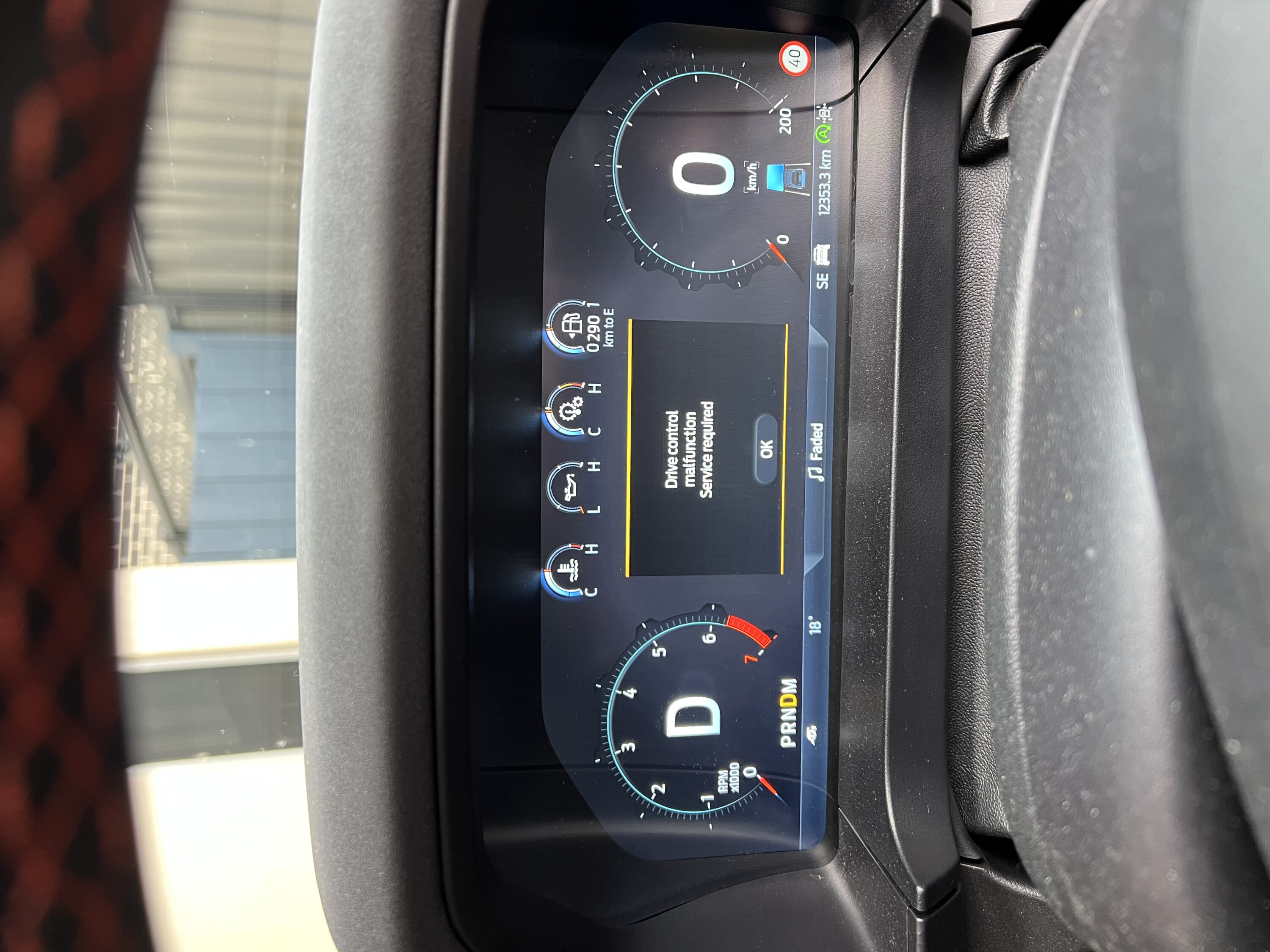
This time I was further from home so I was able to perform some quick diagnostic checks. Engine? Still as smooth and as responsive as ever. Likewise the steering, brakes and gearbox. Weird. This time, though, the old ‘turn it off and on again’ trick didn’t work. And then things got a bit weird…
The most obvious symptom was the ride which suddenly felt quite lumpy. At a gentle cruise, the Raptor had developed a hobble, as if one of its chunky all-terrains had suddenly gone completely flat. But no, a quick check showed that all four tyres were still fully inflated.
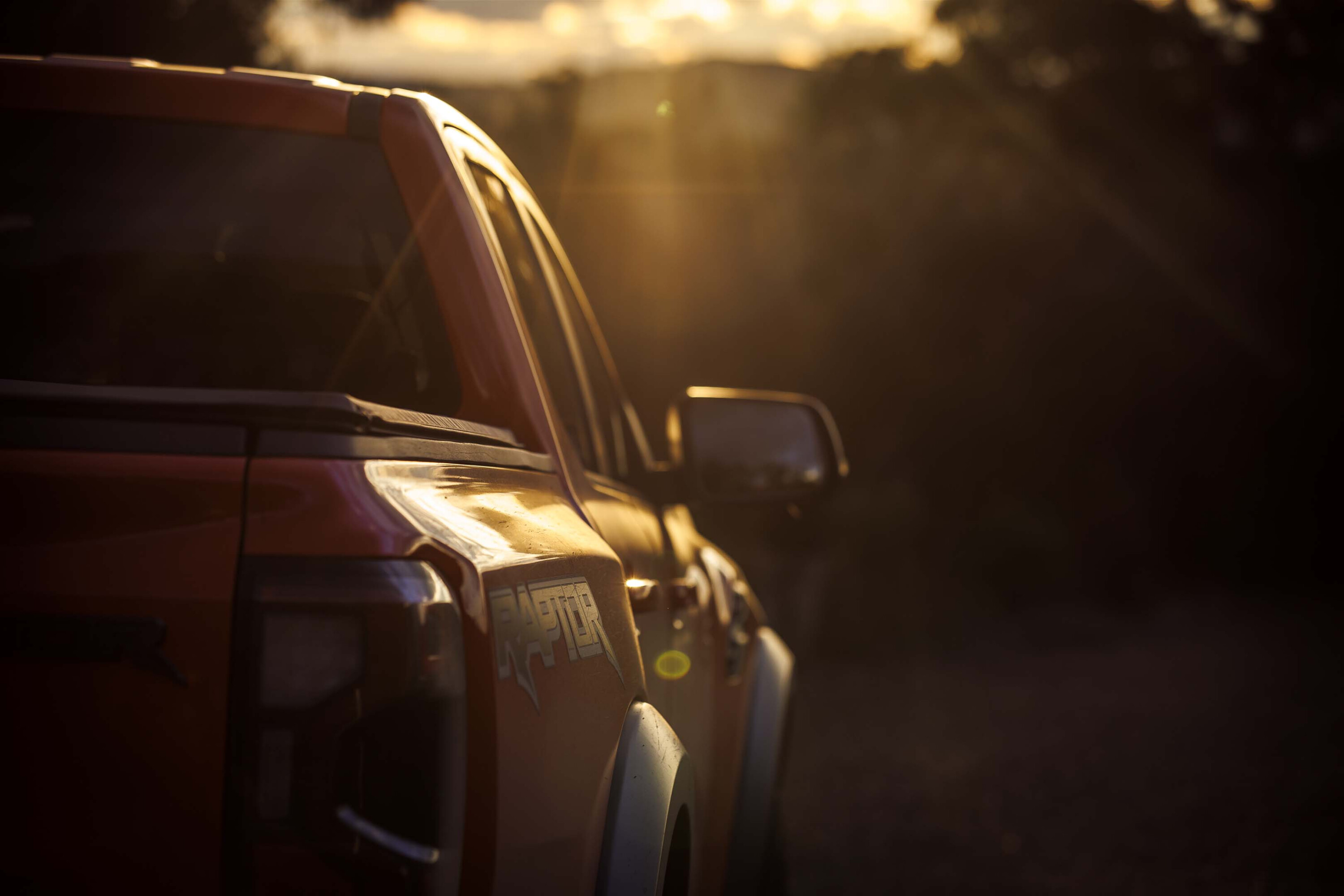
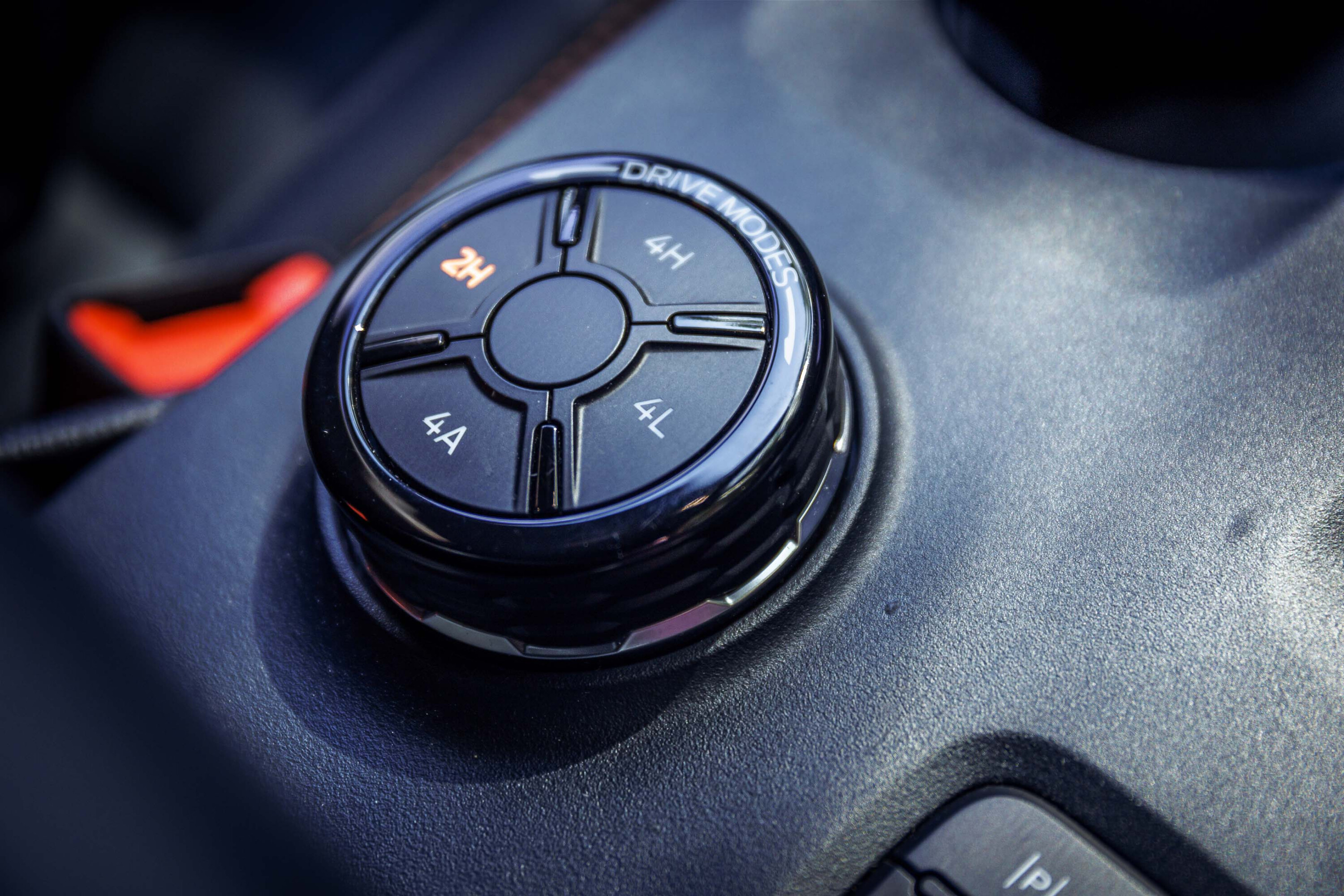
“Must be the dampers,” I wondered aloud, my hand reaching for the Drive Mode dial on the centre console.
Perhaps switching into another mode would cure the problem, I reasoned, but twisting the dial only made the error message reappear on the dash.
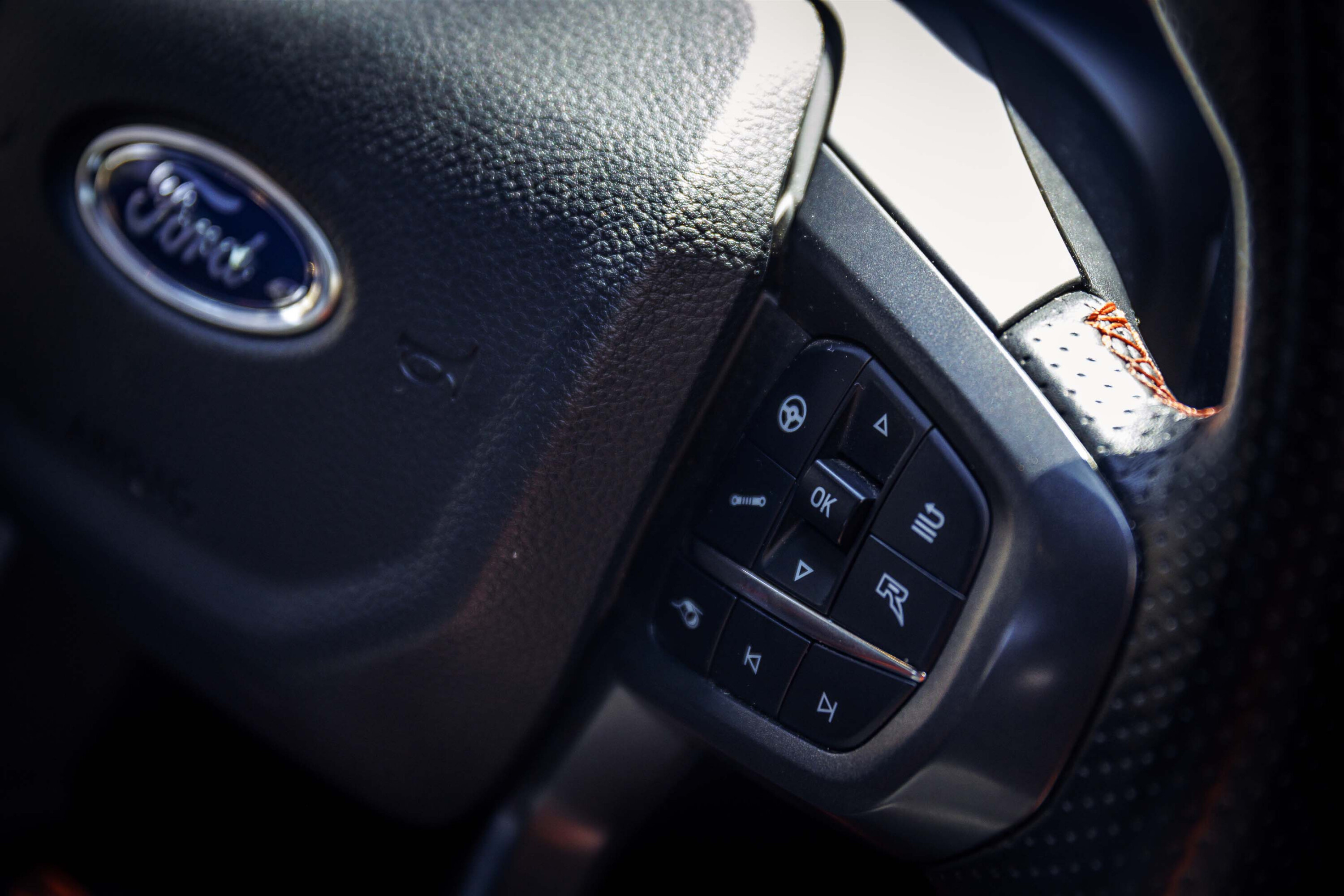
Pressing the hot keys on the steering wheel to adjust the dampers, steering and exhaust yielded the same result. The issue, I deduced, was the drive modes themselves, which had completely given up the ghost and locked the Raptor’s dampers in place, which would explain the ungainly ride.
Bummer. Worse still, because the Raptor had to go back to Ford for a fix and it only had two weeks left on its planned stint in the Wheels garage, it also meant an early end to its stay.
In a strange way, though, the sudden disappearance helped to crystallise how I felt about Ford’s tough truck. I missed it, badly. During its four-month stint we’d thrown the kitchen sink at the second-gen Raptor and it performed admirably.
Family duties, moving duties, towing duties, long-distance cruising, city traffic crawling, off-roading, back-road sliding… you name it, we threw it the Raptor’s way. And in every test, the Raptor wasn’t only capable. It was fun, too.
The Raptor’s long-term stay also helped us, finally, to make a call on the question that had been looming over the performance ute’s head for months.
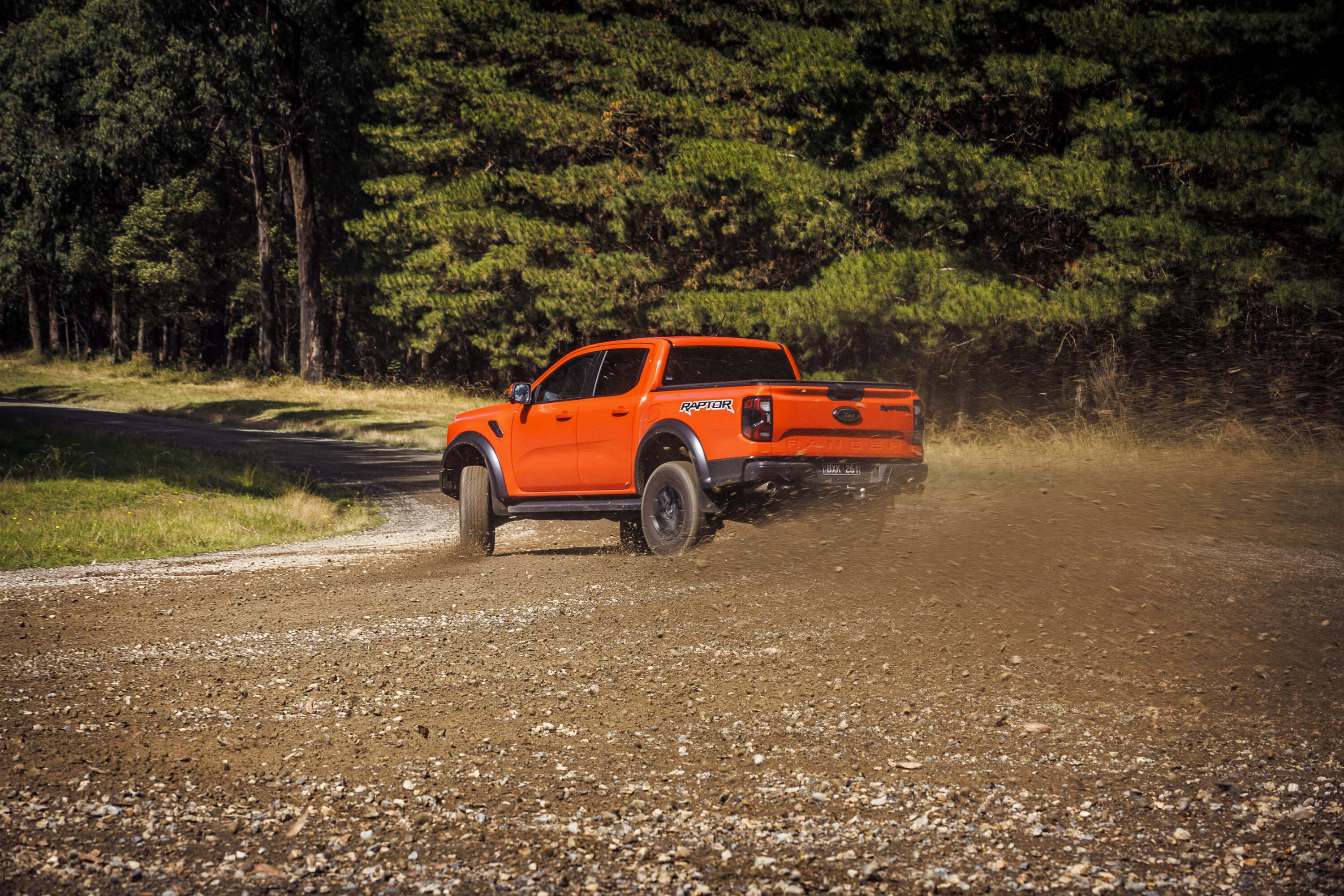
And that was, ‘Has Ford over done it with the second-gen model?’. That question first reared its head during Car of the Year testing where some judges felt this new Raptor was now too fast and too serious.
That in Ford’s desire to give it extra performance and to tie down the suspension, the Raptor had lost some of the wafty suppleness and genial personality that made the original ute so endearing and capable.
It’s a valid question, and there’s no escaping that Raptor V2.0 is a more focused and steely-eyed beast, but it’s also unquestionably a better ute. It’s faster, smarter, louder, more luxurious, better to drive and has a higher-tech cabin.
And while its suspension is also far firmer, I can truthfully say there wasn’t a single moment that I thought “I wish this ute rode more comfortably.”
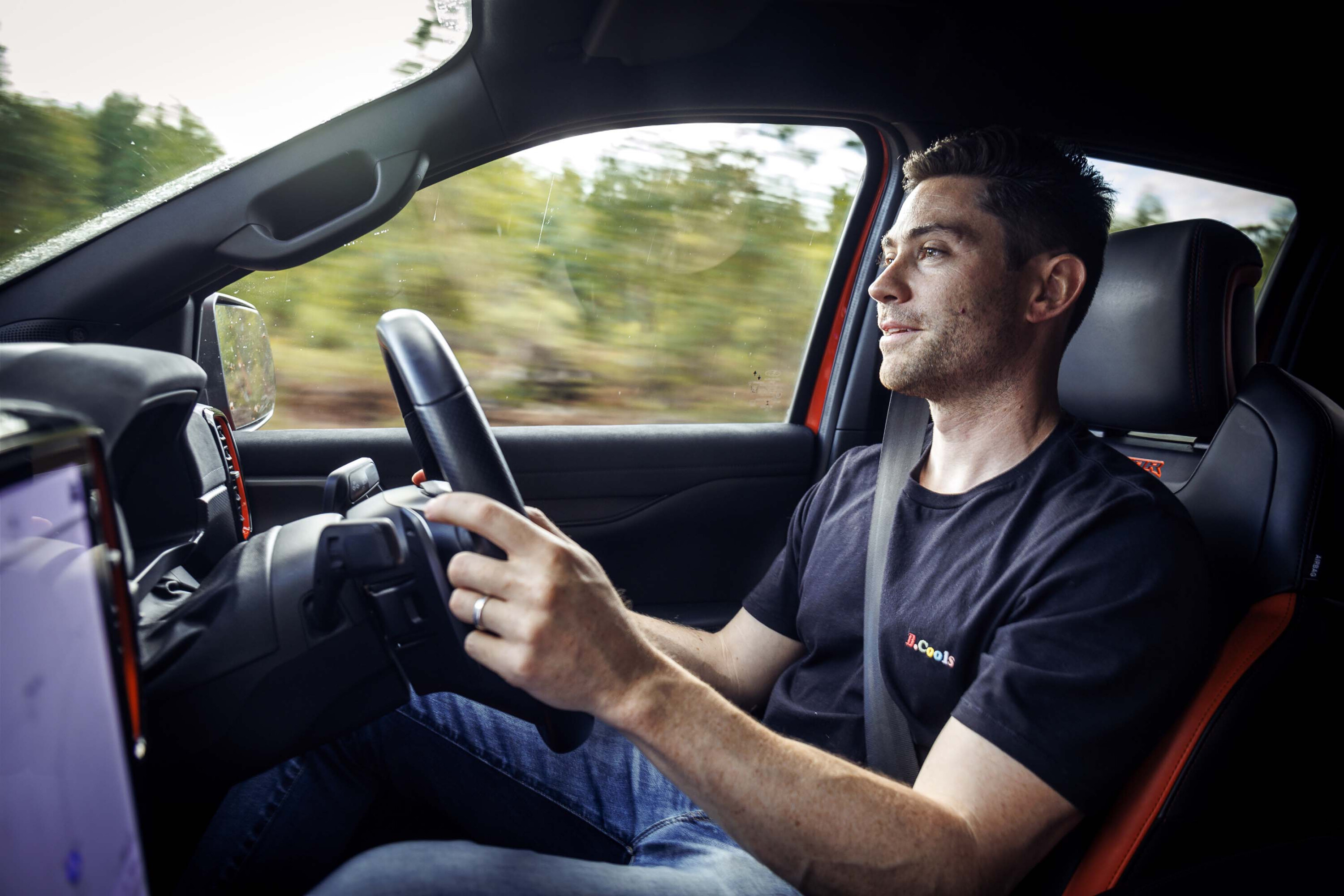
What really sets the Raptor apart, though, is its personality. In a world of dull and predictable SUVs, Ford’s performance ute is a technicolour, high-energy breath of fresh air.
It feels special to drive, even in city traffic, and isn’t that the measure of a great car? The ability to provoke emotion? Or as Marie Kondo might say, to spark joy?
As for quirks, drive mode failures aside, the only niggles we encountered were laggy Apple CarPlay on start-up and the big V6’s pretty hefty thirst. After 5000km together, our Raptor averaged 13.0L/100km which is pretty high by modern family car standards but actually quite decent for a 2.5-tonne performance ute.
So should you fork out $90K of your own hard-earned to buy a Raptor? I wouldn’t hesitate to recommend one and I’ve done just that to plenty of mates.
And in any case, if you’re looking for a proper performance dual-cab in the ilk of foregone heroes like an HSV Maloo or Ford Falcon F6 Typhoon, then the Raptor is living in a class of one. Which begs the question: why aren’t there more utes like it?
You think a similarly wicked-up version of a HiLux, D-Max or Amarok would sell like Matilda’s scarfs at a world-cup semi-final. So come on Toyota, Nissan, Mitsubishi and Volkswagen. Get your act together…
It was around 30 million years ago that an ancient volcano located just near Dorrigo gave an almighty push from the realms of our great earth, and because of this we have some fantastic four-wheel driving and destinations to explore on the NSW north coast.
A favourite with the locals is the Nymboi-Binderay National Park, located 60km west of Coffs Harbour. As well as great tracks, this national park is full of history, activities and some spectacular camping spots. Although it isn’t 4000km out the back of whoop-whoop, it should still be considered as a remote area, as there is no phone service and very limited traffic in this seriously deep gorge country.








From Coffs Harbour head west through Coramba where this sleepy old town dates back to the turn of the century, when gold was the talk of the area. As you pass through Coramba take the left turn that’s signposted Eastern Dorrigo Way. This 15km sealed road starts to wind its way up onto the top of the Great Dividing Range, through stands of massive old ghost gums, stunning rainforest pockets, and tree ferns that line the road looking for sunlight.
It’s a slow drive so wind down a window and listen to the whipbirds and smell the fresh, crisp air as you pass under the forest canopy. Keep an eye out for a couple of spots where you can stop and admire the view back towards the coast, and down into some steep timbered country where gold was found over 100 years ago.
Further along you’ll pass several communities such as Lowanna and Ulong. These two towns were linked by a rail system over 100 years ago when gold and timber were the main commodities in the area. At Lowanna stop and explore the restored station and gear around the grounds.
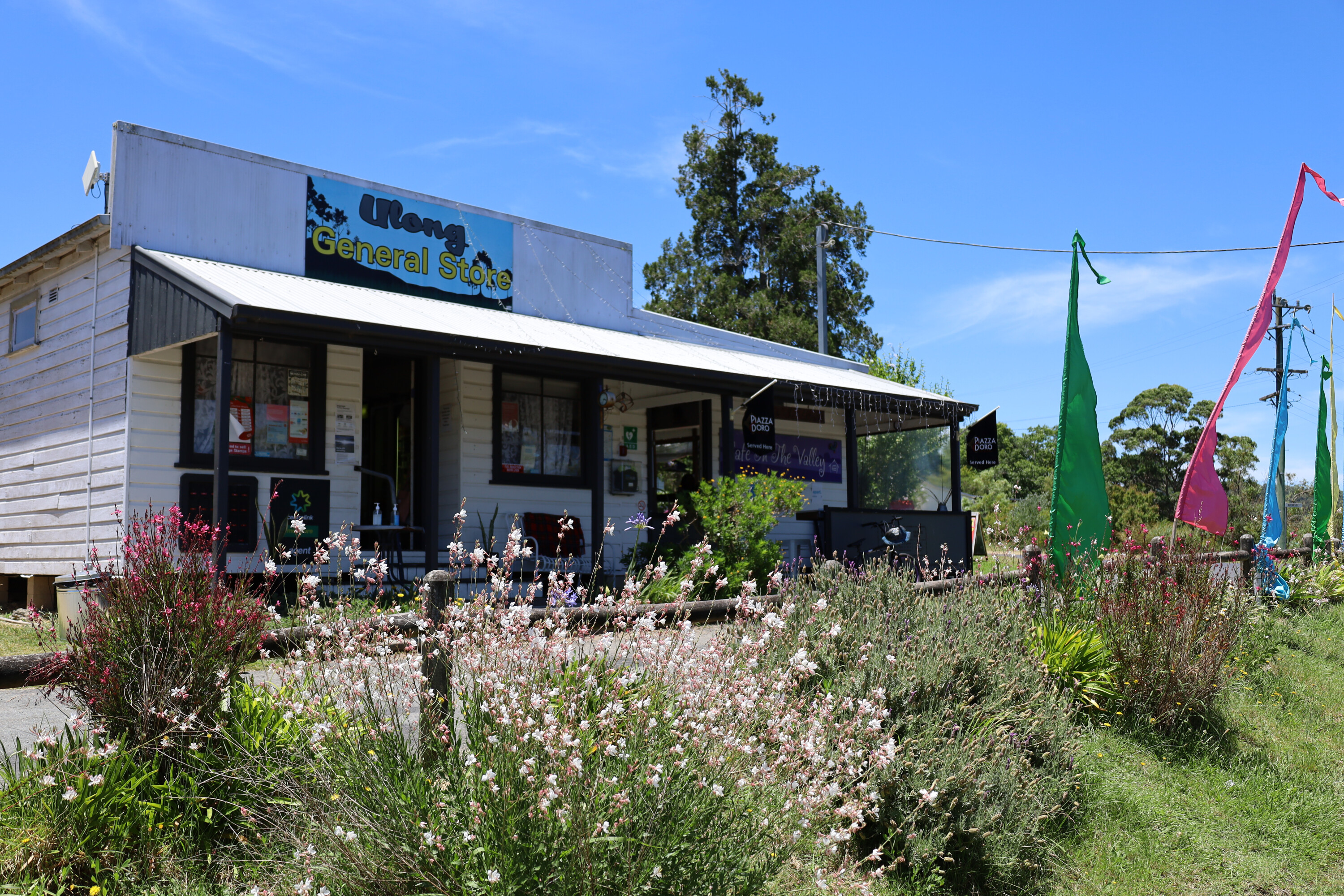
Ulong is a bustling community all centred around the Ulong General Store & Cafe, where you’ll not only get some of the best food in the area, but local information imparted by the owners about where to find waterfalls, camping spots and so much more.
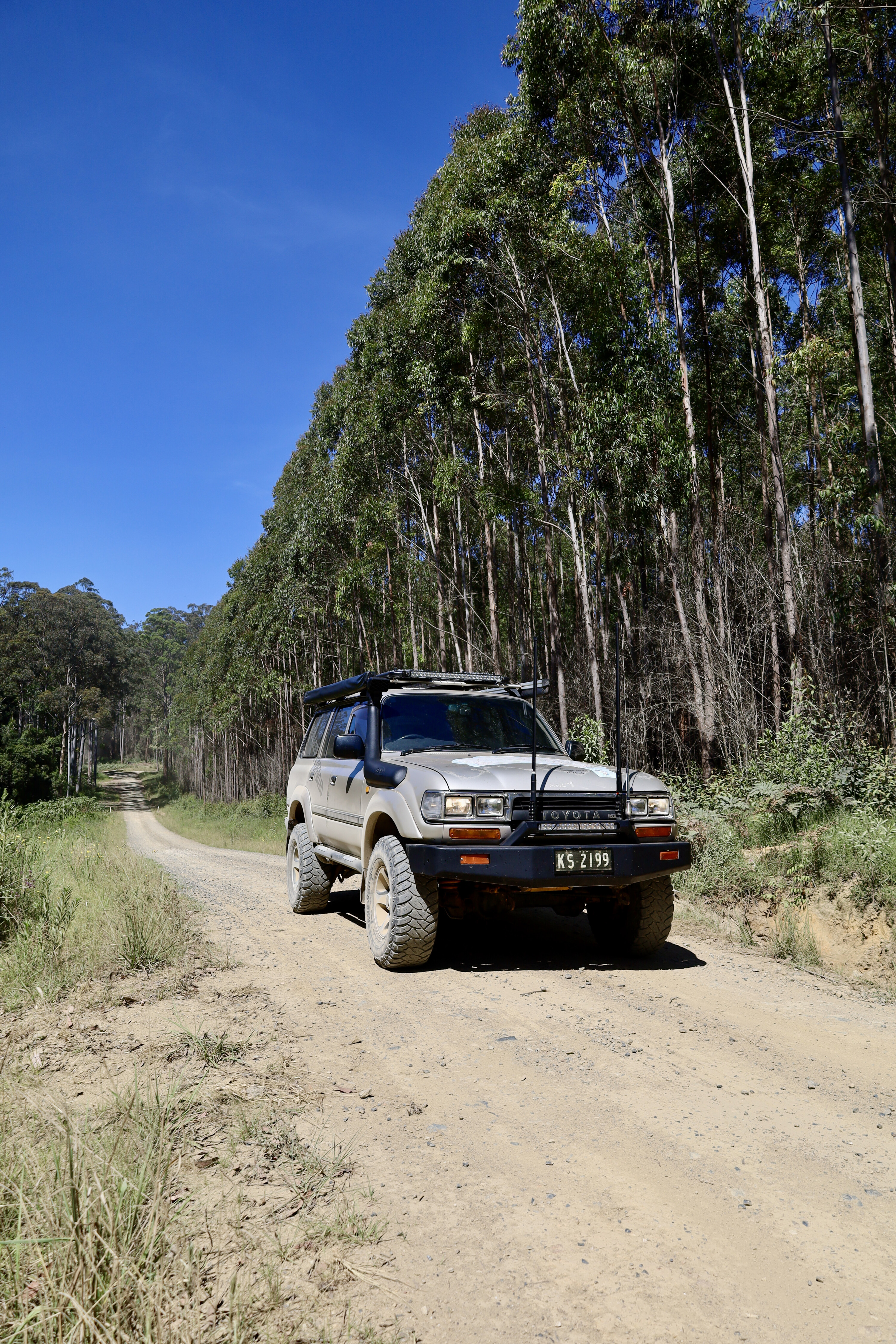
After passing through Ulong, the road turns left to Dorrigo, but here you need to go straight ahead onto the dirt. Farms dominate the countryside for several kilometres before you cross the Bobo River. To your left you’ll see a huge metal bridge that spans the river but hasn’t seen a train on it for over 40 years.
Part of the old Glenreagh Mountain Railway (GMR) that ran from Dorrigo to Glenreagh, there were 13 sidings, two long tunnels and other infrastructure along its tracks back in the day, servicing the hinterland to the coast. The next few kilometres will see you wind through pine and timber plantations that are continually logged and re-planted, so take note of the warning signs.
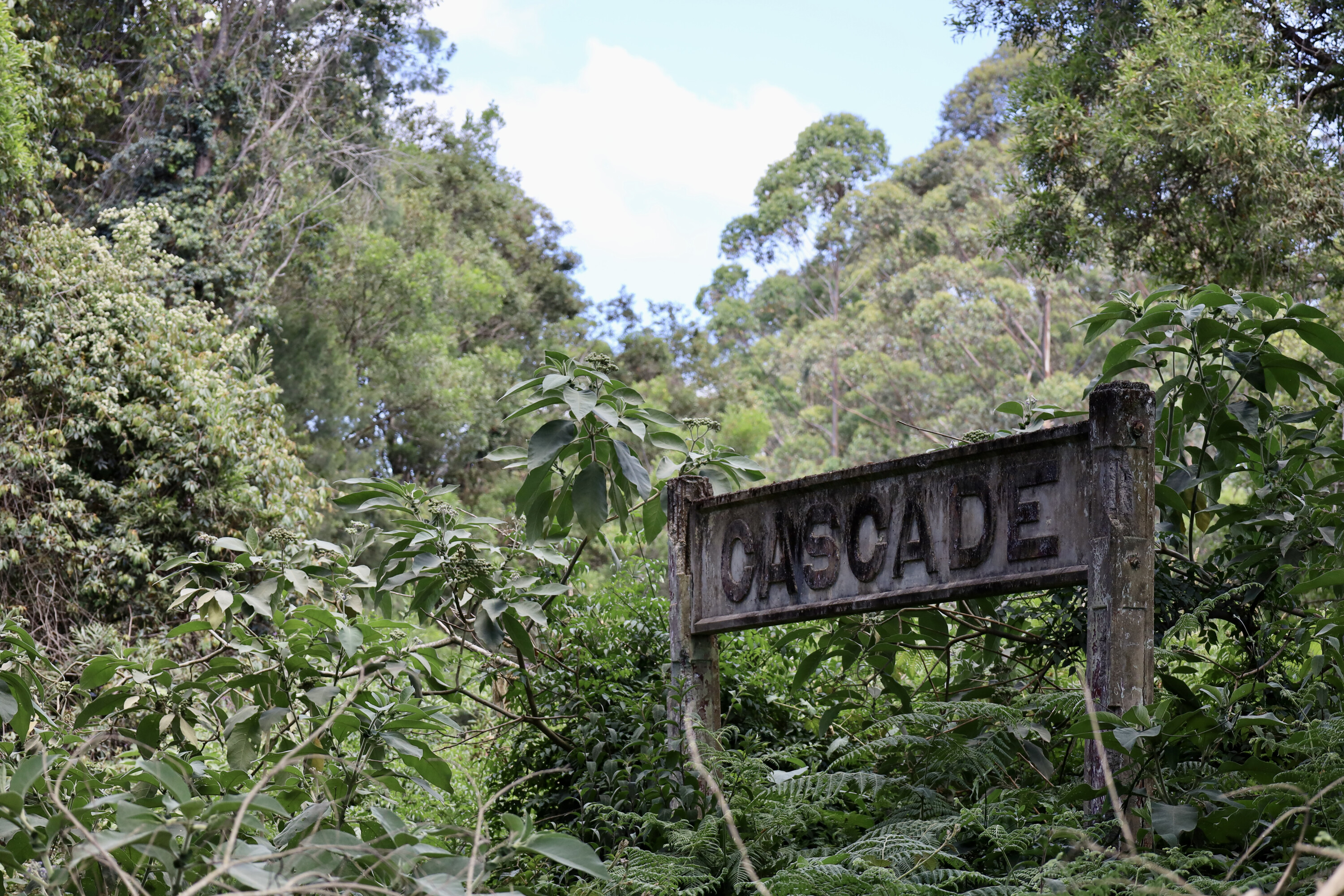
The next town you’ll enter will be Cascade, and at the turn of the century this place was alive with huge log camps, a school, and shops, while the railway had a dozen sidings. Today there’s not much left; just a few old houses and relics where you can explore Cascade Heritage Trail and the old Case Mill.
The mill operated during World War II, from 1939 to 1945, sawing rainforest timbers for ammunition cases. You can walk amongst huge old boilers and steam equipment, touch the old wheels and case press, then ponder what life might have been like here 100 years ago.
Unfortunately a few years ago, a local movie was made in the area using the mill as a backdrop and it was burnt to the ground in the final scene, never to be rebuilt. Parts of the old Case Mill still stand, but it is slowly decaying and becoming overgrown with lantana and wild vines.
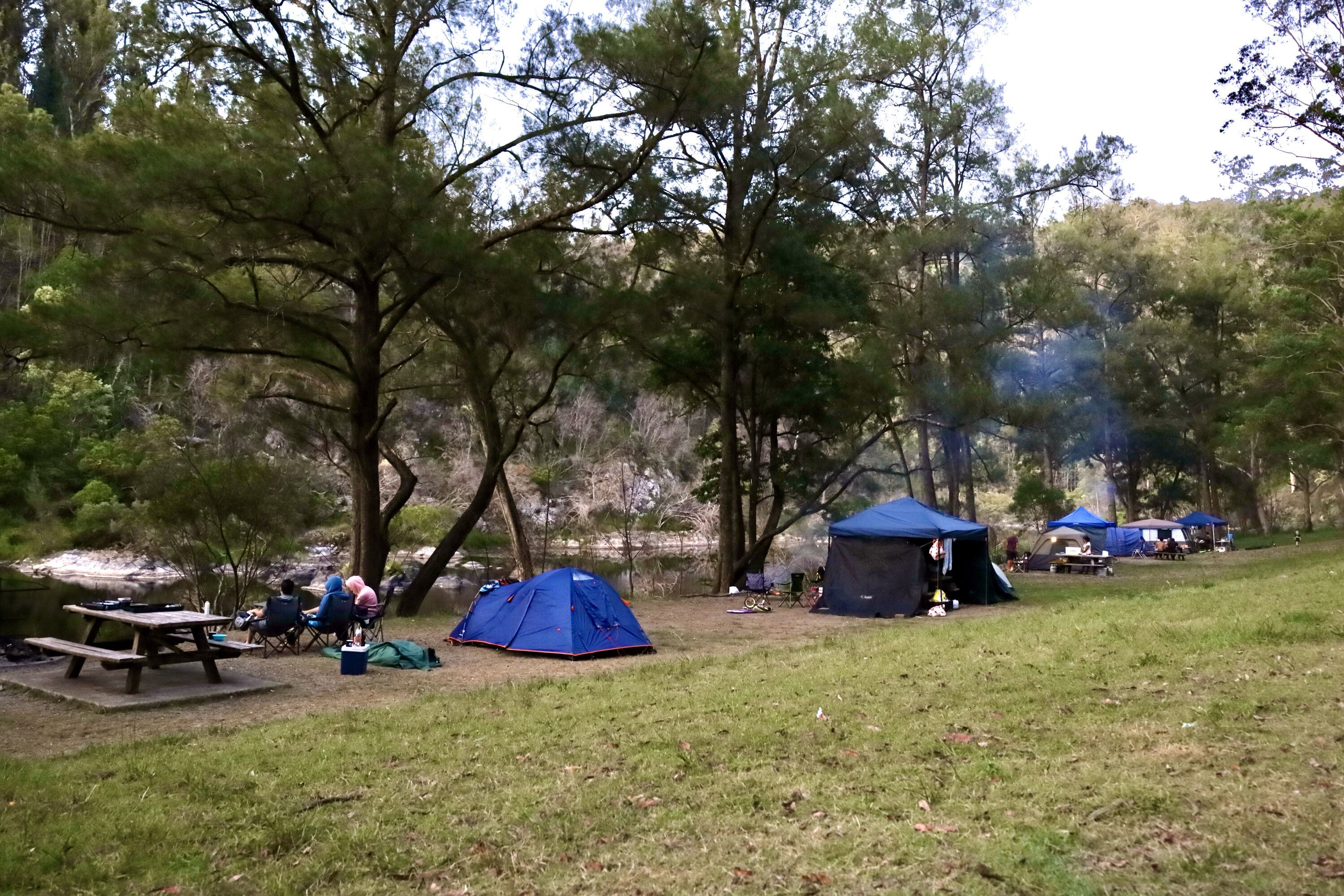
Across the road from the mill is the old Cascade siding, which was once part of the GMR with a single shed and a concrete sign. There are several walks around Cascade that meander through amazing rainforest pockets and down past the old railway, and here you can see firsthand the size of the massive red cedar and hardwood trees that were hand cut with axes and crosscut saws.
Leaving Cascade along Moses Rock Road, the vegetation changes to thick overgrown scrubby country. Most of it was logged in the 80s and is coming back with a vengeance, with towering ghost gums, ironbark and blackbutt timbers all fighting for the sunlight. A popular spot to stop is Mobong Creek picnic area, where a small waterfall cascades into a large pool near the road. The rickety timber bridge takes you to a grassed area where the kids can let off some steam and if it is warm jump in the water.
It’s not far from here that a well signposted turn points you down to Platypus Flats camping area along Cedar Forest Road. Keep an eye out for the Tramway Walking Track; this is a must do on the day. It will lead you on an amazing 800m walk around an old mill site and living area.
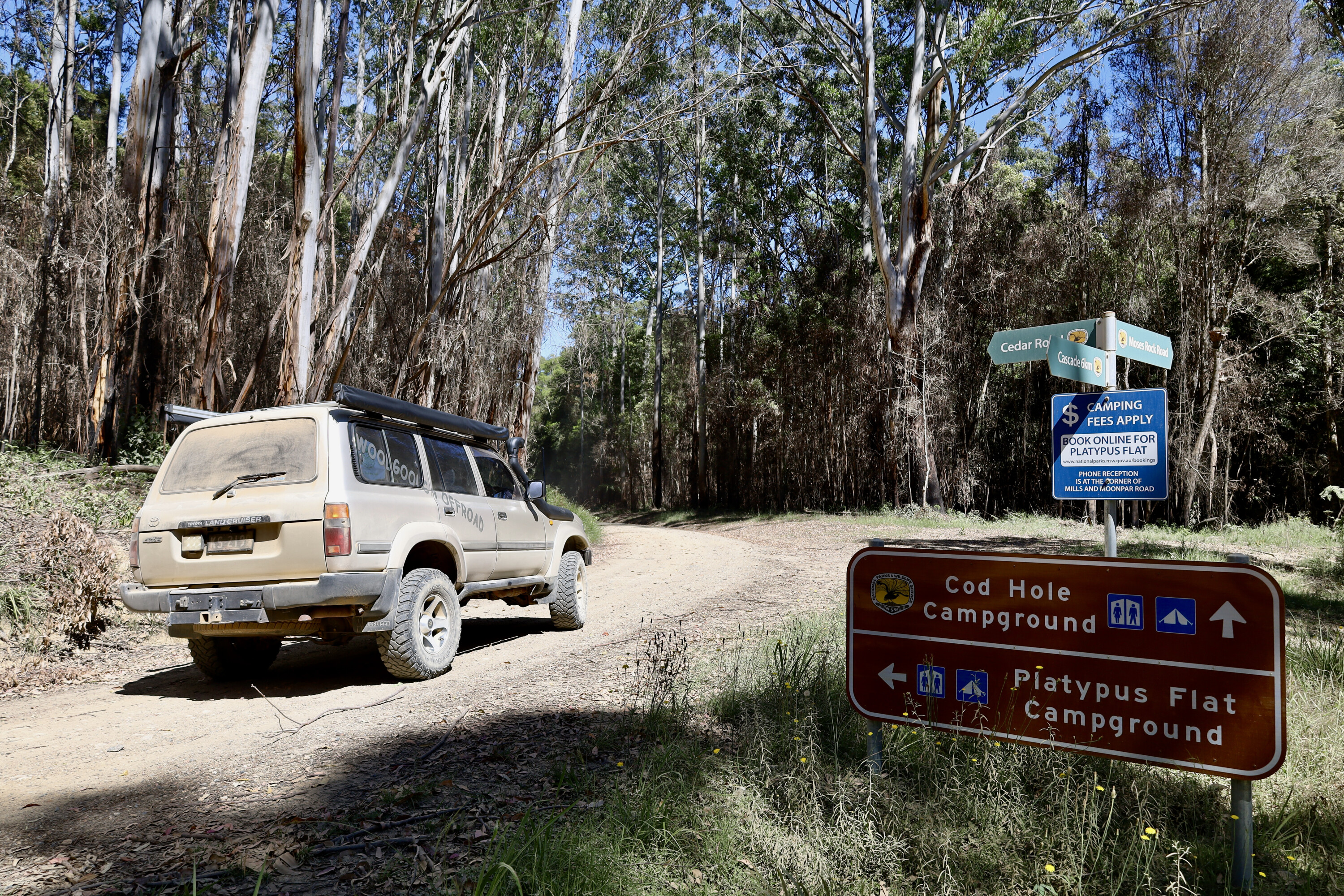
The construction of this 90cm gauge line began in 1925 and was used for the gathering of timber for the local market. It was an amazing arrangement where the logged trees were slung high above the ground using a sling system with a mile of steel cable that ran through pulleys and connected to a main 30m-high pole (that had to be greased daily). The logs were then slung around and placed on rail trolleys to be taken away to the mill.
As you walk the loop it is still possible to see hand-cut sleepers, the winch platform, building foundations and bridge timbers across the creek. This walk is environmentally friendly, reasonably flat, signposted and suitable for the whole family.
Once back in your vehicle and heading further west, you’ll soon find yourselves heading down hill, and this is a clear indication that you’re in gorge country. The timber begins to thin out, old Xanthorrhoea plants are dotted about the place, and the rainforest appears to have dried up.
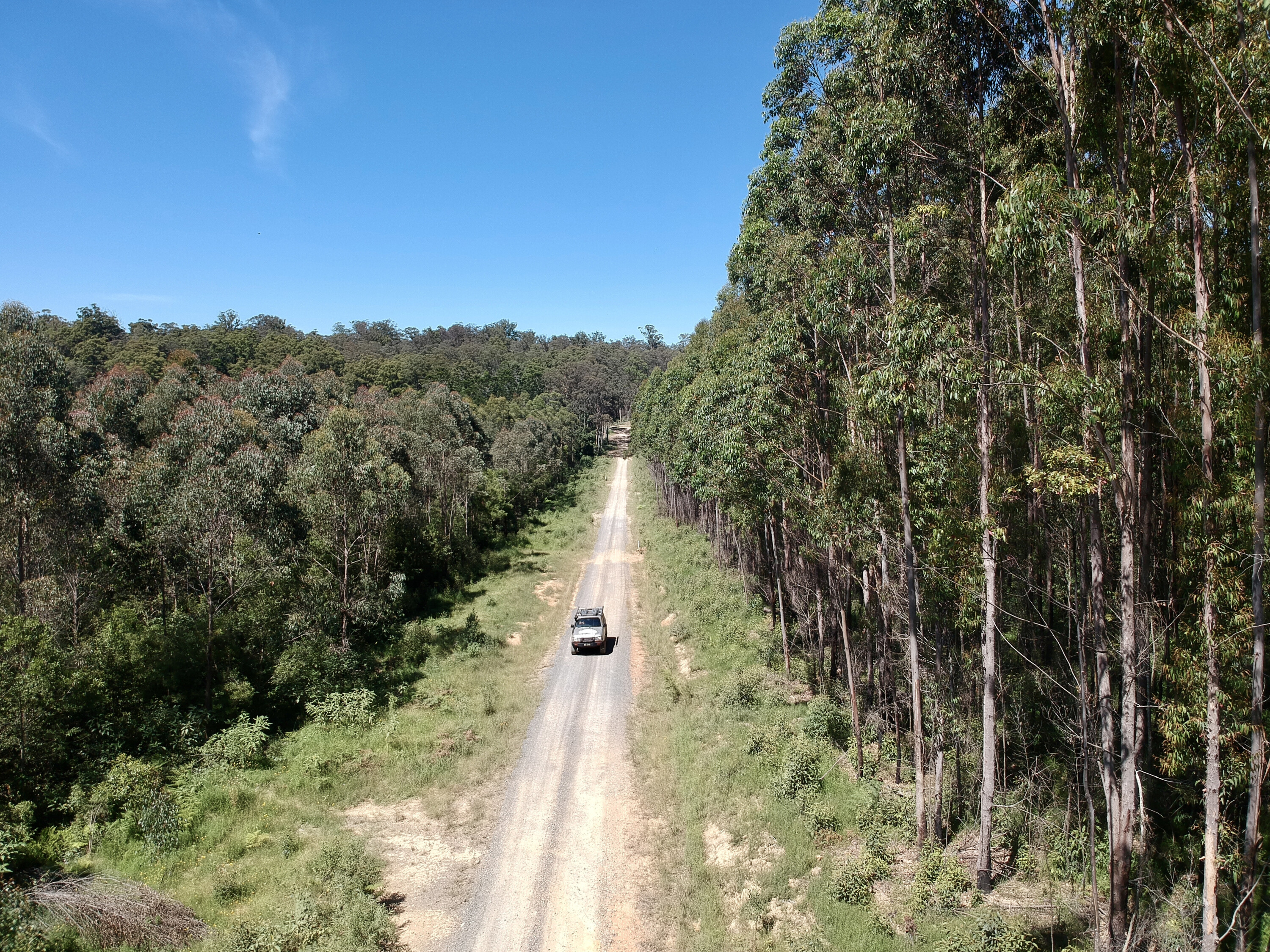
Turning right at the Platypus Flat sign, this final drop down to the river is a welcome sight where there are several options, whether it be for an overnight stay or for day-trippers, it’s all been segmented off. The campers are well looked after up in the far end with a large area to park and set up.
Camping here is recommended all year round, and while it will get chilly in the winter months, an ample fire won’t take long to warm everyone up. Being a National Park, collecting firewood within its boundaries is not allowed, but wood is supplied.
Throughout the whole area there are tables, pit barbecues and a sheltered area with free gas barbies. No bins are provided here for the fact that the animals and birds would have a field day digging around in the rubbish. While swimming is reasonably safe here, be very aware of submerged rocks and logs. Around dusk and dawn, sit quietly away from the water and keep an eye out for platypus as they pop up to the surface.
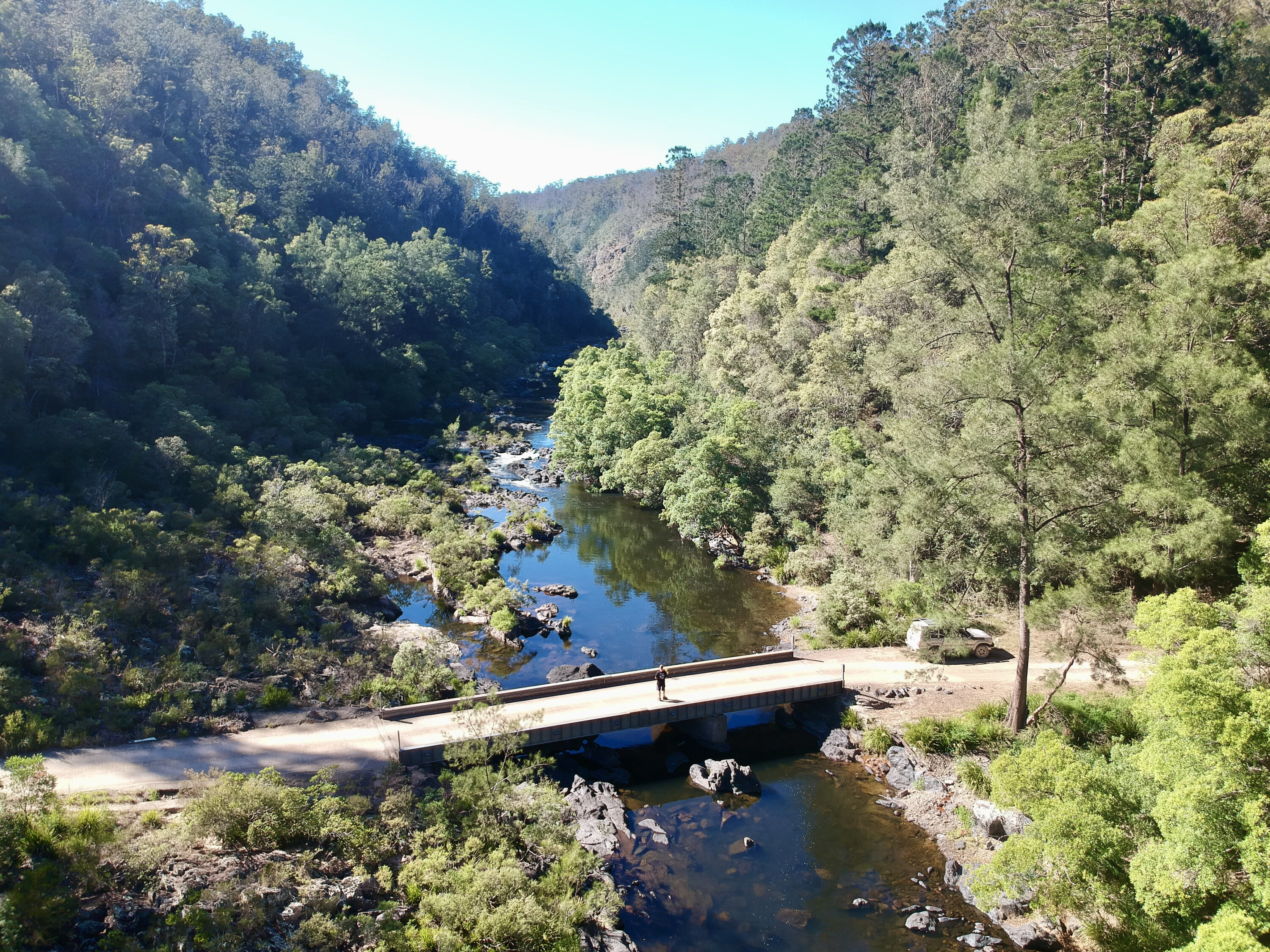
This place is fantastic even for a day trip, as you can spend hours playing with the kids, exploring the river, or just lazing around reading a book and soaking up the solitude. The Nymboida River is around 62km long and it runs along the Great Escarpment from the Dorrigo Plateau through granite gorges down towards Grafton.
For an added adventure head to Dorrigo from Platypus Flats for a drive through stunning old-growth forests and along the way keep an eye out for the old logger trees where you’ll see the cut outs for the logger’s standing boards.
At the top of the plateau take a left towards the Norm Jolly Memorial Grove (all signposted) where you’ll be blown away by the monster 800-year-old tallowwood trees that are being preserved for future generations. There’s a nature walk that meanders around these magnificent trees, and through stunning tree ferns and rainforest. It’s a magical area to spend some time here, where you can have a cuppa and get lost in nature.
Dorrigo and its old-world charm isn’t far away, surrounded by world heritage forests and stunning waterfalls.
Top five things to do
- Crack a window and listen to the whipbirds and smell the fresh, crisp air under the forest canopy.
- Grab a bite to eat at the Ulong General Store & Cafe and ask the owners about the best waterfalls and campsites.
- Check out the GMR rail bridge over the Bobo River that hasn’t seen a train on its rails in 40 years.
- Gaze in awe at the te massive red cedar and hardwood trees that were once hand cut with axes and crosscut saws.
- Sit back from the water’s edge at dusk and dawn and keep an eye out for platypus as they pop up to the surface.
What’s in a name?
The first white man to have been reported here was escaped convict Richard Craig who, back in 1834, lived with the Gumaynggirr aboriginal people. The name Nymboi is a locality and the name Binderay means river, hence Nymboi-Binderay NP as it’s known today.
Camping options
Nymboi has three camping options: Platypus Flats, which is the most popular option with campers, day trippers and whitewater rafters. The Cod Hole campground is further downstream, as is The Junction where you’ll need a 4×4 to access it due to the steep terrain.
The latest batch of reader-submitted rigs has landed. If you’re keen to see your 4×4 published in our mag or online, then send a photo to our Facebook page.
1990 Toyota LC HDJ80 Sahara
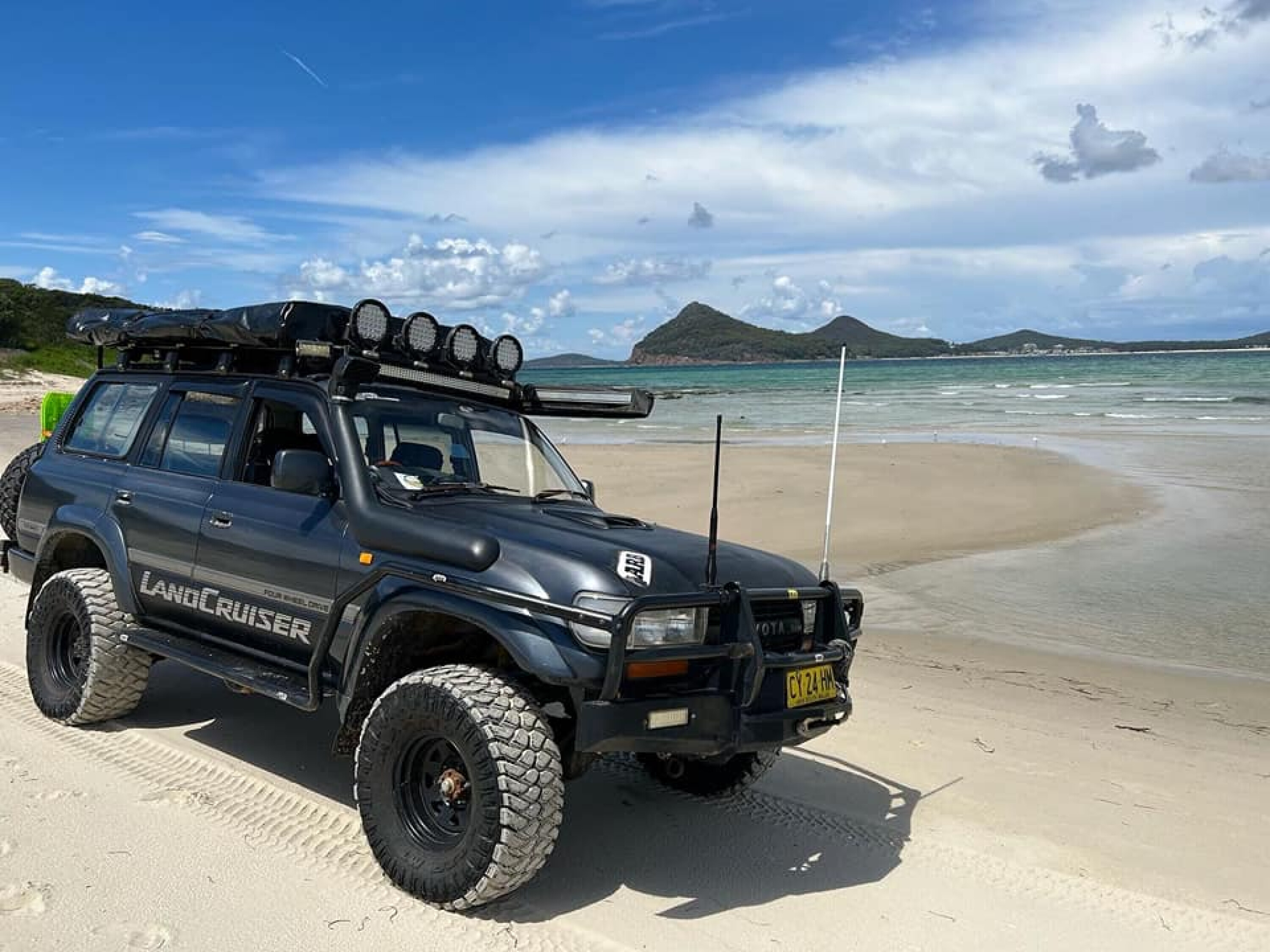
It’s been a long road of love and hate. It has a two-inch lift with 33-inch tyres on Sunraysia 15-inch rims, and an ARB front bar with side steps and scrub bars. On the roof are four spotties facing forwards, with a light bar underneath, three small light bars either side, with two light bars at the rear and two rock lights underneath. It’s currently having its engine (1HD-T) rebuilt with ARP head studs and a new turbo. I bought the car a little over two years ago and have been slowly tidying up and fixing all the backyard jobs that were originally done to it – Connor West
2013 Toyota Prado GLX 150
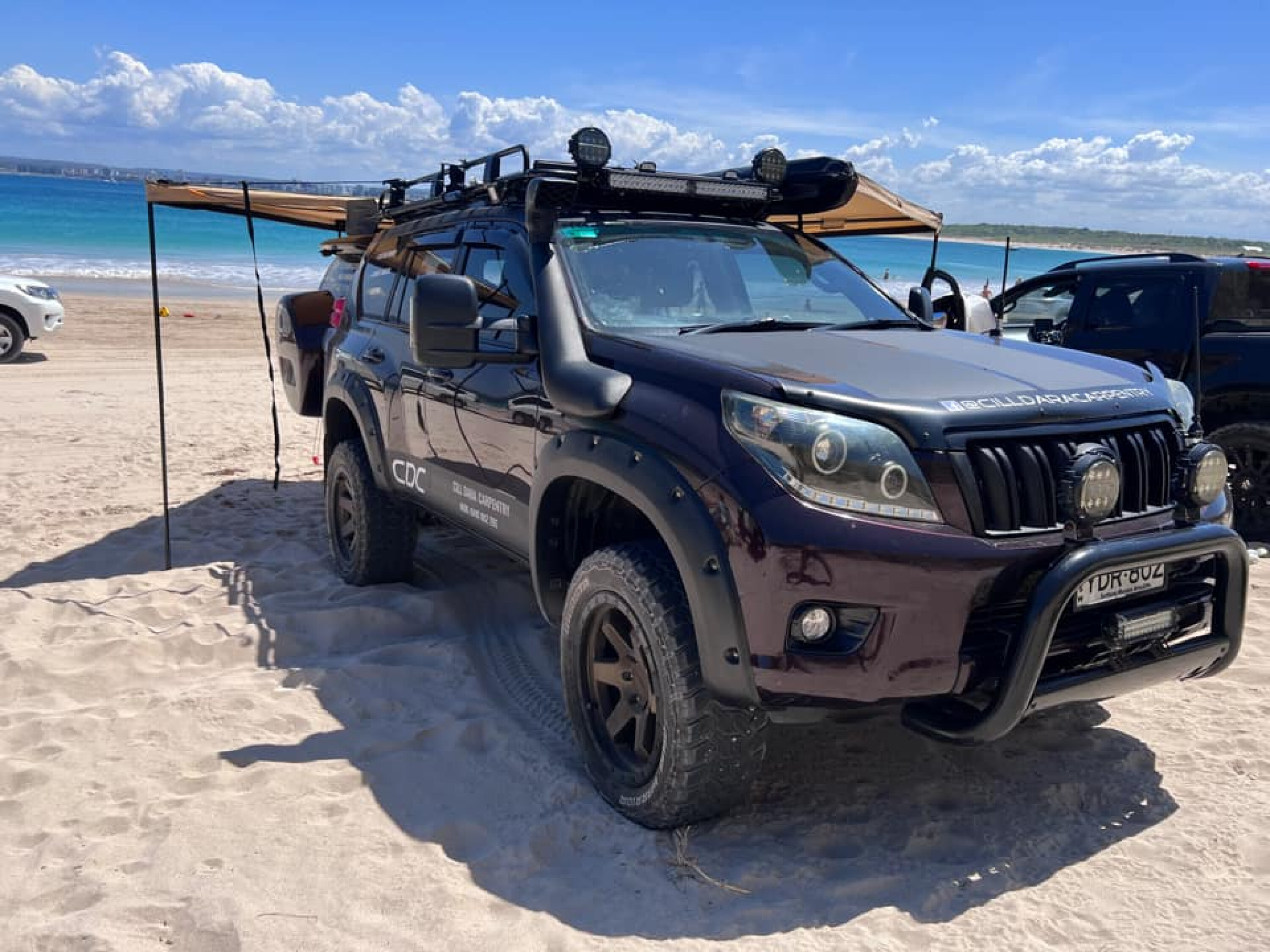
I’ve owned it for five years now and I’m always doing something new to it. It has a three-inch lift front and rear; three-inch stainless exhaust; upgraded K&N filter; and a dual battery system to power all the lights and important stuff. I’ve built a custom drawer setup in the rear that works for both my job and getting away. The best place I’ve been with my 4×4 is easily Fraser Island, and I’m looking forward to going again – Ernie McMullen Jnr
2022 Mitsubishi Triton GSR
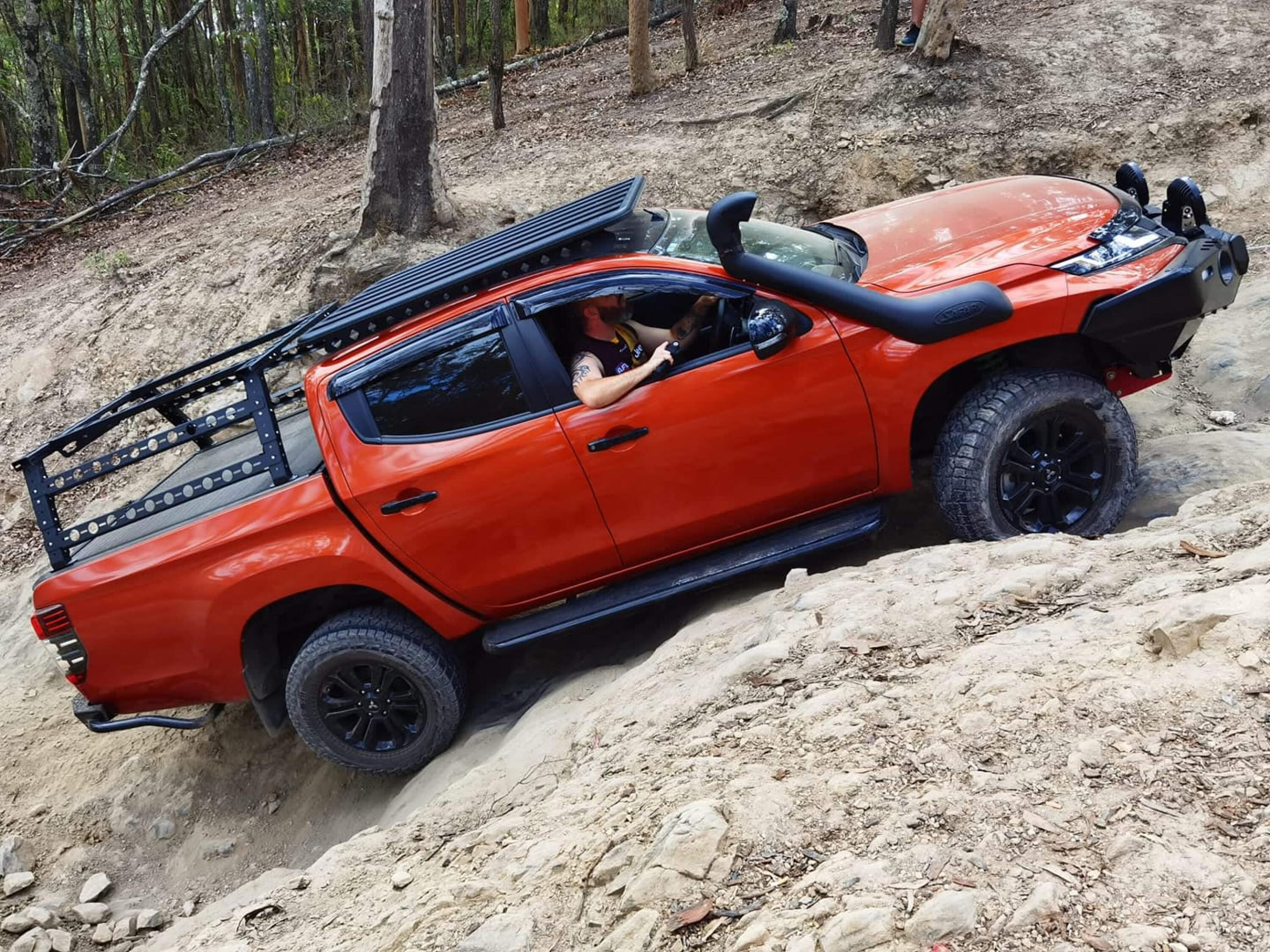
Mods include a HPD intercooler; DPF back Pacemaker King Brown Exhaust; Loaded 4×4 bash plates; Ironman Foam Cell Pro two-inch lift; Ironman front and rear bars; Rockford Fosgate audio setup; Ironman winch; Wildpeak 275/65R18 tyres; and a Safari snorkel. I’m about to install a GME 390 UHF. My favourite spot so far has been Kenilworth in Queensland – Wayne Barnes
1999 Nissan GU Patrol
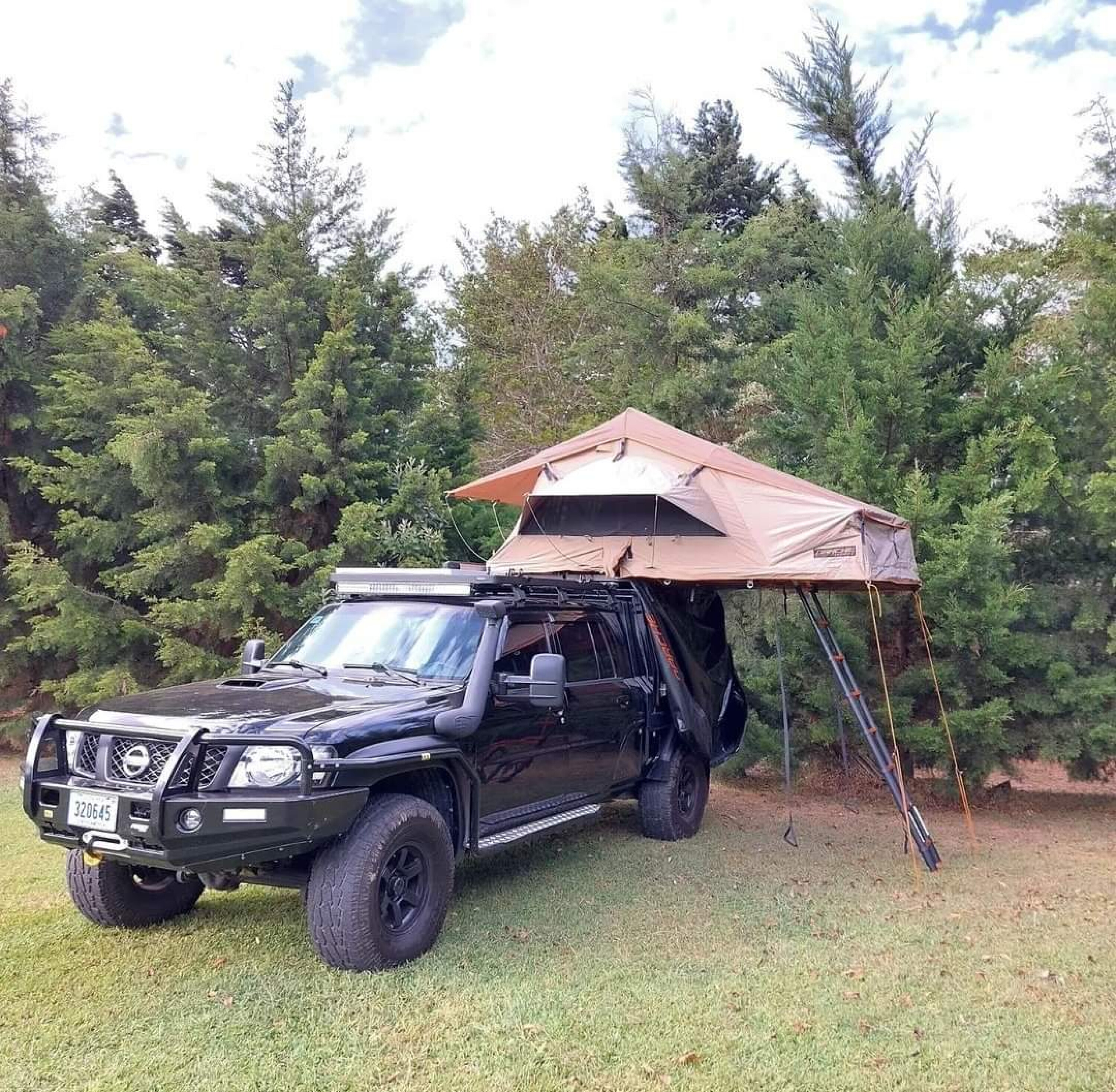
It’s a 1999 GU with a Series 4 facelift. Equipment includes a Cummins 6BT conversion kit from Killa; TJM bullbar, side steps and side bars; TJM snorkel; TJM 12k winch; TJM HD air compressor with tank; TJM front locker; rear factory LSD; Airbag Man rear bags with in-cabin controller; TJM three-inch lift kit with panhard rods and drag links; Superior Engineering rear control arms, front bump stops, diff truss and rear coil tower bracing; Jacobs extender engine brake; Front Runner racks front and rear, with shower kit and two under-rack tables; Darche Hi-View 180 and 270 Eclipse awning; and a Dometic kitchen sink combo. Double-cab conversion kit, tray and camper built in South America and imported to Costa Rica, where it was transformed – Rolo Morera
2021 Ford Ranger Wildtrak
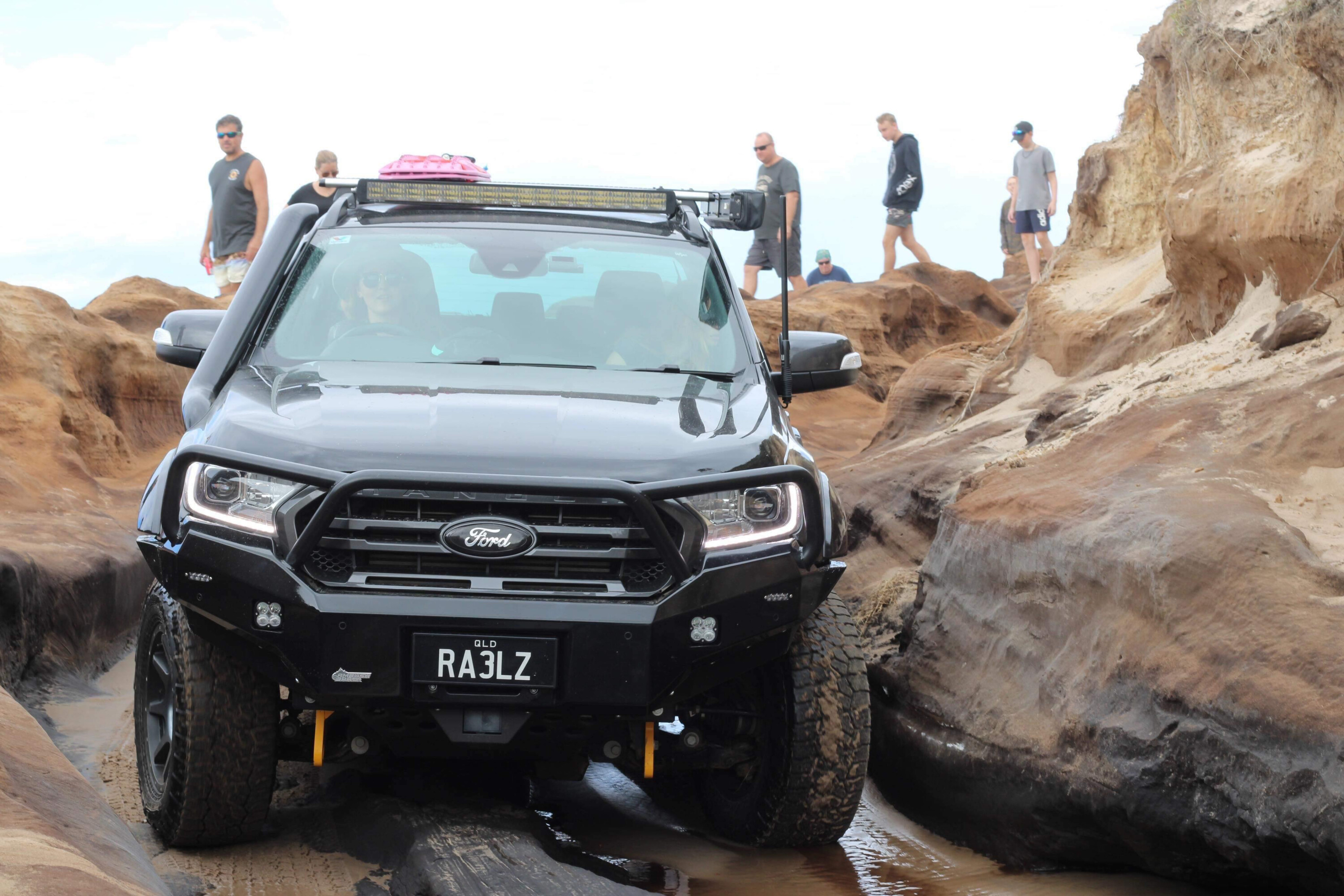
I have some big plans for the Ranger in the future. I’d like to add some drawers and slides to the tub, then add a tub rack, and then eventually a rooftop tent. As well as also adding in a 180 awning somewhere along the line. I love spending my free time cruising the Queensland beaches with the 4WD Adventure Girls – Raelee
2009 Nissan D40 Navara
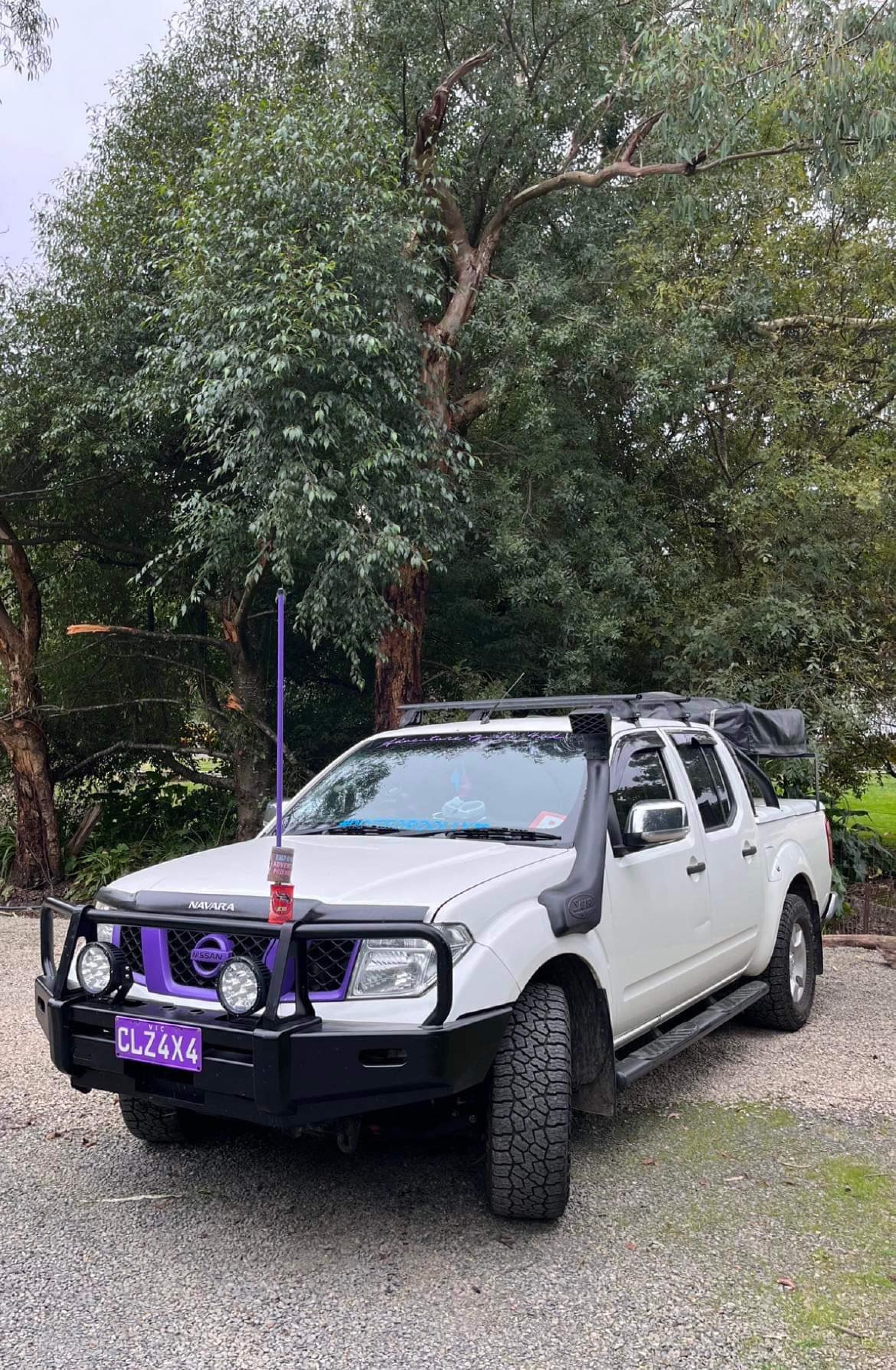
It’s a stock Navara but we have been to the Victorian High Country and Toolangi, Victoria. It’s great for camping as I have my Adventure Kings awning and roof-top tent on a custom rack, so I can still have my hard lid on the tub. The next plan for the Nav is to upgrade the tyres, add a lift and also a tray. If you couldn’t tell by the photos, my favourite colour is purple – Carla
Latest Gear Guides
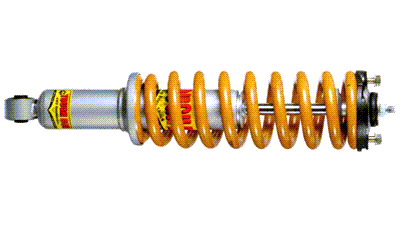
When it comes to leaf-spring suspension in a 4WD ute, there has always been a challenge to get it right.
If you add more leaf springs to your 4WD because you carry a lot of weight with work or camping gear, it rides like crap when empty. The same applies if you install a lightweight setup and the bum of your 4WD drags on the ground when loaded up.
ARB has solved this conundrum with its Parabolic leaf springs and Air Bag kit.
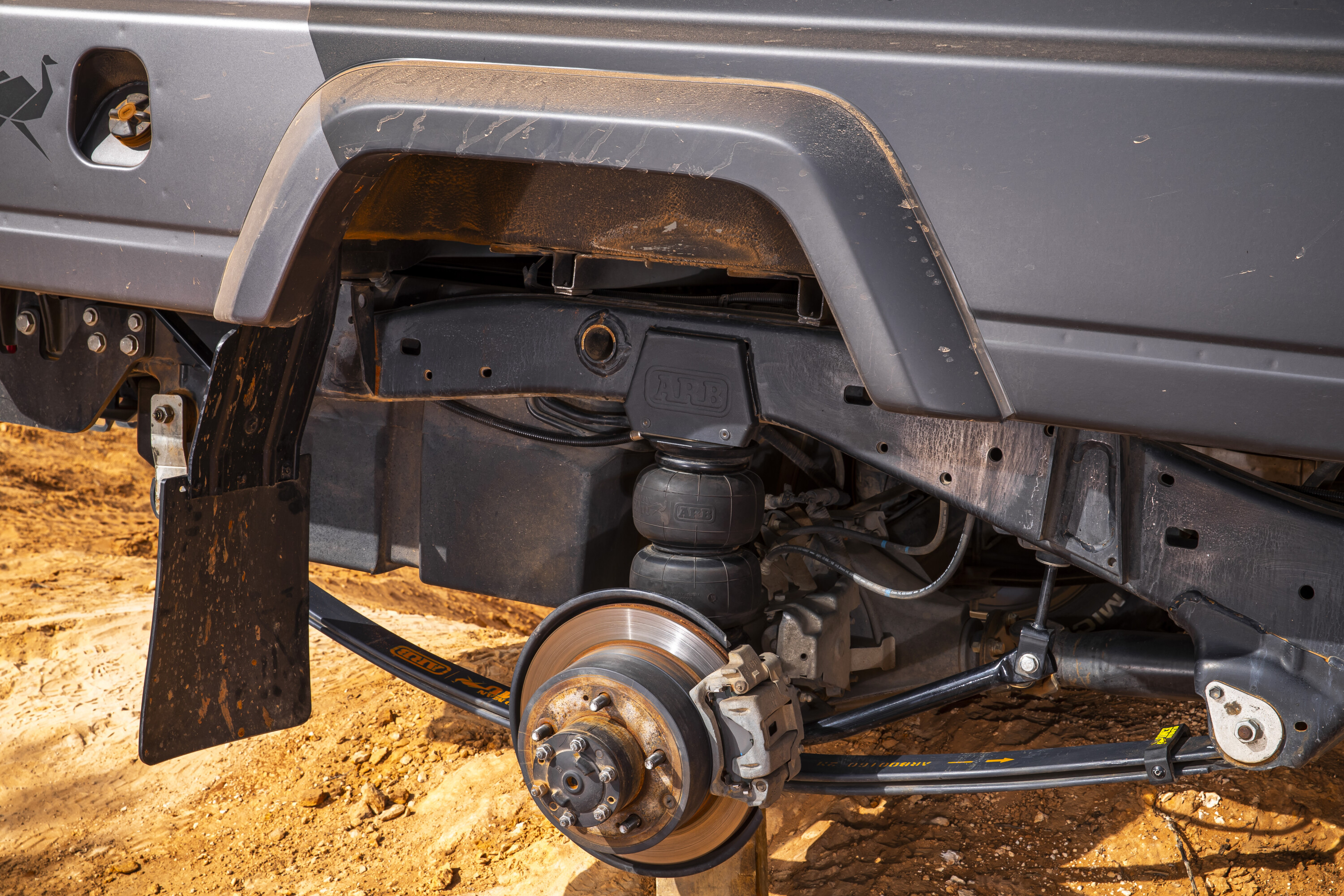
The Old Man Emu (OME) team were tasked with redesigning a leaf-spring set-up to maximise comfort and safely allow the owner to vary the weights carried without compromise. What they came up with was this Parabolic leaf springs and Air Bag kit that allows these two scenarios to co-exist.
“Maintaining control, comfort and load-carrying capability from an upgraded suspension system are the fundamental principles of the Old Man Emu (OME) suspension brand,” said Tom Verrocchi, ARB Product Manager. “ Now with the ARB Parabolic and Air Bag system, customers can have their cake and eat it too.”
Partnering the new market-leading Air Bag kit with the OME Parabolic leaf springs gives 4WD ute owners the flexibility to adjust the loads they carry by up to 600kg.
Whether it’s tools during the week or a rooftop tent and a full fridge on the weekend, the set-up will provide a new standard in comfort and weight-carrying adjustability.
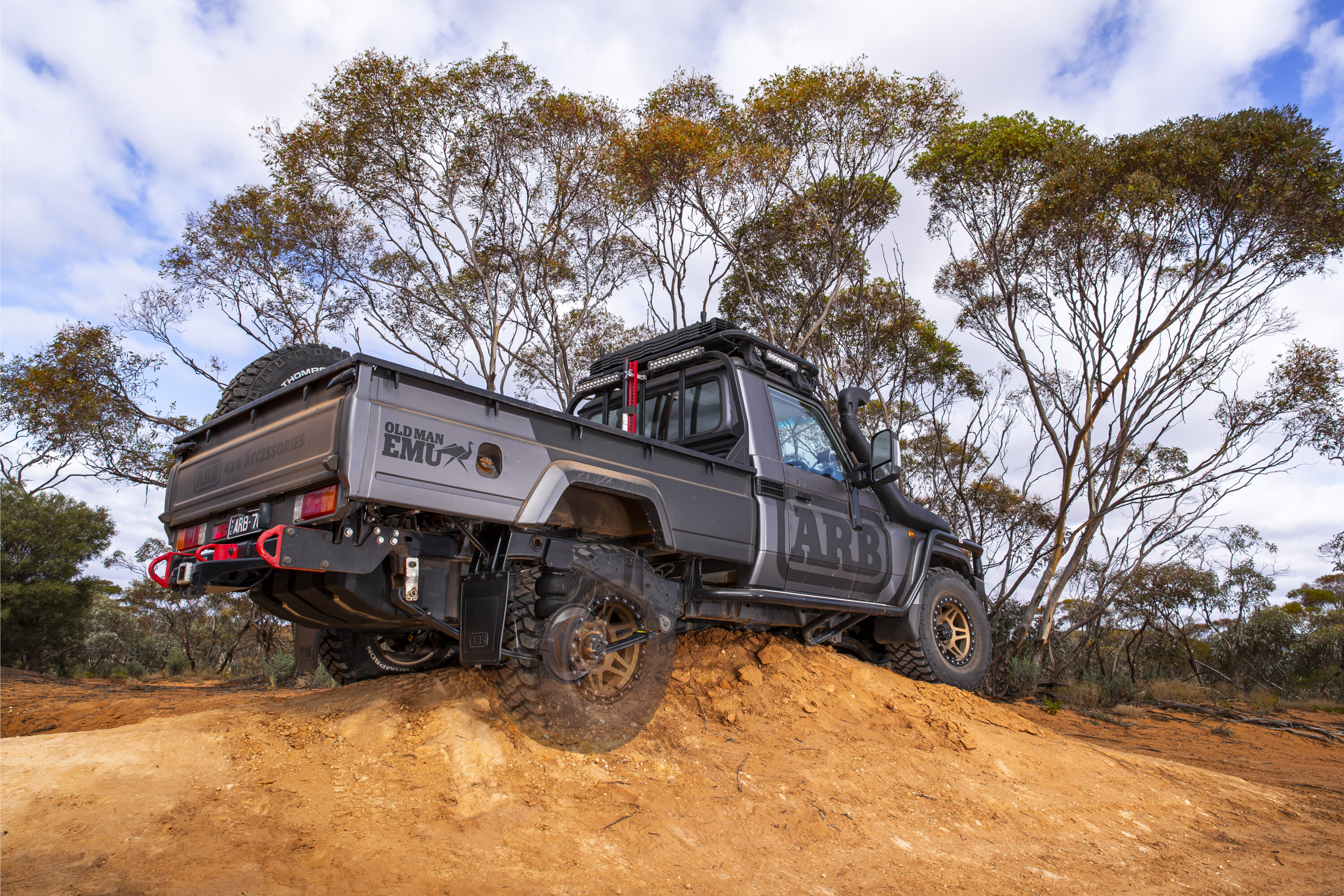
An improvement over traditional leaf spring suspension includes the additional comfort achieved by installing Parabolic leaf springs, as they flex at a smoother rate and completely change the way the ute rides. By using an increase in steel grade and a reduction in overall leaf springs, the OME Parabolic leaf spring system is significantly lighter than the equivalent multi-leaf system.
Adding the ARB Air Bag allows ute owners to opt for a reduced load-rated leaf spring set-up, as the airbags have the ability to carry an additional 600kg (300kg per air bag) in variable weight by adjusting the pressure from 0psi to a maximum of 45psi when carrying those extra loads or towing. This is an experience coil-spring 4WDs have enjoyed for years.
“Extensive chassis simulations and testing were carried out to determine the most appropriate solution for the LandCruiser 70 Series and allows the driver to choose a comfortable and suitable Parabolic leaf spring for their everyday weight, whilst using the air bag to accommodate up to 600kg of additional weight,” said Verrocchi.
“All while being fully integrated and distributing the additional load to designated areas of the chassis in a safe and calculated way,” he added. “It is extremely important to stay within the vehicle’s axle capacities and the overall permissible Gross Vehicle Mass (GVM) of that vehicle.”
Pricing
| Component | RRP |
|---|---|
| Air Bag kit | $900 |
| Parabolic leaf springs (400kg) | $575 |
| Parabolic leaf springs (600kg) | $575 |
| Parabolic leaf springs (800kg) | $790 |
| Parabolic leaf springs (1000kg) | $860 |
| Air Bag purge control kit | $130 |
| ARB air suspension control | $339 |
The standard air-intake on your HiLux is under the bonnet, meaning it’s susceptible to water and dust ingress.
Water into your air-intake can mean a quick and expensive death to your motor, and excess dust can mean clogged air filters. Take the ute through rivers in the Victorian High Country or outback tracks in the Red Centre and a snorkel quickly becomes cheap insurance against these issues.
Here are four products we recommend. They’re intended as a starting point, to give you an idea of what’s available.
- What it is: A raised and water-sealed air intake.
- Why you need it: Dunking the front end of your HiLux into a river crossing is a recipe for disaster without a snorkel. The higher air intake also means less dust is ingested, and for some snorkels you can fit a pre-cleaner. The HiLux wading depth is 700mm, which is pretty good, but the first time you drive a 700mm-deep river or mud hole you will quickly discover that 700mm in a controlled environment is very very different to 700mm in the wild. Add a bow wave or a fast-flowing river and depths far below that stated wading depth start to become very risky.
- Buying tips: The key to a snorkel functioning as it should is a good seal and a design that doesn’t restrict air flow. Avoid two-piece snorkels (often referred to as raised-air intakes) and snorkels that constrict to narrower diameter than the factory intake. Also consider that the snorkel head design will be the key to fitment of dust pre-cleaners.
JUMP AHEAD
| Material | Head design | Fully sealed | |
|---|---|---|---|
| Safari V-Spec | Polyethylene, UV-resistant | Air ramu00a0 | Yes |
| TJM Airtec | Polyethylene, UV-resistant | Air ram | Yes |
| Fabulous Fabrications | Stainless-steel | Laser-cut grille | Yes |
| PHAT Bars | Stainless-steel | Mesh grille | Yes |
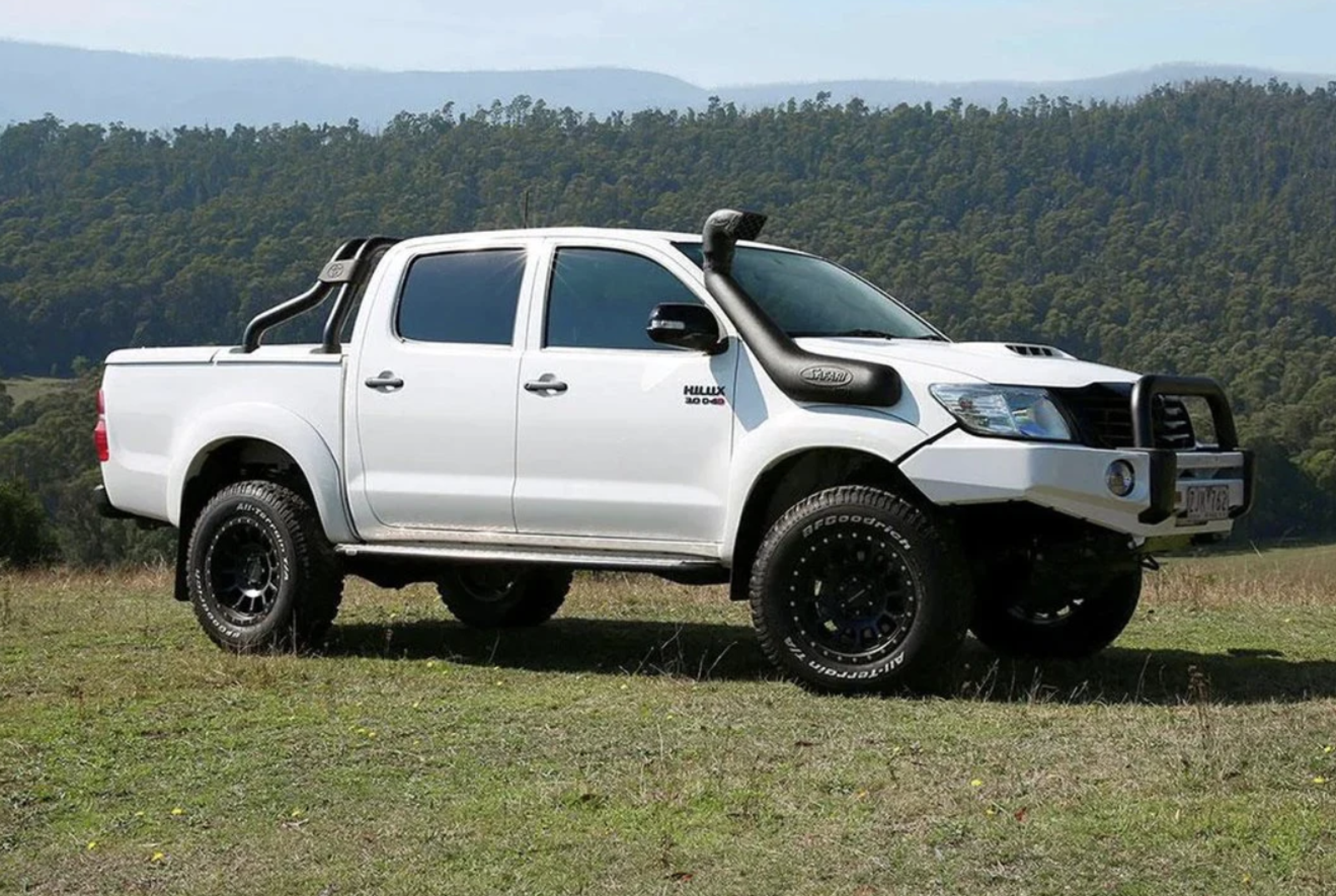
Safari V-Spec snorkel
The Australian designed, moulded and manufactured V-Spec from Safari has been specifically designed and tested to increase airflow over the factory air intake. The UV-resistant material and thick wall design should mean the snorkel will last well and truly the lifetime of your HiLux.
Specifications
- Materials: Polyethylene, UV-resistant
- Air intake: Air ram
- Sealed: Yes
Pros
- Renowned Safari quality
- Air ram designed to disperse water for safe operation even in rain torrents
- Suitable for engine upgrades
Cons
- You can have it in black … or black
TJM Airtec snorkel
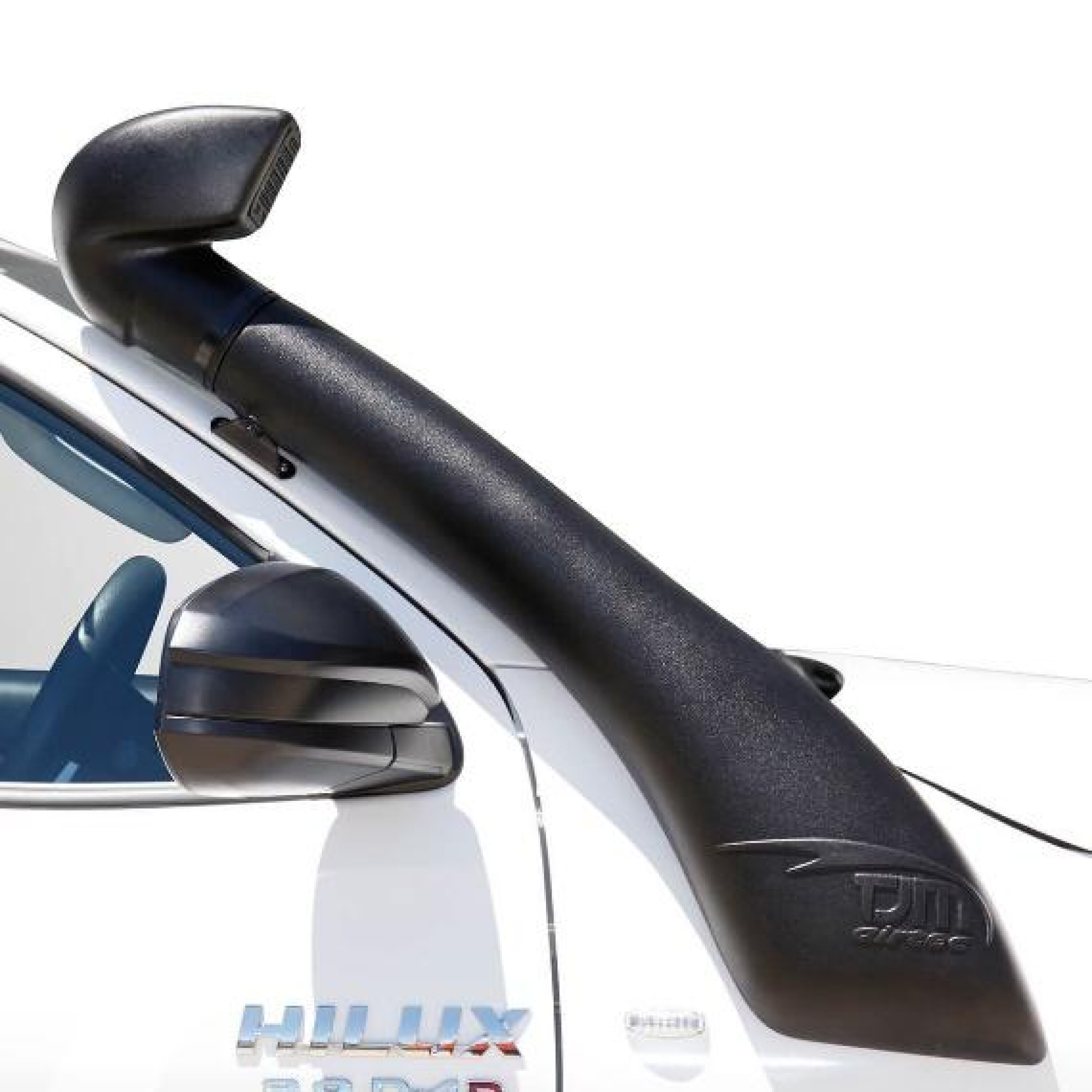
The sleek design of the TJM Airtec snorkel extends down the pillar and enters the quarter panel at the rear of the bonnet rather than running along the quarter panel. Australian-made and engineered to ensure supply of the correct volume of air to engine, the Airtec includes options for both narrow and widebody HiLux variants.
Specifications
- Materials: Polyethylene, UV-resistant
- Air intake: Air ram
- Sealed: Yes
Pros
- Sleek design with less visible snorkel along the front quarter panel
- Air ram designed to disperse water for safe operation even in rain torrents
- Easy-to-follow installation instructions
Cons
- It also only comes in black
Fabulous Fabrications snorkel
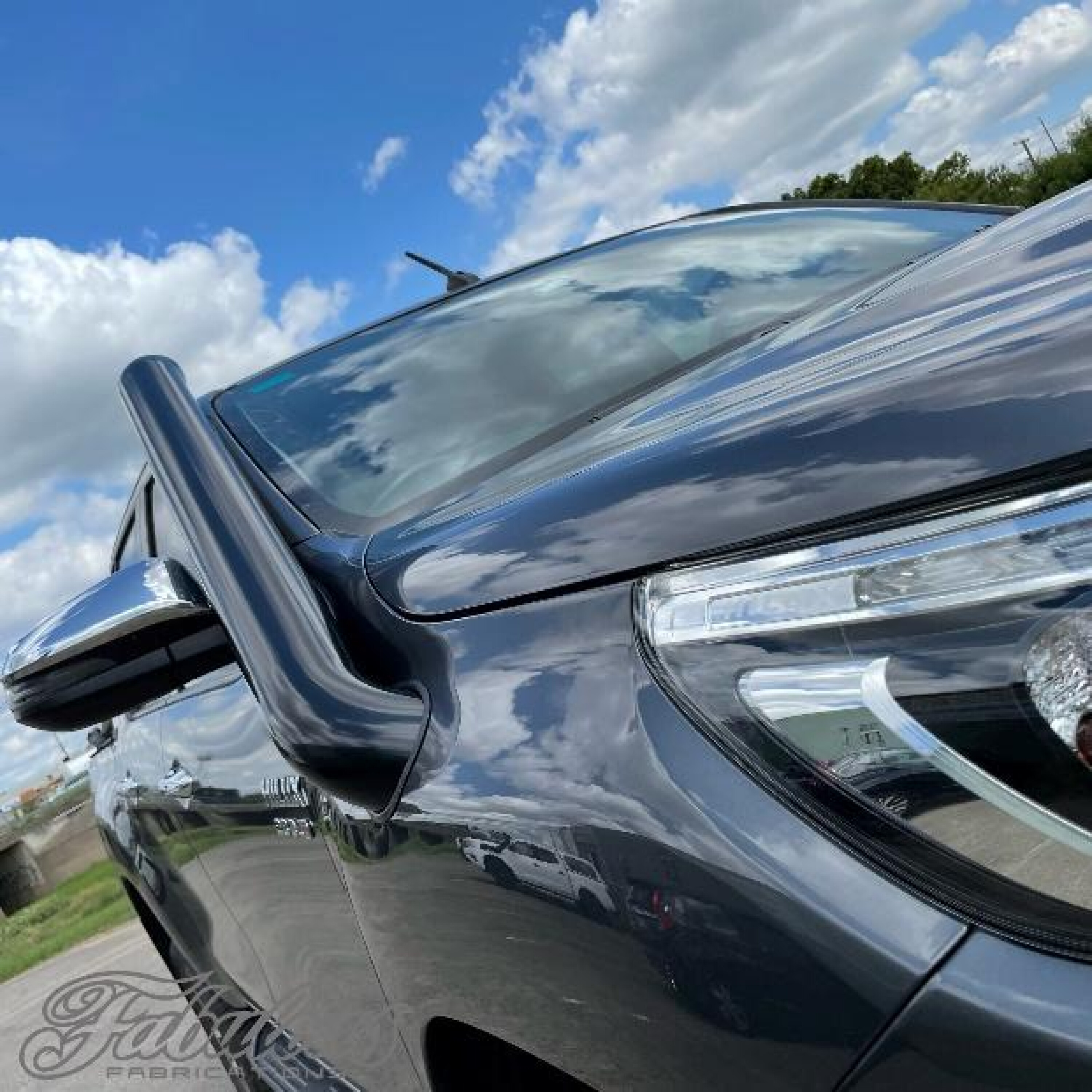
Four inches of snorkel goodness! Each snorkel is handcrafted in-house, made from 316 stainless steel and purge-welded to guarantee longevity and a superior quality finish. Each snorkel comes with a 3mm laser-cut endcap, all required fixtures and fittings, and a comprehensive fitting guide to ensure a trouble-free installation.
Specifications
- Materials: Polyethylene, UV-resistant
- Air intake: Laser-cut grille (rear-facing)
- Sealed: Yes
Pros
- Sleek design with four inches of air intake
- Quality stainless-steel snorkel that will last a lifetime
- Various colours off the shelf and even colour-coding available
Cons
- Rear-facing negates any potential air ram effect
- Pricier than other options
- As these are hand-made, there are no refund for change of mind
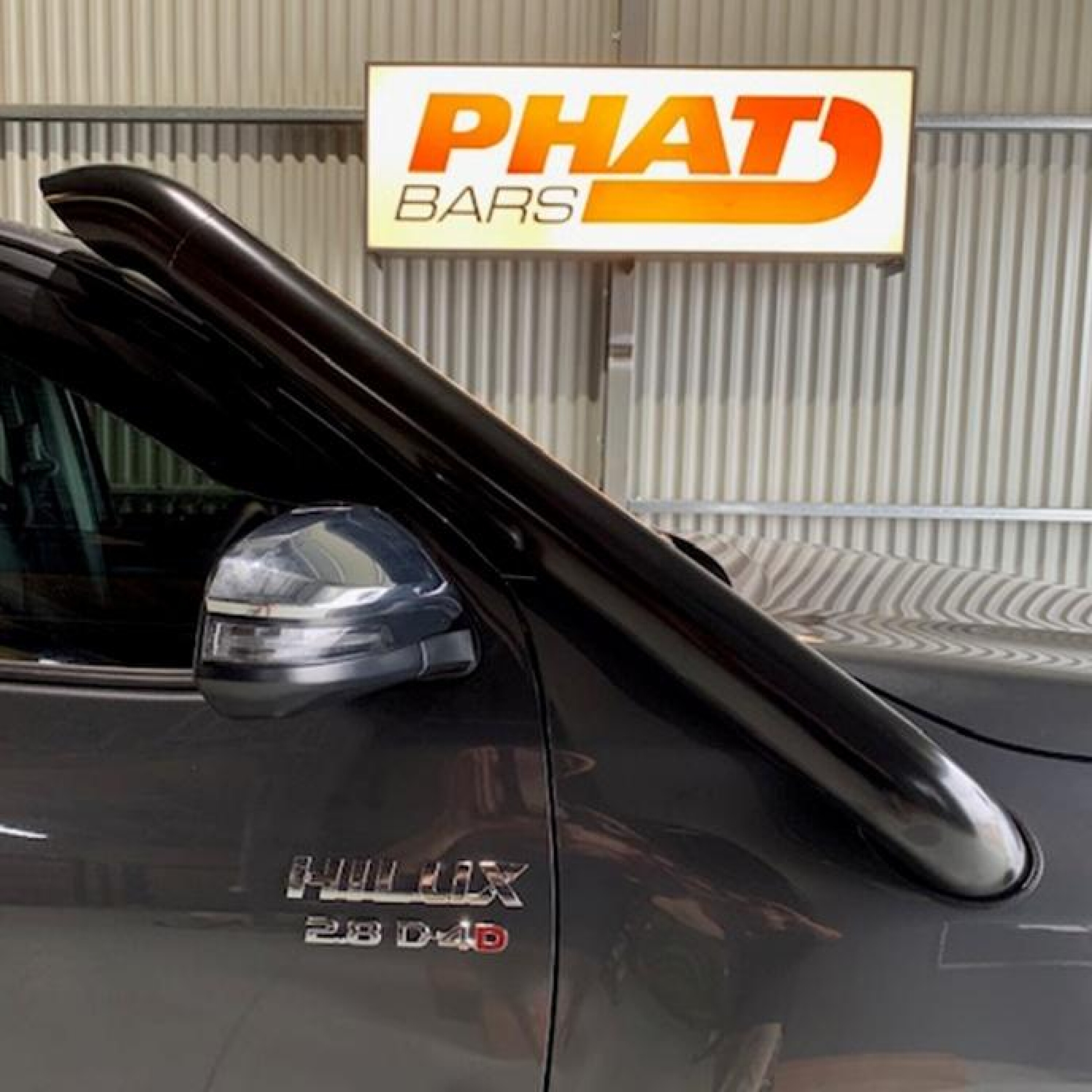
PHAT Bars snorkel
New design includes a water diverter in the top with two 8mm holes to capture the rain water and funnel out the holes. This snorkel screams style and the stainless-steel construction should mean a one-time purchase.
Specifications
- Materials: Polyethylene, UV-resistant
- Air intake: Mesh grille (rear-facing)
- Sealed: Yes
Pros
- leek design with 90-degree angle into the quarter panel
- New water-diverter in snorkel head
- Satin black, matte black or polished available
Cons
- Rear-facing negates any potential air ram effect
How we review products
4X4 Australia has been reviewing four-wheel drive vehicles and aftermarket products for more than 40 years.
When looking for the best accessories for your make and model of 4WD, there are some things essential to making sure you have the best off-roading experience.
When we compare products, here are some of the things we consider:
- Warranty
- Build quality
- Value for money
- Time and ease to set-up/install
- Weight
- Fit and finish
- How well it gets the job done
- What materials they’re made from
- Corrosion/UV resistance
- Coatings
- Compatibility with other accessories
- Compliance with ADRs and vehicle safety systems
- Country of manufacture
- Load ratings, to determine what’s the best product across each price point.
Disclosure: When you buy through our links, we may earn a commission. We also include products that we do not earn a commission from.
Our resident renderer Theottle has had a bit of fun by blowing up the pint-sized Suzuki Jimny and fusing it with a next-gen Toyota Prado.
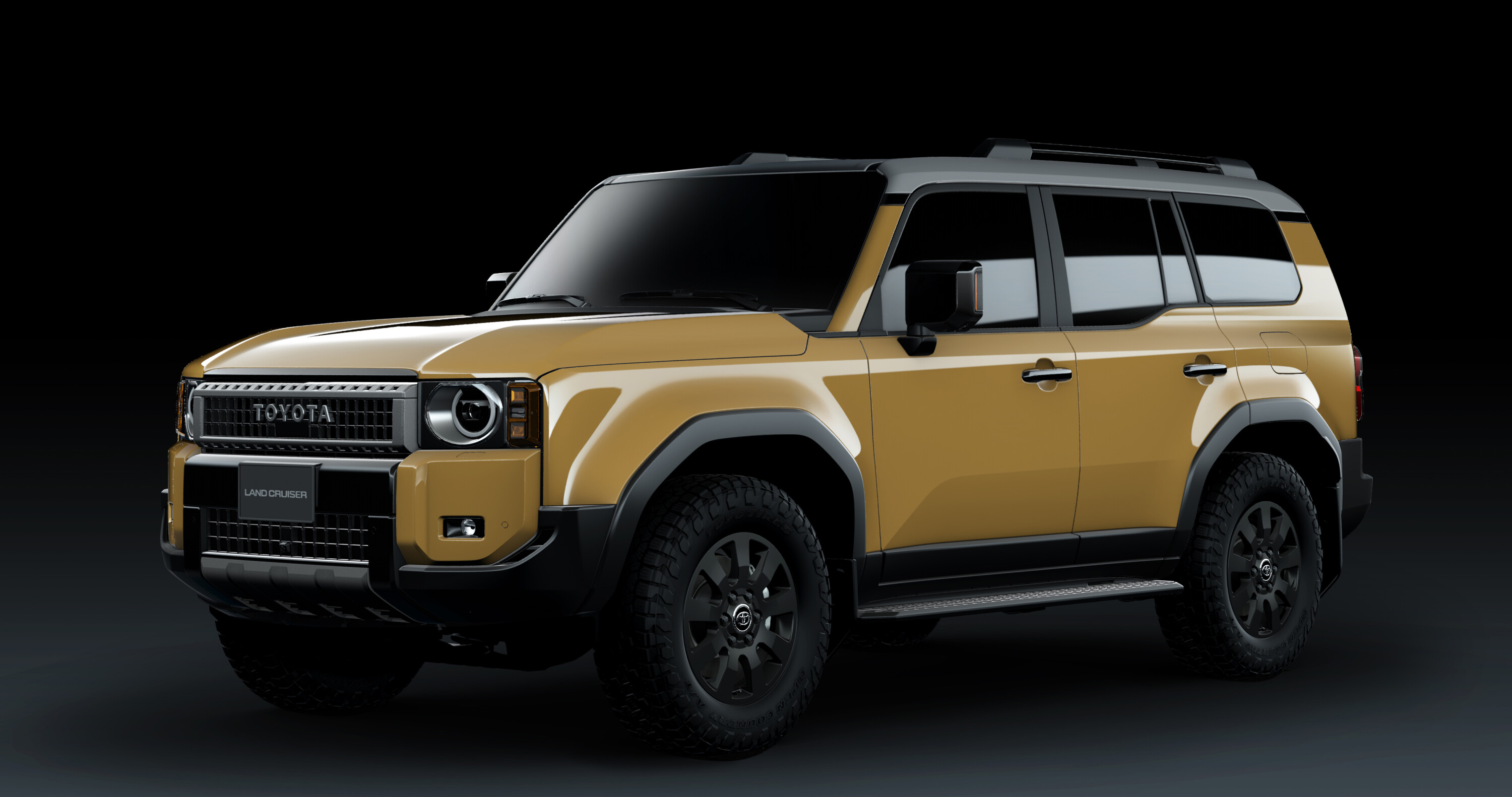
The Suzuki Jumbo – as Theottle has penned it – clearly utilises more Jimny design elements than the Prado, but gone is the Jimny’s boxy shape and upright silhouette, replaced with a more streamlined design in the ilk of the Prado.
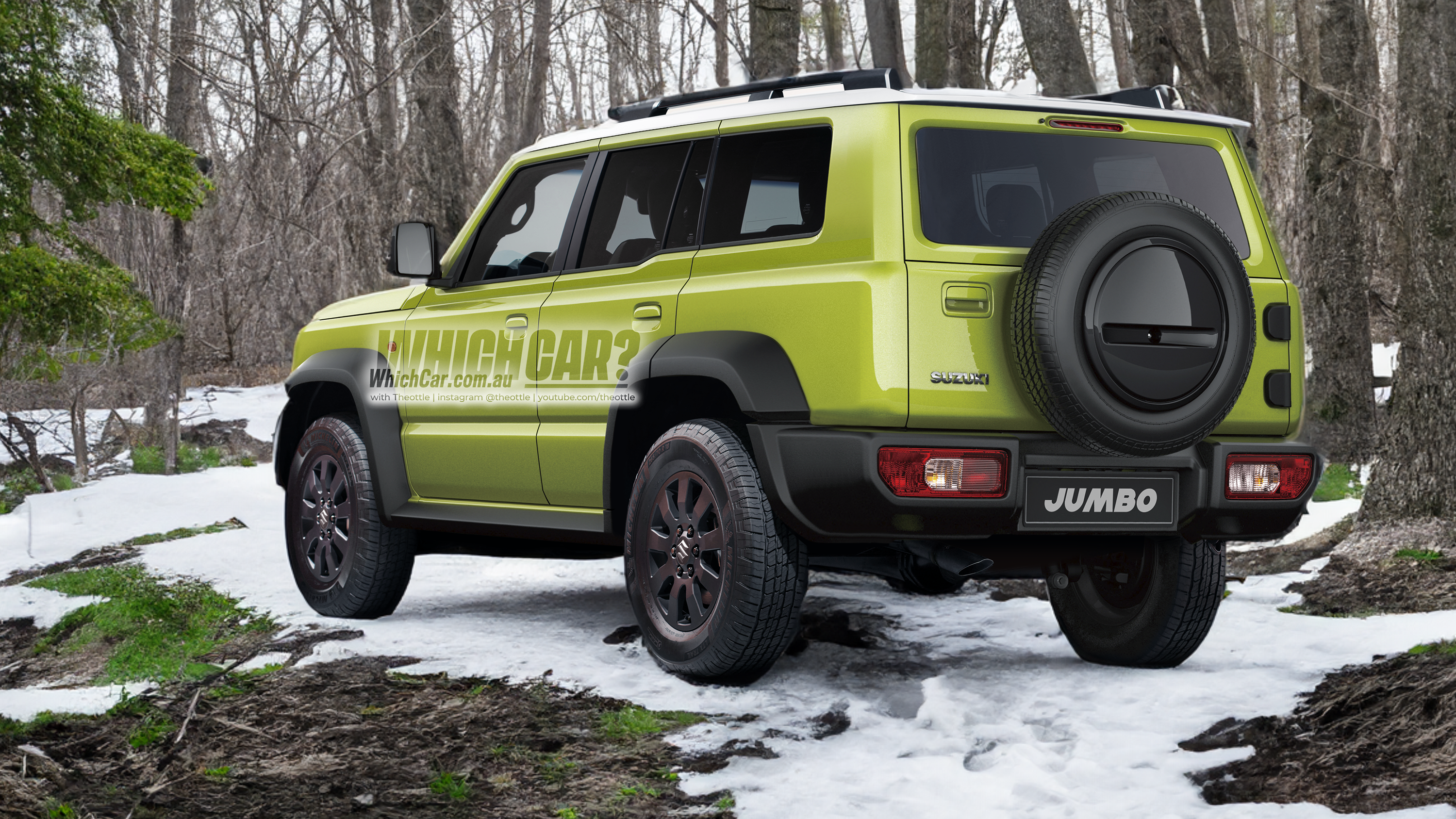
The Jimny’s upright stance at the rear, as well as the tailgate, is also converted to be more Prado-like, but the front end remains true to the Jimny with its five-slot grille, round headlights and bumper protection. The roof rails atop a two-tone roof is more akin to Prado styling cues.
We all know the Jimny is a great little off-roader adored by many enthusiasts for its go-anywhere ability. Its light weight of just 1110kg (auto) and more-than-adept 75kW/130Nm 1.5-litre four-cylinder petrol engine combine to make it nimble and highly capable both on- and off-road.
Its 4×4 system is a traditional part-time set-up that offers 2WD (rear), locked 4×4 high range and locked 4×4 low range.
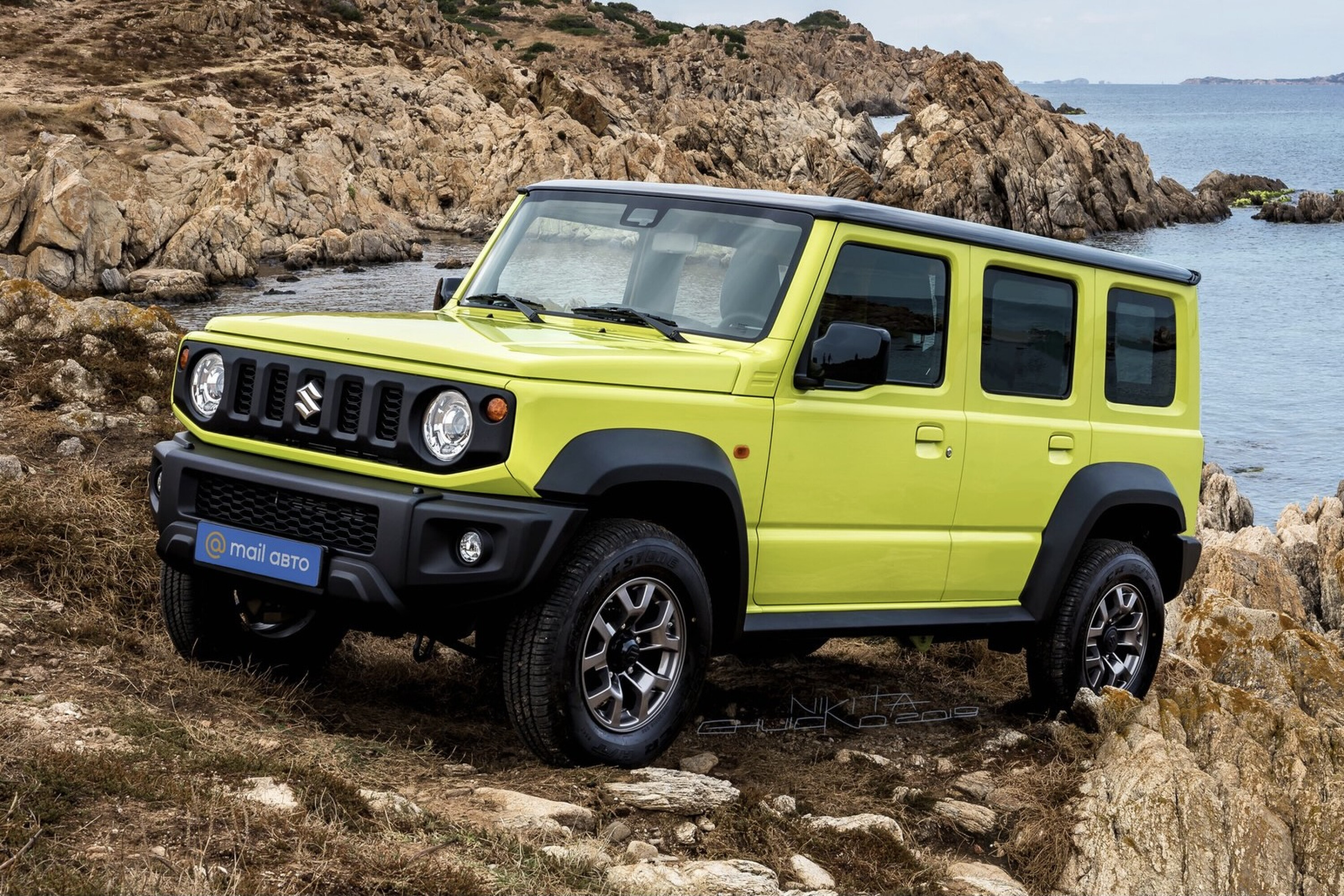
A five-door Jimny is already expected to arrive in Australia soon, with the stretched variant measuring 3985mm long, 1645mm wide and 1720mm tall, and riding on a 2590mm wheelbase – that’s 505mm longer than the three-door.
It will retain the 1.5-litre four-cylinder petrol engine, as well as the four-speed automatic and five-speed manual transmissions.
Suzuki Australia is taking registrations of interest for the five-door variant, with local timing of the hotly anticipated model yet to be confirmed.
A differential essentially allows wheels on the same axle to spin at different speeds.
This allows you to turn corners on high traction surfaces by sending all the power to the wheel with least resistance – the outside wheel when turning a corner, for example. This is great on-road, but it becomes a problem when traction is at a premium off-road such as on loose surfaces or when your 4×4 picks up a wheel.
A diff locker solves this by locking the differential and ensuring both wheels on the same axle turn at the same speed.
- What it is: Cross-axle differential lockers.
- Why you need it: All HiLux 4×4 variants come with a standard rear diff locker, but nothing compares to twin lockers. Adding a front locker to the mix will provide supreme off-road traction and really is a must for those who dabble in hardcore off-roading.
- Buying tips: Consider whether the type of off-roading you do really requires this type of modification. The HiLux is plenty capable out of the factory for the average weekend warrior and camper.
JUMP AHEAD
| Locker activation | Engagement speed | Warranty | |
|---|---|---|---|
| ARB Air Locker | Airu00a0 | Any | 5 years |
| Harrop E-Locker | Electronic | 3 years | |
| Lokka part-time locker | Part-time | Any | 3 years |
ARB Air Locker
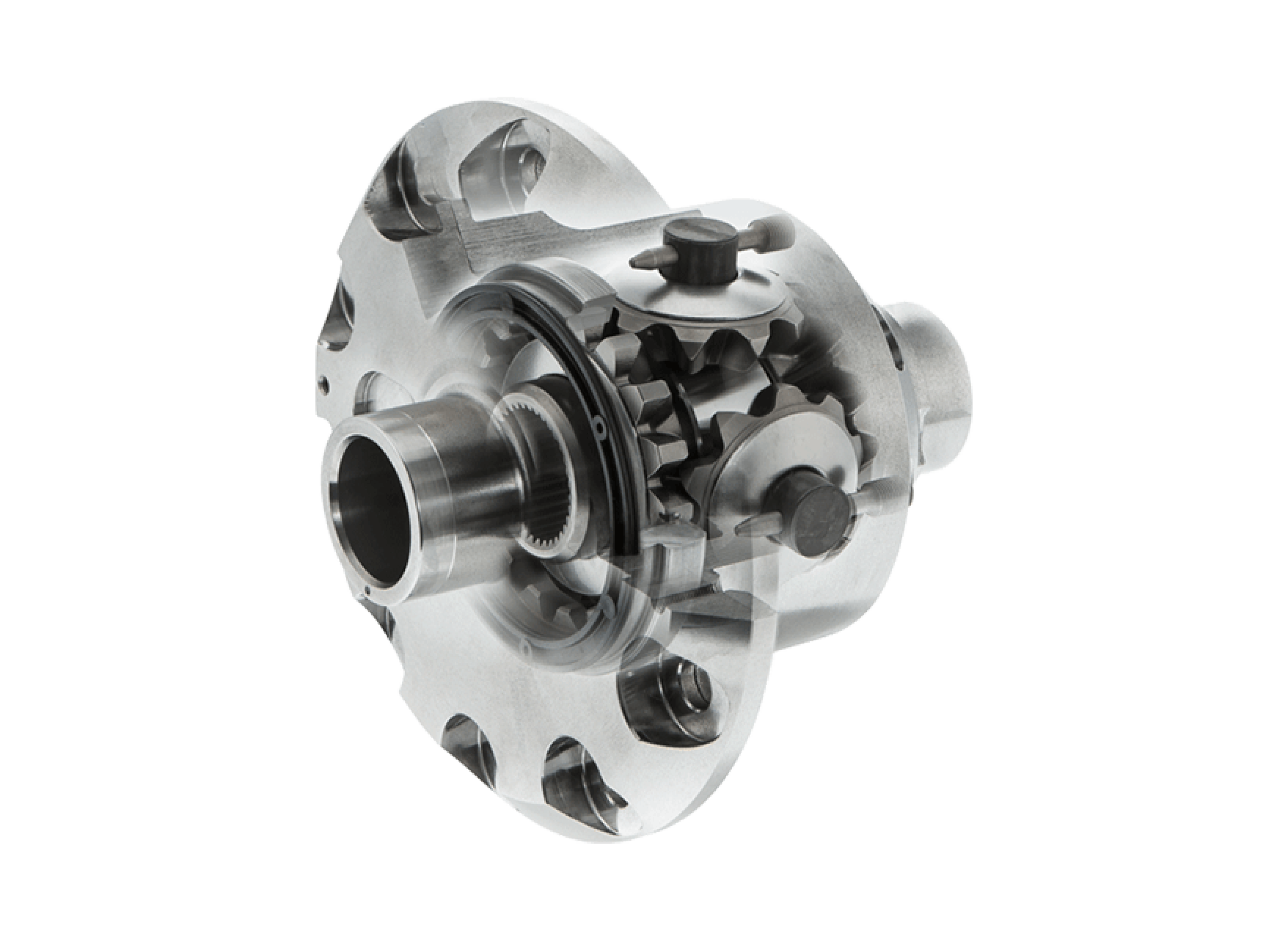
Manufactured in Australia, the ARB Air Locker is made with quality materials and an uncompromising approach to manufacturing. With a state-of-the-art two-piece design and forged gears, the Air Locker has increased strength, durability, and resistance to fatigue.
It also has a reduced number of moving parts, making it more responsive to activation. ARB has invested heavily in the application of forged gears commonly used in heavy duty commercial, race and agricultural transmissions.
All Air Lockers come with a five-year warranty and are supported by ARB’s extensive network of stores and distributors worldwide. The product’s superior design, quality and support make it a reliable choice for 4×4 enthusiasts and professionals alike.
Specifications
- Locker activation: Air
- Engagement speed: Any
- Warranty: Five years
Pros
- Proven track record in off-roading
- Near instant activation at any speed
- Simple activation, no electrics
Cons
- Requires an on-board compressor
- Historically the air lines are prone to leaks, but this seems less common in recent models
Harrop ELocker
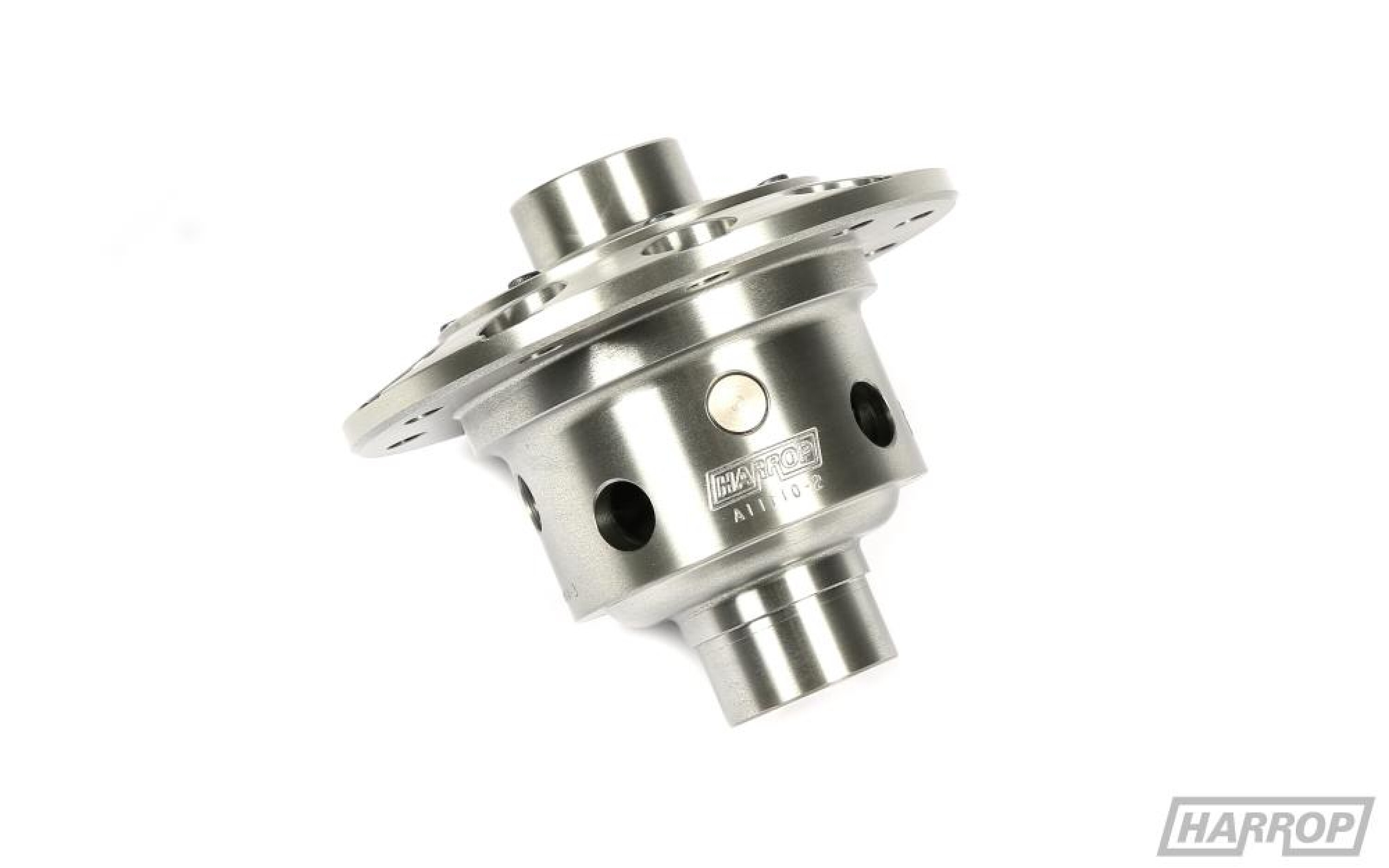
A collaboration between Harrop Engineering in Australia and Eaton Corporation in the USA has resulted in the development of the ELocker, an electronically control selectable locking differential.
The locker uses electromagnets to engage the locker, providing a simple and effective design. As the electromagnet is energised, torque is created on a drag plate that activates a ramping mechanism. The ramping mechanism, in turn, translates rotational force into the axial motion of a locking mechanism.
The locking mechanism engages into slots or tabs on the differential side gear and locks the side gear rotation to the differential housing. The result is on-demand traction and a fully locked differential.
Specifications
- Locker activation: Electronic
- Engagement speed: Under 5km/h
- Warranty: Three years
Pros
- Australian engineering with a reputation for quality
- No need for compressors or air lines
- Designed to be rebuildable
Cons
- Recommended engagement below 5km/h
- Rare failures reported where the locker engages full-time
Lokka part-time locker
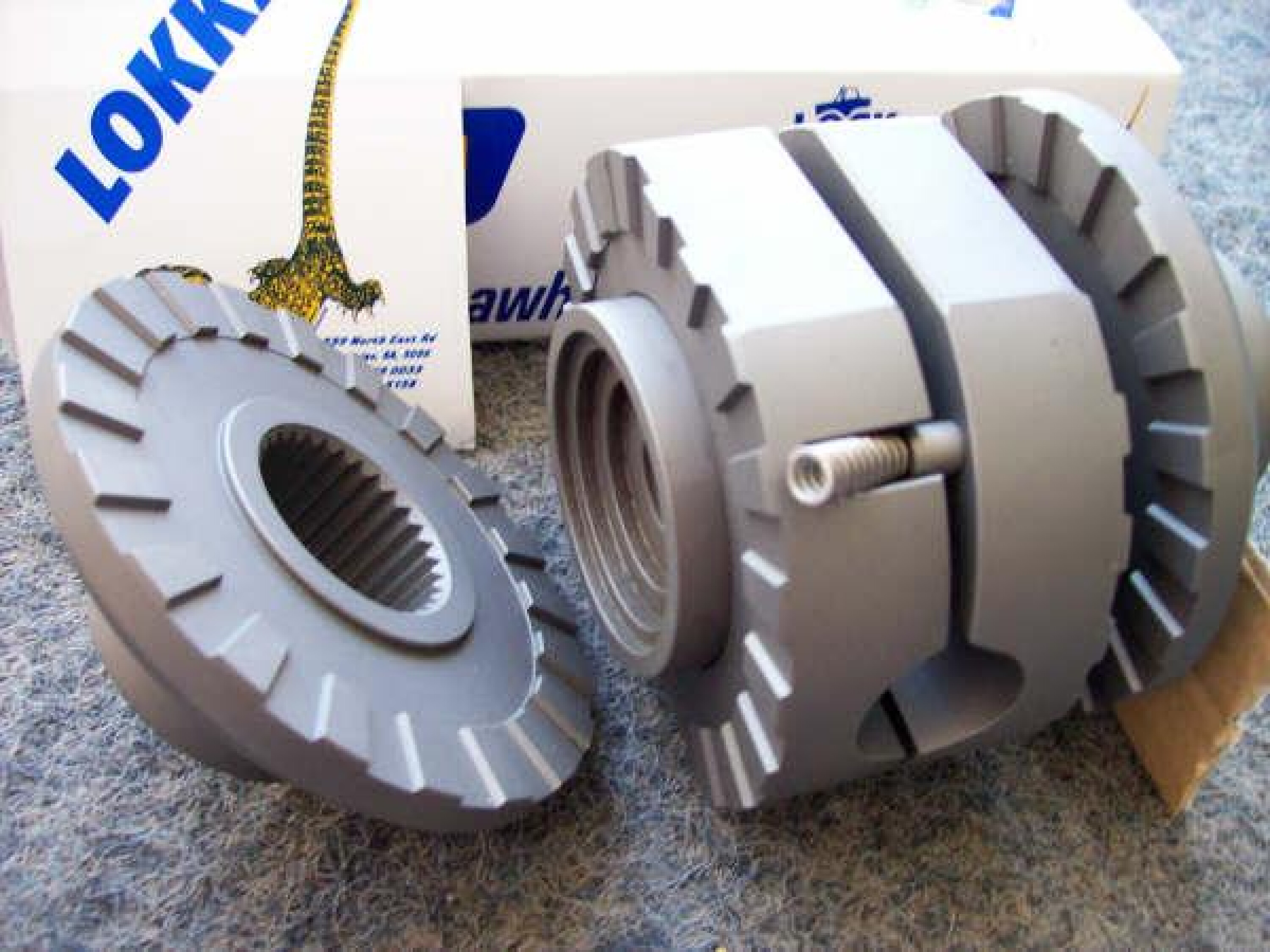
As opposed to a selectable diff locker, the Lokka is an automatically engaging diff locker. There are no switches, cables, wires or hoses.
It relies on a simple mechanical design which makes use of two distinct sets of forces” the “ground driven” forces acting on a wheel when cornering (that force an outside wheel to turn faster); and the forces from the engine (power) turning the differential and axles.
Specifications
- Locker activation: Electronic
- Engagement speed: Any
- Warranty: Three years
Pros
- Simplicity of operation and installation
- No need for compressors, air lines or wires
- The budget option
Cons
- Not quite as effective as a fully selectable diff locker
Anytime factory locker
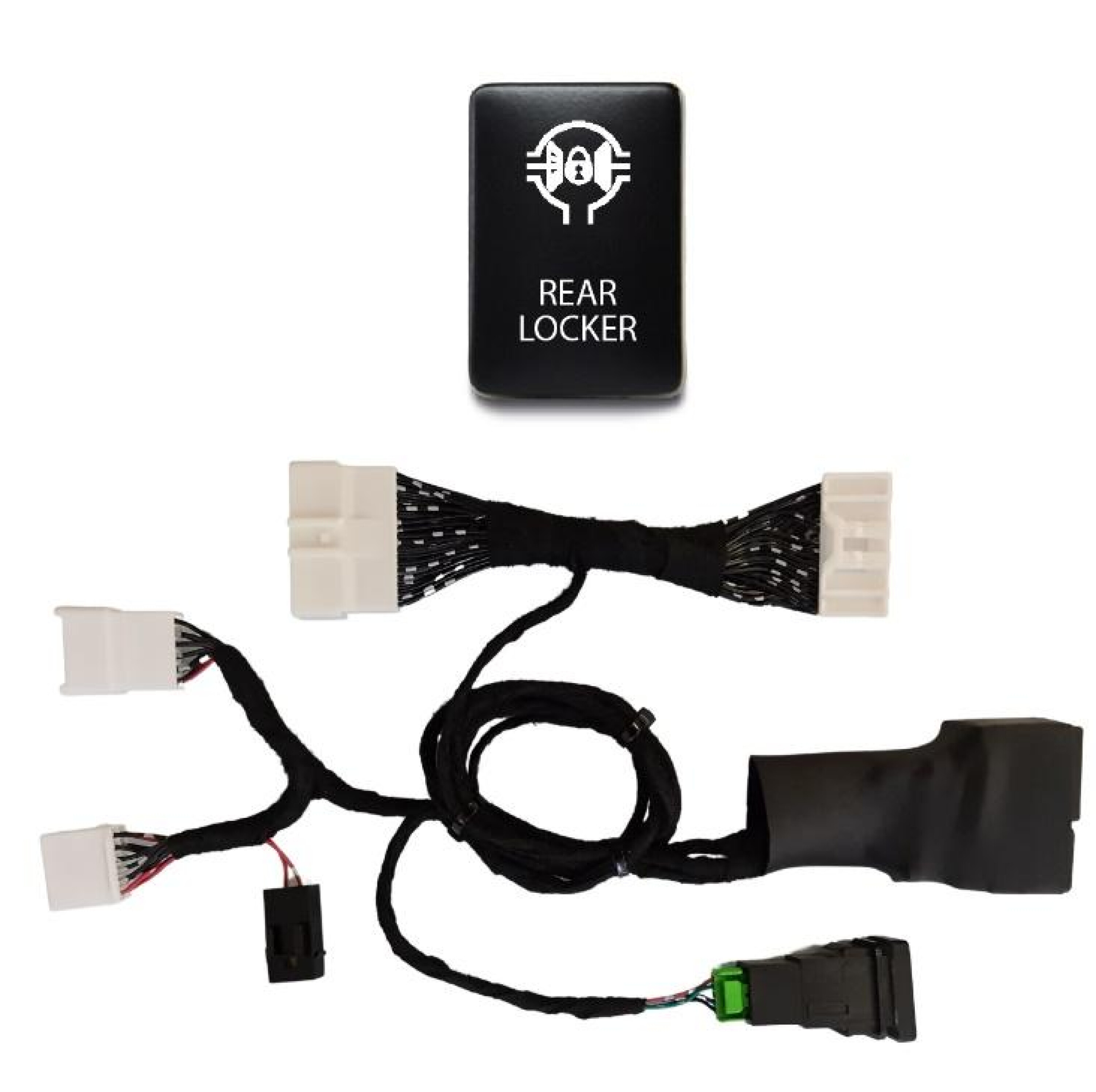
It’s not a whole new diff locker, but this modification has been included here as it allows addition functionality of the factory rear diff locker.
The Anytime diff locker allows you engage the factory locker at any speed, when in 2WD, 4WD high and 4WD low range. From factory you can only enable the diff lock when in 4WD low range.
This is a super handy little mod for anyone who uses slippery boat ramps or has a steep, unpaved driveway.
Pros
- Plug-and-play replacement of the factory locker switch
- No mechanical modification and easily reversible
- Added functionality of the factory rear diff locker
Cons
- Wonu2019t increase your traction off-road like addition of a front locker
How we review products
4X4 Australia has been reviewing four-wheel drive vehicles and aftermarket products for more than 40 years.
When looking for the best accessories for your make and model of 4WD, there are some things essential to making sure you have the best off-roading experience.
When we compare products, here are some of the things we consider:
- Warranty
- Build quality
- Value for money
- Time and ease to set-up/install
- Weight
- Fit and finish
- How well it gets the job done
- What materials they’re made from
- Corrosion/UV resistance
- Coatings
- Compatibility with other accessories
- Compliance with ADRs and vehicle safety systems
- Country of manufacture
- Load ratings, to determine what’s the best product across each price point.
Disclosure: When you buy through our links, we may earn a commission. We also include products that we do not earn a commission from.
The Ford Ranger continues to dominate sales in the 4×4 segment, but it has fallen just short of eclipsing the Toyota HiLux on the overall charts.
The HiLux outsold the Ranger on the overall sales charts (when combining 4×4 and 4×2 variants) by just two sales (5762 versus 5760), reversing the July 2023 result which saw the Ranger on top.
Compare this to August 2022, where a total of 6214 Hiluxes and 4497 Rangers were sold. That’s a difference of -7.3 per cent for the HiLux and +28.1 per cent for the Ranger.
Perhaps the upcoming HiLux GR Sport could shift momentum back in Toyota’s favour.
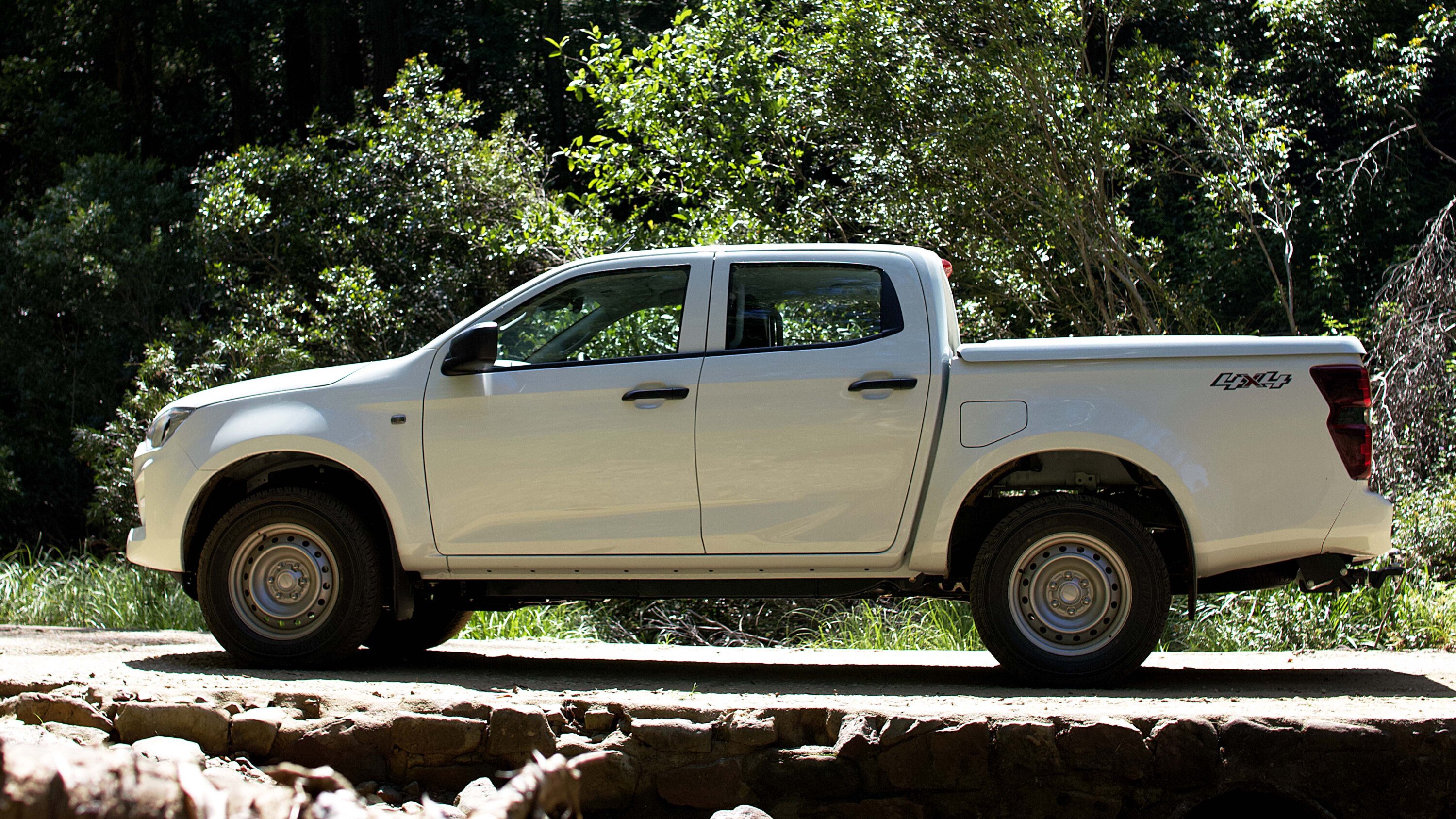
Back to the 4×4 charts and a total of 5381 new Rangers were delivered to customers in August 2023, a healthy 820 more sales than Toyota could muster for its HiLux (4561 total sales). Sitting below the unwavering top two is the ever-consistent Isuzu D-Max, which registered 2628 4×4 sales for the month.
In further good news for the Japanese manufacturer, the Isuzu D-Max was the fourth best-selling vehicle on the overall charts, trailing only the Ranger, HiLux and RAV4.
August was also a good month for the Nissan Patrol, with a total of 1032 sales registered for the burly off-roader.
August was also a good month for the Nissan Patrol, with a total of 1032 sales registered for the burly off-roader – it registered 466 sales in July and 630 in June.
This is reflective of a growing appetite for SUVs, large and small, with the SUV market up by 28.3 per cent (or 13,742 more sales) compared to the same month last year. For comparison’s sake, the passenger vehicle market is down 3.3 per cent, and the LCV market is up by 6.9 per cent.
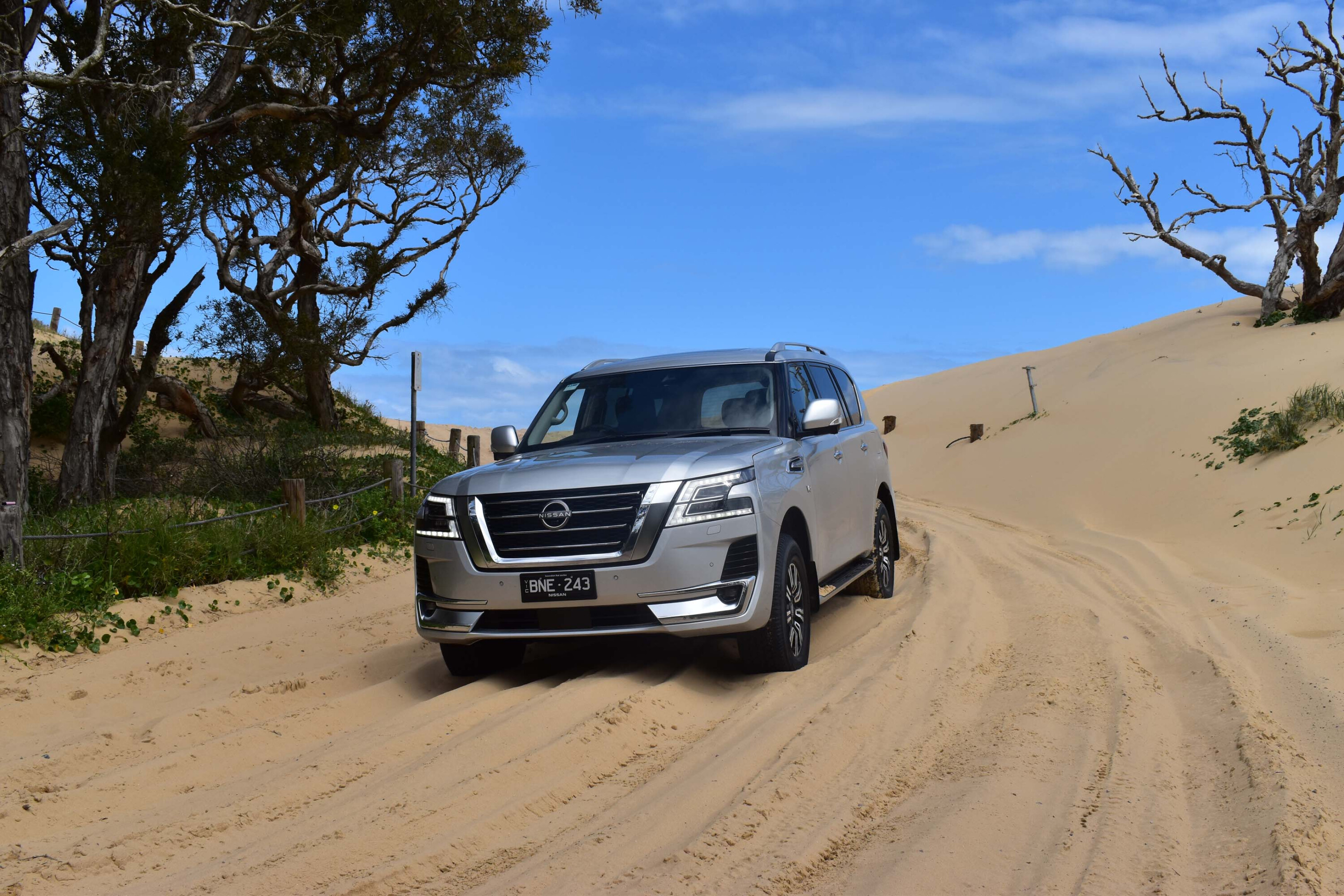
Other SUVs in the top 10 this month include the Prado, LandCruiser 300, Everest and MU-X, making it an even 50/50 split between utes and wagons.
Notable absentees from the best-selling 4×4 vehicles in August include the Mitsubishi Triton (917 sales), Nissan Navara (688 sales) and Volkswagen Amarok (553 sales).
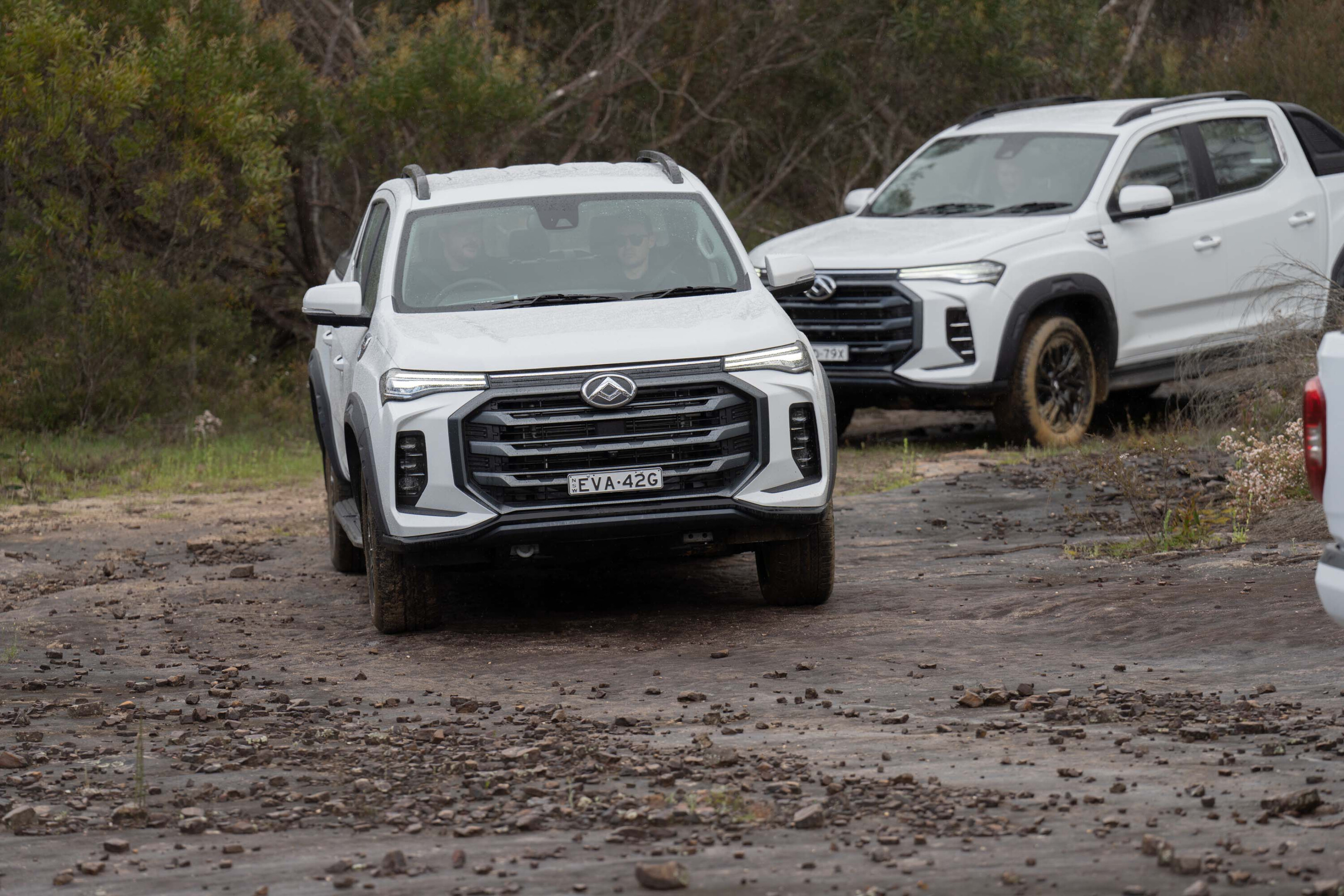
The LDV T60 is the most sought-after vehicle at the budget end of the market, with 710 deliveries taking place. The GWM Ute trails with 631 sales, and SsangYong only posted 280 sales of its underrated Musso.
Year-to-date sales for this trio: GWM Ute, 6475; SsangYong Musso, 2584; LDV T60, 5995.
At the opposite end of the market, Chevrolet shifted a total of 251 Silverados, with RAM besting that with 457 sales of its 1500. A total of 74 deliveries took place for the even bigger 2500, and 10 sales for the bigger again 3500.
Overall new-car sales for the month were up by 15.4 per cent compared to August 2022. In fact, it was the highest August result on record in Australia.
“The Australian automotive sector continues to demonstrate its strength, with August recording unprecedented sales figures, reflecting both a high level of demand from Australians and improved supply of vehicles,” said FCAI chief executive, Tony Weber.
“Year-to-date sales have increased 9.9 per cent, which is a better indicator of the underlying strength of the market,” he added.
Top-selling 4x4s in August 2023
| Vehicle | Units |
|---|---|
| 1. Ford Ranger | 5381 |
| 2. Toyota HiLux | 4561 |
| 3. Isuzu D-MAX | 2628 |
| 4. Toyota Prado | 1969 |
| 5. Toyota LandCruiser 300 | 1641 |
| 6. Ford Everest | 1502 |
| 7. Isuzu MU-X | 1431 |
| 8. Toyota LandCruiser 70 | 1102 |
| 9. Mazda BT-50 | 1099 |
| 10. Nissan Patrol | 1032 |
Top-selling 4×4 models YTD 2023
| Vehicle | Units |
|---|---|
| 1. Ford Ranger | 33,829 |
| 2. Toyota HiLux | 30,146 |
| 3. Isuzu D-MAX | 15,096 |
| 4. Toyota Prado | 10,849 |
| 5. Mazda BT-50 | 9896 |
| 6. Isuzu MU-X | 9815 |
| 7. Toyota LandCruiser 300 | 9412 |
| 8. Mitsubishi Triton | 9249 |
| 9. Ford Everest | 8399 |
| 10. Toyota LandCruiser 70 | 7046 |
The grand opening of Norweld’s new 2367sqm factory in Brisbane welcomed more than 2000 people through the gate for a sneak peek, with a line-up stretching down the street before the 9am kick-off.
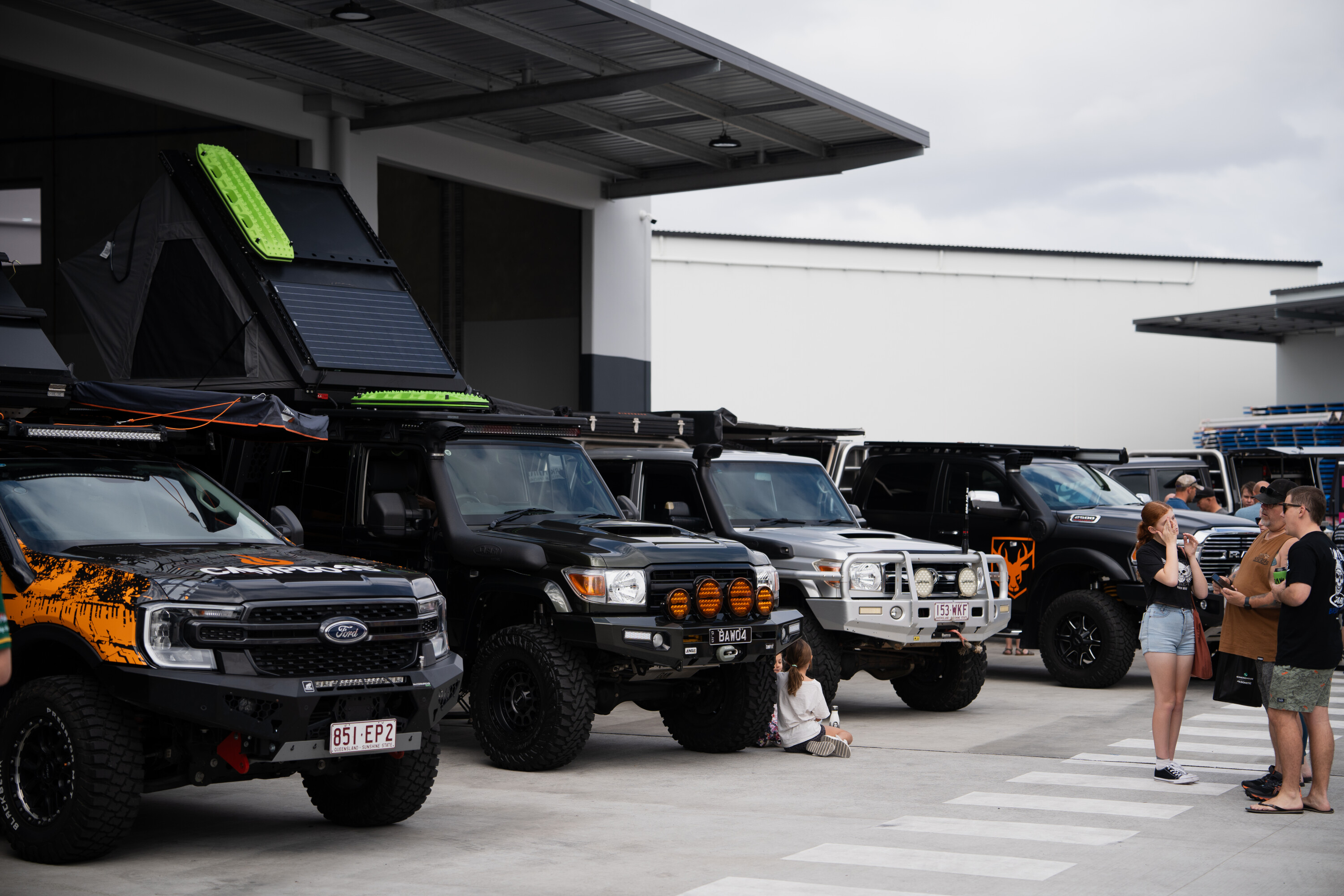
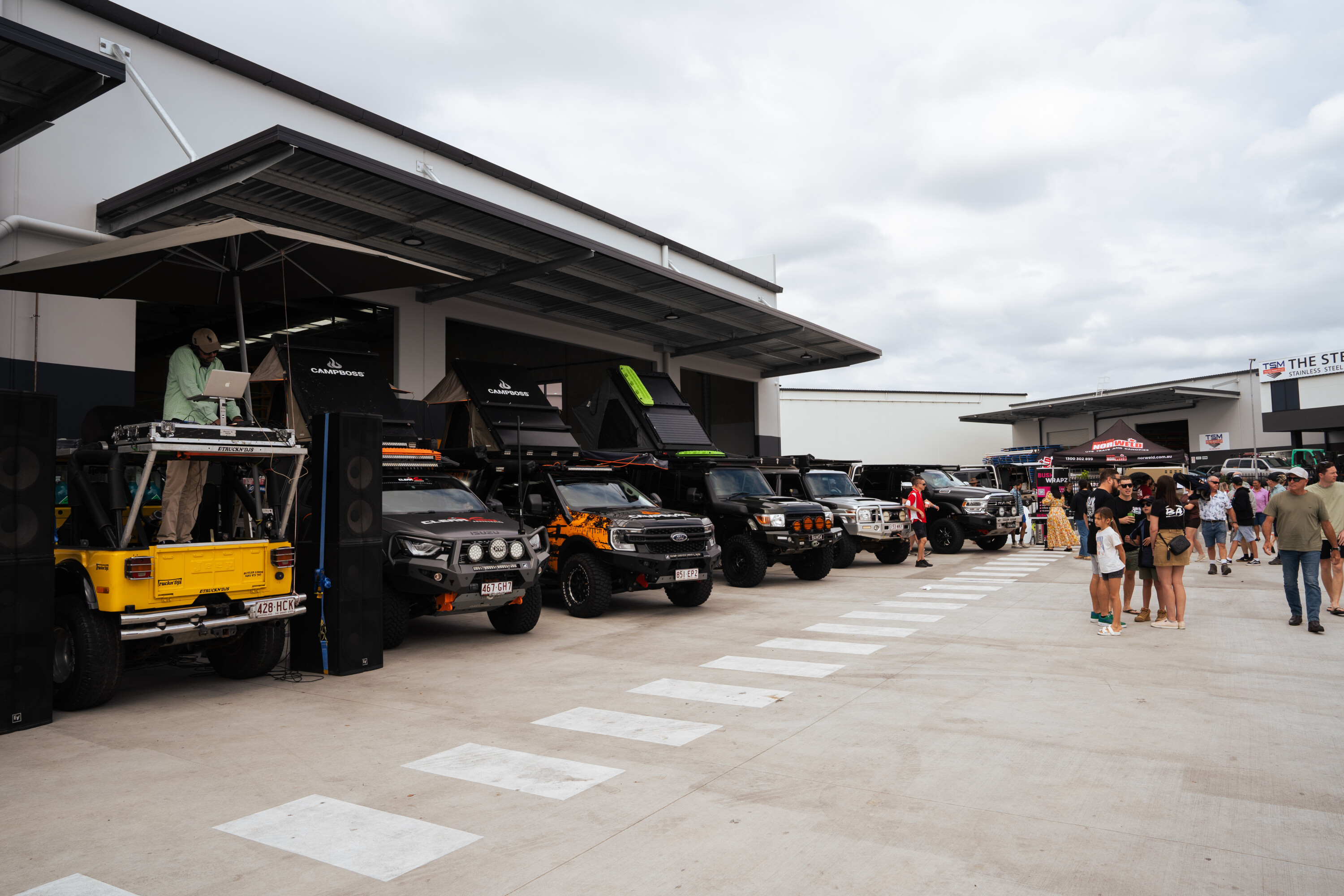
Driving into the event, the canopy envy was very real as Norweld-equipped dual-cabs lined the streets of the Brendale industrial estate as far as the eye could see. Once inside, food trucks, free coffee and a DJ in the back of a Jeep offered plenty of fun for the entire family, but the real drawcard was the impressive array of custom 4x4s on display – of which there were dozens.
The number of businesses that turned up with their latest builds, to show support, was immense, with everything on display from heavily customised American pick-ups to decked-out Aussie Troopies.
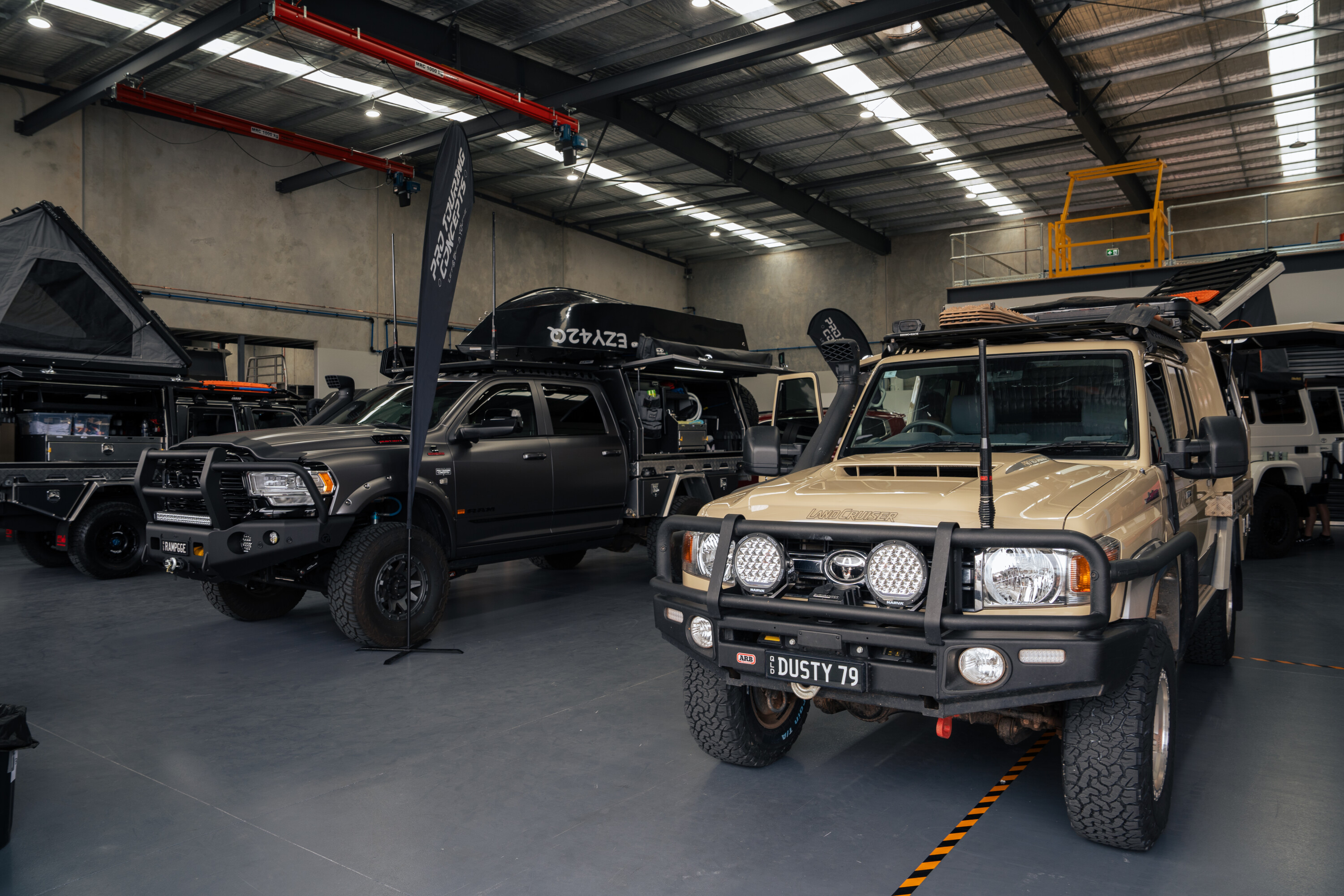
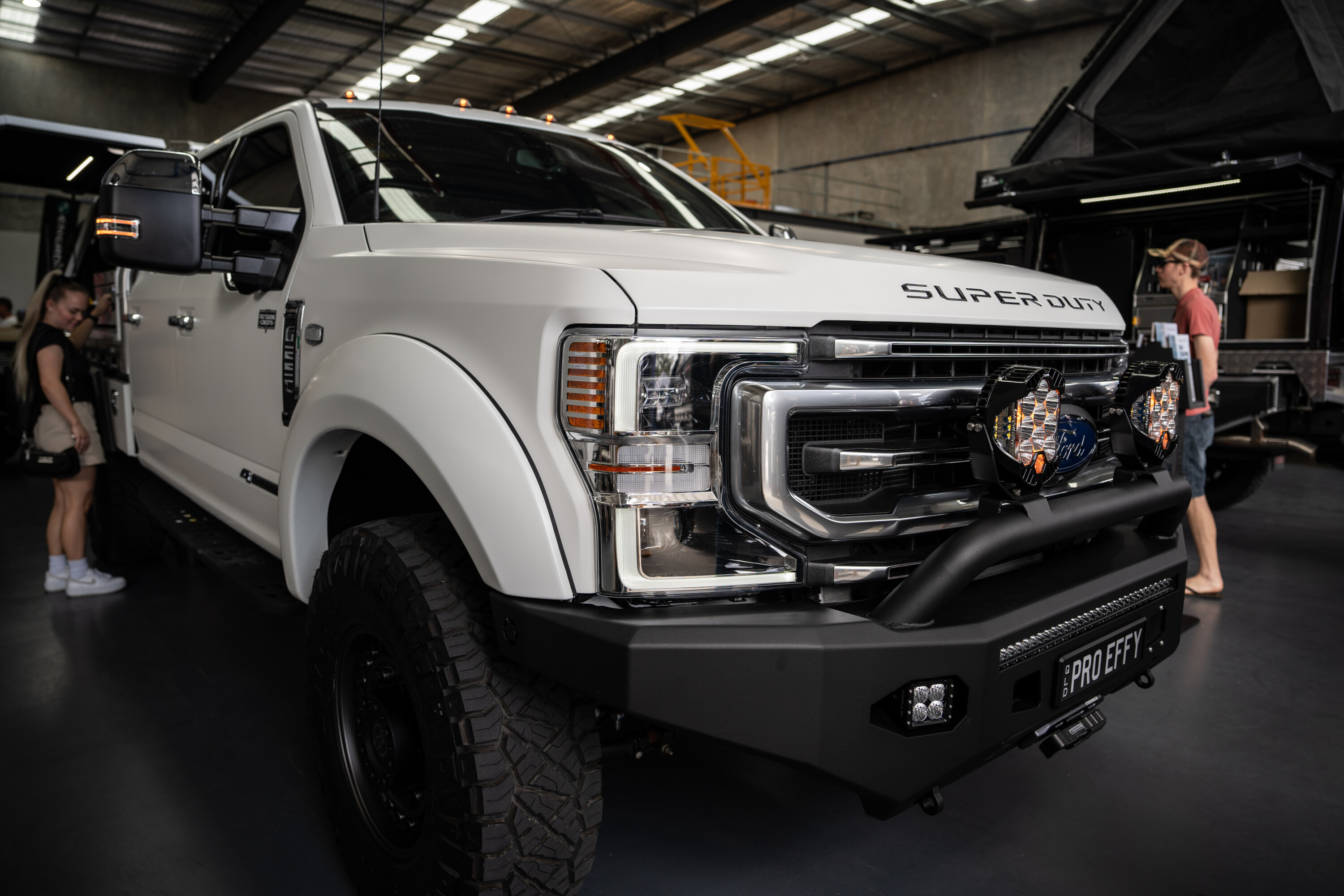
Pro Touring Concepts had some of its tough new builds there, including a no-expense-spared Ford F-250 that drew a revolving crowd and dwarfed the sea of 79 Series LandCruisers surrounding it.
Norweld staff also hosted tours of the factory, showing off the low-waste manufacturing line, with cutting-edge machinery on display like a new high-speed CNC router, advanced press brake, and an array of top-end welding equipment.
Massive giveaways drawn throughout the day kept crowds excited, with first prize being a Norweld Deluxe Plus Tray worth around 15 grand, which the guys will fit to whatever ute the winner owns. Second prize was a Torqit exhaust system and third prize was a Redarc 240W solar blanket, and huge crowds congregated for each draw with fingers crossed.
Latest Gear Guides
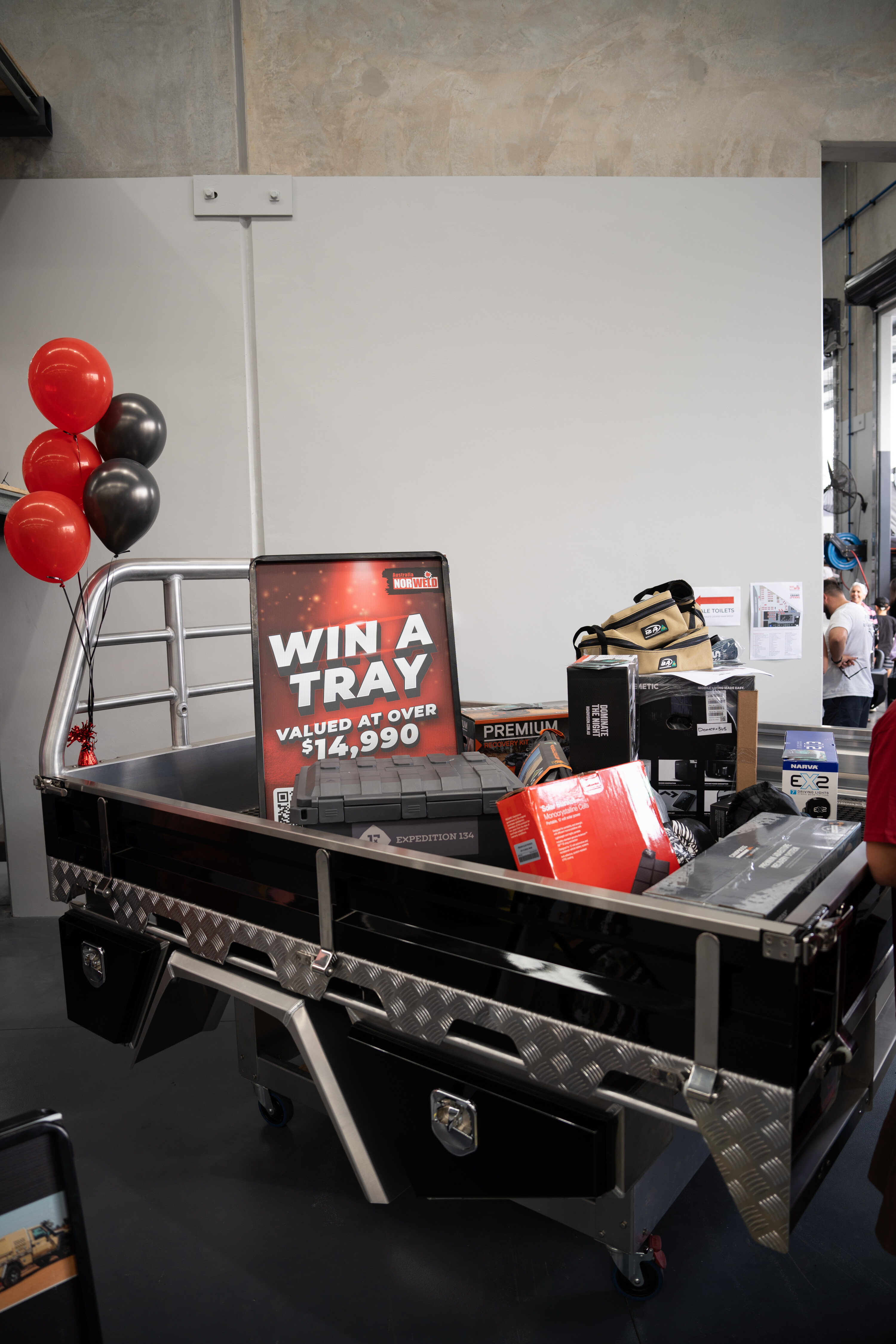
In case those prizes weren’t enough, the Norweld team drew names out of a barrel every hour after giving every attendee a ticket at the gate. Door prizes included Norweld’s latest range of merchandise, with goodies like fishing shirts, hats, t-shirts and heaps more.
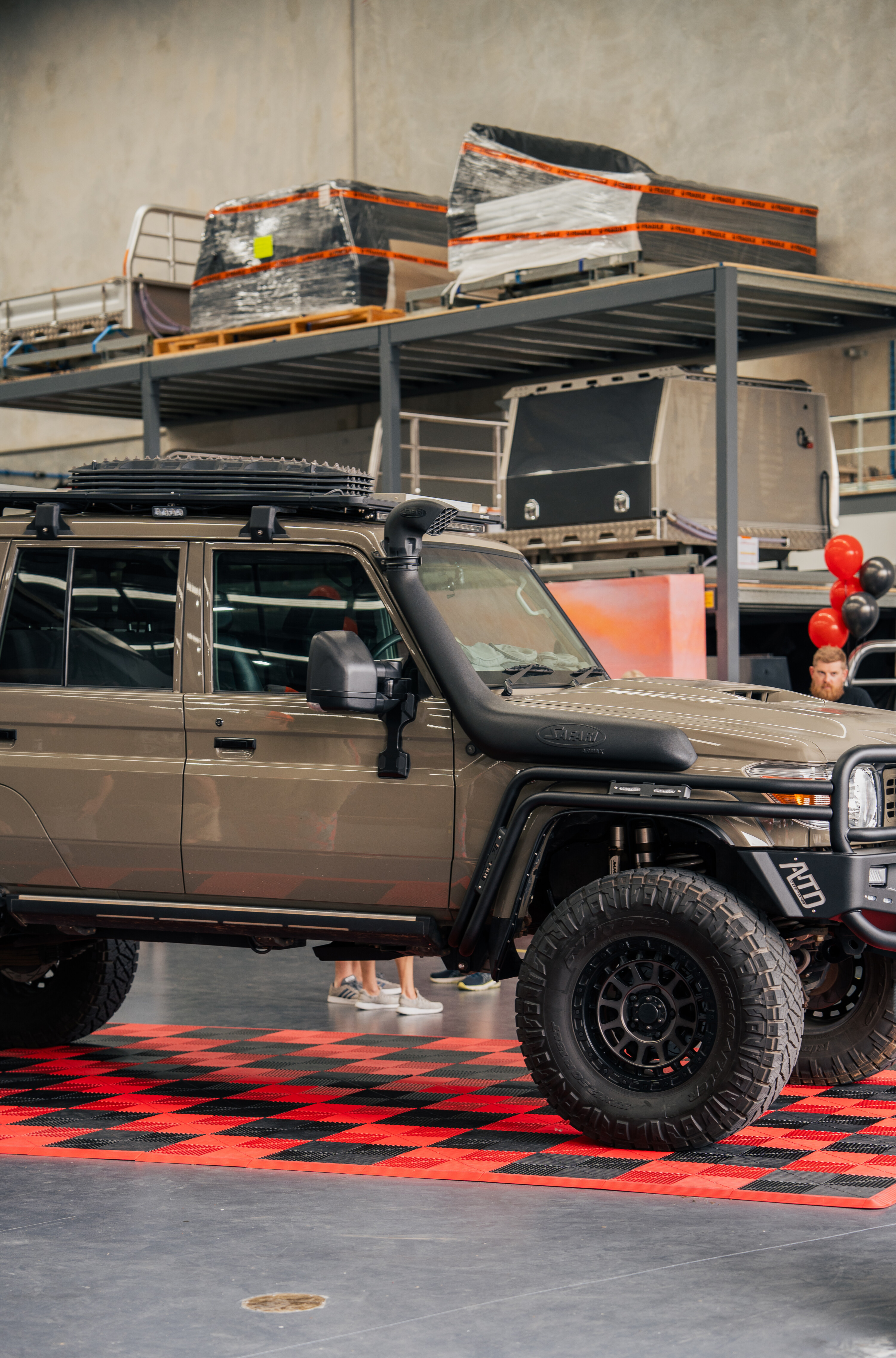
While we can’t reveal too much just yet, Norweld also had its next-generation Elite Tray on-show, fitted to the iconic ‘Bull79 3.0’ LandCruiser, reborn once again and looking better than ever.
The Bull79 ‘Cruiser, which belongs to Norweld special projects director, Isaac Edmiston, is as tough as it looks with 37-inch tyres, portal axles, big power and now it also wears the manufacturer’s latest heavy-duty tray.
The new tray is set to be launched in early 2024, with the first customer examples expected to land on customer vehicles by March. While we can’t show photos of it just yet, we can confirm it looks the goods.
Norweld expansion
Norweld will still build all of its canopies out of its Far North Queensland factory, with this facility set to churn out trays and accessories, which makes sense given the Brisbane 4×4 market is the strongest in Australia.
“We started doing components here in Brisbane, making toolboxes and stuff across the past six to 12 months, but this is the first time we’re doing full production here,” said Jaime McIntosh, Director at Norweld.
“Brisbane is our biggest market in Australia, so we wanted to get close and, as far as four-wheel drives are concerned, there are a lot of complementary services around Brendale.
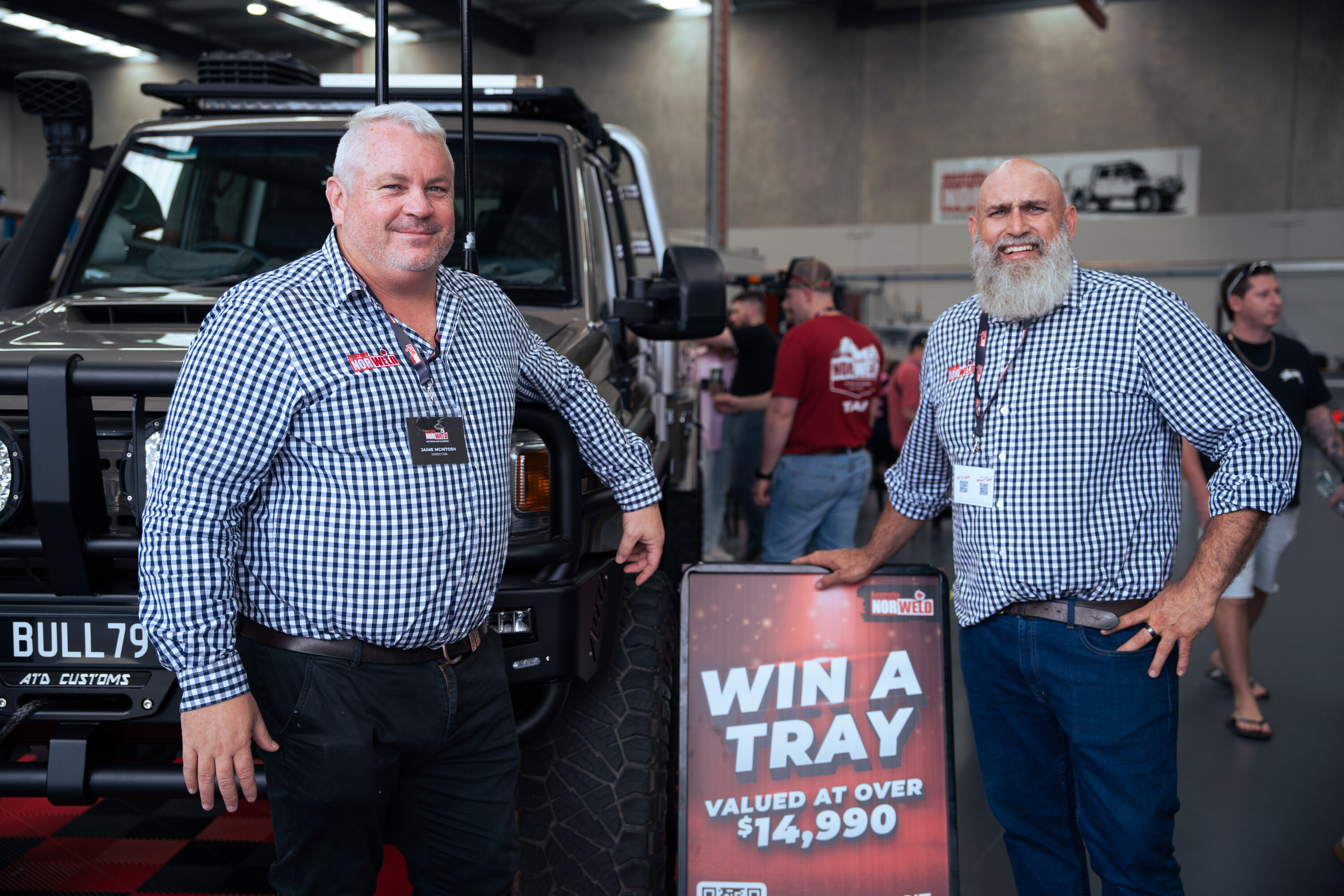
“Our plan is to get to 40 trays per week out of here, and we’ll do about 20 canopies each week out of Cairns.”
The site will also house a slick new showroom and plenty of office space, serving as the Norweld head office with marketing, sales and design teams now operating out of the one location.
Norweld has more than 20,000 of its trays and canopies out in the wild so far, all with lifetime warranties, and its customers are clearly happy campers after seeing the overwhelming turnout on the day.
When Jaime purchased the company in 2001 it had a strong reputation for high-quality fabrication, but it wasn’t until 2015 that he decided to focus solely on trays and canopies.
“When I bought the business we had six staff in a small shed, and we’d punch out whatever we could,” he said. “Did I think we could get to this size – no, not at all.”
These days, Norweld employs 120 people and expects that number to grow considerably as the new factory ramps up production.
“We have 20 people at this facility in Brisbane and that will get to 30 relatively quickly and then probably 40 by the time we reach full production,” said Jaime.
It isn’t just about quantity, though, because Norweld’s reputation is founded on building the toughest trays and canopies out there.
“It’s almost a problem in that we build them so tough and we offer a lifetime warranty, but people still want the latest designs and we can customise older models,” said Jaime. “It’s a quality product and it’s handmade, so it’s not just about quantity for us.”
In recent years Norweld has also exported a number of its products to the US, South Africa and even Saudi Arabia, but Australia remains the core focus.
“We’ve sent them all over, but the main export market has been the US,” Jaime said. “We send a container there every three months, which is about 16 trays and the odd canopy. There’s a big market there, but we still have a lot of growth here in Australia.”
When discussing products in the pipeline at Norweld, Jaime hinted at a new canopy design but couldn’t share too many details just yet.
“The new trays will be a big thing that is coming, then the next will be a change to the canopy,” he said. “We are always looking at different ways of doing stuff and we’re potentially looking at going to a modular fit-out for the canopies, so you can add and change it.”
While the sheds just keep getting bigger to keep up with Norweld’s explosive growth, Jaime reckons this one will offer enough space for the foreseeable future.
“My wife keeps asking, ‘when’s the shed going to be big enough’ because they keep getting bigger and bigger,” he joked. “This one is probably close to our limit!”