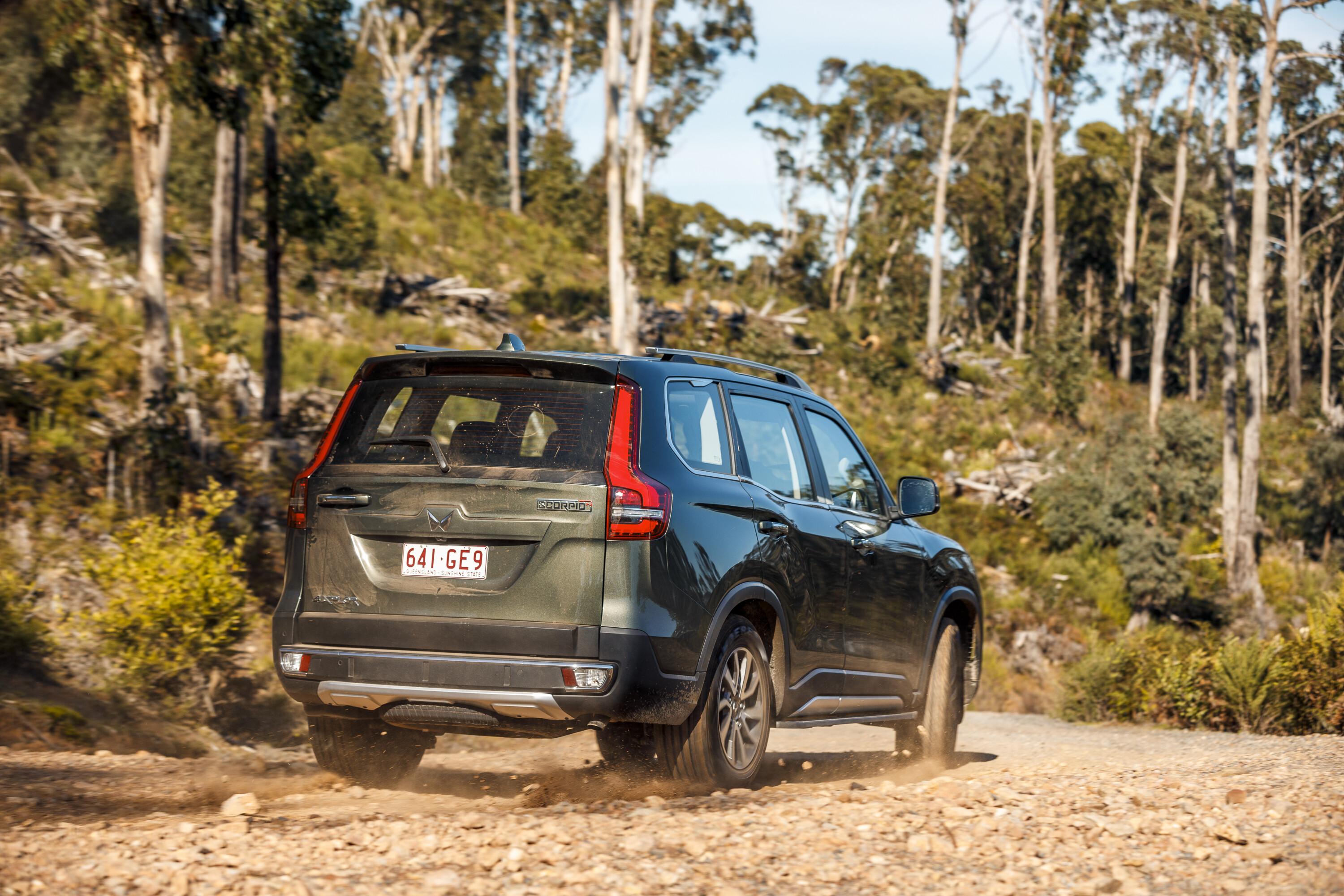
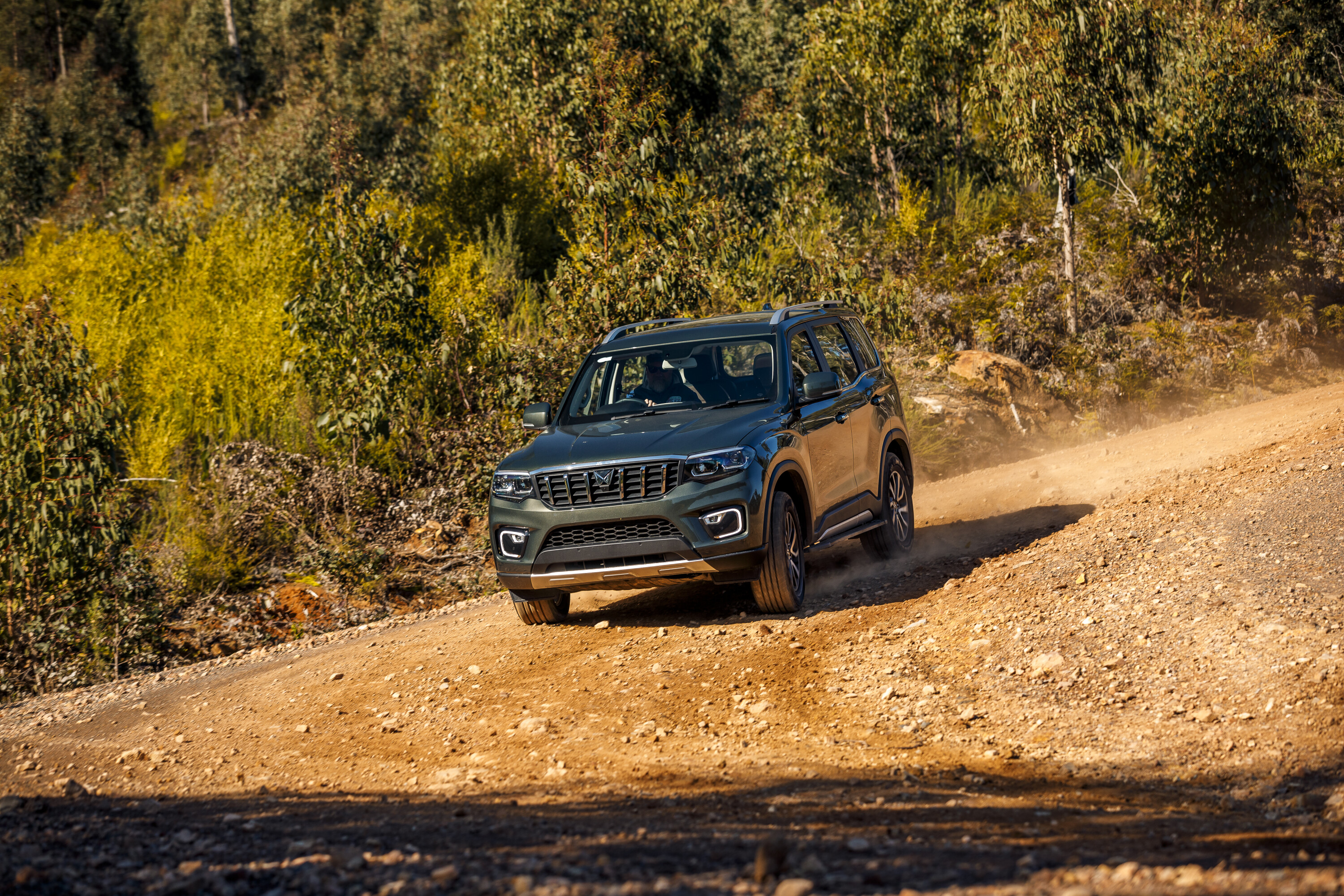
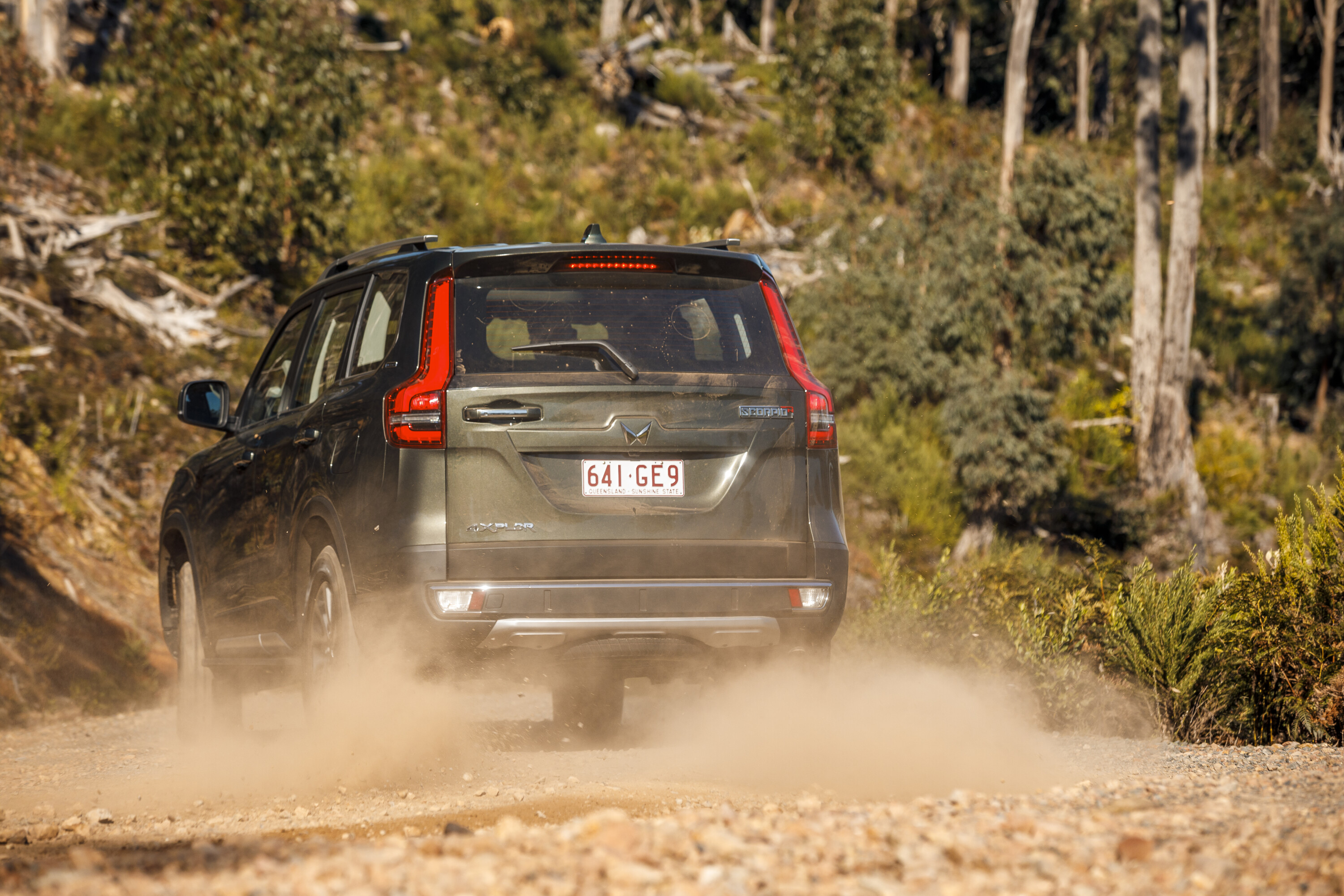
Following the Australian launch of Mahindra’s fifth-generation Scorpio 4×4 wagon – and having also sampled it in India – we were keen to put some more kilometres on one as a daily driver and weekend tripper, so we grabbed a Scorpio Z8L for a month.
Our Scorpio arrived with 9000km on the clock, and as one of the earliest cars in the country it wasn’t equipped with Apple CarPlay. Once you’ve used CarPlay regularly, you can’t live without it – so we headed straight to the Mahindra dealer to have it installed, along with a few other computer updates.
It only took a short time to install and it all works well, and the trip gave us a chance to hit some backroads in the Scorpio. Earlier drives with the new wagon already told us the engineers had done an impressive job with the suspension, and hitting some roads that were in pretty poor condition reaffirmed those beliefs. The Scorpio handles well for a body-on-frame vehicle with excellent body control and dynamics.
1
The 2.2-litre diesel engine and six-speed automatic transmission combination delivers surprisingly quiet and refined performance, but with just 129kW and 400Nm on offer it is no rocket ship and you need to plan overtaking manoeuvres.
Our only complaint with the driveline is some backlash driving at low speeds when on and off the throttle, and this is all too common in stop-start Melbourne traffic.
It’s sold in Australia as a six-seater, with comfortable leather-covered bucket seats for the first and second rows and a two-seat pew across the back. While this configuration provides extra shoulder room for second-row passengers, the third-row seat is not a great fit and it massively eats into the cargo space.
We imagine many owners removing that third-row seat, and we feel the Scorpio would be better sold as a conventional two-row five-seater.
The Scorpio cabin is comfortable for the driver, as it’s easy to use and well-equipped, but it is missing a few essentials like the rear-row airbags and reach adjustment for the steering column.
1
There’s no AEB, lane-keeping assist or radar cruise control, normally considered essential safety features. The Scorpio has a five-star Global NCAP rating, but the omission of these features will prevent it from achieving this on the ANCAP standard and might keep it off the shopping lists of some family buyers.
The Scorpio is a great value-for-money package
Over our month with the Scorpio it has been used by a few members of the 4X4 Australia team, with a common theme being that, after initial concerns with a relatively unknown brand, most drivers liked the vehicle the more time they spent driving it. This usage included on- and off-road driving, chasing other test cars around on photo shoots, and general family use.
Overall, the Scorpio is a great value-for-money package, but needs those now commonplace safety features and some small refinements to make it a true competitor in the 4×4 wagon market.
Whether you’re a tradie or a weekend warrior, the ability to throw gear in the back and keep anything wet or smelly outside of the cabin is a huge benefit.
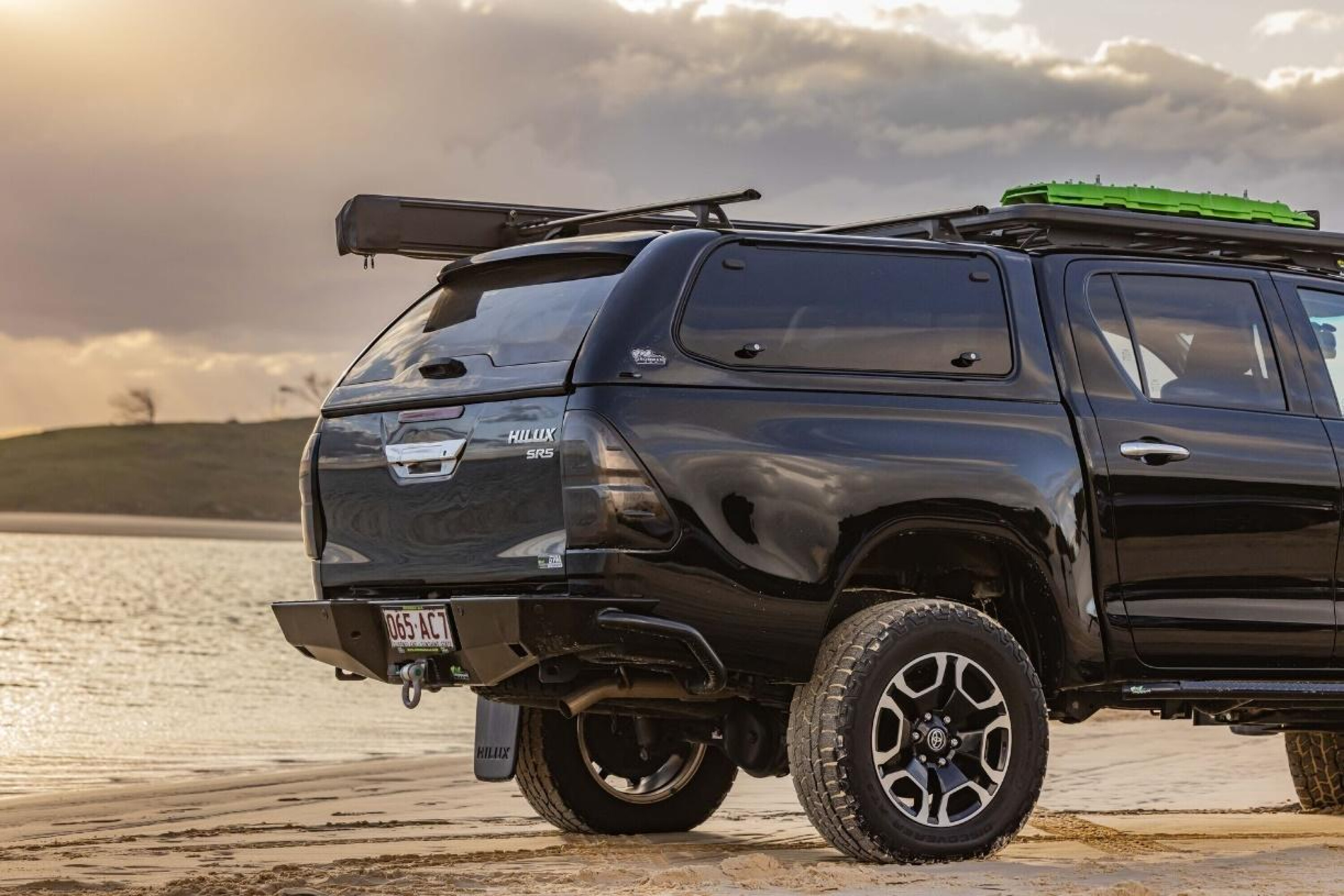
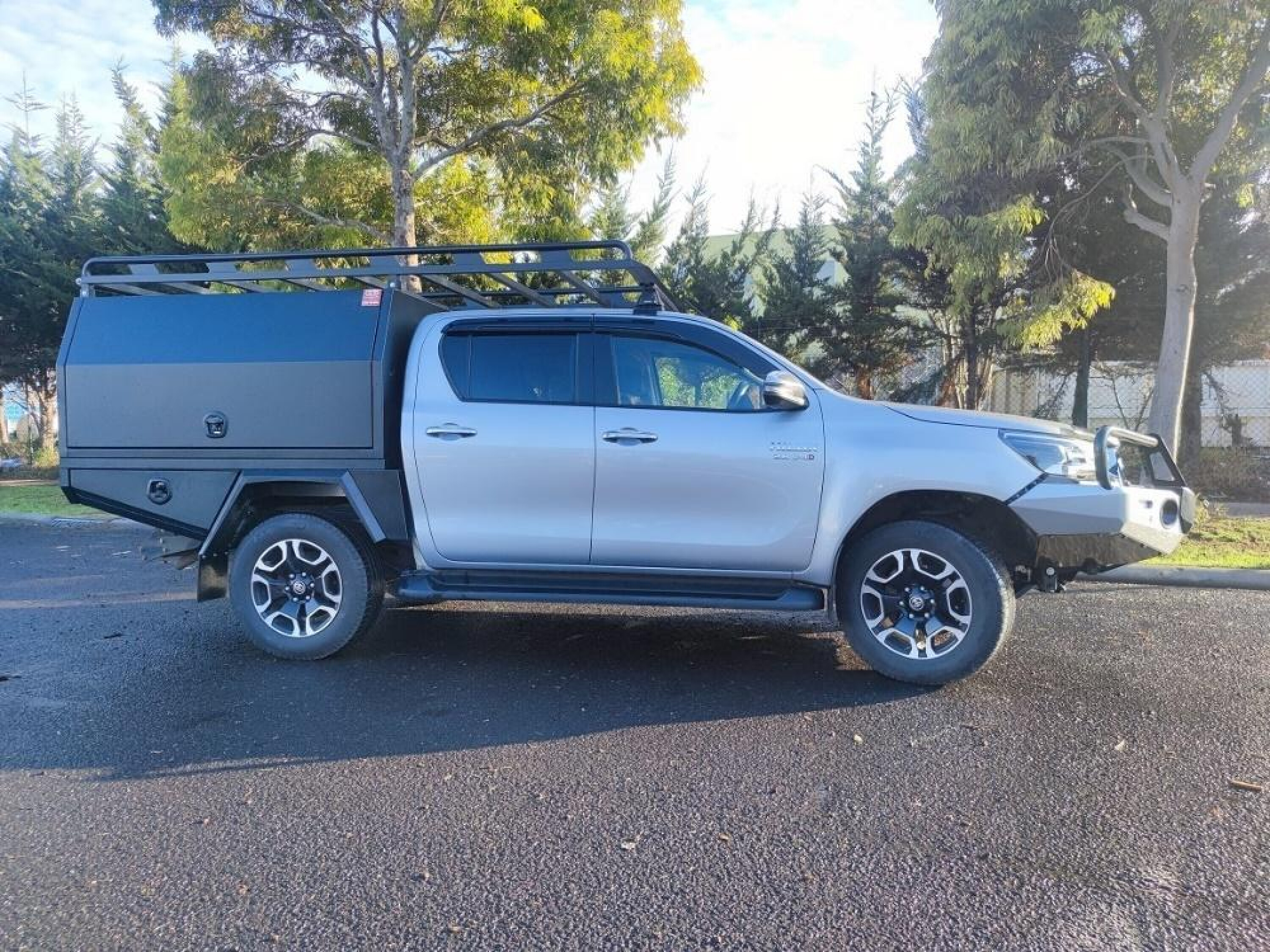
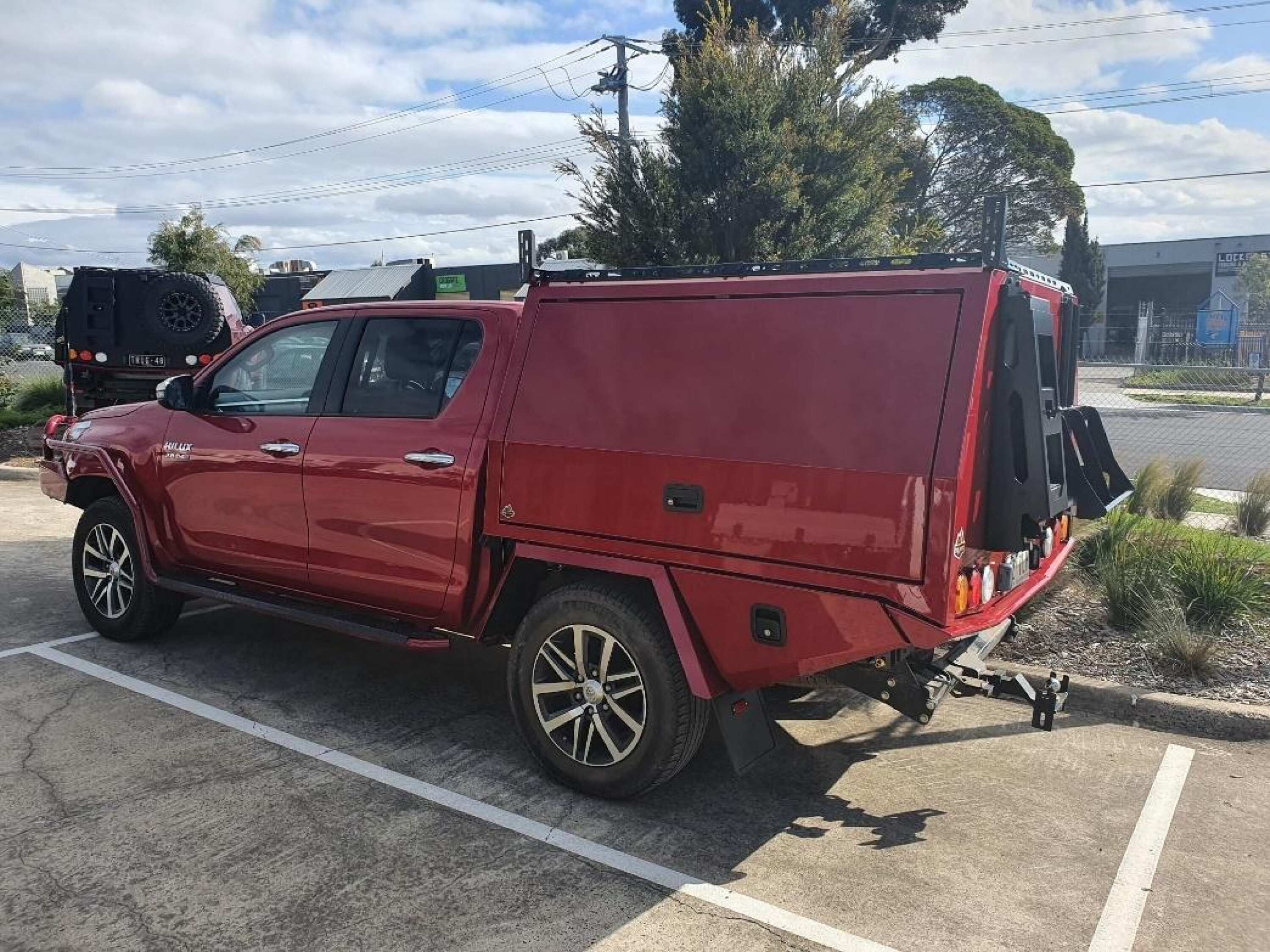
The problem, though, is that tubs and trays offer little in the way of weather protection or security. The solution is a canopy or service body, of course. The modular design of these aftermarket units allows owners to tailor a set-up that best suits their lifestyle and the gear they’re carrying.
What it is: The HiLux comes with a tub or cab-chassis. A canopy sits on top of the tub, while a service body sits on top of the chassis and includes a tray and canopy combined. A canopy on a tub is typically a clamp-on option that can be removed, but a service body is a permanent fixture.
Why you need it: An open tub or tray exposes gear to the elements and offers no security. A canopy or service body offers weather protection and the ability to keep cargo secure.
Buying tips: A canopy is cheaper and lighter than a service body, but a service body offers more interior storage space and easier access via large doors on the sides. Canopies might cost $3000, but a decent service body might cost $12,000 with extras running it over $20,000. If building an off-road tourer, ensure you buy one designed for off-roading and not a tradie version. Almost all service body and canopy makers will have a product for the HiLux, so there are so many we can’t list them all. We’ve listed a few to start with.
What to Look For: Here’s what to consider when deciding between a canopy and a service body. – Do you want to remove it occasionally or will it be a permanent fixture? – What’s your budget? Costs can quickly add up, regardless of which one you choose. – When shortlisting possible options, find out what each one weighs. Some service bodies can be heavy, which eats into payload. – There’s nothing more annoying than chasing a dust or water leak, so do your research. – If space is your number one consideration, then go with a service body.
Canopies and service bodies are a fantastic way to transform your ute into an ultimate tourer. Once you have the basic shell, your options are limited only by what you can dream up u2026 and what you can fit in there. Alternatively, select a tried and tested unit from a supplier, already kitted out and ready to go.
Whatever you choose, you’ll be well-equipped to hit the dirt and start exploring.
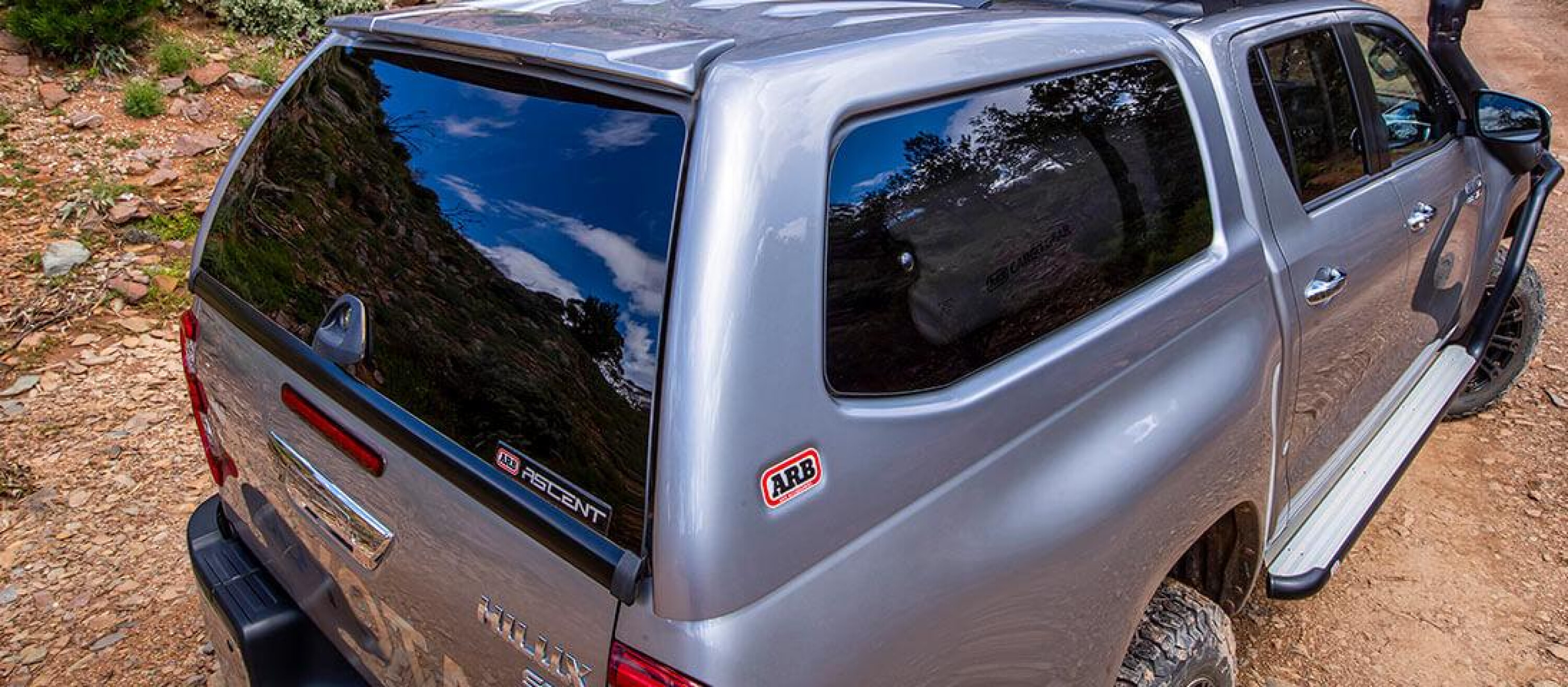
The flagship of the ARB range, the Ascent Canopy features UV-resistant thermoplastic and a three-year/60,000km warranty, meaning this is a long-term investment. Added features like vents to provide positive canopy pressure and lift-up side windows improve the user experience.
Specifications
Material: UV-stable ABS thermoplastic
Finish: Colour-coded
Weight: 60-70kg (approx.)
Load Rating: 100kg (dynamic); 350-400kg (static)
1
Pros
Side lift-up windows for easy access
Integrated central locking
Front-facing vent to create positive pressure and reduce dust ingress
Cons
With 28 per cent tinting, say goodbye to rear visibility at night
Sleek lines are the standout feature of this canopy from Ironman 4×4. It may be missing some of the features of high-end canopies, but it’s also missing some of the dollars from the price tag. The Pinnacle 2 is far from a low-budget option in terms of quality, but if positive pressure air vents and 100kg roof loads seem excessive, then have a look at this unit.
Aluminium construction means the EZtoolbox service body is relatively lightweight and doesn’t eat into all-important payload. Complete with undertray toolboxes and a trundle drawer, this is the complete storage solution. The tapered under-tray boxes mean departure angle is compromised, though.
Specifications
Material: Aluminium
Finish: Black or white powdercoated
Weight: 120kg (approx.)
Load Rating: Not stated
1
Pros
Lifetime structural warranty and two years on toolboxes
Its combined aluminium and steel construction make it both strong and lightweight in equal measure. This service body from Trig Point is a more premium option and includes a rear bar to protect the tray and under-tray toolboxes, filtered air vents to cool the canopy, and a built-in roof rack.
The standard ute tub is a basic bit of gear, but add a tub liner, canopy and a drawer system, and your ute becomes an ideal weekend adventurer or tourer.
A canopy adds security, protects your gear, and allows you to carry loads on top. Whether the load’s a rooftop tent, a load of timber for work or a second spare, choosing the right canopy is important. Which canopy you choose depends on what you plan to use it for.
As with any piece of aftermarket gear added to a 4×4 build, it’s important to first establish what your intended purpose is: Are you a tradie looking to keep your tools safe? Perhaps you’re planning your next Red Centre run?
Once that’s established and you’ve started the long, tedious process of browsing aftermarket catalogues, there are a handful of essential elements to keep in mind including materials, construction, fitment, roof-load capacity, access, accessories and aesthetics, to name a few.
As with any off-road purchase, ensure the supplier has a quality reputation and can back its product with aftermarket support and a substantial warranty.
Load rating
By installing a canopy, like a tub topper, and then loading it with tools and/or gear for your next camping trip, the kilograms will begin to rise. This is why it’s critical to always monitor your vehicle’s weight and not overload it.
Most canopies will easily cope with a couple of lightweight kayaks. On the other hand, a rooftop tent is heavy amd will need a sturdy canopy with a high load rating.
And you need to consider roof loading based on type of travel. As a rule of thumb, off-road loading should be 50 to 75 per cent of the rated (on-road) capacity. Most canopy manufacturers specify on-road roof loading.
A few quote both static and dynamic loading. Static loading is a useful number when you fit a rooftop tent, roof platform or similar. It tells you how much weight the canopy will take when you’re parked up, with you and your partner sleeping in it. Dynamic loading is the load rating when travelling.
Is dynamic loading the on-road or the off-road rating? It depends on what figures the manufacturer quotes. Without contacting them directly, it’s impossible to tell. Unfortunately, there’s no standard for specifying loadings.
If in doubt, assume dynamic loading is the on-road capacity, then down-rate the figure for off-road use. Why derate for off-road travel? Because twisting forces, vibrations and rough conditions mean your canopy will be subject to a whole lot of extra loads that will try to rip your canopy apart.
The 50 to 75 per cent load rating is a wide range. Use common sense here. If you’re planning on a trip on rough outback roads or a full-on crawl over the wild tracks of the Victorian High Country, then go with 50 per cent. On the other hand, 75 per cent will be okay if you’ll be driving along well-maintained gravel roads.
Say the canopy’s roof loading is 100kg, then you’re potentially down to 50kg when off-road … less the weight of the roof bars and roof basket or roof platform. That’s maybe a kayak or a couple of swags and no more. Forget about carrying a spare tyre or fitting a rooftop tent.
Generally, a steel or aluminium canopy will have a higher load rating than a fibreglass canopy, but not always. The load rating depends on how the canopy’s made and whether it has an internal frame.
Materials
Canopies come in a variety of shapes and sizes and are constructed using different materials, with your budget typically dictating what path you’ll head down when the time comes to swipe the credit card. Typically, you’ll have to choose between stainless steel, fibreglass, aluminium/metal, or a form of plastic construction.
A quick glance through the canopies we’ve included in our list reveals a wide variety of materials: fibreglass, ABS thermoplastic, mild steel, stainless steel, and aluminium.
Fibreglass is more the traditional material which canopies were made from. They generally have additives to increase strength and UV resistance. The biggest advantage of fibreglass is they’re lightweight. However, manufacturers are now making aluminium and even steel canopies at equivalent weights, qnd their roof loadings are usually (but not always) double or triple that of fibreglass equivalents.
The big advantage of steel or aluminium over fibreglass is window-opening sizes. Due to steel’s inherent strength, window mullions can be thinner. So the openings are larger, making them easier to access and easier to pack.
Keep in mind, however, that metal fatigue is more prominent in aluminium than stainless steel, so aluminium may have a tendency to crack more easily over time. Stainless steel is an extremely strong and versatile material and, contrary to popular belief, isn’t as heavy as you’d think.
One positive of fibreglass and ABS over steel are their insulation properties. As a rule, they don’t transmit as much heat into the canopy as steel and aluminium.
Security
One of the biggest benefits of a canopy is knowing the gear in the tub is safe, and that’s why you should pay attention to the window latches. Look closely at canopies with T-handles, as they can easily be pried open.
We had folding T-handles on a set of toolboxes once, and after several thousand kilometres of corrugations, they decided to snap all by themselves. It’s not a great feeling when you glance in the mirror and see your gear falling out on to the road.
The best latch is a compression latch, as they’re highly reliable and difficult to break in to.
Central locking
Most premium canopies offer central locking. Some include all windows, while others only have central locking on the rear window. Central locking is super-convenient, no doubt, but consider where the canopy will spend most of its life.
We’ve seen more than one canopy central-locking system fail in rough, dusty conditions. Sometimes they fail-locked, other times they won’t lock at all. Either one is particularly frustrating, especially when the keyhole’s plugged up with red dust.
If your ute will be spending its life traversing back blocks, central locking is probably not such a good idea. But if your ute spends most of its life in the suburbs, then central locking is a no-brainer.
Clamping or bolting?
Some canopies clamp to the tub lip with multiple clamps; others require bolts through the tub lip, which means you need to drill into the tub The strongest canopies tend to brace down to the floor of the tub – this way the canopy doesn’t rely on the sides of the tub for strength or support.
Some of you will be okay with drilling holes in the tub’s top lip, while others would rather the less-invasive clamping method – it depends on what you’re comfortable with. Either way, look for canopies which extend down slightly past the top of the lip on the outside faces, as this helps keep the rain and the dust out.
Other considerations
An air hatch is a useful addition to any canopy. It pressurises the canopy, minimising the amount of dust ingress, and it also helps keep the canopy cooler on hot days. Another consideration is whether the canopy is lined, as this adds a touch of luxury and helps to insulate it from cold and heat.
Internal lights are essential. Some canopies have the same system as vehicle’s internal lights – they switch on when the rear door opens. Some lights have their own battery, while others are powered from the vehicle.
If your canopy has the option of internal lights or central locking, check where the electrics connect. This can mean the difference between a simple installation and the need to run extra cabling to the starting battery.
How we review products
4X4 Australia has been reviewing four-wheel drive vehicles and aftermarket products for more than 40 years.
When looking for the best accessories for your make and model of 4WD, there are some things essential to making sure you have the best off-roading experience.
When we compare products, here are some of the things we consider:
Warranty
Build quality
Value for money
Time and ease to set-up/install
Weight
Fit and finish
How well it gets the job done
What materials they’re made from
Corrosion/UV resistance
Coatings
Compatibility with other accessories
Compliance with ADRs and vehicle safety systems
Country of manufacture
Load ratings, to determine what’s the best product across each price point.
We also consider user reviews and our own experience with these products to make sure our recommendations are for the best on the market.
Disclosure: When you buy through our links, we may earn a commission. We also include products that we do not earn a commission from.
Enjoy the latest batch of Readers’ Rigs. If you want your 4×4 published in our mag or online, then send a snap or two to our Facebook page.
1991 Toyota HiLux
1
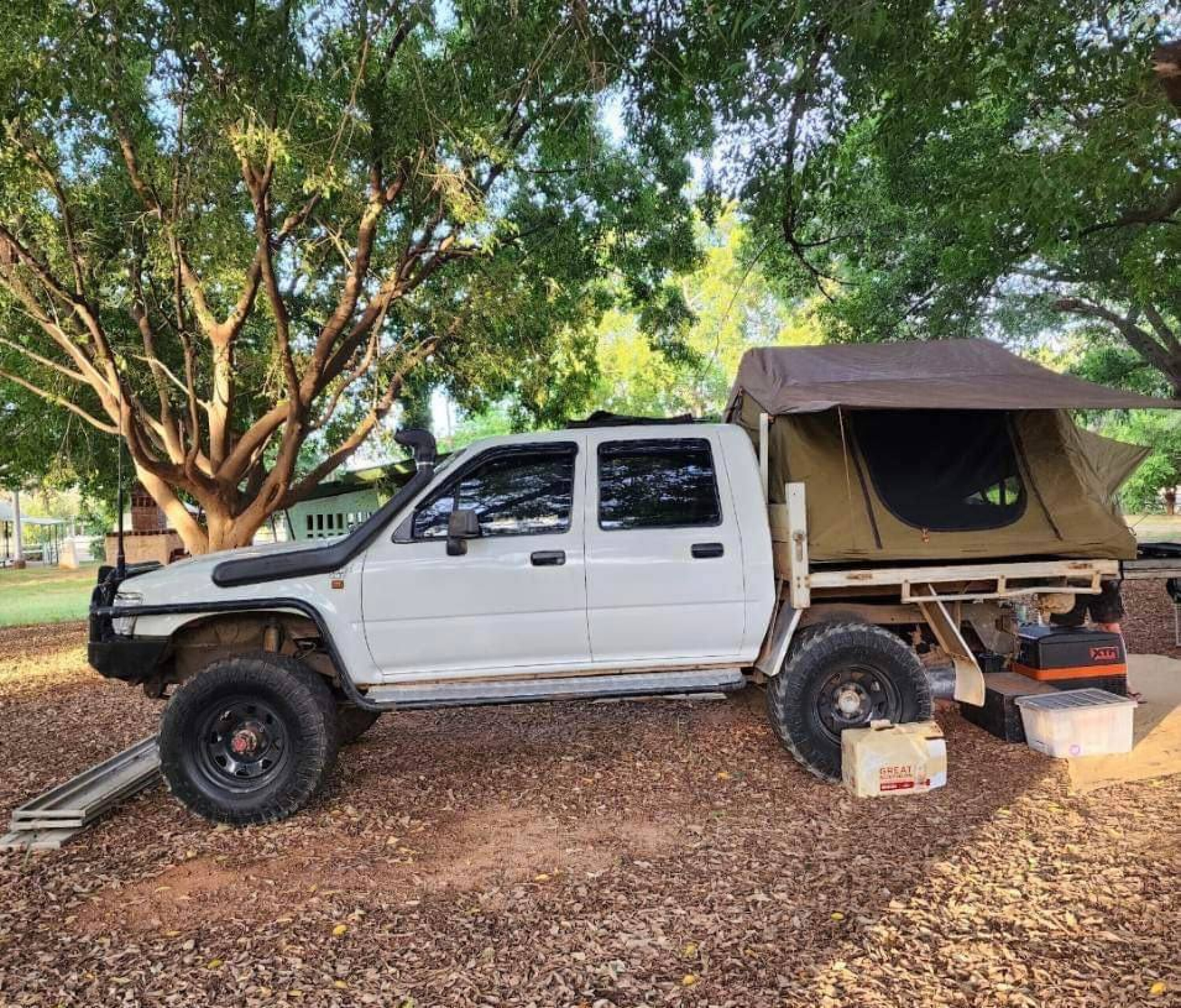
This is my 1991 2.8-litre dual-cab HiLux, and it’s my absolute pride and joy. I bought it stock as a rock and have owned her for nearly a year. In that time I’ve put in more than 50,000km of camping, hunting, fishing and 4×4 trails. It’s also my everyday vehicle and it never fails me.
The engine was rebuilt last year and she’s had small upgrades including a two-inch lift; new head unit; UHF; extended brake lines; a snorkel; and speakers. Other than that, she’s all original. I’d like to keep her as simple as possible, as these HiLuxes are very capable and reliable off-road as is. Maybe just some tidy-ups, a new tray and stainless snorkel, but I have to appreciate the style and build of these rigs – why would you want to change it – Jessica
2010 Mitsubishi Challenger
1
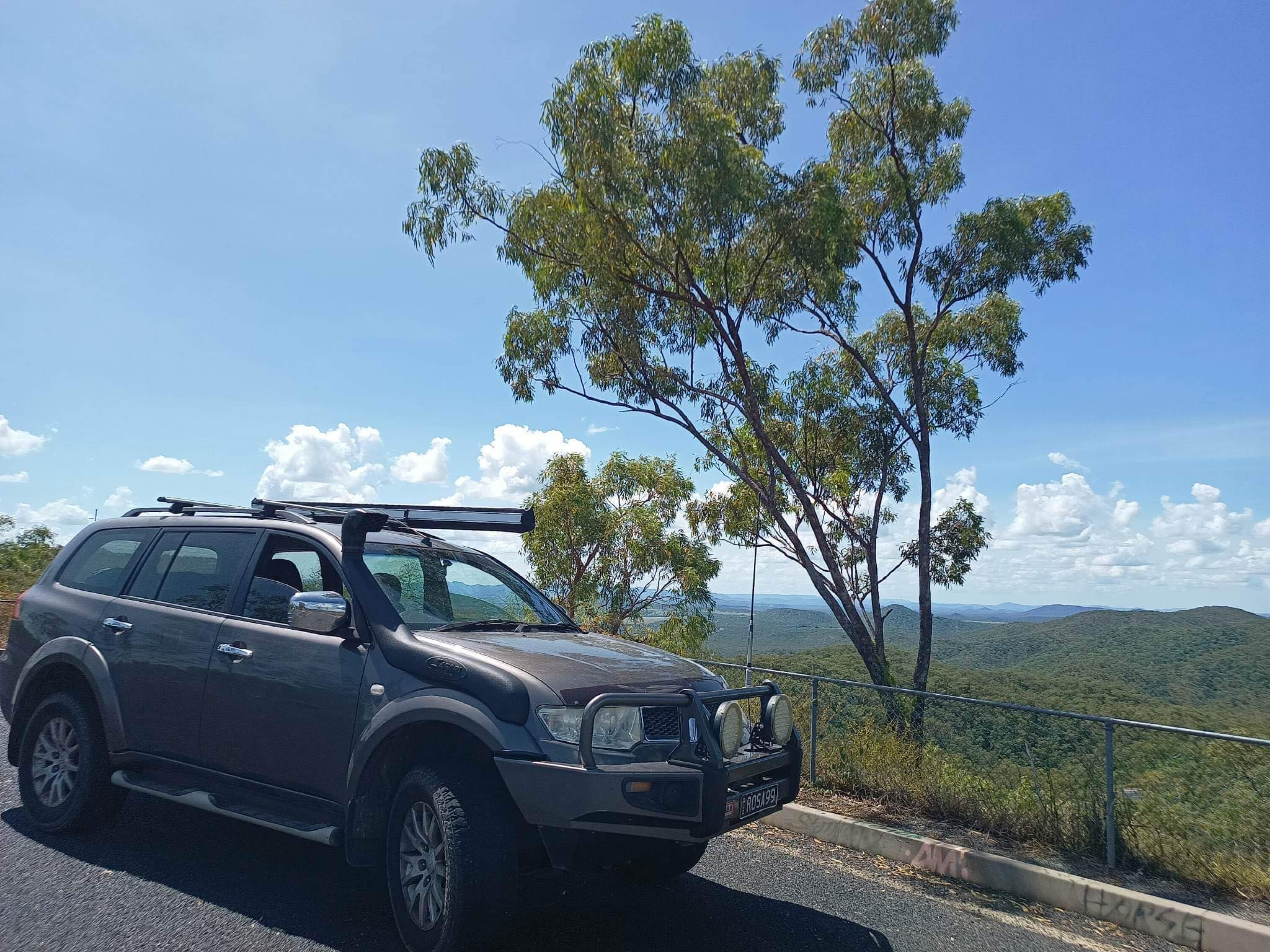
I bought my first four-wheel drive, a 2010 Mitsubishi Challenger, this time last year. I have only done one trip where 4WD was needed, and I was a passenger. No gear and no idea, that’s how I saw myself. My immediate family members never had a car while I was growing up, but I always wanted a classy and tough car. I couldn’t go with the sporty, flashy, zippy cars, as I always wanted the big and beastly-looking cars.
“Mitsi” is my first one, and although she’s been complimented by lots of experienced 4WDers, I haven’t tested her in deep waters yet. She came with all I needed, so it was love at first sight: ARB bullbar and spotlights; snorkel; extra suspension; bumper plates; tow bar; DP chip; dual battery; UHF radio; awning; and fitting tent.
I have added Titan twin drawers, and will build a platform so I can sleep inside and have more storage for off-grid when travelling alone. I prefer sand and beach to mud and rocks, but I want to experience it all with her – Vivi
2017 Holden Colorado LS
1
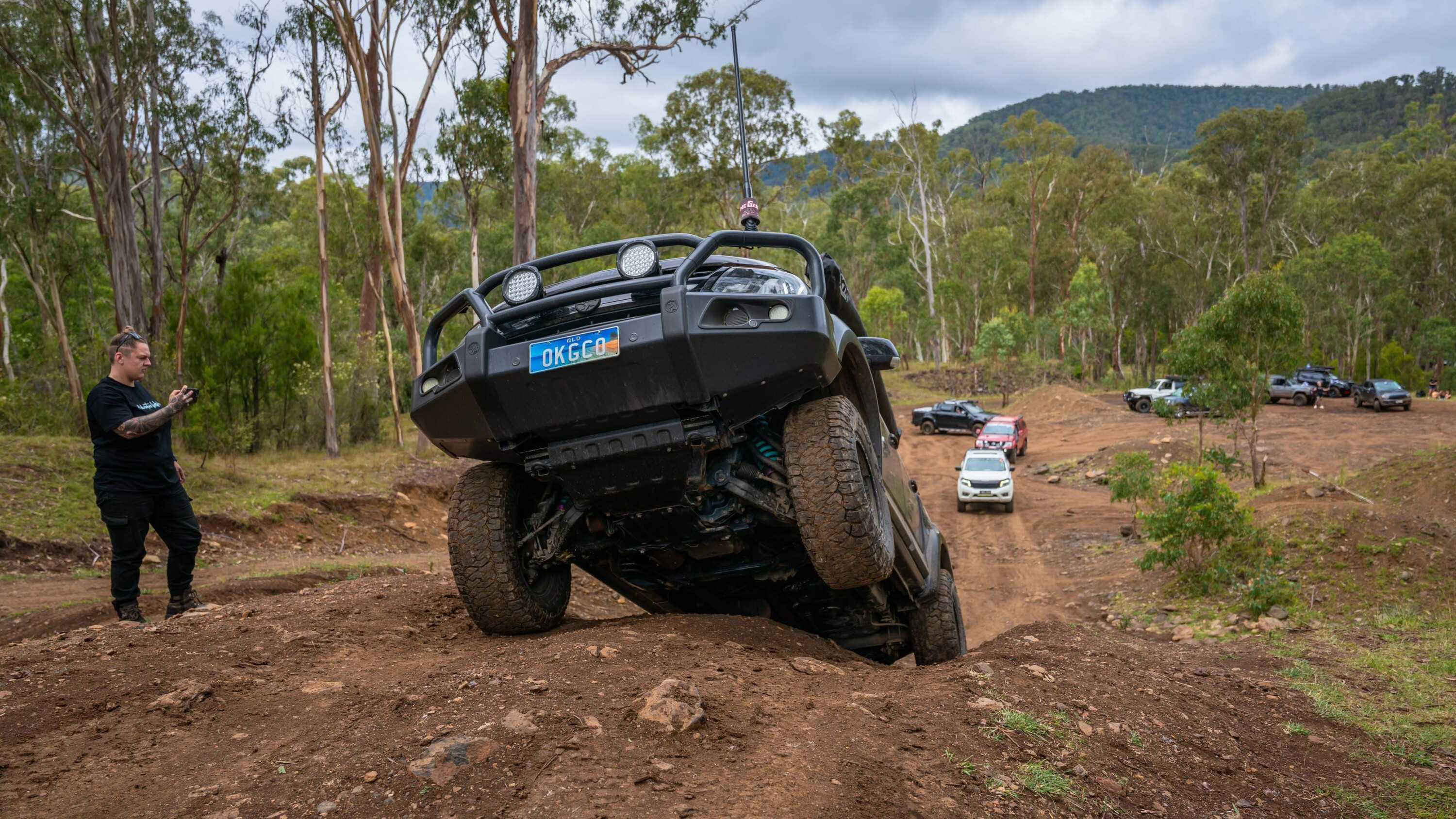
It has 285 Maxxis tyres, 2-4-inch adjustable lift, In-House Fabrication snorkel, and a dual-battery set-up in the tub. This 4×4 has been to some beautiful places including Bribie, Double Island, Fraser, Mount Mee, Glasshouse Mountains and Crescent Heads.
The ultimate goal is to take this 4×4 to Cape York and the Victorian High Country, but in order to get there I would like a new bullbar, winch, rock sliders and towing mirrors. One other goal I want for the 4×4 is to get a jetski – Katelyn
1998 Nissan Y61 Patrol 2.8
1
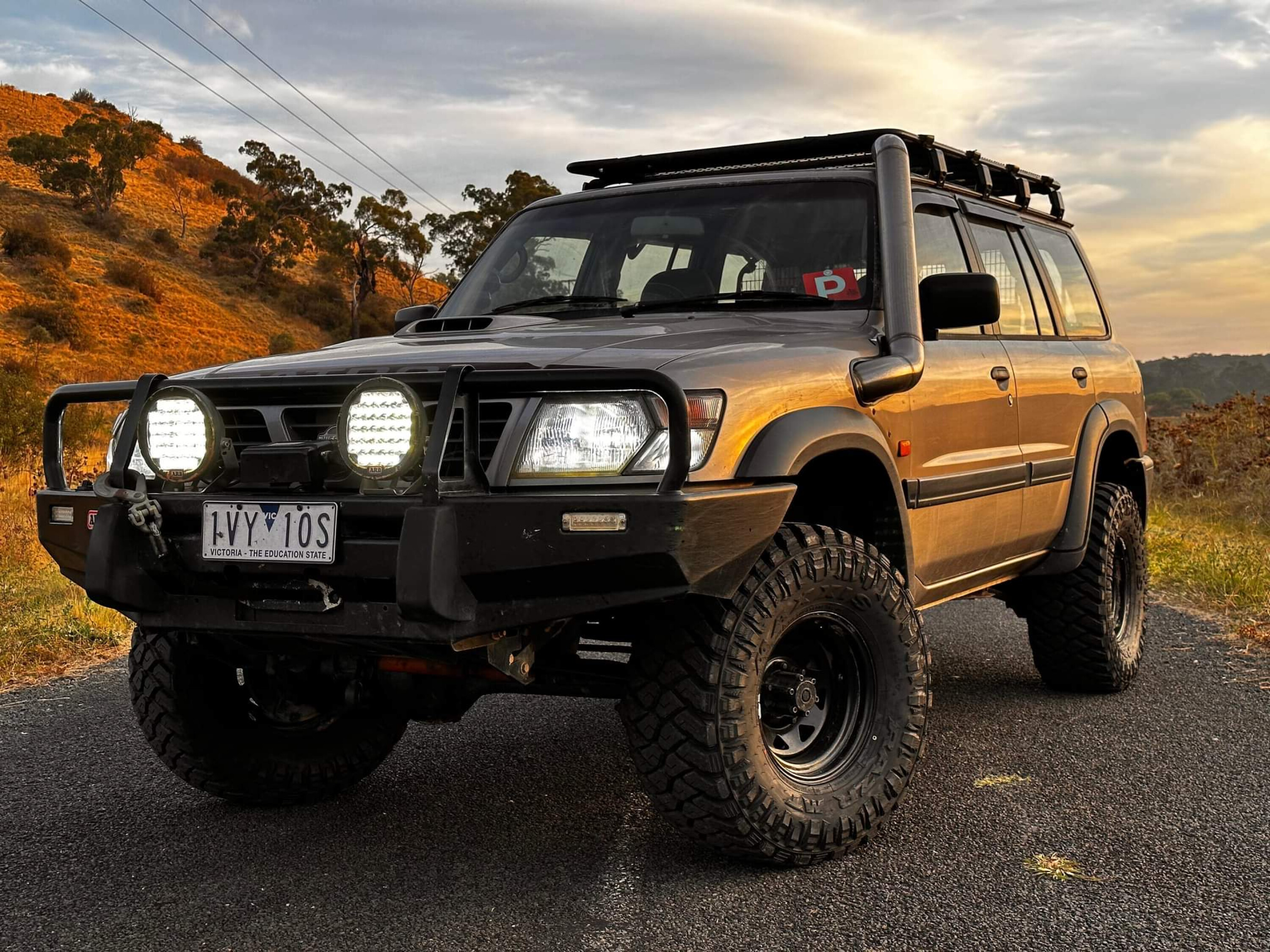
I’ve added a four-inch lift with 16psi turbo tuning – she may be slow, but I’ve yet to be beaten out in the bush. I’ve gone on many adventures with the Rolly Patrolly.
My most memorable experience was when a mate and I got lost in the bush. We followed a track that ran alongside a river, hoping we could cross it. The river then became fast rapids and we didn’t want to risk it. We continued down the track until we came across a very sketchy descent. This was clearly a climb, but we had to go down it. My mate went first and nearly rolled it, and so did I. Right after the descent we stumbled across a 30-40m-long bog hole.
My mate found a way around in his little Hilux, but I couldn’t. I had to go through it. We did the stick of truth and it didn’t seem that deep – I went for it and just sank straight down to the bull bar. Ended up being stuck for four hours, but no damage – Thomas Sainty
2022 Suzuki JB74 Jimny
1
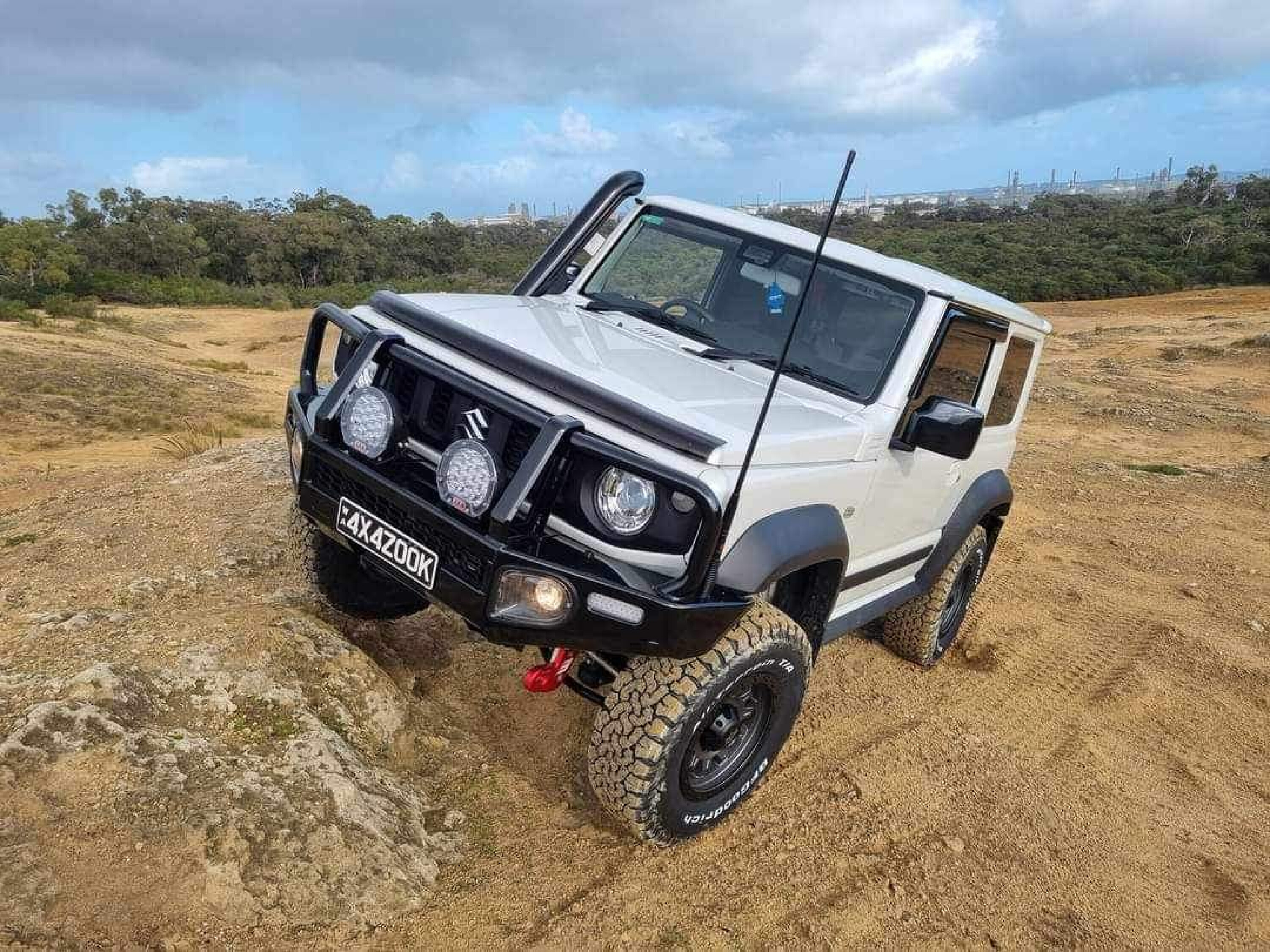
It’s still fairly new, and most of these mods – Tough Dog lift, 30-inch BFG A/Ts, transfer gears, ARB bar, four-inch snorkel and GME UHF – were done before it had done 500km, and then we set off on a 3500km two-week trip to Esperance and back along the south-west coast, all trouble-free.
Since then I’ve only done some local tracks, but I’m planning trips to Exmouth later in the year and the Victorian High Country next year. I have been building Zooks for 23 years now – Joe Lambeck
Toyota LandCruiser FJ40
1
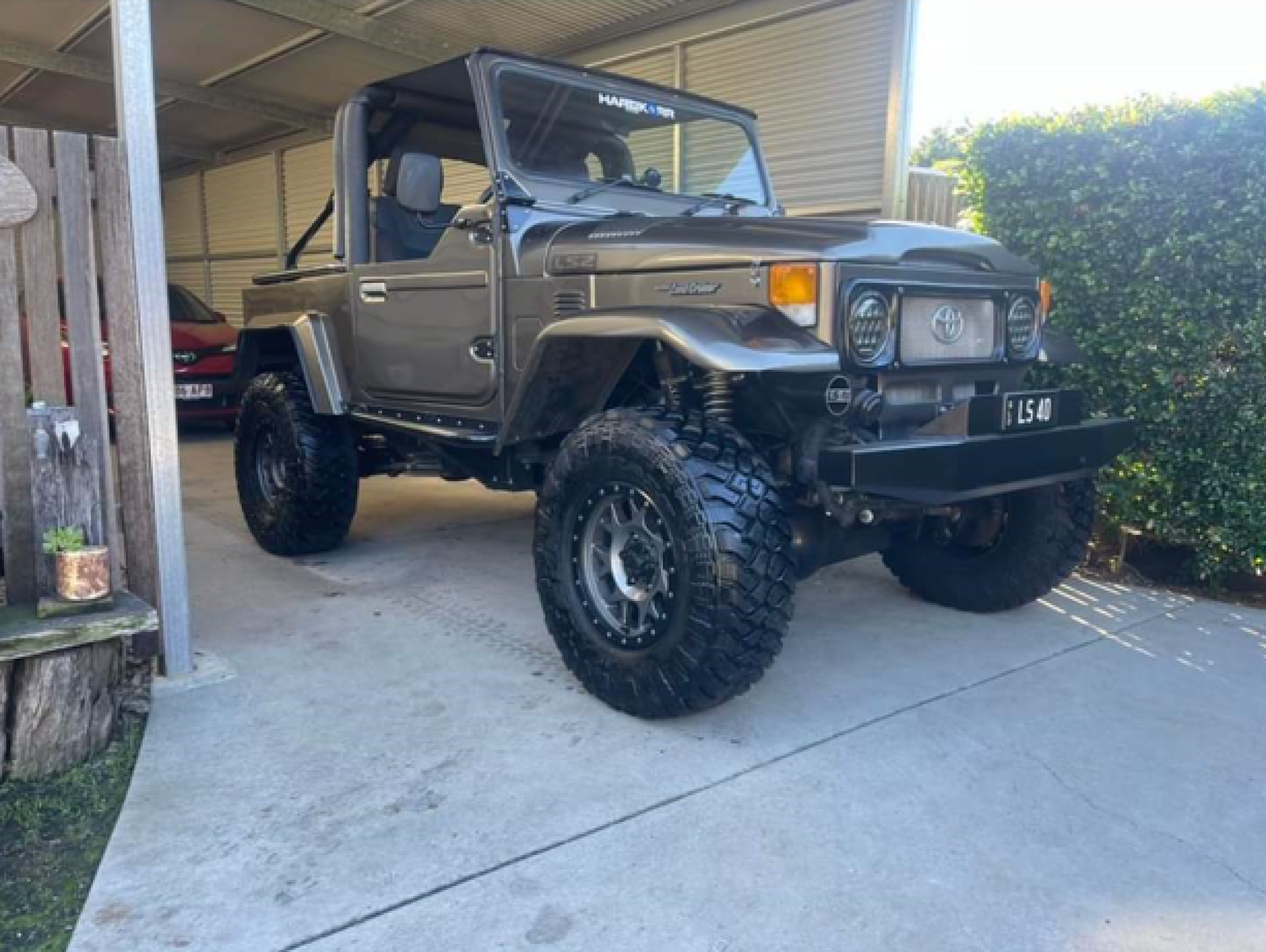
I have built this FJ40 over the years. It has an LS2 (6L) running a 6L80 transmission on a Nissan patrol chassis, with Fox coil-over suspension and an FJ40 body, which has been stretched 150mm to fit 3/9 Nissan Patrol differential and transfer – Aaron Wood
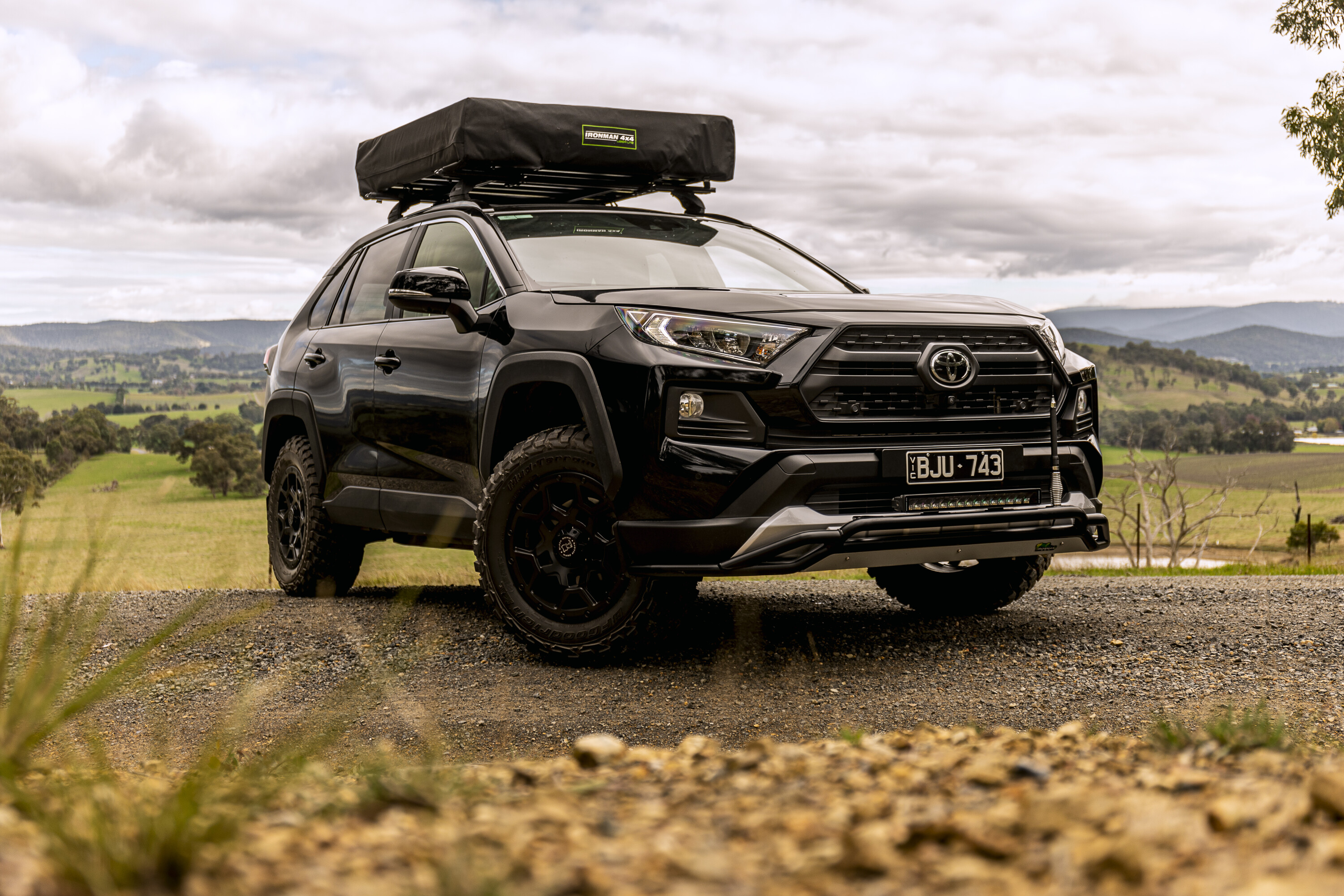
What’s this, a RAV4 in 4X4 Australia magazine? Hold up, that’s not a real 4×4!
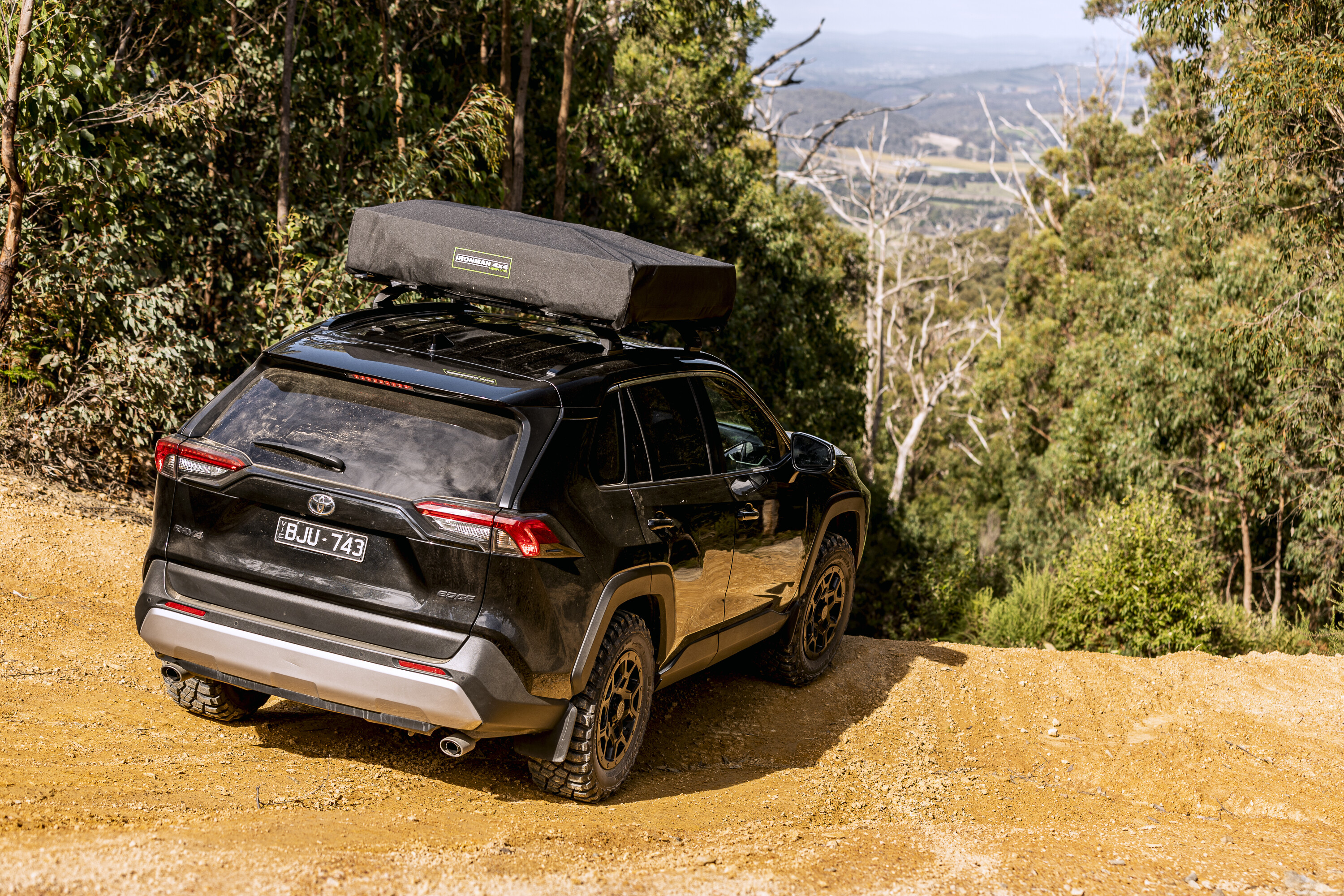
True, the RAV4 falls directly into the realm of light-duty SUV and is not the usual fare for these pages but this RAV benefits from a few touring mods to help it traverse some rougher tracks.
I’m old enough to remember the early 2000s when compact light-duty SUVs like the RAV4, Subaru Forester and the Nissan X-Trail were turning the new car buying world on to SUVs, and the big 4×4 accessories brands were falling over themselves to create products for them.
However, they soon realised that most buyers of SUVs are not four-wheel drivers, and not the sort of folks to accessories their vehicles for adventures… and the SUV products soon disappeared from their respective catalogues.
The growth in popularity of so-called ‘overlanding’ in the USA has seen a resurgence of kitted-up soft-roaders where the RAV4, Subaru Crosstrek and Hyundai Kona are popular candidates for adventure mods. This has seen the launch of a swag of new gear and accessories for these vehicles to help their owners explore further than the Walmart carpark.
While there’s been a small groundswell for similar builds here in Australia it’s nothing like that in the USA, but with Australian 4×4 accessories manufacturers producing products for the American market, it was inevitable that the gear would come here to suit local SUVs.
One such manufacturer doing big things in the USA is Ironman 4×4 and along with its gear for proper 4x4s, it has developed kit to suit vehicles like the RAV4. Much of that product development happens right here in Australia, so the RAV4 products to fit our local models are now available.
1
We saw that Ironman had a kitted up a RAV4 here and we borrowed it to see what all the excitement was about.
While we won’t be seeing products like bullbars, rock sliders and massive lifts fitted to RAVs Down Under , the Ironman kit does centre on the same key areas of protection equipment and suspension, as well as storage systems.
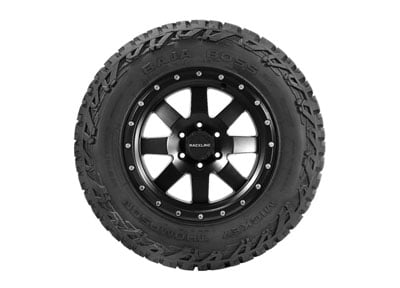
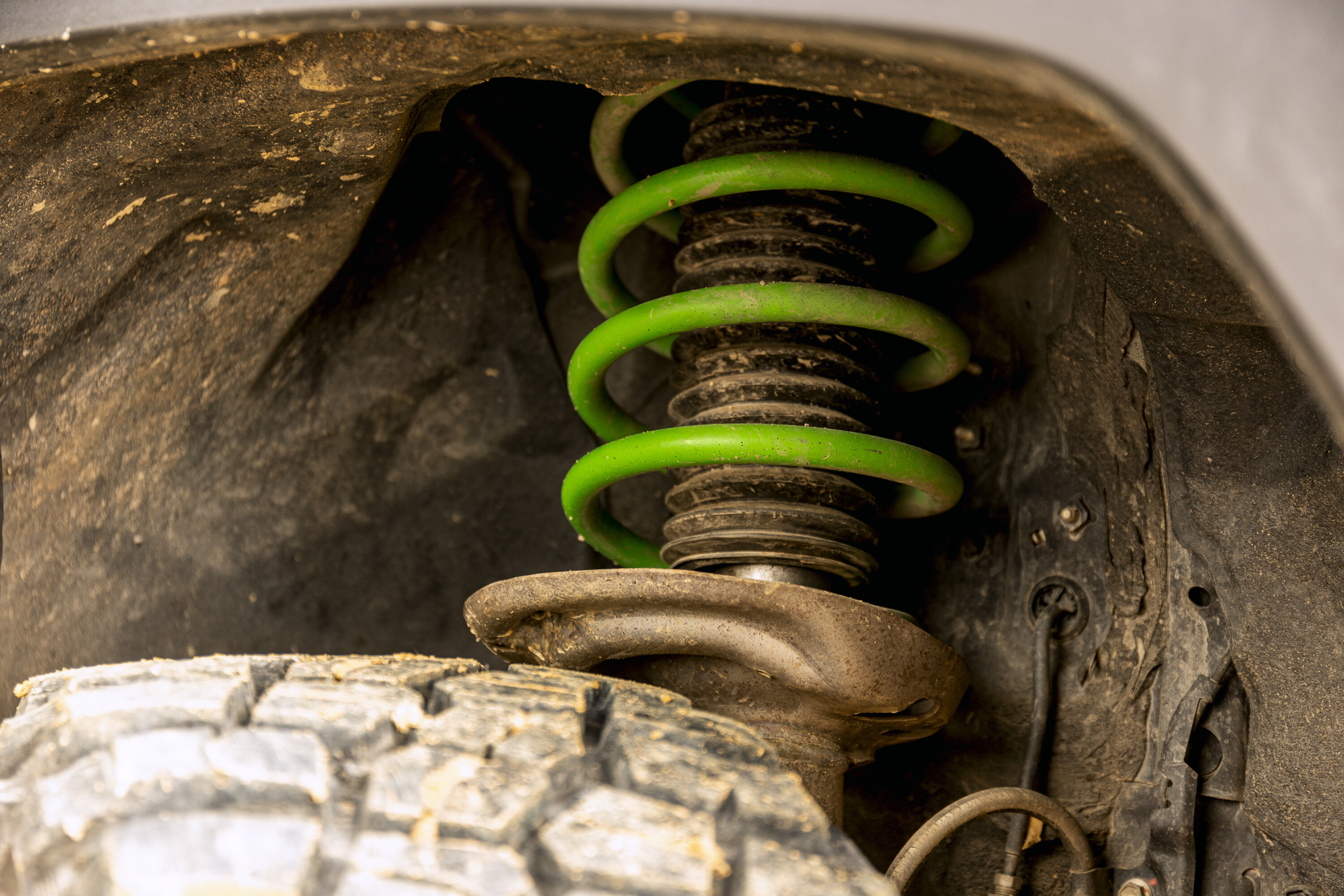
Ironman calls its suspension for the RAV4 ATS, and it uses the brand’s Nitro Gas shock absorbers matched to heavy duty coil springs to offer up to 50mm of increased ground clearance. Add some bigger tyres like the 255/65R17 BFGoodrich muddies fitted to this vehicle and the RAV4 is getting some usable clearance, while the aggressive tyres also help with off-road traction.
1
The thicker coil springs also help the little Toyota carry weight like the rooftop tent as fitted to this example, as well as other adventure equipment.
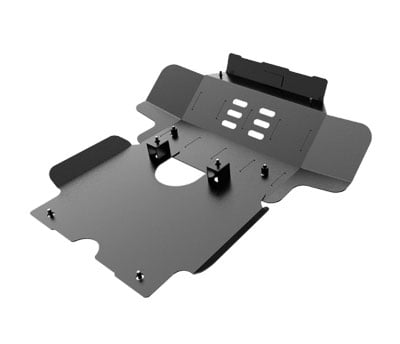
Even with the added ride height afforded by the ATS suspension, the RAV still has a poor – by off road standards – approach angle, so Ironman developed some frontal projection in the form of the ATS-X bumper guard. Protecting the front edge of the vulnerable front bumper, the tubular steel ATS-X guard mates to a 2mm steel skid plate to protect the engine sump from clashes with the track.
The ATS-X bumper also provides a place to mount UHF antennas and auxiliary lighting, which on this RAV is an Ironman LED light bar.
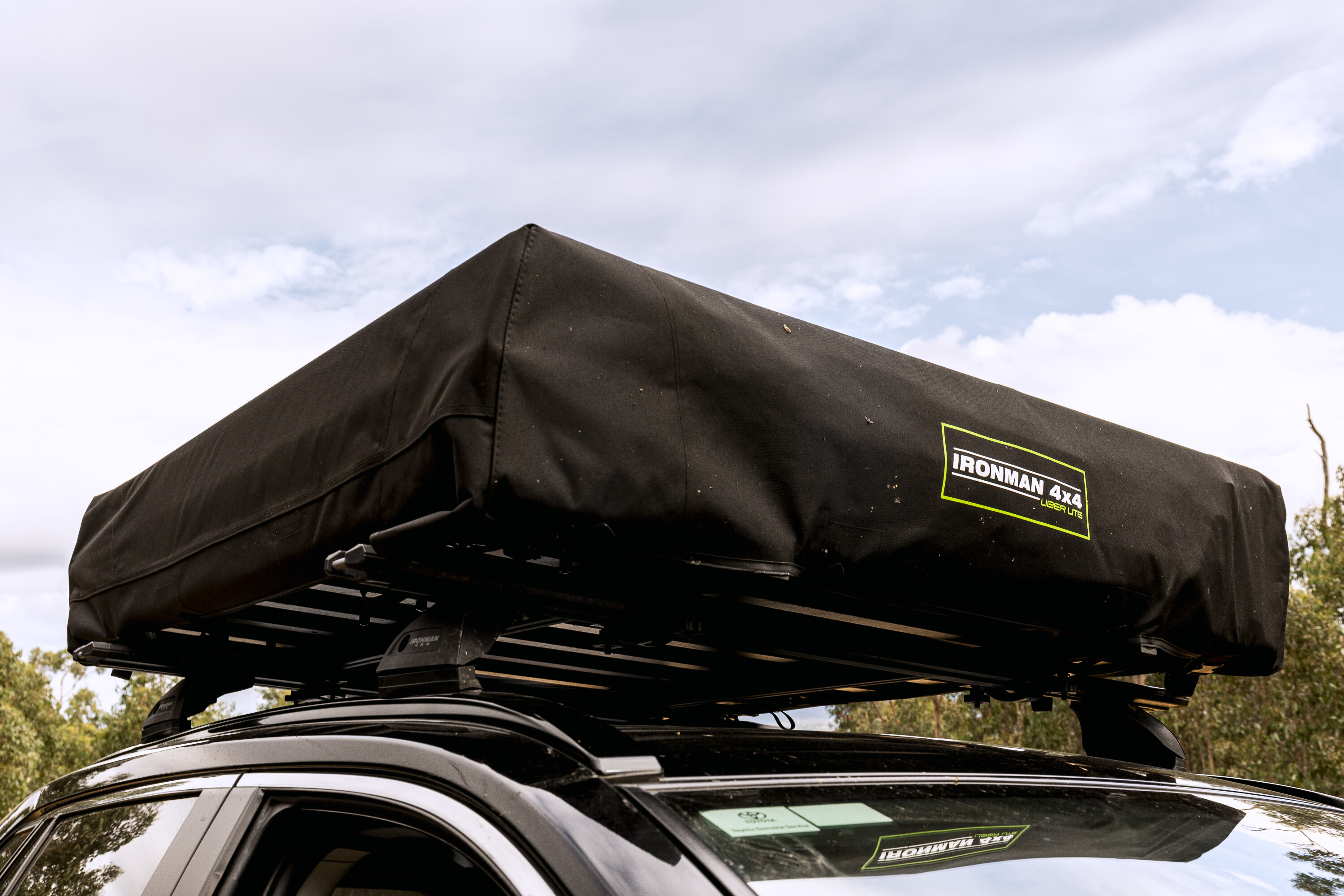
Compact SUVs are just that, so they don’t have a lot of space inside for carrying gear, so Ironman developed a set of its Atlas roof bars to suit the RAV4, allowing a host of roof-storage options for trays, racks, sporting accessories or even a rooftop tent as fitted on this rig.
On and off the road
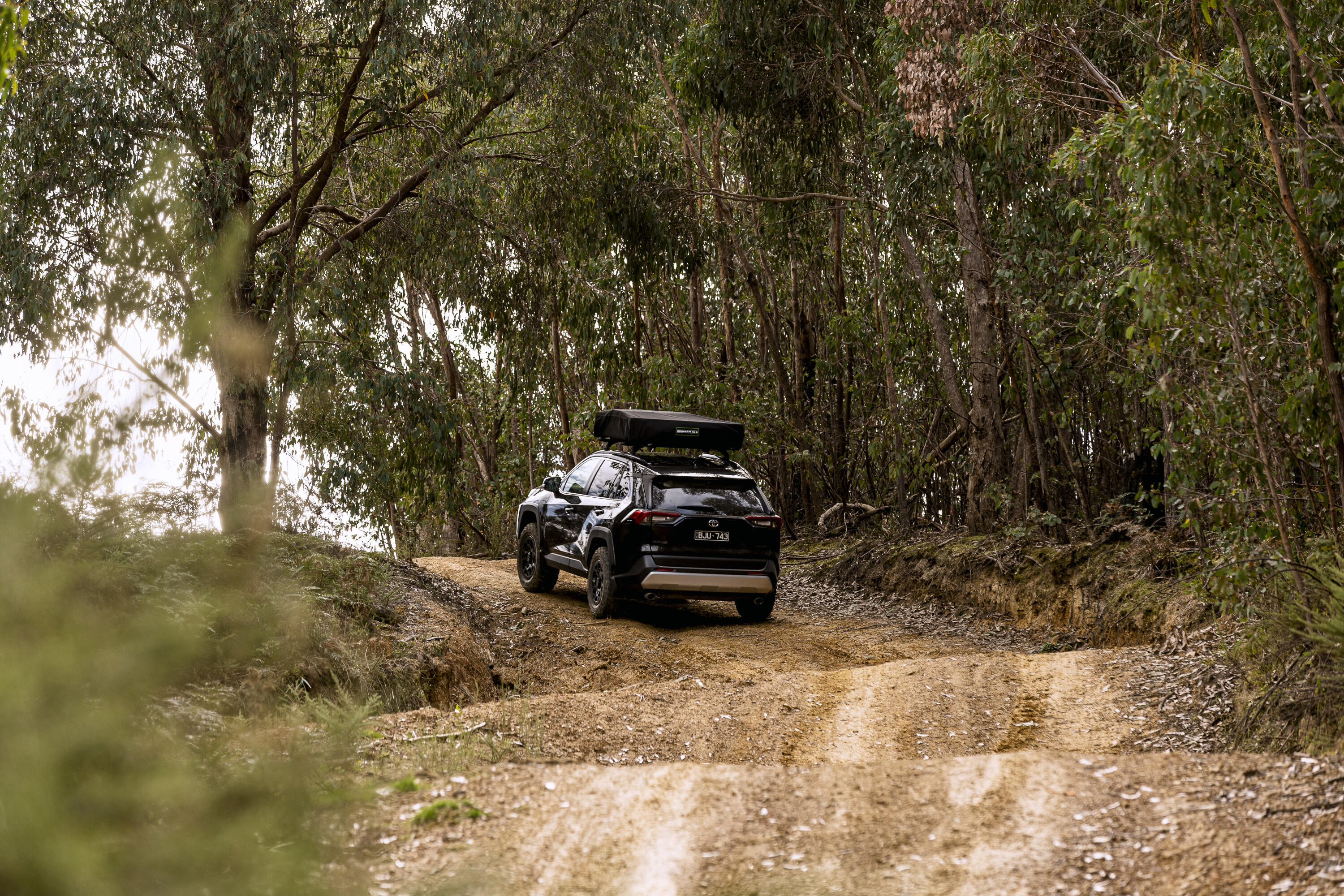
We’ve gotta say that the little RAV4 Edge looks pretty tough with the Ironman kit and muddies fitted to it, so we were keen to see how it would perform on and off road.
Modern electronic traction control (ETC) systems are pretty impressive these days and the ETC systems on proper Toyota 4x4s like the LandCruiser and Hilux are some of the sharpest acting and best in the business, so we hoped this technology transferred on to the SUV range.
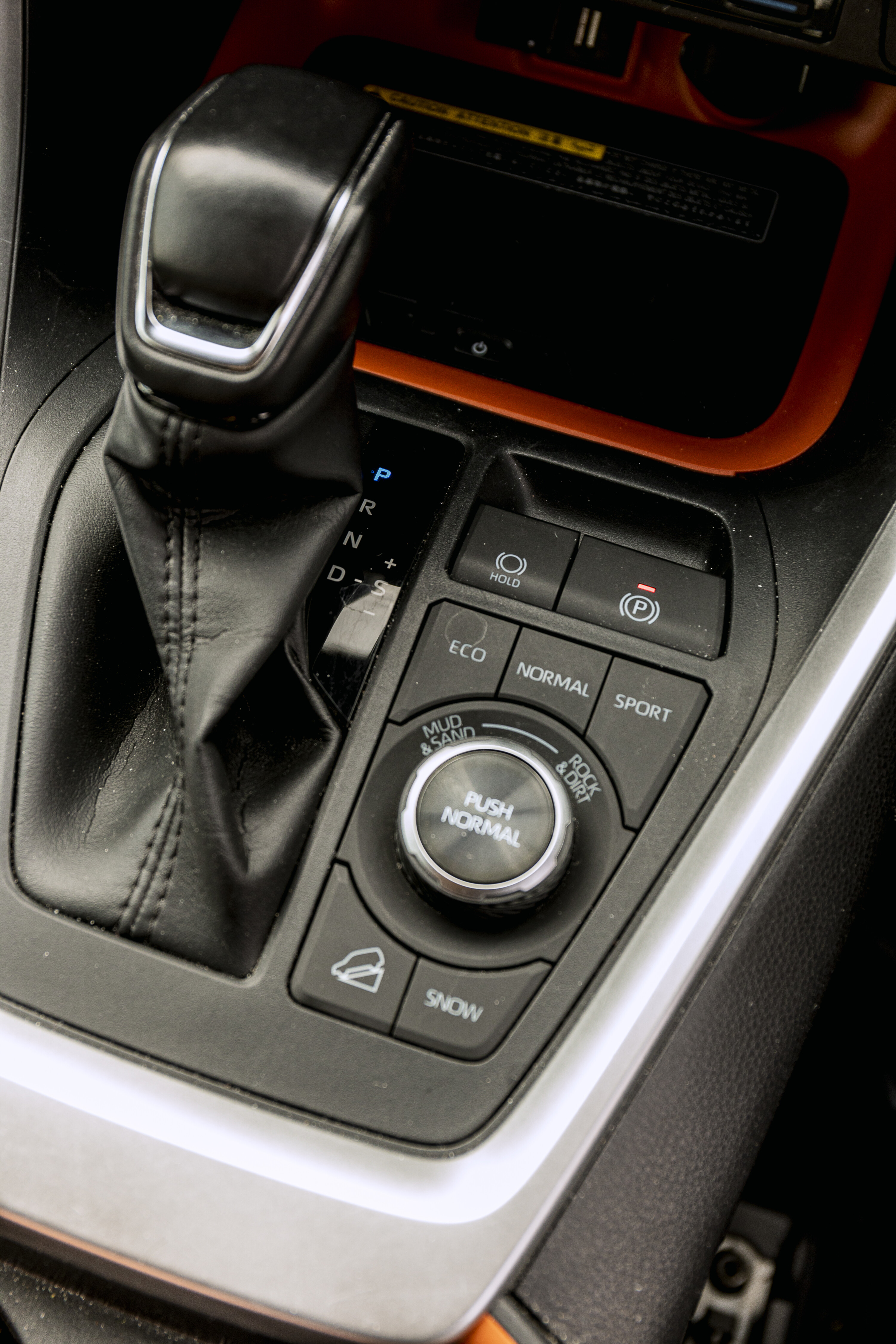
The RAV4 Edge even has a multi-terrain mode dial with settings for mud and sand, rock and dirt, and snow, so we hoped that would help with the absence of low-range gearing and long wheel travel.
1
First impressions of the Ironman RAV on the roads heading out of town revealed that you’d never want to fit aggressive mud terrain tyres to an SUV like this. The way the unibody design of SUVs transfers road noise through to the cabin means that the muddies make their presence known at all road speeds, and ruin what is normally a nice ride in the RAV4. A less-aggressive all terrain would be a better choice of tyre for this vehicle and its abilities.
The ATS suspension feels firm and well controlled over a range of surfaces including highway, gravel and secondary roads, and there was no discernable body roll due to the weight of the tent up on the roof racks.
The off-highway part of our drive took in a popular local gravel road that included some steep climbs and one particular rut that we thought should be within the RAV’s capabilities. Maybe we had too much confidence in the vehicle, as when trying to climb the rut, as soon as either of the front tyres were unweighted from the track, they simply spun with the ETC seemingly doing nothing to transmit drive to the tyres that could use it.
We tried the various modes in the terrain selector, and different lines up the rut, but there was no way the little RAV was going up there and we didn’t want to push it too hard and risk any damage.
This was disappointing as we expected more of the ETC, but it seems the soft-roaders don’t get the same calibration as their more capable stablemates.
After detouring around the rutted track we still managed some steep climbs on the hard-packed sandy tracks, some smaller ruts and steep descents where the hill descent control worked great in the absence of low-range reduction.
Just clearing the erosion mounds on the steep hills was only possible for the RAV due to the extra ground clearance afforded by the Ironman ATS suspension; a standard RAV would have bellied out. The BFG muddies helped on these tracks too, contributing to the feeling that without this kit fitted to it, the RAV4 would have never ventured up these tracks.
Powertrain and equipment
The Edge is the highest specification in the current RAV4 range and makes for a nice little family car. It’s powered by a naturally-aspirated 2.5-litre petrol engine that makes a claimed 152kW at 6600rpm and 243Nm from 4000-5000rpm. It’s backed by an eight speed automatic transmission that combines to provide spritely on-road performance and plenty of climbing grunt.
The 2.5L RAV4 Edge has a 1500kg towing capacity, which is enough to haul a lightweight camper trailer.
Toyota claims that the mechanical AWD system fitted to the RAV4 is able to deliver a front/rear torque split of between 100 per cent to the front wheels and a 50:50 split across front and rear axles to suit the driving conditions, but our experience showed it to be inadequate, as once a front wheel lost even the slightest amount of traction, all drive was lost.
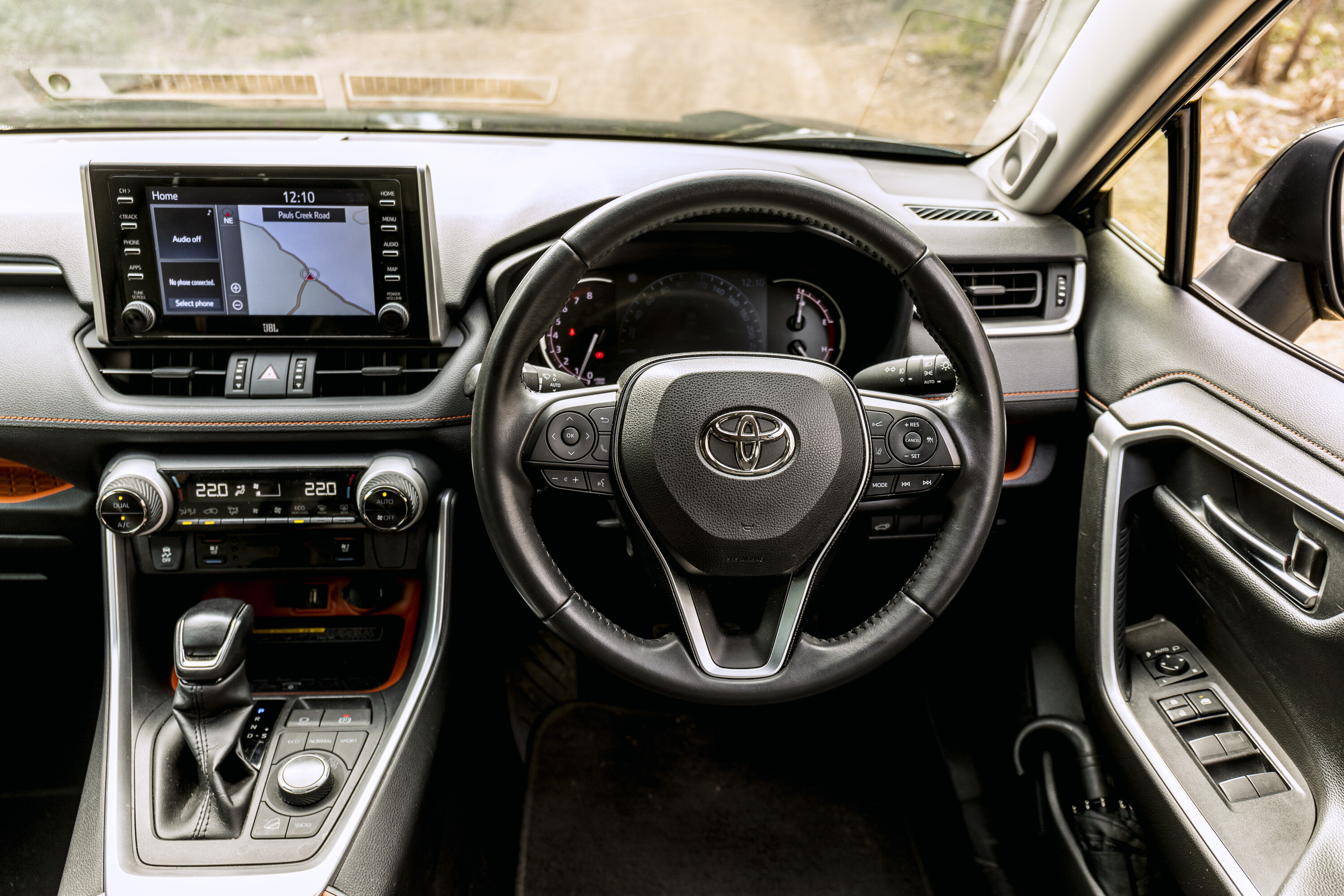
The Edge has a very well equipped interior with heated and ventilated leather-like seats, a great sounding JBL sound system and a spacious cabin for a vehicle of this size.
While we’d definitely run all terrain tyres in lieu of the muddies fitted to this example, the Ironman 4×4 accessories fitted to it certainly increased its usability once we left the sealed roads. We were able to take it up tracks that would have had a standard RAV4 scraping its front bumper and its underbelly, if it managed to get up at all, and we did it without causing any damage.
The roof racks afford users a host of options for carrying extra gear, camping or sporting equipment, further expanding the ability of the RAV4.
1
While soft-roaders like the RAV4 will never meets the requirements of those who need a proper 4×4 vehicle with more ground clearance, a dual-range transfer case and long wheel travel, there remain owners who will be content with a soft-roader and the added abilities and range of adventures that this Ironman gear can give them.
Australian drivers might not be running to outfit their soft-roaders with adventure kit, but this Ironman gear was developed with the US market in mind where there is a greater demand for it… and it’s nice to know it is available here for anyone who wants it.
The ATS suspension package provides a genuine two-inch/50mm lift in the front and rear of the vehicle.
This lift also allows an upgrade to slightly larger semi-offroad tyres that will enhance the SUV’s capabilities and comfort, improve traction and allow the user to reduce tyre pressures without increasing the risk of punctures.
The strength of the suspension is also improved as the shock absorbers are 20 per cent bigger, which makes them stronger and provides improved riding comfort. They also contain 55 per cent more oil for greater control and cooling efficiency.
The OD 38mm tubular powder-coated steel frame of the ATS X Bumper Guard wraps around the base of the bumper and is combined with a 2mm steel skid plate that runs under the SUV, protecting important engine components.
The ATS X Bumper Guard is also the perfect place to seamlessly mount an LED light bar and UHF aerial.
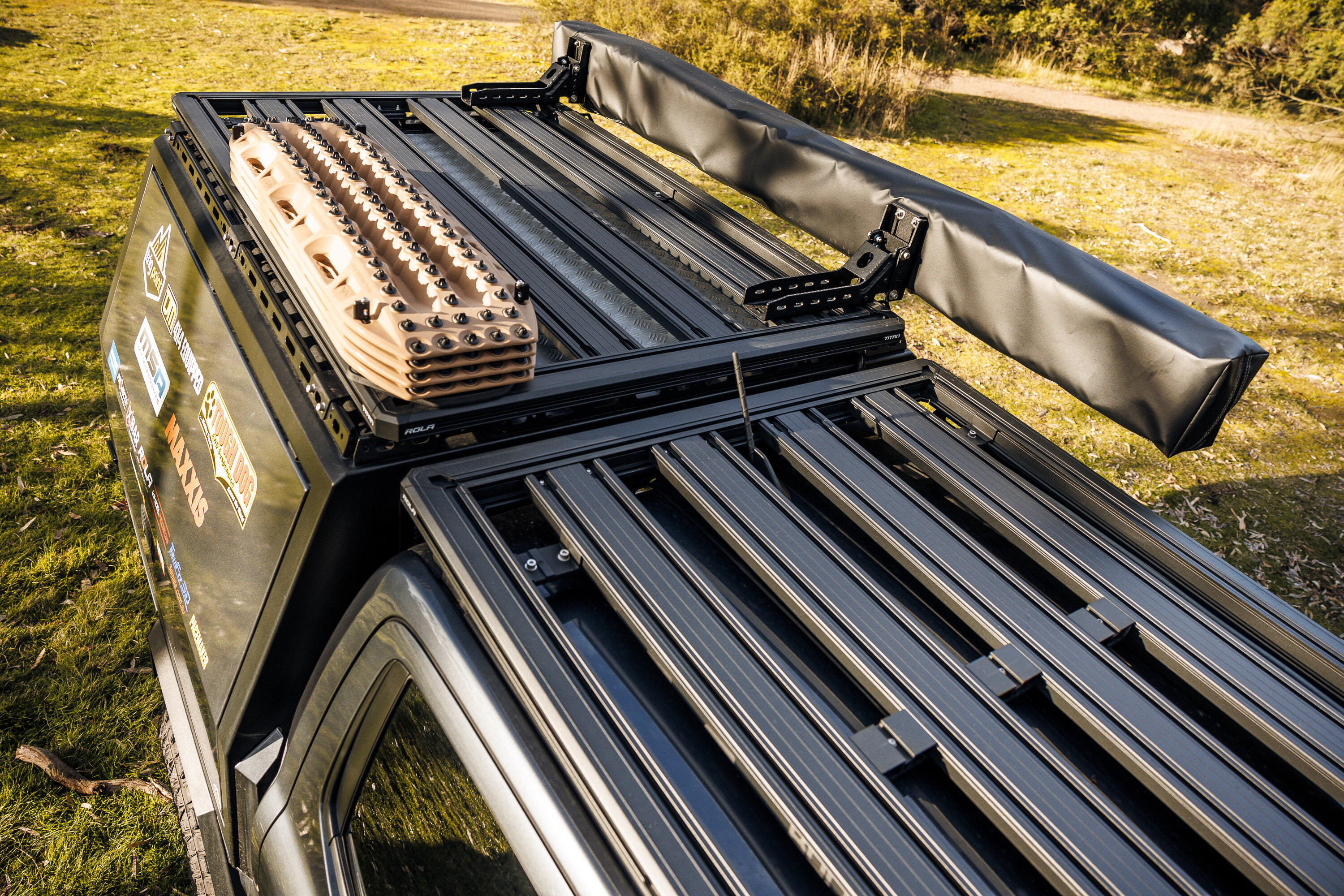
Mounting seamlessly to the existing roof rails, the crossbars are capable of carrying up to 75kg. Supported by a large range of accessories, the crossbar allows you to mount a variety of gear on your roof including bicycles, awnings, rooftop tents and recovery boards. – Glenn Marshall
With 14,000km on the clock and a highway trip to Sydney coming up we thought it time to put the Ranger in for its 12-month/15,000km service.
The dashboard was also telling us that the oil needed to be changed so best get it done before we hit the road. There were also a couple of non-urgent recalls we could attend to while it was there. The fixed-price service cost was $400 and there were no extras on top of that.
Most of the recalls centred around pre-collision cameras, blind spot indicators and sensor upgrades, which were all taken care of. One we hadn’t heard about was related to the standard LED headlights, which in some cases had water leaking into them and required sealing up.
1
We hadn’t found this problem on our example and the techs at Chadstone Ford said they weren’t leaking, but they still sealed them up to make sure that the problem wouldn’t surface in the future. All up it was a good experience for us from the dealer.
The Ranger remains a great highway touring vehicle. It is comfortable, easy to spend long hours driving and the Apple CarPlay keeps the tunes rolling, and shows the predicted ETA to our destination.
While the modifications and accessories we’ve fitted to the Ranger are all focused on improving all-road touring capabilities, they do nothing positive for highway use and this is something that anyone equipping a vehicle should consider.
The mud terrain tyres are great out on the High Country tracks but add noise and increase fuel consumption on the highway. The same can be said for the roof racks, and while they are not noticeably noisy, they do create a minor issue when using the hands-free phone, as the microphone is mounted in the roof lining where it is affected by the wind noise.
This was brought to our attention the first time we used the phone on the highway after fitting the racks, and it was something we’ve seen other Ranger owners comment on online. A person on the other end of the call reported that the noise dropped off when speeds were reduced when coming into town or traffic, which obviously related to the wind noise from above.
We’ve recently added the Boss Aluminium awning up on the Rola Racks and it doesn’t seem to have changed the sound emanating from up there.
1
With all this extra equipment adding weight and creating wind resistance, the Ranger likes a drink on the highway. With the cruise control set for the speed limit up the Hume, and after resetting the trip computer at the start of the trip, it showed an average of 14L/100km heading north, while the return leg showed 13.7L/100km – maybe there was a northerly wind on the way home.
The most annoying part of that is getting less than 600km from a tank before having to stop and refill on the trip. This Ranger certainly could benefit from a long range tank.
Aside from this gripe we’re still loving the Ranger and we have a few more things still to be fitted.
In a world of cheap imports and copied products it’s great to find a quality Australian-made awning that delivers on its promise.
Boss Aluminium is a Melbourne-based company that earned its stripes building quality ute trays and canopies, and it has also built some amazing 4×4 and 6×6 rigs over the years.
In recent times Boss has expanded its product range and its production facilities to include some of the products that touring four-wheel drivers bolt to their canopies, namely rooftop tents and awnings.
1
As proud exponents of Australian-made products, Boss sought out the best Australian-made canvas for these products and had them made locally to suit its requirements. As the popularity of the product range grew, Boss’s boss man Dave Whitehead made the call to bring the canvas work in-house to BA’s new factory in Melbourne’s eastern suburbs.
Boss still uses Australian-made 304gsm dynaproofed canvas, which it now purchases in rolls, but all the cutting, machining, stitching and fitting is done in-house.
Bringing this process in-house has allowed Boss to expand its line of canvas products and it now sells a range of storage bags as well as RTTs and awnings.
After being impressed with the first Boss Aluminium freestanding awning we saw, when we heard the company had developed a Mk2 evolution we wanted one for our Ranger.
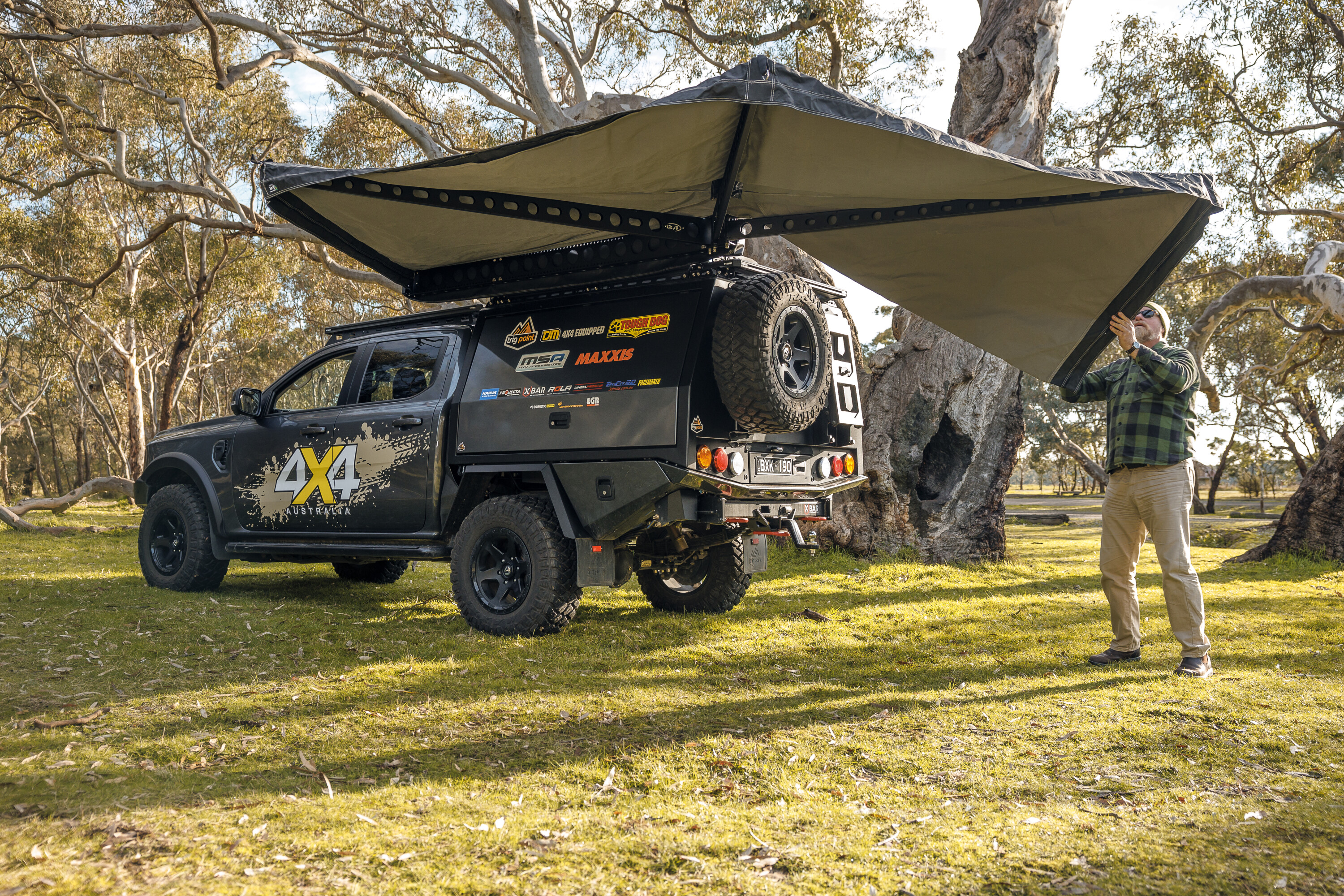
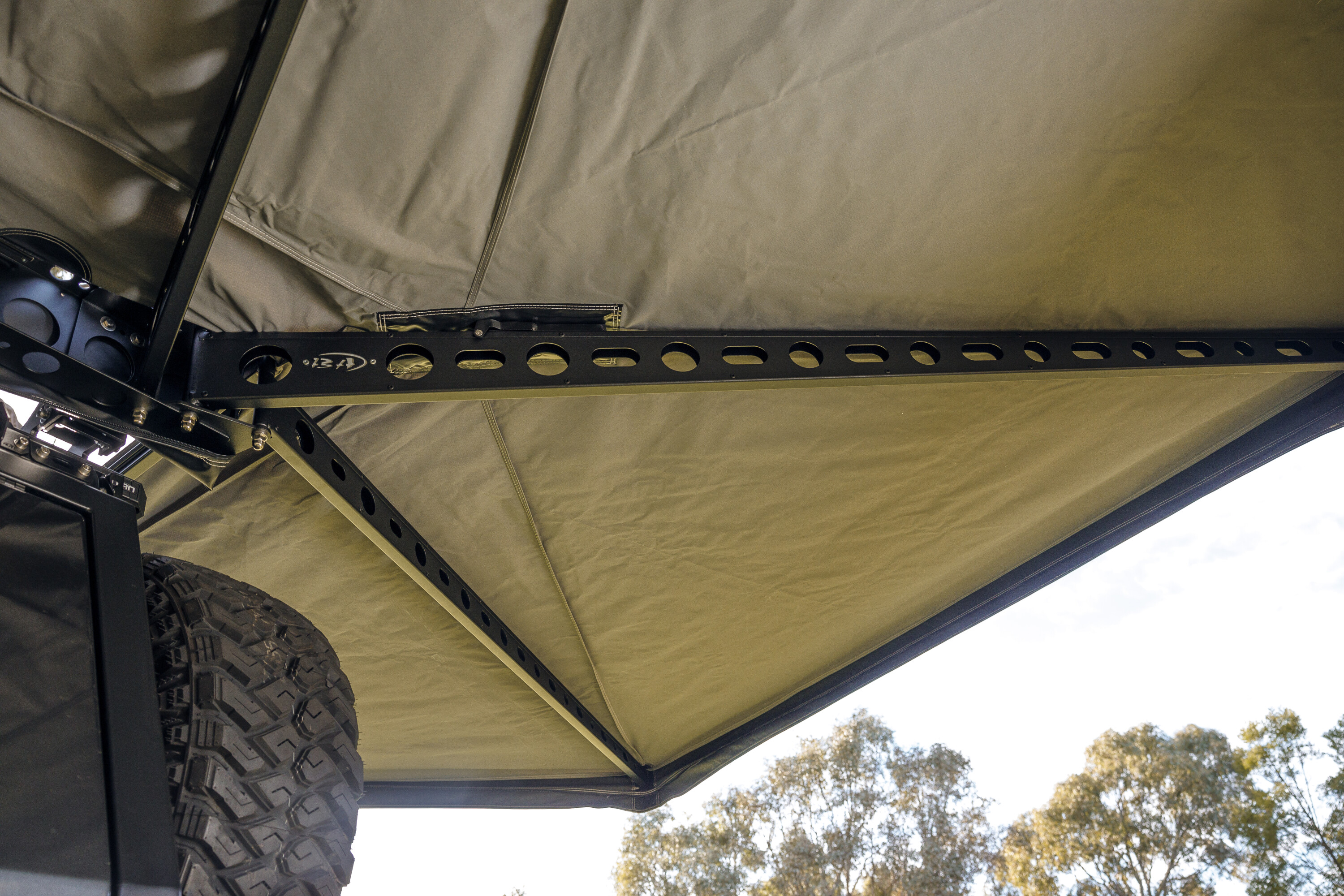
As the name suggests, the Boss awning is freestanding, which means it doesn’t require any poles, ropes or additional supports when it’s opened out. The key to this is the trussed aluminium chassis arms that the canvas is attached to.
They are solidly built to be able to withstand wind gusts and heavy rain without any additional support. There are metal loops at the end of the arms that could be used to tie them down in extreme wind conditions but Dave tells us they shouldn’t be needed for regular use.
The canvas has reinforced sections where it attaches to the arms to ensure it won’t tear away in extreme wind conditions, and there’s a strip of heavy duty PVC where the tensioning arm props up against the canvas to prevent wear at that point.
1
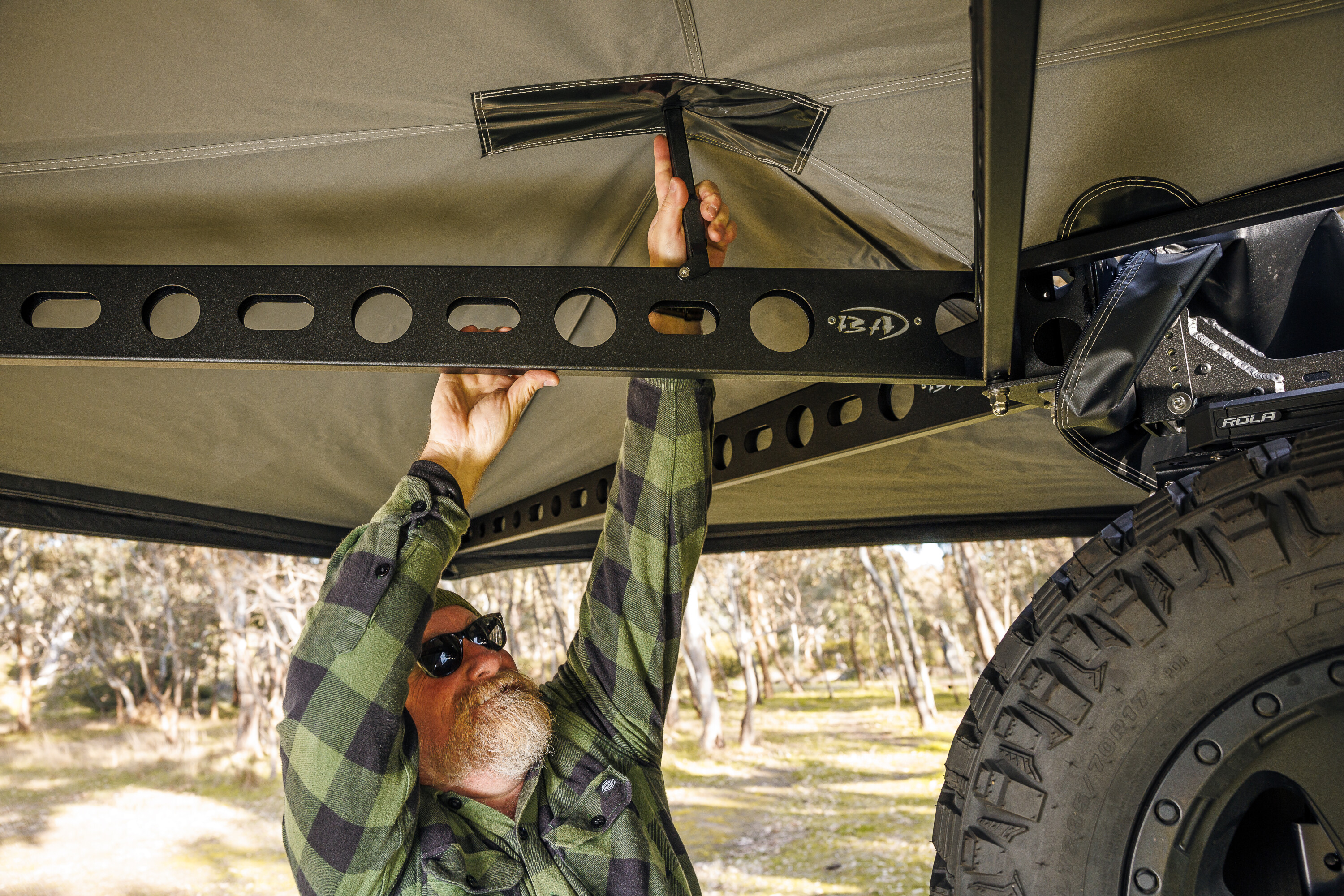
The lightweight aluminium arms pivot on a tri-axis hinge, again designed and manufactured in house, using stainless steel hardware and machined bushes. This hinge allows for the easy opening of the awning which, once released from the PVC storage bag, is pretty-much a one-handed operation. Walk it out around the back of your vehicle, secure the single tether point that keeps it open, pop the little arm up that peaks the canvas to ensure water runs off the top, and you’re set!
This has to be the easiest awning we’ve ever set up and thanks to the oversized storage bag with a heavy duty zipper, packing it away again is also very simple. Just reverse the set up procedure and fold it up in the big PVC bag where there’s space to spare, making it easy to get in and zip closed.
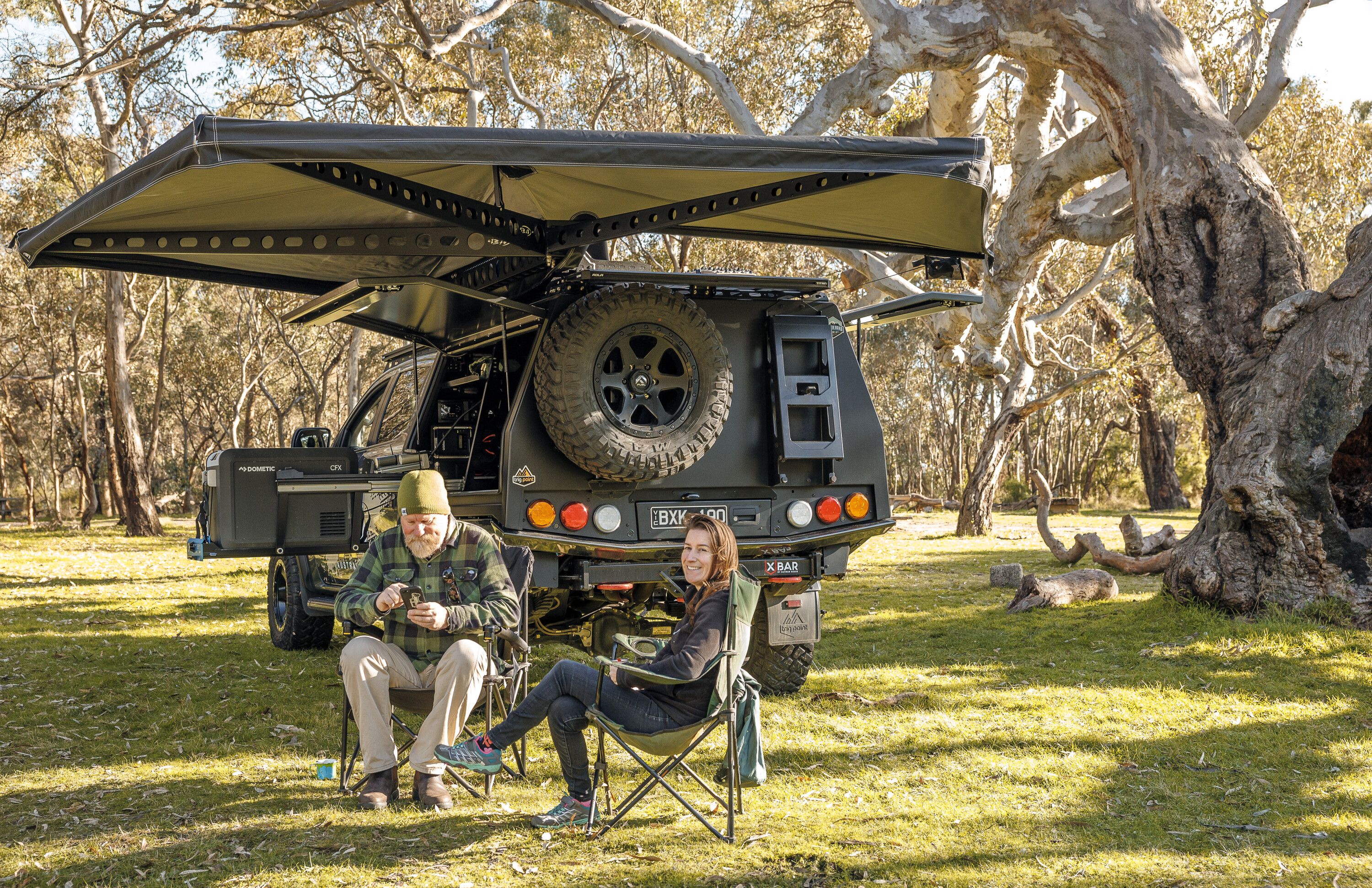
This ease of use has resulted in us using the awning more often than we would have with other awnings. It’s so quick and easy you can open it out for protection from the sun when you pull up for a quick roadside coffee or lunch, and it’s just as simple to pack away.
Updates to the Mk2 include the addition of wall panels to enclose the space within the awning. The four panels that make up the awning are all the same size so the wall panel can be zipped onto any or all of the individual sections, and zipped together to seal up the enclosure. The walls are made from the same Wax Converters Coolabah T/S 304gsm dynaproofed canvas as the roof, and they are available with or without a window in them. The zips are all heavy duty YKK items.
The walls give added protection against the wind and weather when you are camping, making the space within them perfect for rolling out your swags when the rain is falling.
The awning itself covers an area of 10sqm but the way the walls extend outwards results in a much bigger covered ground space depending on the height of your vehicle. The wall panels are available in individual sections or in kits of two or four panels, and they are supplies in a canvas storage bag.
1
The freestanding 270° awning, with or without the wall sections, provides ample coverage and protection from the elements whether you’re set up in camp or simply pulling up for a quick trackside stop. The quality of the design and manufacturing of the Boss Awning is second to none and anyone who appreciates quality will see the value in what Dave and his team have done here. This is a product that is built to last and one you’ll probably transfer from your current vehicle to the next one.
Despite its heavy duty design, the awning weighs just 24kg and is designed to fit most roof racks and canopies, or even on your camper trailer.
Boss Aluminium gives a lifetime warranty on their workmanship, with five years on the canvas itself.
For many years, 4×4 owners have been motivated by the desire to escape the hustle and bustle of city life.
However, these same owners do not always want to give up the comforts of home, and as a result, the amenities that they take with them on their travels have evolved over time.
Thanks to the constant advancement of modern technology, 12V fridges now allow travellers to spend more time in remote areas, pie ovens can cook food while they drive, and 240V induction hobs eliminate the need to carry gas bottles. And let’s not forget about those all-important coffee machines.
All of this technology requires a significant amount of power, which is provided by the ever-improving LiFePO4 battery industry.
1
Designed to work
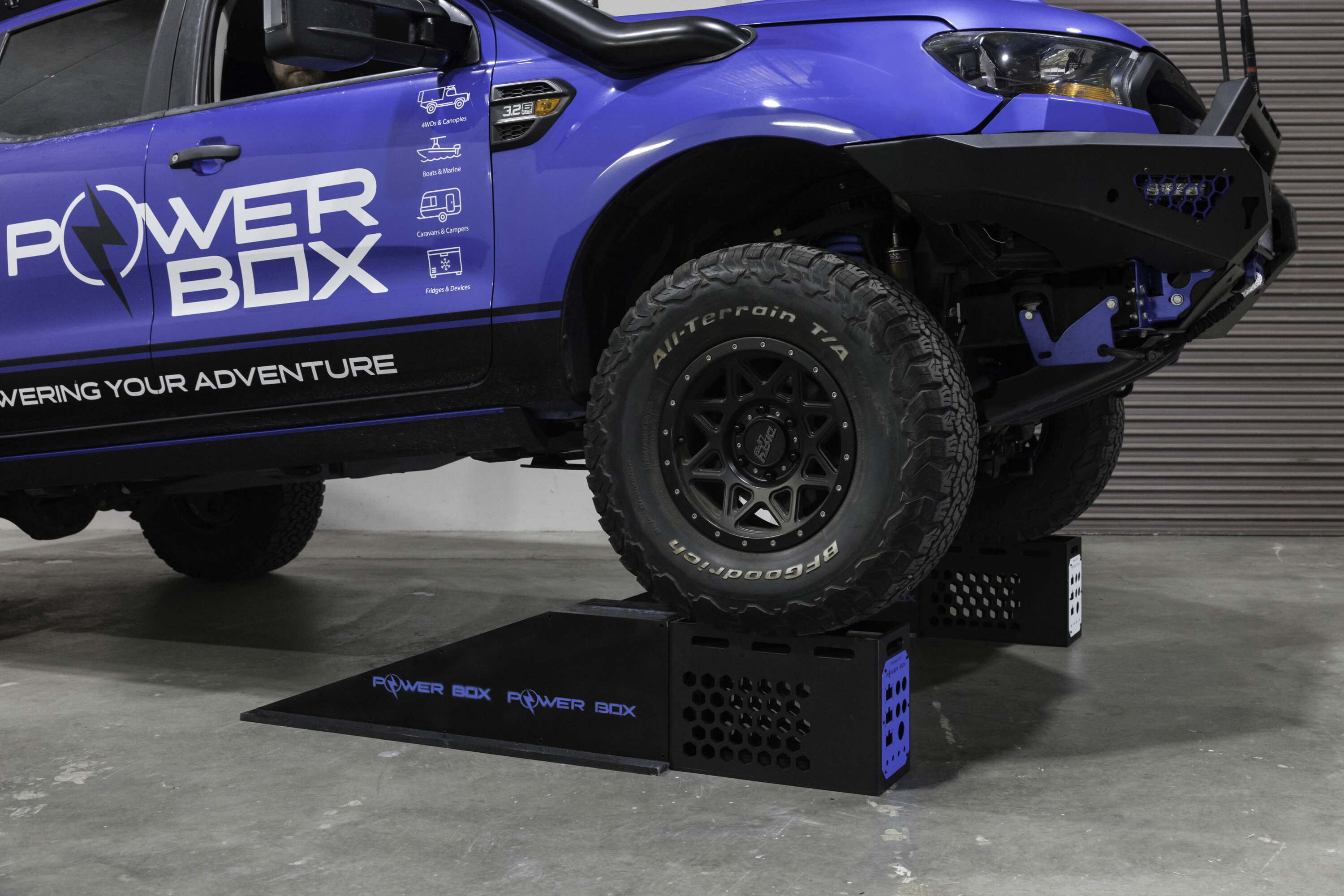
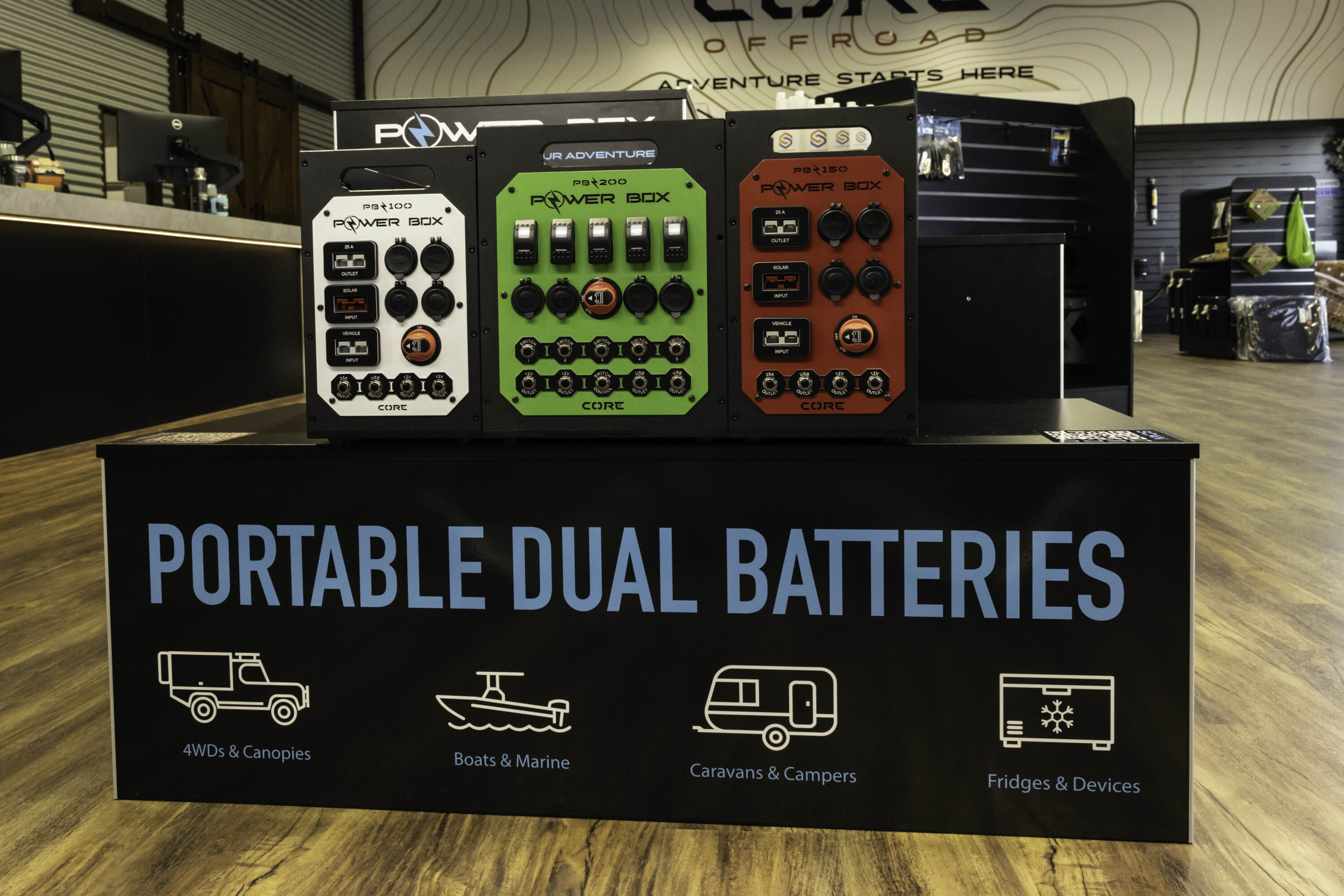
Having accumulated a wealth of experience manufacturing designer HDPE (high density polyethylene) canopies, WA-based Core Off-Road decided to build its own Power Box range of lithium battery based power stations, simplifying installation of auxiliary power into any 4×4.
Listening to what customers were asking for in their builds, the team at Core Off-Road came up with three designs based around known quality components, with each succession adding more capacity and features.
Amped up
While capacity is an important factor for auxiliary power, an equal if not more important component is how easily that capacity can be restored and maintained.
All three versions of the Power Box feature a Redarc BCDC1225D 25A charger, which allows inputs from the vehicle’s start battery/alternator as well as from a solar panel/blanket simultaneously. The Redarc unit prioritises solar input, should both be available, taking load off the vehicle’s alternator.
A Victron 500A Smart Shunt is also incorporated into each model of Power Box, providing a realtime data feed to a user’s mobile device. Information such as capacity in remaining days, charge and discharge rates, and cycles over a 30-day period provide users with an easy way to keep an eye on power usage, or to review it later.
The ability to shut the whole Power Box unit down with a dedicated 200A main isolator is found on each model’s front face, which can be quickly accessed in an emergency, or when the unit will be left unused for an extended period of time.
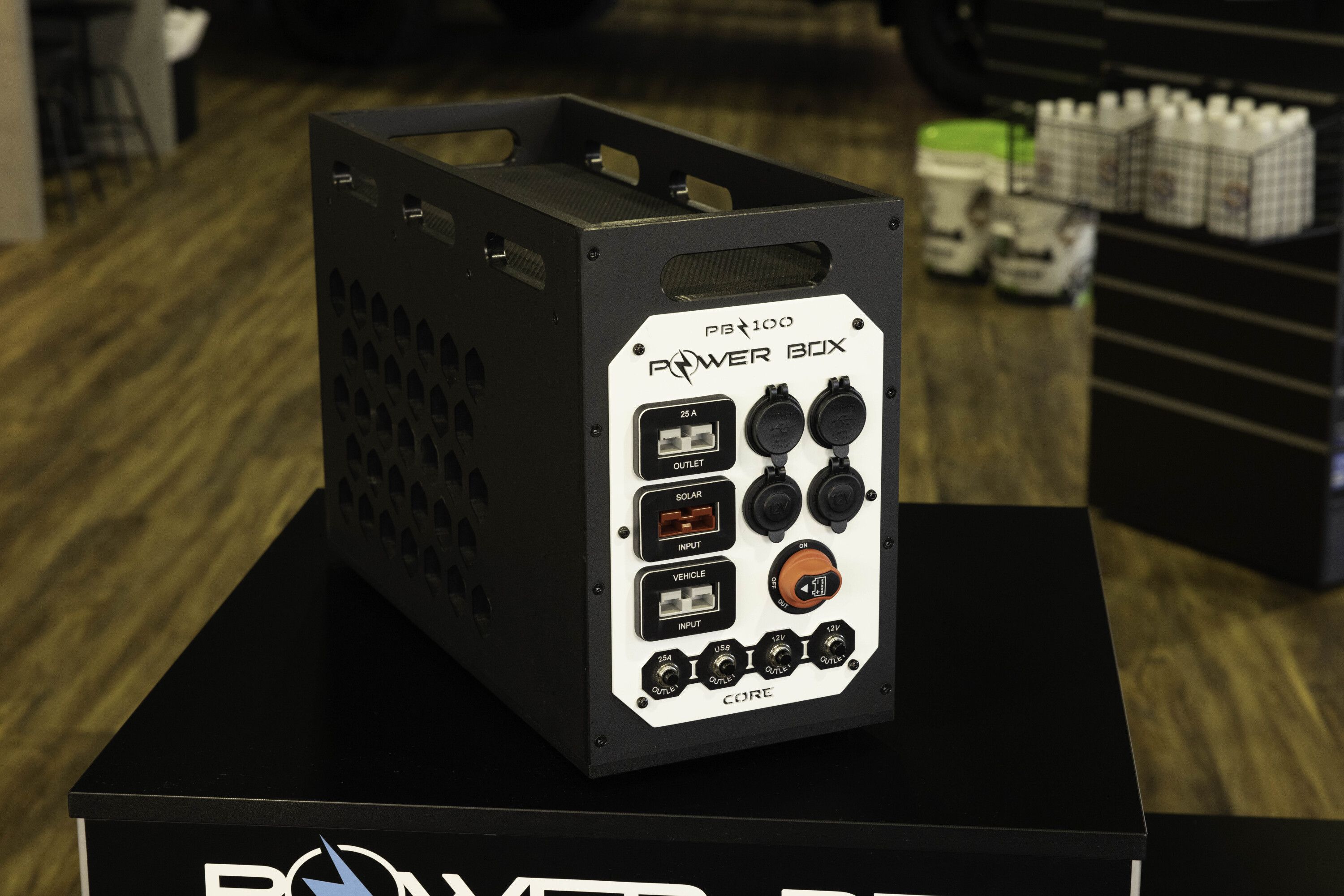
PB-100
The PB-100 is the entry-level model and the most compact of the range weighing just 17kg and priced at $2450.
1
It measures 199mm (L) x 474mm (W) x 324mm (H) and packs a 100Ah Powertech lithium battery. All plugs are found on the front face with Anderson plugs for 50A of solar and vehicle (alternator) inputs.
There are outputs aplenty with one 25A Anderson plug, two 12V merit plugs, and two twin USB outlets. All outputs feature resettable breakers, with everything clearly labelled and easily accessible.
PB-150
The middle child in the family weighs in at 24kg and costs $3250.
1
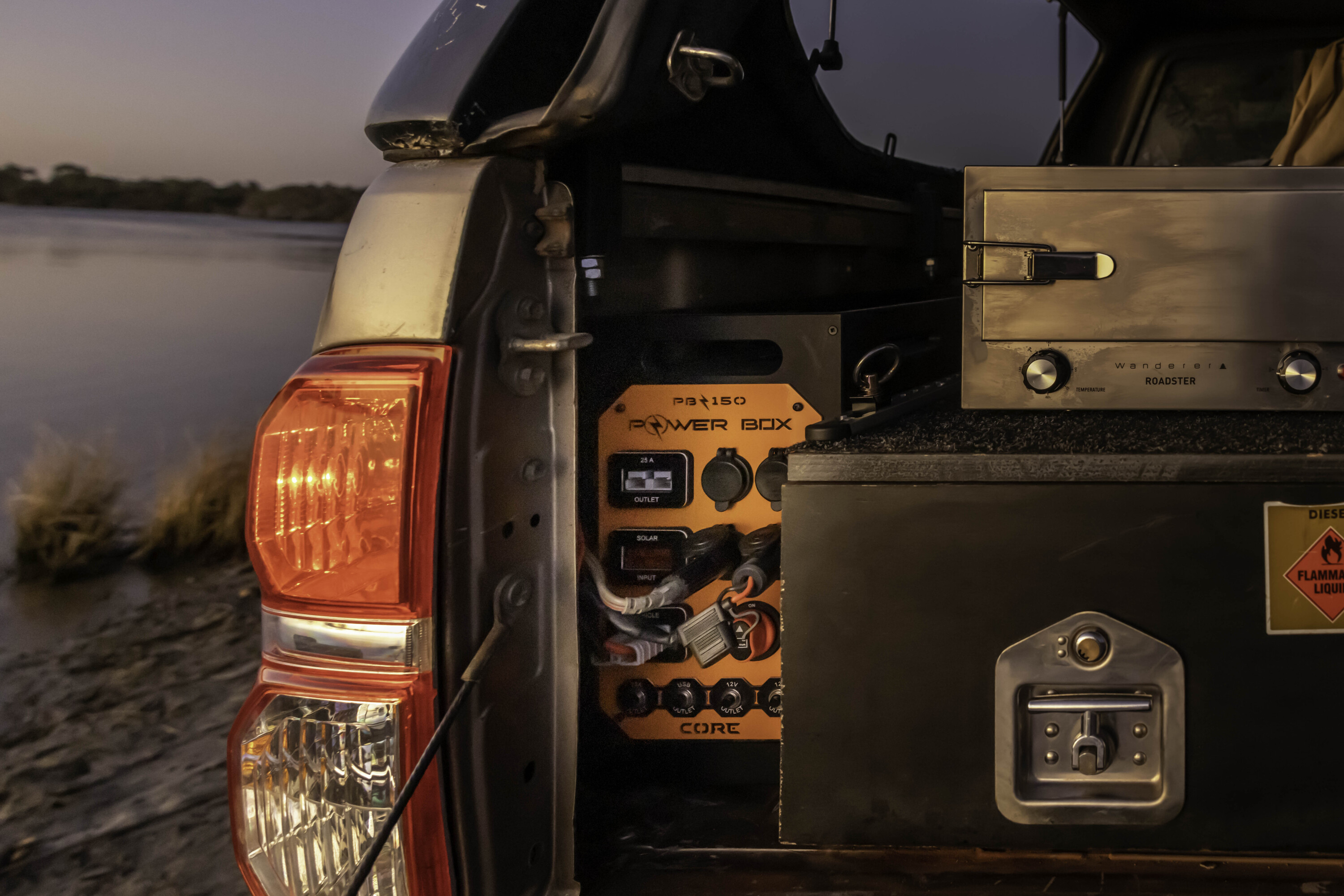
It measures 196mm (L) x 646mm (W) x 345mm (H), which is the ideal shape for it to be hidden away in the void behind the wheel tub and a set of draws on a dual-cab ute. With a 150Ah capacity it has a few tricks hidden up its sleeve when it comes to big power delivery.
As well as running the same power outputs and front facia panel as the PB100, it also has the capacity to power inverters up to 1000W capacity through a rear mounted 120A rated Anderson plug. There’s another Anderson plug rated to 40A alongside it too, with auto-reset breakers for the pair located internally.
PB-200
The PB-200 is the big kahuna at 32kg and priced at $3995.
1
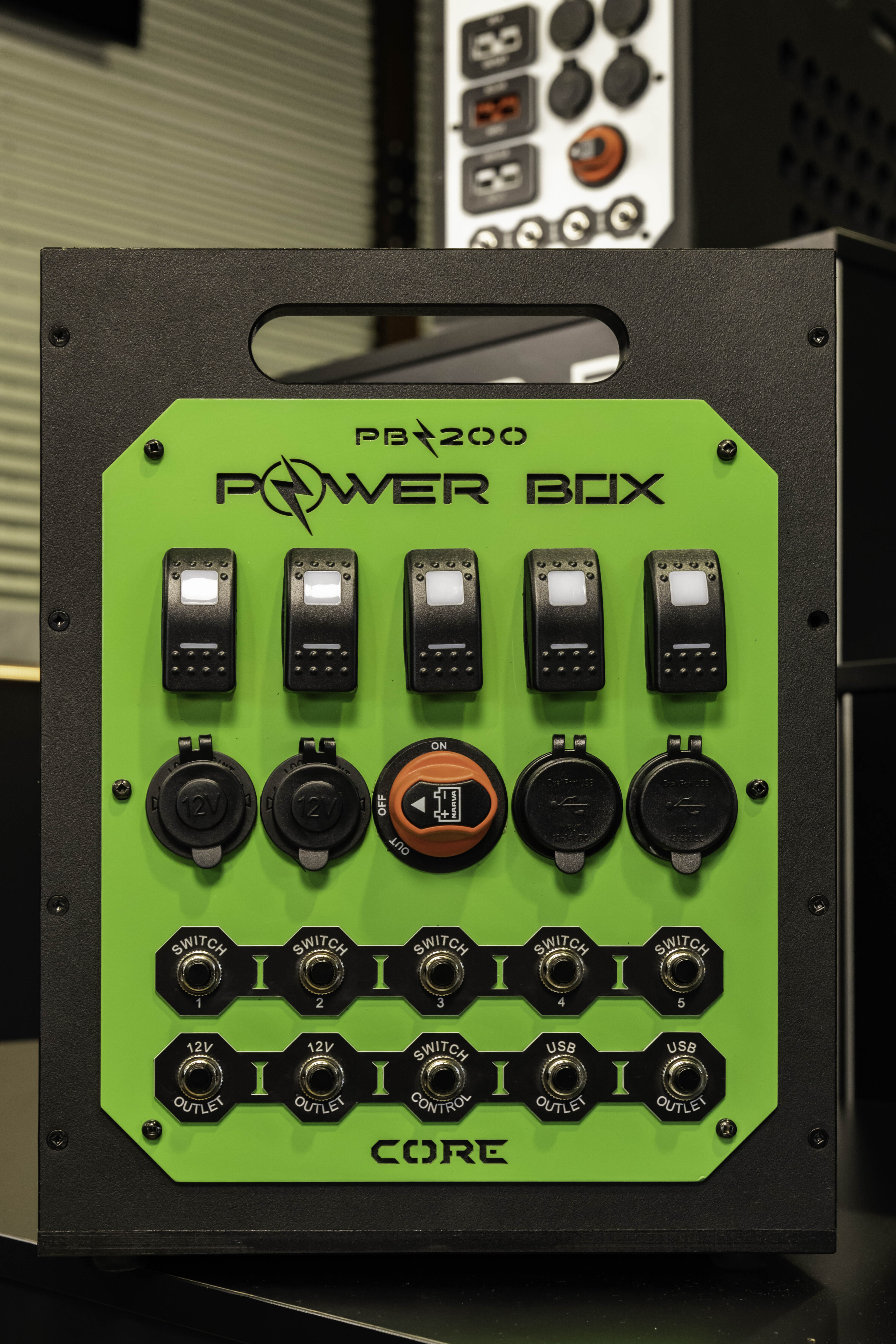
It measures 266mm (L) x 680mm (W) x 345mm (H), and features the same front-mounted merit and USB outlets as its smaller companions, but also packs 10 resettable breakers, and five Carling switches across its front face.
Inside there’s a 200Ah lithium battery, while at the back there’s a 12-pin Deutsch plug allowing for a simple plug-in connection to provide switched power to canopy staples like light banks, inverter, stereo, water pump, or even relay control for high-draw items like a compressor.
Two of the pins act as an isolator, so no pins remain live once the plug has been removed. The remaining 10 pins are allocated to each of the five front switches.
With the extra battery grunt available, a 1500W inverter can be run from the PB-200’s rear-mounted 150A Anderson plug, while four more 40A plugs increase the options for powering other appliances.
If 40A isn’t enough to run a power-hungry device, then a piggy-back Anderson plug loom is available to bridge two 40A outputs into one, doubling the available current.
Real-world testing
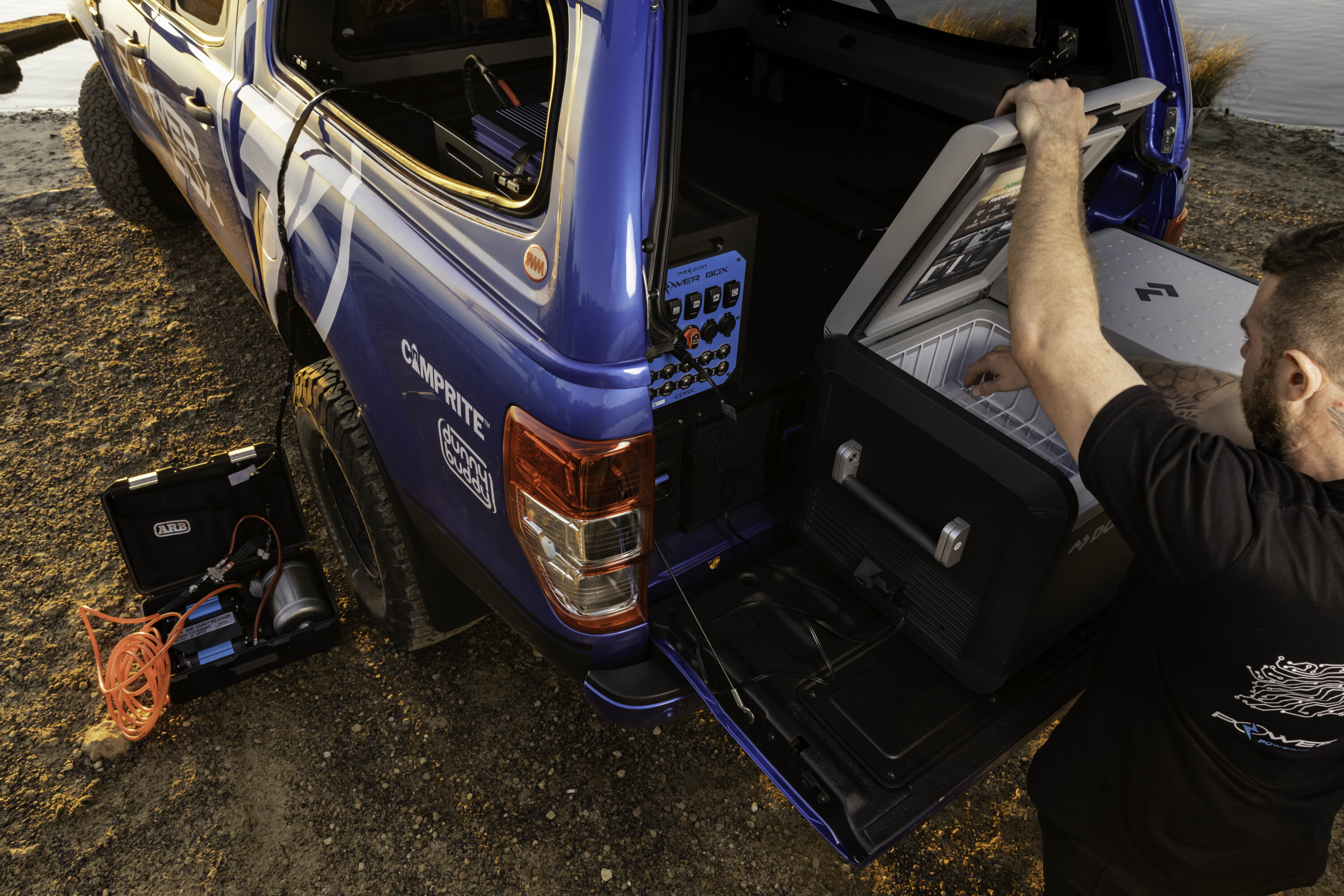
The day before a month-long north-west trip, I decided to drop a PB-150 into the trusty HiLux to power a big Engel fridge, a pie oven, a water tank pump and an air compressor.
I had to wire in the power supply cable for the Power Box that I situated in the gap behind the wheel arch in the tub; it took 40 minutes and a half-dozen cable ties to route the Power Box’s pre-terminated and fused 5m in-vehicle charging cable. And as everything else – battery monitor, DC-DC charger etc. – is already wired in, that was it!
1
Recharging was done through the vehicle on this trip with no solar input, and the PB-150 lasted for days while sitting at camp, and was quick to recharge from its lowest point within a couple of hours of driving.
The corrugations we encountered on the trip were enough to loosen fillings, but the PB-150 kept on doing its thing without any fuss. Even when doused with all the dust the Karijini could throw at it, the Power Box worked as it should.
These Aussie-designed and built power stations live up to their promise; they are easy to install, provide ample power and have so far proved durable, no doubt as a result of the hard yards put into their development.
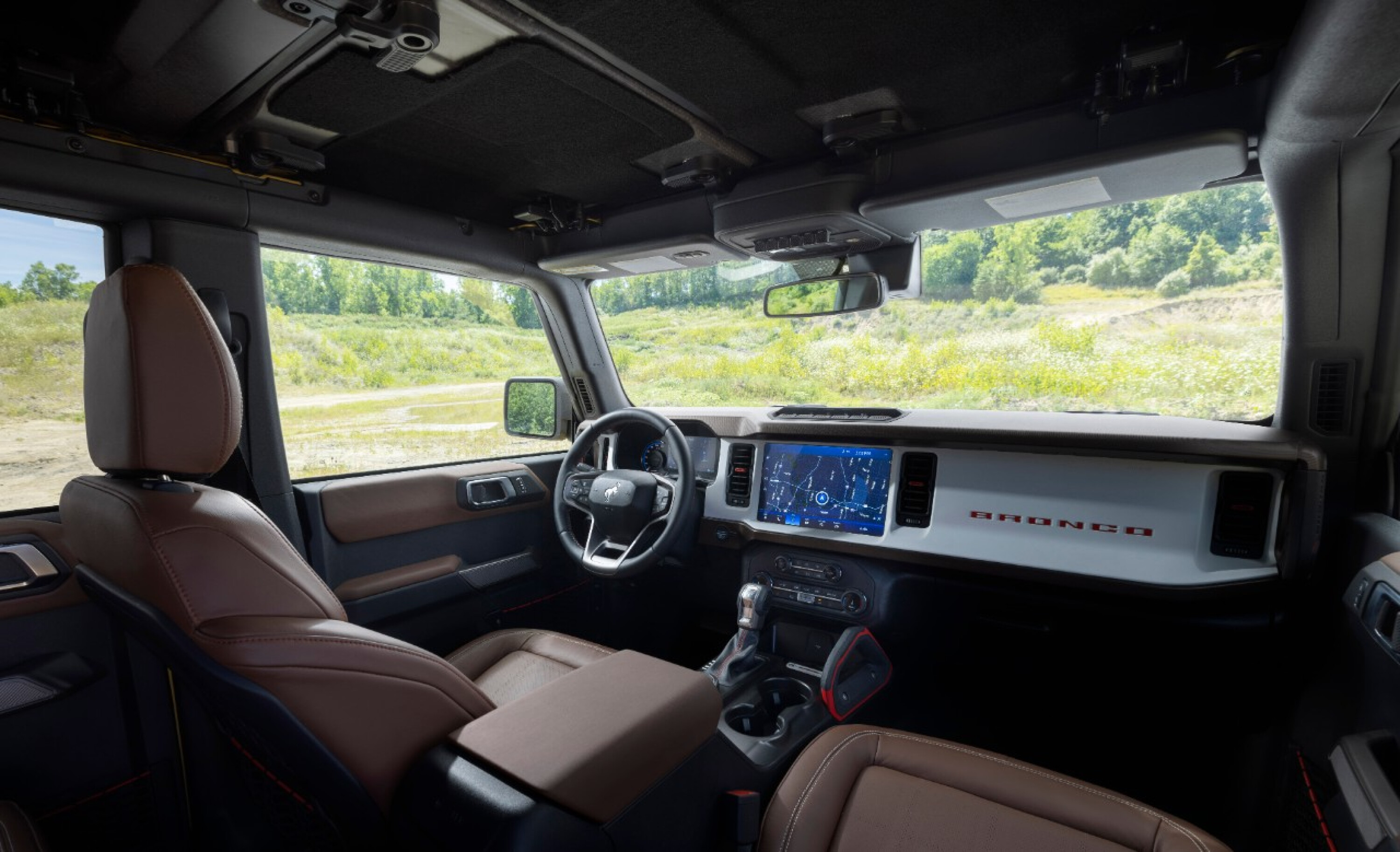
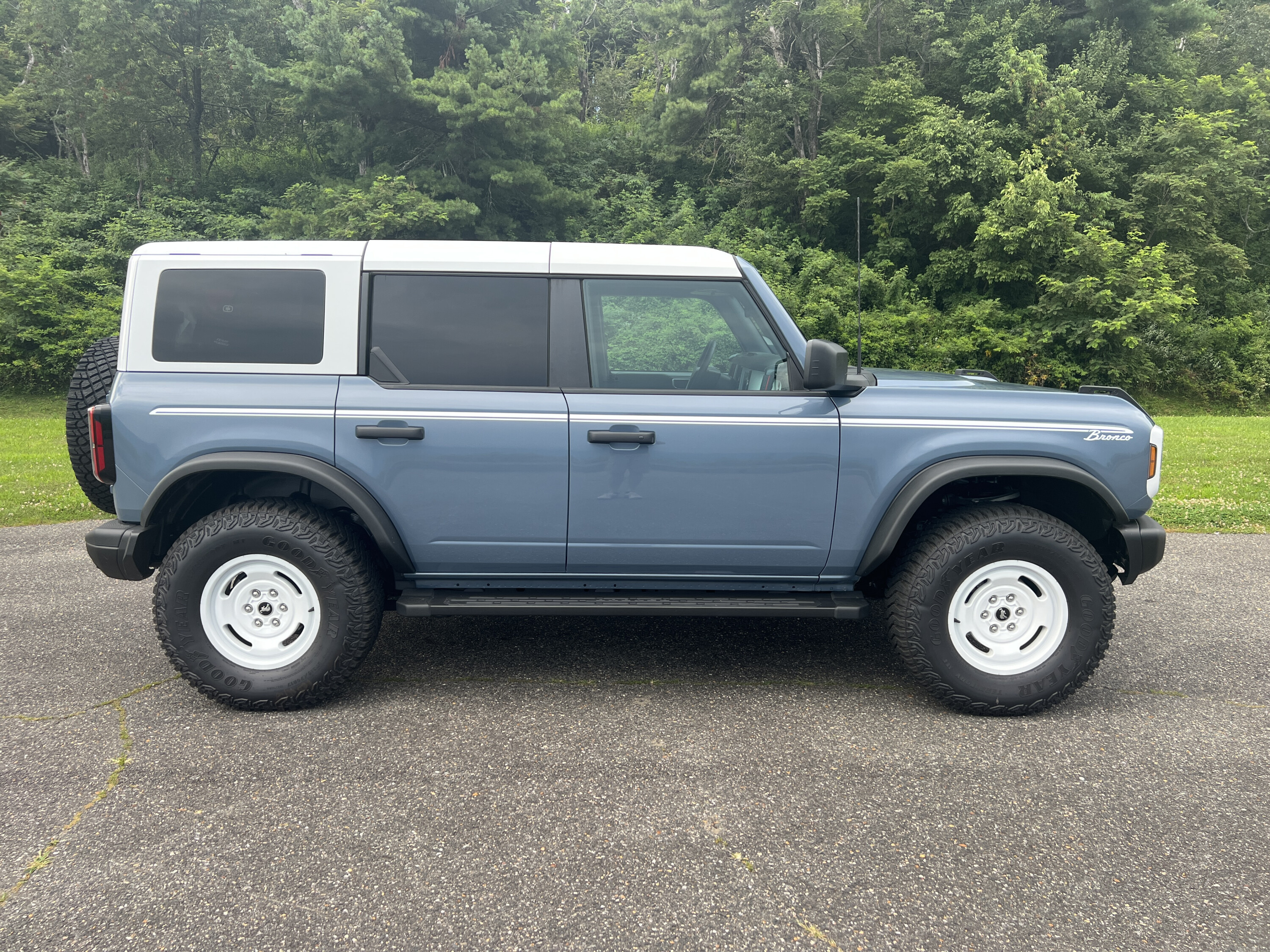
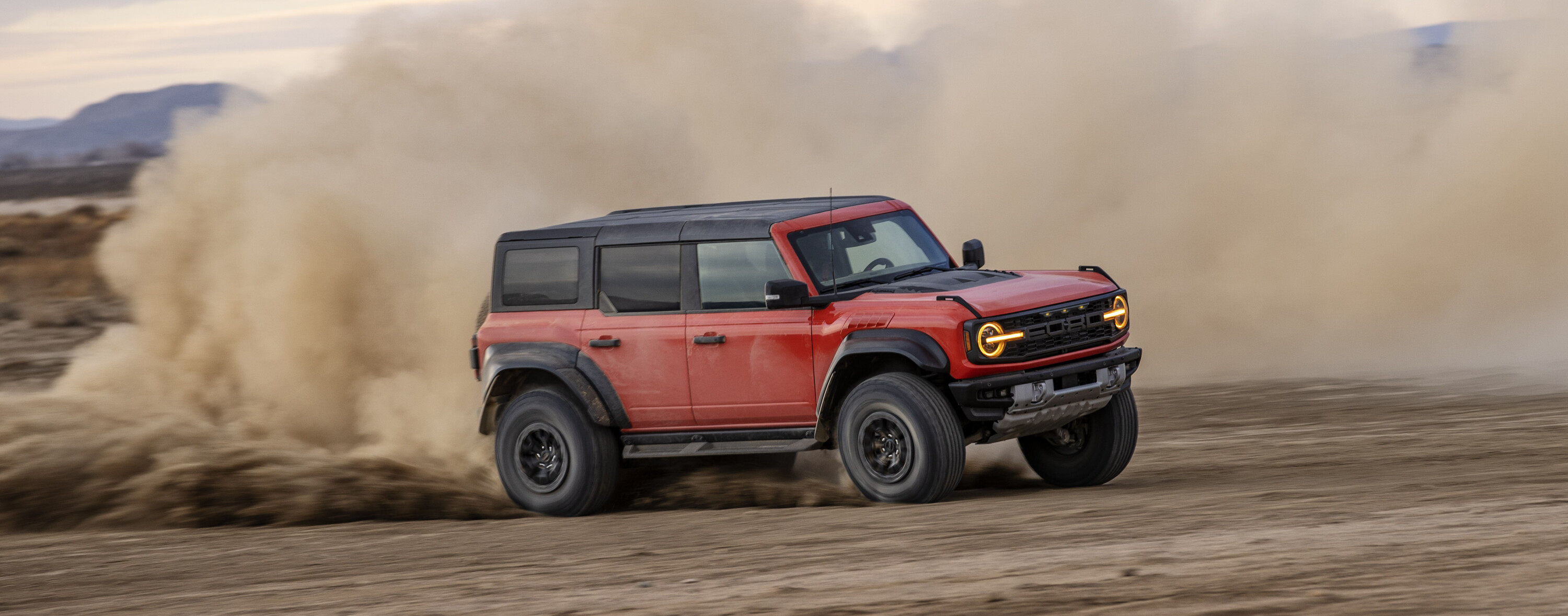
Ford’s conversion partner has revealed they’d relish the challenge of converting the 2023 Ford Bronco to right-hand drive, injecting fresh hope that the retro-styled SUV will join the Aussie line-up.
RMA Automotive is Ford’s remanufacturing partner on the F-150 project, with the conversion work taking place in a brand new 21,000 sqm facility in Michleham, north of Melbourne.
The new venture will see RMA produce 20 converted F-150 utes per day, though General Manager Trevor Negus confirmed the facility has capacity to produce more and take on other Ford products.
I think it’s very doable and I’d love to have that challenge
1
“Absolutely. The whole facility has been built with other products in mind, I guess,” said Negus. “So we’ve got the capacity to take larger F series. We’ve got the capacity to take other vehicles. And as you pointed out, we’ve got another shift to go to.”
Negus’s mention of “larger F Series” is intriguing and could indicate Ford is considering converting the 2024 F Series SuperDuty, which was refreshed with a new generation model last year.
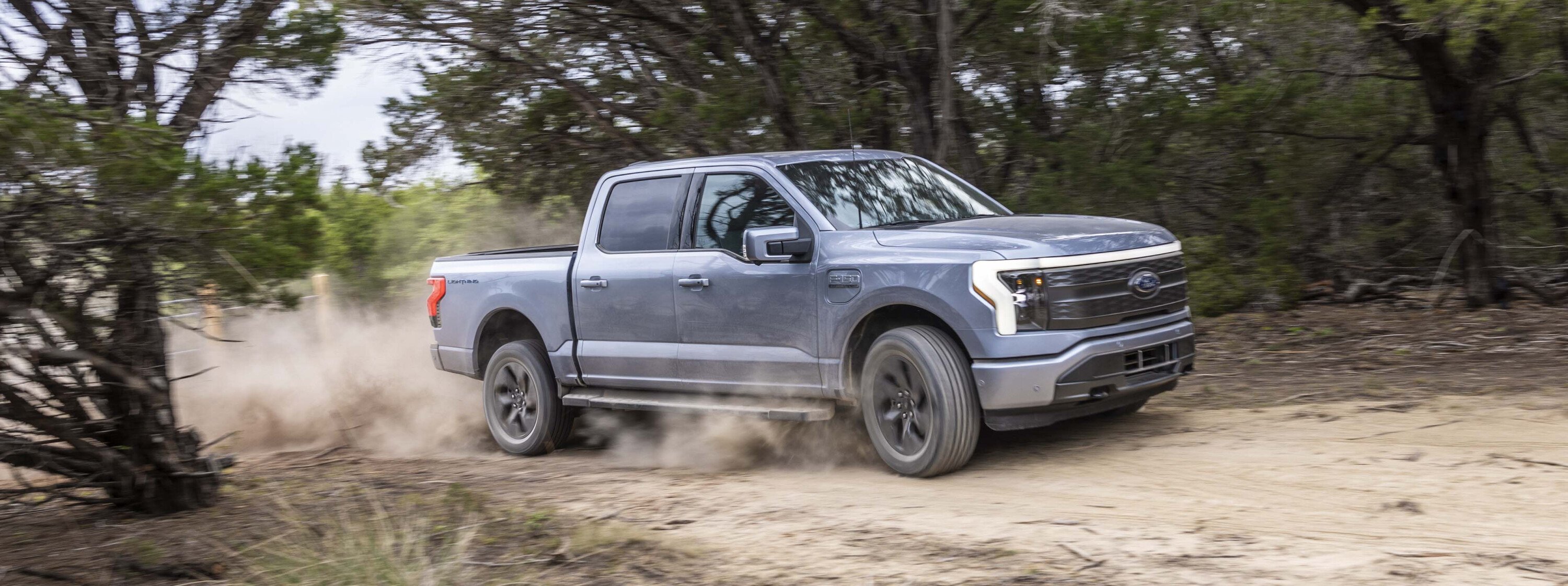
Aside from the bigger trucks, two products are known to be firmly on Ford Australia’s radar for conversion, the F-150 Lightning and Bronco.
1
The Bronco shares the same T6 underpinnings as the Aussie-developed Ford Ranger and Everest and a left-hand drive Bronco development vehicle has already been spotted several times around Melbourne.
Ford also recently confirmed the Bronco will soon be made in China through a joint venture with Jangling Motor, leading to speculation that deal could help free up some Bronco supply for Australia.
As for whether RMA Automotive has already assessed the Bronco to convert for Aussie roads, Negus simply replied: “I think it’s very doable and I’d love to have that challenge.”
1
Ford Australia boss Andrew Birkic was diplomatic when quizzed about Bronco’s Aussie chances, saying Ford and RMA need to focus on nailing the F-150 project before expanding to other product.
“Bronco is an amazing vehicle. I’ve been on the record before saying we love it and yeah we’re looking at it but we’ve got nothing to share,” he said. “There will be lots of decisions that still need to be made and we would go through a very rigorous process and do our due diligence on what’s the right way to do it. What’s the most effective way, can we get the supply, is it commercially viable?
1
“We’ve also been very conscious of getting this right [the F-150 project]. Sometimes it’s great to look at what’s next and what you could do, but sometimes it’s good just to love the ones you’re with. And that’s what we’re doing.
“Let’s land the plane on this [F-150] and then we’ll have conversations with our seniors in the US and in Bangkok about what’s the art of the possible.”
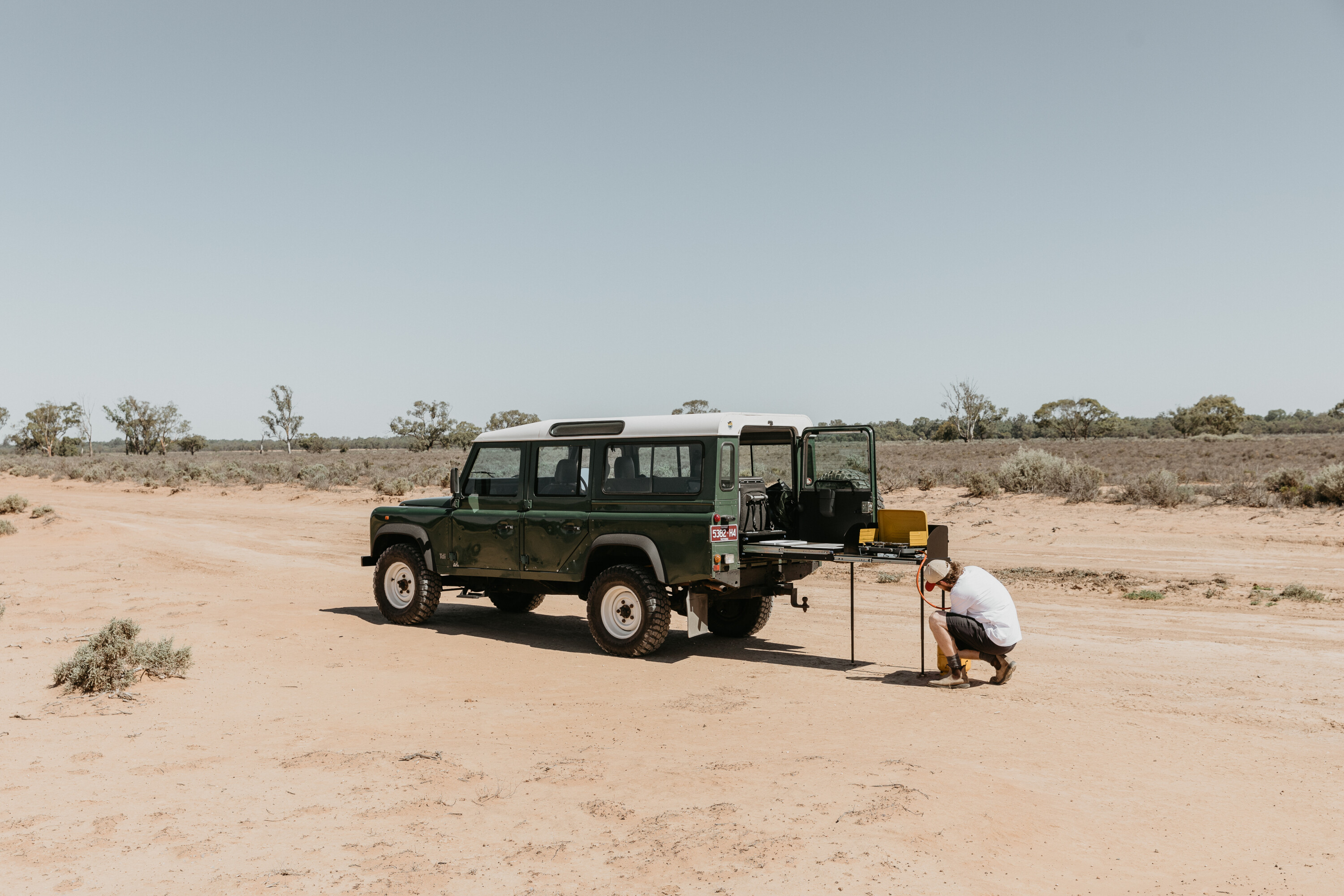
Imagine pulling into camp and being able to have dinner cooking quicker than you can set up the sleeping quarters.
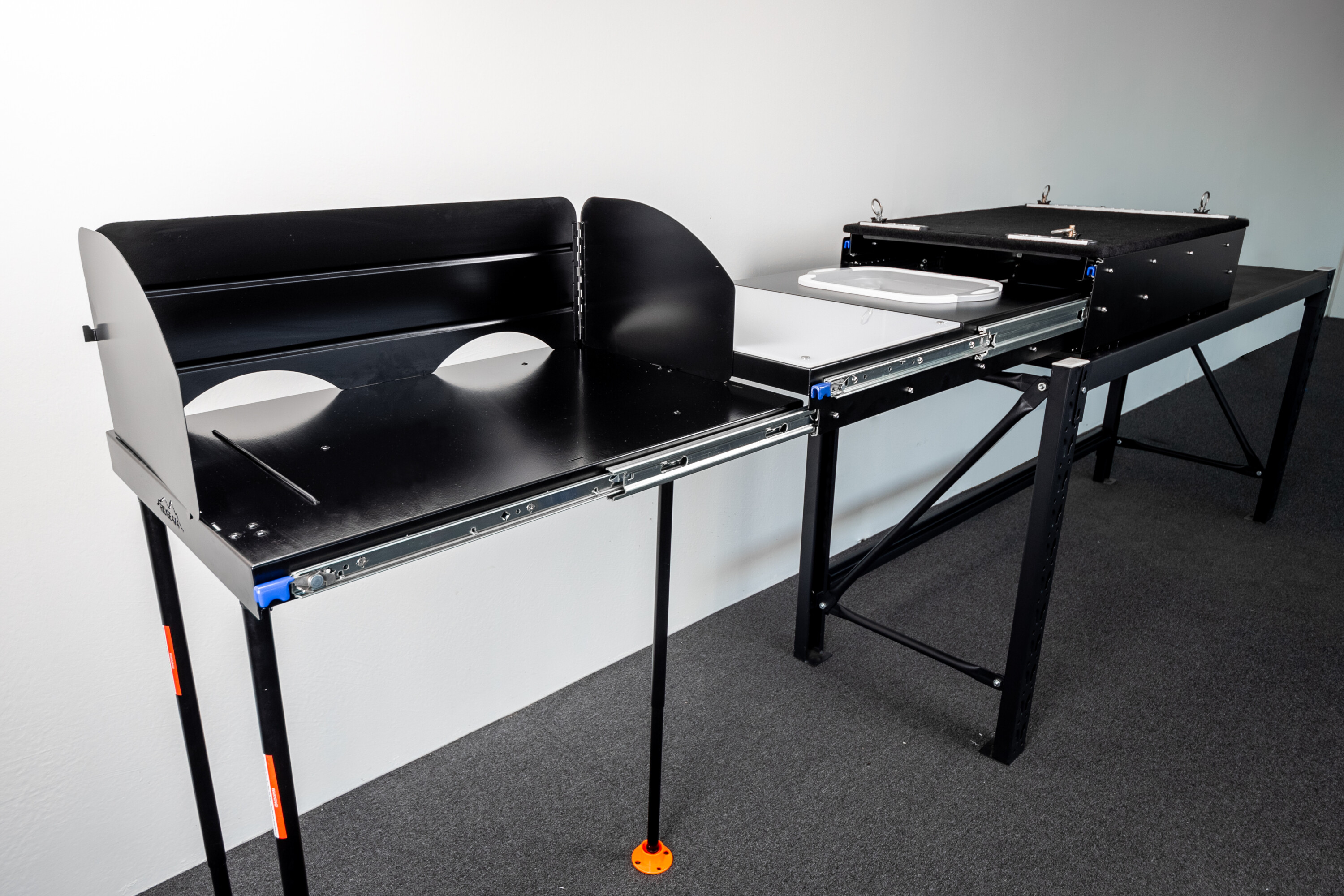
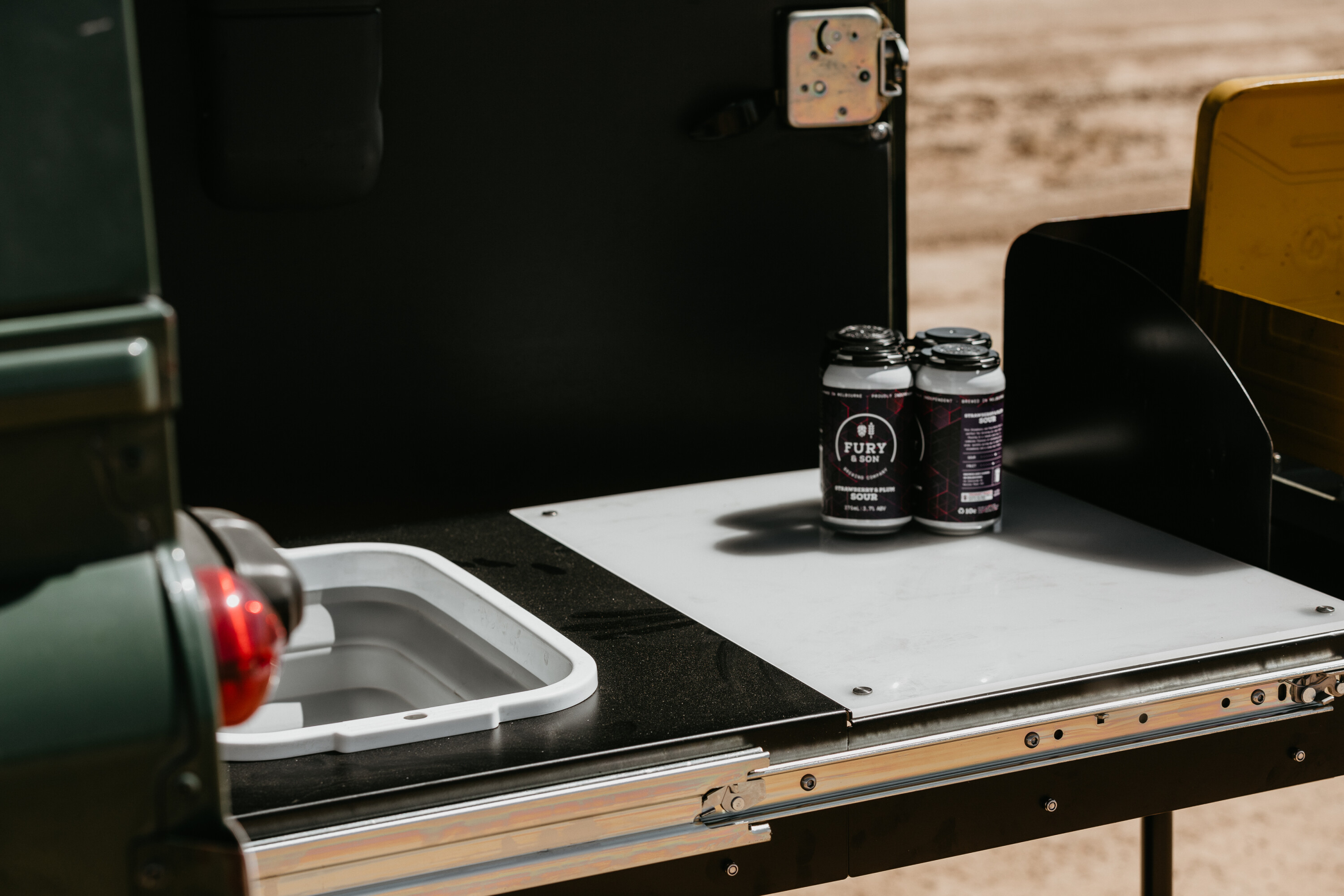
These Ridge 4×4 kitchen slides make this possible, and in seconds you can have the entire kitchen area prepared and ready to use including the fridge and kitchen sink.
What’s most impressive is that the team at Ridge 4×4 are serious about ensuring these kitchen slides are simple to use, are of the highest quality and are built strong enough to handle the roughest of tracks.
1
There are two versions of Ridge 4×4 kitchen slides available, V1 and V2, and both versions are designed to fit a 60-litre fridge.
The V1 features 125kg slides on the fridge, a barbecue pan, a cooking section and 227kg slides on the cutting-bench section. Stored neatly underneath the cooking section are three height-adjustable stabilising legs, which is a good safety feature.
The cooking section includes a windbreak, which can be faced in either direction and is perfect for when you’re trying to cook dinner on a windy night; while the cutting-bench section includes an inbuilt nylon cutting board.
The V2 has all the features of V1 but adds a pop-out sink and a carpet top with four tie-down points.
Both units are constructed using 2mm steel sheet and utilise lock-out drawer slides so that the kitchen won’t slide back in when you are parked on a slope. Nyloc nuts are used, so you won’t find a nut and bolt rattling around the kitchen after a long day on the Gibb River Road.
If you’re thinking about turning your 4WD into a tourer or modernising your current set-up, Ridge 4×4 has a range of gear that will help you reach your goal. These kitchen slides are one of the best designs out there, and they won’t break the bank.
1
Pricing
Ridge 4×4 offers a 24-month warranty on both kitchen slides. The V1 retails for $699 and V2 for $749, keep an eye on the Ridge 4×4 website for reduced prices.
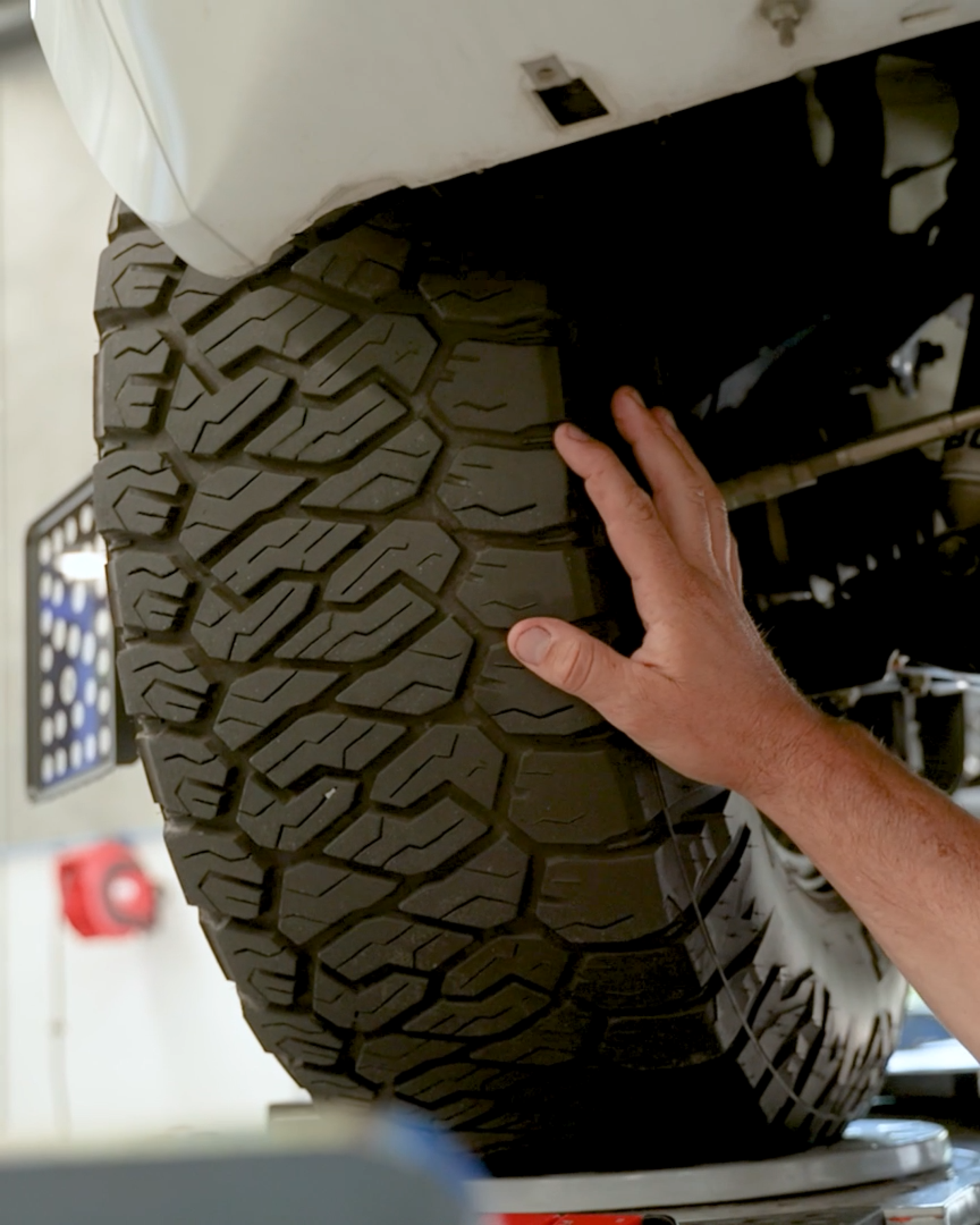
Late model Isuzu D-MAX, MU-X and Mazda BT-50s are known to suffer from bump steer issues, resulting in excessive tyre wear and, in some cases, undesirable handling characteristics.
The issue presents itself in standard-height vehicles and becomes more prominent as you lift them or add additional weight, like accessories.
Previously, regular wheel alignments were the only tool available to owners to mitigate some of the excess tyre wear and poor handling. Not anymore.
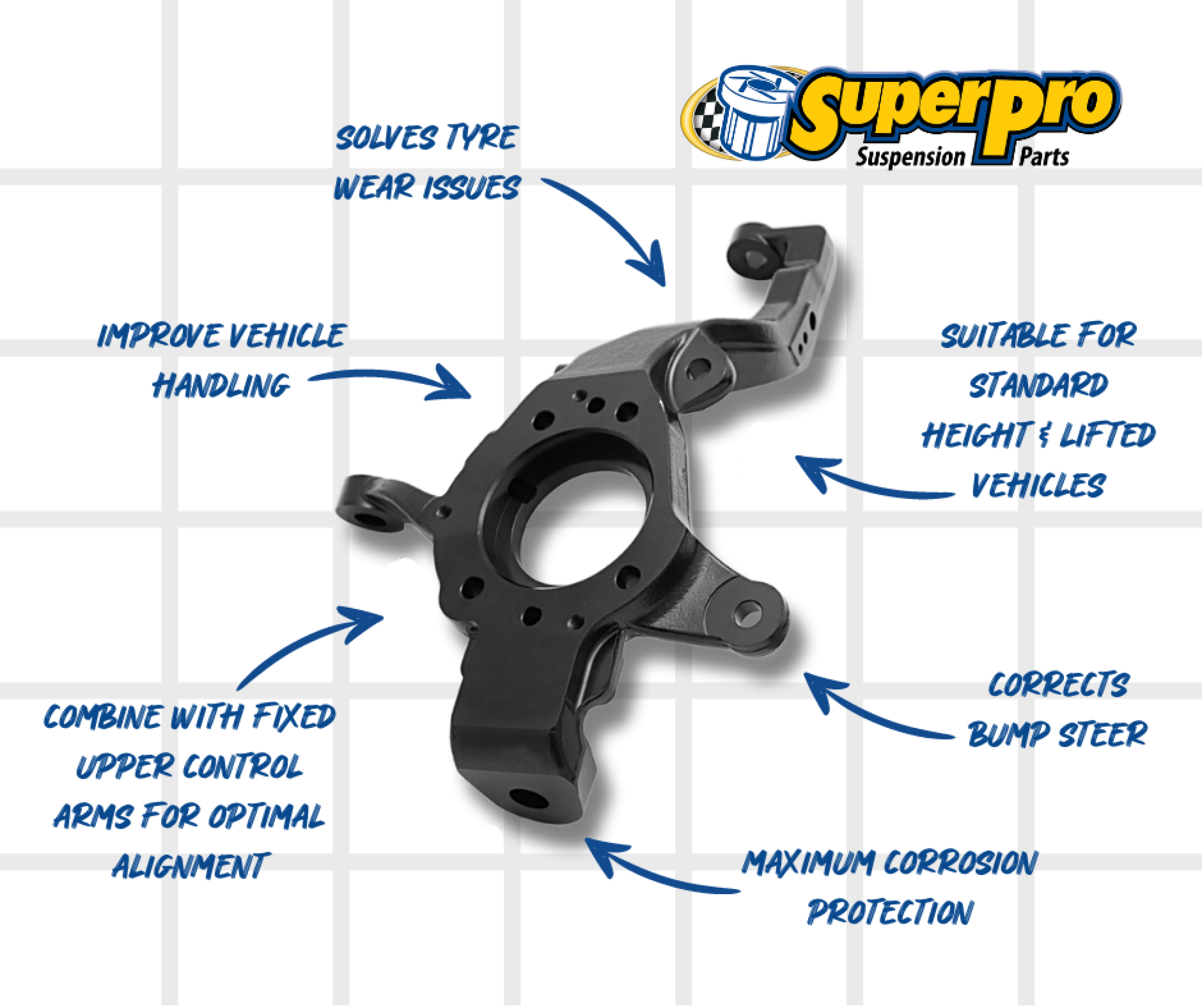
SuperPro has developed a world-first, permanent solution for the D-MAX, MU-X and BT-50, that when fitted to a standard height vehicle reduces bump steer almost entirely. The new Steering Knuckle is a game changer for owners of these vehicles.
Why is bump steer an issue?
Bump steer is the change in toe-in (front wheels pointing in) or toe-out (front wheels pointing out) as the ride height of a vehicle changes.
This occurs constantly while driving as a vehicle oscillates over bumps in the road. This wheel movement is amplified by increased weight from towing, heavy loads, accessories, or when a suspension lift has been fitted.
An excessive amount of bump steer is known to cause premature tyre wear and undesirable steering feedback for the driver.
1
What does the SuperPro steering knuckle do to help?
Adam from VideoShowMeHow has the steering knuckle installed on his late-model D-MAX.
“When I saw the D-MAX, pre-install on the alignment laser rig it was very obvious the factory steering geometry could definitely be improved,” he said.
The SuperPro steering knuckle optimises the steering geometry of the D-MAX, MU-X and BT-50, reducing the amount of bump-steer at a range of ride heights.
When fitted to a lifted vehicle, the steering knuckle reduces bump steer by around 75 per cent. This figure is reduced by a further 10-15 per cent when combined with fixed upper control arms. When the knuckles are installed in a standard-height vehicle, bump steer is reduced almost entirely!
1
Michael Sargent, store manager at Fulcrum Capalaba, worked closely with the SuperPro research and development team to test fit the product.
“We’ve seen a drastic improvement in the vehicles we fitted the steering knuckle to,” he said.
“I think people are fully aware how much the excess tyre wear is costing them every year and they want it fixed as soon as they can, especially with increased cost of living pressures,” he said of the tyre wear and expense to vehicle owners. “The improvement in handling is an added bonus, helping to reduce driver fatigue.”
Available now!
The SuperPro steering knuckle is available to purchase through fulcrumsuspensions.com.au and local SuperPro stockists. Professional fitment at a suspension service centre is advised.
For further information, visit superpro.com.au or call 1800 385 278. For trade customers, please contact 1300 360 922.
SuperPro now also has a kit with UCAs, which can be found HERE.