Karlamilyi NP: parks.dpaw.wa.gov.au/park/karlamilyi [↗️]
Punmu community: (08) 9176 9110
Parnngurr (Cotton Creek) community: (08) 9176 9009
Marble Bar Museum & Visitor centre: 0484 857576
Newman Visitor Centre: (08) 9175 2888

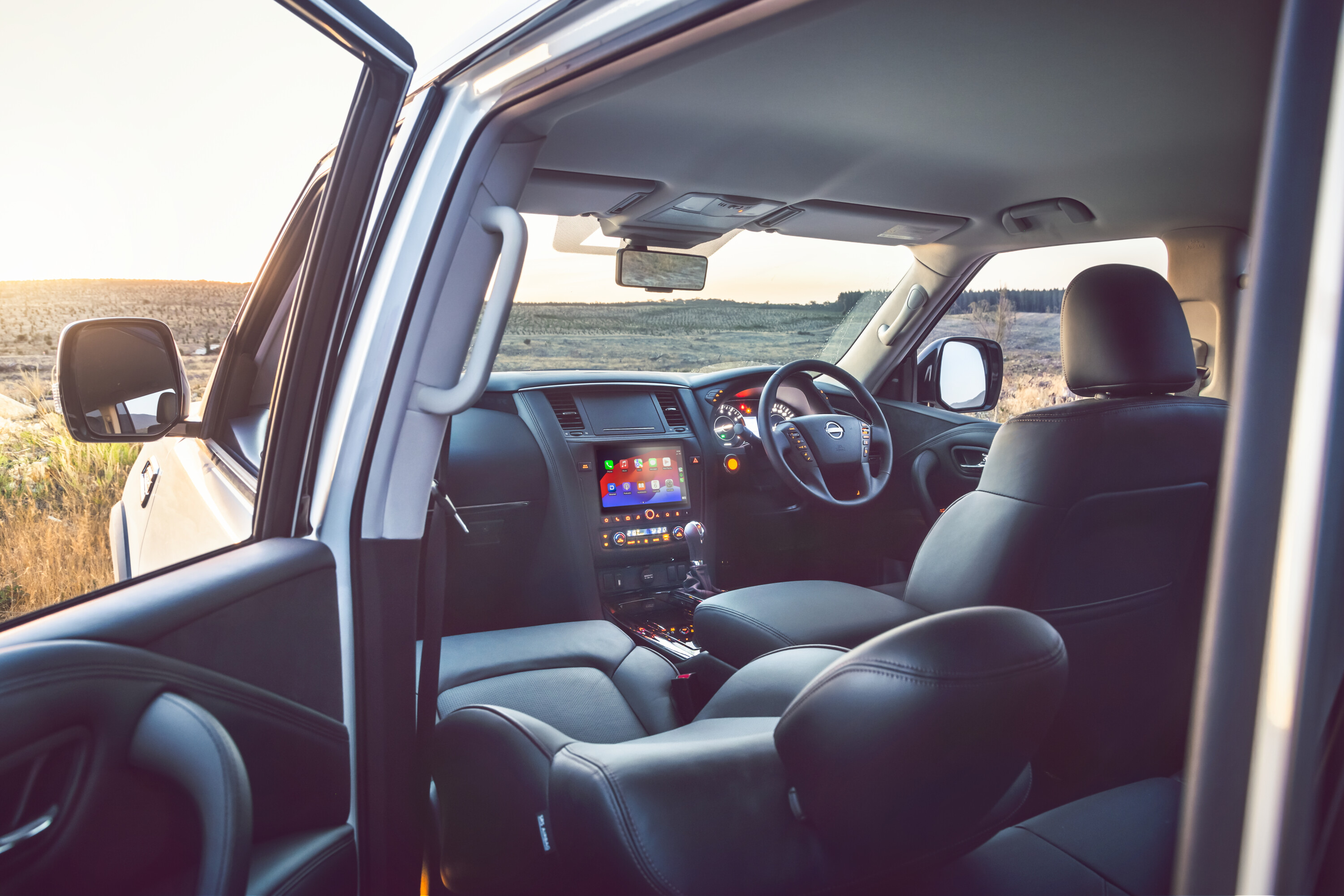
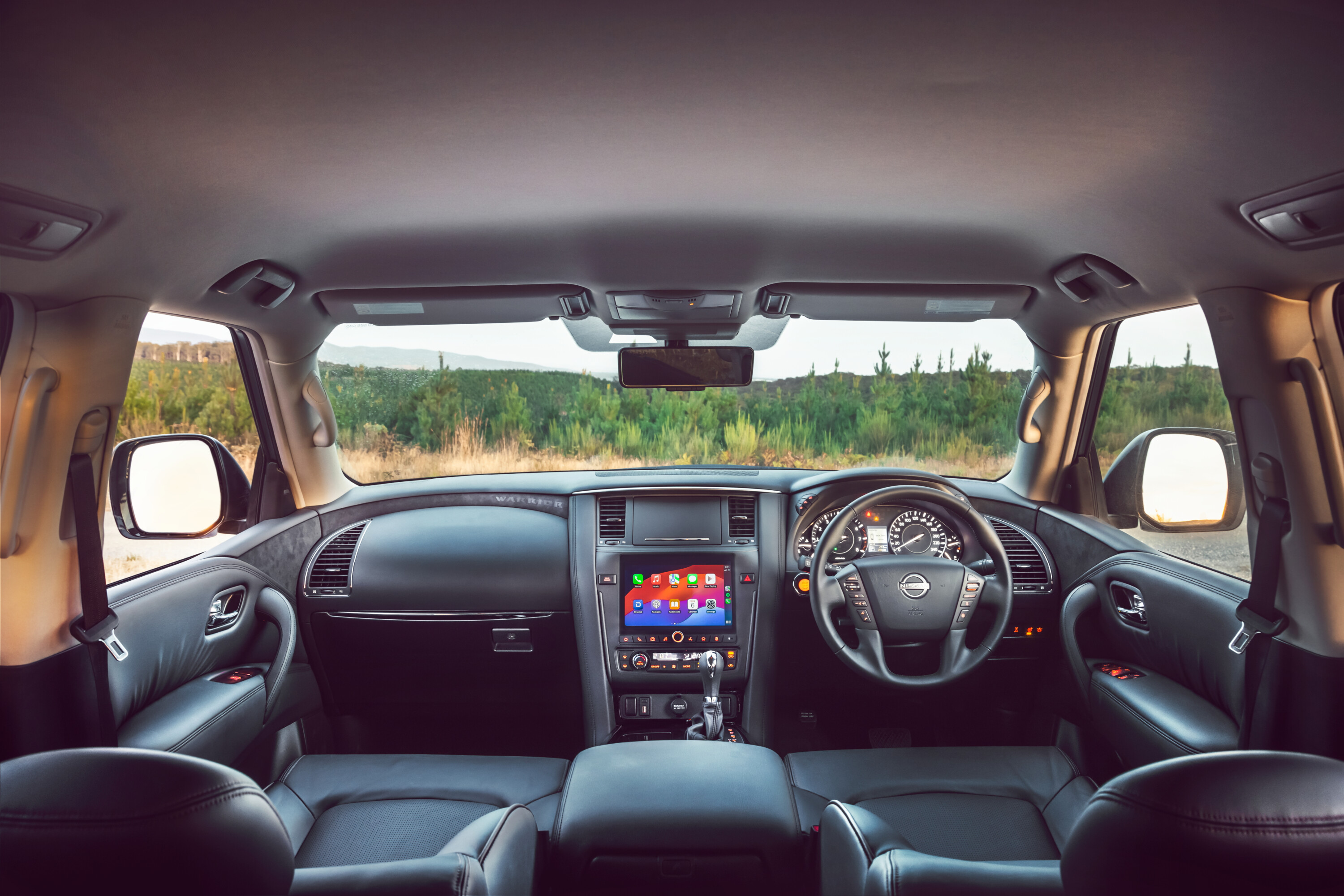
Nissan Australia has worked with aftermarket supplier Directed Technologies to develop a revised dashboard for the Patrol, which will be fitted when the vehicles arrive on local shores.
Headlining the changes is the addition of a larger and higher-resolution 10.1-inch infotainment system with support for wireless Apple CarPlay and Android Auto – a must-have feature for many new-car buyers.
Most vehicles sold in Australia are fitted with smartphone mirroring technology, including the latest version of the 40-year-old Toyota LandCruiser 70 Series.
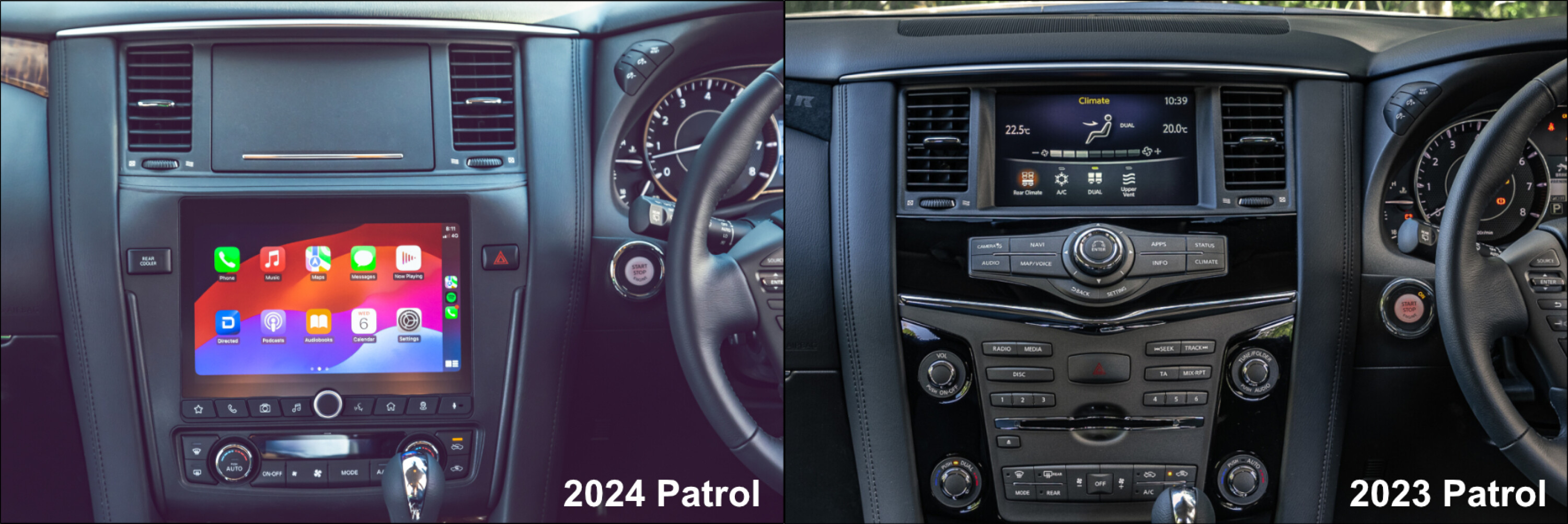
Left-hand-drive versions of the Patrol have been offered with a revised interior since late 2020, including a 12.3-inch widescreen infotainment system, a 7-inch semi-digital instrument cluster, and an updated centre stack.
However, these updates were not made available to our market due to a lack of further investment in the right-hand-drive Patrol at a factory level – leading Nissan Australia to introduce long-overdue improvements with help from an aftermarket supplier.
New Patrol vehicles will include a one-month free subscription to the off-road map service.
There are also revamped air-conditioning controls, less woodgrain accents for the Ti and Ti-L, a USB-C charge port, and a 15-watt wireless phone ‘charge pocket’ for all variants.
Due to incompatibility with the new infotainment system, the Patrol Ti-L’s 13-speaker Bose audio system has been replaced with a six-speaker Infinity by Harman audio system – a brand familiar to rival brands such as Hyundai and Kia.
Ti and Warrior models continue with an unbranded six-speaker audio system.
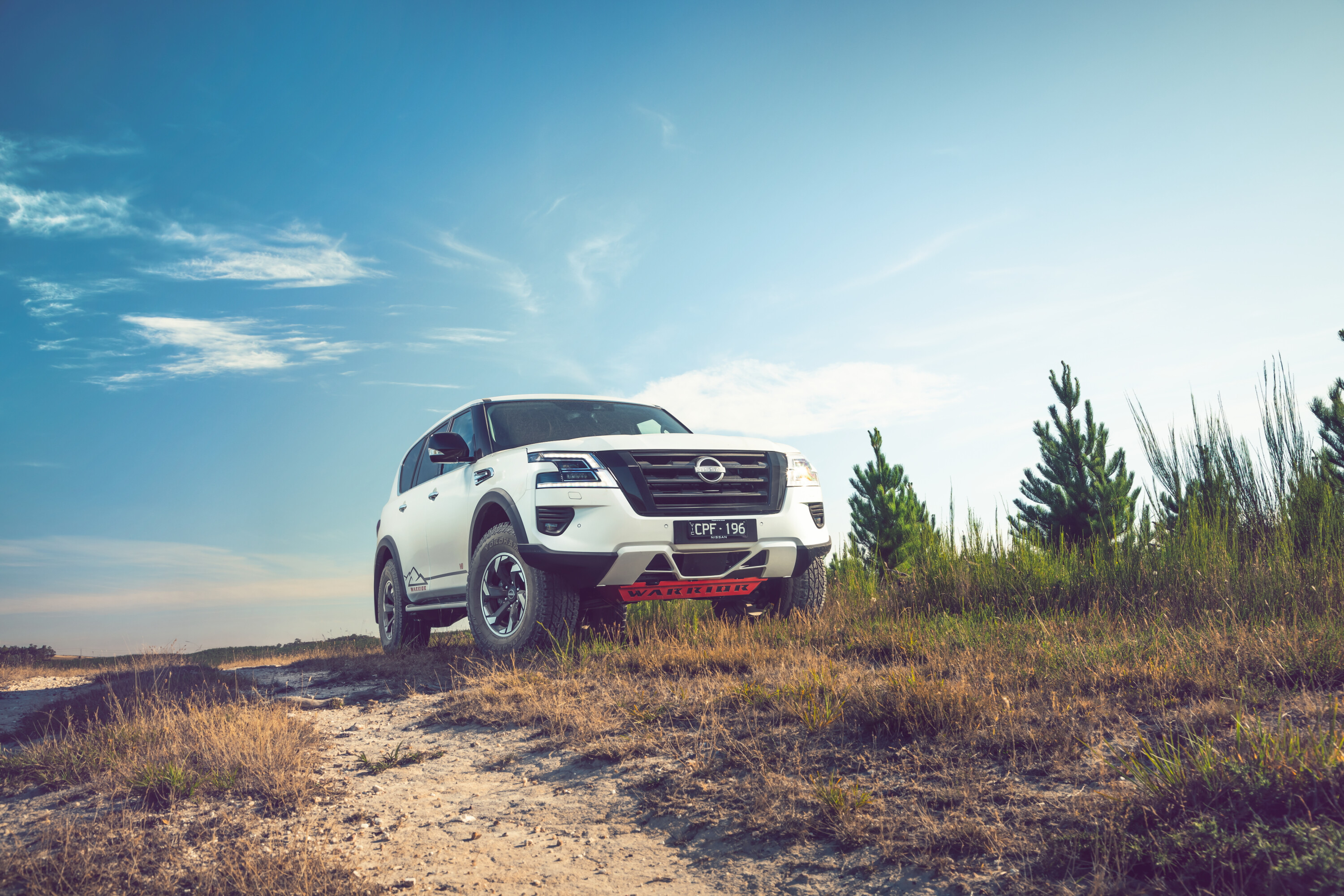
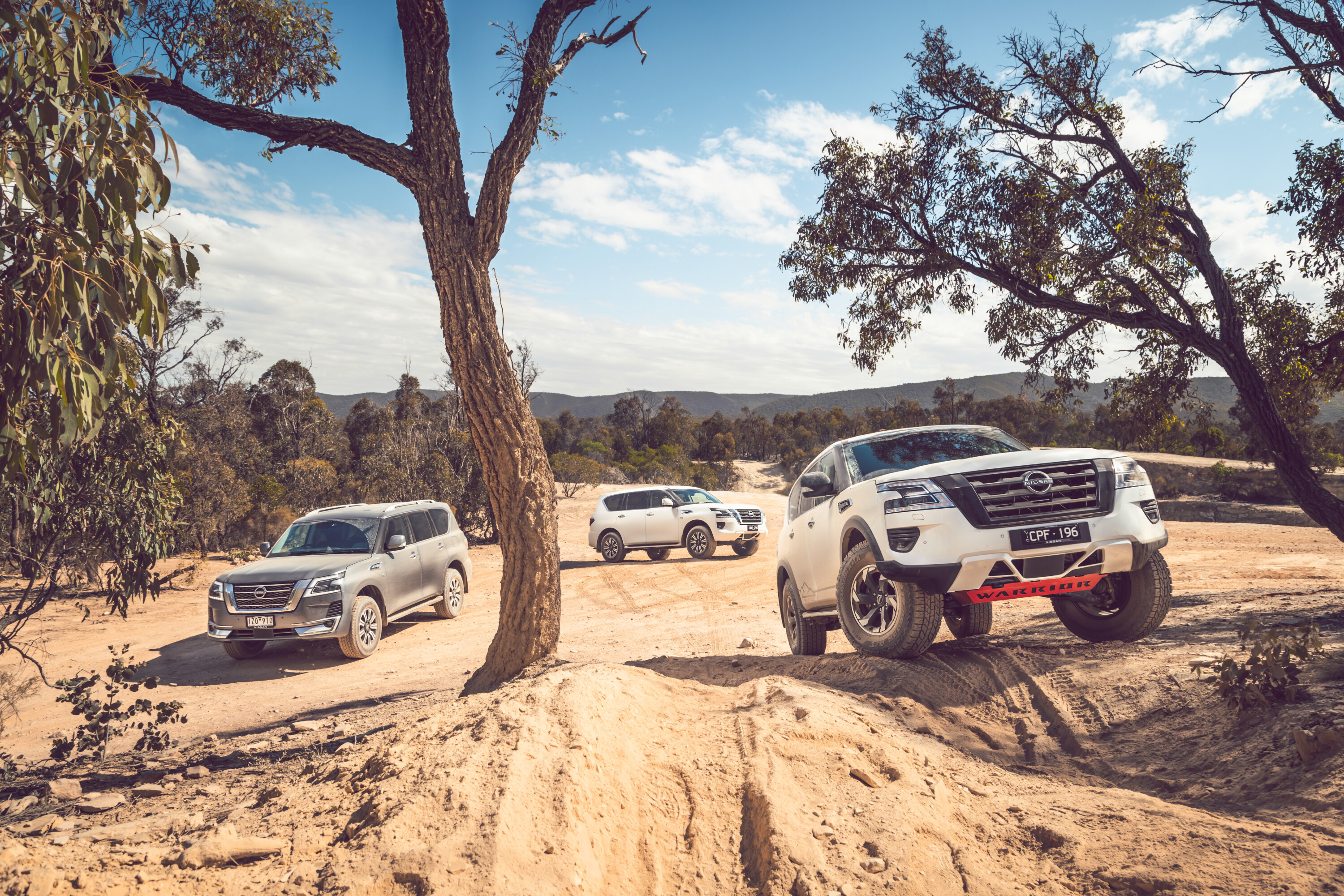
Nissan has added some features to the Patrol Ti and Warrior that were previously exclusive to the top-of-the-range Ti-L, including a digital rear-view mirror and a first-row centre console cool box.
Prices for the updated 2024 Nissan Patrol have increased $3000 across the line-up, which now spans between $87,900 and $104,160 before on-road costs.
All variants continue to be powered by a 298kW/560Nm 5.6-litre naturally-aspirated petrol V8, with an on-demand four-wheel-drive system and a 3.5-tonne braked towing capacity.
| Model | Pricing | Change |
|---|---|---|
| Patrol Ti | $87,900 | up $3000 |
| Patrol Ti-L | $100,600 | up $3000 |
| Patrol Warrior | $104,160 | up $3000 |
| Prices exclude on-road costs.u00a0 | ||
| 2024 Nissan Patrol Ti features | |
|---|---|
| 10.1-inch touchscreen infotainment system (new) | Six-speaker audio system |
| Wireless Apple CarPlay and Android Auto (new) | Front and rear parking sensors |
| Built-in iGo satellite-navigation (new) | Keyless entry and push-button start |
| Hema 4×4 off-road maps (new) | LED headlights, tail-lights, DRLs, and front fog lamps |
| 15-watt wireless phone charge pocket (new) | Leather-accented upholstery |
| DAB+ digital radio (new) | 10-way power-adjustable driveru2019s seatu00a0 |
| Digital rear-view mirror (new) | Eight-way power-adjustable passenger seat |
| Front-row centre console cool box (new) | Power-folding heated side mirrors |
| USB-A and USB-C charge ports (new) | Tyre pressure monitoring |
| 18-inch alloy wheels | Autonomous emergency braking |
| On-demand four-wheel-drive system | Lane-keep assist |
| Hill descent control | Lane departure warningu00a0 |
| Hydraulic body motion control suspension | Blind-spot monitoring with braking |
| Rear limited shift differential | Rear cross-traffic alert |
| Eight seats | Adaptive cruise control |
| In addition to Ti | |
|---|---|
| Six-speaker Infinity audio system (new, replaces 13-speaker Bose audio system) | Two-position memory function (driveru2019s seat, side mirrors and steering wheel column) |
| Seven seats (down from eight) | Heated and ventilated front seats |
| Unique front bumper | Power tilt and slide sunroof |
| Puddle lamps | Privacy glass |
| Electric tailgate | Roof rails |
| Power-adjustable steering wheel column | |
| In addition to Ti | |
|---|---|
| 50-millimetre lift (+29mm suspension, +21mm wheel and tyre package) | Bespoke towbar with two recovery points |
| 40-millimetre wider track | Bi-modal side exit exhaust |
| Premcar-tuned suspension | Black exterior trim |
| 120-kilogram gross vehicle mass upgrade | Warrior exterior decals and badging |
| Unique 18-inch alloy wheels | High-gloss black trim (replaces woodgrain) |
| Yokohama G015 295/70 all-terrain tyres | Alcantara door and dash inlay with Warrior badging |
| Warrior-branded front bumper assembly and bash plate | |
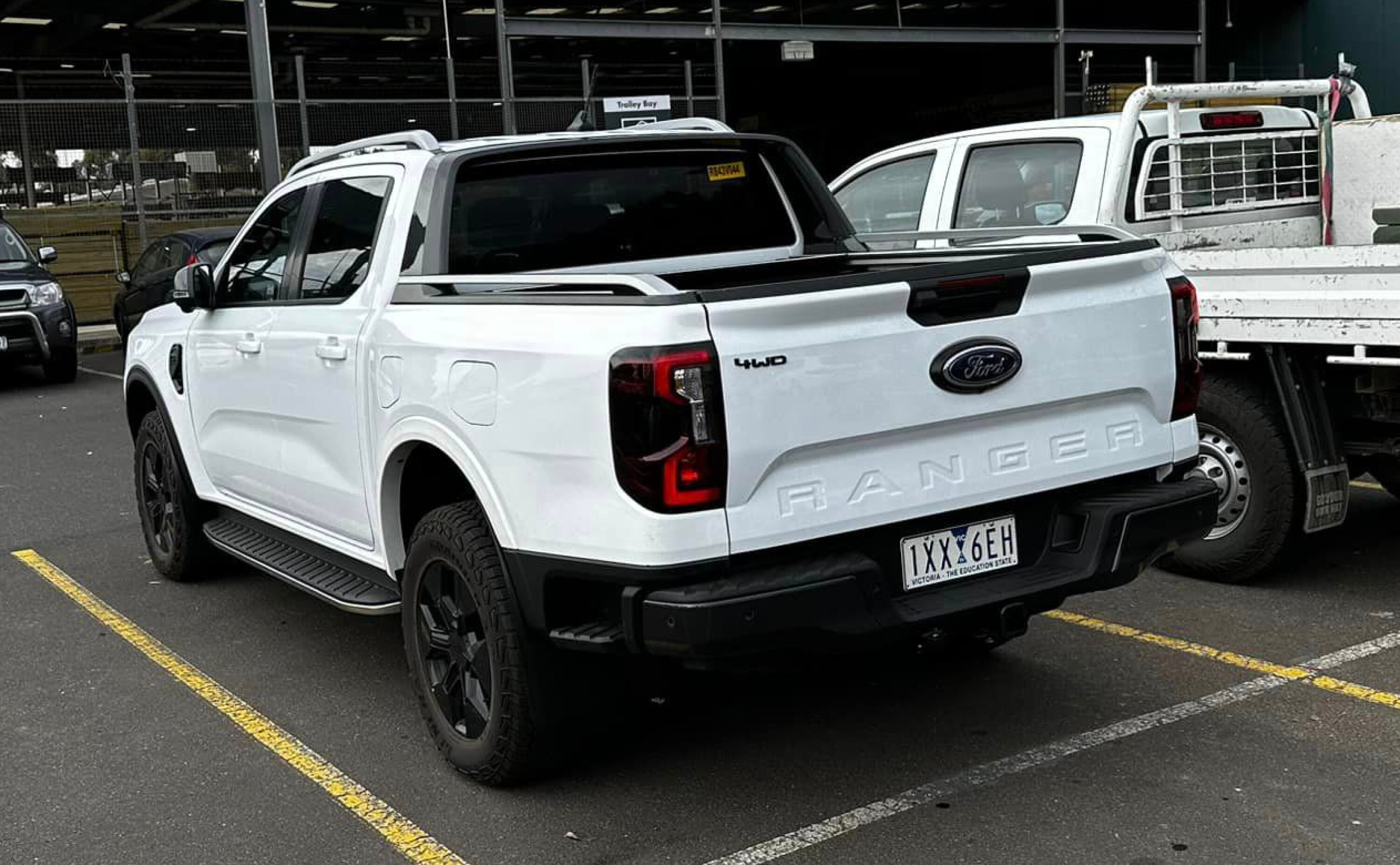
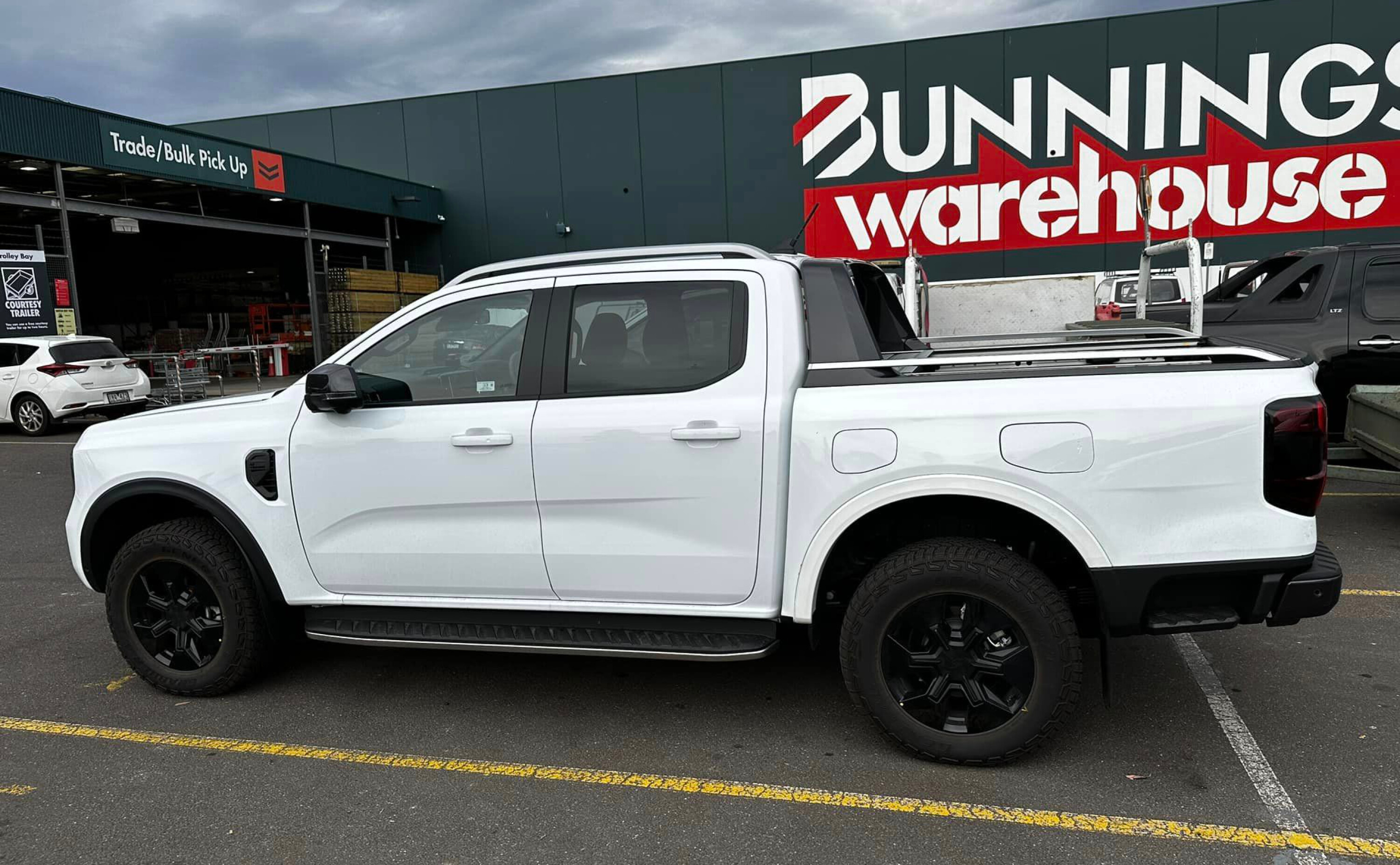
These photos of the upcoming Ford Ranger ‘PHEV’ in a Bunnings carpark were posted to the Next Gen Ranger Owners Australia Facebook group.
With prices and model specifications yet to be confirmed, the PHEV Ranger in the photos resembles a Wildtrak-like trim specification, with blacked-out wheels – largely matching the official images published in September 2023.
Catherine King, Minister for Infrastructure, Transport, Regional Development and Local Government said in February 2024: “I’ve also had the opportunity to be driven on the [Ford] test track down near Geelong of the new Ford Ranger… It’s a hybrid vehicle, and what that allows you to do is for those smaller jobs you’re going in between, so if you’re a tradie, in between those you use electric if you’re not going very far.”
Ms King’s department, amongst others, has been involved in devising the New Vehicle Efficiency Standard for 2025.
Specific power and torque figures still to be detailed, but there are some known figures we can work with. The 2.3-litre Ecoboost four-cylinder petrol, for example, makes 222kW/452Nm in the Volkswagen Amarok which was co-developed with Ranger.
A driving range of 45km in full-electric mode is expected, and the Ranger’s 3500kg towing capacity is retained for the PHEV models.
The Ranger PHEV also features “Pro Power Onboard”, allowing it to power tools and act as a driveable generator, with three dedicated 240V / 10A power outlets fitted (two in the tray, one in the cabin).
The Ranger PHEV will be manufactured in South Africa, meaning that some models may incur a 5 percent import tariff.
Pricing and variants that will offer PHEV technology are yet to be announced by Ford.
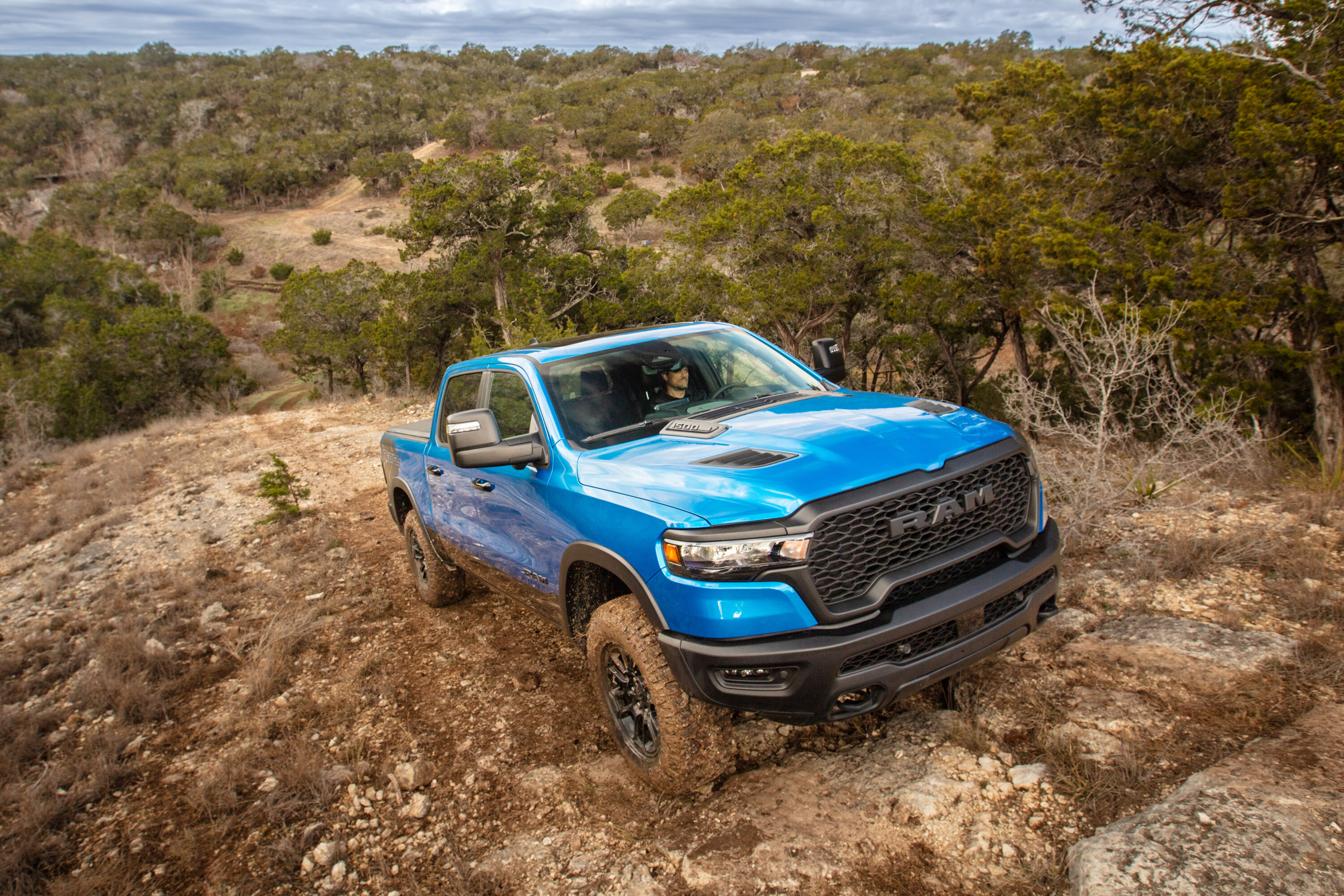
Did Ram turbo the HEMI? Not the case, my V8-loving friends. We’ll get into a host of other upgrades, but the big news is that 2025 marks the end of a multi-decade run for the HEMI-powered 1500. The question is, have they buggered things up?
Scoff if we will, but this pint-sized mill out-produces the 5.7 by a stretch, churning out 313kW and 638Nm versus the HEMI’s 295kW/558Nm respectively. But curious minds want to know how they did it.
Tapping the latest in technology and engineering practices, they started with a forged crank and connecting rods, which are mated to cast 10.4:1 compression cast-aluminium pistons wrapped with DLC (diamond-like carbon) coated rings. Main bearing caps are cross-bolted (vertically and laterally) to a deep-skirt cast aluminium block, and cylinders are plasma spray-bored to minimise friction.
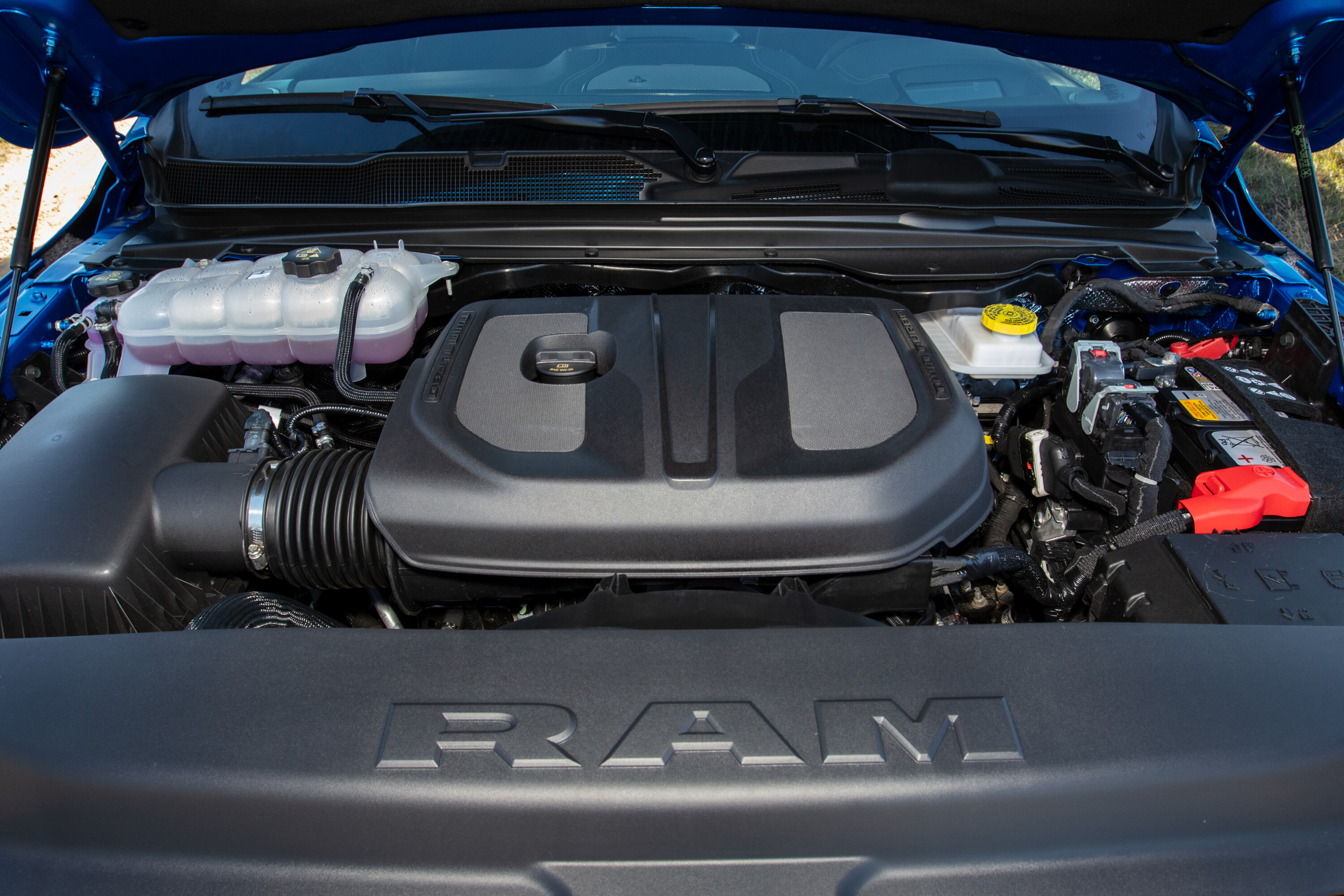
An aluminium head supports hydroformed tubular cams that independently manage four valves per cylinder. Aspiration is via twin turbos and a common rail direct-injection system primed by a high-pressure pump that generates up to 350 bar. Output numbers are impressive, but more impressive is its smooth and balanced run-up from idle to the 5800 rpm redline.
For those who like to push the adrenaline envelope, the optional HO variant (Longhorn, Limited, and Tungsten models only) generates a G-inducing 403kW and 706Nm. Both powerplants are backed by the venerable TorqueFlite 850RE eight-speed automatic and Borg-Warner transfer case, which offers on-demand or full-time four-wheel drive depending on model.
An electronic locker is standard on Rebel and available on all models, and all I-6 versions have 3.92:1 gearing. The Pentastar 3.6-litre V6 eTorque mild hybrid is the baseline engine, and while I’m a fan of the Pentastar, if I’m buying a full-size truck I’d opt for the performance and grunt of the more powerful mill.
| Pentastar 3.6-litre eTorque V6u00a0 | Hurricane twin-turbo 3.0-litre I-6 | Hurricane HO | |
|---|---|---|---|
| Power | 227kW | 313kW | 403kW |
| Torque | 365Nm | 638Nm | 706Nm |
| Payload | 1043kg | 866kg | 621kg |
| Towing | 3675kg | 5245kgu00a0 | 4870kg |
The Tradesman is a work truck and appointed accordingly, but the Tungsten and Limited up the ante when it comes to luxury and technology. Premium models include a 14.5-inch high-resolution Uconnect 5 command centre with multi-screen capability. A new 10.25-inch passenger-side LCD allows the co-pilot to manage navigation, entertainment, and monitor exterior cameras.
The instrument cluster has also been enlarged to 12.3-inches, and steering wheel thumb controls allow you to toggle through a dozen screen options. All are interconnected via an advanced Atlantis electrical architecture, which boasts higher operating speeds and enhanced memory capacity.
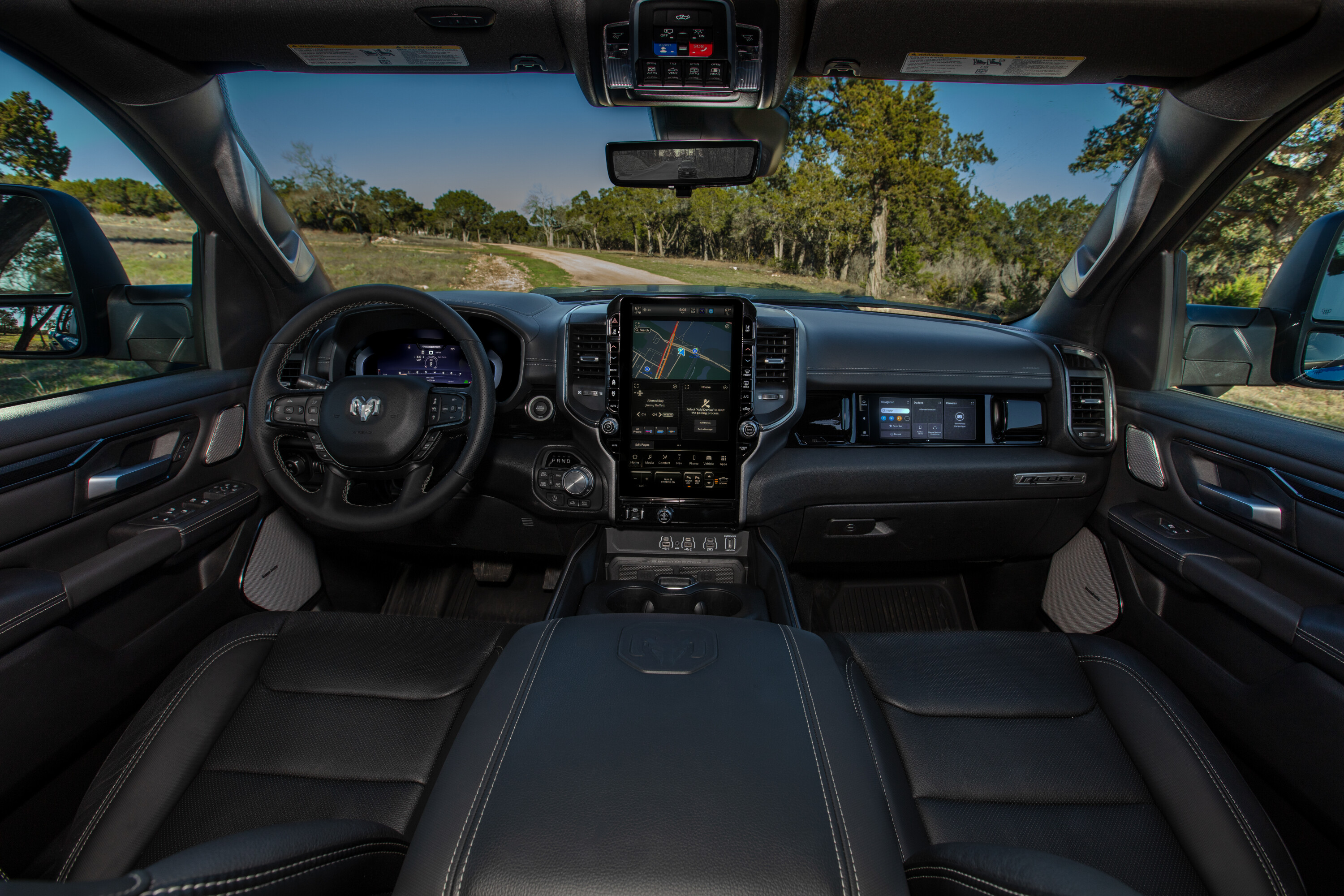
At the front of the console is a dual-station wireless phone charger, and a heads-up display on the windscreen offers five data zones. If you want to rupture an eardrum, crank up the bazillion-Watt (1228), 23-speaker Klipsch audio system. Add 24-position adjustable seats, back massager, power lumbar support, hand-stitched leather, and multi-zone climate control, and you’re all set for a trailside nap.
Although we take cutting-edge safety features for granted, Ram is introducing more advanced autonomous driving systems: Active Driving Assist and Hands-free Driving Assist (Level 2). On select sections of highway it utilises radar, 360-degree cameras, and lane-centering to literally drive itself. But if you reach back to swat your rugrats, the annoying drowsy driver alarm will bring your attention back to the road. Fun fact. I trust a computer to land a 747 at night in low-viz conditions, but taking control of my vehicle on a highway filled with knuckleheads? No thanks. Besides, I actually like the ‘driving’ part of driving.
The 1.8kW inverter makes charging devices or running power tools a breeze. I also like the fold-back rear seat, which provides flat, door-to-door storage. Optional Ram Boxes on the bed rails are great for stashing tools or fishing gear, but I’d wager they could also hold a case of coldies. Lastly is the multi-function tailgate. It opens like a standard gate or ambulance style, features power open and close, and has key fob remote operation.
In my opinion, its happy place is Baja-style high-speed desert roads. Multiple drive modes, a nimble suspension, and rear e-locker remain intact, and the camera system allows you to view oncoming obstacles when they disappear under the end of the bonnet. In short, it retains the off-road capability we’ve come to appreciate from the Rebel.
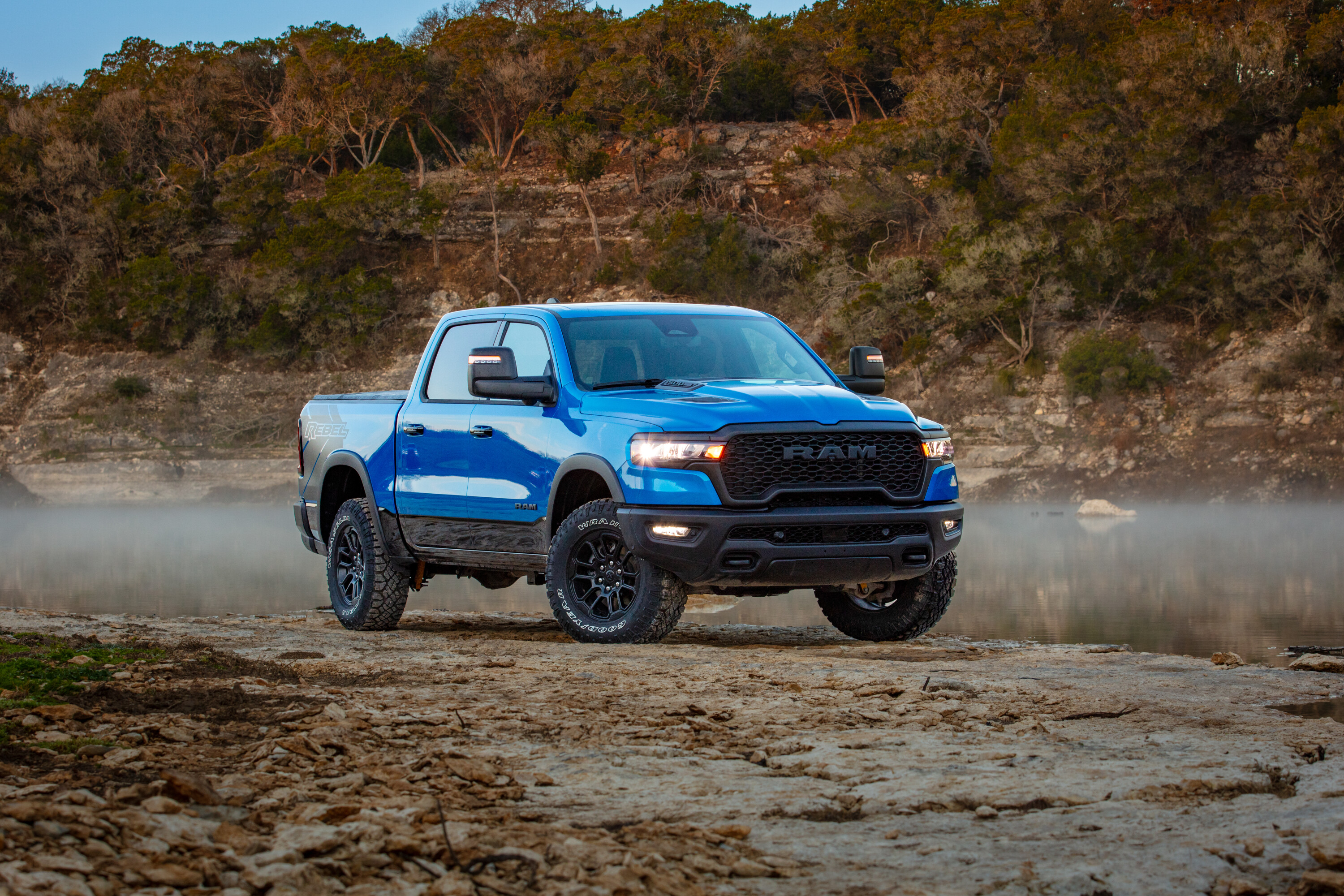
The most notable change from the HEMI is the Hurricane’s quieter notes and smoother transition through the power curve. Interestingly, with the sunset of the TRX and its fire-breathing 523kW Hellcat mill, the Rebel steps in as the brand’s primary dirt offering. But rumour has it that Ram will be releasing the RHO in 2025 (Rebel High Output?), which is said to be incorporating the TRX’s suspension.
The Hurricane 3.0 is no slouch on the tarmac, pulling off the line with purpose when you squeeze the skinny pedal. On twisting two-lane roads, the 1500 displayed predictable tracking and reasonable body roll during aggressive constant-radius turns, an example of well-balanced front and rear damping.
I’d rate yaw damping at 0.5 – how quickly the vehicle returns to a neutral position during emergency lane change scenarios – settling after one full cycle. The Tungsten, with its low-profile tyres and stance, excelled over the Rebel in this genre but both are simply fun to drive. Turbo lag is almost a thing of the past, and the Hurricane will spin the speedo well past the legal limit at a nearly linear rate.
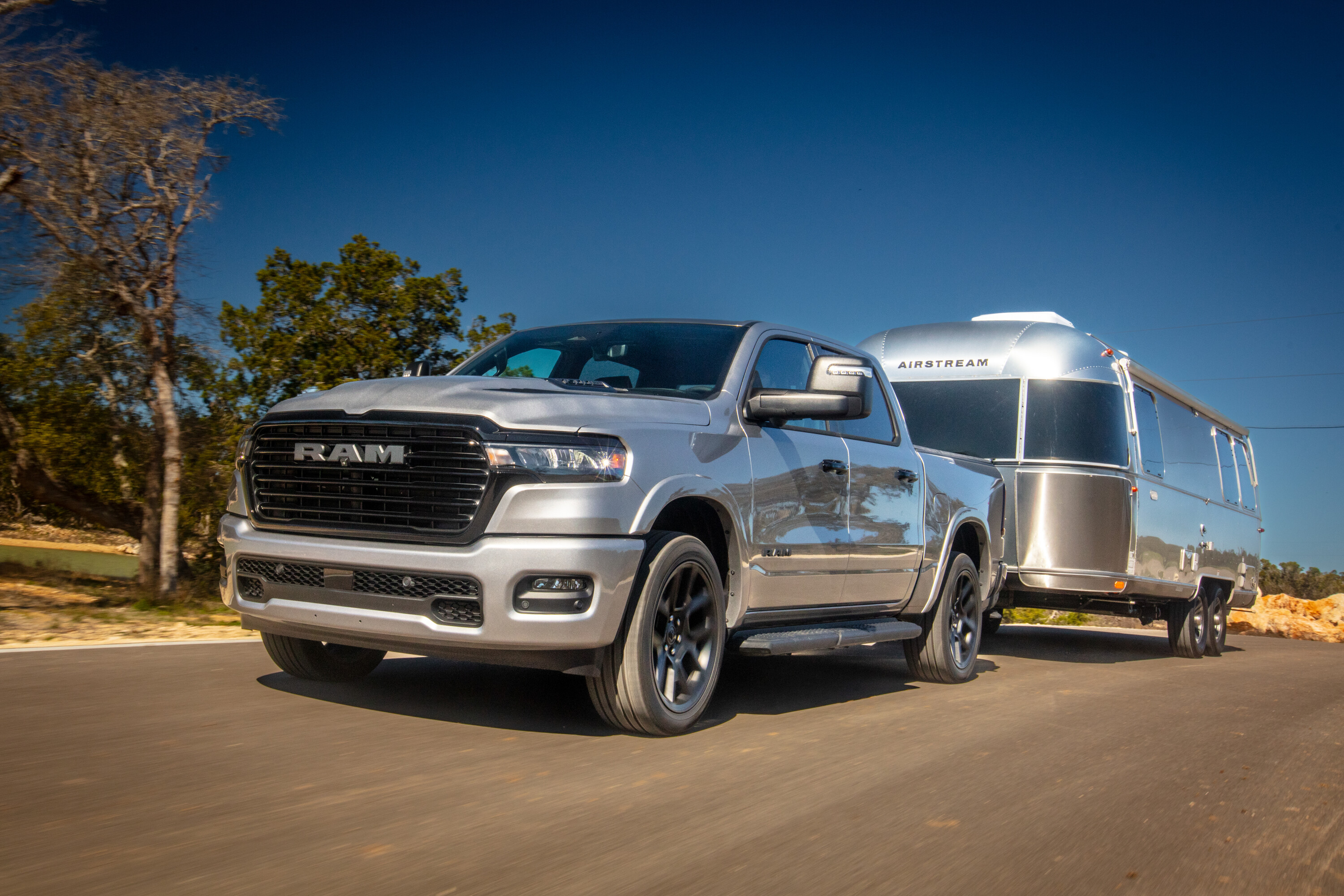
We hooked up a 2800kg Airstream trailer to a Limited for a drive through a mix of country roads and 100km/h highway. Towing capacities range from 3675kg Pentastar to 5245kg with the standard 3.0 Hurricane (the HO drops to 4870kg). My personal tow rig is a ’99 Dodge Ram 2500 with a Cummins 5.9-litre. I love that truck and am chagrined to say the Hurricane-powered 1500 would leave my old 24-valve in the rearview mirror.
Whether braking hard, carving turns or accelerating, I could definitely feel the load, but never was the tail wagging the dog. Although I don’t have issues backing up or navigating tight corners (I spent a decade driving a truck for UPS), the Auto Hitch Assist, which guides the receiver to the ball, is super handy. And, when you activate a turn signal the rear side camera view is displayed on the centre LCD. A 100-litre fuel cell is standard, but the optional 125-litre unit will extend your range by 200km (or so) on the highway – EPA fuel economy estimates are forthcoming.
Although they (and their low-profile tyres) reduce road noise and rolling resistance, enhance fuel economy, and are great in most conditions, when in soft mud, snow or sand there is no substitute for airing down and increasing the tyre’s footprint. On the flipside, big-wheel packages accommodate massive 380mm twin-piston disc brakes, one of the many factors that contribute to the 1500’s solid road manners and towing stability.
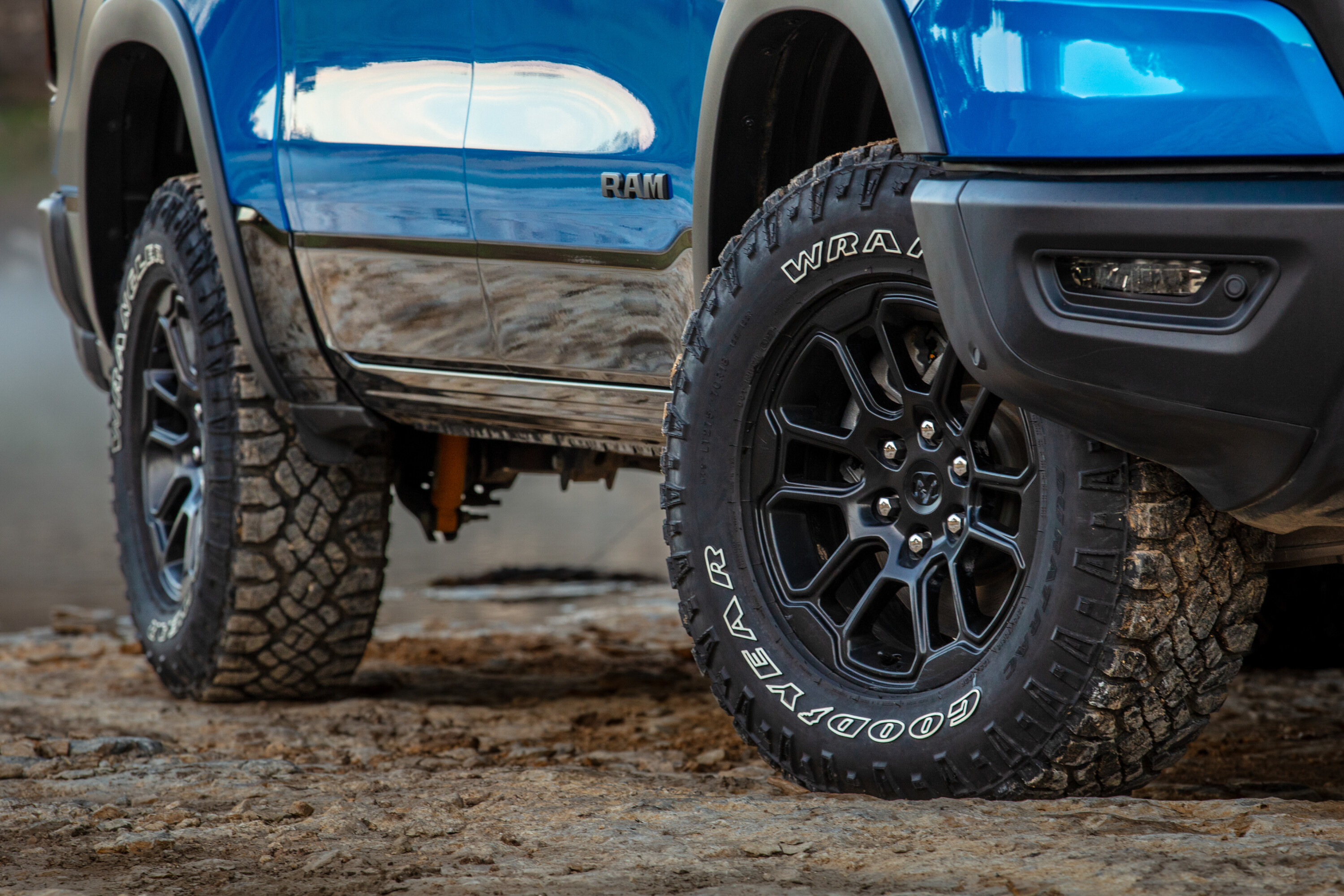
Another beef is the lack of a console shifter… and manual cogs. Call me old school, but a truck with the sportiness of the Rebel deserves a proper shifter. A few other grievances include the HO requiring 91-octane fuel, and there’s no replacing the guttural tone of a good ol’ HEMI (RIP).
In addition to the RHO, 2025 will reveal the first fully electric 1500, the REV, along with the extended-range Ramcharger, in which a Pentastar 3.6-litre gas mill will generate juice to power a pair of electric drive motors.
Interestingly, a form of this technology has been around for more than a century, but predominantly used by railroads. Maybe I’ll borrow one for my next trek to the Arctic, but I have no doubt I’m going to miss the sweet rumble of a HEMI V8 under the hood.
We were west of the main north-south track through the Karlamilyi National Park, formerly known as Rudall River NP, and while the main track has challenges of its own it is generally much better than the side tracks leading to the many waterholes and points of interest that dot this huge park.
Surrounded by dry but vegetated desert country, typical of inland Australia, the Rudall River rises in the very west of the park where Three Sisters Hills acts as a natural barrier to the Little Sandy Desert.
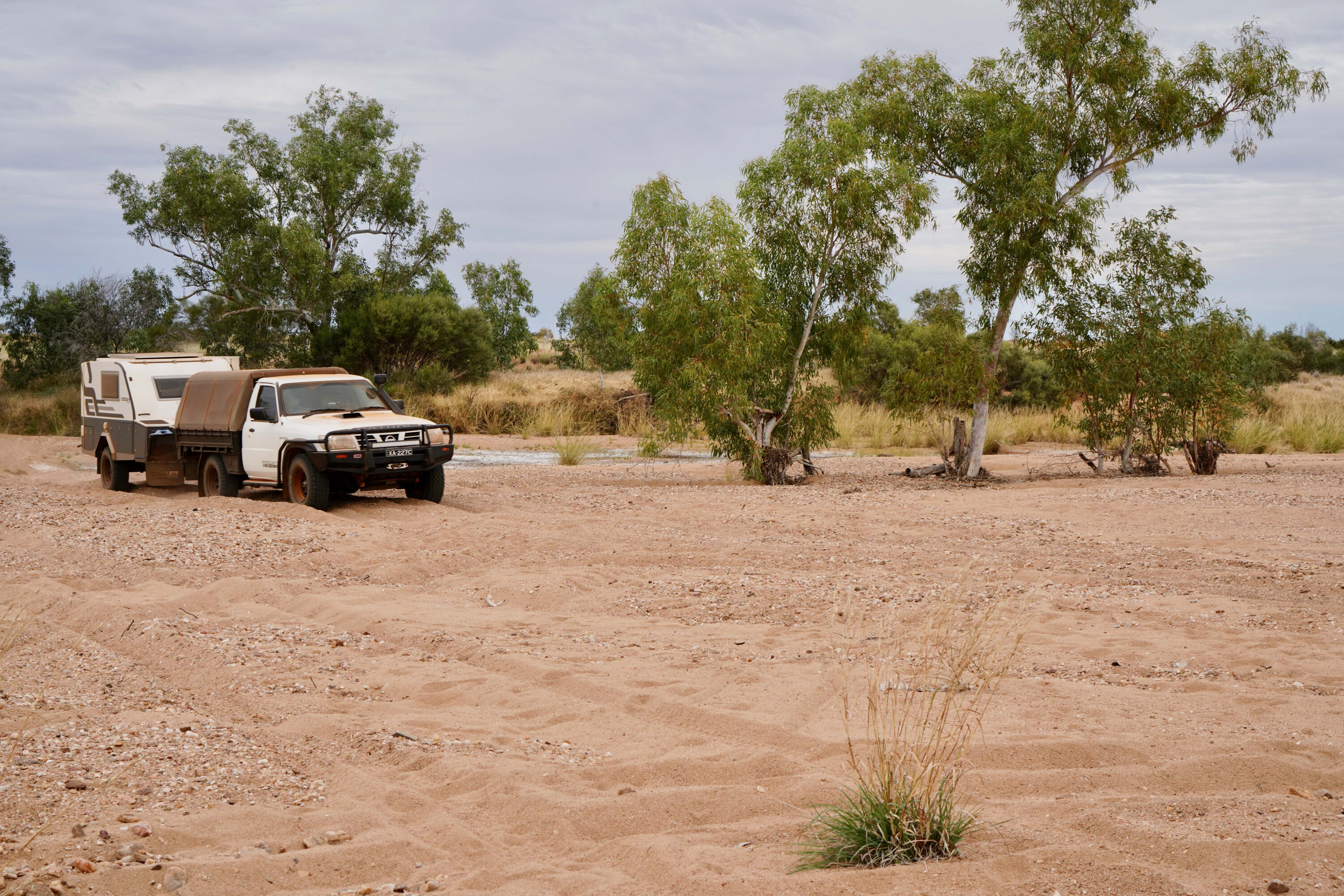
The river doesn’t always make it to Lake Dora, its flow dictated by the annual Wet season rains
Sweeping in a great arc, once it leaves the rocky hills and sheer red bluffs of the Fingoon Range further east, it wanders north-east amongst the dunes of the Great Sandy Desert to finally ooze, after 240km or so of torturous meanderings, into the shallow ephemeral Lake Dora.
The river doesn’t always make it to Lake Dora, its flow dictated by the annual Wet season rains which can hardly be called reliable.
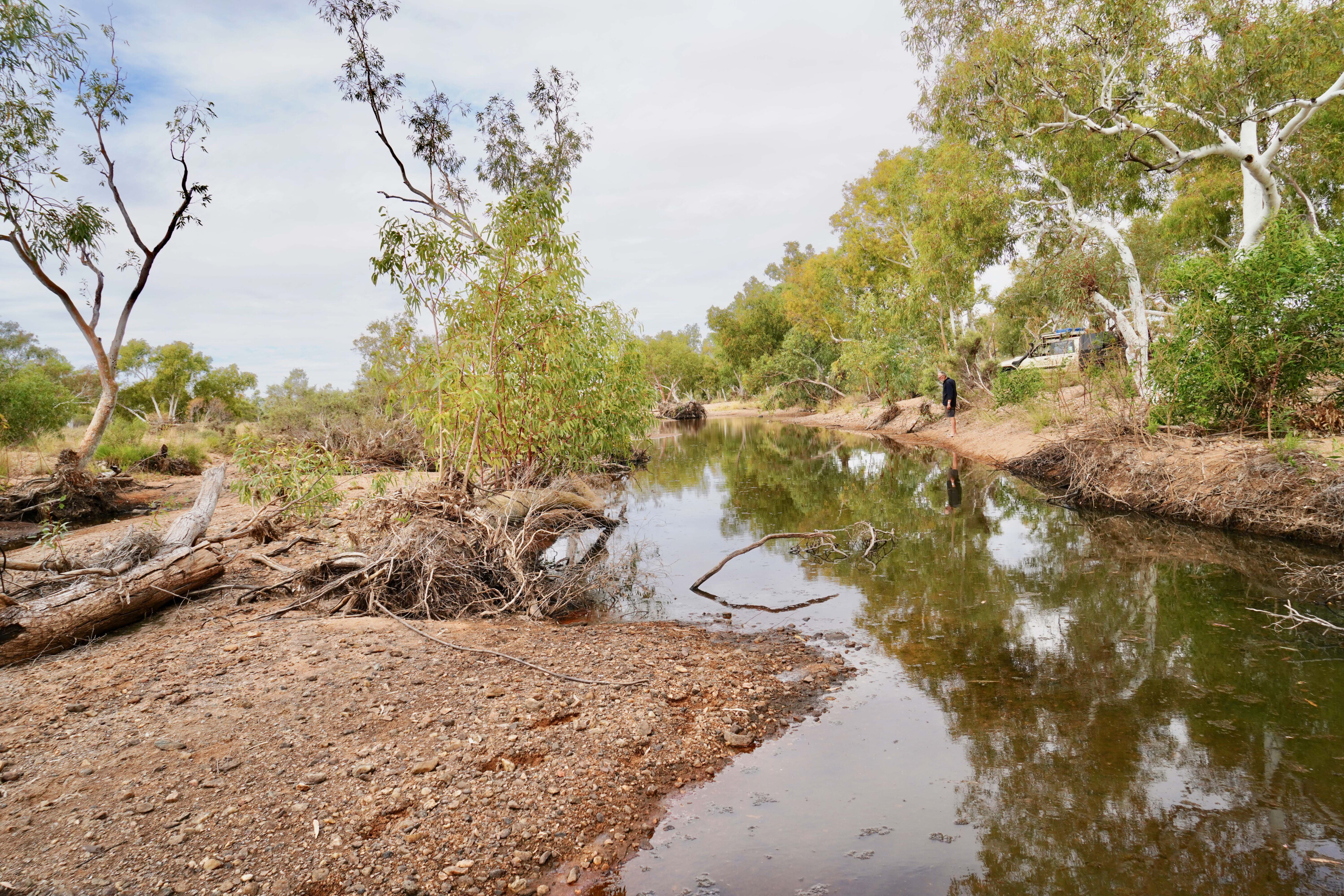
Even so, the river has a number of permanent and semi-permanent waterholes along its course and these make the area an oasis for bird and animal life, as well as for the early inhabitants of the region and for today’s adventurous travellers.
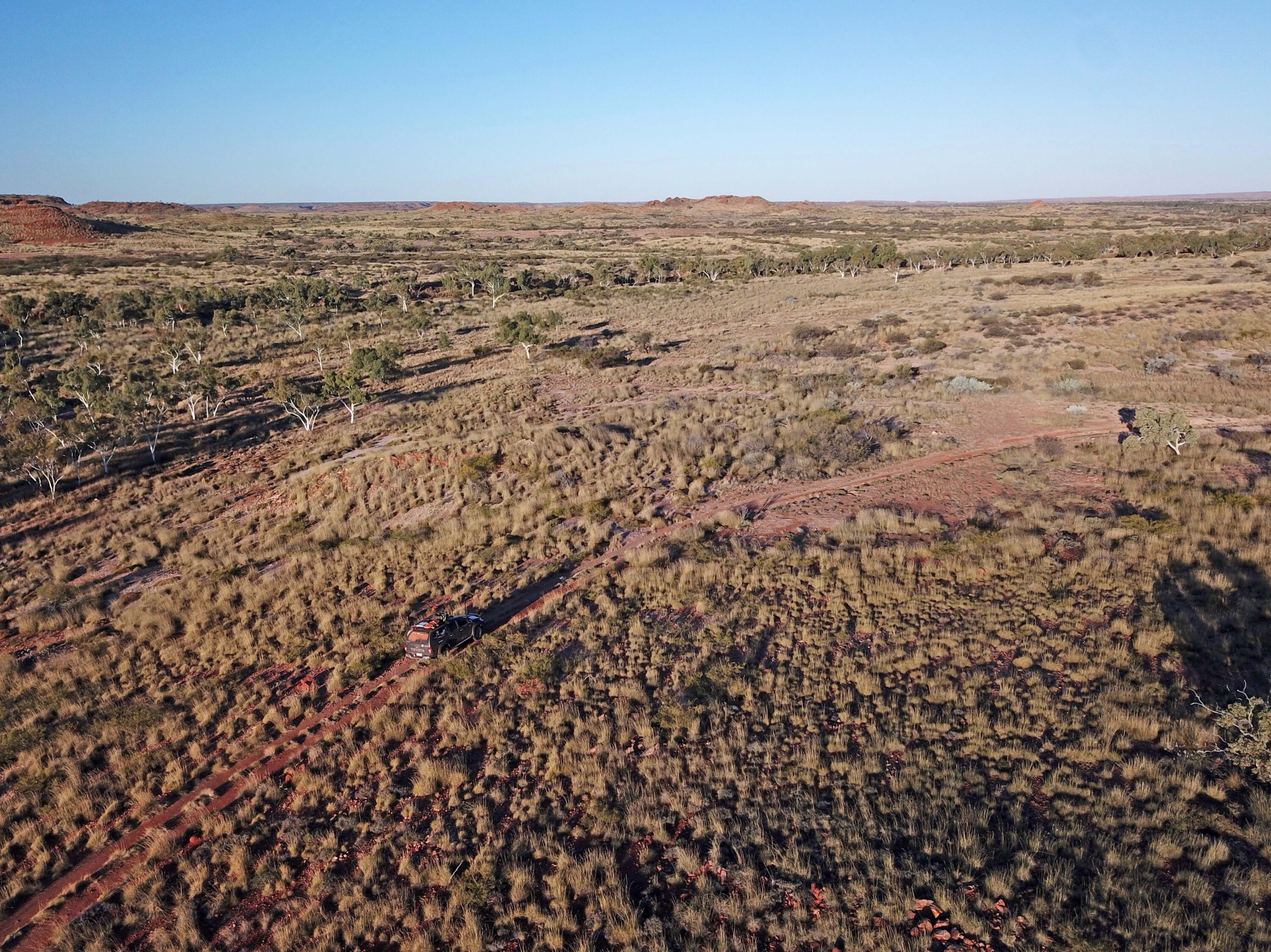
The track then swung north-west paralleling the creek until we descended the low hill to the much more creatively named Tjingkulatjatjarra Pool, a native name that remains unpronounceable to me.
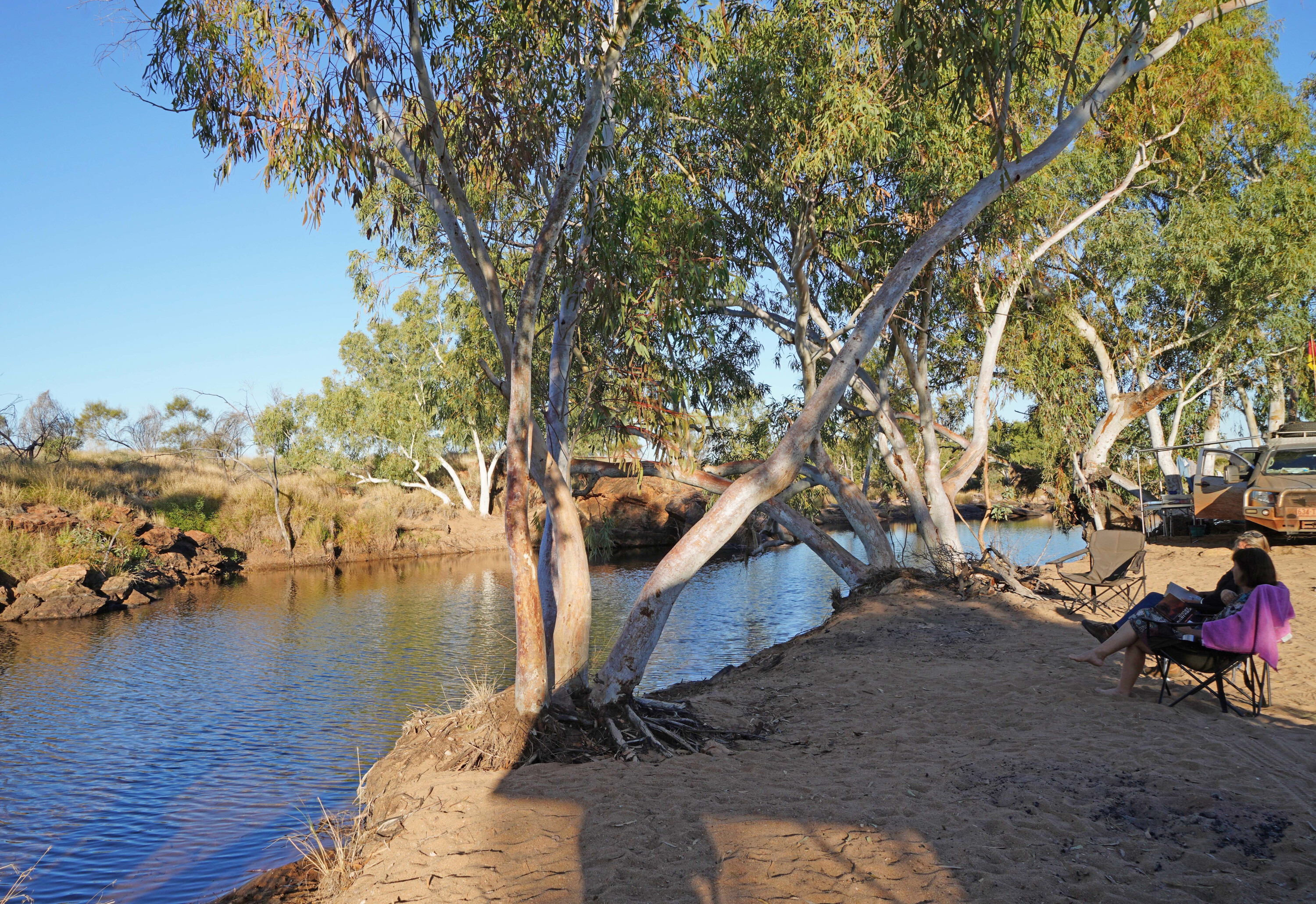
The small camping area at the pool’s northern end is a cracker, ideal for one or two camps, but sadly it was already occupied when we arrived, so after a bit of a yarn to the occupants and a few photos we turned around and headed back to our camp situated on the low stoney rise just up from the main crossing of the Karlamilyi River.
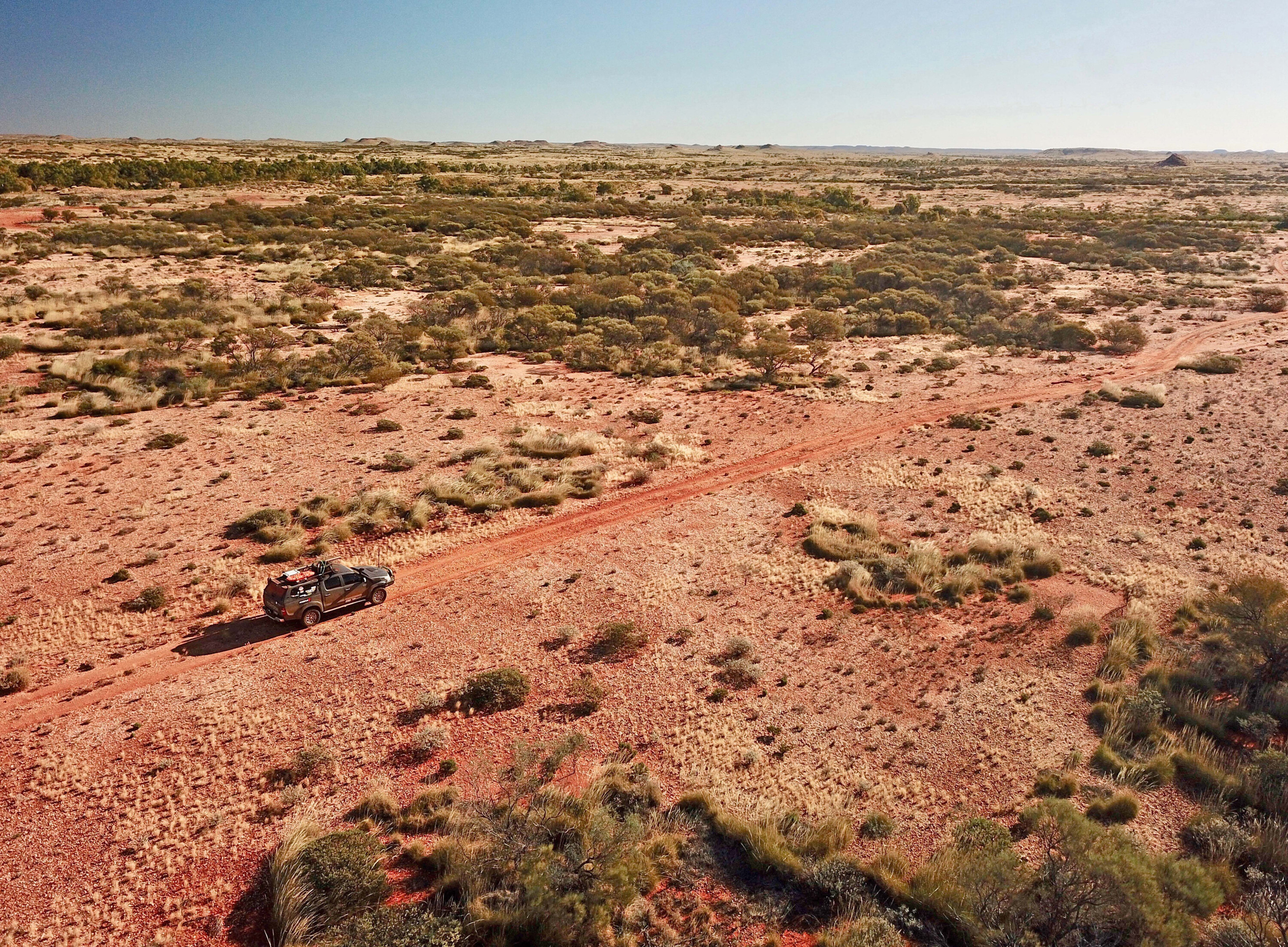
There are two communities in the park – Parnngurr, previously known as Cotton Creek because of the name of the nearby stream and located near the southern boundary of the reserve, and Punmu, in the north-east of the park on the edge of Lake Dora. Both communities have limited shop and fuel facilities.
The river was named by the European explorer Frank Hann in 1897 after the surveyor William F. Rudall, whom Hann met in the area while he was prospecting, and Rudall was searching for men missing from the Calvert Expedition.
They probably weren’t the first Europeans in the area though as a gold strike at Nullagine 10 years earlier had brought many wandering gold seekers into the area just to the west of what was to become Karlamilyi NP.
His report concluded, “… I may say I am of the opinion that gold does not exist in the locality.”
In the 1920s Talbot was out again in the desert country, this time looking for oil for the Freney Kimberley Oil Company. By the 1950s other companies had begun searching for oil and gas deposits, some of which included the area now covered by the national park.
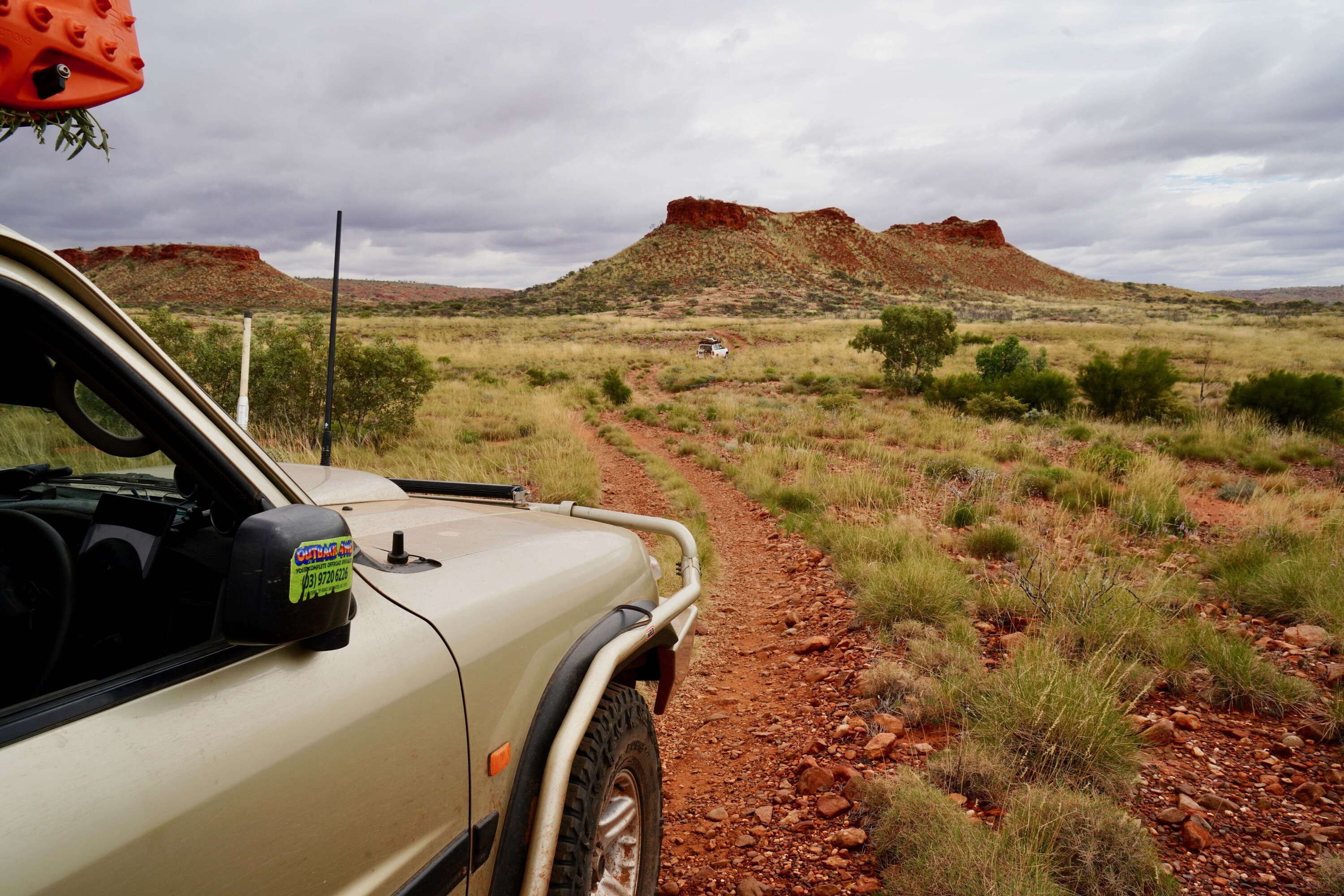
Just a couple of years later WAPET (West Australian Petroleum Pty. Ltd.) constructed the Wapet Road (or Kitson Track) between the coast and the Canning Stock Route. These routes pass to the south and north of the park respectively and offer the easiest access to it, with the main north-south track through the park linking the two.
This improved access led to a surge in mineral exploration and in 1972 Newmont discovered the mammoth gold and copper deposit at Telfer. Other discoveries followed.
The national park was initially proclaimed in 1978 but its northern boundary was changed when uranium was discovered in the 1980s, but no mining of that deposit has yet taken place. The park’s name was changed to Karlamilyi NP in 2008 and it remains the biggest national park in Western Australia.
It’s a tidy, friendly community and well worth visiting. From there we headed west and turned north on the main access road to the park, stopping for the night at the southern boundary amongst a stand of delightful white gums. This camp used to be even better when the bore with its hand pump delivered cool clear water, and it is a shame that it has now fallen into disuse.
From there our party, all towing campers, wandered northwards and crossed the wide sandy bed of the Rudall River without any hassle. Knowing that the track west was a bit slow with vehicles towing campers we set up camp on the low hill just north of the crossing and while we went westward, others in our group explored eastward to Kalkan Kalkan Soak.
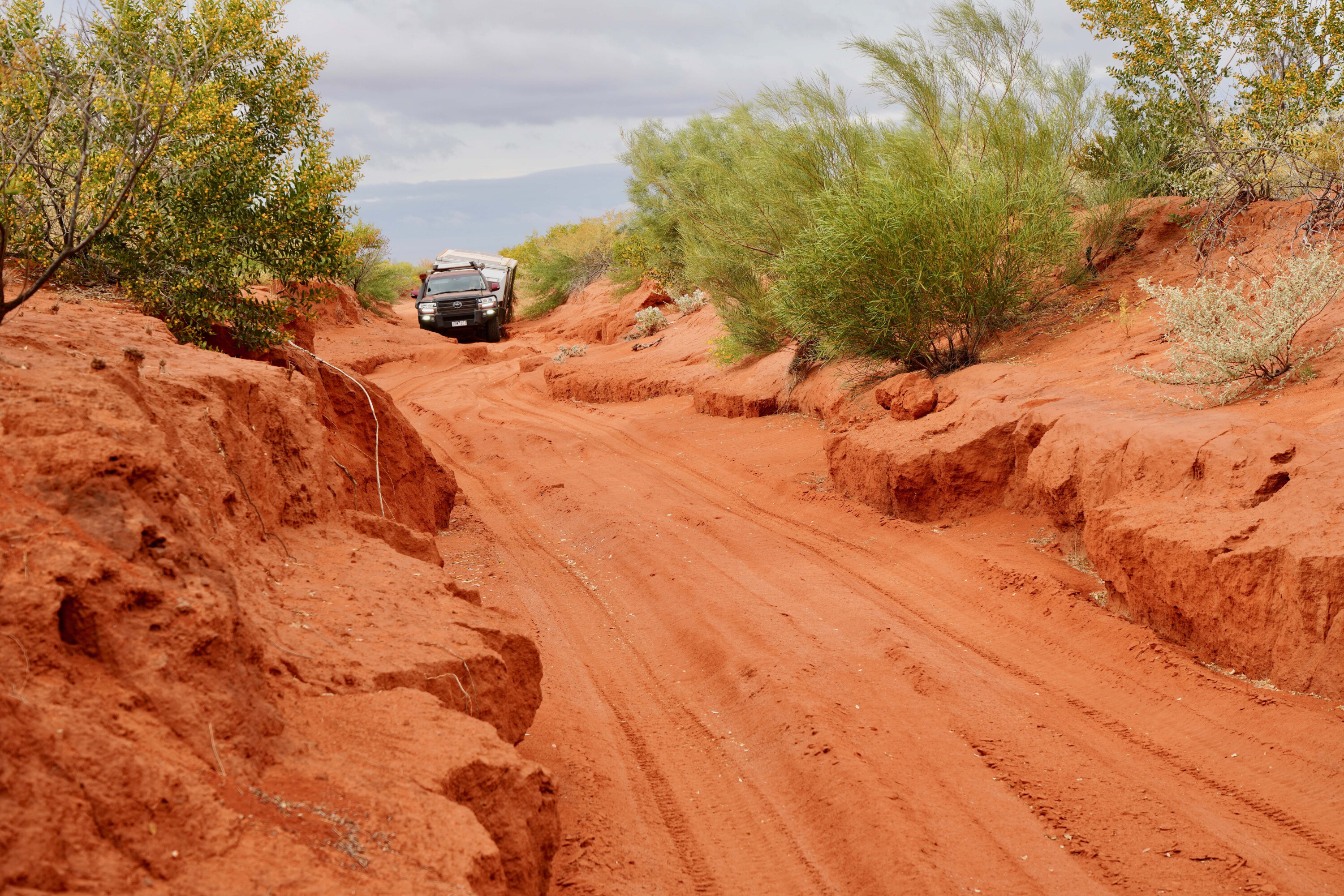
On both recent trips we spent some time repairing broken equipment; testimony of the rough tracks and challenges you have when coming to Karlamilyi from the east. After a couple of nights at our hill camp, we wandered north again along the main track, which at one point became the bed of a sheer-sided sandy creek bed, which meant engaging low range for a short while.
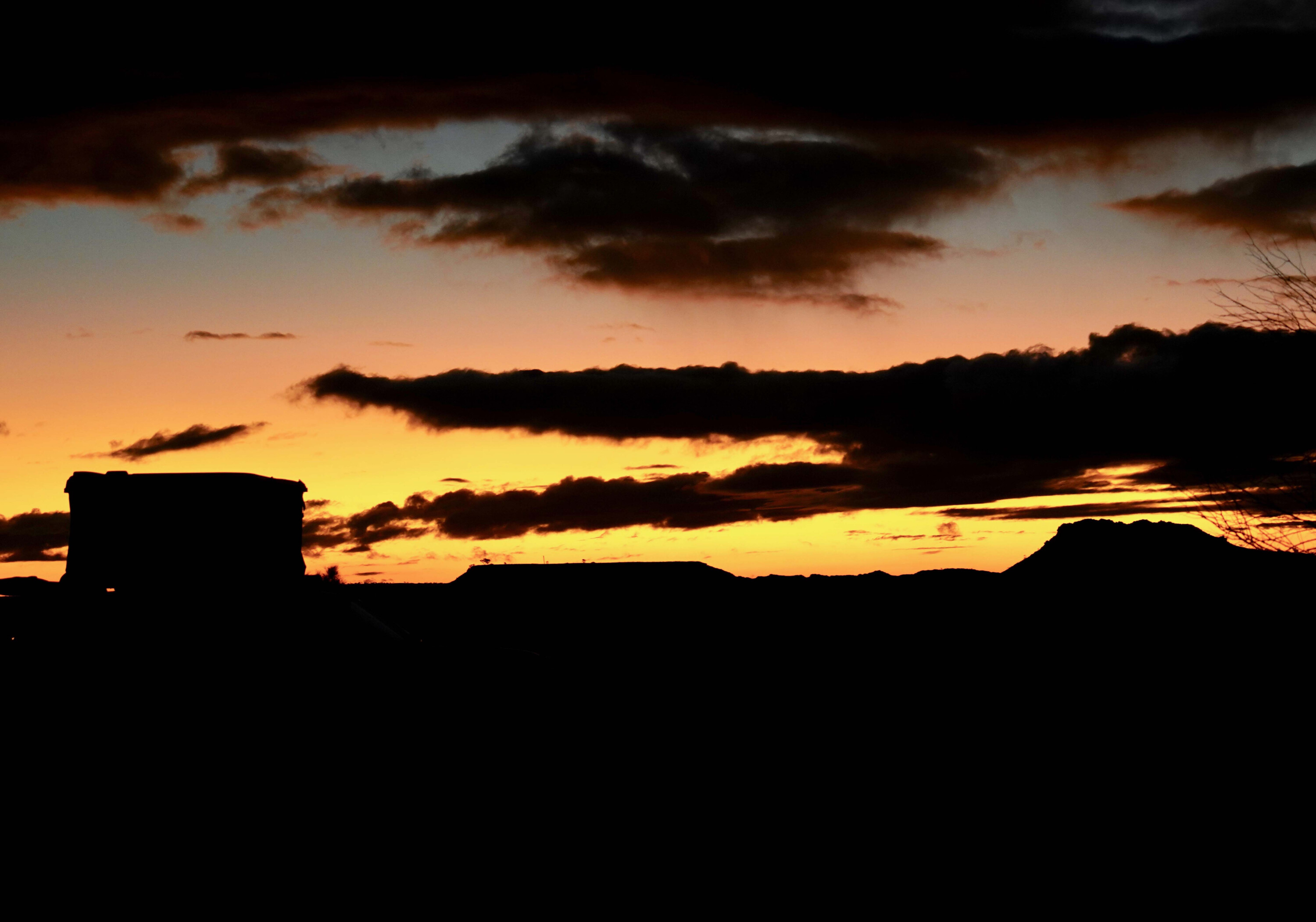
Our second camp was on a small claypan opposite the line of bluffs about 2km south of the track to Desert Queens Baths (DQB). It’s a spectacular spot with the red cliffs illuminated by the setting sun. Then, as the light fades and the stars begin to make their presence felt, the cliffs stand out in a dark, etched silhouette as the moon rises in the east.
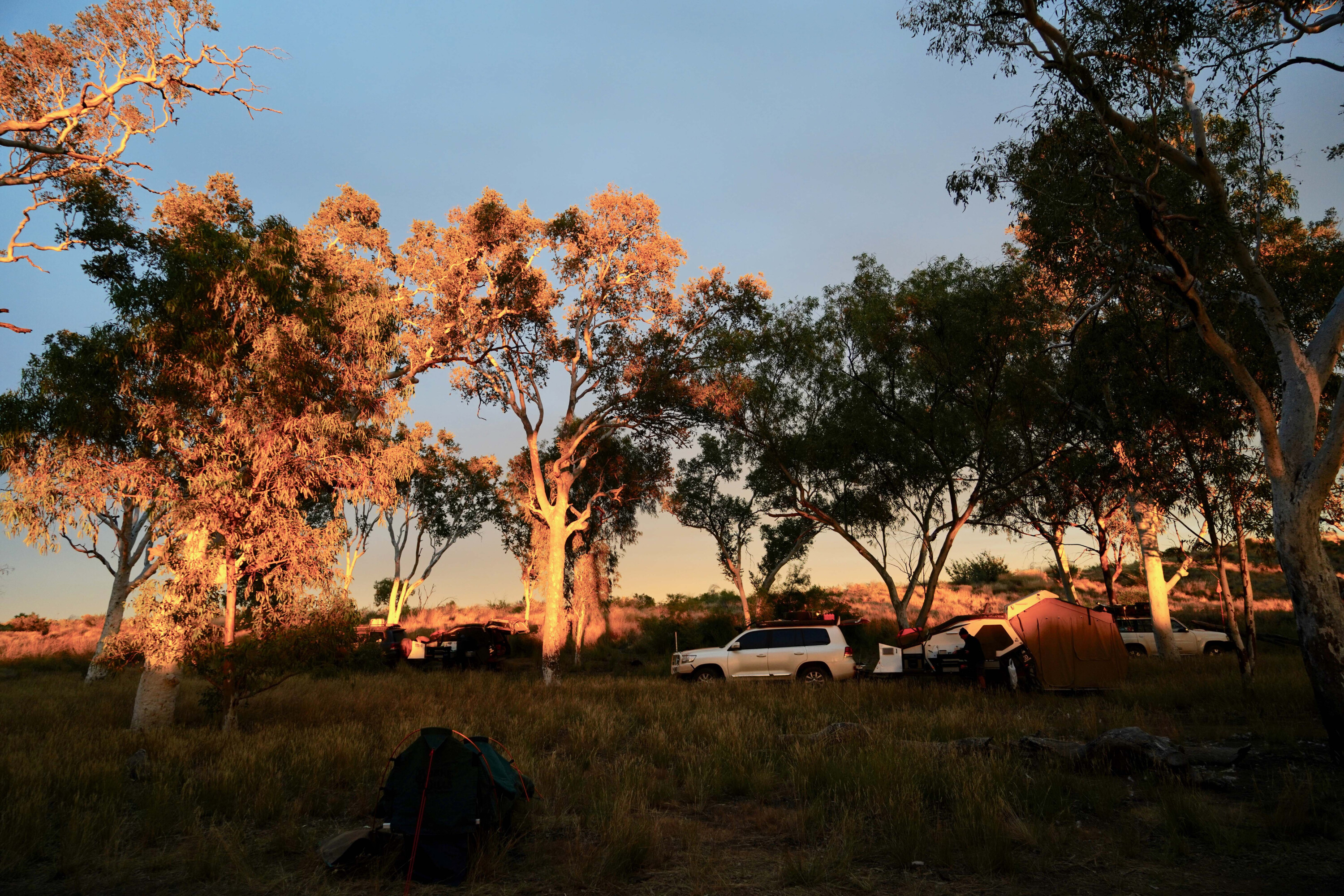
As it was, on our first recent visit in 2022 the place was crowded with four camps and six vehicles, while on our second visit in 2023 there were two camps, both a big difference to my first visit in the early 1990s when we saw nobody in the whole park.
The track winds across sharp-edge creeks and among some bluffs with Compton Pinnacle being a stand out landmark. Just before you get to the carparks at DQB there is a track junction, the right-hand one taking you a few hundred metres to a couple of small parking areas below the red rocks of the rugged range.
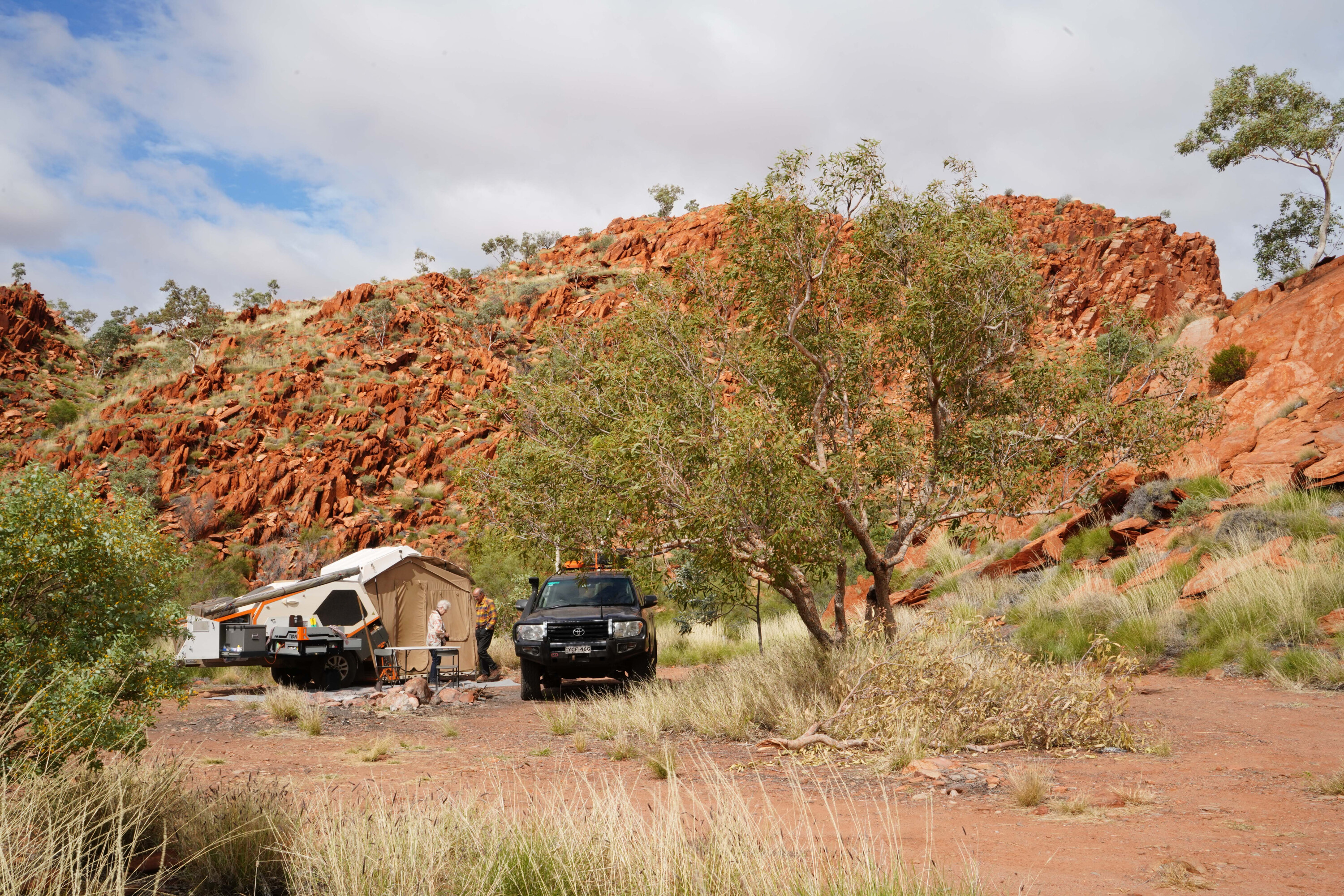
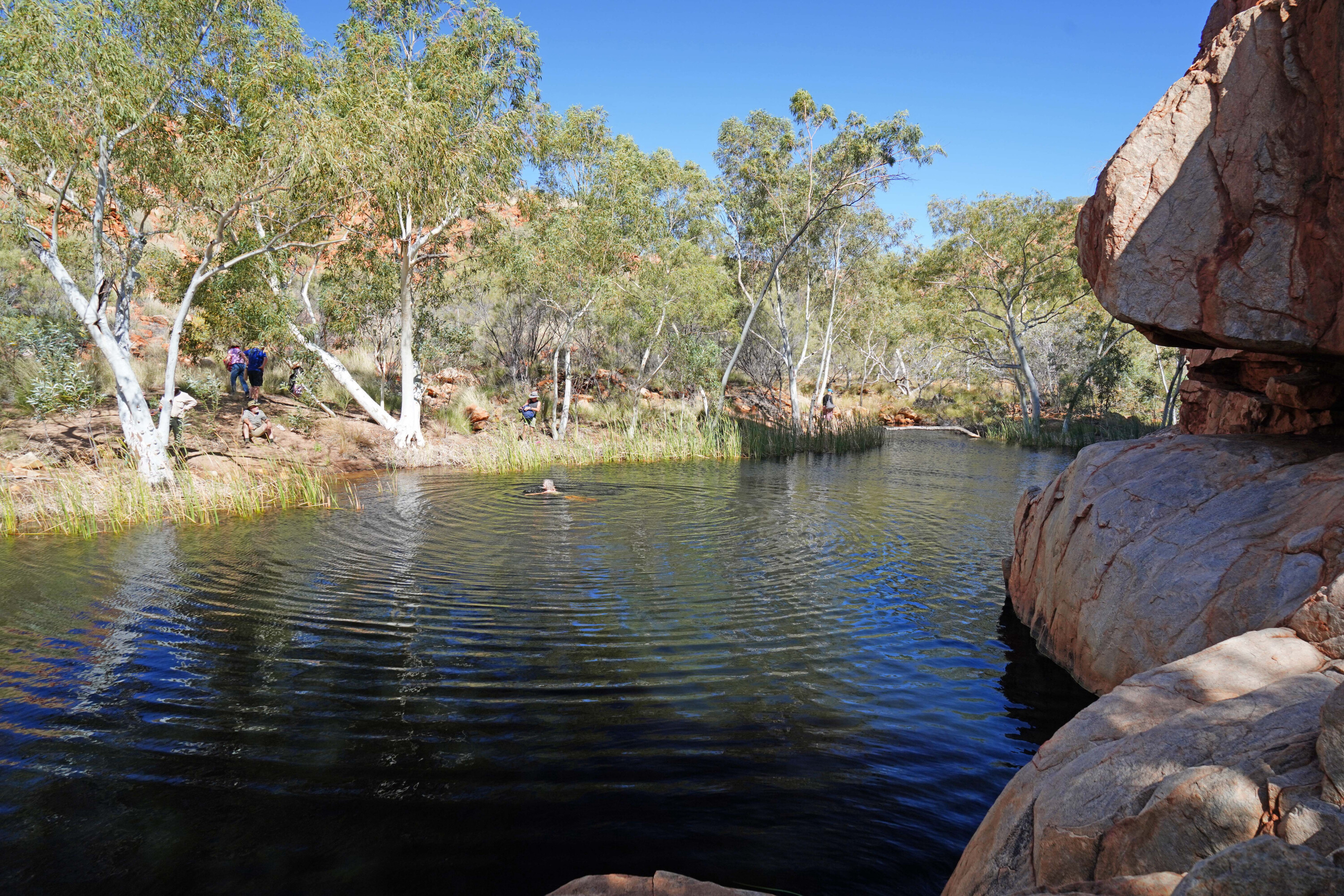
From here you can wander deep into the gorge following the waterway to a series of pools that will take you ever deeper into the range. Rather surprisingly, this permanent water isn’t on the Rudall River itself, but a tributary of the Rooney Creek which meets with the main river some distance east.
While I have looked for Aboriginal rock art on the bluffs around these sources of permanent water I haven’t had much luck, even though I had surmised there had to be some. And later, back home, I found a photograph in a dust-covered report that detailed some faint petroglyphs above the main pool.
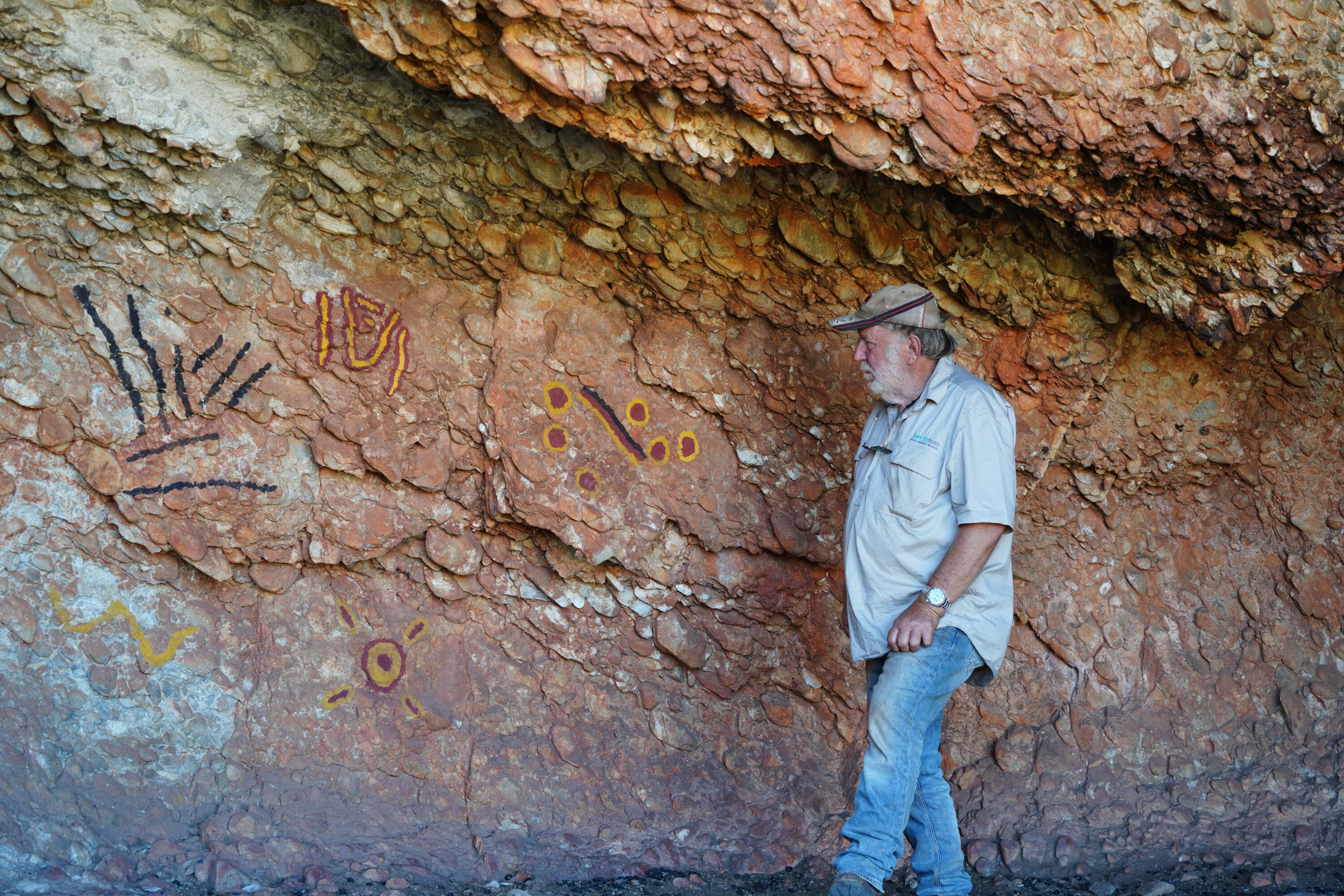
Don’t try and drive up to the mouth of the cave, but rather stop at the small parking bay and walk the couple of hundred metres to the cave itself; inside you’ll find some Aboriginal art, seemingly having been touched up rather recently, a procedure that was often followed to keep the art fresh and the spirit world working in your favour.
After enjoying the gorge and the reinvigorating water (yes, it was cold) we headed back to our camp for a few beers followed by a meal and a yarn around the campfire.
The next day we continued northwards out of the park , following some sandy creek beds, but more often than not on top of rocky gibber-strewn undulating hills. In 2022 we headed to the mining centre of Telfer, while last year we veered west and passed the Nifty Copper Mine to meet the blacktop at the mine haul road of Woodie Woodie, our adventure over for another year.
Karlamilyi NP: parks.dpaw.wa.gov.au/park/karlamilyi [↗️]
Punmu community: (08) 9176 9110
Parnngurr (Cotton Creek) community: (08) 9176 9009
Marble Bar Museum & Visitor centre: 0484 857576
Newman Visitor Centre: (08) 9175 2888
Karlamilyi National Park is accessible by four-wheel drive over rough and unmaintained roads. Access from Newman is via Walgun and Billinnooka along the Talawana Track to the park turnoff (approximately 300km). Access from Marble Bar is along Ripon Hills Road and Telfer Road to the northern park boundary.
There are no facilities in the park. Visitors need to be self-sufficient.
No dogs (or other pets) are allowed in this park.
Entry to Karlamilyi National Park is free.
Fuel and other supplies are available at Newman and Marble Bar. The Punmu and Parnngurr communities have limited fuel and other supplies.
Some folks like to drop a bunch of coin on their rigs for tax purposes, or maybe they just want to get it all done in one fell swoop, or maybe they just like spending money and want their rigs to look tough.
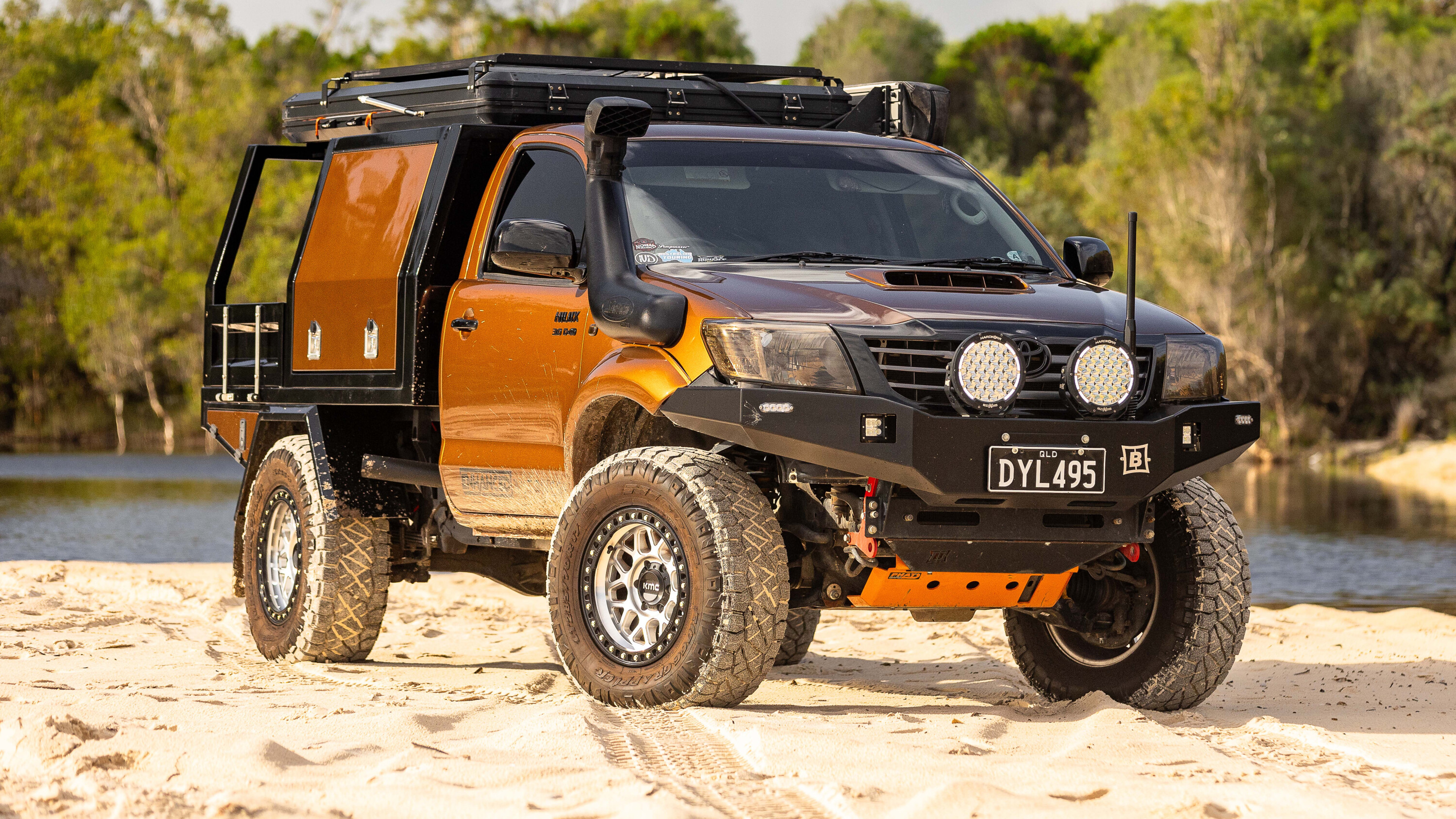
For Dylan Brechbuhl, building up his 2014 HiLux was a much slower process. It’s not that he didn’t have the money so much as he wanted to make sure he was investing the time and effort into the right places.
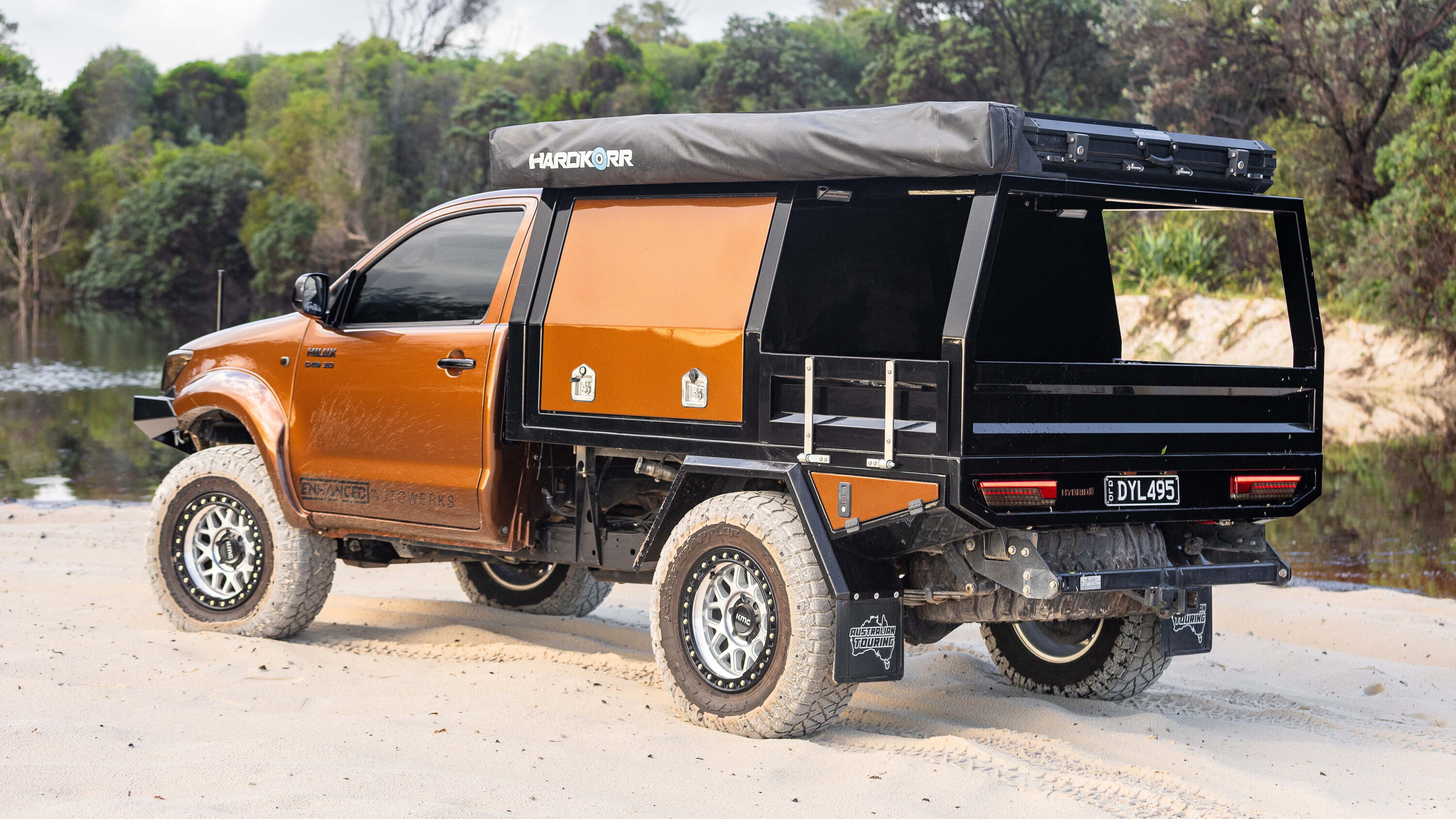
Which, let’s be honest, is arguably the smarter way of doing things – there’s no point in dropping several gorillas on 400A of lithium when all you’re powering is a couple of LEDs and a small fridge on the occasional overnighter.
Now that his Luxy is getting close to done (not that they ever really are, of course) he can sit back and be proud of what he’s created, with the help of a few good mates along the way.
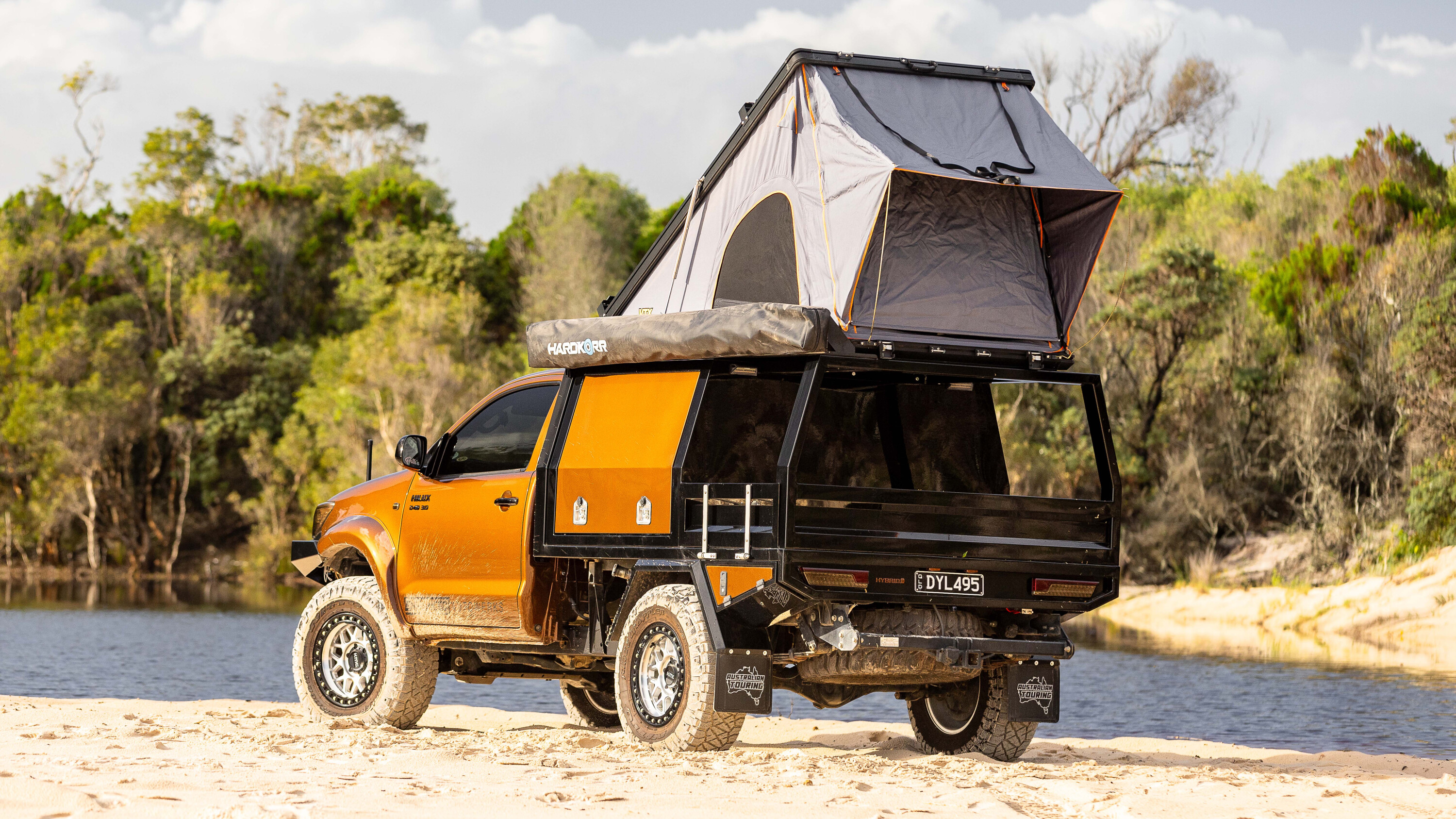
First, you actually get a useable tray (come on dual-cab people, you know that anything longer than one of your Grandpa’s stories about how he invented gravity won’t fit in your tray), plus the overall vehicle weight is lower so performance is increased; and once your ears are past an obstacle off-road you know there are no more panels to damage so you can punch it. It’s surprising there aren’t more of them out there.
Dylan first picked up his HiLux on cheese-cutter tyres and the standard white-on-white paint job as seen on job sites all over the world. It had lived the first 170k of its life as a Coca-Cola service vehicle, so the maintenance had been on point with no off-road work. Overall, it was in top condition.
He’d wanted somewhere to store his tools during the week and load up with camping gear on the weekends; but he didn’t want to tow a trailer with him, so the enclosed canopy was ideal.
Unfortunately, the steel tray was heavier than a Dr Phil episode about obesity, so it was regretfully sold off, leaving Dylan a bunch of blank real estate that needed building on – but we’ll get to that in a sec…
As anyone who has done a paint job before knows, the actual painting is only about 5 per cent of the job; the rest is all in the prep. So Dylan got busy with the block sander and high-fill and painter’s tape, before his mates came by and laid the colour down for him and the main panels were ceramic flow-coated to get it all nice and glassy looking.
Like most people who do their own paintwork Dylan swears he’ll never do it again, but the hard work paid off, because it looks nothing short of spectacular.
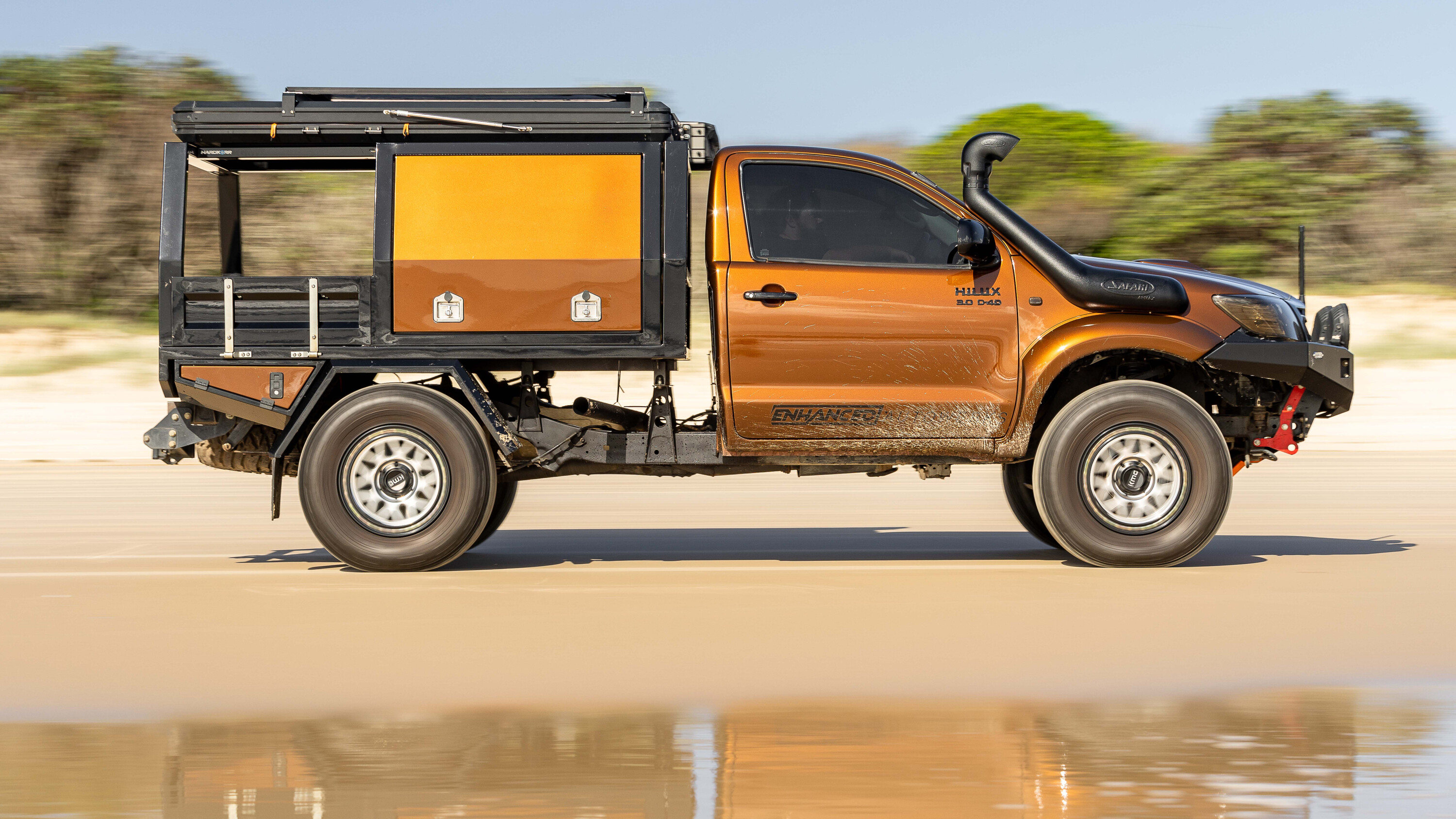
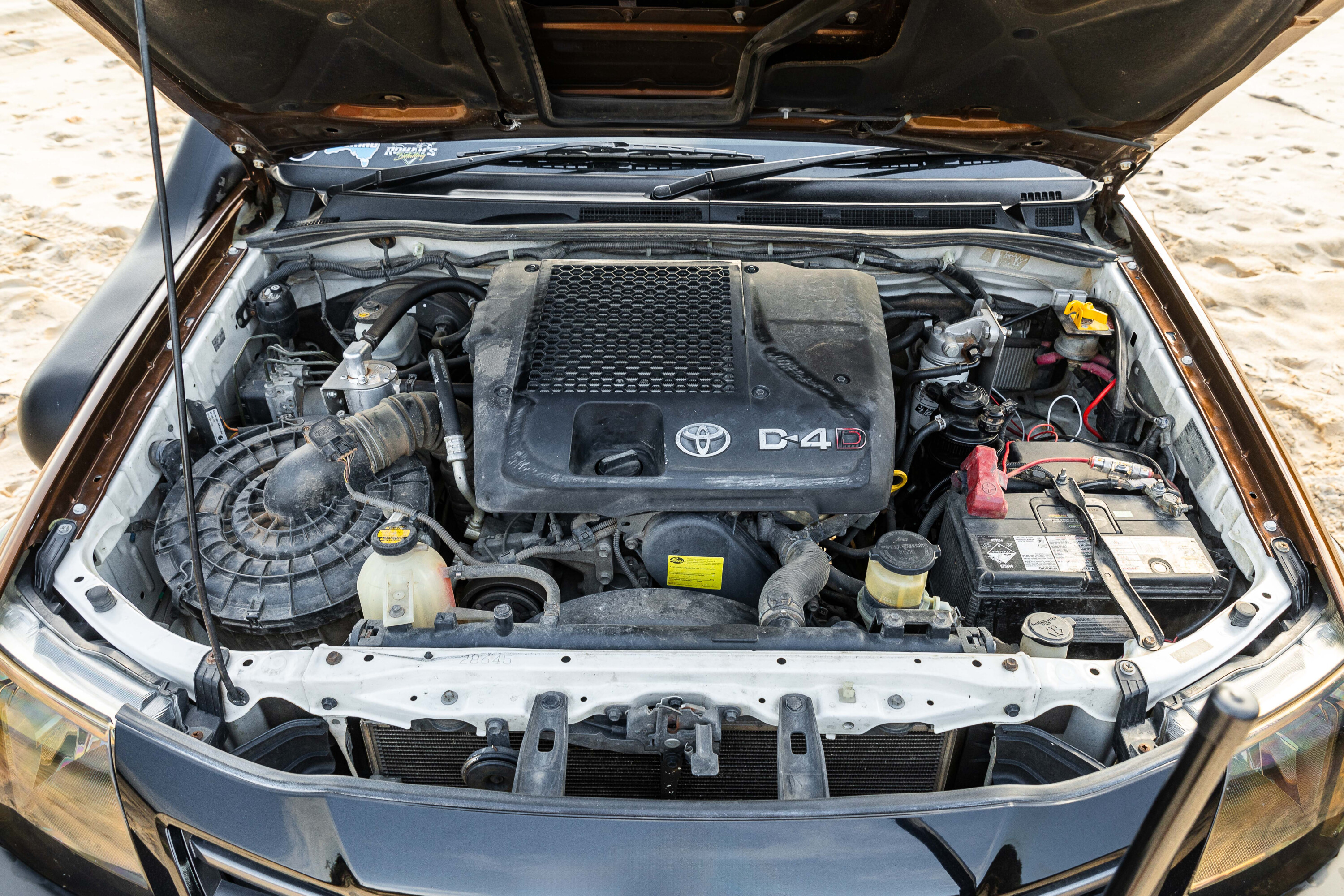
The venerable 1KD 3.0L turbo-dizzle remains stock for now, other than the three-inch PPD Performance exhaust, Safari Armax snorkel and PPD catch-can and pre-filter. Don’t be too surprised if by the time you read this Dylan has turned up the wick a little.
With the heavy steel tray gone, the suspension was all out of whack, so Dylan threw in a set of Holden Colorado RG leaf springs with 190mm shackles out back – which are longer and allow for more flex – as well as a set of PSR long-travel shocks designed for an N80, and a set of helper bags for the heavier loads.
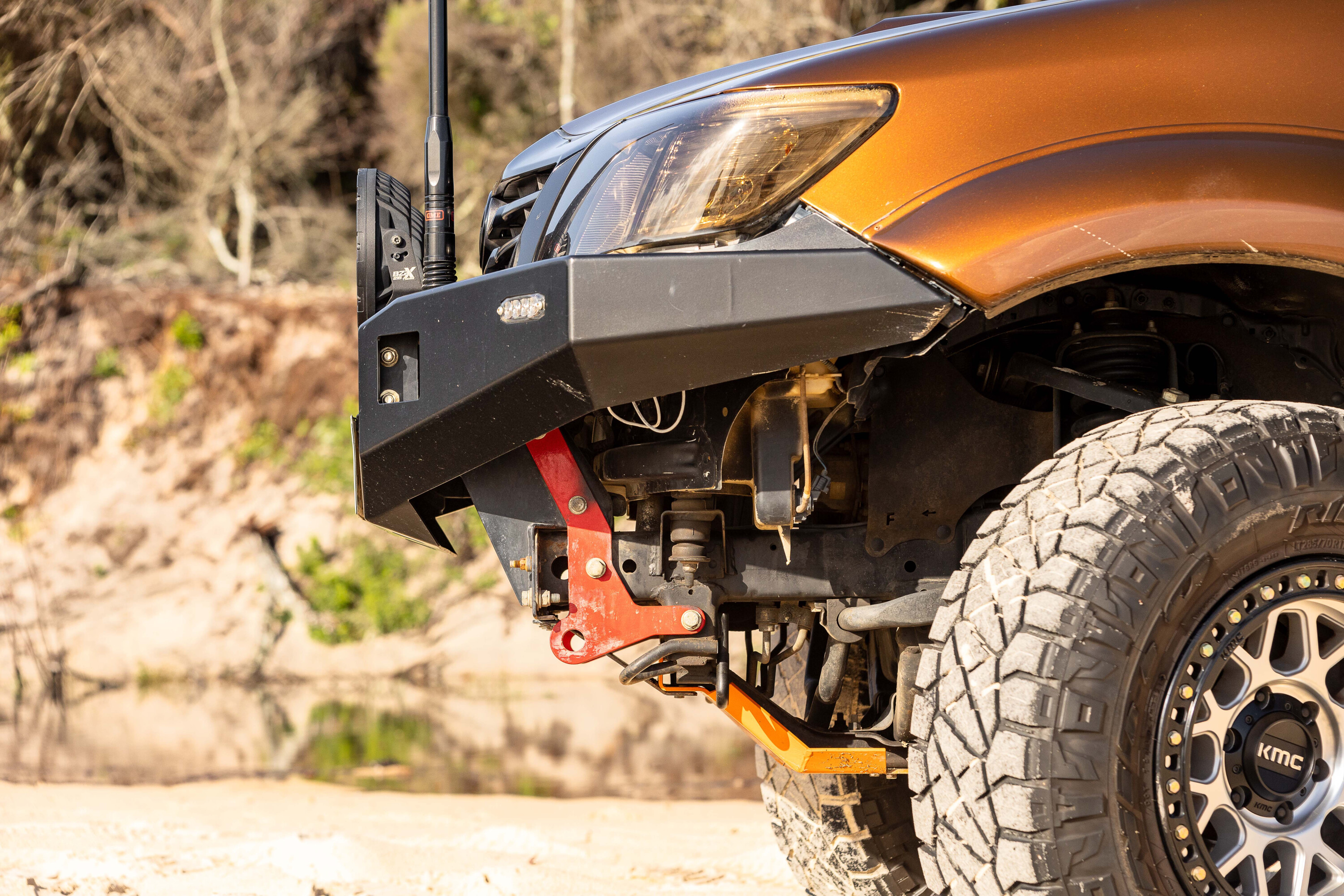
The standard skinny rubber and steelies were introduced to the bin and replaced with some slick 17×9 KMC-machined alloys with a satin black outer ring, surrounded by 285/70R17 Nitto Ridge Grapplers.
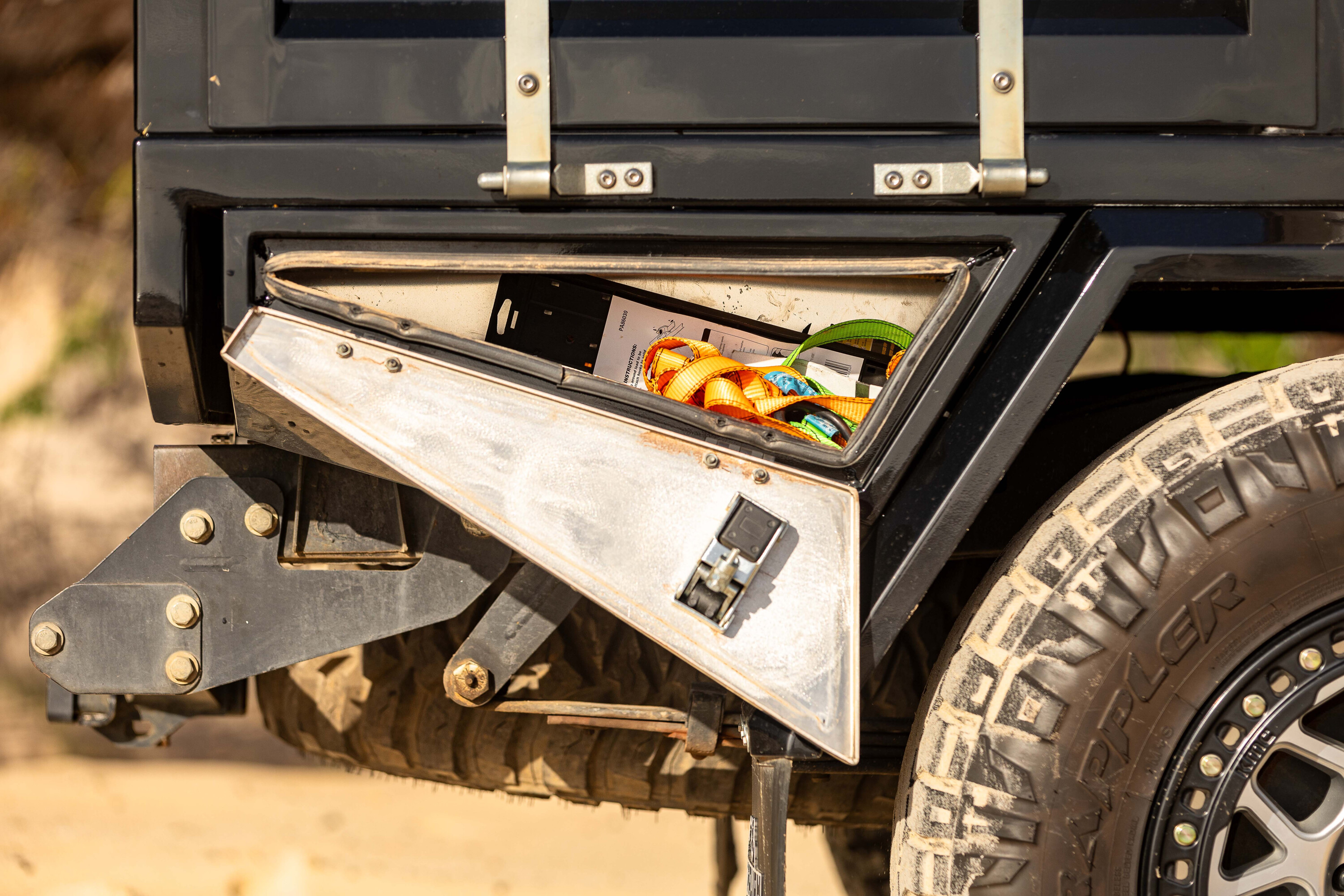
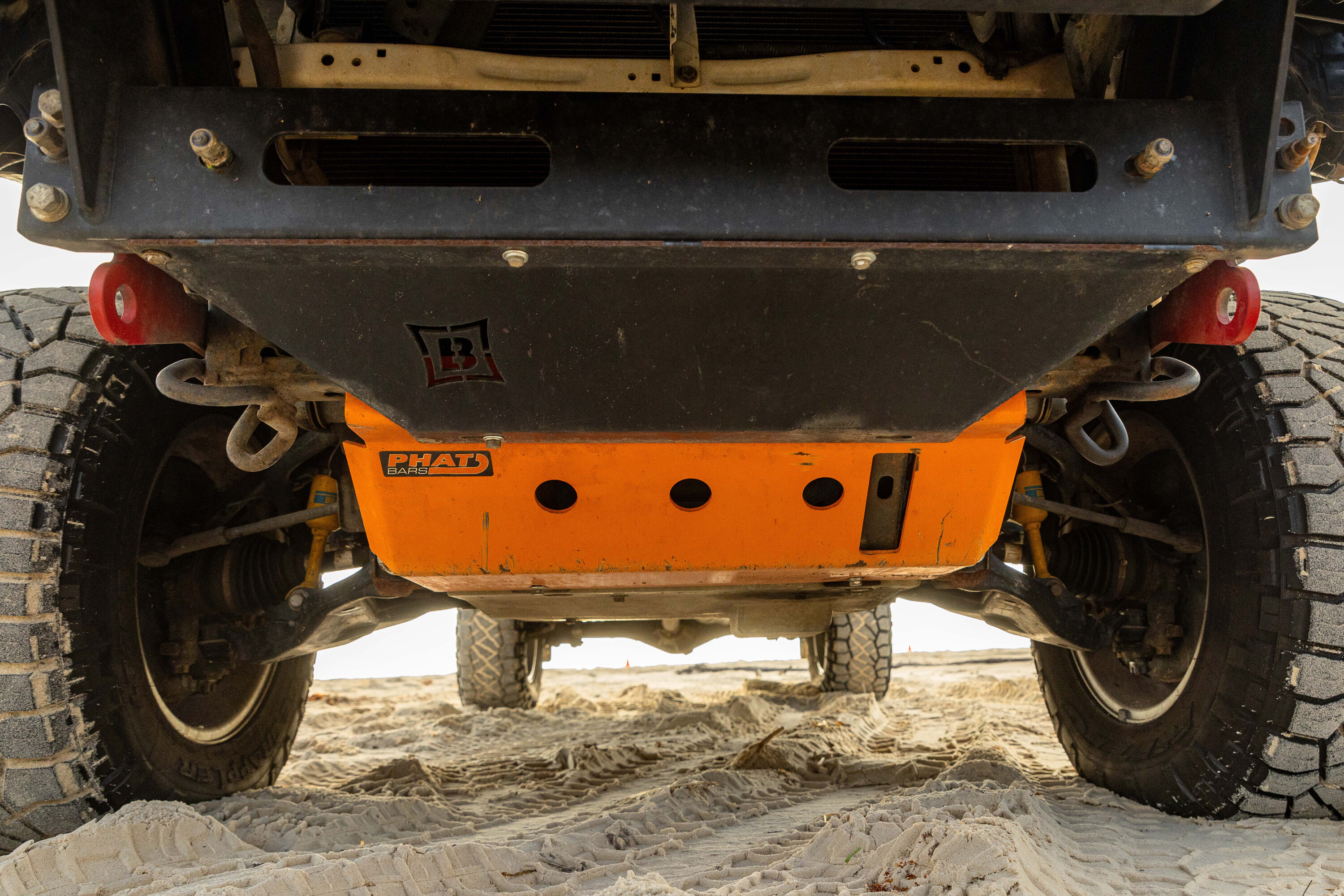
The underbody is also landmine-proofed via Phat Bars 5mm steel bash plates that are sturdier than Taylor Swift’s bank balance. Should Dylan’s world suddenly become inadvertently inverted, there’s a half-cab steel roll bar fitted courtesy of the good folks at Coca-Cola.
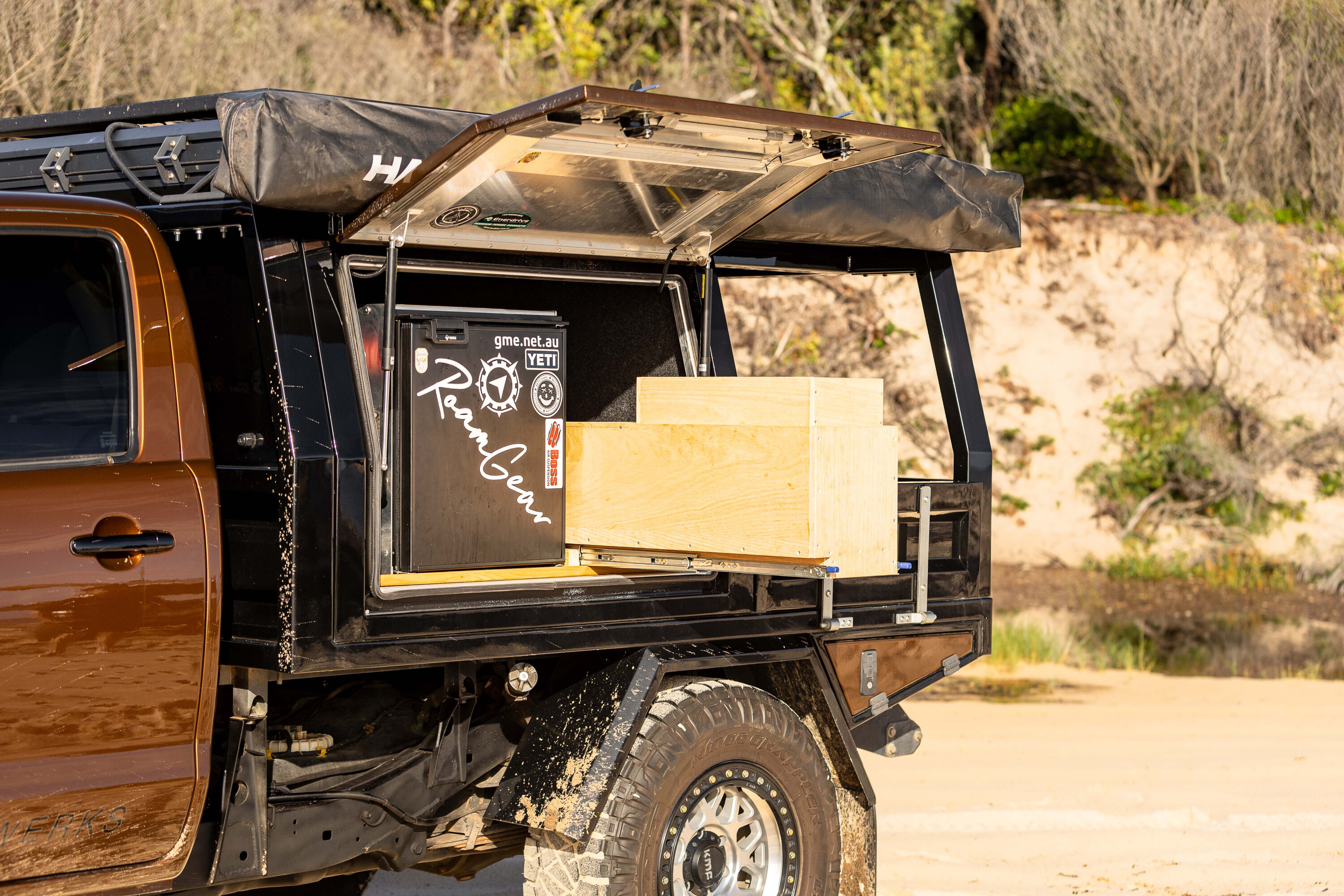
Custom made from aluminium to keep the weight down, the whole show was shortened down to 2200mm, with a 1200mm-long Magnum canopy keeping the 150Ah second battery and Bushman upright fridge out of the elements. The whole thing has been braced and strengthened to take the VTX Offroad roof-topper and hang the HardKorr 270° wraparound awning.
Drop-down sides at the rear make loading heavier items a bunch easier, and the under-tray toolboxes on either side have been built with matching angles to make everything look seamless.
Dylan, being a chippie, built his own two-drawer set-up in the canopy for tools, clothes and sleeping gear, leaving enough space for bulkier items to be stored on top. The passenger side is in the process of having a slide-out pantry and drop-down table built (again by Dylan), which will make camp food-prep that much easier.
Water tanks, long-range fuel tank, a pair of Recaro butt-huggers, a locker or two, and maybe even a rear coil conversion for increased comfort.
Oh, and maybe a 12V upgrade and a nicer rooftop tent while he’s at it. But as we said, he’s not the type of bloke to rush these things. He’s too busy being out on adventures and enjoying his rig. The way it should be.
Dylan wanted to thank Nomad Welding for the tray build, CJ Fabrication for the under-tray boxes, Roam Gear for his 12V set-up, HardKorr for the awning and lights, as well as a couple of good mates for their help with the painting and suspension install.
That timing will make the Cannon Alpha the first hybrid ute in Australia, beating the new Ford Ranger PHEV to market by a few months at least, along with others like the hybrid HiLux and the recently teased BYD plug-in hybrid ute.
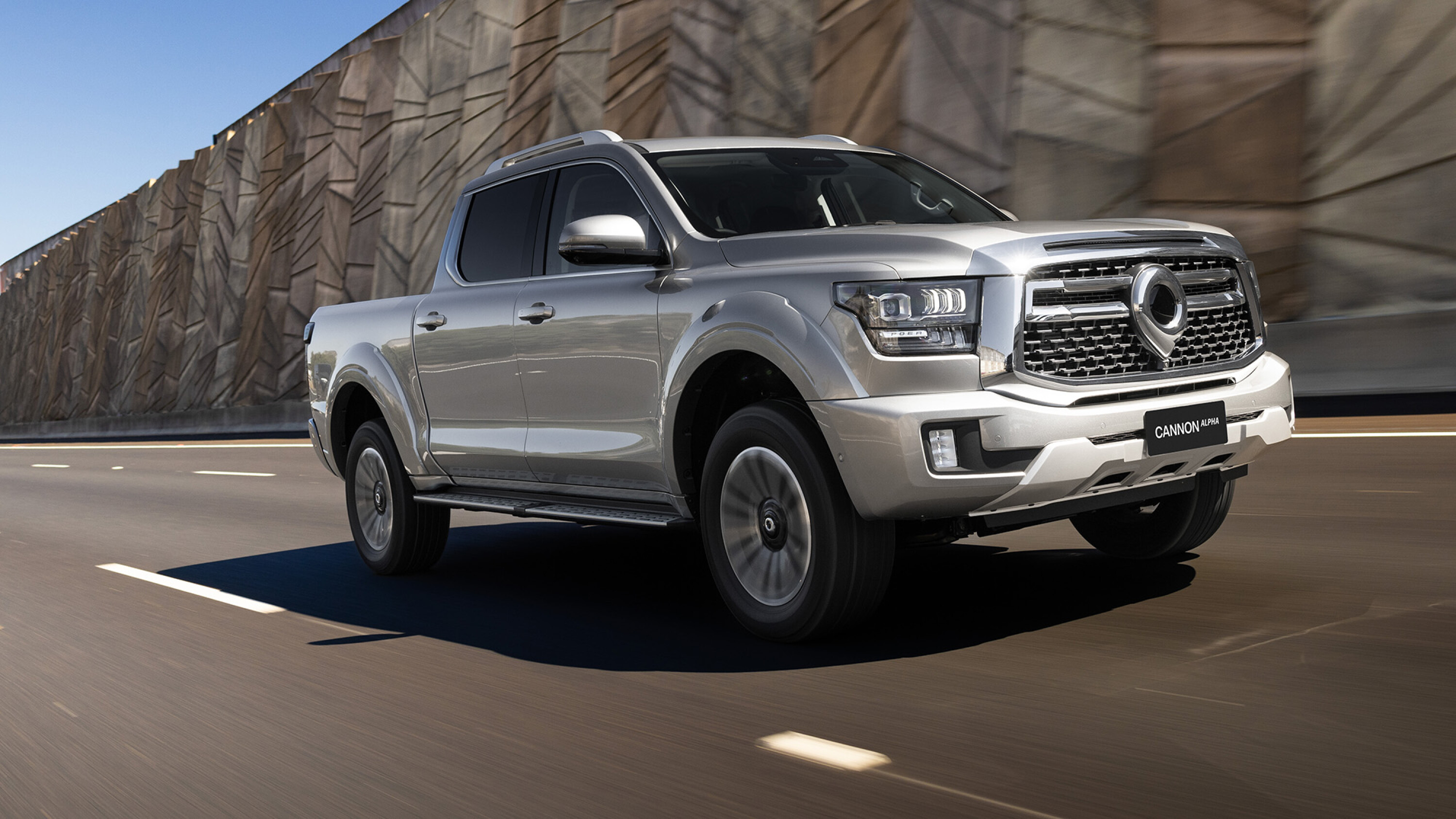
As a big brother to the Cannon already sold in Australia, the Cannon Alpha measures 5440mm long (+30mm over the Cannon), 1991mm wide (+57mm) and 1924mm tall (+38mm), rolling on a 3350mm wheelbase (+120mm).
Ford’s F-150 remains a bigger unit, with a 3694mm wheelbase in its SWB form, but the Cannon could prove a welcome ‘in between’ option.
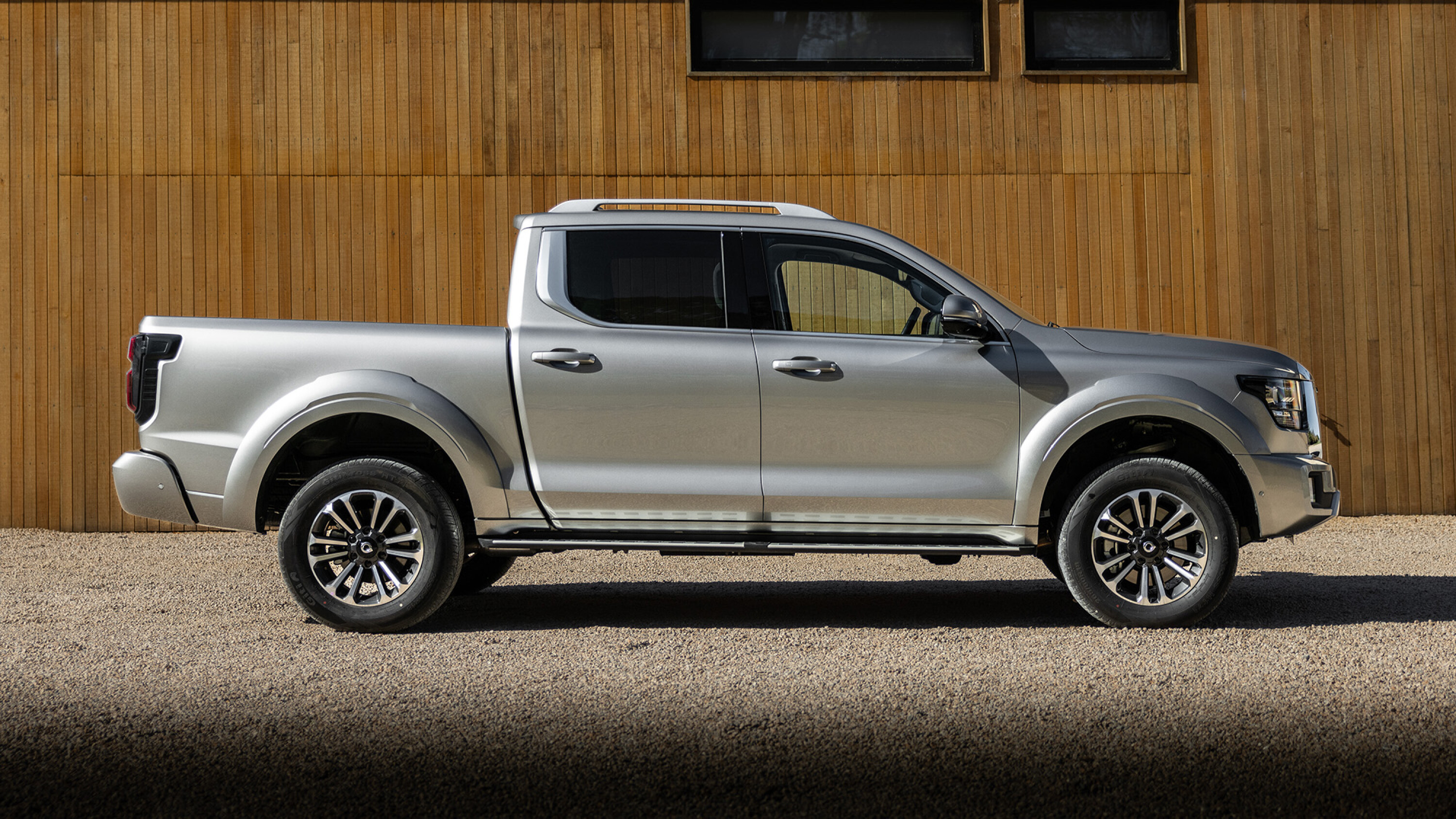
Of more interest to some buyers, however, might be the other option we’ll be offered: a 2.0-litre turbo petrol hybrid engine, its combustion and electric motors combining to deliver 255kW and a huge 648Nm. On their own, the motors produce 180kW/380Nm and 78kW/269Nm respectively.
Keen readers will recognise this as the same mill that powers the related GWM Tank 500, which made its Australian debut in March – which means you can read 4X4 Australia’s take on that petrol-electric hybrid system at the story linked below.
? “The hybrid system is seamless and something the driver doesn’t need to consider. It has a few modes to suit the driving you do including a Sport mode, which cuts back on the off-throttle power regeneration. In Normal/Eco mode you really feel the deceleration of system-regenerating energy.”
Both the diesel and the petrol hybrid engine are mated to a nine-speed automatic transmission developed in-house, and GWM quotes a braked towing capacity of 3500kg for both powertrains.
Like the Tank 500, the Cannon Alpha offers three driving modes, along with locking front and rear differentials with a Borg Warner full-time, dual-range transfer case.
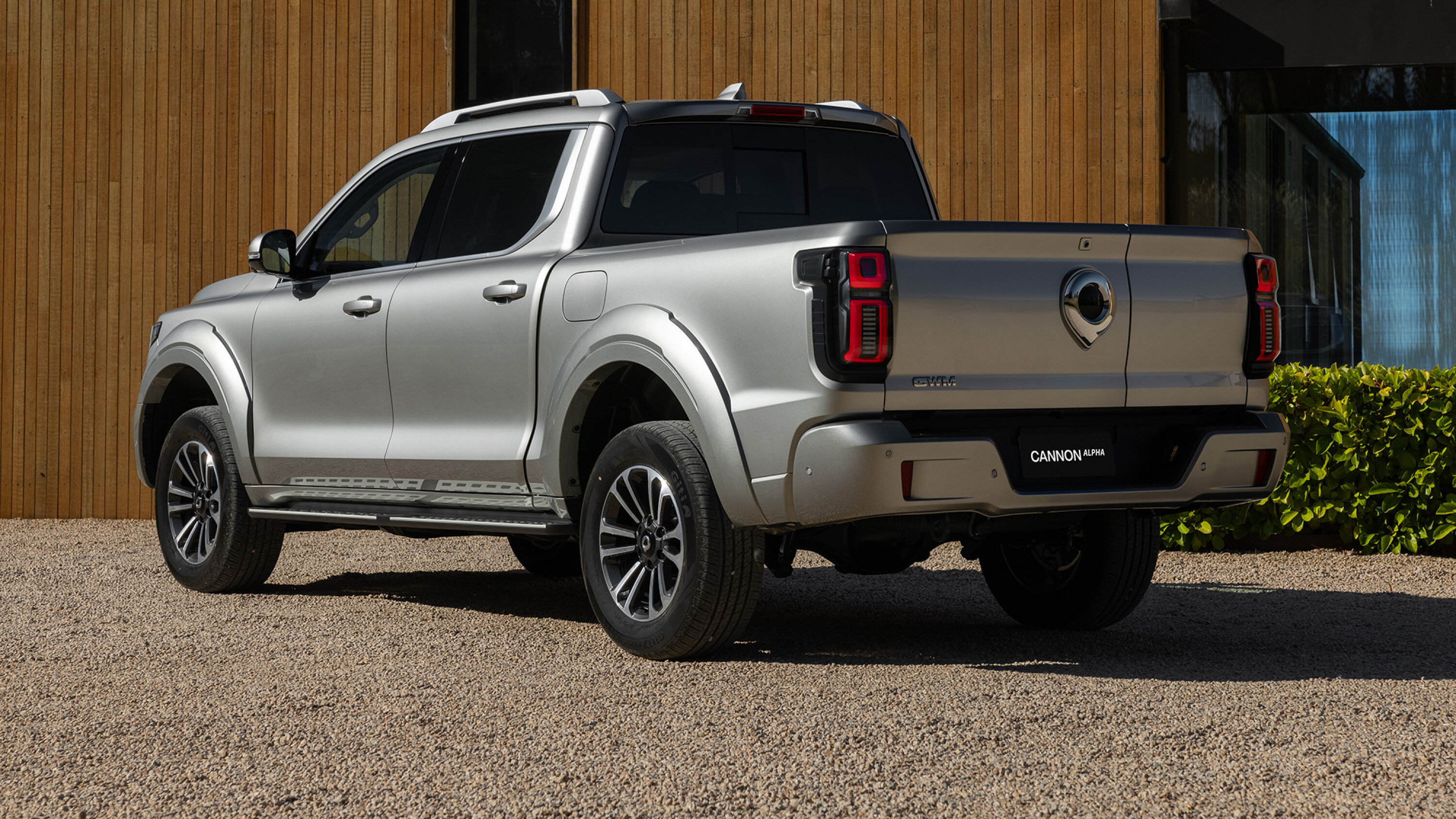
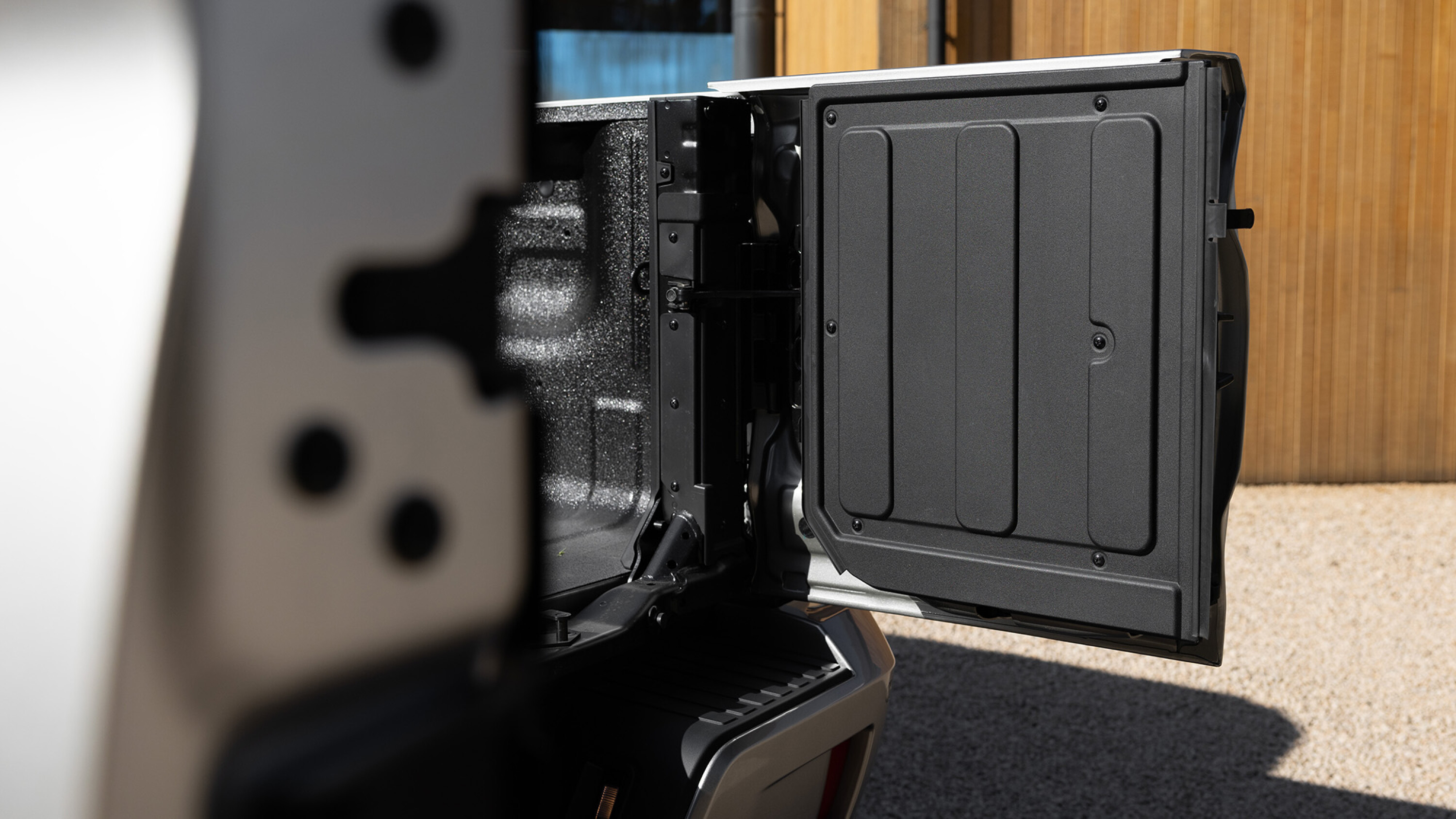
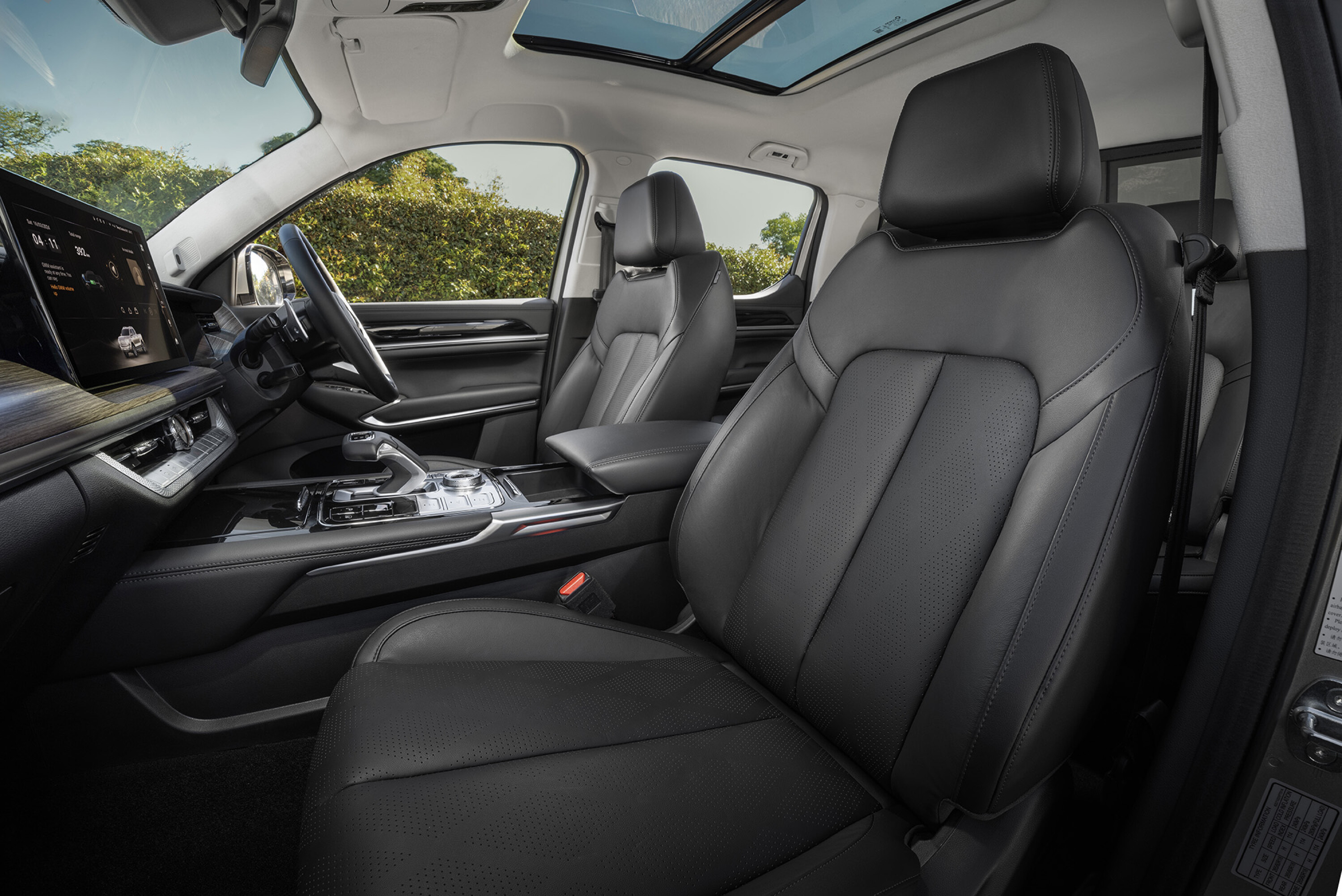
Inside, the GWM Cannon Alpha features a massive 14.6-inch main screen and a 12.3-inch driver display, along with 10-speaker Infinity audio, wireless phone charging, and heated/ventilated/massaging front seats trimmed with Nappa leather in higher-grade models.
Full details will be released in the lead-up to the Cannon Alpha’s mid-2024 Australian launch.
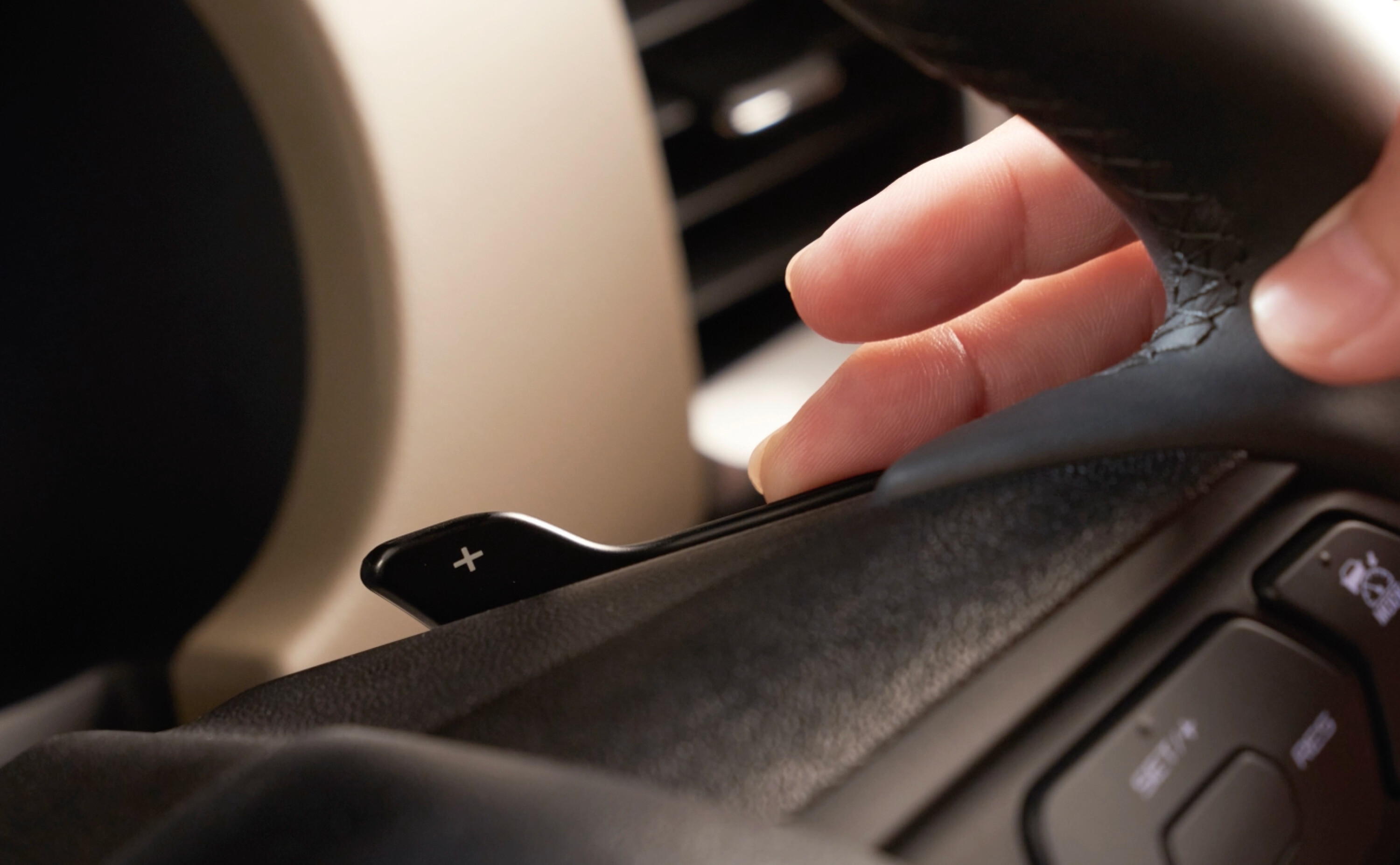
While its Isuzu D-Max donor car has received a comprehensive mid-life facelift, revisions applied to the BT-50 in its Thai domestic market are far more subtle, with no significant changes inside or out.
All versions of the BT-50 sold in Thailand are now fitted with a gloss-black grille – like the blacked-out SP flagship – and a revised lower front bumper, while four-wheel-drive models receive the same ‘rough terrain mode’ as the Isuzu D-Max and MU-X.
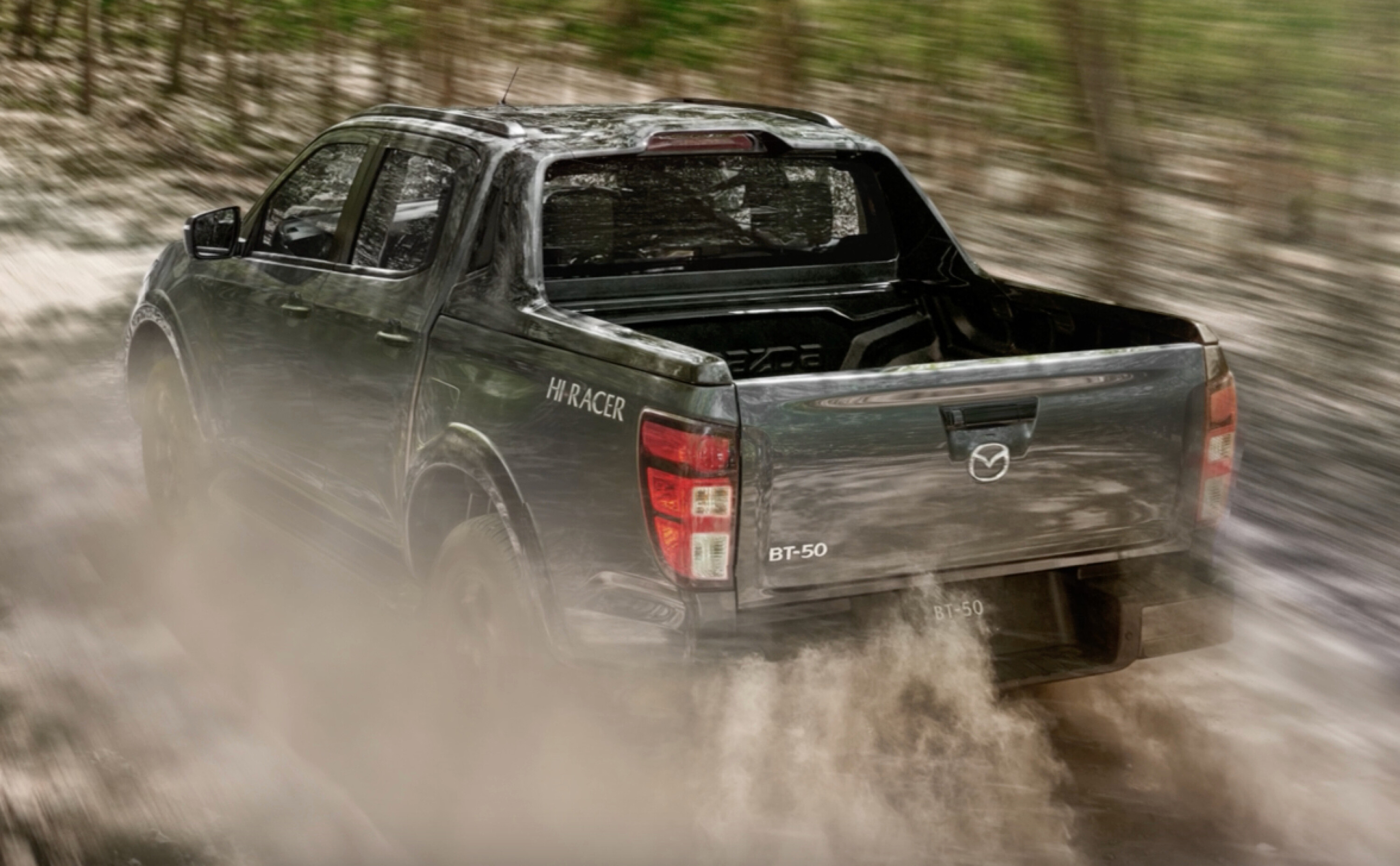
Certain variants are also now fitted with steering wheel-mounted paddle shifters and wireless Android Auto connectivity, joining wireless Apple CarPlay.
The Thai-market 2024 Mazda BT-50 does not receive any further upgrades that have been applied to the D-Max, such as a larger 7-inch semi-digital instrument cluster display, more active safety equipment, front and rear USB-C ports, volume and tuning dials replacing hard buttons, and new alloy wheel designs.
For instance, the previous-generation BT-50 – based on the ‘T6’ Ford Ranger and built on the same production line – did not receive any significant upgrades, while the Ford was treated to almost annual revisions and two separate facelifts over its 11-year lifecycle.
However, there is a possibility that Australian versions of the BT-50 could receive further upgrades to better rival the facelifted D-Max, which is due to arrive in local showrooms imminently.
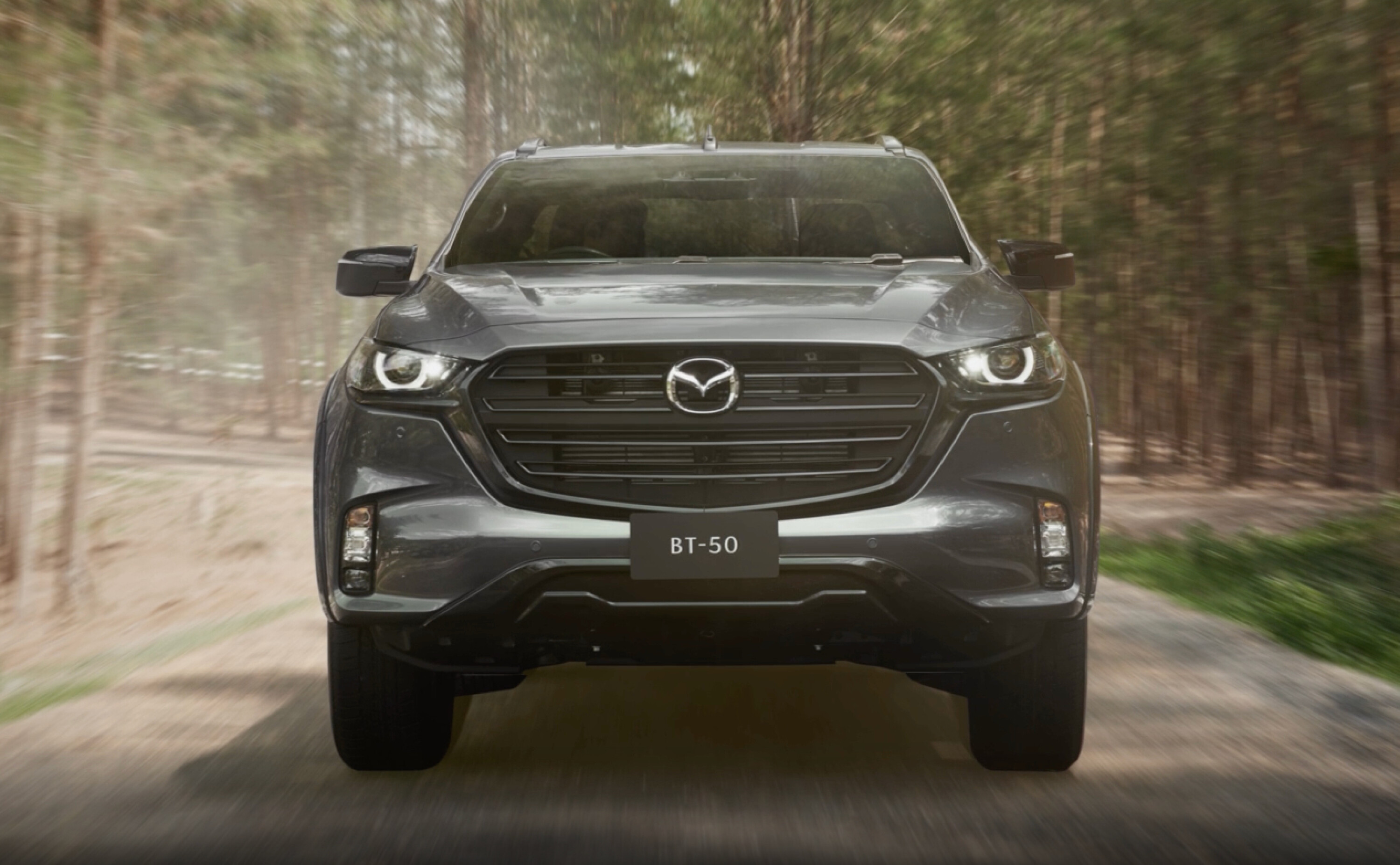
4X4 Australia reached out to Mazda Australia to ask whether the updates applied to the BT-50 in Thailand would reach local showrooms, but a spokesperson said the brand “can’t comment on future product plans”.
The BT-50 was recently axed in New Zealand and South Africa, though it will remain available in Australia, where it has a more substantial market share and importance to the Mazda brand.
“The Mazda BT-50 remains in production and on-sale in a number of global markets including Australia,” said a Mazda Australia spokesperson.
”2023 was a sales record for BT-50 in Australia of 17,526 units and its popularity continues to grow with customers across the country.”
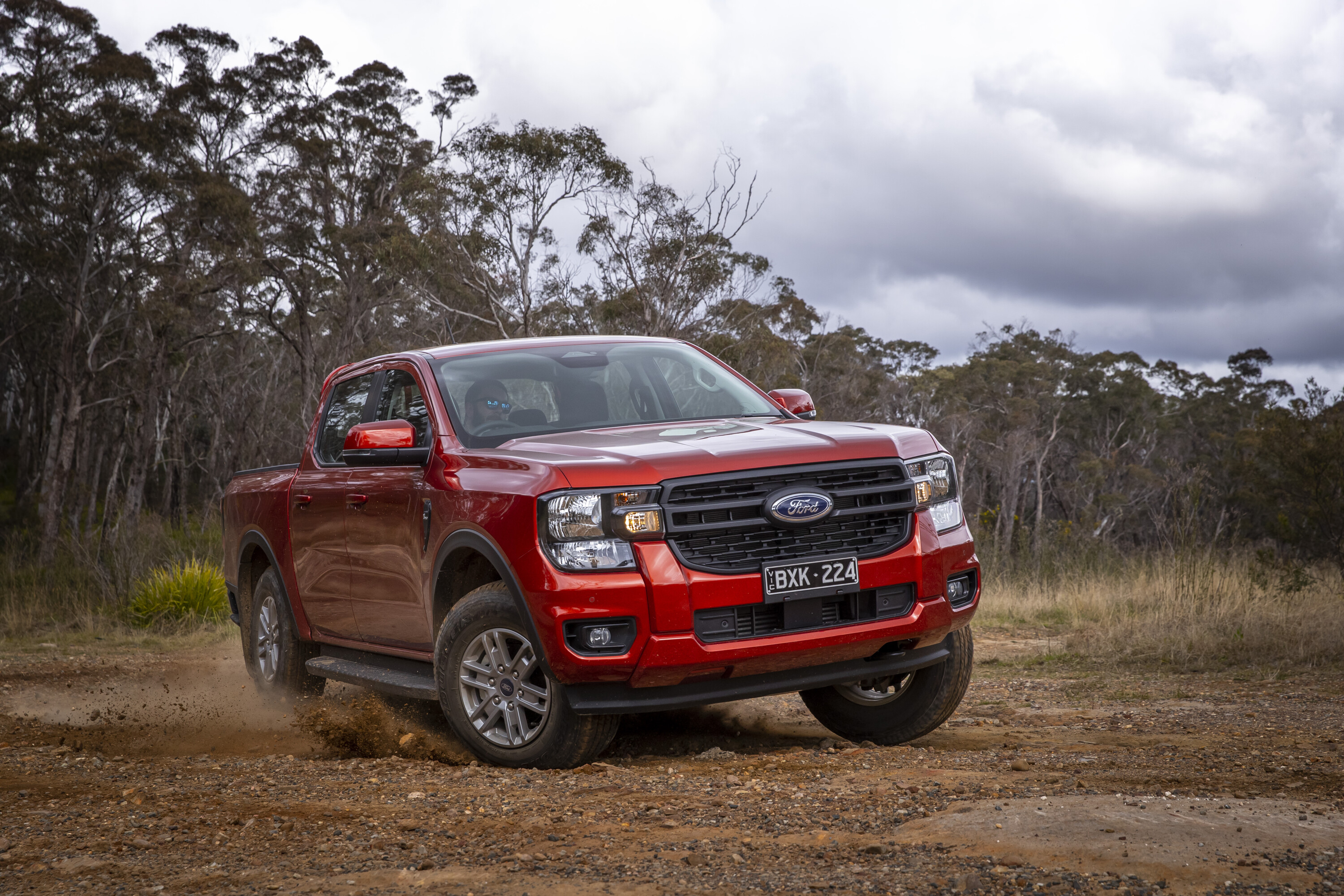
A total of 5661 new Rangers (4×4 and 4×2 combined) were sold in March 2024, placing it well ahead of the Toyota HiLux which sold 3995 units (4×4 and 4×2 combined). As a result the HiLux slipped out of the Top Three on the sales charts, falling behind the Toyota RAV4 (5070 sales) and Tesla Model Y (4379 sales).
Even when you exclude the 4×2 variants, the Ranger remains atop the sales charts with a total of 5135 4×4 variants sold in March 2024. Specific to the 4×4 charts it’s followed by the Toyota HiLux (3555 sales) and Isuzu D-MAX (1847 sales). Year-to-date, the Ranger 4×4 has now outsold the HiLux 4×4 by 3320 units (14,240 versus 10,920).
In another tick for the blue oval, Ford’s Everest had a stellar month by selling a total of 2264 units (+129.8 per cent versus March 2023). This made it the best-selling 4×4 wagon for the month, ahead of the Isuzu MU-X (1886), and Toyota LandCruiser 300 Series (1219). And, as Toyota prepares for the launch of its nex-gen Prado, sales of existing Prado stock continues to decline, with only 446 units sold in March 2024.
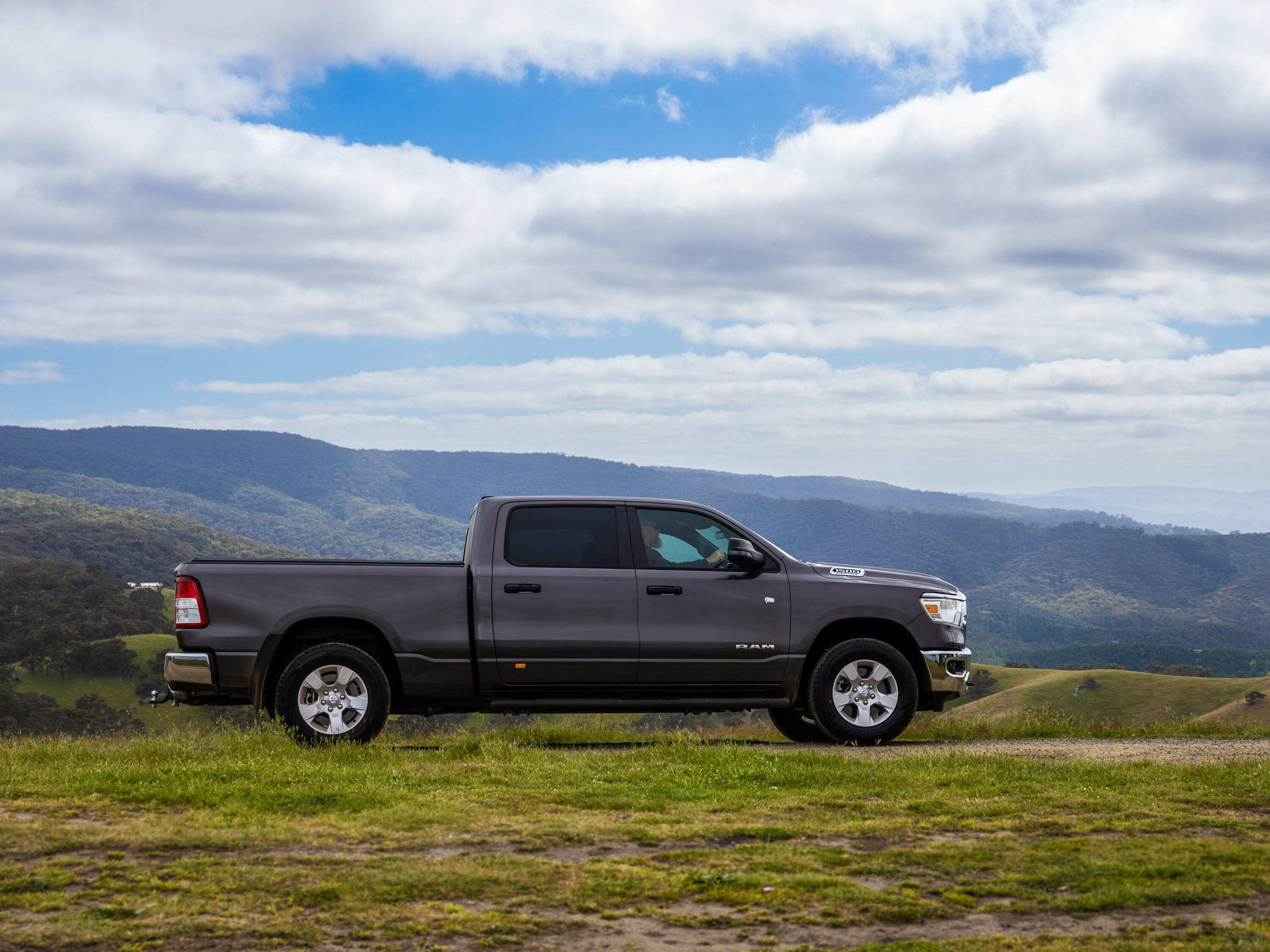
Zooming in on the budget offerings and GWM’s Ute sold a total of 774 4×4 units, placing it ahead of both the LDV T60 (446) and SsangYong Musso (306). At the other end of the market, the RAM 1500 (313) just outsold both the Chevrolet Silverado (309) and Ford F-150 (238).
The total number of sales for Light Commercial Vehicles landed at 23,061 for the month, which is up by 1049 vehicle sales (+4.8 per cent) versus March 2023. This gave it a 21 per cent share of the total market for March. So far in 2024 the LCV market has a 22.1 per cent share, with a total number of 67,426 LCVs sold.
Breaking it down further reveals a total of 17,629 4×4 utes (PU/CC) were shifted in March 2024, up from 16,474 sales in March 2023 and giving it a 16.1 per cent slice of the market – only behind the medium SUV segment (26.3 per cent).
Across the board, the SUV market is up a whopping 20.7 per cent compared to March 2023; the Passenger Vehicle market is up 2.5 per cent; and the Heavy Commercial Vehicle market is down by 4.1 per cent.
This all combines to create the best-ever first quarter sales result for new vehicle sales (January to March) with a total number of 304,452 sales, an increase of 13.2 per cent versus Q1 of 2023.
“This is a terrific result for the sector; however, all car brands are well aware that these results cannot be taken for granted,” said FCAI Chief Executive, Tony Weber. “We need to factor in the ongoing cost of living pressures and the challenges for industry and consumers that will emerge with the introduction of the New Vehicle Efficiency Standard (NVES) in less than nine months.”
| Best-selling 4x4s in March 2024 | |
|---|---|
| 1: Ford Rangeru00a0 | 5135 |
| 2: Toyota Hiluxu00a0 | 3555 |
| 3. Ford Everestu00a0 | 2264 |
| 4: Isuzu MU-X | 1886 |
| 5: Isuzu D-MAXu00a0 | 1847 |
| 6: Mitsubishi Tritonu00a0 | 1675 |
| 7: Toyota LC300u00a0 | 1219 |
| 8: Mazda BT-50 | 1105 |
| 9: Nissan Navara | 993 |
| 10: Toyota LC70u00a0 | 940 |
| Best-selling 4x4s YTD | |
|---|---|
| 1: Ford Rangeru00a0 | 14,240 |
| 2: Toyota Hiluxu00a0 | 10,920 |
| 3: Isuzu D-MAXu00a0 | 6382 |
| 4: Isuzu MU-Xu00a0 | 4854 |
| 5: Ford Everestu00a0 | 4499 |
| 6: Toyota LC300u00a0 | 4260 |
| 7: Mitsubishi Tritonu00a0 | 3920 |
| 8: Toyota Pradou00a0 | 3210 |
| 9: Toyota LC70u00a0 | 3133 |
| 10: Mazda BT-50 | 3104 |
If your vehicles range from your family car to your weekend 4×4, your motorcycles and your boat, you can end up needing multiple chargers to suit the different vehicles and their batteries.
Not only that but with 4x4s we will often have different types of batteries in the ONE vehicle, with a lead-acid or AGM starter battery and a lithium auxiliary battery, and these will require specific battery chargers to suit. The latest charger from Swedish manufacturer CTEK is a game changer in that it adapts to whatever battery type it’s connected to.
I have run a couple of CTEK battery chargers over the years, swapping between bikes and cars that don’t get used enough to keep the batteries charged and maintained. One of the great things about these chargers is how easy they are to use, but you still need to choose the right charger to suit the battery being charged.
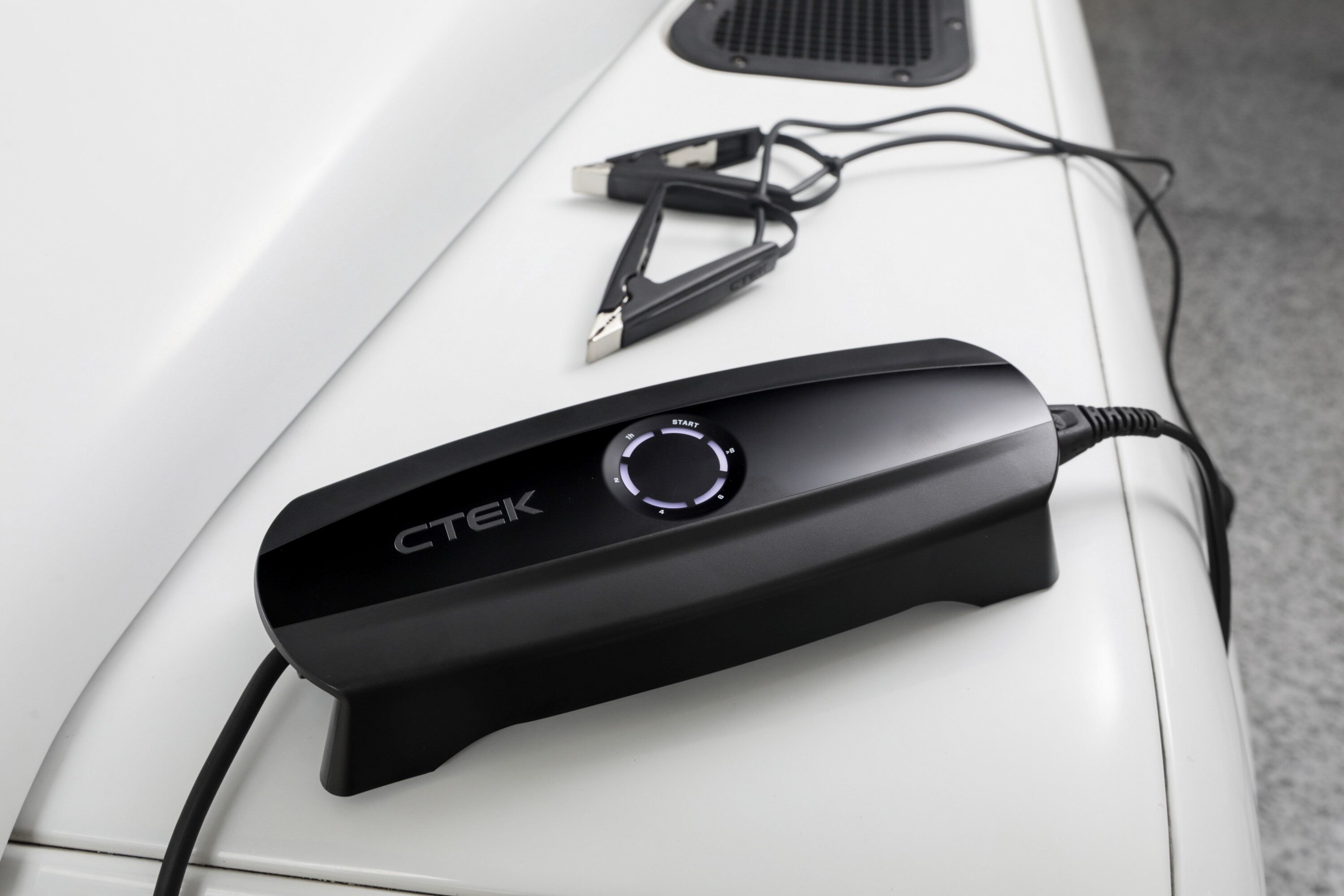
The new CTEK CS ONE simplifies charging even more by automatically adapting to whatever battery you connect it to.
The CS ONE is an eight-amp, 12-volt charger with multiple modes automatically chosen depending on the needs of the battery it is hooked up to. It looks like no other battery charger; its sleek black housing has no buttons so there’s no way to manually select what type of battery you are connecting it to, and nor can you manually select a charging mode. But you don’t need to, as the CS ONE does it all for you.
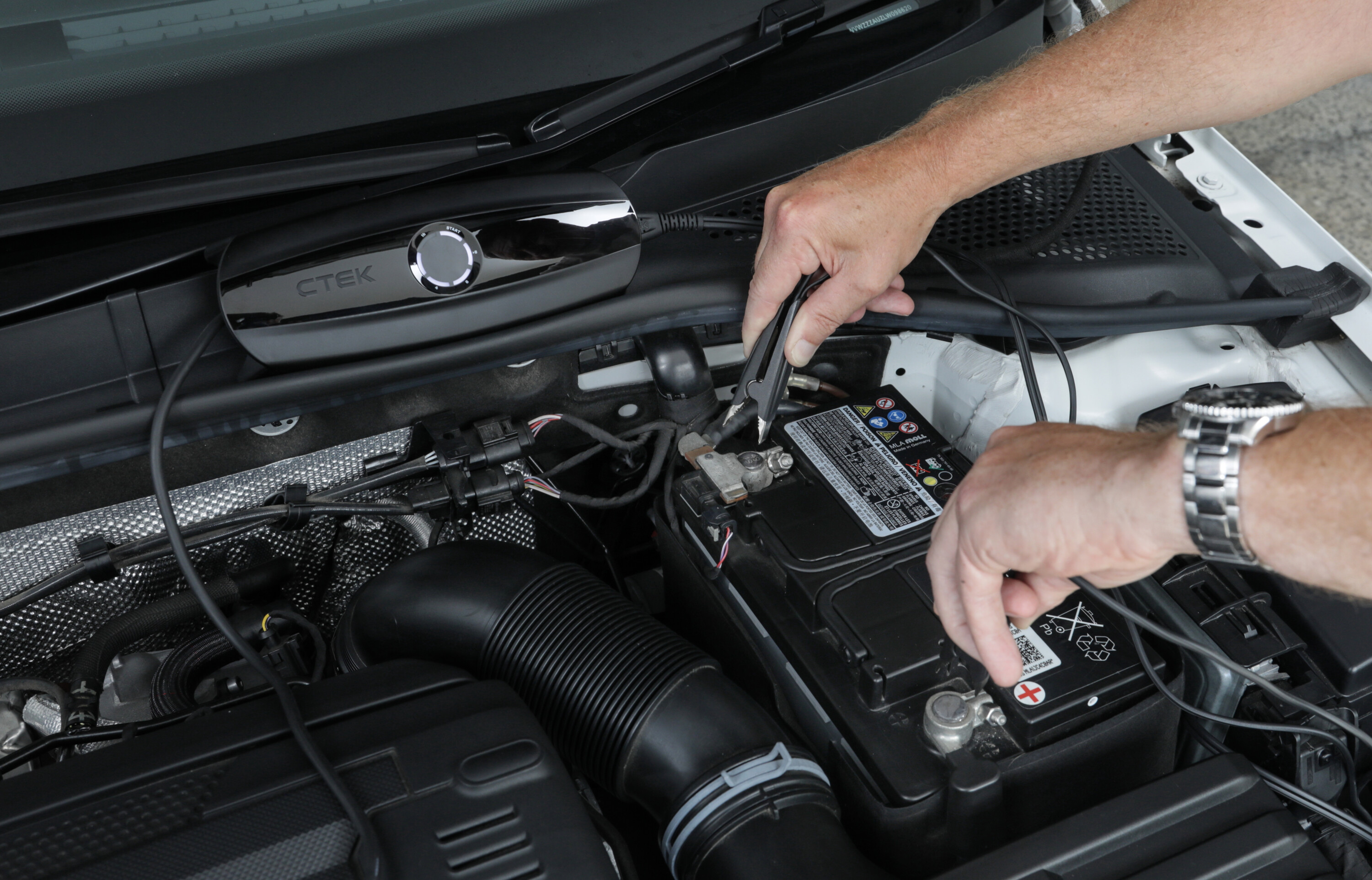
Also foreign are the alligator clamps that attach to the battery, as they are both black and there is no differentiation between positive and negative. You can fit them to either pole on the battery and the unit automatically senses the polarity and accommodates it. That’s ONE less thing that the user needs to think about, not that it was ever that difficult to match red to red and black to black.
When you plug in the CS ONE and power it up, it ‘talks’ to the battery to find out its type, the polarity you have hooked the clamps to, the state of charge or condition of the battery, and what is needed to charge it. CTEK calls this APTO Technology.
The CS ONE is suitable for charging any 12V lead-acid or lithium (LiFePO4) battery, and APTO automatically selects the charging program to suit according to the information it has gathered. There is a circle of LEDs on the top indicating the state charge and how long it will take to fully charge the battery.
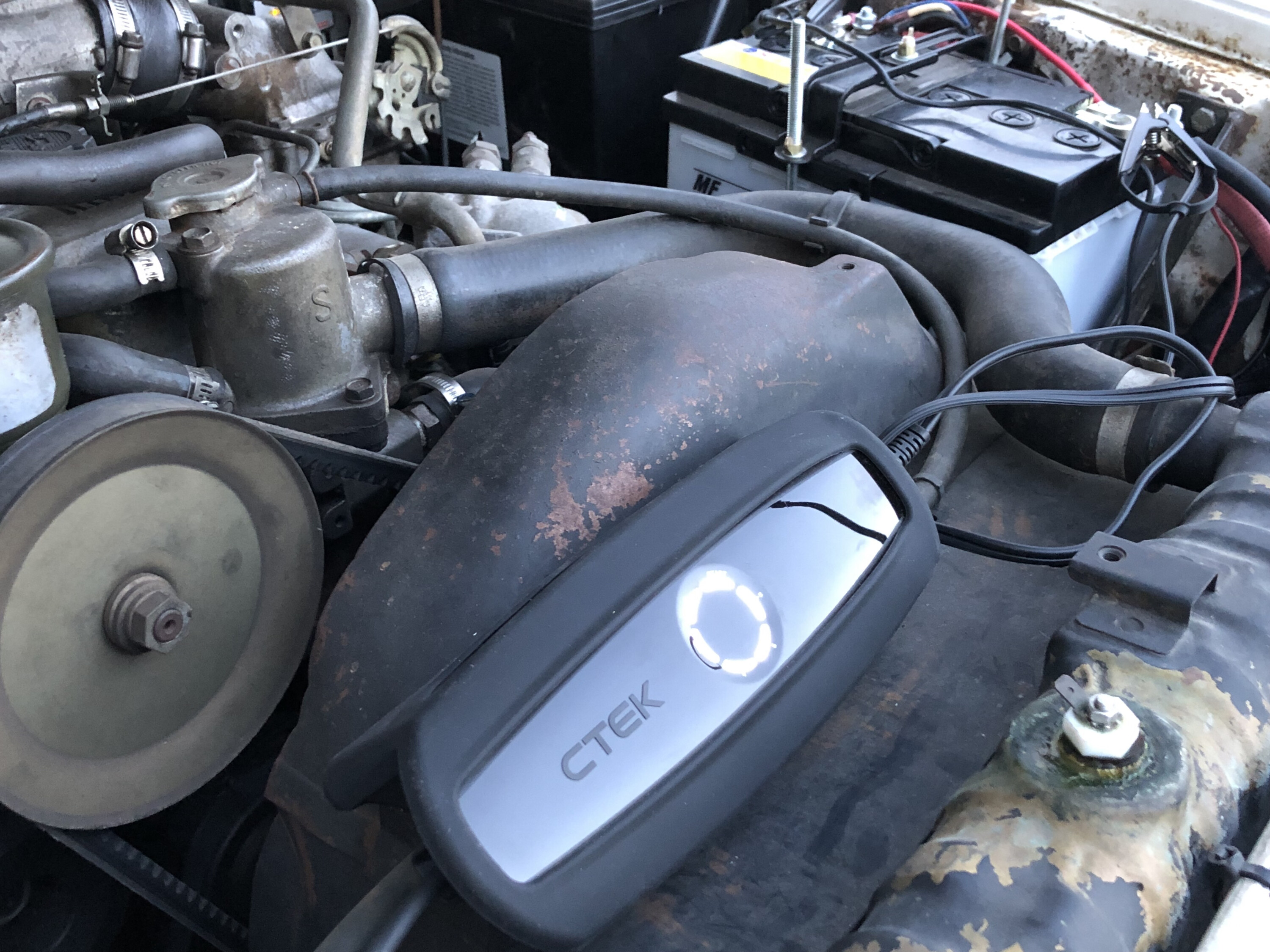
Once the battery reaches full charge, the LEDs start to pulse, indicating that the CS ONE has switched to a battery management program to keep the battery in peak condition. It really couldn’t be any easier to use.
APTO also recognises if the battery has a dead cell or has de-sulphated, and will indicate such a fault. If your AGM or lithium battery has dropped to a state of charge where it has entered ‘sleep’ mode, you can access ‘Wake Up’ mode via the CTEK app.
Also in the app is a RECON mode to recondition batteries that have sat discharged for excessive periods and a SUPPLY function that provides 12 volts to maintain the vehicle’s clock and settings if and when you need to disconnect the main battery.
Unfortunately, I was unable to connect the CTEK app to the CS ONE despite trying many times, using a few different methods as per the user manual and the online tutorials, so unlocking those extra features, some of which would be useful for four-wheel drivers using auxiliary batteries, weren’t available to me.
Another thing that might be an issue for some users is the CS ONE is only made to charge 12-volt batteries and not the battery in your old six-volt car or bike. With this experience, I reckon the CS ONE would be better off having buttons and controls on it so that it can be fully functional without the need to use a phone app. What I am left with is a great, simple-to-use battery charger but one that I can’t use to its full potential.
There is a range of accessories available from CTEK for the CS ONE including a rubber ‘bumper’ that fits around the unit’s plastic case to protect it. We reckon this should be standard and it gives the CS ONE a feeling of higher quality.
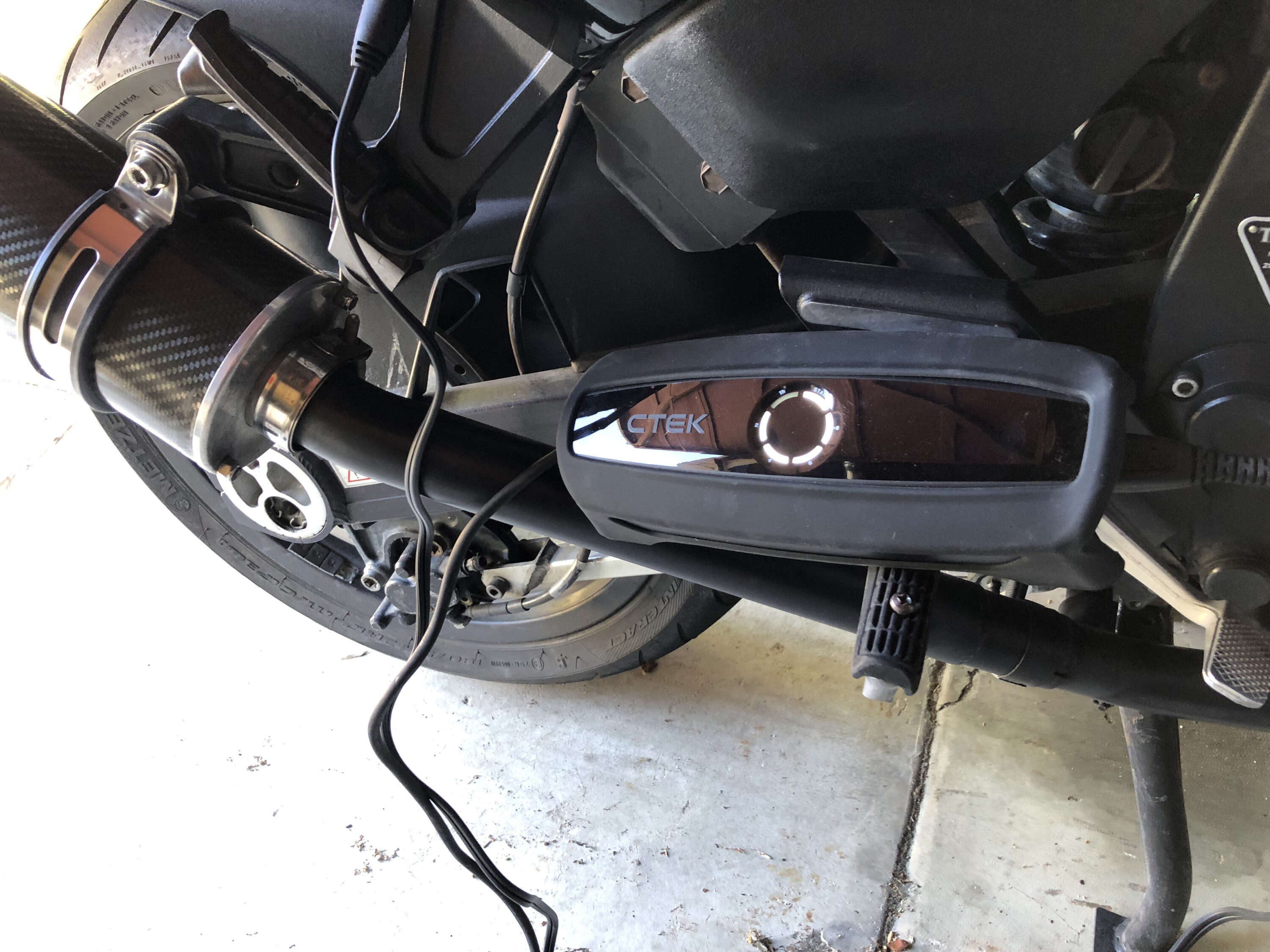
A CS Connect adaptor cable allows you to use other CTEK products with the CS ONE; in my case this allows me to fit the CS ONE directly to the CTEK plug I have permanently fitted to my motorcycle’s battery, which saves me from having to remove the seat whenever I need to access the battery for charging. That cable is also available separately, as is a wall mount and storage case that fits the charger and all accessories.
Despite my troubles with the Bluetooth connection to the app, the CTEK CS ONE remains the cleverest and simplest battery charger I have ever used. It takes away any guesswork when hooking the charger up and diagnosing battery faults, and its ability to operate with all the popular battery types makes it priceless. I’ve been using it on my motorbike and my 4×4 (with its dual AGM batteries) and it has worked flawlessly.
The first all-new Toyota LandCruiser Prado since 2009 makes its way to Australia in the second half of 2024, but the Brits have already muddied up the new J250 Prado ahead of its Aussie arrival.
Toyota Australia isn’t offering an overseas preview drive for local media, instead going straight into a local launch when the new model lands Down Under sometime in the second half of 2024.
That means the recent UK launch is the best indication of what we can expect from the new model when it goes on sale in Australia.
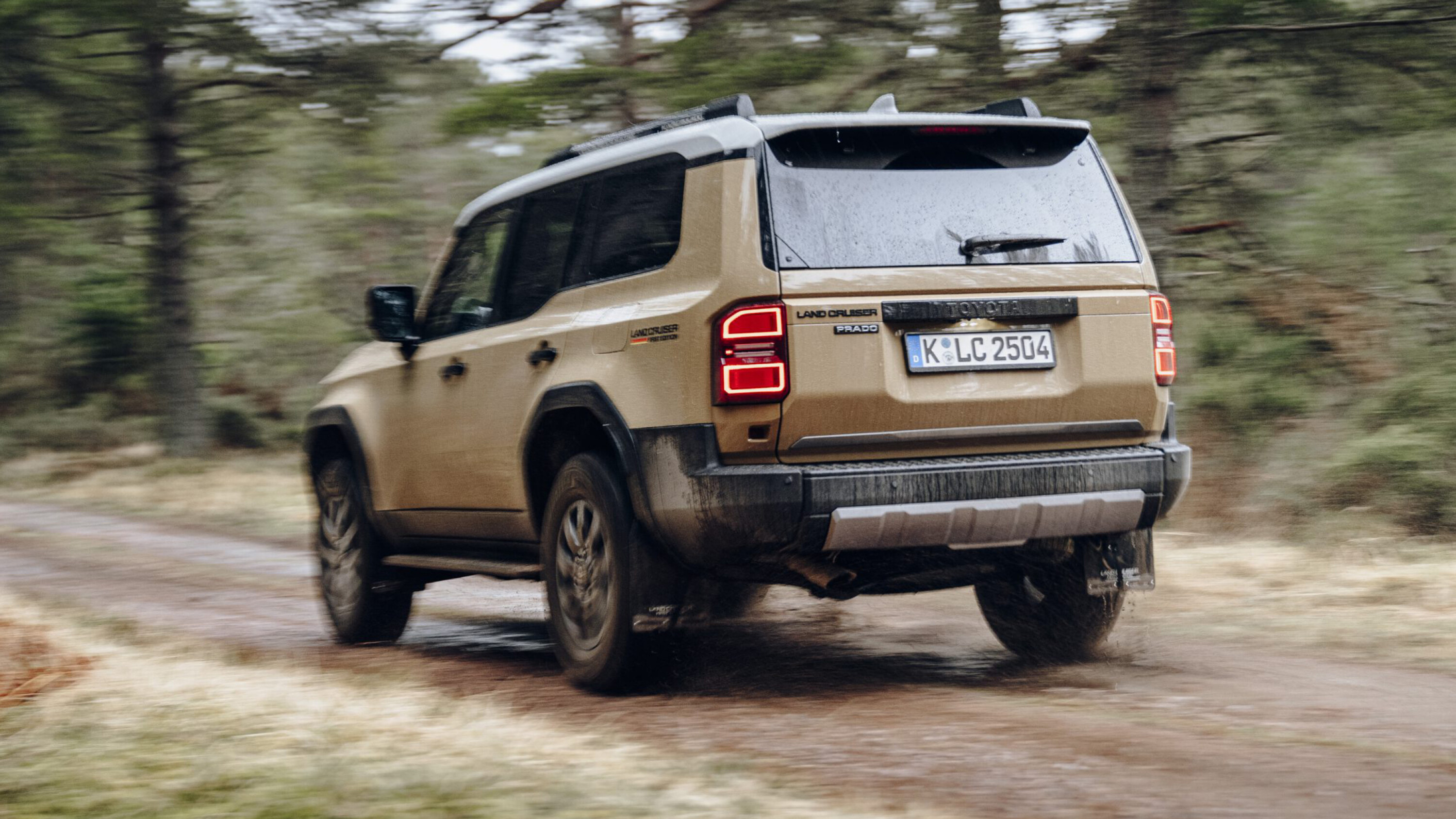
While there were several styling themes revealed in 2023 including a circular headlight treatment, Toyota Australia has confirmed local versions will feature rectangular headlights.
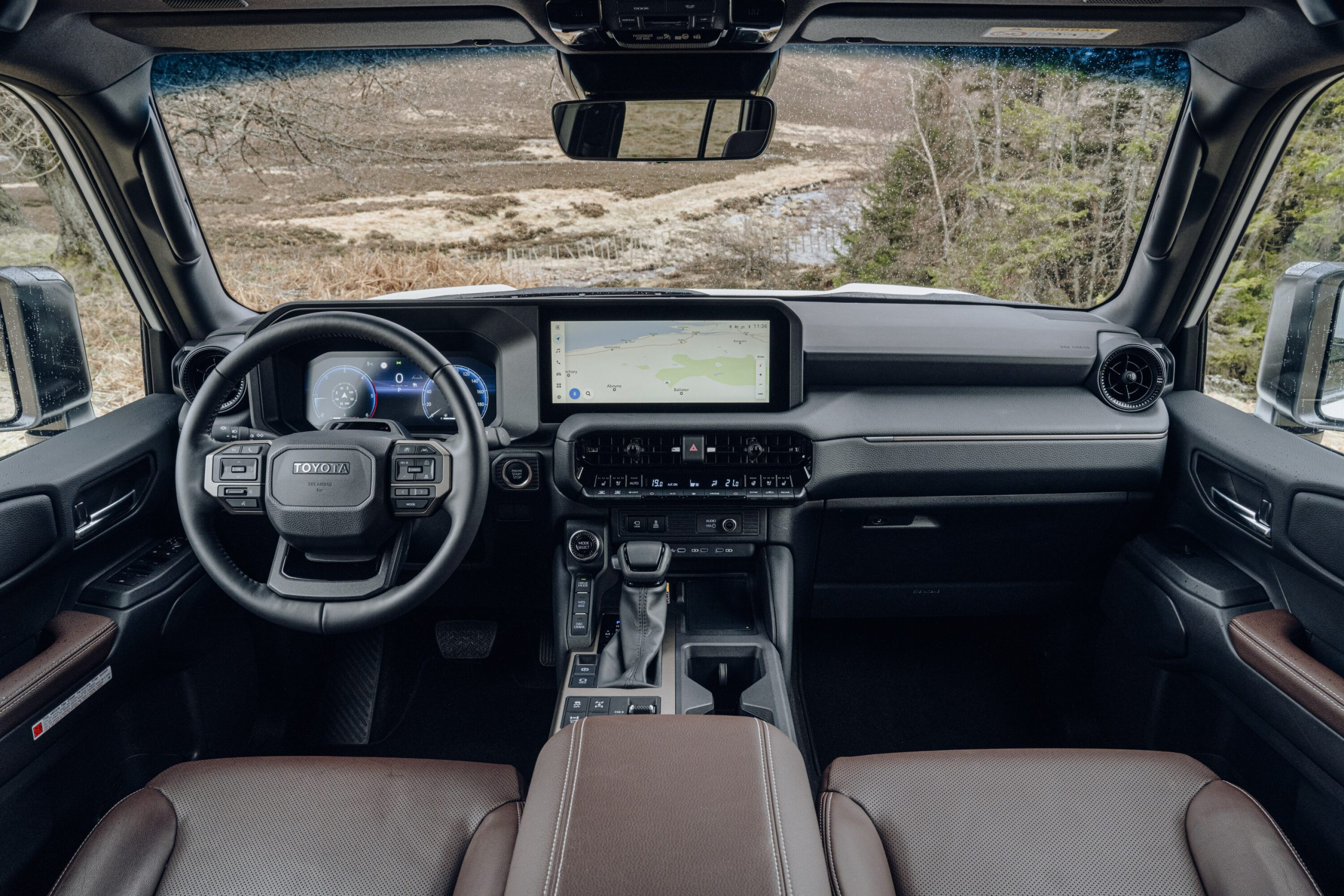
The fundamentals won’t change inside, but a digital instrument cluster will greet the driver alongside a 12.3-inch infotainment screen bringing Apple CarPlay and Android Auto smartphone compatibility.
The 150kW/500Nm 2.8-litre four-cylinder turbo-diesel will continue but will bring a redesigned turbocharger and an eight-speed automatic transmission in place of the previous six-speeder.
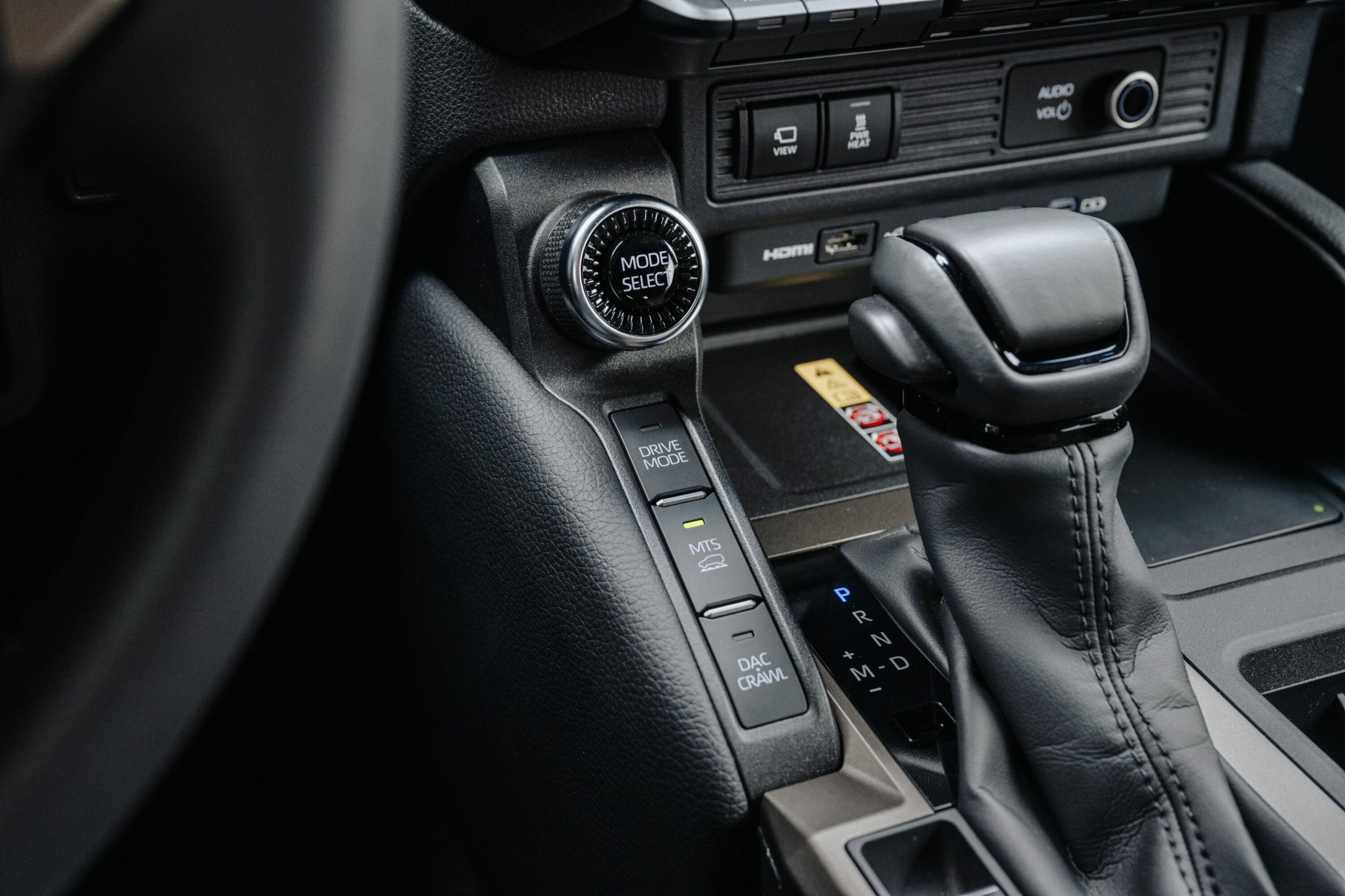
Underneath there’s a 50 per cent stiffer ladder chassis, while there’s also electric power steering, revised double-wishbone front suspension as well as a four-link rigid axle on higher spec GX Prado – one of five-models to making up the new Prado line-up.
There will also be full-time all-wheel drive with a low-range transfer case and locking centre differential.
While ground clearance is yet to be confirmed, greater approach and departure angels are also expected, while the braked towing capacity is likely to increase over the outgoing Prado’s 3000kg rating.
Autocar loves the ‘retro-inspired’ exterior design, which Car magazine calls “properly cool” and Top Gear said reminds them of the diminutive Suzuki Jimny, with “evidence of toughness everywhere you look”.
Top Gear also loved the number of physical switches inside – which goes against the grain of many car makers ditching buttons for touchscreens.
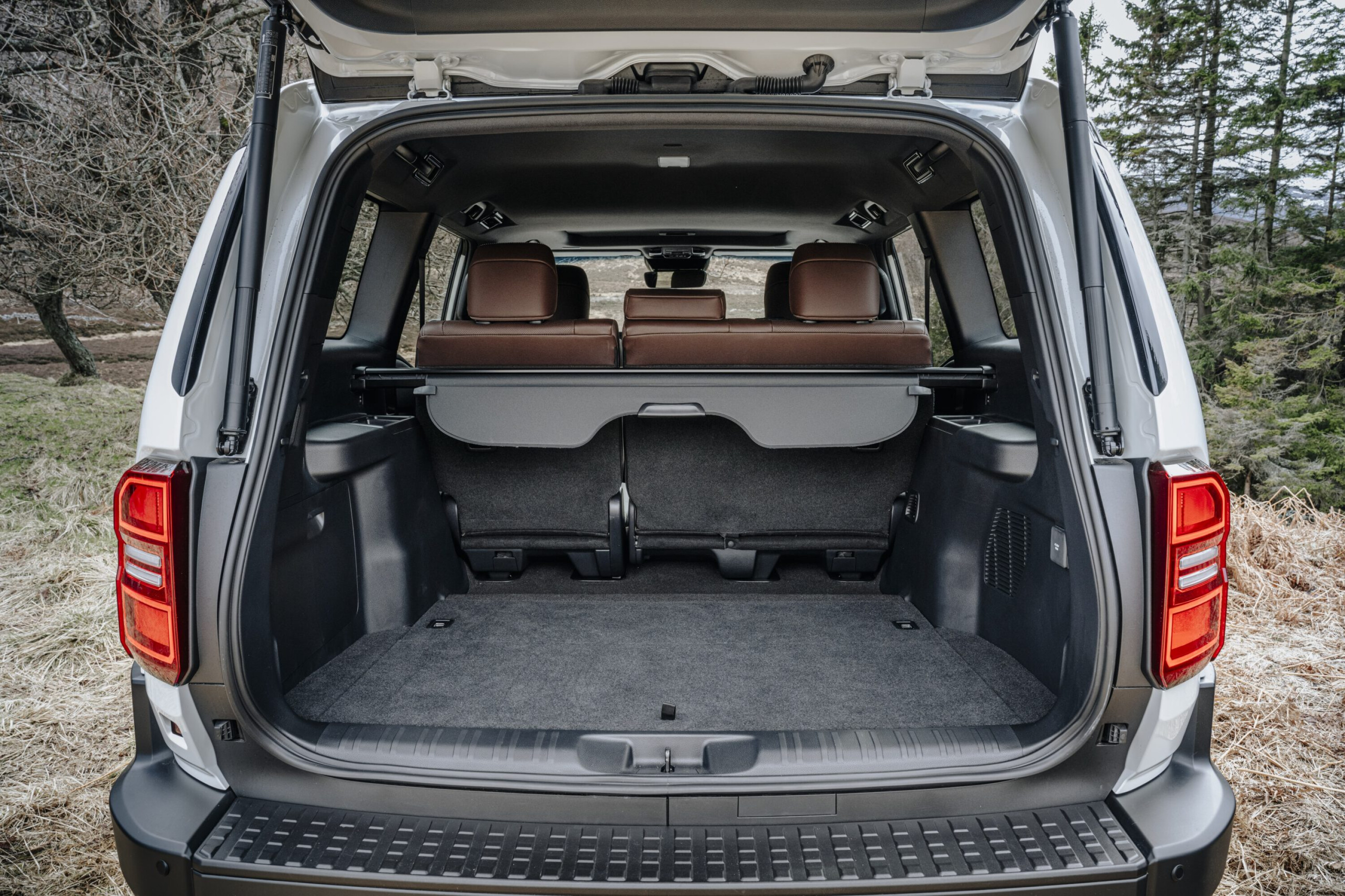
Autocar praised the cabin for finally bring the Prado into the digital age while staying true to its traditional virtues, saying “You wouldn’t call it luxurious, but nor does it feel cheap or unpleasant, just appropriately utilitarian”.
In the UK, where the new Prado wears only a ‘LandCruiser’ badge, it comes with the same 2.8-litre four-cylinder diesel as it will be in Australia, including the new eight-speed torque convertor auto.
The 2.8-litre didn’t receive universal praise, described as a ‘lump’ by autocar and “designed for torque and hard work, not power and performance” by Top Gear, with acceleration “gentle but insistent” with engine vibrations “in keeping with the car’s attitude”.
Auto Express described the powertrain as much more refined than its behaviour in the HiLux, while Car said the Prado feels quicker than its predecessor despite the same power and torque figures.
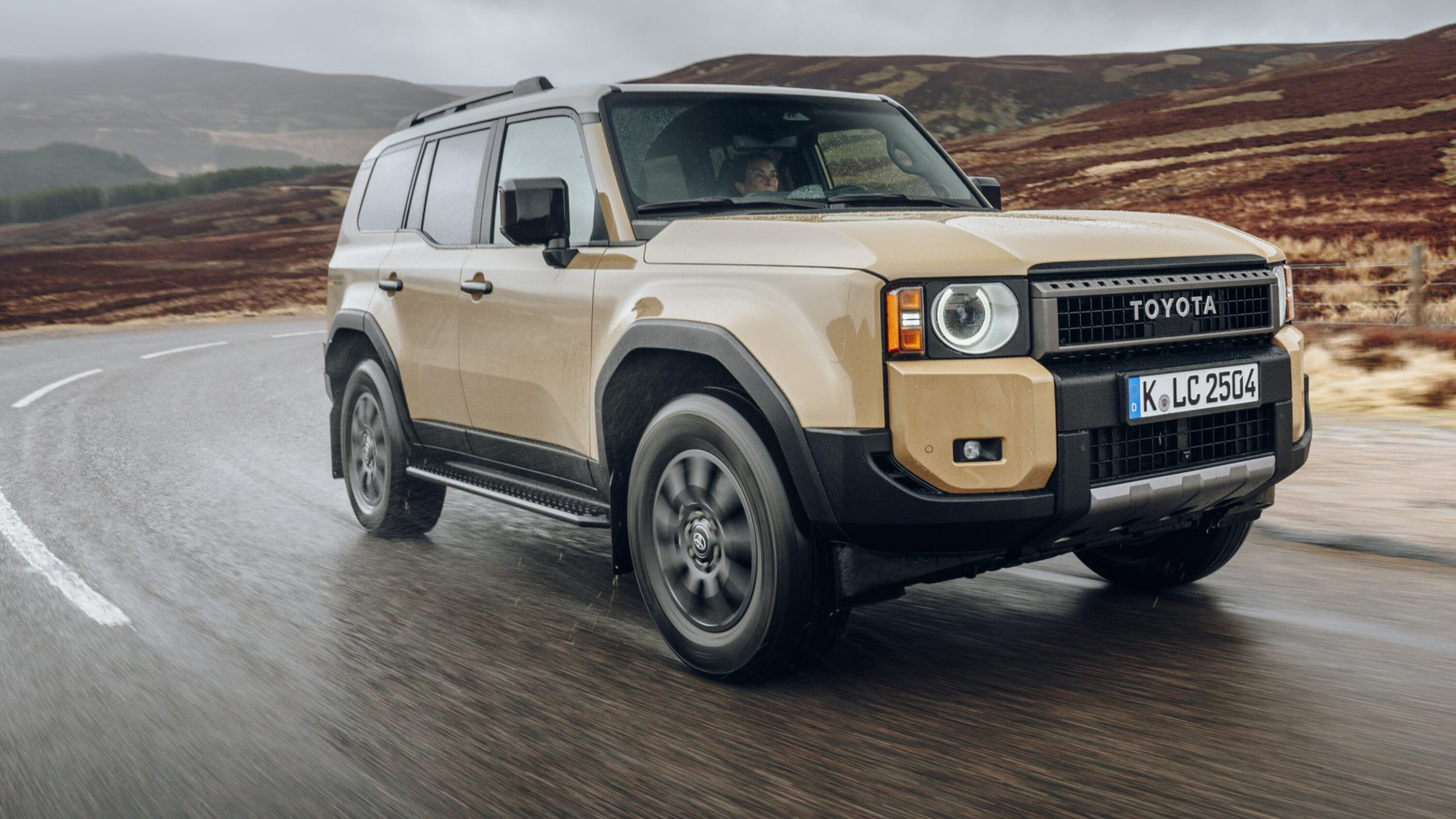
Car said ride comfort is “a step up” over its predecessor, with the electric steering making it more stable and planted on-road.
That said, Top Gear reported the on-road behaviour as “ponderous and lollopy” with its “on-road drawbacks a legacy of its off-road competence”.
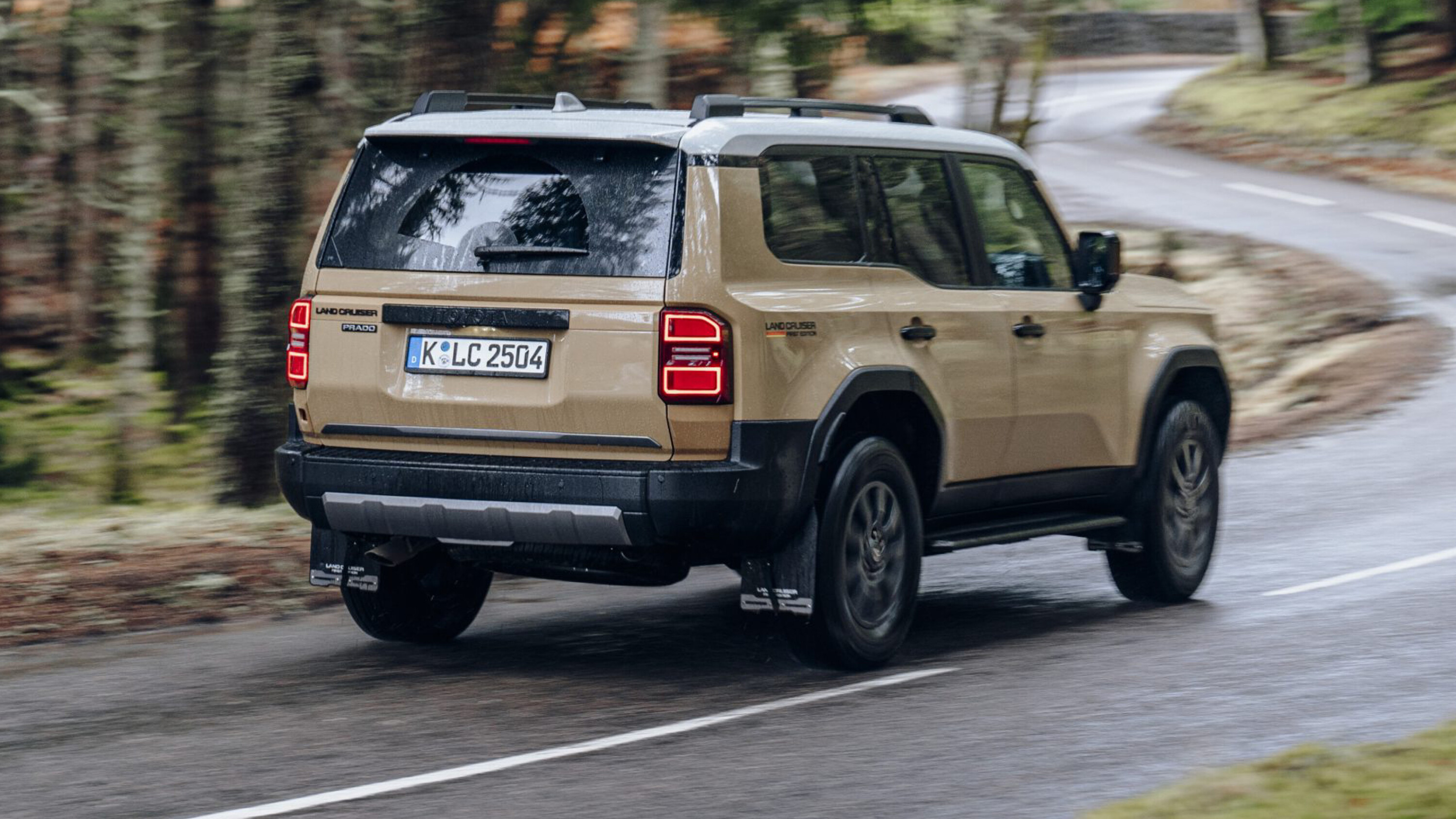
Car concurs, saying Prado’s off-piste capability is “nothing short of remarkable”, noting the new feature that unlocks the front anti-roll bar for greater (Toyota says 10 percent) wheel articulation.
Auto Express reports how strongly the Prado’s brakes perform, with Car saying the greatest achievement of the new J250 is its on-road improvement being achieved without diluting its off-road prowess.
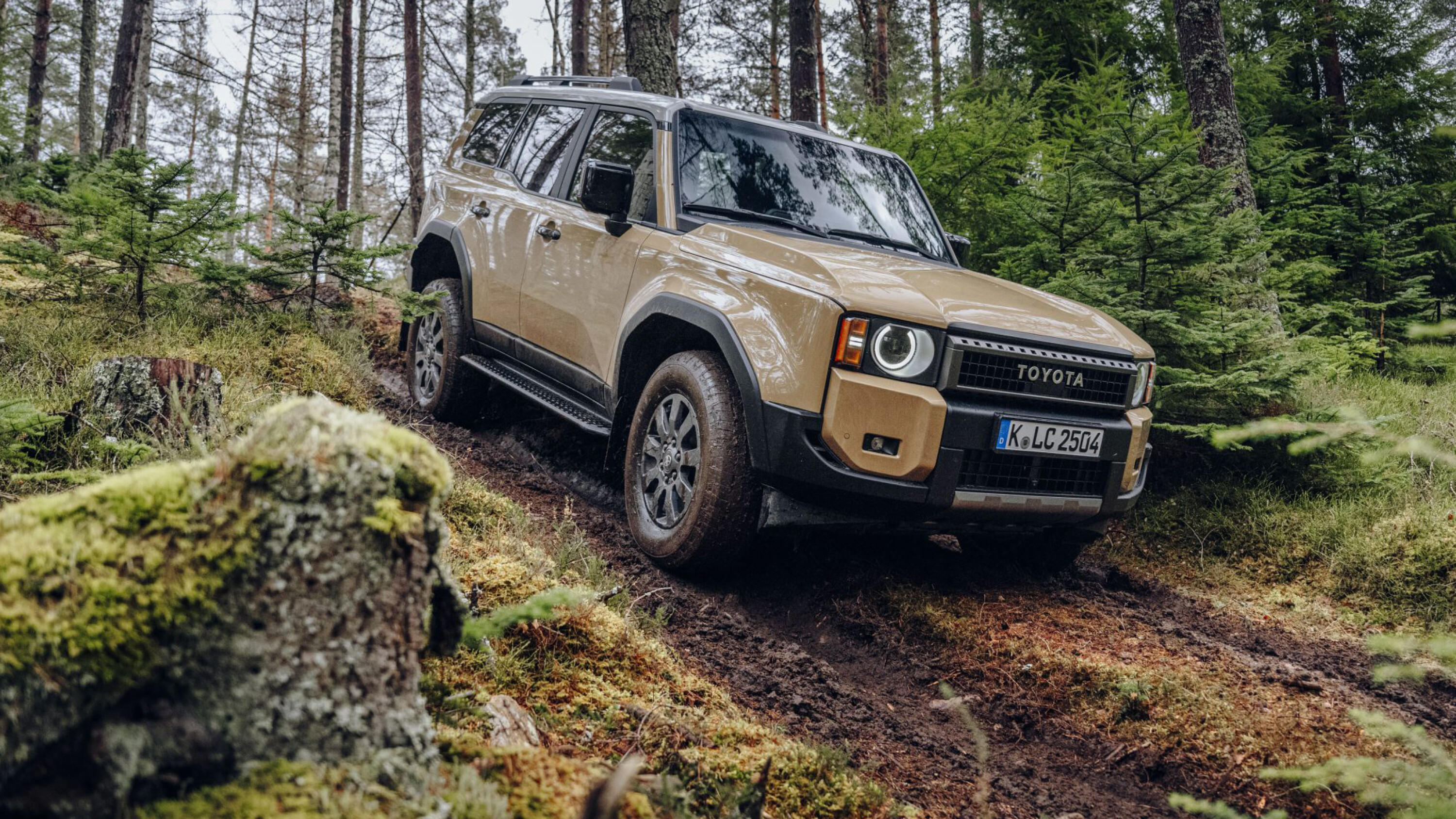
Prices – and real-world fuel economy including under towing conditions – mean a definitive verdict is still yet to come, as are direct comparisons with rivals which in Australia will include the highly capable Ford Everest as well as the Isuzu MU-X and Mitsubishi Pajero Sport.
The 2024 Toyota Prado is scheduled for Australian showrooms in mid-2024.
| 2024 Toyota LandCruiser Prado u2013 UK Test Ratings | |
|---|---|
| Autocar | 4.5/5 |
| Car | 4/5 |
| Auto Express | 4.5/5 |
| Top Gear | 9/10 |