Advice

Gallery 1
Most convoy problems aren’t caused by bad terrain or bad luck. They’re caused by one person doing their own thing, be it wrong spacing, no radio call, a line change nobody mentioned.
Small habits that don’t seem like much on their own, but multiply fast across a group. One vehicle tailgating kicks up enough dust to blind the next two. One unannounced deviation splits the convoy at a junction. One driver who’s never quite ready adds twenty minutes to every stop. Ask anyone who’s done the Gibb River Road in a group of eight, or nursed a convoy through the Munja Track: the terrain rarely breaks trips. People do.
None of what follows is complicated. But it only works if everyone actually does it.
1. Don’t lose sight of the vehicle behind you
If you can’t see the vehicle behind you at any turn, intersection or track split, stop and wait.
That’s it. No radio required, no guesswork, no doubling back three kilometres later because someone missed the turnoff to the campsite. Anyone who’s lost half a convoy at the Connie Sue Highway junction in the Gibson Desert knows exactly what a ten-second pause at the right moment is worth.
2. Don’t tailgate
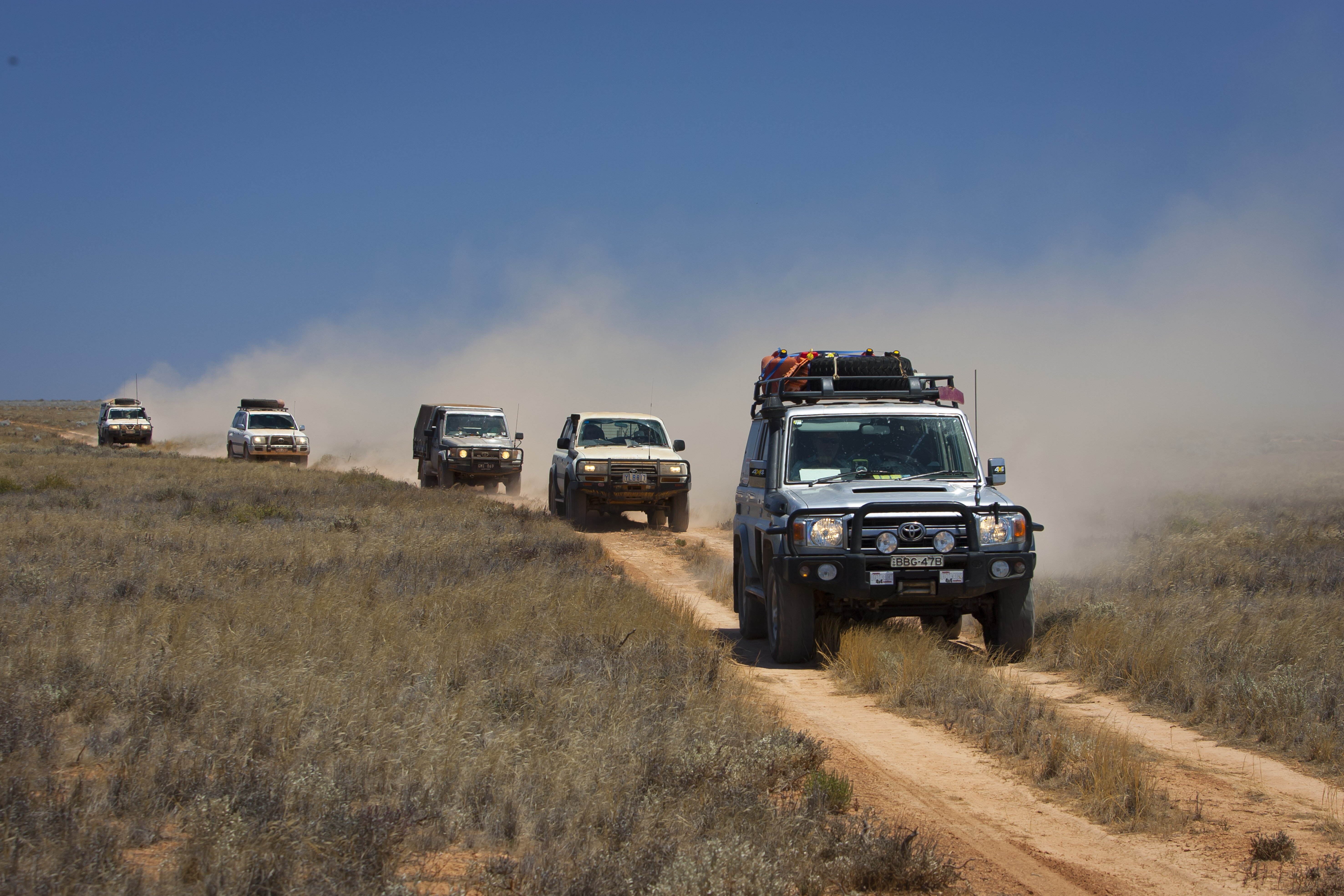
On dusty corrugated tracks, the kind you get for long stretches on the Oodnadatta or the Tanami, sitting too close to the vehicle in front means you’re driving blind. On technical terrain, it means you’ve got nowhere near enough time to react if they stop suddenly or need to adjust their line.
It also puts quiet pressure on the driver ahead to hold a pace they might not be comfortable with – which is how mistakes happen. If you’re eating their dust, you’re too close. Back off.
3. Use the radio properly
Most groups run channel 18 UHF as a default, and a decent radio – a GME mounted properly and tested before you leave – makes a real difference to clarity over distance. But none of that matters if the channel is full of chatter when something actually needs calling.
Keep it short. “Soft edge, left side, after the crest” is more useful than a thirty-second description of what it looked like. Call what the next driver needs to know, then get off the channel.
4. Be ready when the convoy is moving
Everyone’s been there: Twelve vehicles packed and waiting, one still faffing around with a roof bag or hunting for sunscreen. The first time, fine. By the third stop outside Birdsville or halfway up Cape York, it’s grinding on people.
It’s not about perfection. It’s about being broadly ready when the group is ready. That rhythm adds up over a full day, and losing it at every stop makes everything slower and more tiring than it needs to be.
5. Call out hazards for the vehicles behind
Just because your rig walked through it doesn’t mean the next one will. A washed-out edge that your 285s just clipped on a tight line could drop someone else’s vehicle a foot sideways, especially if they’re running a longer wheelbase or a heavier build. A loose climb that felt fine in a Prado might be a completely different story in a loaded Troopy.
Call it out. Even a quick “rocky line, stay left” gives the next person a chance to set up properly rather than finding out mid-obstacle.
6. Don’t stop in stupid spots
Pulled up on a blind corner. Halfway through a water crossing. Sitting on the crest of a climb, the kind you get approaching Old Andado or working through the Tip Track, where nobody behind can see you until they’re already committed.
If you need to stop, think about where. A good pull-off gives the convoy room to stack up without anyone being forced into a bad position. Choosing poorly, especially repeatedly, is the kind of thing that earns you a nickname.
7. Stick to the agreed pace
Drive too fast and you’ll stretch the convoy until someone misses a turn. Drive too slowly on easy open sections and you lose the day’s momentum and make the trip feel longer than it is.
The goal isn’t uniform speed, it’s consistency. A rhythm that suits the slowest capable vehicle and adjusts when conditions actually demand it. Convoy driving is a group activity, not a procession of individuals who happen to be heading the same way.
8. Don’t change the plan without saying so
Spotted a better line? Think there’s a shortcut worth trying? Great, say so on the radio first.
Taking a different route, turn or track without a word creates immediate confusion for everyone behind you. Half the group follows the deviation. Half sticks to the original. Now you’ve got two separate convoys trying to figure out where the other half went. Run it by the group. It takes ten seconds.
9. Help with recoveries
When someone gets stuck, and someone eventually will, the group response matters. Not everyone needs to grab the Bushranger snatch strap or rig up the MaxTrax, but everyone should do something. Spotting, shovelling, shifting gear out of the way, relaying instructions … all of it helps.
Standing at the back of the group watching while three people do all the work is the kind of thing people remember. And not fondly.
10. Leave the ego out of it
Convoys have a way of surfacing this. The driver who has to push harder than the group. Who won’t take advice on a line. Who turns every obstacle into a personal challenge rather than a shared decision.
It’s not impressive, and it costs the group time. The drivers who make convoy trips genuinely enjoyable are usually the calm ones; the ones who know their limits, think about the group, and don’t need the trip to be about them.
A few other things worth mentioning:
- Show up with a full tank. Running low mid-route delays everyone, and finding fuel between Marla and Finke isn’t a given.
- Test your radio before you leave, not when you need it. A flat battery or a loose antenna connection discovered at the first obstacle is nobody’s favourite surprise.
- Get to the pre-trip briefing. Repeating it on the track for latecomers wastes time and patience.
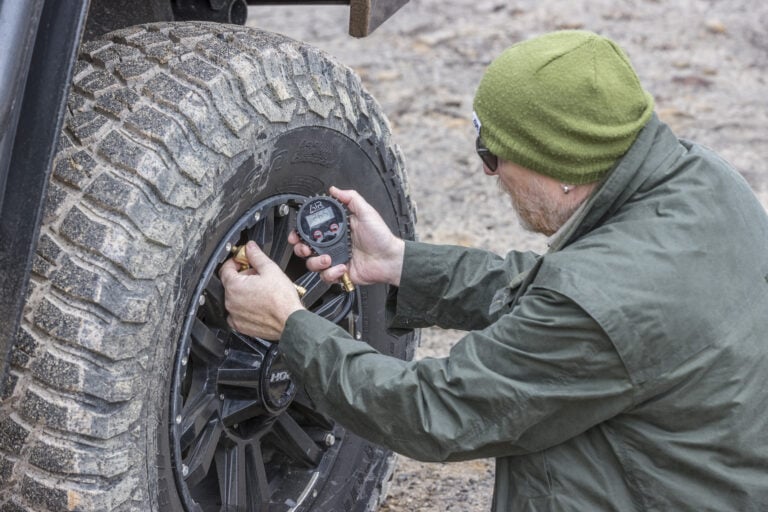
- Check your tyre pressures. Wrong pressures don’t just affect you, they slow the whole group down. Most tracks warrant dropping to 28-32 psi on unsealed roads; anything technical and you’re going lower.
Follow 4X4 Australia on Google
Get more 4x4 news, reviews and gear stories from 4X4 Australia in your Google feeds.


We recommend
-
 Advice
10 essential 4x4 touring mistakes to avoid
Common touring mistakes that can turn a great 4x4 trip into an expensive or dangerous exercise
-
 Advice
10 unwritten rules every 4x4 driver should know
No handbook comes with your 4x4, but the rules out on the tracks are pretty clear
-
 Gear
GearHow to drive in a convoy
We look at best practice when it comes to driving in convoys – the why, the how and what equipment you’ll need to keep a group of travellers safe and prevent anyone from getting lost